Turkey
Chapter 10. Turkey. One last taste of spring.
On the long journey, among the dunes, Arabs and camels, I often thought of Turkey. Things are different there. There’s order. No wonder they get on with the Germans. Europe, in a word.
It was with this idealised picture in our minds that we crossed the Syrian–Turkish border. Any moment now there’d be smart officers and nice girls tapping away at computers. Everything by the rules, and the rules would let you do anything you wanted.
The first Turkish border guard brought my blissful musings down to earth. He took a look at us and asked in Russian, “Oh, Russia! You a good soul? You aren’t a citizen of Syria, by any chance? You all one family? Sister, niece, very good! Well, if you’re a good soul, all relatives and only passing through Syria, drive on, dear friend. Oh, look, a Turkish Cyprus stamp! Nobody in the world recognises it, but you went there. That is good. Welcome. You are friends of Turkey.” There you are. A good soul, so on you go.
The passport control building looks very neat. A European-style refurbishment done the Turkish way. Just like Saint Petersburg. People are well groomed and courteous. No Syrian soldiers here. Only none of it has been thought through. First I have to leave my passengers and drive about a kilometre to the main customs building, where you’re supposed to have a sticker put into your passport. The sticker is a Turkish visa. It costs ten dollars for Russian citizens. Halfway along, veterinary control stops me and wants to spray us with some revolting stuff. That’s only half the trouble. He wants one and a half million Turkish lira for it (about $1.10). All I have is dollars. He suggests five. I resist and we get into a long discussion. I say I’ll come back and pay him next time through. He wants five bucks. Before long, though, he agrees to give me change in Turkish lira. That’s how we leave it. Now I have a great pile of money.
Things get even livelier at customs. The man examines the dollars from the Lebanese cash machine with a knowing look, then makes a fiery speech in Turkish. The only things I understand are that we’re Russian mafia, the dollars are counterfeit and they don’t take credit cards. He digs his heels in. He won’t take them, and that’s final.
They’re perfectly ordinary dollars. Lots of stamps on them, all right, and a jumble of Arabic letters, but even in Russia they’ll take them without a fuss. I try listing the features that make a US dollar legal tender according to the Central Bank of Russia. No visible effect. Go to the duty-free shop and change them any way you can. Before long a constructive solution emerges. “Leave me fifty dollars instead of forty, and come back and exchange it when you have real money.” We part on that ruinous compromise.
Now I go back for the women I left as security at passport control. The passports are stamped and we return in full force to customs.
For the first time in seven border crossings, someone takes an interest in our belongings. We’re made to haul the bundles through an X-ray machine. They even rummage in the suspicious bags. All the interesting things are stowed well away in the car, though, much too far back for any grasping little customs hand to reach.
Once they’re satisfied we’re carrying nothing but a hundred kilos of dirty clothes and the pitiful remains of our food, the customs people turn to the car. Unlike last time, nobody bothers with the chassis and engine numbers. They simply copy the details they need from the registration and insurance papers. In Turkey you need third-party insurance, a Green Card like in all European countries. Take care, by the way. Some Russian firms issue a cut-down Green Card with Turkey and a few other countries left off it.
The insurance is all right, but I still have to pay the vehicle inspection office for importing the car. In 1999 we paid thirty dollars for that. At the time it was ten million Turkish lira a month. Now the lira has fallen to a fifth of its old value, while the fee is unchanged. The price of bringing in a car has become a token sum. I don’t grudge them five dollars. But first I have to buy yet another sticker for that amount, from the same man who won’t accept my dollars.
He greets me with a smile. Well, how about some dollars that aren’t fake? In return I ask for the vehicle stickers. The discussion drags on once more and isn’t helped by our having no language in common. I’ve been trying for years and I still can’t learn even how to say yes and no in Turkish. Turks aren’t strong on foreign languages either. Like us, they have campaign after campaign to improve the teaching of the great Turkish language, the foundation of Turkic culture. They ban English signs and fight for the purity of the language. They try to ban words that made their way in from Arabic, the language of the barbarians that defiled the sacred heart of the Turkish nation.
And here’s the result. This man works in customs and it’s impossible to talk to him. He doesn’t even speak Arabic.
It’s hard going. Then the conversation takes a new turn. Their local computer expert comes out from behind a door, talks to the sticker seller and says, “Sayyara mucha problems.” Sayyara is a car in Arabic, but what’s that got to do with anything? And why start in Arabic and finish in Spanish? A car is araba in Turkish and coche in Spanish. I wonder whether my dear white she-camel has finally bled herself dry of petrol, or whether something even worse has happened. Perhaps they found something sinister inside it. Perhaps the chassis number is the same as bin Laden’s car. Perhaps bringing in a Scorpio is forbidden. With a heavy heart I follow the man to see what’s happened. I look out the window. There she stands, my darling, without so much as her usual puddle of petrol. They bring me to the window, point at a computer next to it and repeat, “Sayyara no print.”
Now I understand. It’s apparently written on my forehead that it’s my sworn duty to fix computers. What language it’s written in, I can’t say. That’s a mystery, whereas Windows on the sayyara is Turkish. If only I could make out a single word. They point to the customs forms, part of the edge left unprinted. Aha. I go into Print Setup, or whatever it’s called in Turkish. Those little Windows icons are there for a reason, after all. Graphics are a great thing. No nationalist has yet come up with a way of bringing them into line with the national character.
It turns out to be simple. The paper is A4, the default is Letter and the wrong tray is selected. It seems they’ve been pressing the Continue button on the printer for a year, every time they printed anything. They could have carried on like that but for the new form being too long for a short Letter sheet. I change the defaults and, like a magician, show them that it all works without anybody having to touch the printer.
What I love about the Turks is their childlike spontaneity. They were delighted, gave me tea and called me a great guru of programming. My fifty dollars ceased to be counterfeit in a flash. They gave me the stickers and a great pile of Turkish money in change.
All in all we spent about fifty dollars at the border, rather than the eighty they took from us at Trabzon harbour in 1999. We also had to pay another six million lira at the transport office for a blue label to stick on the car’s windscreen.
Getting a car into Turkey is complicated, but the Turks know how to work. In less than an hour we had permission to go. As always, on the way out of the border area there’s a post where they check that all the stamps have been put in the right places.
We’ve been to that post before. In 1999 it was practically the farthest point on our journey, beyond which there was an unknown world. Back then they didn’t let us into Syria without a visa. Now it’s the other way round. We’ve come to it from the other side. The circle is complete. The unknown world has taken on real outlines and found its own permanent corner in our memories.
Already we’re rolling down a familiar road with Turkish road signs on either side. I even dreamed about these signs. I thought I’d never see them again, but here they are, and there’s a long road still to go. The Turks drive as if they’re in a dream. A sign says forty and forty is how fast they go. I’ve got out of the way of it. The Arabs don’t tie themselves down with little conventions like that. Everything is relative. People who’ve never left Europe usually say Turks drive like madmen. To me it feels as if I’ve come to Scandinavia.
Wherever you look, there’s something to warm the heart. Well-kept fields, cheerful faces, pretty girls, some of them even unveiled. The signs are in the Roman alphabet even when they’re in Turkish. There’s no litter by the roadside.
The sun is already going down and here comes my very favourite time of day, when everything around you takes on a quite different, mysterious appearance in the red sunlight. Long shadows stretch on for ever. The red tops of the clouds beckon with their unearthly beauty. As if such a magnificent sunset weren’t enough, it’s spring here as well. The first buds have just opened and the hills are all green. We thought our journey was already over, but here’s another moment of happiness and freedom. I remember these hills in summer, looking quite different, dazzlingly white from the sun and the straw it had scorched.
It’s a strange feeling. A quiet ache in my heart, the kind you get when you come home after a long time away. It seems I’ve managed to love Turkey and to grow attached to it. I rejoice at its successes and sorrow at its failures. How much we’ve had our ears talked off about love of the homeland, all to no purpose. After all, home is all the places you’ve been, the places where you felt good and managed to grow attached. If we follow that thought through, does it mean the places where you felt bad aren’t home? Army training, Marxism-Leninism classes, the collective farm? We can argue for hours, but putting an equals sign between your homeland and its government is sheer stupidity.
Governments, especially those that have impoverished the people they rule, make plenty of high-flown speeches. Sadly, lots of people believe them. Having visited forty-two countries, I can say with confidence that my home is scattered around the world. People everywhere are the same. Dividing them into insiders and outsiders is a mean trick played by failed rulers. Sooner or later armies and borders will disappear. They’re disappearing already. Many countries with pacifist inclinations already command more respect in the world than their armed neighbours. Think of Switzerland and Sweden. Japan flourished once its weapons were taken away. They say, “If you won’t feed your own army, you’ll feed someone else’s,” though over the past century life has shown almost the opposite. It would be worth spelling out what’s better about your own army anyway. It’s hard for me to imagine an army more alien than Russia’s, with its brawling, brutal conscript hazing and theft. Little soldiers loot the dacha. Just the other day an army jeep smashed up my car and got away with it. But why go on?
Our first Turkish town is Gaziantep. At last we can get money from a cash machine and look for somewhere to sleep. We haven’t washed for a long time and a warm room with a bath would be very welcome. Last time we were here the thermometer said +50°C. Now it’s simply cold. Time to get the warm jackets out.
Turkey has had hard times in the three years since our last visit. The economy couldn’t take it and fell into the whirlpool of the world crisis. The lira collapsed. Now they give you 1,420,000 lira for one green dollar. At last my dream has come true. I’ve become a billionaire. We’re going to spend three or four days in Turkey, and our estimated expenditure comes to that magic figure with nine zeroes.
There’s a cash machine at every bank. The nuisance is all the banks are in the city centre and you have to find that first. We go to one. Everything is fine, except it’s loaded with ten-million-lira notes and won’t give you more than two hundred million at a time. A pity. I so wanted to draw out a billion at one go! We had to make do with 200,000,000 for pocket money and petrol.
Lena studied Turkish for a whole year, and now comes the moment to put it to use. We don’t have a road map of Turkey, and she speaks Turkish in the bookshop. A miracle. They understand her! They smile, delighted that Europeans know their language. Learning lots of languages is a good thing.
Walk through town and it seems things are going quite well in spite of the crisis. People dress better every year and the shops look neater and neater. The streets are lit with little coloured lights in the evening. Almost everyone has a mobile phone now. Shops take credit cards almost everywhere and people use them often, almost as they do in Europe. The cars on the roads are getting newer. And here’s one novelty I haven’t even seen in Europe. A traffic light with digits counting down the seconds until it changes. It’s so convenient. You know exactly when to put the car in gear and when to step on the accelerator. And how handy when you’re coming up to a red light. You can work out just what speed will get you through the lights without having to brake to a stop. It makes you want to say the future belongs to the Turks.
There are several hotels in town, all standing empty, but a double costs about forty dollars. A bit steep for us. We decide our next night will be in civilised conditions instead. There are high mountains ahead and we’re travelling inexorably north. It grows colder every day. We quite likely won’t be able to spend the next night under a roadside bush on account of snow several metres deep.
Food, on the other hand, is no problem. We have a good substantial meal at a little café for 7,500,000 lira, and Masha brings some delicious sweets from the shop next door.
We chew and look at the map we’ve just bought. The fastest way to Trabzon goes west around the mountains. No mountain passes over there, just fast motorways and civilisation. Boring, in short. So we’ll head east. Masha hasn’t seen Urfa and we’d like another look at it ourselves.
The road signs show a motorway, but I remember quite well that there wasn’t one here before. Have they really managed to build it in spite of the crisis? We leave town. On our second attempt we get onto it, only we’ve made a little error. We’re going in the opposite direction. The road’s good and we drive quickly, but not where we want to go. It’s as though fate is deliberately funnelling us onto the shortest route. We’re stubborn. After fifty kilometres we finally find somewhere to turn around, and soon we’re hurtling back the other way. How galling. Petrol is expensive here. The crisis hasn’t touched prices. Every grade costs about the same, a dollar a litre. We pass the exit where we made our fateful mistake, drive another kilometre and see “End of motorway”. So they haven’t built anything at all. They only had enough money for the new signs. Just like building the Amur Highway. They put up a sign for Moscow and left it at that. What a nuisance. We took a whole hour over all that manoeuvring, though at least it was practically free. It only cost a million lira.
In the expectation of a bright future and a fast motorway, they hardly repair the road they already have. Potholes all the way. It’s over two hundred kilometres to Urfa and there’s heavy lorry traffic. We go as fast as we can, making hardly any progress on the map. We decide to press on to the bridge over the Euphrates, the Fırat, and spend the night there. This road seems never to end.
The banks of the Euphrates around the bridge turned out to be inhabited and we couldn’t find a place to camp. We stopped on a little dirt road right in a field. We need to get to sleep quickly so we can carry on at first light tomorrow. We’d only just pitched our tents when a minibus went past with farmers returning to their village. Public transport in Turkey is built around shared minibuses, known here as dolmuşes. They go to practically any little village, along dirt roads and mountain roads. Nobody knows their routes but the locals.
When they saw us, the minibus stopped and the people poured out to talk and have a look. They call us to the village. You’ll be more comfortable there. We can drink and eat. Peace and friendship! “Thank you. We’re fine right here.” We want to sleep rather than talk, and they seem tired after a long day themselves. We said our goodbyes and they drove off.
The night went well. In the morning we were packed before sunrise, without even eating breakfast. Urfa turned out to be very close. The sun was just up when we parked where we did last time in this wonderful city.
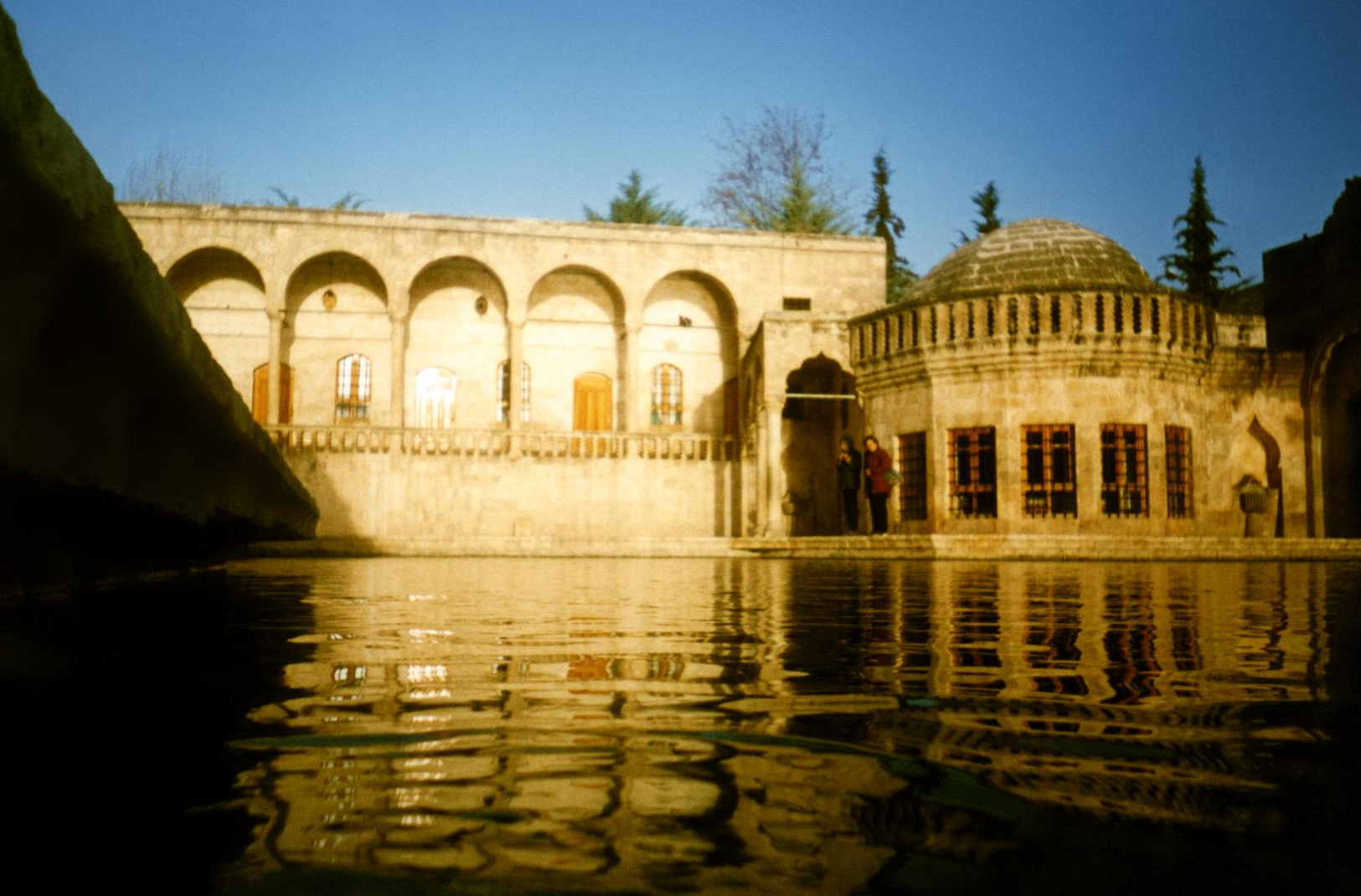
As we all know, Abraham was born in Ur, where God promised there would be water and fish right there in the desert. Two cities in the world claim the right to be called his birthplace. Christians, including the pope himself, recognise Ur in Iraq. Muslims, and Turks in particular, recognise Urfa, or Şanlıurfa, to give it its proper name. In ancient times it was called Edessa. The Crusaders conquered it as a Christian holy place. It’s all pretty murky. And what’s there to argue about? If there’s no historical evidence for the existence of Christ, it’s irresponsible to say anything definite about Abraham. Interestingly, in the Lonely Planet Middle East book, both cities are given as his birthplace without the slightest cross-reference. And why not? He’s no ordinary man, and God himself is involved. He could have been born in two places at once.
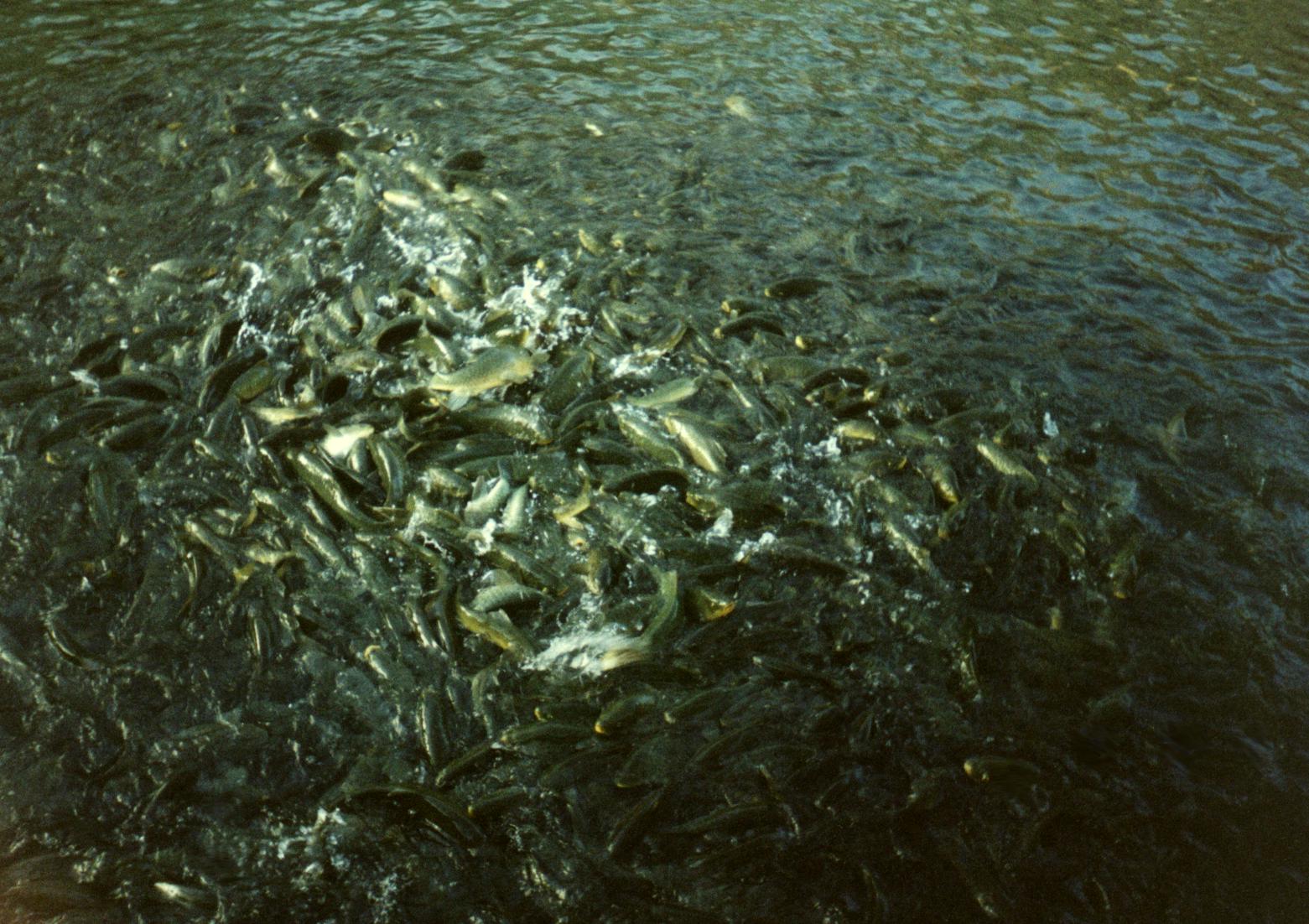
Next to the historic cave there’s a pool with countless sacred carp. Children sell fish food. Everything in Turkey has gone up because of the crisis, but fish food still costs a hundred thousand lira. We can afford that now. We buy it and feed them. We’re walking around practically on our own, with no tourists or pilgrims. The fish are hungry enough to tear one another apart in their scramble for a tasty morsel. As a result they all swim around covered in bite marks.
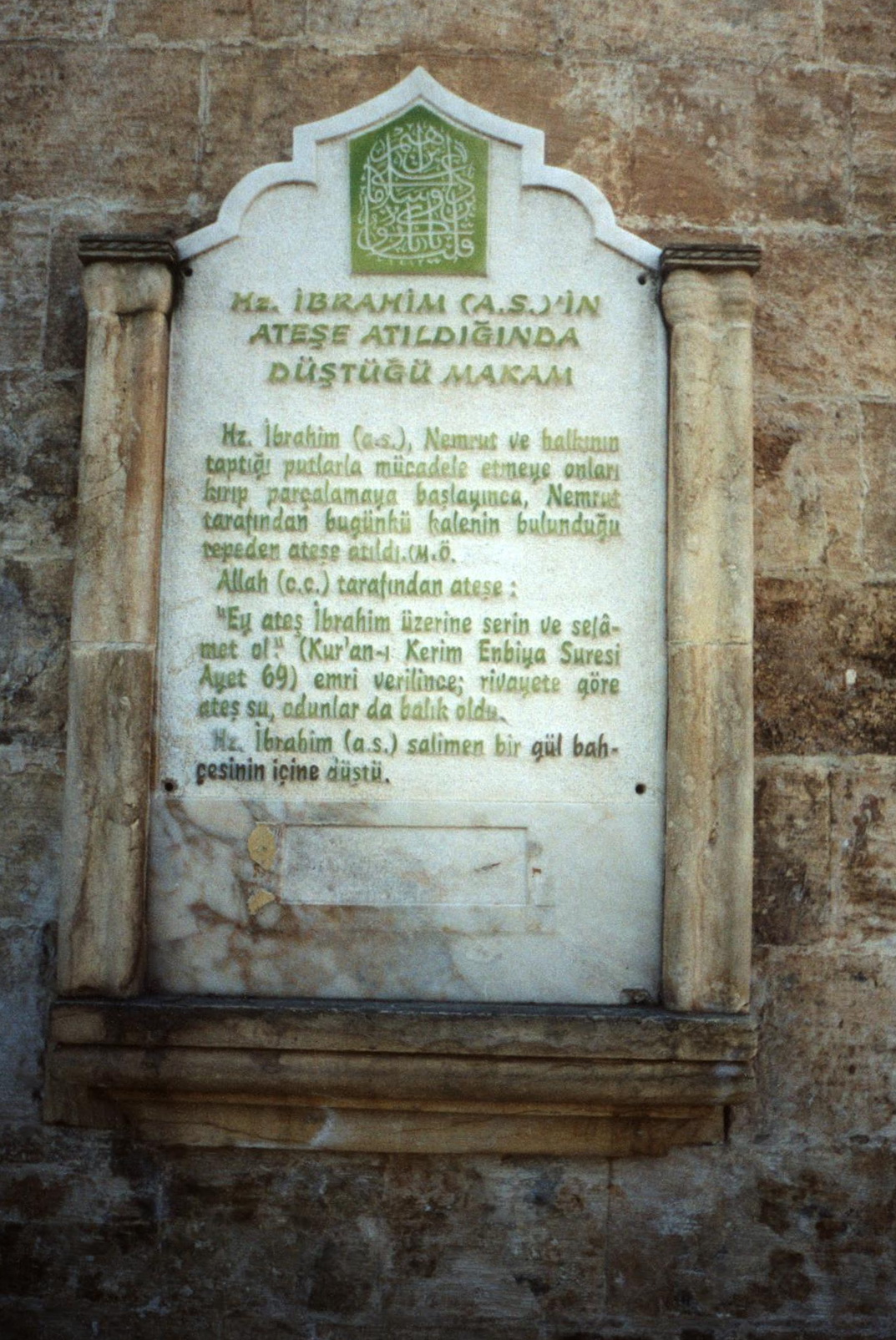
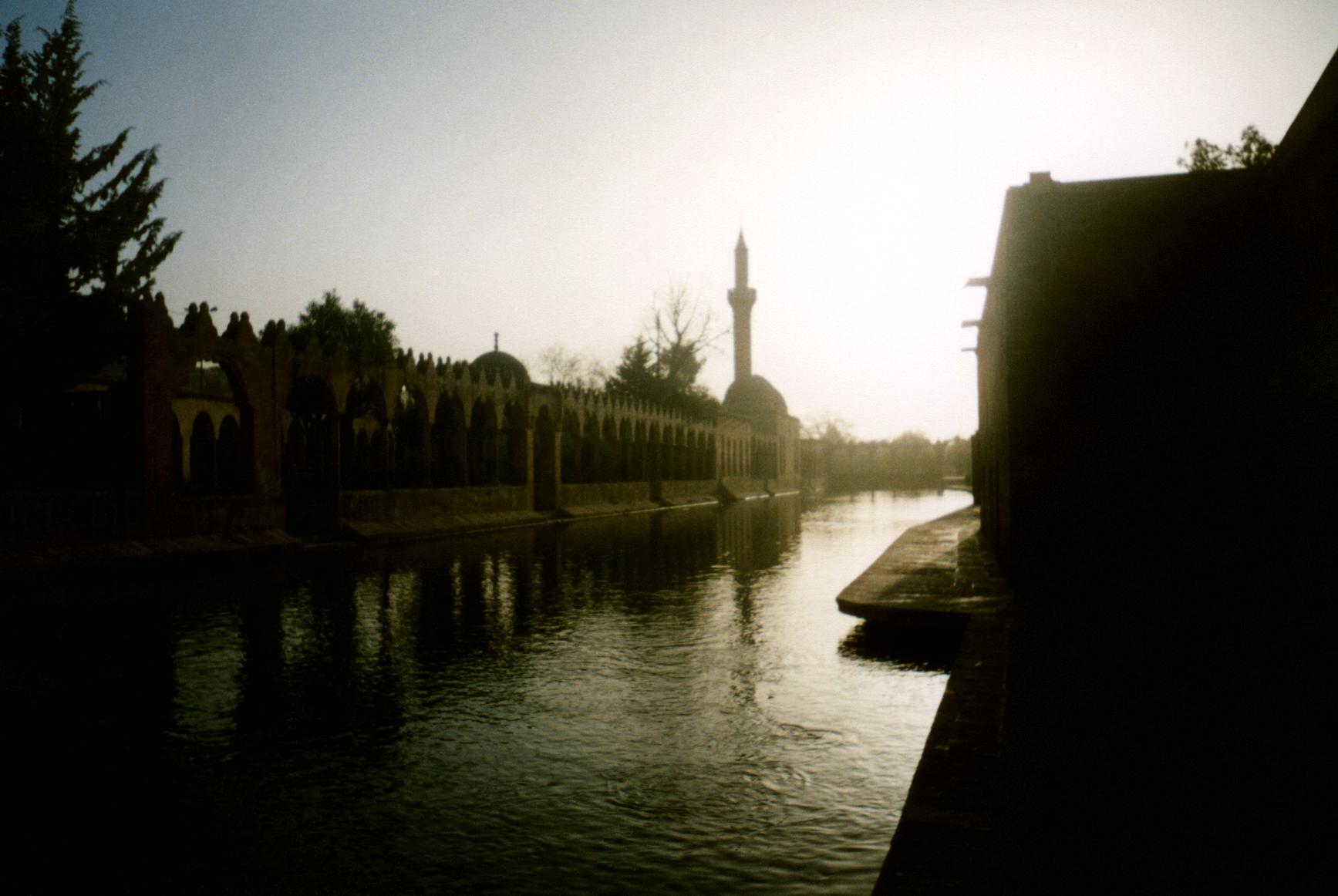
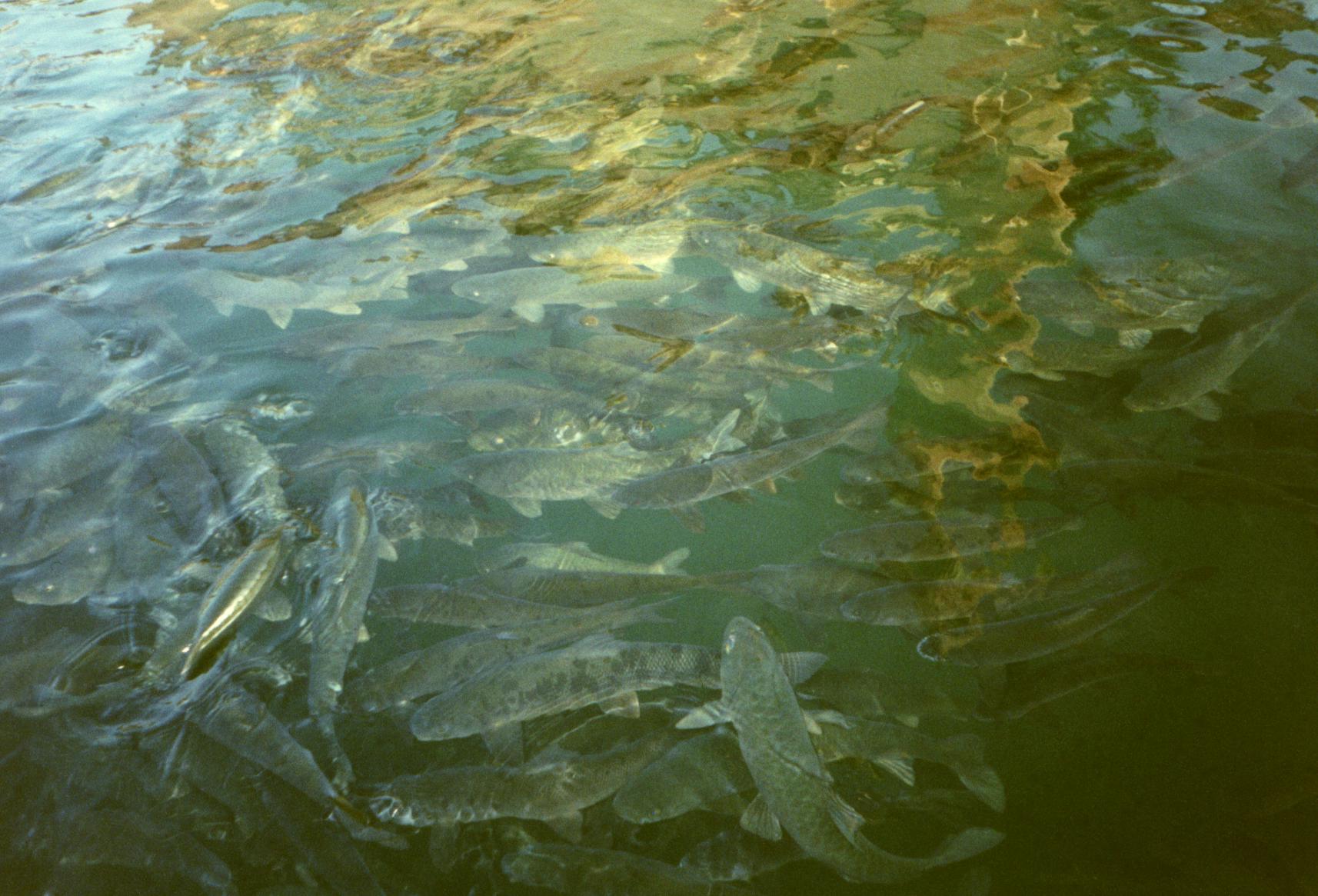
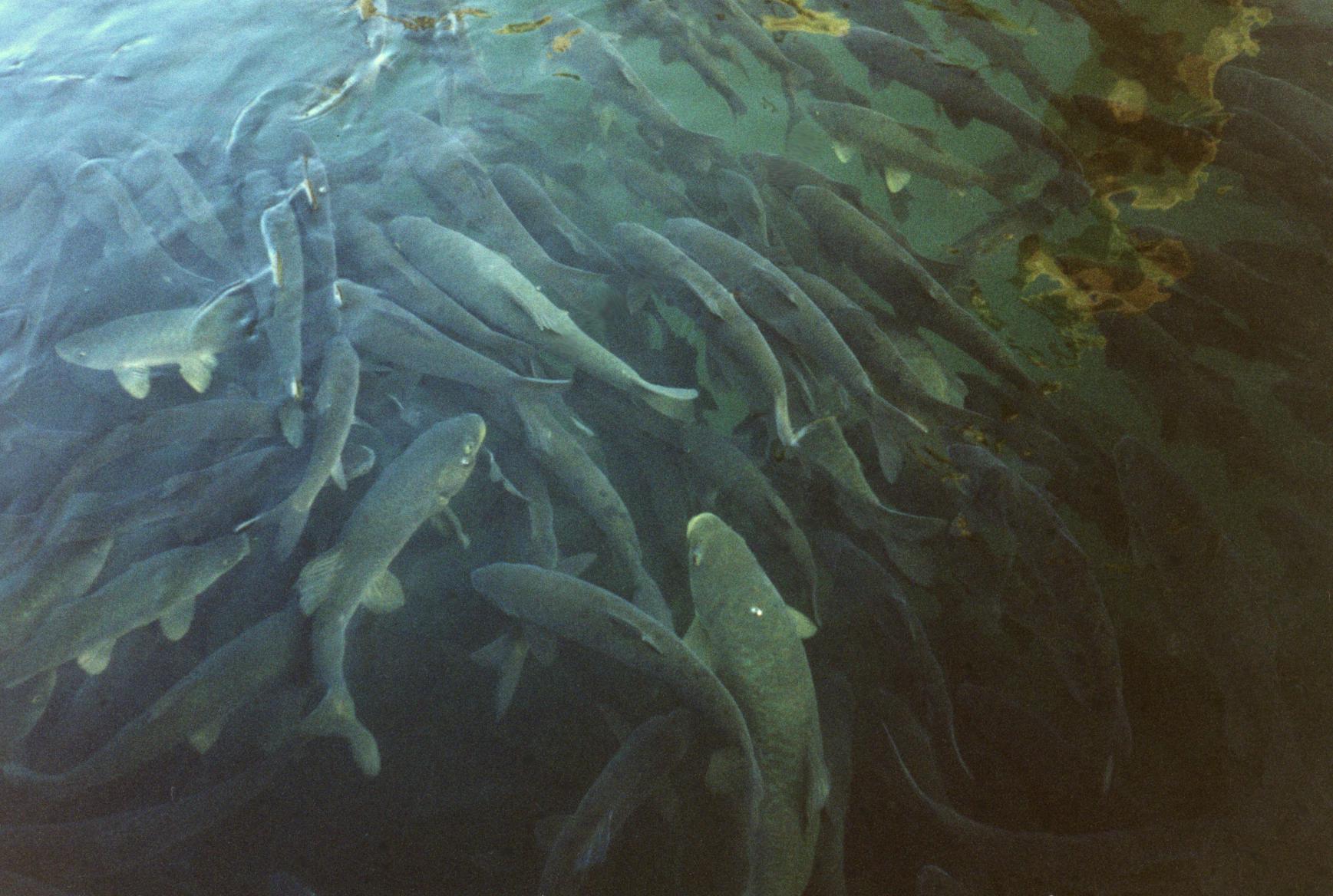
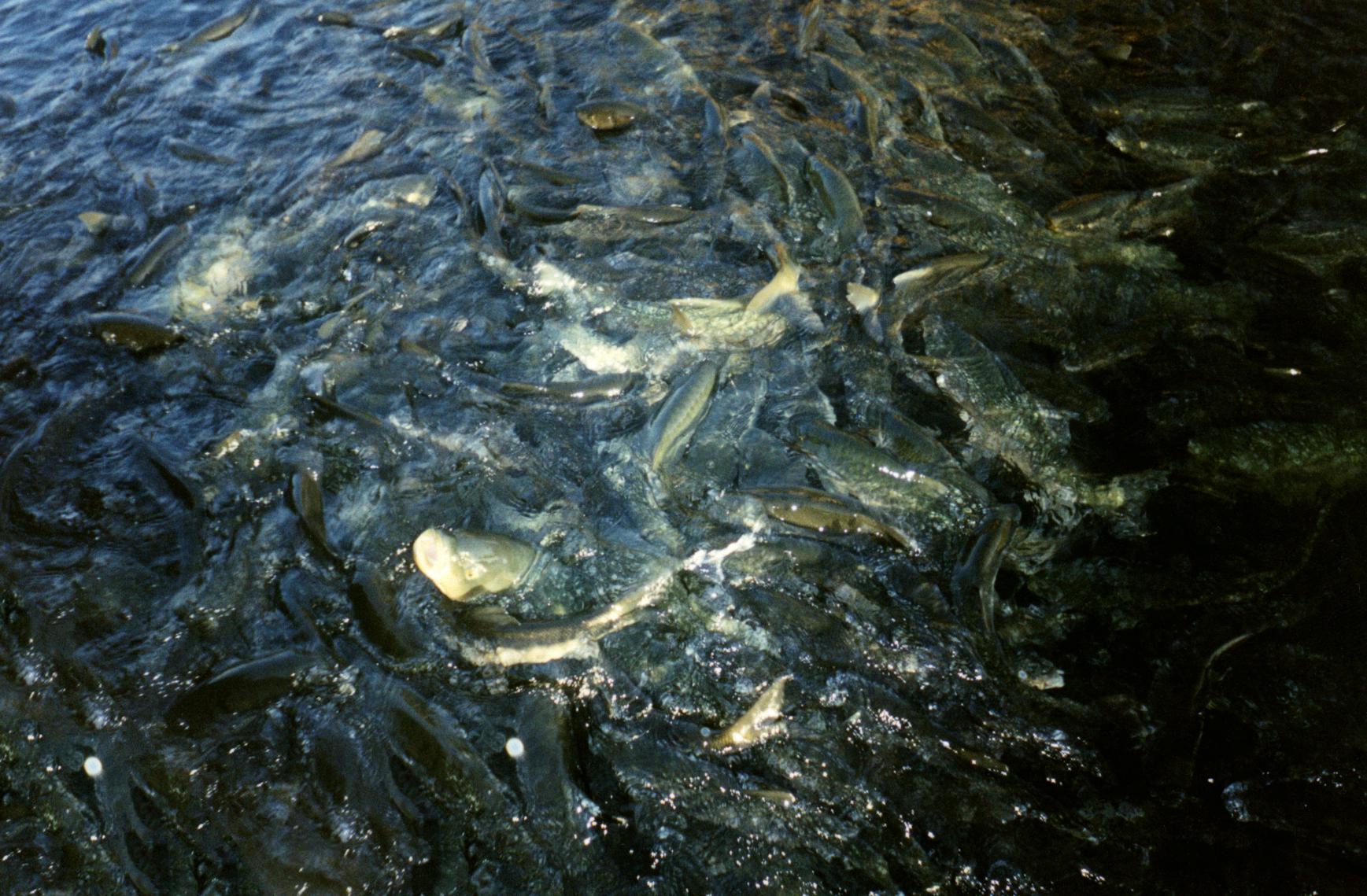
We sit down for tea in the beautiful park on the edge of the pool. You want to say we’ll be back, it’s so lovely here. The tea comes with Turkish bread rings. They sell them on every street corner in Turkey, but here they’re especially delicious.
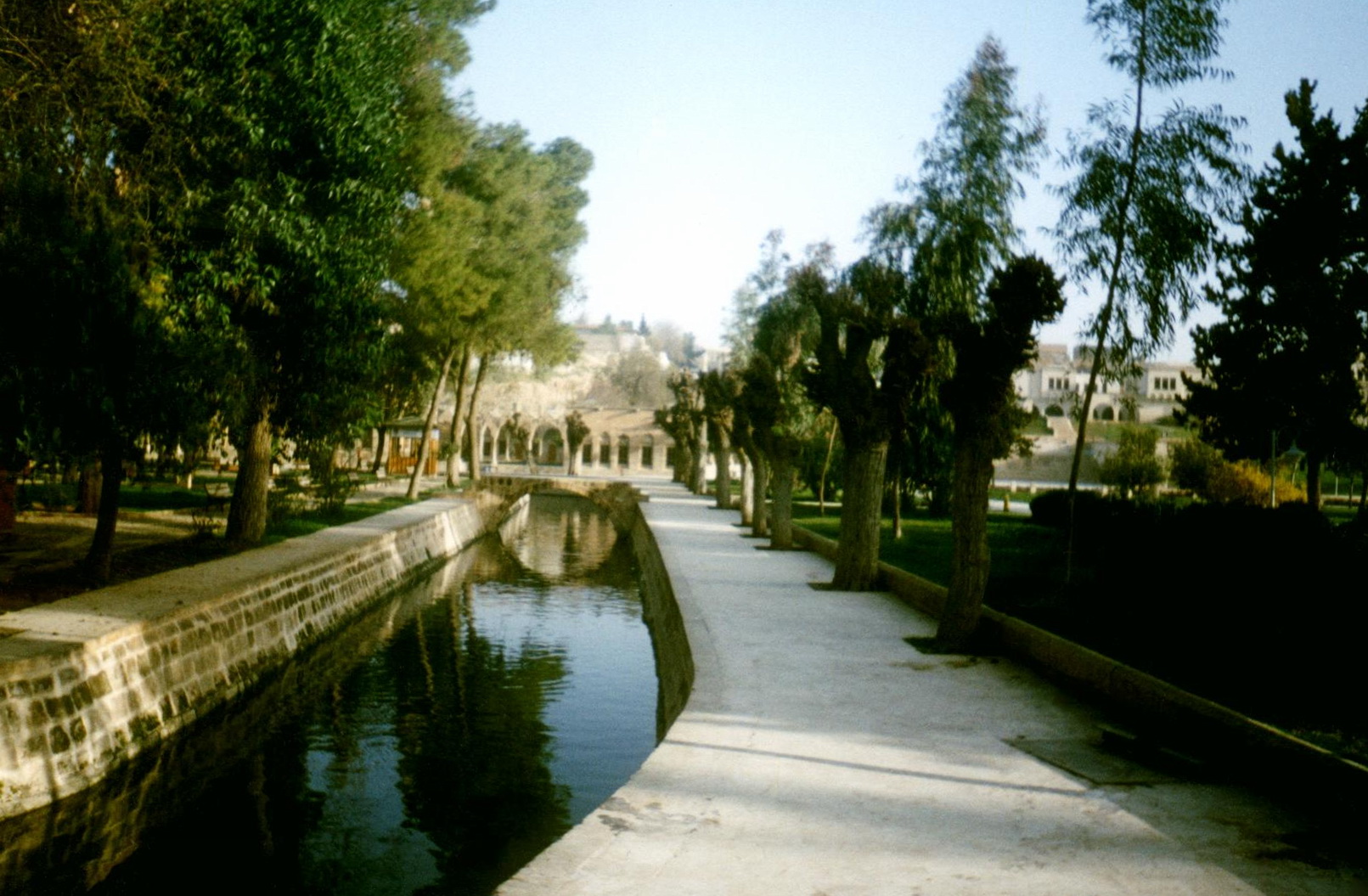
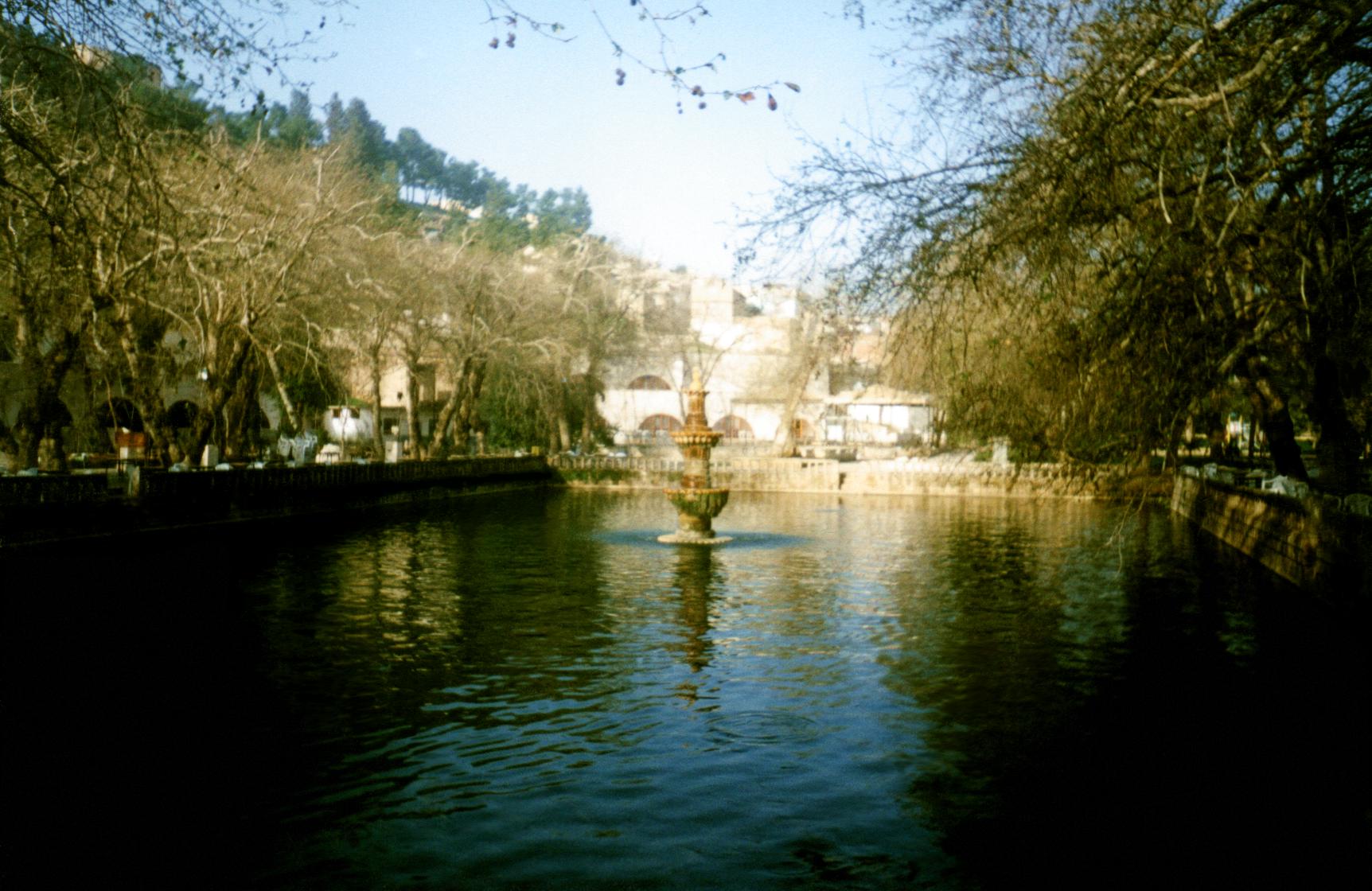
The local children go out in a boat and try to fetch the money tourists have thrown to the bottom of the pool. It seems to be the off-season. They get a few coins and a mobile phone. How did that get in there? Wet of course, and it doesn’t work, but the boys are pleased with their haul.
It would be nice to sit here for ever, but the third cup of tea is finished, just like the first two. Time to go. We could travel here for ever, of course. We’ve already been on the road thirty-five days and I’m bursting with enthusiasm to go on. Anywhere at all except into the Russian winter. Alas, the truth is we’re out of money, and it’s time for Lena to submit the accounts at her numerous workplaces. She’s getting very nervous and has been texting her bosses.
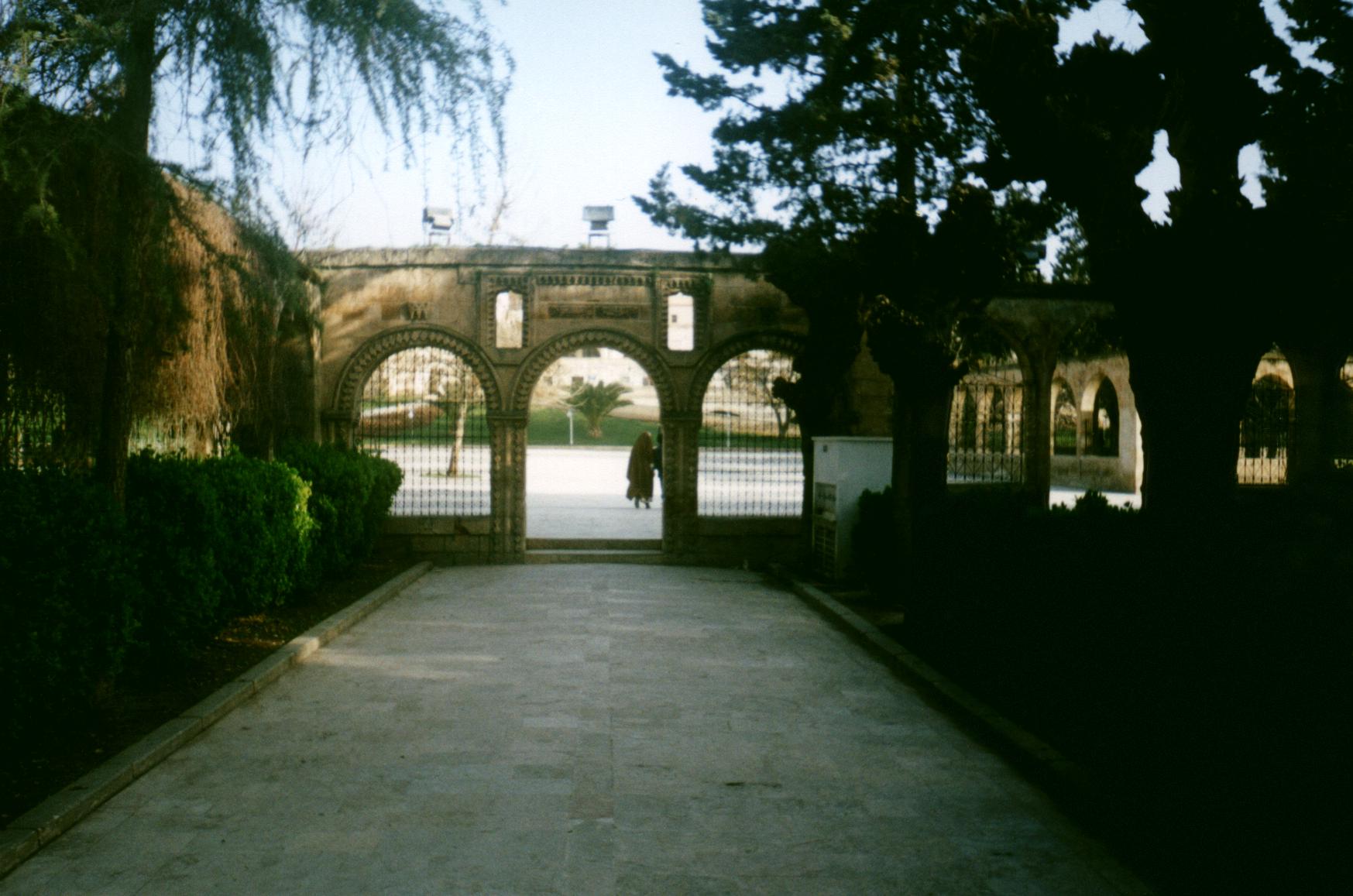
Reluctantly we leave our favourite Turkish city. I’d like one more look at the pool, the mosque arches and the old park. Edessa was considered a beautiful and free city even in antiquity.
We fill up on the outskirts. The Syrian petrol’s gone and now we have to buy the frightfully expensive Turkish stuff. Good filling stations in Turkey give your car a free wash with a full tank. We choose a Tobas station on purpose. The last time we washed our beauty was back in Tripoli in Libya, where we hired two young Black lads. Here it’s a lot less romantic, an ordinary automatic car wash with brushes. Dust from ten thousand kilometres and the deserts of Africa. Almost a pity to part with it, but nothing lasts under the moon.
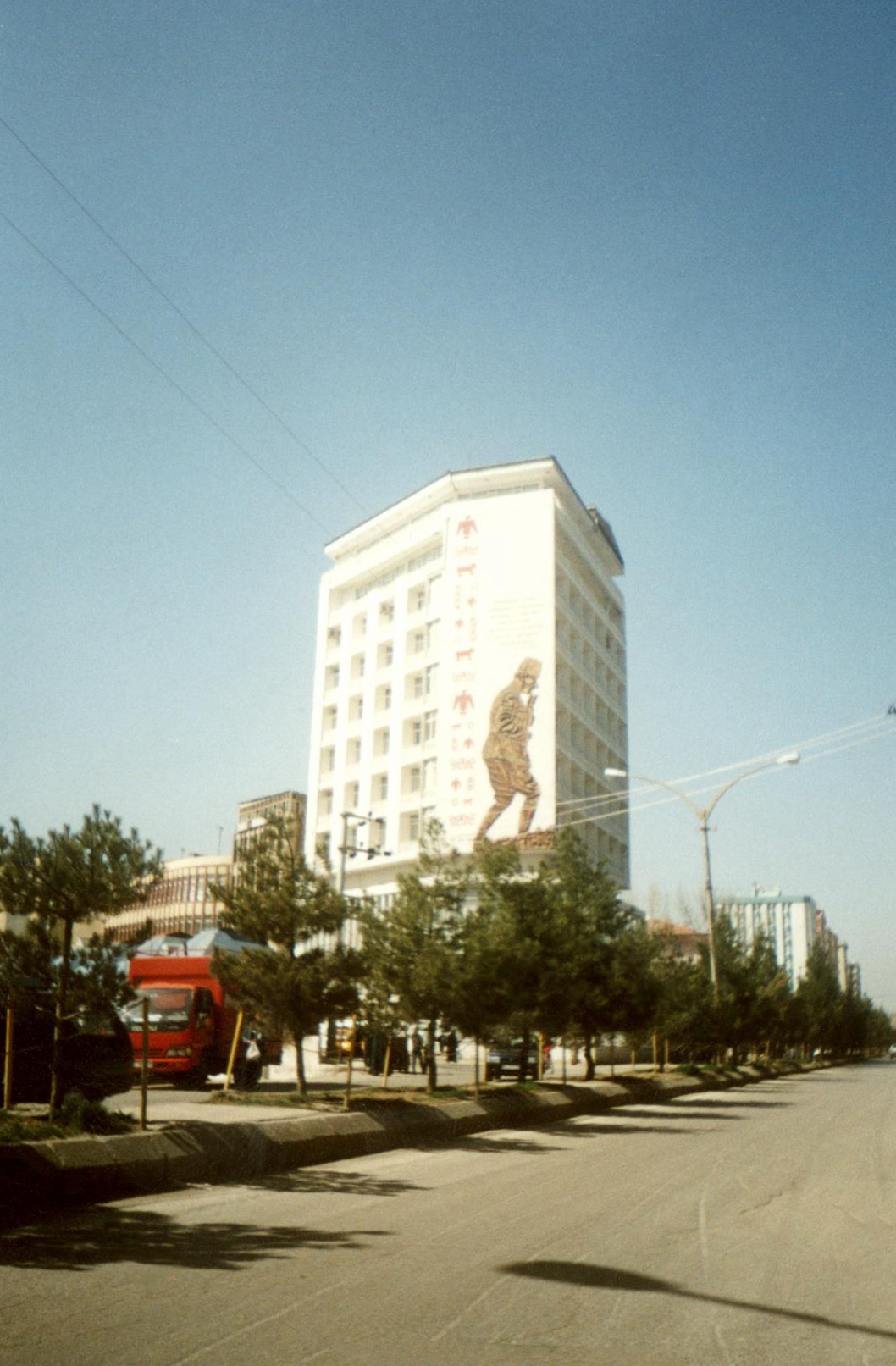
The next stop is Diyarbakır, the capital of Kurdistan. Kurdistan is an unsettled place. The Kurds demand an independent state. Since their leader Öcalan was arrested, the conflict has quieted down, though certainly not ended. I recently saw a report in which one of our television correspondents was making himself out to be tough by reporting from Diyarbakır. We’ve been here in much less peaceful times. There’s even less to fear here now. There are military posts along the roads throughout eastern Turkey, but there are only a fraction as many as there were a few years ago. They used to check practically all of them. Now only the main post stops cars to check them. They don’t tear foreigners’ cars apart. They just ask for passports and carefully copy the details into a little notebook.
Diyarbakır, on the banks of the Tigris, the Dicle, is famous for its basalt fortress. Lonely Planet does say that if you decide to walk along the fortress walls, you may be robbed. Sure enough, we’d barely left the car beside the main gate when an unremarkable-looking man started removing the windscreen wipers in a businesslike way. Masha was standing nearby. She walked up and said something like, “Hey, mate, need a hand?” The thief vanished. Lonely Planet is a wonderful book after all. It says you’ll be robbed, and so you will. Or perhaps the man is certified and there’s a sign on him, just like the restaurant’s, saying he’s listed in Lonely Planet?
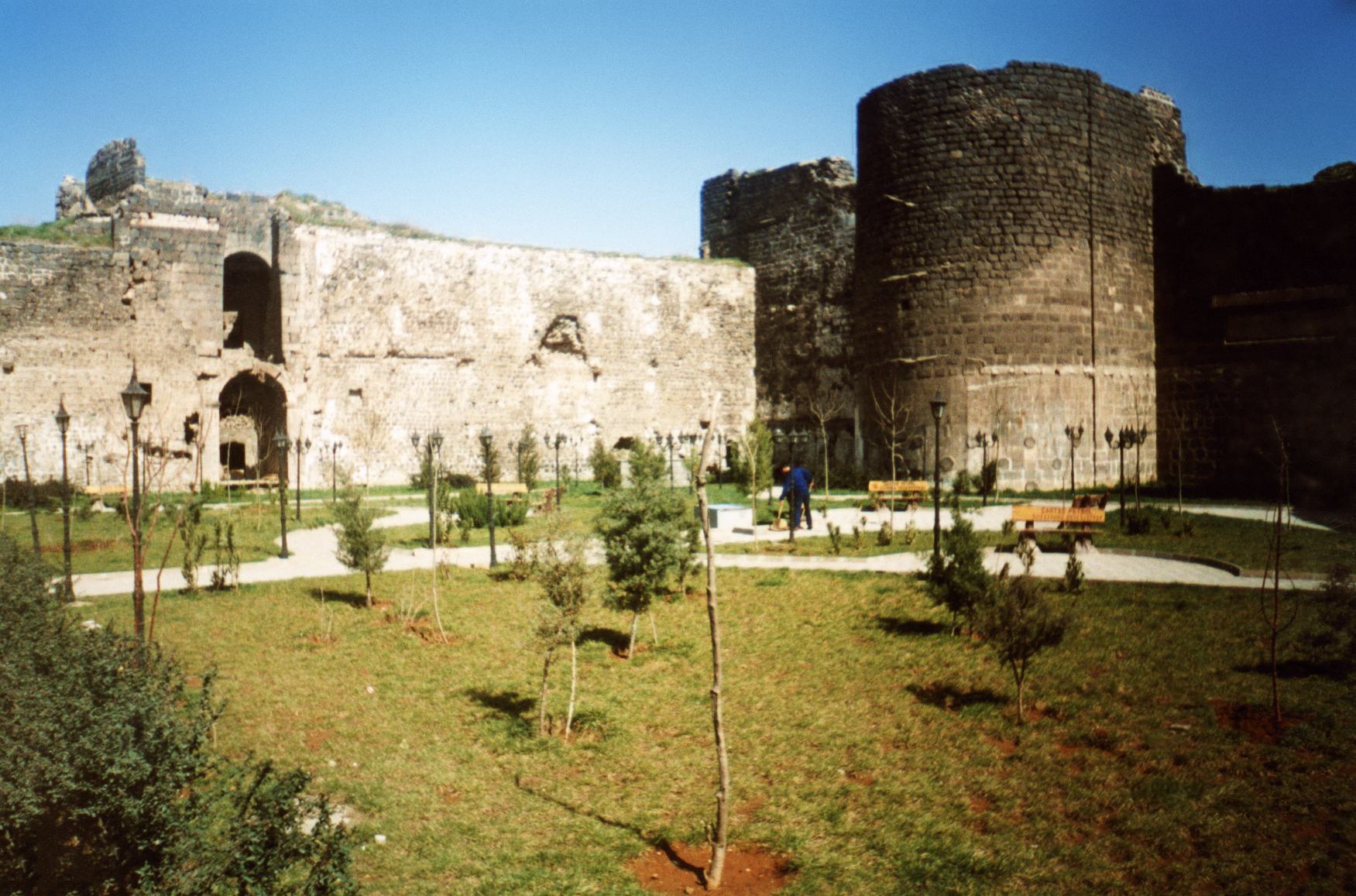
We did get to walk around the fortress, and that was a good thing. The walls are quite long, but the fortress lost its military importance long ago. They’re surrounded by new buildings and partly ruined now.
We also got a very good lunch in Diyarbakır, for ten million lira. It’s the eighth of March and we decided to eat our fill, to complete satisfaction. I sat at the pavement café sending greetings to the women I knew.
The tank leaked again, and I had to repair it in the middle of town. The whole repair consisted of poking a piece of tyre rubber between the tank and the bracket holding it to the body. Sometimes this worked and the tank didn’t leak for several days, until the rubber was thoroughly soaked. Now the time had come to change it again.
Snowy ridges three thousand metres high block our way. It’s impossible to cross straight over them. Small direct roads may be impassable, and with a punctured tank and a fuel pump falling off we have no business there. The main roads go by a series of long tacks, and now we’re heading for Elazığ. The mountains begin shortly after Diyarbakır, still low for now. We see a little stream by the road and stop. Birds singing, grass growing, water murmuring, apple blossom. No, we’re going to spend a little time here. We walk down to the water. Cold, of course, but bearable, ten or fifteen degrees. We wash ourselves. We haven’t managed that for ages, since Beirut. Now we don’t need a hotel and can cheerfully go without washing till the ferry.
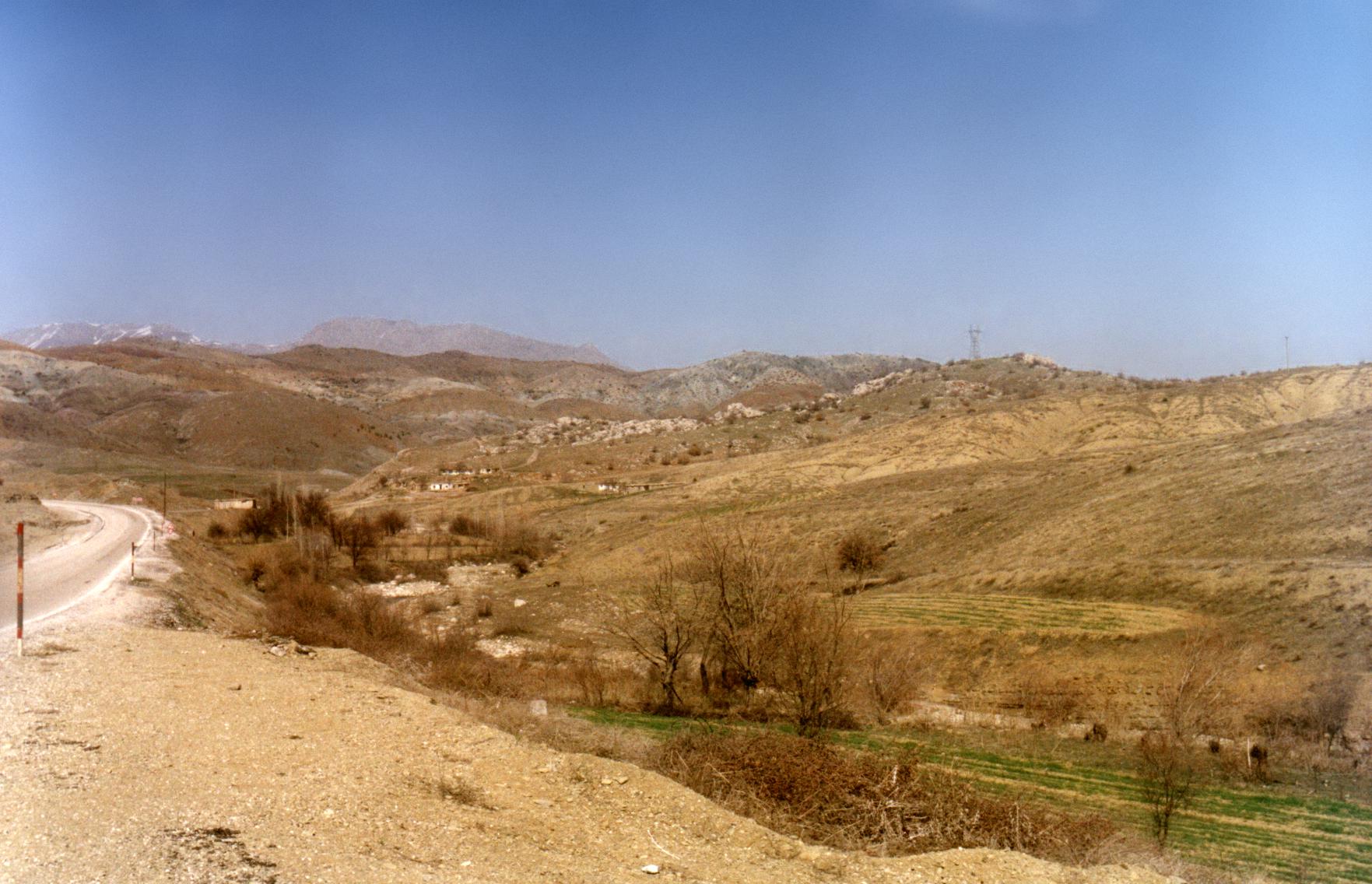
We get ourselves into shape and put on the last of our clean clothes. I ring my parents in Saint Petersburg and wish them a happy International Women’s Day. A mobile phone really is a wonder. Wild mountains in eastern Turkey and yet it works.
There are three competing GSM operators in Turkey: Turkcell, TR Aria and TR TELSIM.
Sending a text to Russia costs $0.20, $0.20 and $0.19 respectively. An outgoing call of thirteen seconds costs $0.49.
As soon as we drive off from our bathing spot, we discover a military post round the corner. That’s probably why there was nobody there.
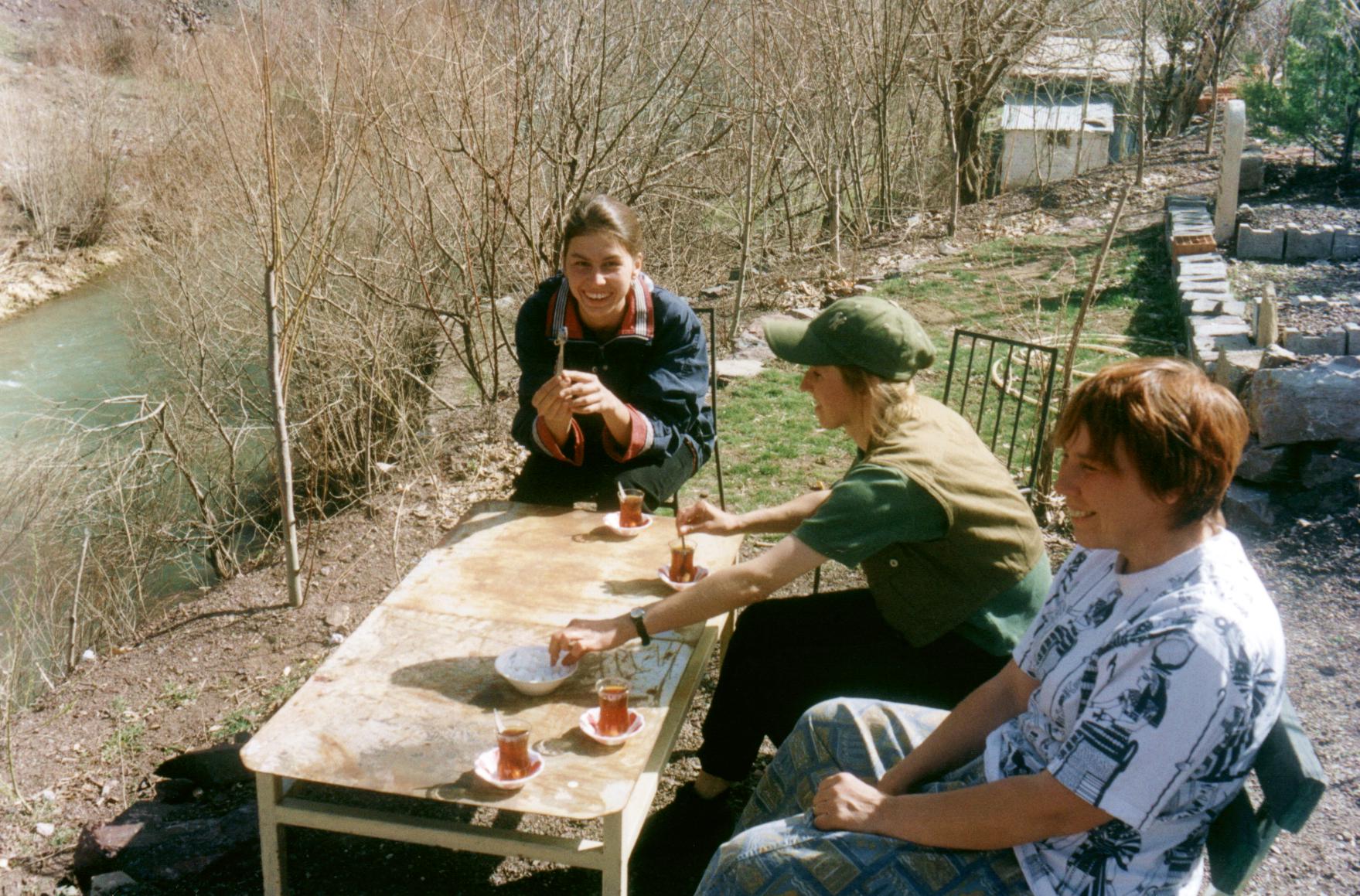
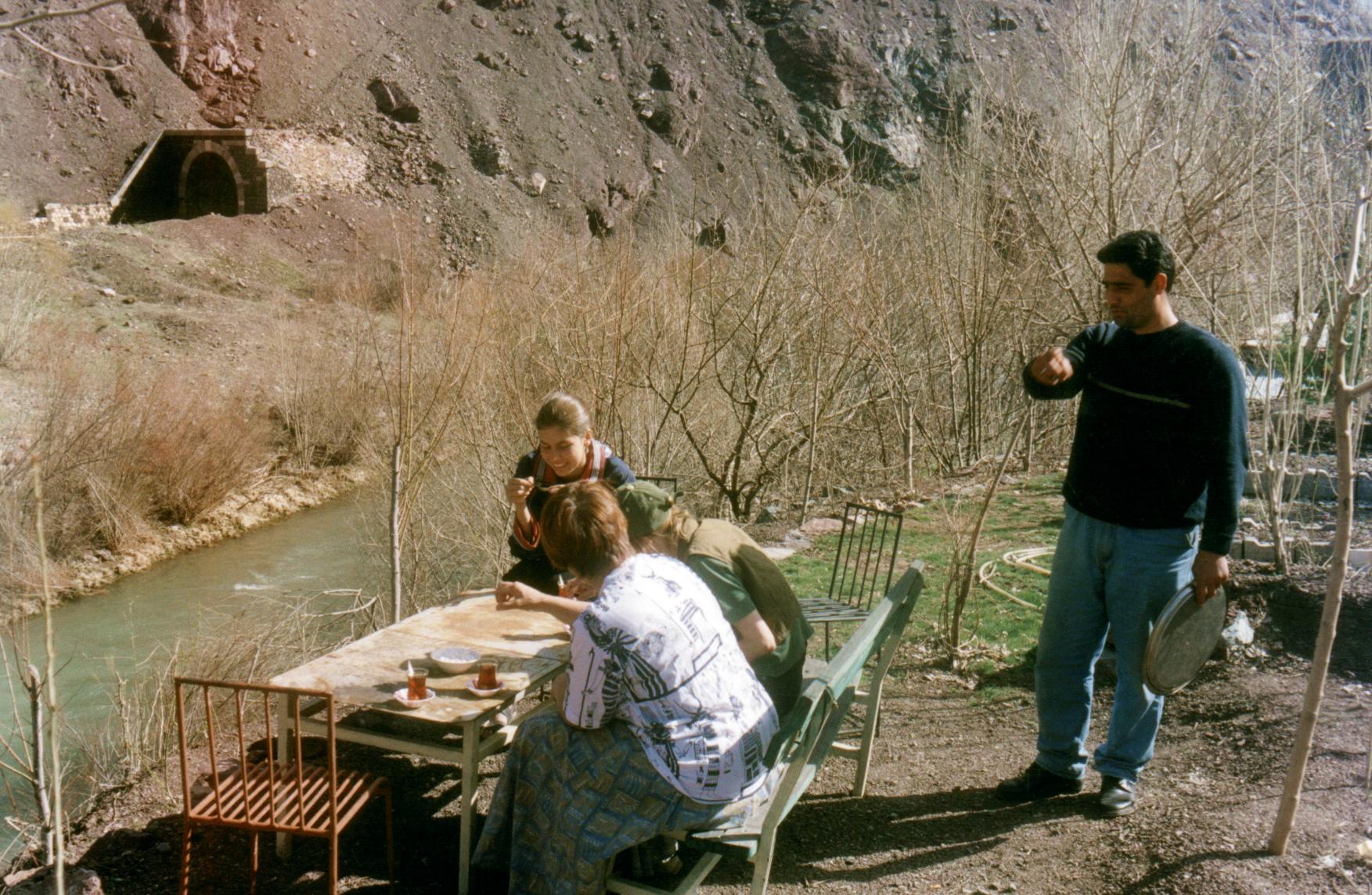
Spring in the mountains and a quick drive home don’t go together. We go only a little way and stop for tea beside a rushing mountain stream. My whole body is putting up a fight. It doesn’t want to go. A railway follows the highway here, with a tunnel or a bridge every hundred metres. It would be interesting to take a ride on it.
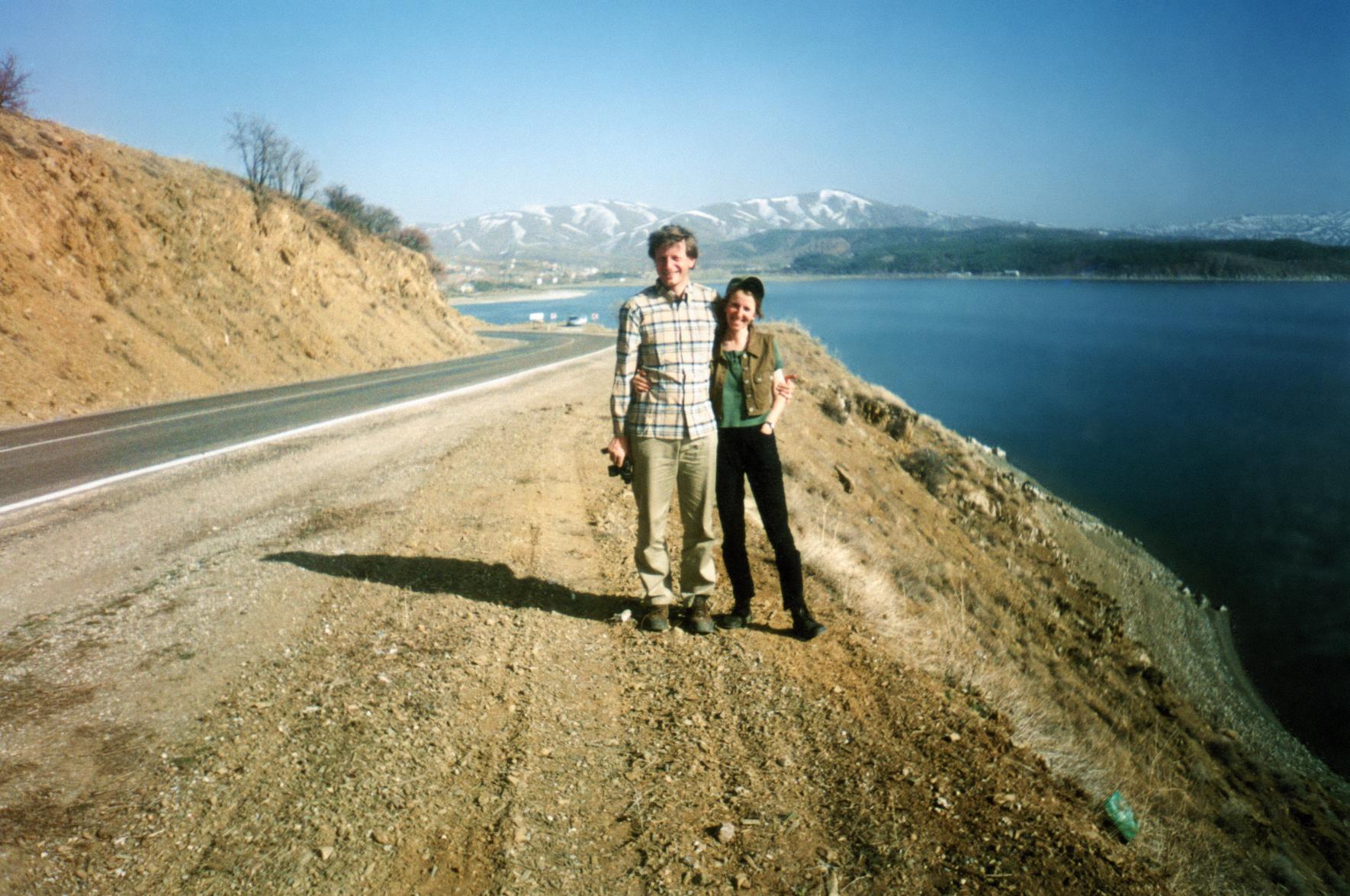
Next on our way is Lake Hazar, freshwater, fifty kilometres by ten. Snowy mountains all around, with white summits. Vacant cabins on campsites. This is a splendid place for a holiday. I always feel sorry for our tourists who jostle each other on the beaches of Antalya. I’m not tarring them with the same brush, of course. I understand the people who simply want a rest, but why do it in a noisy crowded city? There’s warm water here to splash in as well. It’s warm and quiet, yet for some reason people don’t come. We’d camp for the night here if it weren’t a pity to stop so early. We can still go a little farther.
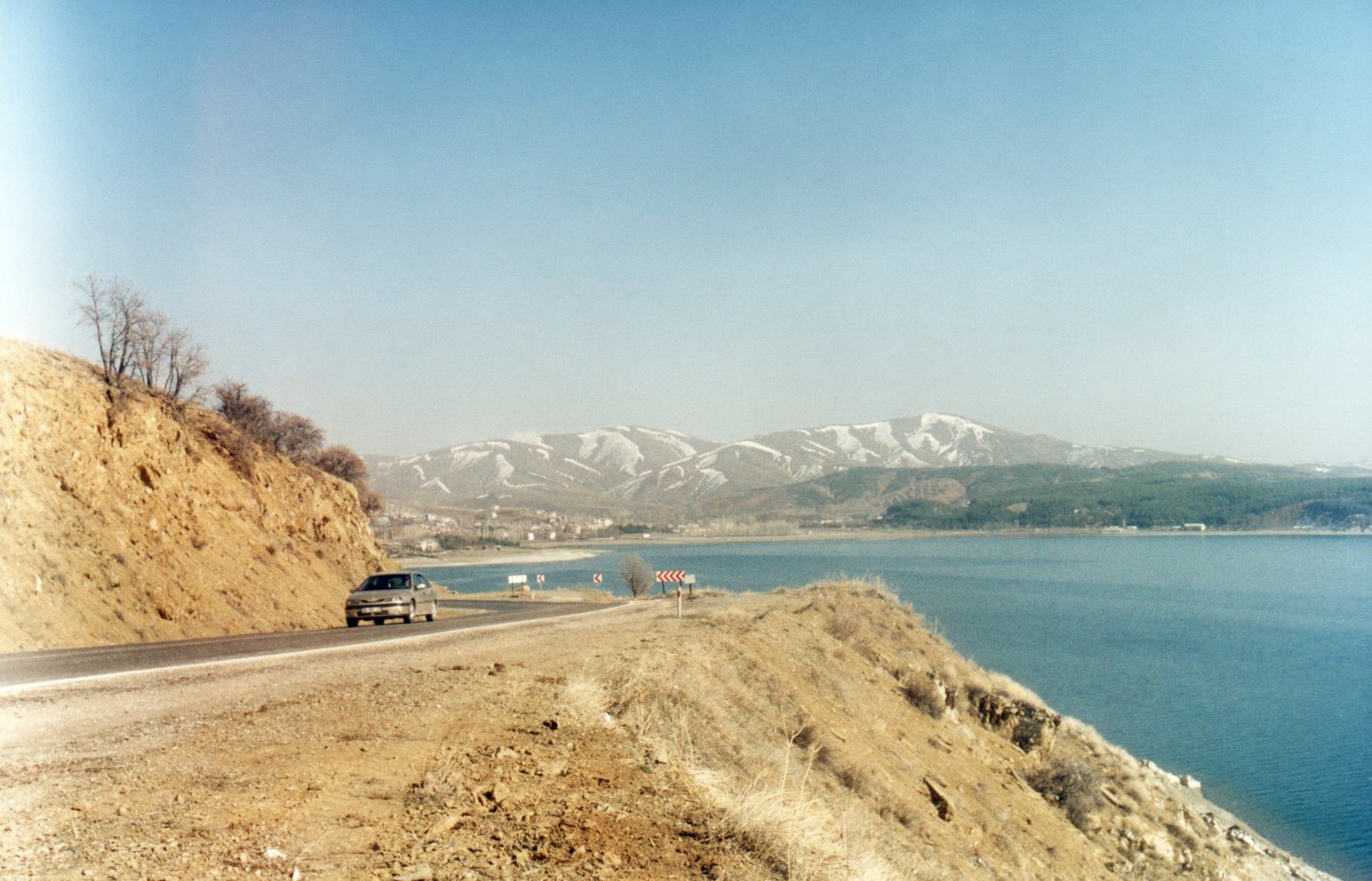
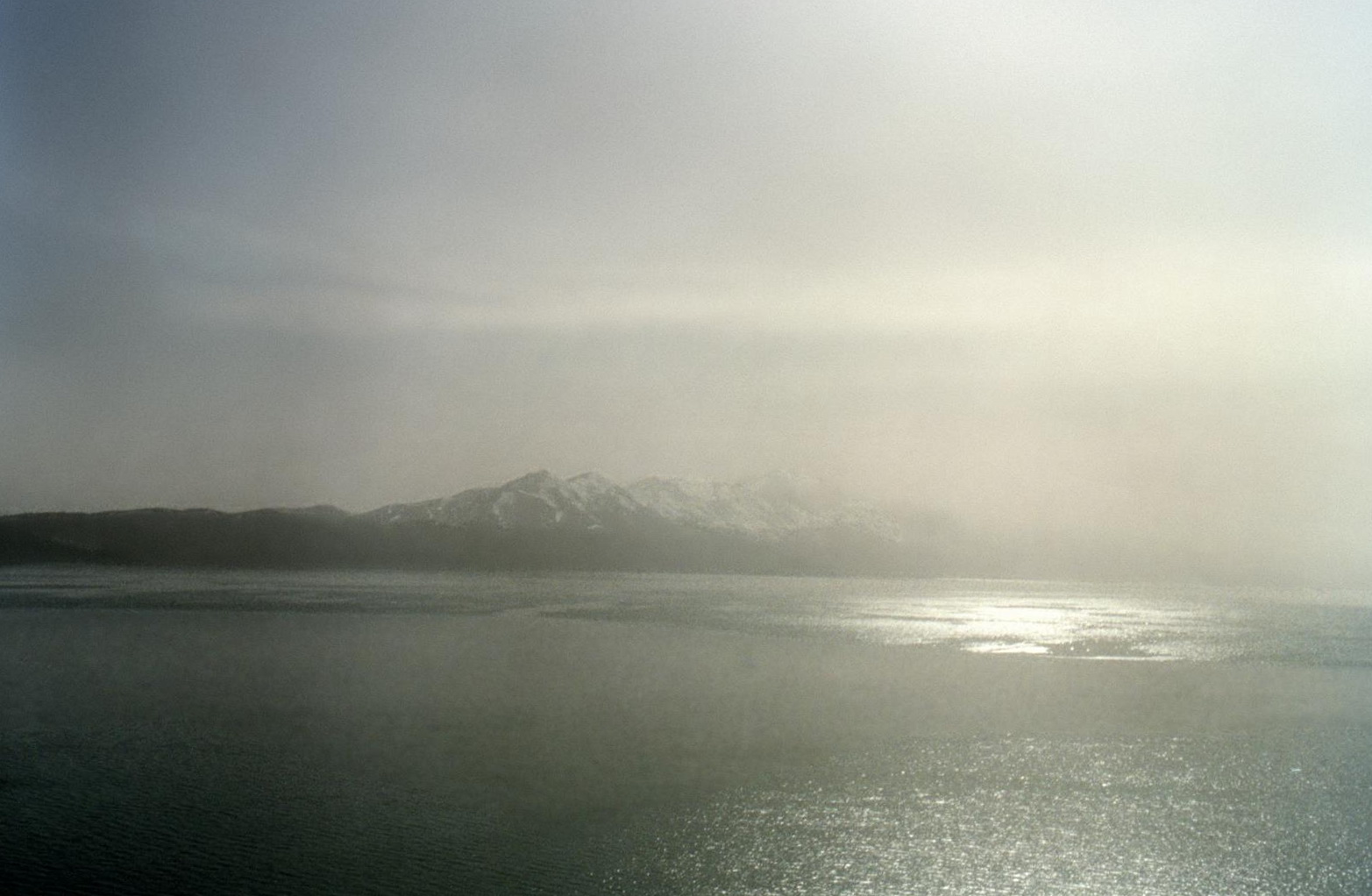
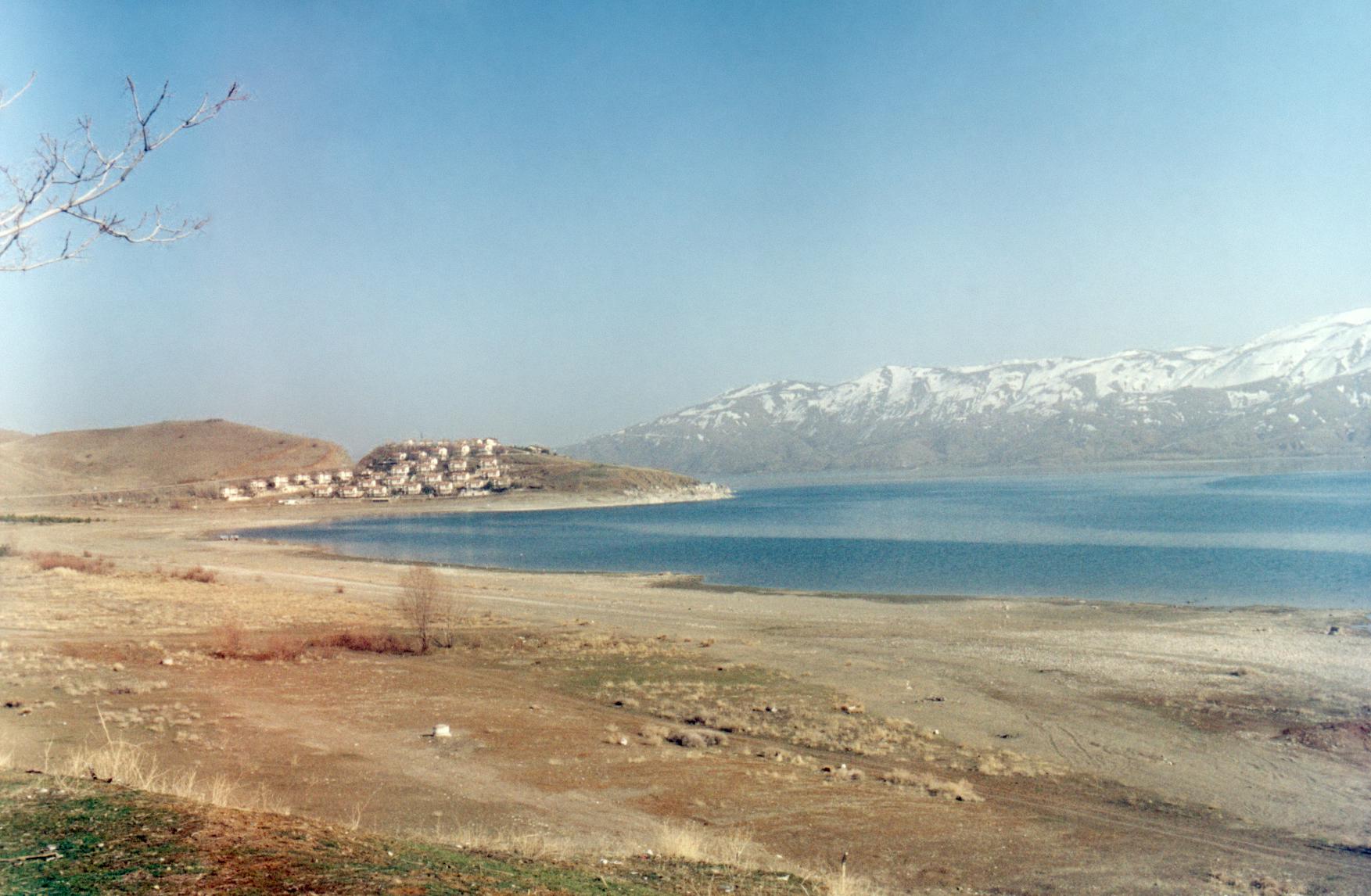
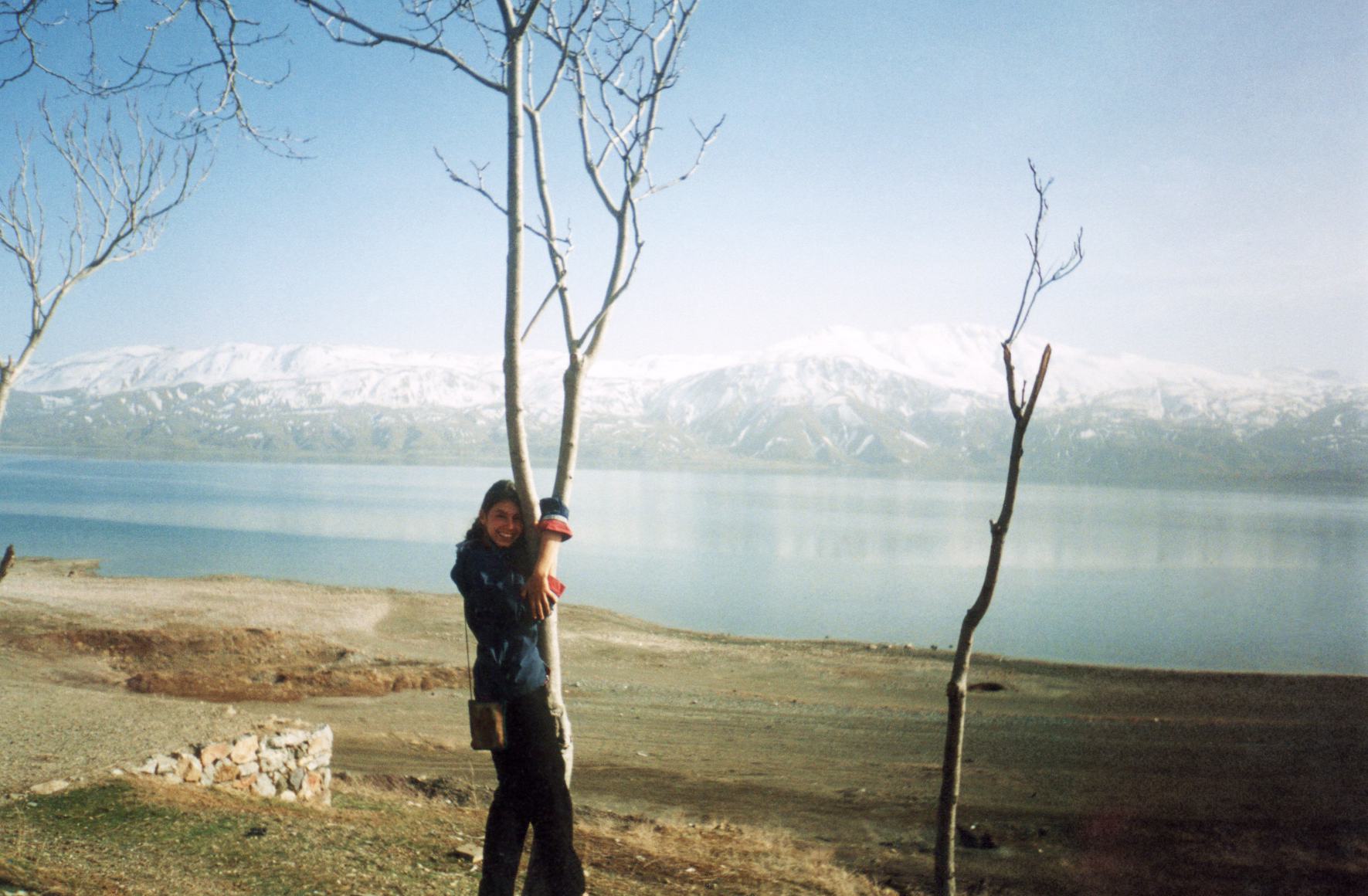
Without going into Elazığ, we turn towards Erzurum. The road climbs. Soon the snow we’d been admiring on the summits starts to appear in ditches by the road, then surrounds the road itself in a flat layer a metre deep. Blowing snow, ice. Now the winter tyres come into their own. We turn the heater on full. The next town is Bingöl, near Ilıcalar. The mountains lower here and the snow disappears again. We drive into the centre. Tonight we’re having a celebratory dinner. No, we haven’t money for a posh restaurant. There isn’t one in this little town lost among the mountains anyway.
We find a decent café where we order a great deal of delicious food for sixteen million lira, and Masha comes back with more delights. The women, as usual, can’t finish a generous Eastern helping, so I get the delicious leftovers. Marvellous. I love women, and travelling with three of them all to myself is the proper way to go.
It gets quite dark outside while we eat. There are very high passes ahead, and there’s no sense driving hundreds of kilometres over them at night on an icy road. We start looking for a place to sleep as soon as we’re out of town. Near Ilıcalar, on our third attempt, we find a steep turn off the road leading to a little summer house. Of course there’s no camping next to someone else’s house, but it’s empty and the snow’s nearly up to the roof on one side. The map shows high mountains ahead and we probably won’t find anywhere better. These are wild places. Even the FM radio won’t work, but on shortwave we find a Russian-language programme teaching Arabic. Is that for Chechen terrorists? There’s no obvious use for it for thousands of kilometres around here, with neither Russians nor Arabs anywhere near. It turns out Arabic is difficult. It too has plenty of foolish linguistic terms like gerunds or the passive voice. I think learning the language is easier than mastering the refinements of high scholarship.
The phone still works, barely. I can see only one network. A text gets through after who knows how many attempts, but a call is impossible. Road traffic soon dies away. Apparently even the daredevil Turks prefer not to come this high at night. In the evening I plug the hole in the fuel tank again. This isn’t Libya. Every drop costs money. Lena and I decide to work out what the leak is costing us, but we can’t agree on how much a drop of petrol weighs. After a few tries I get the loss down to almost nothing, one drop a minute, and go off to sleep with an easy conscience.
We get up by the alarm before dawn. A little frost. We eat our dry rations. No time to light a fire. We’ll get to the next town and eat there.
The first few kilometres show we were right to stop when we did. The road goes up and the drifts on either side are metres high. There are a few more villages. It’s funny to see. An unmistakably Eastern little village, Turkish people, but with snow piled to the roofs, little dug paths and stoves burning. Men are clearing the paths with shovels.
A little farther on there are no more villages. Mountains all around in the light of the rising sun, icy bends and signs advising you to put on chains. There’s another nuisance. The rock thaws by day and freezes at night. The frost breaks up the rock and you can see the landslips with your own eyes. Every so often fist-sized stones roll in front of the wheels. That’s nothing, of course, but from time to time there’s a new slide blocking half the road. They clear them, and new ones come down. Above 2,500 metres it freezes even in the daytime. A blizzard is sweeping snow across the road. On one of the passes we drive into a snow cloud. The weather is savage, just like when we left Saint Petersburg. The ploughs are on standby, driving about and clearing the road. I’d got used to there being plenty of filling stations in Turkey, but we’re running out of petrol and there’s nothing around us but icy peaks. It’s desperately cold. Our feet are frozen stiff. The thermostat doesn’t work. Fixing it before Africa didn’t seem especially urgent, so now we freeze. You could put a board in front of the radiator, but in this icy gale the thought of getting out and doing anything is enough to scare you. I reckon we can make it as far as a little mountain town with the African-sounding name of Çat. And so we do. The snow comes down thick, ridges of ice on the road, the pumps at the only filling station buried in snow. Only yesterday we filled up among groves and palms, and here’s what we’re up against today. The proprietor is sitting by his potbelly stove getting warm. We’re his first customers of the day. Early morning, snow pelting down, no other cars. We fill the tank. Seeing how frozen we are, they invite us to warm up and drink some tea. Delighted, we crowd around the stove on every side.
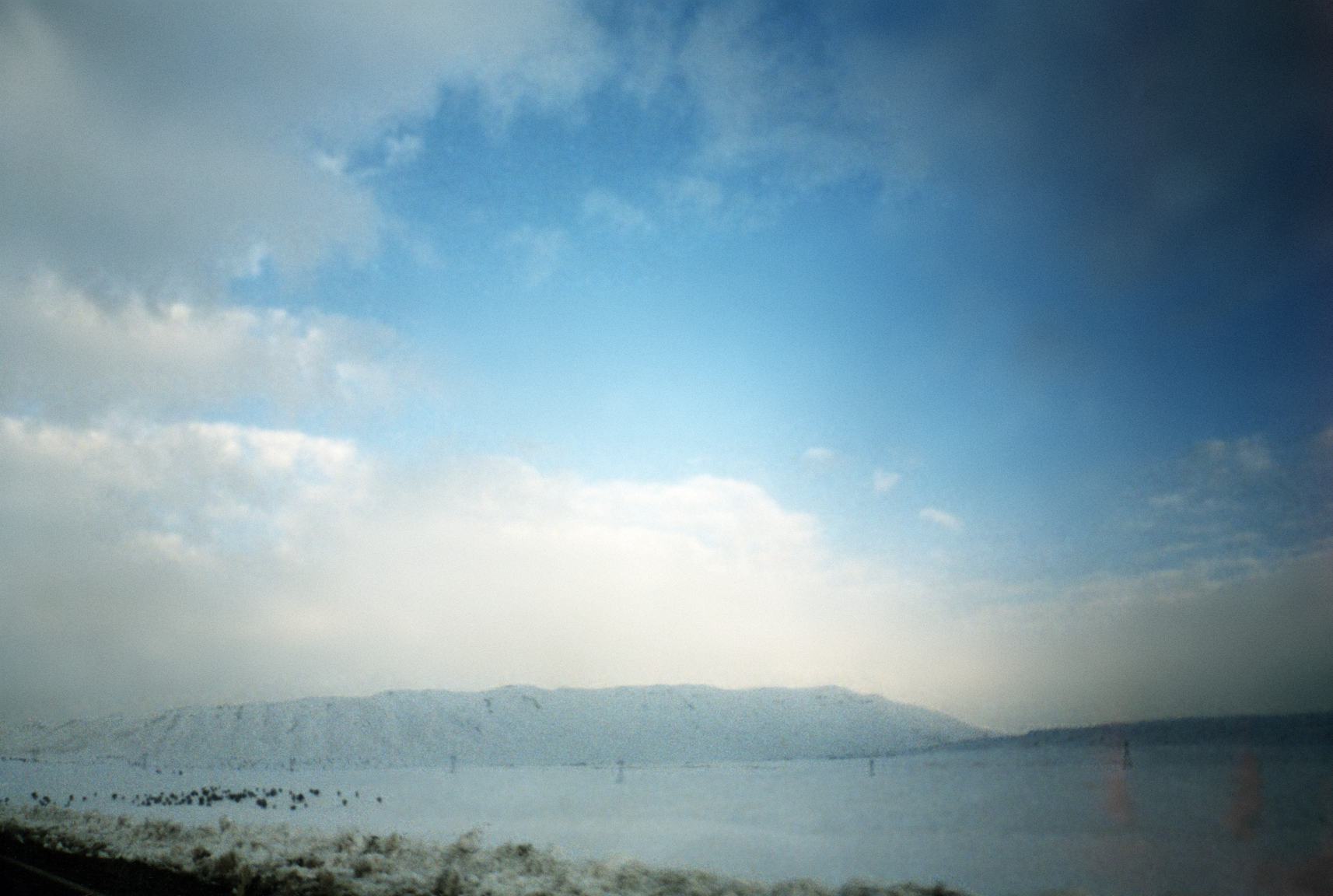
It reminds me of those American films where people wait out the weather at a filling station on a mountain pass. The passes are actually open, and you can drive over them at any time of year. Still, there’s something very comforting about this island of warmth in the cold world.
The next town, Erzurum, is high in the mountains too, though not quite so high. Ice is melting on the streets. No snow, the temperature about freezing and a strong wind. The sights are a madrasa, a mosque and a local museum. We go to the museum, seeing that tickets cost a million lira, thinking we’ll warm up. Wrong. It isn’t heated and it’s even colder in there than in the street. There’s not much to look at either.
We finish the cultural programme and begin the gastronomic one once we’ve finally found somewhere warm, a café. We buy lots of sweets here and pay by credit card. Something of the Armenian spirit survives around here, and so there’s real coffee on the menu. Once we’ve had a sit and collected ourselves, we go looking for more substantial food for breakfast. Bellies full, we set out for Trabzon. The ferry to Sochi goes from there. It’s the last leg of our trip abroad. If we break down entirely now, we can get to the ferry on the end of a rope. Two passes lie between us and the boat, one of them 2,600 metres high. Many maps show a poor dirt road over it.
We’ve barely left town when the engine stops. What happened? Simple. The hose has come off the tank as usual, only this time we didn’t notice. Thirty dollars’ worth of petrol escaped before the engine stopped. It’s infuriating. I get angry. Enough of this. I get underneath and do the job properly.
The road over the pass turns out excellent, no worse than the morning’s passes, and in this sunny weather it’s a pleasure to drive. Just beyond the pass we see a sign for a mountain hotel with a restaurant that promises to catch trout in front of us. Decision made. We’re going. We stop in the snowy car park and wade through snow up to our knees to the door. We wait for lunch upstairs, with enormous windows. Wind carries clouds and bursts of snow off the ridges. Beside us there’s a mountain stream and holding pens for trout. They spent at least an hour cooking ours, but it was marvellous and we didn’t regret it. The trout cost us nine million lira. Now that really is it. If there’s a ferry today, we can’t delay a minute longer.
The second pass is thoroughly civilised. A kilometre-long tunnel straightened the road so much that we didn’t even see snow along the edges. The road starts to drop towards the sea. Thick subtropical forests, immense firs and fortresses perched on cliffs appear. Trabzon’s famous monastery is here. The sign already says thirty kilometres to Trabzon, but I can hear an unfamiliar sound more and more clearly. I start investigating. It’s only audible in fourth gear, and only under load. A few tests and I’m certain. It’s the gearbox. The noise is getting worse. The fault is spreading fast. Now it’s in every gear, even neutral.
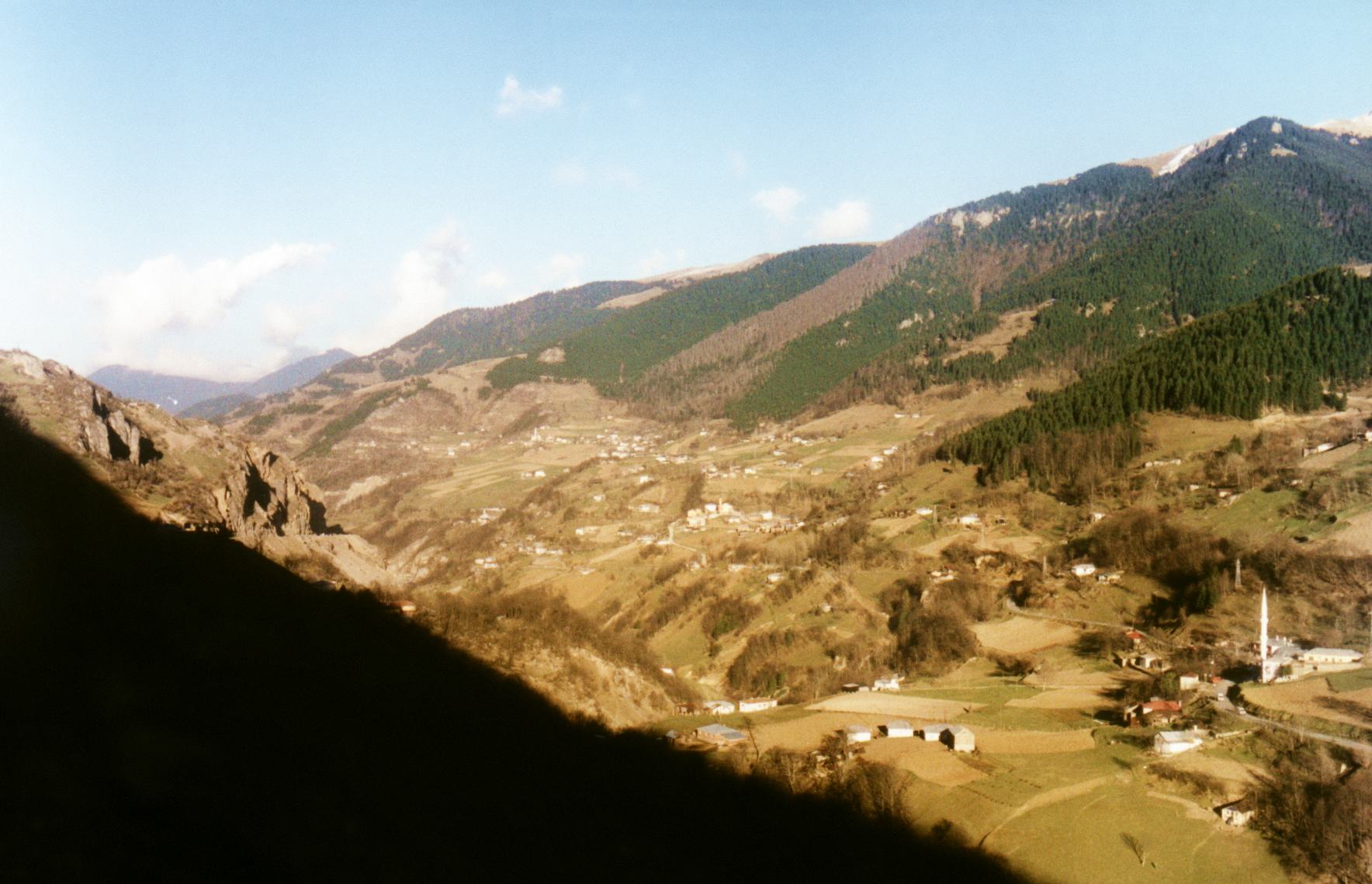
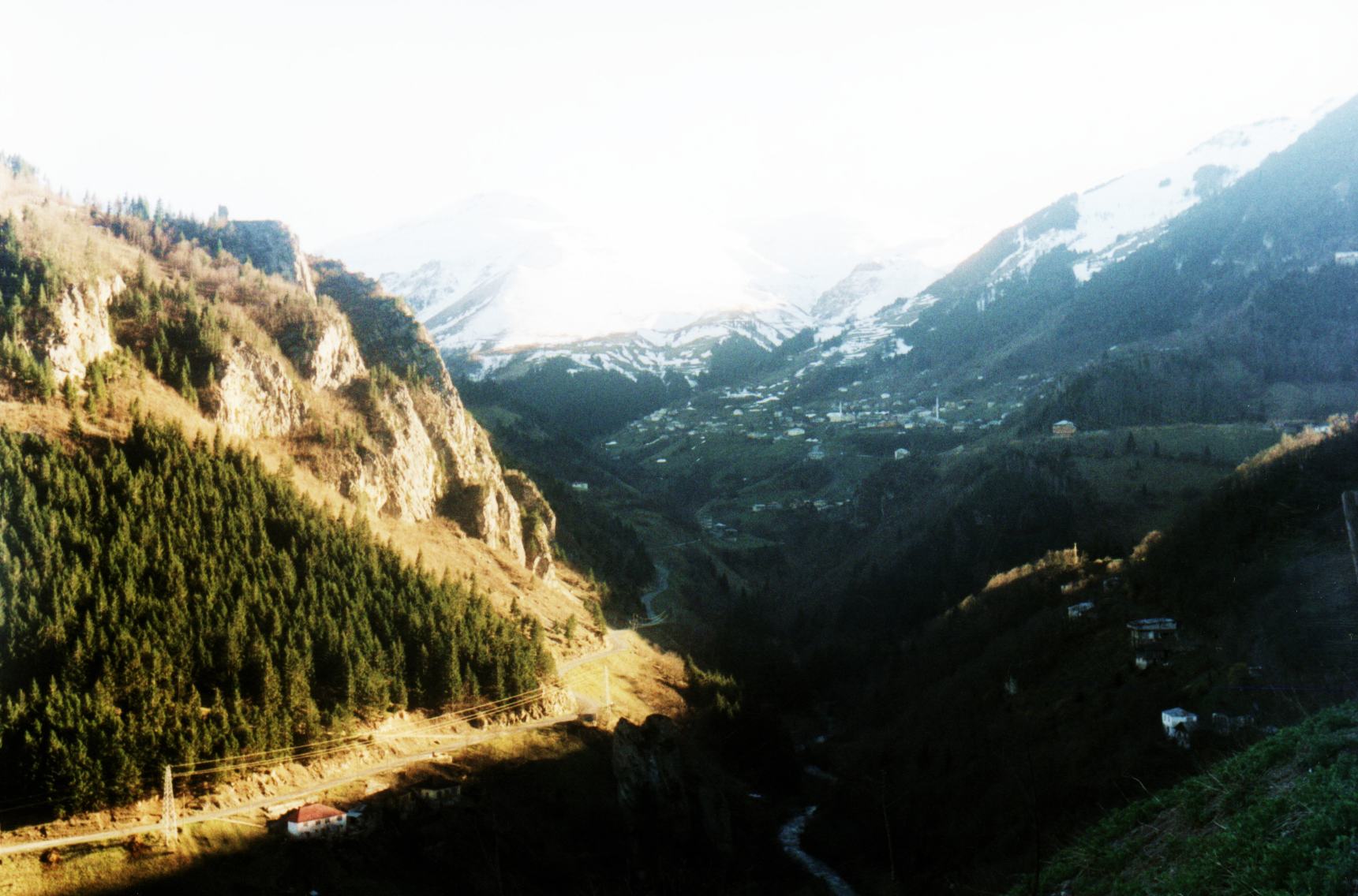
Well, well. Clever car, it got us there. We asked it and it did what we asked. Here’s the city and it’s still moving. We park in a quiet side street. Not that quiet, of course. I have a feeling there are crooks about, but it’s frightening to go looking for a better spot in a car like this. It could break down while we drive around.
The car breaking down settles the route to Russia once and for all. We’ll take the ferry to Sochi. The alternative would have been to drive through Georgia, which is much cheaper and quicker but has its own troubles. The first is the general level of banditry in Georgia. A hundred dollars can buy you off, they say, but it’s still a matter of luck. The second is the perennial avalanches and closures of the passes over the Caucasus. We could have been caught in an avalanche. One covered ten cars at just about the time we’d have gone through. Third, we arrived on a Friday evening. We don’t have visas, and would have had to wait until Monday to get them.
Lena stays on guard and the rest of us go to reconnoitre. In the office marked “Tickets” a Russian-speaking man is sitting. We have a good long talk. He’s Georgian and has lived here many years. It’s hard, but it’s worse in Georgia. Life has become especially difficult in recent years. Only the cement works is running. The port is doing worse and worse. The ferries were written off ages ago and under maritime rules they oughtn’t to leave harbour at all. The whole shipping business is practically illegal. They charge $8,000 for a call at Sochi and $5,000 at Trabzon. There’s nothing to carry. Practically no cars, only mandarins left. Three ferries run for two companies, Avrasya II, Karden and Apollonia, all going to Sochi. The tickets come to $590 for the lot of us. There’s no ferry today, but Karden and Avrasya both go tomorrow. The man represents Karden. Bargaining isn’t done in his office. Sixty dollars a person and three hundred and fifty for the car. You can bargain a little with the competitors, but only tomorrow morning. There’s nobody in their office now. They take only cash, off the books, and insist on dollars. We haven’t any cash, just cards. The ferry men look at them as though they’ve never seen one. Paying with those is out of the question. When they hear the cards came from a Russian bank, they make disgusted faces and say we won’t be able to use them anywhere here. We don’t believe that, of course, and turn them into a pile of money after a few tries at the first cash machine we see. We empty all the accounts and come away with 800,000,000 lira. It ought to be just enough. We also have two hundred dollars and six thousand roubles, but we’ll need those in Russia.
It took us quite a while to get back to Lena. Strange things were going on around her. Odd people circled like sharks, then somebody brought tea. She was already afraid they’d soon swoop and rob her. Time to move. We drove a few blocks and parked by the city wall, local administration and Russian consulate (40°59.830′N, 39°42.280′E). We left the car in a car park and went to look around town. We went into McDonald’s, bought rolls and some milk.
The prospect of the Russian shore hadn’t only exhausted the car. Tanya came down with a stomachache. I could barely walk myself, overcome by a wave of tiredness out of nowhere.
Back at the car we decided to sleep in it, but have dinner first. We poured mineral water into our glasses and the police turned up beside us. Imagine deciding to sleep in a car park in a Russian provincial capital, right by the council offices. The police catch you. What happens next? I’m afraid it won’t be good. In Turkey they ask what we’re drinking. Is it alcohol? When they see the mineral water they apologise, wish us a pleasant meal, offer help if we need it and melt away into the dark. The next lot arrive in a patrol car when we’ve already settled down. Seeing that we’ve gone to bed, they apologise at length for disturbing our peace. They thought we might be in trouble. Turkey’s a free country and everyone has the right to sleep in their car. They’ll be nearby and we’re quite safe. Now that’s pure gold, that is. What police should be, and Turkey is a country that gets it right.
Sleeping in the car is uncomfortable, of course, and we wake before daylight. As good Muslims should, to the song of the muezzin at the mosque next door. The loudspeaker is powerful enough to wake anybody but the dead. We could try going back to sleep, but in the car we don’t manage it.
We trail off to wander about town, listless. There’s nowhere to eat. Everything’s closed, even McDonald’s. We wait a painfully long time. It always feels such a waste. We could have spent the day doing something quite different. The ticket office opens at ten. After bargaining, we buy tickets for the Avrasya for seven hundred and fifty million lira, eighty-seven million off the asking price. It’s the famous motor ship that was hijacked by Chechen terrorists. Avrasya, by the way, is just “Eurasia” in Turkish letters. Very apt, as the ferry links two continents.
Once you have a ticket you can take your car into the port, and we do so without delay. The grinding from the gearbox is terrible. Passers-by turn round to look. Now it’s a hundred metres from the ferry. At worst we can push it aboard. There’s still a lot of time to fill. Tanya feels sick and can only eat a roll with mineral water, so we go looking for a canteen, a lokanta in Turkish. Right at the port there’s one with the endearing name “Dayra”, which sounds like diarrhoea to us. No, we’re definitely not going in there. We find one with a more appetising name. Everyone is exhausted. You can tell we’ve had a whopping good holiday. Tanya and I go for a walk along the sea. Once this was where we drove our first kilometres on Turkish land and everything seemed strange. We sit on a stone by the sea and watch the surf, exchanging texts with our friends. It isn’t warm. An icy wind blows off the cold Black Sea. This puddle, beloved in Russia, means to the Turks what the Kara Sea means to us.
Then, under the disapproving gaze of the waiters in an expensive café, we nurse two glasses of tea for hours. Afterwards we sit a long time under a palm. How I love them, so soft and warm. When will we next be able to run our hands over a date palm?
Everything comes to an end. The day over, we go to our beloved McDonald’s one more time and then go to board the ship.
It turns out we could have done that earlier. The trouble is with the border officials. They wander about nobody knows where and aren’t easy to catch. We’ve been cleared to leave Turkey as people, but they can’t do anything about the car. They say the necessary boss is asleep. What’s more, we have to load last, after they’ve filled the whole ship with mandarins and left a little gap for us. The ferry used to carry lorries, but because of all sorts of customs problems, it turned out easier to unload the lorries, carry the mandarins on pallets and load them back into lorries at Sochi. I discovered the ferry takes around six million mandarins, worth $600,000.
The organisation couldn’t be worse. Nobody knows when the ferry will leave. At first they said that evening, then by morning. They suggested we go to sleep and said they’d come for us when the time came. So we did. Of course I didn’t get any proper sleep. It’s unnerving. I kept waking up and running out to see how loading was going. I needn’t have worried. When the head vehicle customs officer woke up, they woke me, and I got the paperwork done. Finally, as it was getting light and the muezzins started singing from different parts of the city, they called me to load the car. The ramp onto the ferry is badly uneven. You can’t just drive up it. The car grounds out. Only on my second attempt, putting special mats under the wheels, did I manage to slip into the ferry’s citrus-filled belly.
Before long the ferry put to sea. I still couldn’t sleep. We’d got a cabin with a porthole, and for a long time I looked out at the Turkish mountains, at that other world.
There was quite a swell and we all got seasick. I didn’t want to get off the bunk. The phone picked up Turkish networks for another two hours and the snowy summits towered above the haze at sea. Soon both disappeared. The weather worsened and it began to rain. Towards evening Tanya and Masha went to reconnoitre for food. The restaurant was serving lunch. They ate. When they asked about payment, the cook shook his head without understanding.
Tanya and Masha came back to the cabin with the news of a free meal. Lena and I suddenly discovered an appetite. We went and ate. At that precise moment a woman appeared from round the corner and demanded three dollars a head in flawless Russian. So there you are. They lure you in and then… The swine. Right there in the restaurant my phone suddenly rang. NWGSM on the screen. We’re home. Out on the open sea I had picked up two Georgian networks faintly, but I couldn’t actually connect through either one.
The shore is still a long way off. Revived by the meal, I manage to wash in the shower. The water is barely warm, though.
The ferry spent a long time manoeuvring and waiting in the roadstead. We didn’t dock and the door didn’t open until nine that evening.
We were already by the car when a party of Russian border guards burst in. The captain whispers, “That car doesn’t exist on the paperwork. Can we sort something out?” “OK, no problem.” But the matter drags on. They won’t let us drive off while they make their arrangements. Meanwhile they start unloading mandarins for customs straight away. The border guards and the rest of the lackeys carry off as much of the cargo as they can to their little storerooms. I’m making a platform to drive the car off safely. When the order comes, I get off quite successfully, though naturally there’s a scrape from our long-suffering exhaust. They let me off the ferry, but from the guards’ conversation we realise there’s a cunning plan taking shape. They won’t let me leave the port with the car tonight. We’ll have to wait until morning. The passengers can clear out with their things. I’m the one who has to stay here all night.
The welcome on our native soil was so spiteful that the girls rounded on the border guards with a force that left them quite taken aback. They didn’t even understand what they’d done or why they were being treated like this. This is how they always live.
We already know our parts. By rote we repeat the story about the sister and niece, that we’re one family and we’re staying together. The guards smile fondly, just like the Arabs, and say a family is a good thing. That’s the way to do it. The whole family ought to travel together. I never thought it would work here. What a horror. What a wild country we live in.
I try to explain nicely. The girls are in culture shock. They’ve crossed eighteen customs posts. Everywhere people smiled and tried to help, but here it’s all different. They’d forgotten this isn’t Africa, that now they aren’t people but little insects in the hands of the state. Only Egyptian customs could compare with what we’ve just seen. After all we’ve been through, we have nothing to lose. We’ll block the customs exit with the car and call the president and the customs committee, and carry on calling until they’re all sacked.
Looking at what’s happening, they decide as a precaution to go through our car thoroughly. They rummage in dirty rags for half an hour and find nothing remotely suspicious. I’m very worried about the Dead Sea water and the Sahara sand. These fellows won’t see the joke. They’ll declare it drugs and produce an expert report to go with it. No, they don’t find them, thank God. It’s mystery enough to them that we’ve turned up at all. These people are obviously bringing something in, but who knows what. From Libya. That’ll be serious business. Best not stick your nose any farther in than you have to.
The gates open. We drive off looking for a garage, waking the night-time city with the grinding of our dying gearbox. It doesn’t take long. We see a sign for “gearbox repairs” practically at once. The bay’s closed. The watchmen say someone will be there tomorrow at eleven. Nothing for it. We look for a place to spend the night. We decide to sleep in the car by the river, on a quiet side street in an industrial district. How unfamiliar it is to switch on the radio and find everything in Russian. Familiar stations. Thieves’ songs, ghastly stuff. I wish I hadn’t turned it on. We’ve had plenty of sleepless nights behind us. Lena goes out to sleep in the fresh air. Even three of us can sleep perfectly well in one car. We wake with the sunrise.
It’s still a long way to eleven, so we decide to look for a garage that opens earlier. We find one a few hundred metres away. The owners are Armenians. Lovely fellows. Listen to them and you want to laugh your head off the whole time.
“My dear fellow, give me the thirteen-millimetre spanner.”
“You know, I’ve thought about it and decided you don’t need a thirteen-millimetre spanner. What you need is to go and…”
“Have I got this right? Did you, you stinking Chatlan, just say that?”
“Yes, quite right. You really ought to go there.”
“All right, I’ve thought about it and decided I really will go there. But I’ll be back, and you won’t hear me, because music will be playing in your house and you’ll be lying in a coffin.”
That’s how they work. They take on the job of changing the gearbox. A crowd of curious people gathers.
“Boss, did we hear right that this car came all the way from Africa?”
“Well, yes, it did.”
“They ought to put up a monument to this car, bring children to see it and charge for tickets.”
We go to a breaker’s yard. In a shed among chickens and assorted livestock we find a gearbox from a Granada for $230. It fits, but the speedometer won’t work.
We take it back and start fitting it.
The mechanic’s wife appears.
“Master, I’ve brought you cocoa. Drink it.”
“Away with you, woman. I have to do this. I have to change this gearbox.”
“I won’t go. I have to give you your cocoa. It’s good for you.”
“If I don’t fix this gearbox, nobody else will.”
“I’m putting your cocoa on the table. You can bring the glass back yourself.”
That was how we changed the gearbox. As soon as we took the old one off, we saw there was no oil in it. The level plug wouldn’t unscrew, so the Egyptians clearly hadn’t unscrewed it. It follows that it could all have been put right and the gearbox saved. Its death lies squarely on the conscience of the Egyptian Mobil garage.
Everything was ready by noon. I took it for a spin and checked it. All OK.
I pay 2,000 roubles for the work, and another 370 for oil. Now the car’s ready for anything.
While I was dealing with the repairs, the girls walked around town. Everyone has a mobile, so making plans is easy. Only they choose a meeting place you can’t get to by car.
We finally meet. I turn the key and the engine doesn’t start. Out of petrol. Luckily a man standing beside us helps out with two litres. Everything’s all right now. We make it to the nearest filling station.
We have to drive down the coast to Dzhubga. The road’s beautiful but you can’t drive fast. Hairpins, villages and lorries. It was getting dark by the time we finally reached Dzhubga. It’s a special place for me. I was taken to the seaside here in 1968. That was my first journey. Here I saw the sea and mountains for the first time.
How small they are, to my astonishment. There’s Mount Hedgehog. I thought it was enormous. Now I find it’s a hill thirty metres high. In winter this resort village looks wild and deserted. There’s no one on the beach. The house, or rather the shed, we lived in back then is still standing. I stand for a while and look at it. Such a warm feeling for it in my heart.
After our walk we had a filling meal at a little roadside café.
One last look at the sea, and the road takes us deep into the mountains towards Goryachy Klyuch.
The fuel pump comes off again at the next bump. It’s hardly the first time. The nuisance is it’s pitch dark and the traffic’s heavy here. The girls try waving for someone who might have a bit of string, but this isn’t Africa. Nobody stops. We make camp for the night short of Krasnodar, on a little country road. It’s drizzling but fairly warm.
We get up with the alarm in the dark and are soon off again. Lena is determined to be at work tomorrow and make it to Saint Petersburg in one go.
The weather is marvellous, a proper spring day. Time for lunch, really. Every few dozen kilometres there’s a roadside village where for some reason it’s the custom to sell things and build cafés and other roadside facilities. It’s not clear how these villages differ from their neighbours, but you can only get a meal among a crowd of drivers as hungry as yourself. It seems you can’t hold out against the authorities and the gangsters alone. It takes the whole village. At one such café we ask where the toilet is, out of habit. Yes, a hundred metres away, like a hole in a bit of plywood. Just look out you don’t fall in. The toilet was standing in the middle of a lake and you had to get to it over old tyres.
Scam artists operate nearby, right at a traffic police post. One points out your flat tyre. Fifty metres on another casually mentions an advertising promotion and a chance to win a pile of prizes. All right under the eyes of the police. People often ask how I can have the nerve to drive around wild countries. What I want to say is that of all the countries, Russia is the most frightening place to drive.
Near Lipetsk patches of snow begin to appear along the road.
We reach the Moscow ring road about midnight. I don’t want to drive to Saint Petersburg at night, so we stop to sleep a little without getting out of the car, beside the highway just short of Klin. There’s a sign for the Navy holiday home. A dark spruce forest around us, with snow to the knees everywhere. This is our last night, the fortieth. Sad, no energy. During the night some unsavoury types drive past, and cops with flashing lights, but fortunately nobody takes any notice of us. In the morning we wake to the alarm at six. The weather’s turned. Grey sky, now snow, now rain. The Moscow–Saint Petersburg road is in a shocking state. Without exaggeration, it’s the worst road of the whole journey, especially in the Novgorod region. In yet another village designated for feeding motorists, we have a bite to eat and fill our last tank of petrol. The money’s finally gone. We gather up change from around the car for coffee. “Coffee” is rather grand. All that’s available is brown sludge with “Nescafé” written on it. We still have a hundred roubles in reserve for emergencies with the traffic police. When I overtake on the bridge over the Volkhov, half of it has to go.
The weather has turned thoroughly sour. Sleet and mist, a layer of dirty slush on the road. Only on the approach to Saint Petersburg do the clouds suddenly come to an end and spring sunshine fill the fresh snow on the fields with dazzling light.
At two in the afternoon we reach Masha and Lena’s house in Pushkin. The car is covered in dirt and a thick layer of ice. Since I successfully avoided all the traffic-police ambushes from Novgorod onwards, we have fifty roubles left. We spend them on sausages and eat them. Once we’ve divided our things, Tanya and I go on home, stopping at a cash machine on the way to clear out the very last money from all the cards.
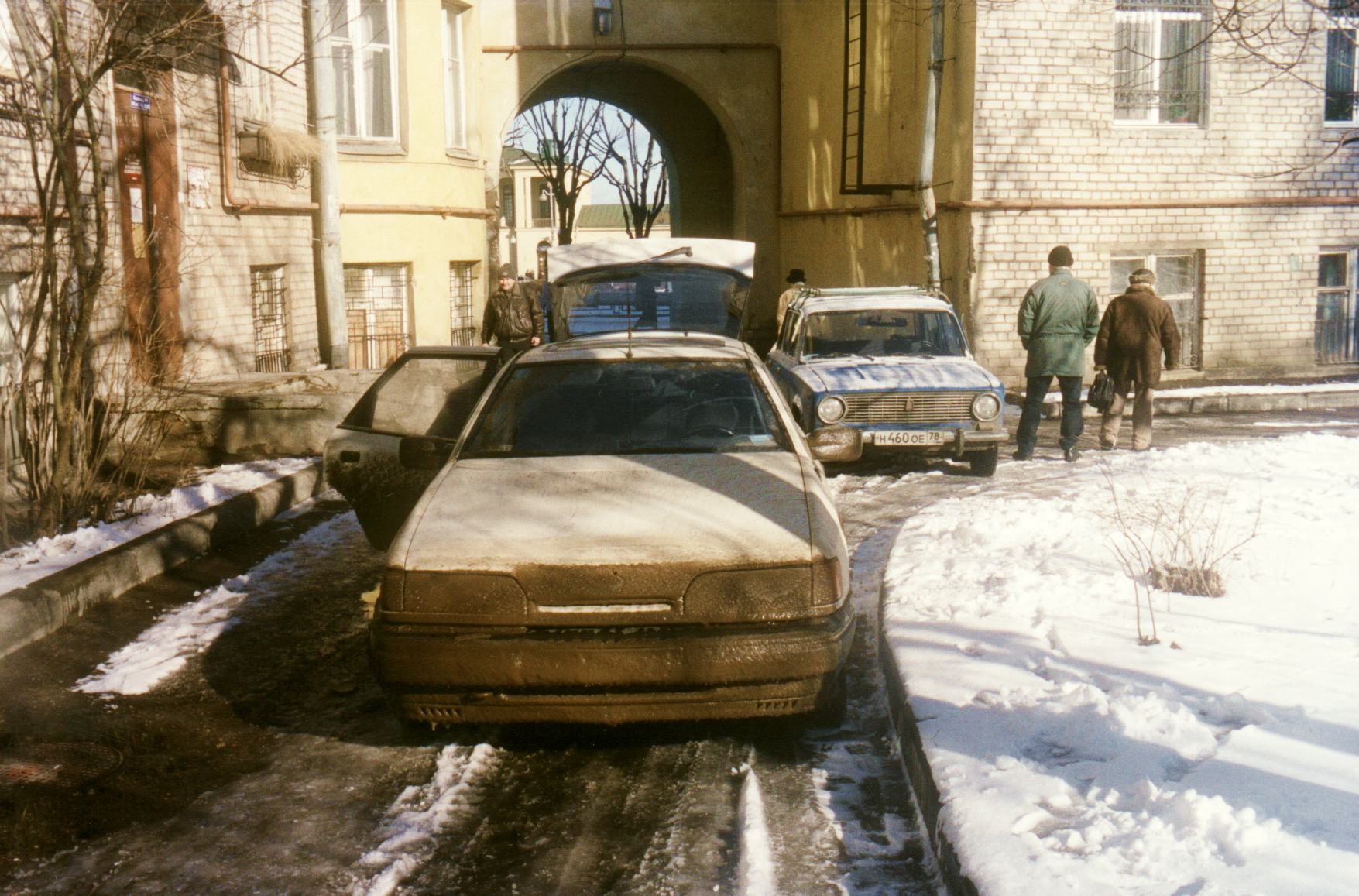
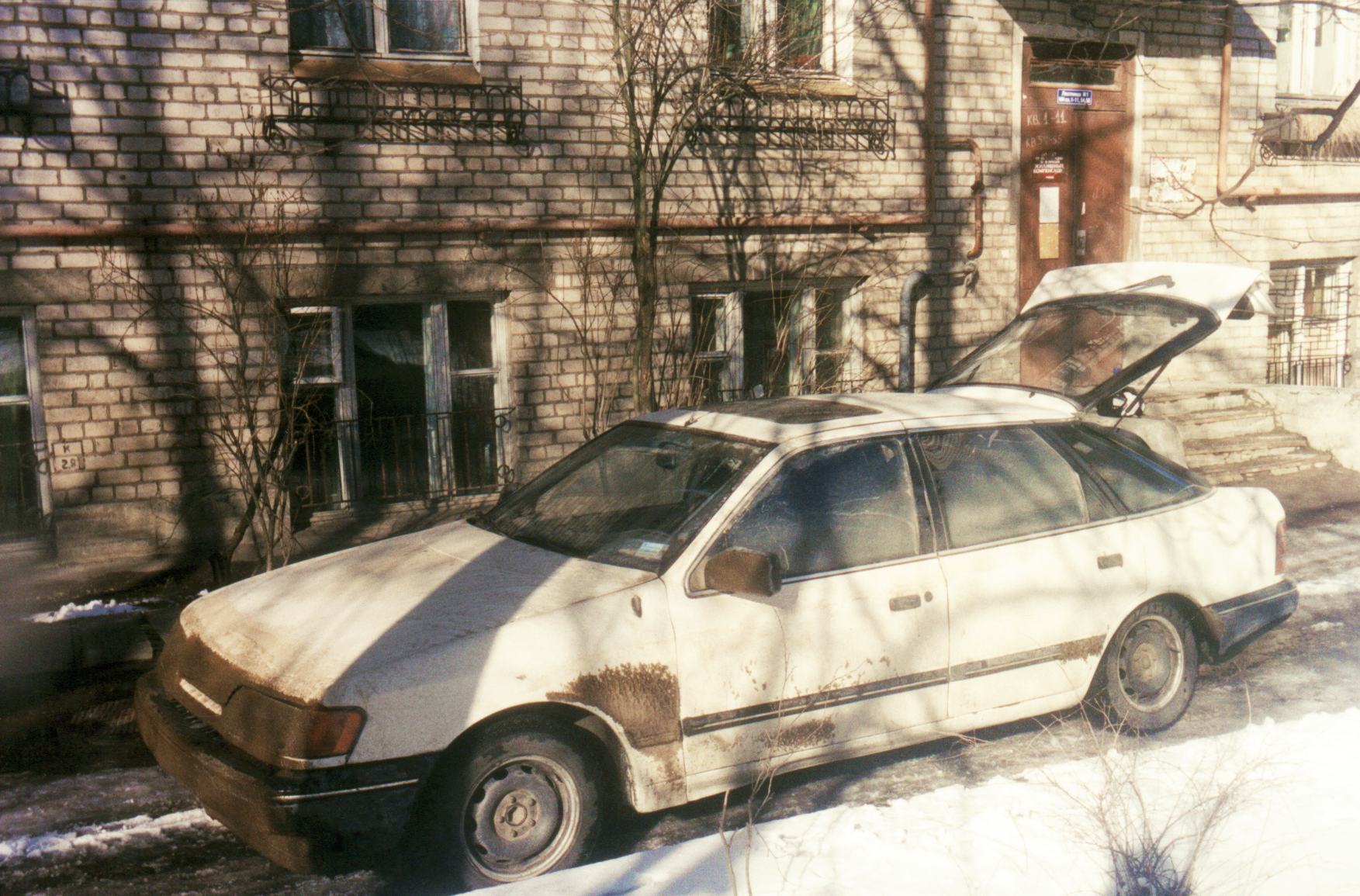
That’s all. 20,700 kilometres, six ferries, seven seas, fourteen countries, twenty customs posts, forty-one days. All of it stays in our memory for ever.
Acknowledgements.
First I want to thank Ankhar Kochneva, who helped us arrange most of the visas and then answered my questions as I wrote this account. Without her help we wouldn’t have gone anywhere.
Konstantin Menshikov read the whole thing and found many inaccuracies, which we took into account and corrected.
Safari Tourism Services, the Libyan tour company, let us explore the country on our own.
The mechanics at the Voenmekh garage, 62 Kamennoostrovsky Prospekt, and especially Valera, prepared the Ford so well that it made the whole journey.
Thank you, all of you.
And enormous thanks to the Ford itself, my beloved white horse. I’ve always treated it as a living person and it didn’t let me down.
Many other people helped us. We don’t know their names, but we remember them and are grateful for their kind words and help.