Egypt
Chapter 5. Egypt. Welcome to Egypt, or You Must Leave Egypt Within 48 Hours.
Here’s the Egyptian side of the border, solidly built, with a proper building. After Libya this ought to feel like Europe. All respectable people, even officials, should speak English. The millions of tourists ought to have swept away any customs nonsense.
So much for what ought to be. Here’s what we see. Merry border guards. If this were Russia, I’d have no hesitation in saying they were drunk. After Libya, you want to banish any such blasphemy from your mind. “Welcome to Egypt!” They wish us a happy New Year and a good morning. What morning? It’s getting dark already. No, they’re drunk all right, and very drunk. Entry costs 34 pounds, or $7.40. Marvellous. Peanuts!
Alas, we didn’t stay happy for long. Egypt has learnt to put on a pleasant face. What lies underneath is another story…
We don’t have Egyptian pounds, so I leave everyone and the passports behind and drive on. The entrance to the exchange office is on the other side of customs. No bother. It turns out you can get through customs without a passport, but you have to go through the metal detector. I have a pocketknife. They almost confiscate it. It takes the boss himself to let me through. The people at the exchange office throw me out and tell me to use the window. Nobody’s at the window, but it’s only temporary, they say. Back through customs. I wait. The phone doesn’t work. There’s no signal. Then the exchange window comes to life and I change some money. One US dollar buys 4.55 Egyptian pounds. I go back to collect the others.
We drive up to customs. We’re made to carry all our bags to the metal detector and the X-ray. The car stays on the other side. I have to go back through the same metal detector to reach it. Nobody takes any notice of the beep from my pocketknife now. They all know it has to be done this way.
At first it all seems fairly standard. There’s a military check. A man makes a show of rummaging around and asks whether we have any bombs. Then they send us to the vehicle inspection office. It’s beginning to feel like overkill. They copy down all the chassis numbers, slowly and carefully. Back to customs with the slip of paper, and they announce a charge of 500 pounds. That’s nearly $110. Well, well. They send us to the insurance company, where they tell us 800. Or rather they write it on a slip of paper, since nobody there can speak English. We shout that customs said 500. The man says he doesn’t take orders from customs. We take him back to customs and discover it’s 500 for customs, 800 to this man for insurance, and 200 to the vehicle office for number plates and an Arabic driving licence. And that’s not all. Even with insurance, he won’t let us into Egypt without an escort, in case we sell the car. The escort costs another 300. That makes 1,800 pounds, or $400. We simply haven’t that much cash. Well, well. So this is a civilised country that welcomes tourists. The bargaining starts. The gang, led by customs inspector Mahmoud Kamel and a representative of a supposedly independent firm, behave like shell-game operators in the market. “Moi? I’m not to blame. A private firm can do whatever it likes.” The same tragic gestures, the same astonishing offers. We write down the whole gang’s names and phone numbers. We promise to complain, stay here a month and make their lives a misery. Our visa is for three days, and they hint that we’re already in Egypt and can be arrested and deported in three days’ time. Fine, we say. We’ll leave the car, go to Cairo, extend the visa and complain all the way up. That seems to work. Mahmoud Kamel, the ringleader, snatches our notebook and tears out the page with his number. Aha. He’s slipped up. We can press him. A pity the phone doesn’t work. That’s probably no accident. Want to make a call? Buy a hundred-minute card for $30. Bought it? Good for you. The payphone doesn’t work. The electricity’s off and won’t be back until tomorrow.
After four hours of negotiation we’re down to 100 for customs, 650 for insurance, 70 for the vehicle office and 200 for the escort. Altogether 1,200, or $264. Well done, Mahmoud. He wanted over $100 for himself. That’s a lot of money, frankly unacceptable. We could go to Cairo and have it out there, but six hours in Egypt have killed our desire to see the country. To see another country properly, you have to feel affection for it and be curious about it. Alas, talking to bandits has made that affection doubtful. Best get to Jordan, especially as they’ll be celebrating New Year here for a good while yet, almost like at home. When it got dark, Mahmoud announced that his working day was over, he was going home, and nobody else knew a word of English. We stayed to sleep in the car. The talks had stalled over the escort. We said he was out of the question, and they said we had no choice. One alternative they suggested was a $10,000 deposit.
All four of us spend the night in the car (31°34.280′N, 25°05.238′E, elevation 190 m). We’re in a murderous mood, quarrelling about how we ought to have negotiated faster and more cleverly. The phone won’t work and we feel so low. I’d love to send a text message. Every so often a signal appears, but I can’t connect. I take my phone and go prospecting for a stronger signal like a water diviner. Before long I find a spot. If I stand on tiptoe with my arm in the air, I can send texts fairly reliably.
That cheers us up a little, but we’d had quite different plans for today.
There’s nothing for it, alas. It isn’t even those customs crooks who are to blame. It’s the state. It put a $10,000 duty on importing a foreign car. Protect our market and squeeze the rich, so the thinking goes. It let things reach a point where every official can be bought. Any customs officer will let a car through without papers for his share, and any traffic policeman will register it. The corruption is so thorough and the records so bad that anything is possible. We could bring in our venerable Ford, sell it for $10,000 and hand over a thousand or two on the way out, and still get away with it. Customs doesn’t want competitors. They won’t let anyone through without a huge tribute. Trusting people isn’t the custom here. For five thousand, perhaps they’d have told us to go wherever we pleased.
It’s instructive that a ten-thousand-dollar duty hasn’t saved the local car industry either. People drive foreign cars all the same. Our Lada 2106 costs $12,000, and the factory in Tolyatti is promoting projects to put the 2106 into production in Egypt.
At seven in the morning we get everyone involved in the extortion out of bed. It’s nice to return a small piece of nastiness, but it doesn’t help us. Now they’re wandering about half asleep in search of their leader. Mahmoud arrives at eleven. Another hour of negotiation. We reach an agreement. The odious man from the insurance company is to ride in the back seat. We have to arrive in Nuweiba tomorrow evening. The paper chase begins. I already know all the bosses and have been in all the offices. By now we go through every fence and door marked “No entry”. The metal detector still complains about my pocketknife. Everyone knows that’s how things have to be. We carry our inspected bags back to the car. Total chaos. This is all an empty show of guarding the border.
They issue battered Egyptian number plates in Arabic. A plastic driving licence in Arabic in exchange for the international one, even though Egypt signed the reciprocal agreement recognising driving licences. Nobody intends to give you any money back when you return these things on leaving. Unlike Libya, they use genuine Arabic numerals for everything, so it’s very hard to make out anything on the receipts. I’ll tell you now, everything is on them except the sums they actually took from us. I’ll also say I’m going to take the trouble of sending the whole lot to the Egyptian government. Let them sort it out. I’m under no illusions, of course. Life in Russia has taught me a lot. The wrongdoing will go unpunished, but there’ll be trouble for the people who did it.
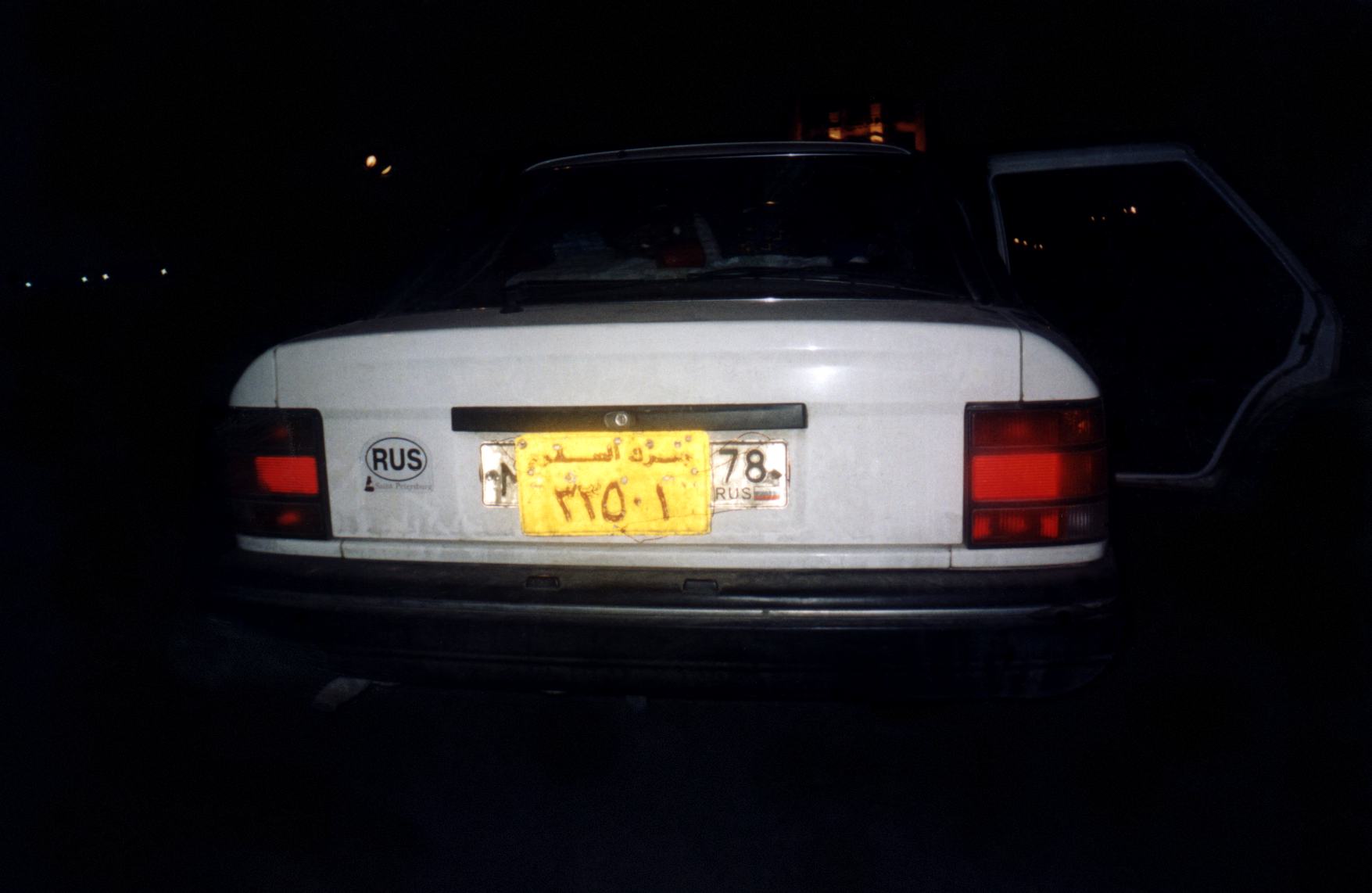
Everything is ready by about two in the afternoon. With a look of contempt, we order the escort out of the front seat and into the back. Our first few kilometres on Egyptian soil. The man sits there barking orders. He has five words of English. Our favourite is “relax”. What could it mean? You’ll never guess. It means “watch out!” He says it before every pothole. The car revolts with every fibre of its being against its new passenger. As we enter the first town, Sallum, petrol breaks out with renewed force. Now it’s pouring out in a river. I get underneath to look. Two fuel hoses have burst at once, including a high-pressure line. I can’t deal with that one. I’ve cut the damaged section off, but I can’t crimp the fitting back on. All right, we’re in a town. Let’s find a garage.
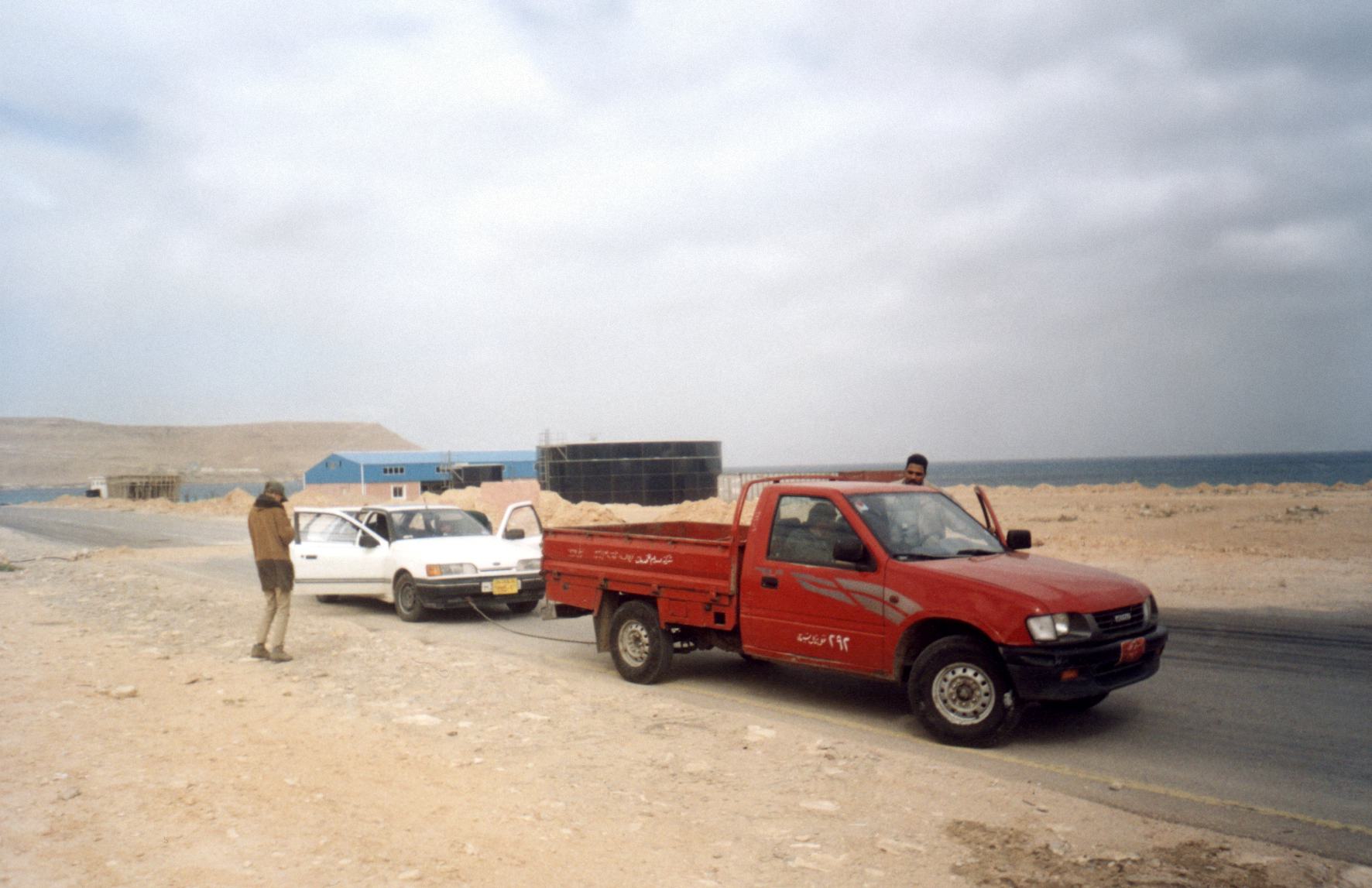
Well, well. A garage with no lift. Filthy local mechanics crawl beneath the car without even jacking it up. They take the hoses apart. Before I can blink, they’ve welded the hose fitting to the fuel pump to make it extra tight. What the hell are you doing, you bastards? Our escort gravely suggests praying to God. The mechanics try to pull the hose on with pliers. The plastic won’t give, but they mangle the whole hose. I could have done that much myself, but it’s too late now. They’re drenched in petrol from head to foot, still working away with those vicious pincers. Fortunately they manage to plug everything up. My poor “white she-camel”. I’ve still got off lightly. On the car next door they’re using a welding torch to attach the radiator to the body. God will punish them, or perhaps he already has. They’ll spend their whole lives crawling in the dirt under a car, with no lift, in a backwater village in this miserable country. They want $13 for the repairs. Said they’d done a big job. We bargained it down to $9.
The car goes. It gets a whole hundred kilometres down the road. The fuel bursts out worse than ever. That’s it. From now on I’m relying on myself. I change into dirty clothes, jack up the car and crawl back under the petrol shower. In an hour I have things in something like order. I still can’t crimp the high-pressure hose, though. It’s barely holding together.
It’s getting dark already. If it goes again it’ll be very awkward to fix in the dark.
We drive on. What’s marked as a motorway is an ordinary two-lane road. Traffic is light. Police checkpoints everywhere. They all have automatic weapons. Not a smile or a trace of interest. Even Russian cops are friendlier. They want every document we have. Even our escort is afraid of them, currying favour and grovelling.
We’ve practically run out of petrol due to all the leaks. We go to a filling station. Miserly Egypt has two grades of petrol, 80 unleaded at 0.90 pounds ($0.20) a litre, and 90 leaded at one pound ($0.22) a litre. Some choice. What do I put in my beloved car, which has a catalytic converter and was designed for 98 or 95? It’s never seen 80, which really means 76. In it goes. I have a heavy feeling. What happens now? Nothing. It rattles but runs. We drive on, miserable and worried.
The signs have the names in Roman letters as well. There are plenty of them, so navigation is easy. The man tries to steer us towards Cairo, but we have quite different plans. We’re going to spend the night in Alexandria, and that’s where we head. He tries to object, but we tell him that’s his problem and he’s welcome to get out this instant. Alas, he doesn’t understand a thing. Meanwhile we’ve recovered from the morning’s troubles. Black Egyptian night all around us. My childhood cassette plays in the car stereo, Joe Dassin and other pleasant Western music. Could I possibly have imagined in those distant years that twenty years later I’d be listening to it in my own car on the way from Libya to Alexandria? In spite of the man, the world is beautiful. I could still be sitting unnoticed in my institute like a little grey mouse.
The landscape changes as we approach Alexandria. The road really does turn into a motorway and follows the coast, with one tourist hotel after another along the shore. Huge compounds behind fences. All empty. It’s the off-season here. Winter is lovely on the Red Sea, but the water here is icy.
Alexandria is an enormous city, with suburbs beginning tens of kilometres from the centre. The quiet country traffic changes as soon as we reach the outskirts. Here come the daredevils, charging through town at 120 or 140. The roads are good and by and large they don’t get in anyone’s way. I drive quietly and obey the rules. I remember the warning from the Libyan cops.
Lots of junctions and tunnels, but we have a map. We reach the main waterfront without a wrong turn. It’s getting crowded here, but on the whole it’s nice to drive. If you need to get through, they’ll make room, let you go and warn you of trouble ahead.
The cheap hotels are in the centre, along the waterfront. We stop at the first one we come to, the “Dervish” (31°13.007′N, 29°55.427′E). We take two rooms, $18 altogether. There’s warm water. I finally get my hands on a shower. I’ve been covered in dirt and petrol for four days. I get into the shower first, and a good thing too. The warm water soon runs out. I wash my hair ten times or so, but it still isn’t quite right. It sticks together in a lump. At least it’s better than it was. The man asks to sleep in the car. Oh, to hell with him. We really ought to have made him sleep on the mat.
Once we’d washed, we went for a walk around the city in the evening. People here are quite European. Couples stroll arm in arm, or holding hands, quite freely. That’s the height of impropriety in Muslim countries. People in the little cafés are peacefully chewing their dinner. Coffee is two pounds ($0.43). People are just people. All that official nonsense apparently has nothing to do with them. We ate a bun and washed it down with tea. People are friendly. You could live here.
The sea has turned wild. Huge rollers crash against the concrete waterfront and the full moon shines almost directly overhead. It’s a pity we can’t stay here for a week or two. No visa, no money and no time. I’d meant to spend ten days in Egypt. We’ll have to come again. Perhaps on the way to Sudan.
We only managed four hours of sleep. If they’re only giving us 48 hours, we’re going to make the most of them.
We drive towards Cairo first thing. On the way out of town there’s a huge Mobil filling station with an oil-change sign. At last, somewhere that sells oil for the poor gearbox. It isn’t leaking any more. Perhaps it’s simply stopped leaking, but more likely it’s all drained out. Fifth gear has started to whine, too.
I ask about oil. “We have some. Drive in and we’ll top it up.” Fine, let’s do it. A clean-looking man in a uniform and gloves climbs down into the inspection pit with one spanner and then a different one. The proprietor comes over to talk about what brought us here. In the middle of our chat the mechanic climbs out from under the car. “Oil OK, no need to top it up. Give me one pound and carry on.” I wish I’d seen the work for myself, but it all looks so respectable. A lovely station and a badge that inspires confidence: Mobil.
I took his word for it, and shouldn’t have. Four thousand kilometres later the gearbox died. When it was opened up it was clear that the level plug hadn’t been unscrewed and the oil had all drained away. I’ll write to Mobil, of course, but a leopard can’t change its spots. In Egypt they’ll cheat you wherever they can. They’ll cheat the people from Mobil too, whose good name they’re ruining.
There are two roads to Cairo. We take the Desert Highway. Straight, fast and a toll road. Two pounds. They give you a ticket as you enter. Hang on to it or they’ll be sure to charge you a second time when they check at the exit. You can follow the Nile instead, but that takes a very long time. The road goes straight to the pyramids. It’s a striking sight when those enormous shapes suddenly rise behind the low hills. The man squawks that we’re going the wrong way, which gets a malicious little smile out of us. Now we’ll show you, my fine little bird. We leave the car and go to see the pyramids. Admission costs 20 pounds. He stays outside the fence. He isn’t going to spend twenty pounds.
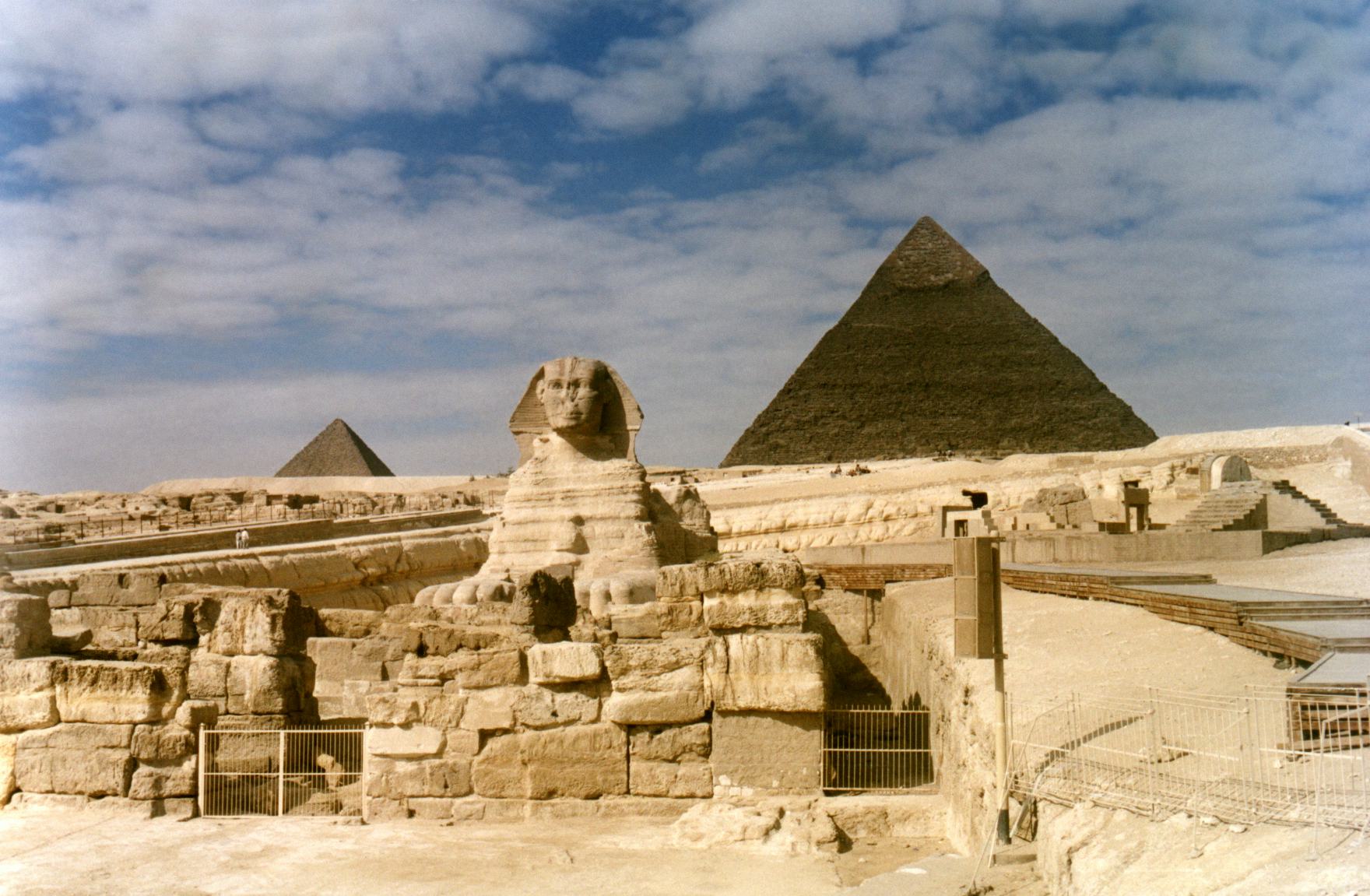
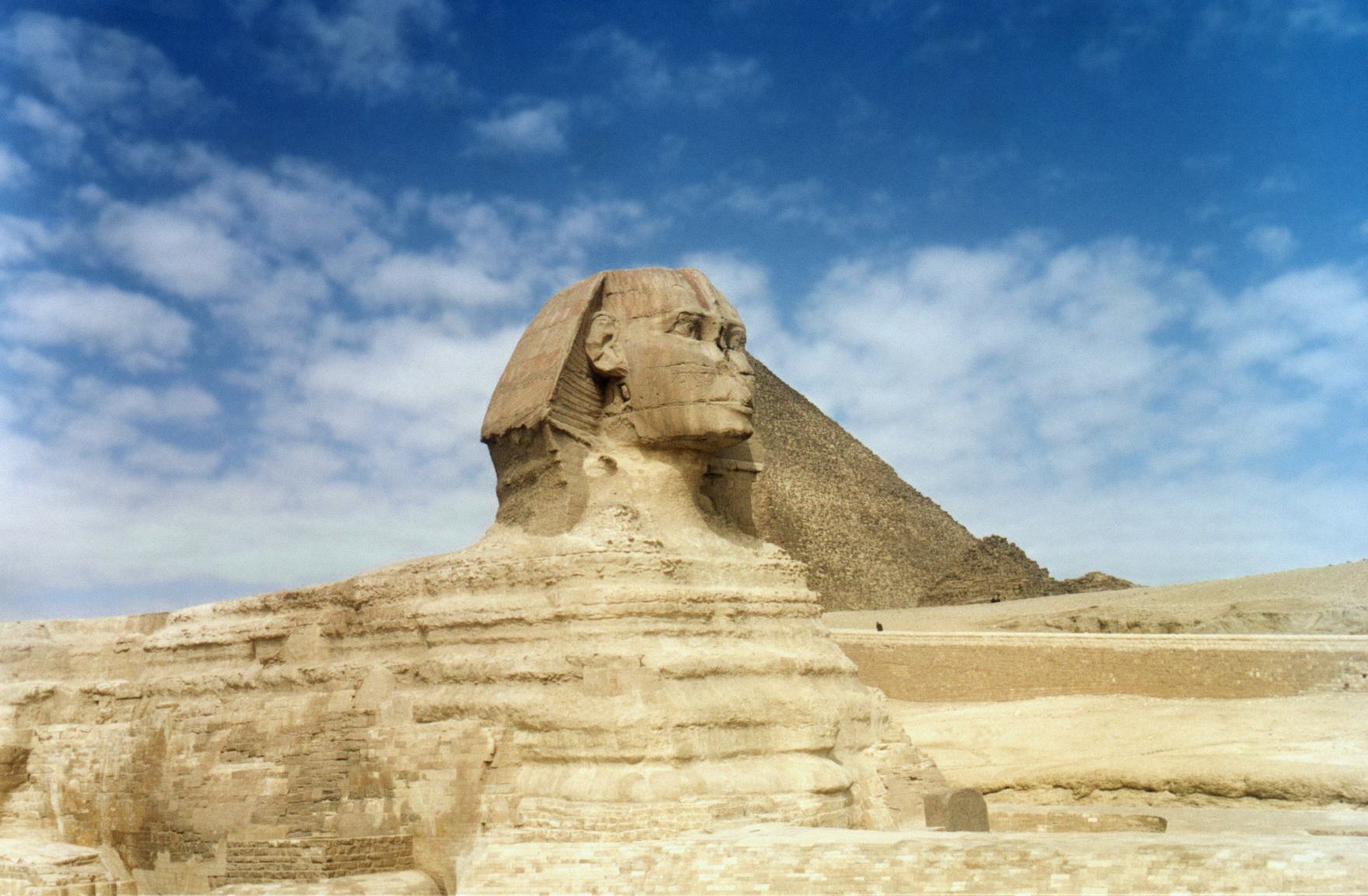
The first thing you see is the Sphinx. It’s so small! I hadn’t expected to be so disappointed. Your 20 pounds takes you to the foot of the pyramids and into a few minor tombs. In each one an attendant waits for you, with one word: baksheesh. “No baksheesh?” No problem. He falls silent and walks away. Climbing the pyramids is forbidden. There are dozens of police on guard, but you can pay to get around all that. I’ve always dreamed of getting to the top of a pyramid, but the thought of feeding these extortionists disgusted me so much that I changed my mind. Perhaps some day in the future there’ll be a civil war in Egypt and the fundamentalists will drive out all the tourists. I’ll sneak in pretending to be in transit and climb a free, wild pyramid. Think my prediction is too grim? Perhaps. But whenever I think God is just, I think with horror about the fate of my own country, and now about Egypt’s too.
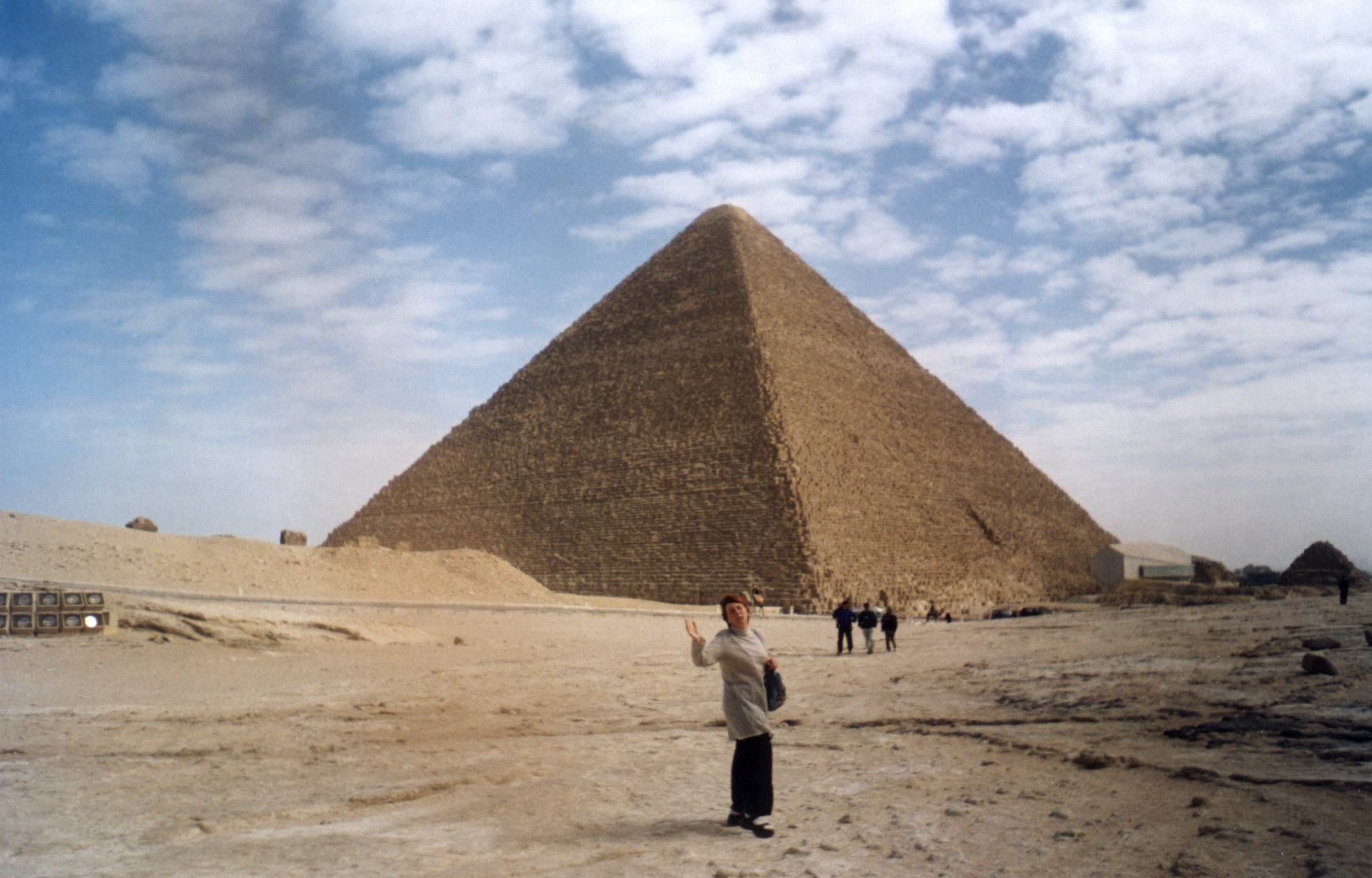
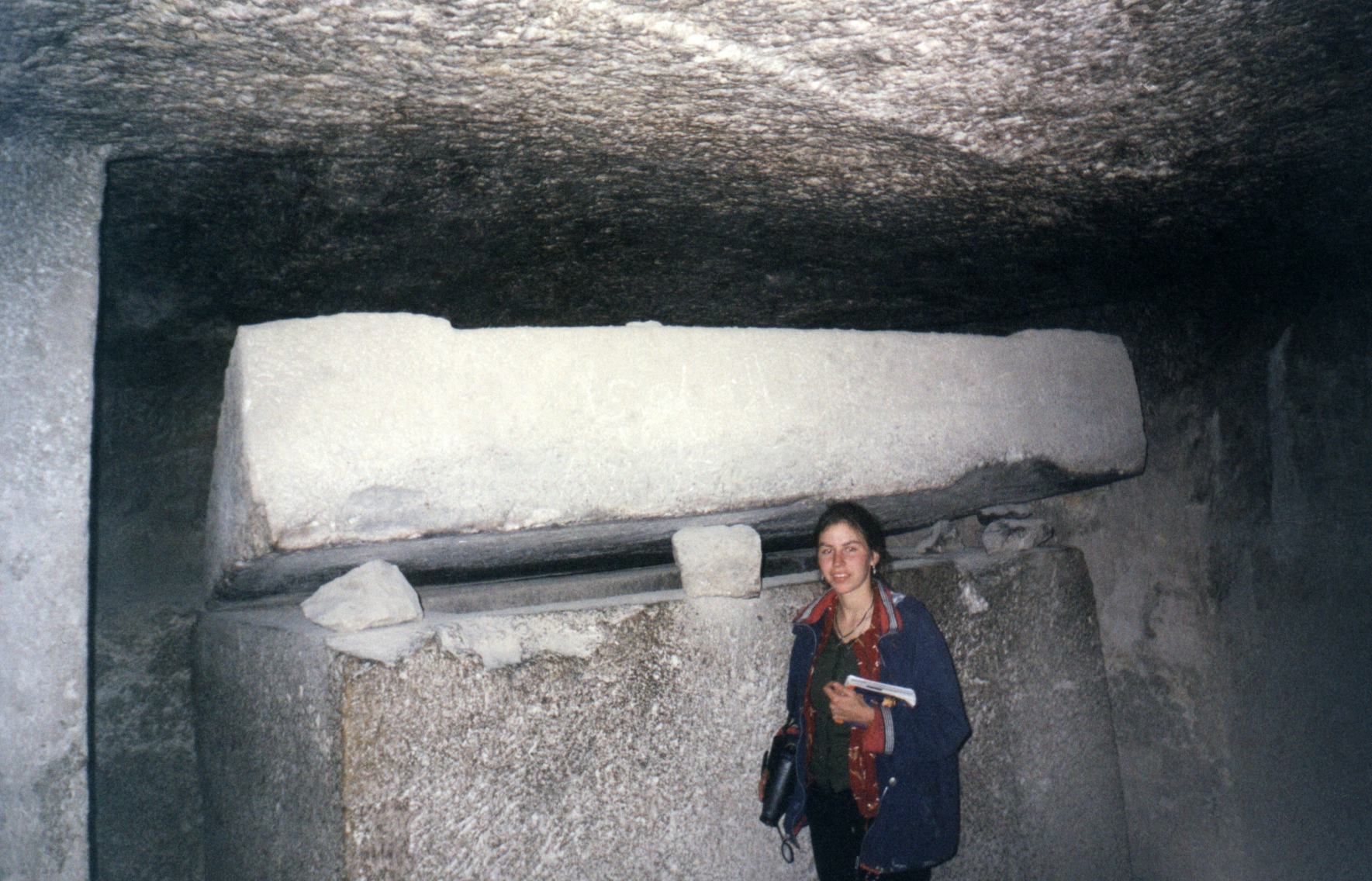
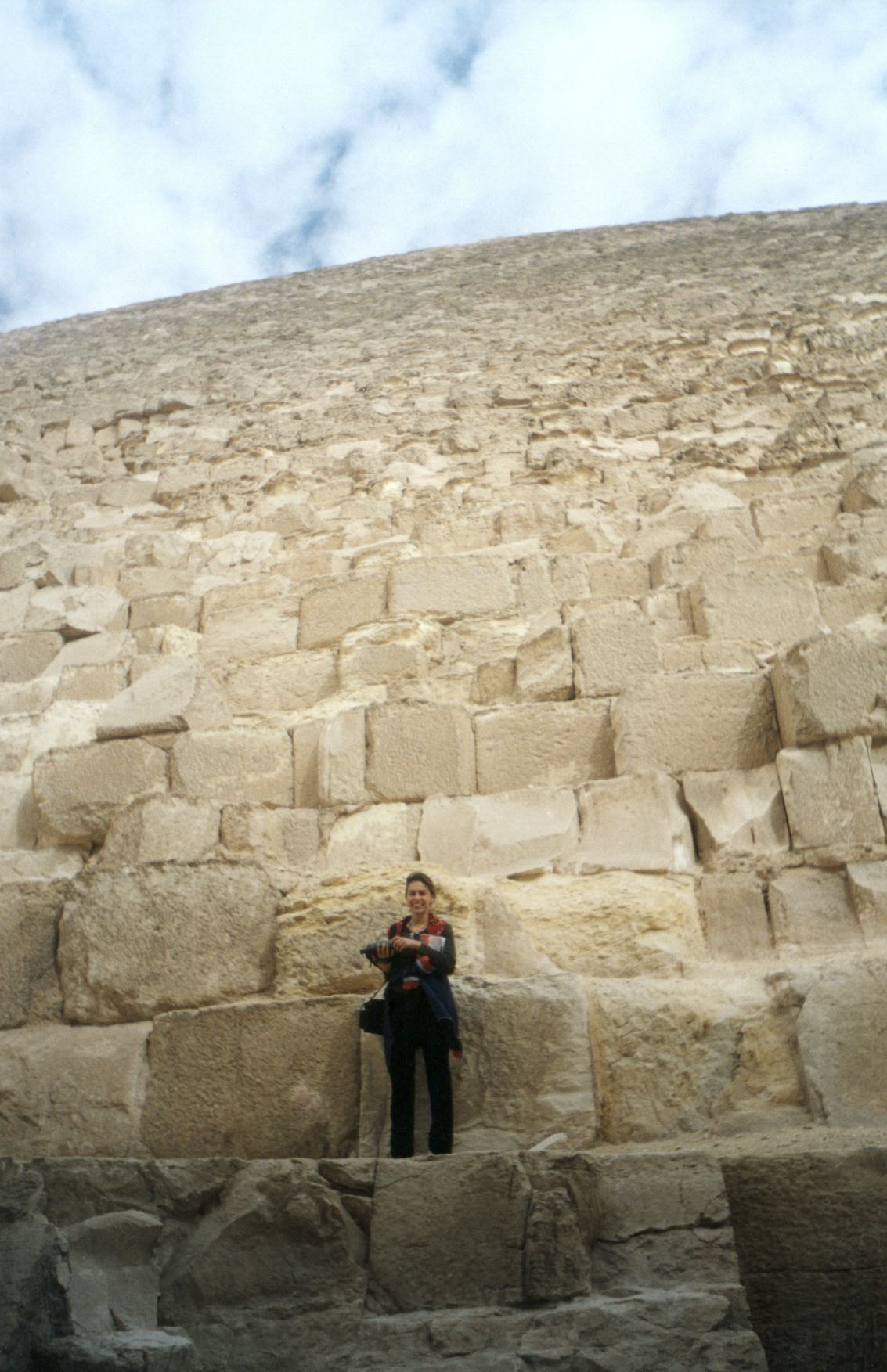
Meanwhile our escort has found a way past the fence and is running round us crying, “Oh, Mister Alexander! Oh, Madam Elena! Go to Nuweiba!” To tease him some more, on cue we run off in four different directions. “Go on, run after us!”
On top of the standard visit, you can go inside each of the pyramids for another twenty pounds. Everyone knows there’s nothing inside. We weren’t about to spend the rest of our hard-earned money proving it.
The pyramids aren’t the last of our man’s disappointments. Having enjoyed that wonder of the world, we take a taxi into central Cairo. We wave goodbye and tell him we’ll be back in the evening. He takes it in silence.
We’d heard a great deal about Cairo’s wild taxi drivers and were ready to shoot a film, a horror film to be precise. Alas, they do drive quickly and skilfully, but there’s nothing extraordinary about it. It’s just a city. There are masses of taxis, but the traffic jams are only right in the centre. The city has plenty of wide roads and grade-separated junctions. Driving is possible, even pleasant. Most junctions have a traffic policeman. It’s a fifteen-to-twenty-minute ride from the pyramids to the centre and costs fifteen pounds.
We’ve run out of cash completely. We urgently need a cash machine. Oddly enough it isn’t so easy. It seems as if the whole city has only a few. Actually every bank has one, but it only works with its own Egyptian cards. We spend forty minutes going from bank to bank before finding the magic machine. We press the buttons and have a thousand pounds in our pockets. Now we can live. First we need to eat. With Lonely Planet we find a cheap place serving what I took to be kosher food. Very pleasant, only a pound and a half, but not enough for us. We go for lunch a second time. It costs much more this time, but we get our fill. While waiting for the food, we text everyone. There are two GSM networks in Egypt, EGY MisrFone Telecommunications and EGY MobiNiL. They cover most inhabited areas. A text when roaming costs $0.20 on the first and $0.06 on the second. Calls are cheaper on NiL as well, but MisrFone has one advantage. The charges take five or six days to come through. If you’re set on doing your home operator out of its money, you can happily talk away for nearly a week.
Egyptian phones are adapted for Arabic. There are only Arabic letters and numbers on the screen. Sometimes there’s nothing but Arabic squiggles on the keypad as well.
We haven’t much time to look around, so we split up. Lena and Masha go to see the Muslim quarters, and Tanya and I visit the Egyptian Museum.
It’s on the banks of the Nile in the city centre, a two-storey stone building. At the entrance you pass twice through a metal detector and X-ray inspection. Admission is 20 pounds. Cameras and video cameras cost extra. It’s 100 pounds for a video camera. You may use a still camera without flash. If you don’t want to pay, there’s a free cloakroom where you can leave camera equipment.
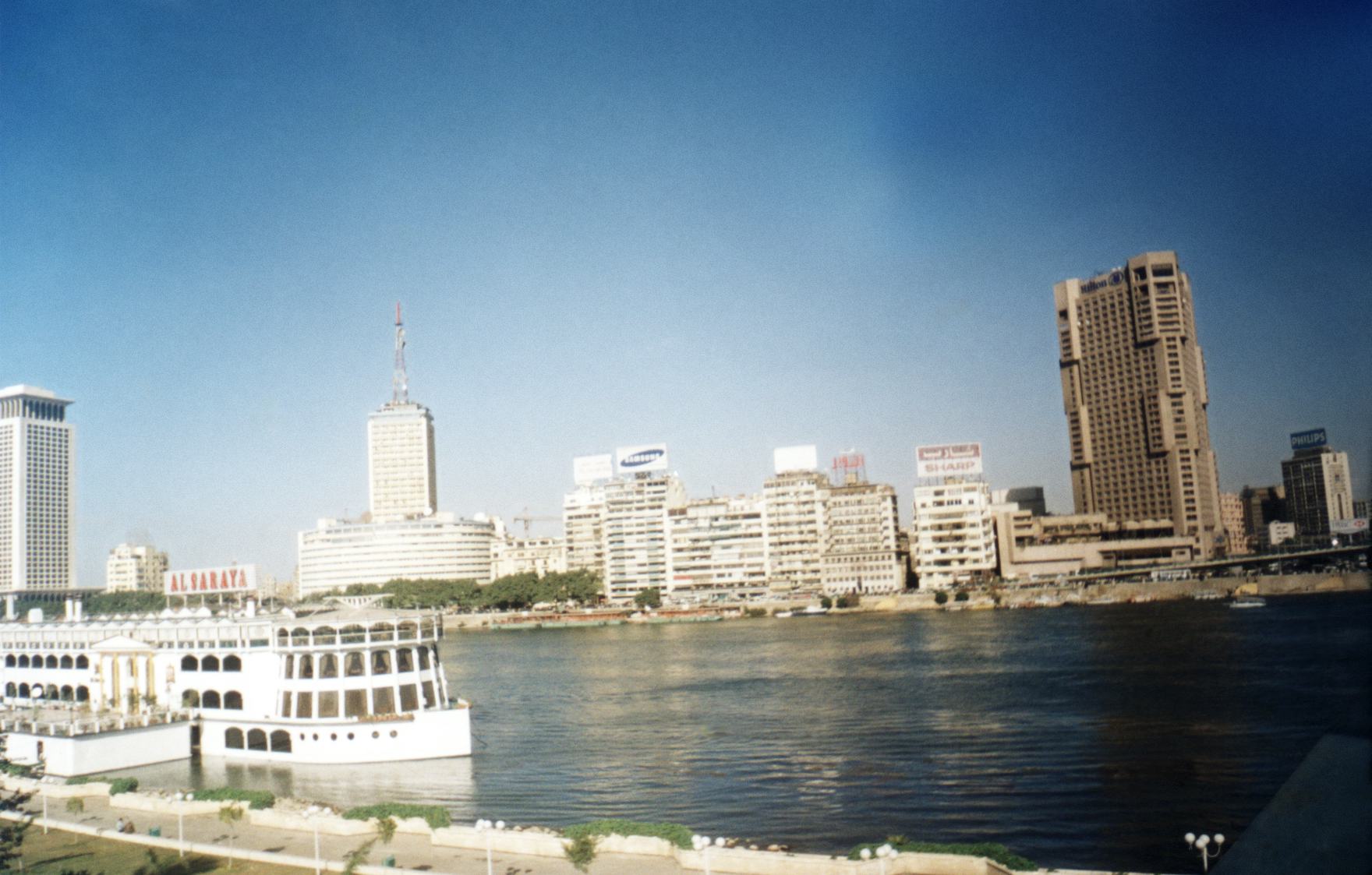
The building has two floors. The displays on the ground floor are grouped by kingdom. Upstairs it’s Tutankhamun, the mummy room and everything else.
Simply walking slowly through all the rooms takes several hours, and you ought to make time for it, even if you have to skip every other museum. I won’t try to write a museum guide. I’ll just say what stayed with me.
The museum is crammed with sarcophagi, or rather those curvy cases for mummies. How many tombs did they have to dig up? There are thousands of them. I wonder where all the gold went. If the lids are still there, the whole lot must have been dug up recently.
What Tanya and I really liked was seeing the pharaohs sitting with their arms around their queens. The children are shown much smaller and somewhere off to the side.
The faces of the pharaohs of the first dynasties are completely different from the later ones. Early Egyptians had round faces and strong cheekbones. The later ones look the way we’re used to seeing them in ancient pictures. You don’t come across people who look like that in Egypt now.
The mummy room takes a separate ticket costing forty pounds. Photography is absolutely forbidden, which is hardly surprising. If people saw there were only eleven mummies and how dull it all was, the number willing to hand over forty pounds would fall sharply. They’ll make exceptions for plenty of money, though. In the old days they let Soviet television in.
The mummies lie wrapped in cloth, with a head and hands sticking out at best. The skin is black from drying, just skin over the bones of a desiccated body. Lenin’s stuffed remains are in much better shape. There’s a mummy of Ramesses and a few other familiar names. My advice is to see the mummy at the Hermitage in Saint Petersburg, if it’s still there, and spend the money on something more interesting.
Tutankhamun and all his belongings fill many rooms, though he was squeezed into a tiny little room in his tomb. All the famous pieces were literally piled one on top of another. This is the golden part of the collection, in more senses than one.
We spent two hours in the museum and were very sorry we couldn’t spend longer. It’s a very pleasant and interesting museum. The toilet, supposedly, is free, but they ask you for money on the way out. Watch out.
Now for Cairo. It’s a very big city. People are easy-going and tolerant, and dress in the European fashion. You can walk around in a miniskirt, hug and kiss. Nobody cares. Most streets are wide. Only in the Muslim quarter, where the mosques are clustered, does it look like a typical Arab city, with little streets and one continuous bazaar. The Nile isn’t wide at all and flows slowly. It looks something like the Neva.
I wouldn’t relax too much, though. This is Egypt. There are pickpockets here. You won’t get all your change, and if you hand over an extra note it’s quite likely to be pocketed. At any moment the nasty side of Egypt can show itself. For the first time in all our travels the money didn’t add up. A hundred and fifty pounds went somewhere unknown. Lena and I carried the money, and we’ve both done business at flea markets. We don’t let go of our cash that easily. There seems to be a folk custom: once you’ve let money out of your hand, nobody will ever give it back. Don’t hand over large notes in the street. Be ready to be robbed at any moment. If someone steals from you, there’s no point going to the police. If they look for the thief, it’ll only be to split the take.
When we returned to the car, the man had a pained expression. We’d parked in the car park of a perfume shop, and now they hauled us in. It’s a pity we gave in. However much we resisted and said we never used cosmetics at all, we had to buy a little bottle of perfume. The shopkeeper spoke English, which finally gave our man a chance to pour out his grievances. It boiled down to the insurance being good for 48 hours, and if we didn’t get to Nuweiba within seven hours we’d have to pay him heaps more money. Ha, ha. Just you wait.
I had no confidence in the car and wanted to get out of such an unfriendly country as fast as possible. It was plain that even a fairly minor breakdown here might cost us the car. After Cairo we decided to drive almost without stopping to Nuweiba.
First we got onto Cairo’s ring road. Now there’s a road. Eight or ten lanes in each direction at times. It was wide open. I drifted along in the second to fourth lanes from the left. Nobody was racing. Everything was peaceful and calm. We crossed the Nile, with banana plantations on its banks. After Cairo we took the highway to Suez. With twenty kilometres still to go, you have to turn round and go where the sign for the tunnel points. It’s the only tunnel under the Suez Canal. The toll is two pounds. Another document check at the entrance. You can’t see the canal itself, just the outlines of ships rising above the desert. The tunnel doesn’t seem very long. Here’s the lowest point. In a flash we’re out of Africa. The Sinai Peninsula counts as Asia. Russia isn’t the only country on two continents, and nor is Egypt. We counted four more. Right after the tunnel there are many traces of the war. In the seventies Sinai was under Israeli control. Desert all around us, gradually giving way to mountains. It gets dark quickly. It looks as though we’ll have to drive the three hundred kilometres we have left through the mountains in the dark.
An almost full moon rises and lights up the plateau we’ve reached. The road heads towards Eilat at first. No Israeli cars in sight, but any number of soldiers and police. One post after another. They check our papers periodically. They mainly want passports, but sometimes ask for the plastic card in Arabic I was issued with. They call it a “triptych”. UN posts appear as we get closer to the border. There is a mountain road that comes straight out at Nuweiba. We take it. Most maps show it as a mountain track. It’s a beautiful road, even by moonlight. We have to take it very slowly, though. All of a sudden the clutch won’t disengage. Just what we needed.
At the next checkpoint, when we hit a speed bump, a piece fell off the exhaust and started clattering on the tarmac. I had to break it off and throw it away. I looked under the car. Petrol was leaking again. Only a few kilometres to go. I’d make it. We parked by the port, short of customs. The man lost interest in our car and went off to sleep. I wonder what’s to stop us selling the car now? I laugh at him, but he doesn’t understand. A local customs man translates. Everyone laughs. So why did he have to come along in the first place? Perhaps they’ve got something cleverer going. They could come to an arrangement now, let our car out without a customs stamp and put in a claim for our disappearance, taking the Kuwaiti insurance company for $10,000. Russia is so far from Egypt that they’d never find us. I ought to send this little idea to the Egyptian prosecutors for them to look into.
We probably won’t drive through Egypt on our own any more. Who knows how they’ll check us at the posts, and the car is falling apart before our eyes. But our plans aren’t quite finished. A hundred and twenty kilometres away is Mount Sinai, where Moses received the Ten Commandments from God. In Arabic it’s called the Mountain of Moses, Jebel Musa. You’re supposed to watch the sun rise there. All sins are forgiven to those who do. I don’t believe that, of course, and the notion of sin doesn’t enter much into my view of the world. They do say that Moses got it all wrong anyway and that there was only one commandment: in Russian you always write “not” separately from the verb. Anything’s possible. But I’d like to see the place. After all, we’ve watched the sun rise on plenty of mountains and volcanoes and the high point of the Sinai Peninsula seems a worthy addition. We just have time for it.
Taxi drivers buzz around us, pushing their services. Plenty of them and only one group of us. We knock the price down from 200 to 140 pounds ($30). That’s the return journey. The driver will sleep in the car while we walk. We choose the cheapest. He advises us to get going at once. It’s a long way on a mountain road, then four hours on foot. We’d read, of course, that the drive and climb together take three hours, but why would a local taxi driver lie? If he says now, now it is. We ask how warm it is up there. Warm, he says. Strange. Warm at 2,200 metres in February? It can’t be. It ought to be freezing. We don’t believe that part and take spare warm clothes.
Off we go. Soon we come to a police post and a thorough document check. After that it’s sheer comedy. They’ve decided to put on a film for us about daredevil taxi drivers. The two mates pretend to race on the mountain road, overtaking each other from time to time. I wonder who it’s for. Most tourists can drive themselves and can see right through it. It’s particularly obvious because they’re driving quite slowly and cautiously. I can feel that you could go through these bends twenty or thirty kilometres an hour faster. I’ve just driven hundreds of kilometres in these mountains. Well, never mind. Perhaps they’re trying to give us a good time. Perhaps tourists from the beach are begging to be fooled.
There’s a little tourist town beside Mount Sinai. It costs ten dollars per car to enter, or perhaps it doesn’t. It seems to be ten pounds each for us. How can we check? The police can’t say a word in English and have no desire to shed light on what may be a joint business venture.
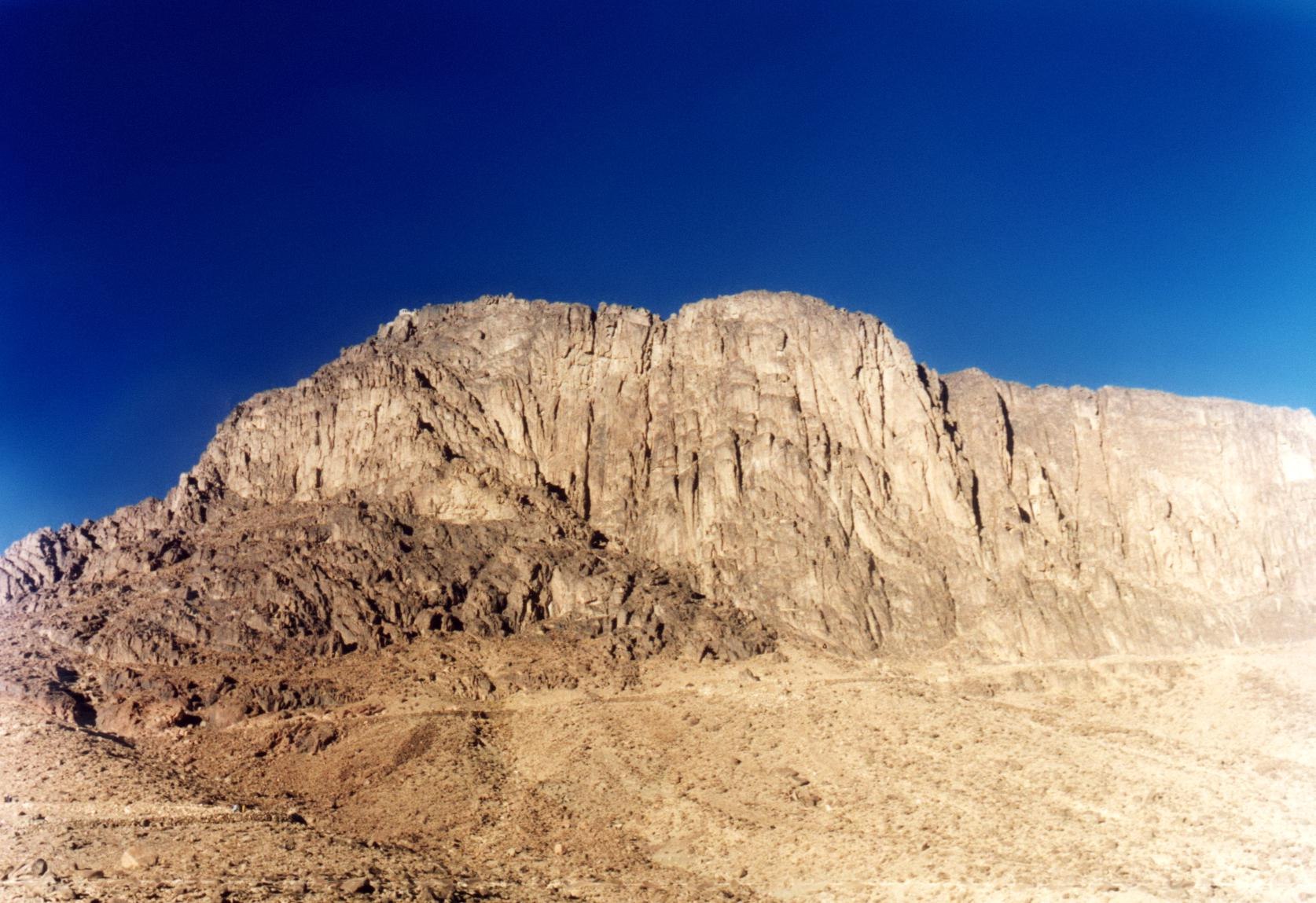
The driver stays to sleep and we head up the mountain. Don’t even think of paying him when you arrive there. Don’t put temptation in his way.
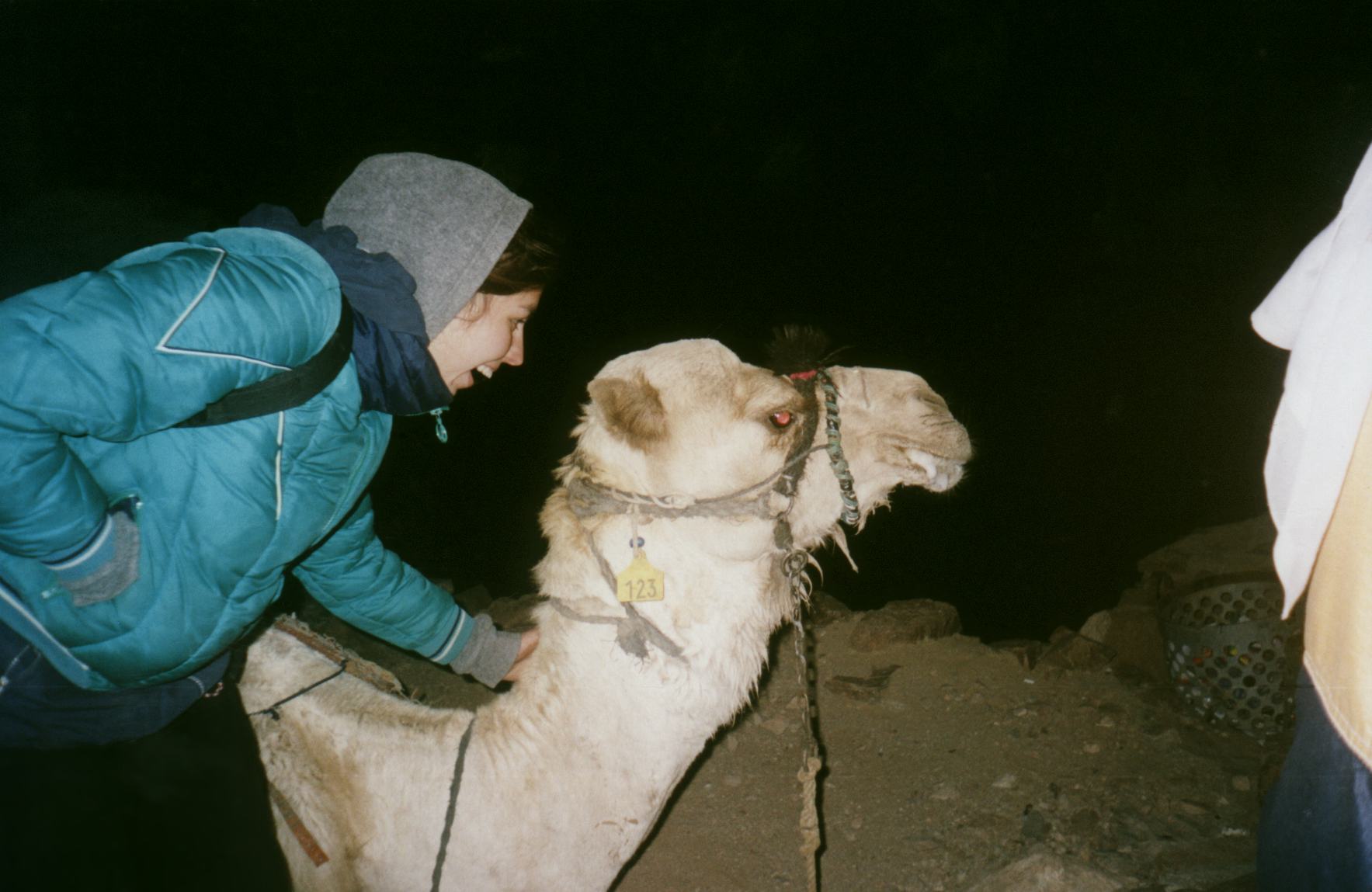
There’s a crowd of men offering rides on camels. “Camel good, khoroshy ferblyud.” They get plenty of Russians here, but right now there’s nobody else in sight. Lena and Masha go looking for camels, and Tanya and I set off on foot. We need to keep our legs in training. If you’ve never ridden a camel, this is as good a time as any. You can bargain down to 30 pounds ($6.60). A camel only costs less in truly wild places, the sort where you’d never find an organised tourist. According to Lawrence of Arabia, Sinai camels can’t walk smoothly, but where are you going to find any others? For the money they’ll take you about halfway up in terms of elevation. The path gets rocky beyond that and a camel, with its tender feet, won’t manage it.
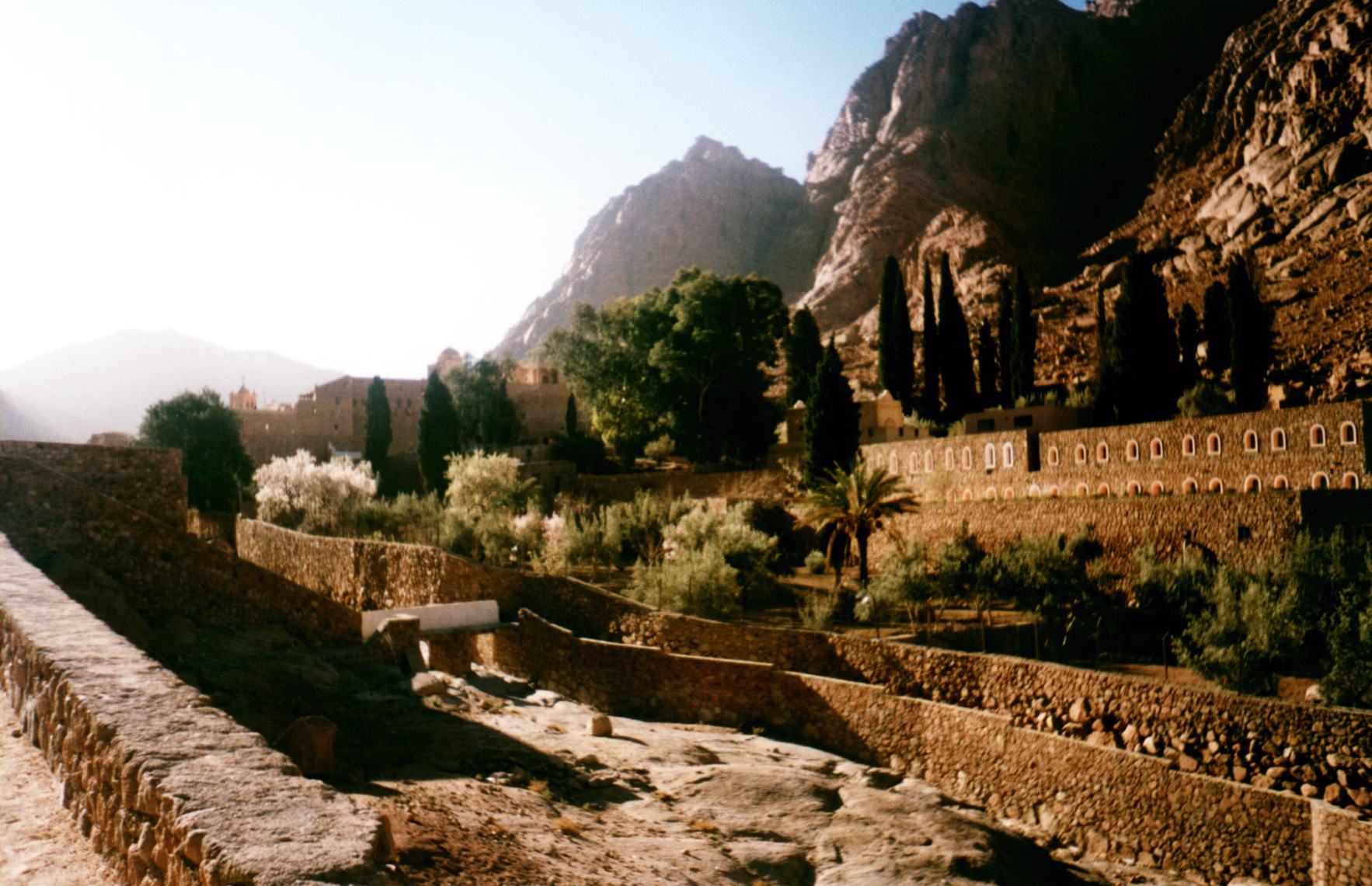
The path is very gentle at first. We keep cutting across bends, or we’d die of boredom going back and forth. Rocky mountains bathed in moonlight all around us. Down in a cleft, the lights of Saint Catherine’s Monastery. The landscape is out of this world. Coming here was exactly the right thing to do. Millions of people are asleep in their beds right now, without the faintest idea how beautiful it is here. Now when I can’t sleep, I’ll remember that somewhere far away, people and camels are going up a mountain.
Here and there among the rocks there are little shacks selling coffee, tea, soft drinks and buns. They’re lit by gas lamps. The warm little lights look right at home in the scene around them. Prices are high, of course, nearly a dollar for anything edible. We went into one of the cafés for tea. Some French girls were sitting there with an Arab who’d attached himself to them. Interesting. Russian girls recoil in horror from that kind of attention, but these ones take it in their stride, flirt, accept compliments, and joke and tease him about their great love.
We got talking to them. They envied the freedom we had to travel around the world.
As we gain height, it gets colder. Just as we expected. There ought to be snow here, but Sinai’s climate is very dry. Precipitation is only a few centimetres a year, so there’s no snow, but that doesn’t make it any warmer. While you’re climbing you’re fine. The moment you stop, you start to freeze. It is winter after all. We stop again for coffee. We’re terribly sleepy. We’ve slept about ten hours in total in the past four days, and now here’s another night without sleep. The very wide path ends before the summit and divides into several trails. You could even go the wrong way. Around us some Spanish girls are scrambling in different directions among the stones, looking for the route. Voices ring out from the rocks. “¡Por aquí, María!” Come up where I am. It’s better here!
Of course everyone finds the way. The climb isn’t hard at all and you can do it in one go. Anyone can get up, especially with a camel. Here’s the summit (28°32.317′N, 33°58.517′E, elevation 2,176 m). There’s a locked building that looks like a church, several cafés and large benches for bored tourists.
Only now does the taxi driver’s cunning become clear. It’s bitterly cold and there are still three hours until sunrise. Tanya and I had found a little cleft to spend the night sheltered from the wind, but it’s still bitterly cold. We have to take refuge in a café. It’s warmer here and there’s hot tea. And for five pounds there’s a blanket. Here’s the trap. That’s why they tried to send us up the mountain with no warm clothes.
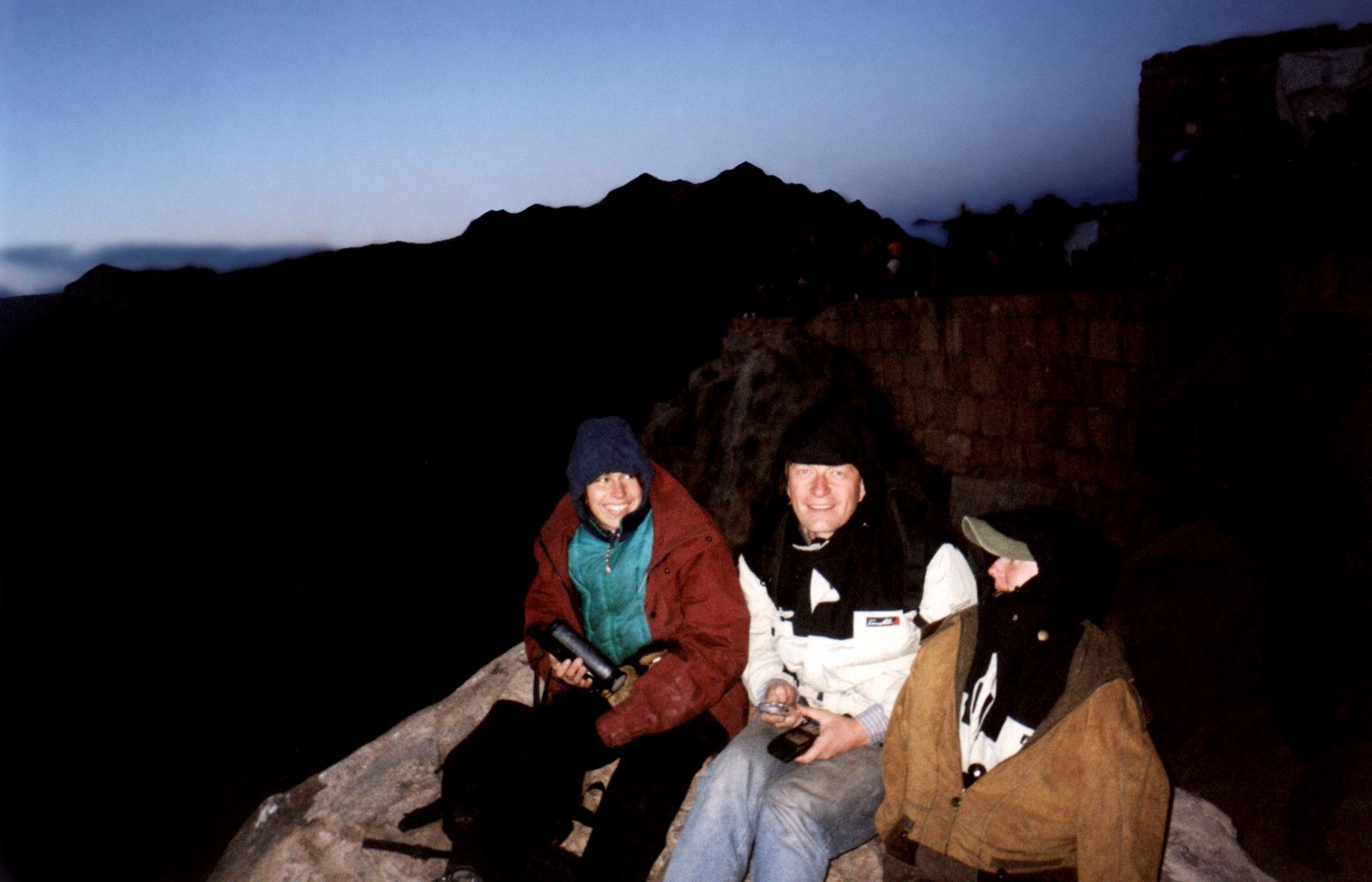
We didn’t need a blanket. We fell asleep peacefully in a dark corner and woke when a crowd of Russian tourists came barging in, yelling and swearing. What a nightmare. I hadn’t seen people with such bad manners for a long time. Their conversation is so dispiriting your ears will shrivel. We haven’t seen our compatriots in a month and now we’re thoroughly ashamed of them. You want to switch to English and keep your origins to yourself. And they say Russia is famous for its spirituality. Like hell it is. They’re proud of themselves. They’re tough, they passed the test, and there’s nothing to see here. Stupid tour company, driving them up a mountain. They should have stayed for dinner.
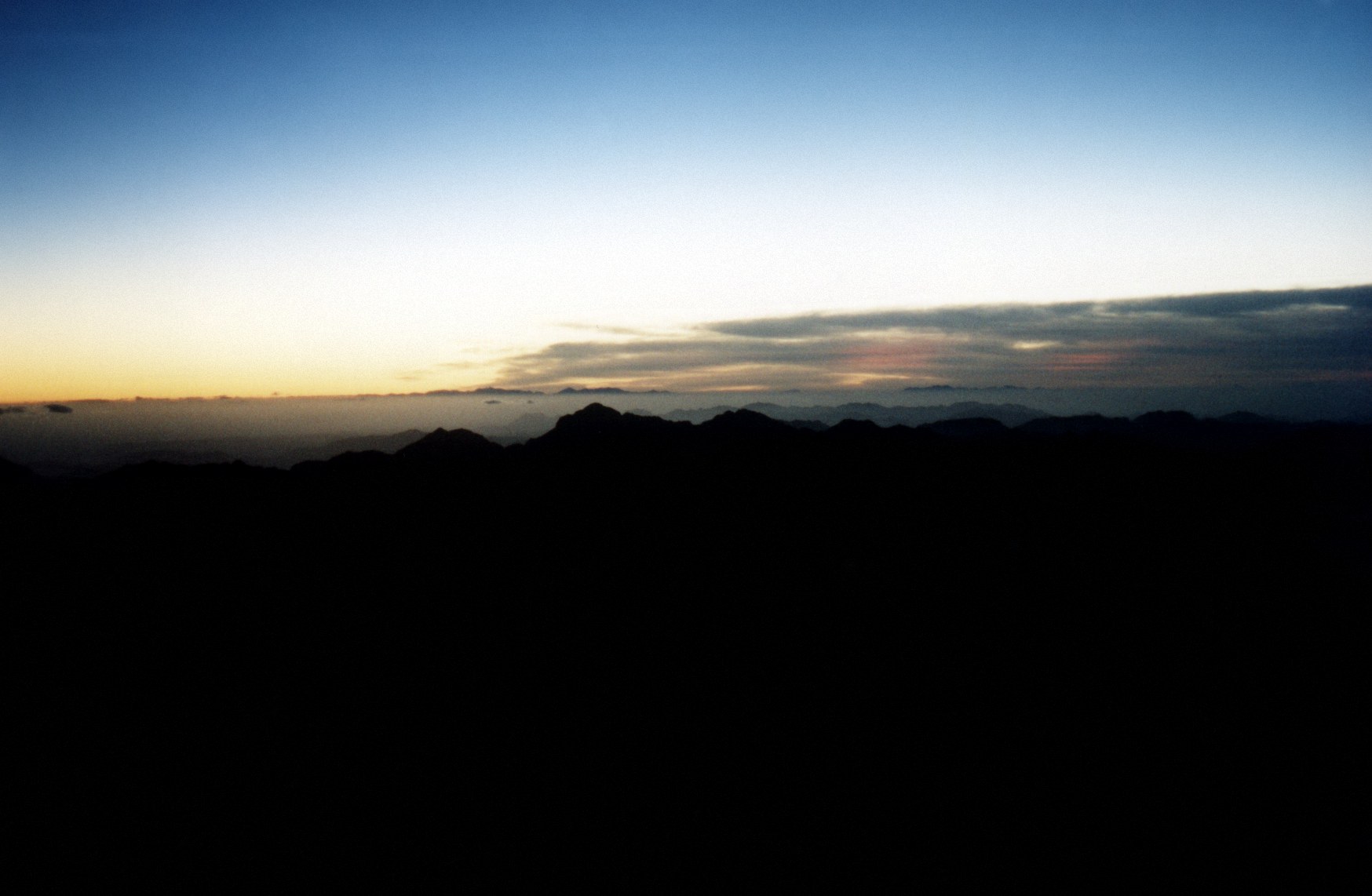
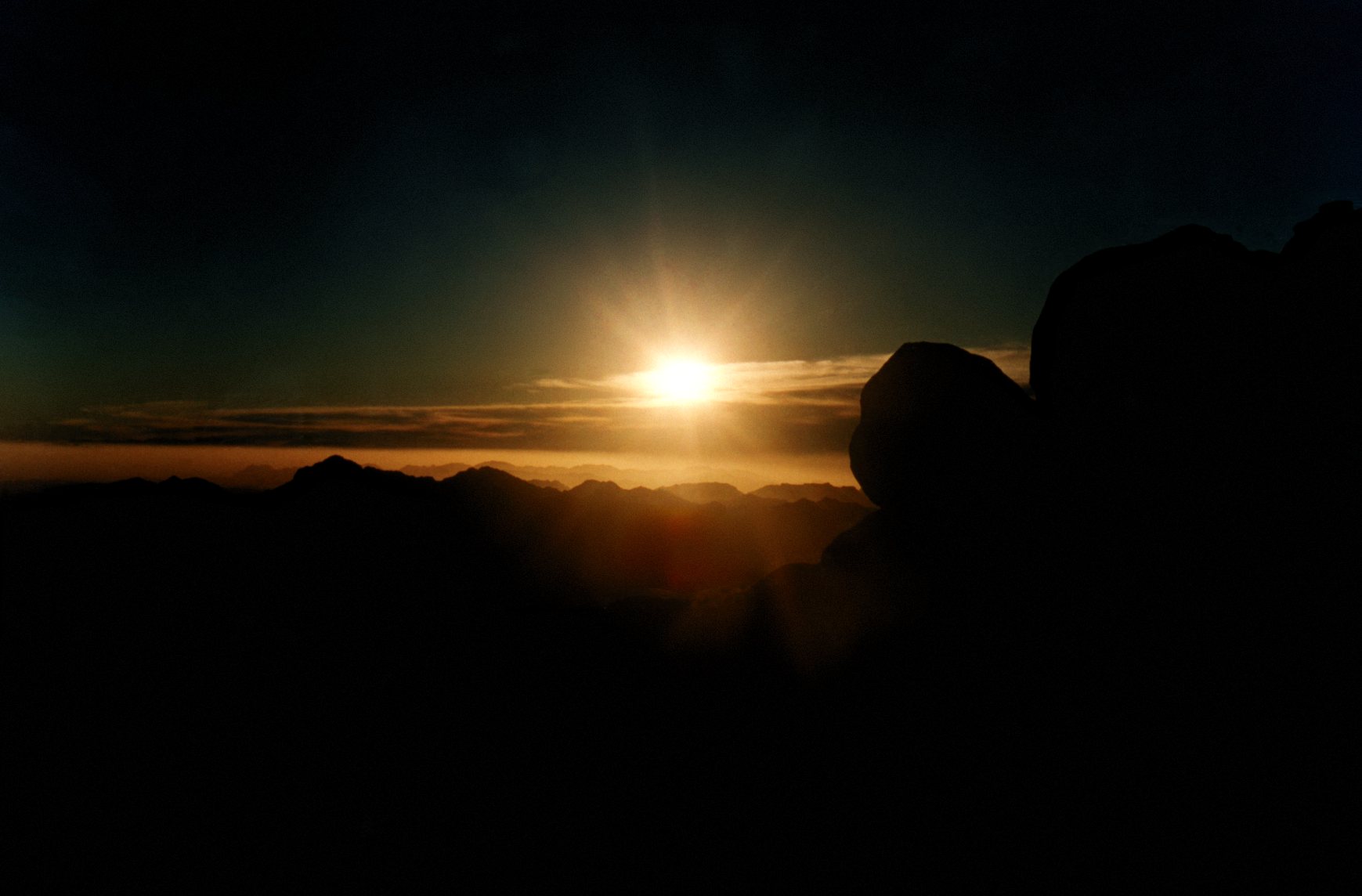
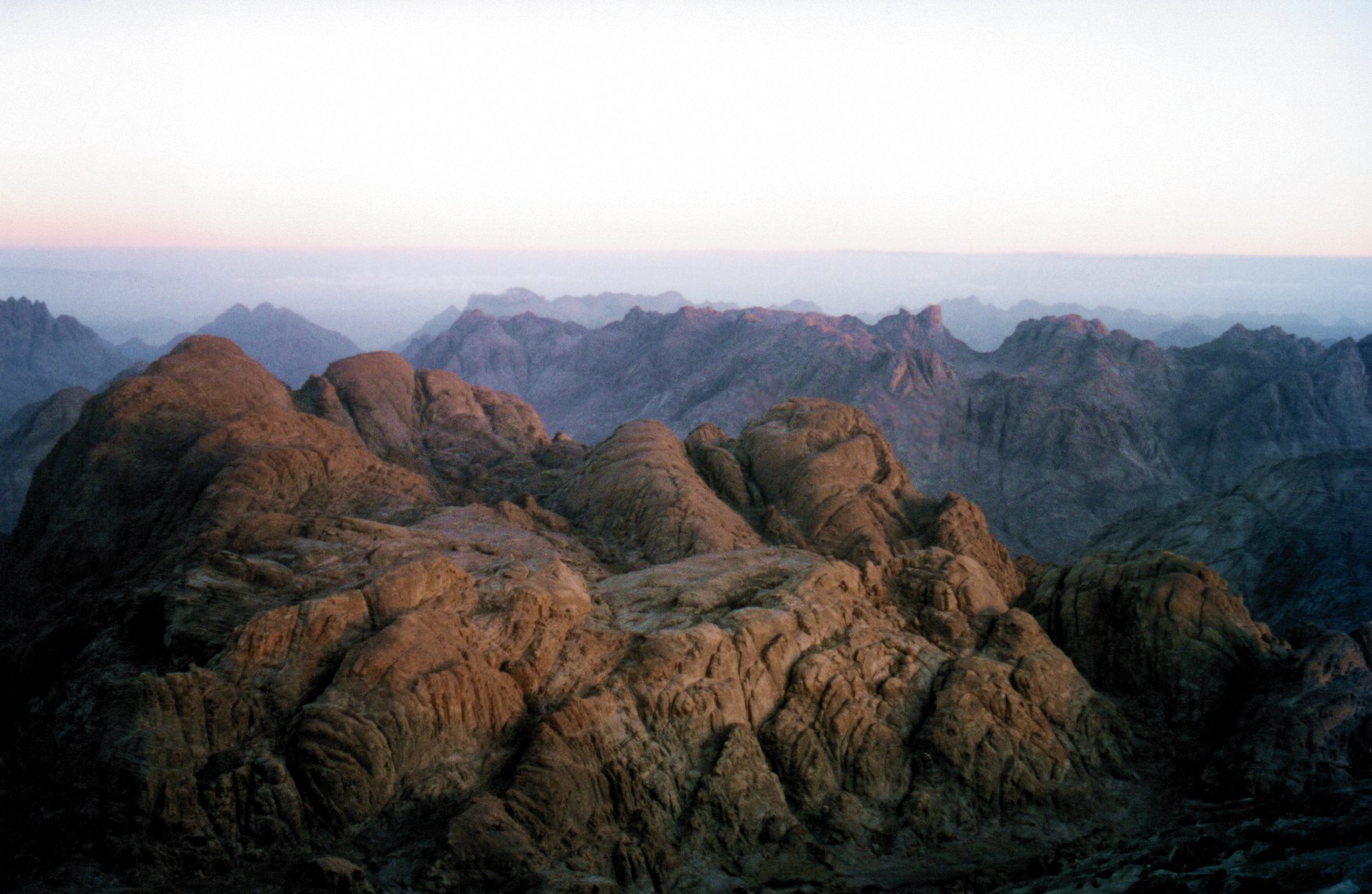
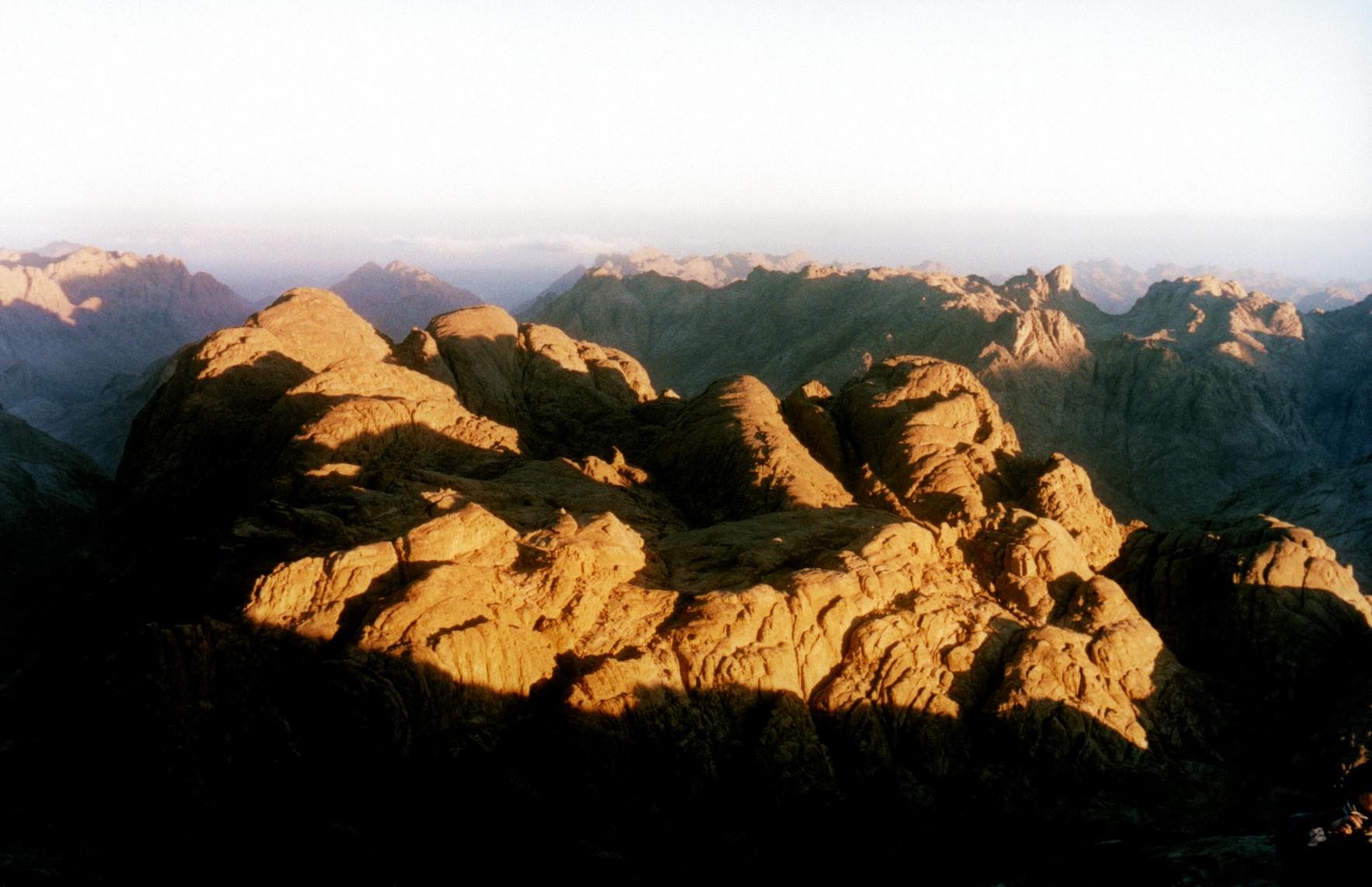
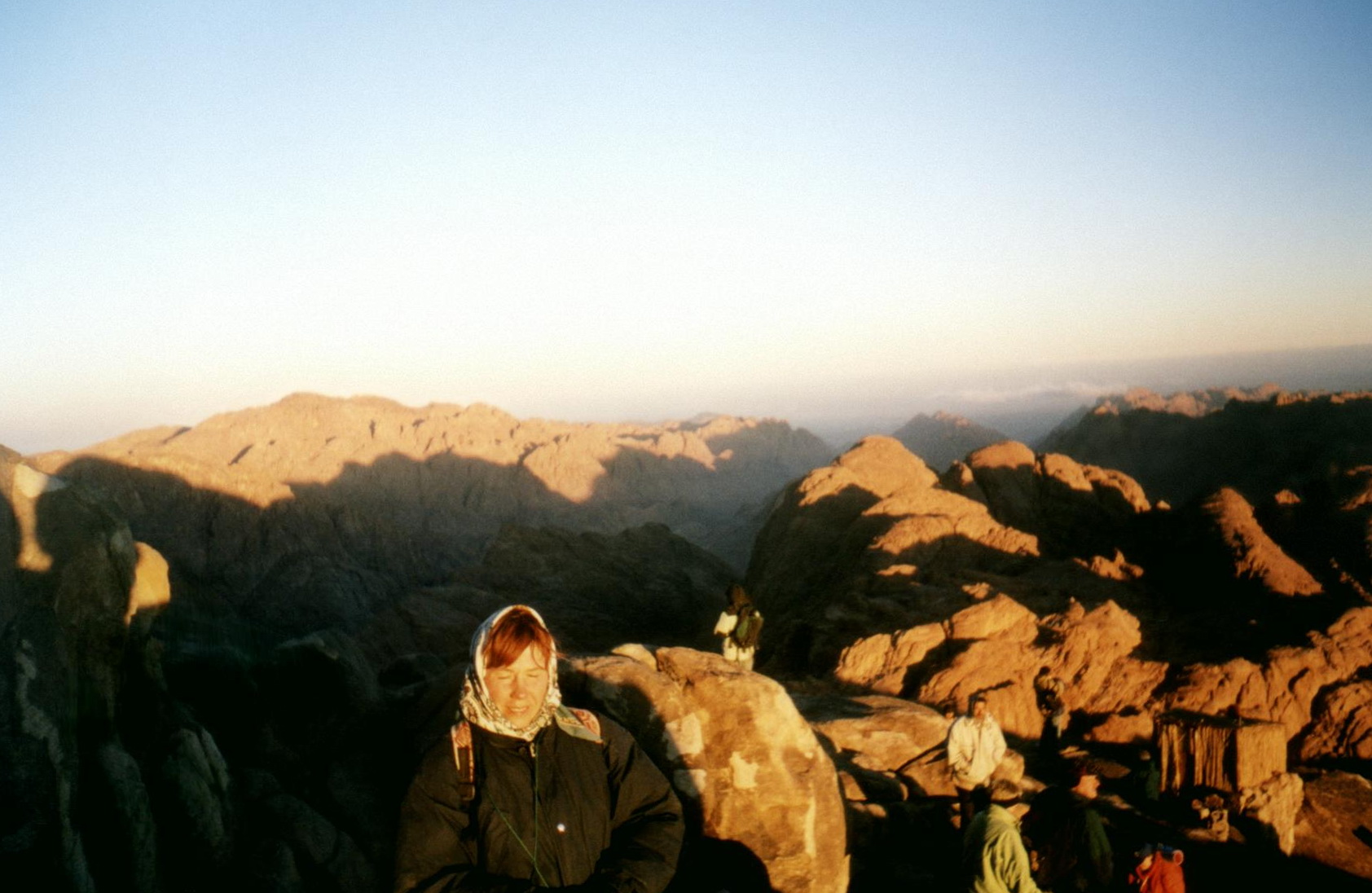
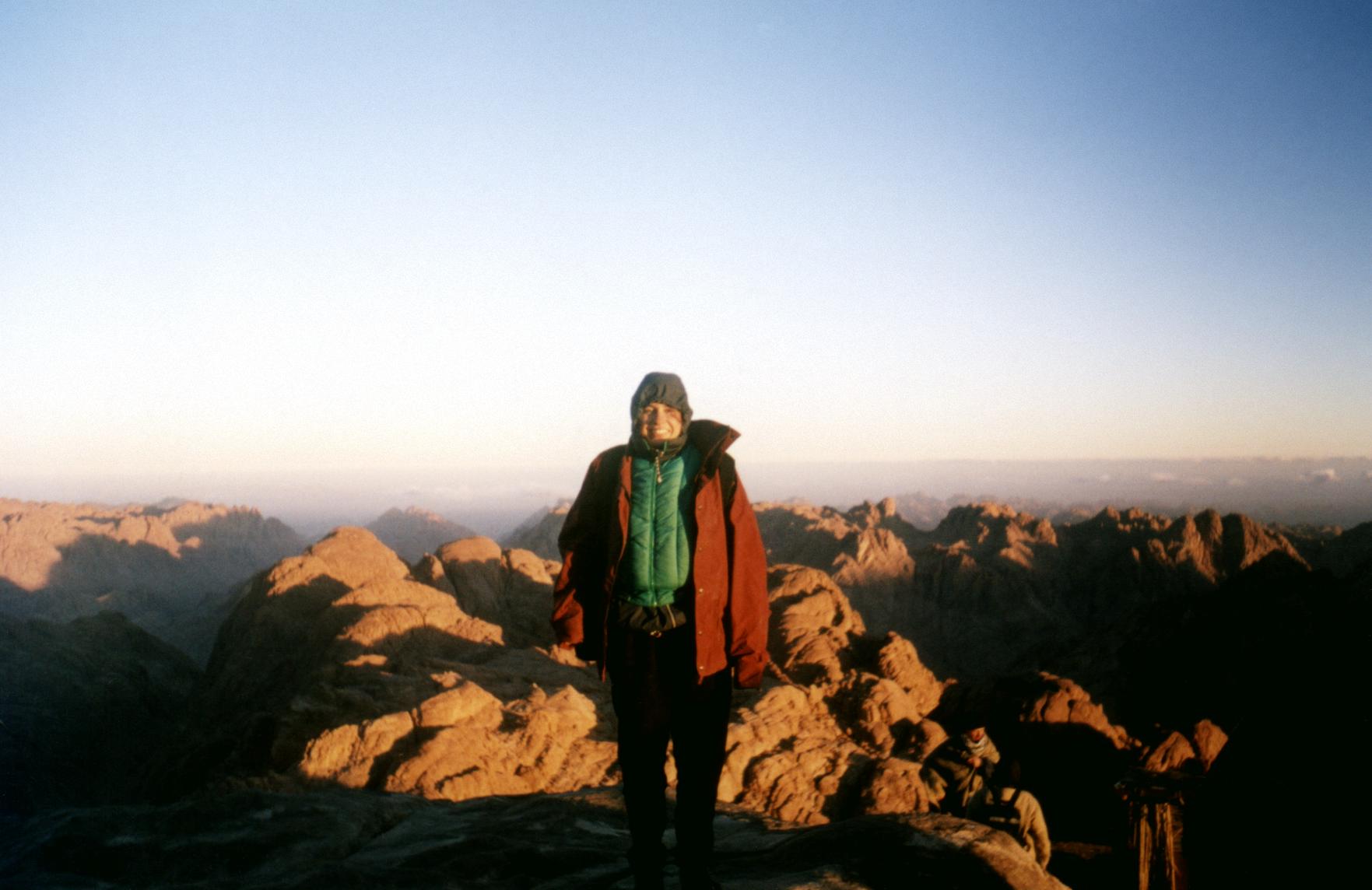
They spoiled our mood. But then the sun began to come up little by little, lighting up rocks in fantastical shapes. Mist spilled over the ridge. Moses, if he existed at all and came here, chose the right place. And what does it really matter whether he existed? What we do know is that the founders of a monotheistic religion chose this place as a symbol. You can’t fault their taste. What they were called and how it all happened is immaterial, just as it’s immaterial that Christians and Muslims became separate organisations.
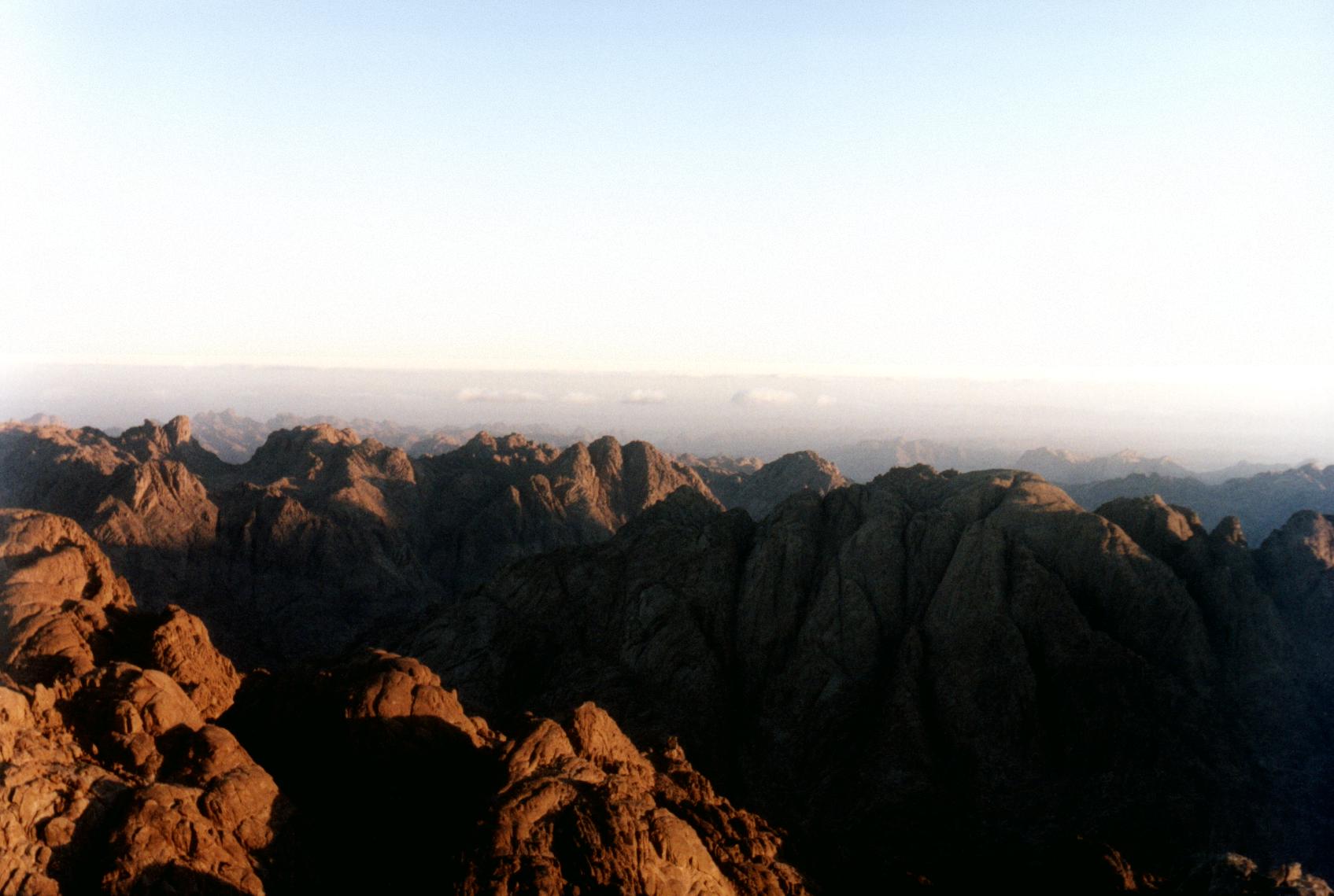
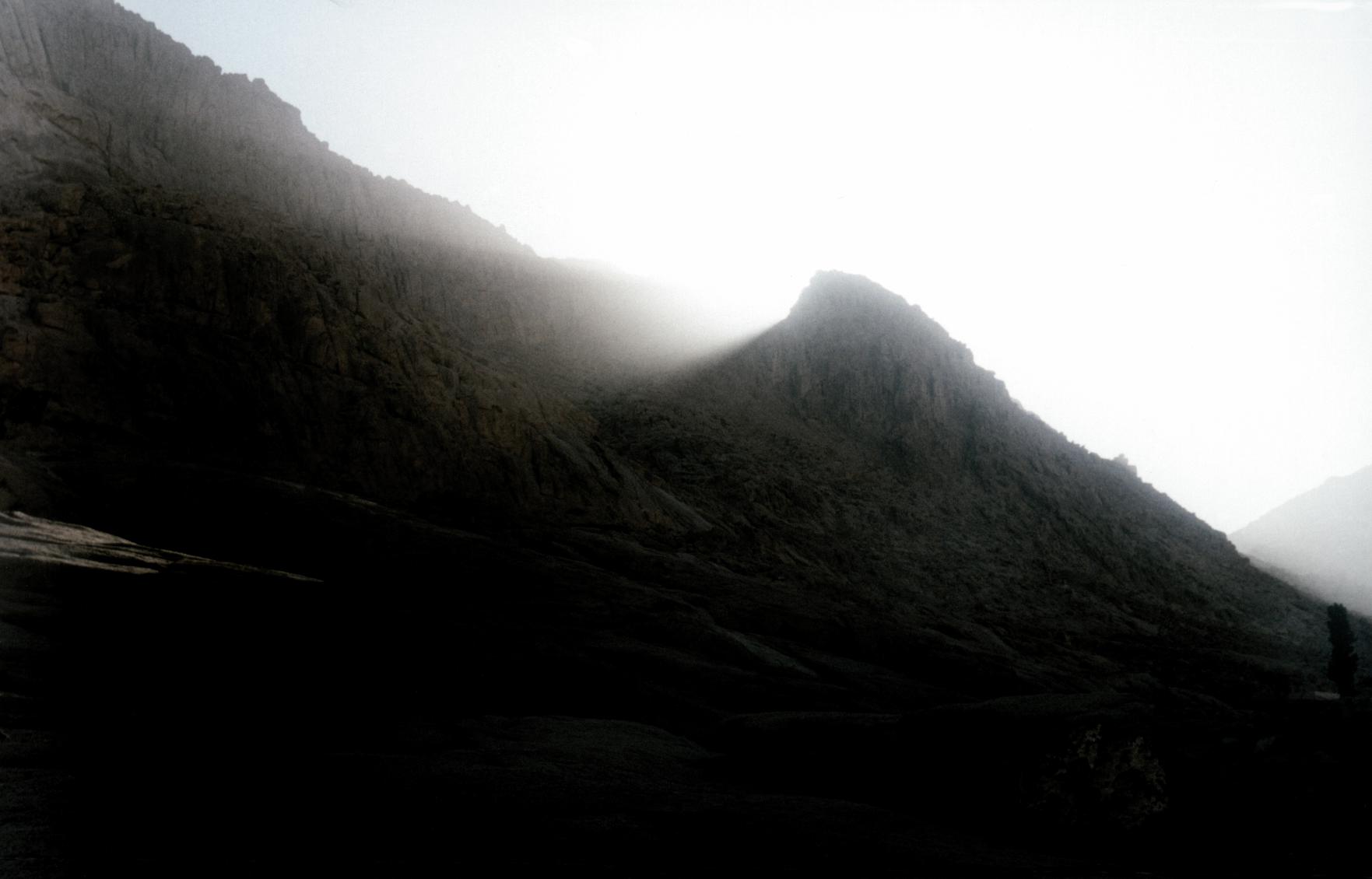
Alas, God may have appeared here once, but he’s clearly bolted from this crowd. There’s no way to sit and meditate through the market cries of the russo turisto. Lucky Westerners, who can’t translate any of it.
The sun is up and it’s time to go back. We have a ferry to Jordan to catch. I hope we’ll find a kinder country and a friendly welcome. Our driver is asleep in the car. We wake him. The car barely starts but does go. By ten we’re at the ferry berth. We buy our tickets. A car and four people, $230. They take dollars only. We spend our last local money on breakfast at a cheap place nearby. Our escort turns up and hands us over to the border officials. Now we’re running around with slips of paper again, from office to office. Luckily this time we have a good man from customs helping us. He all but takes us by the hand through the whole lot. We don’t avoid being fleeced altogether. They get thirty pounds off us, and I still don’t know what for. The ferry is Jordanian and called the Saint Catherine. A border between two countries means an entry ramp. As we cross it, the last Egyptian bump, and I’m certain it was Egyptian, tears off another fuel hose. Petrol pours out in a river. I have to crawl under the shower of petrol and stop the leak once more, but that’s in the chapter about Jordan.
Millions of tourists have been to Egypt inside the walls of multistar hotels. They’ve created a little piece of the familiar, civilised world in there, surrounded by sets to give the impression of a beautiful, peaceful country. It’s all a film. Look more closely and you see a very ugly picture. Egypt reminds me of Glot the pirate from the cartoon about Alisa, The Mystery of the Third Planet.
This is a country where military courts hand down death sentences without much ceremony or concern for human rights. The fight against terrorism, and that’s the end of the discussion. A country where corruption and extortion long ago became the essence of the state. Only a people that has lost respect for itself, and consequently for its guests, can live this way. Deep down they despise their tourists. They smile and wait on you, but behind their backs they’re giving you the finger. You could ignore it, of course, and put it out of your mind. I can’t. And if you want comfort, there’s always Jordan. It may be a little dearer, but you can walk outside the fence in peace.
Farewell, Egypt. Ancient land of the pharaohs and the last surviving wonder of the world. A land of mysteries revealed by intrepid Egyptologists. I’m sorry we couldn’t understand, and so couldn’t forgive, the arbitrariness and abuses that have taken hold here. Perhaps one day we’ll try taking a fresh look at Egypt, but for now we don’t much want to. It’ll be years, perhaps decades, before the word Egypt, or Misr in Arabic, brings anything else to mind.