Lebanon
Chapter 8. Lebanon. Phoenician sunsets.
It was already dark when we reached Lebanese customs. Our main difficulty was that Lena’s and Masha’s Lebanese visas had expired. Women travelling on their own aren’t admitted to Lebanon. The consulate in Moscow had given them visas, but for just one month. Tanya and I, being a respectable married couple, had been given three months. We now had to find some way of sorting this out.
There were quite a lot of people at customs. They looked like pilgrims coming back from the hajj. I’d hoped the local border guards wouldn’t look too closely at the passports and would let us through without noticing the difference. No such luck. We were taken to their chief. A thoroughly friendly man who spoke excellent English. He was ready to help, but it was beyond his authority. He had to call the general, the most important and fearsome man of all. As the border machinery went to work and our fate hung in the balance, we chatted with the chief. He was planning to spend his summer holiday in Russia and we were a valuable source of information. How do you get from Moscow to Saint Petersburg? How much does food cost? What can you bring back from Russia? By the time he finally got to report to his superior, he was introducing us as his best friends. The decision went in our favour.
A Lebanese visa is a simple stamp. The price depends on the length of your stay. Up to three days counts as transit and is entirely free, up to two weeks is $15, and up to three months is $34. We took transit visas. You can extend a visa, or just let it expire. If you do that, you pay the difference for the actual length of your stay when you leave. There is one snag: hotels check your visa when you register and may turn you away if it has expired. For the past few years Lebanon has declared February shopping month, with visa-free entry for anyone who cares to come. As one man put it, “Welcome, even if you’re an Israeli paratrooper and you’ve jumped out of a plane.”
At the border you have to name the hotel where you intend to stay. They don’t ask for confirmation of a reservation. You can write down anything, say Regis. It’s the shortest hotel name in Beirut.
Something else to bear in mind is that single women are unwelcome here. They have enough of their own and don’t need the competition. So here the four of us went as one family. Lena was my sister and Masha my niece. Under religious custom it is my duty to look after a sister left without a husband. The moment you say you’re one family, everyone is full of respect and smiles at you fondly.
Beyond the passport check, customs showed no interest in us whatsoever. There’s no exchange office at the border. Things are simpler here. Ask the guards and they point at a man standing nearby with a wad of money. Fifty dollars. The rate was about 1,500 Lebanese lira to the dollar. There are coins in denominations up to 250 lira.
Now we needed transport. The taxi drivers wanted 65,000 to 75,000 lira to Beirut. That didn’t suit us, so we kept looking. They said there was no point, that there weren’t any direct buses. It soon turned out there certainly were. A Syrian bus from Damascus to Beirut was standing there calling for passengers. The fare was 150 Syrian pounds each, about three dollars. They’ll take any currency, but it’s best to pay in Syrian pounds, which, incidentally, you are strictly forbidden to take out of Syria. In practice you not only can, but evidently should. We had plenty of them, and soon we were riding through the Bekaa Valley. Marvellous petrol stations and shop windows flashed past. Everything was clean and tidy. The streets were lit. The radio was playing pleasant English and French music. It felt like landing in some southern European country.
Lebanon. How often we heard the name in the seventies. Newsreel images come back to me: the Green Line, ruined houses and Israeli planes.
This little patch of blessed ancient Phoenician land ended up with a particularly tangled mix of peoples and faiths.
Our politicians complain that ten per cent of Moscow is from the Caucasus. Now imagine what problems a country might have with 60 per cent Muslims and 40 per cent Christians, the former split between Shia and Sunni and the Christians among Catholics, including Maronites, Syriac and Greek Catholics, and the Armenian and Greek Orthodox, to say nothing of the various Protestants, Druze and, to complete the picture, Jews. The Greek Orthodox hold services in Arabic, the Syriac churches entirely in Aramaic, the language of Christ. The Armenians use Classical Armenian. Arabic is the official language. People speak French, English and German well.
Anyway, in the early seventies, having finally shaken off their colonial past, the Lebanese rushed in a body to settle whose religion was better, who was truly Lebanese and who was an outsider.
It was a merry little quarrel. The main thing was that everyone was fighting everyone else. To this day, thinking back to the reports of our foreign correspondents, I couldn’t tell you which side was good and which was bad. Though of course it was clear who was bad: Israel, naturally. That was enough to make peace. They’d declared an enemy and found a basis for friendship. Ever since, the Lebanese have been friends with one another as fiercely as they once fought. A rocket goes off at the neighbour to the south now and then, and now and then an enemy aircraft flies in. UN and Syrian troops, together with Amal and Hezbollah fighters, help keep the friendship going. All the offices in the country have been divided among the communities. Seats in parliament are distributed proportionally by religious affiliation. Only a Maronite can be president, the prime minister is Sunni, and the speaker of parliament is Shia. They’re even starting to pursue reconciliation with Israel. Syria still declares, “One people, two states.”
It’s hard to keep all that straight, even for the Lebanese. They don’t put themselves out over it. They’ve put all the complications aside and are getting on with life in their beautiful country, rebuilding their cities, developing tourism, growing grapes and drinking wine. Last year, for instance, they held the Miss Universe beauty contest. And that’s with 60 per cent Muslims.
Just over the border the bus stopped by a little shop and café in the town of Anjar (Aanjar, عنجر). The Syrian passengers, worn down by socialism, made a delighted rush for this Western branch of paradise. We waited half an hour, I suppose, until the last Syrian jumped back onto the bus as it was pulling away.
After the fertile Bekaa Valley (سهل البقاع), the road climbs steeply. At the pass, patches of snow began appearing along the roadside. The winter had been exceptionally cold and snowy here. Several metres had fallen in early January and the road had been closed for a week. Even Beirut and Damascus had snow lying for a few days. That happens a few times a century.
Travelling in your own car is convenient, of course, but a bus has its advantages. You can look out the window without thinking about when or where to turn. This is a mountain road with steep climbs and descents. There are little villages where the excellent highway disappears into the tight Arab streets.
At another bend, there was a breathtaking view of Beirut and its suburbs. Millions of lights flickered in the coastal haze. It was like looking out of a plane.
In Arabic, Beirut sounds like “Berit”, and is written بيروت.
The bus takes only two hours from the border. The suburbs of Beirut look at first like any European city. Skyscrapers with signs for familiar global companies, neat factory buildings and multilevel motorway junctions.
They’re surprisingly well off, considering Lebanon has no oil or other mineral resources. The main industries are agriculture, banking, construction and tourism.
The bus came in at the central terminal. As we got off, a crowd of Arabs charged at us, shouting the names of different Lebanese cities. They were touts for the buses. Their job was to shout as loud as they could and snatch prospective passengers from their less vociferous rivals. It looked quite threatening. They came running up and one even grabbed Tanya by the hand. I got so angry at his nerve that I shouted at him at the top of my voice. The poor man was taken aback. He hadn’t expected such a reaction from Europeans. I felt ashamed for having offended a decent man. It’s his job and he’s trying to help people.
As we soon discovered, he was only trying to explain that it wasn’t easy to walk out of the terminal. On security grounds, all exits leading straight into the city had been closed. Arriving passengers without a car could only leave by walking a long way on half-metre-wide pavements around the motorway junction.
We had no desire to pay for a taxi, so off we went on foot, at a good pace too. The slightest sign of stopping brought another batch of touts running.
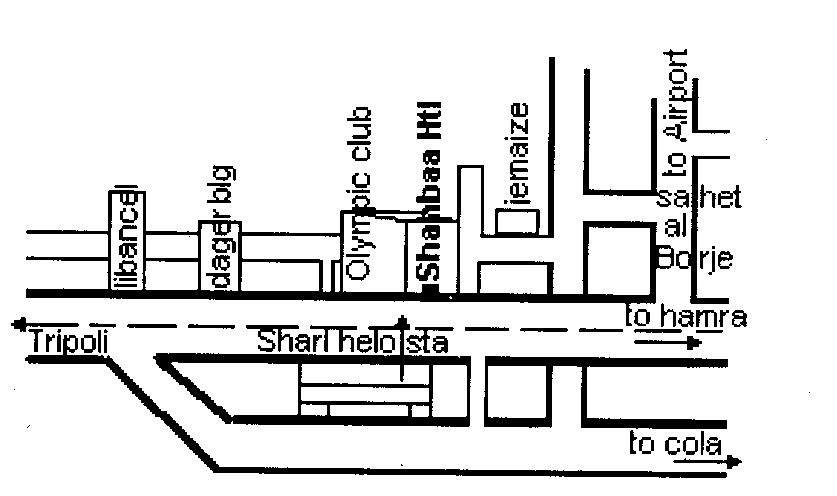
It was late already, and all we planned to do that day was find somewhere to sleep (see the map). Near the terminal is the Al-Shahbaa Hotel (tel. 01-564-287). We found the sign immediately, but beyond that… You could tell the war hadn’t passed this building by. The windows had been smashed. At ground level you get the feeling that the hotel is long gone, the building abandoned, and that it’s time to look elsewhere. But that isn’t the case. Upstairs is a quite respectable little hotel. The walls were painted recently. There are a few rooms with four beds each, one shared shower and a toilet. They charge 6,000 lira per person. The guests are young Europeans who found the cheapest night’s lodging in the Lonely Planet guide. That’s very cheap for Lebanon. We got a big room. There were marks from a burst of automatic fire on the window blinds.
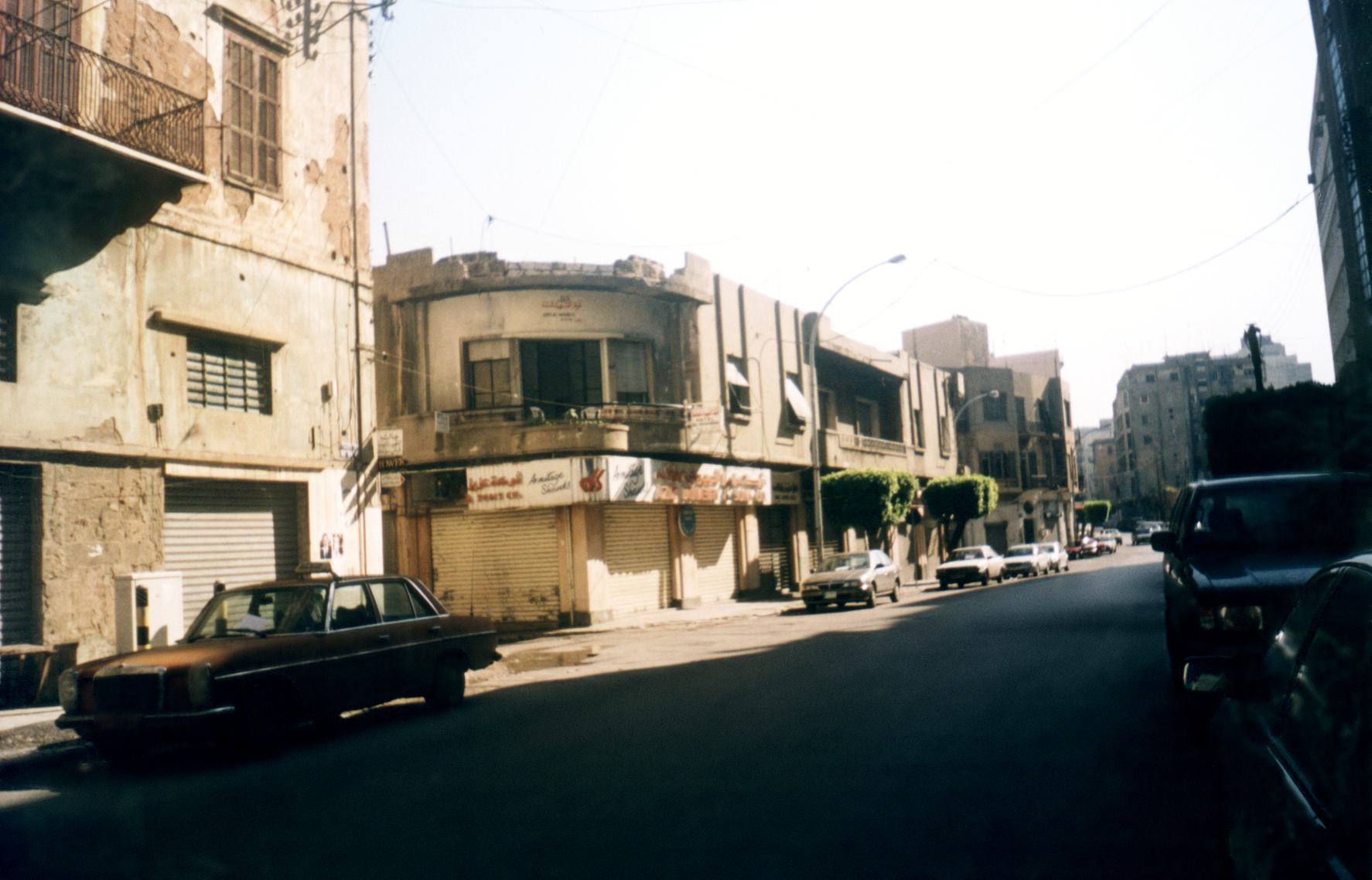
The hotel owner was a sociable, cheerful man. He greeted us by asking whether we spoke Spanish. No? What a shame. He’d so hoped he might find someone that day with whom he could talk to his heart’s content. He’s Druze himself. An adventurer and a revolutionary. He fought in Lebanon and remembers those years as the best of his life. Night, no light, riding back through the mountains to his own side on horseback, concussed… Pure happiness. When the war ended and things got boring, he went to fight as a guerrilla in Colombia. That was great too. Ah, Che Guevara! Ah, Mescalito the cactus!
Now a huge map of Latin America in Arabic hangs on his wall. He pines for a world where reckless guerrillas can lay into some stupid government army, where there’s still a Soviet Union to supply the weapons. Every so often he asks how life is back home. Is it really better than under the Communists? Our answers greatly upset him. He’d hoped that any day now a new Soviet Russia would start shipping weapons somewhere again and he’d be able to relive his youth. Meanwhile he keeps a hotel a hundred metres from the sites of his military glory, by the former Green Line, which he calls the Red Line. To him it’s a line of fire and glorious victories, certainly no ceasefire line. Every evening he waits for Spanish-speaking guests from distant countries, and he’s learning Japanese. The ideas of Aum Shinrikyo must have inspired him. His English, French and German are already quite good.
I was dying to sleep. A pity. We could have talked to him all night.
We started the morning by dealing with an ATM. In Lebanon they’re on every corner. It’s astonishing. I’ve never seen so many anywhere else. You can choose dollars or Lebanese lira. Wonderful: we can get those dollars we so badly need in Syria. We press the button, whirr, and there’s a wad of old, torn fifty-dollar notes in our hands. Well, some places won’t take those. Hard to make a complaint. The machine is made of metal and isn’t much given to conversation. We got another 300,000 lira as well.
We had wanted to hire a car for getting around Lebanon, but that turned out to be very difficult on a Sunday. Out of about ten firms just one was open, and its car cost $80 a day, which was very expensive for Lebanon. Public transport works perfectly well here, so we dropped the idea. We’d go on foot.
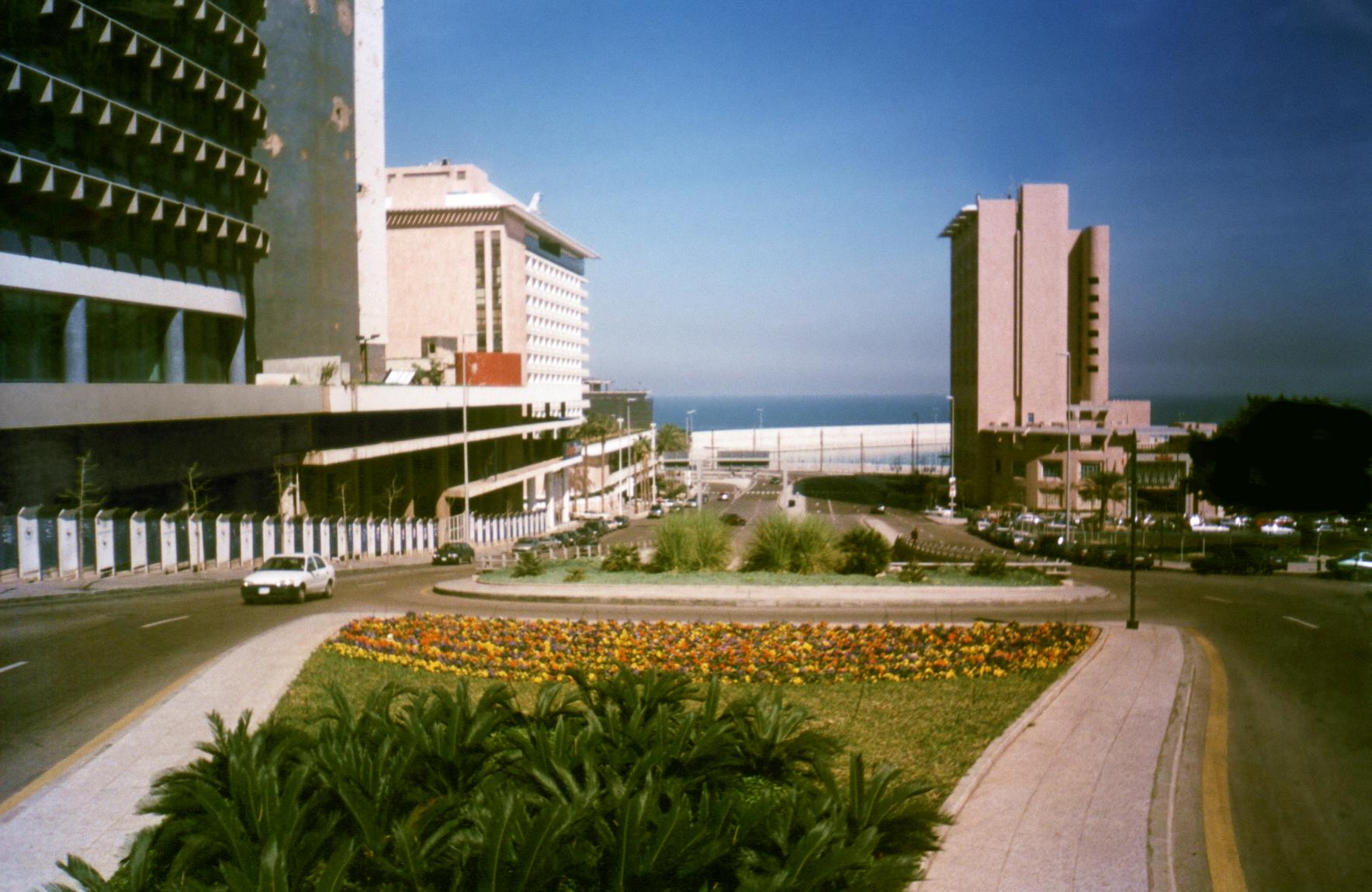
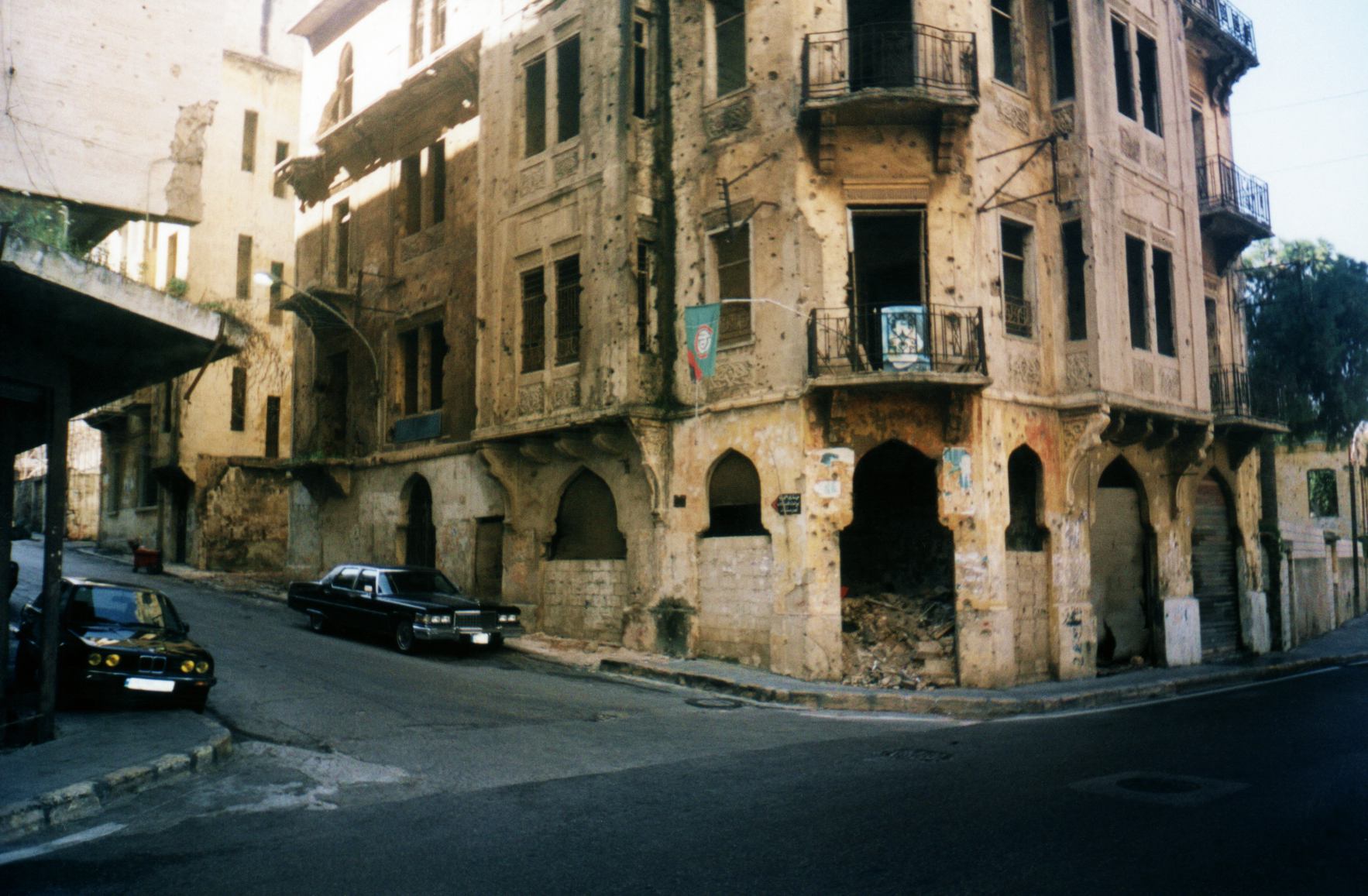
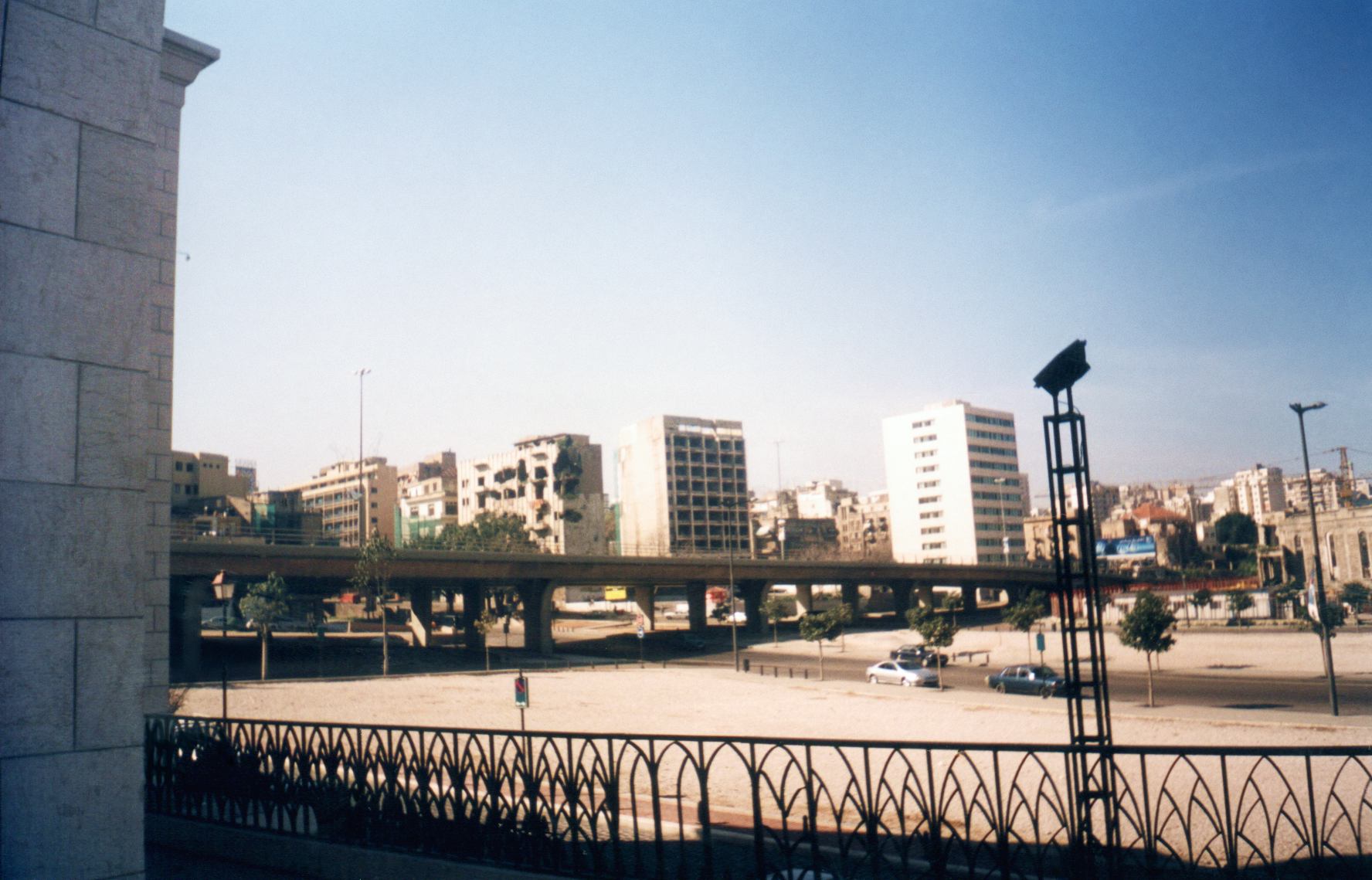
First we set off for a walk around Beirut. An enormous modern city with skyscrapers and private mansions. A complete mixture. Sometimes it feels like Yerevan, sometimes like Brussels. There are traces of the war on every corner. Bullet and grenade marks on the walls. Many buildings are abandoned and it seems they’ll never be restored. Even the tallest skyscrapers stand with shell holes in the walls and shattered windows. Next door there are well-kept, repaired buildings. Take the UN offices. They gleam with tinted glass like the European Parliament. A seditious thought goes through my head: suppose a terrorist crept up with a rocket launcher. Think of all that broken glass.
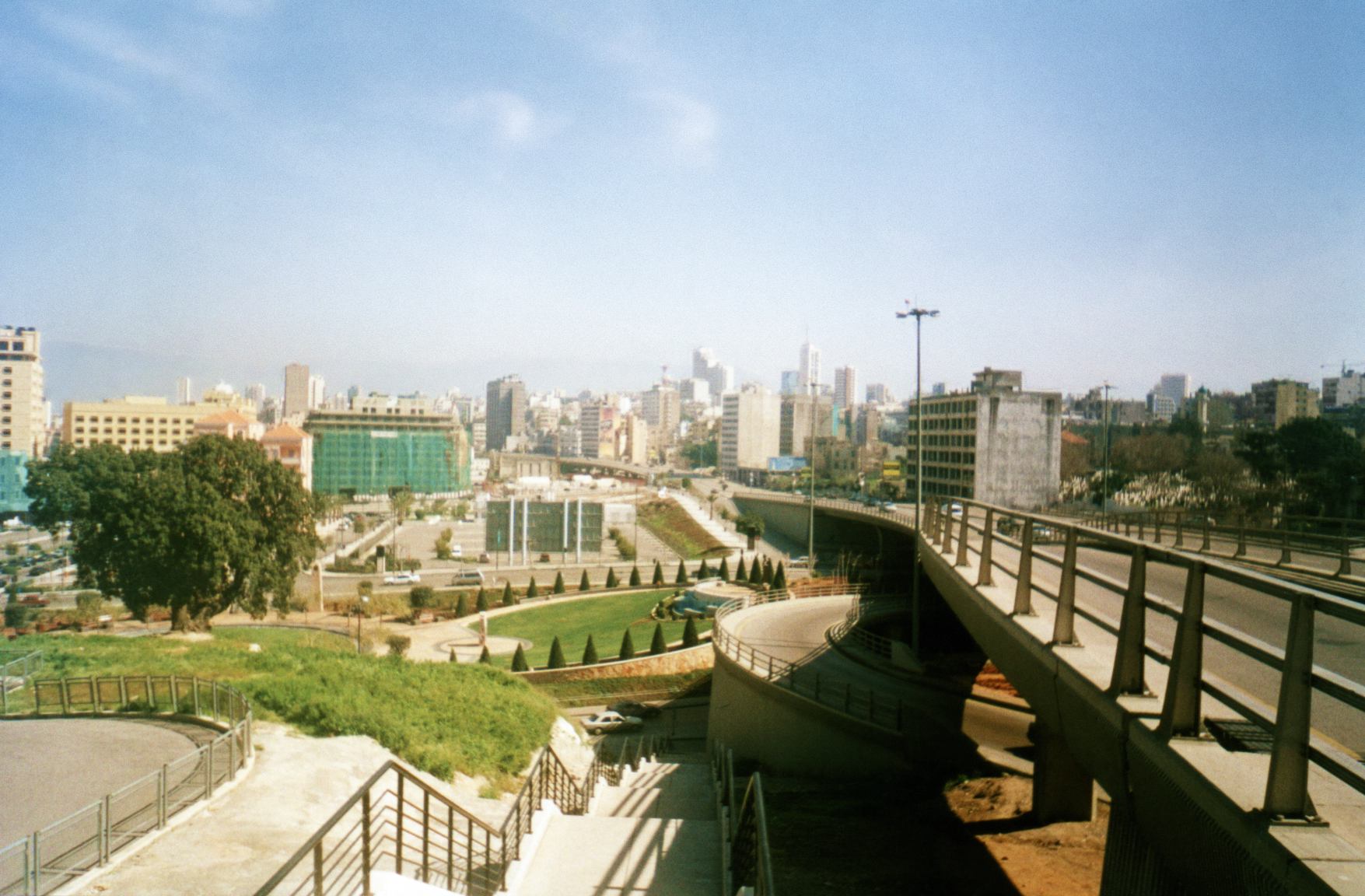
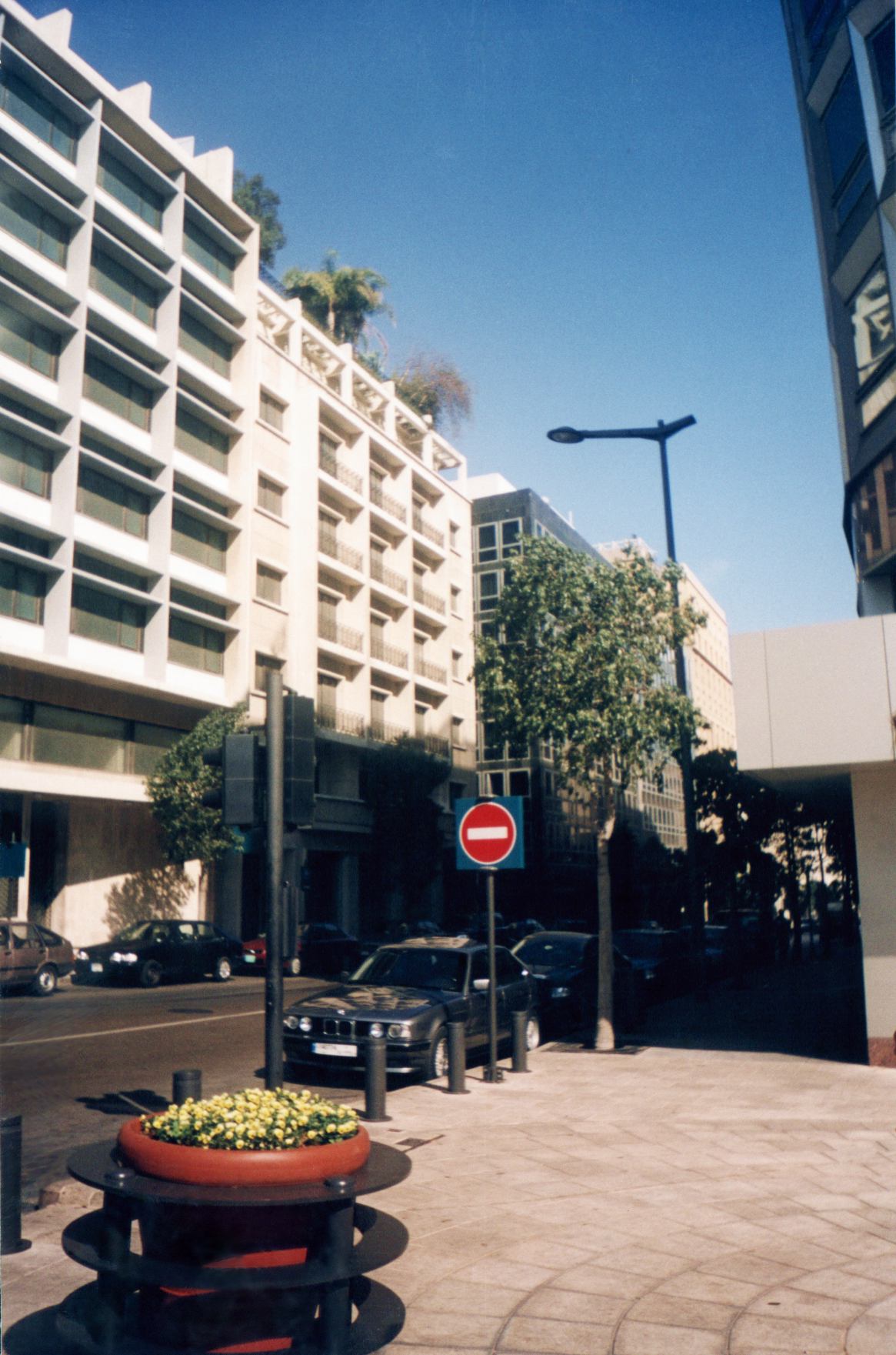
In some houses just one room has been repaired and the rest lies in ruins. The person living in that room is far from poor. There’s a gleaming, polished Cadillac under the windows of this almost dead house.
Lots of banks, offices and residential buildings. Right next to one piece of architecture, fishermen are drying their nets and there’s the skeleton of an excavator.
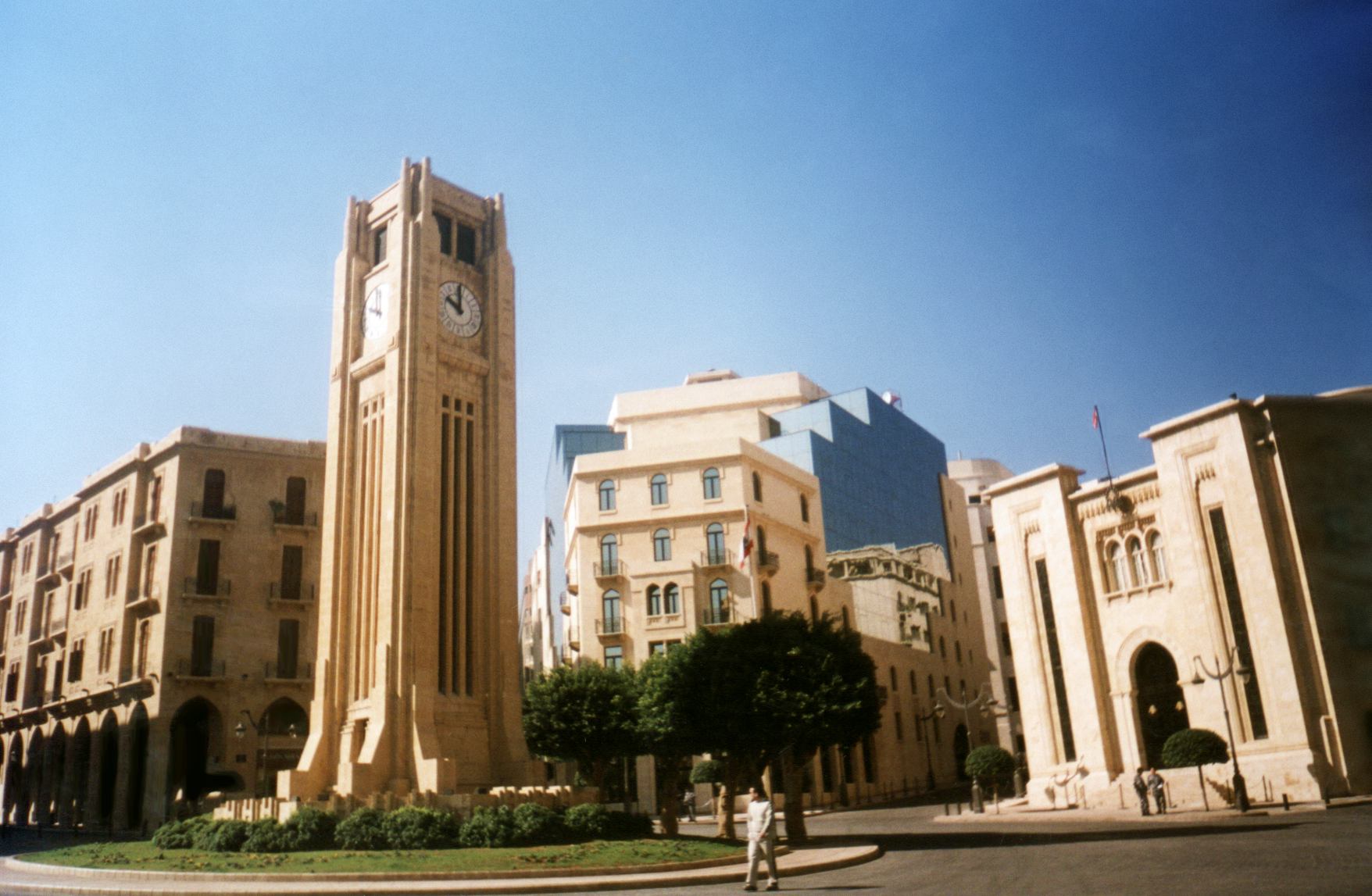
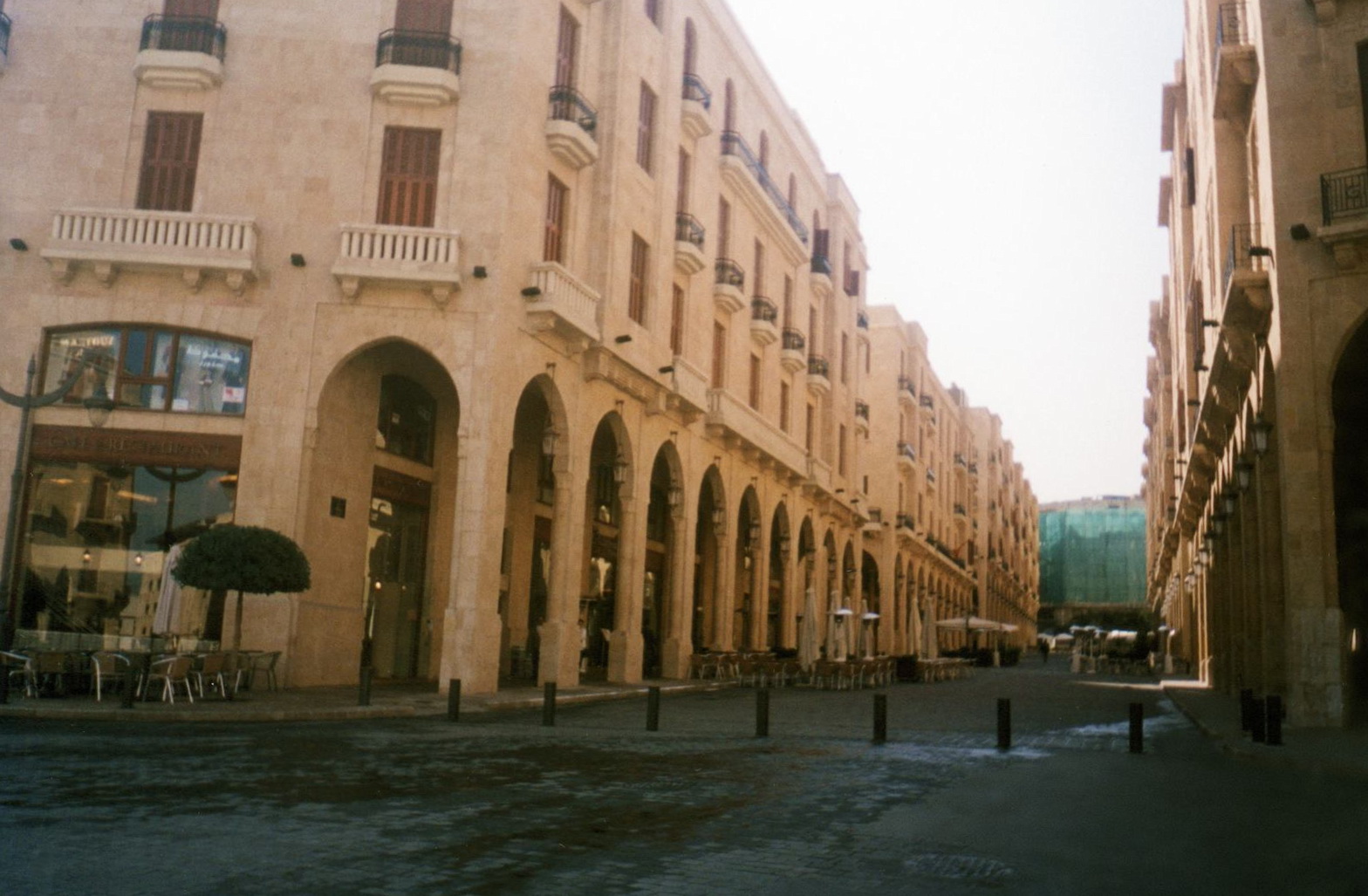
The government quarter, or Downtown, is in immaculate condition. It’s a small part of the city with a regular street plan and broad streets. There is still a reminder of the war in the anti-tank obstacles by parliament.
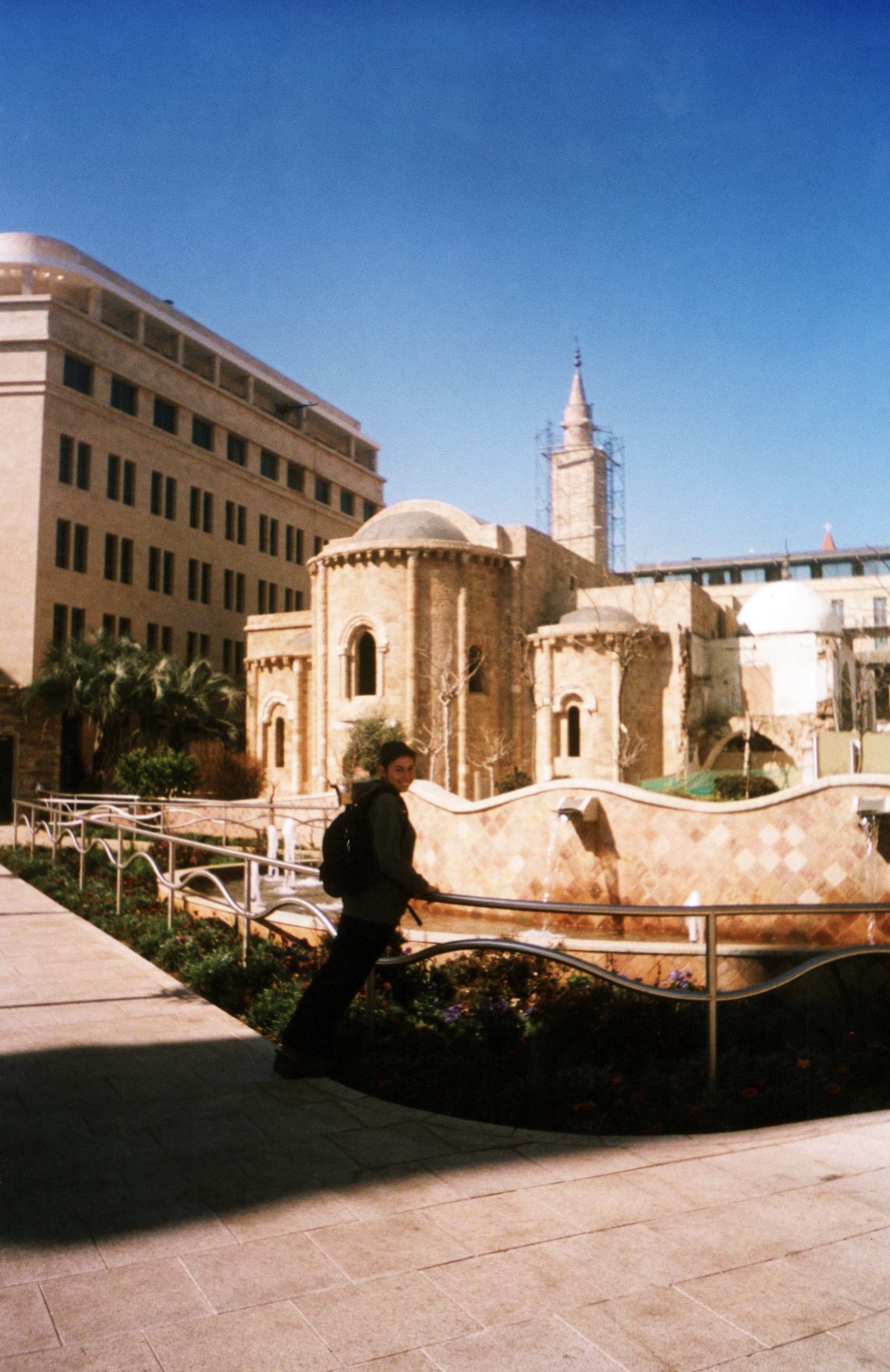
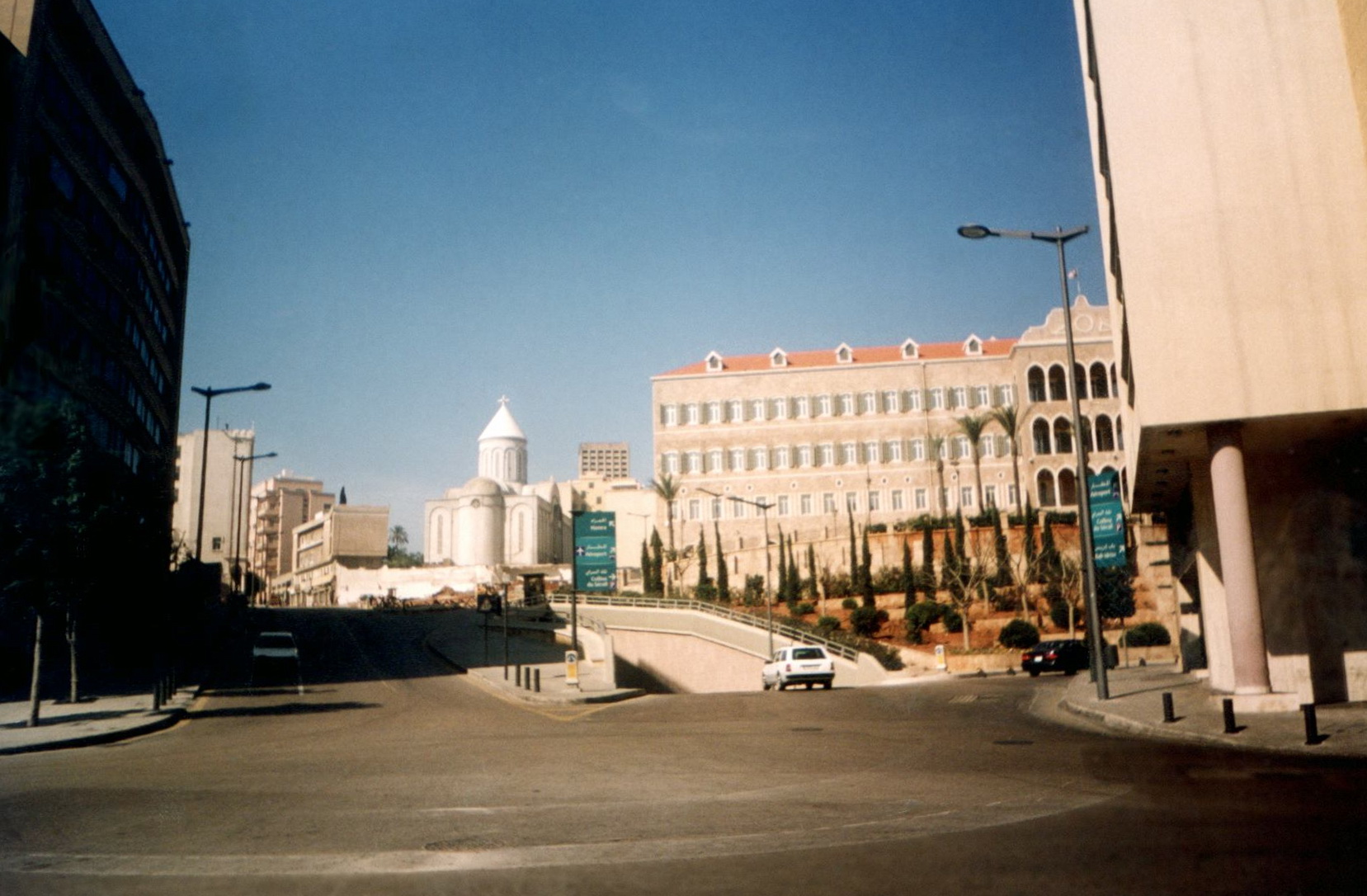
The Green Line is long gone. The destruction was worst along it. Near the sea there wasn’t a stone left standing. It left an open strip two hundred metres wide. One of the buildings that survived on the edge of it is an Armenian church. We went in. There were only a few people at the service. They gave us very wary looks but didn’t turn us out. The service was in Armenian. The congregation in the church next door looked Arab and the service was in Arabic. It’s worth seeing and hearing. I waited a long time for the priest, who looked Orthodox, to say something like “Allahu akbar.” I didn’t hear it. Perhaps I just didn’t wait long enough.
Church bells and the muezzin’s call ring out over the city in turns and sometimes all at once. It’s quite a sound. Everything is mixed up here. The division along the Green Line into Christian and Muslim halves was very rough. A great many churches and mosques stand on the other side. To the local people’s credit, during the war they didn’t wipe away the traces of one another’s religions in their own sectors. They’re proud of that now. Talk to any local and before long they’ll say it. “We’re all brothers. We’ll never fight again. It was Israel that did all this. The Jews are our brothers too, by the way. They live here and we’re friends with them.”
It looks as though they really won’t fight. The city is leading an absolutely peaceful life now. Nobody bothers you here. The shops remind you of Europe. Barcodes on the goods, credit cards at the till, and no bargaining.
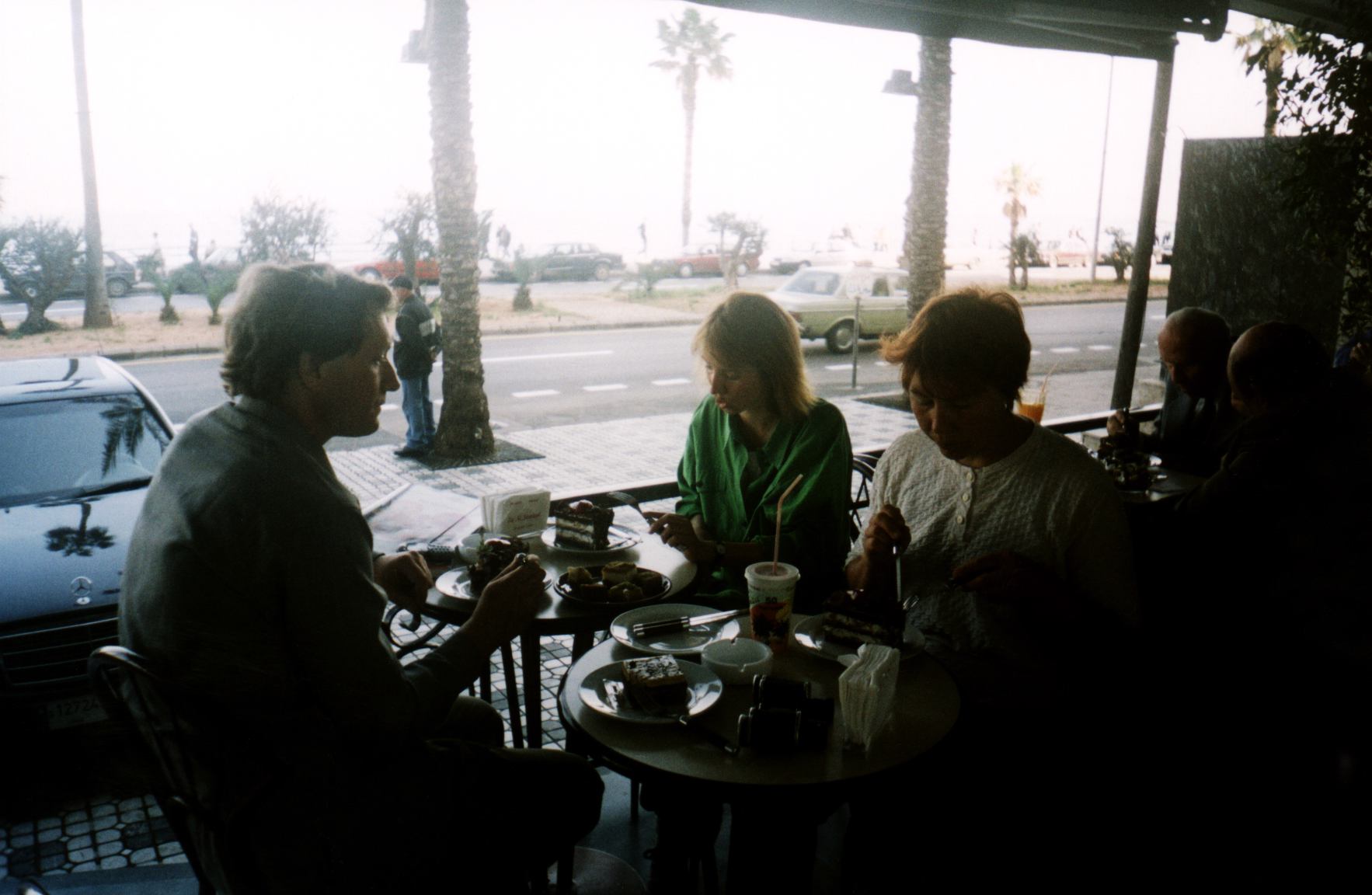
It’s a pleasure to walk around this city. We visited a café on Avenue de Paris by the sea. Since childhood I’d dreamed of having coffee on the Beirut waterfront. And now I had. Beirut has a beautiful waterfront. The coast is rocky, especially in the west. Pigeon Rock rises out of the water here in the shape of a gateway. There are beaches in the coves. Girls sunbathe in swimsuits. An unheard-of liberty.
The American University is a district in itself. Tanya and I came across a McDonald’s there. Of course we went in. We texted greetings to the anti-globalists we knew.
Beirut has ancient ruins, but they’re so thoroughly ruined you can give them a miss.
Bookshop windows are full of computer books, and there are internet cafés.
There are two mobile operators here, but only LIBANCELL agreed to serve our handsets. Sending a text costs $0.47! Watch out! Calls are expensive too. A 213-second call to Russia cost $8.95. Local calls are charged by the second but still aren’t cheap. Forty-one seconds cost $0.48.
That’s all for people roaming. Buy a local SIM card and calls will be $0.06 a minute.
Local numbers have six digits. Calling from a mobile you need to dial 0-1-***-***, or better still +961-***-***. Dial 02 and you can then enter any number in Syria. 03 is for calling a mobile phone. Just about the whole country has mobile coverage.
After tiring ourselves out walking around Beirut, we went to Saida, or Sidon (صيدا). Shared taxis here are called “service” taxis. They go south from Cola bus station, in southern Beirut and quite a long way from the centre. We took a taxi for 10,000 lira. If ever there was a place with no rules of the road, this is it. A red light is no more than a warning. Lanes and road markings are just dirt on the tarmac. Driving the wrong way down a motorway? Easily. What if that’s where you need to go? Are you supposed to drive all the way back and look for somewhere to turn around? They won’t put up with that sort of thing in their own country. Drive where you need to and live free!
At the bus station we soon picked out the right shared taxi from the touts’ cries. The fare was 2,000 lira.
The seafront is almost completely built up, but the motorway is good. It’s only 45 kilometres to Saida, less than an hour away.
Sidon is one of the oldest cities in the world. The first Phoenician city appeared here 6,000 years ago.
The sights are mostly along the waterfront. There’s a small Crusader castle on an island. It reminded us of Santa Lucia in Naples. There’s an entrance fee. Nearby you can hire a boat for 5,000 to 10,000 lira and go out into the open Mediterranean. We wanted a ride, but the boatmen were so rude and persistent with the women that Lena announced grandly, “I’m not getting in a boat with that lot.”

The Great Omari Mosque, which dates from the thirteenth century, stands along the other waterfront. The Israelis bombed it in 1982. There was a great uproar at the time about the crimes of the Israeli aggressors. I still remember it. The mosque was soon restored with Saudi money, and you can go inside.
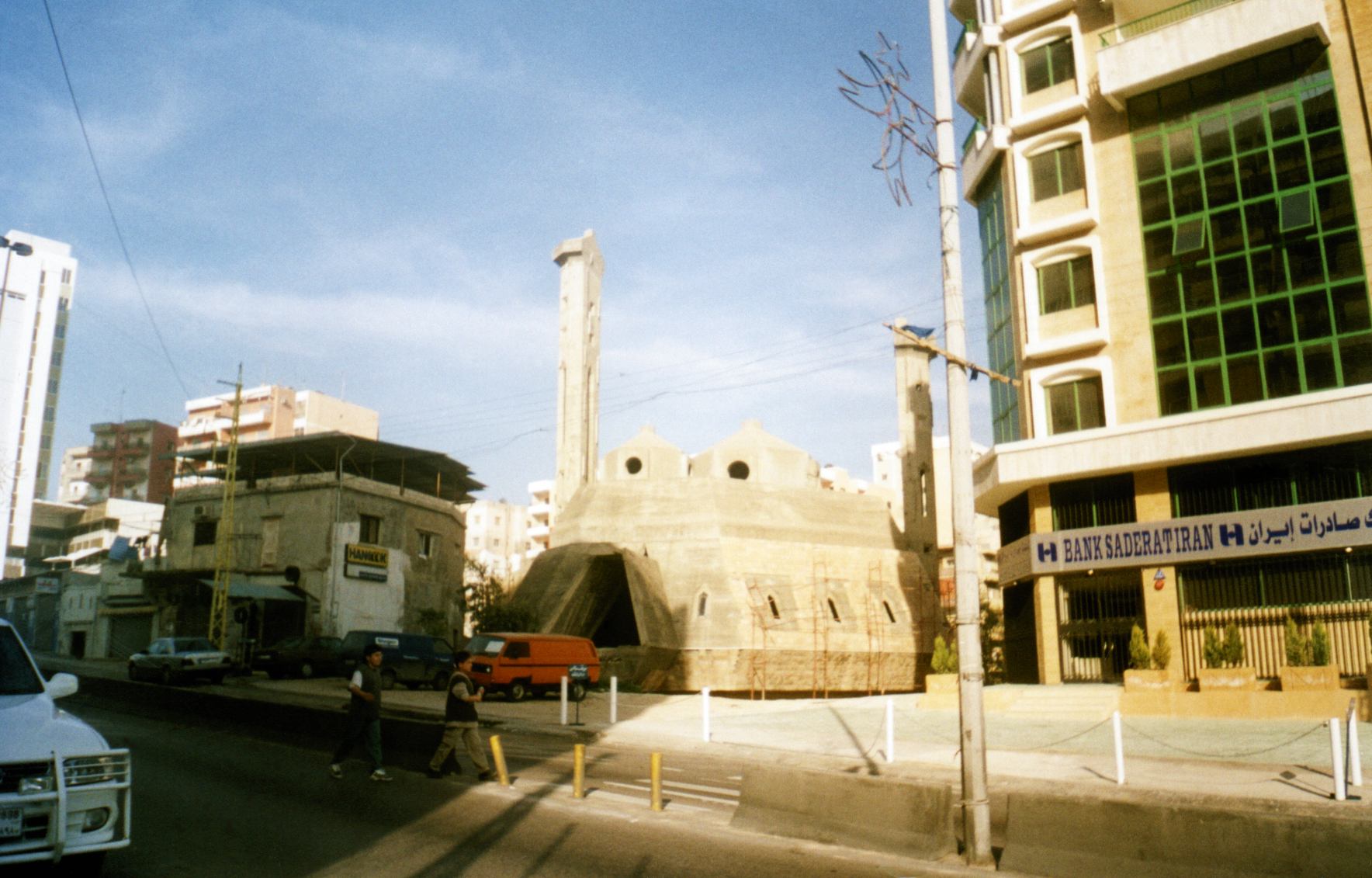
Of course, if another rocket hits the mosque it will collapse again, but lessons were learnt. They’re building new mosques in solid concrete two metres thick. Sloping sides like a modern tank. The whole thing sits on a bed of sand in case of a shock wave from a nuclear explosion. Looking at it, you believe Islam will live for ever. The pyramids will crumble and a mosque like this will still be standing. As it turned out, peace came before the mosques built to that design could be finished.
Saida has ancient ruins, but they haven’t survived too well.
They sell strawberries wherever there are crowds. The new crop had ripened by the end of February. A punnet costs 1,000 to 1,500 lira. They grow bananas in Lebanon too. They’re smaller than the Ecuadorian ones we know, probably about half the size. They’re quite dear, just under a dollar a kilo. It’s too cold and dry here for a tender banana plant, so bananas need looking after. To grow them commercially you have to put them in a greenhouse and water them continually. The greenhouses have to be five to seven metres high. A banana isn’t a tomato. It demands room. Saida has a fish market.
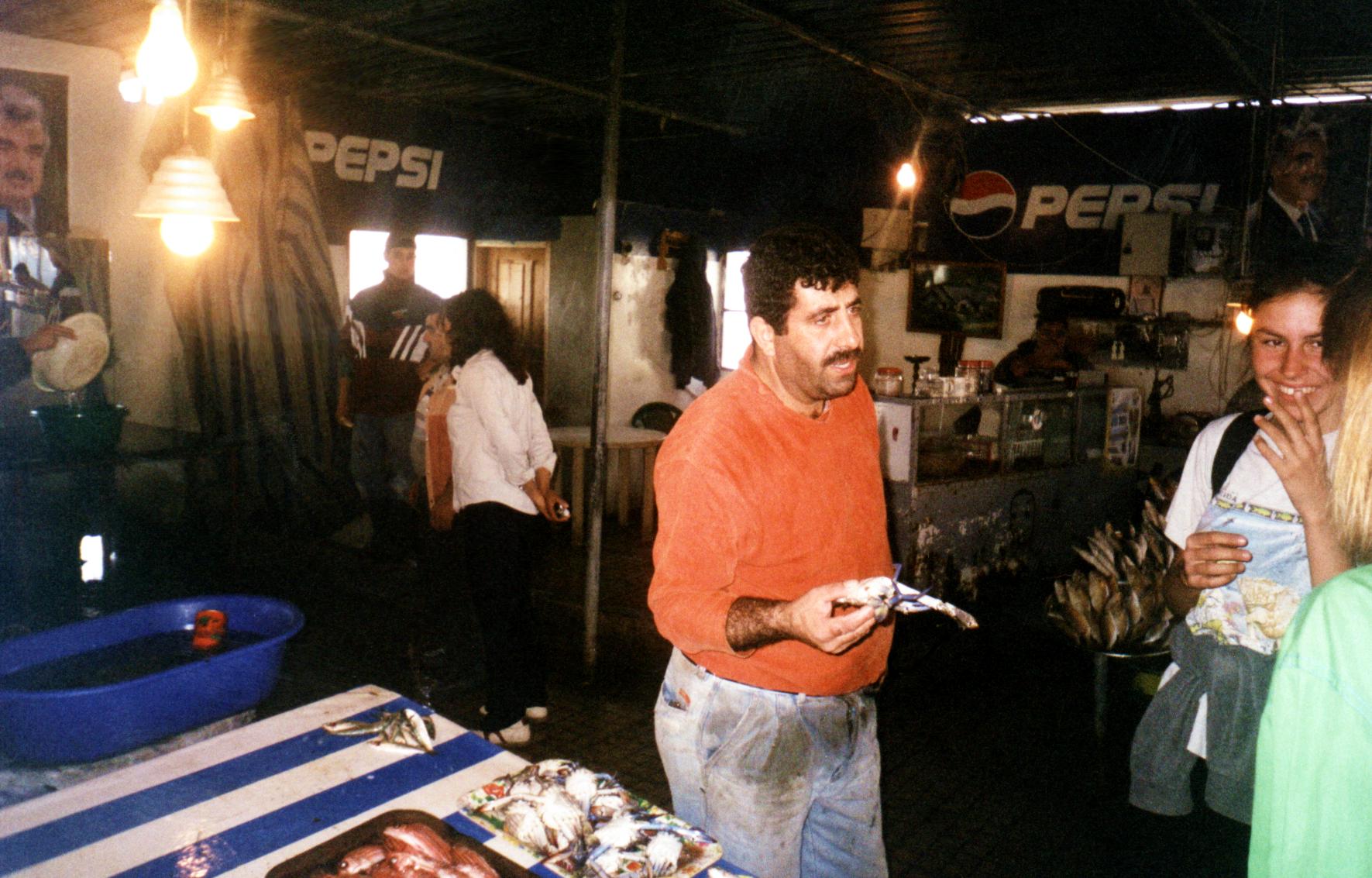
In spite of these difficulties, they grow plenty of bananas. A great deal of land is covered with greenhouses. Just about every Arab country sells Lebanese bananas.
From Sidon we headed farther south to Tyre, or Sour in Arabic (صور). This is very close to Israel. As soon as you leave Saida there’s a UN checkpoint. Actual blue helmets, just like on television. They looked at our shared taxi and waved us through. The excellent coastal motorway ends here. Before the war it went all the way to Haifa, but there’s a long way to go before it does that again. Even the stretch from Saida to Sour hasn’t been restored, so the taxi has to squeeze through narrow lanes in the seaside villages. It’s a short trip, though, only forty kilometres.
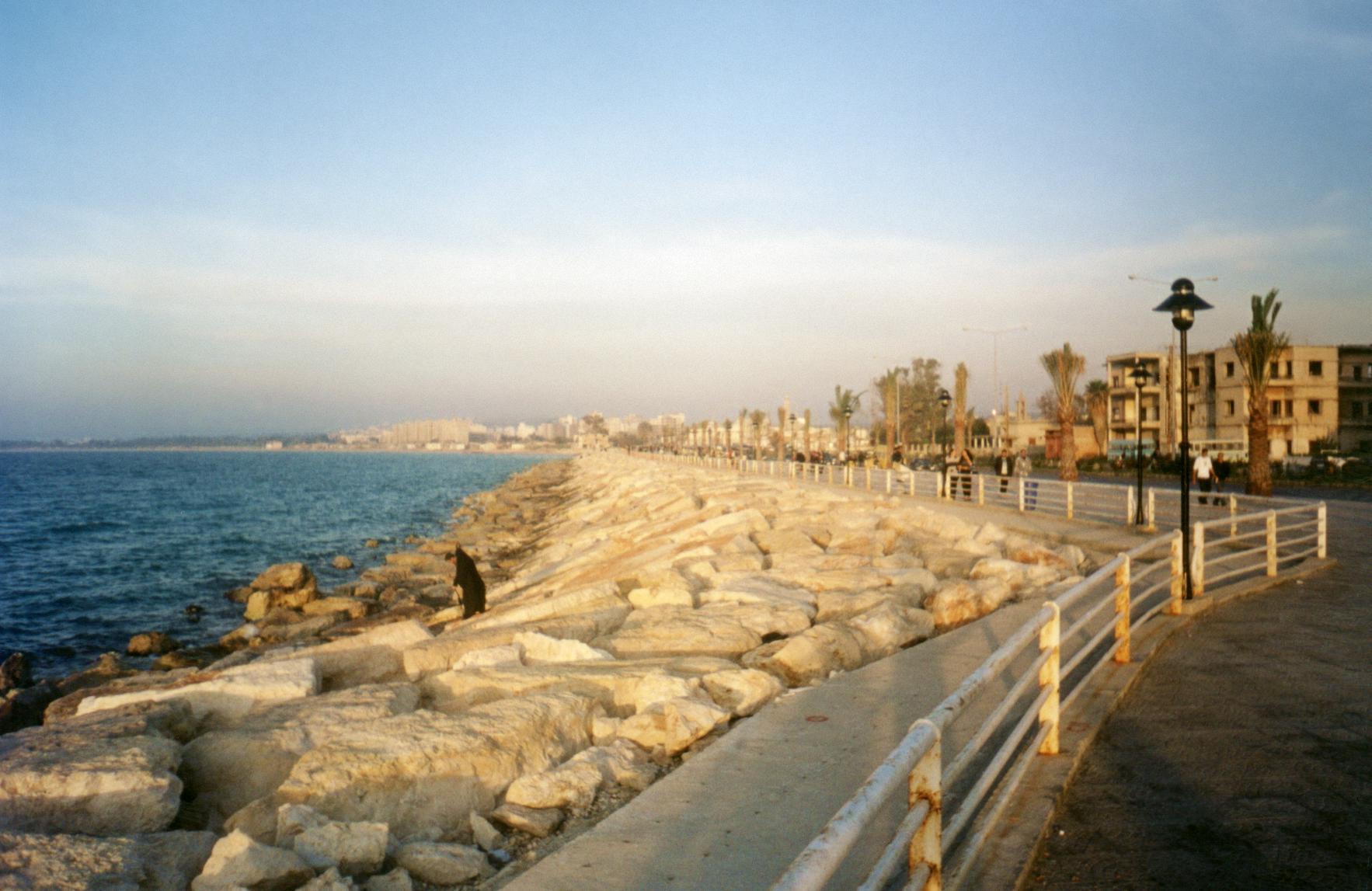
Sour may be younger than Saida, but it has more sights and a richer history. As far back as King Solomon there was a treaty of friendship and cooperation with King Hiram of Tyre. The cedar for the temple in Jerusalem was cut here.
Who hasn’t conquered Tyre? Egyptians, Persians, Assyrians, Babylonians, Macedonians, Romans, Arabs, Crusaders, Turks, British, French, Israelis. This, surely, is where Jesus Christ turned water into wine. It ought to be a holy place for all Russian alcoholics. Just imagine if Jesus had got out of bed on the wrong side and done it the other way around, turning wine into water. We’d all be living under prohibition, like in Libya.
We declared a celebratory dinner to mark the occasion. There’s a floating fish restaurant on the Tyre waterfront. We had a proper meal there. We wanted a local fish, but the waiter honestly admitted that all the fish came from elsewhere. Anything swimming in local waters had been eaten long before we arrived. There were only little fish left, poisoned by sewage. In the end we settled on a sea bream caught off Turkey. It was delicious, but it was little and there was only one. Seeing the price on the menu, we’d expected three hundred grams, perhaps half a kilo.
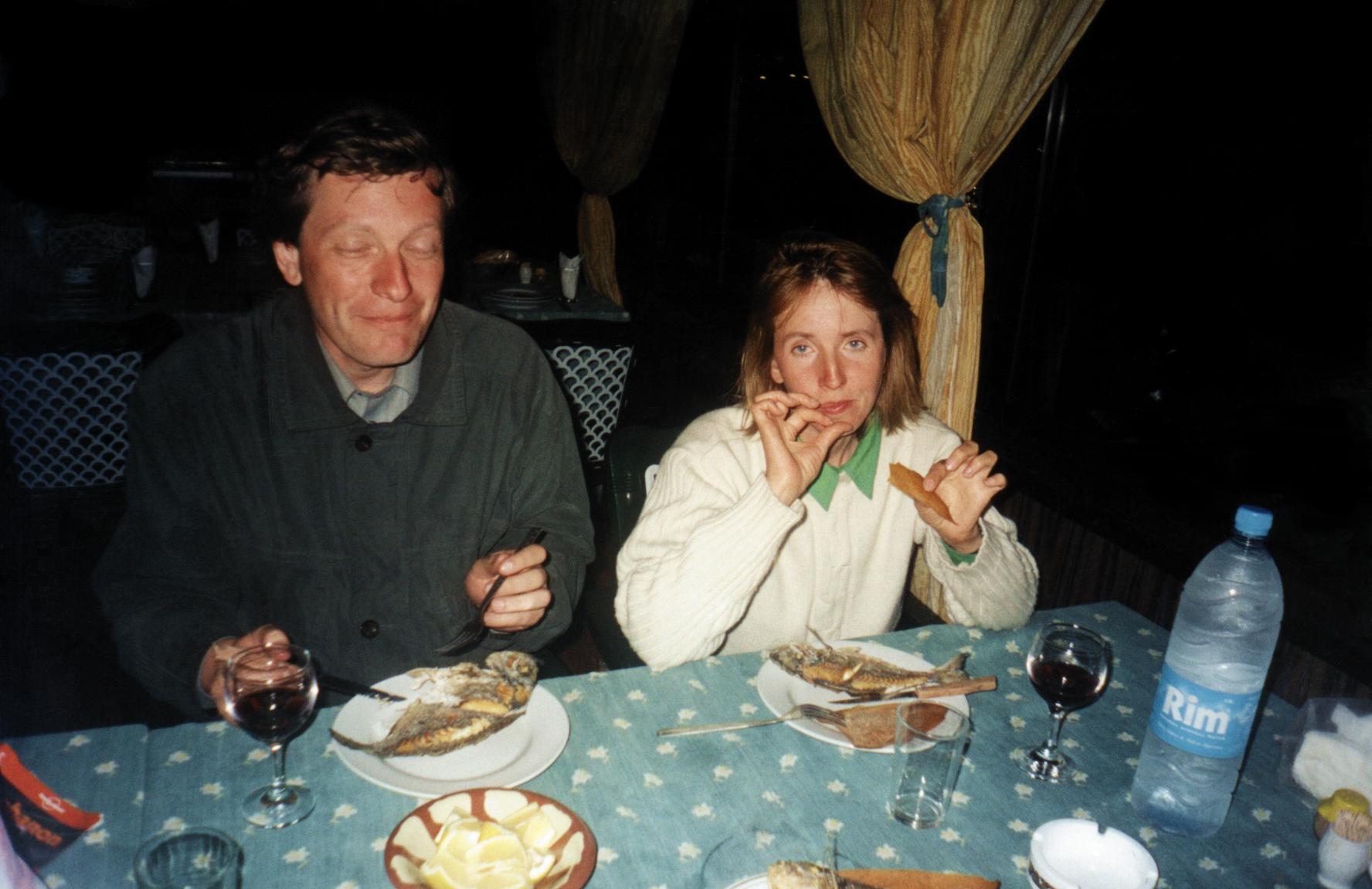
But they did bring out an entire basin of fruit, bananas, oranges and apples. Innocent people. They thought we wouldn’t eat it and they could keep bringing the same basin out for another month. We slipped a couple of pieces each into our pockets and then had a go at eating the rest. I got through about twenty bananas on my own. We left three oranges in the bottom for decency’s sake.
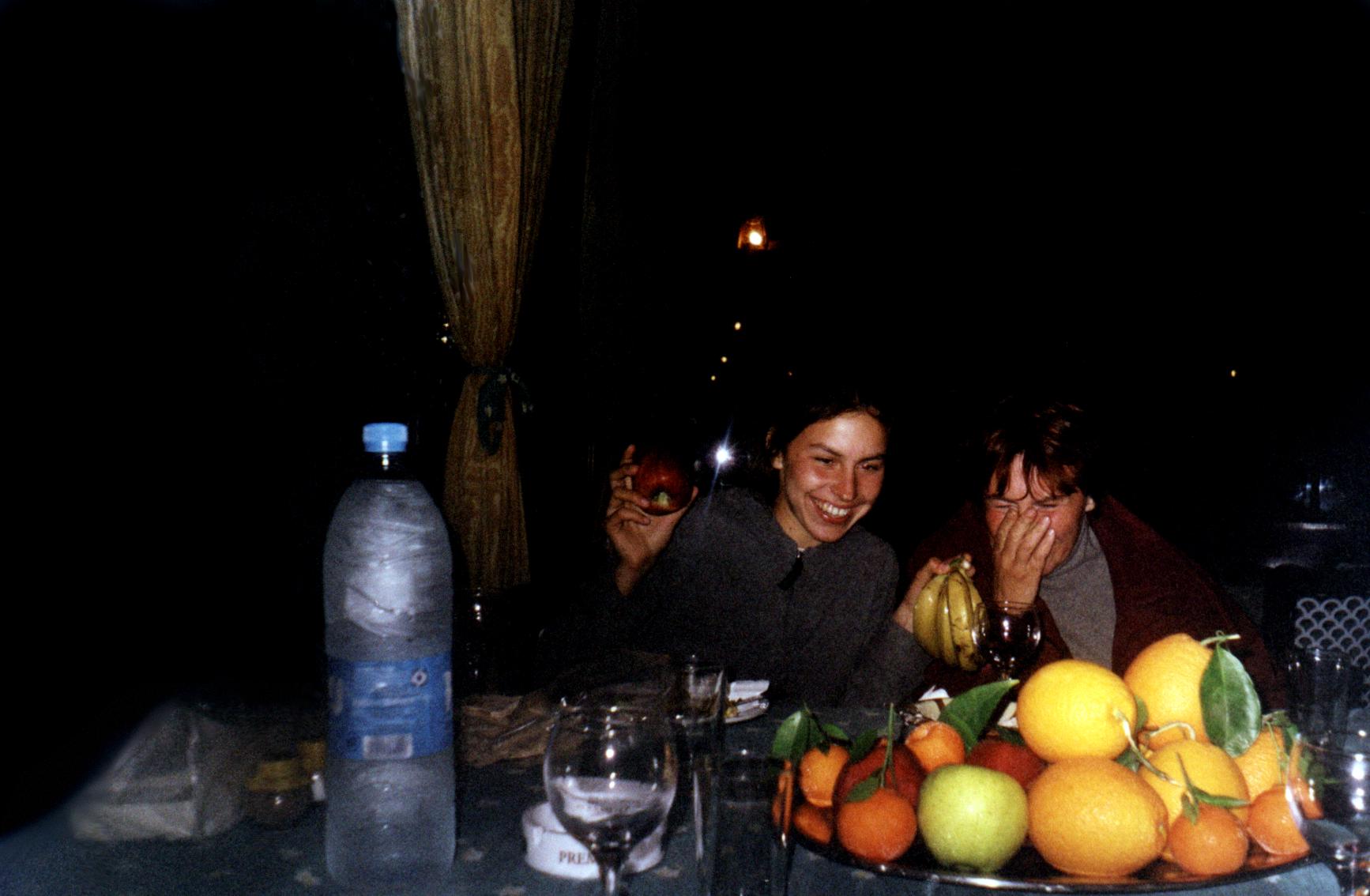
Lebanese wine is excellent. We drank two bottles. I’ve never seen Lebanese wine on Russian shelves, which is a pity. It’s delicious.
The little restaurant is in the fishing harbour, near the Maronite patriarch’s residence. The Maronites are Lebanon’s largest Christian community. They answer to the Vatican. Since 1959 even the Maronite patriarch has been appointed by the pope. Services are conducted in Arabic and the worship has kept its local rite.
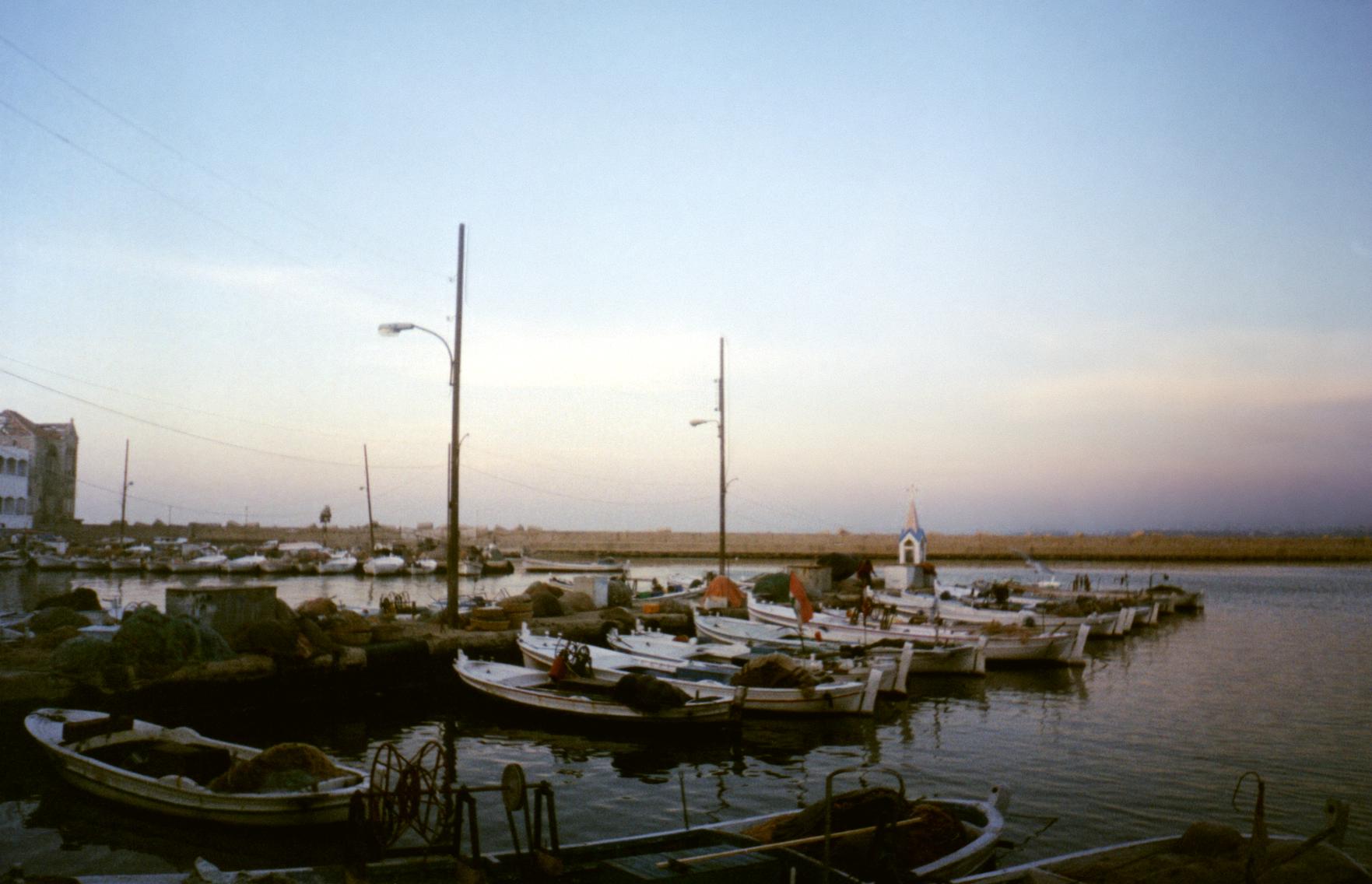
There’s a UN building next door. Jeeps keep pulling up with soldiers, or with local beauties. There’s plenty of work for the peacekeepers here. The eastern Arab part of town is something between a slum and a Palestinian refugee camp. Attempts to impose order there have been judged pointless. The camp is surrounded by UN posts. The roads are barricaded. No vehicles may drive in. People entering and leaving are checked for explosives and weapons. What goes on inside is a mystery to science. Having had a look at all this, we didn’t dare poke our noses in.
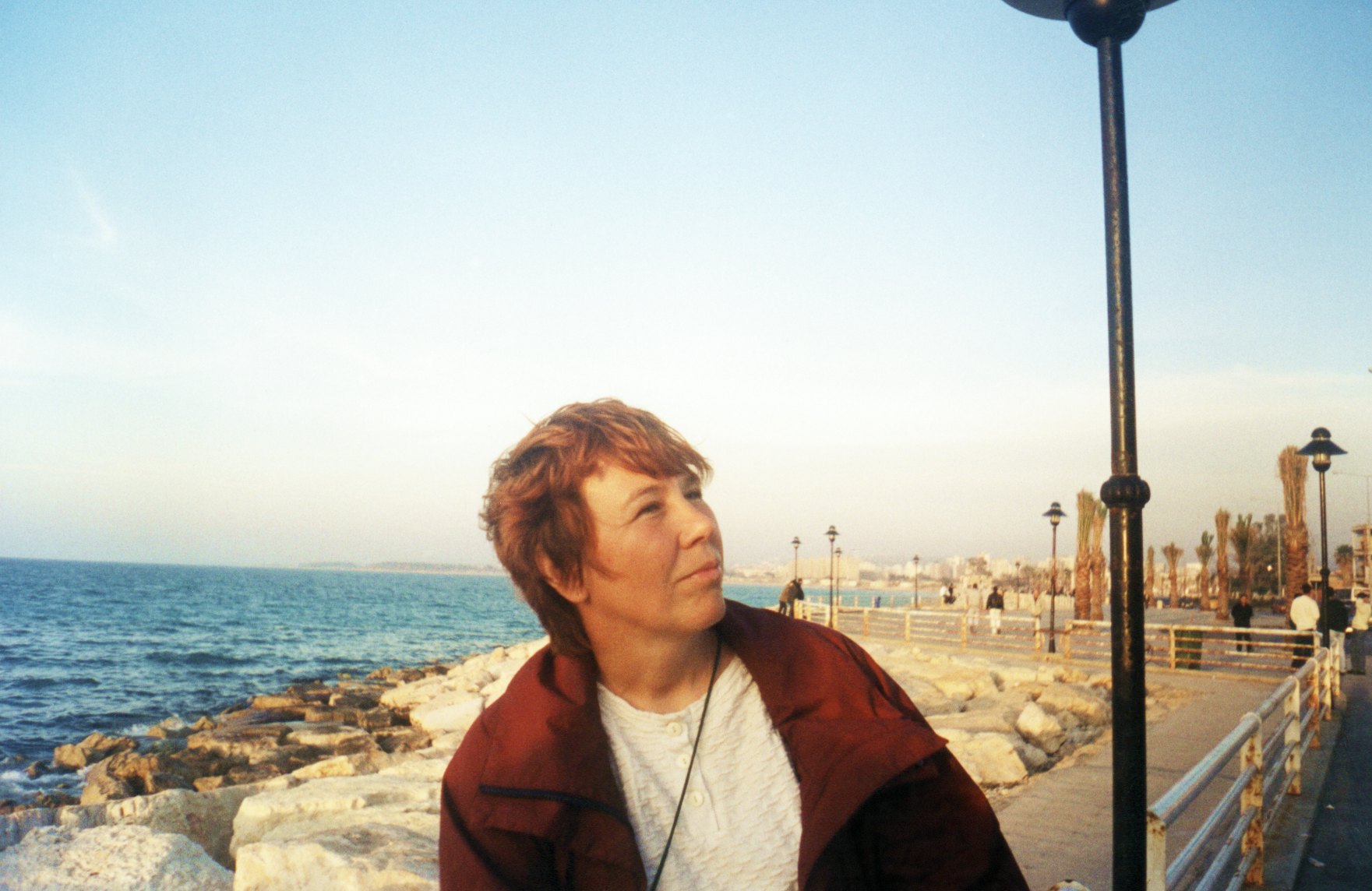
New blocks of flats stand next to the shanties. A beautiful promenade paved with tiles, with palm trees and lamps. Well-turned-out children run around and ride their bicycles. It looks very much like Italy.
Tyre has two sites with ancient ruins. The eastern one covers quite a large area and has been fairly well preserved. Admission is 6,000 lira. The nice thing is there are hardly any visitors, so you can wander all by yourself.
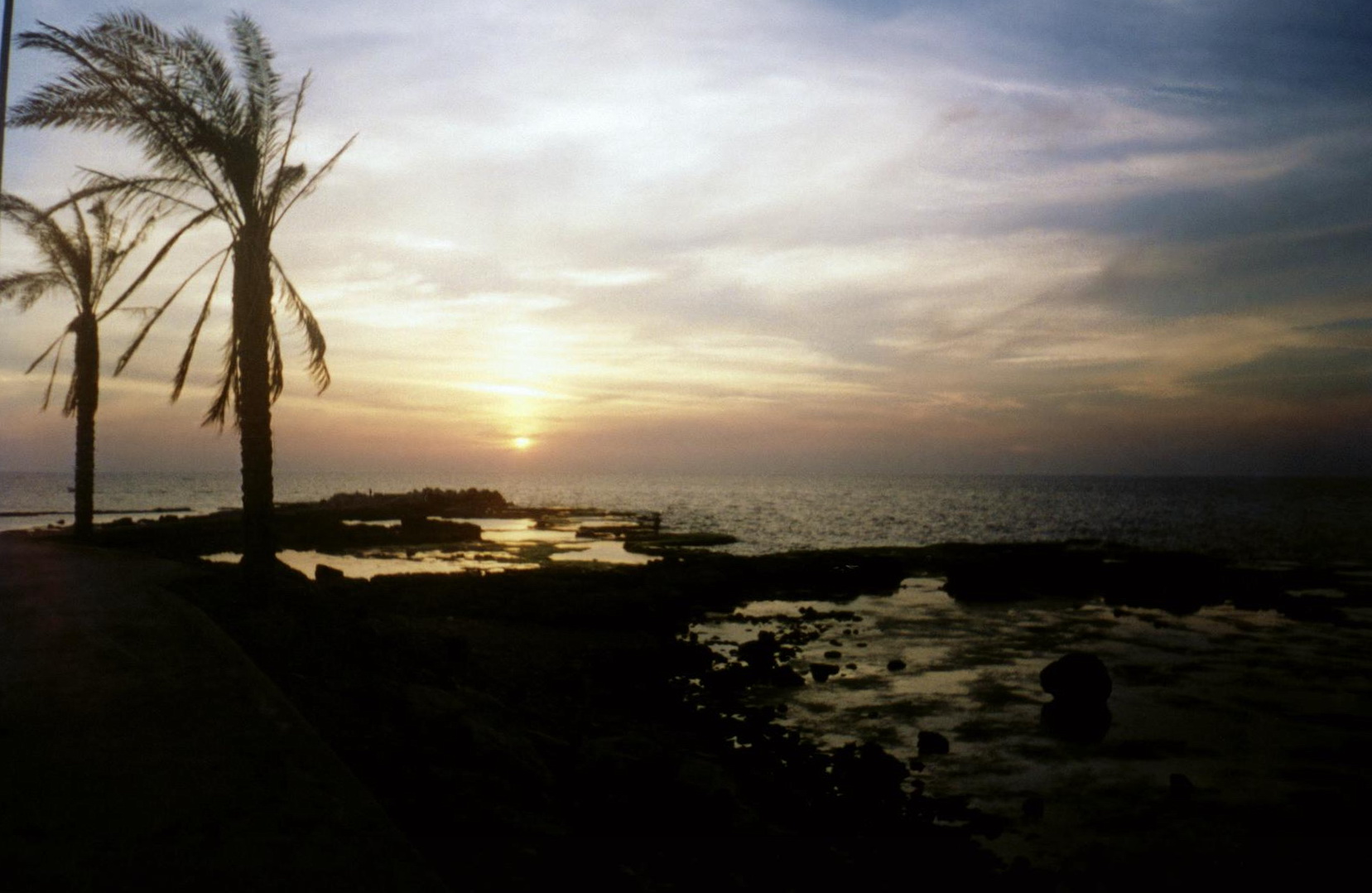
Worn out after a long day, we sat on a bench at the western tip of the headland on which Tyre was built. The sun was just going down into the sea. All my life I’ve wanted to live in a house where I can see the sun set over the sea. Perhaps one day that will come true.
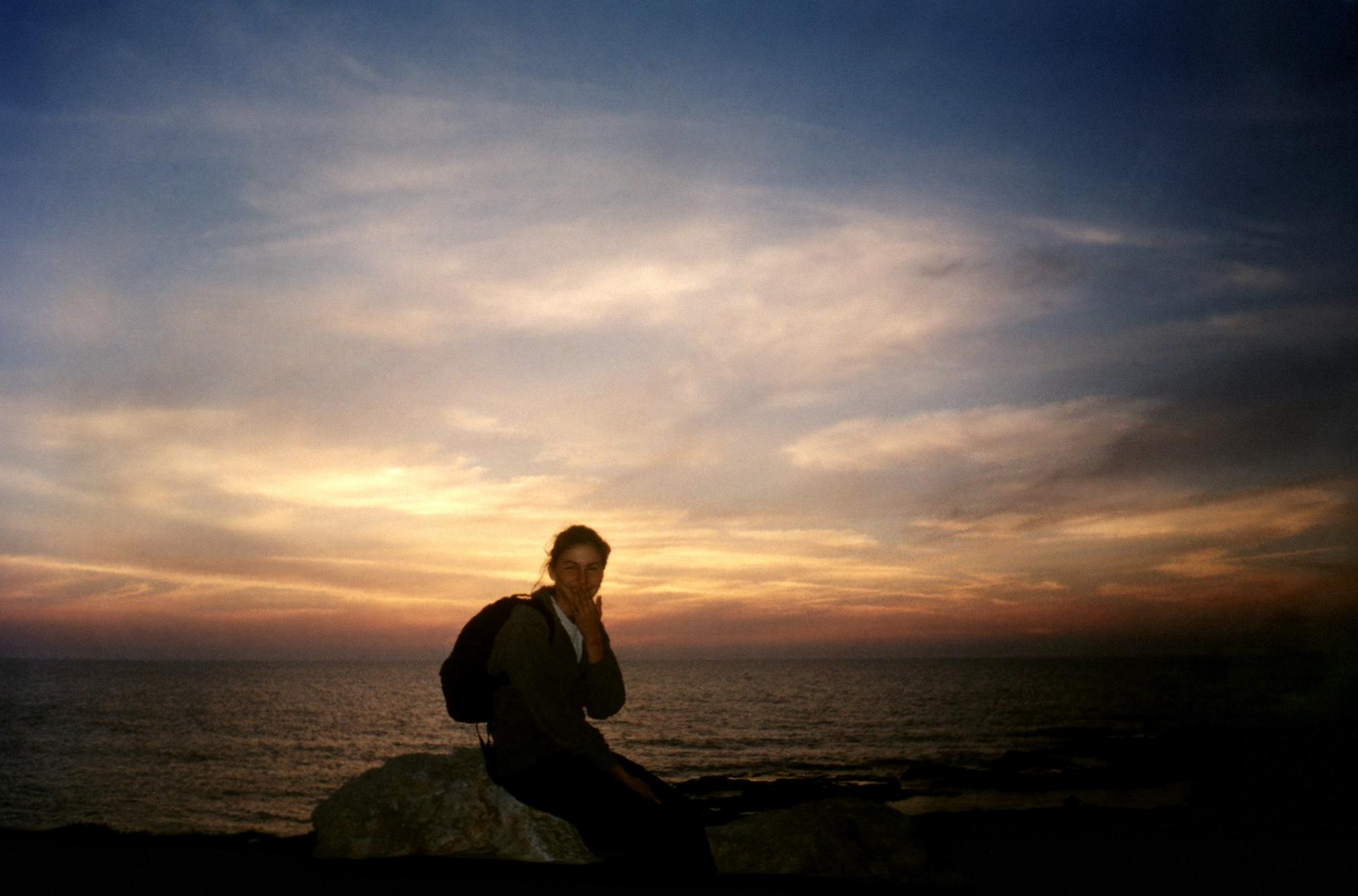
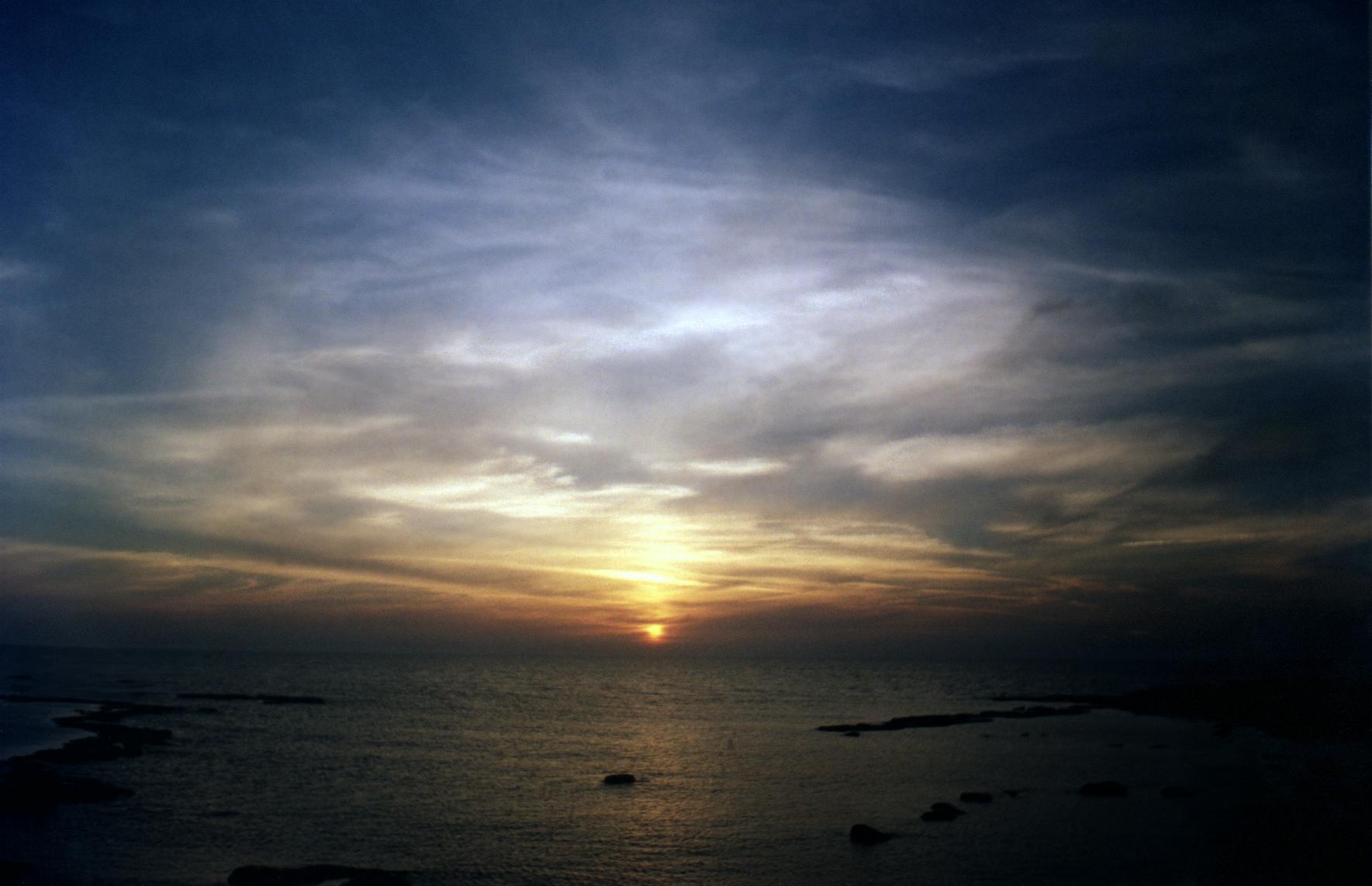
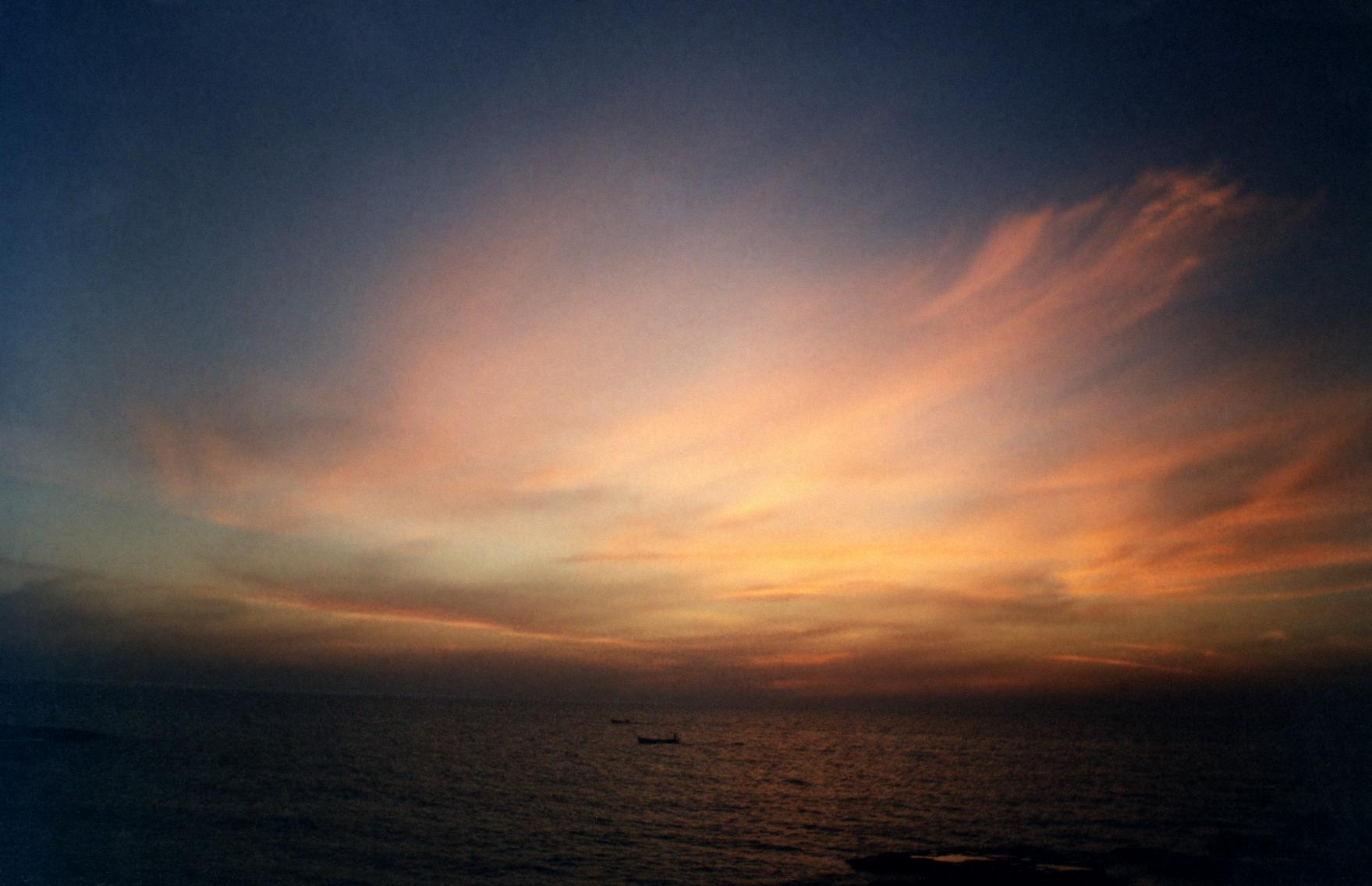
The fishermen were coming back from fishing. The sun has been setting here like that for thousands of years. Somewhere close by, long, long ago, a Phoenician once sat. The path of light from the setting sun beckoned into the distance just as it does now. Nobody knew what lay beyond the sea, and they longed to find out. So they built simple little boats at first, and then ships, and sailed away. How few of them came back, how many wives walked out onto this headland hoping to see the outline of a familiar sail. Yet they were the people who made this world, the reason we can take pride in calling ourselves human.
The sun went down and it grew cold. Time to go back to Beirut. We rang the owner of last night’s hotel from the shared taxi and reserved a room.
We got out at Cola station and decided to walk to the hotel. A warm spring evening. The birds were singing in our hearts. We didn’t just make it to the hotel. We had a proper walk around the city at night. The nightlife was in full swing. People sat in cafés, danced and listened to music. Women were quite happy to walk alone down dark backstreets. The city was going about its ordinary peaceful life. Most of the shops were open. We bought some food in one of them. The thoughtful shopkeeper warned us that the milk we’d picked would go out of date at midnight and suggested we choose another one.
We had to spend the night in less comfortable circumstances. There were people in all the rooms already, so we had to share. Masha and Lena went in with two young German women, and we went in with some French lads.
In the morning we delighted the owner with his beloved Spanish (“Buenos días, me gustaría el café”), managed to get some coffee out of him and set off for Byblos, or Jbail in Arabic (جبيل). The shared taxi takes less than an hour to cover the 36 kilometres from Beirut’s main station. It costs 3,000 lira.
The coast is built up all the way. Unlike southern Lebanon, there are luxurious hotels beside the shore. Tourism is well developed in Lebanon and brings in a good deal of money. Only the people who come here are from neighbouring Arab countries, with their numerous wives, rather than from Europe or America. Even the hotels are designed differently for them. One family needs an enormous suite to fit everyone in. In summer, when the desert at home gets really hot, they come to the sea to cool off at forty degrees. The freedom of life here lets them have a proper holiday.
Byblos is the oldest city on earth. People have lived here for 9,000 years. A fragment of a 4,900-year-old wall has survived. It’s a small wall made of round unhewn stones, of course, but its age inspires respect. Beside it is a Crusader castle that looks just like new. The whole archaeological area is fenced in. A ticket costs 5,000 lira.
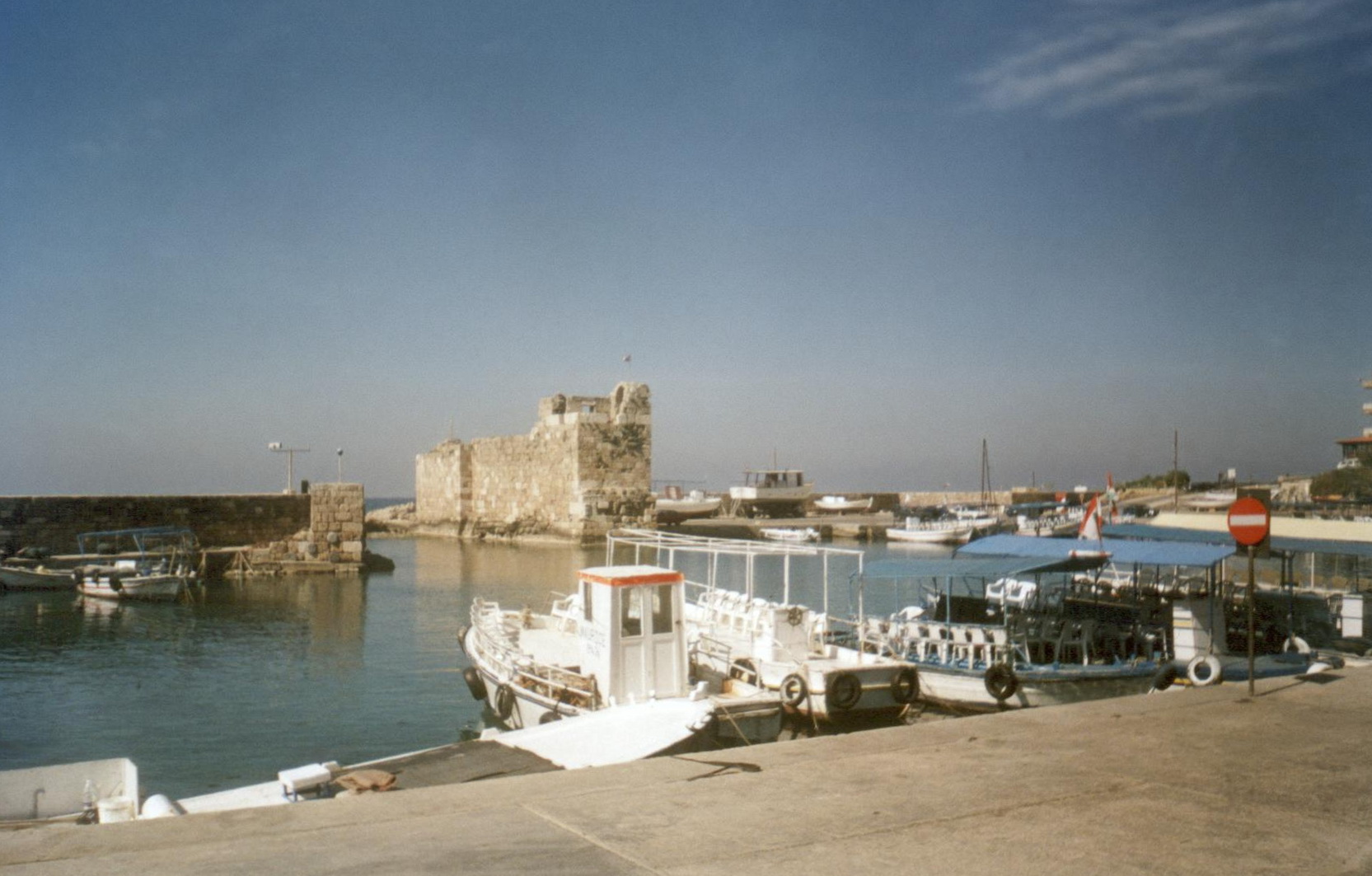
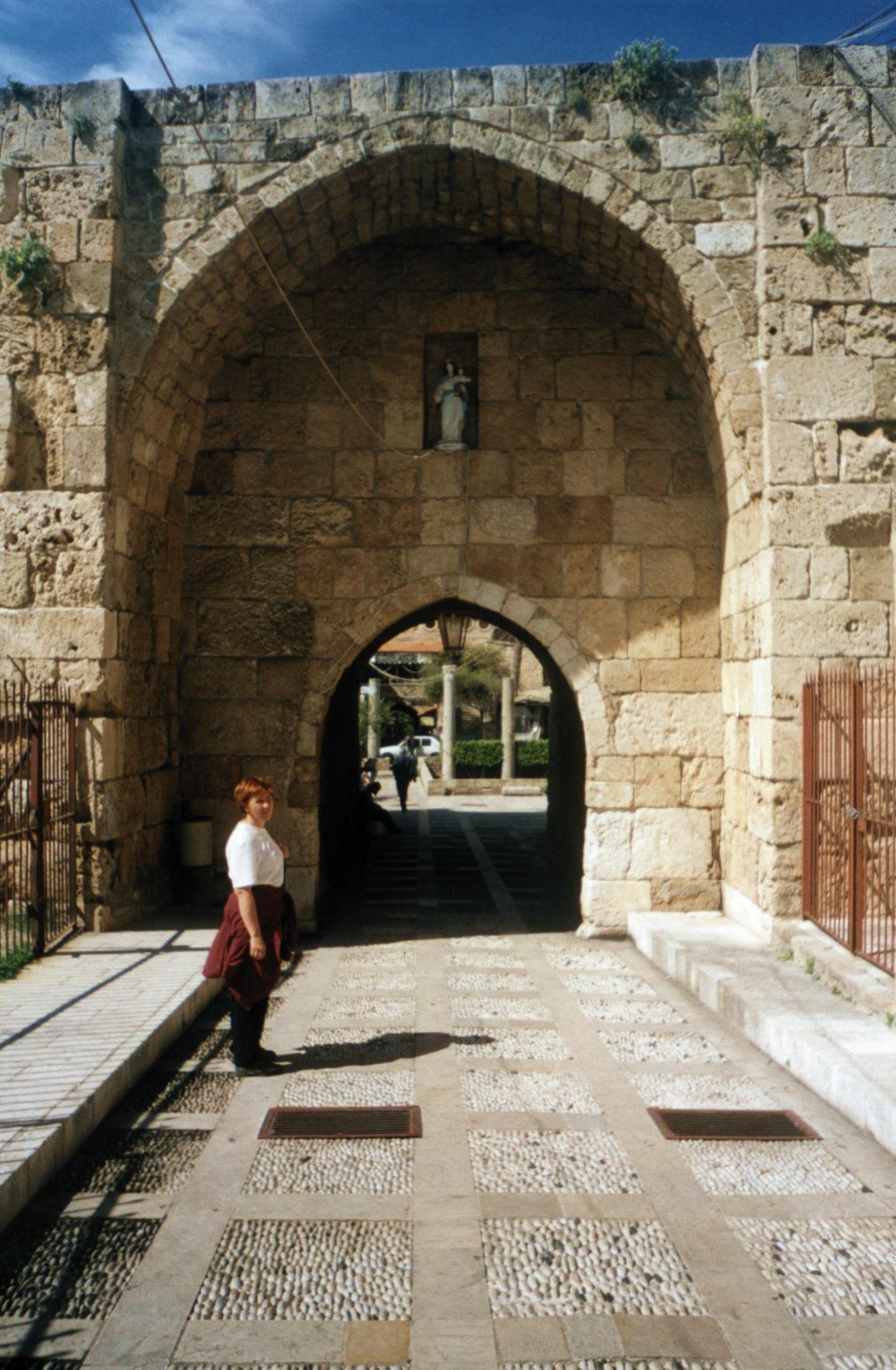
There were plenty of souvenir stalls outside the entrance, where we made a few purchases. The journey was drawing to an end. Time to stock up.
I’d run out of engine oil for the car. I didn’t want to mix different grades, and I hadn’t seen the BP Visco 5000 I needed since Germany. Synthetic oil simply doesn’t exist in Africa. People put in cheap mineral oil. In Byblos I finally spotted the right can on a back shelf and bought it. I’d have to lug it around in my backpack, of course, but at least the problem was solved.
Lebanon has every grade of petrol, marked with numbers like in Russia. The green 95 is unleaded, usually marked “sans plomb”. It costs $0.30 to $0.50 a litre, but the price at the pumps is for a twenty-litre can rather than a litre. It’s very strange. We have to take their word for it, though I still wonder if we misunderstood the man who explained it. He said there were no filling stations in the war, so they drew petrol from barrels and measured out a can at a time. The war ended long ago, but a can is still the unit for measuring fuel.
Lebanon is the country of the Lebanese cedar, and we couldn’t possibly leave without seeing one of these wonders. After all the wars and building, nearly all the cedars were cut down. Two small groves with a few hundred trees are all that’s left. The largest is in the mountains near Tripoli, or Trablous in Arabic (طرابلس). First we took a shared taxi there from Byblos. The man next to us had trained as a pilot in Kyiv. His Russian was good and we talked the whole way. Mostly he complained that there was no work and no money. When he heard we were going round the Mediterranean, he was very surprised and said travellers like us were usually welcomed in person by the president. In Tripoli he took us to the departure point for Bsharri, the town nearest the cedar grove. There was no shared taxi. They go a few times a day, but there was certainly no shortage of taxi drivers. Every one of them said there was no such thing as a shared taxi to Bsharri. After ten minutes or so we said goodbye to our Russian-speaking friend and bargained a taxi driver down to 55,000 lira. For that he’d take us to the cedar grove, give us an hour to walk around, stop in Bsharri and bring us back.
The road passes through the beautiful Qadisha Valley (وادي قاديشا), with immense cliffs. It runs right along the edge, with sharp bends. The gentler slopes are planted with vines and apple trees.
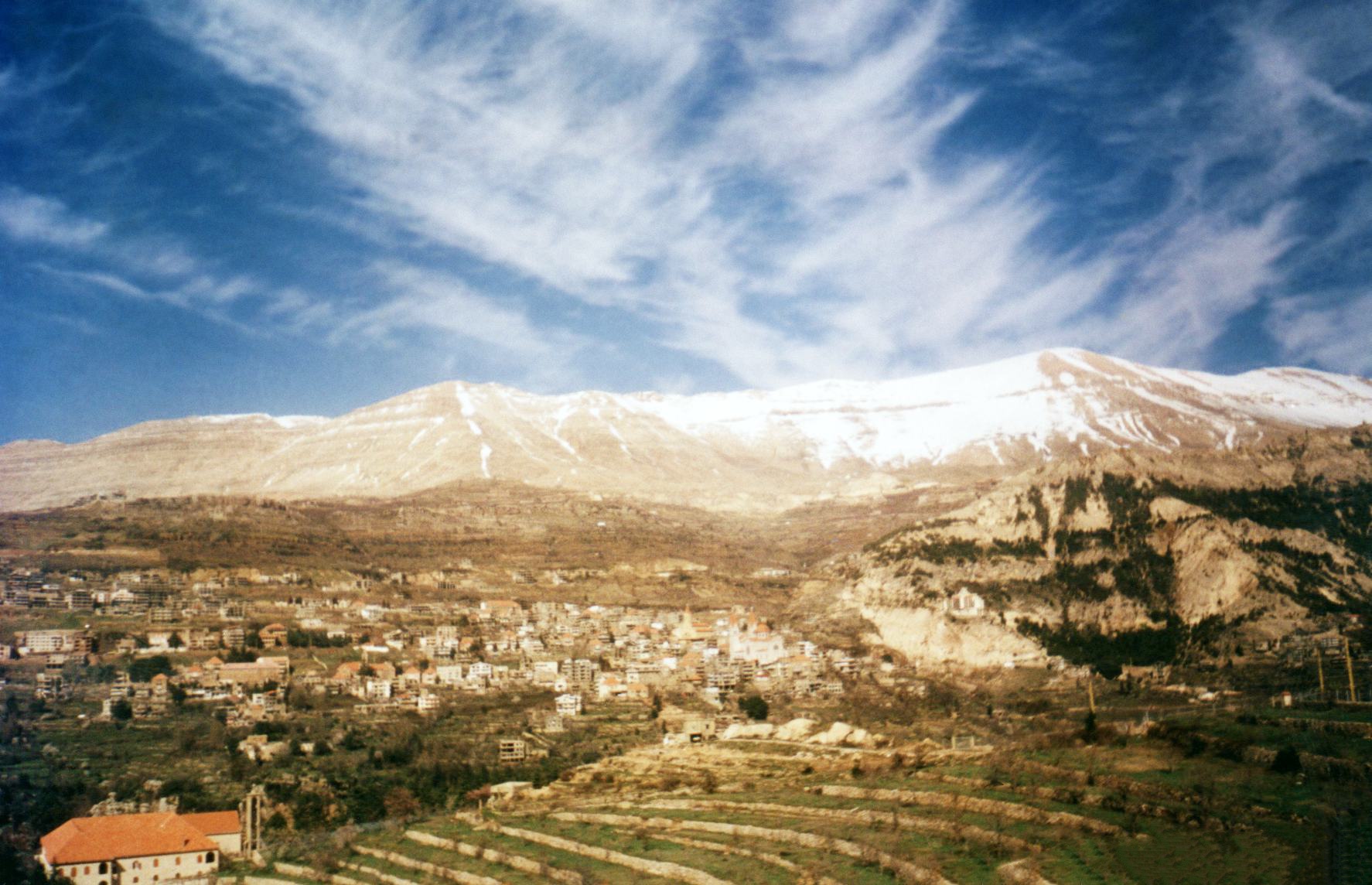
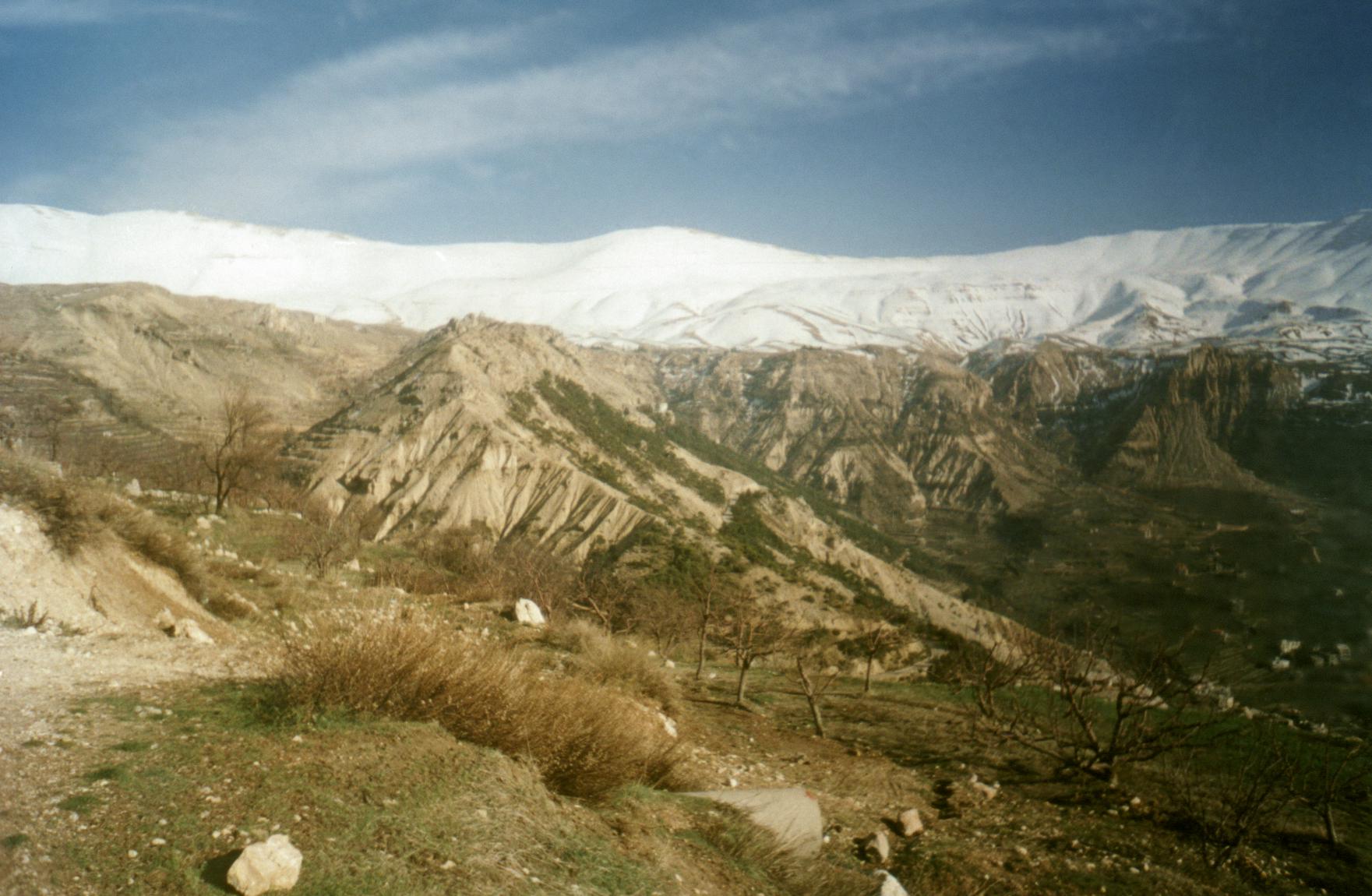
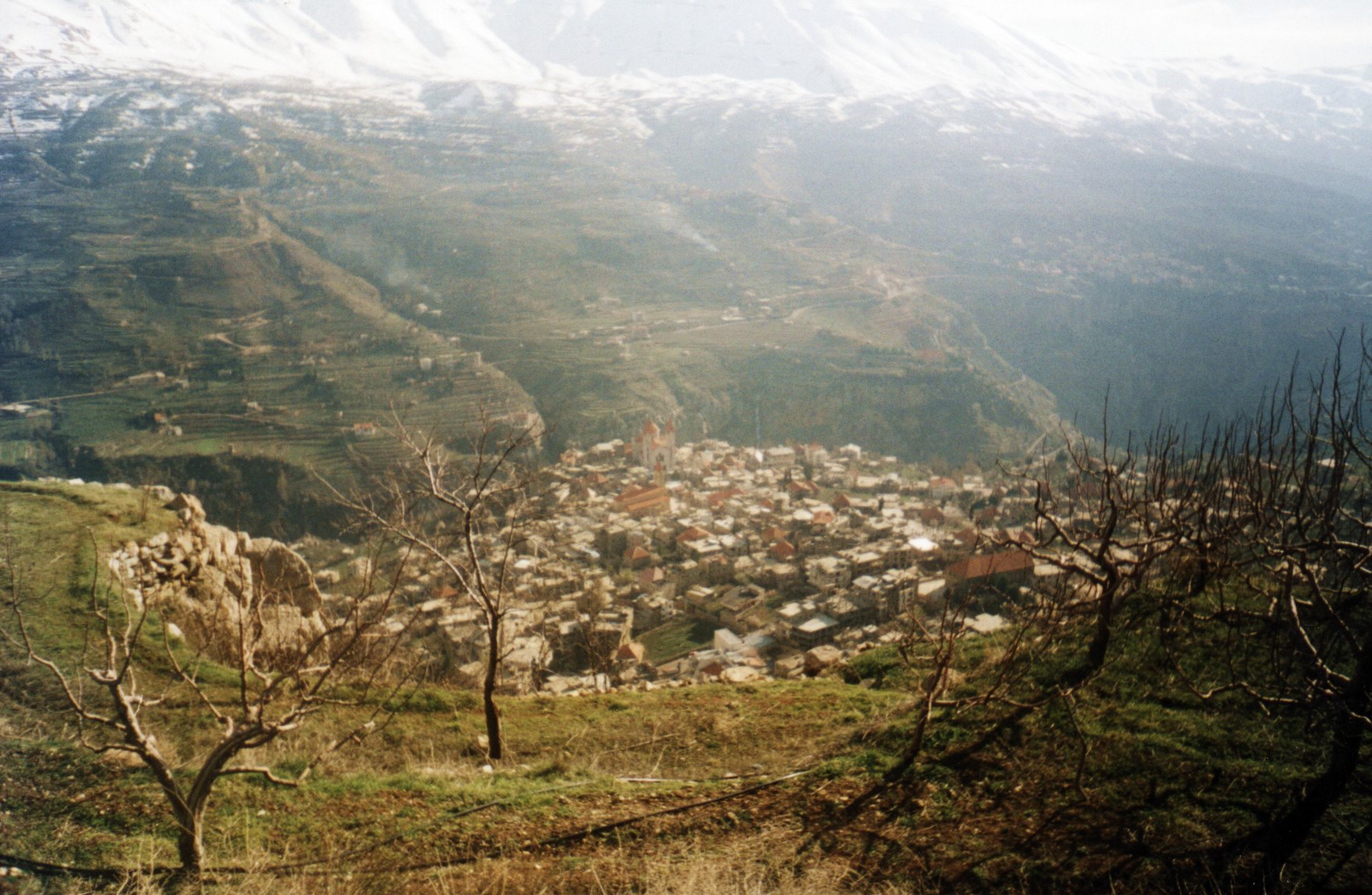
The valley’s people are Christian. The Maronites have lived here since the fifth century. Along the roads are little boxes with glass doors and a Madonna inside. Everything is tidy. It’s astonishing. No border, just a few kilometres and an entirely different world. Some people say, “Give us a border. Keep the enemy’s culture out.” It turns out you can manage without borders. If you have a culture, you don’t have to defend it. The Muslims live their own lives, the Christians theirs, and nobody complains about pernicious influences. If all that can save a culture is a fence, it isn’t worth a penny.
Bsharri (Bcharré, بشري), the biggest town, is at the end of the valley farthest from the sea. You could find a town like this in the Alps. Sharp spires of Catholic churches amid dazzling peaks. Steep streets with smooth tarmac. Every house freshly painted. Holidaying skiers strolling around with nothing to do. Wine shops. How long since we’d seen them! You can buy a bottle of good wine for 5,000 to 10,000 lira. We bought as much as we could carry. A lovely present. The main thing now was to get it all through Syria. I couldn’t remember their customs rules. What if the penalty for smuggling alcohol was terrible?
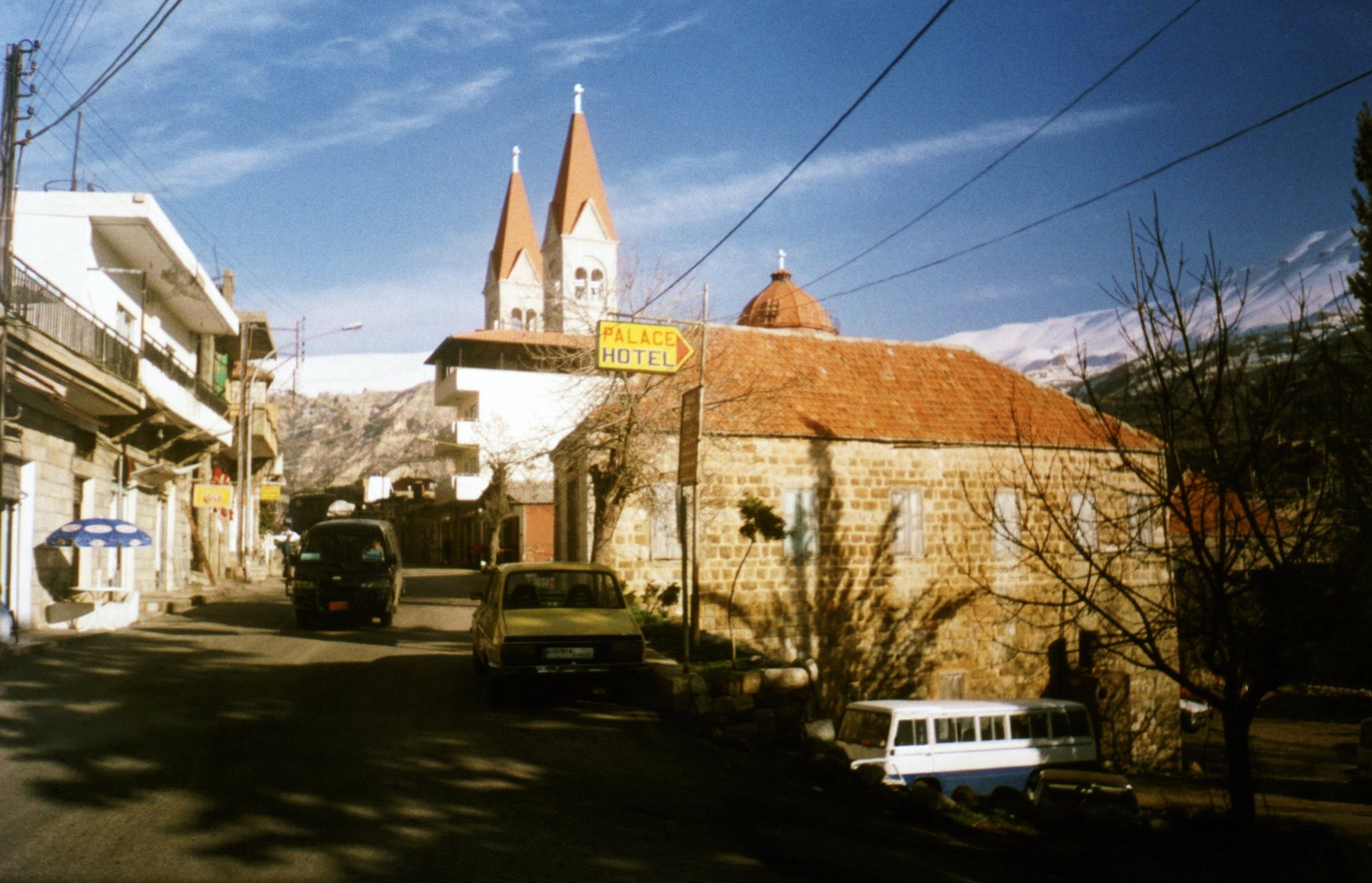
The taxi driver lived in Bsharri himself, which was why he’d agreed to take us for less than anyone else. He stopped at his house and treated us to apples and his special flatbread with vine leaves. Delicious!
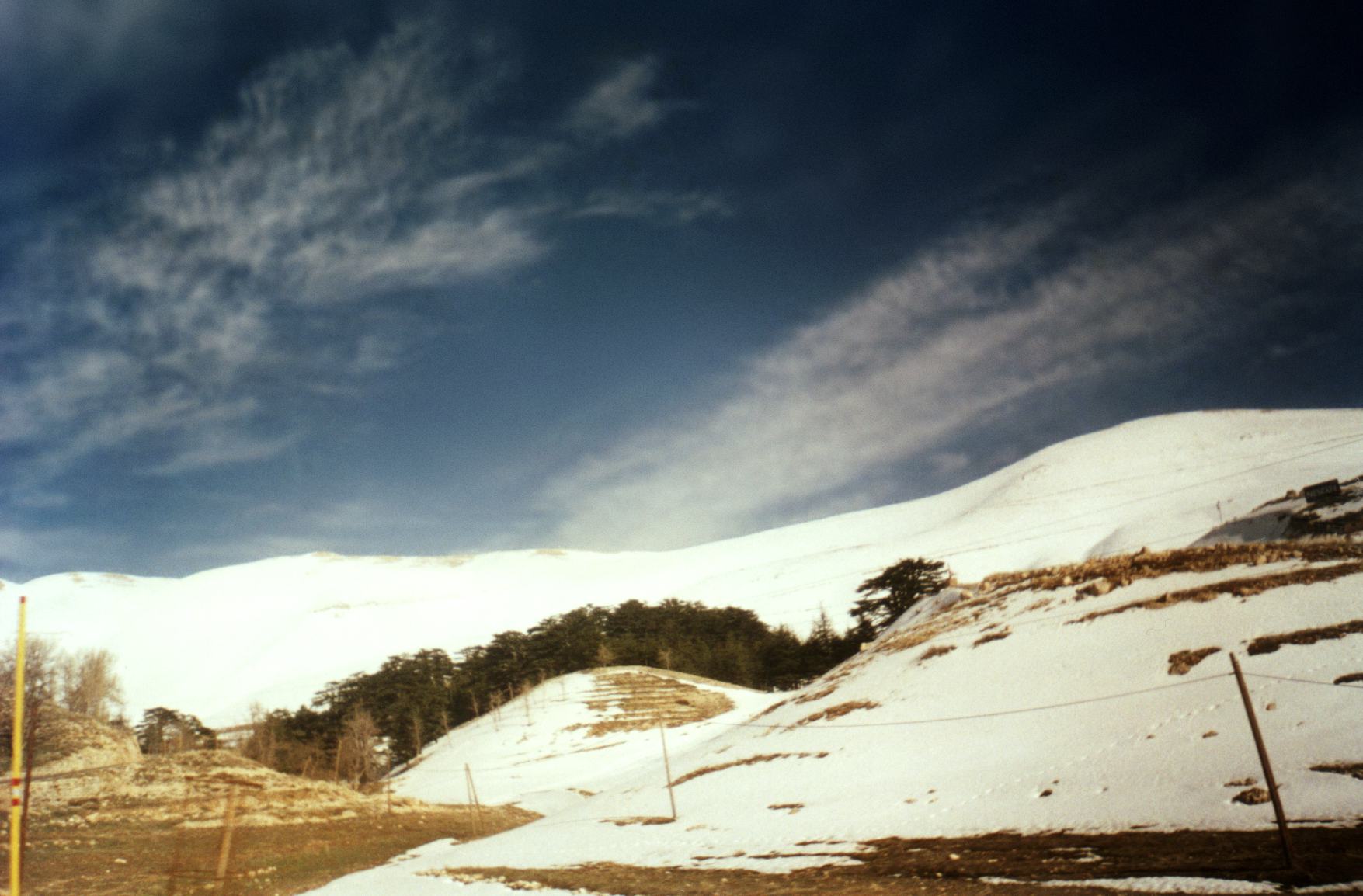
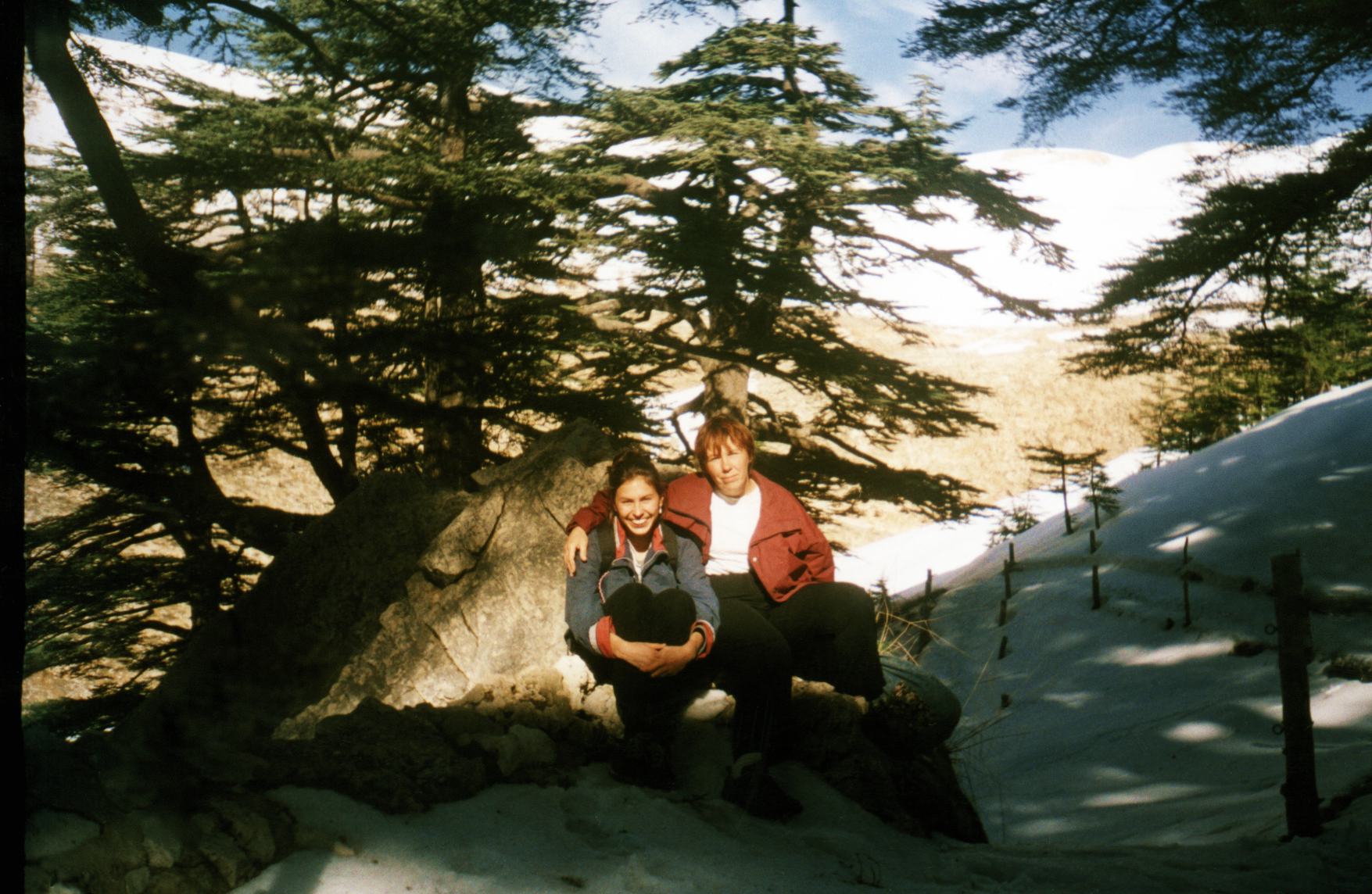
The cedar grove is four kilometres towards the mountains. The place is called simply the Cedars (أرز بشري). Here, more than 2,000 metres up, there’s still snow on the ground in early March. In a little valley with park paths grow these enormous trees. They range in age from 200 to 1,500 years. They once covered the mountains all the way from the Sinai to Turkey, but they were all used for firewood. They’re protected now, of course. Every tree has been studied and counted. The Maronite patriarch has taken the grove under his own protection. The best part is that they sell young trees in pots nearby. You can plant them and they’ll take root. You can already see young shoots on the next hills. Now it’s only a matter of waiting 500 years for the mountains of Lebanon to be covered again in this marvellous plant.
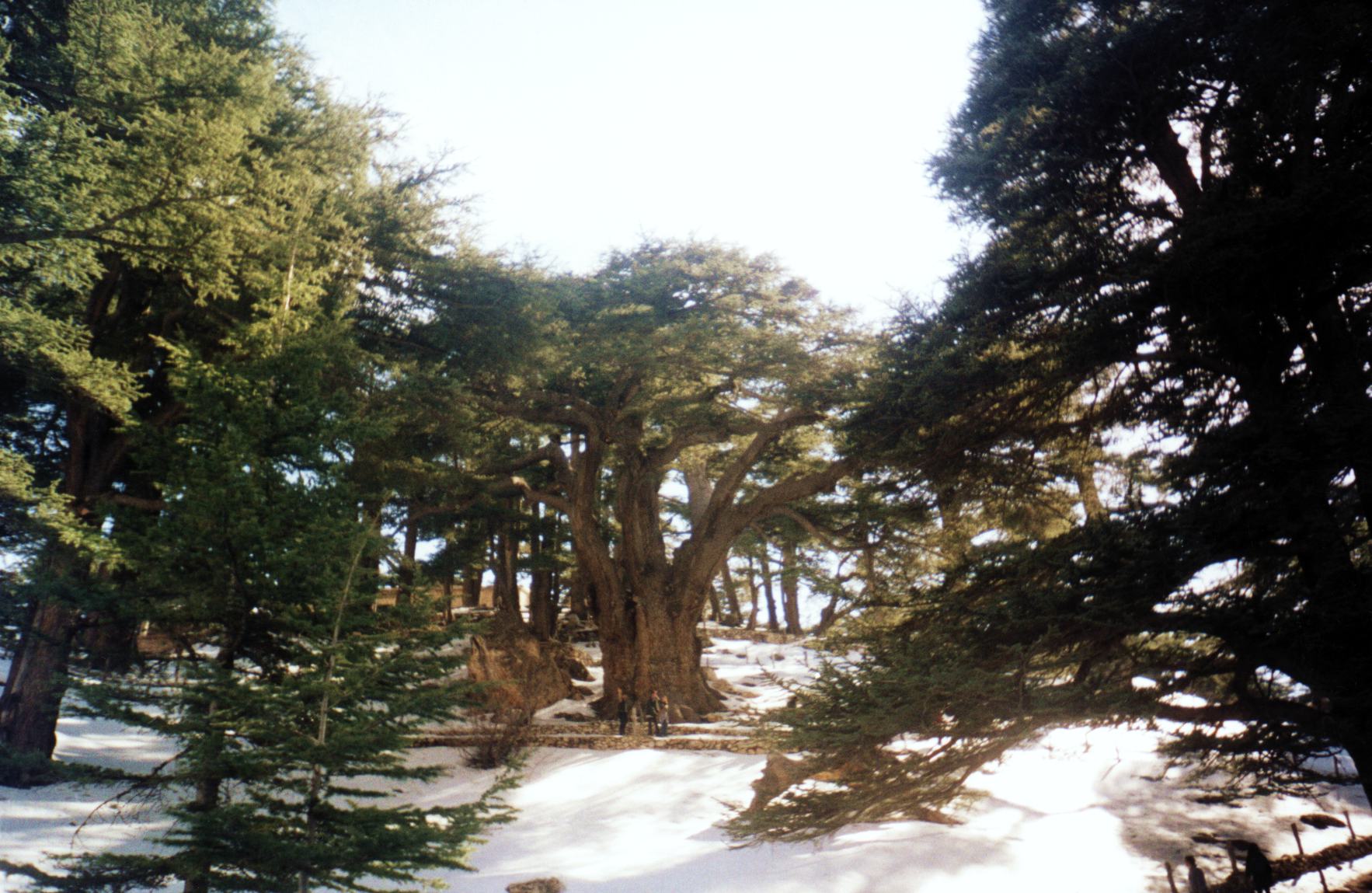
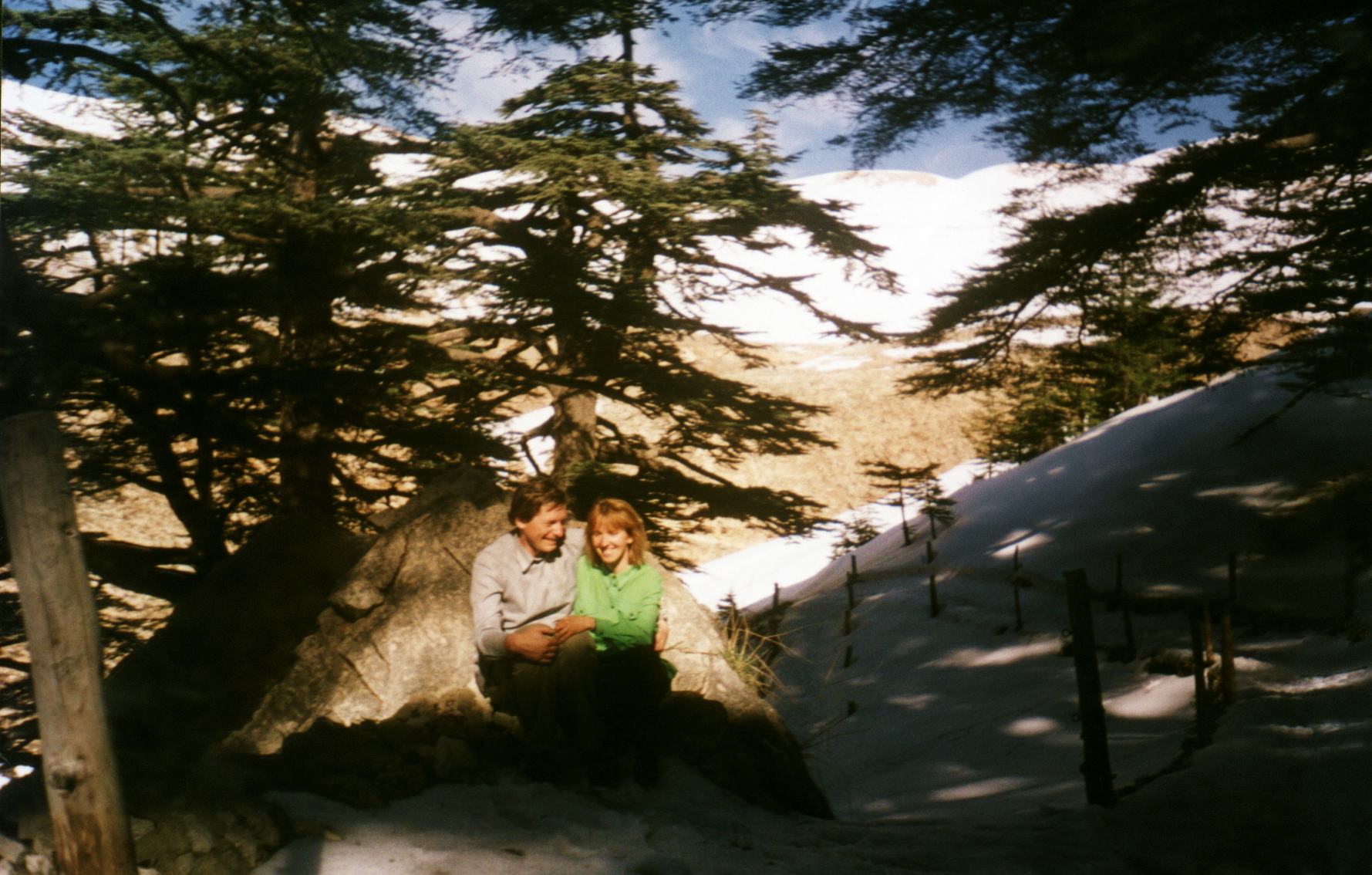
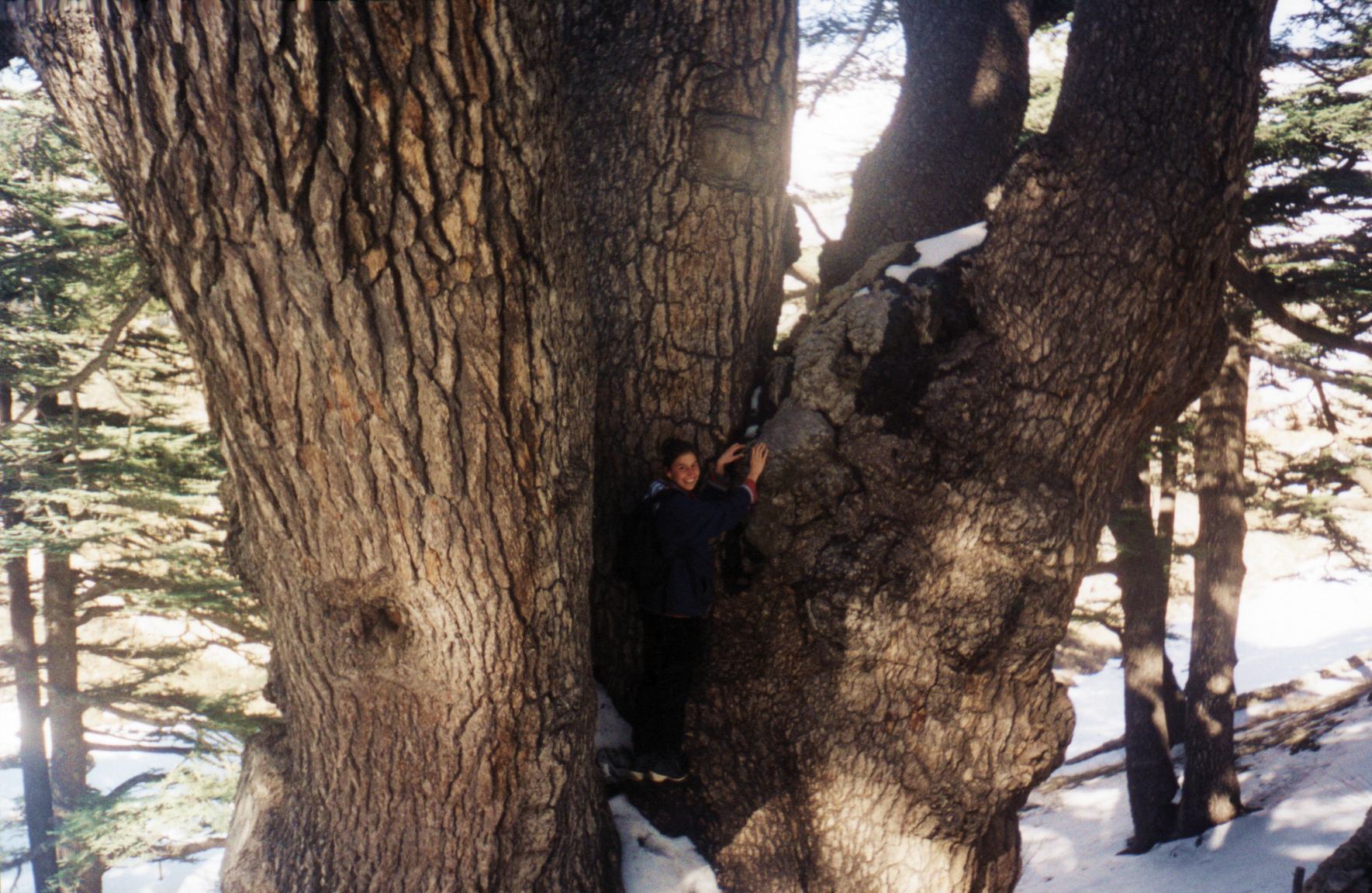
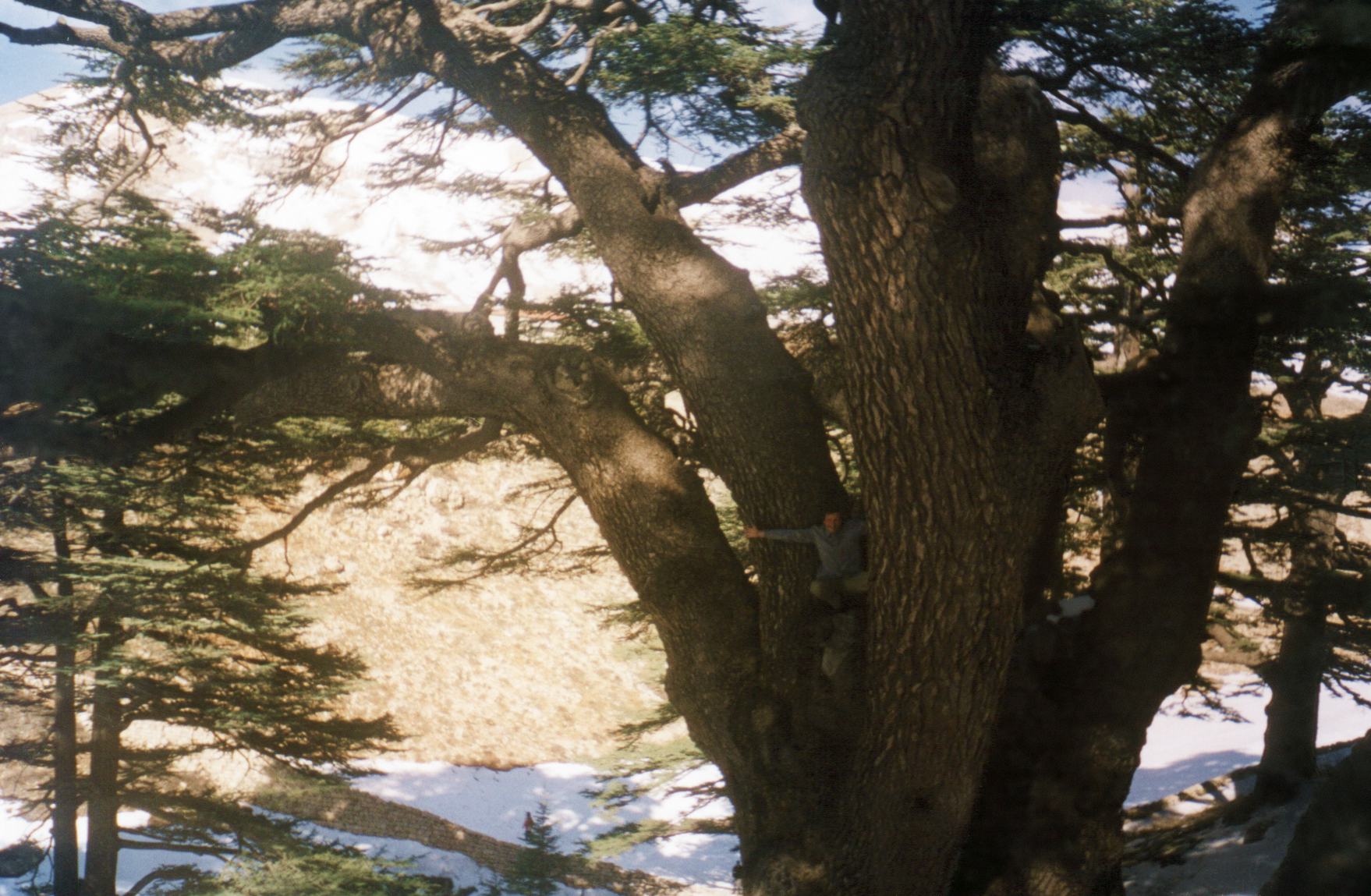
Unlike the Siberian cedar, the Lebanese cedar has short needles, rather like a larch. Its branches grow in tiers. It isn’t quite as elegant as on the Lebanese flag, of course, but the effect is there. The cone is small, much like a Siberian cedar’s but softer and flatter. A whole one is hard to find. Apparently they’d all been collected before we came, for souvenirs or for seed. We only found some stubs. Small twigs broken off by the wind were all over the ground, though. We found one piece to take home as a souvenir, and it made it all the way back.
At the base some of the trees take ten arm spans or more to go round. You can climb a little way into them. Rough, warm bark. It makes you want to stroke it with your hand, like a cat.
Plaques in the middle of the grove record visits by important people of all sorts, princes, ambassadors and presidents.
It’s the off-season here. The paths are buried in snow and you sink up to your knees. The park is technically closed, but we climbed the fence. That’s how it’s done here. As well as us, there was a merry party of French visitors wandering around. What else could you want? Spring, freedom, a clear blue sky. The taxi driver was thoroughly tired of waiting by the time we happily clambered back over the fence. Days like this make life worth living.
From the grove they drove us another few kilometres uphill. There’s a ski resort here. Eight lifts, from 1,850 to 3,087 metres. A day pass costs $23.
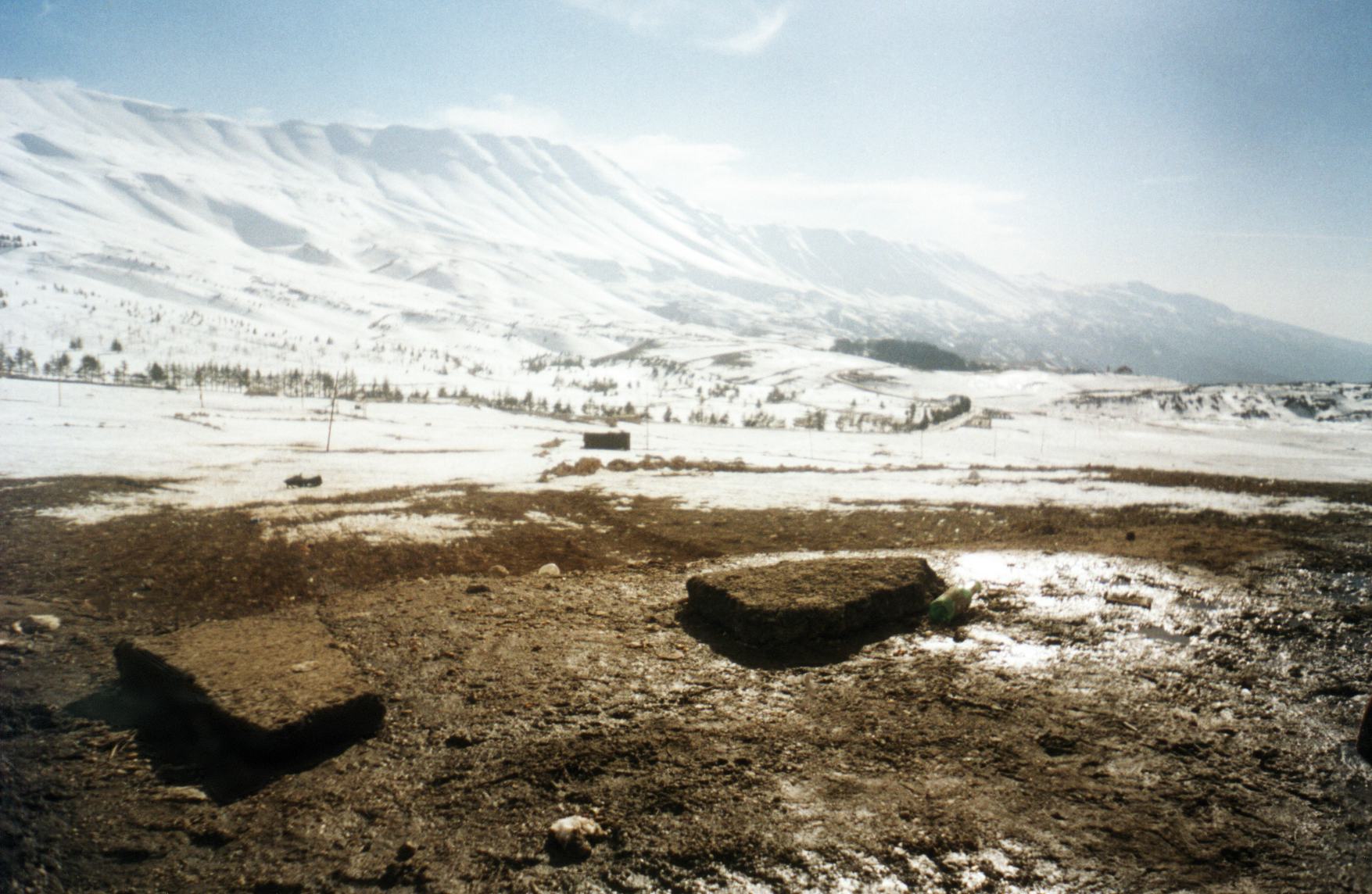
In summer there’s no snow here and you can walk up to the nearest summits. In winter, though, the pass is buried three metres deep. Our plan to get through to Baalbek failed. It won’t open before May.
Now we’ll have to go round the long way to the border. First we go back to Tripoli. We have a few hours to walk around. This is an entirely Arab city. One great market in the centre. A Crusader castle towers over the city. Restored and picture-perfect in the evening sun. Admission 6,000 lira. We decided not to go inside. Instead we bought a coconut from a street stall and sat beside the castle wall to watch the sun go down in the sea once more. The instant the red ball touched the horizon, dozens of muezzins struck up. Dozens of fireworks shot into the sky from all over town. The city sank into a cacophony. The Arabs are a merry lot. They know how to live, and can’t be bothered about the dirt and the mess around them. After a month I’ve got so used to it that I’ll think back to it for a long time through those long northern nights, and wake up waiting for the hour the muezzin begins to sing.
After dark we wandered a little more through the narrow streets. We bought handmade soap as souvenirs, ate and took a shared taxi to Beirut. There were only a few hours left on our visas. It was time to go back. At the Beirut station we found a bus to Damascus straight away. It was Lebanese this time and cost twice as much, 8,000 lira. The fare is the same whether you’re going to the border or all the way to Damascus. You have to show a passport with a Syrian visa when you buy a ticket. We could have waited for a Syrian bus, of course, but who knew when there’d be one? Everyone assured us there wouldn’t be another today and this was the last bus. As if we believed them. But we had to go all the same. We climbed aboard and soon the familiar streets of Beirut were flashing past the window. You want to say, “I’ll come back.” You know in your head you’re probably seeing this marvellous city for the last time. There are another hundred countries in the world and life is short. All true, of course, but I still want to come back.
We went through Lebanese customs astonishingly quickly. The border guard merely looked for the right page in the passport. Ahead of us in the line for citizens of other countries was an Iraqi. You flinch at the sight of a passport like that. Presumably Westerners feel something similar when they see ours. He looked prosperous and educated. Expensive glasses. Why be surprised? People are the same everywhere.