Italy
Chapter 2. Italy. Come back to Sorrento, my love.
(Torna a Sorrento.)
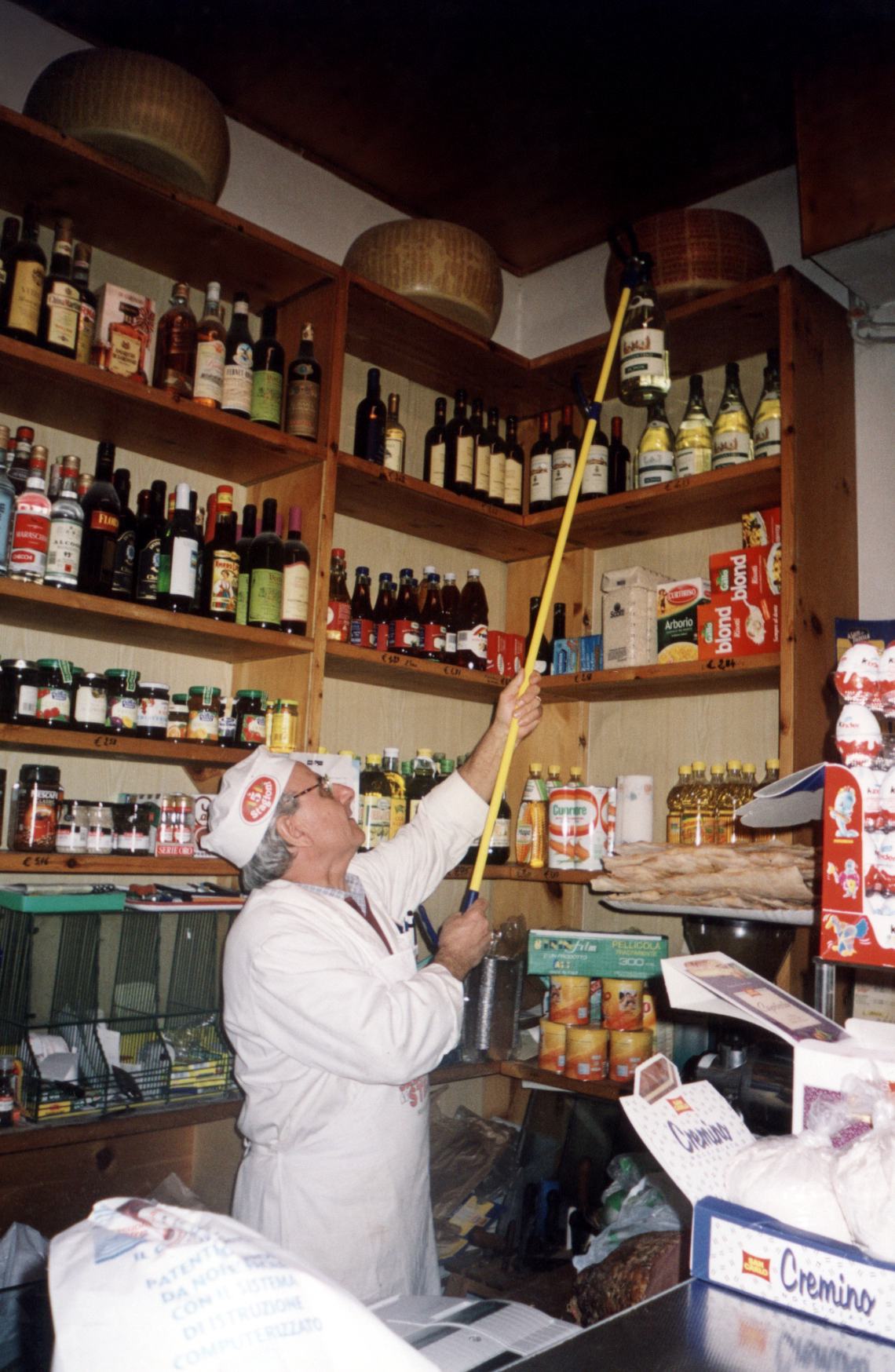
You can cross a border in Europe these days without even noticing, but life on the Italian side of the Alps is quite different. We stop at a small filling station for lunch. Prices are lower, life is a little poorer, but above all there are the people. They’re all genuine Italians here. And they speak Italian. Perhaps some of them know French as well. The main thing is they’re a merry lot. Smiling faces. You can tell they live without worrying unduly. Wine to swim in. At the filling stations they sell it where we’d have juice and other fizzy rubbish. There are some police officers sitting there, laughing, chewing their sandwiches and washing them down with a glass or two. Drivers next to them, drinking as well. Come on, is a bottle of wine really alcohol? It’s just to make it cheerful behind the wheel.
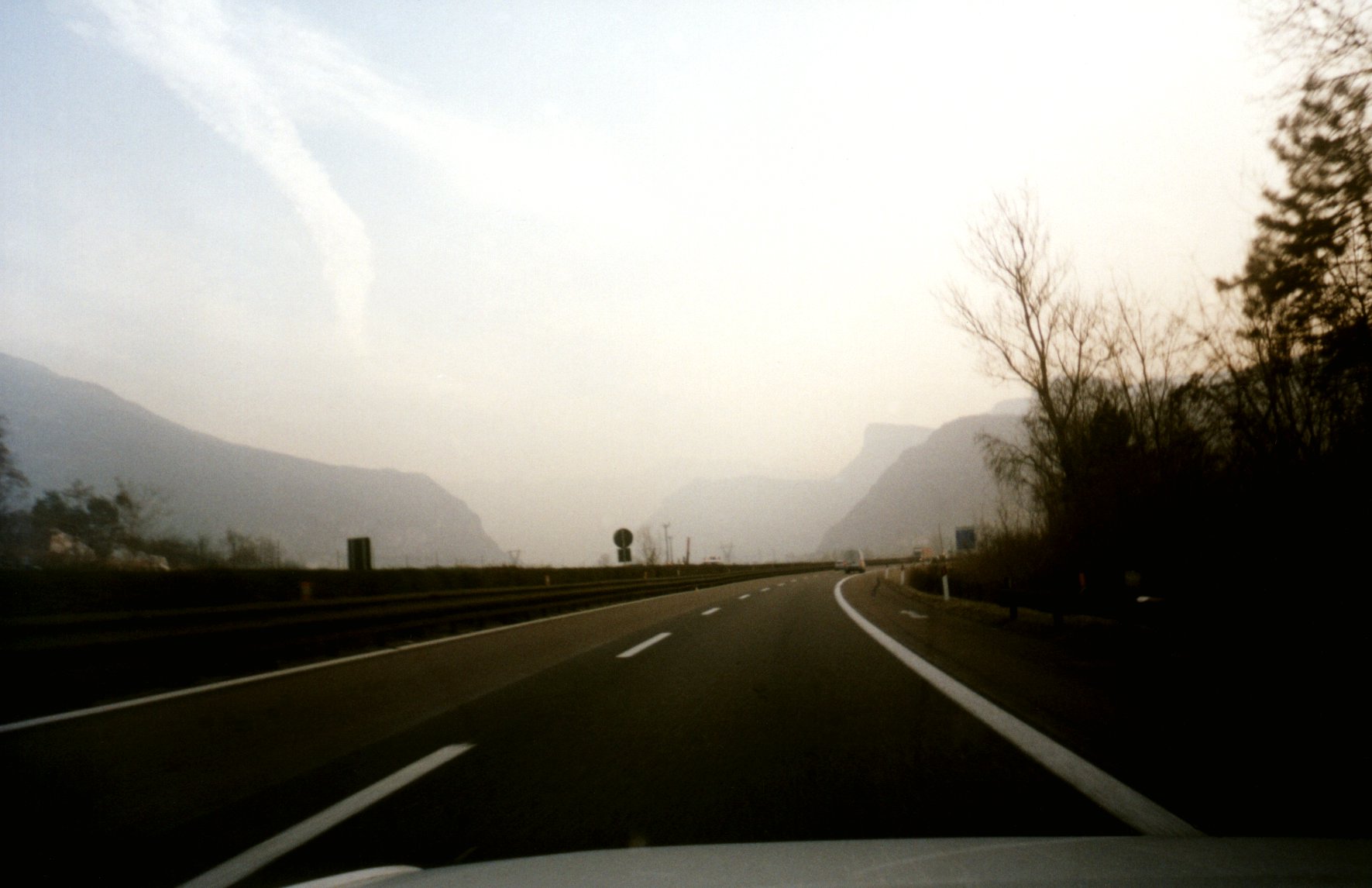
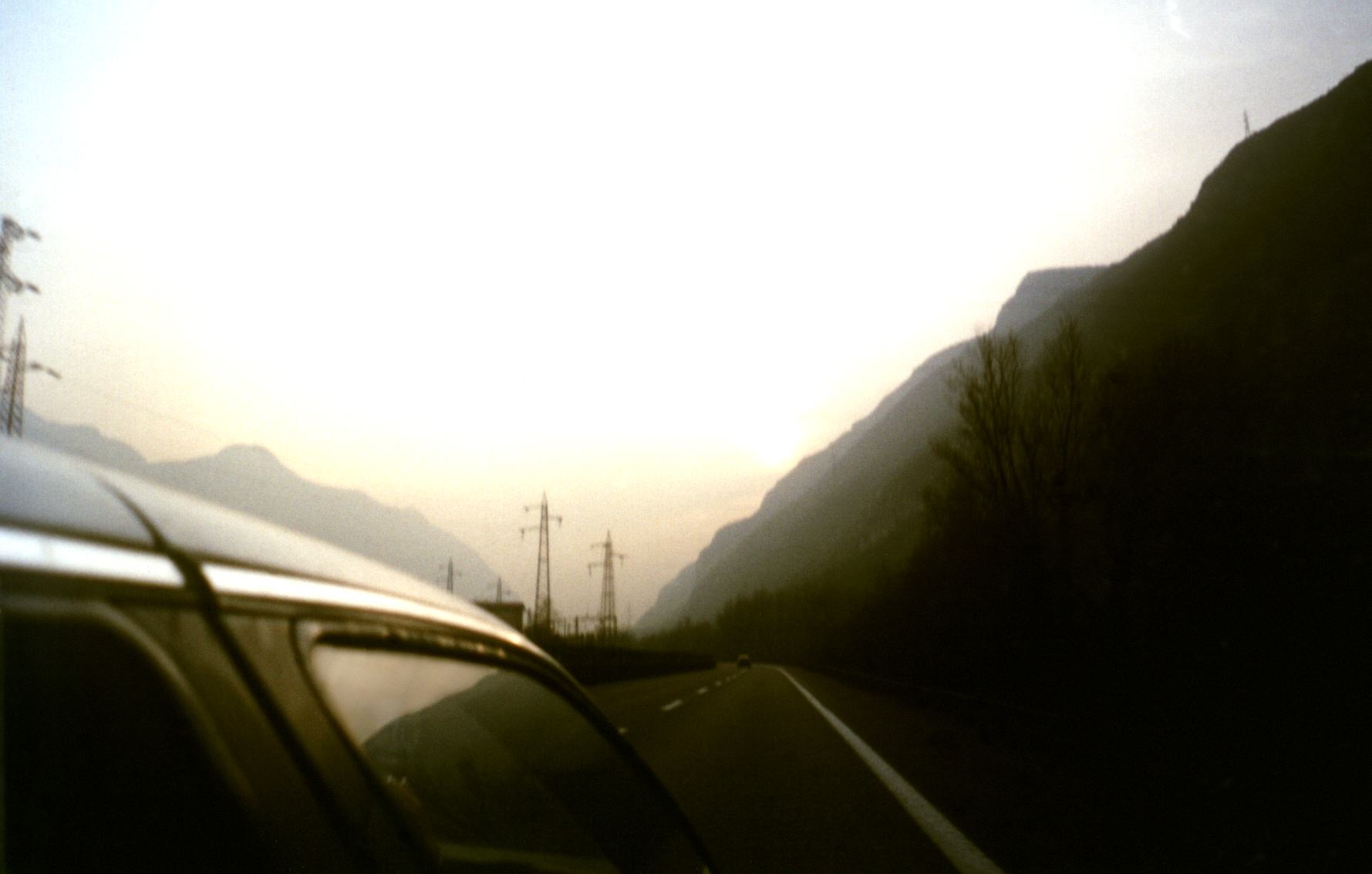
And they do drive cheerfully. Great big lorries come onto the motorway with apparently no intention of taking cargo from A to B. Pedal to the floor and off they go to overtake their fellow lorries, hooting and flashing their lights. It keeps feeling like they’re going to flatten little you into a pancake. It’s a mountain road, with tunnels, viaducts and bridges, but it’s all the same to them. To be honest, I’d be afraid to go into a bend in the Ford at the speed they hurtle into it in a lorry.
Unlike Germany, they do have speed limits here, and enormous fines, but it’s just for appearances. You’re supposed to drive as fast as your engine will let you. They rarely hit anything. We didn’t see an accident in a week.
It’s mountainous country, but the roads are excellent. The tunnels follow one another and sometimes viaducts lift the road a hundred metres. They’ve laid roads like this even to little towns. Where do they get the money? In Saint Petersburg they can’t build a ring road, though they approve budgets in the billions of dollars. Here the whole country is arranged around motorways. There’s only one explanation. In Russia at least ninety per cent gets stolen.
Italy is the home of the motorway. Even autostrada is an Italian word. They started building them under Mussolini, but if you look closely at the dates on the tunnels you can see almost the whole present network was built in the seventies and eighties.
Most motorways are toll roads. When you get on, you take a ticket with a magnetic strip, and with that you pay when you leave. You can pay cash but you’ll probably wait in a long queue. The more modern way is to pay by credit card. There’s no queue, but you have to talk to this metal wonder in Italian. After a few dozen goes I still couldn’t remember the right order. Roughly speaking, you put the card in every way you can think of until the machine says “Arrivederci” in a creaky woman’s voice. It isn’t expensive, about three or four euros per hundred kilometres.
As pleasant as it is to drive along the motorways, the little coastal towns are hard work. The road is narrow, people fling themselves under the wheels and the motorcyclists are positively suicidal. A fellow comes tearing down the road, talking on the phone, looking around and waving to girls he knows. How they’ve managed to avoid running everyone down is a wonder. The only explanation is that Italians are born drivers. With their temperament and their fast reactions, racing round those urban mazes is a joy.
Road signs here aren’t commandments. They’re a silent reproach to reality. Lonely Planet explicitly says that if you drive through a green light you should be doubly careful, because the person going through the red one may not know you’re a foreigner.
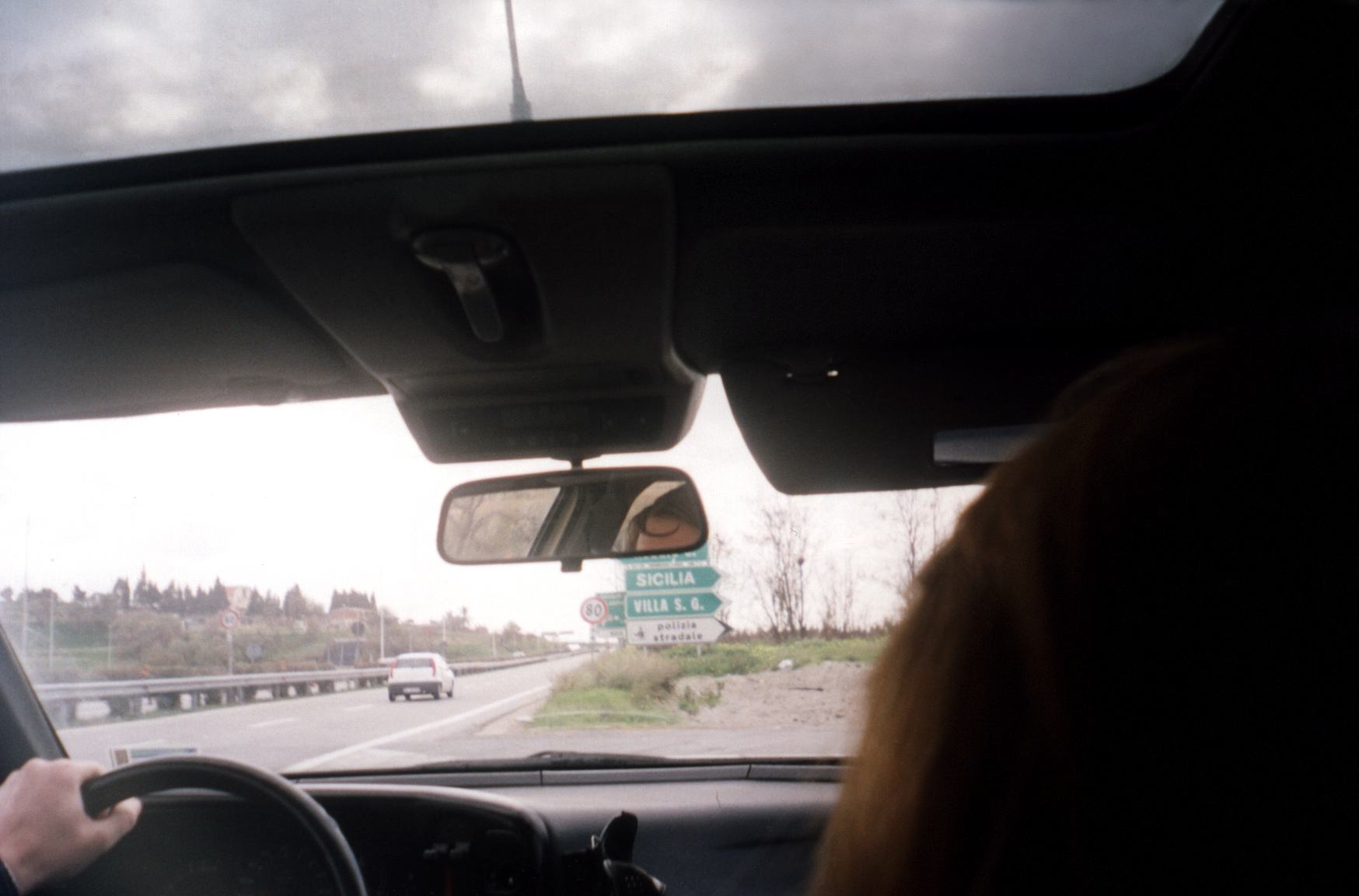
What do the police make of this? I’m afraid they’re simply tortured by horror. No wonder they’ve even put up “Polizia Stradale” signs on the roads. Apparently they’re to remind drivers that their grey-clad fellow creatures exist and deserve a little mercy. But drivers are merciless. Here’s a guardian of order in the middle of a crossroads, whistling as hard as he can and waving his stick about. He’s trying to bring some order to the traffic, but he’s more likely to burst, or blow himself inside out through his whistle, before people start listening to him and showing him respect. “Stop! No, don’t turn left. That’s one way!” But the man goes on, waving his hands back just as desperately. And if it isn’t a man but a girl with black curls flying, there’s no doing anything about it at all. No point even trying to whistle at her. All right, let them through. The policeman lowers his stick to catch his breath. Meanwhile someone who must be a friend pulls up behind him, opens the door quietly and gives him a kick. The cop nearly goes under an oncoming tipper lorry. Everyone laughs, waves their hands and shouts something. What fun. I wish we could send the German traffic police here for a training course.
It’s odd that with such different approaches to life, Mussolini and Hitler were allies. One look at the Italians is enough to tell you that you won’t build a new order with them. A new disorder, perhaps.
The people here are tolerant. In other countries, they usually recoil when they learn you’re from Russia, adopt an official expression and carry on doing their duty conscientiously. It’s more humane in Italy somehow. “Oh, from Russia? Well, it could be worse. Have a bottle and don’t worry about it. Maybe you’ll feel better and it’ll all go away on its own.” Seriously, though, you could live in Italy. And if they accepted Italy into the EU and Schengen, they could accept Russia too. They’re a little more cheerful than the Russians, of course, but their respect for the law isn’t so different.
After our first hundred kilometres on Italian soil, we’d caught Italy’s cheerful spirit. Life is a holiday. Not even a change in the weather, with cold and drizzle, could spoil it.
We made our first stop in Verona. You pay to park here, but for some reason parking meters haven’t caught on, just as in Russia. At the nearest kiosk you buy a special ticket for €0.77 an hour, then scratch off the coating to show what time you started.
Verona is the city of Romeo and Juliet. Visitors are shown Juliet’s house and balcony. It stands in a little courtyard, the walls of which are covered in writing by couples in love. They say it brings good luck. To bring you more luck, you’re supposed to stroke the breast of the bronze statue of Juliet. There she stands with two shining, polished breasts.
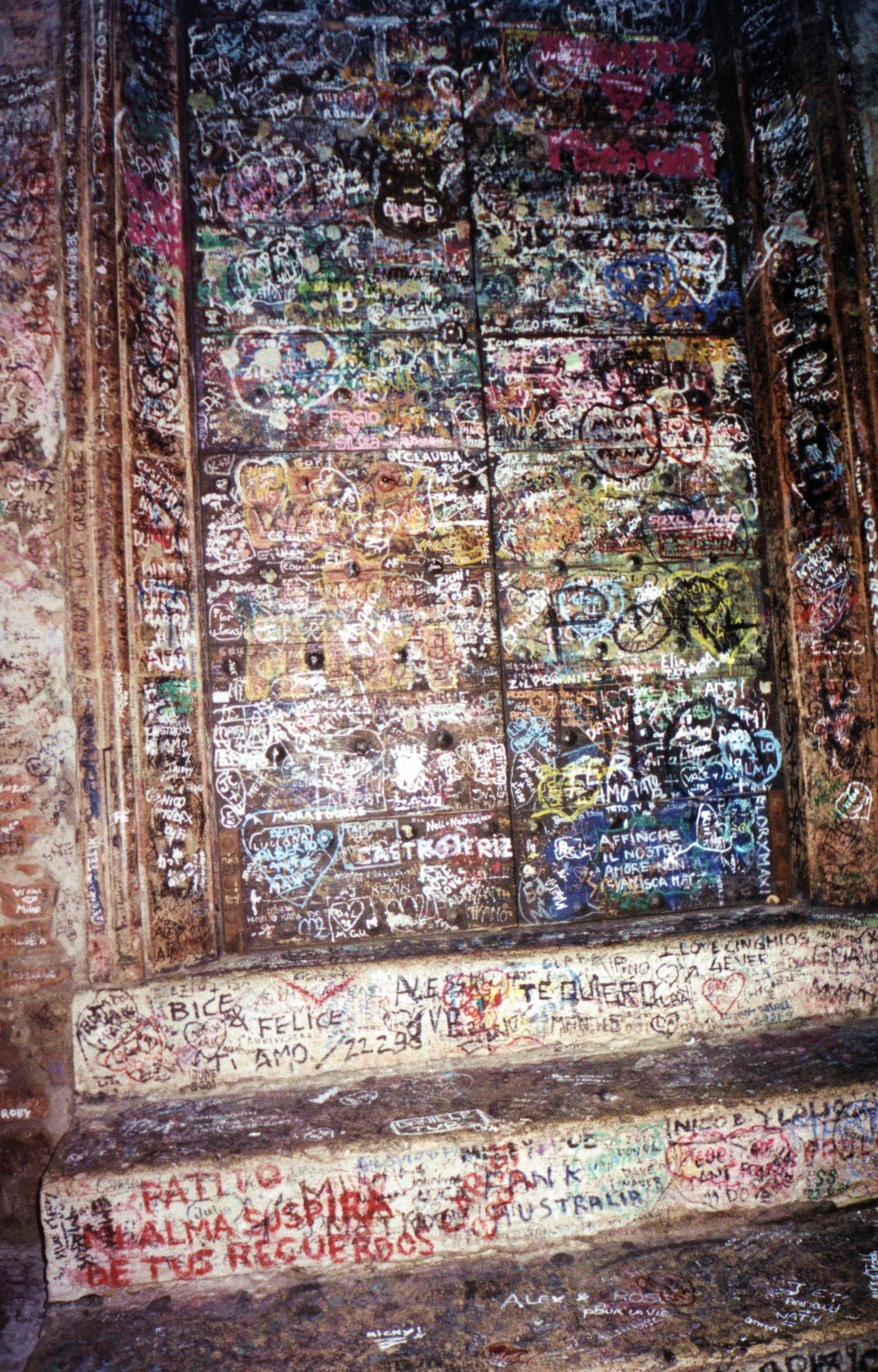
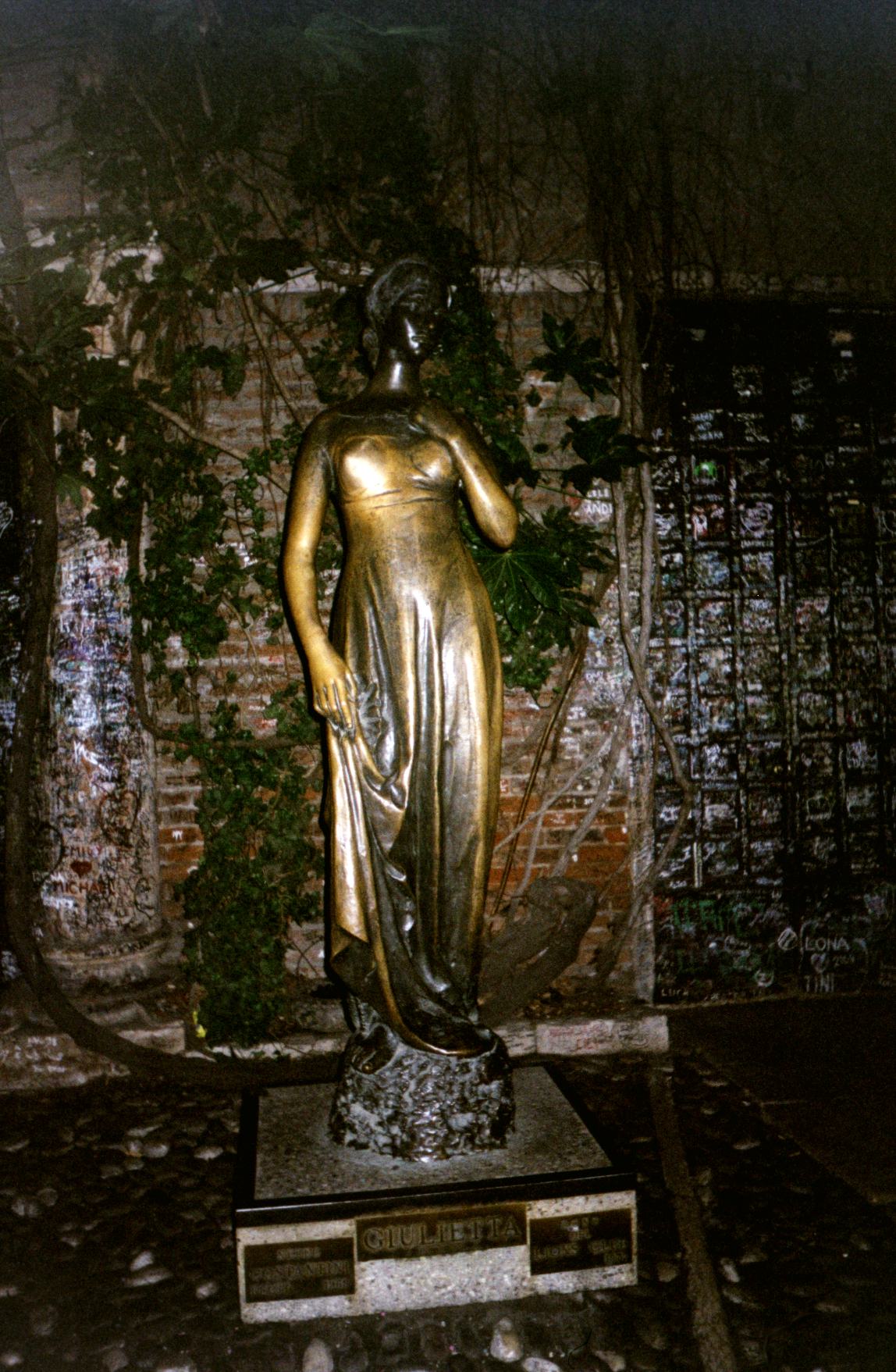
The balcony, I should say, is high. Try as they might, the local youngsters haven’t managed to climb up to it. You can tell from the writing on the walls. It stops a metre below the balcony. People are getting smaller. Where are the mighty heroes of old?
Central Verona consists of old houses and little streets, some paved in marble. People dress neatly and with taste. Jeans and sports jackets haven’t won here yet. It’s a pleasure to walk among these people. Italian pours out from every side. Quite a change from that German barking.
While we walked around Verona it grew completely dark.
We meant to spend the night in Florence (Firenze). To get there we had to drive for ages in the rain on a mountain road at night, locking horns with lorries. It was extraordinarily hard going. At times it felt as if the road would never end. We only reached Florence at about midnight. No time to pick somewhere to stay, especially as Masha had rung every decent campsite from the car and found they were all closed for winter.
The first place we saw was the Hotel Pergola, a little house with fourteen rooms. We asked for the cheapest and for a hundred euros they offered us a separate, cosy little house in the courtyard. There are paintings on the walls. All my memories of staying there are pleasant. No bustle like in a big hotel. They gave us breakfast in the morning. Not much of it, but very homely. Mimosa was already flowering in the courtyard. The houses next door were lived in, so we got a look at ordinary Italian life. Just like in the films, all the balconies are hung with laundry. The neighbours stand on their balconies talking loudly. A couple have come out to see the light of a new day, pressed close together. A man is tinkering with his car, trying to adjust the carburettor.
Given how awkward parking is, we set off to the centre on foot. It’s crowded there and you have to pay to park, whereas at the hotel we have every right to our spot.
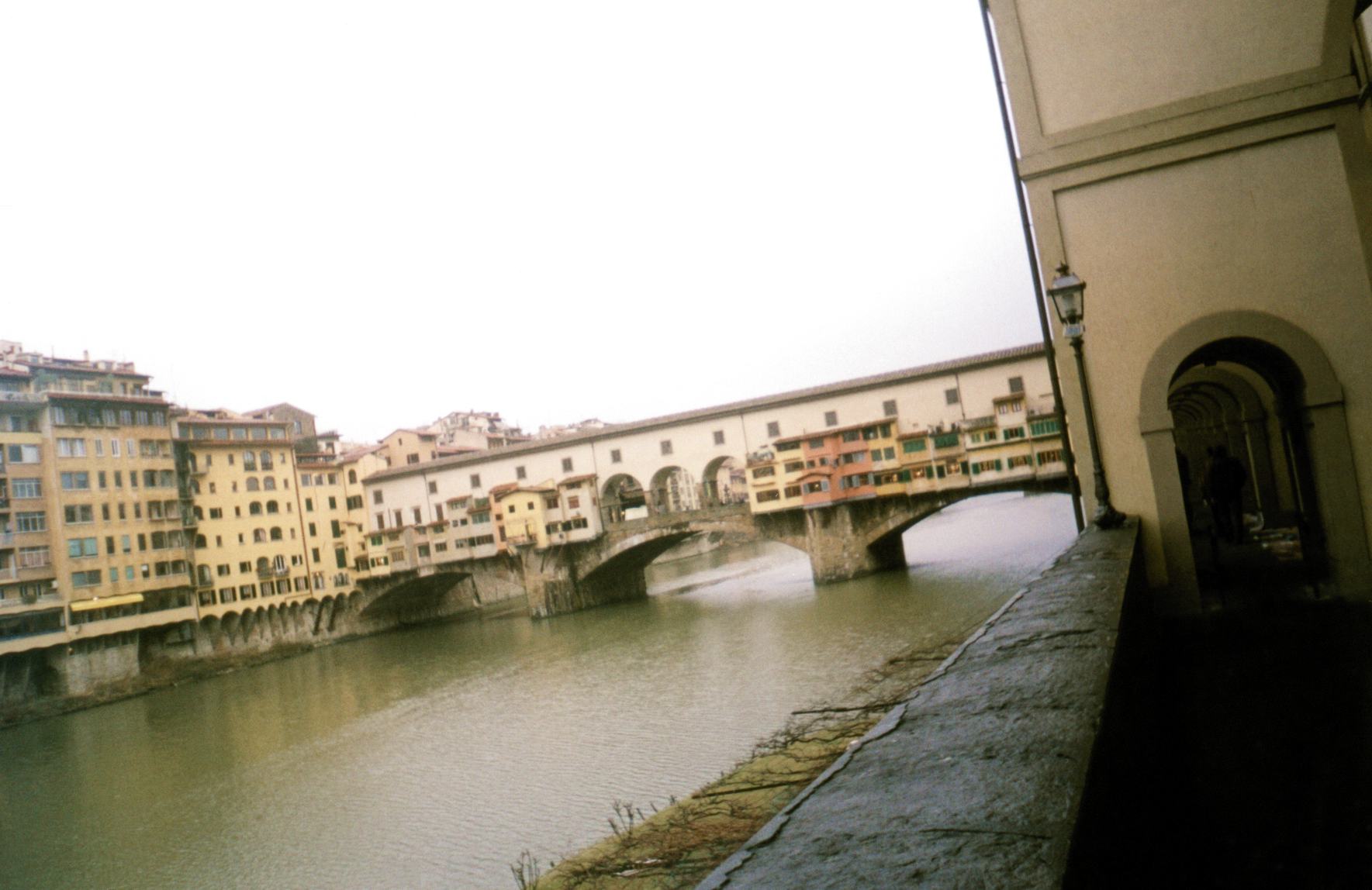
In spite of what the advertisements said, it was a long walk, nearly an hour. The whole waterfront was covered in a layer of confetti. You could see right away that something had been celebrated with great enthusiasm recently. The playgrounds are very well thought out here. They’re ordinary enough, but instead of tarmac beneath the swings and climbing frames they have a thick layer of porous rubber. Fall to your heart’s content, children, without raising a bump.
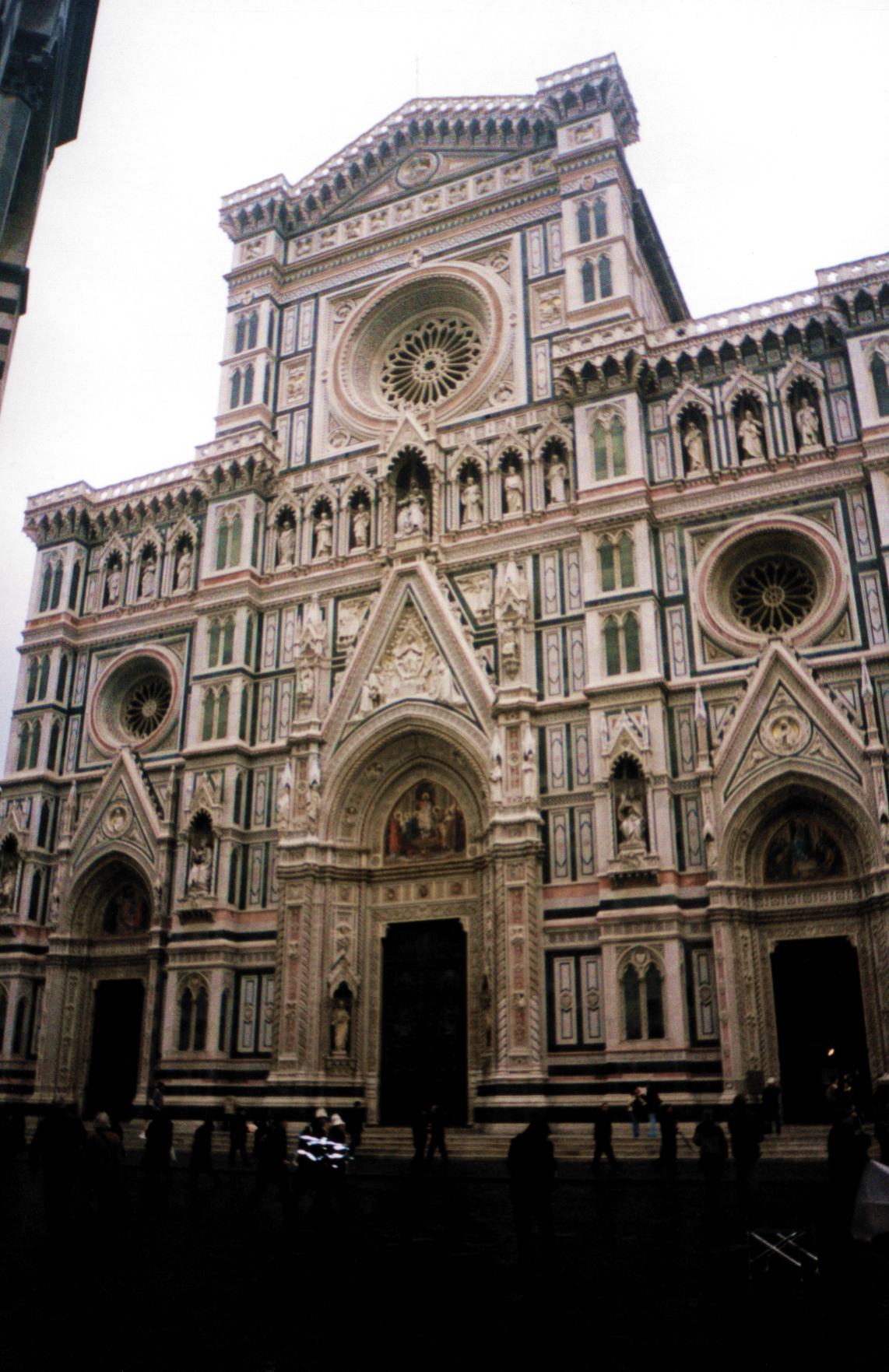
The old part of the city stretches for about ten kilometres. First we visited the Duomo. You can see the paintings in the dome for free by walking underneath it, but if you pay eight euros to climb up, you can look at the paintings from right below the base of the dome. It made a lasting impression on me. All those years ago, and in a church, no less. You can only respect the breadth of mind people had then.
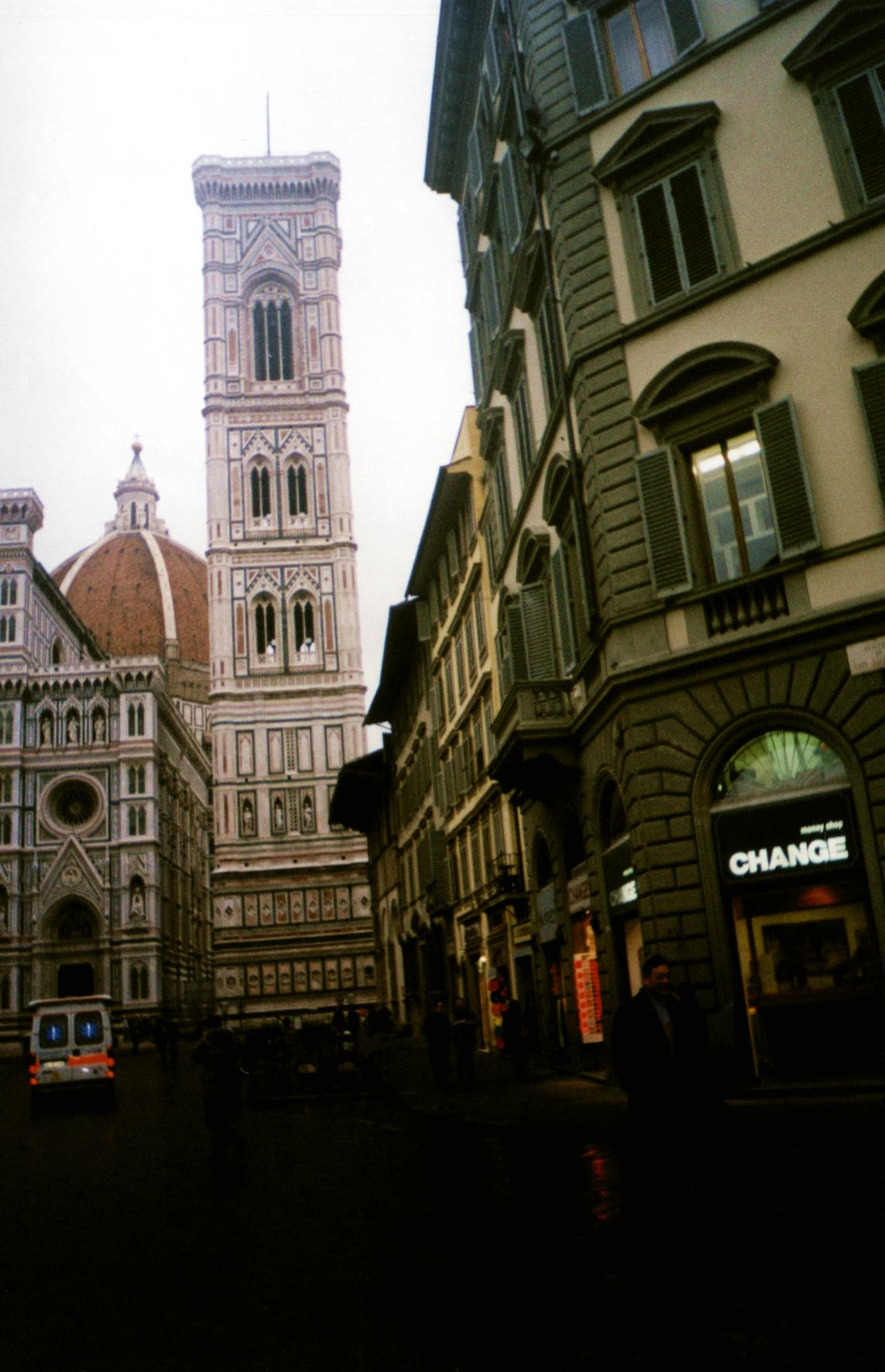
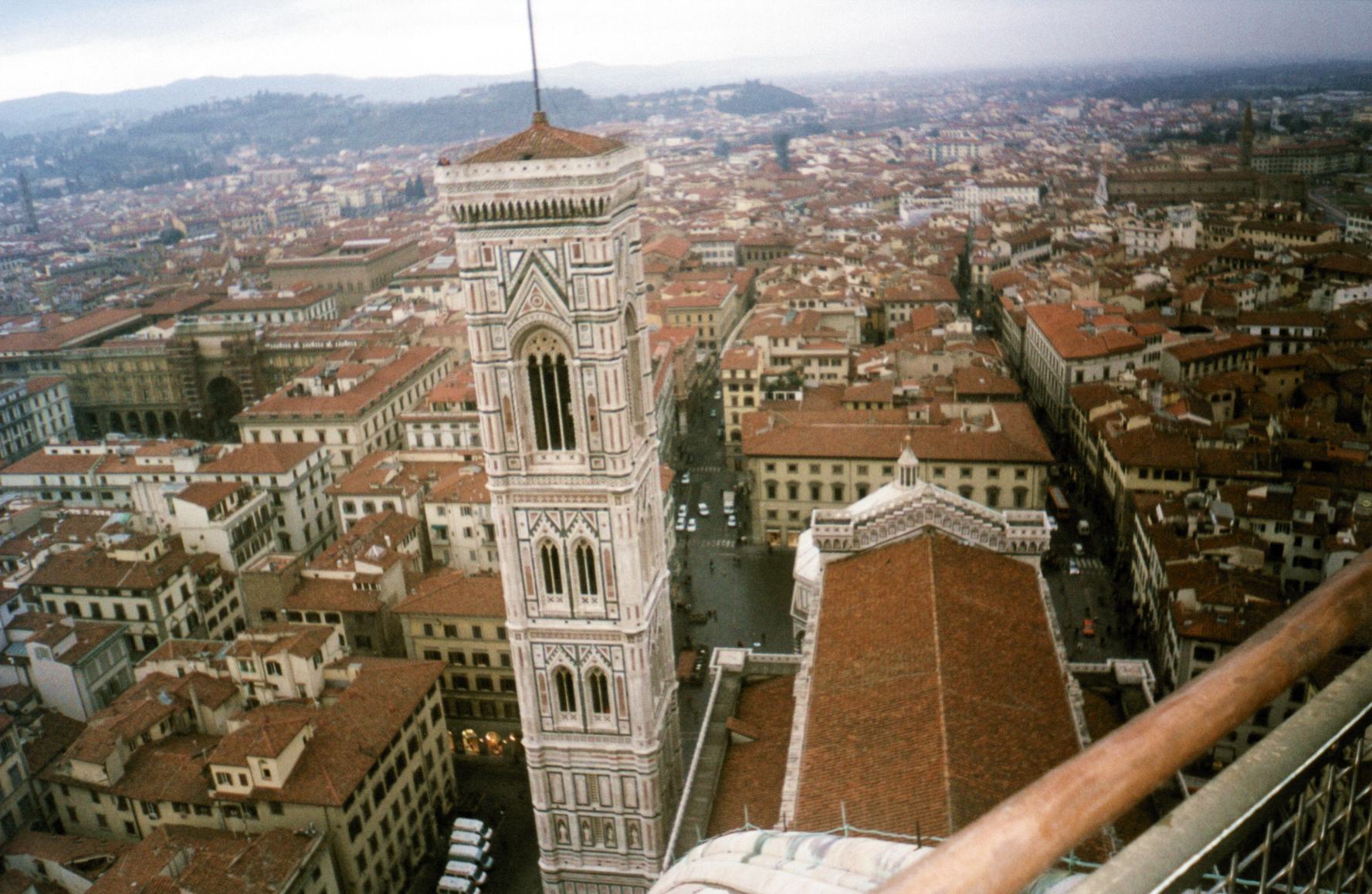
After looking at the paintings, we went up to the top of the dome. There’s a small platform up there. The dome is built in two shells, with a spiral stairway going up between them. Needless to say the view from the dome is excellent and worth the money. If you like, you can climb the bell tower next to it as well. You’ll have to pay a second time, though, and the dome is higher.
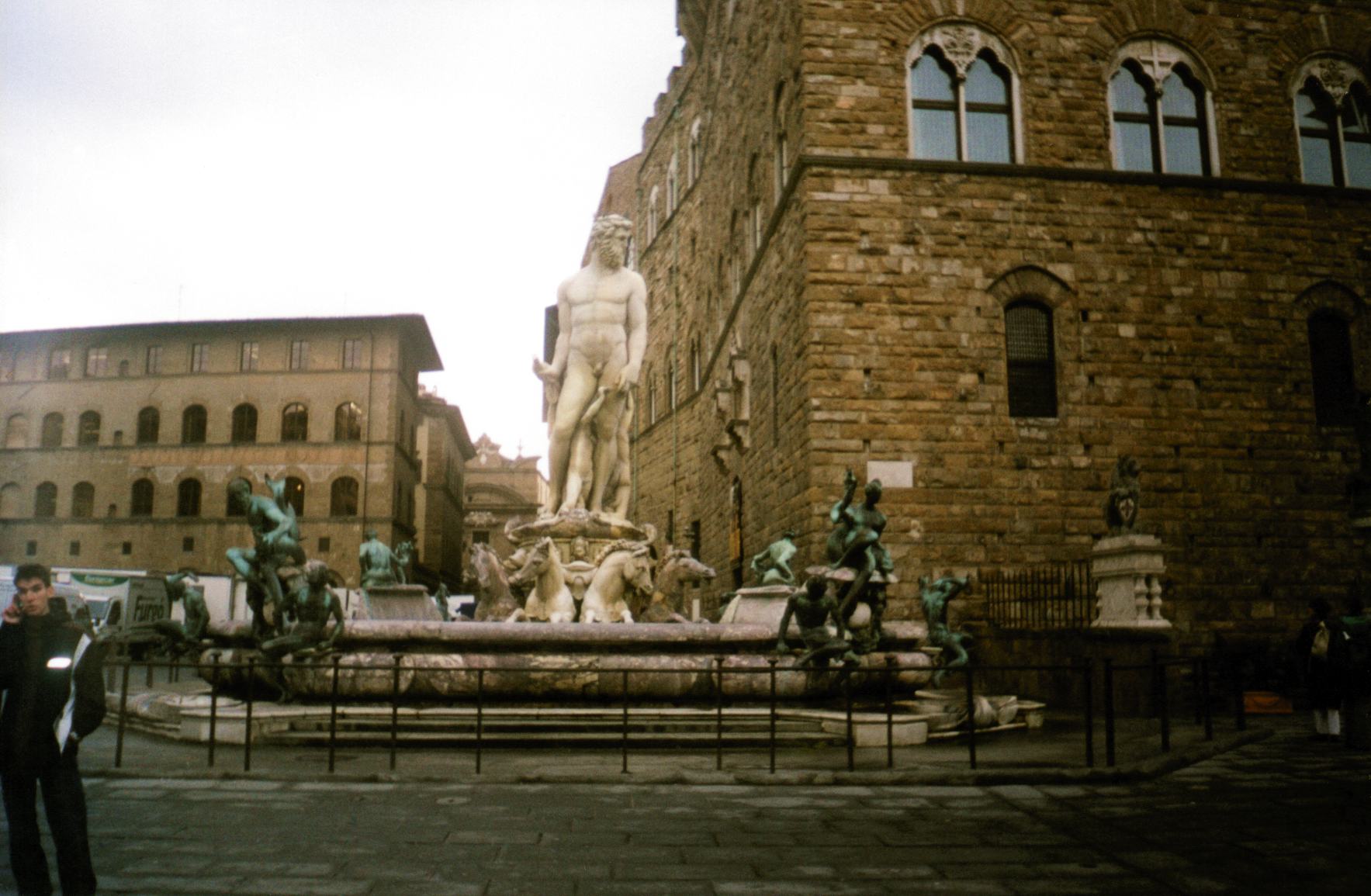
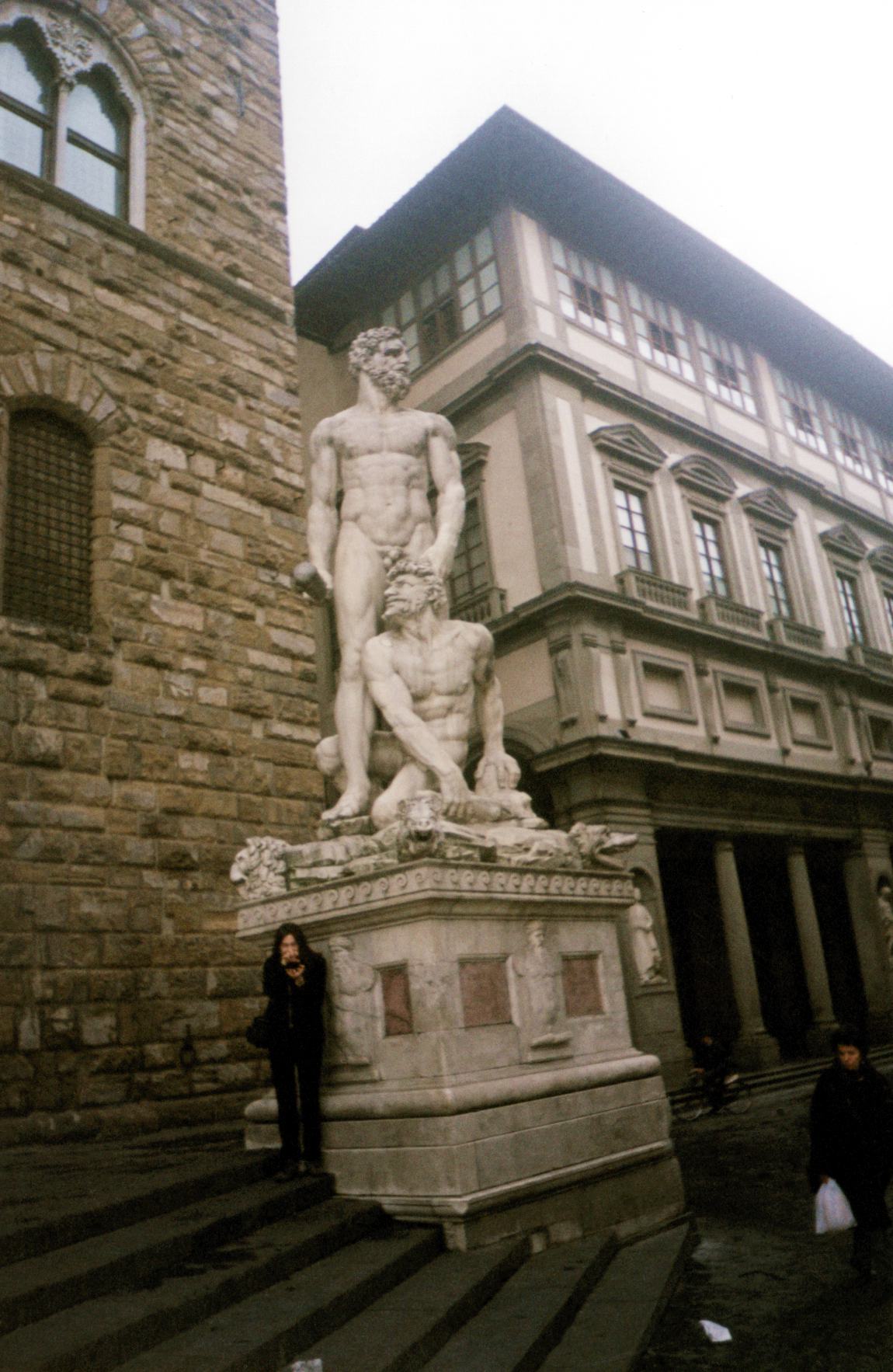
You could spend another week going round Florence and its museums, but we hadn’t the time and had to settle for the famous Uffizi Gallery. Admission is eight euros. The gallery turns out to be rather small and takes up just the third floor of the building. The Hermitage in Saint Petersburg is ten times bigger. I’m no art historian and won’t try to put a value on what I saw. I’ll just say I liked it. Everything is very harmonious. Taking photographs is forbidden, though they don’t confiscate your camera at the door.
After wandering the narrow streets for a few more hours, we went back to the car and set off for Pisa to see the tower. What a difference it makes how you present the results of your work. If somebody built something that crooked at home, they’d tear his hands off. Or worse, they’d take away his licence. But here in Italy they agreed it would do.
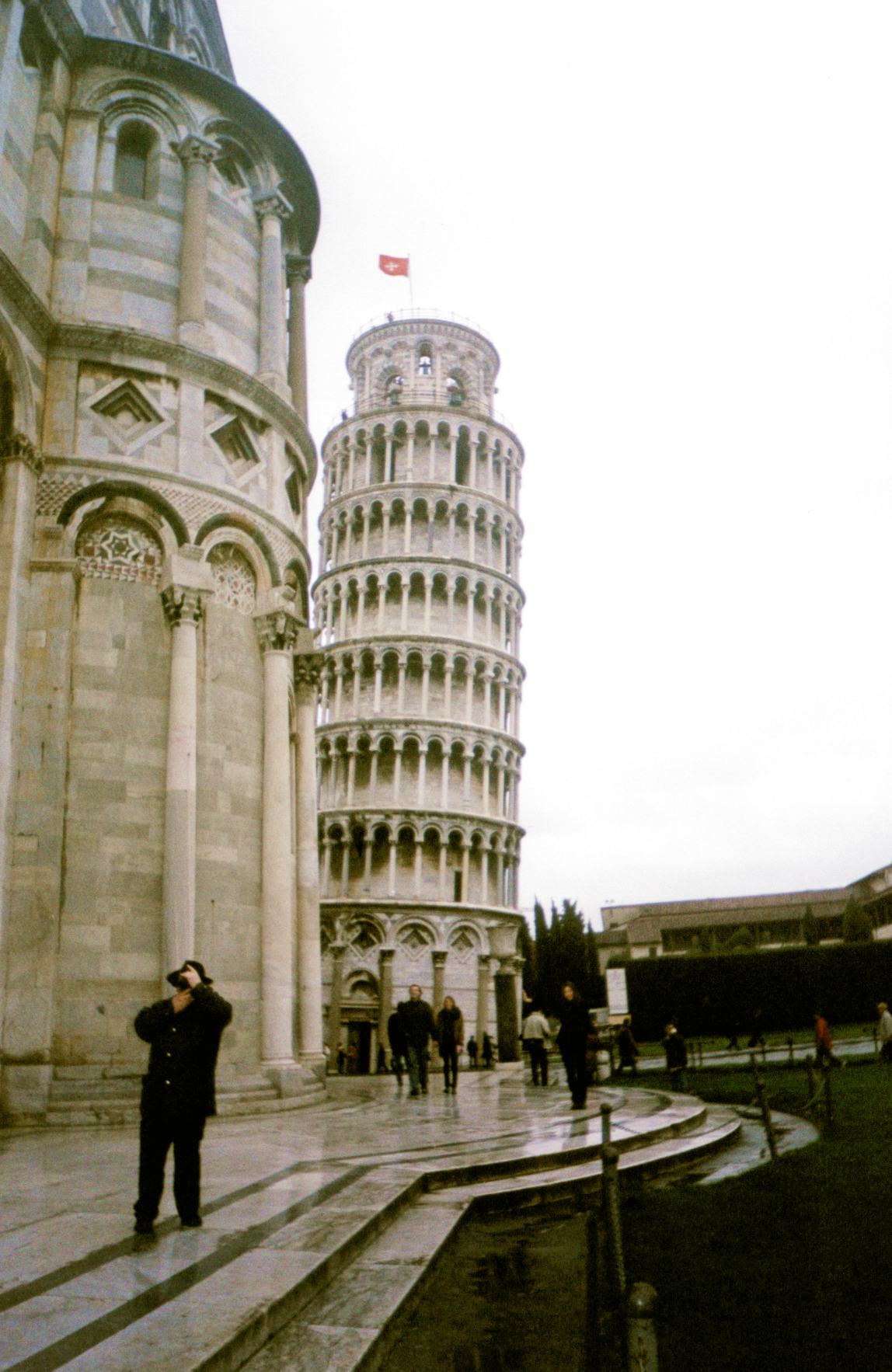
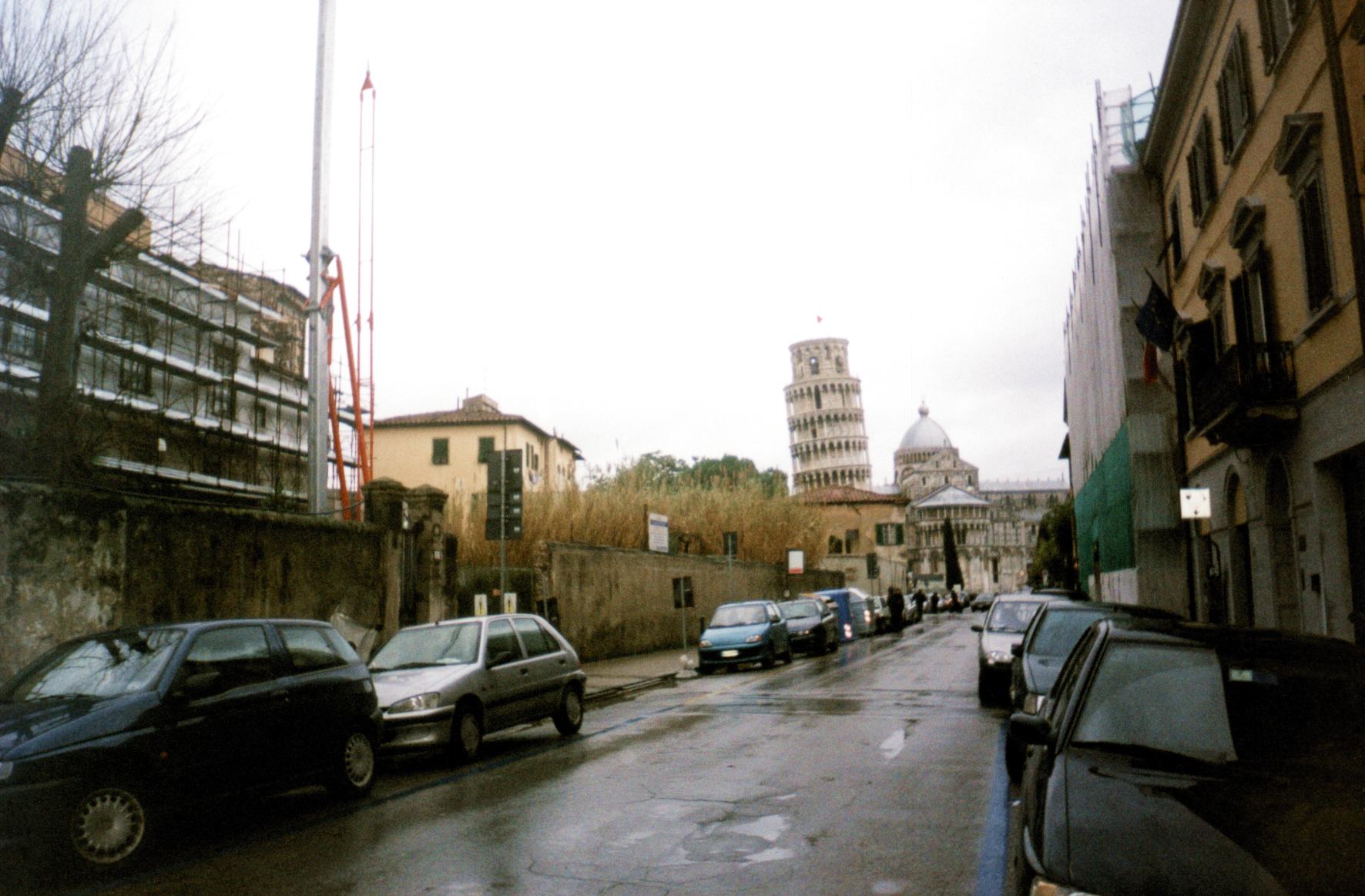
You can climb the tower, but only in a party of a few dozen people at most. They’re afraid a crowd of fat Americans will arrive and all climb up and the tower will fall over. Climbs run to a timetable. You have to turn up beforehand and buy a ticket for a particular time. There may be no tickets left, in which case you could be waiting a long time for your turn. It costs fifteen euros.
Crowds of tourists wander around the tower waiting their turn. There are lots of kiosks. One of the local amusements is to have a photograph taken in front of the tower, pretending to hold it up with your hands.
When our turn came, we did climb to the top. The tower turns out to be made of two cylinders with a stairway between them. There’s a vast hole down the central axis, with recently installed equipment to keep the tower from falling over. Balconies are hung outside in eight tiers.
Every Soviet schoolchild knows that this is where you’re supposed to drop balls to discover uniformly accelerated motion and measure the constant g. But the tower itself wasn’t built to Galileo’s order at all. It was designed as the bell tower of the cathedral next to it. Bells are hanging at the top, but I didn’t hear anyone use them. Science isn’t held in high regard these days. To prevent new discoveries, it’s forbidden to drop balls or even to spit from the tower. Two policemen keep order.
After Pisa, in the dark now, we set out for Rome. It’s only in the saying that all roads go there. The first thing we do is get lost on a narrow road running along the shore. Rather than Rome, it keeps bringing us to the nearest pub. The rocky shore, inhabited all the way along, is beautiful, of course. There’s a storm at sea and huge waves break on the rocks in foam. You can only manage an average of forty kilometres an hour, though. Rome is three hundred kilometres away. We’ll get there just in time for morning. The motorway runs next to us, but however we try we can’t get onto it. We duck in and out between the piers of the viaduct like slalom skiers, while all the normal people drive along the top. We must have driven around those little coastal hills for three hours before we finally came out going the right way.
We phoned the places we might stay and found a campsite open all year almost in the middle of Rome. One difficulty. It closes at eleven and we’re going to have an awfully hard time getting there in time. We haven’t a decent map of Rome. The guidebooks only draw the centre, and we’re all over the back streets. Road signs in Italy leave much to be desired. It was past midnight when we finally realised we were in a completely different corner of the city, on Via Laurentina. We came upon the American Palace hotel nearby. A room for four was 146 euros. Hideously expensive, but time is worth more. We have to stay there. The room is warm and comfortable, of course, with fancy baths, free hotel matches, shampoos and other little odds and ends we don’t need. Out of all of it Tanya picks a Bible in ten languages and decides to privatise it.
A big argument breaks out the following day. First, does it come among the free odds and ends you can take? Second, it includes an Arabic translation, and might there be a death sentence for taking it into Libya? In the end we decide to leave the Bible and even to have a read of it in several languages. What we read amused us. It was a simplified adaptation.
For instance, in the English version God advises against drinking whisky, and in the German version it’s schnapps. And what it says about the Immaculate Conception… You have to read it. You could burst out laughing.
The free breakfast included sandwiches, muesli with milk, tea, coffee and lots of rolls. A buffet. Take as much as you like. That’s a lot for Italy and we were able to eat our fill.
We start the day by trying to park by the Colosseum. It turns out to be quite manageable. You can find free spaces a few minutes’ walk away. Naturally there’s a charge, but we only have to pay six euros for the entire day. In many other capitals that’s the price of an hour.
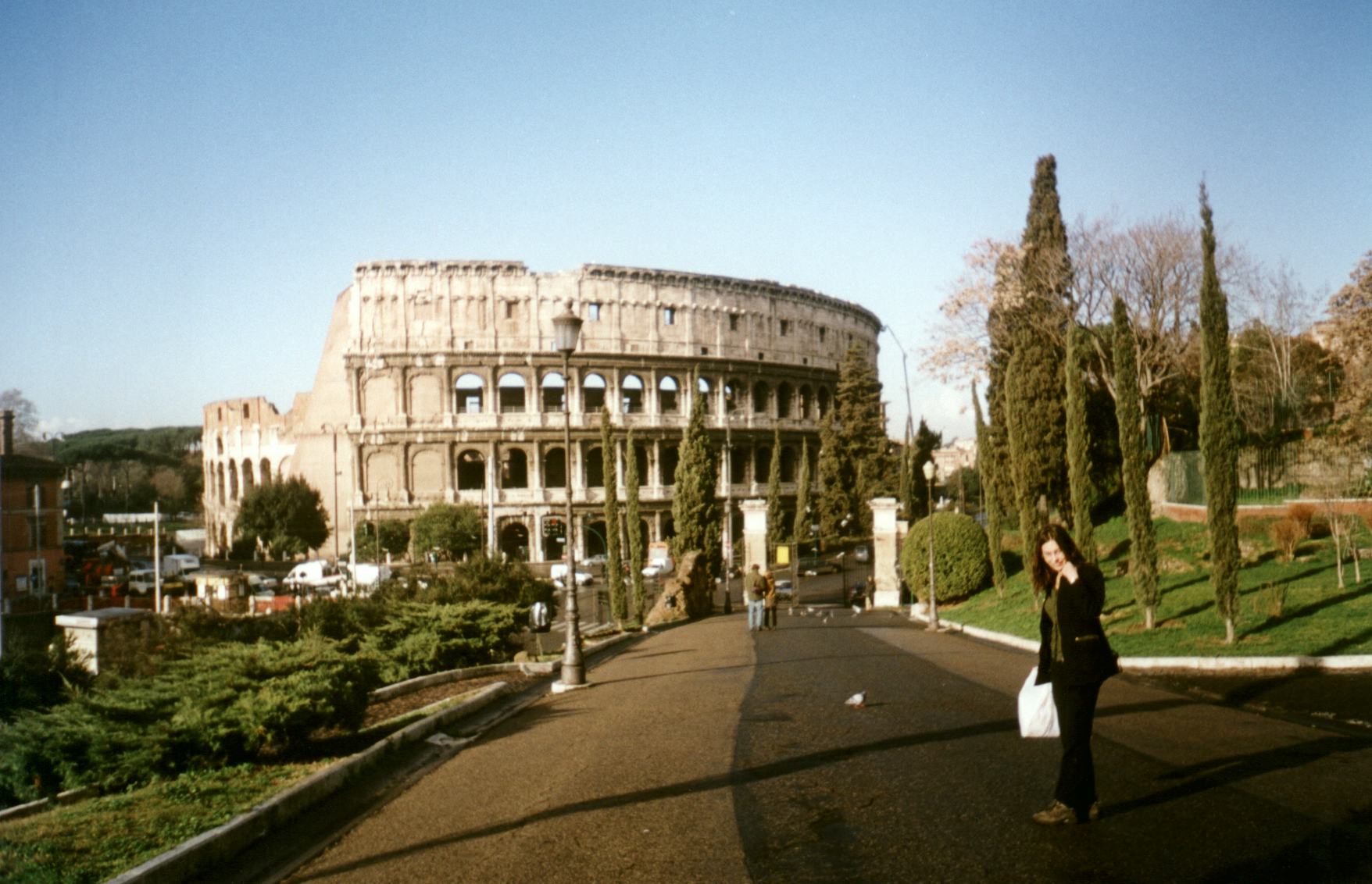
At the entrance to the ancient ruins a handsome sign reads “Closed until 12 noon for special events”. Some local bigwig must have decided to hold a drinking party on the site of the imperial palace that day. We have to start by seeing the city outside the fence. There’s a great deal to see in Rome. It takes a week. There’s no point saying this is beautiful and that even more beautiful. I’ll just mention what surprised me.
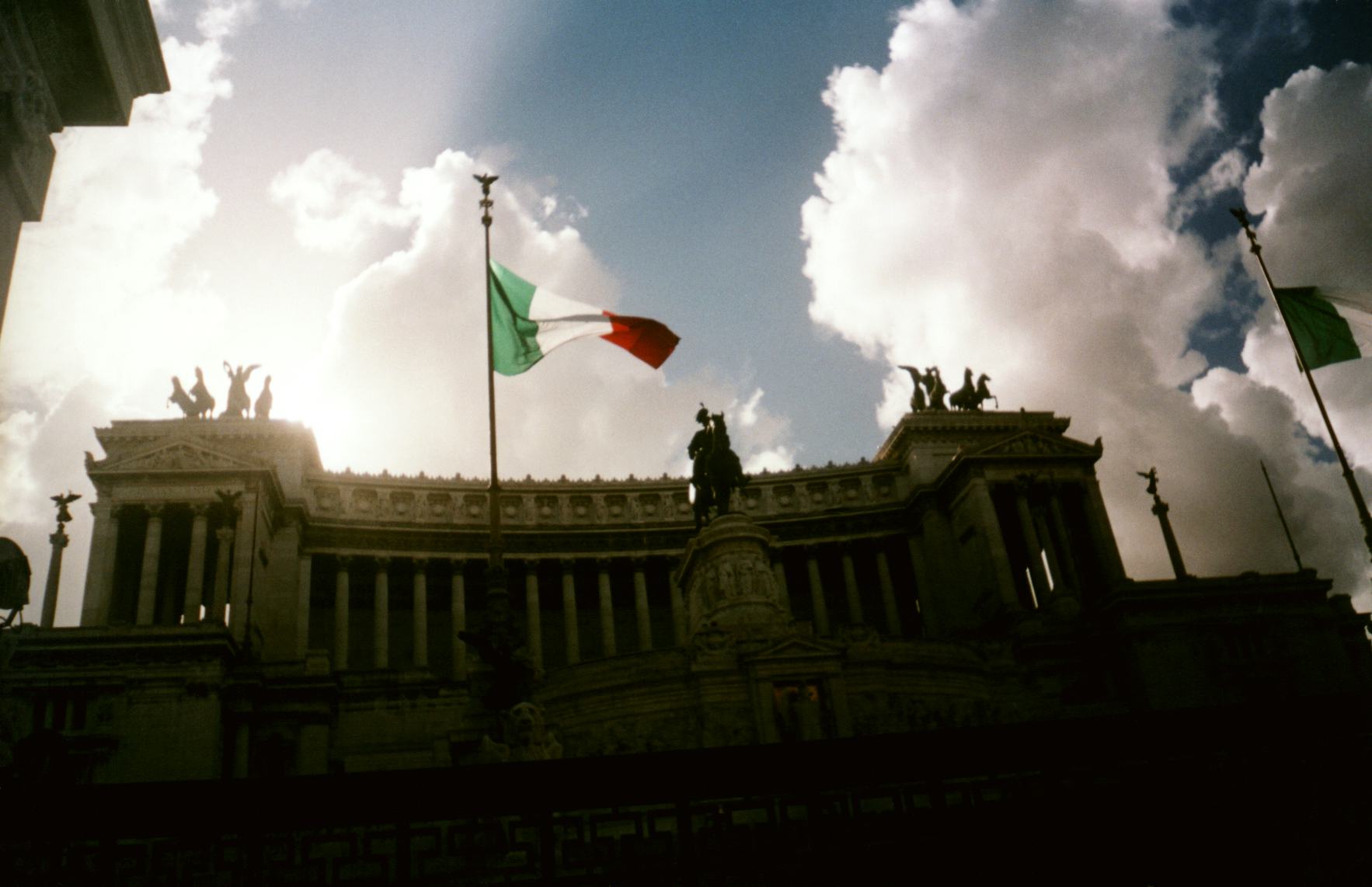
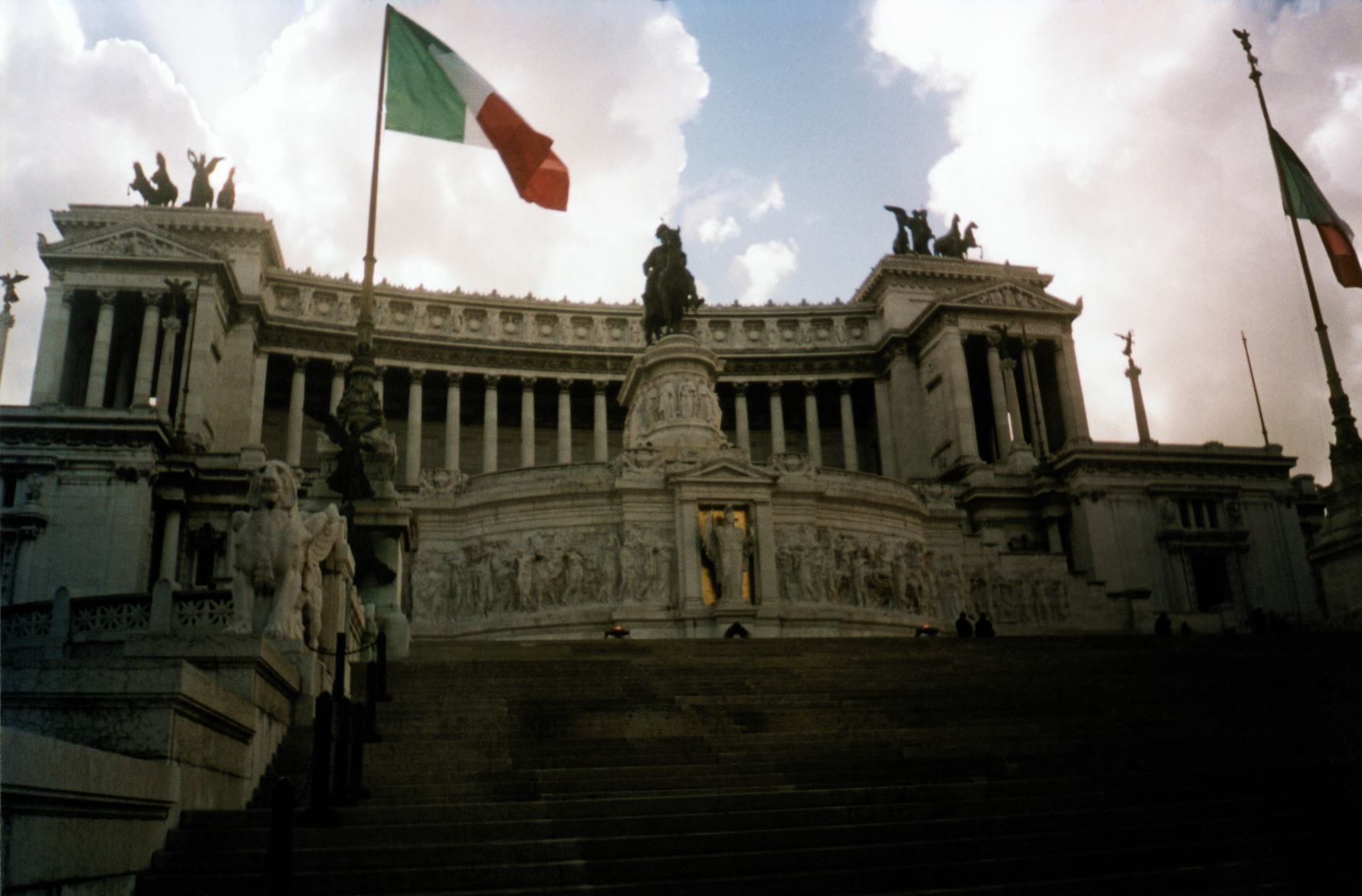
On the Capitoline Hill an enormous, pompous building has gone up, the Altar of the Fatherland, with a statue of Victor Emmanuel II (Vittorio Emanuele II). He was the man who united the Italian states in the middle of the nineteenth century. At first they envisaged a great empire, quite as large as the Roman one. It turned out a little more modest, but the building they put up is as grand as you’d wish. I particularly liked the mosaics. Usually you get Aphrodites and Apollos on those. Here it’s all nineteenth-century subjects, a man with a Leyden jar, for instance. They showed us something like that in physics class. You turned a handle and then a spark jumped out.
Stray cats live around the Colosseum and have done for centuries. At first they tried to get rid of them, but a year ago they declared them an integral part of the scene and even put aside money to feed them. There they sit, gobbling up sausages. I’d eat those myself. Next to them an old woman sits collecting money for the right to film the feeding of the cats. I shoot it for free while her back’s turned. She comes at me shouting, “Give me the money!” I manage to dodge past her without giving her anything.
The Colosseum itself is in considerable ruin. Much better-preserved copies exist elsewhere in the world. They use it for concerts and any number of other purposes these days. You can’t do all that in bare ruins. They didn’t rebuild the whole thing the way it was, but some of what they’ve put inside is quite modern. Glass lifts go up and down, for instance, and there are automatic doors and halogen lights.
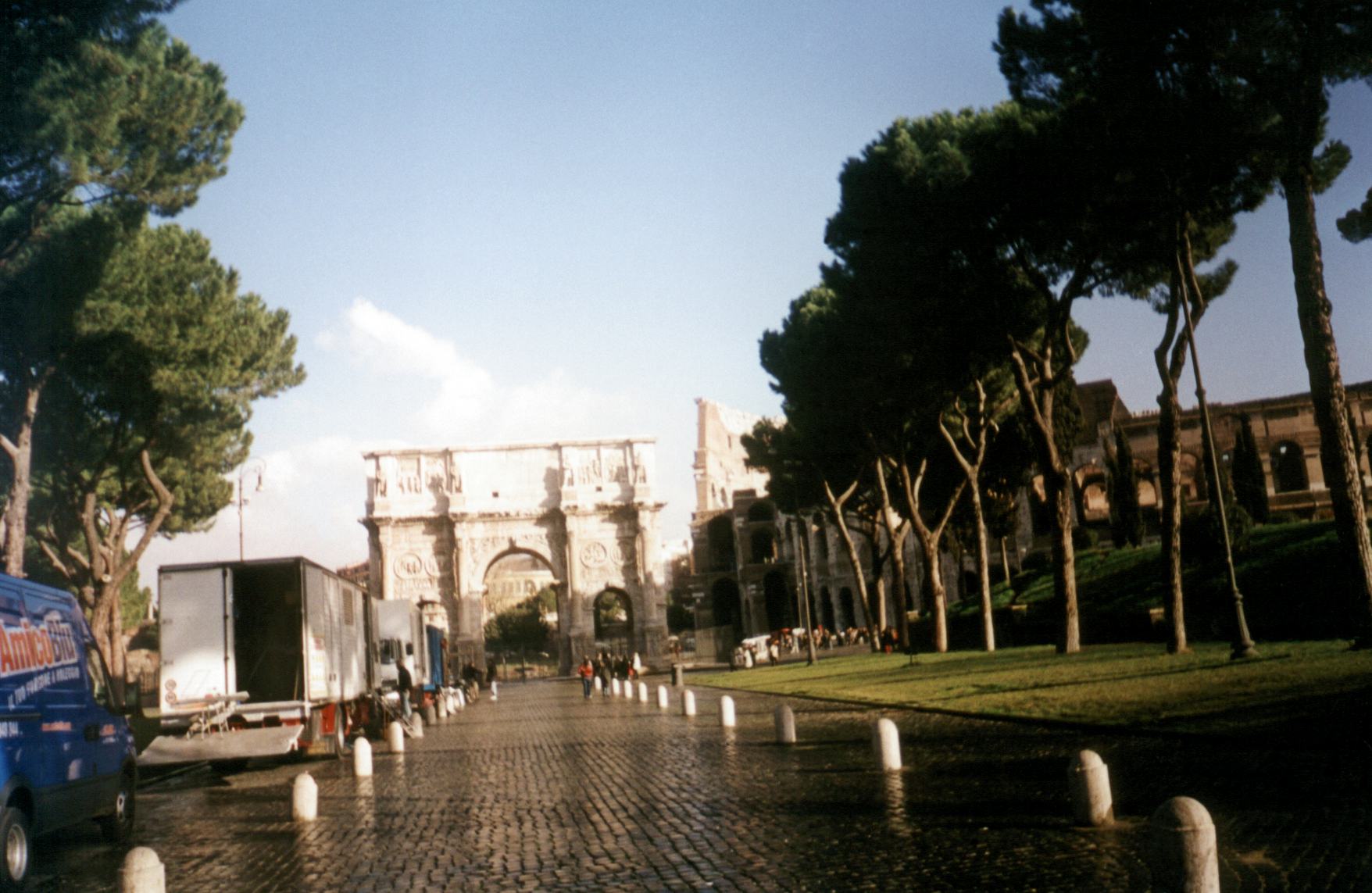
Finally they let us into the ruins. The same ticket takes you into the Colosseum and costs eight euros. Just as you enter, there are the surviving ruins of the Roman Forum, temples of long-forgotten gods. The ruins are in a sorry state, of course, but these stones are the centre of the ancient world. I’ve read so many books about the Roman Empire and here I am walking on those very stones. The Palatine Hill has only foundations left as well. Signs say “House of Augustus” and “House of the Flavians”. The fate of the world was decided here, to say nothing of millions of individual lives. You won’t see masterpieces of ancient architecture here. You come for what the place means. People often say Rome was cruel and ruled by brutal militarists. It may well be so, but here for the first time people grasped that this was wrong. In a world that was still wild, nations exterminated one another without blinking. Rome alone was able to rise above the petty squabbles and unite half the world. Here for the first time people came up with a system of justice that survives to this day under the name of Roman law. It makes you want to sit awhile and philosophise. I phone home and send texts. Greetings from the centre of the world.
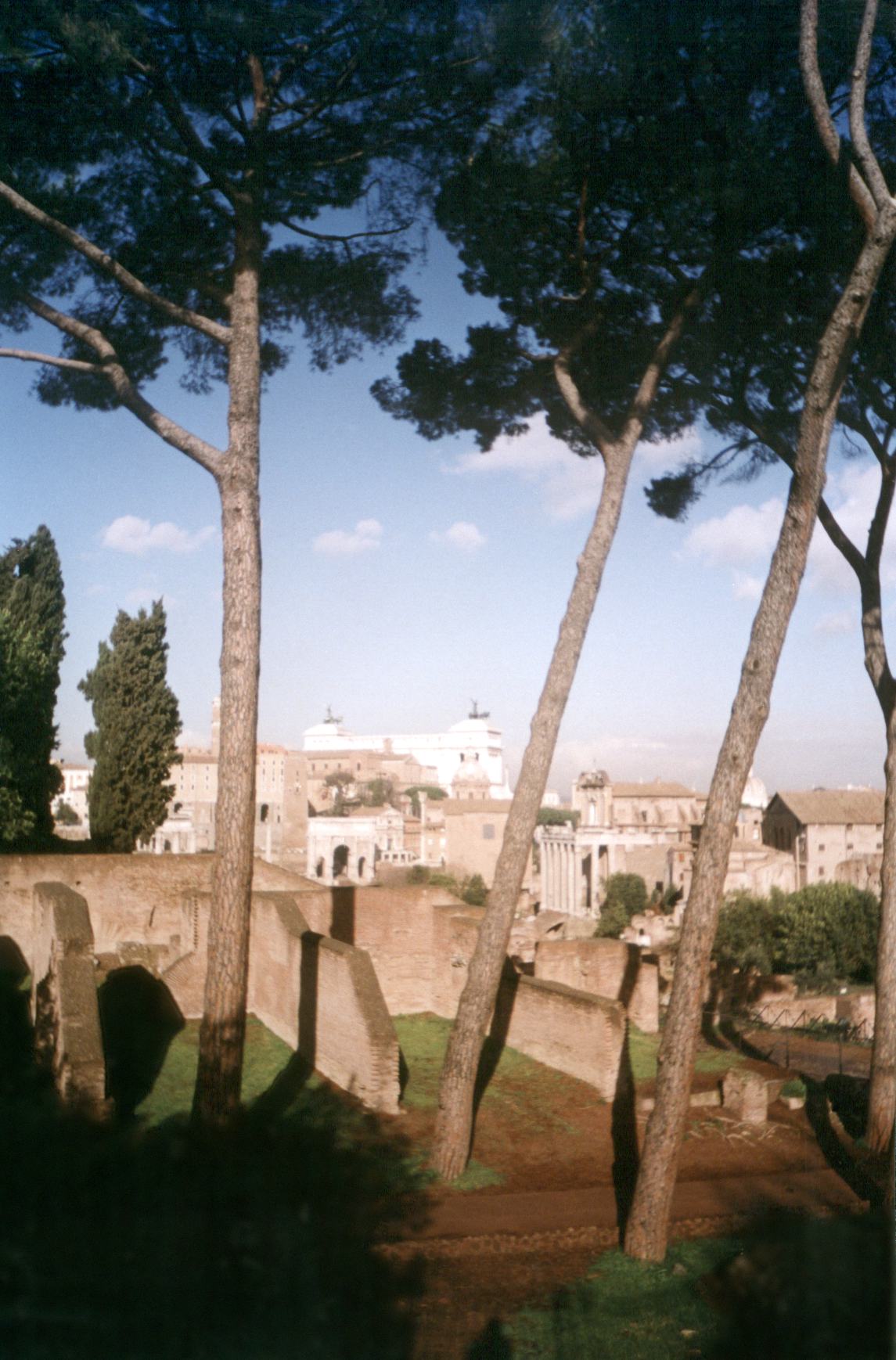
As well as the ruins, the Palatine Hill has a garden with fountains. The mandarins are ripe. Tanya and I even eat one. There are very tall umbrella pines. Look hard enough and you can find an enormous pine cone.
Tired of walking around the city, we drink a bottle of wine and go for a drive. Central Rome is full of one-way streets and it’s not so simple to navigate by the map. There’s a street right by the Colosseum. I wanted to drive along it, but it took quite a while. First I had to make a vast detour round the city.
Our next stop is the Vatican. You can drive right up to St Peter’s Square (San Pietro). Here parking turns out to be much harder. After a few circuits we find a spot right by the Vatican wall, under a no-stopping sign. Three days in Italy have done serious damage to what was becoming a thoroughly German respect for the law. Interesting. The Vatican is a separate state, after all. Even its cars have their own SCV number plates. Who’s going to fine me there? The papal guards in their orange medieval costumes?
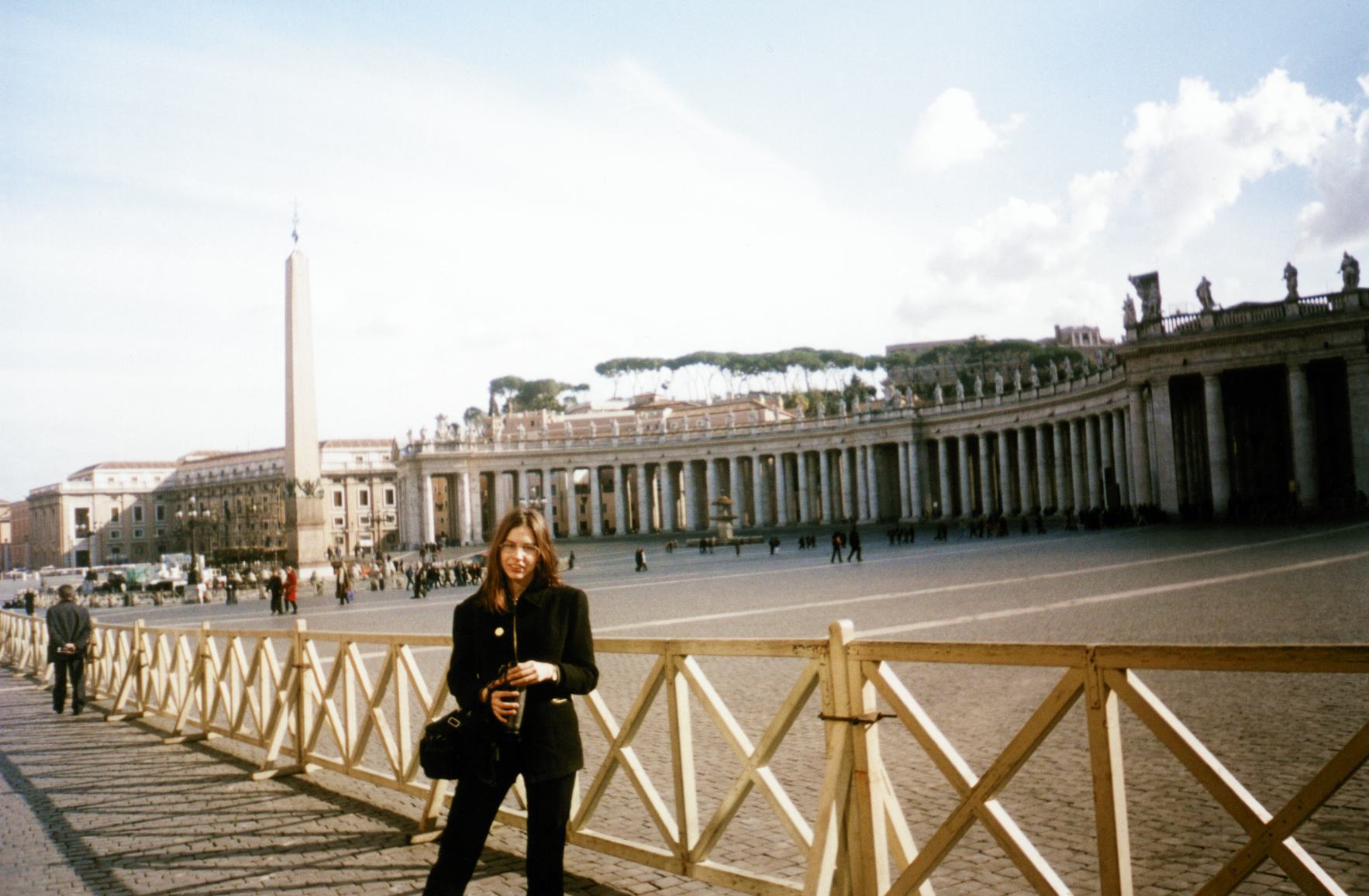
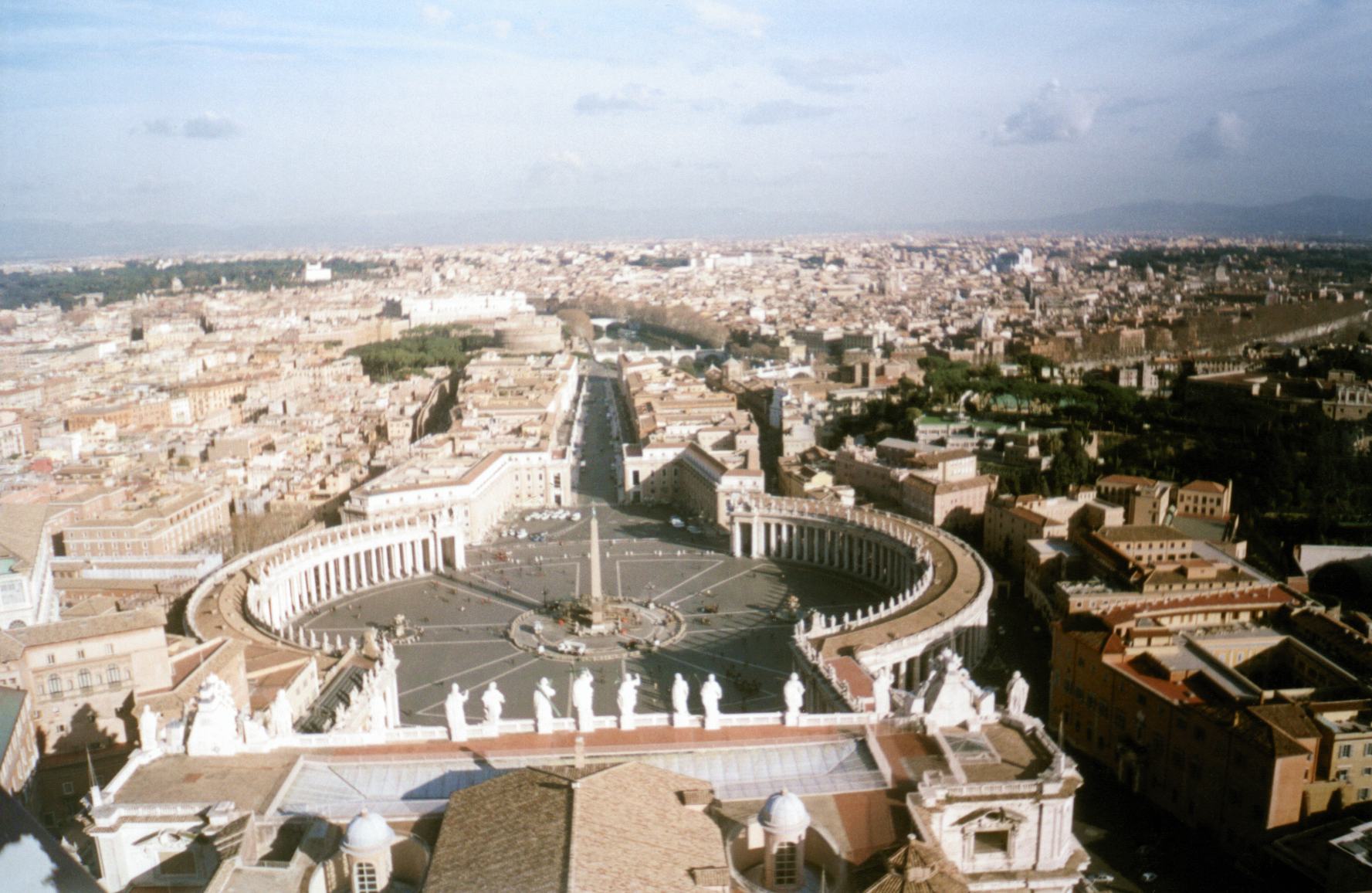
St Peter’s Basilica, the biggest church in the world, was said to have been on the list of targets of the terrorists who attacked New York on 11 September. Something had to be done, and something was. I don’t know about air defences, but they search you at the entrance. Looking for metal. They found a pocketknife on Masha and nearly confiscated it. You aren’t even allowed to film the proceedings. Masha tried but they stopped her. “No, signorina, no!” They laugh themselves. “We know it’s silly, but it isn’t allowed!” Just to be awkward, I take up a position a hundred metres away and film the search. A zoom lens is a wonderful thing. A gift to a spy.
Admission to the basilica is free. There aren’t many people inside and they’re all tourists. There’s a bronze figure of St Peter. You’re supposed to touch his foot. Polished hardly covers it. They’ve worn it down by several centimetres. His toes have vanished and soon they’ll be down to his heel. I immediately thought of Juliet in Verona. If this goes on they’ll ruin that poor girl completely. The dome has classical paintings, but it’s the sculpture that’s interesting to look at here. There’s a lifelike quality to it. In the crypt are sarcophagi containing many popes. They’ve listed every one of them on the wall next to them.
You pay to go up the dome, four euros on foot and five by lift. Naturally we walk. From the dome you can make out the Vatican’s inner grounds. Tourists aren’t allowed in there. It’s for the pope and his companions alone. In the immaculate park with its fountains stand a few official buildings. The Vatican Radio antennas are there too, and lots of others. It looks as if the pope has his own special communications with his subordinates. The Vatican has no separate GSM network. A towering fortress wall encloses the whole place and doubles as the border of Vatican City.
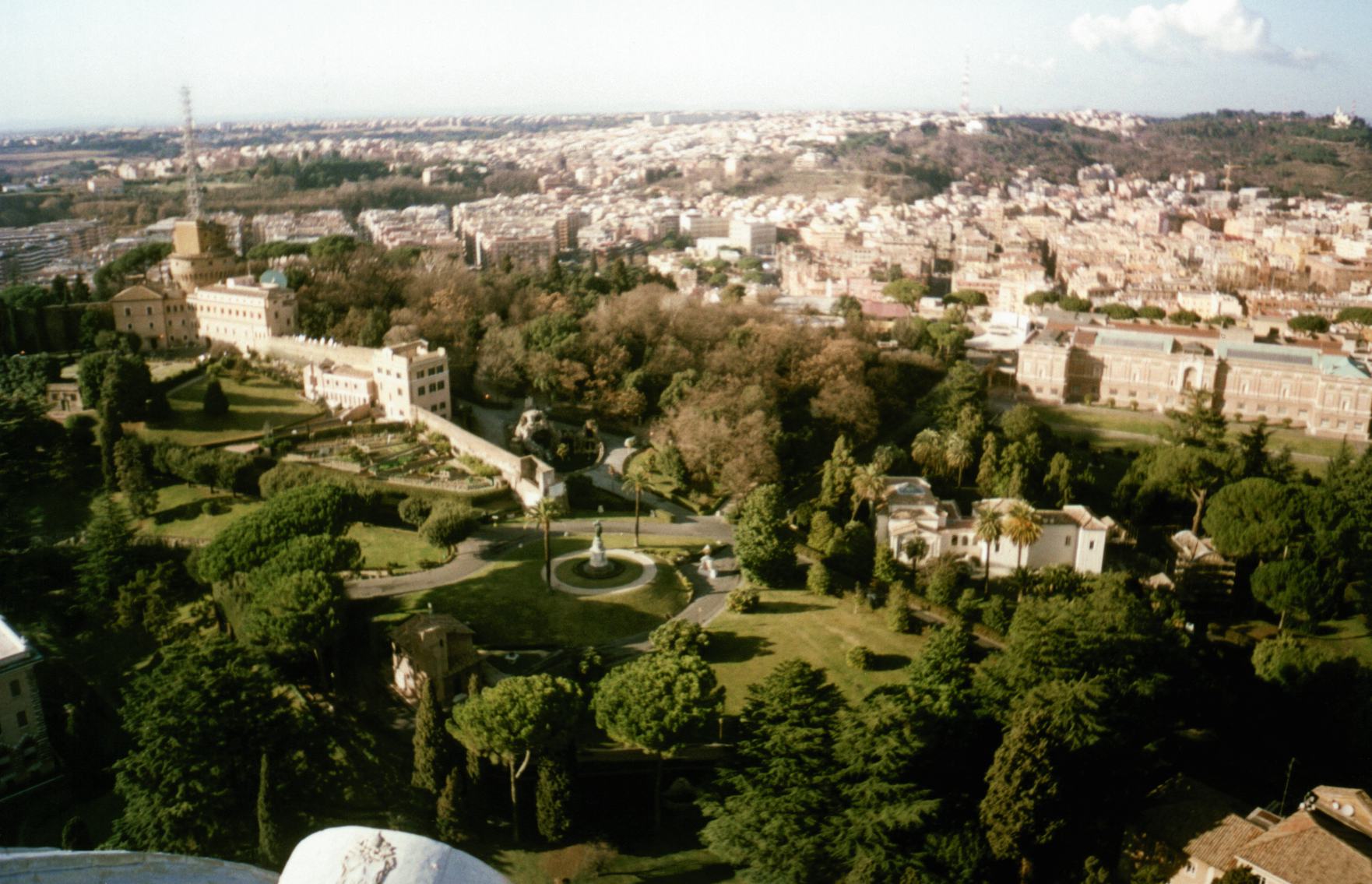
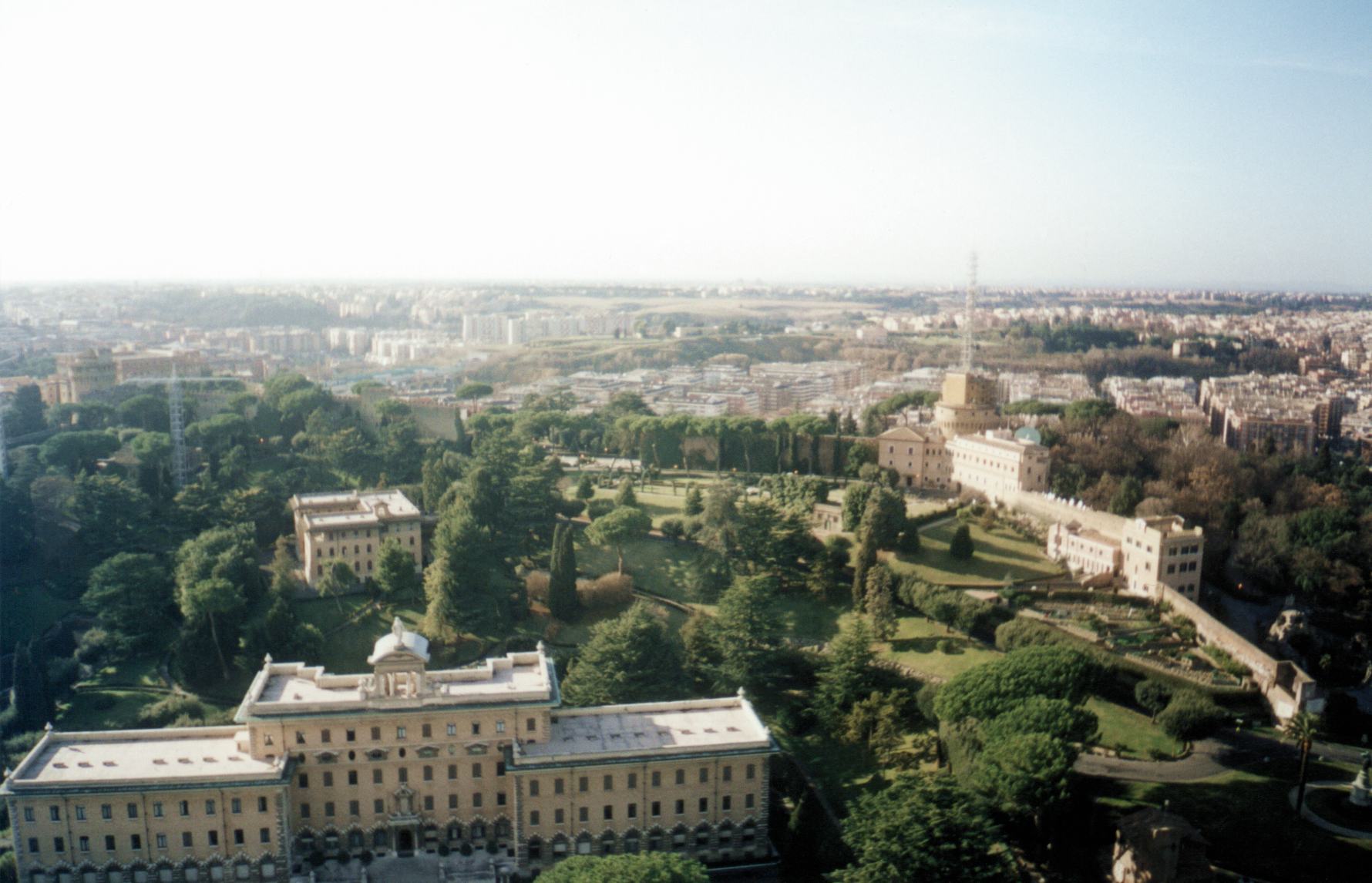
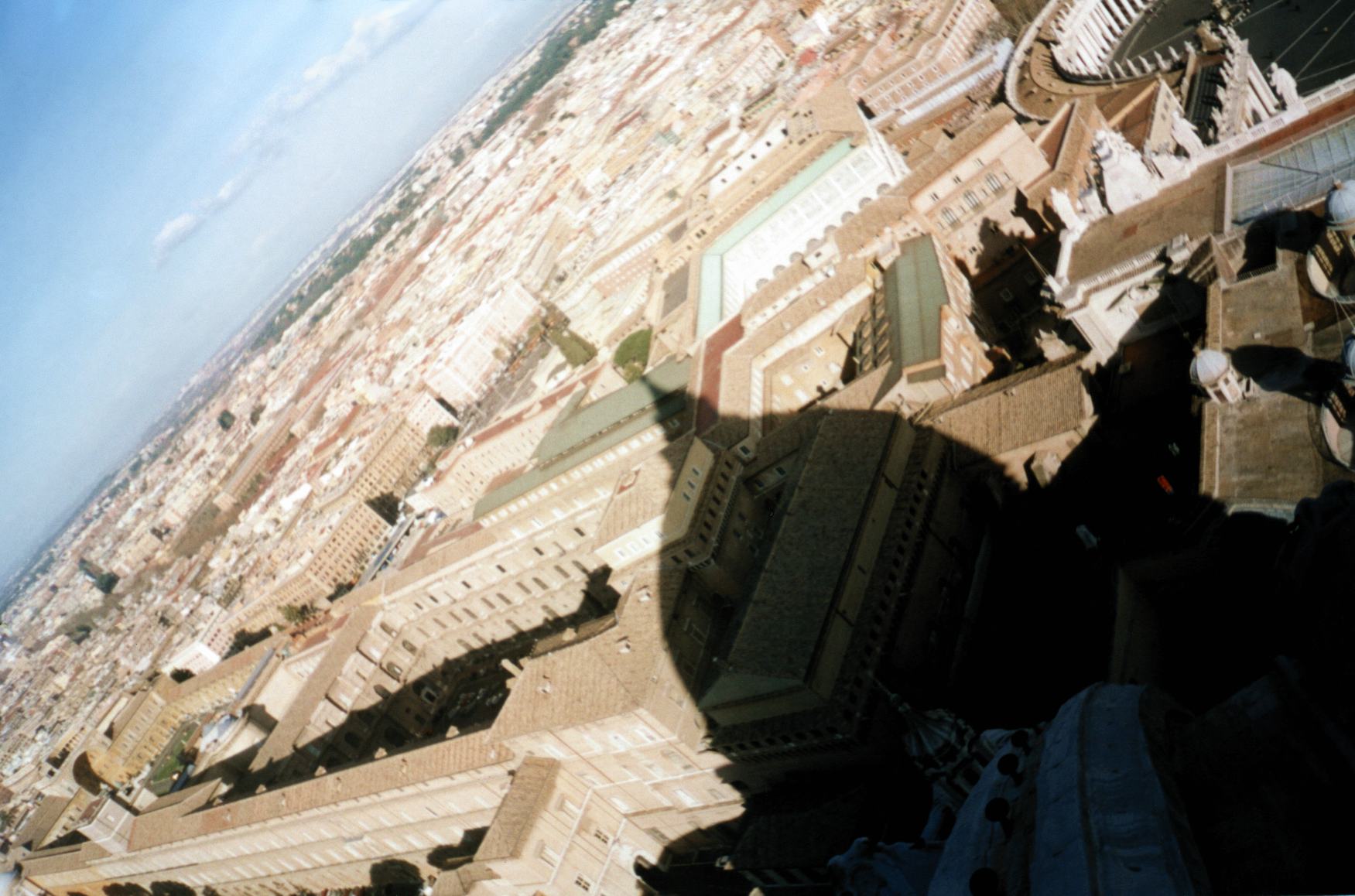
The Sistine Chapel is on the north side. Tourists are only allowed in during the morning.
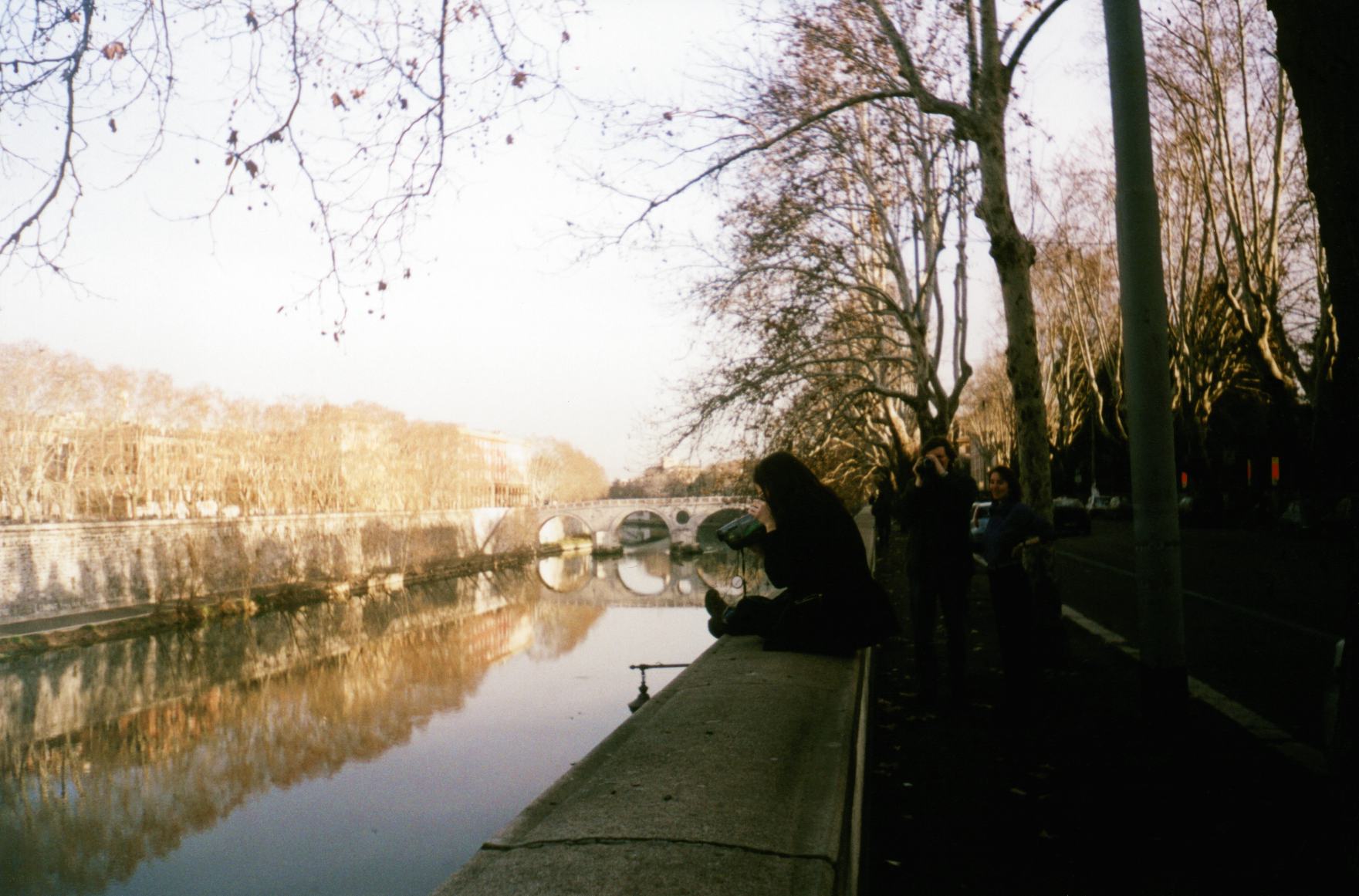
We made our last stop in the Eternal City on the bank of the Tiber. Its width and the speed of its current remind me of the Moskva River, only the banks are steeper.
Venice is next in our plans. The Venetian festival takes place the day after tomorrow. We can drop in at San Marino on the way as well. To do that we’ll have to drive all evening. Alas, it doesn’t go quite that fast. Simply leaving Rome and finding the road we want takes two hours. The entire Roman ring road is one interminable traffic jam. We want to go to Venice, but common sense says we’re going out of our way. Too far and too expensive. The decision comes spontaneously. We change direction and head for Naples. It’s more on our route. Venice will be for next time.
Looking for a cheap bed in Naples, we manage to get the Hotel Zara on the phone. Fifty-five euros for the night. It takes a good deal of driving around town before we find the place. I have no time to look at the map, and the girls can’t quite direct the car into the right little alley. I try to look at the map, the road and the signs on houses all at once. It ends badly. In Italy, it seems, they sometimes put a kerb down the middle of the street where you’d expect a solid line. You can see why. Nobody would obey a painted line. It takes a reinforced-concrete argument to make drivers stay in their own lane. I don’t know it’s there and hit the obstacle. There’s a terrible scraping noise. I prepare for the worst, but the car still goes and nothing leaks out. Even the exhaust hasn’t fallen off.
We soon find the hotel. It turns out to be a big flat on the third floor with shared facilities off the corridor. Polish cross-border traders generally stay here. That doesn’t bother us and the room is quite clean. What’s happening outside is a little more worrying. The street is a terrible rubbish tip. Homeless people wander about. Some shady-looking characters crowd around the gambling machines. We ask the owner whether it’s dangerous to leave the car outside the window. “Is it new?” “No, a fourteen-year-old Ford.” He thinks it’ll probably still be there in the morning. Reading Lonely Planet makes us feel still worse. Naples, it says, is a city of thieves, car theft is the scourge of Naples, driving in with your own car is particularly unwise and you shouldn’t go near the railway station even in daylight. I wonder how far we are from the station. We look it up and find we’re a hundred metres away. Now we’re in for it. And they call this a united Europe! I fall asleep with a heavy heart. I keep getting up and running to the balcony to look at my beloved car. Nightmares all night.
In the morning we see nothing’s happened. Rather than tempt fate, we get out of the nightmare as fast as possible. They say Naples is Italy’s most enchanting city. No, I don’t get it. I swear under my breath, but less and less as we go. The sight of narrow streets strung with drying laundry warms my heart again. By the time the waterfront with palms comes into view I’ve got the taste for it. We go into a café for coffee and hot chocolate. You can find coffee on any street corner in Italy. A small cup of very strong espresso costs just €0.55. After Finland and Armenia, Italy is probably the most coffee-minded country. But besides coffee there’s hot chocolate. It’s a truly thick cocoa, the consistency of sour cream. It’s delicious, and has nothing in common with the drinks you occasionally find under that name in Russian cafés. Since then in hard times I always think back to that divine drink.
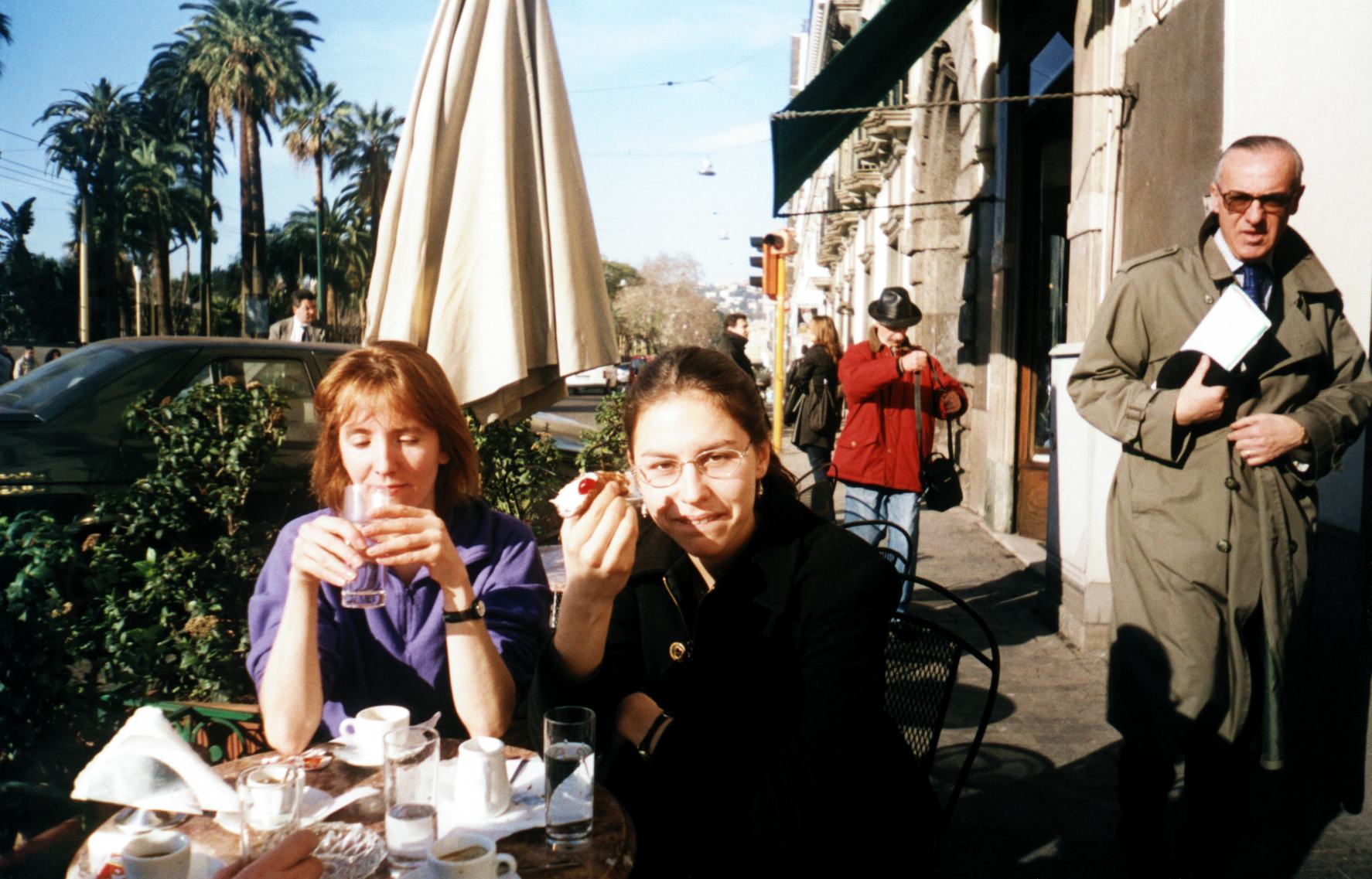
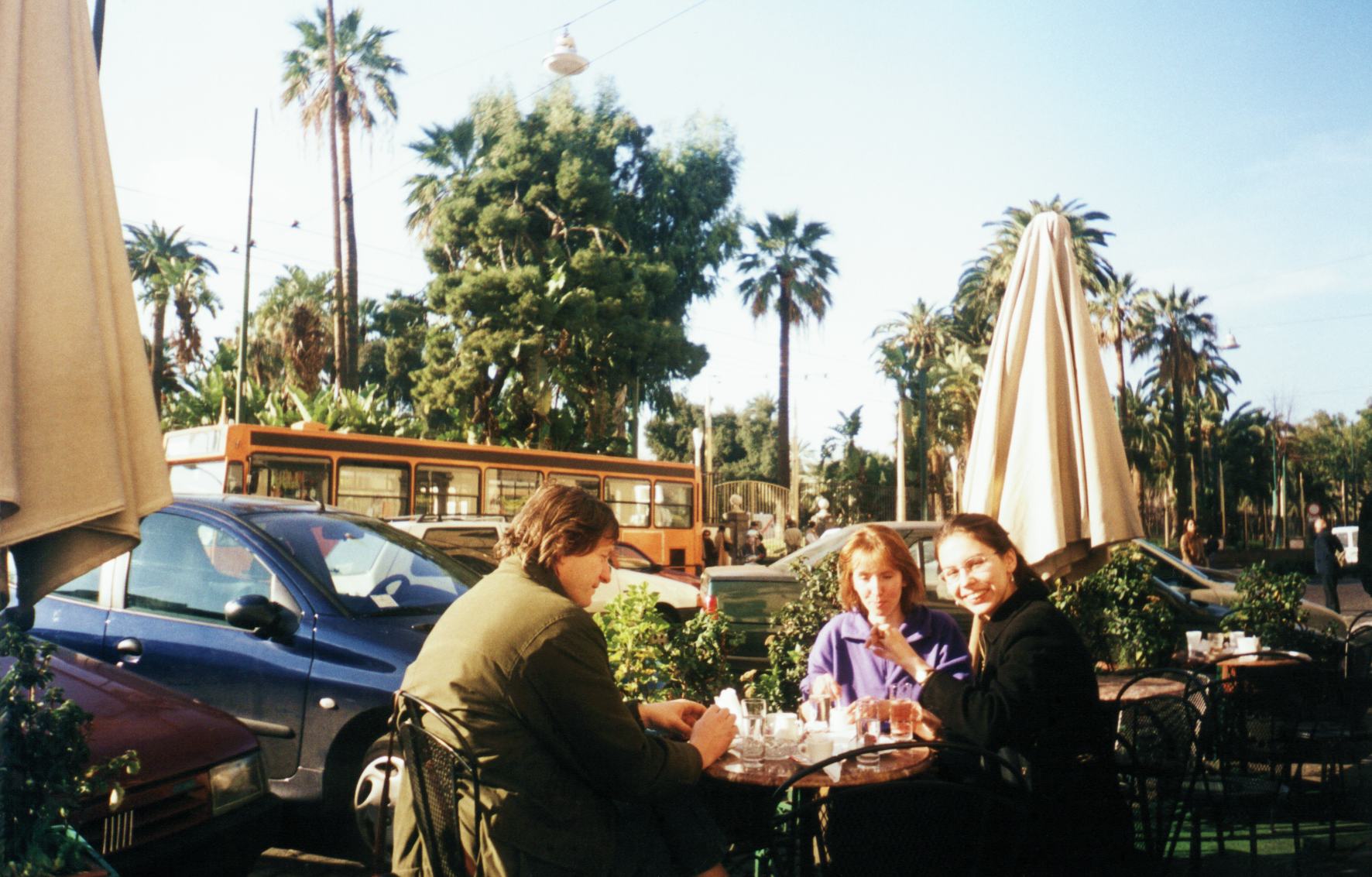
Masha chose hot chocolate that Naples morning. Whether the waiter hadn’t slept enough or took a great liking to Masha, he ended up pouring it over her. Yes, the local chocolate is good in every respect. It clings to clothes better than any paint.
We spend most of our walk along the waterfront. We visit the fortress in Santa Lucia, on a little peninsula. A pleasant spot. Empty stairs and passages. The blue water of the Mediterranean below. Fishermen pull in nets right under the walls. In the distance is the familiar profile of Vesuvius. That picture has been before my eyes since I was a child. How many paintings have probably the world’s most famous volcano in the background? The volcano hasn’t destroyed a town in two hundred years, but Pompeii’s last day, 24 August AD 79, is alive in people’s memory.
It’s about thirty kilometres from Naples to the volcano but the drive isn’t easy. The coast is heavily populated and the roads are narrow and clogged with cars. The motorway would be faster, if you could only find the entrance. We’re unlucky again and must take two hours to work our way through the maze. Two roads climb well up the volcano, to the cone. One is the tourist road to which all the signs point. It ends at a place where they collect money. The other is an ordinary road to the next village, along the south side of the crater. If you leave the car there and climb a hundred metres of loose lava, you can see the crater for free. We take the tourist road. At least it has signs.
The road is narrow and steep, with numerous turns leading off to private villas. In spite of the frightening stories about Pompeii, modern Italians are quite happy to settle right on the volcano’s slopes, about ten times closer to the crater than the famous ash-covered ruins.
You can drive to the foot of the cone. Leave the car in the car park for two euros and go on foot from there. There’s another two hundred metres to climb. An extremely wide path, a road really, has been laid. You could even drive a car up it, but outsiders aren’t allowed. The unpaved road laid over loose lava isn’t up to taking that kind of traffic.
As you approach the crater there’s a checkpoint to collect the money. It’s ten thousand lira, or €5.16, to go in. The switch to the euro was so recent that they haven’t rounded the prices, so if you pay in euros you have to hunt for change wherever you go.
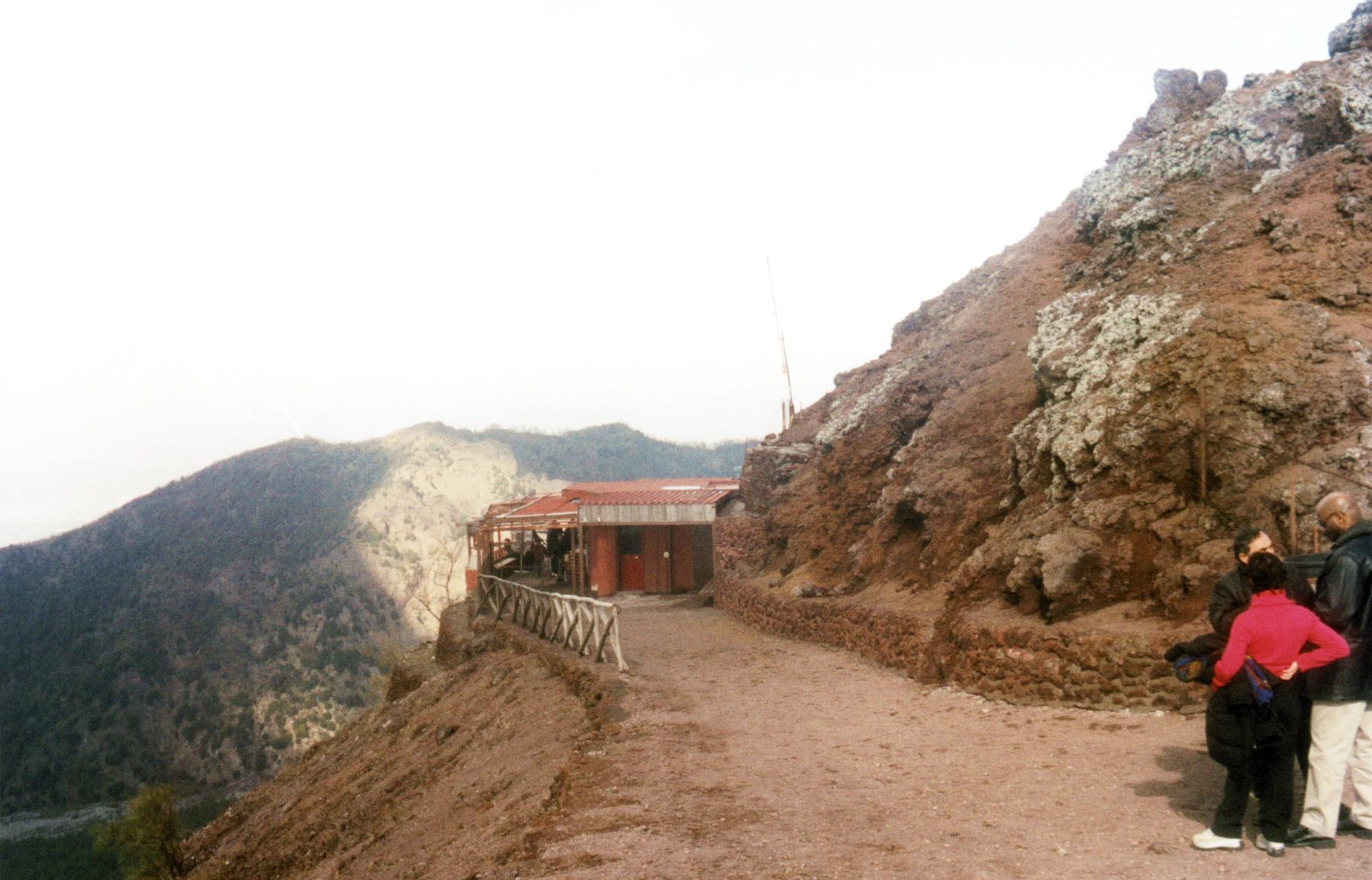
Masha is incensed that they charge to see a crater at all. She even tries scrambling around the checkpoint over the rock but gets caught, so we have to pay. Tourists are meant to walk along the crater rim. You aren’t allowed to climb inside. There are little barriers everywhere but no guardians of order to be seen. Given the general Italian attitude to rules, I risk breaking the prohibition and scramble down. When she sees nothing dreadful happen, Masha joins me.
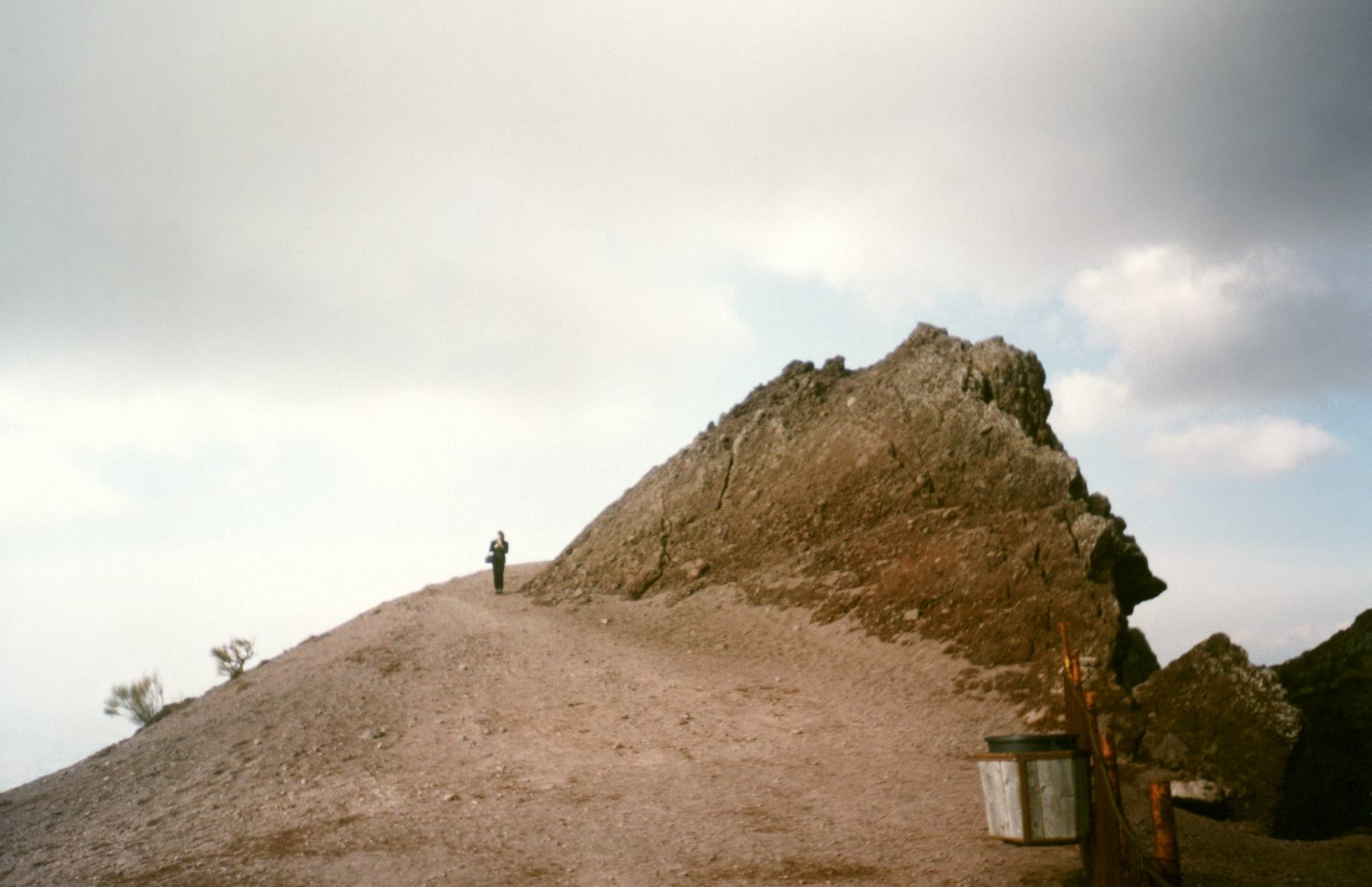
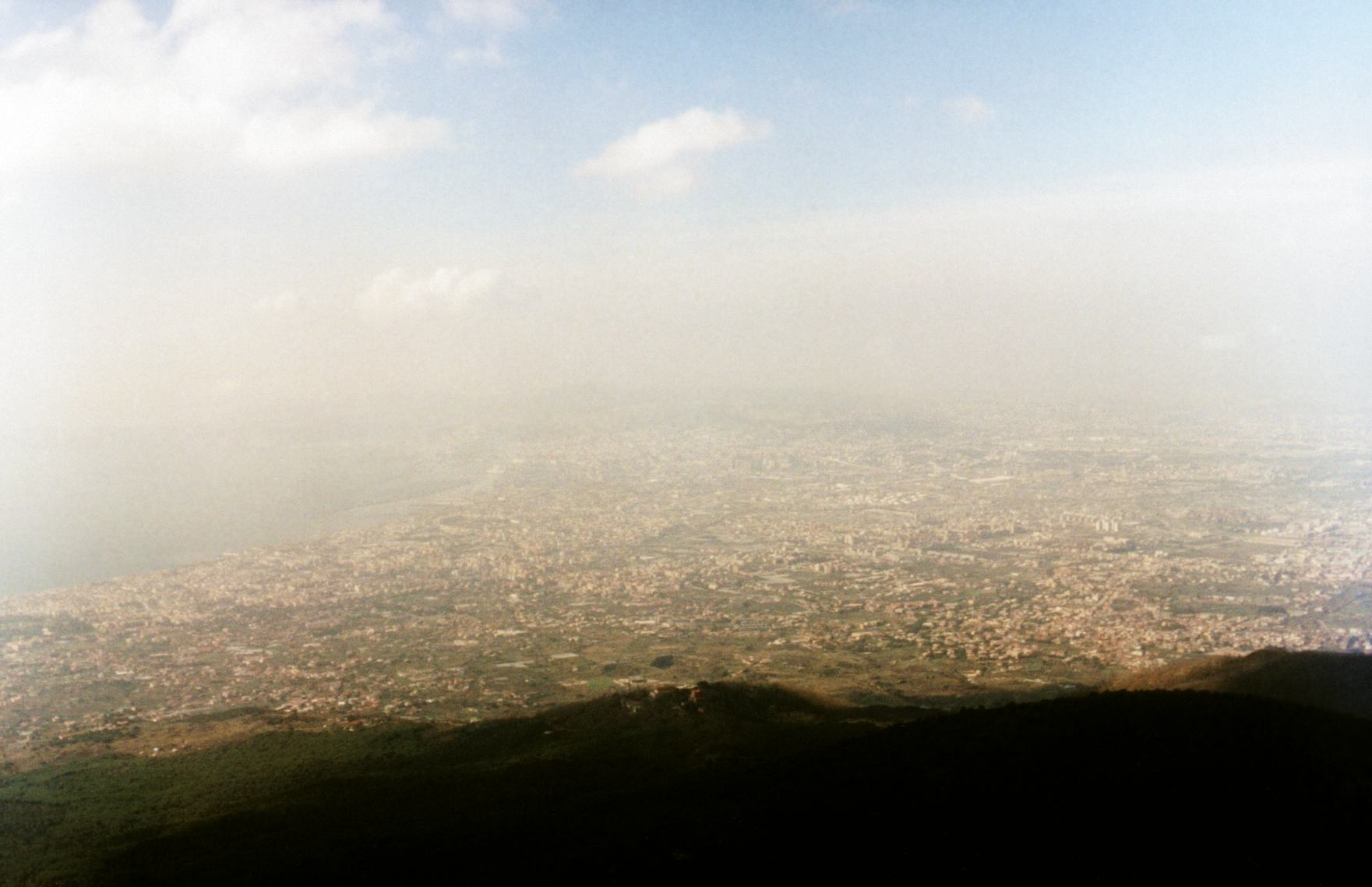
The crater of Vesuvius is a bowl a hundred metres deep and about half a kilometre across. The sides are sheer and it’s not easy getting down to the bottom.
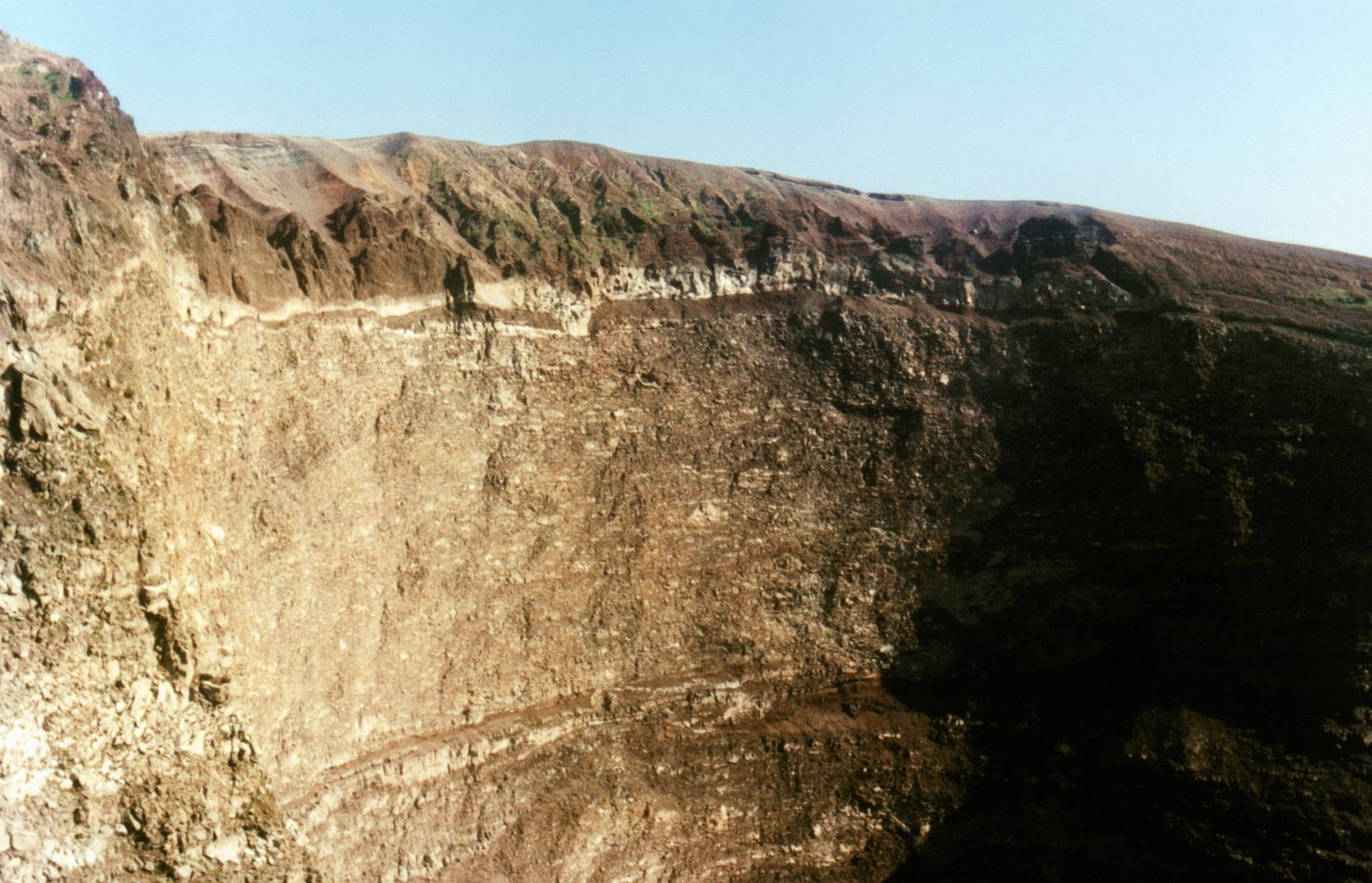
Volcanic activity is minimal. Weak little jets of steam come out of the ground in a few places. There isn’t even a smell of sulphur. Bushes have started growing on the floor of the crater. Depressing to see it in decline. What a volcano it used to be. The ancients trembled before these gates of hell. Even in Lonely Planet it gets page 666. It last erupted in 1944 with a small fall of ash.
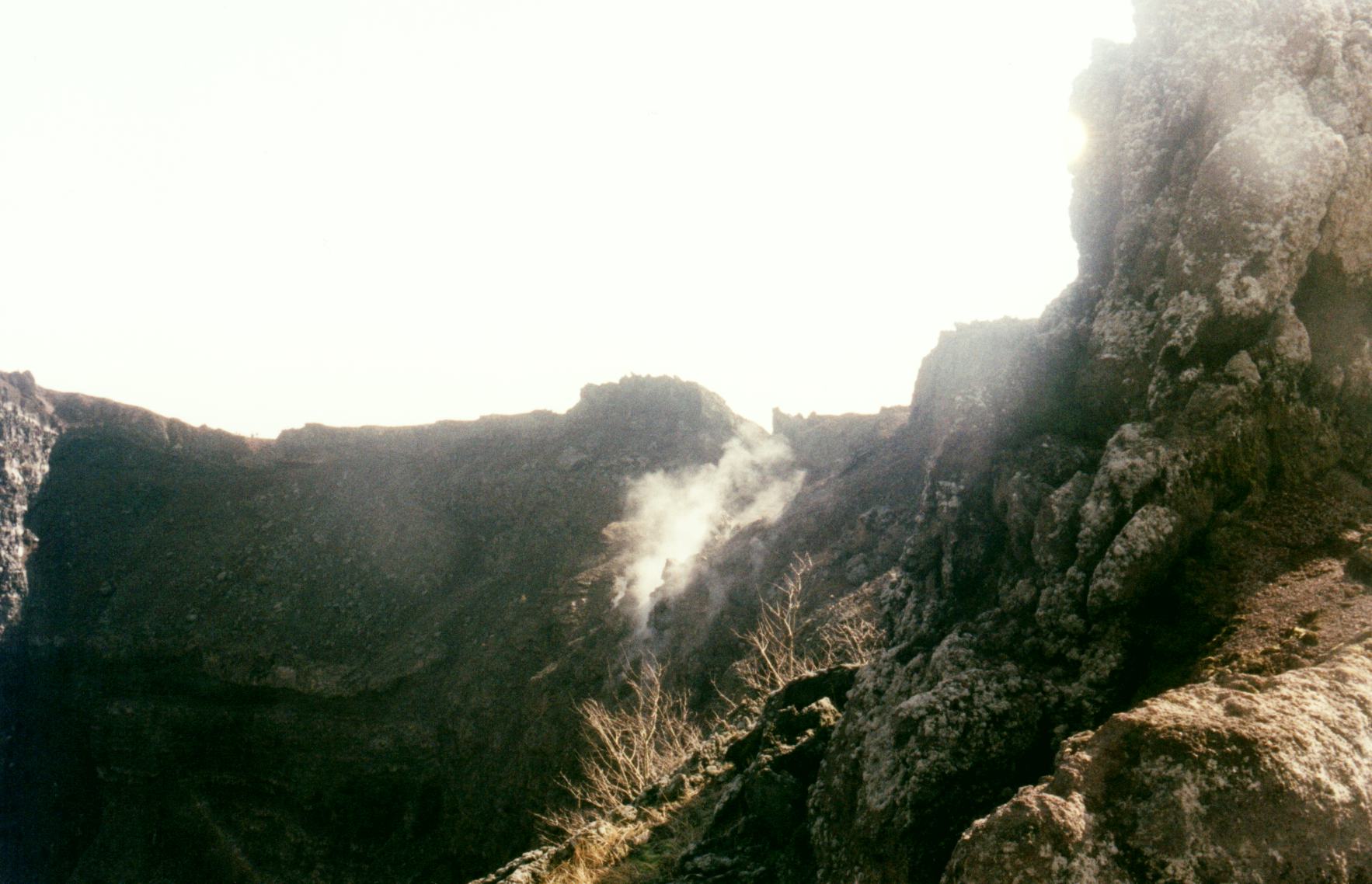
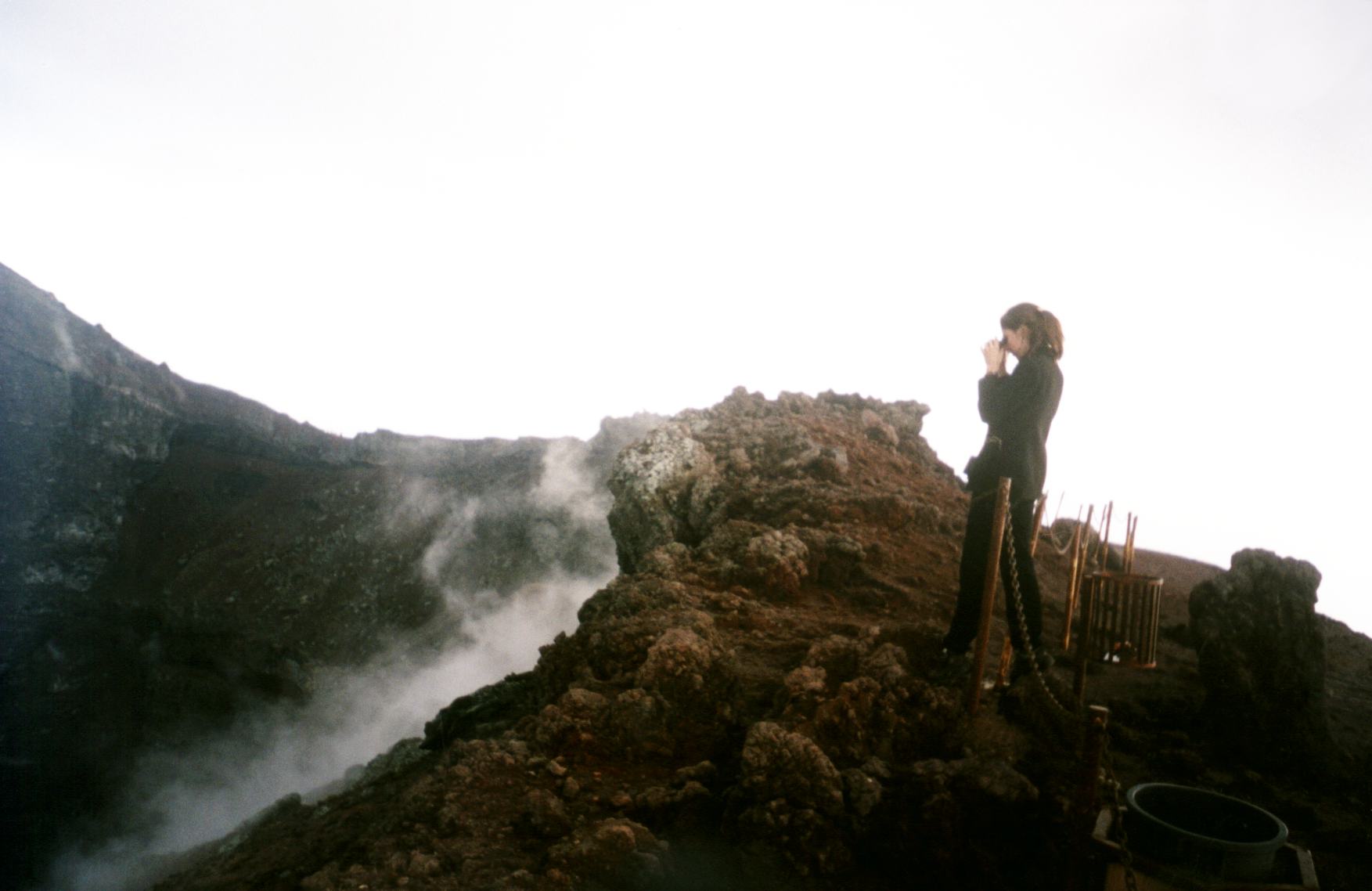
We can’t reach the bottom. You’d need a rope. We make do with visiting the biggest fumarole.
Suddenly I see little coins at my feet. The tourists throw them down here. I remember the five euros lost at the entrance and decide to recoup my outlay.
Our spirits rise, and we climb back over the little rope and scramble onto a rocky peak on the rim of the crater. We’ve brought a bottle of wine and a little food.
We open a tin of stew and finish the bottle.
You can see the sea below, with the island of Capri in the distance. It would be nice to go out there. A pity we haven’t time, and anyway every time I hear the name it brings back uncomfortable associations with the Bolsheviks and Gorky’s Mother.
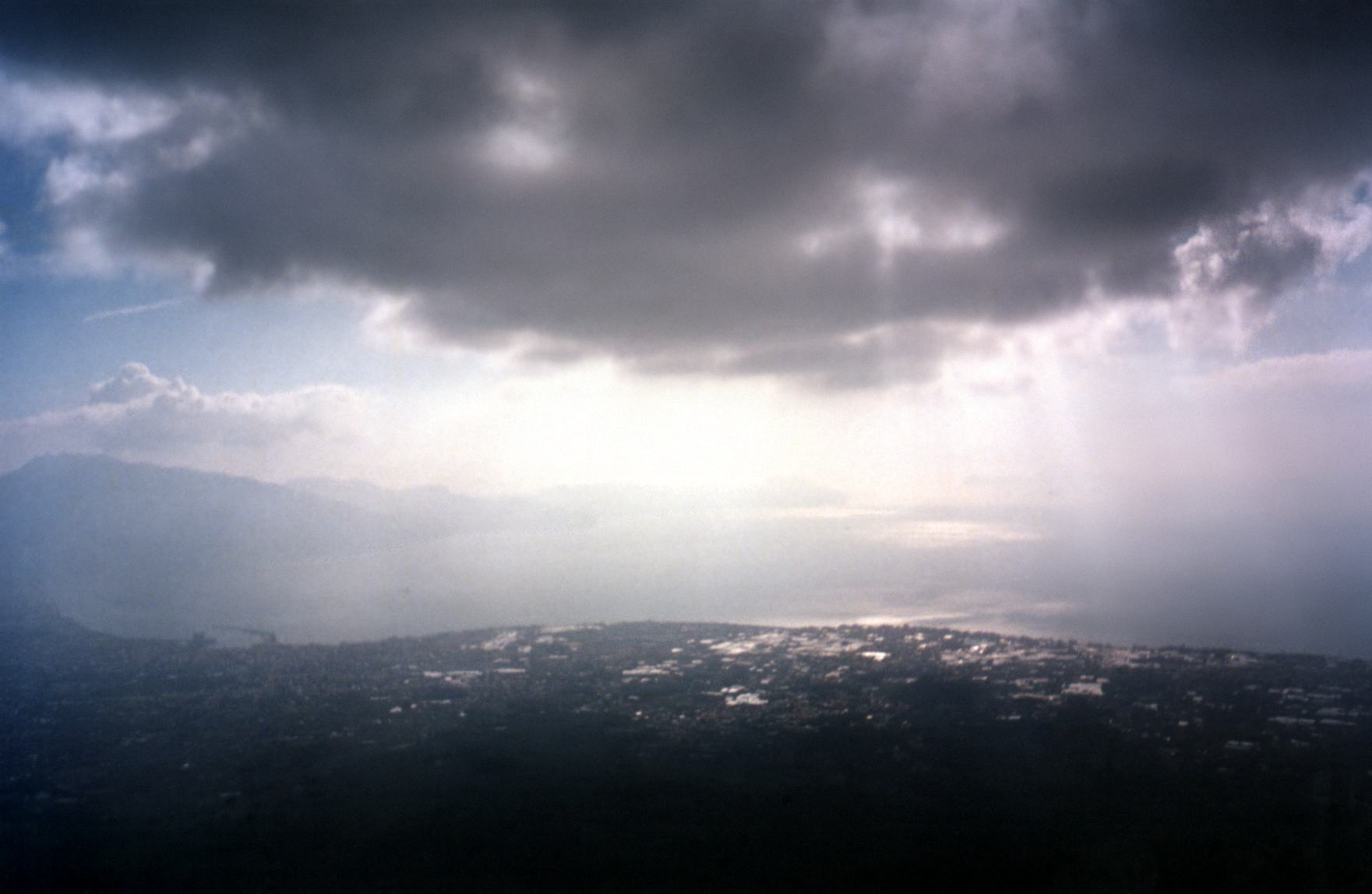
The whole coast is built up. Every bit has a name of its own, but in practice it’s one huge suburb of Naples. The famous Sorrento is nearby. After a glass of wine Masha brightens up and bursts into song. “Come back to Sorrento, my love…” She can’t remember the rest, but that’s enough, especially if you repeat it fifty times. Before long Lena joins in. Now the two of them are calling in harmony for their love to come back, with a little “Santa Lucia” thrown in.
Once the wine settled, we quietly trudged down to the car. On the way we bought some coloured stones as souvenirs at a little kiosk. They’re eight euros each but very beautiful. You won’t find anything like them even if you clamber round the whole crater. The sellers don’t hide that they came out of a quarry about ten kilometres from here.
The next place on our programme is Ercolano. It too costs €5.16 to get in, but unlike Vesuvius, you don’t grudge it here.
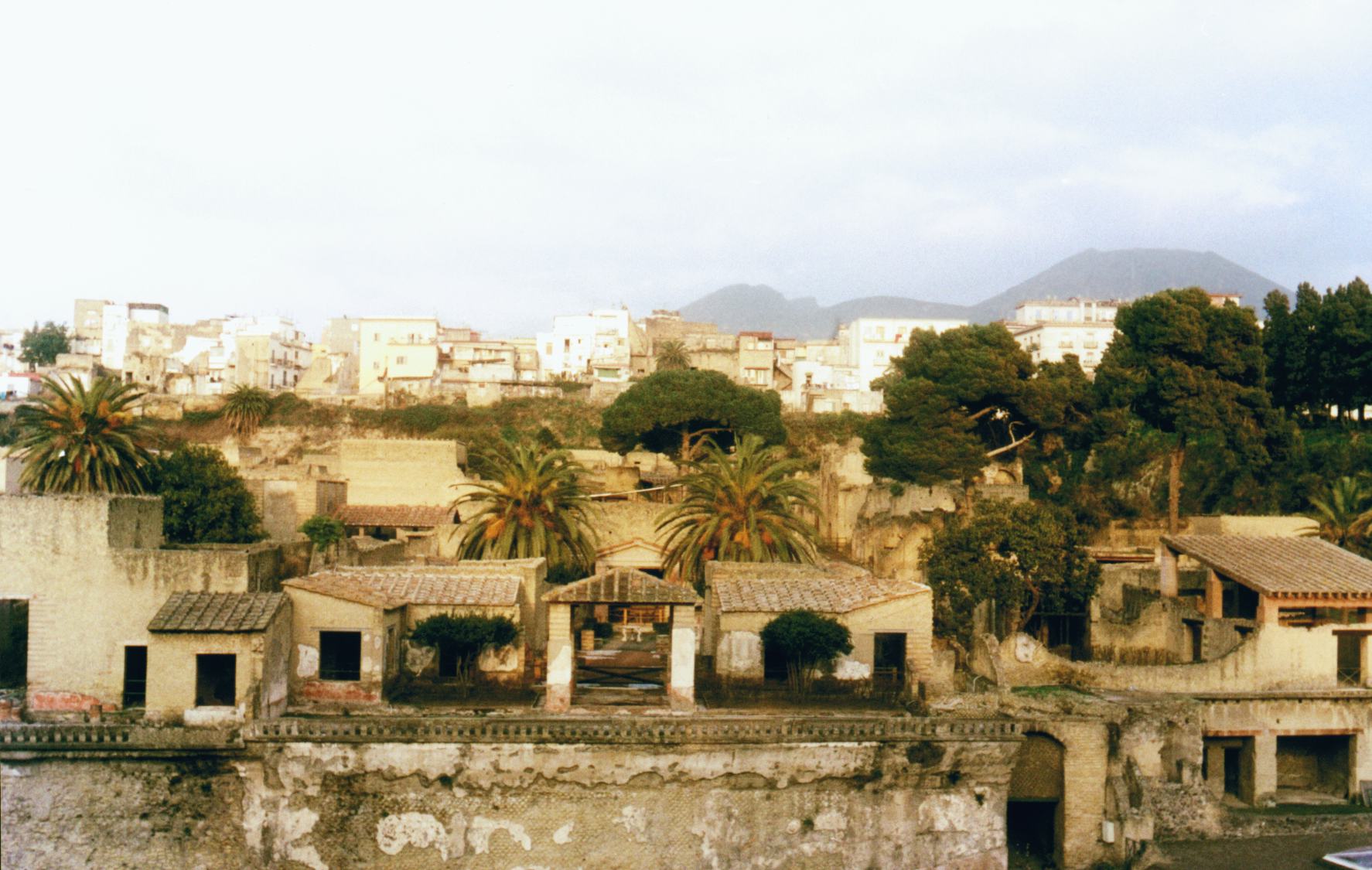
In the famous eruption of Vesuvius in AD 79, two or even three Roman towns were covered in ash. Everyone knows Pompeii, chiefly because they dug it up a long time ago. Times were wild and the town was practically looted. Some things reached European museums and the locals divided the rest among themselves. Another town, Ercolano or Herculaneum, was excavated in the 1930s. They treated the excavation with more care from the start, and the town stands to this day almost as it was. Usually ruins mean columns, walls at best. Here not only do the walls all stand, they still have their plaster, paintings and mosaics.
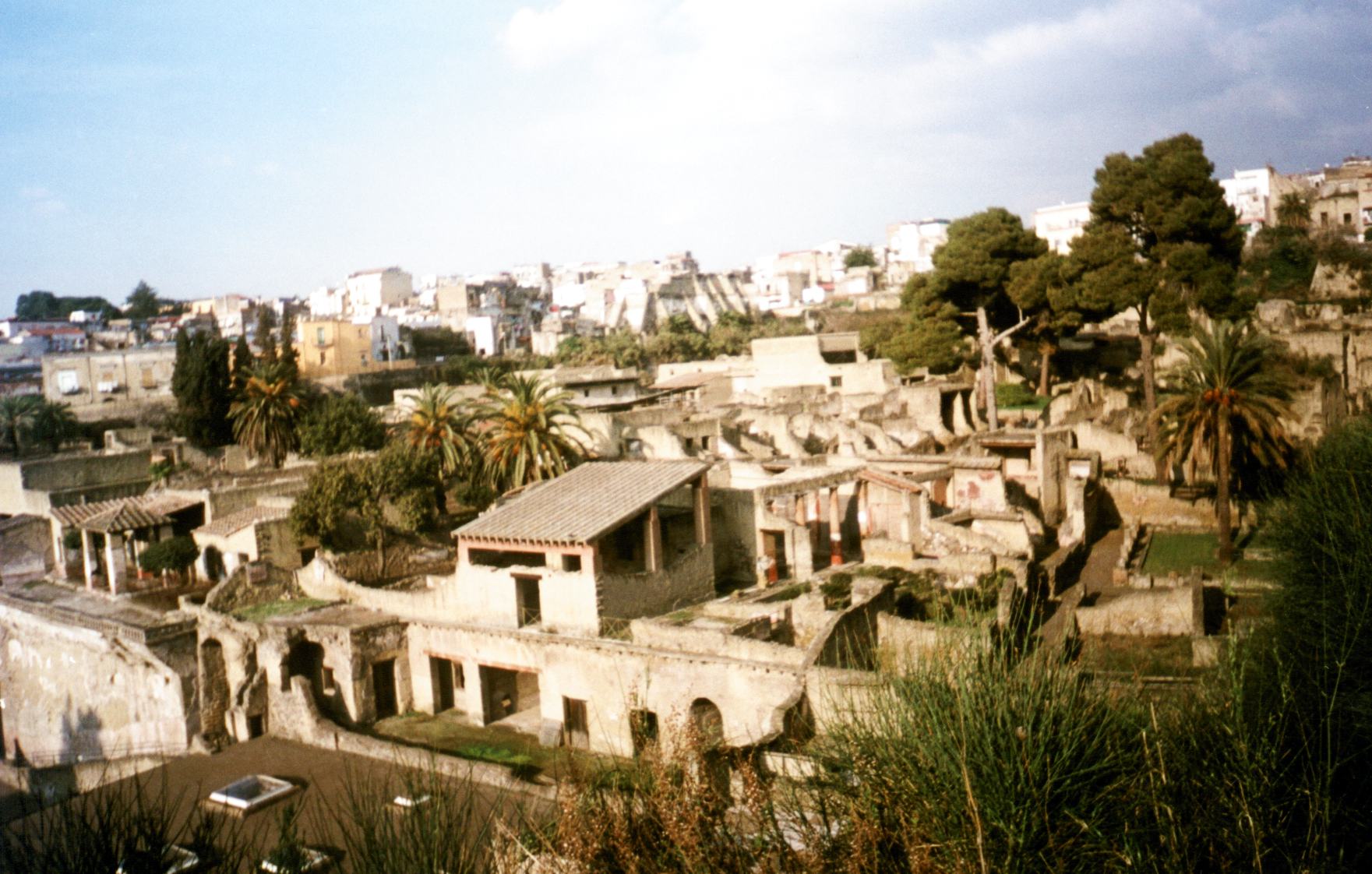
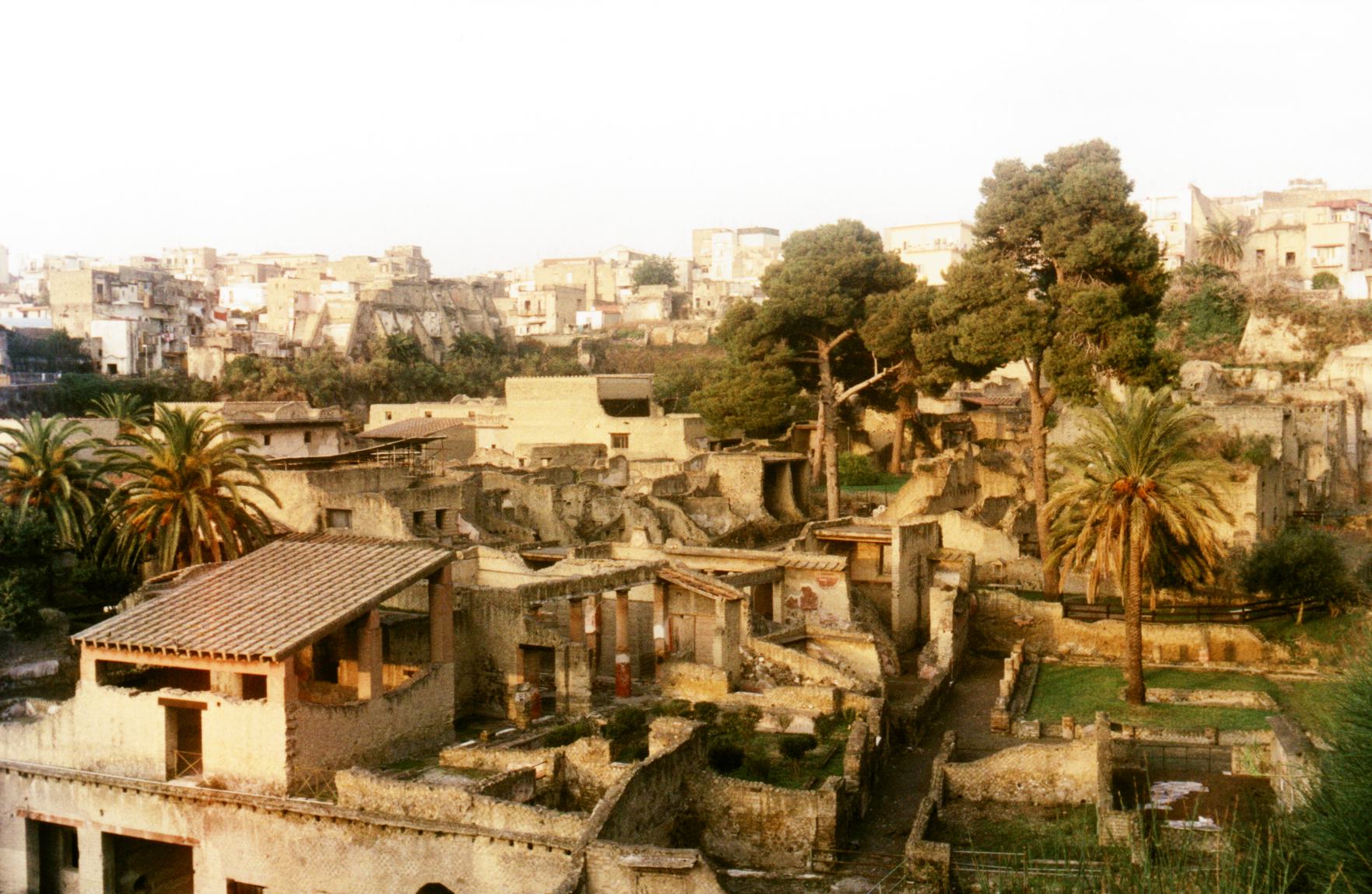
The one thing that went wrong when the ash fell was the extreme heat. The wooden roofs charred and collapsed. The ash came down so quickly the fire wasn’t able to get going. The houses were buried under twenty metres of ash before the people living in them could run out. Their charred bodies were found inside the buildings. A number of skeletons were put under glass for tourists to look at. They’ve survived rather poorly, of course, worse than Egyptian mummies. You can see bits of dry skin and clothing here and there.
The town is laid out on a regular plan, so it’s easy to see systematically, one block at a time. Most buildings are single-storey. I didn’t see any above two storeys. Some passages and rooms are closed to visitors, but it doesn’t hamper your freedom much. You can see all the most interesting parts. The roofs have been restored on most of the houses.
The furniture hasn’t survived. Only mosaics, sculpture and painting on plaster are left. The pictures are mostly landscapes. Some are quite stylised. I used to think Roman art was exclusively naturalistic, but there are some quite avant-garde things here. Rich households were expected to have a bust of their beloved emperor.
Pompeii, whose last day has been talked about so much, turned out with Herculaneum to be the most intact of Roman towns. Rome was destroyed long ago and the emperors are long gone, but here it’s all almost as before.
If you have the chance to see just one Roman town, Herculaneum is the one to visit. We so enjoyed walking round it that it was dusk when we came out.
We were terribly hungry. At the nearest little restaurant we ordered real Italian spaghetti and another bottle of wine. They charged us eight euros for bread, but the food was absolutely wonderful. Next time I’m in Italy I’ll eat nothing but pasta.
Having found some money at a cash machine, we set off for Sicily. On the way we stopped at Positano. Little houses cling to the rocky cliffs. You often see that view on posters advertising Italy. A pity we have to see it all in the dark. You can see more by day, of course, but all the houses are lit up at night and it makes a beautiful picture then as well.
The road to Sicily runs inland through the mountains, a long way from the coast. It’s hard to drive it in the dark and there’s no point to it. You can’t see the scenery, for one thing. For another, you do have to sleep some time. Better to get up before dawn and go on tomorrow.
There are practically no big towns on the way, just Cosenza, which we don’t reach. We stop in the little town of Morano Calabro. Its old quarter stands on a hill around a Crusader castle. The place is popular with Freemasons. They come here in summer to exchange experiences.
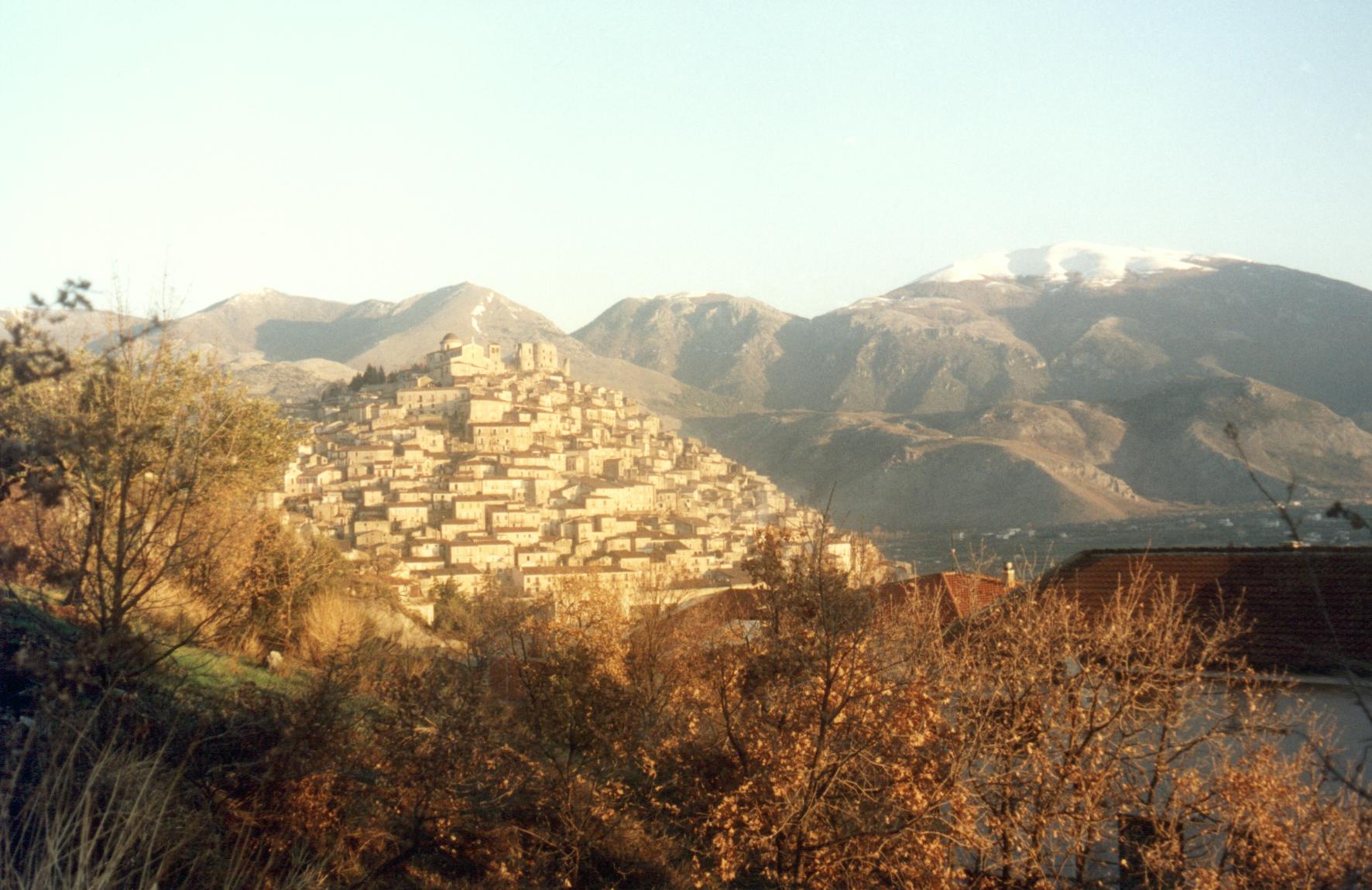
Where they stay here, though, is a mystery. We looked for a hotel for a long time and found one by chance when we noticed a sign at the top of the hill. We drove up. There’s a restaurant below it. People are cheerfully getting drunk, every one of them a man. They look like Mafiosi out of a film. That’s probably what they are. The Mafia in Calabria is no less active than in Sicily, only nobody here has been their Mario Puzo. It may even be a sign that the boys here don’t allow people to write books and make films about them in such an undignified way.
There’s no need to fear the Mafia. First of all, their quarrels don’t involve tourists. If you decided to start selling weapons there, without so much as knowing the rules, then some gentlemen of respect would come and set you on the right path. Second, the Mafia exists in places where the only thing the government is capable of doing is robbing its own people. In that situation, ordinary people band together in a secret community to defend their interests. For tourists this only means that if they have trouble with the local authorities, they can hope for help from the Russian consulate or go to the local Mafiosi as well.
To them our arrival was a little like a flying saucer landing. The women went to reconnoitre and I stayed in the car. The hotel consisted of two rooms. The last guests stayed here, at best, a few weeks ago. Even the question of whether we could stay the night wasn’t a simple one for them. They looked for the keys for ages. Then they took ages working out what it would cost. They talked it over in Italian for a minute and then asked, “If we say a hundred thousand lira, will that be too expensive for you?” The women ask how much that is in euros. The question starts another vigorous discussion. Oh, those euros. Who can make head or tail of them? In our town we pay in lira. What would our grandfathers say? Those vile politicians in Rome have laid hands on what’s sacred, the lira. A disaster and we can’t do anything about it… They take sixty euros off us, though the exchange rate gives €51.60. The girls don’t argue. After the 146 in Rome we were ready for worse. The money’s paid and the key handed over, but they still haven’t seen me. You don’t put just anybody up here. They ask for my passport at least. They study my picture at length. It seems they’re full of respect. It must be a man of consequence travelling, a real don. From Russia with three women. Won’t show his face. On the run, surely. What they said on television about the Russian Mafia really was true. Only there do real men still exist, and they haven’t brought in the euro. It’s especially hard to explain why we’ll all be staying in one room.
Before long Lena goes downstairs for beer and they give her a huge mug for nothing.
The room we get is positively luxurious. Massive old beds. All the furniture is wood. The bathroom must be fifteen square metres. The television gets just one channel. A few more are barely visible. They’re showing a Mafia film with lots of killings. Even though it’s in Italian you understand the whole thing. By the end of the first episode everyone but the leading man will be wiped out. Horrible. They don’t show mutilated corpses like that on television at home.
We sleep to our complete satisfaction. Soft beds and quiet all around. We wake even before sunrise. A frosty morning. Before our eyes the first rays of sunlight touch the snowy peaks. The highest is called Dolcedorme, which means “sleeps sweetly”. We picked the right place to spend the night. Even the mountains are supposed to sleep here.
The whole building is completely quiet in the morning. Everything’s open but there’s not a soul. They told us the night before that people here sleep till noon on Saturdays. You can leave the keys in the door. No breakfast. We couldn’t even explain what “breakfast included” meant. It doesn’t leave us any less hungry, though. Our room has a balcony lit by the very first morning sunlight. We go out onto it and make breakfast and coffee on the gas stove. You want to spend several days in a room like this.
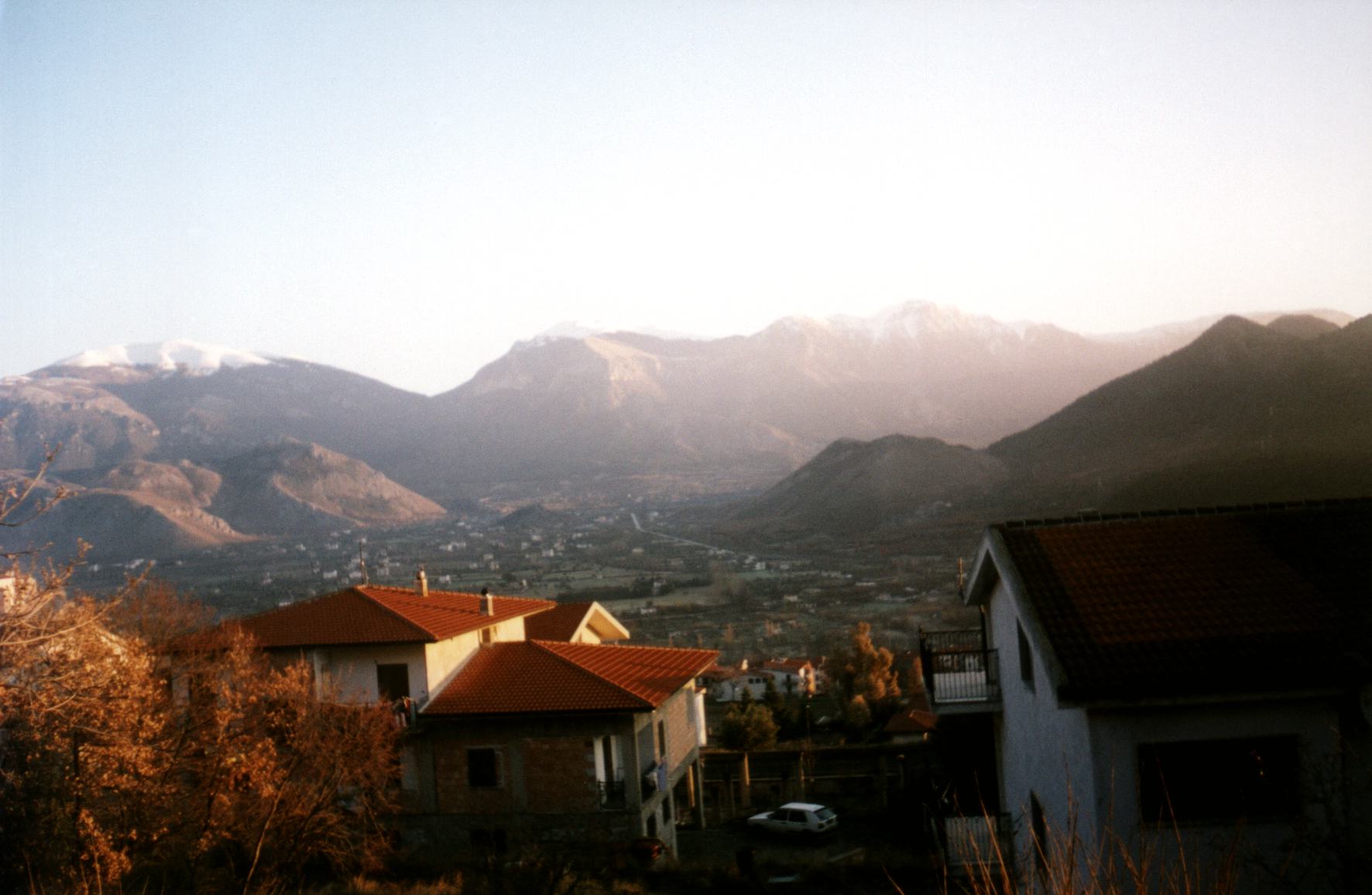
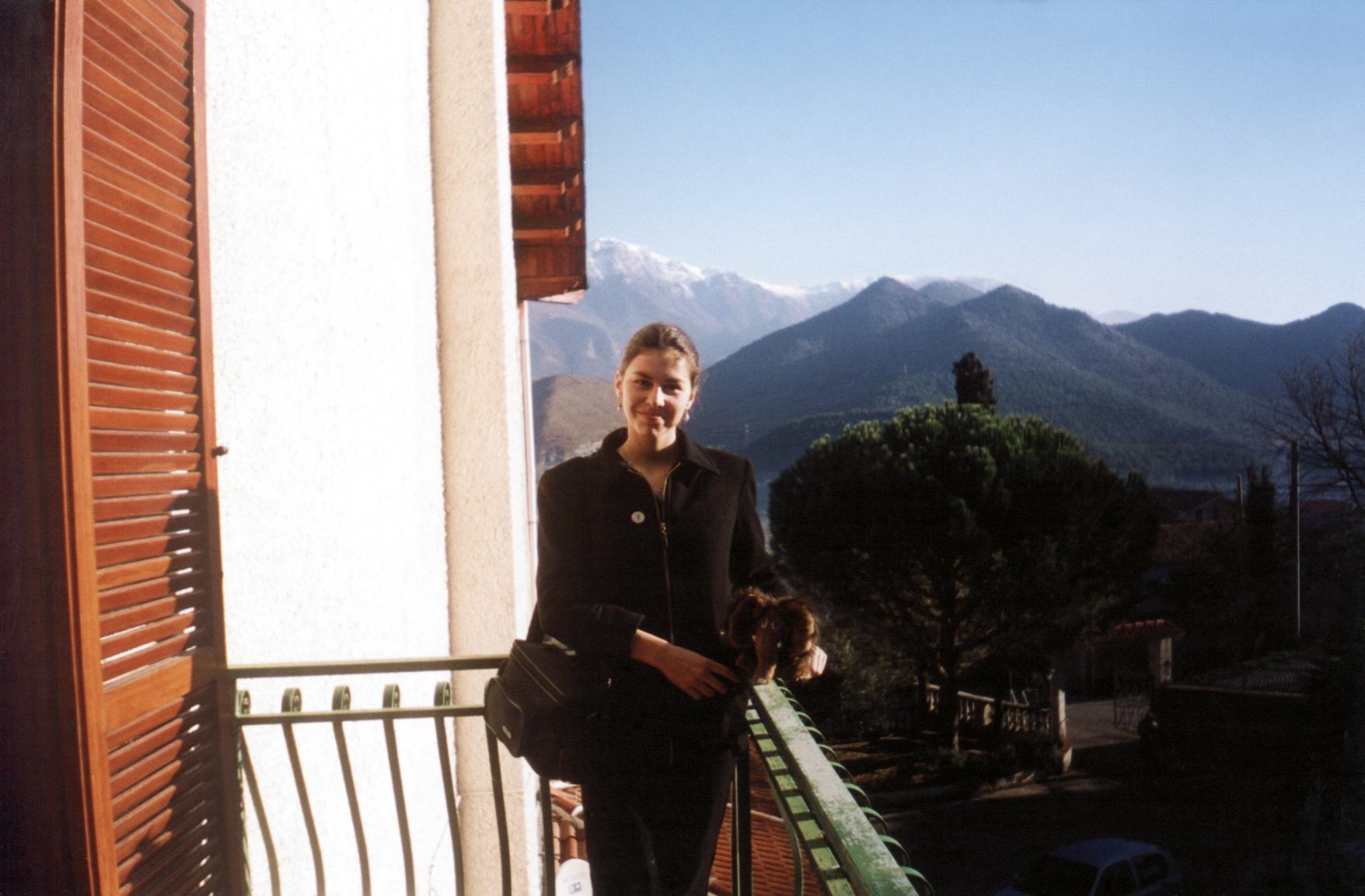
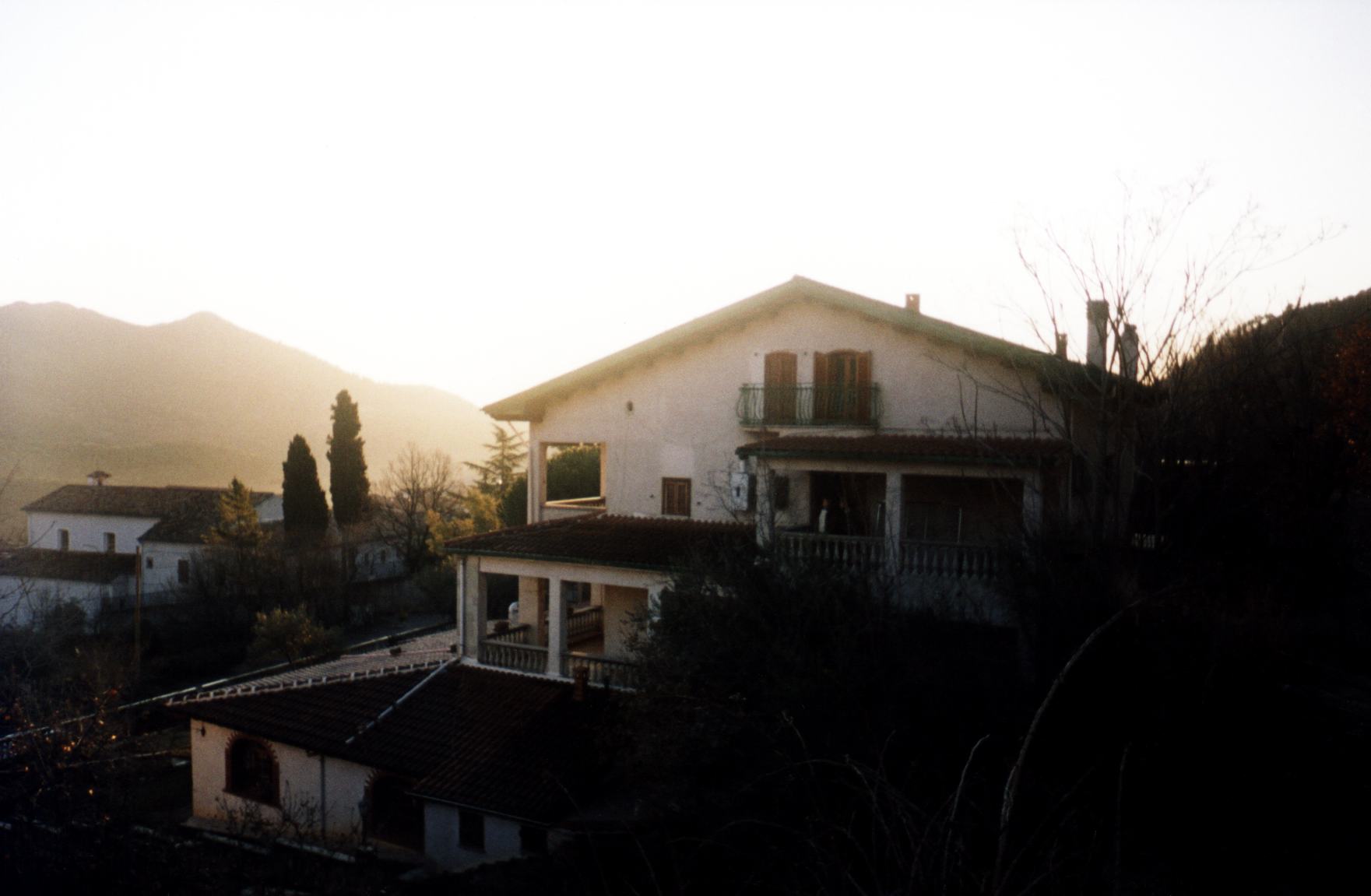
In the morning the kilometres go by faster. It’s a mountain road and the tunnels follow one another. In places it gains height and we get into the clouds. You can see no more than fifty metres ahead. We were right not to drive this way in the dark.
You get to Sicily on a ferry. It goes about twice an hour. Plenty of room.
The Strait of Messina is eight kilometres wide. The crossing takes thirty minutes. Tickets cost €18.50. A bridge is planned in the near future. It’ll be a magnificent structure, with a central span of three kilometres alone. A triumph of science and technology.
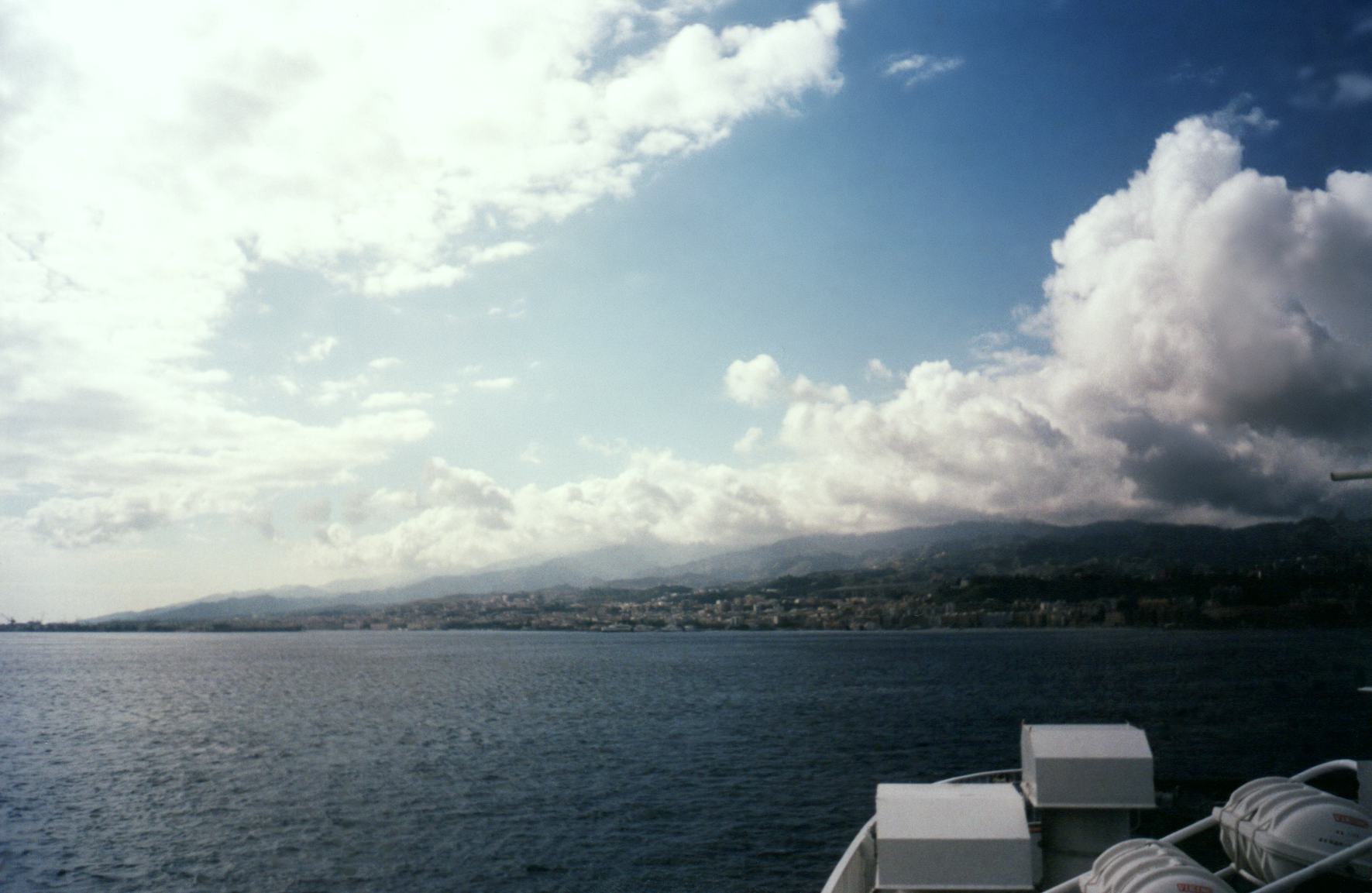
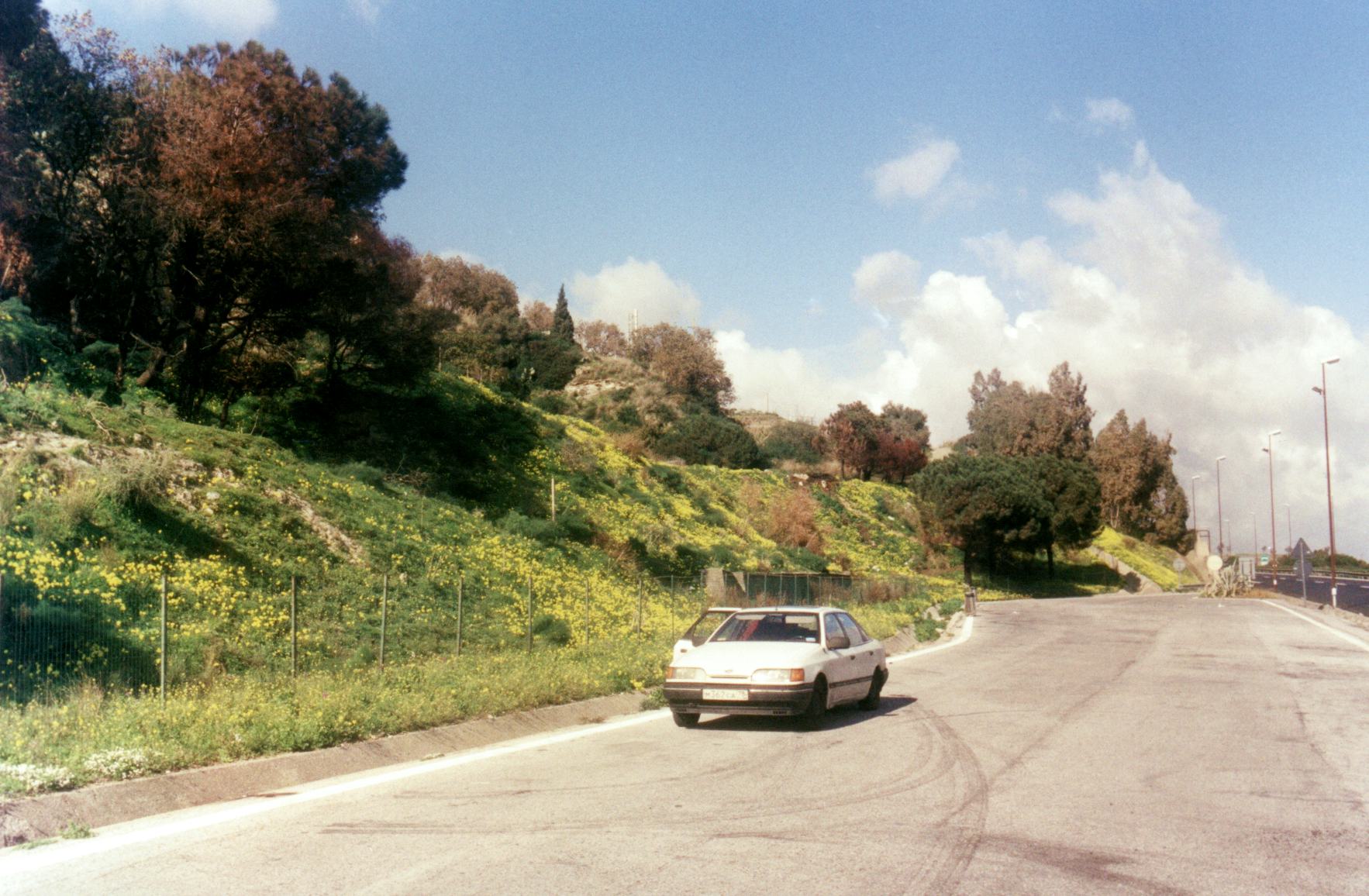
The ferry arrives in Messina. We run into a huge traffic jam as soon as we drive off it, and spend more than an hour trying to get out of town and onto the motorway.
Just south of Messina is the little town of Taormina. According to Lonely Planet it’s the most colourful town in Sicily. We stop there for a walk.
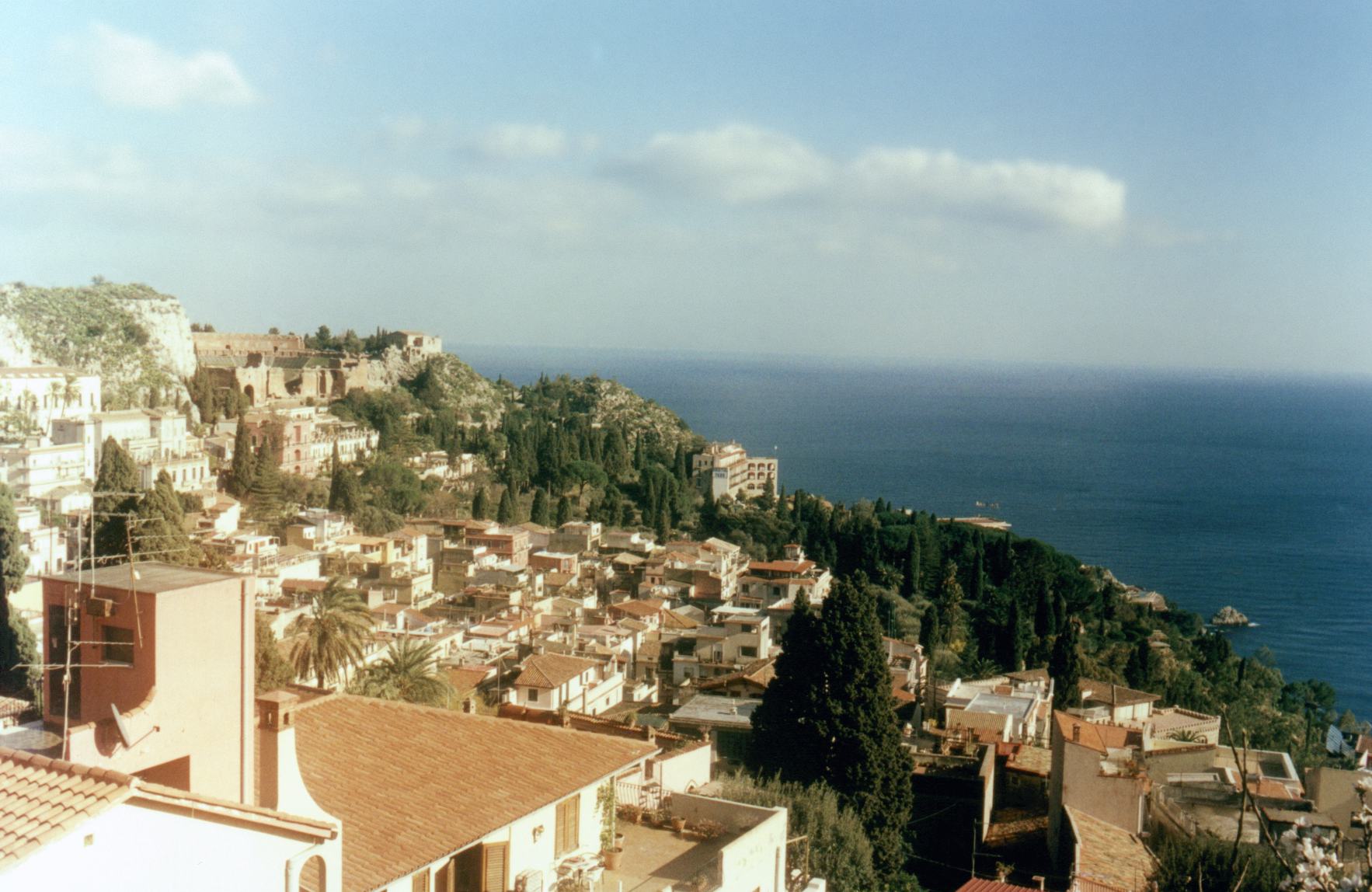
According to the road signs, parking in town is only for local cars. Everyone else is supposed to use a vast pay car park. We pay €1.60 for several hours. The coastal road runs under the town in a tunnel several kilometres long.
We leave the car inside this enormous structure built against an almost sheer cliff. Today is a holiday and Carnival here and throughout Italy. The famous candlelit ball is being held in Venice on this Saturday evening. It’s essentially the counterpart of the Russian Maslenitsa. The whole Christian world celebrates it. Only the Russian Orthodox, with their mistaken calendar, do it on another day.
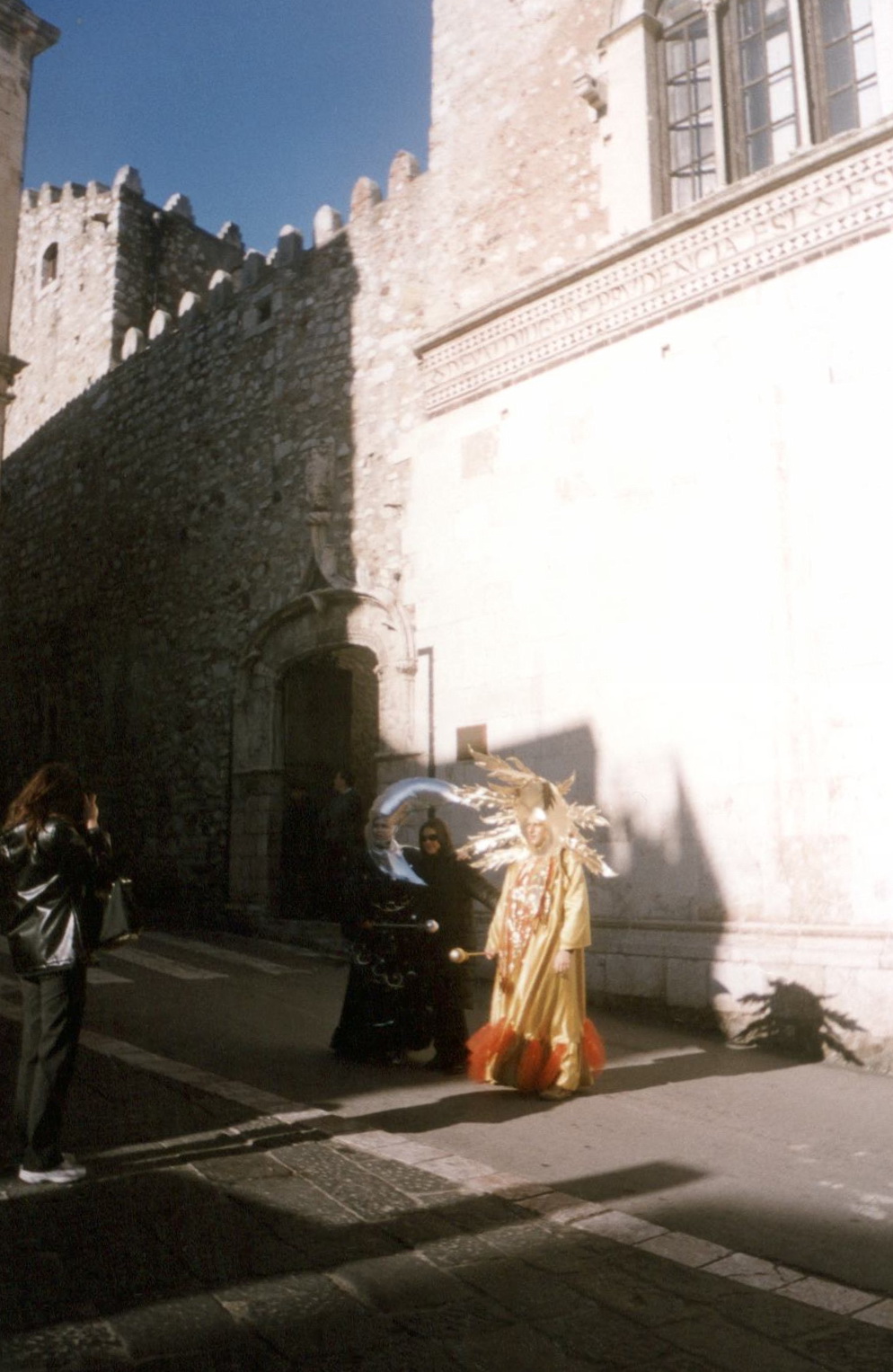
In the car park itself the most industrious townspeople are decorating their cars with flowers. Several vans full of multicoloured carnations have come into town. Now they’re turning them into huge figures. They attach a frame to a car and fix the flower heads onto it, ending up with creatures, monsters, castles and anything else they can imagine.
There’s music in the streets. The children are wearing splendid old-fashioned costumes, the girls in magnificent long dresses. It makes me a little sad that clothes have become so plain and people look so uniform and grey nowadays. They were prettier before. It isn’t practical, of course, but it’s lovely that there are places where people dress the old way at least once a year. You can dress the children up, but getting them to behave as obediently as in the Middle Ages is another thing. These dolled-up little creatures shower themselves with streamers, run riot and crawl on the dirty paving. Not all the finery survives the holiday. I notice another piece of children’s mischief that hasn’t caught on in Russia. An aerosol can that spits out a jet of some gunk. It hardens in mid-air and turns into a white string. Hold down the button and you can coat your neighbour from head to foot in seconds. It shakes off, of course, without doing any harm to clothes. All in all an indispensable bit of kit for a child. I thought of buying one myself, but didn’t fancy carrying it over so many borders. Two euros struck me as a bit steep for such a perfect trifle, too. That’s probably what’s kept the outrage from spreading across Russia.
It’s a cheerful carnival here. I’m not fond of theatrical performances and that sort of play-acting. No amount of coaxing could get me to one of our public festivities. I feel like an outsider there. Here it all works out differently. People thoroughly let themselves go. Such a mass outbreak of happiness sweeps you up. Nobody drinks liquor, just a bottle of wine perhaps. Tanya and I settle for coffee. It probably needs a southern temperament, streets with orange trees laden with fruit, a blue sea stretching away, and warm sunshine to cap it all.
Only the town centre is taken up with the celebrations. On the outskirts, life goes on as usual. The town takes up the seaward side of a hill several hundred metres high. A stairway scrambles up through groves of cactus. The huge prickly pads are covered with orange fruit. Nobody seems to eat them here. At any rate I’ve never seen them for sale. The local cats like living among the cactuses, though. They walk right over the prickly pads, taking ages to choose where to put each paw. It’s frightening to watch.
The sea coast is rocky but there are beaches. The public bathing place is called Piscina comunale in Italian. Perhaps our minds are utterly corrupted, but that phrase made us grin. As well as beaches, there are the blue swimming pools gleaming in the hotels by the sea. Like every proper Mediterranean town, Taormina has a well-preserved Roman theatre.
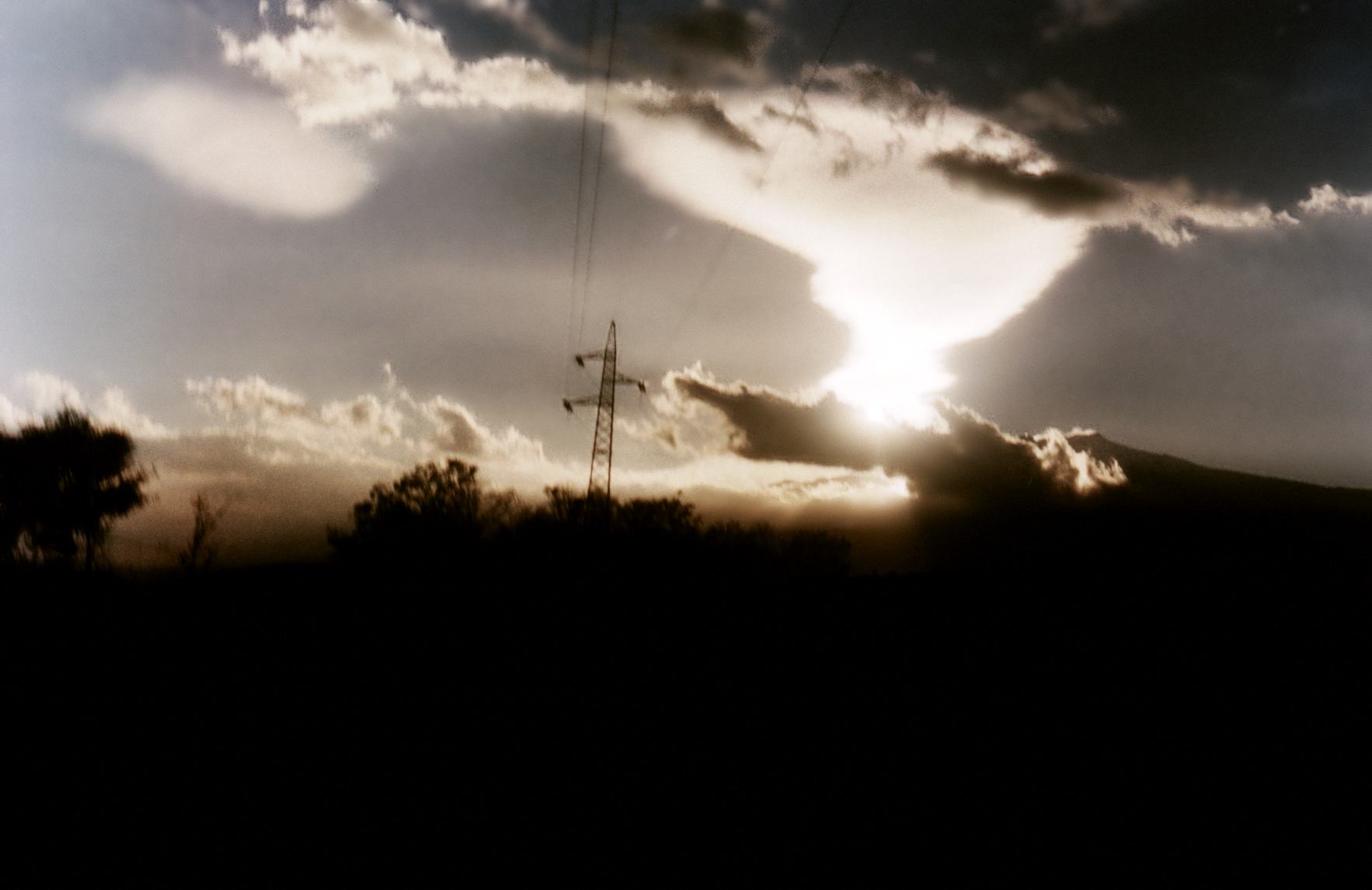
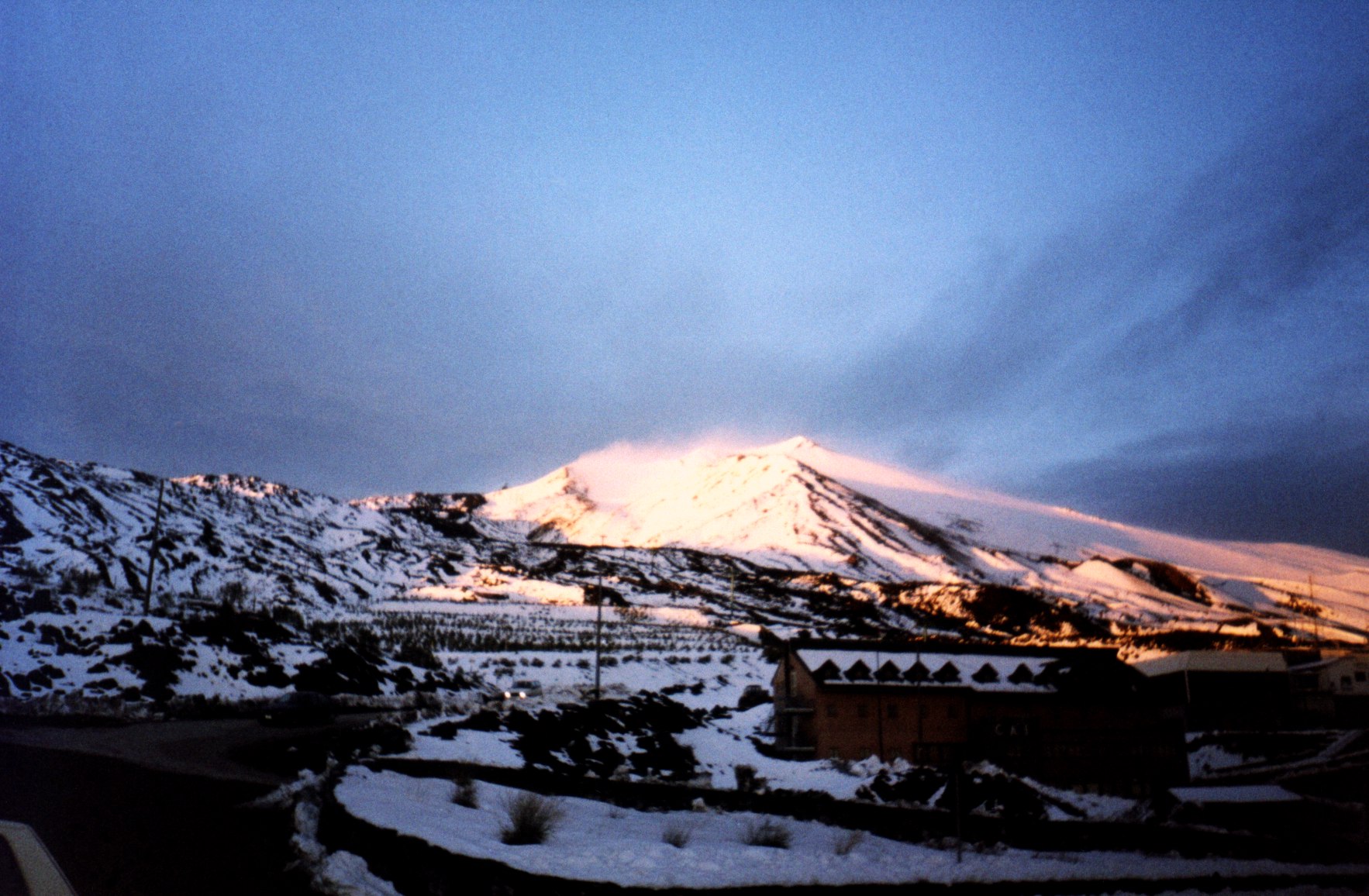
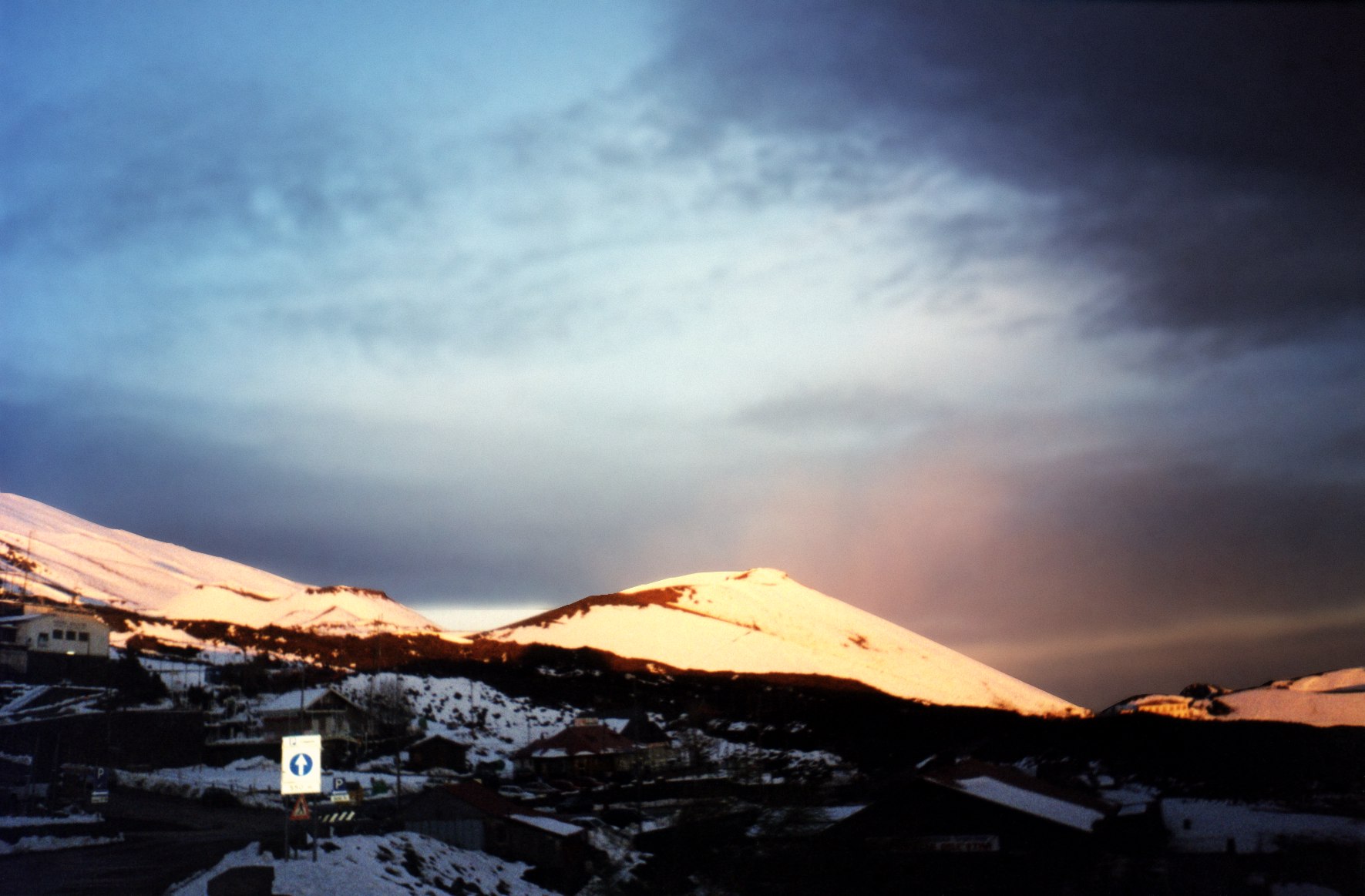
The day was drawing to an end. The sun began to set behind Etna, lighting up a column of steam and spindrift. A fantastic scene.
It’s expensive to spend the night in Taormina, so we drive down to the far south of Sicily, to Syracuse. Archimedes lived and worked there. “Shove a body into water and the water shoves it out, with the force of all the water that the body pushed about.” Remember? They thought of that right here, as well as the idea of taking on an enemy fleet with a battle laser. On the road we got through to a campsite. The woman said she’d wait for us till eight in the evening. We had plenty of time, except we didn’t have a city map and it wasn’t clear where the campsite was. Lonely Planet only has a map of the centre and the campsite is much farther south. We drive into the centre to try to work out where we are. That’s a fatal mistake. The whole centre is in the grip of Carnival. The streets are closed off. We spend hours in traffic jams. We only break through to the south of town after dark. Try as we might, the campsite won’t be found. No signs. People at the filling stations don’t know of the existence of campsites as a species, and everyone’s English here is terrible. We go into a café to buy a bun. How much is it? We try English, French, German, Arabic. No help. The woman just blinks. At last we remember the Spanish, “¿Cuánto cuesta?” She looks deep in thought, but still doesn’t understand. Now try explaining the campsite to her.
By trial and error, trying every turning, we finally find a wild road through an industrial area that leads at last to the longed-for barrier.
A lone old lady sits at reception, looking like a Russian librarian. Worn down by a hard life but cultivated and passionately fond of her city. We have to pay twenty-four euros for a tent pitch, which is fairly expensive. On top of it they give us a pile of maps and tell us what to see and where. A cabin for four would have been sixty euros. You can find a cheap hotel for that much.
We made it just in time. The old lady was already about to leave. She gave us the key to the entrance gate. In the morning we were to push it under the window of the office.
It’s a big campsite, but apart from us there’s only one German caravan. It seems Europeans don’t like camping in winter, which is why nearly every campsite is shut. That’s all wrong. It’s cost us several hundred extra euros. There isn’t much point staking out a pitch with the tent here, so we drive straight into the centre. The town is still celebrating, with loud music in every square.
The central part of the city covers a few square kilometres. It takes several hours to go round it on foot.
There’s Archimedes Square with a fountain of the same name. The Greek and Roman ruins amount to bits of column behind a fence. A modernist church in the shape of a pyramid towers over the town, and there’s a medieval castle and museum on a little island. That’s about it for sights, I think.
In one of the little local churches I saw a new invention of Christian thought. Many Catholic churches have replaced candles with imitation ones with little bulbs. You take one and plug it into a socket made to look like a candle holder. An attendant takes out the bulbs from time to time and puts them back in the box. Here they’ve gone further and thought up a whole computer with a slot for coins. You drop the coin in, the computer reads its value and lights a vacant candle for a time proportional to the amount paid.
Perhaps it brings in a lot of money to look after the church, but there’s something false about the sight. As the saying goes, “Our samovar is electric, and we aren’t very sincere ourselves.”
We go back to the campsite late that evening. We choose a spot by a bush with a little lamp shining on it (37°02.290′N, 15°15.007′E, elevation 10 m). In the same bush we find a socket and use it to charge the cameras and phones. It’s a cold, starry night. After thousands of kilometres south, at last we’ve opened up the unfamiliar southern sky. Thirty-seven degrees north is the latitude of Kushka. A Soviet citizen could still get there, but beyond… Down there just below Orion is Canopus, below Leo the Southern Cross, a host of constellations whose names have stirred the imagination since childhood. We’ve come close to the edge of the unknown. Beyond it are Africa, new stars, deserts and camels.
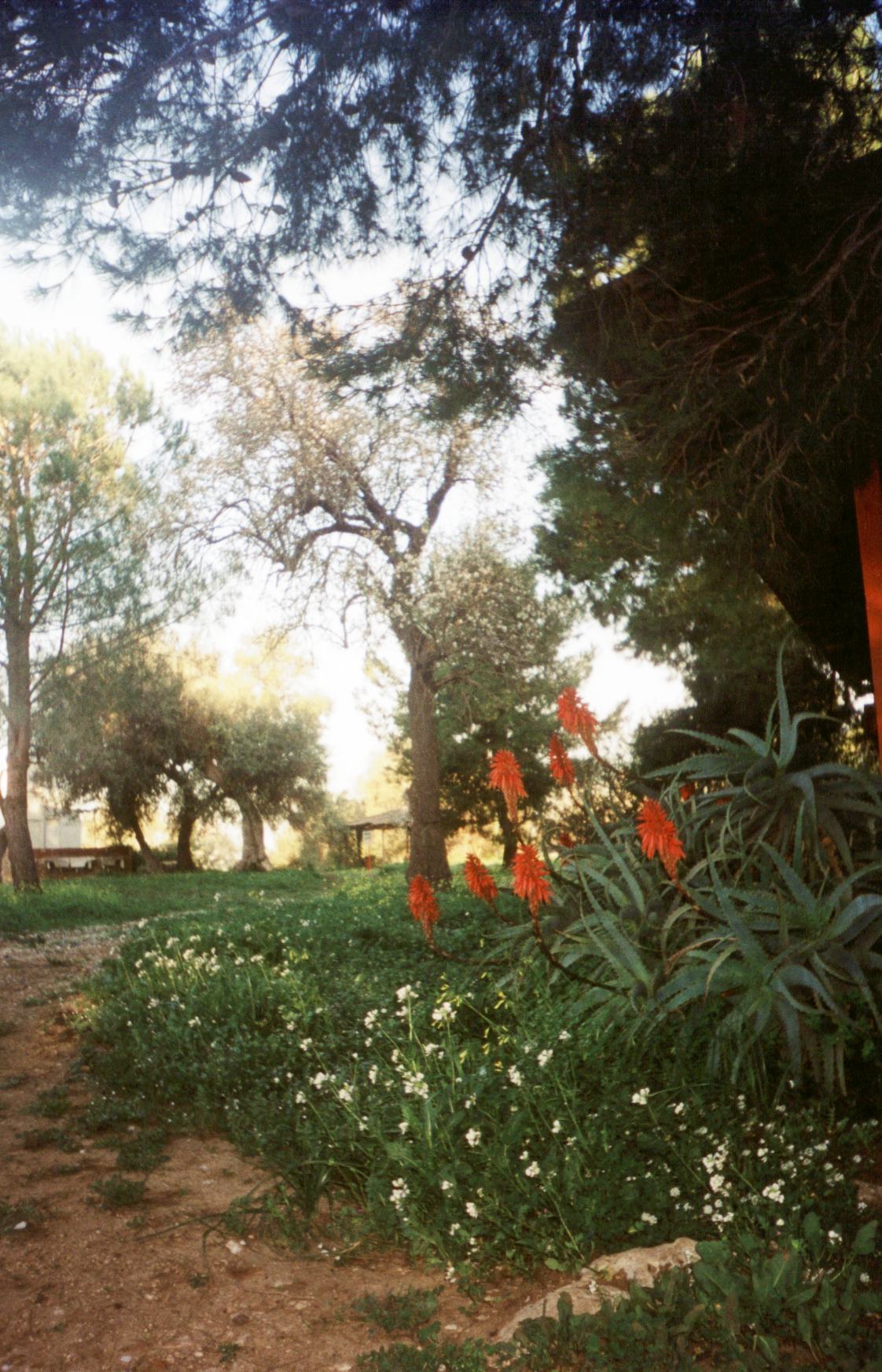
In the morning we see we’re camped in a clearing full of spring flowers. The crowds of tourists haven’t yet had time to trample them. Beside us an aloe is flowering in red sprays. I couldn’t have imagined that our poor mistreated aloe at home was capable of such a touching flower.
We cook our breakfast on the camping stove and eat a tin of stew.
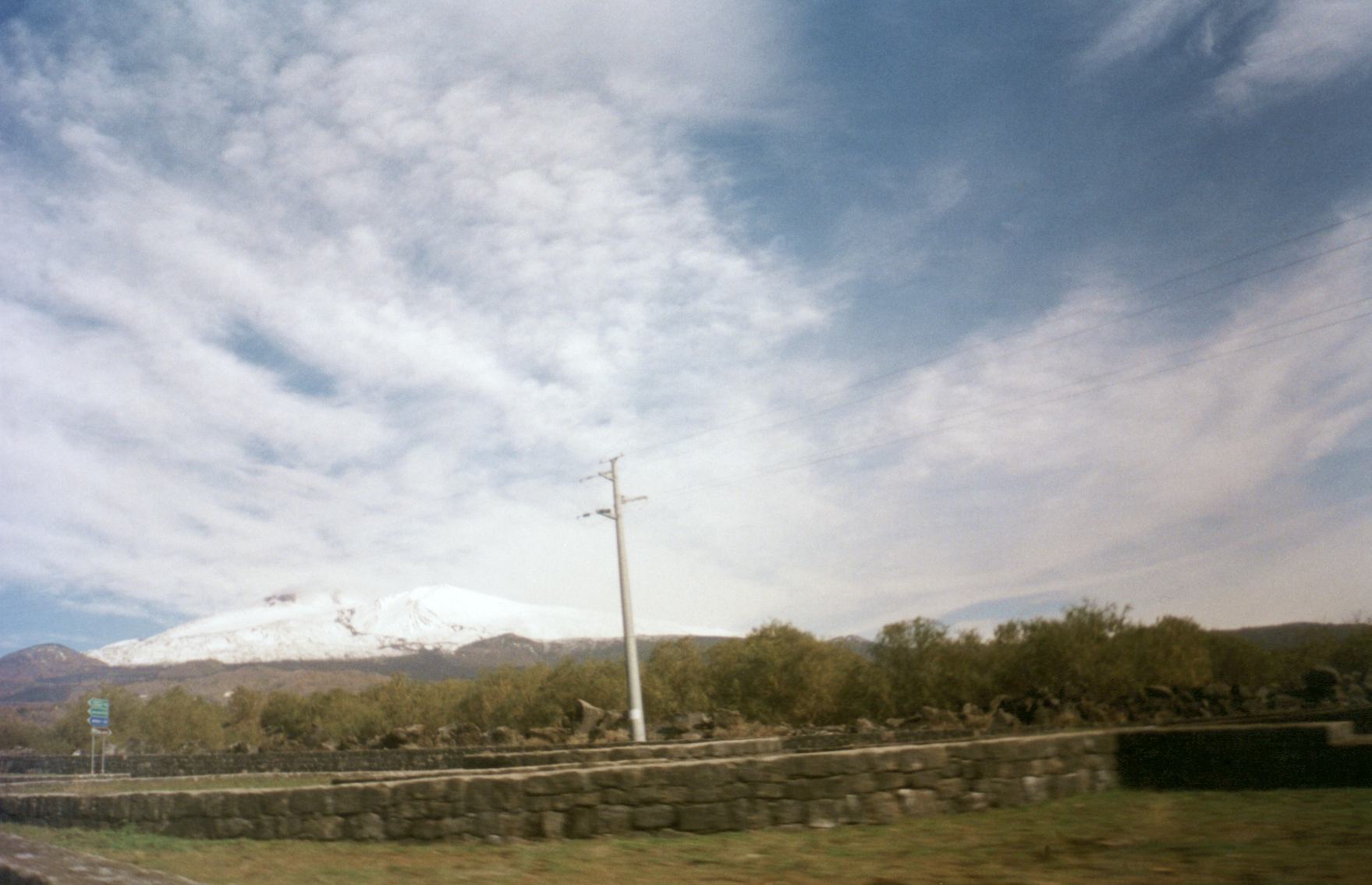
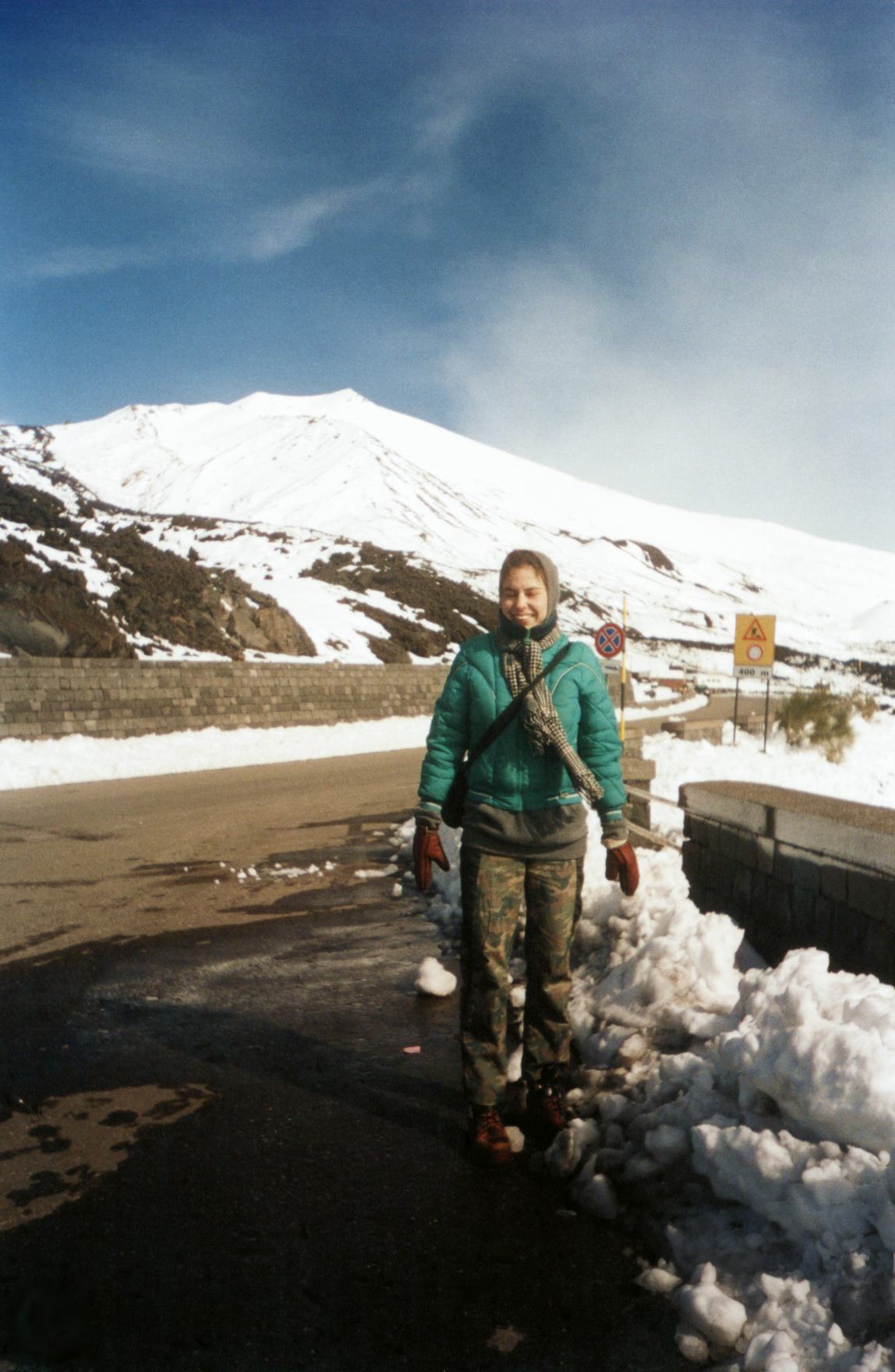
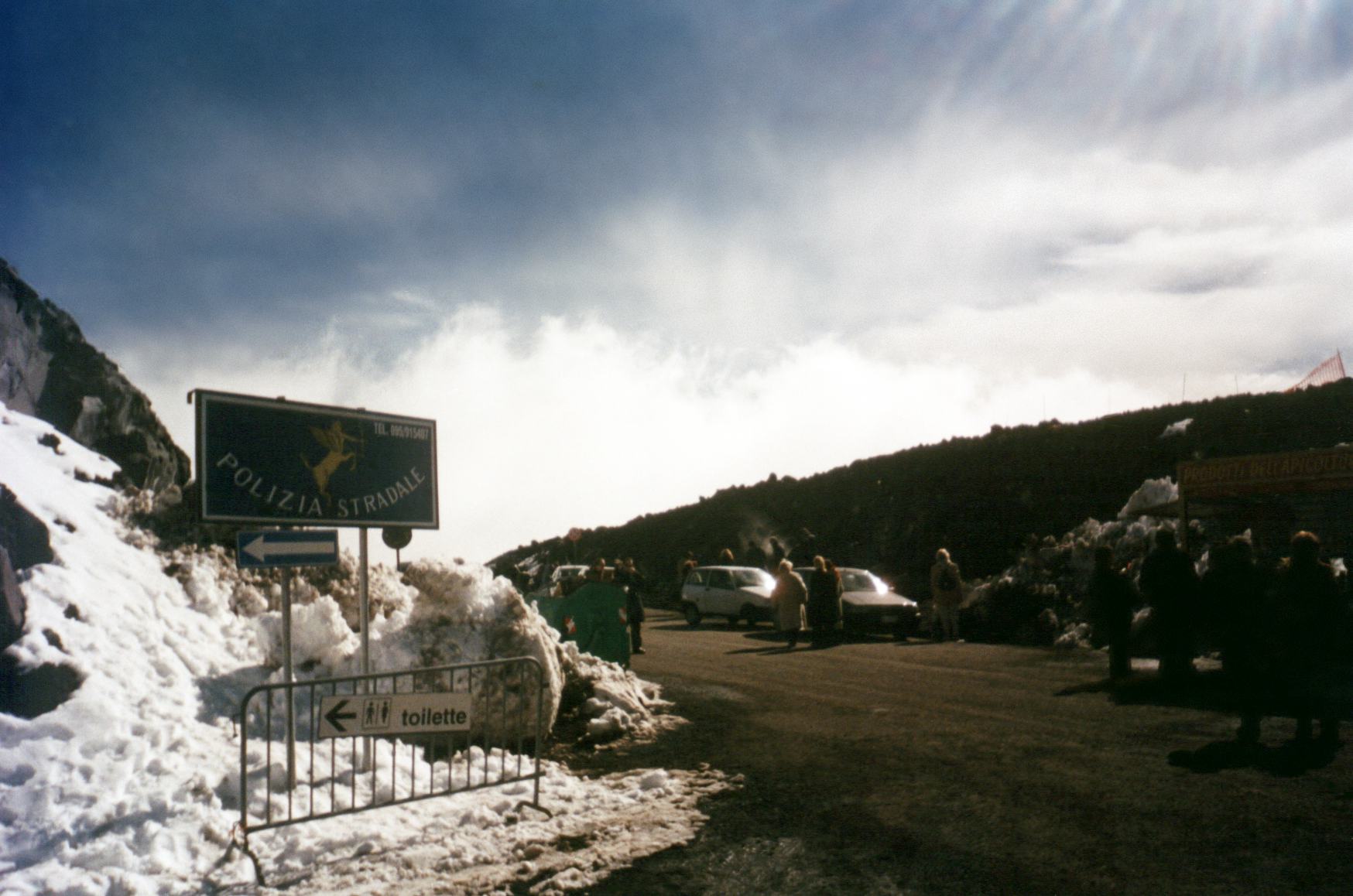
Today, our last day in Europe, is devoted to Etna. Europe’s most active volcano, and its highest if you don’t count extinct Elbrus. There was a major eruption only a few months ago. Last summer the lava carried away a good part of the tourist infrastructure. A paved road leads up Etna. The hairpin bends climb through fresh lava fields to a height of around 1,800 metres (37°41.880′N, 14°59.758E, elevation 1,809 m). At the roadside stand ruined villas engulfed in lava in recent eruptions. Etna had been quiet for a long time and people began building all over its slopes. Then in the second half of the twentieth century it grew sharply more active. Most of those buildings were engulfed by lava. Tourism on Etna hasn’t ended, of course. As soon as the lava set, new hotels and cafés went up. Last year the lava took away the cable car, part of the settlement and cut the highway. There were plenty of people willing to see a live eruption. A hundred metres from the river of lava you could have a cup of coffee while admiring nature in a rage. No such luck for us, alas. The lava has stopped flowing. They’ve rebuilt the road over the latest flows. They haven’t cooled yet, and steam rises from above the tarmac.
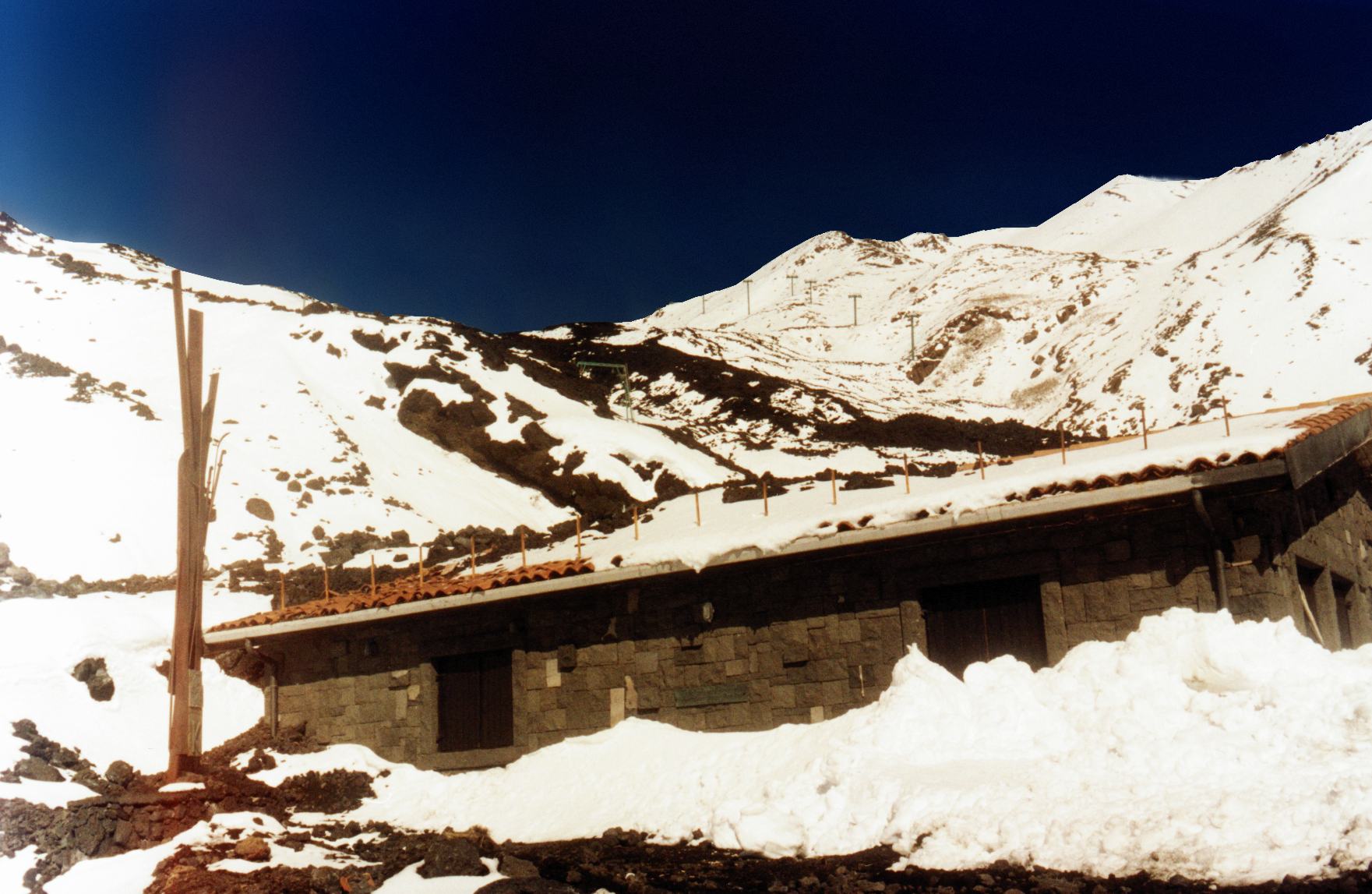
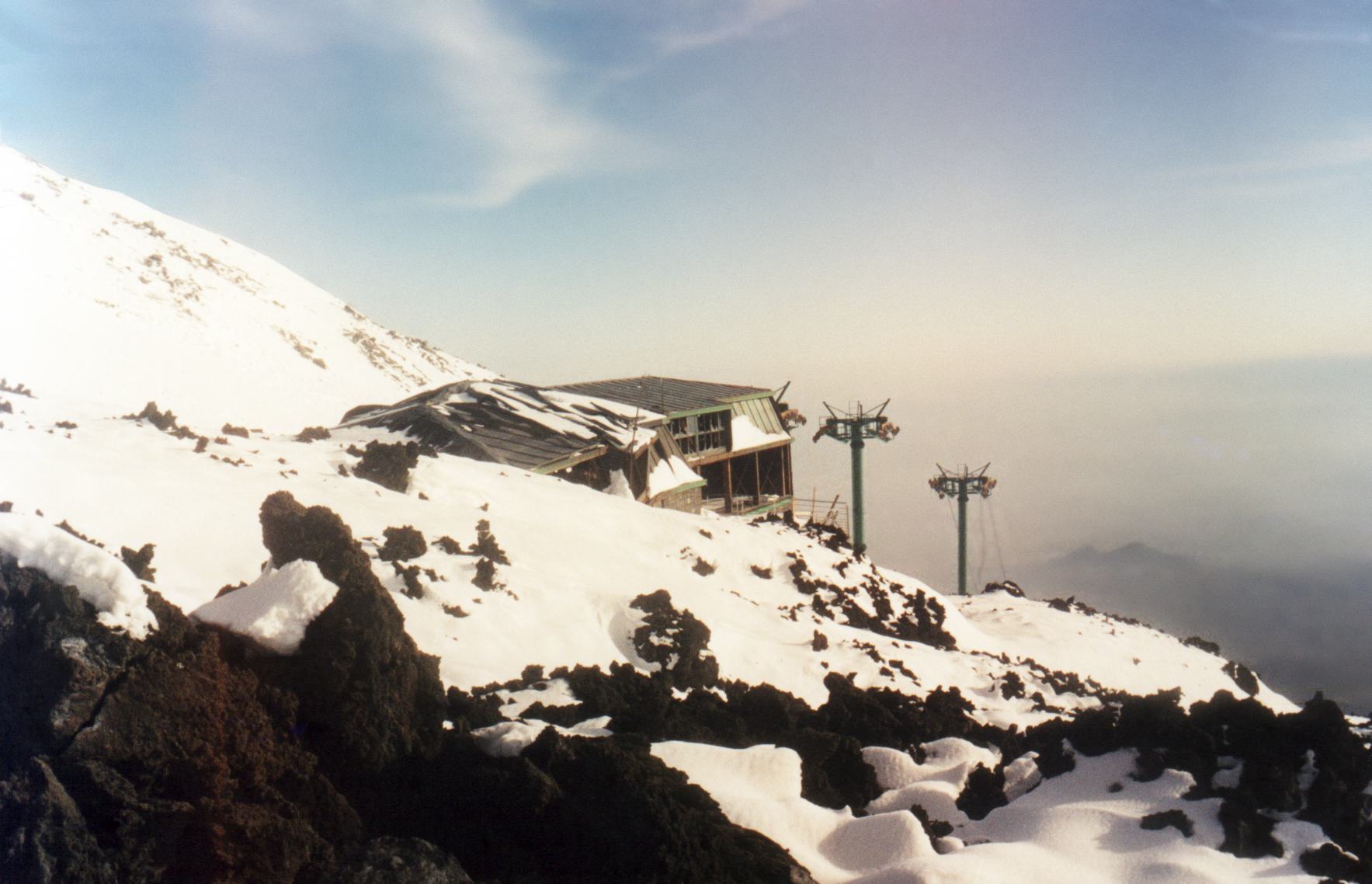
They haven’t started repairing the cable car yet. It used to go up to a height of 2,400 metres. Beyond that, ski lifts went off in all directions. They too perished in the latest eruption. Individual pylons stick out of the solid lava and the cables are broken. Some pylons are almost whole, some half submerged and some melted away without a trace.
Despite losing most of the facilities, they still bring tourists up. A few cafés and hotels are open, competing for height and nearness to the crater. Particularly rich tourists go for helicopter rides. The rest climb up the nearest side crater, about a hundred metres high, and slide back down on whatever they can find. Only the most determined go any higher, perhaps twenty people a day. Most go up on skis. We have to climb on foot.
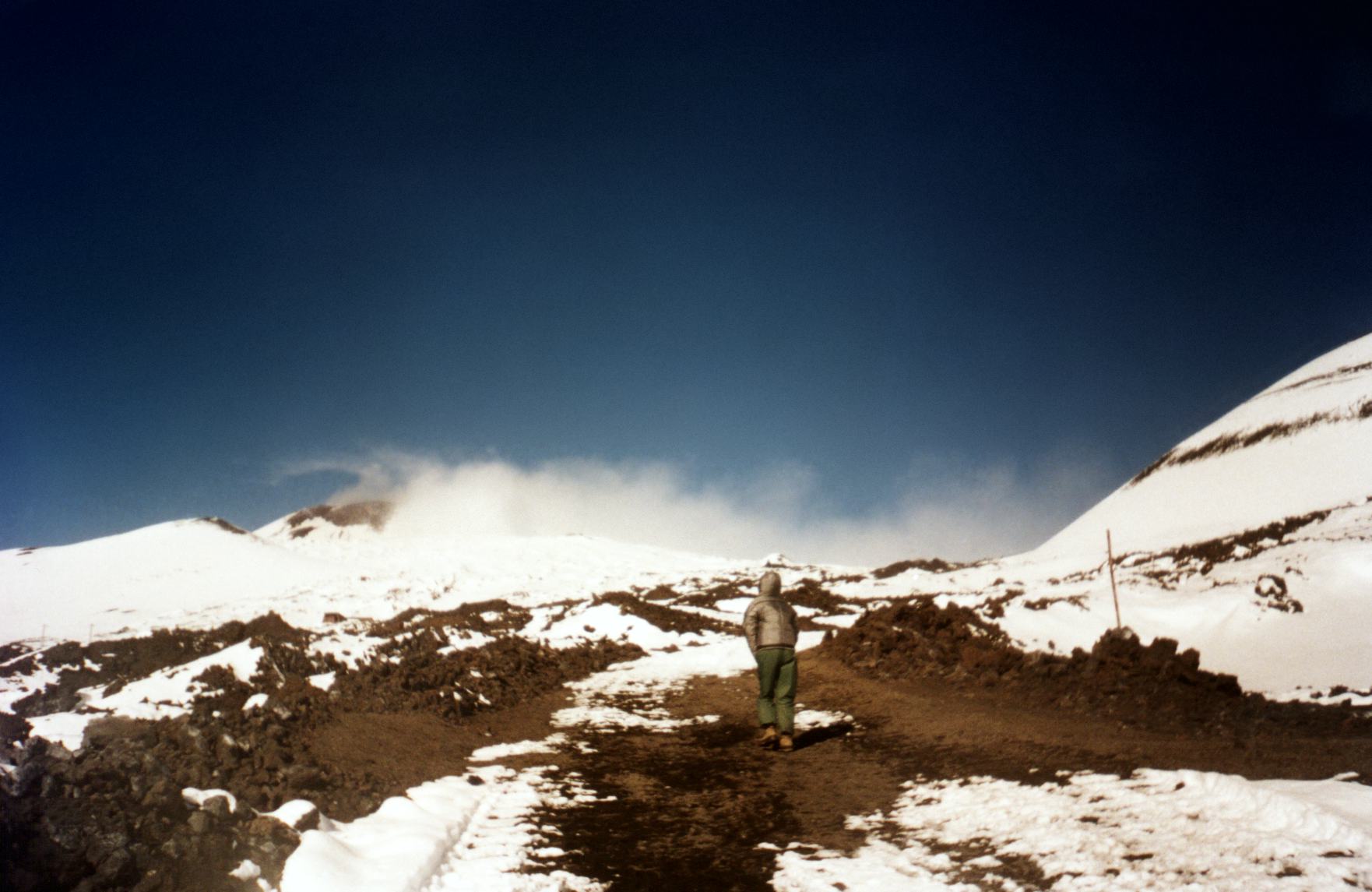
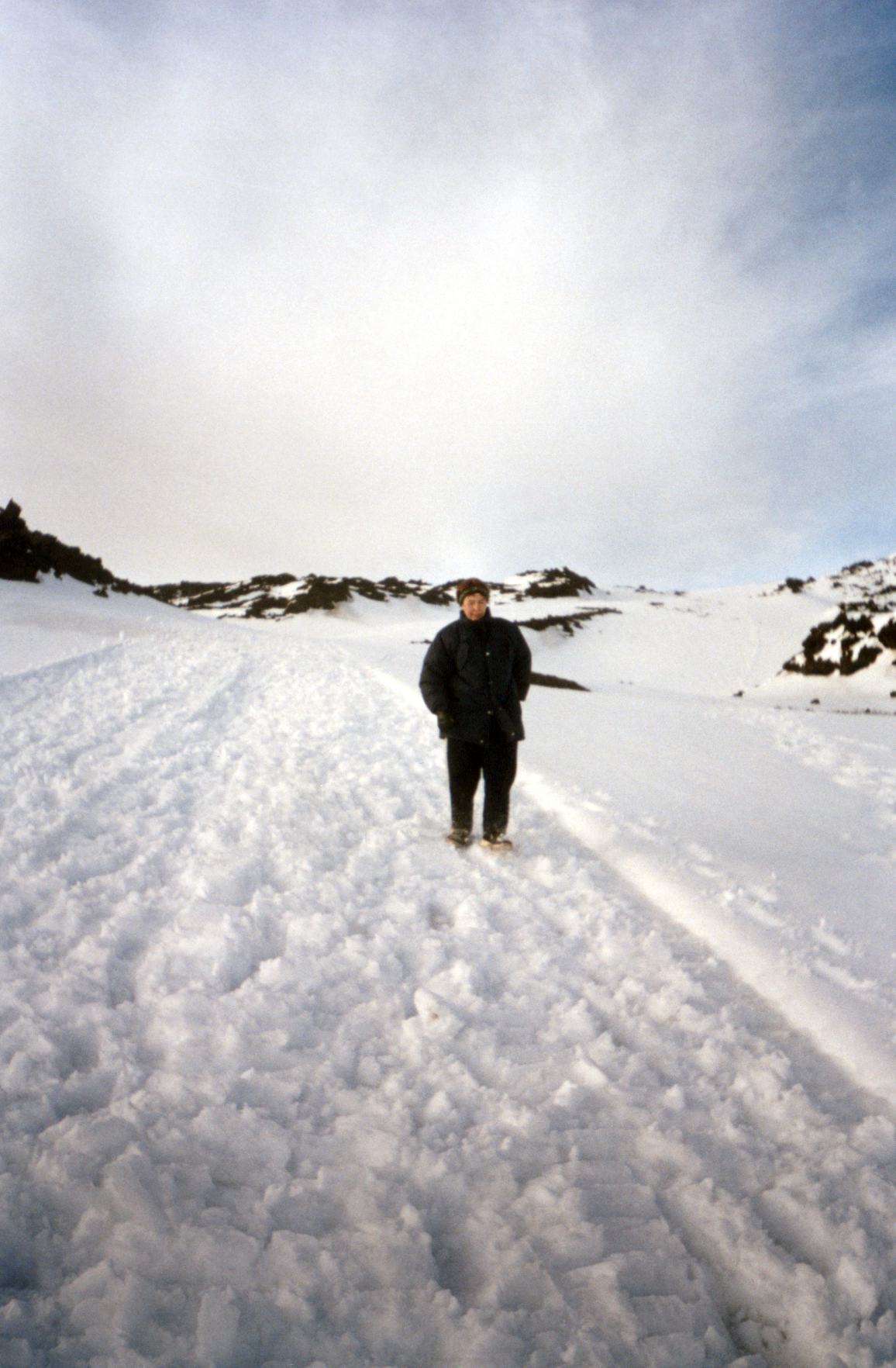
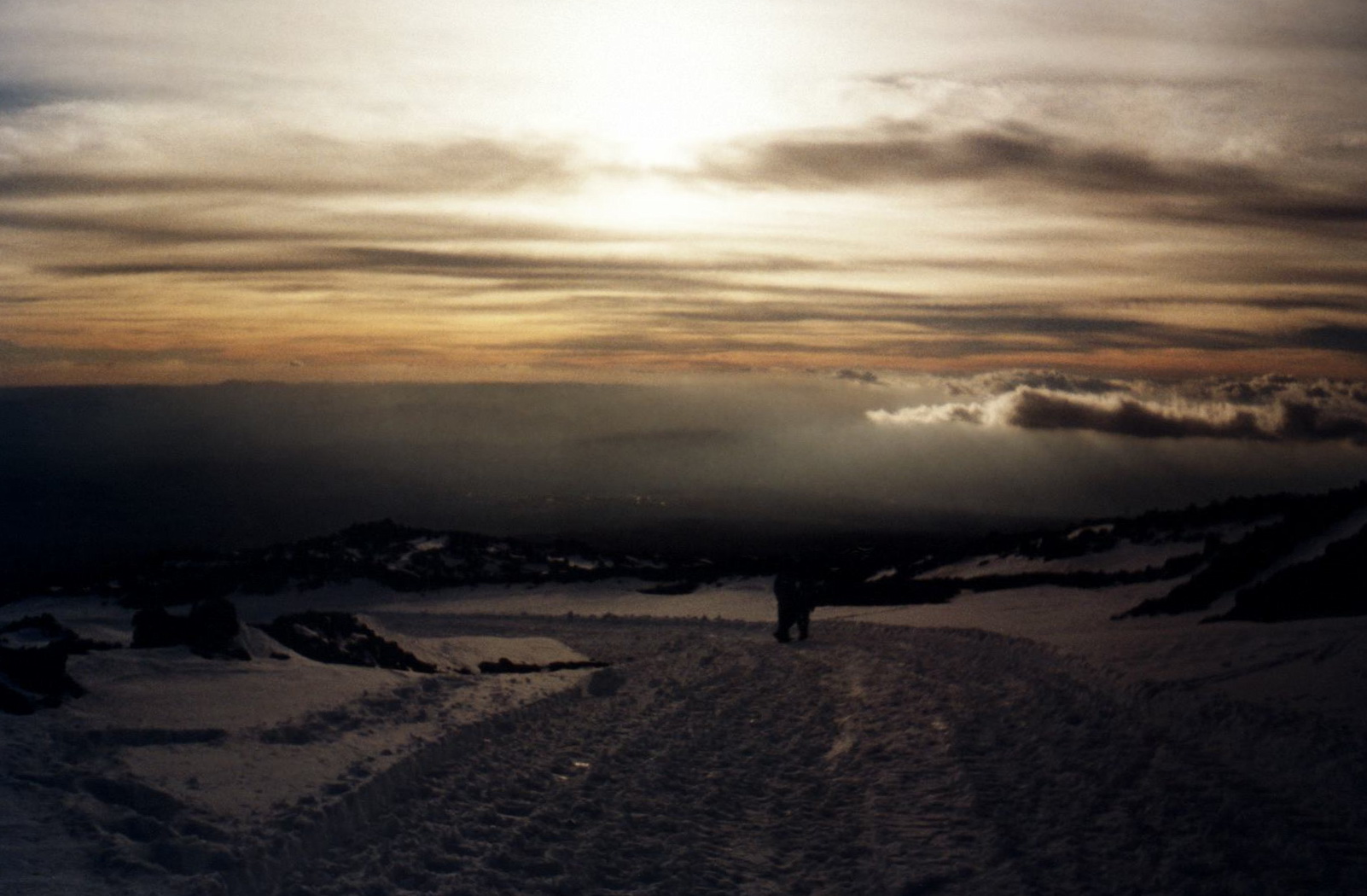
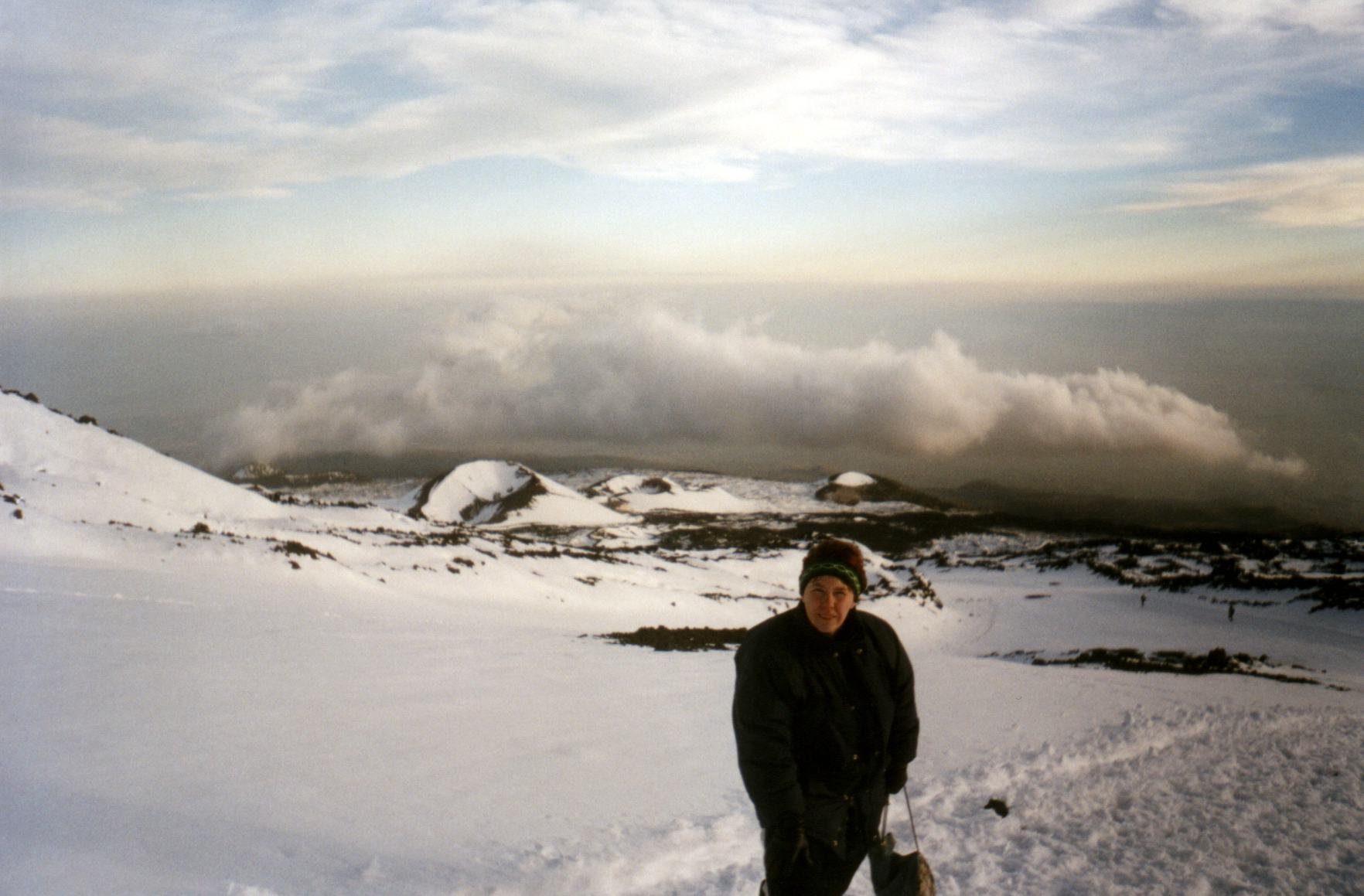
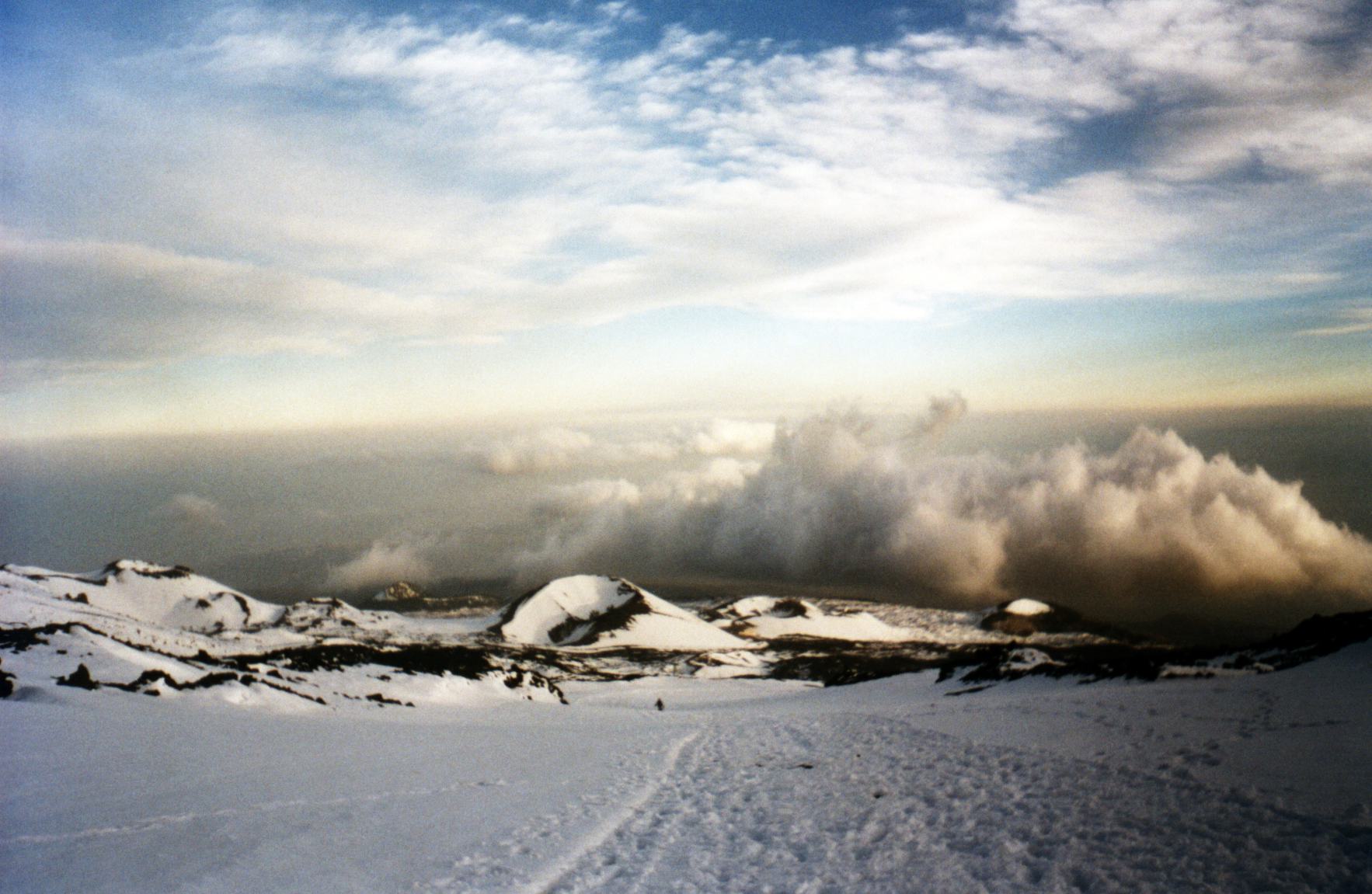
The snow starts at 1,700 metres, but it’s melted off the tongues of fresh lava. As a result, despite it being winter, you can get up to the crater formed by the latest eruption. Scrambling over the jagged fresh lava isn’t easy, so we choose the road that’s been cleared as far as the former cable-car station. As we gain height it gets drastically colder. At 2,600 metres it’s already five below with a howling gale. Climbing any farther gets harder and harder. The crater from the last eruption is already below us. The cleared road ends, and above it we have to go through snow to our knees. I give up. Only the young and sprightly Masha keeps climbing, to about 2,800 metres. The snow there is up to her waist. She has to come back without reaching the crater rim. A pity. There probably won’t be another chance to make it all the way to the summit at 3,350 metres.
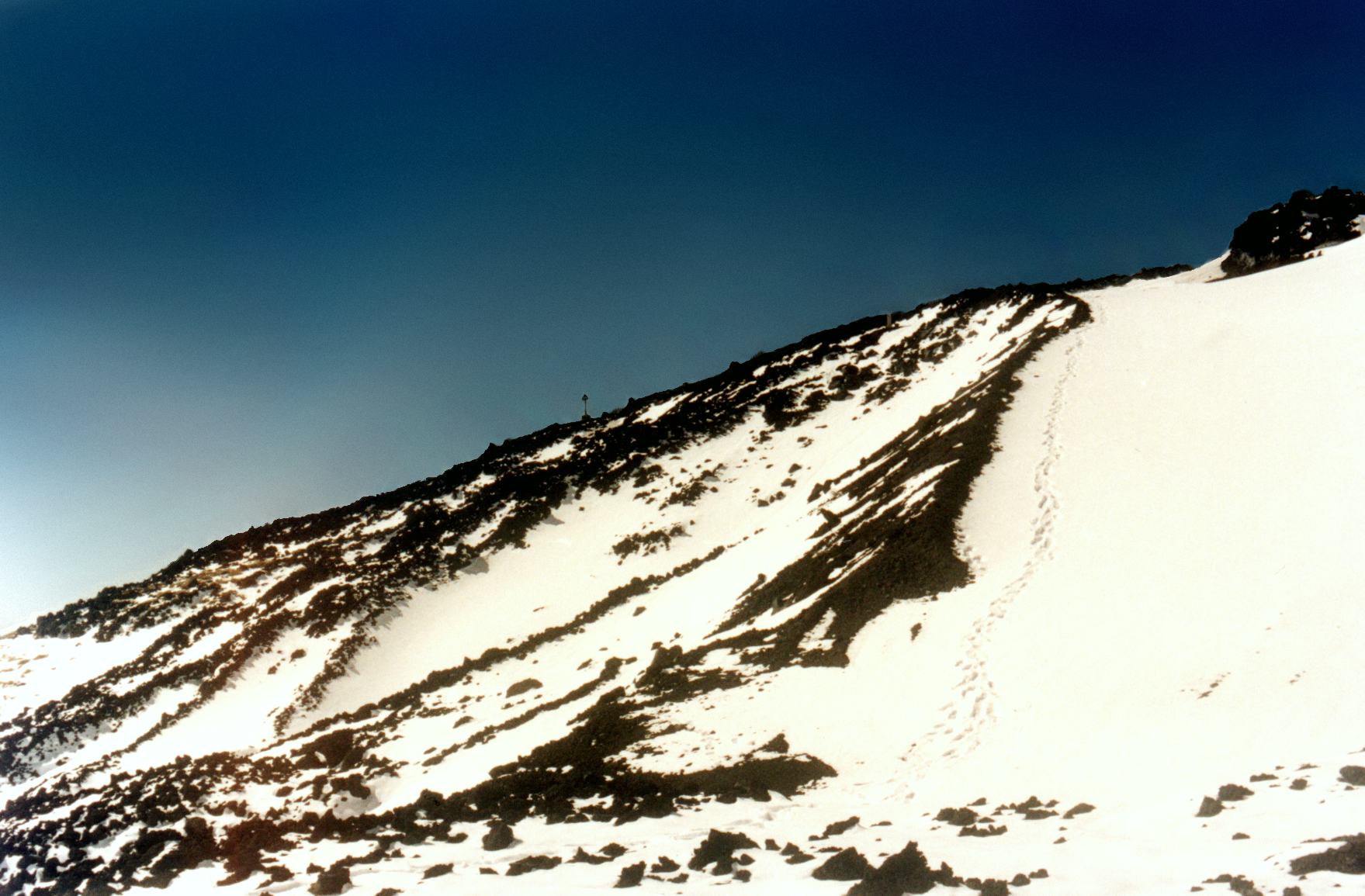
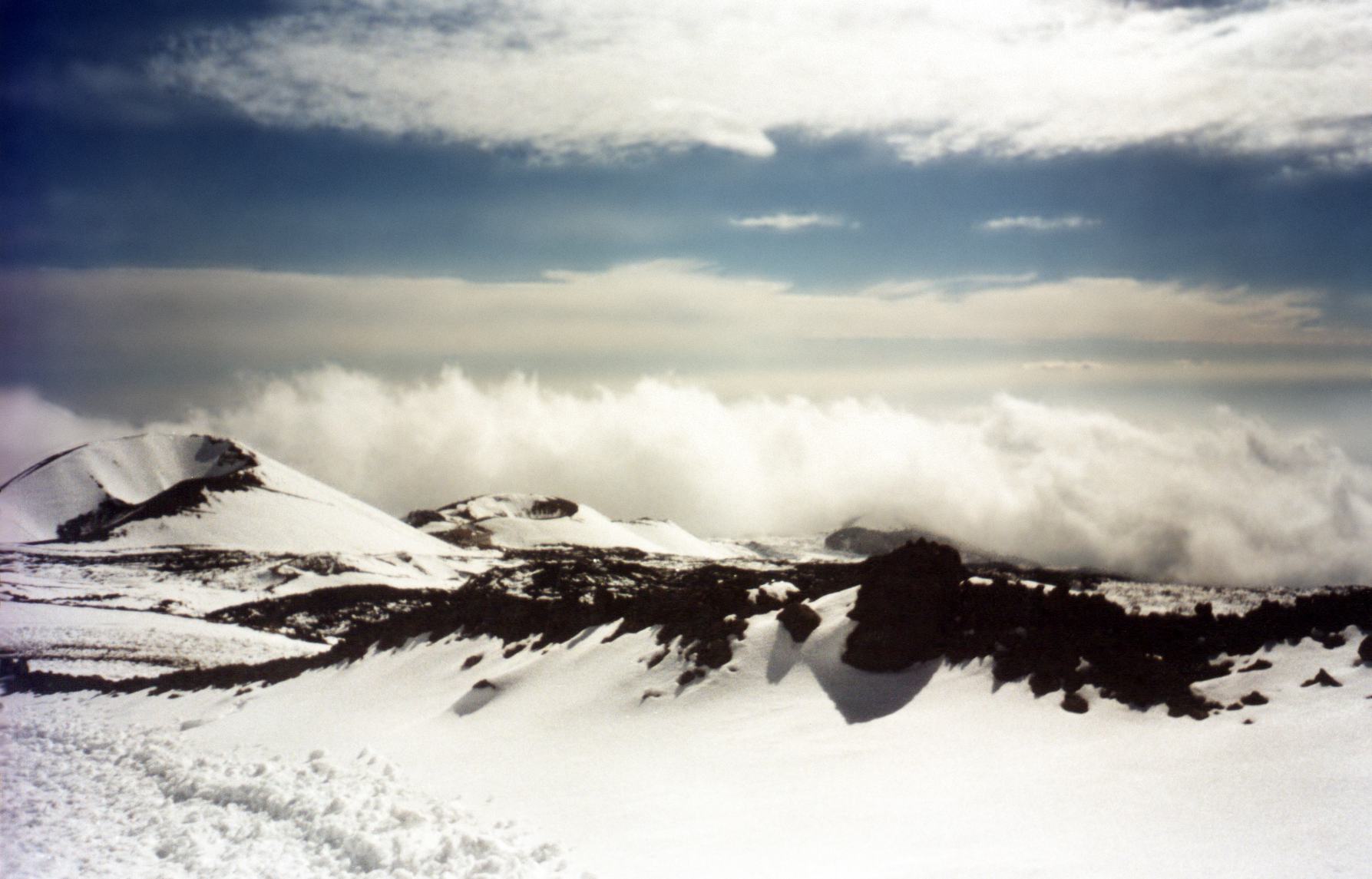
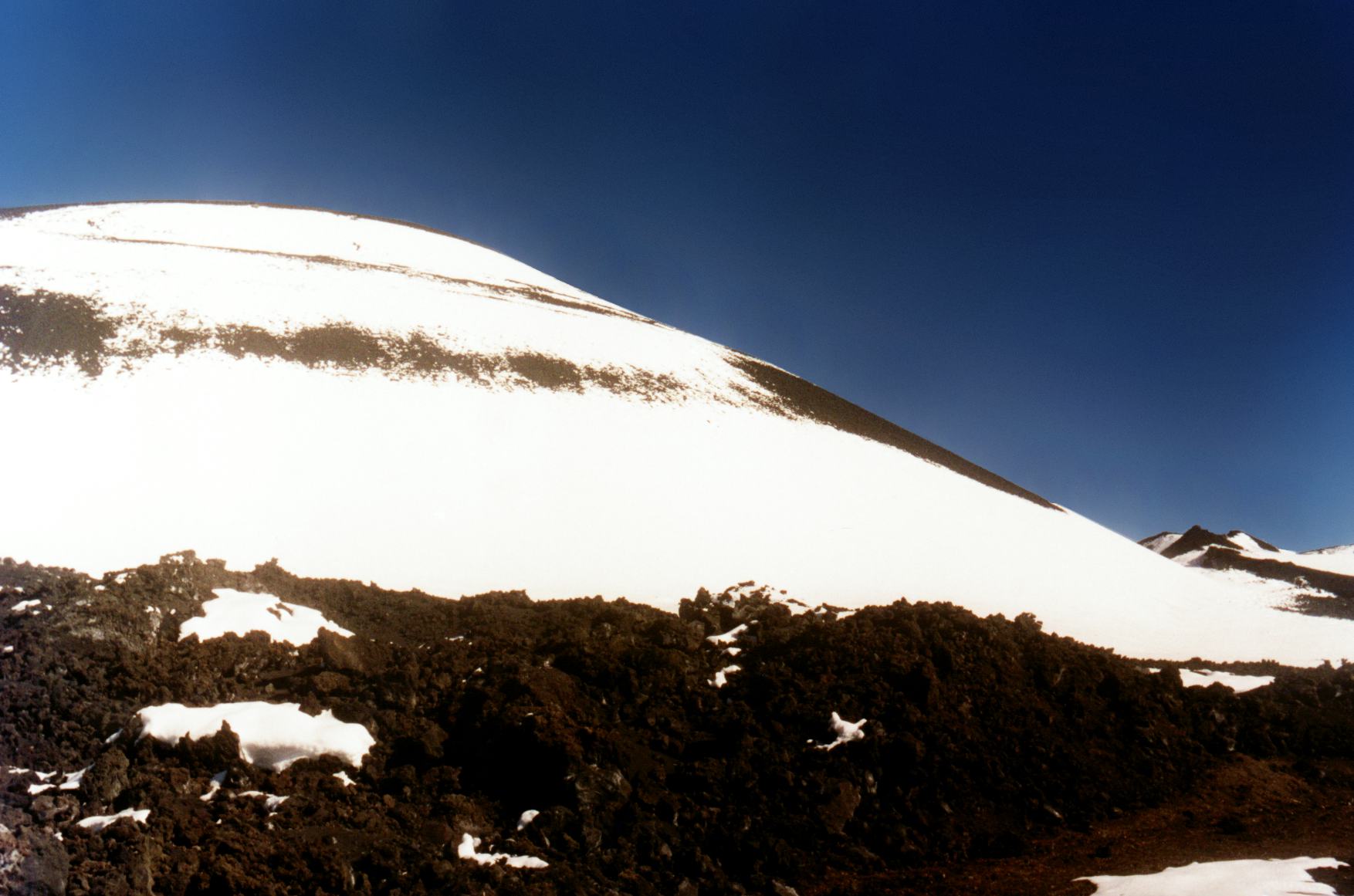
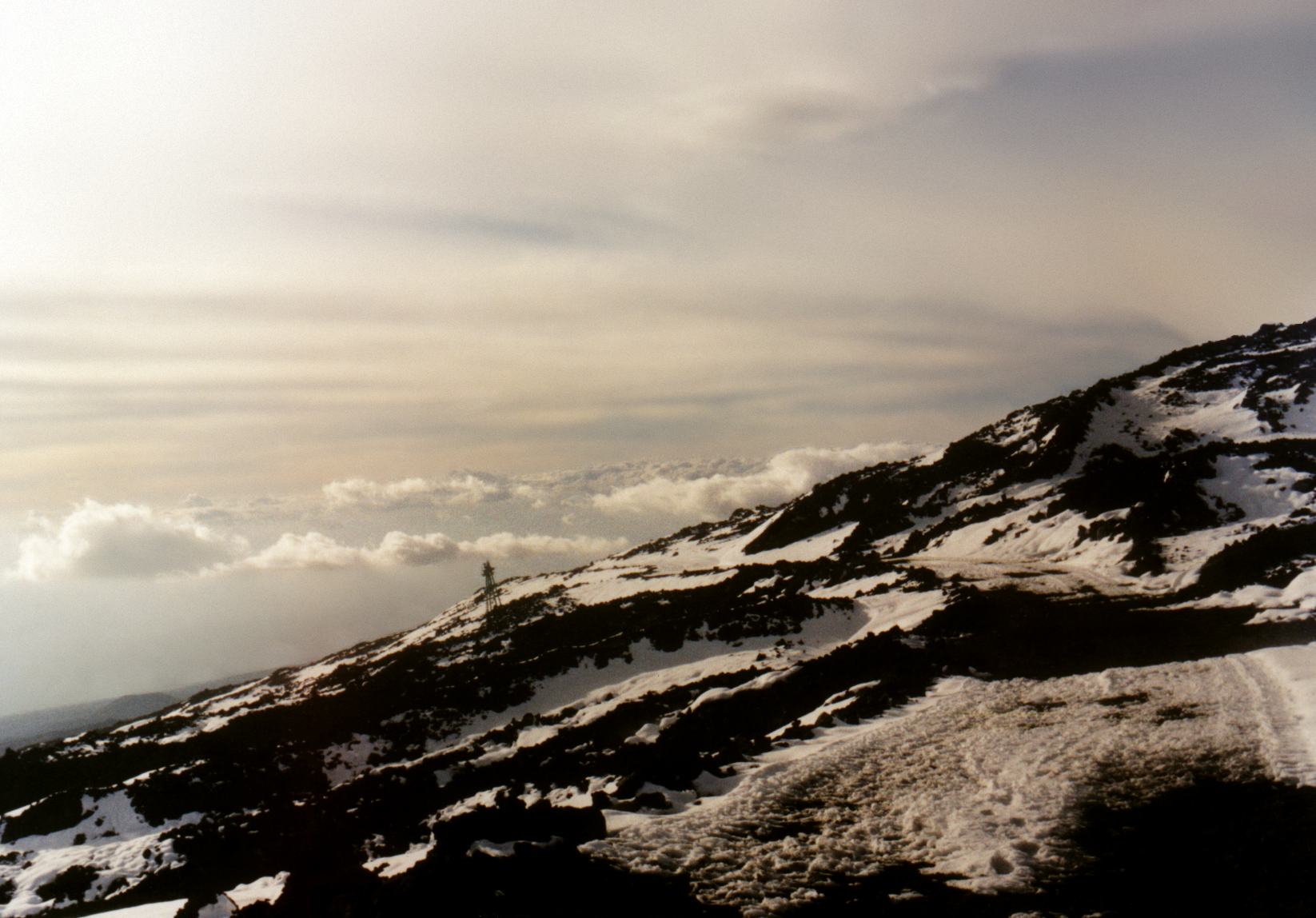
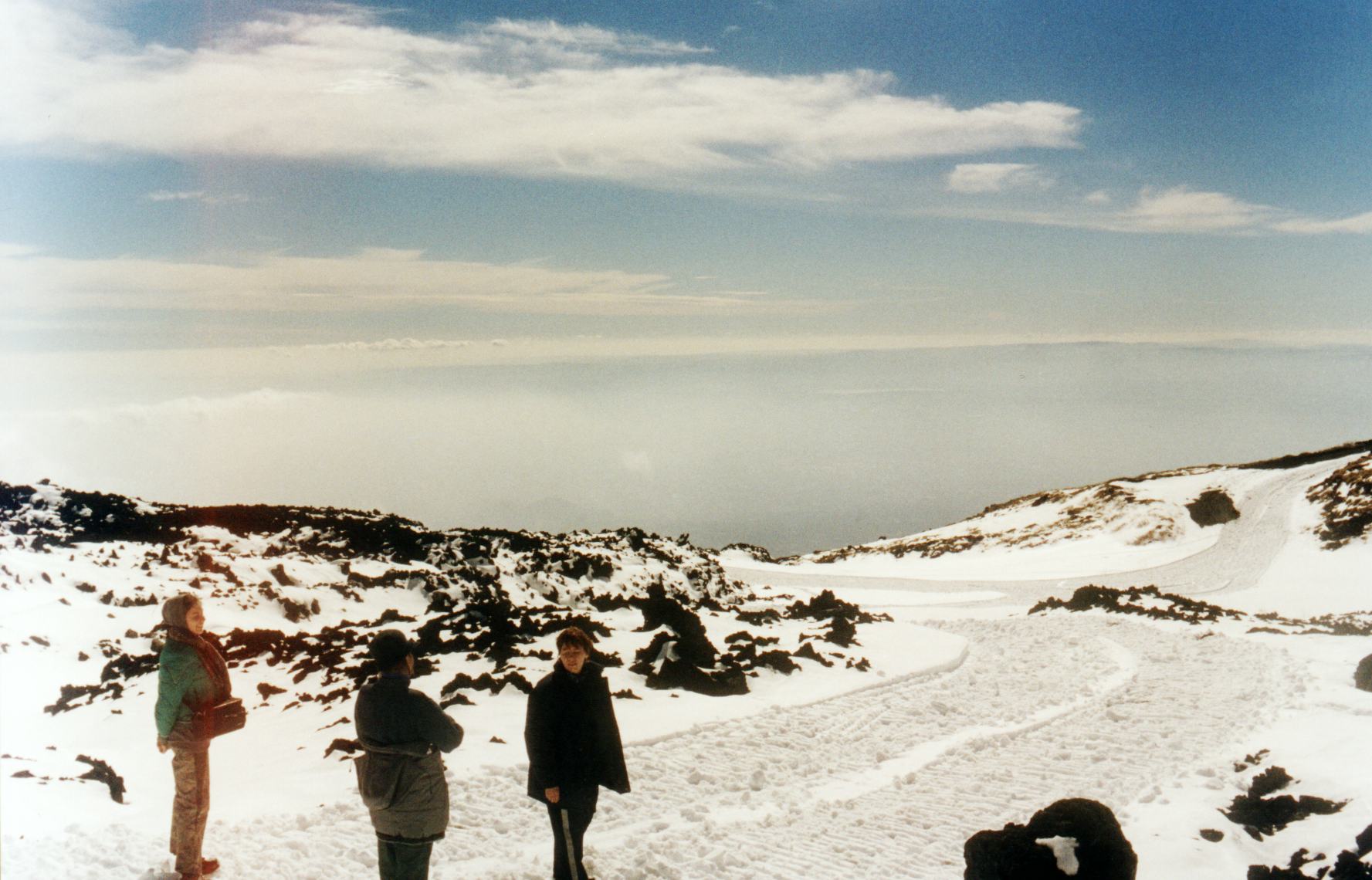
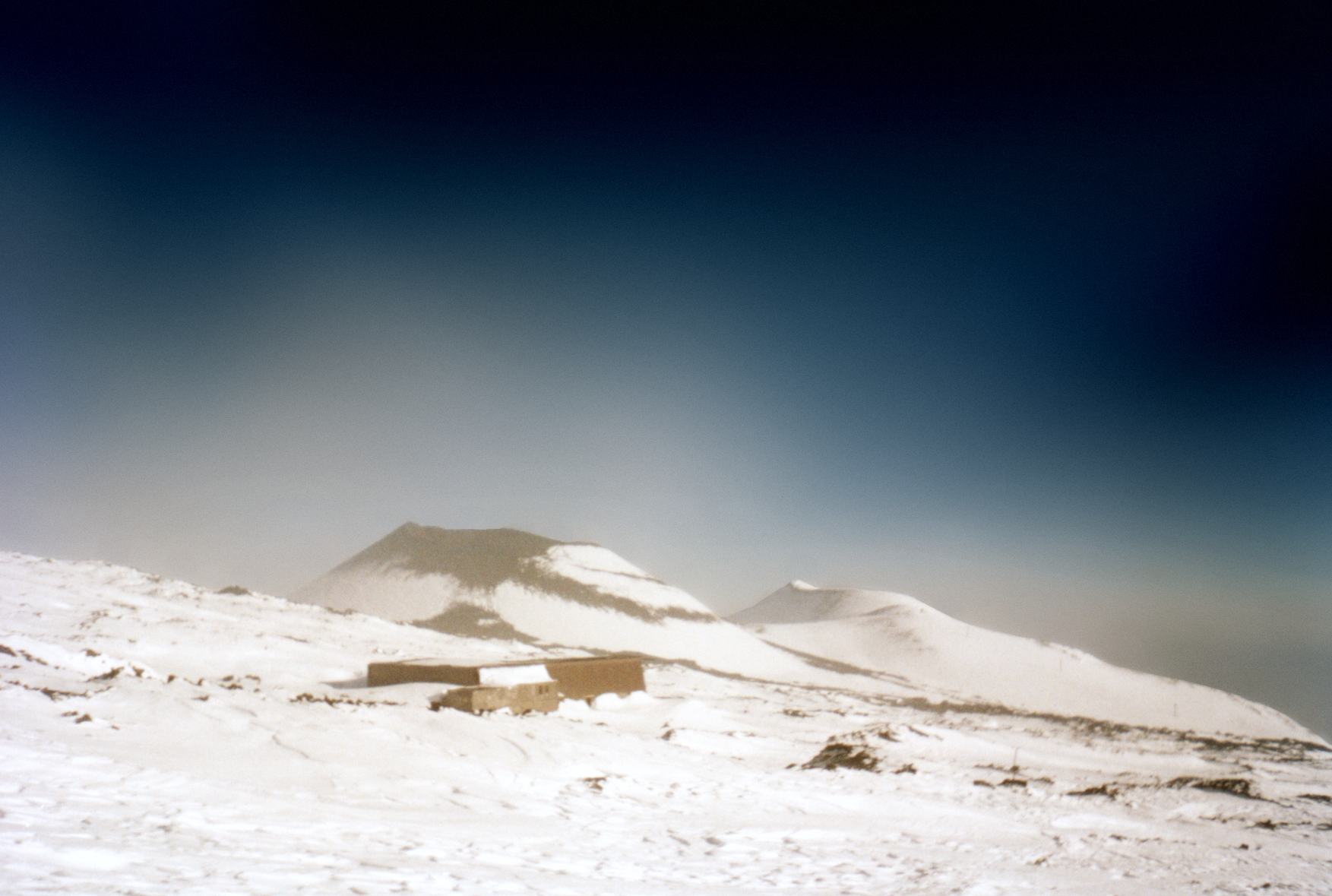
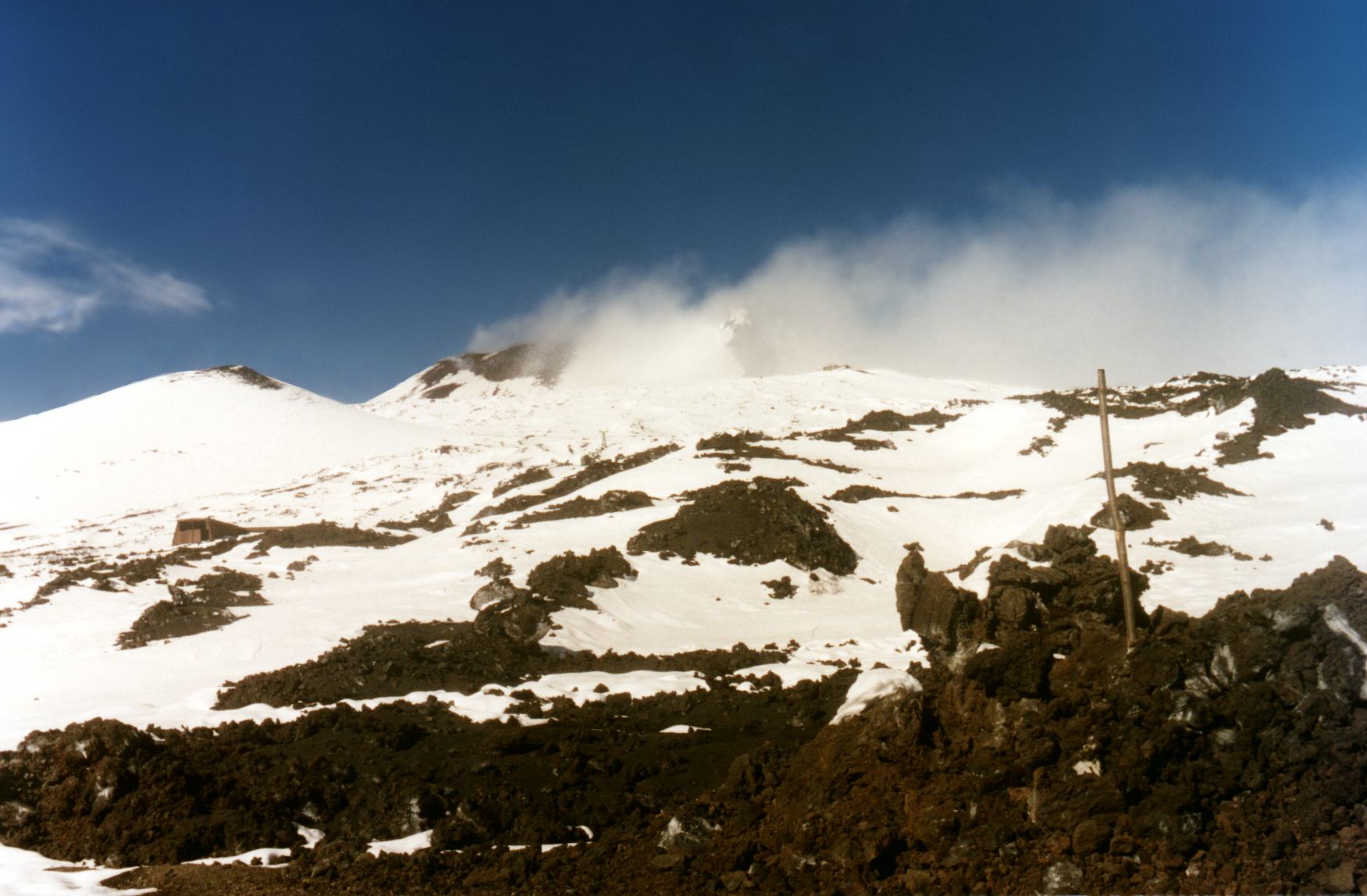
The three of us go back to the ruined cable-car station (37°43.096′N, 14°59.982′E, elevation 2,460 m) and wait for Masha. The mobiles only work as far as this. The plateau begins beyond it and we can’t get through to Masha. No idea where she’s gone. Lena goes to look for her, and vanishes as well, both out of sight and out of reliable mobile coverage. Meanwhile I go to look at the station buried in lava. The glass has melted but the steel frame of the walls is still standing. The temperature was about a thousand degrees. All the aluminium parts melted and you can see them now as little puddles. Take the motors that used to haul up the cars. The steel skeleton is left, but the aluminium casing has run out. The lamps look very funny. There was a vacuum inside them and when they were heated they collapsed into pancakes.
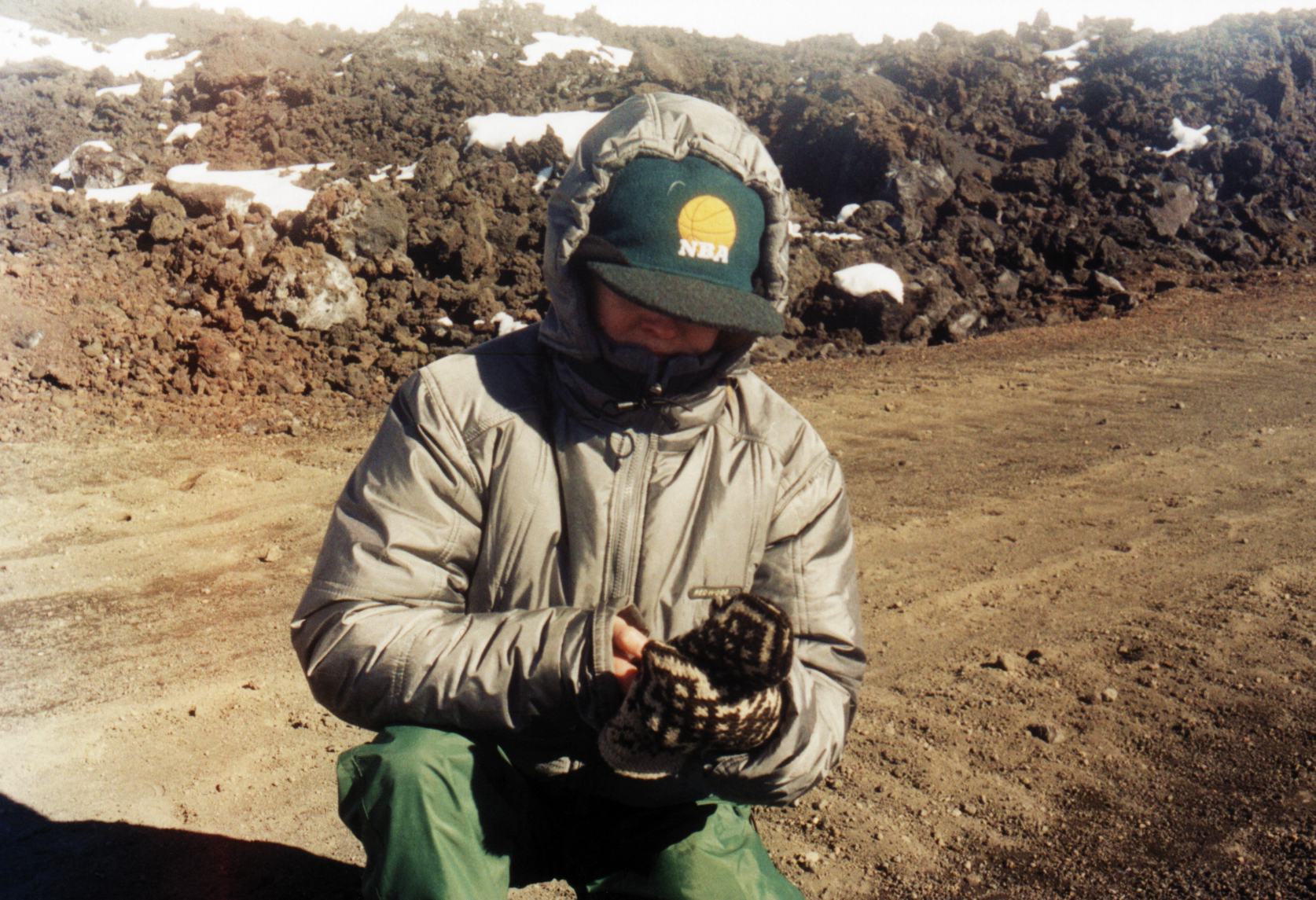
We have a long wait. Tanya and I find a little crater with hot chunks of lava. As it turns out, that very crater is where a new eruption starts a few months later. We sit down to warm ourselves. It’s warm as a stove. A pity you can’t send texts from the crater. Even out on Hekla in Iceland the reception was better.
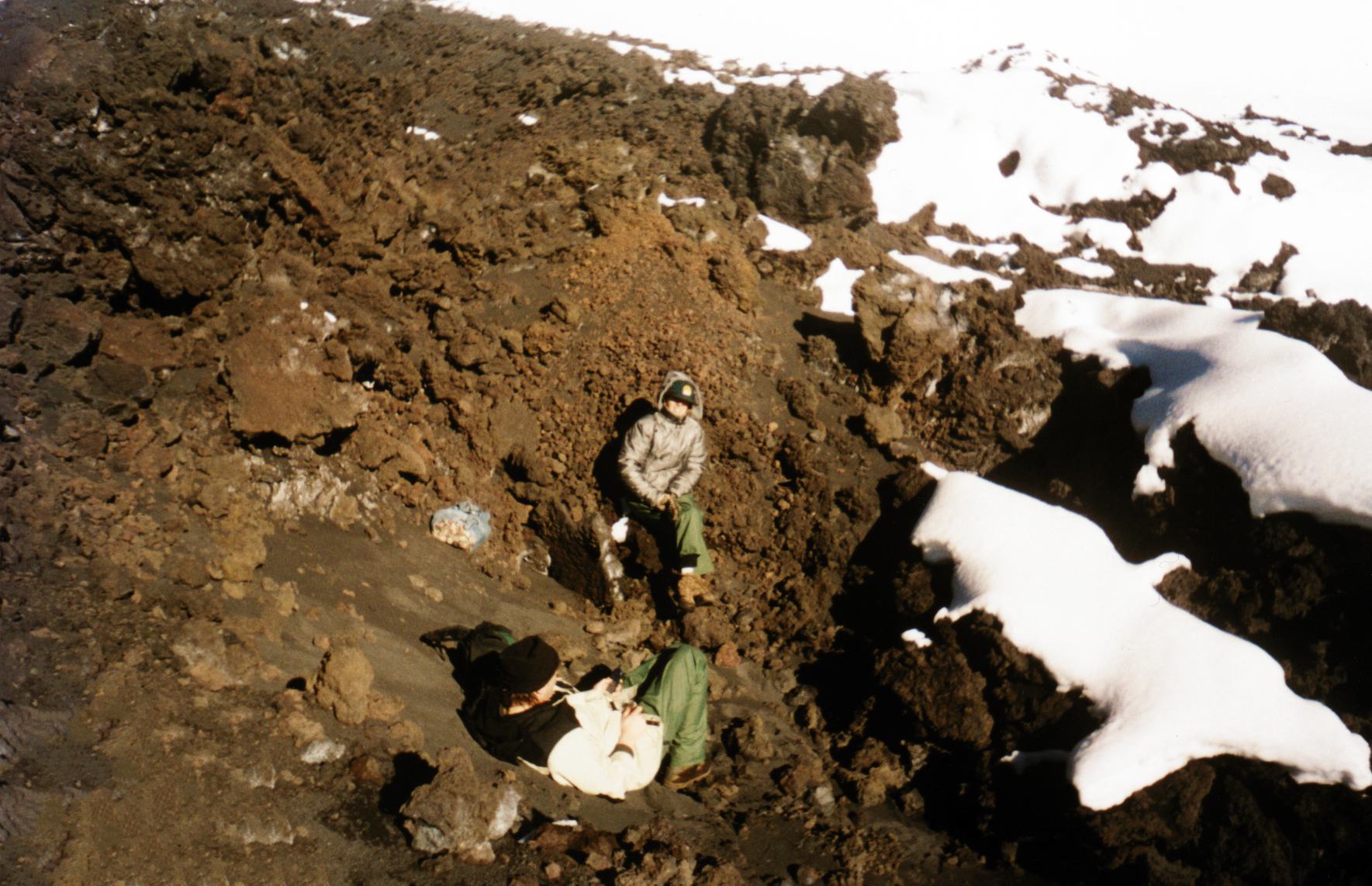
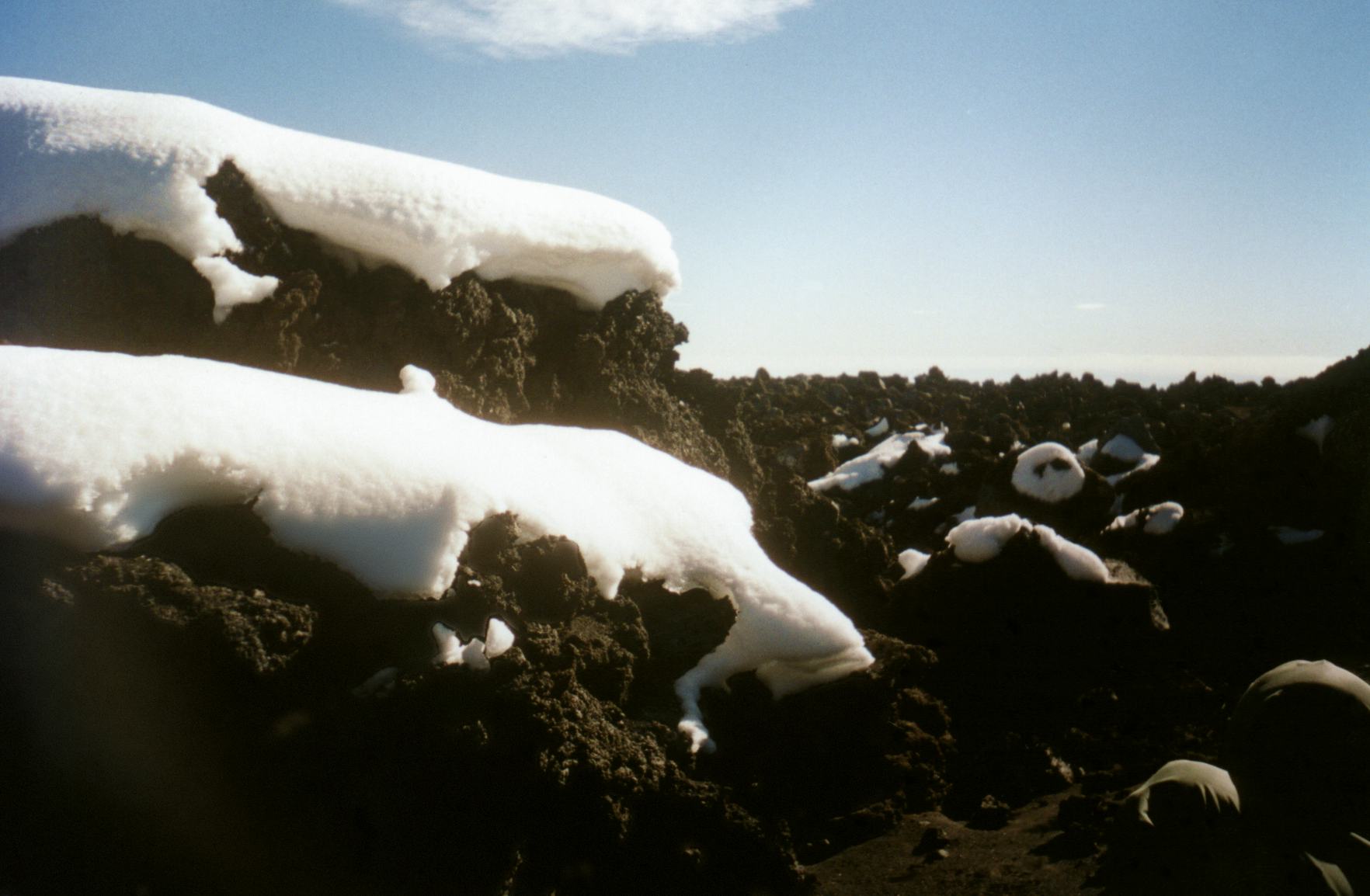
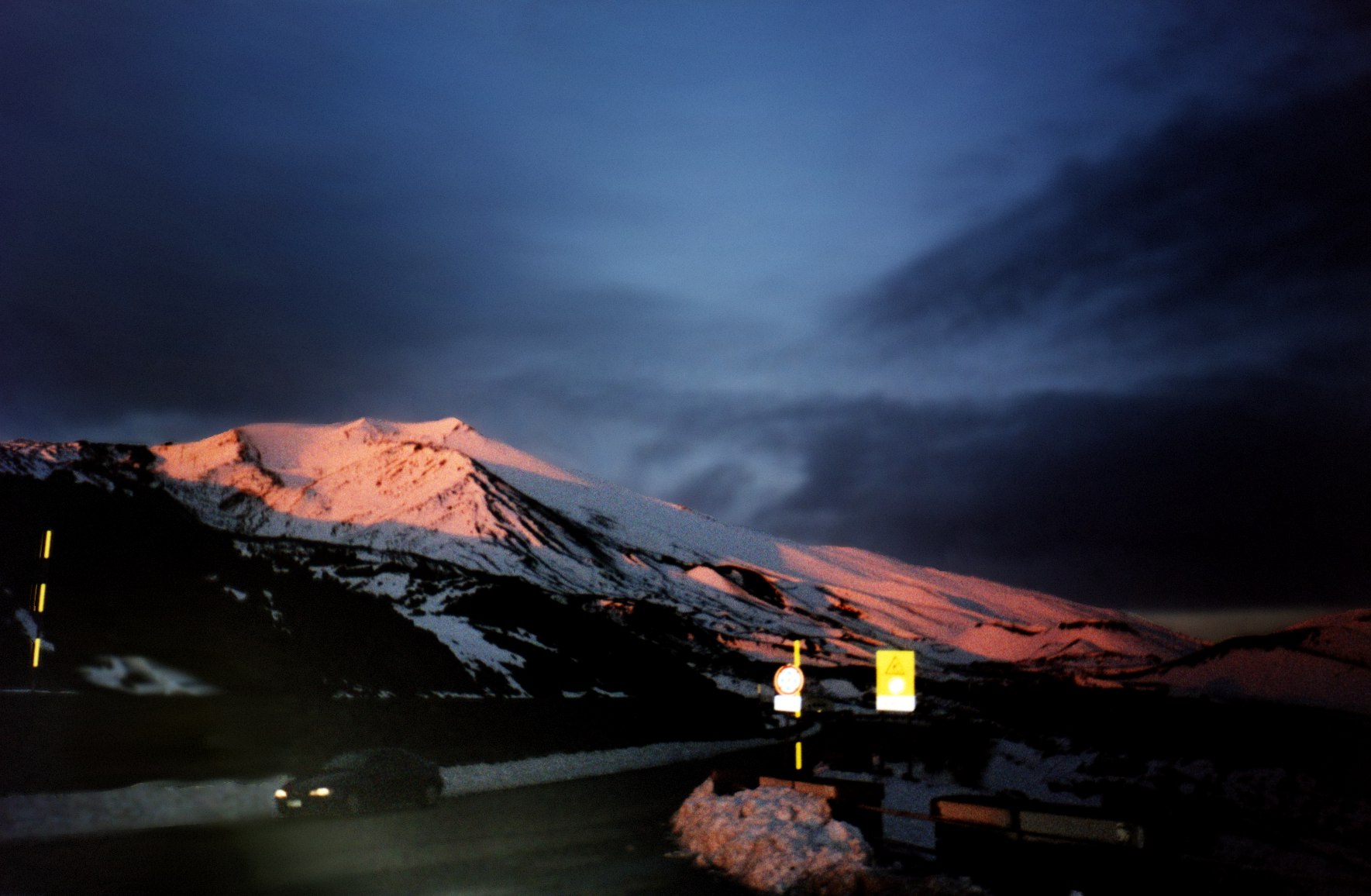
Masha comes back first. Now we have only to find Lena, who went looking for her. We manage to do it by getting through on the phone. The sun is already going down by the time we’re all gathered in one place. It’s getting very cold. Looks like ten below now. The walk down takes no more than an hour. The last rays of sunlight are leaving the summit of the volcano when we reach the car. Red, windburnt faces. After coffee and a roll, we drive down. The road soon descends into the cloud and the long journey to Palermo begins. On the narrow roads at the foot of the mountain there’s a traffic jam several kilometres long. We do the rest of the drive in the dark, on the motorway laid through the mountains of central Sicily.
We drive through Palermo with hardly a stop. There isn’t much time left until the ferry. Masha and Lena can’t leave Italy without seeing Palermo’s opera house. We have to look for it as we drive around the streets at night. We park by the courthouse. It feels quite frightening. Night, Palermo, the Mafia, the courts. Here we are standing utterly defenceless, without so much as a machine gun.
After Palermo we have a hundred kilometres left to Trapani. It’s the closest town to Tunisia and the cheapest ferry leaves from there. We don’t reach the waterfront until one in the morning. Too late to look for a hotel. The ferry is supposed to leave early, and in five hours we ought to be at the ticket window. There are Arabs walking about, all in headscarves like Yasser Arafat’s. Alarming. They sleep in their cars. Remembering the night in Naples, we’re afraid to leave ours. We decide to spend the night sitting up in the seats. After a hard day, we manage to fall asleep fairly quickly.
With the first rays of morning sun I run to the ticket office. What a nightmare. A crowd of Arabs stands at the window. Everyone shouting and shoving one another. The tickets are probably about to run out. We know for certain the ferry runs on Mondays. There’s no decent timetable. The one on the wall shows lots of ferries, with a pile of contradictory notices about cancellations next to it. Local people say there are lots of ferries, but ask when they’ll leave and they say there’ll be another ferry this week. It will leave a few hours after it gets here. Today our ferry from Sardinia has turned up very late.
Most of the people trying to get on the ferry are Arabs.
The Europeans are a German heading to Algeria in a BMW and an elderly Englishman with an Arab guide. He stands near the ticket office looking at what’s going on in horror. Whether he’s talking to us or under his breath, he says it over and over. “Good Lord, they aren’t people, they’re animals at a feeding trough. What a barbarous world! Tunisia is still civilised, but Libya! The troglodytes there will tear you apart!” Quite a character. He comes from a wealthy, aristocratic family. He’s never had money problems and doesn’t now. A house in England and another in the States. Spending fifteen euros to climb the Leaning Tower of Pisa, on the other hand, isn’t for him. Too expensive. He’s a professor of geography.
At heart he’s a character out of Jules Verne. Not quite Paganel, but close. He devoutly believes in the power of science, the civilising mission of the white man and the triumph of reason. He’s just as I’d imagined Victorian Englishmen from books. In his youth he was a chess player and played against Spassky and Fischer. Then his mother said he ought to grow up and choose a proper profession besides chess. He promised to think about it, and after a year’s thought he asked his mother what she’d say if he became a geographer. She gave him her blessing and so he did. Now he teaches students and in the holidays goes off to study geography in the flesh. And what English he speaks! Clear and rich, a pleasure to listen to. I can even understand all of it. A pity we never found out his name or how to reach him. He’d have been interesting to write to. He took an interest in us as well. To him Russia was a gulag that had gradually turned into the kingdom of the Mafia. We didn’t fit into this neat picture, which piqued his interest. He was astonished there were people in this land of bears who were interested in travelling.
We learnt from his Arab guide that there were plenty of tickets. They wouldn’t leave without us and the crowd would thin if we just waited. We went and waited, but not for long. Lacking the Englishman’s inborn restraint, I made a dash into the thick of it. In that frightening crowd I was no longer a defenceless russo turisto but a white man. When the ticket clerk saw me, he pushed ten or twenty Tunisian passports aside and took our bundle. Taking the Ford and four people across cost €254.86, €86.50 for the car and €42.09 each. They didn’t take credit cards. We had to pay cash.
There was no need to plunge into the crowd. The Englishman’s guide was right. Before long all the Arabs had their tickets and went as a crowd to shout and shove at passport control.
We go for a walk along the quay. There are a great many Tunisian cars there. They sit low on their enormous bundles, battered, with bald tyres. The newest of them is several decades old. How odd to see such cars in Europe. The Finns wouldn’t let a single one of them into their country. Even the cars in Russia look a lot more respectable.
We get talking to the German. He’s going to Algeria. He says it’s quite safe there. He’s been to Libya too and says it’s all straightforward, only you have to fill in a lot of forms at the border. Arabs are nice people, but they love their paperwork. He now carries a full set of the forms and fills them in at home. As an example he shows us the Tunisian entry declaration. An enormous sheet with so many items that even our insatiably curious customs office couldn’t ask that much.
While I’m filming this whole seething Arab crowd, my Sony digital video camera suddenly breaks. What a nuisance. Everything looks as if it’s working, only it won’t record and there’s an error message on the screen. Wicked programmers. Perhaps it’s still capable of taking pictures, but some sensor has gone and that’s that. Well, I’ll have to try and get it fixed in Tunis.
Boarding begins many hours late. First you have to go through passport control. You hand your passport in at a little window and wait for ten minutes or so until somebody shouts your name. Then you go back into Italy to queue up to board. There’s practically no customs inspection. Arabs are carrying huge packed bundles. There’s no way to search them and the customs men content themselves with asking, rhetorically, what you’re bringing. They don’t ask us anything.
The ferry is Italian, but our first impression is dismal. Arabs are asleep on the floor. There’s quite a lot of dirt. It’s because we aren’t used to it, of course. Ten days in the Arab world and this tub will strike us as a model of cleanliness and order.
First of all we find a place on the upper deck and decide to open a bottle of champagne to Africa. Now we’ve got onto the ferry, we have two possible futures. Either we’ll make it to African soil or we’ll sink. Whichever it is, it’s time for a drink. So there we sat in the unsanitary conditions with astonished Arabs lying on the floor around us, and polished off a bottle of champagne with our last tin of stewed pork. Bringing pork into Libya is forbidden, so we decided to get rid of that unworthy product in good time.
For another hour the ferry manoeuvres between the last Italian islands. We manage to send texts from the upper deck, but the ferry is moving fast and soon there’s the open Mediterranean all around. No shore in sight. The weather suddenly turns, and it starts to rain. Then a storm begins and the ferry rolls. We have to take shelter in the enclosed lounges. The ferry has separate cabins, but tickets for them cost a good deal more, so they’re empty and everyone crowds into the shared rooms. Luckily most people don’t look for anything better than a place by the doors. Walk on a little and you can find empty seats farther in.
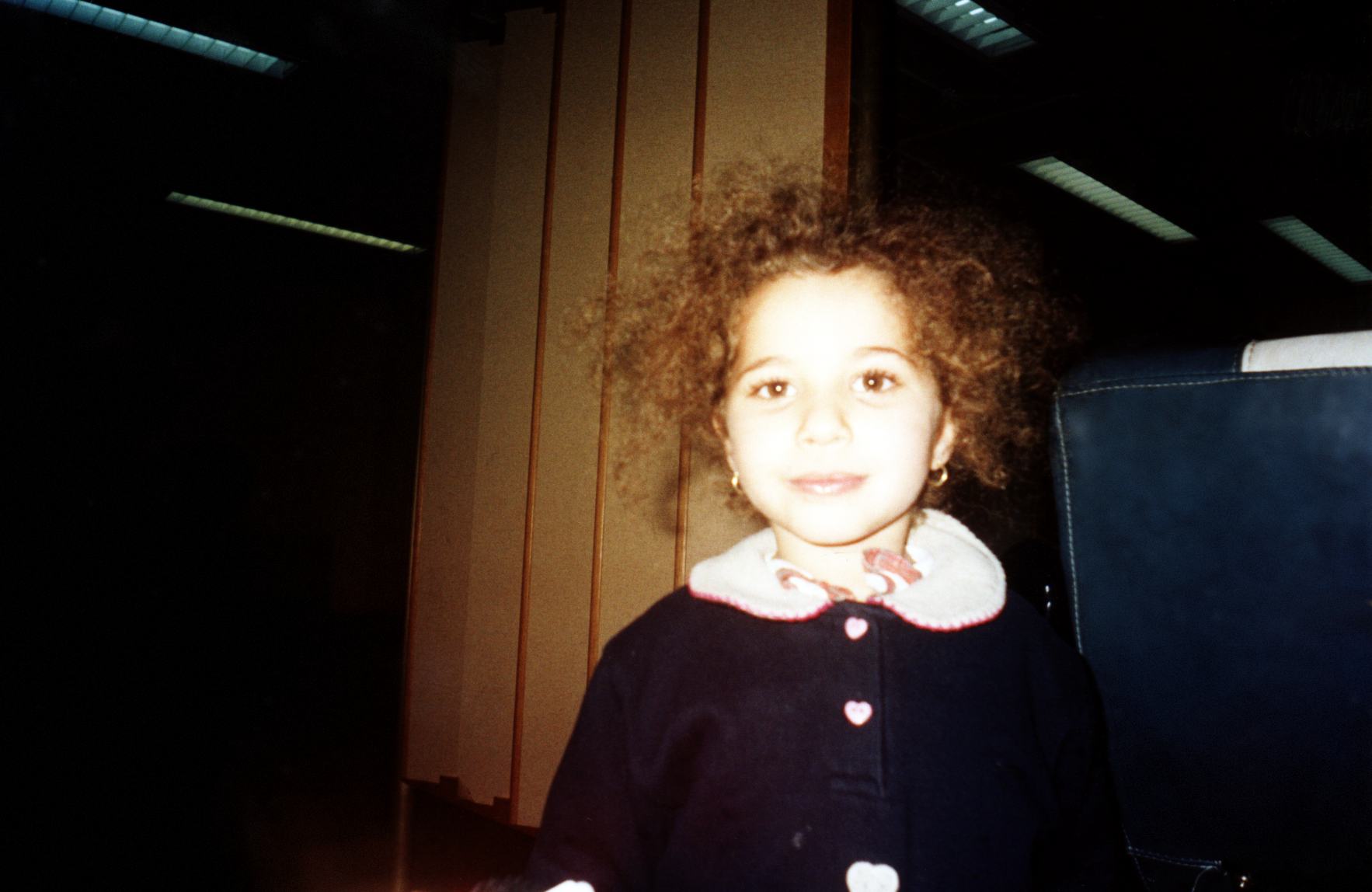
In the lounge an Arab girl of five takes a fancy to us. Having thoroughly exhausted her mother, she chooses Masha as her new victim. Comical and curly-haired, she cheers us up. Now we aren’t quite so frightened to go into the unknown Arab world.
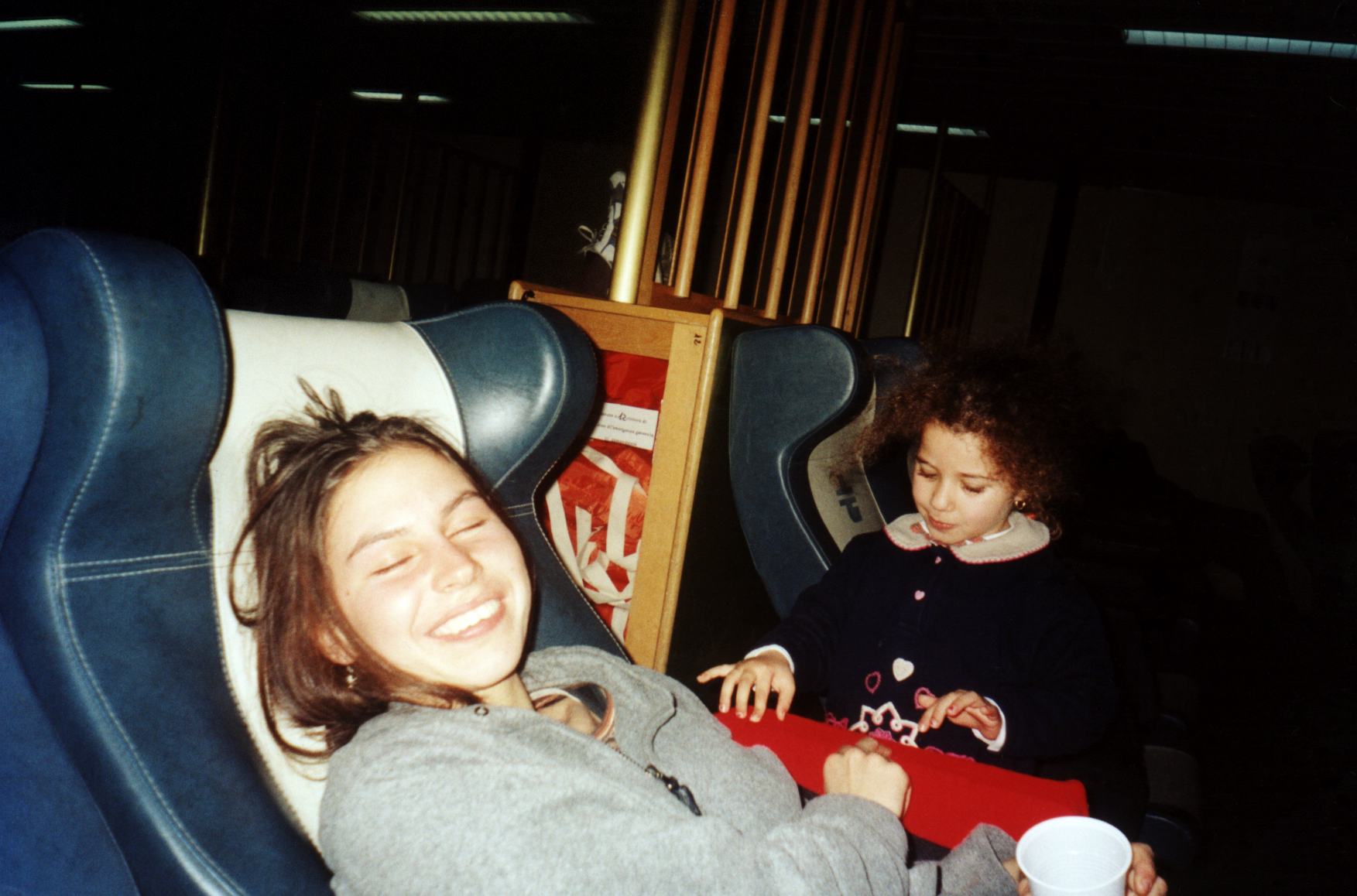
The ferry takes eight to ten hours, so you can get a good sleep. The lounges have aircraft seats. I can’t sleep, so I study the guidebook to Libya the whole way.
Long before we arrive my phone unexpectedly rings. My parents decided to check that we hadn’t sunk. I look through the window. In the evening gloom there’s a little island in sight after all. The network is TUNSEL. We may count ourselves in Africa already.