Trip diary
In this diary, “I” is Sasha Simo, “Tanya” is Tanya Simo, and “Sasha” and “Marina” are Sasha and Marina Sochava.
23 July
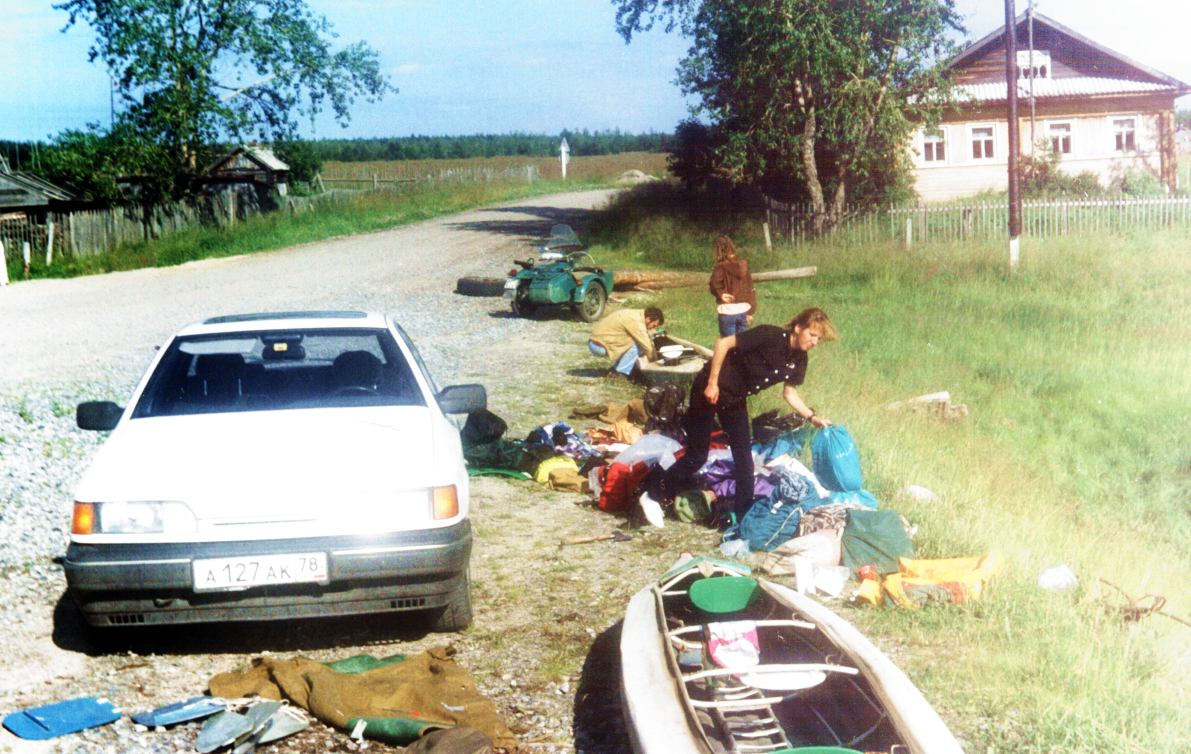
We left home by car at 10:10. We had decided to get all four of us and our kayaks into our Ford Scorpio. The two of us barely fitted with our own gear, but we went to the Sochavas’ anyway. We loaded up quickly and, to our surprise, it all went in. You could not see a thing through the rear window. Three enormous packs and the skin of one kayak sat comfortably on half the back seat and reached the ceiling. That left Marina and Sasha the other half. Who cares how you get there, as long as you get going? The weather was grey. We made our first stop after Syasstroy. Once we crossed into Karelia it brightened and the sun came out. After Petrozavodsk we stopped at a little lake five metres from the highway. We lit a small fire with pine cones and made mashed potatoes. There was no wood, not so much as a twig. It had all been burned before us. This was the year I started recording every campsite’s coordinates. Here we were at 62°22.361′N, 33°53.336′E. We swapped drivers after the stop.
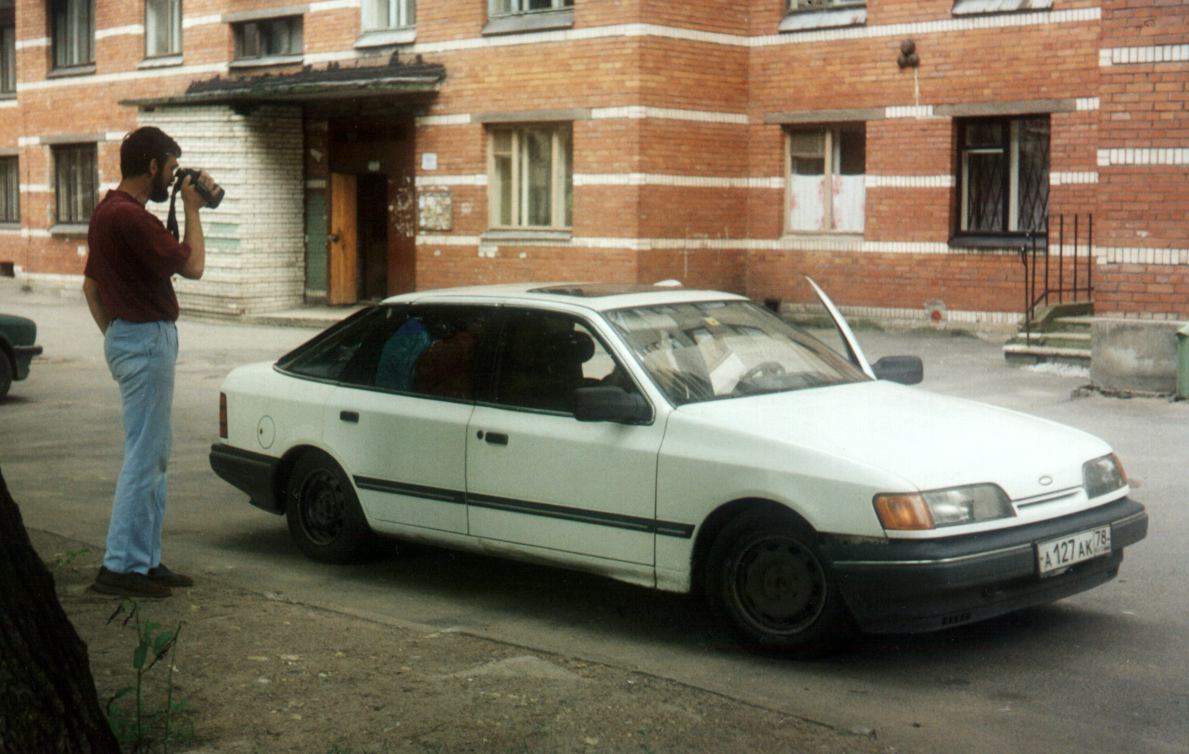
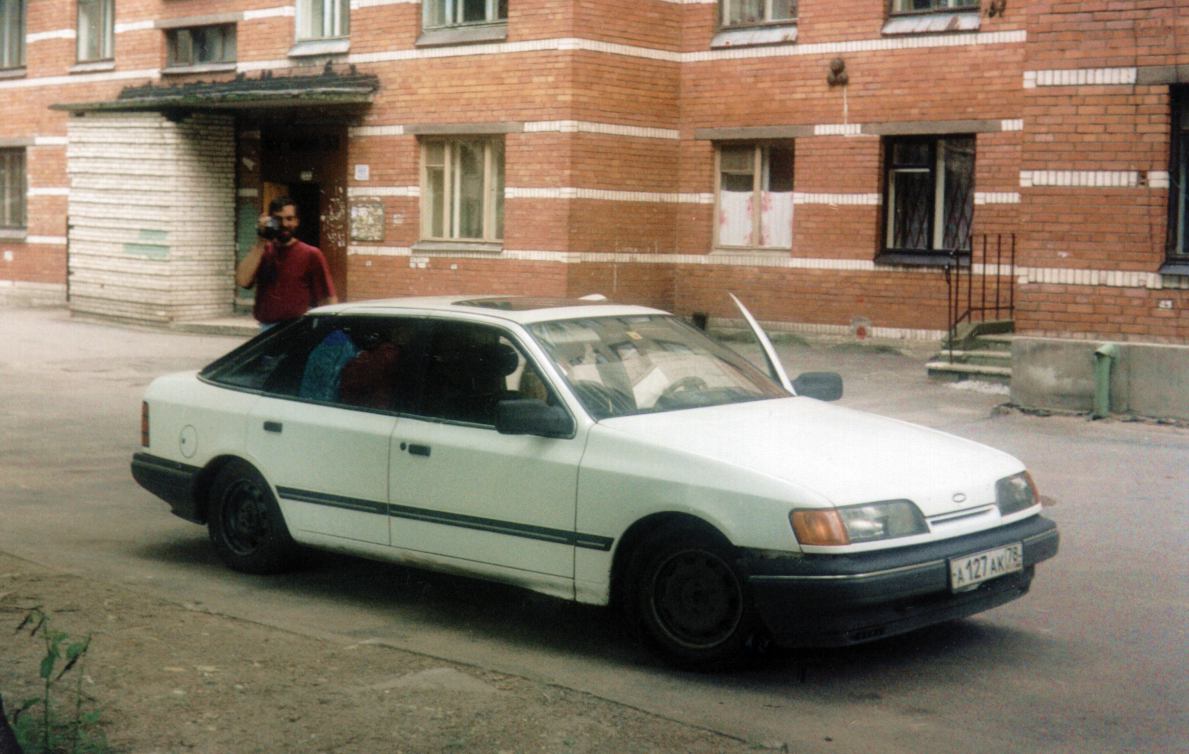
Now I was having a rest and the other Sasha was driving. We tried to find 95-octane petrol in Medvezhyegorsk, without success. We were lucky to find 92. Near Medvezhyegorsk the road goes through a cutting in the rock. We filmed it. After about 750 kilometres on the road we camped beside the Onigma River at 63°55.459′N, 34°01.930′E. It was another 100 kilometres to Belomorsk and already late. Even if we got there that day, we would not have time to put the kayaks together and set out. There was an old collapsed bridge, a fast current and plenty of mosquitoes. Suspicious characters were riding about on bicycles. We tied one of the tent guy lines to the car, threw all our gear inside it, and went to bed.
24 July
In the morning we found an appalling number of mushrooms around the tents. We packed quickly, reached Belomorsk and saw the sea. Then it poured. At least now there would be fresh water on the islands. We went round the shops and filled the Ford to the brim. There are no pretty islands off Belomorsk, so we decided to drive to Sumsky Posad. As soon as we turned onto the road, we punctured the right rear tyre. We went back, found a tyre shop and set out again. The road, it turned out, crossed the White Sea Canal on a pontoon swing bridge. The bridge was anything but level, and I scraped the exhaust. It held for a while. Twenty kilometres later it fell off and broke in two. We tried to fix it, without success, and left it on the roadside before Virma. Just past Virma the right rear tyre went flat again. The car clearly did not want to go to Sumsky Posad. The road was not really all that bad. It just was not meant to be.
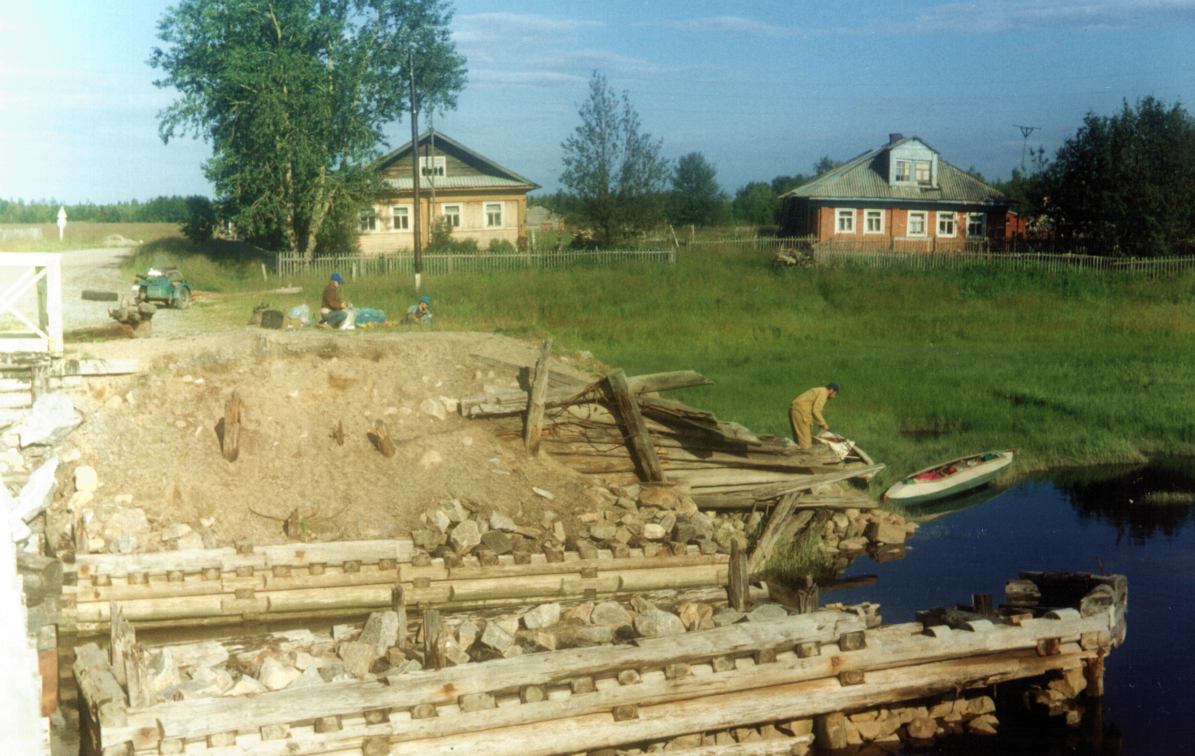
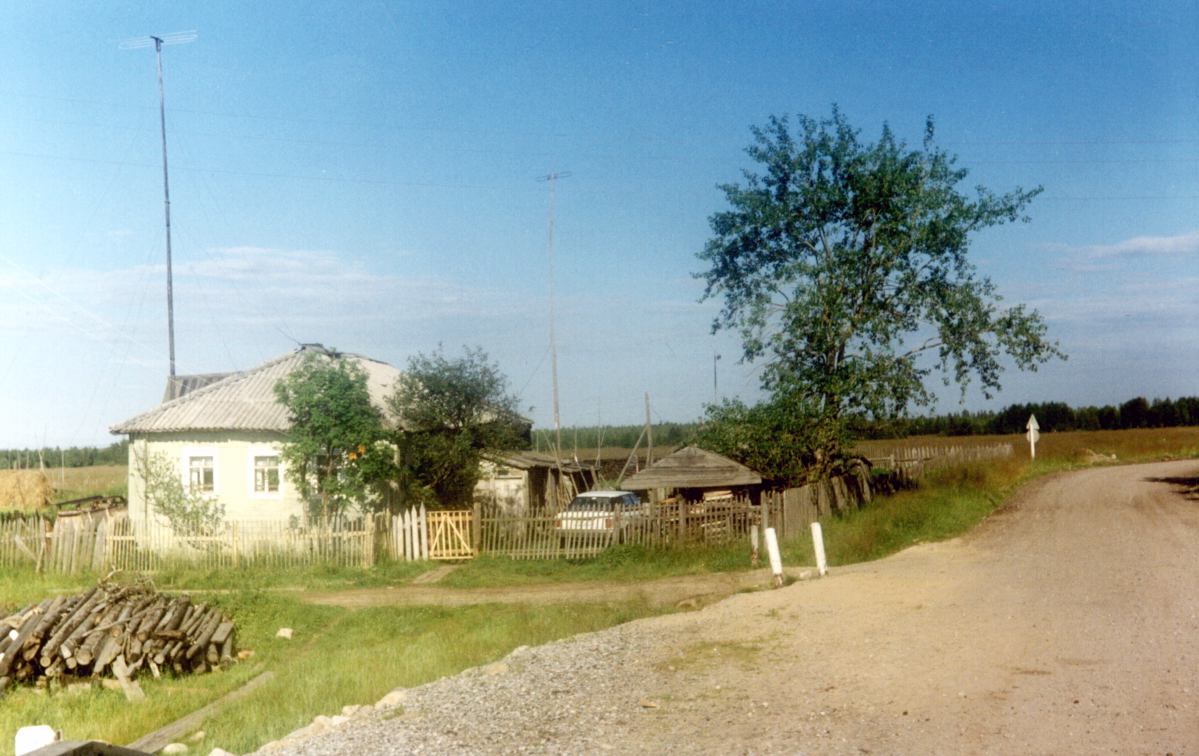
We went back to Virma and assembled the kayaks on the bridge over the Virma River. Local people came up, clicked their tongues and wondered how we could possibly go to sea in “that”, pointing at the kayaks. Had we brought a canister of mosquito repellent? There was a vicious number of mosquitoes. We parked the Ford in the yard of the first house on the left after the bridge. The river is fresh by the village. We filled our bottles there and headed out to sea. The White Sea greeted us with a dead calm. The surface was a mirror. It was hard to believe this was the fierce White Sea. There was a little rain just after we set out, but it provided a beautiful background for photographs. The water was full of big jellyfish, some up to 40 centimetres across. We tried to film them.
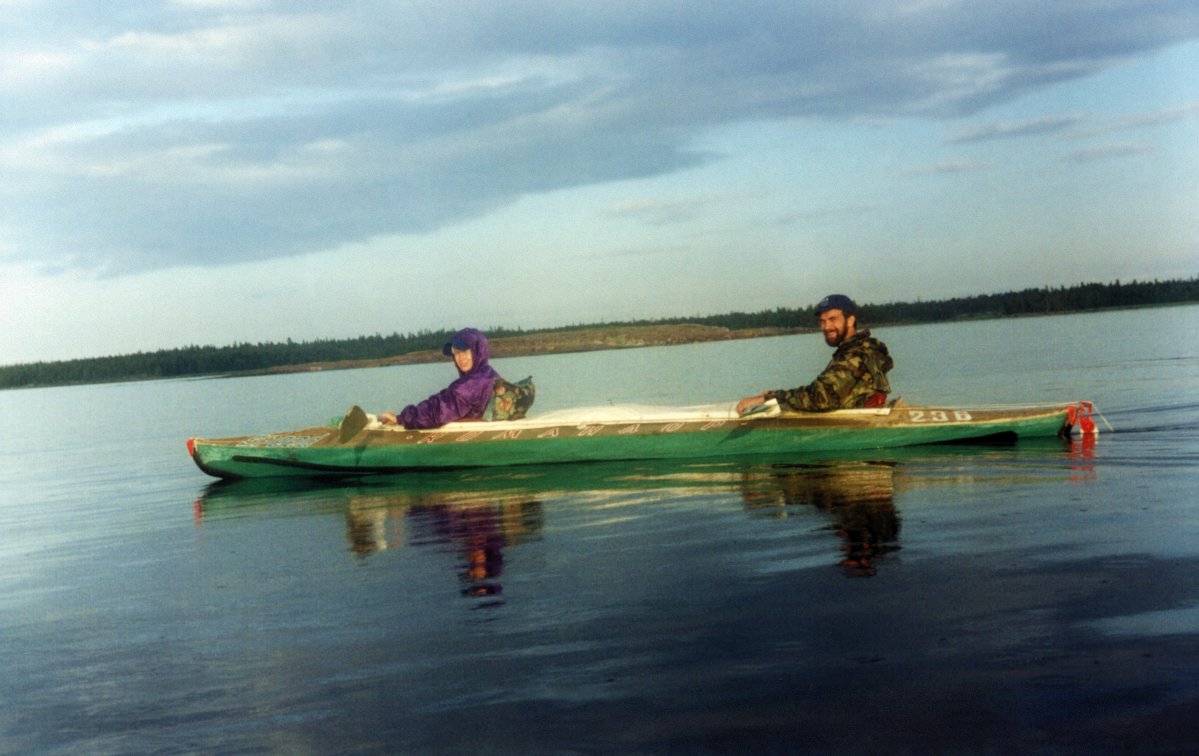
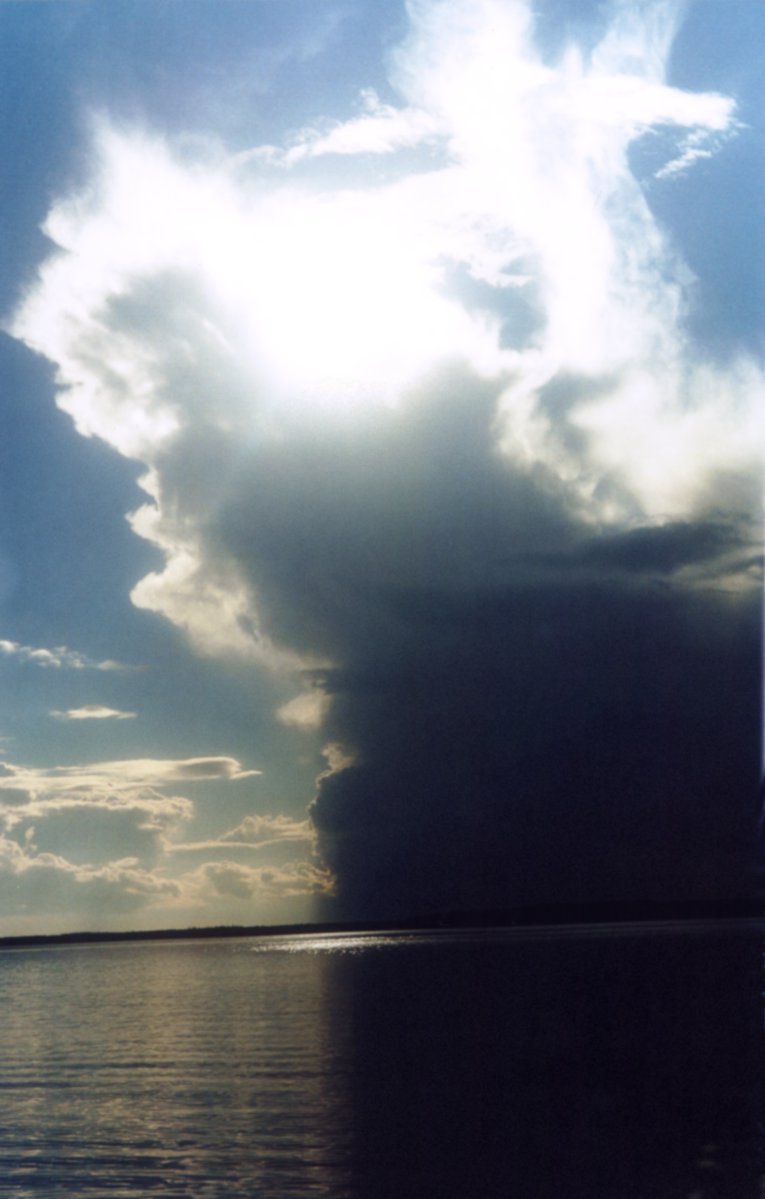
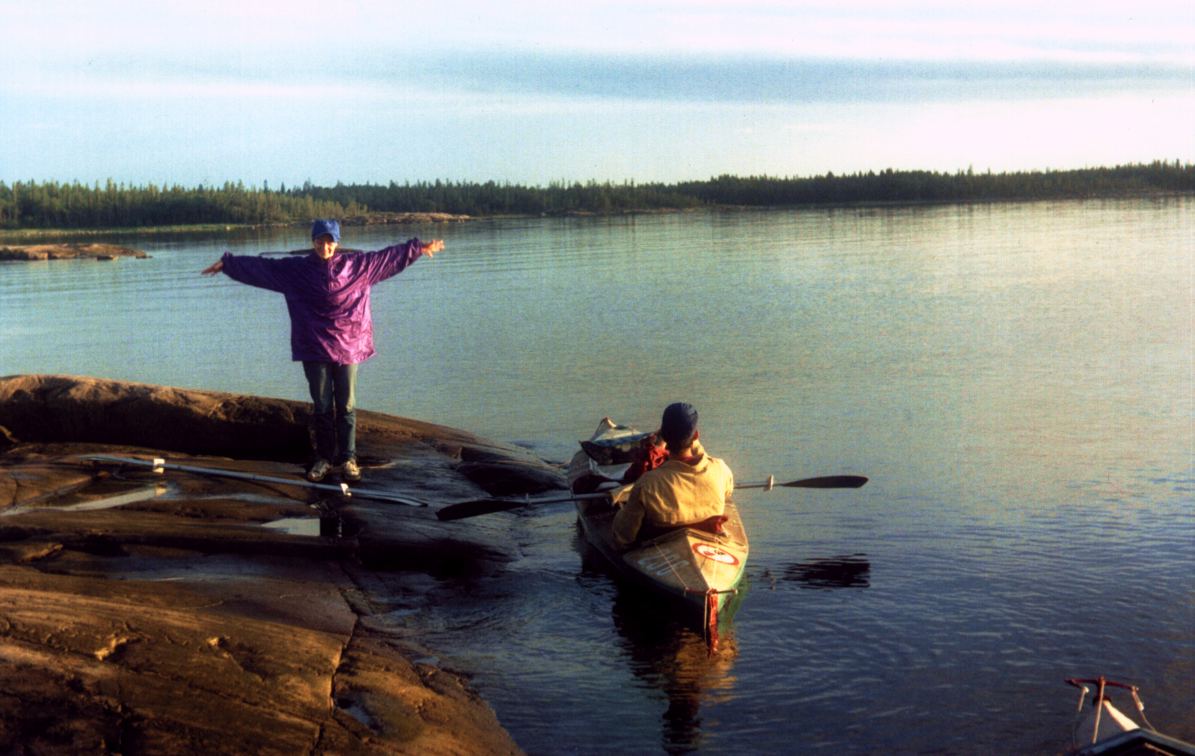
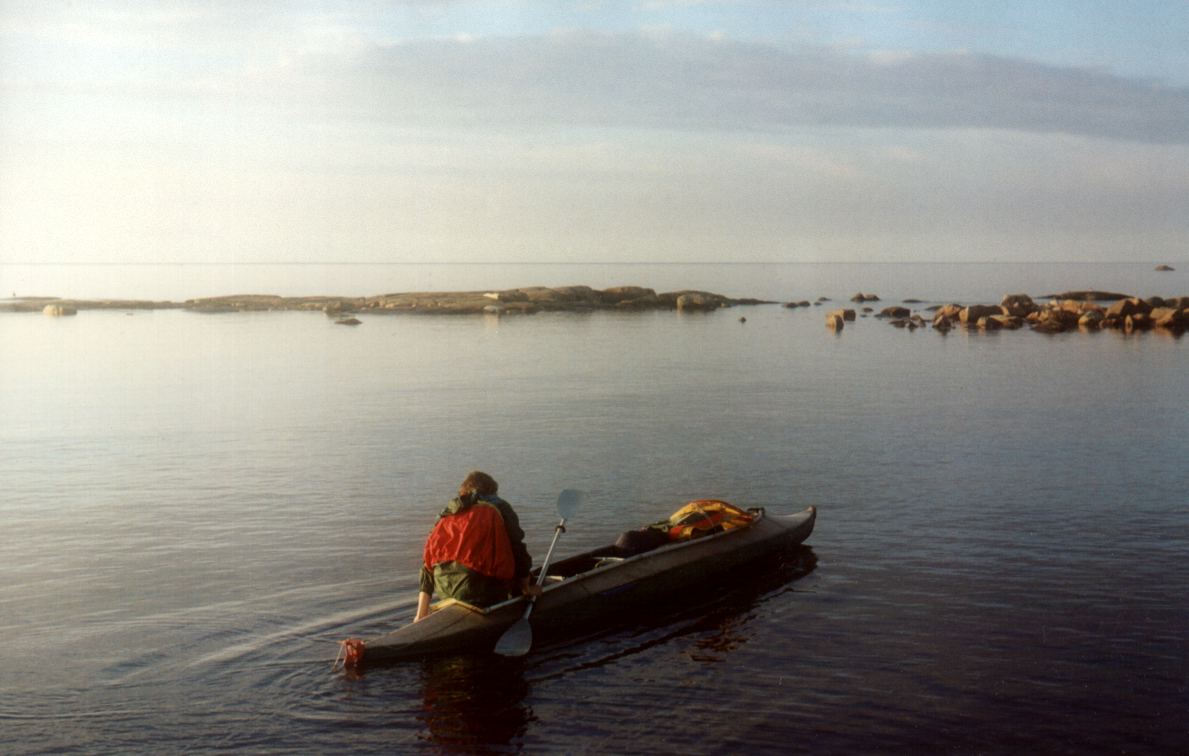
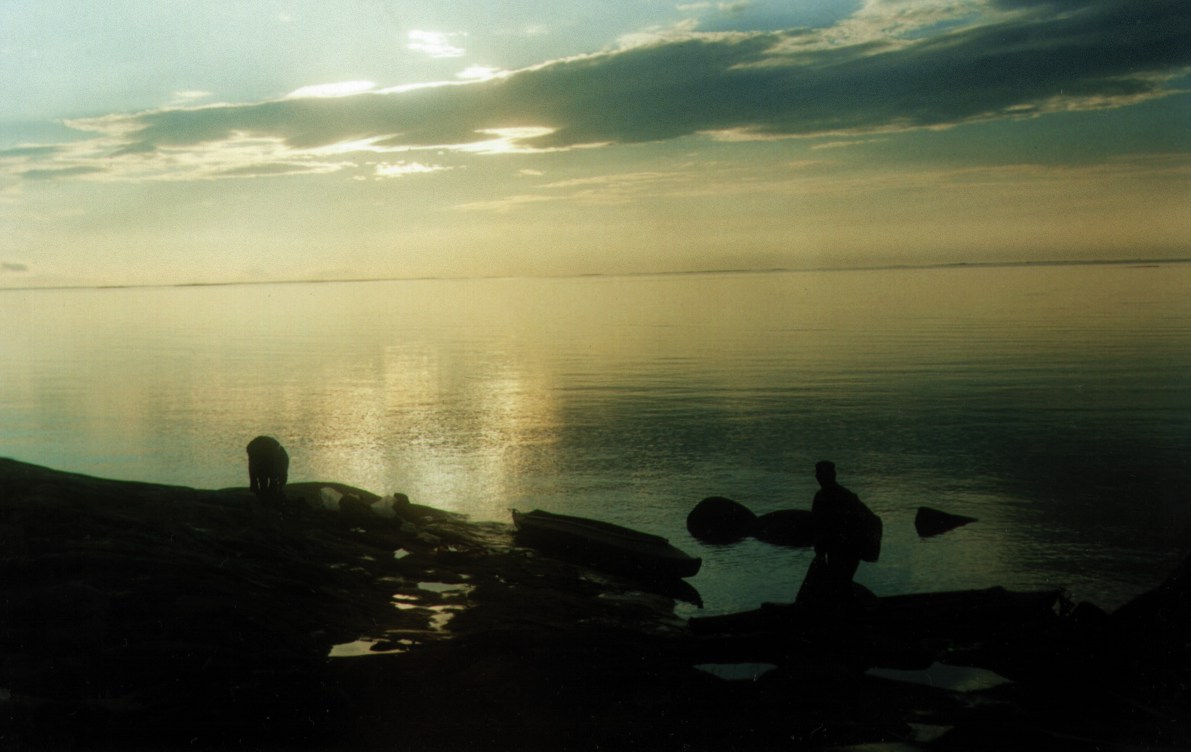
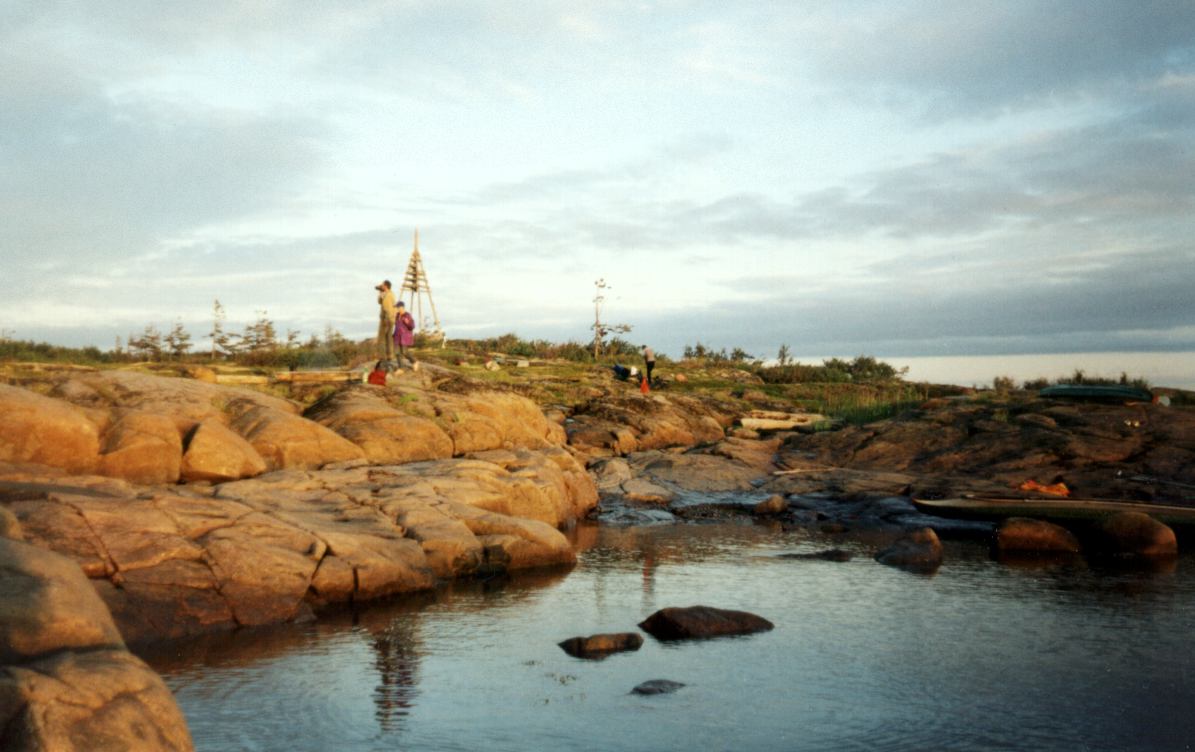
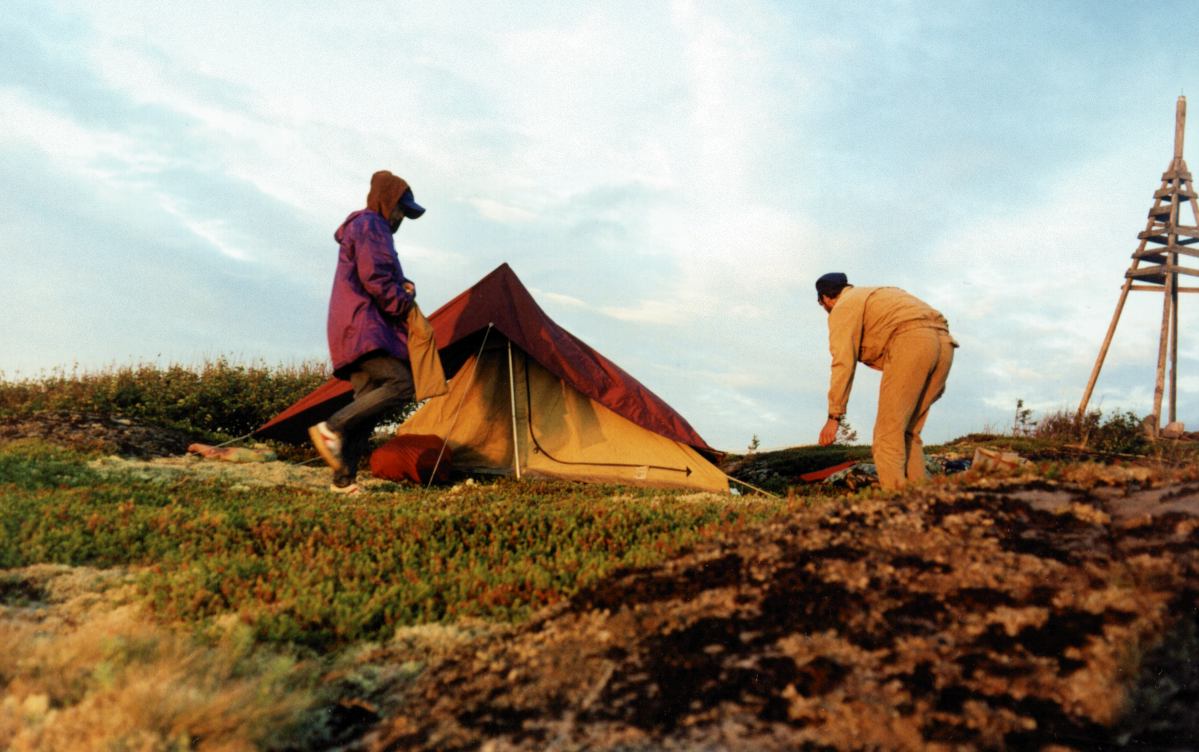
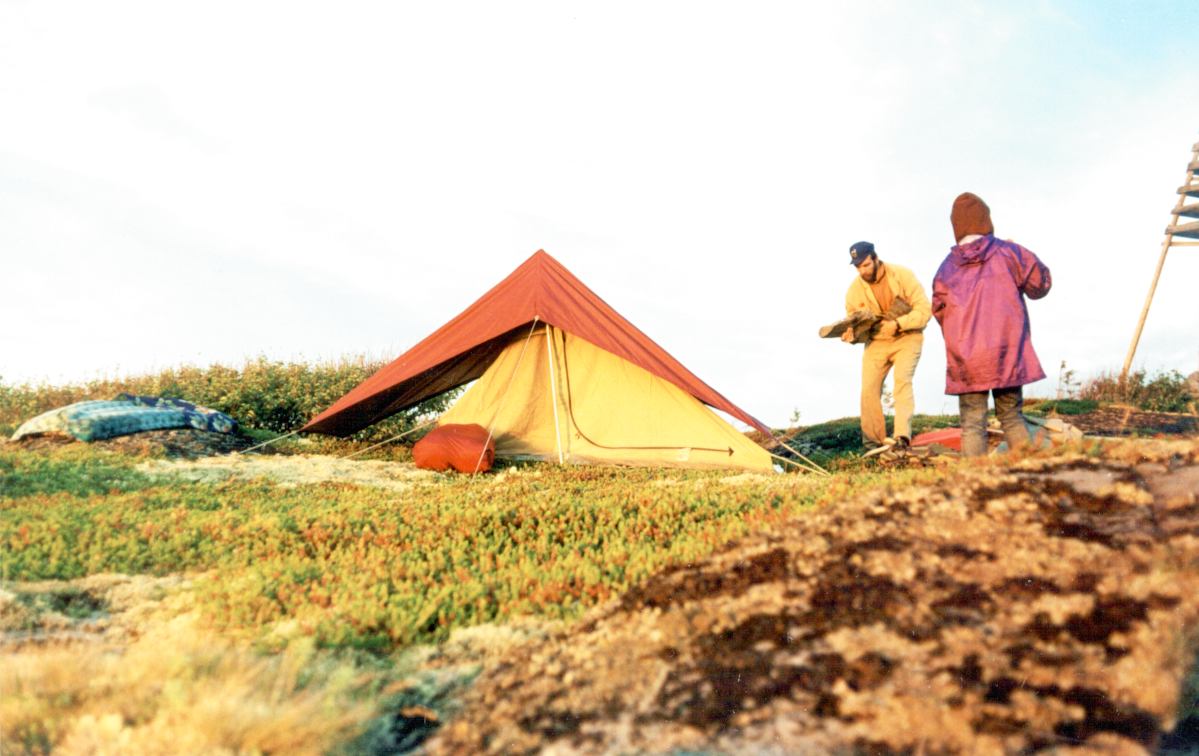
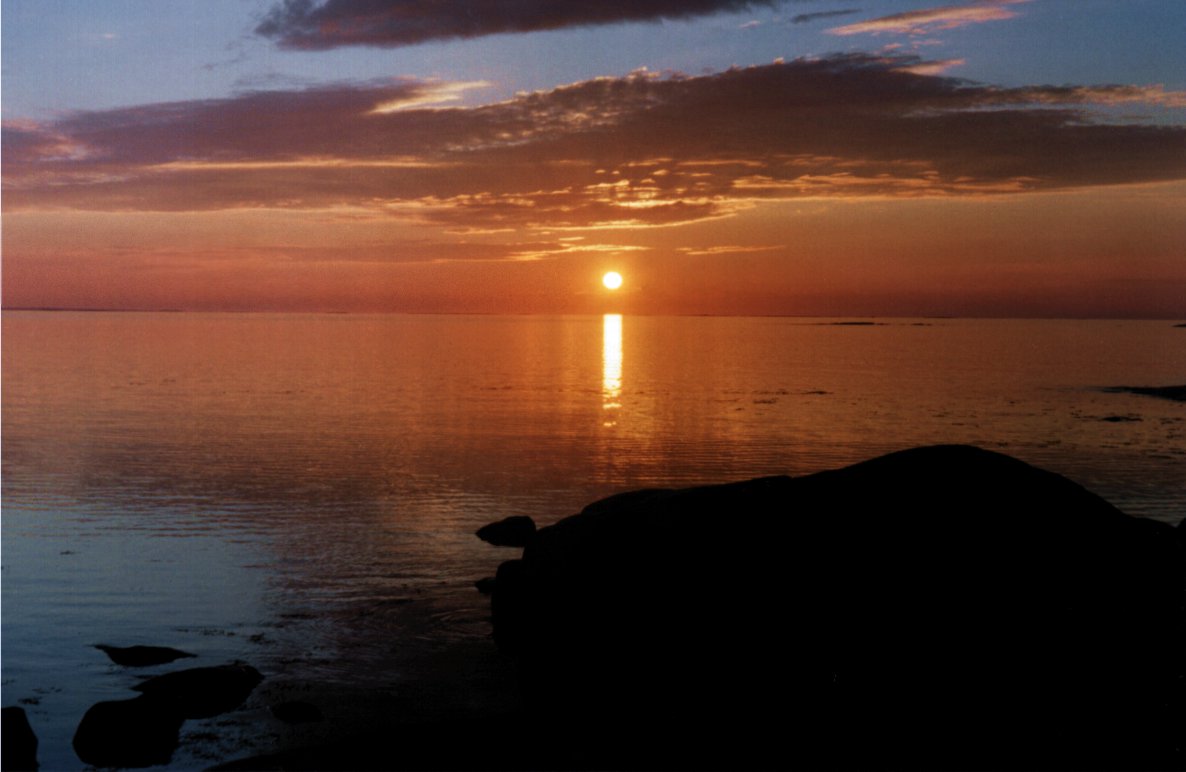
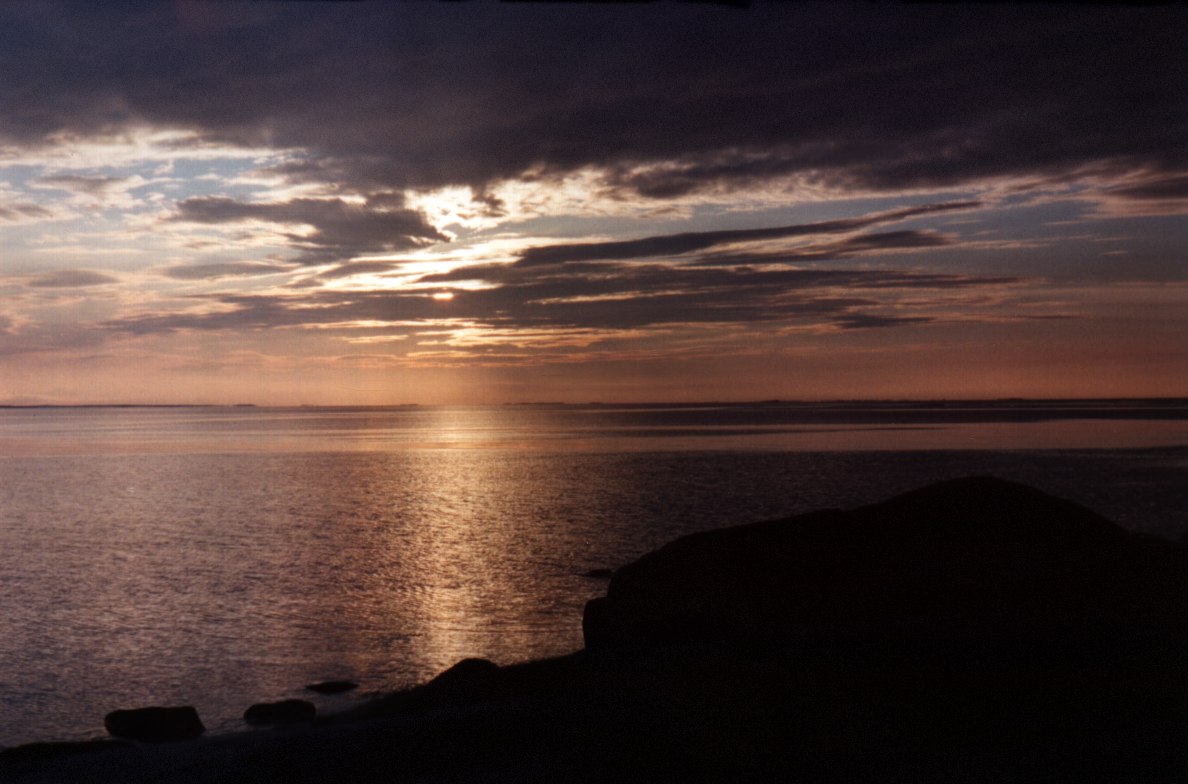
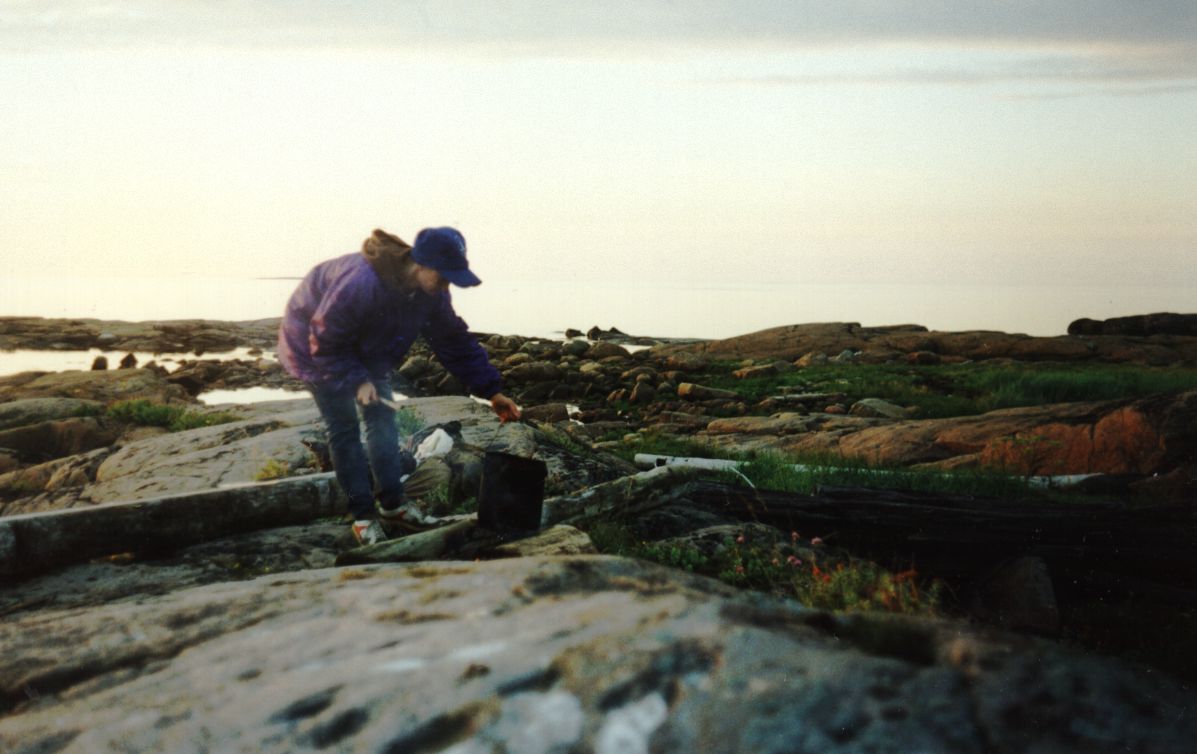
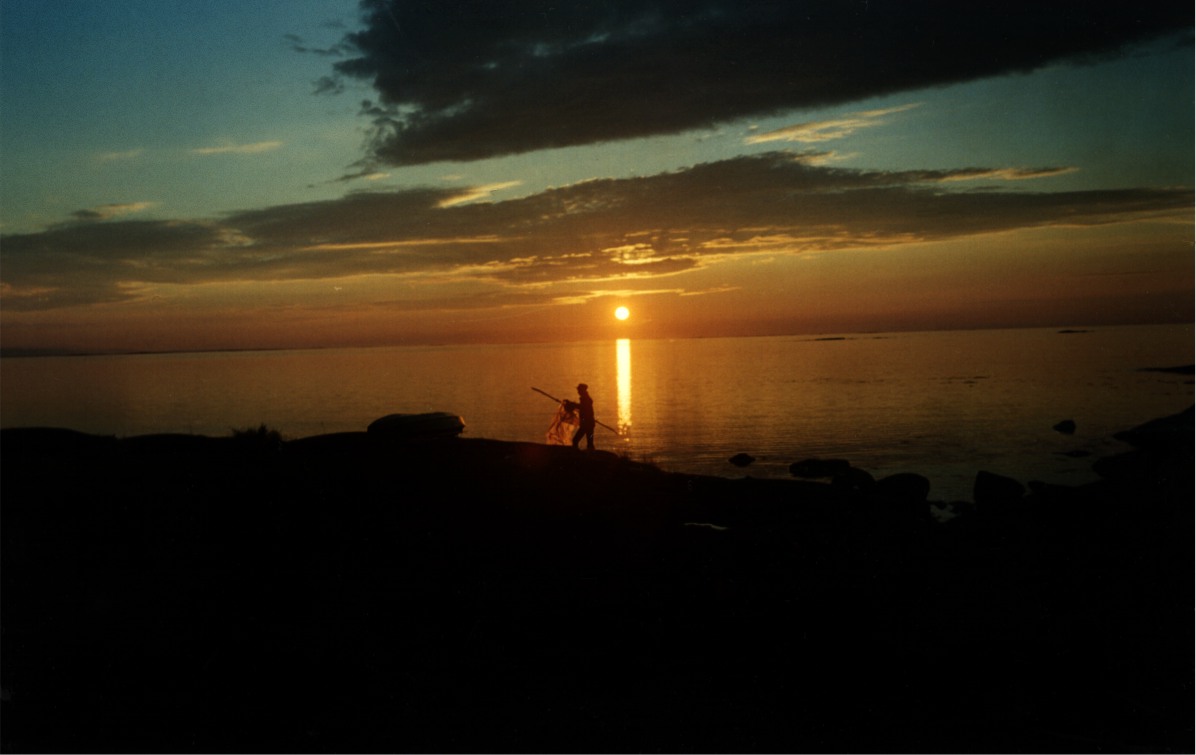
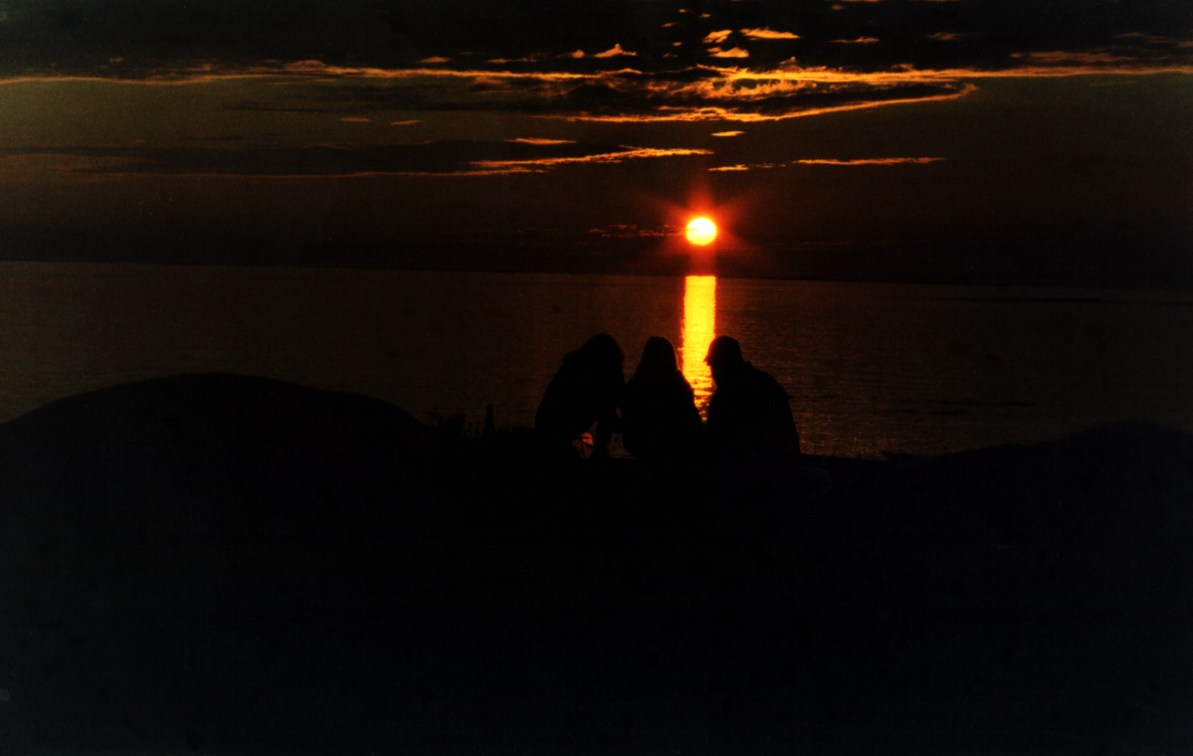
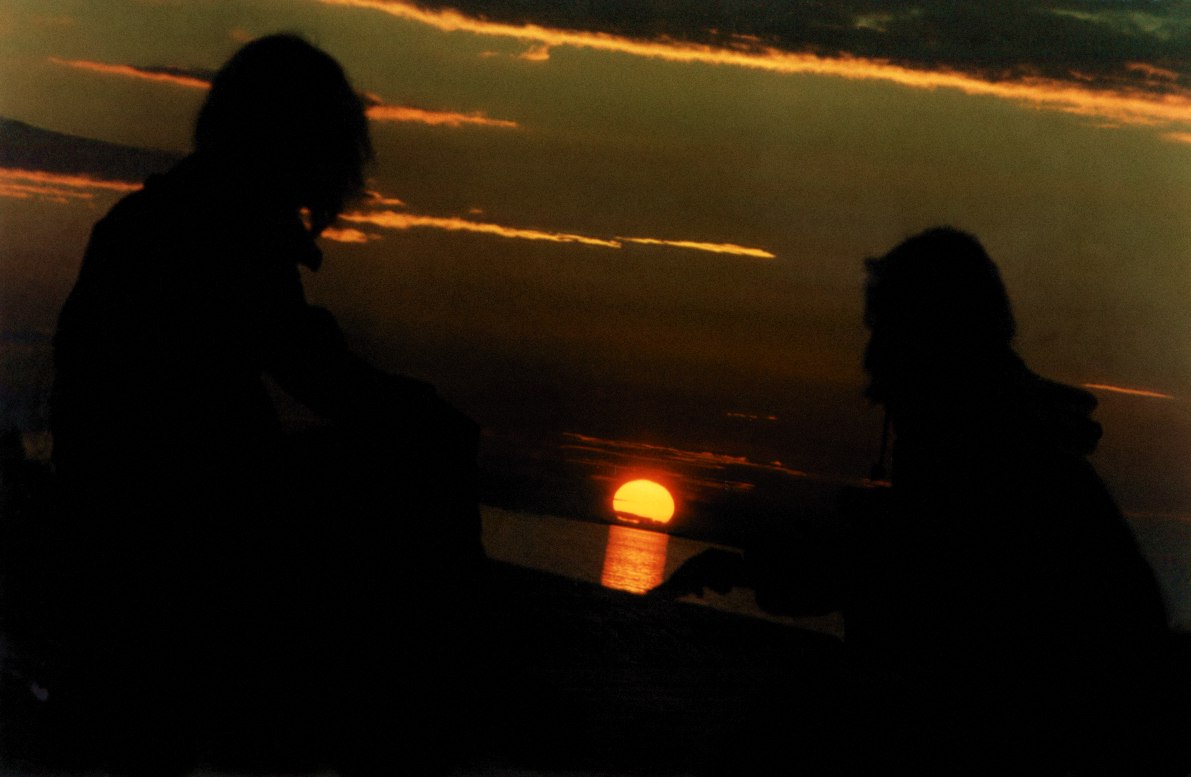
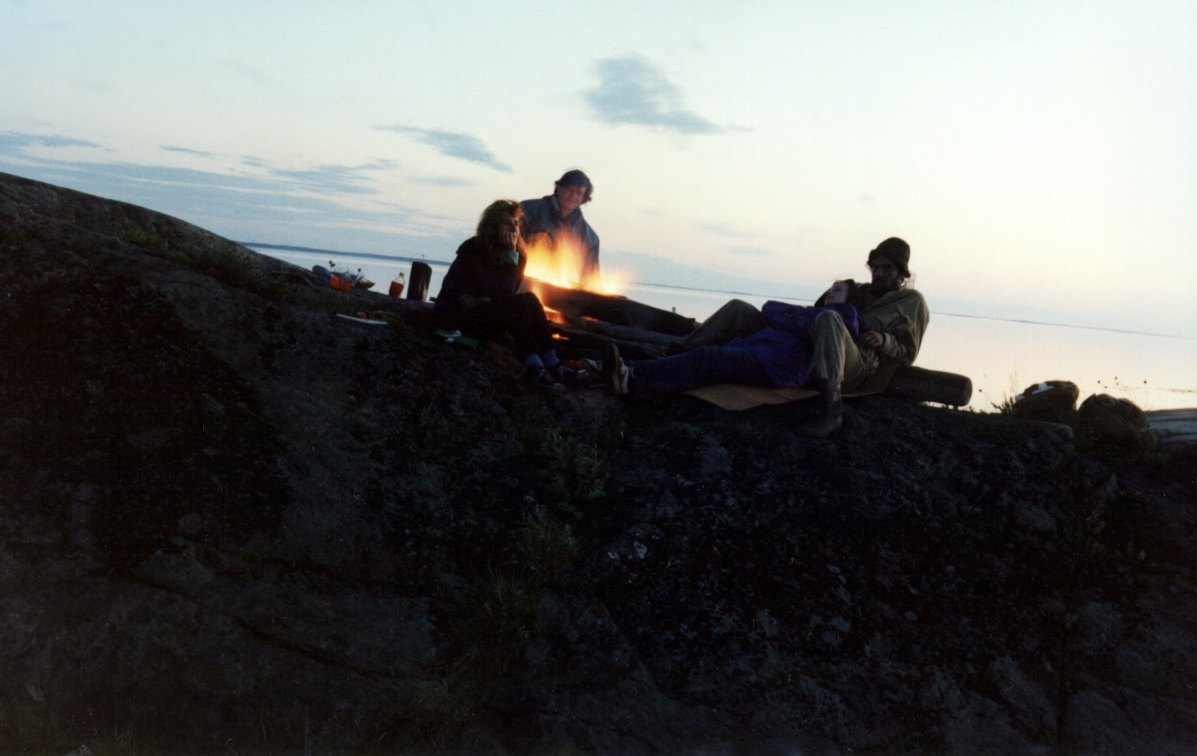
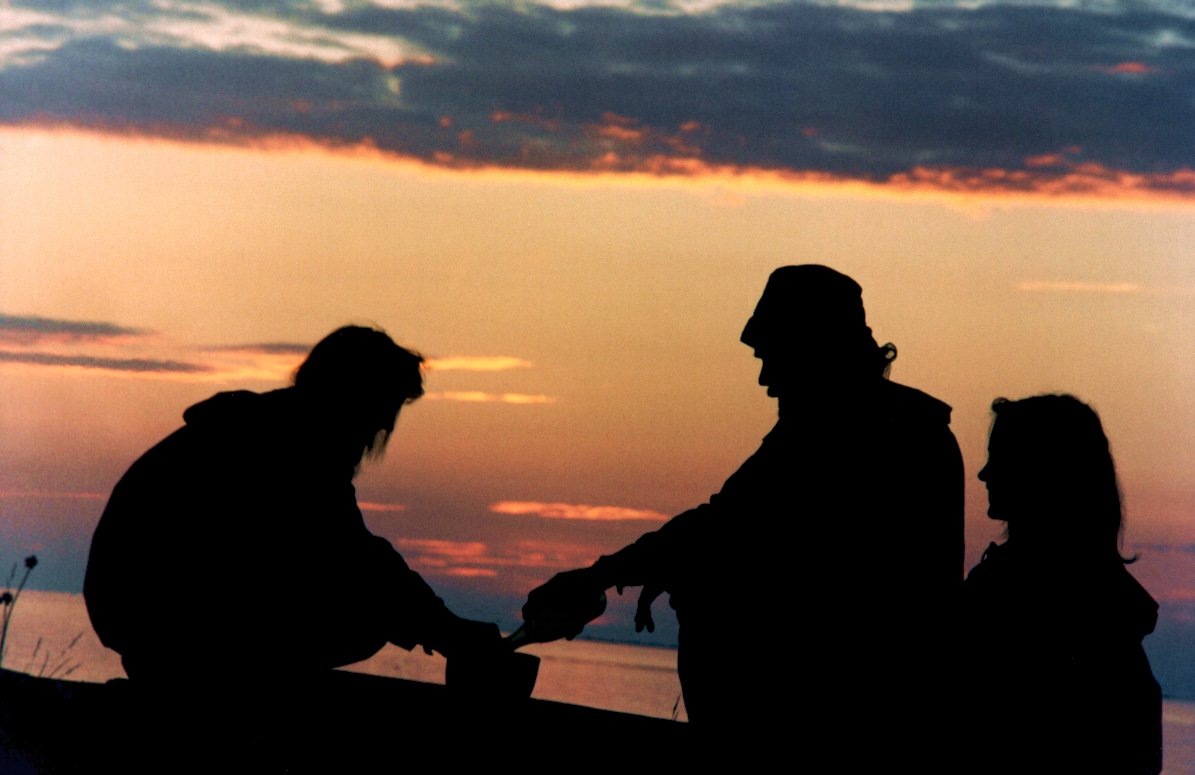
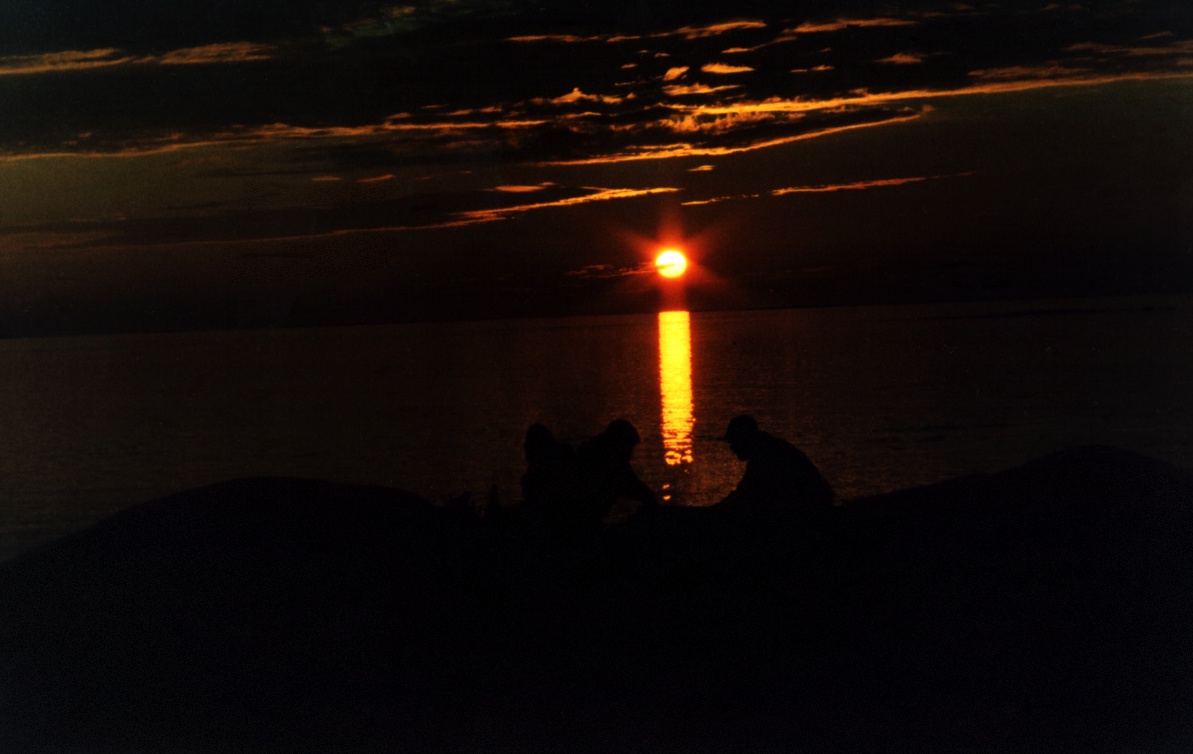
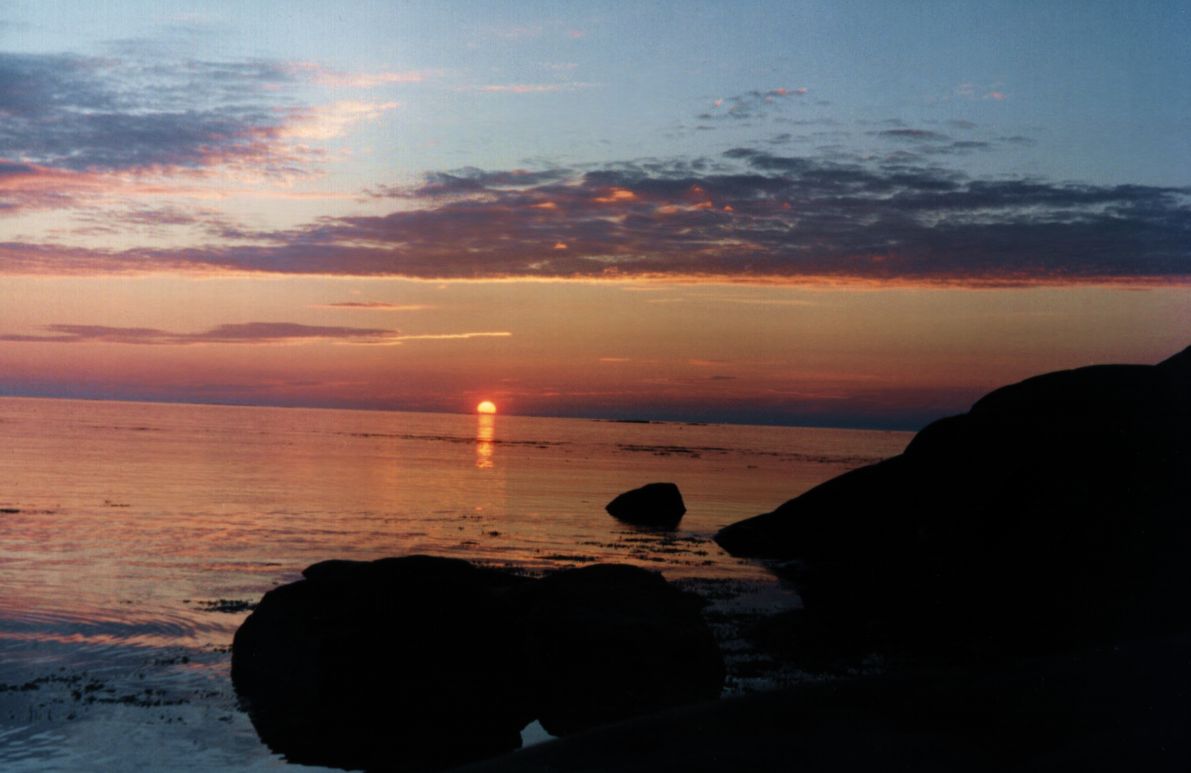
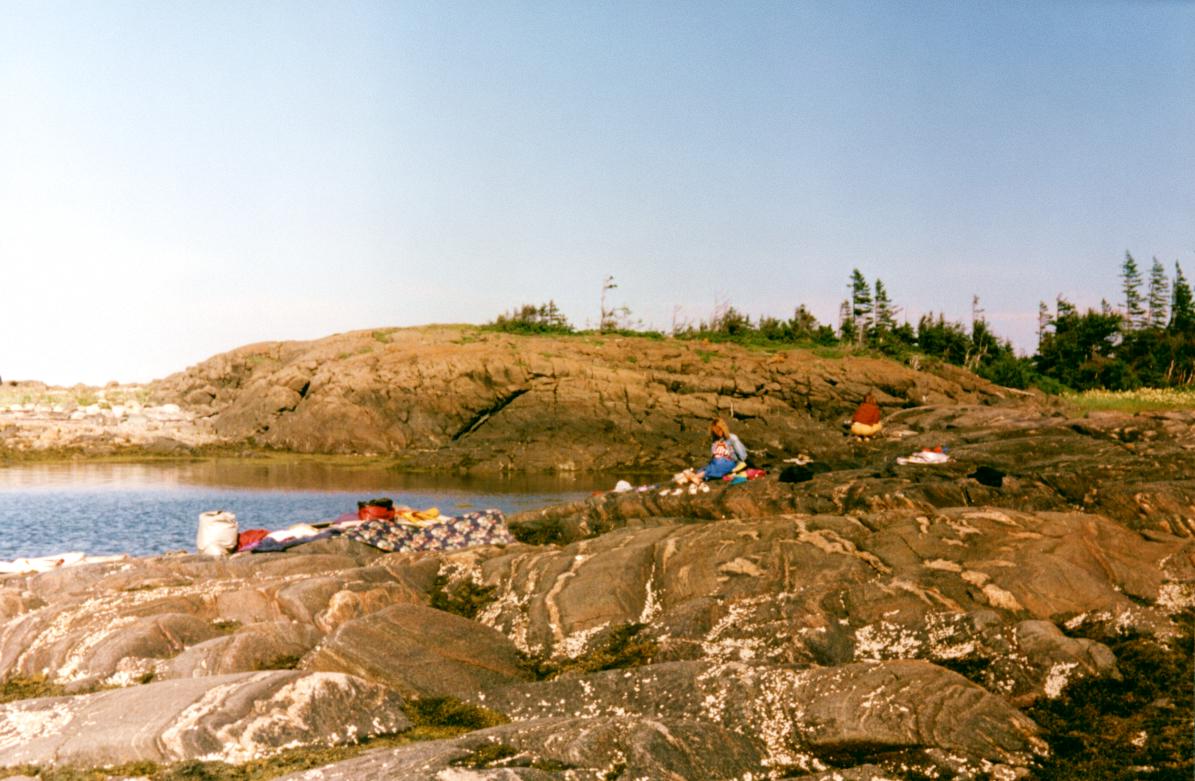
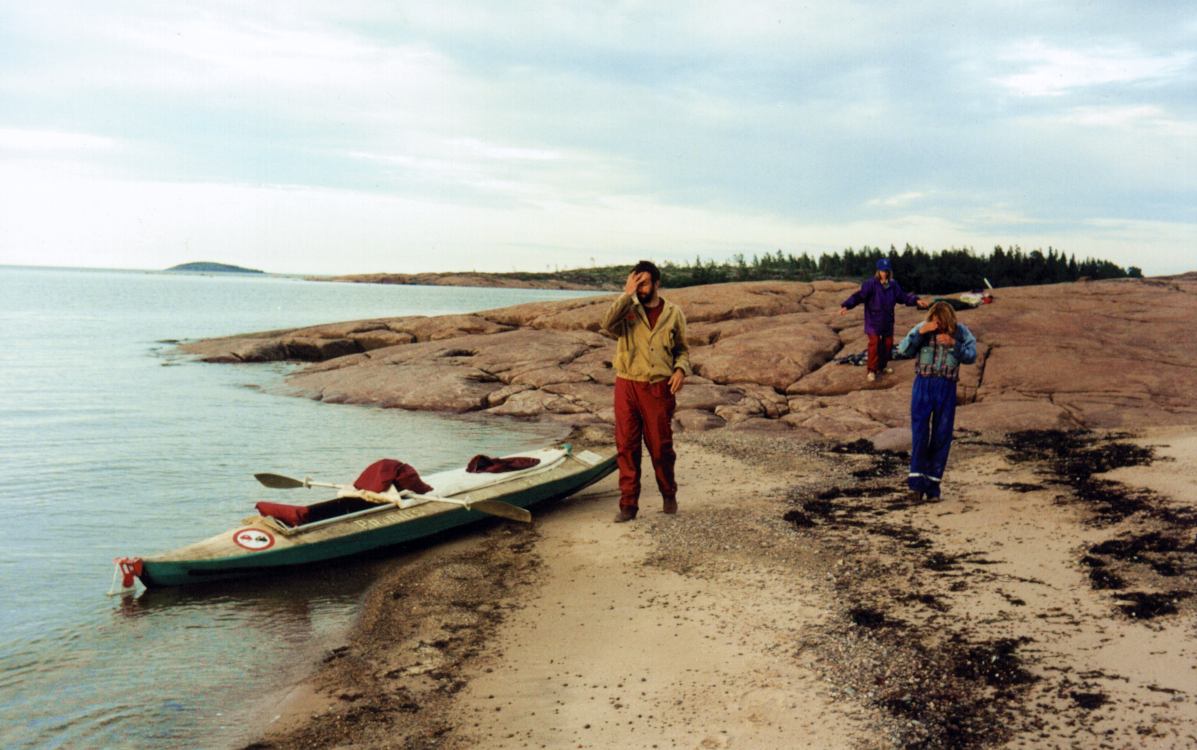
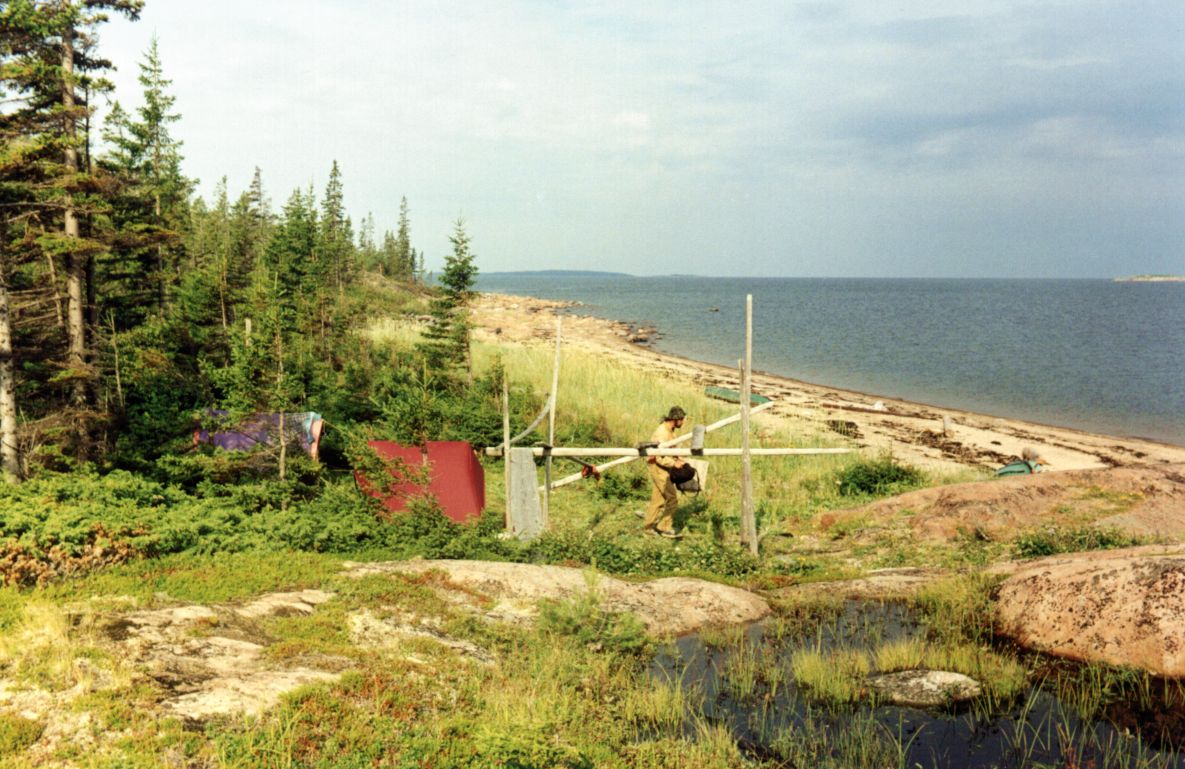
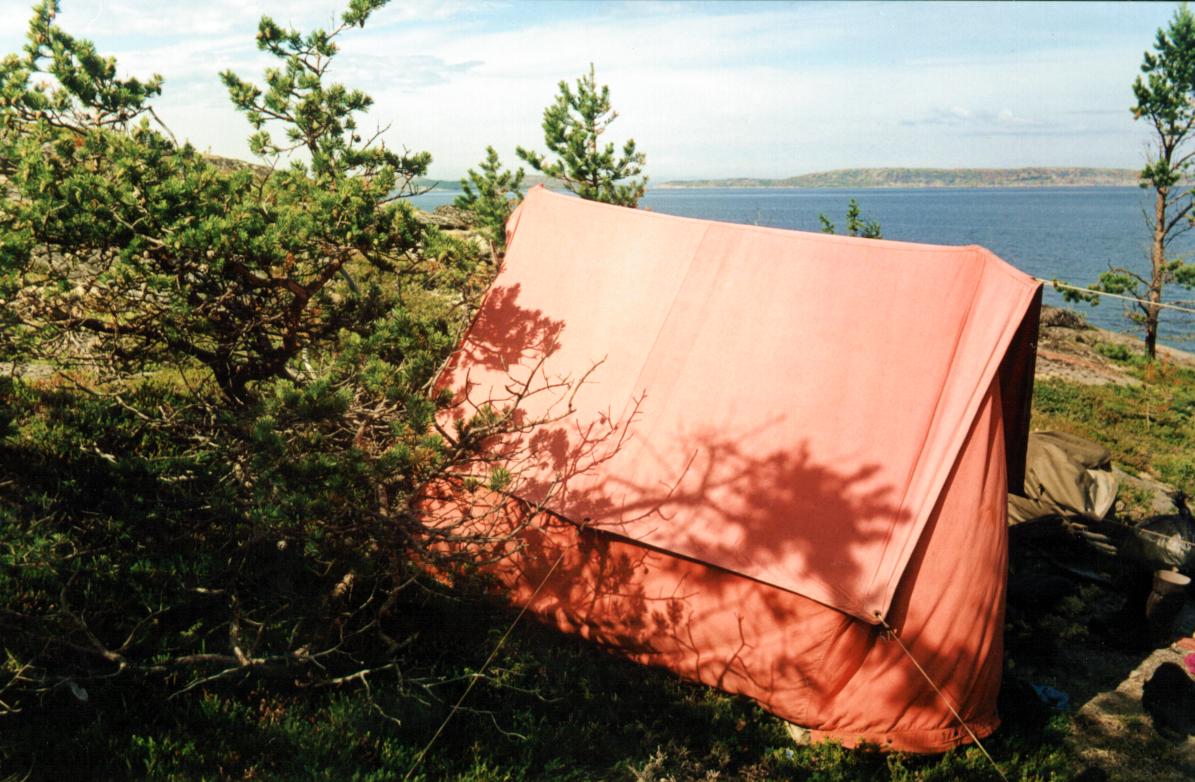
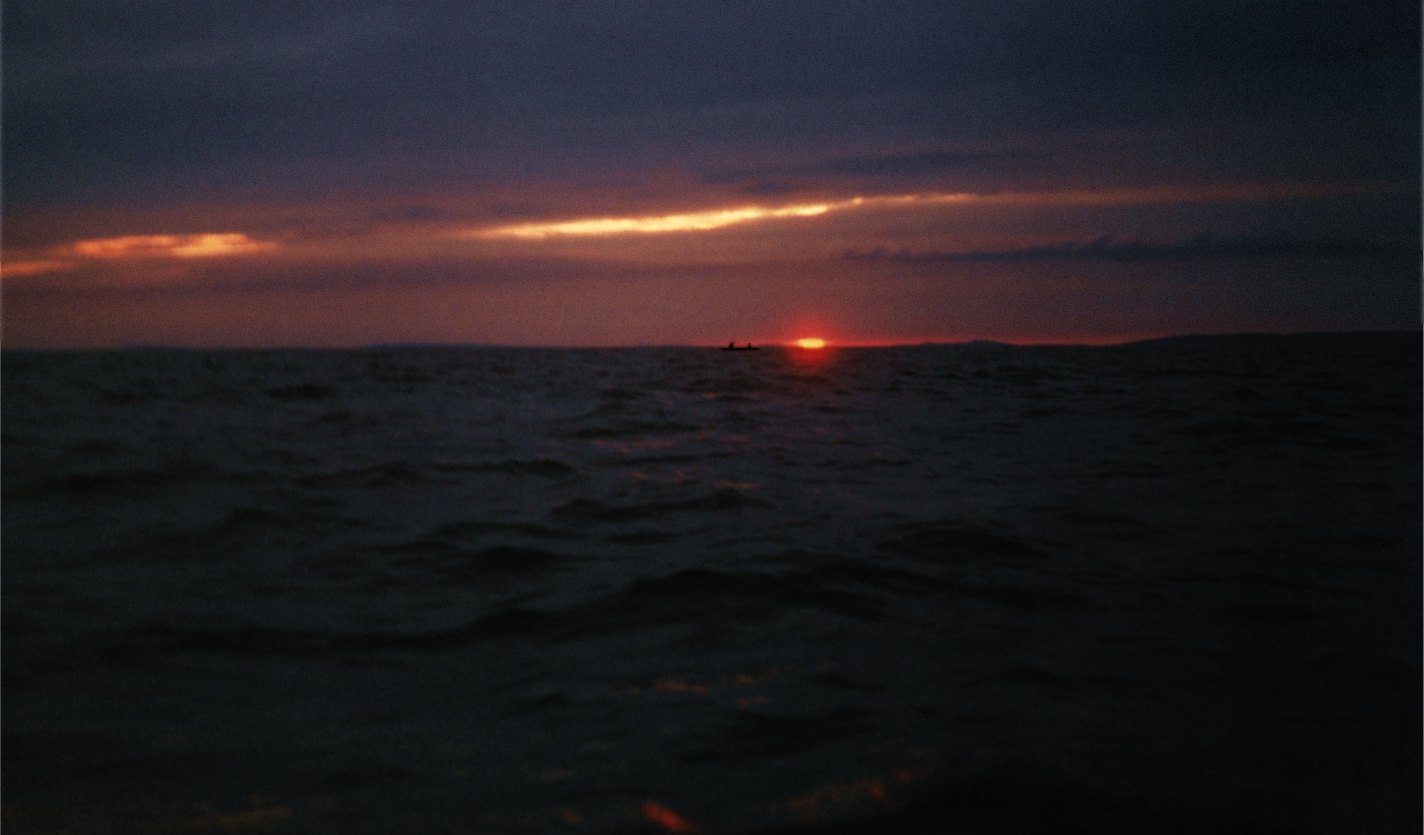
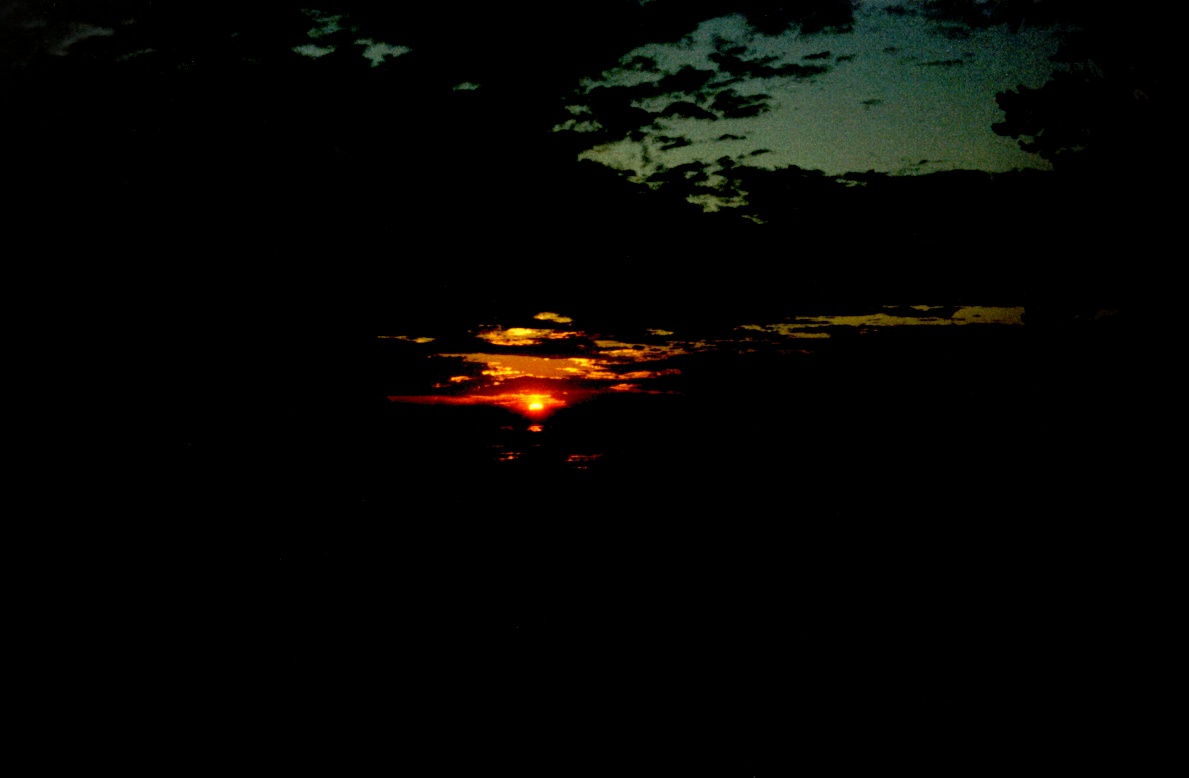
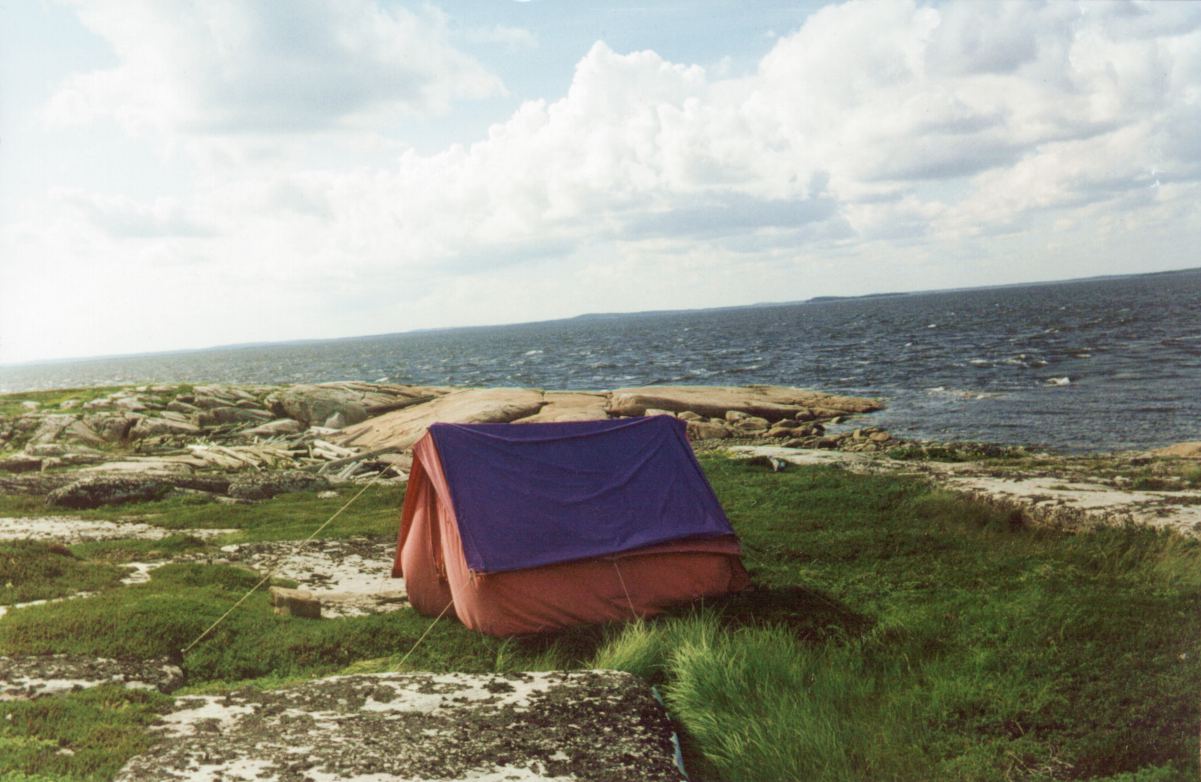
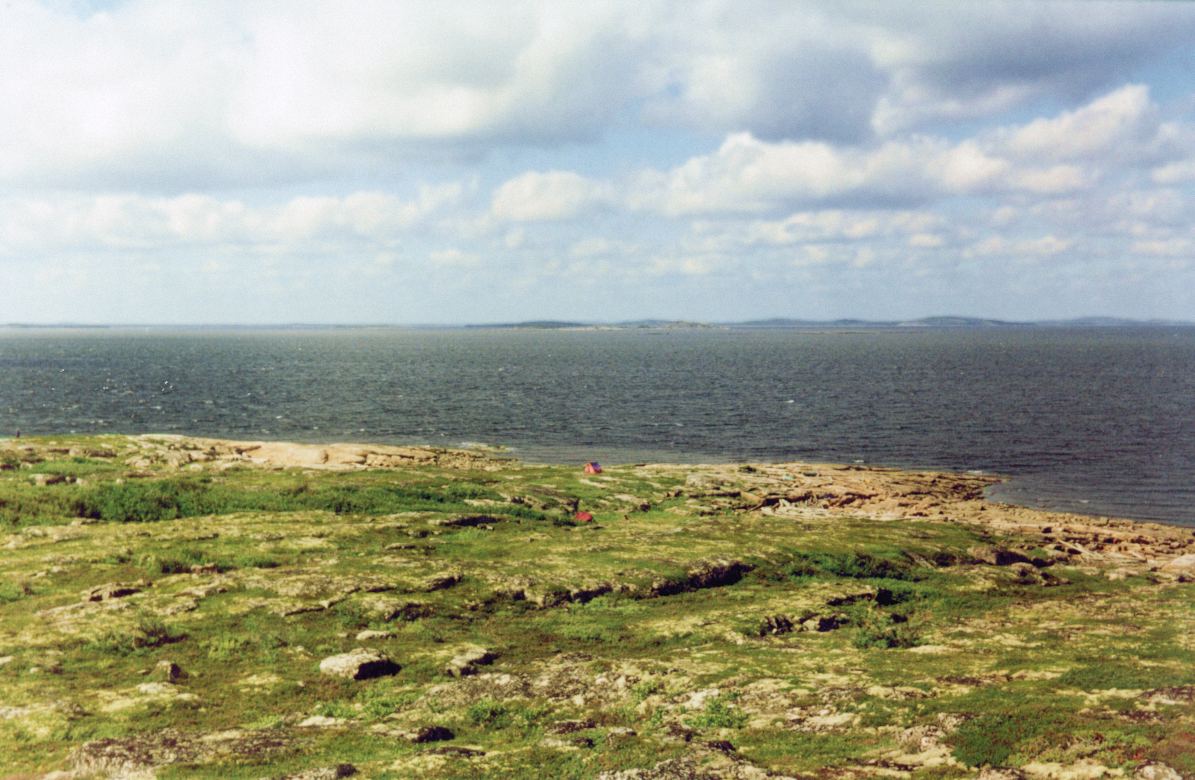
We passed several small islands and came up to Sumostrov. It is low, and we were wary of the mosquitoes that had followed the kayaks in a cloud all the way from the village. We camped (1, 2) on a little rocky island north of Sumostrov at 64°24.366′N, 35°18.629′E (see map). Everyone was delighted. Finally we were free. There was green grass all around. The sun went down into the sea while we made a celebratory lunch, or rather a dinner. We drank a bottle of champagne with the setting sun as a backdrop.
25 July
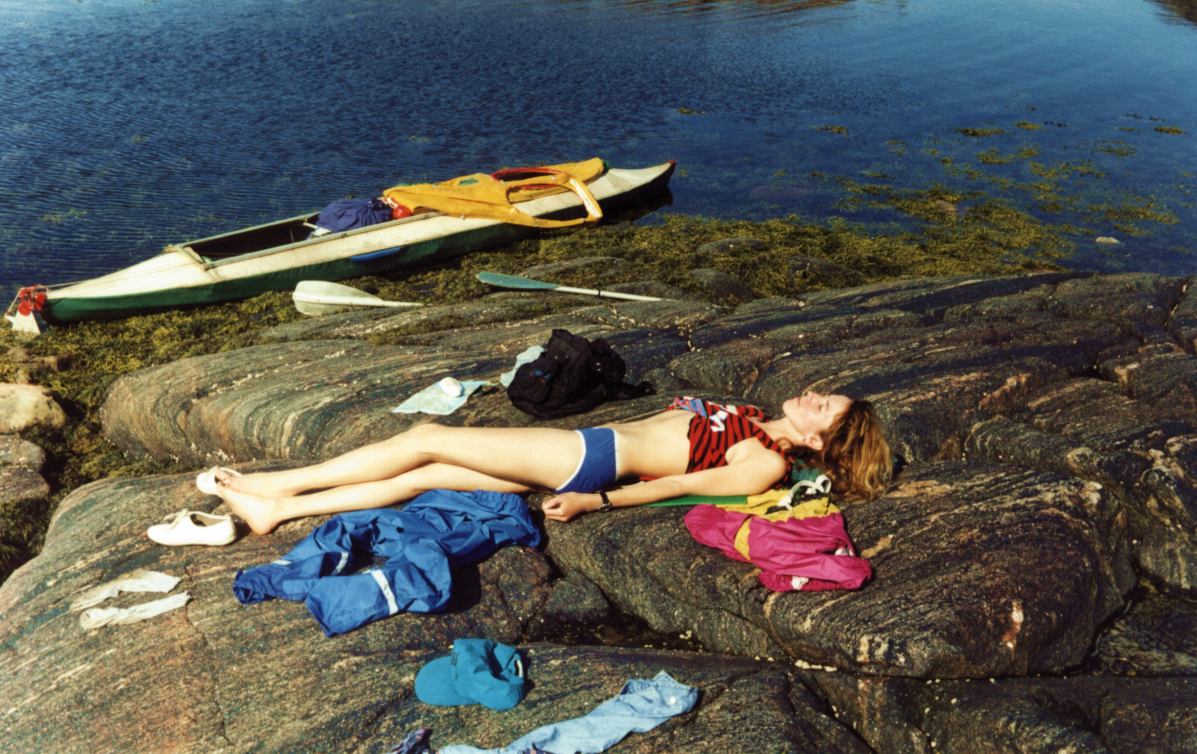
We woke because the tent was hot. An unfamiliar feeling after years of trips in May or up north. Tanya ran straight from the tent for a swim. The water turned out to be relatively warm, 14°C, with the air at 21°C. The sea was still dead calm. After coffee, I went for a swim with Sasha too. After breakfast we sunbathed. Tanya and I waterproofed the deck of our kayak and strengthened the bottom by tying in two pine logs parallel to the stringers. A yacht with a blue sail was visible towards Belomorsk. While we were getting ready, a south-easterly wind came up, right on our nose. It is supposed to be a rare direction, with westerlies and northerlies more likely. We had chosen our route for a tailwind, but that is life. It always blows in your face.
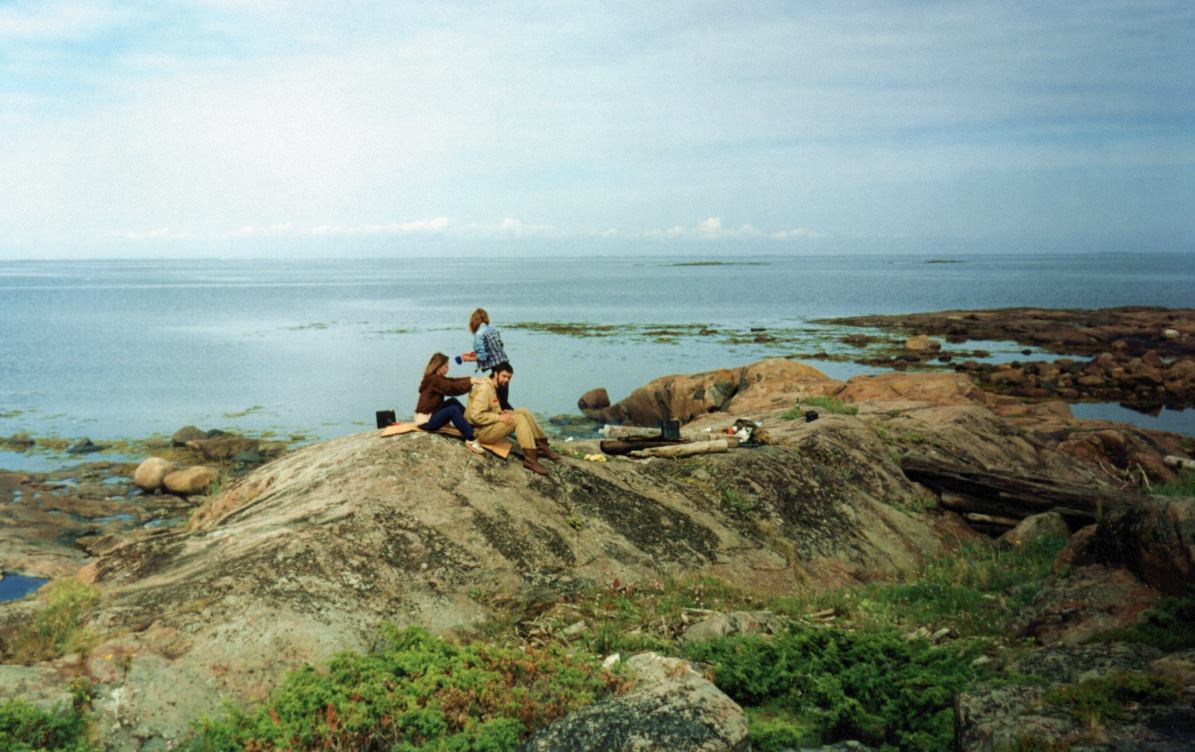
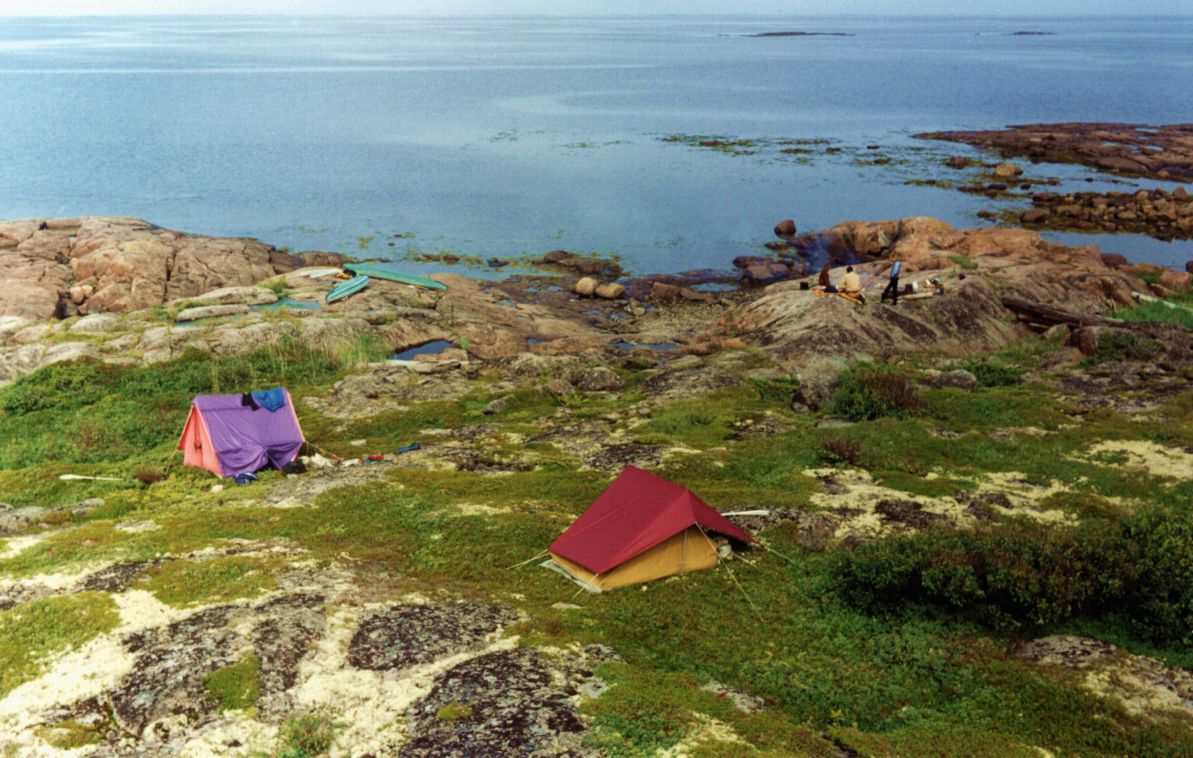
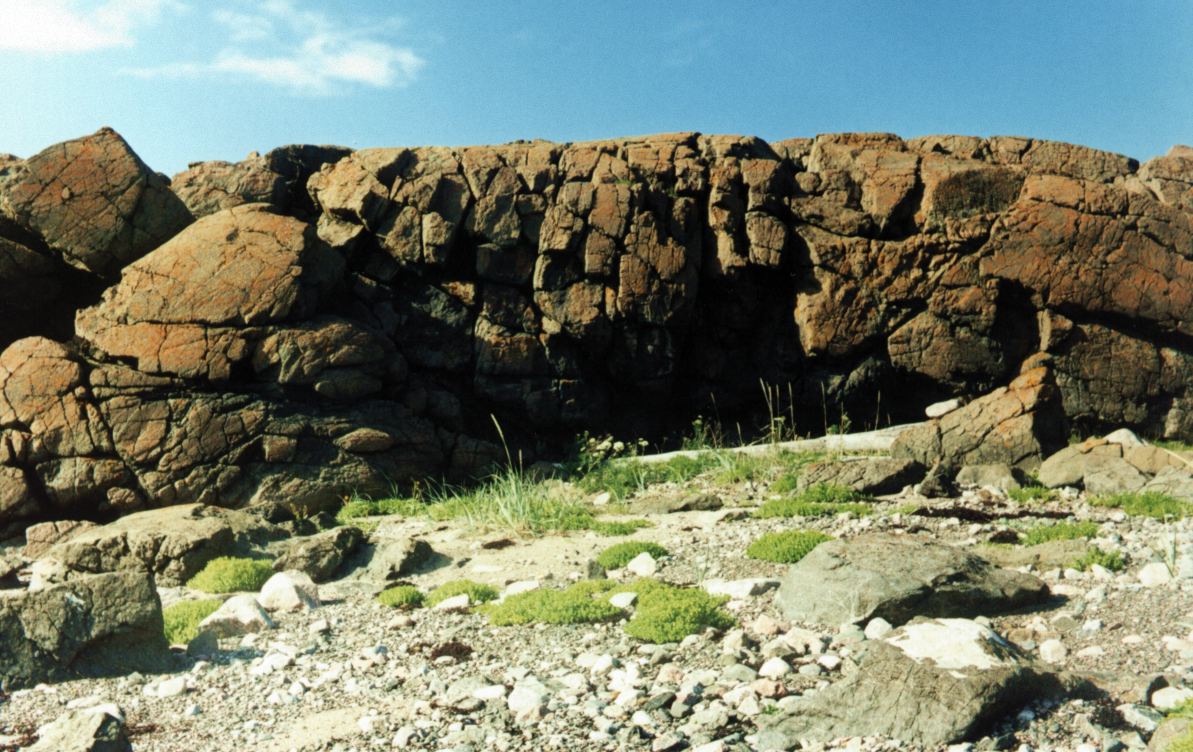
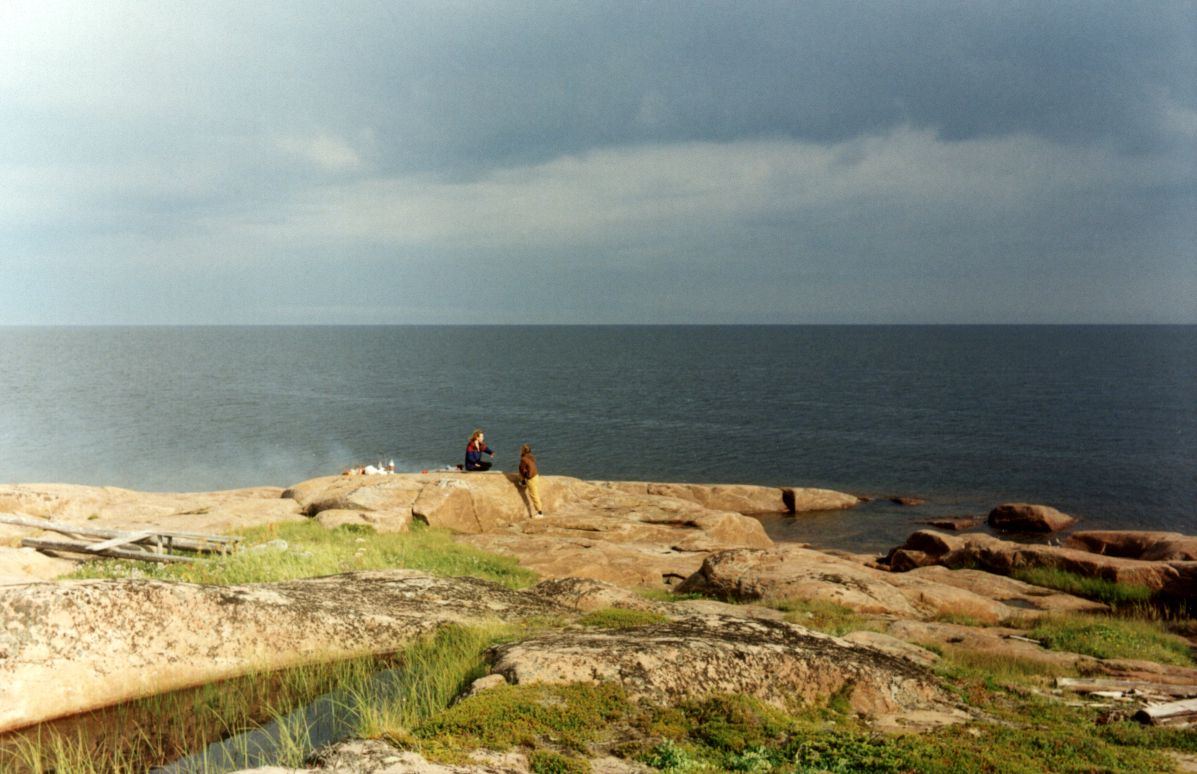
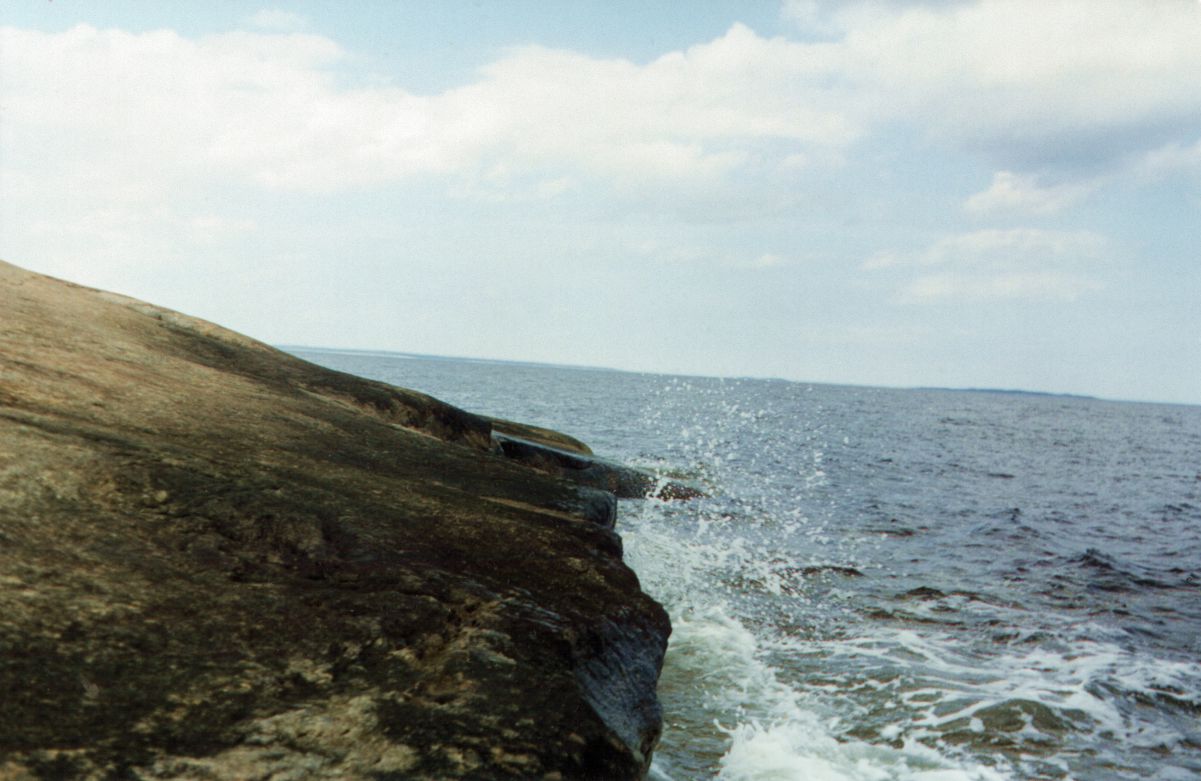
We set out at the start of the ebb, so the current was against us as well. It did not take long to feel the result. The six kilometres to Razostrov took almost two hours. The waterproofing was no use. High, steep waves washed across the deck and poured several buckets of water into the boat. I had abandoned the rubber bulb and was bailing with half a two-litre plastic bottle. Seeing no sense in fighting nature, we stopped for lunch and a spot of sunbathing at 64°24.266′N, 35°27.128′E. It was a very pretty rocky headland with a little sandy beach and a cave (1, 2, 3, 4, 5). A small stream runs off the island near the headland. It could be useful in a hot year, but this year fresh water was everywhere. All the dips in the rock held clean, fresh water. The tide was still out. We found oysters, immediately ate them, even raw, and took some for the evening.
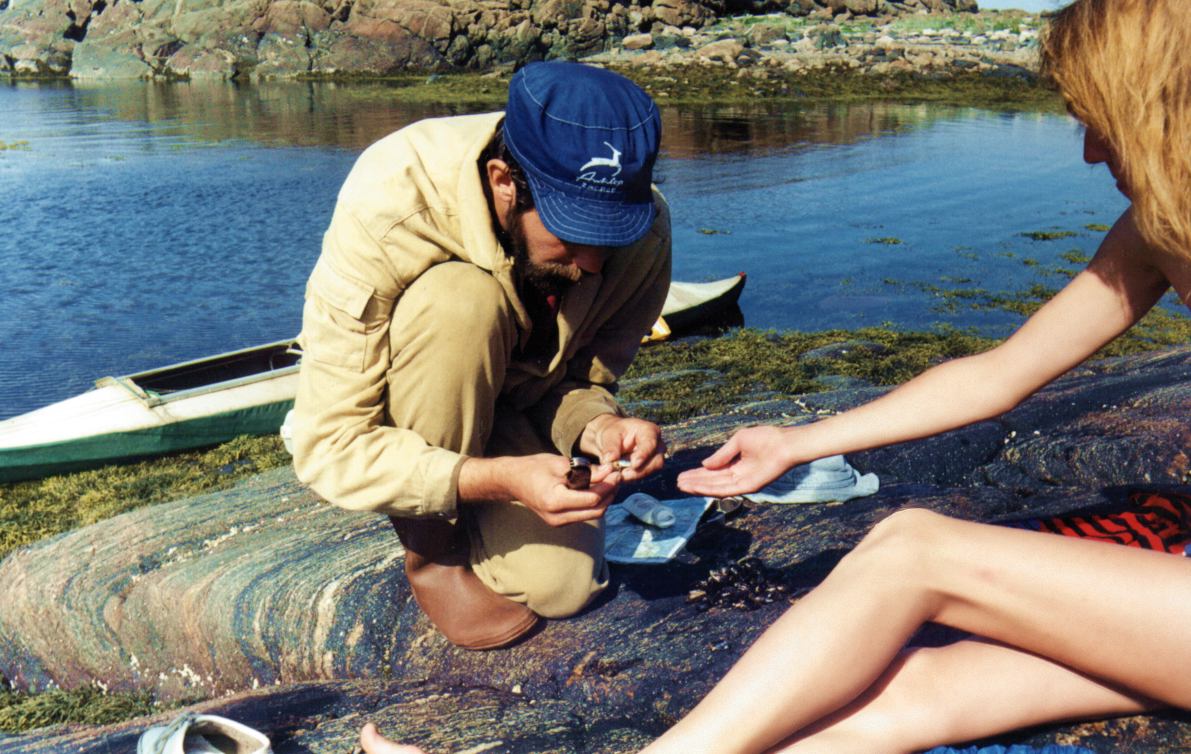
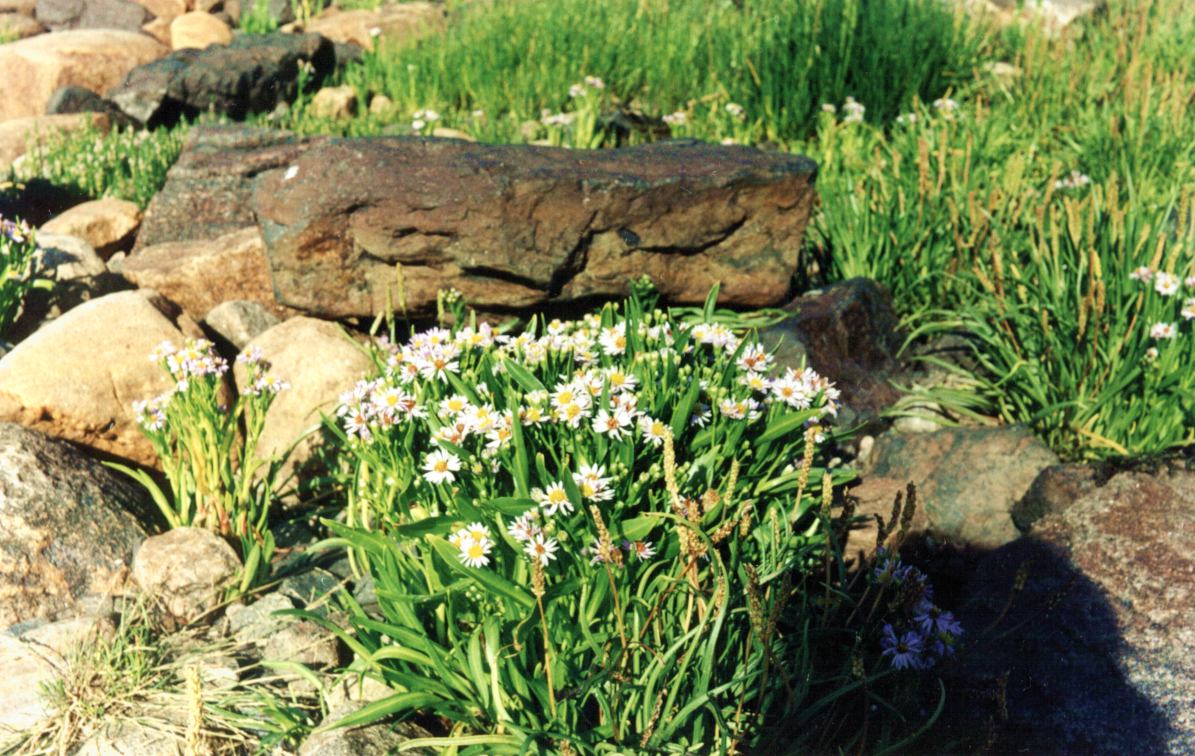
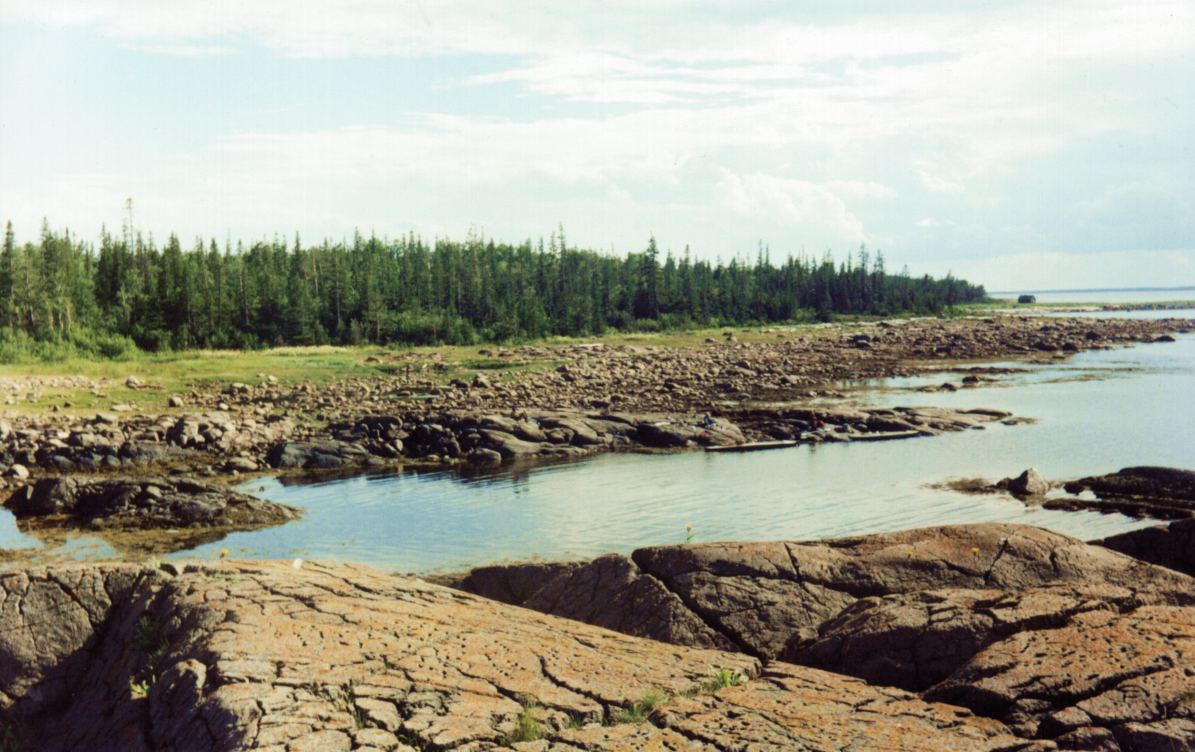
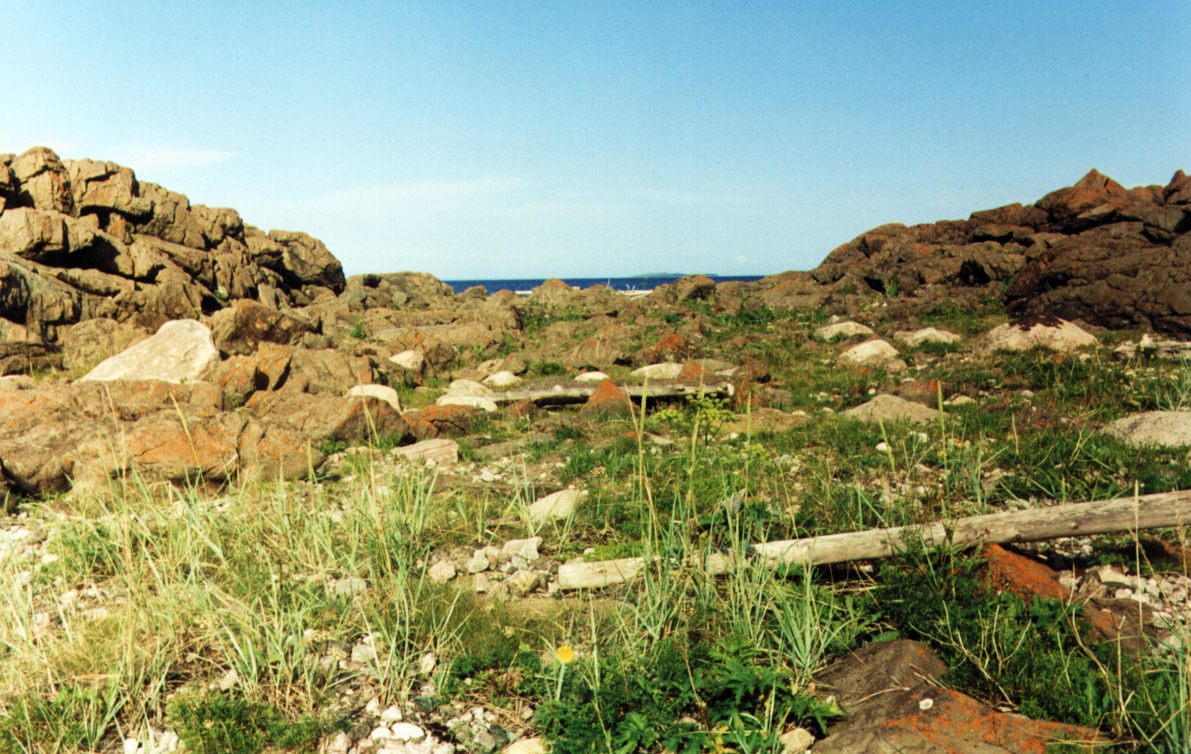
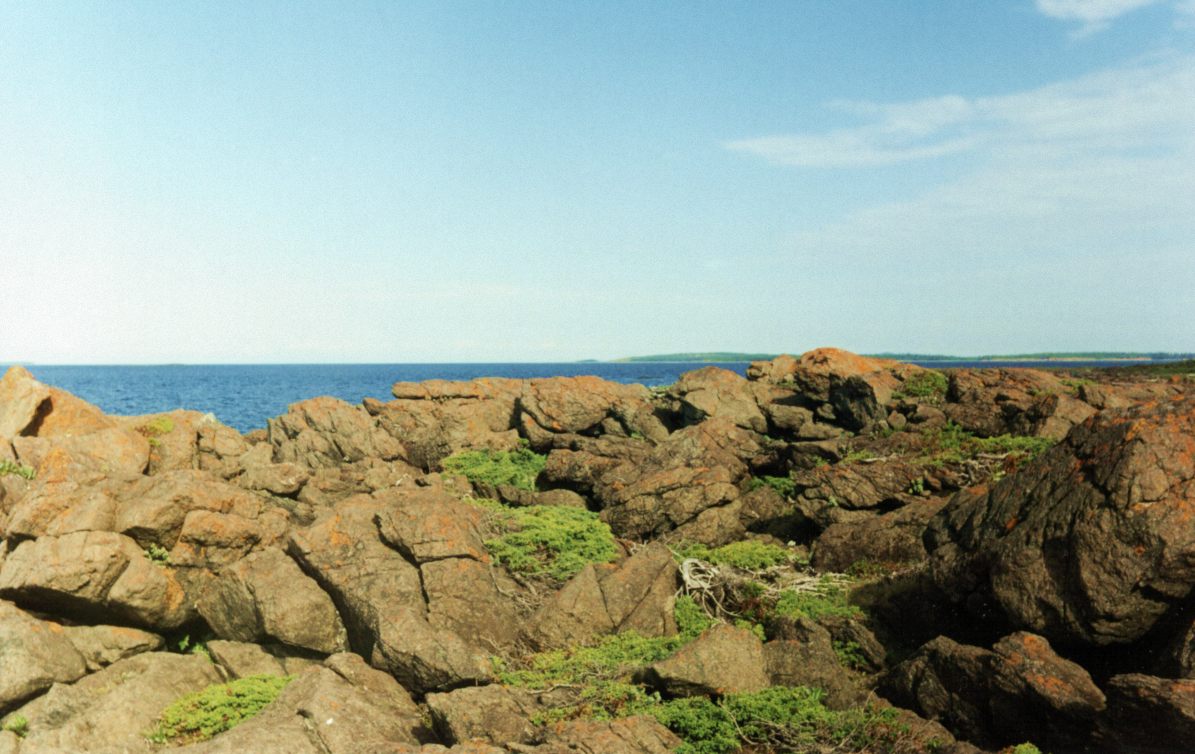
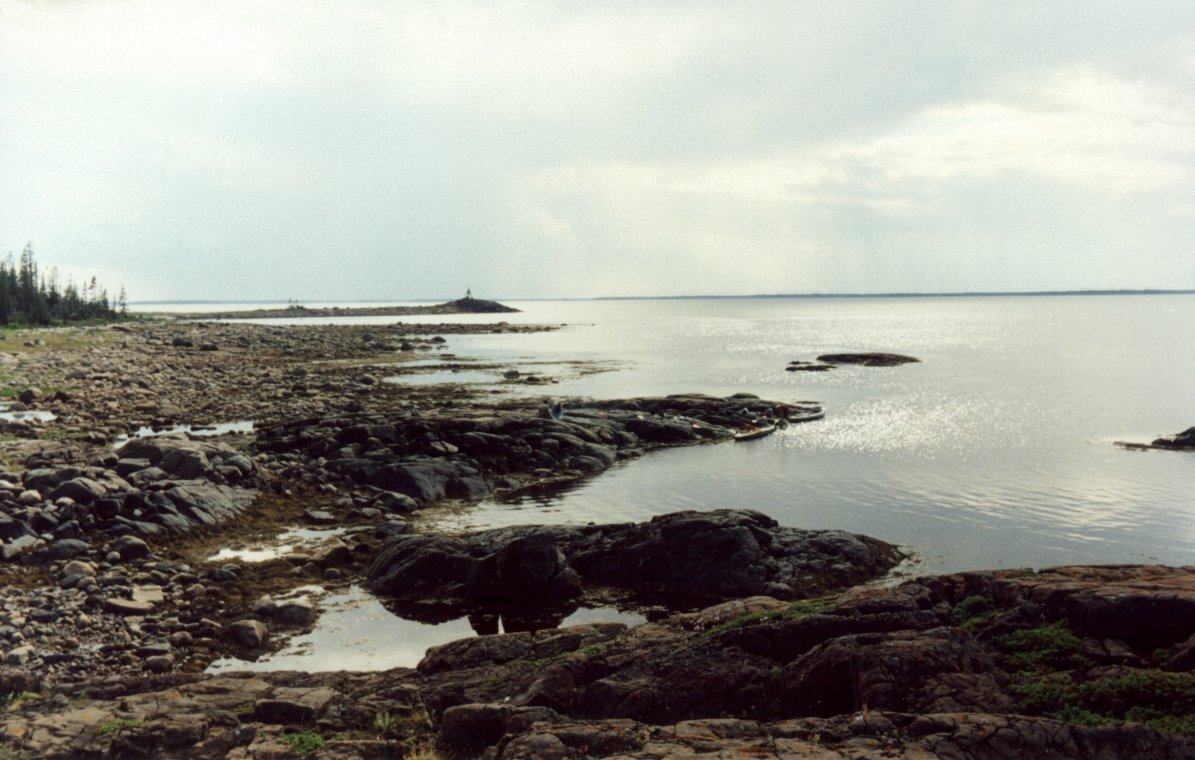
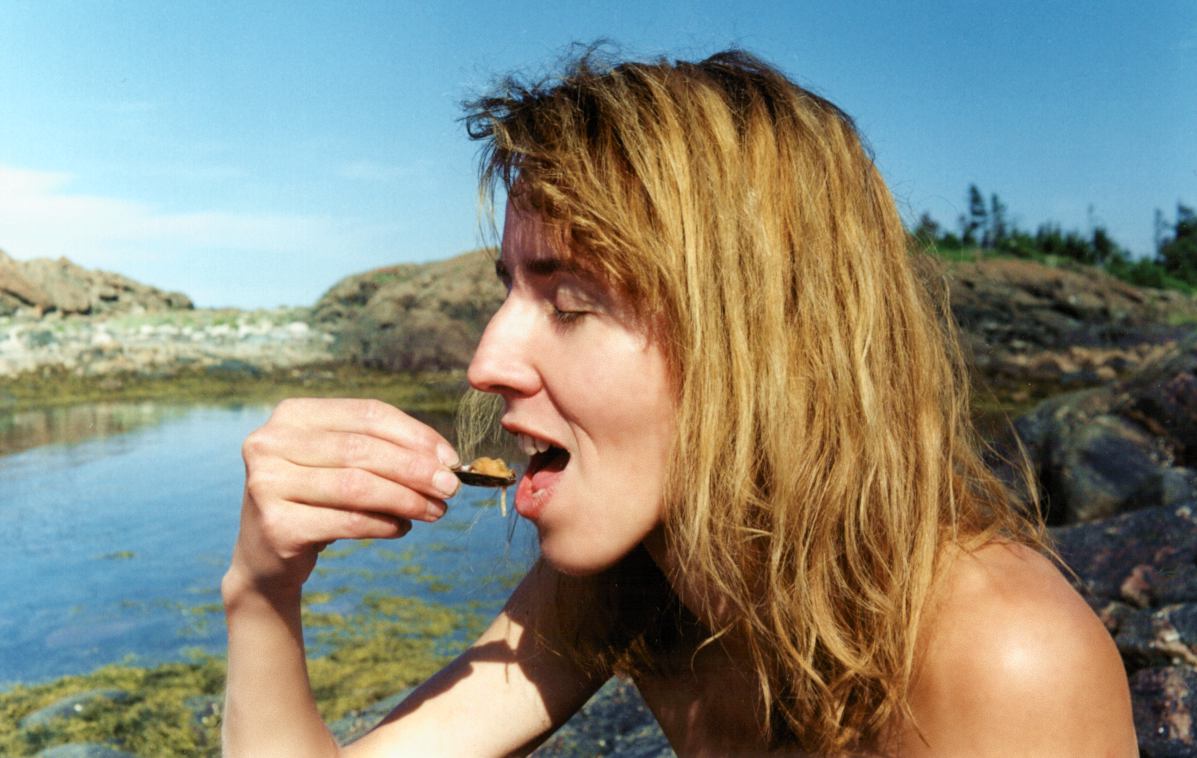
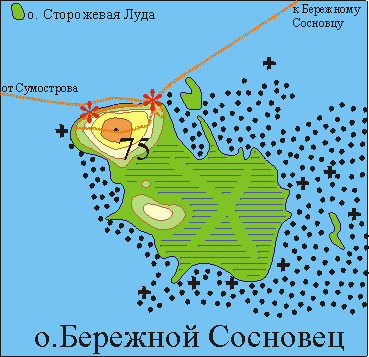
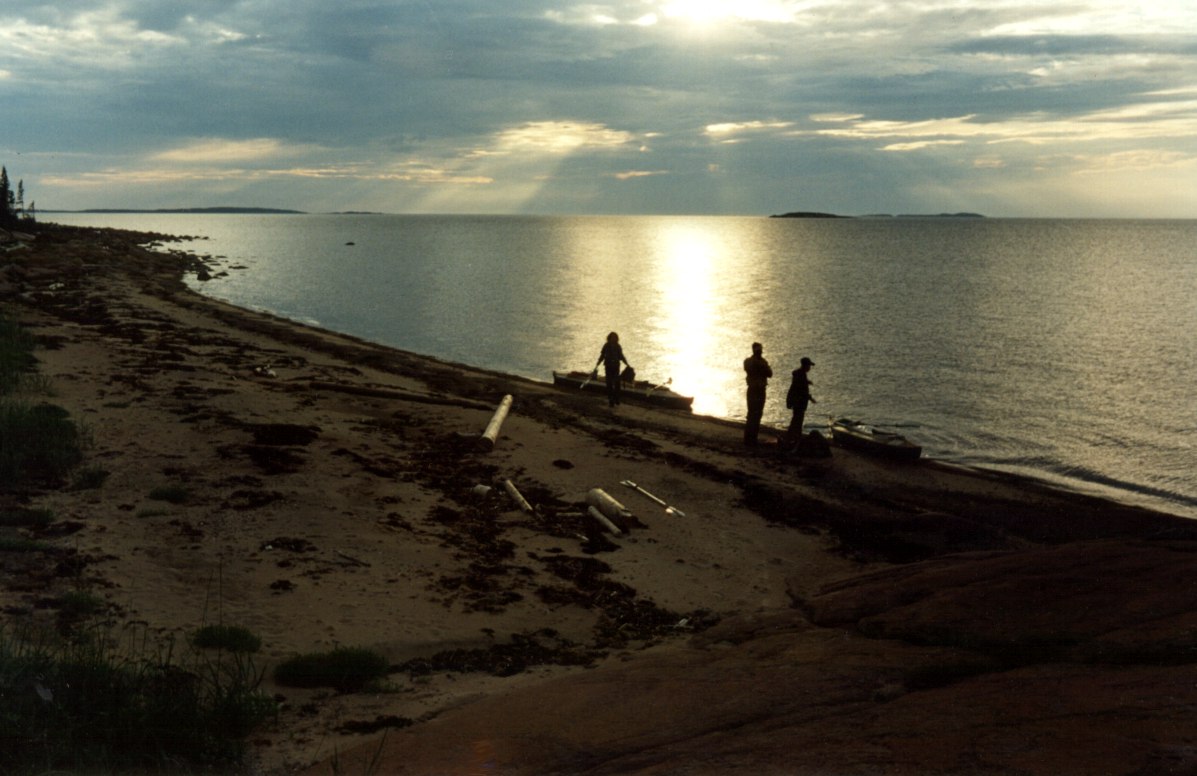
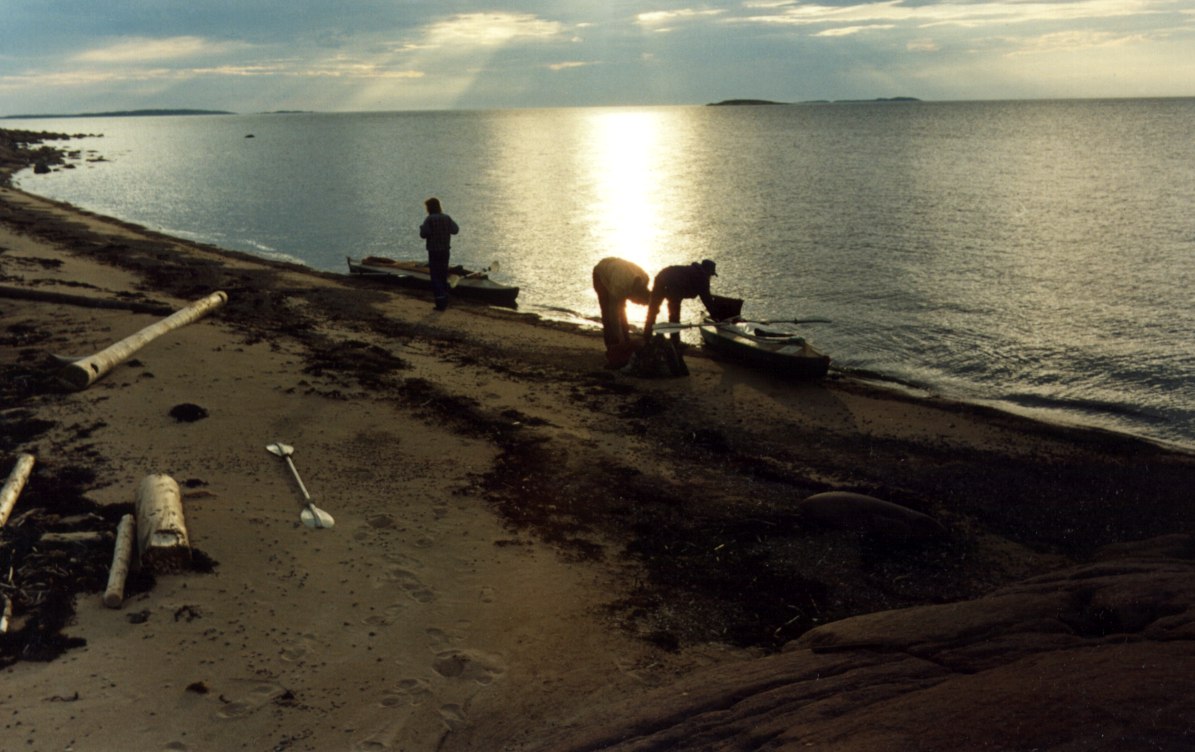
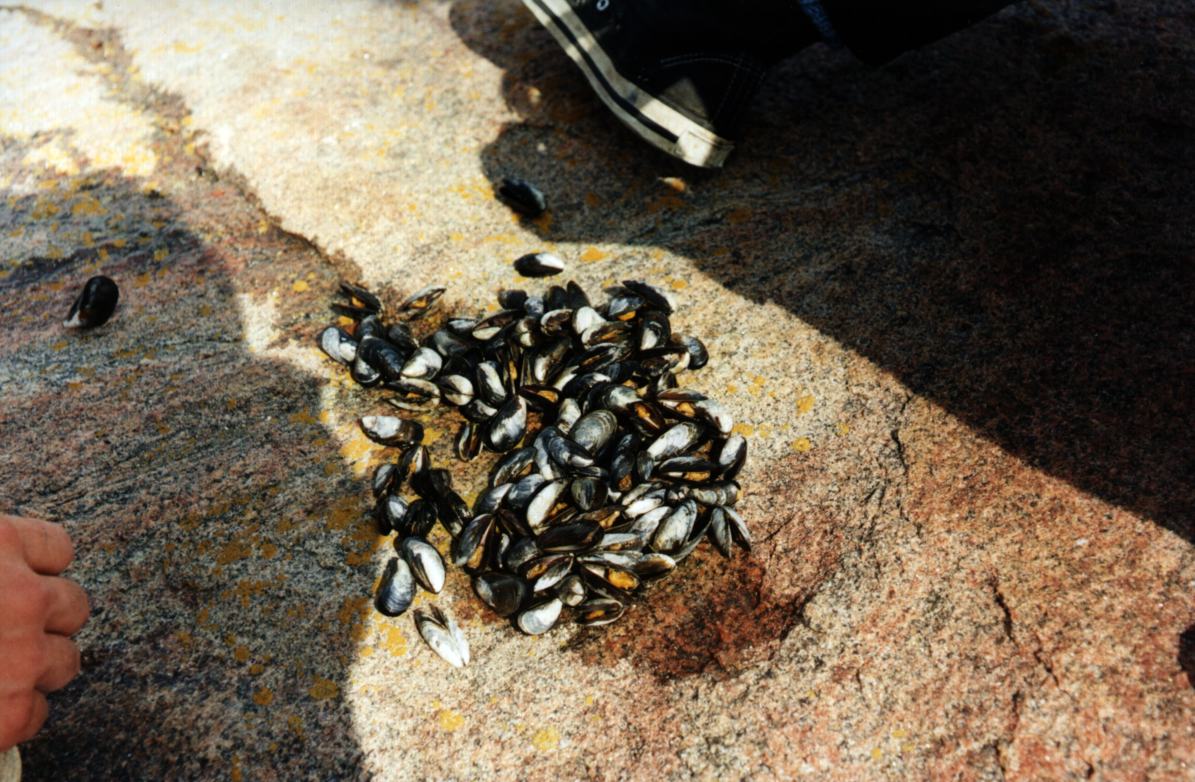
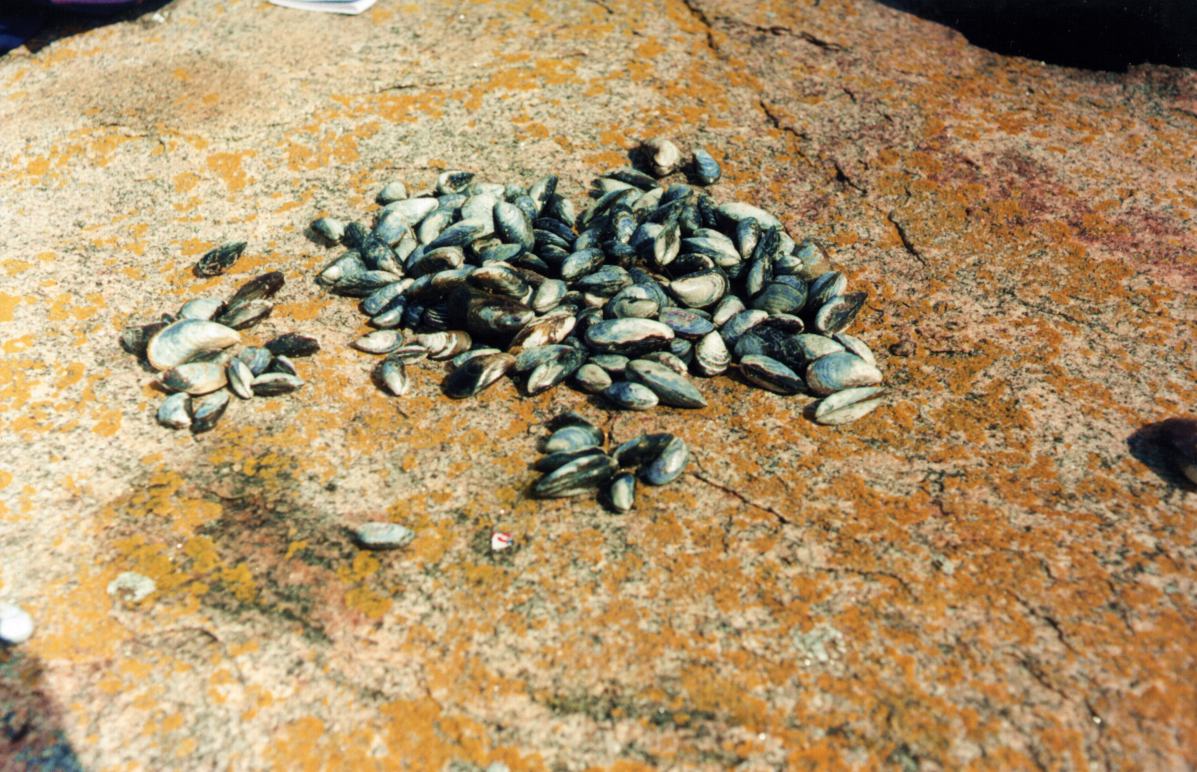
We went back out once the tide started coming in. By then the wind had dropped. An hour and a half later we were at Berezhnoi Sosnovets, where we made camp at 64°23.575′N, 35°43.793′E. It was a very handy campsite. We pitched the tents in the woods and lit a fire on the rocky point, where the wind blew the mosquitoes away. There was a sandy beach nearby without a big tidal flat. Following the rule that a drink with food is a waste of money, we started with a bottle of Lidia. Then we boiled the oysters. Salt the water or they taste bland. We had about a hundred apiece, all small. In a restaurant somewhere in France they might be big, but France is far away, there is no White Sea there and it costs money. Ours were free. Find a suitable tidal flat, collect them yourself and boil them. Small, yes, but delicious, and we had them today and could have them tomorrow and the day after. We ate our fill with the greatest pleasure. By evening, clouds had rolled in.
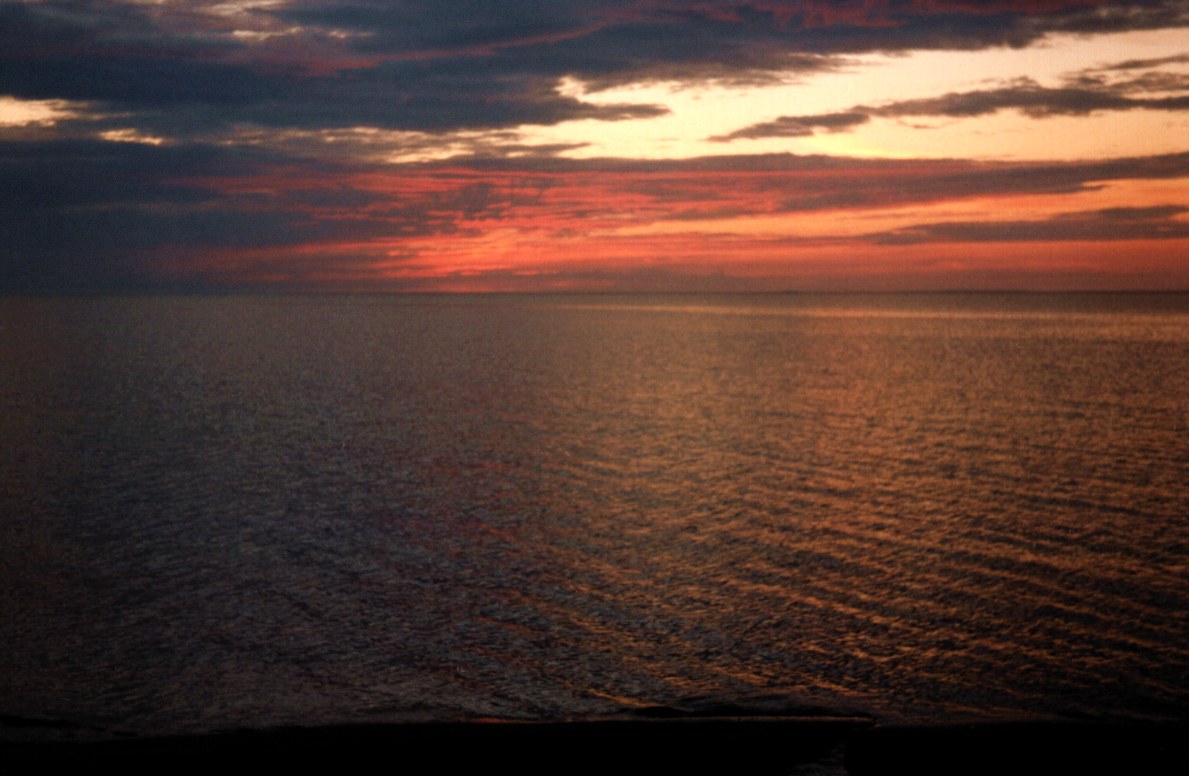
26 July
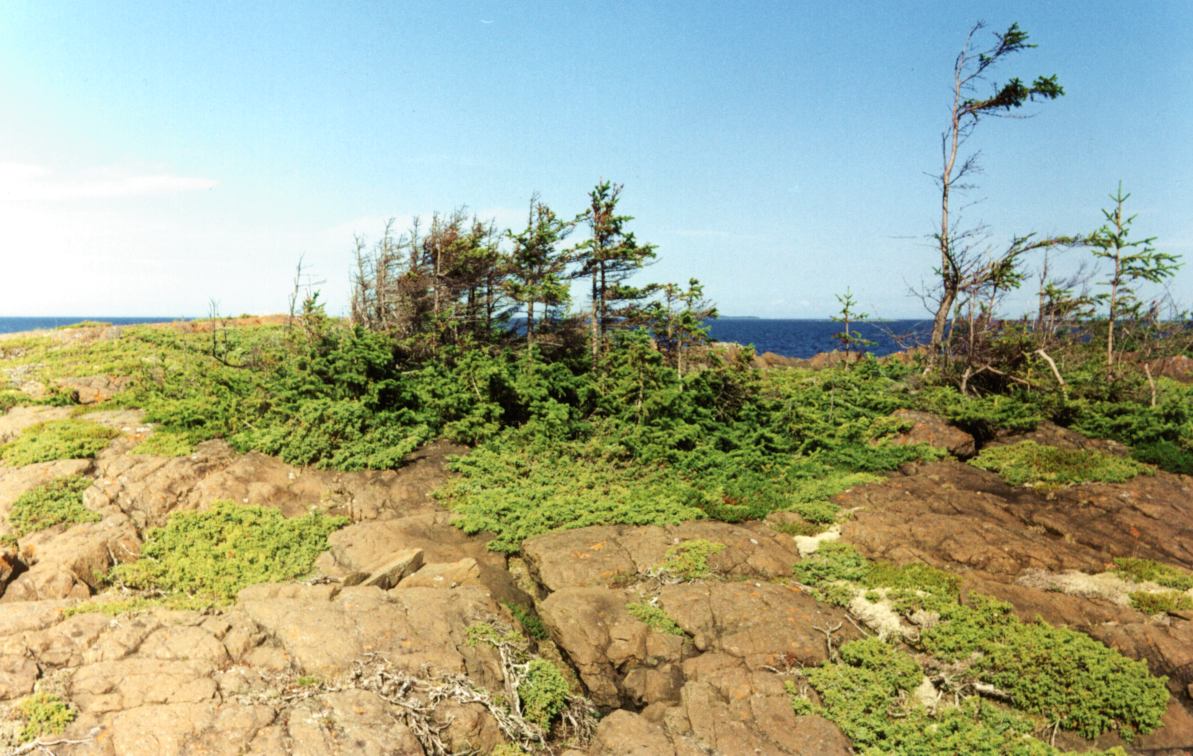
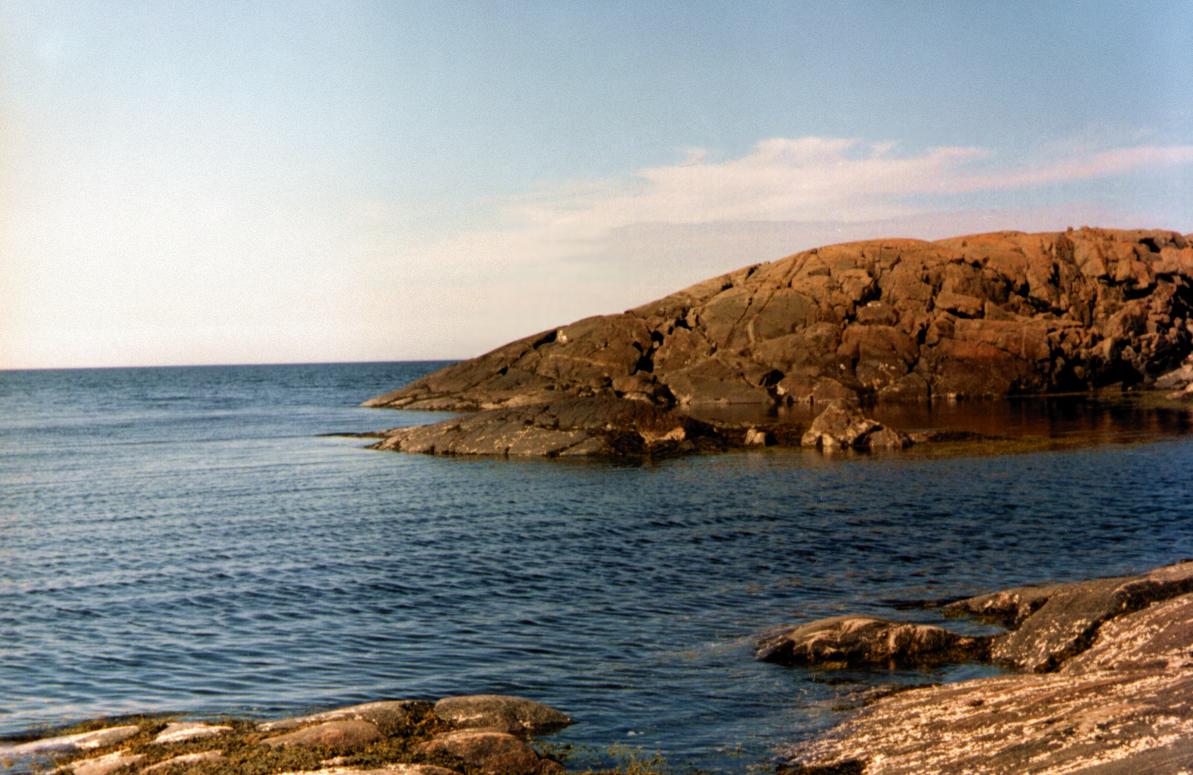
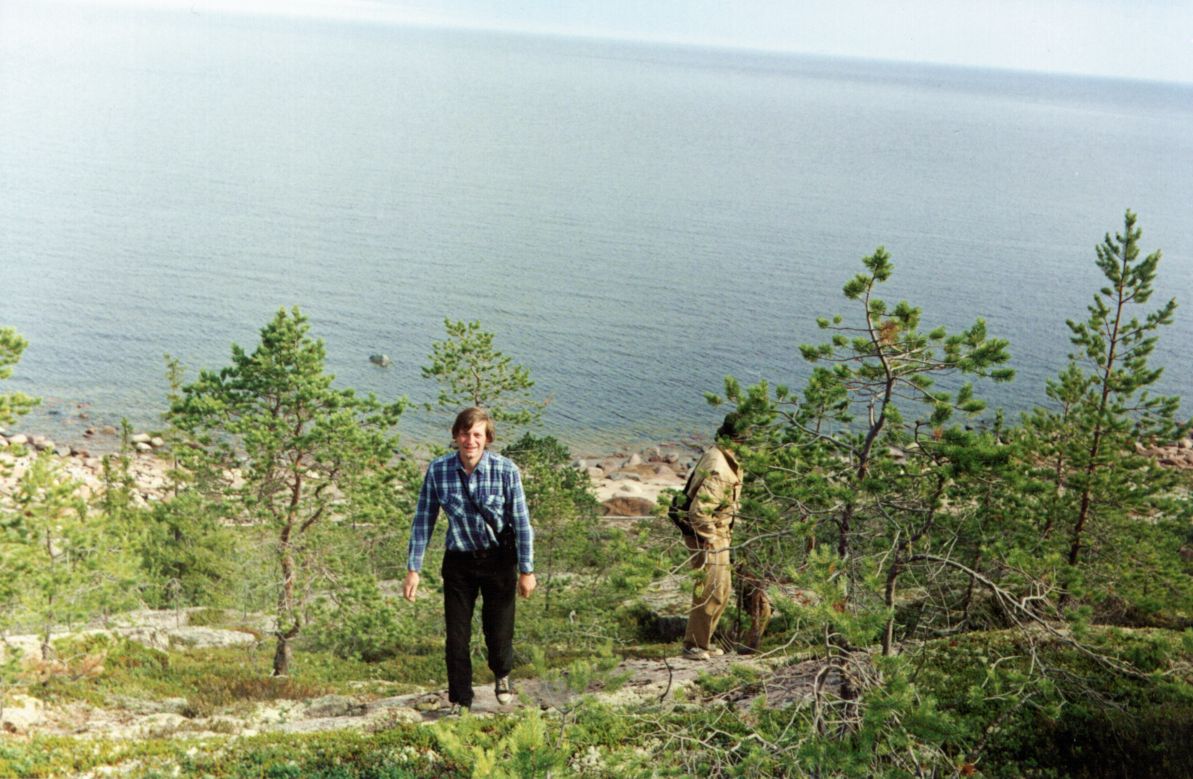
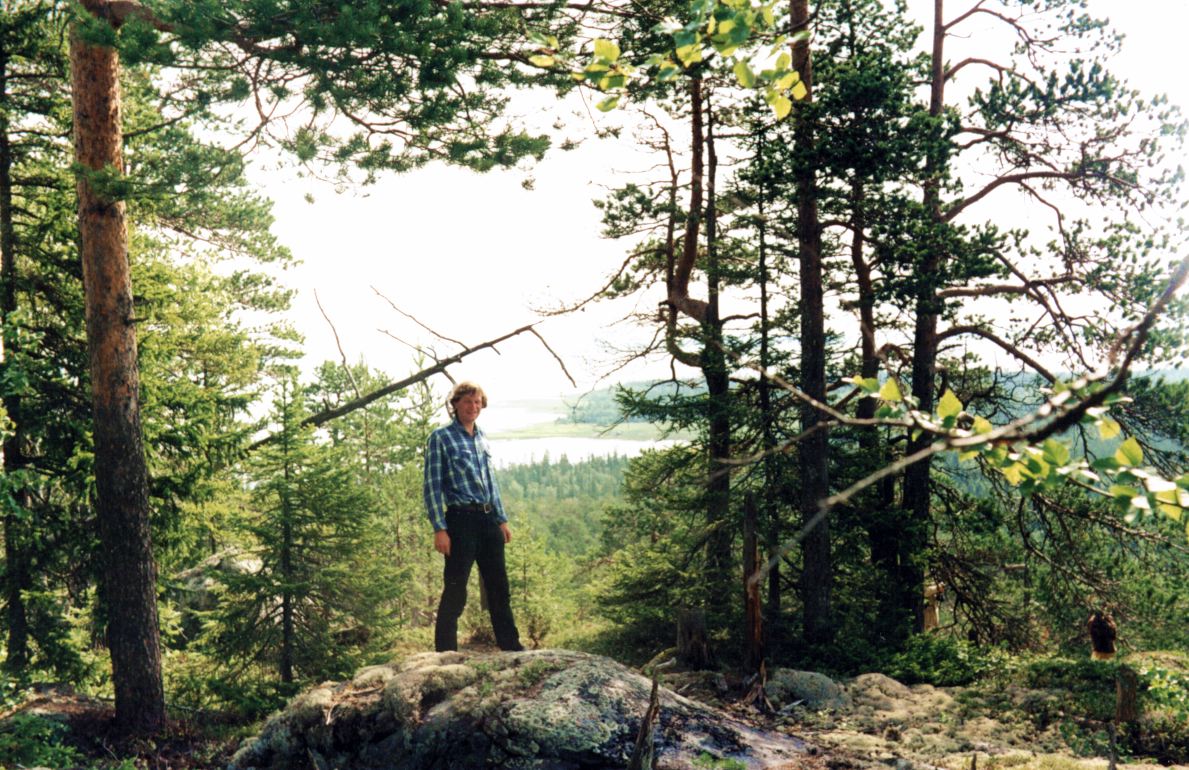
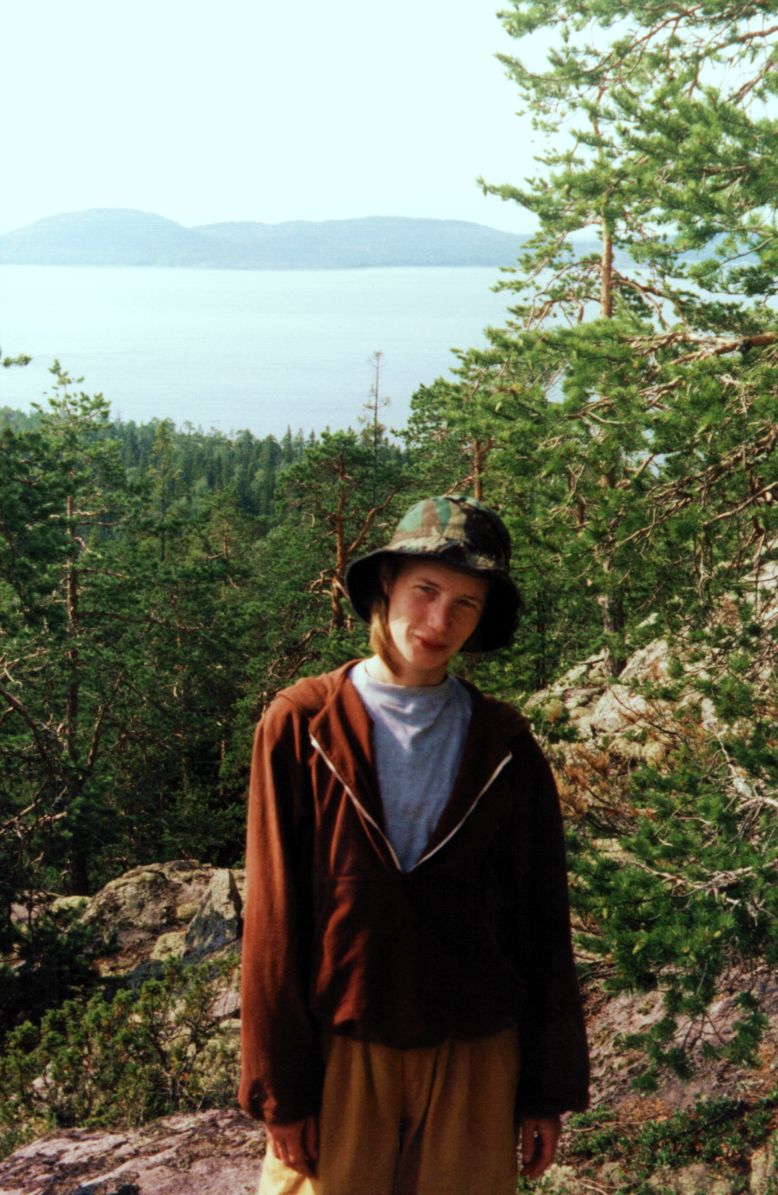
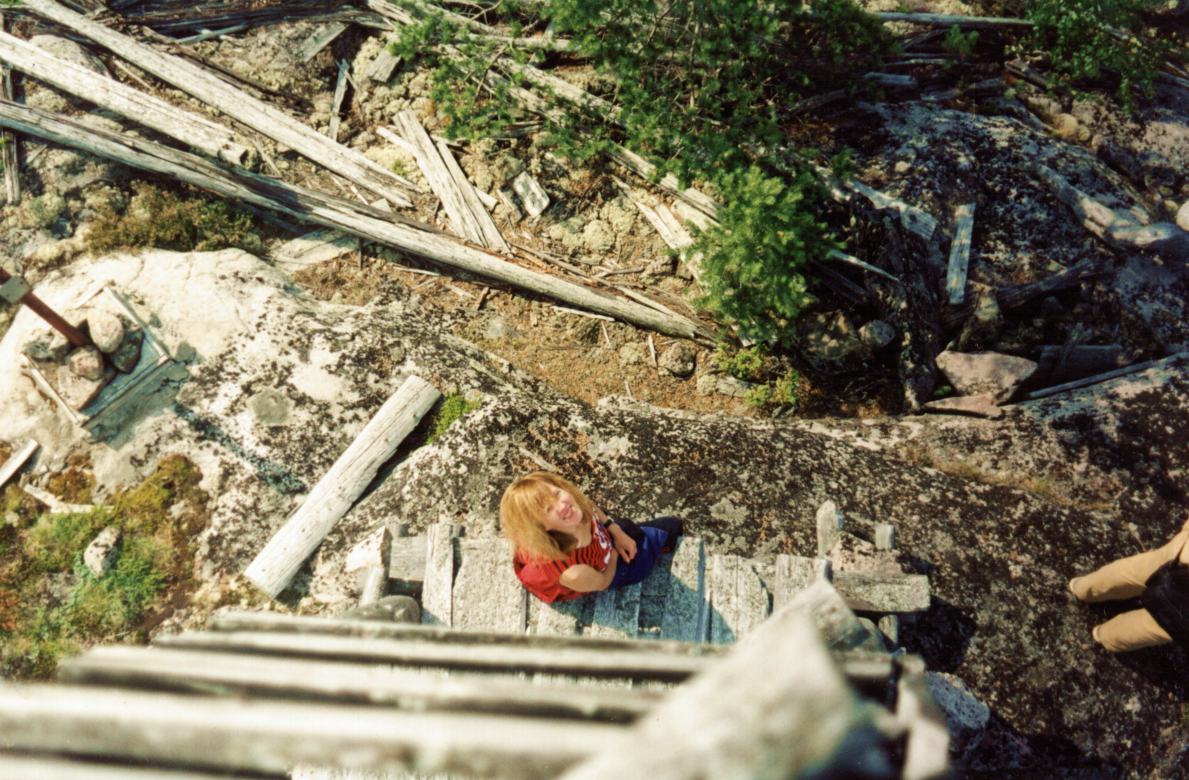
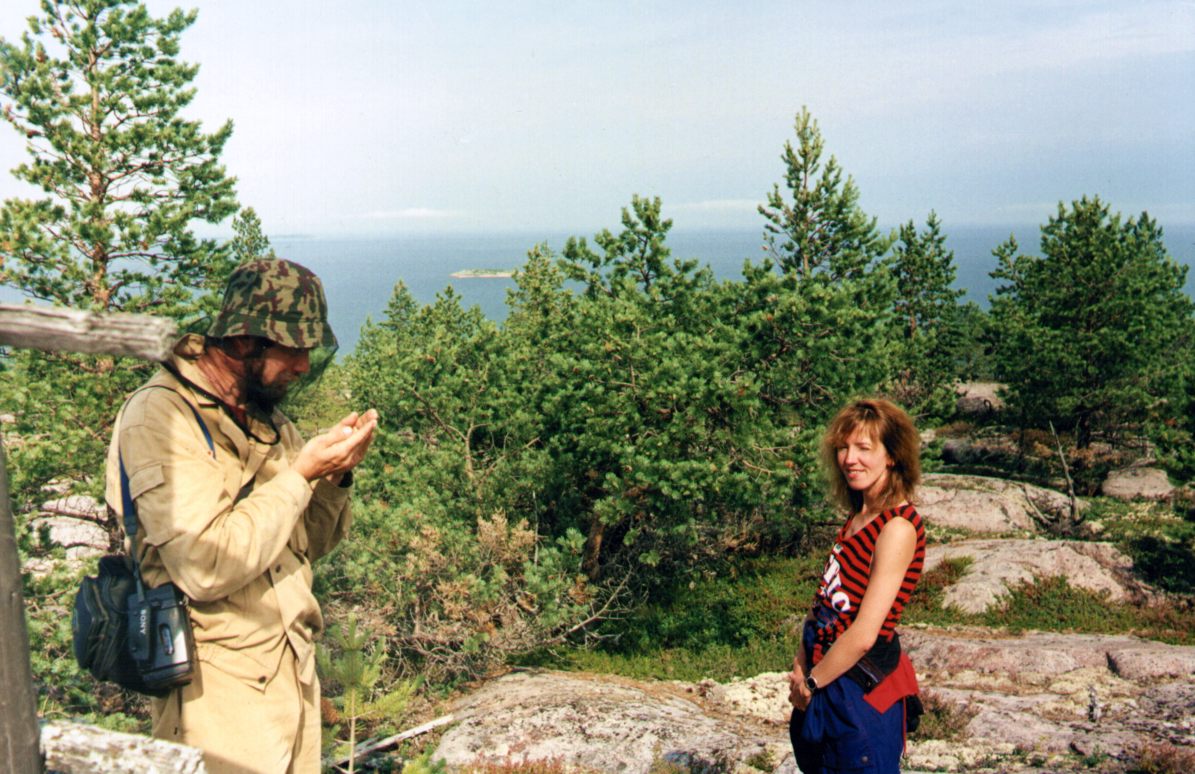
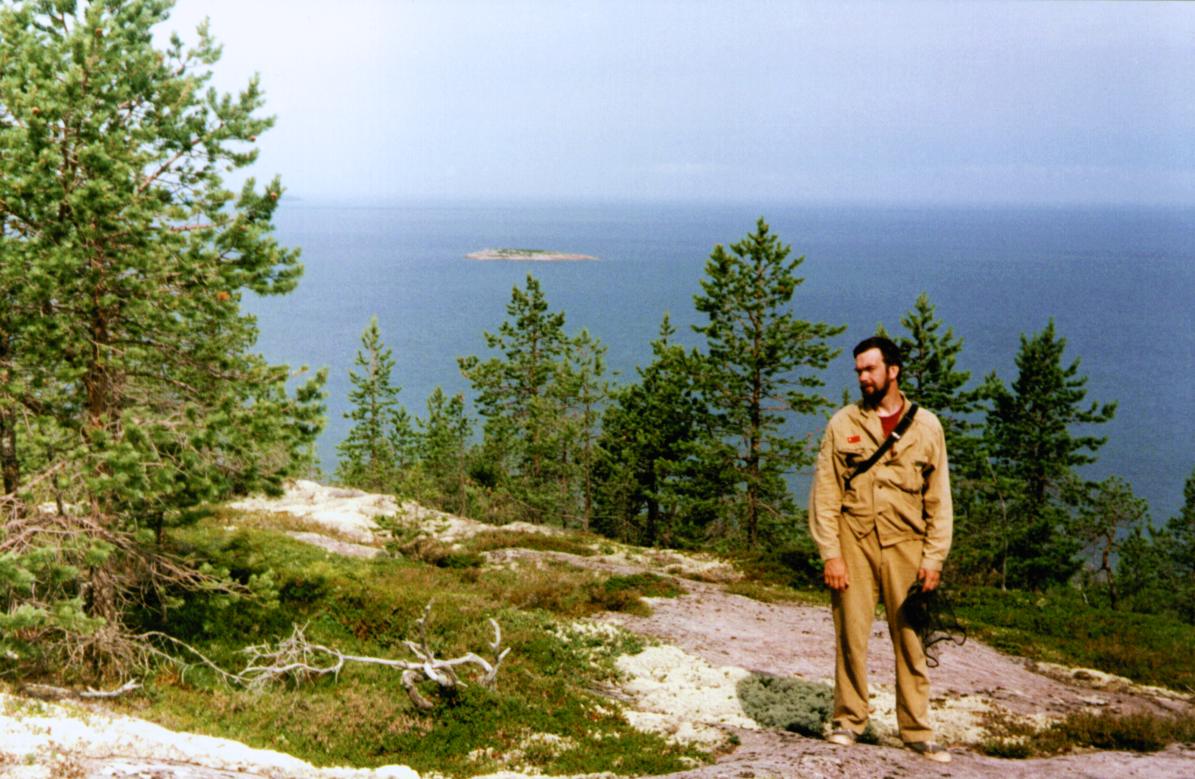
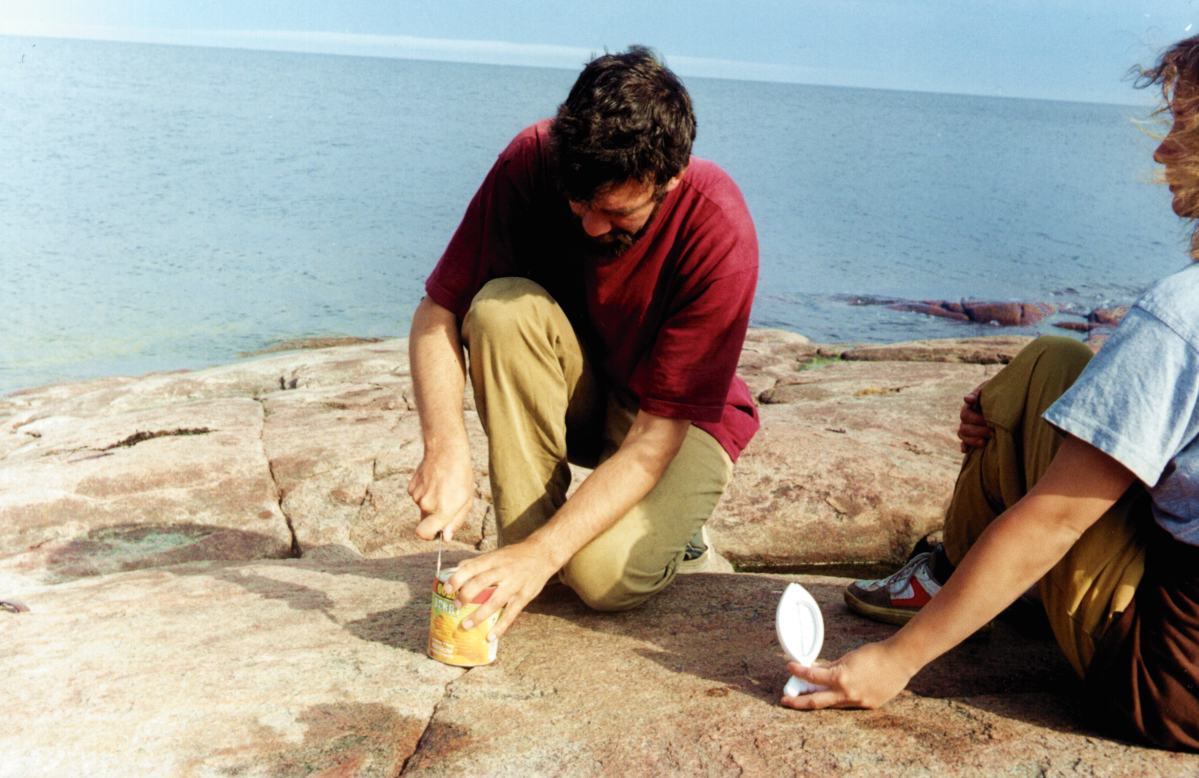
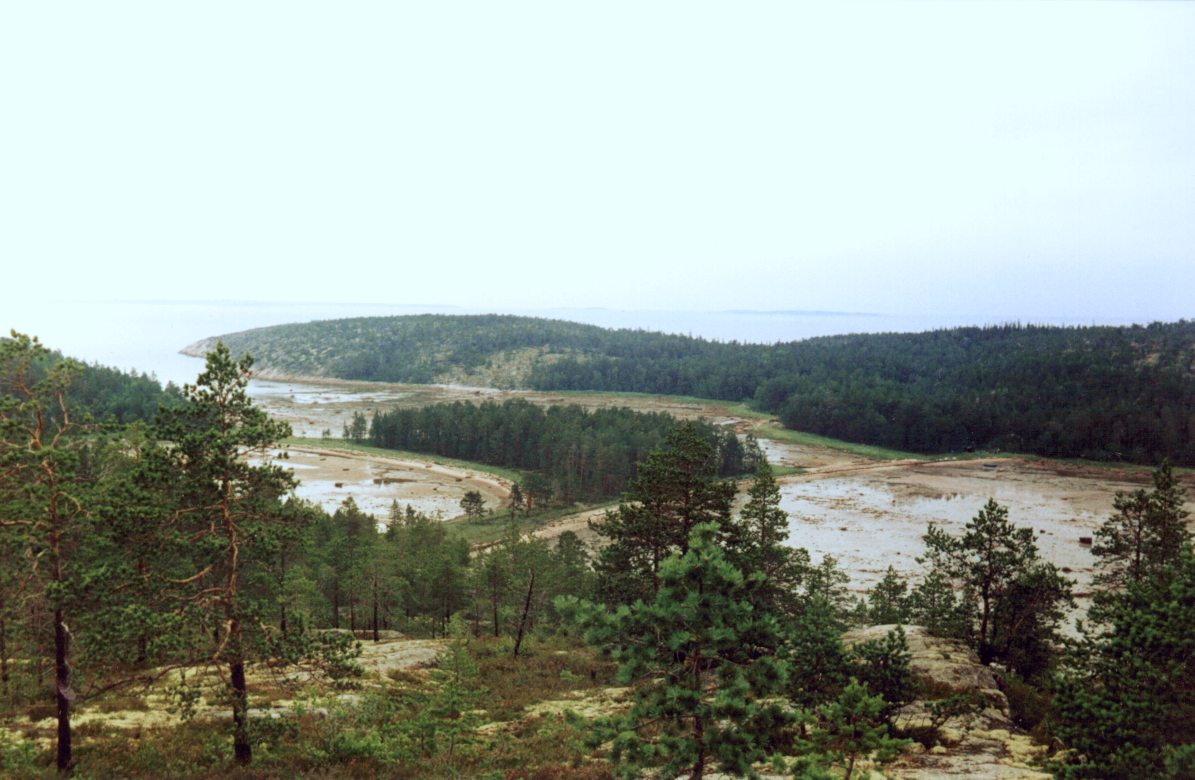
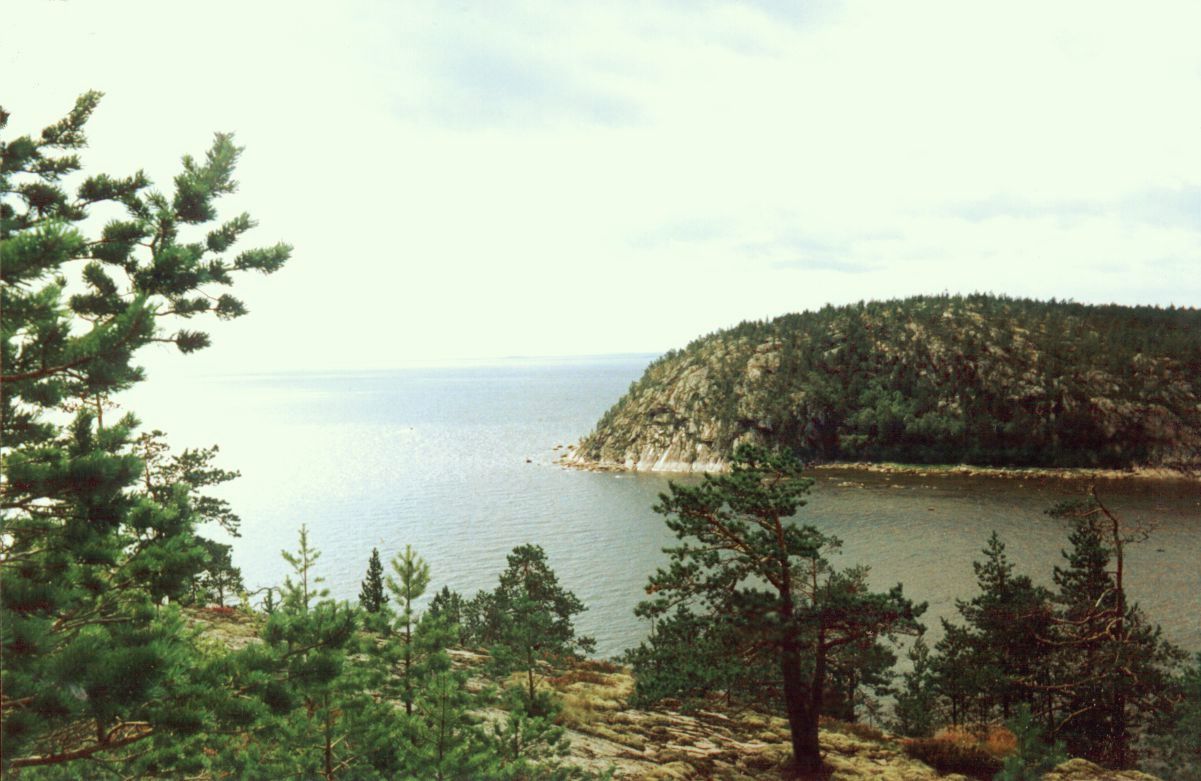
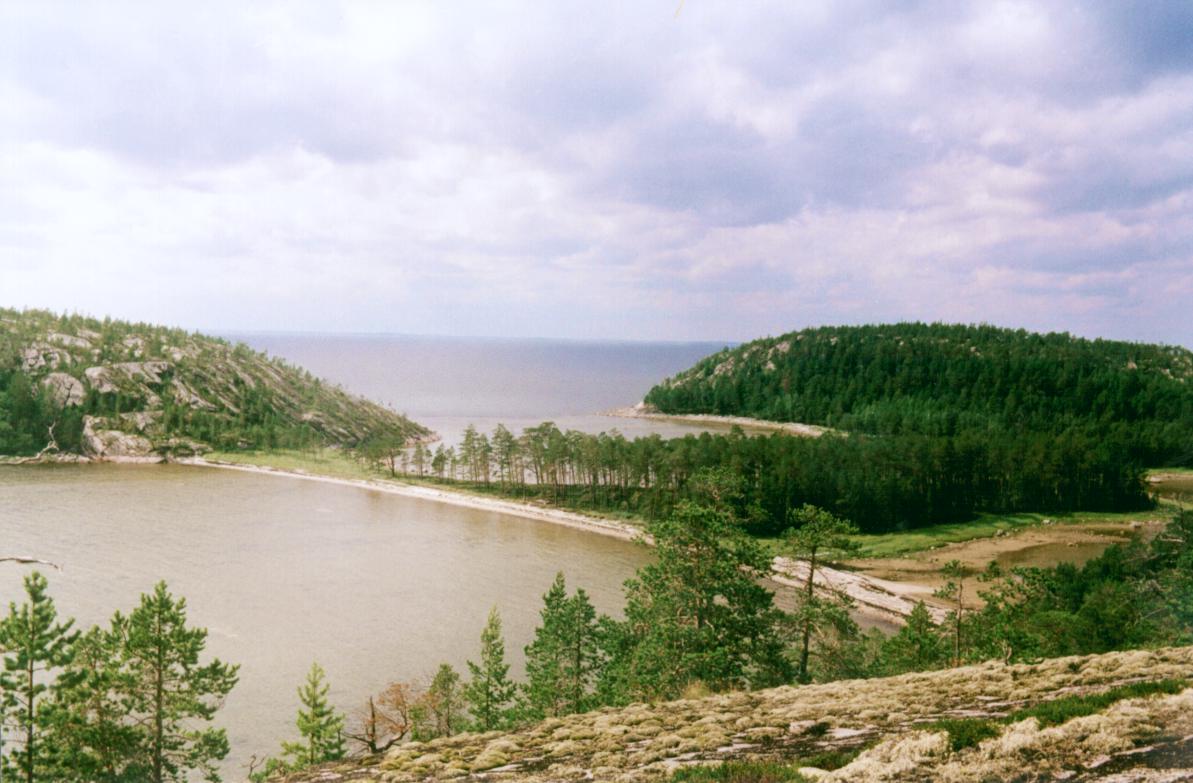
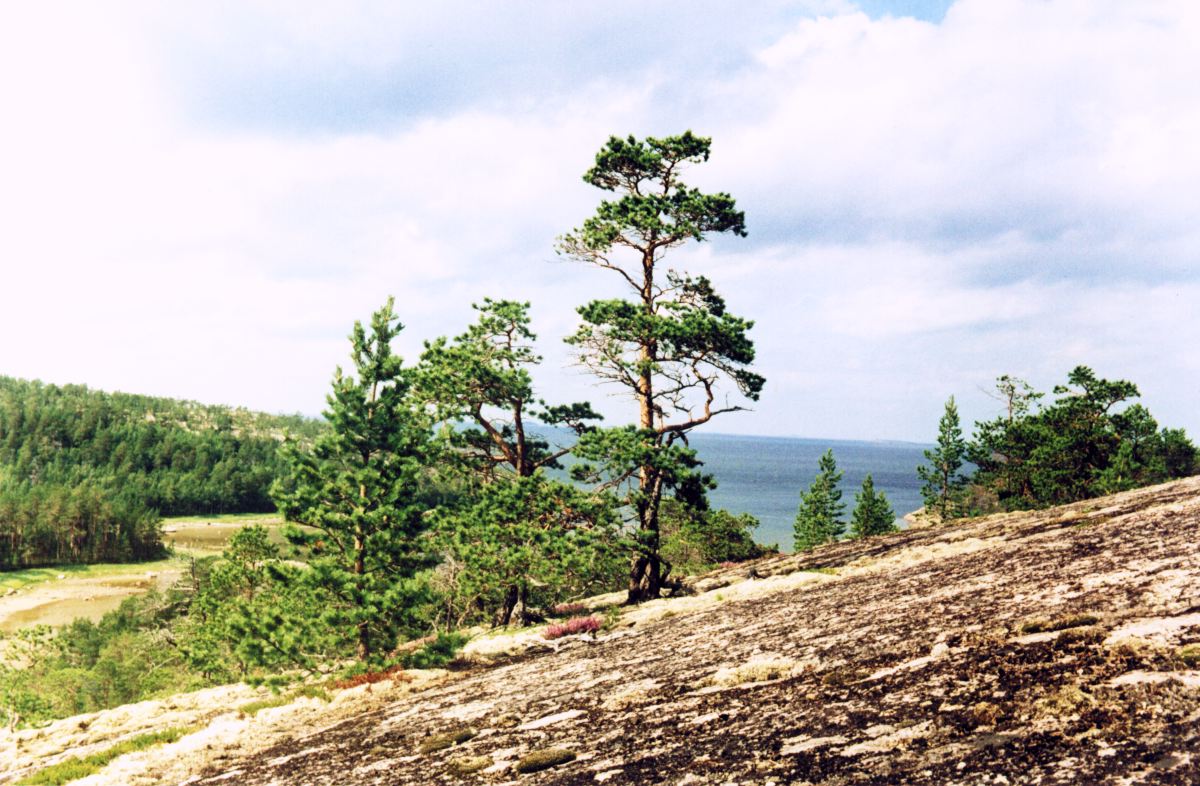
Hot again in the morning. “Ah, the sea, the palm trees.” The air was 23°C and the water 17°C. Curiously, the water temperature can vary a lot. Two spots 100 metres apart can differ by three degrees. At sea it was dead calm again. We went in for a swim several times in succession. We climbed the hill (1, 2, 3, 4, 5, 6, 7, 8, 9, 10, 11, 12, 13, 14, 15). From the top you could see the village of Yukovo, Storozhevaya Luda and Myagostrov. We found the remains of a hare that something had eaten. The mushrooms were old and wormy. The bilberries were ripe only at the top of the island. We swam again and sunbathed. We finished a tin of peaches. We ate oysters again. We were in no hurry to leave. Nobody wanted to fight the ebb.
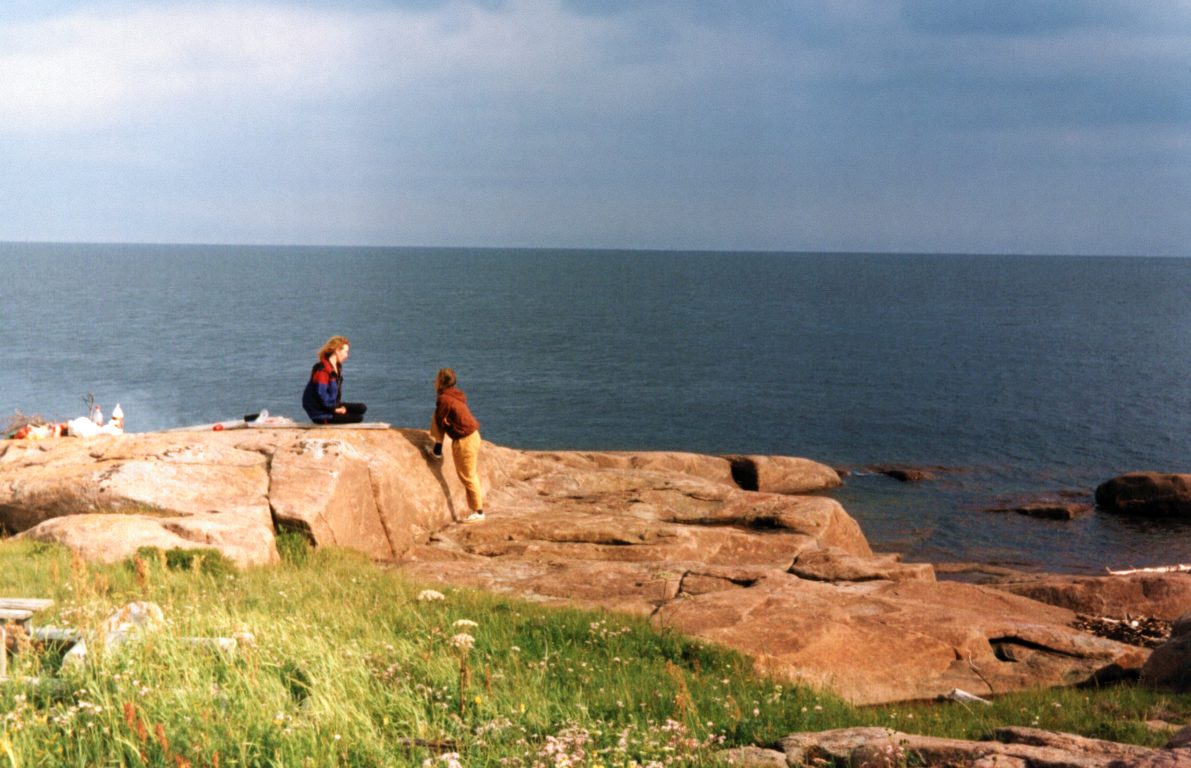
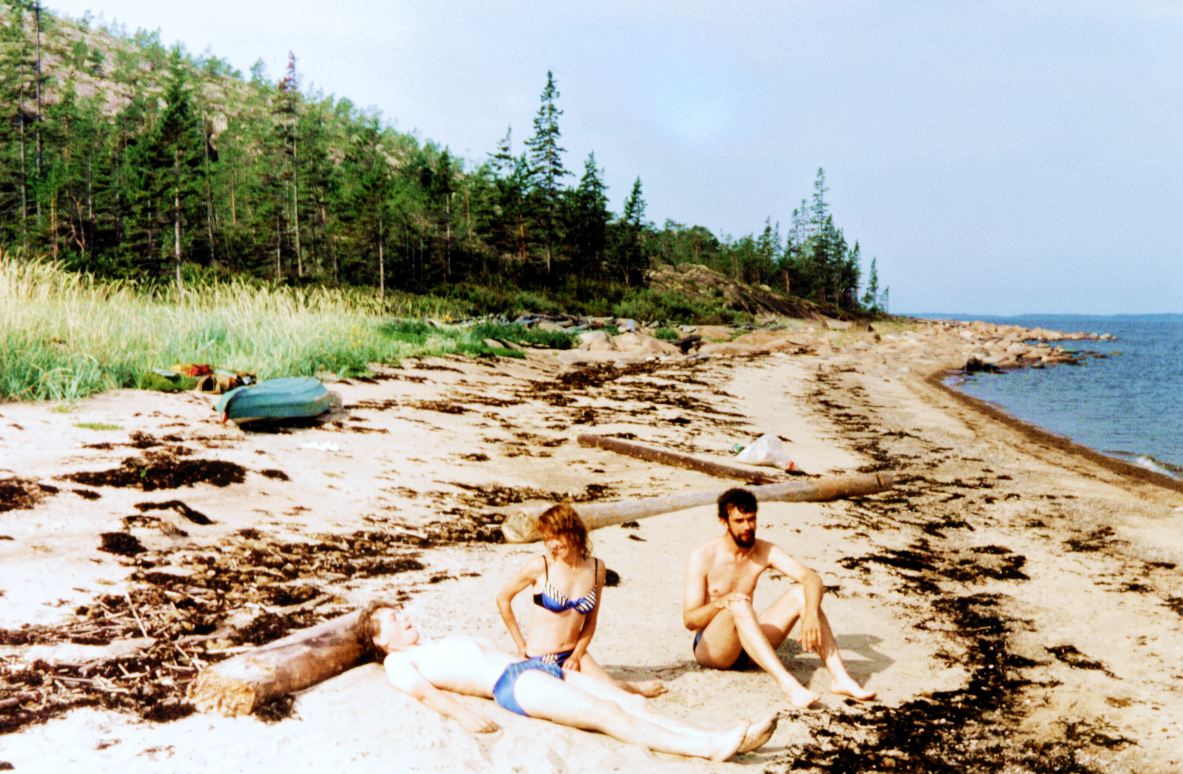
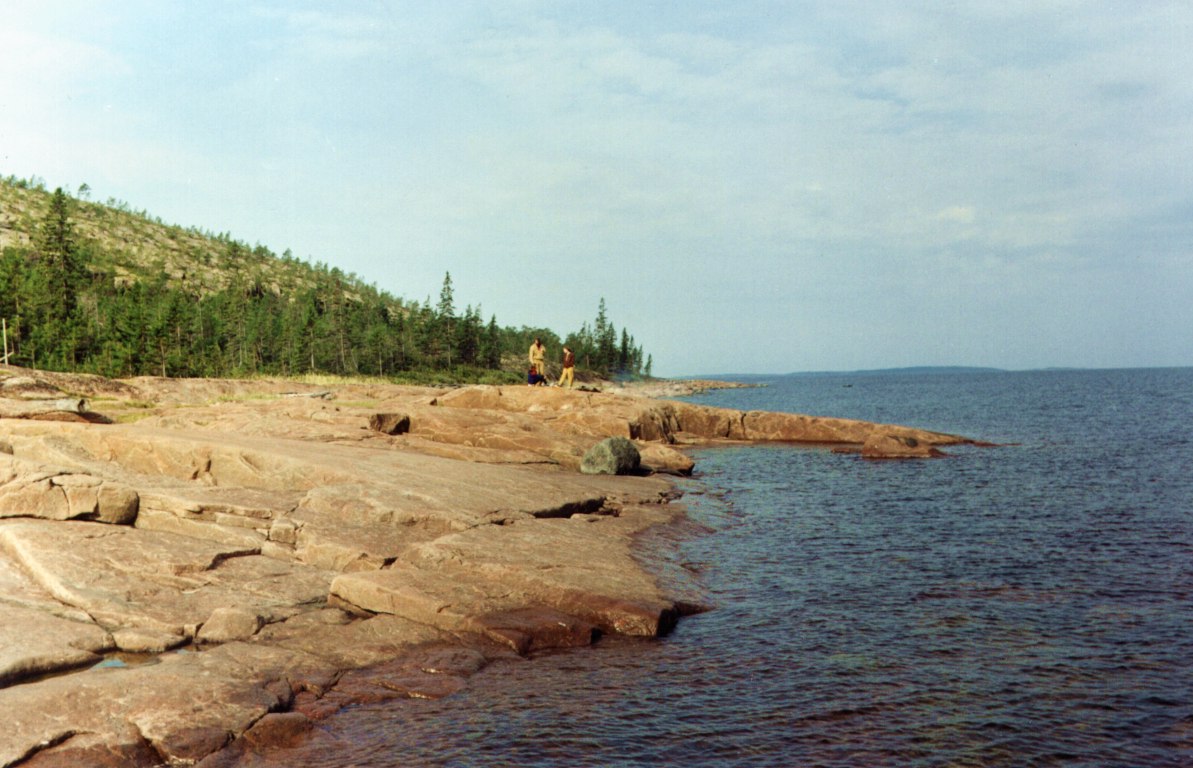
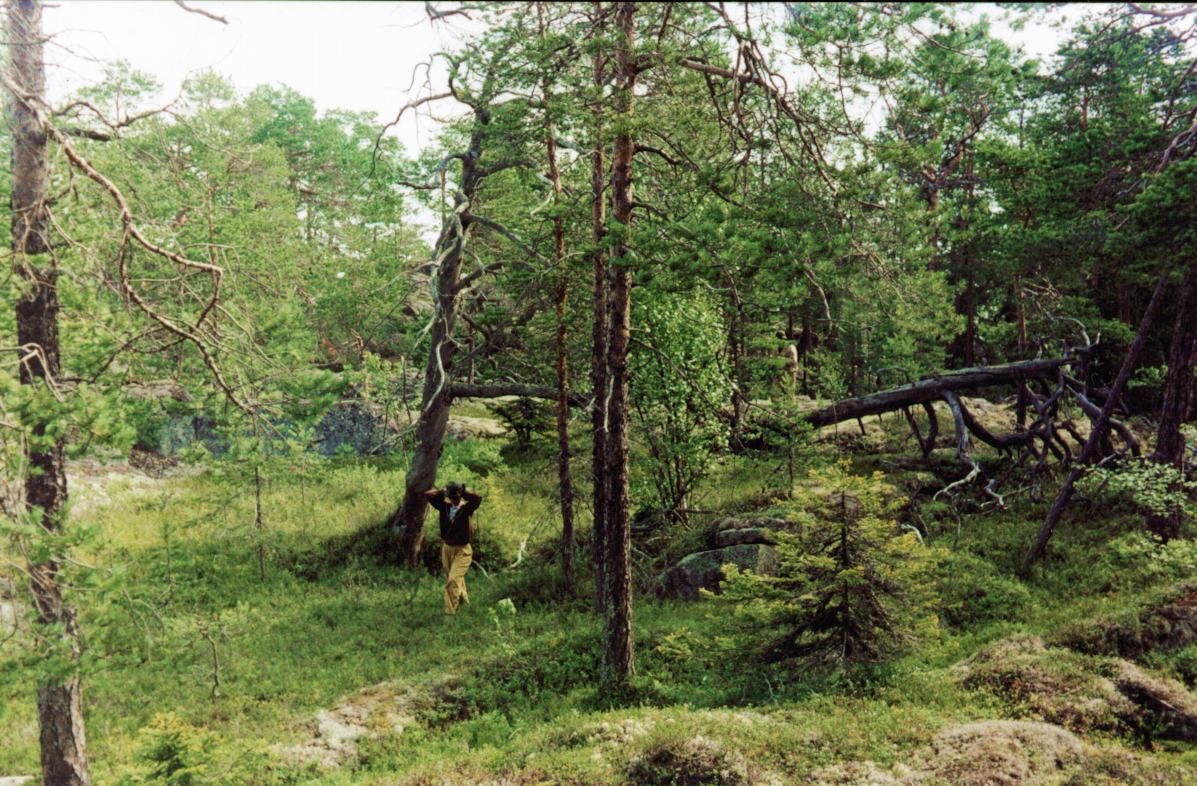
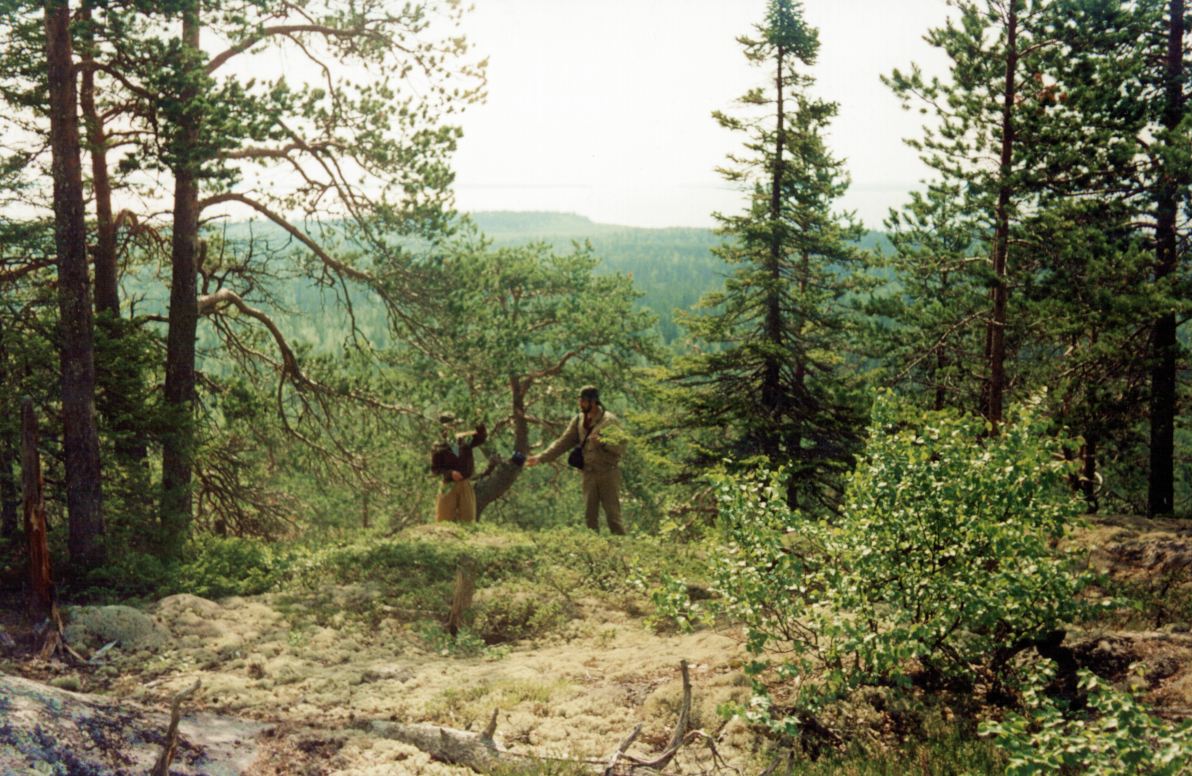
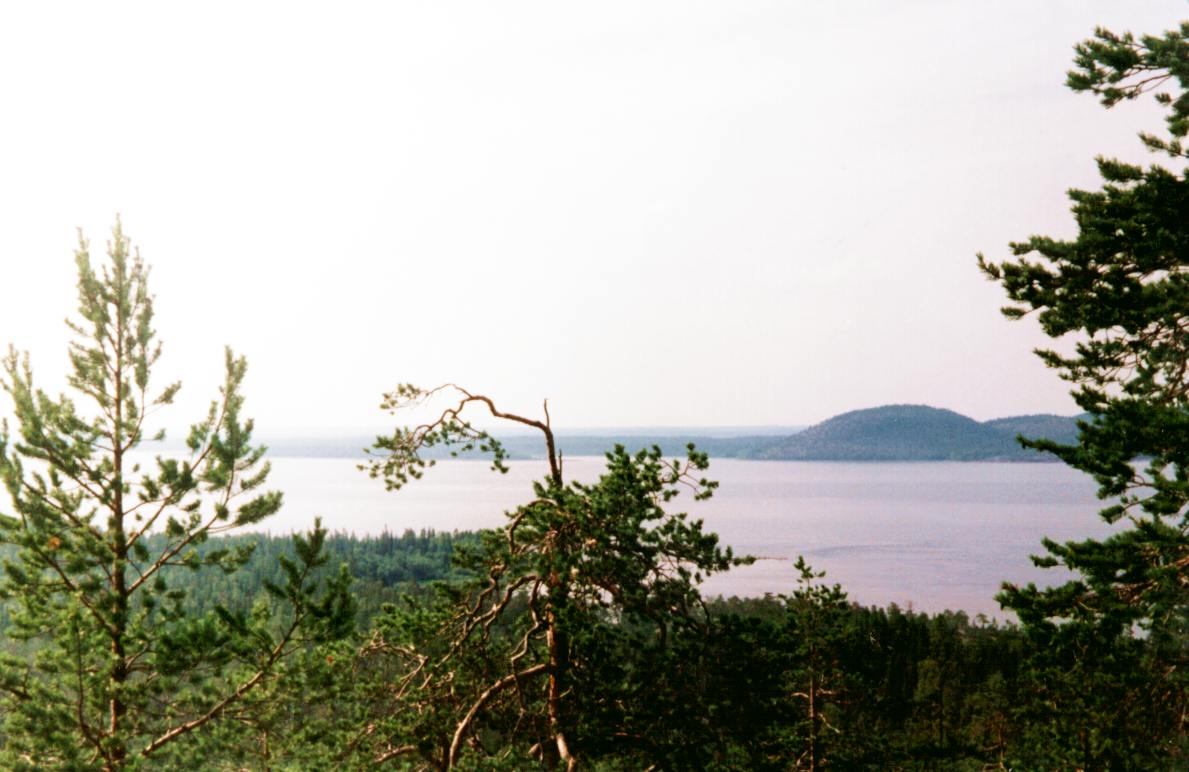
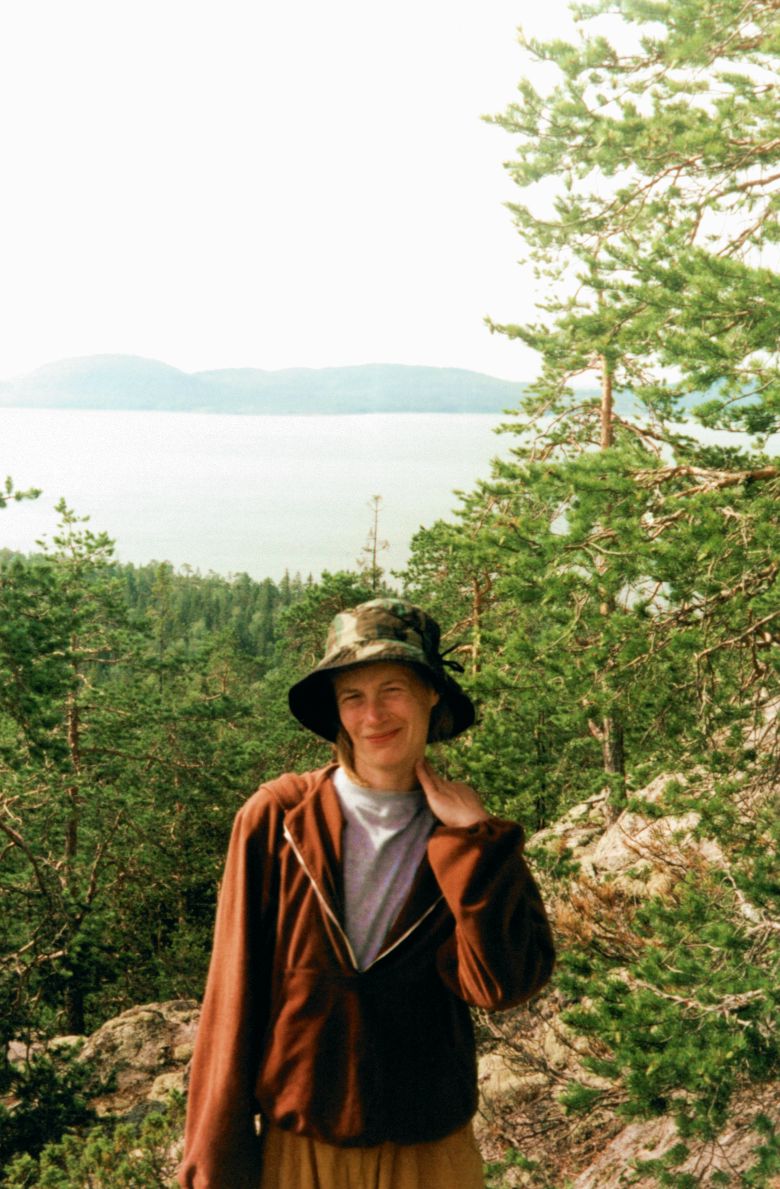
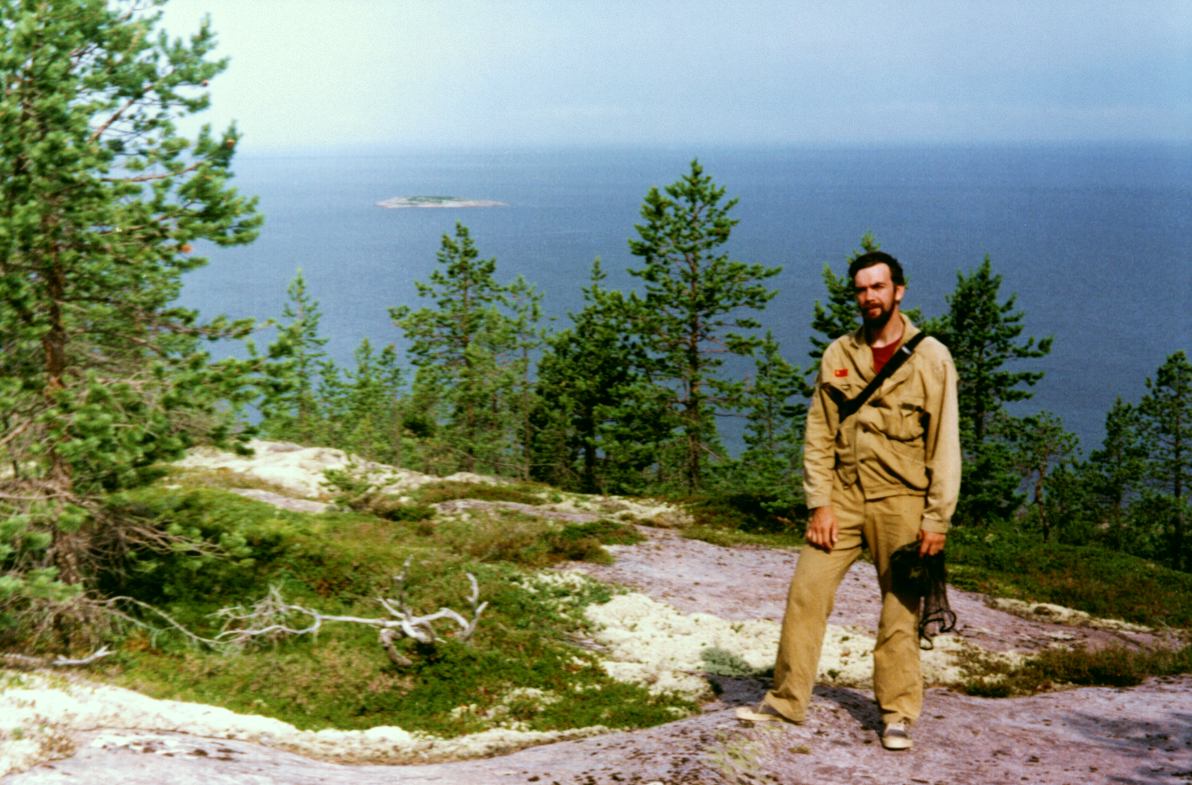
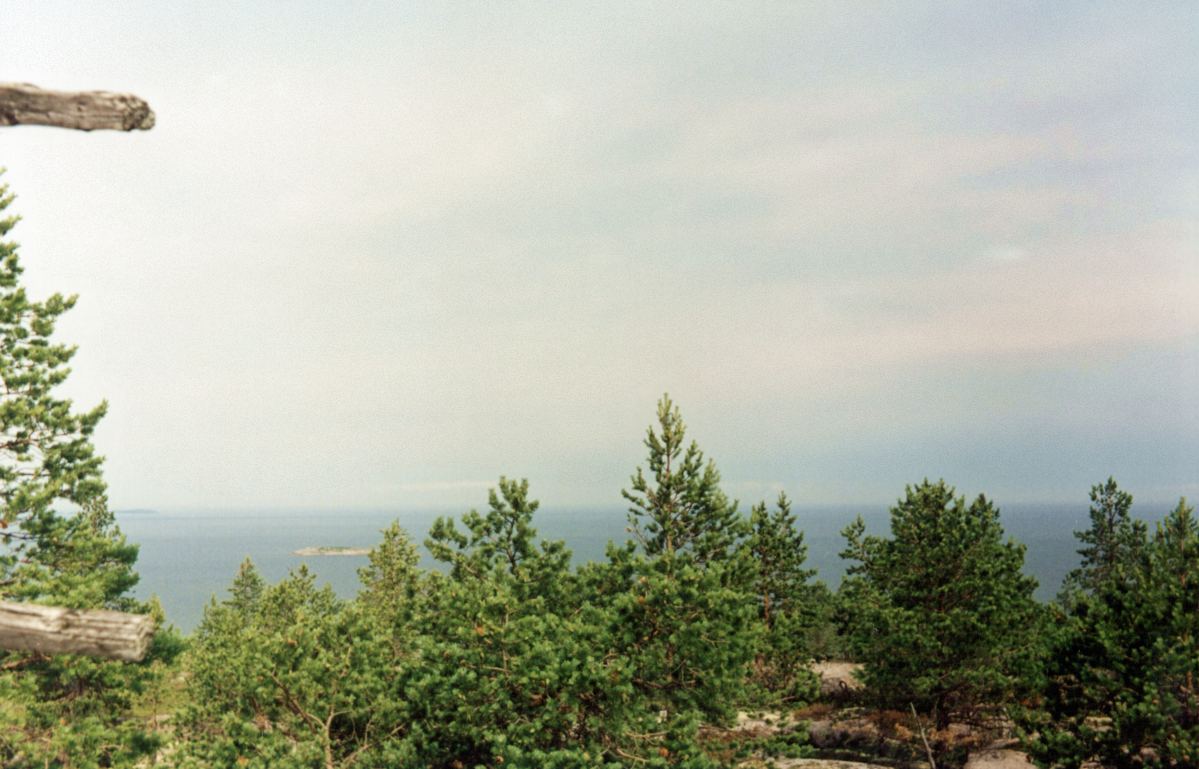
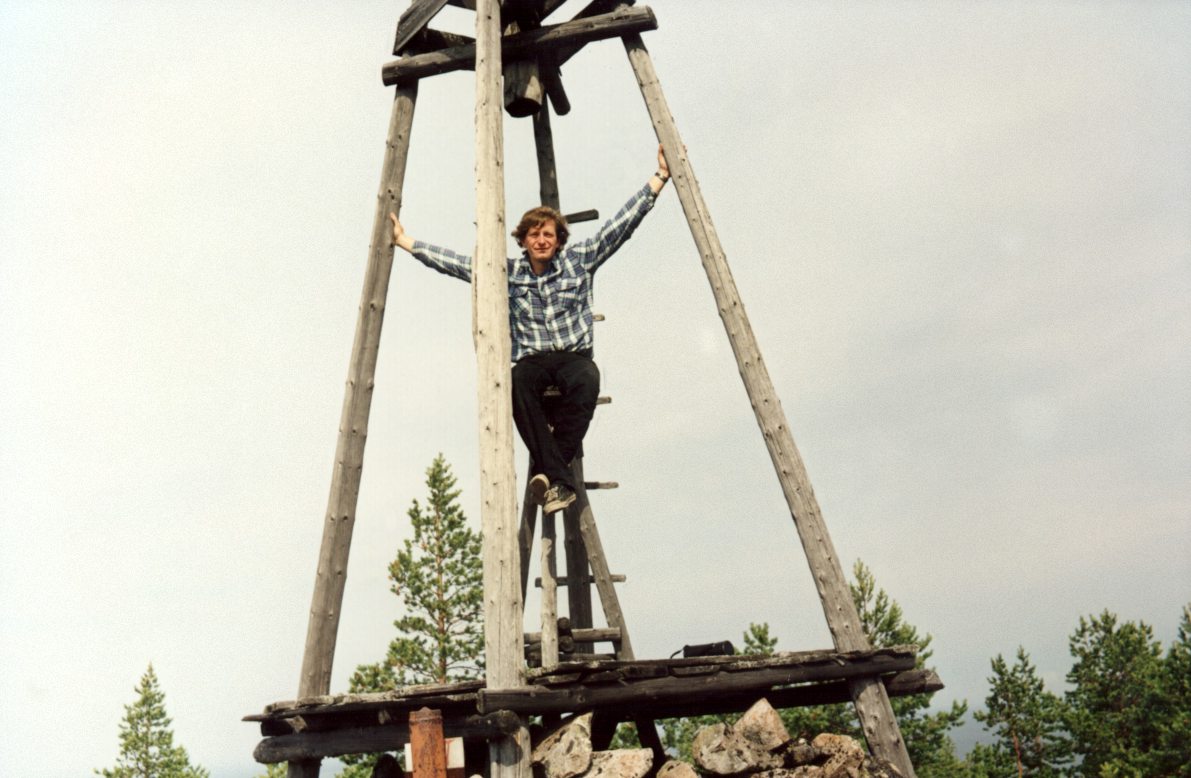
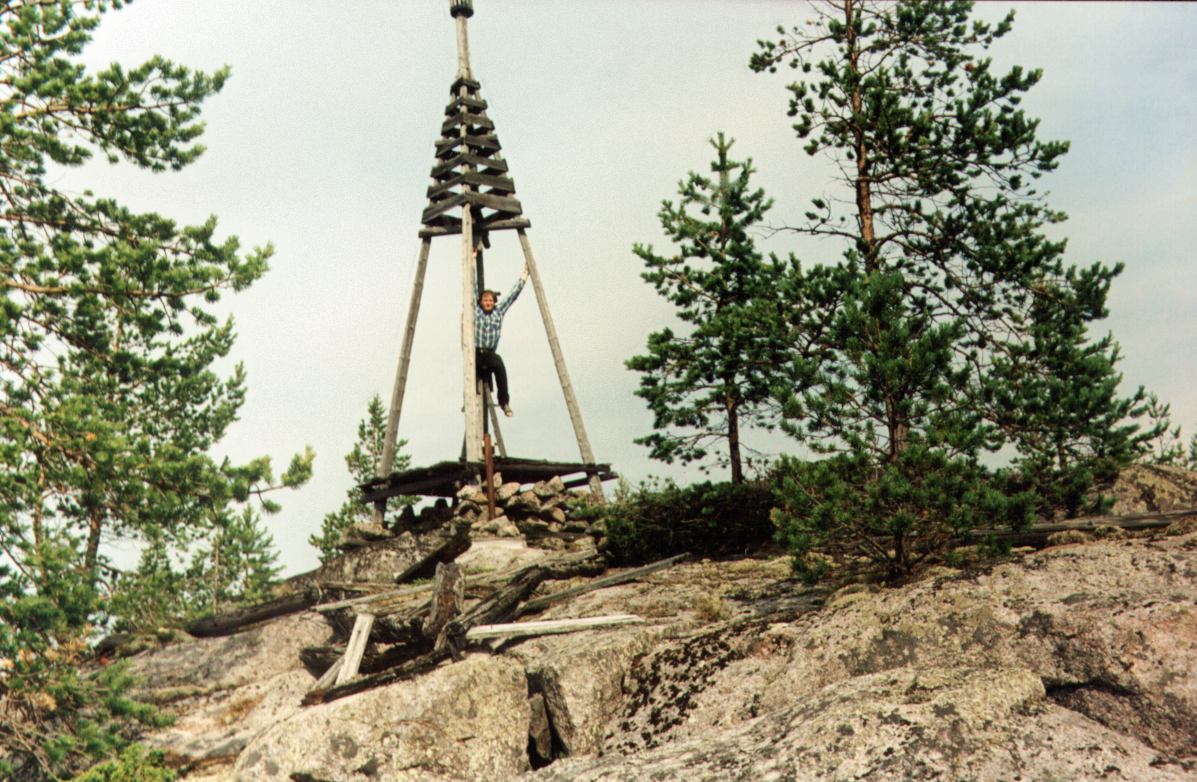
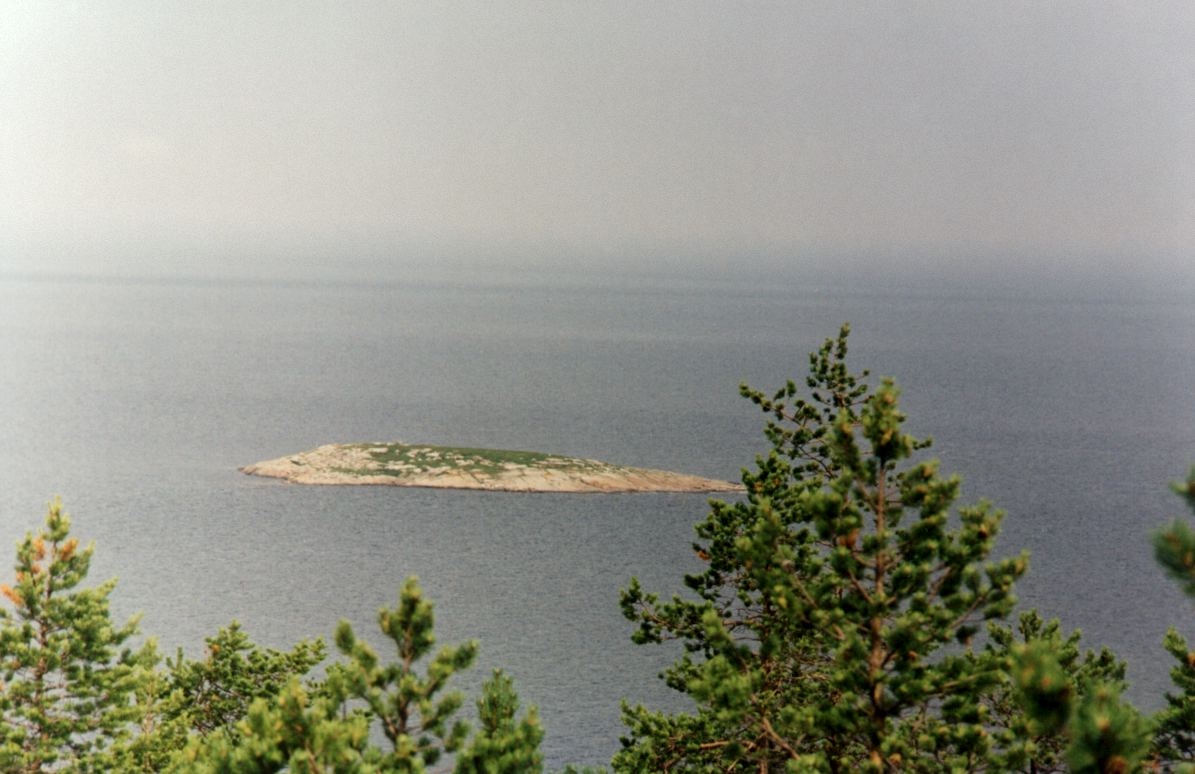
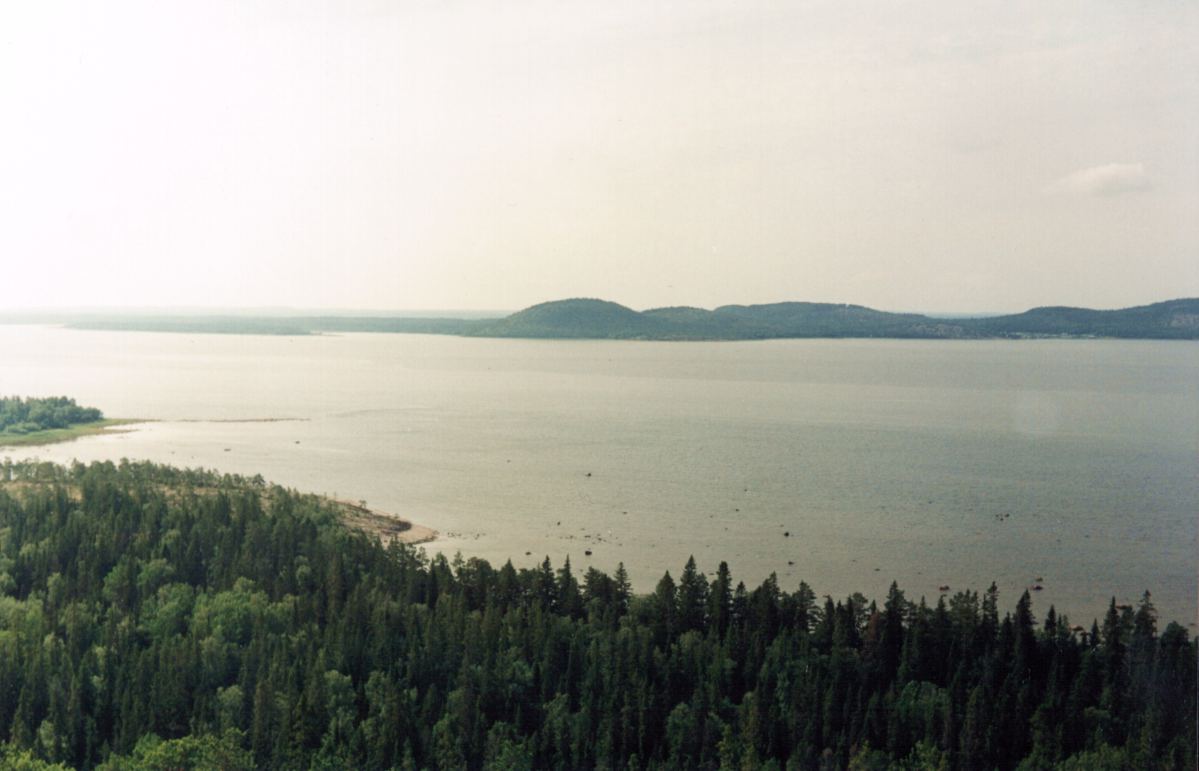
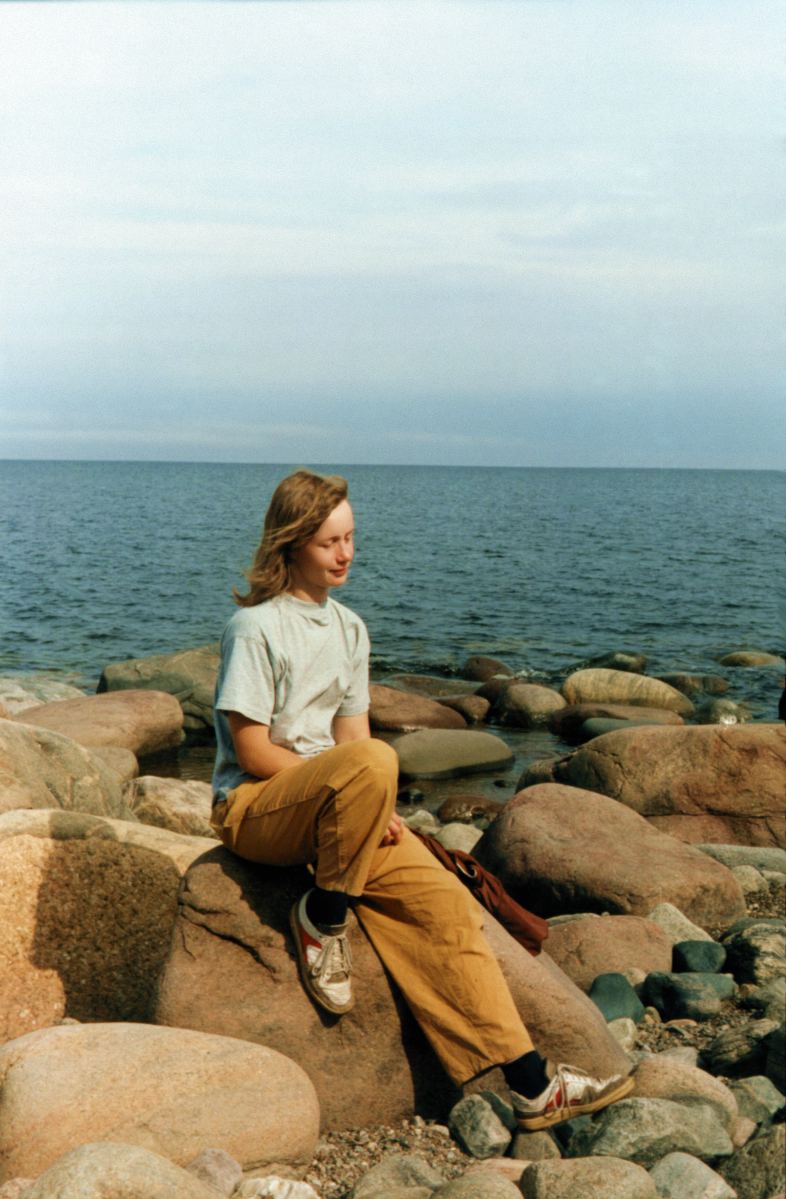
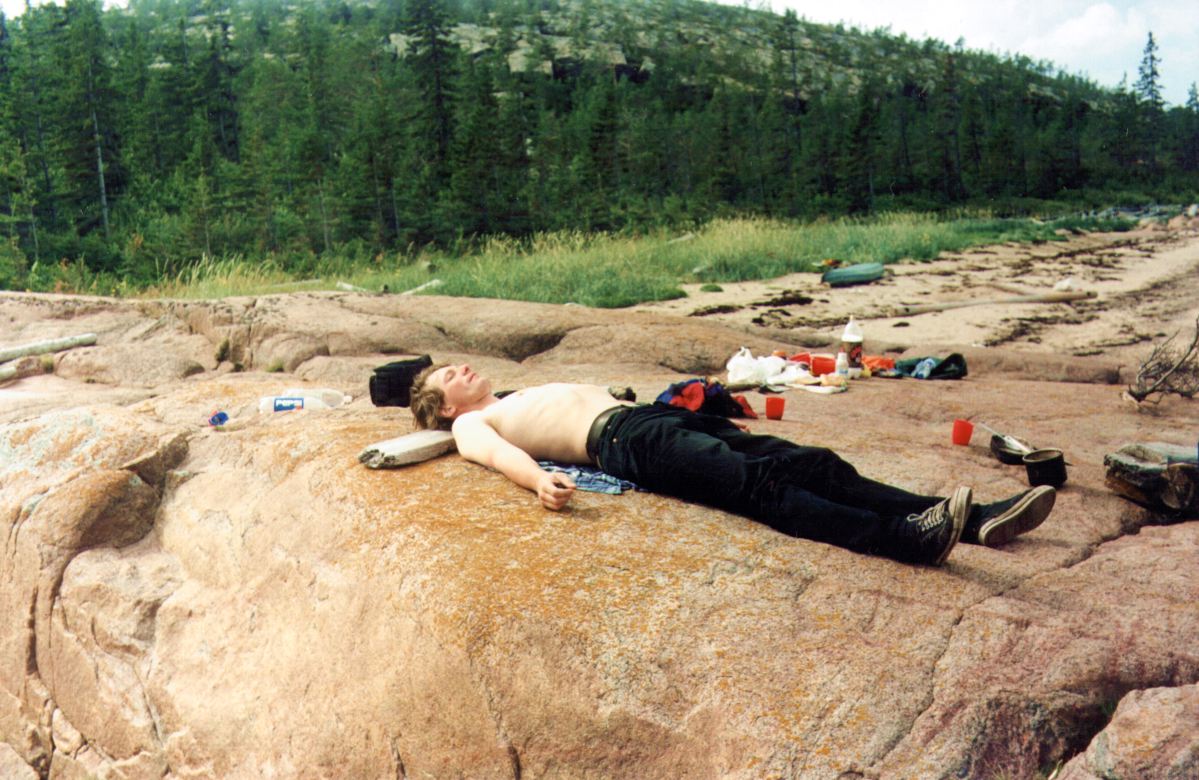
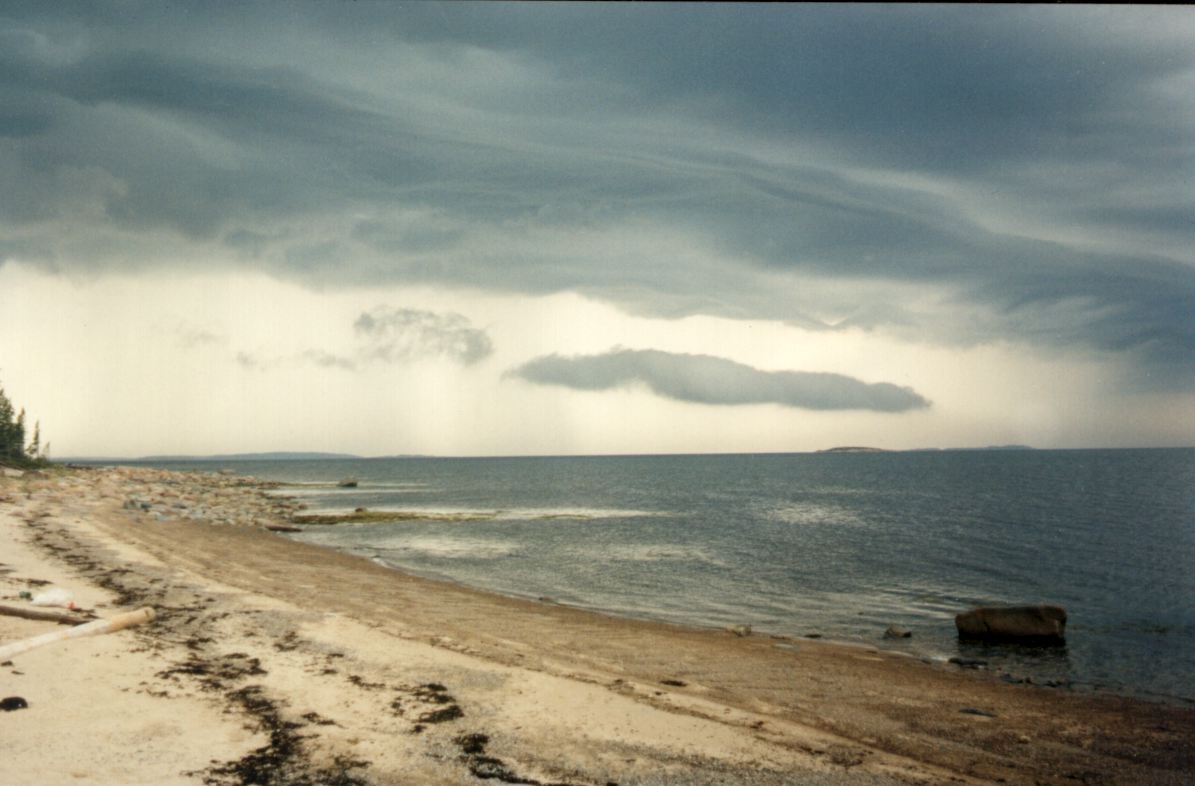
It was muggy. The sun disappeared behind a haze, and we heard thunder over the sea beyond the island. A thunderstorm was coming in. Leaden clouds raced over the sea, with lightning all over the place. Sasha tried to film it. As soon as he pressed record, the storm quieted down. We climbed into the Sochavas’ tent and slept through it. At 19:00 the storm ended. The sea was calm, and the flood tide was in our favour. We ate quickly and set off. There was another storm over the sea ahead, hammering the water with lightning, but it was far away and moving past us.
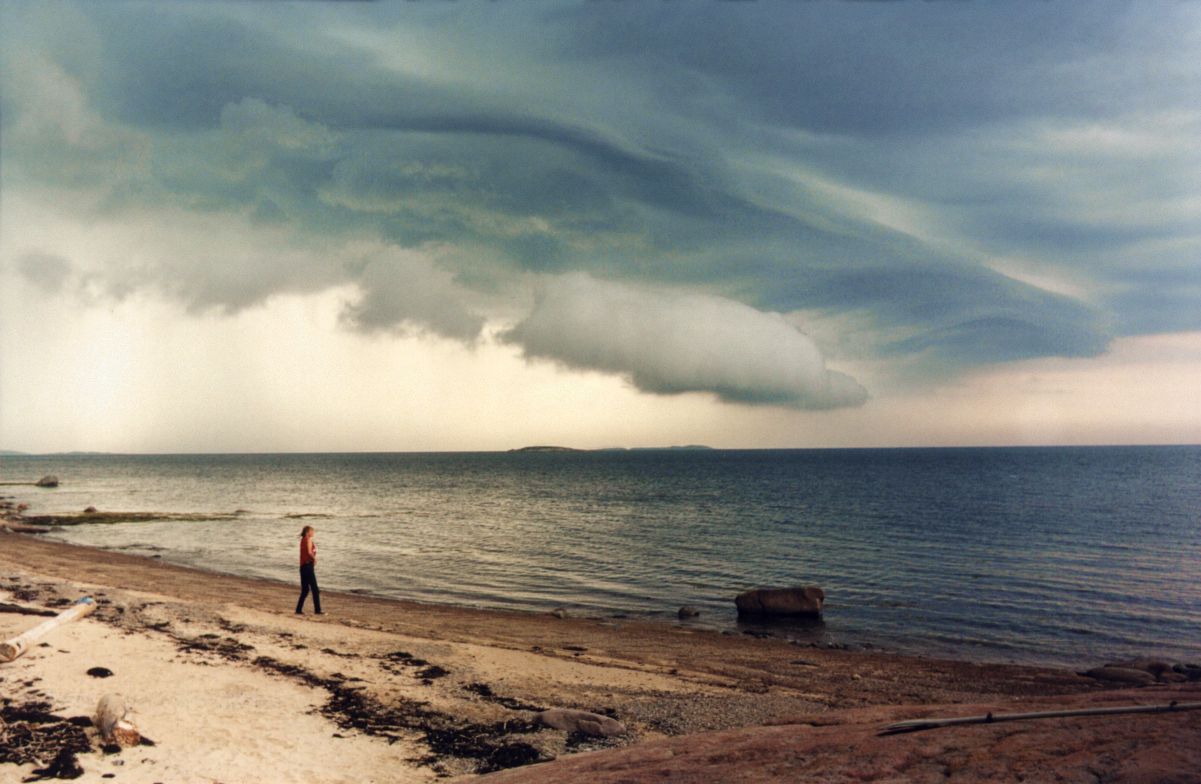
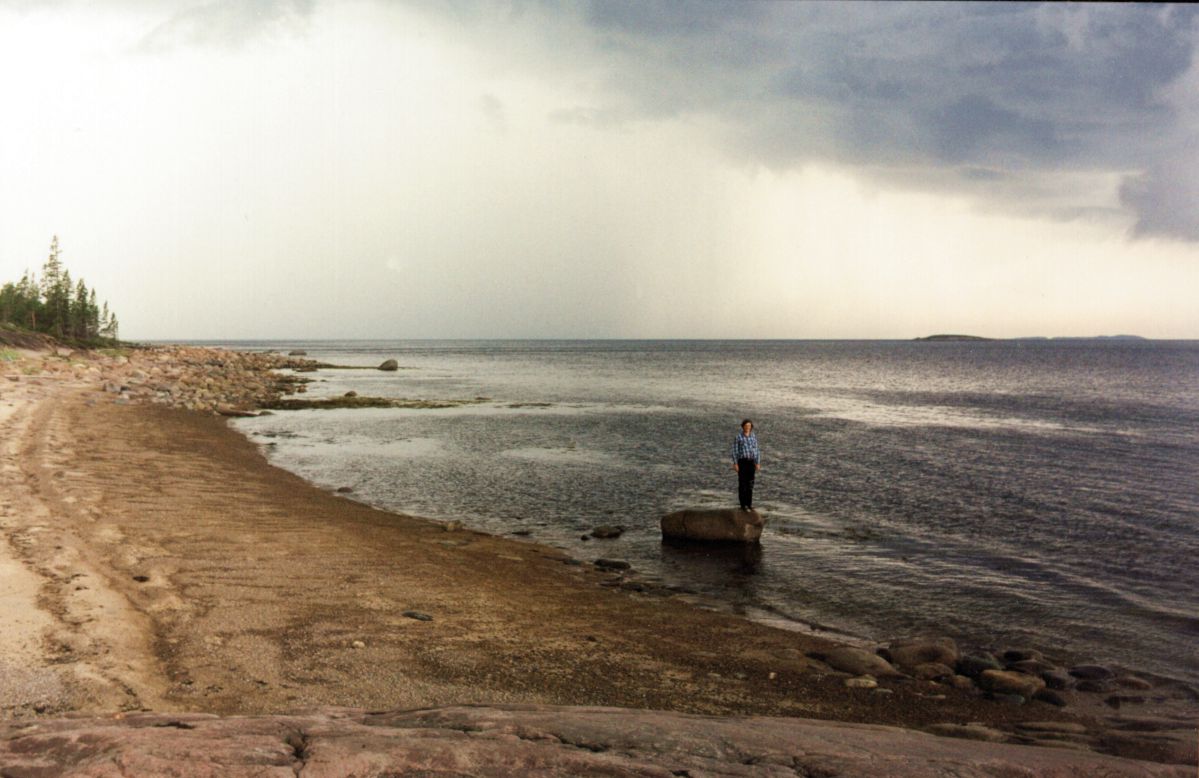
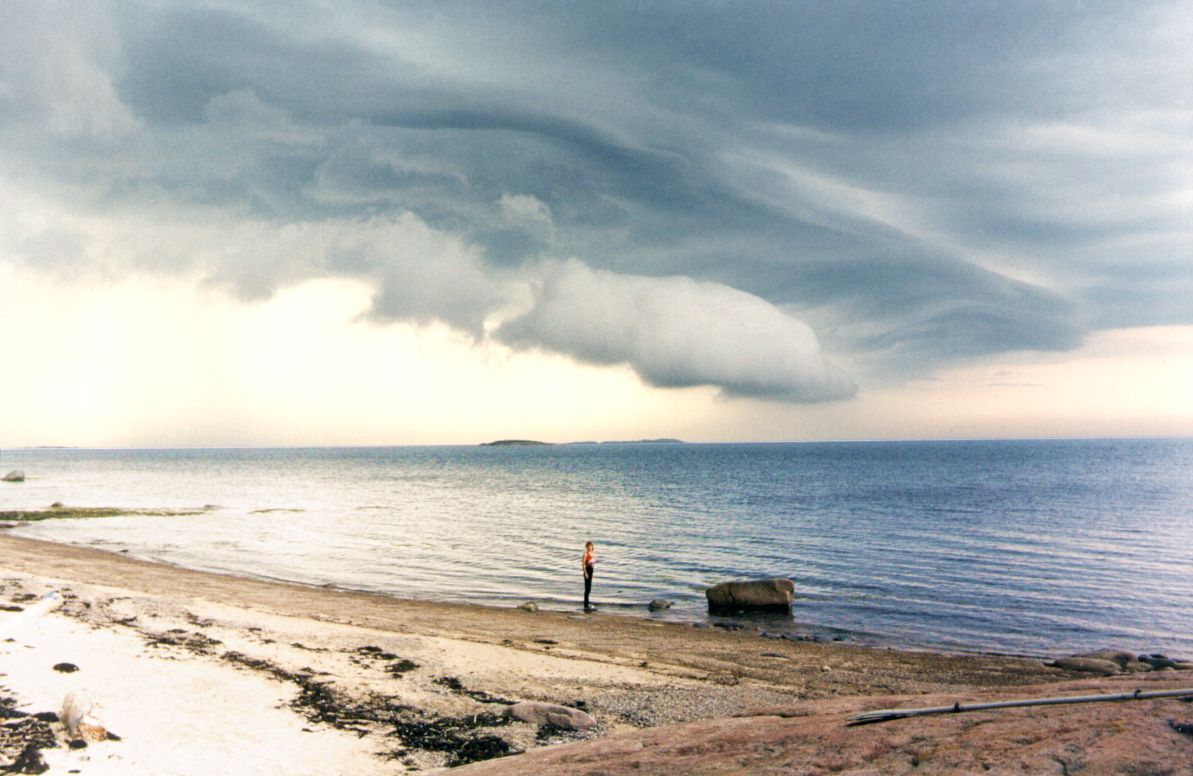
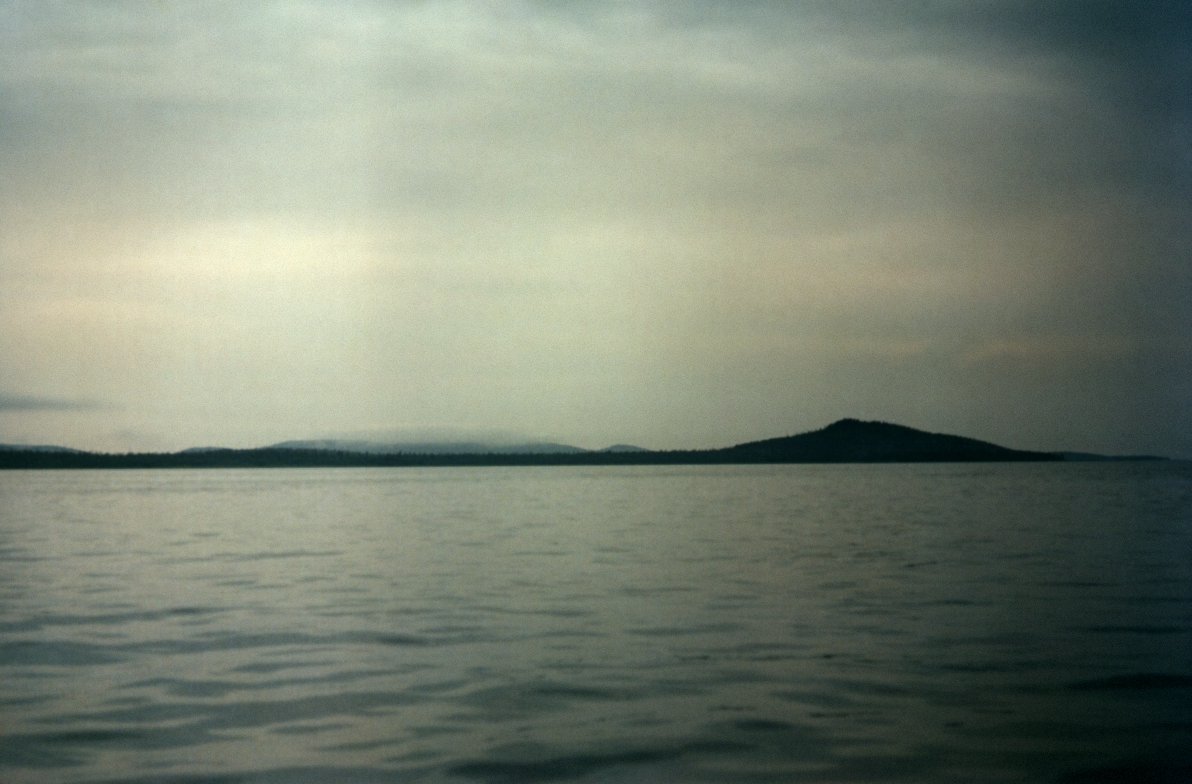
We passed Goly Sosnovets and Uzhkorga Island. I liked the latter, with its little sandy beach, hut and juniper thickets. The map showed a little freshwater lake in the middle, too. It was too early to stop, and a third meal was not on the programme, so we kept going. We rounded Myagostrov on its north side. There were no campsites, and a big island means mosquitoes. There was a storm ahead. It was frightening to go far from shore, so we set course for the Borshovtsy Islands, aiming for Berezhnoy. A new kind of jellyfish appeared in the sea, red, with trailing threads almost four metres long. Probably a stinging kind. Belugas were splashing about.
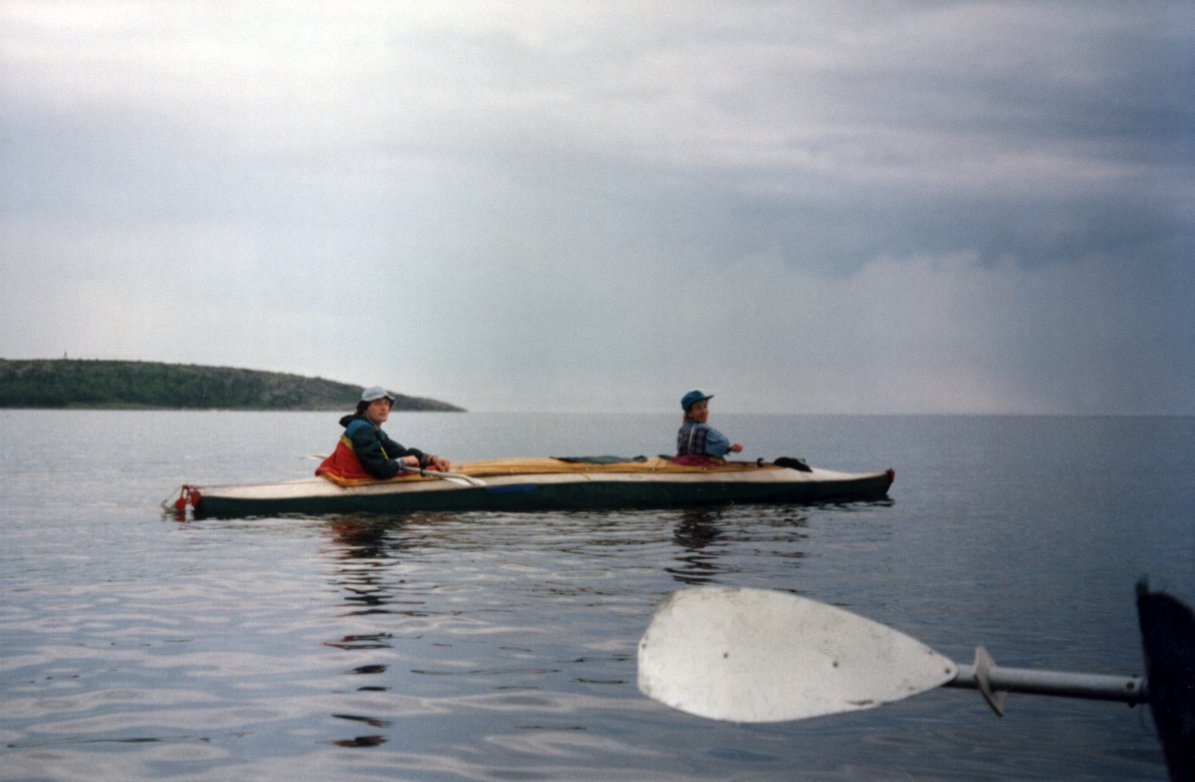
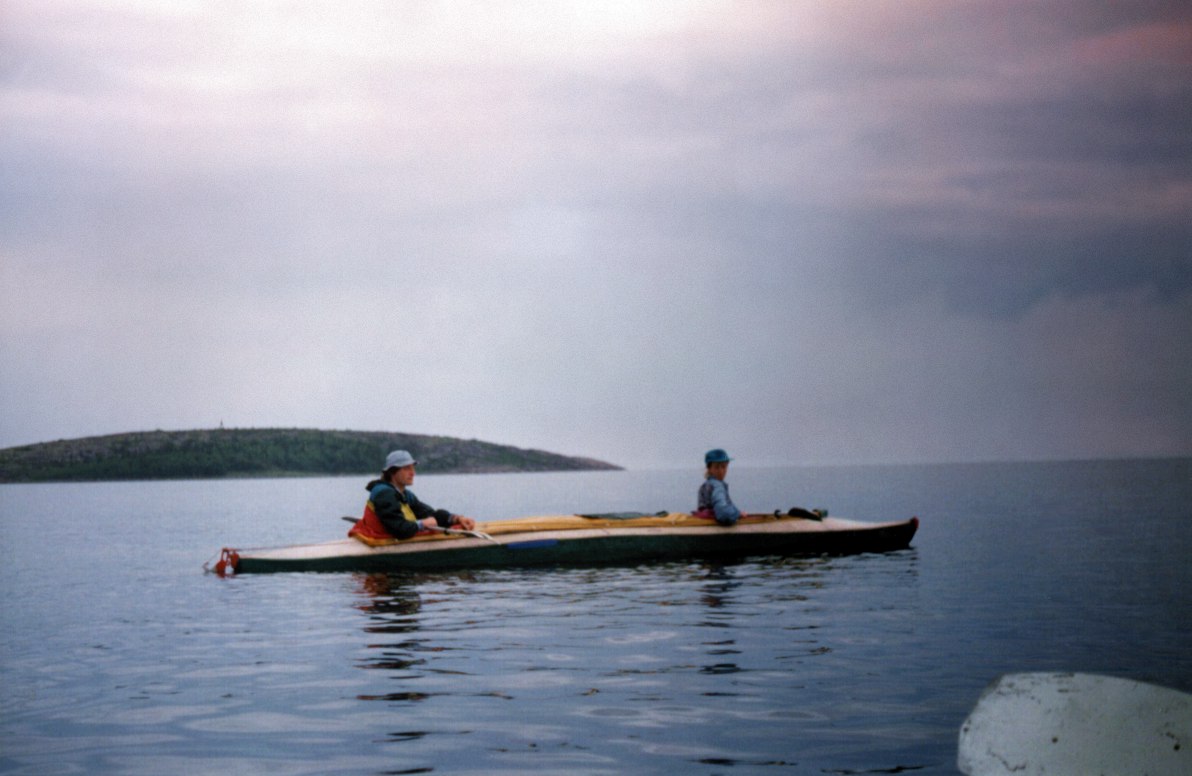
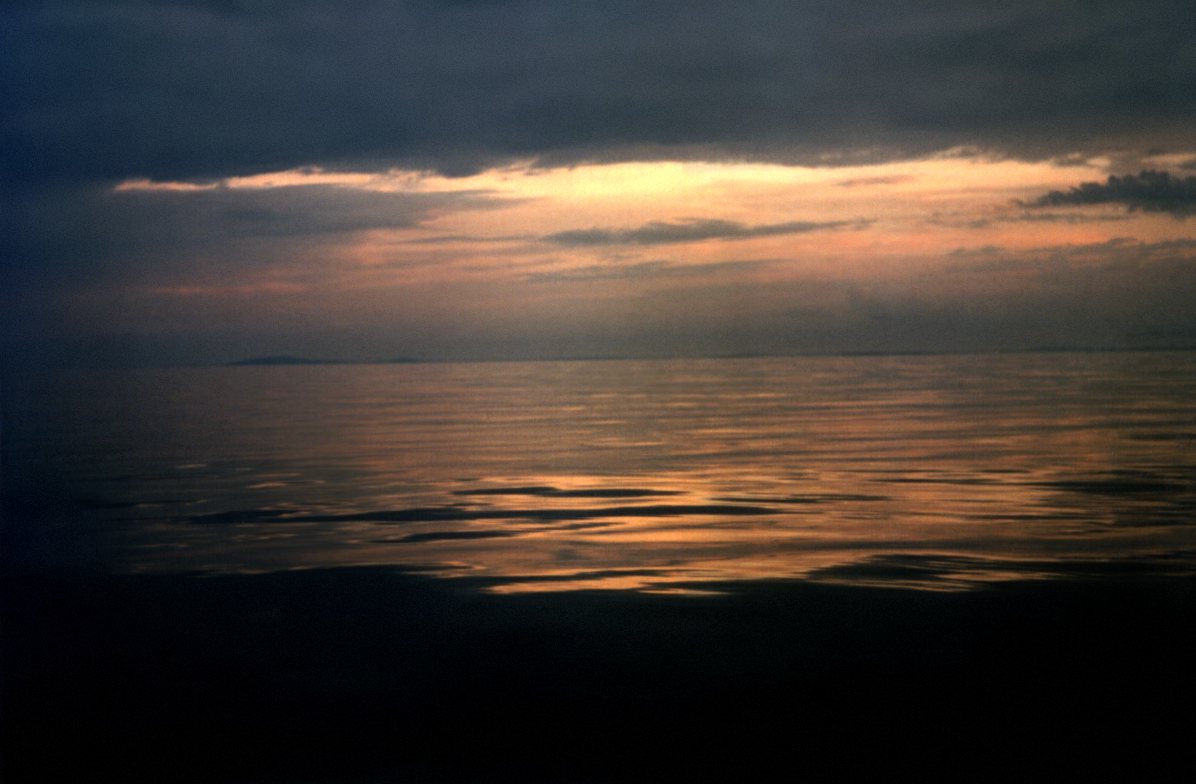
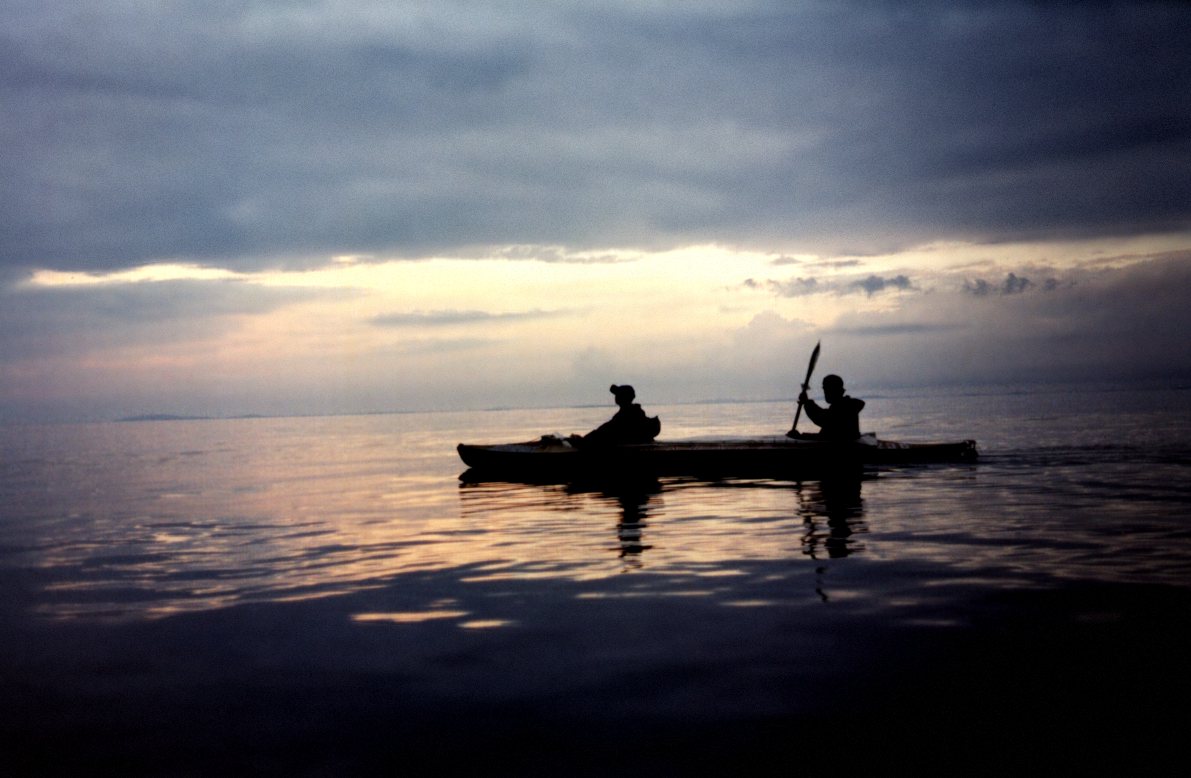
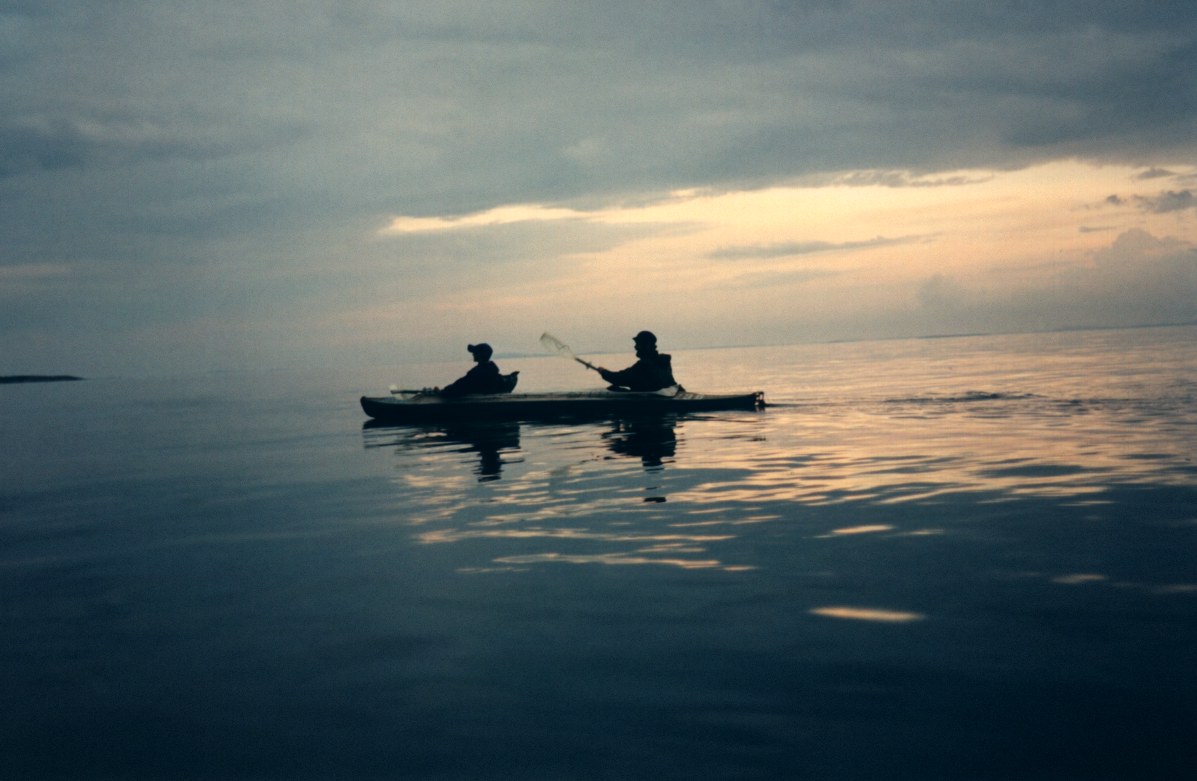
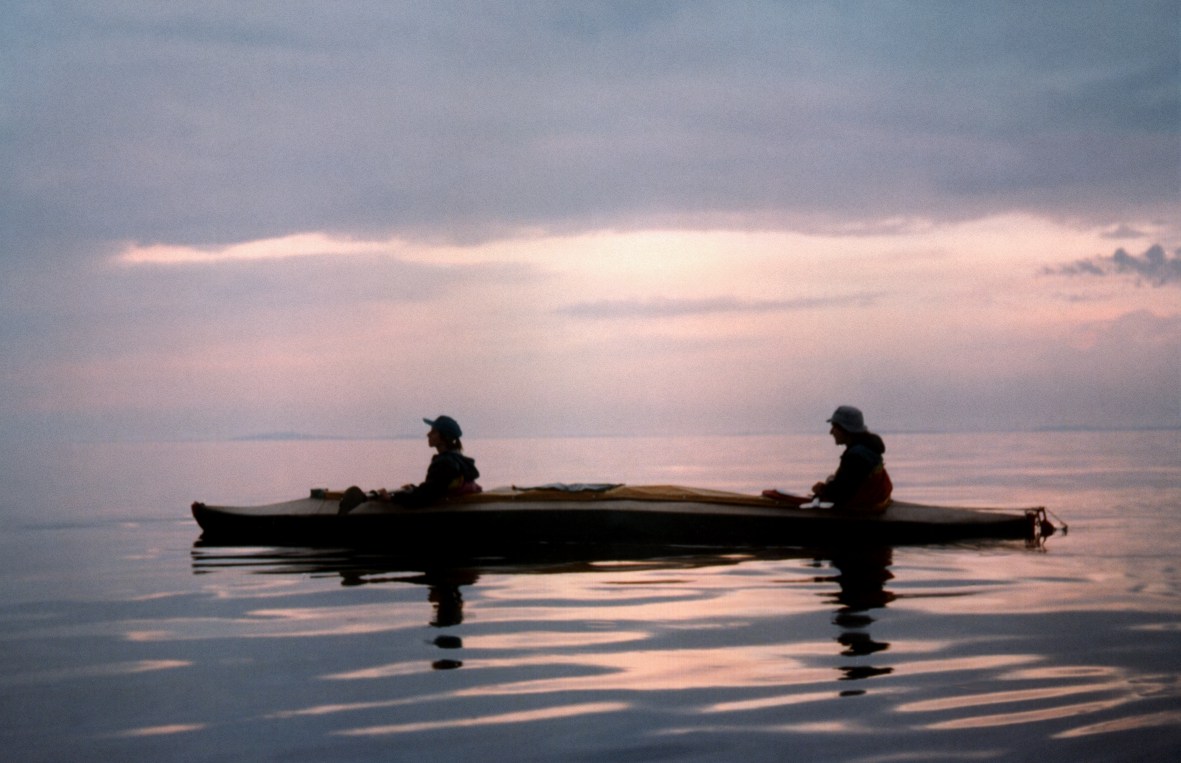
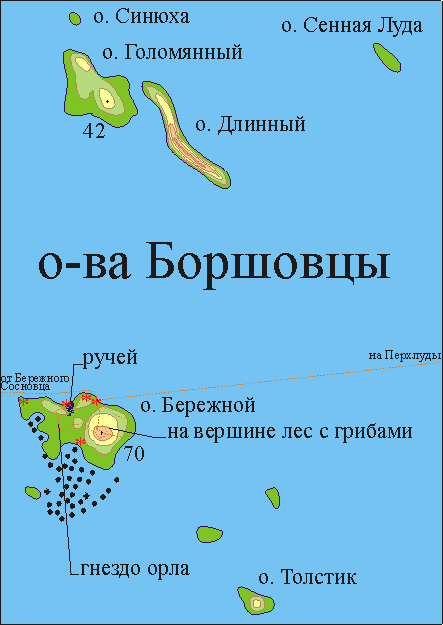
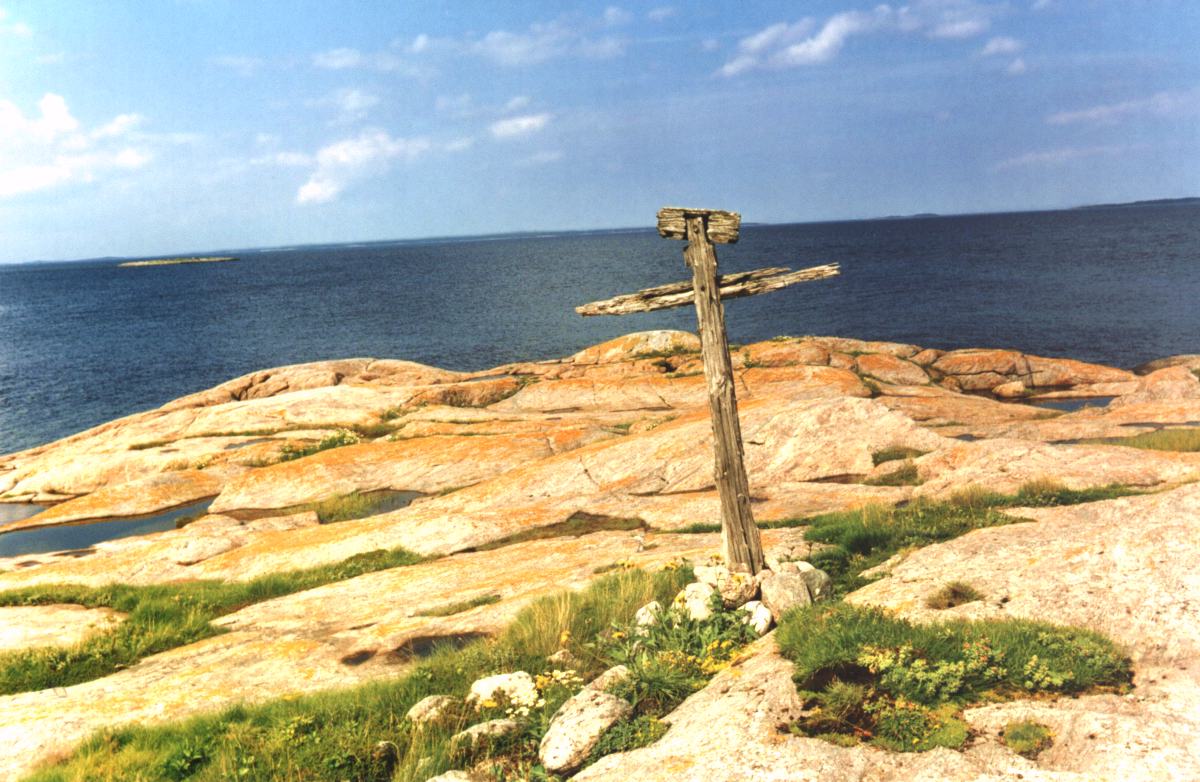
We got there at 23:00. There was no time to be choosy about a campsite. We pitched on a high rocky headland about 20 metres above the water, at 64°20.910′N, 36°06.585′E. It was a long carry, but there were no mosquitoes. Tonight we had a bottle of Mazarini. There was no wood near camp, just the remains of crosses that we could not bring ourselves to burn. We had to lug the firewood up the hill too. A hare had a den, a hole, a nest or whatever you call it right beside our tent in a juniper bush. We found part of the keel of an old fishing boat. The planks had been fastened with wooden withies instead of nails. At half past midnight I ran up the main hill to film the campfire and the panorama.
27 July
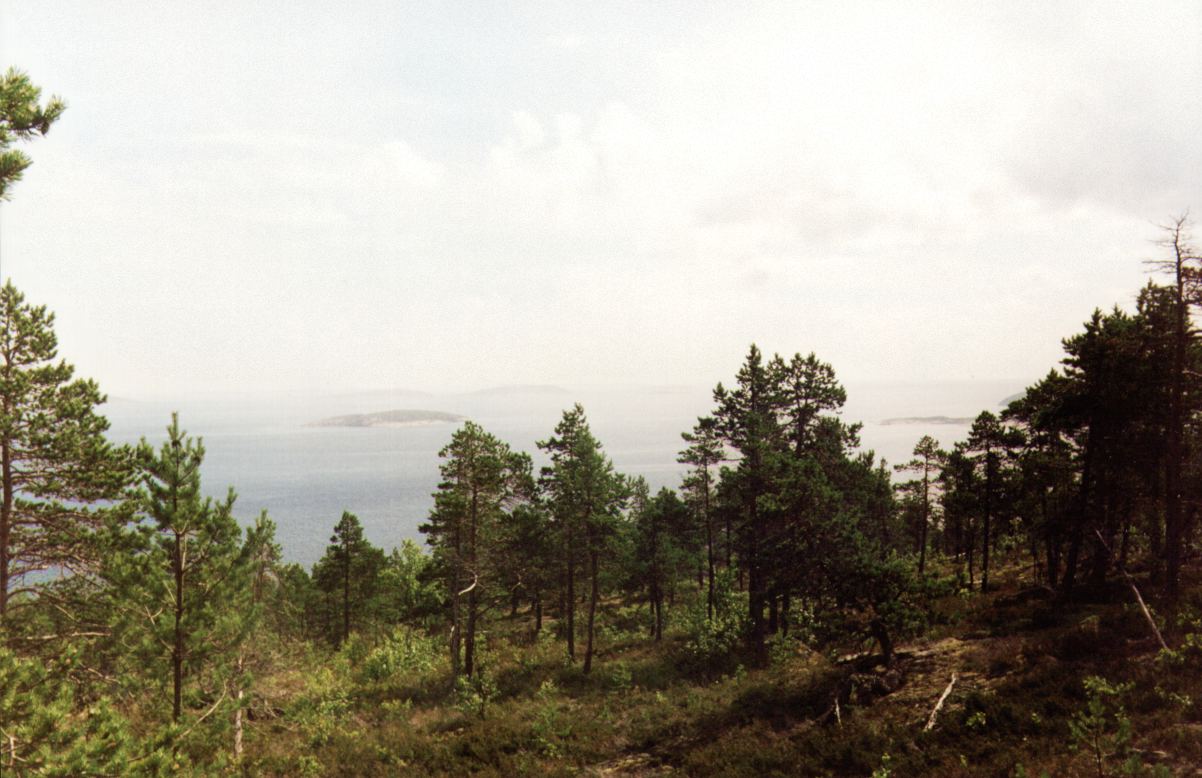
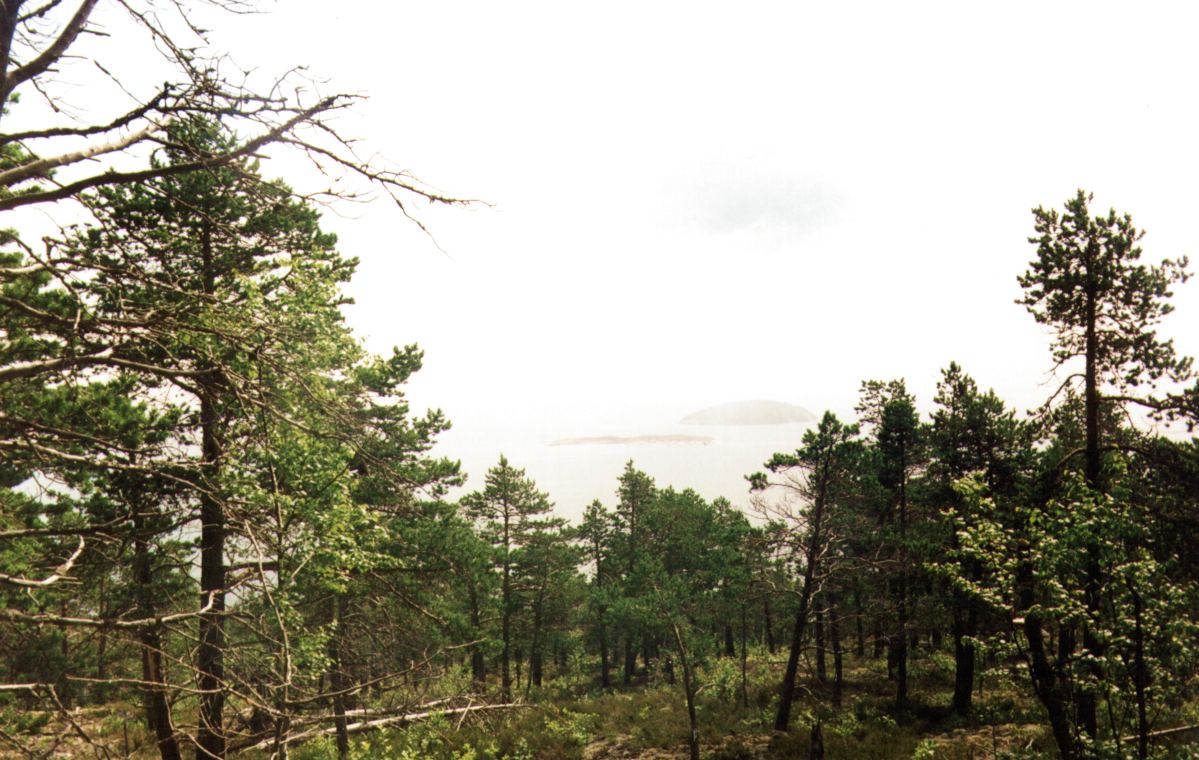
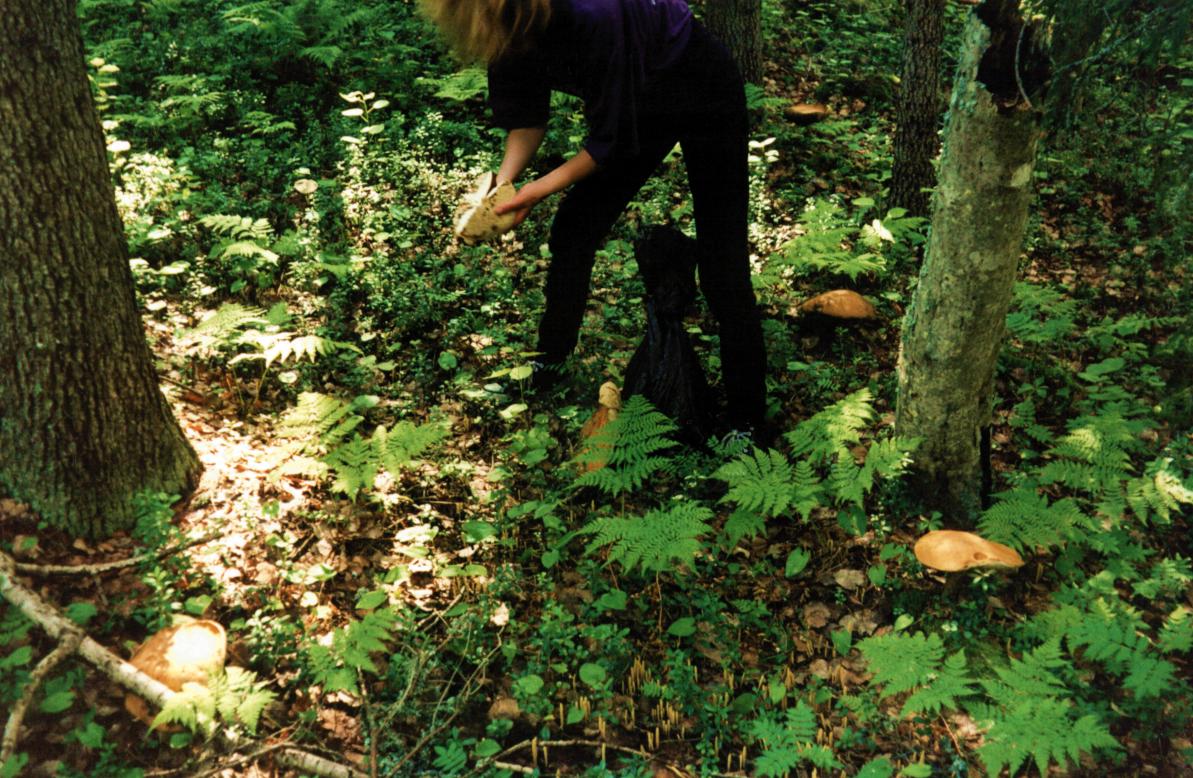
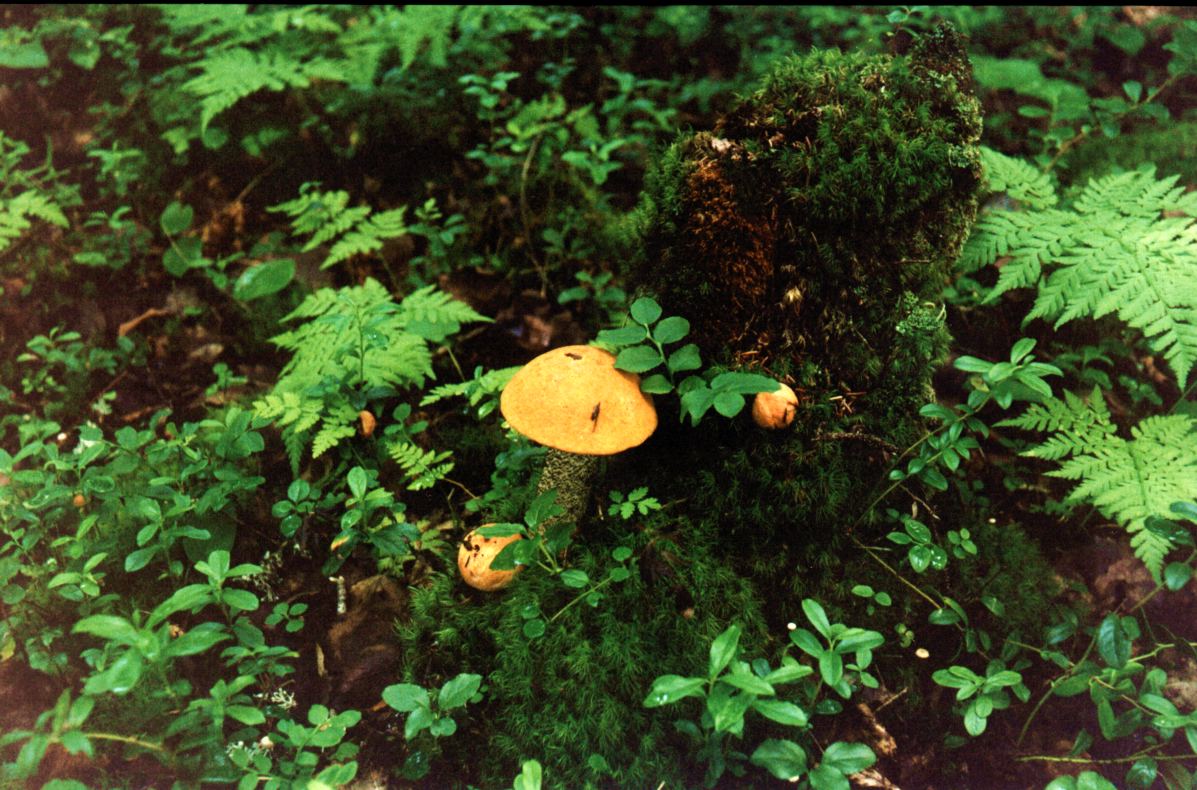
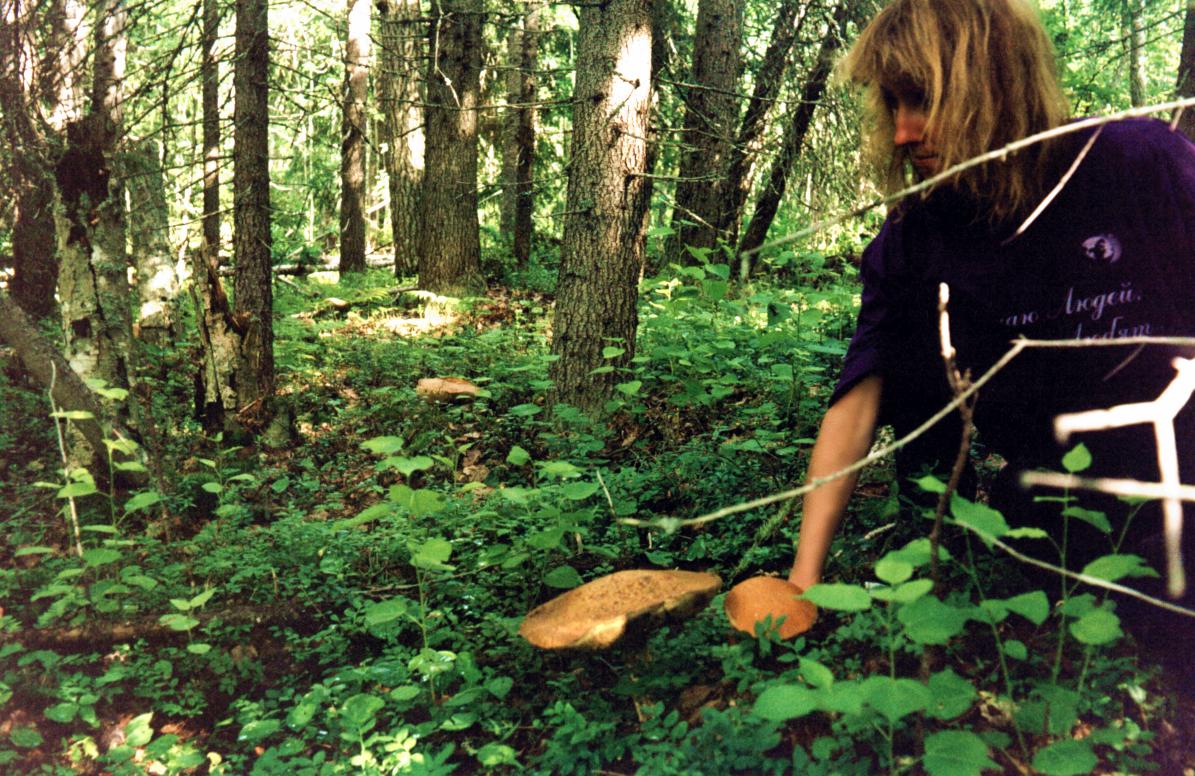
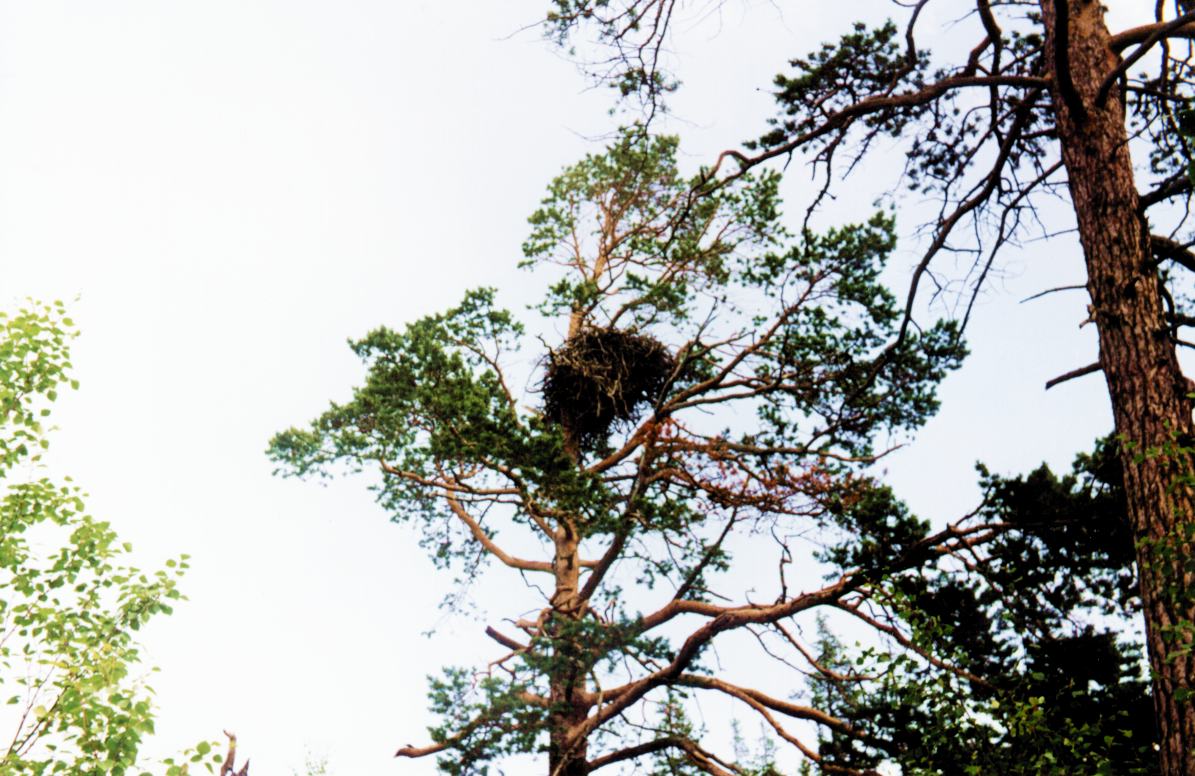
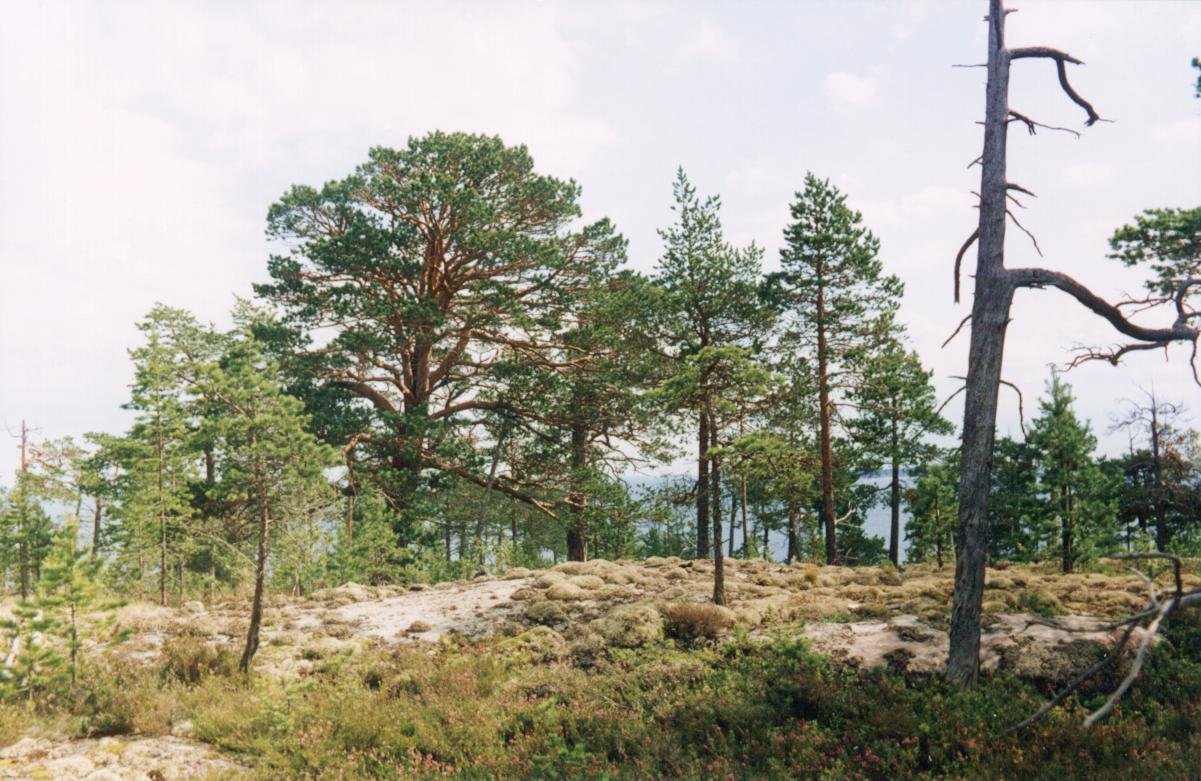
To our surprise, there was sun again in the morning (1, 2, 3, 4, 5). Yesterday it looked as if the weather had gone for good. We sunbathed and swam again. Then a bank of fog came at us from the north-west. It was swallowing the islands to the west of us one after another. We ran to the summit to take photographs before the fog got us too. Getting up there is not easy. It is a fairly steep cliff. We filmed the fog swallowing us. A tuft of woodland grows on the summit of Berezhnoy Borshovets and there are plenty of mushrooms in it. Then we descended into thick forest in the saddles between the rocky tops. There were wild quantities of red-capped mushrooms growing there. Most were old, but we still collected as many young ones as we could carry. The forest was wild and pathless and difficult to get through. Hazel grouse fluttered out underfoot and hares leapt away. Somewhere in the middle we found a big pine with a tremendous nest, no smaller than a stork’s. We decided it belonged to an eagle. As we approached the island yesterday we had seen something large and carnivorous in the distance. An eagle, surely, and with only one head. :)
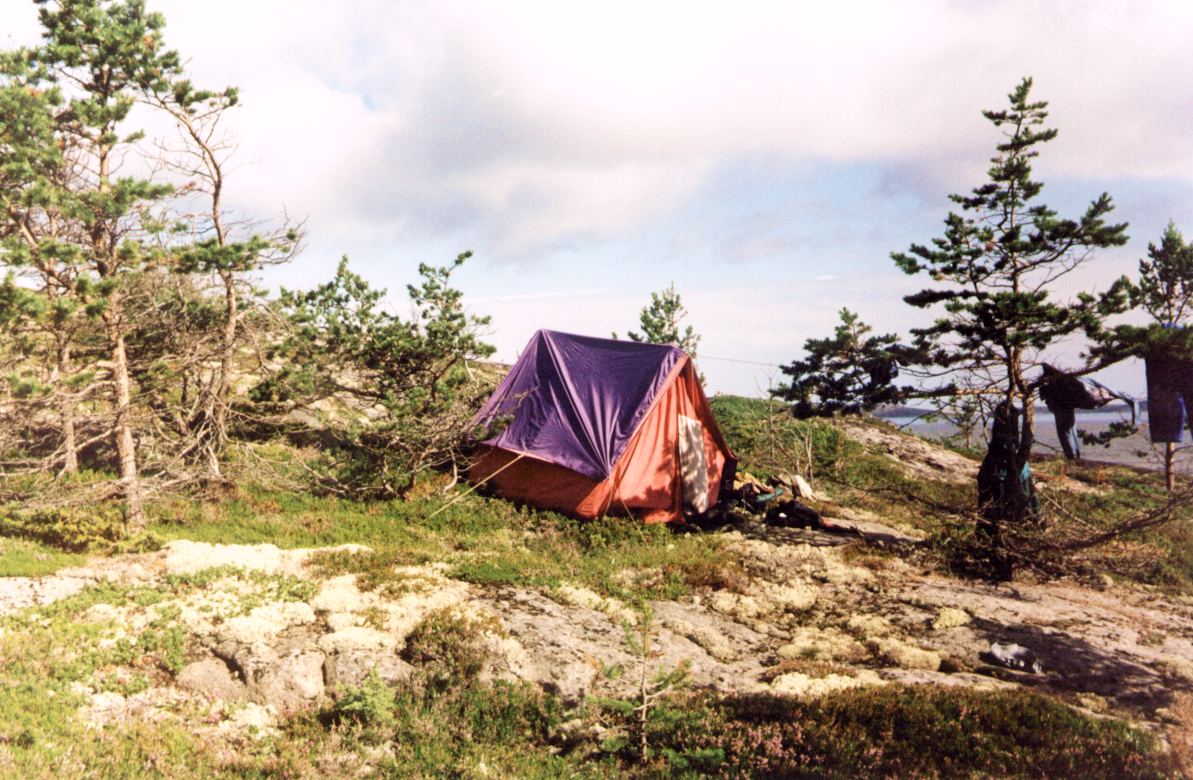
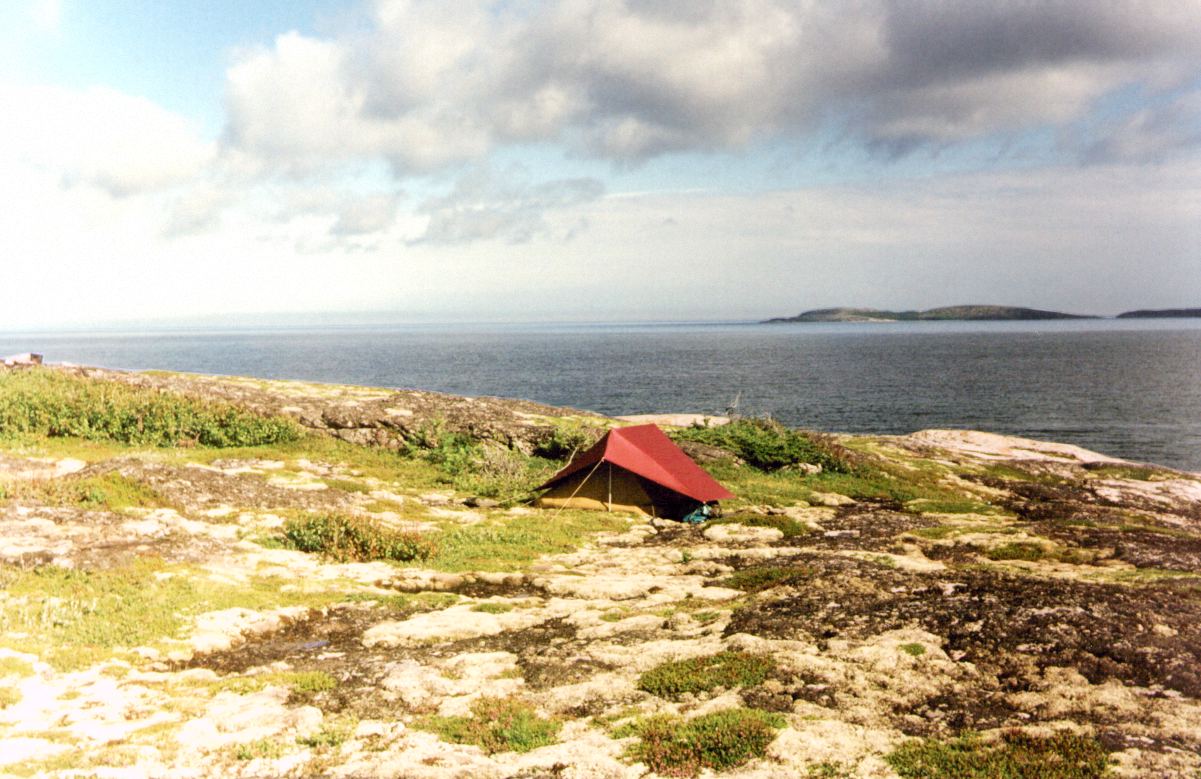
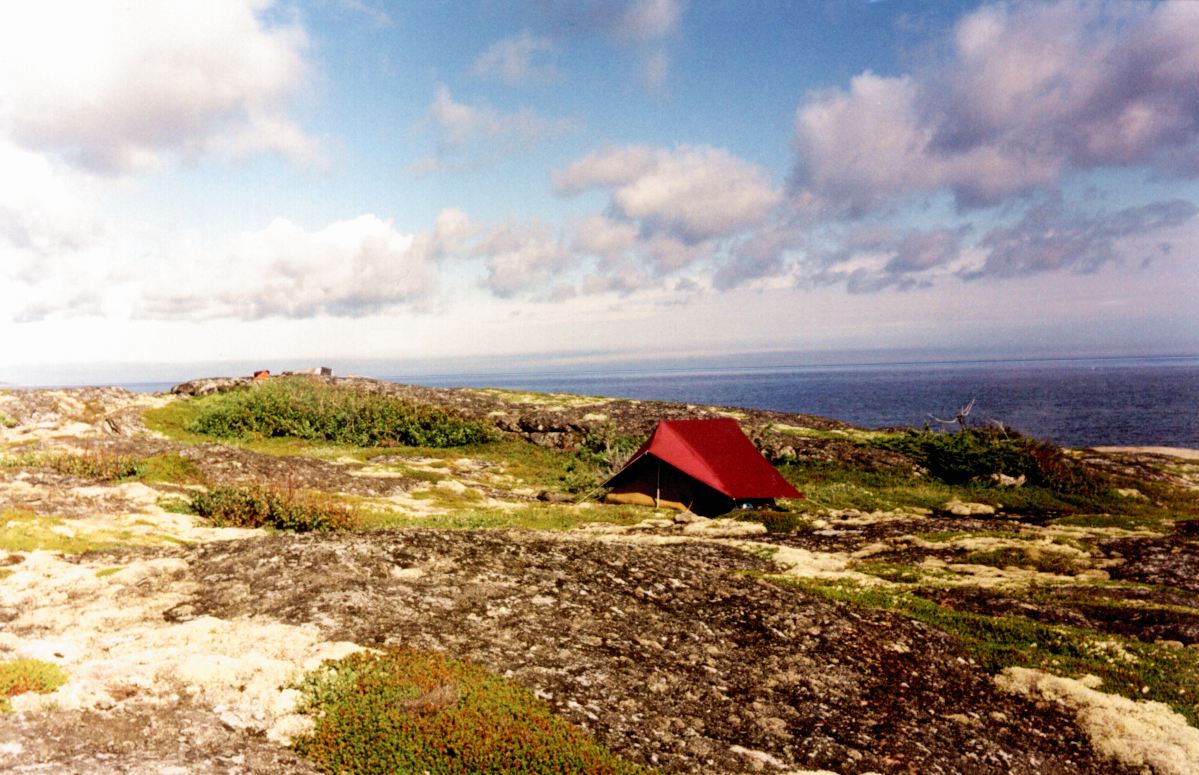
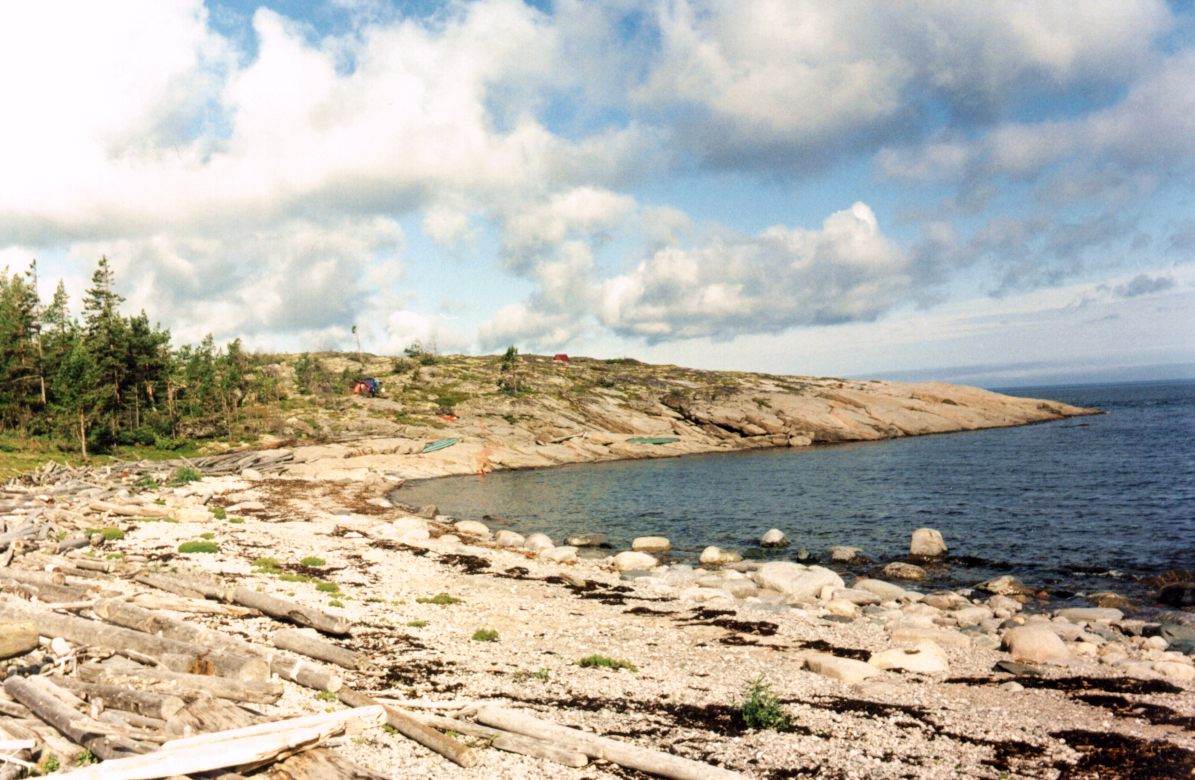
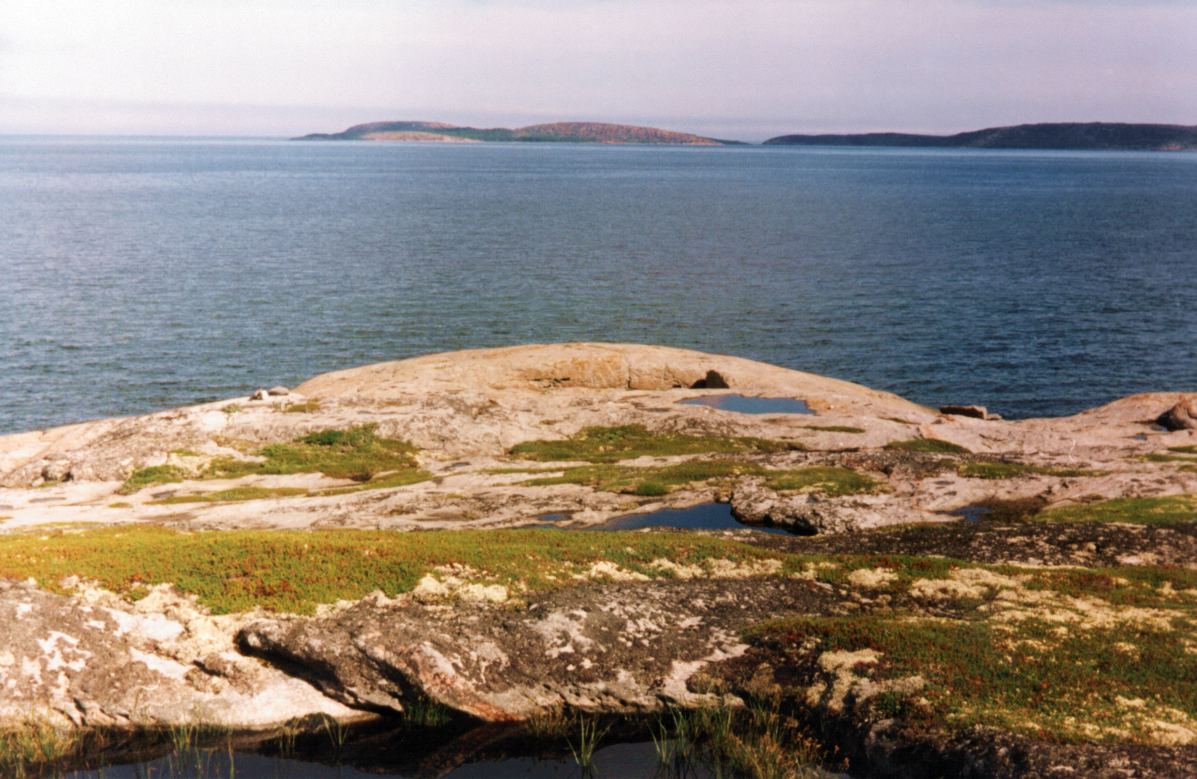
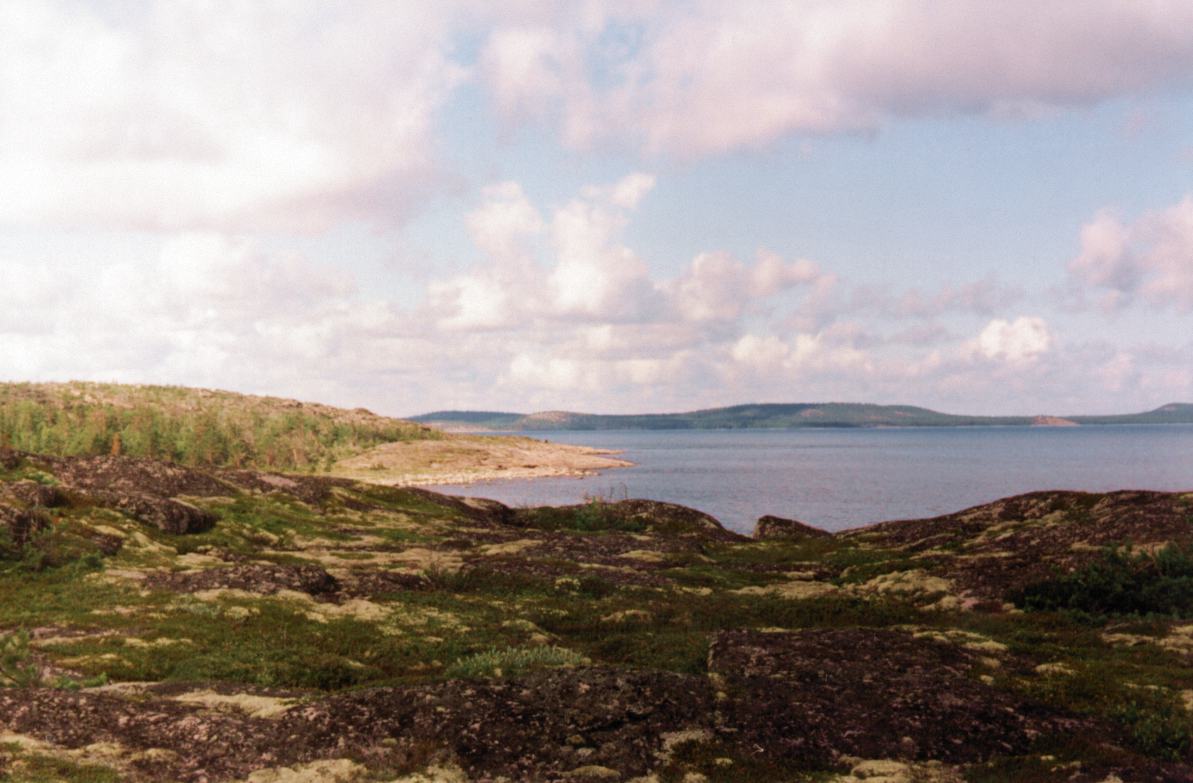
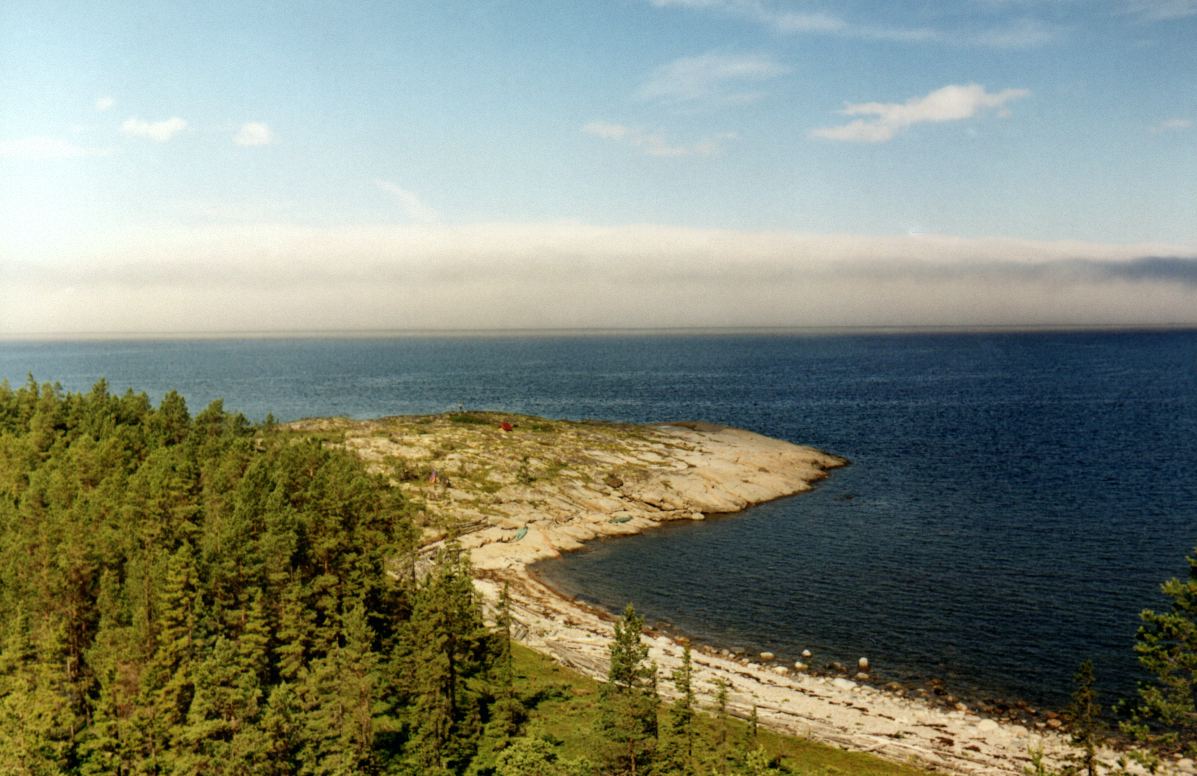
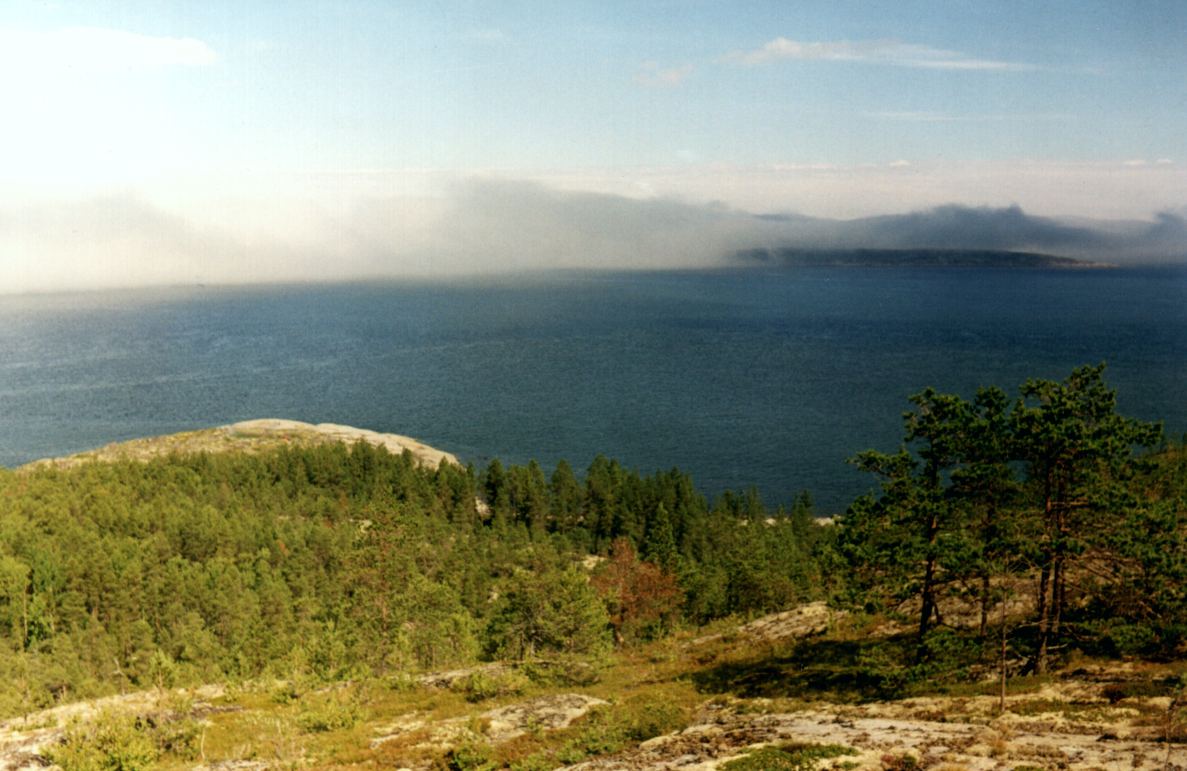
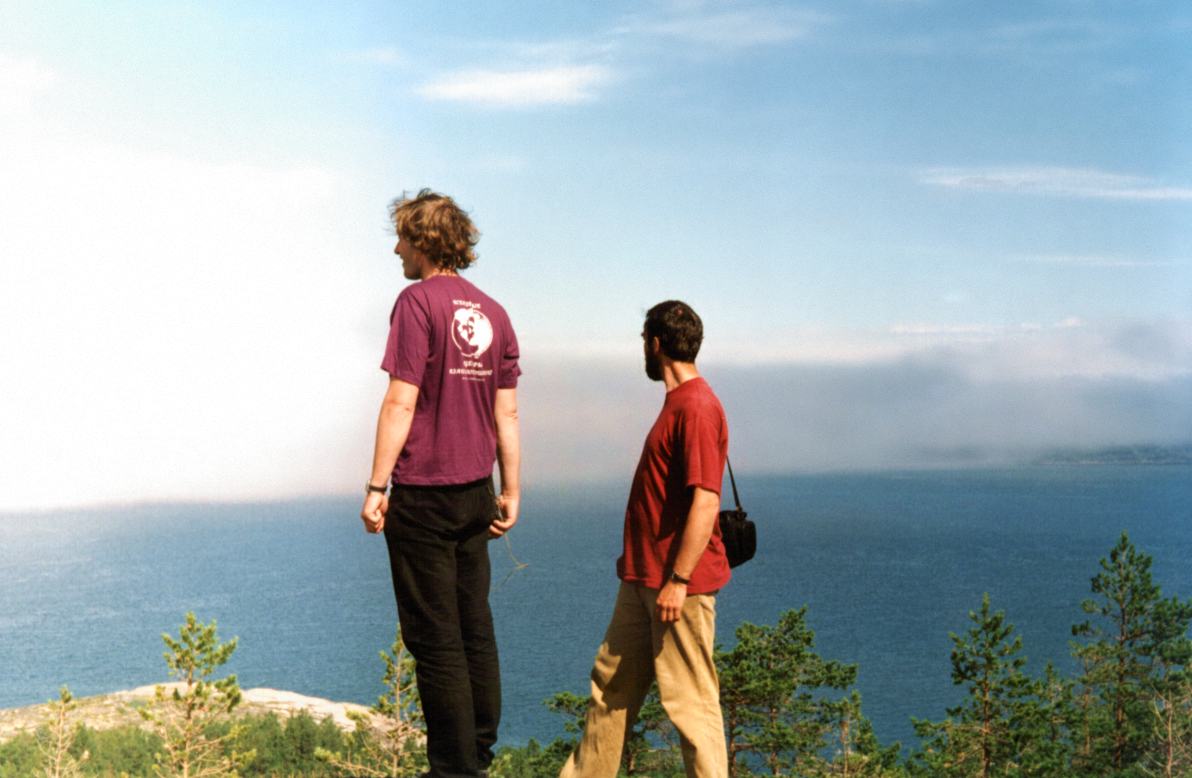
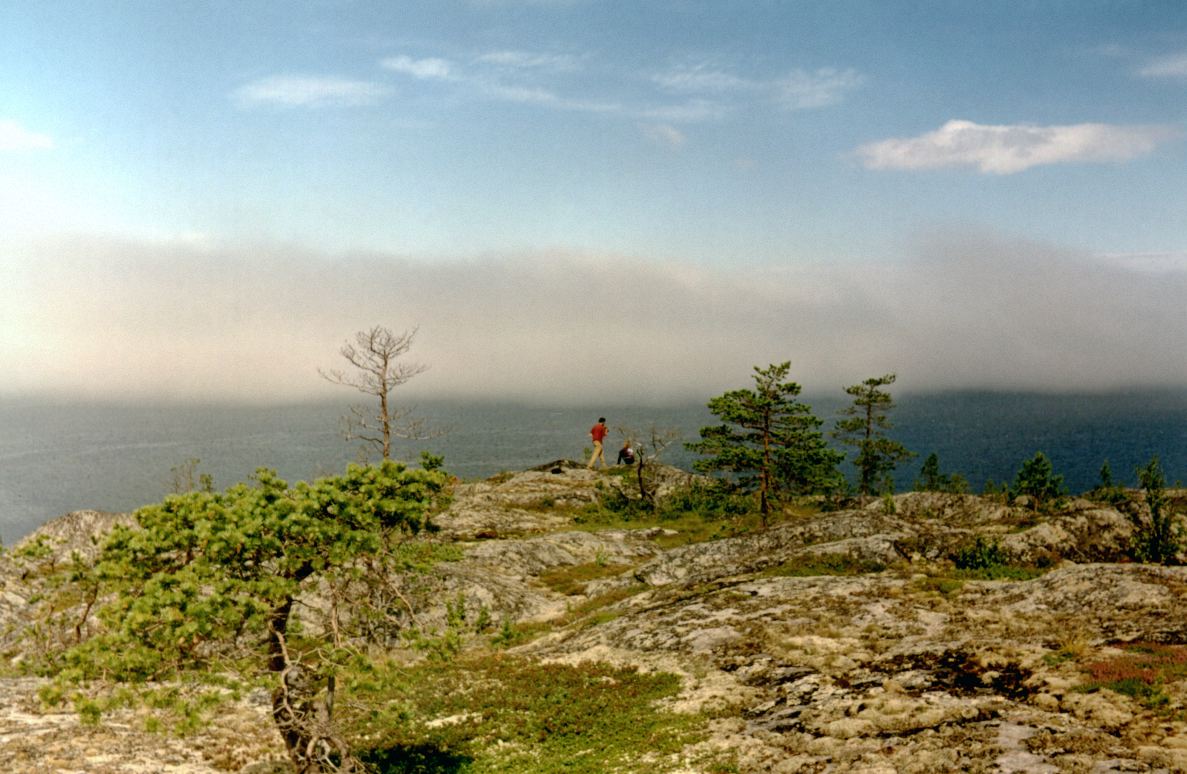
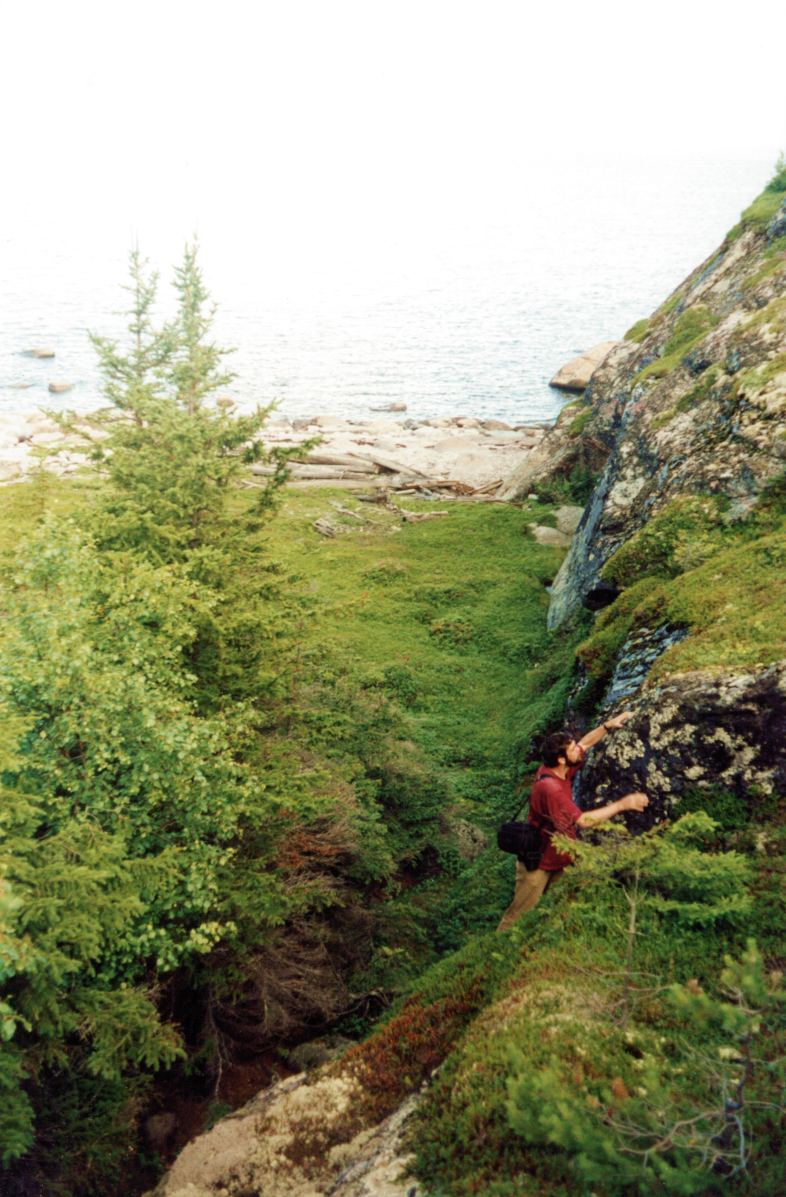
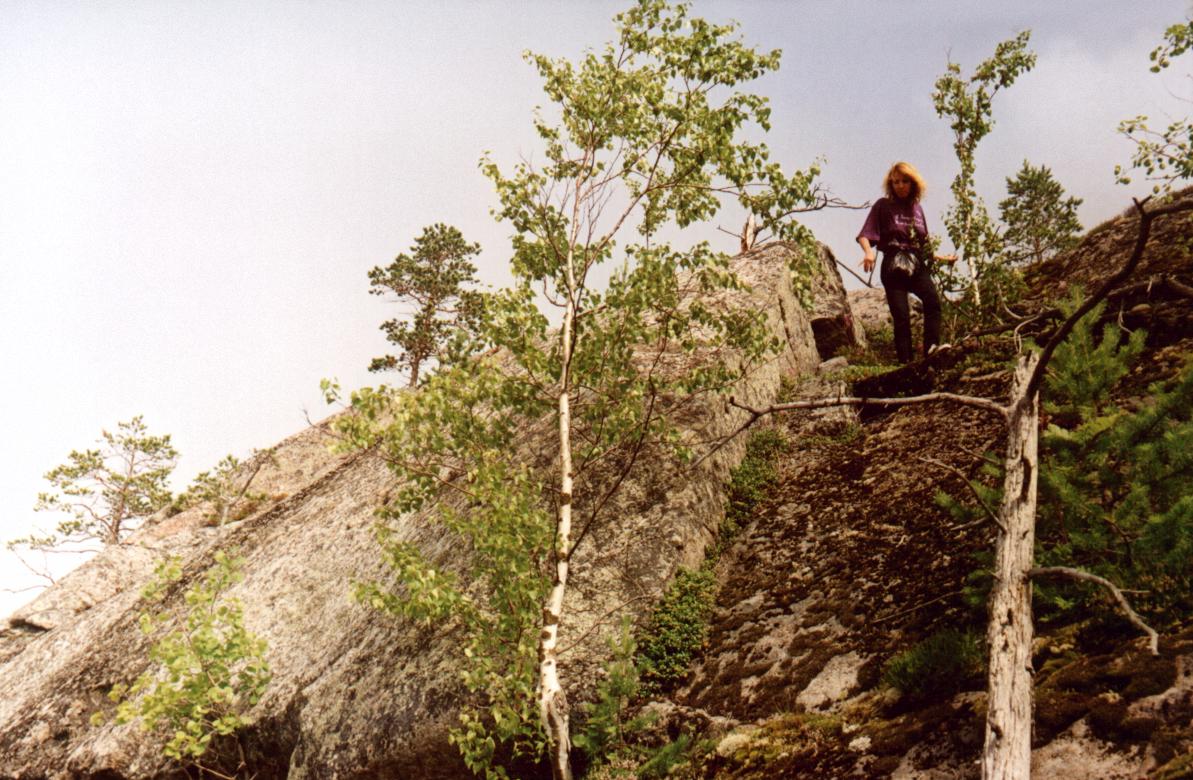
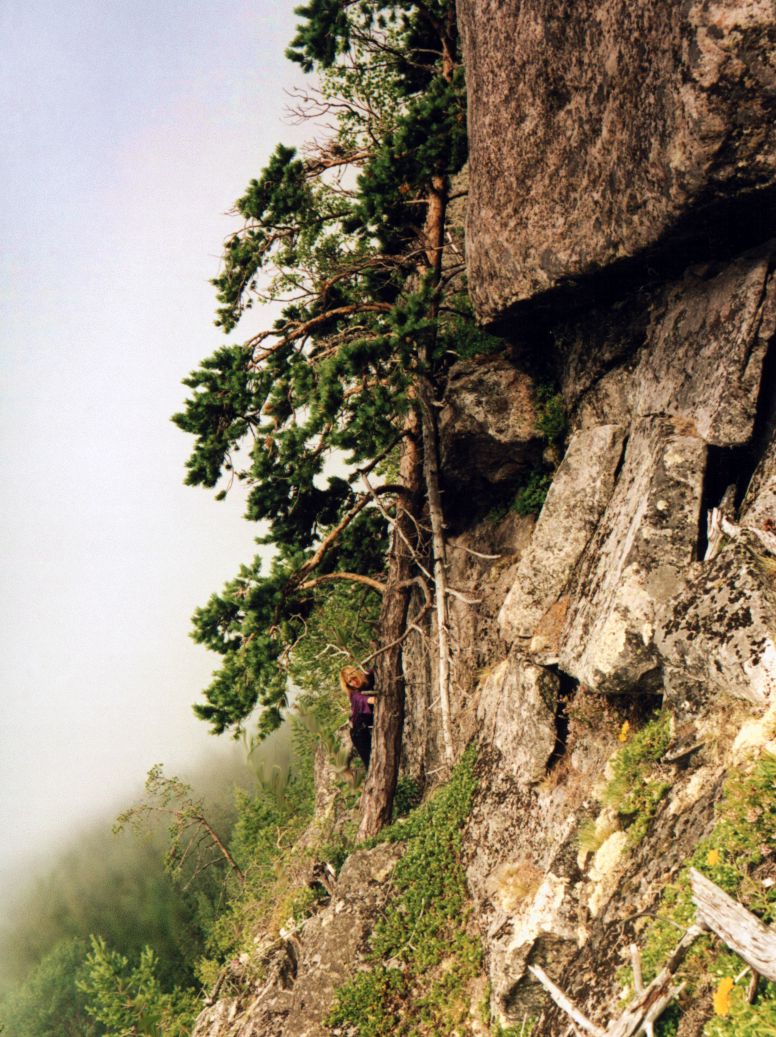
After a tiring struggle through the thicket we finally came out at the sea and went back. In a hollow by the left headland there is a bog with a stream coming out of it, a source of fresh water in a dry year. We dried the mushrooms by the fire and discussed how to paddle in the fog. Of course we had a Magellan GPS 2000 XL, but it might fail or go overboard. We got the compass ready just in case. While we were preparing, the sun came out, and the island we were aiming for emerged from the white milk of the fog. We set off at 17:00. For practice, we followed the GPS as if it was still foggy. Just after setting out we saw several seals on a little shoal and filmed them. We managed to get quite close. An enormous white seal, very old and lazy, lay on a rock, with a playful young one swimming nearby. The white seal reluctantly slipped into the water when we came within about 20 metres. They are skittish on shore, but in the water they have nothing to fear. The fishers throw them fish. The young seal followed us for several kilometres, begging for fish, as someone explained later.
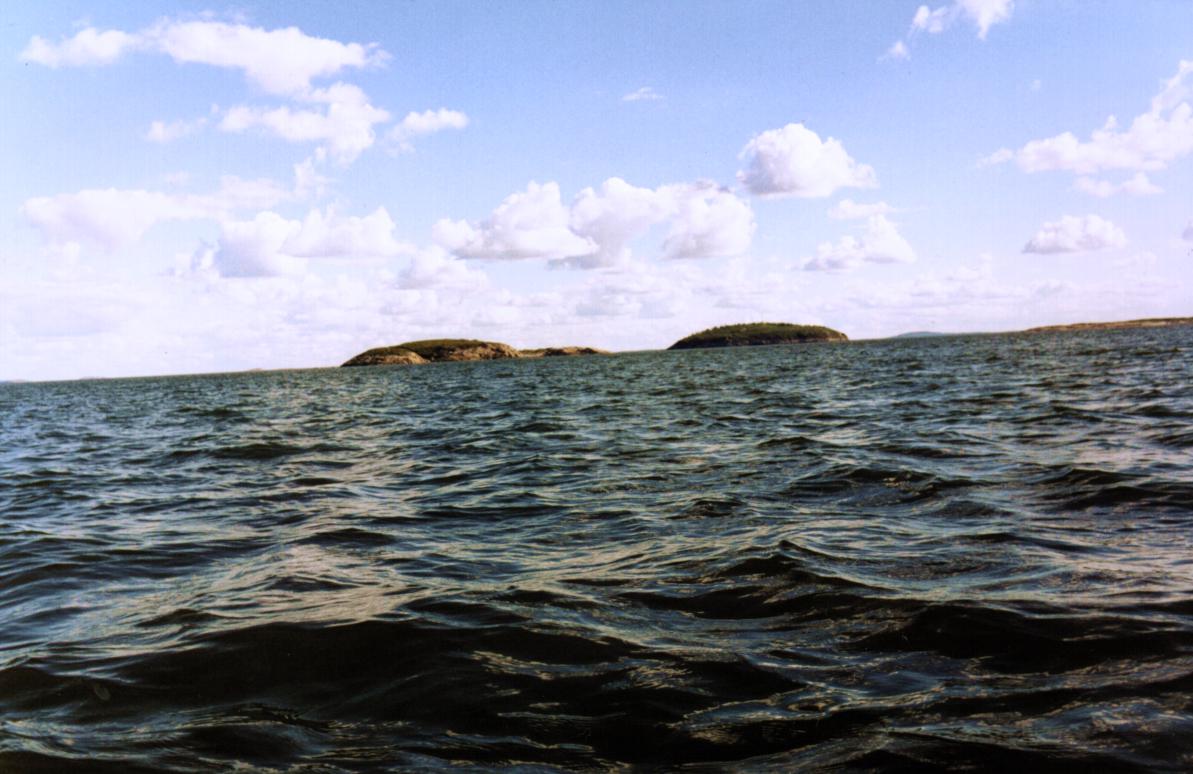
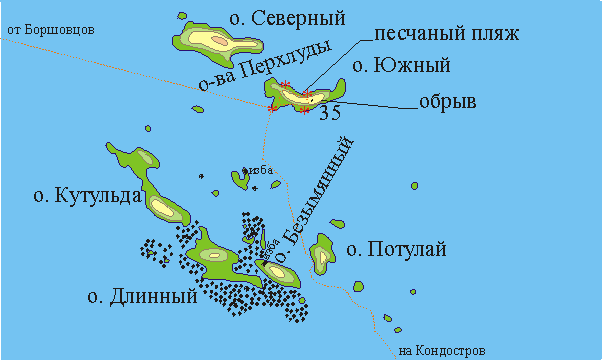
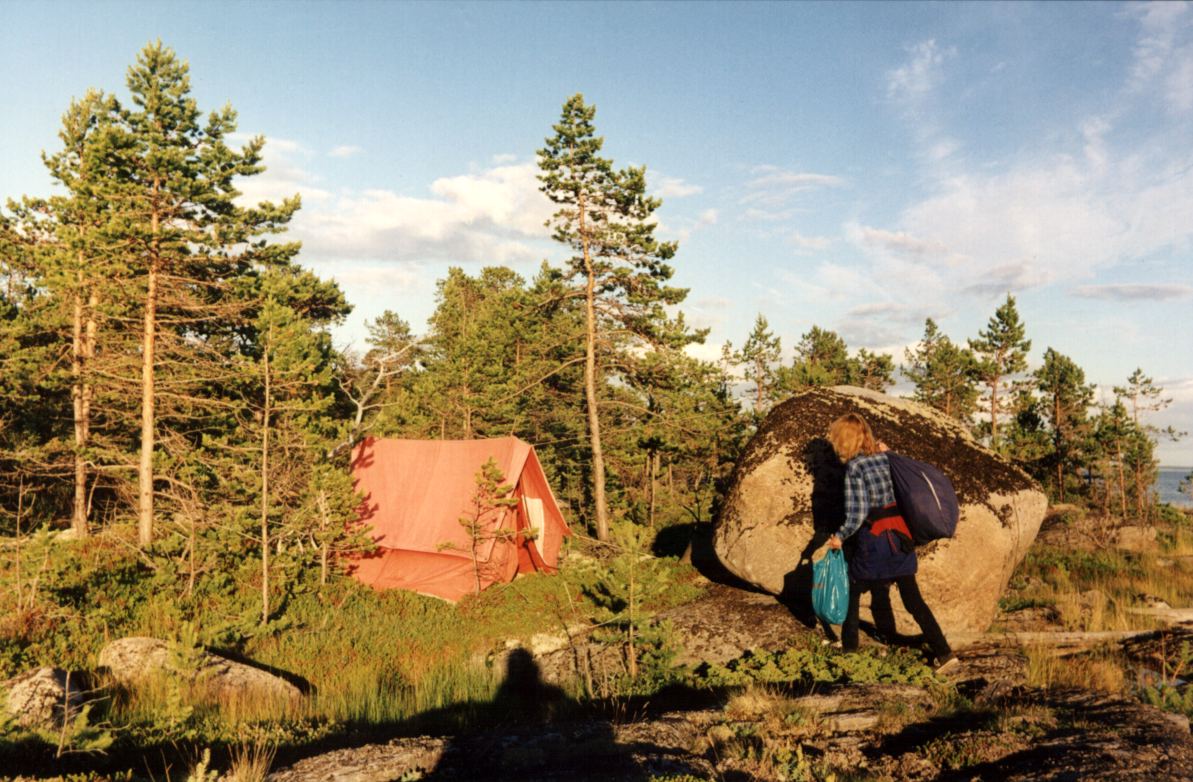
We stopped for lunch on Golomyanny, one of the Stepanovy Ludy Islands, at 64°20.321′N, 36°14.967′E. The GPS said we were 300 metres from the centre of the island, which was probably about right. No forest, but fresh water and firewood in abundance. Lots of gulls and lots of noise from them. Then we made for Perkhludy. At 20:40 we camped on Yuzhny Island at 64°19.368′N, 36°27.689′E. We were by a channel, watching the sea boil on the tide. Our camp was on a rocky headland. The sun set, and then so did the moon. In the evening we lit a big fire and swam. We went to bed at 01:30.
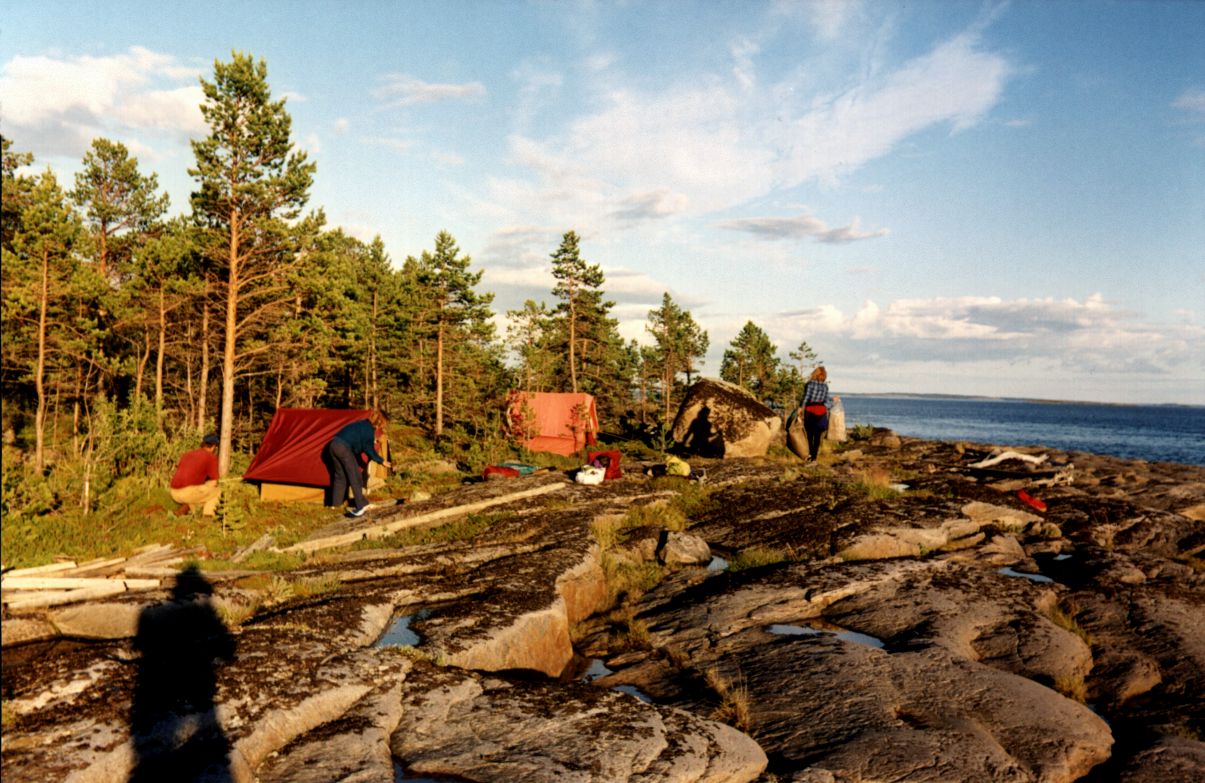
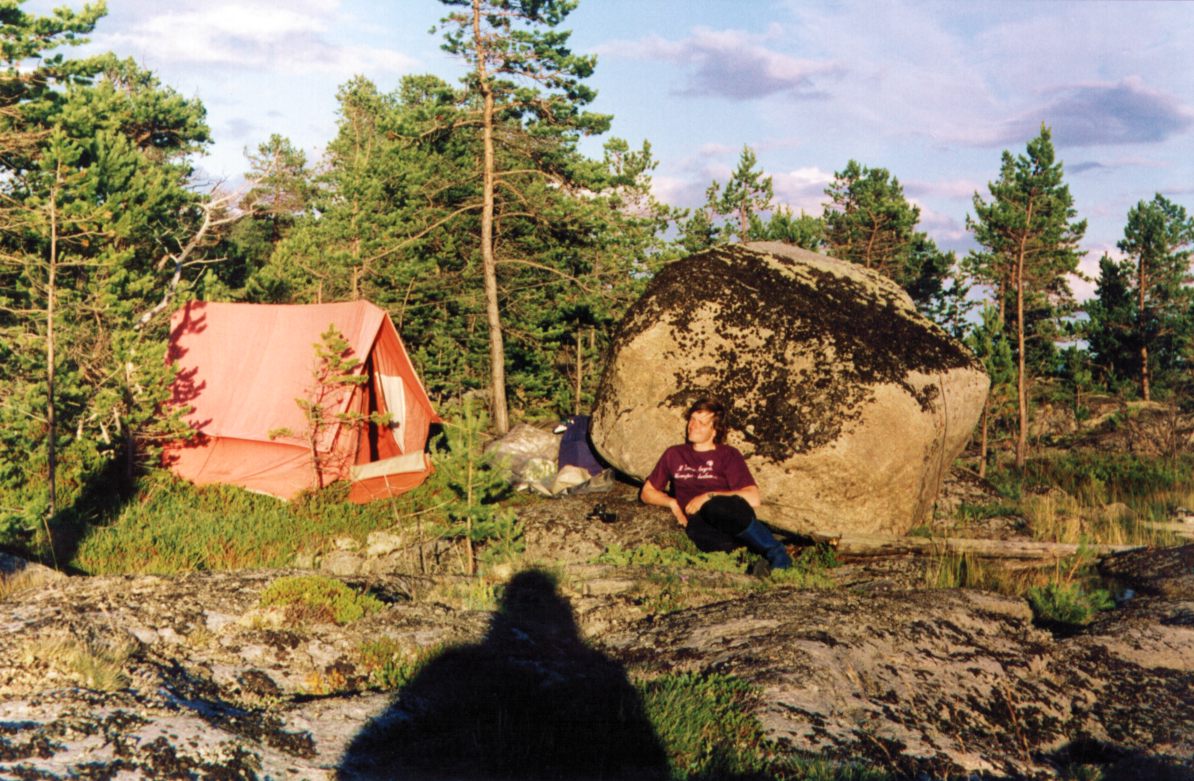
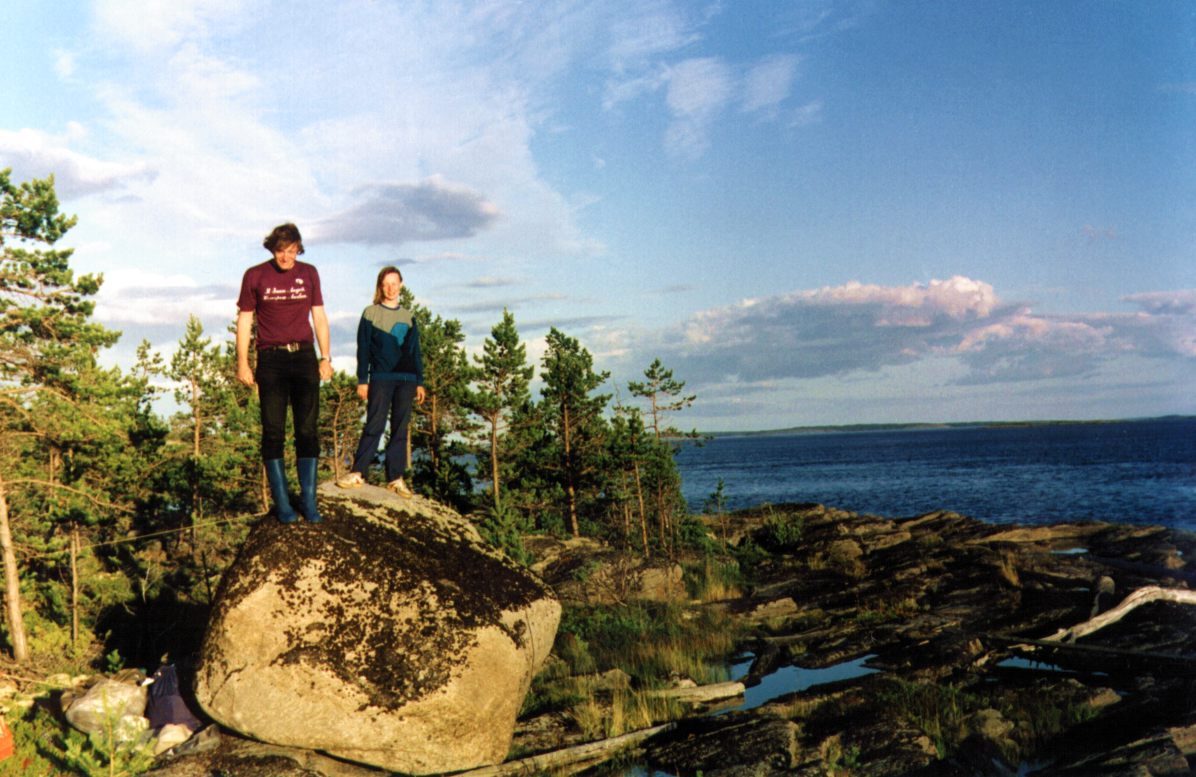
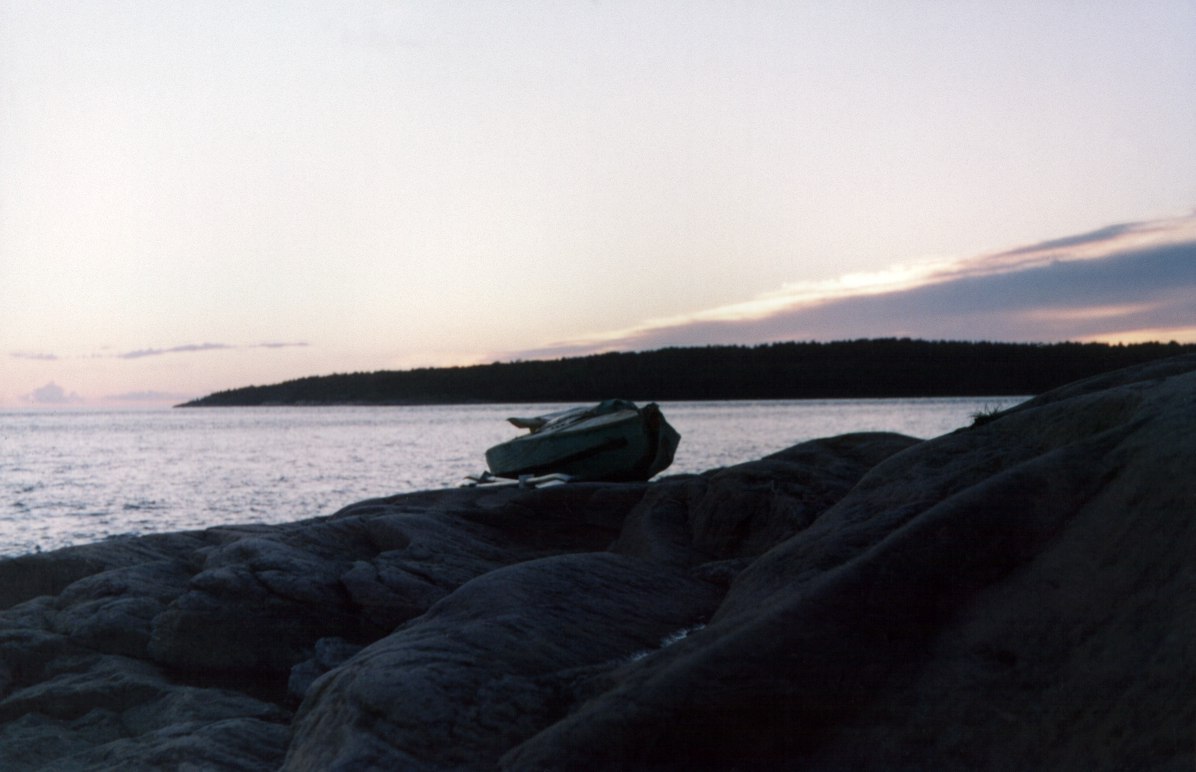
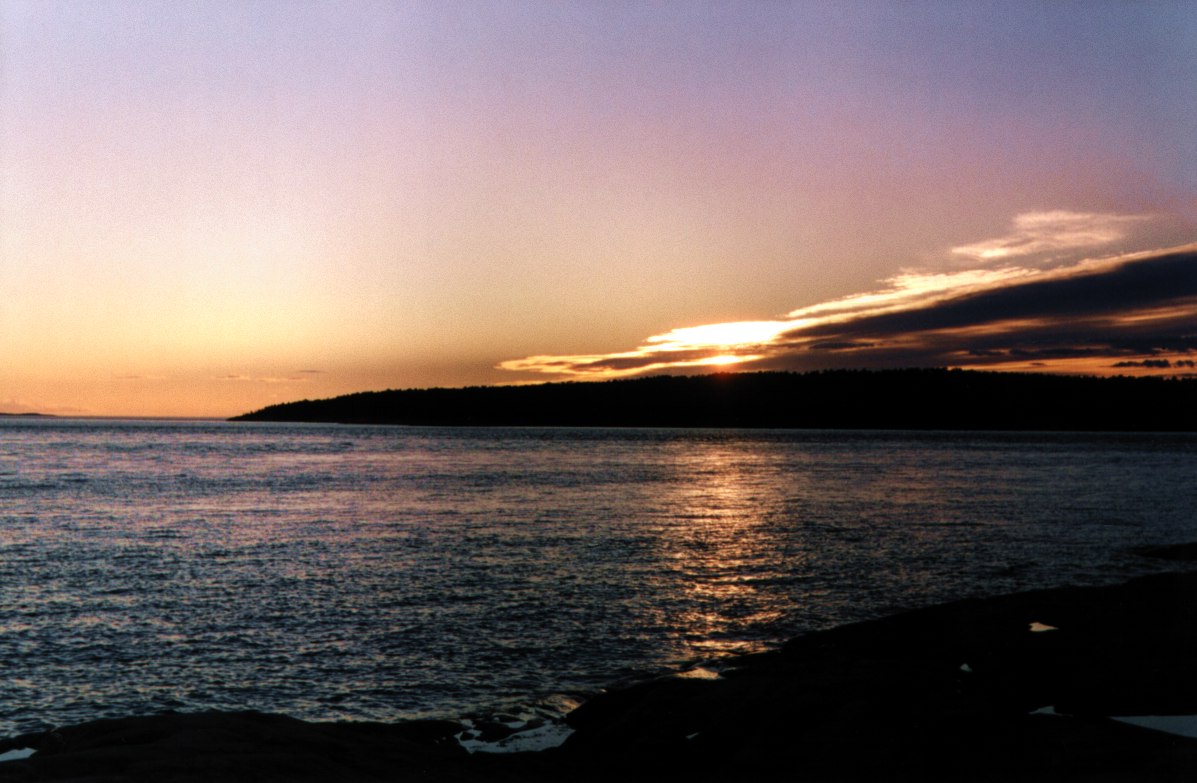
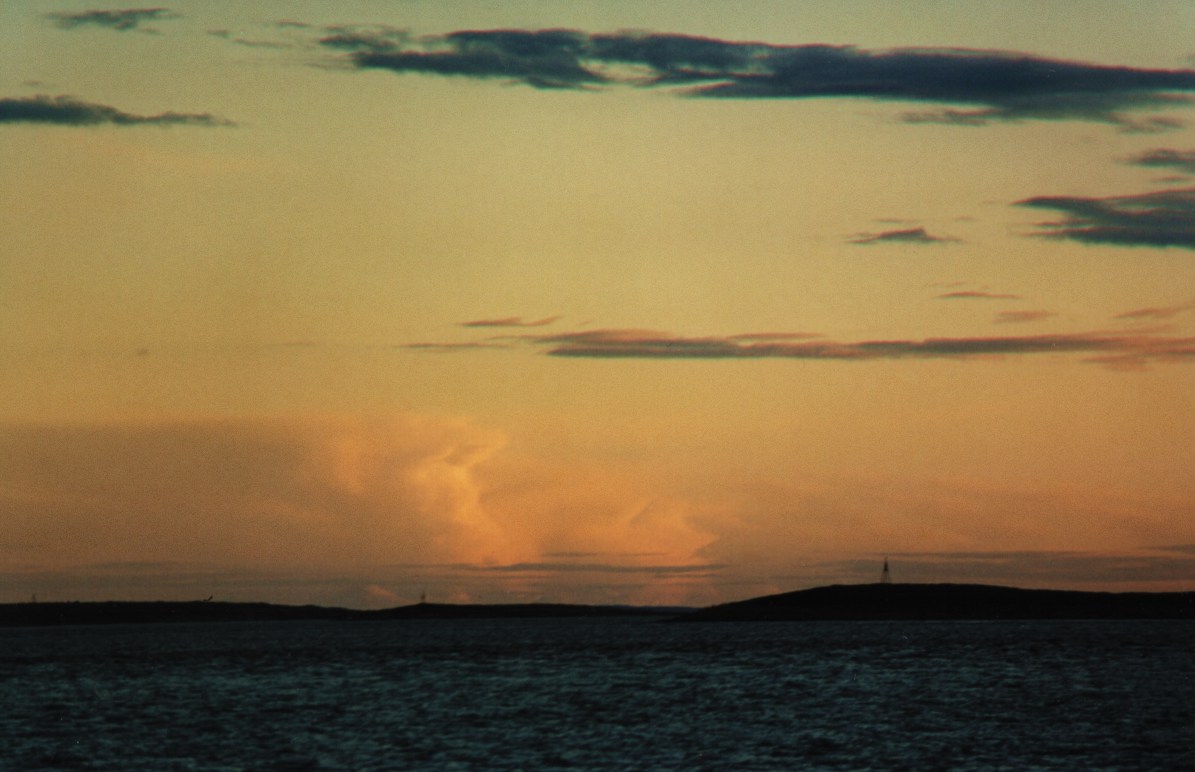
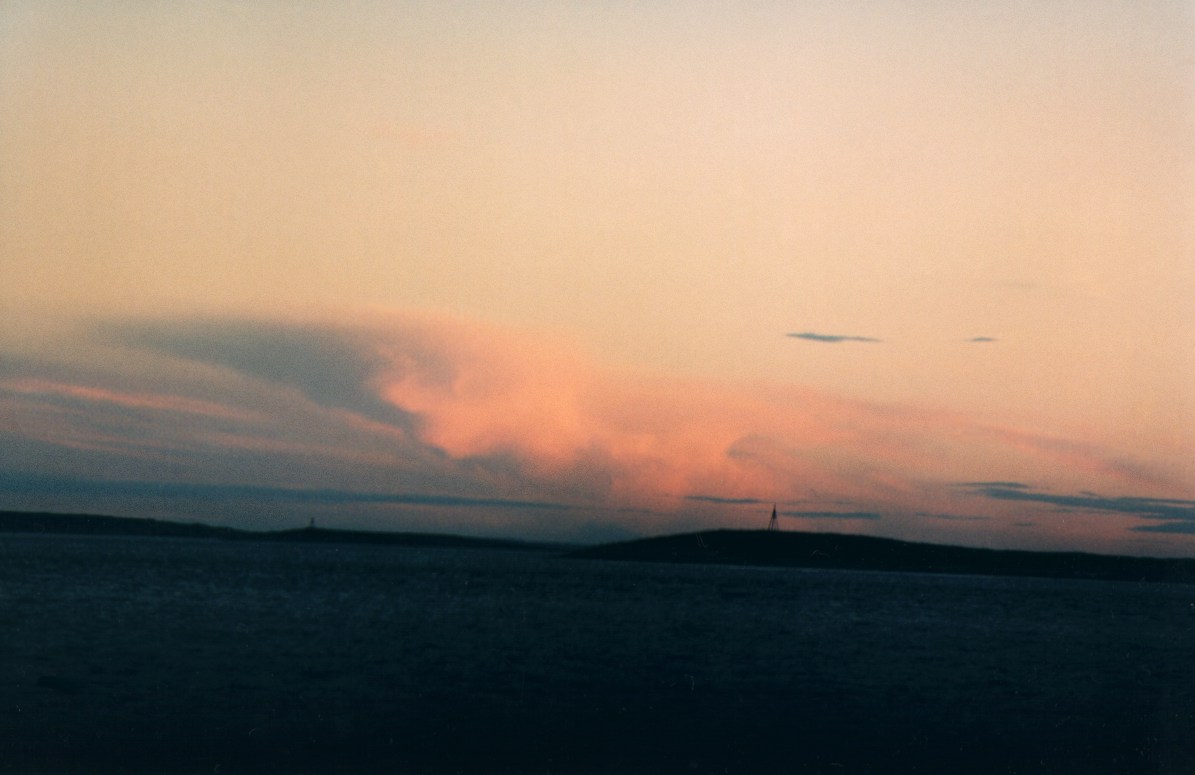
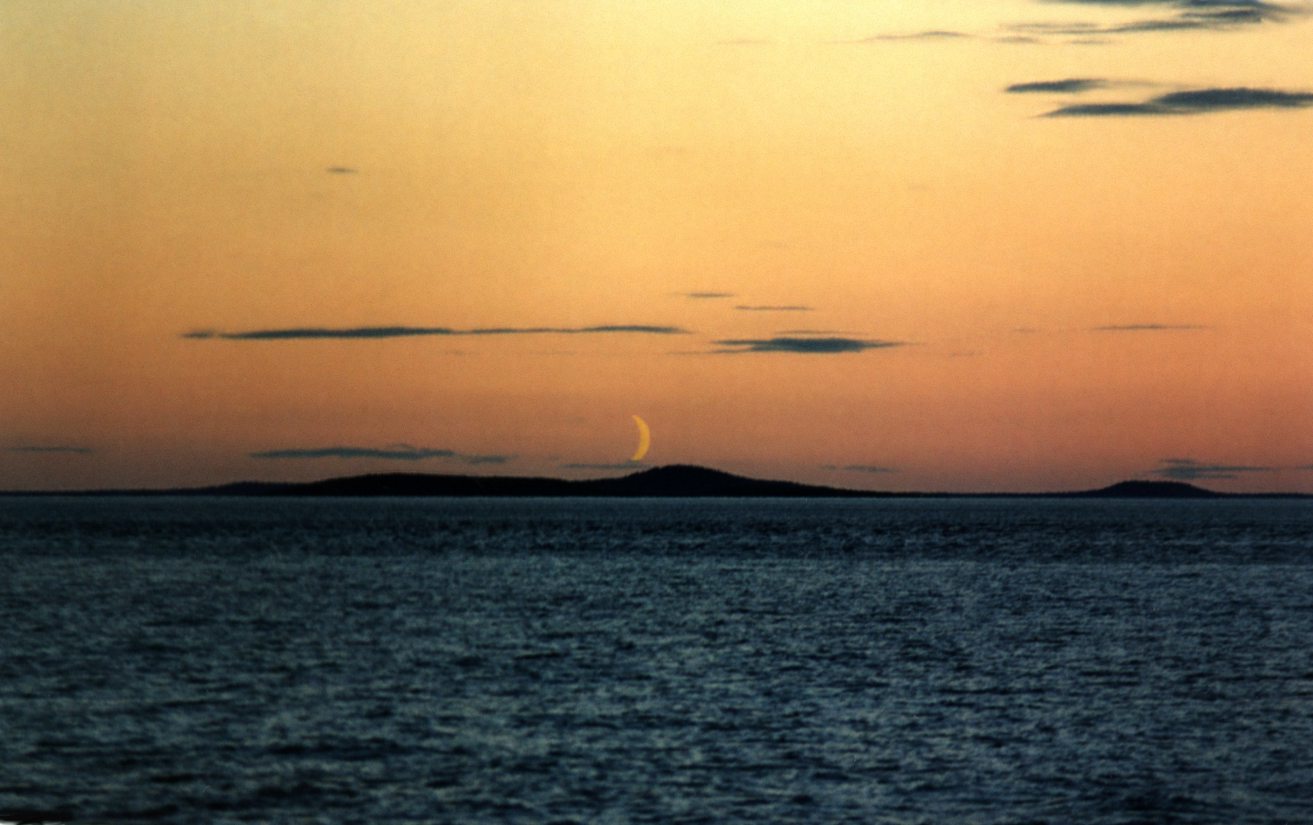
28 July
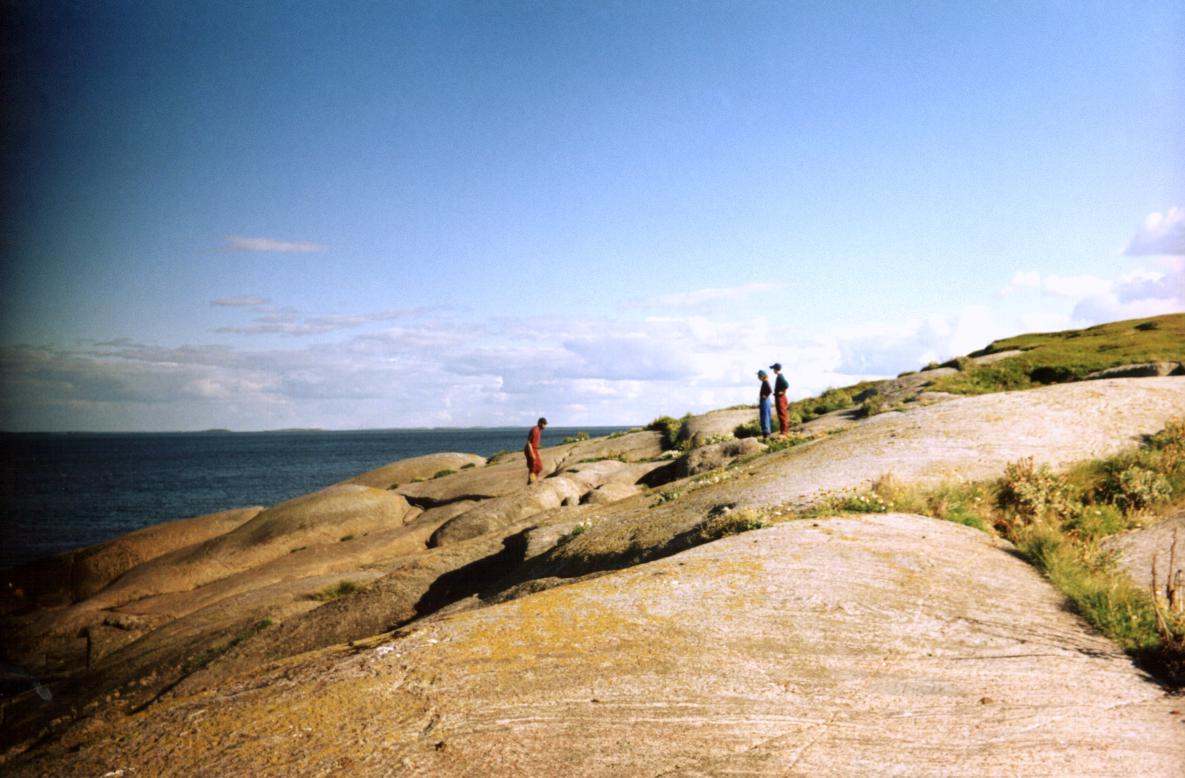
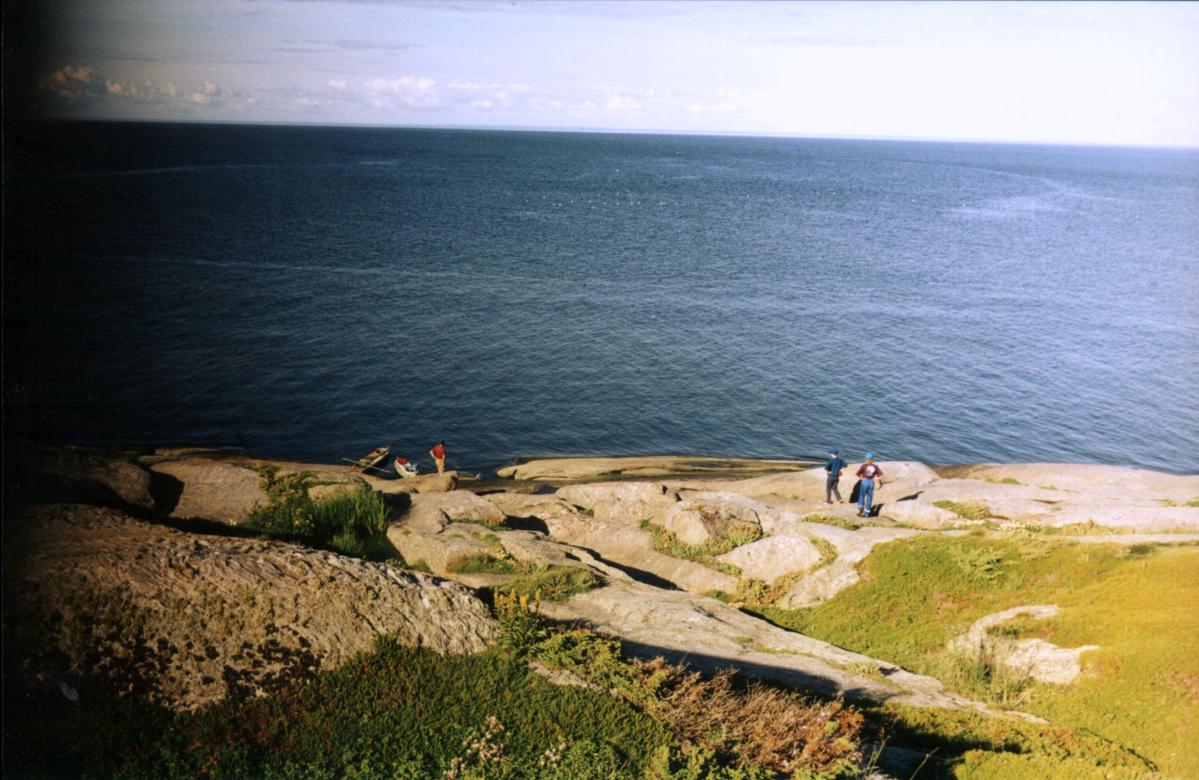
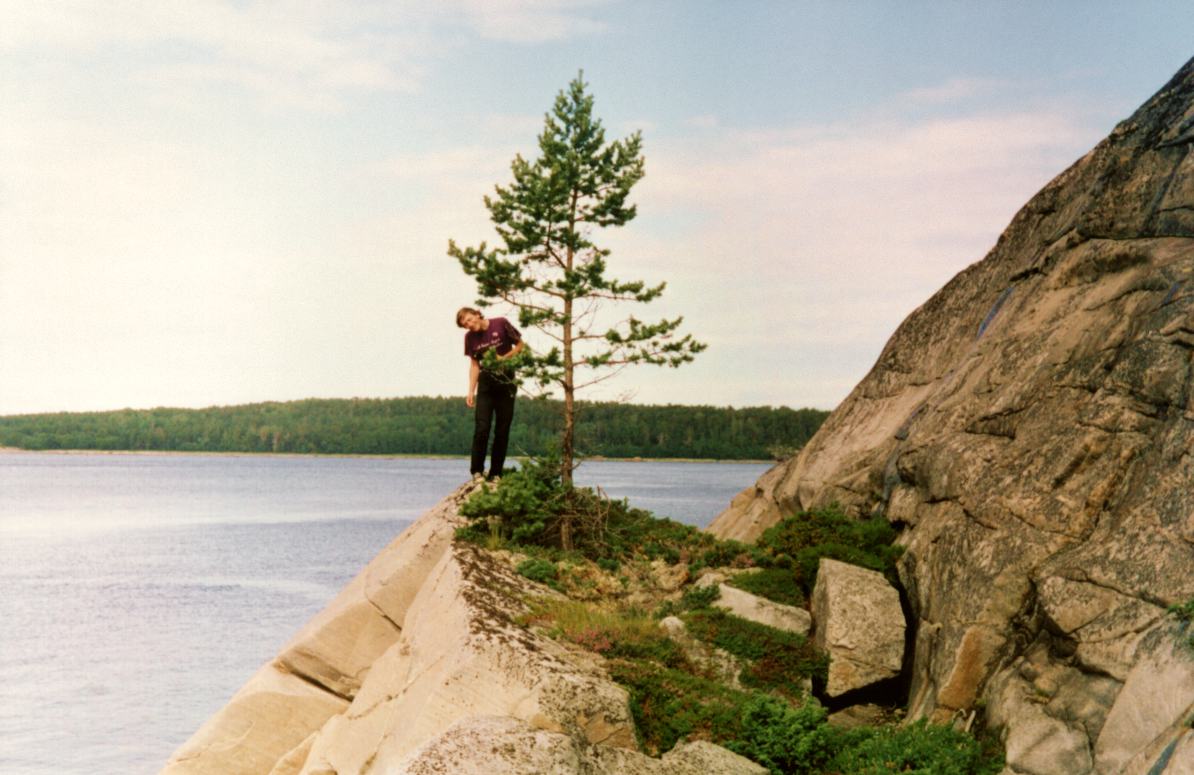
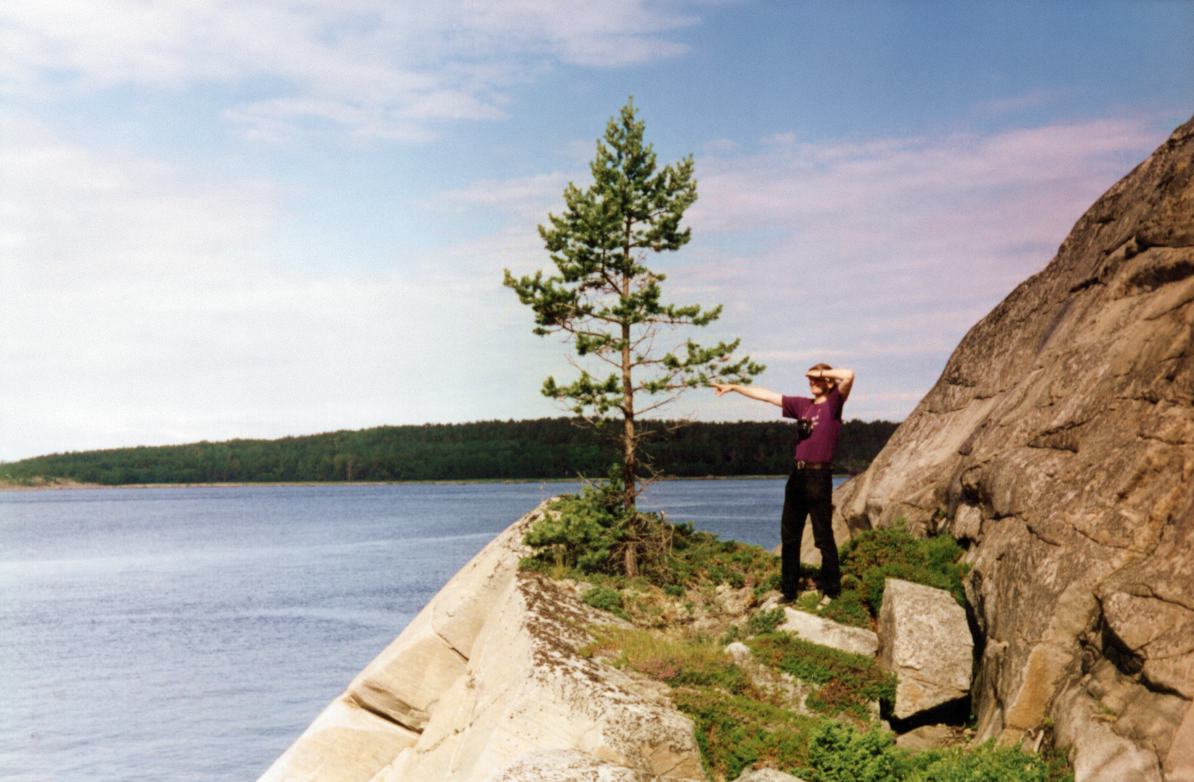
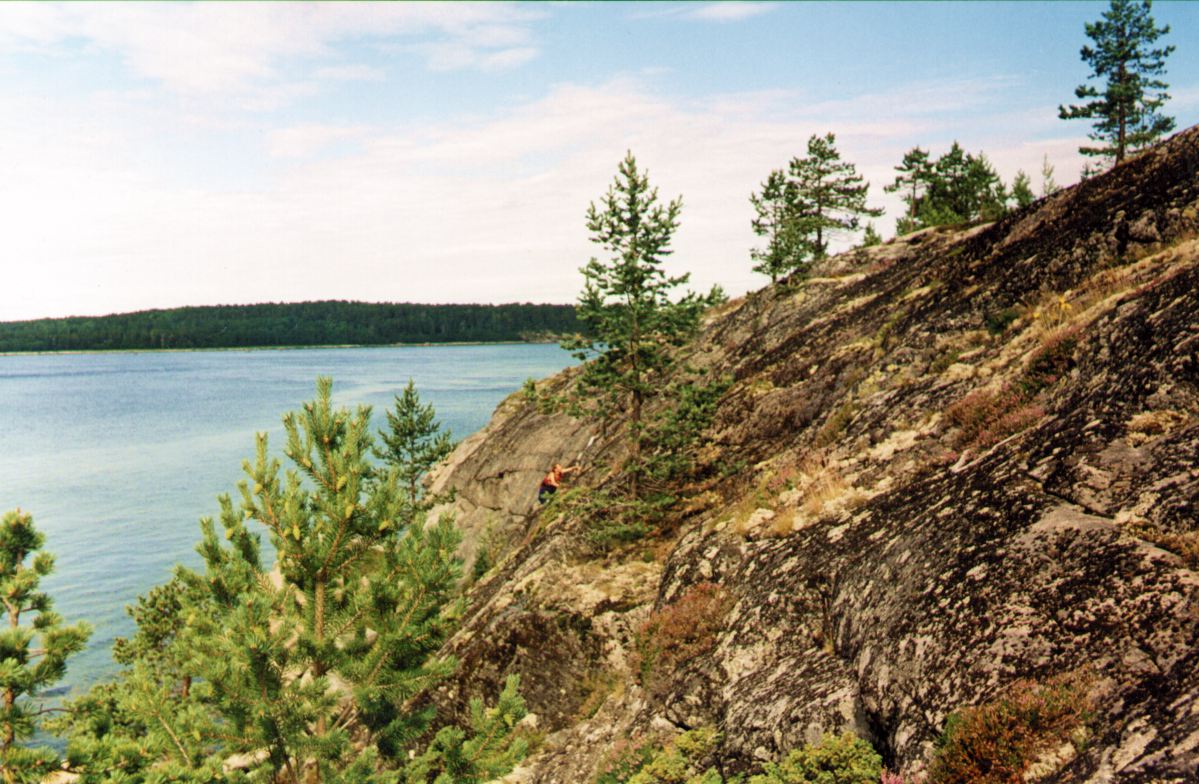
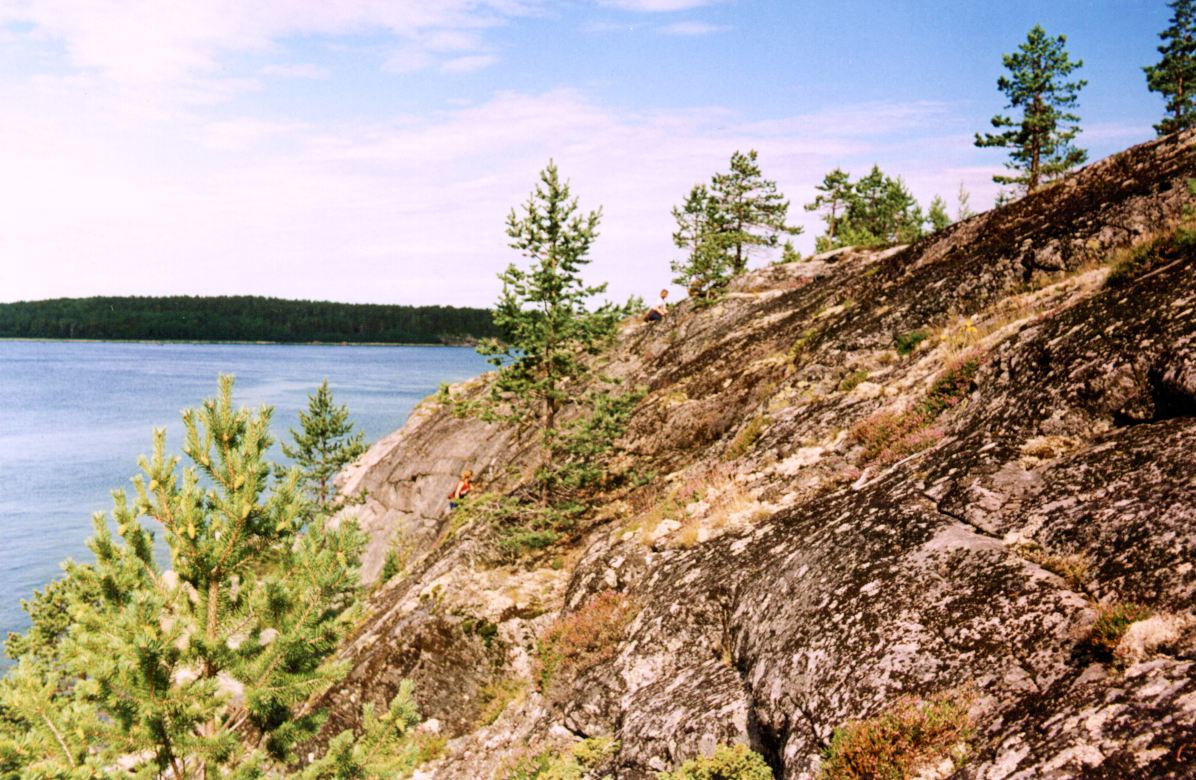
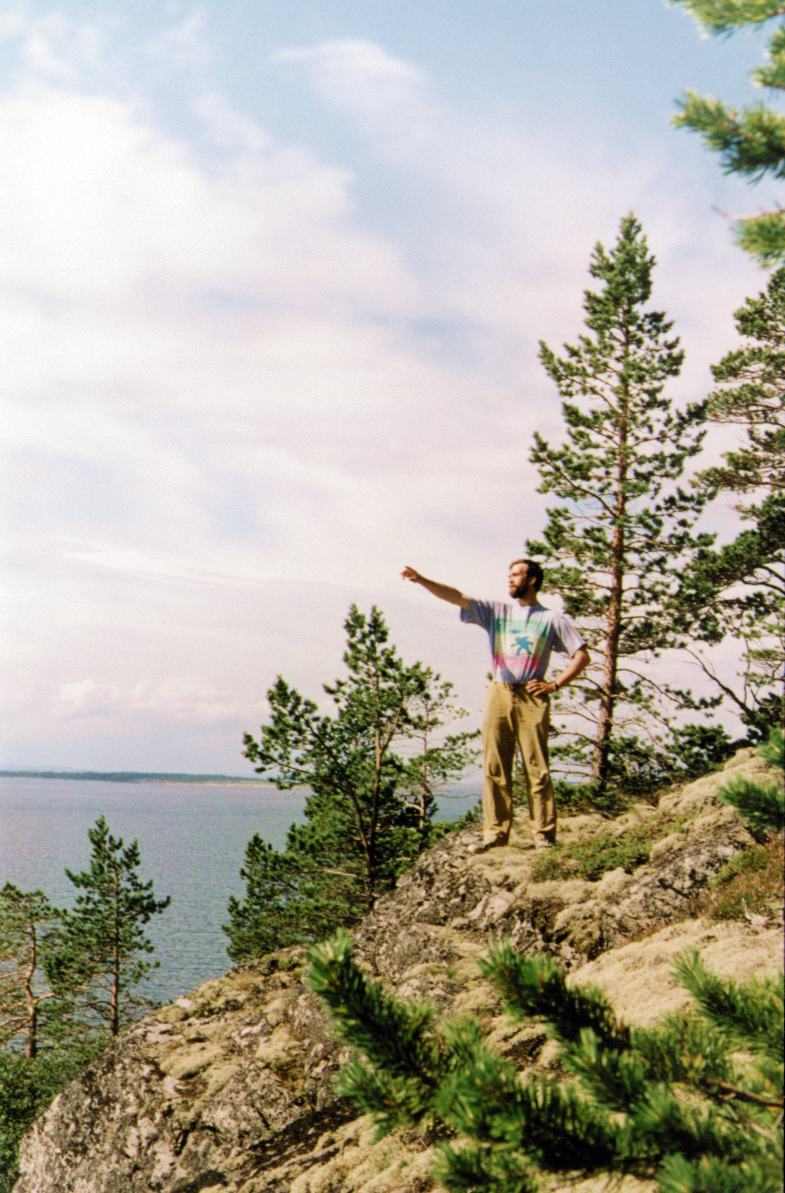
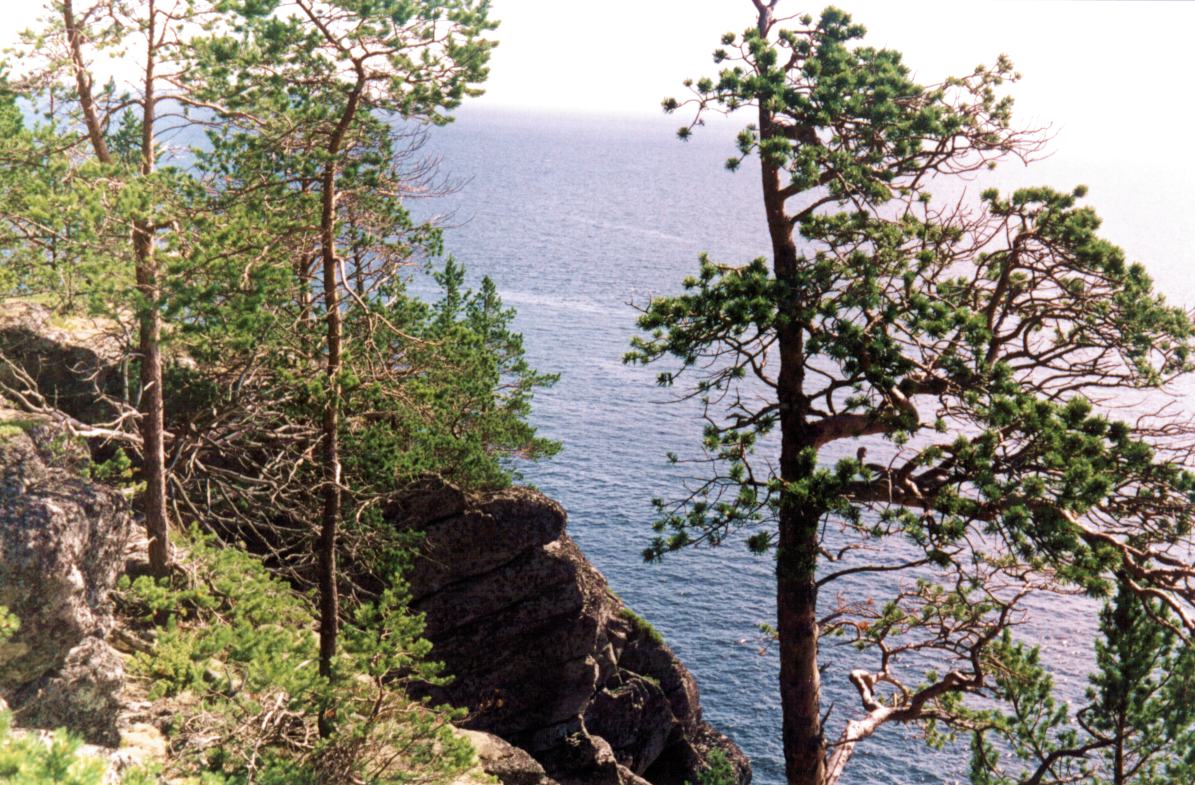
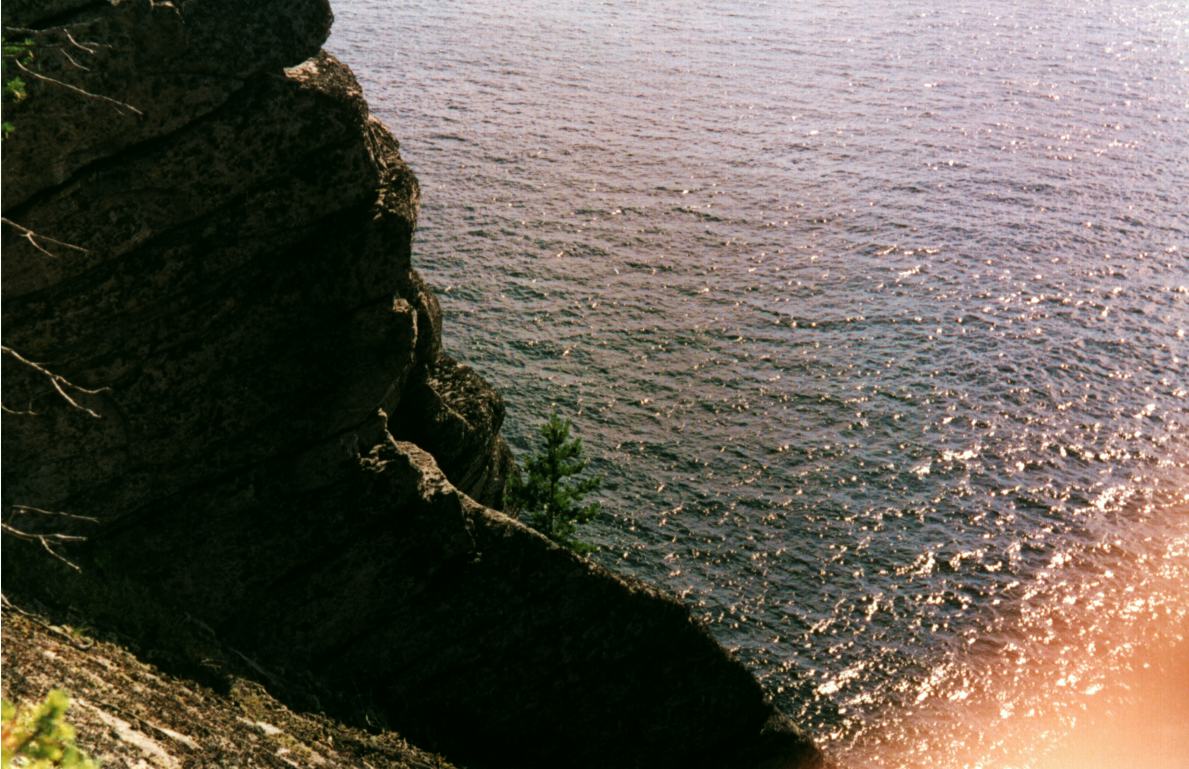
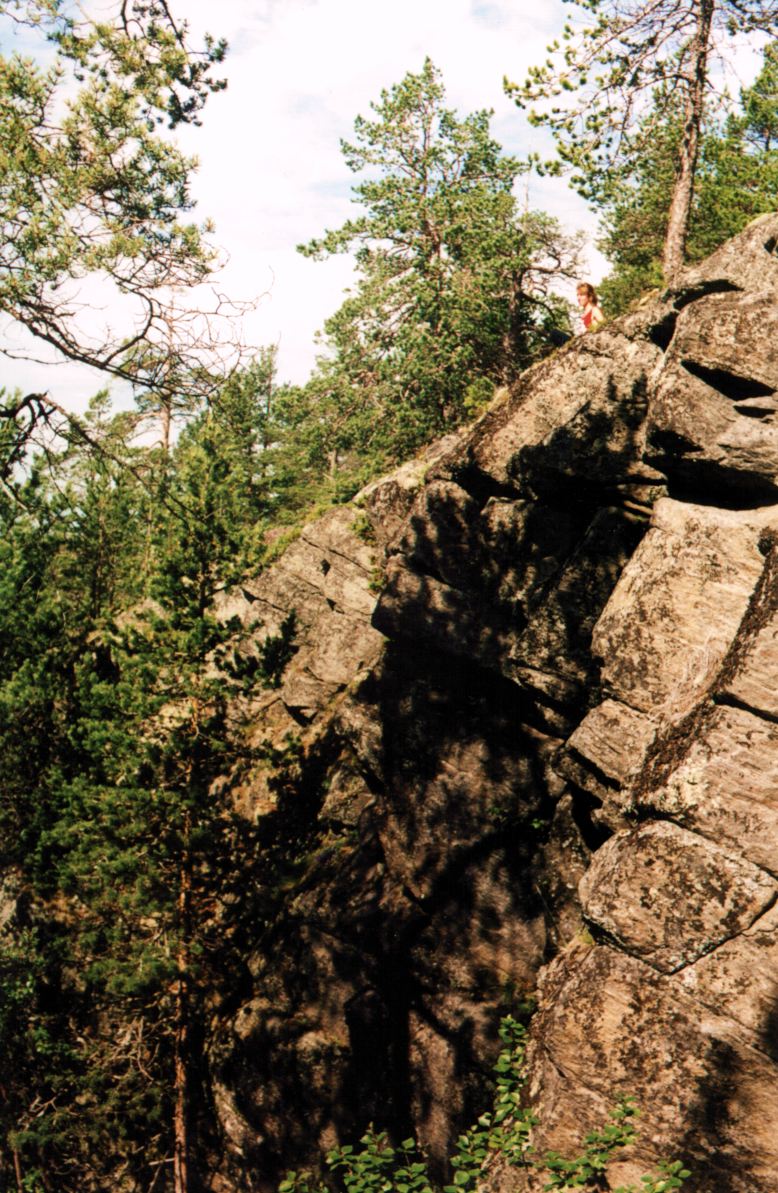
We woke up, had a leisurely breakfast and went for a walk around the island. A rocky ridge runs the length of it, with a high cliff you have to find a way up (1, 2, 3, 4). At the north end there is a big beach with some kayakers camped on it, the first people we had seen since setting out. We did not feel much like going over to chat. In the woods at the top of the island, Marina spotted a hare two metres away. It lay quite still and pretended to be a grey stone, but when she raised her camera it realised the game was up and shot off. It was hot and muggy again. Back at camp we swam and sunbathed. A southerly got up and brought on the evening thunderstorm. We decided to leave a little earlier.
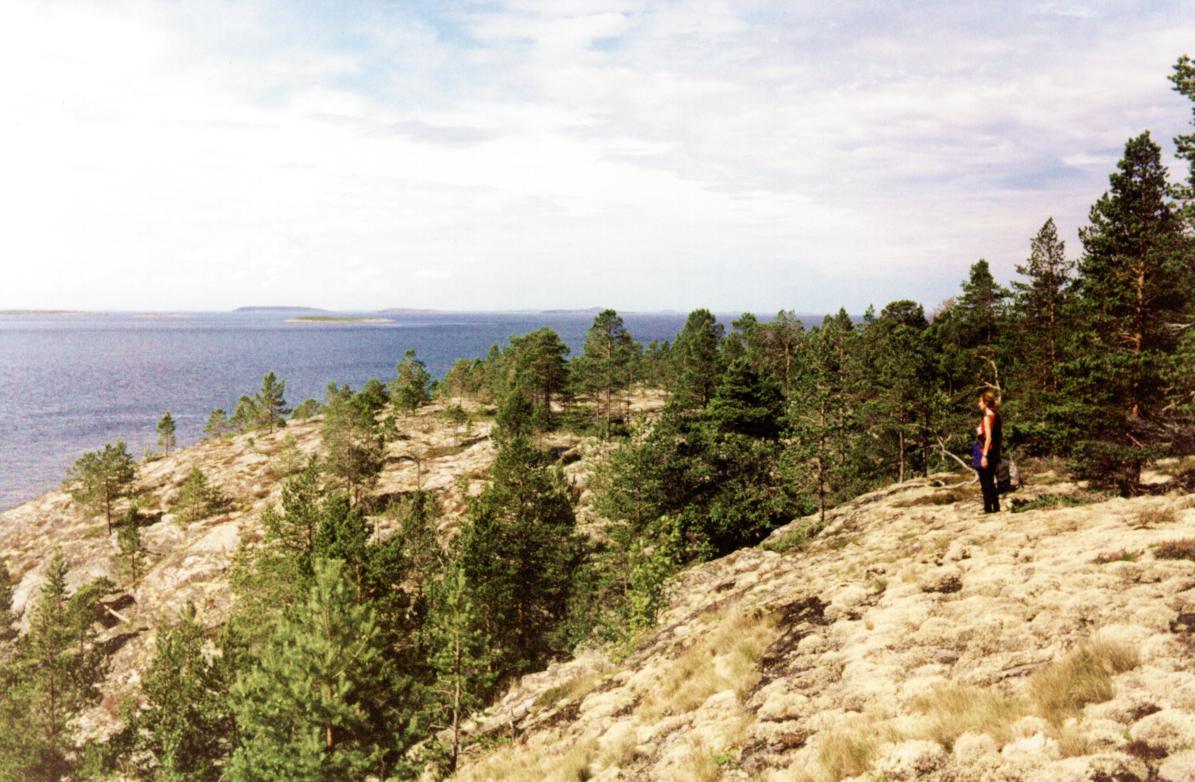
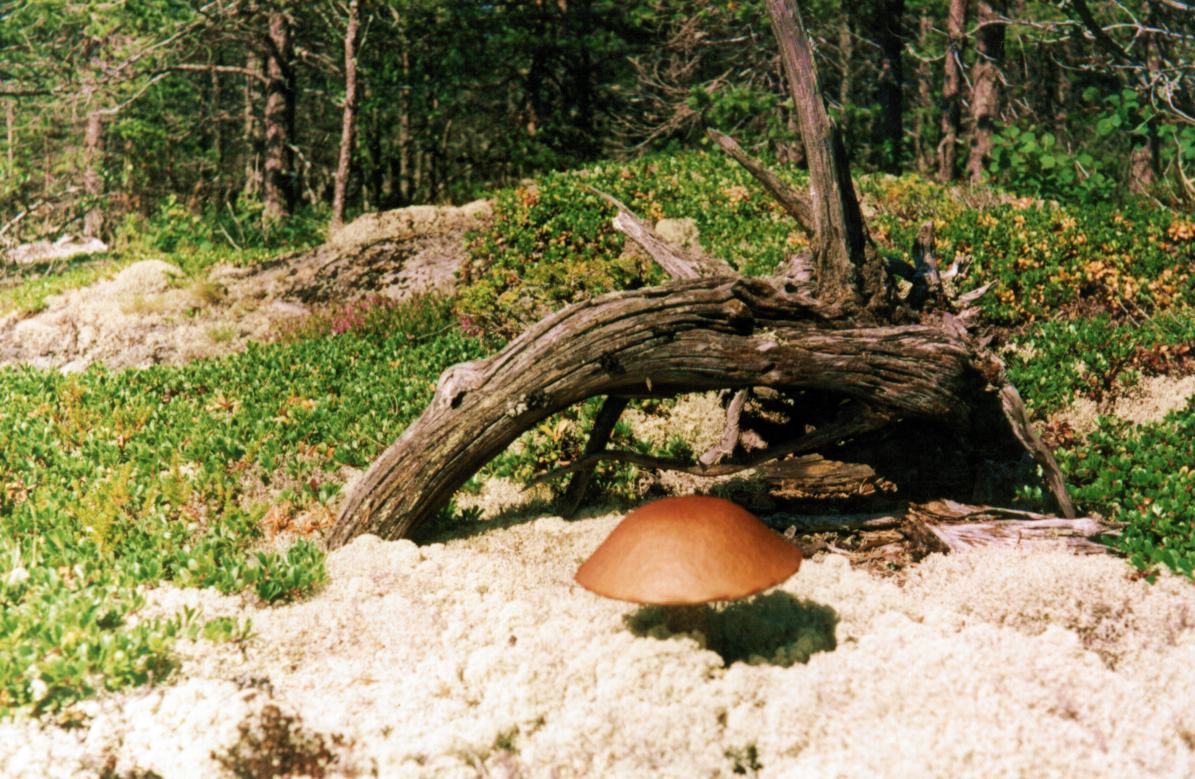
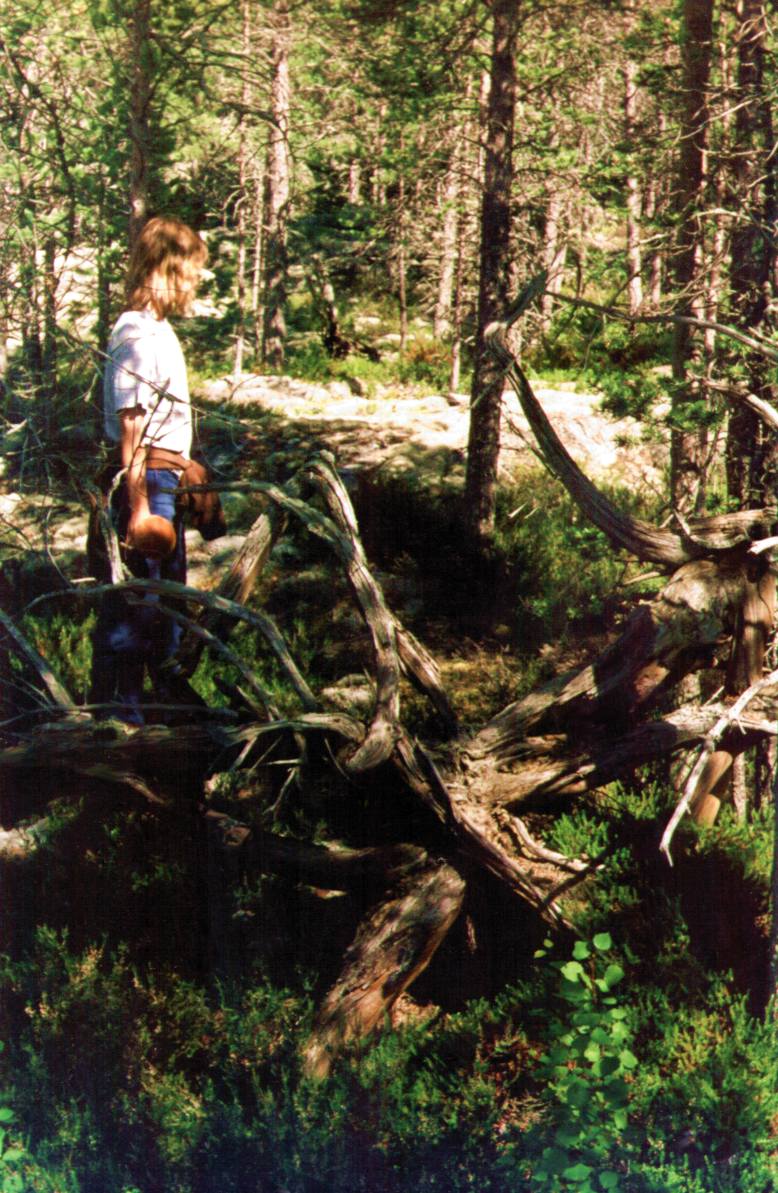
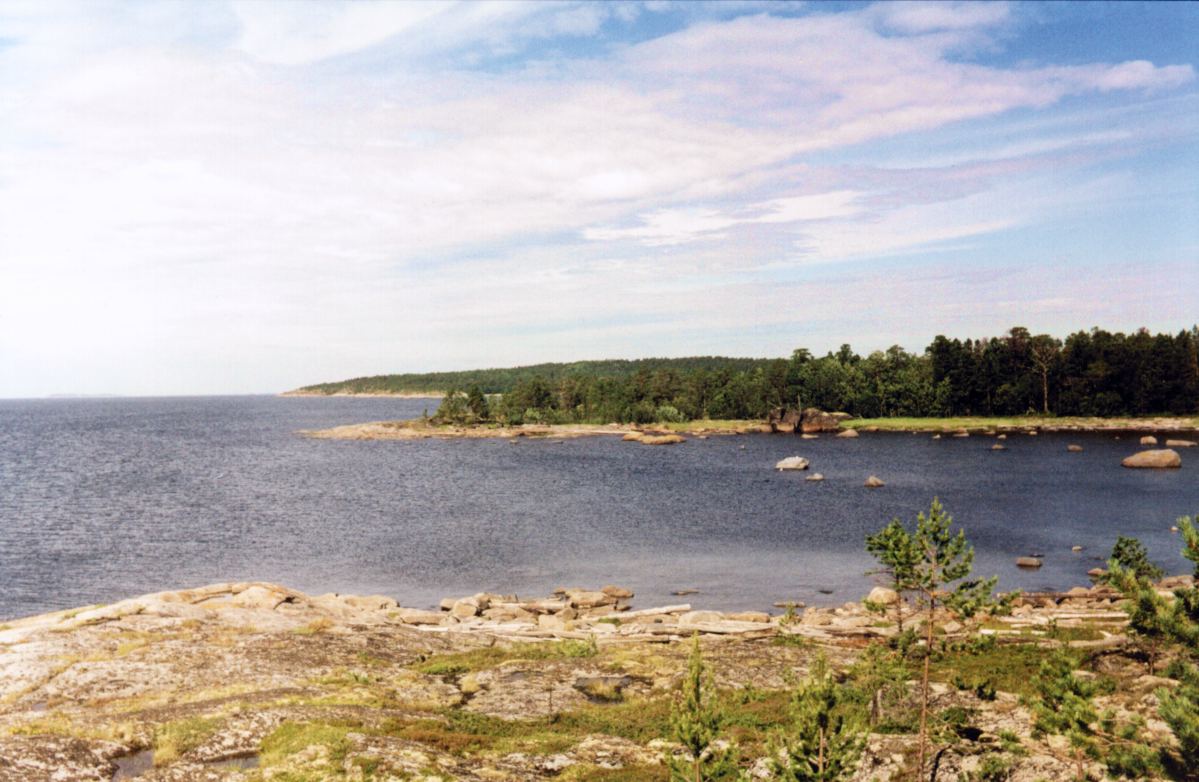
As soon as we pushed off, heavy rain started. The wind and the current were against us. After two exhausting hours battling nature we reached Potulay Island. Our silver waterproof jackets had not kept anyone dry. There was no firewood where we landed. We spent ages gathering driftwood and still could not get a decent fire going, but we made mashed potatoes and collected and boiled oysters to go with them. The ebb had ended and we could go out into open water. We had a long crossing ahead. Now only the wind would be against us, with the current in our favour.
As soon as we set out, the south-easterly headwind turned into a southerly of hurricane force, right across our beam. At first we followed a string of little islands and could have landed quickly if the weather got worse. Naturally, the trouble began on the longest stretch of open water. The crosswind raised a steep chop. It was hard going and we began to be blown out to sea. Halfway across, something cracked in the kayak and it lost its rigidity. I thought the ropes holding the reinforcing logs against the stringers had snapped. In those waves it was impossible to find the damage, let alone fix it. Water was splashing into the boat. The waterproofing had done nothing. The deck leaked. I was bailing by the bucketful. If I let up for a moment, the stern deck went underwater and the leak grew frighteningly fast. By now I was bailing with the cooking pot and expecting the worst. Our destination, Abakumikha Island, seemed fixed far off. We were barely moving.
After four hours fighting the elements we got into the lee of Kondostrov and landed in a sheltered bay on the north side, around 22:00. A huge sandy beach and dead calm. The rain stopped as soon as we landed. The flood tide had only just begun. The kayaks finally ran aground and we had to get out into the water about 100 metres short of the actual shore. While we hauled the gear, the rising tide floated the Sochavas’ kayak and the wind began sweeping it away at a tremendous rate. Sasha bolted across the tidal flat after it, clothes and all. He caught it and got the rest of himself thoroughly soaked. In our kayak it turned out that the gunwale fastenings had given way.
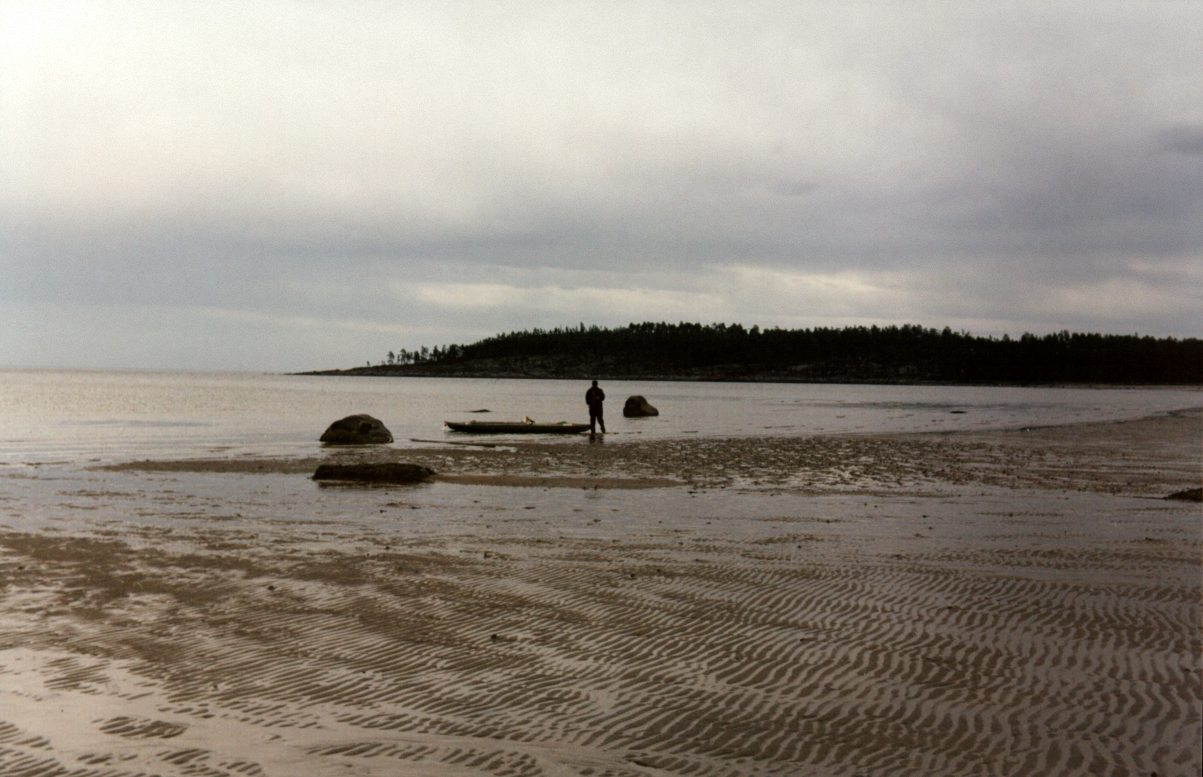
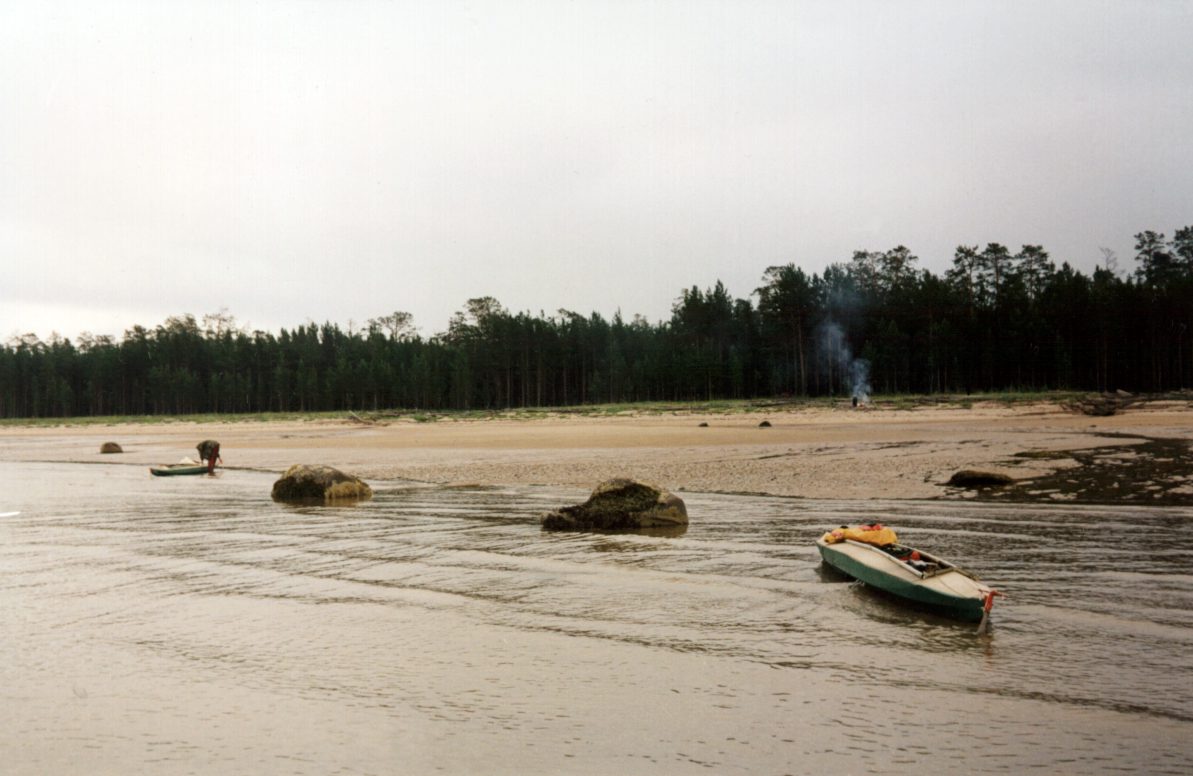
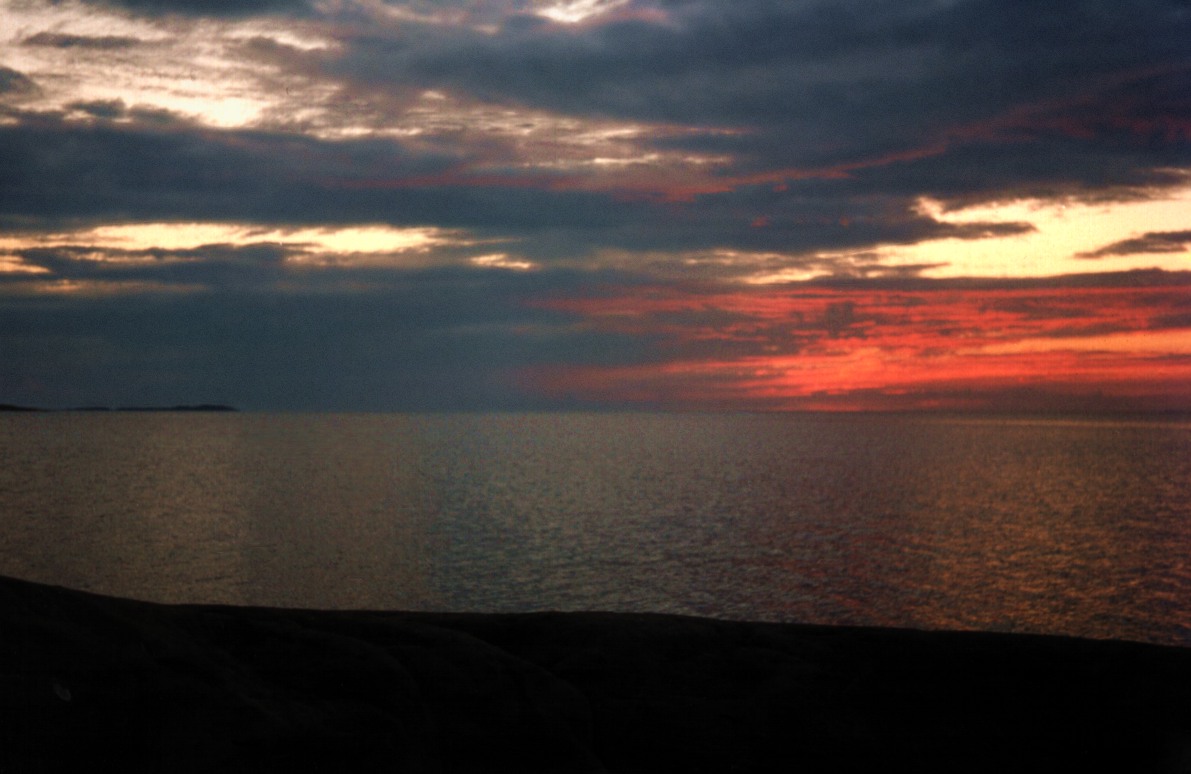
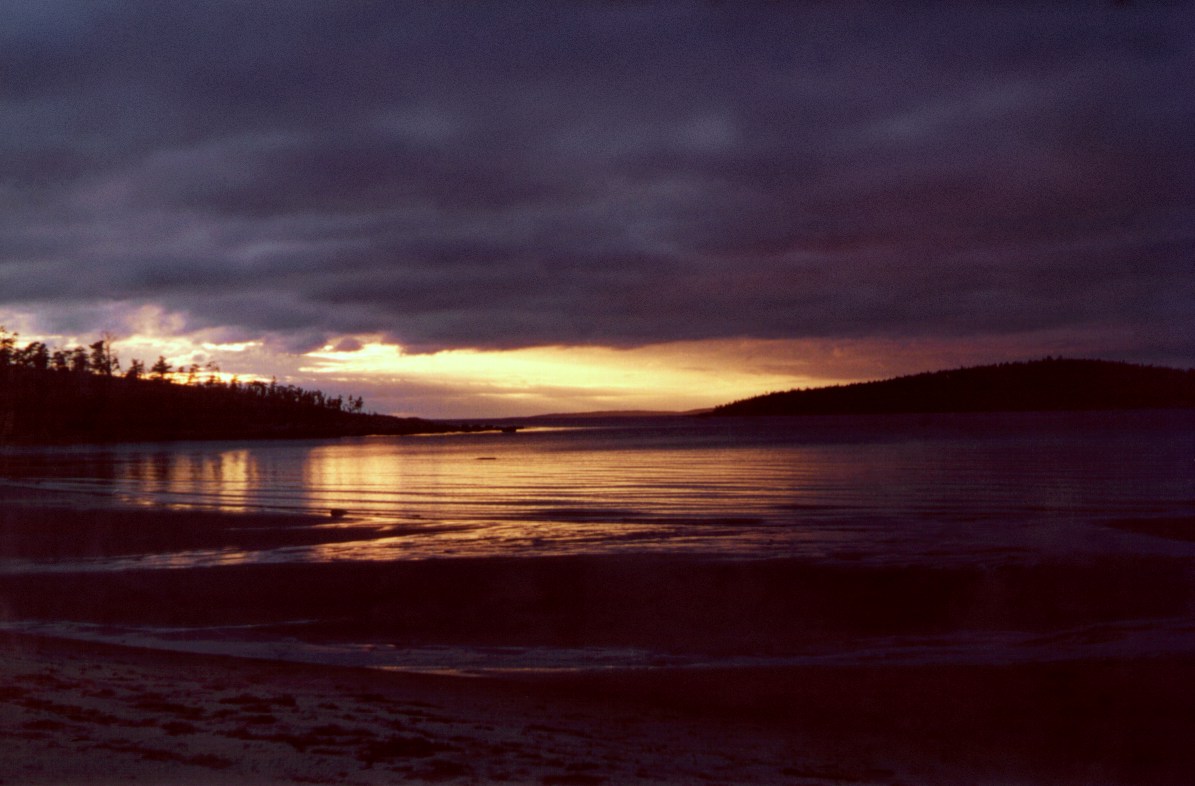
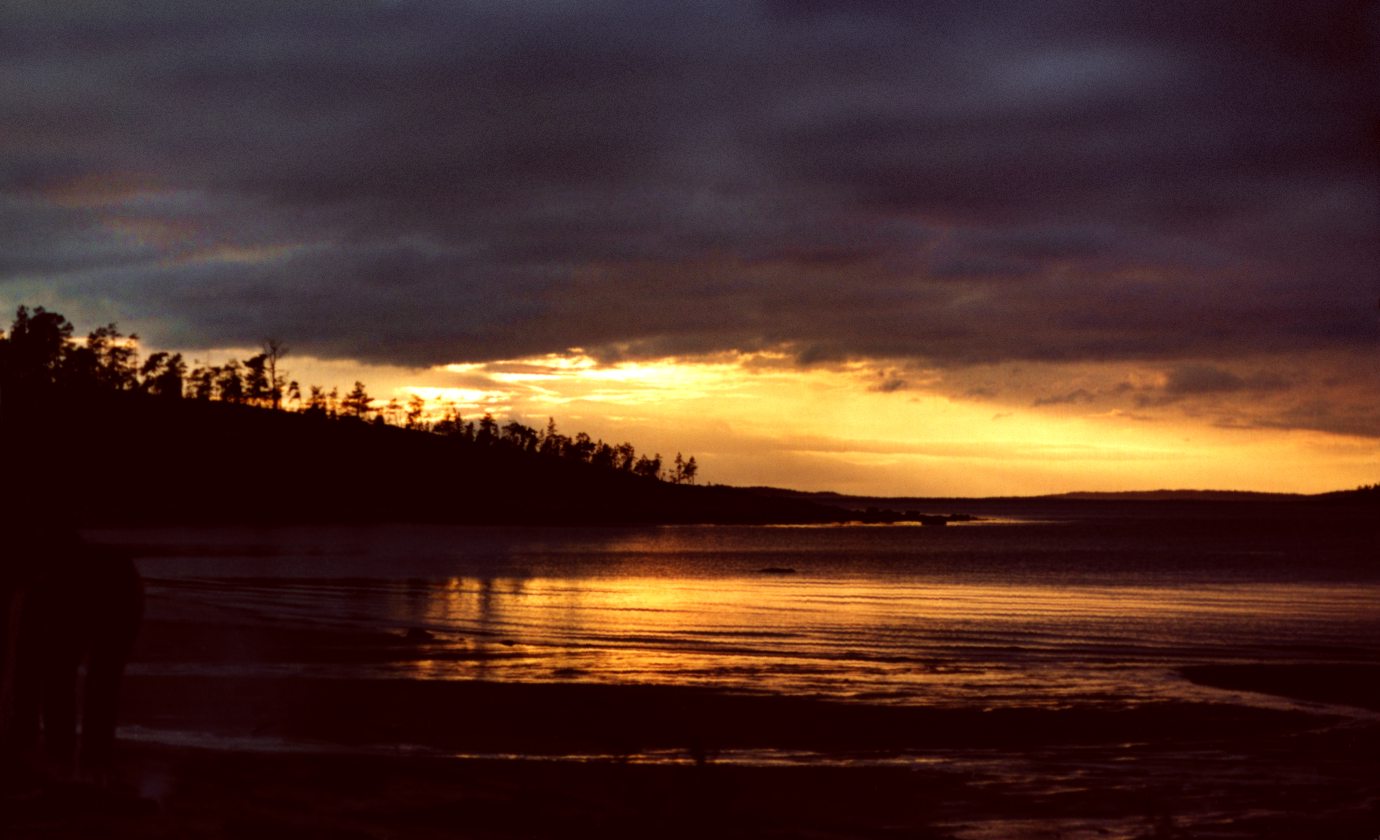
It cleared up in the evening and we were treated to a beautiful sunset. There were plenty of mushrooms around, so we picked some for dinner. We lit an enormous fire. All of us were pretty wet, so everything had to be dried. The GPS had gone in the water and sloshed about for several hours. It no longer worked, but it turned out that the batteries had merely run down in the salt water. We managed to rig it up to the video camera’s battery. I held the battery in place, Sasha pressed the buttons, and Marina wrote things down. Our coordinates were 64°14.124′N, 36°36.645′E. Even the memory had survived. We went to bed at midnight. The mosquitoes were eating us alive, as we were camped next to swampy woods.
29 July
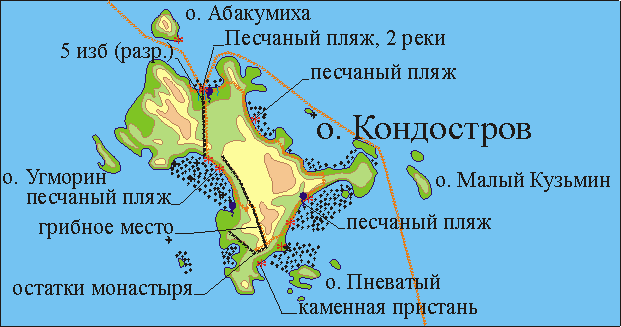
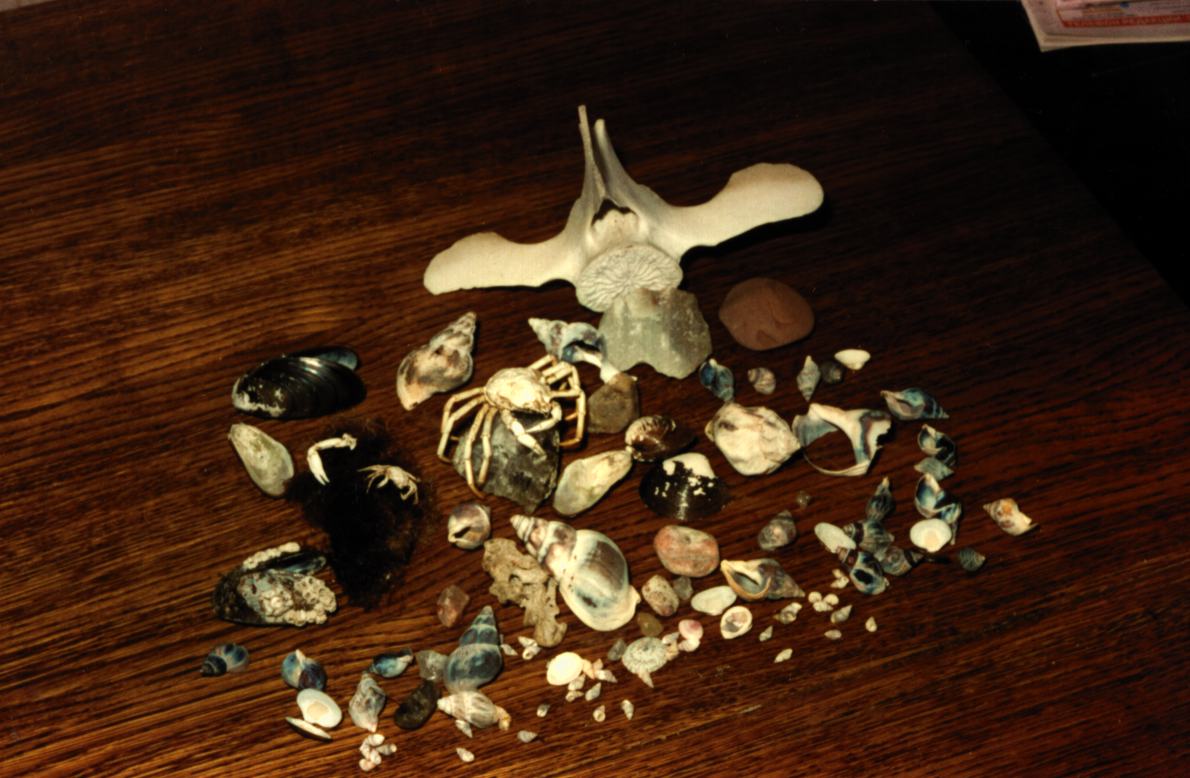
Knowing that mornings were always sunny, Sasha got up at four, shortly before sunrise, to film the beach. I took photographs at seven. The morning weather was perfect as usual. We swam in water at 18°C. Tanya and Sasha collected remains of crabs and other sea creatures. Kondostrov is big. It once held an outpost of the Solovetsky Monastery, then an artillery range, and later became known as a natural monument with trees three metres around. You can see traces of human activity. A cut line with forest compartment markers and a path leads south right from our camp. The forest around it is burnt, though. This was the first larch forest we had seen on the White Sea.
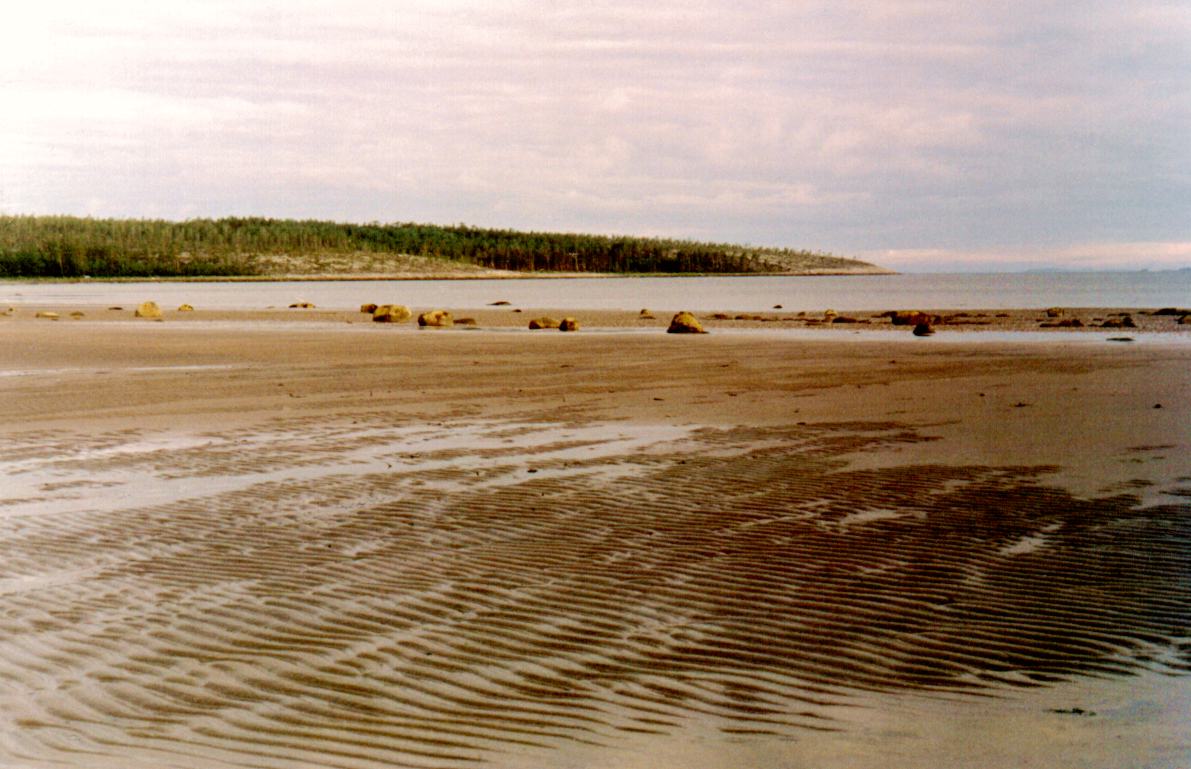
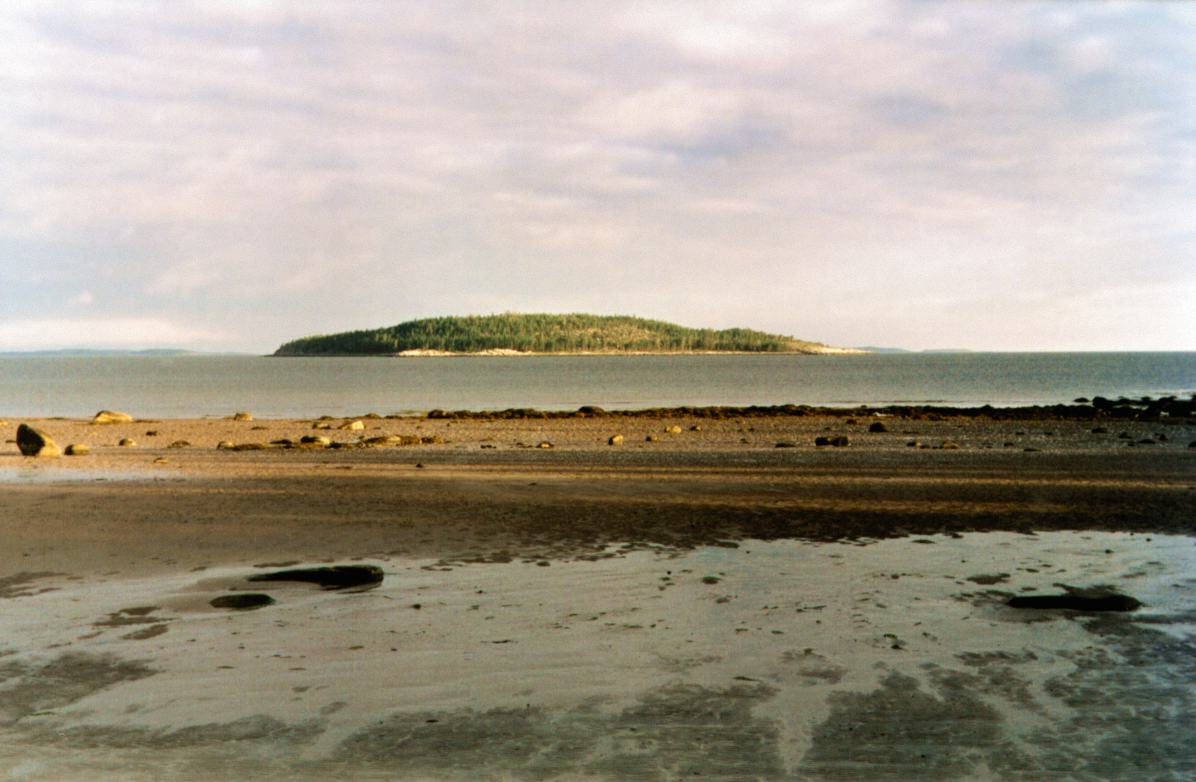
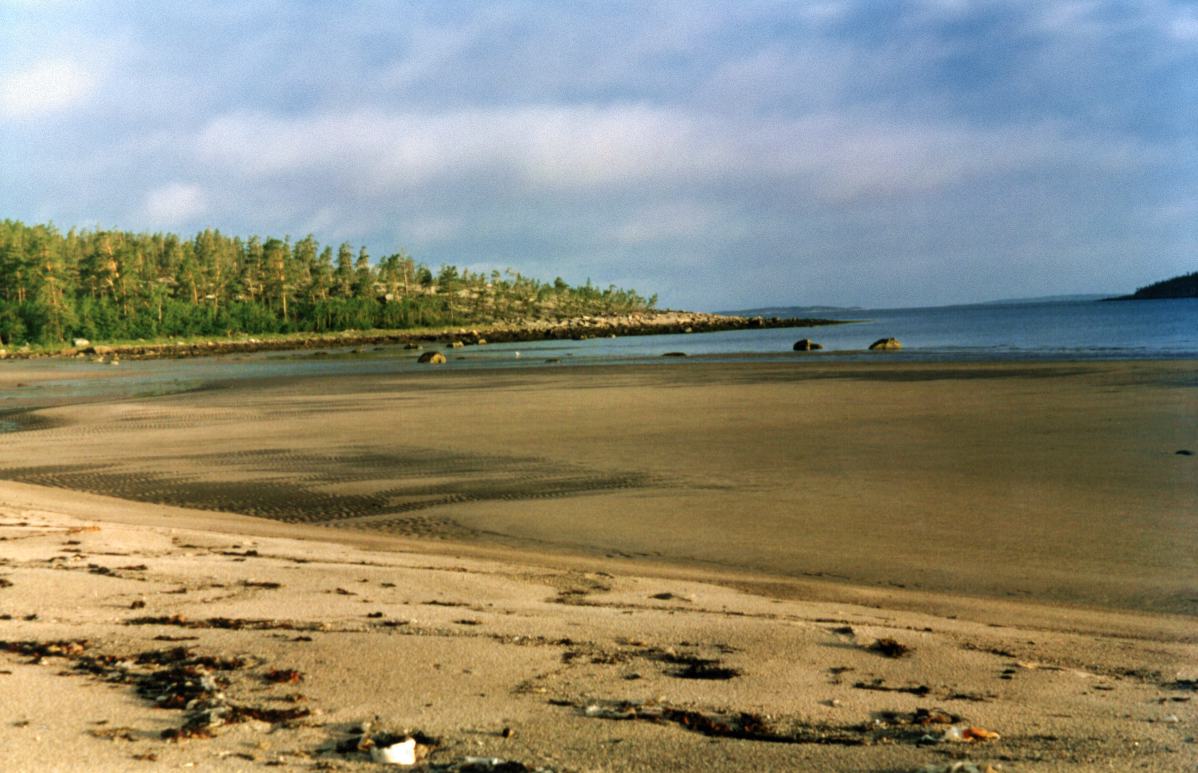
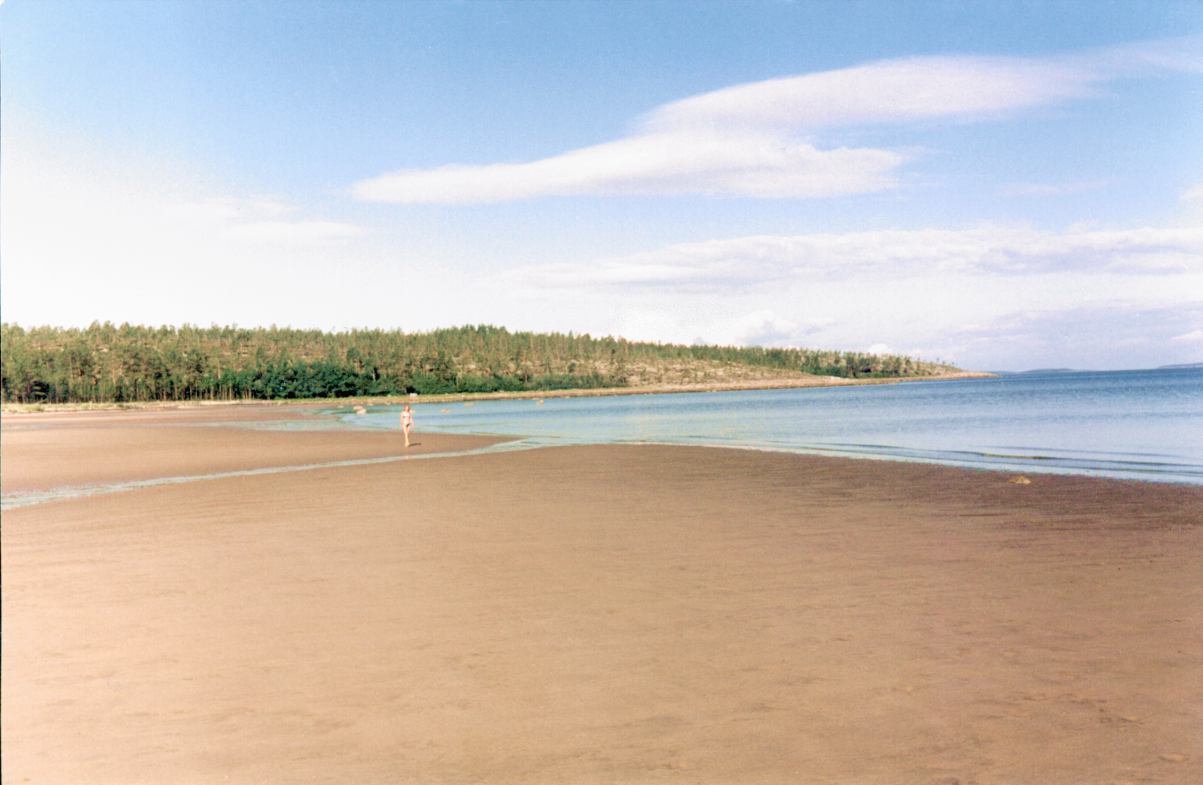
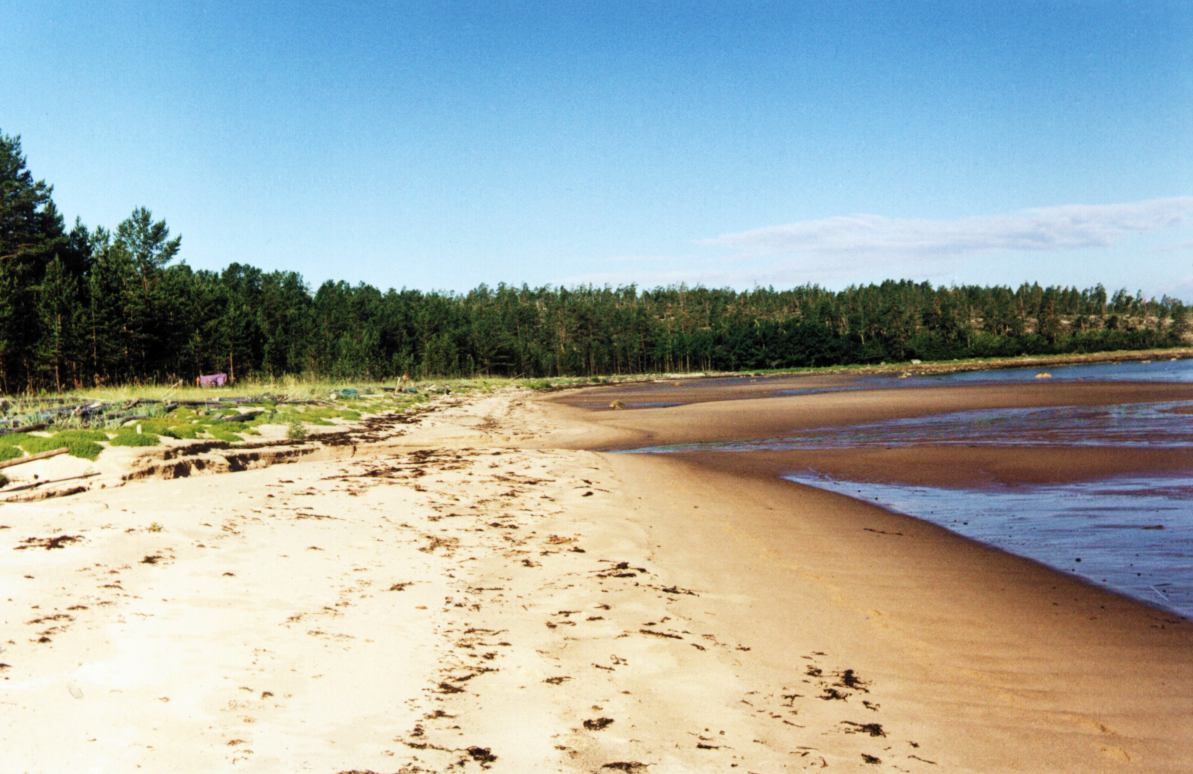
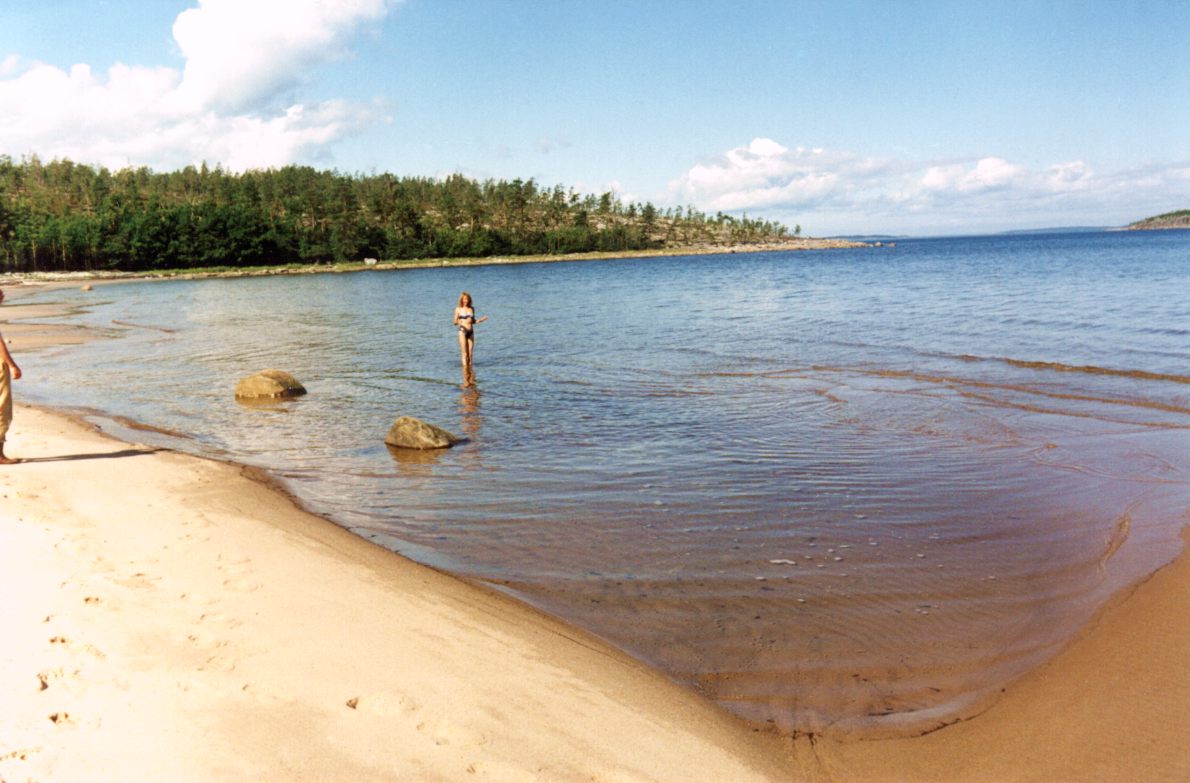
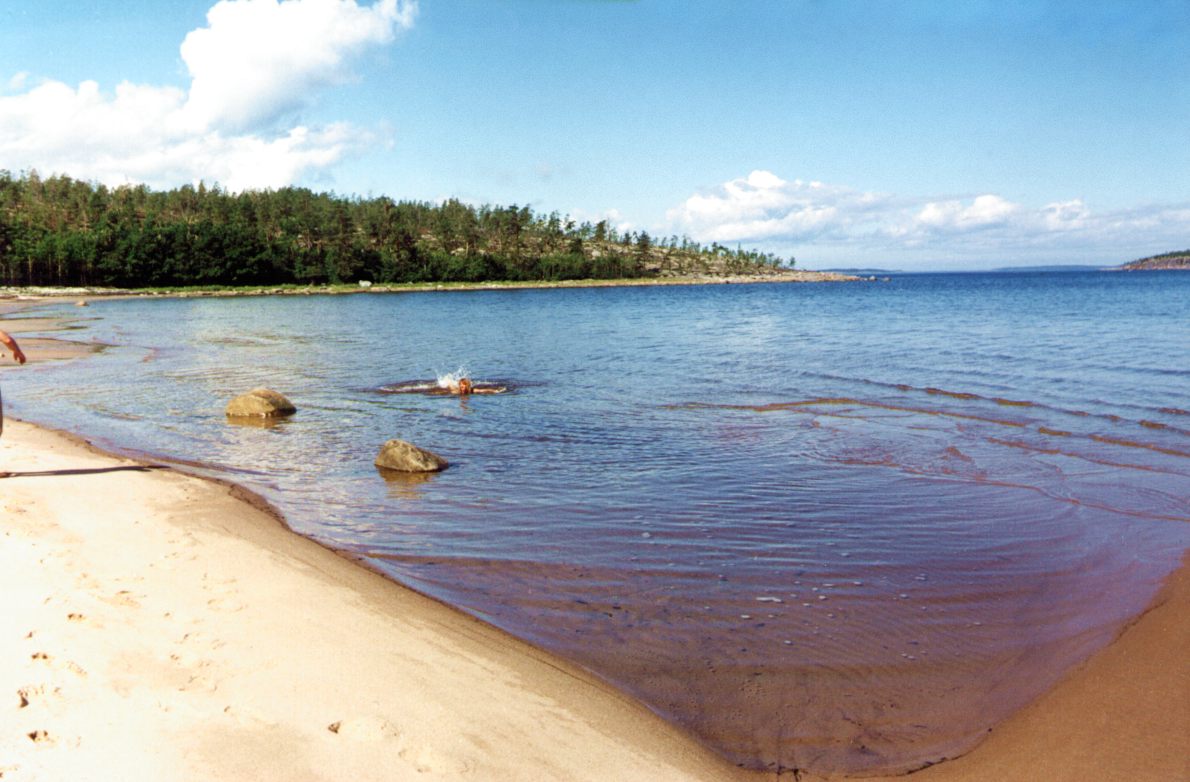
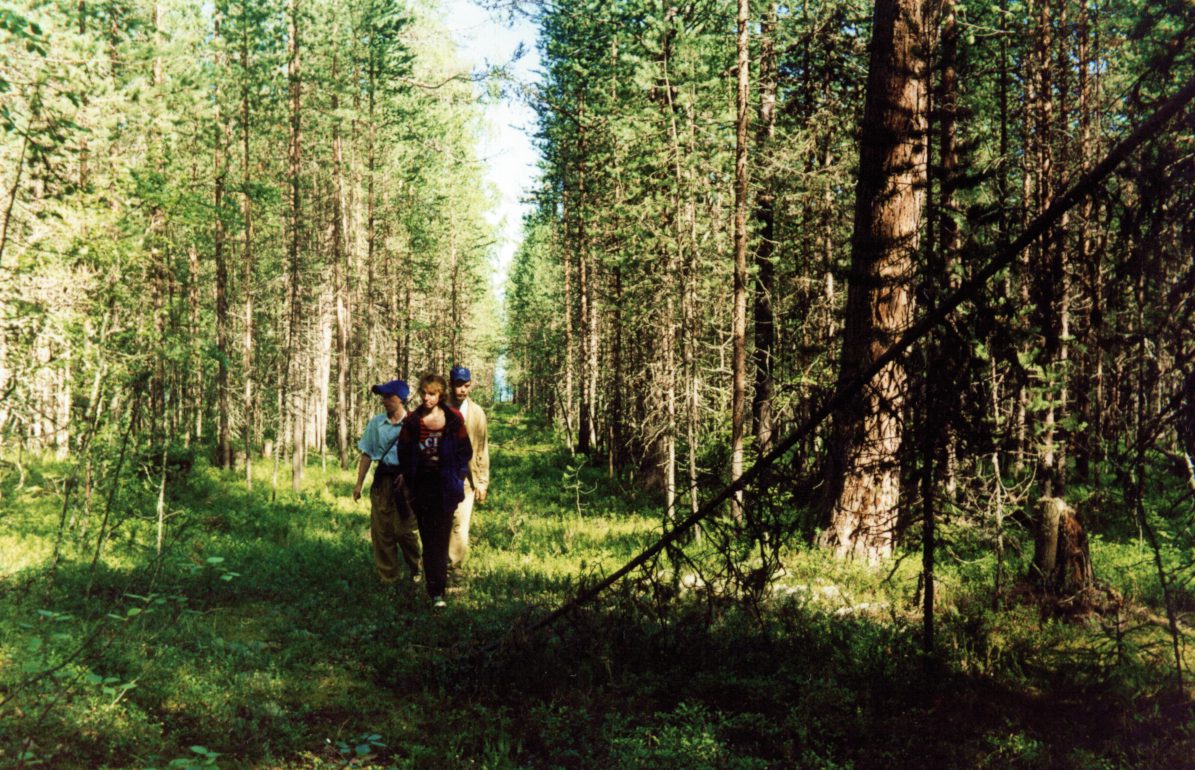
We ate breakfast quickly and set out to explore the island. We tried to find our map of the island in the gear, but it did not turn up at once and we could not be bothered to rummage properly. We decided to take our chances. We took the path along the cut line. Roughly 700 metres from shore we found the ruins of five huts. We could not tell when or by whom they were built. The bricks had no marks. The doorways were low, so perhaps the monks built them. Whether you wanted to or not, you had to bow to enter. Then we walked through pine forest, boggy to varying degrees and overgrown with wild rosemary, up a hill and down a steep slope to the sea.
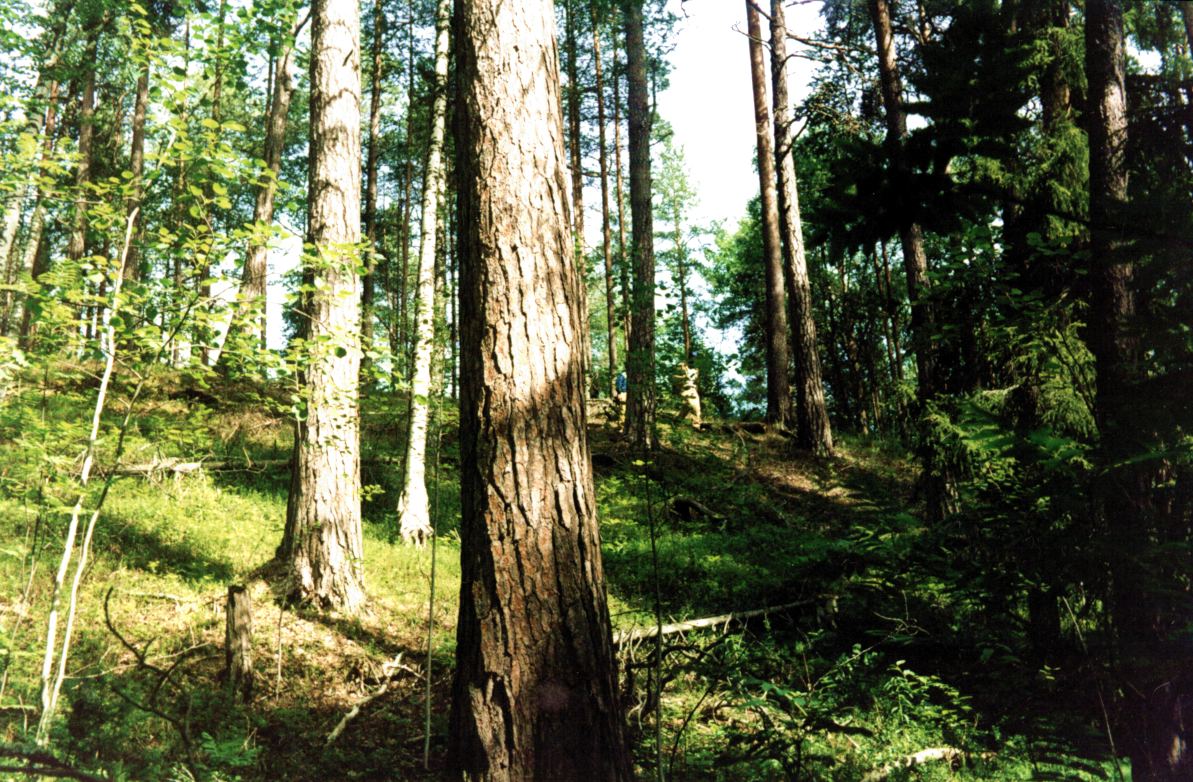
We followed the beach for a long time, then a bog ahead sent us back into the woods. We saw a lot of hares. Going cross-country without a path was hard, with wild thickets in the low places. Up on the hills it was like a park, with white moss and pines and red-capped mushrooms carpeting the ground. We found the path shown on the map we had left at camp and followed it south towards the remains of the monastery. We had no idea where it was. We were soon back at the sea, all festooned with mushrooms. We had no energy left to look for the monastery, so we headed back. We walked a long way along the shore, but the beach gradually turned into a cliff. We had to climb to the top, where deep, steep gullies blocked the way. Bridges had been thrown across them but were hopelessly rotten, so we had to scramble up and down. The shore is so indented that following the coast on the way back took much longer. We walked for over three hours and were very tired. We did not see any particularly big trees, then it dawned on us that a tree three metres round is less than a metre in diameter. We had seen trees like that, closer to our camp on the north of the island.
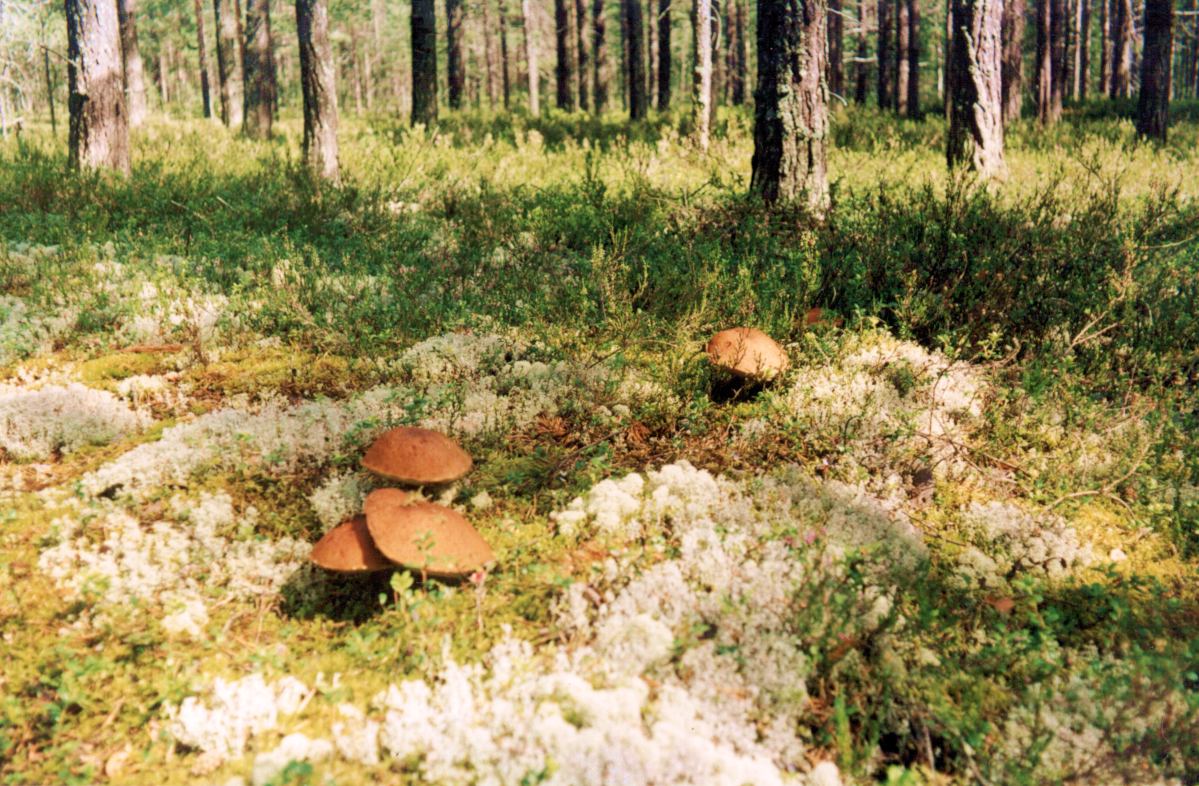
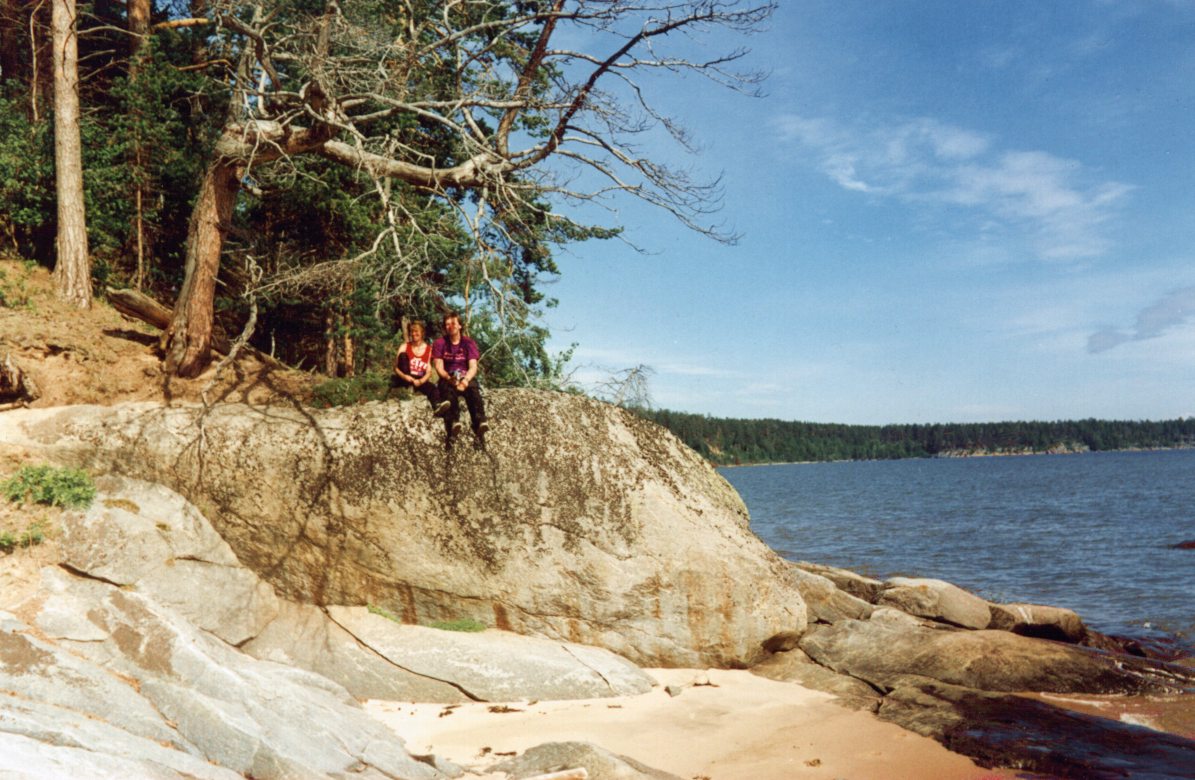
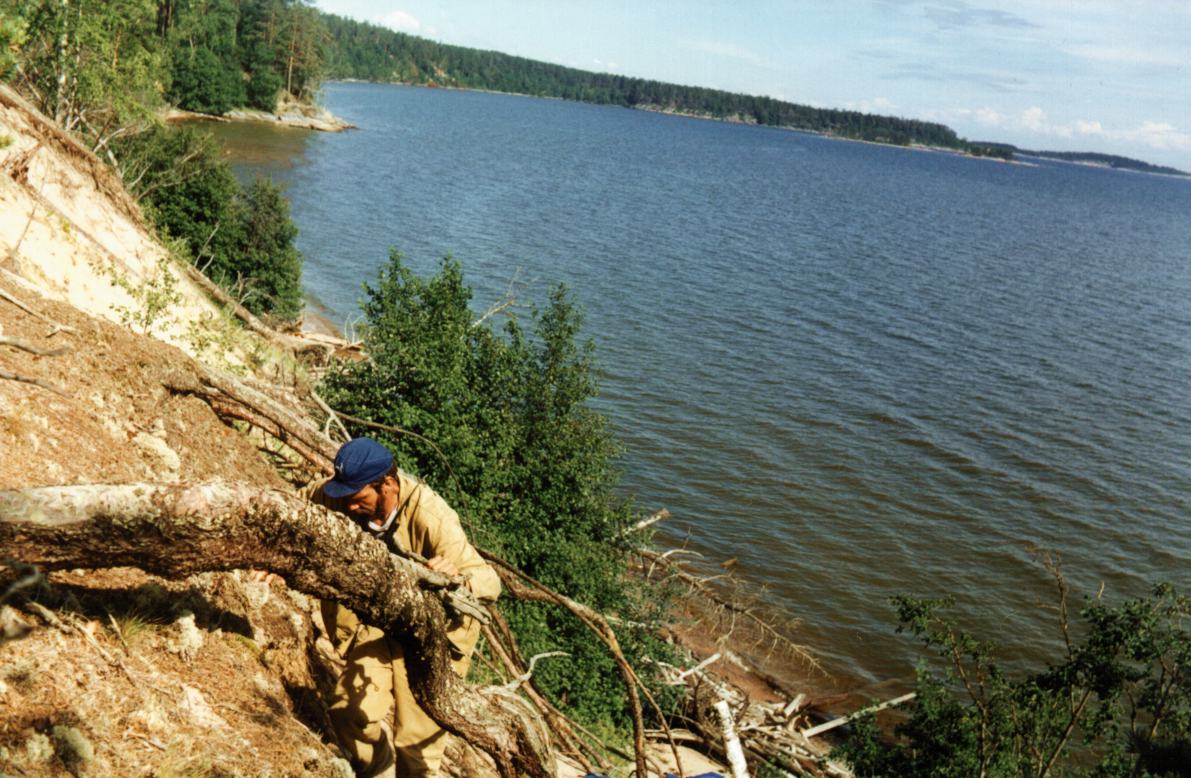
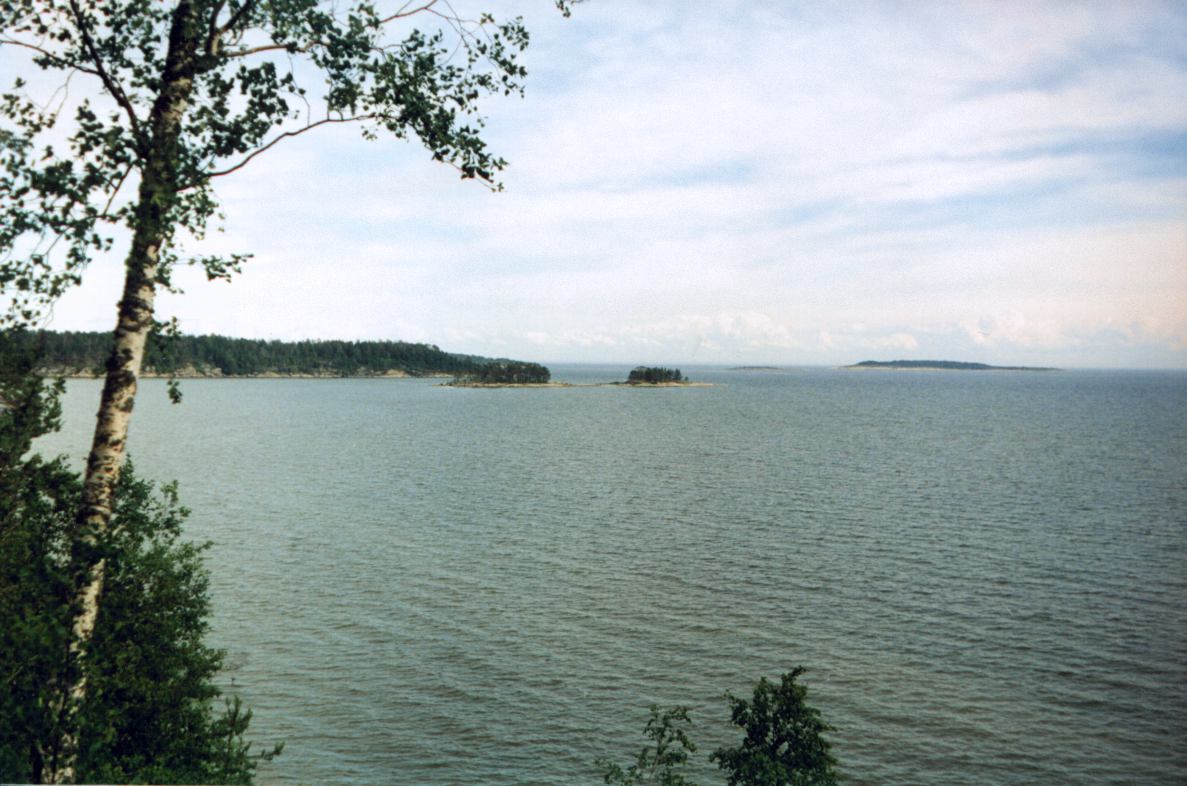
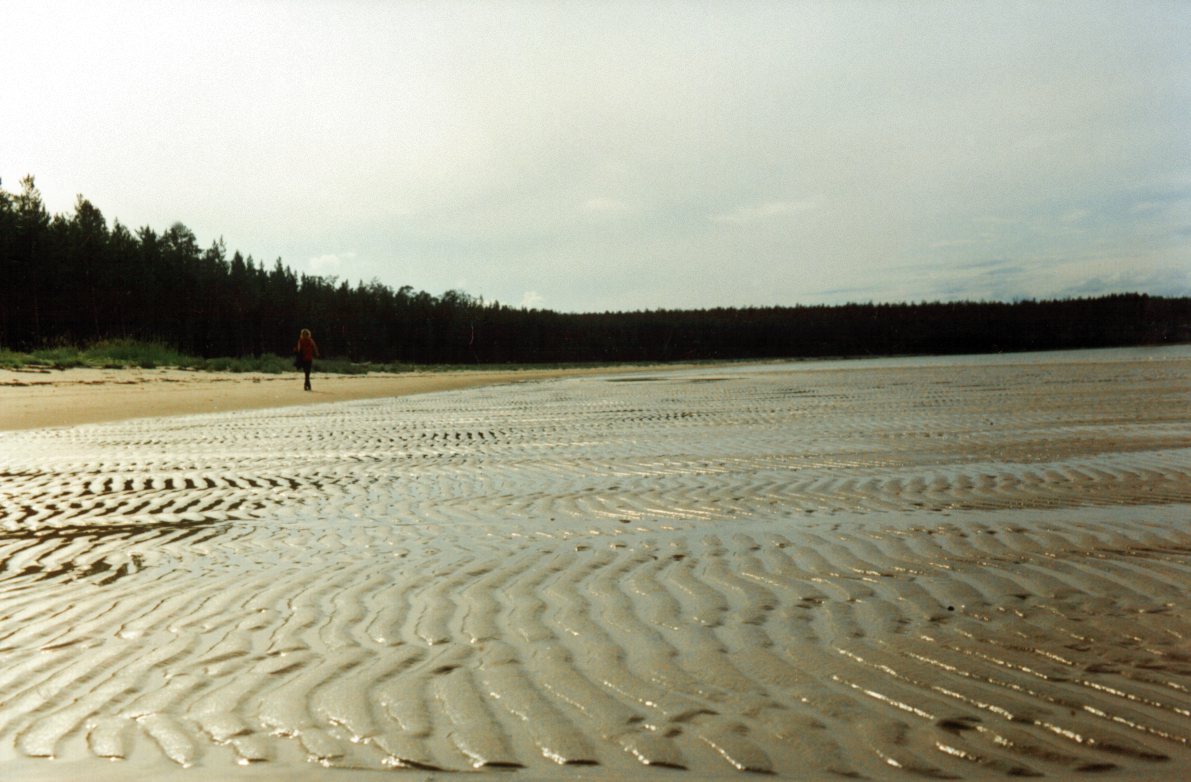
By the time we got back, the weather was building to another thunderstorm. We made soup with porcini. There was a great deal of it and, on the principle that it is better to burst than waste good food, I went through about five bowls. We did not cook anything else. It began to rain and we took to the tents. We even fell asleep. We woke around 18:00, ate and set out to sea at about 20:00. There were no waves as we went round Kondostrov, but abeam of Pnevaty Island a strong headwind started up again. The current was helping us and we were moving quickly, but it was a long crossing.
At 22:50 the sun went down into the sea. Overhead we had cloud and intermittent rain, but the horizon was clear and we got a rainbow. We approached Kotkano in near darkness, in rain and another headwind of 20–25 metres a second. On a little island short of Kotkano we saw seals. We landed in the rain on a sandy beach at 23:40, at 64°06.318′N, 36°41.406′E. A great pile of driftwood lay between the beach and the forest. Once again there was plenty of wood and we were wet again. We pitched the tents in the woods, made a small dinner and went straight to bed. Everyone was dead tired. A 25-kilometre walk on Kondostrov and a hard 20-kilometre crossing in a single day was too much.
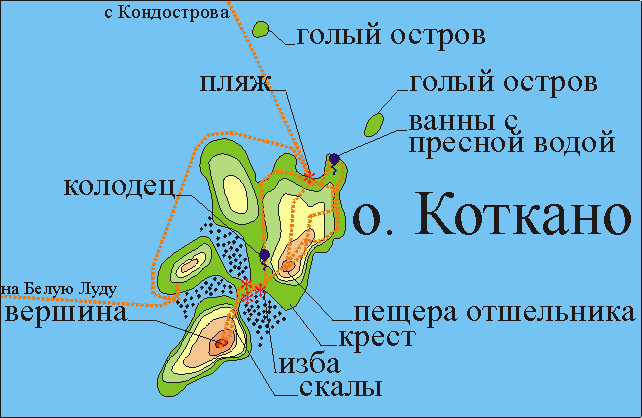
30 July
Fog and rain in the morning. A pity there would be no beautiful photos, since Kotkano is supposed to be the most beautiful island. After yesterday’s hard day we were too lazy to get out of the tent. The sea was in uproar and a strong southerly was blowing. Our bay was sheltered on the lee side. Again we discussed whether this could be called a calm. By one in the afternoon it had stopped raining. A party from Moscow walked over from the nearest headland. A remarkably merry lot, three men and two women. There were Danya, Kirill, Masha-Lena (that was what she was called, and she answered to it) and Sonya. They were staying on the other side of the island and had come to our bay to swim, as it had the island’s only good beach. There should have been more of them, but two had not made it to Kotkano in the storm. They were going to look for them that night. You could tell that everyone felt let loose. They had come from Nyukhcha and planned to spend a month at Kotkano and Kondostrov. They invited us to visit.
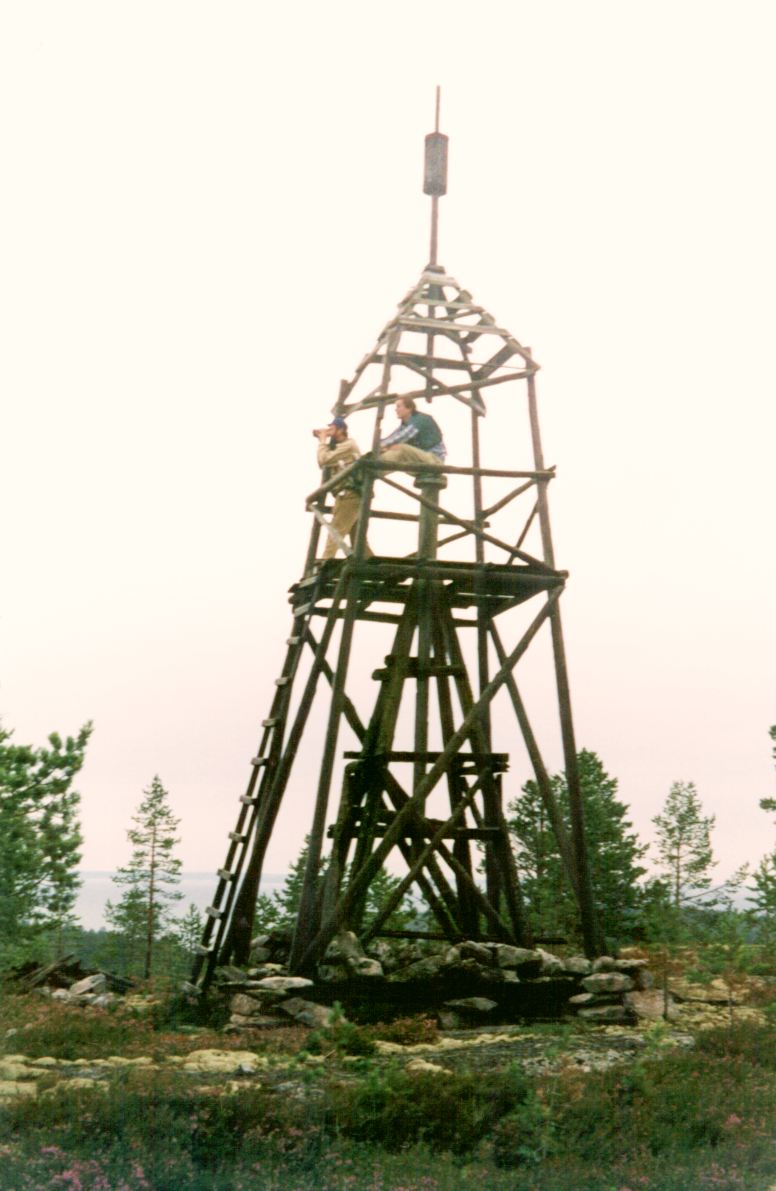
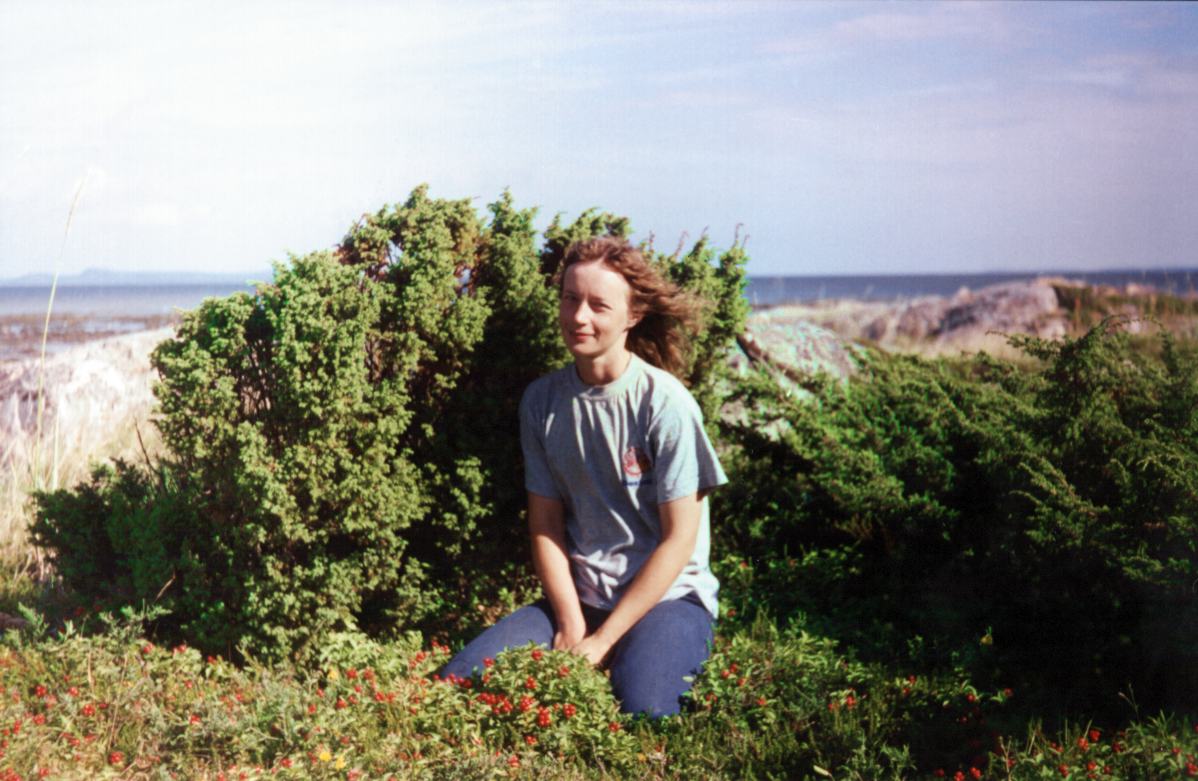
By evening we went to look around the island and film the storm. It was a day off and we decided not to paddle anywhere. Perhaps that was why Marina looked so pleased and happy in all the photos. Kotkano consists of four hills, each close to 100 metres high, linked by sand spits. The tallest is the southern one, with a survey marker on top. From there we gazed into the distance, trying to make out our destination on the horizon. We could just see it and the wind was blowing in our faces. If this did not let up tomorrow, it would be very hard to get away.
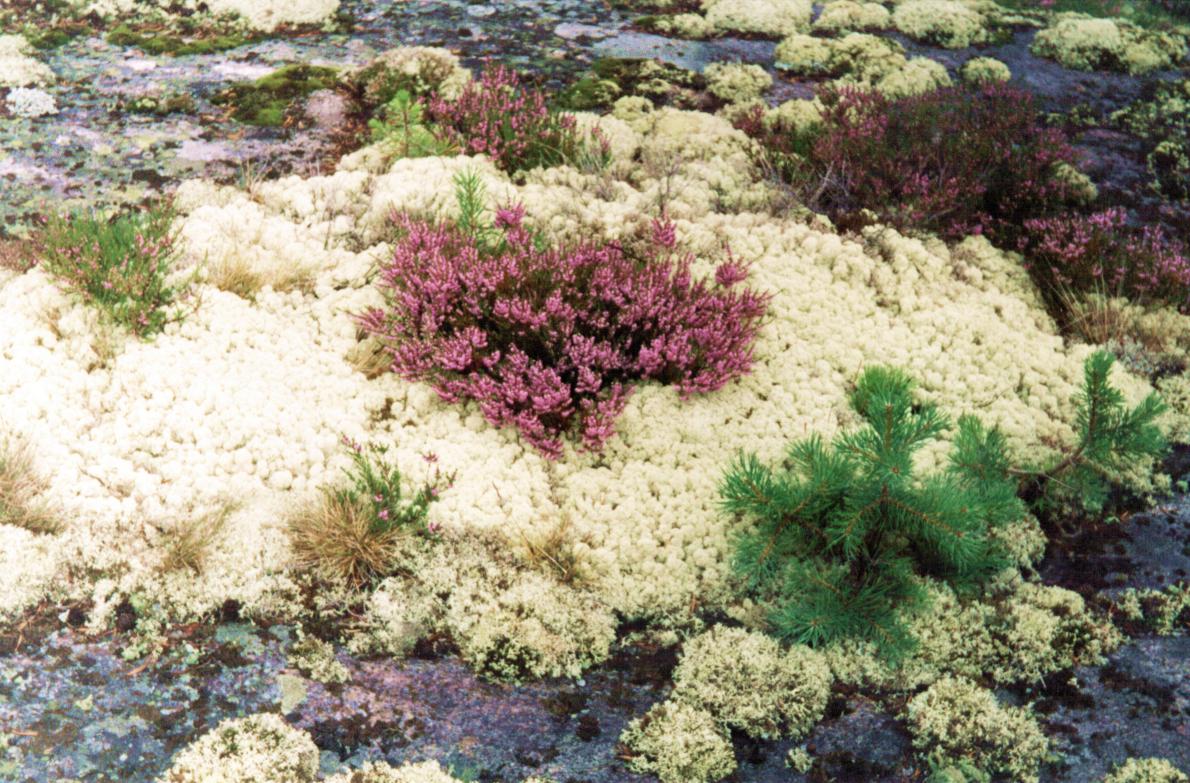
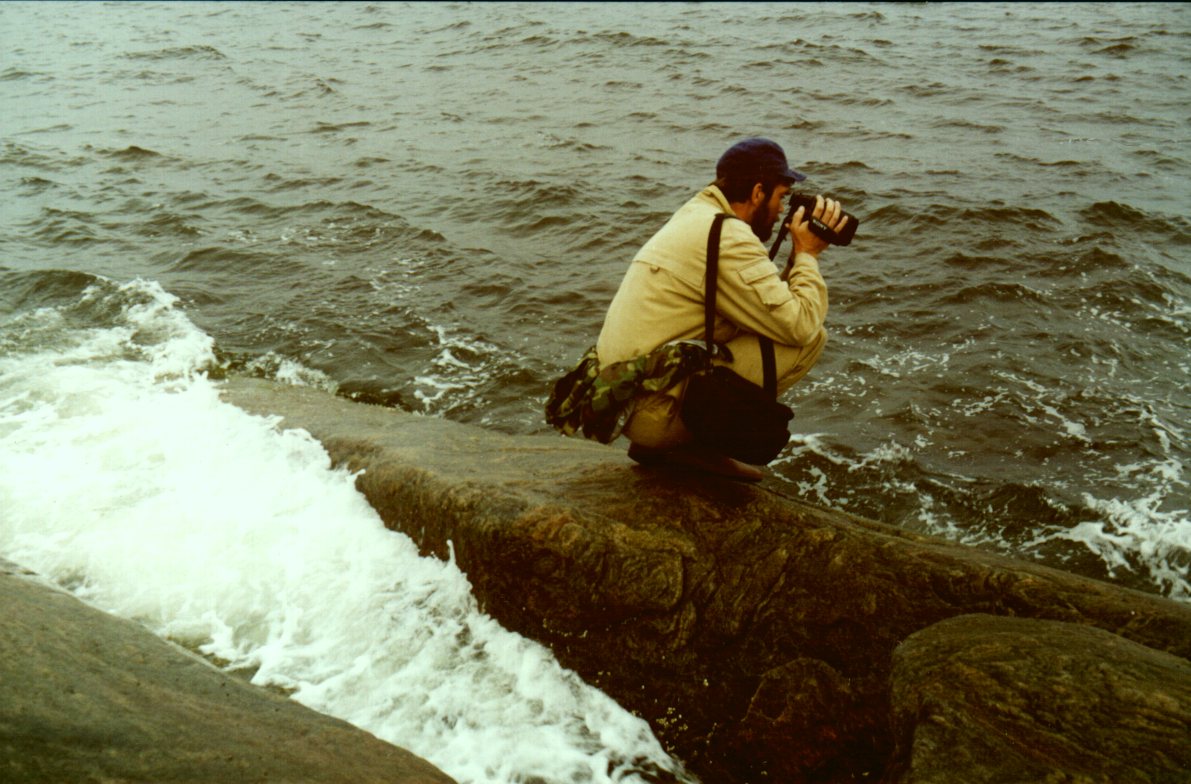
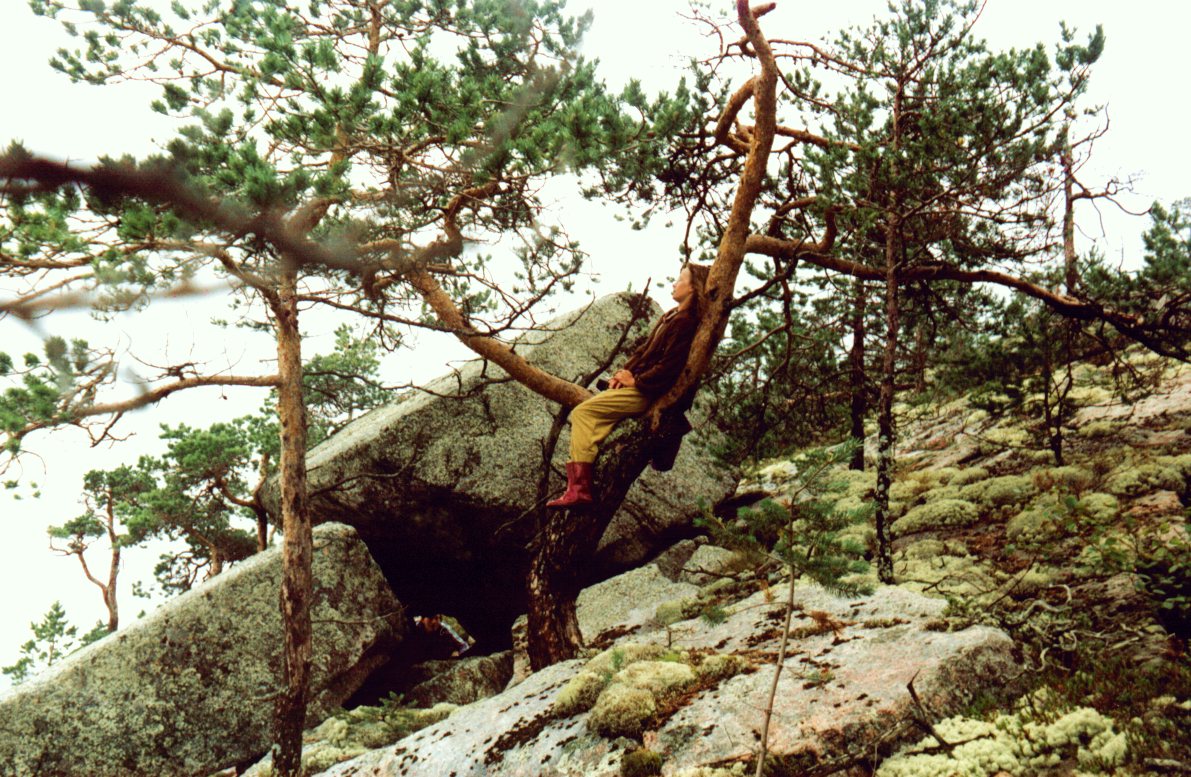
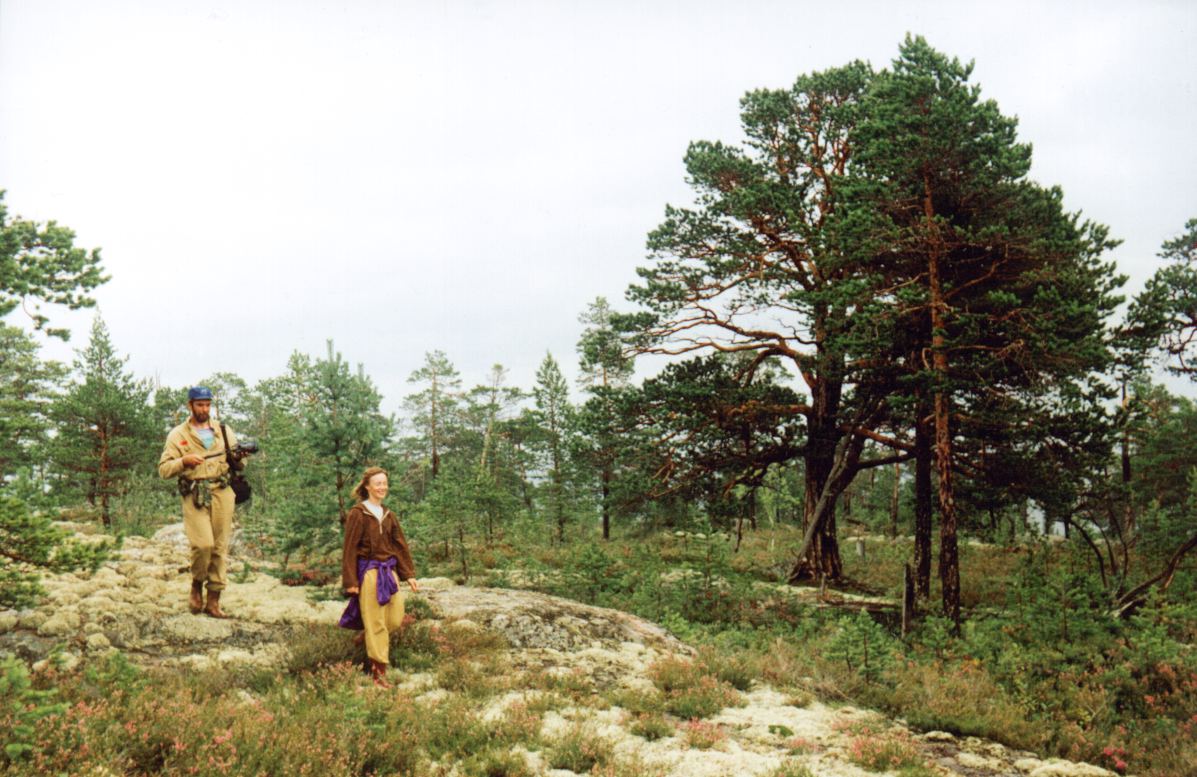
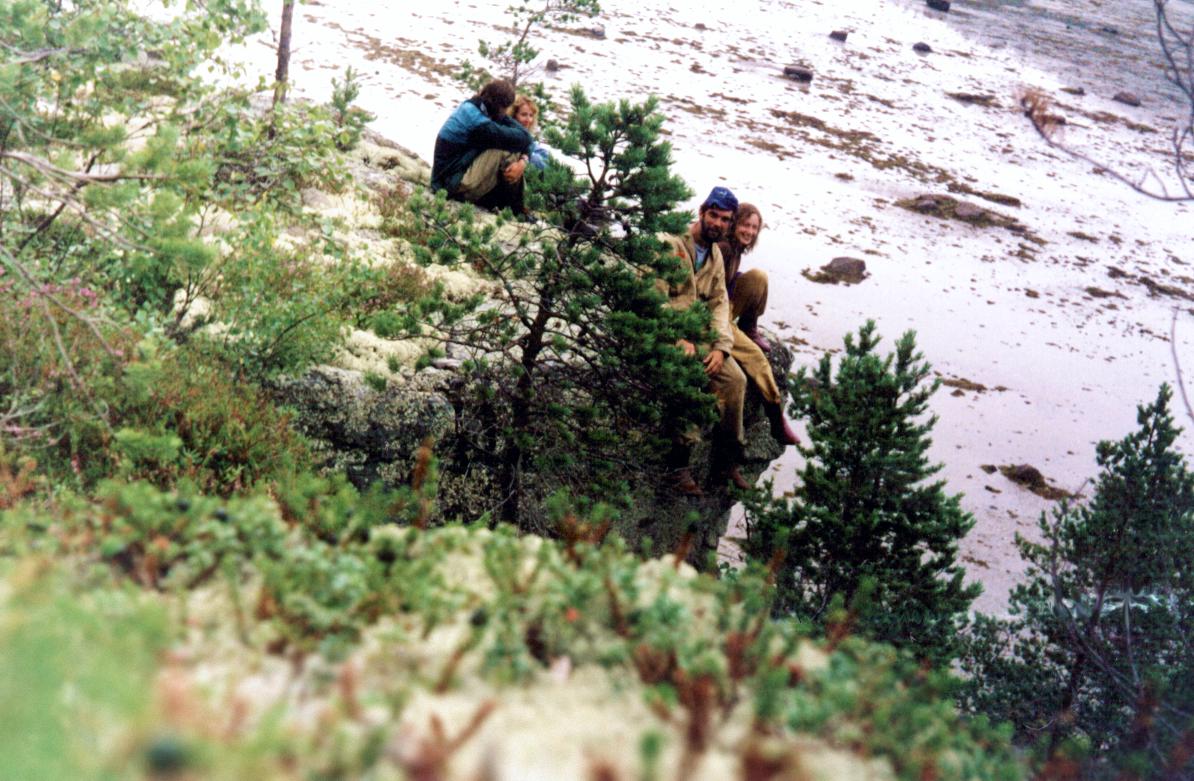
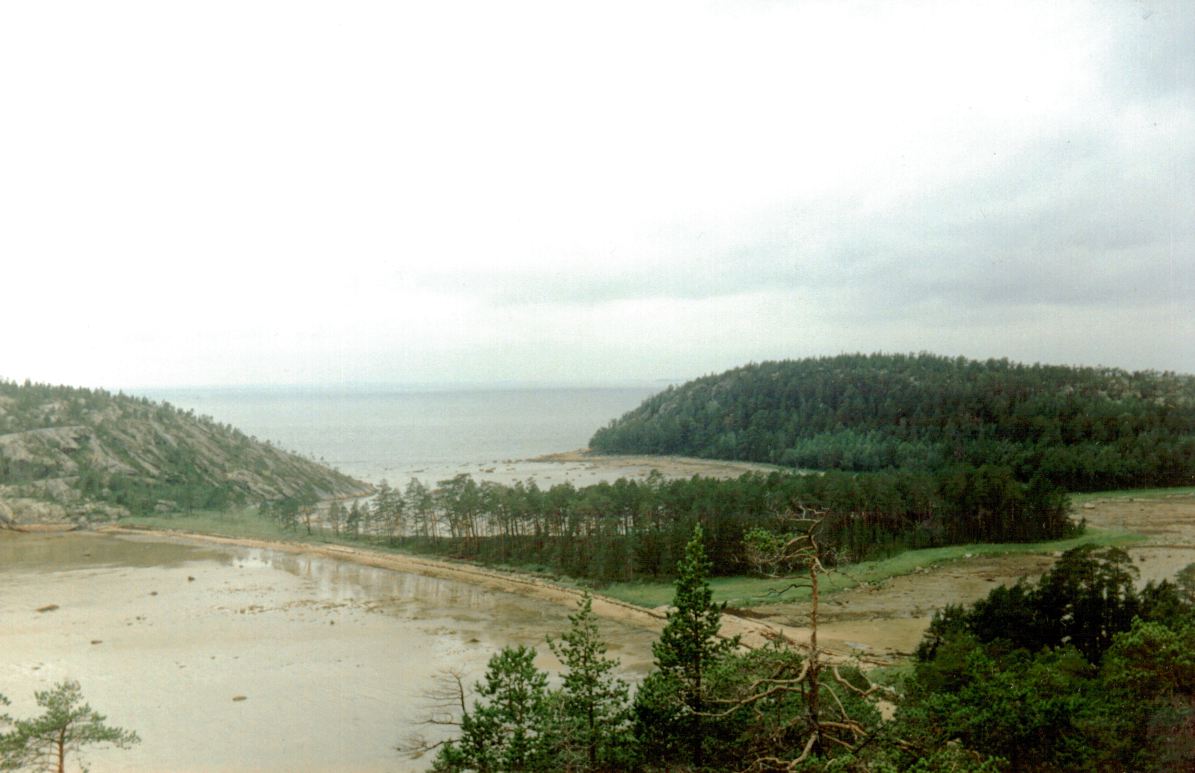
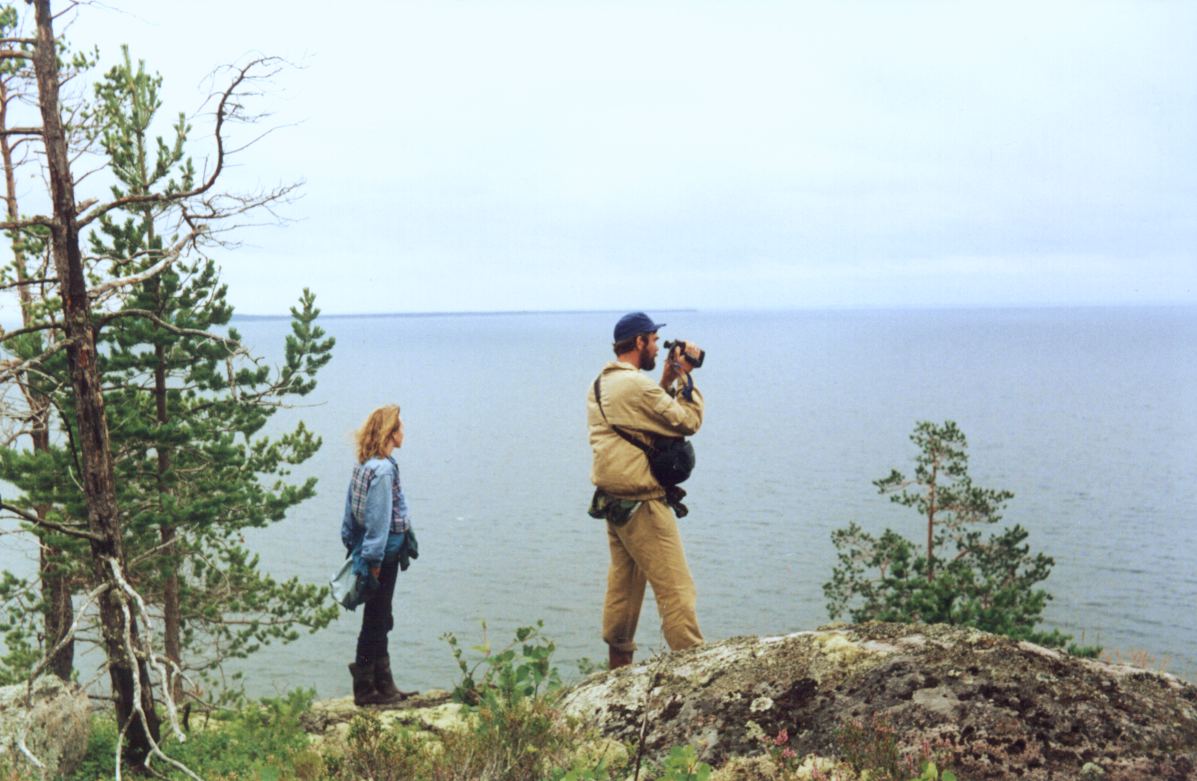
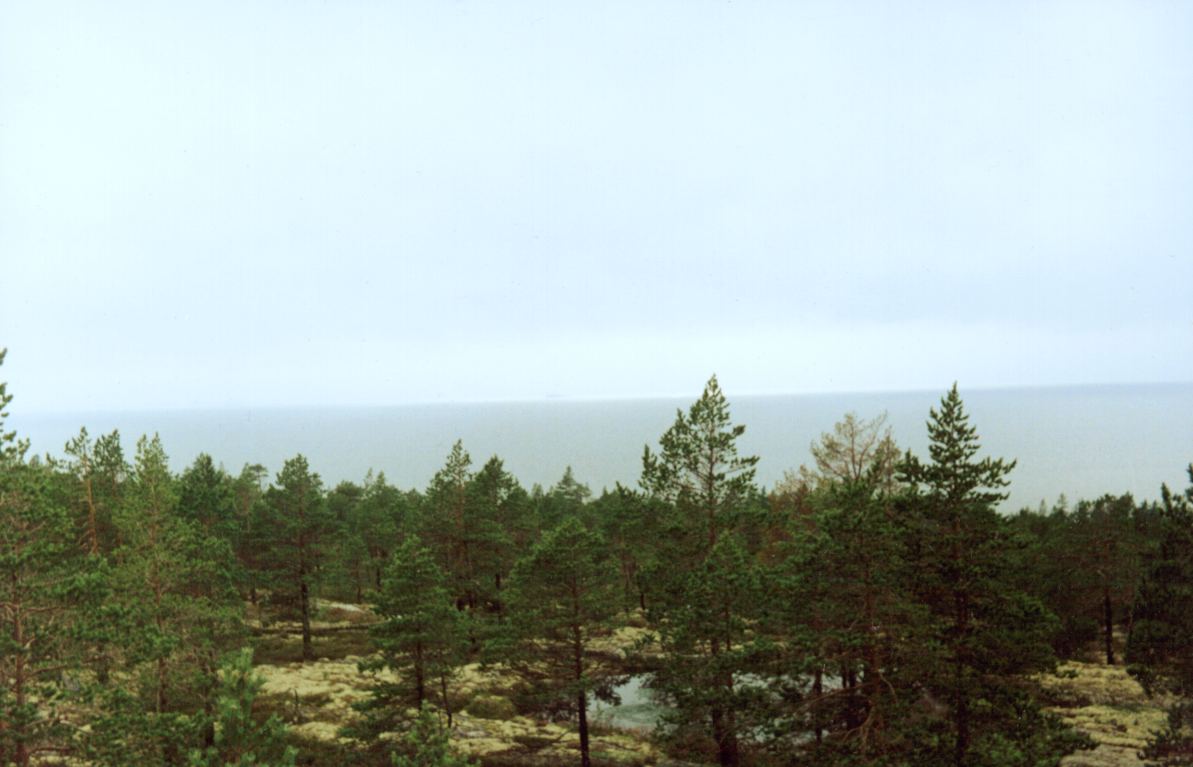
In a hollow in the middle of the island there is a triangle of forest with a spit leading to each hill. The Muscovites were camped beside that forest. They had brought a whole household in a large motorboat of a tonne and a half displacement. Crockery, a chainsaw, a radio, and heaps of other equipment. What really floored us were the five crates of vodka. We immediately thought of Peculiarities of the National Hunt. They even put on the familiar drawn-out Finnish accent, recalling those “hot-blooded Finnish lads”. We spent a long time calculating how many litres a head per day. We concluded you could drink it if you started first thing in the morning, but it would take some doing.
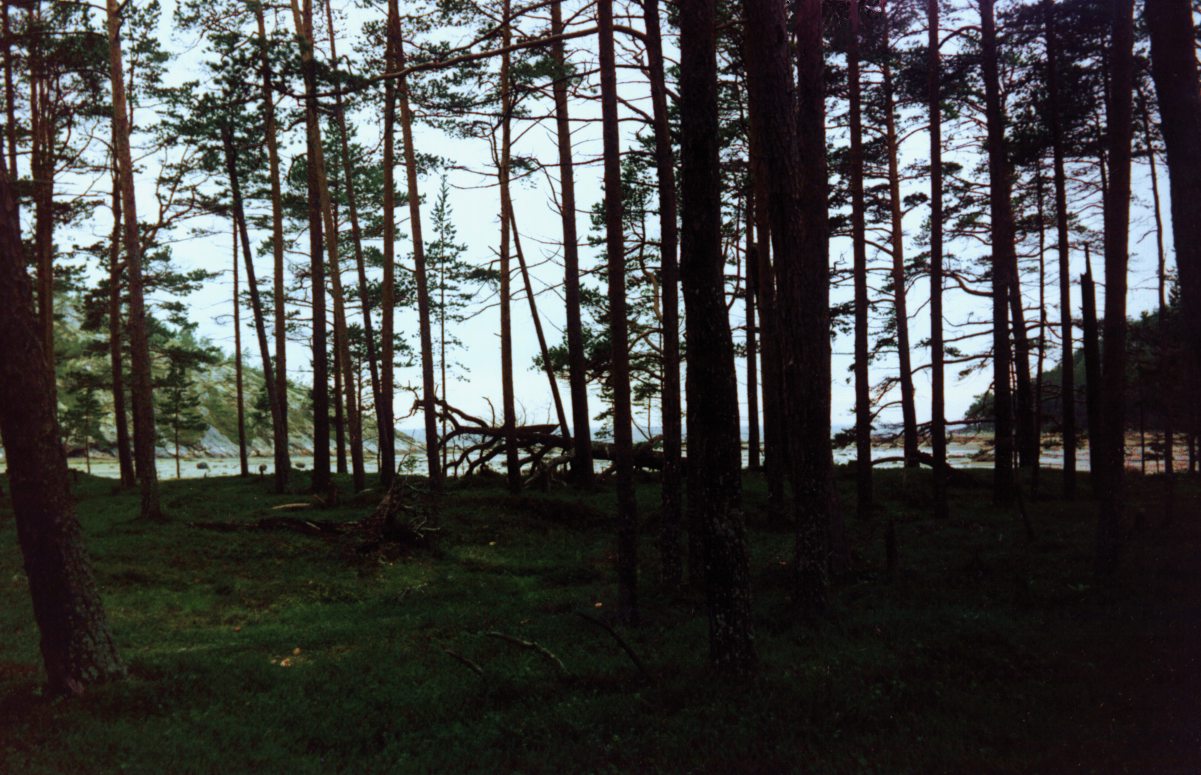
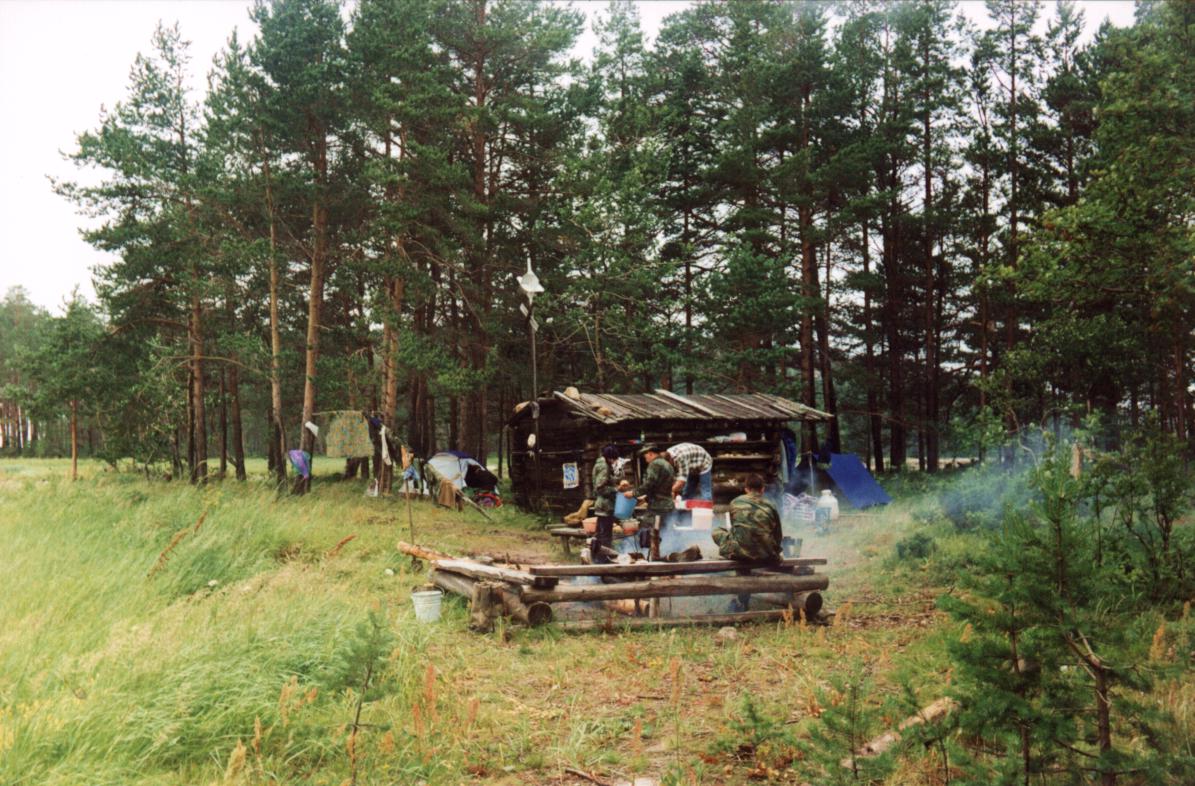
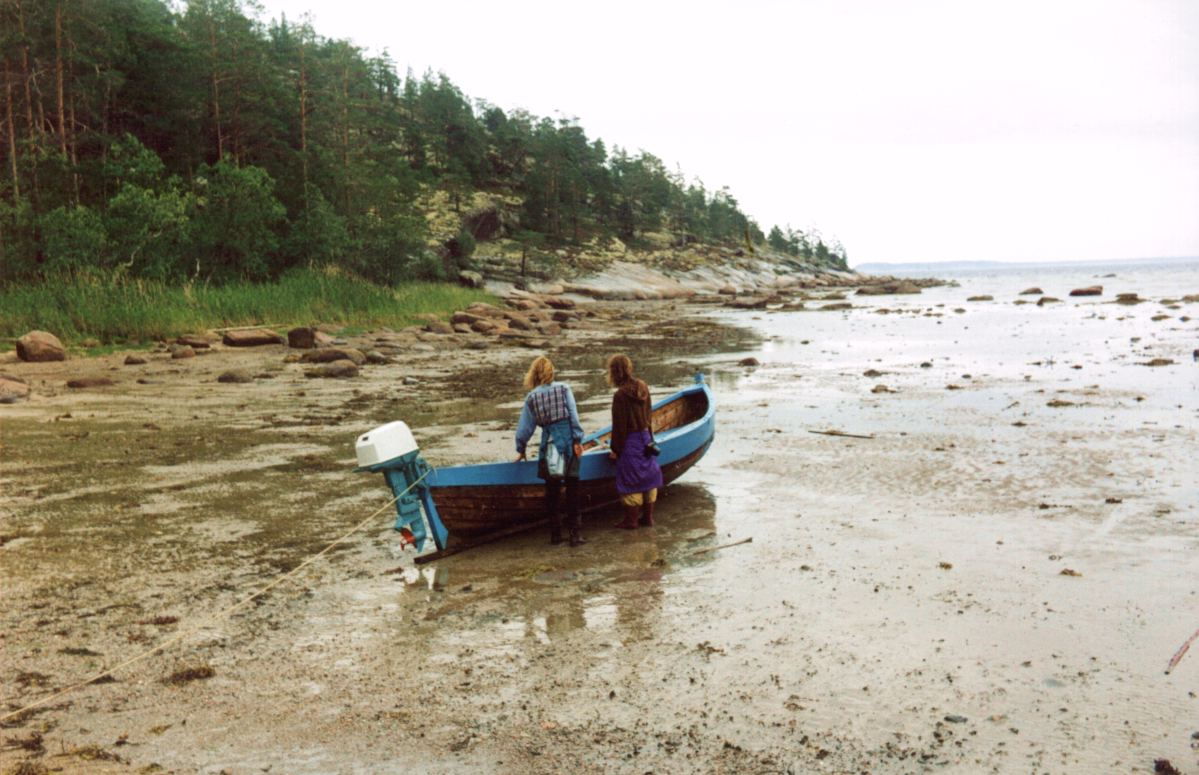
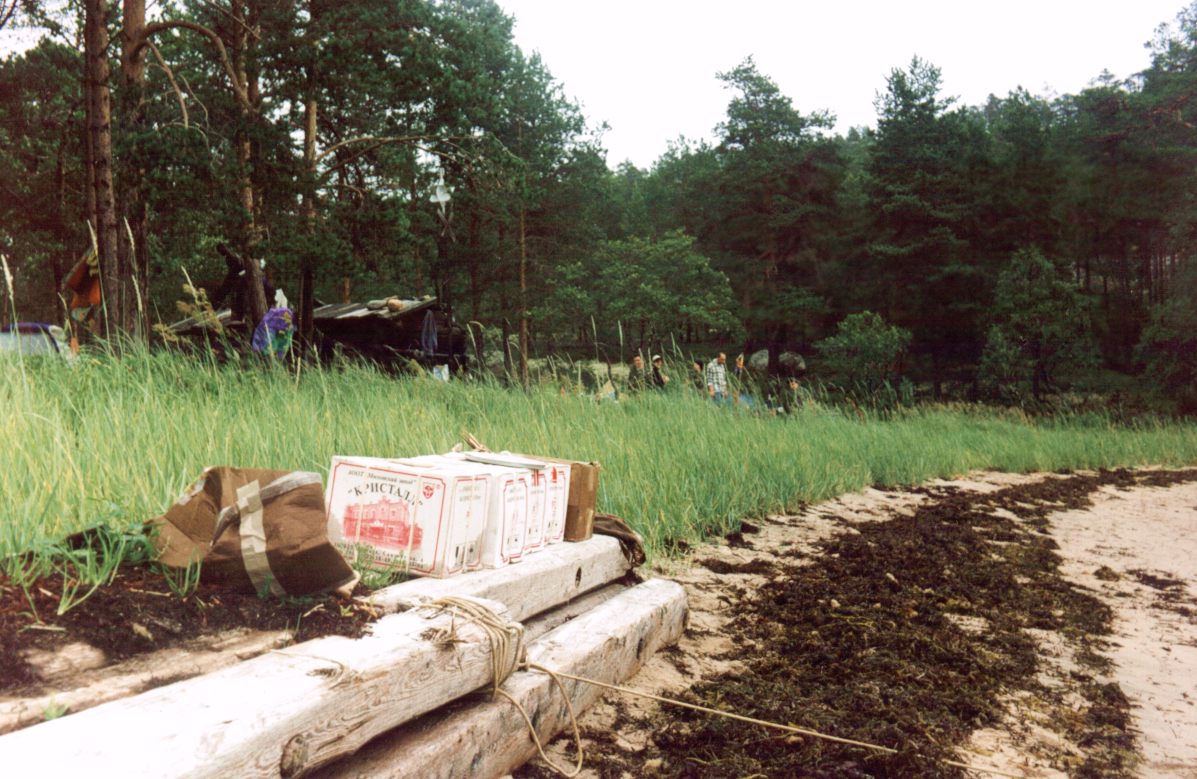
The Muscovites showed us a cave where a hermit from Solovki had lived. It was hardly a cave, just a hole between two rocks, dreadfully damp inside. There were icons and notes asking for prayers for the living and the dead. The hermit had lived there from April to October the year before. This year he had evidently been promoted and gone off to holiday in the Canaries.
They offered us drinks and something to eat, then more of both. We drank for a long time, in quantity, and very merrily. Our own supply had long since run out. We never bring as much as that, which is a pity. It reminded me of a silly song about finding a spring of vodka in a little cave, with a whole herd of mammoths in the frying pan. Anyway, we raised hell from 18:00 until 01:00. We fired a pistol at a tin, filmed the sunset and smoked. We drank a bottle a head, on an empty stomach too. Things took an unusually cheerful turn.
I particularly remember getting home. We were picking our way through the dark among fallen trees. Every so often Marina said, “We need to stop and think where we’re going.” I would say, “Rubbish. At worst we’ll sleep here and find our way out tomorrow.” Tanya had bounded off ahead and left the rest to their fate. We did not stand still either. We climbed a hill, dropped into some bay, climbed another hill, and eventually found our own bay. In the morning we had slipped on the moss, but in the dark we moved like mountain goats. It is a wonder we did not break our legs. Some of us made it as far as the tents, and the rest collapsed by the fire. Everything turned out all right.
31 July
Morning. Oh, this is rough. Where is my head, where is my liver, where is my ulcer, where are my ten packets of Alka-Seltzer and a canister of pickle juice for Tanya? We crawled out of the tents around one in the afternoon. The sun had come out. There was still a big swell. I walked around the island and filmed the pretty spots in the sunlight. The Muscovites arrived by boat for a hair of the dog. They wanted to see whether we had got home the night before, about which they had serious doubts. To help us recover they brought a bottle of vodka, beer, tomatoes, cucumbers, onions and bread. We turned down the drinks, but Tanya and Marina polished off the tomatoes and cucumbers and marvelled at how thoughtful Danya was. We could not drink any more. Old age. Everything hurt inside, and we still had to paddle through a storm today.
Apparently the Muscovites had never stopped drinking after the night before. They fell out of their boat. Some swam in their clothes and some without a stitch. They called this their “Day of Moderate Alcohol Consumption”. We realised they would have to call in a helicopter with vodka. They joked that going short of vodka and snacks simply would not be the Russian way. After a few hours they went back to their camp. Then another party of kayakers appeared, the people from Saint Petersburg we had seen at Perkhludy. The rowdy Muscovites had scared them so much that they had been paddling round the island for ages, not daring to land. We had to reassure them. They decided to camp in our spot and waited for us to leave. They fed us freshly smoked cod. Delicious. A pity we do not do that ourselves.
By 20:00 we were ready to go. The wind had dropped a little and the sky clouded over. As soon as we shoved off, we saw a thunderstorm coming up behind the island. We could not go out to sea in that. The real worry was lightning rather than the wind or waves. Our paddles with their pointed ends seemed like lightning rods out on the flat surface of the sea. We decided to go round the island for the time being and wait for the storm to end. It was vicious. Rain came down in a wall. You could see nothing ten metres away. The silver jackets were no help. We got soaked and cold. Towards the end of the storm we landed on the rocky south-west point of Kotkano, not far from the Muscovites’ camp. None of us could face a second evening of drinking. There was a little cave, where we waited out the rain. It was difficult to stand on the rocks.
At 21:00 we went to sea. The thunderstorm had knocked down the swell, though the wind was still there. We had meant to go to Nyukhcha, but that was against both wind and current. We changed our plans and headed for Belaya Luda and on to Kolezhma. It was farther, but the wind would be almost behind us and the current was in our favour. The sun came out and we were treated to a wonderful sunset. It looked as if we would have no more thunderstorms. The sun set, it grew cold, and a hurricane-force wind hit us broadside. The current swept us towards the open sea and the swell built. The crossing was 14 kilometres. It was too late to turn back and we could not have paddled against that wind anyway. The waves had grown to about three metres. Great rollers tossed our kayaks like fishing floats. It looked like the painting The Ninth Wave. When a whitecap broke over a kayak we took the wave in the face.
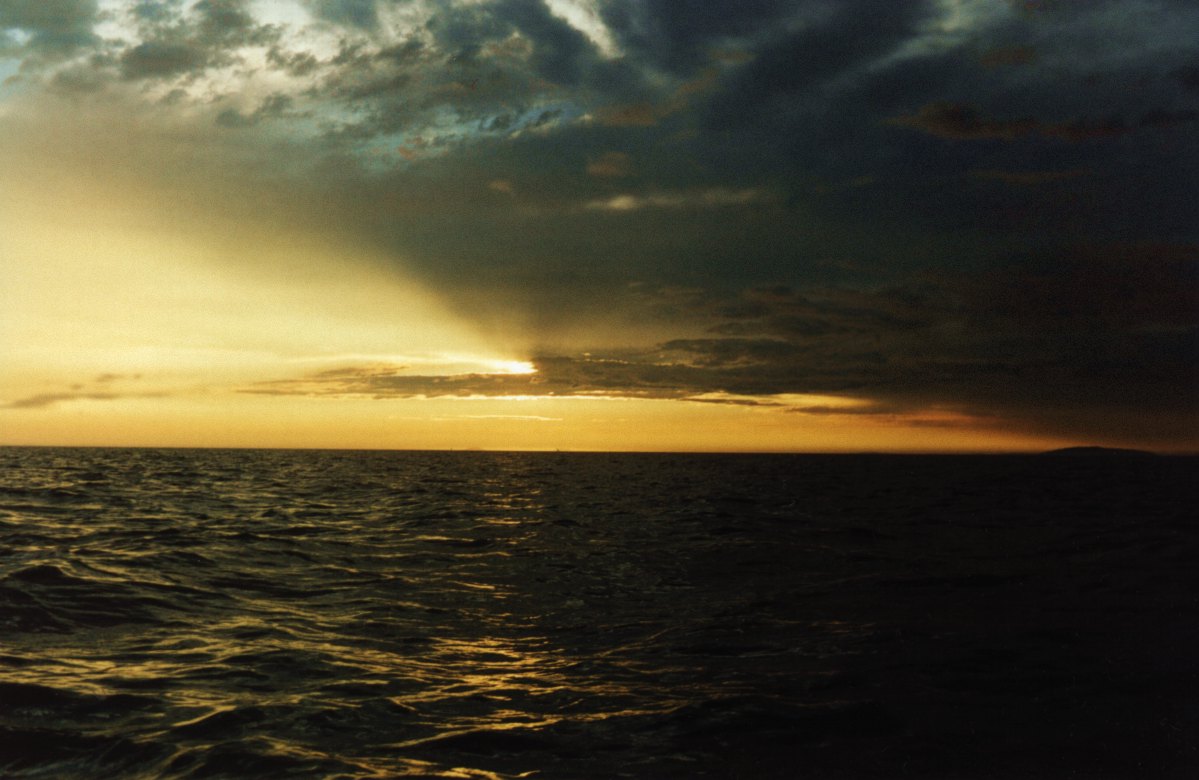
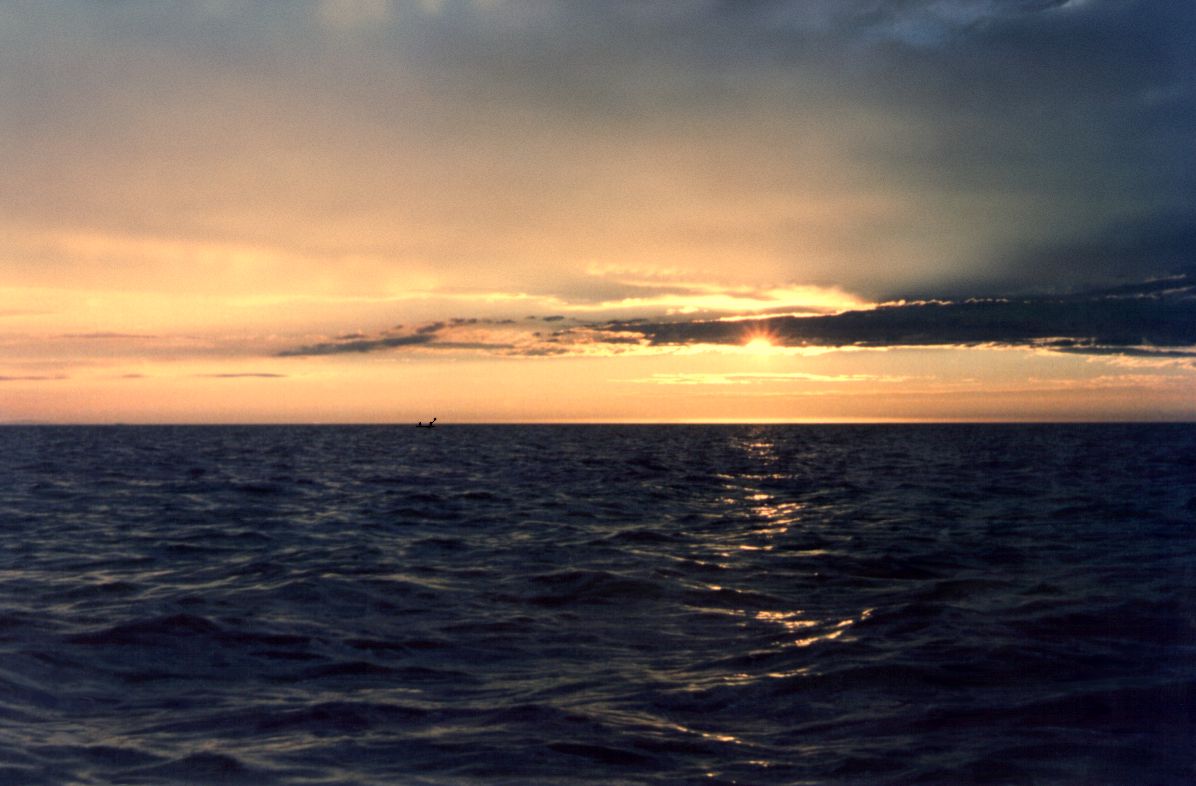
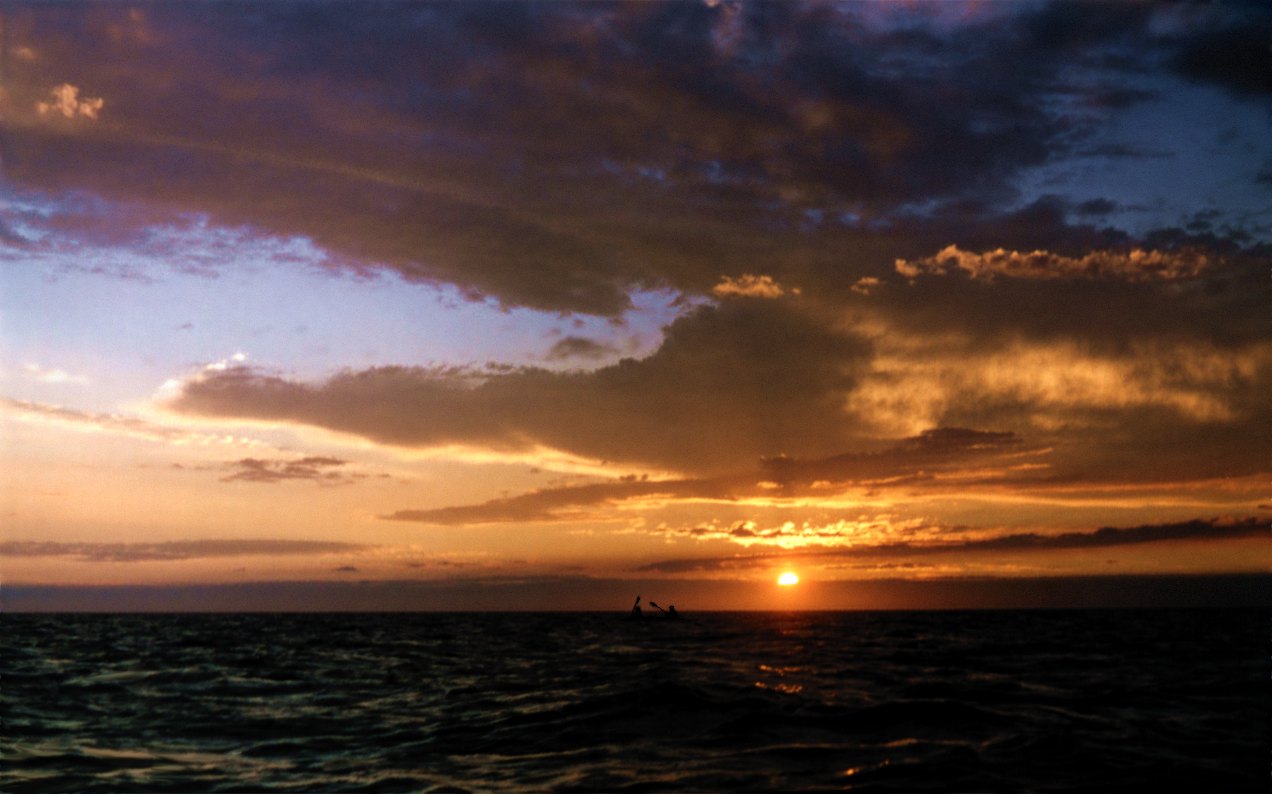
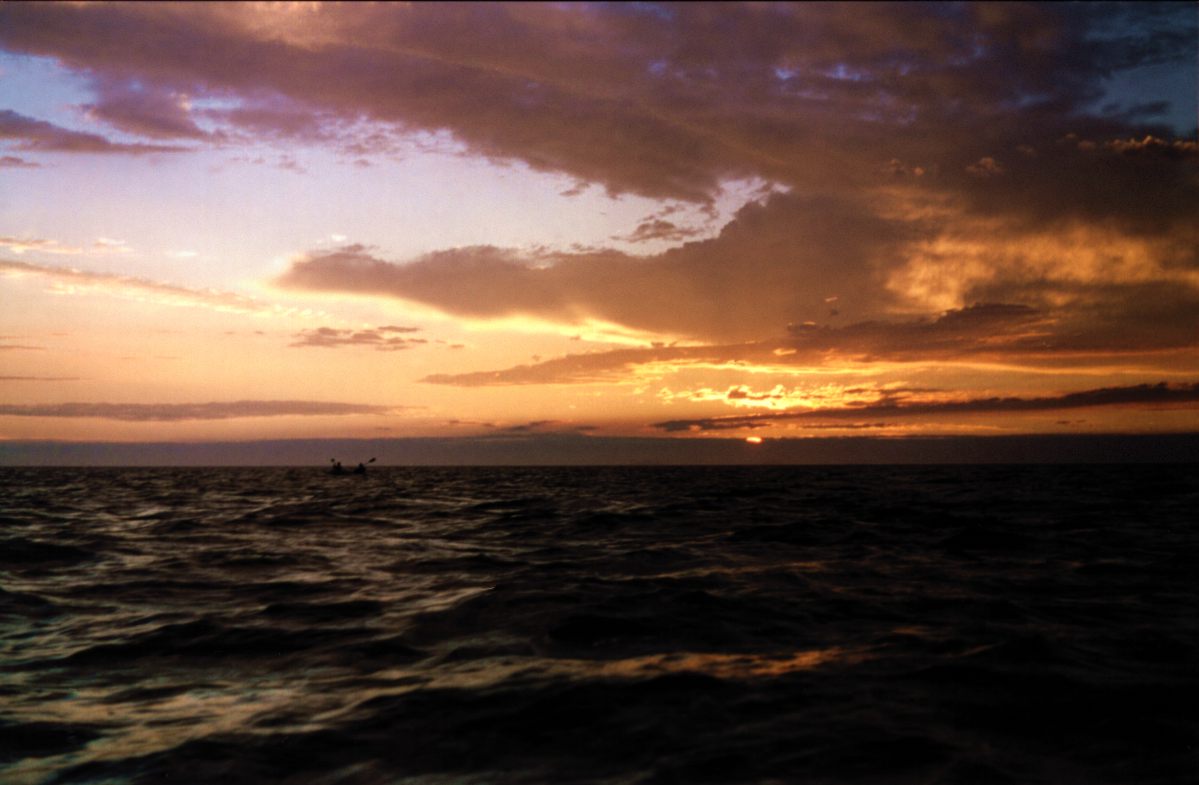
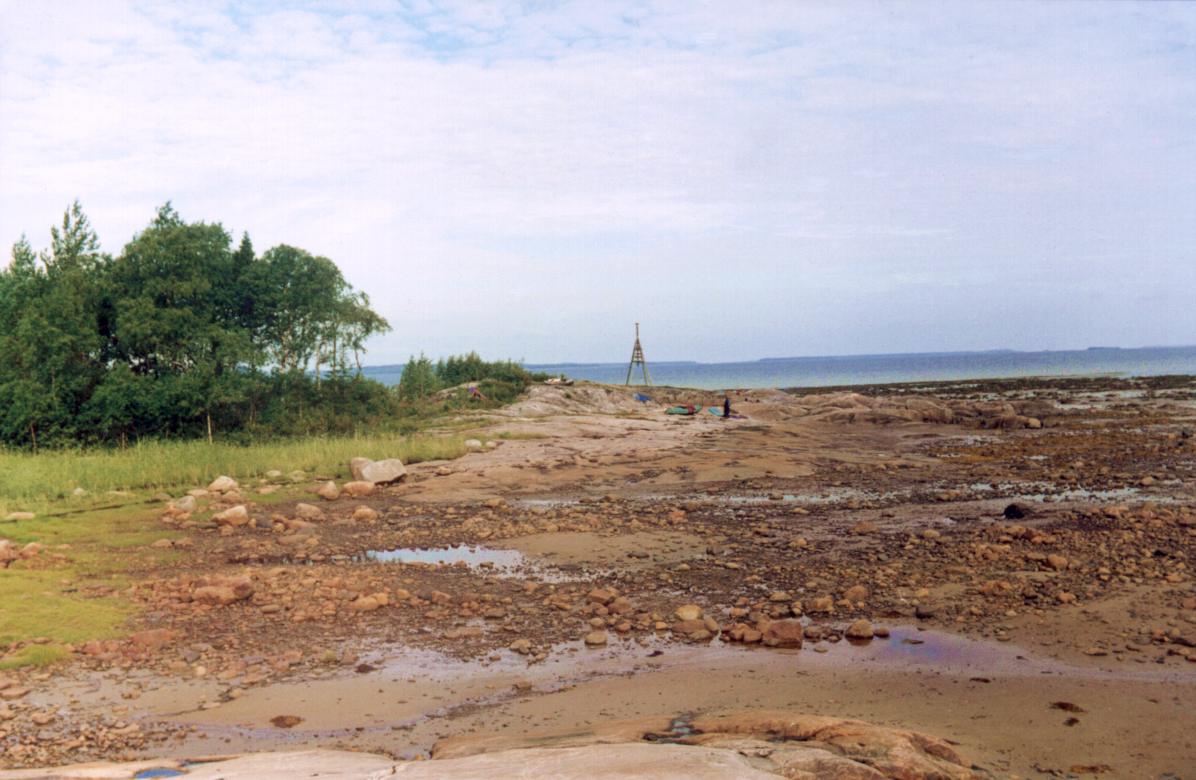
The island was close now, but it grew harder and harder to make headway. We entered the tidal overfalls. Almost every wave broke over the kayak. The current was carrying us out to sea away from the island, and we had to angle into the waves. At 00:15 we landed in the lee of Belaya Luda Island. Soaked through. Salt on everything. It felt as if I had drunk a litre of seawater. Still, we were on solid ground and absolutely delighted. There should be no more long open-water crossings. It was nearly dark as we unloaded. Jupiter shone brightly. The White Nights were ending and it was already August.
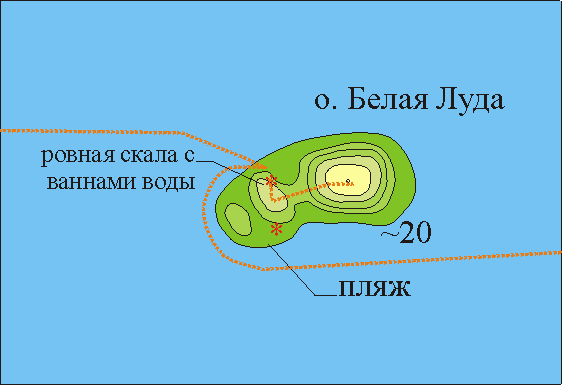
We pitched the tent in the wind at 64°05.933′N, 36°26.209′E. We could hardly get the flysheet up. The wind kept wrenching it out of our hands. The tent shook violently. We held the pegs down with enormous stones and fell asleep quickly.
1 August
We woke early. The tent was fluttering in the wind. I wanted to go out and see what the waves were doing. The sight was not encouraging. The sea was boiling. The southerly had been blowing for six days and it had got stronger every day. We had to get going. We waited for the tide. Once the current slackened, the tidal overfalls would disappear and we could leave the island. Then the ebb would carry us along the coast towards Kolezhma, with the wind behind us as well. The main thing would be to keep clear of the shore and the islands. Otherwise the weather was fine, sunny and warm, but we were tense. There was not much room to wander on the small island. We climbed to the top and left it at that. We dug up a small local juniper bush to plant on the bank at Vyritsa.
We left at 16:00. The sea had gone quieter, though after yesterday’s overfalls any swell would look like a calm. We steered north-west. The wind and waves, one to one and a half metres high, were behind us and the current was with us. We did 25 kilometres in three hours. We stopped for lunch on a little island eight kilometres from Kolezhma. We were discussing where to camp, either on Lopsky Island before Kolezhma or upriver beyond the village. While we were deciding, running aground on the ebb flats and going round Yemostrov, an awful storm blew in. We waited under a plastic sheet at first. Then we tried paddling, but another storm came and we decided to camp for the night on Yemostrov, at 64°14.060′N, 36°00.242′E.
We put up the tents in pouring rain. We could already see Kolezhma. We were in low spirits. The island was low and full of mosquitoes, the rain was dripping down, there was no firewood and we had not got as far as we wanted. We ate around half past midnight and went to bed, intending to get up early. This might be our last camp. I was determined to keep driving tomorrow until we got there.
2 August
We woke at 10:00, got packed as quickly as we could, and set off at noon. Now the wind and the current were against us, and the waves were steep. We moved very slowly and were being swept out to sea as well. After three hours of stubborn effort we finally made it to the tidal flat. It took another hour to get across it to the mouth of the Kolezhma River. I dragged the kayak part of the way. By the time we reached the river Tanya was exhausted. I waded up through the rapids towing the boat with Tanya in it. I got soaked through, but it no longer mattered. The Sochavas made it up to the bridge and we stopped 100 metres short. Just imagine if we had tried to get upriver in the dark.
We unloaded, changed clothes and went looking for transport. It is a big village, but we could not persuade anyone to drive. There were cars, but no petrol or driving licences. Everyone was afraid to go. After a few fruitless hours a man agreed to take me to Virma for 100 roubles. The road was lovely and in dreadful condition, with streams half a metre deep, sandy stretches, very steep hills and assorted potholes. It was only 80 kilometres to Belomorsk, but a three-hour drive. I got out at Virma and found the Ford safe and sound. The old woman whose yard I had left it in would take only 50 roubles even though I offered her a hundred. The car started. So far so good, except that there was barely enough petrol, no spare tyre, a dreadful road and no hope of help, because nothing ran this way.
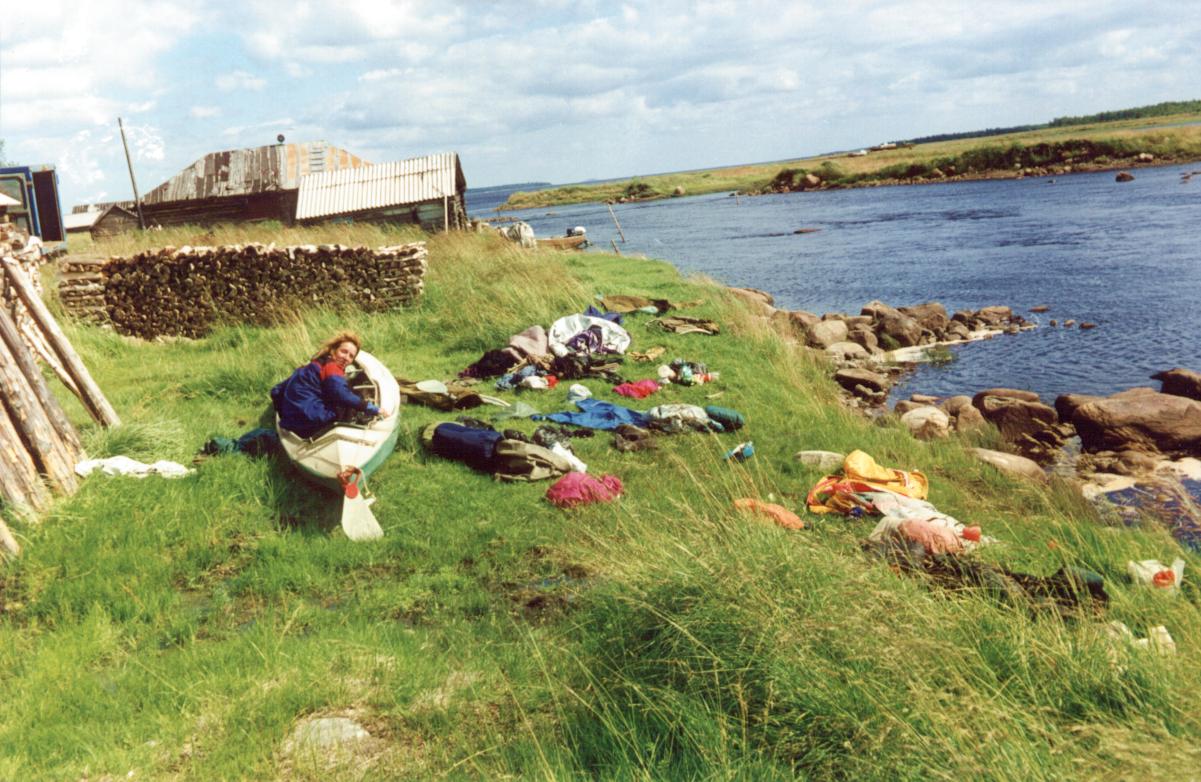
I got back to Kolezhma at 21:00. Everyone was waiting for me at the bus stop and was very glad to see me. We loaded up, polished off the last tin of stewed meat and set out. Now I made everyone get out at the worst bumps. The car was lighter and the remains of the exhaust stopped scraping. It was getting dark and the petrol gauge was heading for zero. By my reckoning we would be lucky to make it. We did make it and put in 65 litres of 92-octane petrol, which turned out to be dreadful. We stocked up on food and got going again. It was quite dark and there was no chance of getting to the city, so we camped almost where we had the first night, at 63°55.477′N, 34°01.873′E.
3 August
We woke at 10:00. Tanya and Sasha went looking for mushrooms and got lost. When they turned up, they could barely carry their haul. We were almost packed when a thunderstorm suddenly swept in. The tent was up without its flysheet and got soaked, as did all our things, but by now we did not care. The rain kept going long after our patience ran out, so we loaded in the rain, throwing things into the boot without packing them. We were all soaked to the skin, but at least we were in the car. We put the heater on full and set off. We drove out of the storm quickly. After 100 kilometres the right rear tyre gave up yet again. No spare, and a tyre shop 60 kilometres away. I took two wheels and went back to Segezha. By the time I got there, the storm had arrived too. Lightning struck the tyre shop and the lights went out. Luckily all it took was replacing the fuses. I had to buy a new tyre for one wheel.
When I got back, the car was full of mushrooms right up to the roof. Porcini were growing as freely as toadstools. A man stood nearby with a bucket of them. First he offered to sell it, then to trade it for food, then gave it to us for a crust of mouldy bread. It turned out that he lived right by the road and needed food more than money.
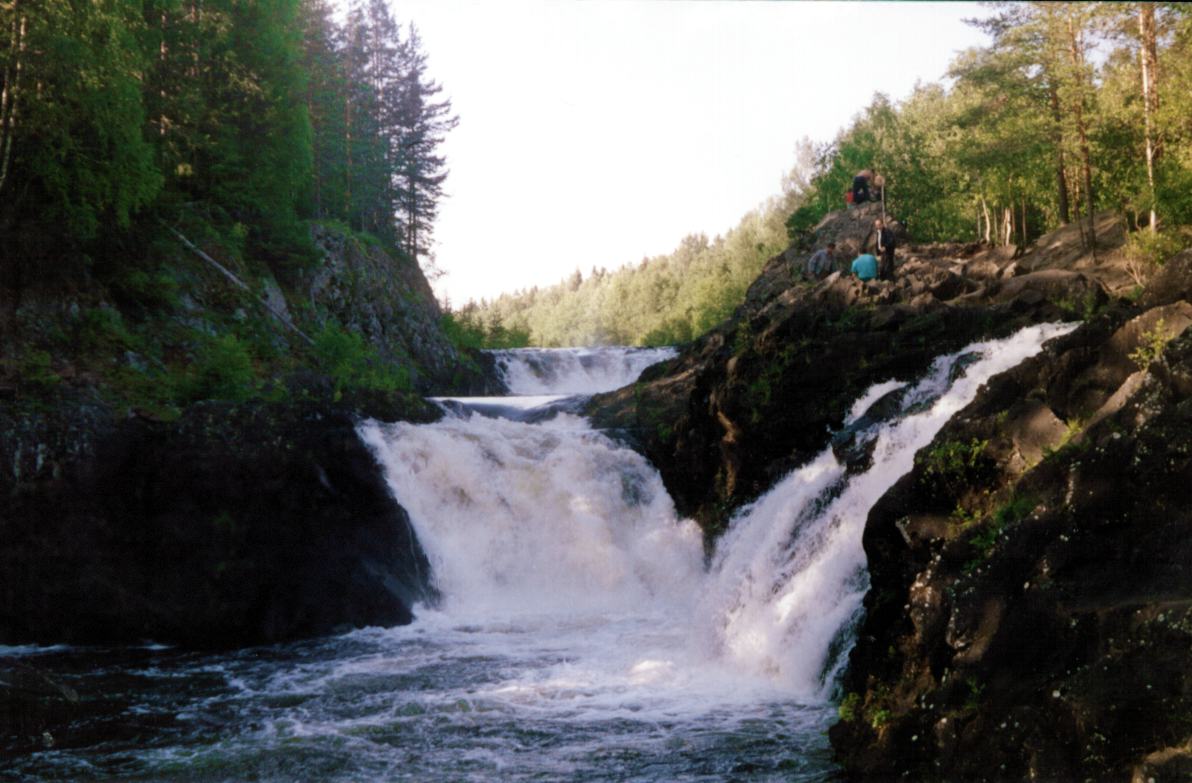
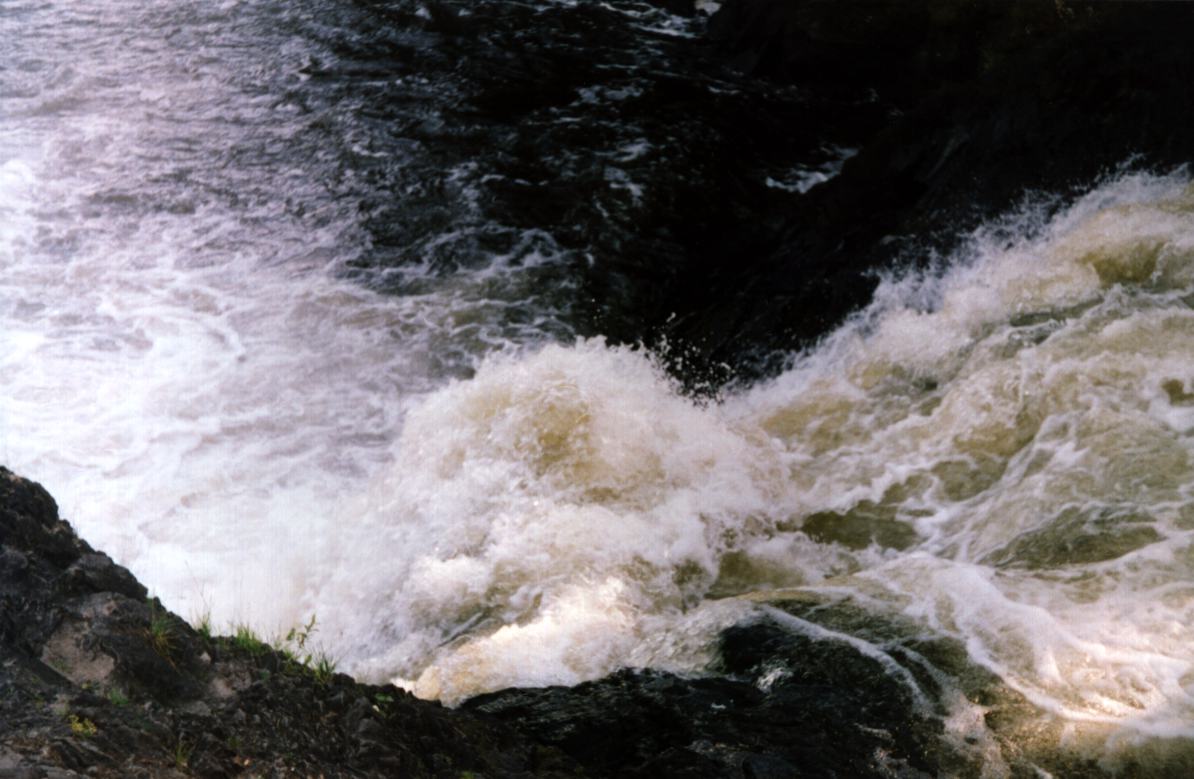
We drove on. The road goes past Kivach waterfall, so we turned off to see it. It is a nature reserve, with an entry fee of five roubles per person. A memorable bearded old man stood at the entrance taking the money and apologising for it. There were crowds of people and stalls selling souvenirs. The waterfall was not bad either. We stopped at Petrozavodsk and devoured some shashlik. After that we drove almost without stopping. It was late and we had driven out of the White Nights into utter darkness. We reached the Sochavas’ by 01:00, watched a film on video and were home by 05:00. Then we spent another half a day dealing with the mushrooms and hanging up the wet gear.