Tatiana Simo’s diary
17 July to 1 August 1995
AS is Sasha Simo, writing from memory after the trip. TS is Tanya Simo, writing on the spot.
18 July
AS. In the morning we got out at Kem. Beside us was a group heading for Pogonma. A hot day, with fine weather, though a southerly was starting. The locals said it had been hot for a month. We moved our gear down to the nearest bank. It was still the Kem River, not the White Sea. The water was fresh. We assembled the kayaks and loaded them to the gunwales. A crate of beer and 40 litres of fresh water. It looked a bit alarming. Was the whole thing going to sink?
We pushed off at 16:00. We were still on the river, with a fast current. There is a floating bridge at Latushka with a little opening for boats, but it runs in the same direction as the current. The current swept us broadside onto the logs and we spent half an hour trying to steer off. A thoroughly nasty spot. The current takes you under the logs, which have nails in them. You cannot climb on top because the first logs are not secured and float freely. We got clear in the end. We carried on. The water was still fresh, which was almost disappointing.
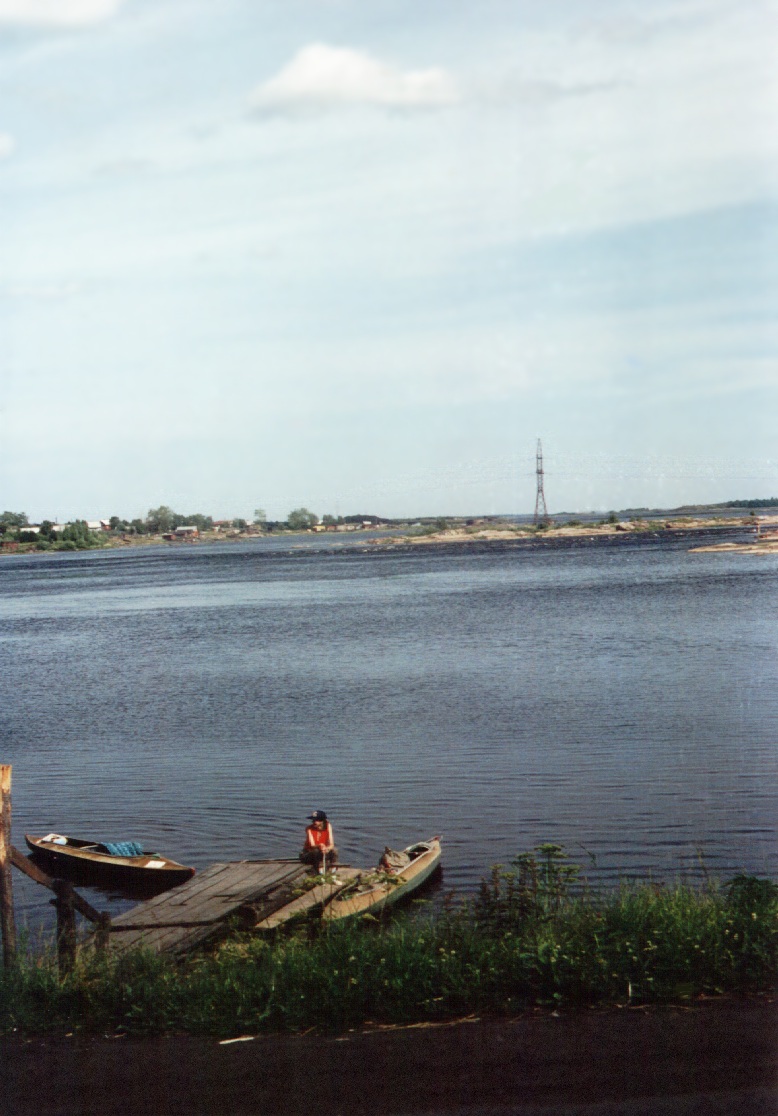
We kept to the right bank, intending to round the point and enter the mouth of the Myagreka. Suddenly we realised the tide had turned and we were running aground. We had to get out and push the kayak for several kilometres in knee-deep water. At last the water turned salty and I could see the open sea. Soon came the next trouble, a strong headwind and an ebb current against us. Before long we had worn ourselves out. Every so often the kayak swung across the wind and was carried backwards, and we could not paddle out of it.
We were trying to reach the spot on the Myagreka where Tanya and I had met exactly five years earlier, to celebrate. We finally made it at 20:20. Our place was occupied, so we camped across from it, on the other bank (64°53.945′N, 34°50.005′E). There was no fresh water. We tried without success to replenish our supply. We went to sleep early, all very tired.
TS. Tickets 300,000 roubles. Set sail 16:00 (drank two bottles of beer). Landed 20:20, Myagreka (one hour of flood tide). Long shallows at the mouth of the Kem. Sasha was the tug, and the other Sasha put a hole in the kayak. Pluses were cloudberries, bilberries and half a litre of vermouth. Minuses were few mosquitoes but lots of horseflies.
19 July
AS. Hot in the morning. We devoured the bacon and drank coffee. We set off upriver on the Myagreka to get fresh water. In the heat you want to drink all the time and the supply goes quickly. They say a litre per person a day will do. We had got through five litres each. We had to go a long way upstream. The first fresh water we found was at a little right-bank tributary. It has a small waterfall and the water there is already fresh. We filled every container. There were clouds of mosquitoes around us. We had a bite and headed back.
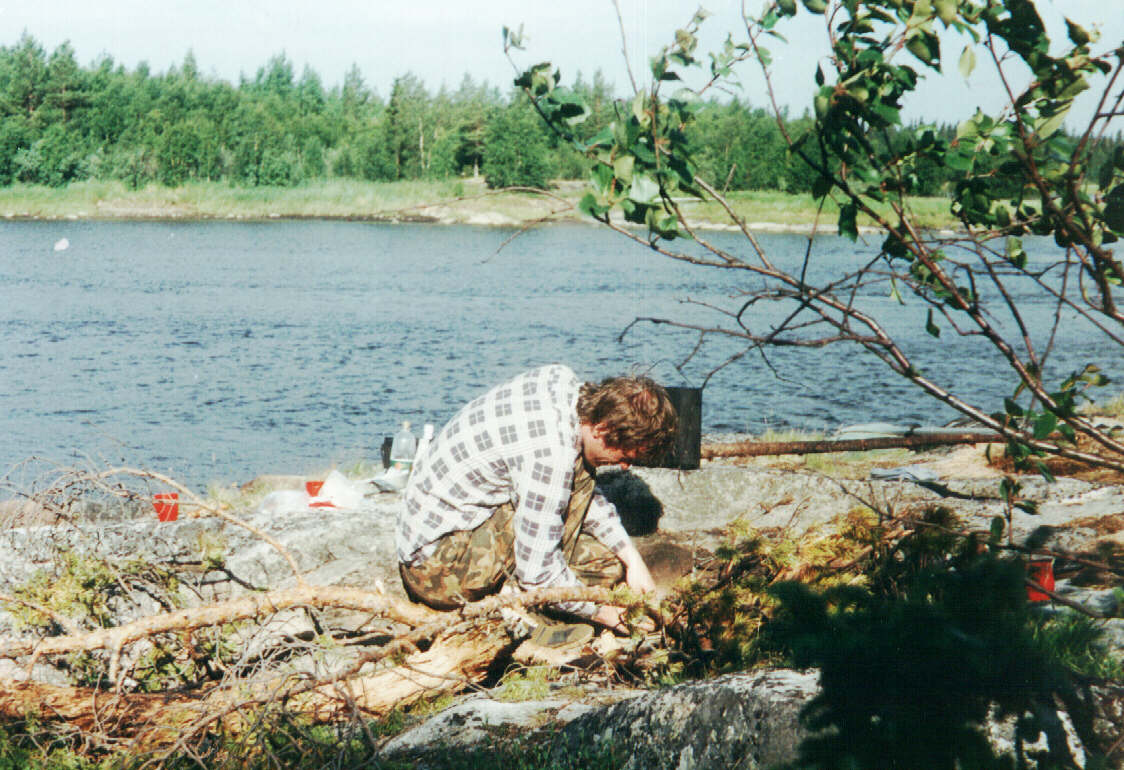
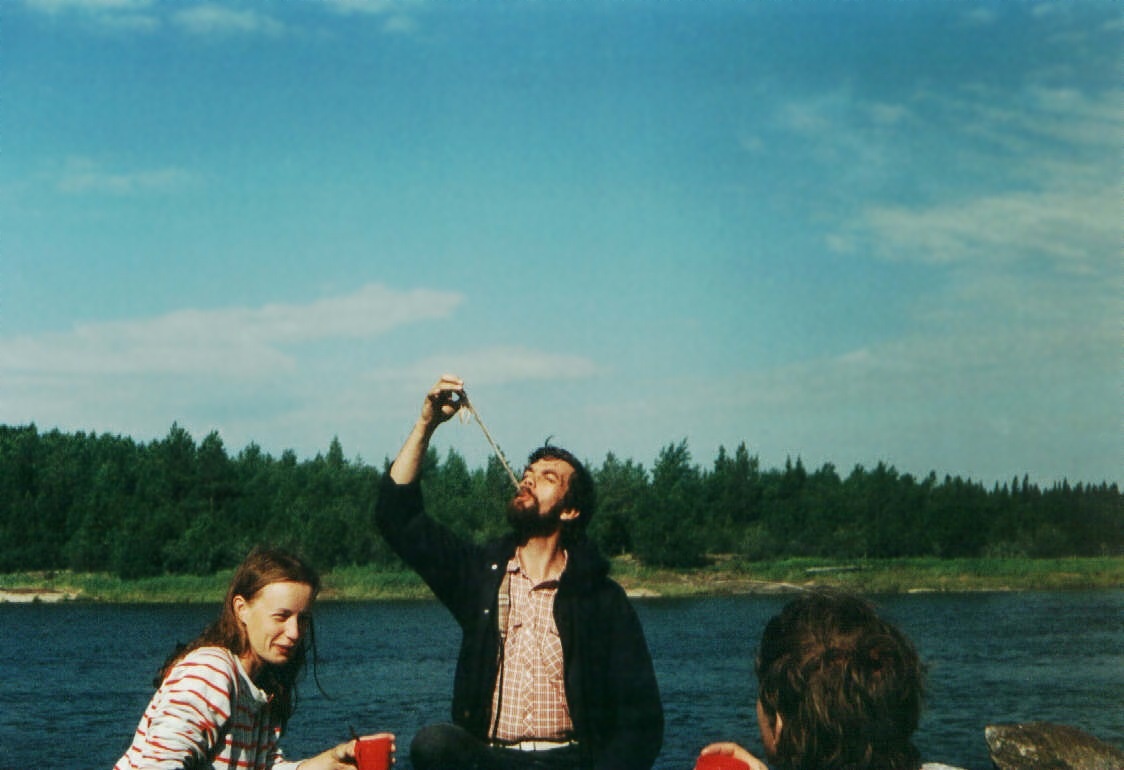
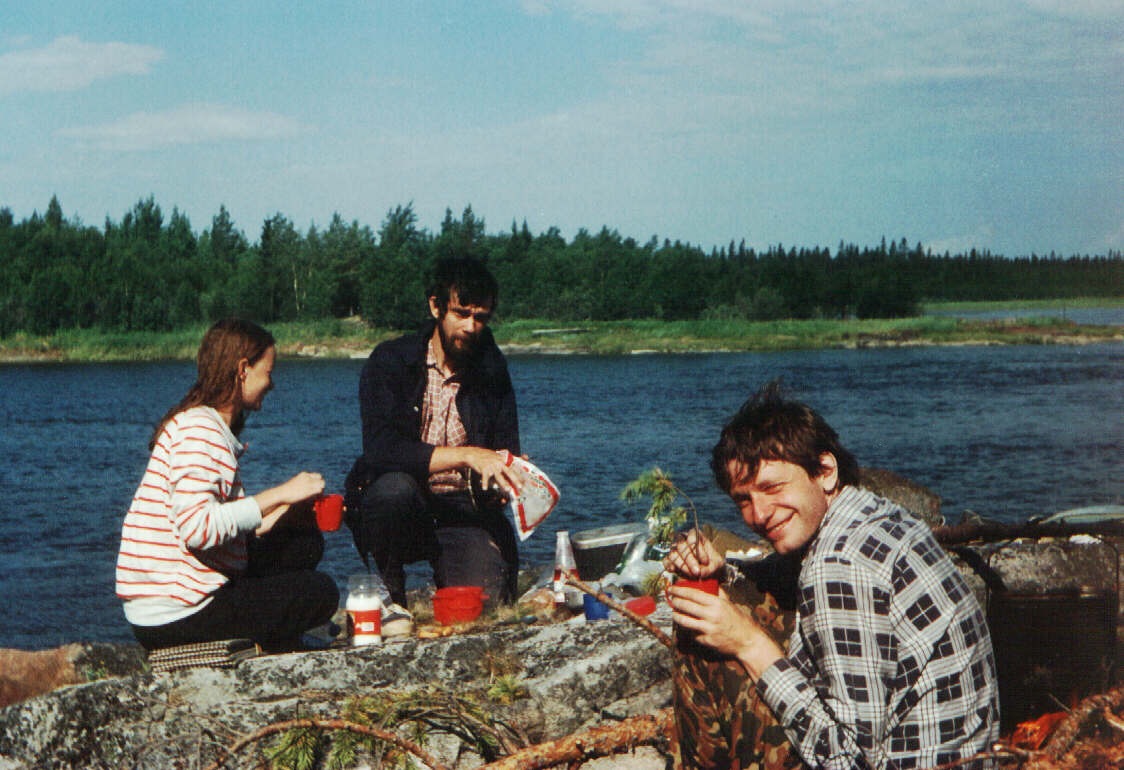
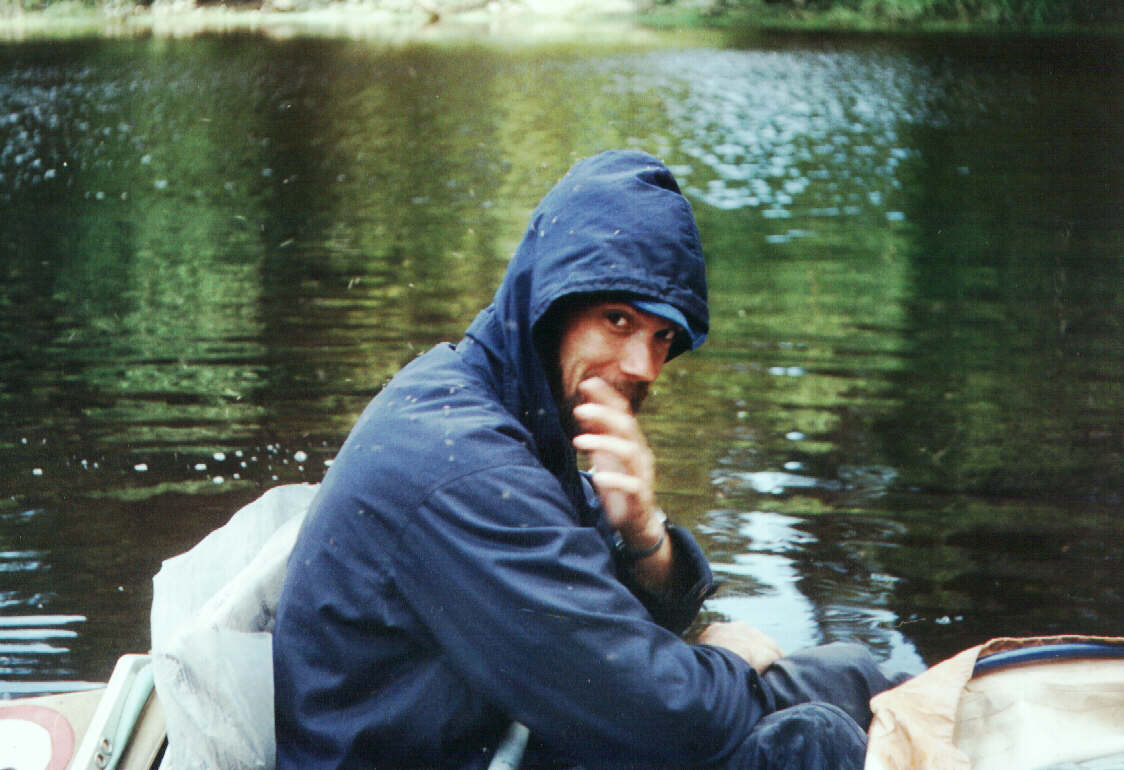
We camped at the very spot where Tanya and I watched the eclipse in 1990 (64°53.900′N, 34°49.503′E). We celebrate the date as our “national holiday”. The moment we landed we drank a litre and a half of vermouth on an empty stomach. Things got remarkably merry. We swam and celebrated until evening, when the wind brought in a thunderstorm. We were happy to collect the clean fresh rainwater, after paddling for it all morning for nothing. It turned cold after the rain and the mosquitoes came out. A steady hum hung around the tent while the swarm jabbed its noses into the fabric. There were too many for a single layer, and the ones at the back fought the ones in front for the right to get at the tent wall. Curious thing, the tent began to leak. That must have been the mosquitoes’ work.
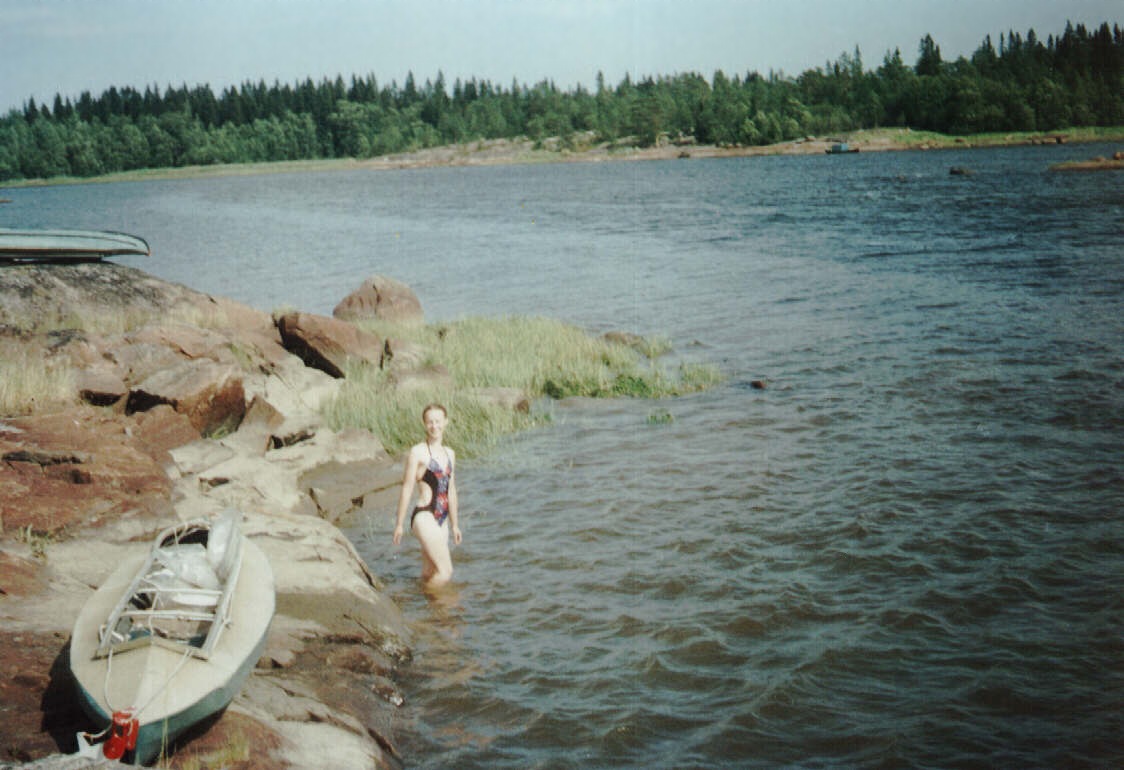
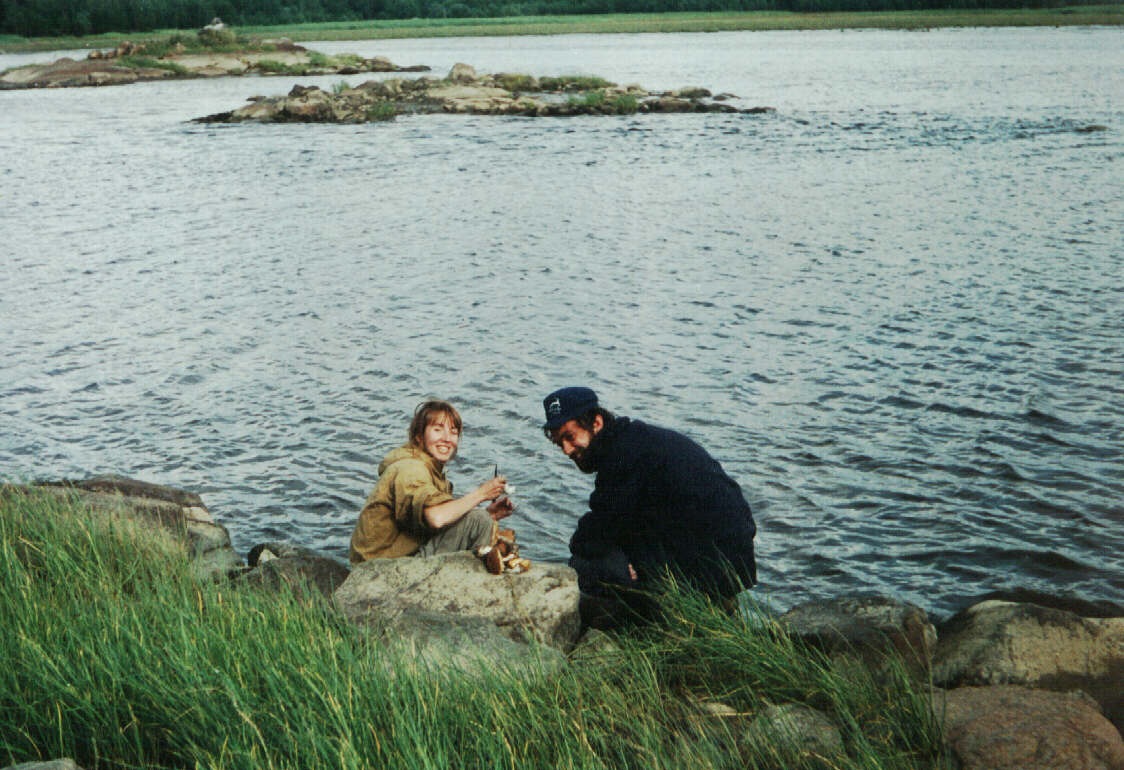
TS. Left at 12:10 to get water. Arrived at 13:00 at the old spot where we watched the eclipse. Drank a litre and a half of vermouth and ate mushrooms with worms and ketchup. Caught one fish (Marina, with a mug) and let it go.
20 July
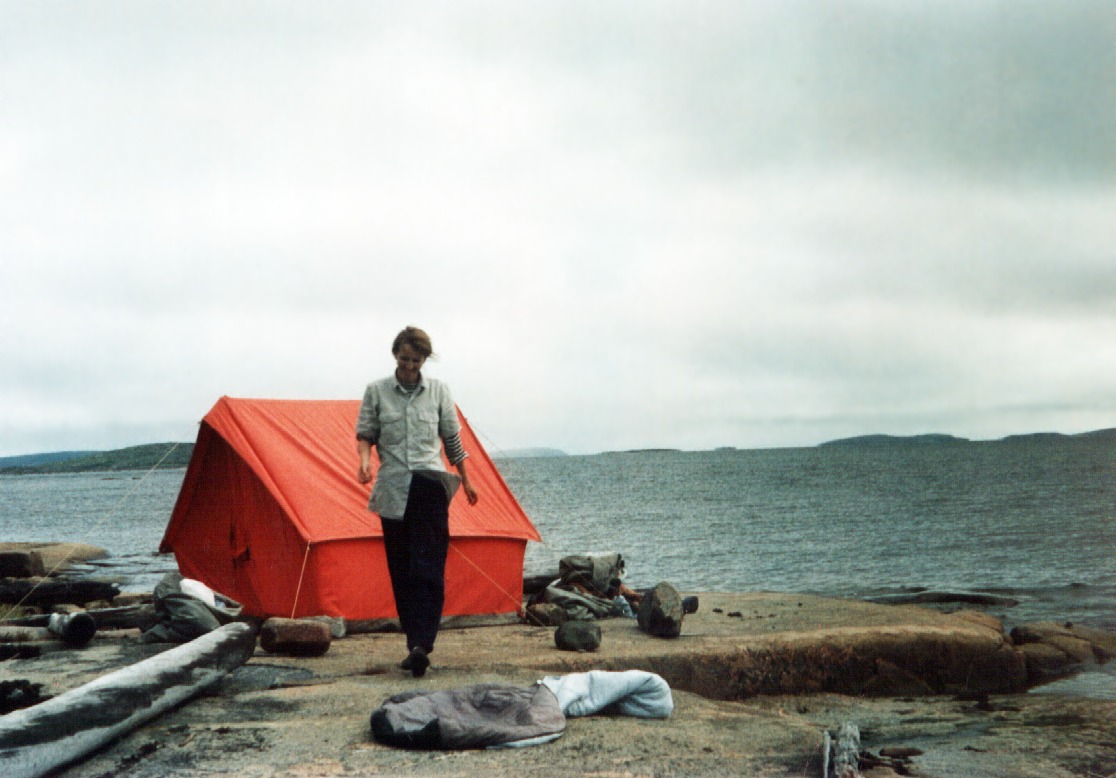
AS. Rain in the morning. A puddle in the tent. The sleeping bags and gear got soaked. Fog as well as rain, with visibility less than 100 metres. Going out on the sea seemed frightening. We waited, and nothing changed. At 13:30 we set out, intending to follow the shore. The sea was dead calm. As soon as islands appeared to starboard we lost our bearings. We got out the compass and followed it. We reached Severny Kilyak Island at 17:00 and camped on the rocky point at the south end (64°55.717′N, 34°53.738′E).
For the fun of it, we pitched right on the granite rock. It had got very cold. We put on all our warm clothes and tried to dry out. We lit a huge fire. There was firewood everywhere. At last we were dry and warm. We looked around the island and climbed to the top. Everybody was delighted. It was this very island I had seen in 1990, and for five long, hard years I had dreamed of getting here. We drank some Alazani Valley wine. By evening the fog started to lift and we could see the beautiful rocky islands.
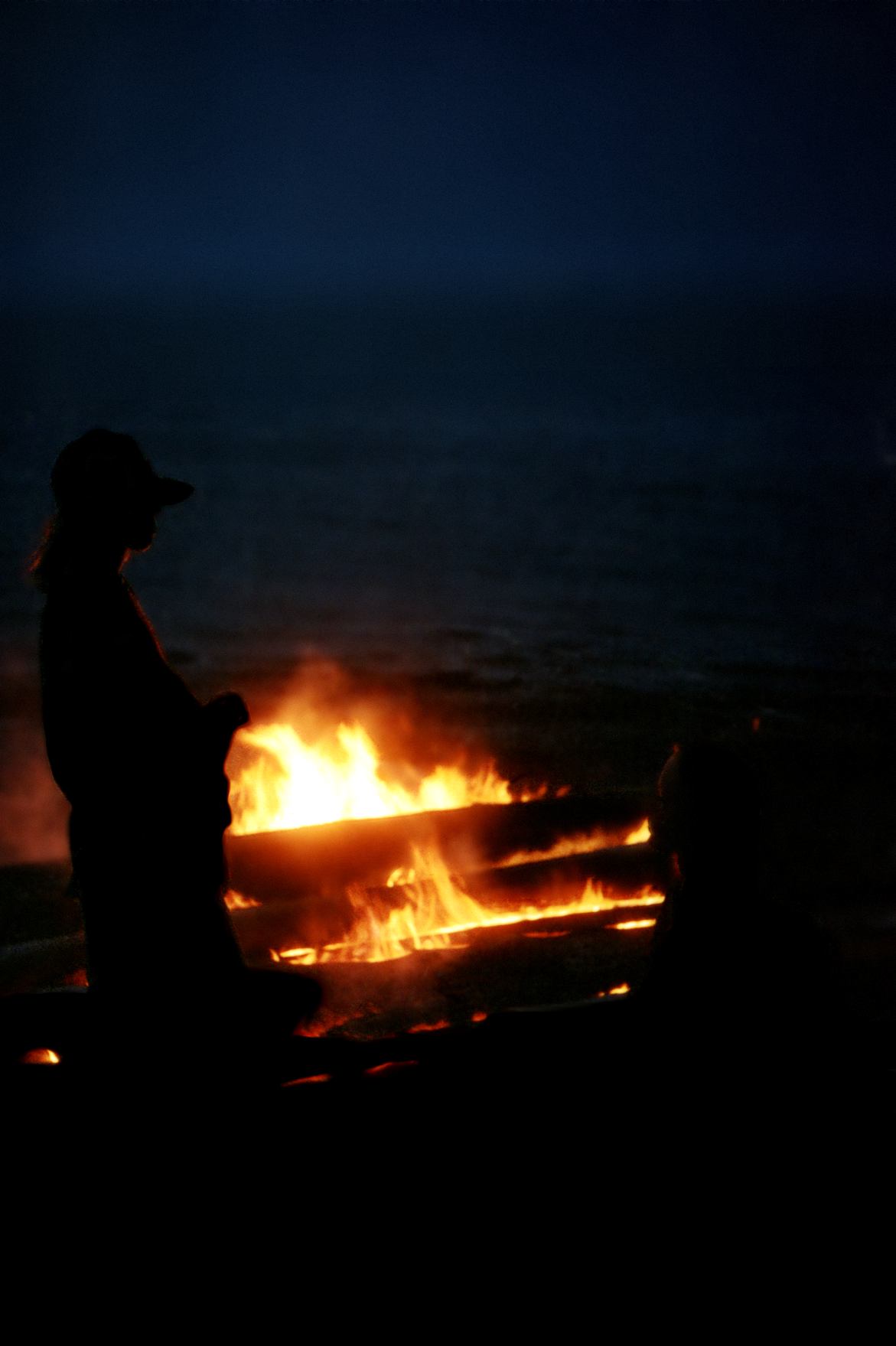
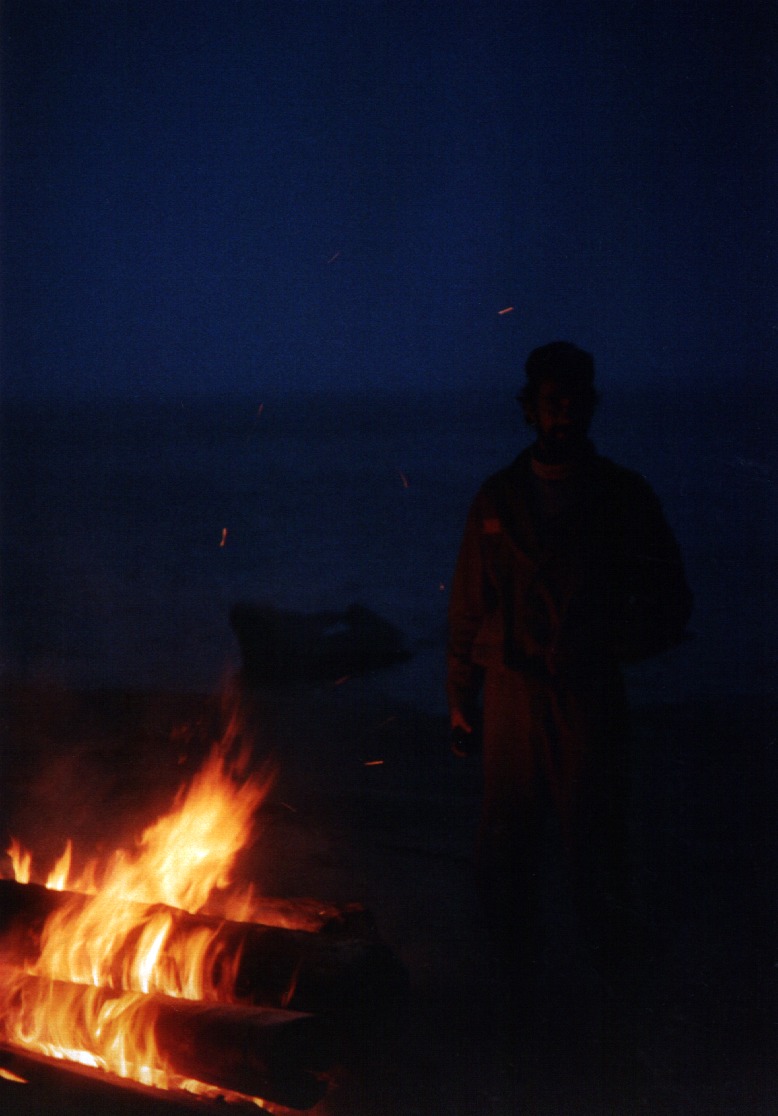
A motorboat came up to our fire. A father and son were returning from fishing. They had lost their way in the fog and the motor had broken down. They warmed themselves at our fire and decided to continue. It was a white night, never getting dark. At midnight I climbed the hill once more.
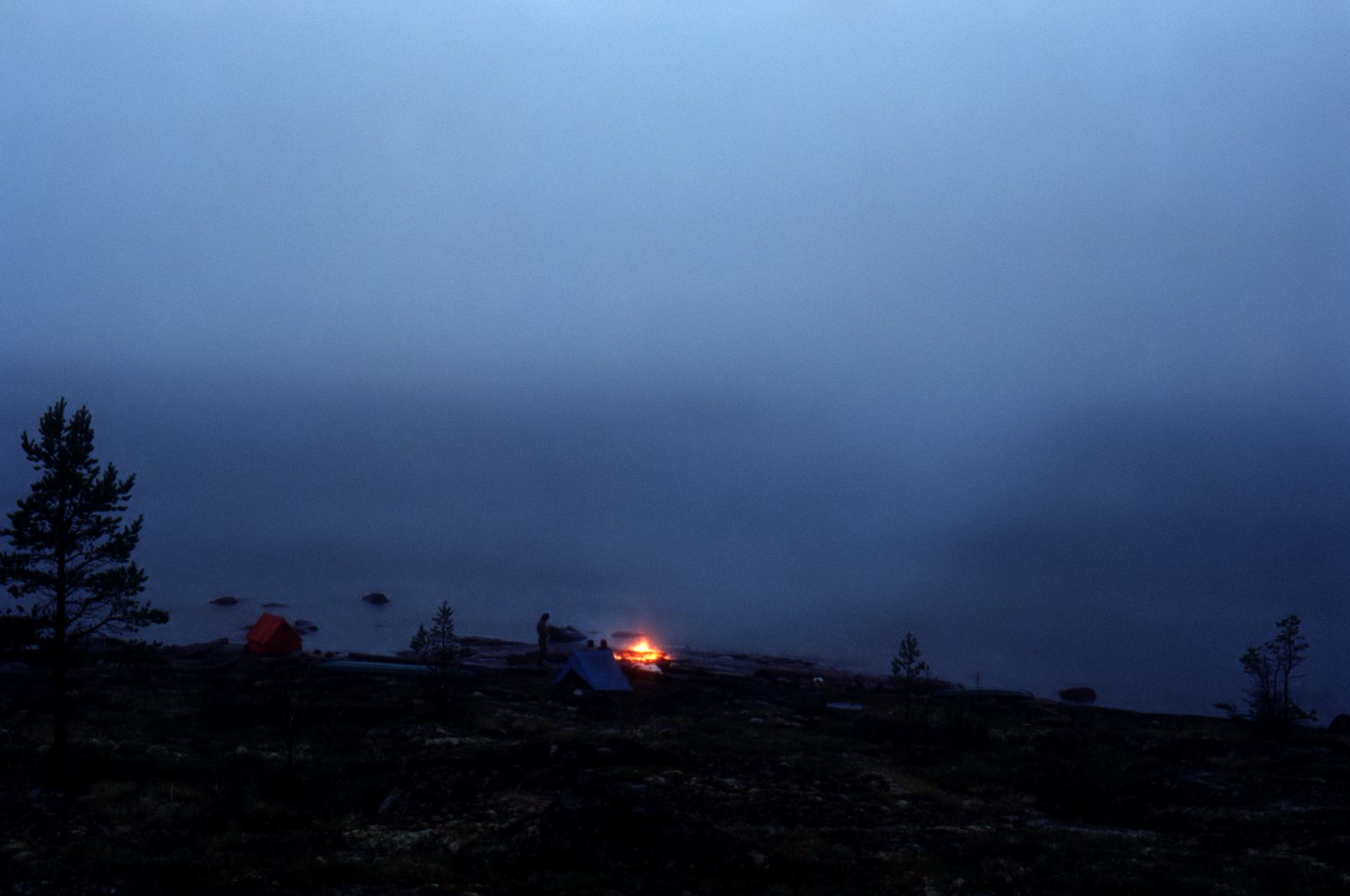
TS. Rain since morning. Set sail 13:30. Fog. Landed 17:00, Severny Kilyak Island. Discovered the fog had cleared. We could see everything. The fog thickened on the hill and we did not go to Solovki. Sasha put on his warmest sweater. The other Sasha dried mushrooms (as a souvenir). Sleeping on rock. Dinner: potatoes with stewed meat, soup and Alazani Valley wine.
21 July
AS. It rained in the night and the tent got soaked again. In the morning we went on drying things. It was cold. The fog had blown away but there was no sun. A swell had come up at sea. We went out and set a course for Kolovar. We camped on a little island south of Yuzhny Kolovar. We had mistaken it for Kolovar itself and pulled in (64°57.331′N, 34°59.998′E). Once we realised our mistake we did not feel like moving again. We camped in the channel. We had got in early, with plenty of time to walk around.
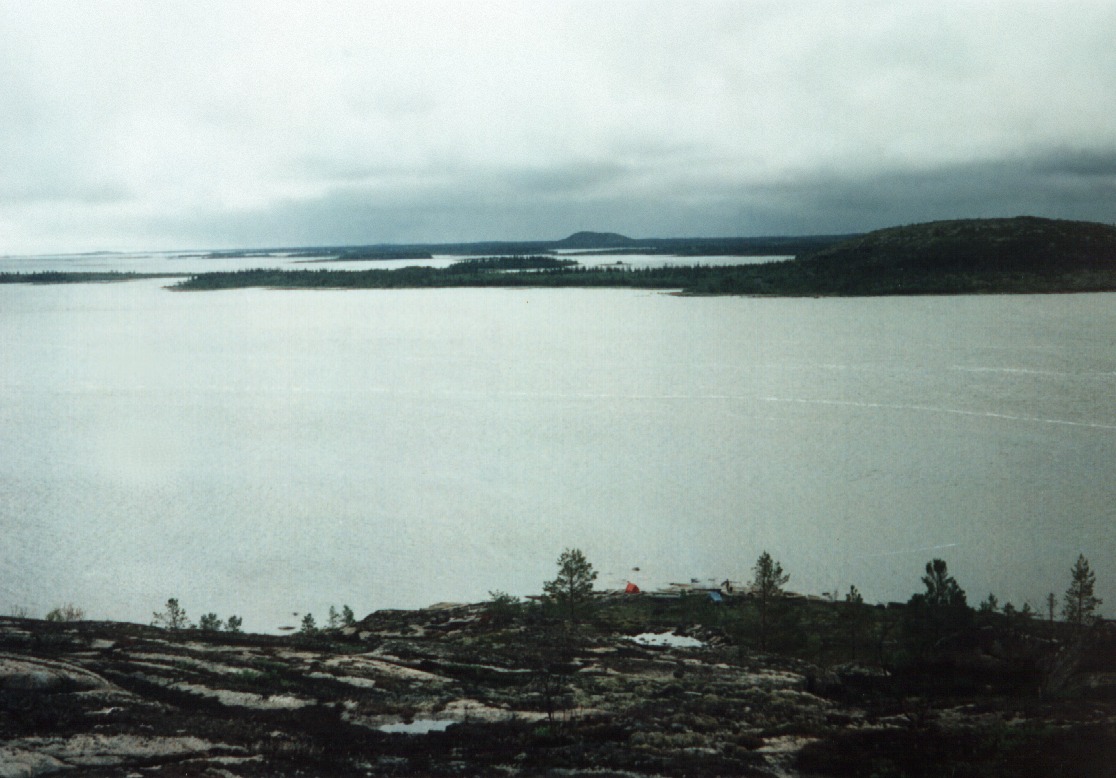
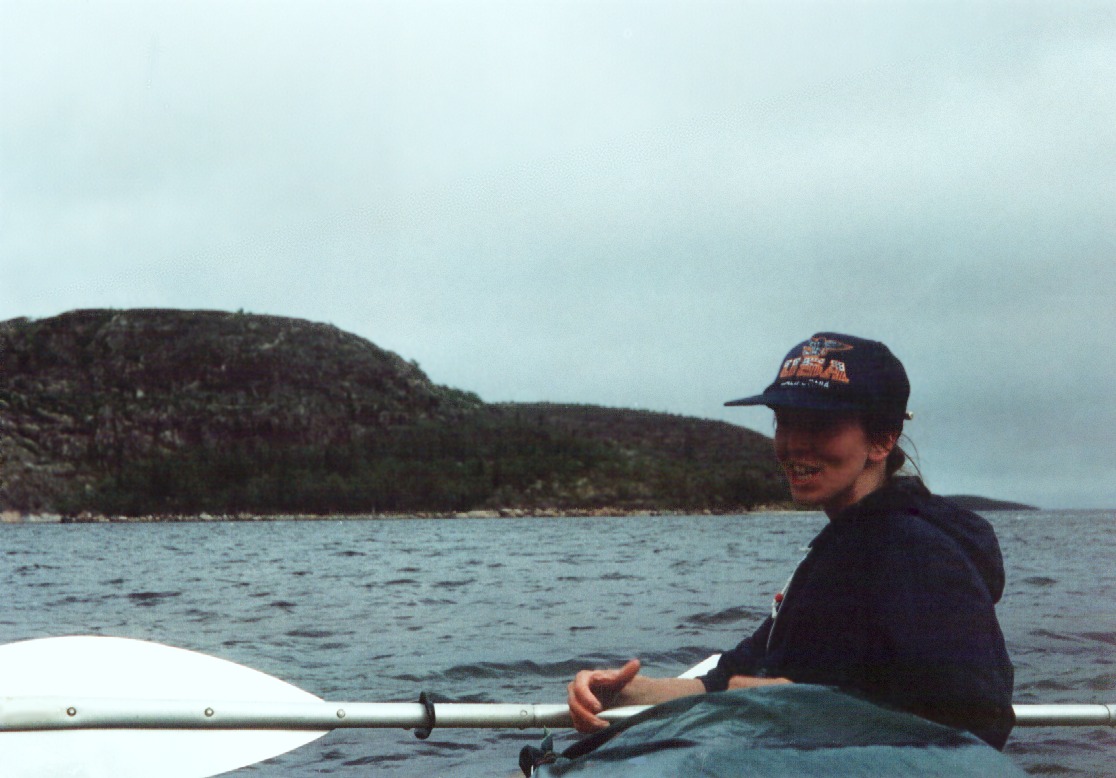
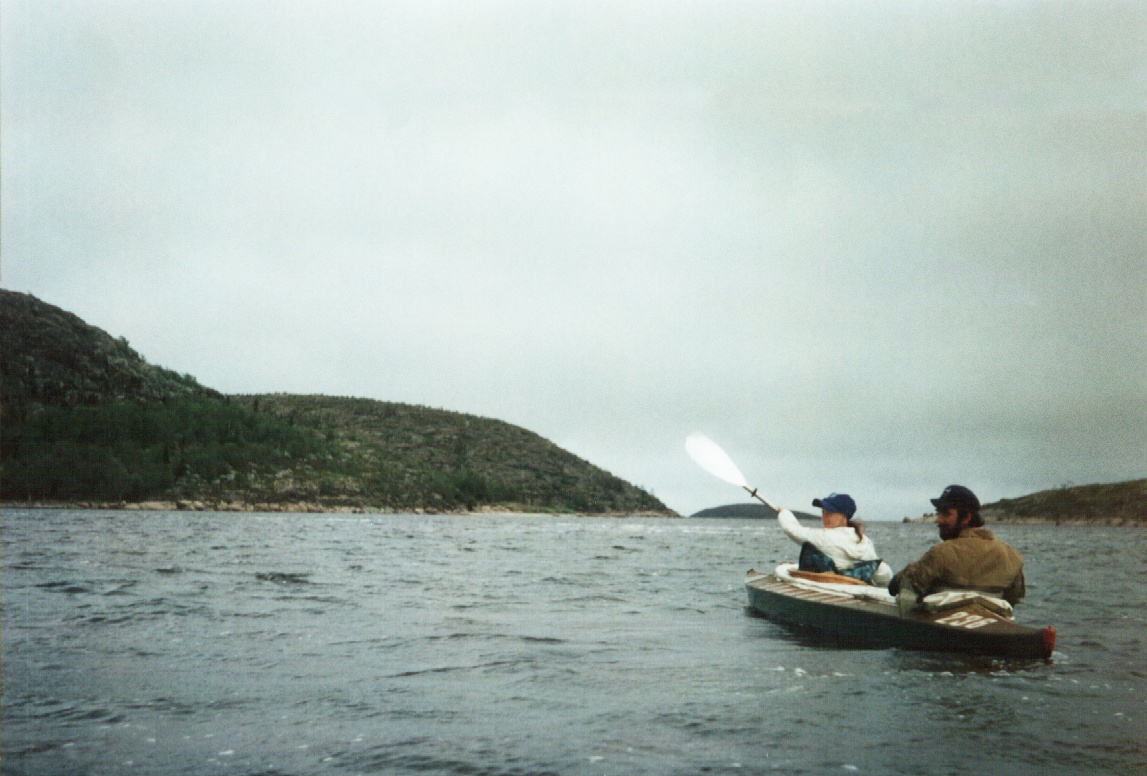
We climbed to the top of our island, walked along the shore and collected mushrooms, cloudberries and fresh water. Then we crossed the channel to Yuzhny Kolovar and spent a long time exploring it. We climbed right to the summit and found an abundance of mushrooms. The Sochavas filled every bag and even a jacket. Birch boletes grow among the rocks at the very top. In the evening a yacht came over. The men brought their own log, as is the custom here, though there was plenty of wood around, and heated their kettle. They said it would “blow” tomorrow. We went in for a swim in the evening.
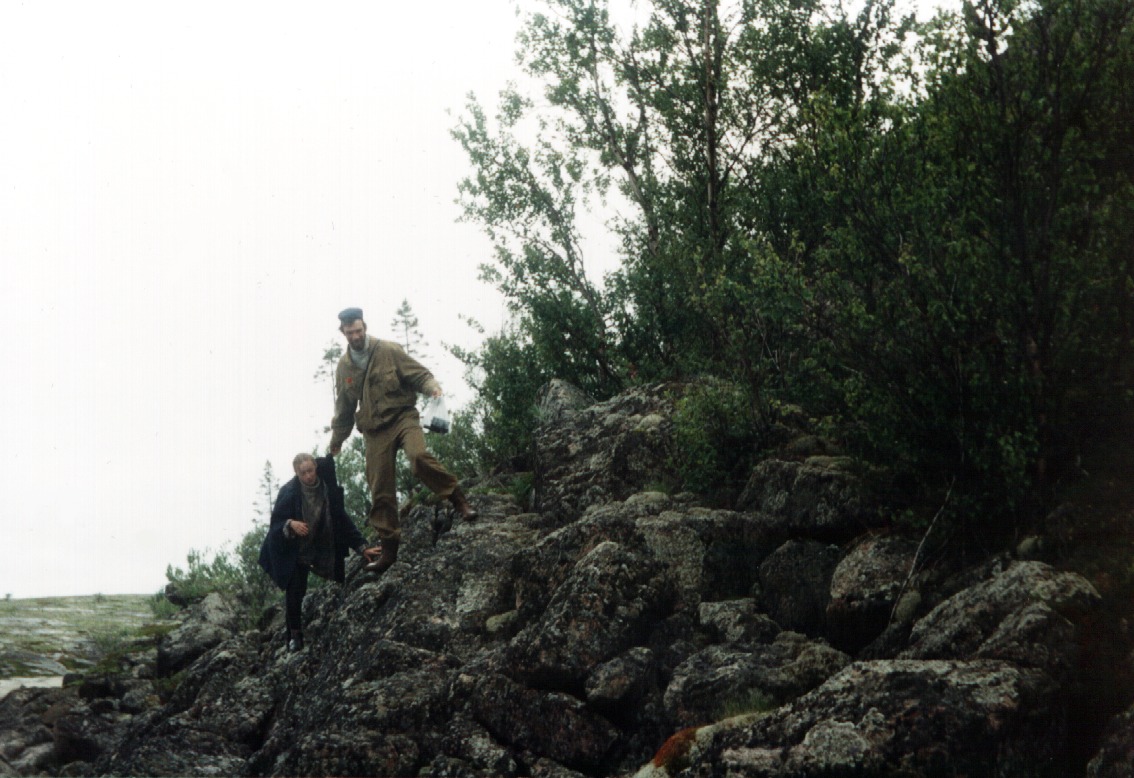
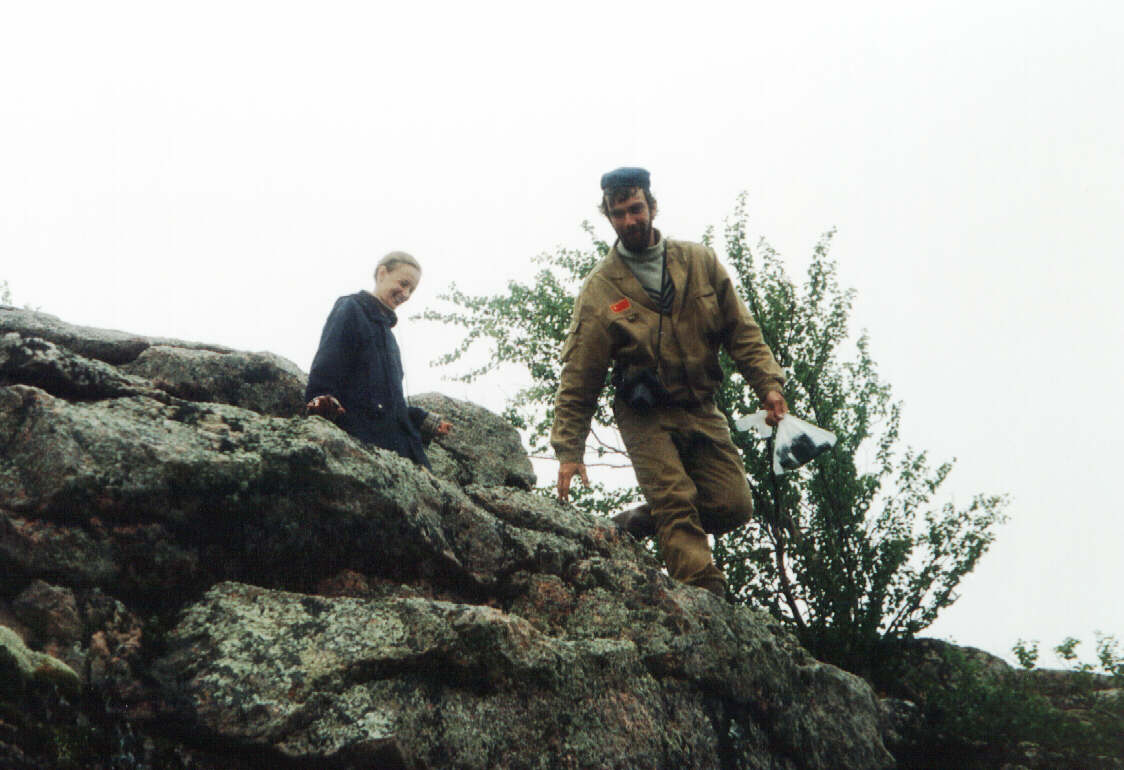
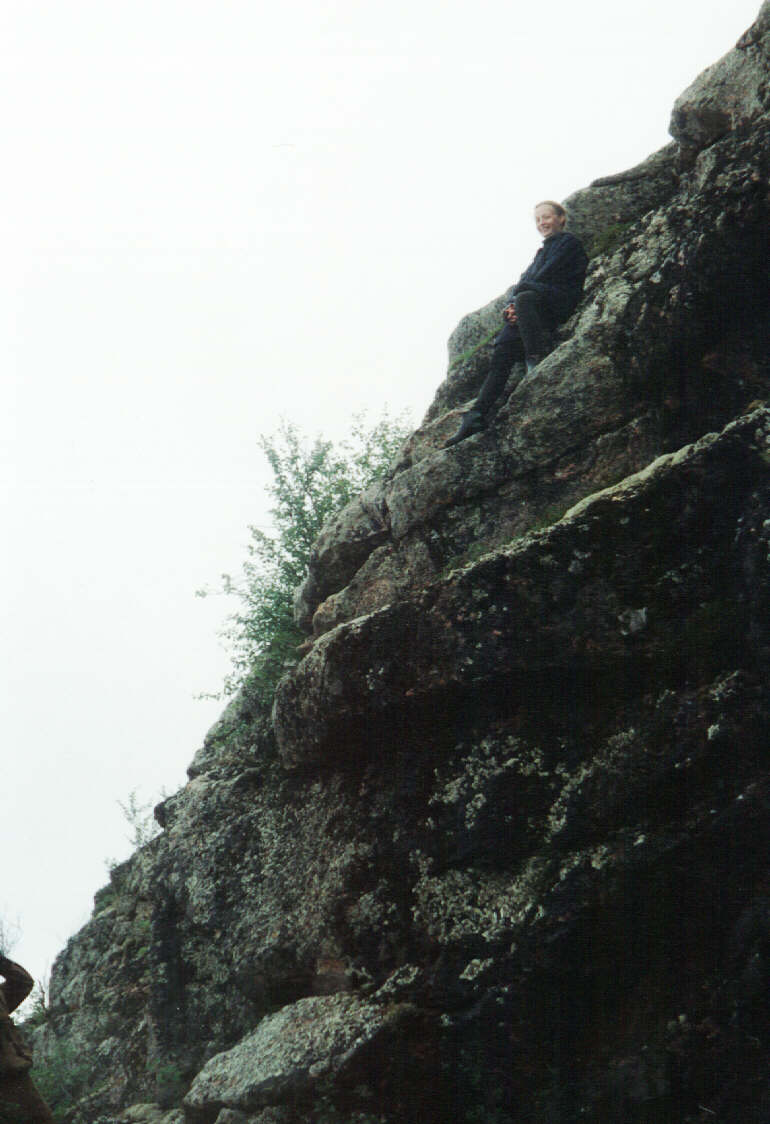
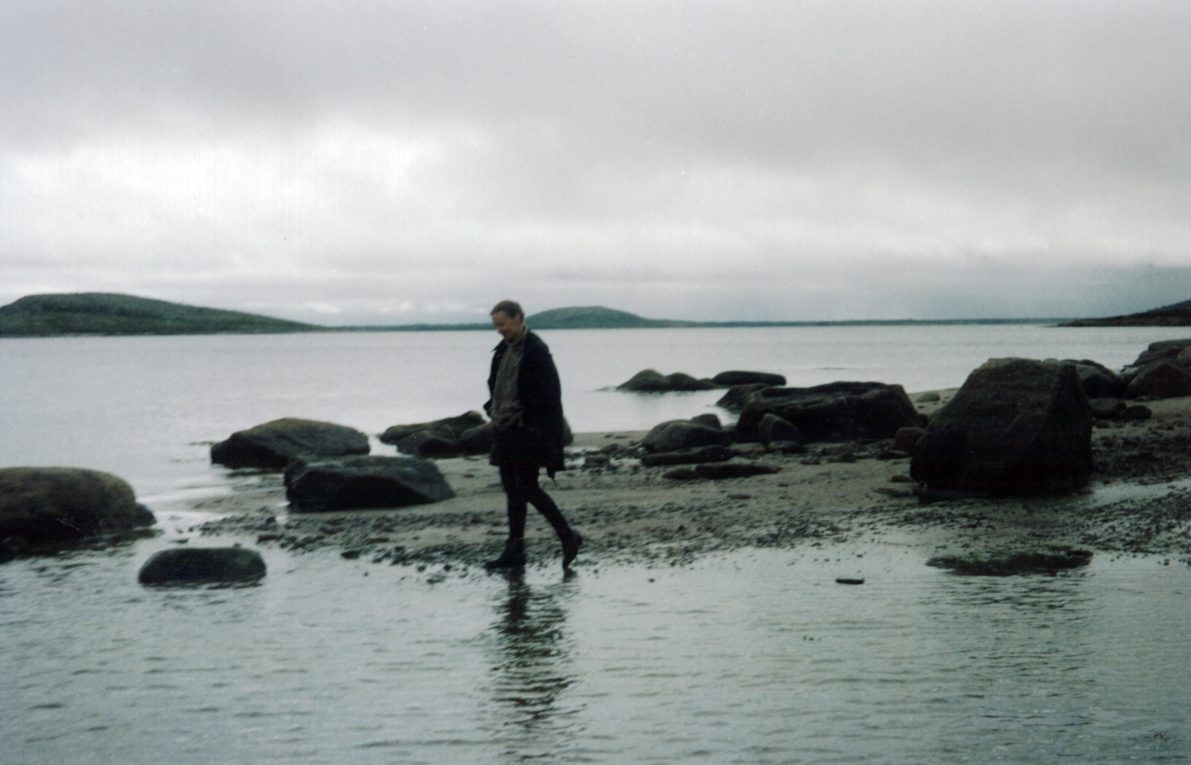
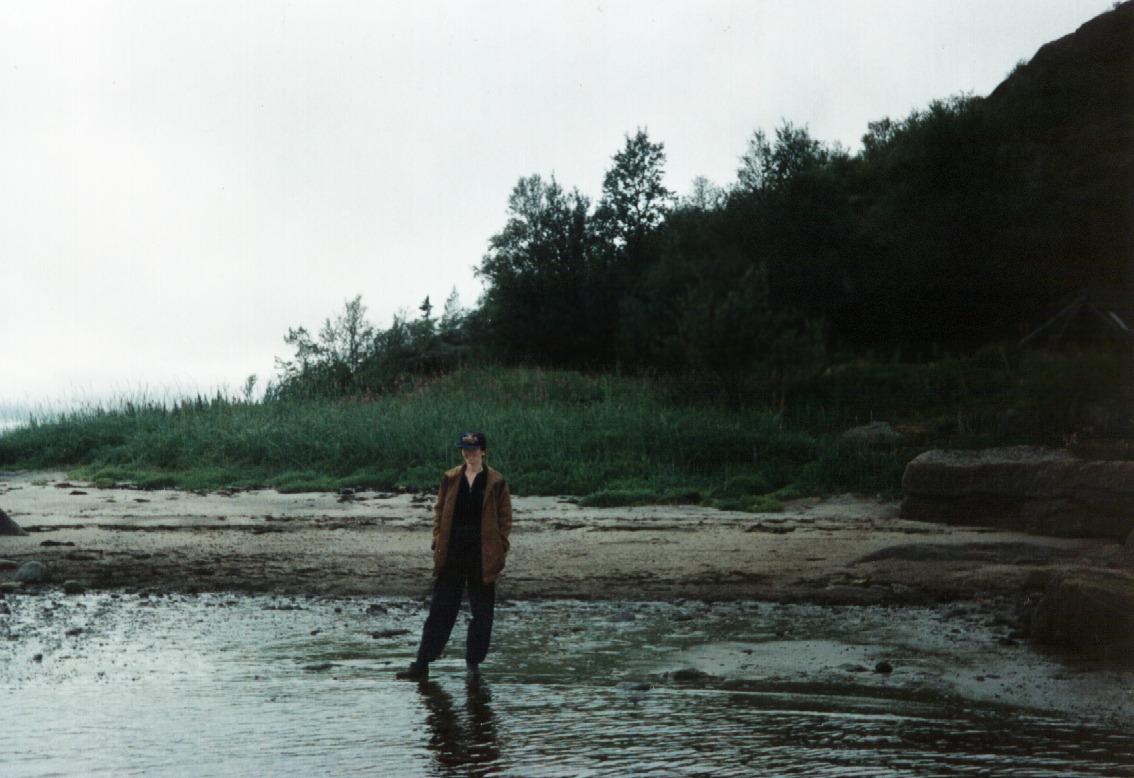
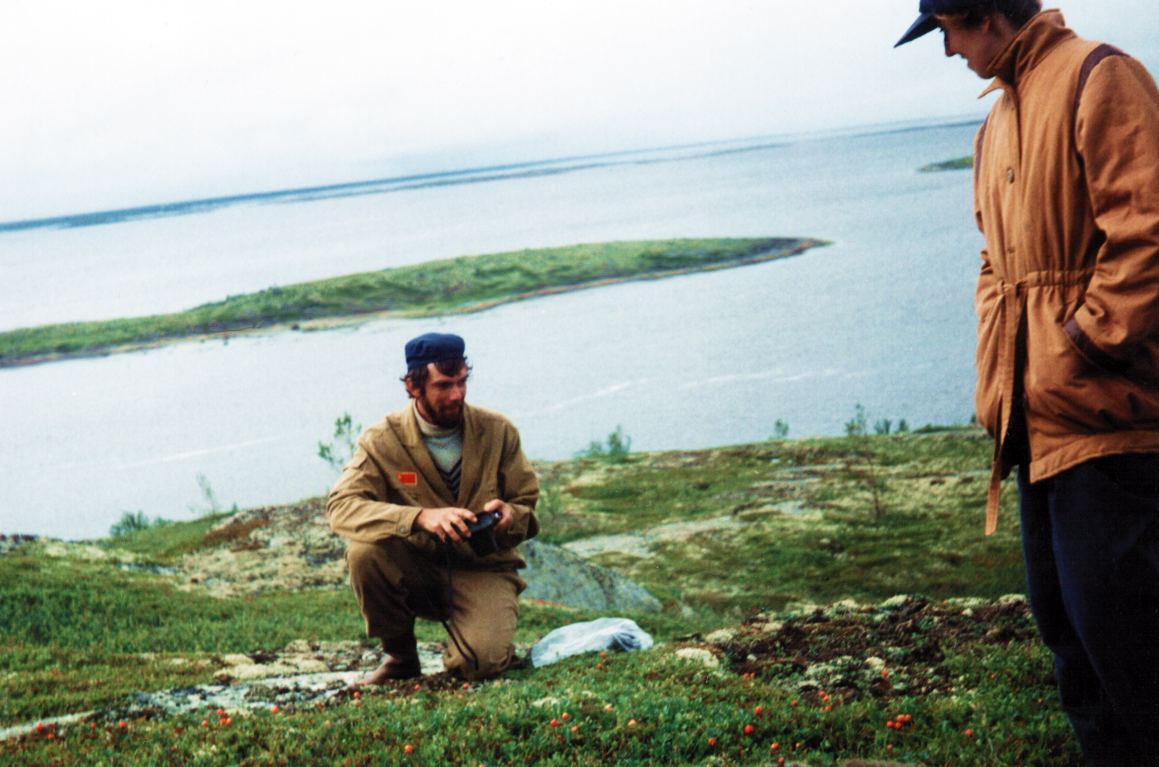
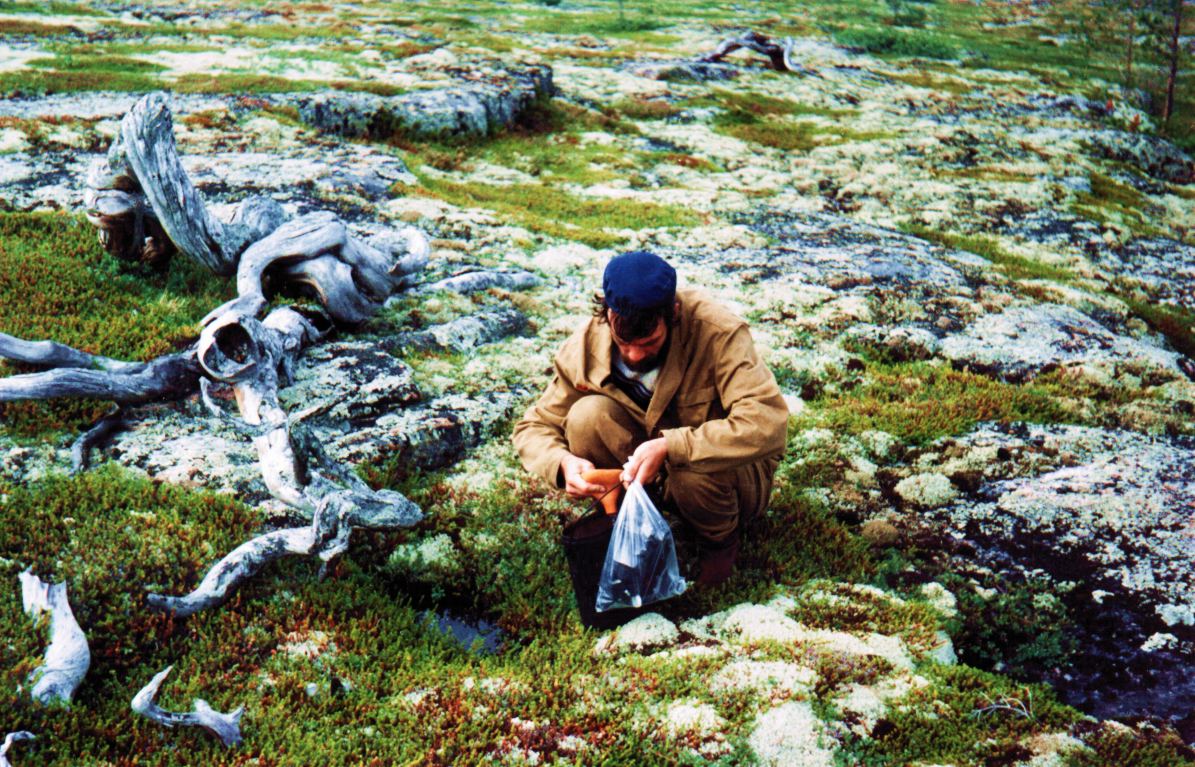
TS. Nameless island next to Yuzhny Kolovar. Mushrooms, lots of them, especially on Kolovar, and cloudberries. Sasha Sochava took off his jacket (he kept his trousers on) and scolded his wife for not cleaning the mushrooms properly. Marina, on the other hand, took off her trousers before going after mushrooms and went knee-deep into the water. Tanyukh lost the comb and snapped at everyone. Sasha found it. A yacht is coming, or rather two. Marina is washing her feet again. No rain. Men coming from the yacht with a kettle. Heated it and went off. They said we were a reckless lot and it would blow tomorrow. They wanted a drink, but we had drunk it all. We swam.
22 July
AS. Rain in the morning and we were soaked again. A swell and a vicious wind. We decided to go anyway. We would not get far. Crossing the channel would be the most we could hope for. As we started loading, the rain strengthened and the wind blew like a hurricane. By the time we loaded we were soaked through. Then it came down in a solid sheet, so we decided to stay. We put our tent back up and the four of us squeezed inside. The tent leaked, the gear was wet and it was bitterly cold. We fought the leak for ages by covering the tent with plastic sheeting. There was too little plastic and too much rain. Water started collecting on the sheet we had put under the kayak. Now we were sitting in a puddle, still soaked through. We read a book about Bulgarians who crossed the Atlantic. Lucky Bulgarians. They were fed up with being wet for days on end, but at least they were warm. We were in the Arctic Ocean.
We sat like that for six hours. The rain eased and the sun even came out. We dried things and drank some coffee, and it got hot. We packed quickly and went out into open water. We meant to go to the Kuzova Islands, but as soon as we left the channel we hit steep waves a metre and a half high. The kayak creaked. Clearly we would not get far this way. Then we saw a dreadful thunderstorm heading for us. We had to land at once. On the shore of Kolovar there was a nice little beach, with sharp rocks in front and waves breaking over them in foam. We did not want to go back to the channel and the storm was already close. We decided to run the boats up the beach.
I thought of Odysseus and the rocks rising out of the sea. The waves grew higher towards shore and rocked the kayak. Foam and commotion ahead, with sharp rocks appearing from time to time in front of it. We chose the line with fewer rocks, caught a wave and went full speed ahead. It went over my head. Wet again. What had I dried myself for? But we had made it without losing anything. We were in a shallow lagoon, with waves breaking behind us and a clear run to a sunny, sandy beach ahead. We charged ashore, cleared a spot in a carpet of red-capped mushrooms and pitched the tent (64°56.828′N, 35°00.038′E).
We had made it in time. The storm arrived. We watched the lightning hit the islands and the sea through the open tent door. The storm passed quickly and left a lovely clear evening. We made a delicious soup, dried out again and felt wonderful. Maybe the bad weather was over. We walked around the island and reached the channel between Yuzhny and Severny Kolovar. A feeble channel. You could wade across. We picked more mushrooms, but now only small red-capped ones and porcini. We kept walking until 23:00. At about one in the morning I climbed to the top of Kolovar and took pictures looking north. Beautiful. My heart was singing.
TS. Up at 10:00. Weather a little wavy. First departure, strong wind. Packing to leave, porridge eaten, weather worse. Nyukh had not brushed his teeth. Marina could not find her comb. Then rain, and very wet. Decided to go. Took the tent down. Told Sasha off. Put dear little Tanya in the water to hold the kayak. Sasha Sochava put his foot in deep and fell into the water. After that it rained very hard and we put the tent back up, but everything was wet and the ceiling dripped. Made a drain. Started dripping on the other side. No energy for a second drain. Sitting in a puddle.
Suddenly the rain stopped. We began drying things. It got hot and the sun came out. Clear skies, waves gone. Everything dried. We drank cocoa and set off again for Severny Kolovar. Out at sea the waves were at least a metre and a half. Nyukh squeaked. Sasha yelled “Banzai!” Back to the bay. Sochnya said, “Run it up on the sand.” A dreadful storm behind us. The nice sand turned out to have big sharp rocks, but the wave was so good we went over without noticing. It soaked the back of Sasha’s head, his shoulders, back, waist and so on. Landed without losses. Sitting in the tent. The lightning keeps going bang and it is frightening. A sip each of cranberry mulled wine and everything seemed lovely. There was even supposed to be sunshine outside, according to Sochnya. Hungry again. Mushrooms visible from the tent window.
23 July
AS. Morning, sunshine, sea and palm trees. Hot. We walked, swam and sunbathed, then set out for the Kuzova Islands. The swell from yesterday had not died away. We took the shortest line to Russky Kuzov. It grew colder as we paddled and we put on more clothes as we went. We entered the channel between the Kuzova Islands. Quite a few people along the shore. Some fishers came towards us and proudly showed us their catch, a single fish 30 centimetres long. We decided there must be very few fish here if they were showing off a tiddler like that.
The good campsites were taken. Some people on catamarans were camped by the hut on Nemetsky Kuzov marked on the map. They filmed us. I would love to see that. If you are reading, let us know. We camped on a little point in the channel between Nemetsky Kuzov and Vorony Island (64°56.910′N, 35°10.485′E) and went straight up to the top. It is not hard to climb. About 120 metres high. Kuzov’s summit is granite. Below it lies untouched, nearly impenetrable taiga. A marvellous view from the top. You can see Solovki. You feel like rushing straight over. Nemetsky Kuzov looks like a volcano and rather like The Mysterious Island.
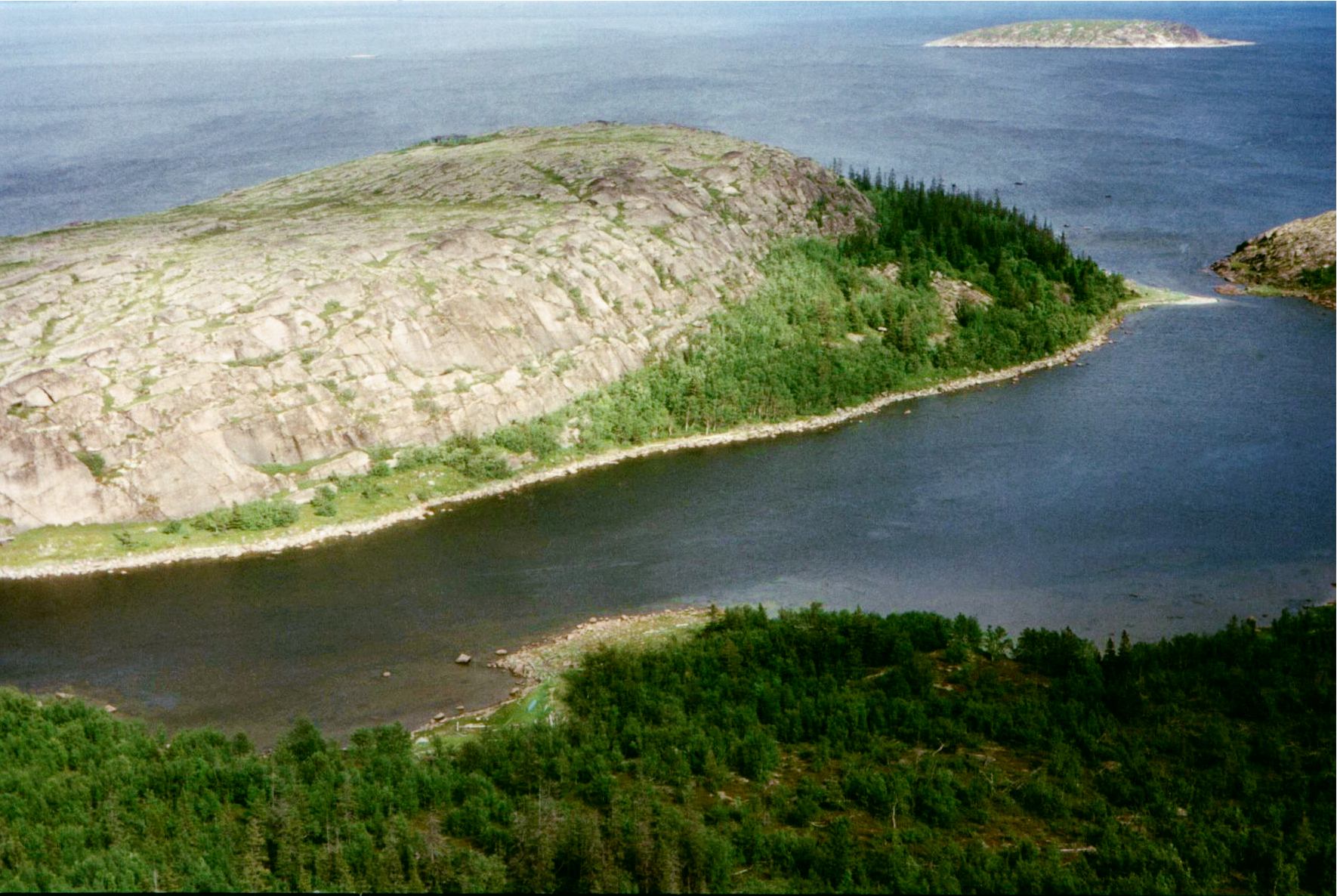
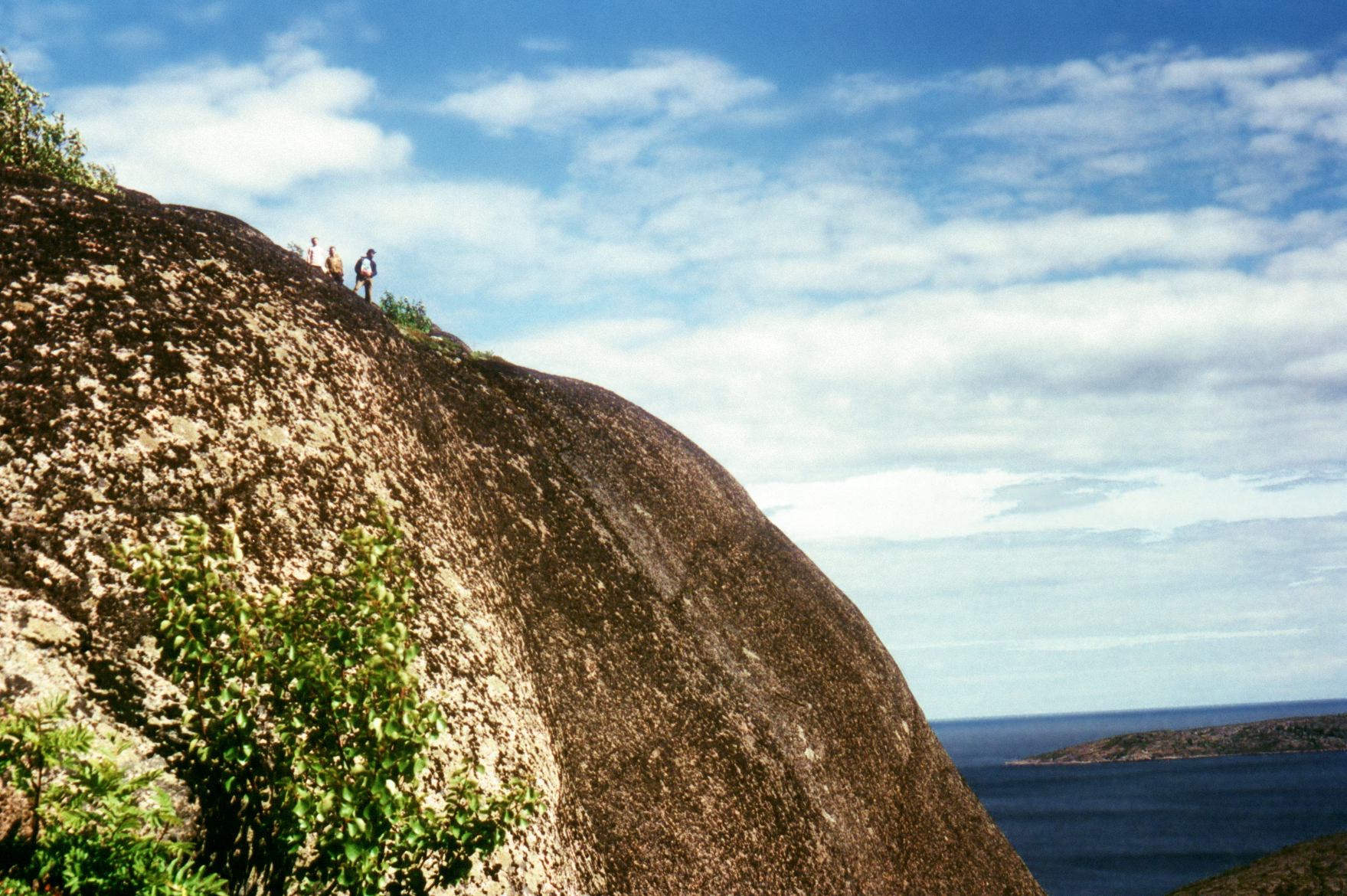
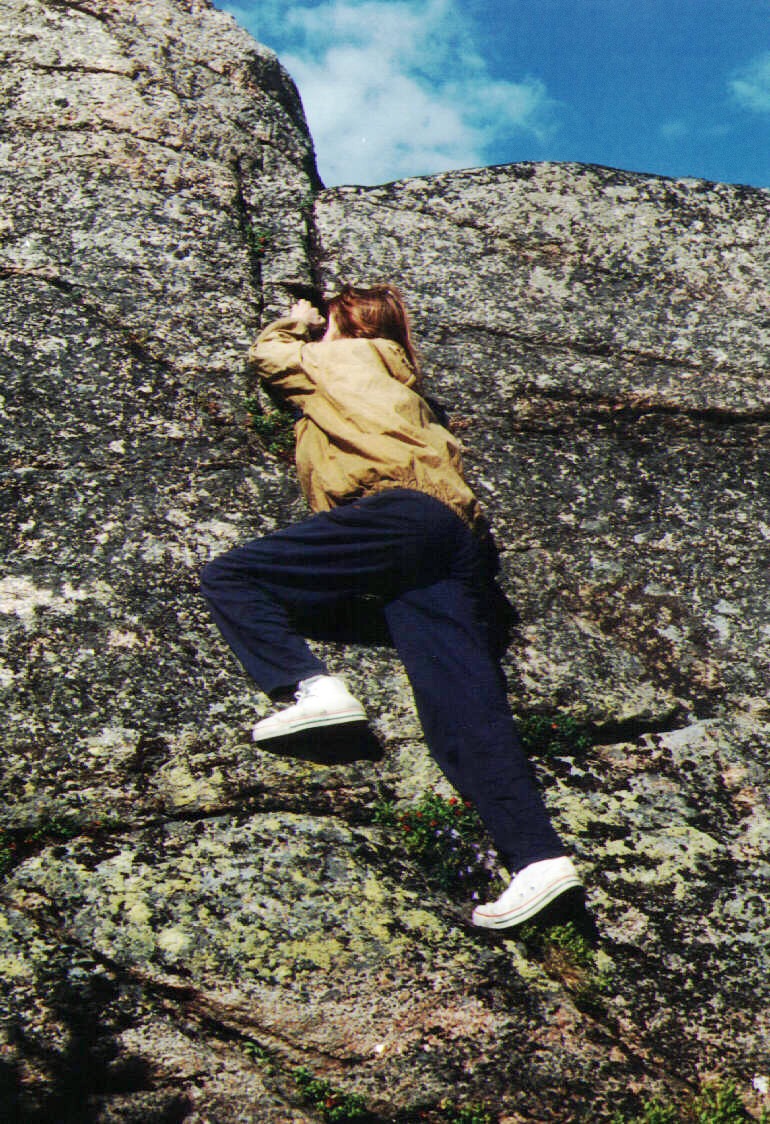
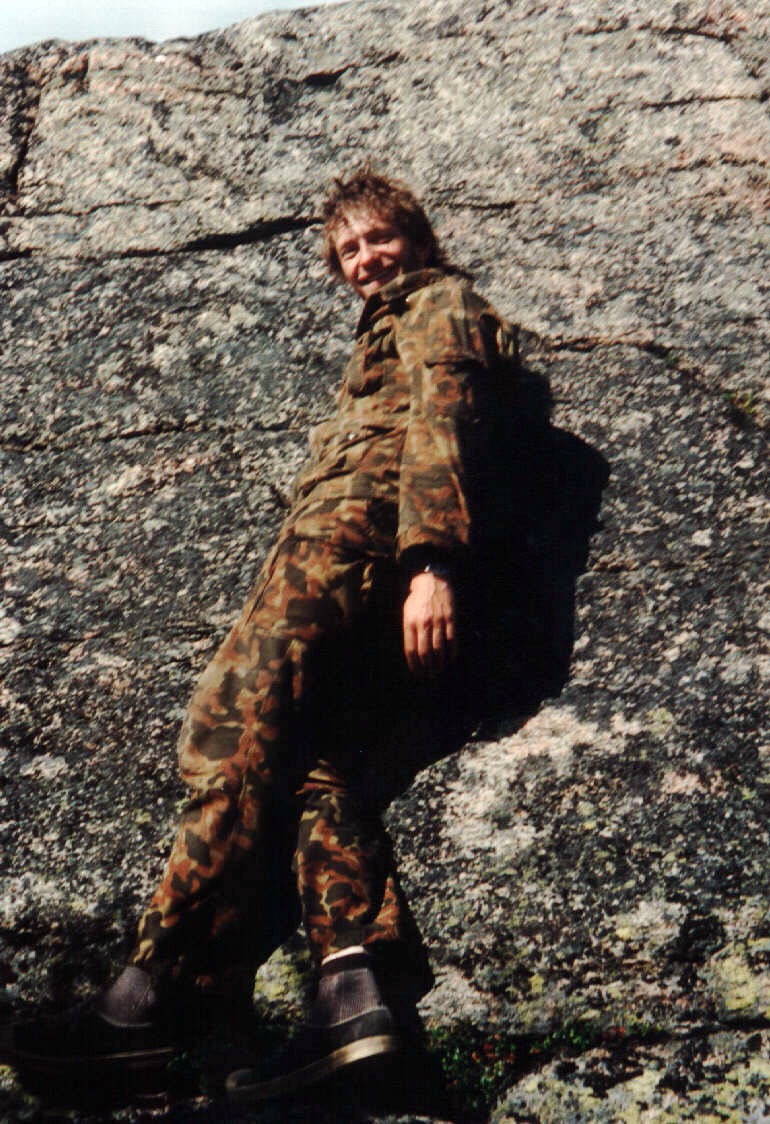
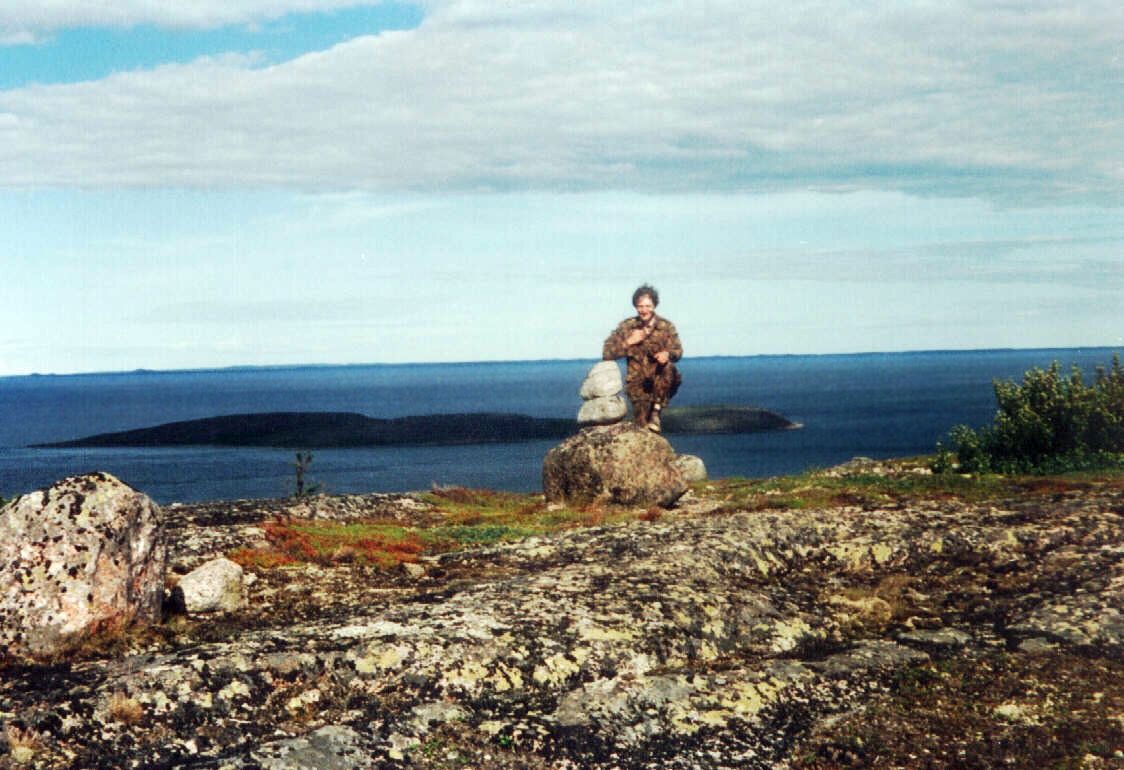
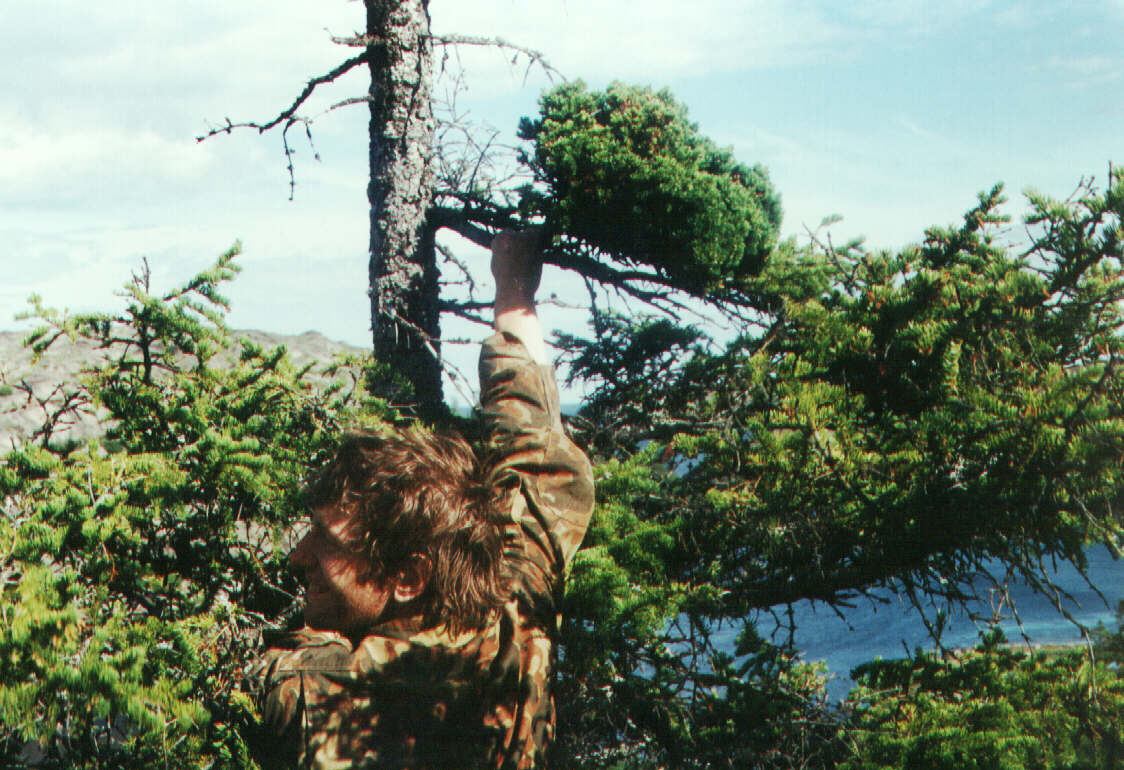
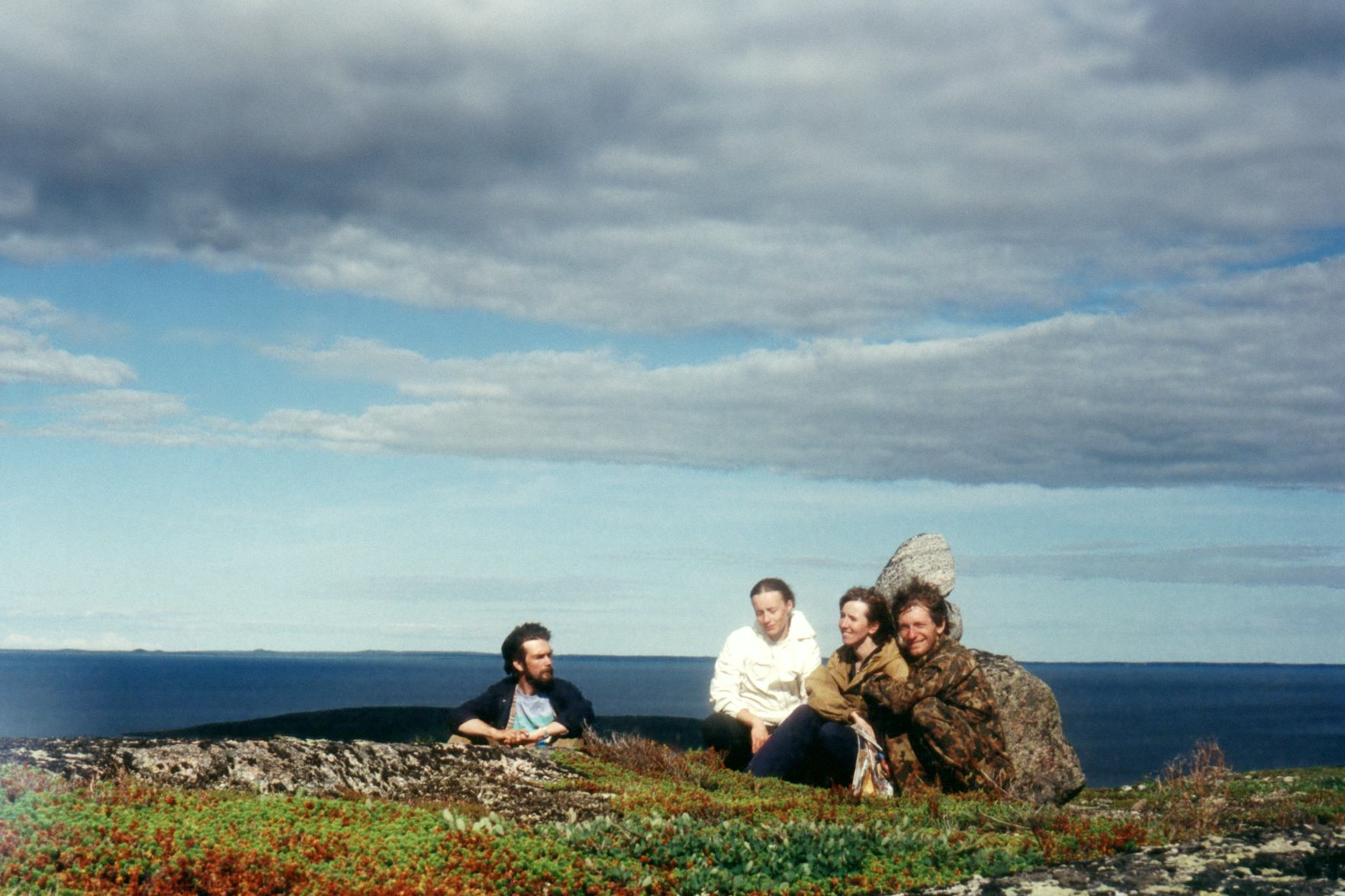
It is a big island, but you cannot find water except on the summit. To get water we crossed the channel to Vorony Island. There is plenty of water there. Evidently it does not dry up even in the hottest weather. At the top are the ruins of a hut. In Gulag days guards were posted in this hut to watch the barges bringing prisoners, and the ones who walked in winter. The stove was built with bricks stamped “Solovki” and “USLON Works”. SLON stands for Solovetsky Special Purpose Camp. So the hut must have been built in the 1930s. We took a brick with us. There are lots of cloudberries on the island. While we walked around the island the ebb almost took the kayak away. When we got back we fried mushrooms and did some very agreeable drinking. We had an unusually ill-behaved campfire. Smoke in our faces all the time.
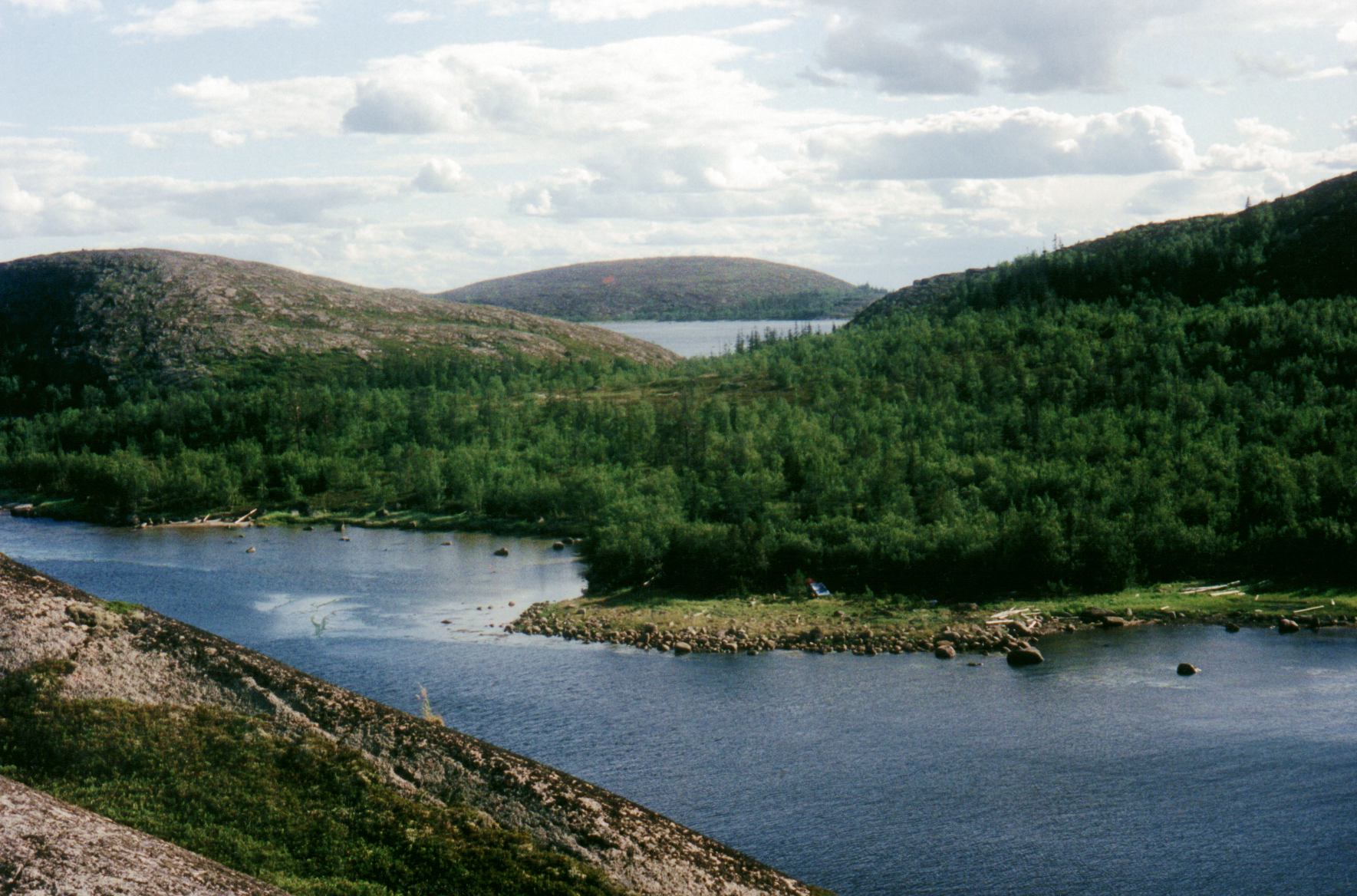
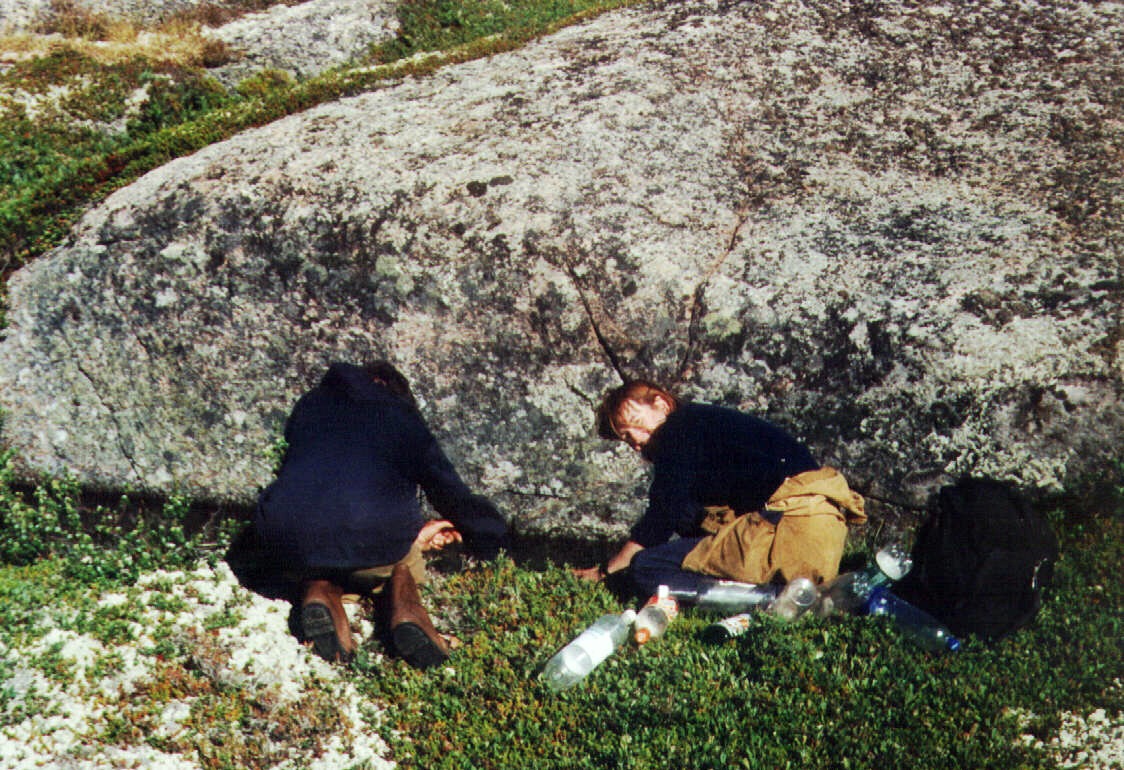
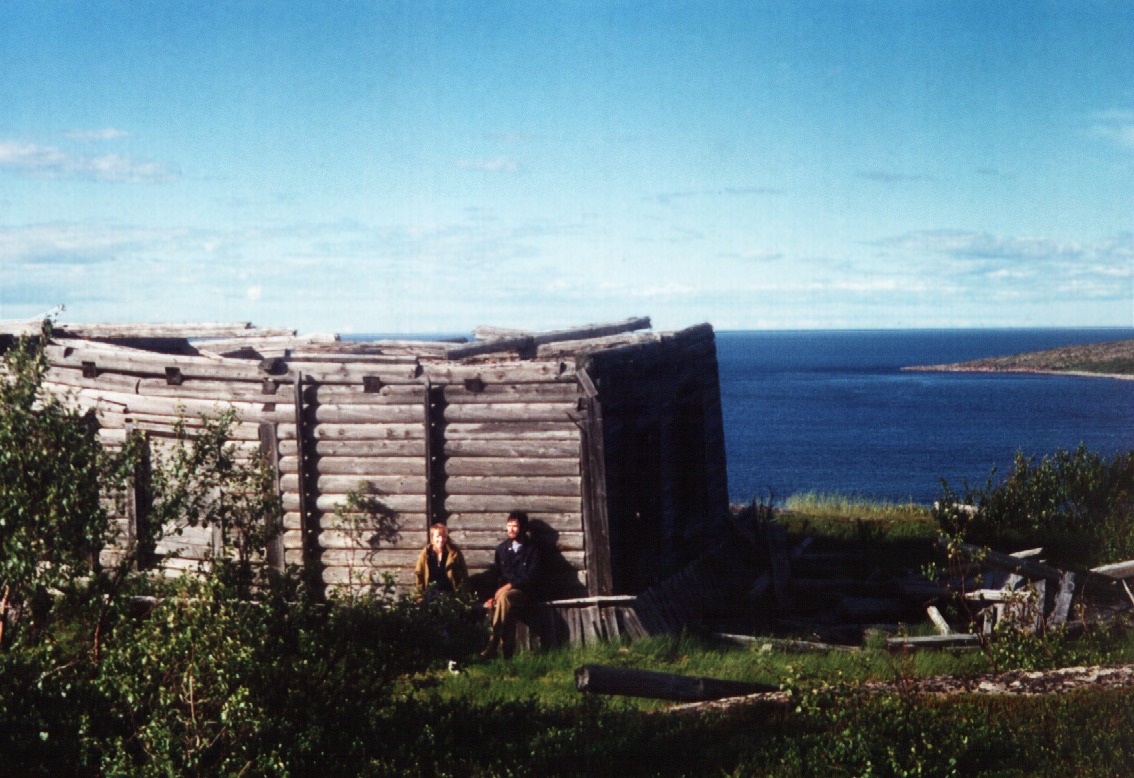
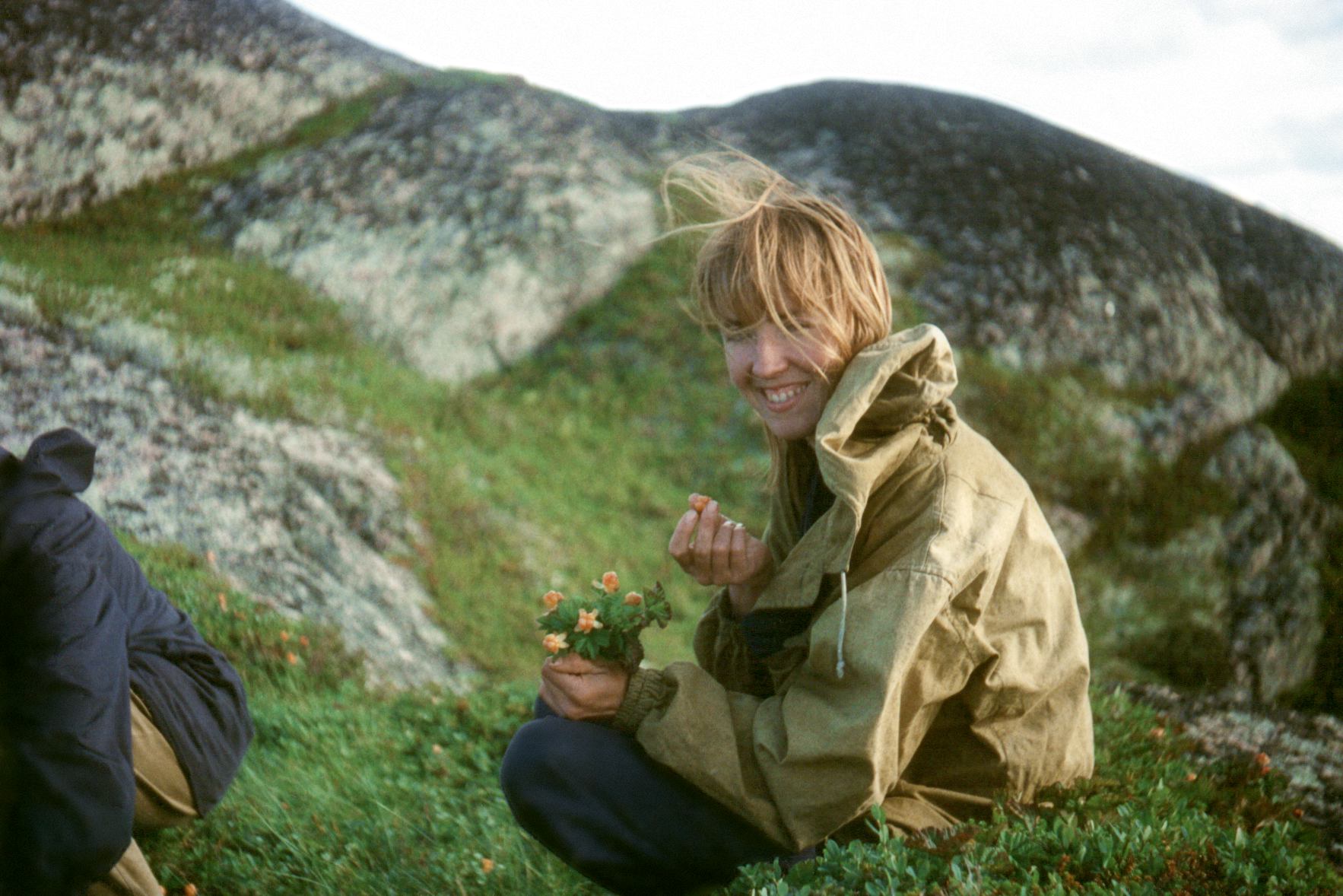
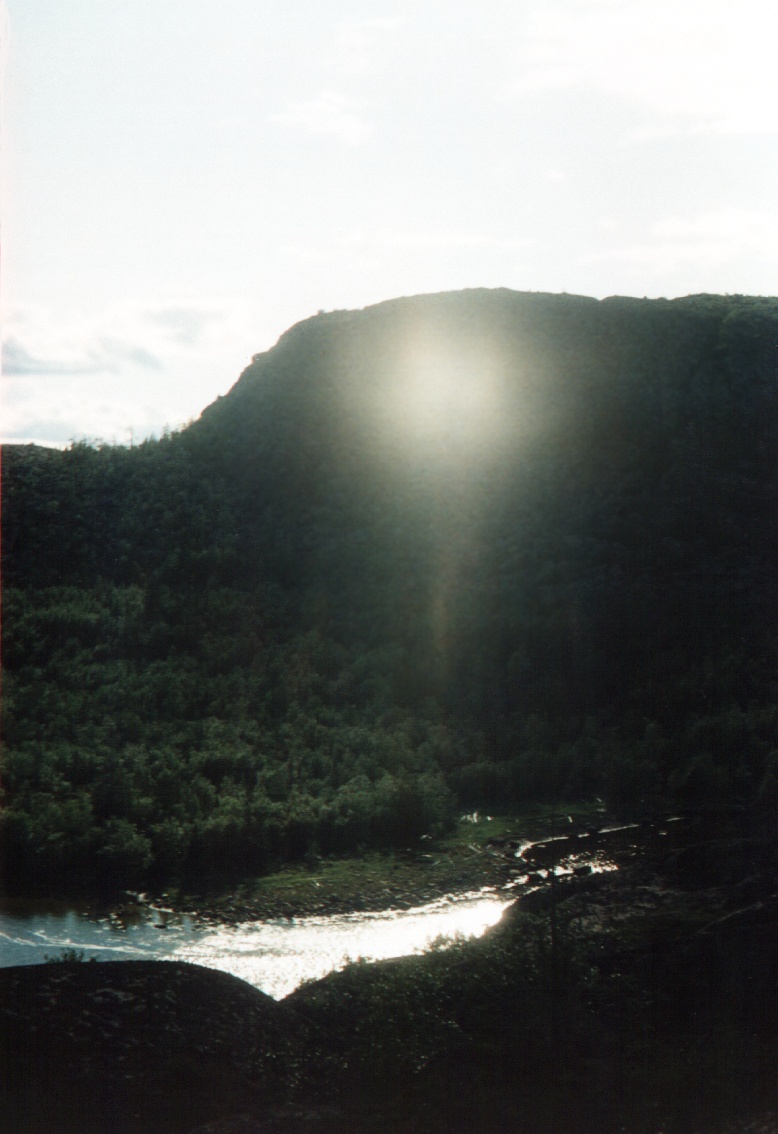
TS. Sunday 22:00, Nemetsky Kuzov. Cold, wind, smoke, no sun, it is behind the hill. The fire smokes the wrong way, into your eyes. We paddled with waves, wind and tide, very fast, with a bit of rocking in the middle. Up at 10:00. Sunbathed in the morning, wore a swimsuit (one) and swimming trunks (one). Arrived 15:25. Accomplished the ascent of Nemetsky Kuzov (120 metres). Took a lot of photos with the island and Solovki behind us. Did not go to Solovki again. Went back to camp. Marina lay down to sleep, and we crossed to look for fresh water on Vorony Island. No crows there, but lots of cloudberries, water and a hut. The wind blew the kayak away, but it did not float off, so we came back to base. Sasha’s favourite bag tore. Lots of lovely fried mushrooms. I am asking whether we want to go to sleep just like that, have wine, or keep vigil. Marina suggests boiling up mulled wine with lemon peel. Cannot write any more. We decided to drink Spanish wine.
24 July
AS. We got up and swam. The channel is sandy and shallow, and we all went in together. I climbed Nemetsky Kuzov again and met another group of Muscovites on catamarans. Towards evening we crossed to Russky Kuzov and camped on a very pleasant little wild beach. On arrival I discovered I had left the camera behind. I went back to Nemetsky Kuzov alone. I had left it on a little rock while we swam. I landed by the hut marked on the map. The hut is habitable. A sign reads “Geodetic marker. Protected by the state. GUK 1964.” When I returned it was dead calm. We could see Solovki. Everyone was ready to go there at once, without so much as making soup. In the end we went nowhere. We found a dead bear cub near camp. Finding water was hard. Our little beach turned out to have an enormous tidal flat. At low tide we were 200 metres from the sea. We put the tents right on the sand (64°55.795′N, 35°09.476′E). The first soft night’s sleep.
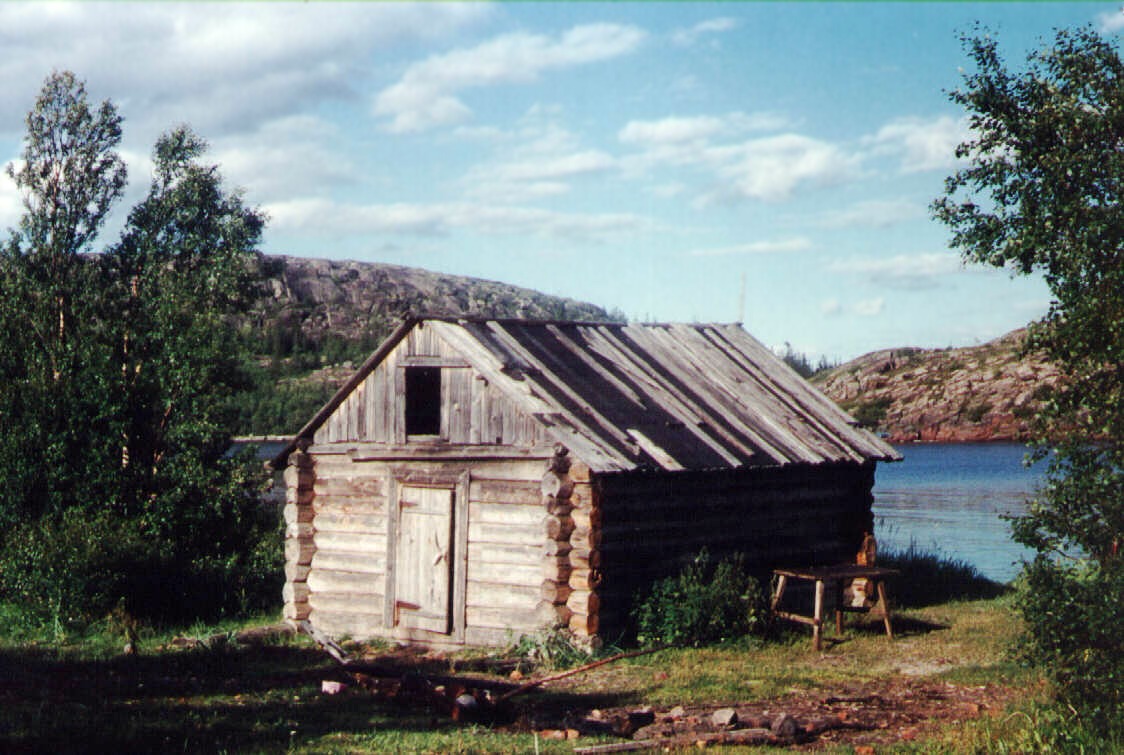
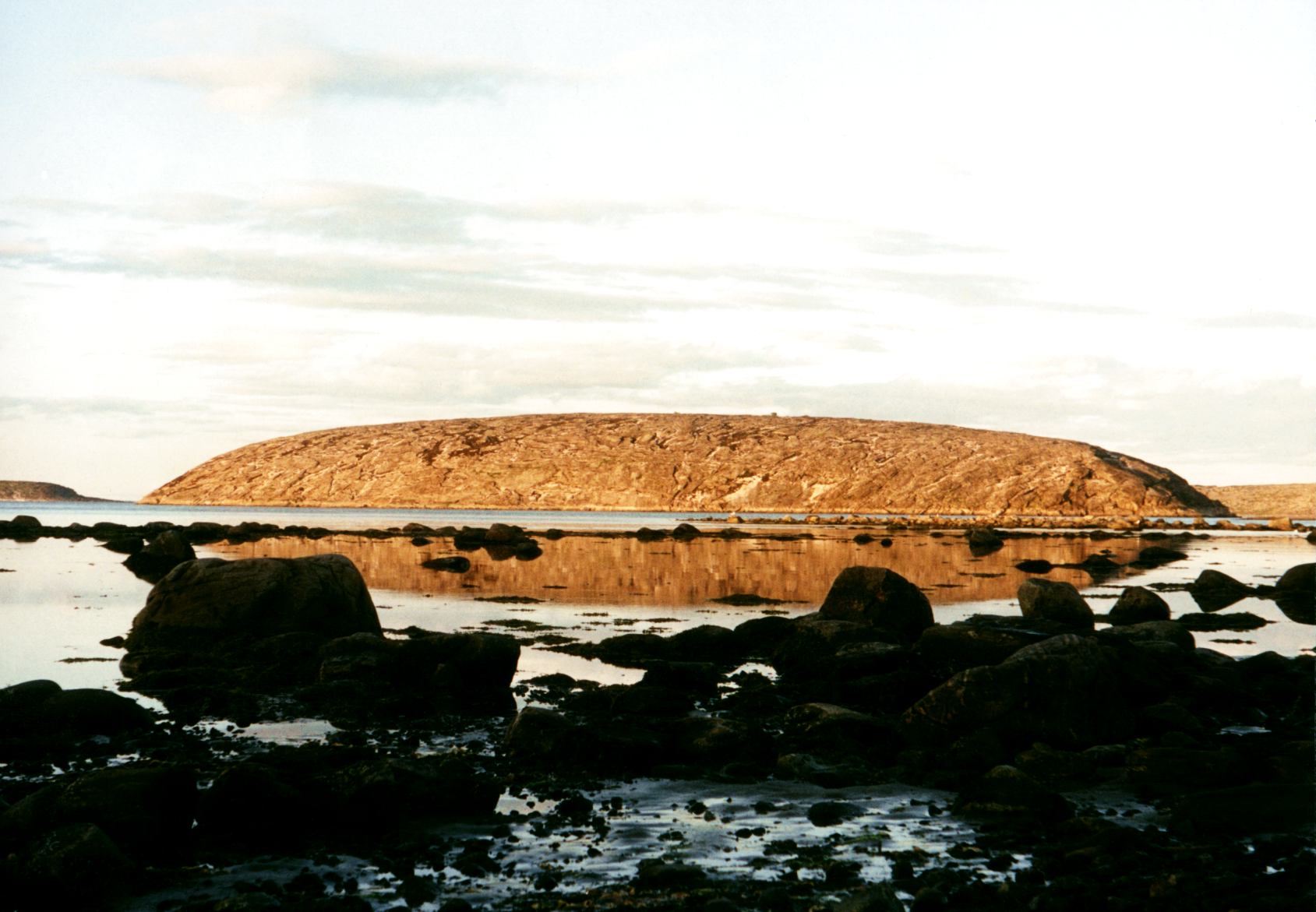
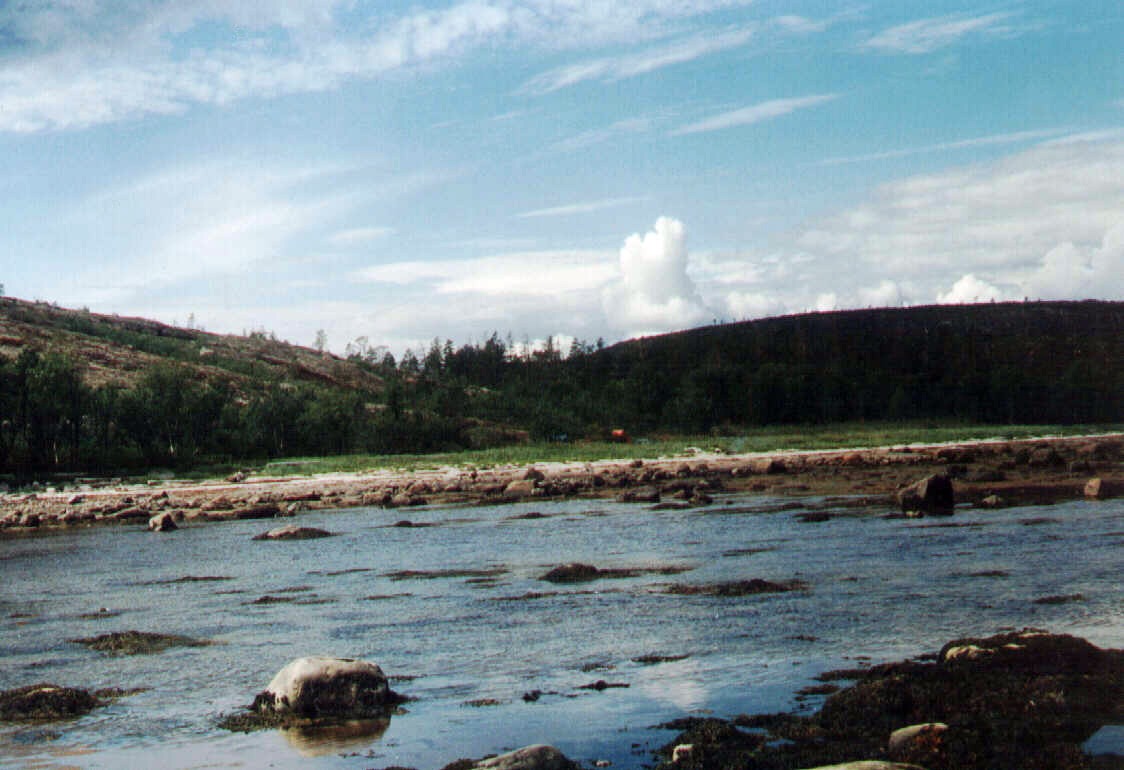
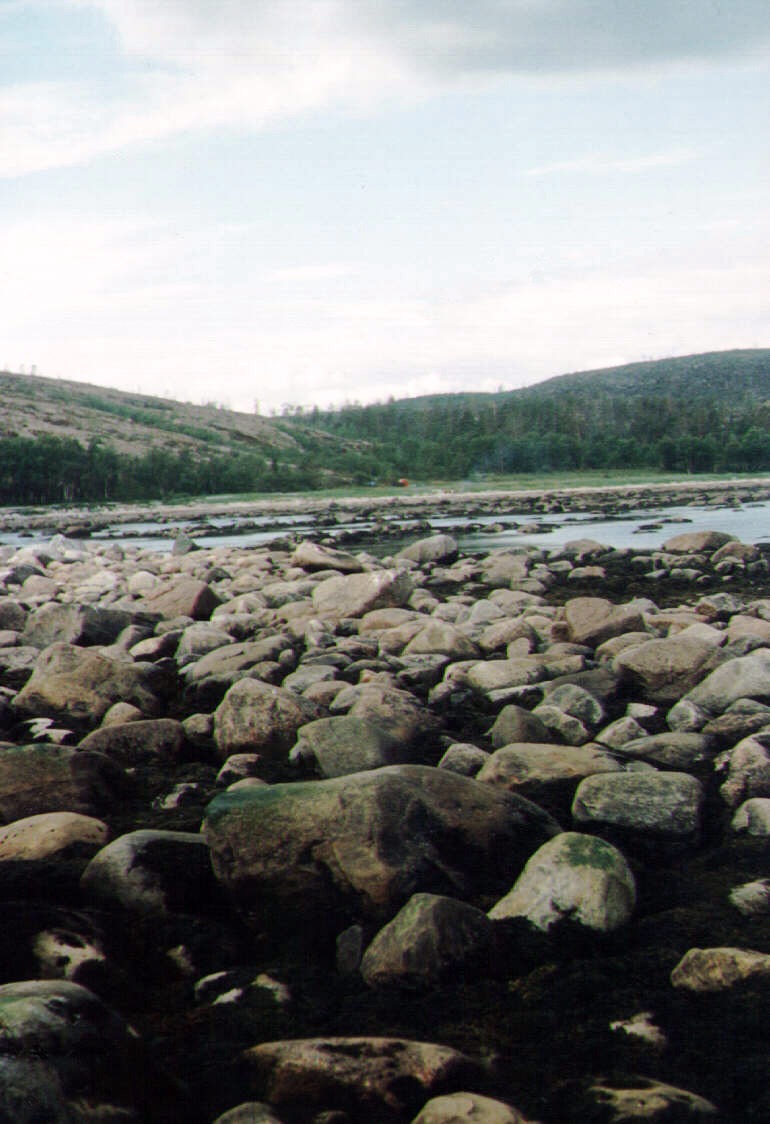
TS. A little wind in the morning. The fire smoked terribly and would not burn. Moving camp to Russky Kuzov. We swam before setting out and left the camera behind. A good paddle, waves on the beam and wind in our faces. We drifted and unloaded on dreadful rocks, as we found out later. One lot went off to climb Kuzov’s second-highest summit in search of water. Another quarter paddled back for the camera, 30 minutes there and 40 back. I chopped things for the soup. They found water far away, then nearby but deep. “Sasha, there is a bucketful of water in the kayak. This is quite wrong and I have written it down and will go on complaining all trip.” Dead calm in the evening, but a terrible ache and we did not go to Solovki again (a pity!). A log got in Nyukh’s eye and he moaned pitifully all evening. We opened the chocolate spread.
25 July
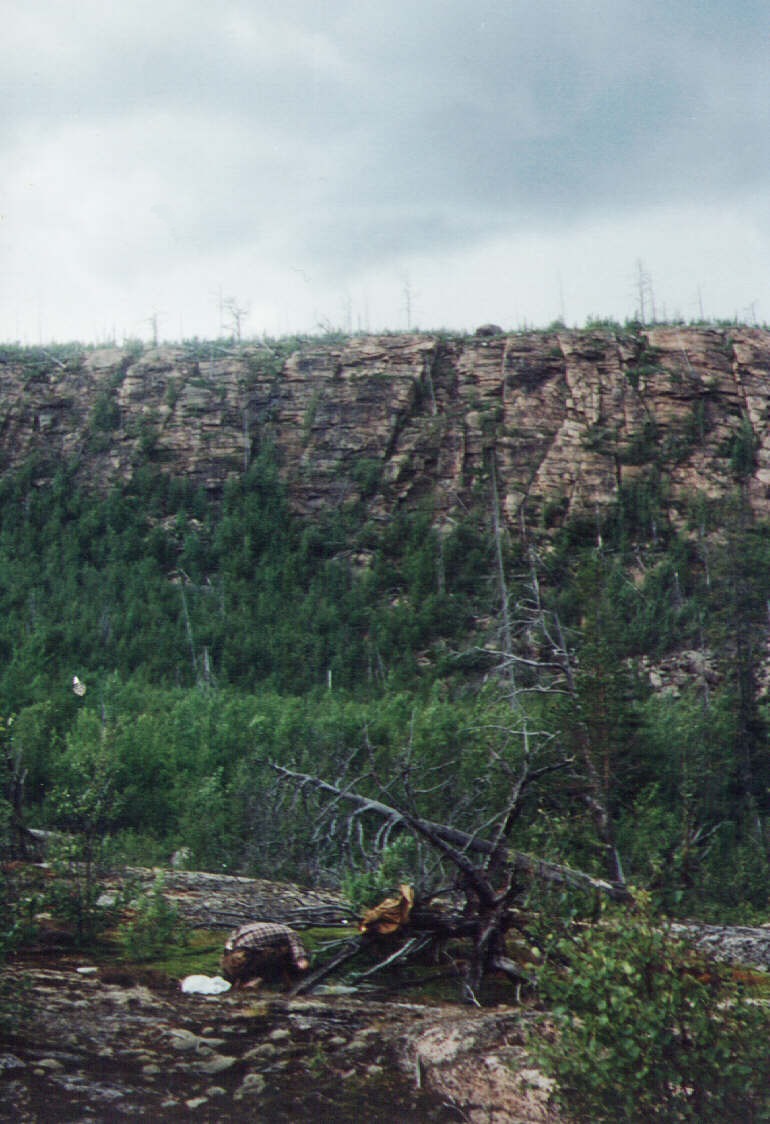
AS. Remembering yesterday’s calm, we got ready for Solovki. The sun was out in the morning and we sunbathed on the warm sand. Then the wind came up. We decided to wait for evening and went for a walk. First we followed the shore to the north end of the island. There were plenty of mushrooms and the Sochavas fell behind. Tanya and I climbed to the summit of Russky Kuzov, the highest point in the area. Unlike bare Nemetsky Kuzov, Russky Kuzov is wooded. There was a forest fire about ten years ago that burned the whole upper part. Now it is hard to get across the top, with fallen trees and thick young growth. The summit is rather flat and the highest point hard to find. Among the bushes are the remains of the survey marker. The tower collapsed in the fire, and you could not see anything for the bushes.
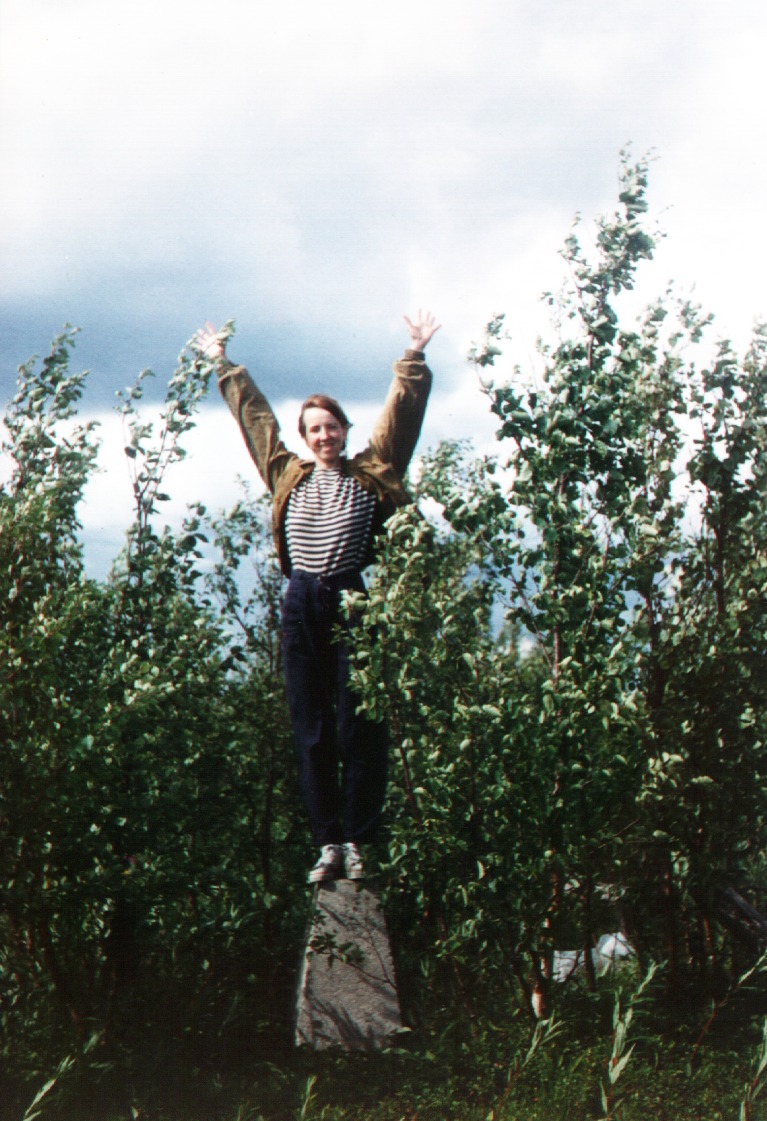
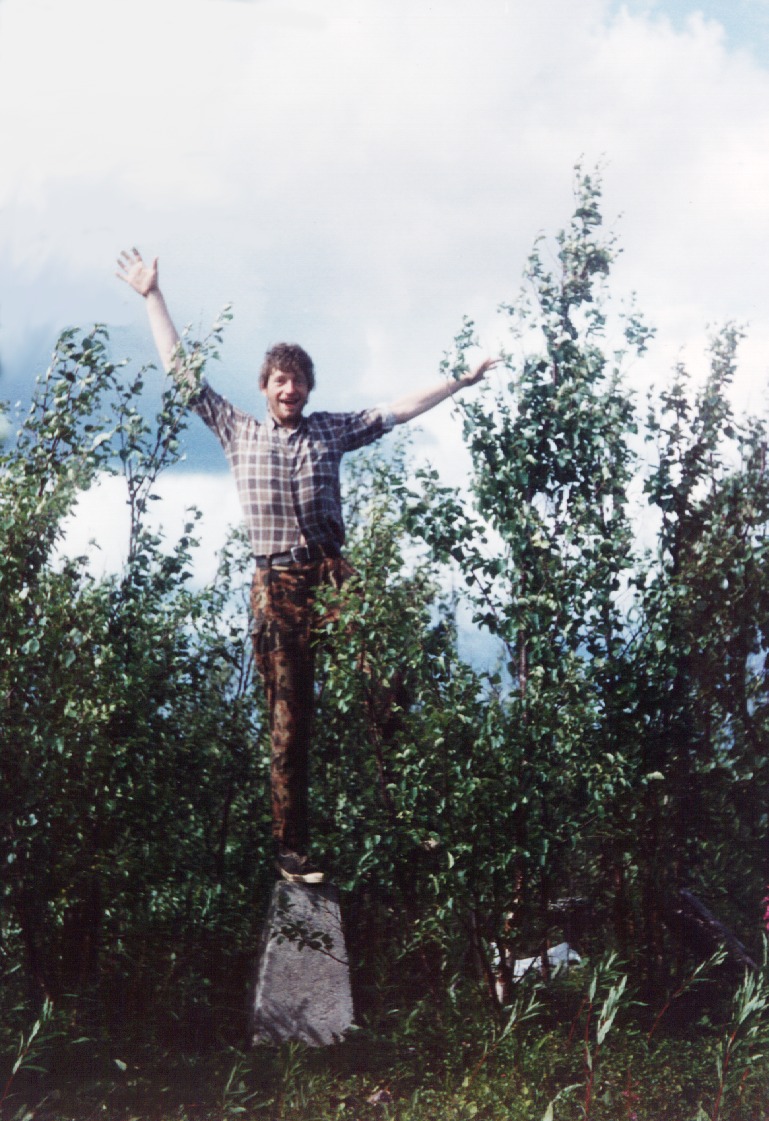
We went straight back. There is a cliff east of the summit, but it turned out to be easy enough to get down. At its foot is a little bog. When we got down we heard a cracking sound. Some sort of animal. A bear, perhaps? A little stream flows out of the bog, where you could probably find water even in the heat. Farther on we came to a little summit with a big, bath-shaped pool, where we washed our hair. We had brought Elseve shampoo for that. When we got back we found the Sochavas, now picking only little porcini and putting them in a jacket.
By evening the westerly had only got stronger. We did not feel it much on the east side where we were camped. I climbed a little summit nearby. The wind was vicious at the top, but it would be at our backs. If we were going to Solovki, we could not put it off. In the end we got ready. For the first hour, as far as Zhiloy Island, we were in the lee of the Kuzova Islands. Then we came out into open water with a gigantic ocean swell two metres high. It was frightening, but we did not want to turn back. The swell was gentle and from behind. If we turned round, we would have to paddle into the waves and wind. So we made a run for it. A large ship crossed our course. After two hours and forty minutes we were off Topy Island. We could not land in that swell, so we had a snack afloat, cranberry mulled wine and Fazer chocolate.
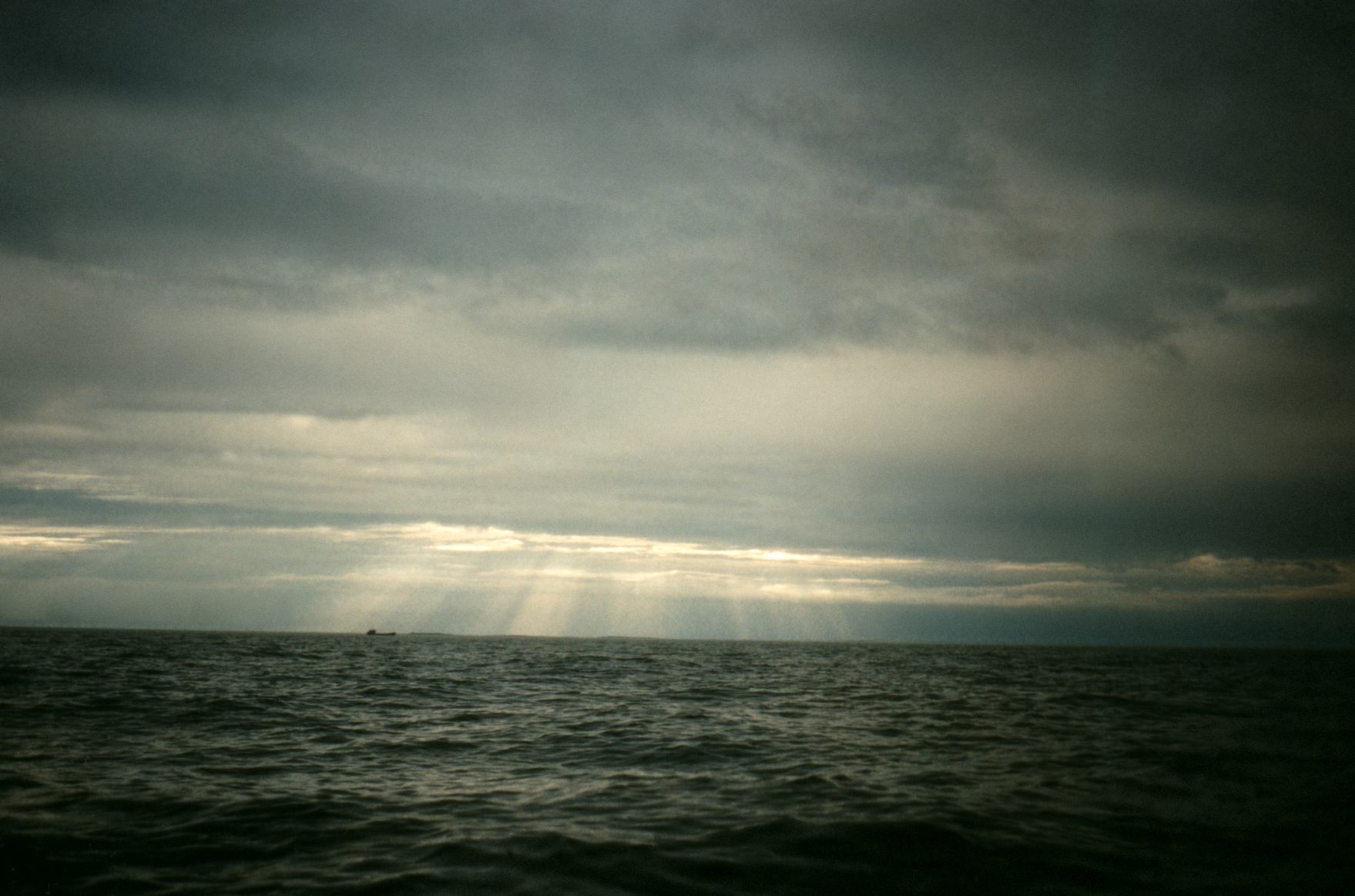
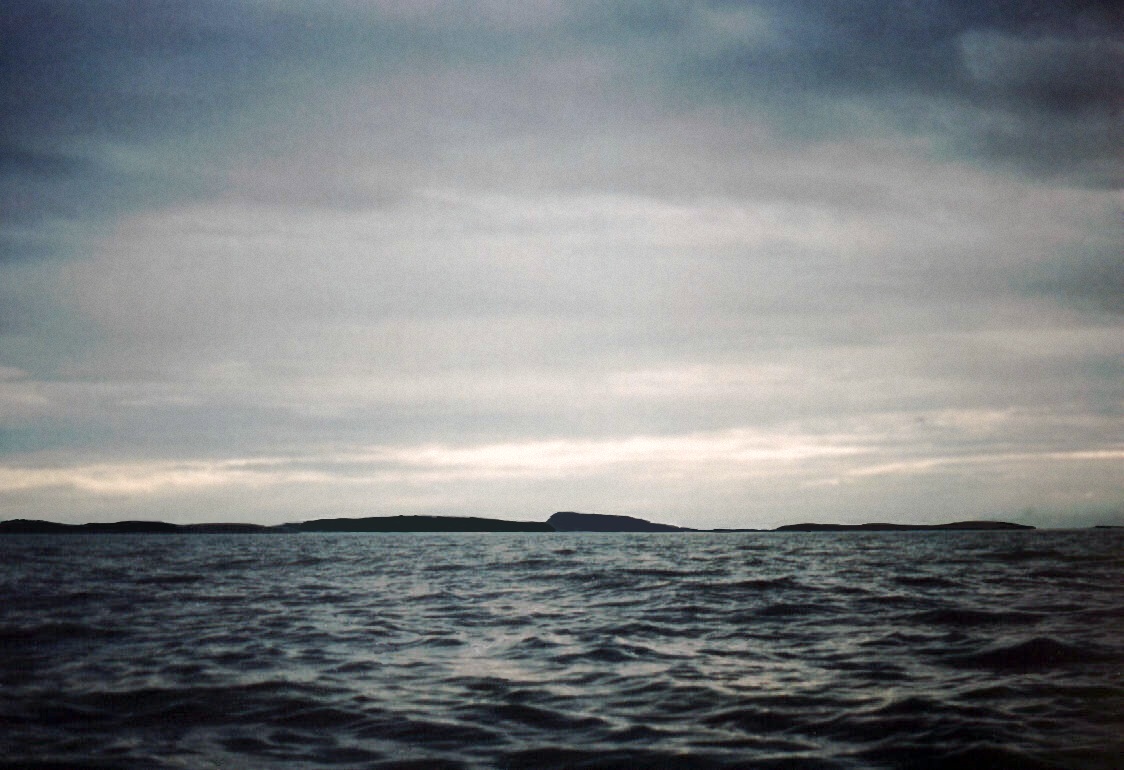
We passed Topy at 22:40. The wind blew with renewed force and the waves got steeper. We steered for Udachny Hill. The waves steepened again. In an hour and twenty minutes we made it to Solovki. I looked at the chart and realised we were being swept straight onto a shoal. We tried to turn, but the waves were so steep the moment we turned they started to roll the kayak. After a few tries we resigned ourselves to going aground and took comfort in having hit Solovki at all. Still, there were rocks ahead. We aimed between them, took a wave on the back of the head and found ourselves on dry ground, albeit a kilometre from the shore. The ebb drained the shoal quickly. We had to drag the kayaks and all our gear through the pools and mud. It was grim, but I was glad we were finally on land.
At about one in the morning we got ourselves settled. It began to rain. The ground was wet and showed traces of a tractor track. We found a clearing, knocked over the red-capped mushrooms with our feet to make room for the tent and camped (65°02.811′N, 35°34.774′E). You could tell there was a bog close by from the vicious number of mosquitoes. In spite of the whole dreadful business, we cooked pasta, ate it and washed it down with cranberry mulled wine.
TS. Wind again in the morning. There went the sun and the calm. Sunbathed half an hour. In front of us a great bog, the dirty, rocky tidal flat. The sand is yellow and warm, but it gets into everything. At 14:50 we are at 123 metres on the summit of Russky Kuzov and cannot see a damned thing, just birches and impenetrable scrub. Nothing to drink, just mushrooms, lots of porcini.
19:40, departure for Solovki. Checked the wind and waves from the hill. All in our favour (apparently). Had a small quarrel and set off. The waves are biggest between the islands. Out in the open they are long and not frightening. Took two hours and forty minutes to Topy (18 kilometres). Did not land because we approached from the wrong side. Seals were sitting on the second Topy, and two swam past us. At Topy we recharged with cranberry drink and Fazer chocolate. Good wind and swell to start with, turning into bad ones. The waves built at the end, and we landed at a hopeless spot with a long tidal flat. Cooked pasta, drank cranberry wine and went to sleep. (Before that, carried the kayaks and gear across the shoal barefoot in cold water.) Camp near Udachny Hill, 65°N, 35°37′W.
26 July
AS. Slept to our hearts’ content. Woke at 11:00 to sunshine and no waves. Low tide, so we could not get off. We had to wait for the flood. Sasha and I went to look around. We crossed a small bog. The mosquitoes were thick. We climbed Udachny Hill and looked over the countryside. There is a tower on the hill with an excellent view. We went back to the kayaks, waited for the tide and paddled to the jetty by the monastery. It is not far by sea.
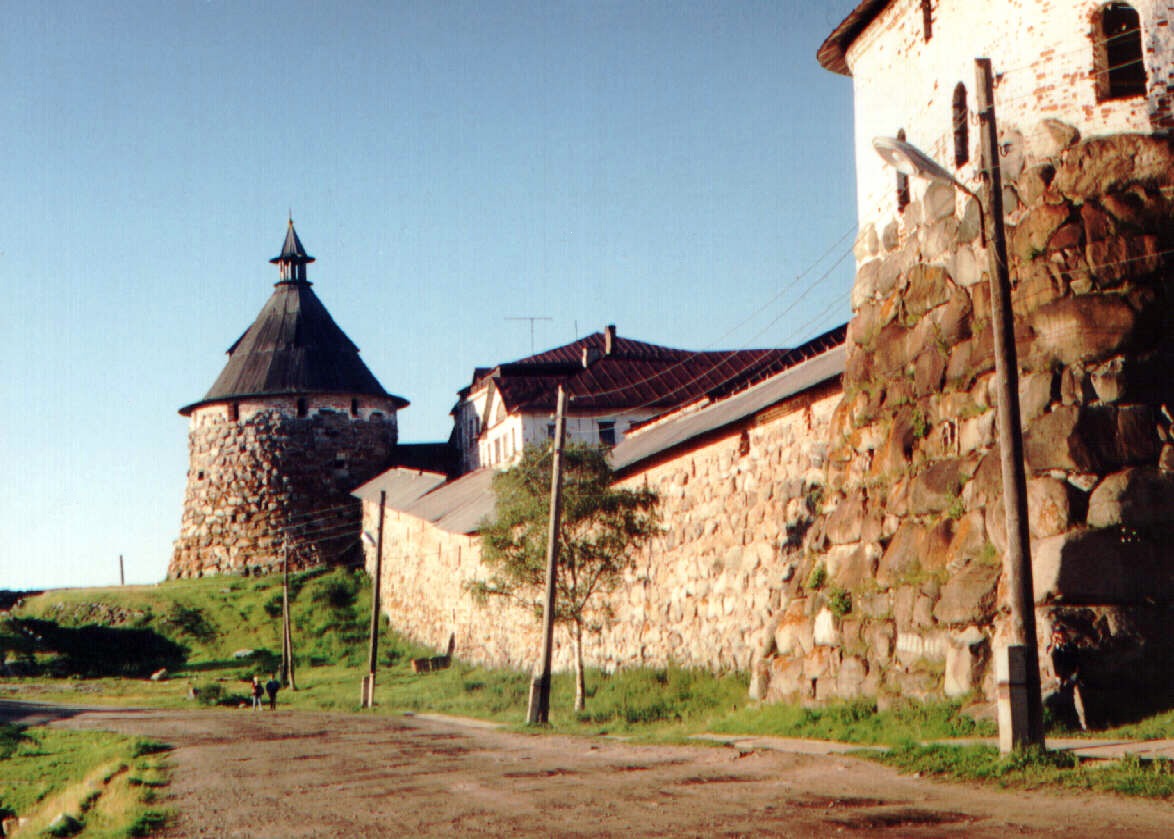
There were a lot of yachts at the jetty, and the Arkhangelsk tourist ship Yalta. We took turns going for a walk. It is about a kilometre from the jetty to the monastery. Near the jetty there is a standpipe with clean, fresh water. At the monastery there are several museums, which were closed, and a lot of students working on the restoration. Photographs 1, 2, 3 and 4. The monks walk about and get around on bicycles and motorboats. They behave peaceably and do not act as if they own the place. There are many quiet local people and a surprising number of cars. Where do they drive on a little island with effectively just one small settlement? Besides the monastery there is a post office, shops and a disco. There is electricity, from a diesel power station.
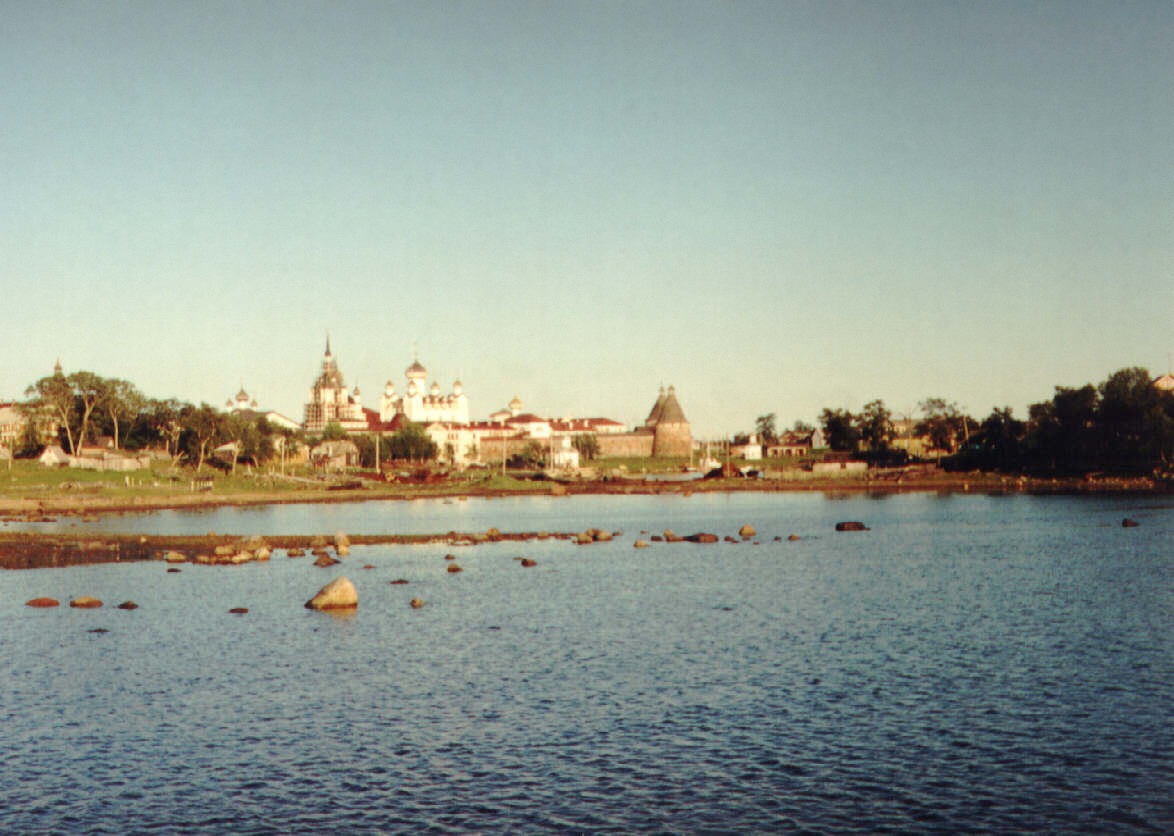
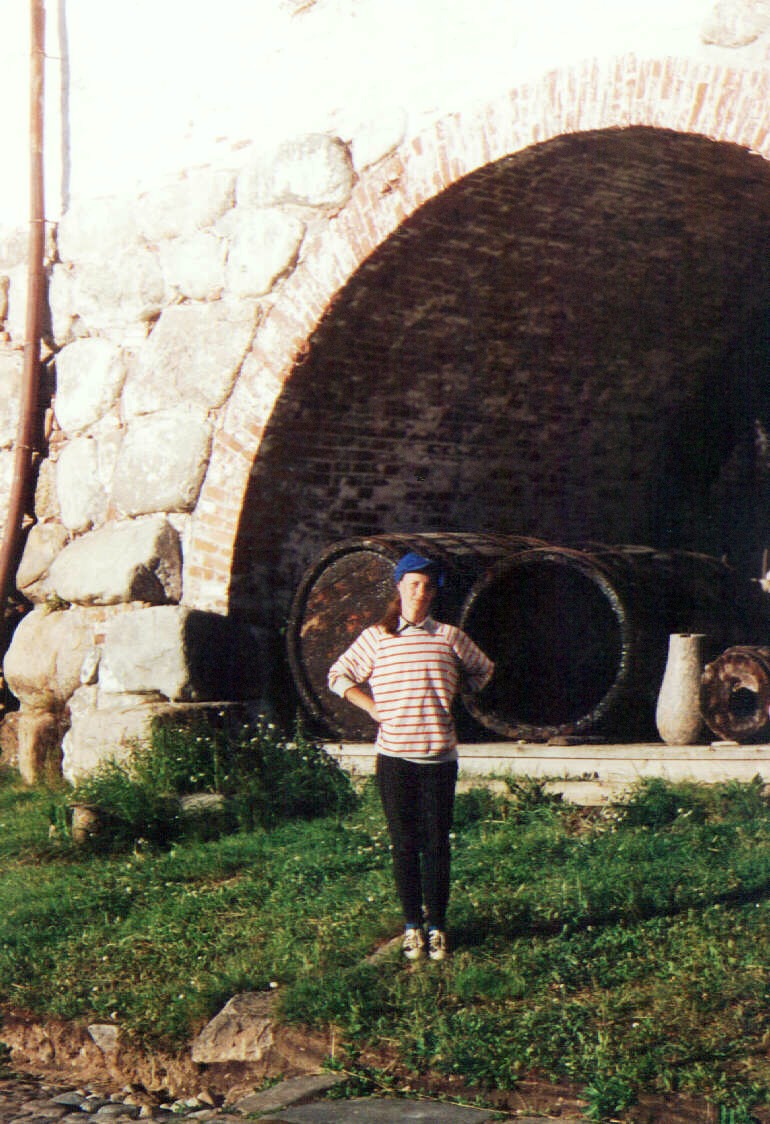
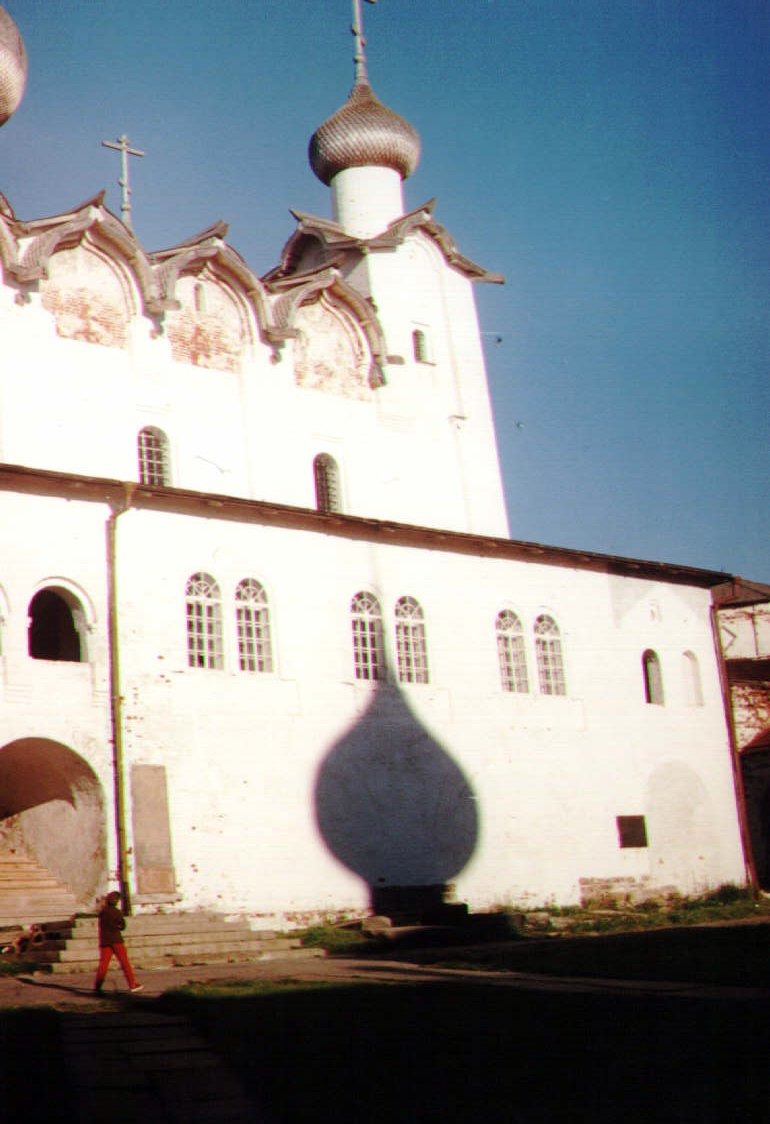
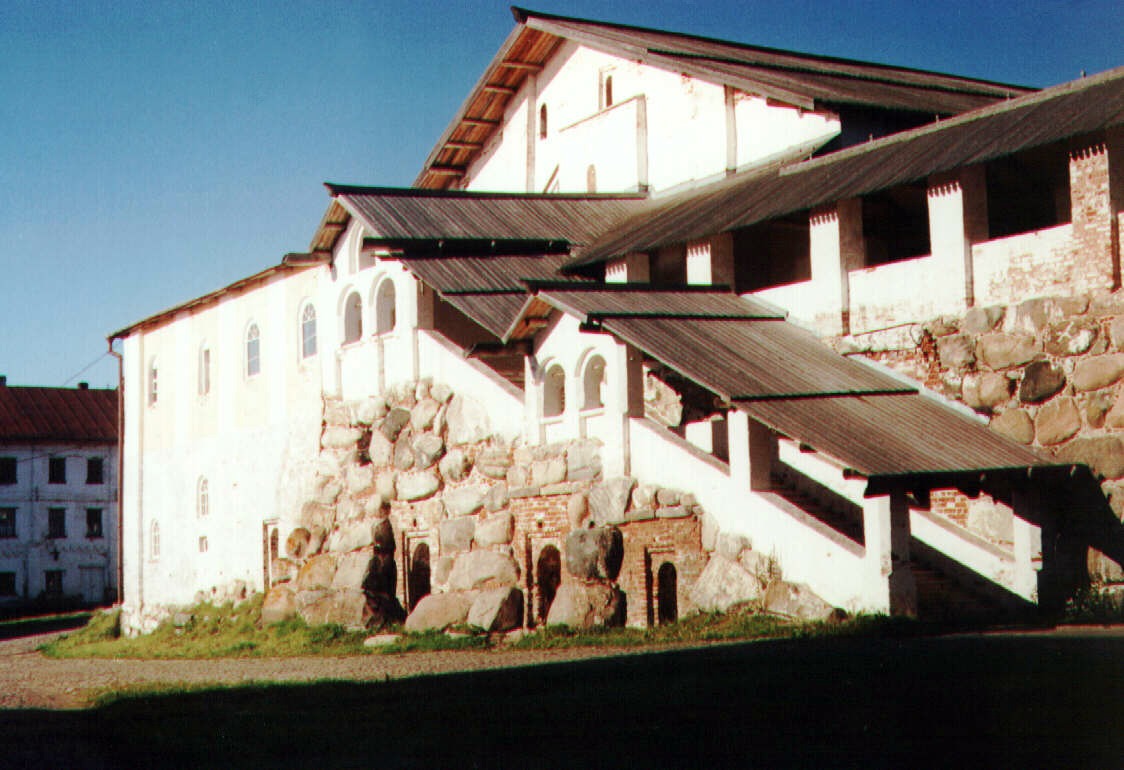
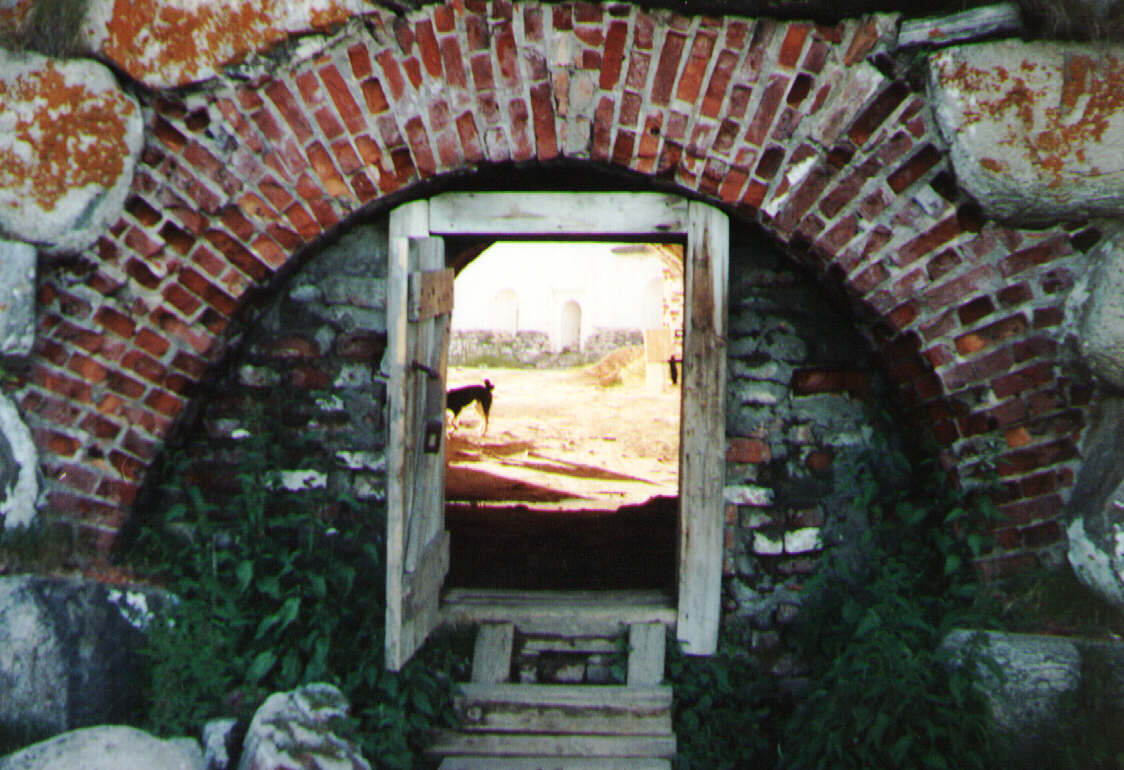
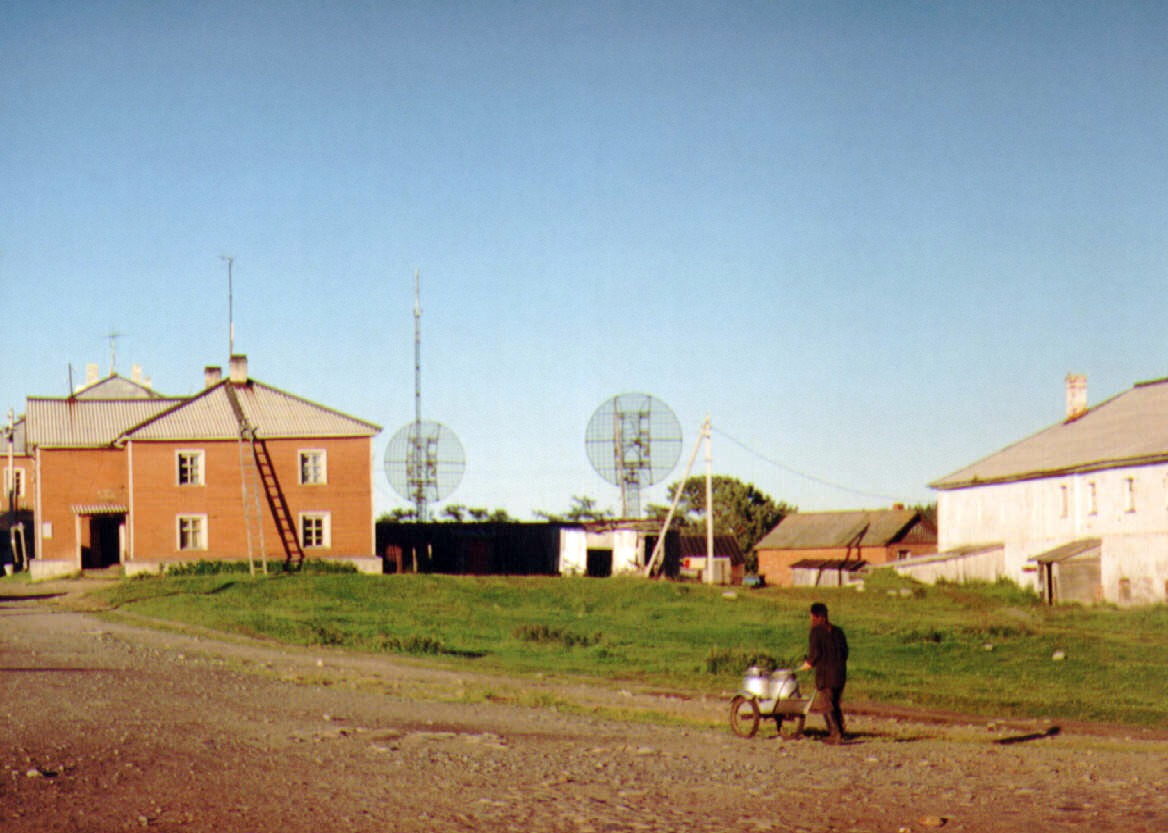
Everywhere you see traces of an effort to turn Solovki into a tourist attraction ten or twenty years ago. Half-rotten display boards with information and maps. Curiously, the Russian text says Solovki only started to develop properly under Soviet rule. The English text talks about the pre-revolutionary monastery, the prison camp and decline after the revolution. There are raised wooden walkways in the woods so the tourists can walk without damaging the pristine landscape. The planks have rotted quite thoroughly. We learned from the locals that a small boat went to Kem every other day for 50,000 roubles a person. It was privately run, so whether it went depended on the owner’s mood and whether there were passengers.
Towards evening we left to camp near the point called Peregovorny Kamen, or Negotiation Stone (64°59.899′N, 35°42.801′E). Supposedly this was the stone where they took the Kem district away from the Swedes, or something of the sort. It was the first point that organised tourists had not trampled over. We pitched almost in the road, though. At the point itself were the remains of dugouts, trenches and ammunition boxes. It was unclear whether they were from guarding the camp or guarding the island during the war. We camped right by the point. Next to us were some Moscow catamaran paddlers we had seen the year before on Ladoga, near Valaam. In the evening we made mulled wine from some wretched Spanish carton and made ourselves ill.
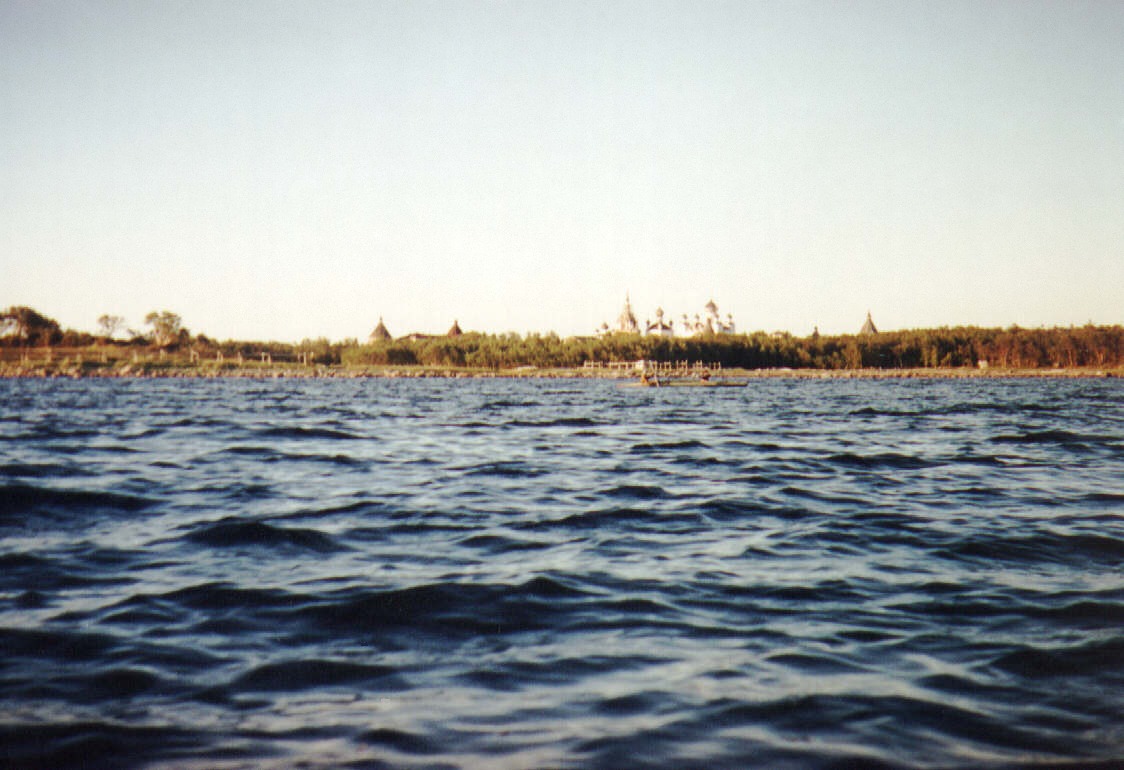
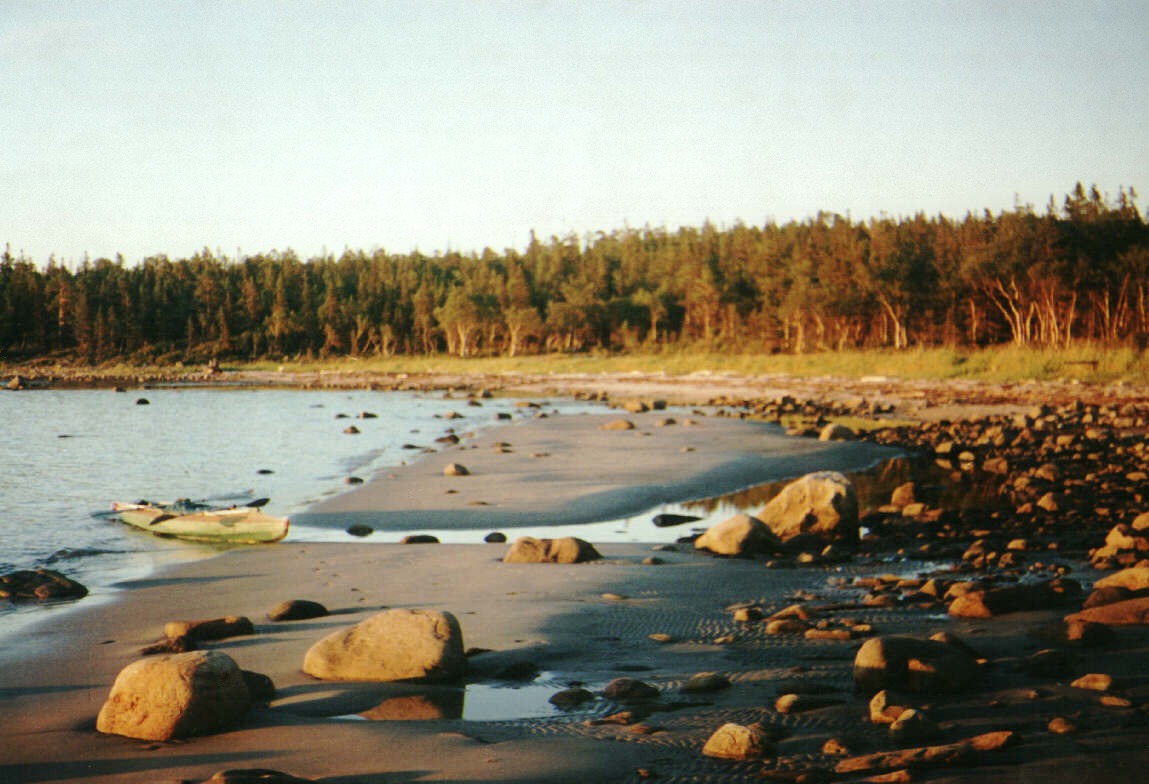
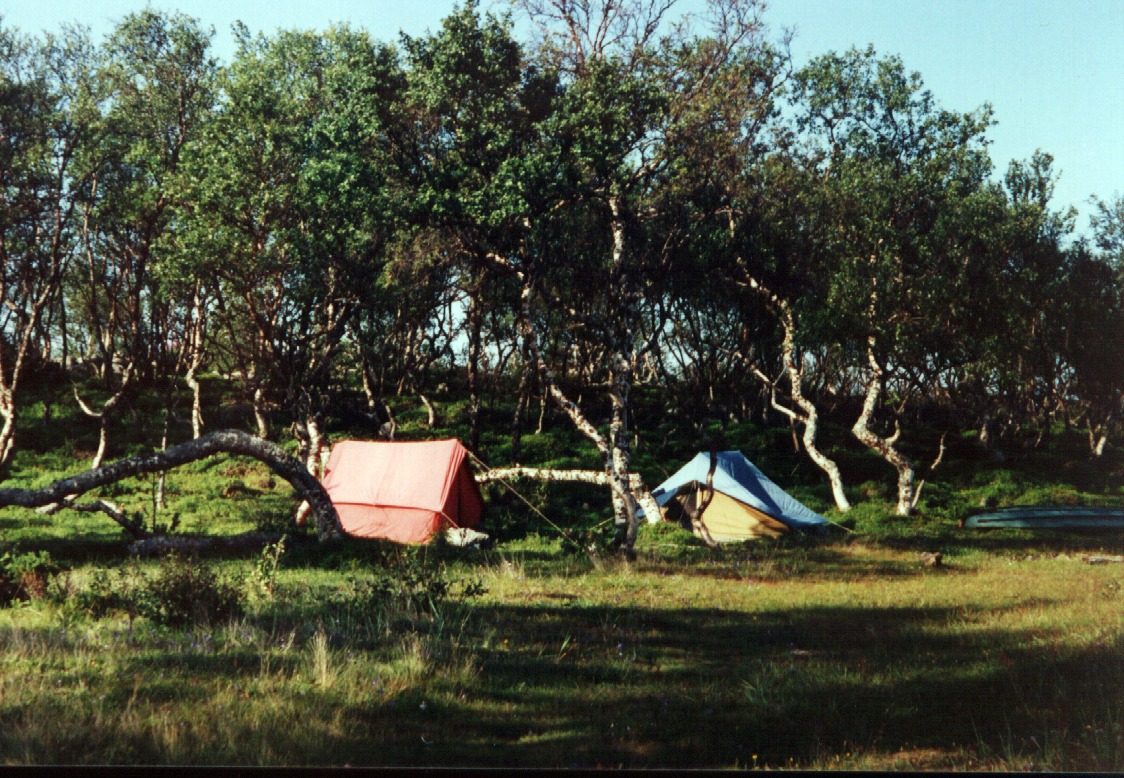
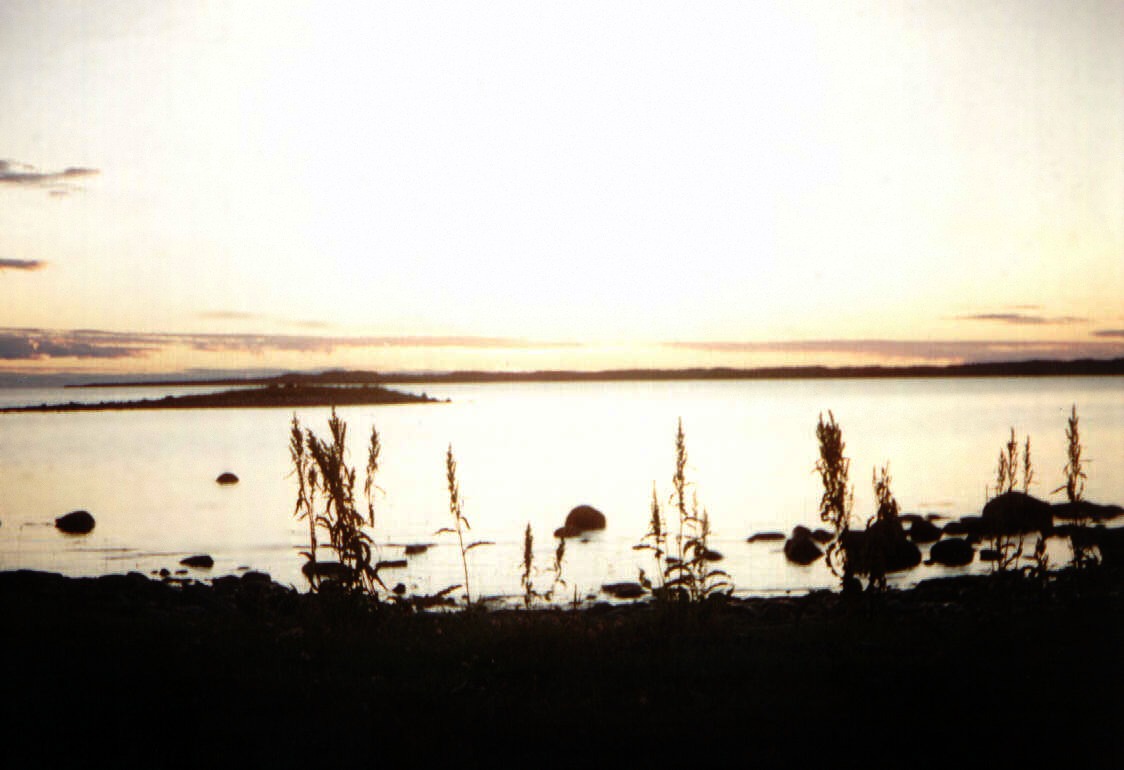
TS. Woke up at 11:00. Sunshine. We dried things. The two Sashas went up Udachny Hill. At 16:00 we left for the monastery. The dreariest place on the White Sea. At 22:00 we camped right in the road, on the tourist path to Peregovorny Kamen.
27 July
AS. We woke to the noise of a tractor coming straight at the kayak. It almost ran it over, so we had to jump out and save it. Locals drive tractors along the shore to collect firewood. Tanya and I decided to go to Sekirnaya Hill, 12 kilometres from the monastery, and the monastery was at least three kilometres from us. We left in the morning. Straight away I found 10,000 roubles in the road, which delighted me. If we went back from Solovki by boat there would be hardly any money left, and I was hungry. We bought food for the day in the village and drank some juice. The day was starting hot. The shop had the usual goods. You could only buy cod frozen, brought in from elsewhere. There were no local fishers about selling fish.
The road to Sekirnaya Hill is unsealed, with more puddles the farther you go. Plenty of mushrooms along the verges. The road goes past lakes. One is Nizhny Pert, which sounds like a name from Mars. We swam in it. The water was warm, 17–20°C, but full of peat. I came out of it black all over. After five hours we reached the hill. It is very steep. At the top there is a viewing platform. An excellent view. A few people with the look of old soaks live at the hermitage. They are busy making hay and looking after the cows. Monks, evidently. They swear furiously at each other. There is a lighthouse atop the hermitage. We never saw it working. We turned back after half an hour, picking some excellent porcini on the way. We got back around 22:00, very tired, and ate lovely mushroom soup and fried mushrooms.
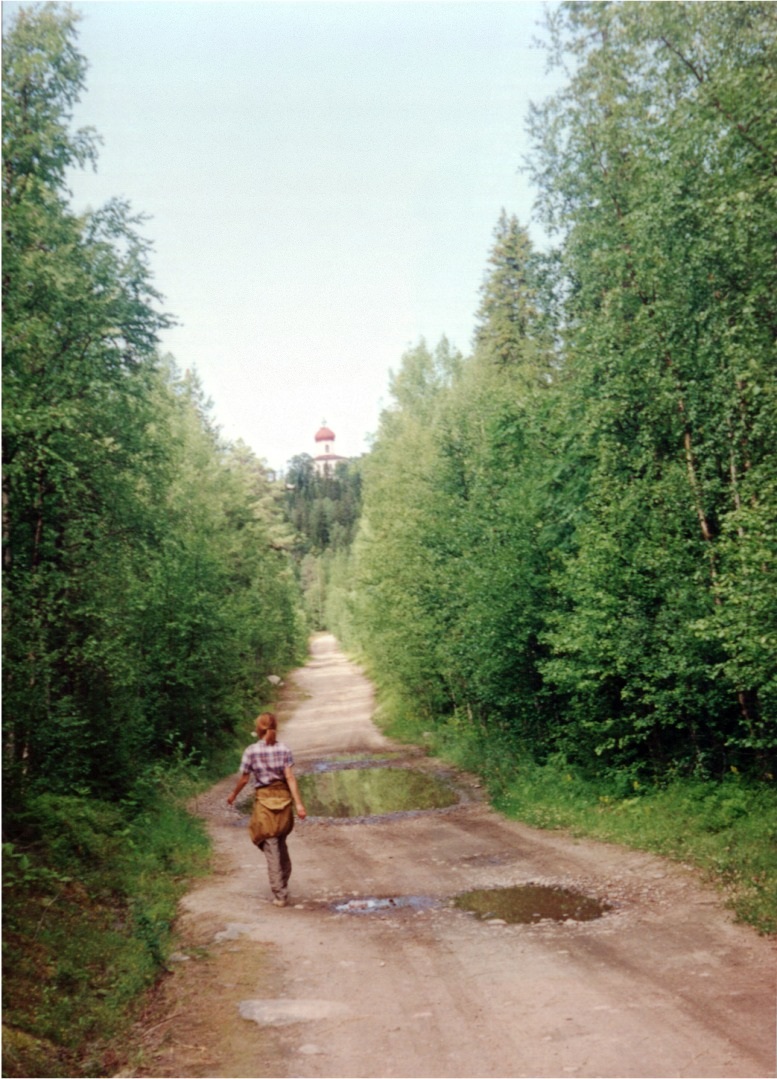
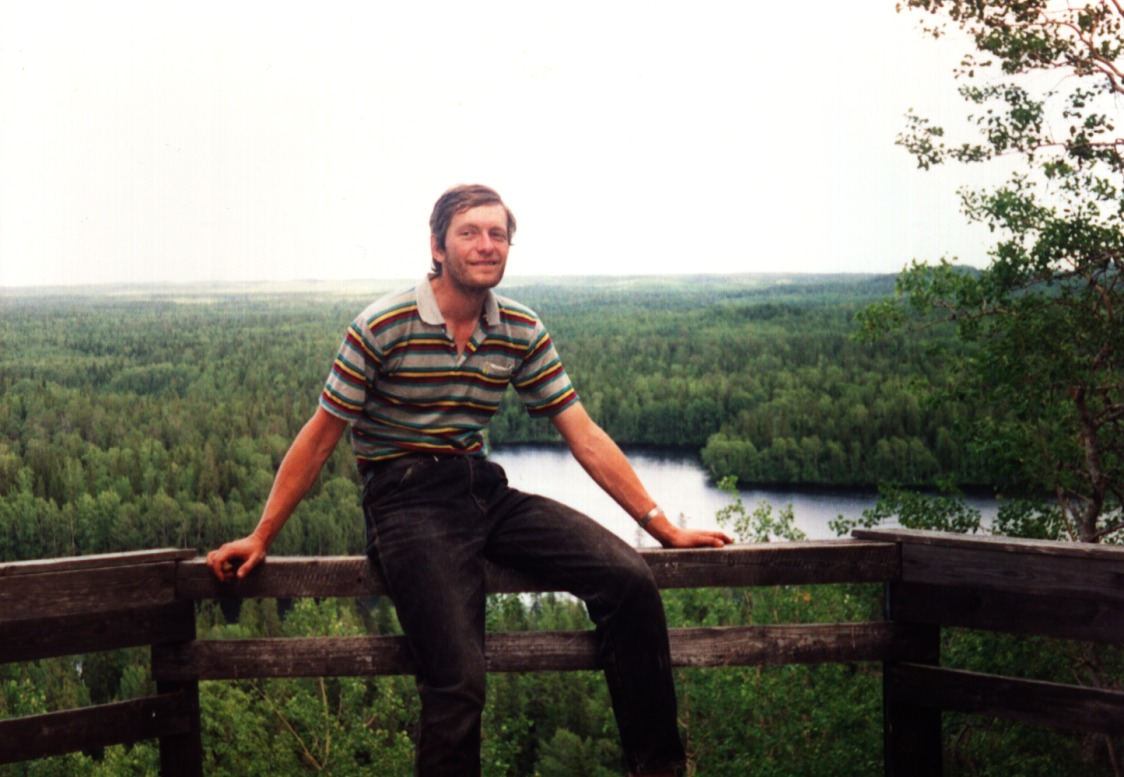
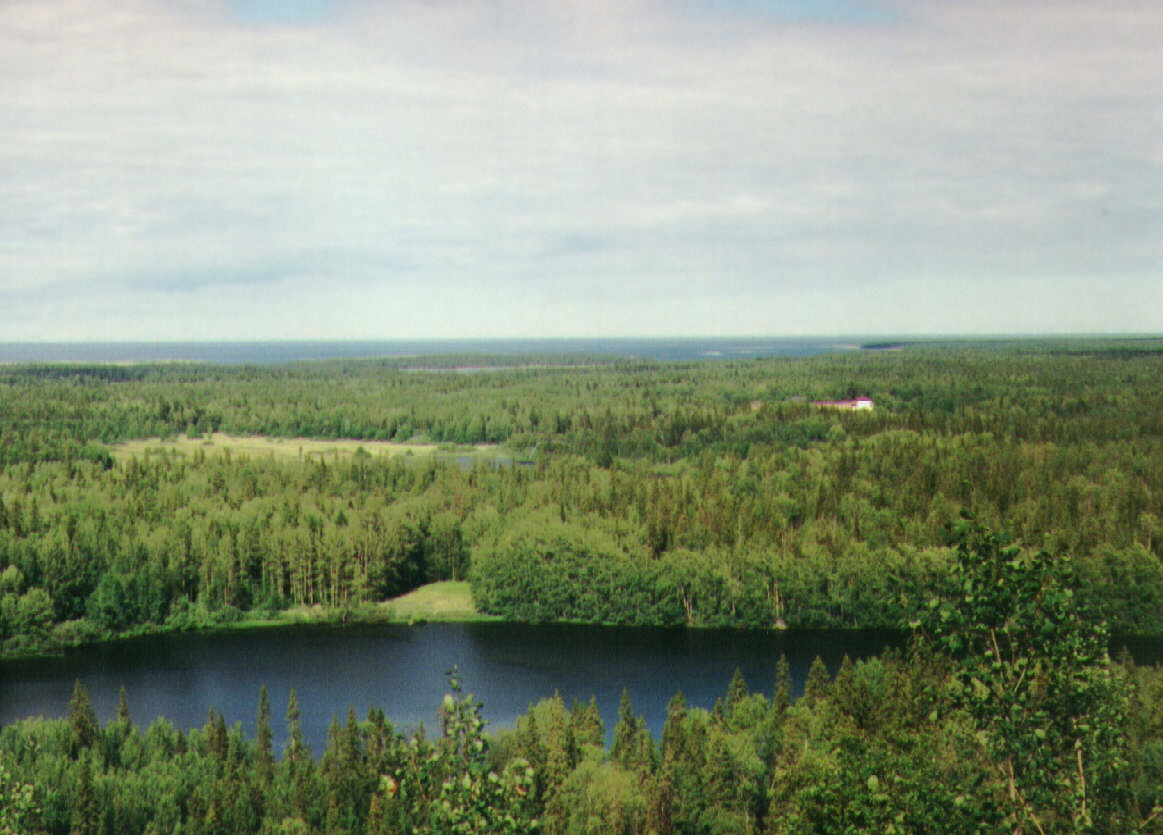
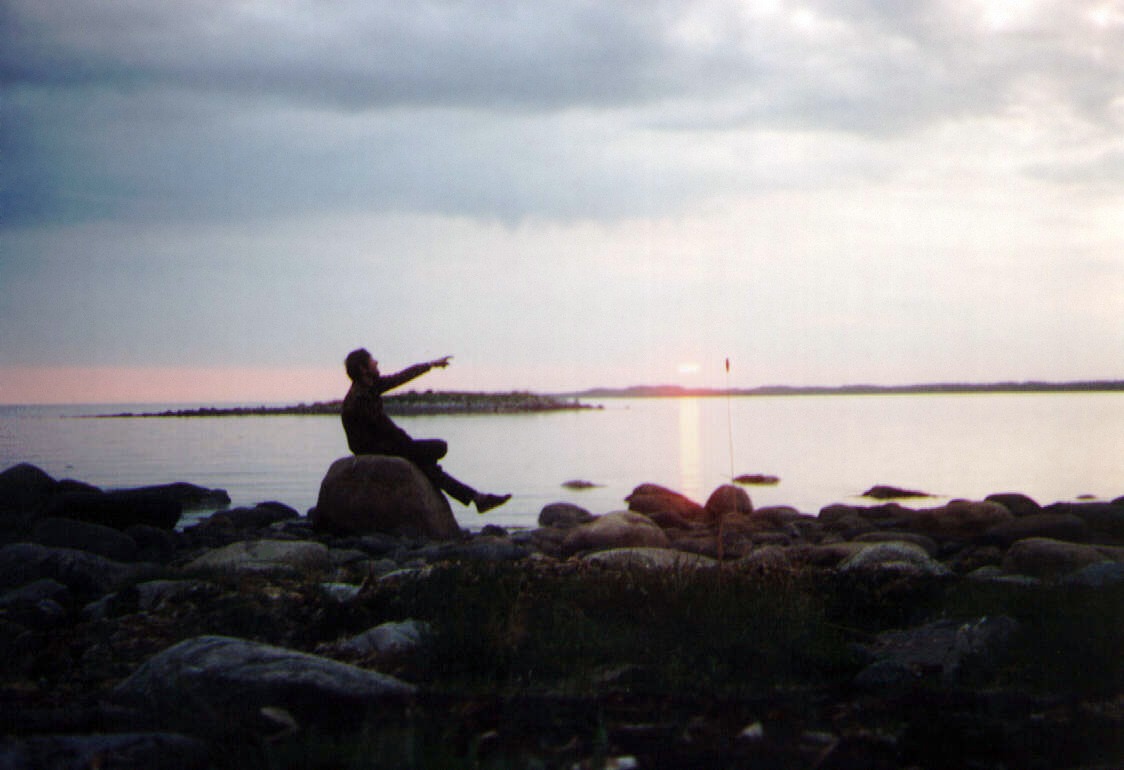
TS. Woke at 10:30 (tractor heading for the kayak). Ate coffee, drank porridge and went to Sekirnaya Hill (15 kilometres). The Sochavas stayed to guard our things. At 15:50 we are up the hill. Nothing of interest. An old woman from the hermitage is swearing at an old man and the mosquitoes are eating us alive.
28 July
AS. We woke to a dead calm. The thought that came to mind was that in water like this we needed no ship. Five hours and we would be on the Kuzova Islands. Tanya had strained her arm on the crossing to Solovki. She was furiously opposed to making another crossing and gave us all a piece of her mind. On the other hand there was nothing else we wanted to do on Solovki. Its coast is 100 kilometres round. Going round in three days would be hard work, and we did not find Solovki very interesting anyway, with its bogs, mosquitoes and people.
In the end we went out into open water at 13:00. Right after setting out we saw big white beasts, whales of some sort, three to five metres long. White belly, black back, little spout. They came up every five or ten minutes. When one surfaced beside a kayak it was eerie. We remembered reading that hitting a whale is a common way to lose a yacht. A kayak is smaller than a yacht. A whale could break and overturn it without noticing. Frightening. In the distance something like a fin appeared. I yelled, “Shark!” Then, very seriously, I said that if there were whales, there must be sharks too. Marina believed me and tried to paddle backwards.
At 15:25 we were on Topy. There are two islands, the big northern one with the lighthouse, where we landed, and the little southern one without vegetation. Plenty of seals around the islands. They pop their curious, happy-looking heads up beside the kayak. A seal is big too, a few tonnes, yet somehow it is not frightening. There is a seal haul-out on Topy. We tried to photograph them without a telephoto lens, but on land they are shy and slip into the water fast.
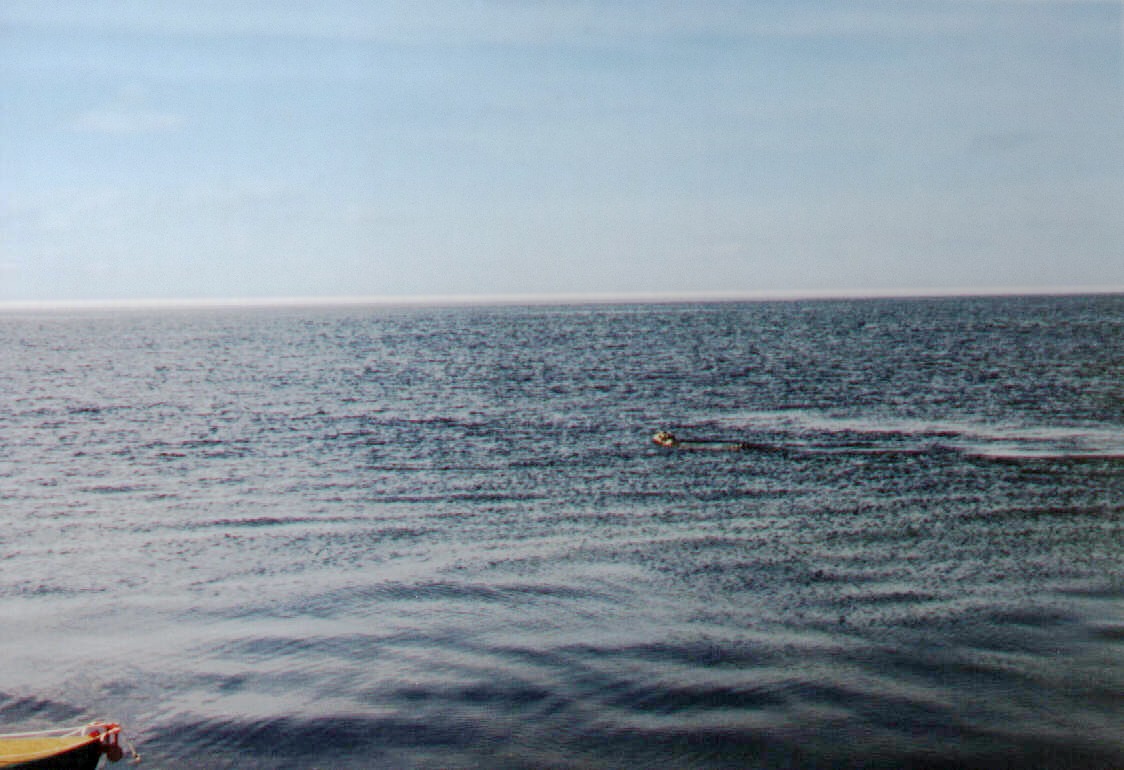
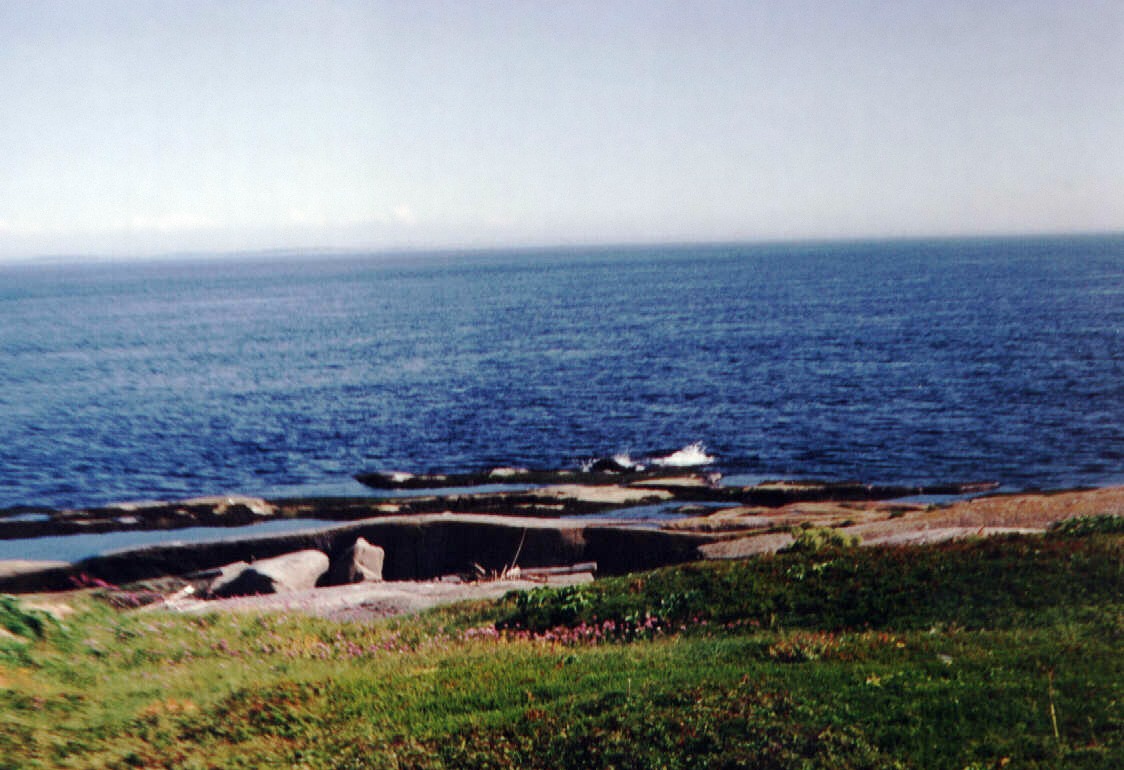
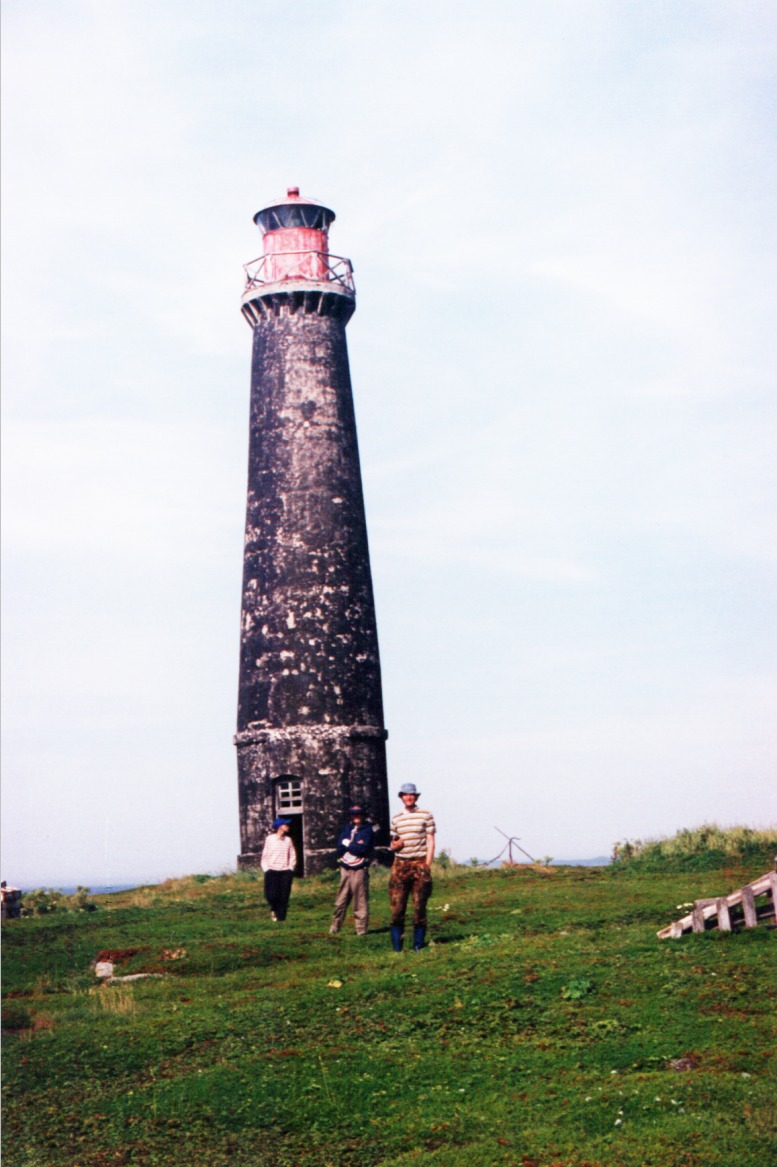
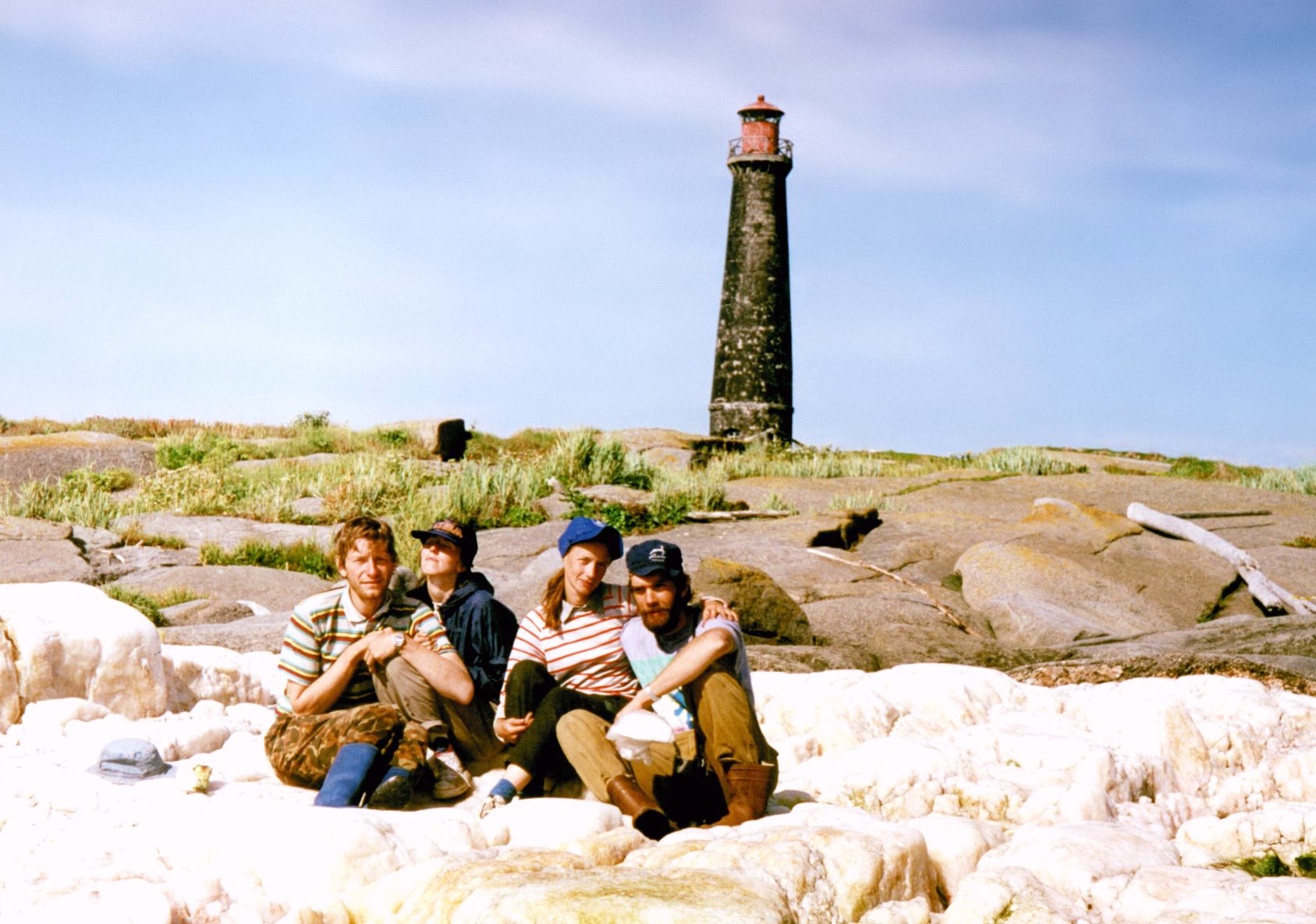
There is a lighthouse on the island that you can climb. Unfortunately I was running out of film and did not take the panorama. The lighthouse used to run on storage batteries. Hundreds of them lie round the lighthouse. It now has an atomic battery. We never saw it come on while we were out there. Perhaps it is not working, or perhaps it is the white nights. The lighthouse is about 20 metres high. On the island there is a big pool of fresh water. Apparently it does not dry up even in the driest years. There are no trees, but you can find driftwood for a fire. Lots of cloudberries. At the south end there is an outcrop of quartz. We broke off a five-kilogramme piece to take home. It is on the sideboard now. We ate some chocolate, drank cranberry mulled wine and nearly lost the kayak.
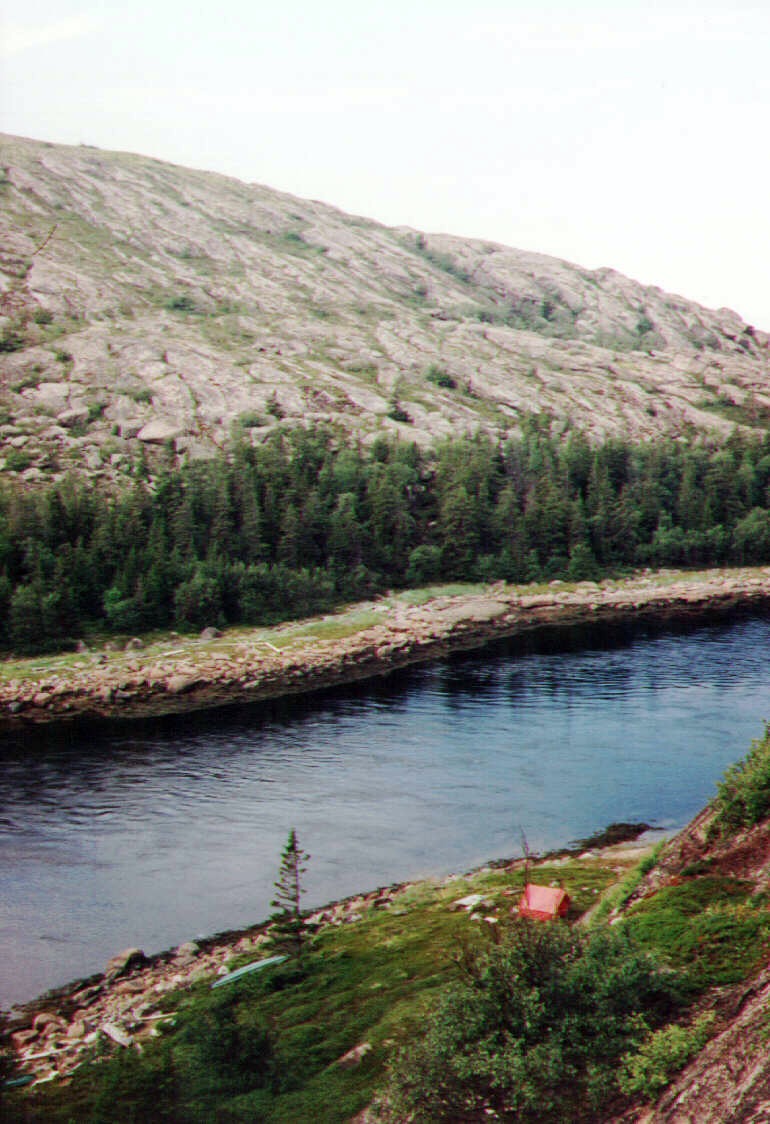
About 16:00 we set out for Kurichya Nilaksa. The weather gradually deteriorated. A strong headwind came up, then a heavy head sea as we approached the Kuzova Islands. The flood tide brought a current against us too. It was impossible to get on. We could not paddle into the channel between Zhiloy and Sredny islands. After half an hour of fighting along the very edge of the shore, where the current was weaker, we got through. Exhausted, we made it to Vorony Island, where we camped on a flat little clearing next to a granite rock covered in reindeer lichen (64°56.969′N, 35°10.506′E). We fell asleep fast. It had been a hard crossing and we were completely worn out.
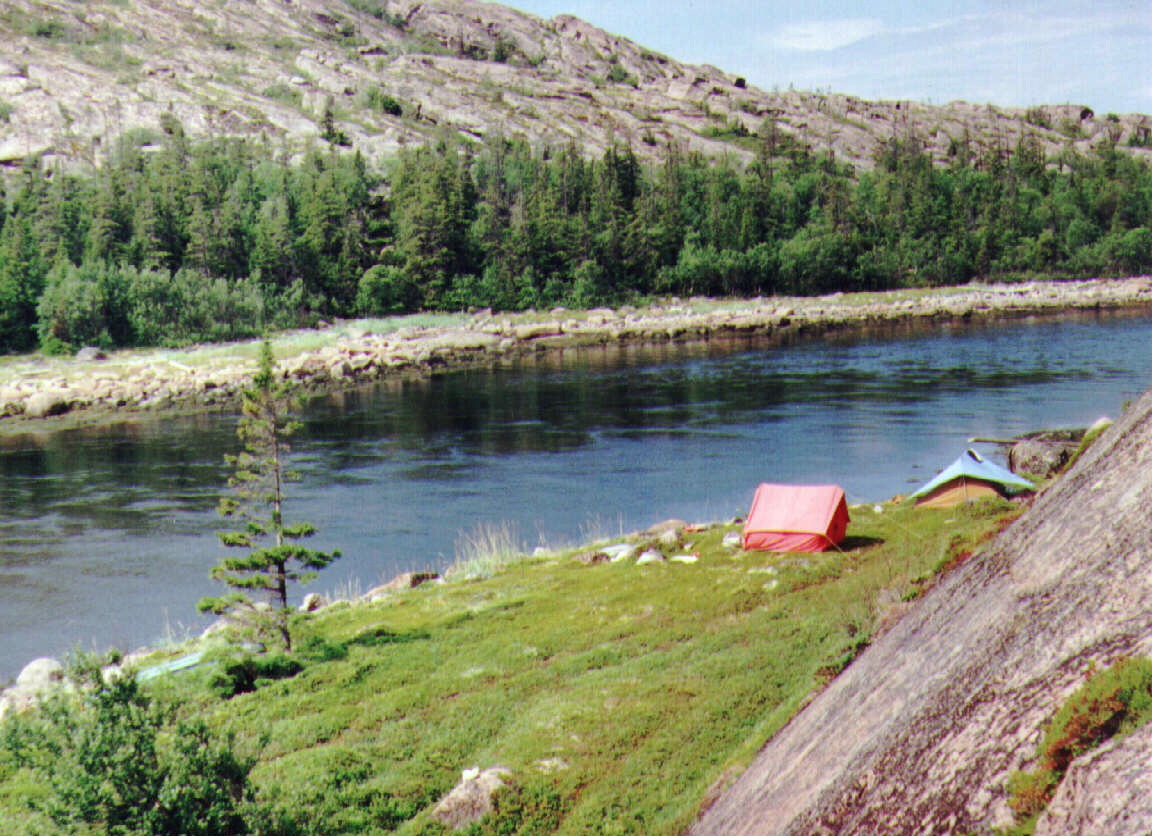
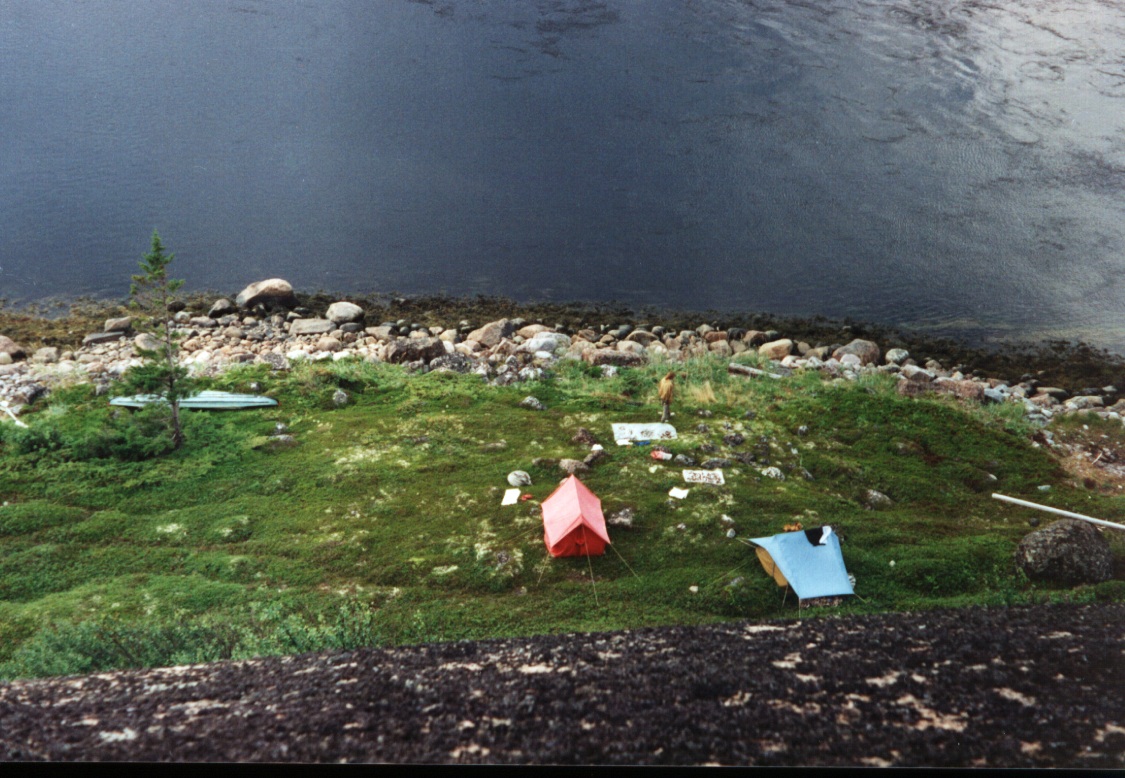
TS. Left to go back at 13:00. I ate Sasha. 15:25, Topy. What we see: seals, lots of them, curious, nice and whiskered. Frightening white beasts, big, snorting, in groups. We think they are belugas. The kayak began to float off but Sasha caught it. They unloaded me improperly and got my foot wet. They are giving me cranberry drink and some delicious chocolate. 21:00. Cold. Vorony Island. Made it at last. At the overfall by Zhiloy Island we nearly drowned.
29 July
AS. We walked round the island in the morning and filmed our camp. We set out at 14:00. The tide was in and there were no currents. Small waves, easy paddling. At the point by Olkhovy Island there was quite a commotion. We saw it from a long way off. The swell everywhere else was gentle, but at the point the sea boiled with whitecaps. We tried to go round it, but our desire to land on Olkhovy and have a bite got the better of us. We ended up in the middle of the whole mess. We almost capsized but paddled clear, then hurried to land in the big swell. We ran up a lifeless shore. The island had burned recently. Solid rock and not an alder in sight.
The year before on Lake Ladoga we spent three days three kilometres from shore on a small island waiting for a storm to end. The resemblance was obvious. We started imagining how and where we would camp on this rock, and went to look around. The southern part of the island was quite decent. While we sat and thought about it, the ebb current stopped and the waves at the point settled down. We set out again at 21:00.
It was a quiet, sunny evening and we reached Yak Island at 23:30 without trouble. We camped beside a striking granite rock (64°59.310′N, 34°50.749′E) and held a farewell party. There was an interesting place for a fire, a hollow in the granite that might have been made for the purpose, complete with seats. The evening was cold and surprisingly dark. Even here by the Arctic Circle, the white nights were coming to an end. It felt sad. The journey was over, but after all the waves and overfalls we were happy to be alive.
TS. Departure 14:00. Before that we climbed the hill and established that it was calm. A yacht is tied up nearby, so there is nowhere to sneak into the bushes. Course for Pesya Luda. We paddled to Olkhovy Island in sunshine and sunbathed. Decided to have a bite on the point. While we were coming up to it, a small but terrible local storm blew up. Everything was boiling at the point, and there we were in the middle of it. We rounded the point, landed and decided it was a shoal. Went looking for mushrooms. In a spot where there seemed to be nothing, the Sochavas knocked over a whole bagful, found chanterelles, a porcini and red-capped ones. Crossed the local river. Back to Sasha, and started arguing over whether to paddle or eat. They would not give us food or tea, and we paddled to Yak Island. Went nicely with the swell.
Arrived at 23:30 and ate a lot, all the remaining vegetables in a dish called “cabbage rolls”. There was an interesting fire called a “long double” in a hollow.
30 July
AS. We woke and devoured all the remaining provisions. Stuffed ourselves. We climbed to the top of Yak Island, all 19 metres plus the triangulation tower. It took us a long time to get going. We were sorry the trip was ending and did not want to go back. We set out at 14:00, paddled round without incident and landed at Rabocheostrovsk. We caught the ebb. I had to carry Tanya from the middle of the bay and we spent a long time dragging the kayaks. By 19:00 we had packed up and moved everything to the bus stop. In Kem we bought tickets straight away and left an hour later.
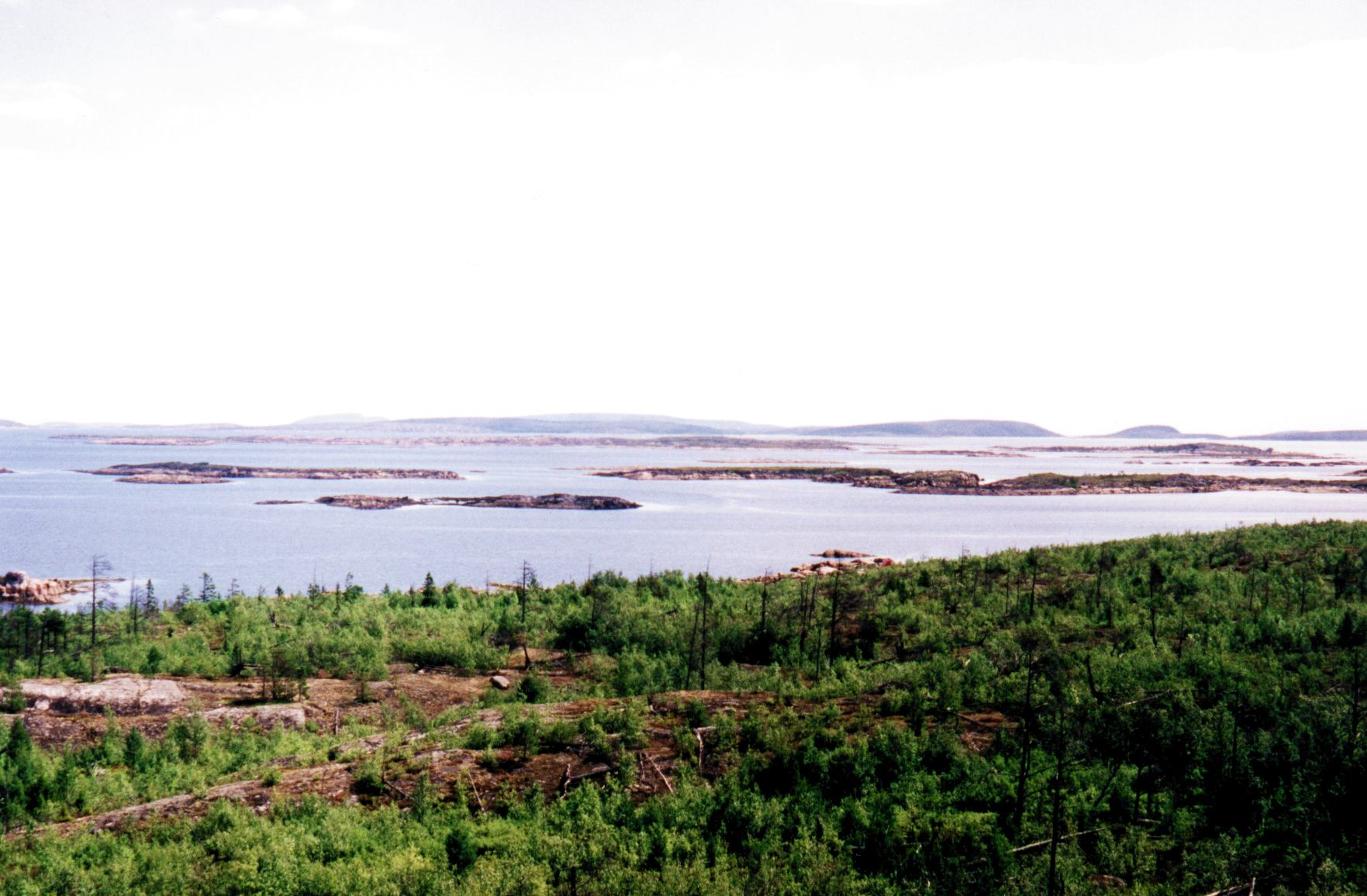
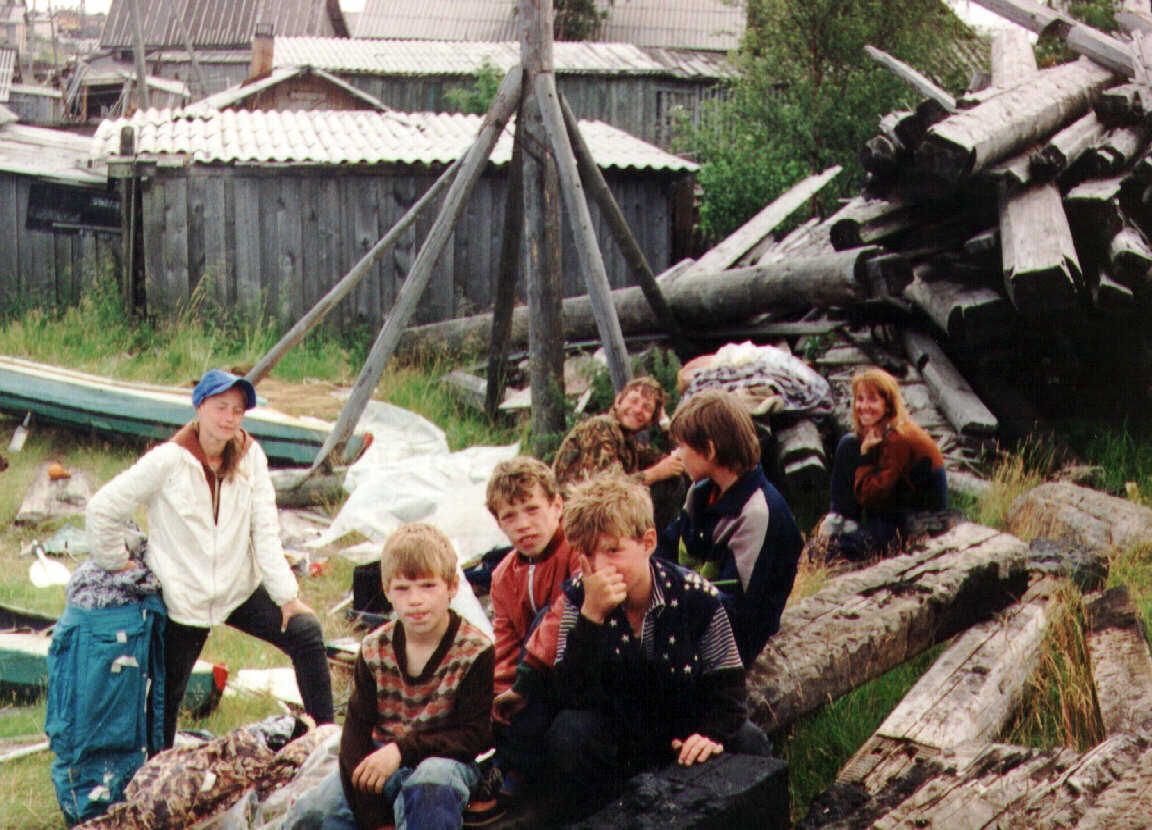
TS. Woke from the cold. Nyukh ate a lot of porridge with stewed meat and felt ill. Departure at 14:00. 17:00, Rabocheostrovsk. A dog peed on my little spruce from Nemetsky Kuzov. We should not have fed it. We took the bus right to the train.
For the train we bought four tickets in a sleeping compartment, five bottles of Baltika No. 3 beer, two bottles of lemonade (three litres), a box of nut brittle (eaten almost straight away), two Wispas (did not go down well), two Lions (even worse) and some Dirol gum (we ate half). We also had a tin of stewed meat from our supplies and a bit of bread, which made it all the way back from Kem.
31 July
TS. Woke up on the train at 08:37. Very hungry. Threw away the bread and ate the condensed milk.
Nowhere left to paddle…