White Sea notes
From 17 July to 1 August 1995 we paddled from Kem to the Solovetsky Islands and back. From 23 July to 4 August 1998 we went from the village of Virma via Kondostrov and Kotkano islands to the village of Kolezhma.
There were four of us. Sasha and Tanya Simo paddled a Taimen-3, and Sasha and Marina Sochava paddled a Taimen-2. The notes below cover both trips.
Maps
Detailed maps of Berezhnoi Sosnovets Island, the Borshovtsy Islands, Perkhludy, Kondostrov, Kotkano and Belaya Luda.
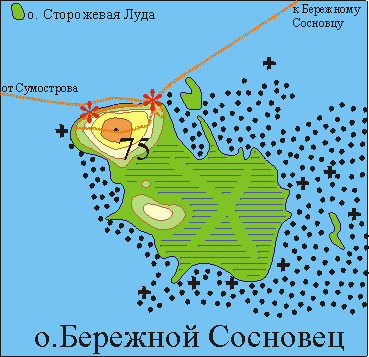
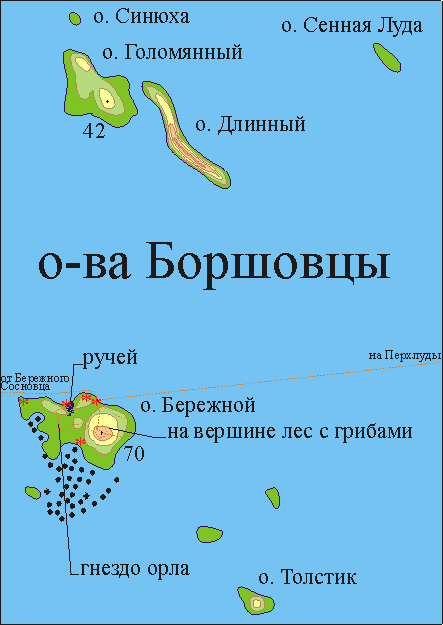
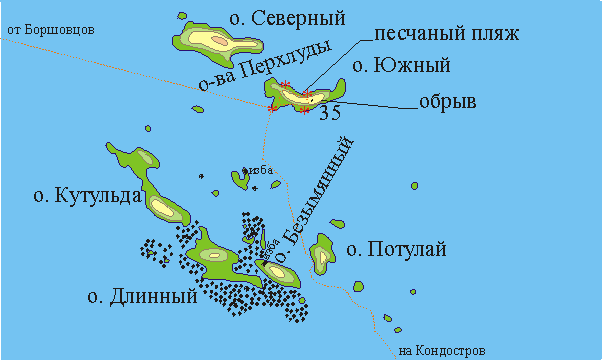
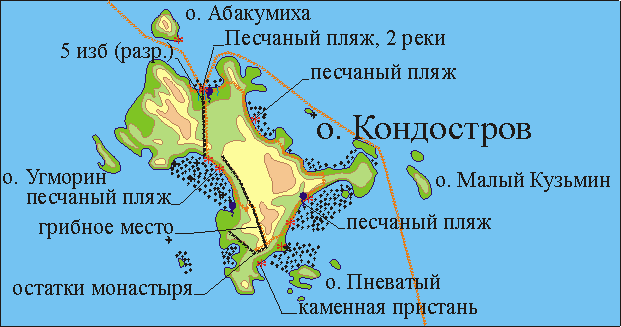
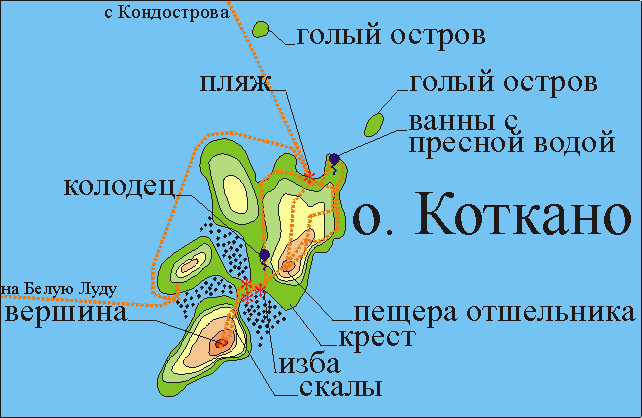
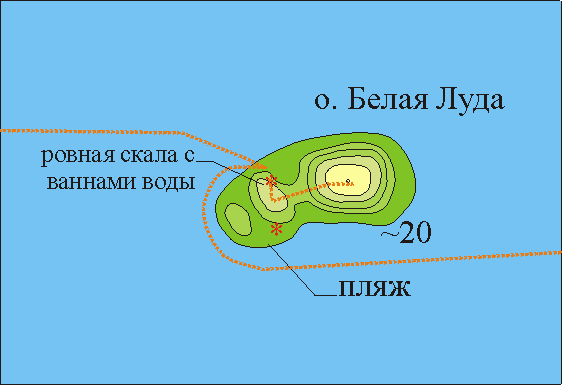
Overview map of the 1998 trip. Other maps.
Weather
In late July 1995 we found the weather could change several times a day. In the sunshine it was 20–25°C, warm enough to sunbathe. In the rain it was 8–12°C. The fog could get quite thick and close in in the middle of a sunny day. We navigated by compass and GPS. Plenty of warm clothing comes in handy.
It was much warmer on average in 1998. We sunbathed every day and never needed our warm clothes.
Wind
The wind takes its time to change, but it can get up at any time of day, even in the evening or in the middle of the night. Once it starts blowing, it can go on for several days.
Waves
The swell can be large and gentle. In a kayak you can ride waves several metres high. We set out for Solovki in a metre and a half of swell. What causes trouble is the tide. When a big swell coincides with waves formed by the flow around the islands, the sea seems to boil. Steep, metre-high waves hit the kayak from all sides, and it is easy to capsize. Paddling out is difficult because the current around the ends of islands and in the channels is fast, over a metre a second. We tried to avoid the channels between the islands when the current was at its strongest. A high swell is easy to paddle through, but difficult to land in. The waves break near shore. Sitting in the stern, I took a wave in the back that was taller than I was.
In 1998 we found that a steep chop could also build very quickly. It was unpleasant to paddle through. The first few days were perfectly calm, and the last few were stormy.
Tides
The White Sea has high tides, reportedly up to two metres in some places. We only saw a little over a metre in 1995, and 1.5–1.8 metres at Kotkano in 1998. Along the mainland and around the islands there are tidal flats that turn into wet, muddy sand covered in seaweed at low tide. At high tide they are open water. Keep an eye on the chart, or you can suddenly find yourself in a muddy bog several kilometres from both dry land and deep water. A storm stranded us like that at Solovki. We had to haul the kayaks and our gear about a kilometre to dry land, knee-deep in mud. In the south, in Onega Bay, the intertidal zone can extend for 20 kilometres. A tidal flat marked on the chart is sometimes still covered at low tide, with enough water to paddle over.
The current is fairly slow in the open sea, but between islands it can run at several metres a second. You cannot paddle against it. The currents form whirlpools in the channels. We paddled right through the centre of one with a hollow about 10 centimetres deep and felt nothing. In our experience the waves at either end of a channel were far more dangerous. When they meet the wind waves, the result can be dreadful. You are riding a high, gentle swell, and suddenly the waves become erratic and several times higher. The kayak is swept off in who knows what direction and you cannot paddle back against the current.
There are two tides a day. Once you have seen one, you can work out when the next one will be. We found it best to set off towards the end of the flood or the ebb.
In the southern part of the sea we found in 1998 that tidal currents were strong even well away from the islands. It is hard to make headway against them. Some channels are faster still, such as the one between the mainland and Myagostrov.
Campsites
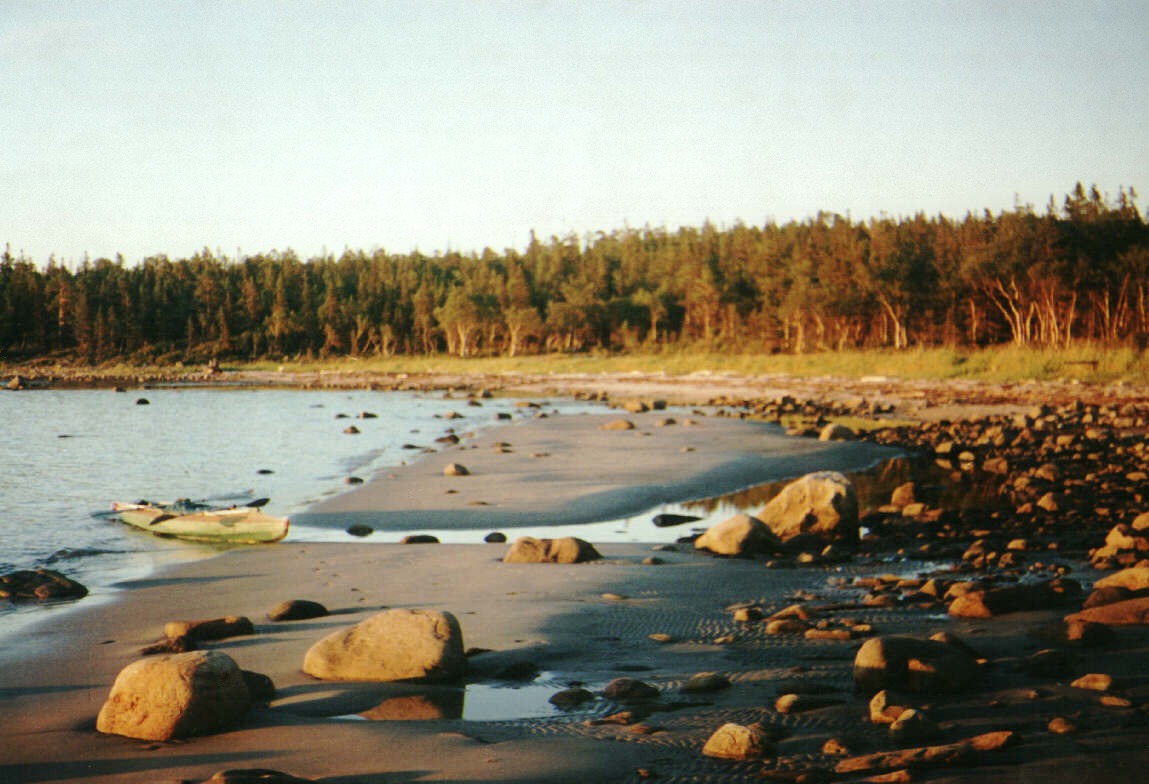
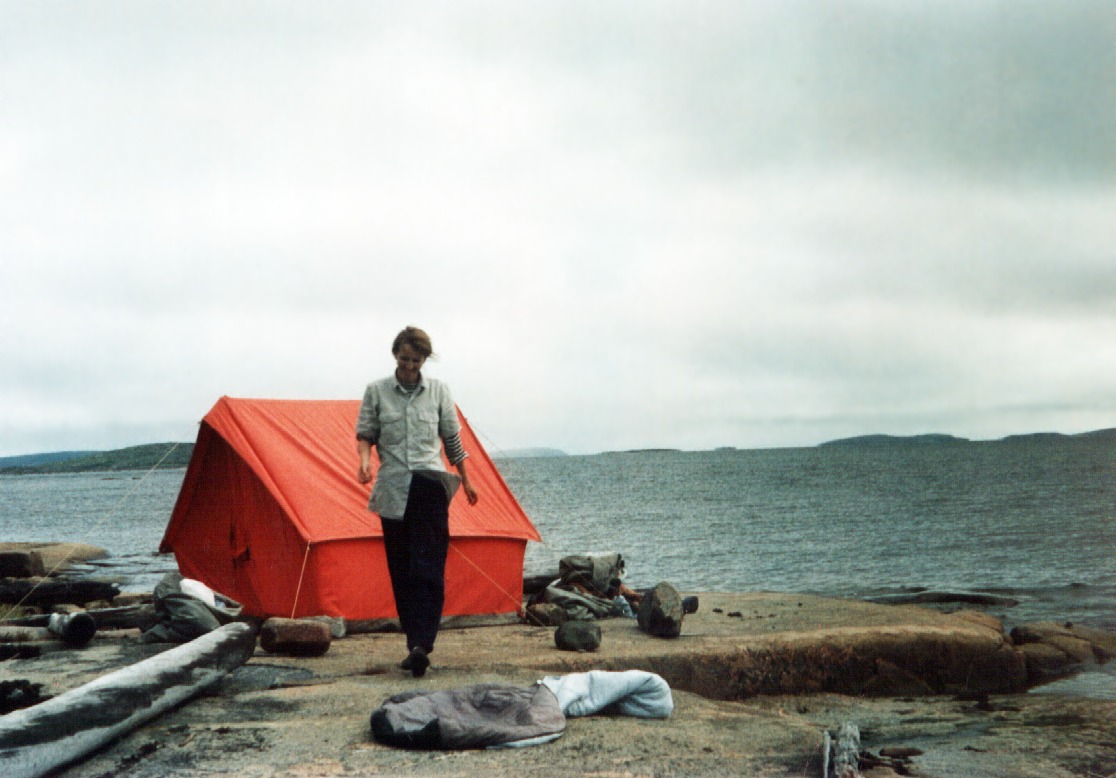
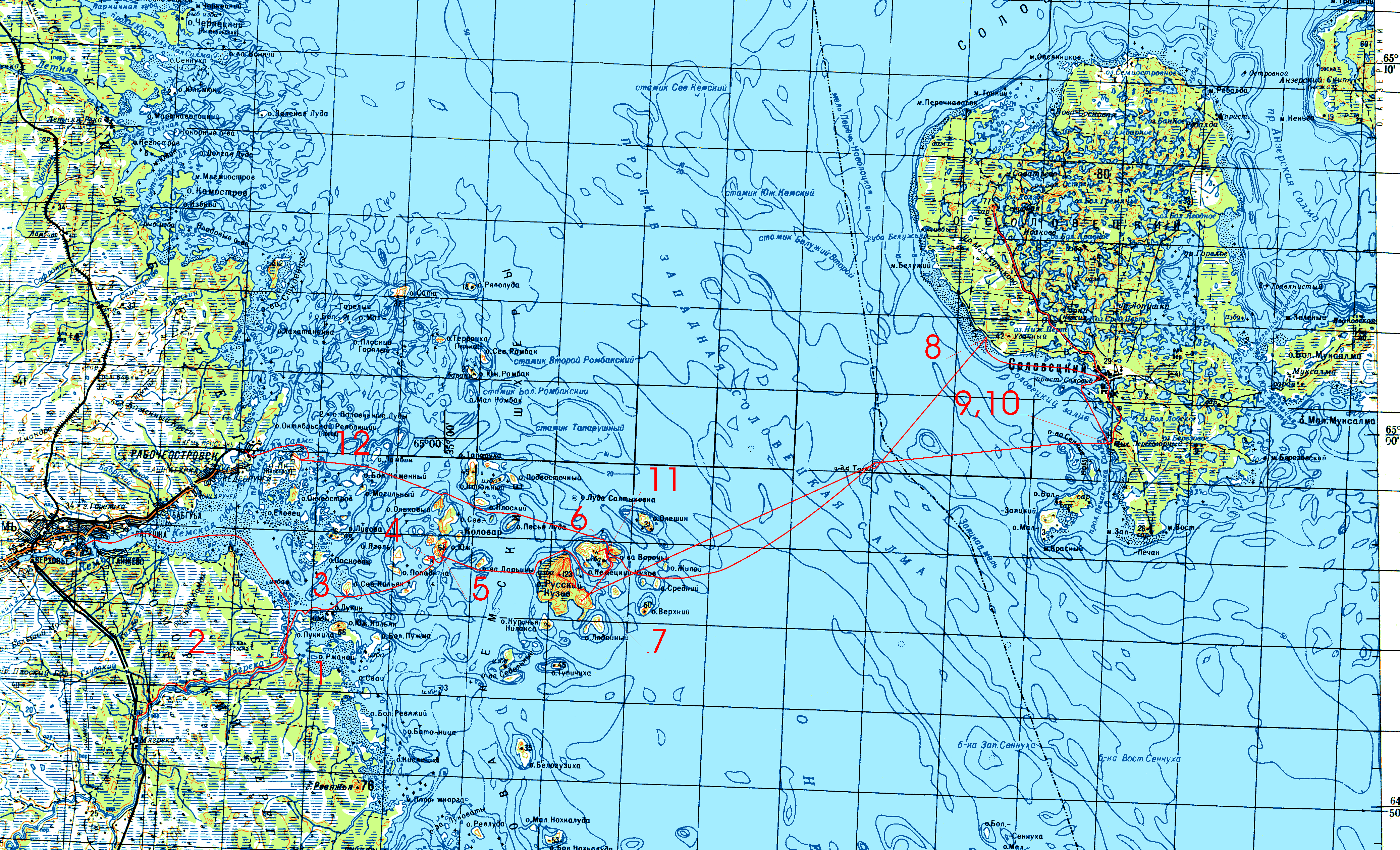
You can camp almost anywhere except where there are sheer cliffs, which take up about half the perimeter of the islands. Some bays have good sandy beaches. A sandy beach that is fine at high tide may be a long way from the water at low tide. On the headlands there are flat slabs of rock, sometimes covered in moss. The places where we camped are numbered on the map. They are good sites too.
Seawater
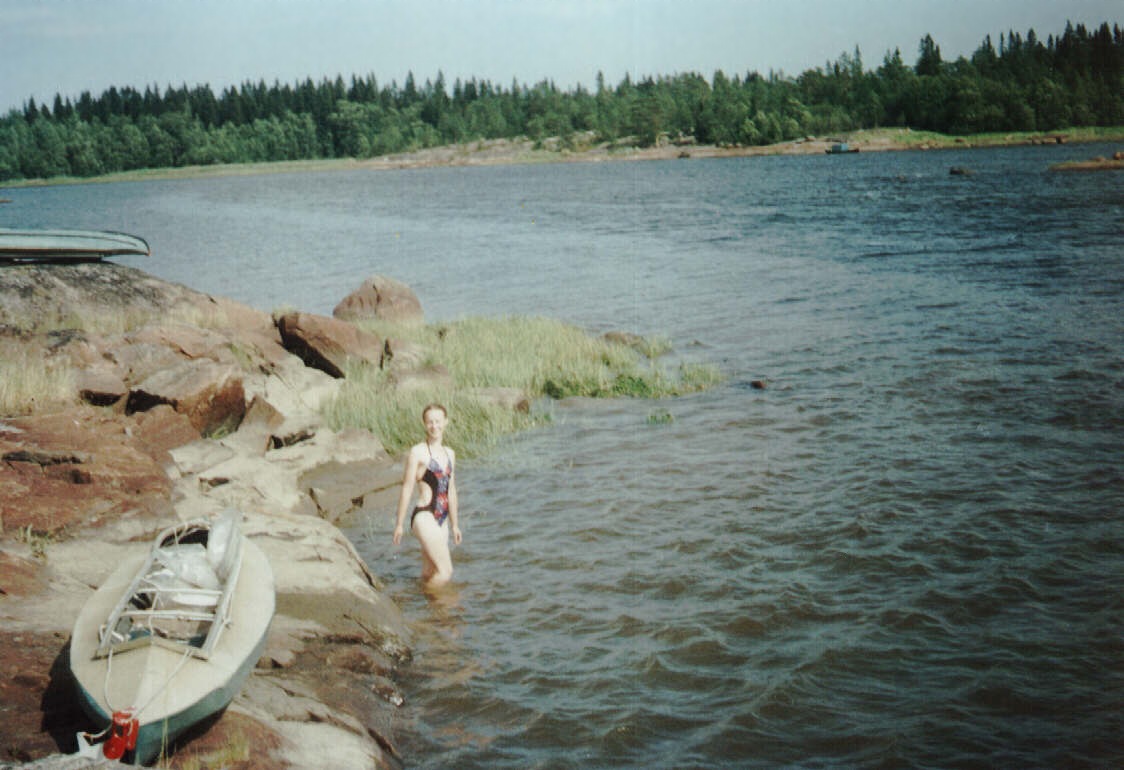
It is salty, at about 35 grams per litre, which we reckoned was three times as salty as the Black Sea and saltier even than tropical seas. It is undrinkable. By feel, it was 5–10°C in 1995. It was much warmer in 1998, around 12–18°C.
Cold, all in all, although we did go in for a swim. At low tide, small pools form. Some are about half a metre deep and warm to 20°C in good weather. Solovki has many inland lakes. They are dark with peat but fresh, and the water is 15–20°C.
Fresh water
Fresh water is a real problem in dry weather. Carry it with you. The four of us got through 10 litres a day and carried 40 litres in plastic bottles. On the islands you can find water in cracks in the rocks or at the bottom of small bogs. The drier it gets, the harder it is to find and the muddier it is when you do. Rivers that flow into the sea can be salty for several kilometres upstream, so you may have to paddle quite a way for fresh water. There is water in the rock crevices on some islands. On Nemetsky Kuzov we could find none within 200 metres of our campsite, but neighbouring Vorony Island had plenty. Perhaps that is why the guards’ hut stood there. Russky Kuzov is said to have a well. We did not find it, but we did find a spring. Solovki has fresh water in abundance. There is a little lake on Topy Island that stays filled even in dry years. If anyone can add to this list, please write to me. It is vital information for trips on the White Sea.
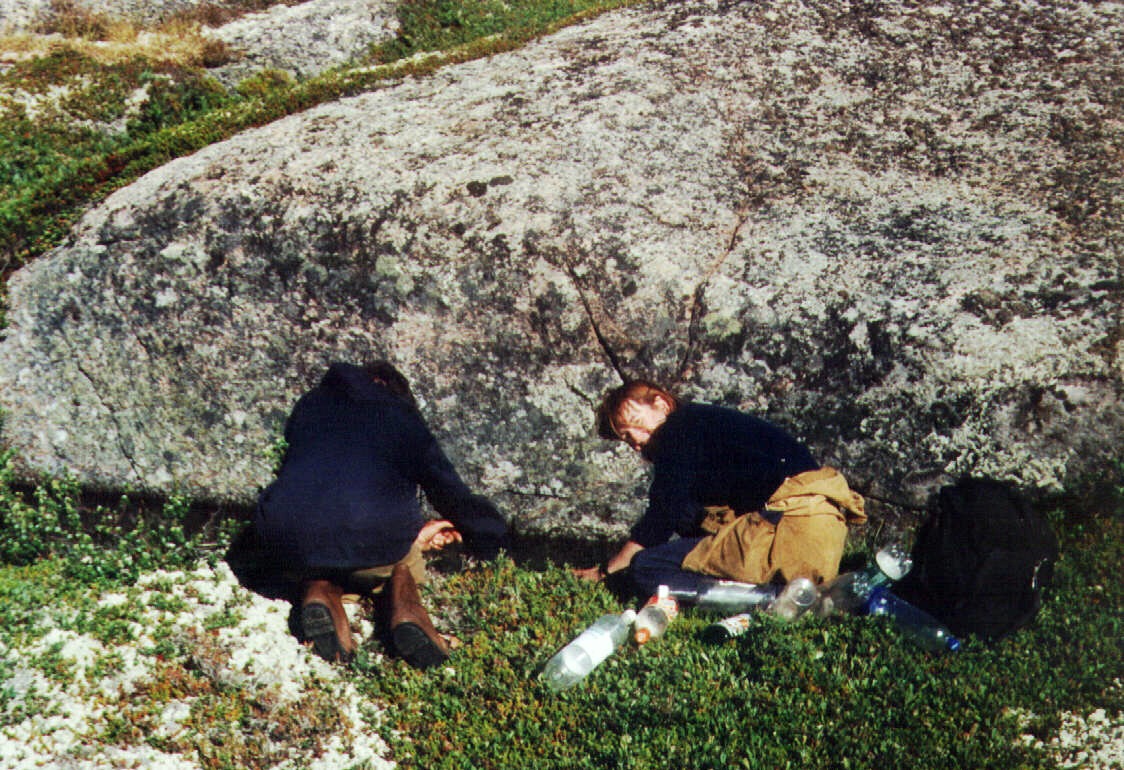
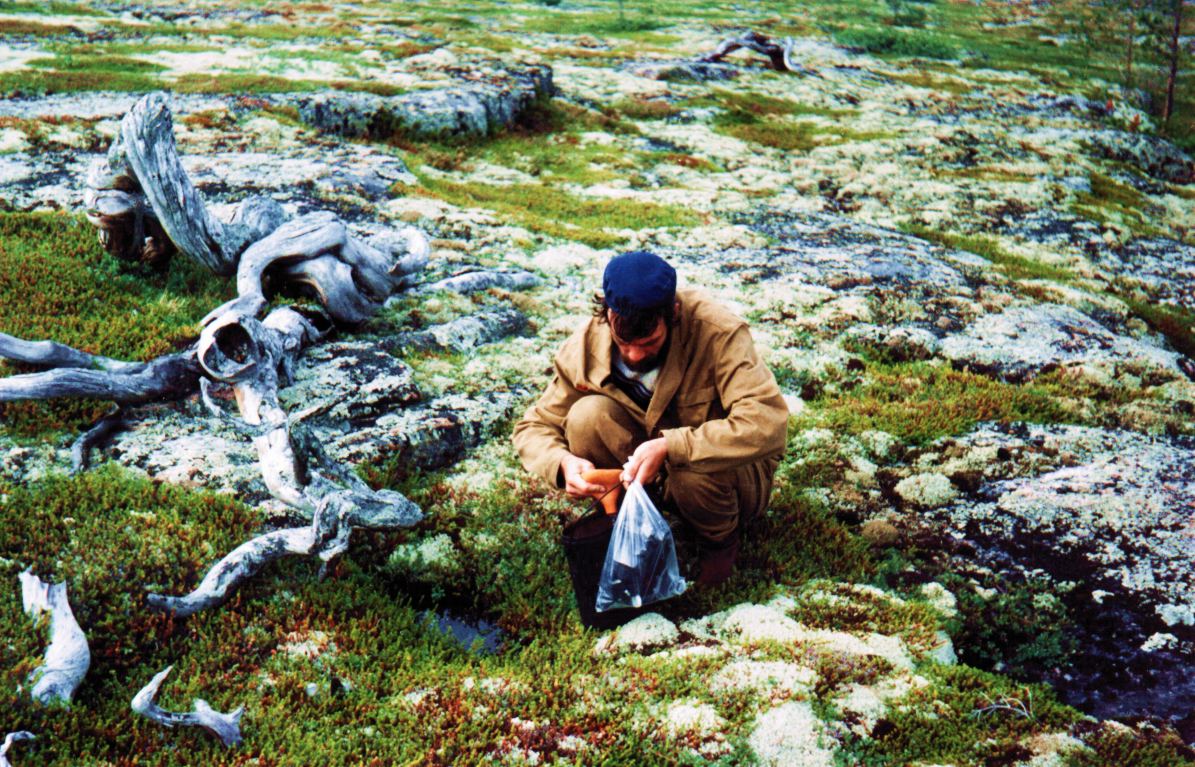
In 1998 there were thunderstorms every evening and we had fresh water to spare. It was hard to imagine having any trouble finding it. But in 1997, we were told, there were 60 days without rain and everything dried up.
Mosquitoes
There are lots of mosquitoes near the bogs on the mainland coast and on Solovki. At night there is a dense cloud of them outside the tent, several mosquitoes thick. Their hum keeps you awake. There are some on the islands, but not many.
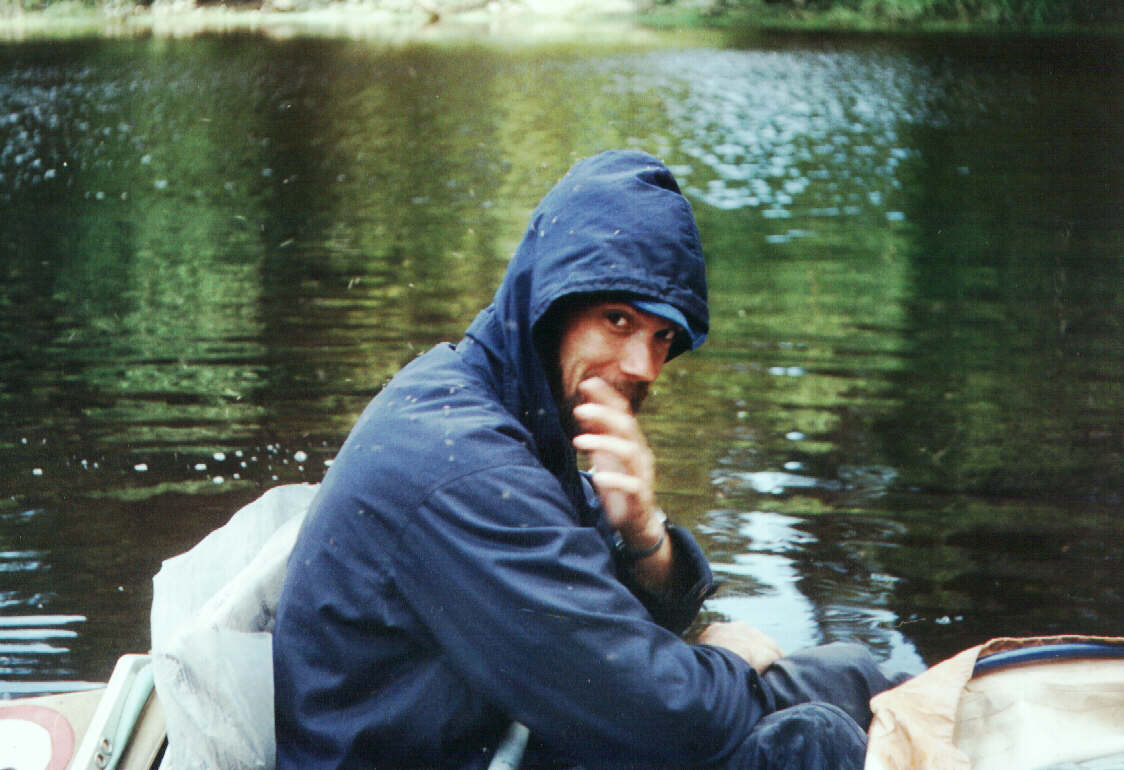
We found them on large islands such as Sumostrov, Myagostrov and Kondostrov, and on low islands such as Yemestrov.
Midges
There were few midges. I get more in my room in summer, 60 kilometres from Saint Petersburg, than there were outdoors by the White Sea.
Bears
They say there are bears. We found a dead cub on Russky Kuzov.
Forest wardens
We never met any. We did not even hear of them on Solovki. Fisheries inspectors did turn up at Kotkano.
Other wildlife
There are lots of seals in the sea. Topy Island has a haul-out. The seals are very inquisitive and pop their heads up beside the kayak. They seem harmless. There are huge, alarming creatures in the sea as well, whales of some sort, three to five metres long. They have dark backs, pale bellies and a little spout. We thought they might be belugas, but they did not match the descriptions in the books very well. It is quite a fright when one surfaces alongside. You imagine it overturning and breaking the kayak, and the water is cold. We only saw them out at sea. There was nothing like that around the islands close to shore.
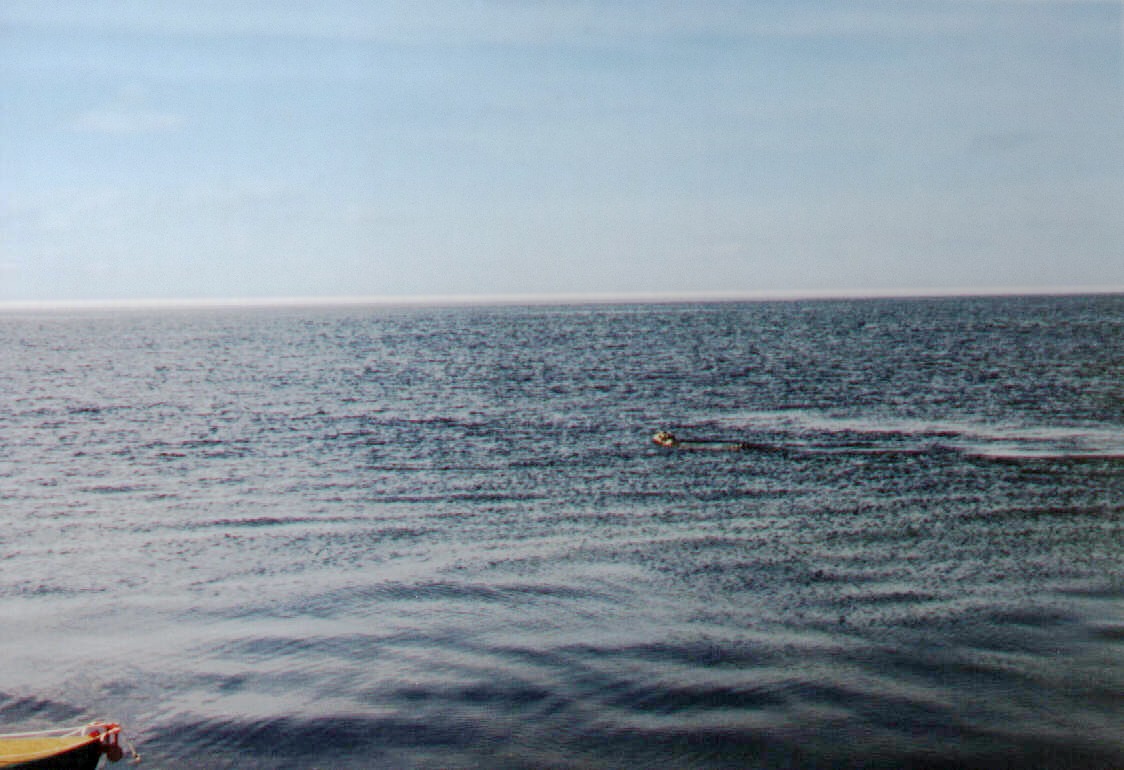
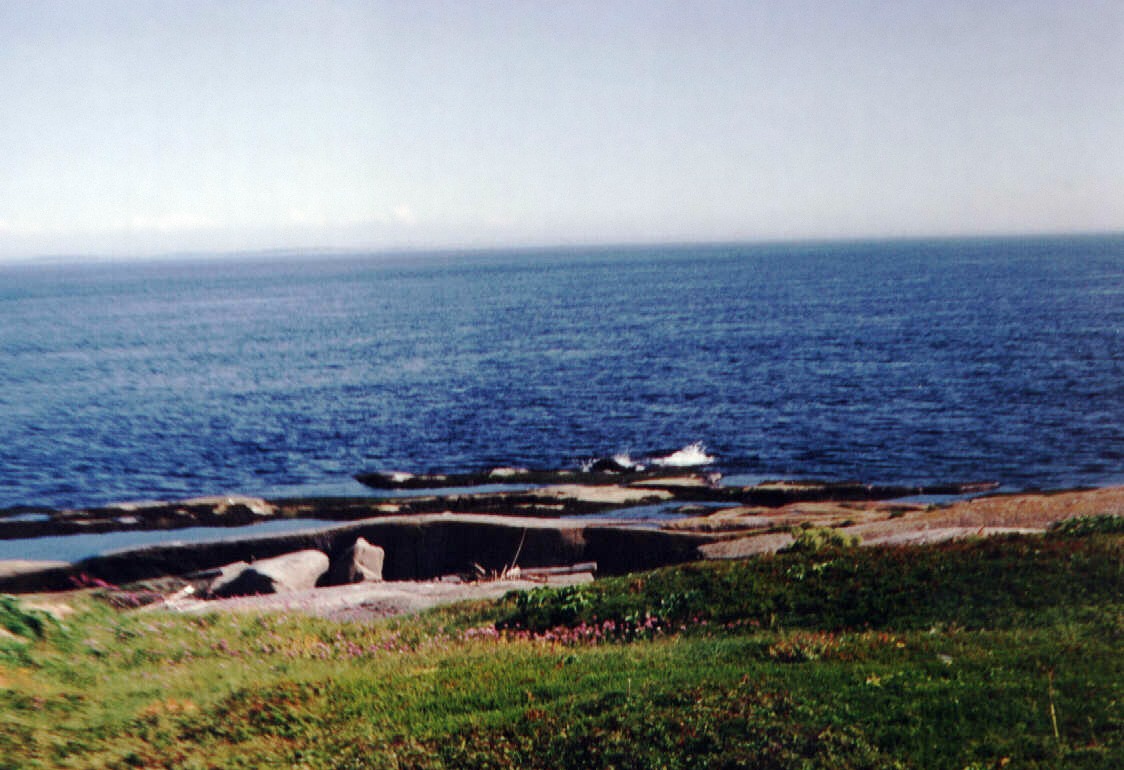
They say there are plenty of starfish, but they are underwater. The gulls spot them as soon as they wash ashore, and we found only the leftovers. The seaweed was beautiful, though.
We found crab skeletons, ate a lot of oysters, and saw an eagle’s nest.
Local people
People were very friendly. From time to time someone would see the fire and come over by boat for a chat.
How busy the shores are
There are always people on the Kuzova Islands. The best campsites are occupied round the clock, mostly by people travelling on catamarans.
In 1998 we did not see a soul between Virma and Kotkano. Kotkano often has visitors.
The monastery on Solovki
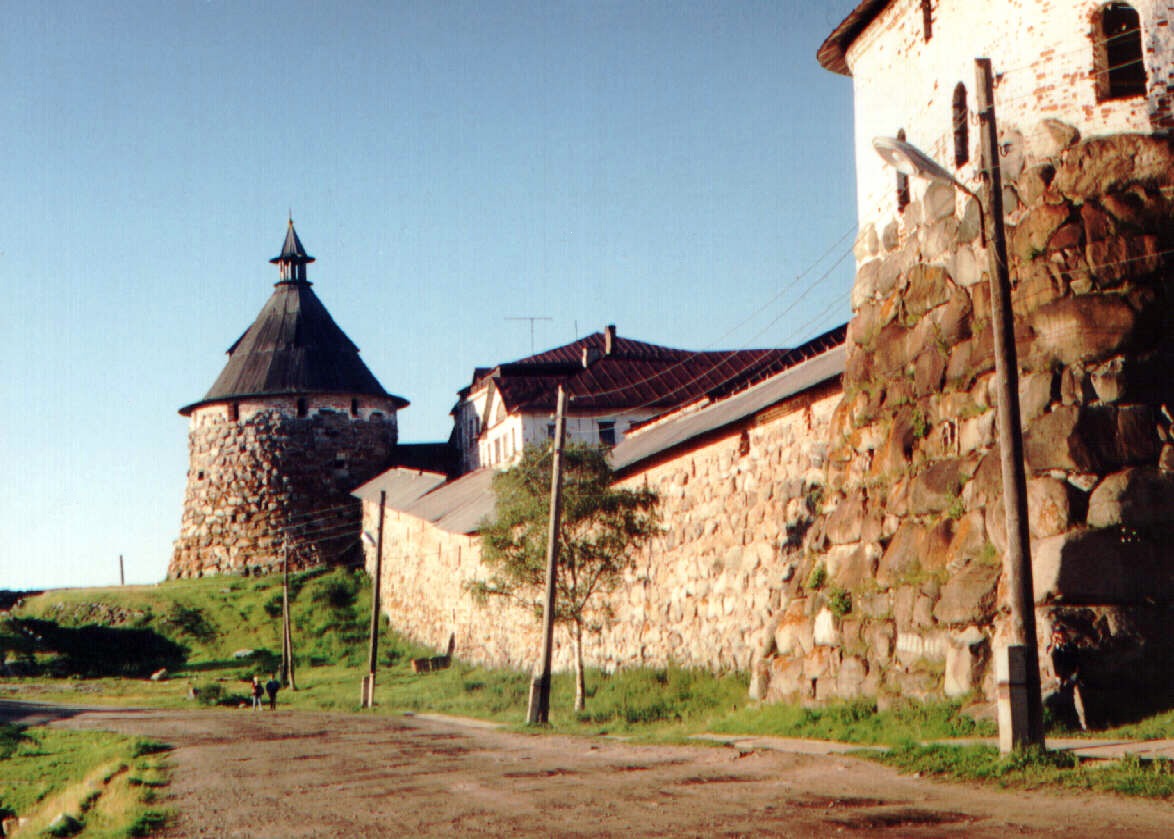
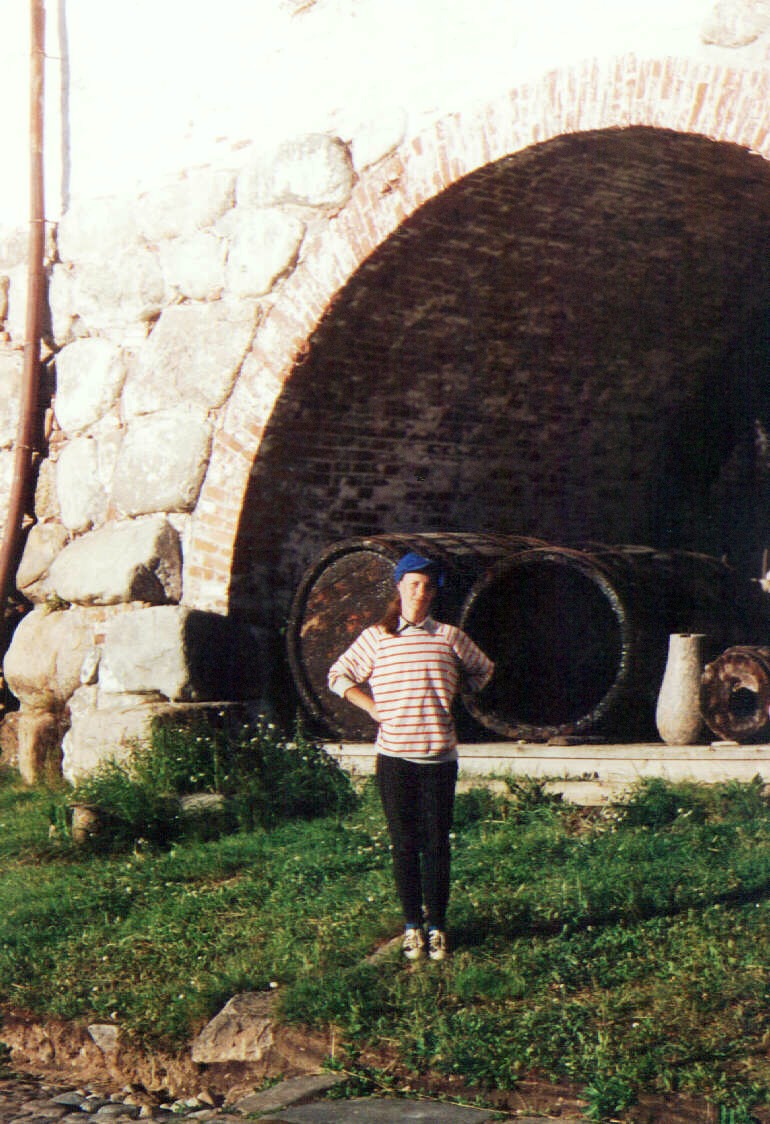
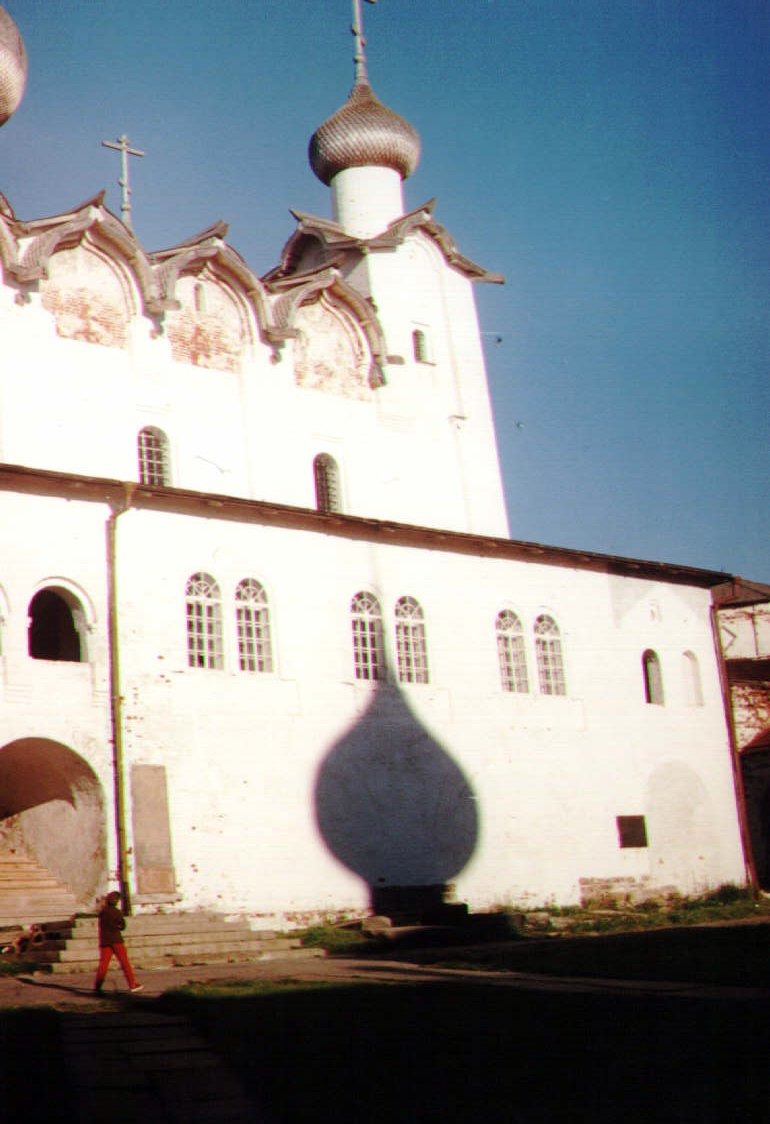
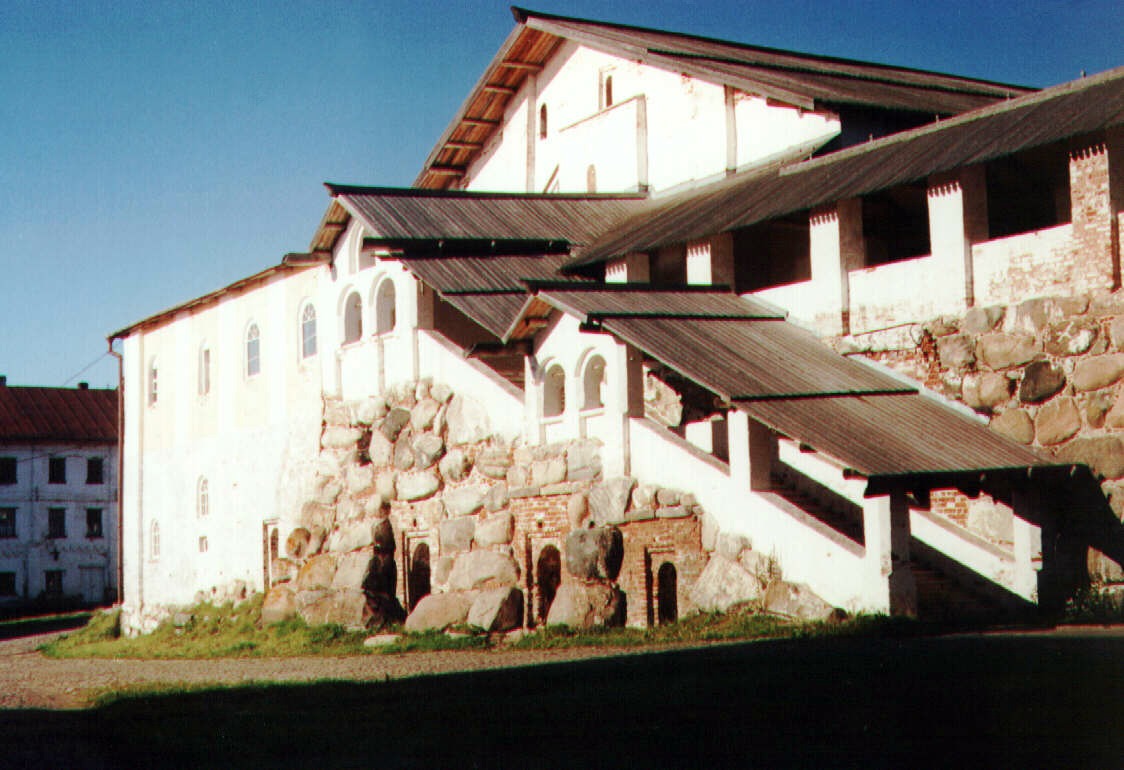
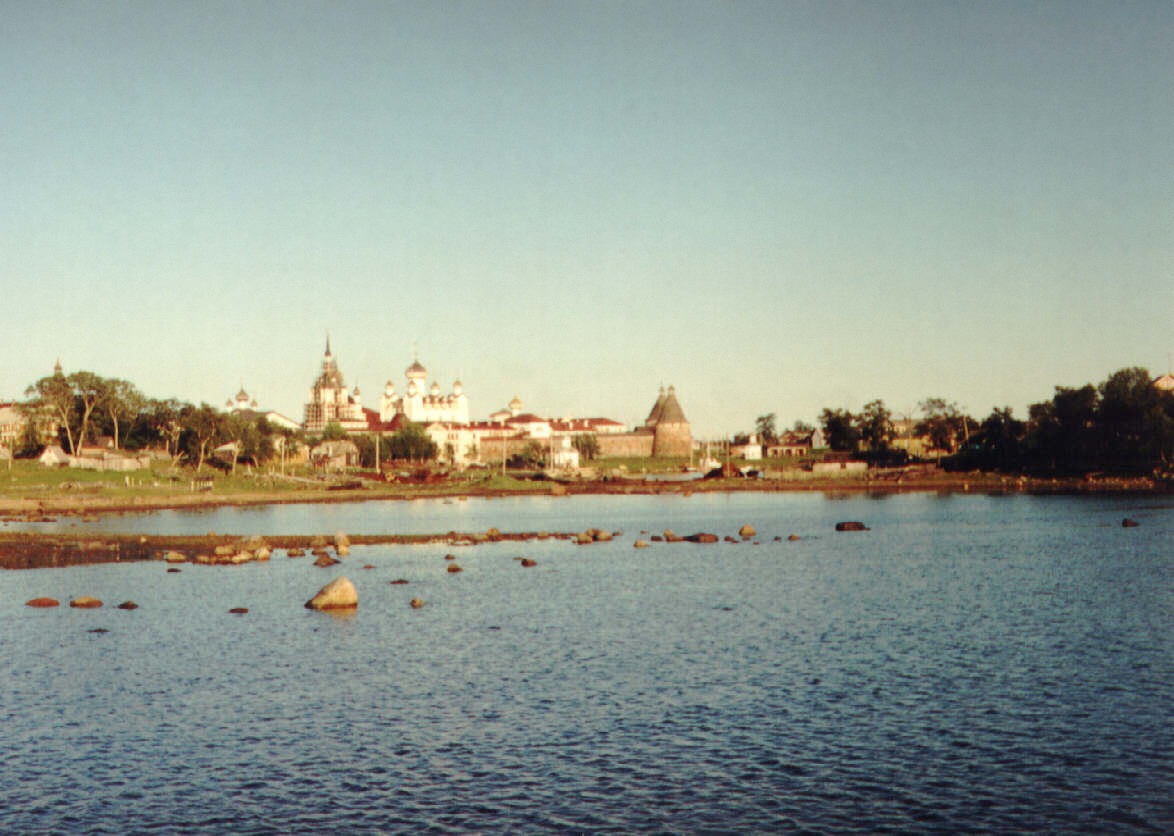
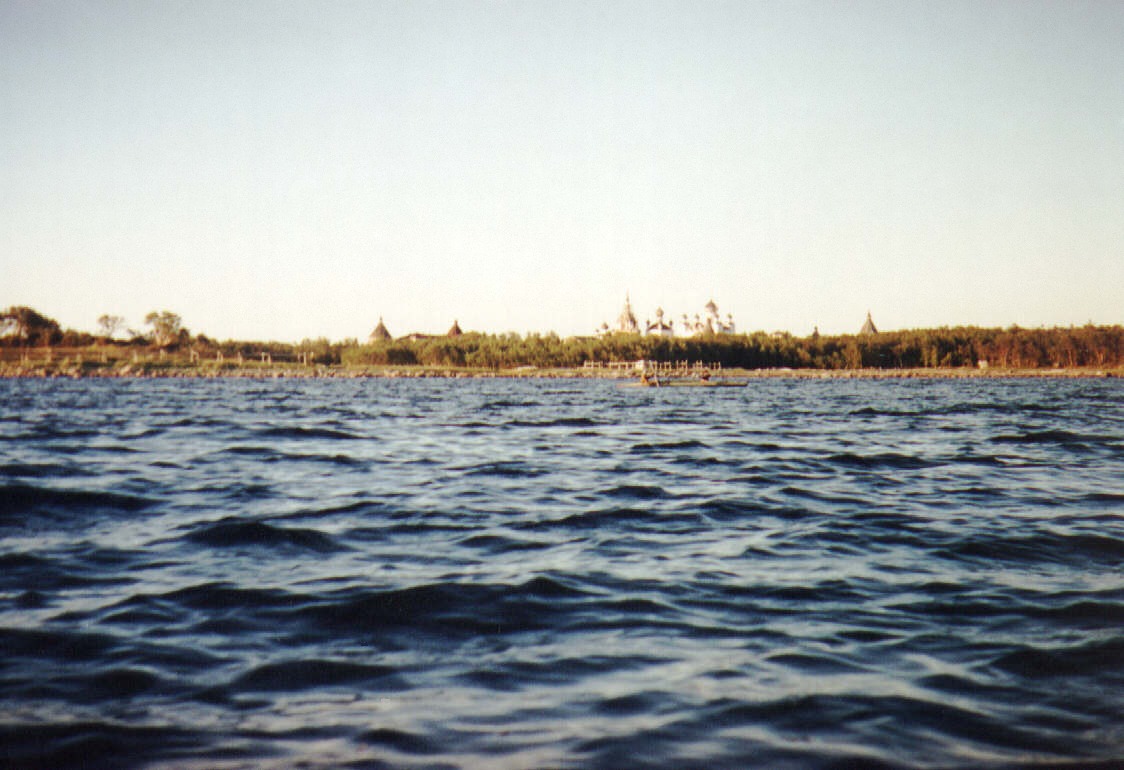
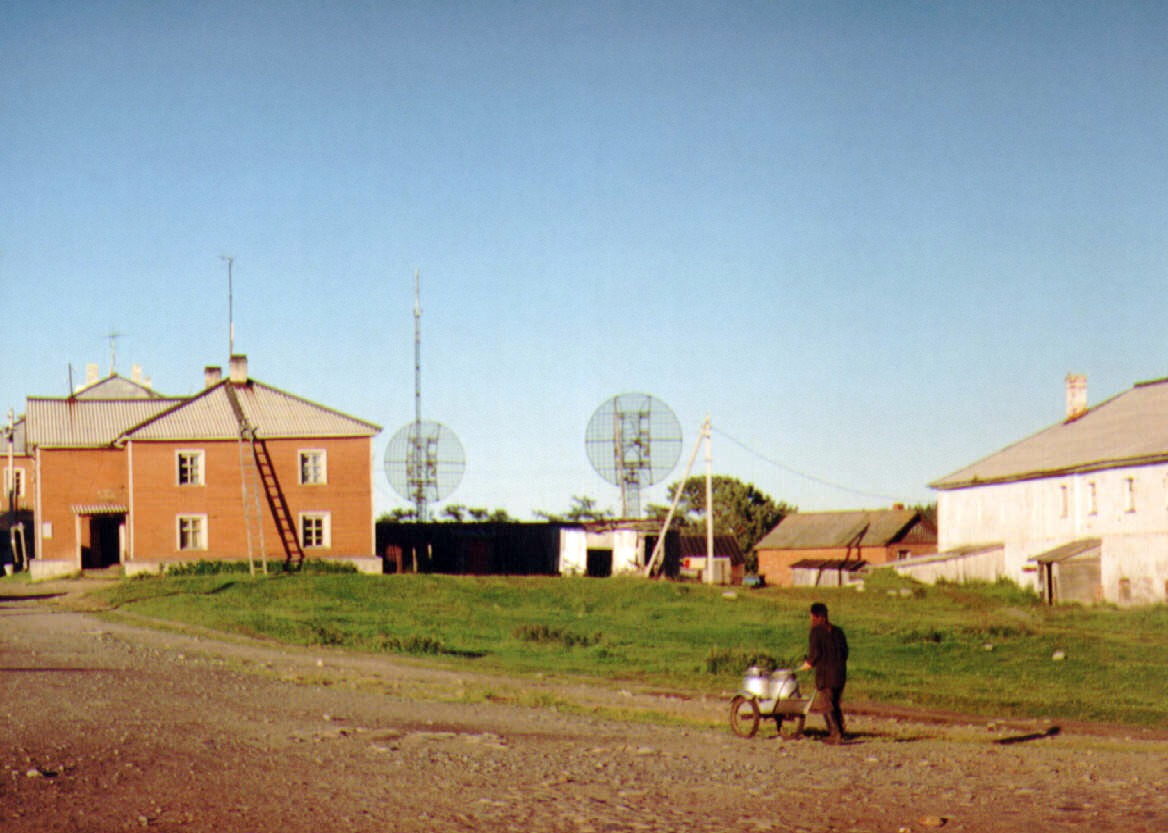
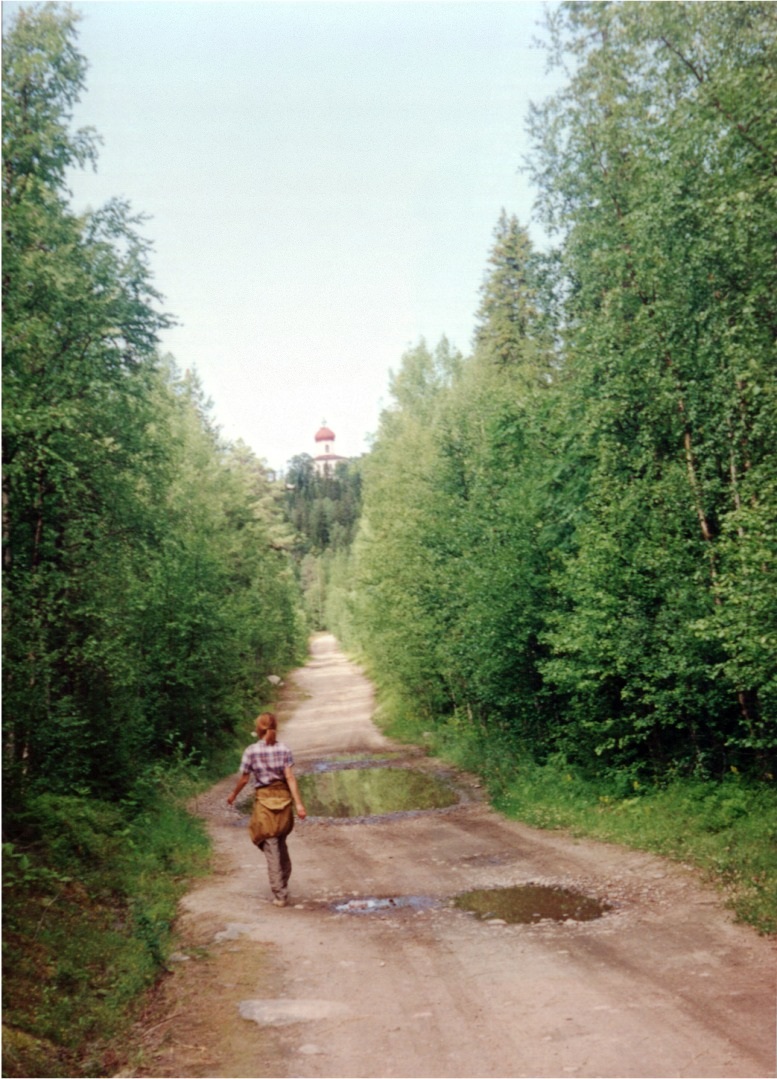
The monastery is still standing and looks good. Photographs 1, 2, 3, 4 and 5. The monks get around on bicycles and in motorboats and leave you to your own devices. A crew of second-year students is there working on the restoration. About ten years earlier, signs and all sorts of nonsense had been put up for tourists, along with wooden walkways so organised groups would not trample the landscape. It is all quietly rotting away. There is a hermitage on Sekirnaya Hill. Photographs 1, 2 and 3. The monks swear at each other something fierce.
Berries and mushrooms
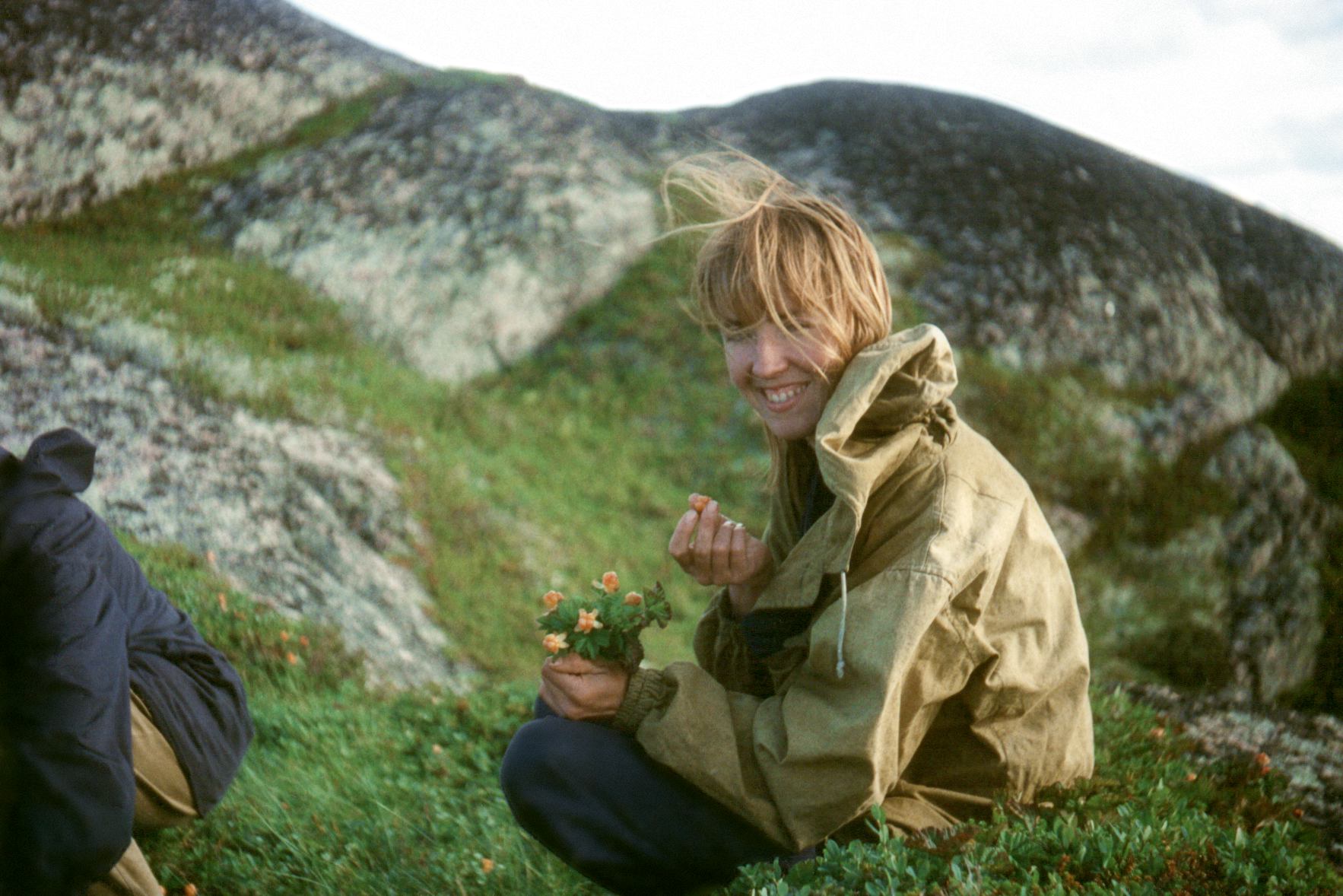
There are so many mushrooms that your heart bleeds when you kick over red-capped boletes to clear a spot for the tent. There are lots of porcini, too. Of the berries, there are plenty of cloudberries.
We found large numbers of mushrooms on the Borshovtsy Islands and Kondostrov.
Other vegetation
The islands are rocky and covered in tundra. A fire on Russky Kuzov left thickets of young trees that are now difficult to get through. There are traces of taiga on Nemetsky Kuzov. Solovki is a mixture of bogs and dark coniferous and mixed forest.
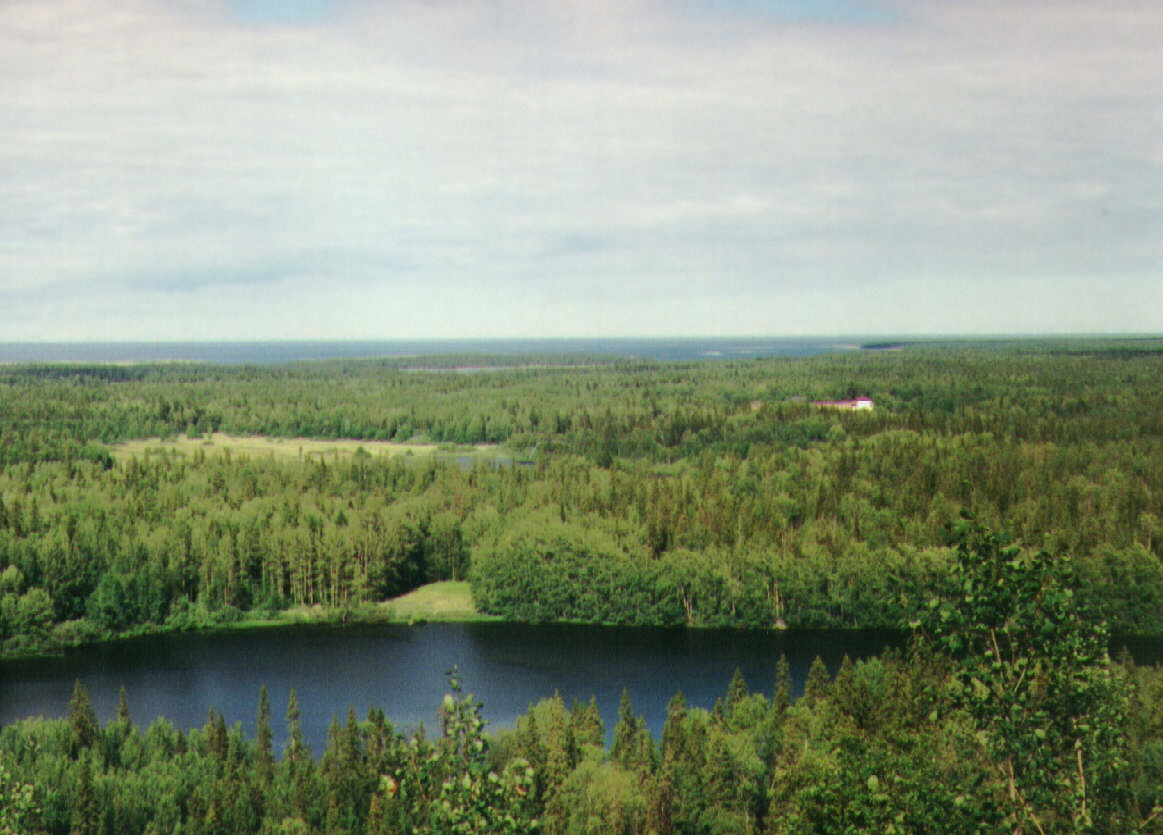
Sumostrov, Myagostrov and Kondostrov are covered in thick coniferous forest. There are larches here and there on Kondostrov. On Kotkano, the Borshovtsy and other small islands there are scattered pines on the slopes and dark tangles of fallen spruce in the hollows. The smaller islands are bare. On the whole, there is more forest in the south of the White Sea.
Firewood
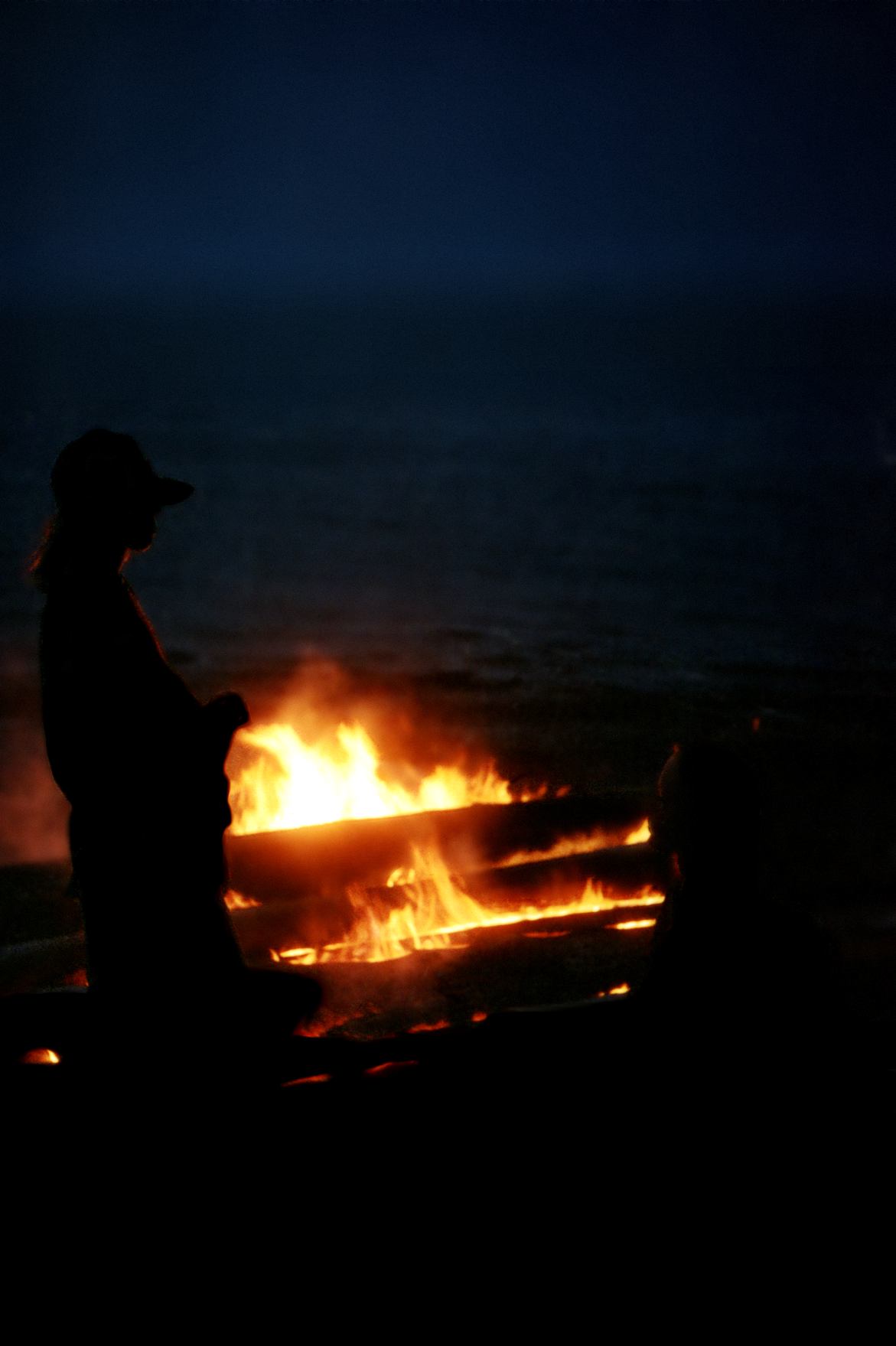
There is lots of driftwood along the shores. You can make a very big, warm campfire.
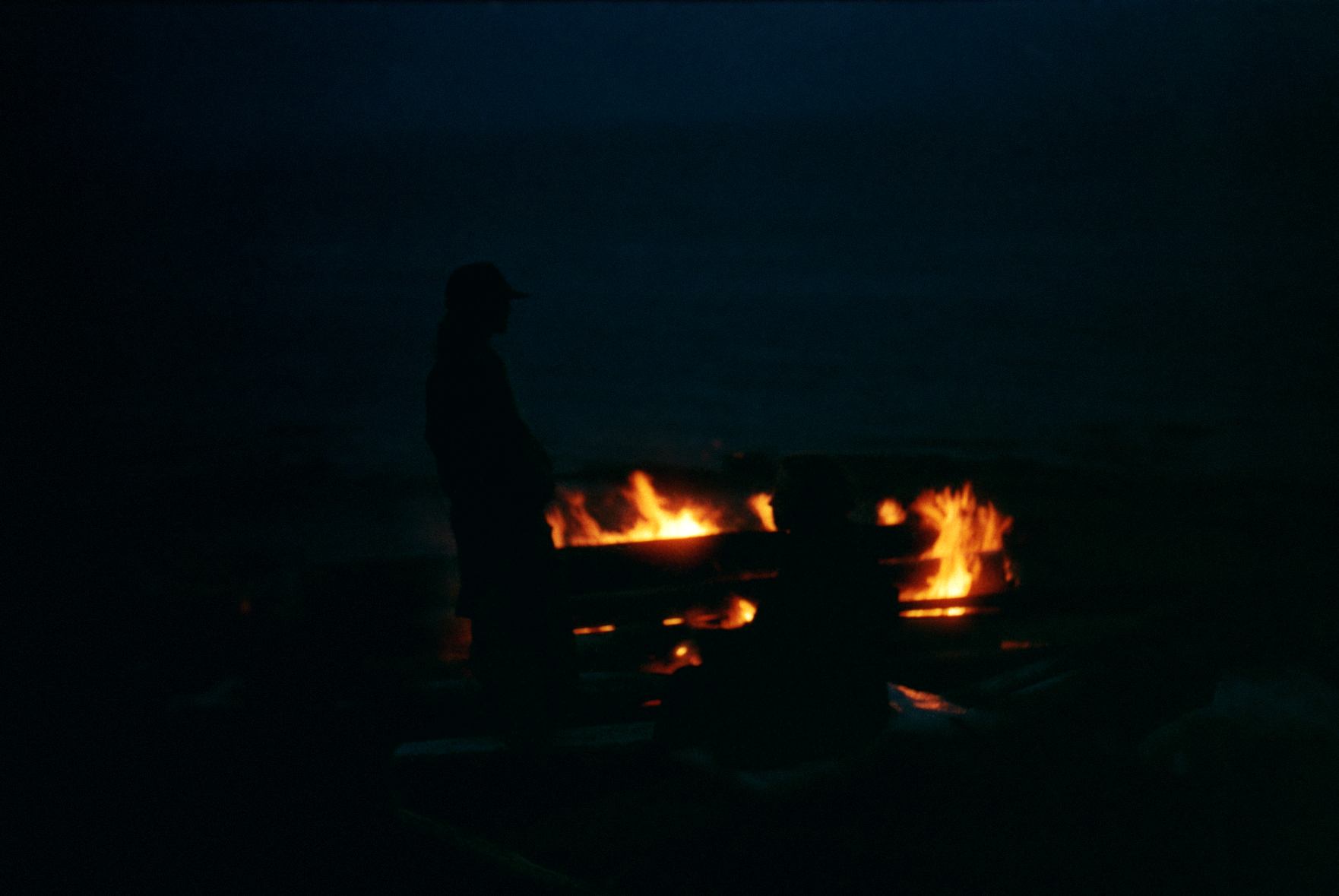
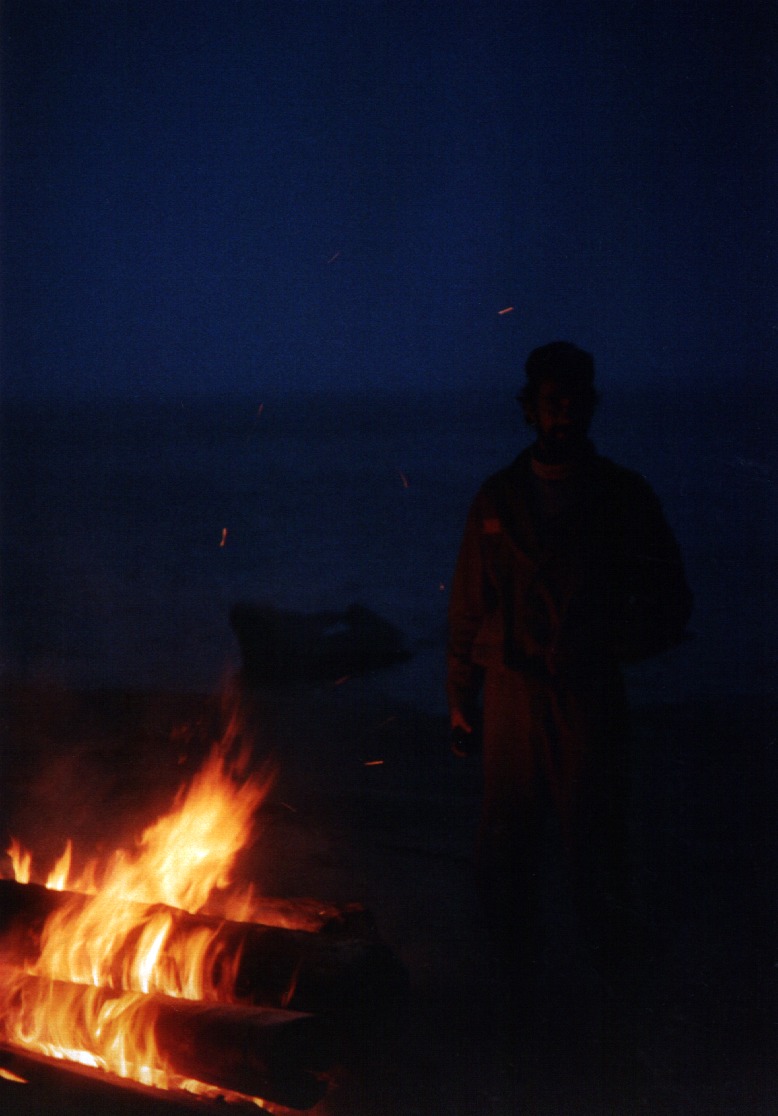
Firewood is plentiful everywhere except on the islands near Kolezhma. Do the local people collect it in winter? There is said to be none on the Tersky Coast.
Fish
We do not fish ourselves, but the local people did not seem to have much fish either. On Solovki it was available only in the shops and cost more than in Kem.
People caught cod around Perkhludy. The local fishers caught navaga in winter and made their living selling it to Norway. In Kolezhma people earned 20,000–30,000 roubles in a couple of months and caught nothing the rest of the year.
Transport
Kem is on the railway. There are always tickets. Buses run through town. Take the number 10 to Rabocheostrovsk. The stop is on the shore of a bay that fills only at high tide. You can also assemble the kayaks in Kem itself. A launch to Solovki cost 50,000 roubles if there were passengers to take. Other tourist boats called from time to time. There were a lot of local cars on Solovki.
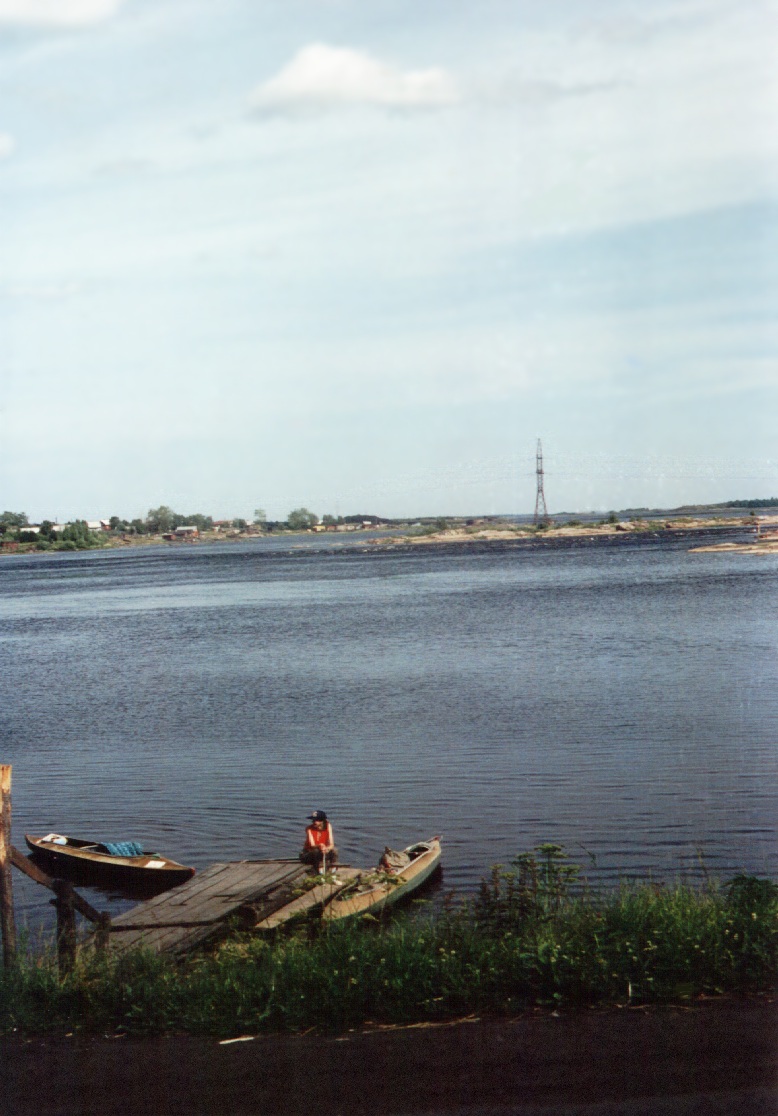
In 1998 the road from Belomorsk to Sumsky Posad was dirt, but you could drive it. The Sumsky Posad to Nyukhcha road was much worse, though people said you could get through in a Zaporozhets. From Sumsky Posad to Kolezhma the road was unsealed and forded streams with no bridges. The collective farm bus to Kolezhma ran once a week.
Settlements, shops and post offices
Kem. You can buy pretty much anything. It is a fully serviced town with prices much like Saint Petersburg’s. There are a post office, banks, hospitals, restaurants and so on. Excellent dark rye bread.
Rabocheostrovsk. There is a shop with a fairly good selection.
Solovki (the Kremlin). Several shops with slightly higher prices. They have the essentials. There is also a post office.
Isakovo. A few houses. No shops or other services.
Belomorsk. You can buy pretty much anything. It is a fully serviced town with prices much like Saint Petersburg’s. There are a post office, banks, hospitals and so on. Dark rye bread, 92-octane petrol and tyre repairs are available. GSM and NMT-450 phones worked.
Sumsky Posad. A large village that seemed to have shops.
Virma. A small village, with no shops.
Kolezhma. A large village. There are shops and a post office, but all were closed when we were there. There was an airfield during the war.
Yukovo. A tiny village. No services.
Segezha and Olonets. Places along the highway where you can buy 95-octane petrol.
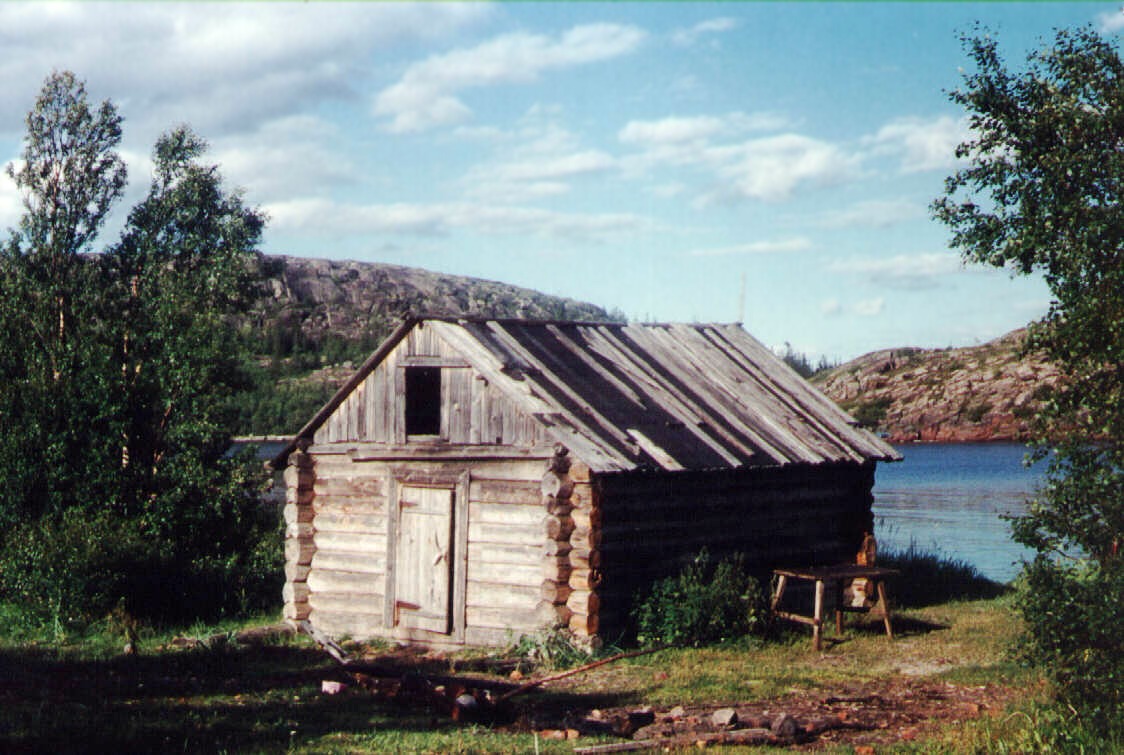
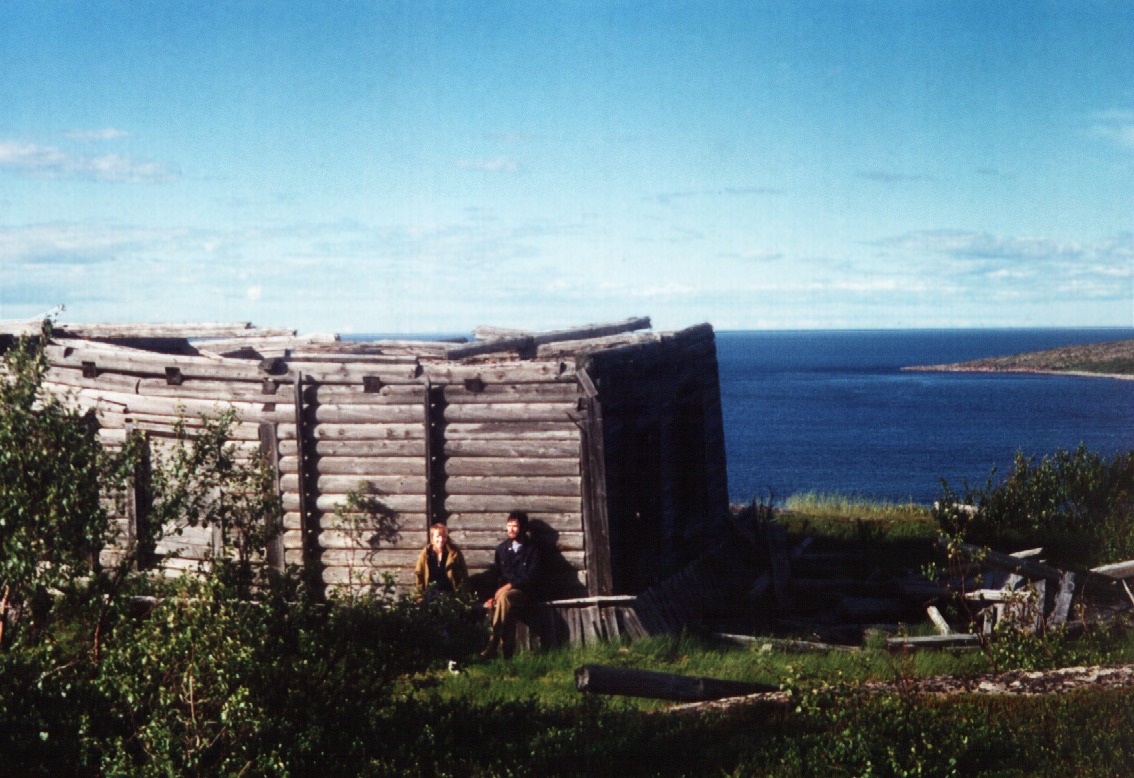
On the top of Vorony Island are the ruins of a hut. Does anyone know what used to be there? It was built out of bricks like these.
Places of interest
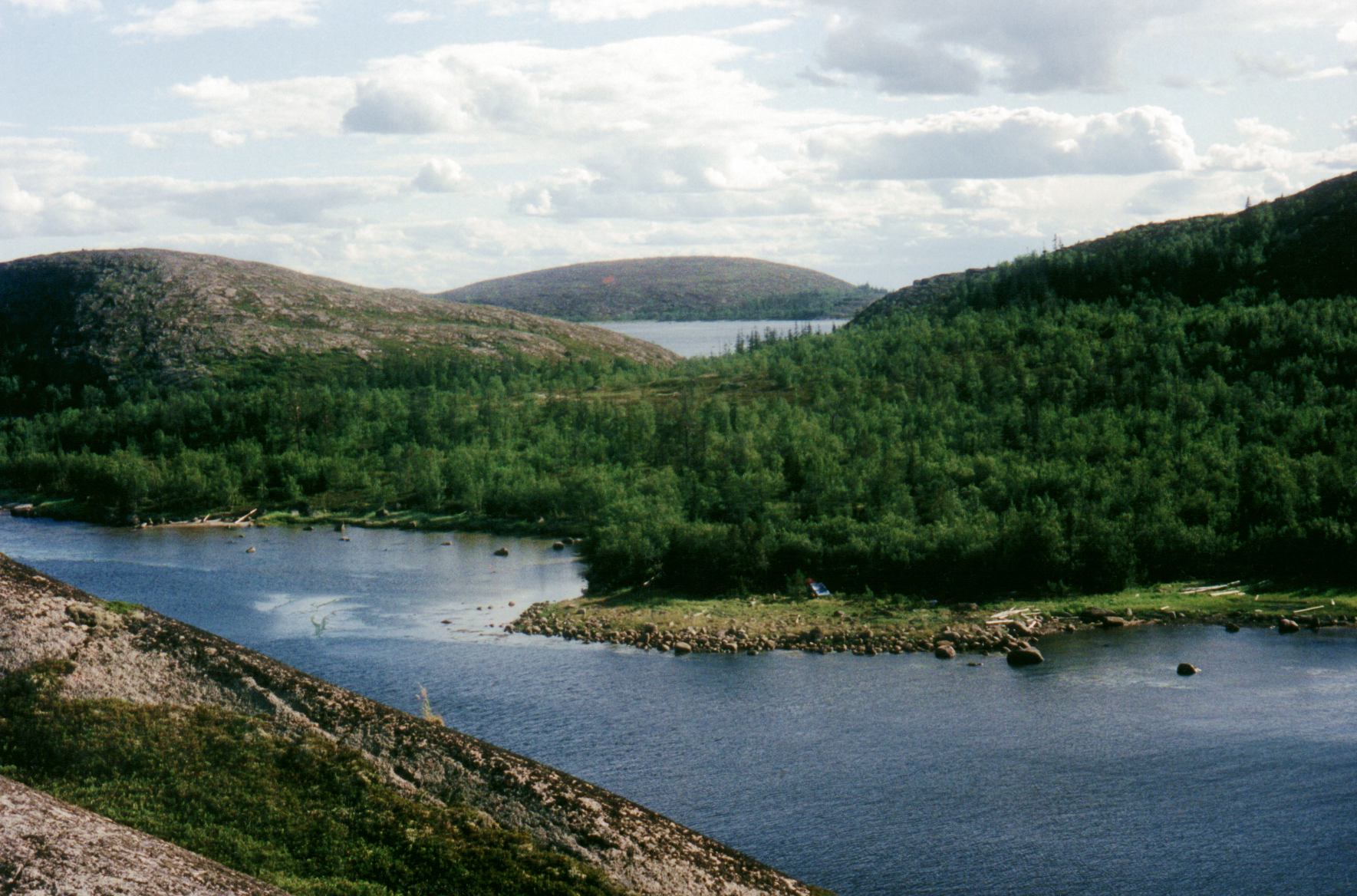
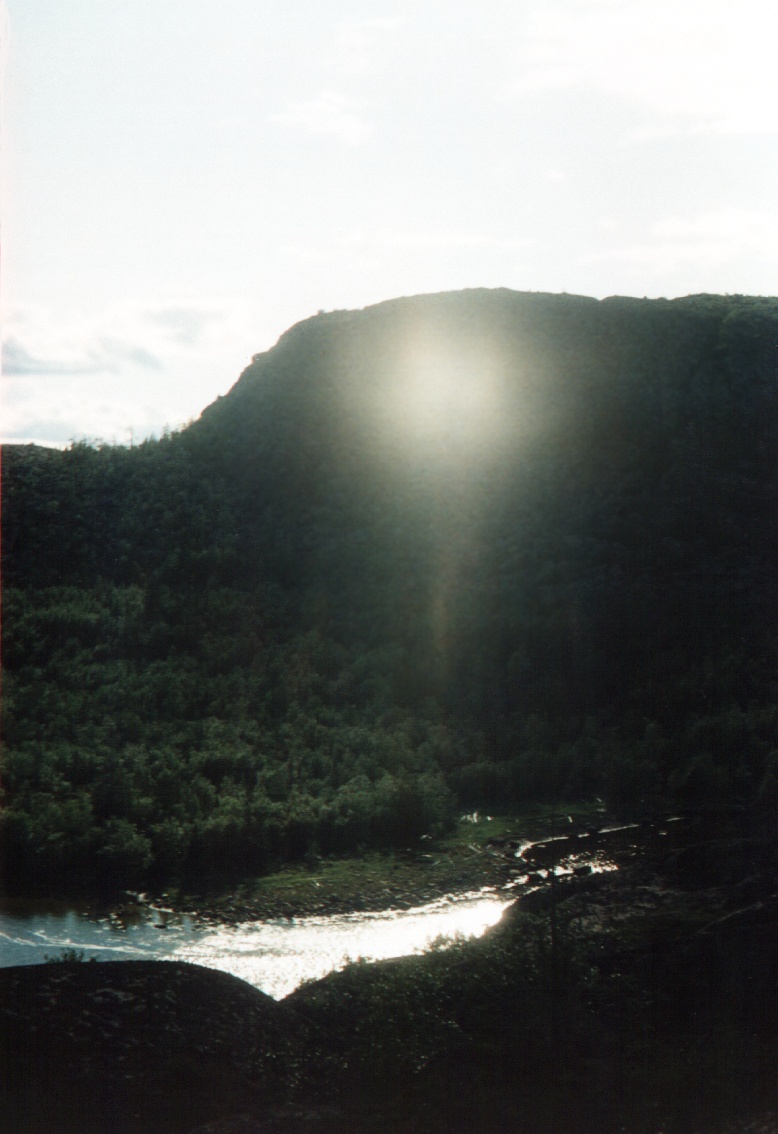
Nemetsky Kuzov. Photographs 1, 2, 3, 4, 5 and 6.
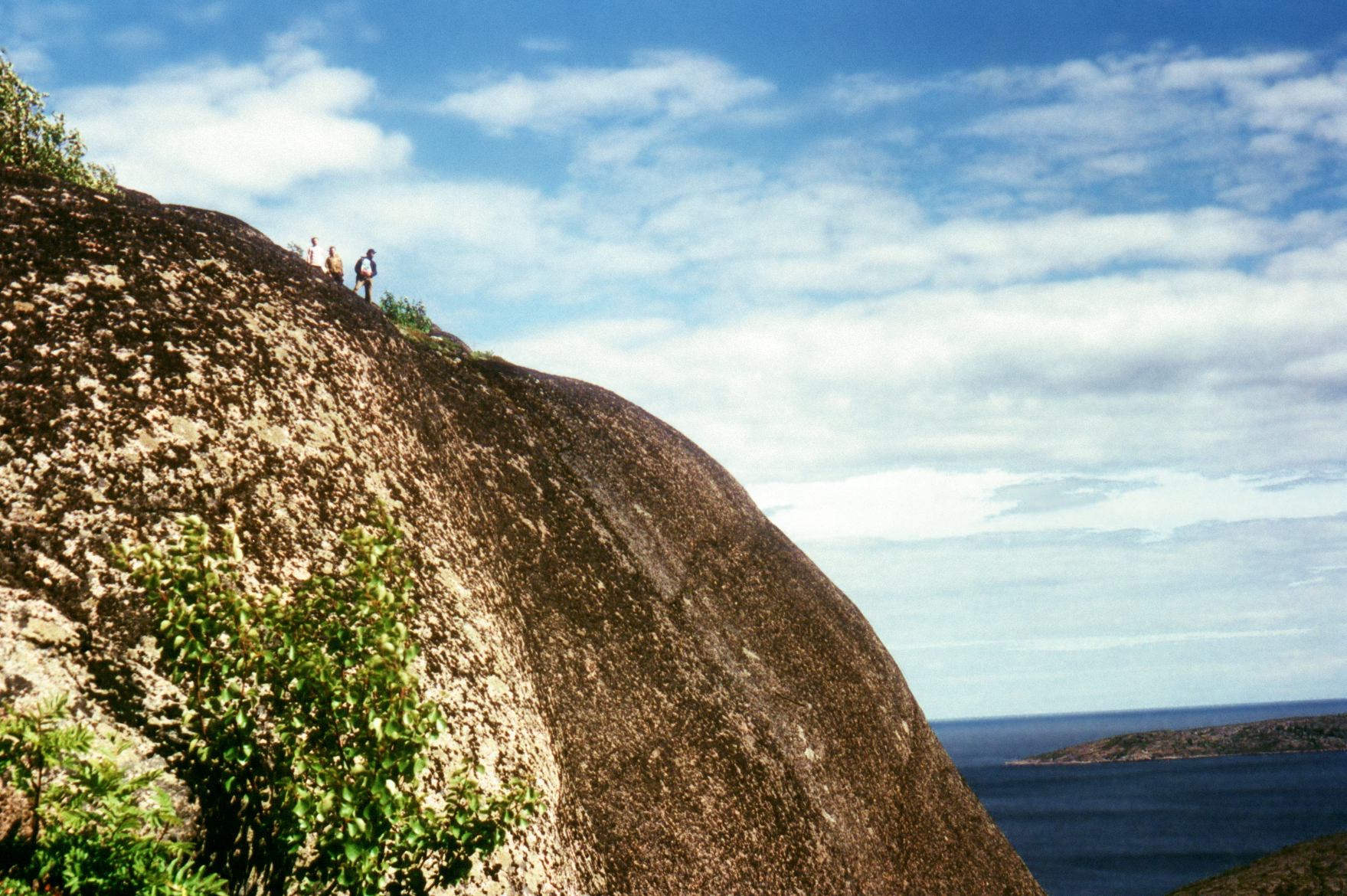
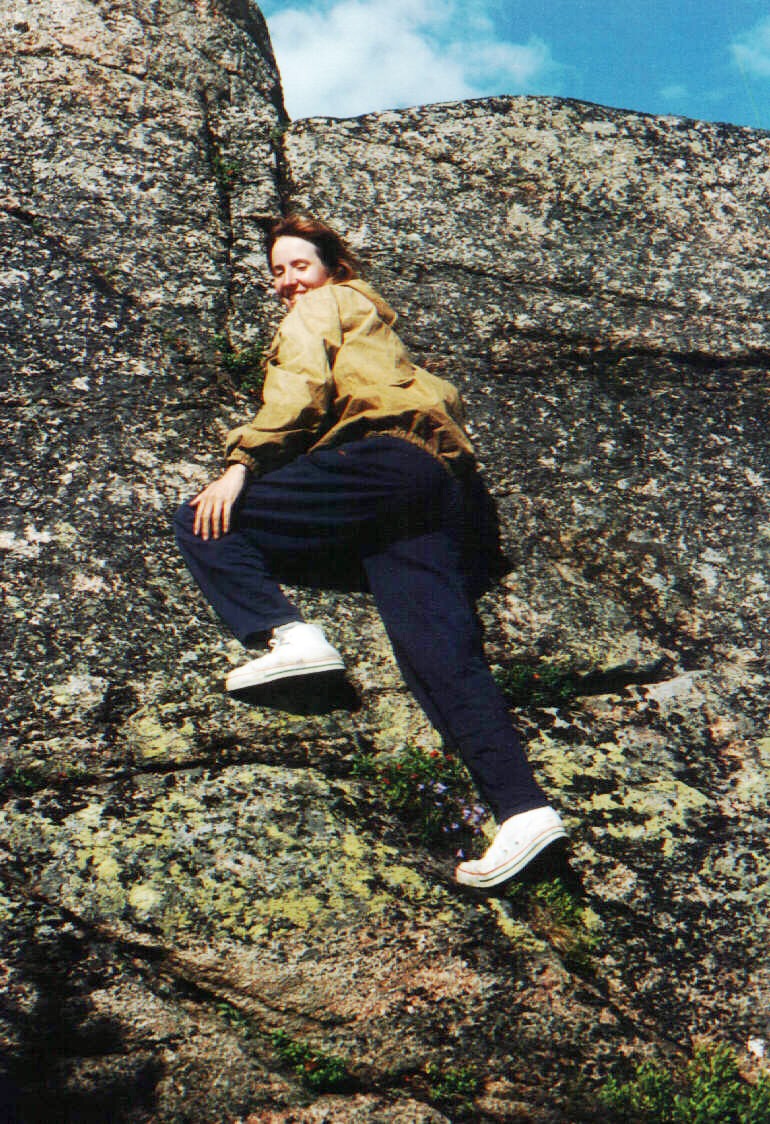
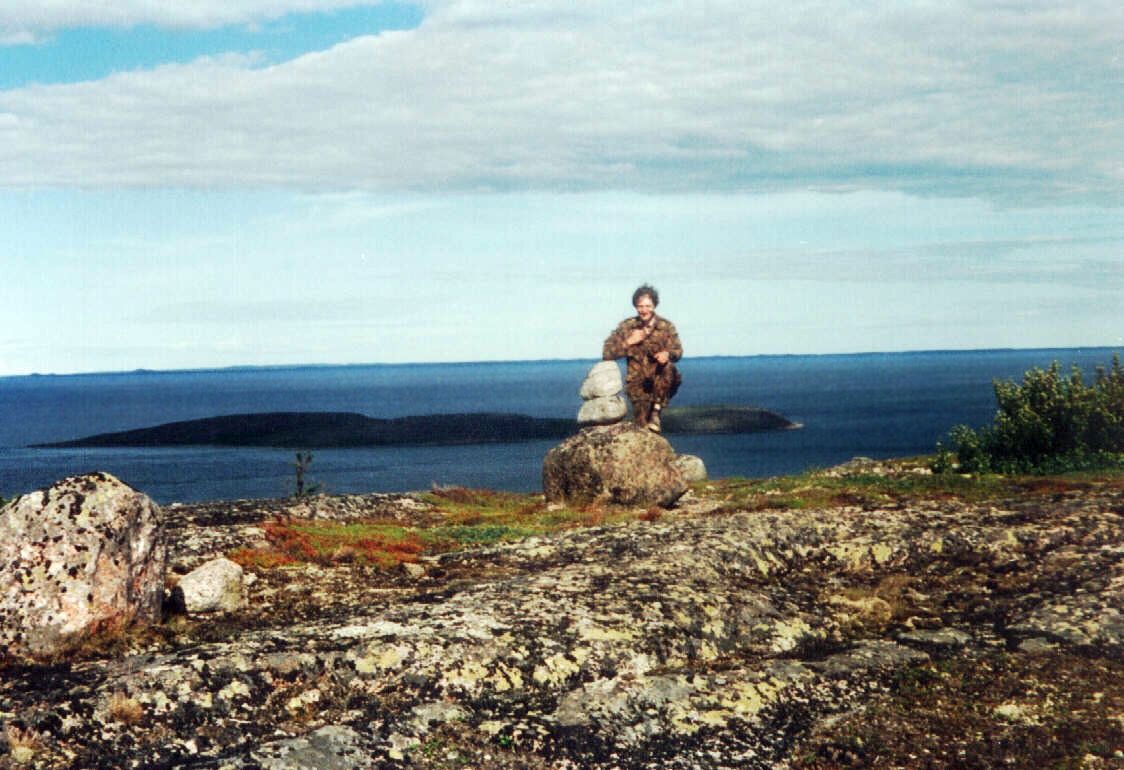
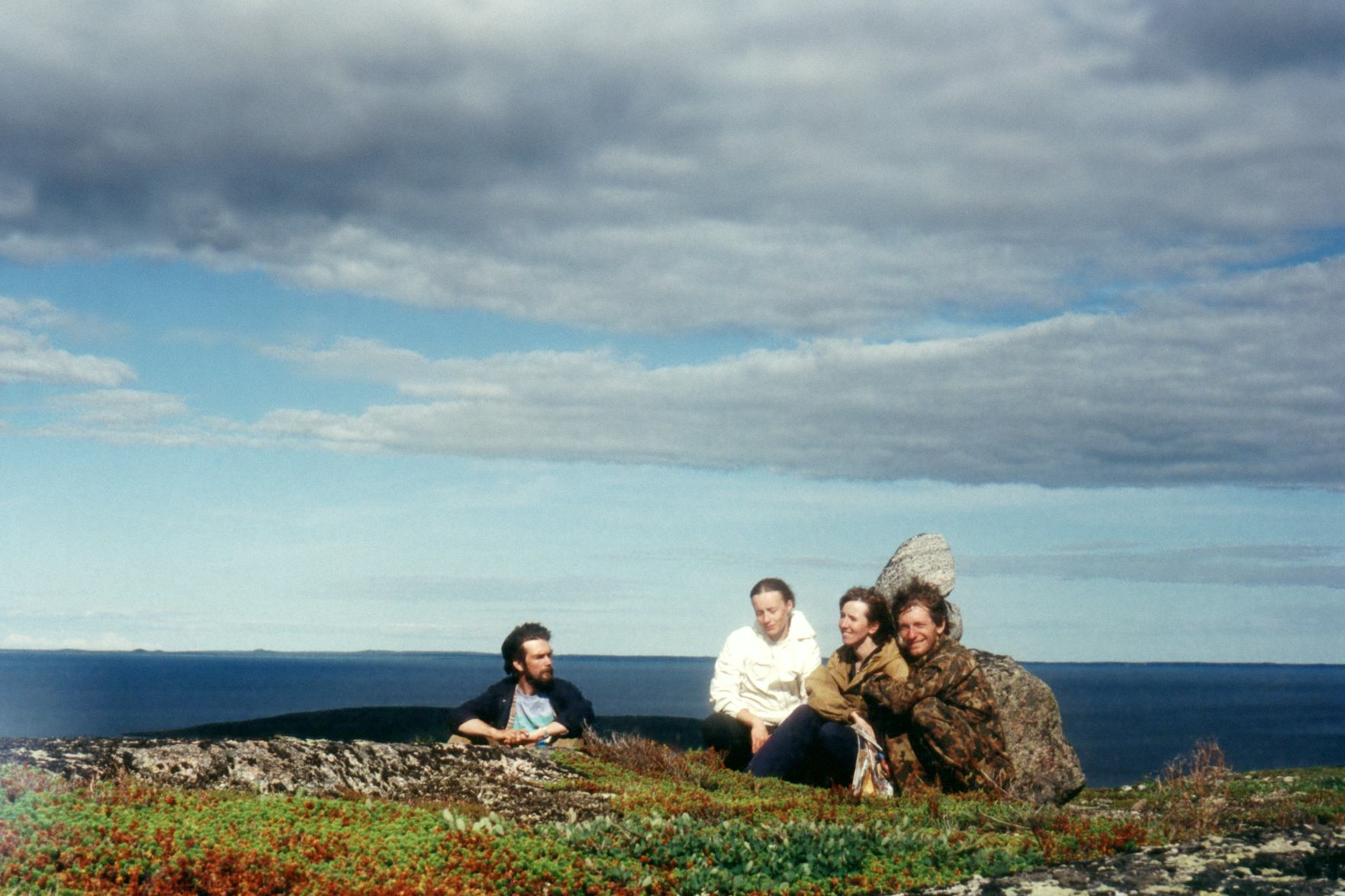
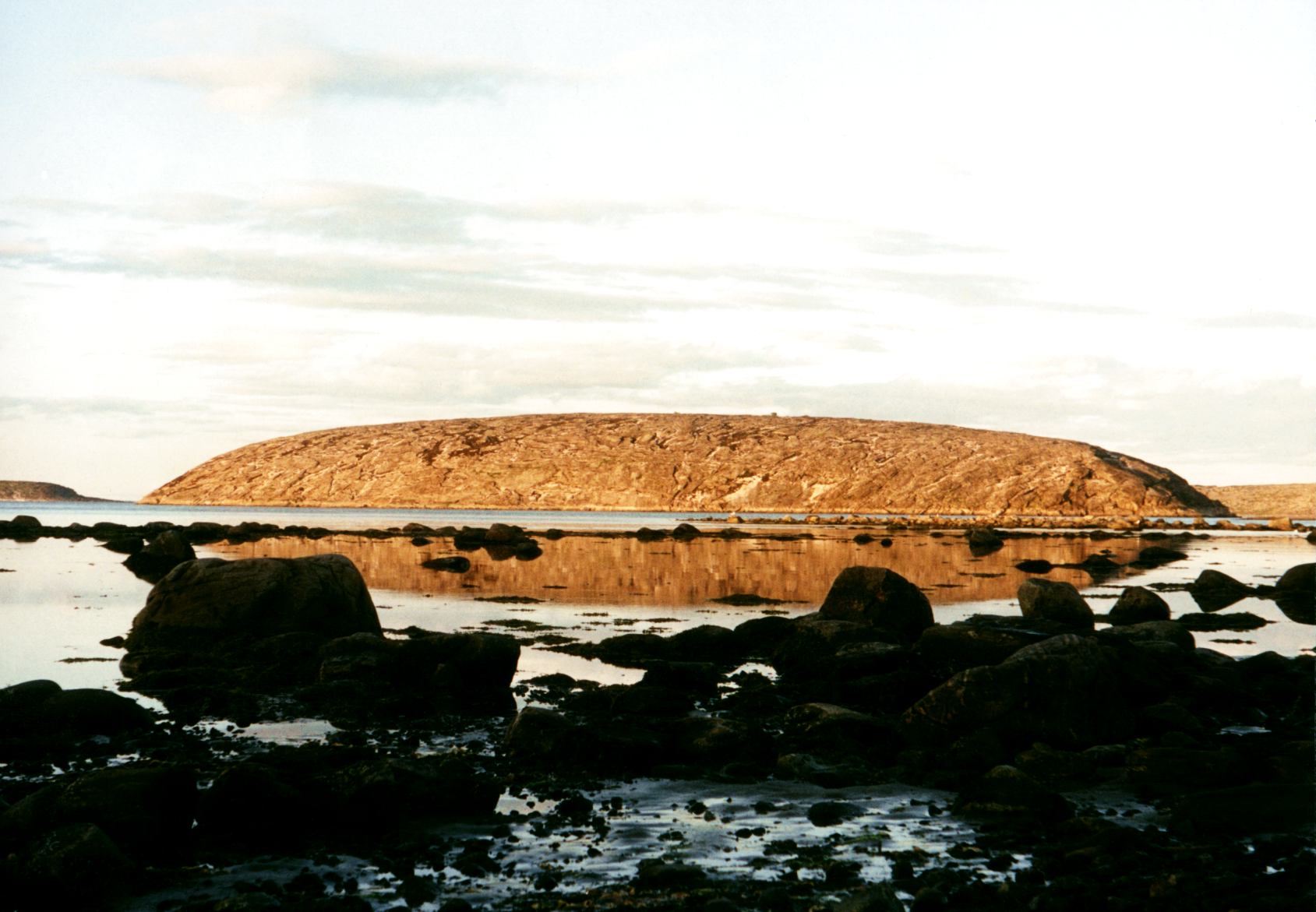
Russky Kuzov. Photograph 1.
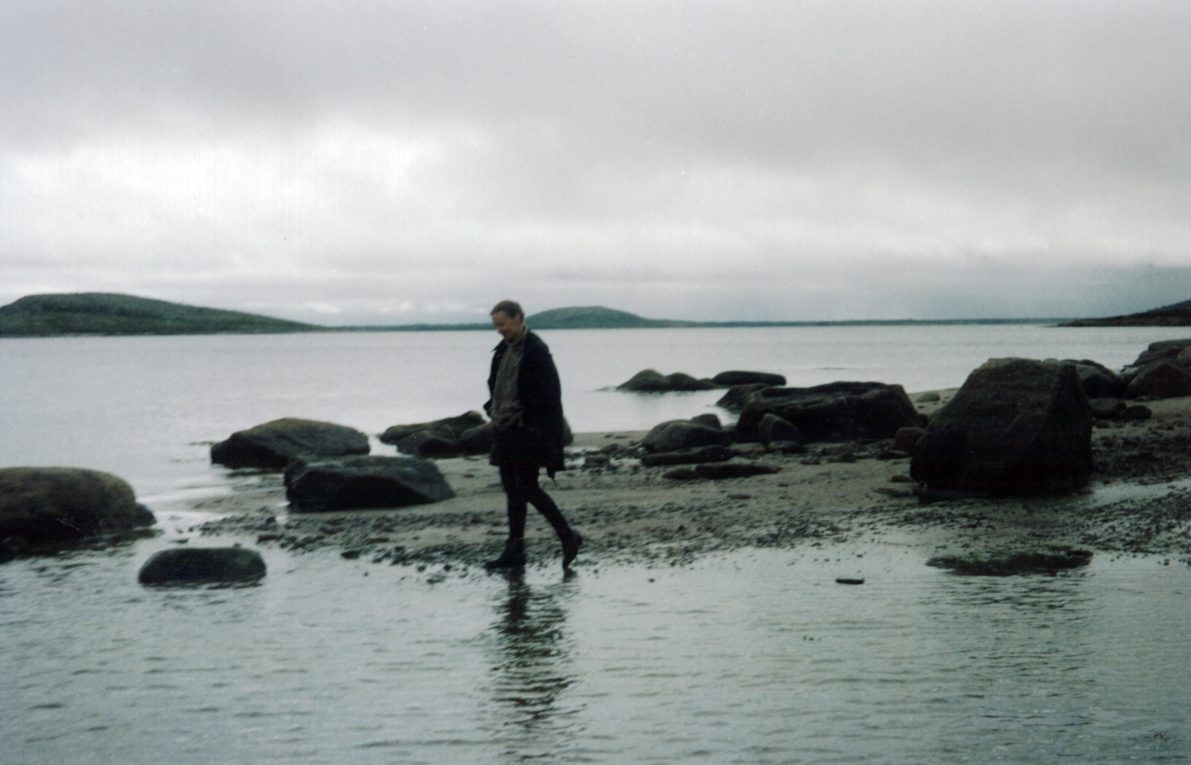
Kolovar Islands. Photograph 1.
Severny Kilyak Island. Photographs 1 and 2.
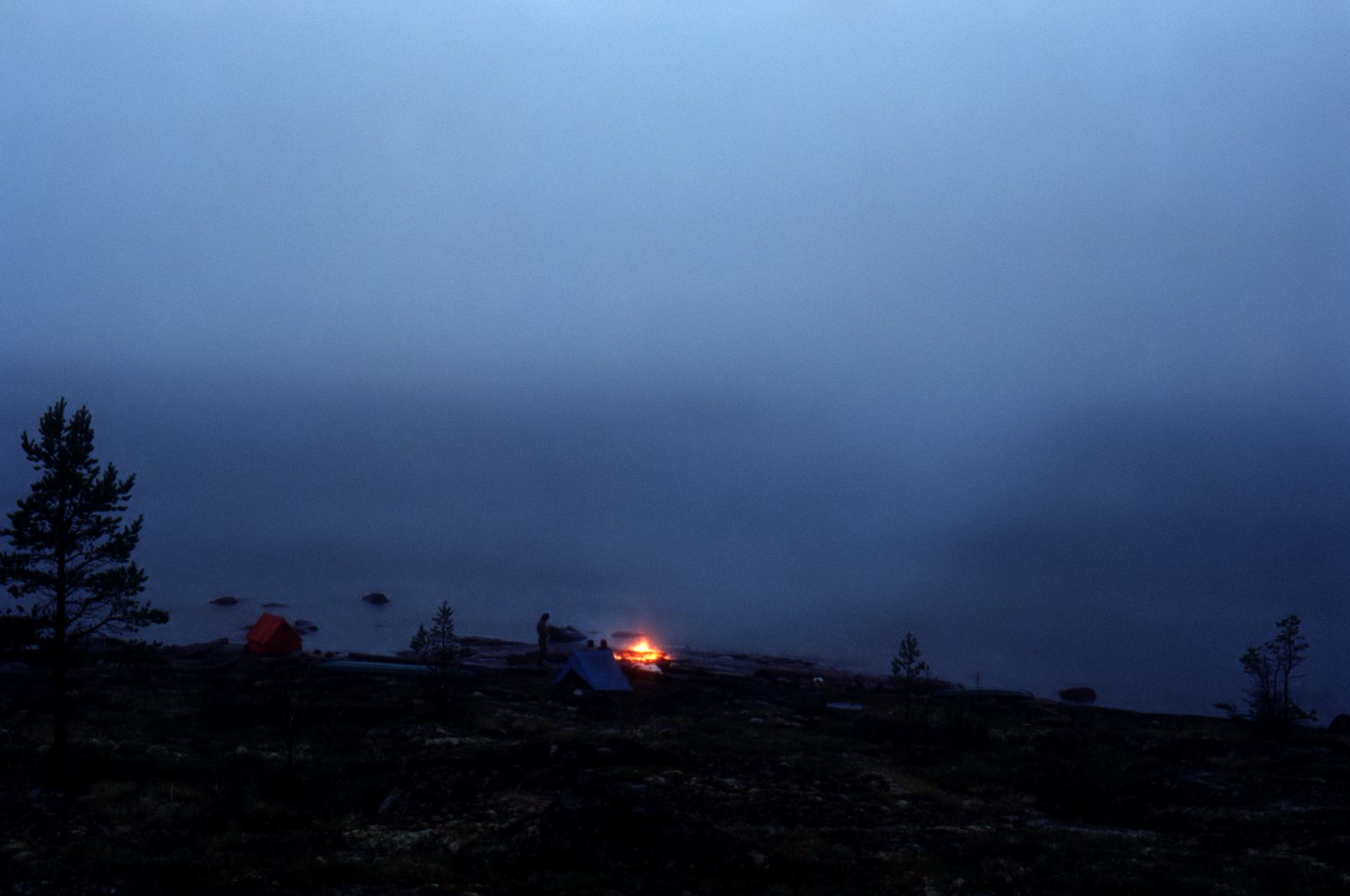
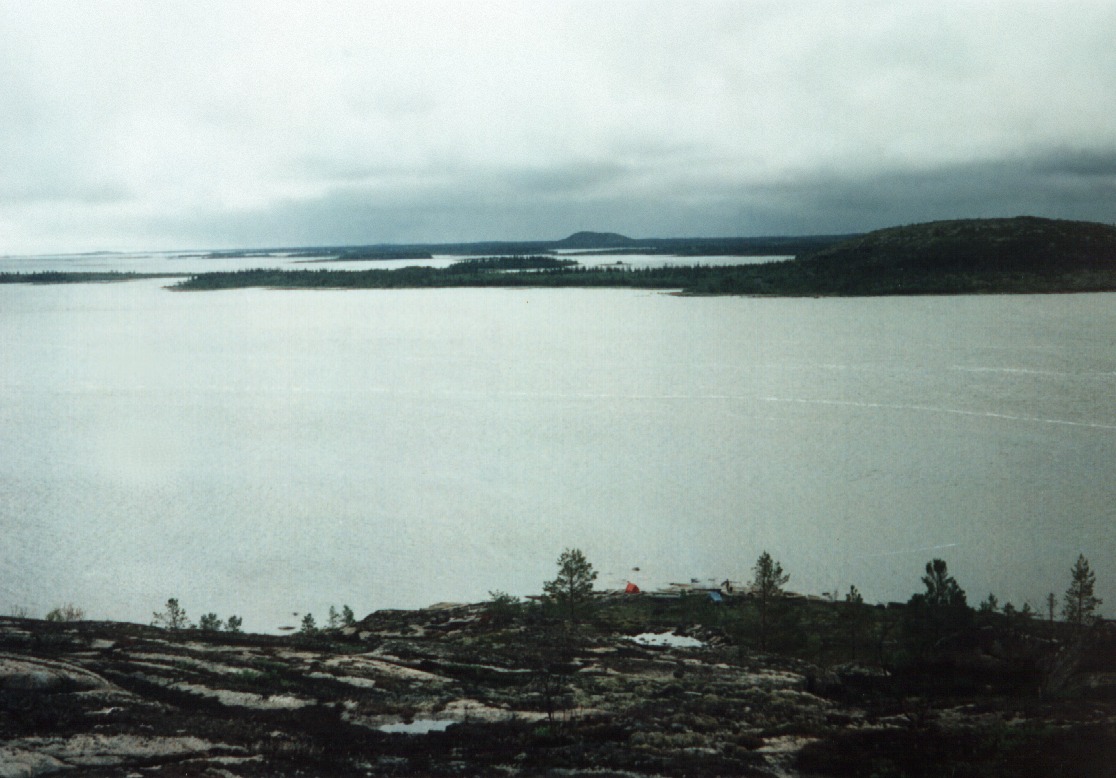
Topy Islands. The lighthouse and the quartz outcrop.
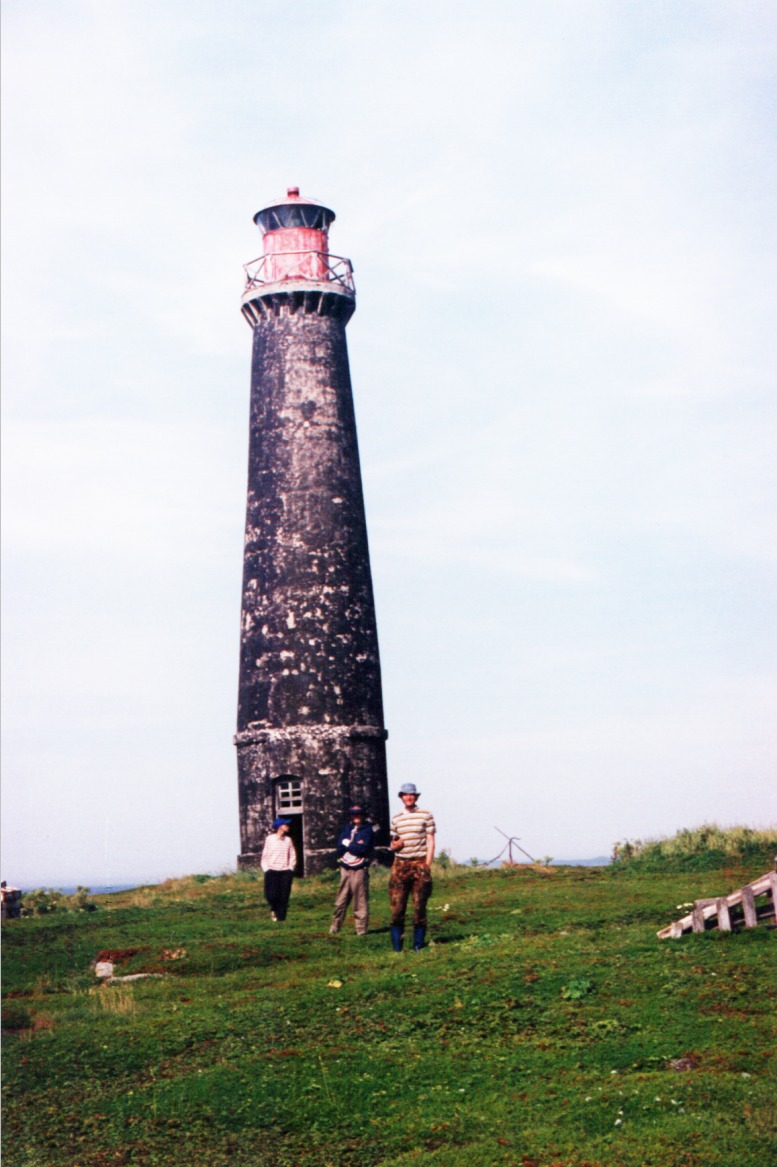
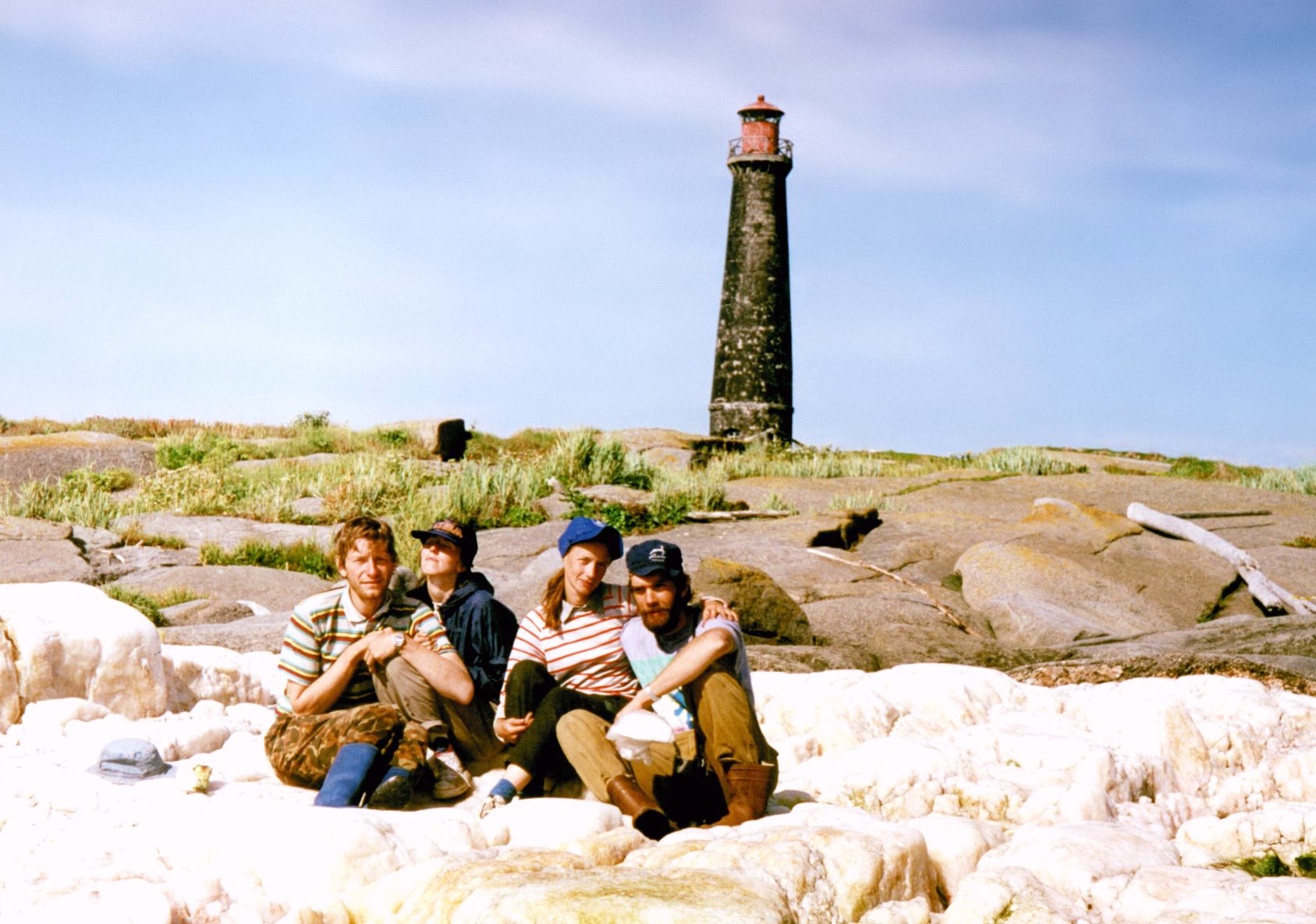
Vorony Islands. Photographs 1, 2, 3 and 4.
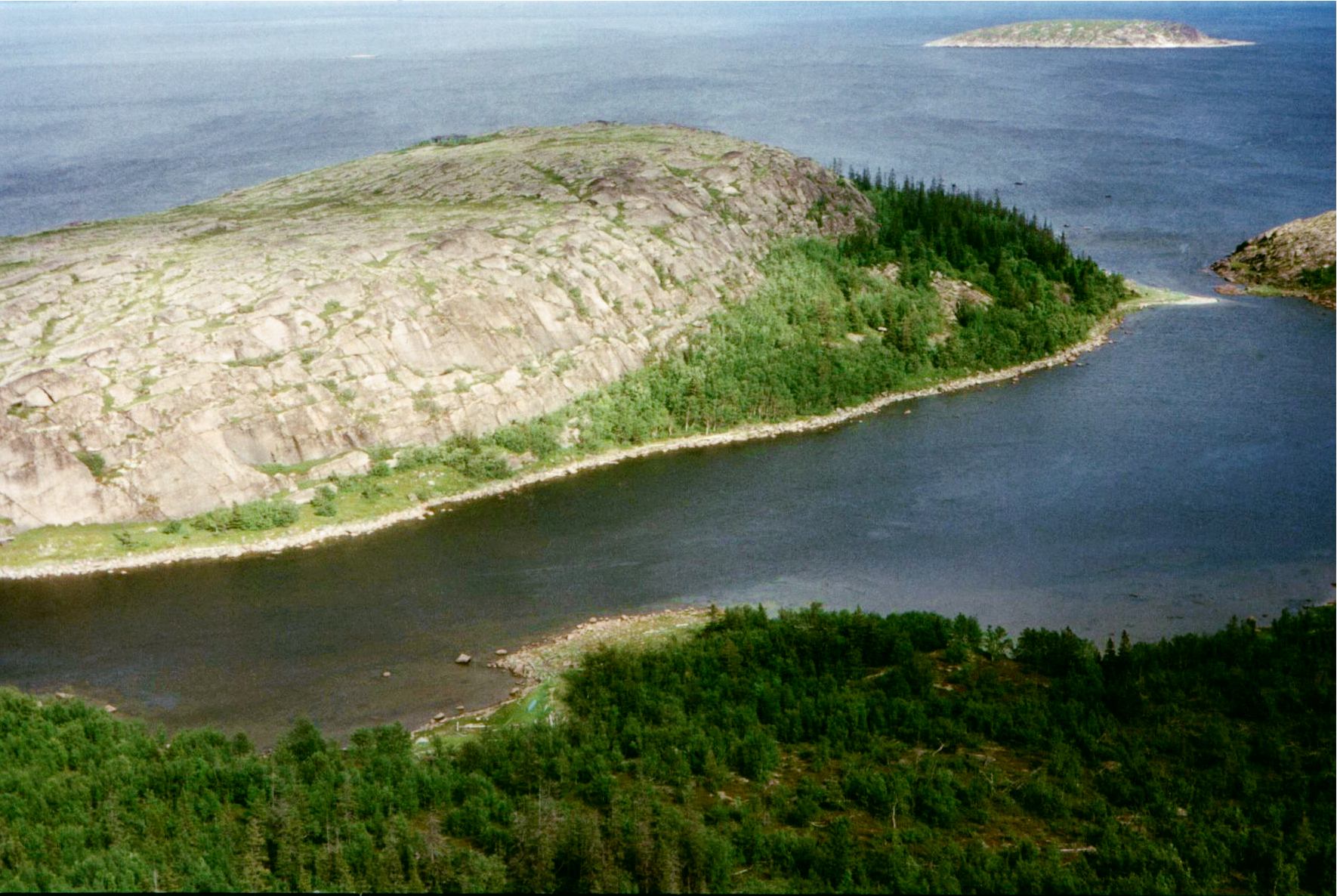
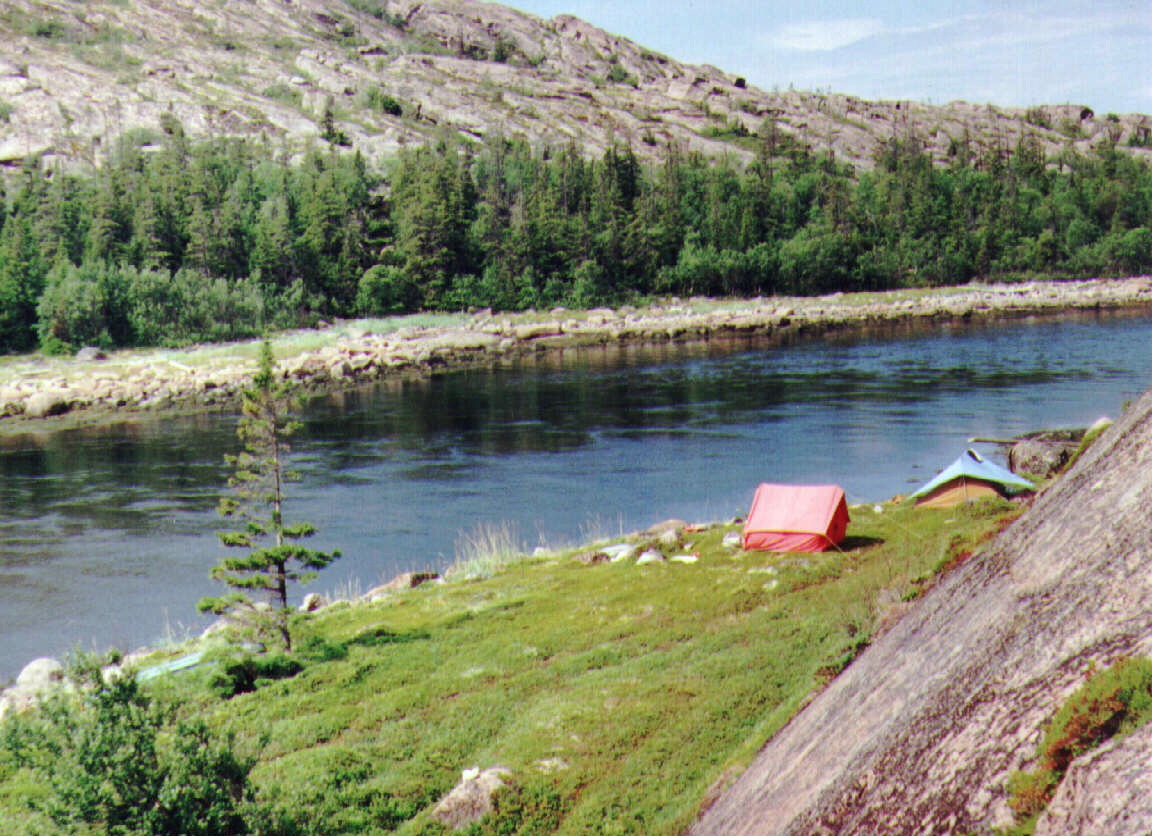
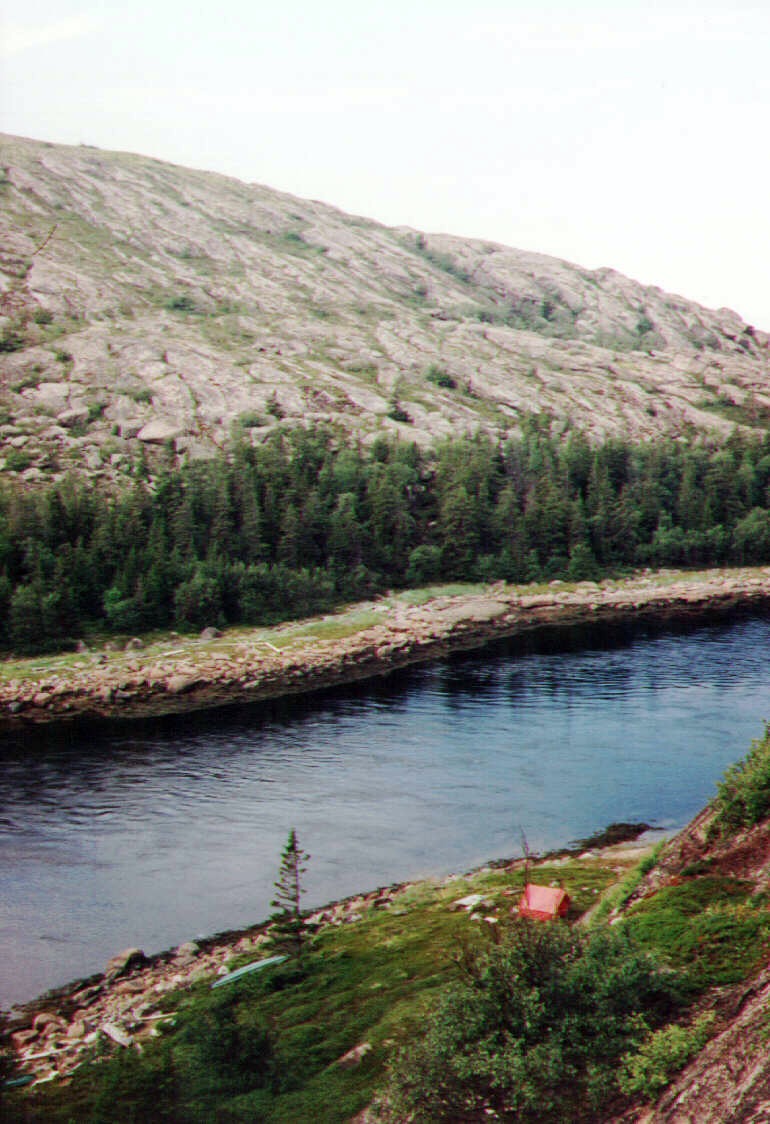
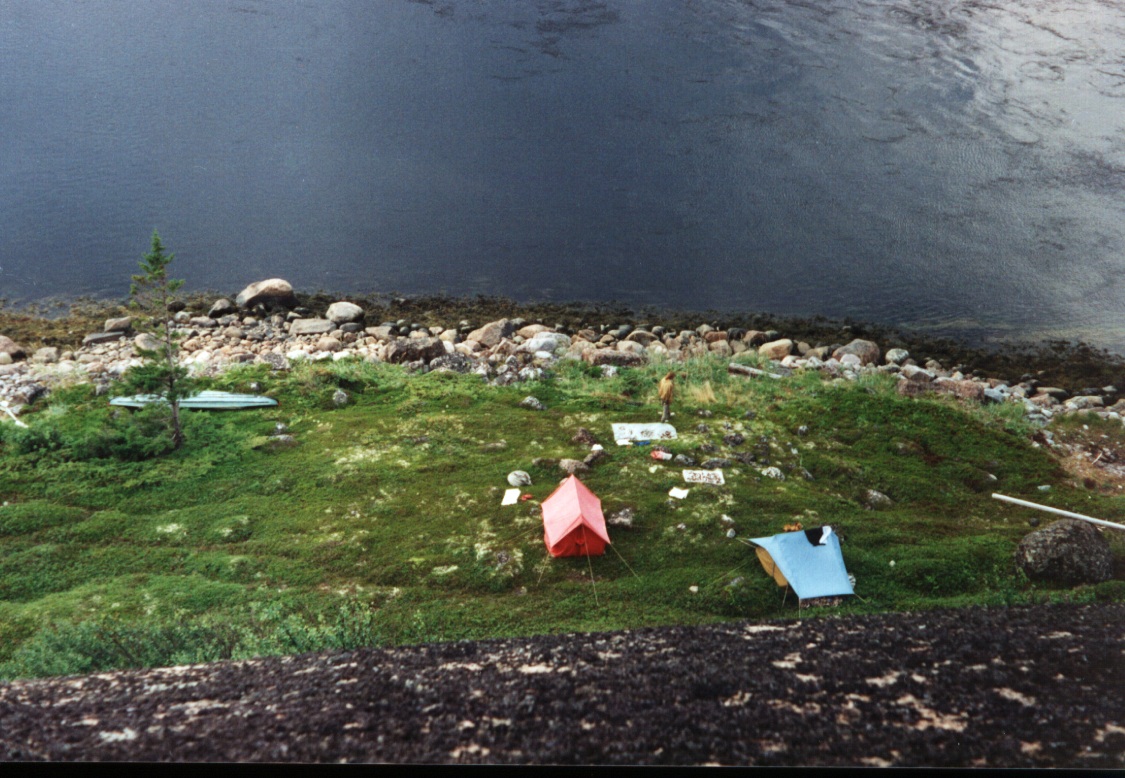
Yak Ostrov. Photograph 1.
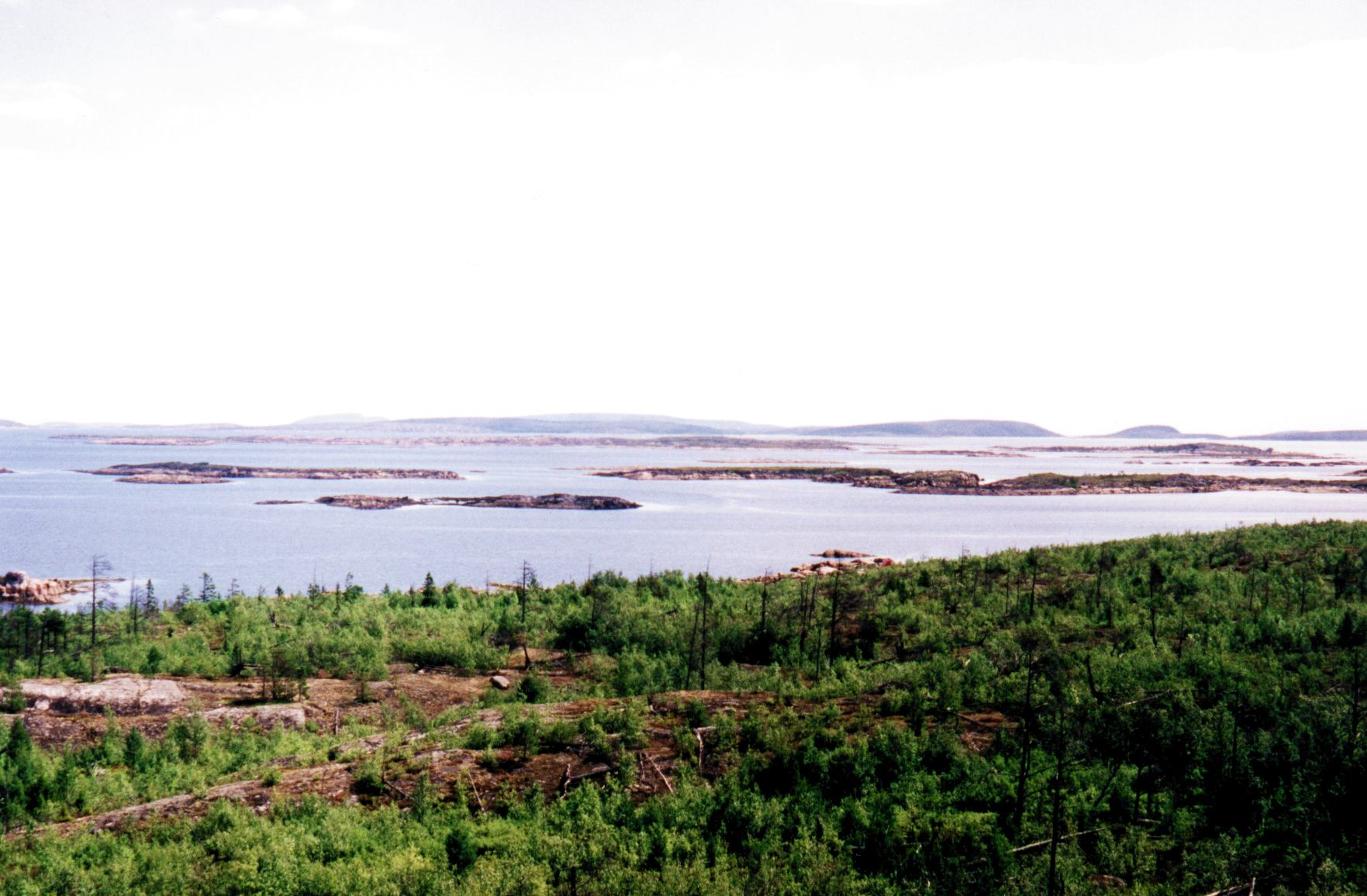
A few more favourite views. Photographs 1, 2, 3, 4, 5, 6, 7, 8, 9, 10, 11, 12, 13, 14, 15 and 16.