South Africa
Chapter 3. South Africa. Orange skies
On the far side of the river from Lesotho, at Maseru Bridge, the border guard saw my Russian passport, gave a crooked smile and said, ‘Ah, Russia. You must be bringing an atom bomb, or an assault rifle at the very least. You don't make anything but weapons in Russia, and you sell uranium to everybody.’ He didn't search my pack, though. Afraid of radiation, I suppose. Customs didn't seem to stop white travellers at all.
We needed to get to Bloemfontein. It was the closest place we could rent a car, and we'd have to get there by bus.
The man we'd met in the queue led us to a lopsided hut where a fat Black cashier with the air of a market hustler took our money and sent us over to a minibus. We were told to leave the packs outside and get in while there was room to squeeze aboard. The only other passengers were local Black people with an enormous number of bundles. Once the requisite twenty of us were aboard a bus built for ten, the nimble driver started tossing the luggage in through the doors and windows, straight onto the people already in their seats. It made me think of Said in White Sun of the Desert. Only my head was sticking out. The rest of me was buried beneath the bundles. It was a long way, more than 130 kilometres. As we got farther from the Drakensberg, we lost altitude and it got hot. At least we weren't making any stops.
Then it turned out the bus wasn't going to Bloemfontein at all. It was going to Botshabelo, an enormous Black township, and we'd have to change buses there. We were a little frightened, of course, but it gave us a chance to see life in the poor Black neighbourhoods from the inside.
I keep discovering that wherever you go, most people are nice. At the bus stop people helped us find the right bus. No hostility, nobody upset at our being the only white people there. Perhaps that's how you ought to start a tour of South Africa. With the cities still divided into Black and white neighbourhoods, go into the Black part straight away. Otherwise you might spend your whole trip looking out the window at the colour of people's faces and staying in the car if they're Black.
While we waited, we bought homemade ice cream from an elderly Black woman for a rand and a half. It was really frozen juice. Bloemfontein was another hour away. We were unloaded at the railway station.
There we were on our own again, in the middle of a noisy city. The guidebook had said it was quite decent and there were lots of white people, though there didn't seem to be any around us. We fought off taxi drivers wanting to take us to our hotel and walked to the Art Inn with all our bundles. It was an inexpensive B&B recommended by Lonely Planet, 180 rand (29°06.777′S, 26°13.119′E).
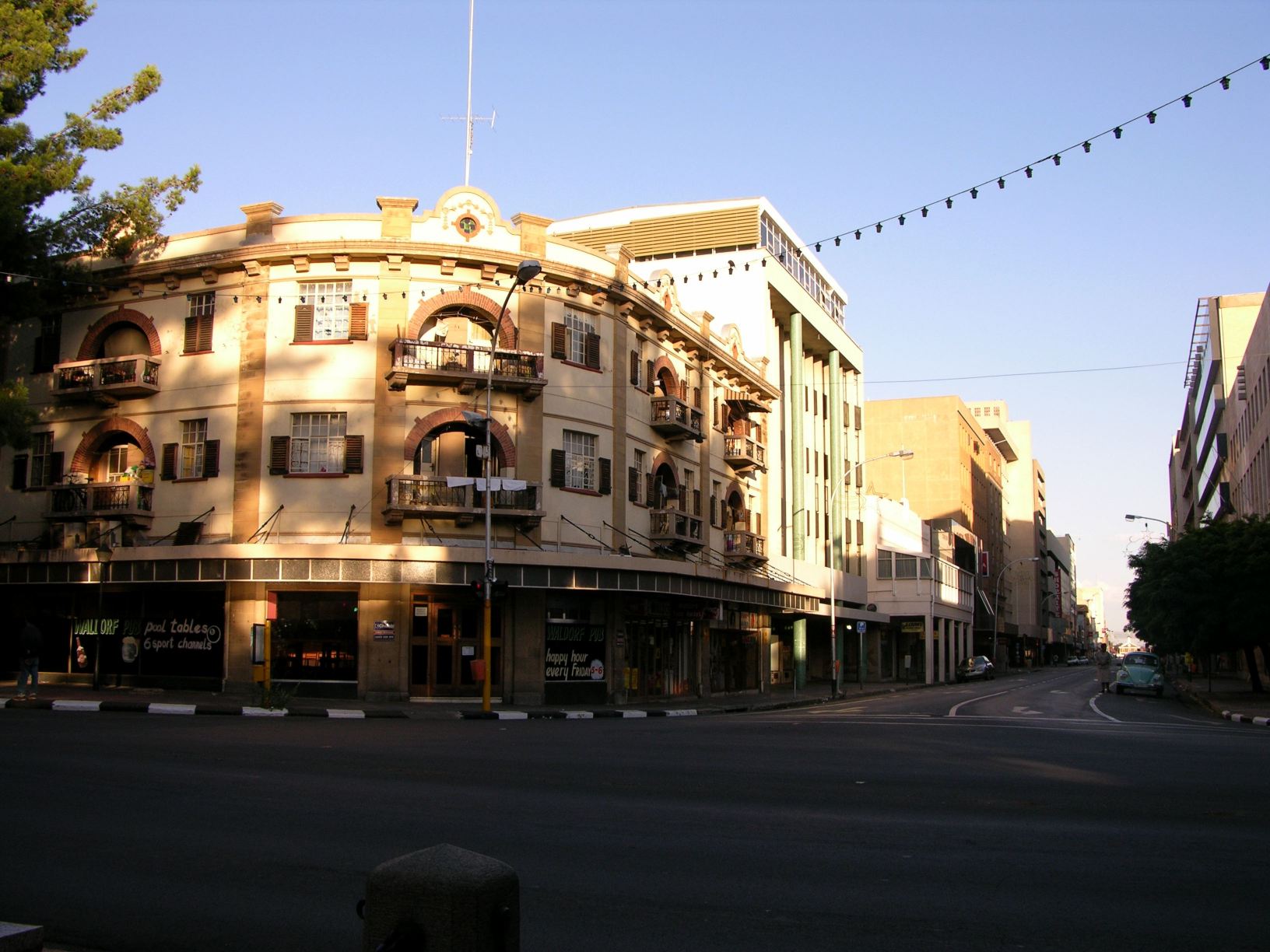
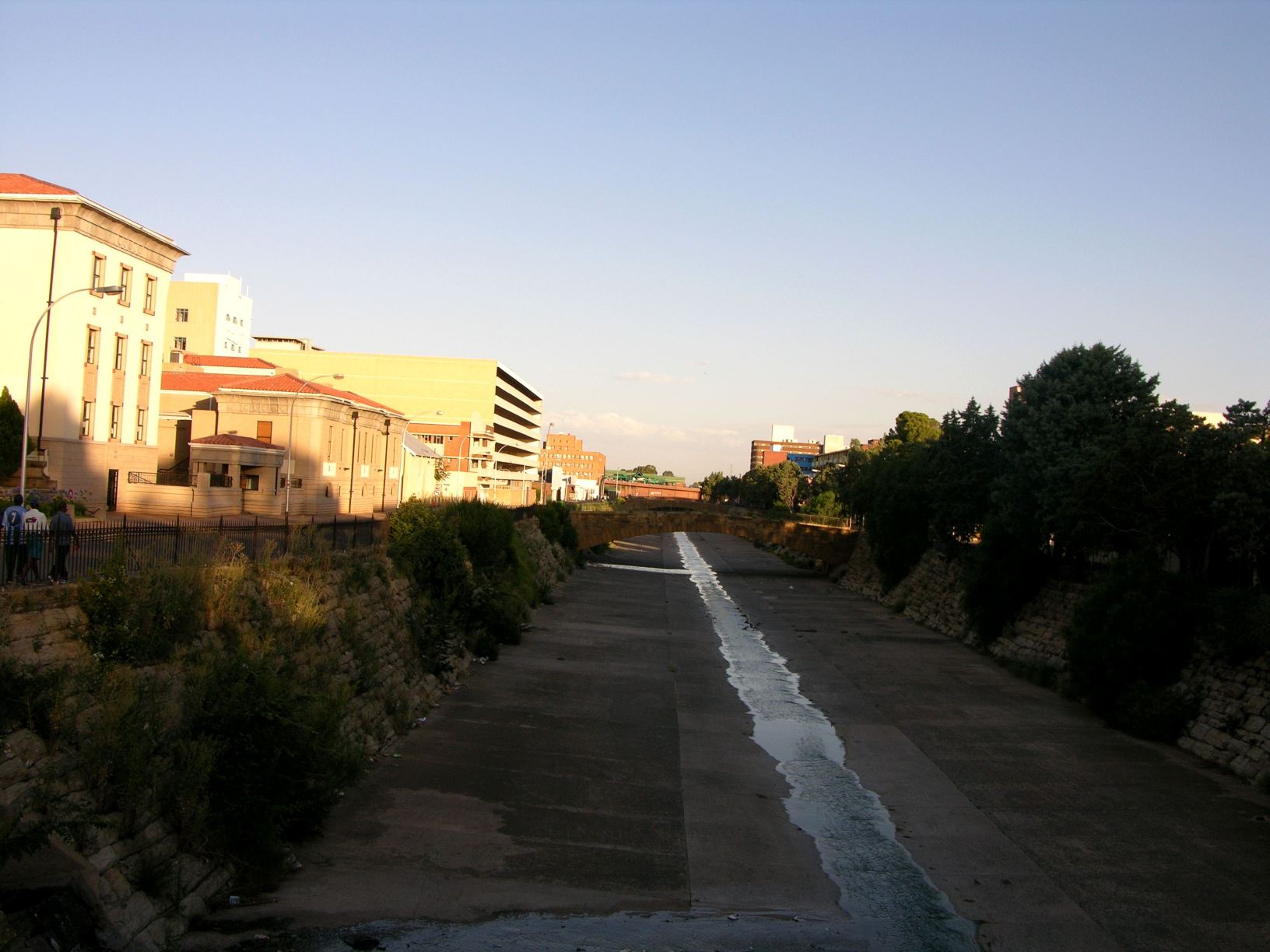
We dumped our hateful bundles and went for a walk around town. Lots of new buildings and shops. They'd even built stone embankments along the local stream, though in the drought it had turned into a little ditch.
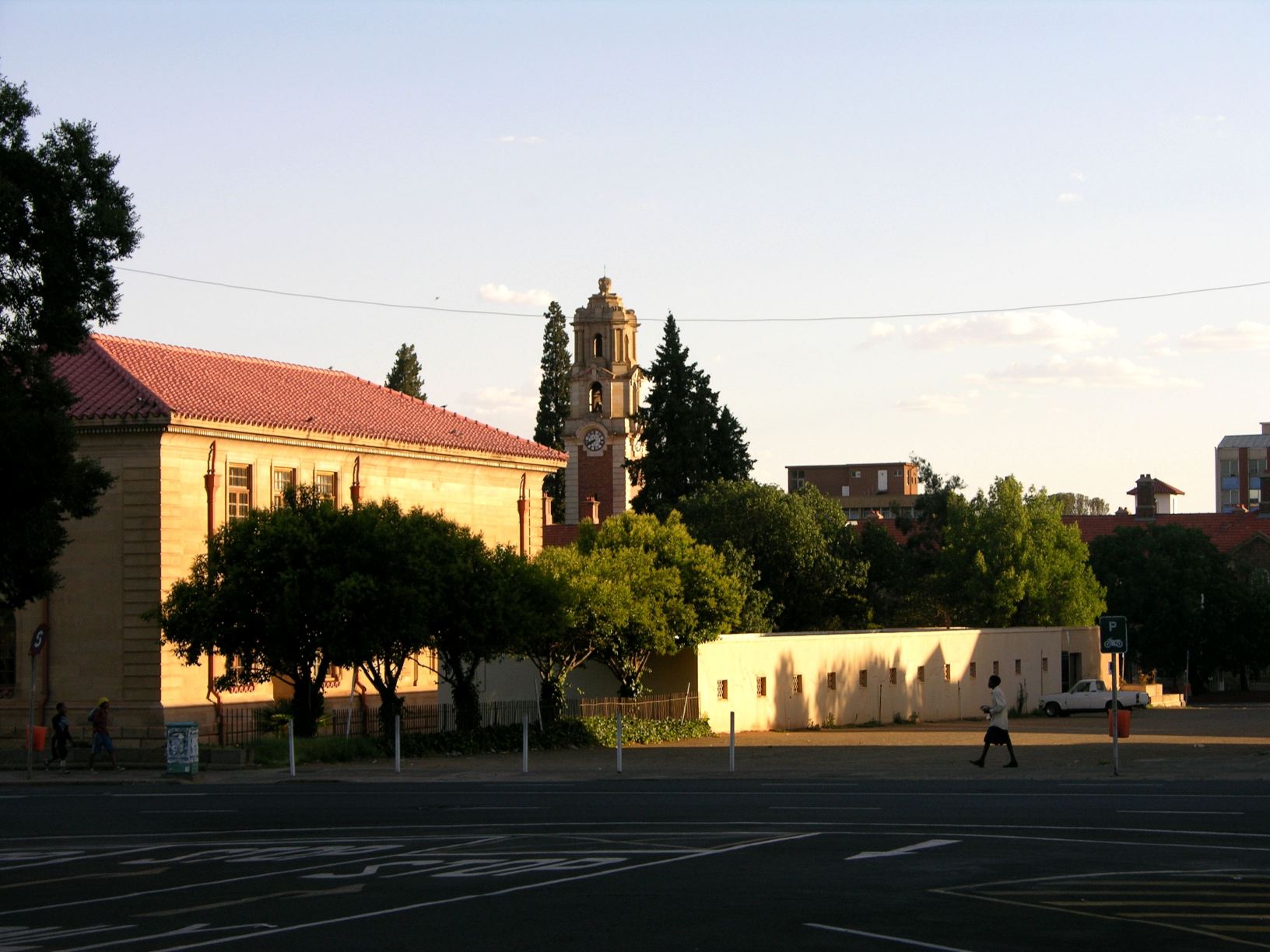
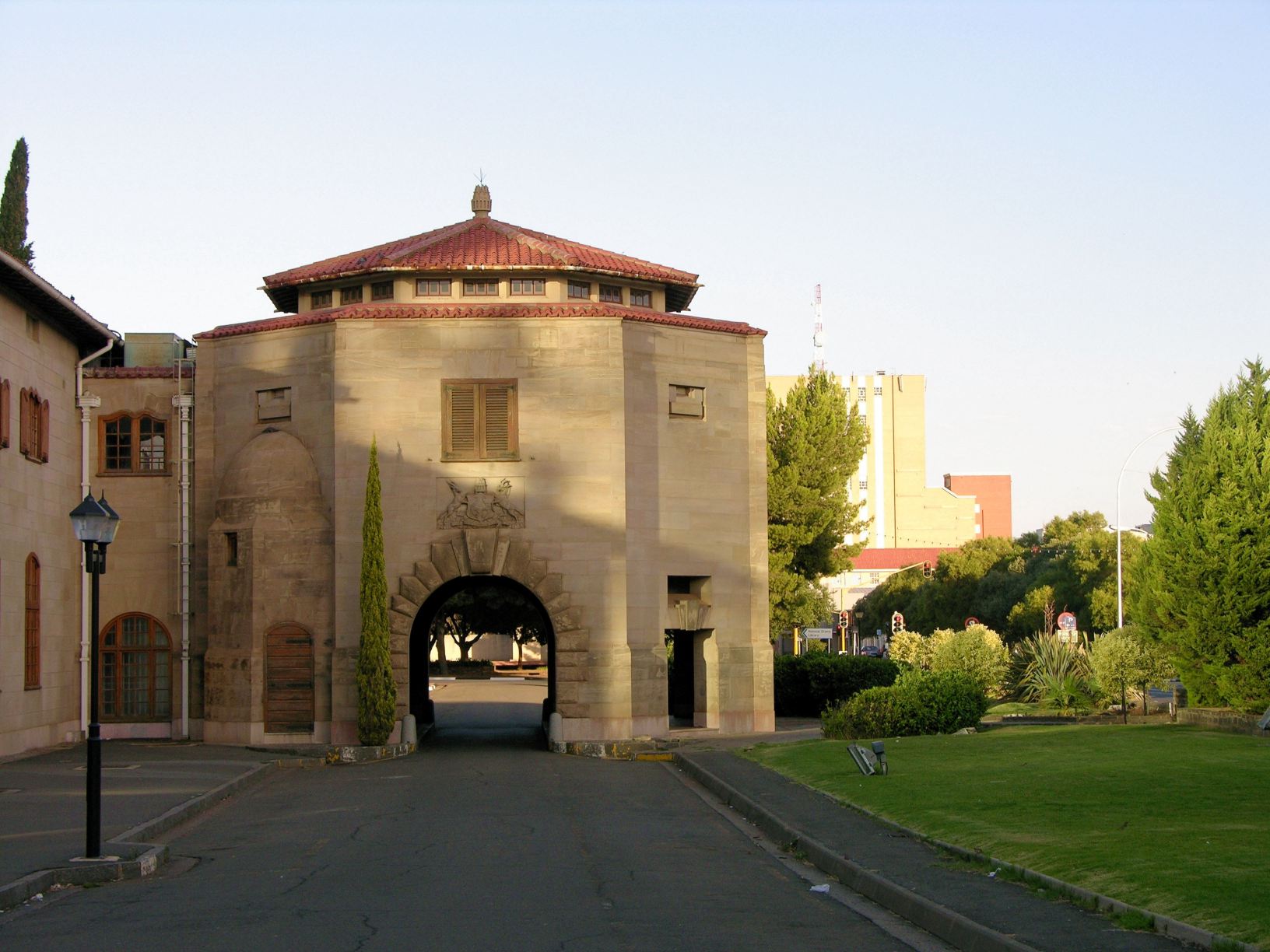
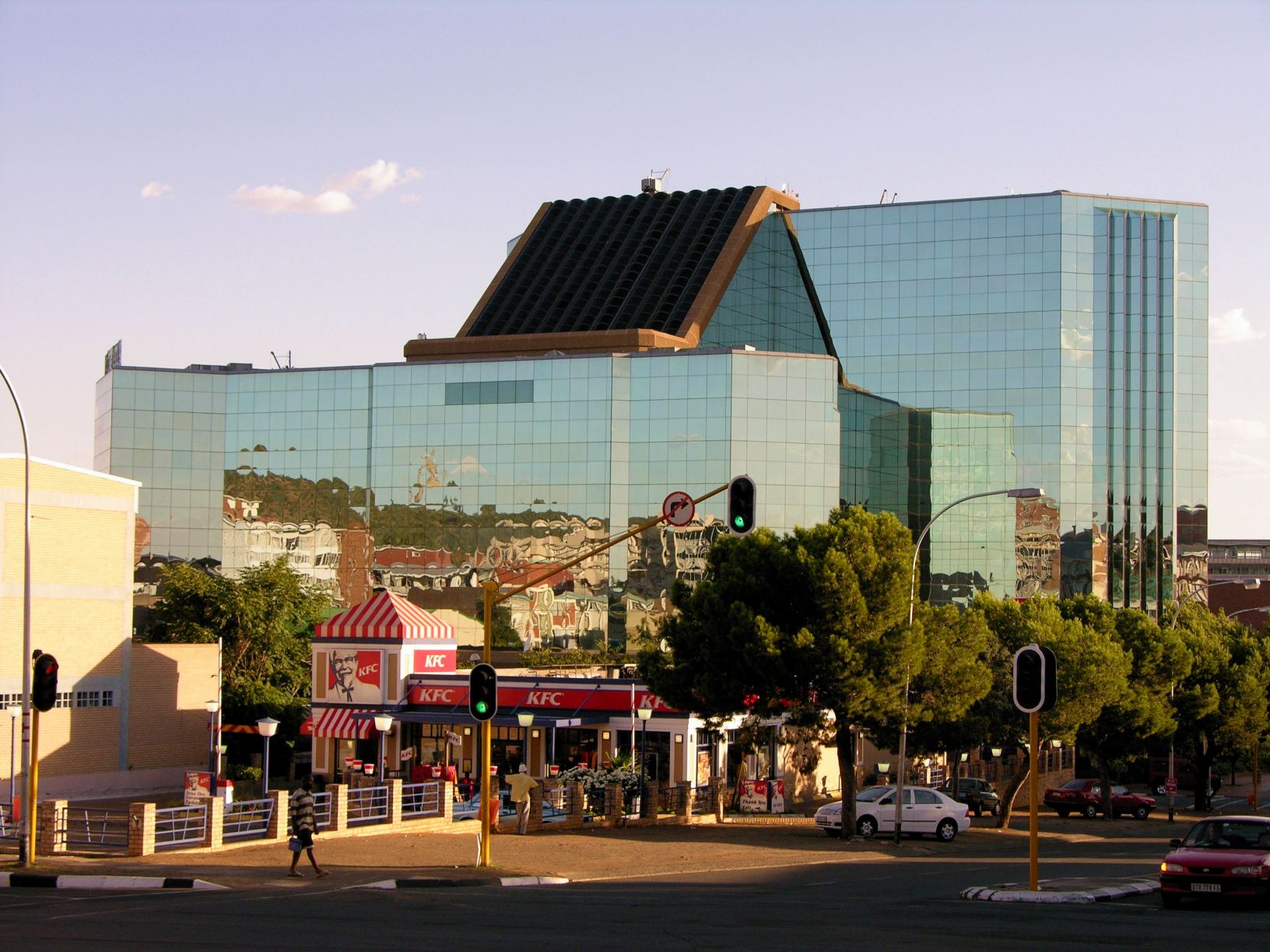
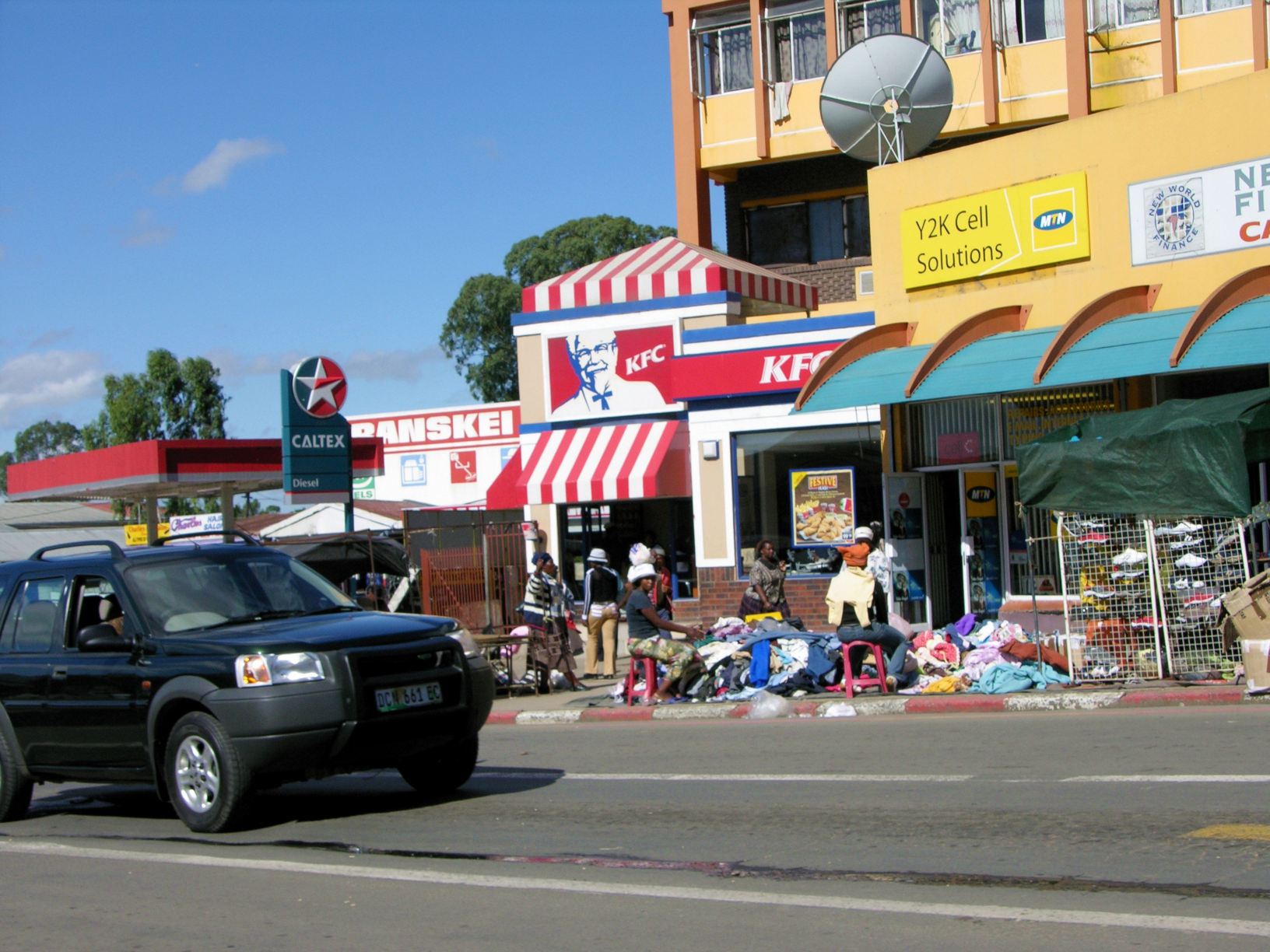
Food was a little thin on the ground. We wanted a small restaurant to celebrate crossing the border. The only place where we actually managed to eat was KFC. Kentucky Fried Chicken had beaten all the other fast-food chains in southern Africa. I supposed it might have something to do with the founder in the logo, whom I took to be a Black American. As it happened, we'd been going to KFC a lot lately, too, for a quite different reason. We'd timed various places and found that KFC got us fed fastest. Twelve minutes from walking in to walking out. Lunch for two was 52 rand.
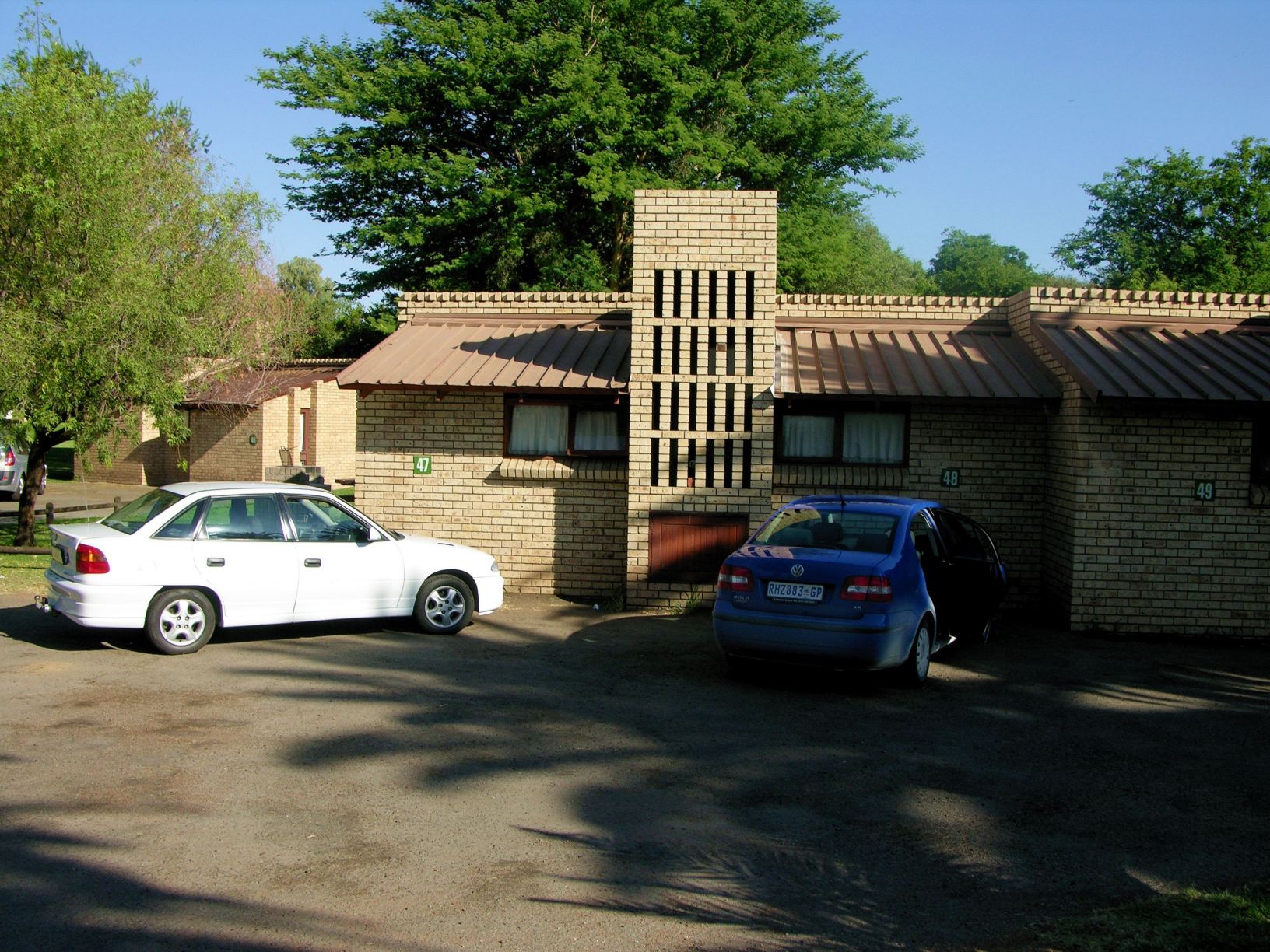
We'd booked a car for the following morning. Avis didn't open until ten, and it turned out they hadn't been particularly expecting us. There was no car set aside. The first one they found didn't work. We wandered about the town for ages before a brand-new blue Volkswagen Polo was at last turned over to us to do our worst with. We'd be driving it over all sorts of bumps for more than a month. I felt sorry for it. It was so young.
The traffic was heavy. There were jams, but only in the centre. With interchanges everywhere we got out onto the motorway quickly. The limit was 120 km/h, people did ten to thirty more and there were plenty of cars. They flashed their lights at each other and made room to let each other through. It reminded me a little of Germany. Traffic keeps left. The limit on ordinary roads is 100, and in towns it's 60 km/h. Some motorways are toll roads, including the route along the coast and some of the roads out of the cities. They're marked with a T on the map.
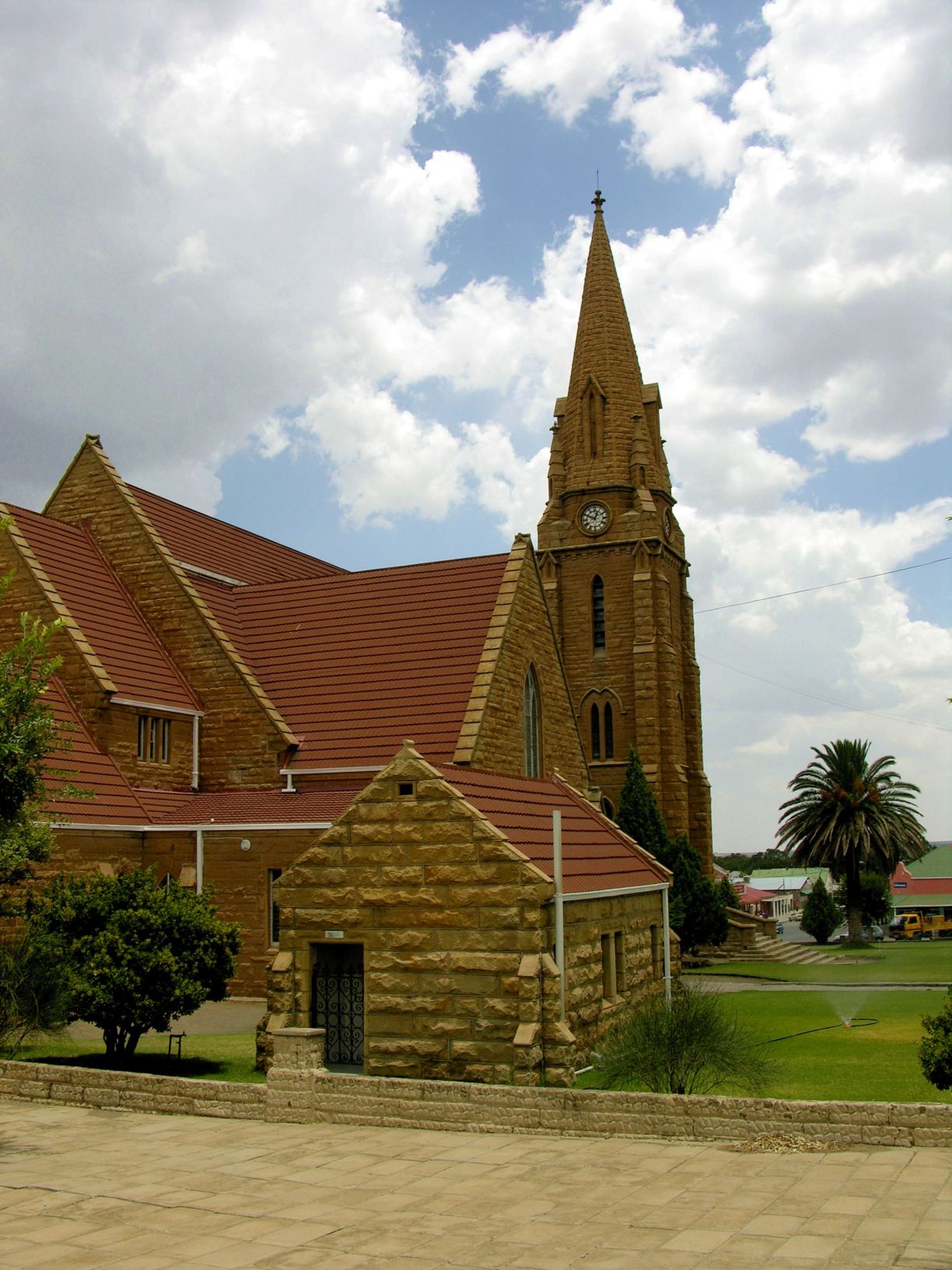
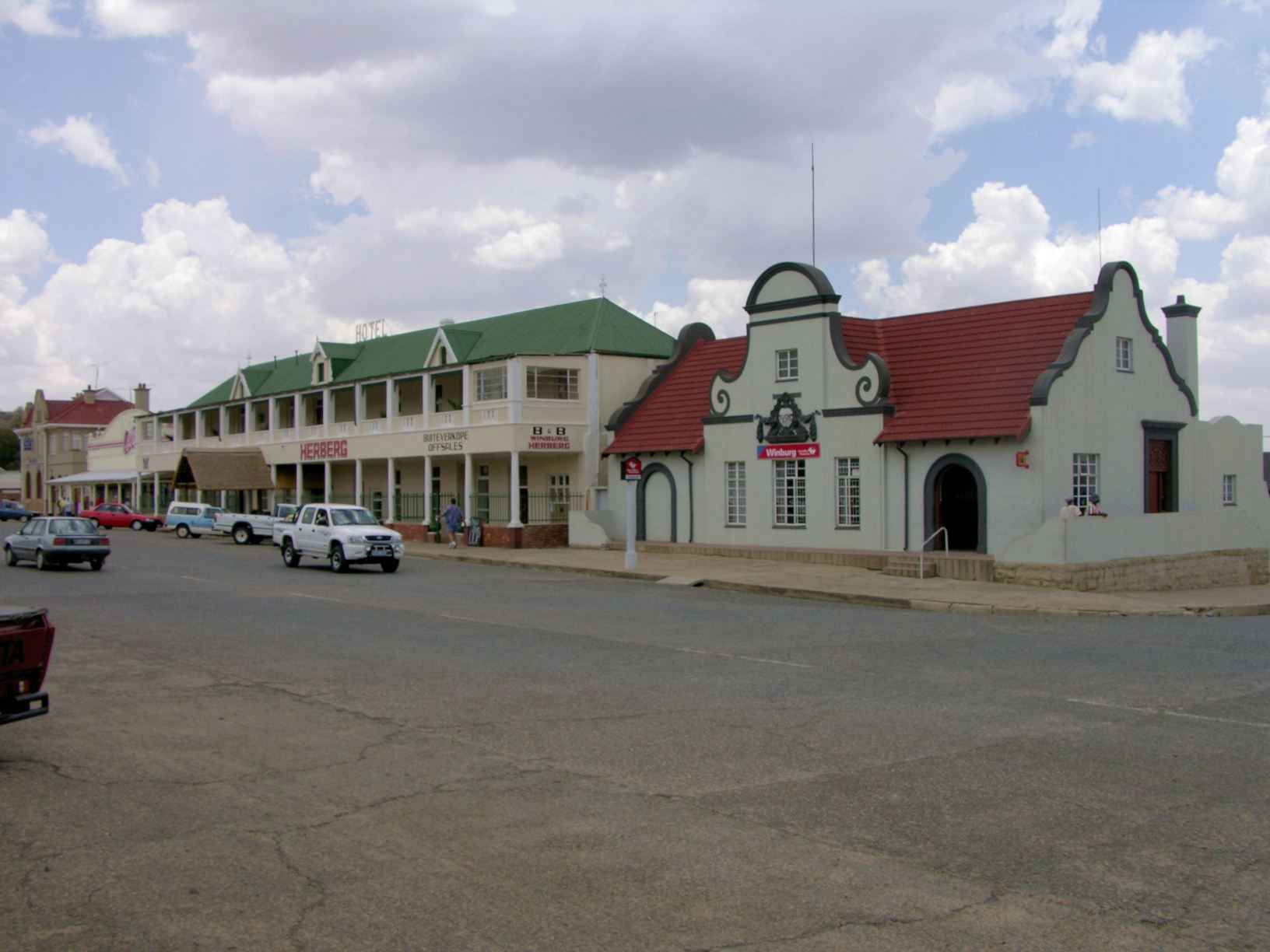
The first place on our route was Winburg, a former Boer capital from the days of the Anglo-Boer War. It's a quiet, sleepy town now. The Boers lost, the diamonds were found somewhere else, and its glory days are behind it. The only trace of the former capital you can see in town is the dogged use of Afrikaans on shop and hotel signs, instead of English.
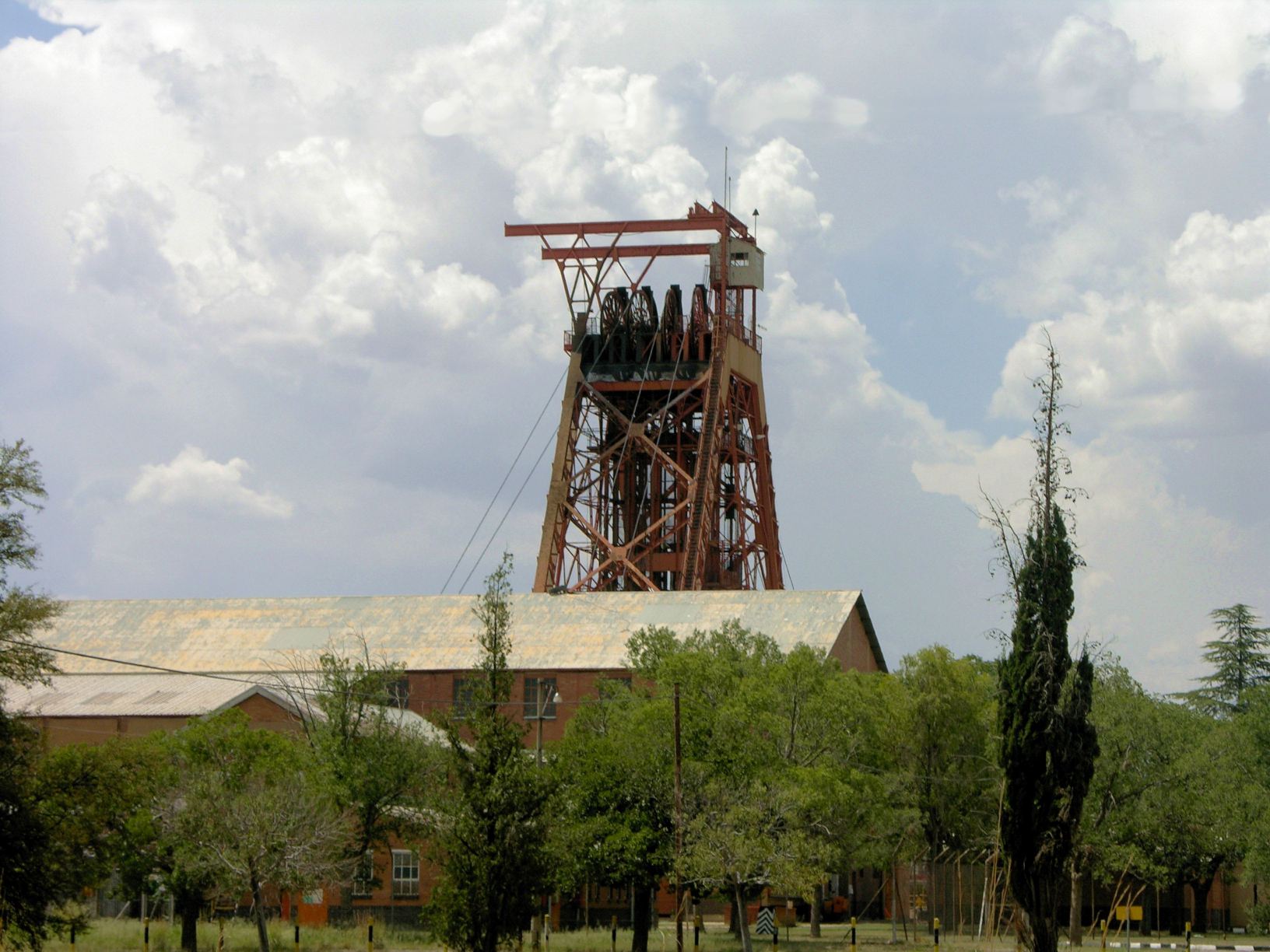
Nearby Welkom was another matter. The place was humming. A huge town with loads of supermarkets and banks. They mine gold here. Mountains of waste rock cover tens of square kilometres. Gold-bearing ore in South Africa is brought up from very deep down, with some shafts reaching as much as three kilometres. Black men used to be forced down the mines. Nowadays, for money, white men are prepared to work that deep too. There are even some Russian miners. The trouble with mines that deep is the heat. You can feel yourself getting closer to the centre of the Earth. There are sometimes tours, though visitors aren't usually taken below a kilometre and the tours don't run every day. We never managed to get down a single shaft.
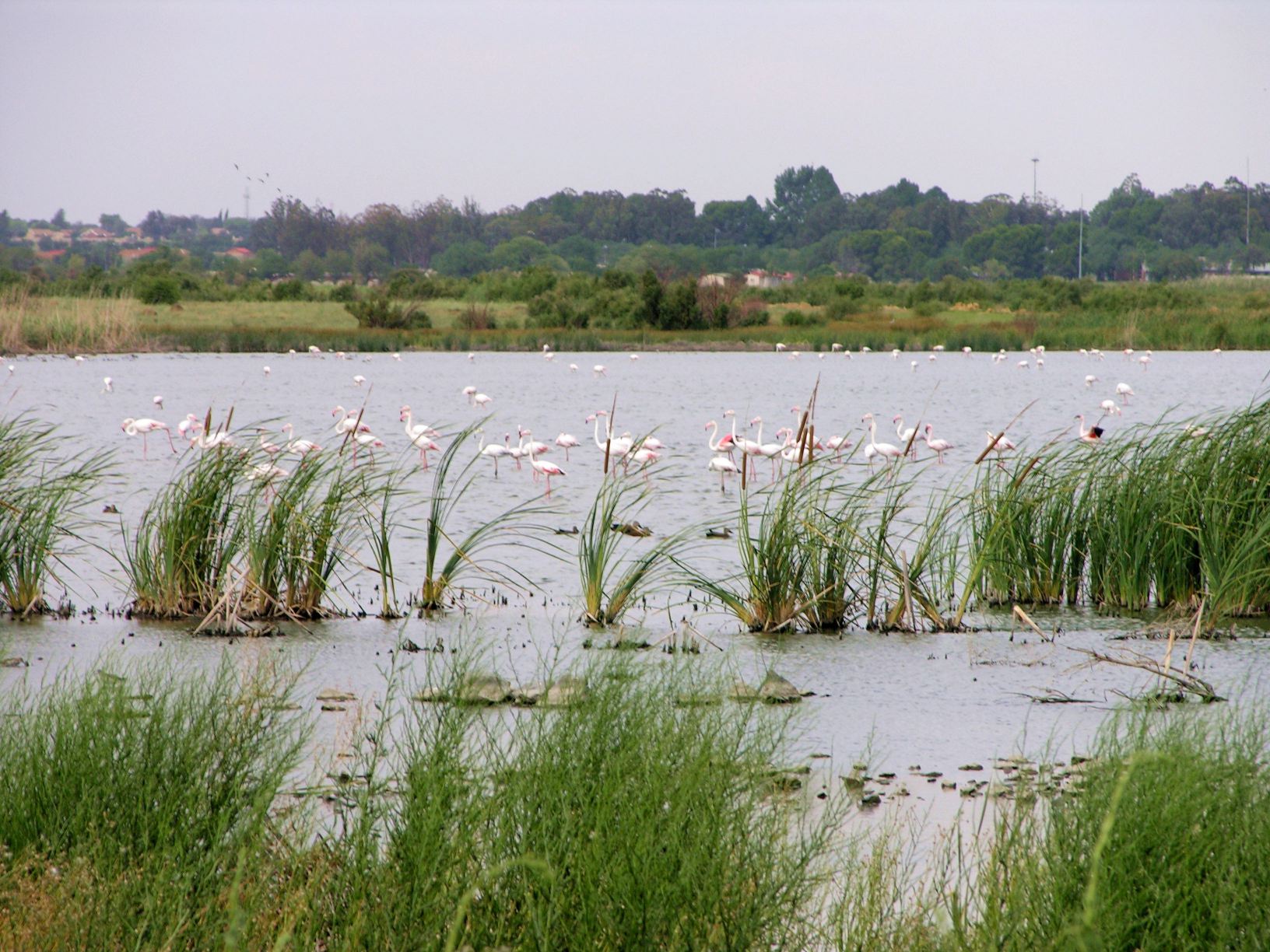
The churned-up landscape was dotted with small pools of dirty water from the ore-processing plants. Nature, though, is resilient. I don't know whether there's a lot of nitrogen in the water or something else, but algae and reeds thrive there. In came the flamingos, along with loads of other water birds. This is probably the best place in South Africa to see them year-round.
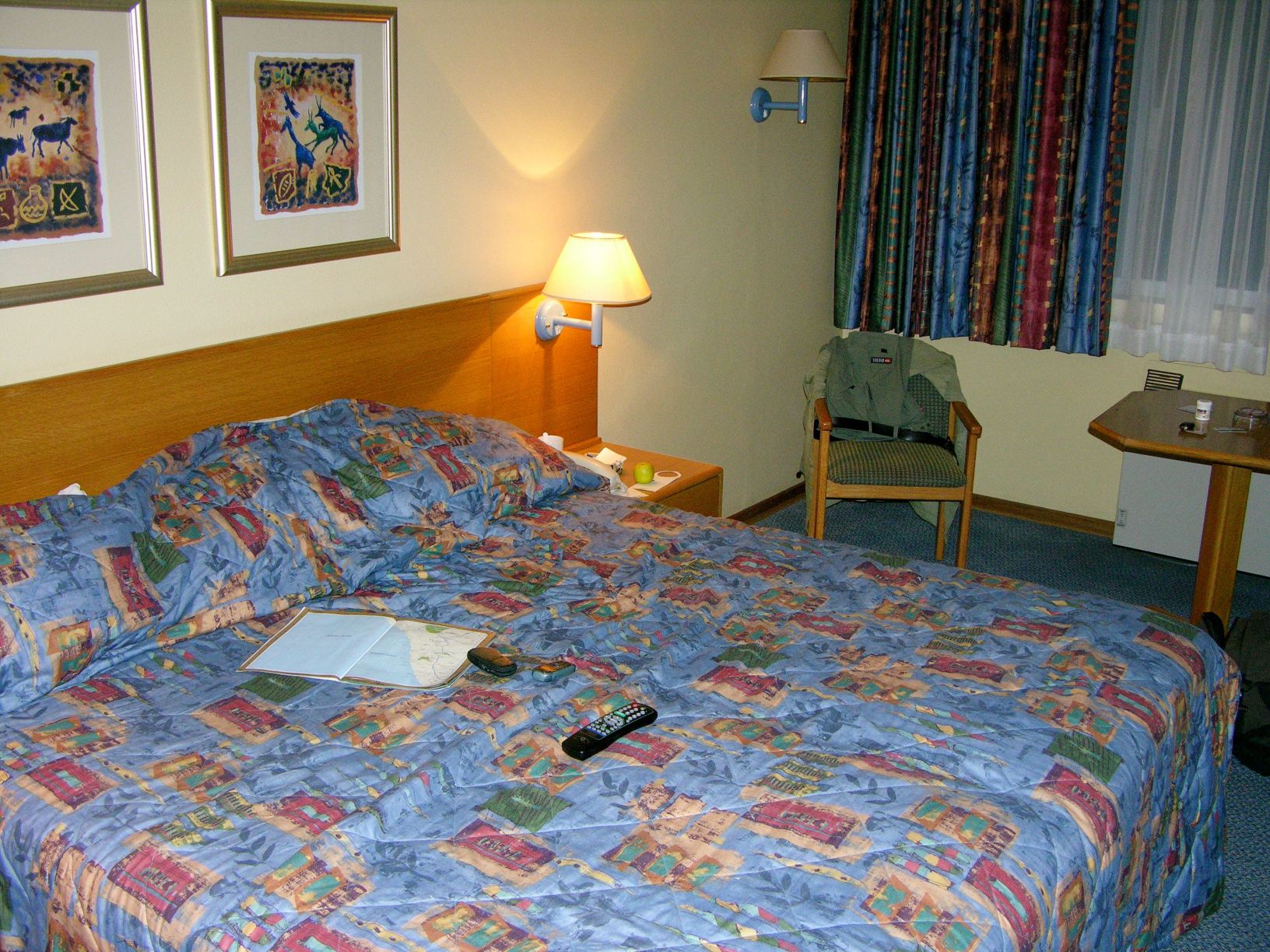
Because of all the trouble getting into the country, we'd paid for a hotel for every day of our stay. One of them was in Kimberley. It seemed a shame to waste it when we were so close. We'd have to be proper package tourists and spend a night at the Holiday Inn (28°44.555′S, 24°46.160′E). We had all of five days booked there, though there's really no reason to spend more than one night in Kimberley.
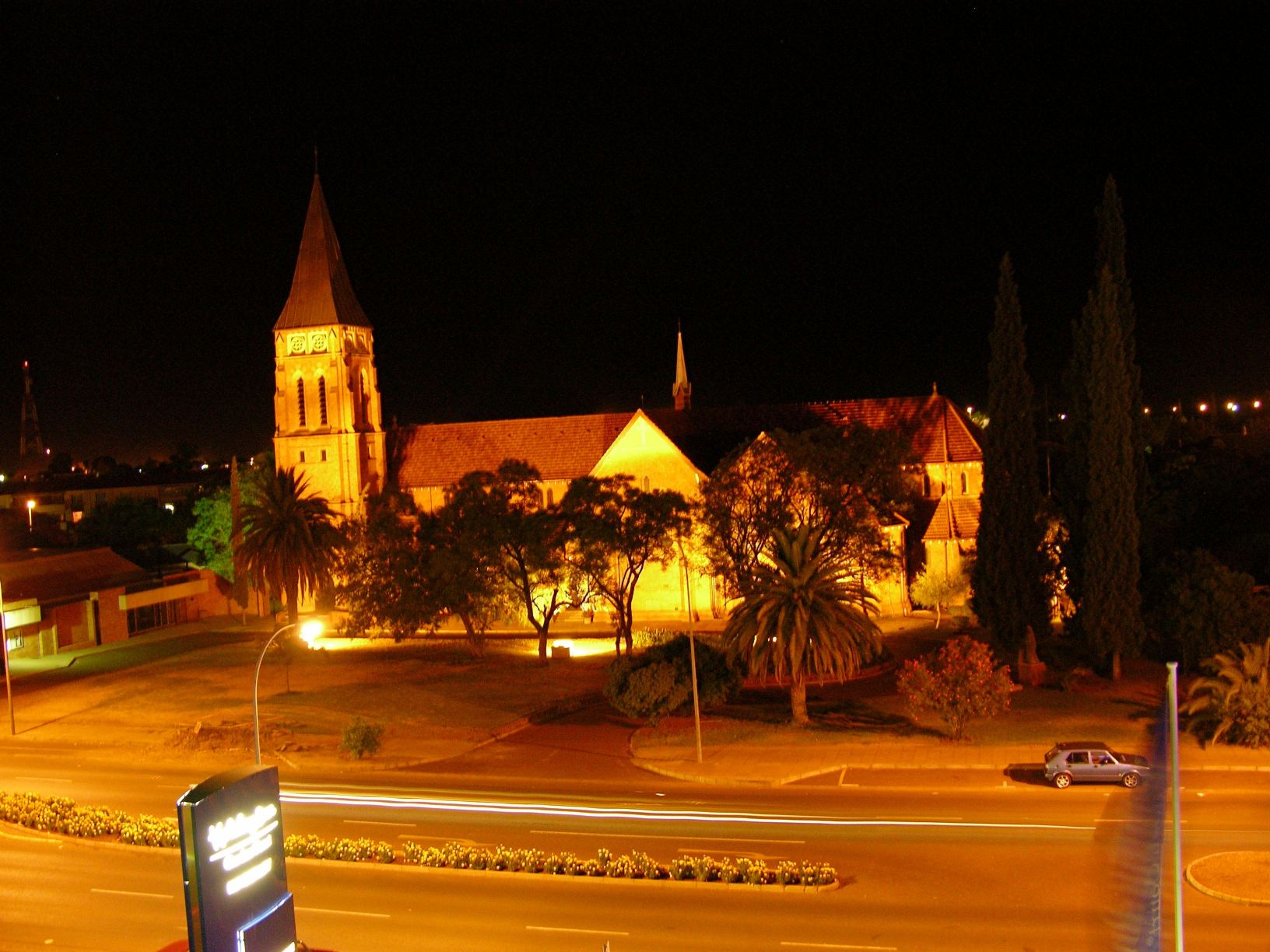
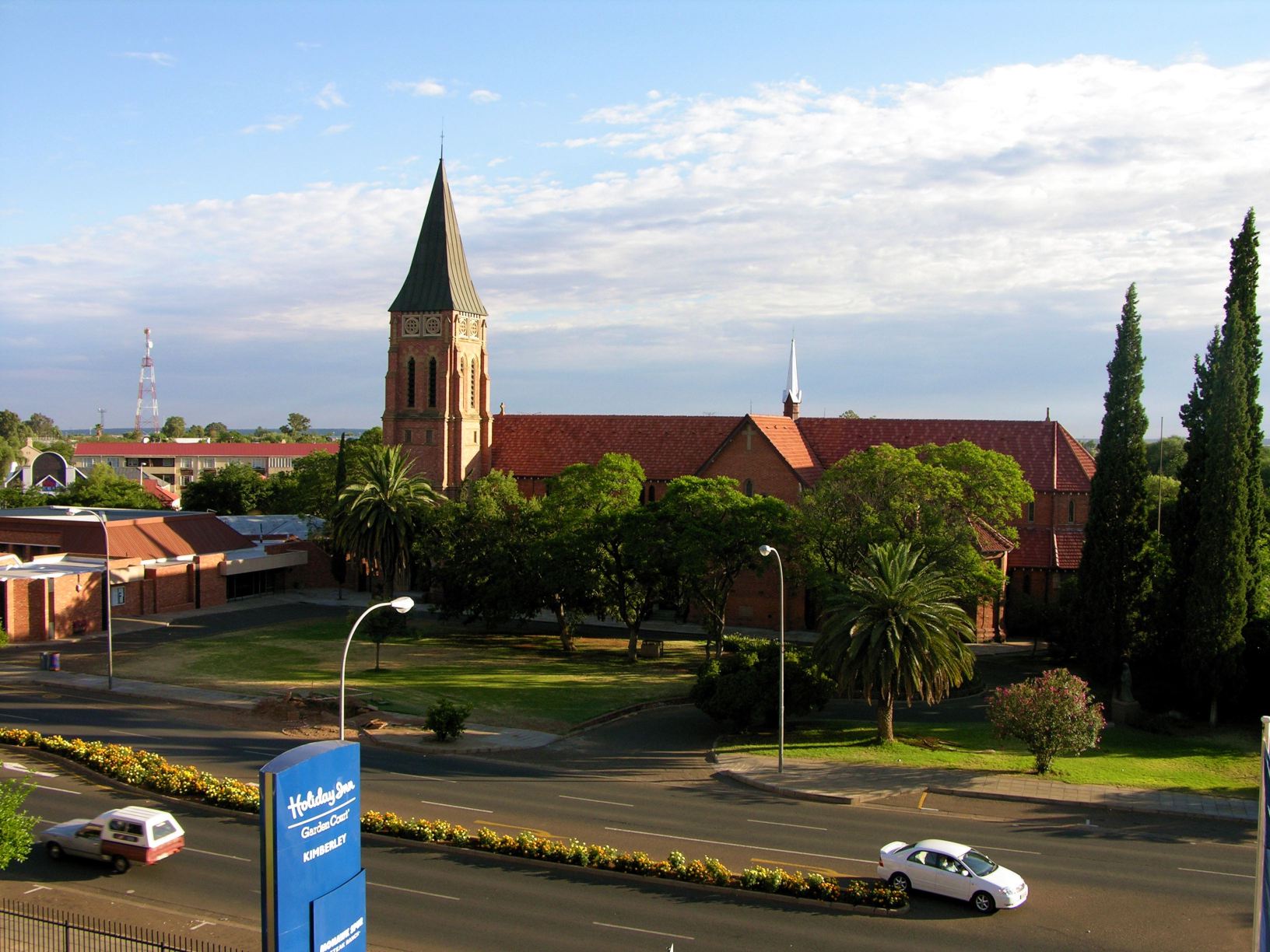
Kimberley is already in another province of South Africa, the Northern Cape. They mine diamonds here. This is where De Beers began, before it took over the industry on a world scale.
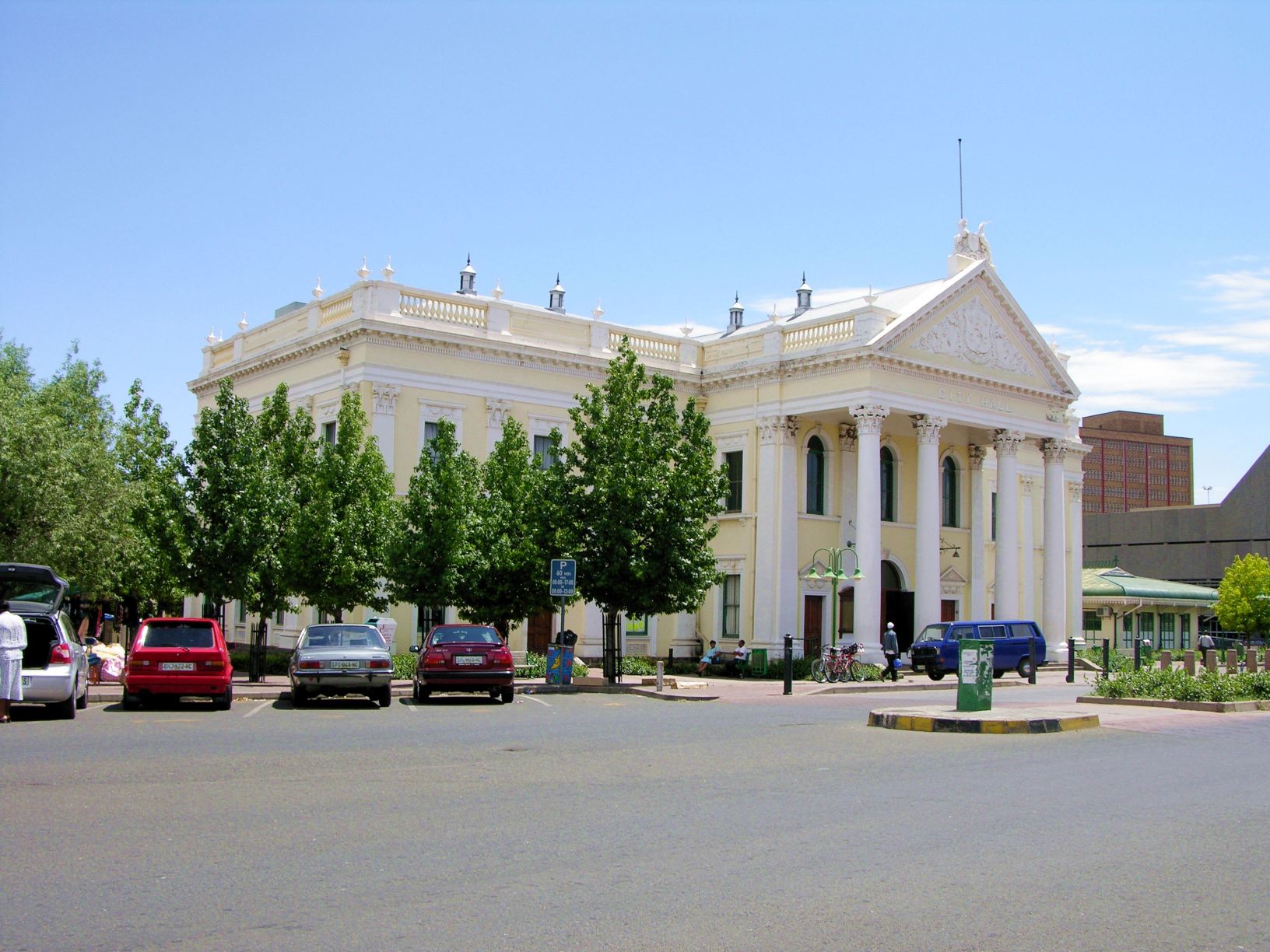
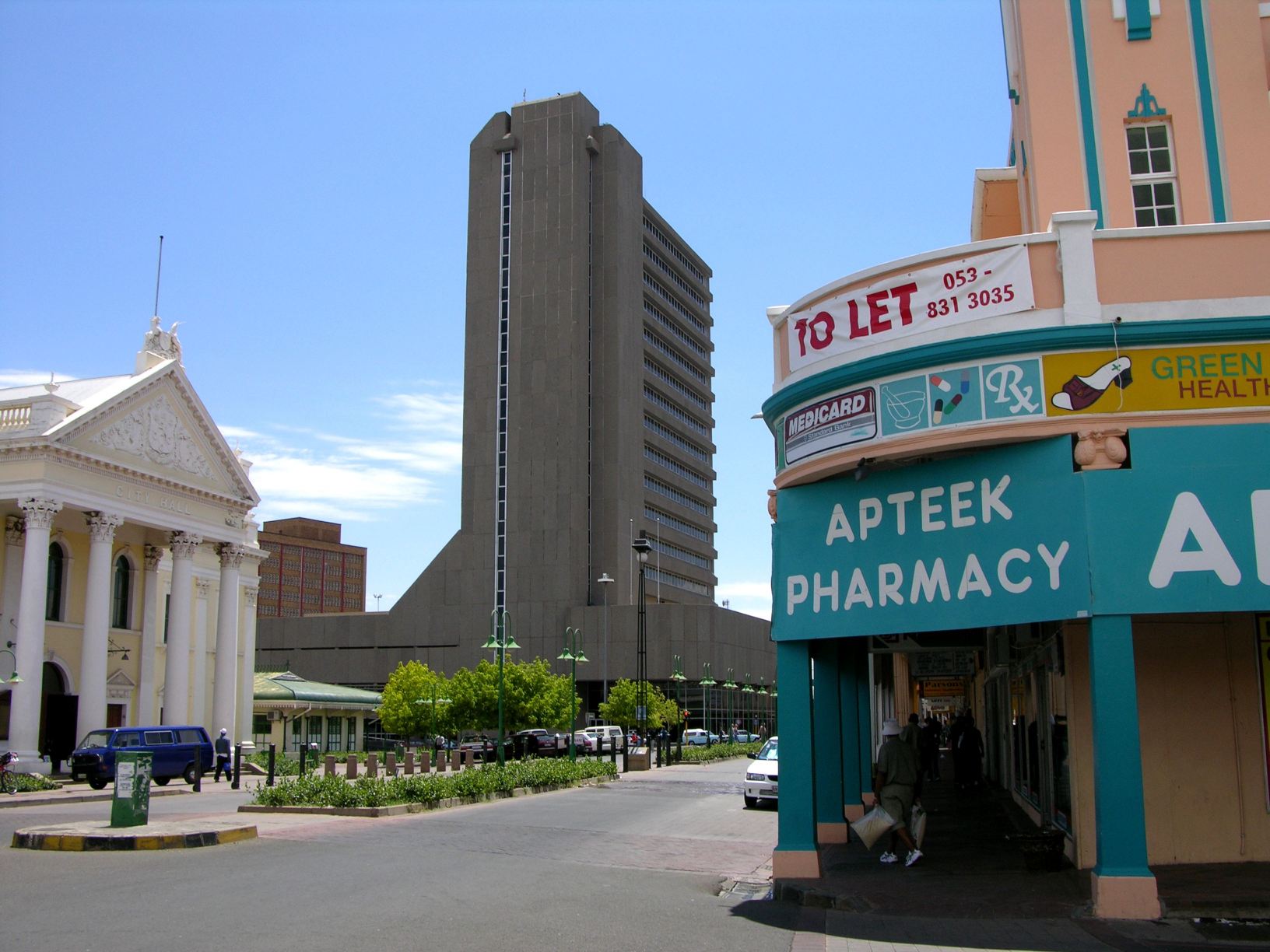
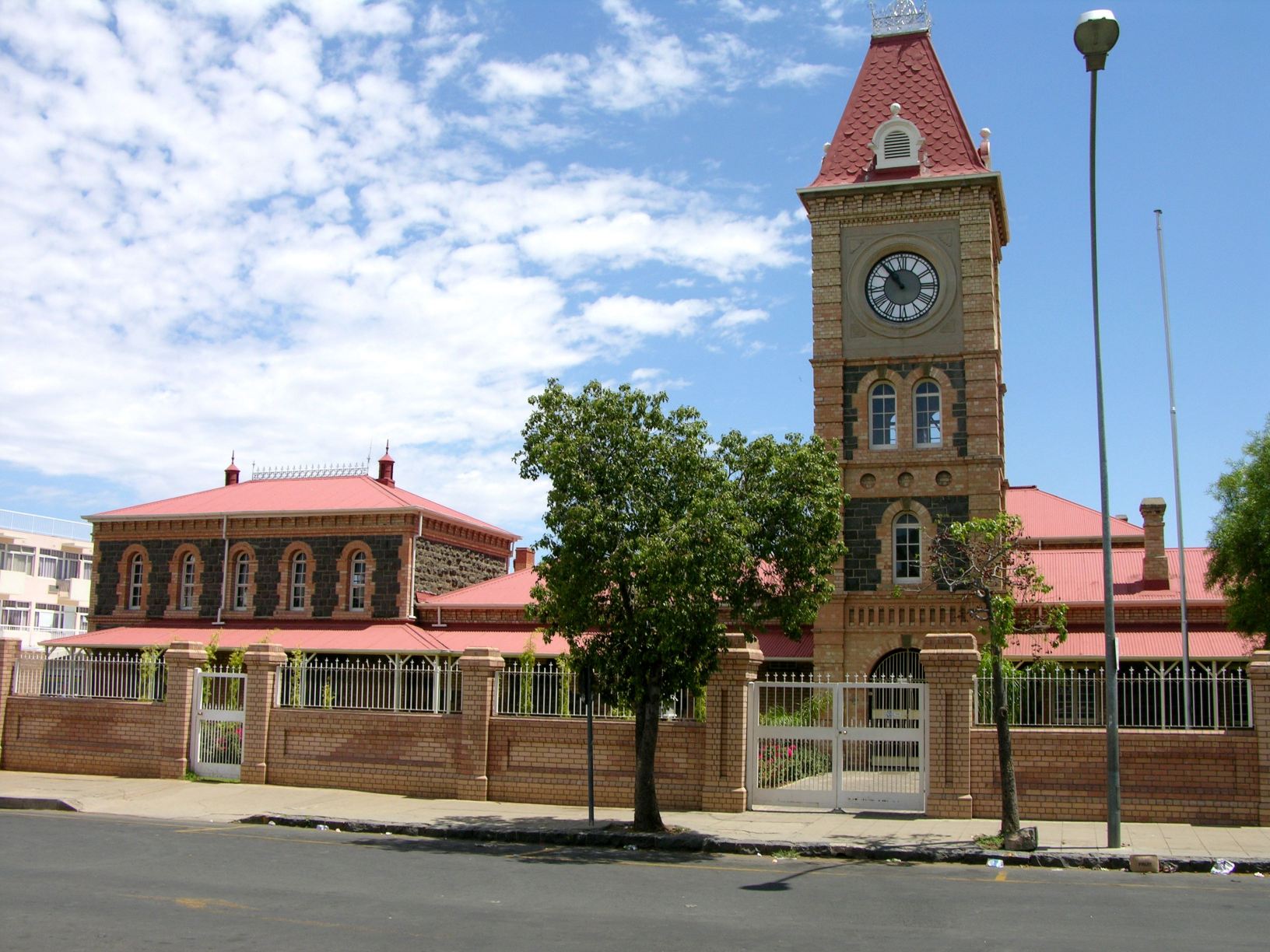
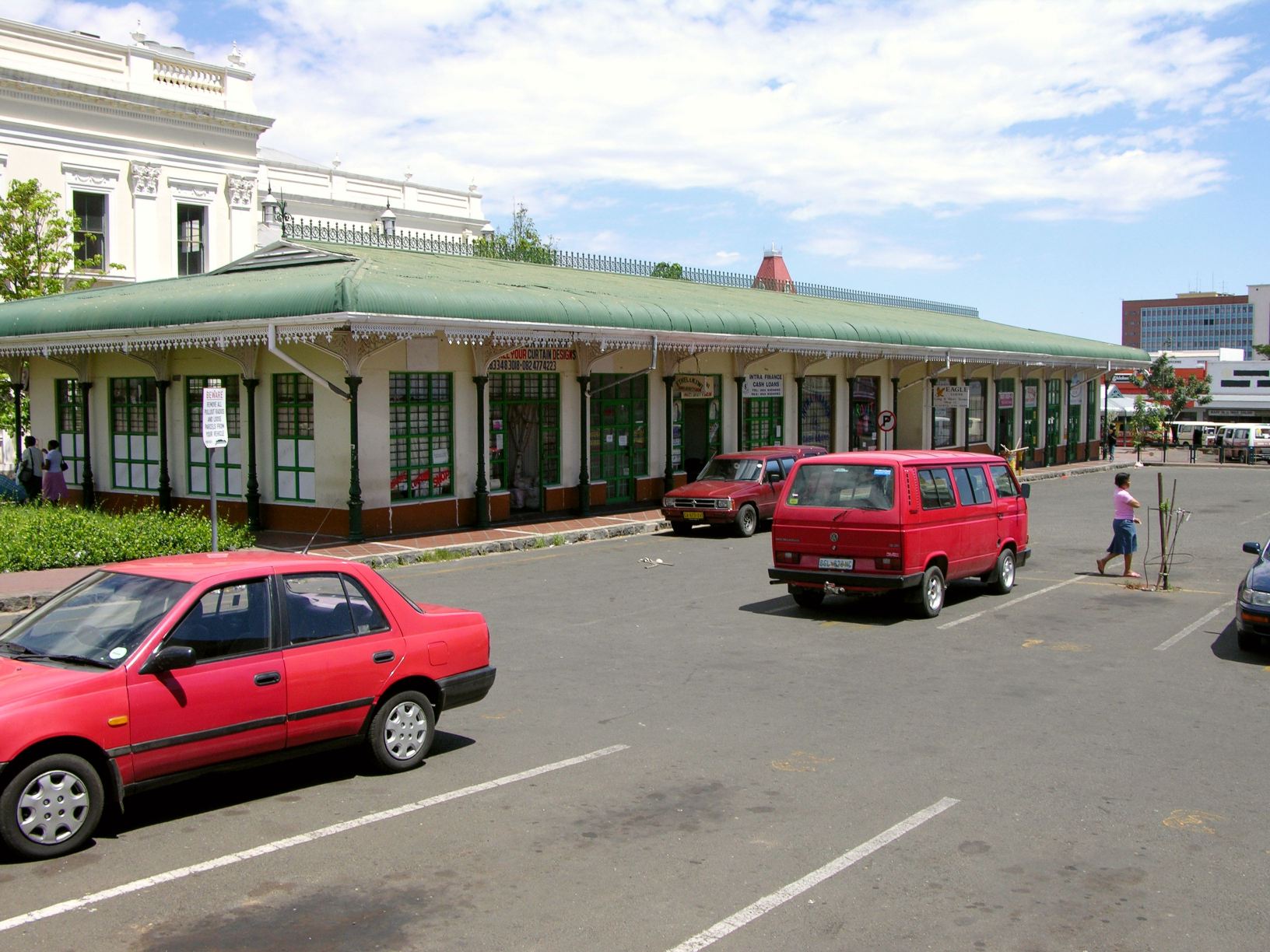
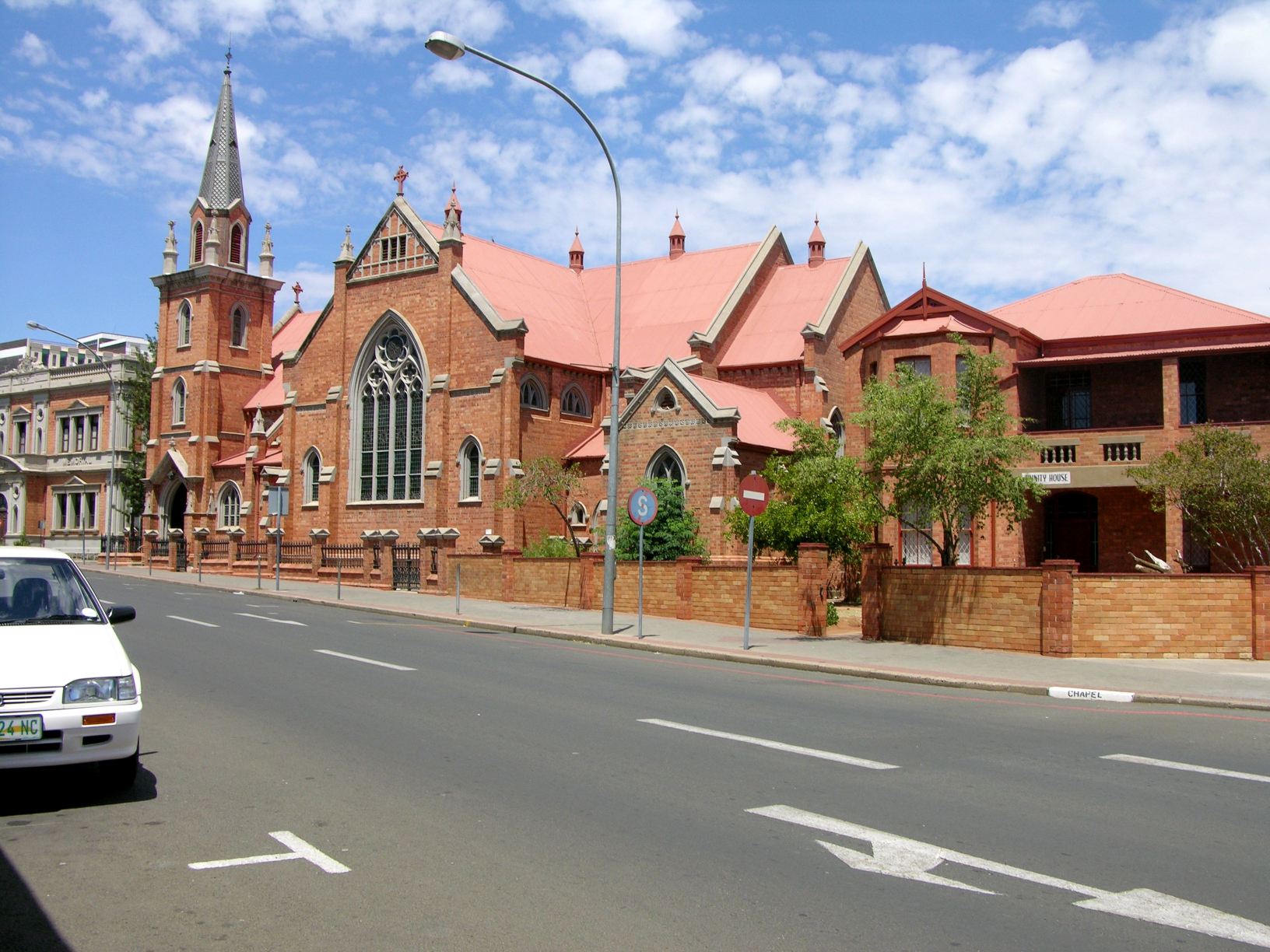
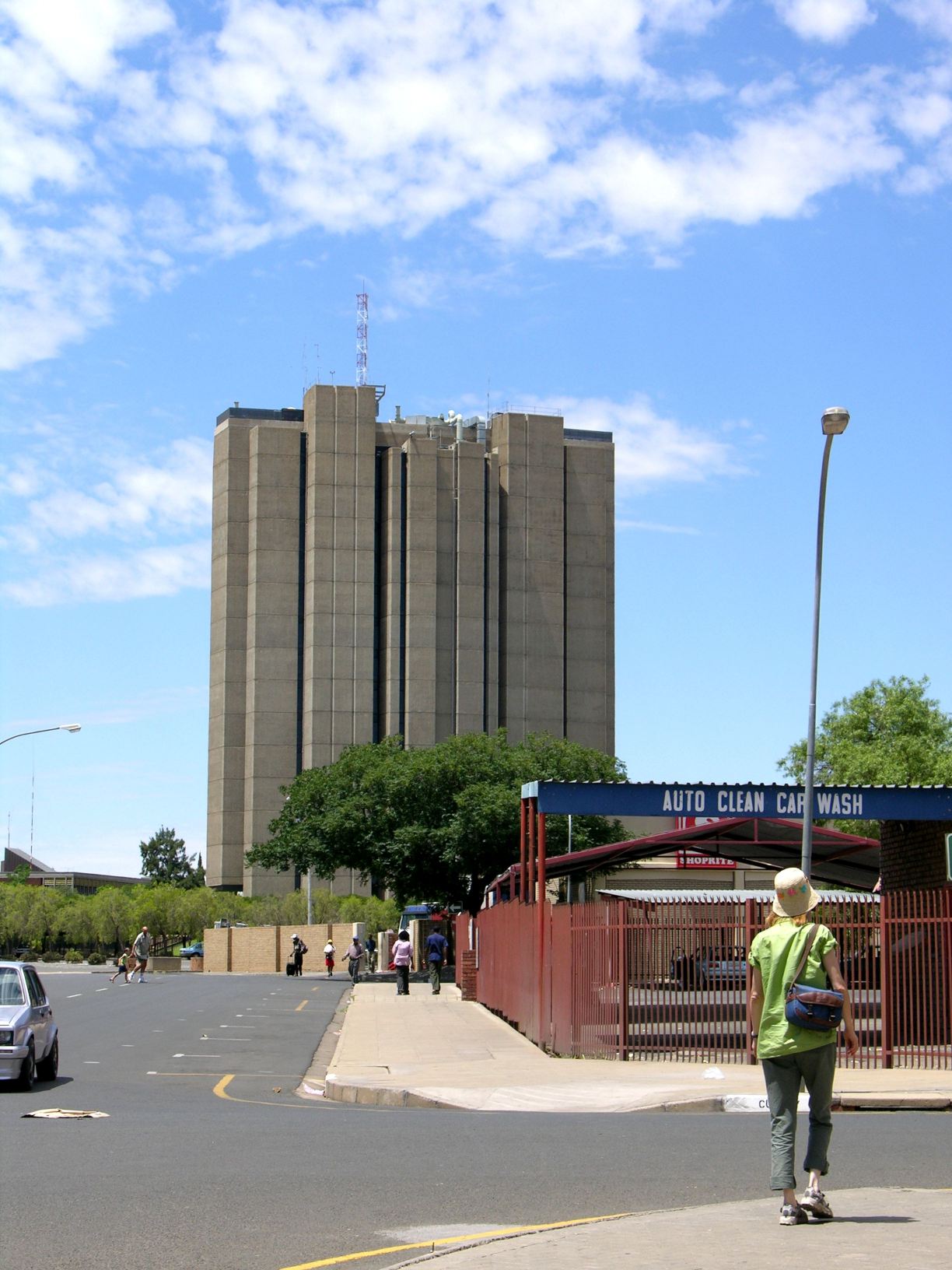
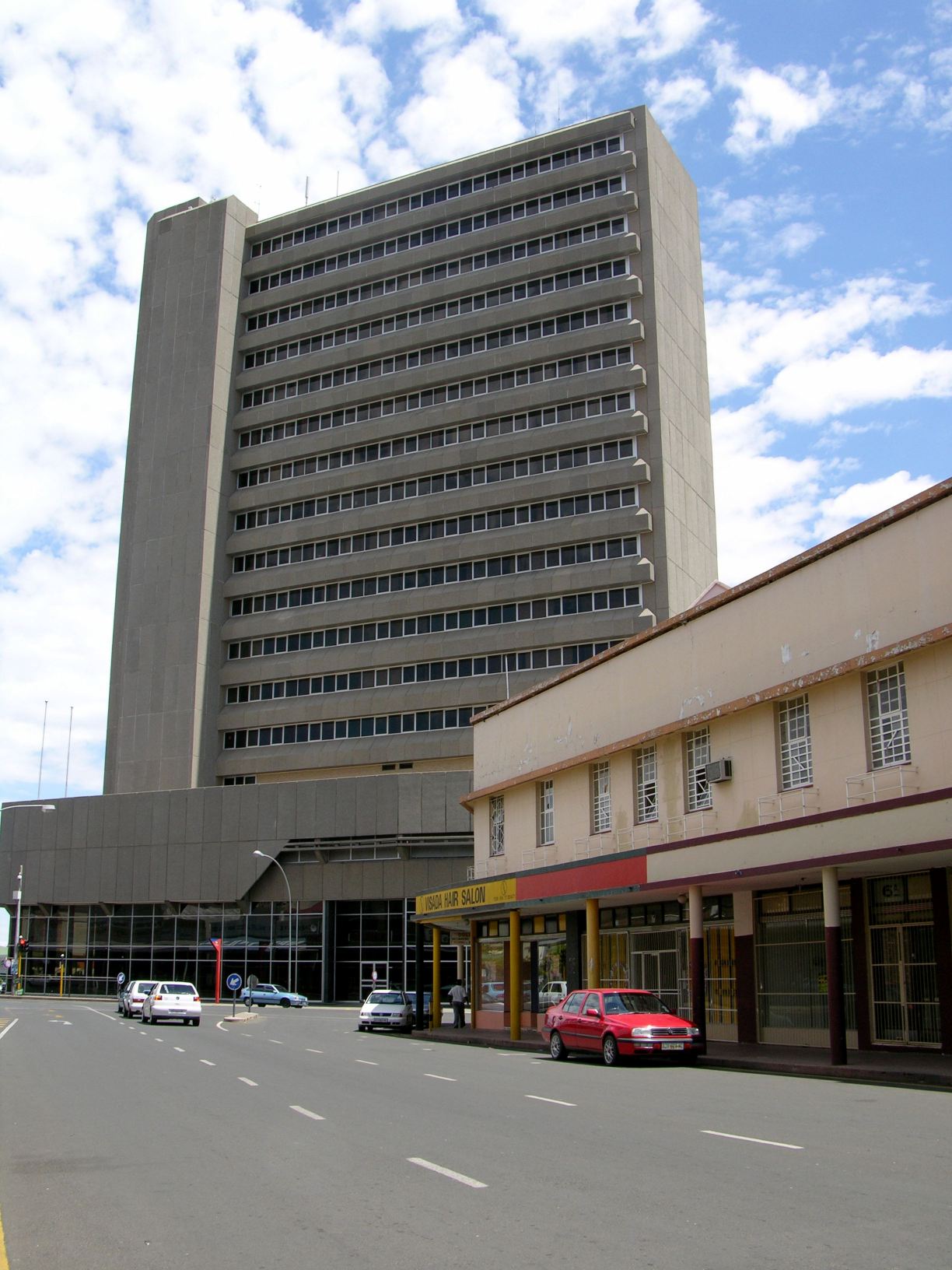
The South African diamond rush began in 1869 and came about quite by chance. A pretty stone was found in a farmer's field. It turned out to be a diamond, and the farmer was called De Beer. Things took off. In just three years, there were already 50,000 diamond workings in South Africa. De Beer himself didn't become a miner. He simply let people work his land, and nobody might remember his name today if it weren't for Cecil John Rhodes.
The son of an English clergyman, Rhodes had poor health and was sent to Africa to recover. That's where he got going in diamonds. He founded De Beers in 1887 and by 1891 controlled ninety per cent of the world's diamond production. It wasn't enough. He wanted a great empire. Getting drunk in a bar, he'd shout, ‘We're going north!’ and drink to the might of the British Empire and to a railway from Cairo to Cape Town. Victorian England was the perfect place for ideas and men like these. He was made prime minister, and north he went, annexing Botswana and the territory named Rhodesia after him, now Zimbabwe. Alas, times changed and he never got to Cairo. Britain wasn't what it had been, and Rhodes was pushed out of politics. De Beers, on the other hand, was still a world leader when we visited, and had got much farther than Cairo, as far as Yakutia, for instance.
The greatest concentration of diamonds was at Kimberley. An ancient bed of the Vaal River lies buried about a kilometre underground here. Diamonds, like gold, are washed out along rivers. More effective still is to dig out an old riverbed where sediment has accumulated over thousands of years.
They dug by hand. The result was the largest hole in the world to be dug with picks and shovels. It goes down more than a kilometre. They took out twenty-six million tonnes of earth and found three tonnes of diamonds in it. A grand total of three mine carts of shiny glass. It's a bit sad to see that mankind can move mountains just for glittering little stones to gratify the vanity of people who often hardly deserve it.
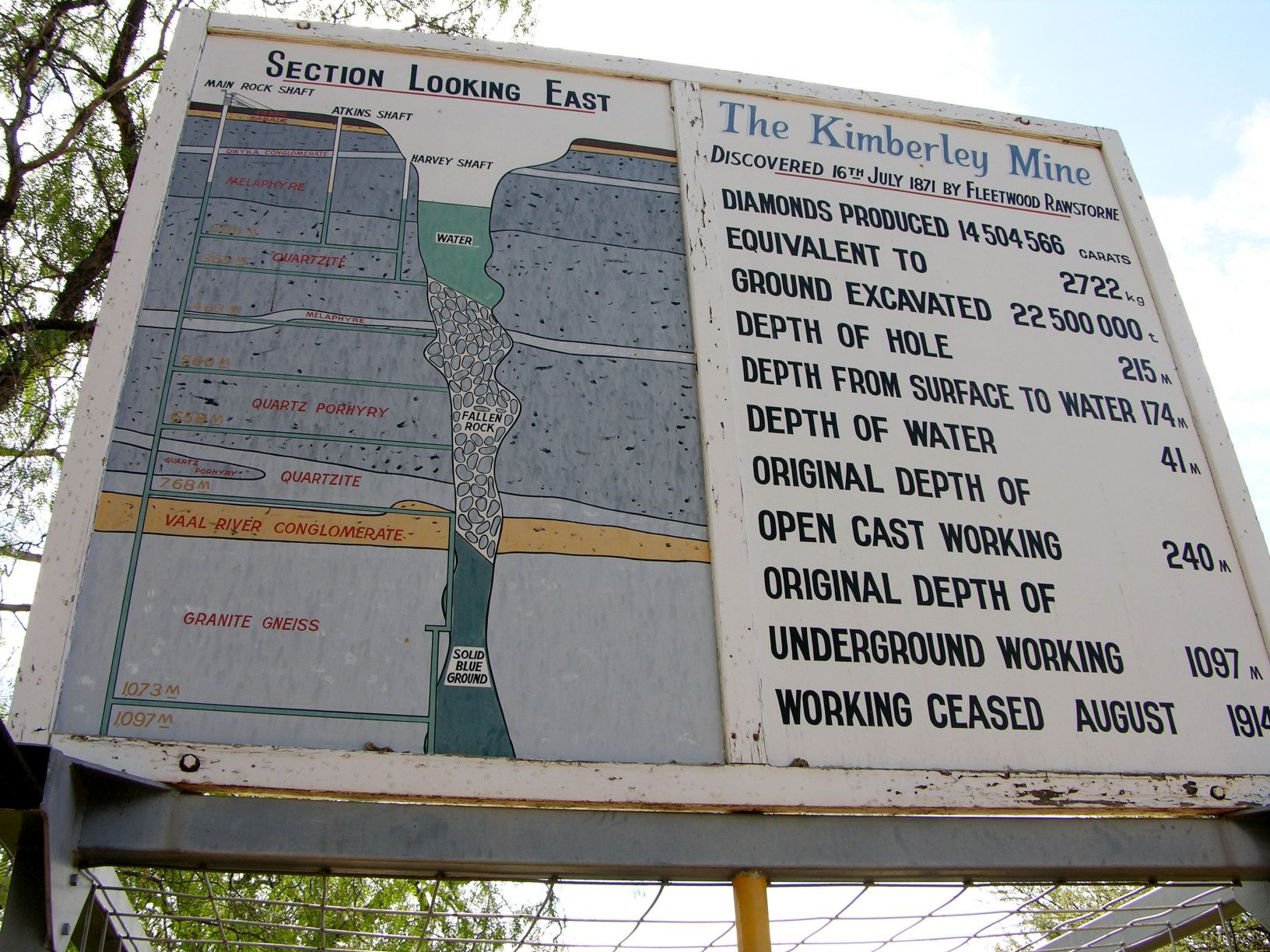
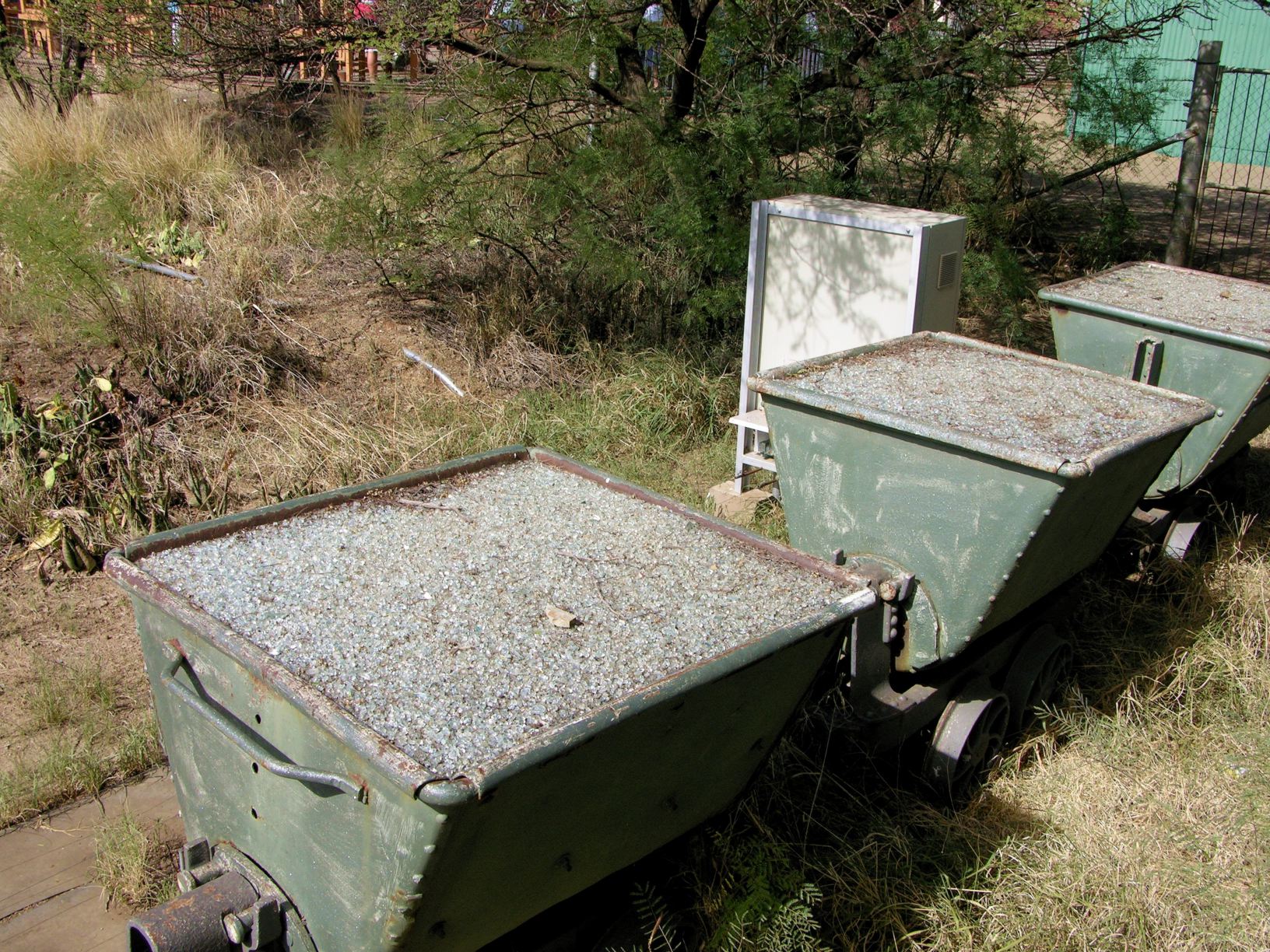
Work on the famous Big Hole ended in 1914. De Beers mines diamonds nearby now, in modern shafts. Nowadays they can pull out three tonnes in a few months.
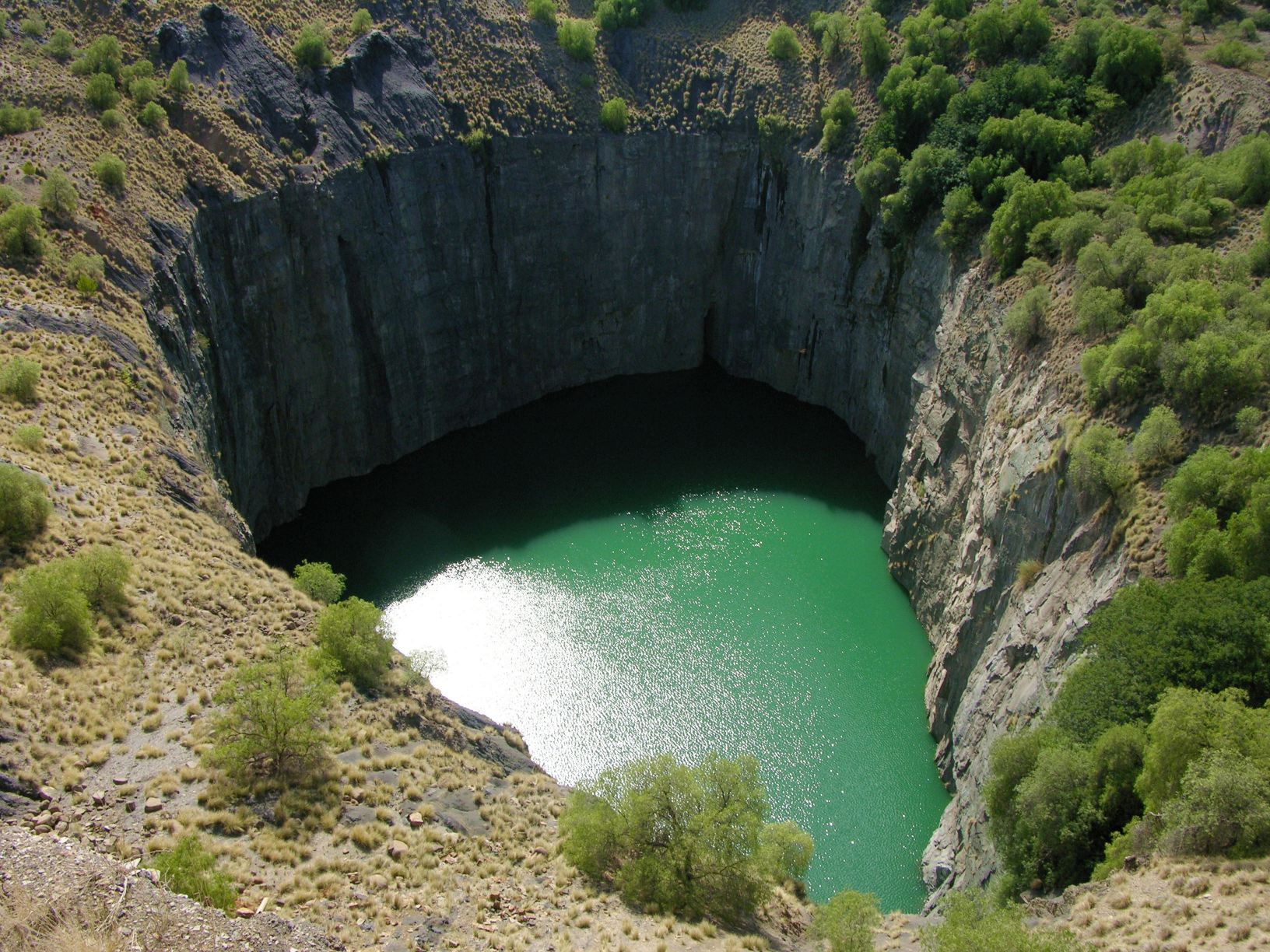
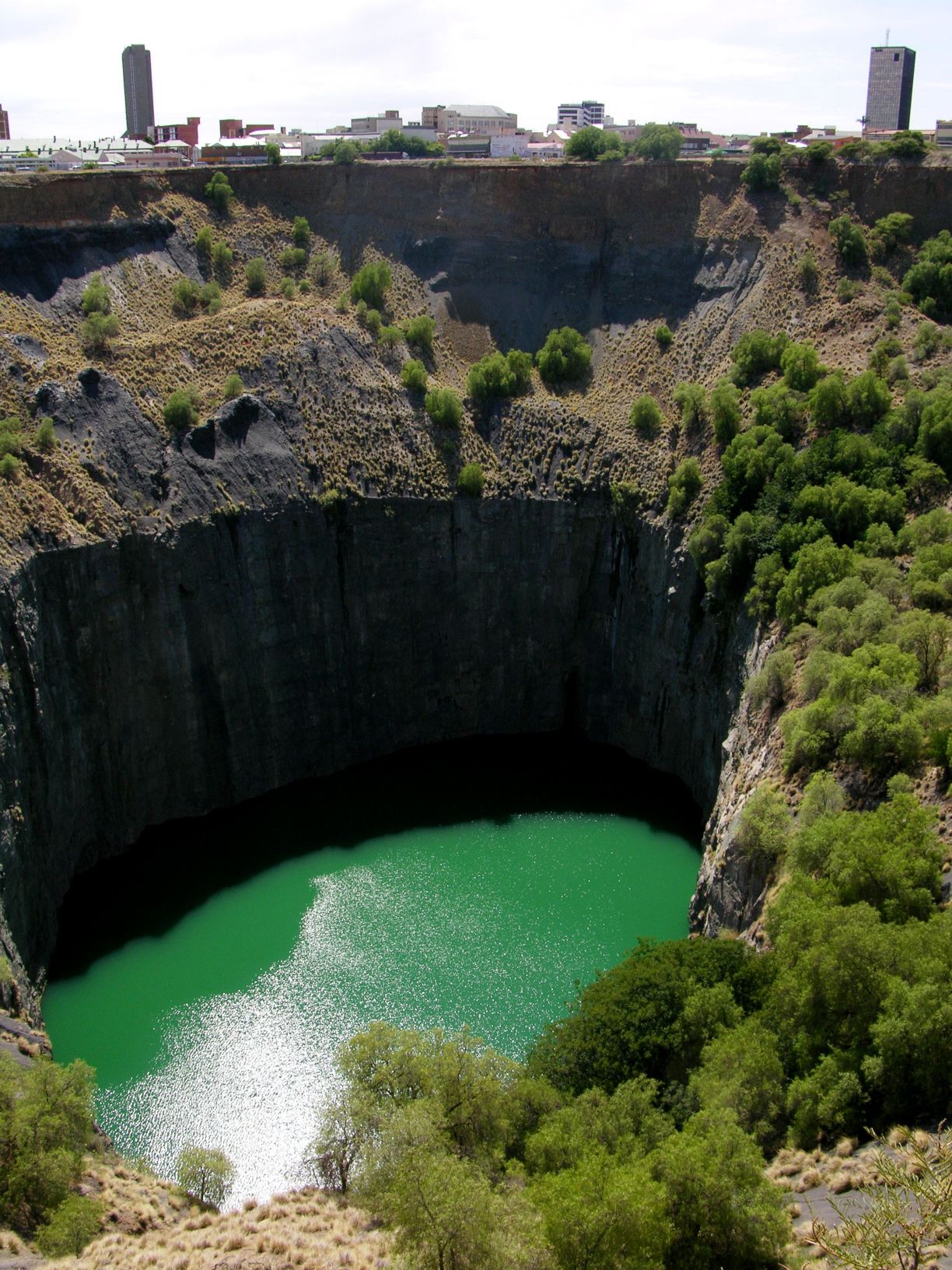
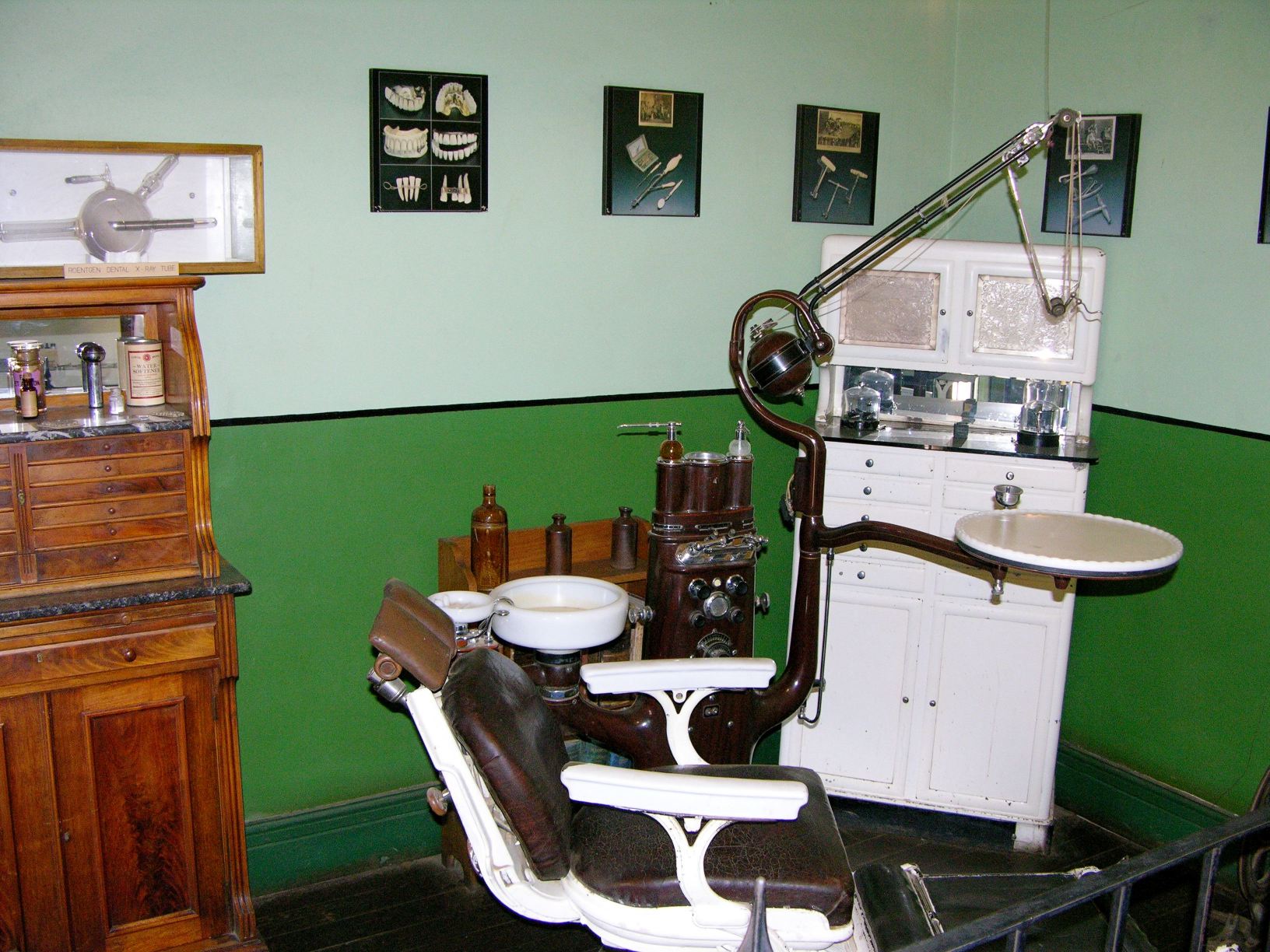
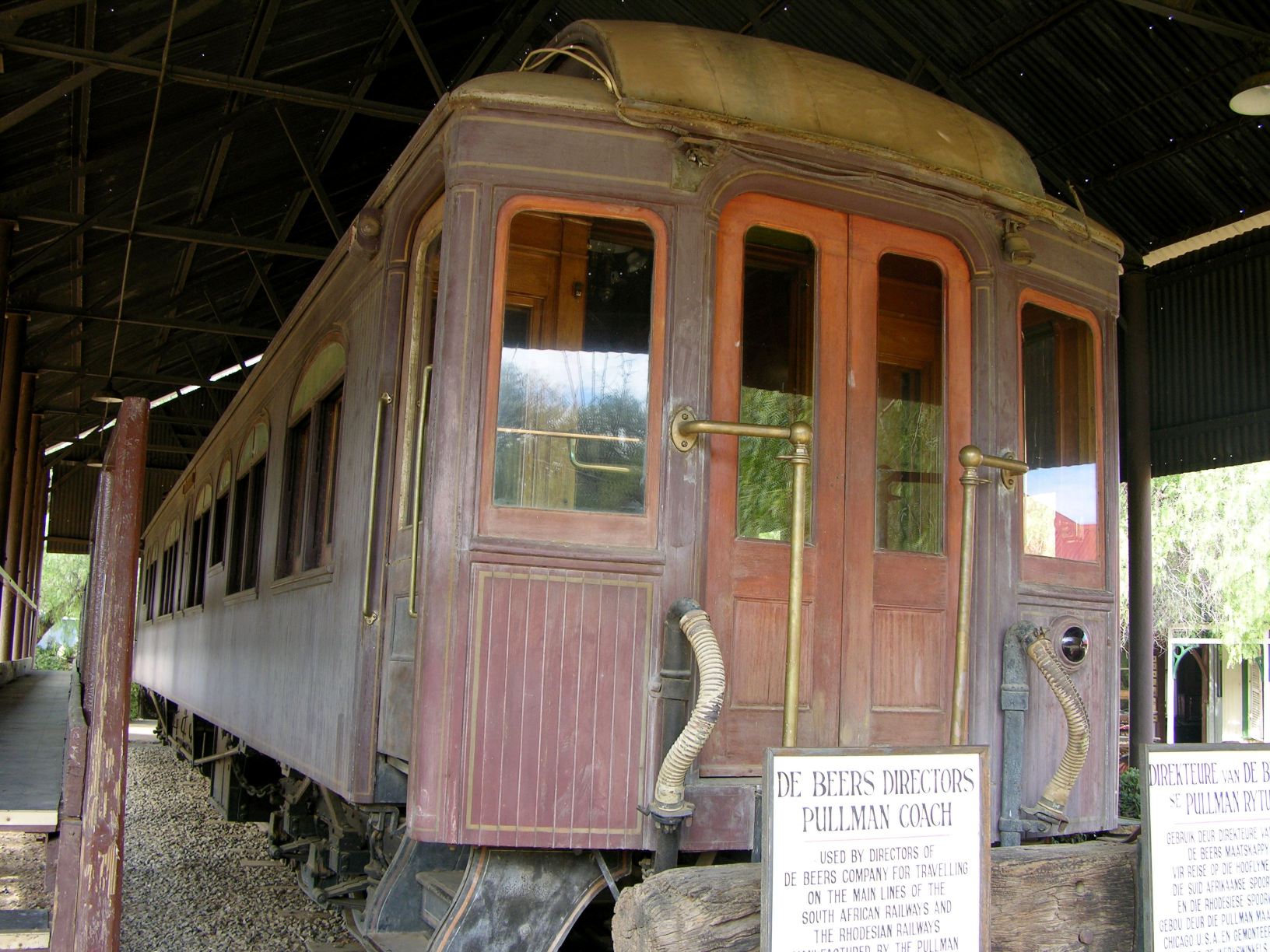
The historic hole has filled with water. You pay to go and look at it. It's part of a museum, a small town preserved just as it was at the start of the twentieth century. They've recreated a bar, a branch bank, a dentist's surgery and a railway carriage used by the executives.
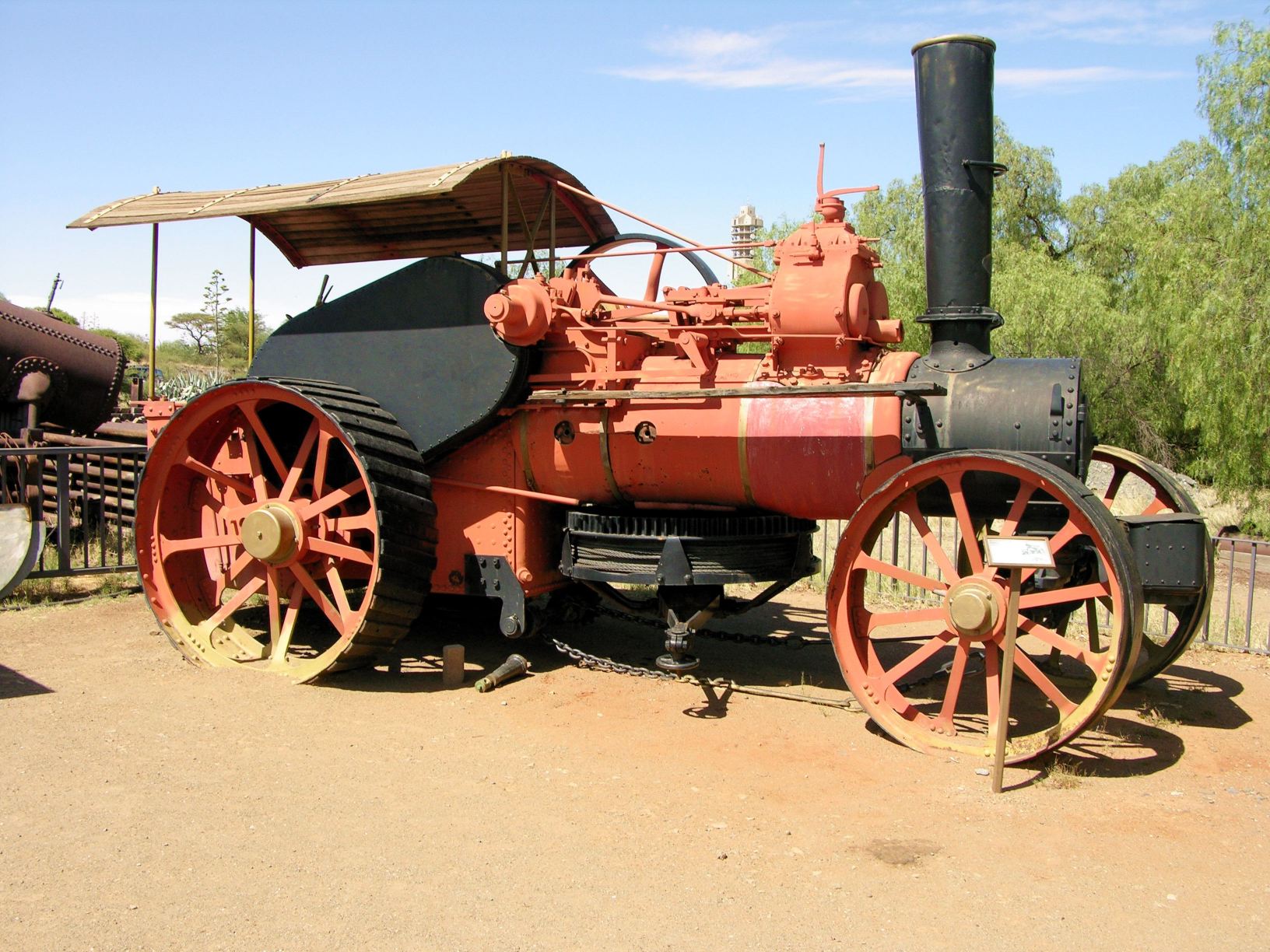
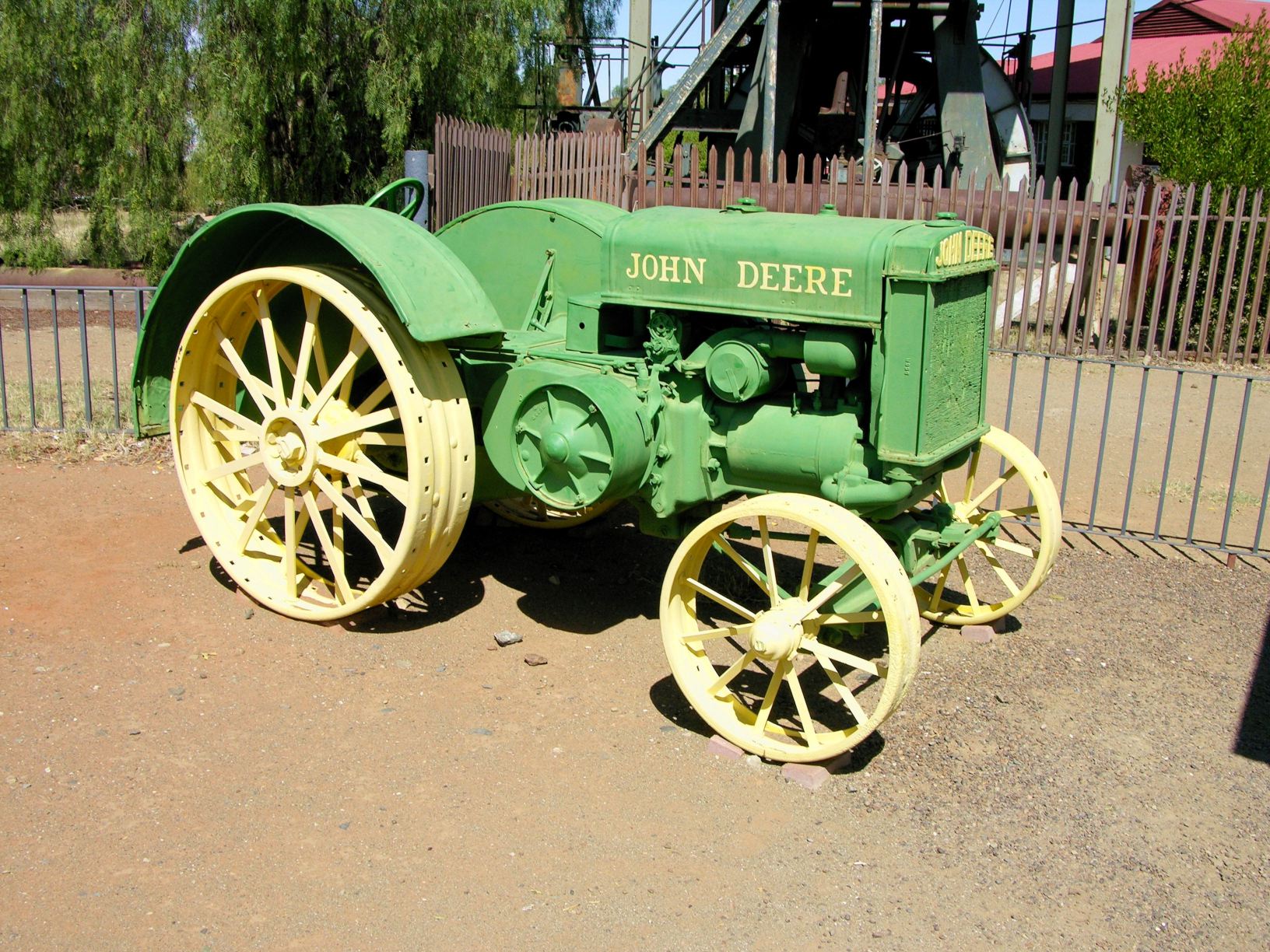
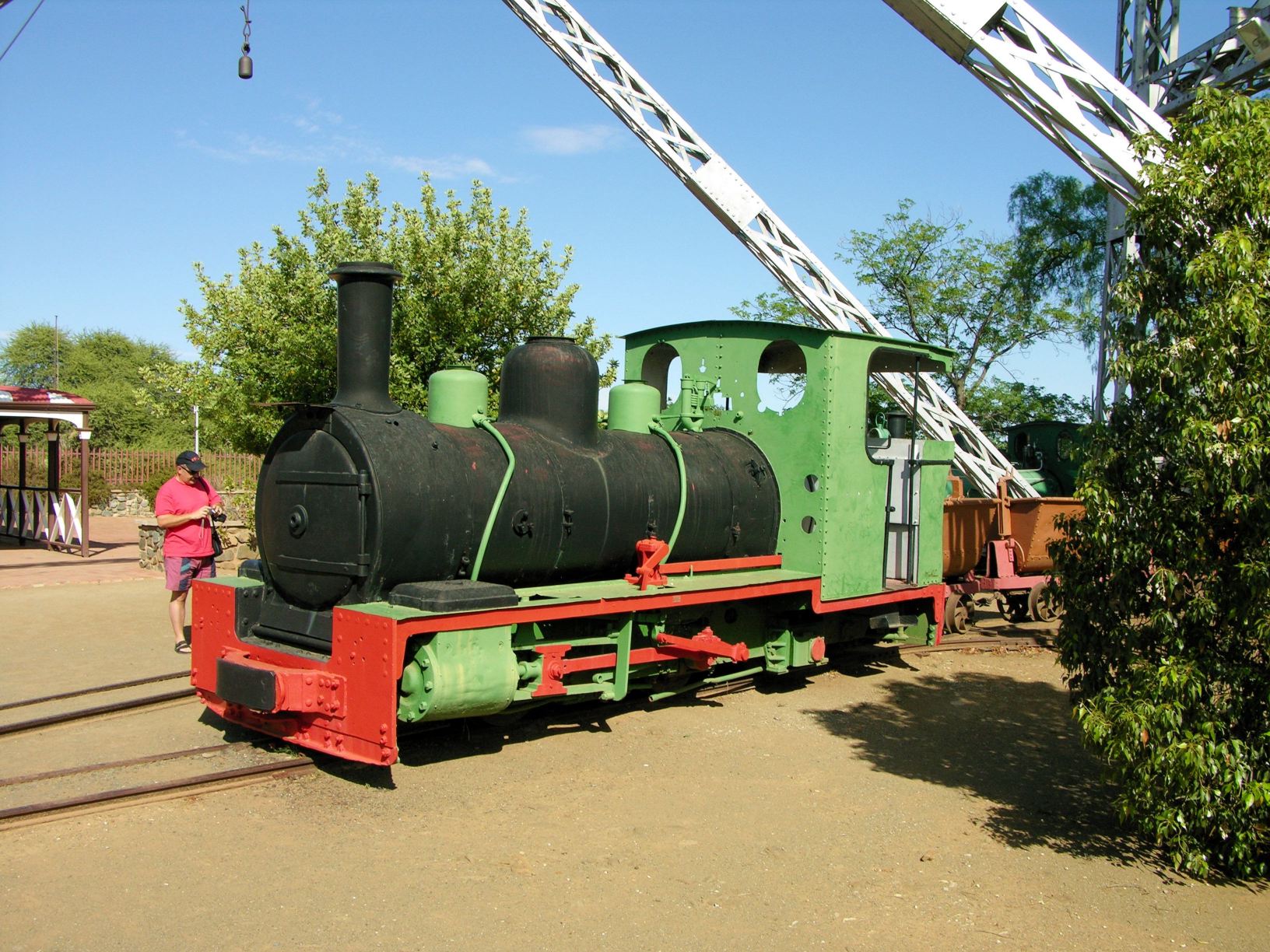
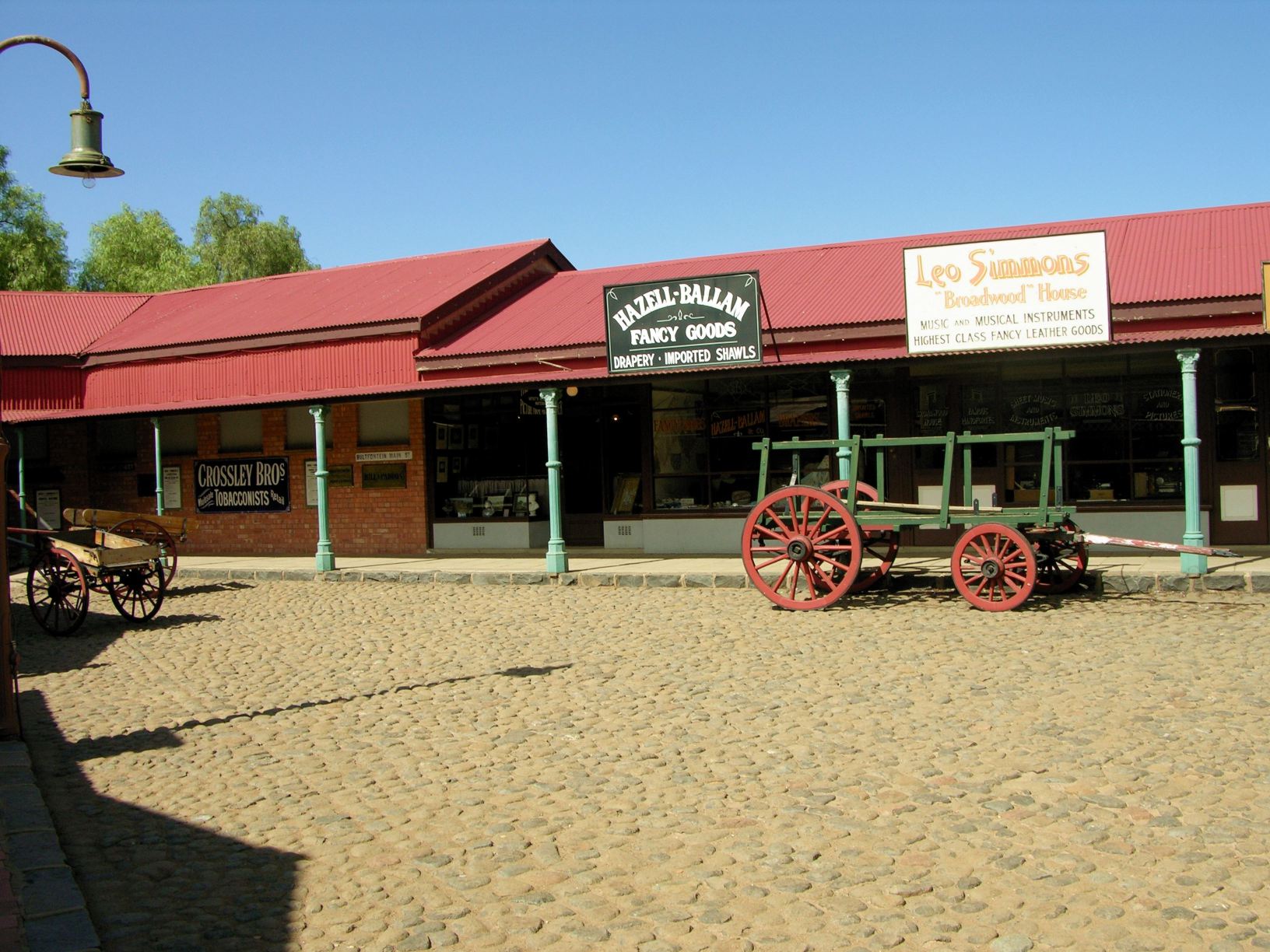
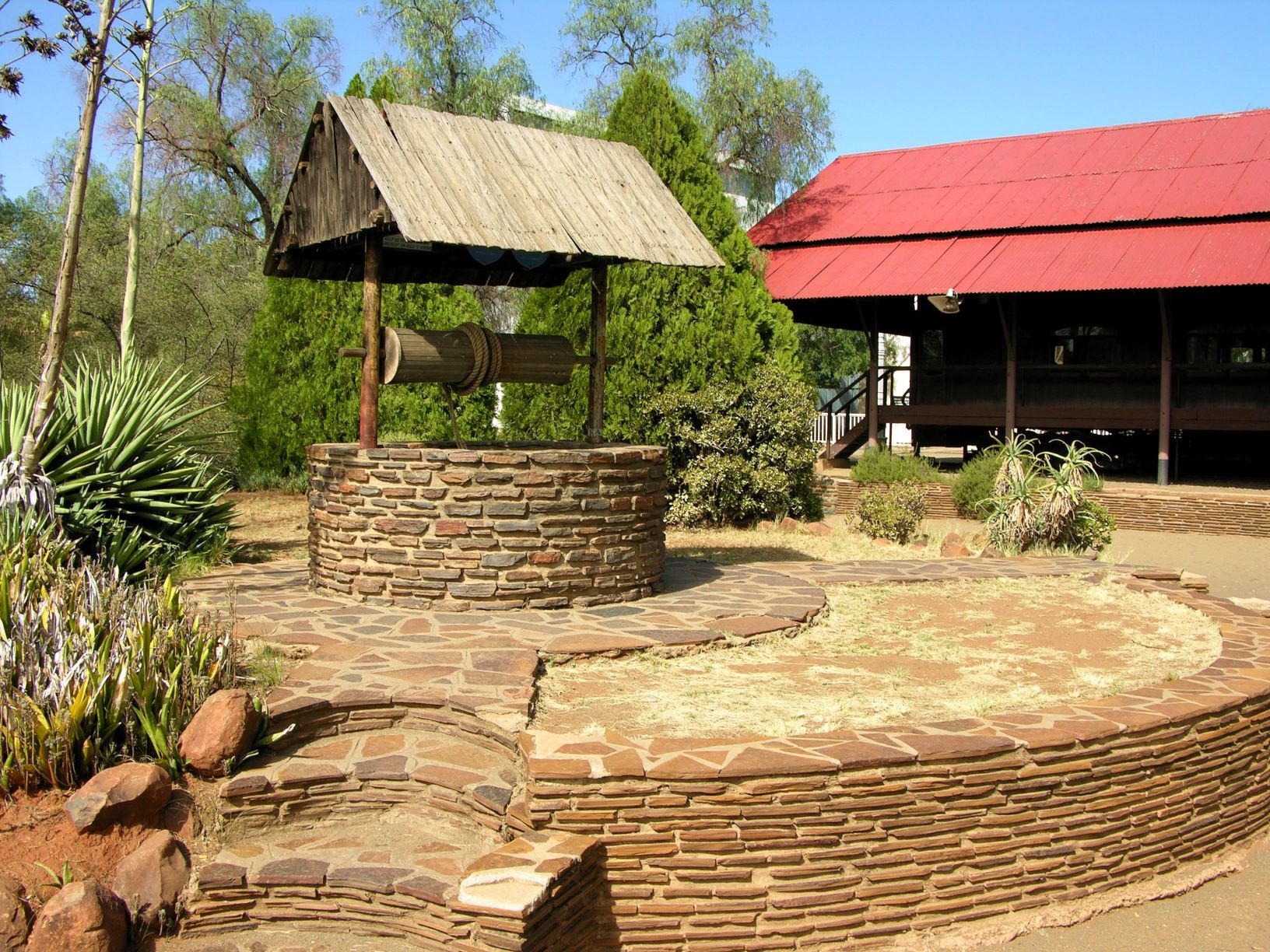
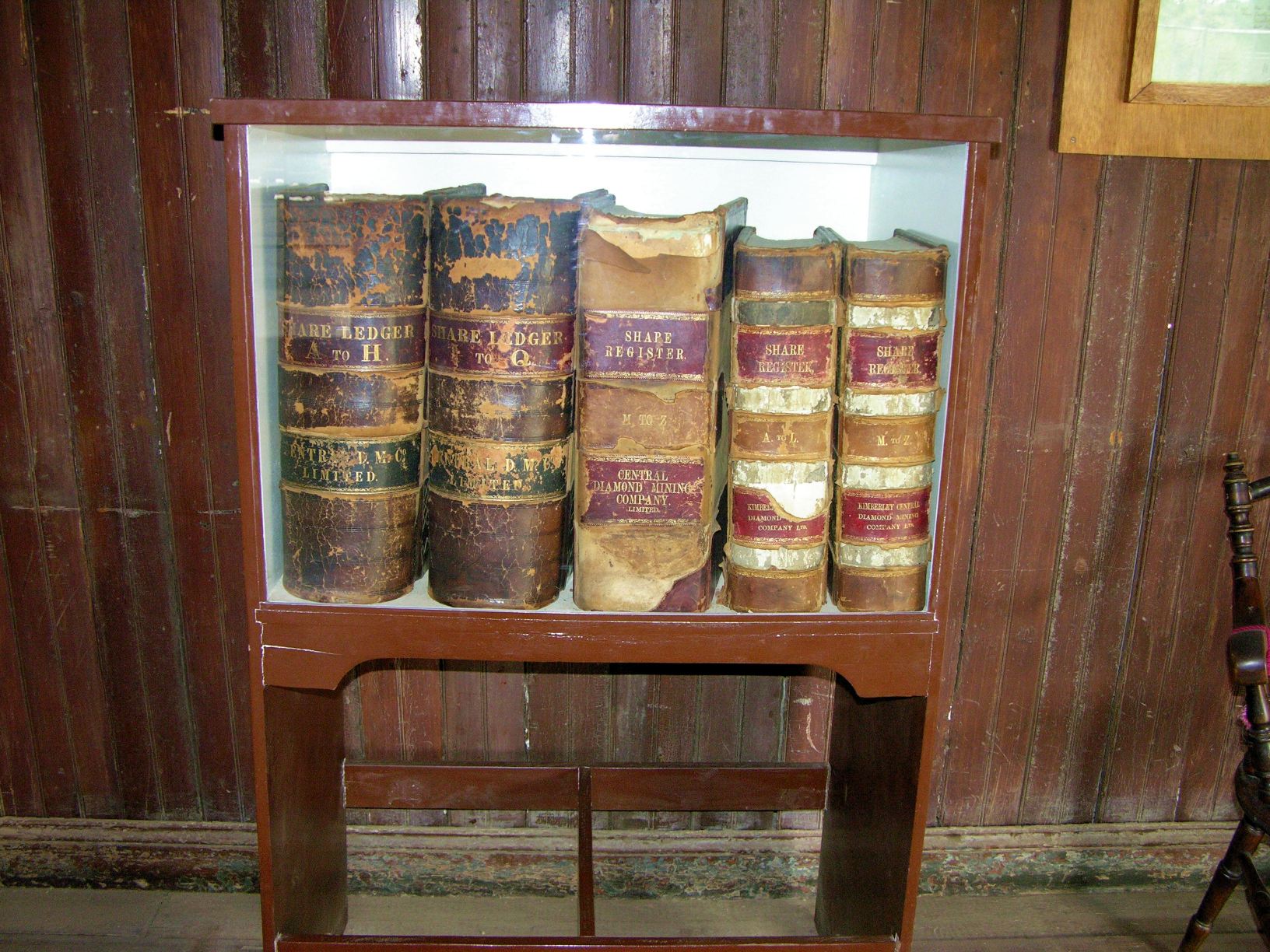
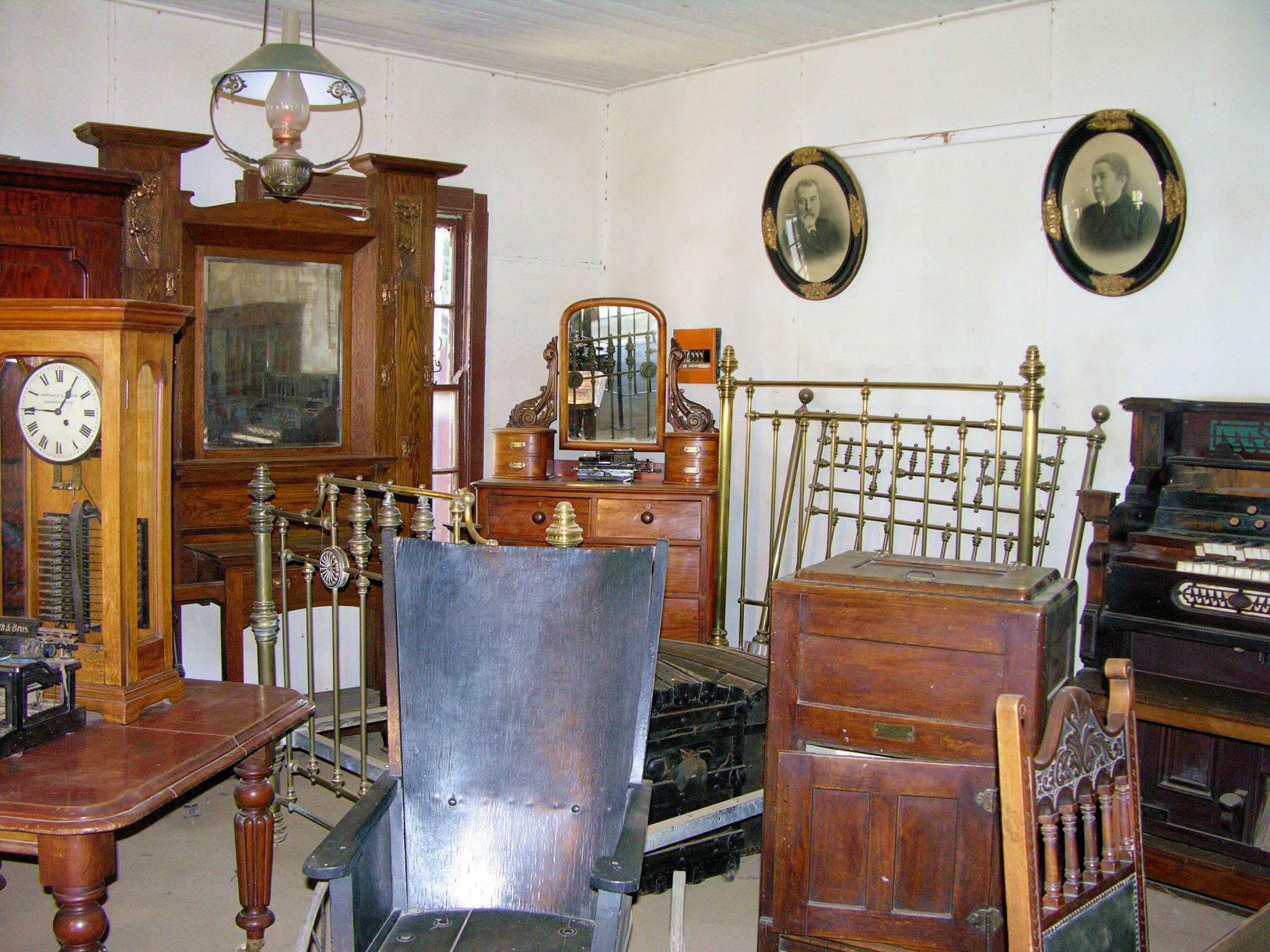
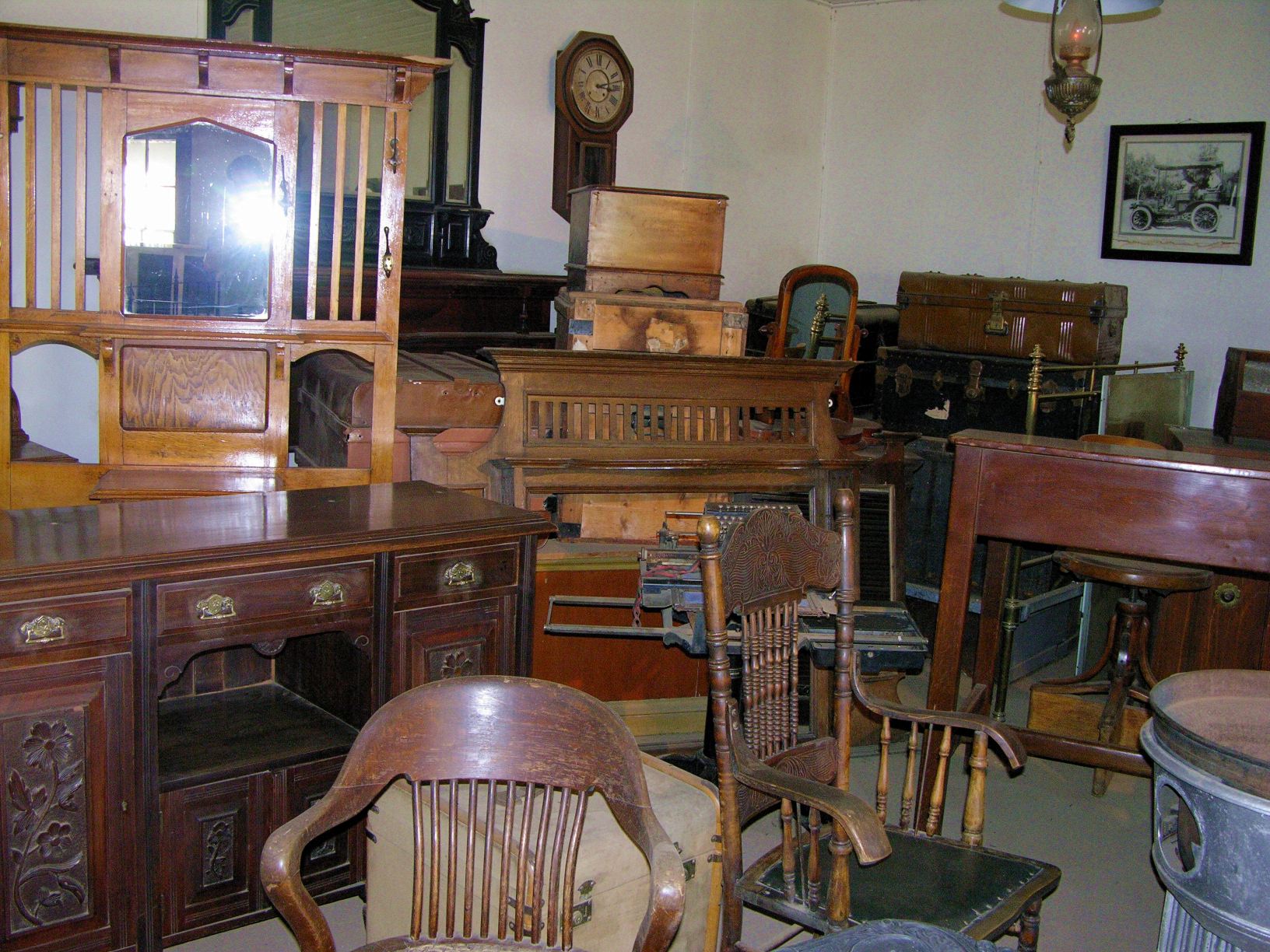
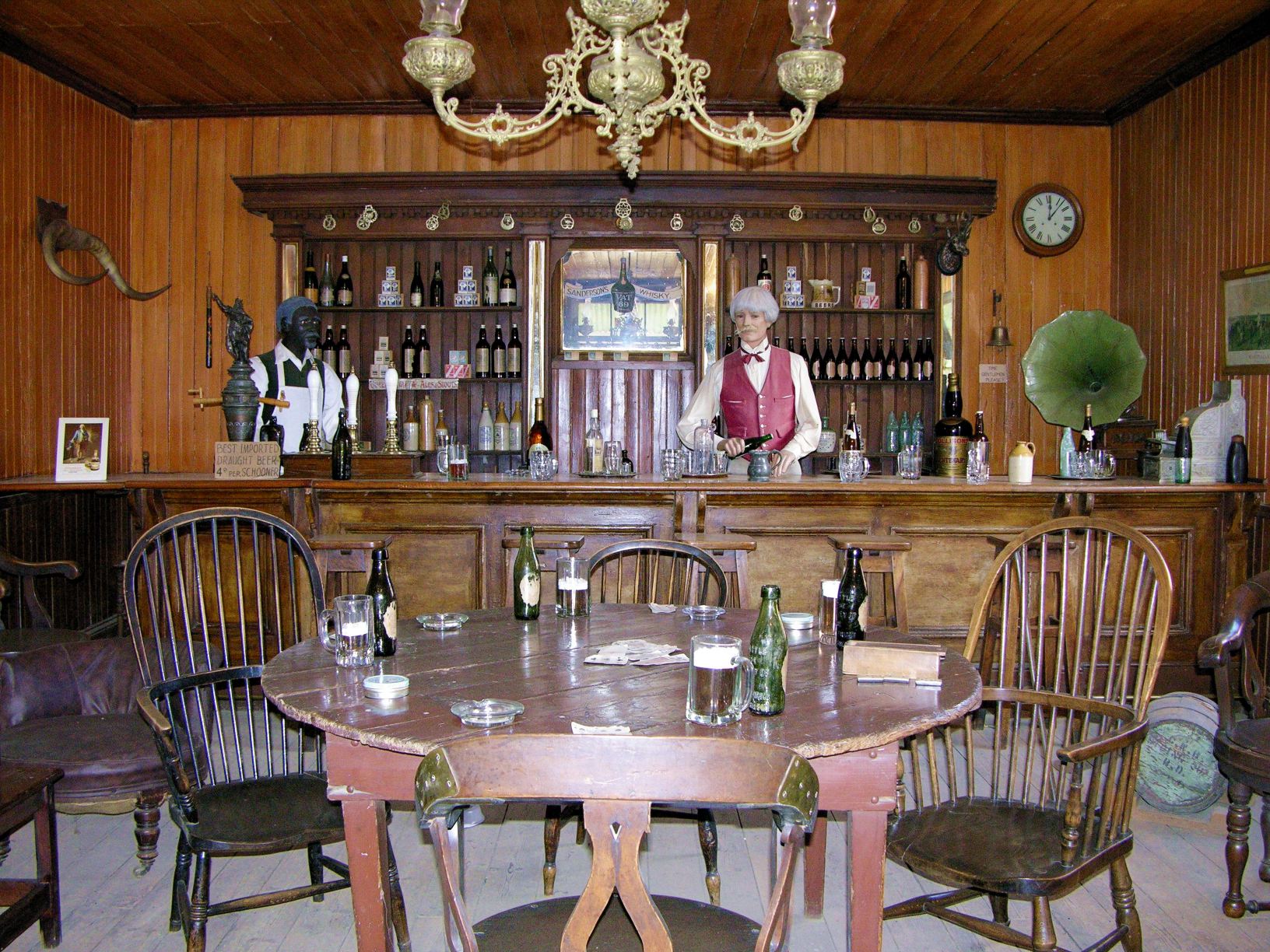
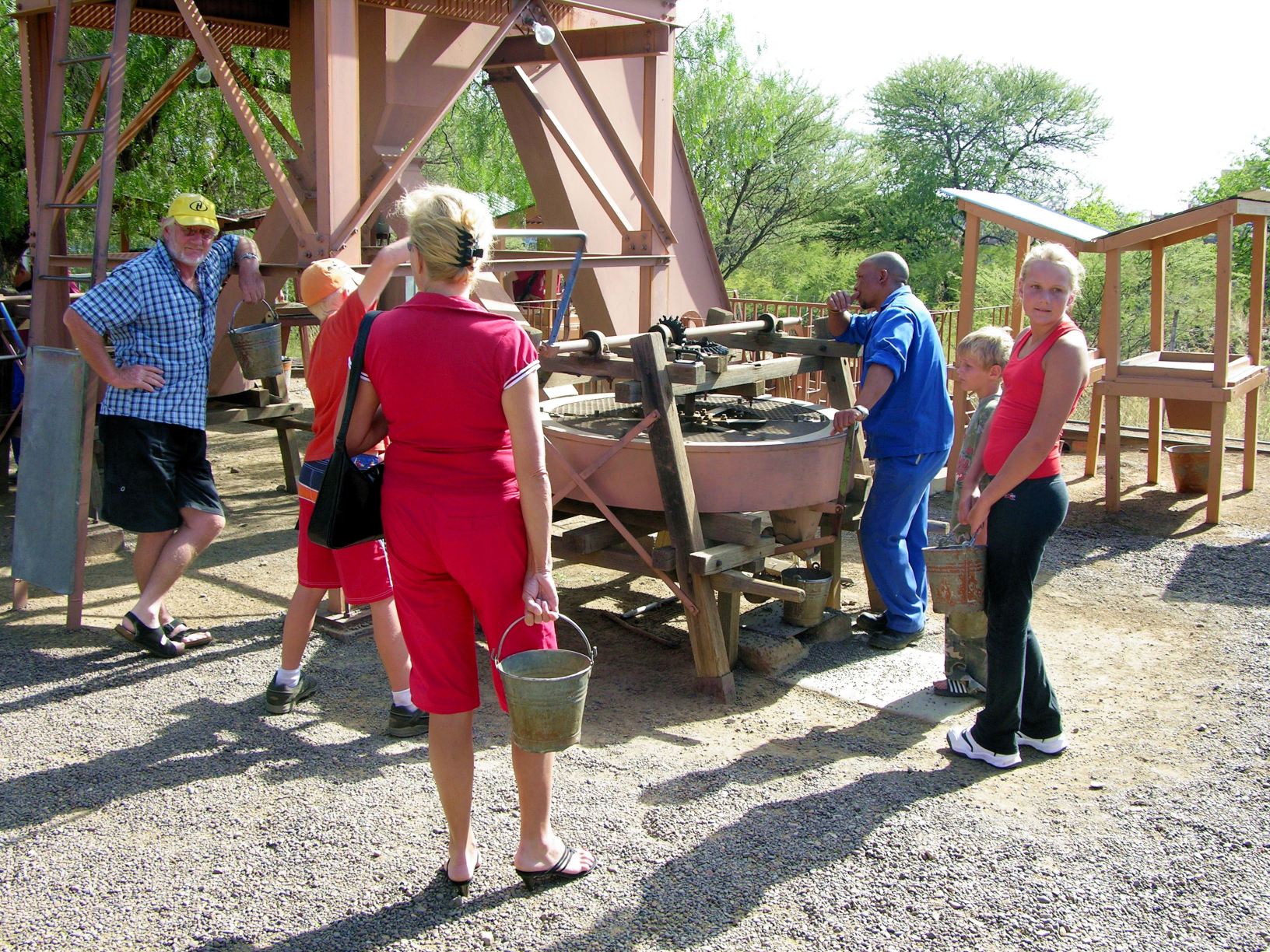
Here, too, they hand gullible tourists a bucket of ore and invite them to look through it. No, not for a diamond. For a little piece of plastic you can exchange for a pointless souvenir. They even give you a licence to mine your bucket.
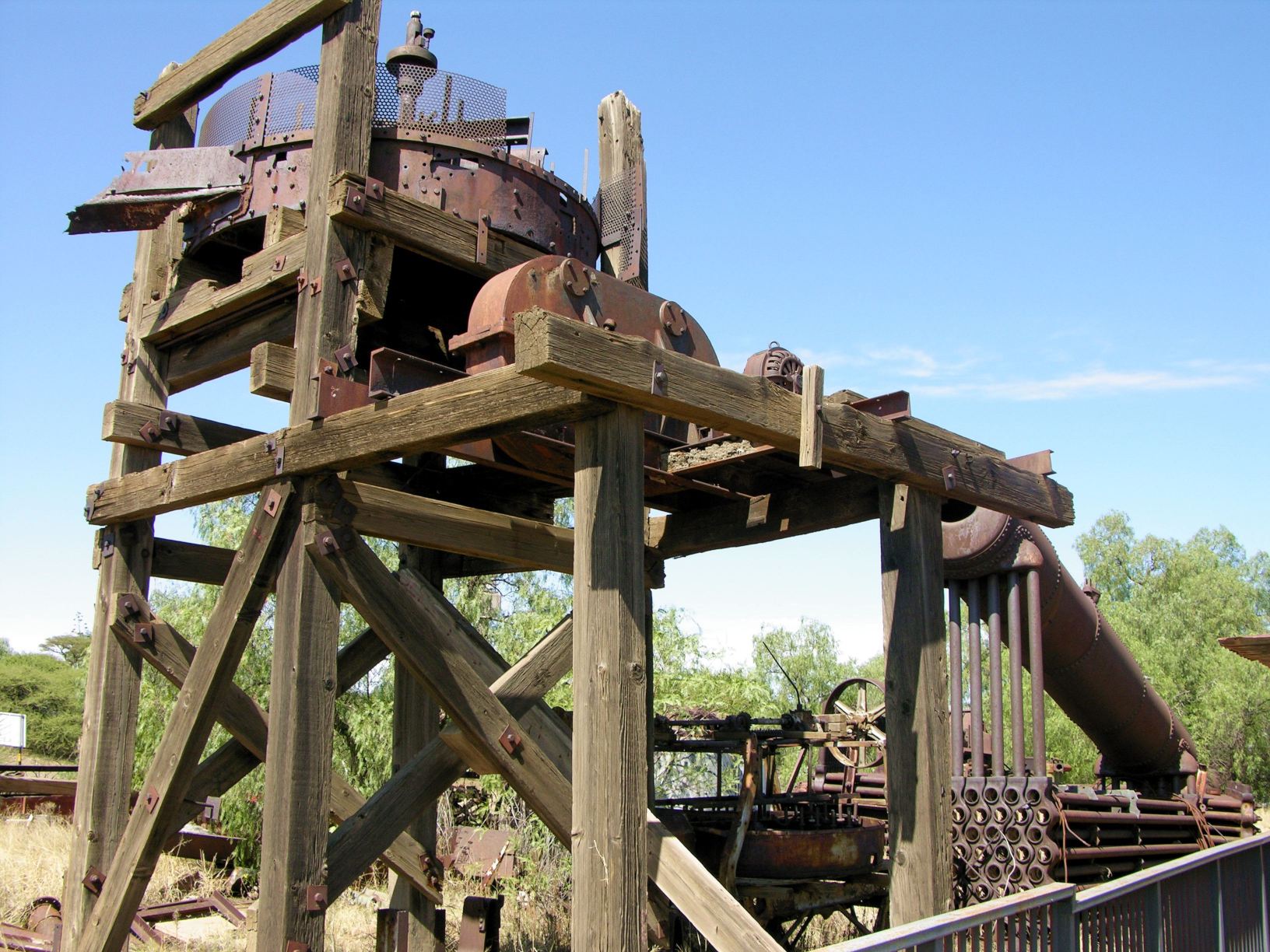
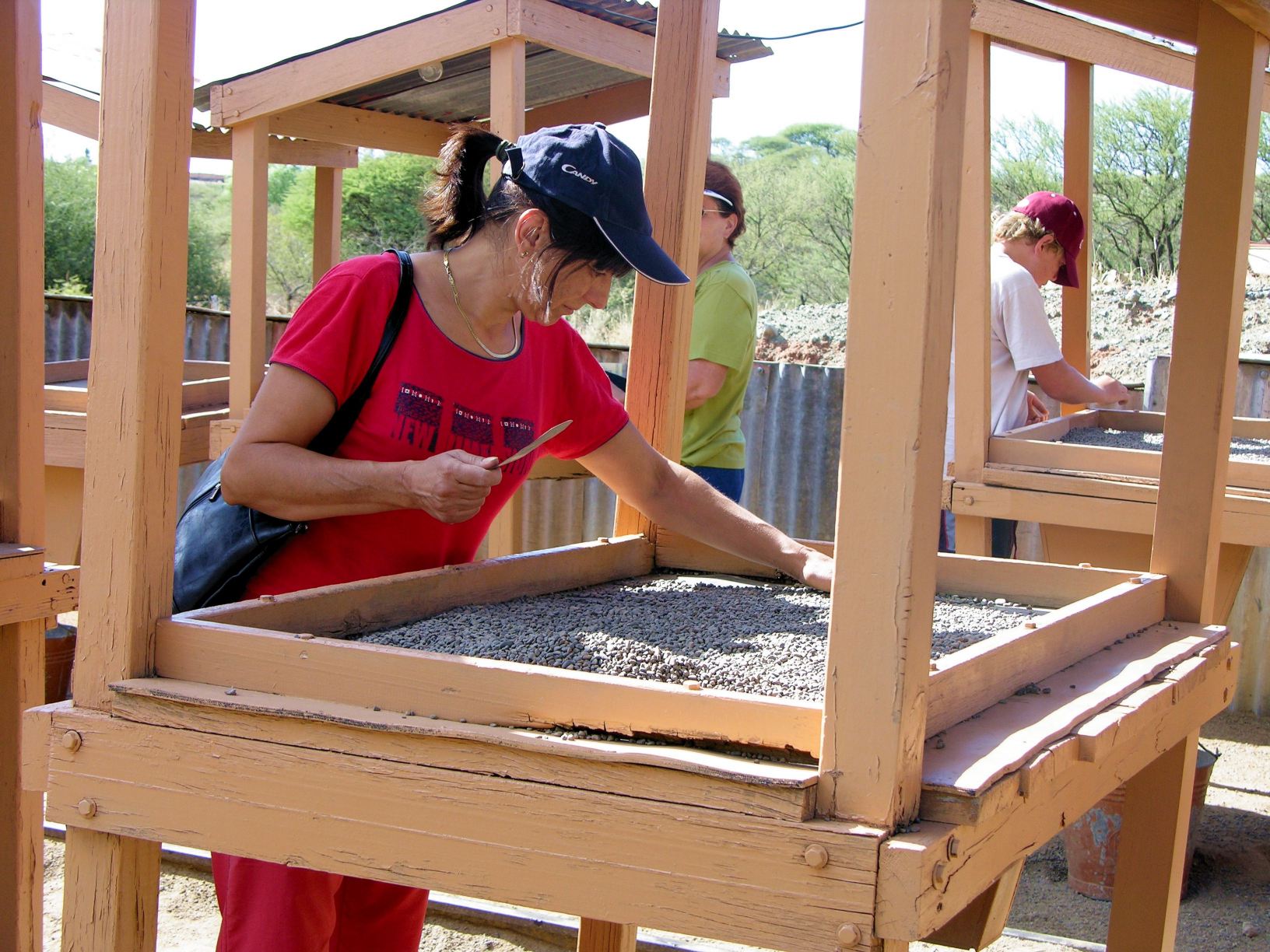
At nine in the morning on weekdays you can go down a working mine. We found out about it at ten on a Friday morning, unfortunately, and there was no way we could wait three days (Diamond Tours).
Ahead of us lay a whole country of national parks, deserts and waterfalls. We headed east. The road went across a desert plain, with fewer and fewer settlements. We crossed the Vaal River, which gave the Transvaal its name. You don't see the name much in South Africa now.
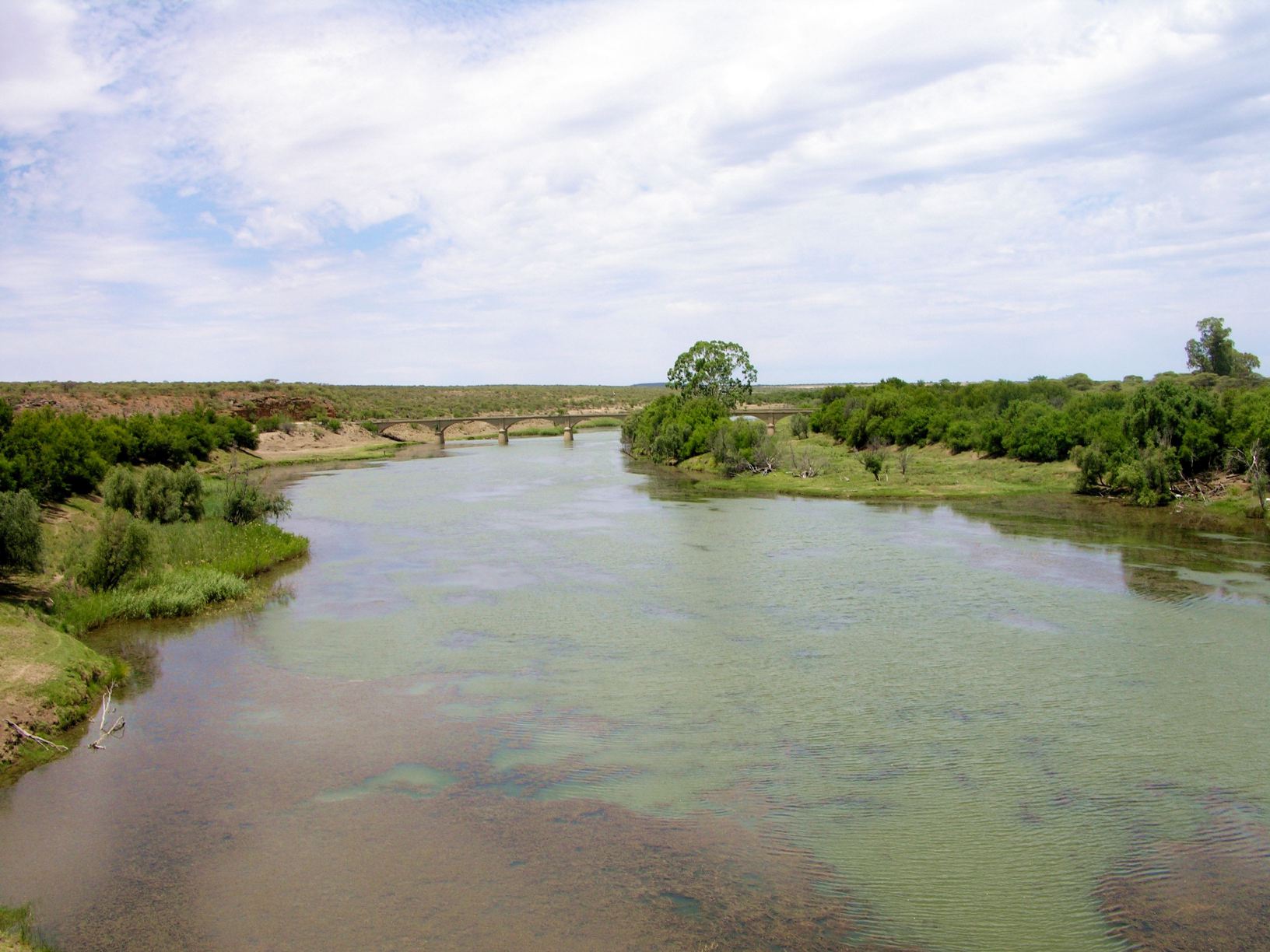
As we went west and lost altitude, it got hotter. Outside the car it was over 40°C. We turned on the air conditioning, but even that couldn't keep up. We generally don't like to use it, though once you get past forty or forty-five degrees my brain stops working and I get careless at the wheel. On the other hand, you can cook lunch in no time in that heat. Rocks in the sun get up to a hundred degrees. You could probably manage without a stove.
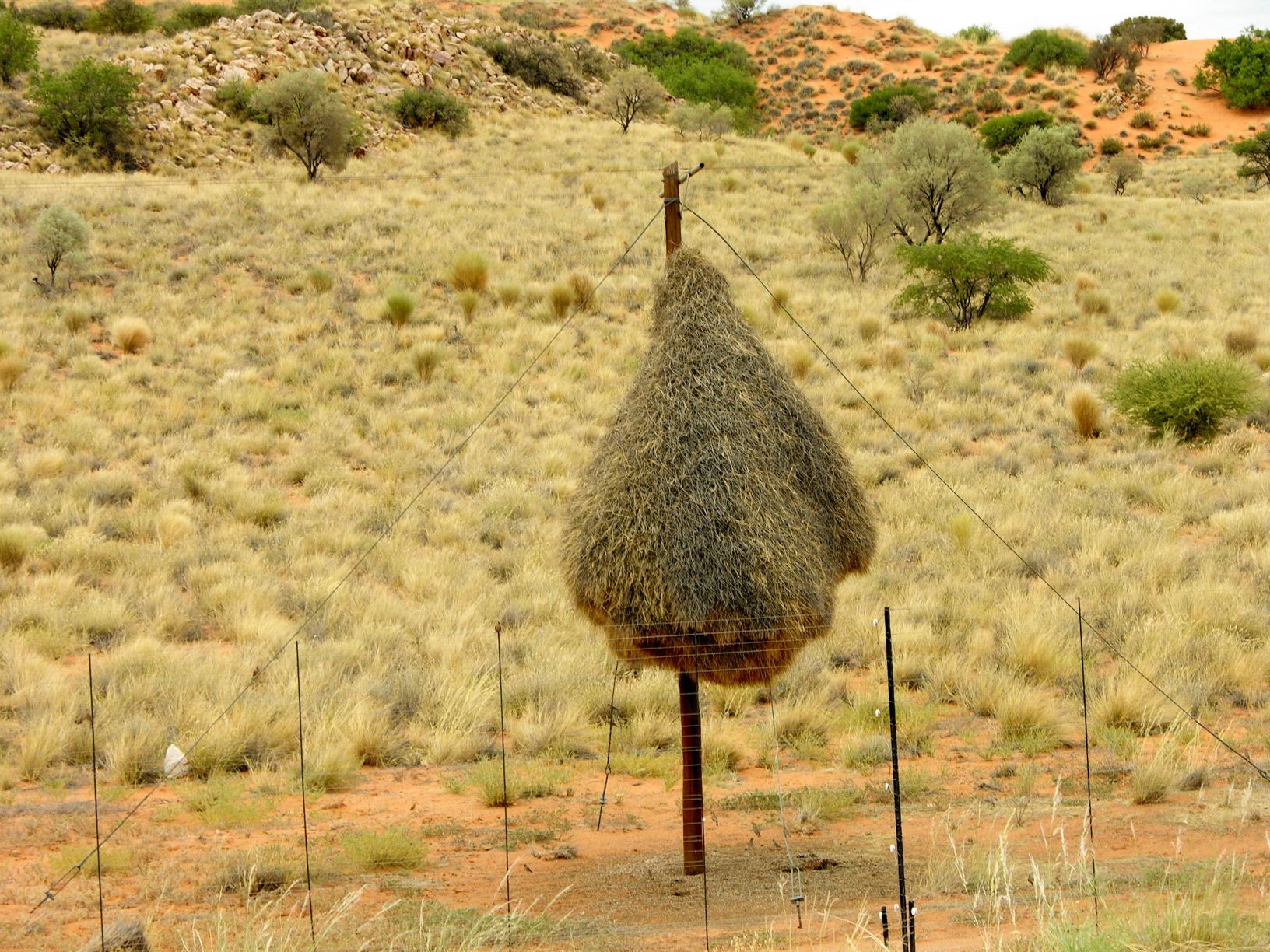
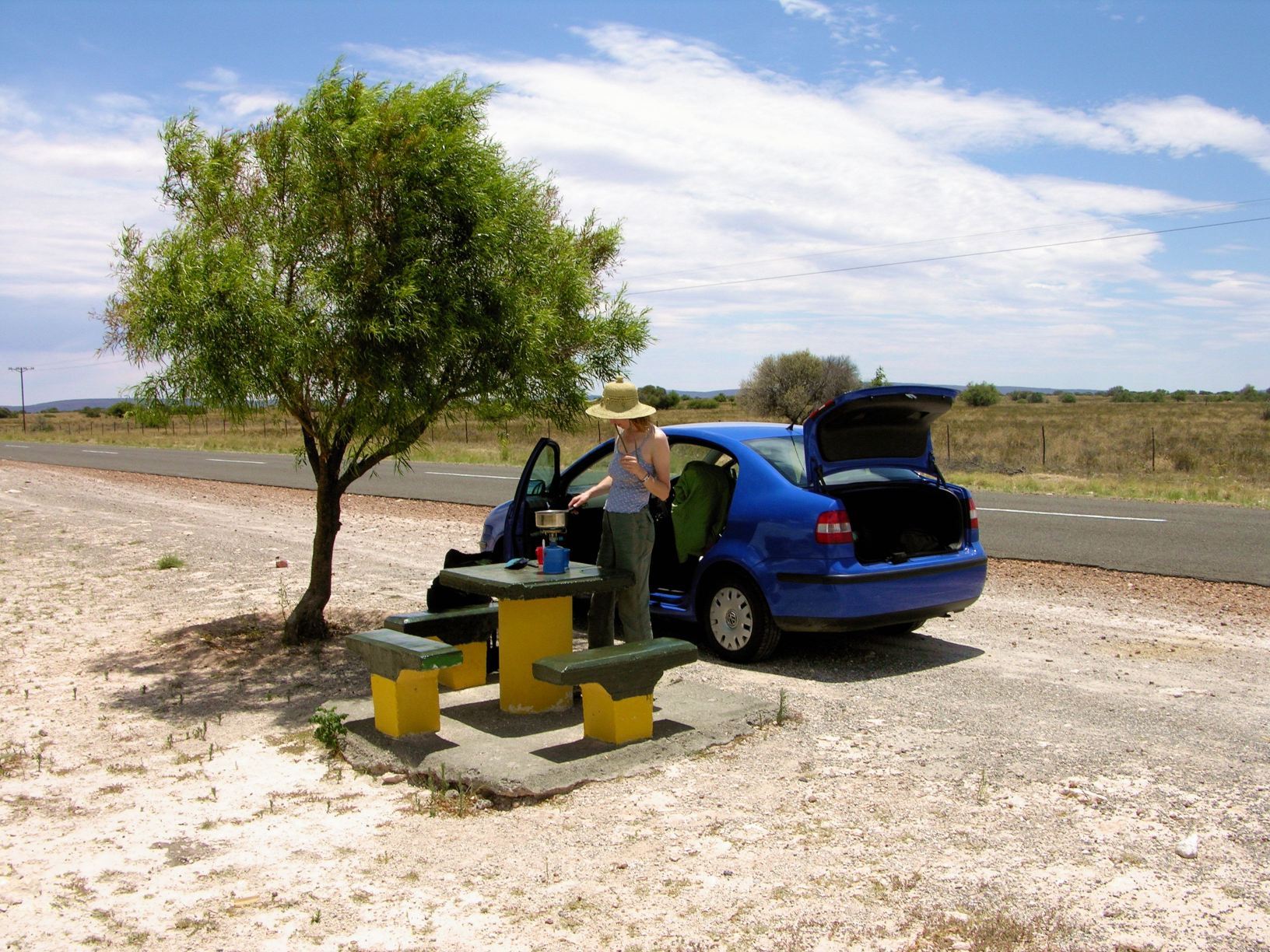
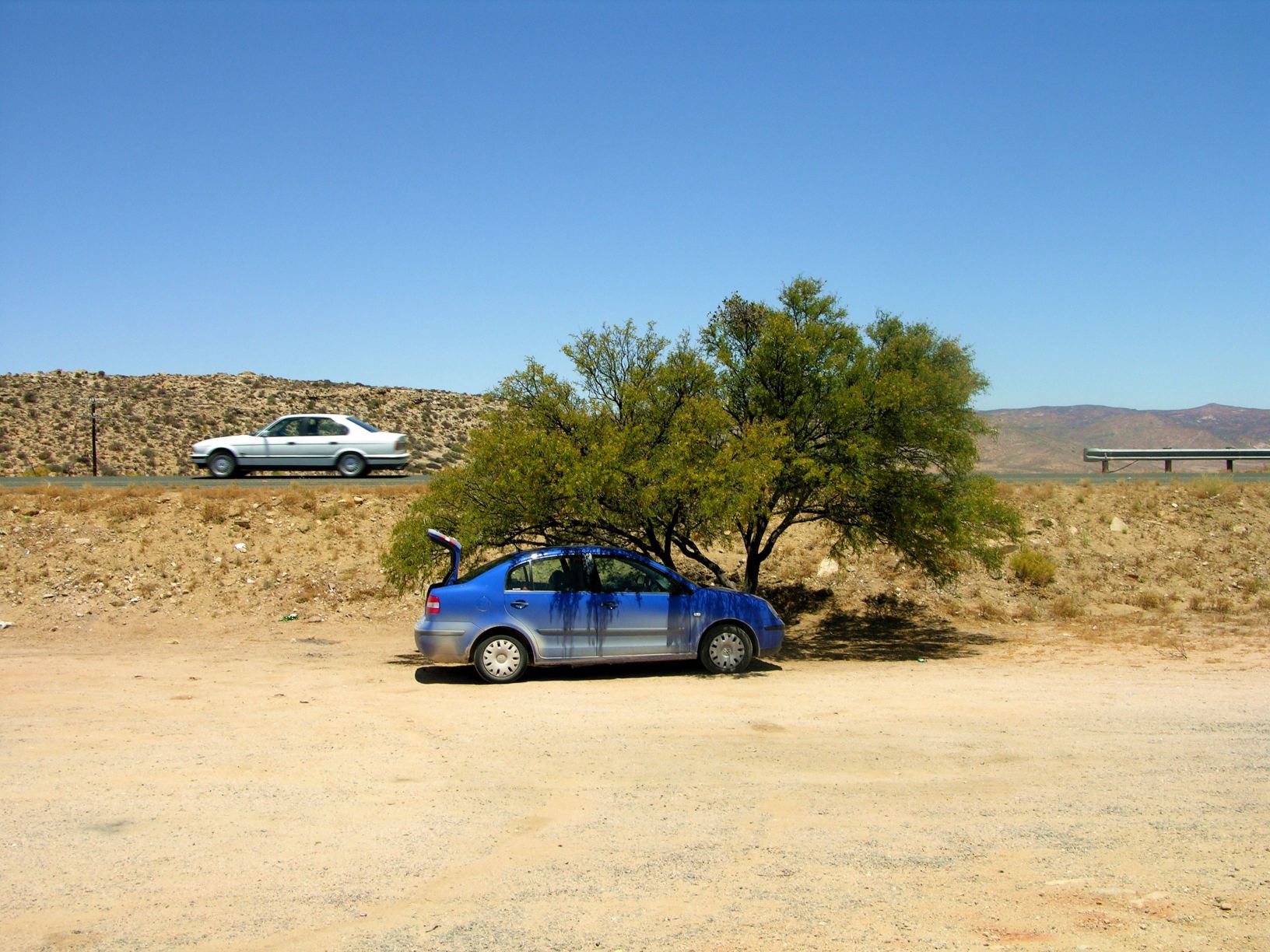
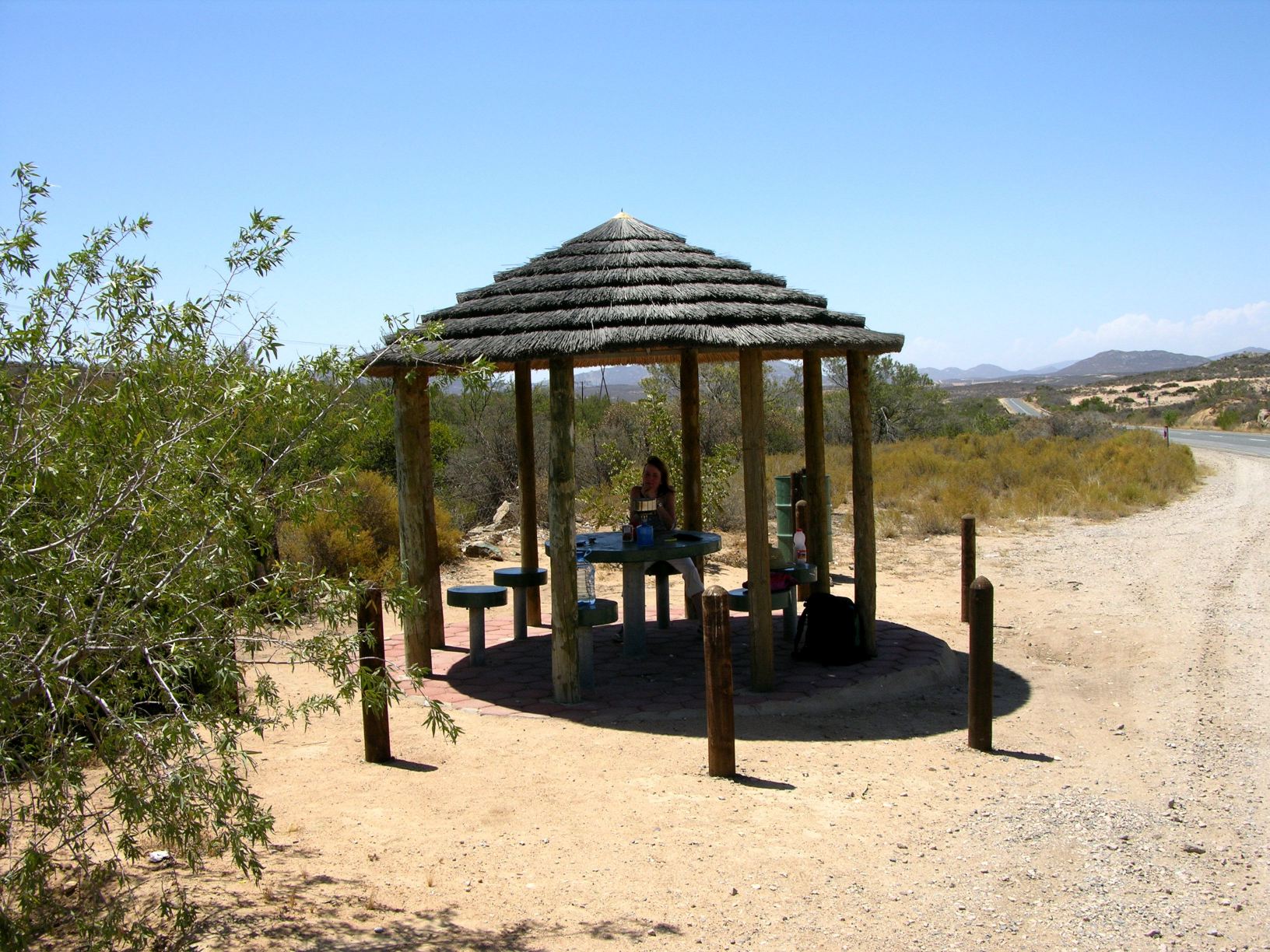
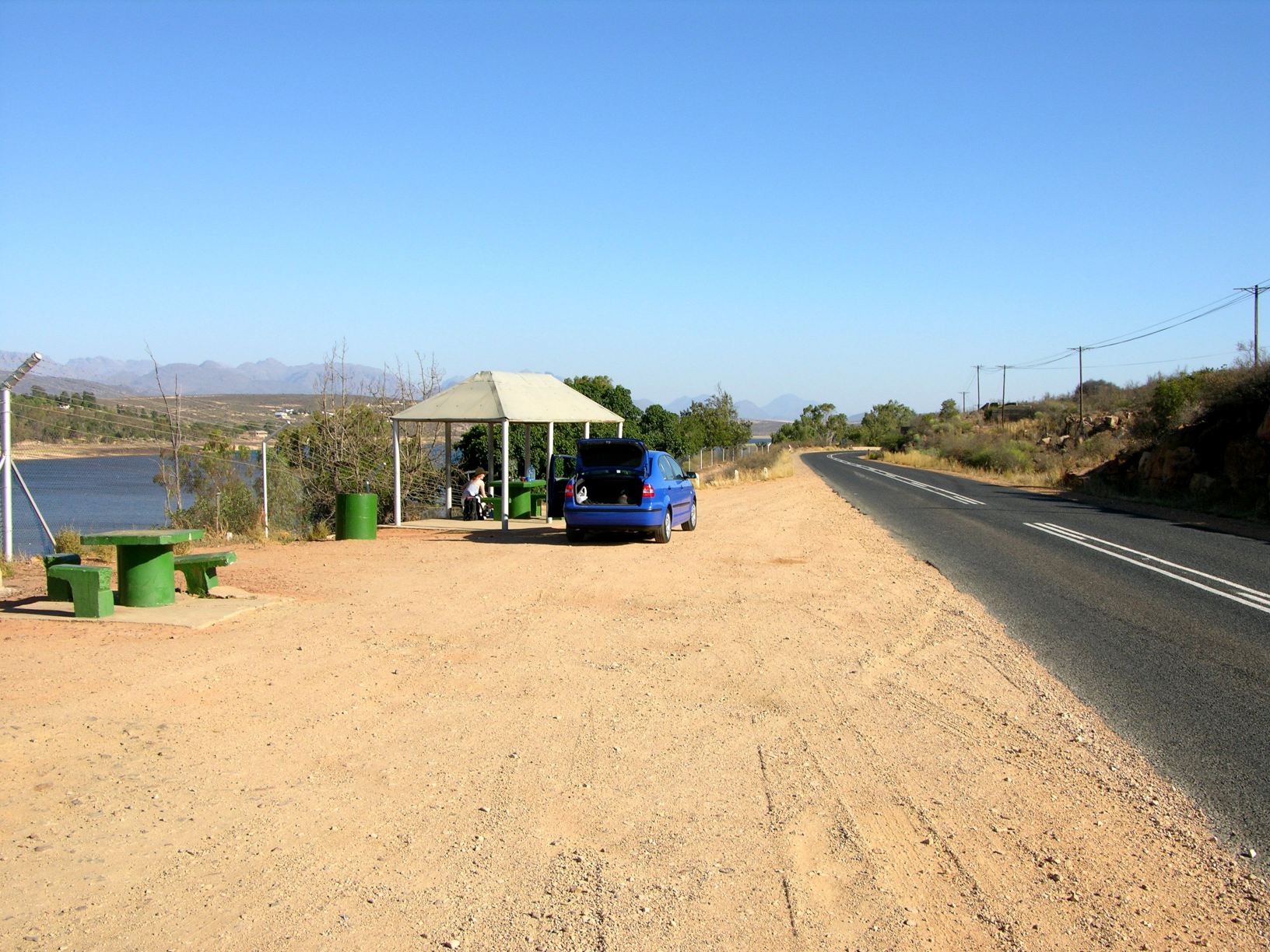
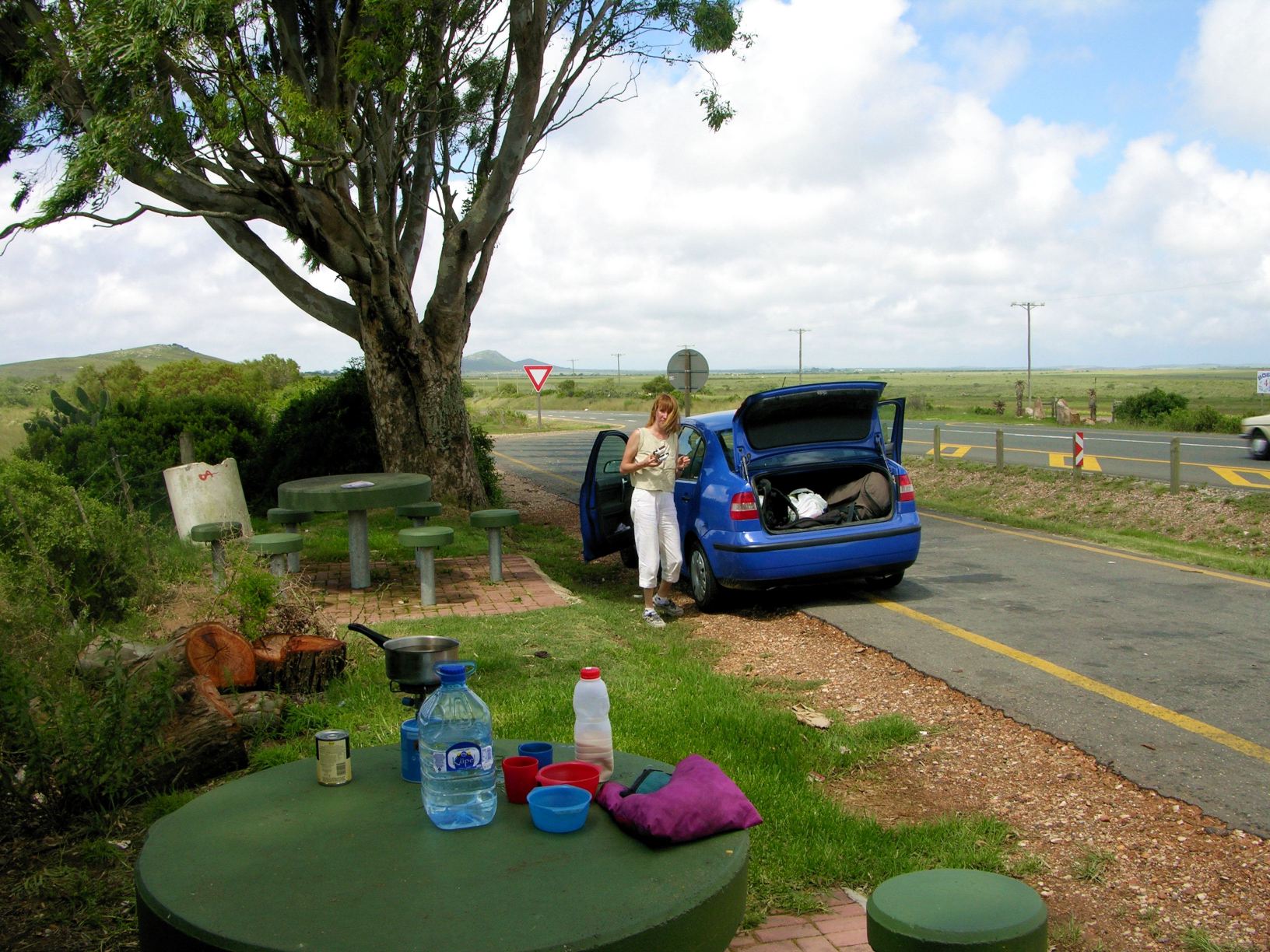
In South Africa people have a bite to eat on the road at little lay-bys marked by a sign with a bench under a tree. The benches are there, all right. Trees are in short supply in the desert, but the road service is on the job. They plant them, look after them and come round to water them from time to time. They grow terribly slowly, though, and a tree like that won't be giving anybody shade soon. You warm yourself in the sun instead.
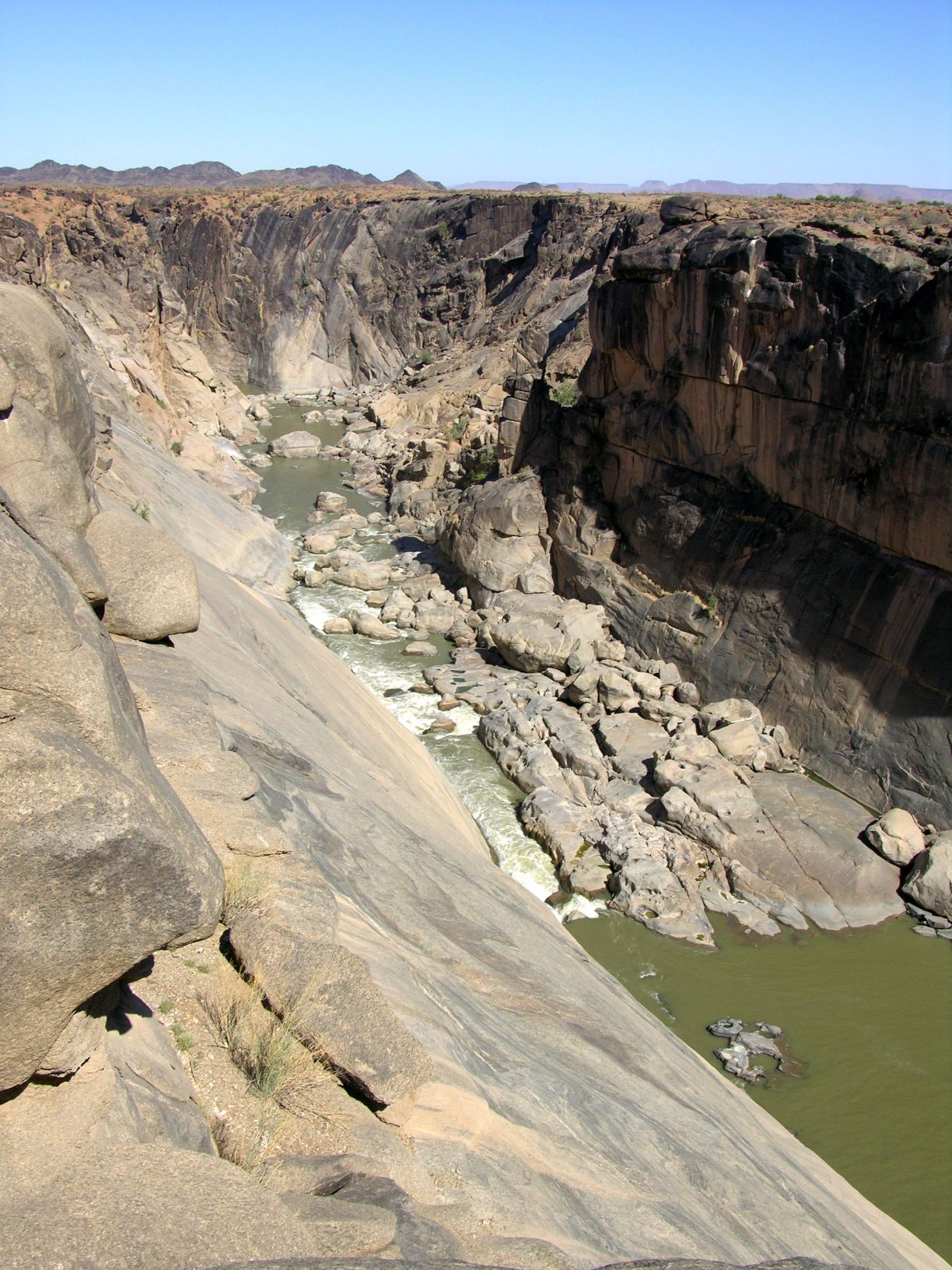
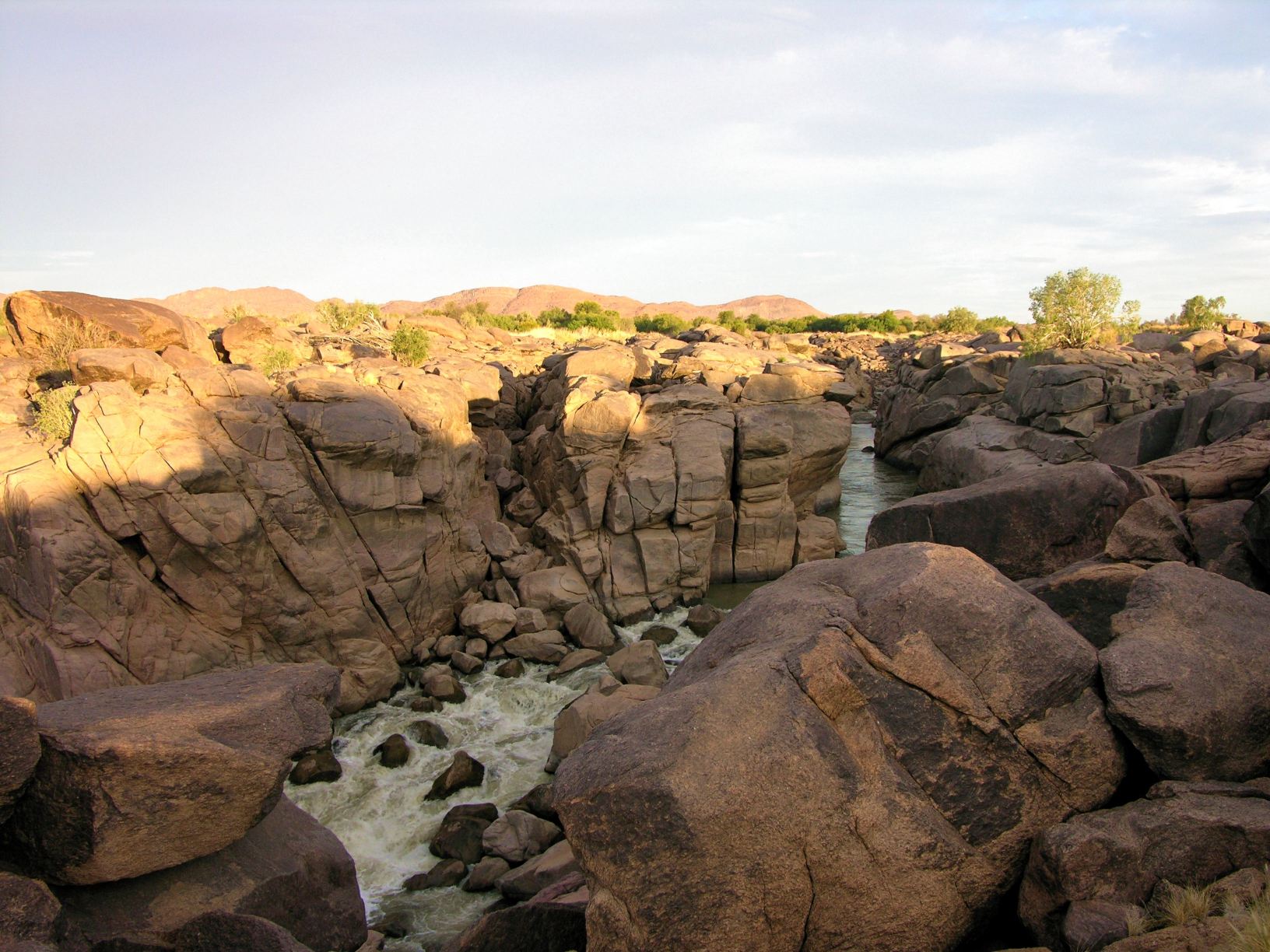
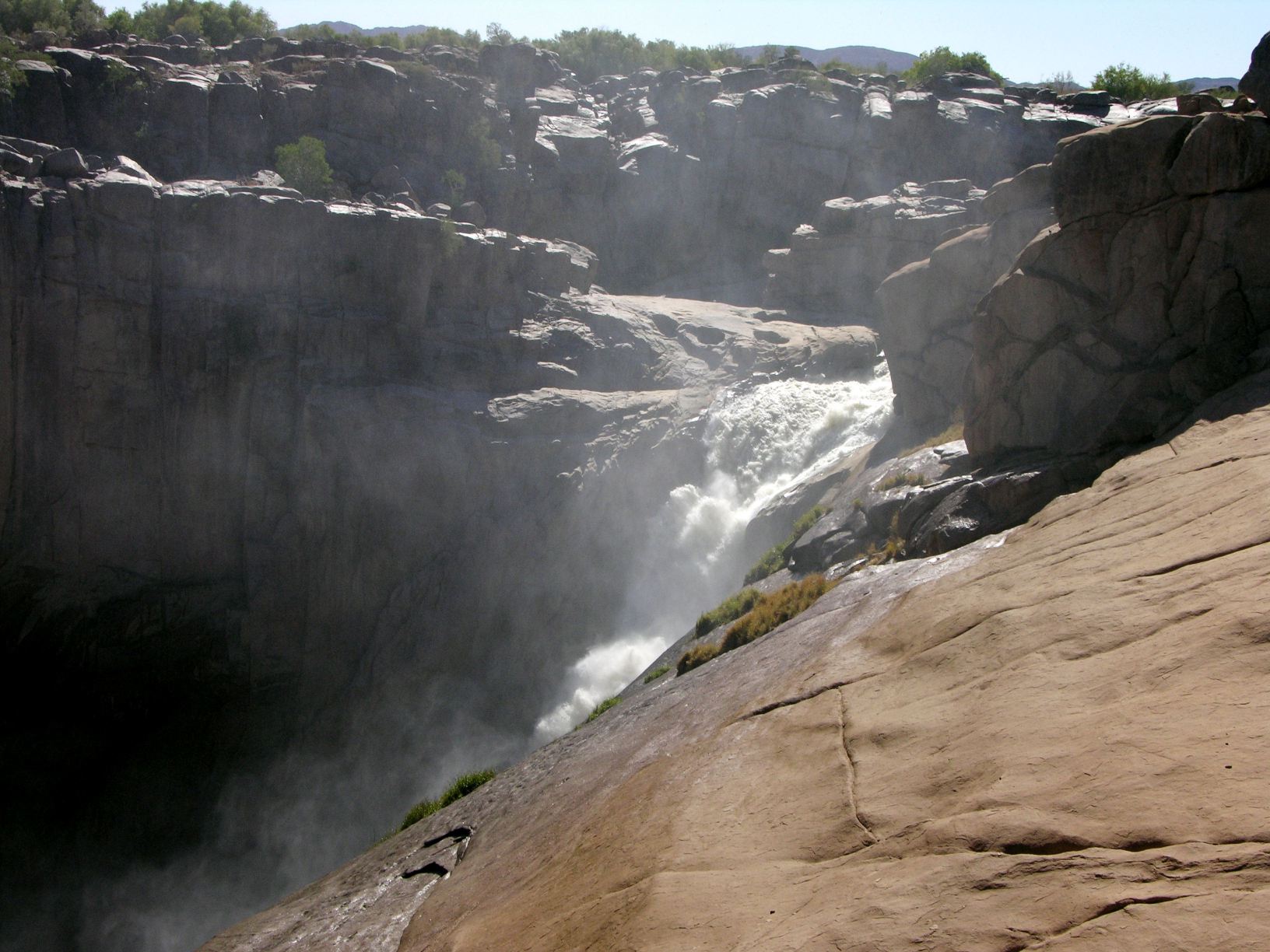
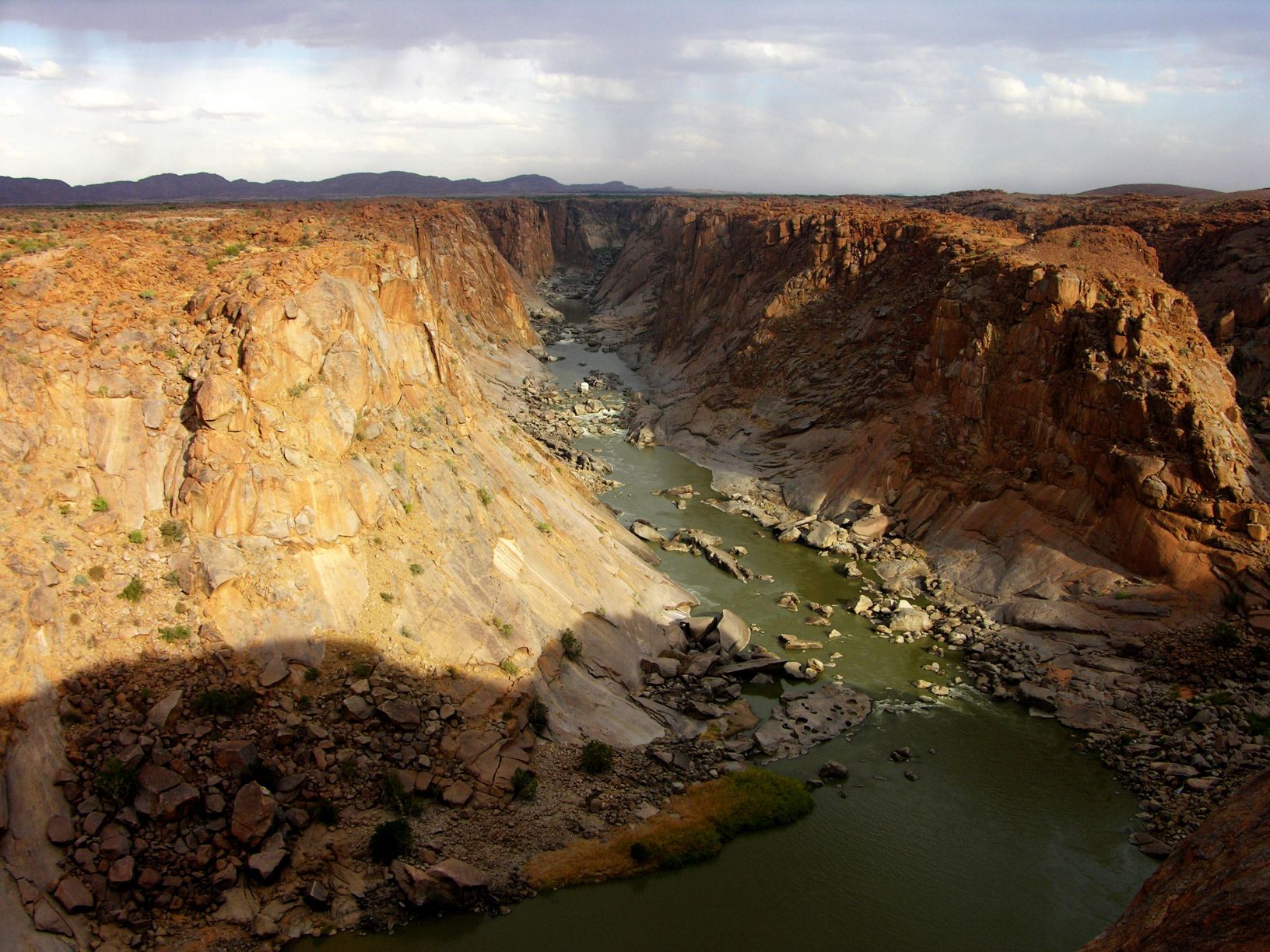
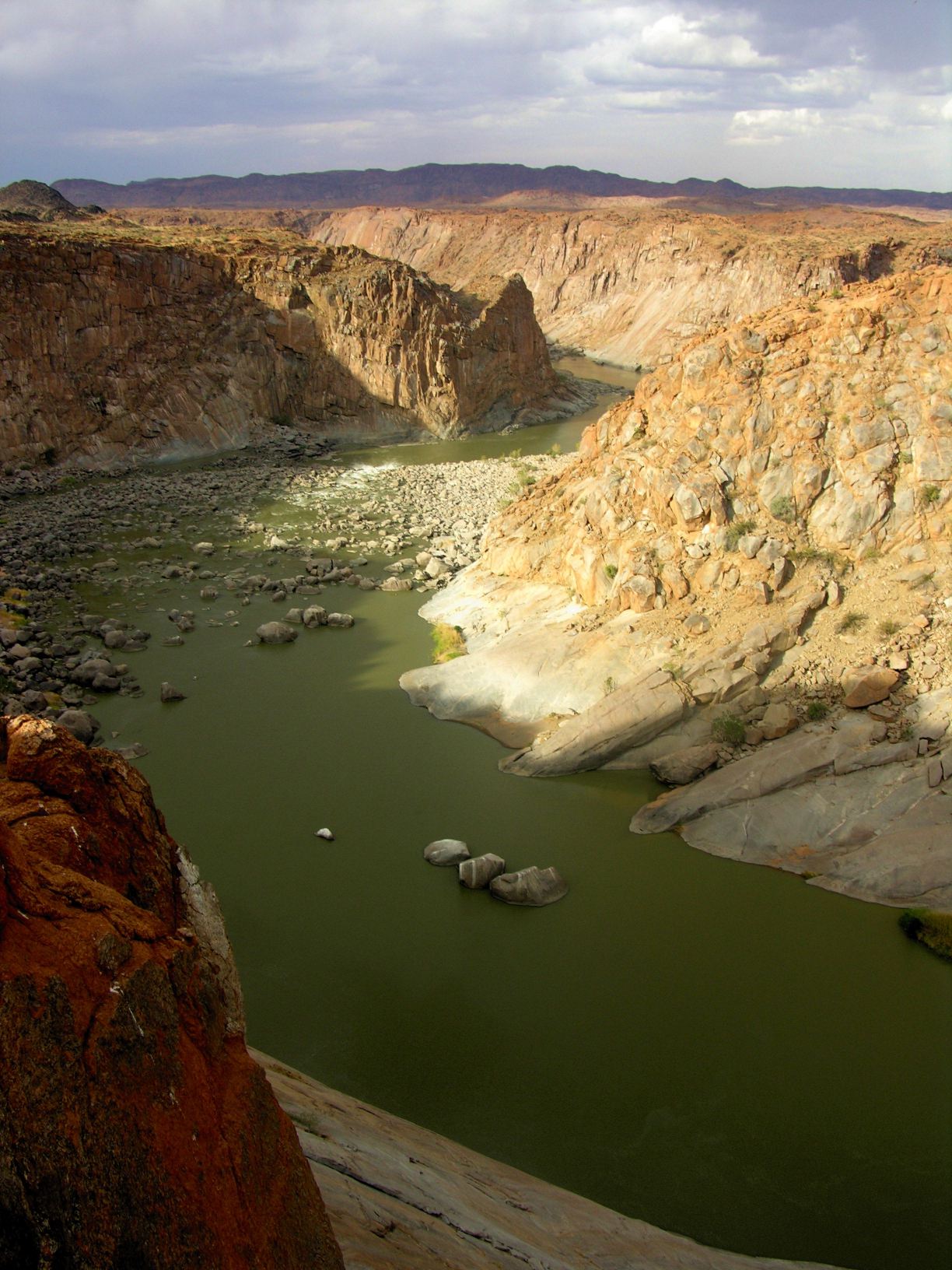
By evening we reached Augrabies National Park. It takes its name from the waterfall on the Orange River. Only 200 kilometres from the mouth, one of Africa's greatest rivers drops 56 metres into a gorge. On average, 350 cubic metres of water go over every second. We weren't so lucky. It was a drought year, and the waterfall was running at reduced power.
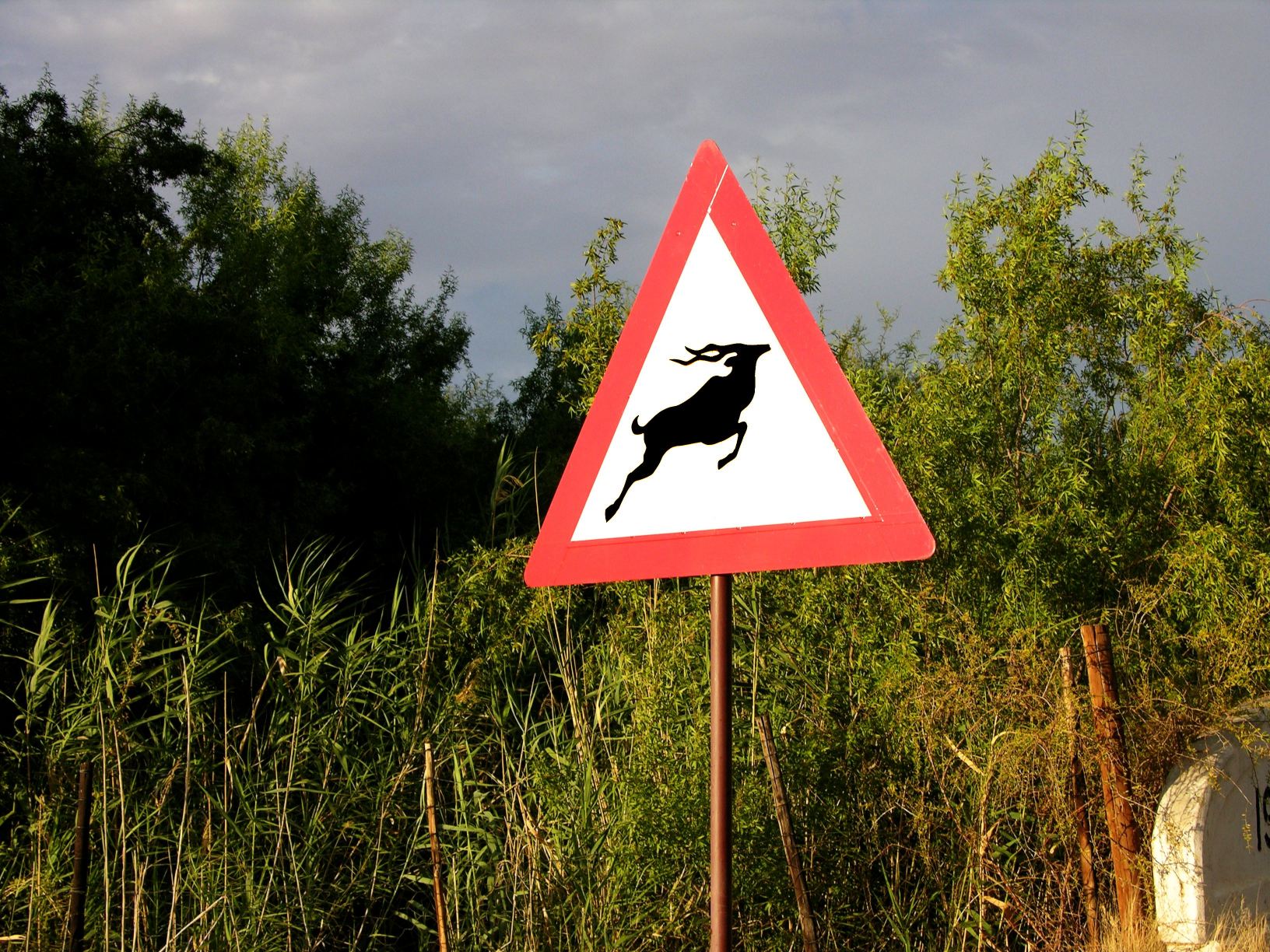
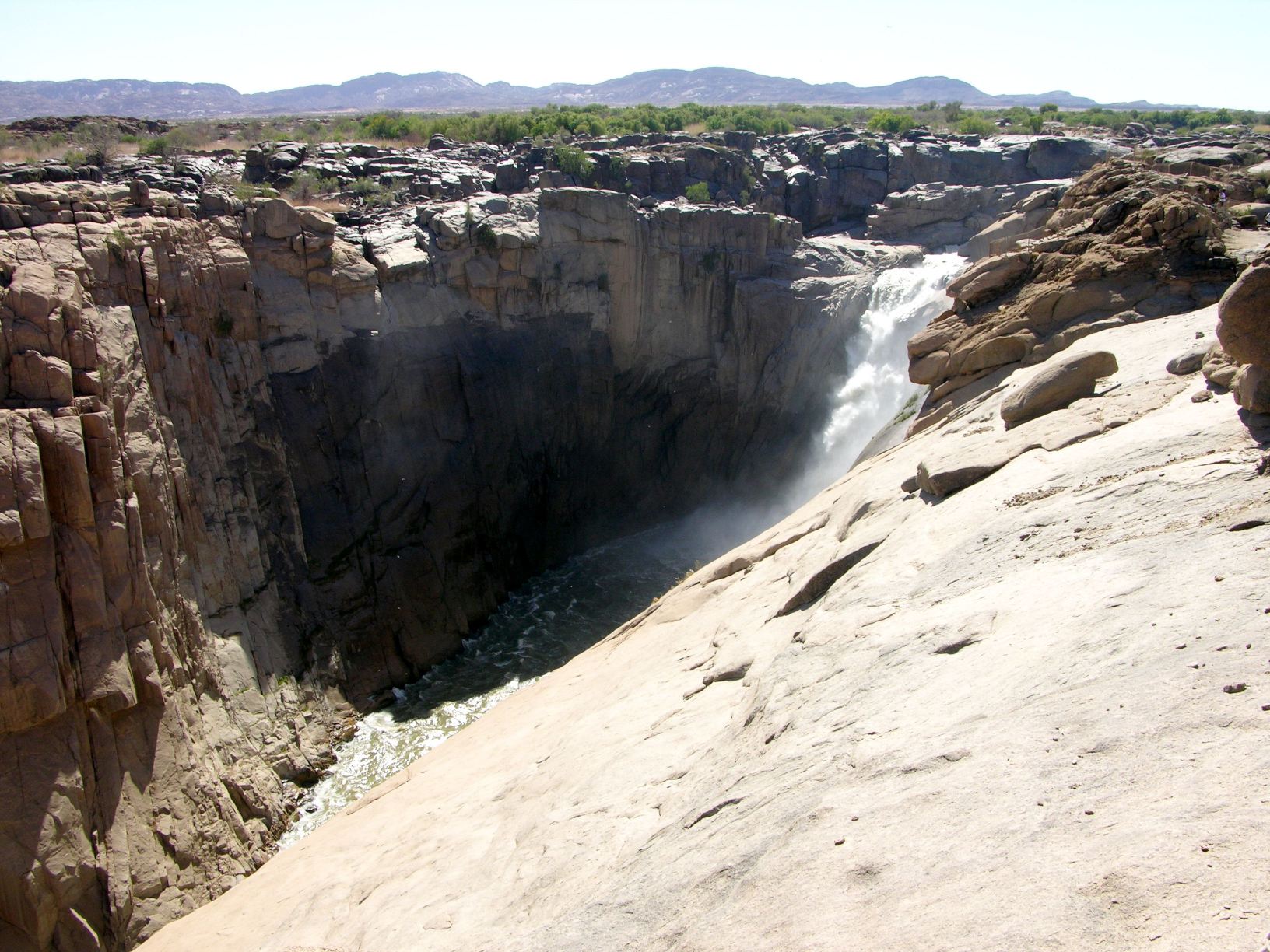
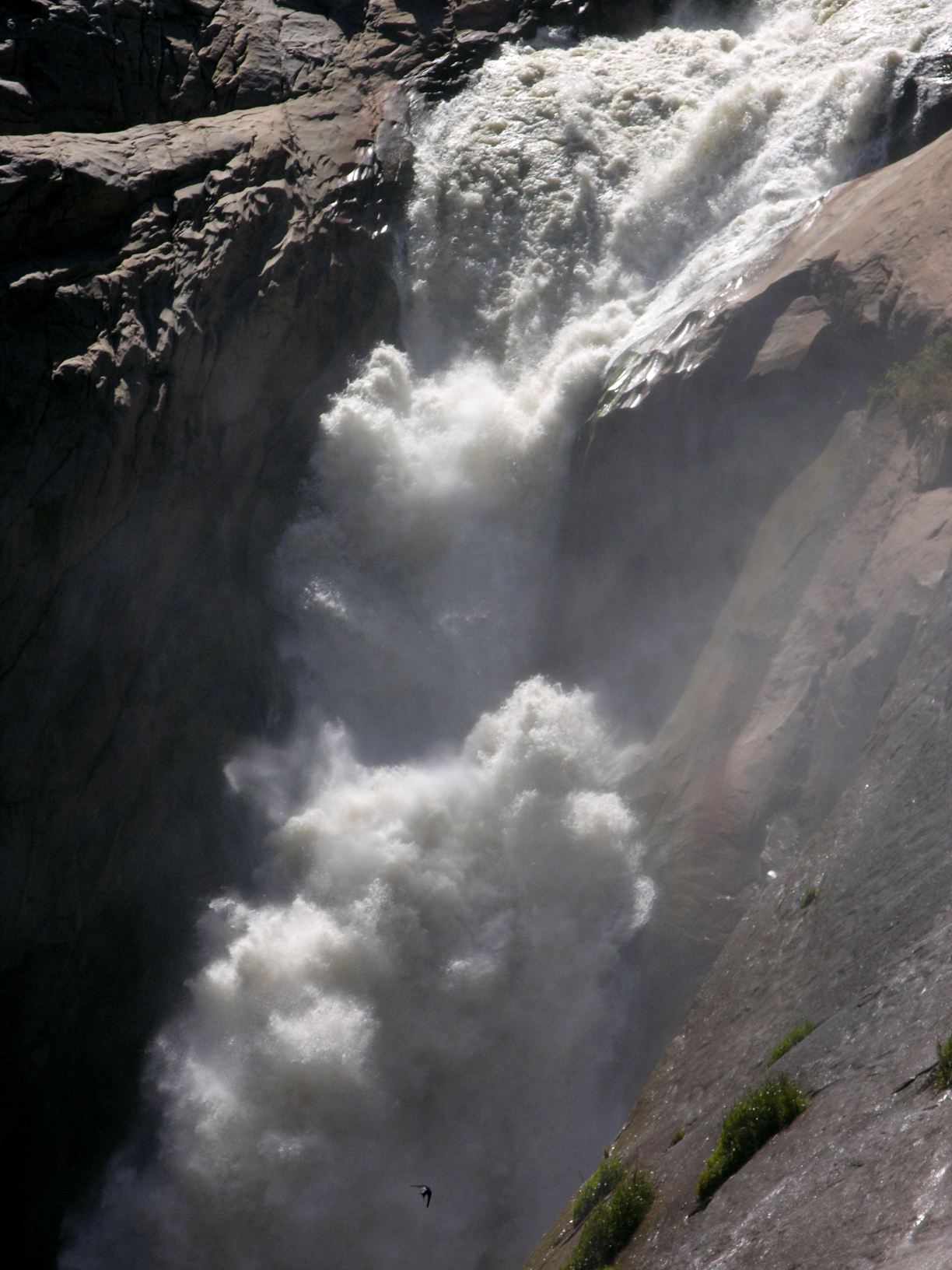
The waterfall is inside the park. The entrance gates shut at seven in the evening, so you have to make it by then. The office closes even earlier, and we'd had to ring and arrange a late arrival. You pay admission to national parks, usually about a hundred rand a day per person. It doesn't include overnight stays, even if you only use a campsite. If you intend to visit parks for quite a few days, a Wild Card is worth getting. It cost 1,395 rand for two people and was valid for a year. It was issued in your name, although nobody checked your passport, so you could use someone else's name. The card had a chip that held all your details. You also got ten per cent back on services you'd paid for in the park. Once the balance covered a service, you could effectively get it for free. It covered rooms, souvenirs and tours, and on a trip you could easily build up enough for a free night, for instance. Private parks weren't part of the scheme and you always paid there.
Apart from air-conditioned bungalows, visitors can use the campground. In summer I'd say that's strictly for the hard core. At 40°C you can sleep only out in the open. It's too hot even to crawl inside a tent, let alone sleep in one. We'd booked and paid for a bungalow (28°35.626′S, 20°20.368′E). It was for different dates, though we'd managed over the phone to bring it forward a few days.
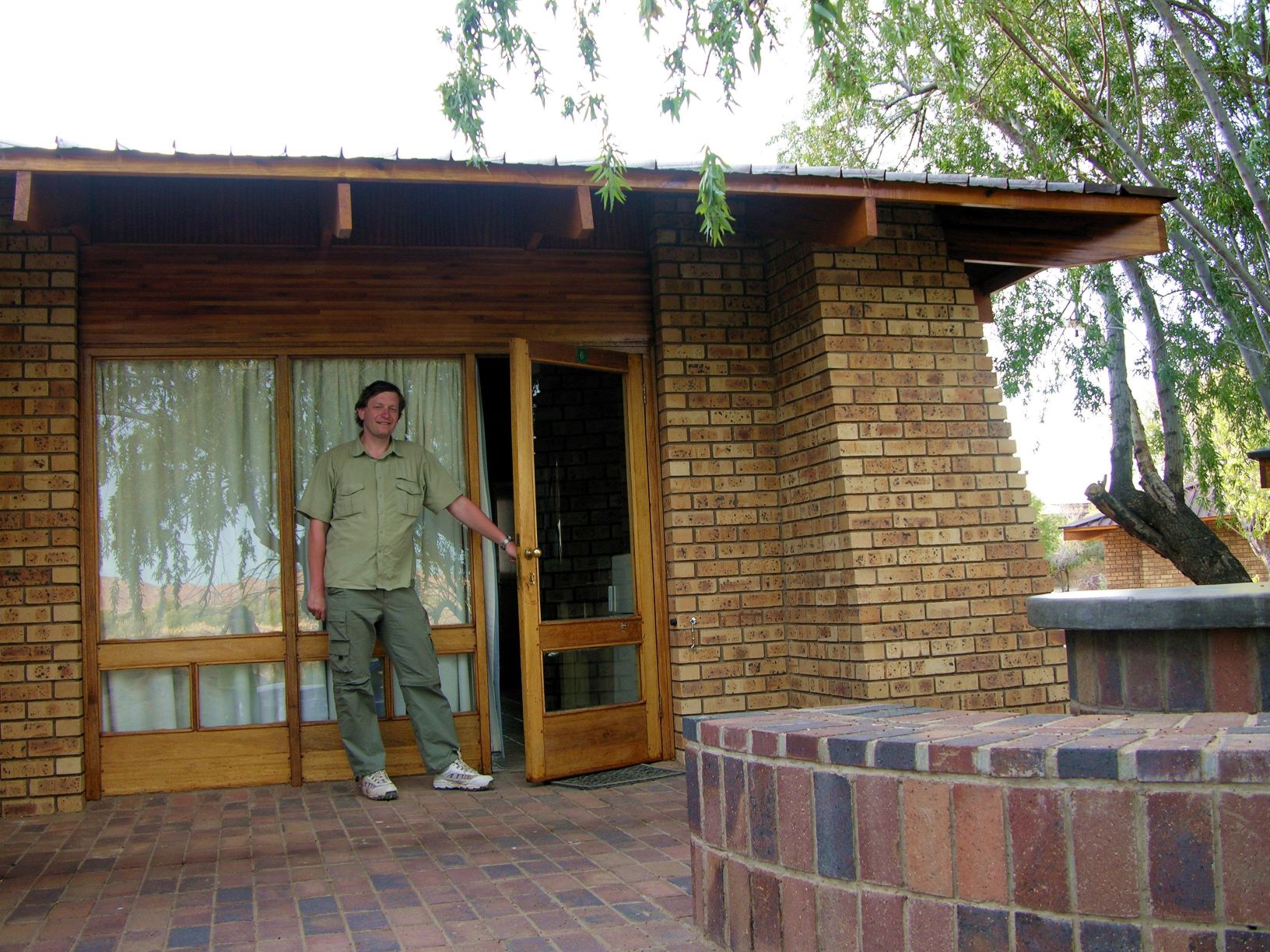
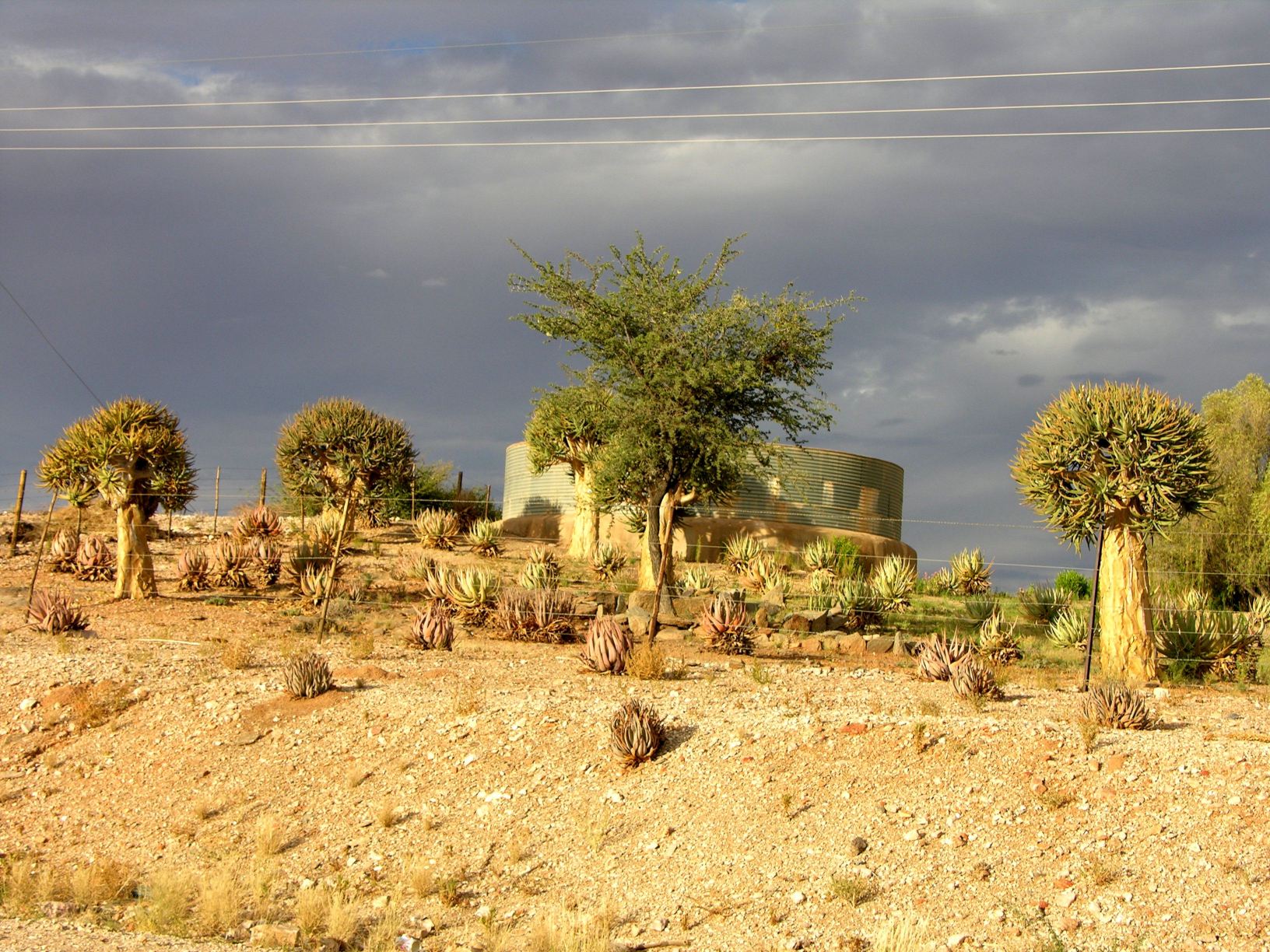
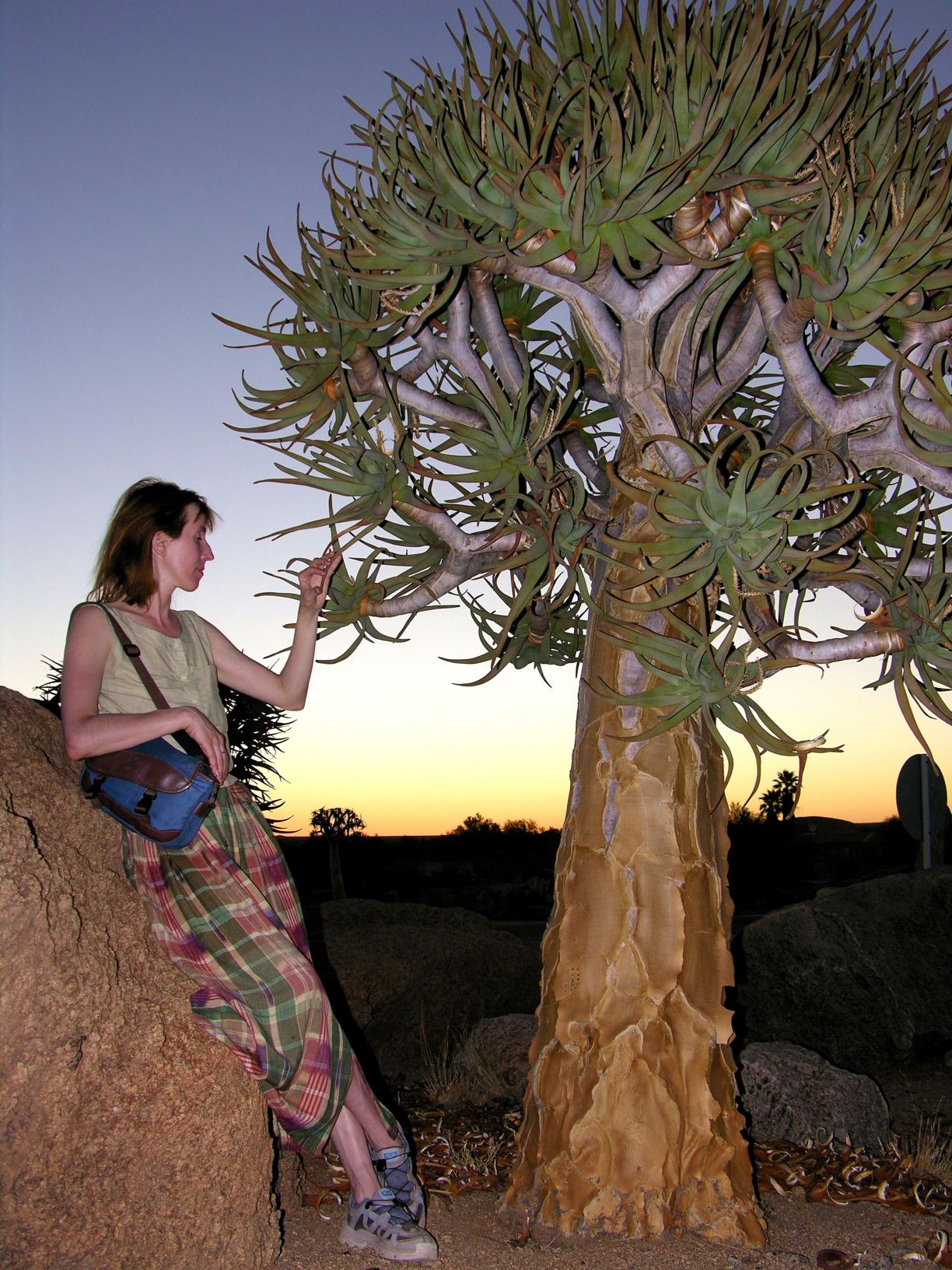
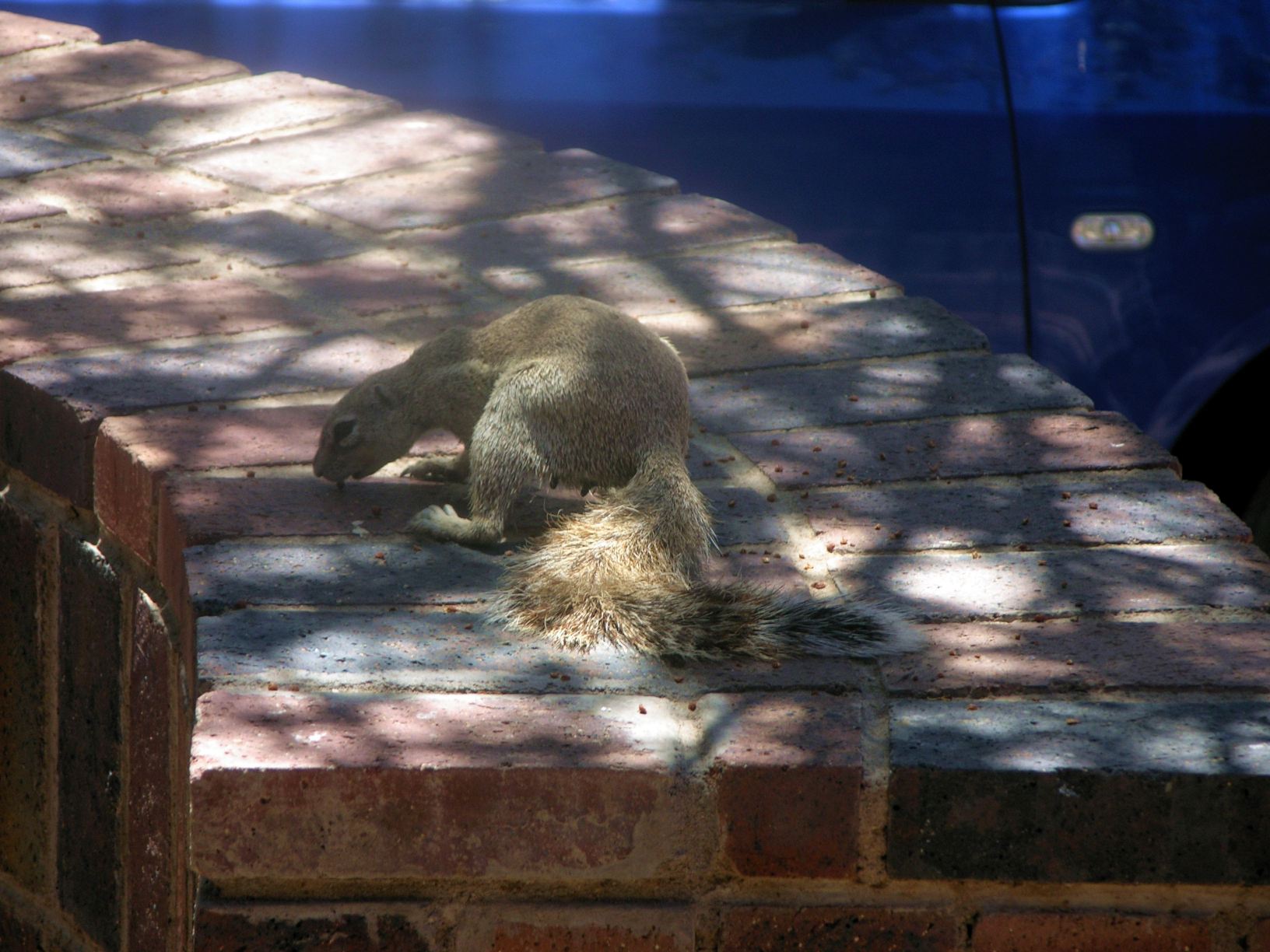
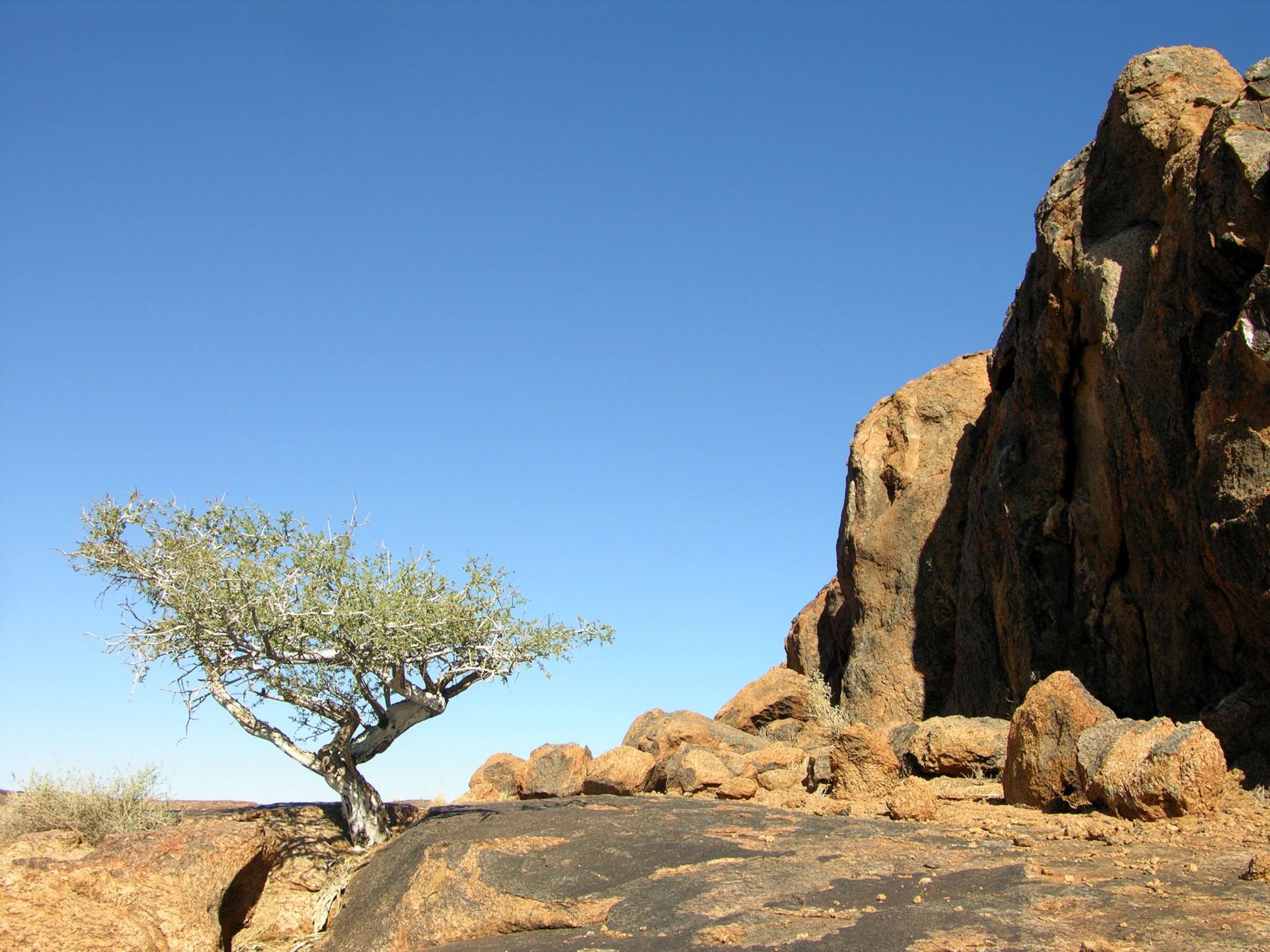
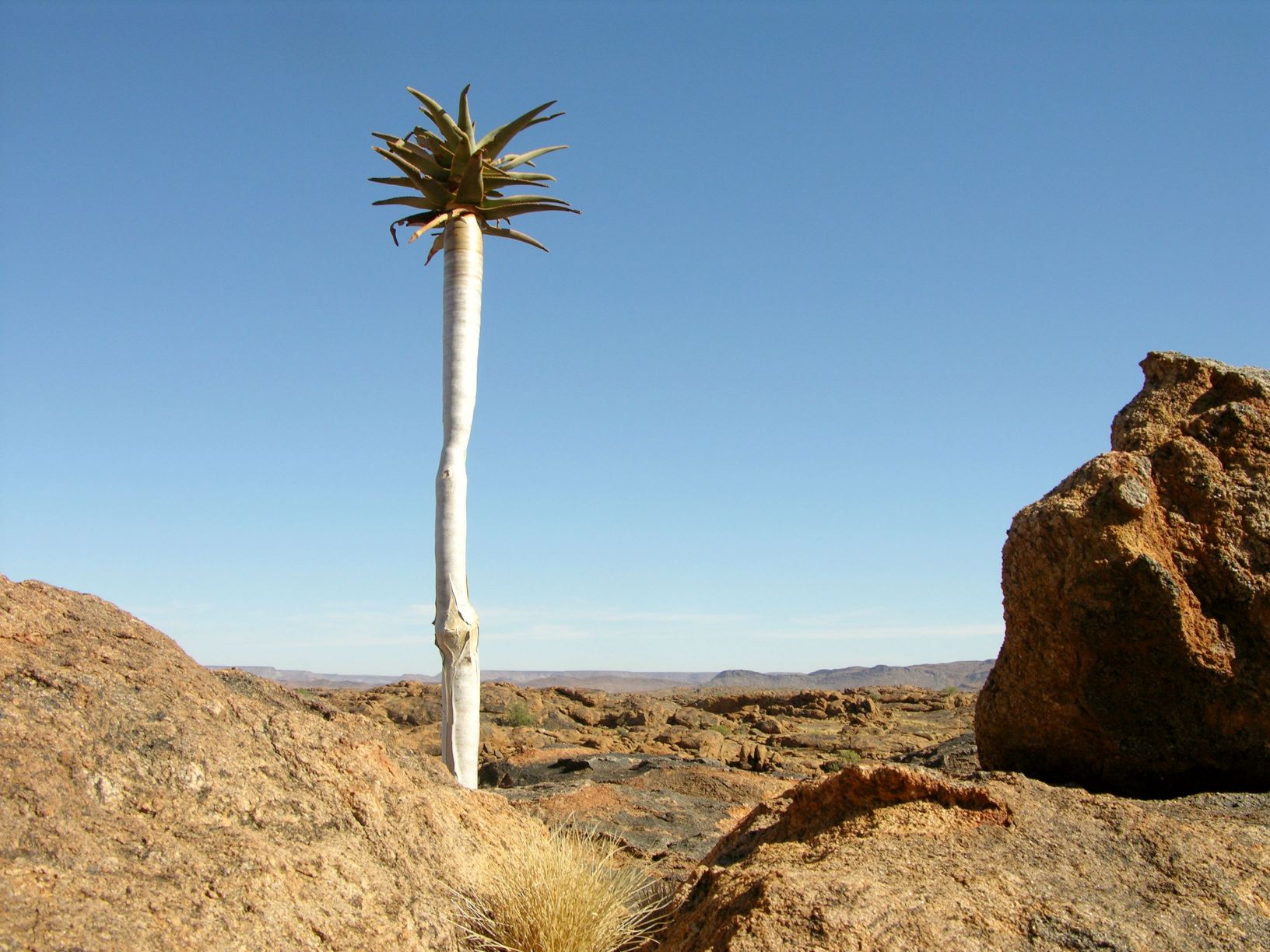
We made it just before sunset. In Africa, the sunsets are always lovely, and here especially so. Seen behind the tree aloes, it was simply an astonishing sight, like a dream. Baboons had settled in the bushes around us, and ground squirrels ran between the huts. Marvellous!
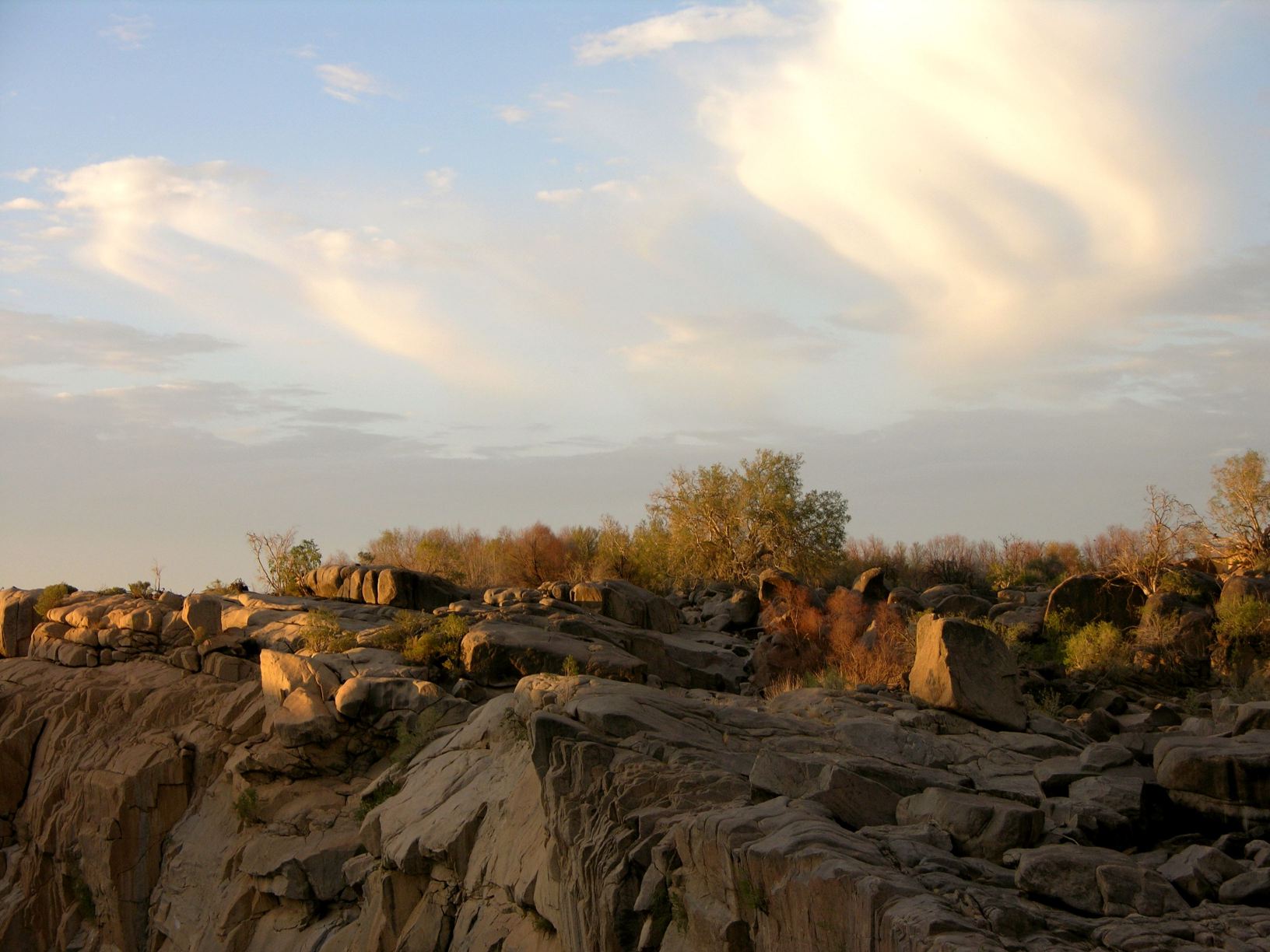
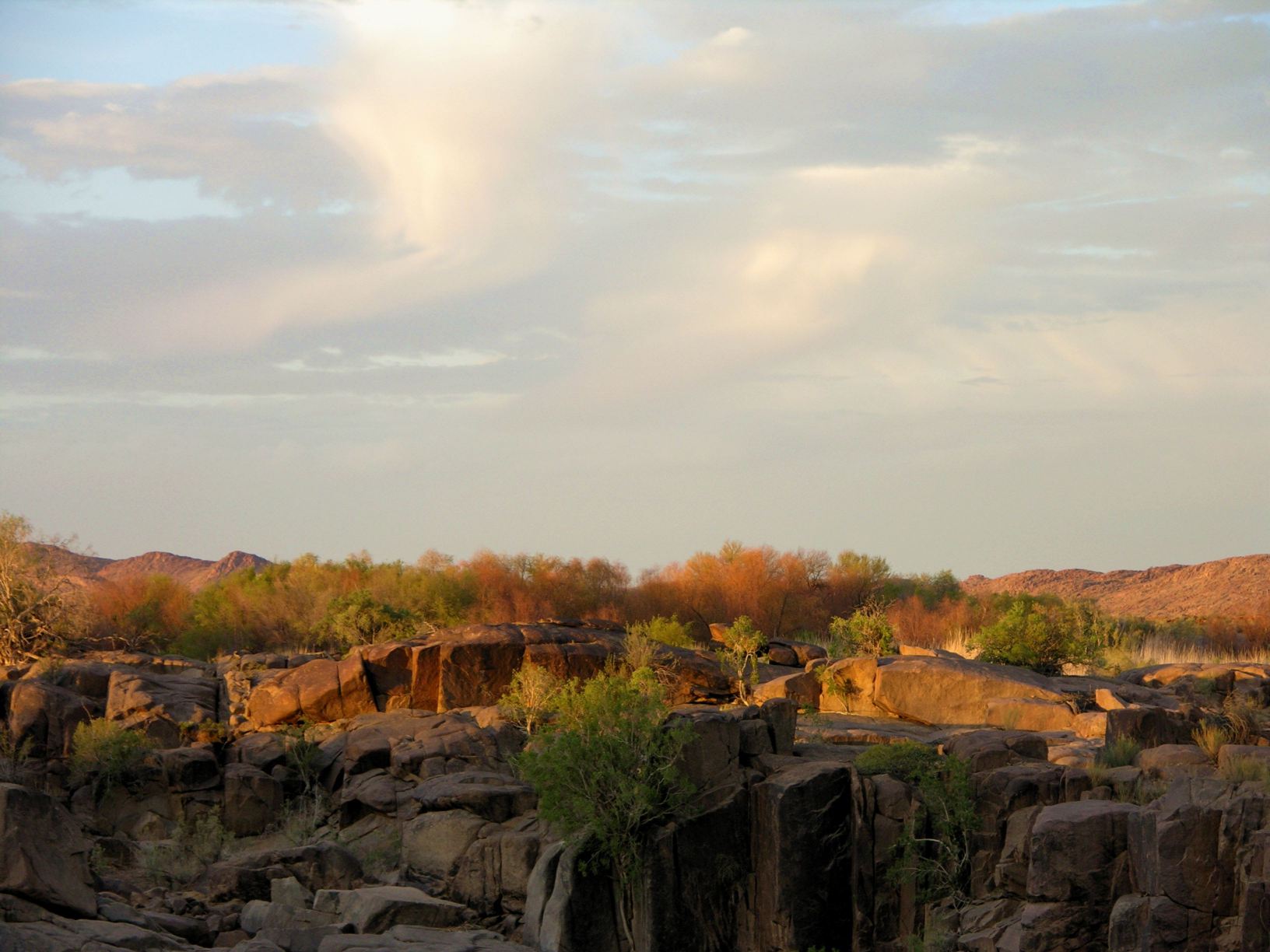
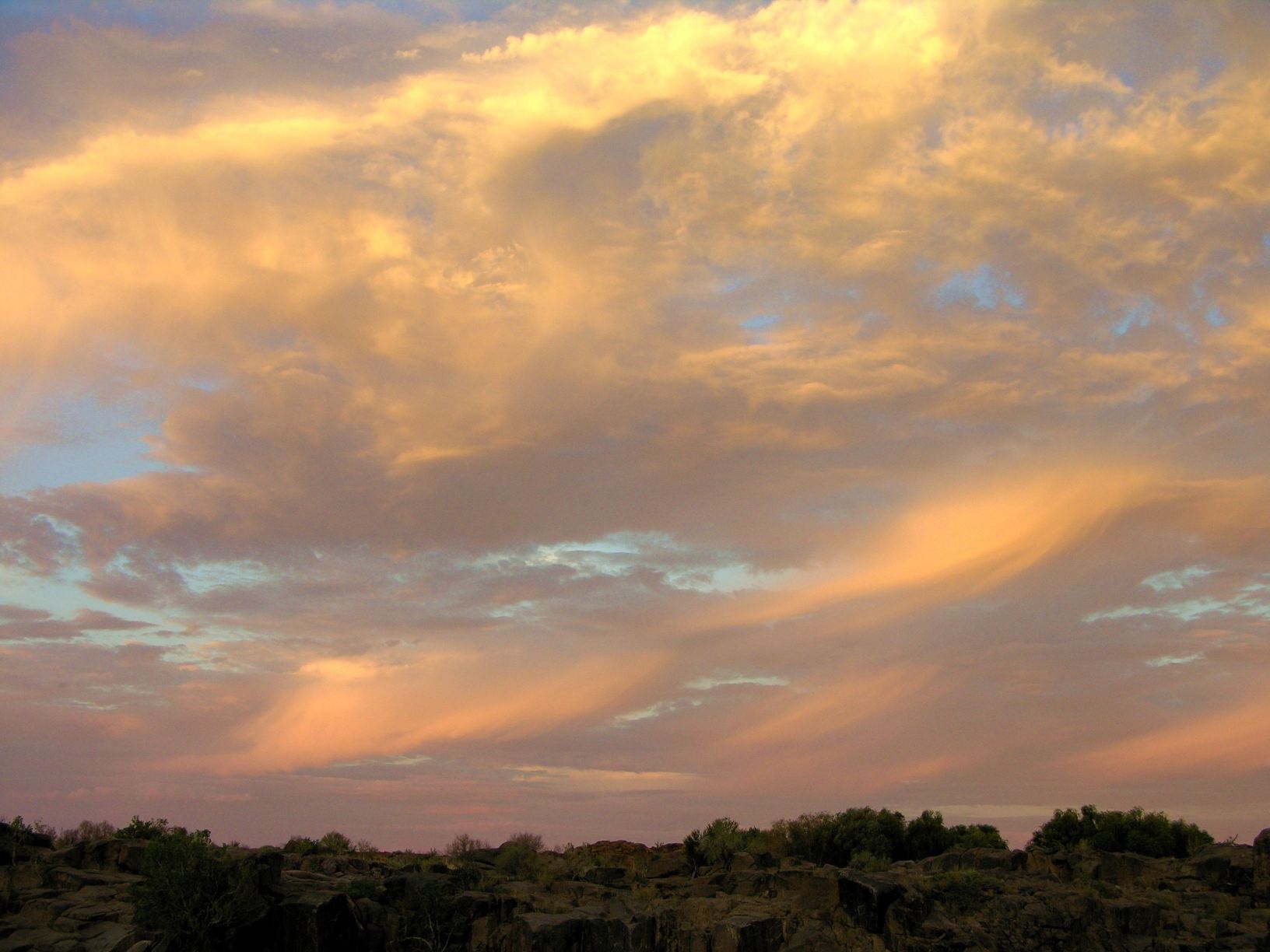
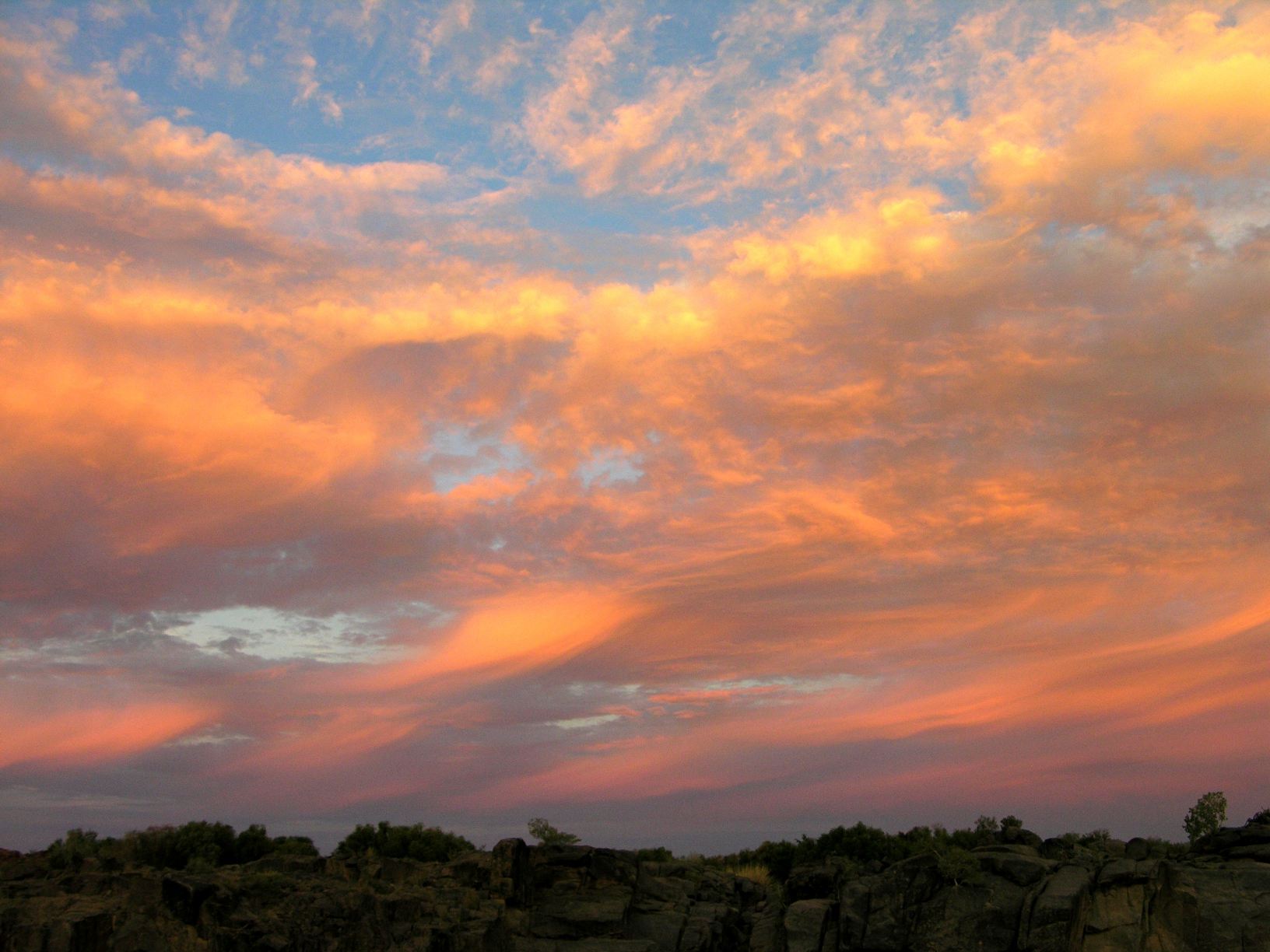
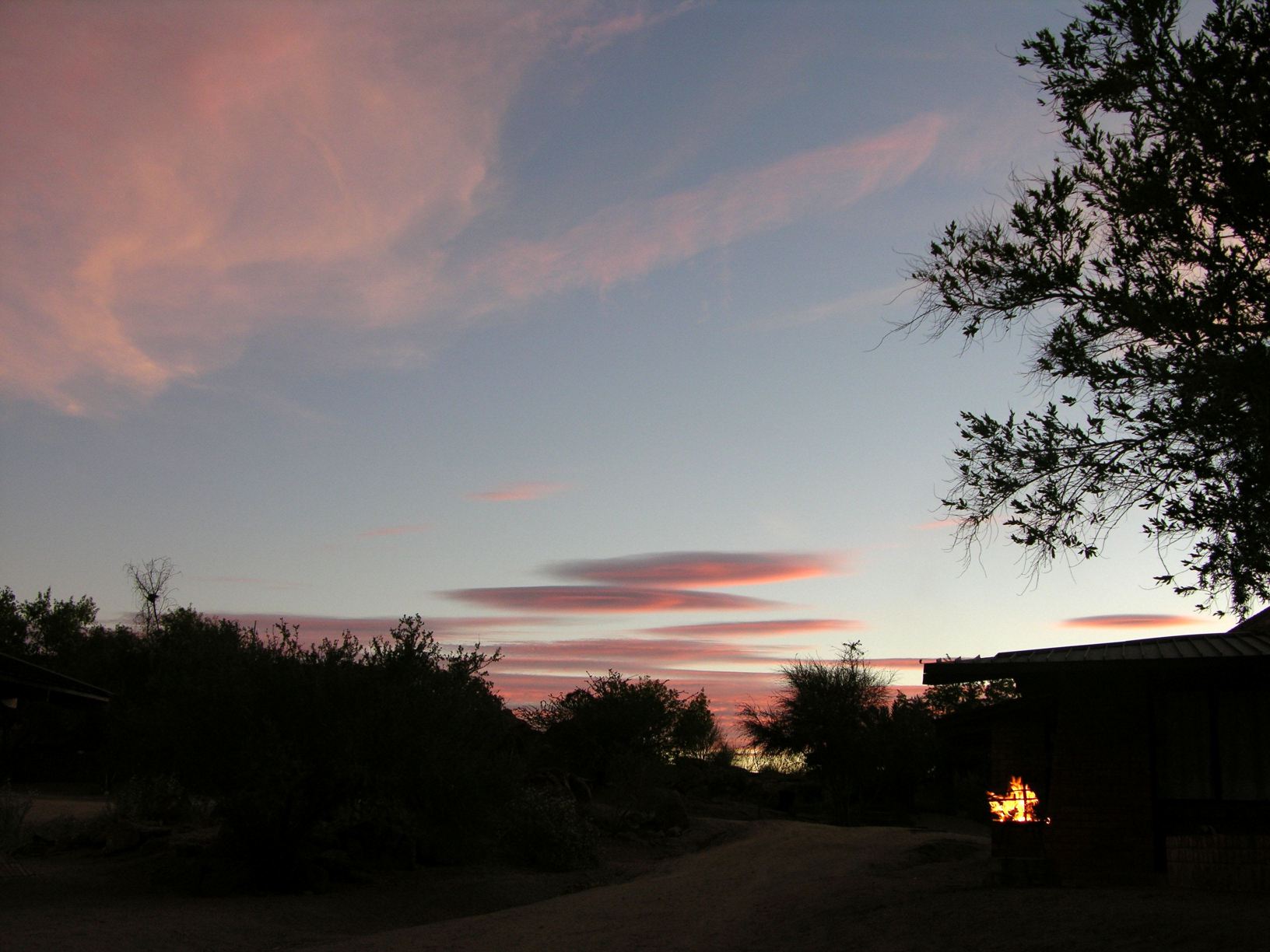
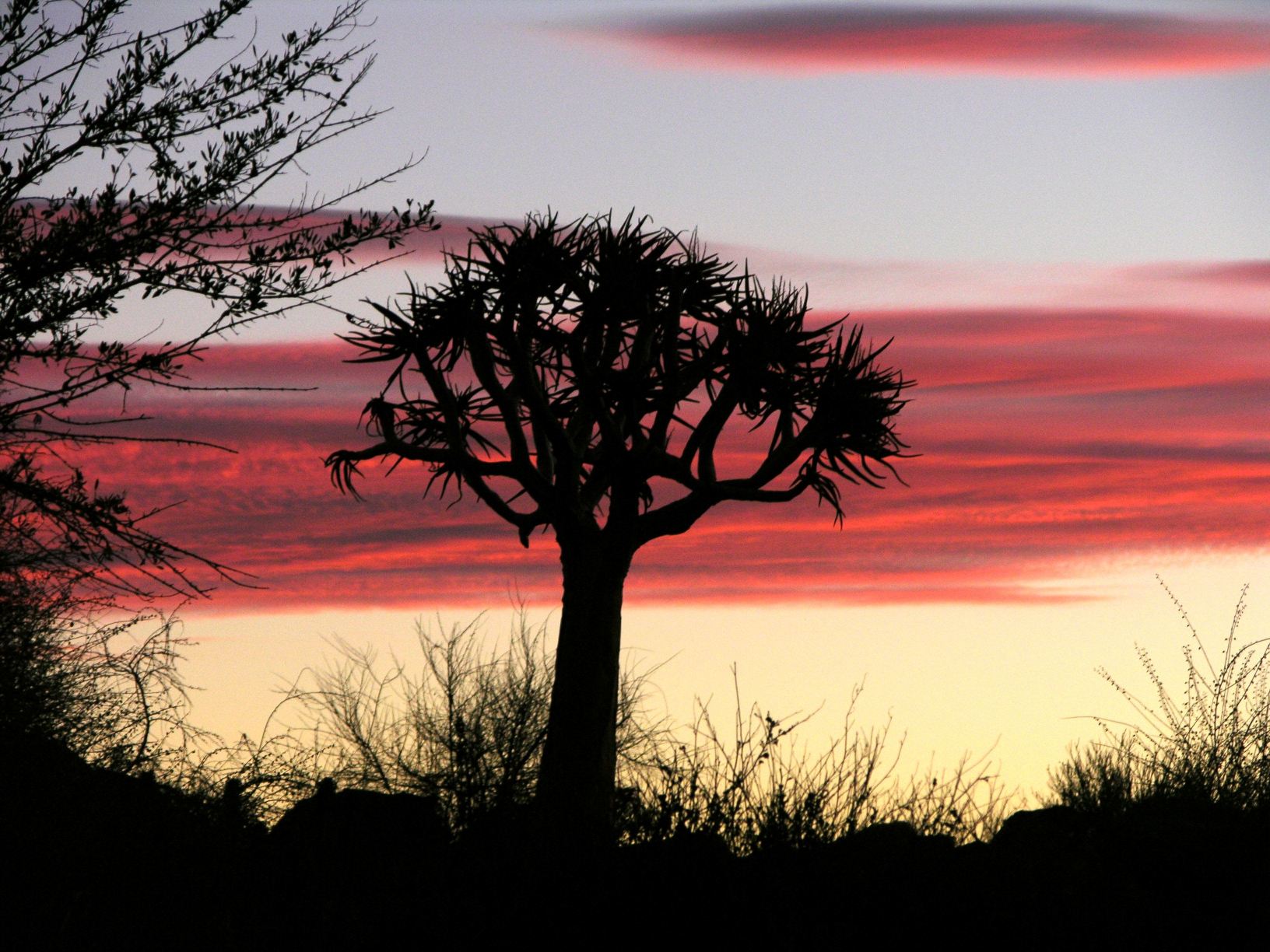
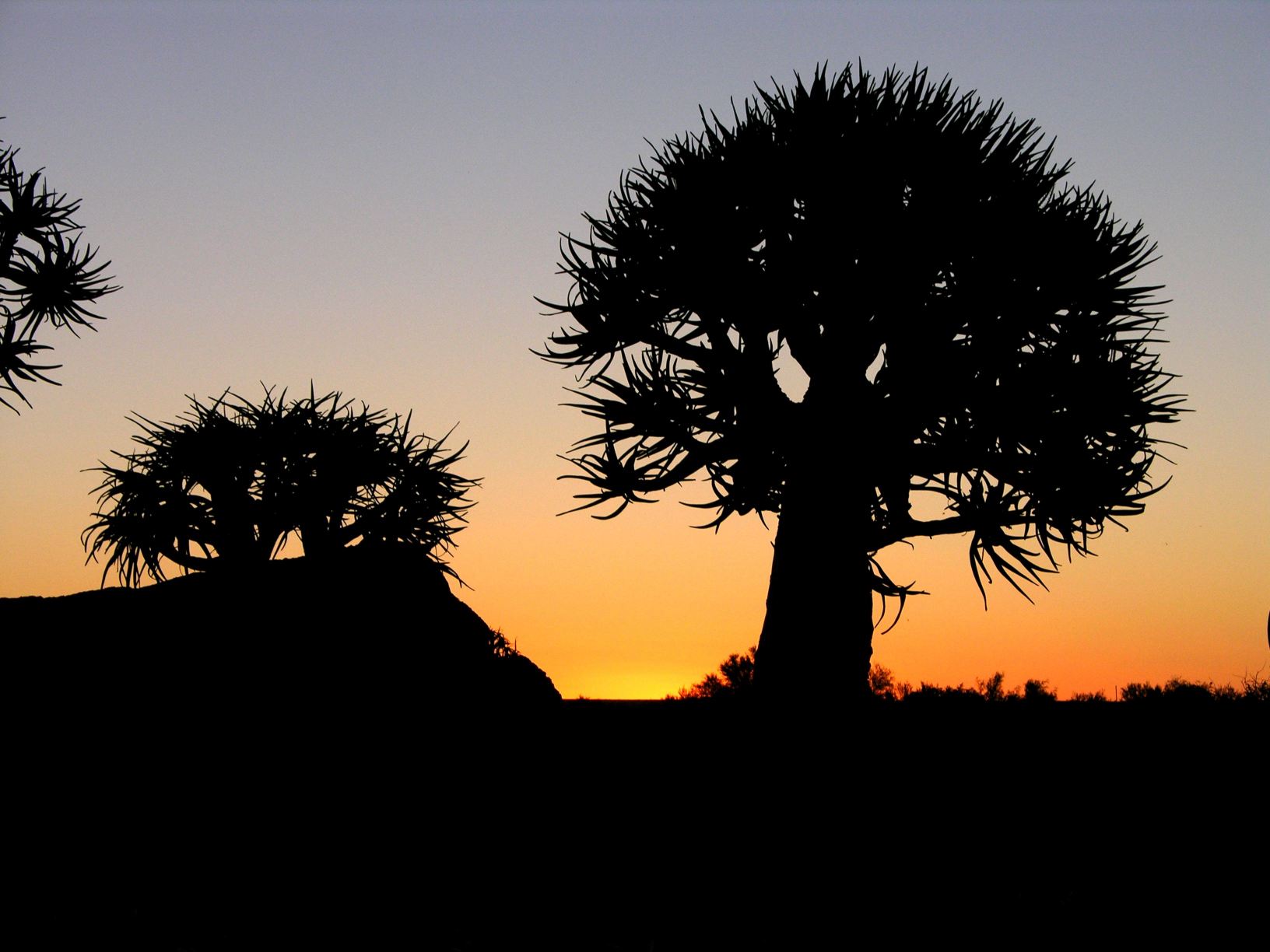
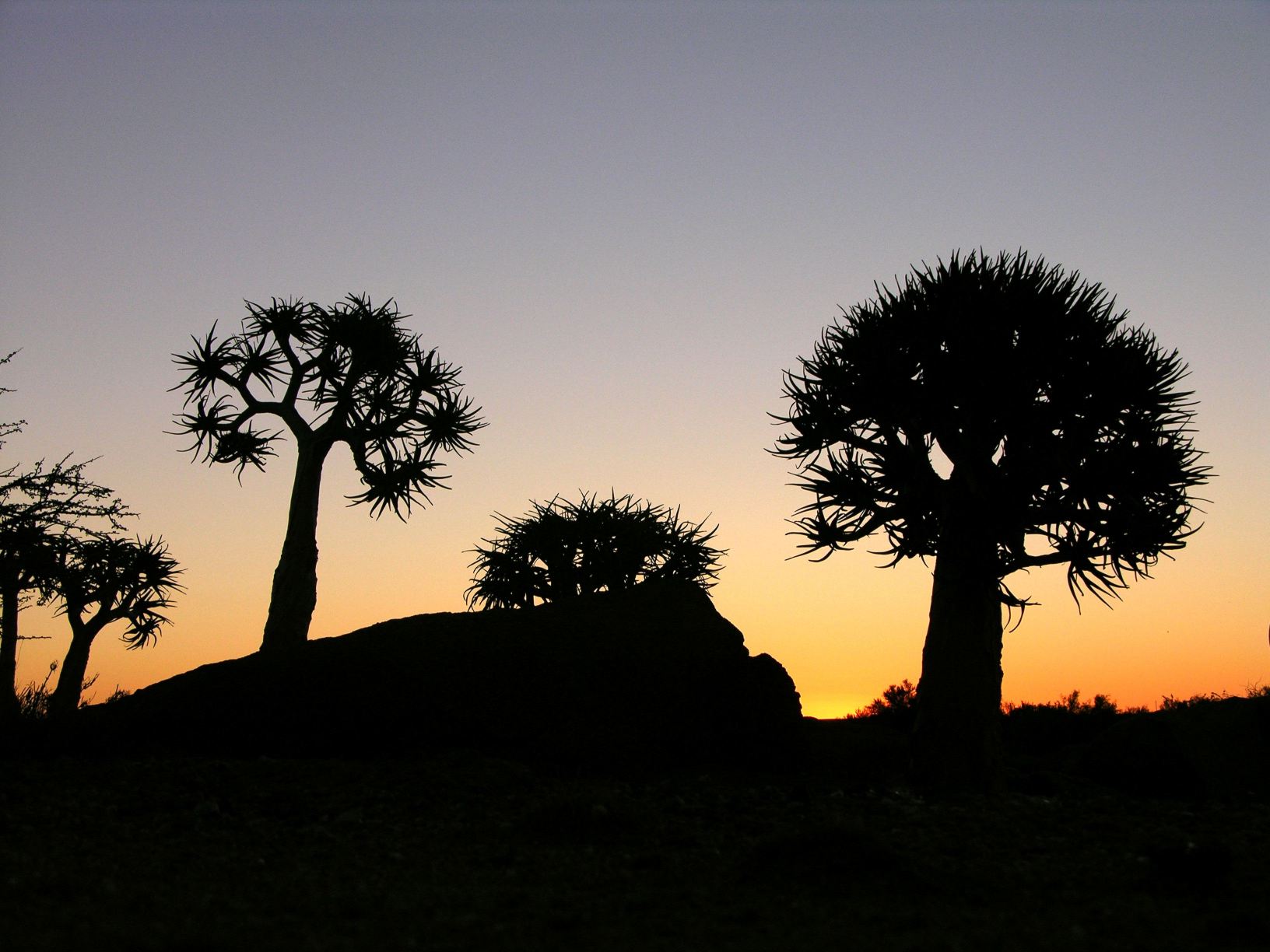
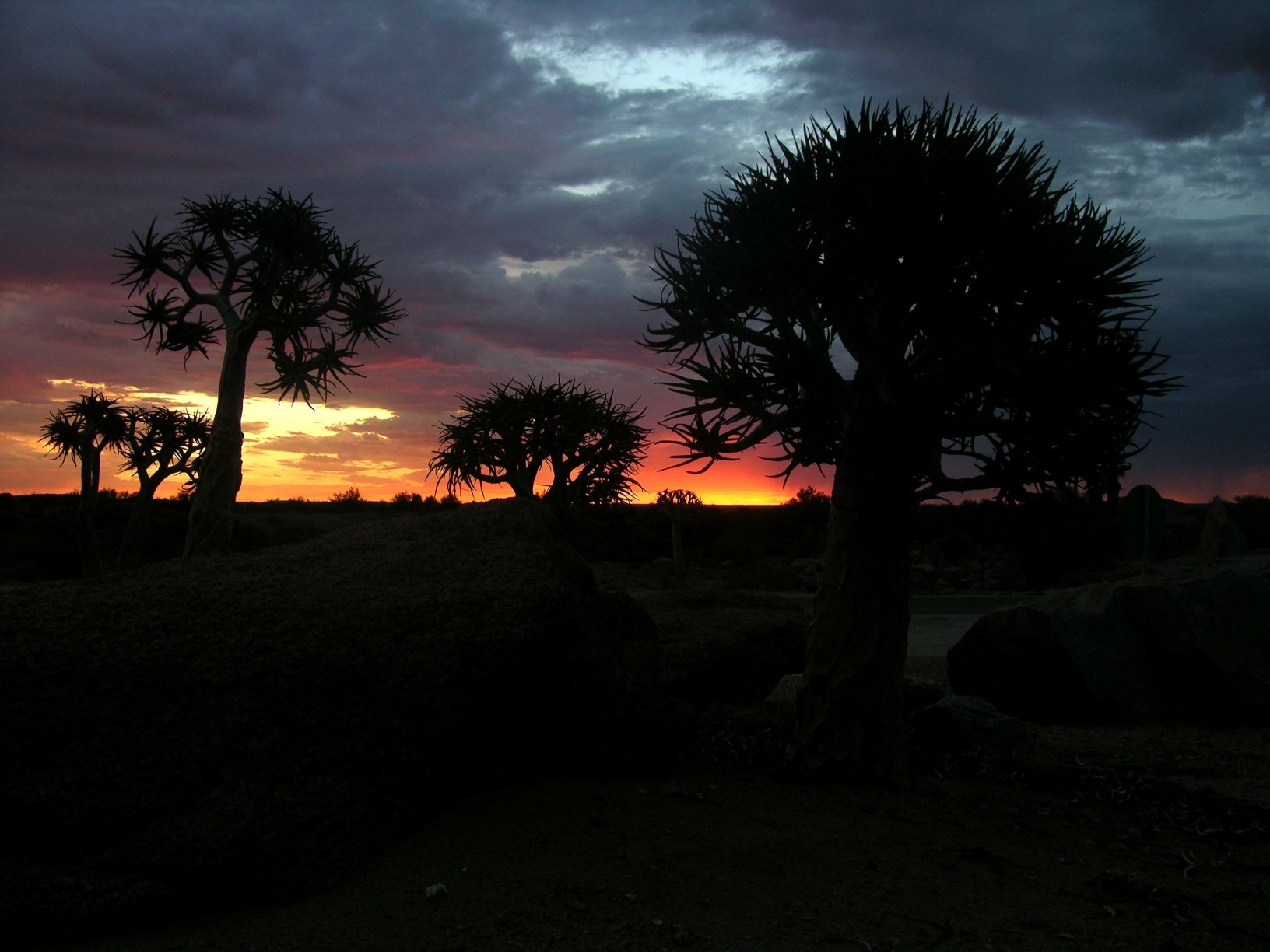
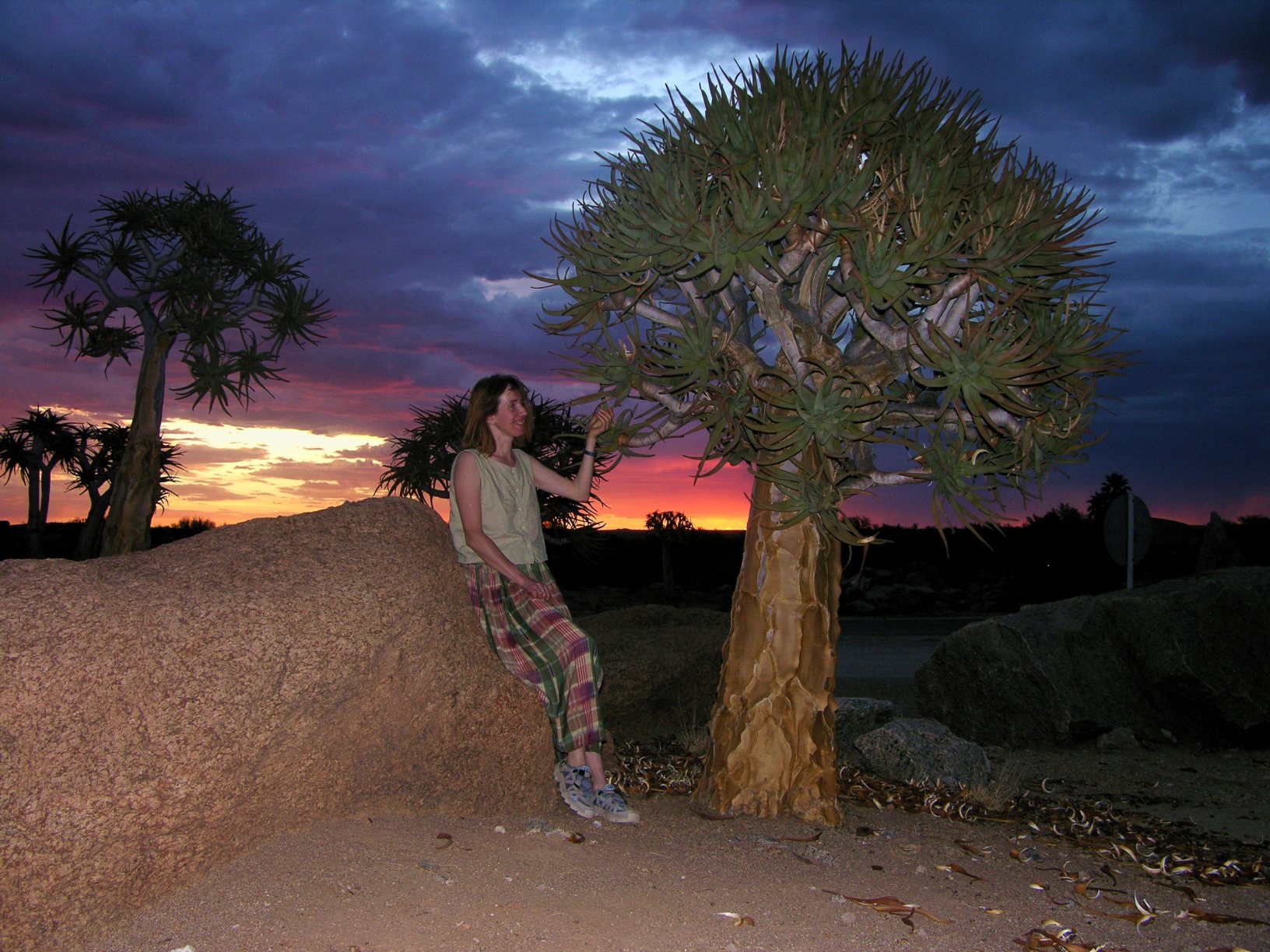
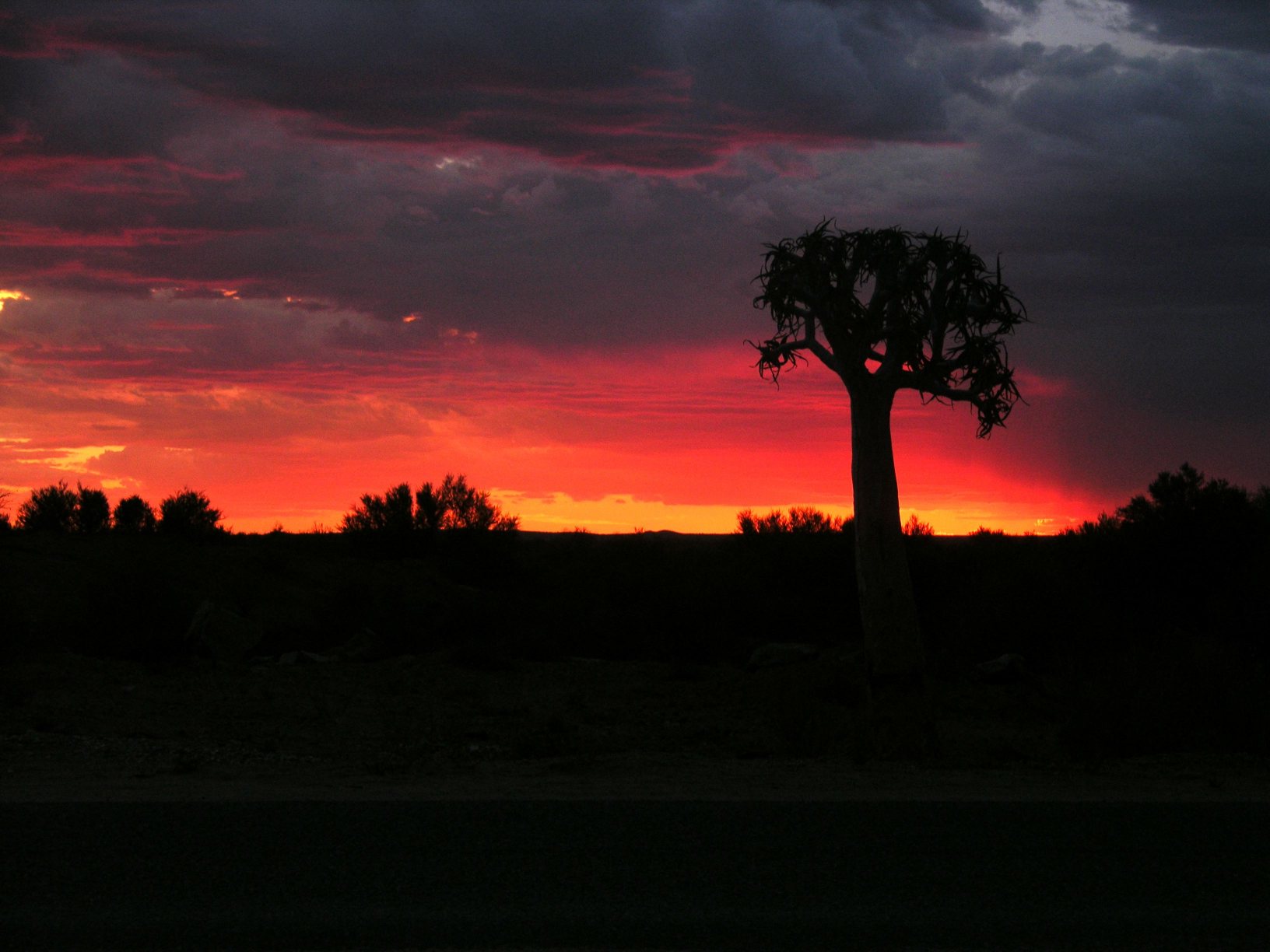
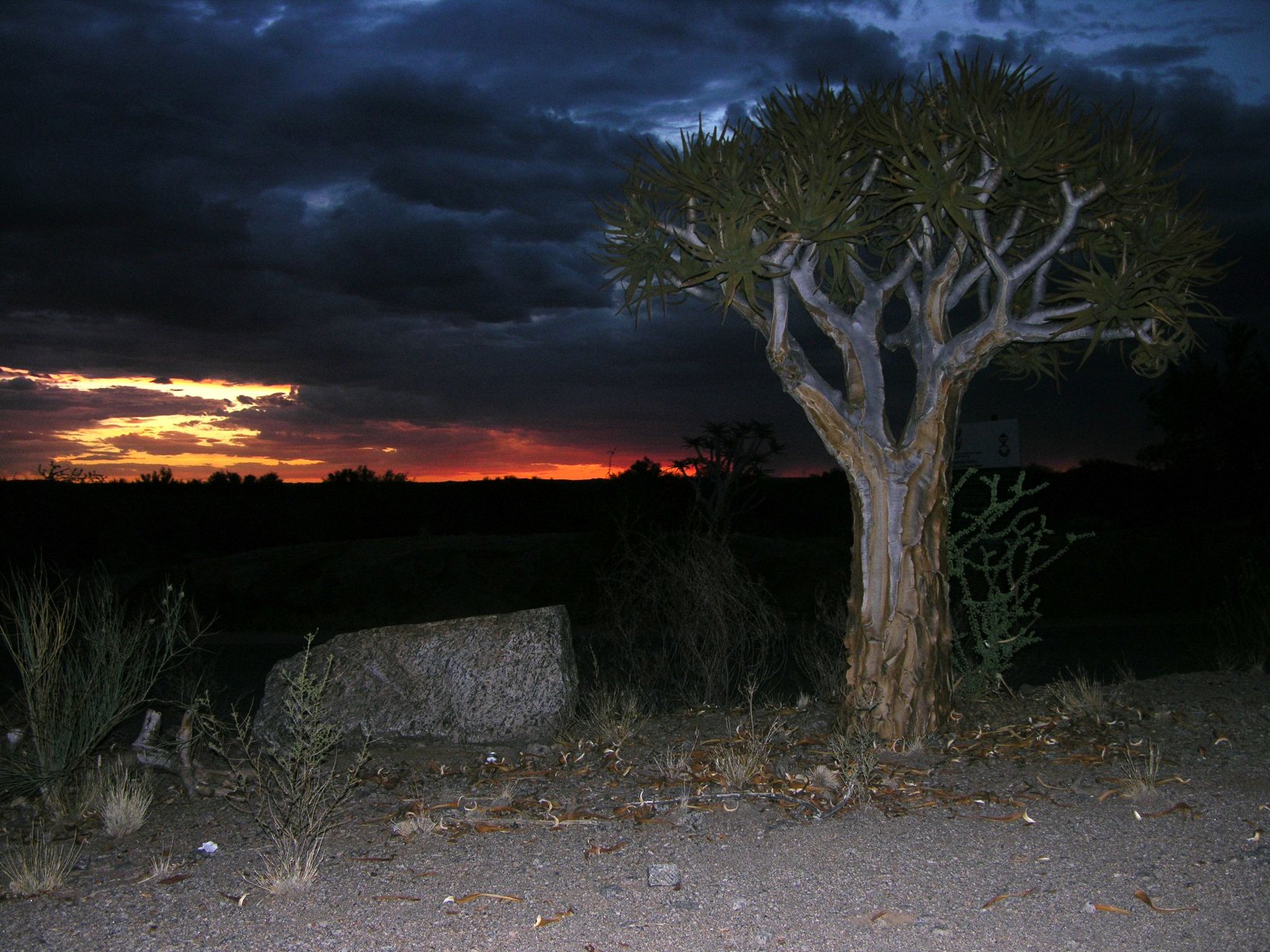
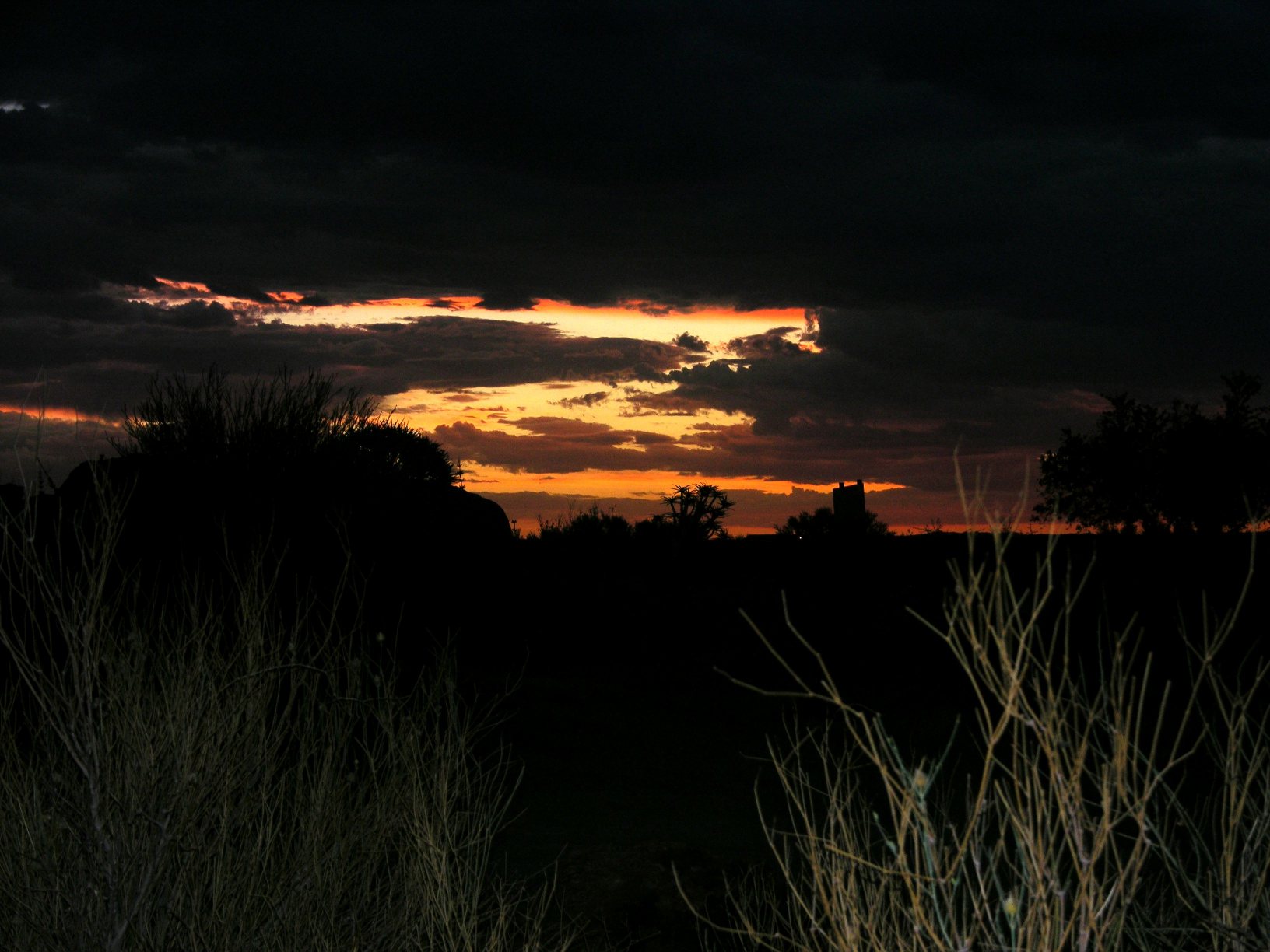
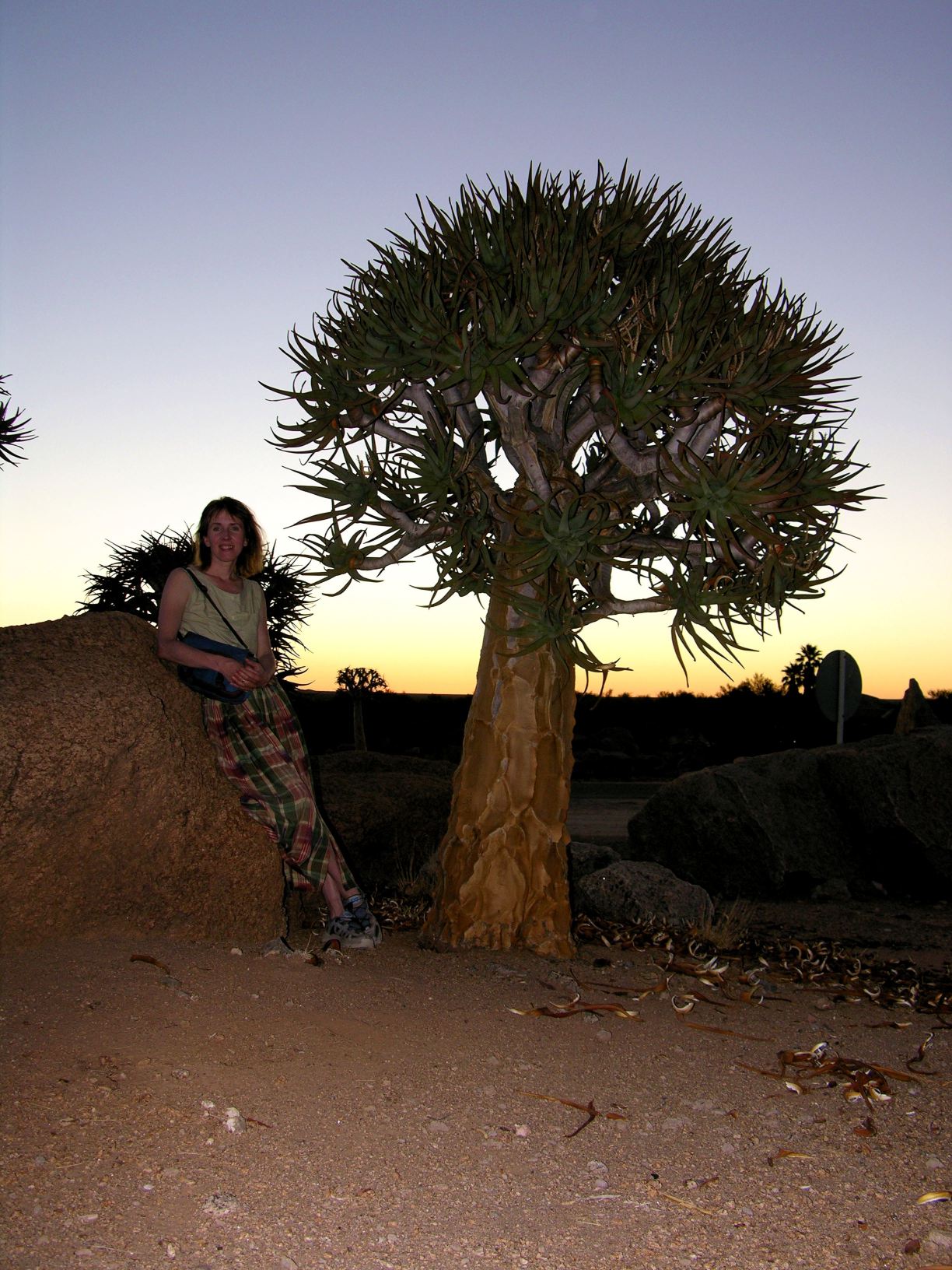
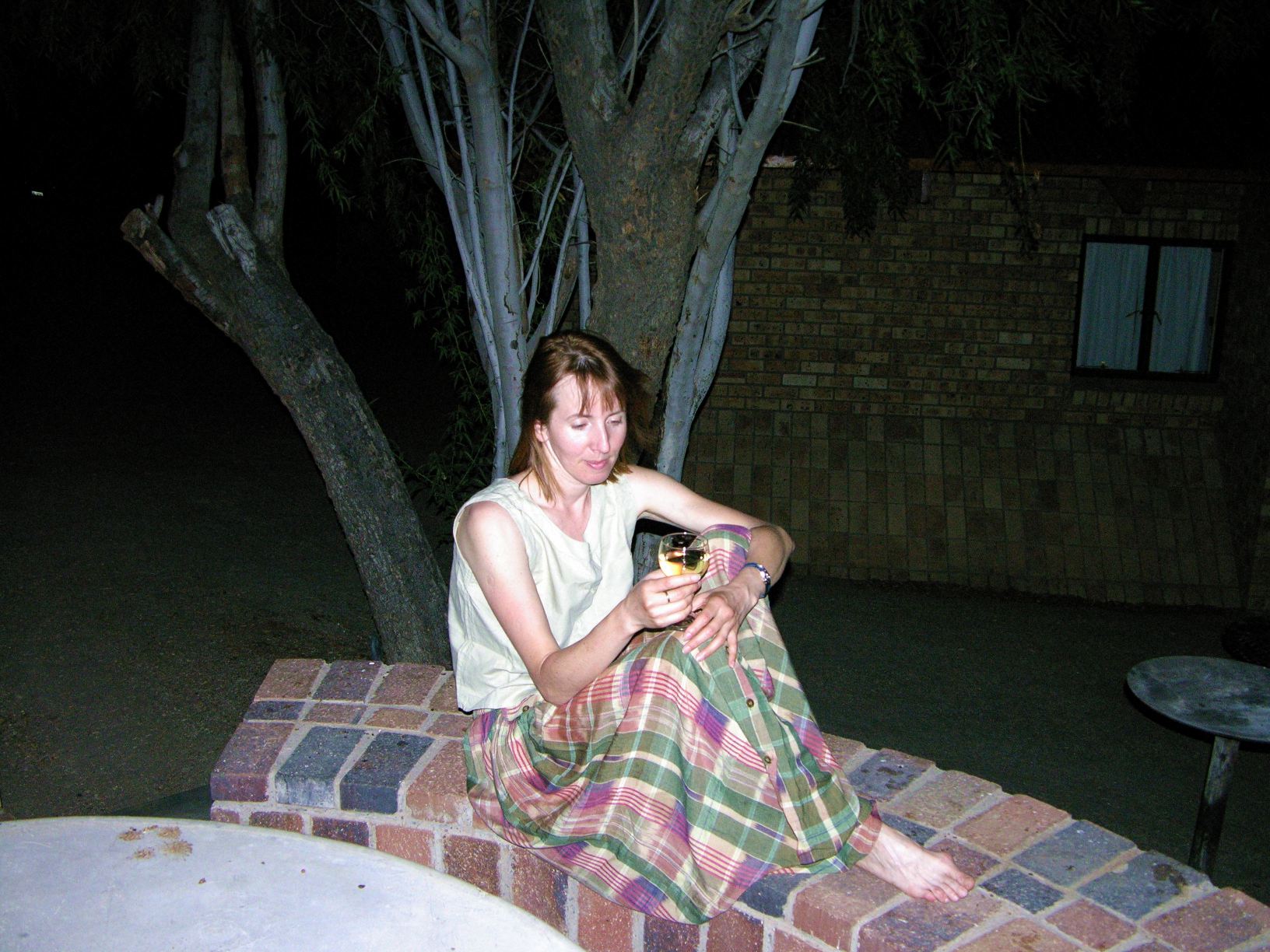
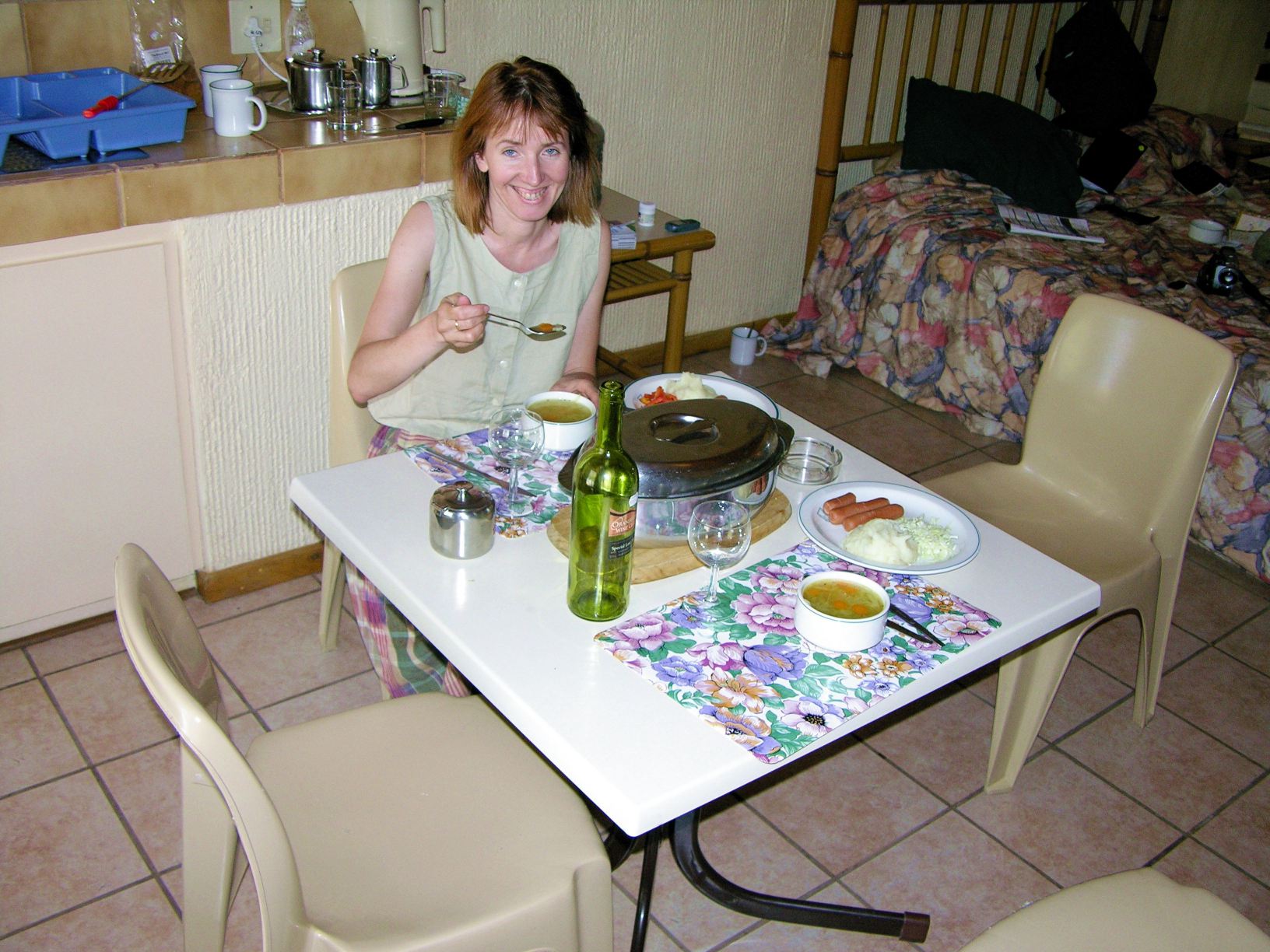
We made soup, drank a bottle of Orange River wine and sat for a long time looking at the southern stars. How lucky we were. All of this, for us. The monkeys, the waterfall, the Orange River. We drank another toast to the Orange Revolution.
We went out in the morning for a short walk. Short because we'd got up late. The sun was quickly approaching its zenith. The heat was unbearable. We might have survived it ourselves, but the animals had all gone into hiding and there was nothing to see.
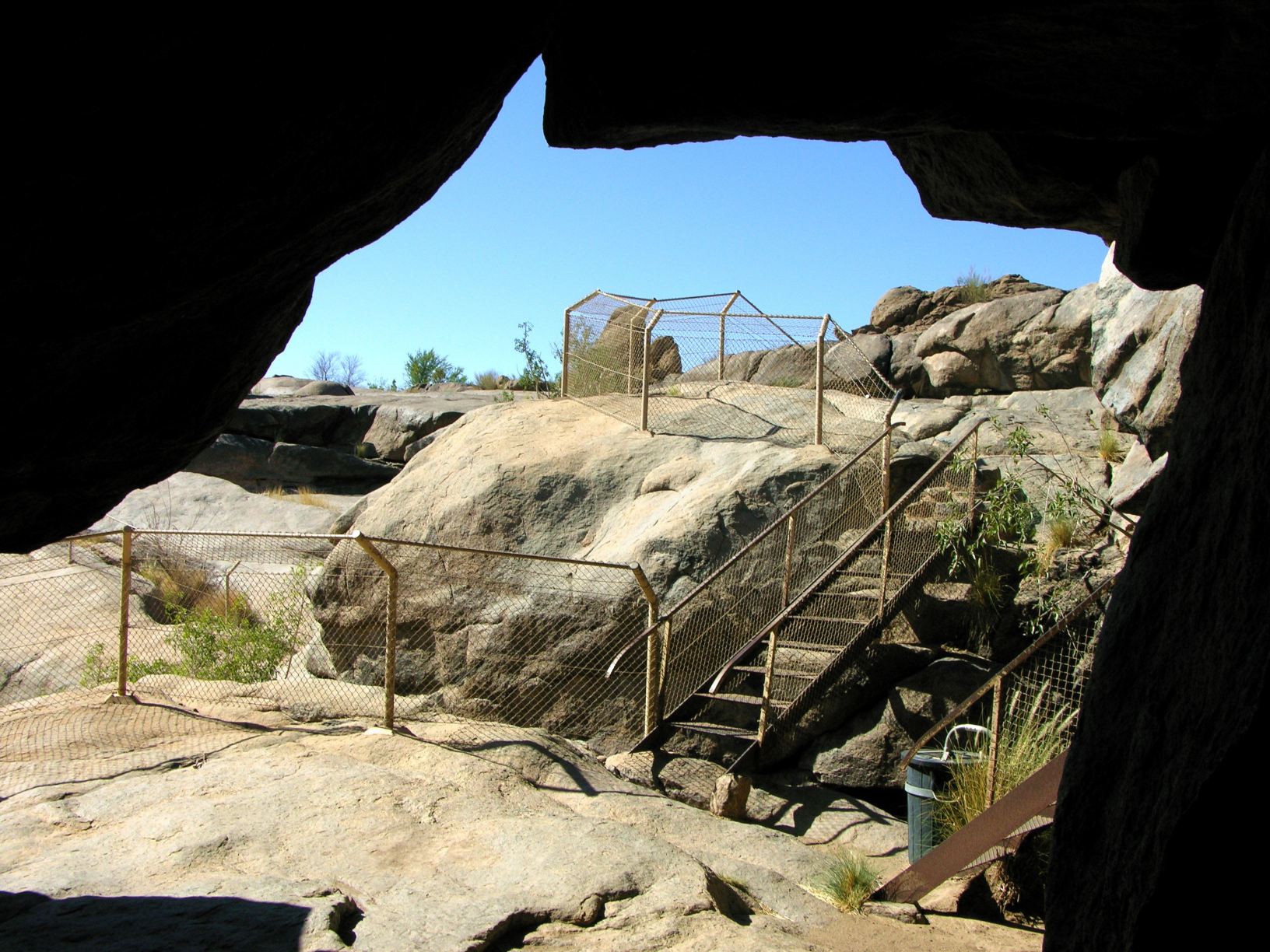
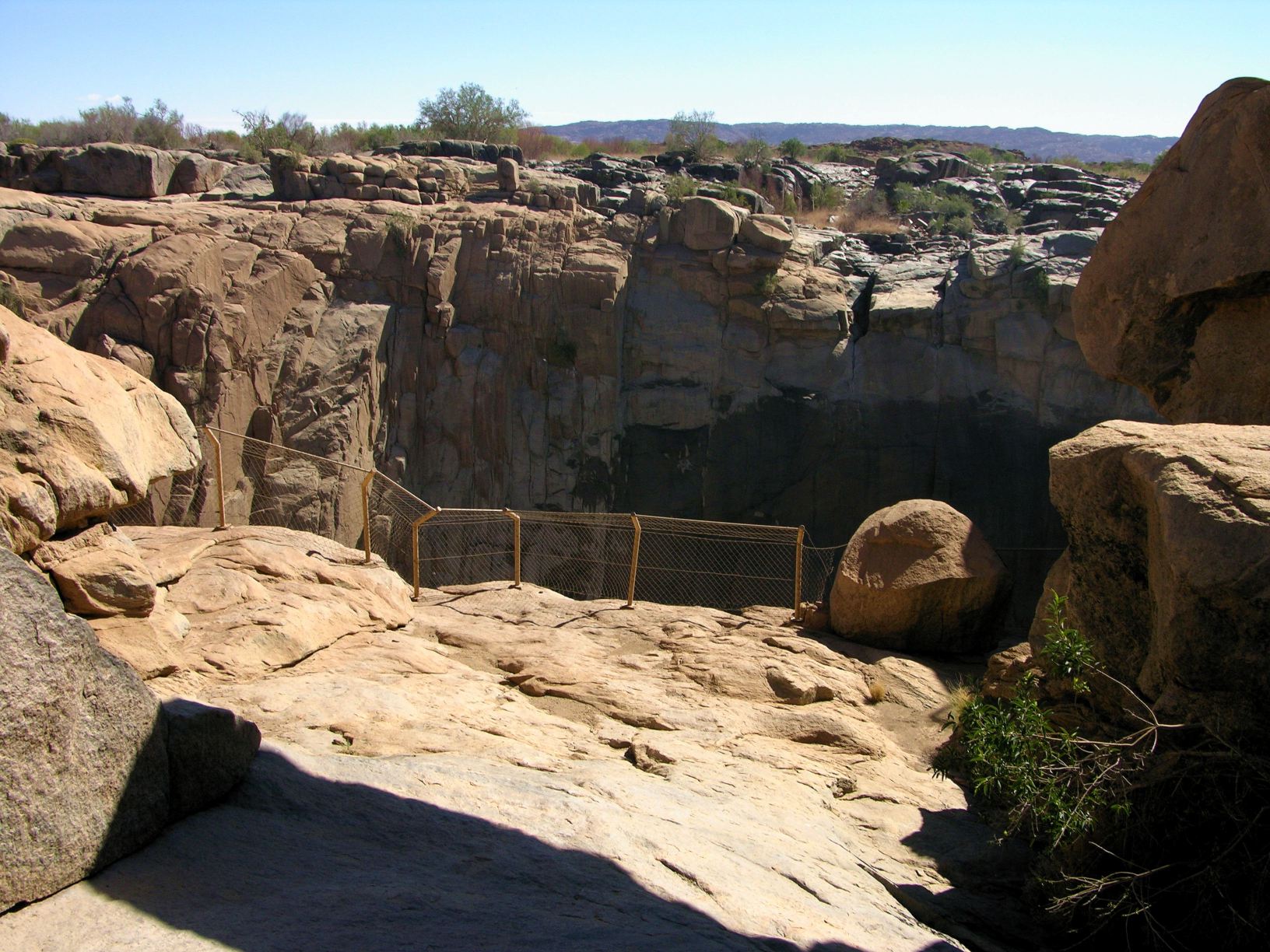
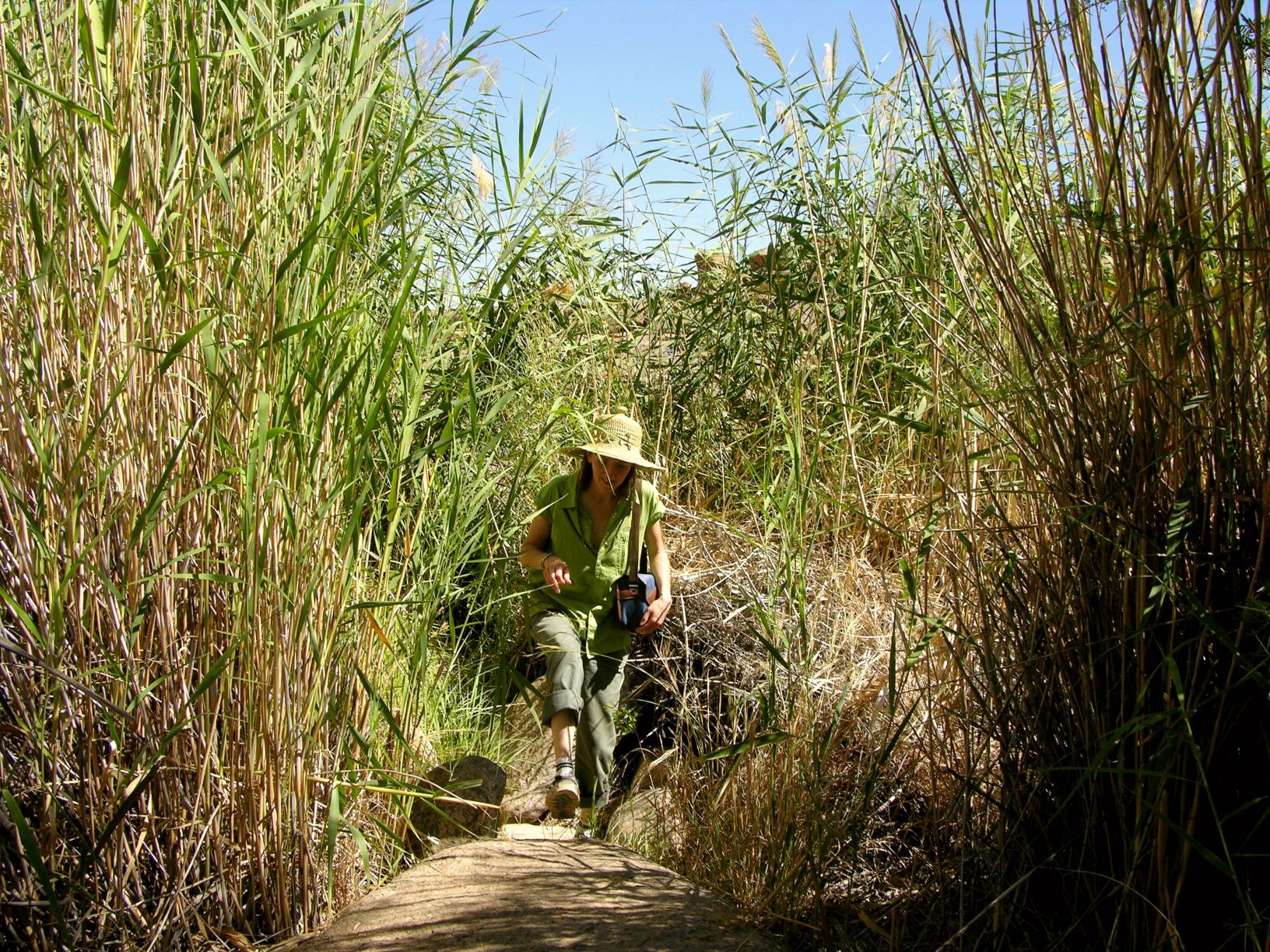
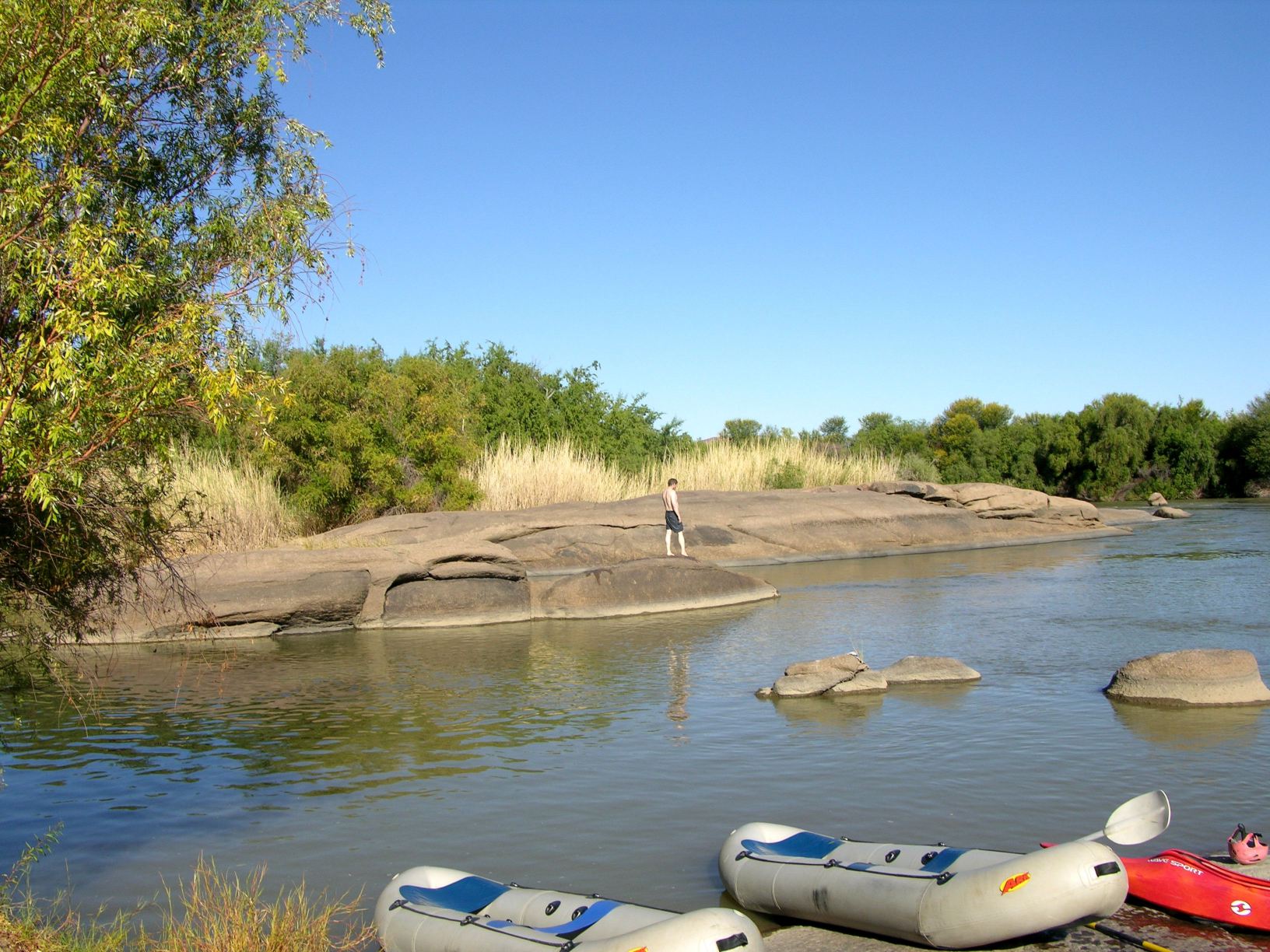
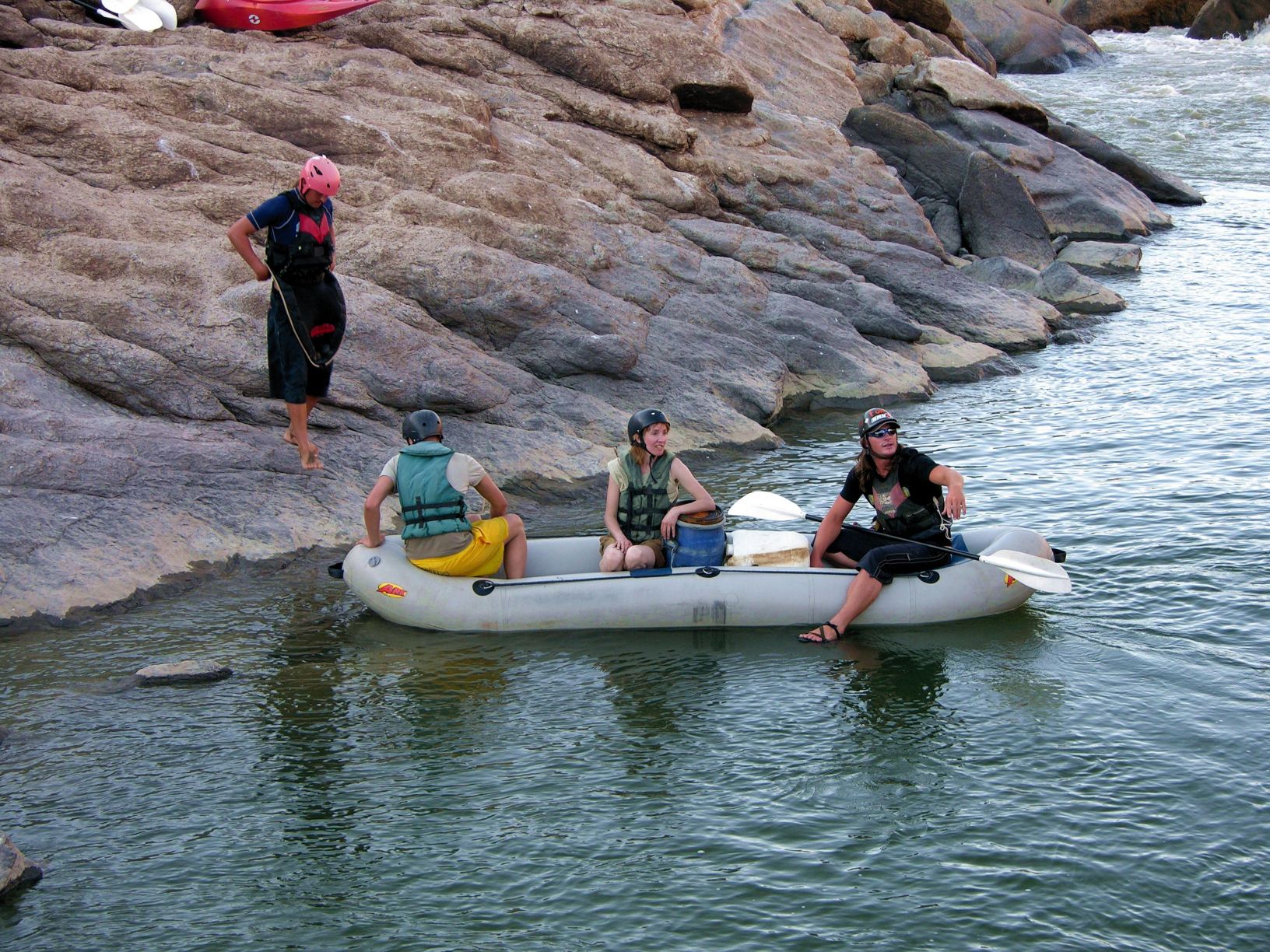
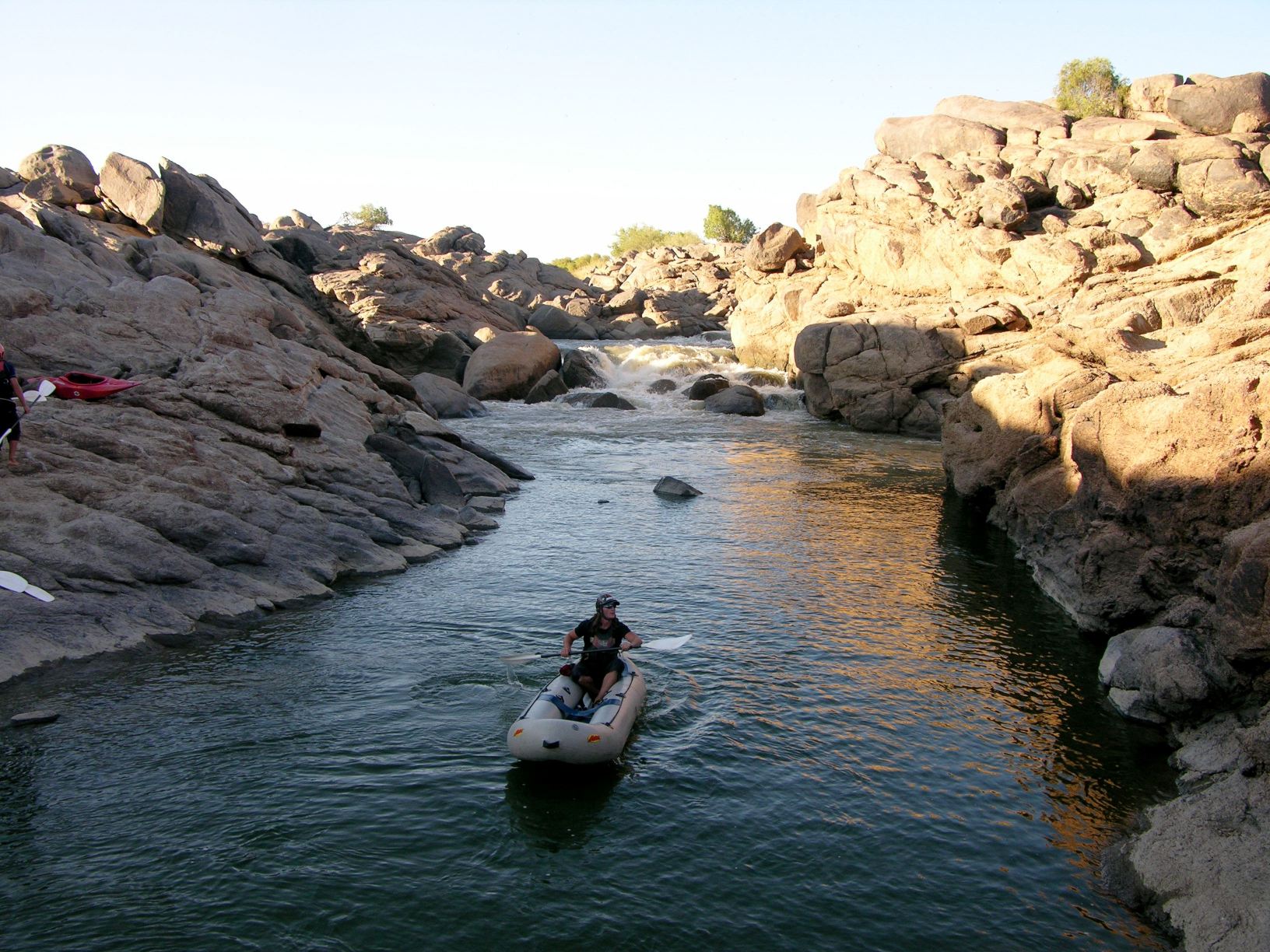
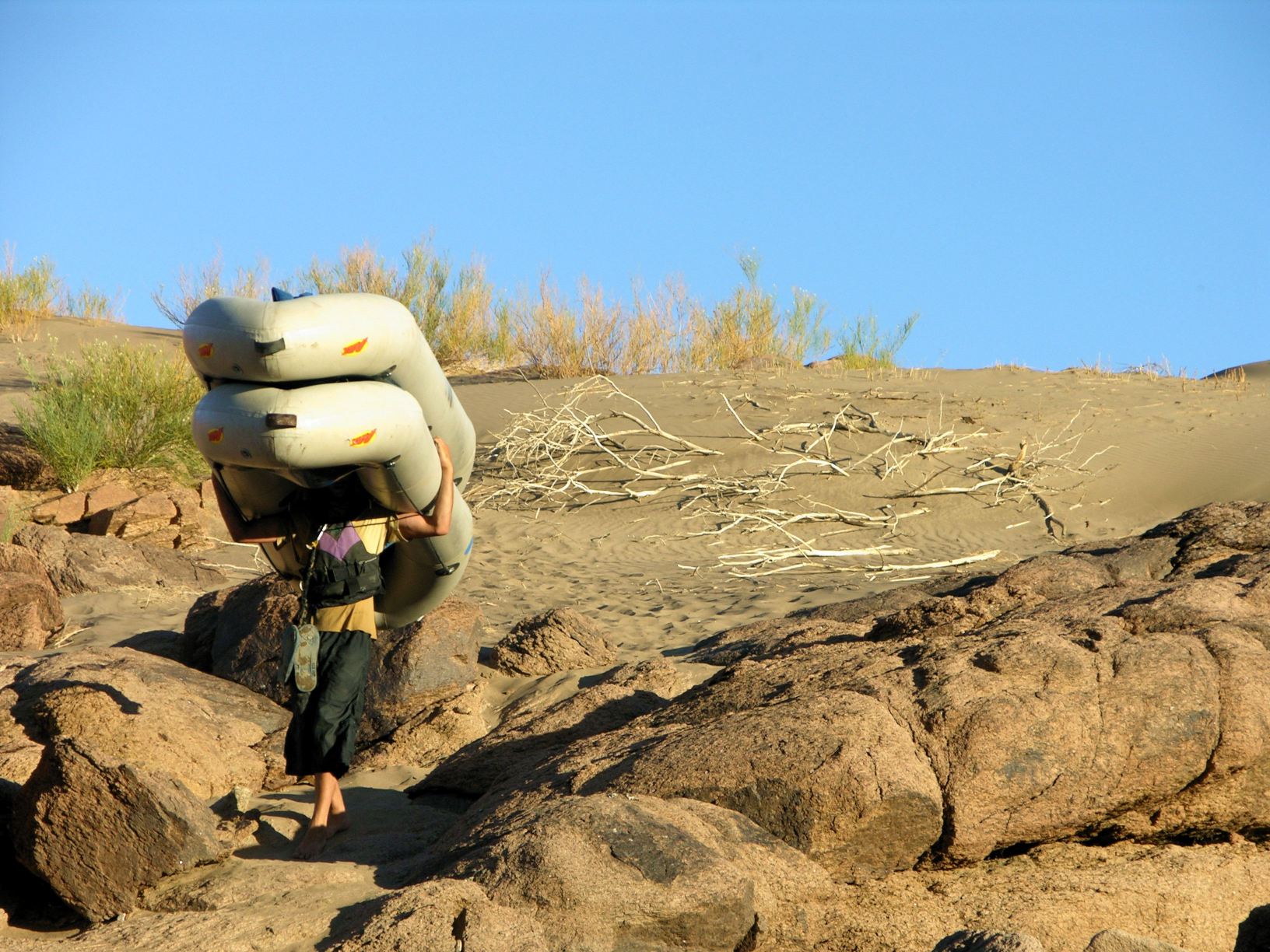
Our main entertainment that day was a trip in inflatable kayaks down the Orange. You could go overnight, but the river runs through an inhabited area and there's little to see on the banks. There are no steep rapids, either, so a day on the water is plenty. It was run by a local company, the Kalahari Adventure Center. The price for two was 550 rand. By South African standards you could perfectly well arrange it yourself, as long as you found something to float on. Nobody would arrest you for camping on the bank unless you went out of your way to cause trouble. The people were peaceful and friendly, in spite of all we'd heard about Black South Africans.
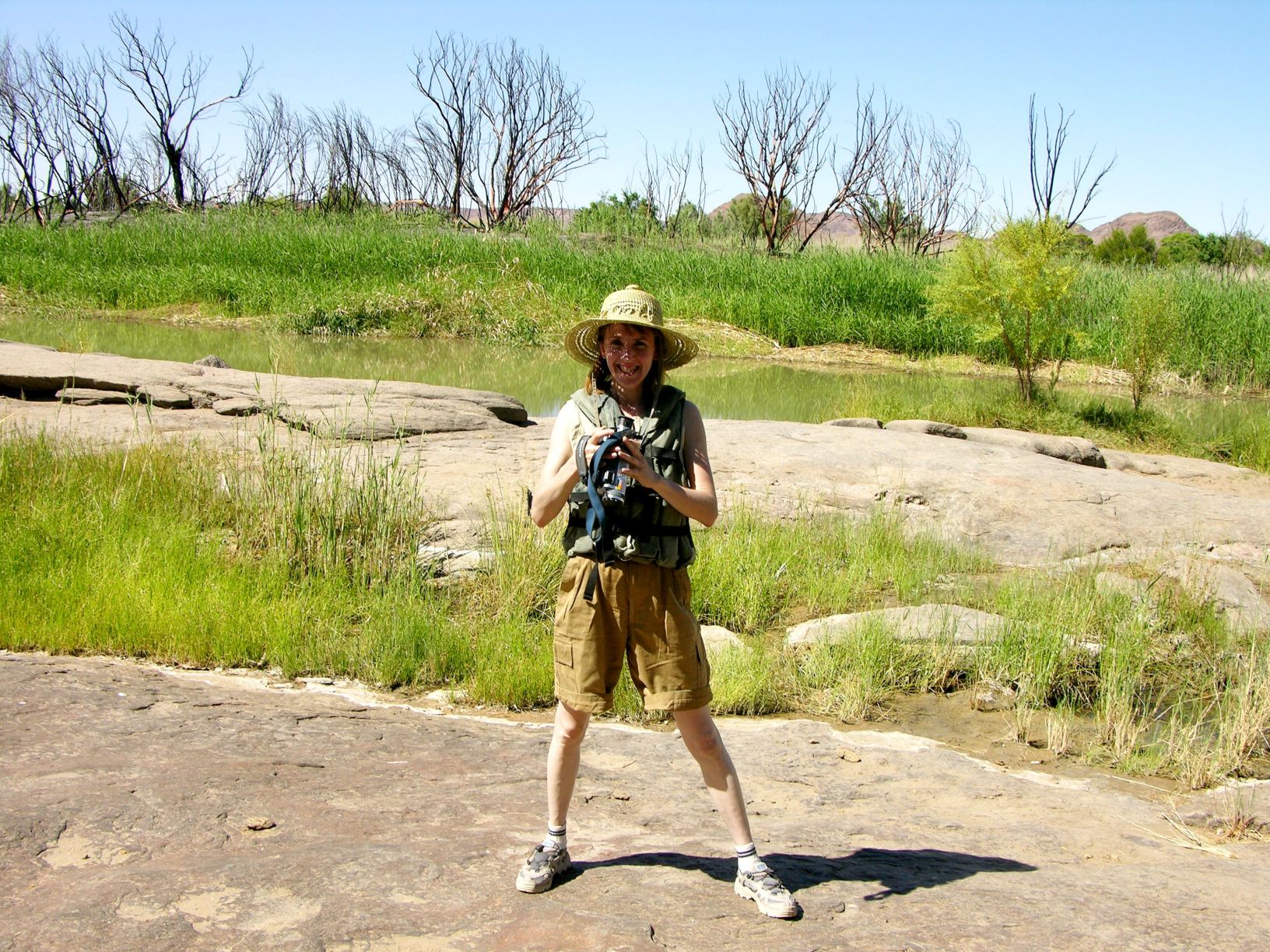
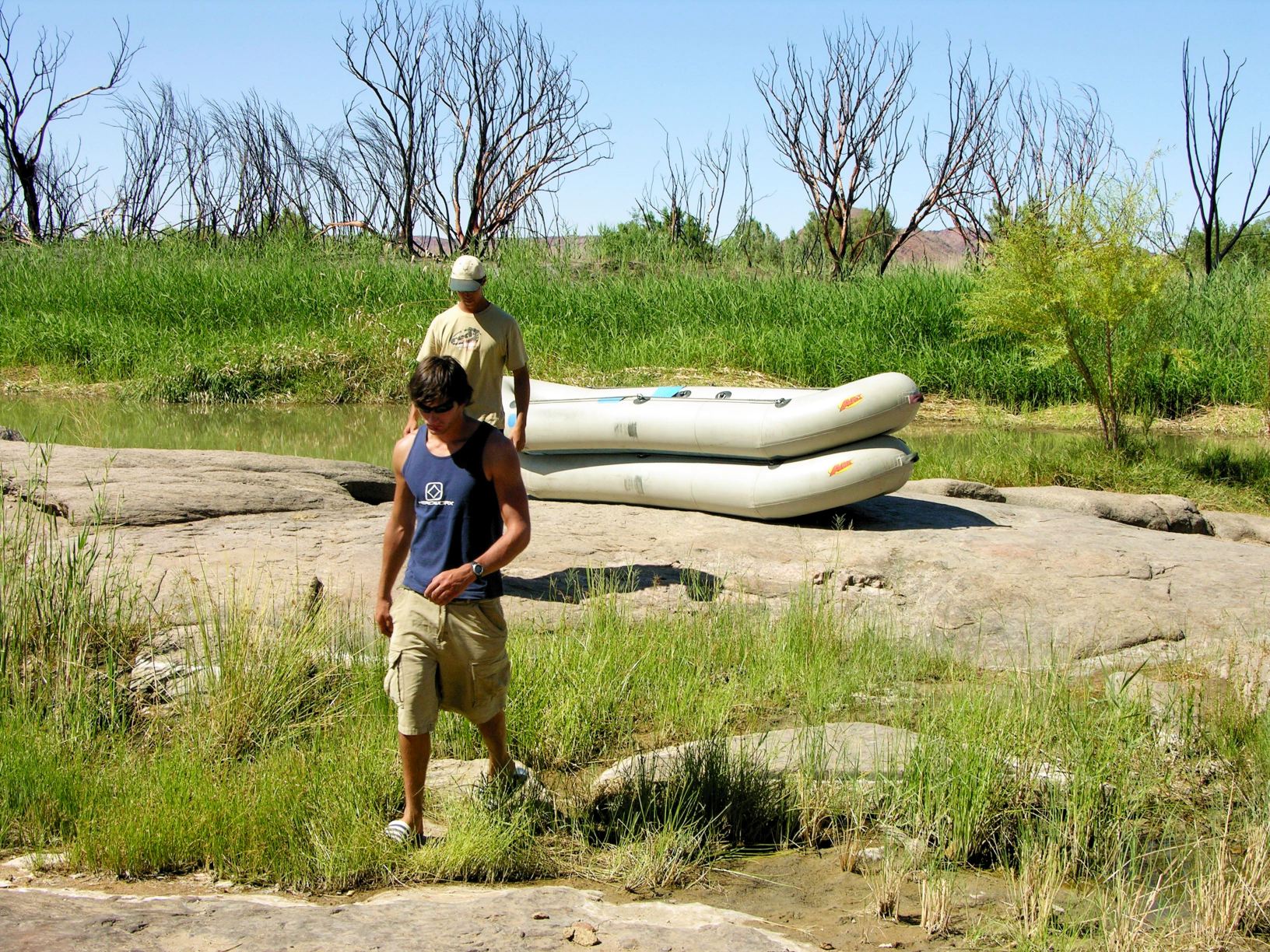
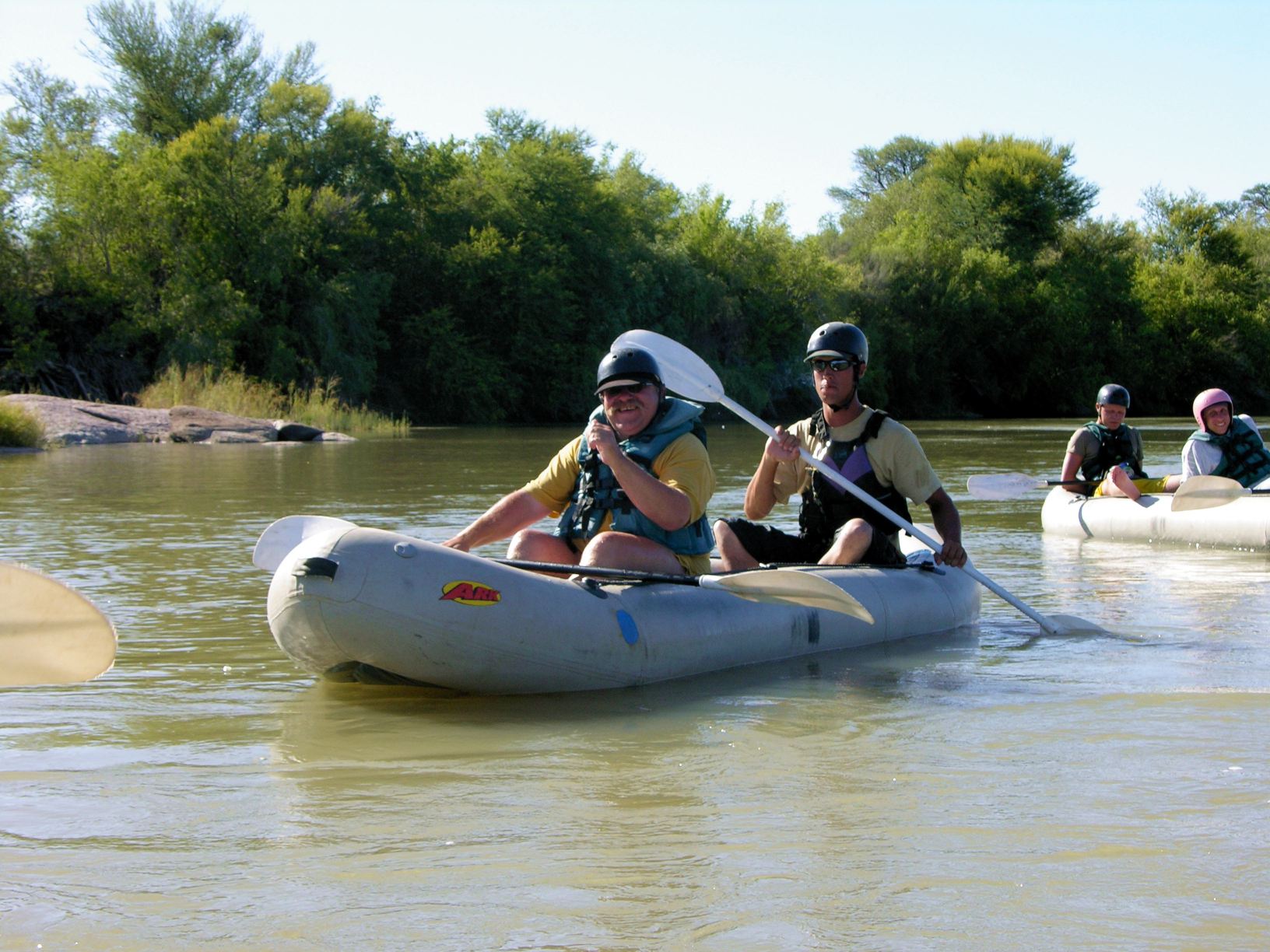
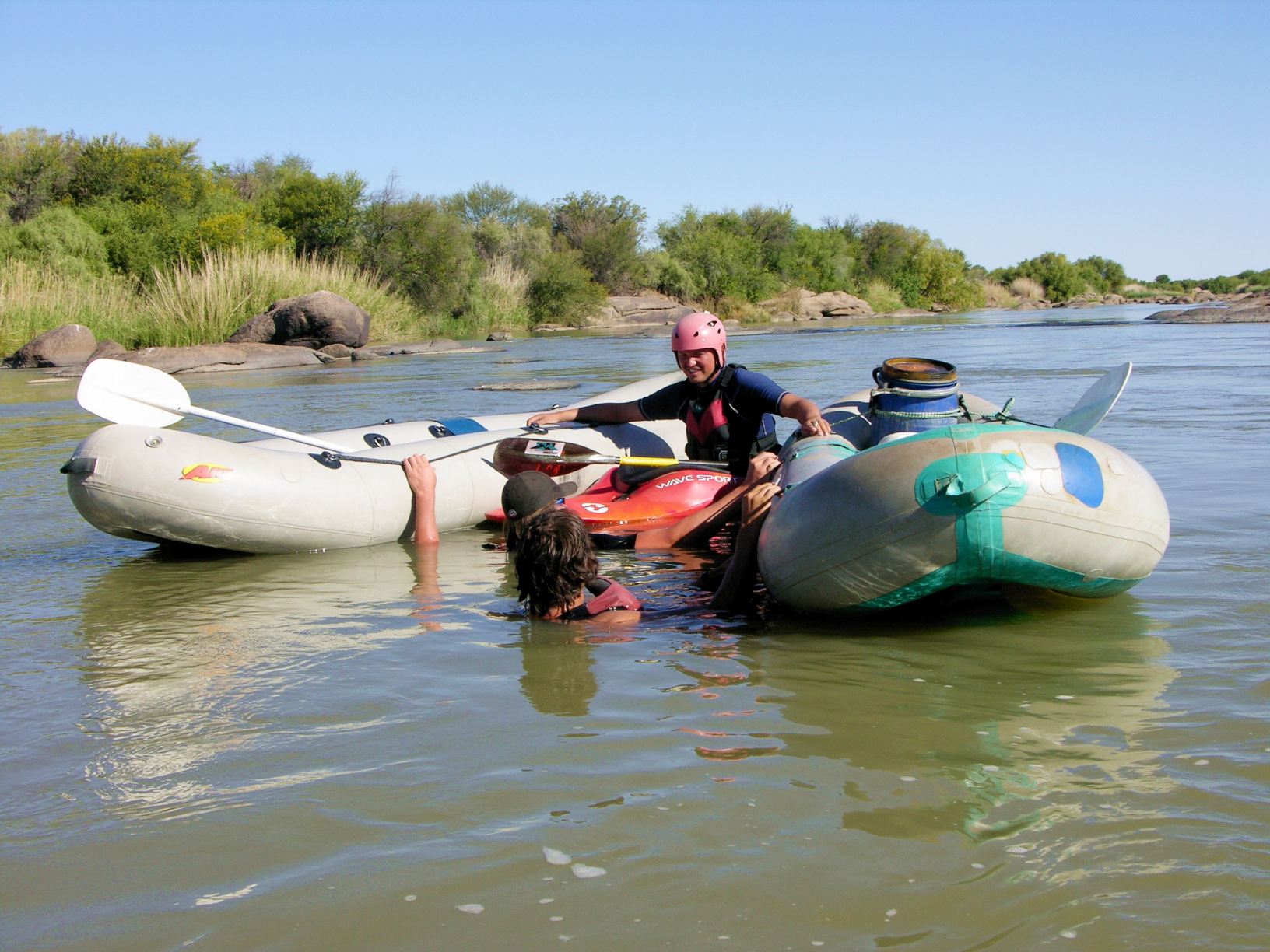
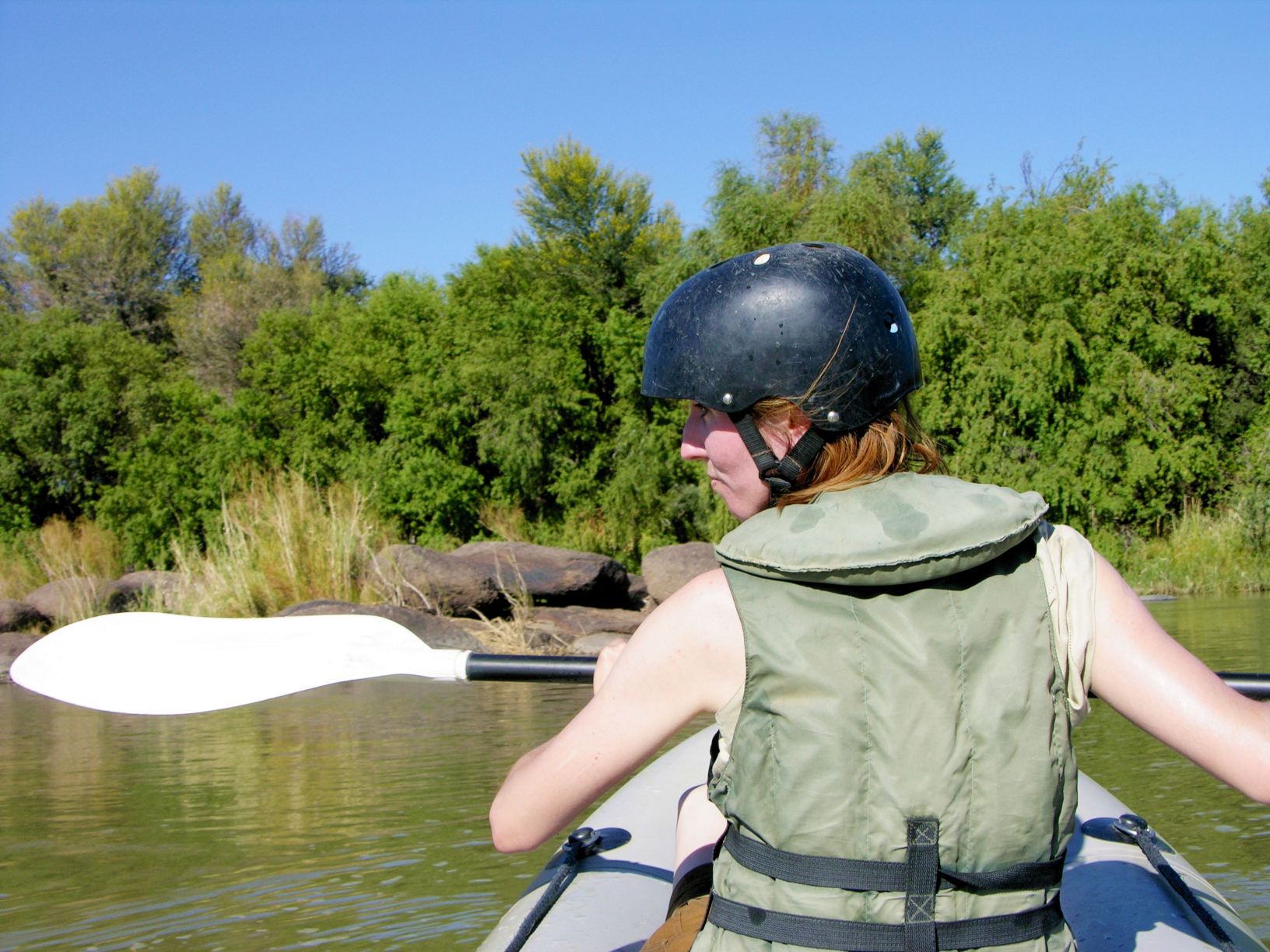
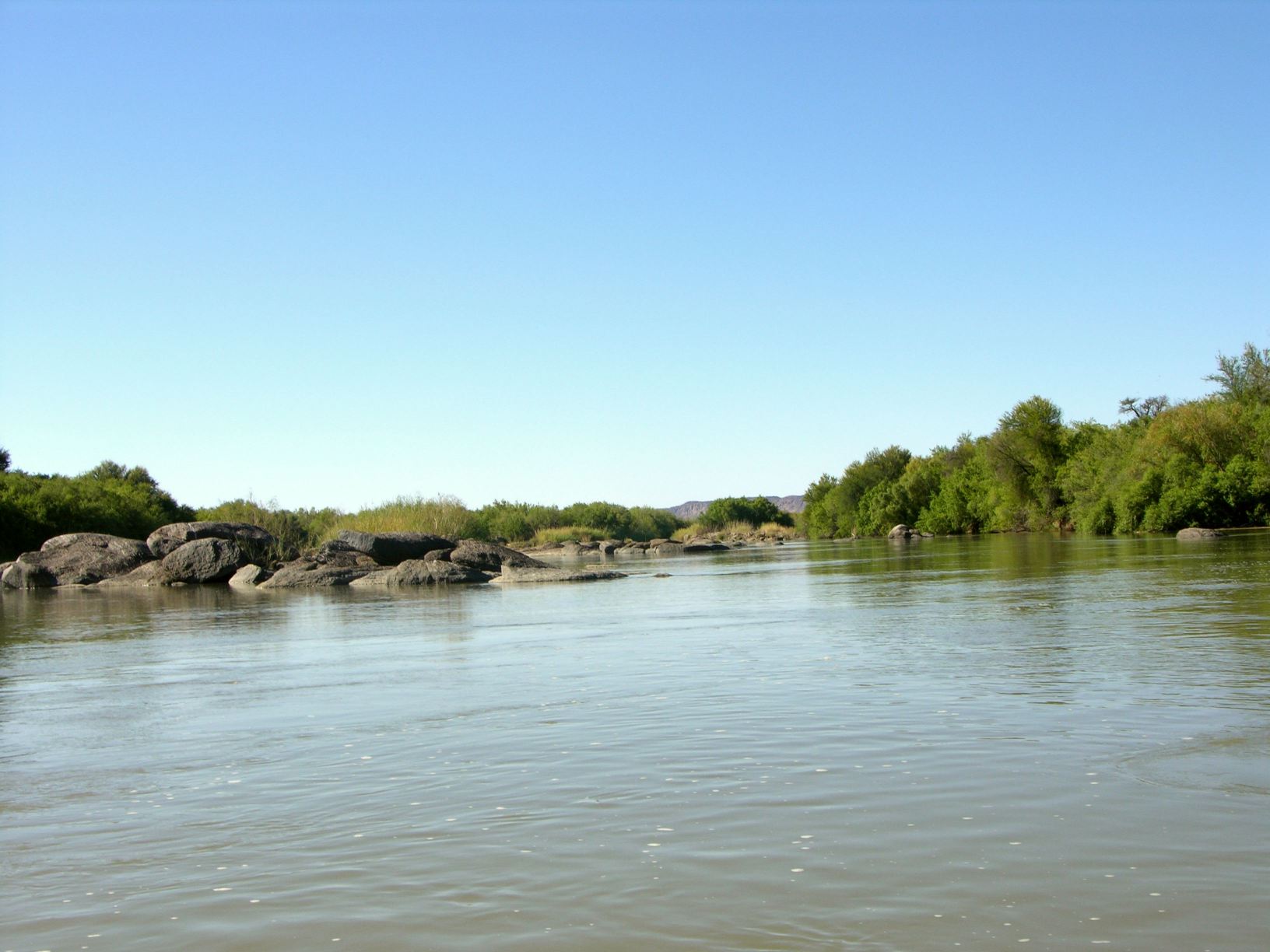
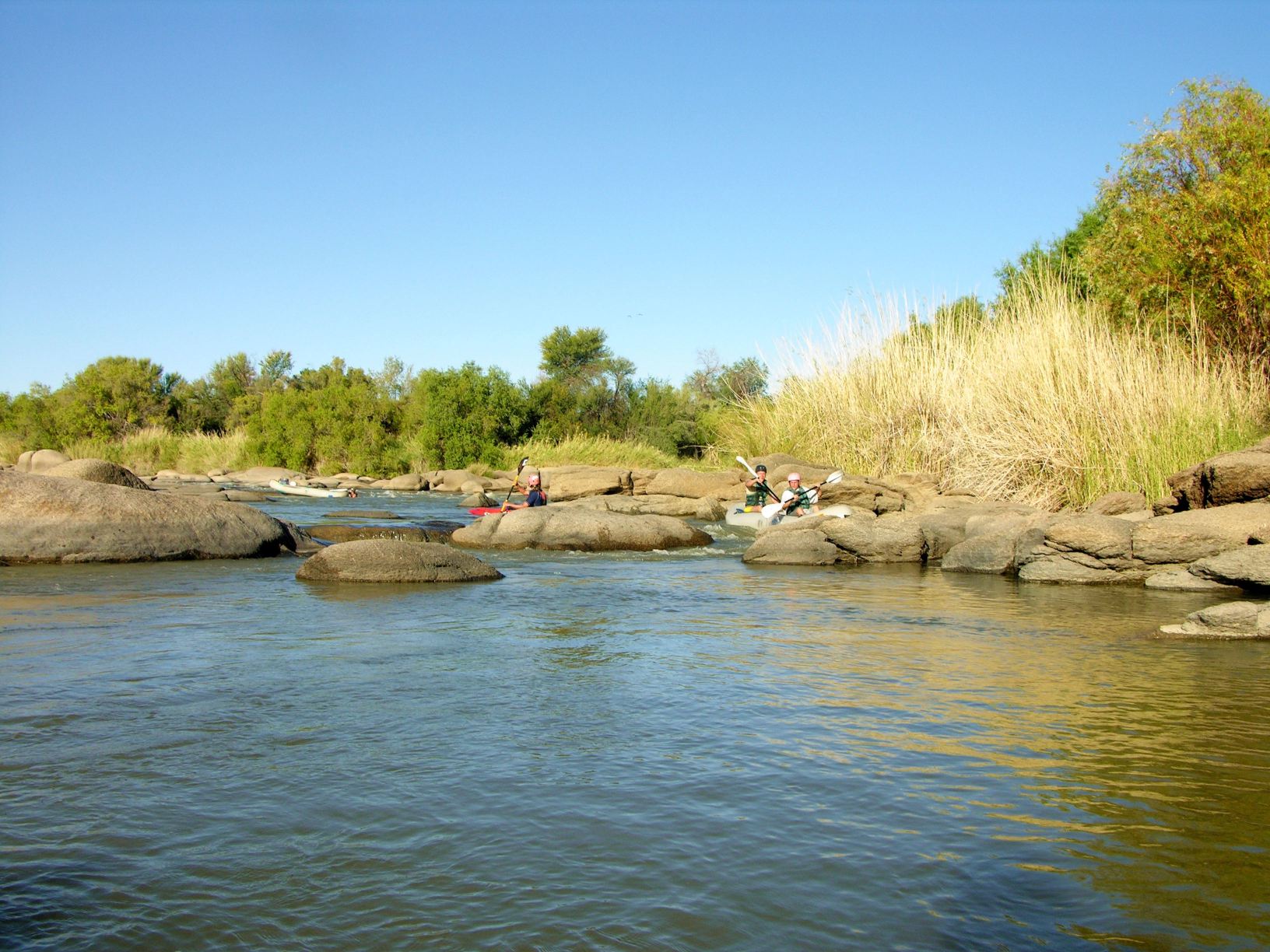
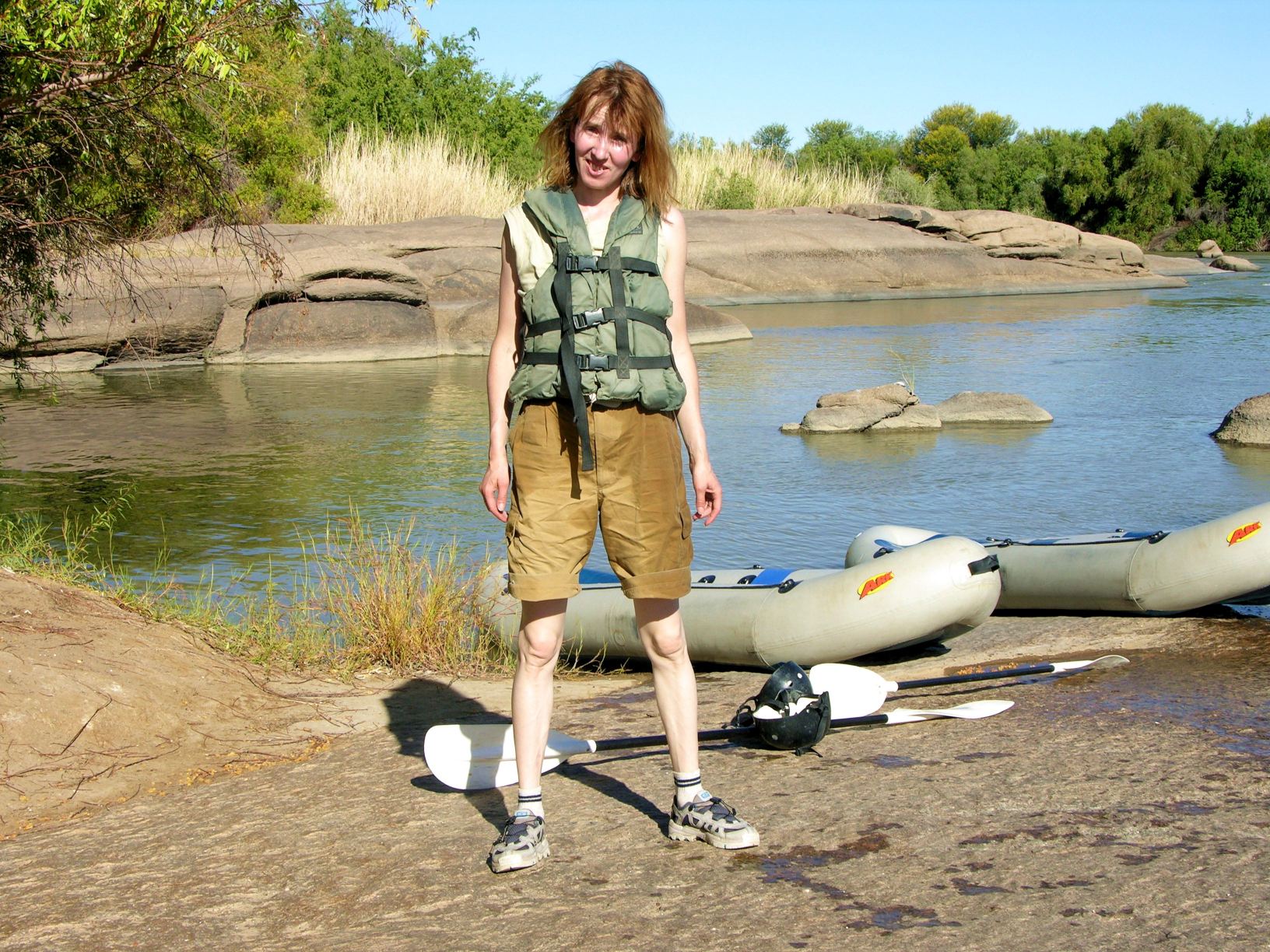
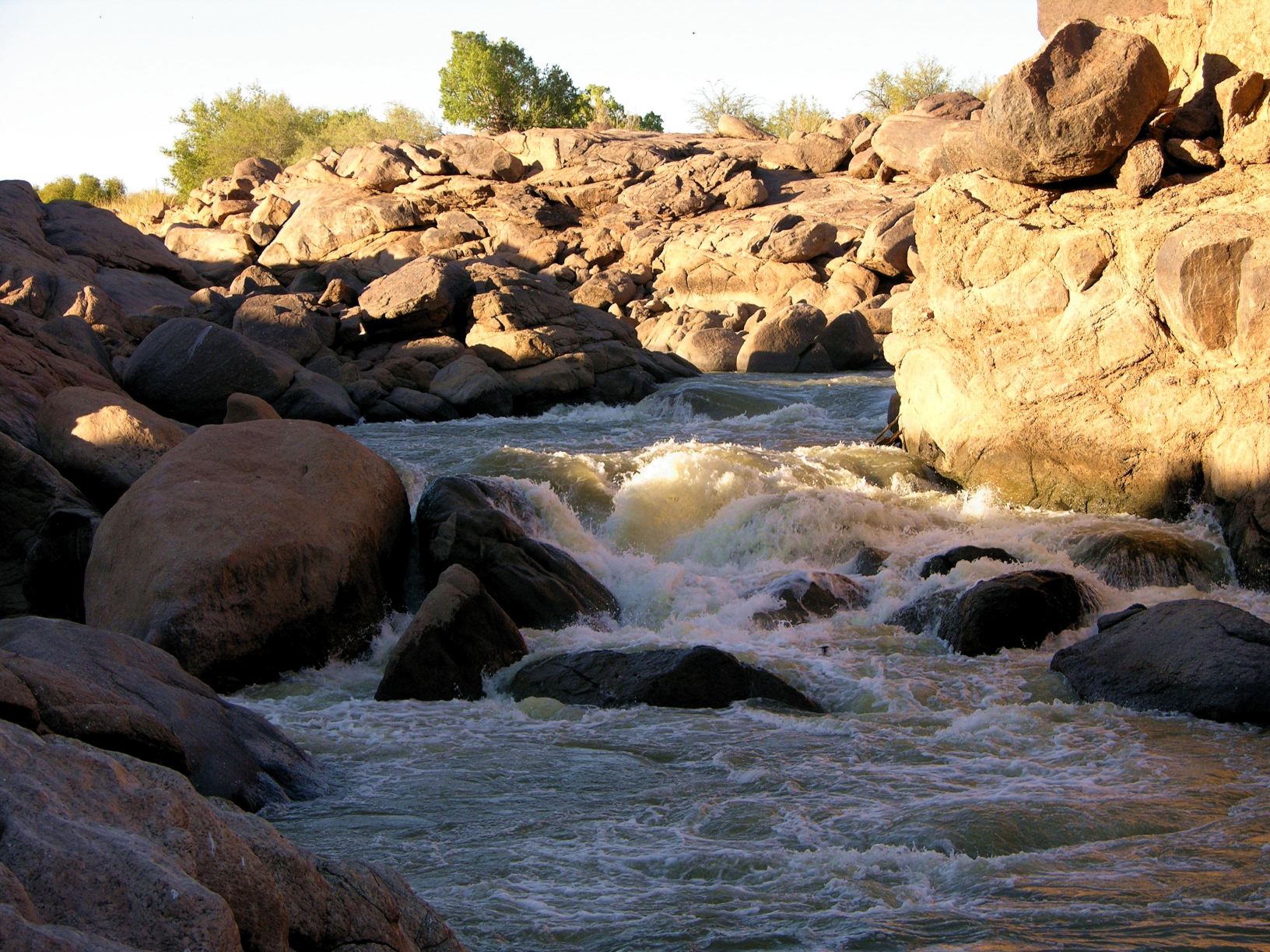
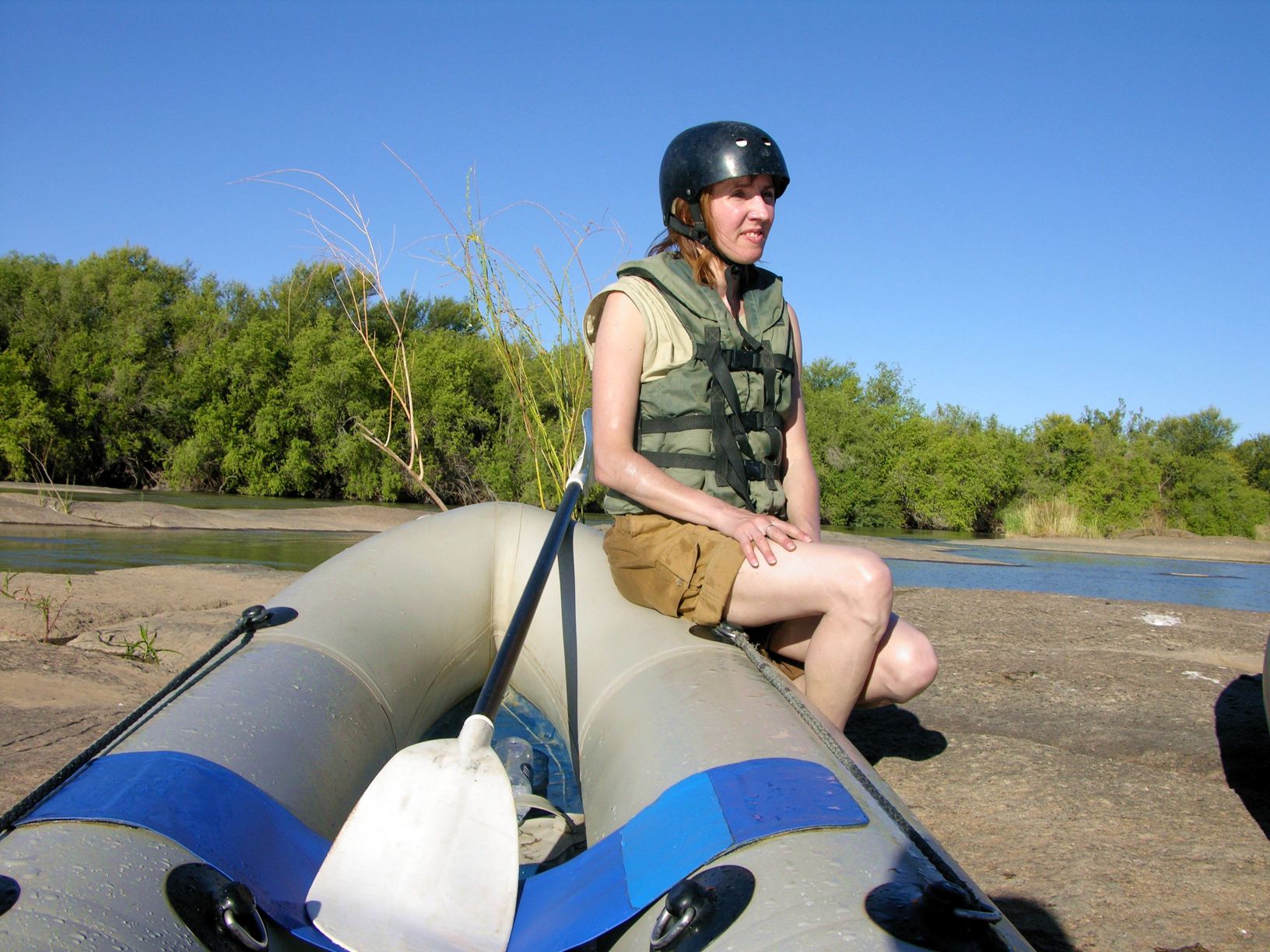
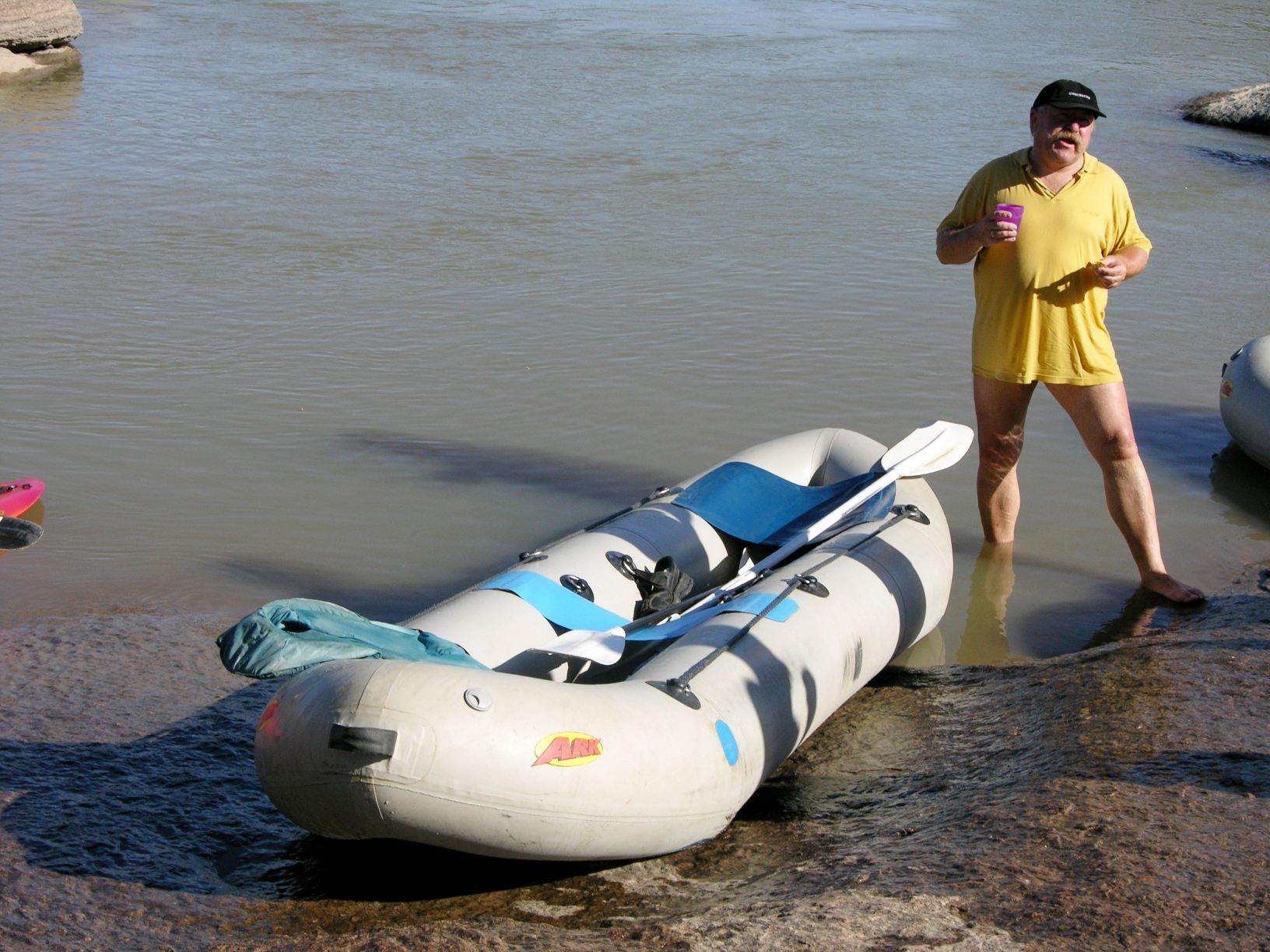
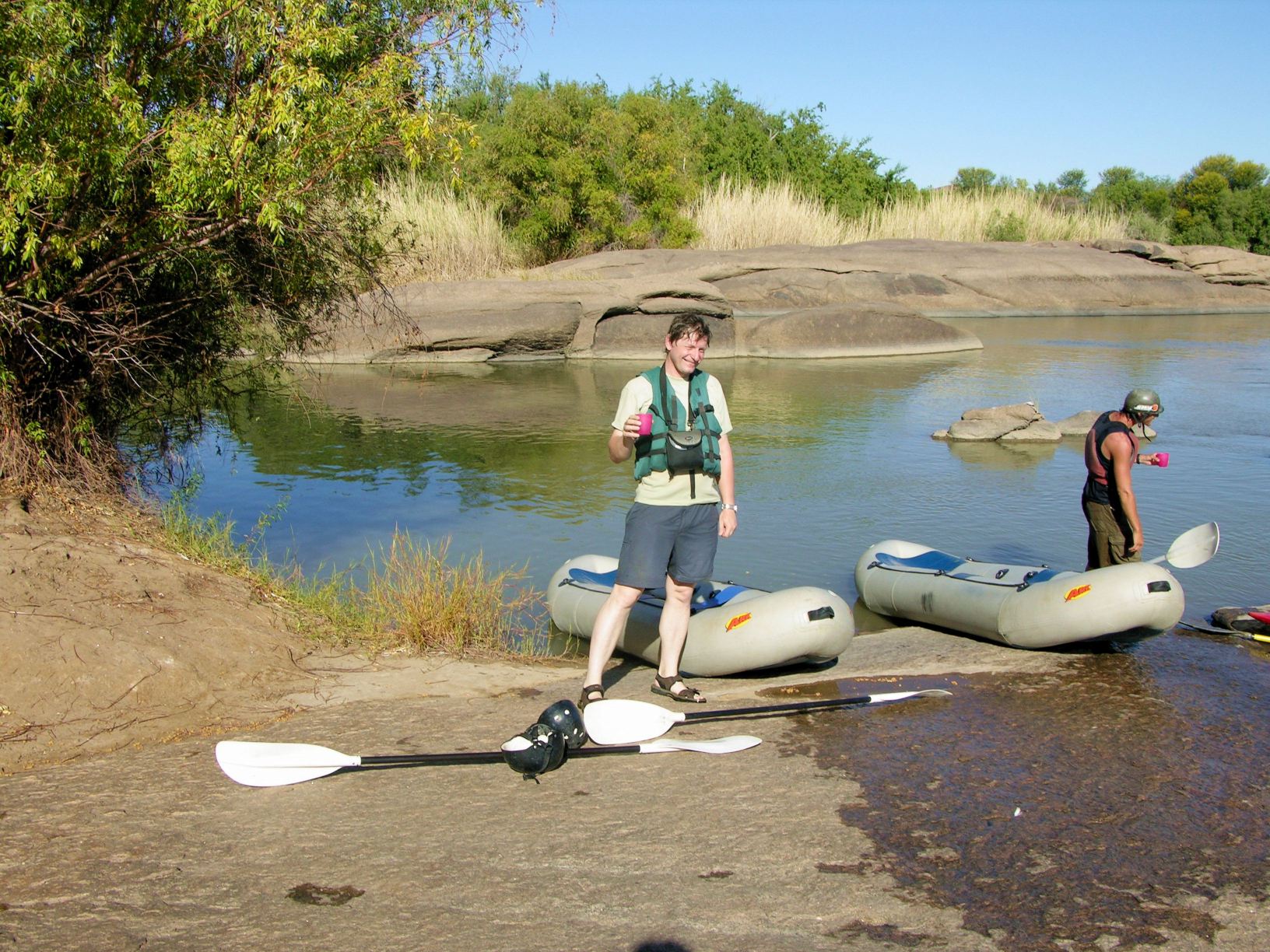
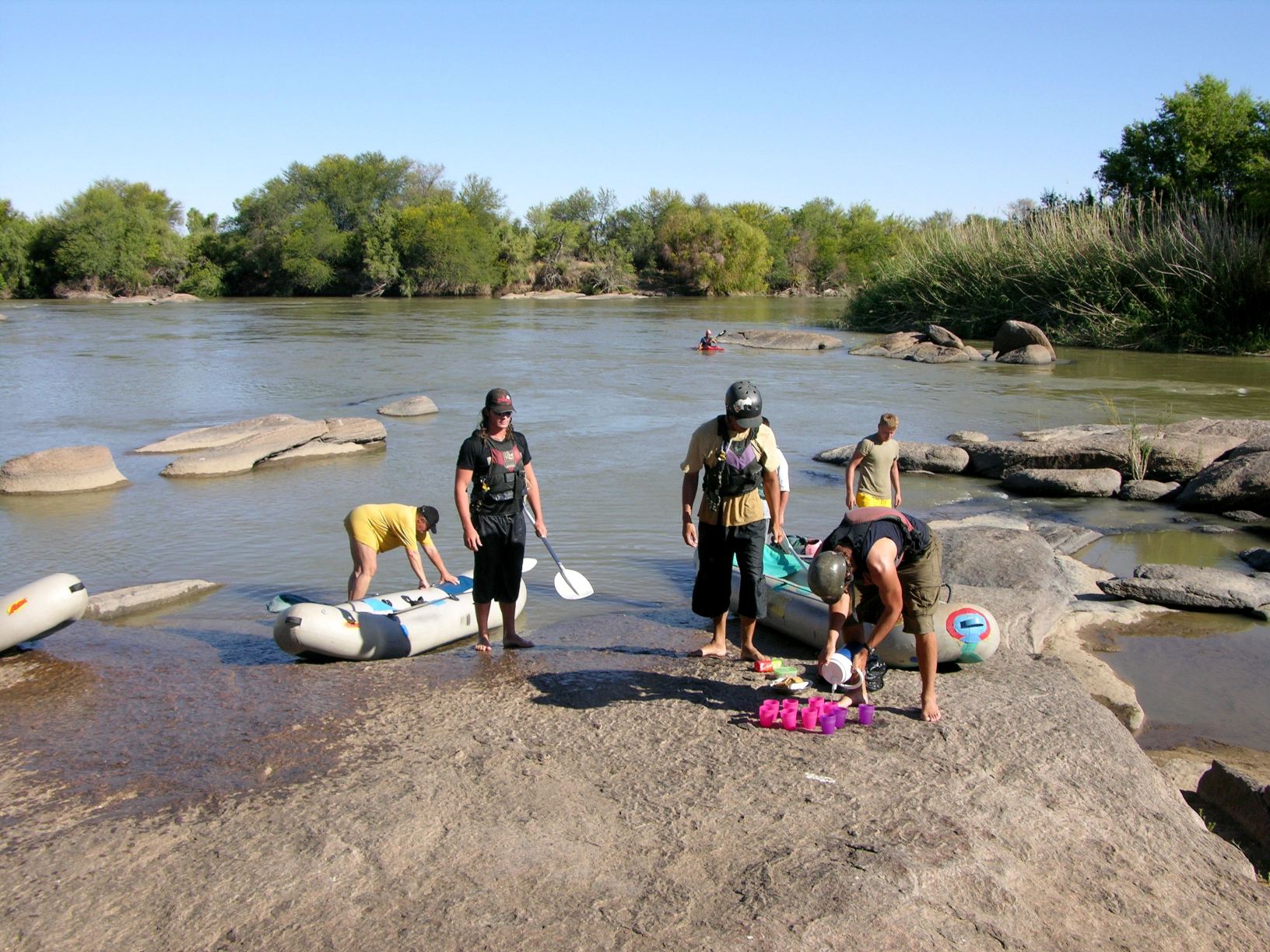
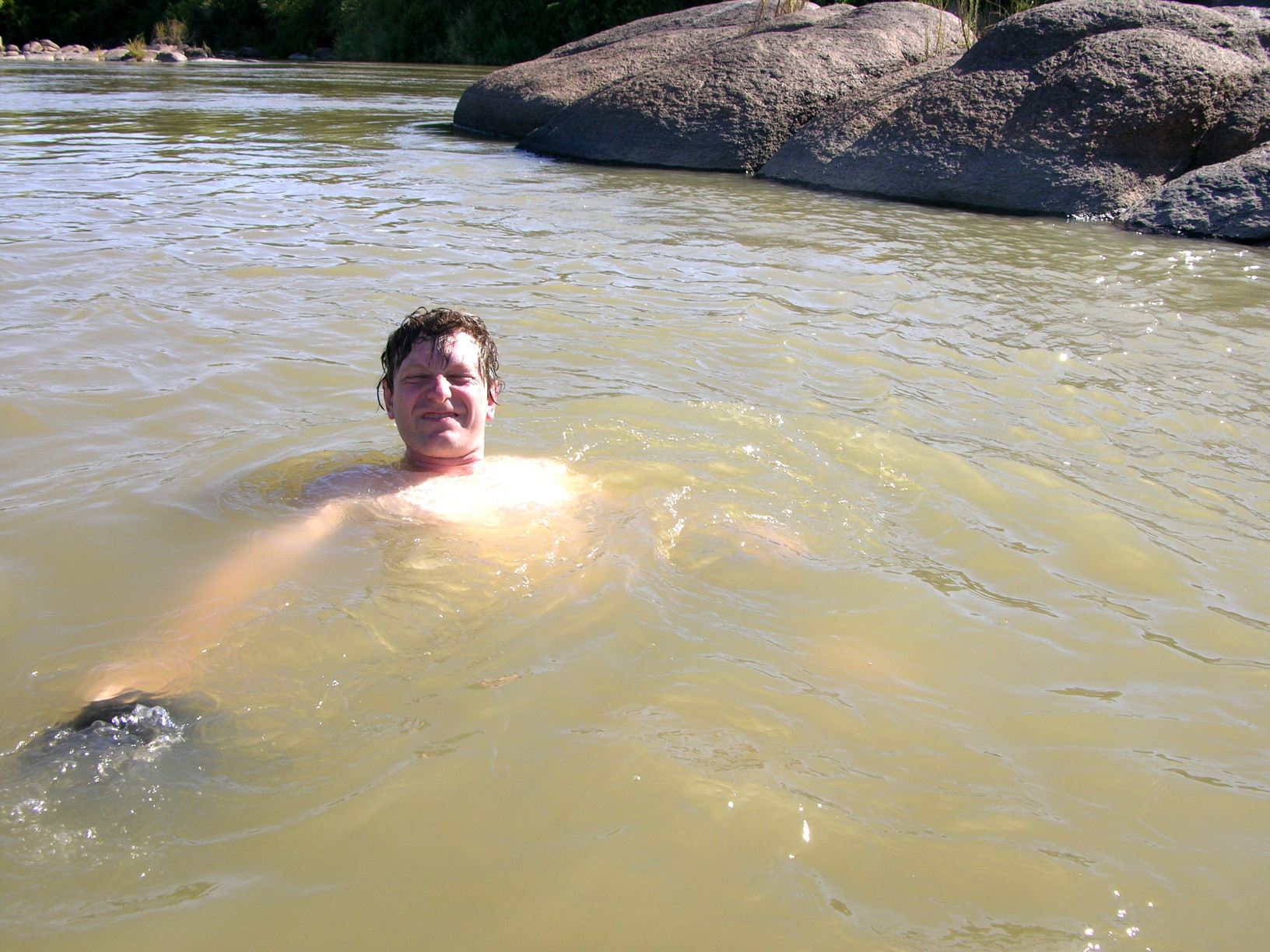
In all, we spent four hours on the water. Halfway along there's a break for lunch. You can swim in the river and I did so many times. That's how my childhood dream of swimming in the Orange River came true. It's worth noting there's not a crocodile here, and since the surrounding country is practically desert there aren't many other parasites either.
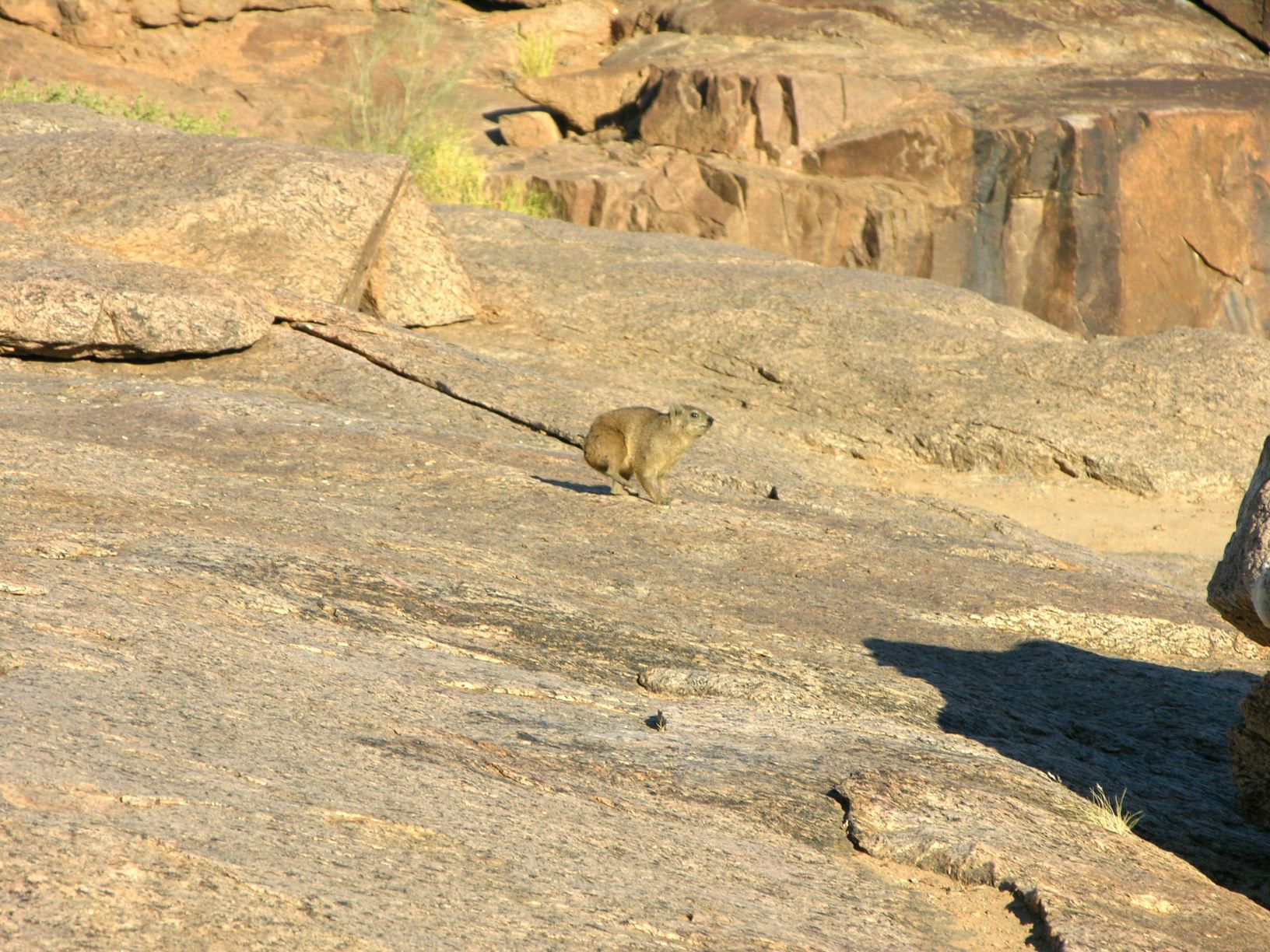
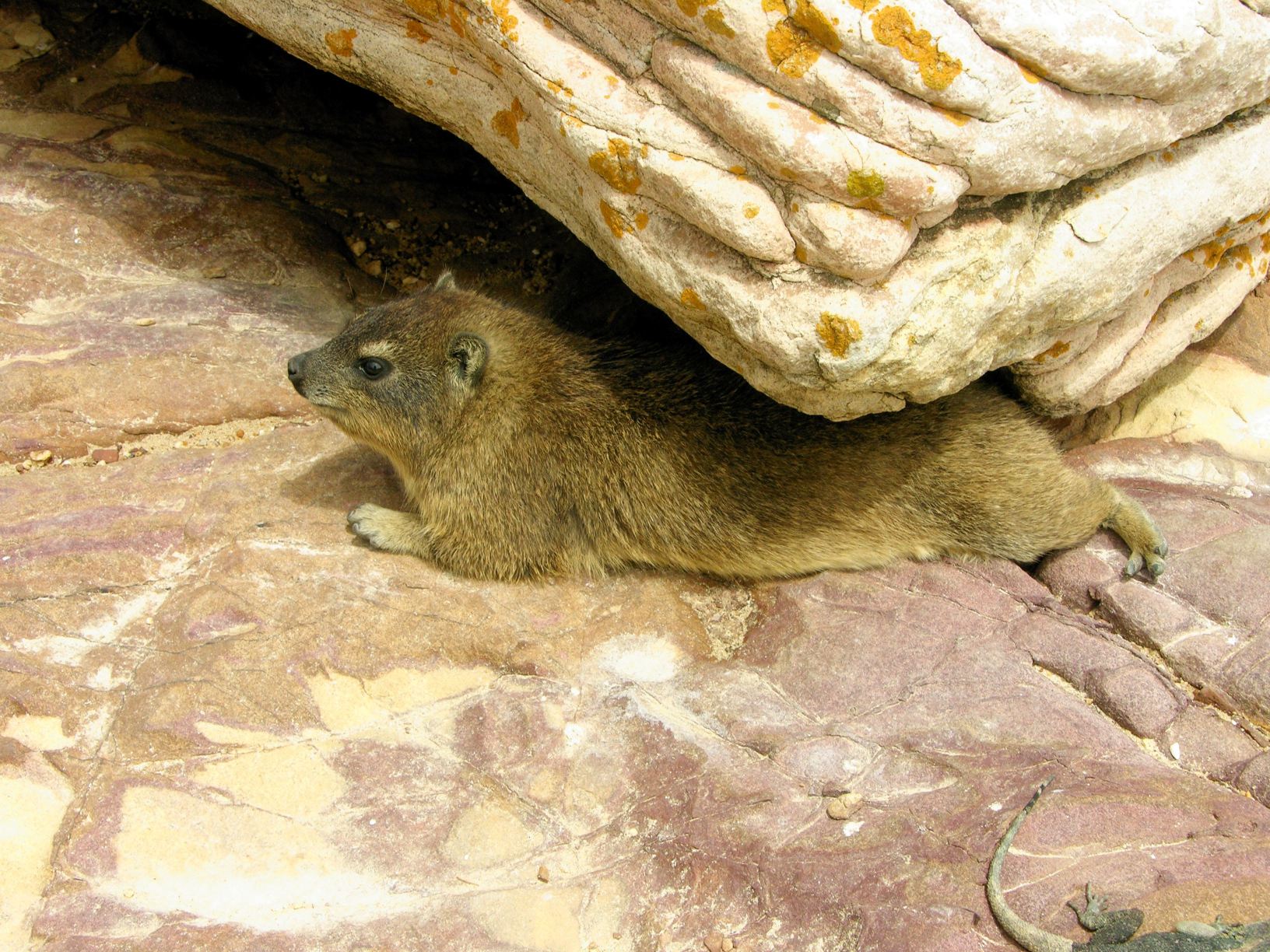
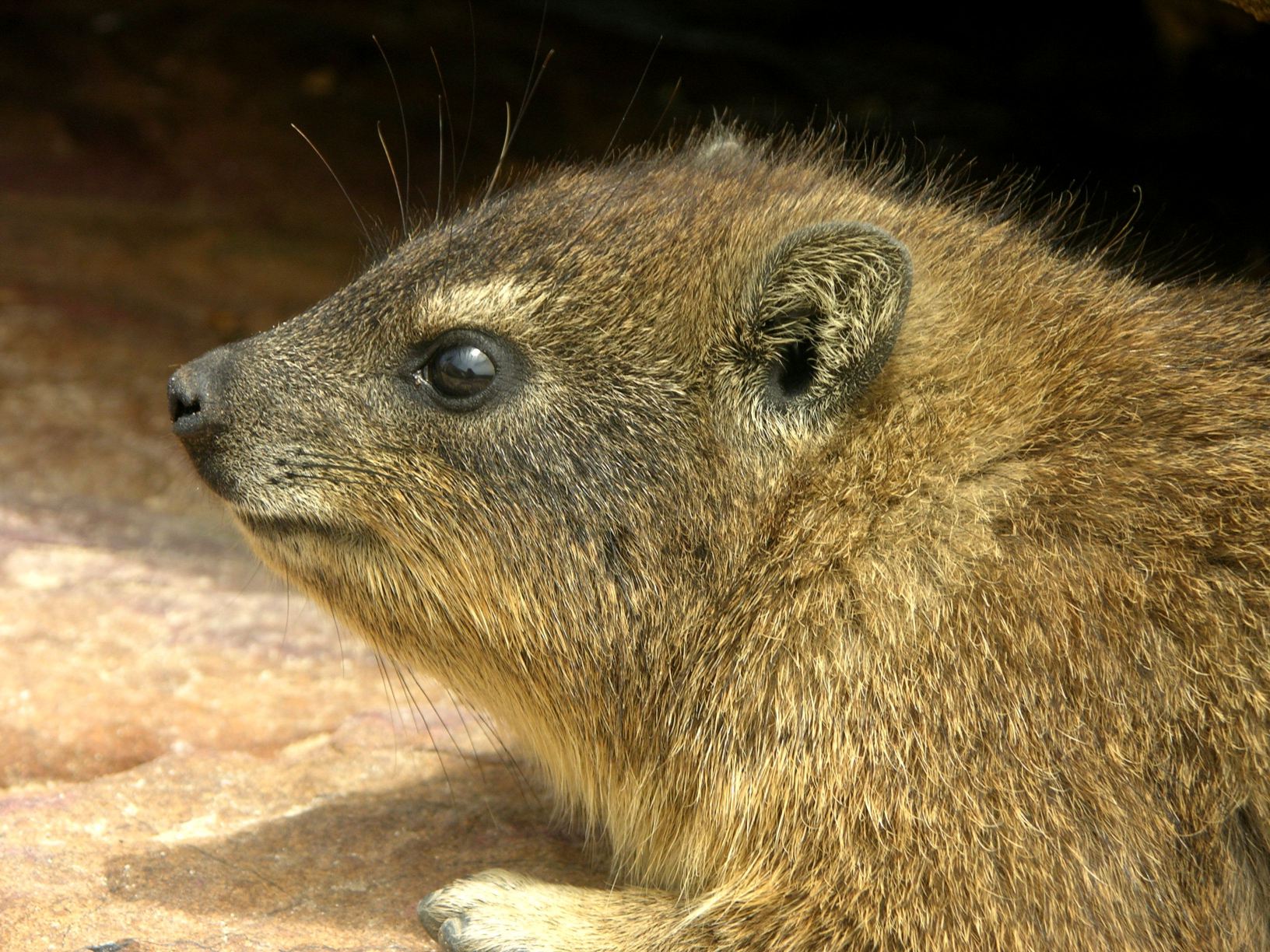
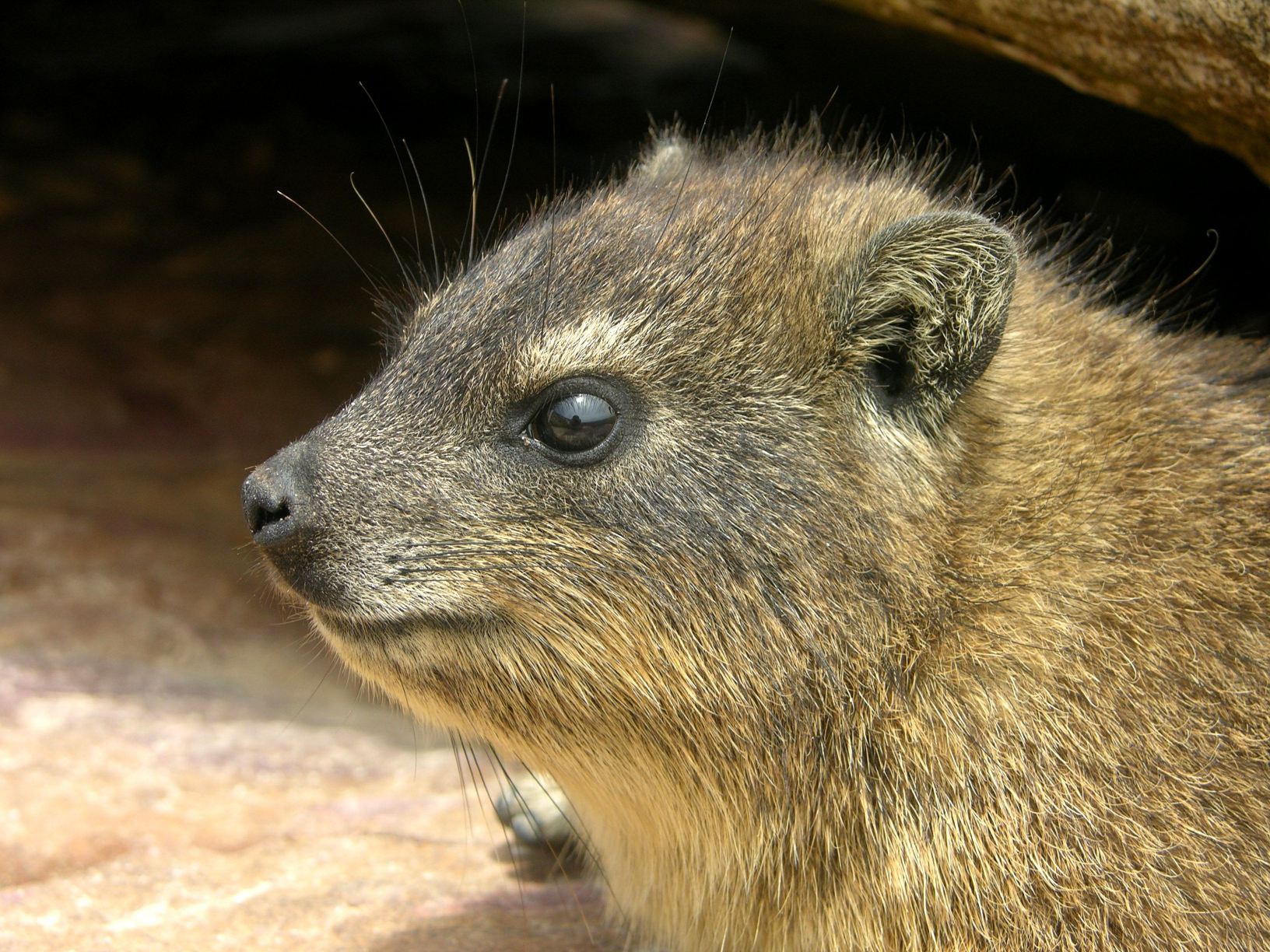
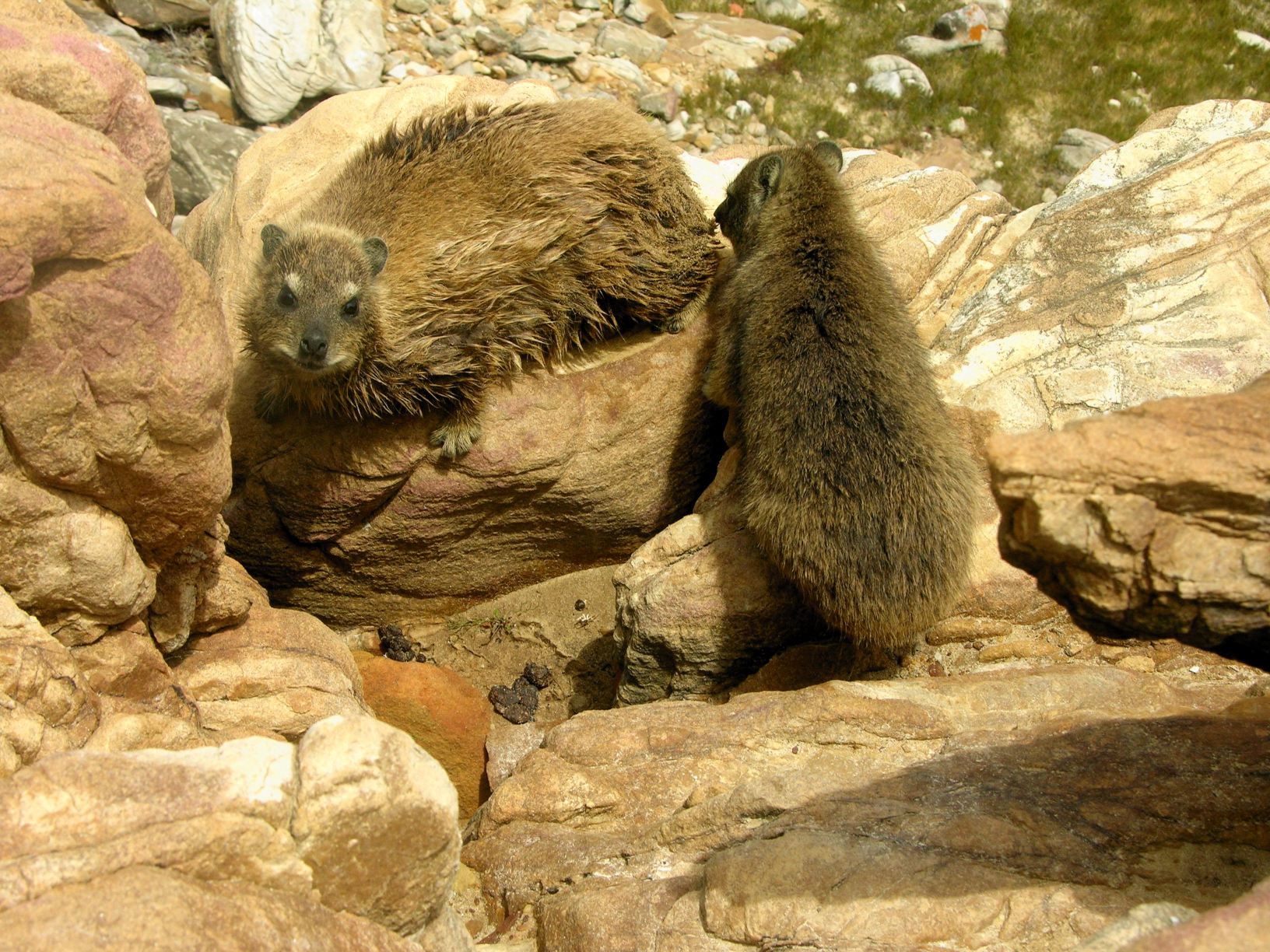
We started the next day earlier and went out into the park at dawn. Compared with other parks, there's not much wildlife. It's difficult to see even the most unremarkable antelope. There are no predators, but plenty of baboons and, best of all, dassies. They're all over South Africa, for that matter. It looks like an ordinary animal, a furry ball on clumsy little feet, but there's more to it than meets the eye. The dassie, or rock hyrax, is the elephant's closest relative. No, it isn't big, it's smaller than a dog. Smaller than a hare, maybe. It has no trunk, no bristles, nothing, and yet it's related. Every family has its odd one out. Still, they're relatives. The two branches parted fifty million years ago. The dassie has kept an elephant's skeleton, scaled down, and a pregnancy lasting about a year, most unusual for such a little animal. The dassie hardly fears people at all, and sometimes you can get within a metre of one.
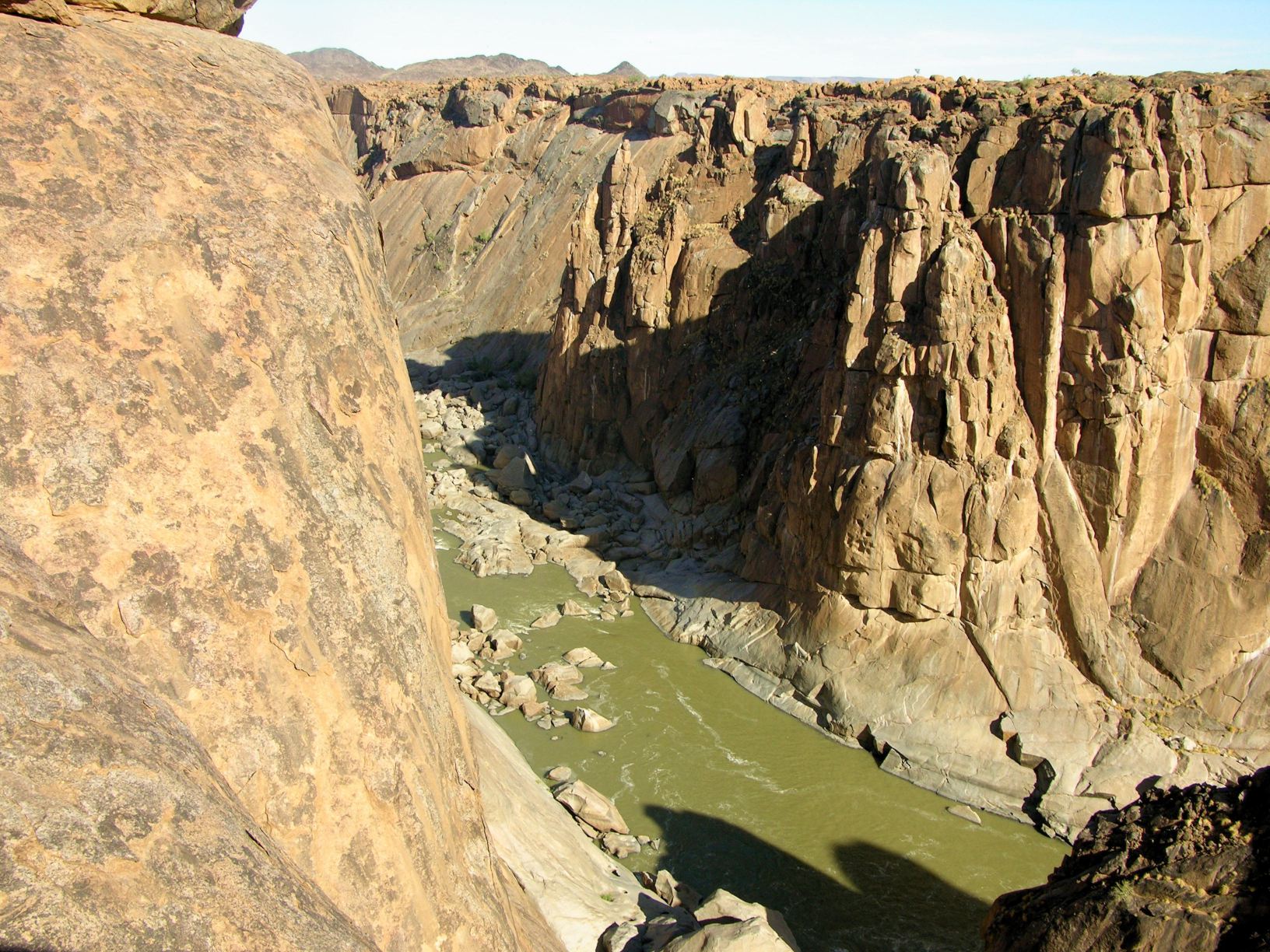
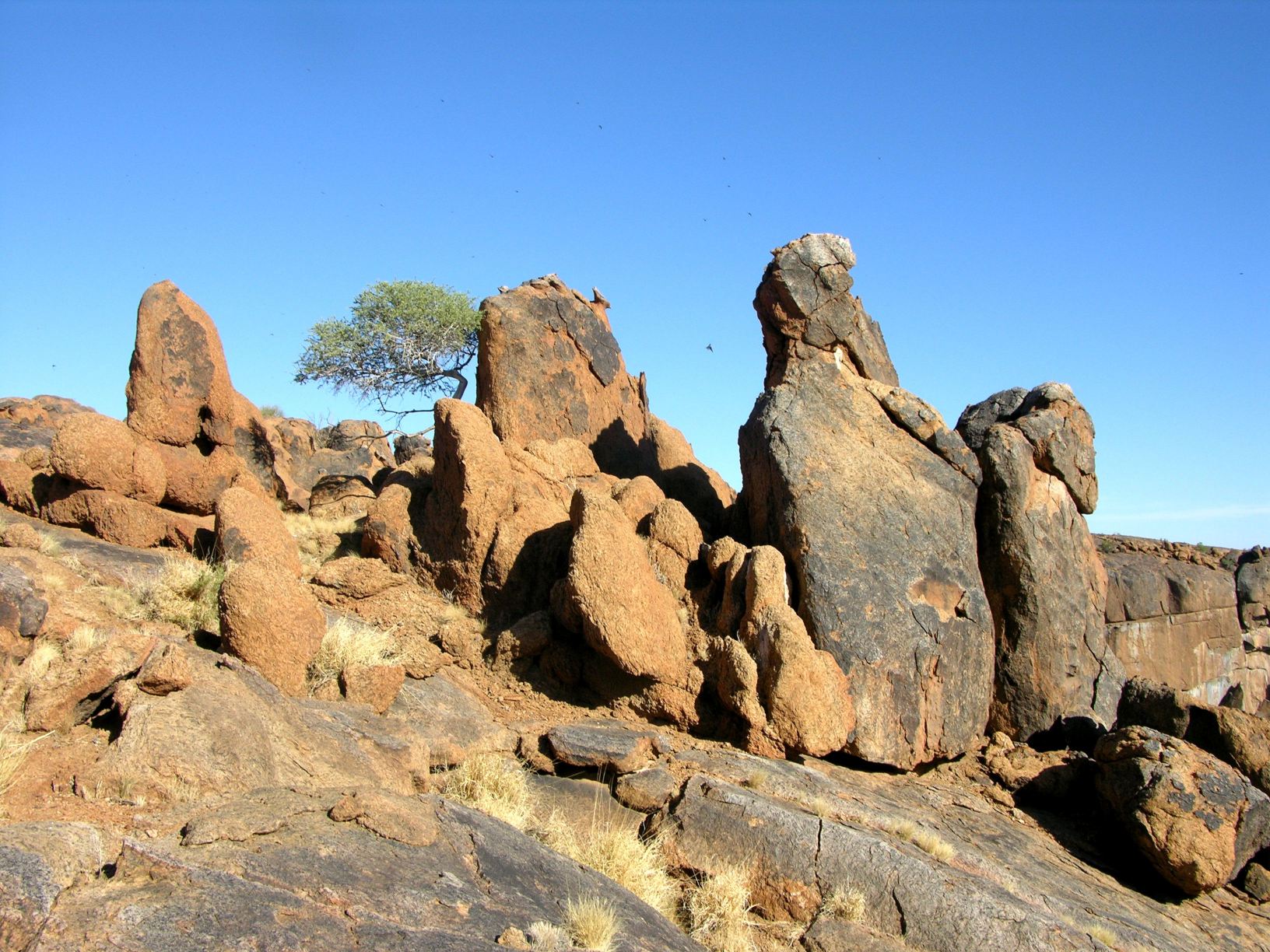
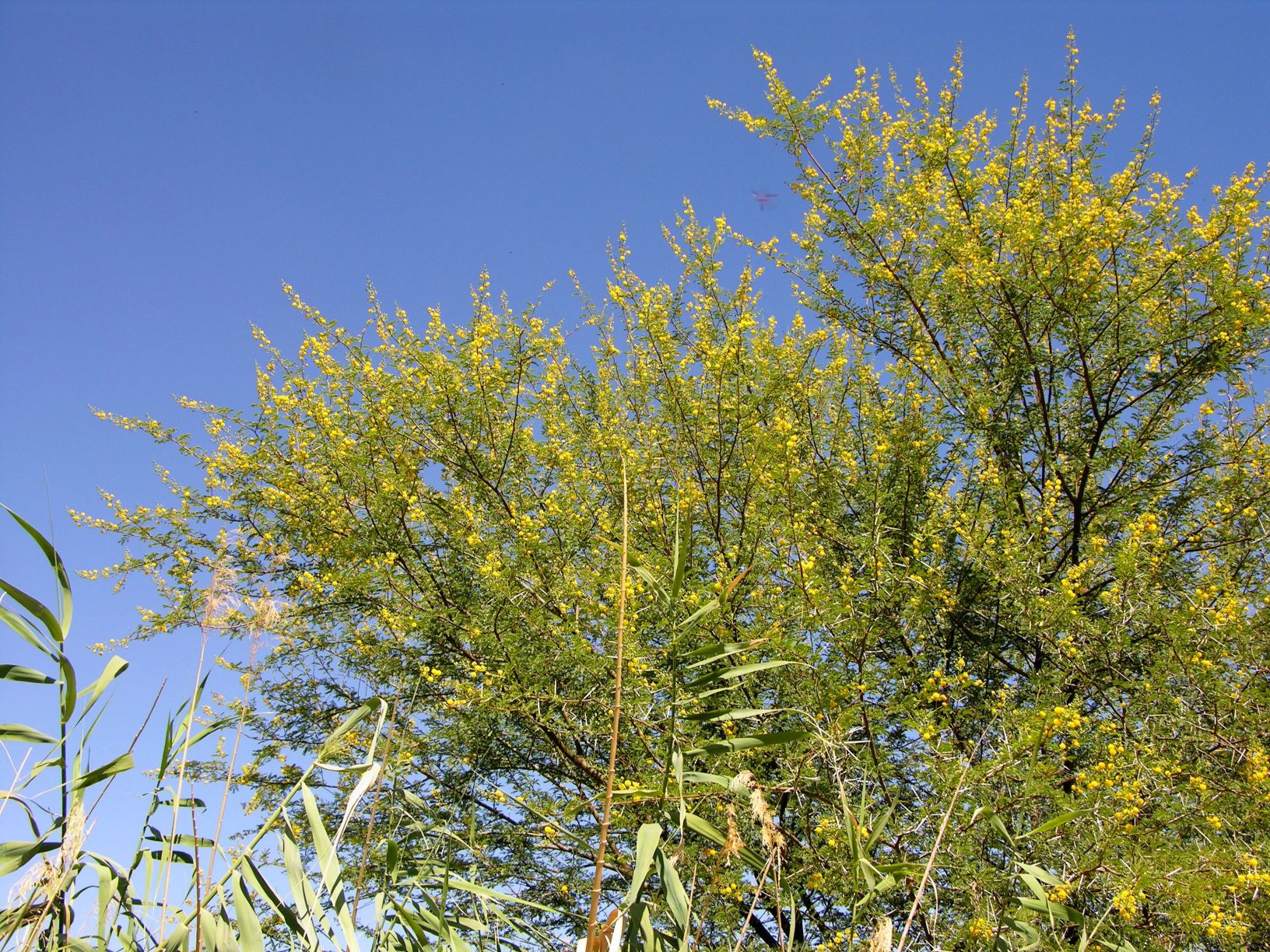
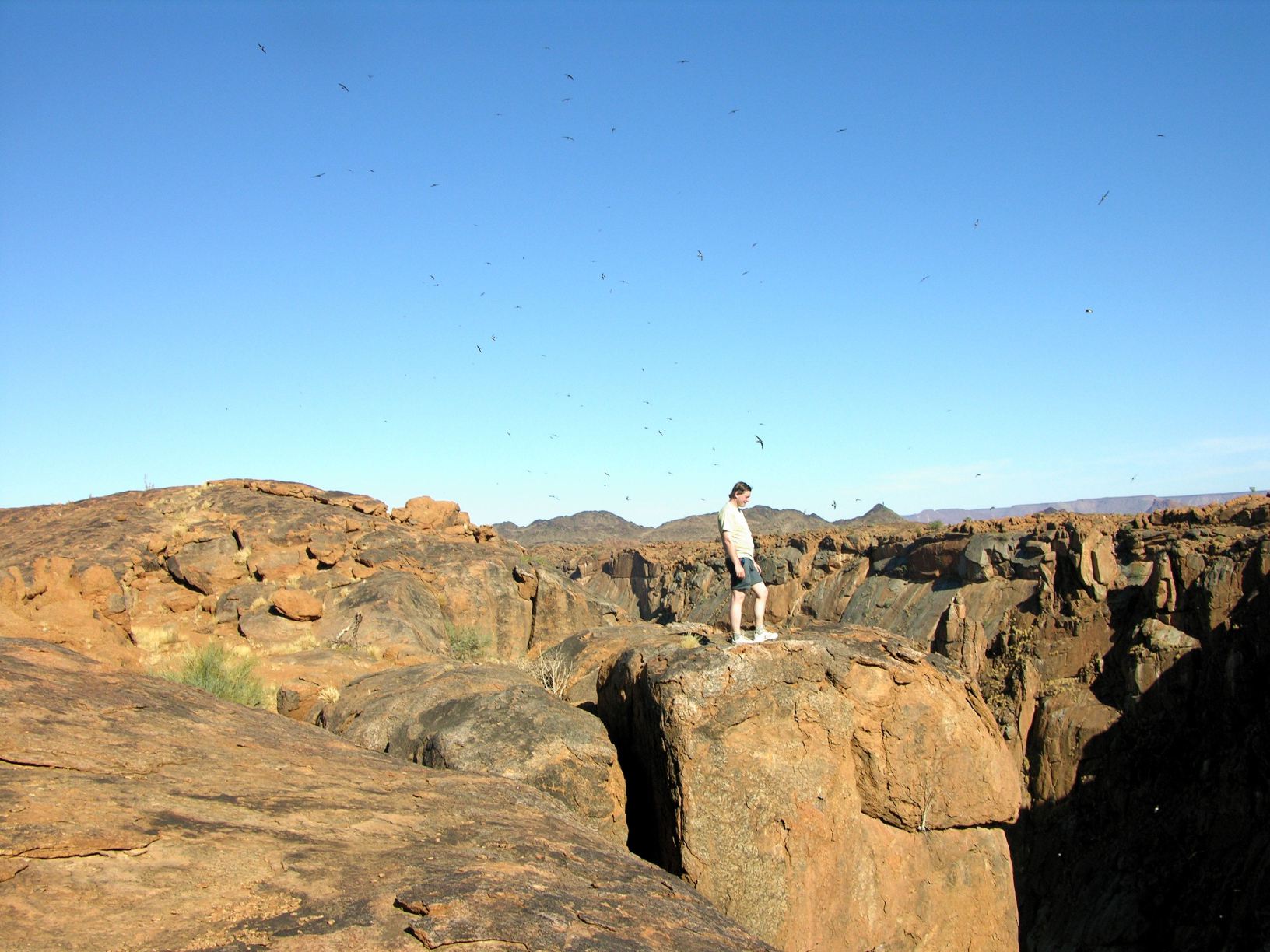
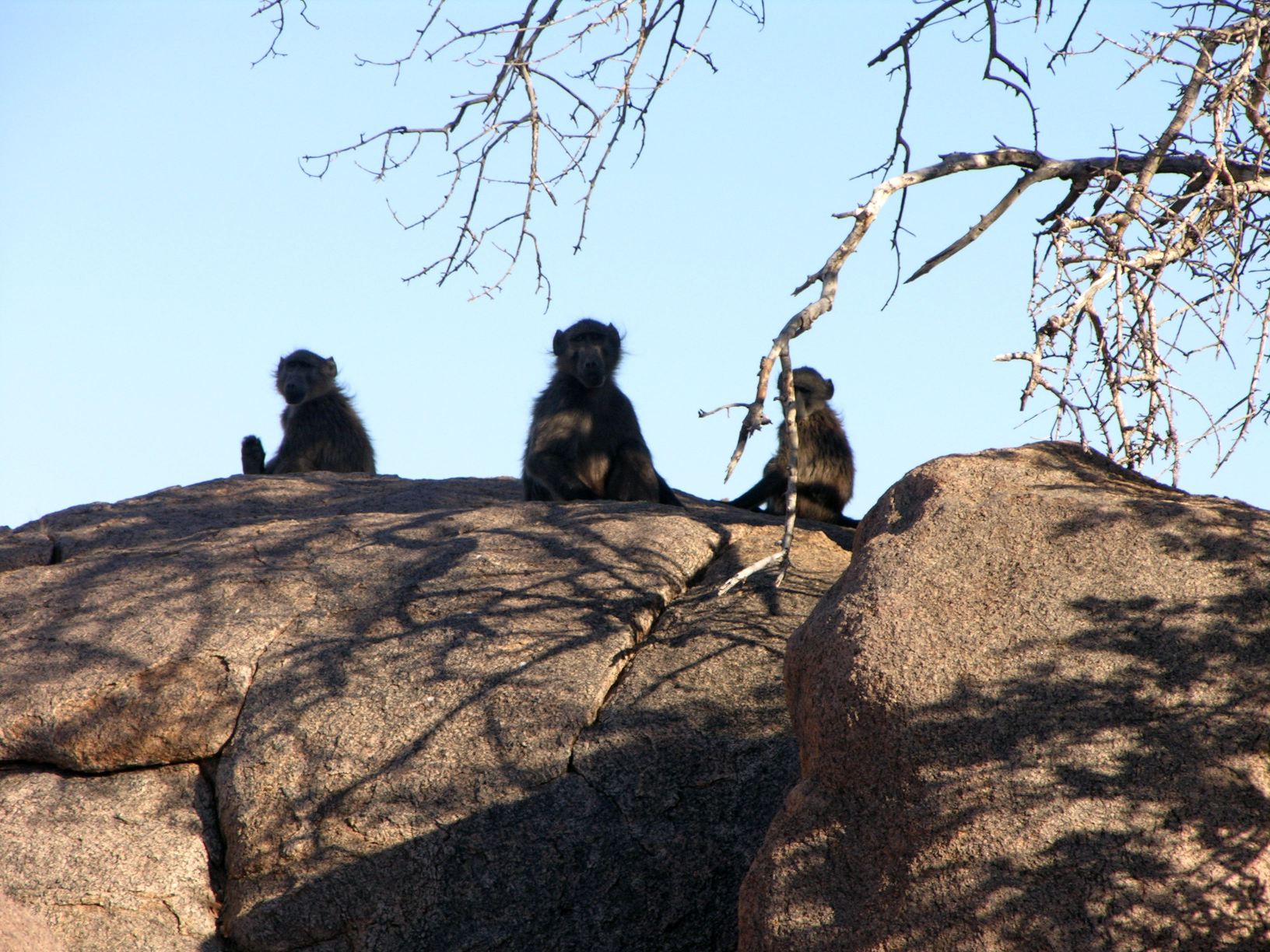
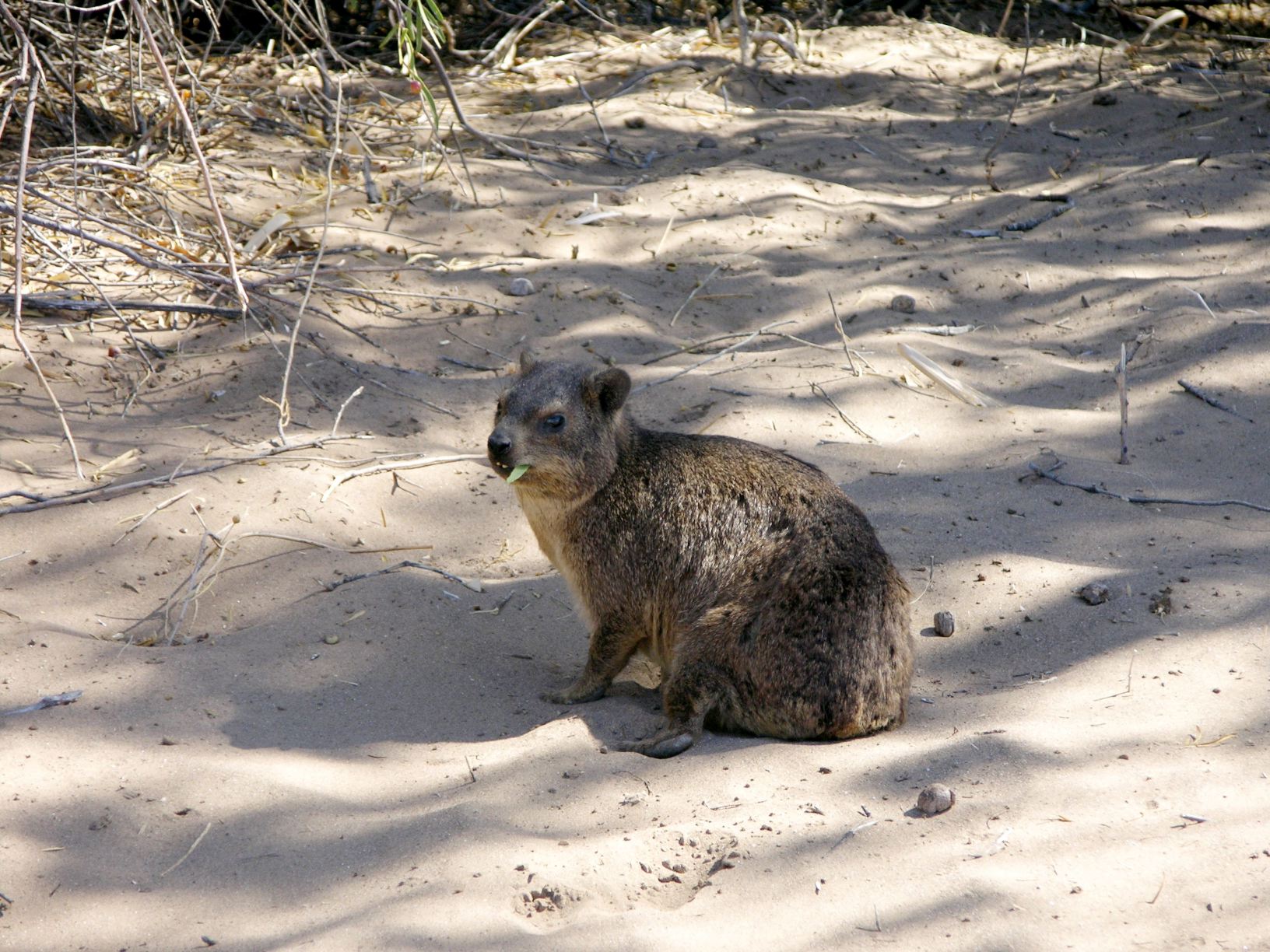
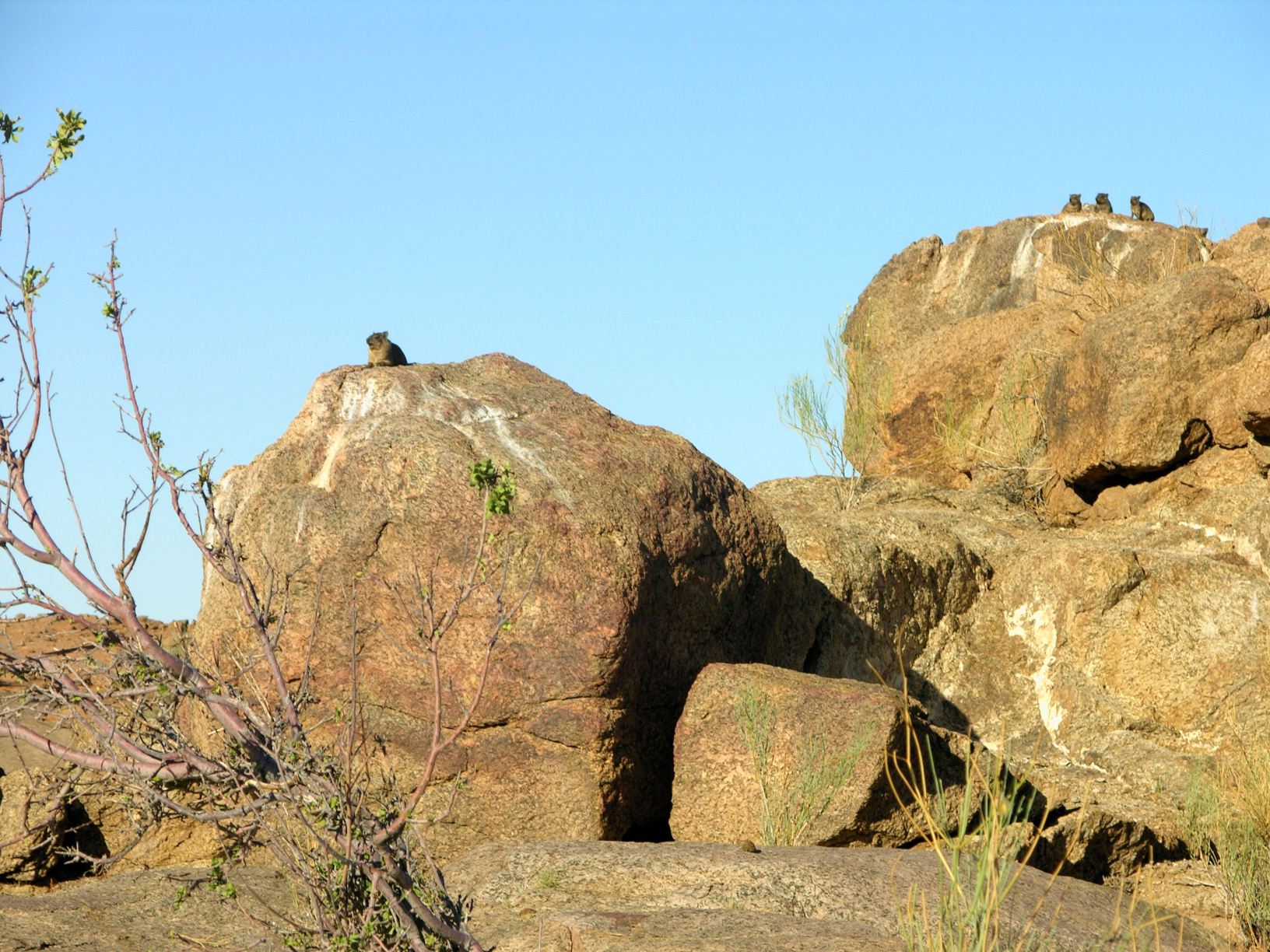
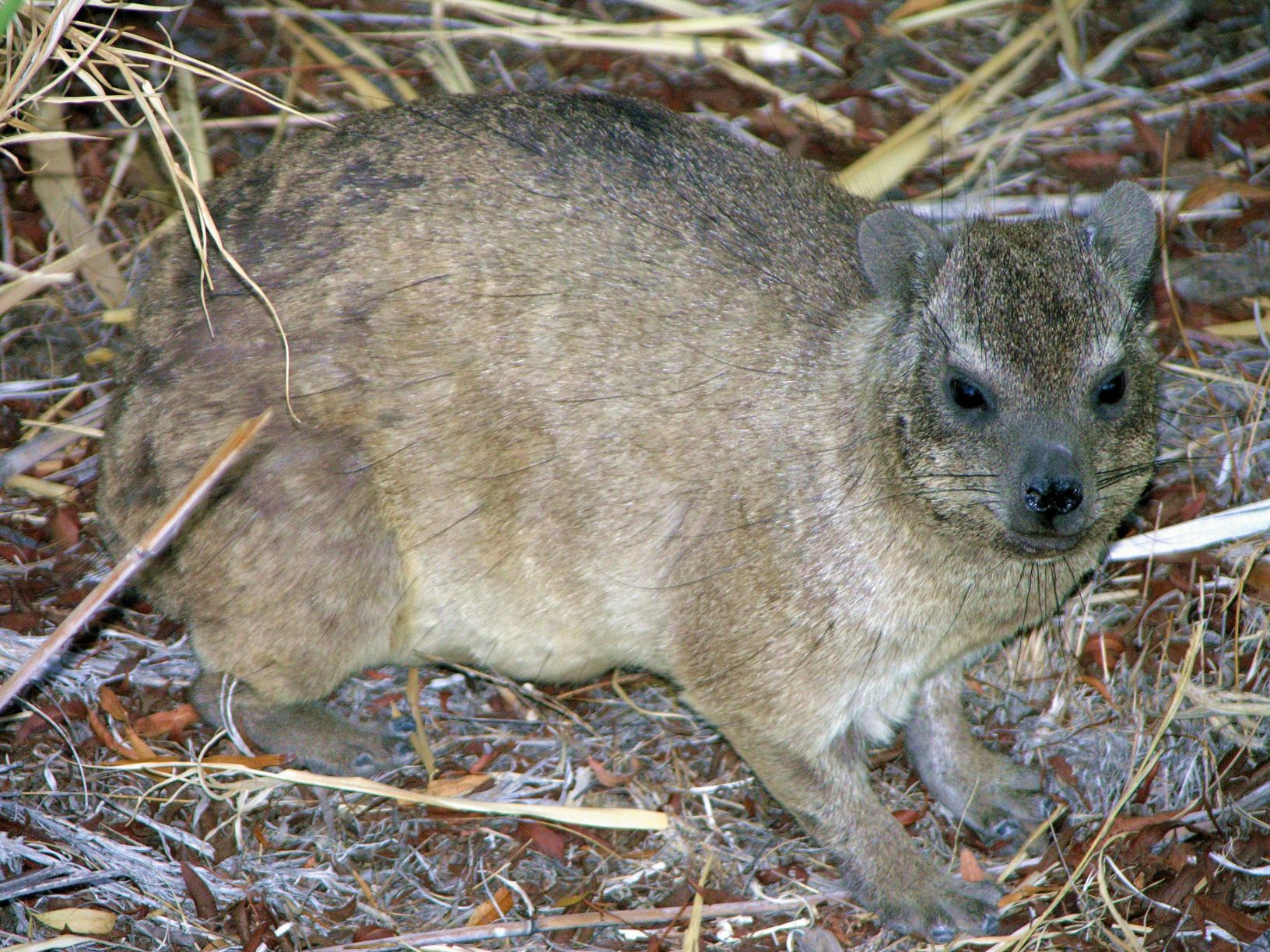
The baboon is a relative too, of us humans this time. An adult male can weigh fifty kilos. Sometimes, if sufficiently provoked, it can attack and give you a nasty bite. It's extraordinarily rare, of course, but Tanya had read some horror stories and was wary of monkeys to begin with. Then I chased the troop around with my camera for so long that the fattest, most important baboon decided to put things right. He barked so mightily right beside Tanya's ear that she's now more afraid of them than of lions.
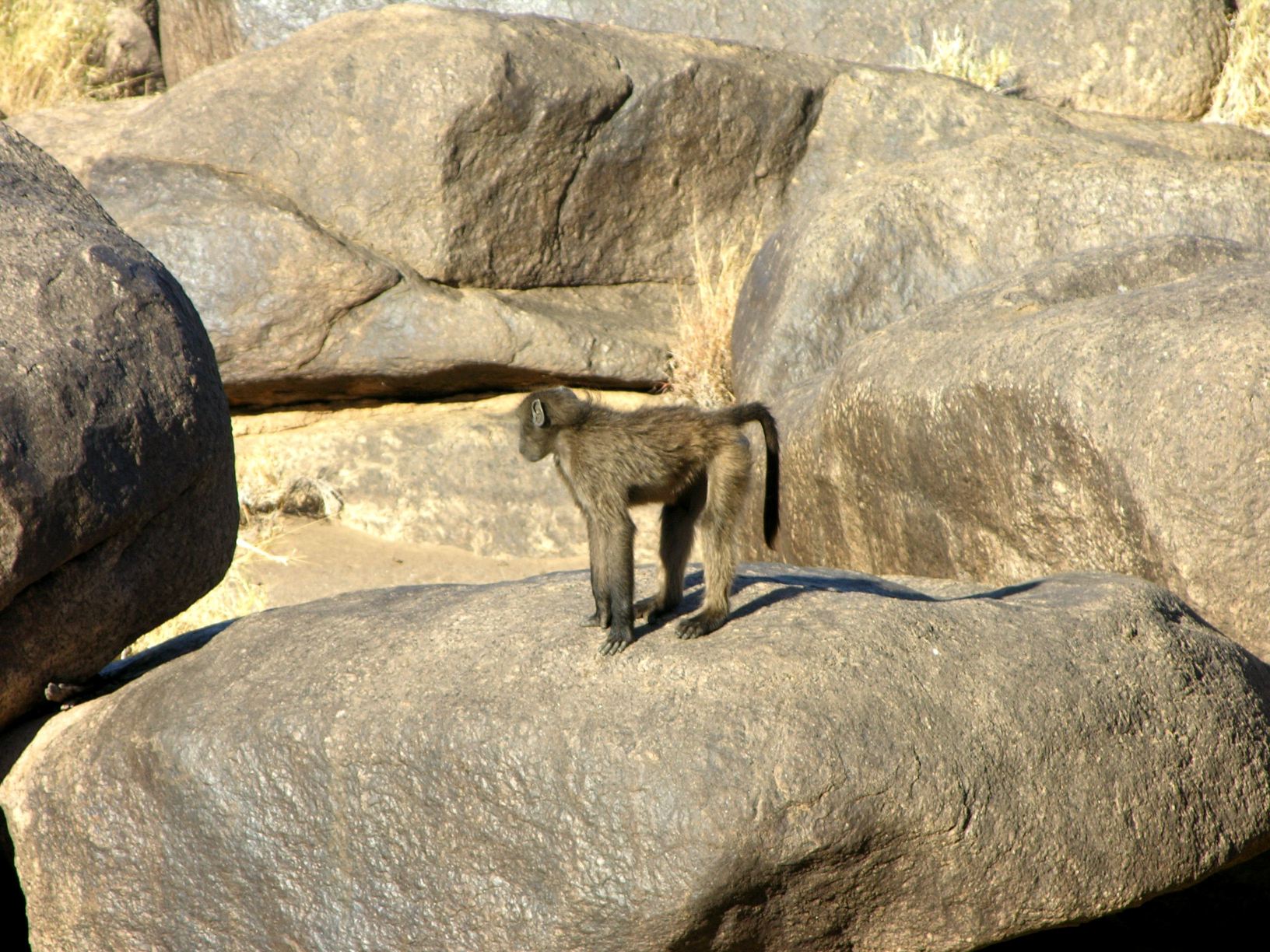
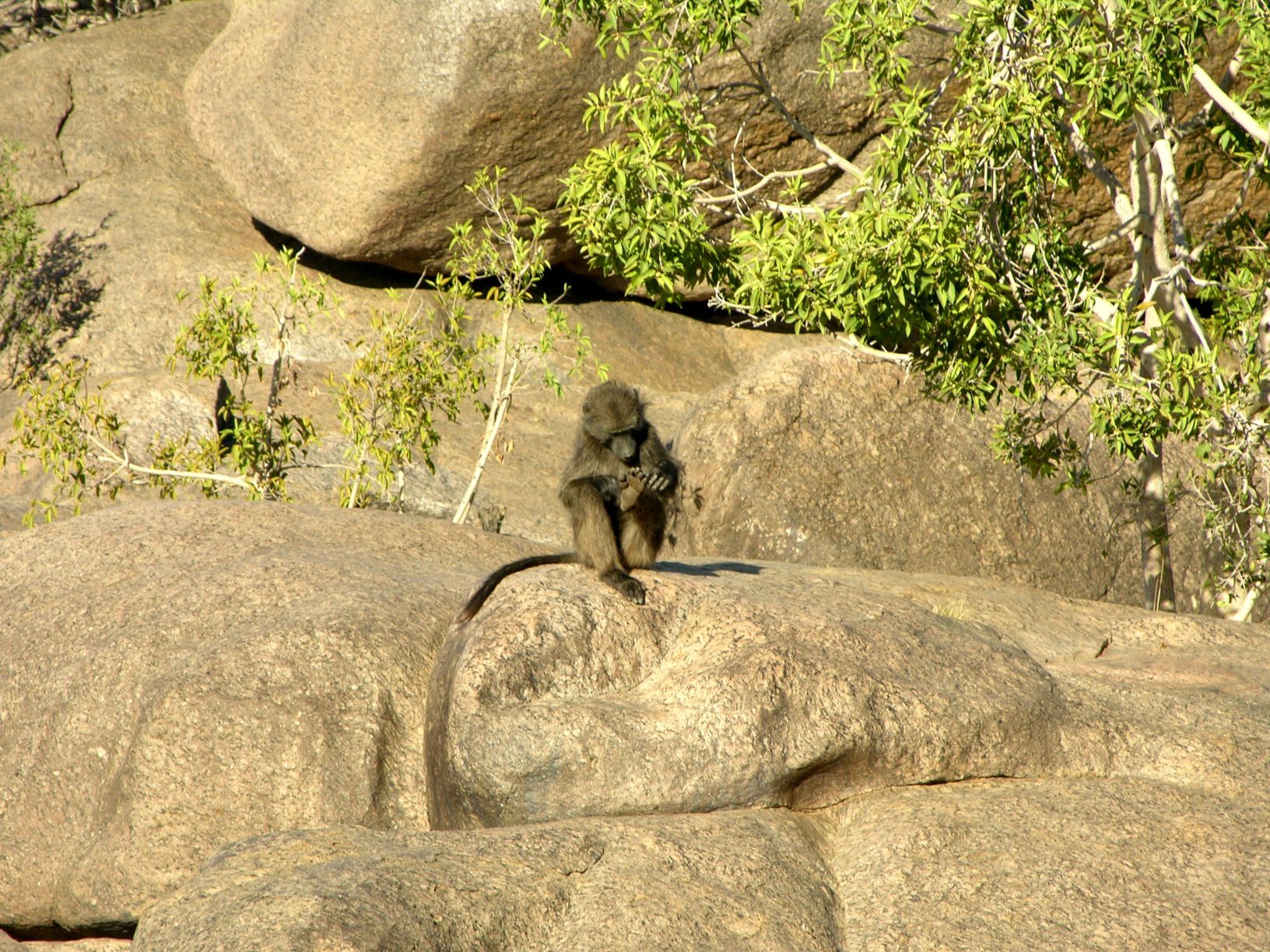
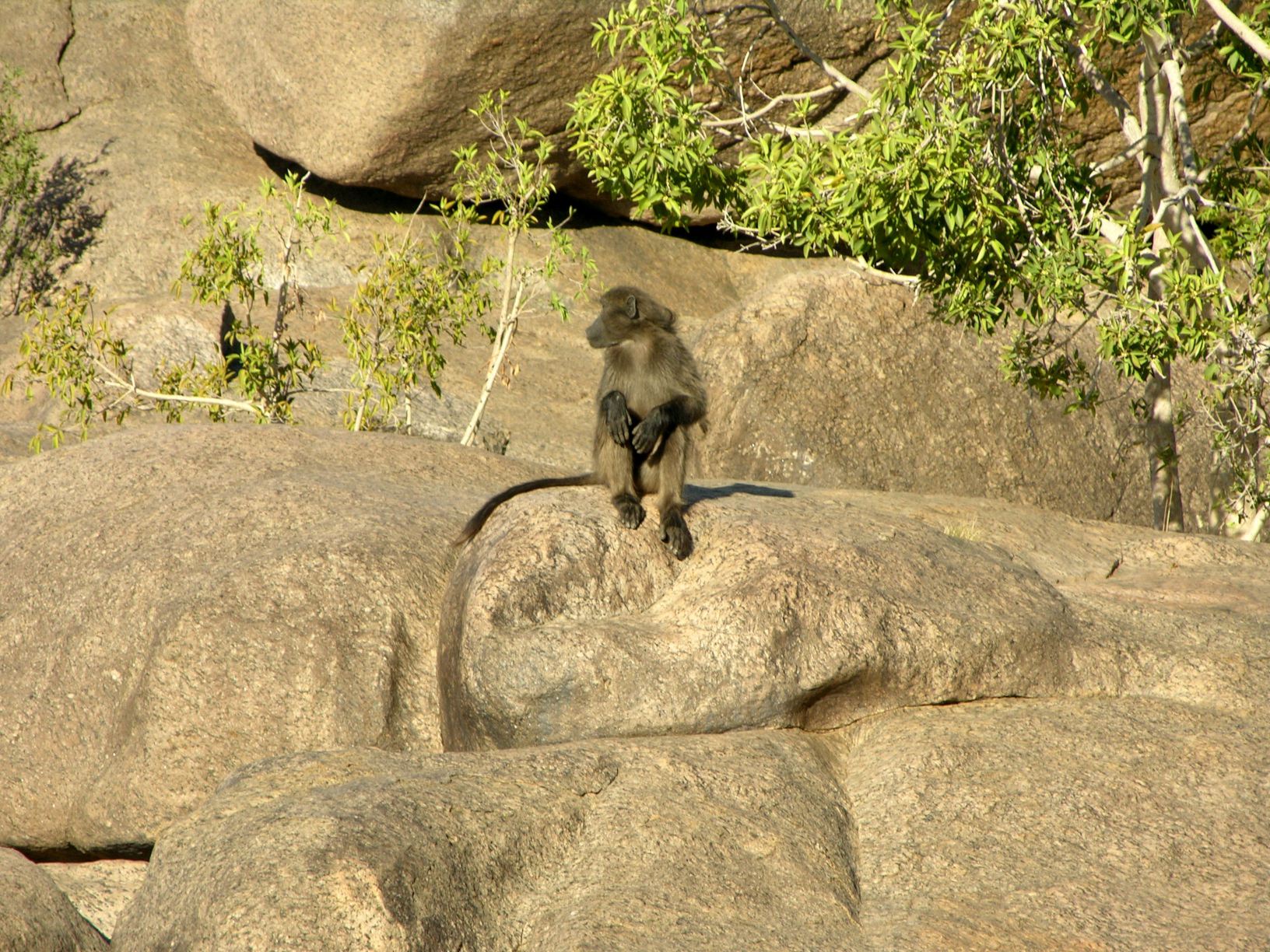
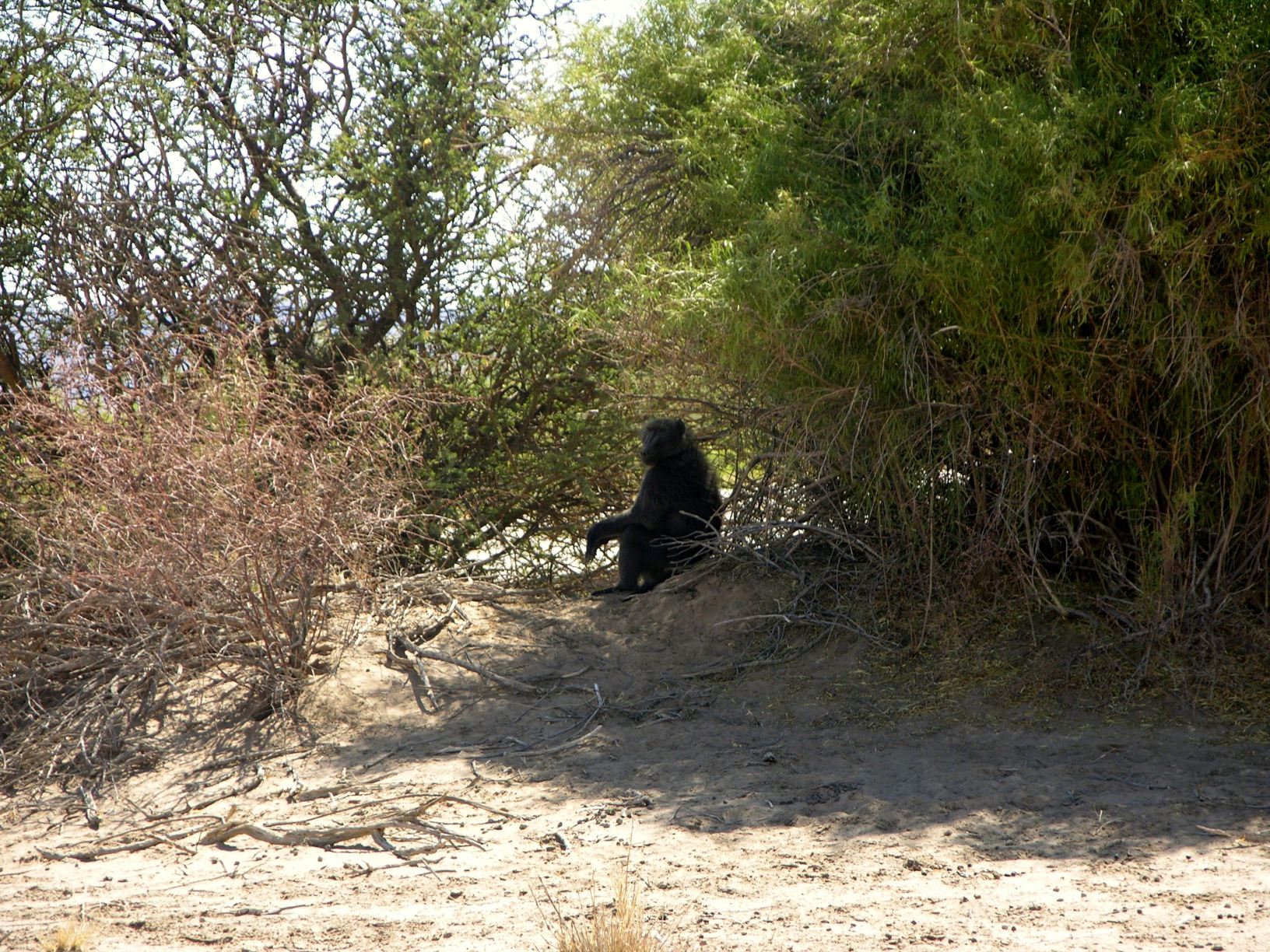
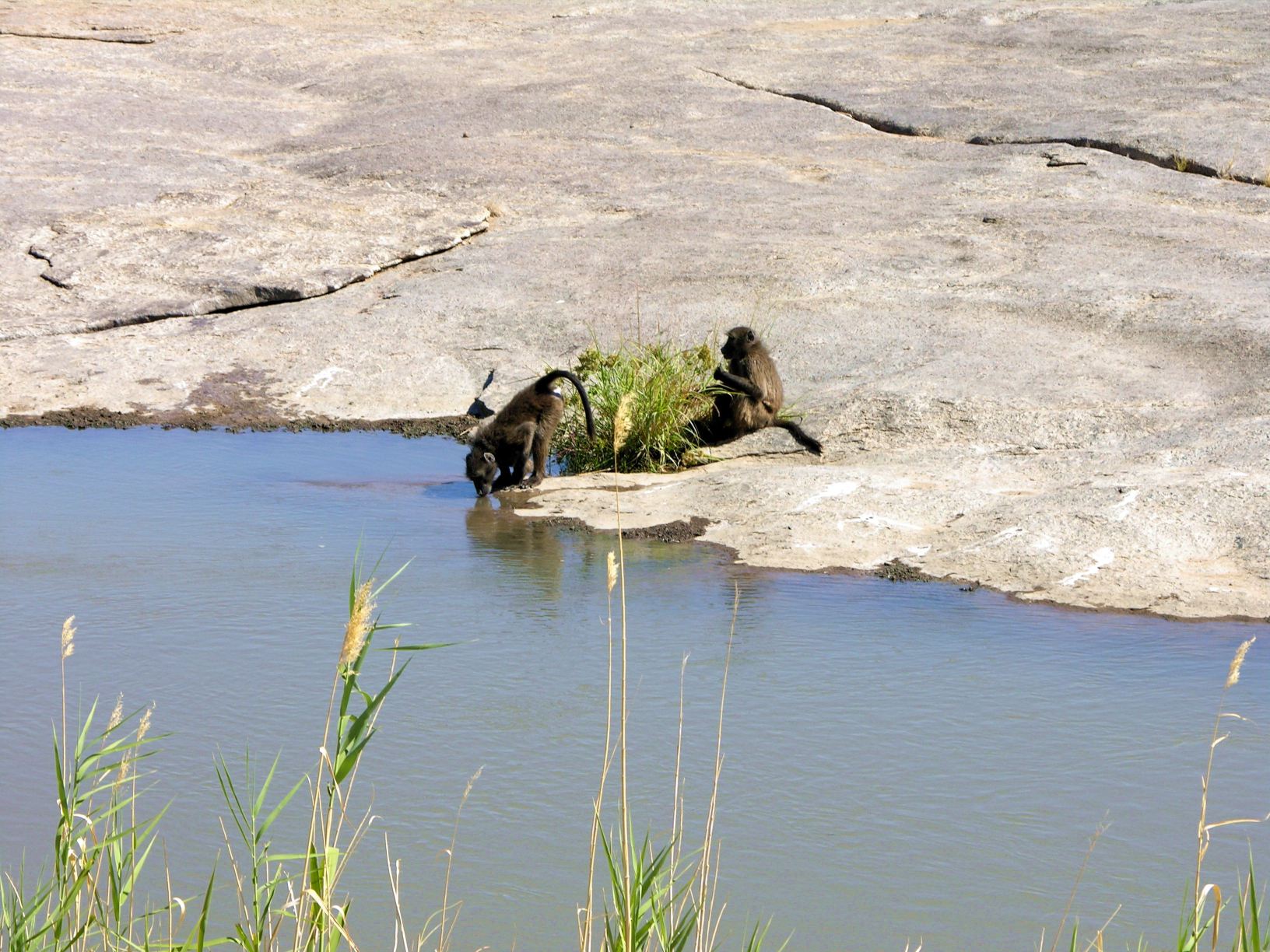
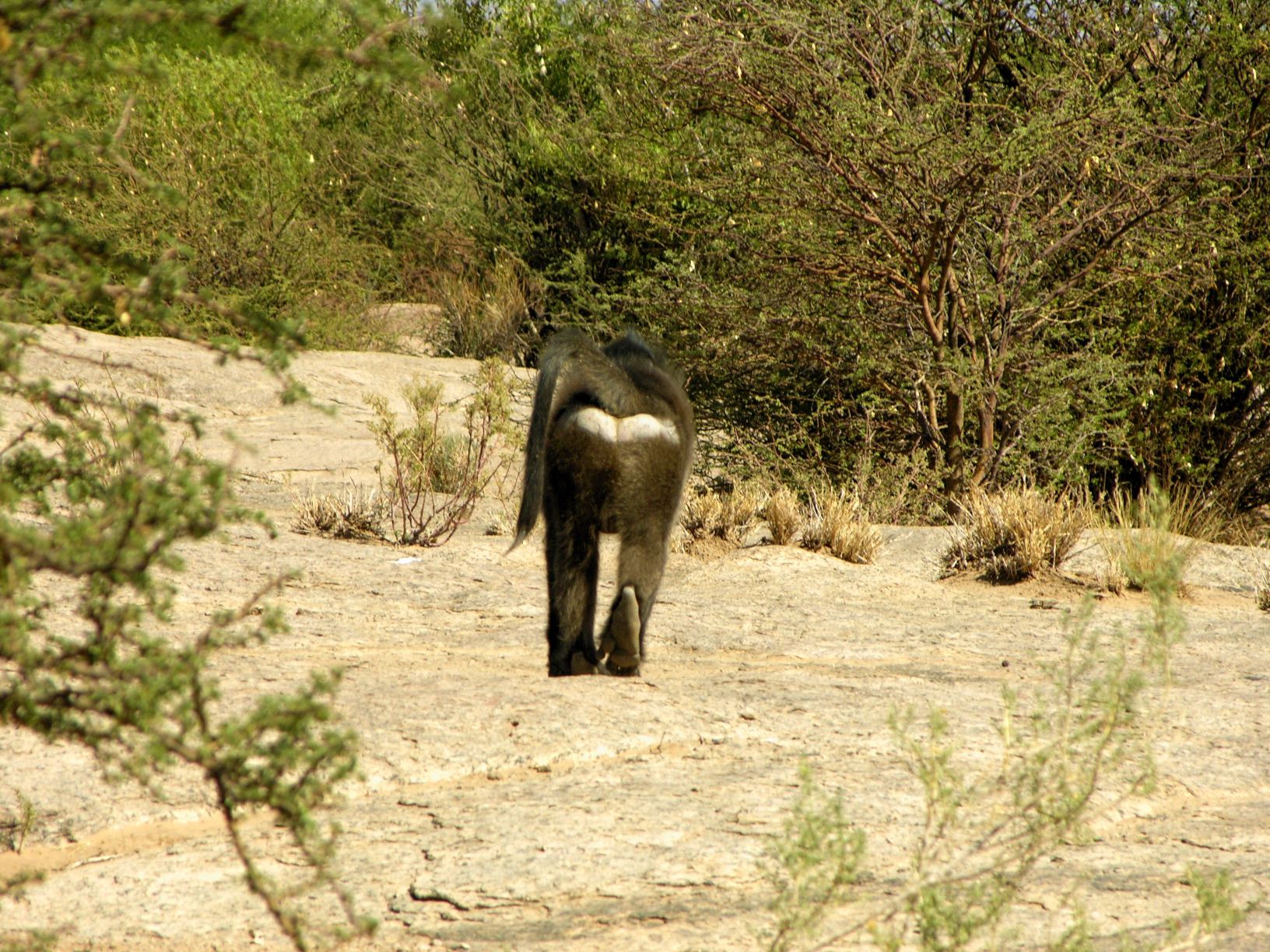
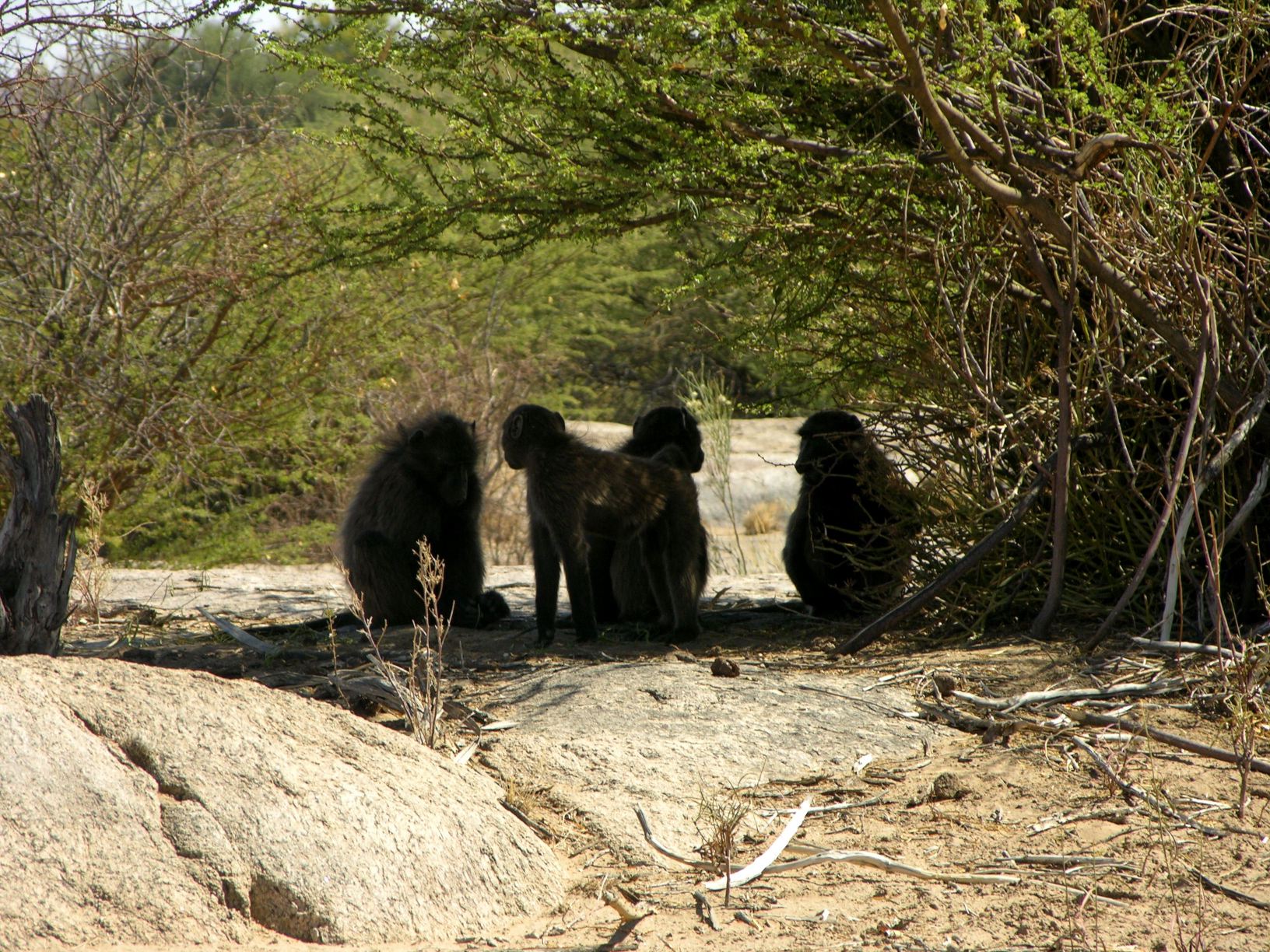
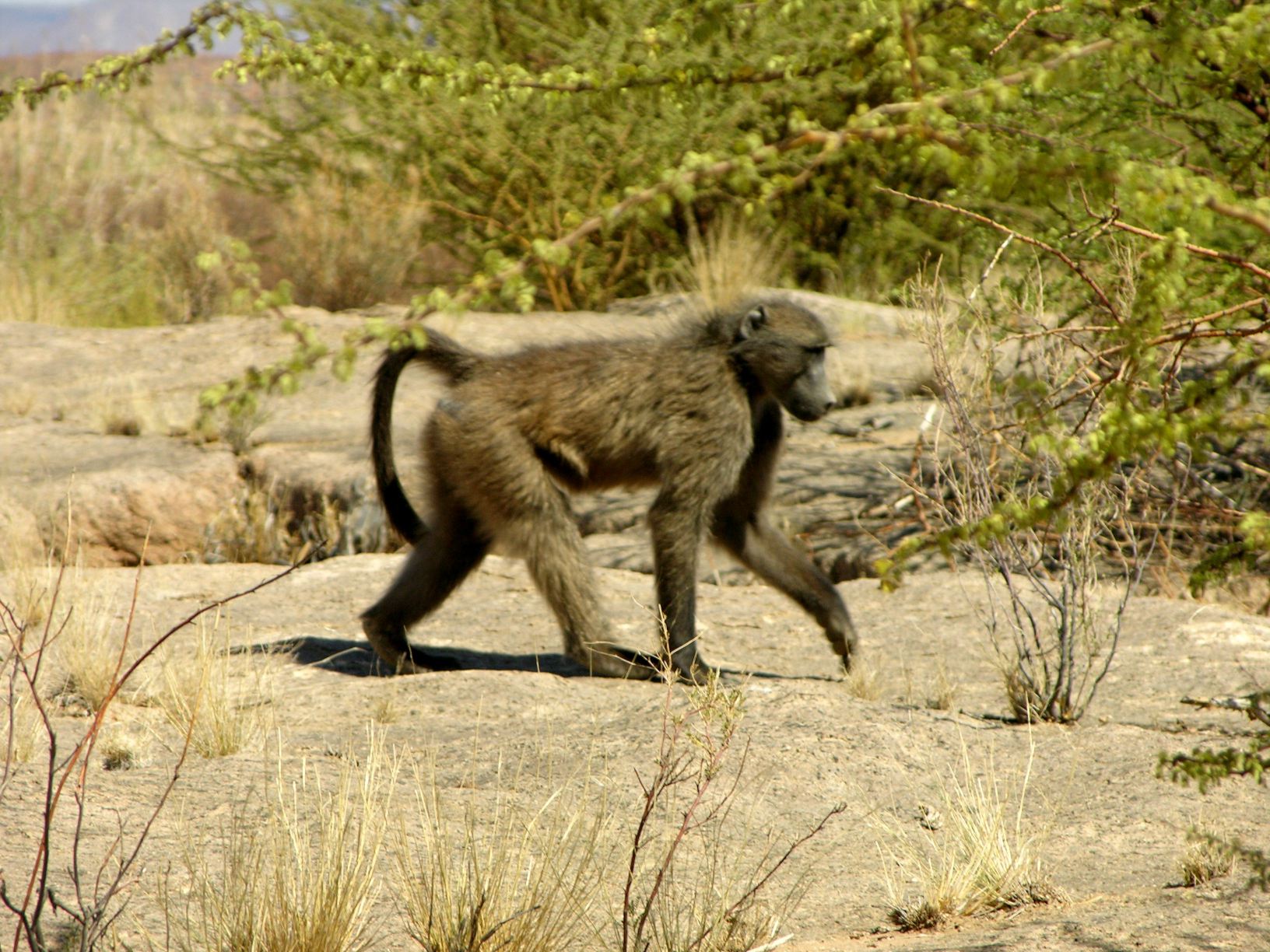
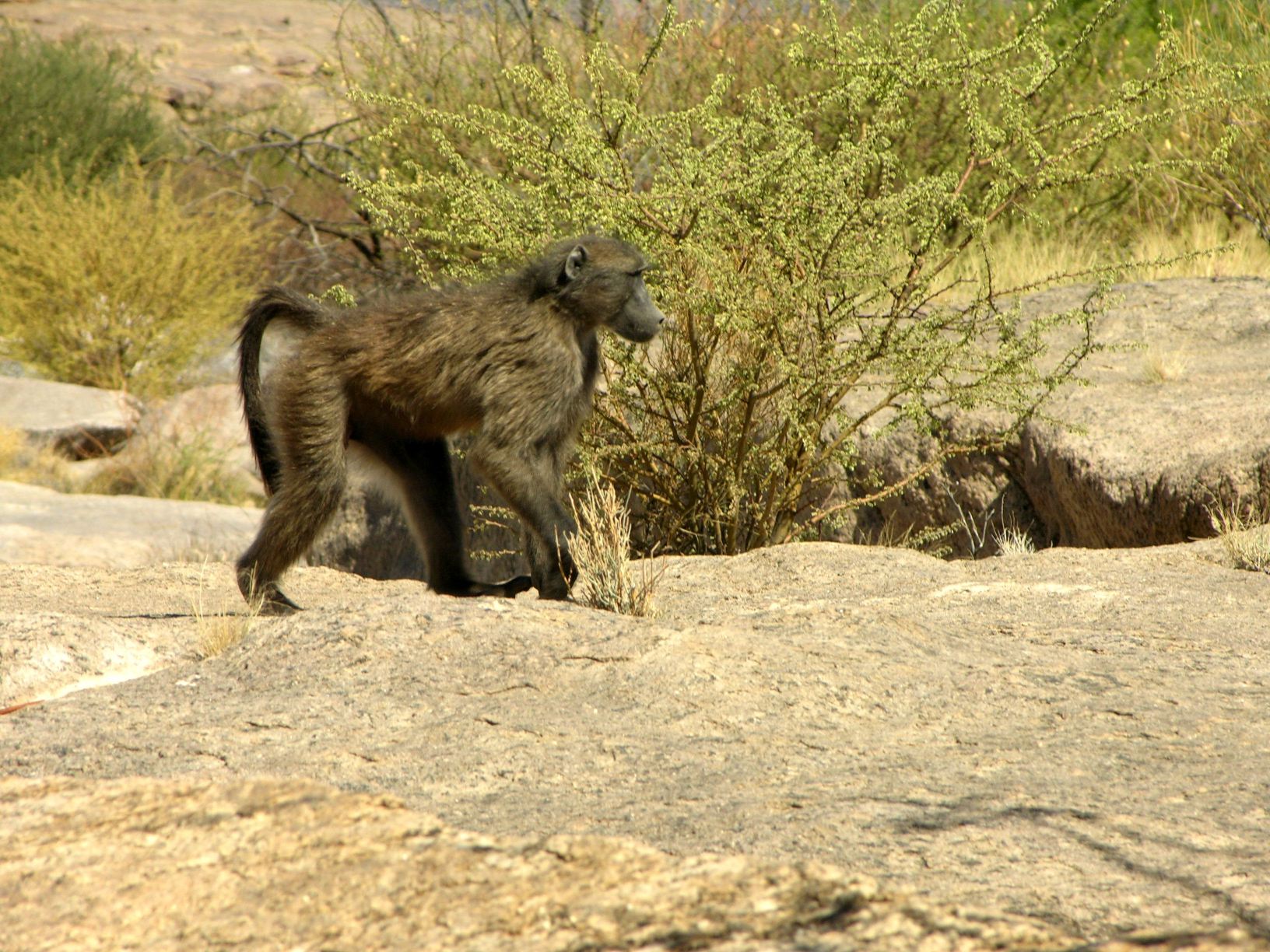
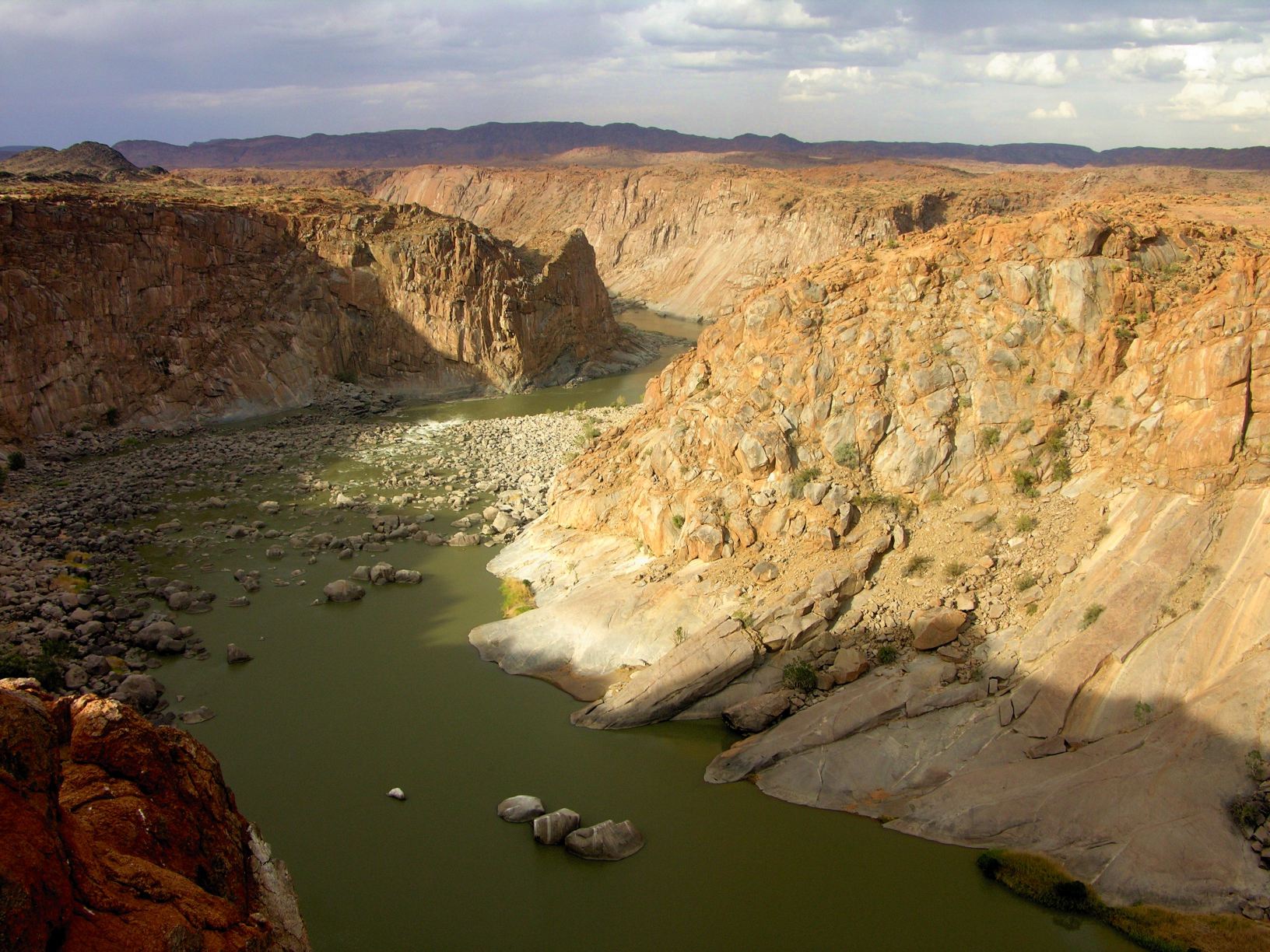
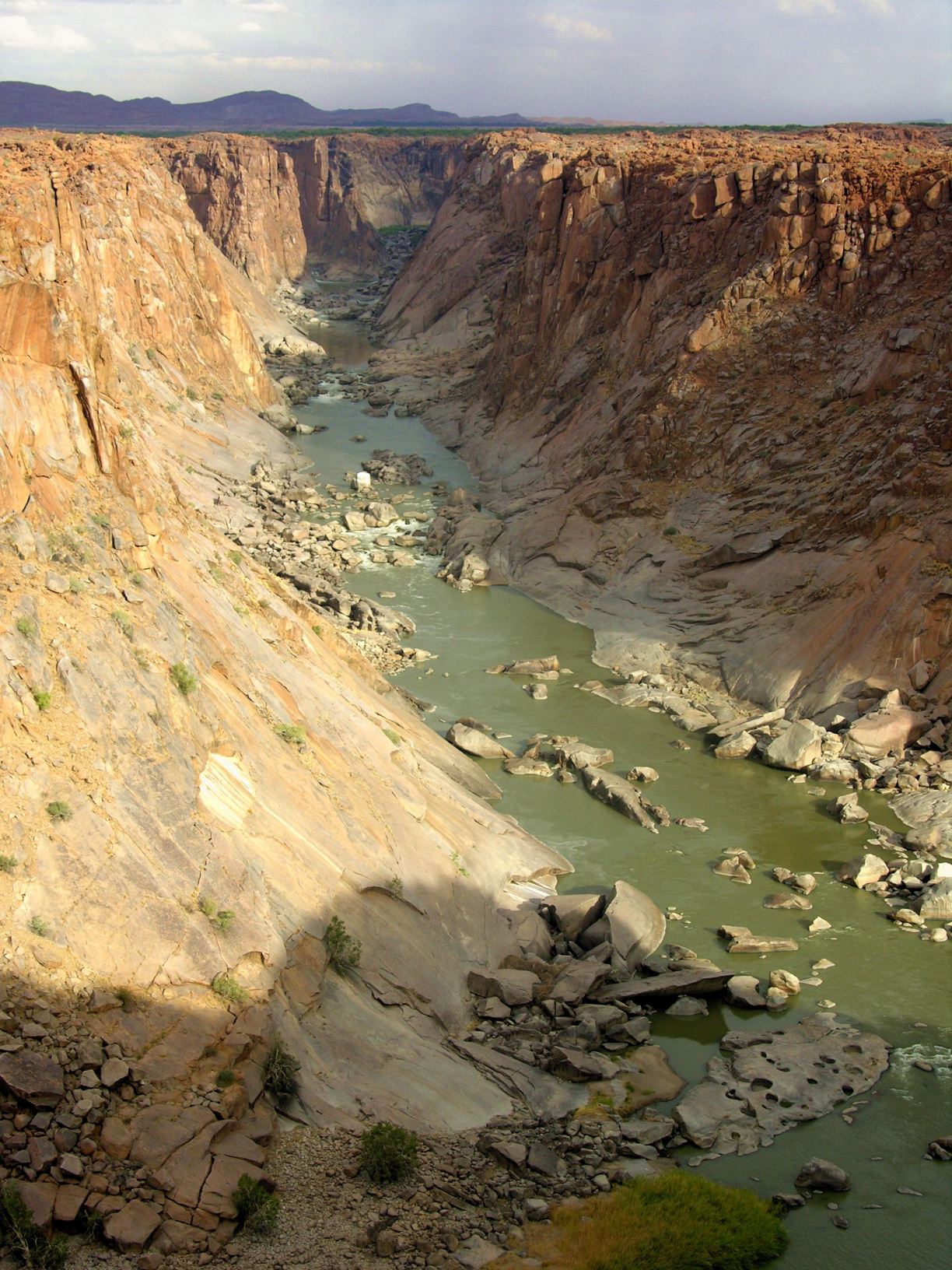
After lying low through the midday heat, we spent the rest of the day driving. The park has a hundred kilometres of roads you can drive in an ordinary car. They lead to several viewpoints on the banks of the Orange. The river has flowed through these parts for half a billion years already. In that time the waterfall has carved an enormous gorge in the granite rock. In places you can get down to the water and swim, which was most welcome. It was a particularly hot day. The car's thermometer read over fifty.
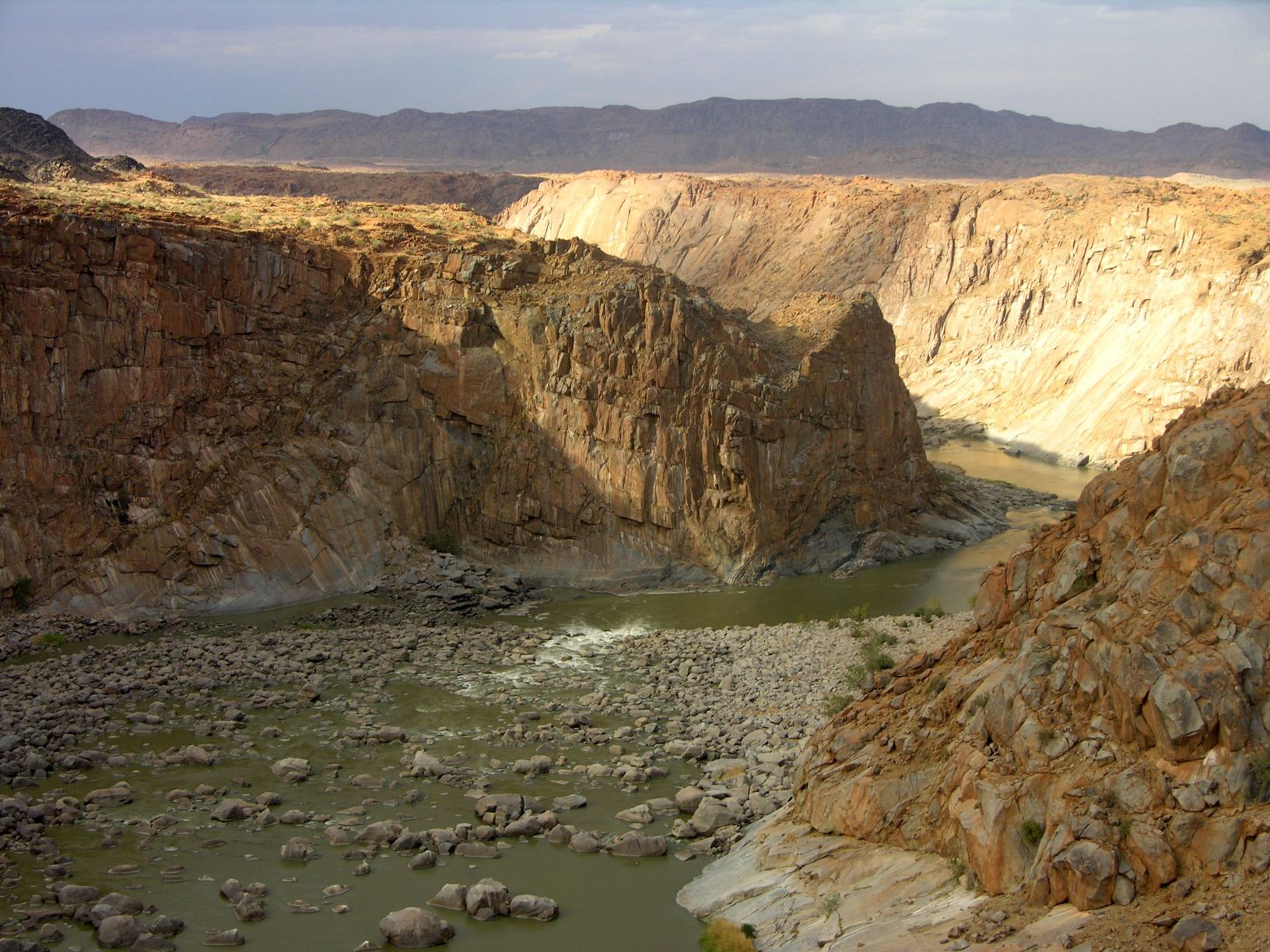
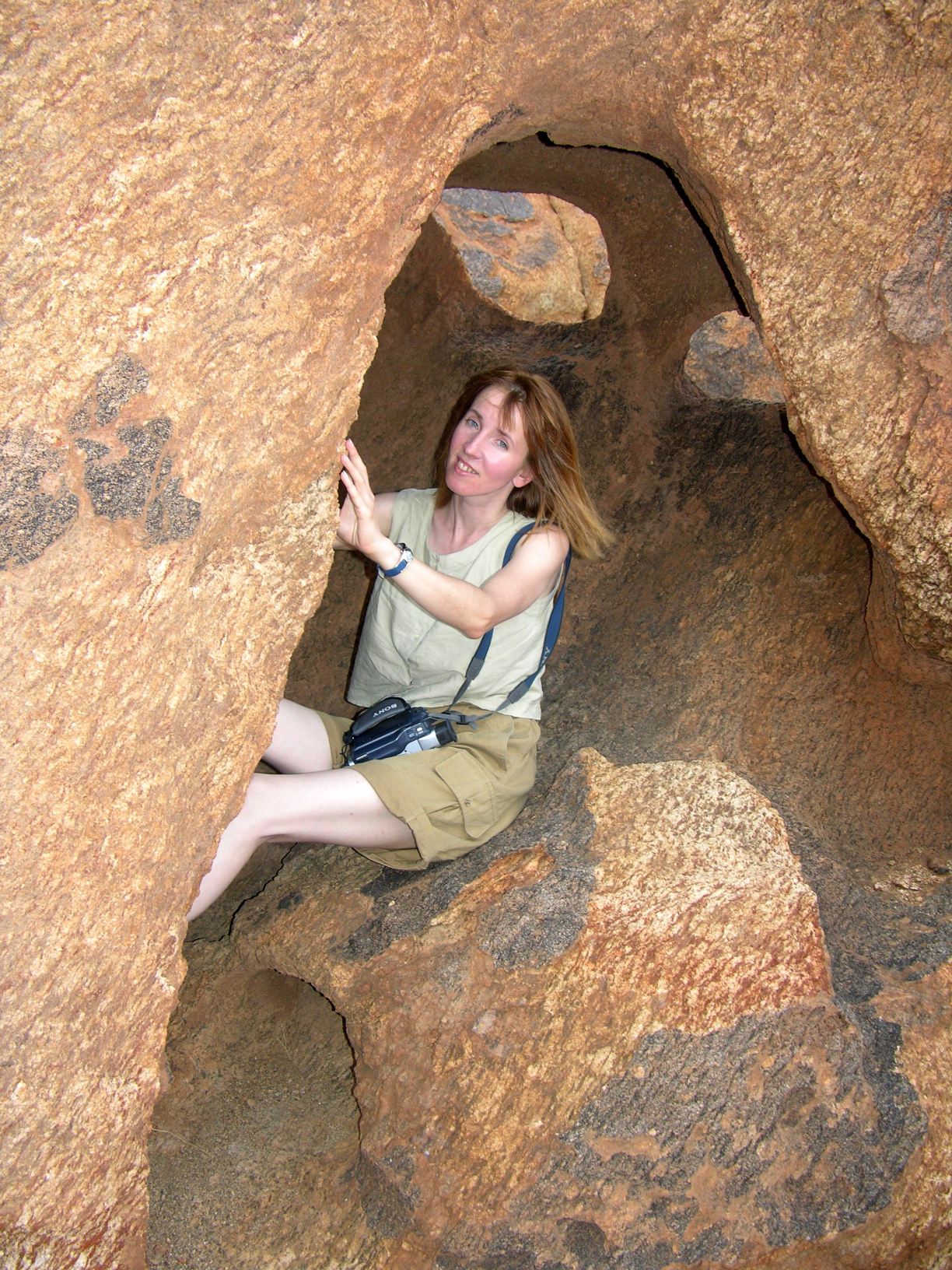
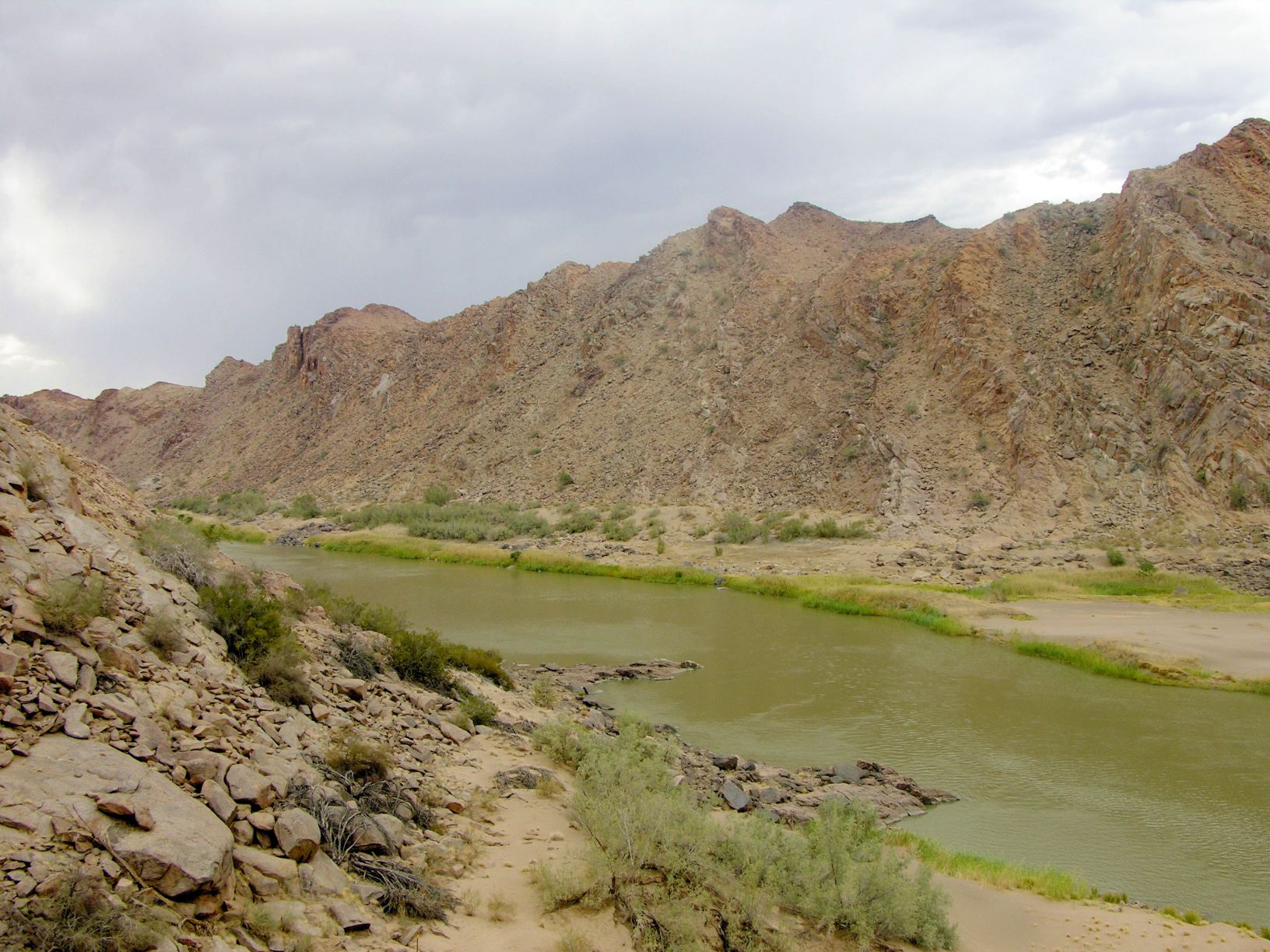
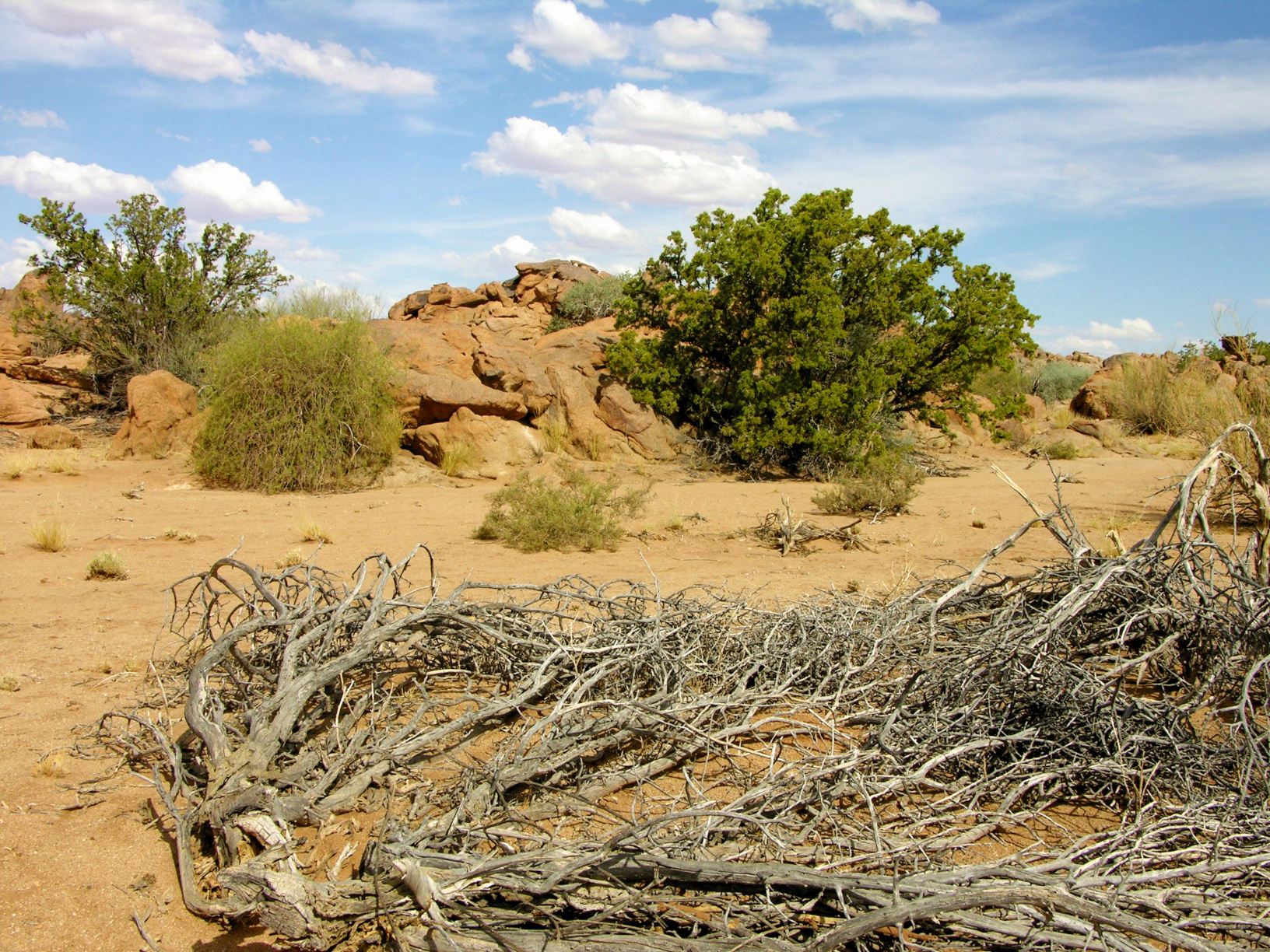
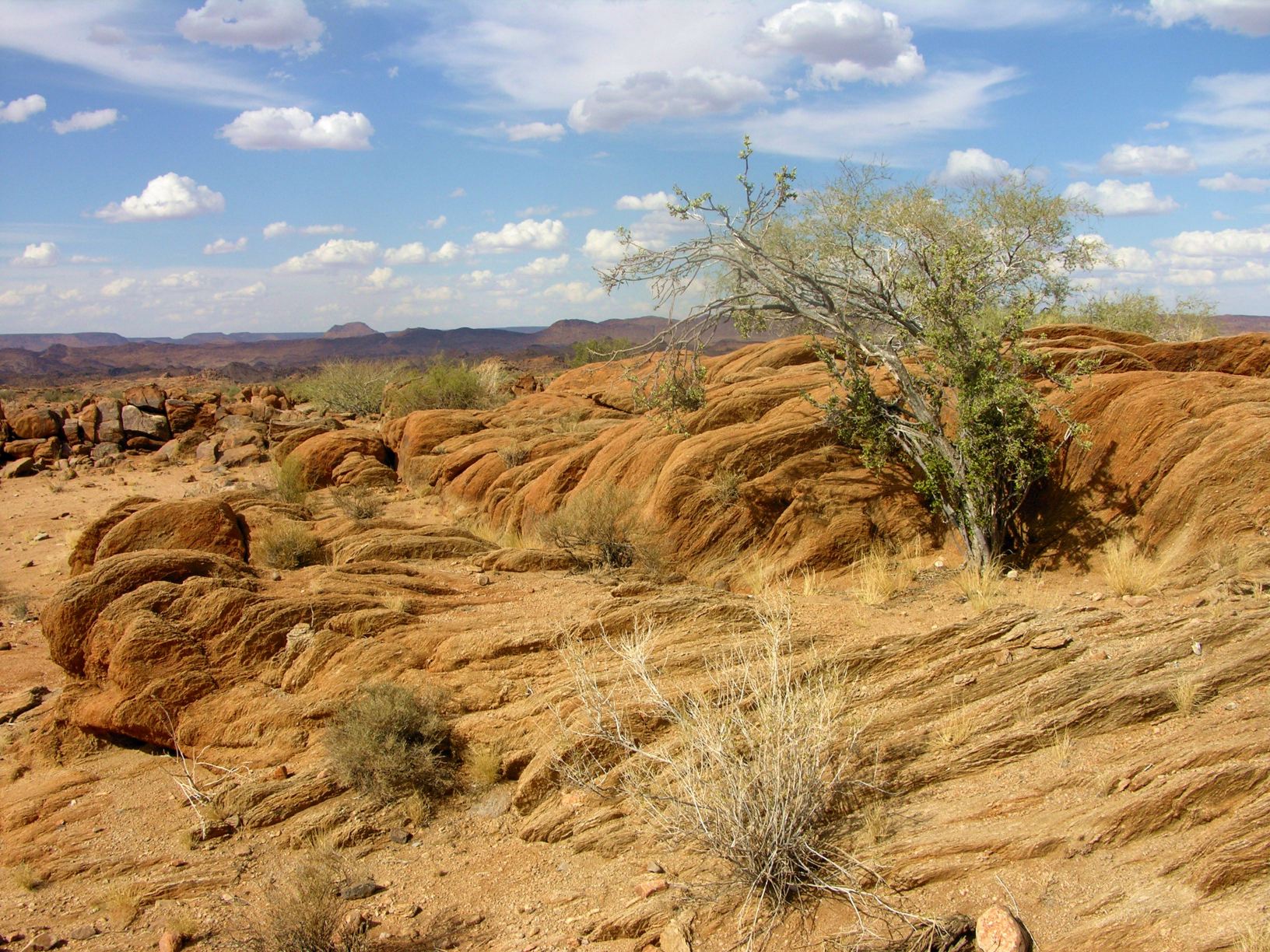
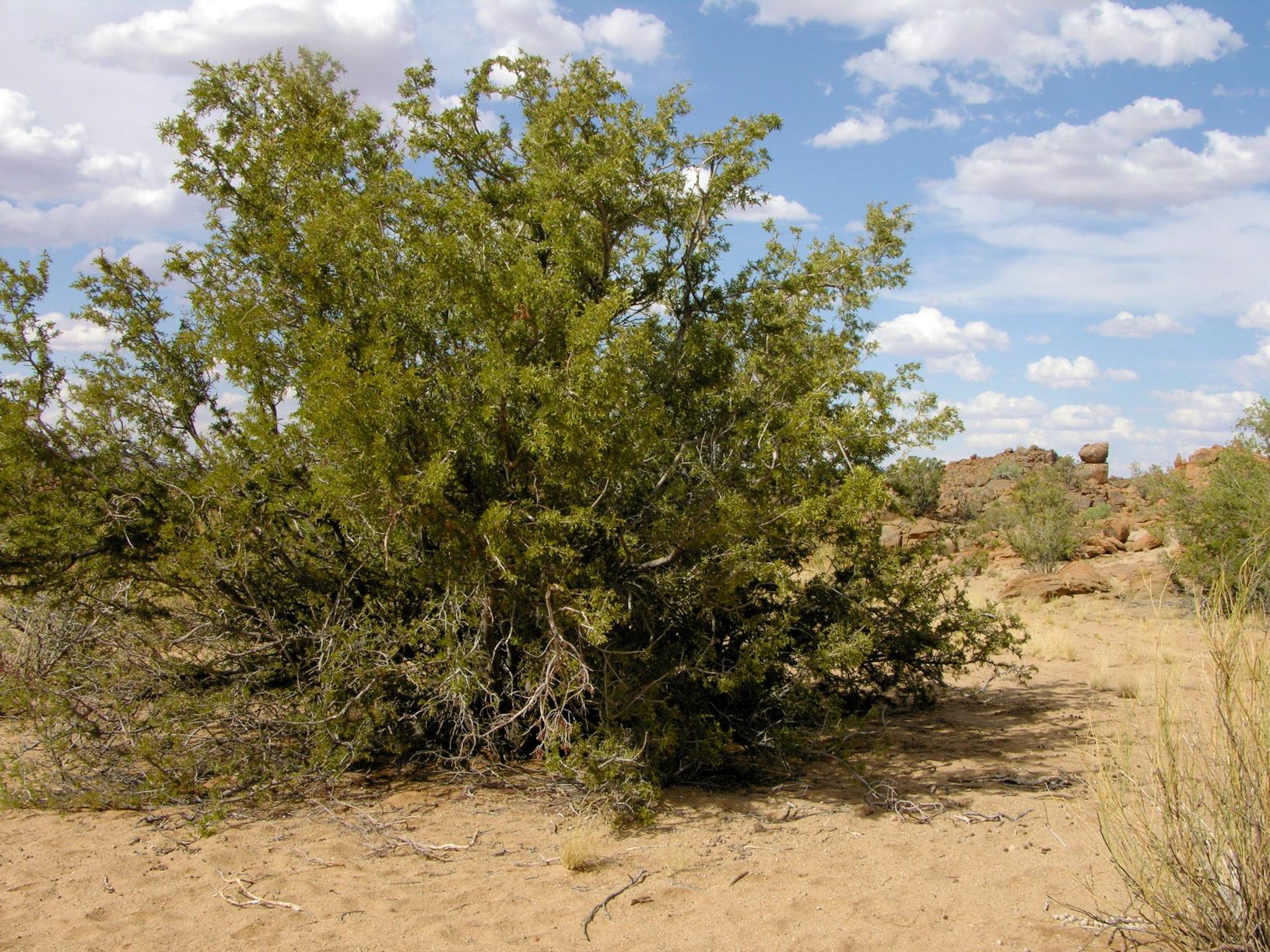
The only drawback is that by the time you've climbed two hundred metres back to the car in that heat, you feel as if you'd never been for a swim.
It was muggy and a storm was building. Soon the lightning flashed and a gale blew up, though the rain that fell was purely symbolic. It was the desert, after all.
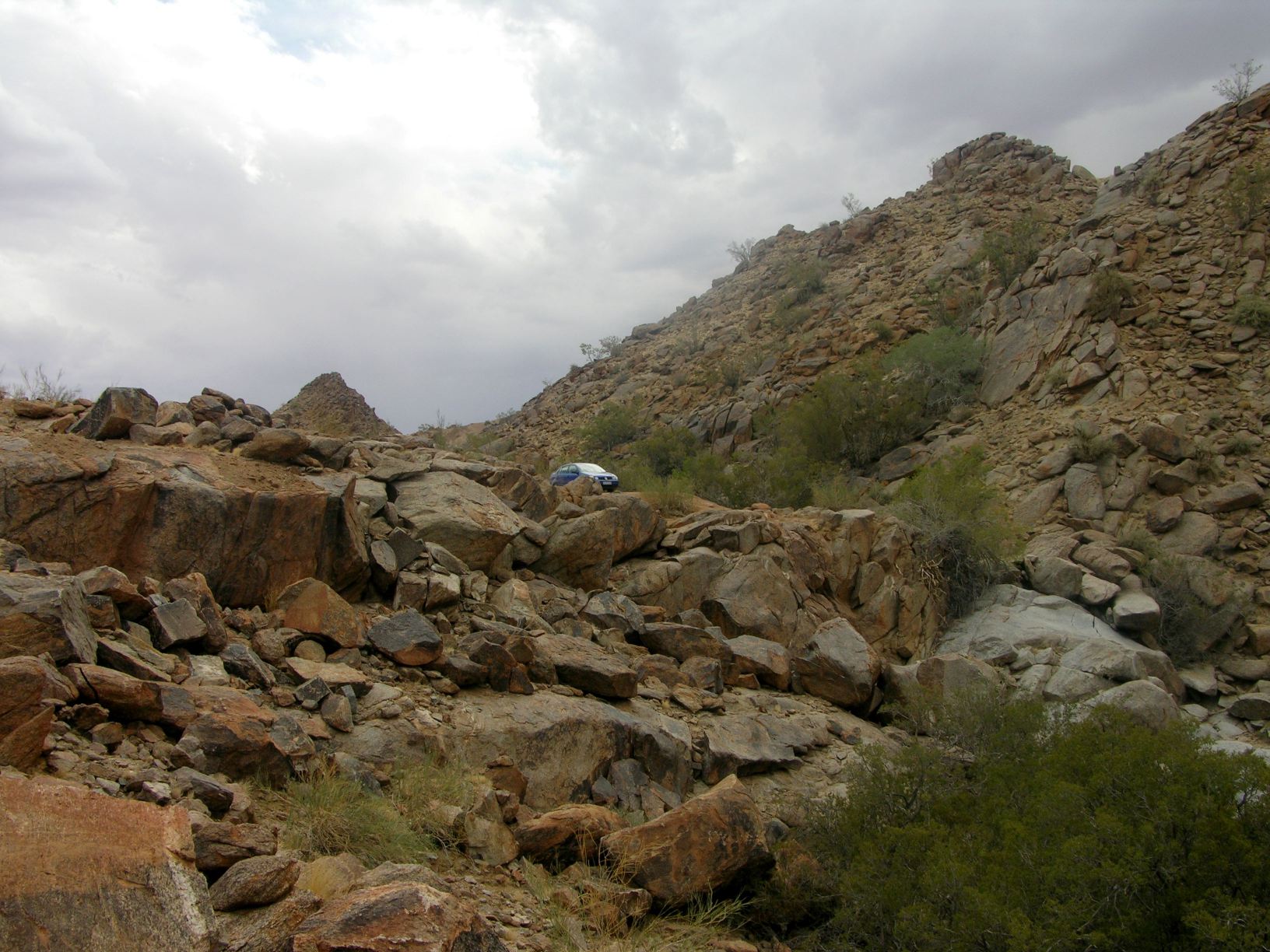
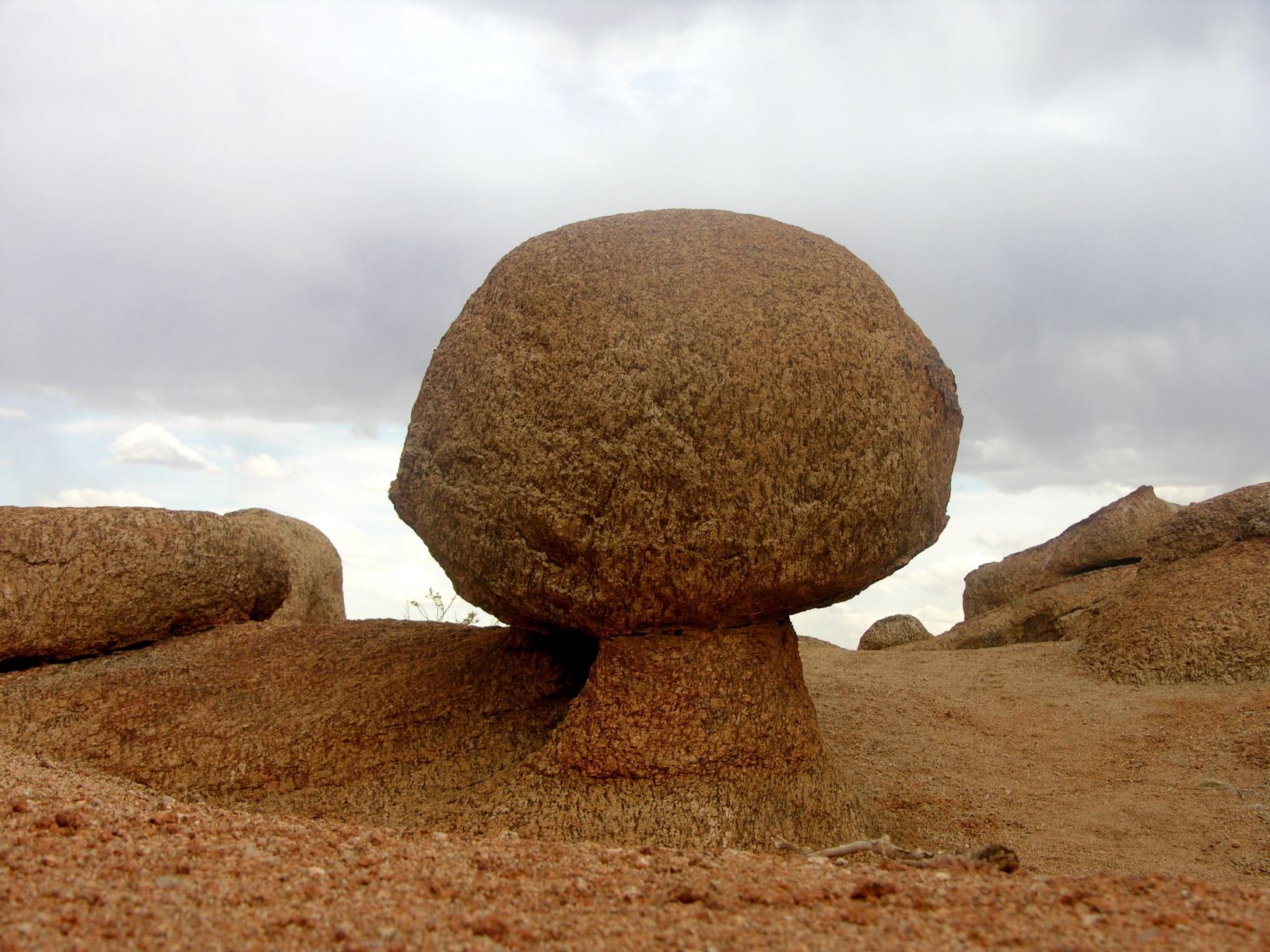
We spent a third night in our air-conditioned bungalow, since it was all paid for, and drove on. Our next destination was Kgalagadi Transfrontier Park, on the border of South Africa, Botswana and Namibia. One of Africa's biggest national parks, it covers 38,000 square kilometres, a little smaller than Switzerland.
The park is vast, but in a drought all life is concentrated around the dry beds of two rivers, the Nossob and the Auob. There are quite decent roads along both, passable in any car. The main one, following the Nossob, runs for over 300 kilometres. Halfway along you can spend the night at Nossob Camp, probably one of the most isolated places in Africa. The nearest habitation is a hundred kilometres away as the crow flies. That's hard to find even in the wilds of Siberia.
There is one entrance on the South African side, at Twee Rivieren. The park lies in two countries, South Africa and Botswana, but inside it the border is marked only by posts and you can drive across it without difficulty. If you want to cross officially, you can get your passport stamped on the way in. It's entirely voluntary. If you aren't actually leaving South Africa at the other end, nobody will put unnecessary stamps in your passport.
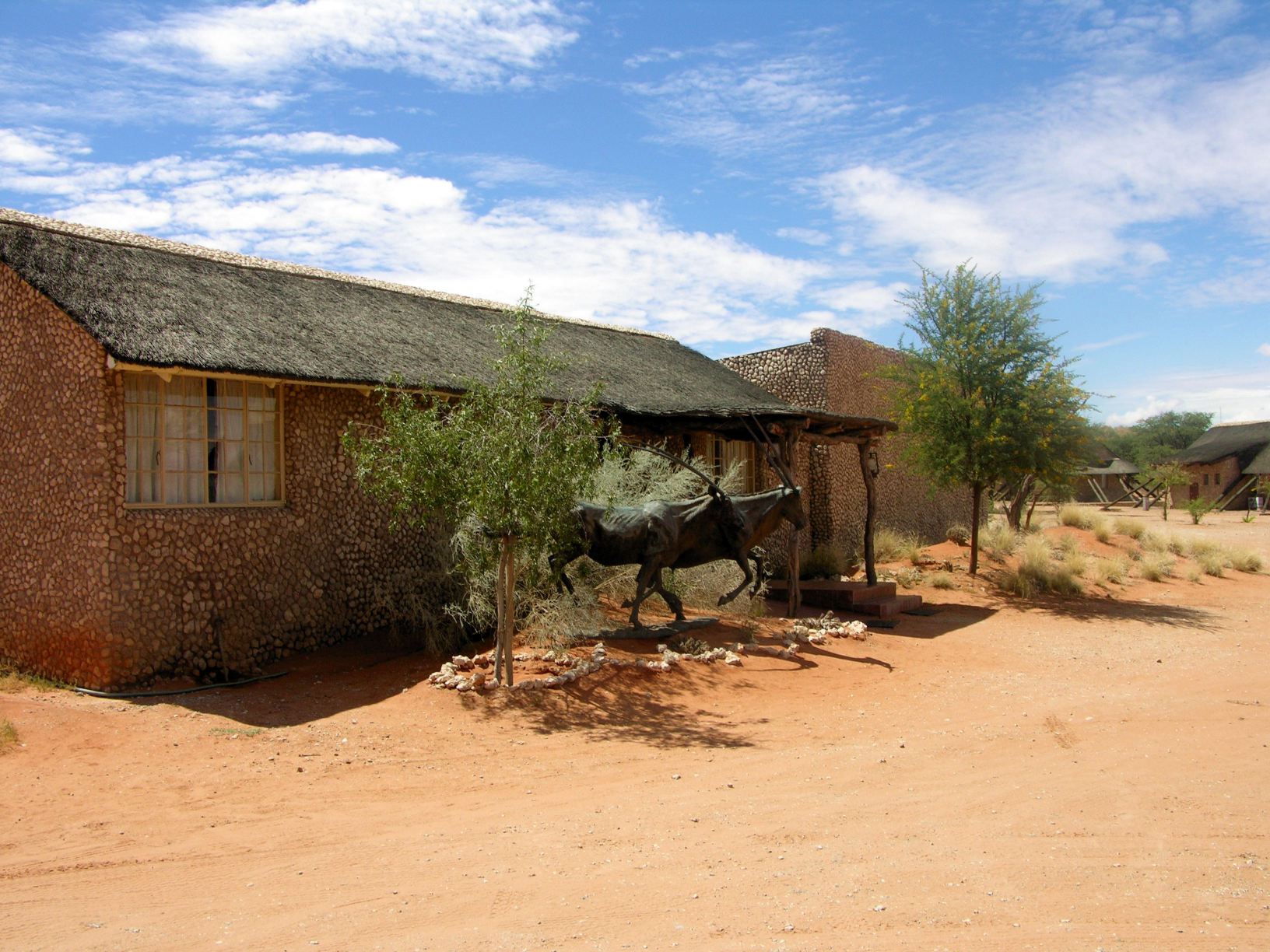
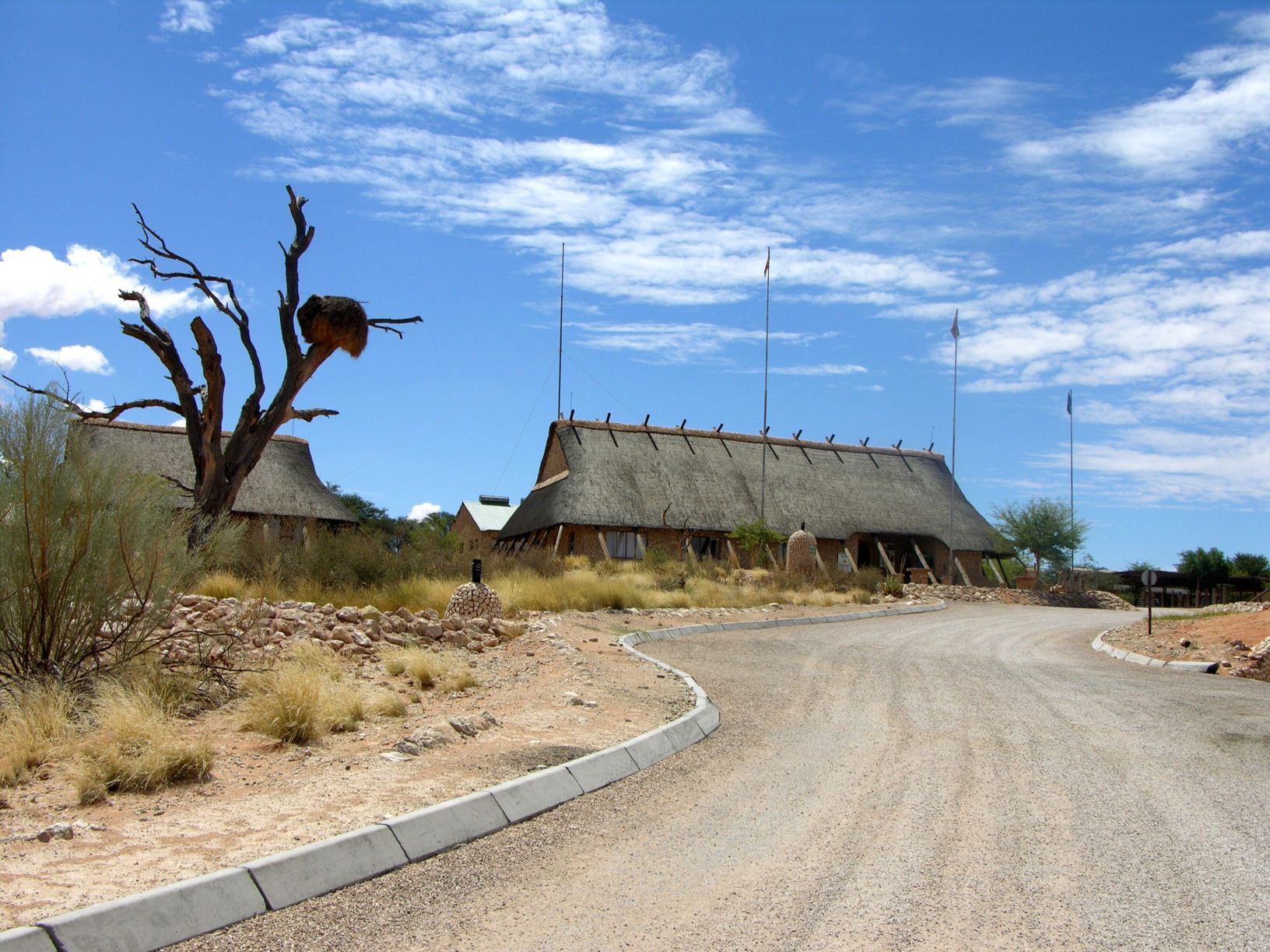
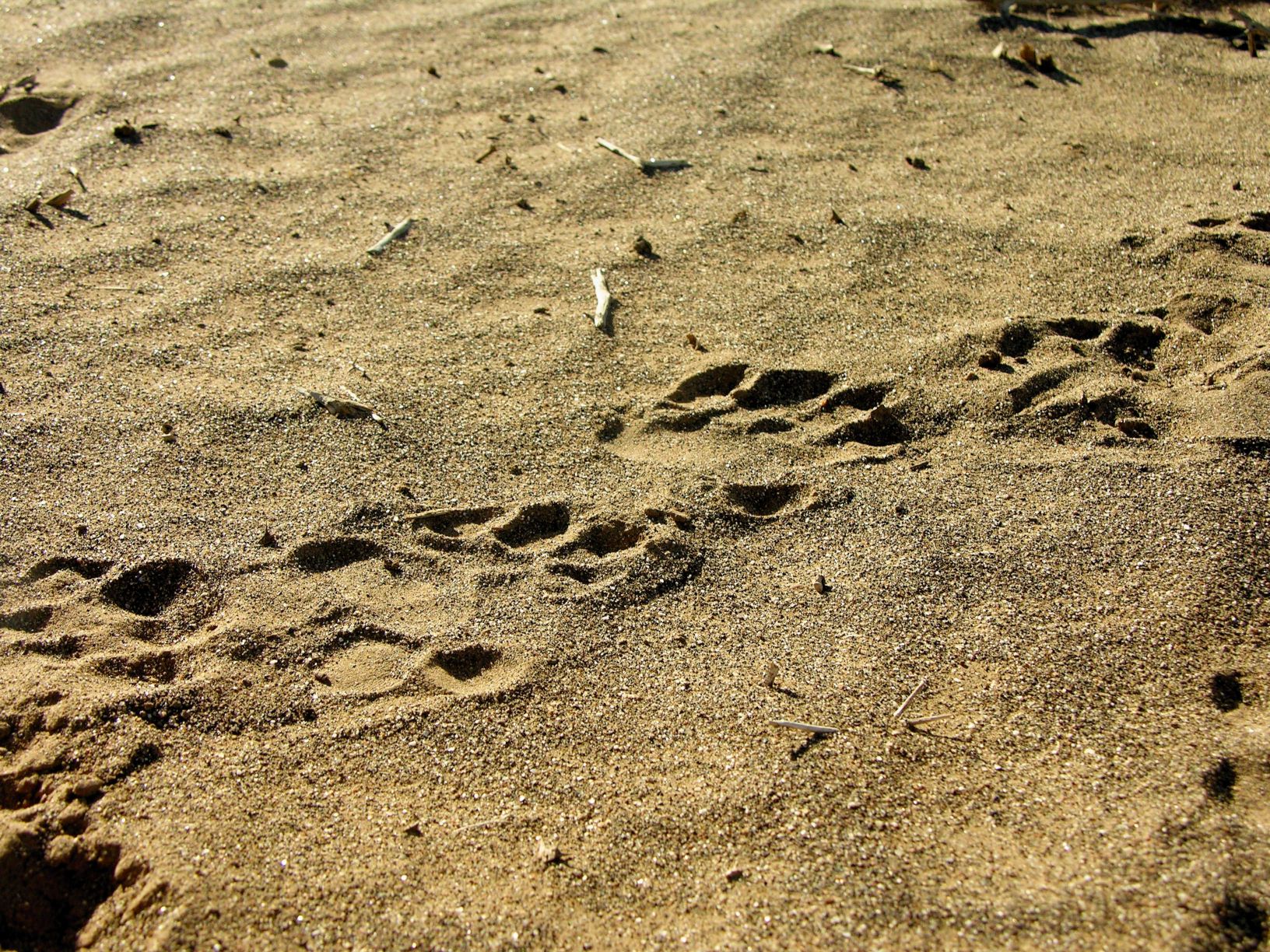
We'd planned to stay at Nossob Camp (25°25.315′S, 20°35.819′E). It would be a sin to spend less than two nights somewhere so wild. It's at least a three-hour drive from the gate. The speed limit in the park is 40 km/h, but it's worth going even more slowly if you want time to look about. Getting out of the car is against the rules. They say the park has a lot of lions. Sure enough, despite the traffic, the whole road was covered in their fresh tracks. We only saw a lioness once, and at a great distance. She'd come out to hunt in the evening, but was still slow and sleepy. Dusk would have been the time to watch her, if it were allowed. You have to spend the night behind the camp fence. In Kgalagadi it might be even harder to get around that rule than in other parks, because there are relatively few visitors and the main office keeps track of people overnight, or at least pretends to.
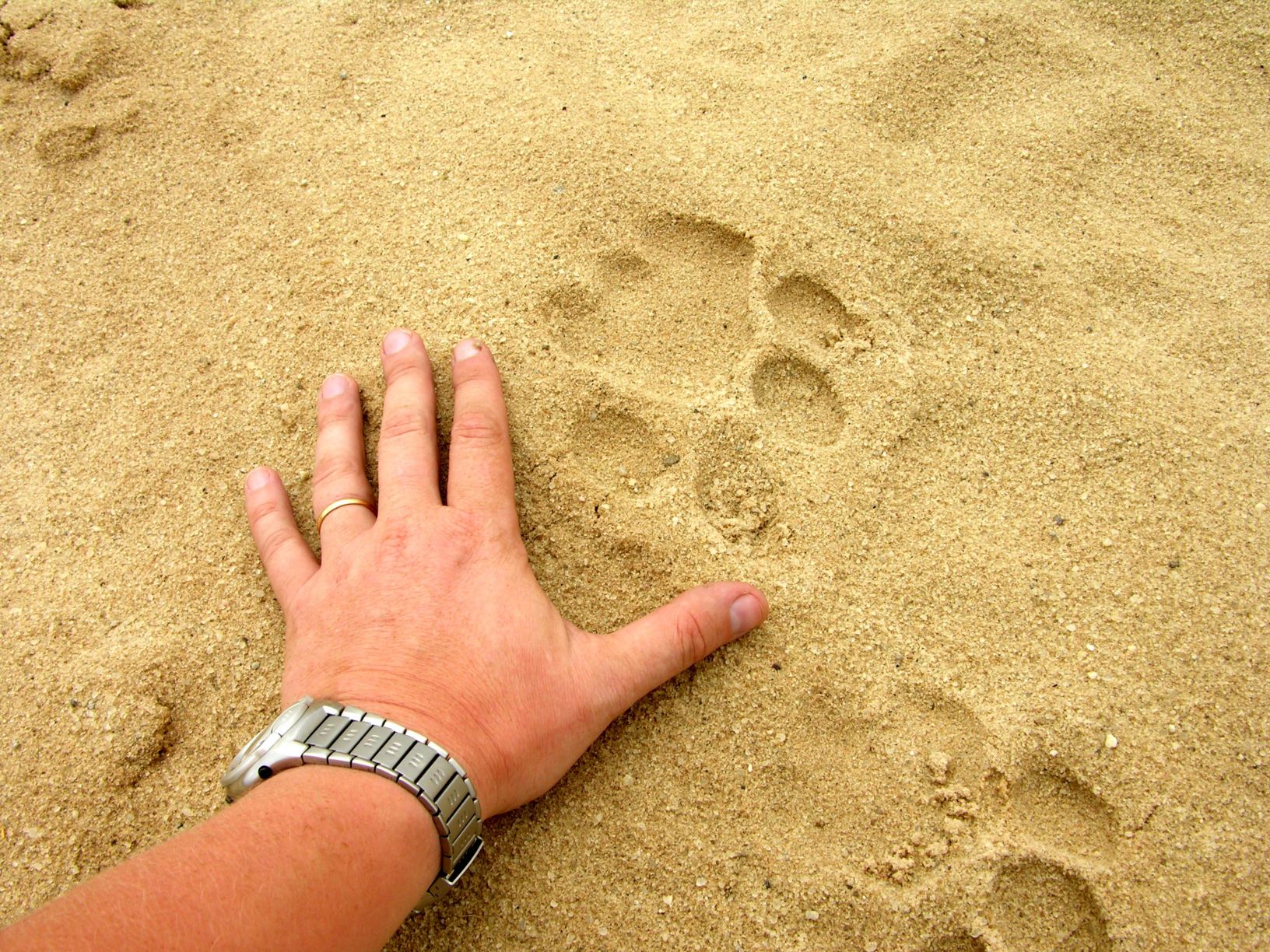
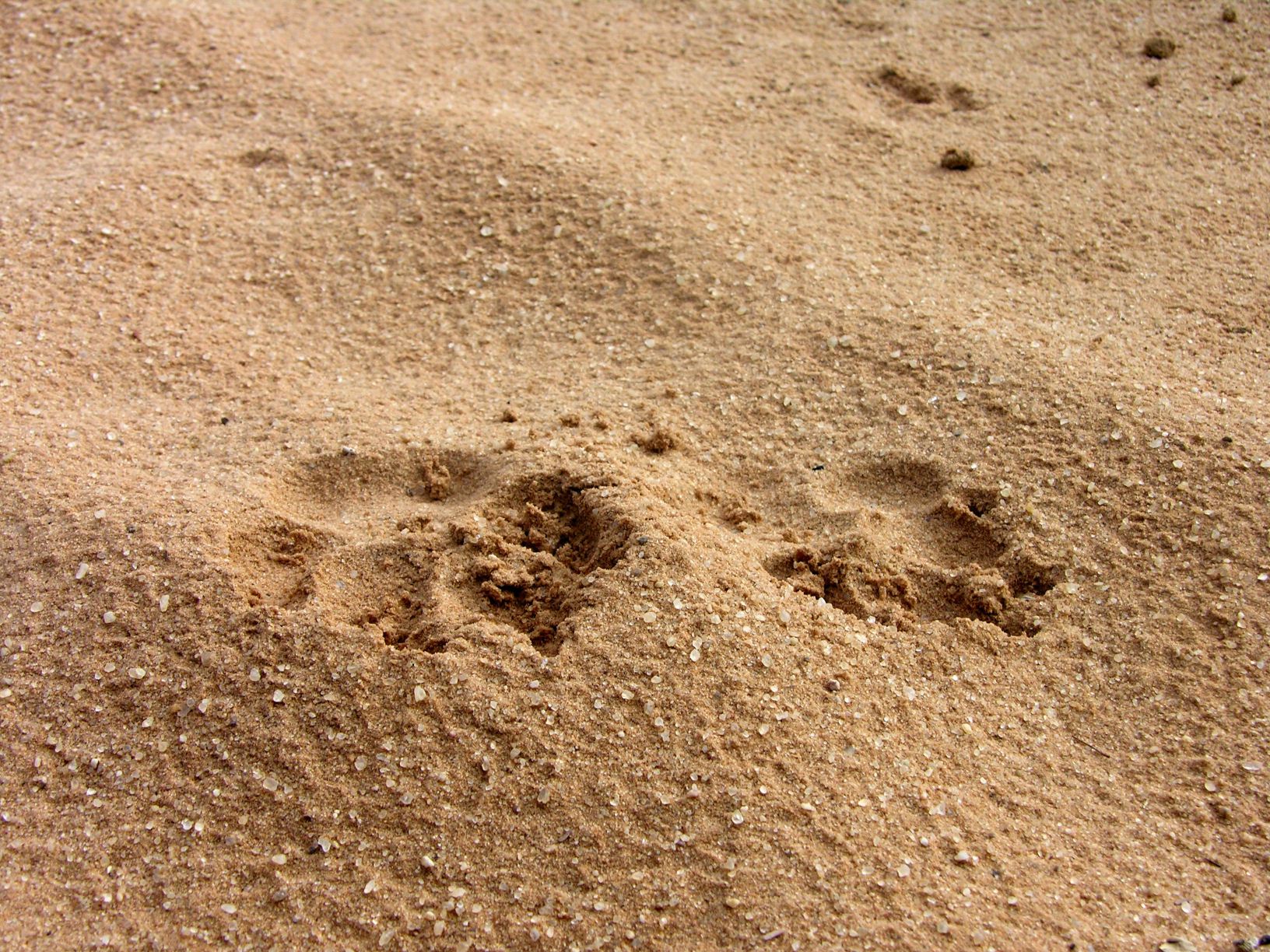
We weren't particularly lucky with lions, but a cheetah darted past a hundred metres away. That's a much rarer cat than a lion.
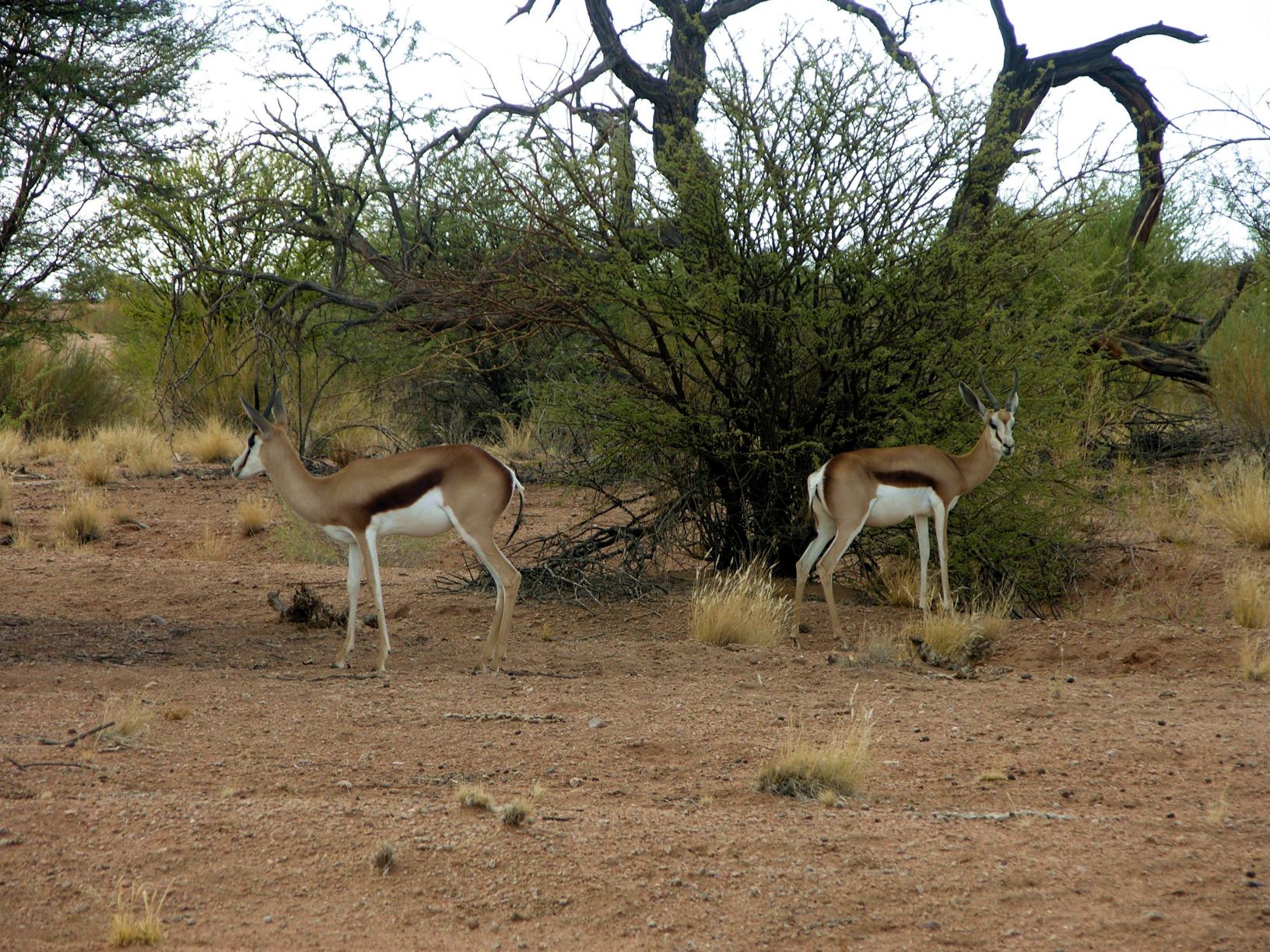
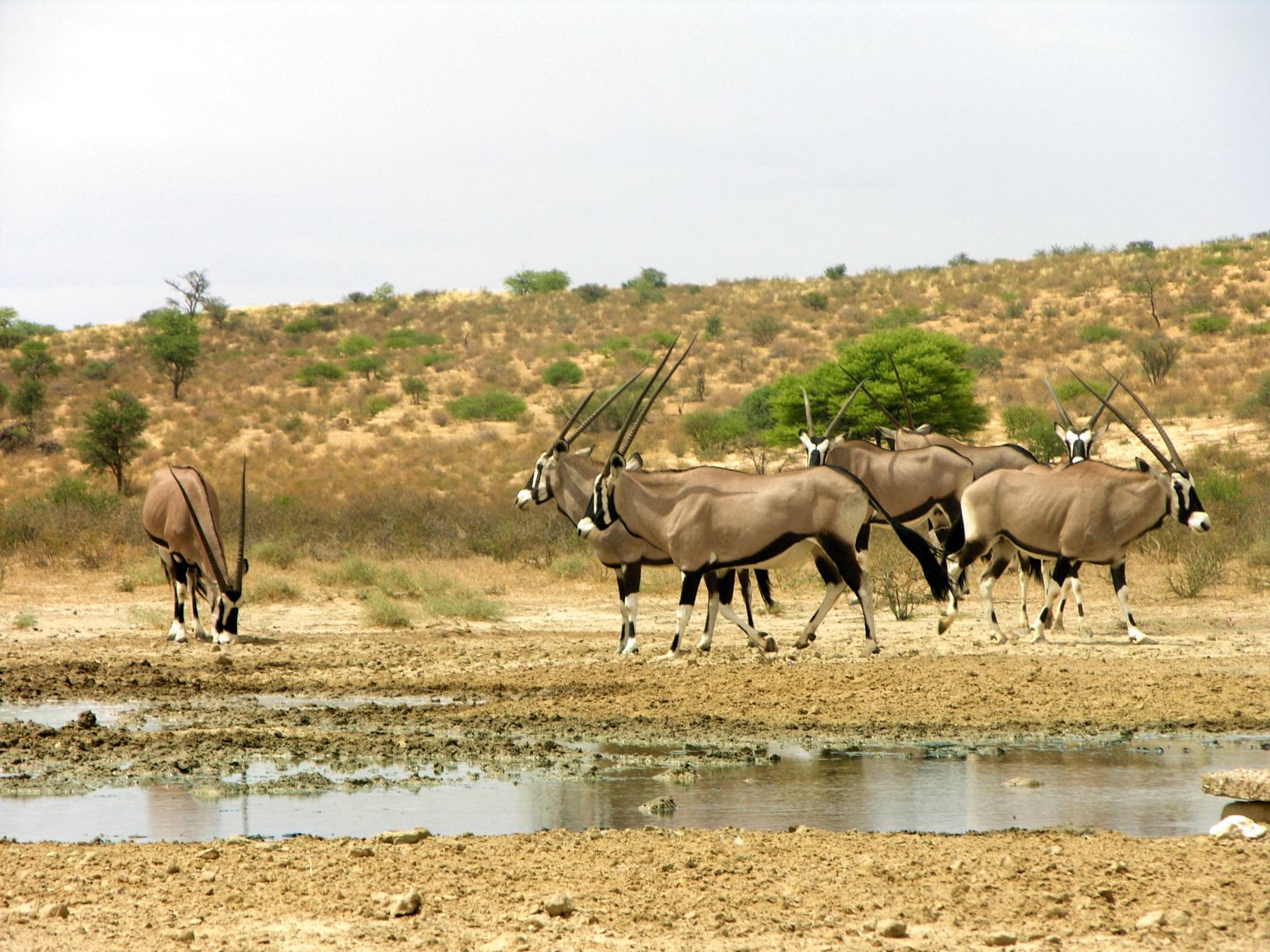
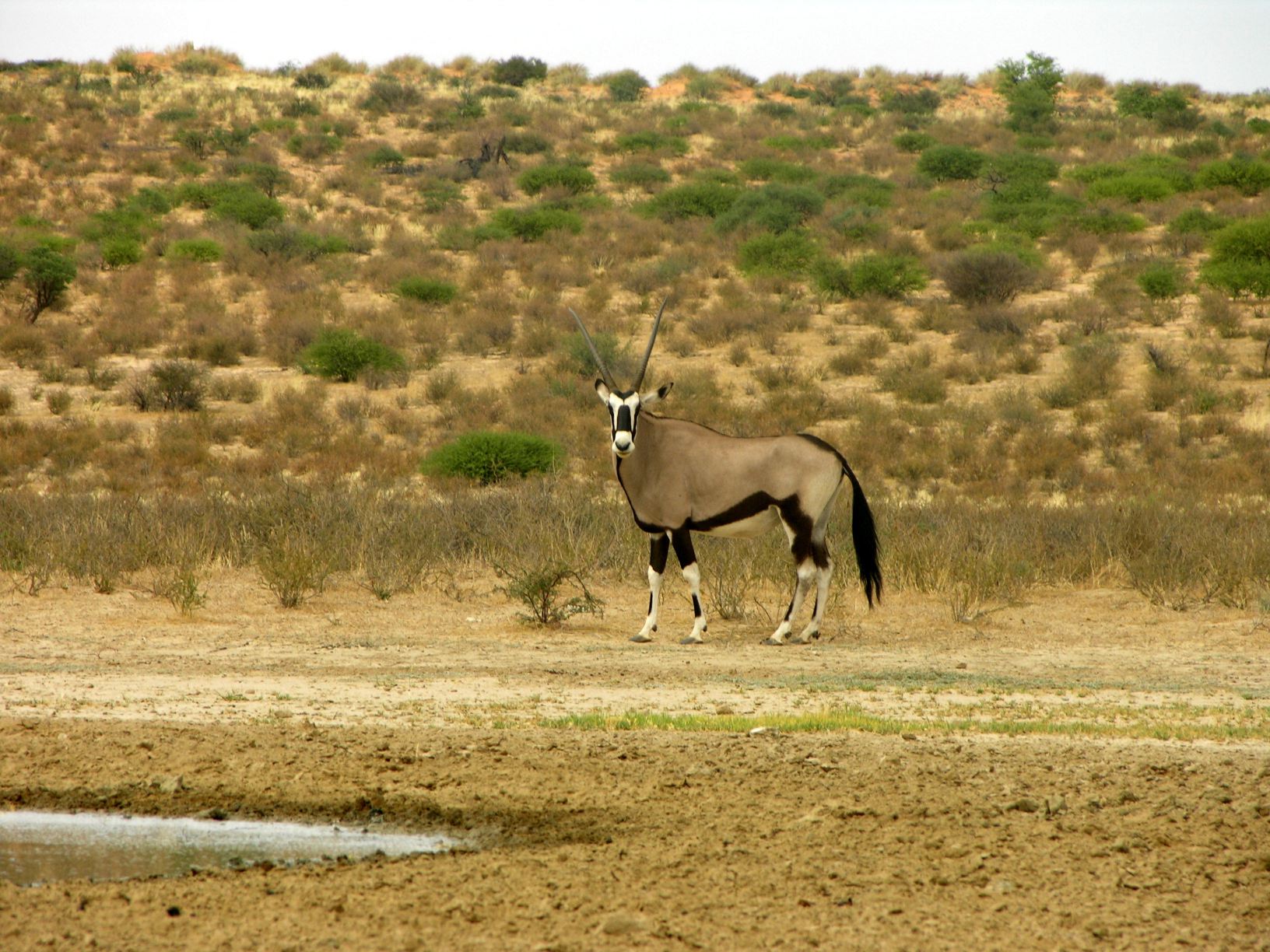
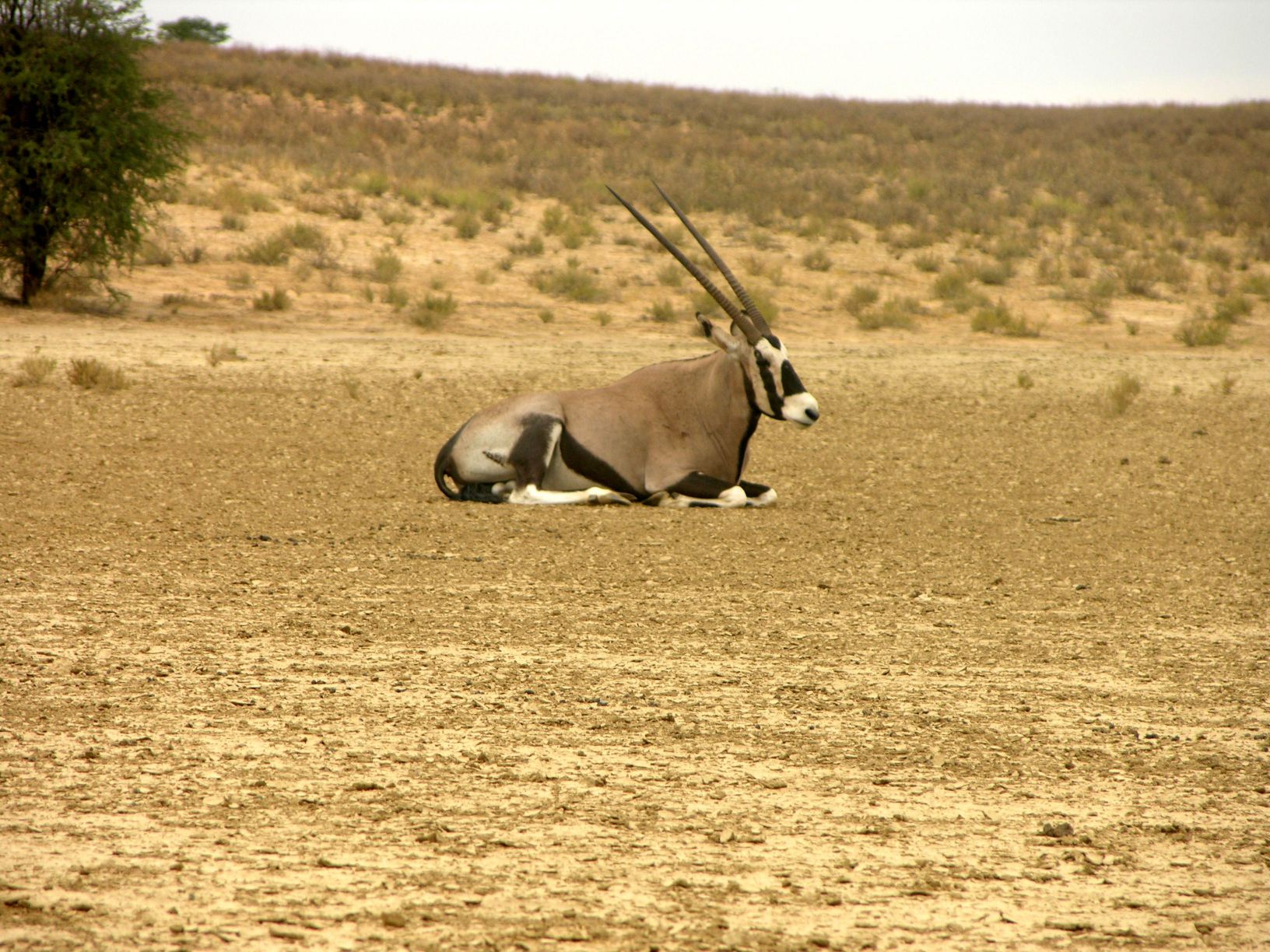
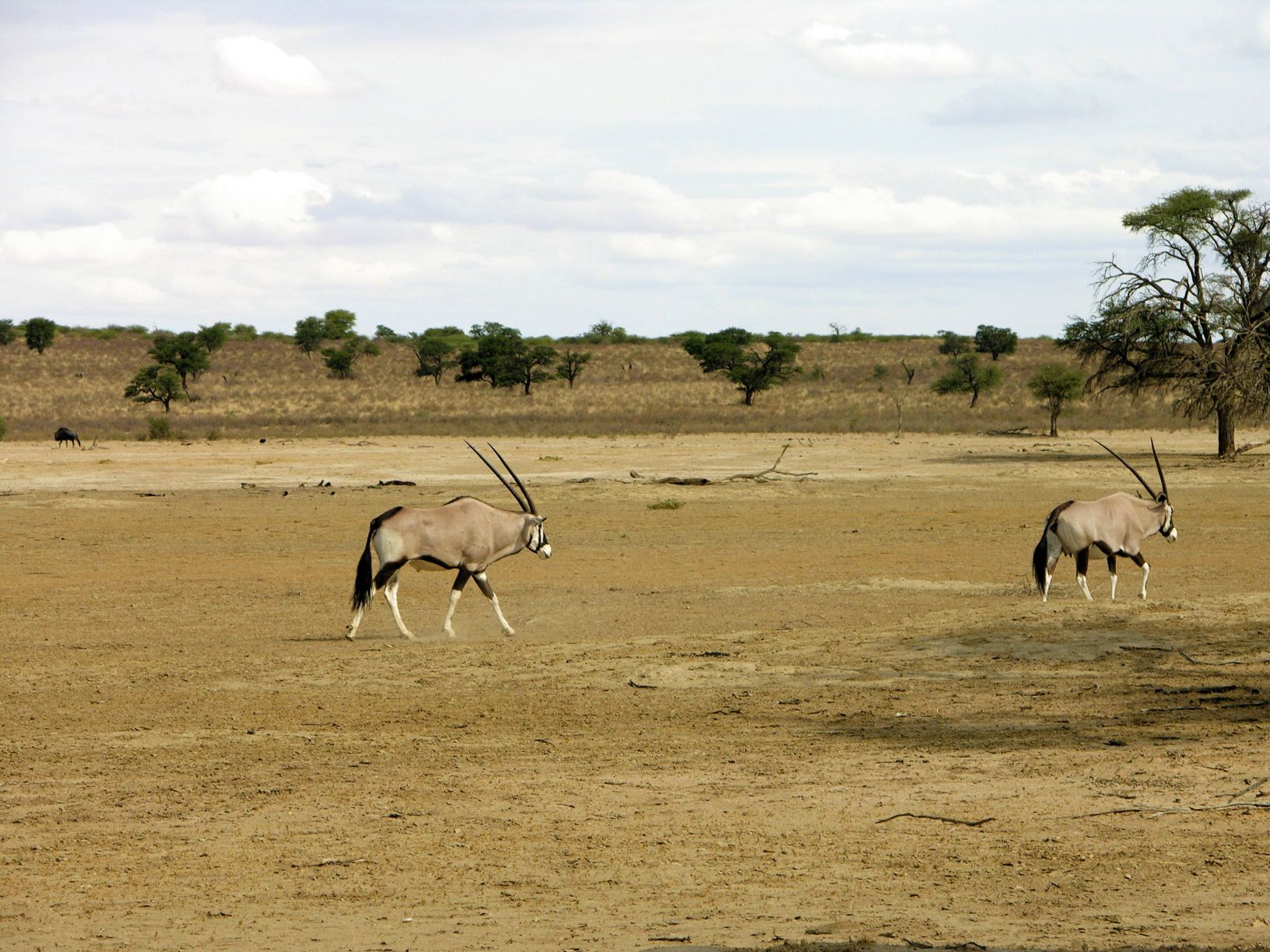
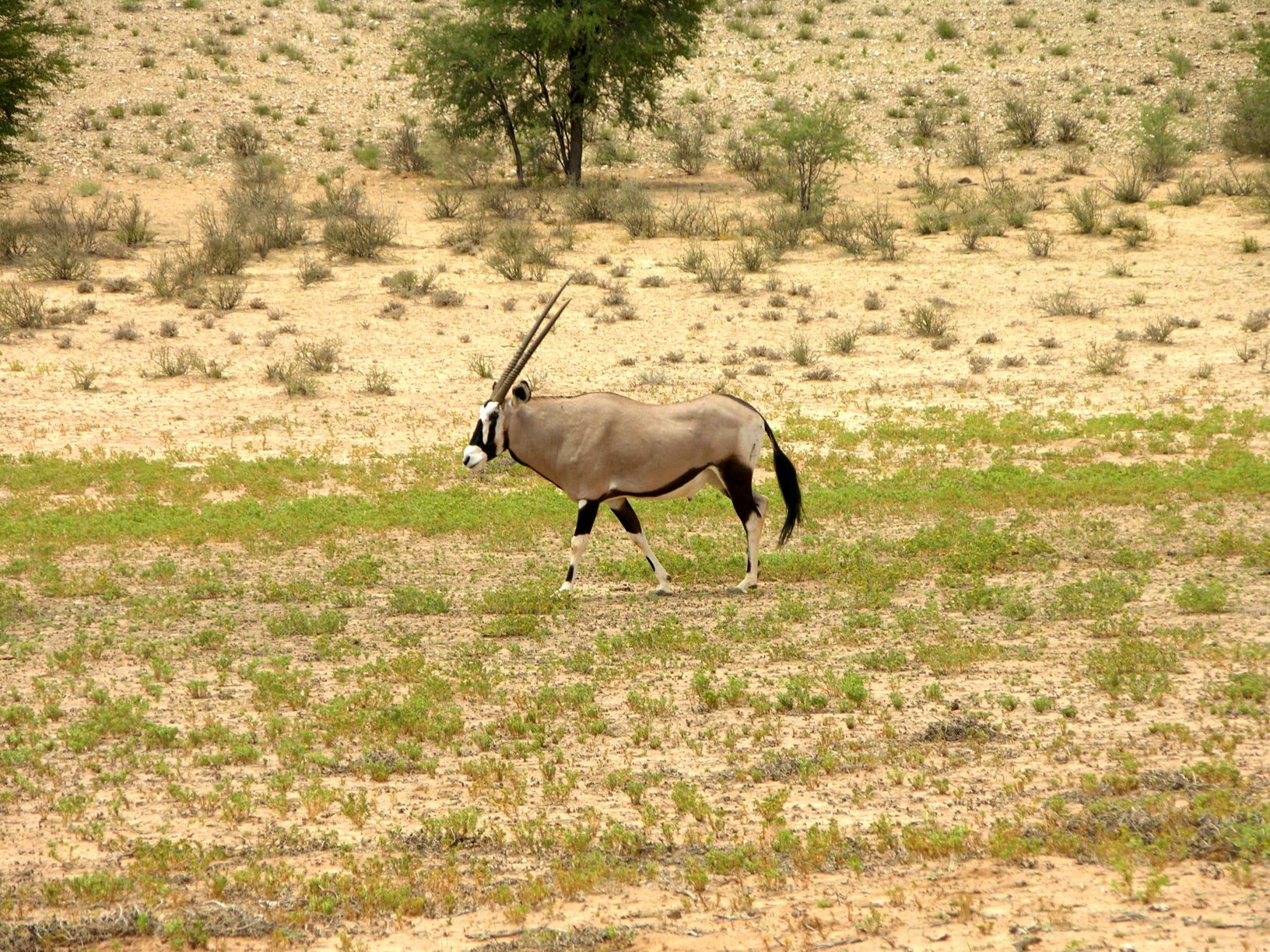
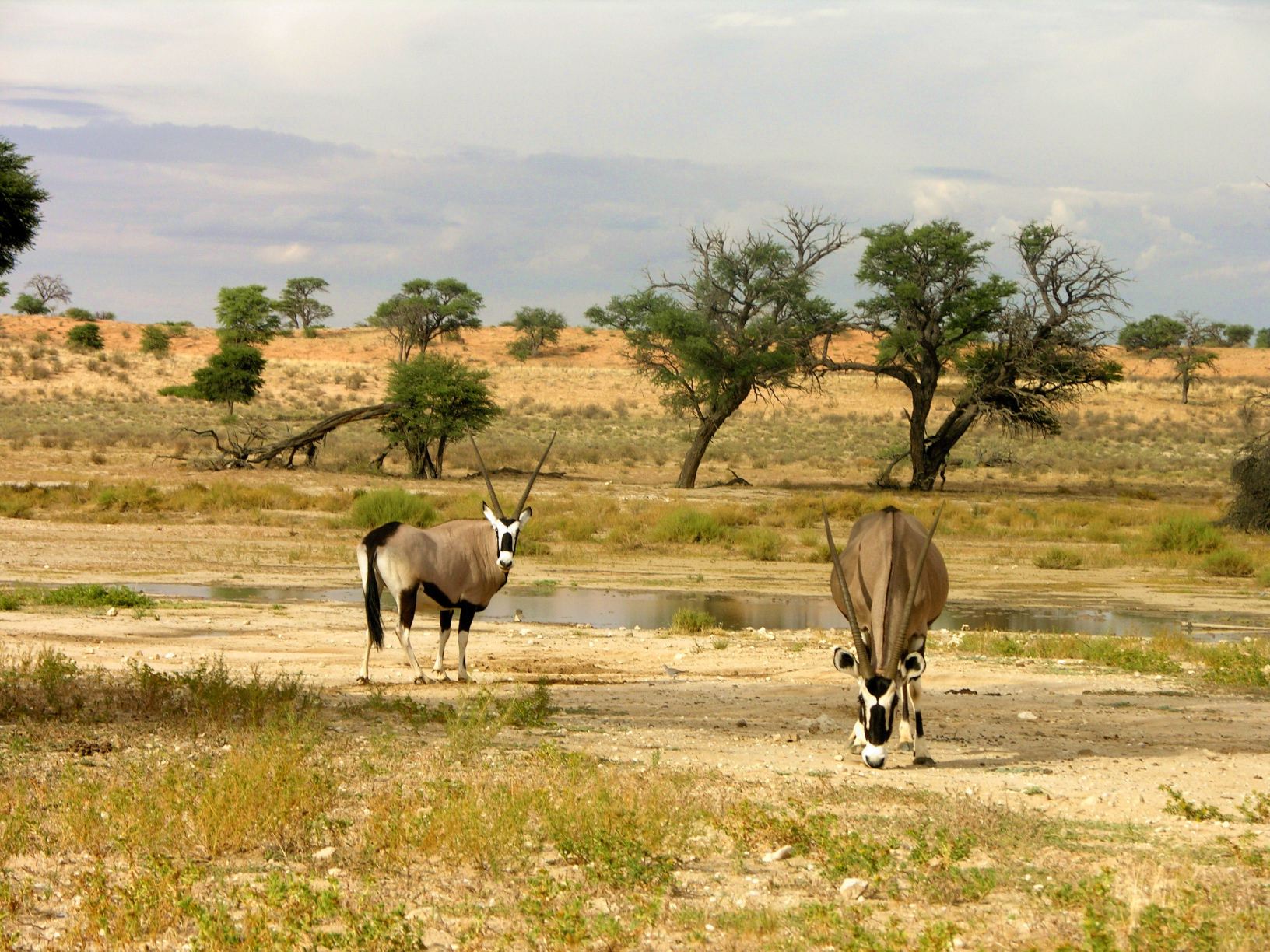
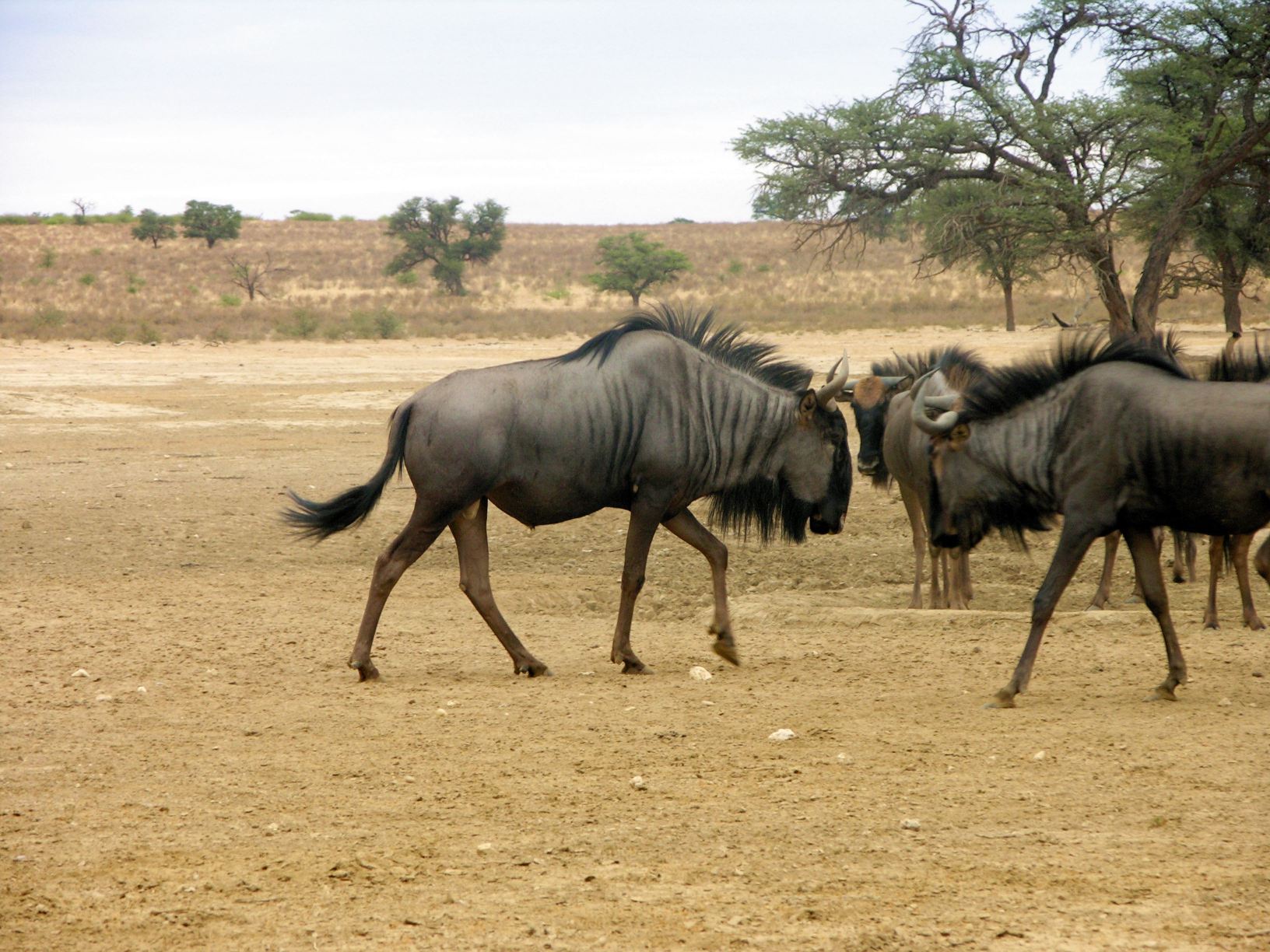
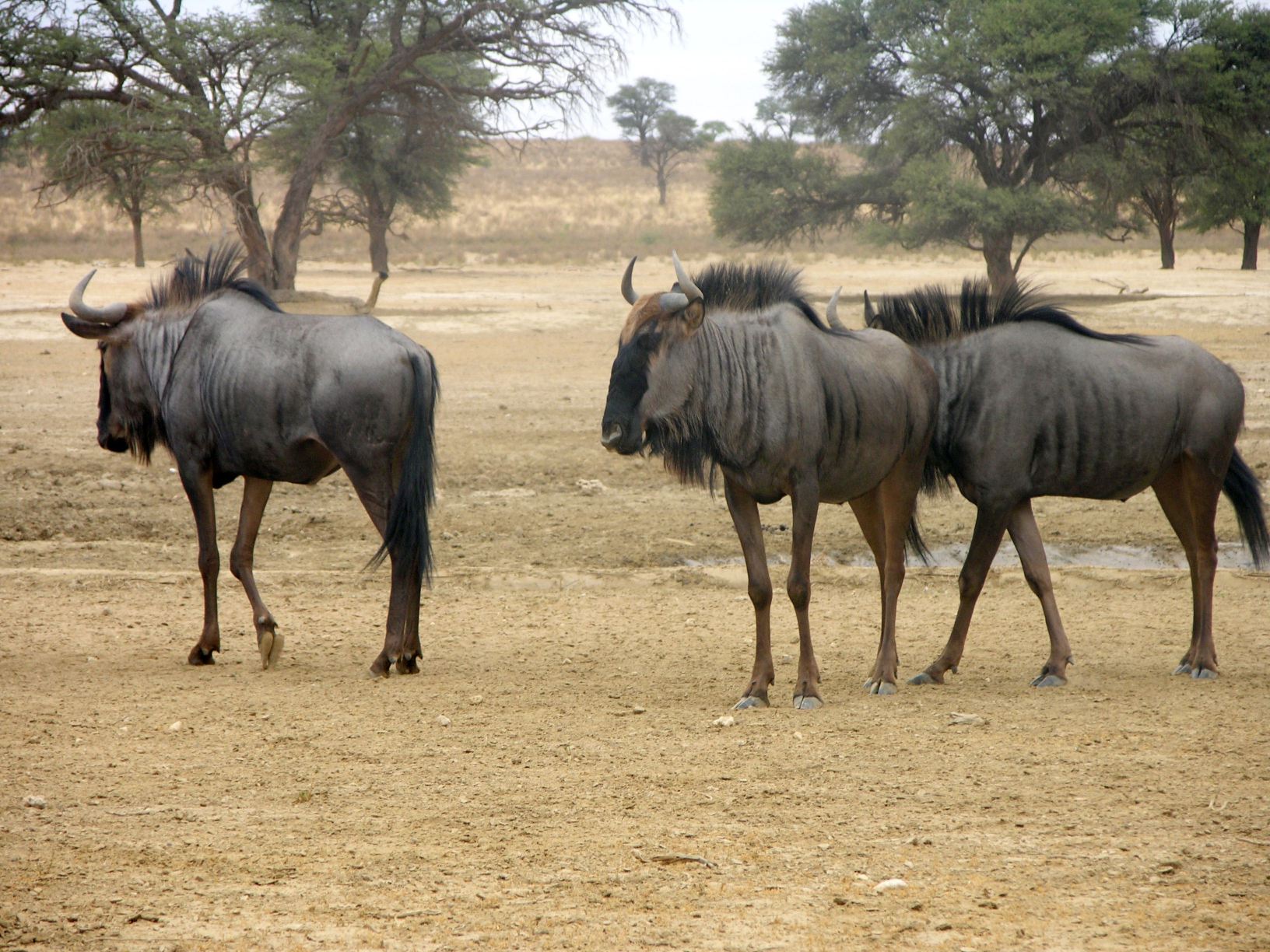
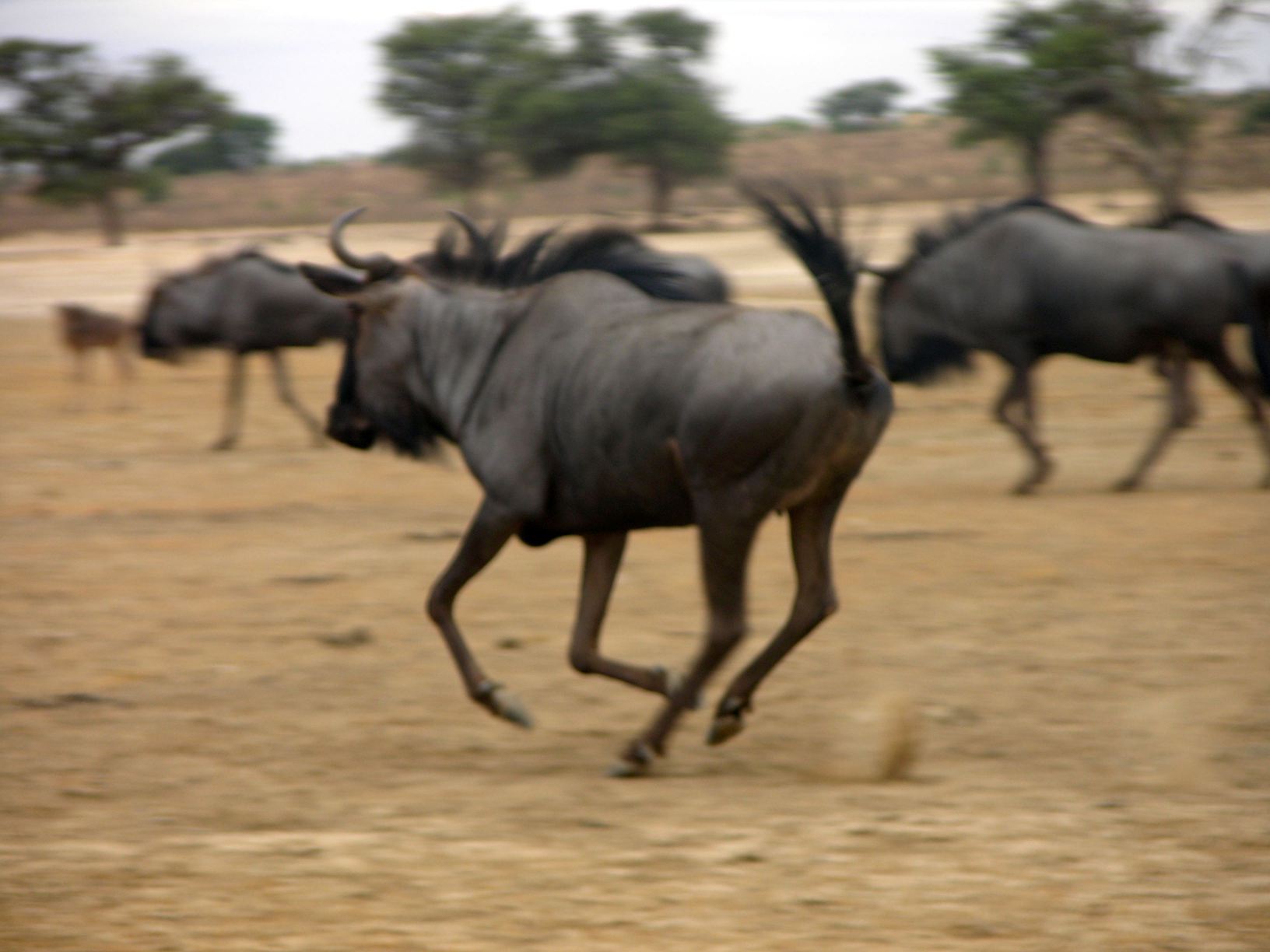
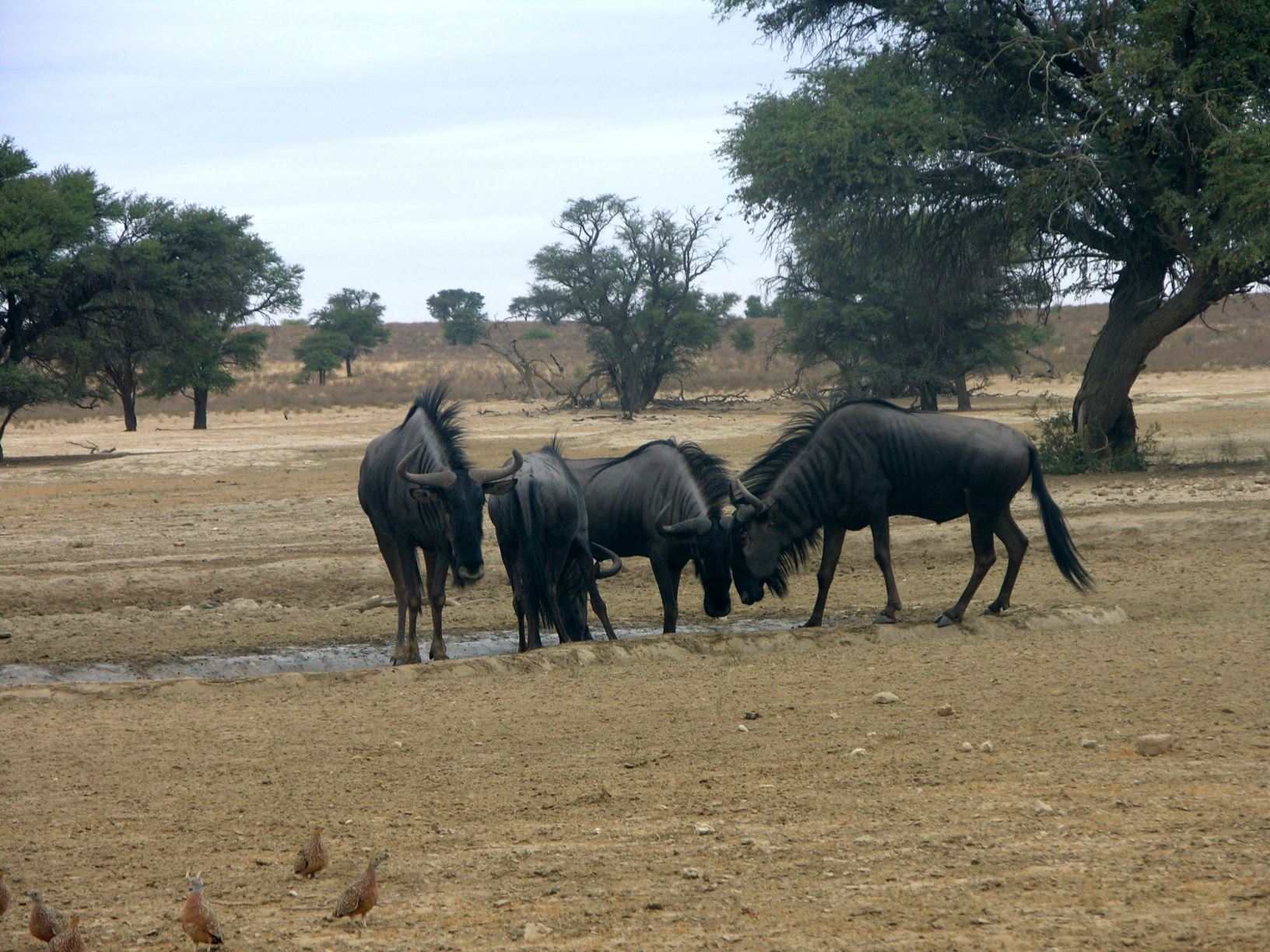
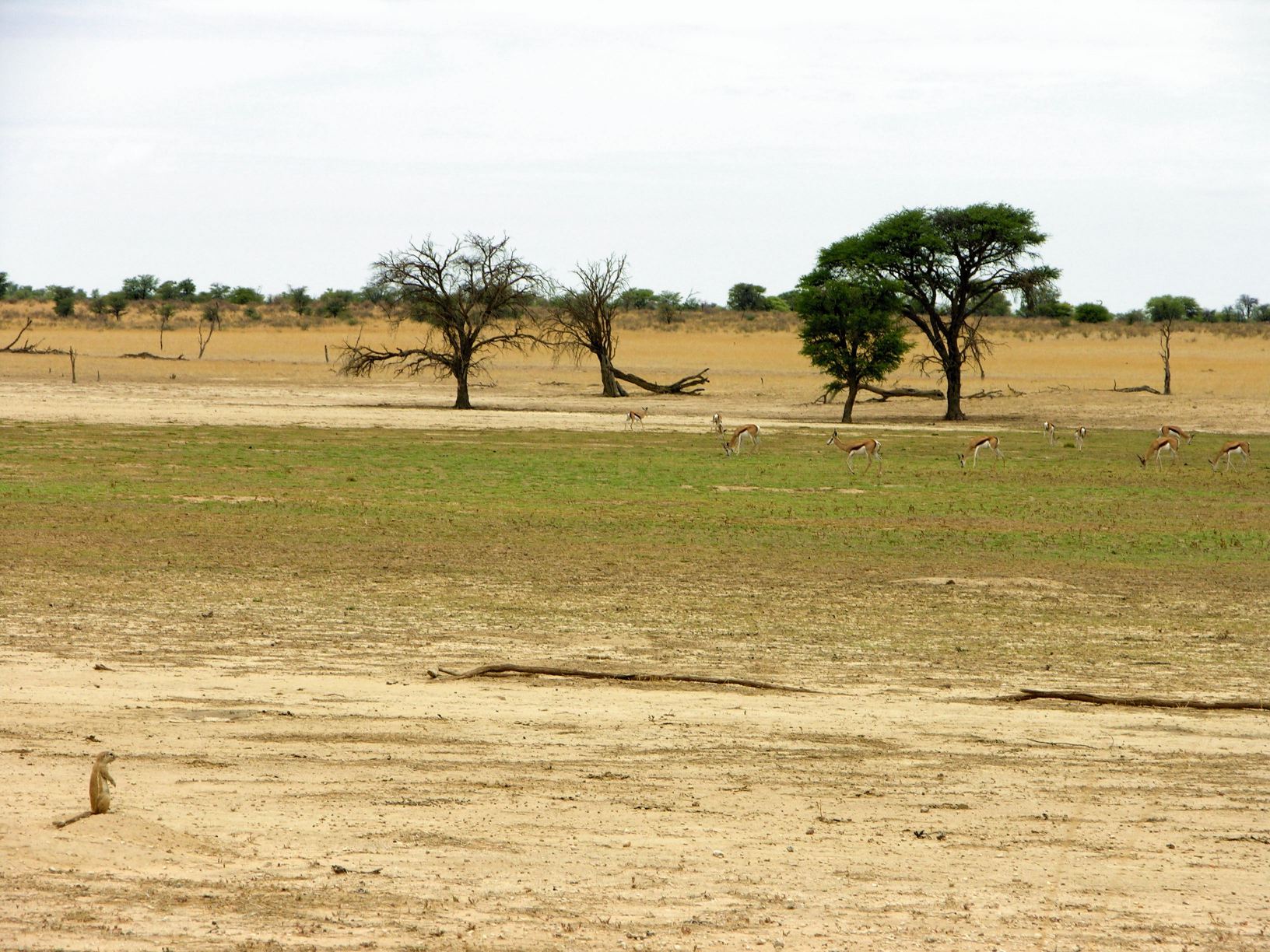
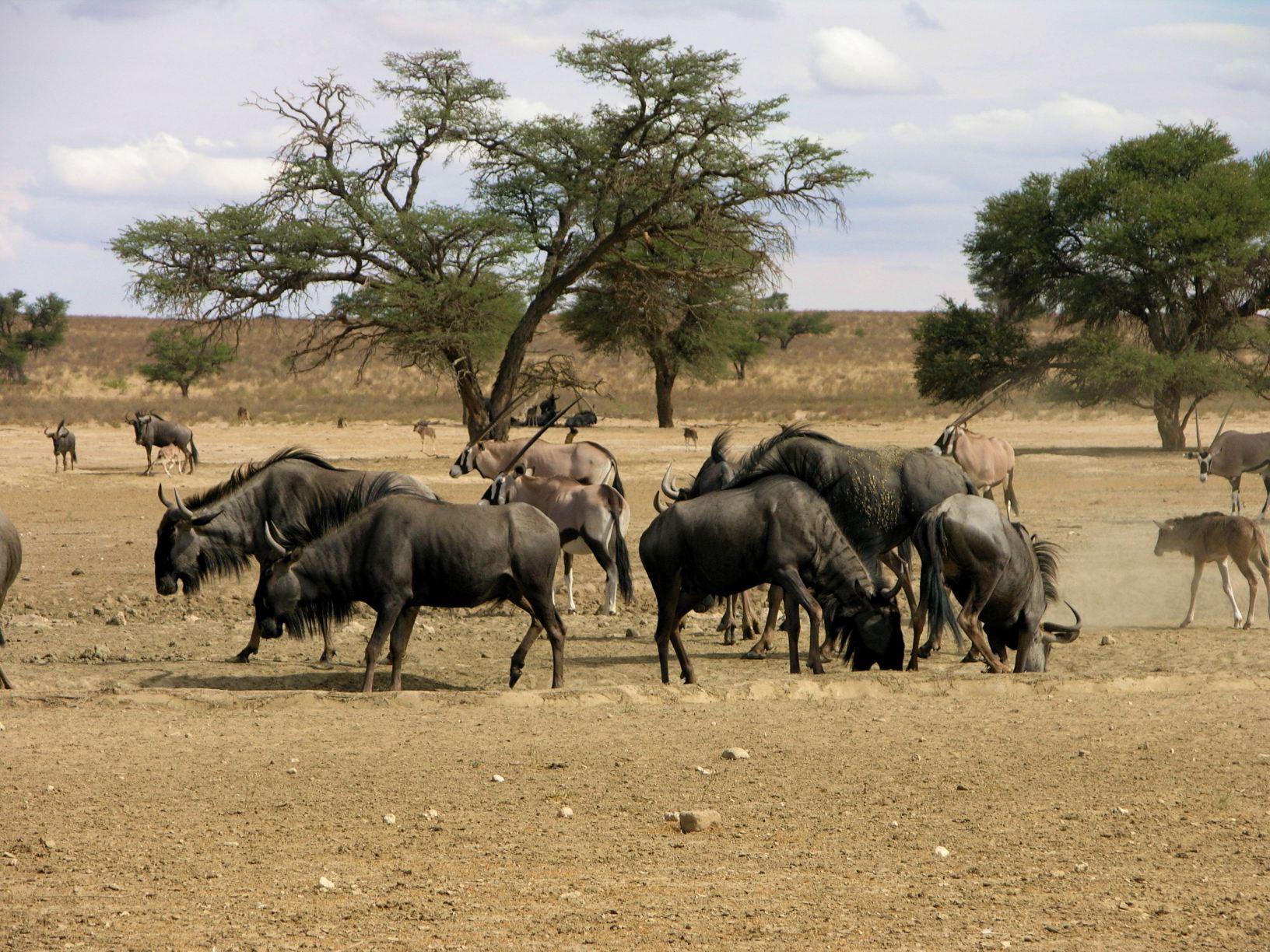
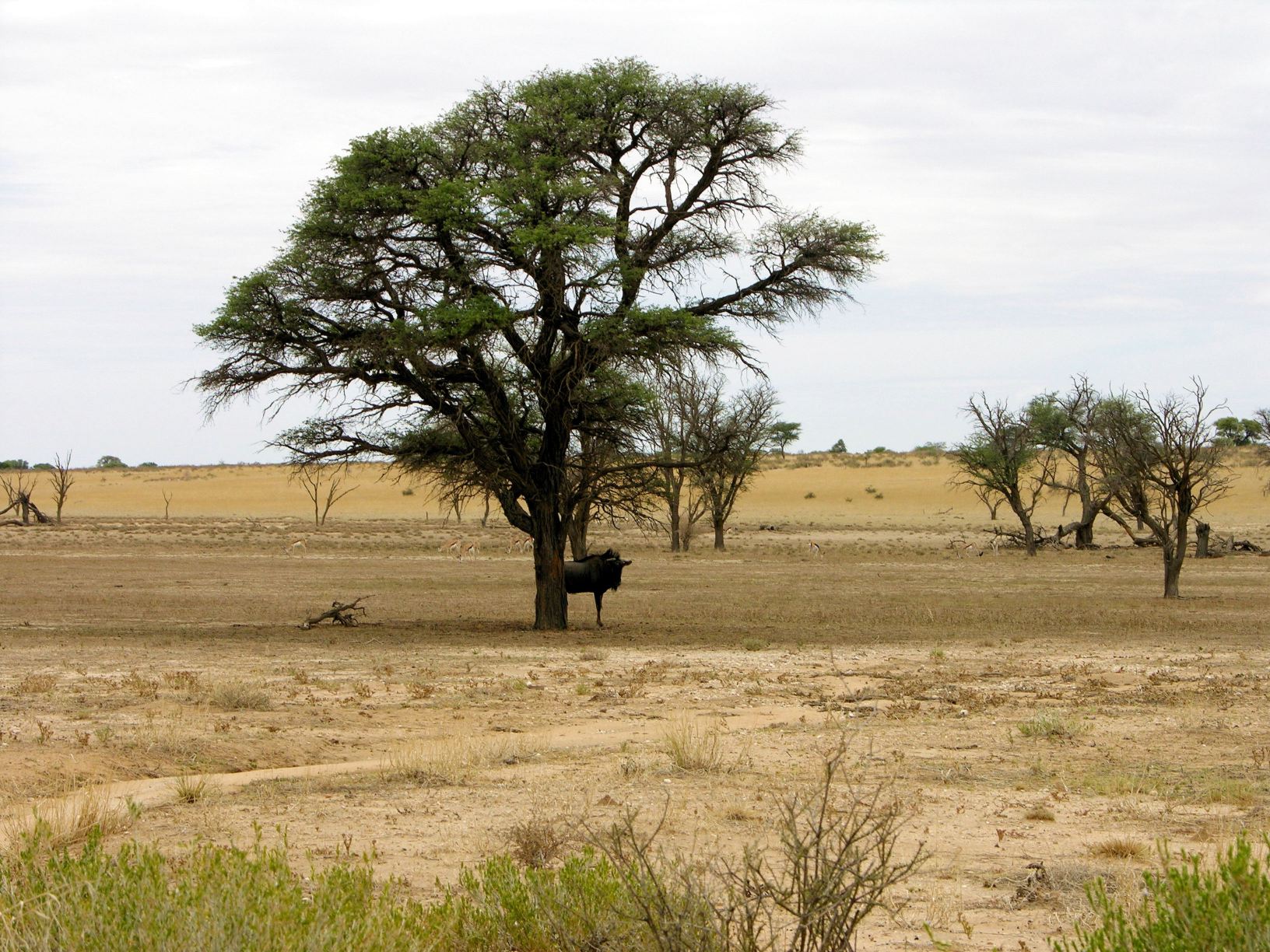
There weren't many predators, but there were vast numbers of antelope, perhaps more than in any of the other parks. That must be down to the generally arid climate and the drought in particular. Like it or not, they have to come and gather at the few waterholes. The park was originally created in 1931 to protect the gemsbok. They're huge members of the antelope family armed with long, straight, spike-like horns. As well as those, there are plenty of other antelope, the wildebeest. Little springbok are there by the uncountable thousand. They say they've overrun the place and eaten all the grass, so the large, rare antelope can't hide their young from predators and are dying out. They even have to cull springbok for meat. It was the only unusual meat I managed to find in South Africa. Oh, and I'd so hoped for a little piece of hippopotamus. There seem to be plenty in the north-east of the country, but for some reason nobody does anything with them.
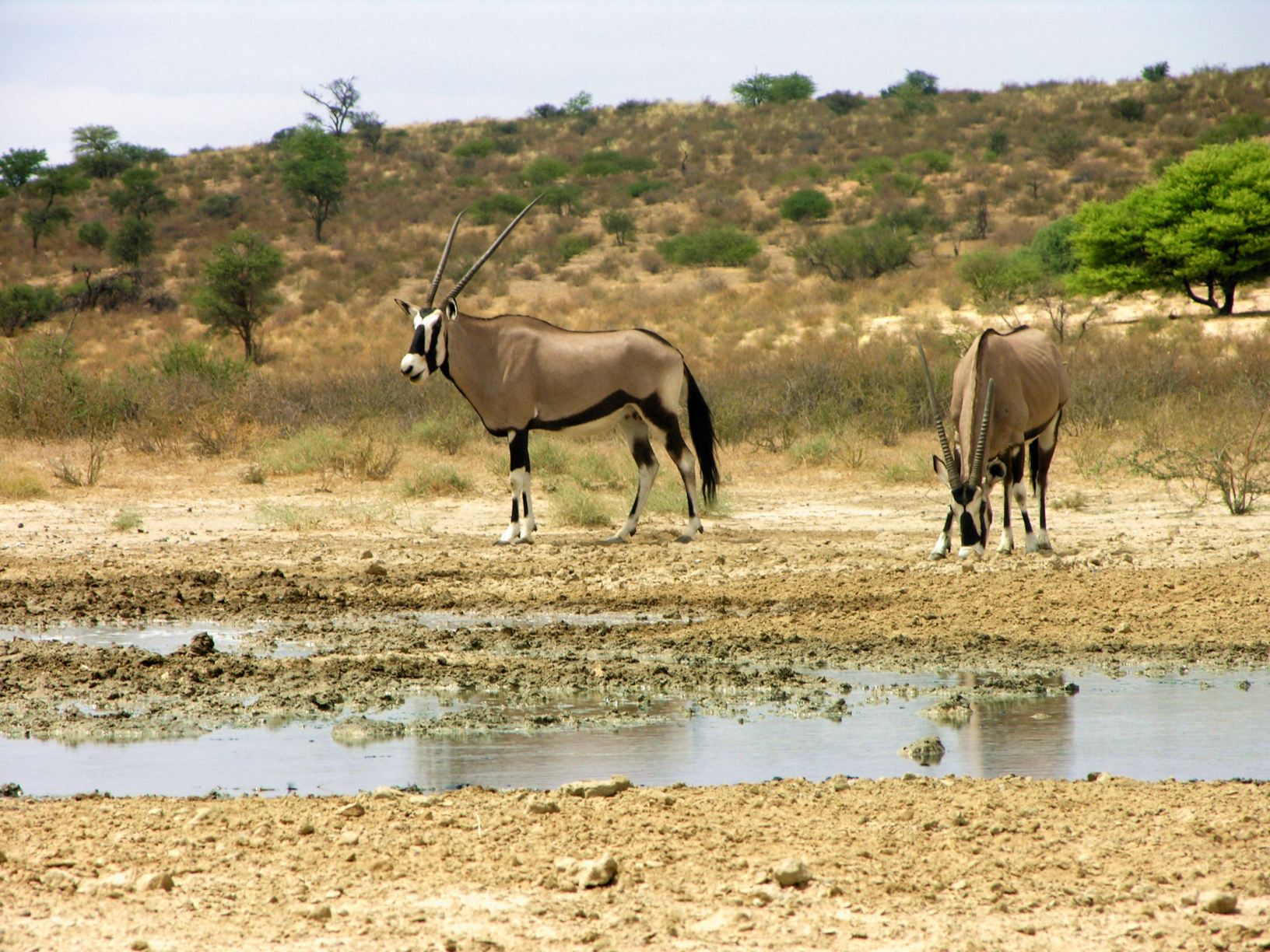
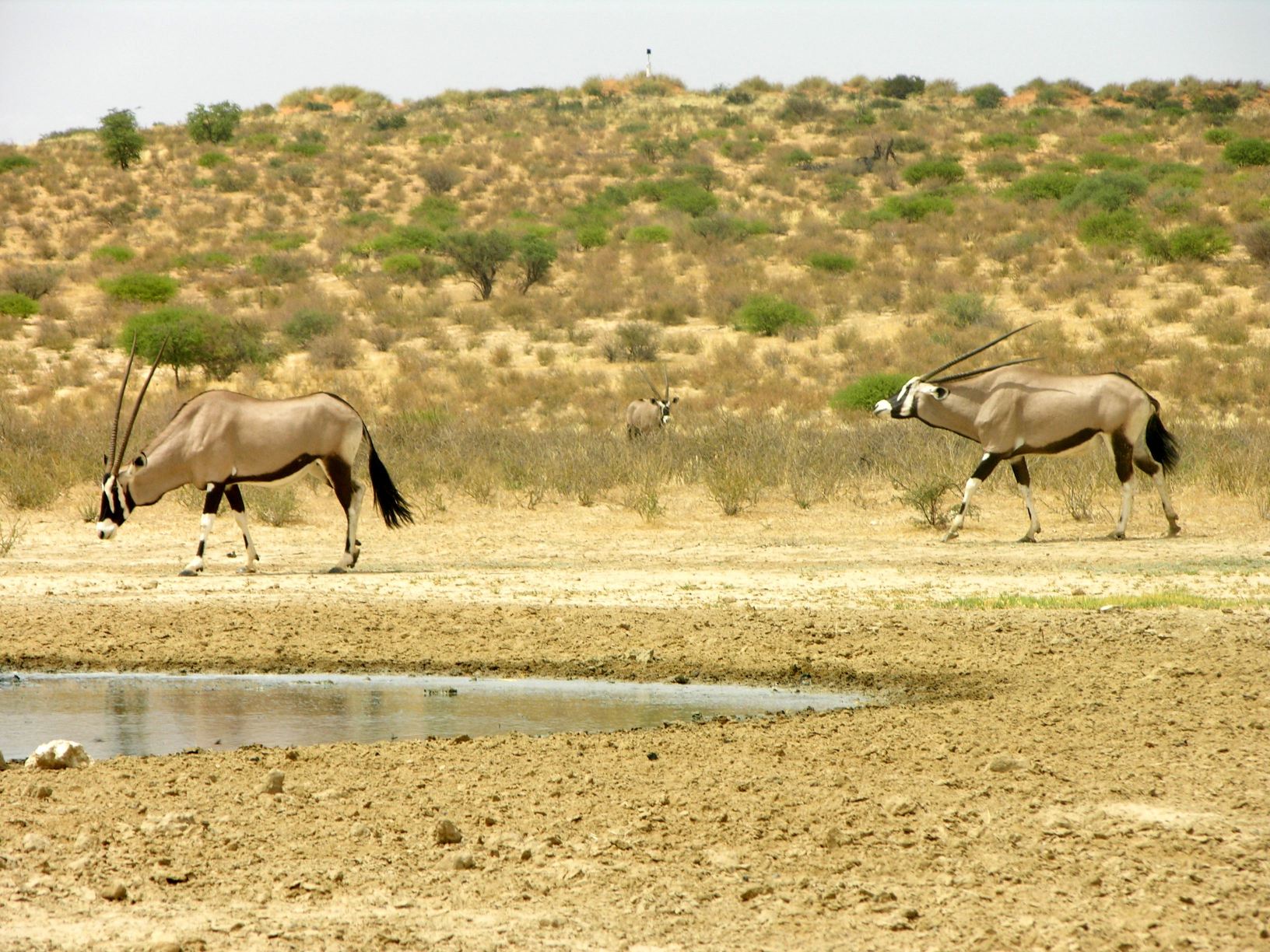
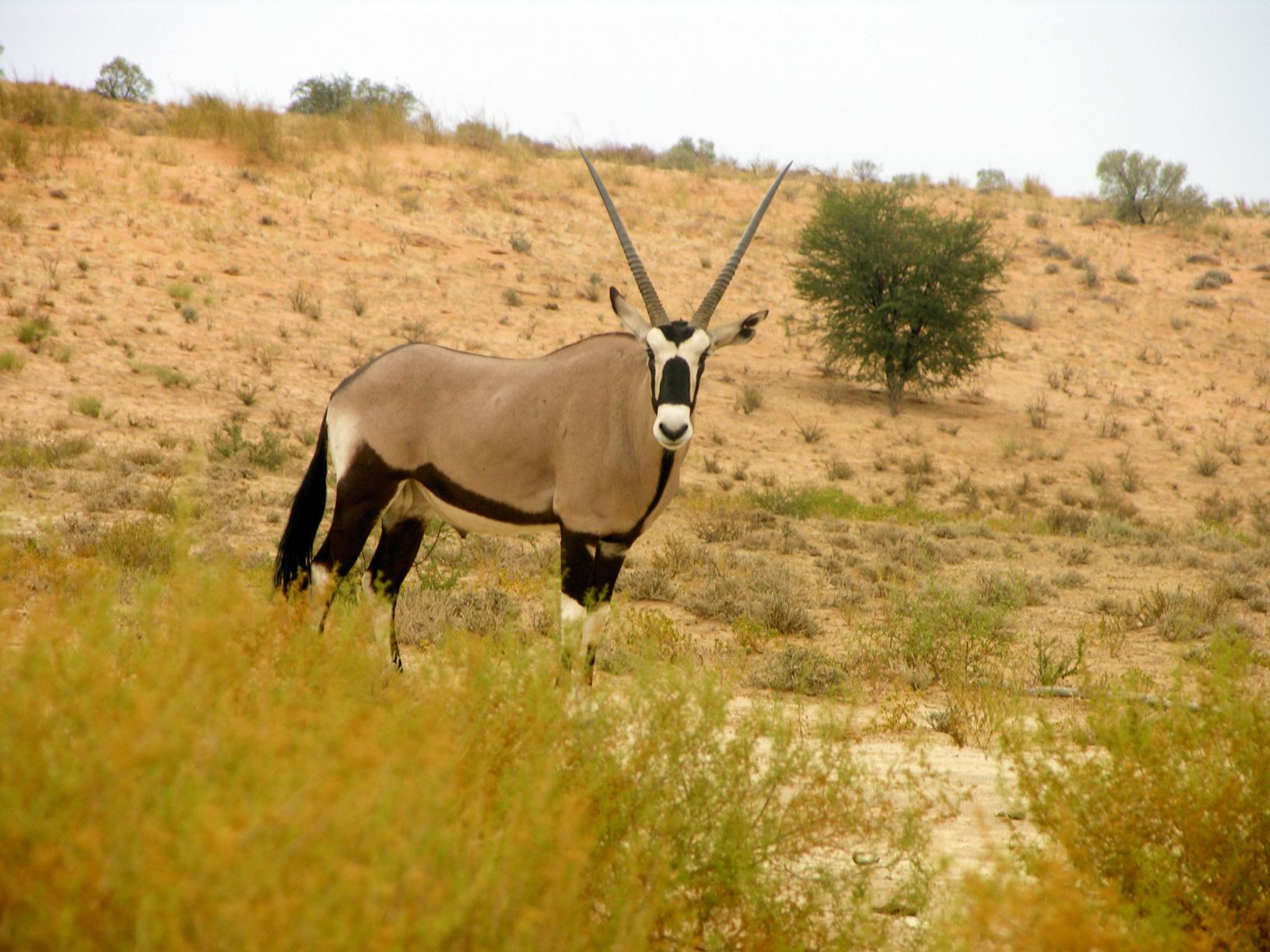
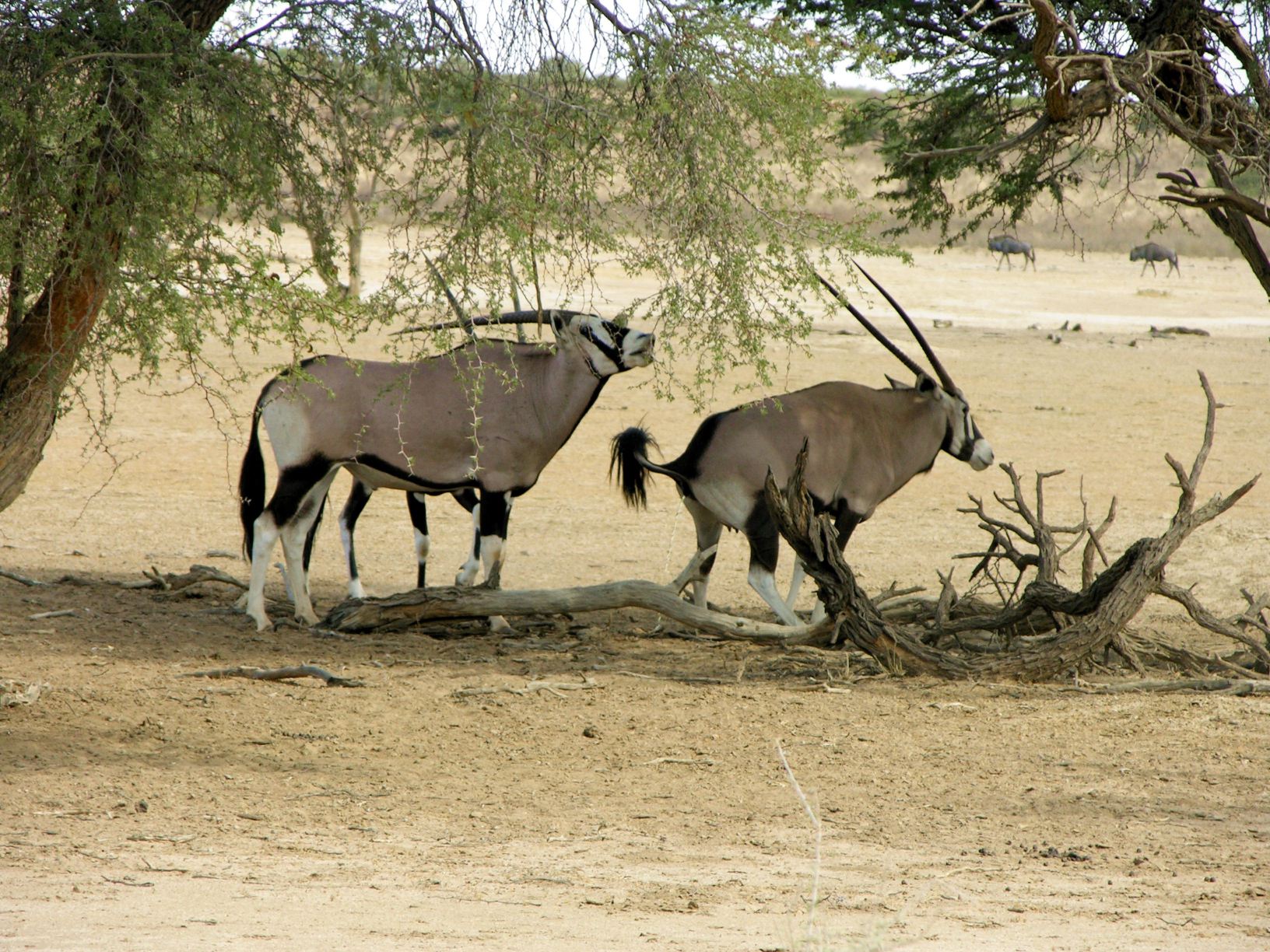
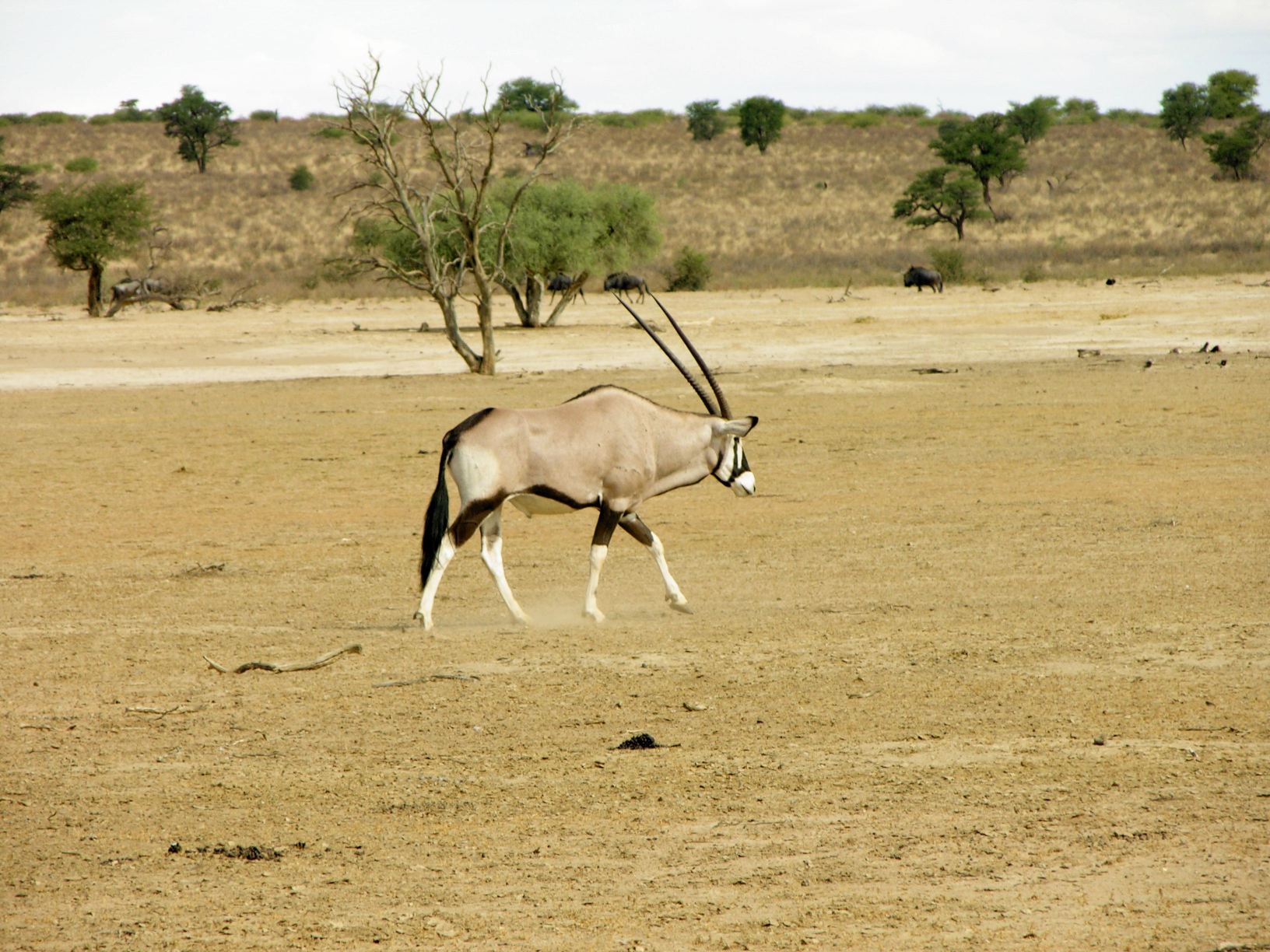
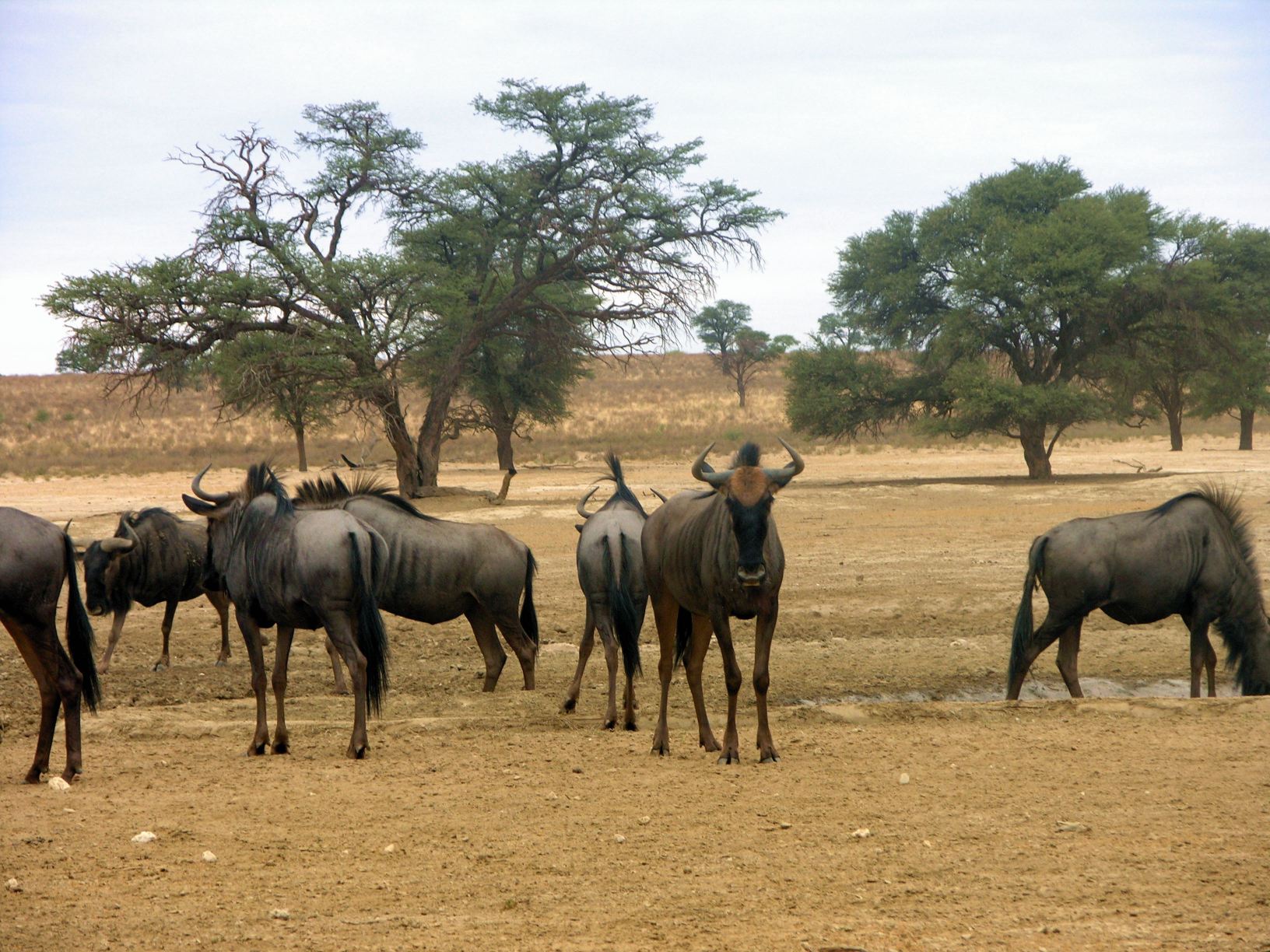
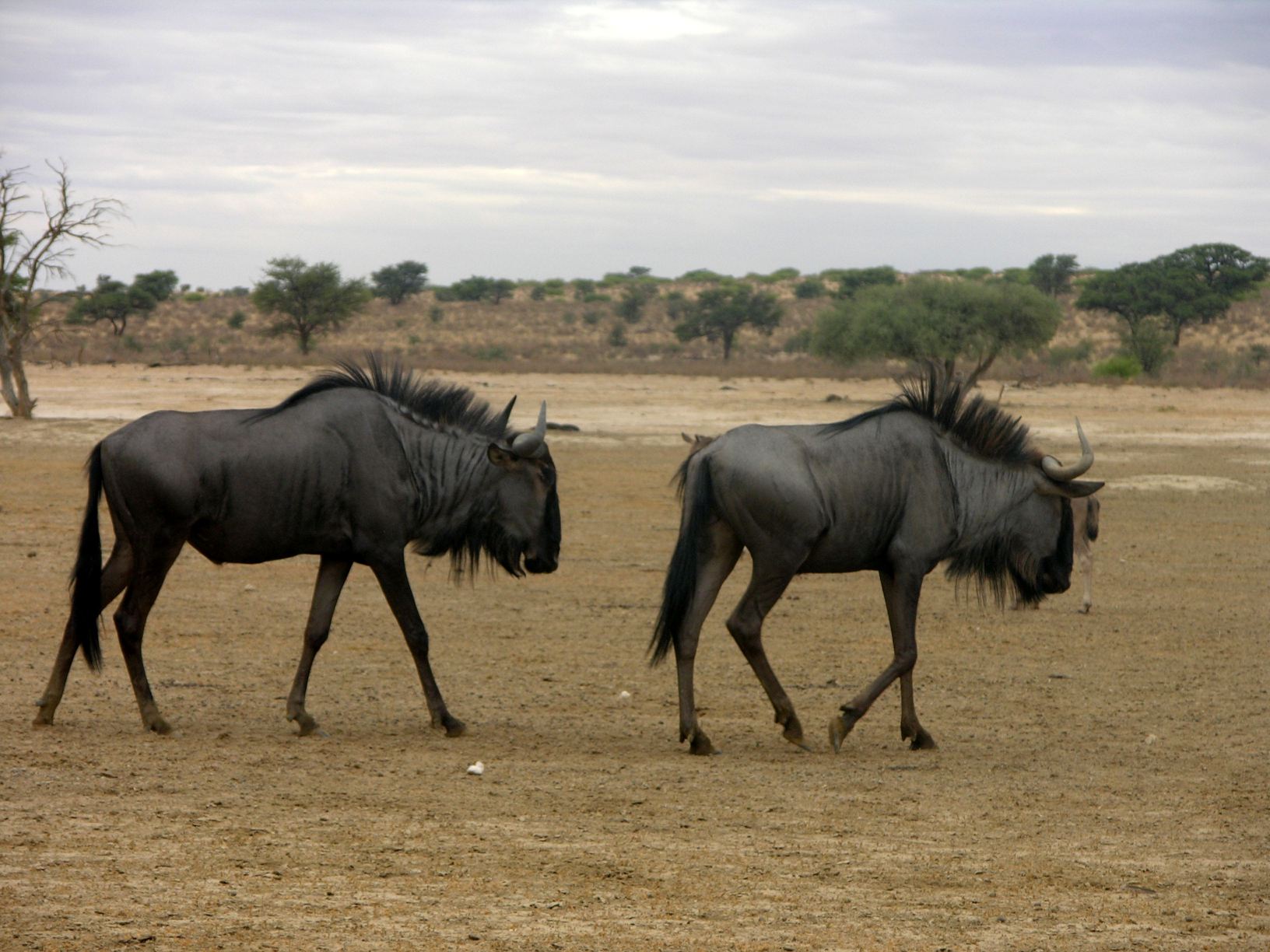
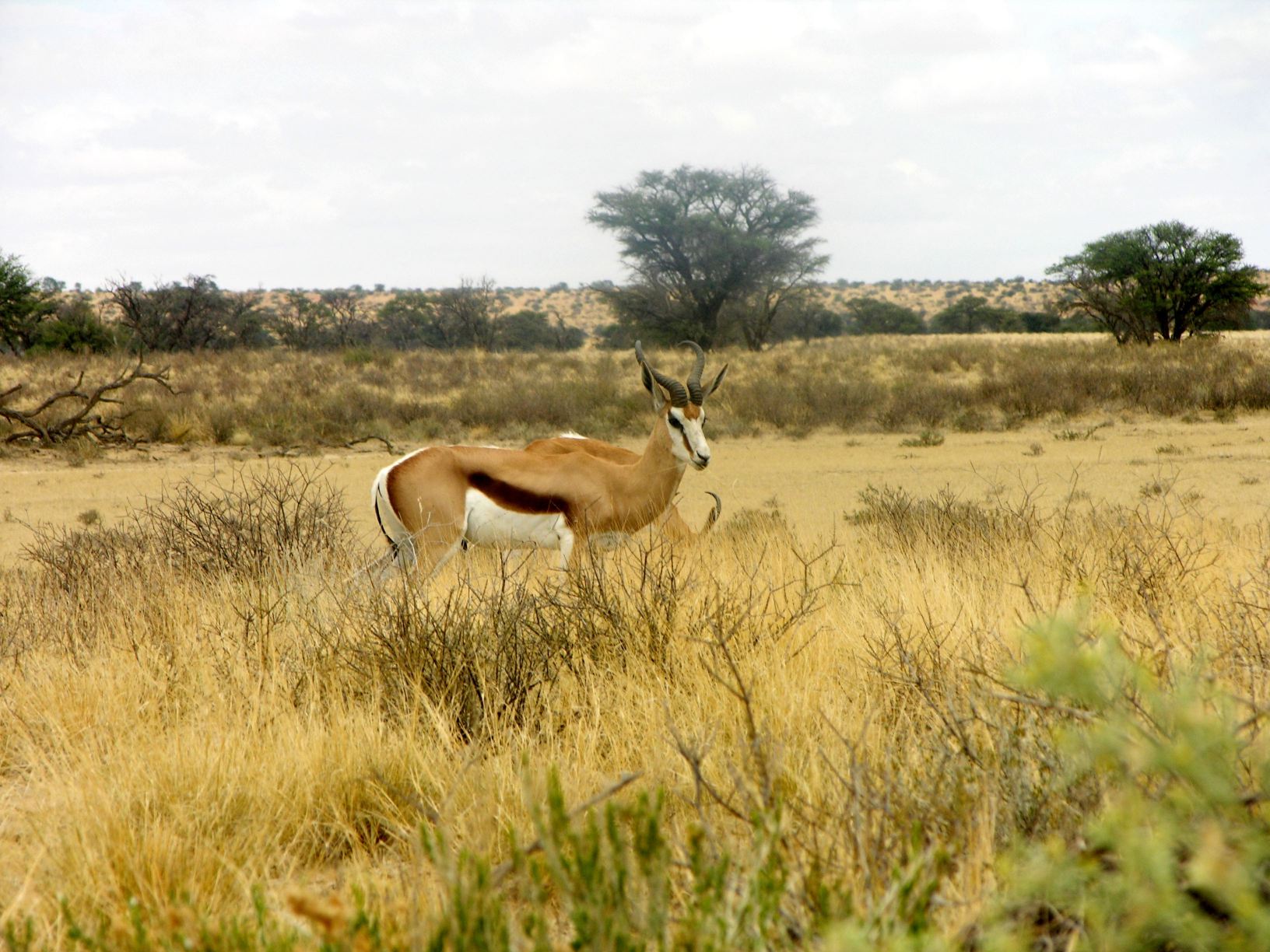
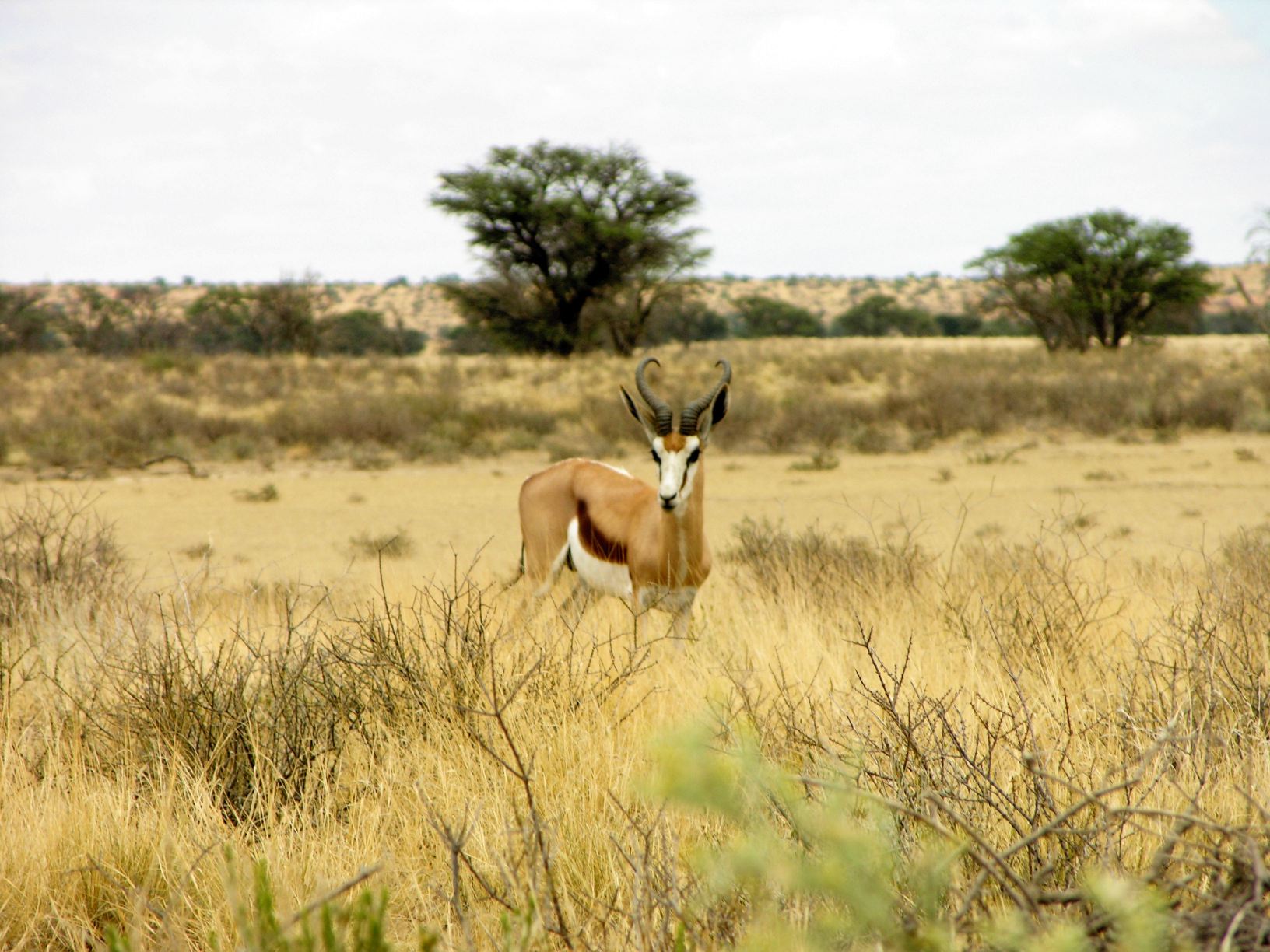
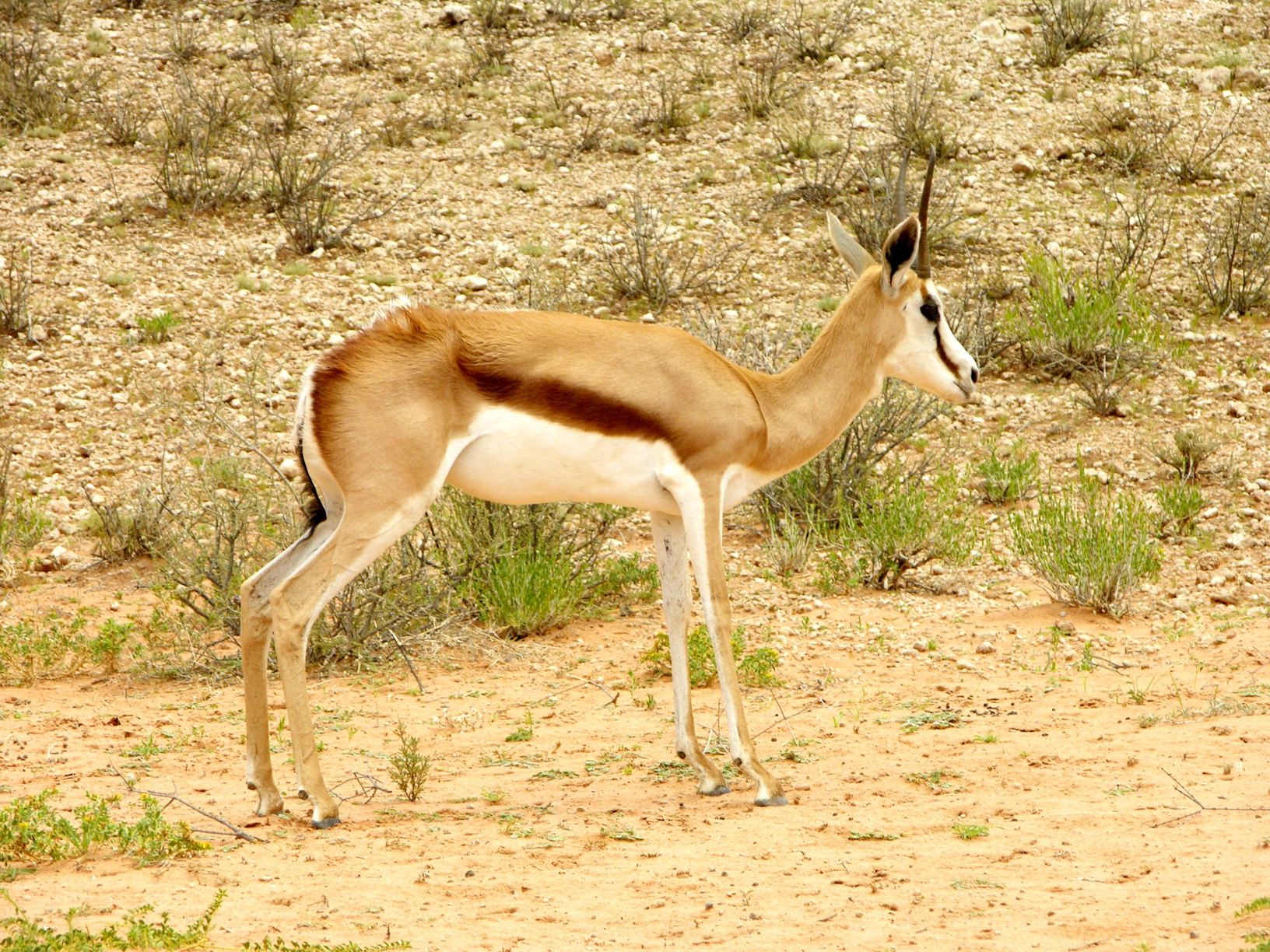
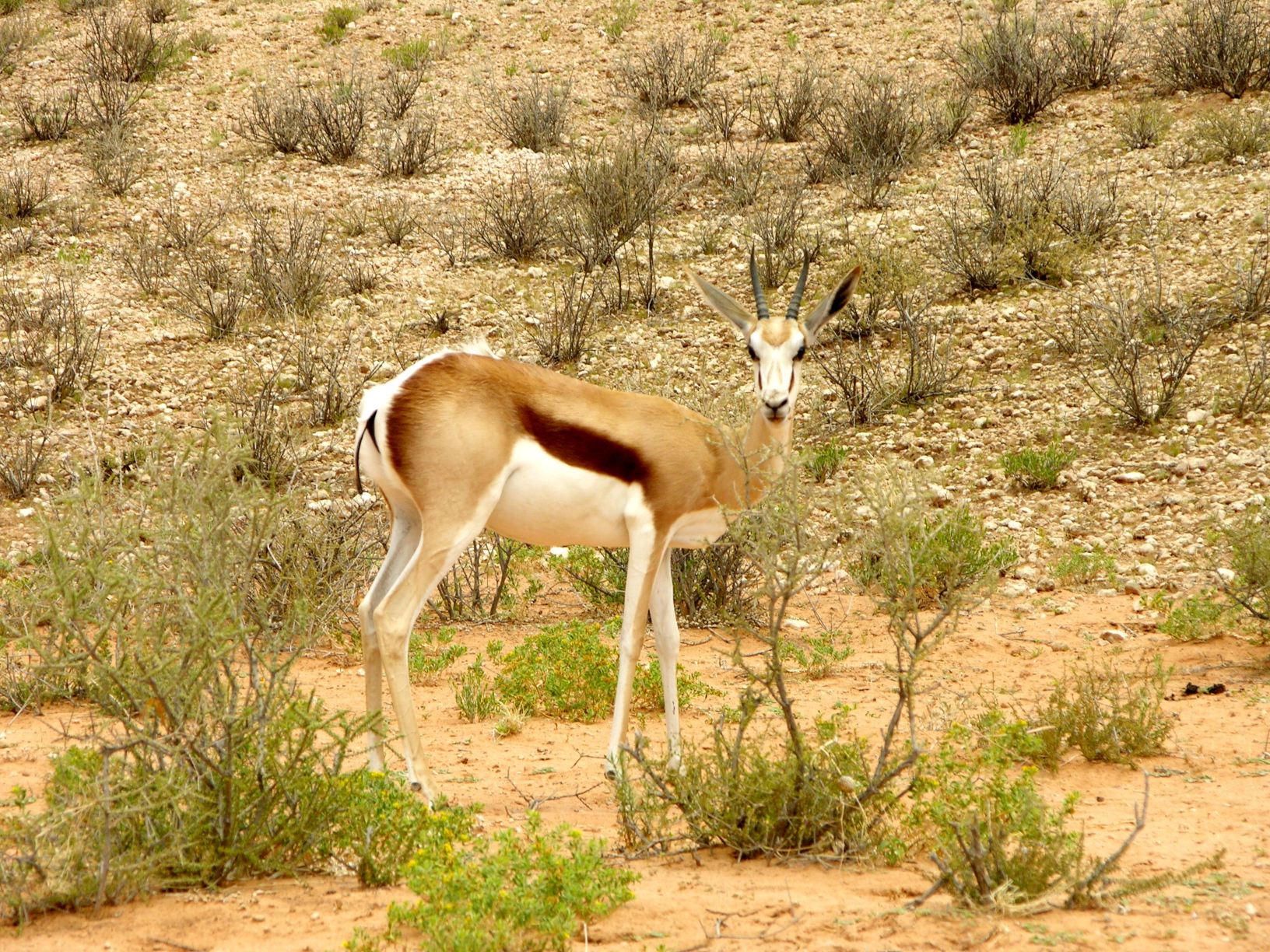
The ground squirrels, which reminded us of susliks, liven things up considerably. They stand very solemnly on their hind legs along the roadside, looking all around them.
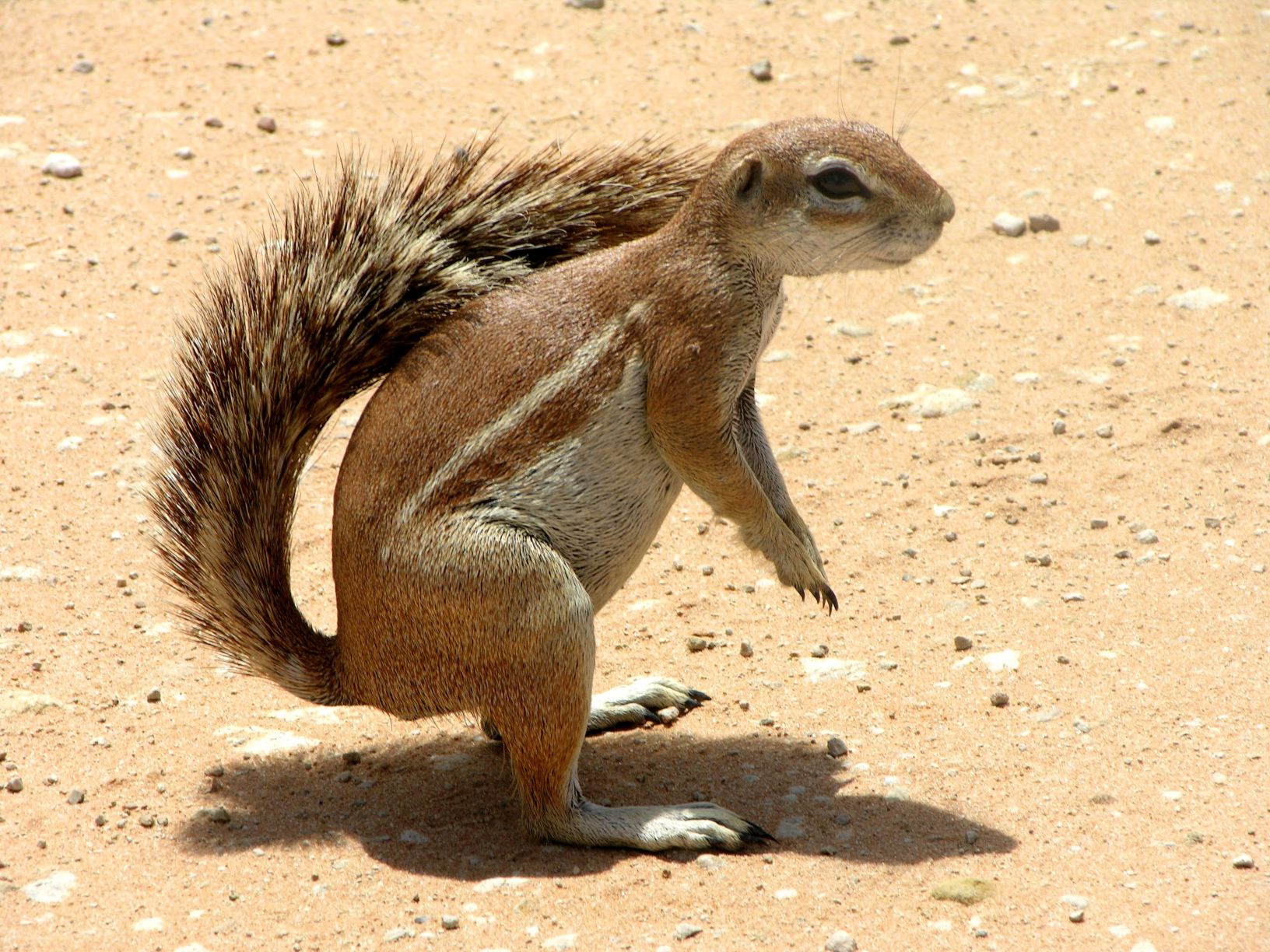
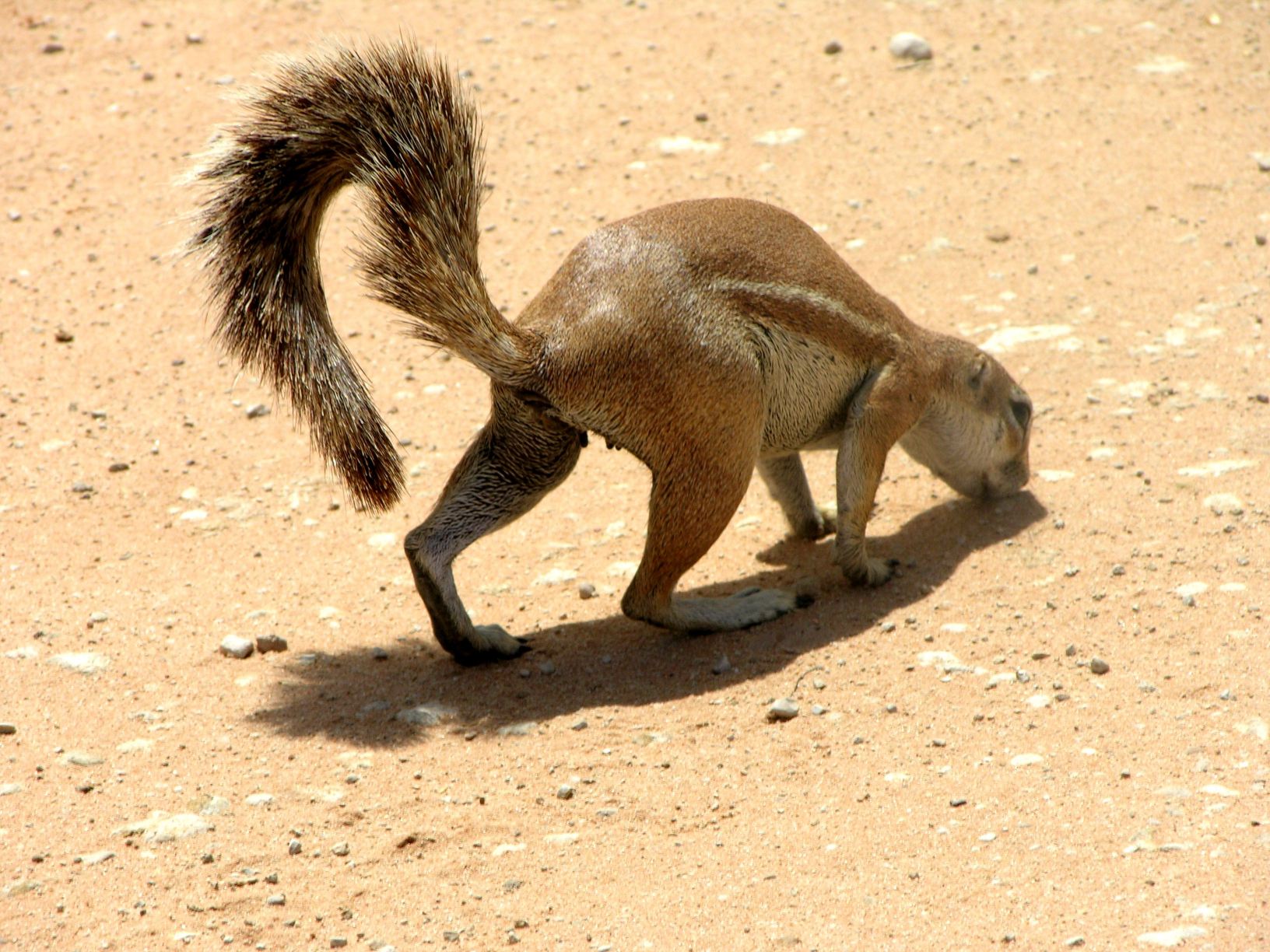
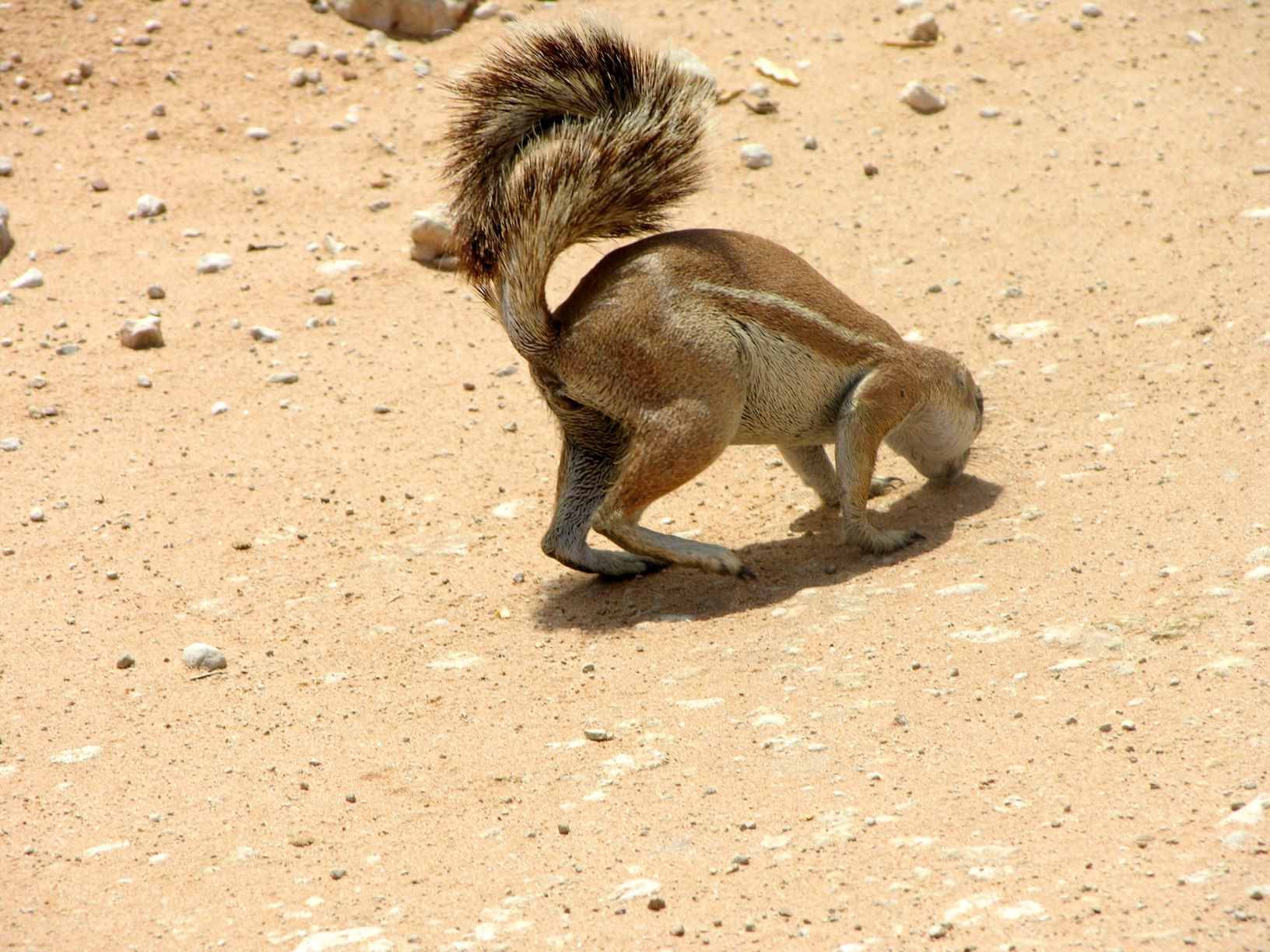
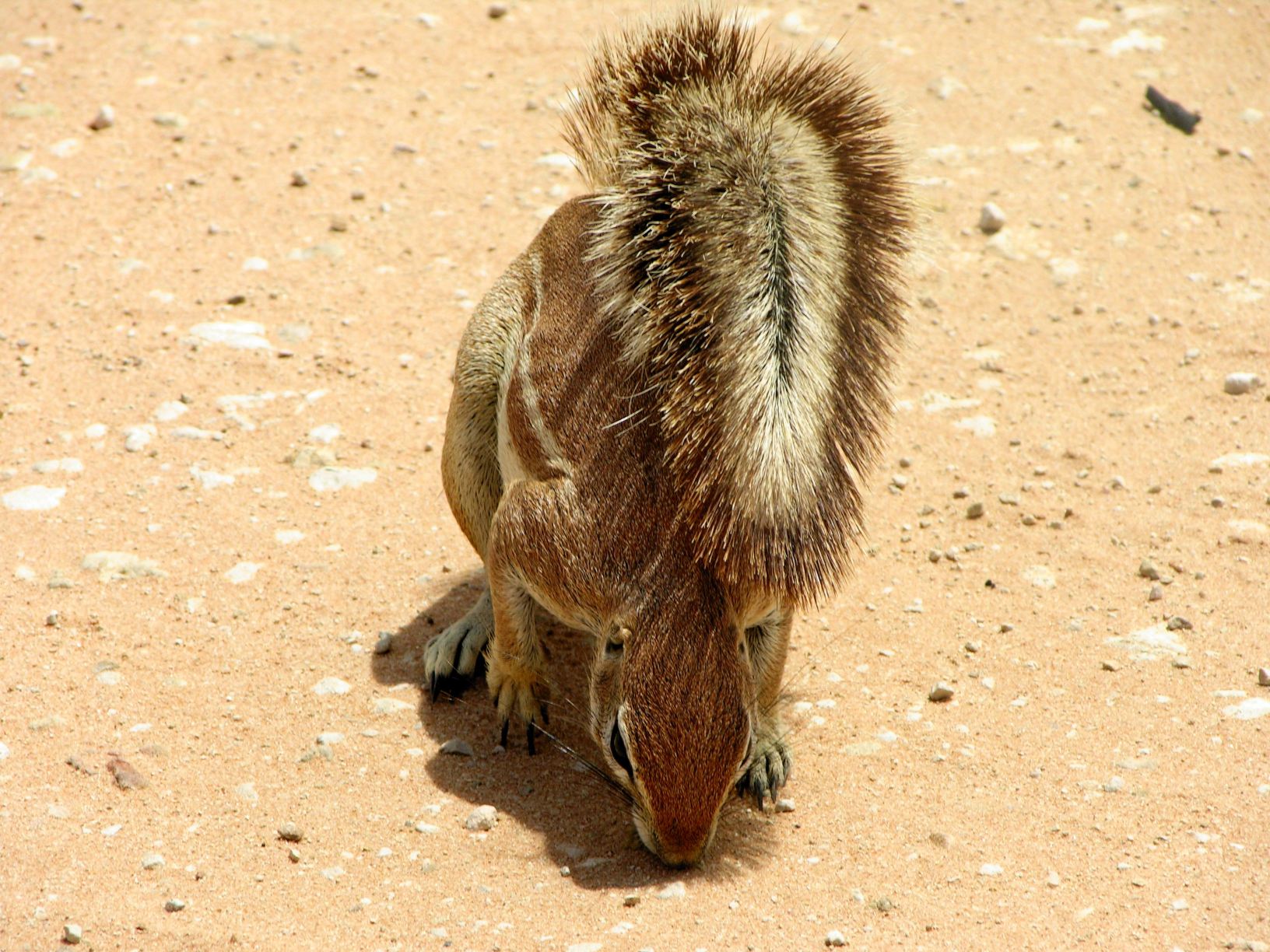
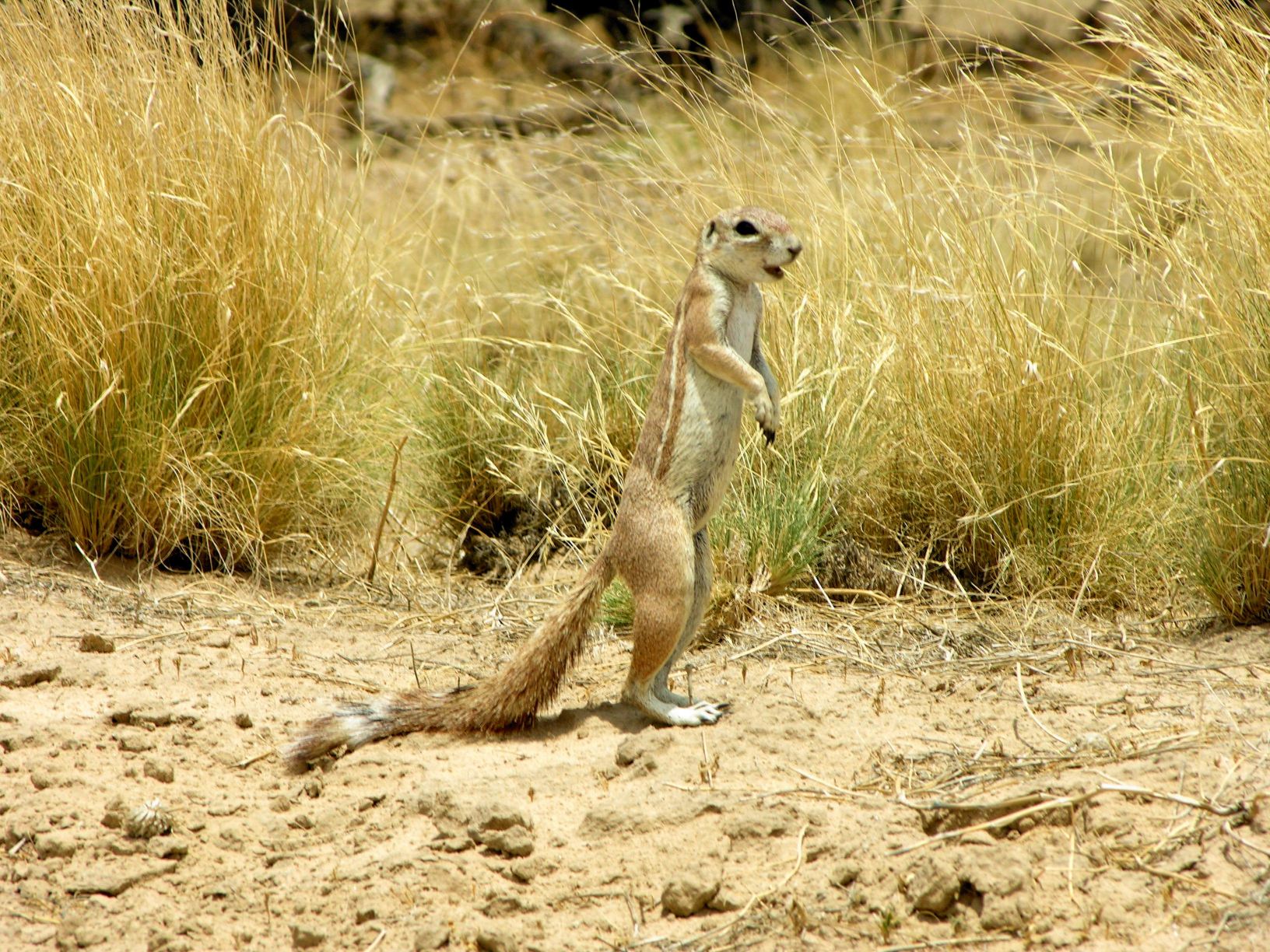
Where there are ground squirrels there's always a fox to go with them. There are several kinds here. Most are very small and a ground squirrel is probably more than they can handle. So they eat mice, of which there are vast numbers here too. A mouse, by the way, is a difficult animal to photograph. Small, timid and quick. However you take the shot, it comes out blurred.
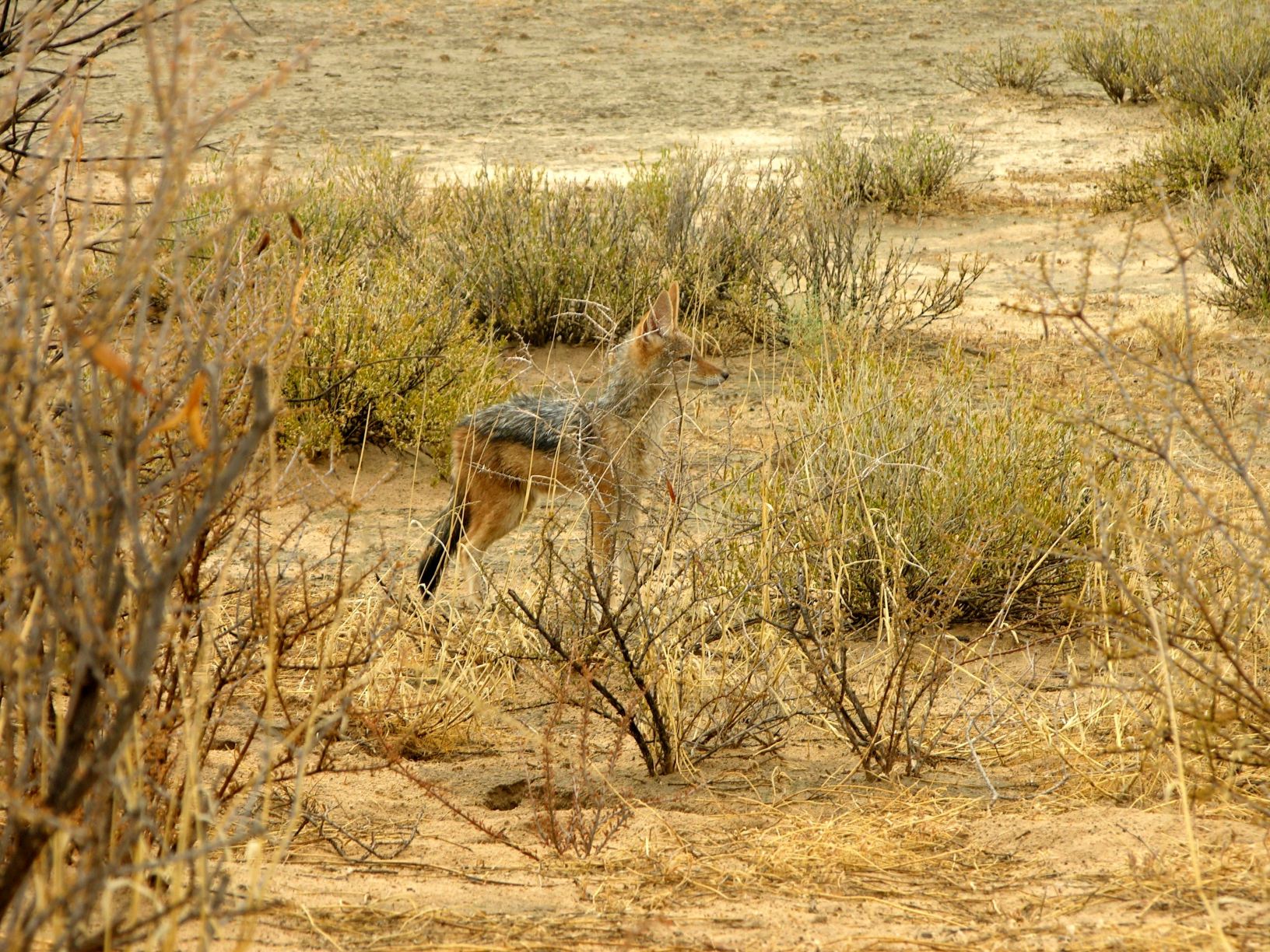
Jackals, of course, run to and fro here as well.
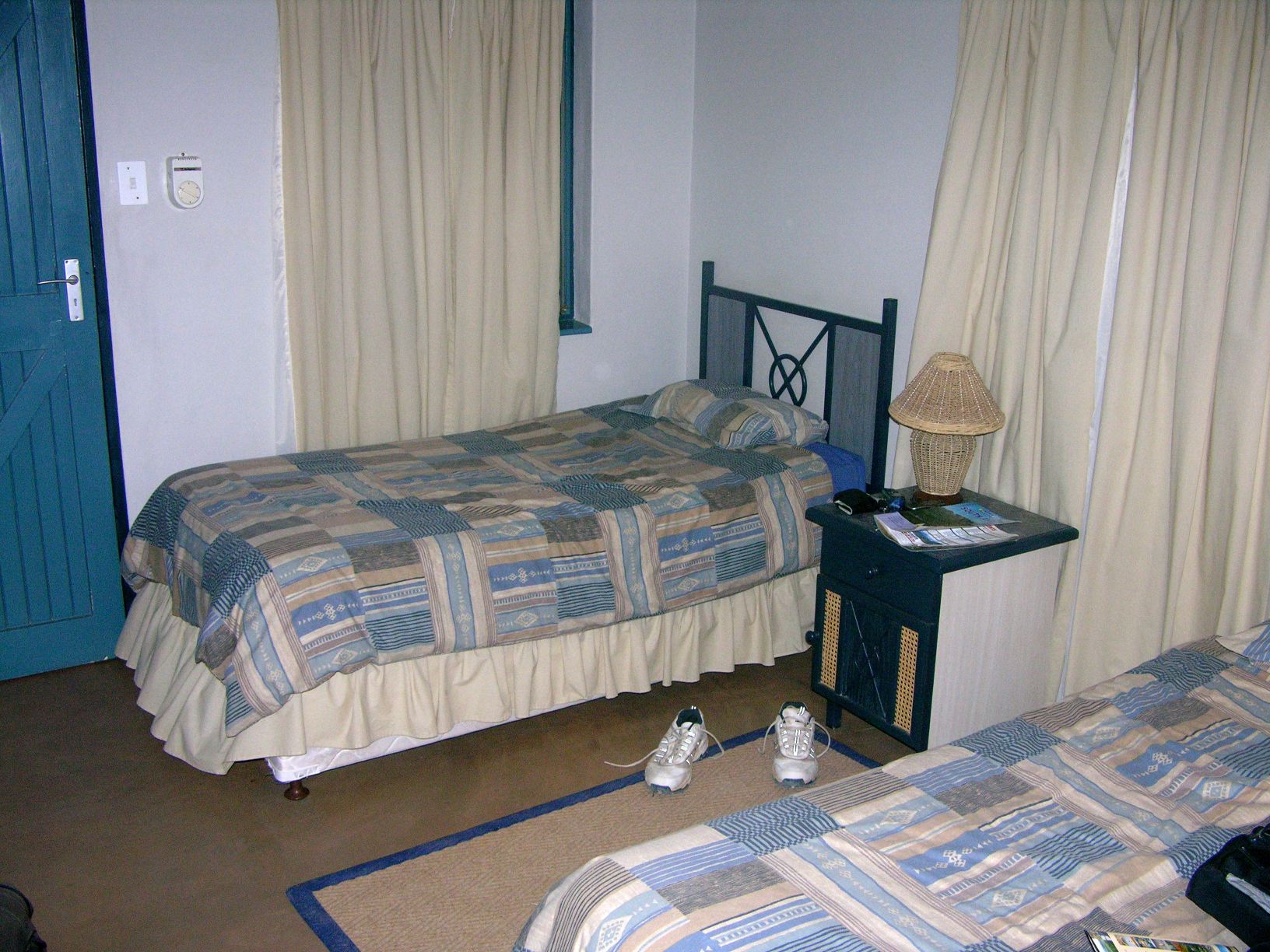
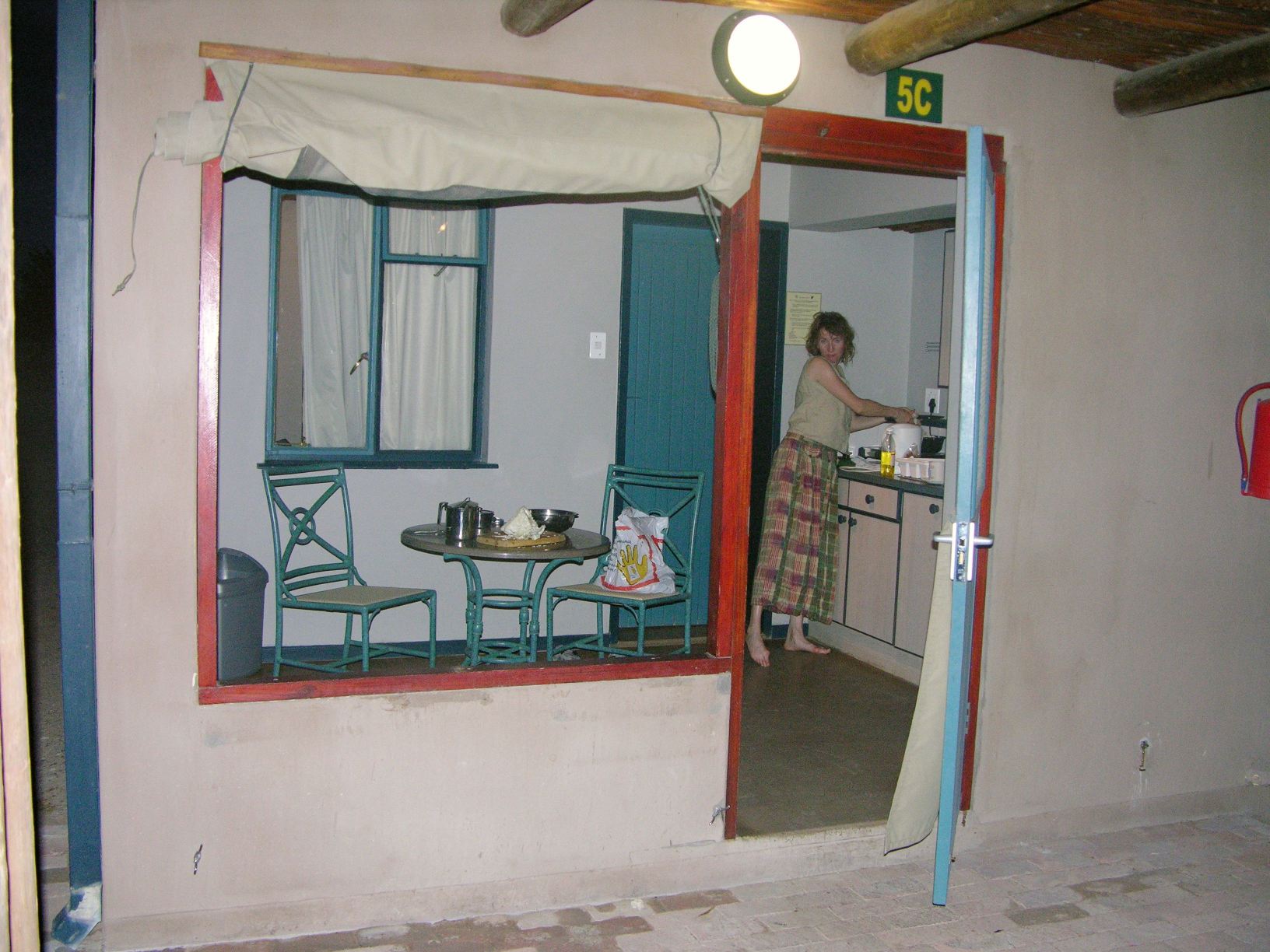
Nossob Camp has a dozen or two huts, a petrol station and a visitor centre. There's a respectable shop as well, handy since you can cook in all the huts. Petrol costs a little more than elsewhere in South Africa, but only a little. Without a station it would be hard going this far out. It's 180 kilometres by road to the nearest civilisation.
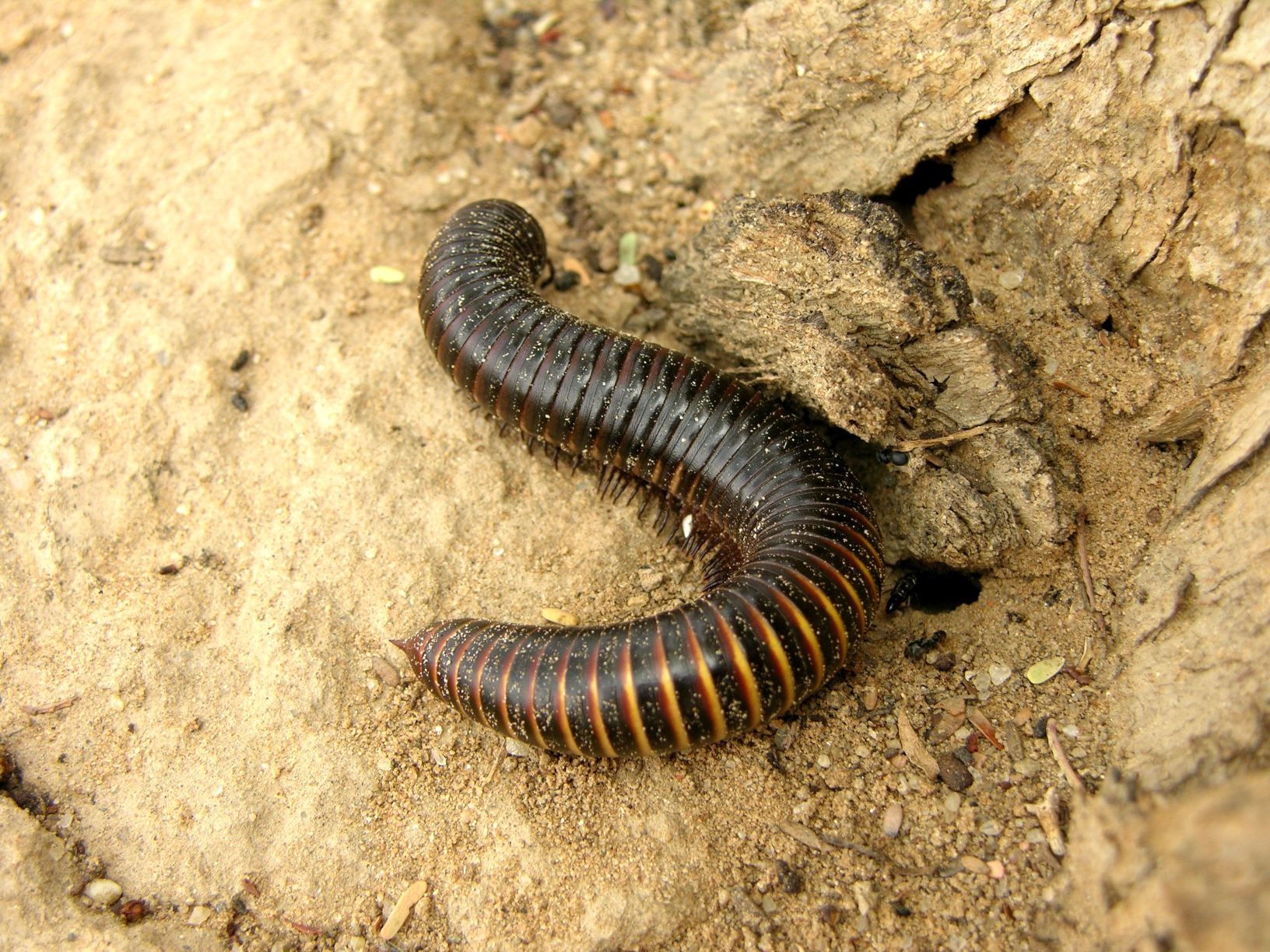
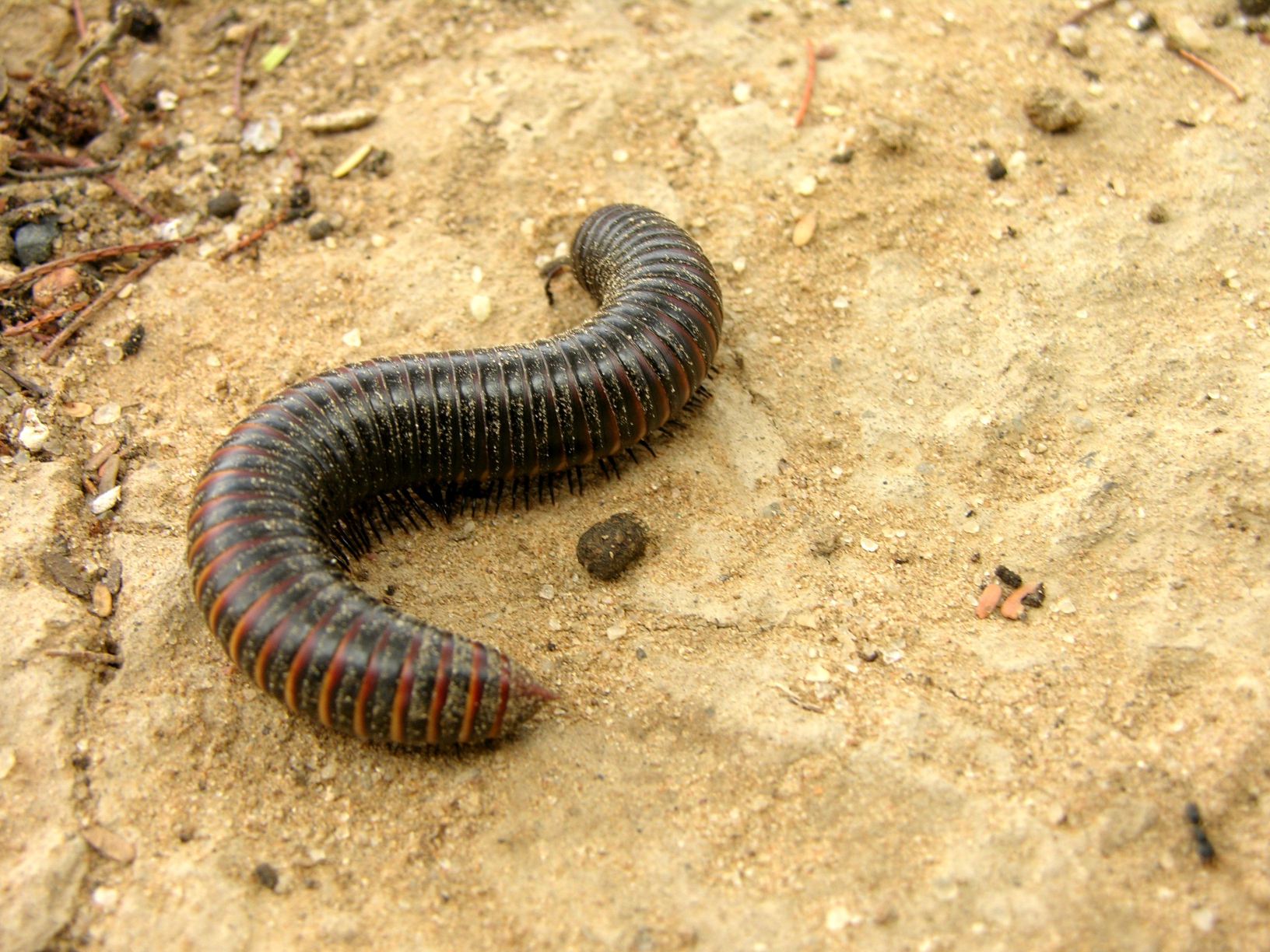
The electricity comes from a diesel generator and they turn it off at night. You'd think that hardly mattered, but there are two problems. The first is the never-ending need to charge batteries, and the second is the fan. It's hot at night. Elsewhere we'd left the fan on, but without power it doesn't run at night and the rooms get stuffy. You might even sleep better in a tent in the fresh air. There aren't any mosquitoes or other flying pests at night, so you could sleep right out in the open. On the other hand, there are masses of insects that come to the light. Leave a window open by mistake and your hut will fill with exotic creatures. Insects are only half the trouble. At night, jackals dig under the fence and do as they please on the grounds. They're especially fond of boots left outside. If they don't eat them, they'll at least chew them up and carry them off to their den. For the same reason, it's best not to leave your car windows open.
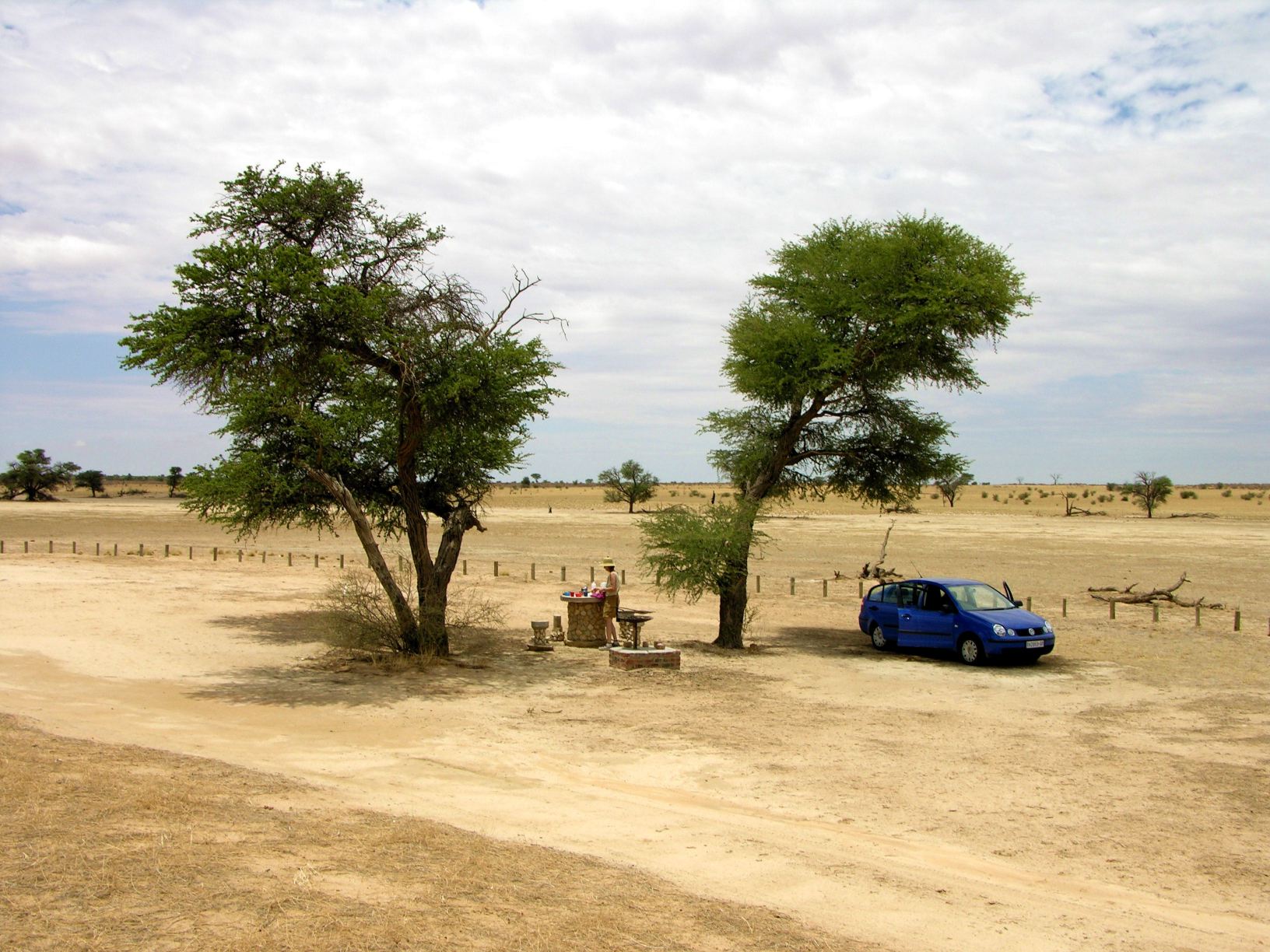
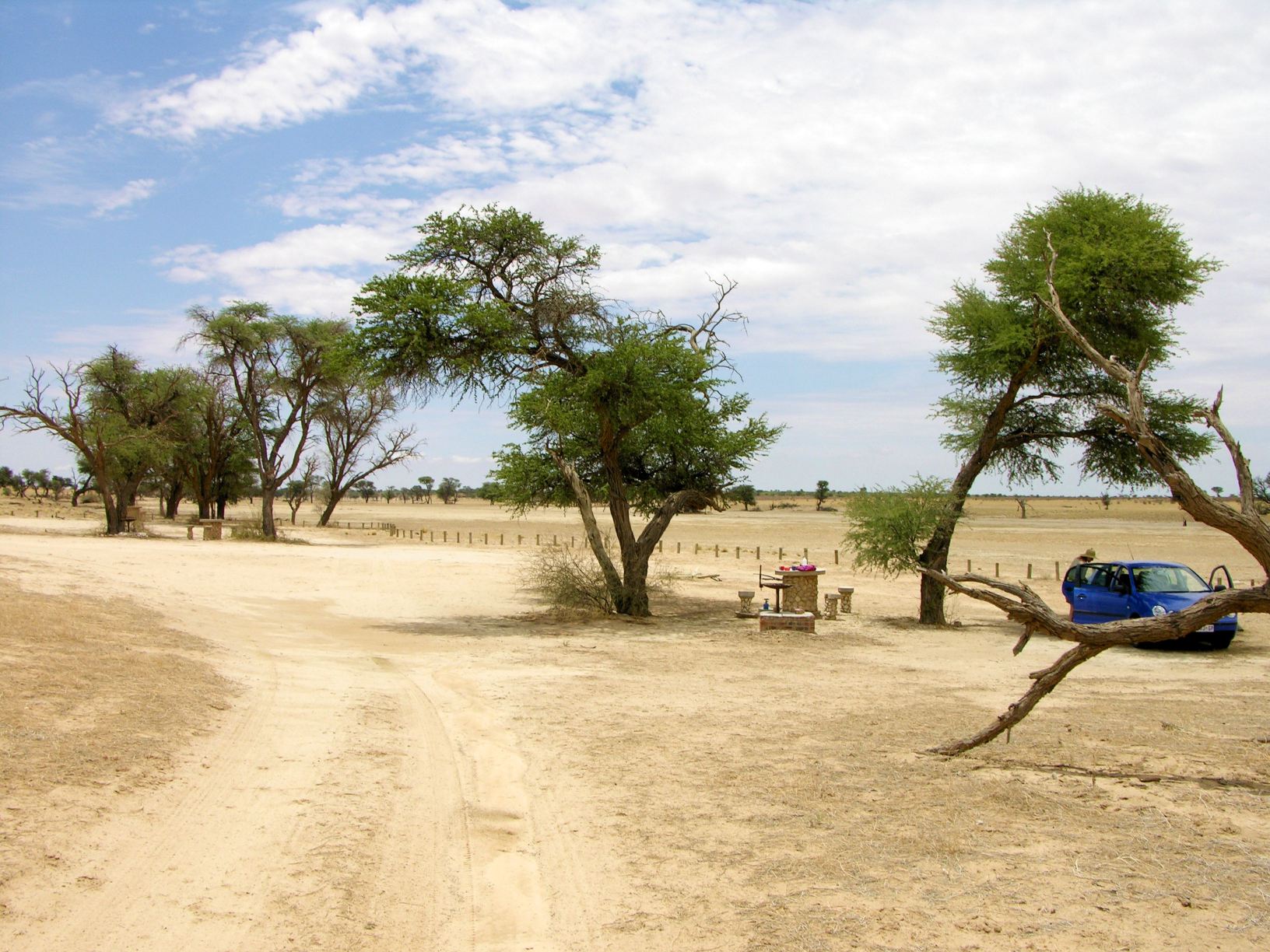
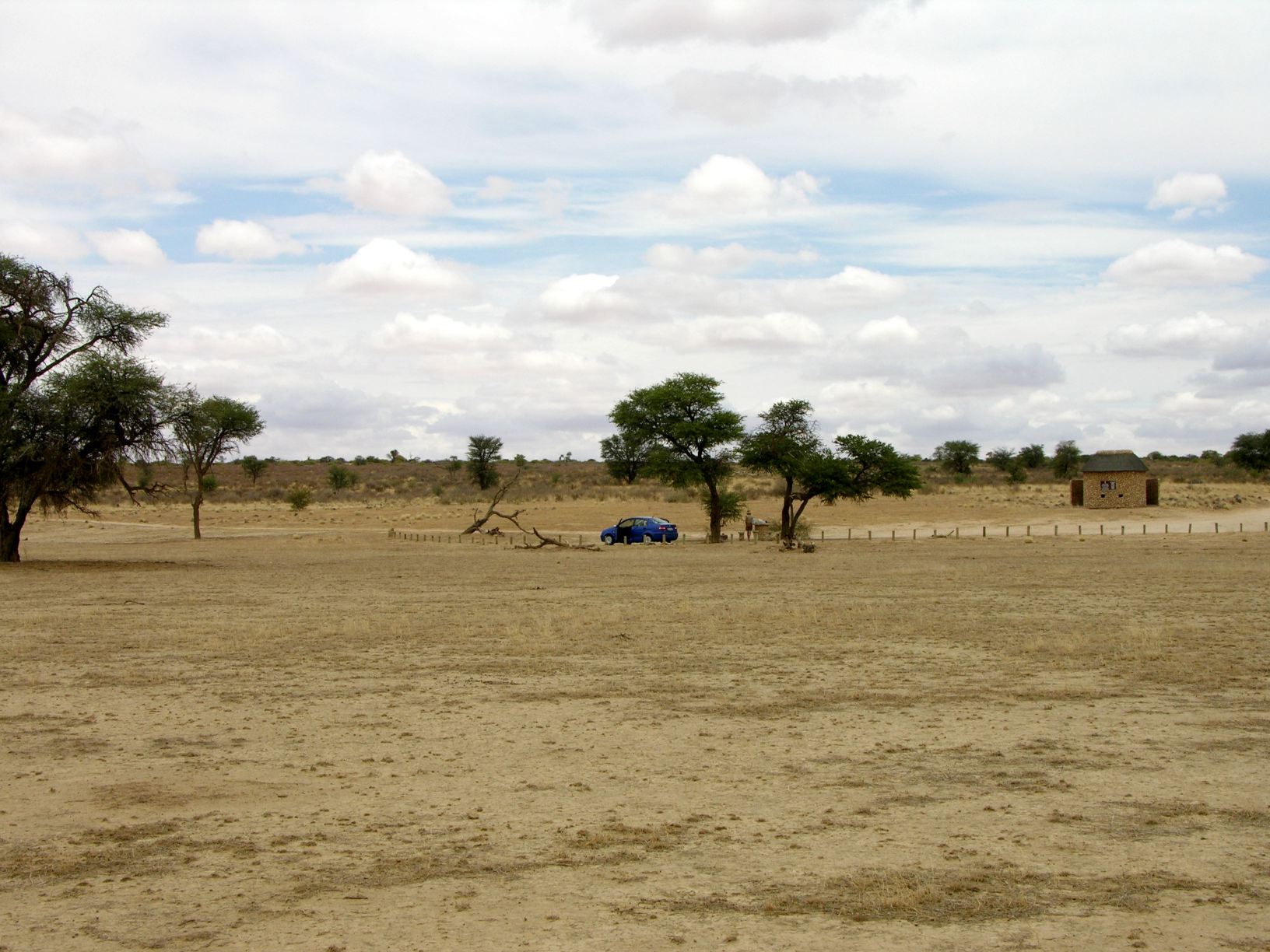
Nossob is in the centre of the park, but the least visited places are in the north. That's where we headed the next morning. The road runs another 120 kilometres up the bed of the Nossob, all the way to the point where South Africa, Namibia and Botswana meet. Here it comes up against barbed wire. On the Namibian side, the fence is electrified. That's not because of the international borders, which are hardly guarded here, but because it is the boundary of the national park. There's a picnic site where the borders meet. The park is full of them, but this must be the wildest (24°48.409′S, 20°02.123′E). It's called Union's End. In many former British colonies, and in Britain itself, you'll find a village, café or something of the kind called that at the very edge of the land. In South Africa it's a few tables and some barbecues.
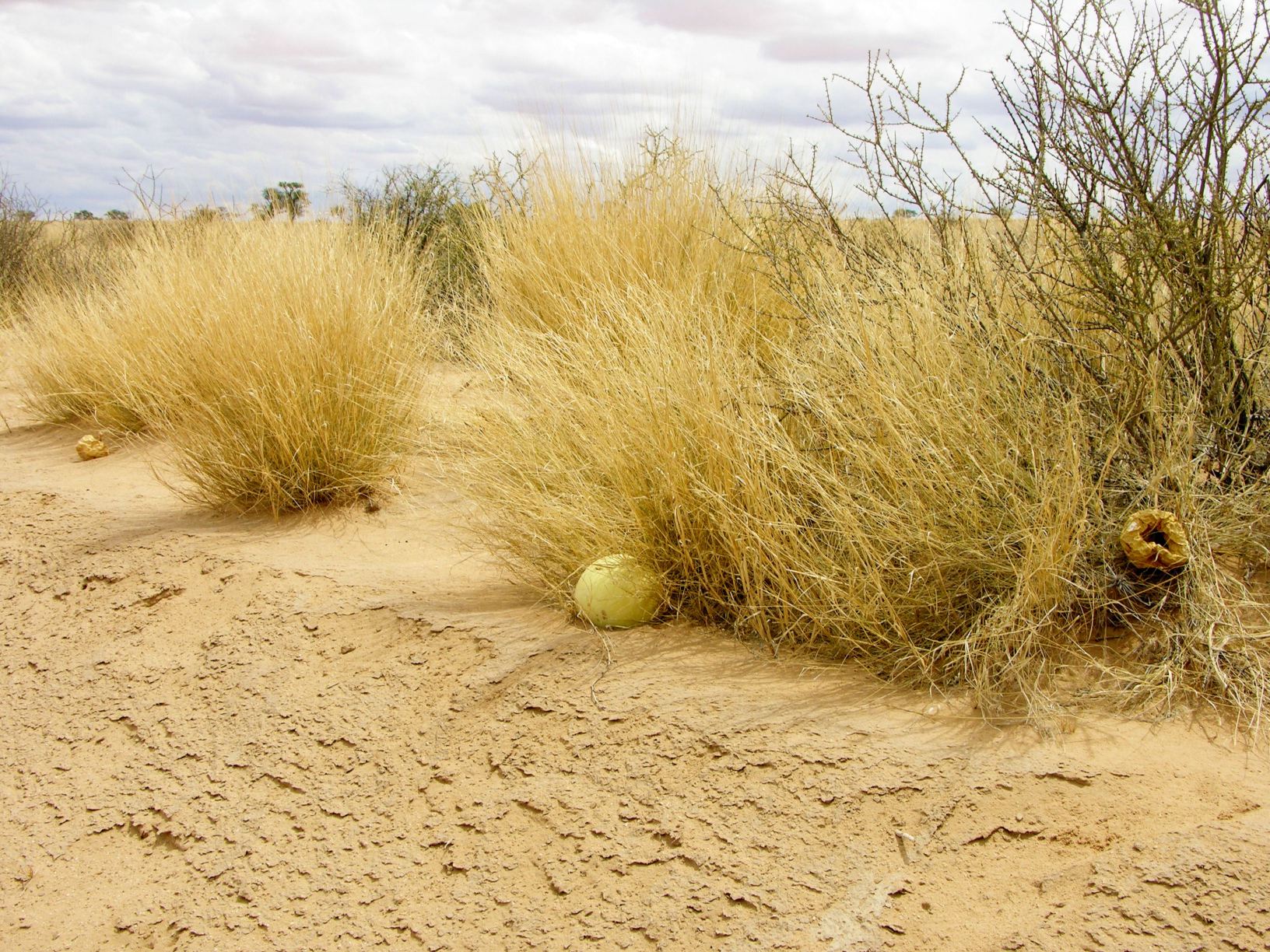
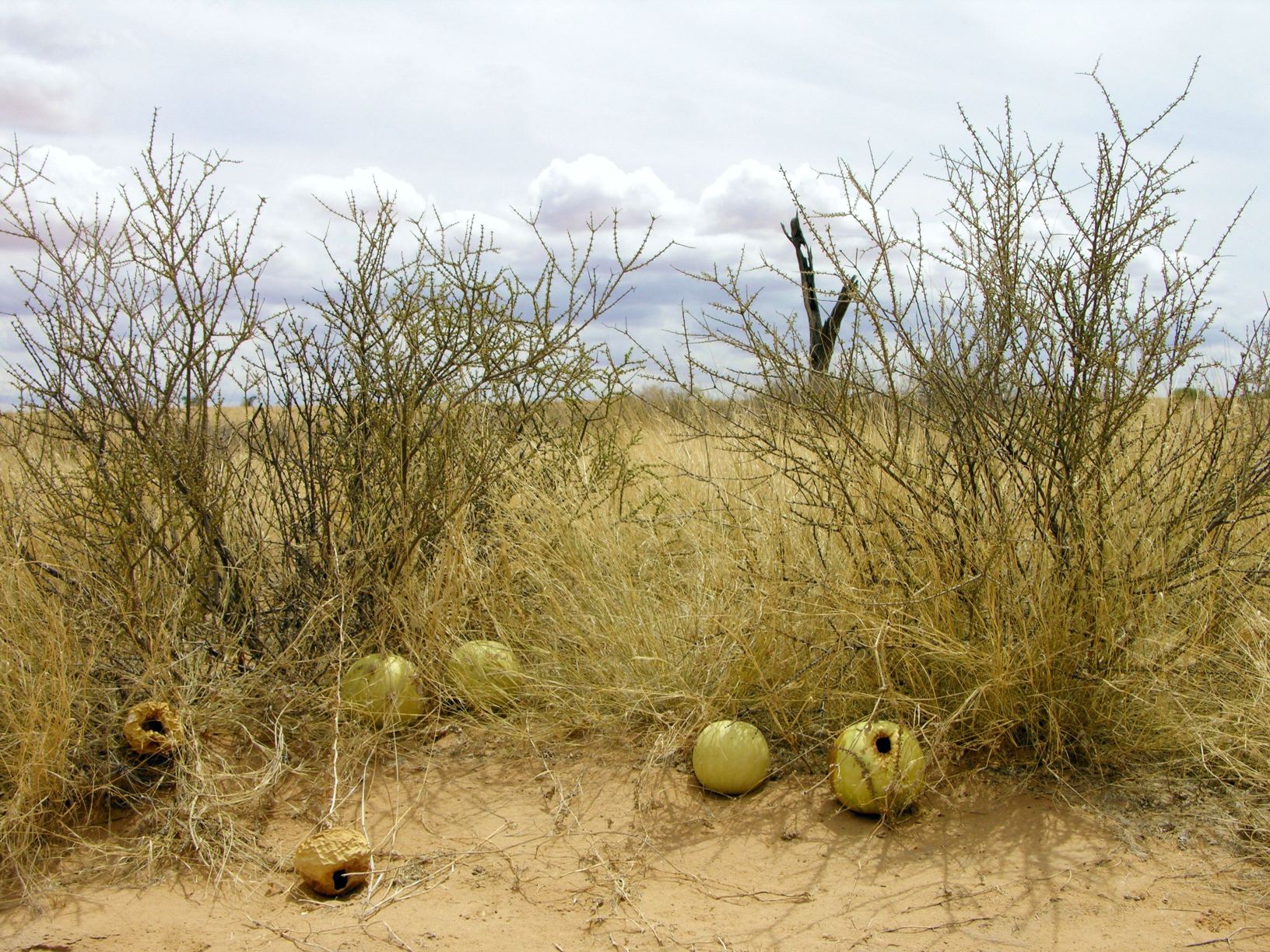
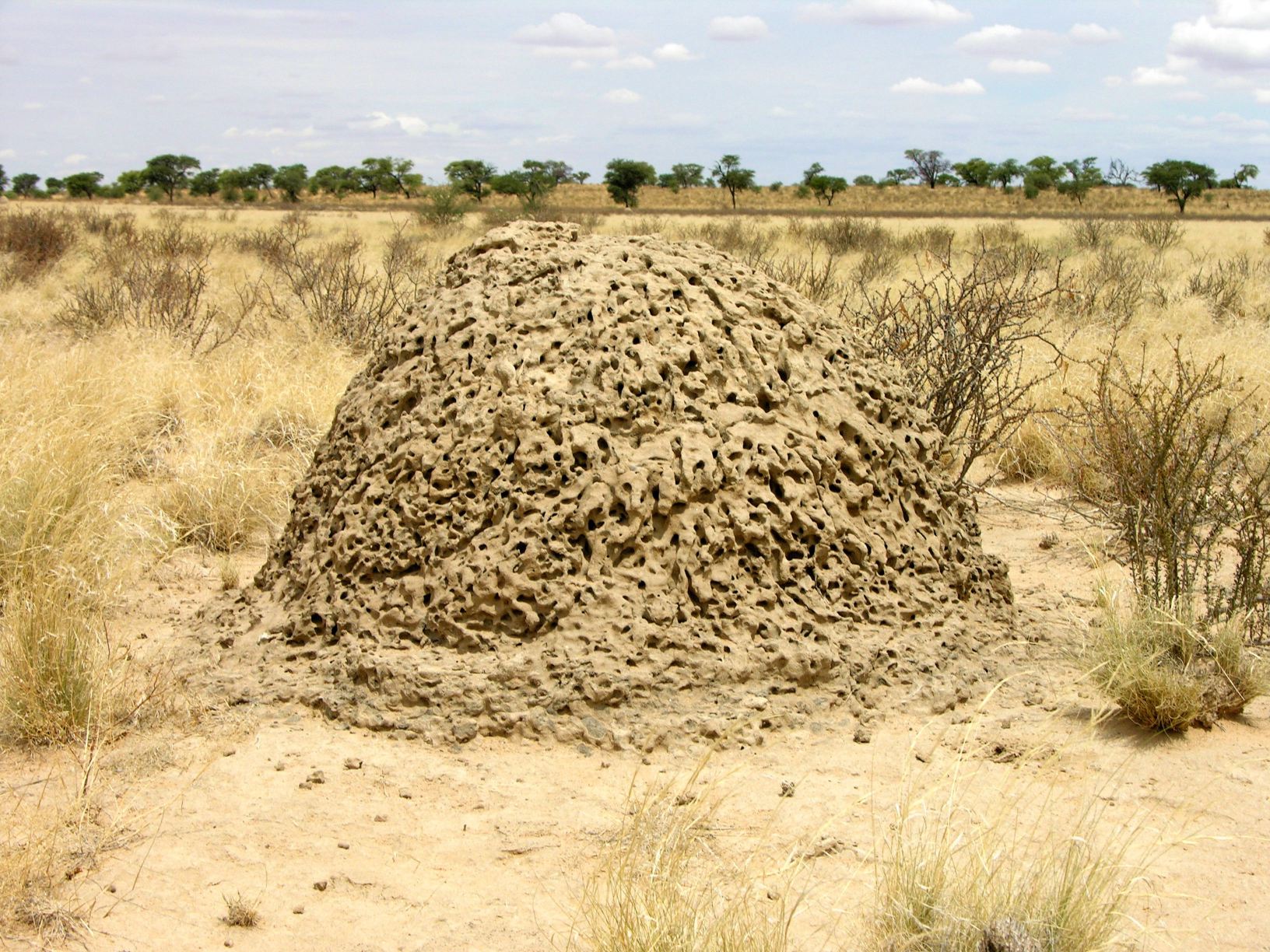
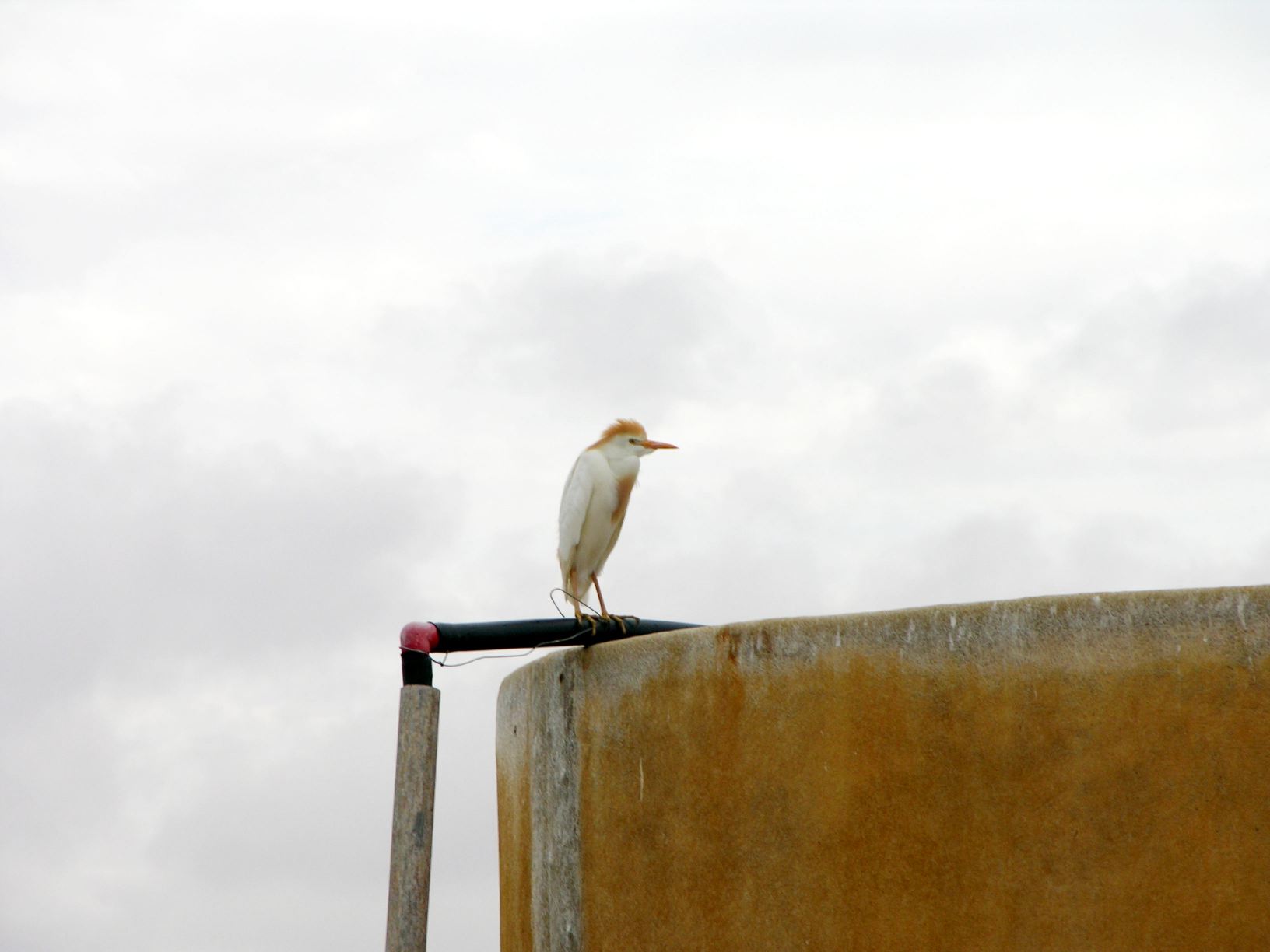
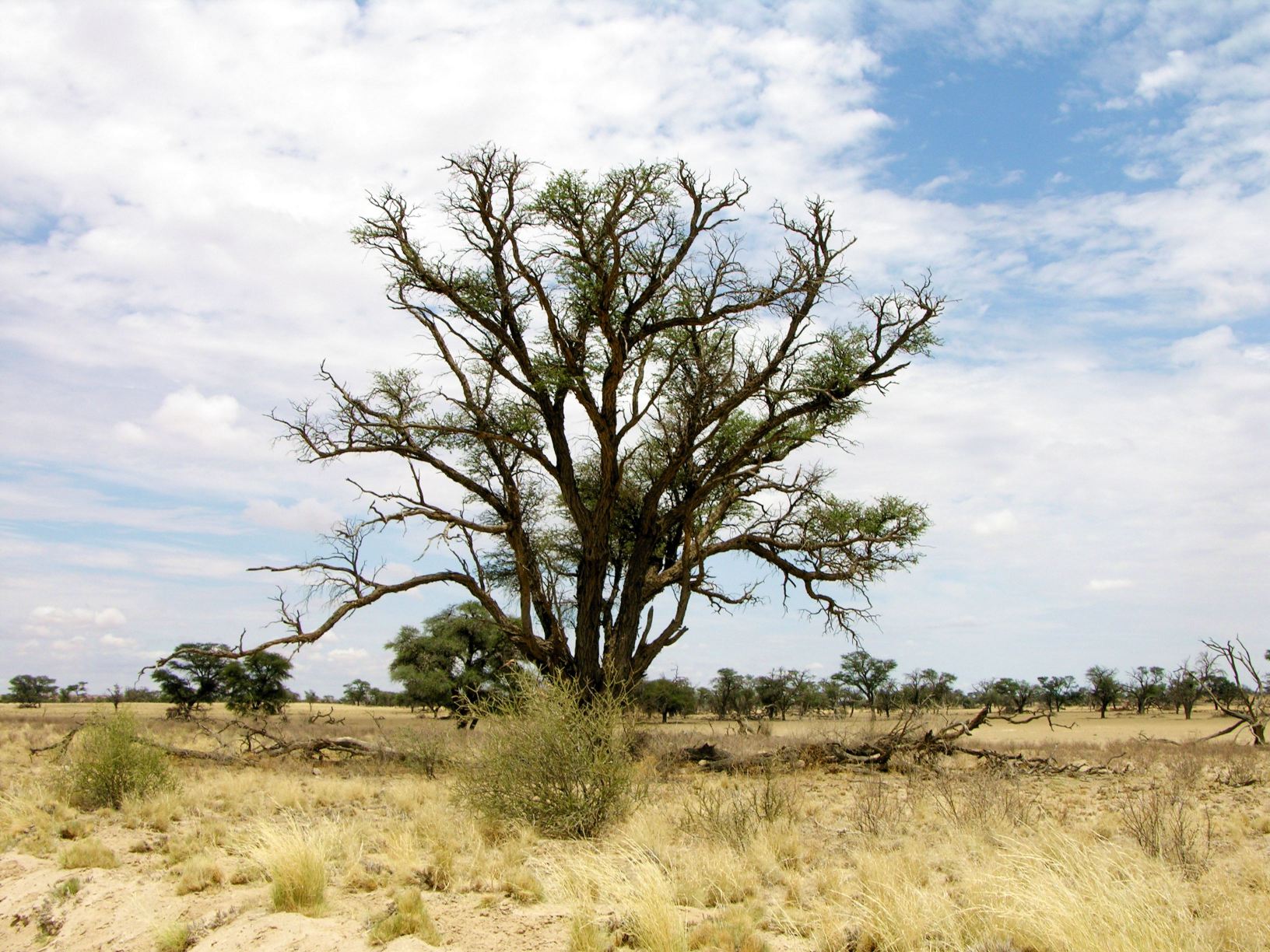
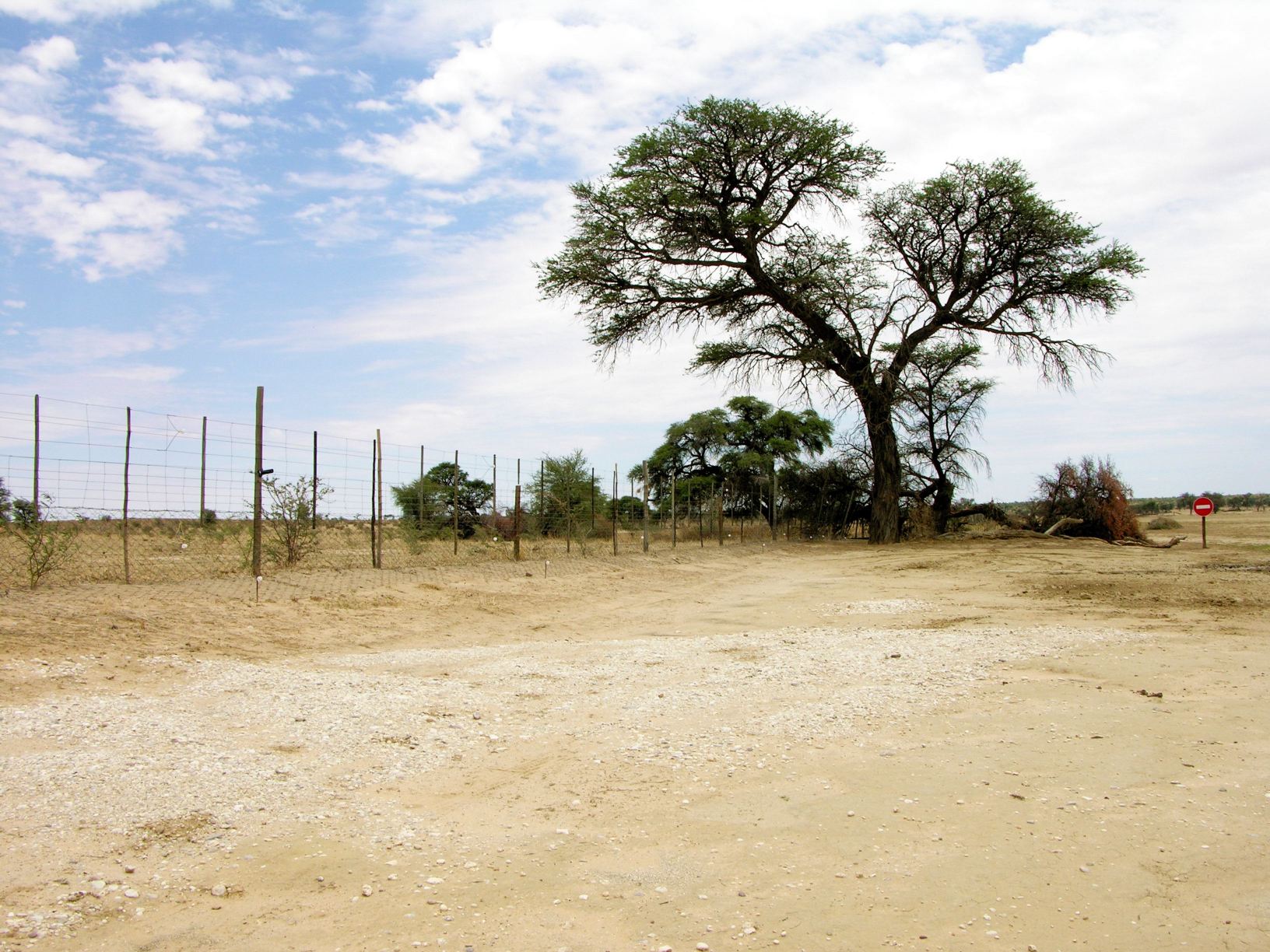
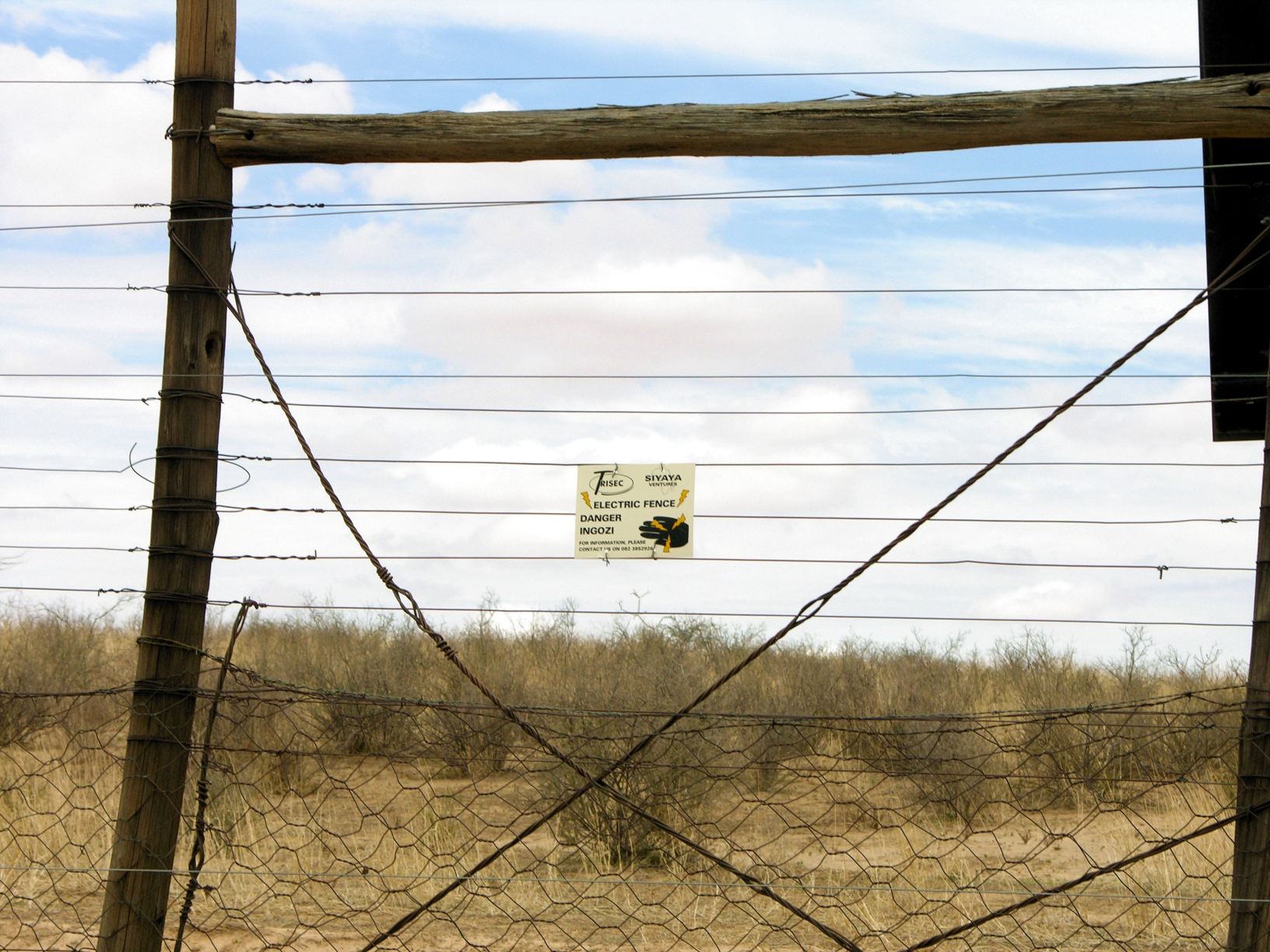
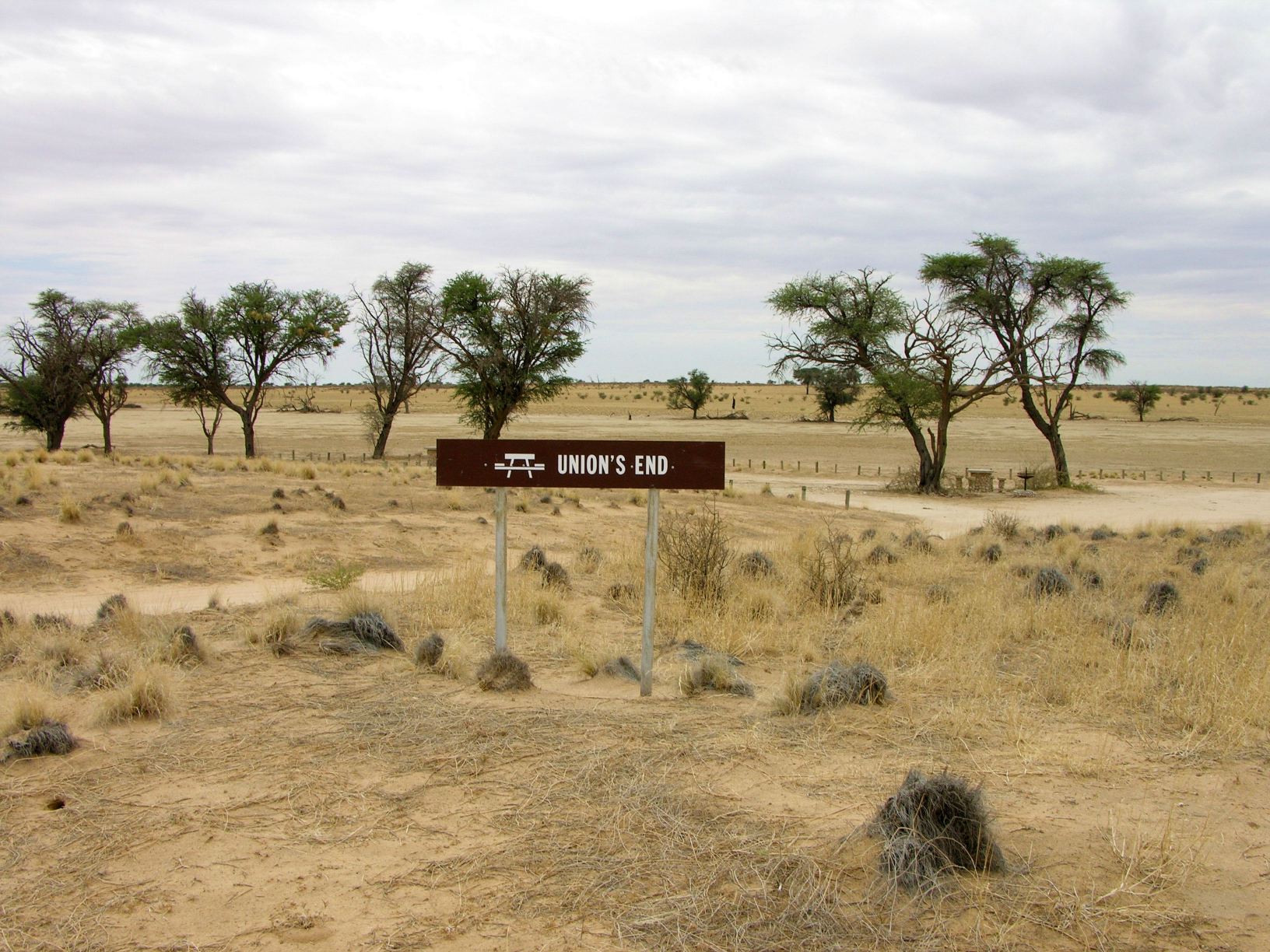
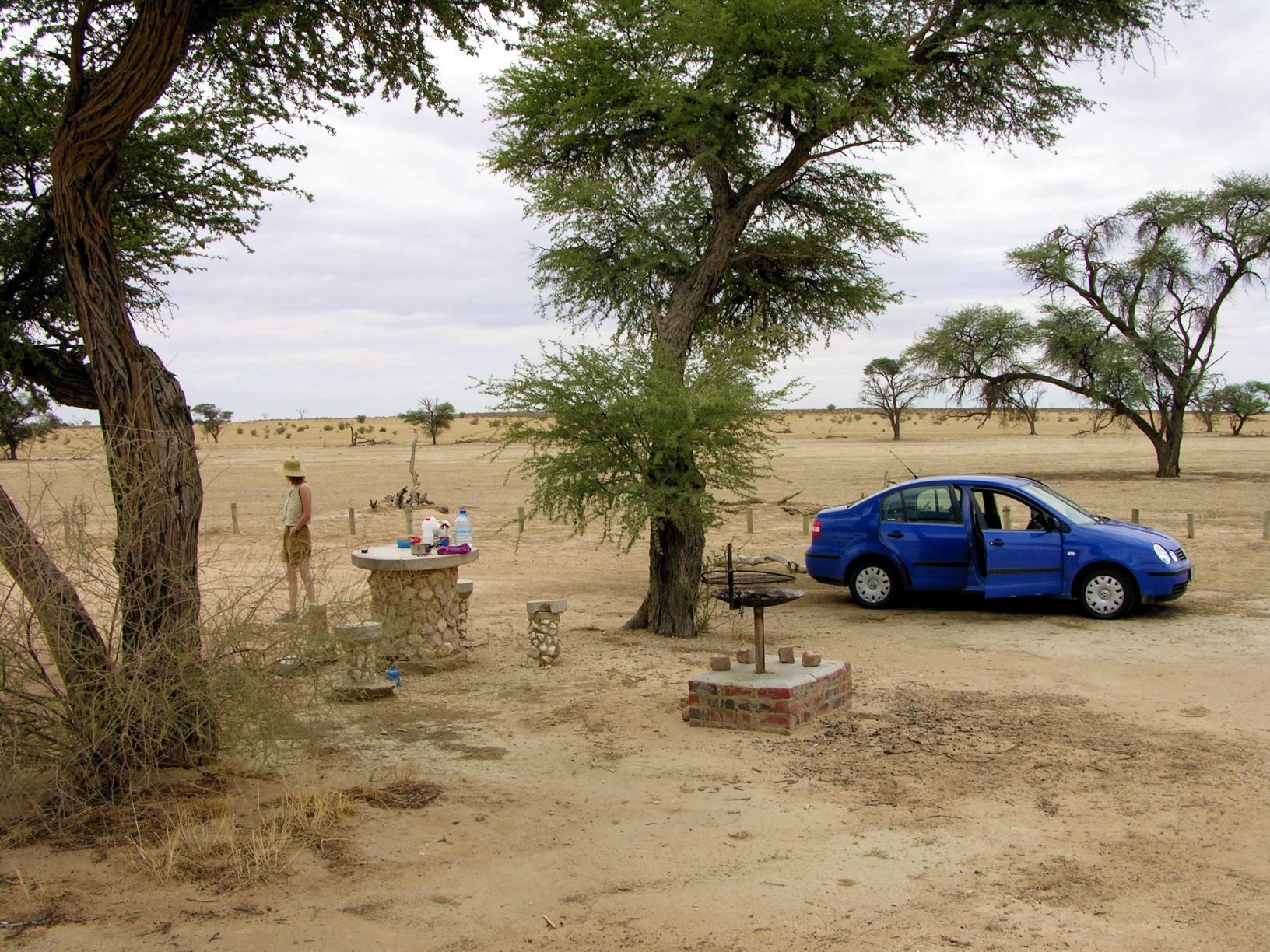
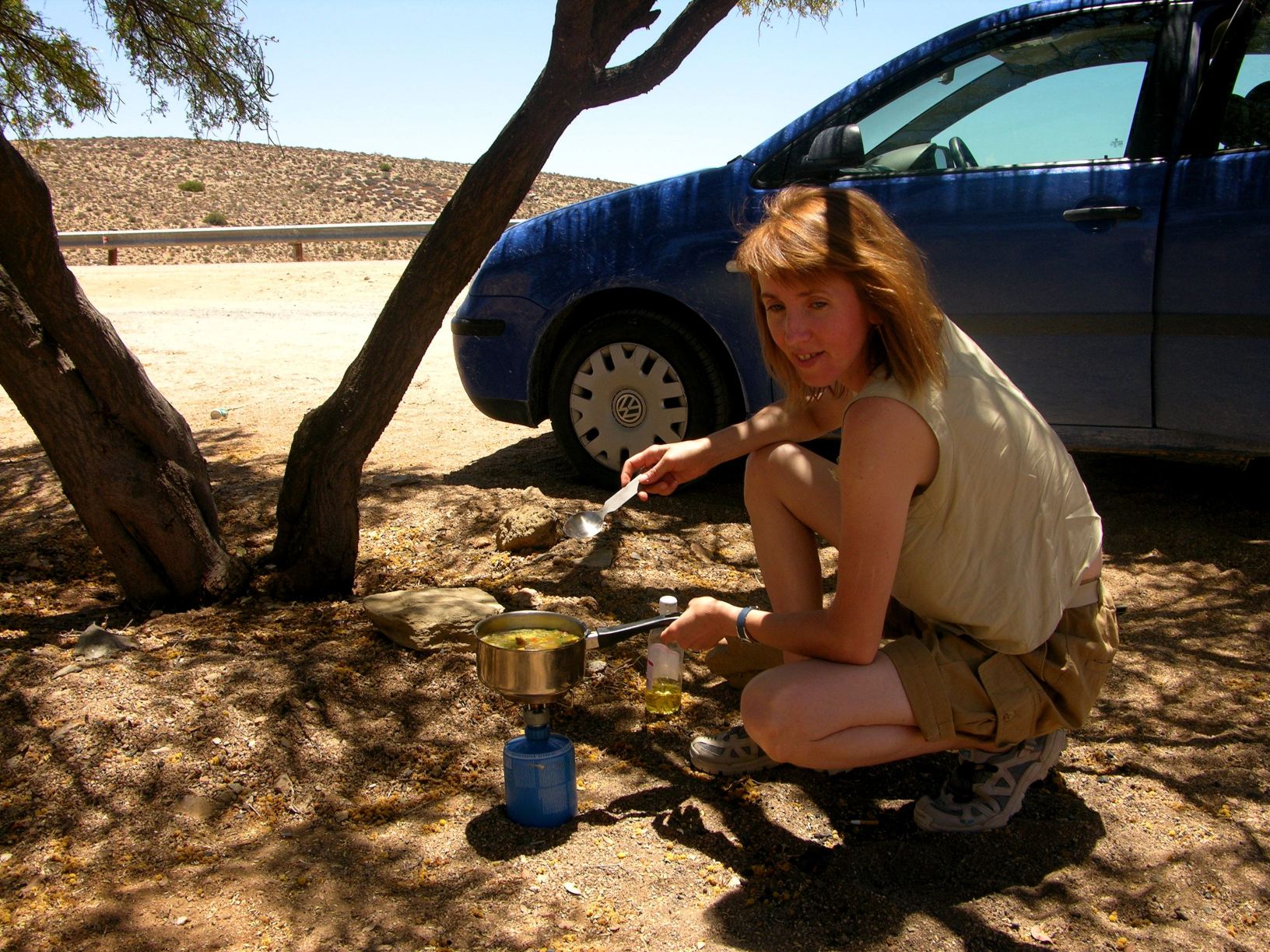
We'd planned to have lunch at Union's End. We got out the stove and set ourselves up under a sign saying ‘Lions about’. There really were lions. There were plenty of tracks, and the scavengers on the trees confirmed that there'd been a successful hunt recently. They sat on the branches preening. That meant the lion was full. Even if it's hungry a lion doesn't much like eating anything as unappetising as a human. When it's full it's perfectly safe. I went into the bushes for a look. Alas, nothing but bones. It had all been delicious, but now it was gone. The remains of the antelope made me hungry. We cooked lunch on the camp stove and sat under a tree till the midday heat passed.
Back to Nossob again in the evening. Unfortunately you aren't allowed to stay outside camp at night. The one legal way to see the nightlife is to go on an organised drive. They put you in a vehicle without glass in the windows, hand out powerful lamps and take the four-wheel drive out beyond the fence. An animal's eyes give it away. Those little points of light in the dark let you spot one quickly, however well it's hidden. It's a wonder nature hasn't come up with a predator that uses this trick. Of course, she'd have to provide it with a searchlight as well, or the handy way of locating its prey wouldn't work.
The guide admitted frankly that it would be a miracle if we saw a big predator. So it turned out, or more accurately it didn't. Plenty of antelope. Foxes and hares ran about too. The same old jackals.
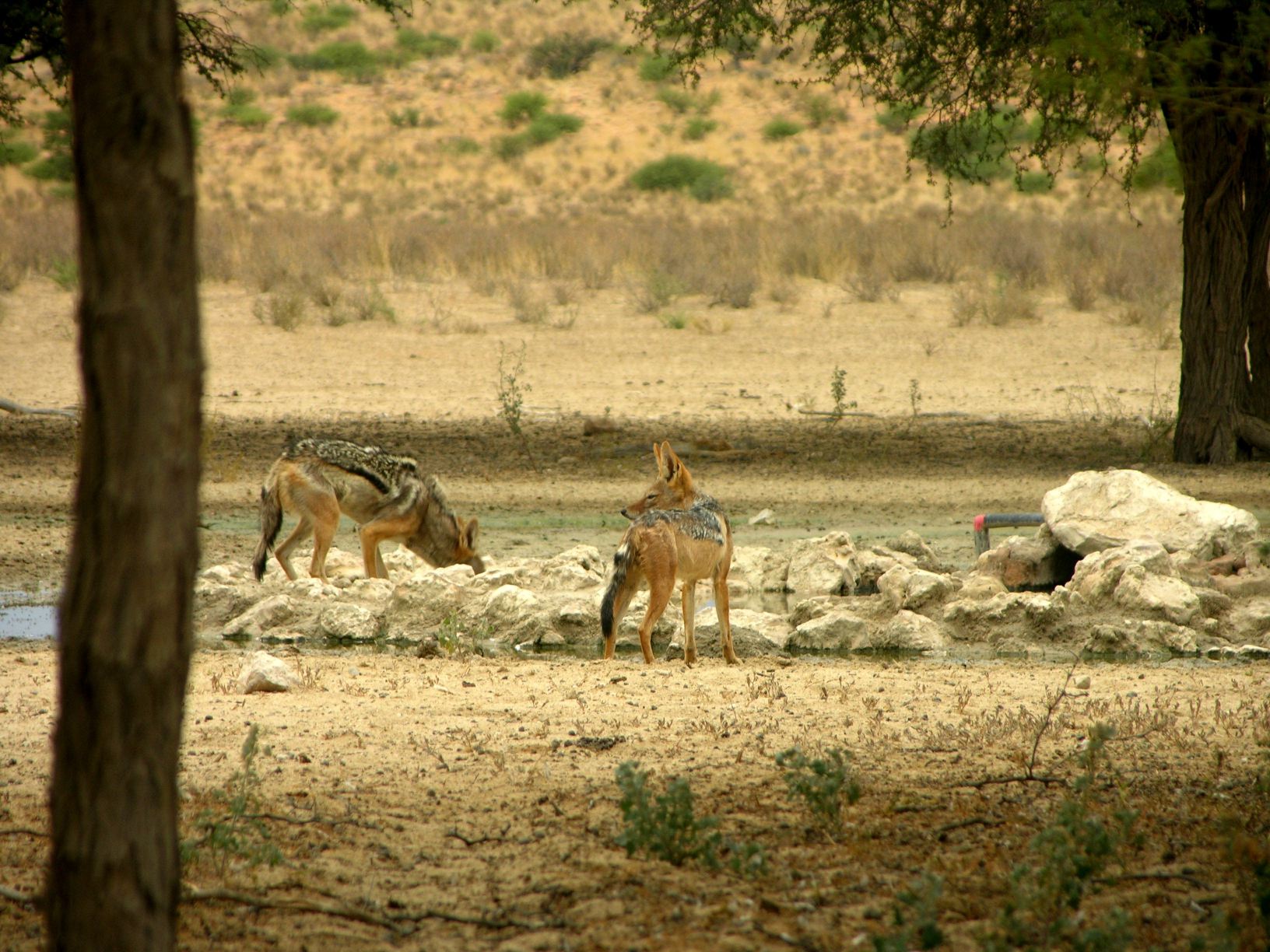
Nossob's brochure enticingly promises a starry night shaken by a lion's roar. Alas, it's an exaggeration. It appeared no lions had been around this spot for quite a while.
On our third and last day in the park, we drove along its second river, the Auob. To get to it we went back a little way and took the connecting road over some low hills into the next valley. As you'd expect, there weren't as many antelope away from the waterholes. The only thing running around out in the semi-desert was the secretarybird. It really does run. It has a hard time getting off the ground and needs a three-hundred-metre runway, like a small plane. A local man called it the Boeing 747 bird.
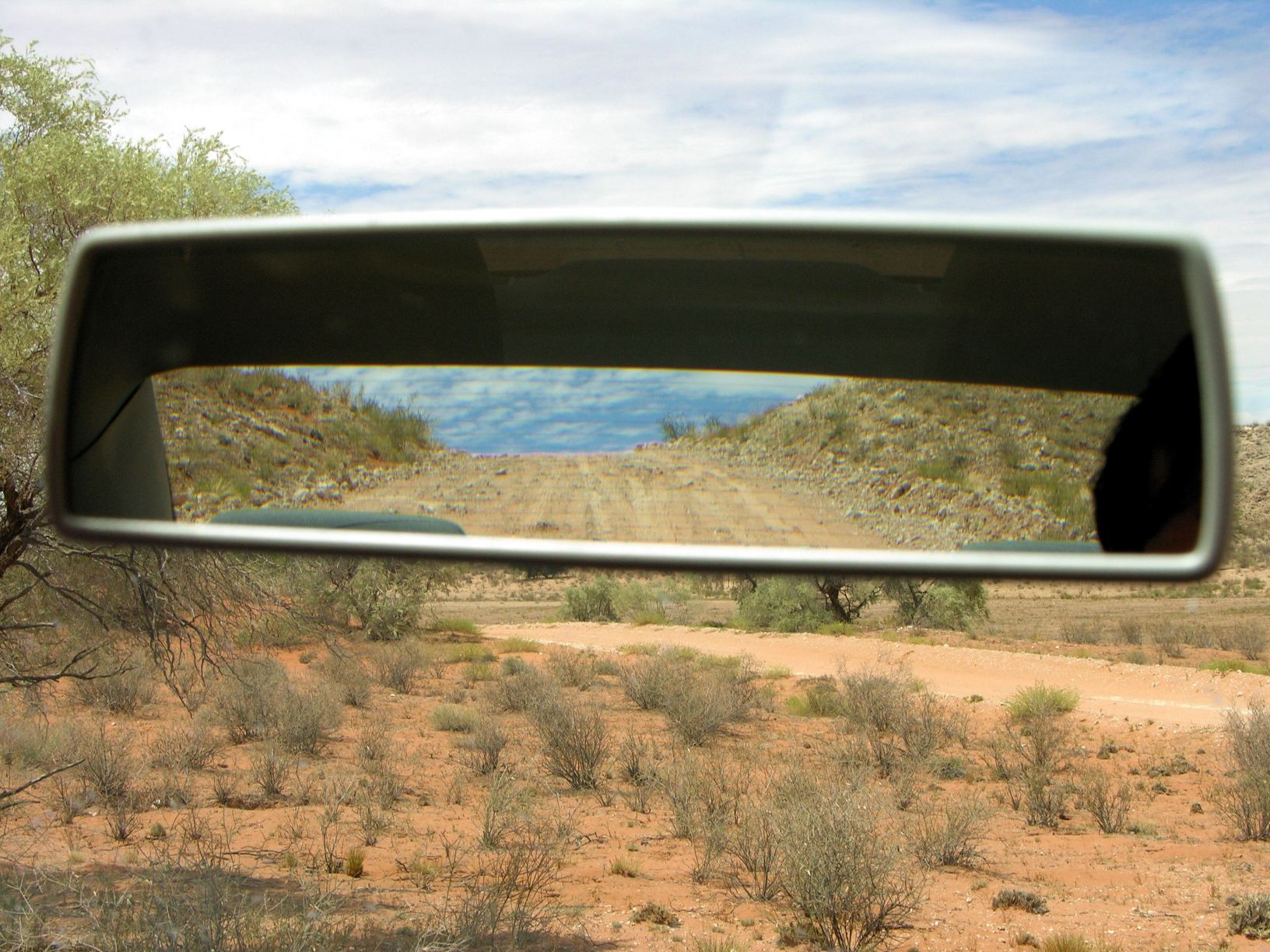
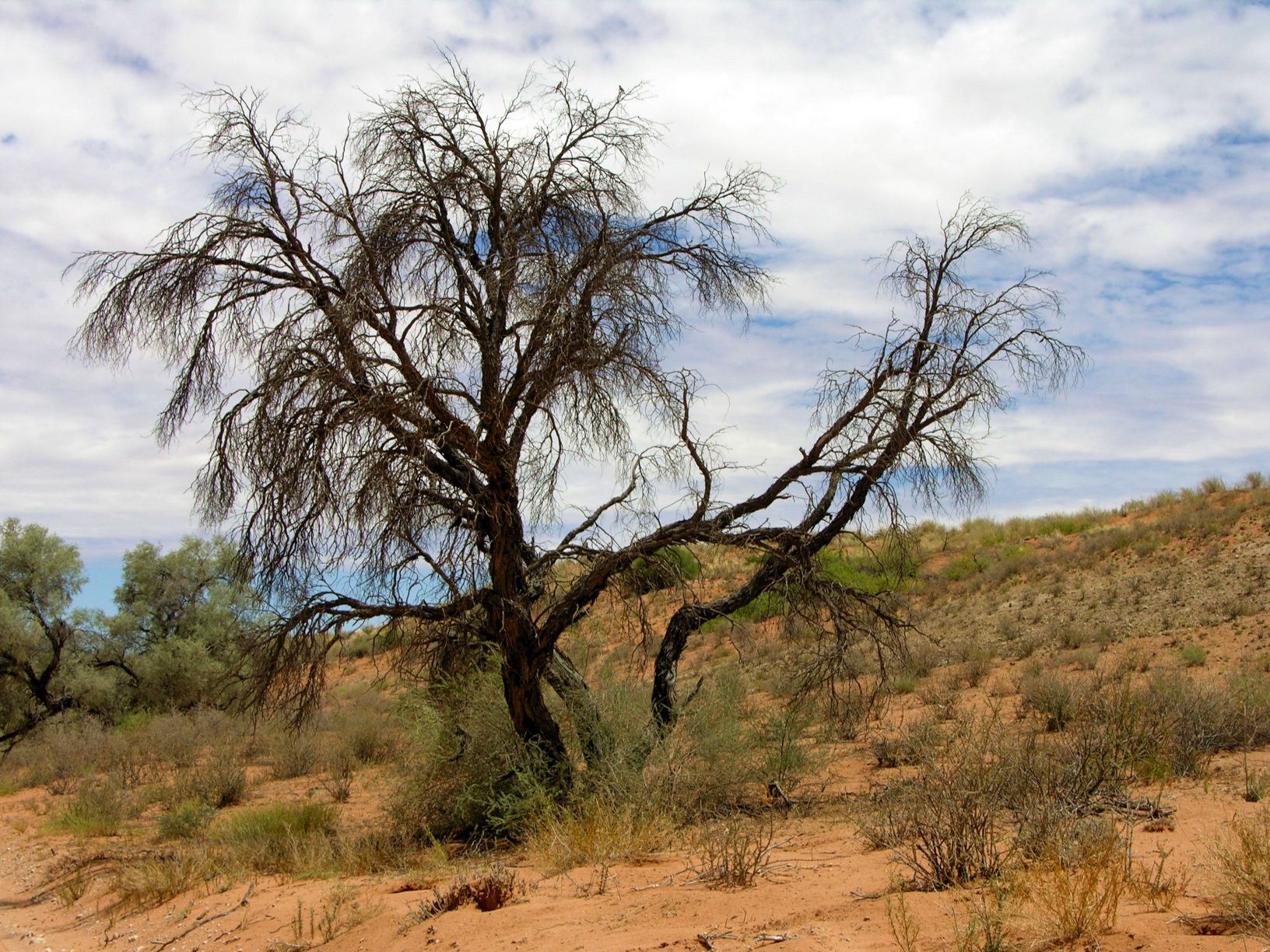
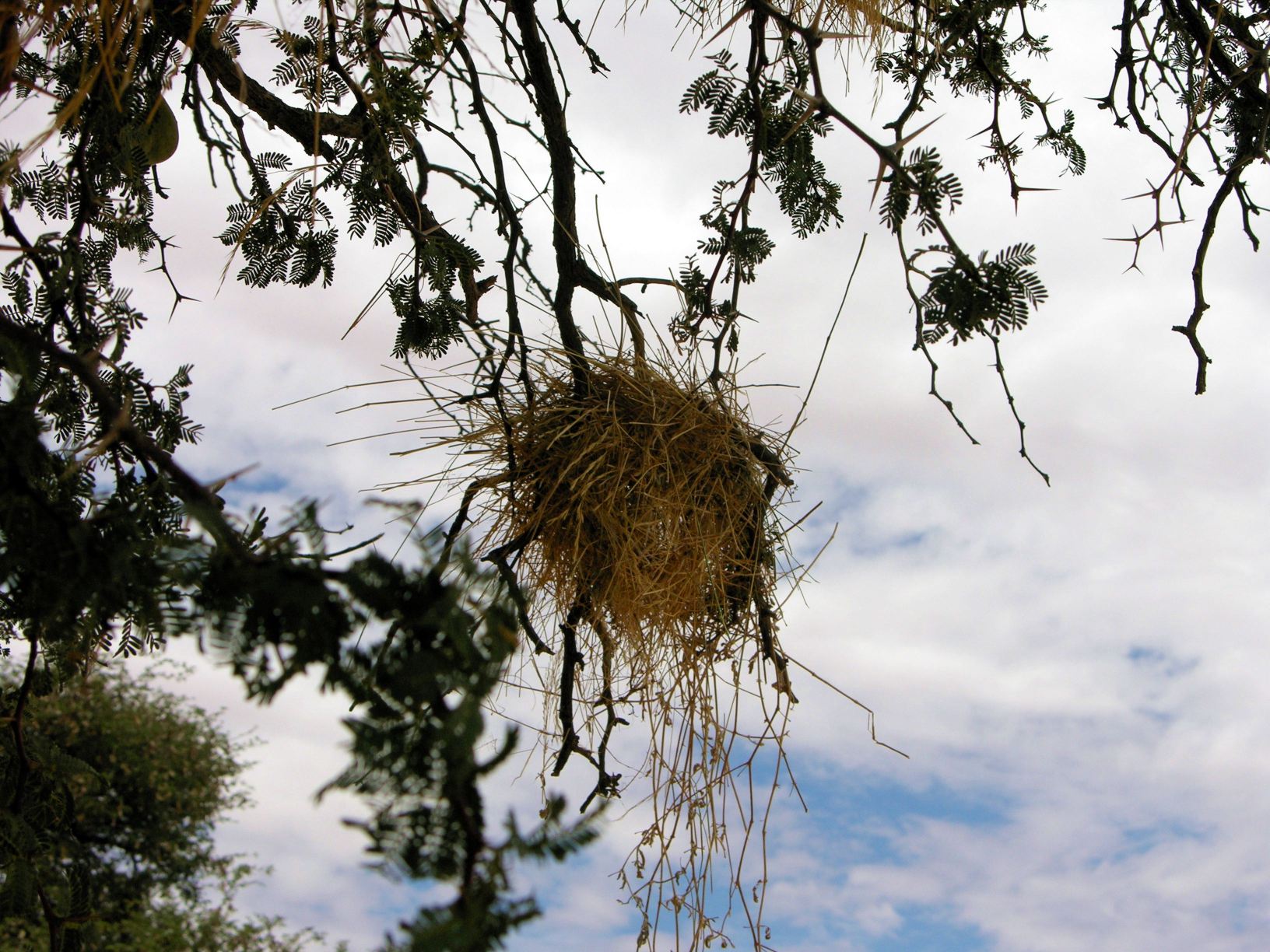
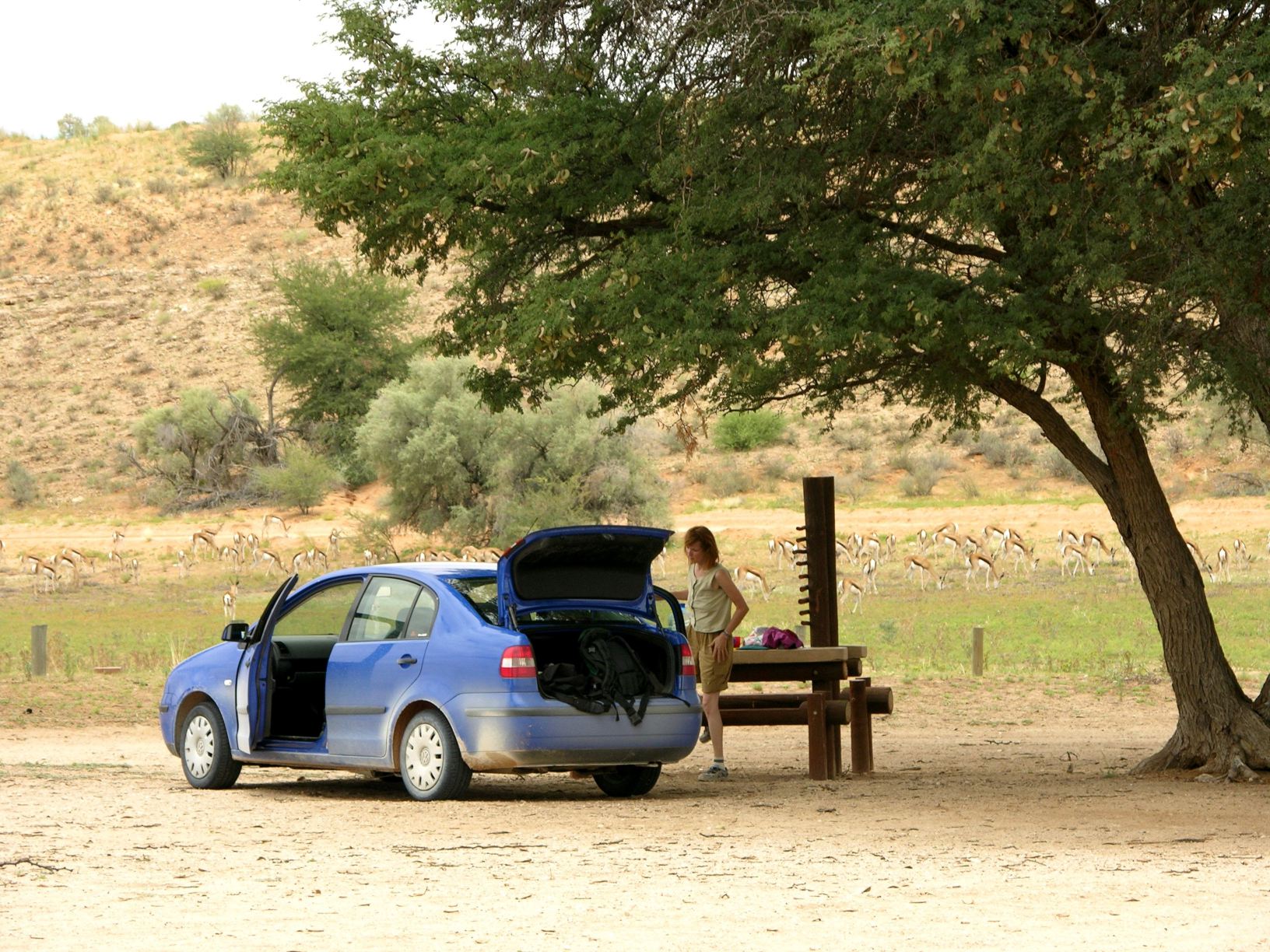
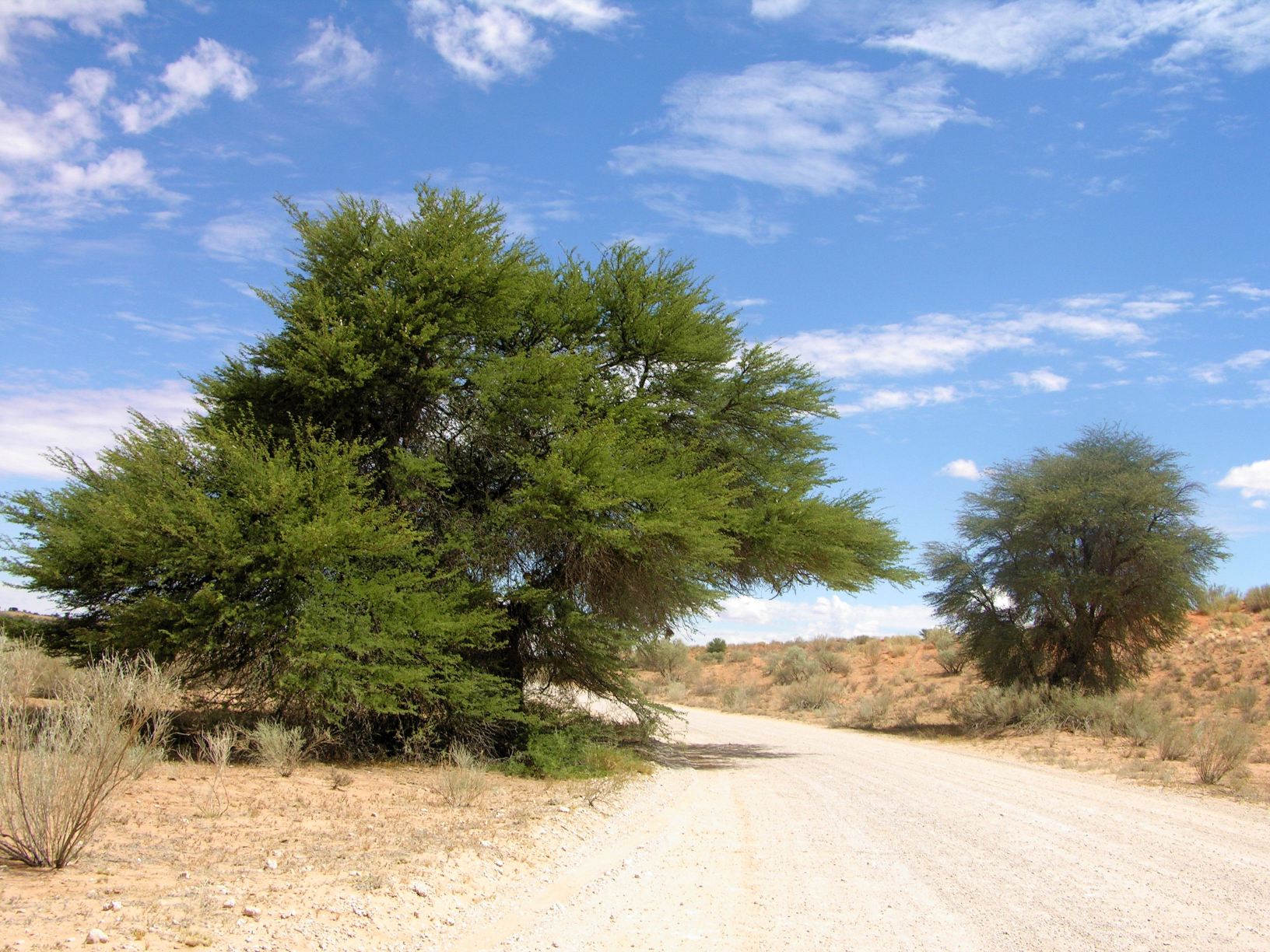
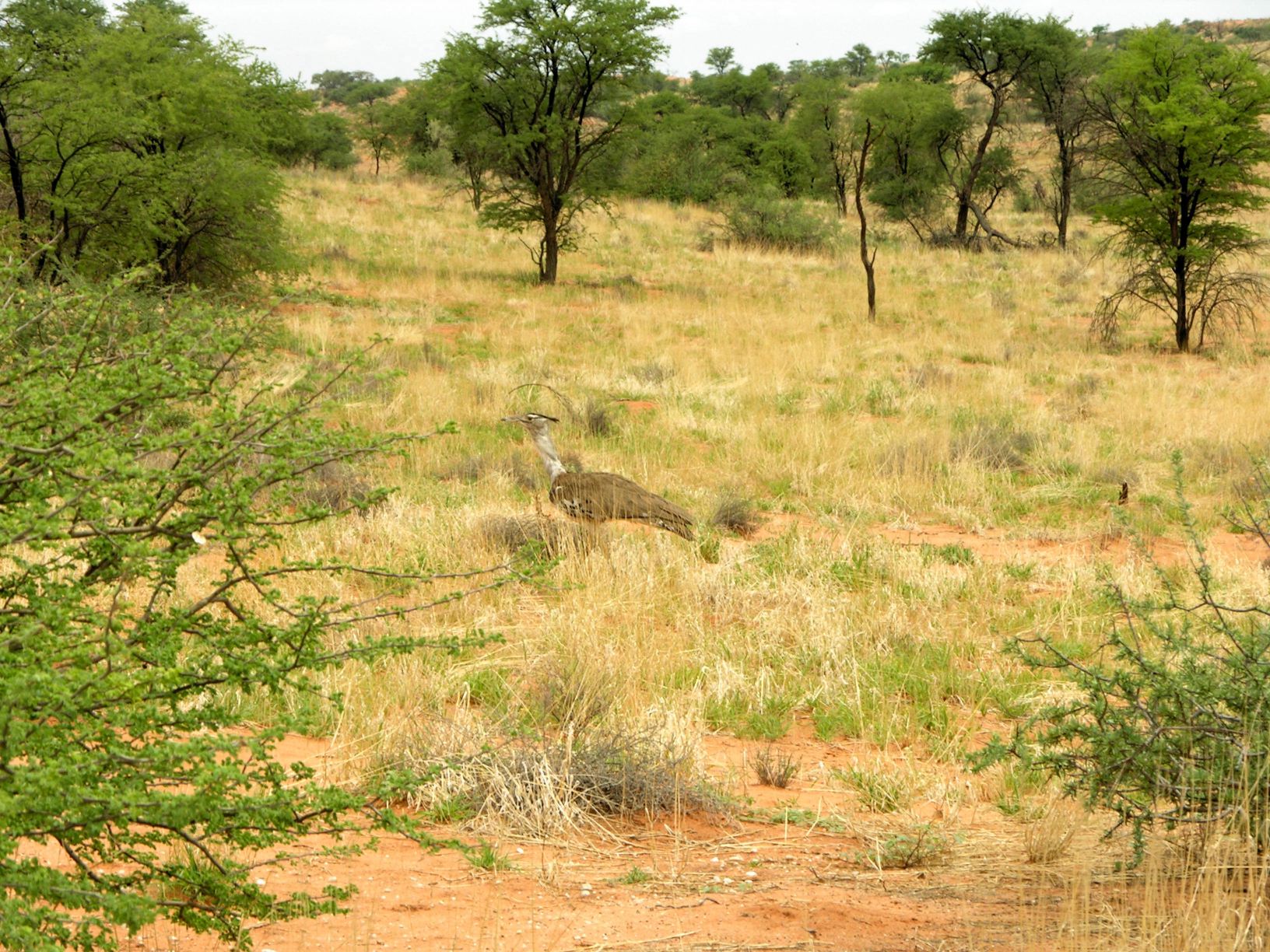
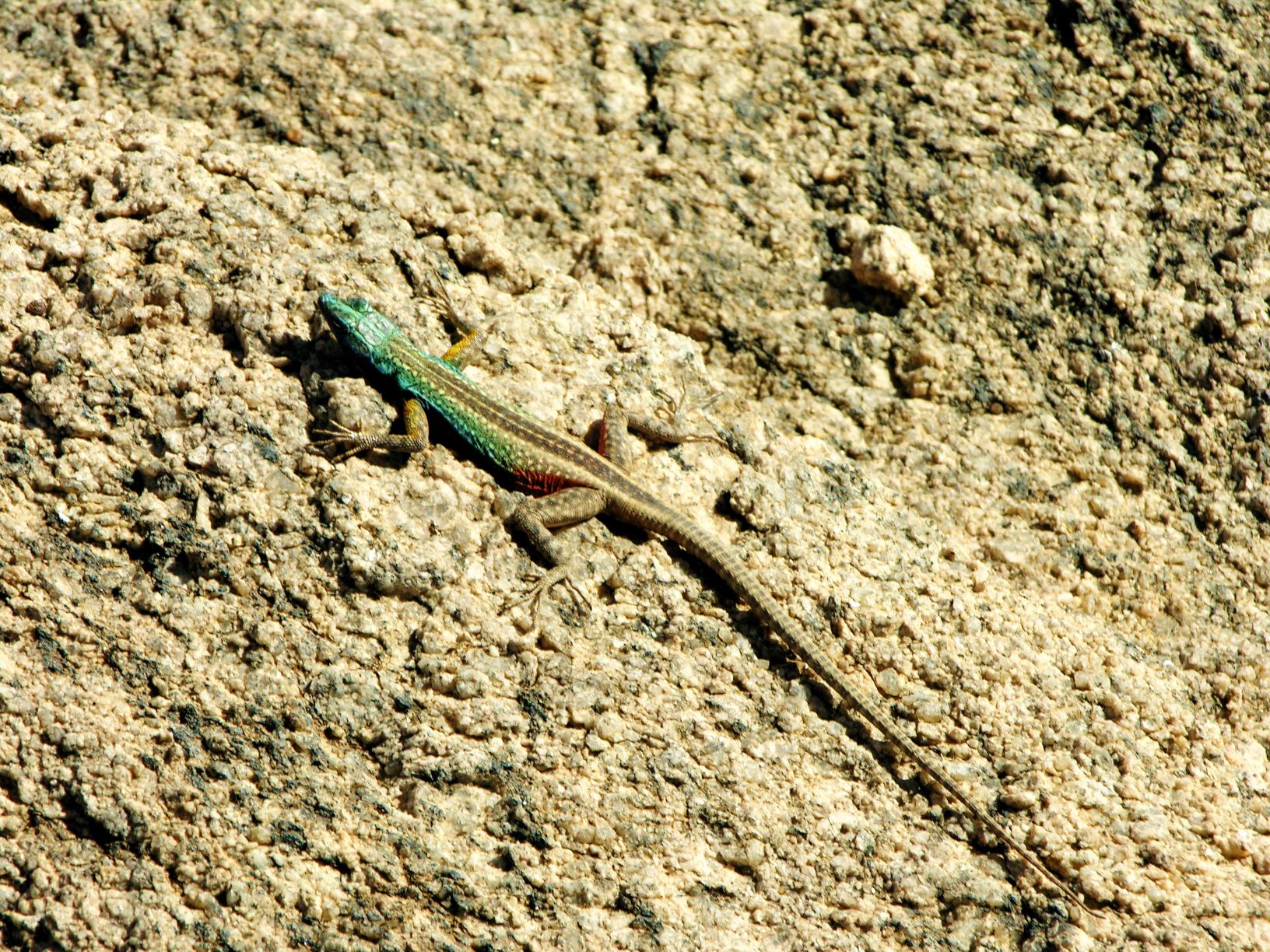
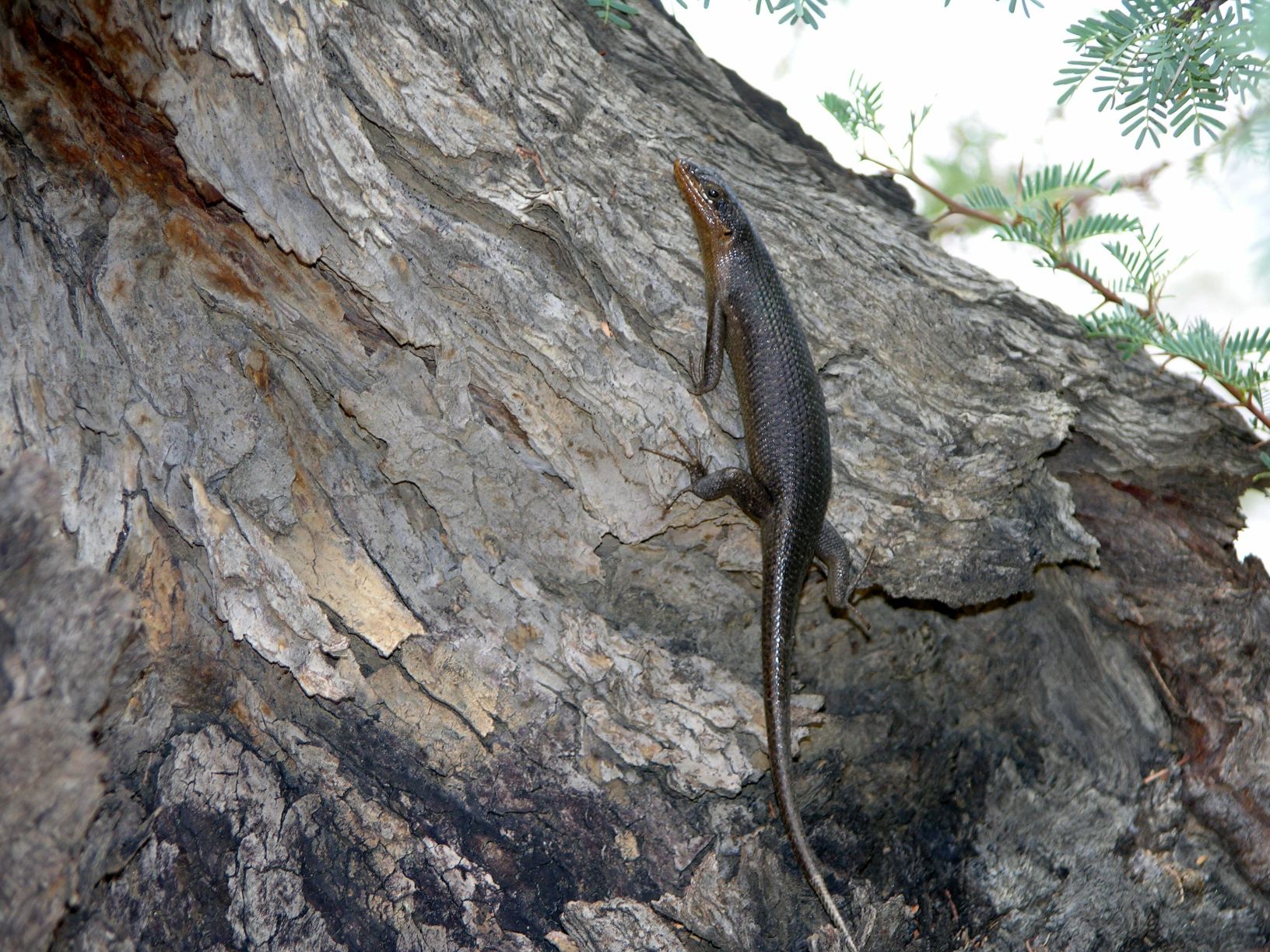
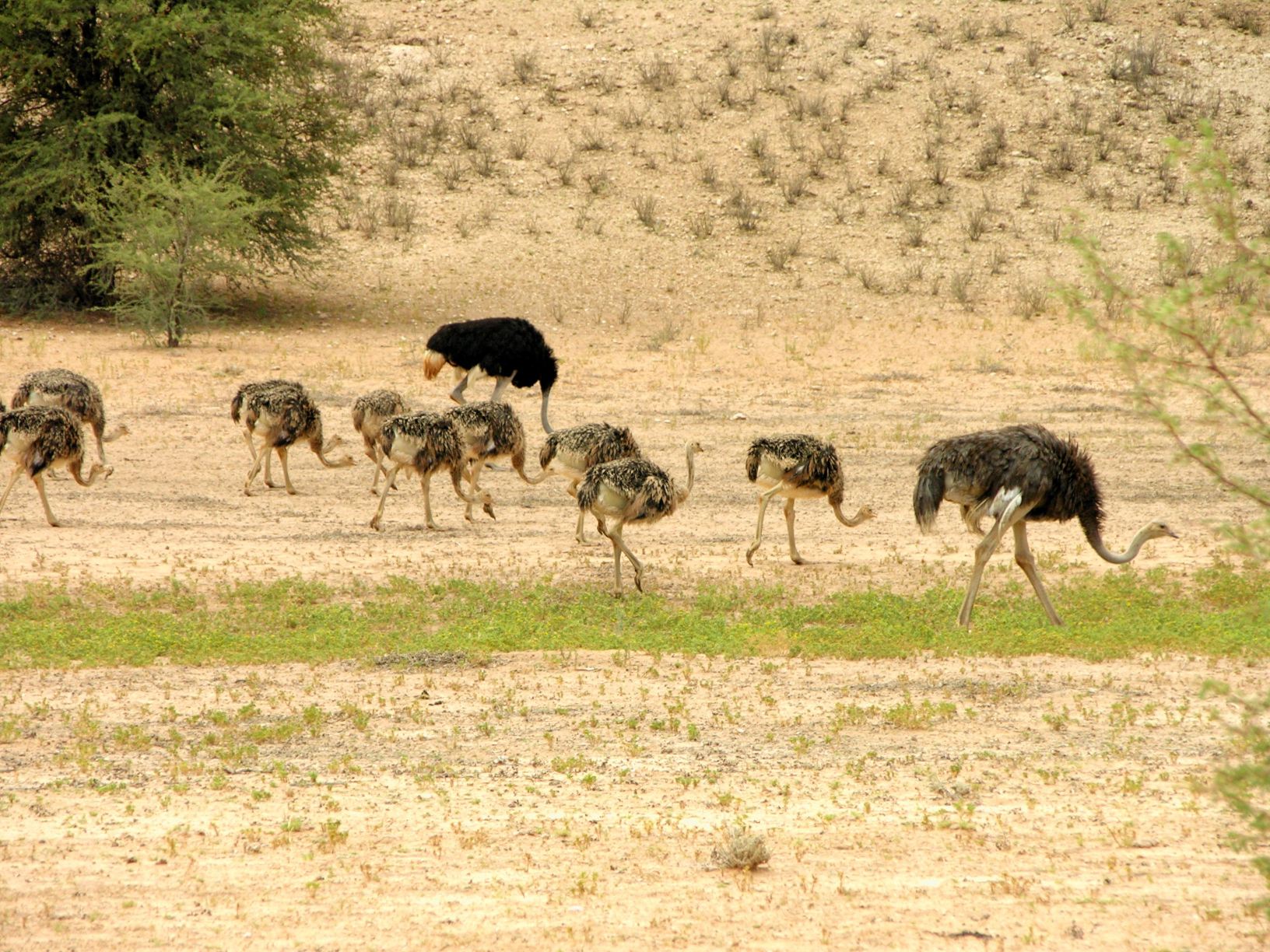
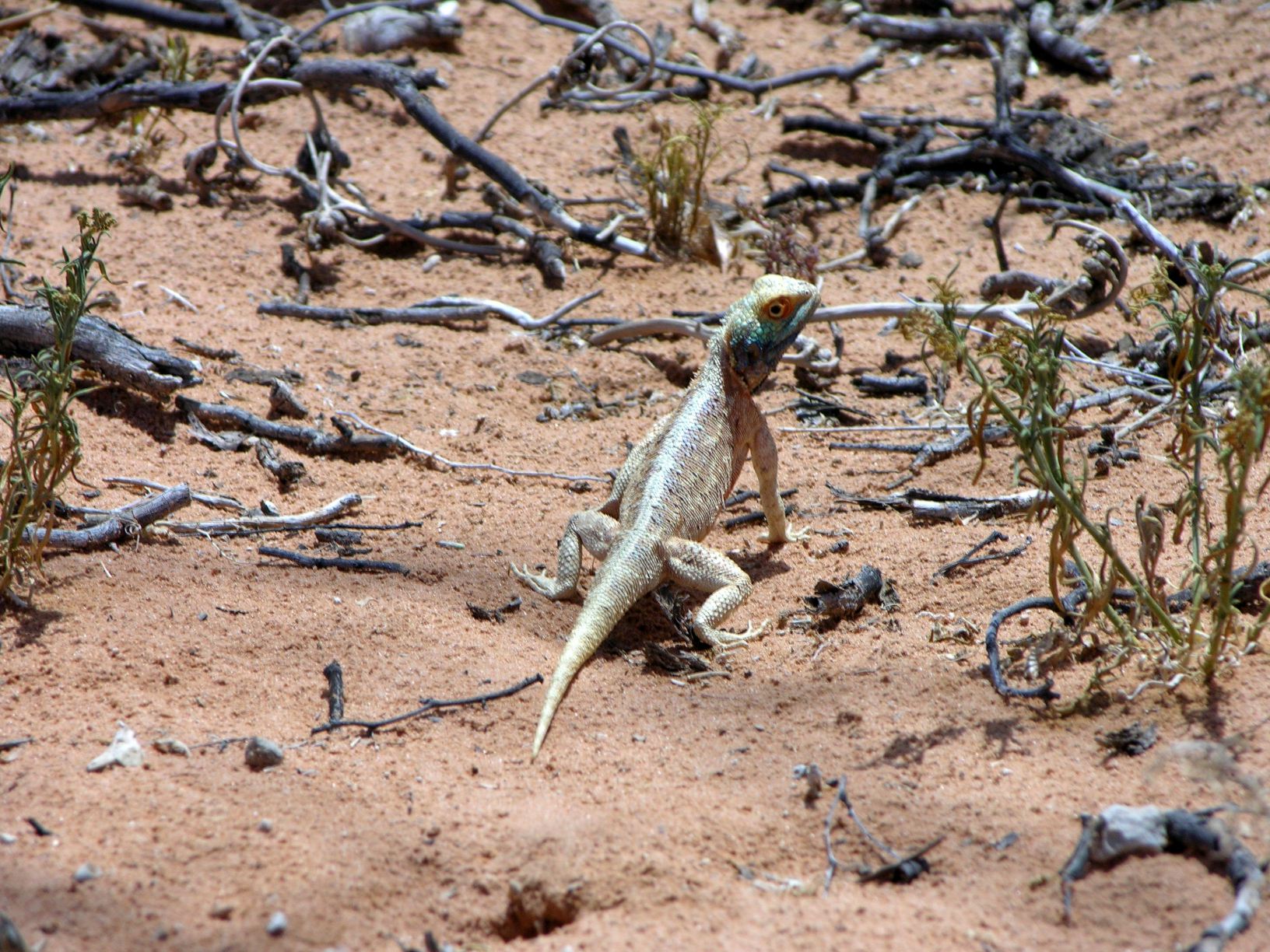
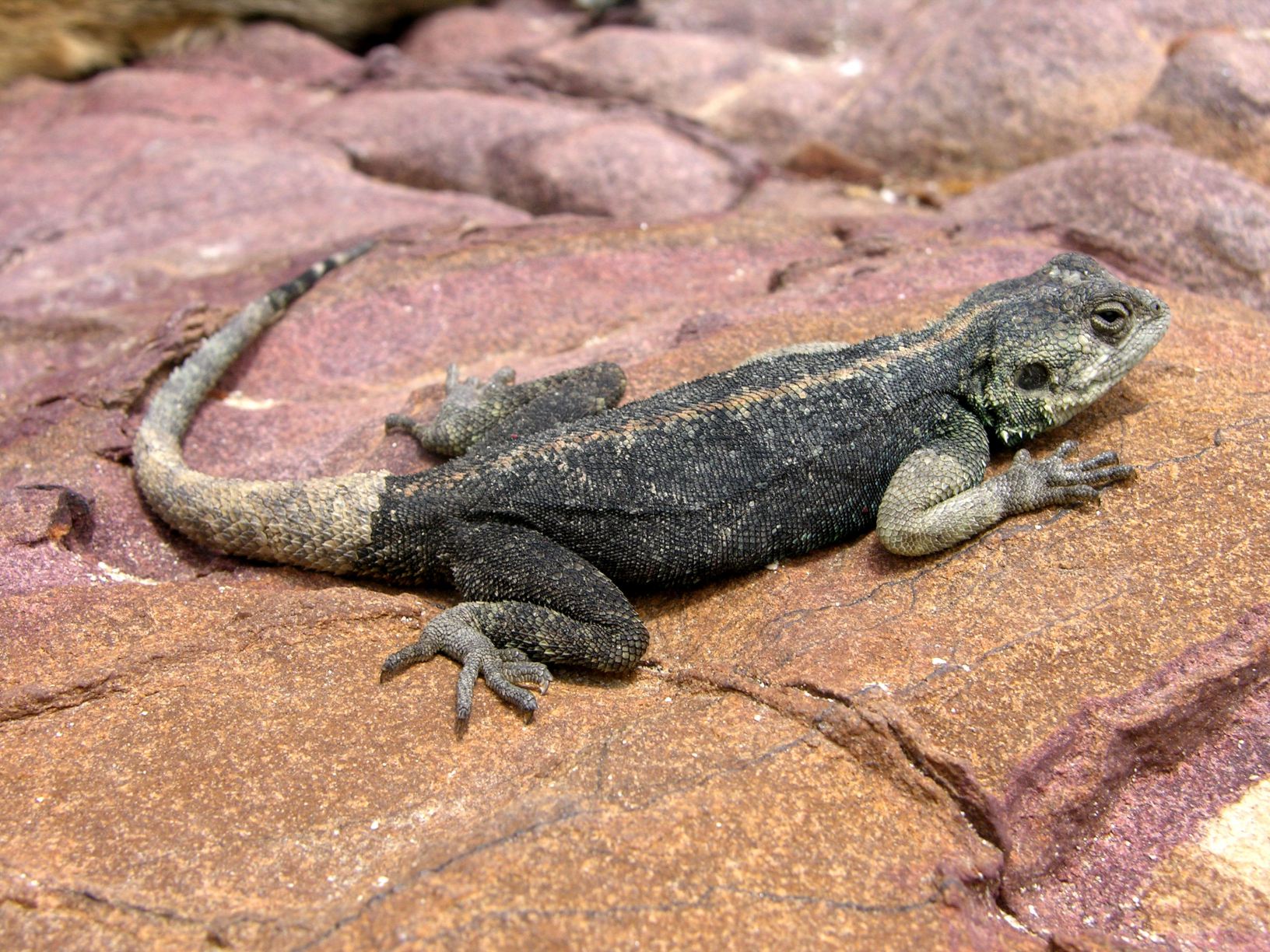
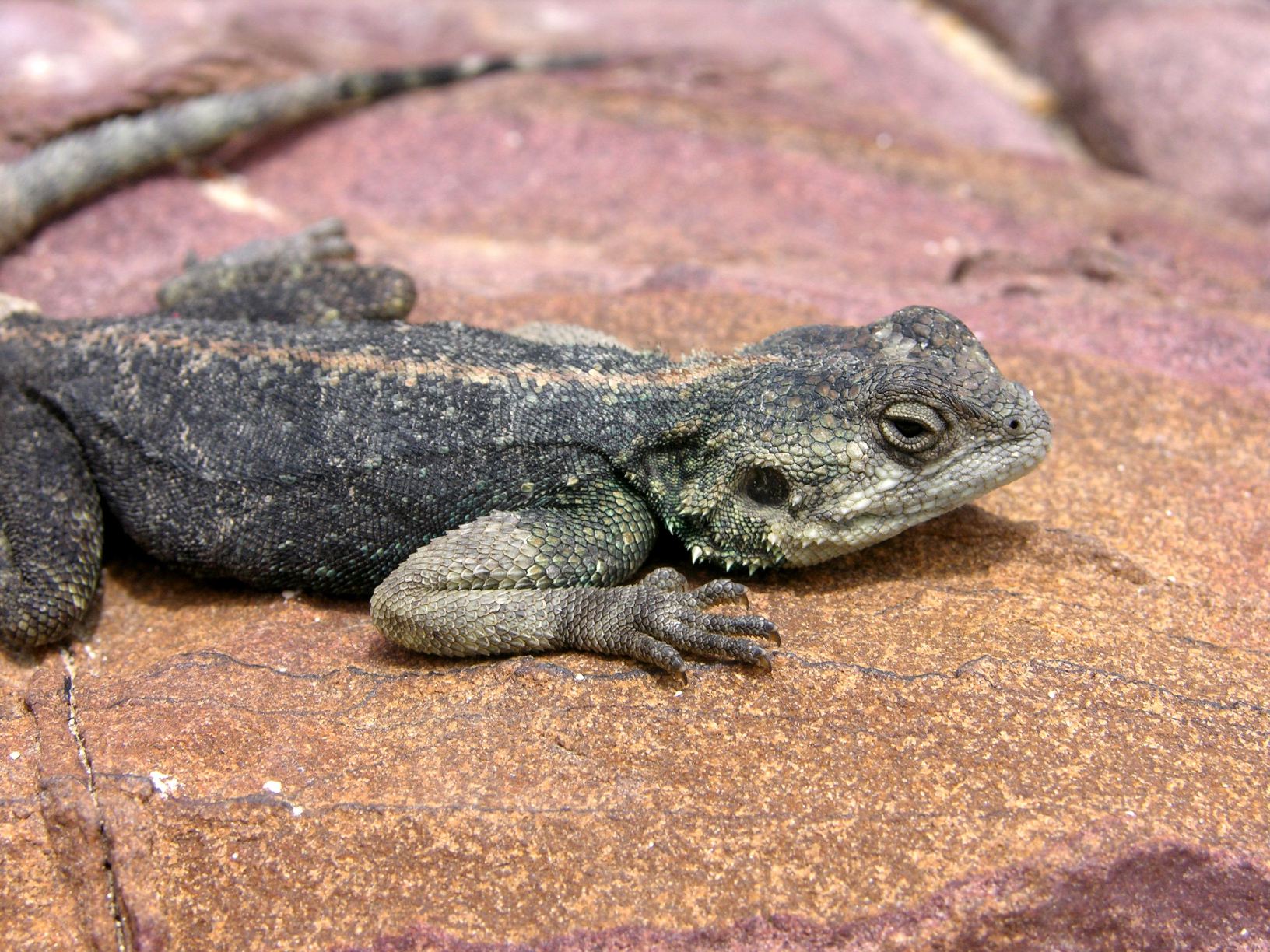
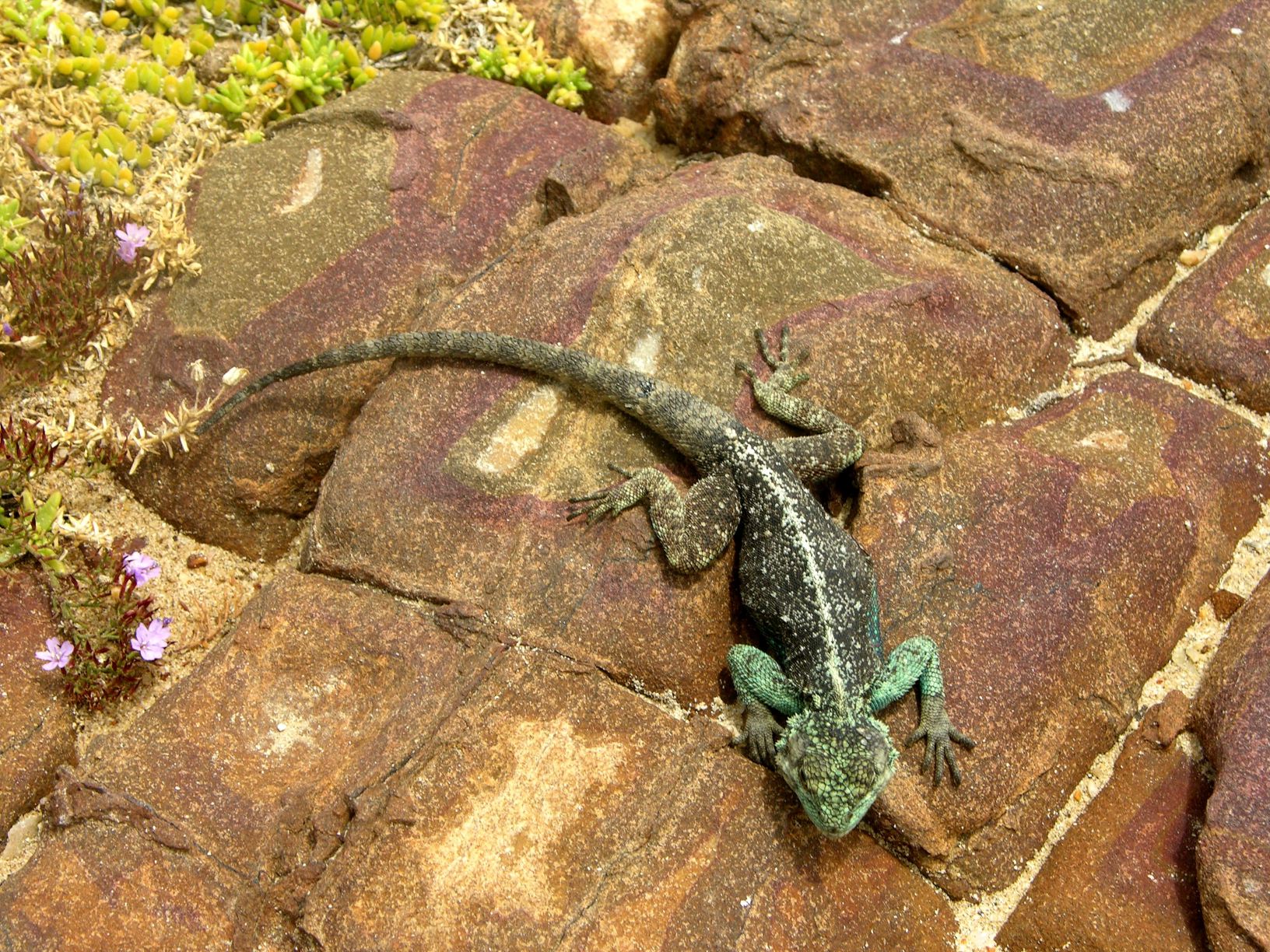
The Auob riverbed differs from the Nossob. There are vast numbers of ostriches, big herds of springbok, and geckos. The last ones like to sit right on the road and pretend to be a pile of sand. That might make sense out in the savannah, but it's ill-advised on a road. I was driving slowly and still ran over several before I found some to photograph.
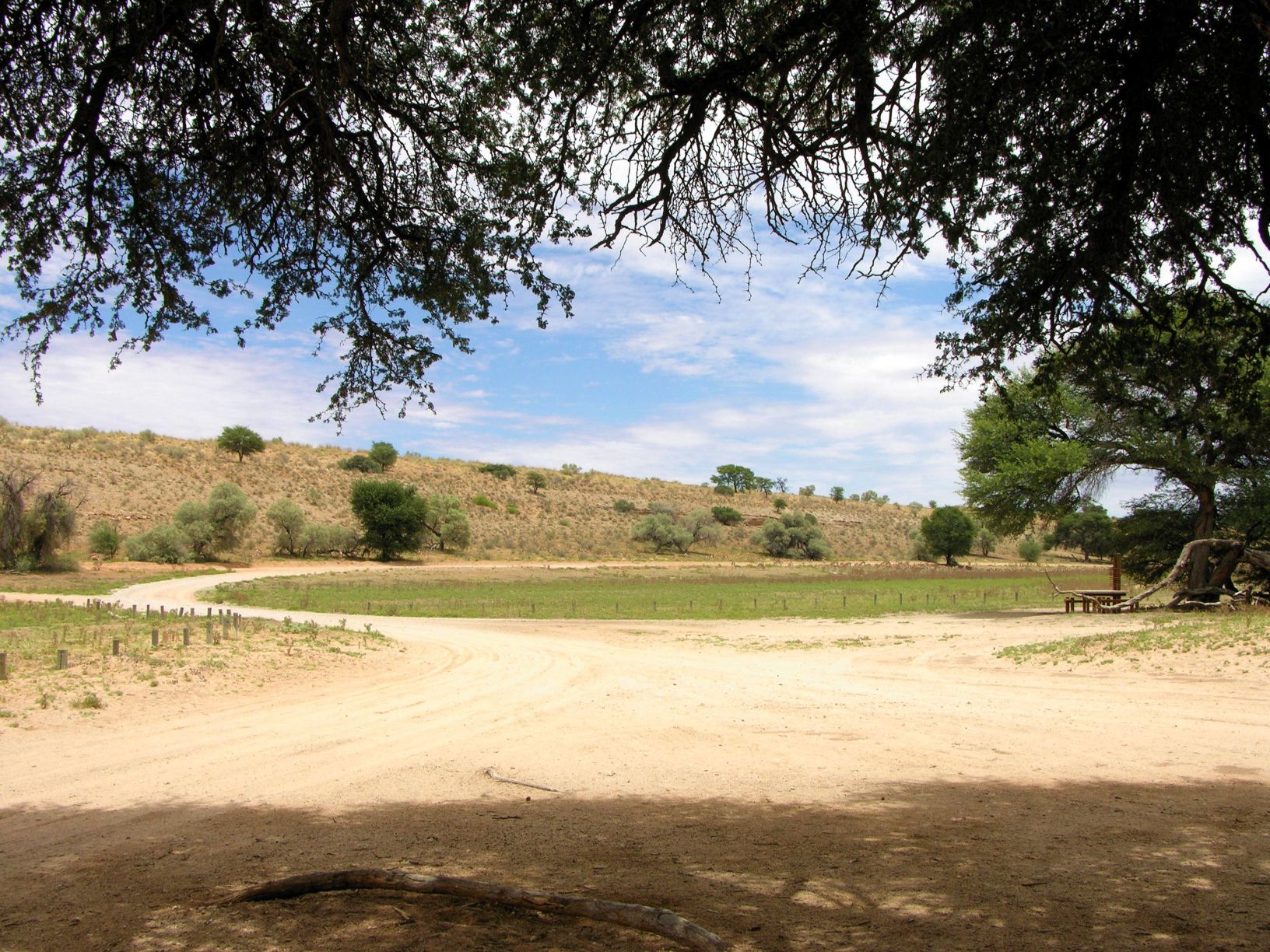
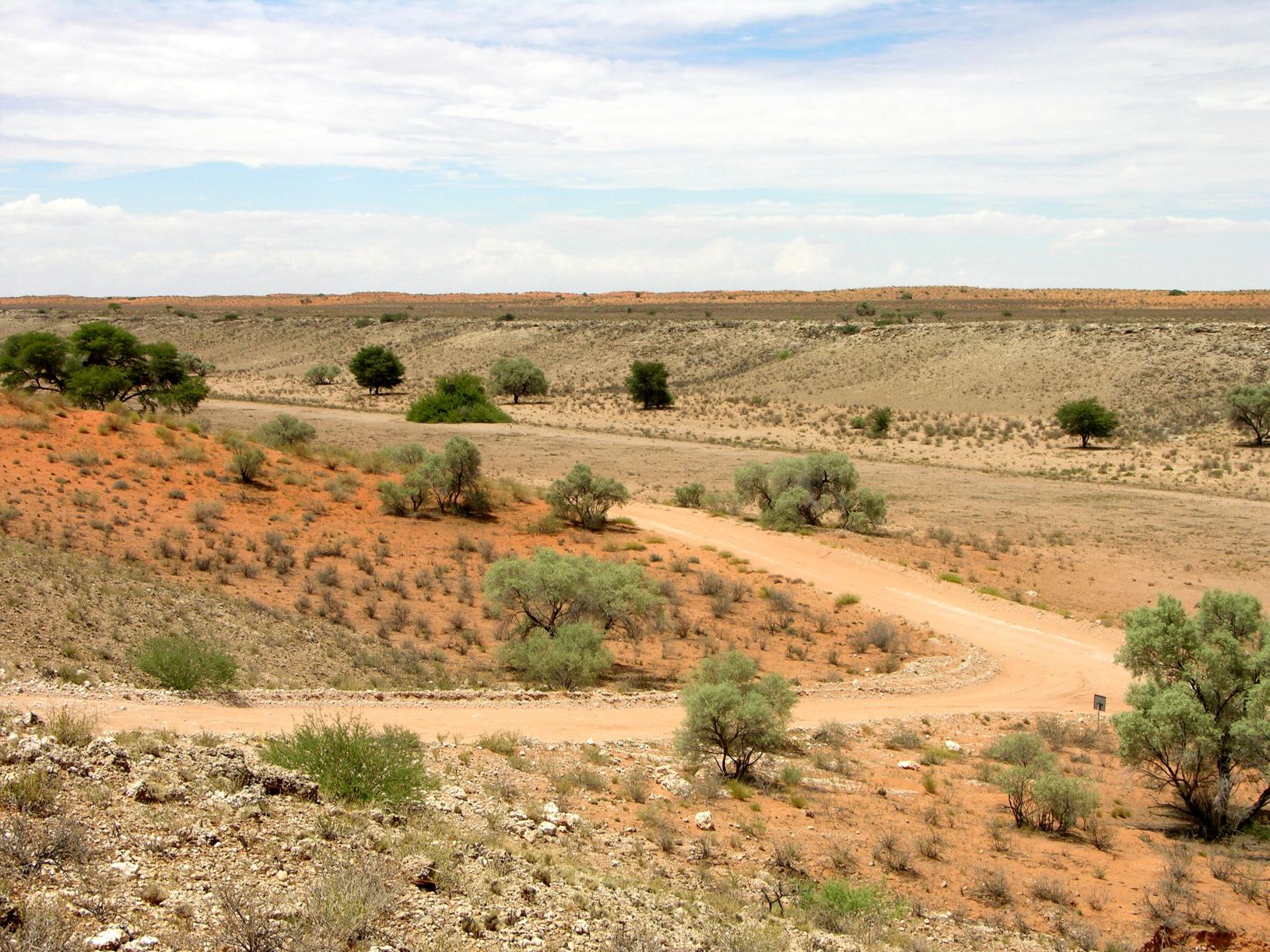
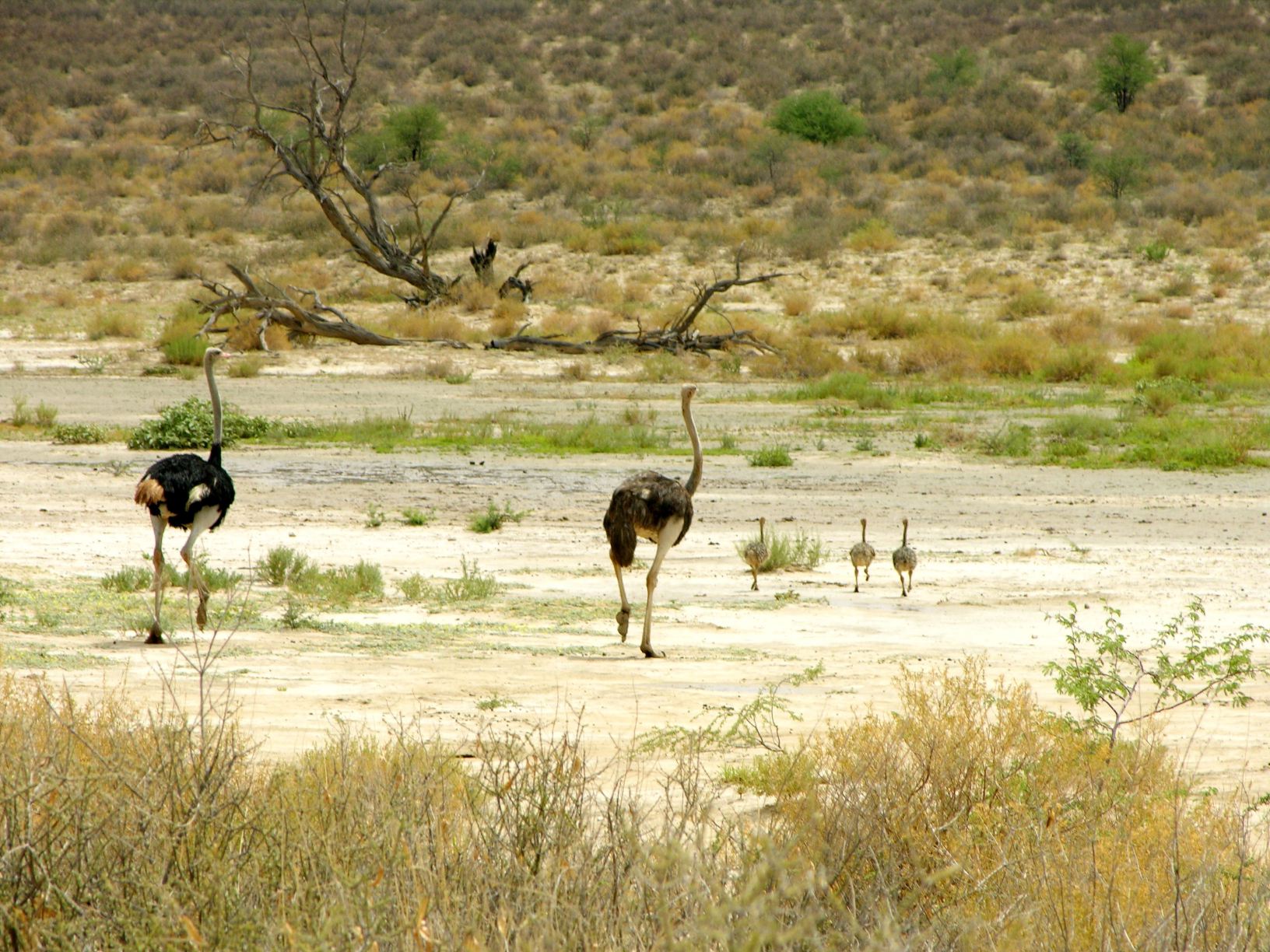
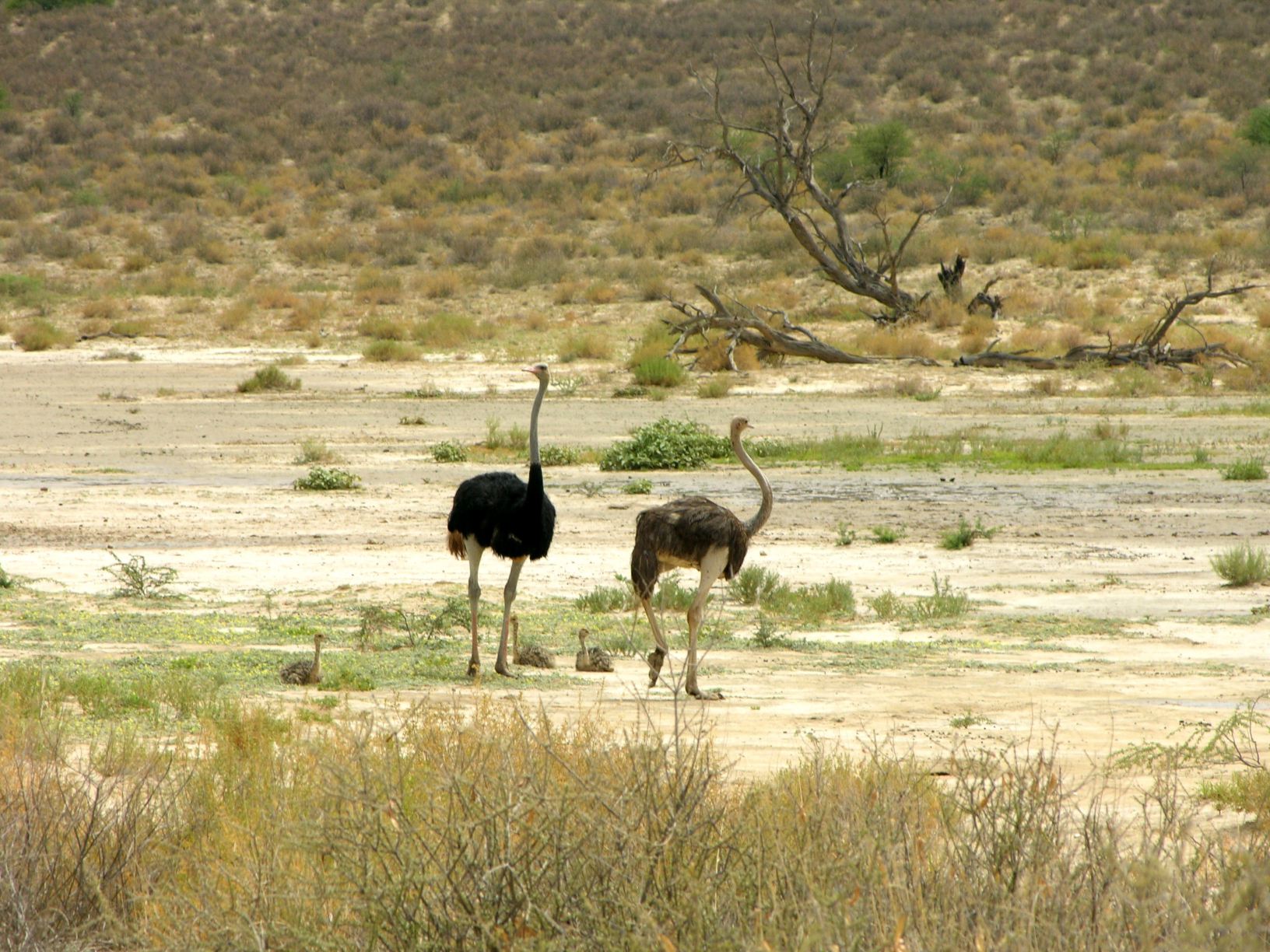
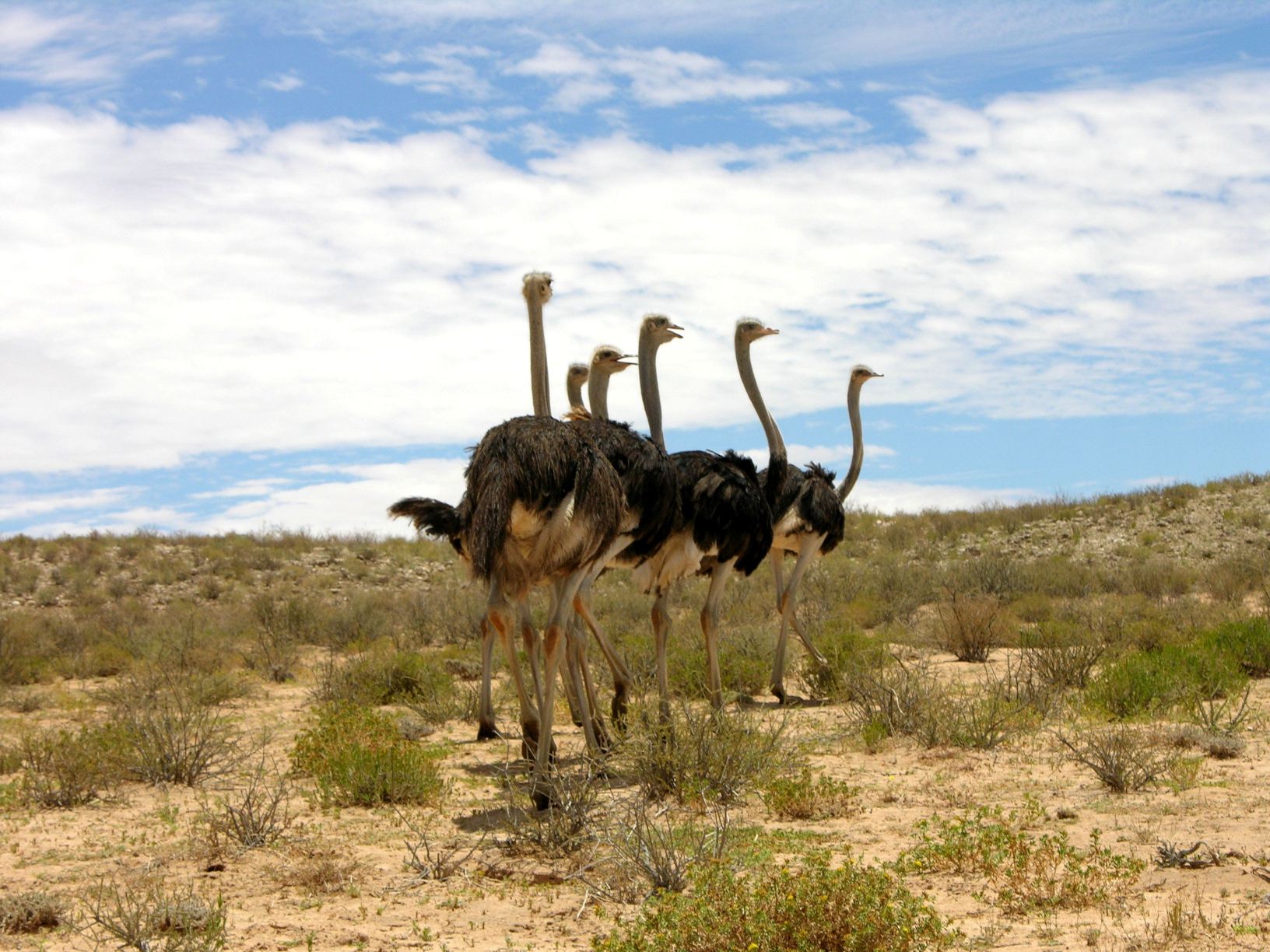
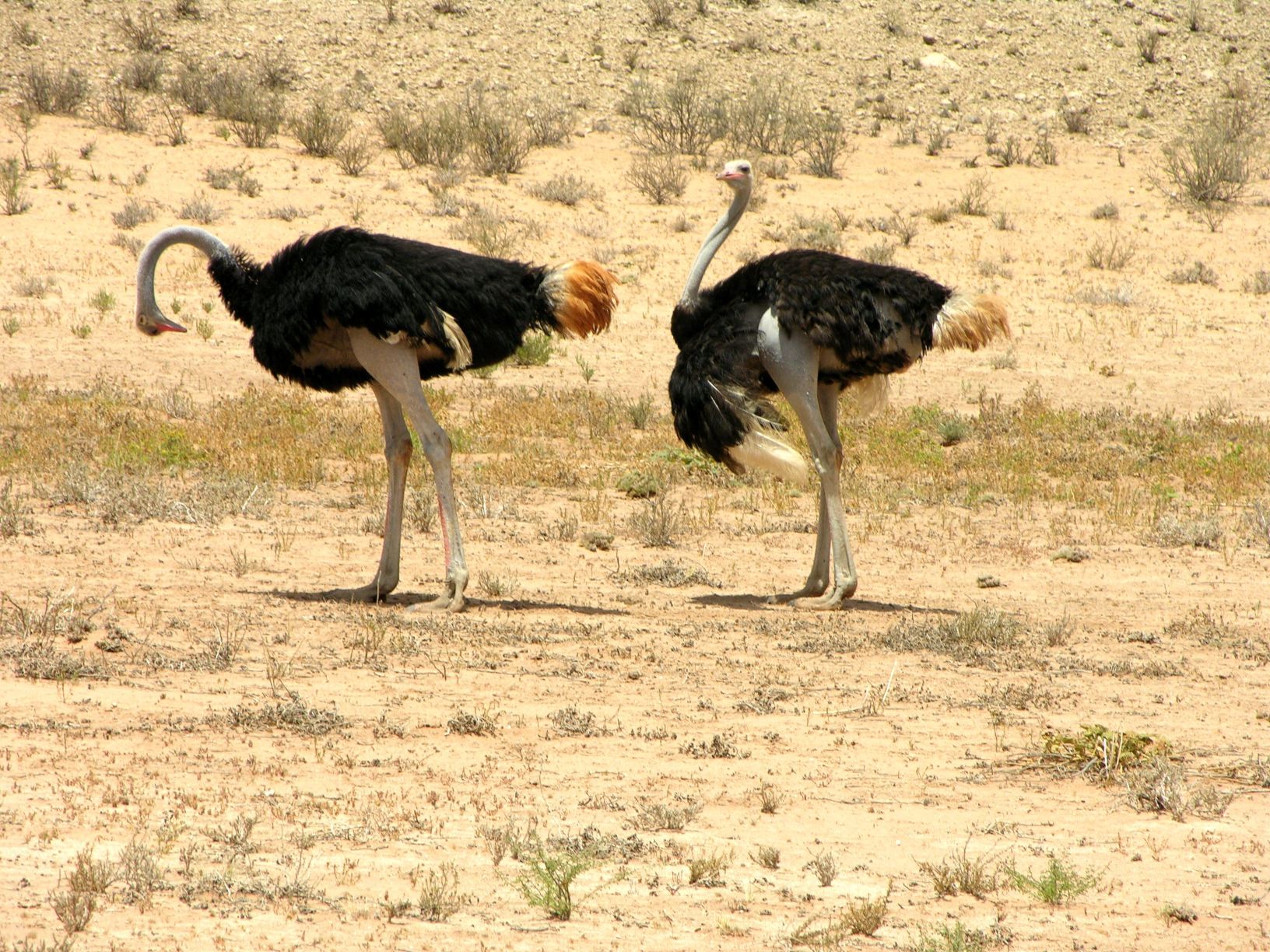
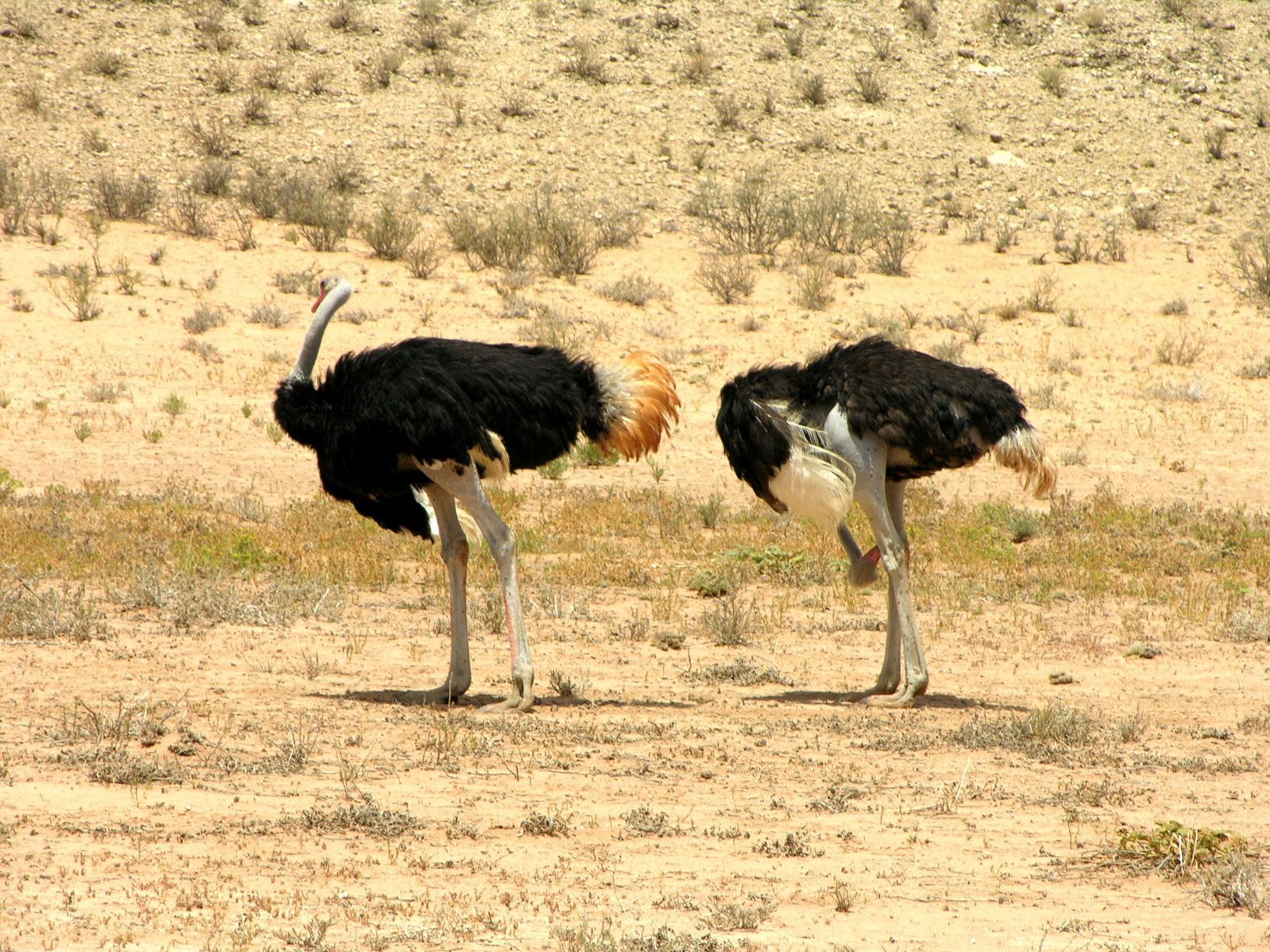
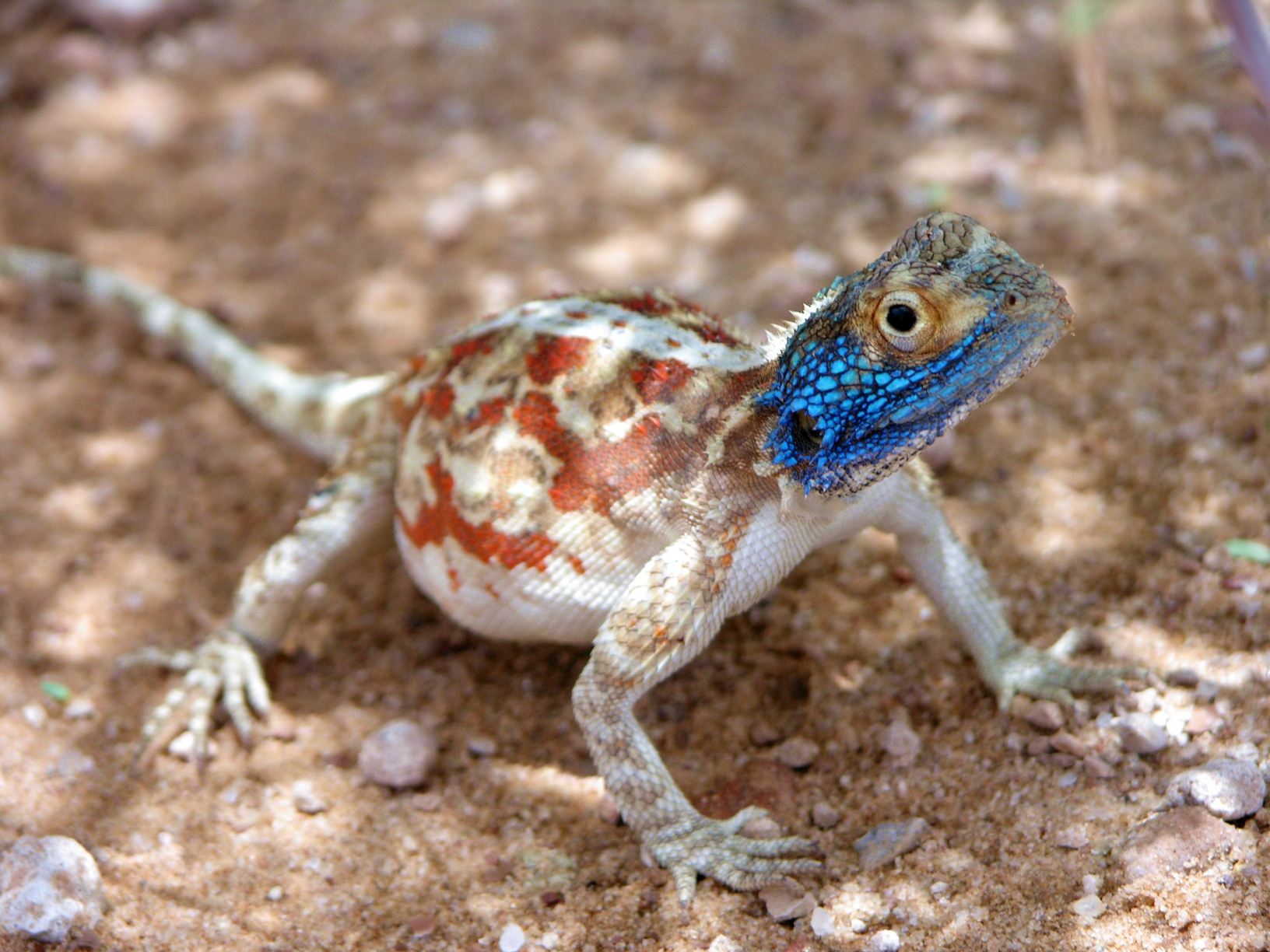
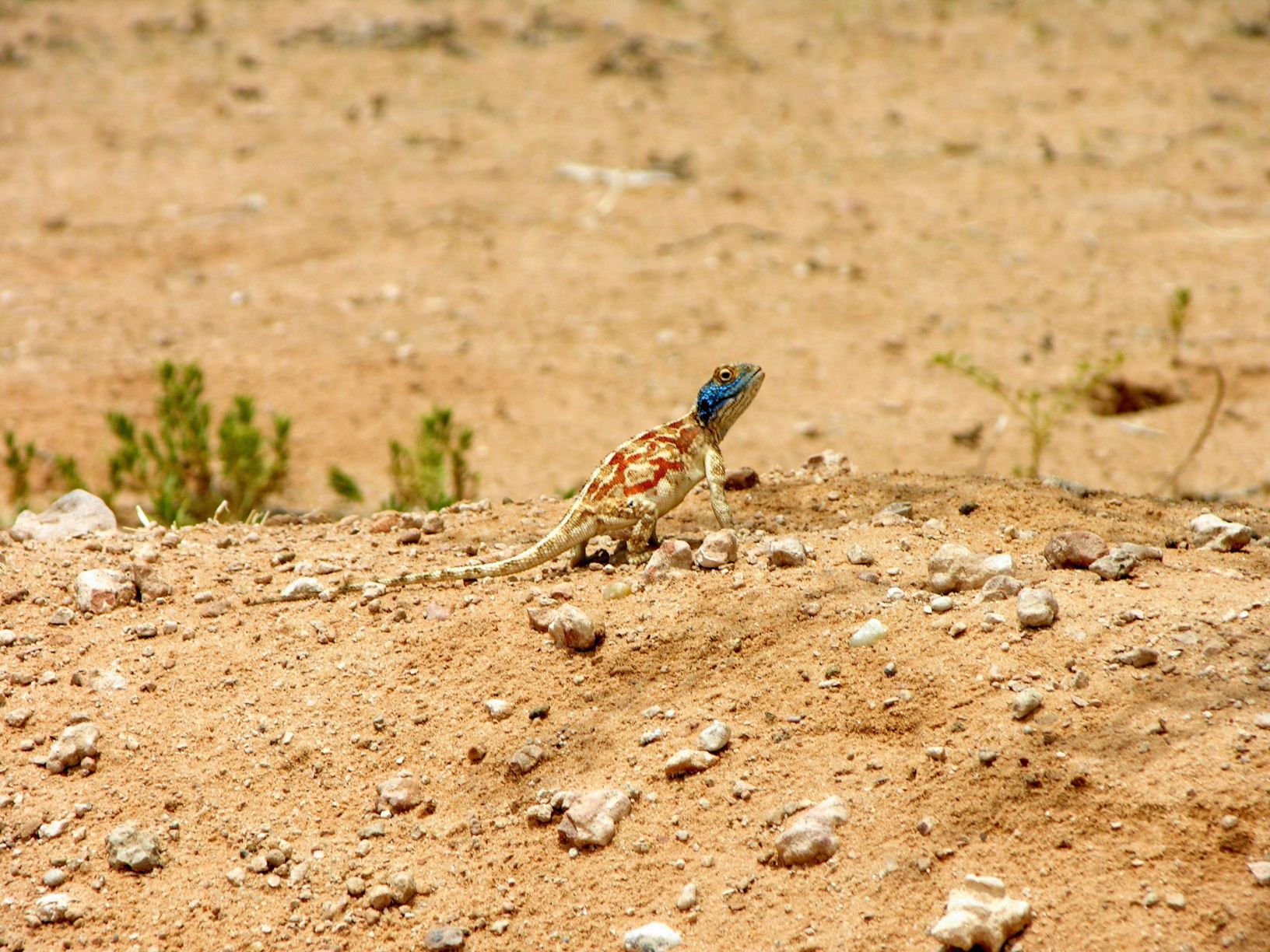
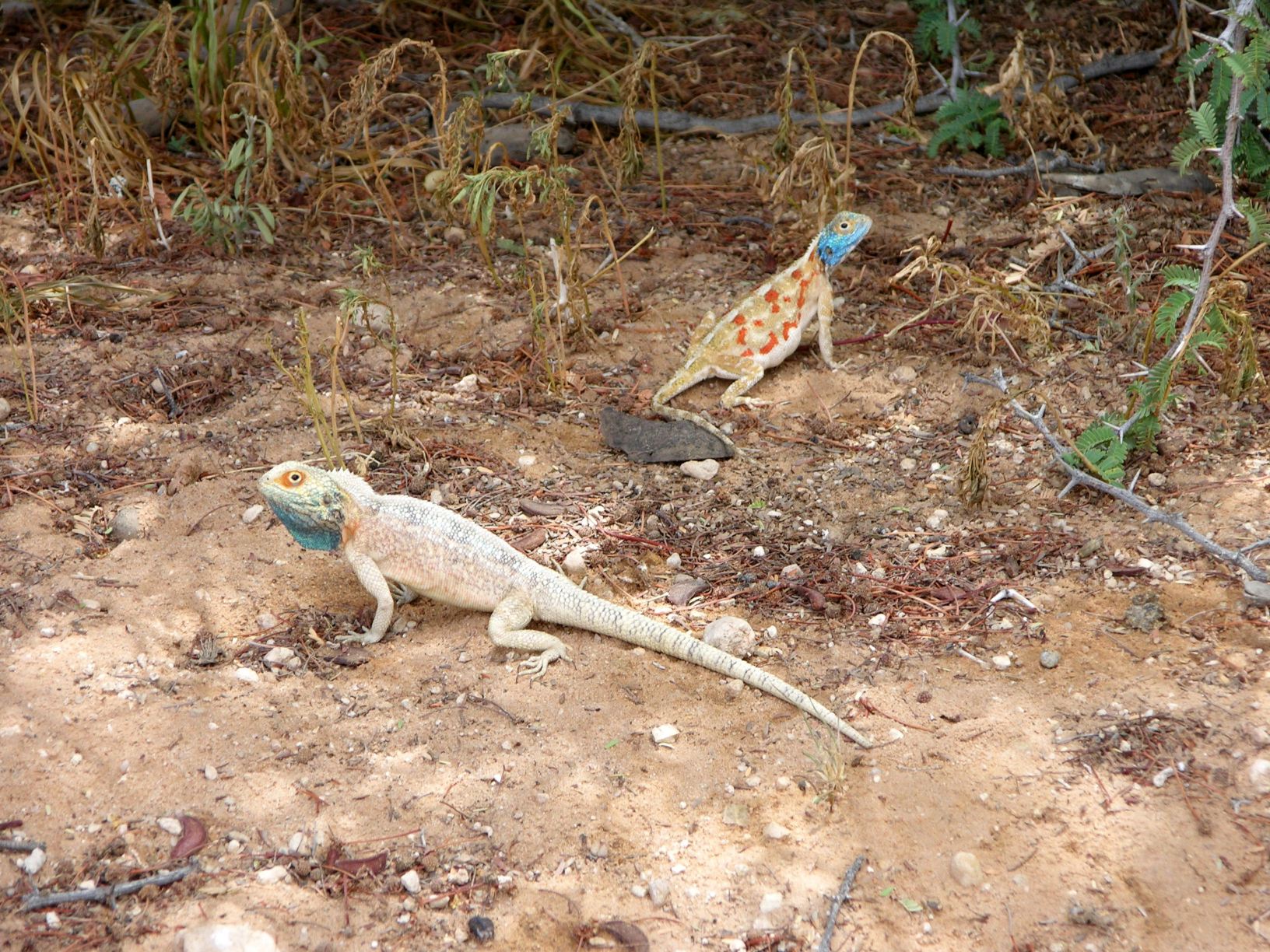
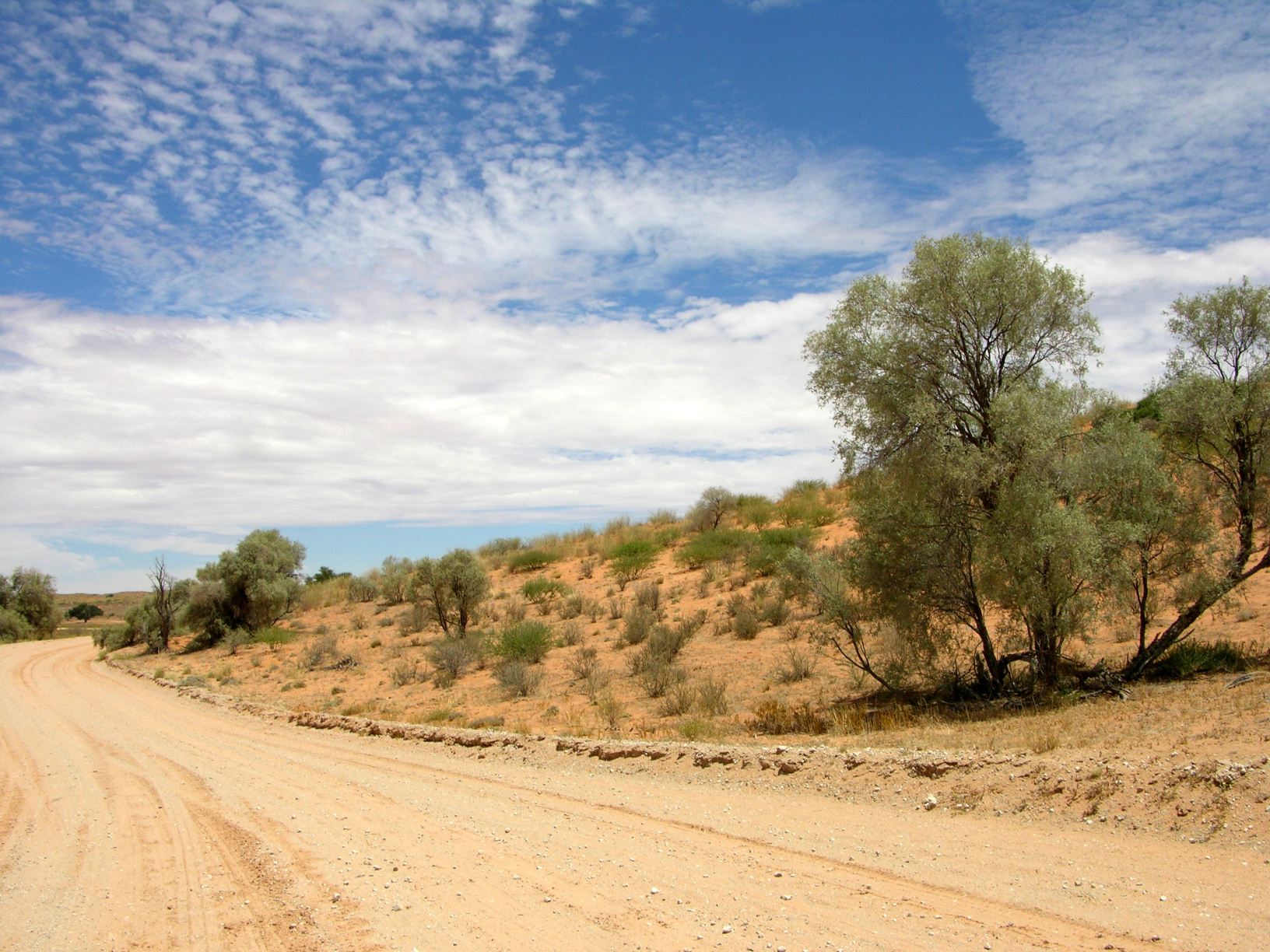
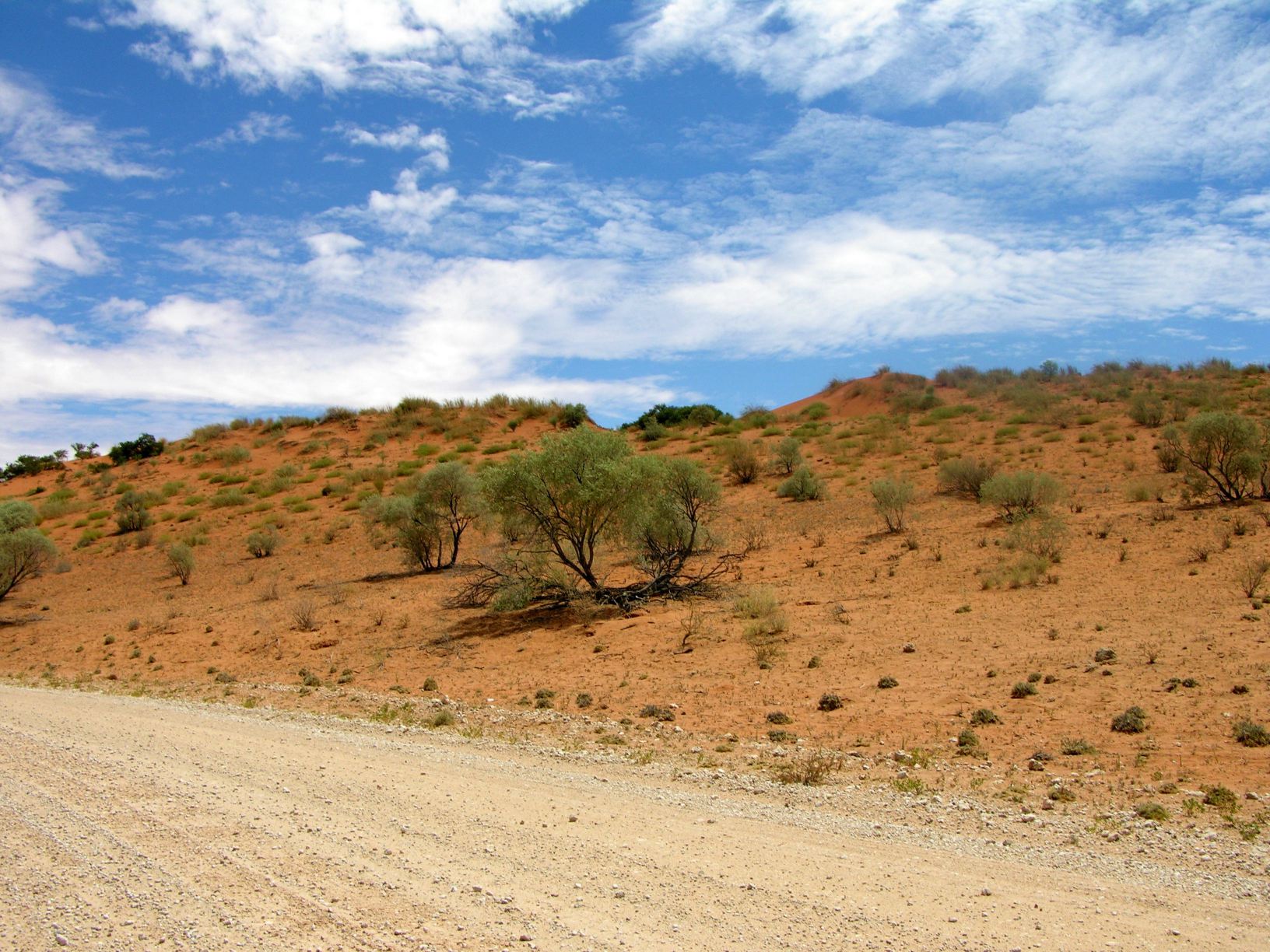
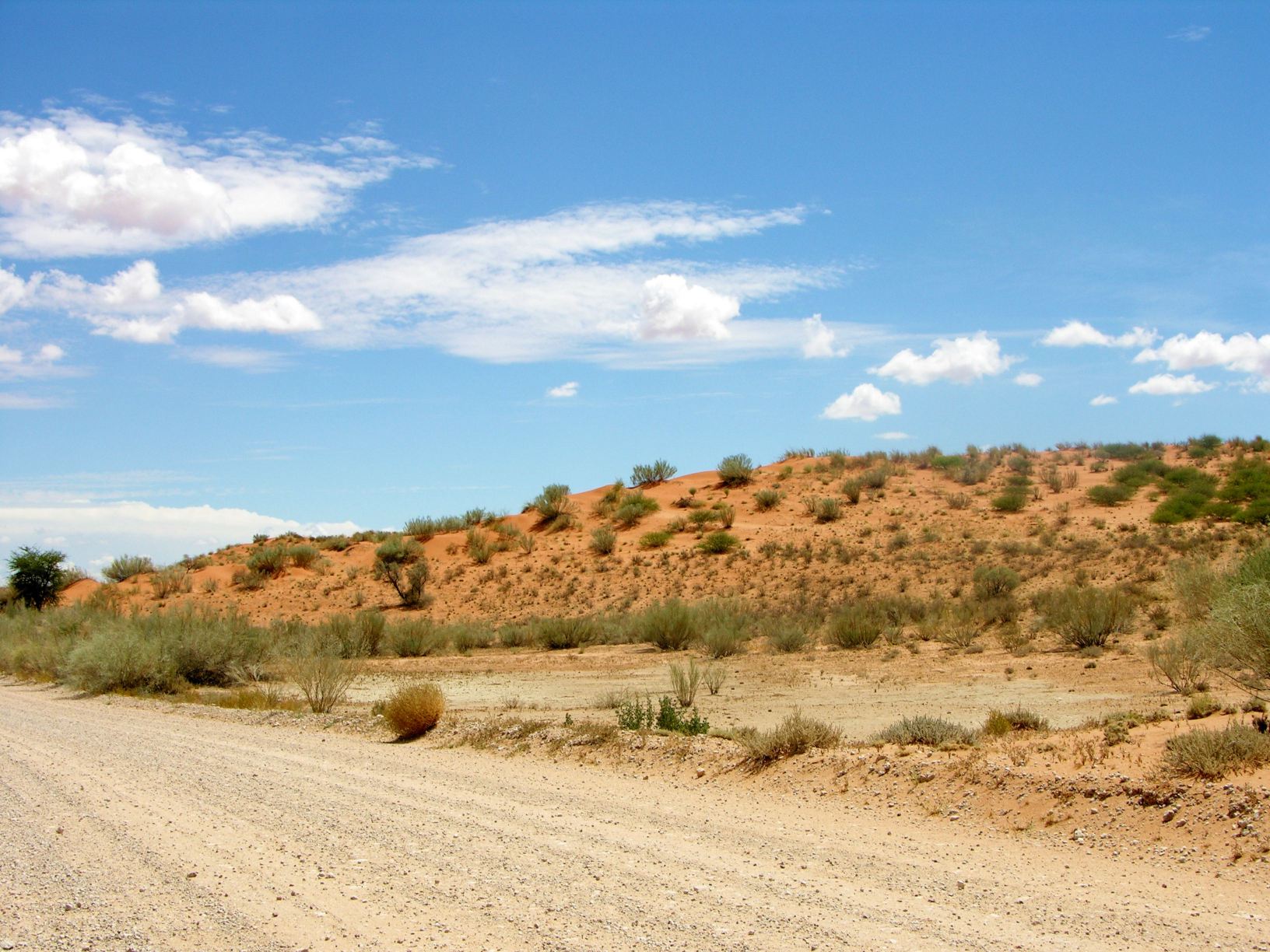
The farther west you go, the drier it gets. Here the savannah gives way to the Kalahari Desert. Enormous red bare dunes appear. The best place to see them is a few hundred kilometres away in Namibia, where they're the main attraction. Even in western Kgalagadi they're already beautiful.
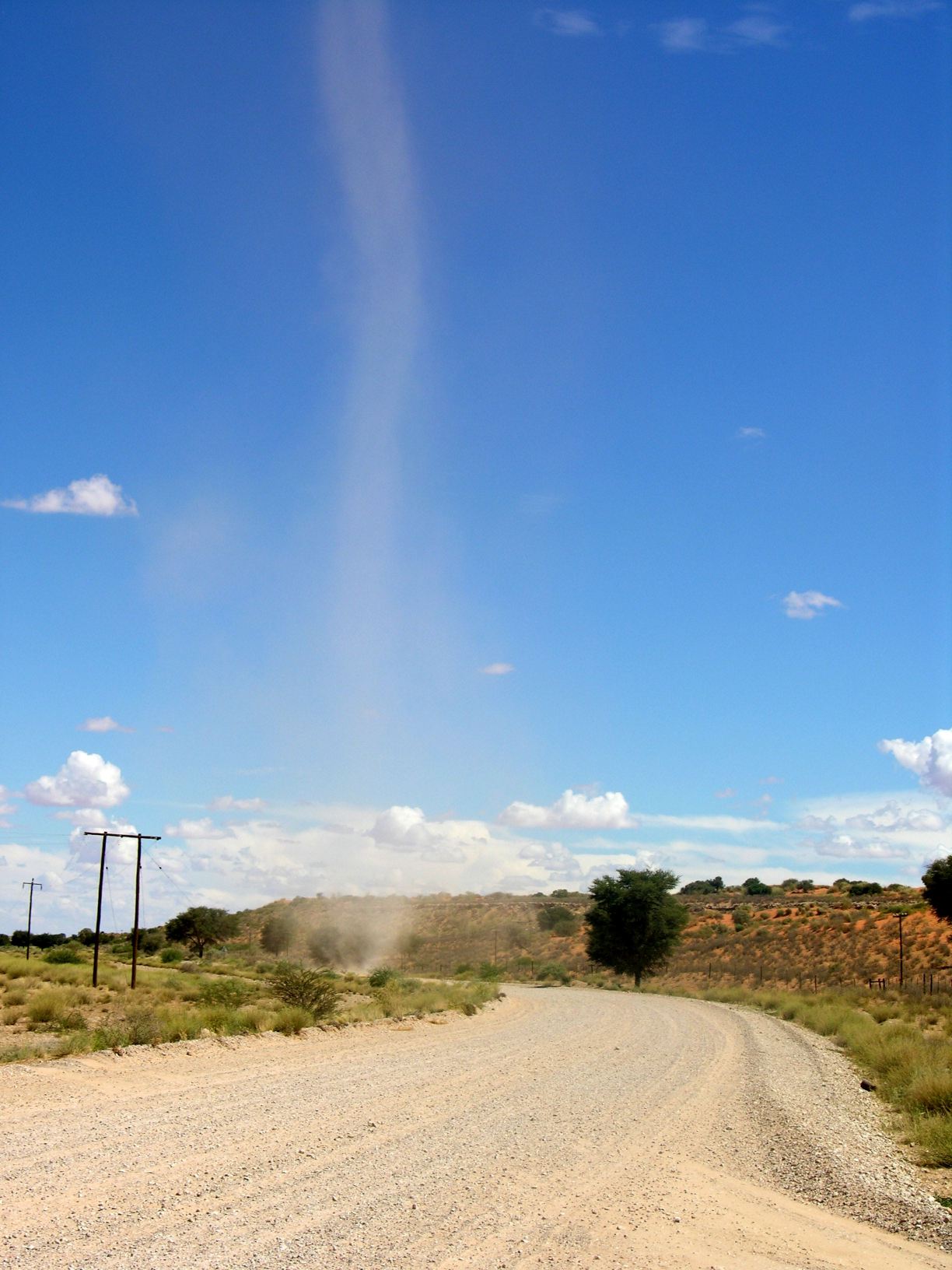
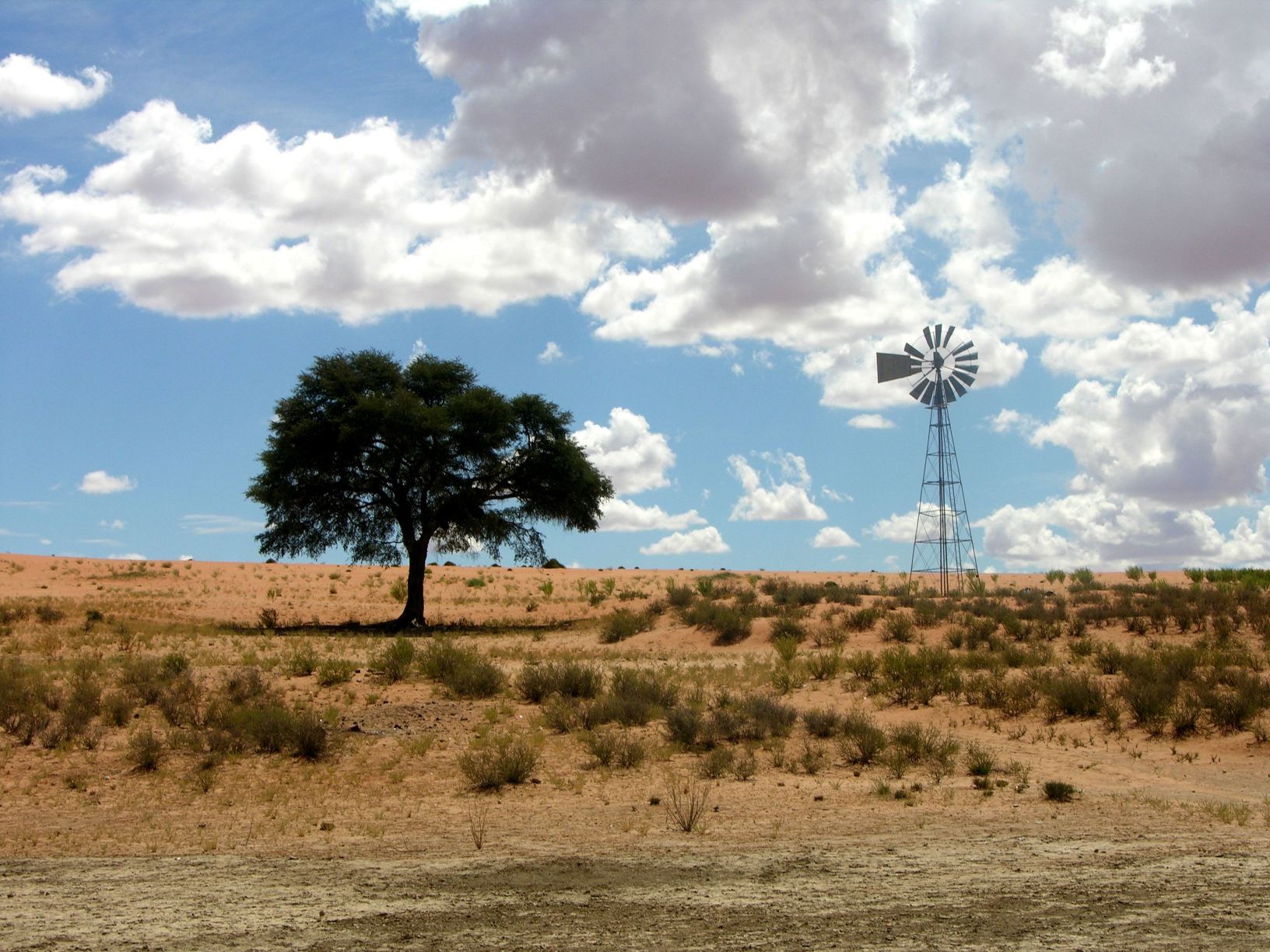
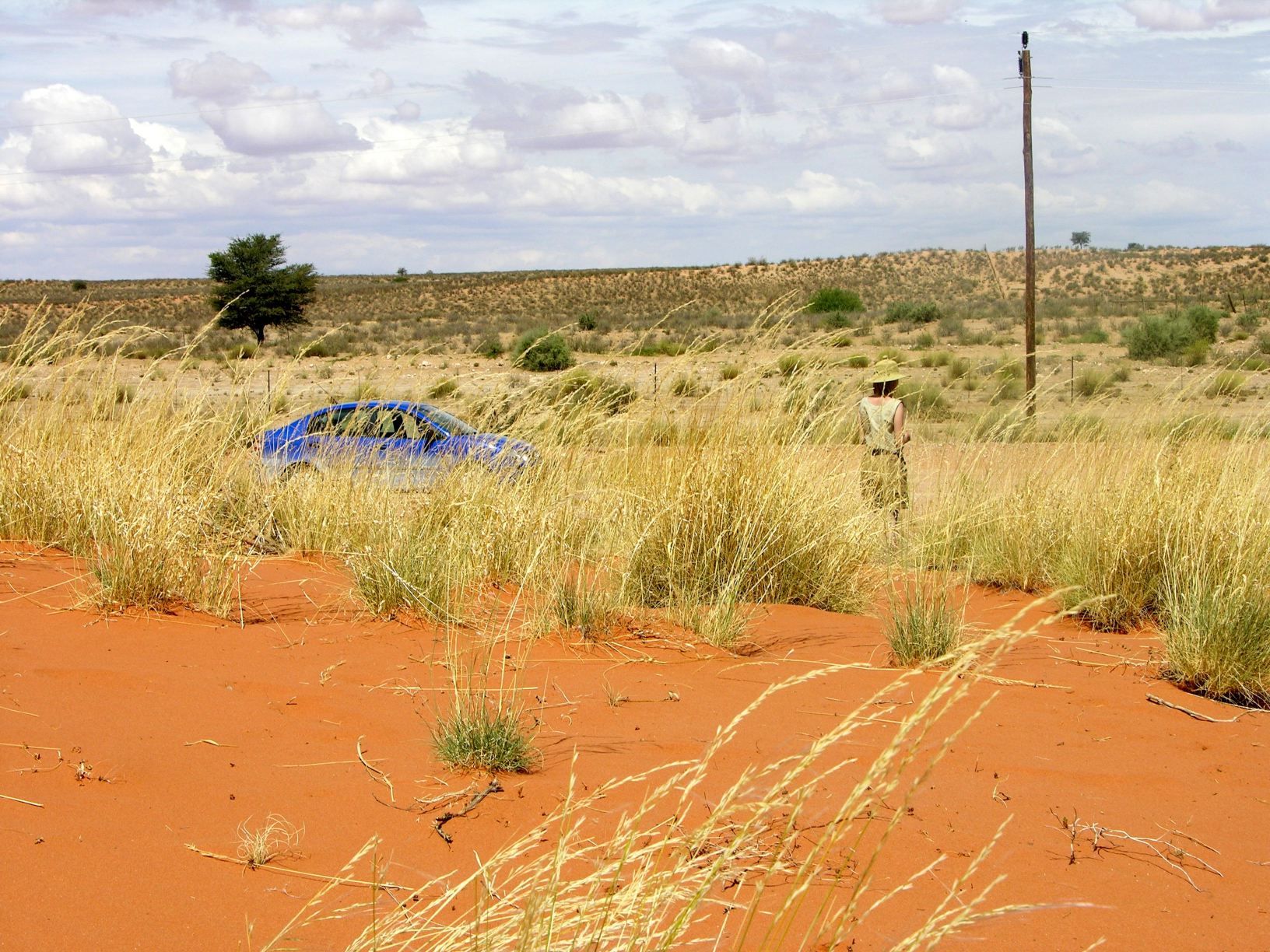
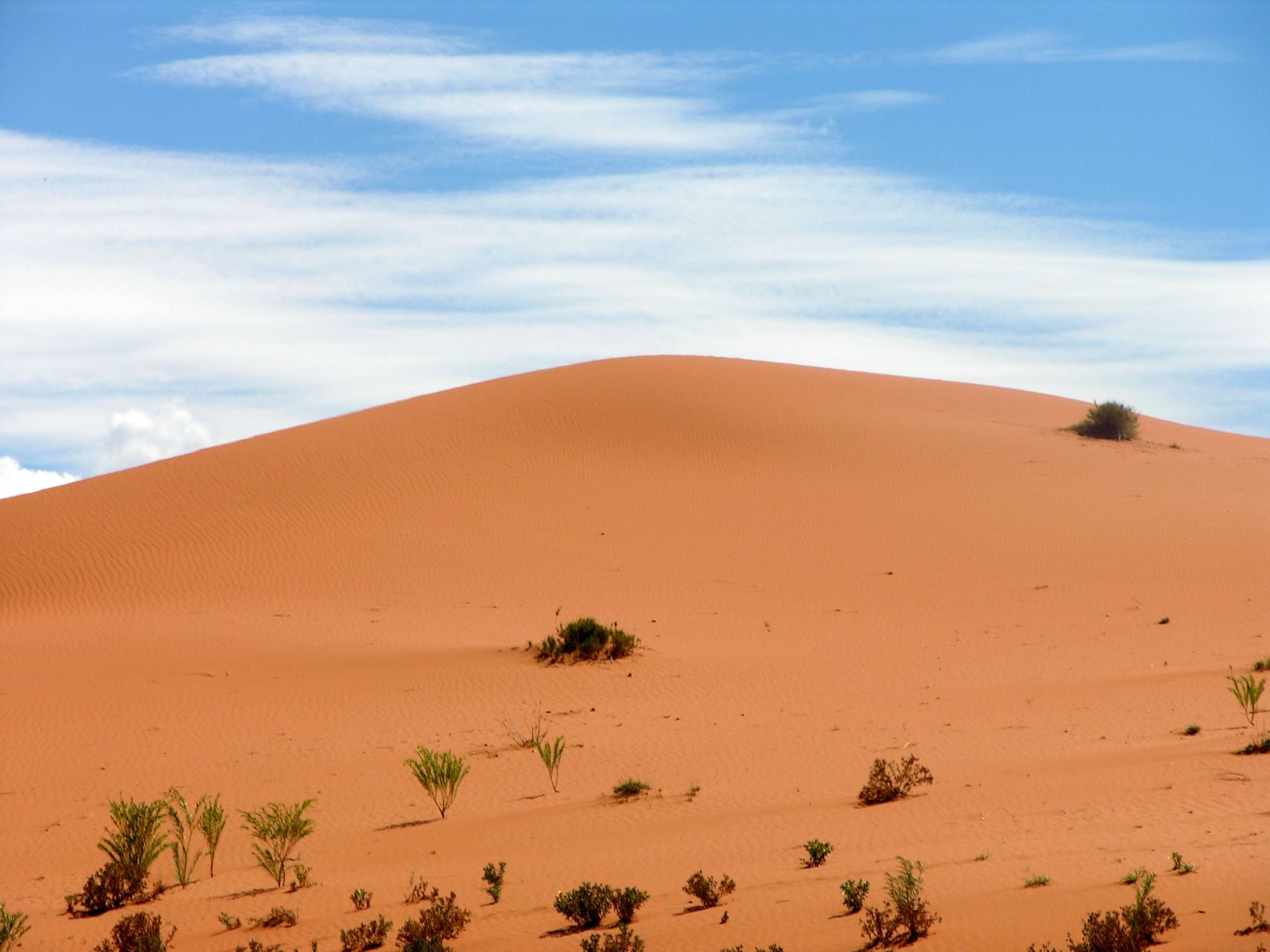
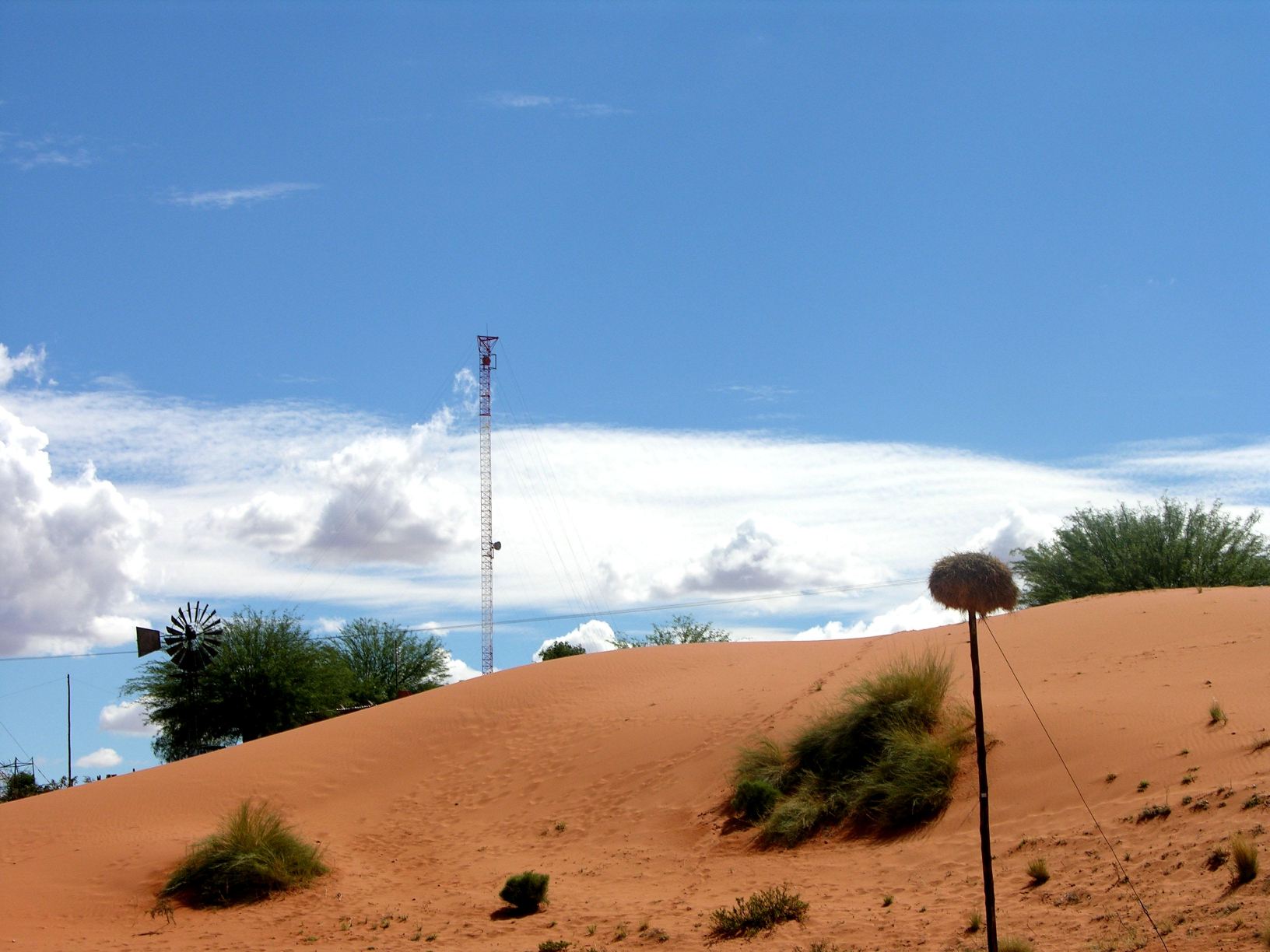
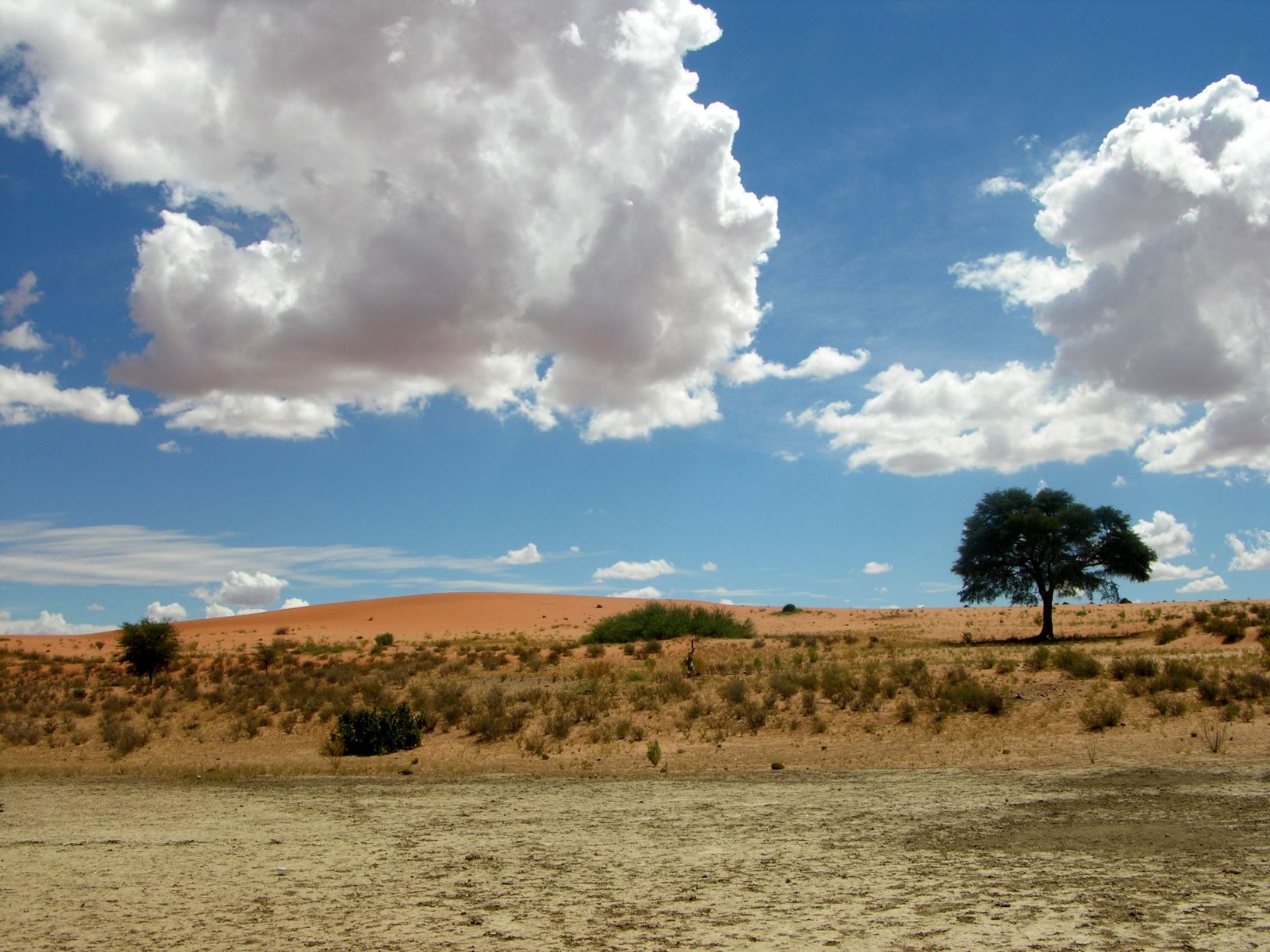
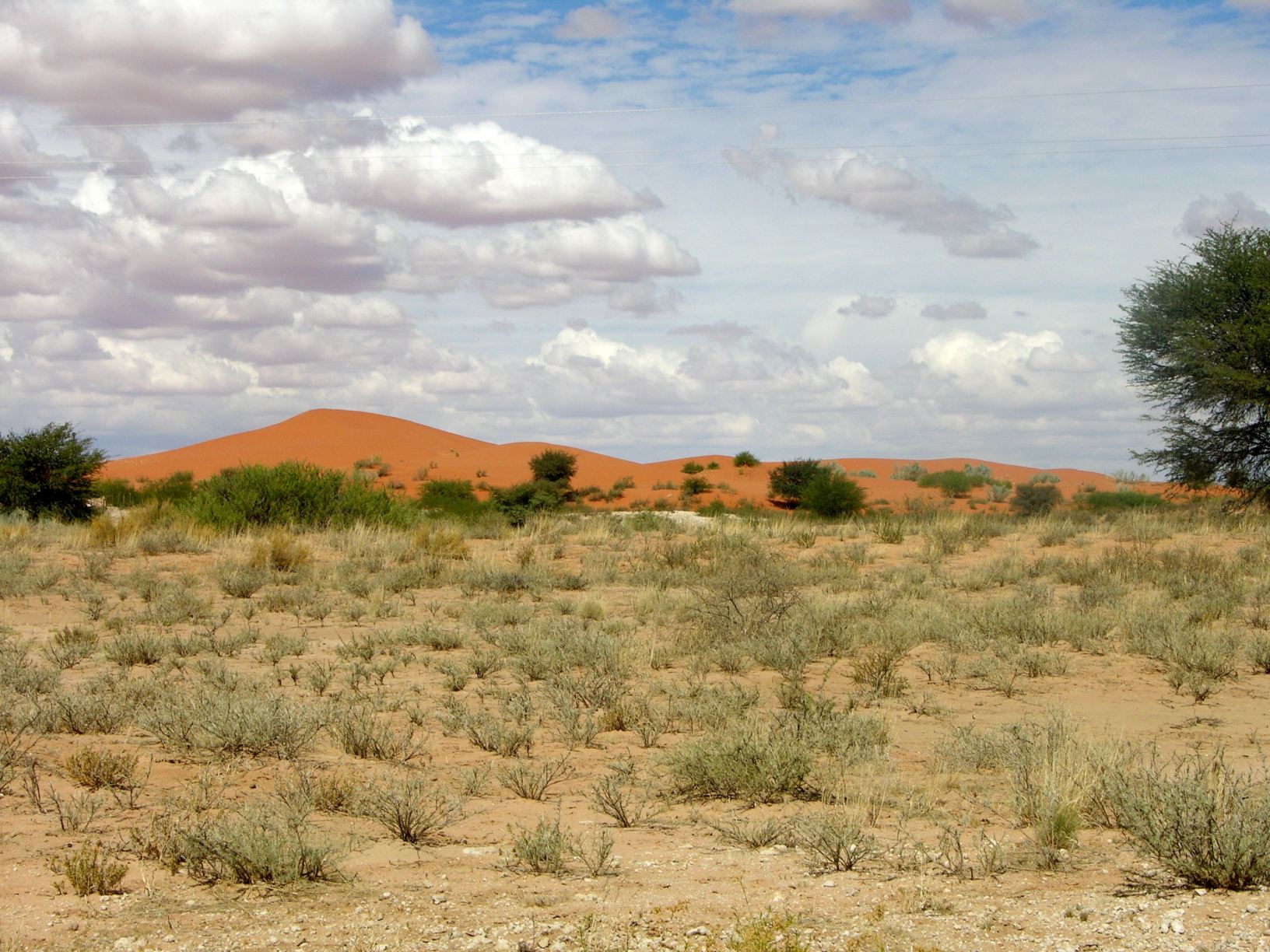
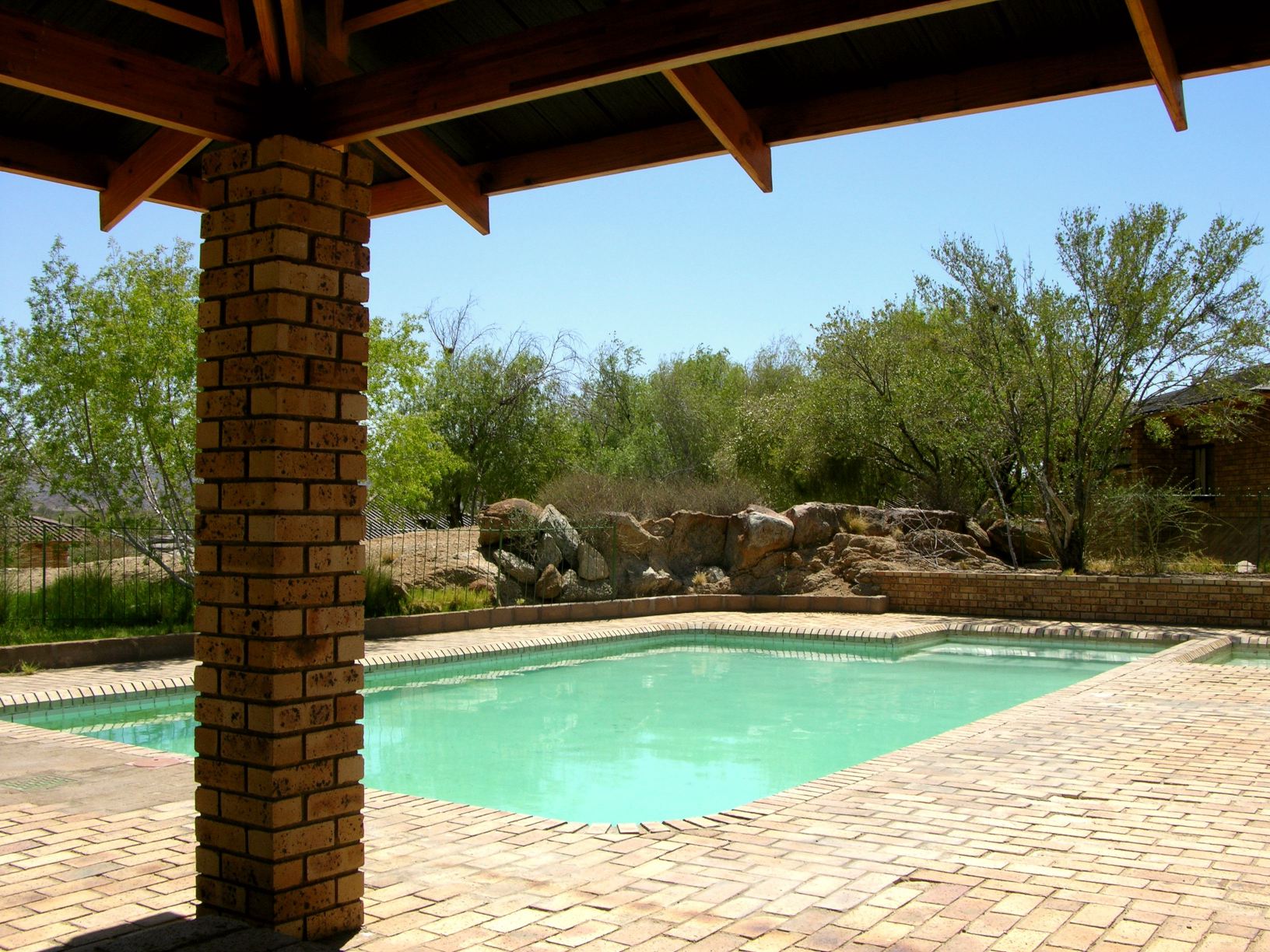
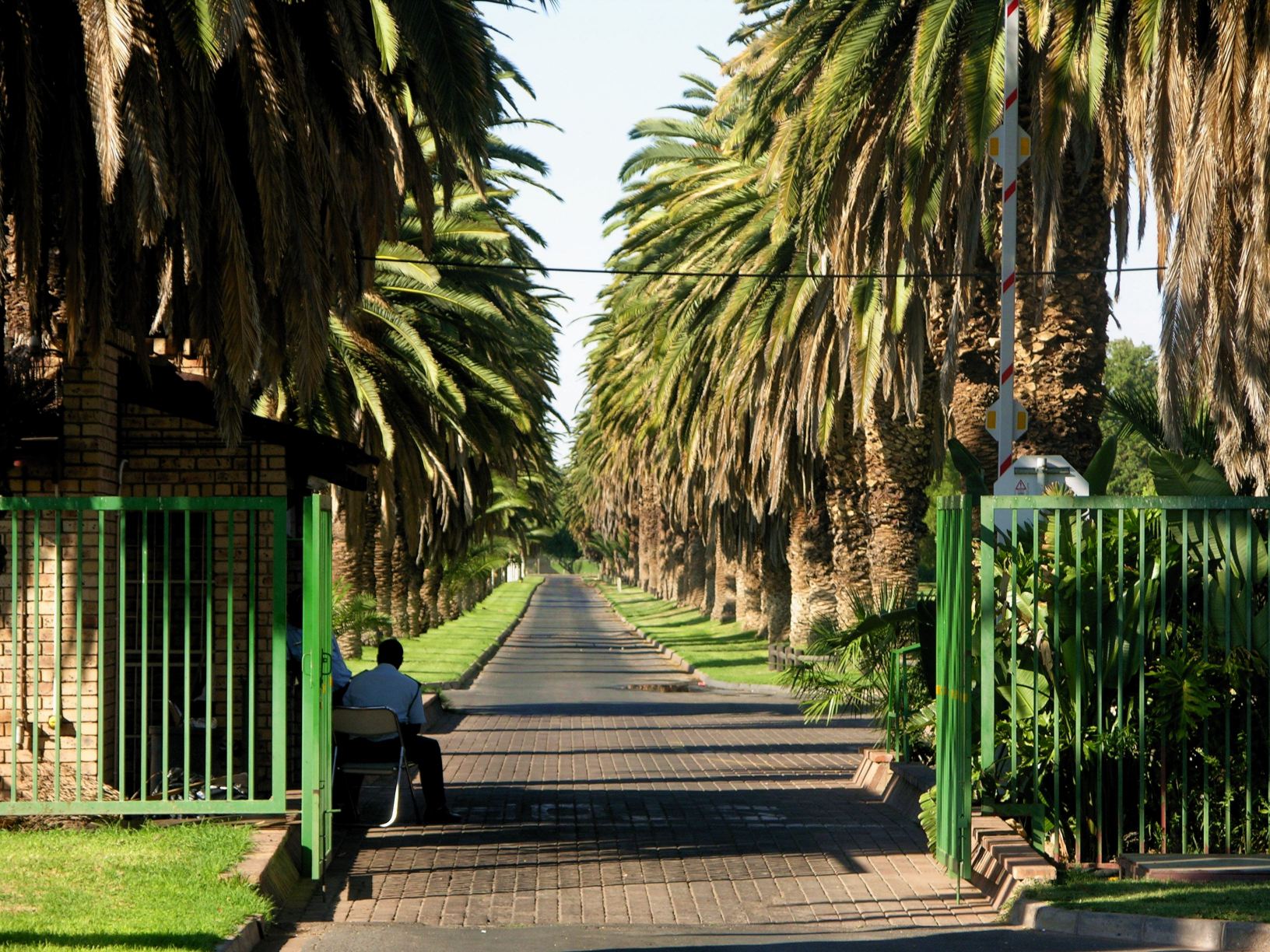
We left the park before the gates shut and took a long, good road back to Upington. We stayed the night at a campground on the left bank of the Orange River (28°27.566′S, 21°15.115′E). A little town in the middle of nowhere, yet there were crowds of people. The hundred or so cabins were almost all taken. The swimming pool was teeming with children. We went for a dip too.
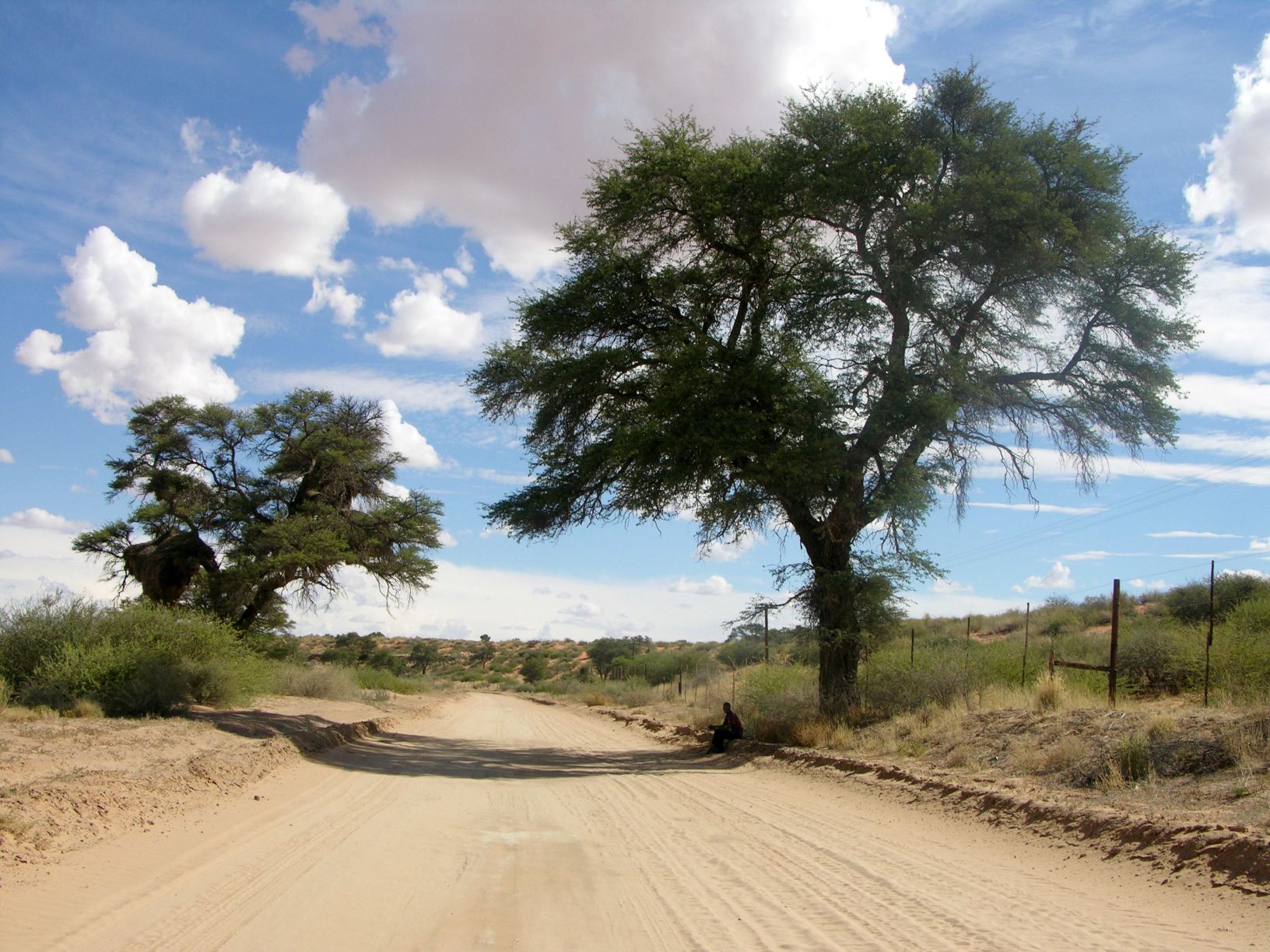
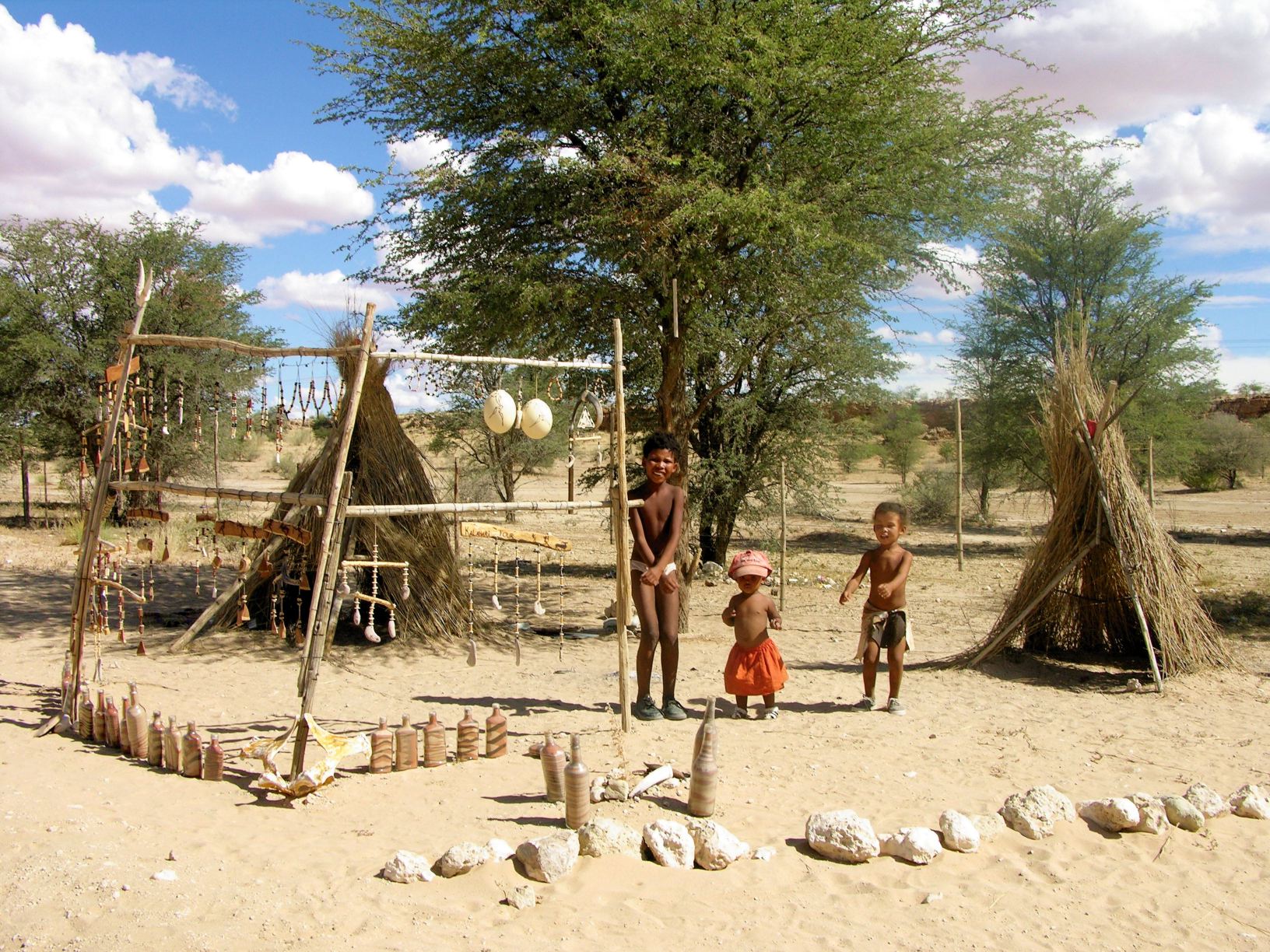
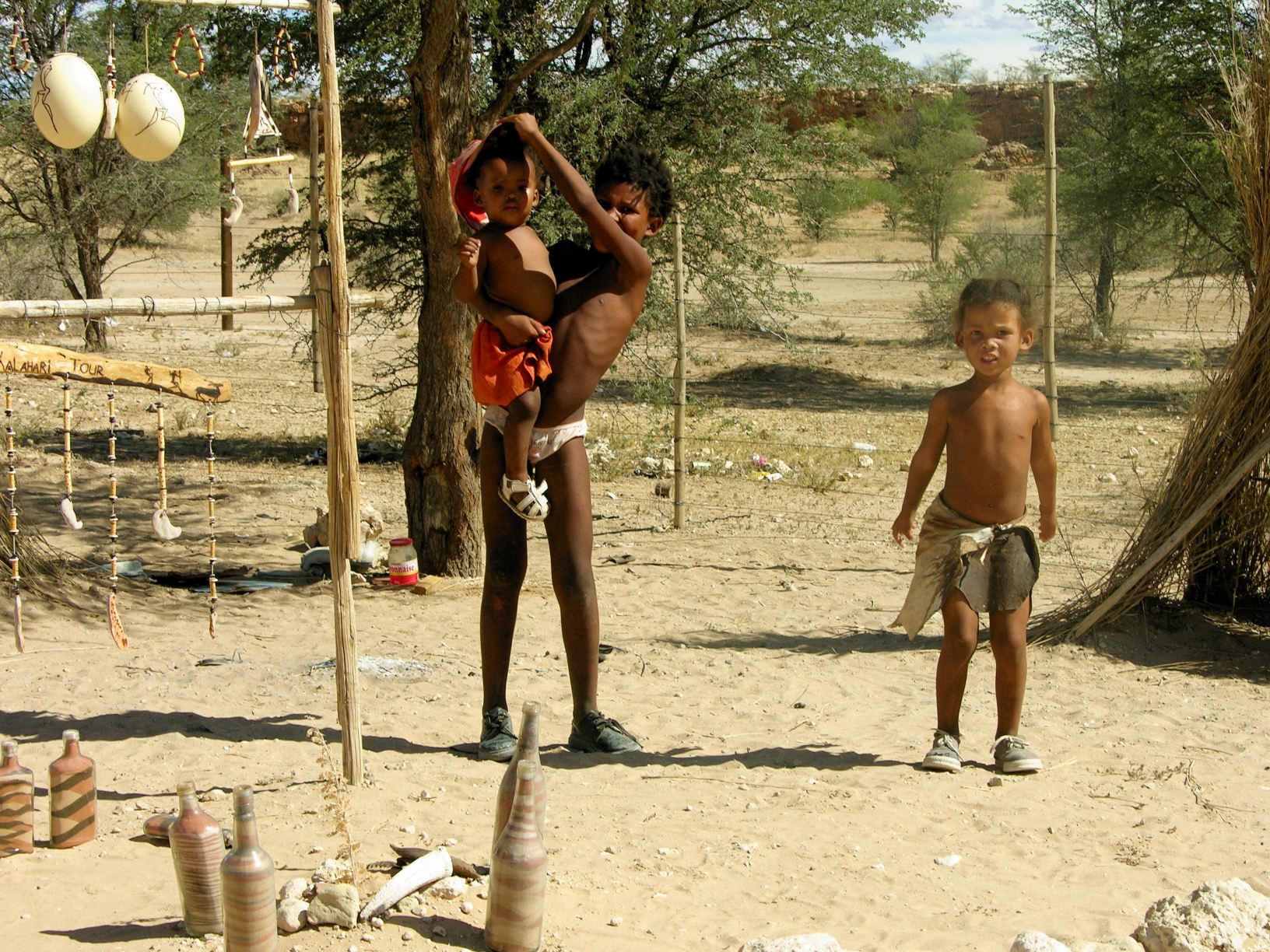
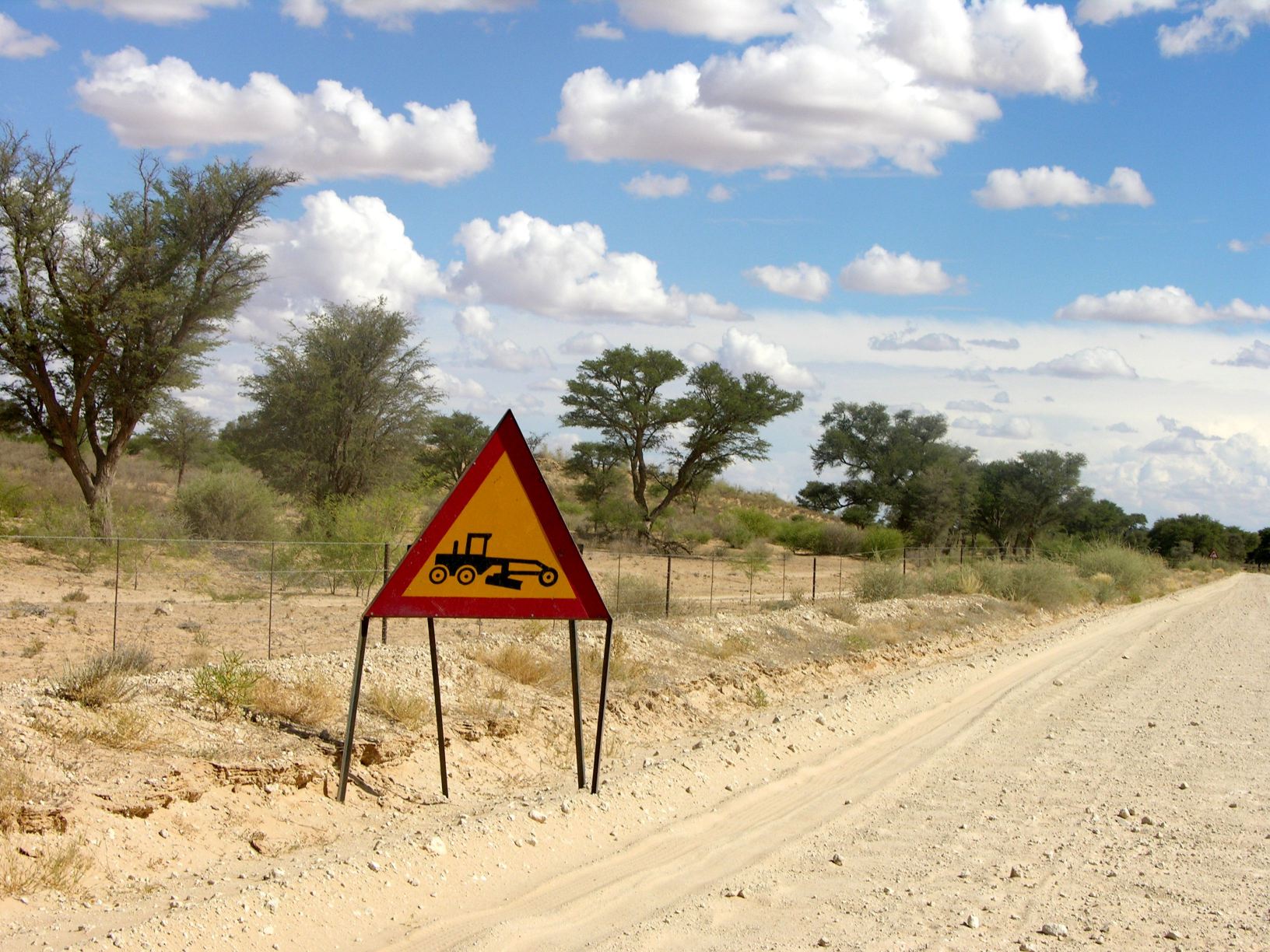
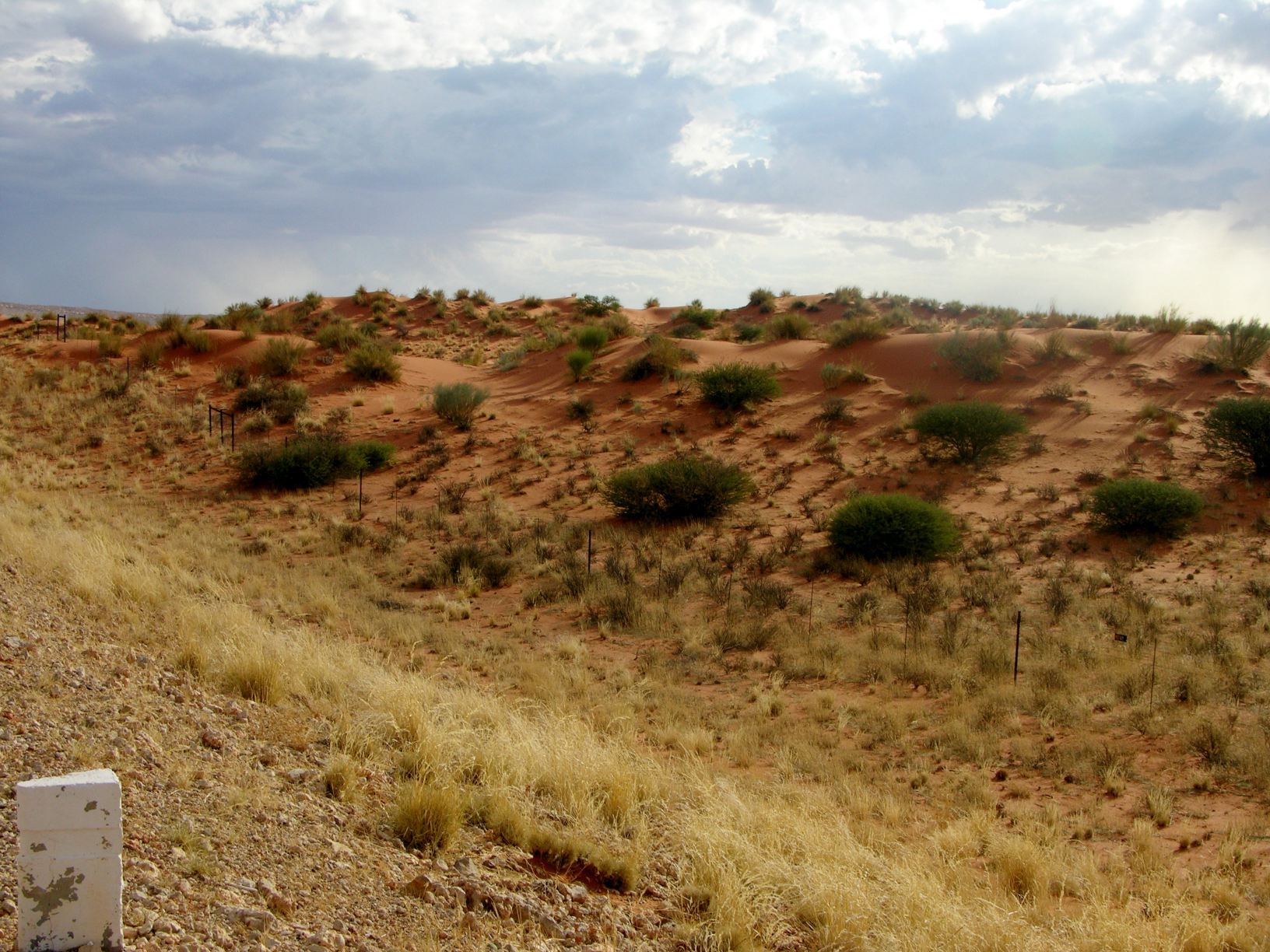
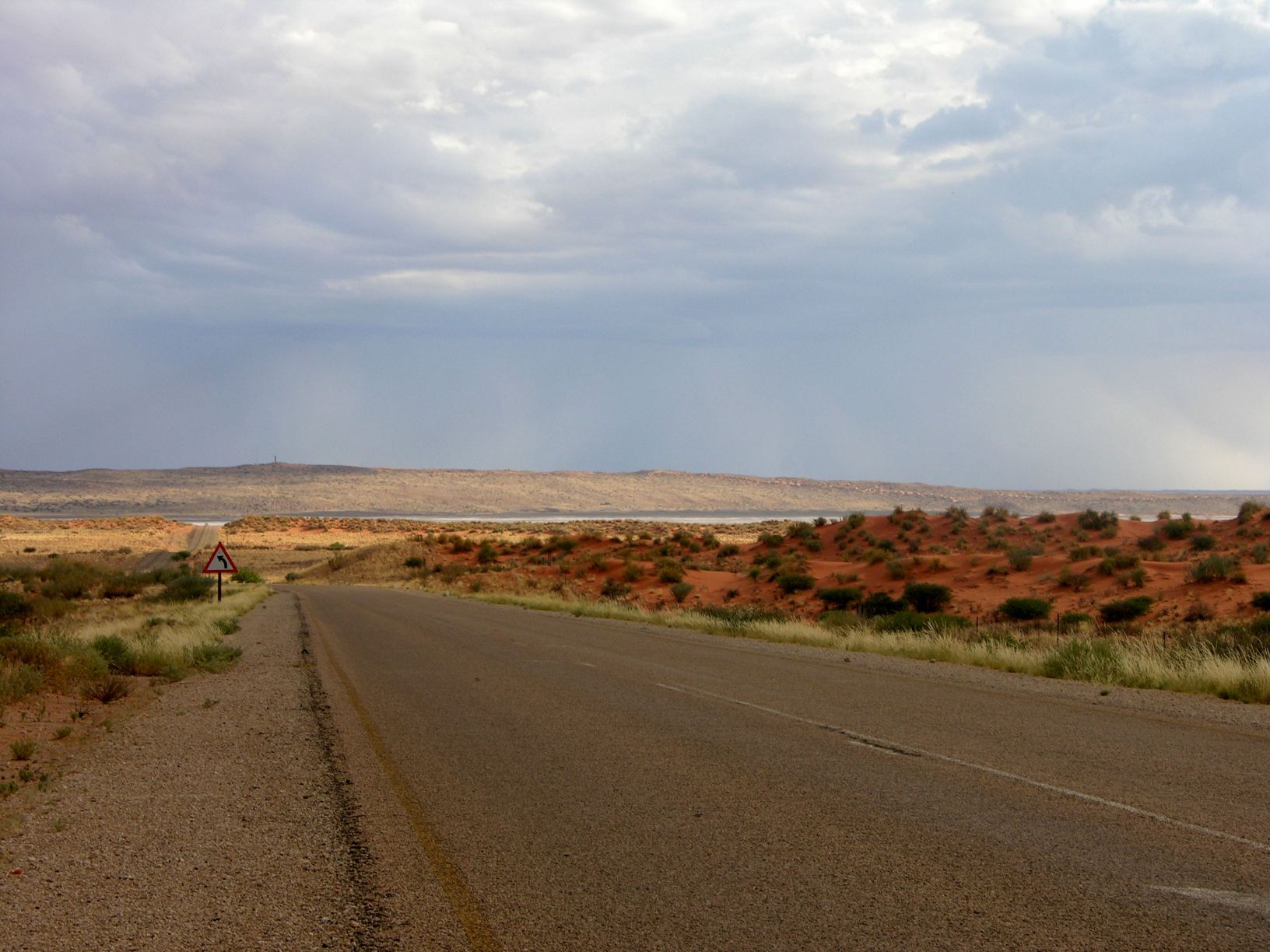
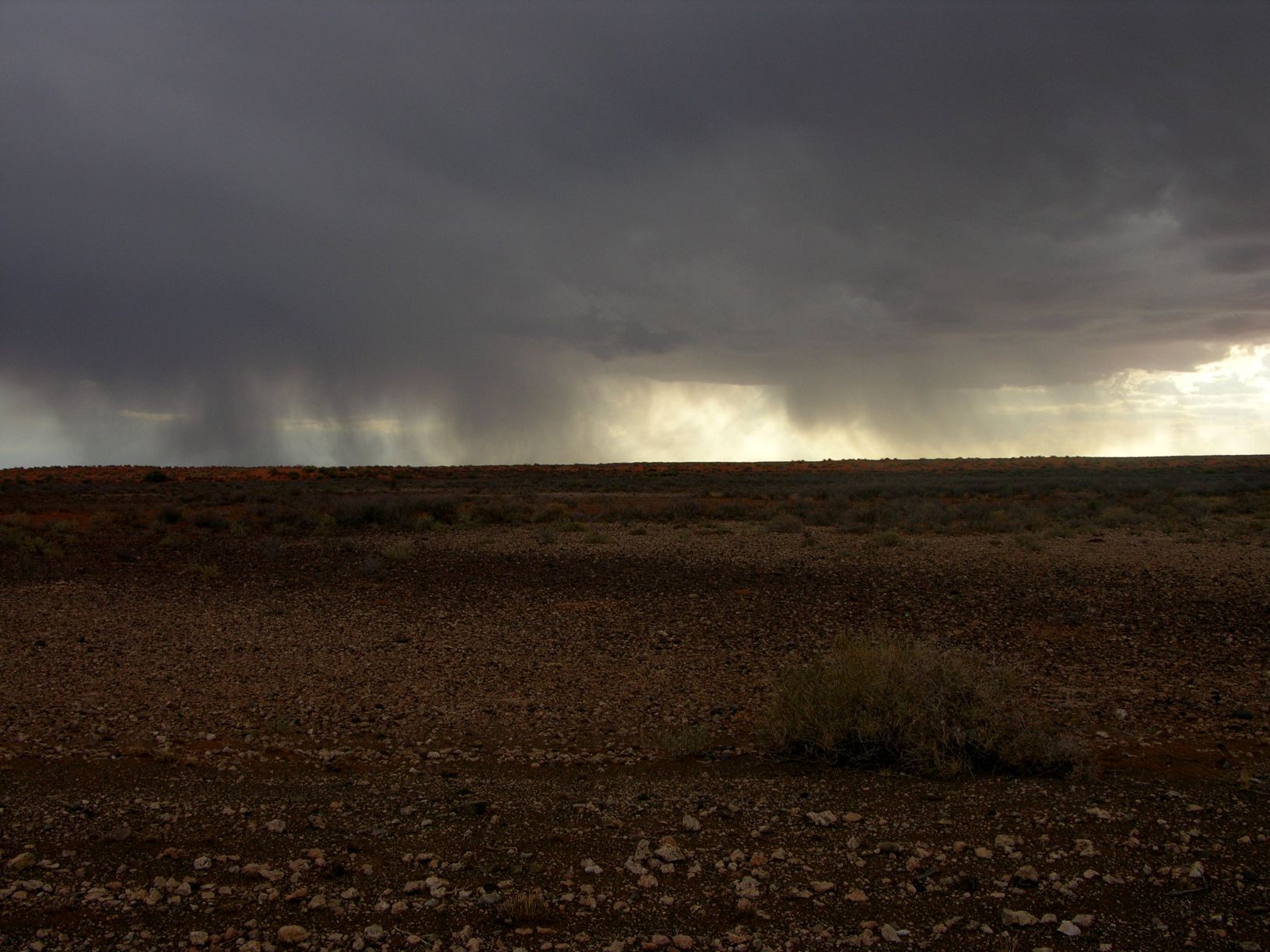
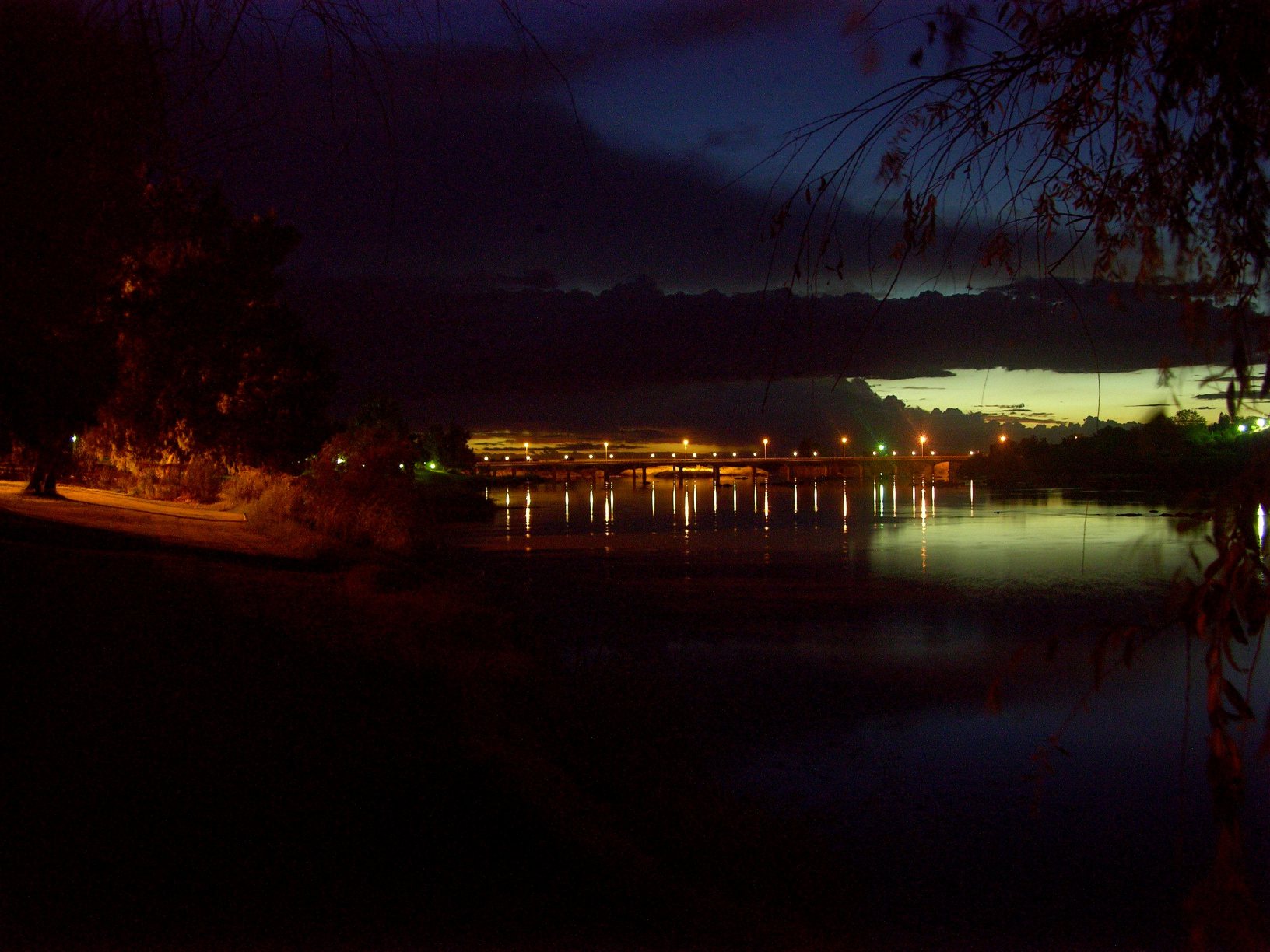
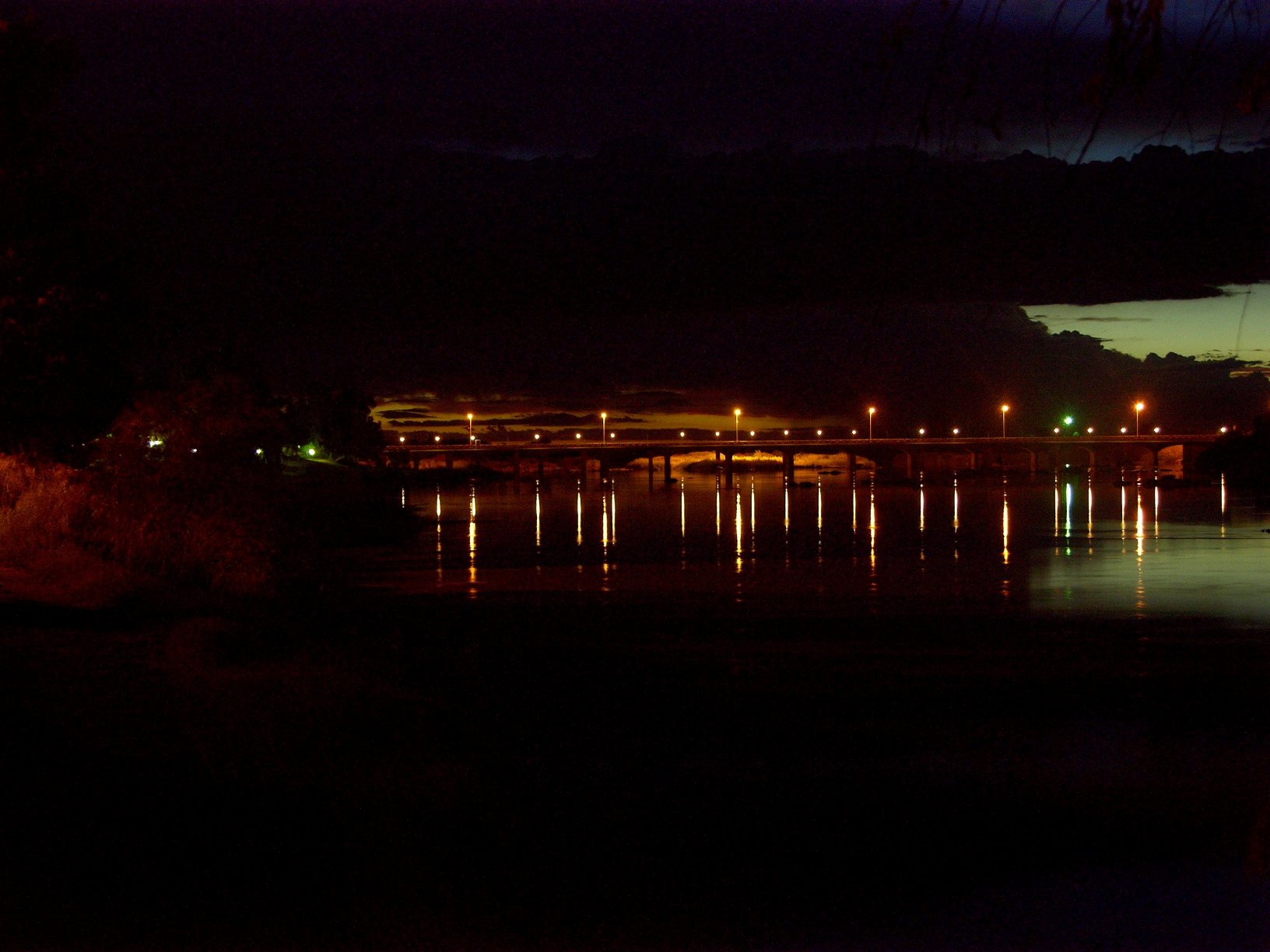
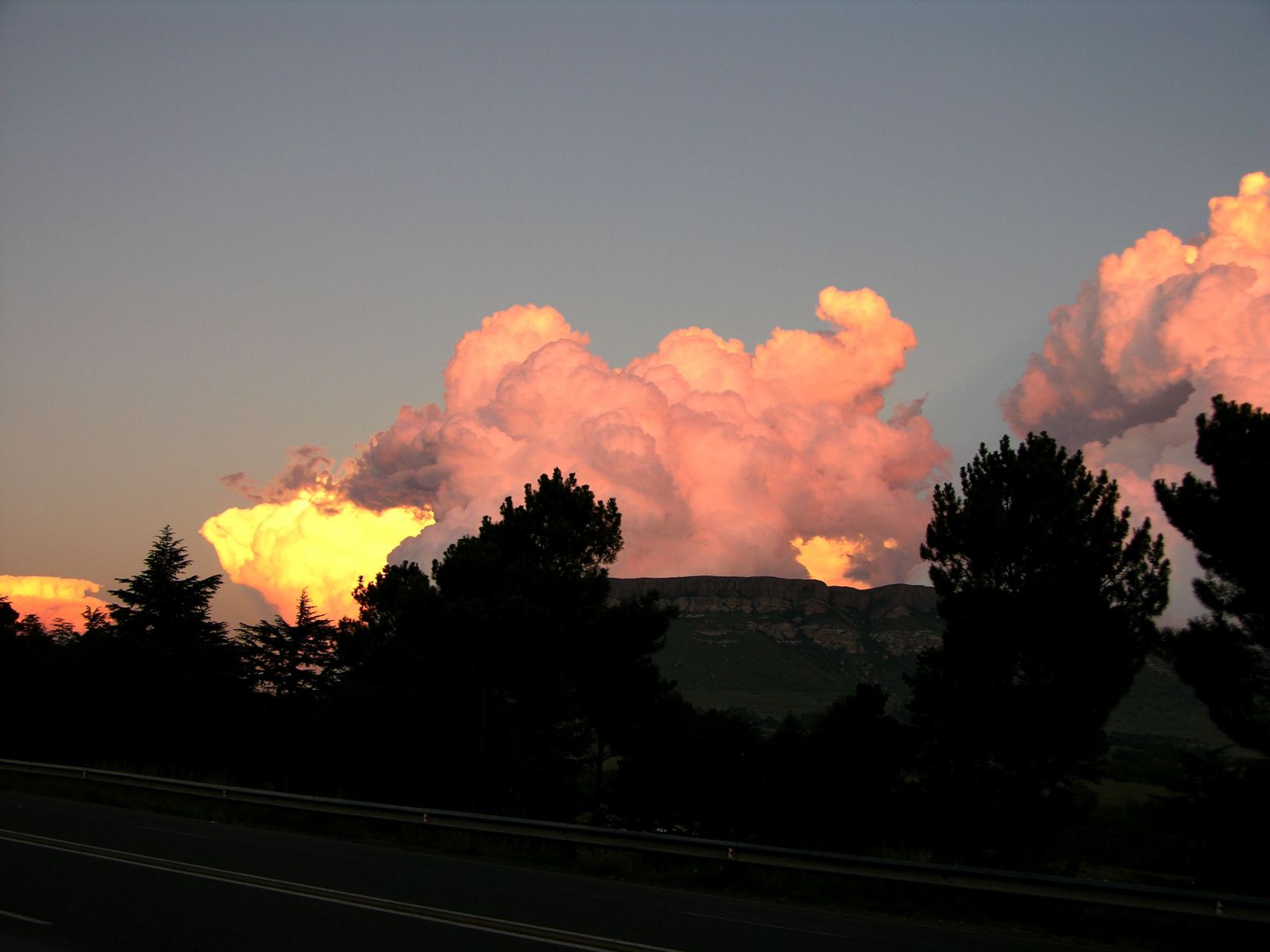
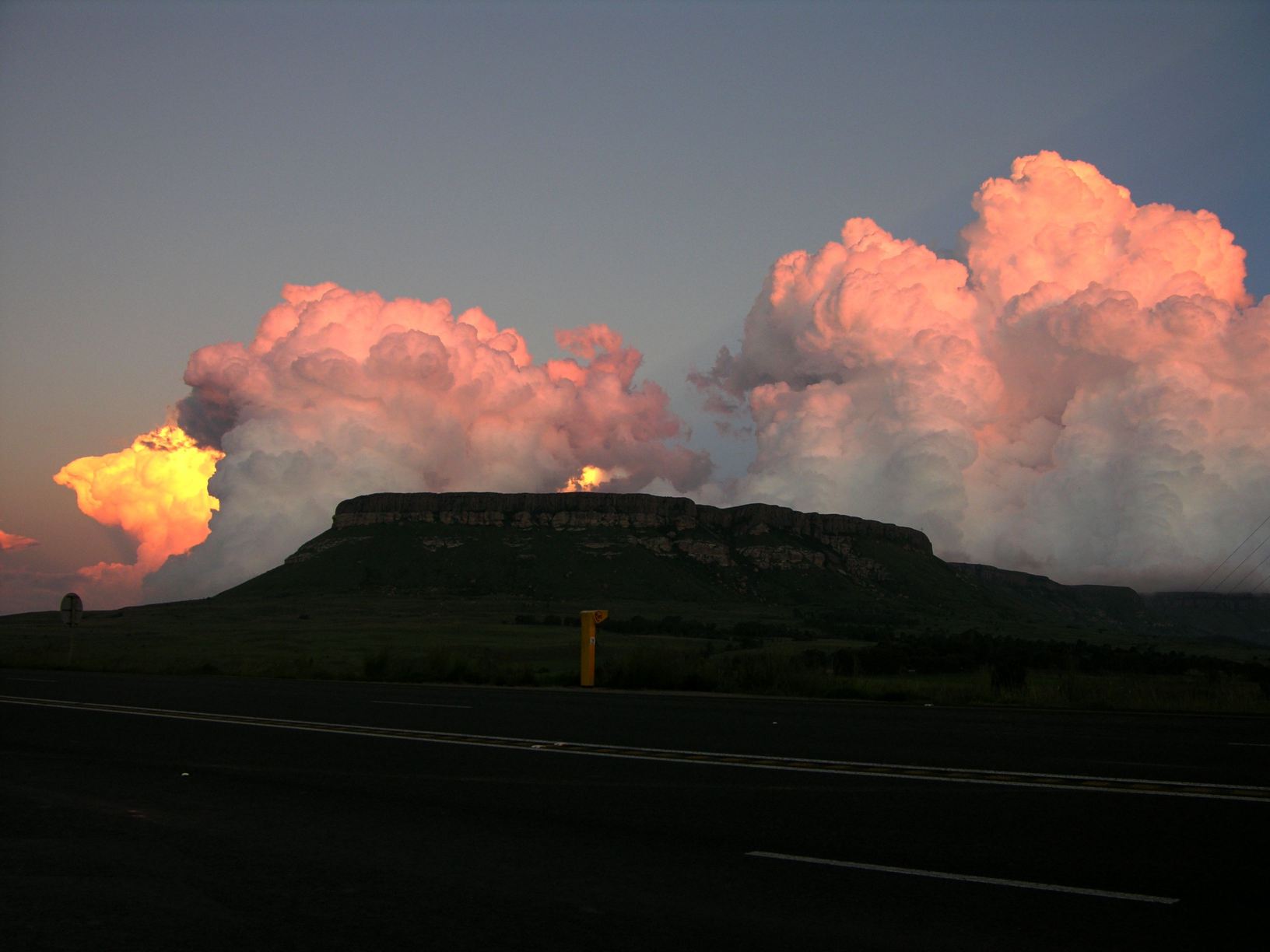
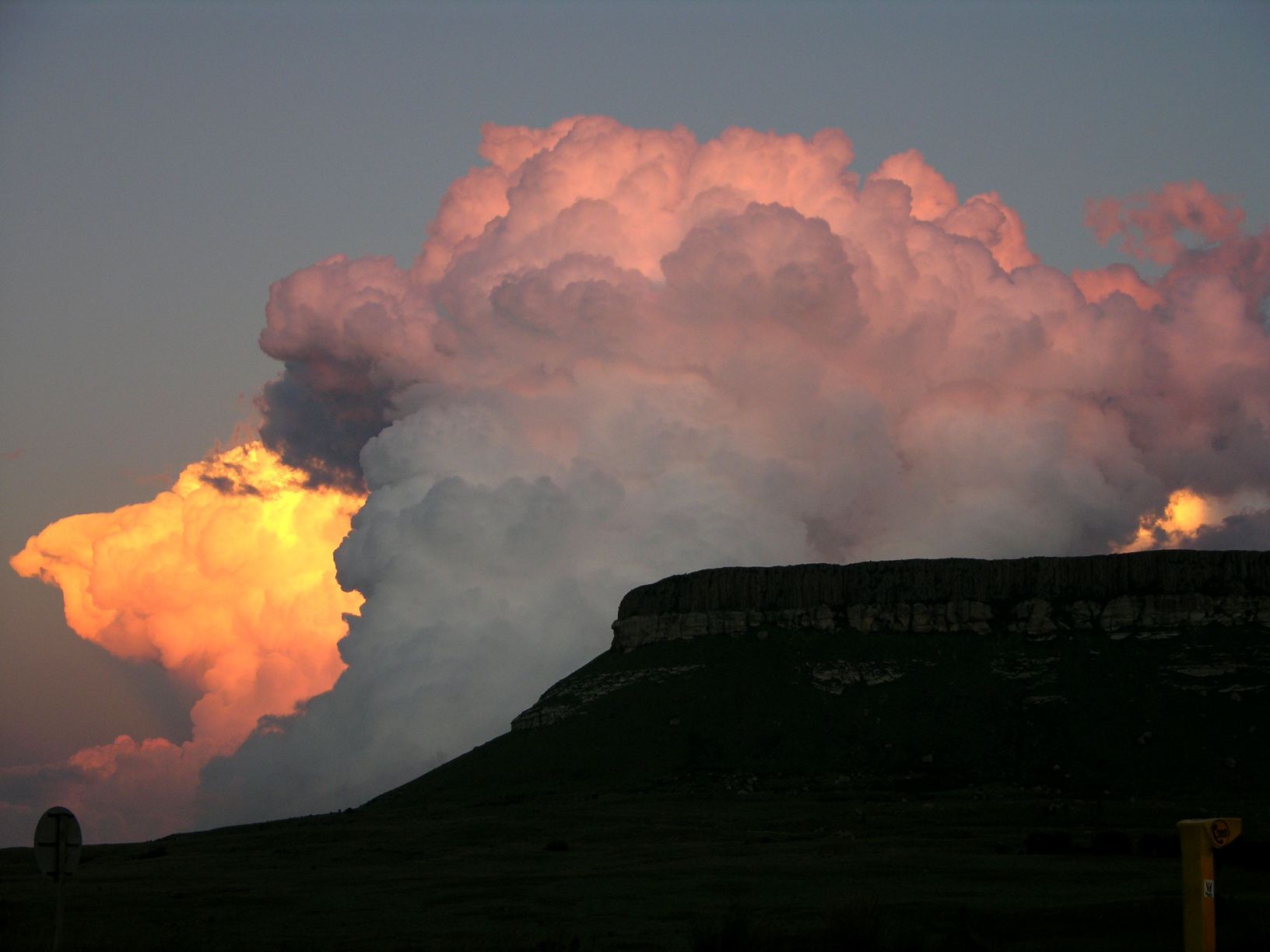
We walked out to the bank of the Orange and saw an astonishing sunset. A thundercloud hung in the distance, lit by flashes of lightning, and a little patch of orange sunset remained beyond it. There was the sky from the song. There it was, the orange world.
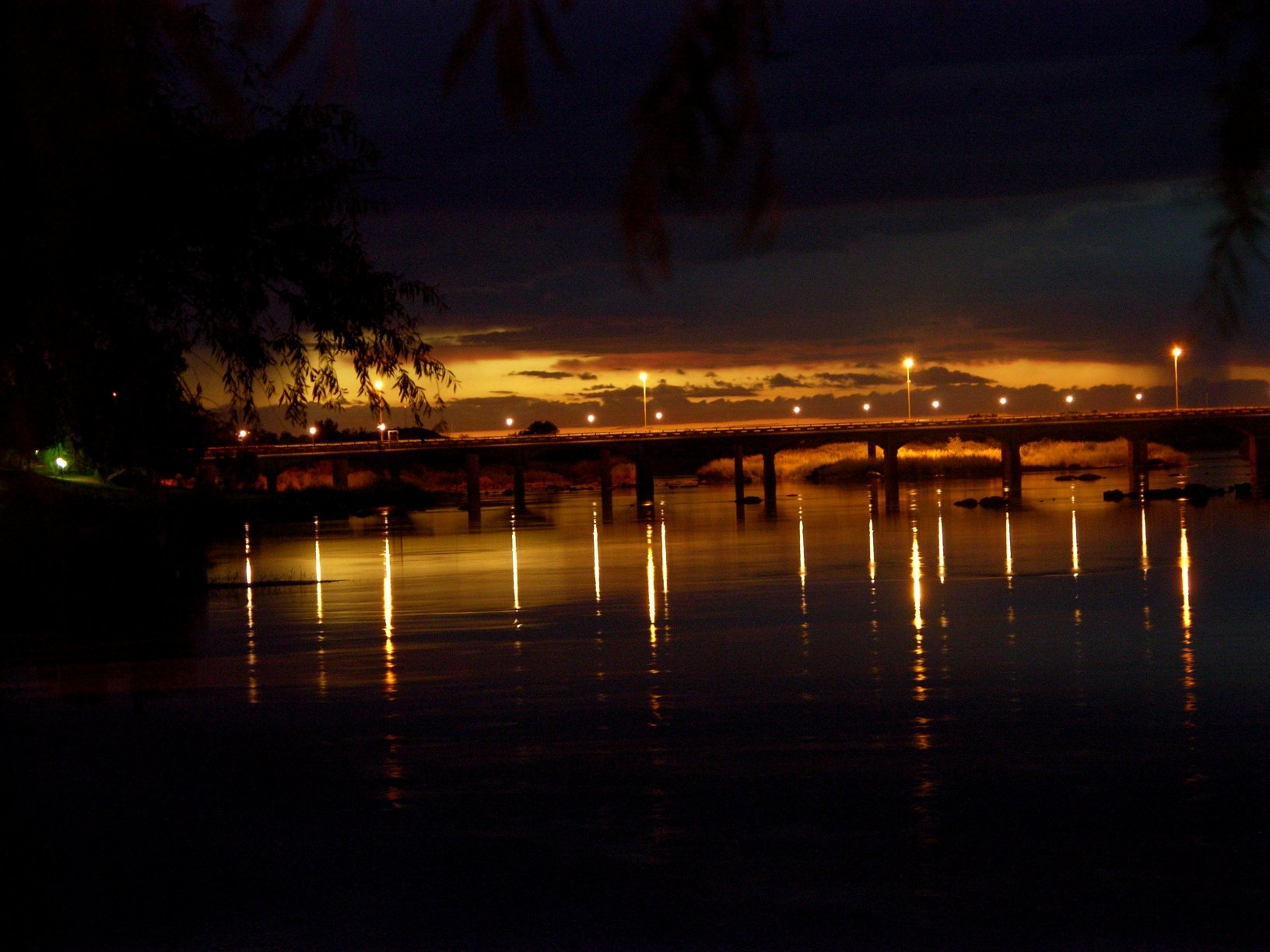
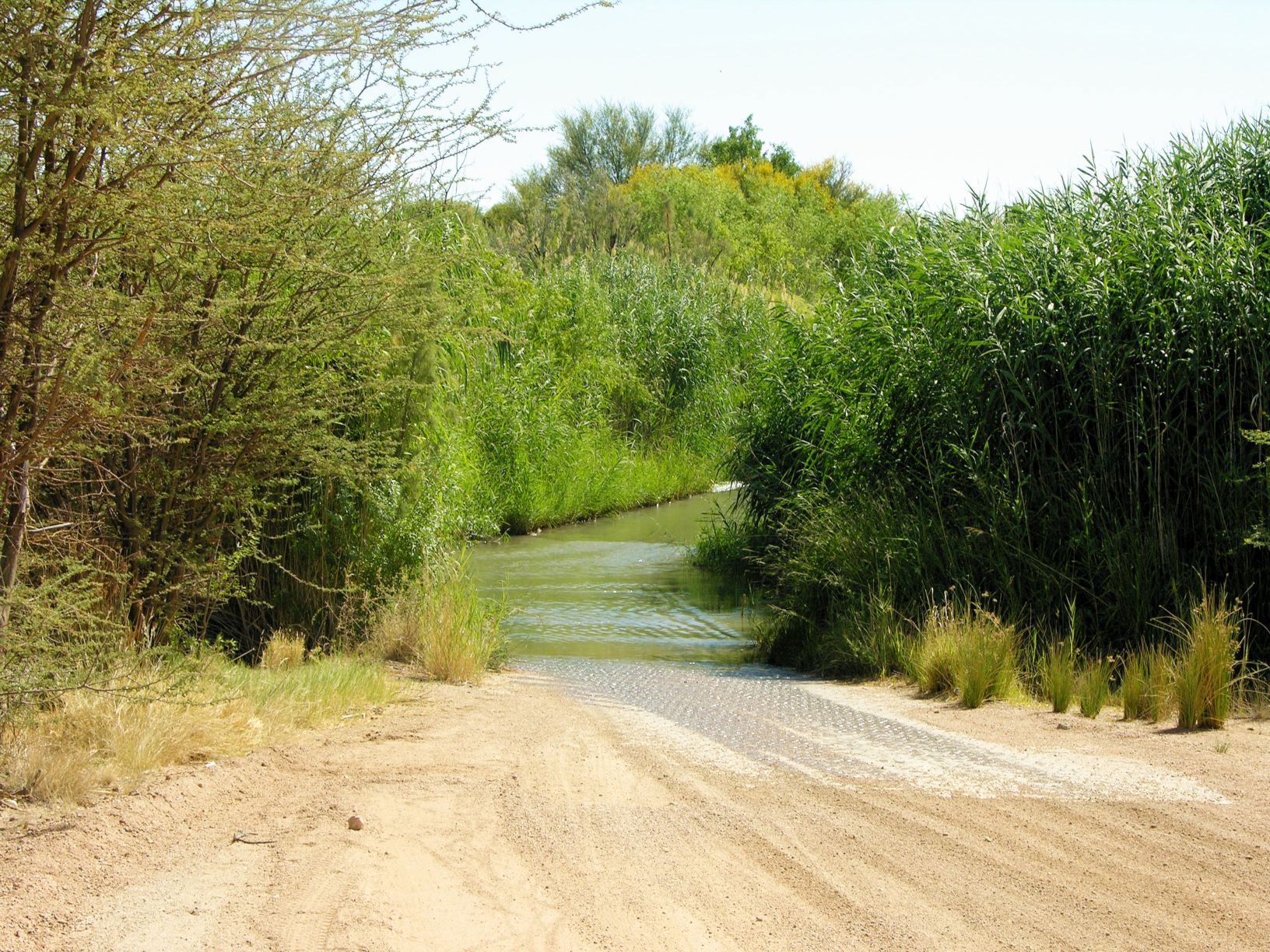
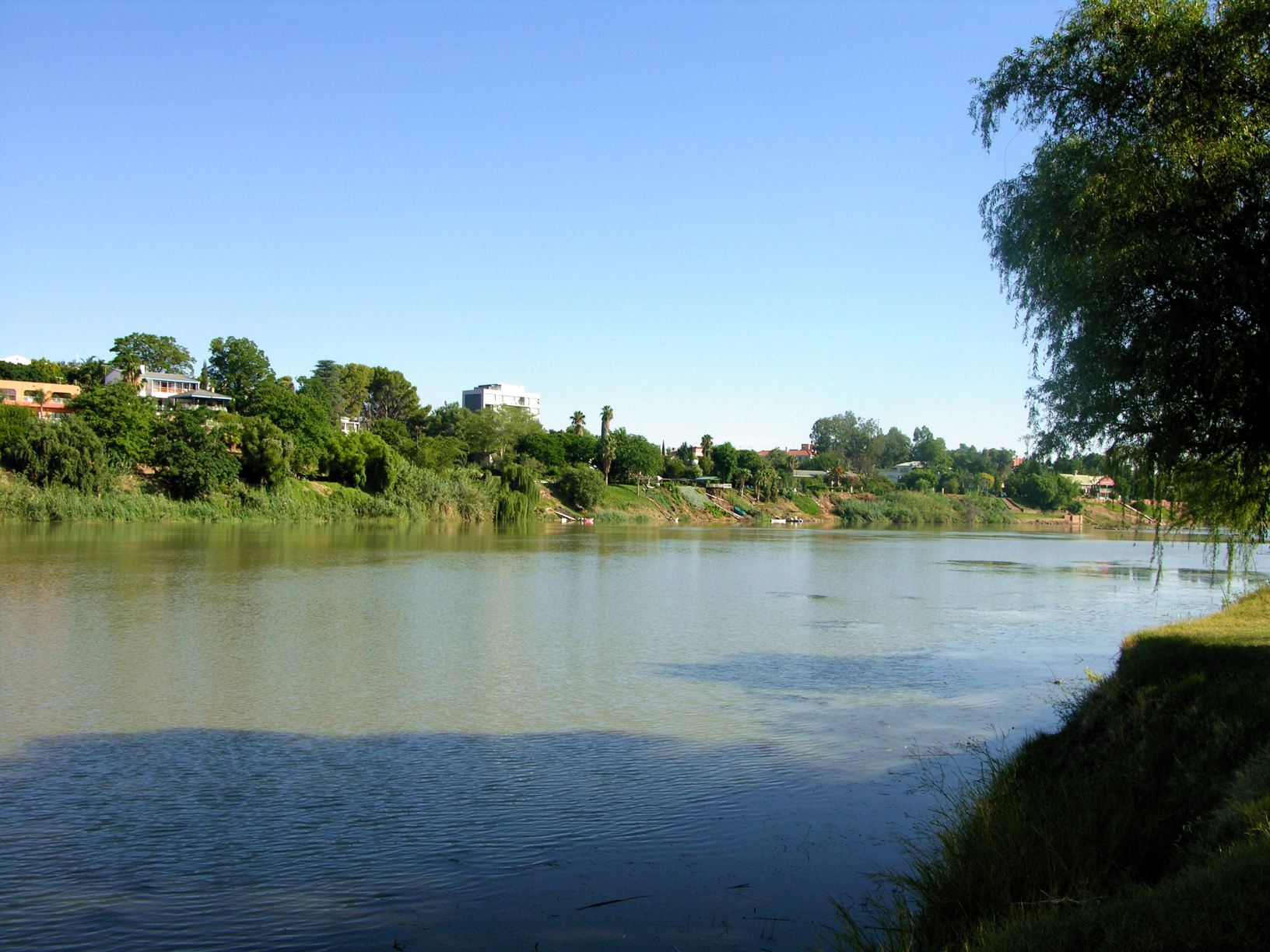
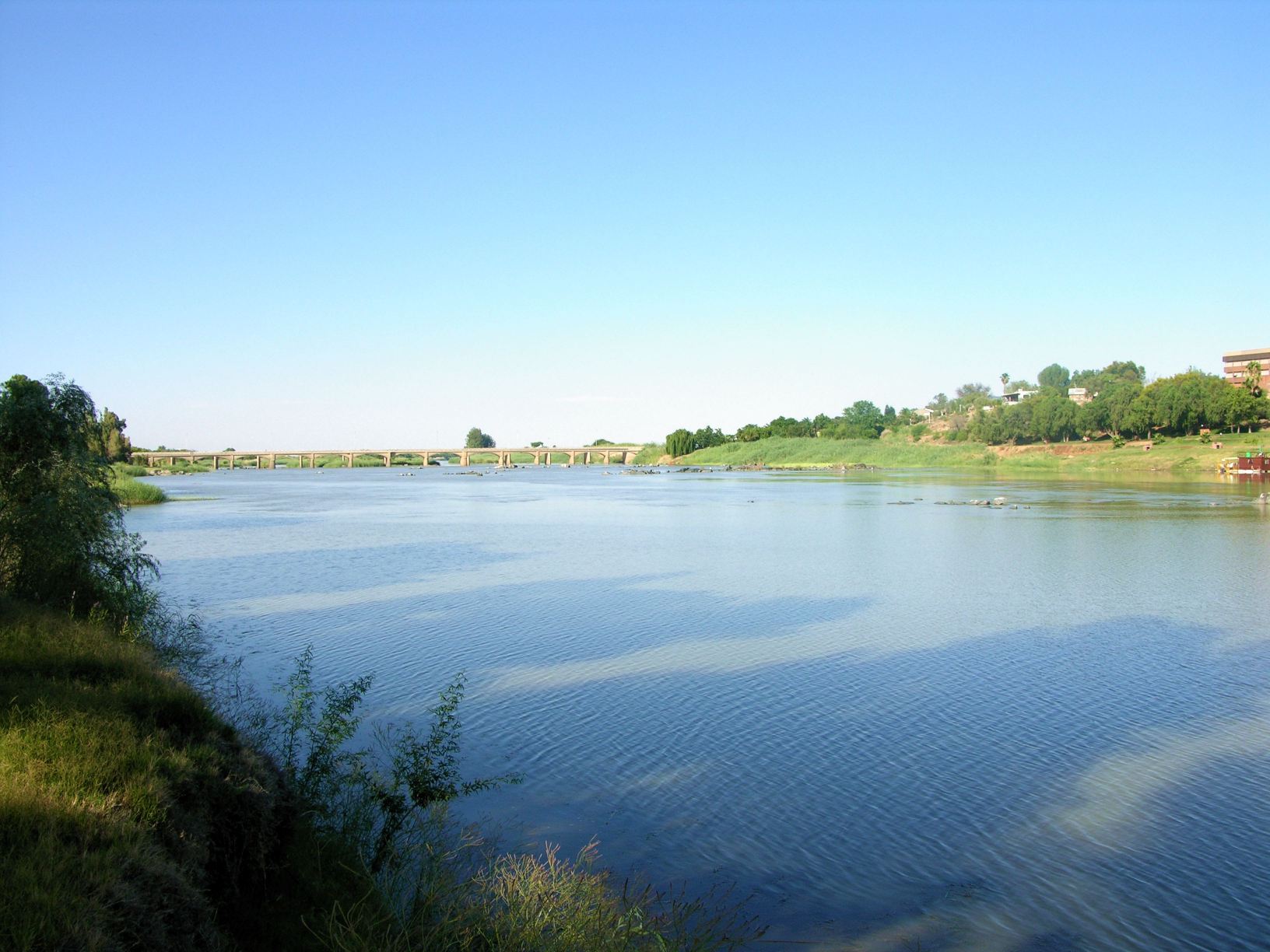
It's amazing how everything changes at sunset. In the morning it turned out to be a muddy stream with reeds and shacks on the banks.
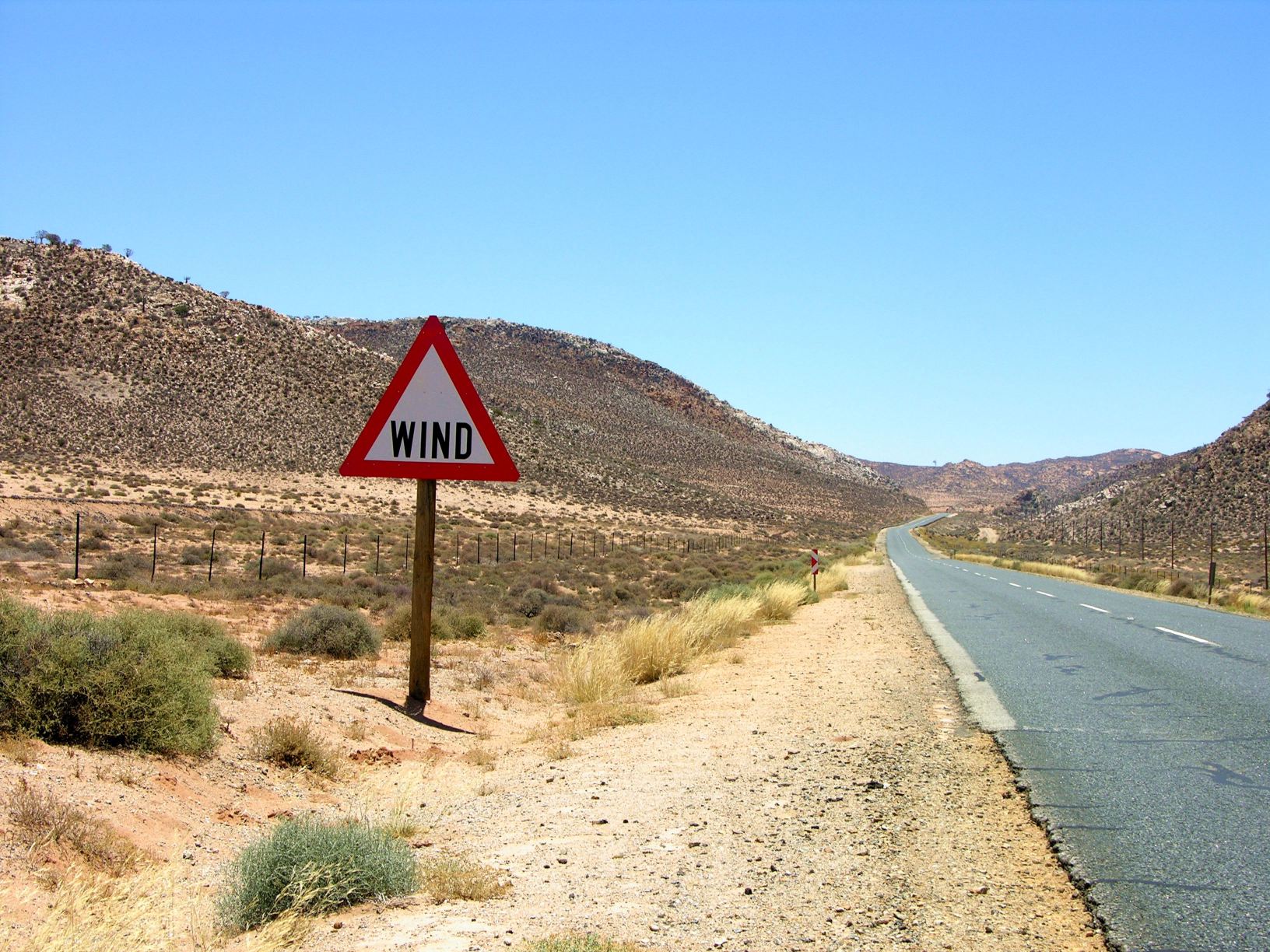
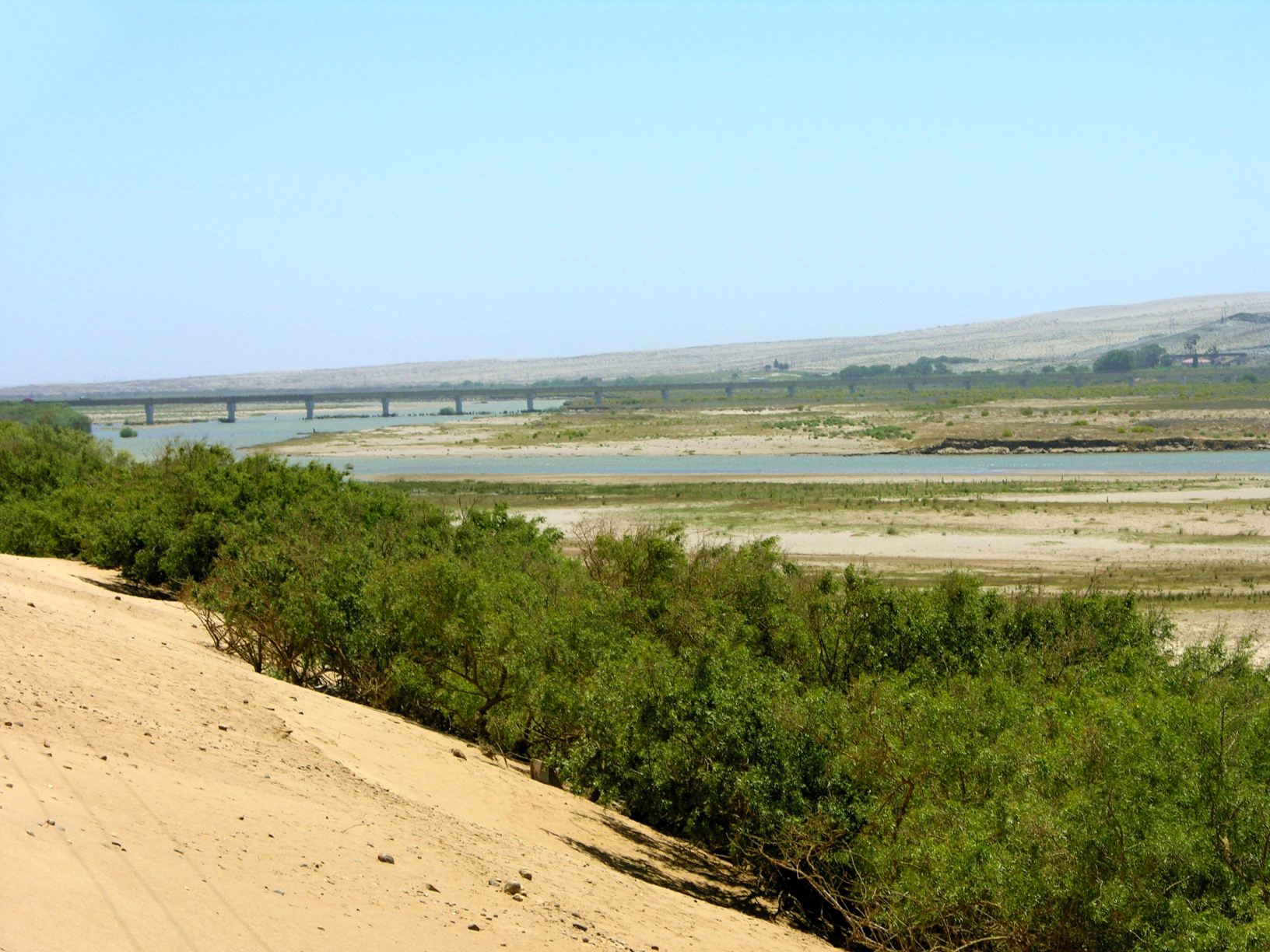
Our route led farther west towards the Atlantic. The climate here is harsher still. Hardly anybody lives here. Europeans began settling the area in the late nineteenth century. Nowadays only diamond mining keeps the place from being entirely lifeless. The road to the ocean reaches the coast at the little harbour town of Port Nolloth. The main road to Namibia goes through the mountains via Springbok. South of Port Nolloth, there are only a few gravel roads along the coast. A sealed highway goes north to the closed private town of Alexander Bay. It stands where the Orange River flows into the ocean, though there seemed to be no way to get to the mouth. As I've said, they mine diamonds in river sediments. The greatest concentrations are along the lower Orange. You can't so much as walk down to the bank. Everywhere there are substantial fences bearing menacing warnings: private ground, diamonds, no entry, trespassers will be punished severely. In practice they might indeed shoot without warning. The whole of Alexander Bay is behind barbed wire. At the gate you have to explain to the guard who you are and why you want to enter the realm of Karabas Barabas, the puppet master from our Golden Key, or more accurately of the government-owned company Alexkor. It's easy enough to find a reason. There are hotels and campsites in town, but only in town. They won't let you wander along the riverbank.
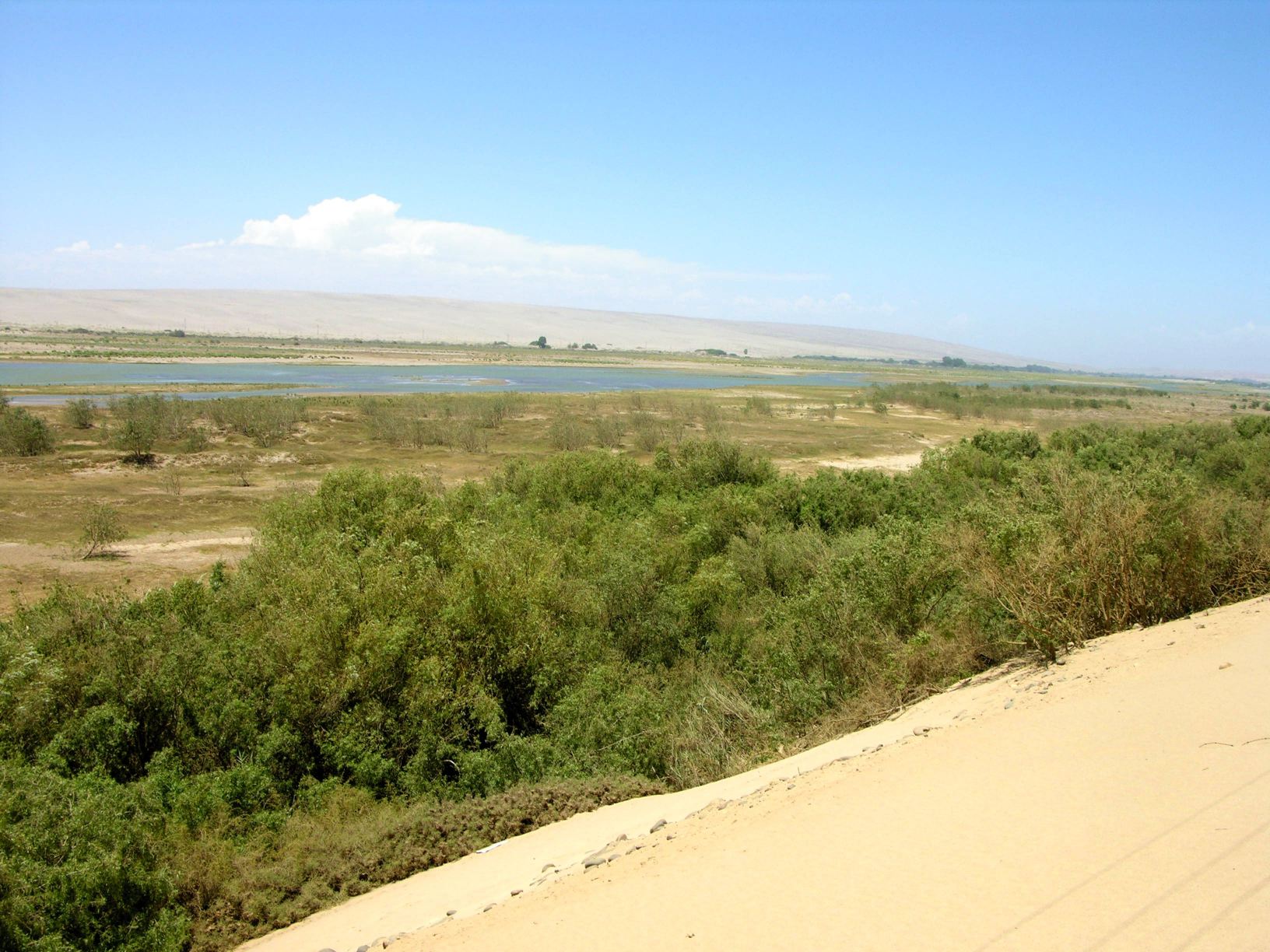
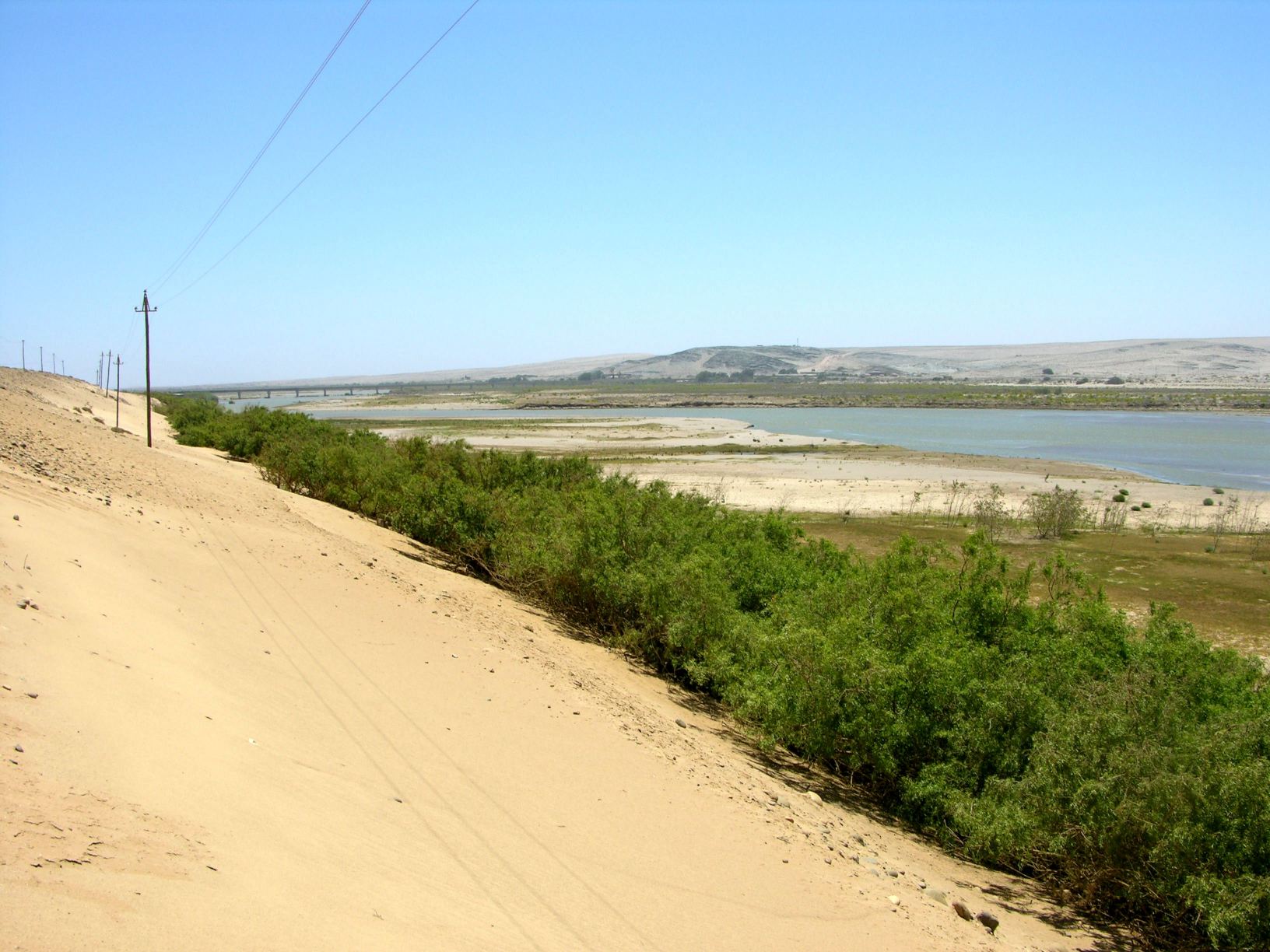
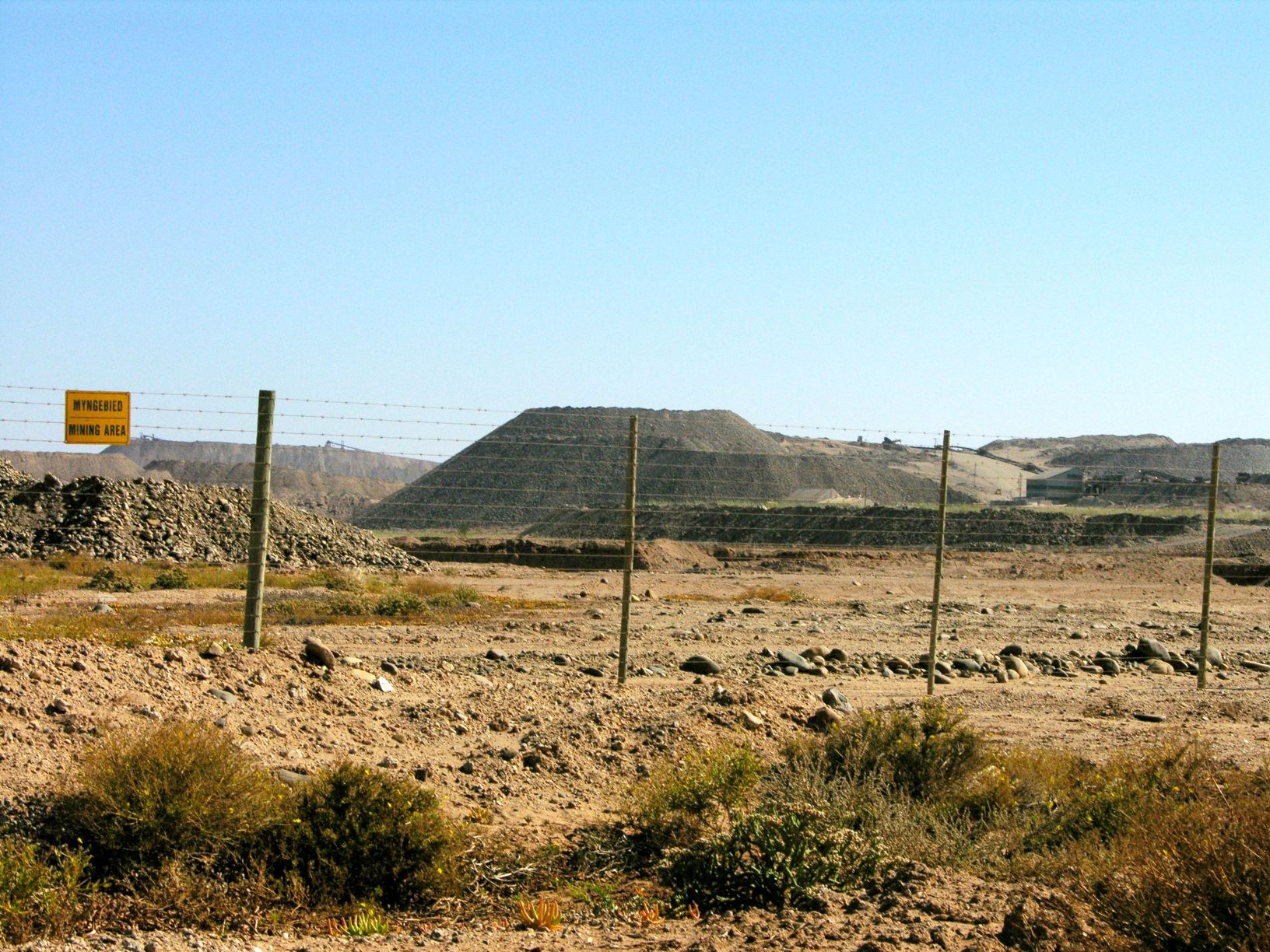
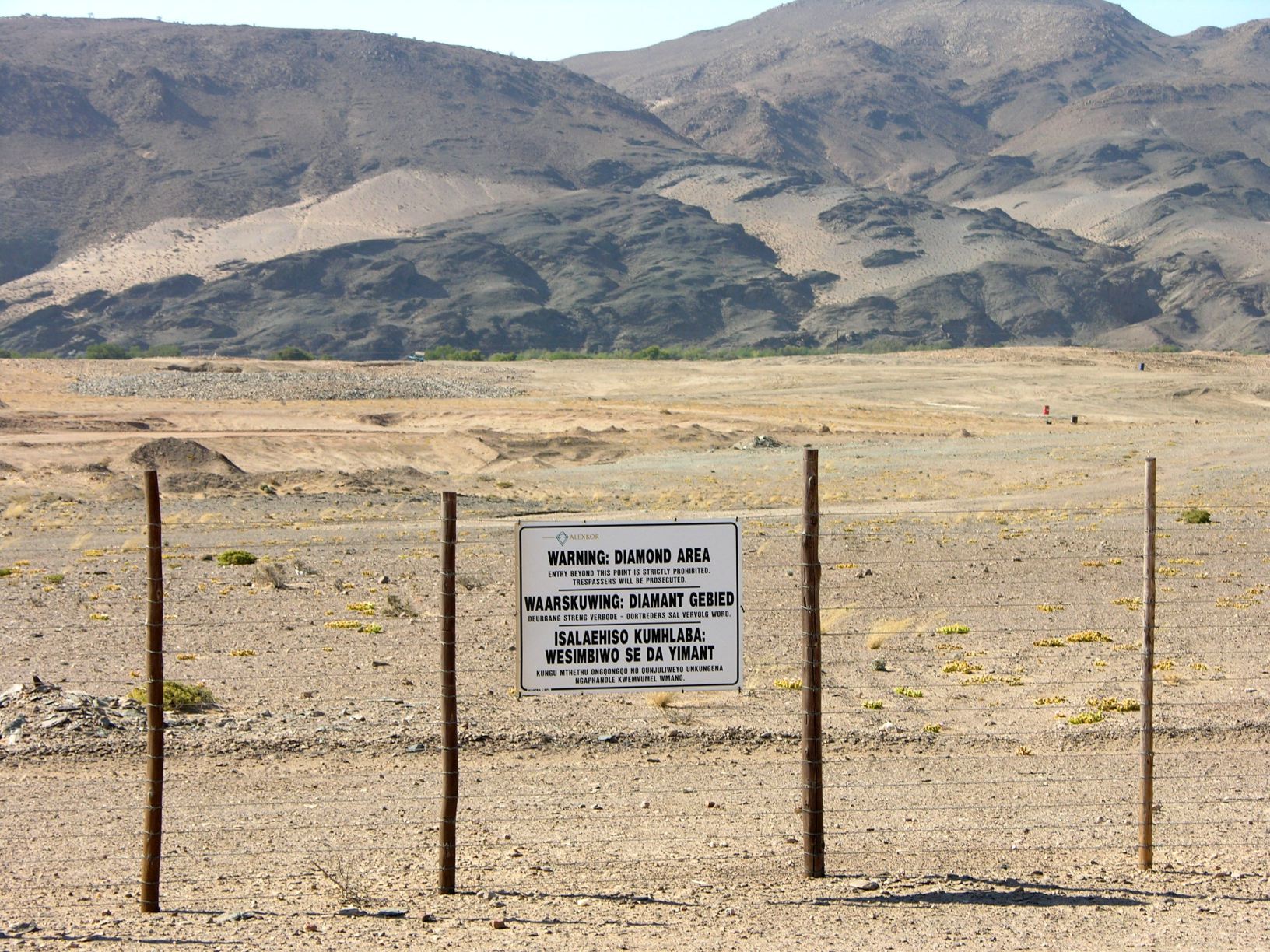
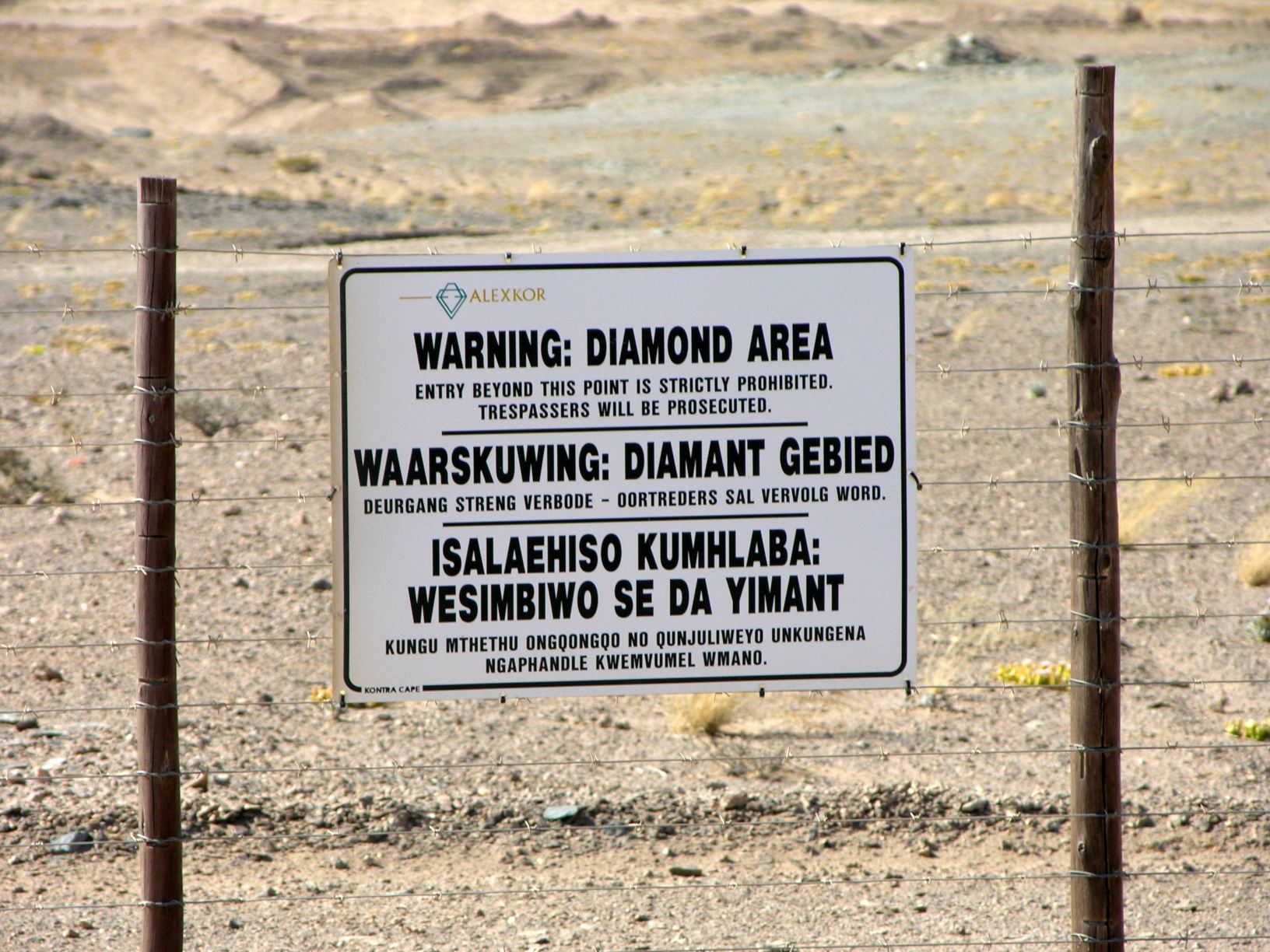
Across the river, in Namibia, it's worse. There's Diamond Area No. 2, closed to the general public. In South Africa the main roads are at least open, whereas over there everything is behind barbed wire. Even crossing the bridge over the border requires a special pass. South Africa has its police checkpoints too. Several times they stopped us and wanted to know what the hell had brought us to diamond country.
Diamond mining is a government monopoly. Private trade is prohibited. Sellers and miners were said to risk being shot, and buyers could go to jail even if they were foreigners. Police agents were allowed to set people up and everyone else was encouraged to inform on them using a free hotline.
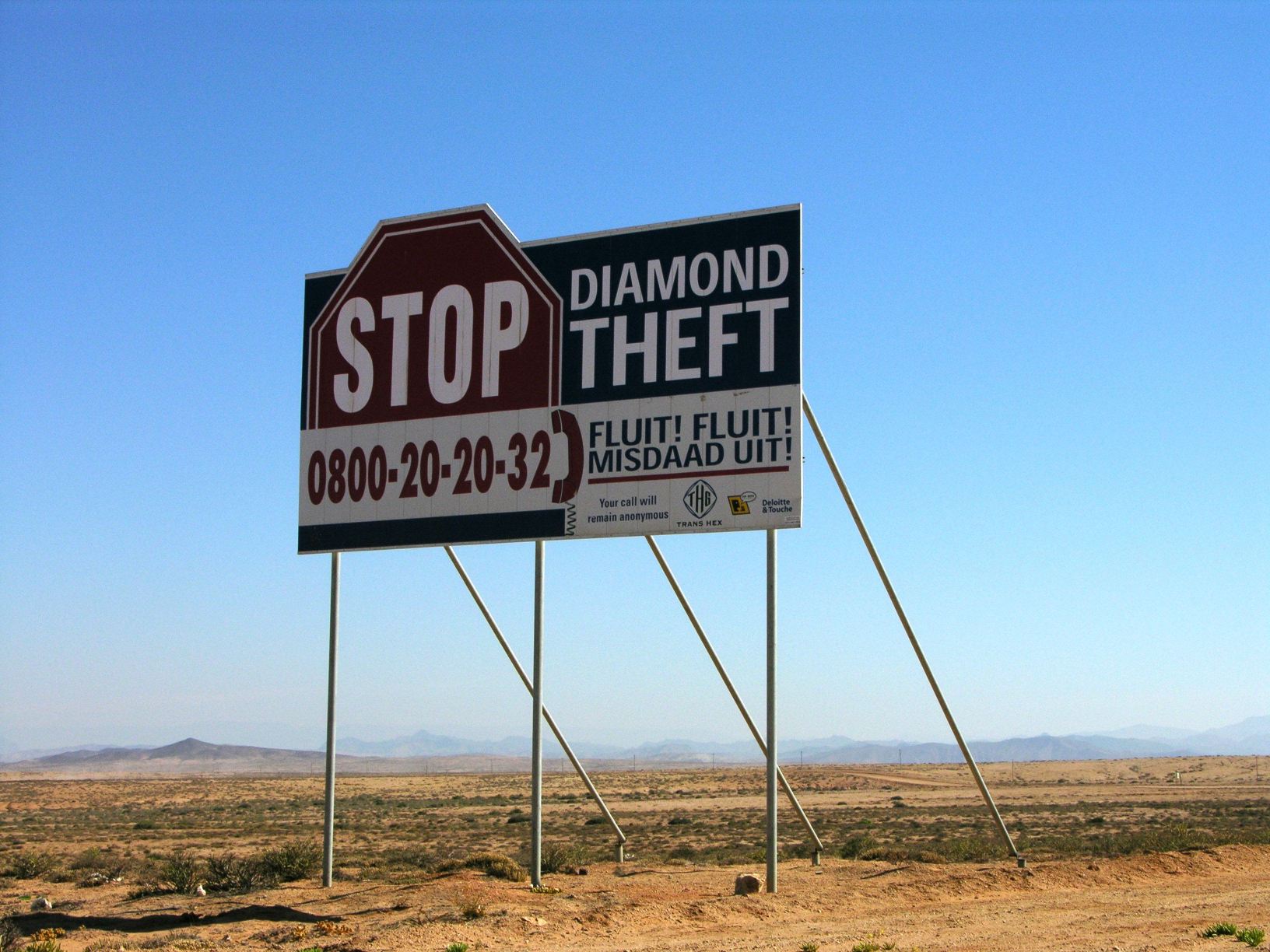
Yet people are hard to keep down. On land, fences and towers had safeguarded the state, but protecting the underwater sediments washed down by the river was harder. They reach out to sea for tens of kilometres. So at night the illegal miners went out in a homemade submarine, somehow dug something up, then sold it. Nobody offered us any diamonds, I should mention. We didn't find any ourselves either. We didn't look very hard, and there's not much difference between an uncut diamond and a piece of quartz to our eyes.
There would have been no point driving all the way to those fences, if it hadn't been for Richtersveld National Park. The all-powerful Alexkor had given the Nama people a piece of completely uninhabited country, or perhaps the Nama had never given it up in the first place. It now belonged to them on paper. A few people lived on it, in a way that seemed to go back to the beginnings of time.
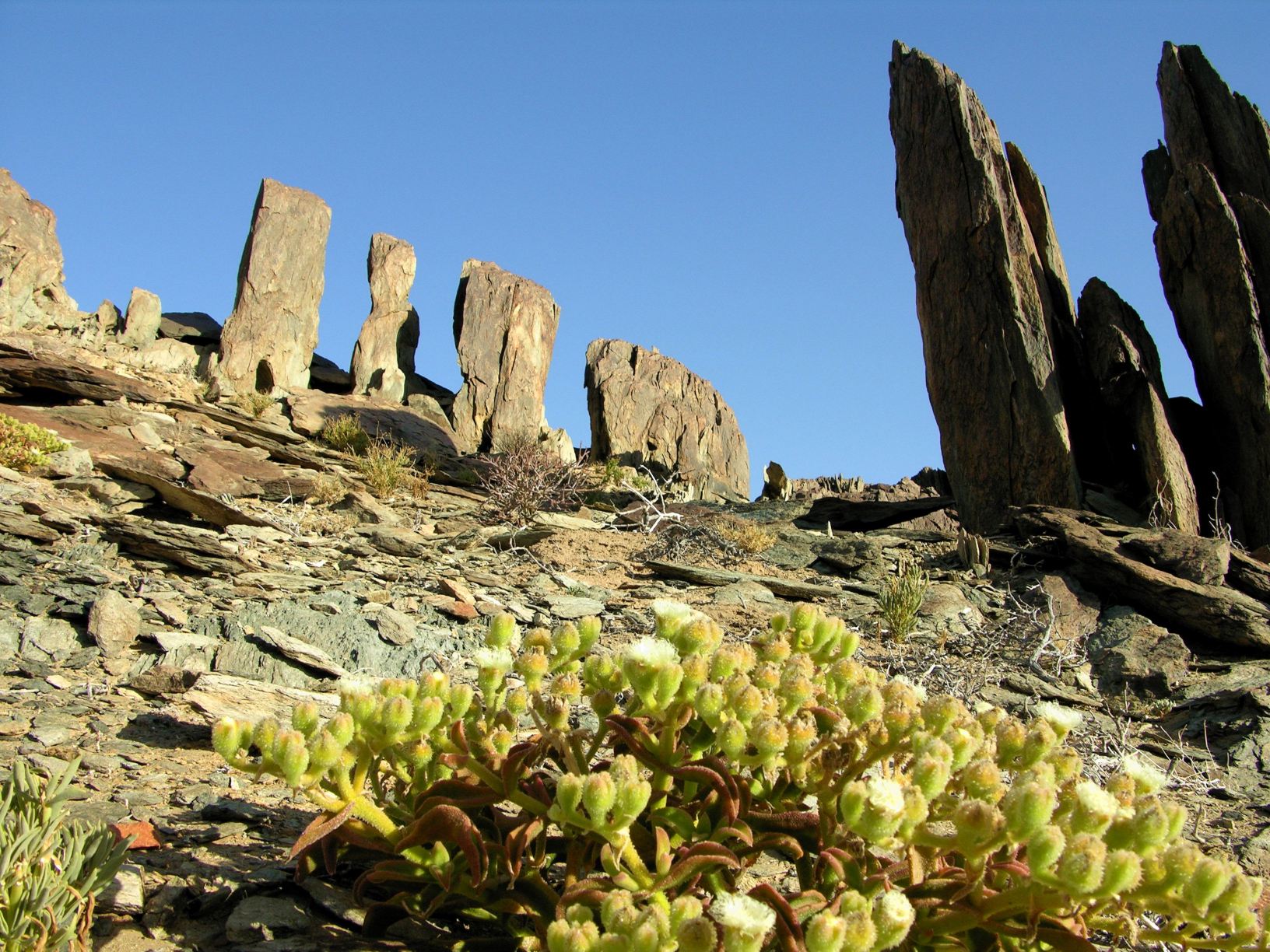
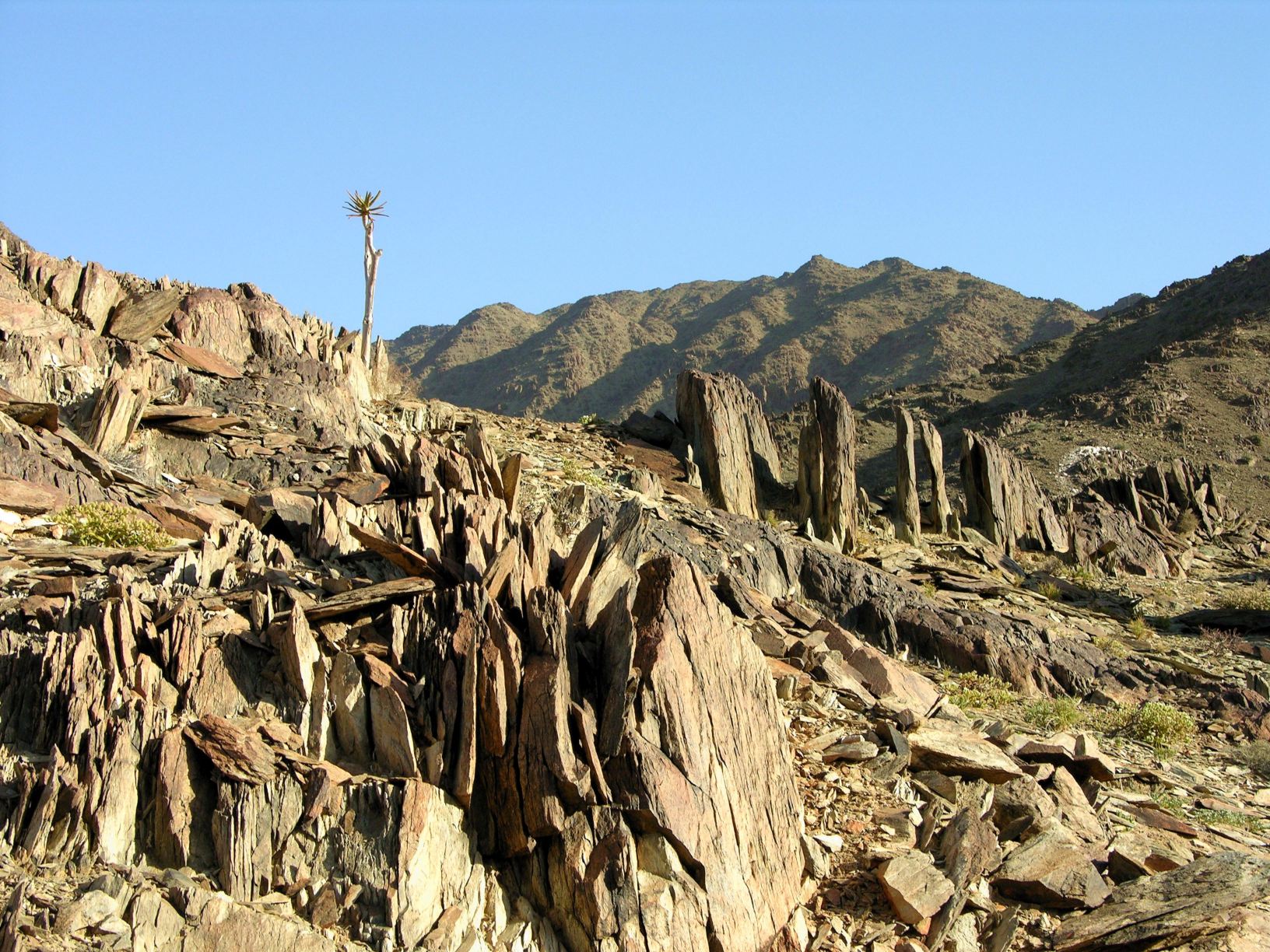
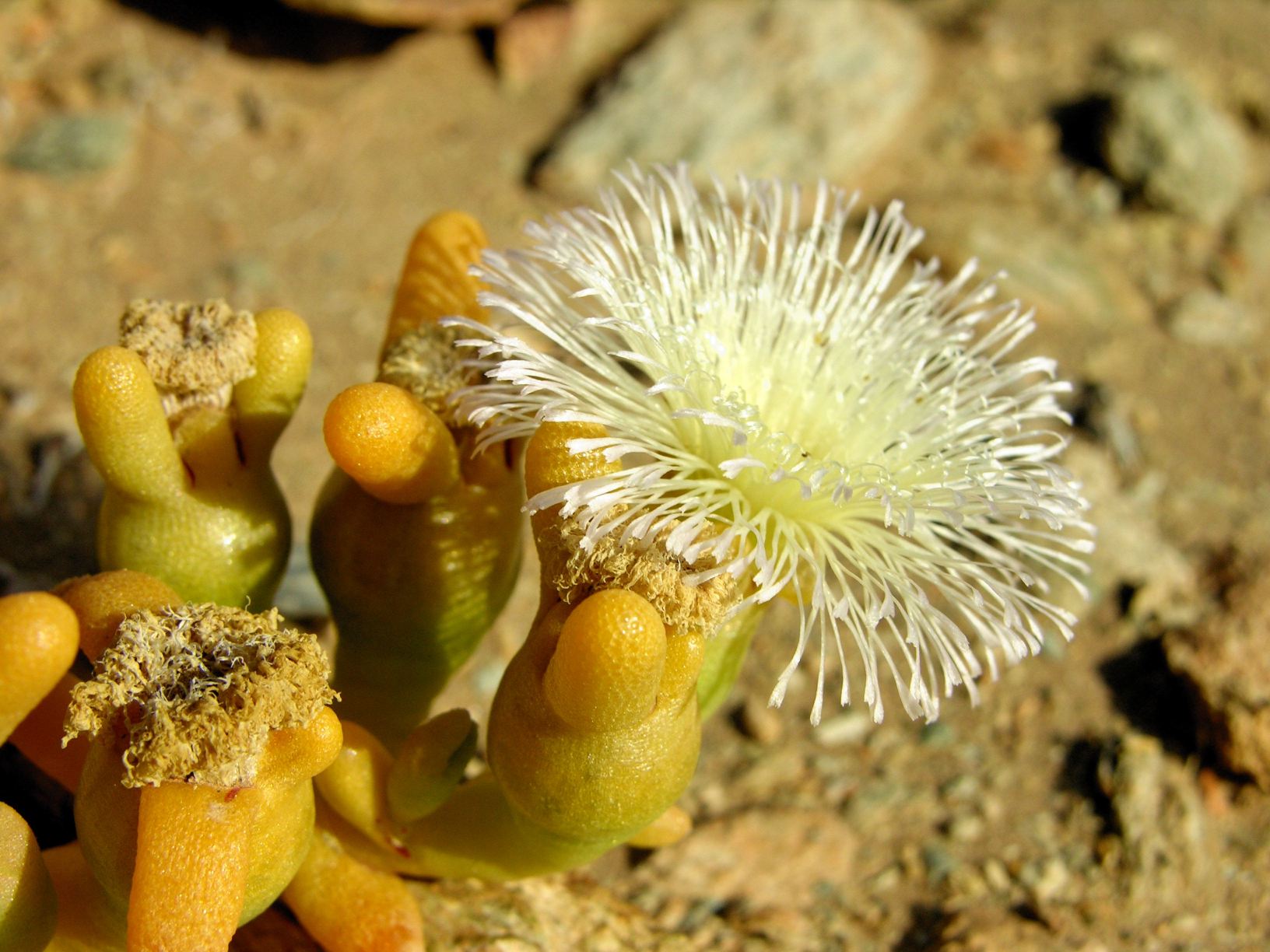
This isn't the usual African park. There are no elephants or lions. There are hardly any antelope.
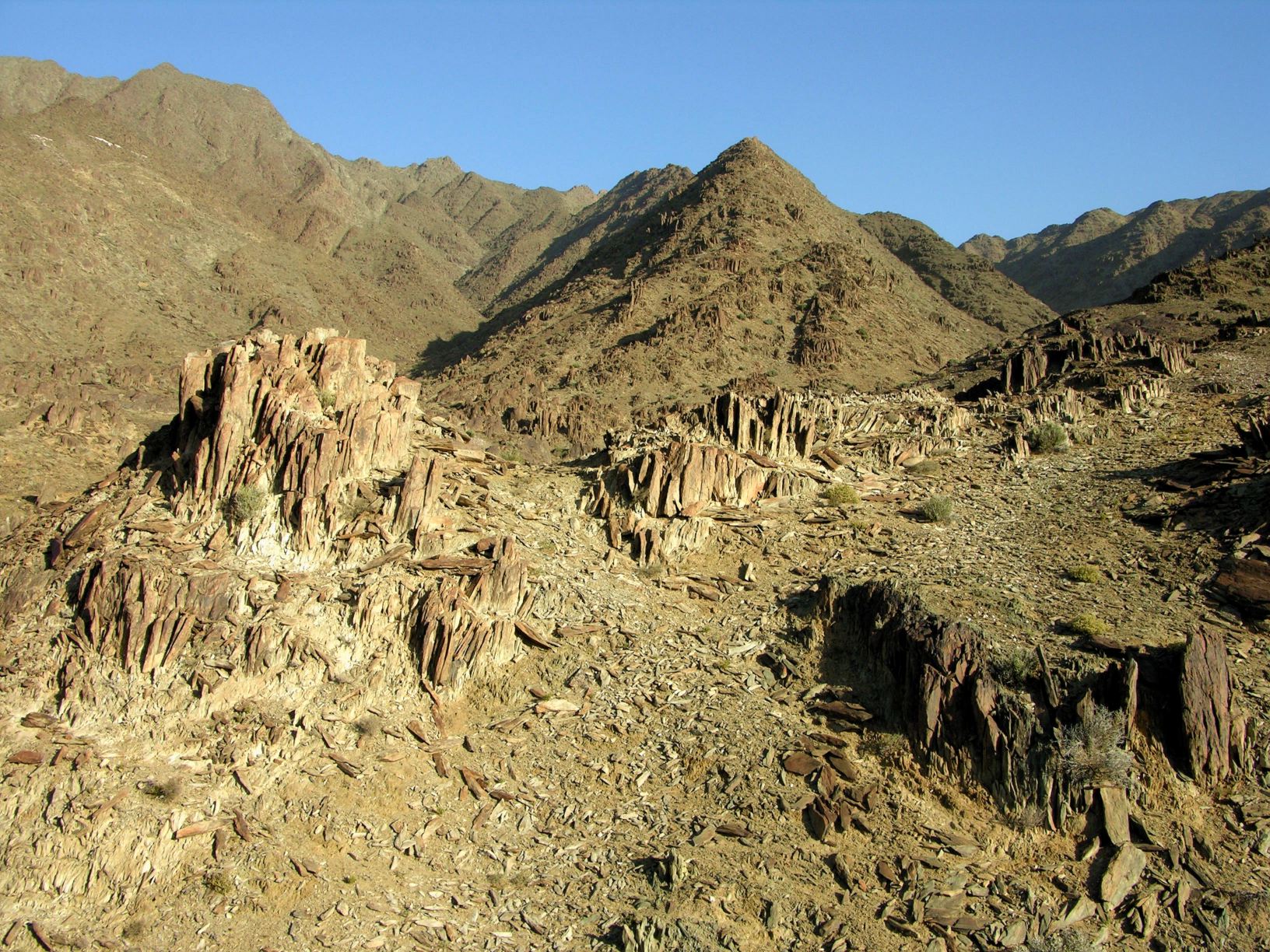
Nevertheless it's worth coming. First of all, this is a truly wild piece of country. Here you won't run into crowds of tourists, paths, guides or the rest of civilisation. You can go walking with a pack and a tent. Mind you, in theory there are guides and you have to hire one, but in practice nobody cares what you do. The park administration amounts to a sleepy woman in a hut that you have to find first.
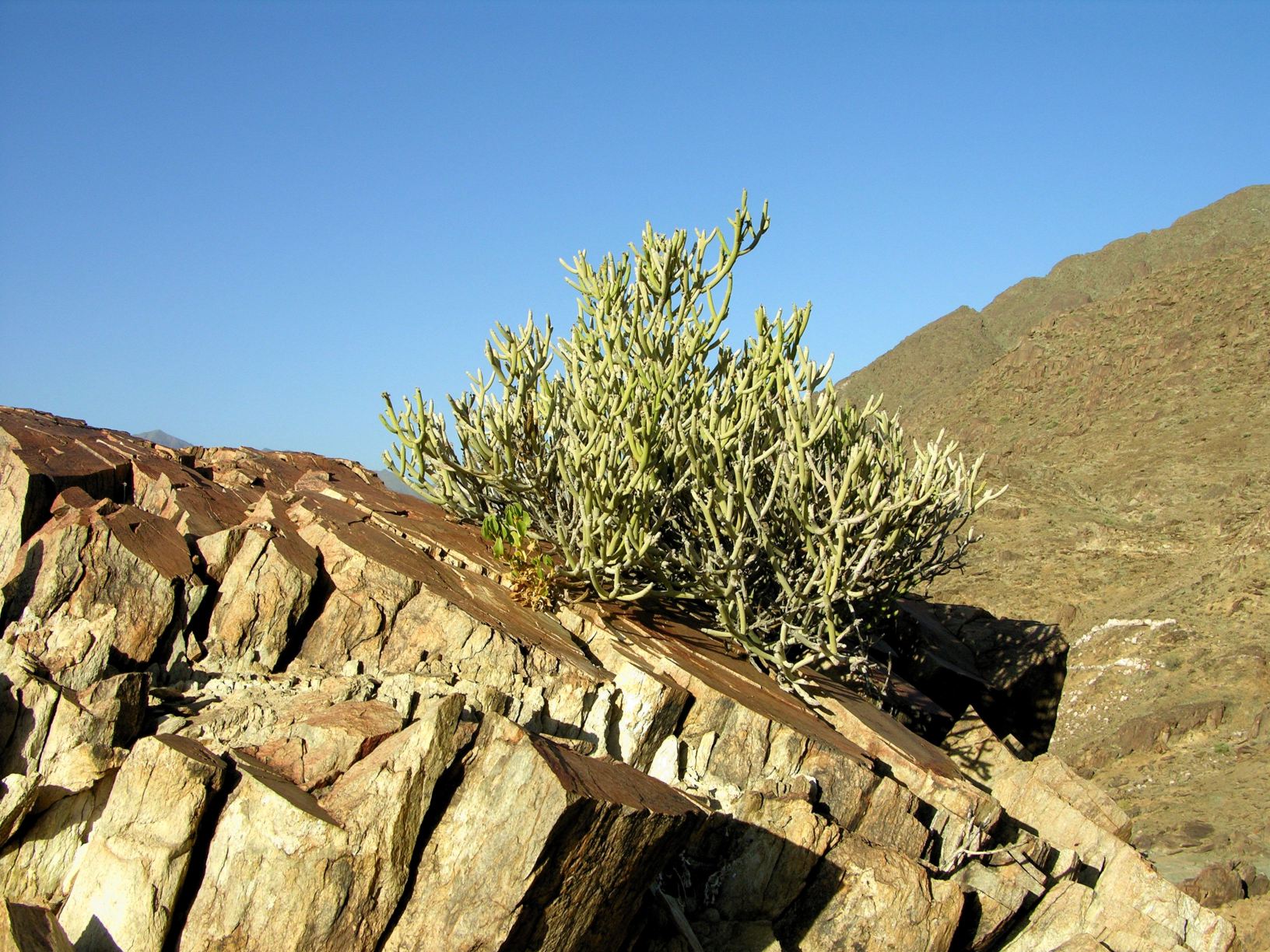
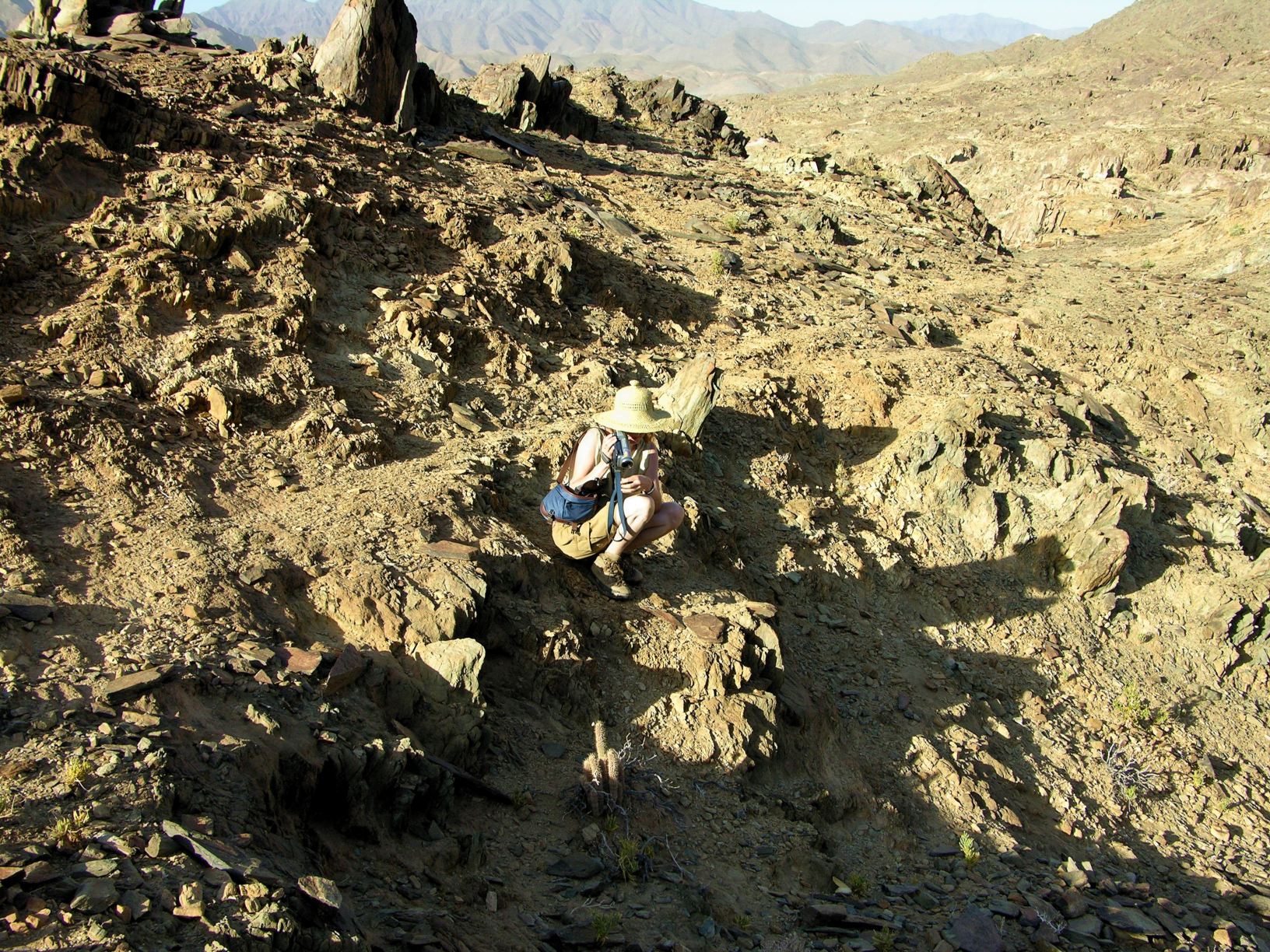
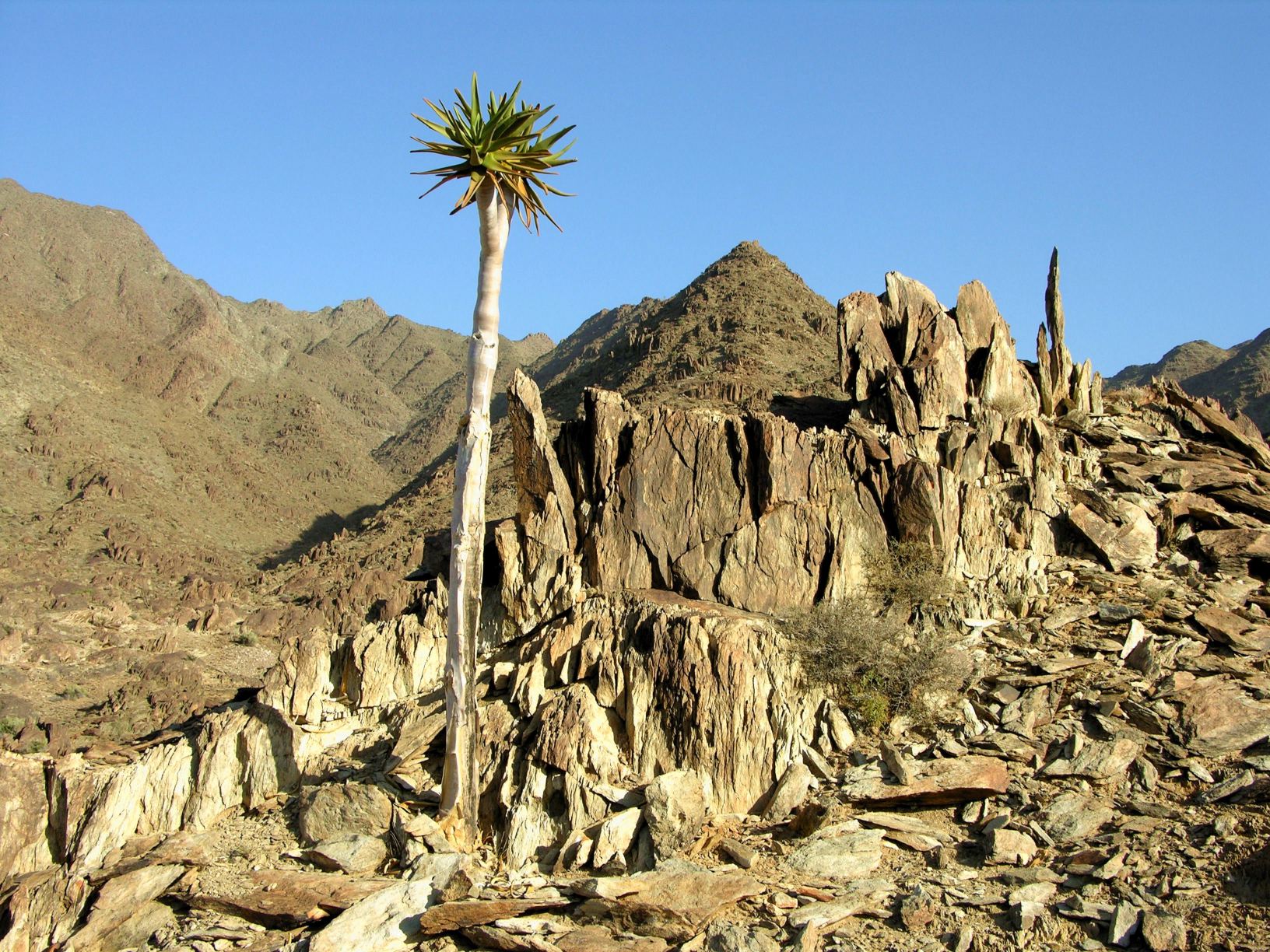
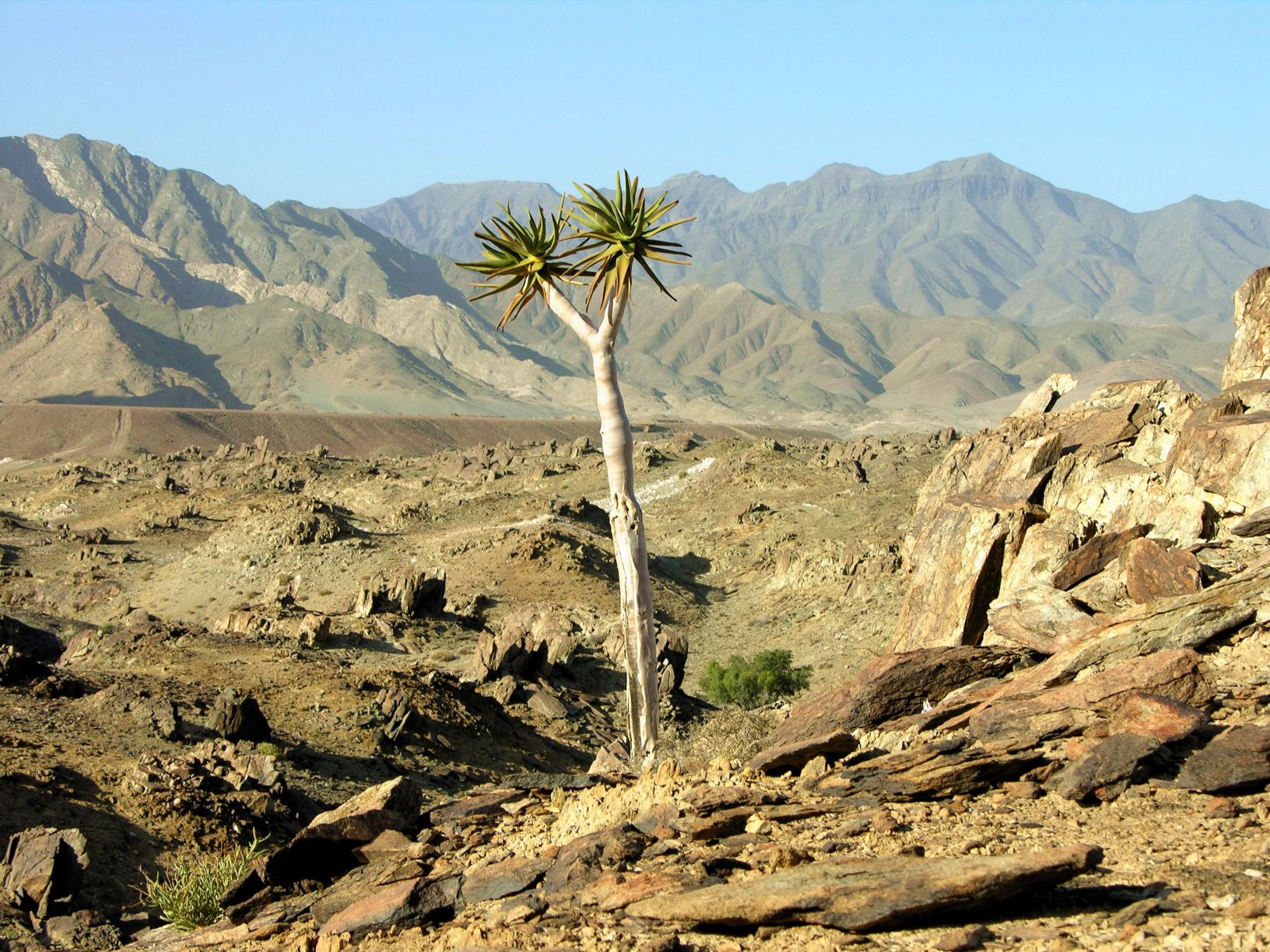
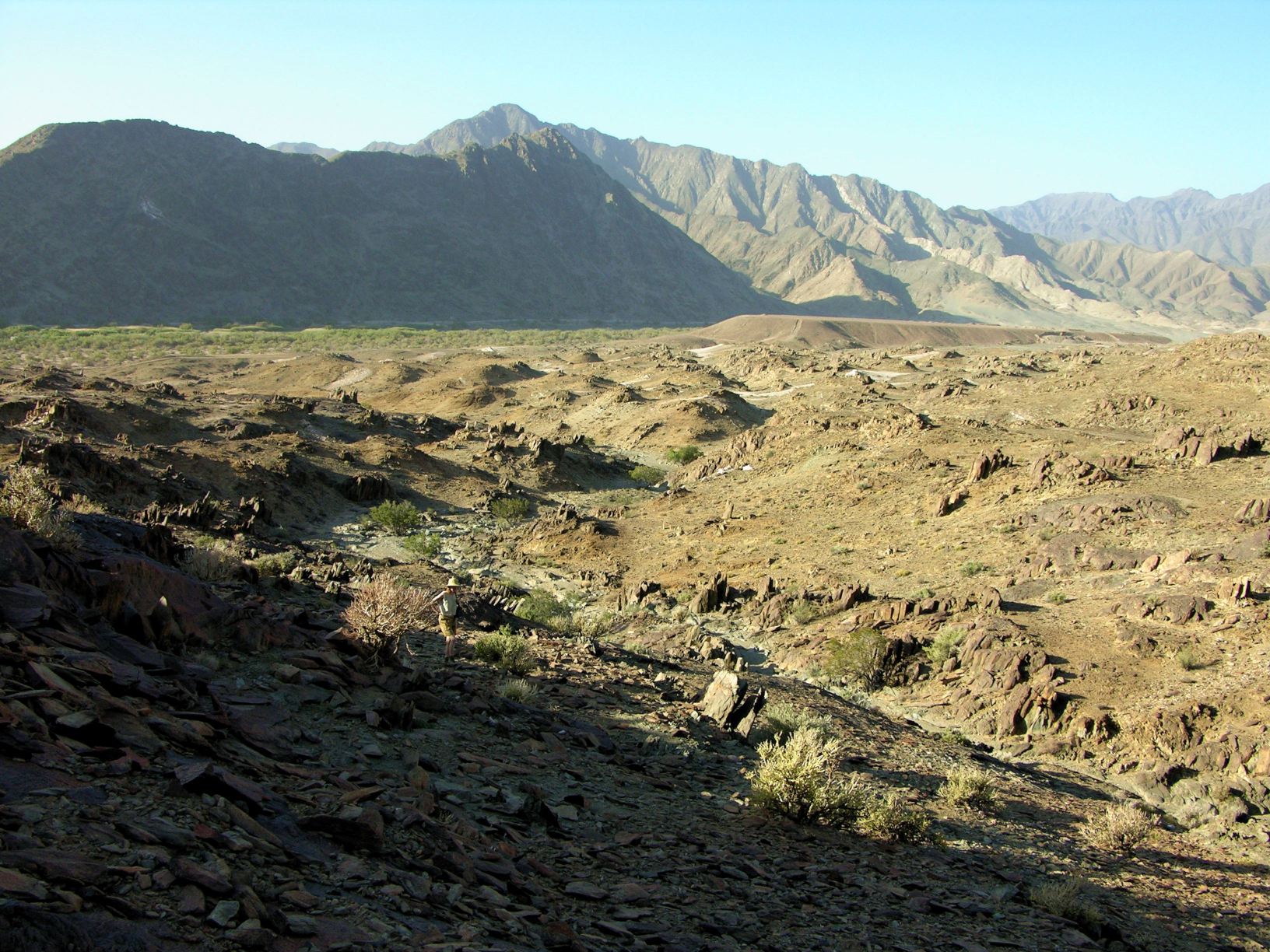
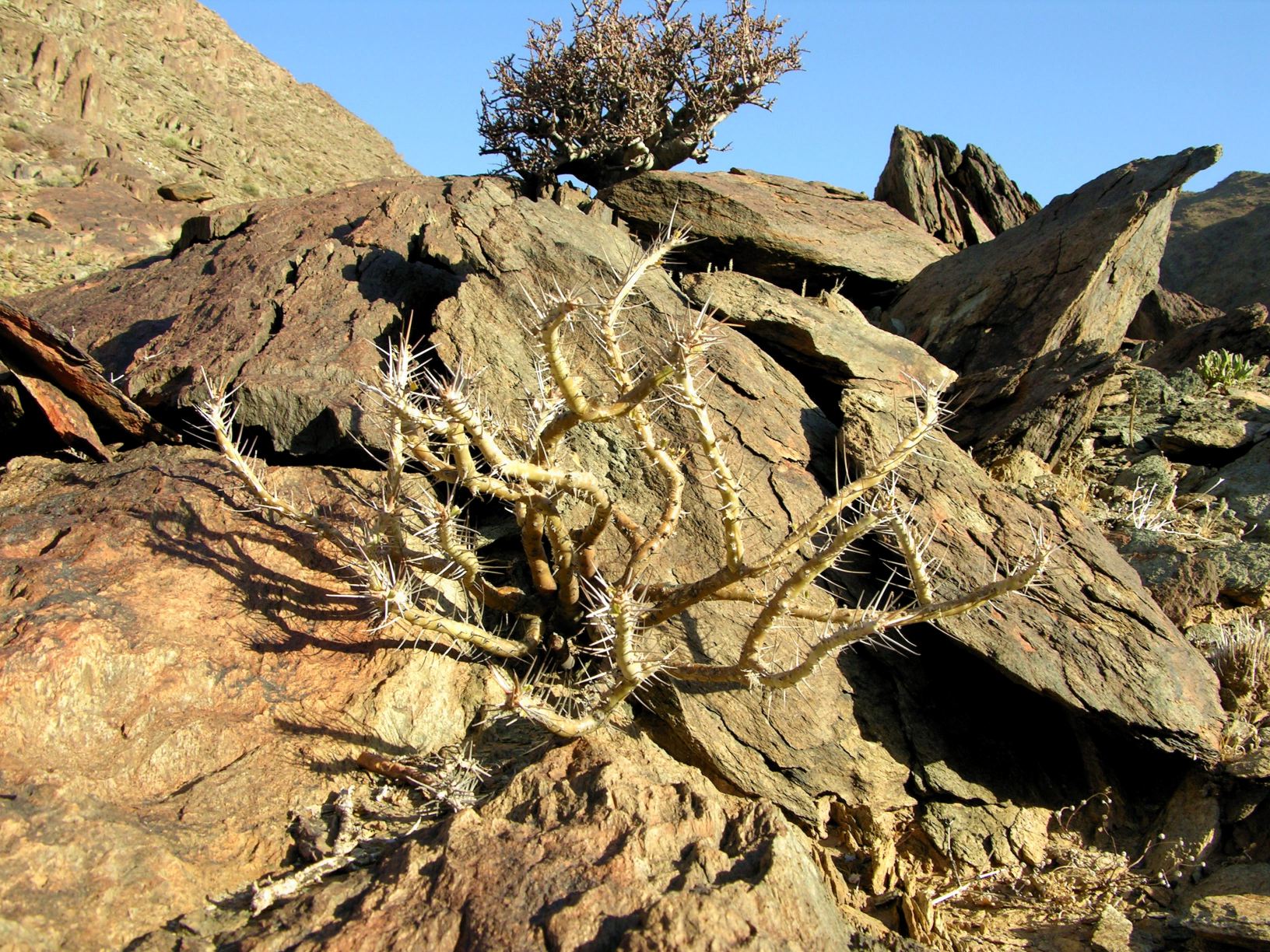
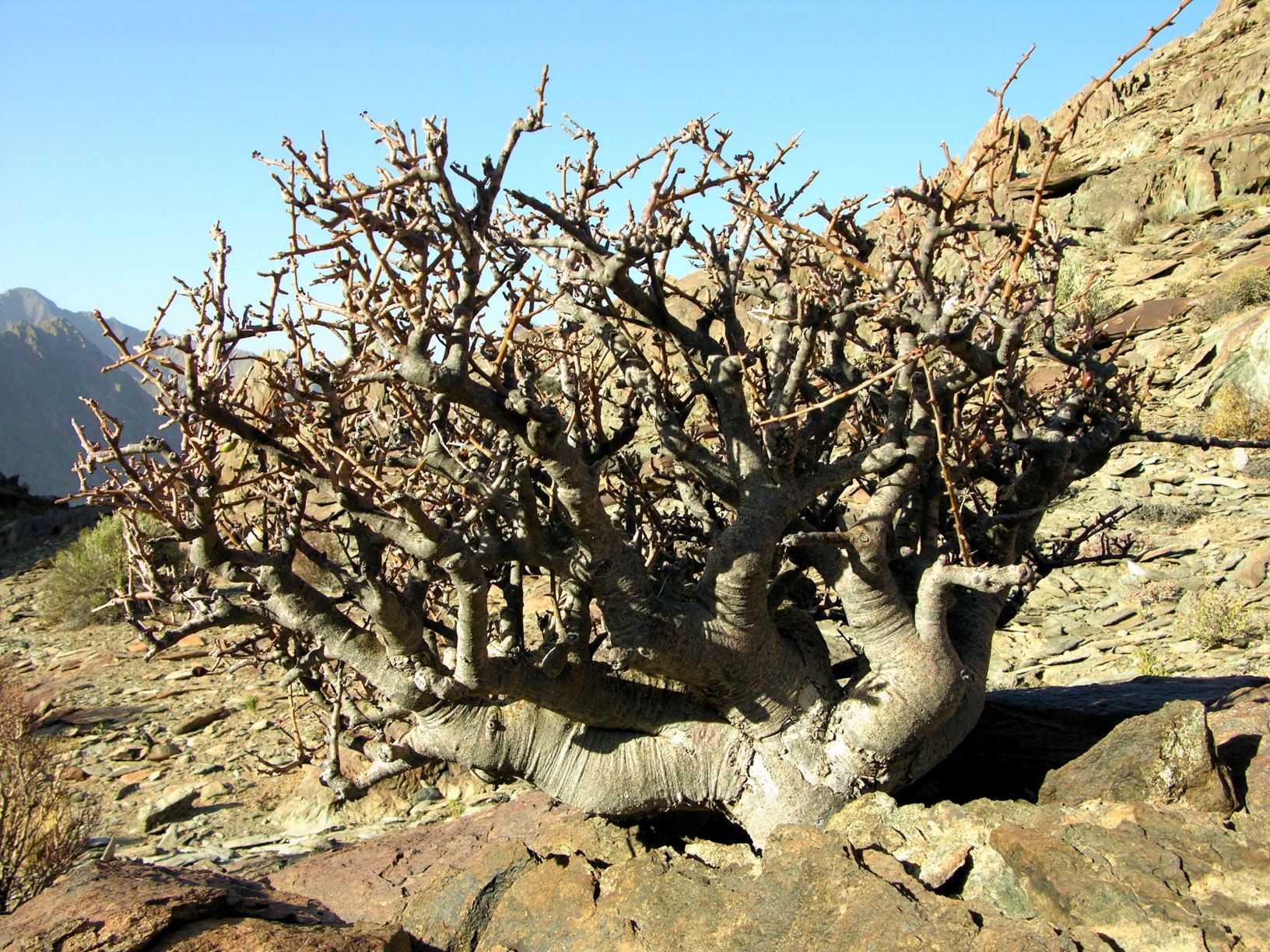
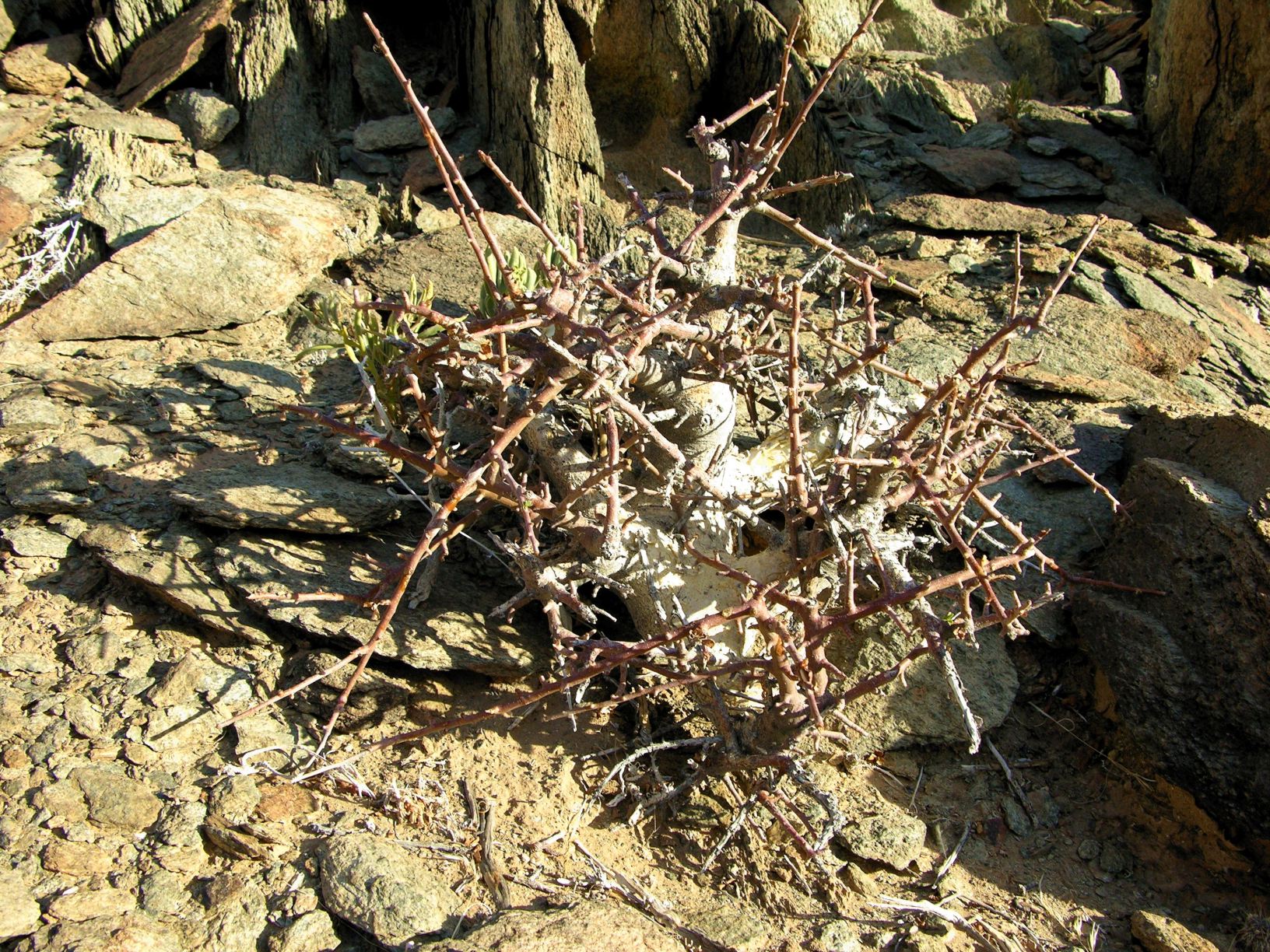
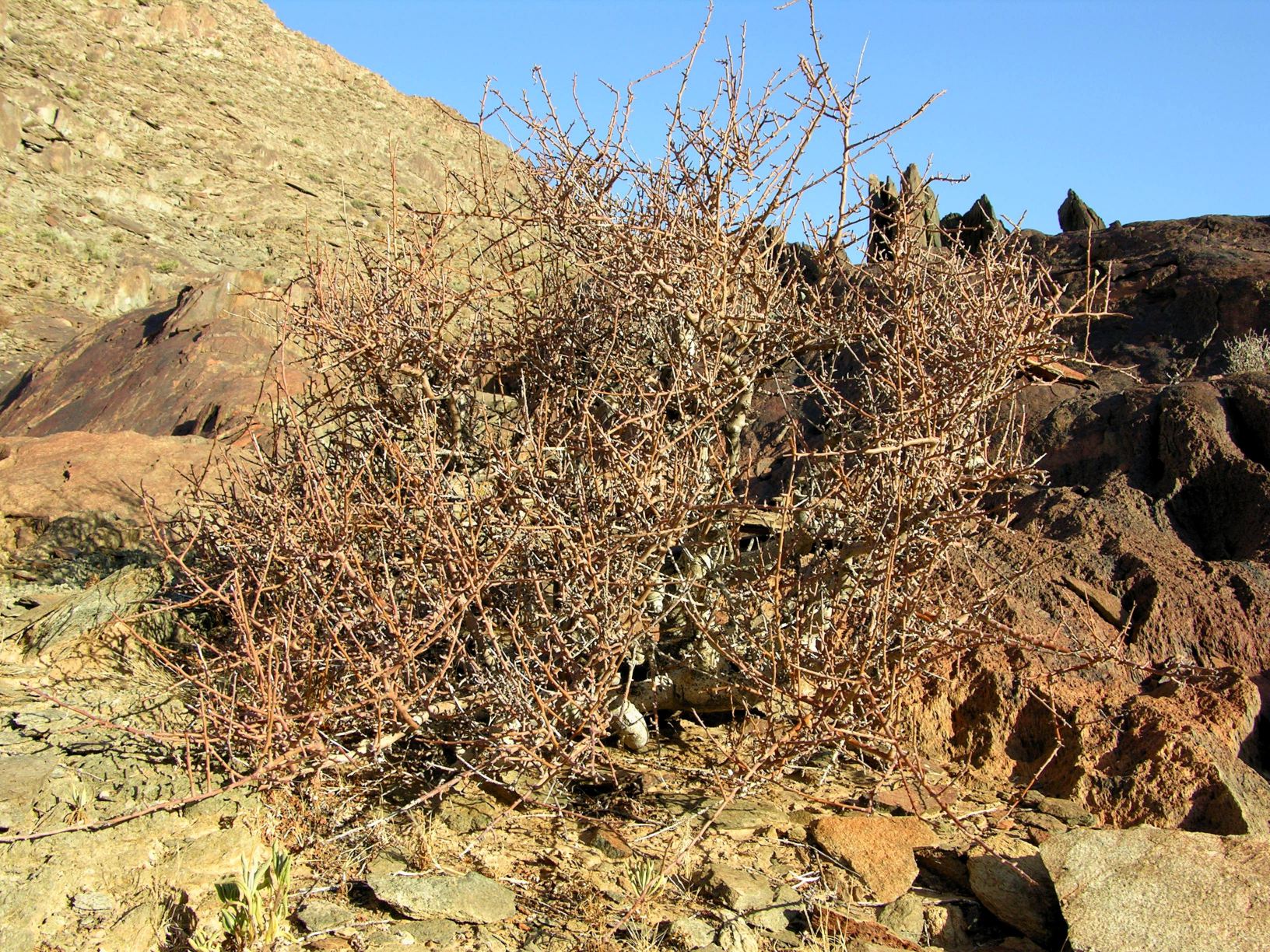
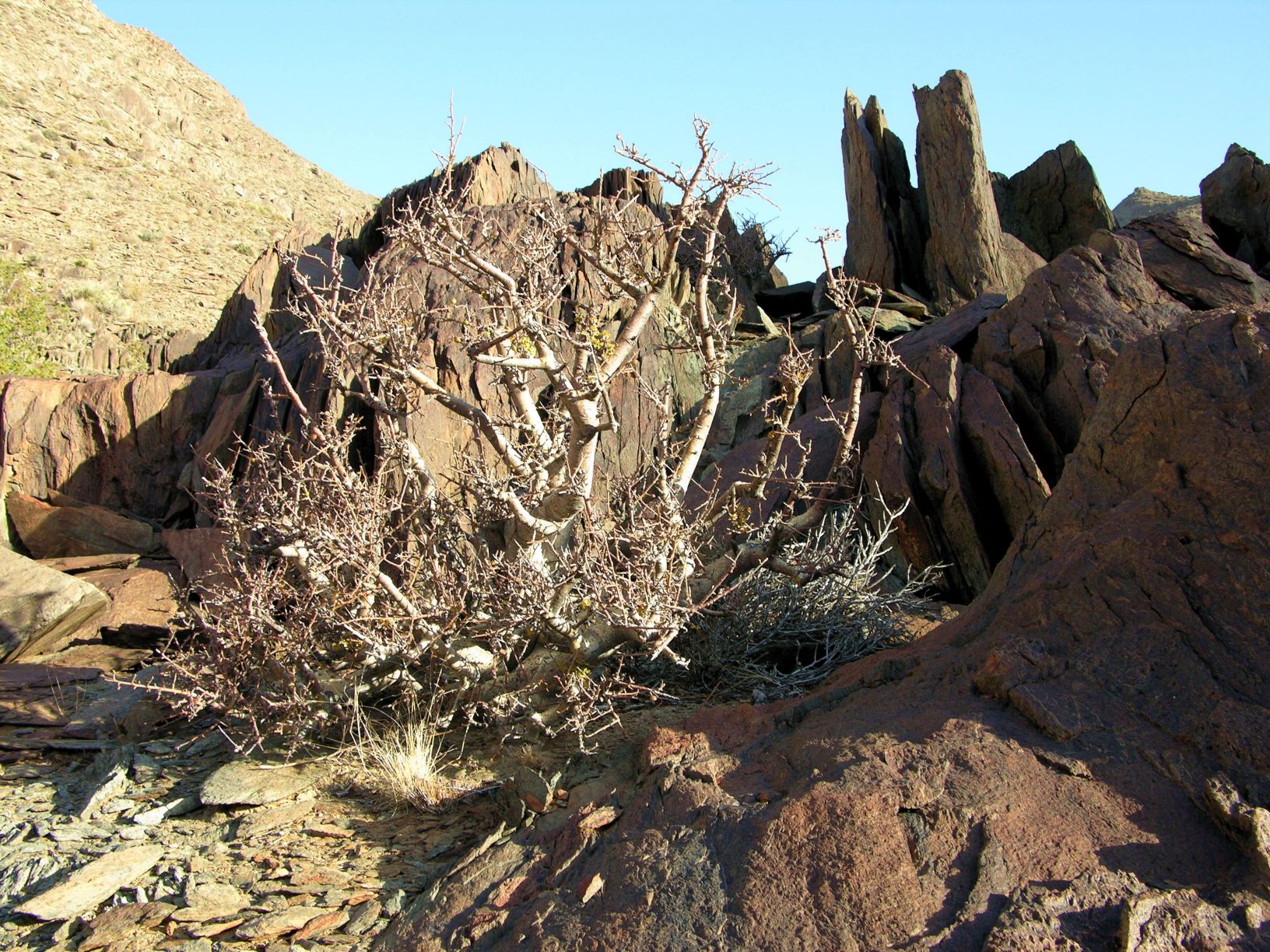
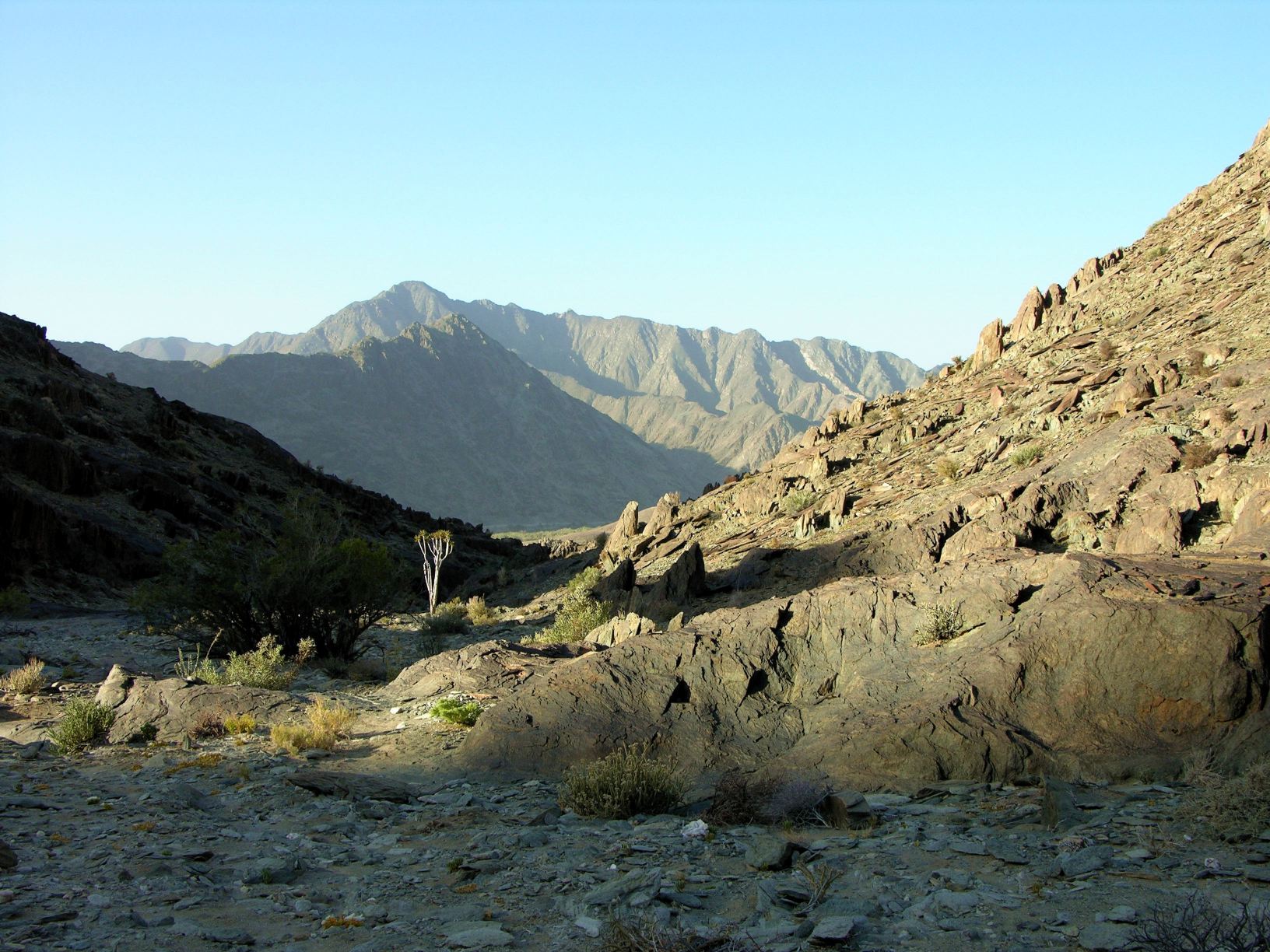
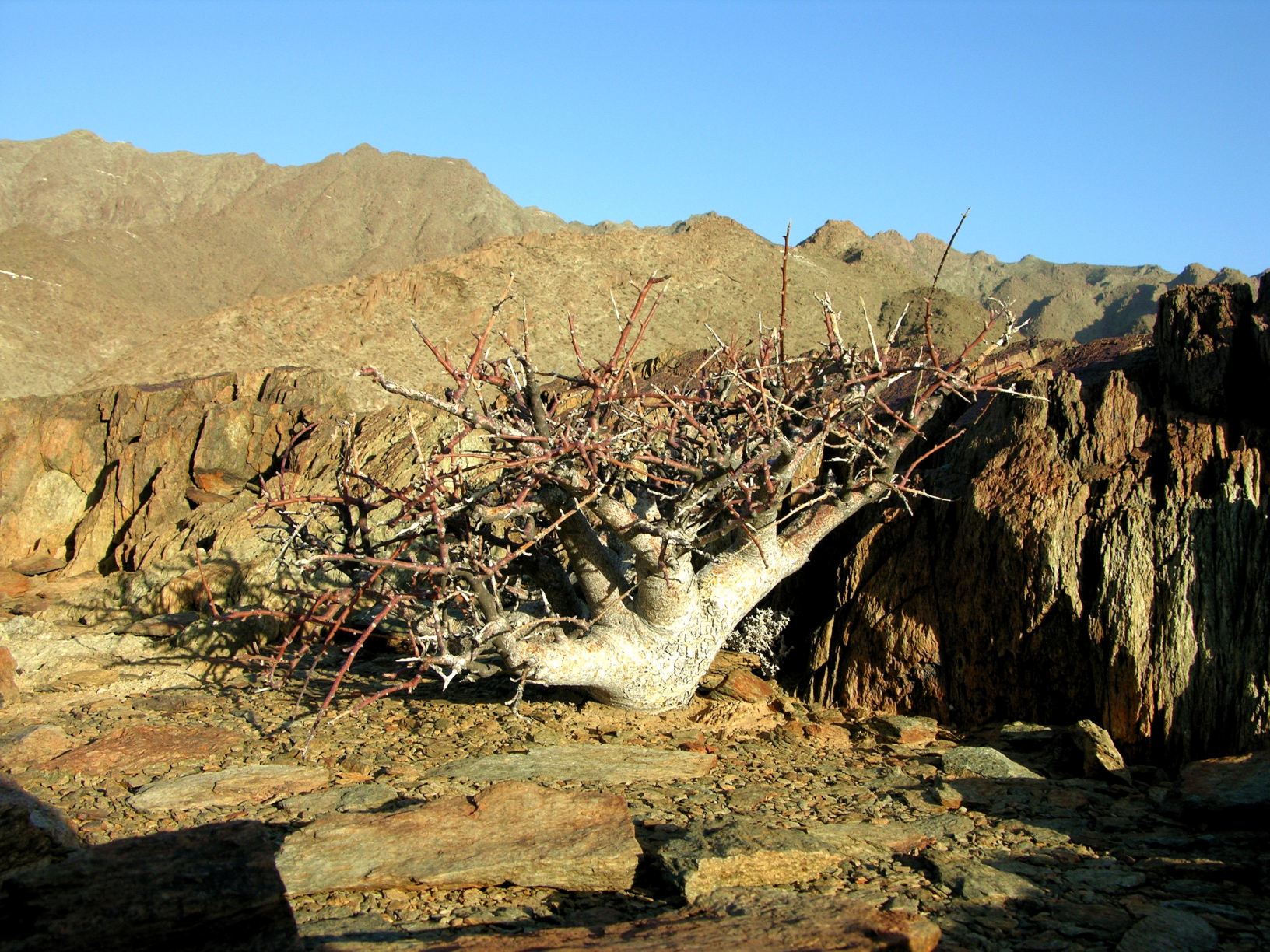
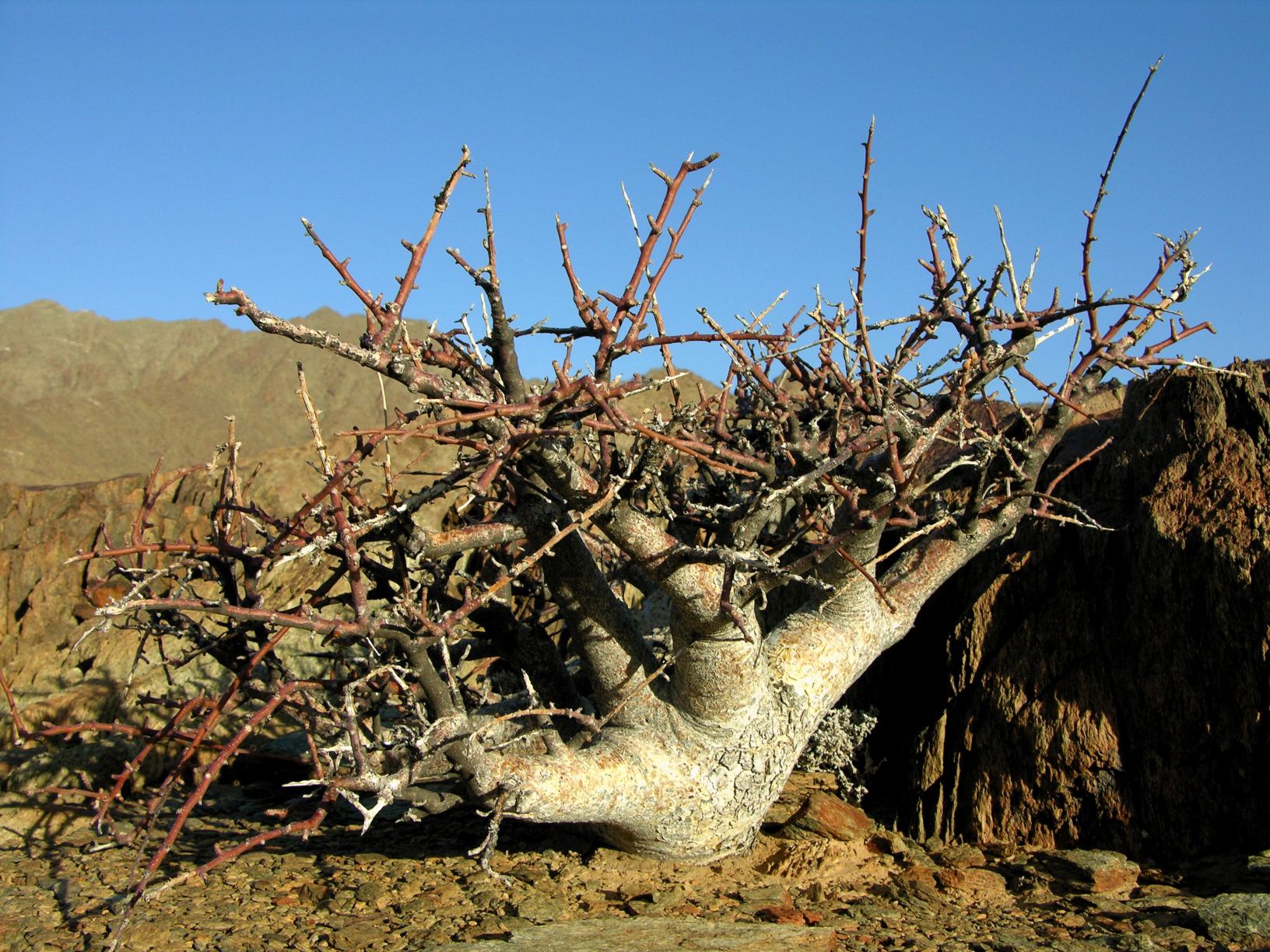
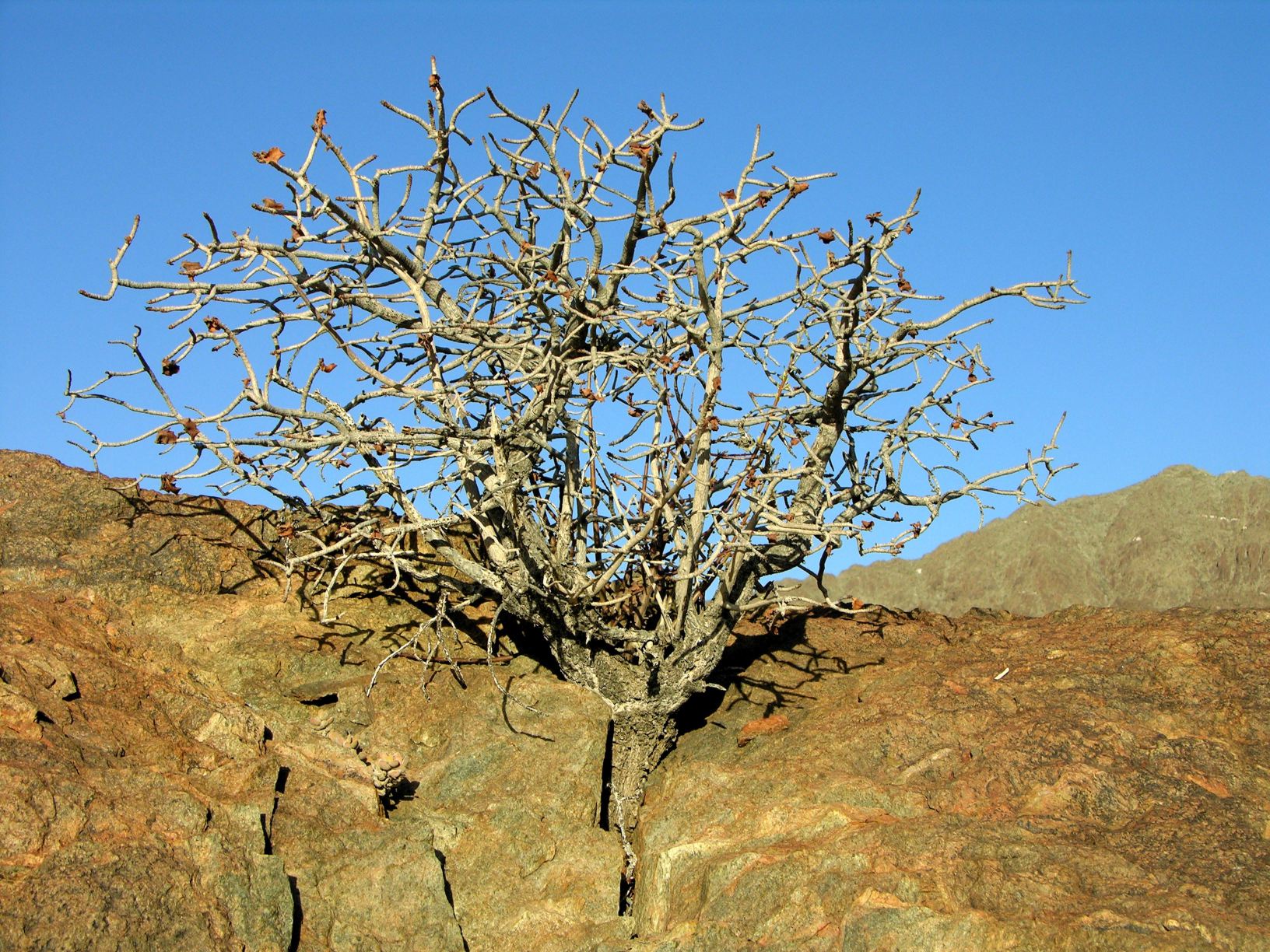
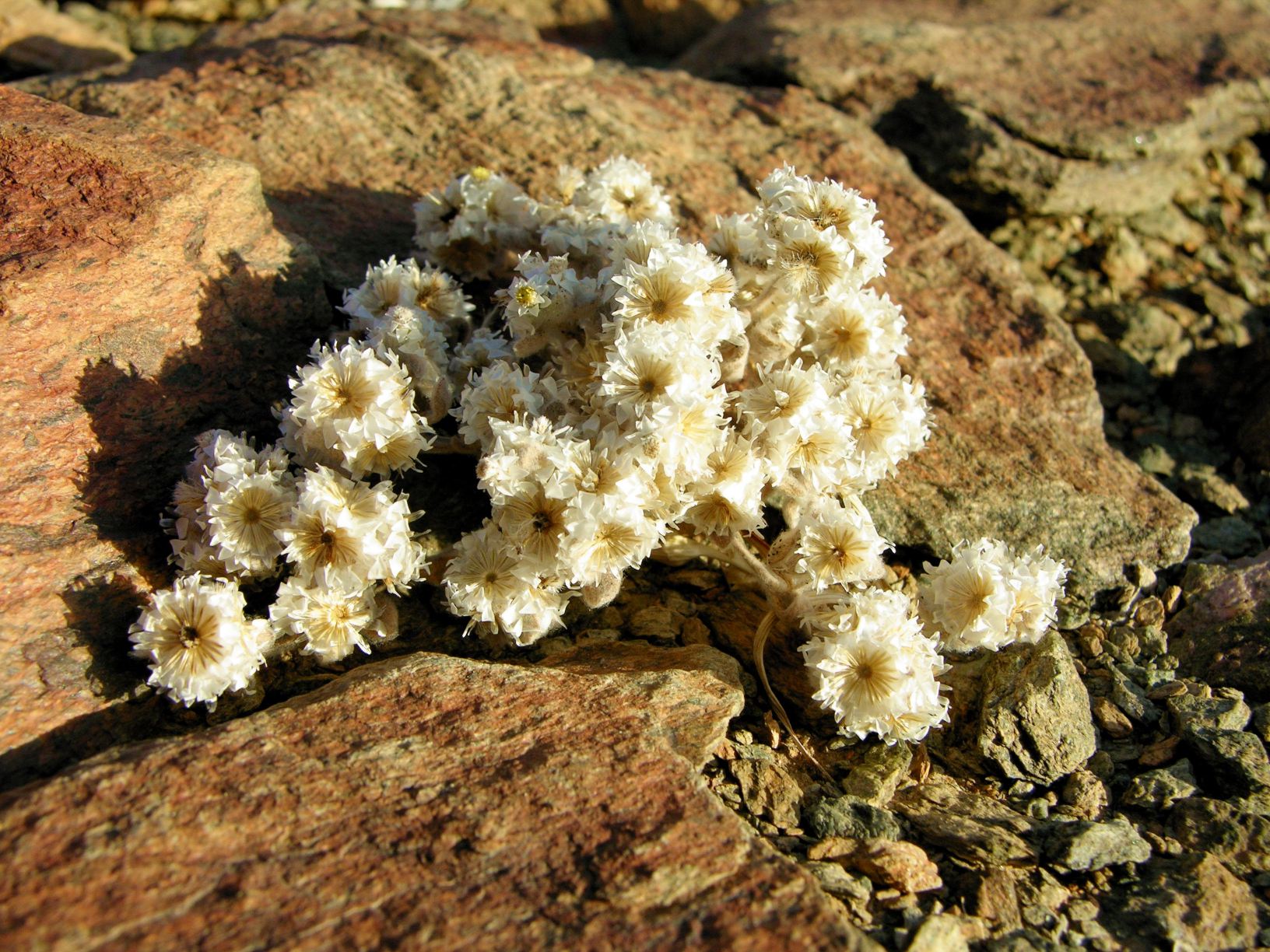
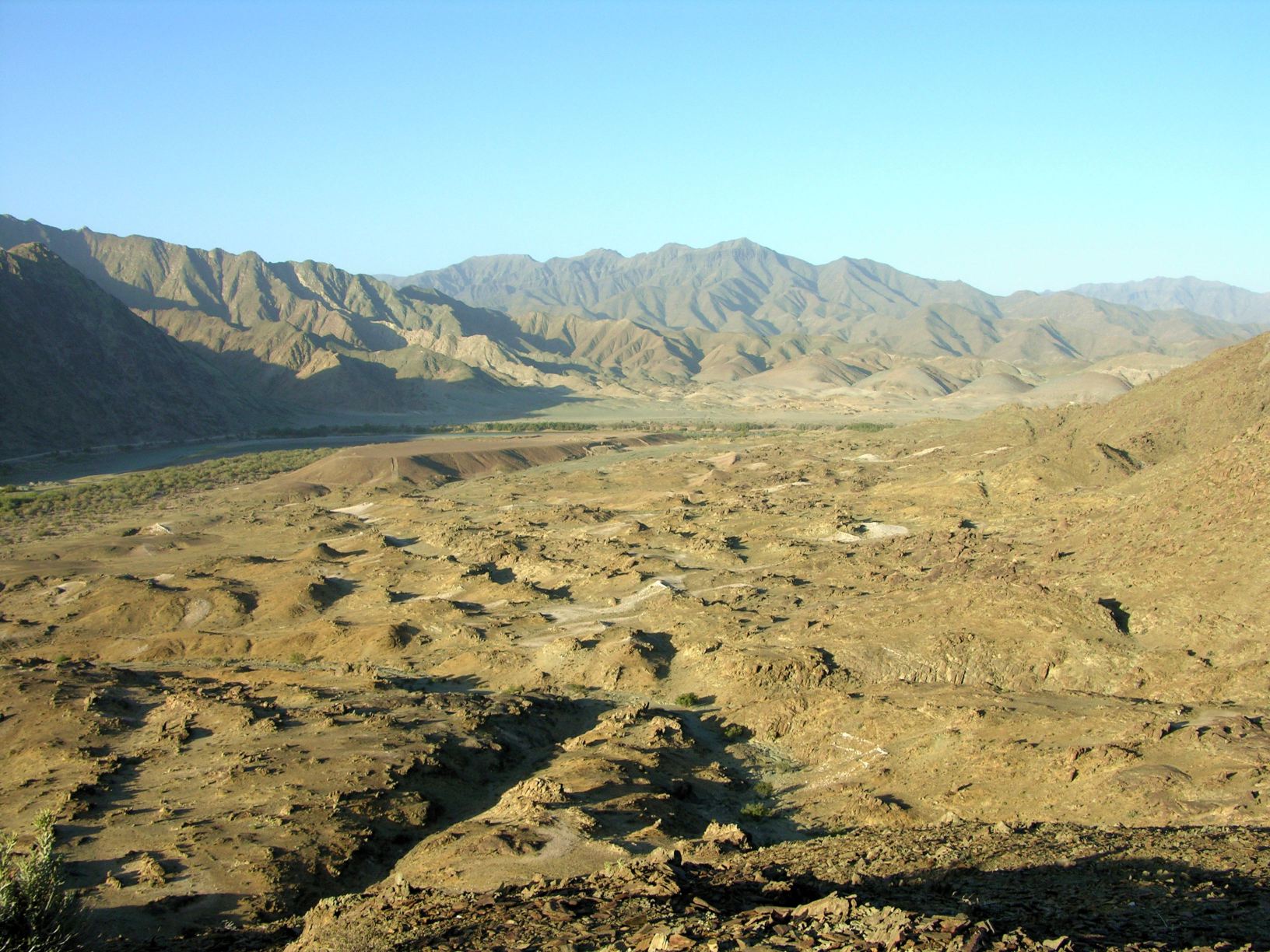
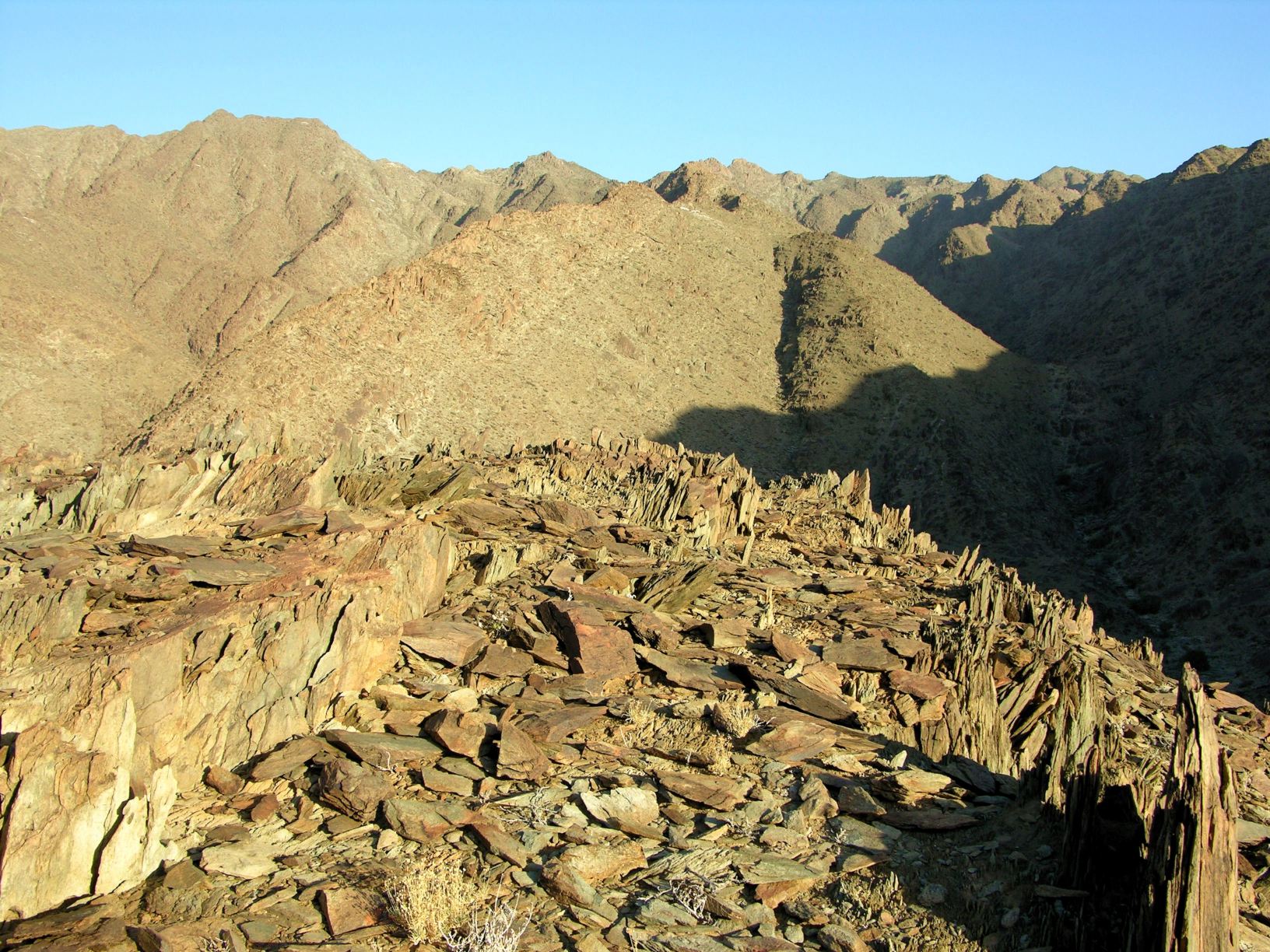
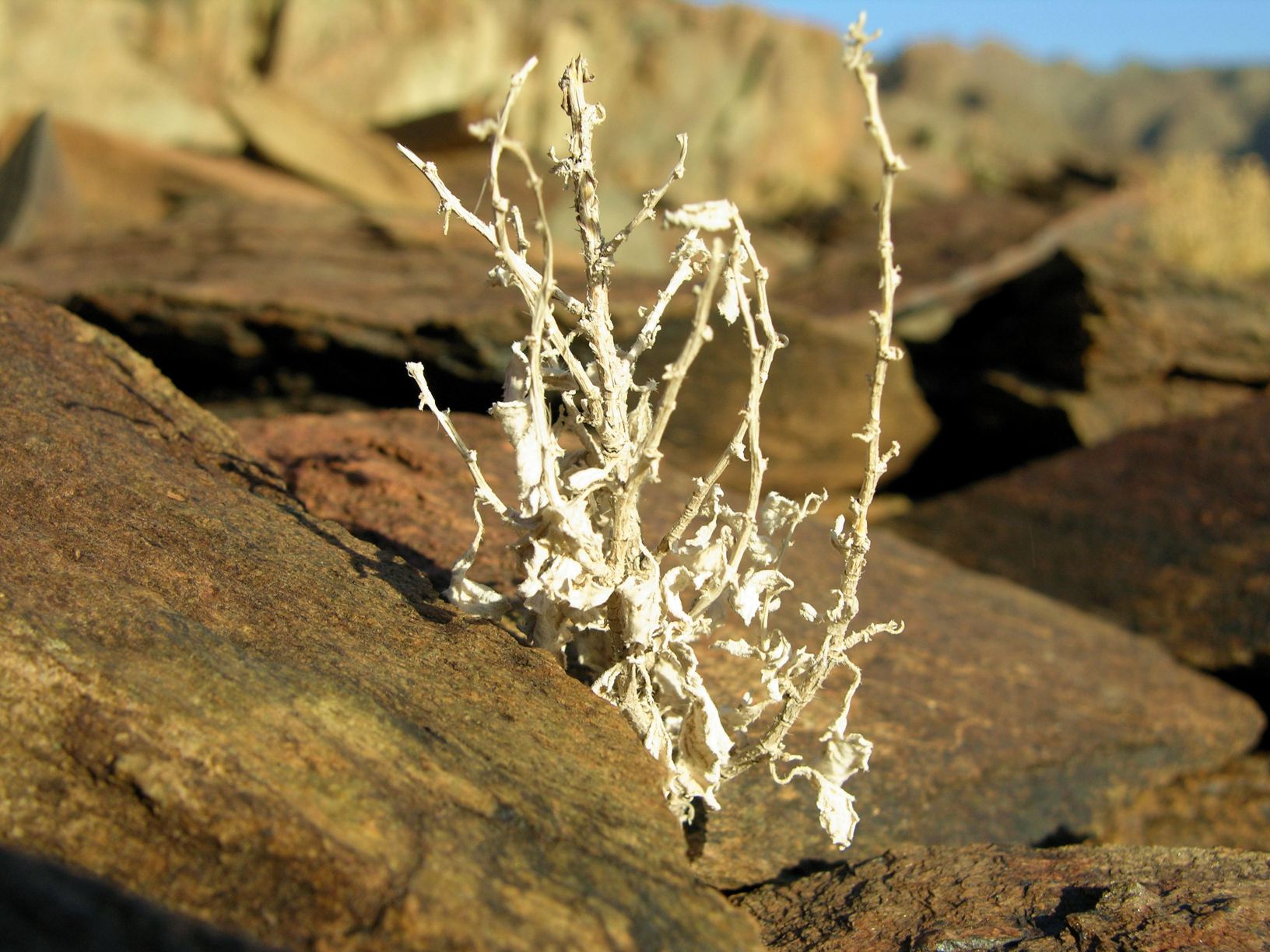
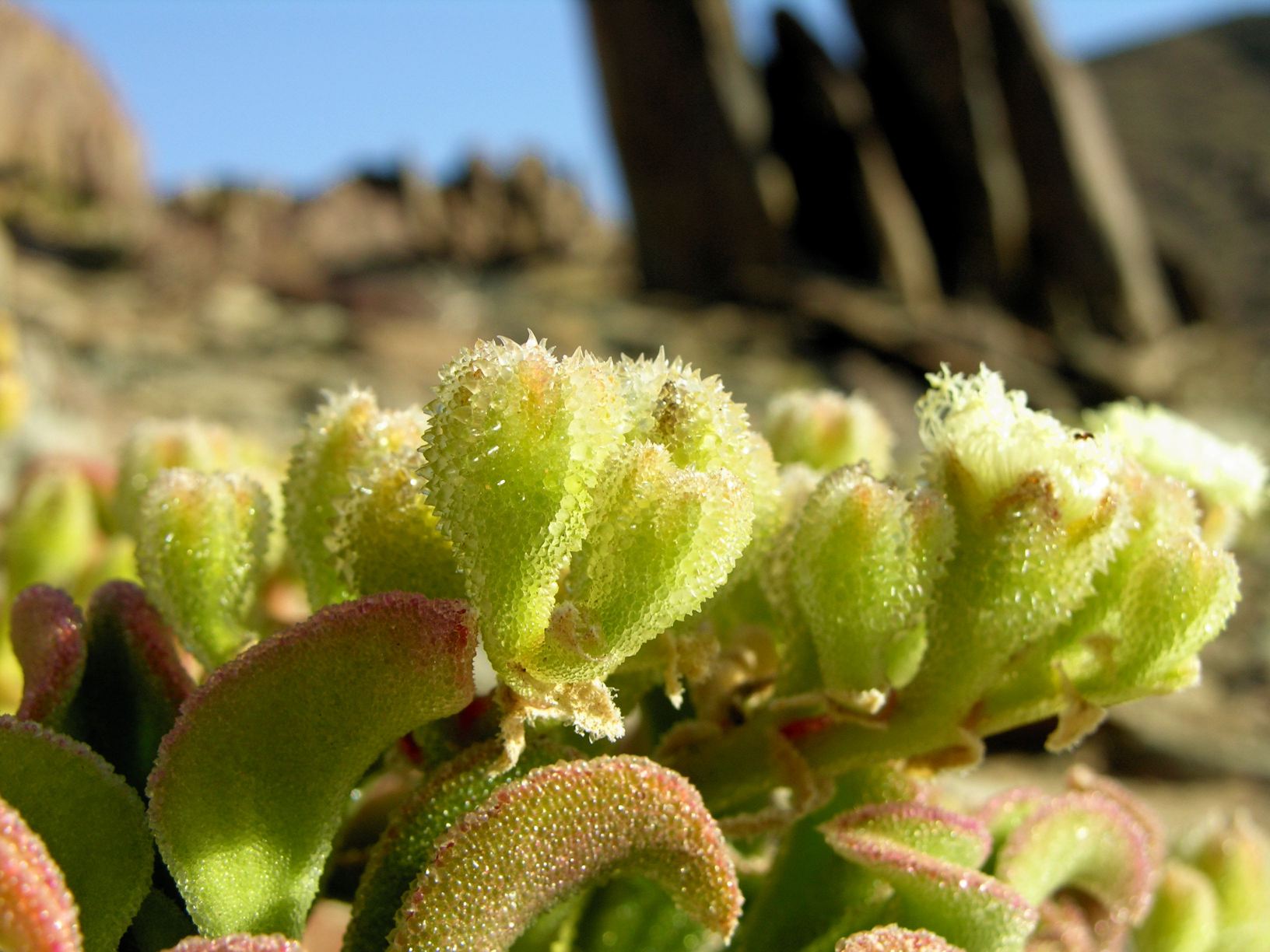
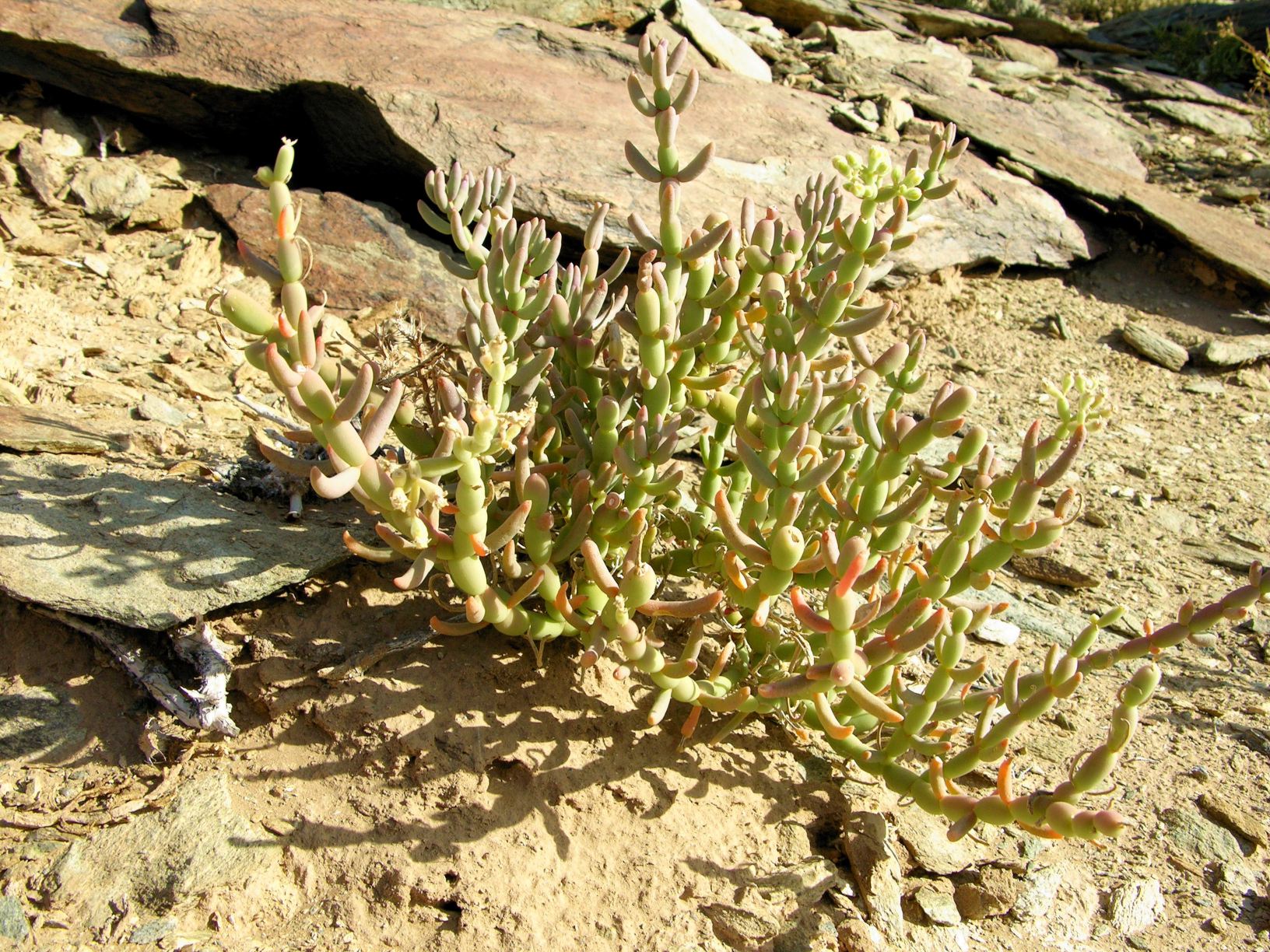
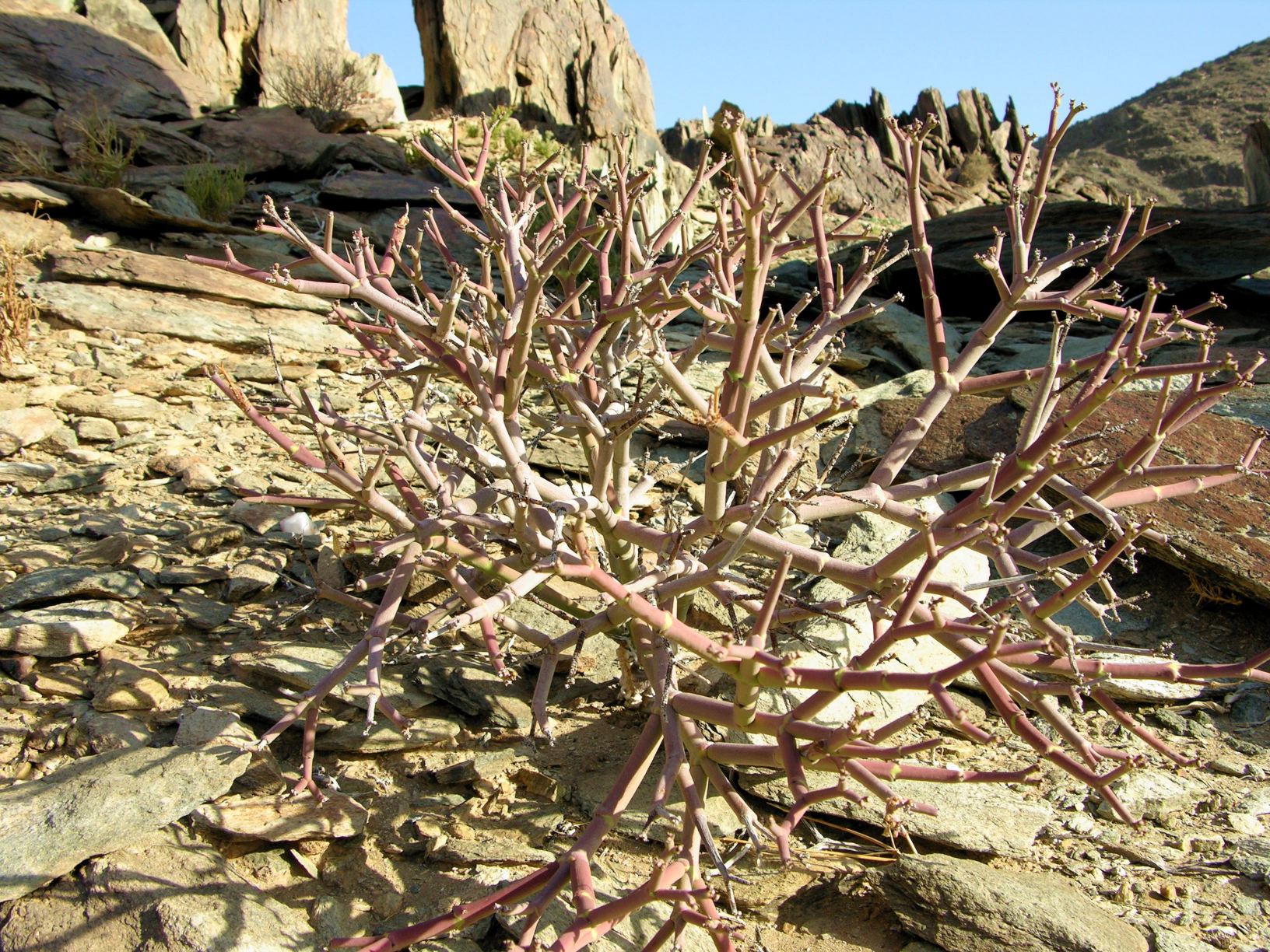
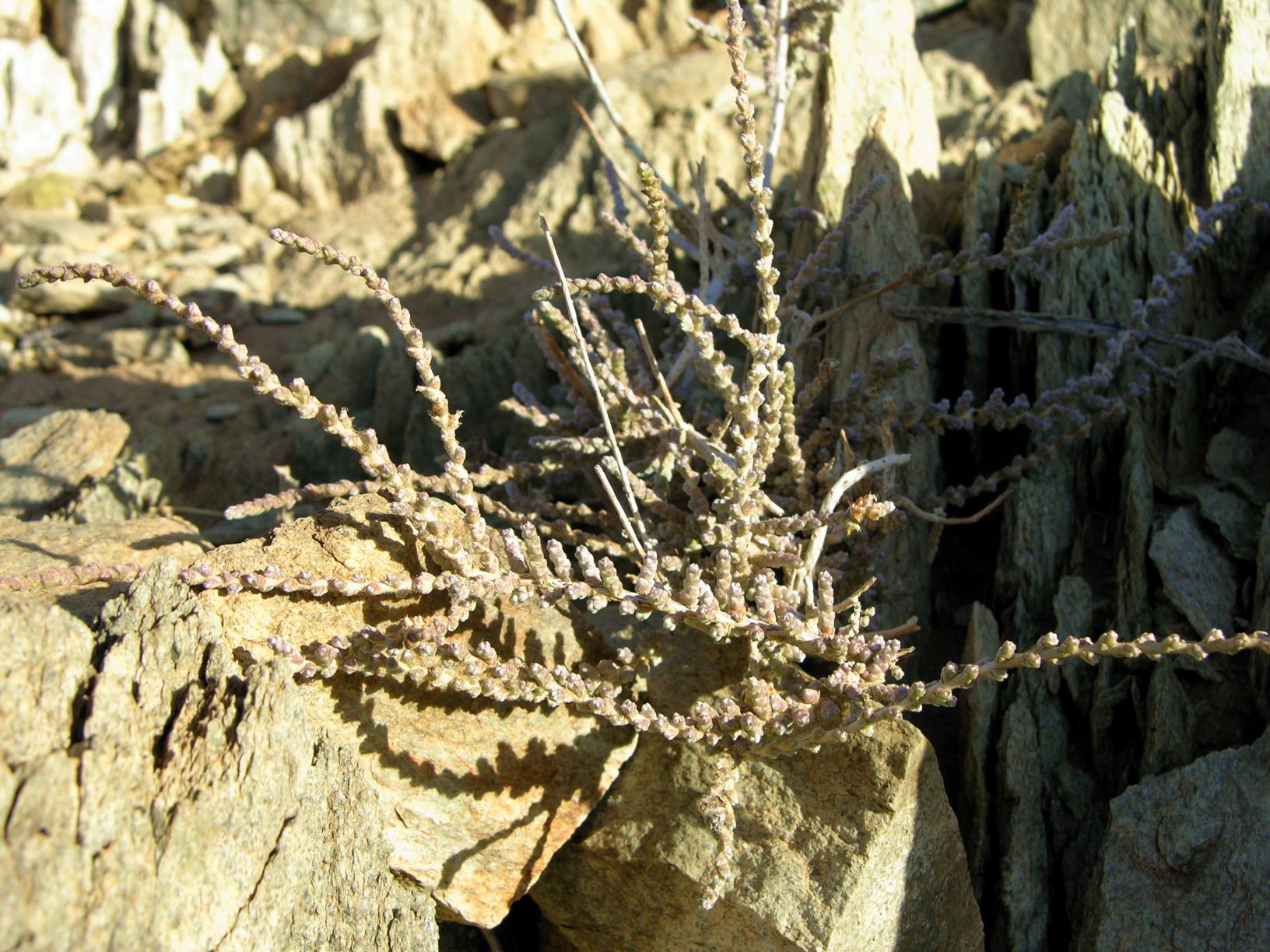
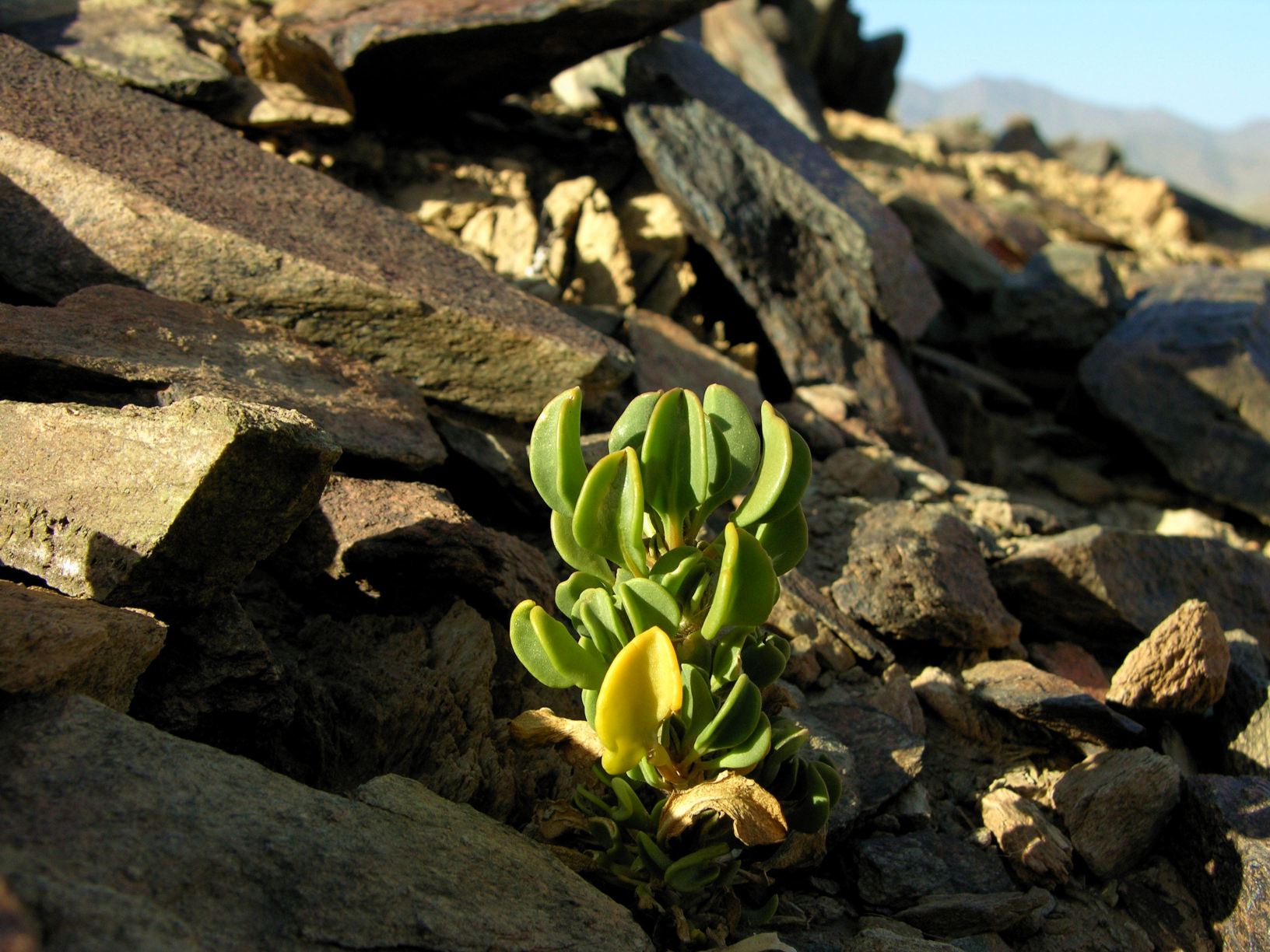
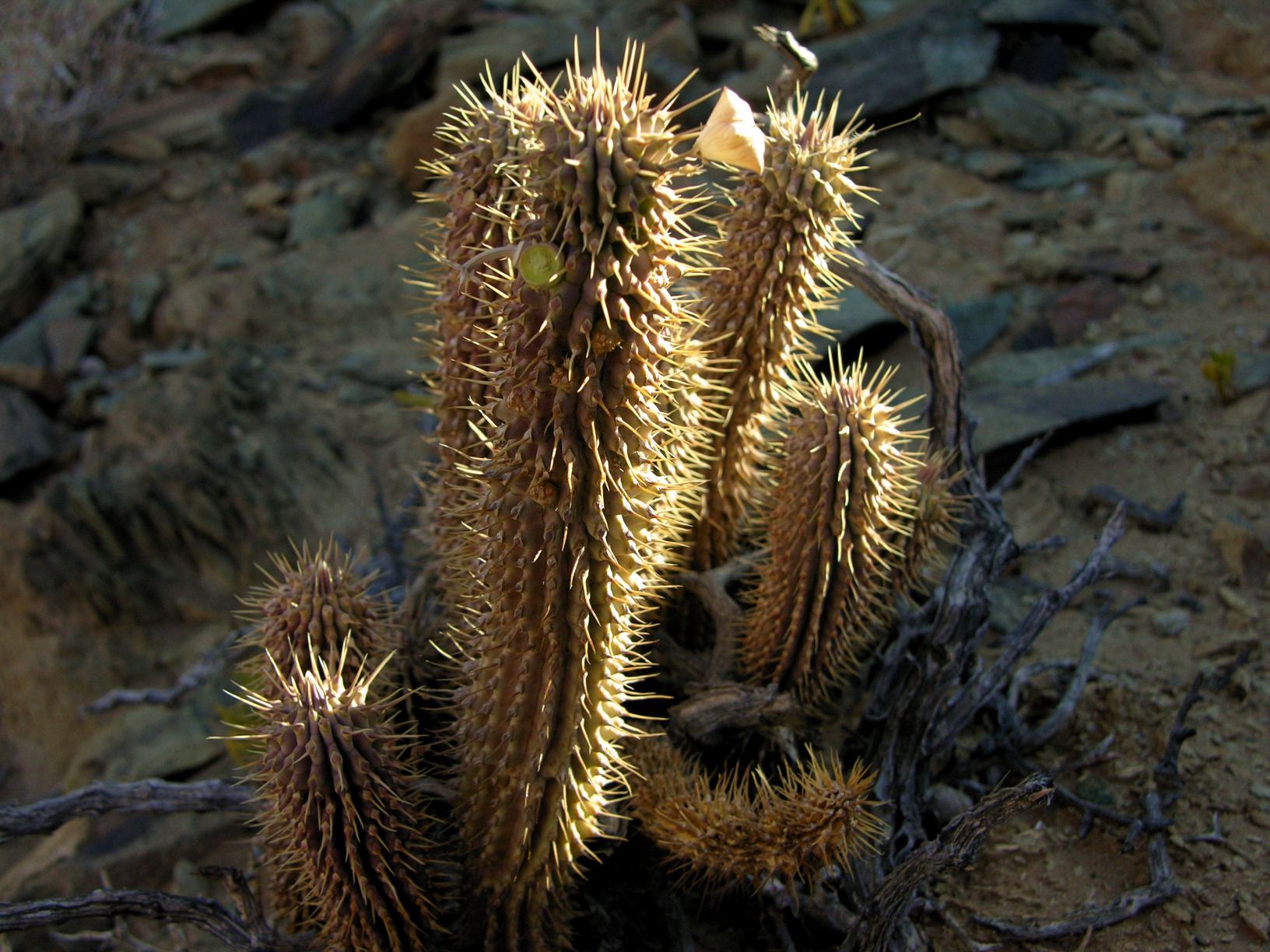
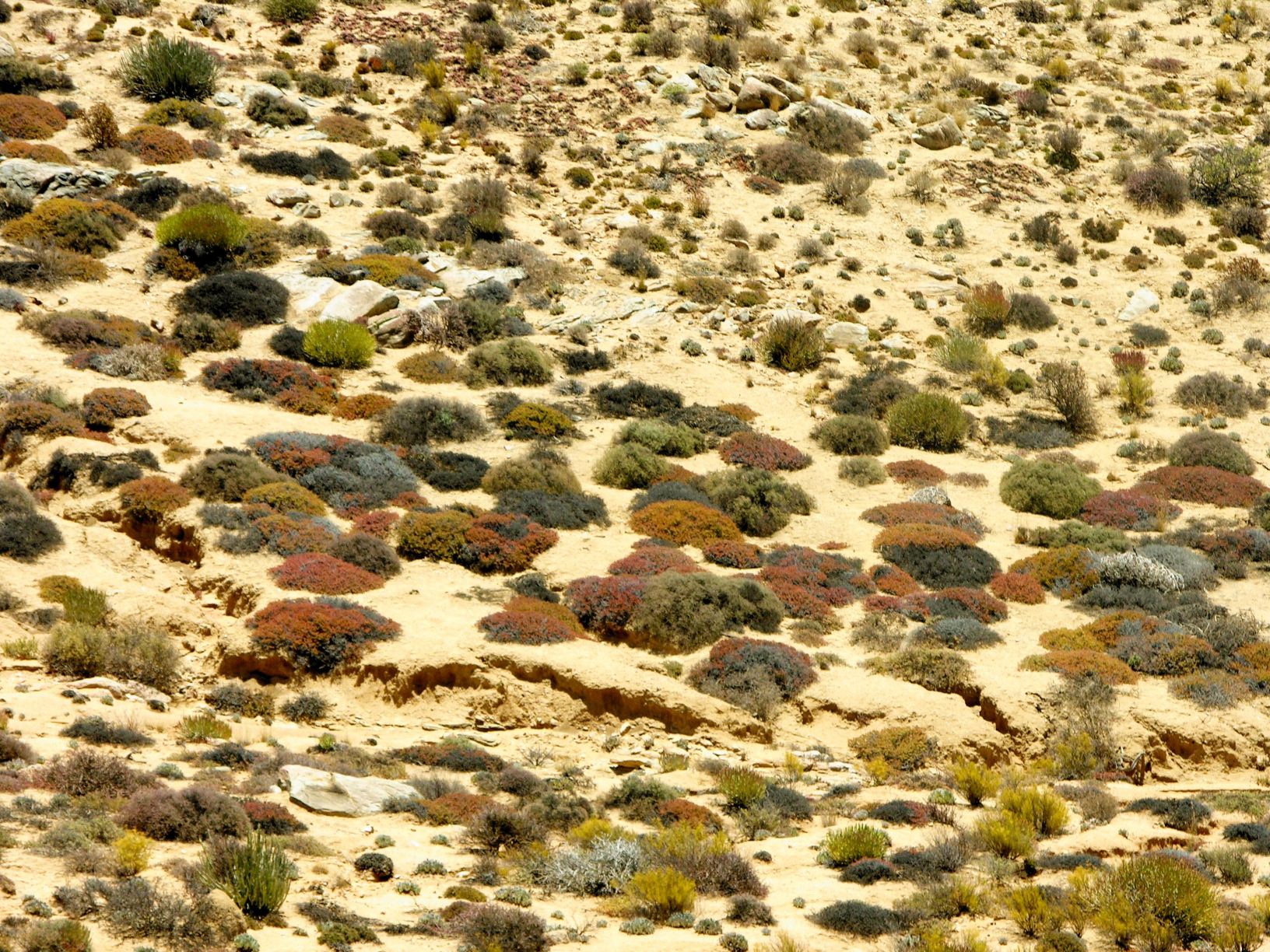
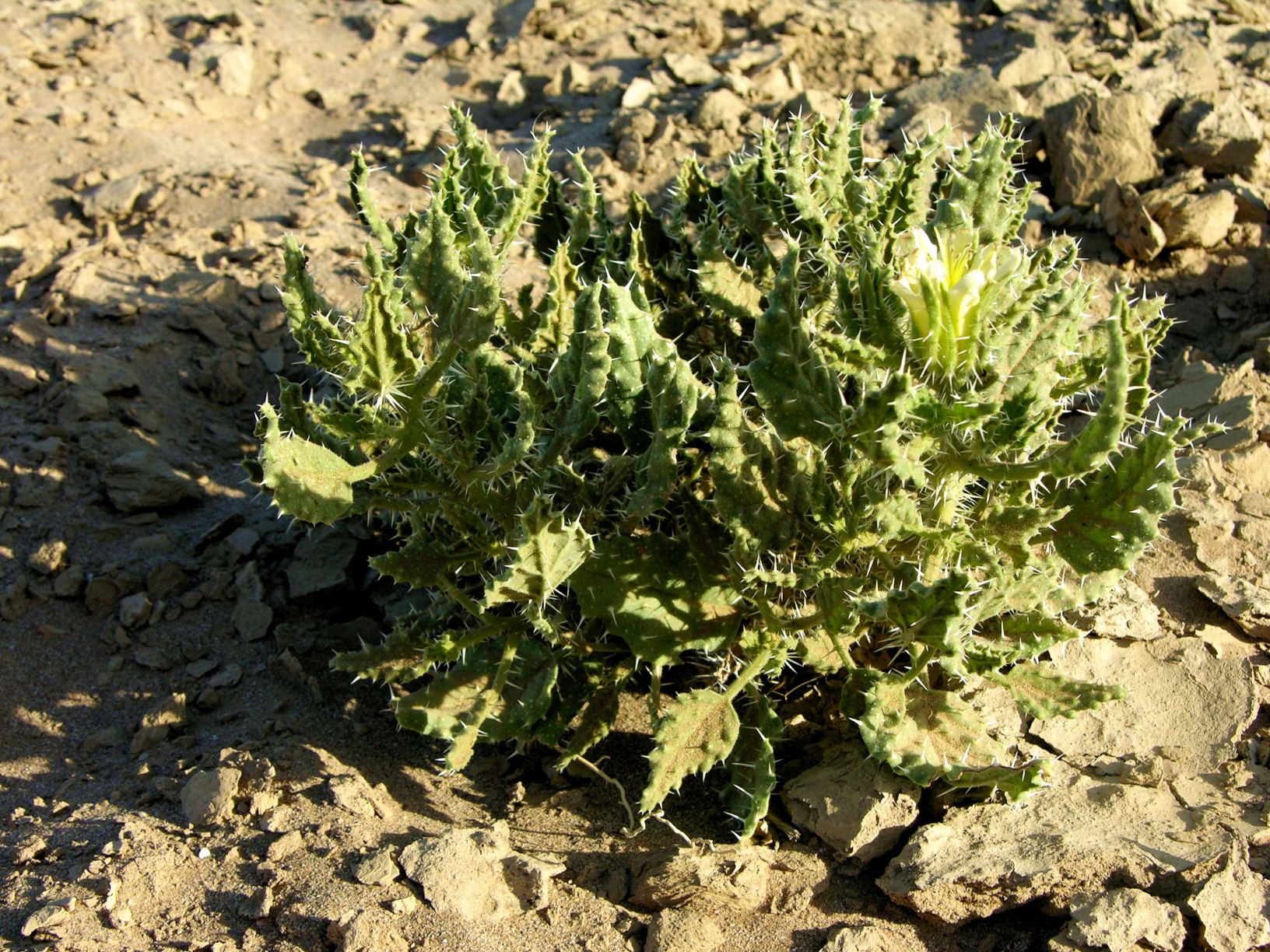
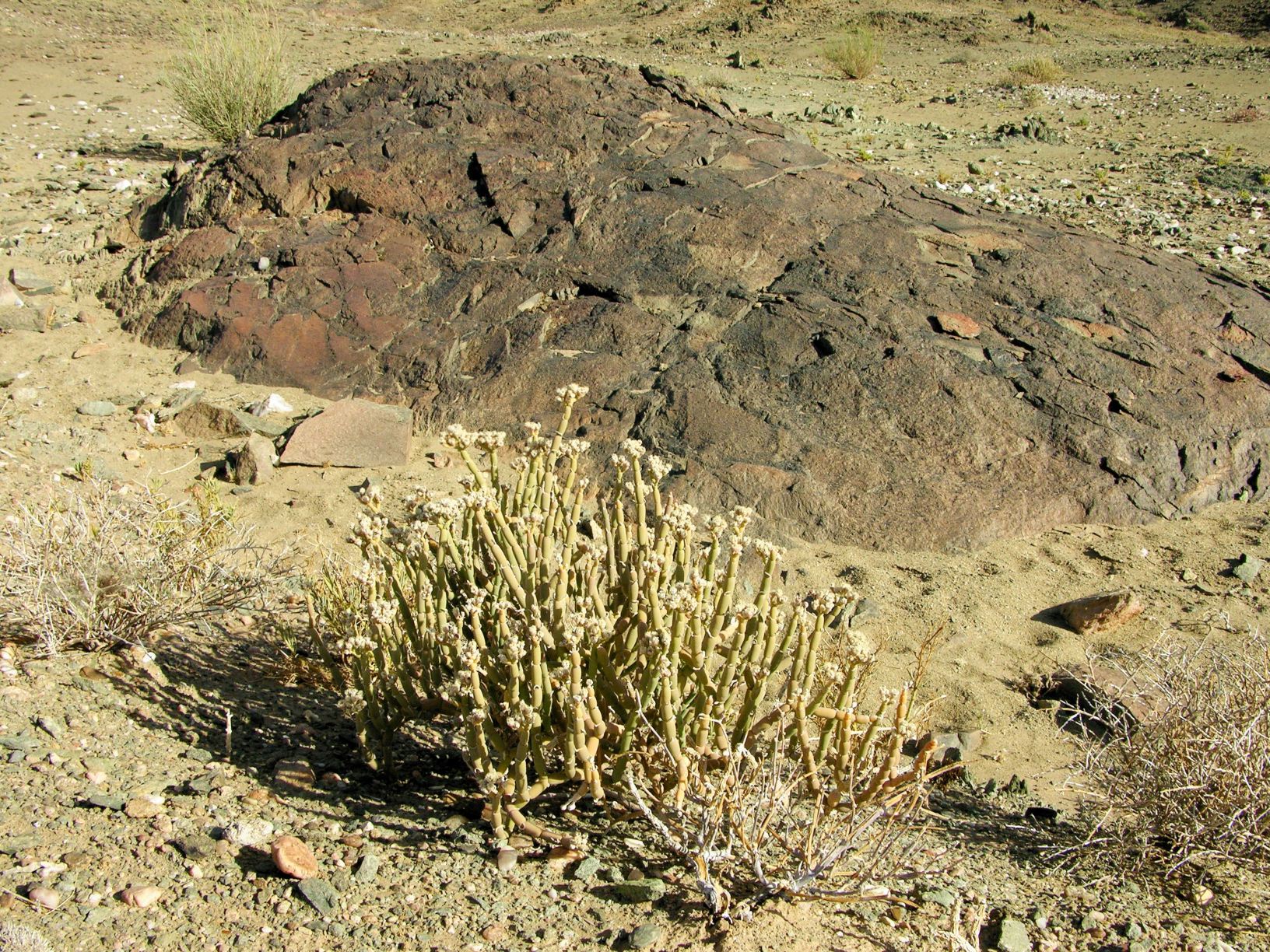
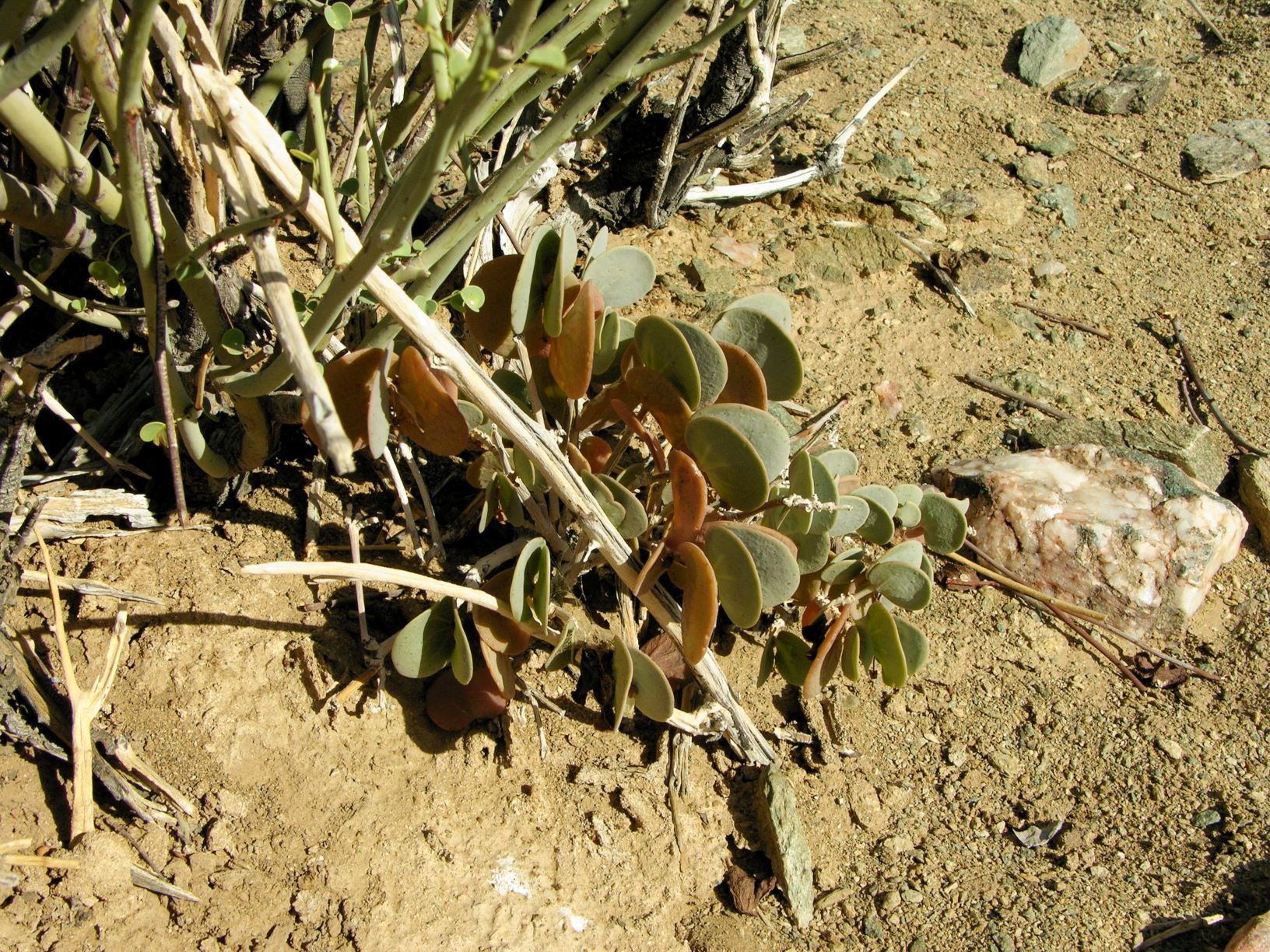
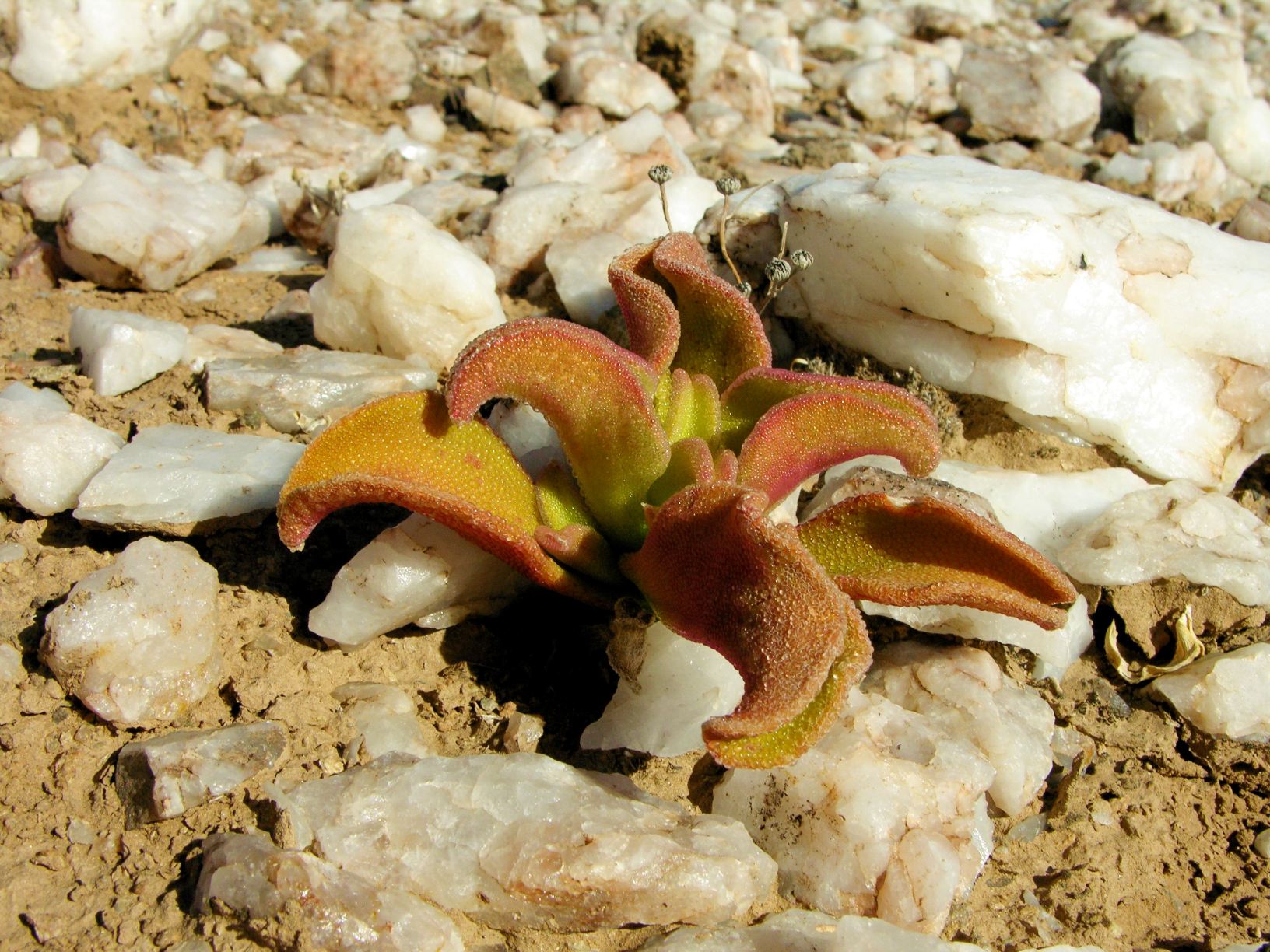
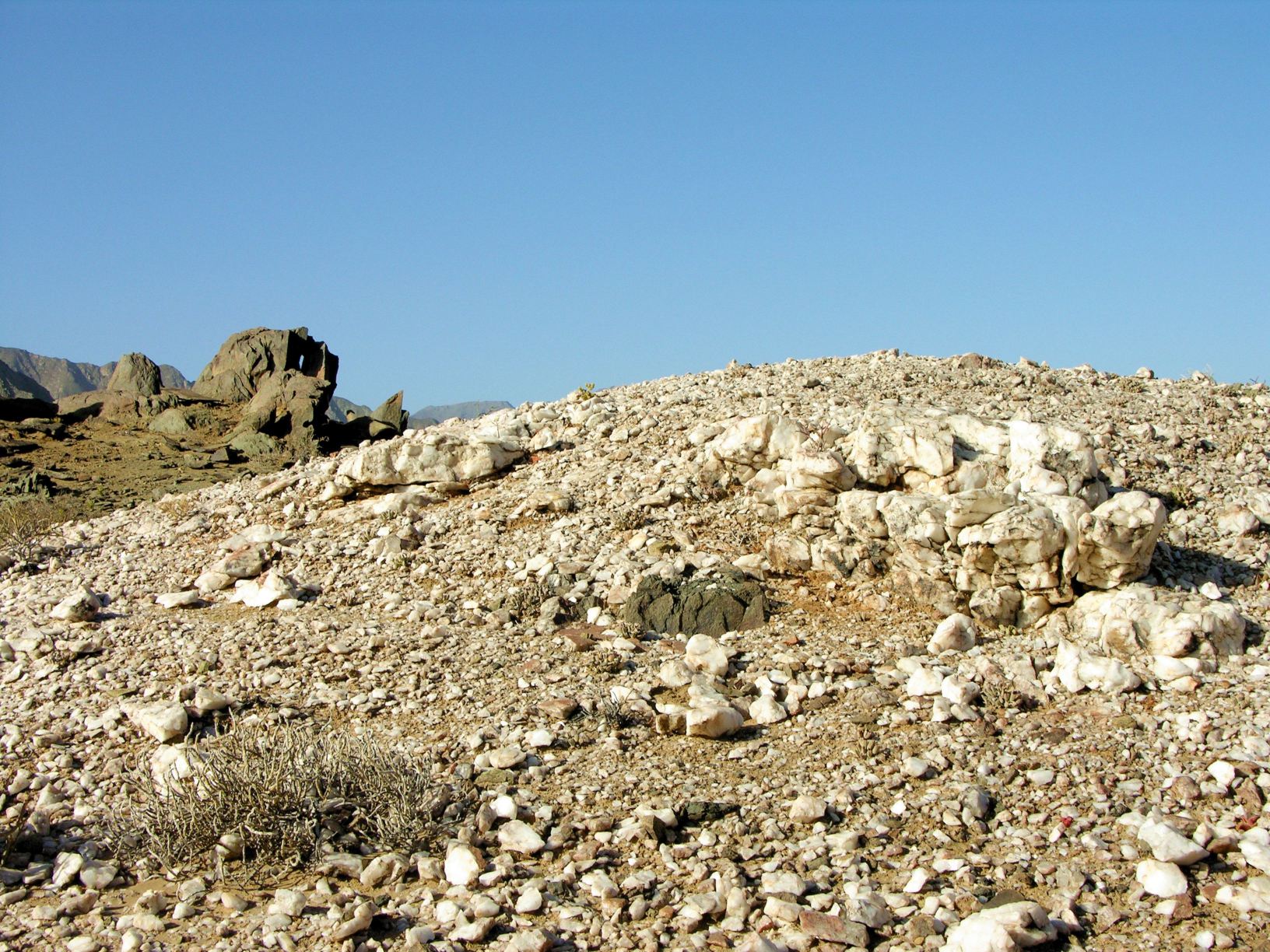
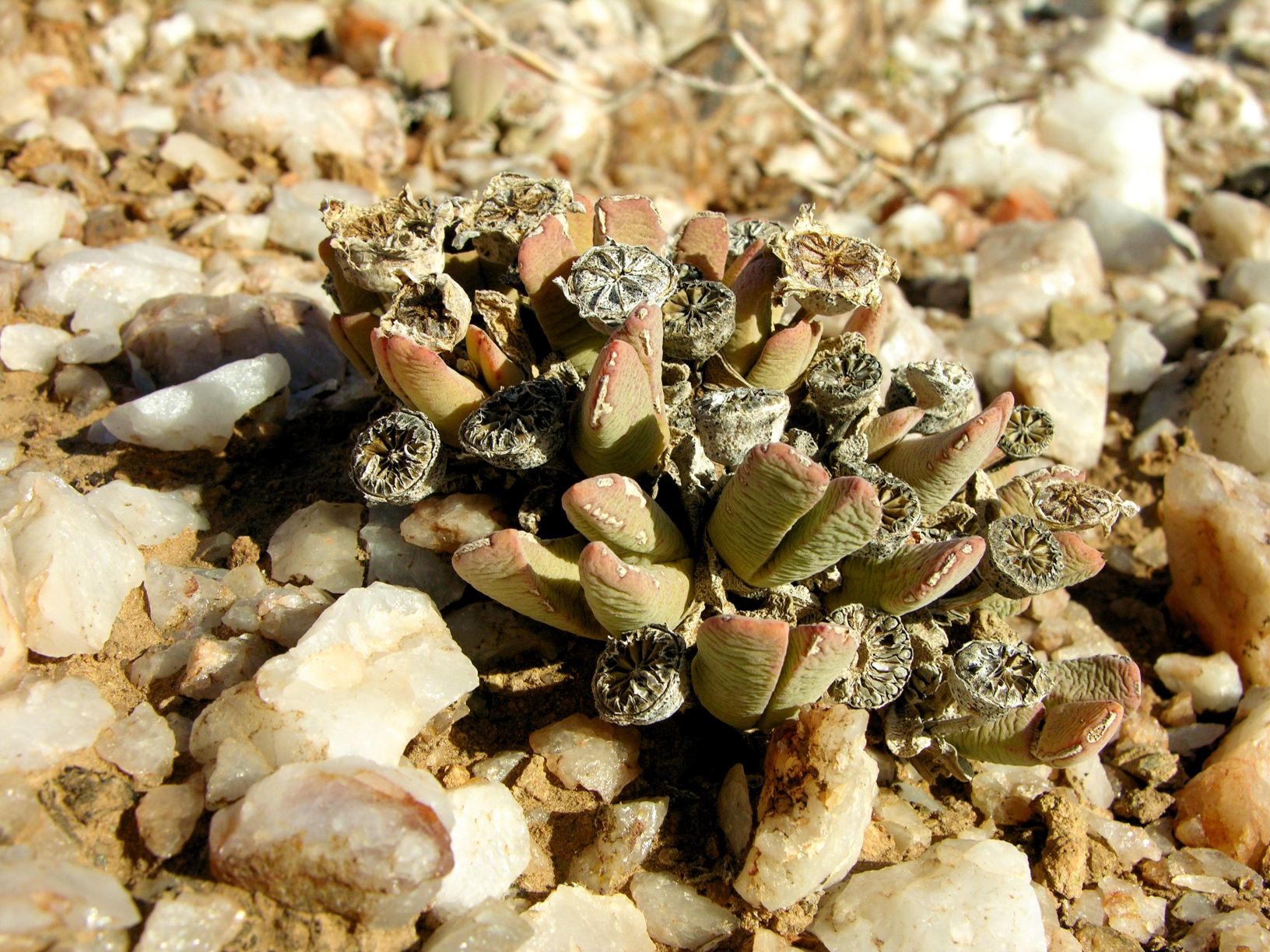
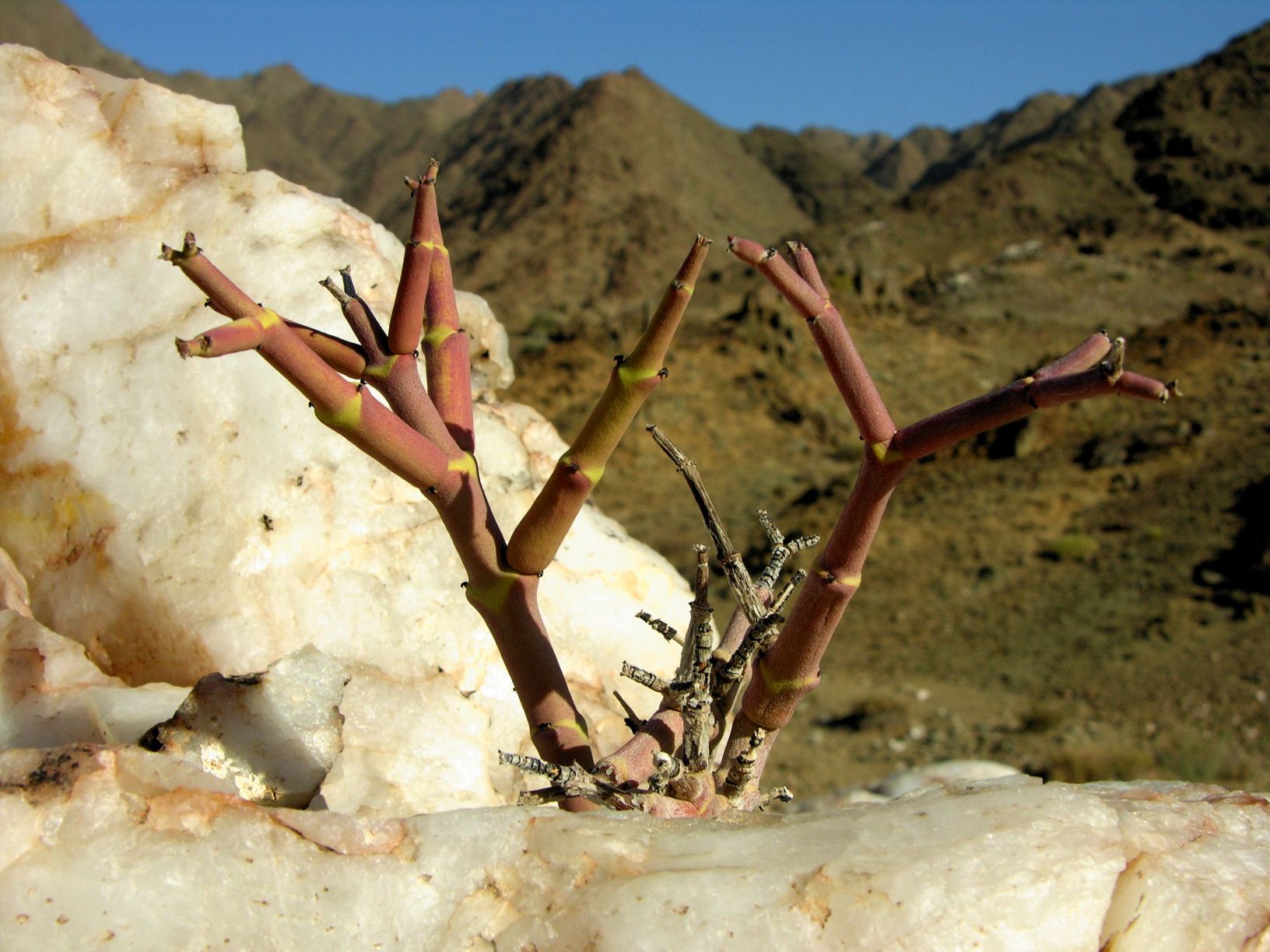
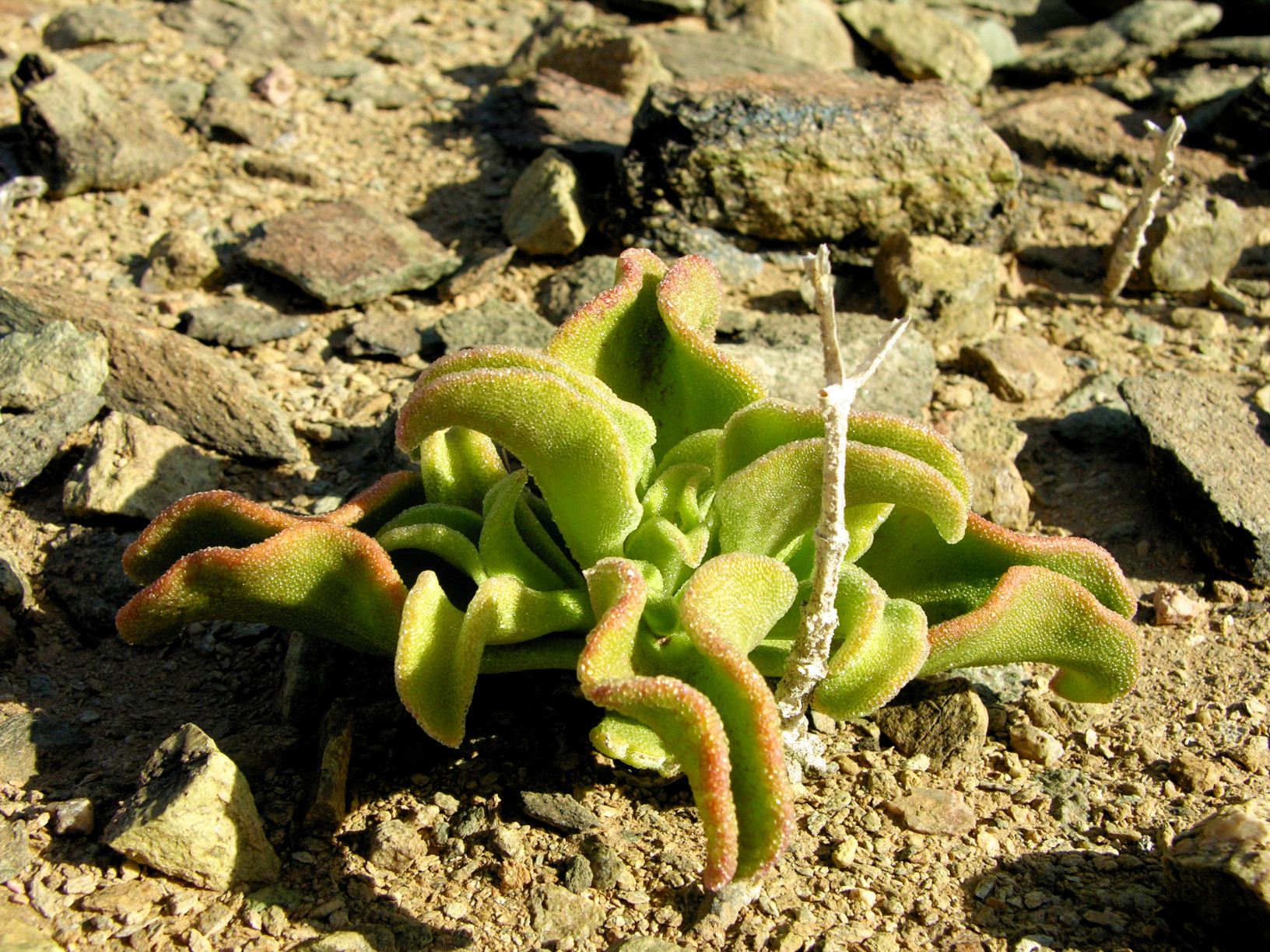
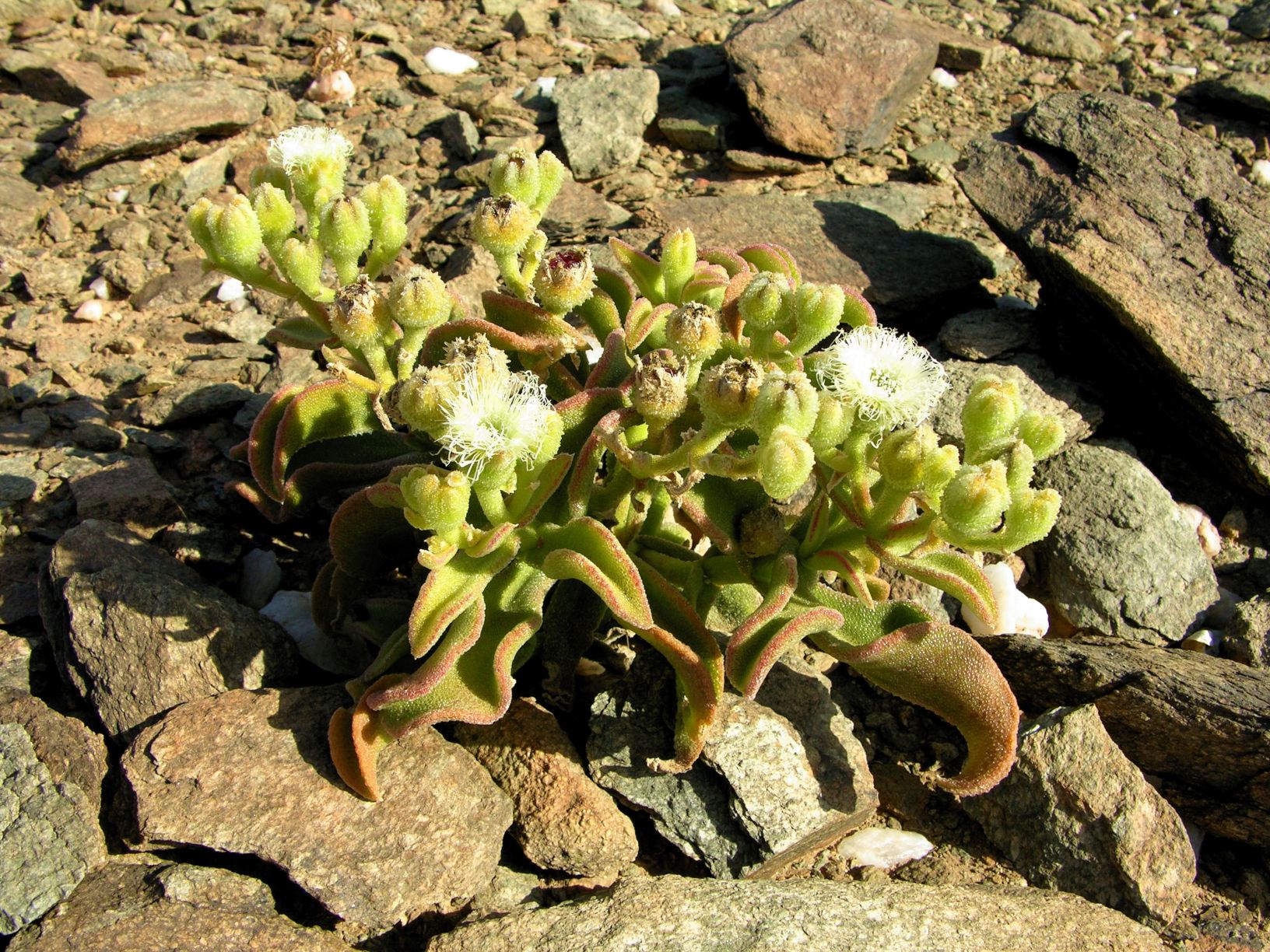
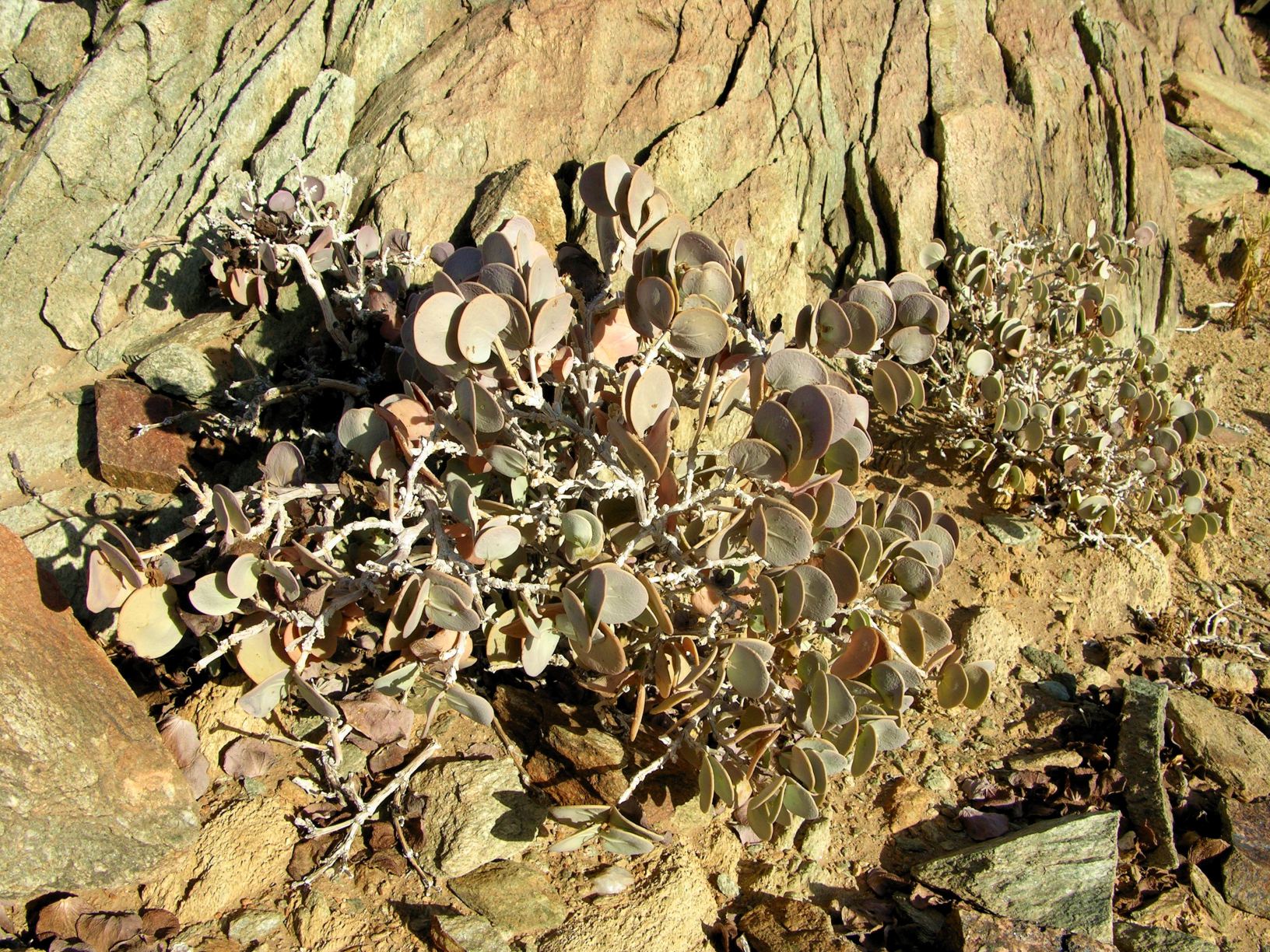
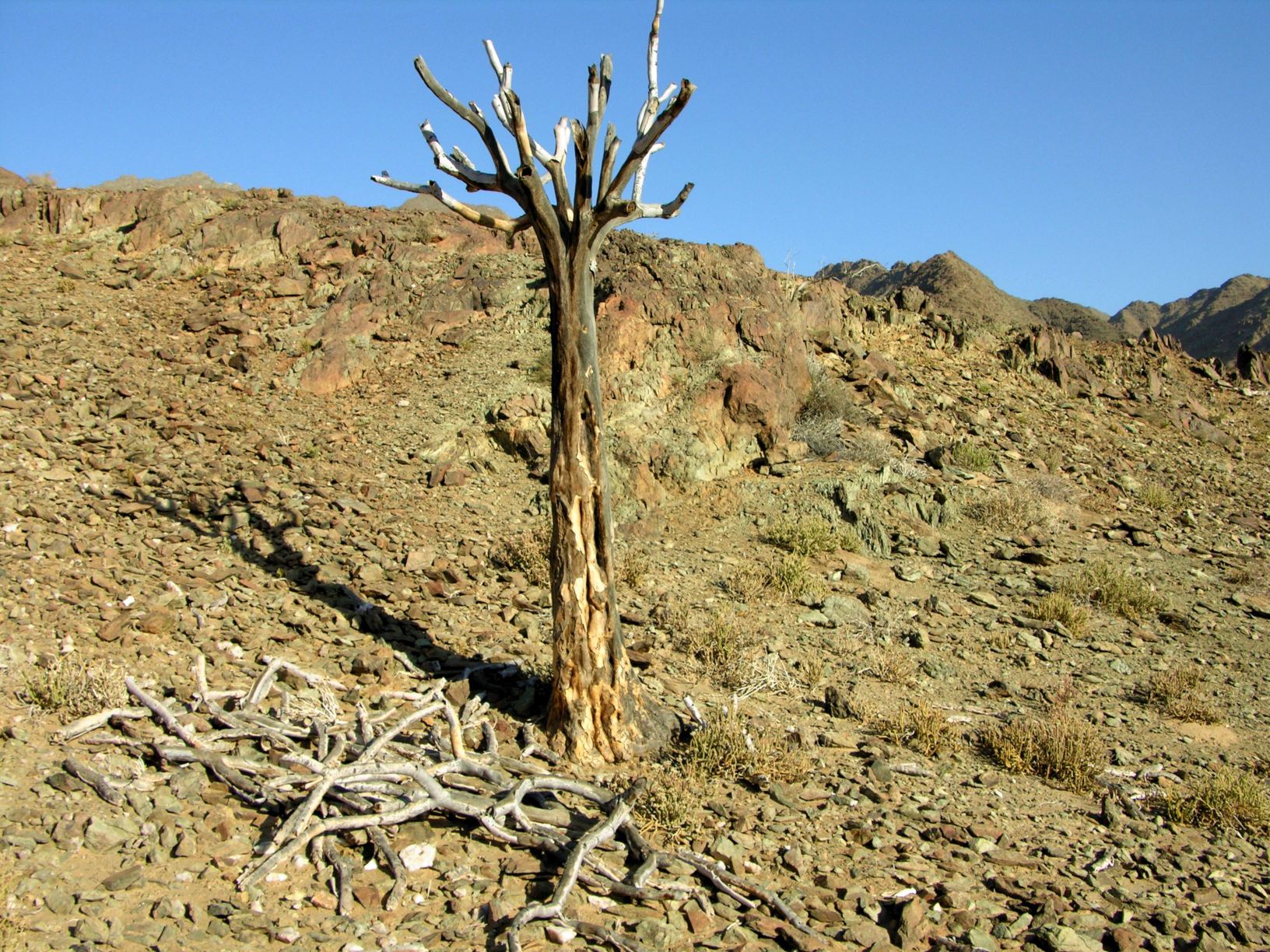
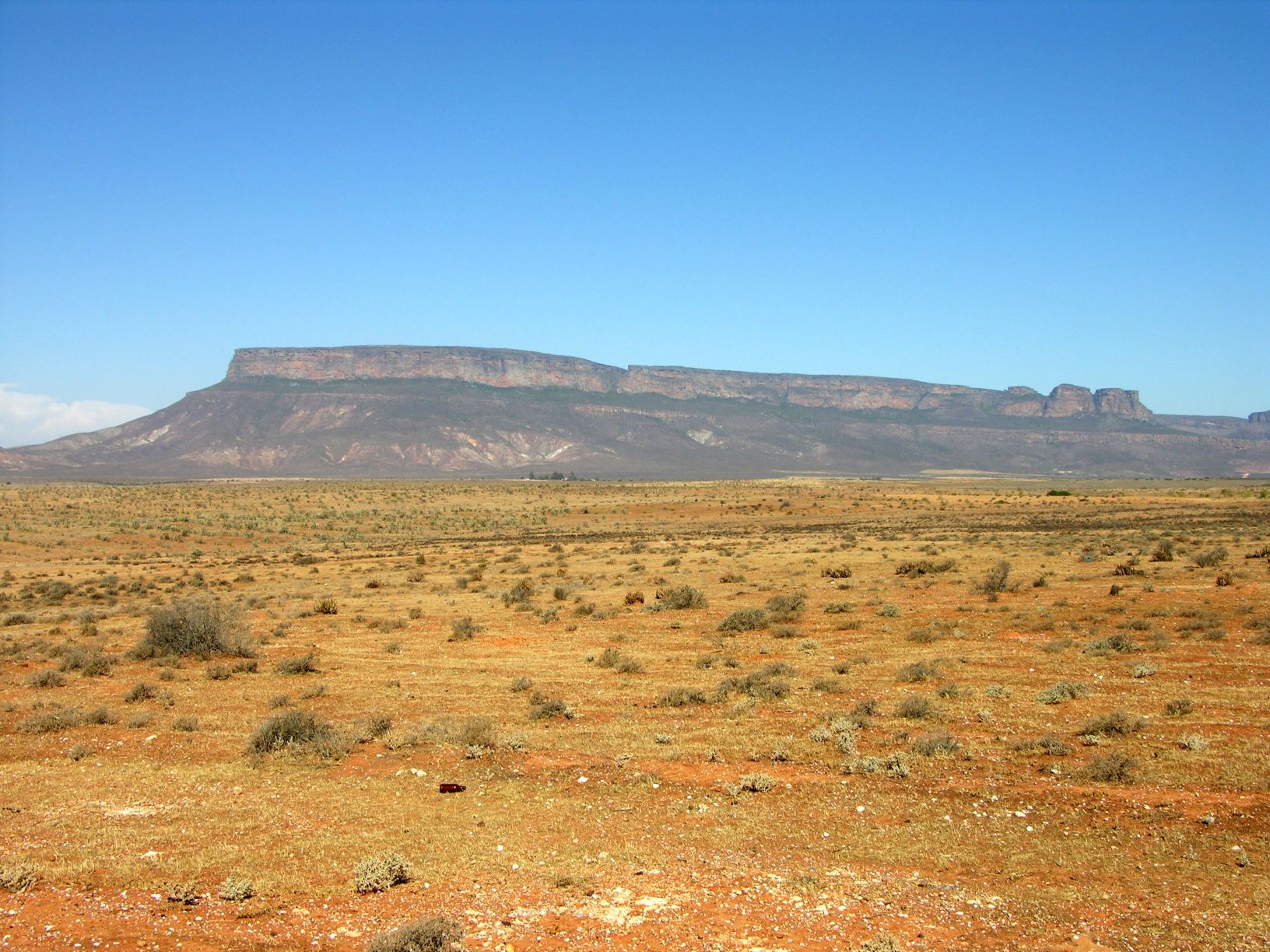
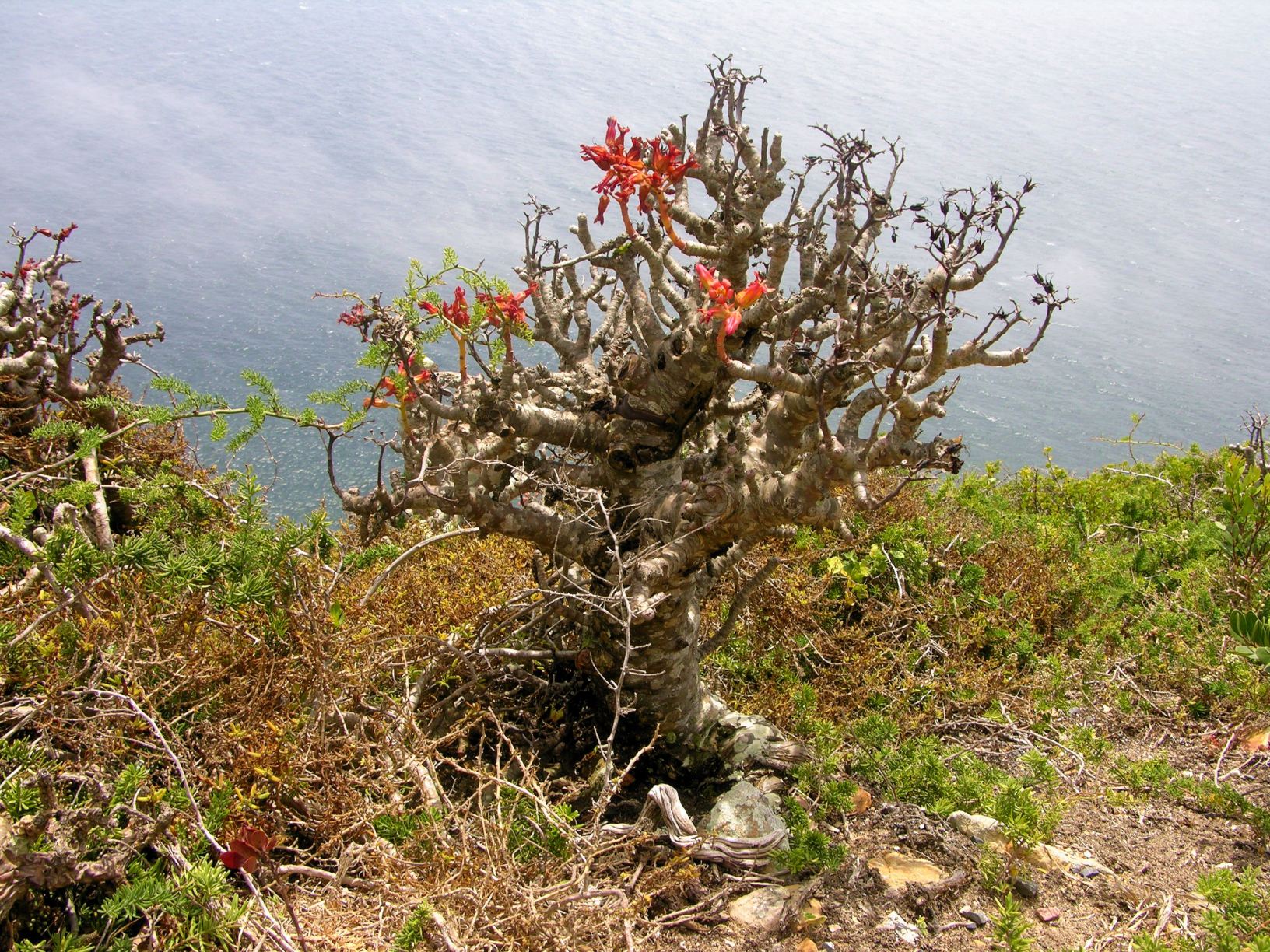
Second, there is unique vegetation here. It hardly ever rains here, but sea fog brings a little moisture. So the valleys are full of succulents. These are plants with, as a rule, thick leaves that store enough water for many months. The one we know best is Crassula, or the money tree, a fixture on Russian windowsills. There are two hundred species in Richtersveld. And here grows the pachypodium, my favourite plant. I love cacti too, but this marvel even more so. It's no wonder local people think of the pachypodium as half human. They believe the souls of the dead pass into it. And the pachypodium looks like somebody sitting on a rock, watching the sunset.
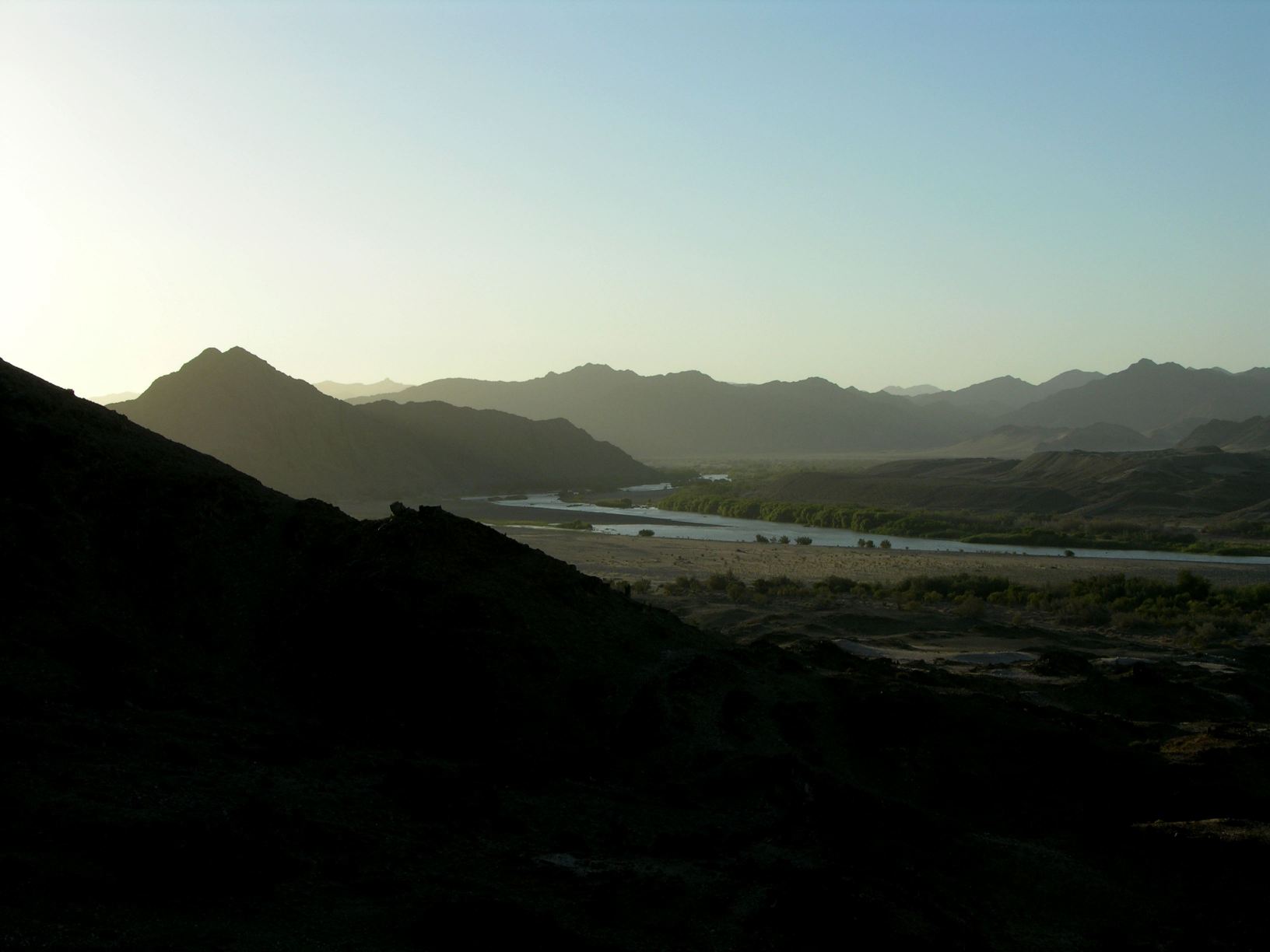
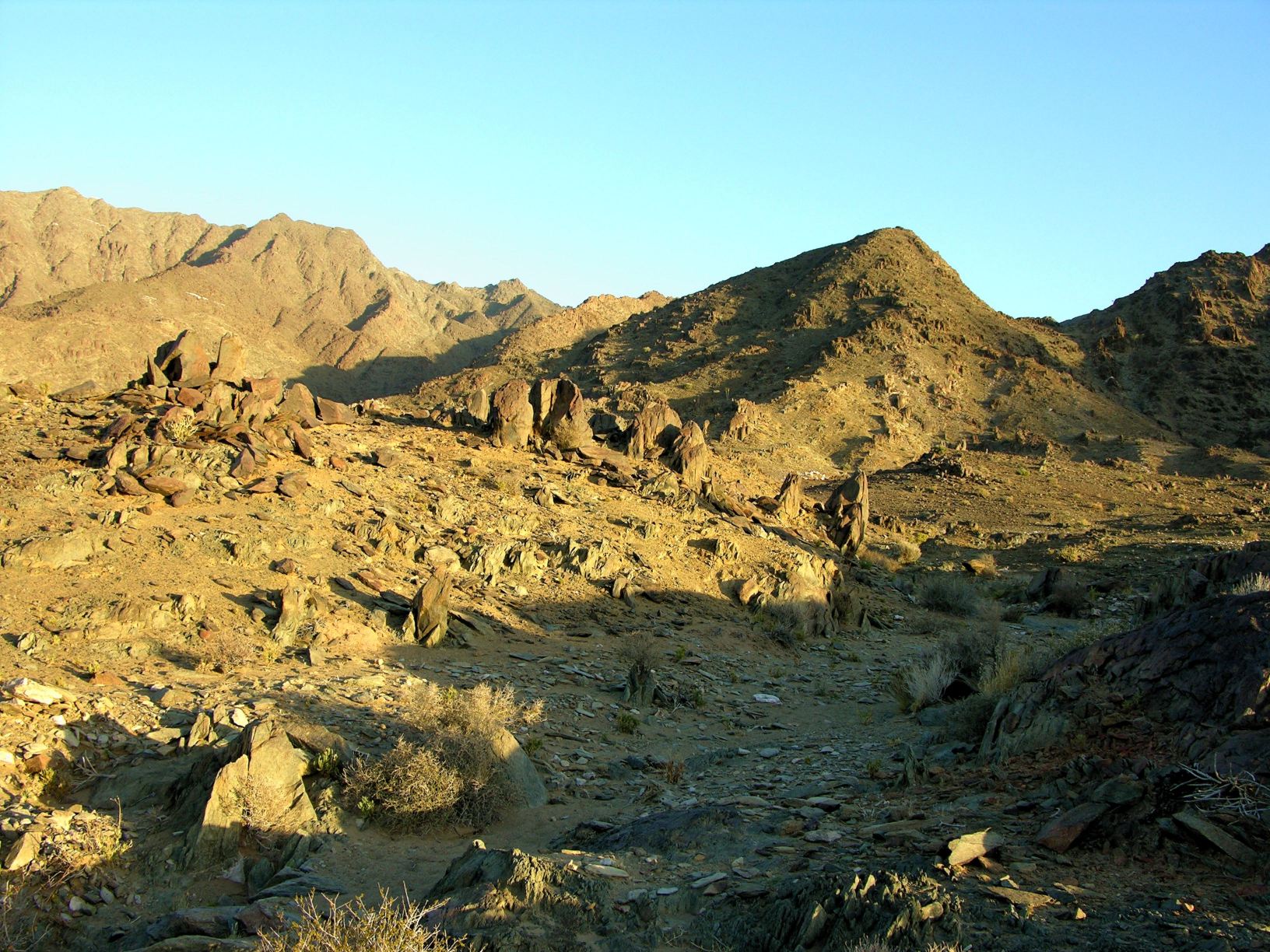
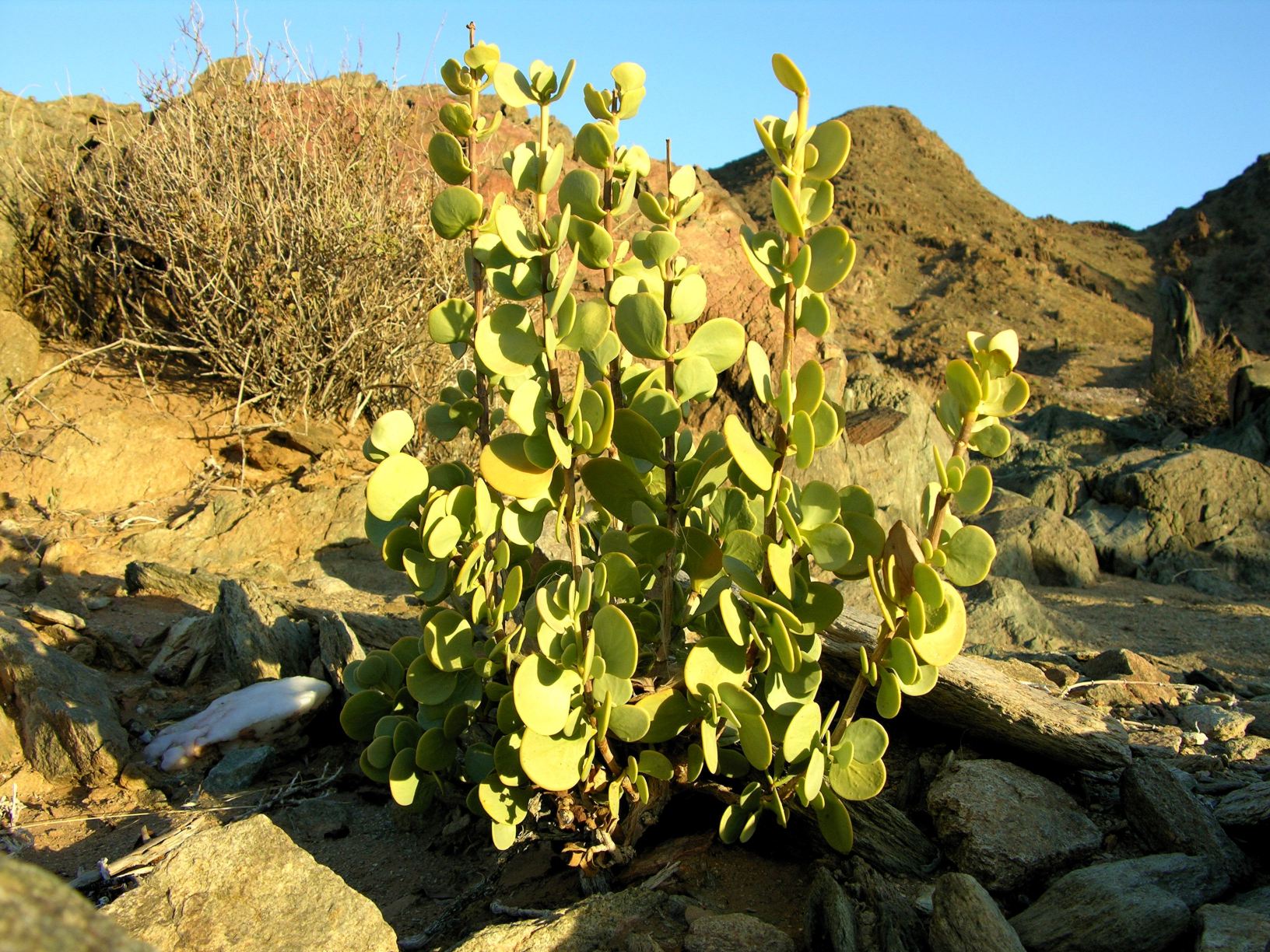
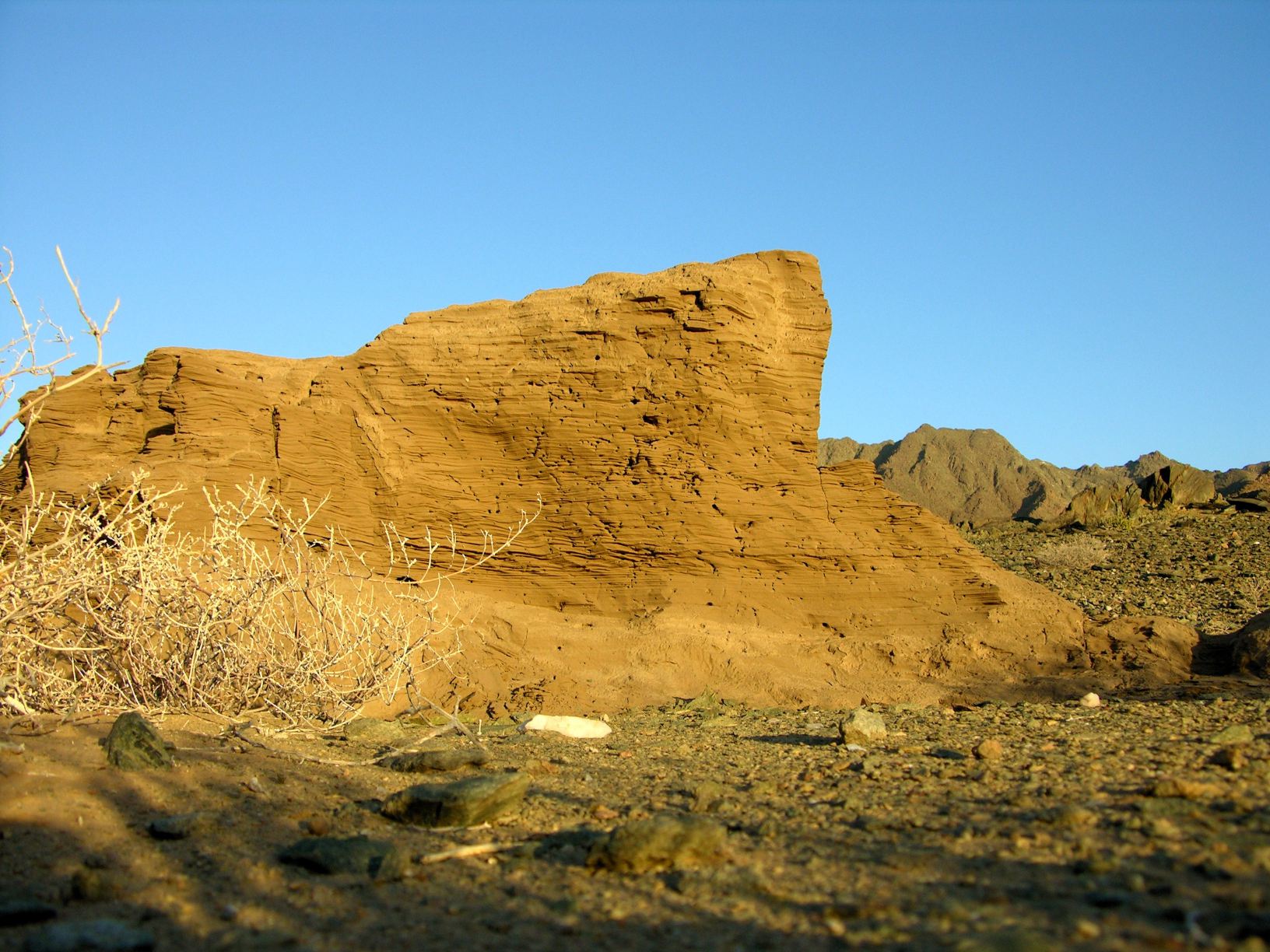
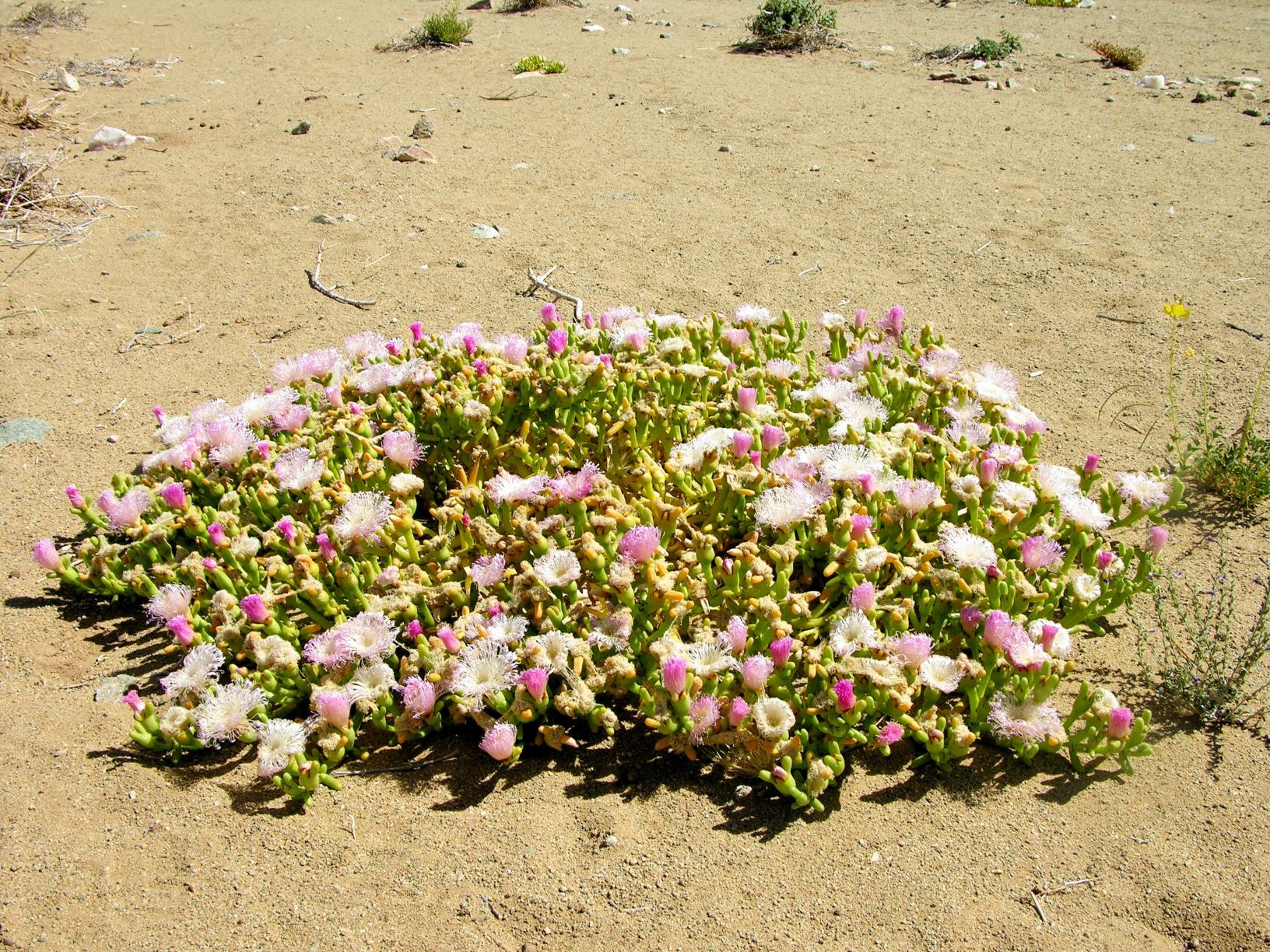
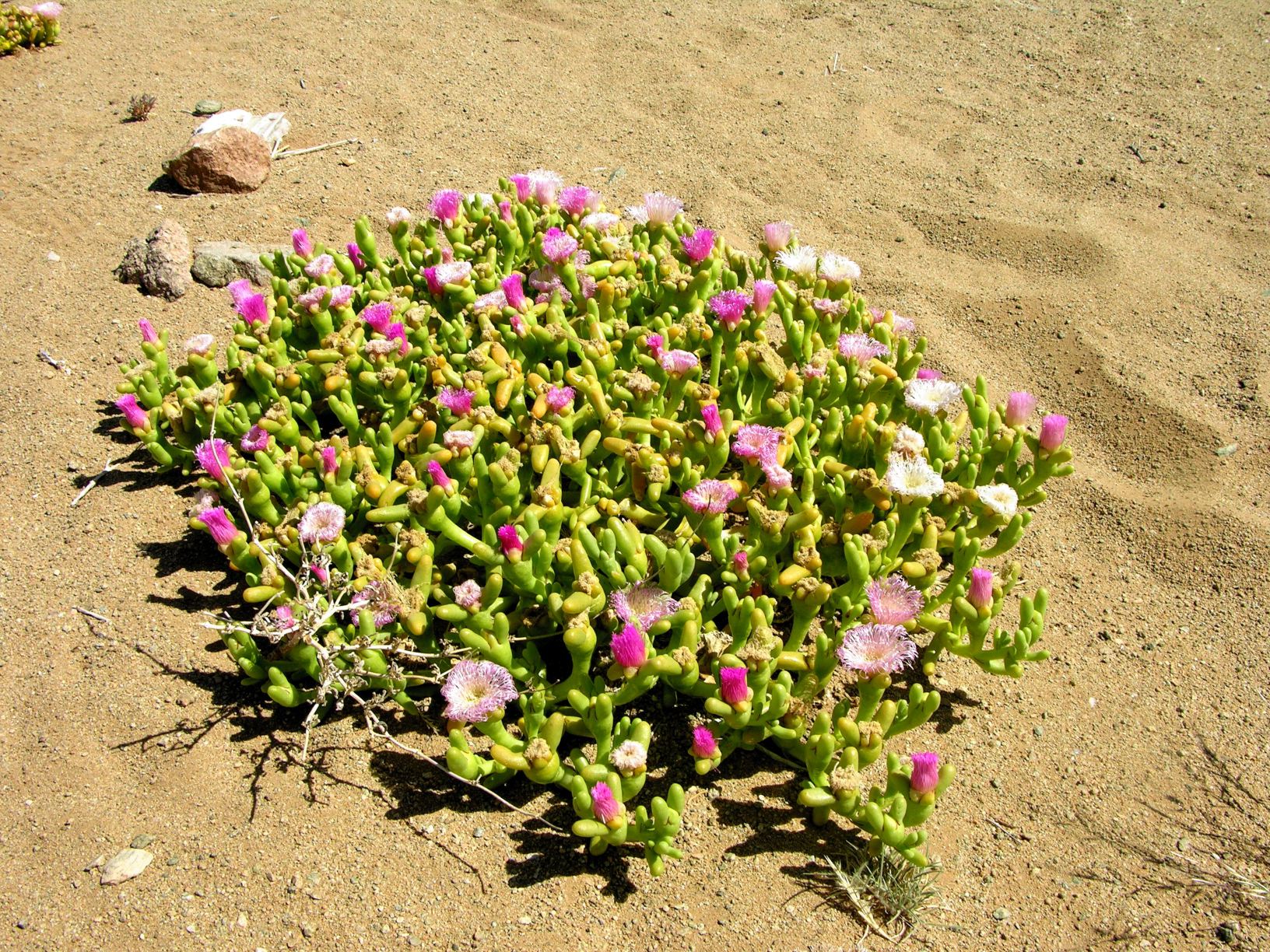
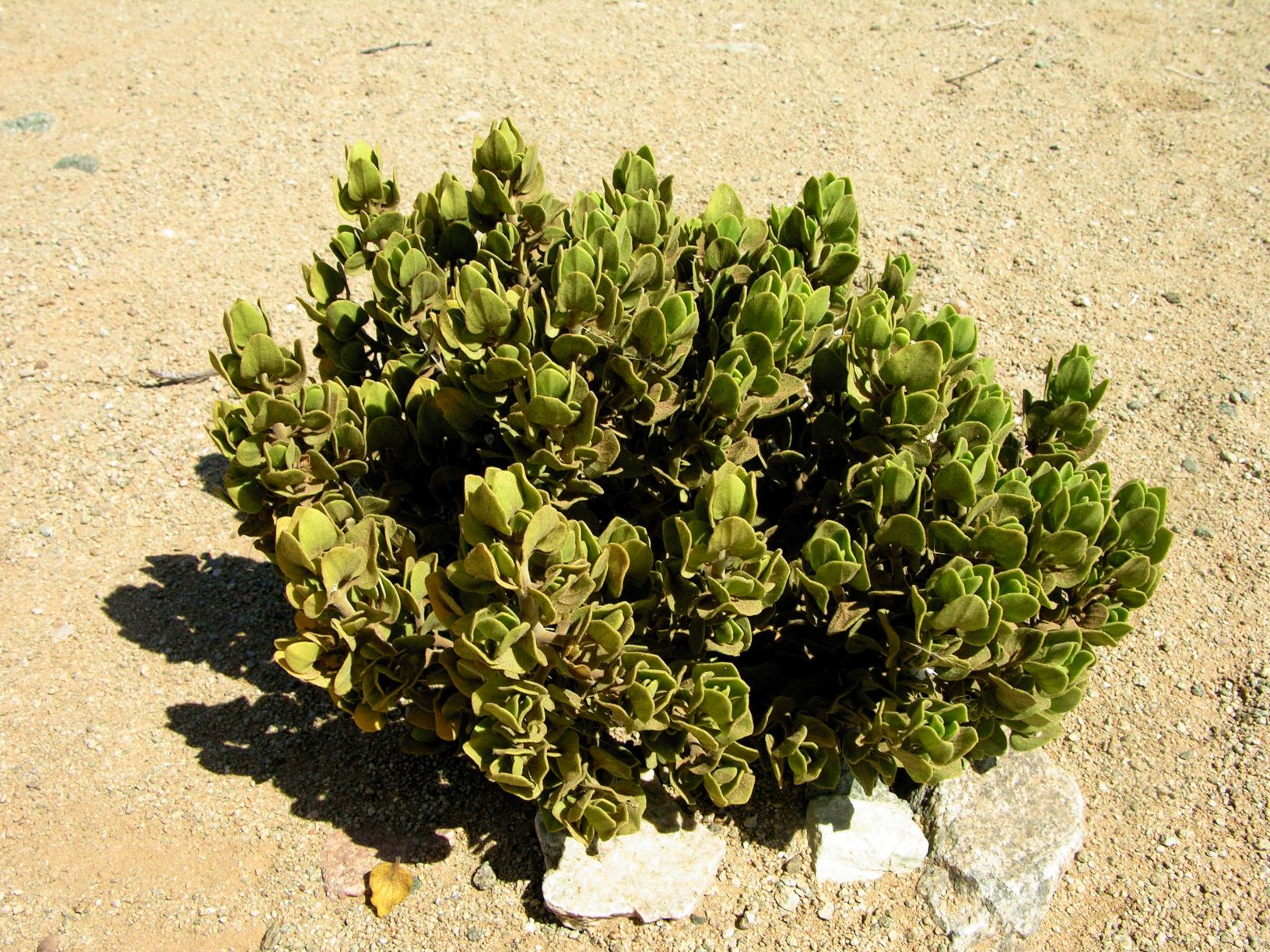
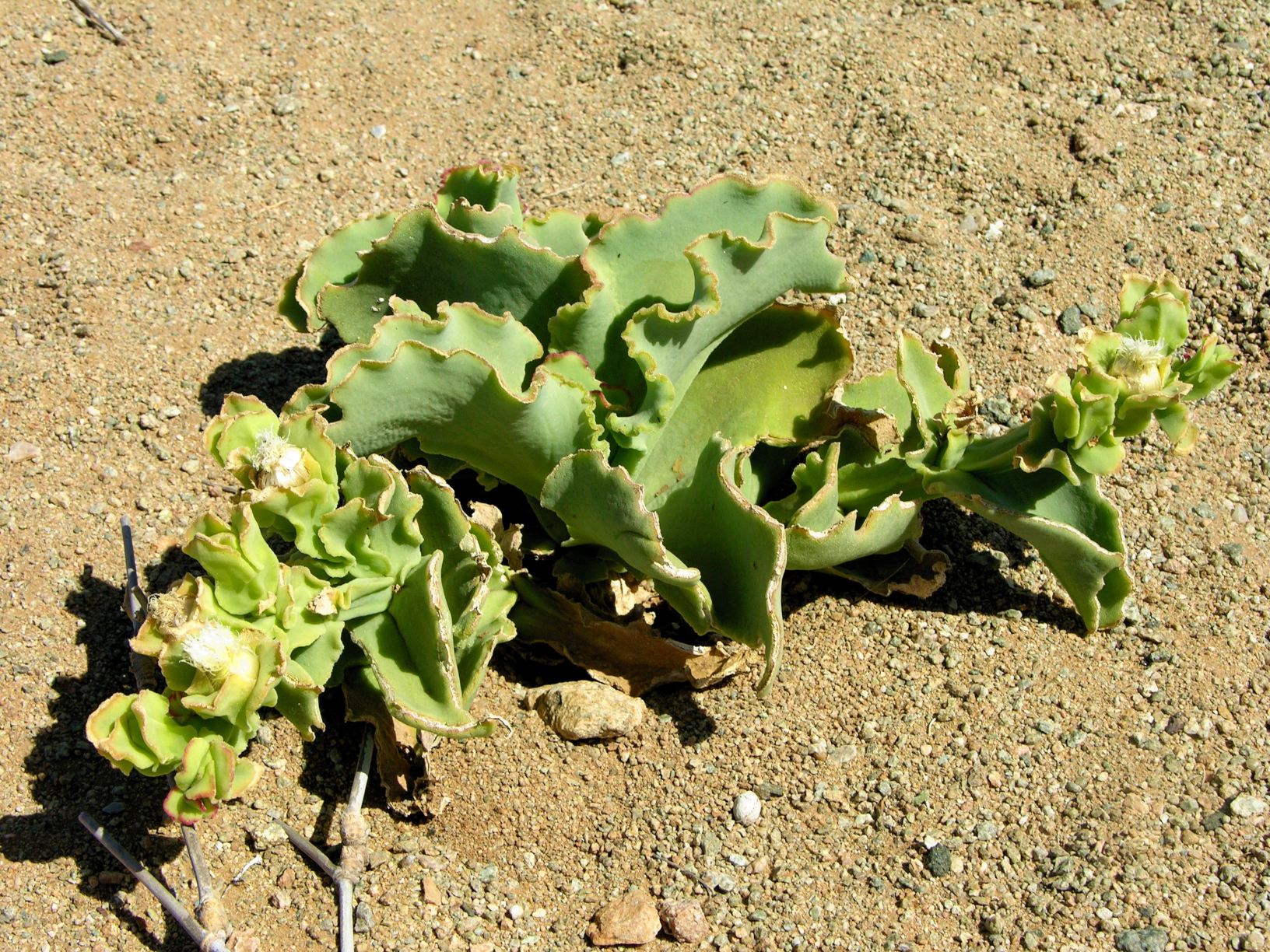
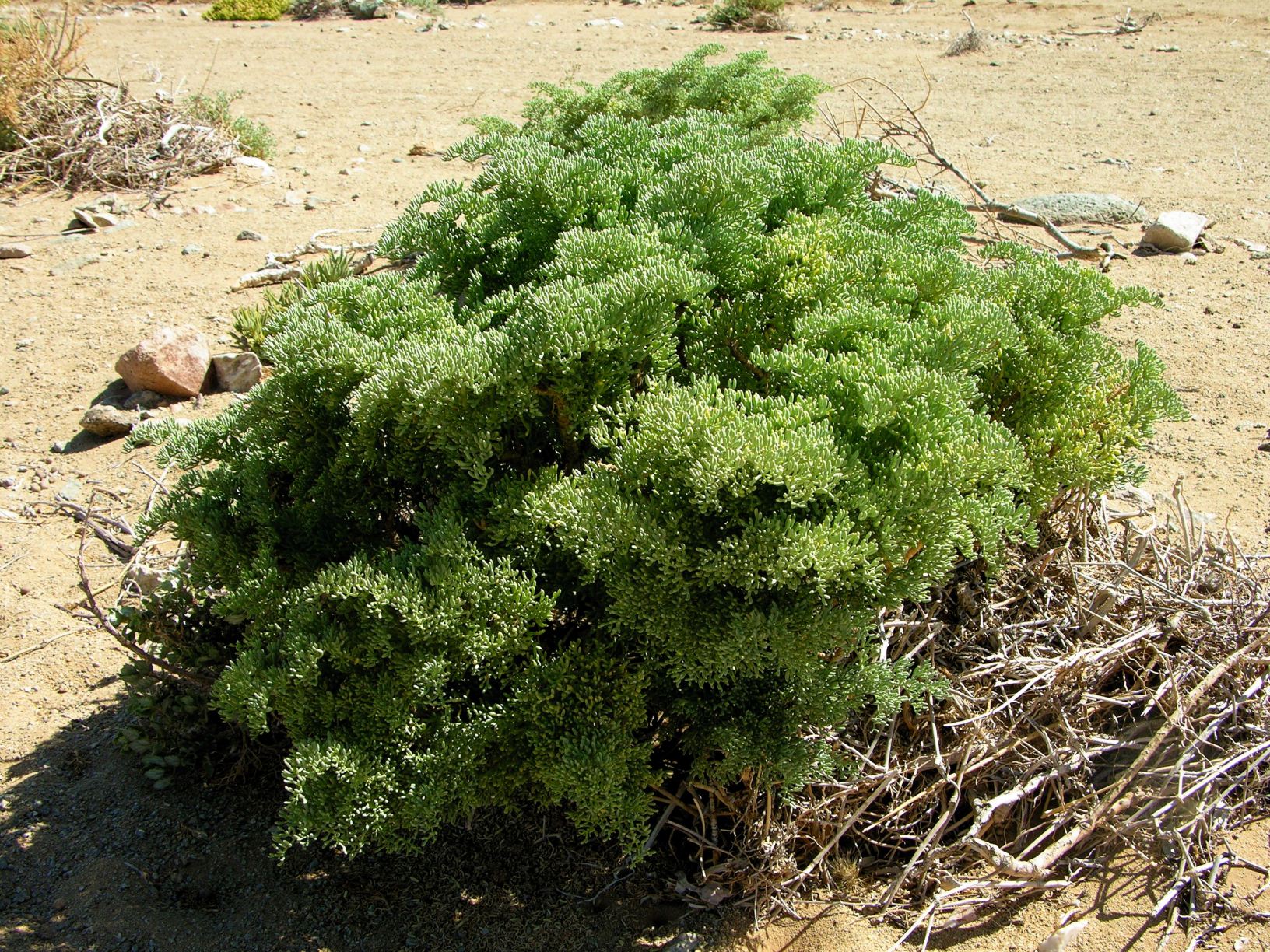
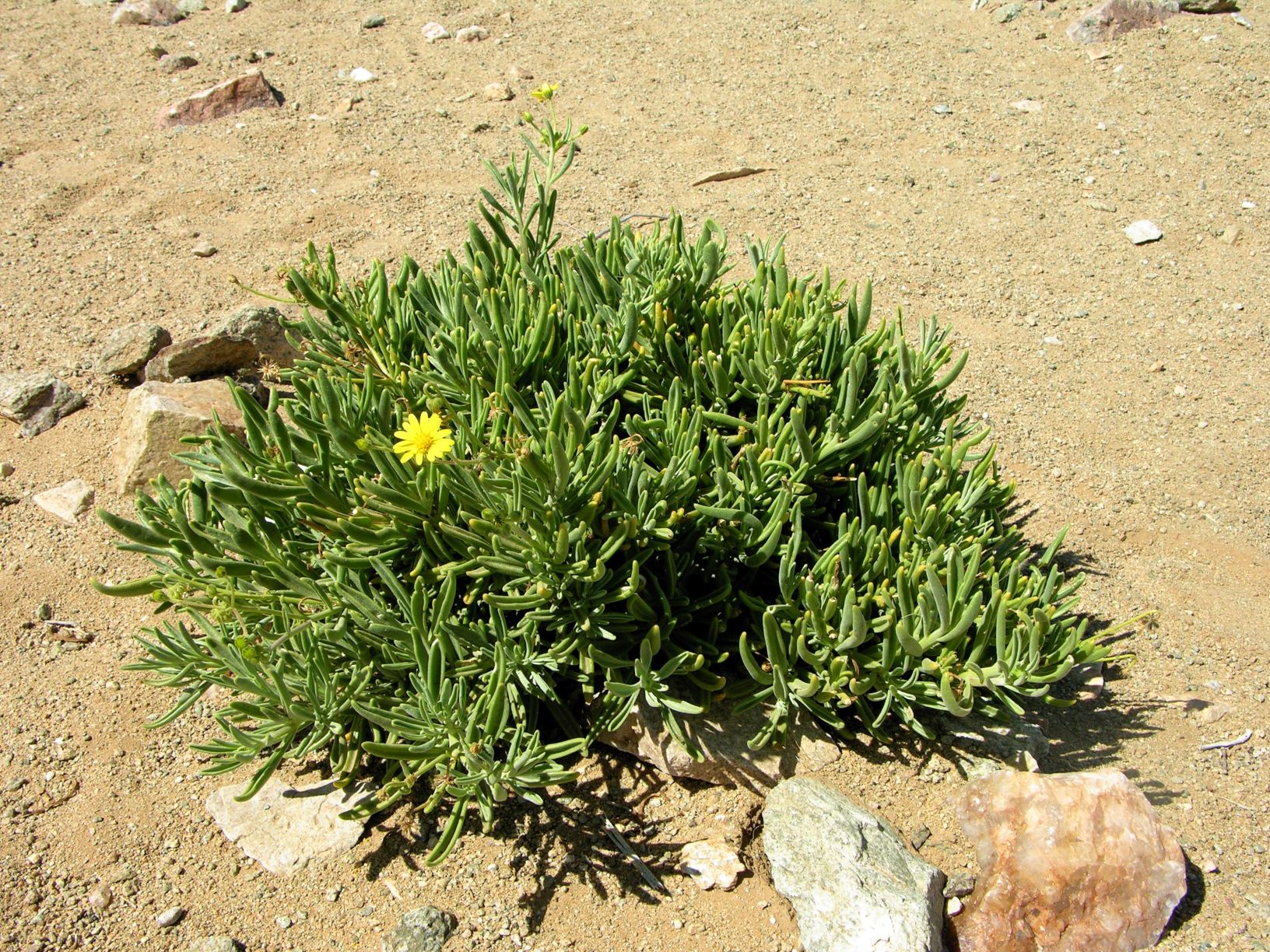
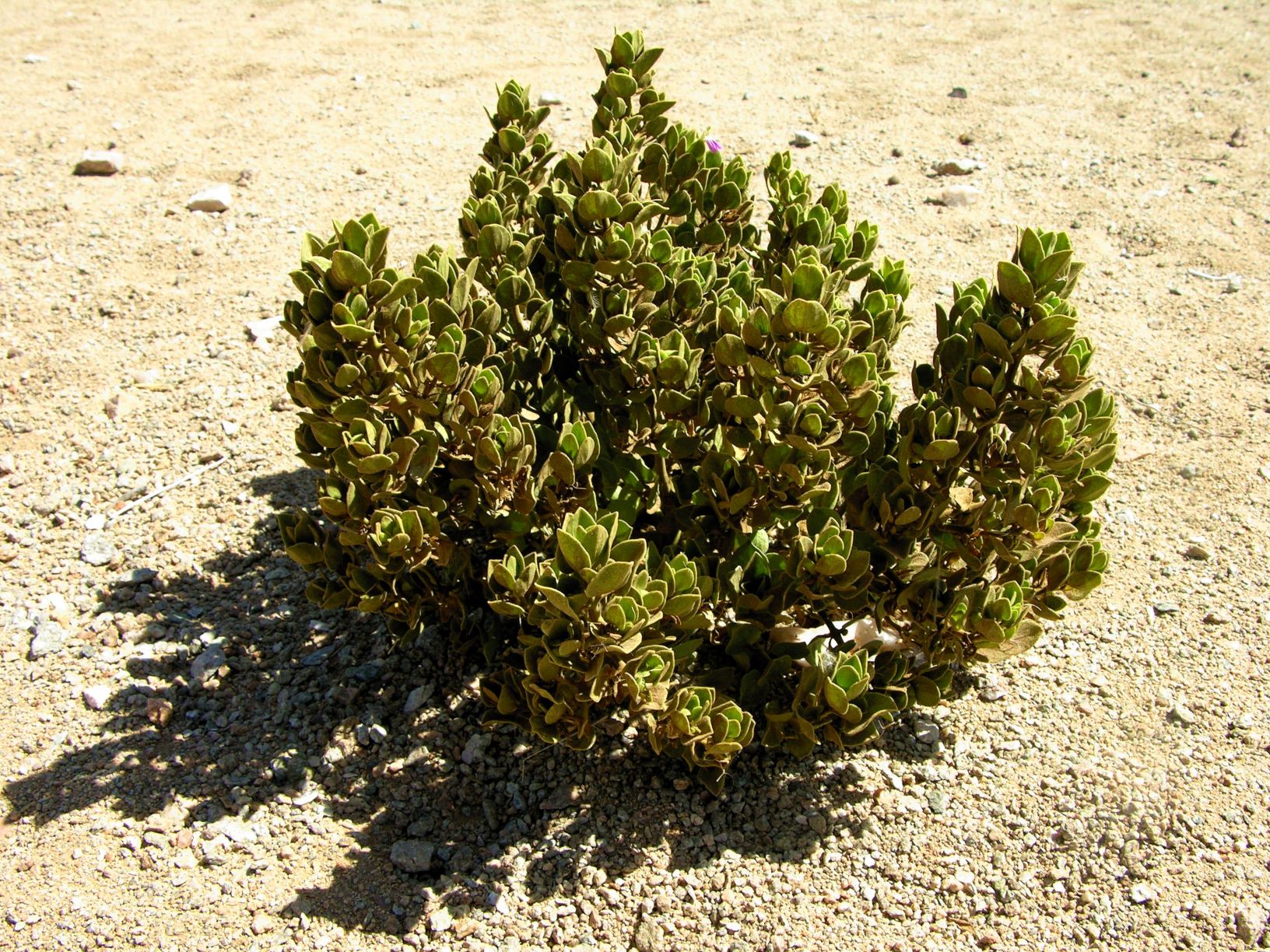
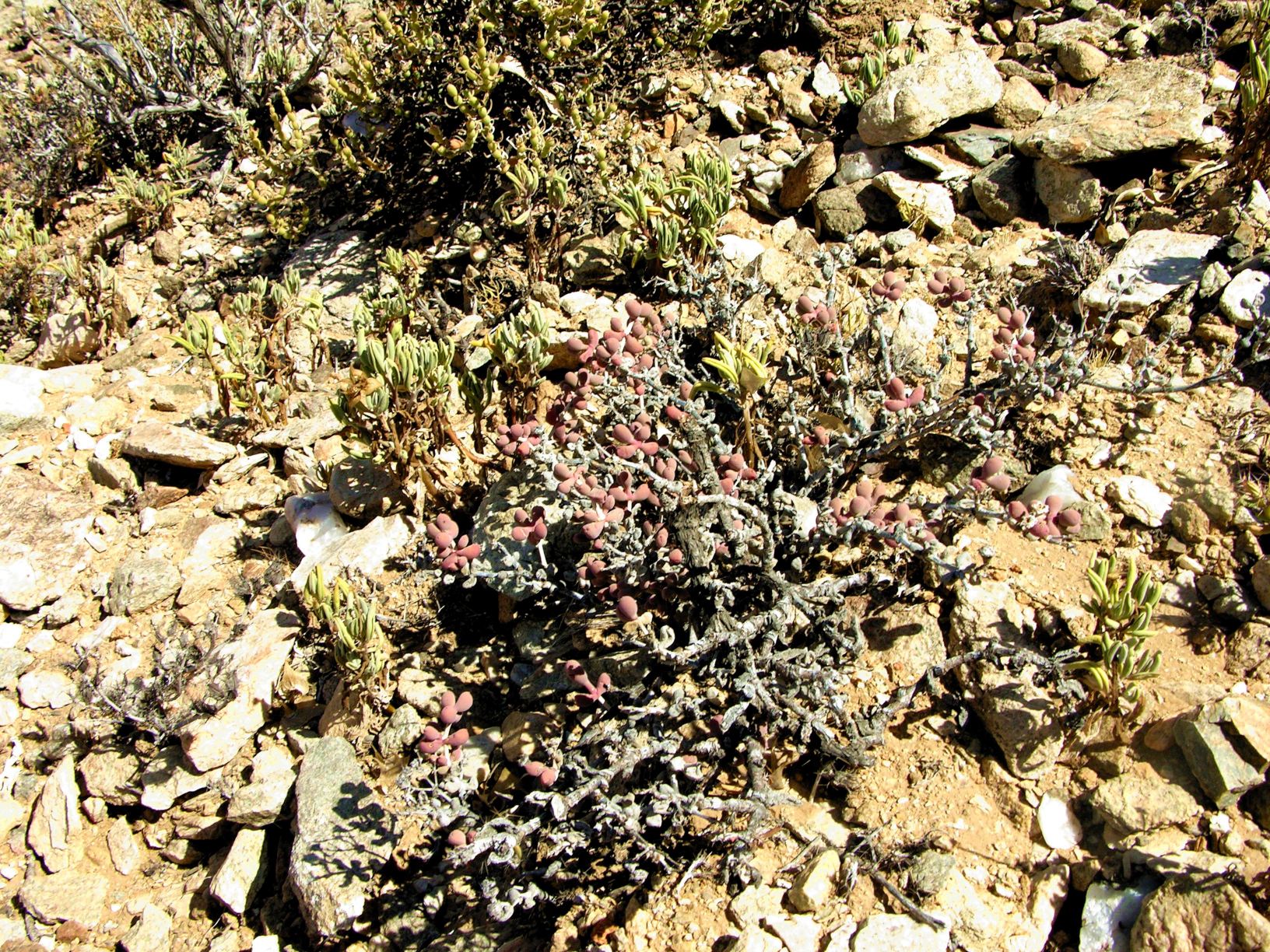
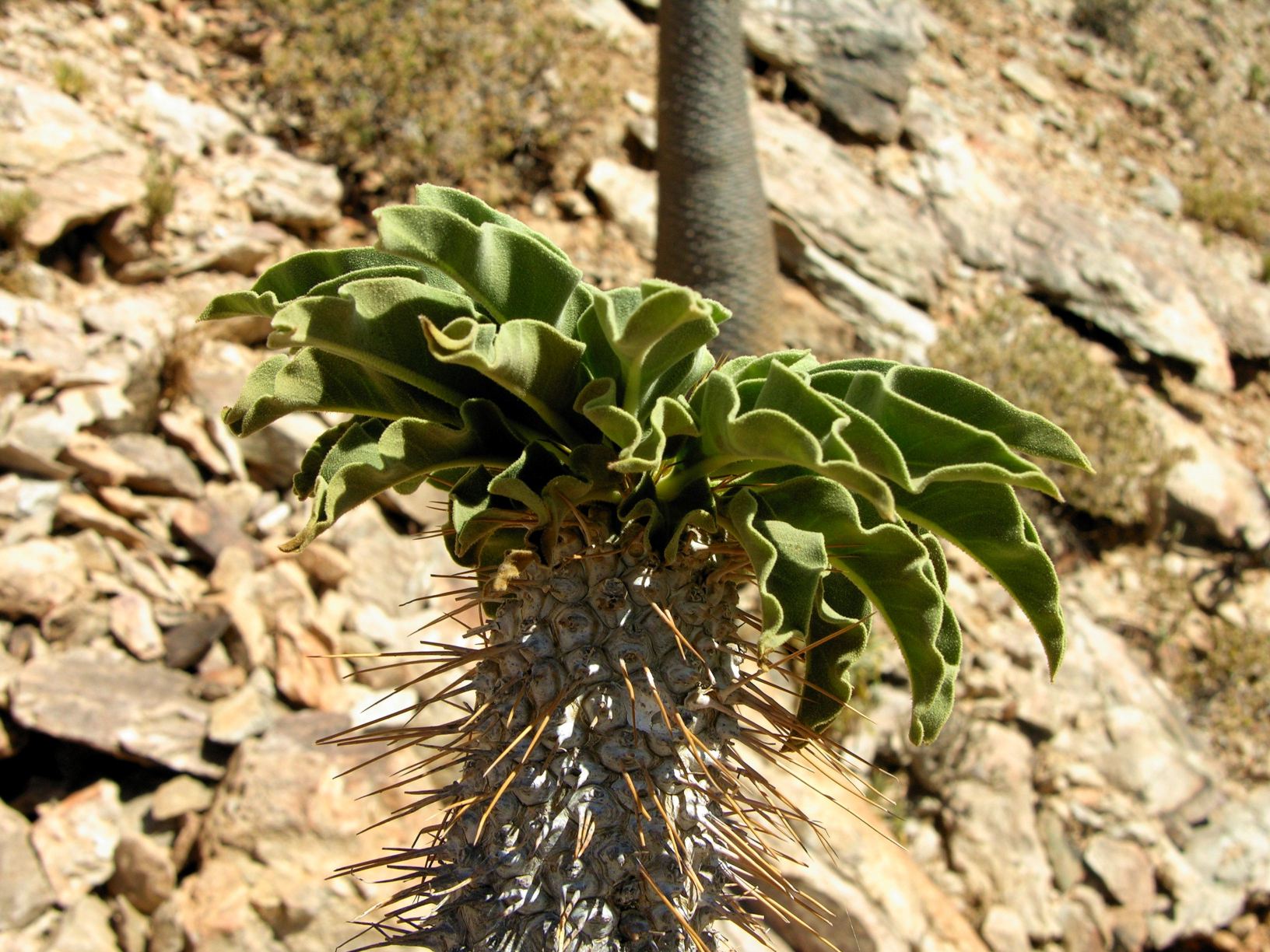
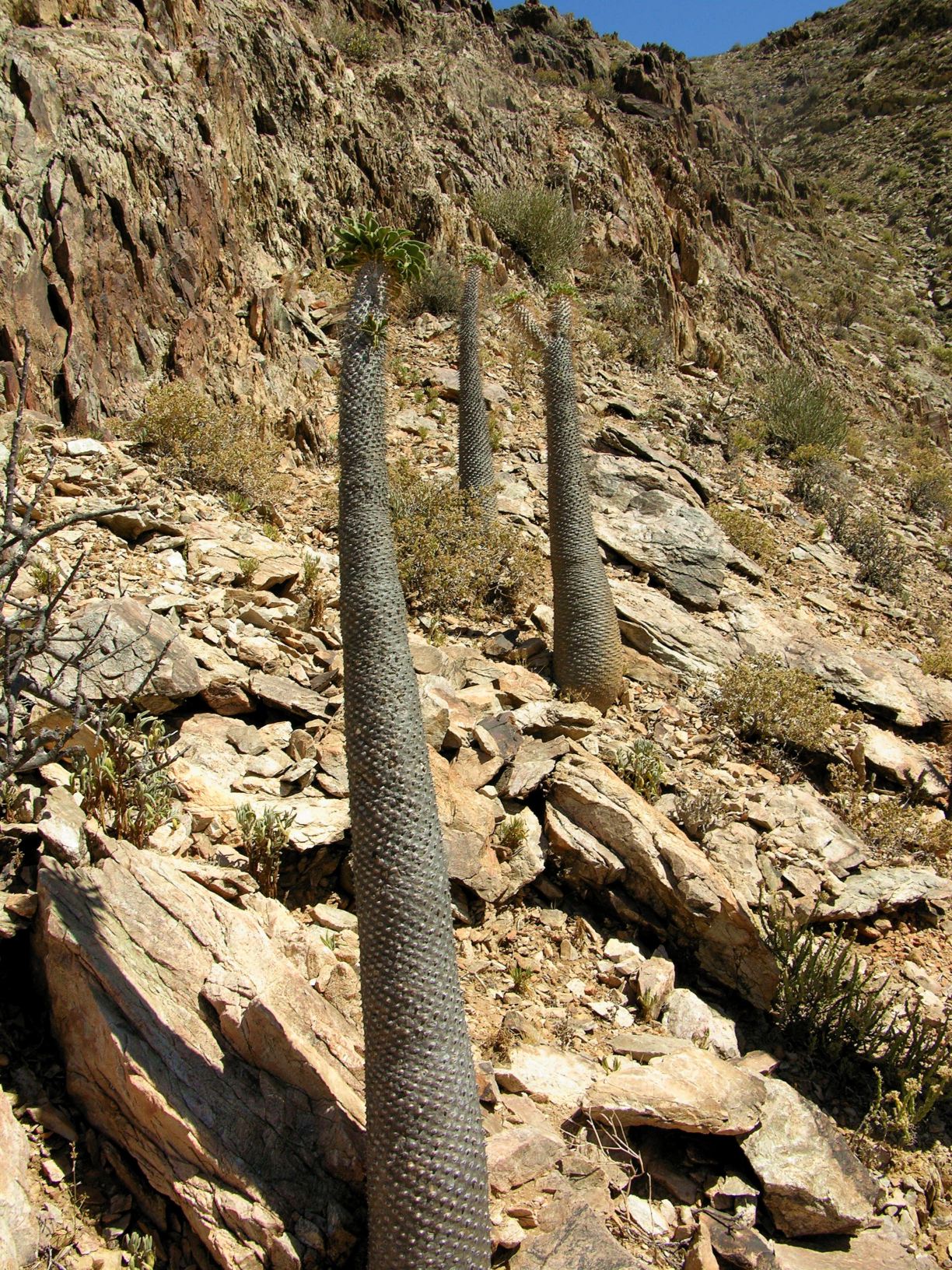
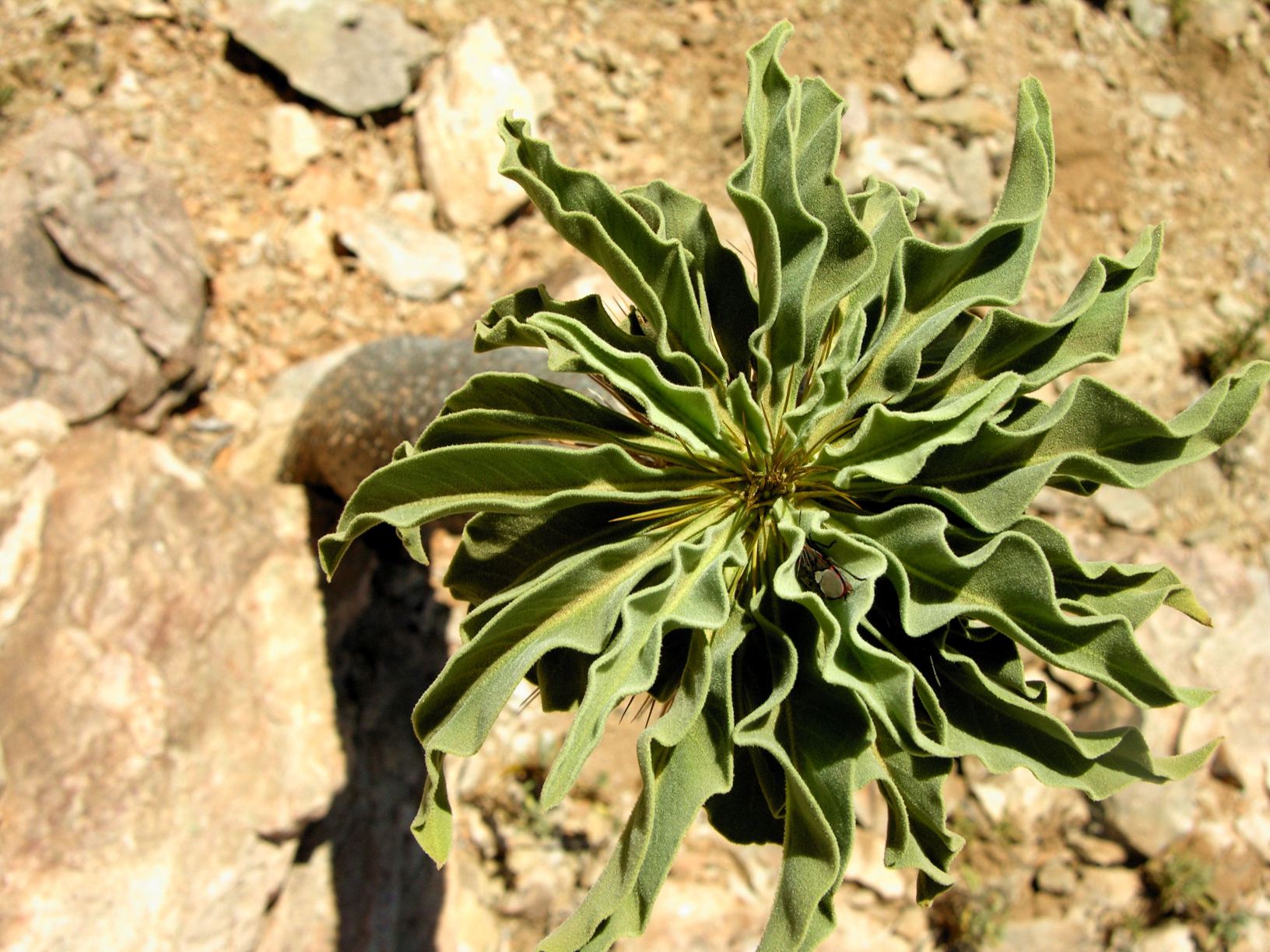
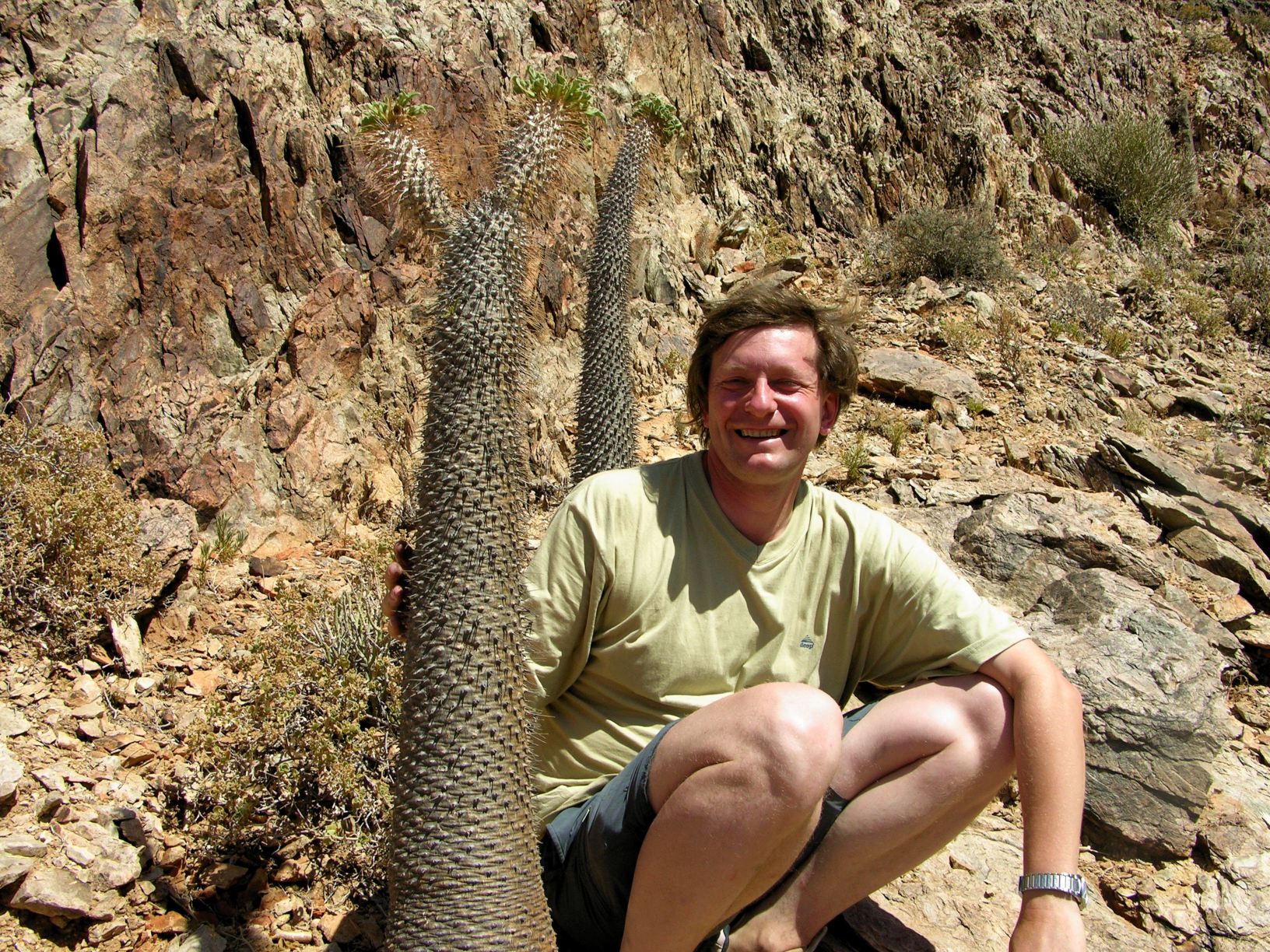
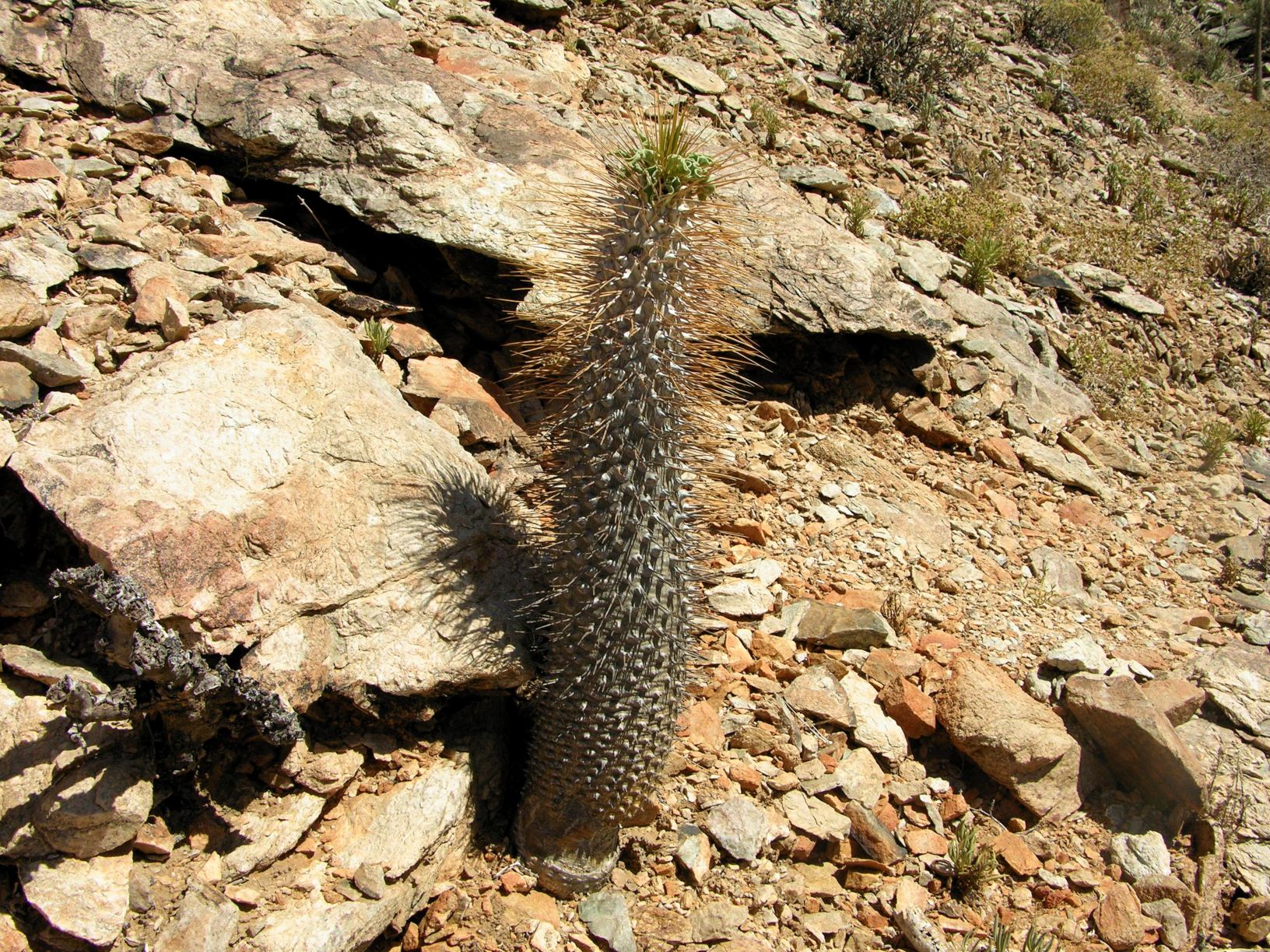
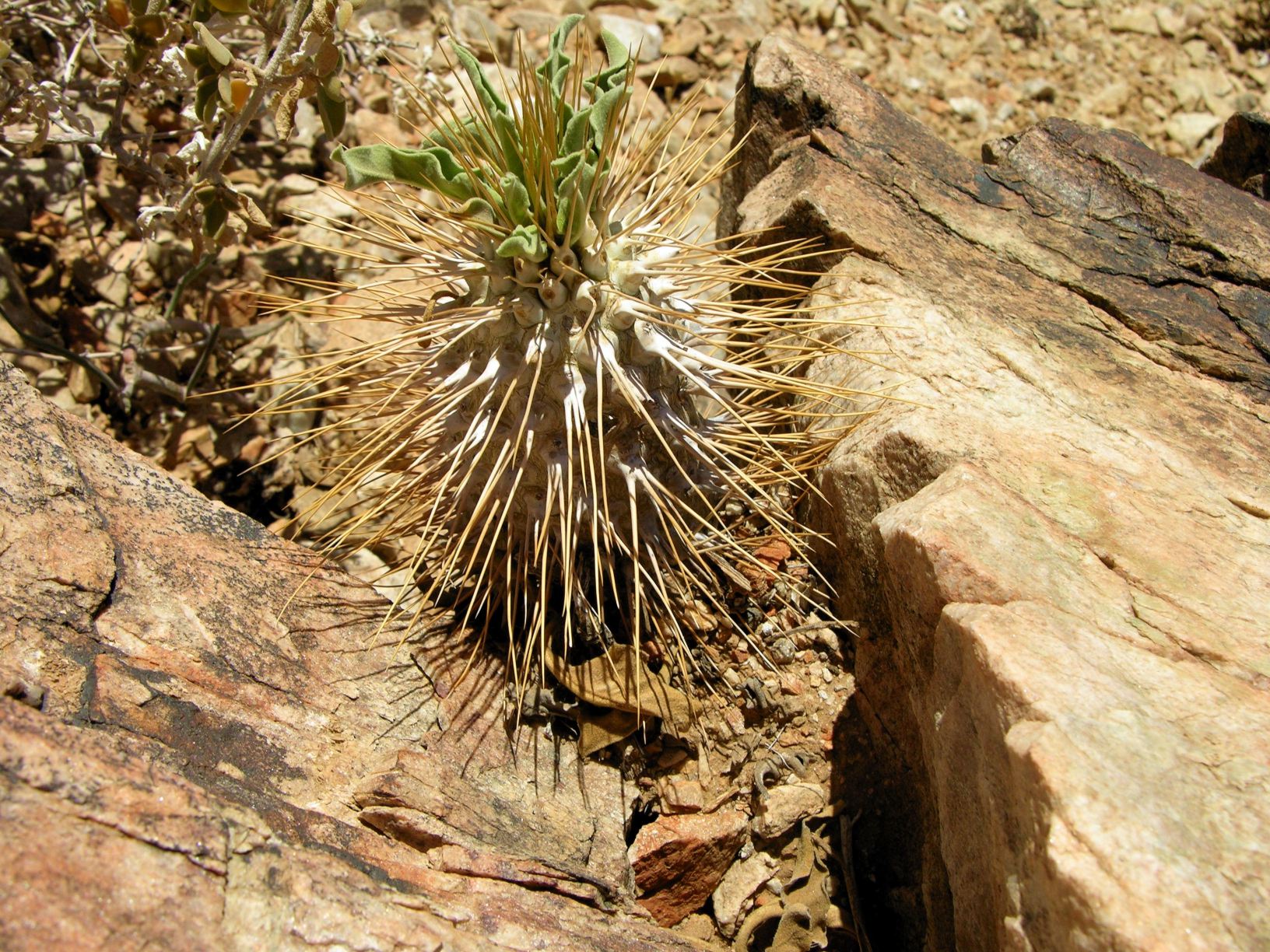
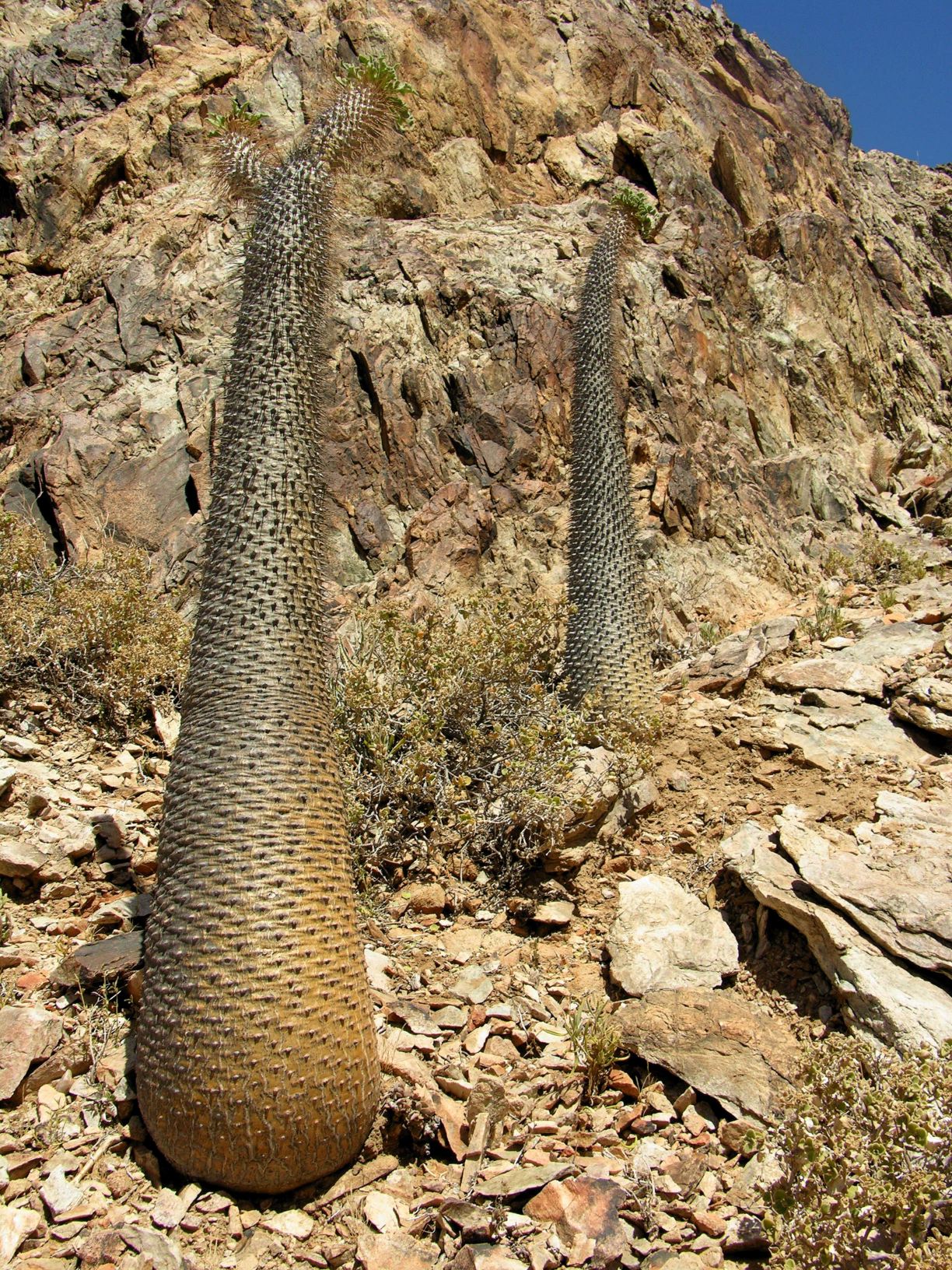
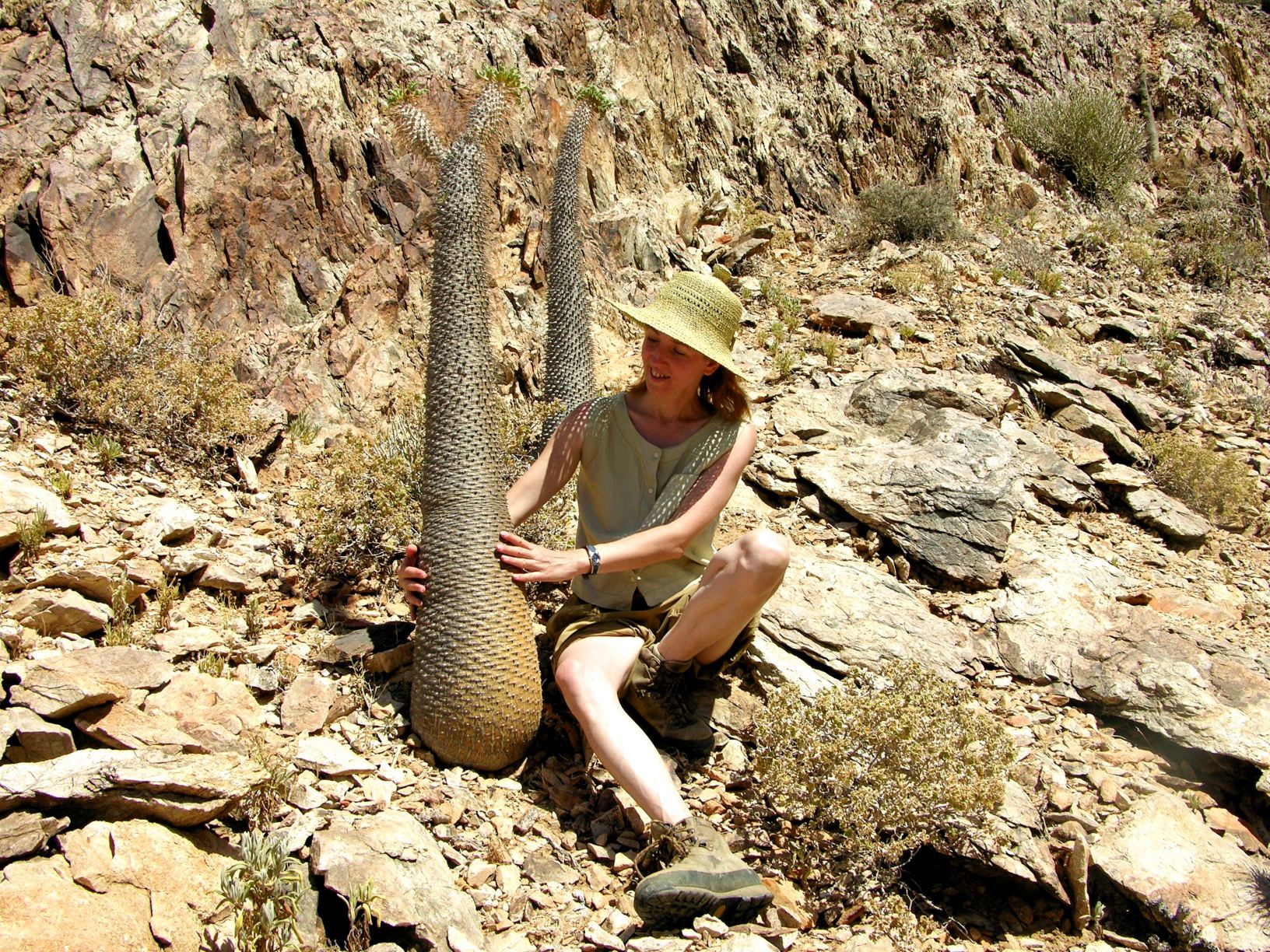
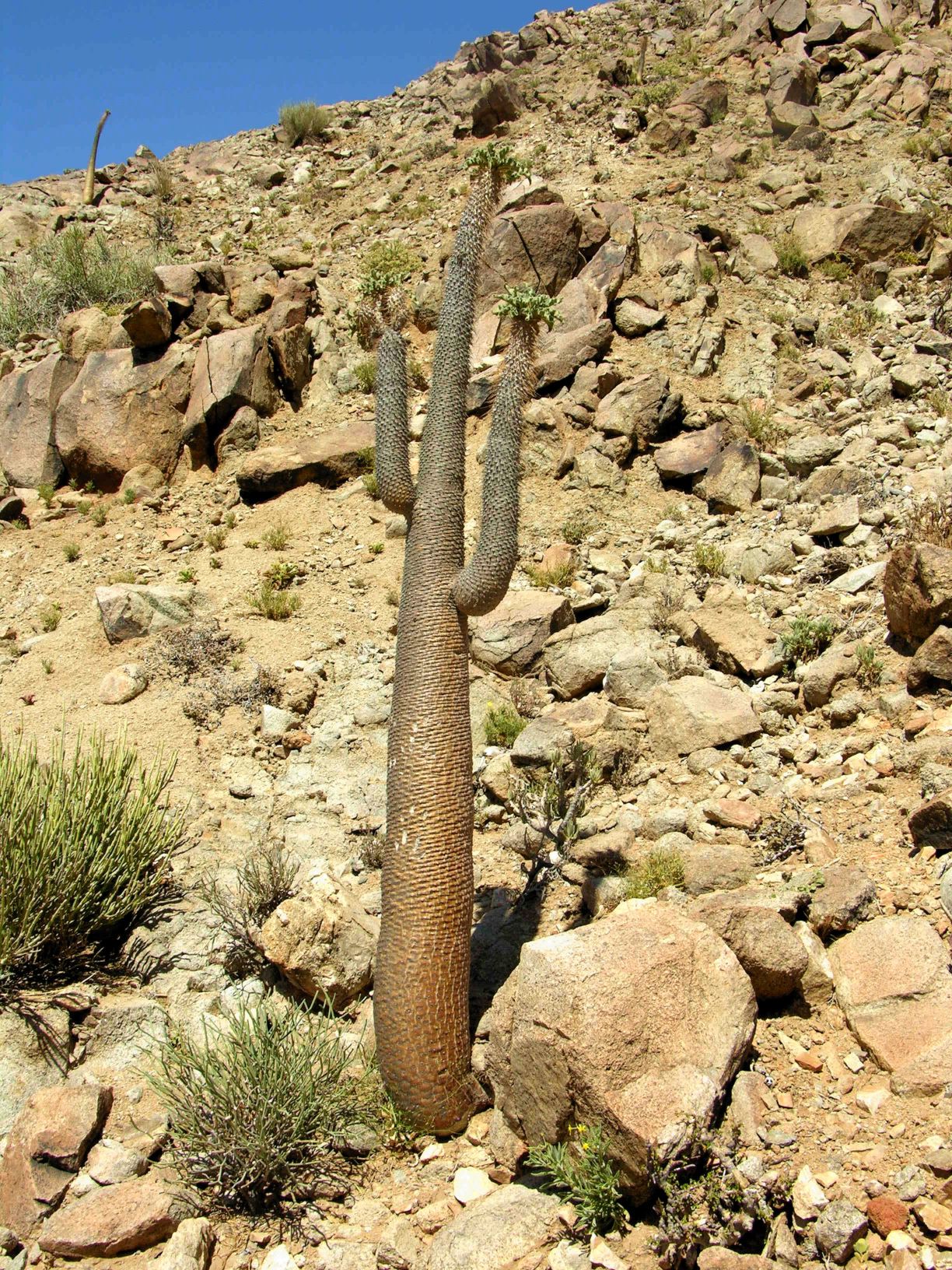
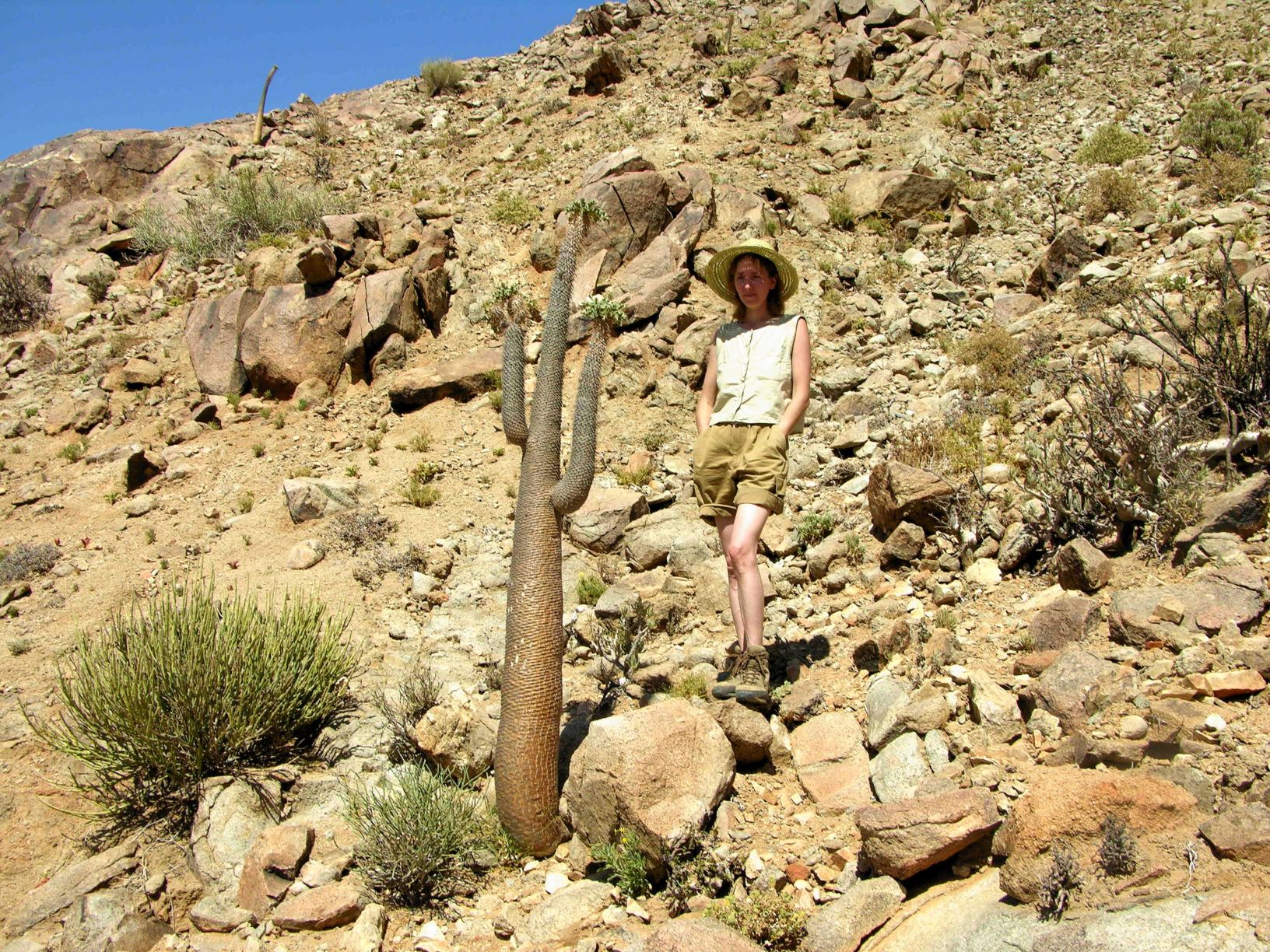
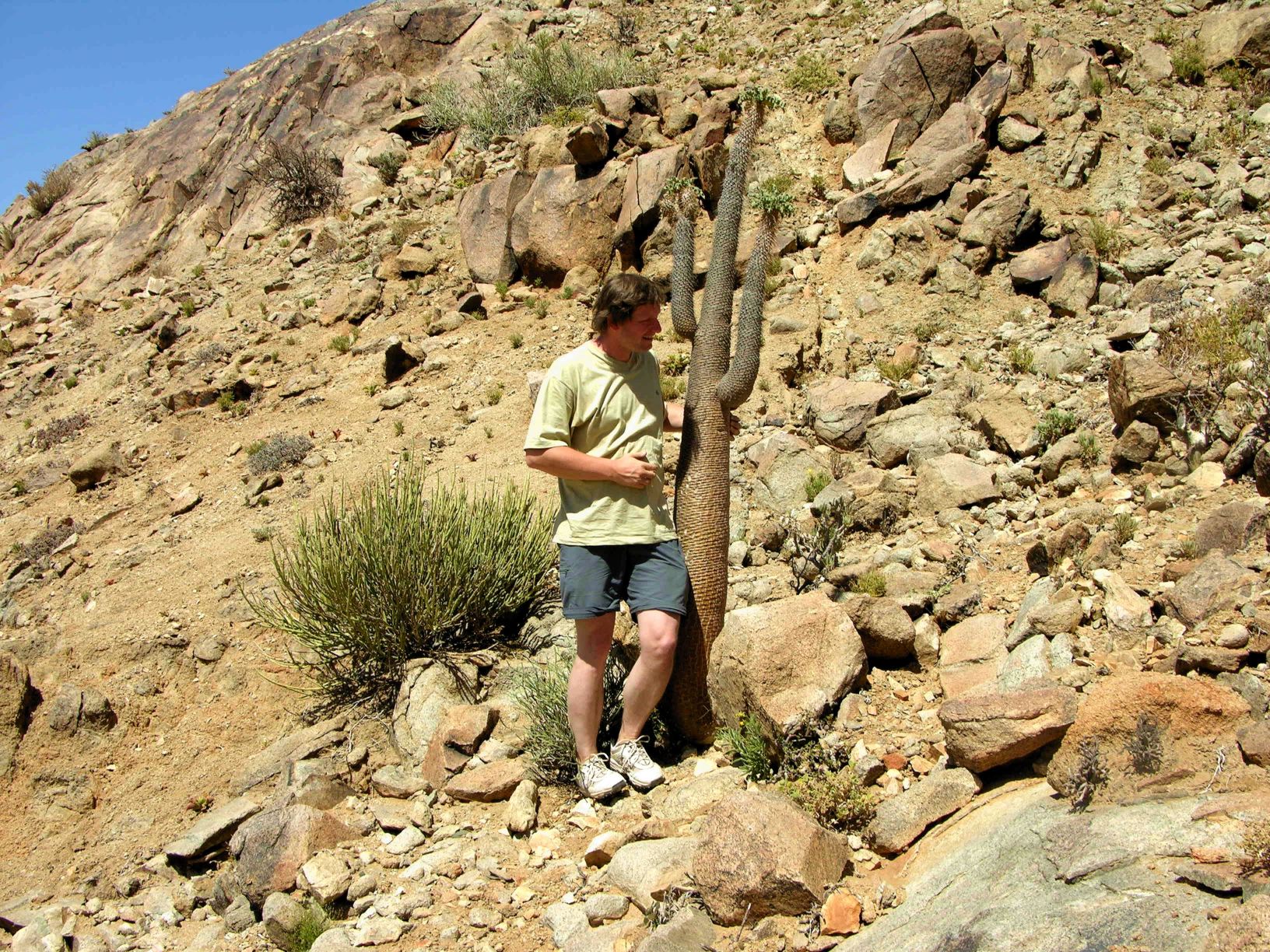
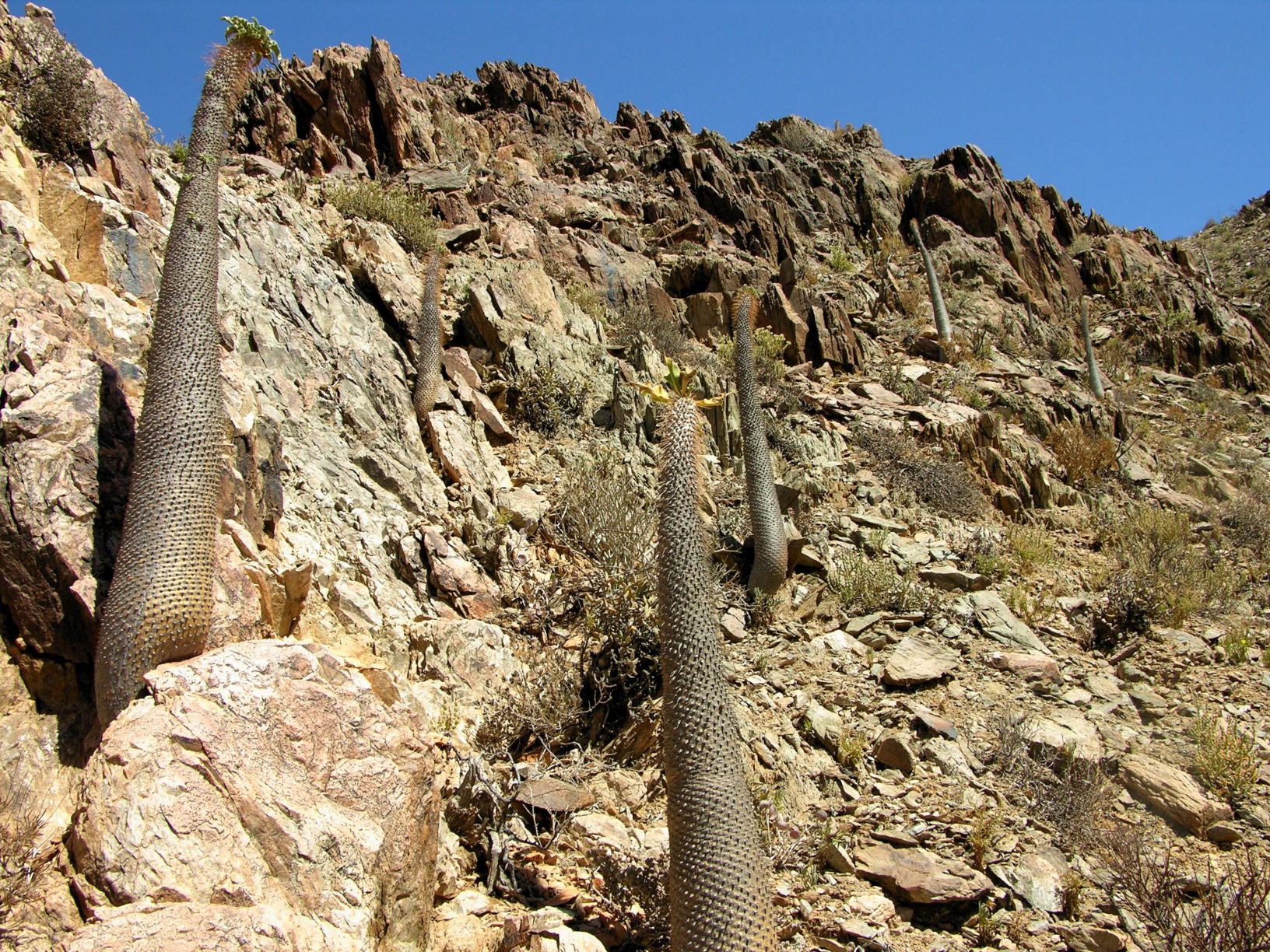
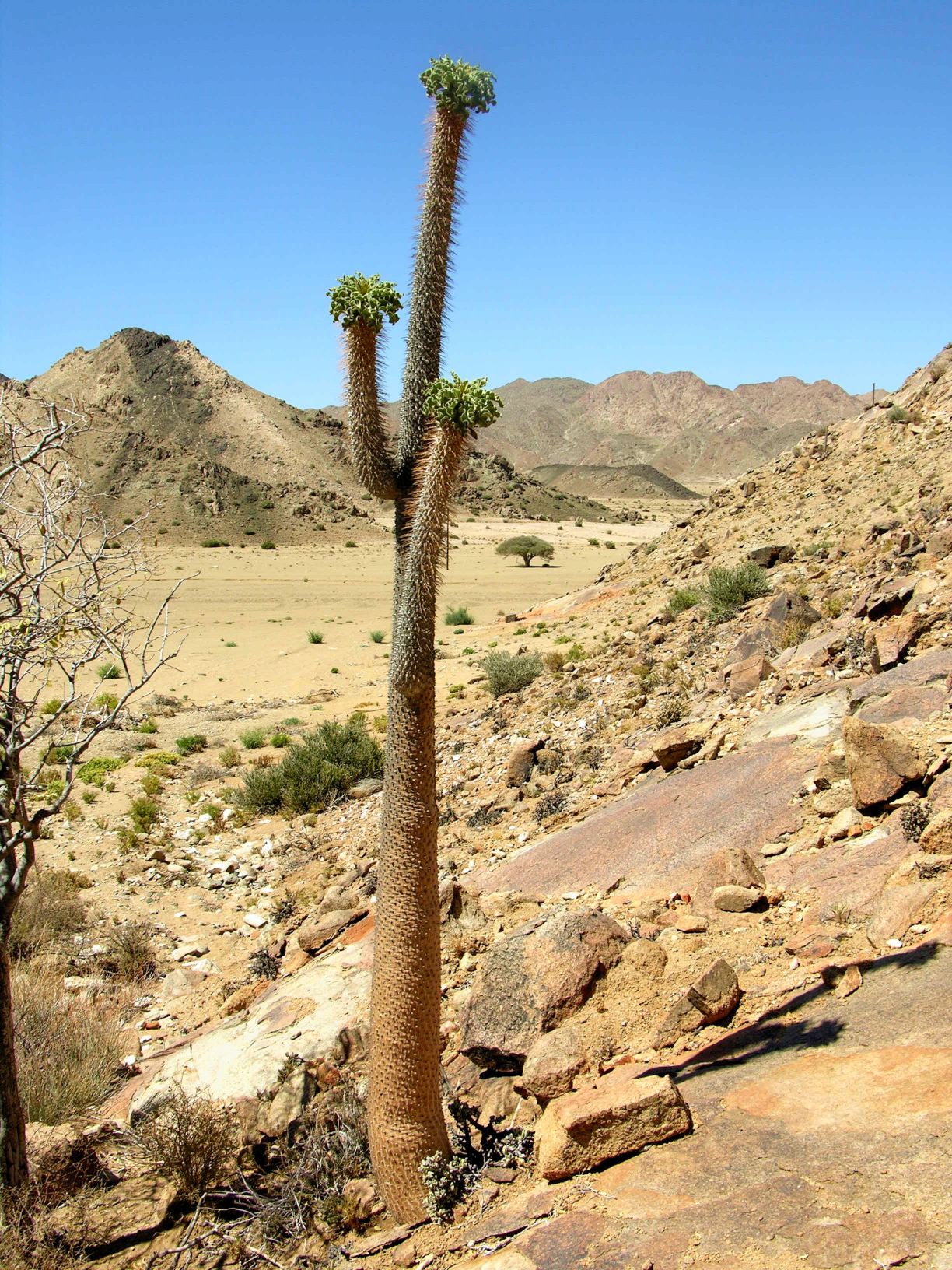
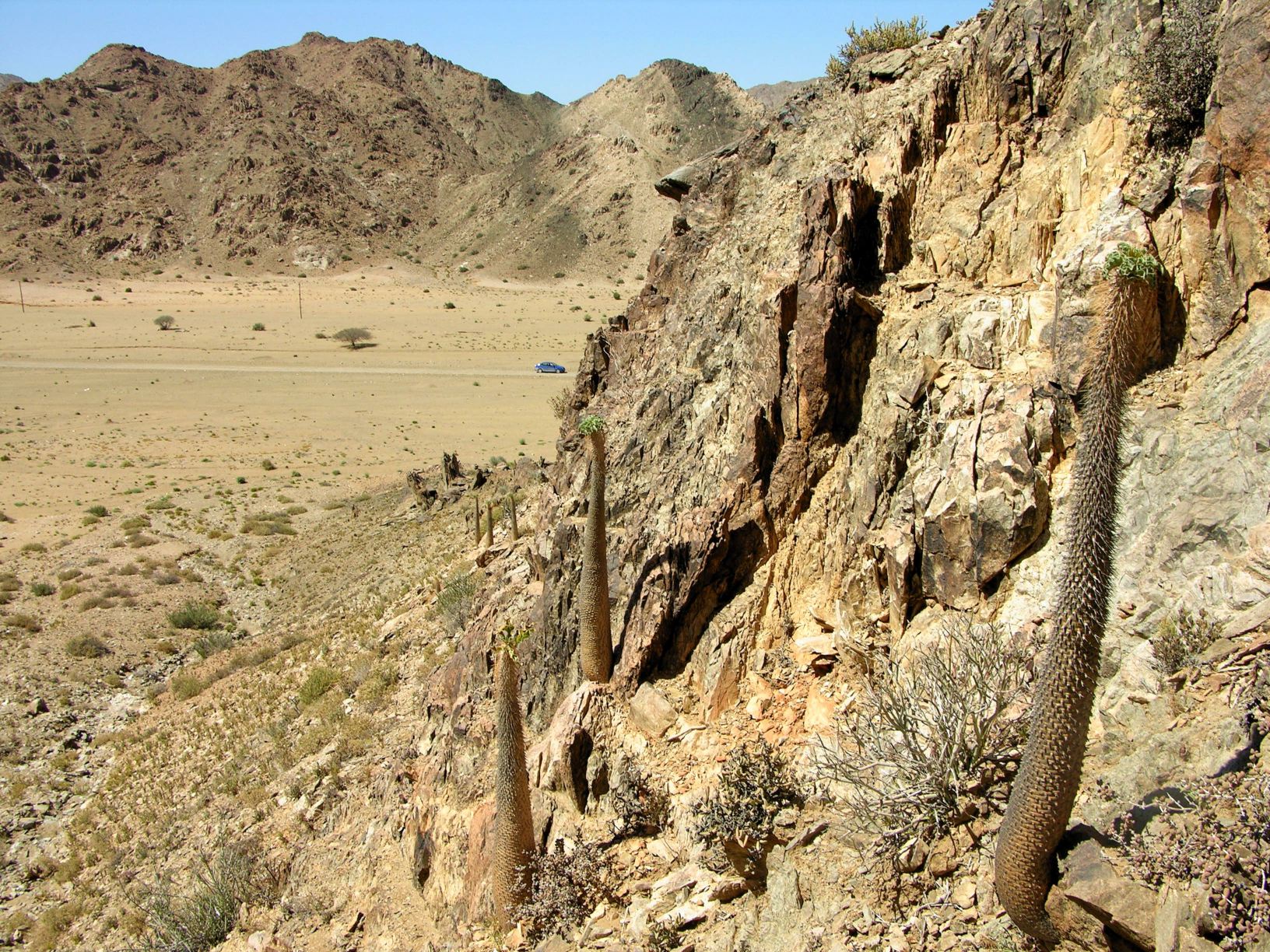
From Alexander Bay the road is unsealed and rocky. Our car was clearly not made for that kind of road. It sat too low, and the rocks kept smashing the underside and anything else that hung down. We weren't going to make it into the park before evening, so we stopped for the night at Sendelingsdrif. It's a small hotel for diamond-mine workers on assignment. It stands on the bank of the river, on an orange farm. The owners fought for a long time for the right to grow oranges on diamond-bearing ground. In the end there was a compromise. The land went to Alexkor, but they still grow oranges and put up miners as well. It's all behind barbed wire. At the barrier you have to tell the guard you're there for the night. You can take a round bungalow (28°28.663′S, 16°41.071′E) or camp. On the day we stayed there was a thick sea fog and it was downright cold. We even got our warm jackets out. We did have a swim first in the pool, though. Even the mobile phone worked, to my surprise, picking up a Namibian base station thirty kilometres away. Apart from us, there was only a Frenchman on a work trip, who spent the whole evening fixing his four-wheel drive. Parts of the campground looked like a repair yard for mining equipment.
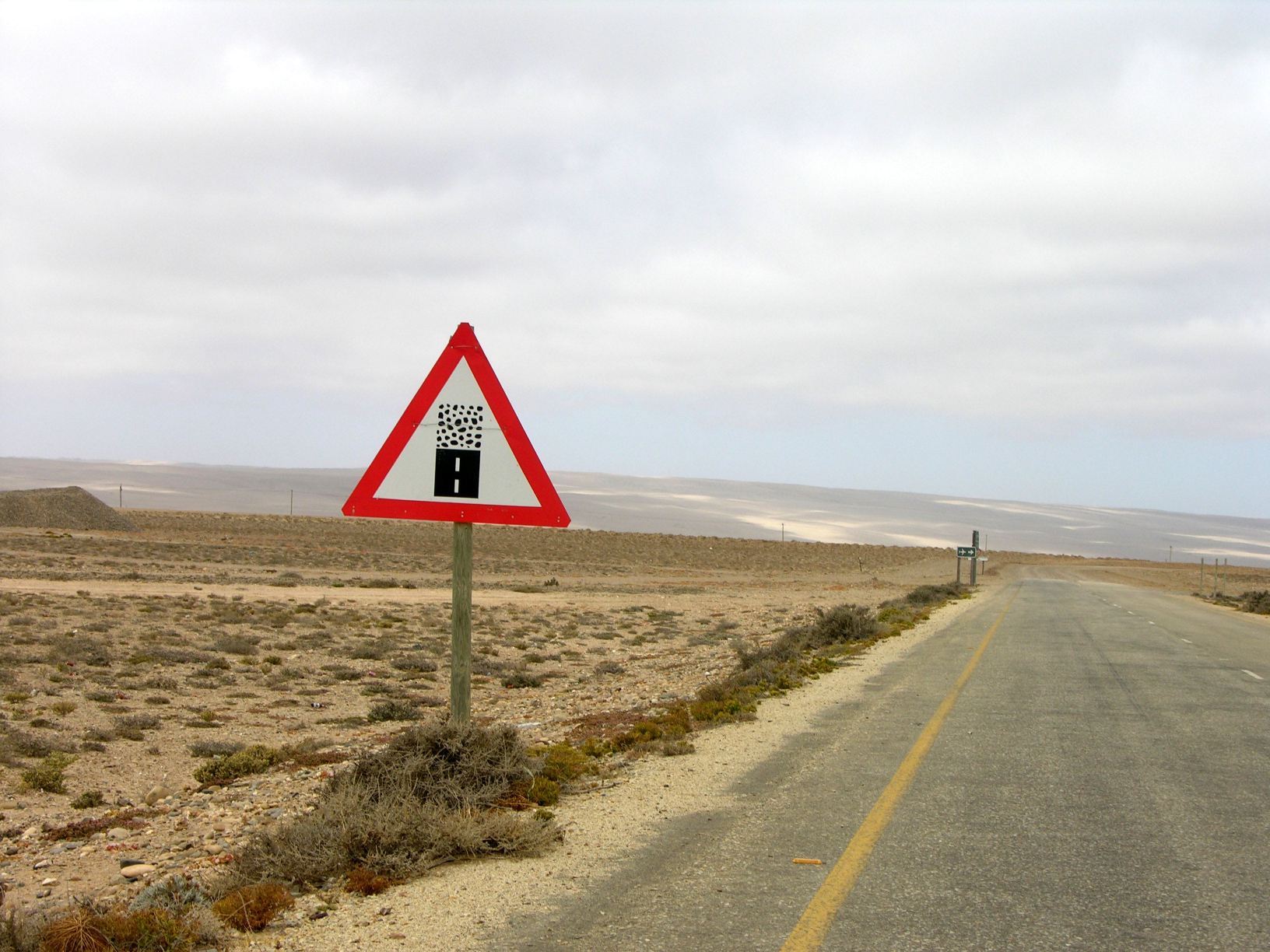
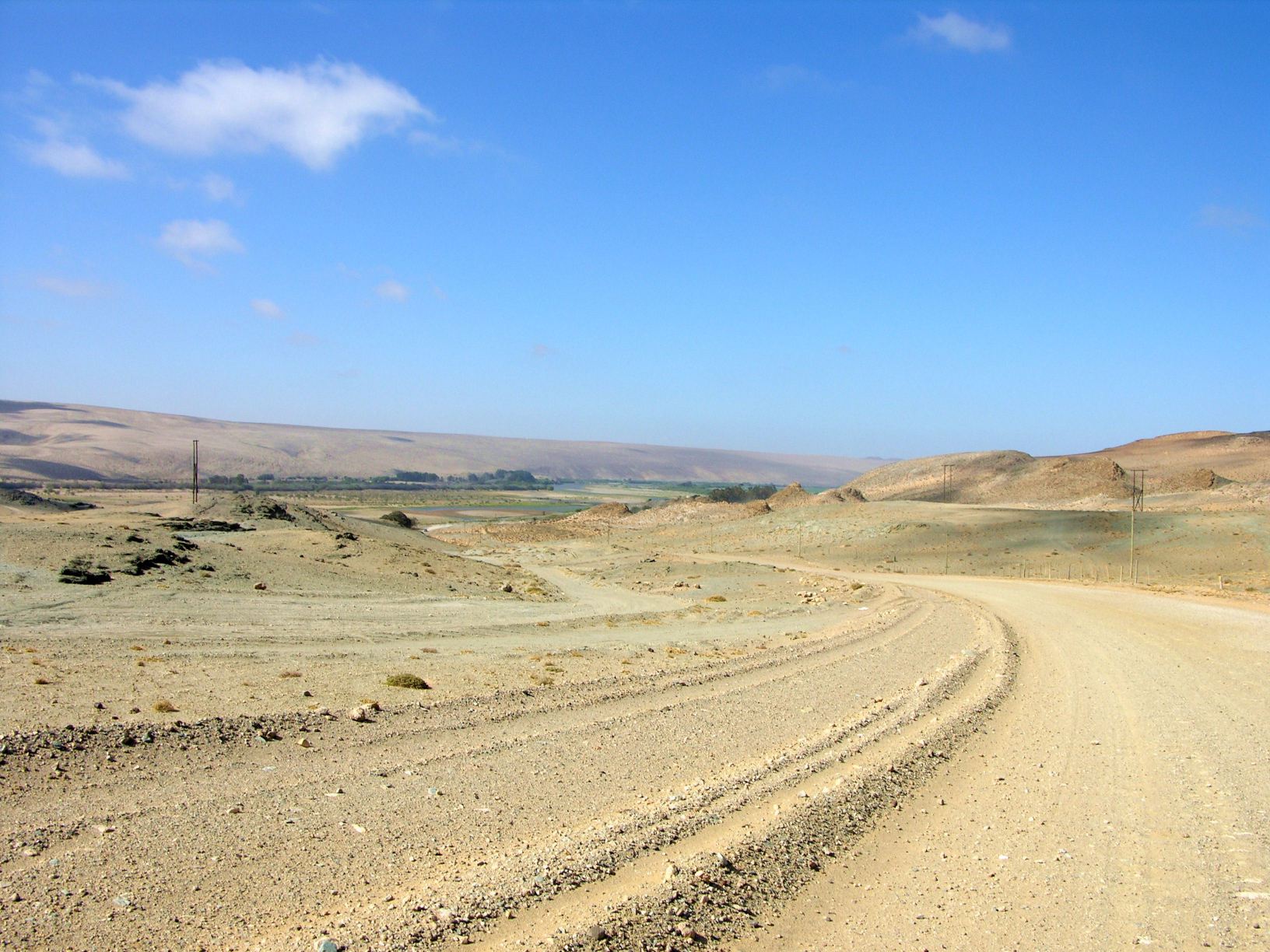
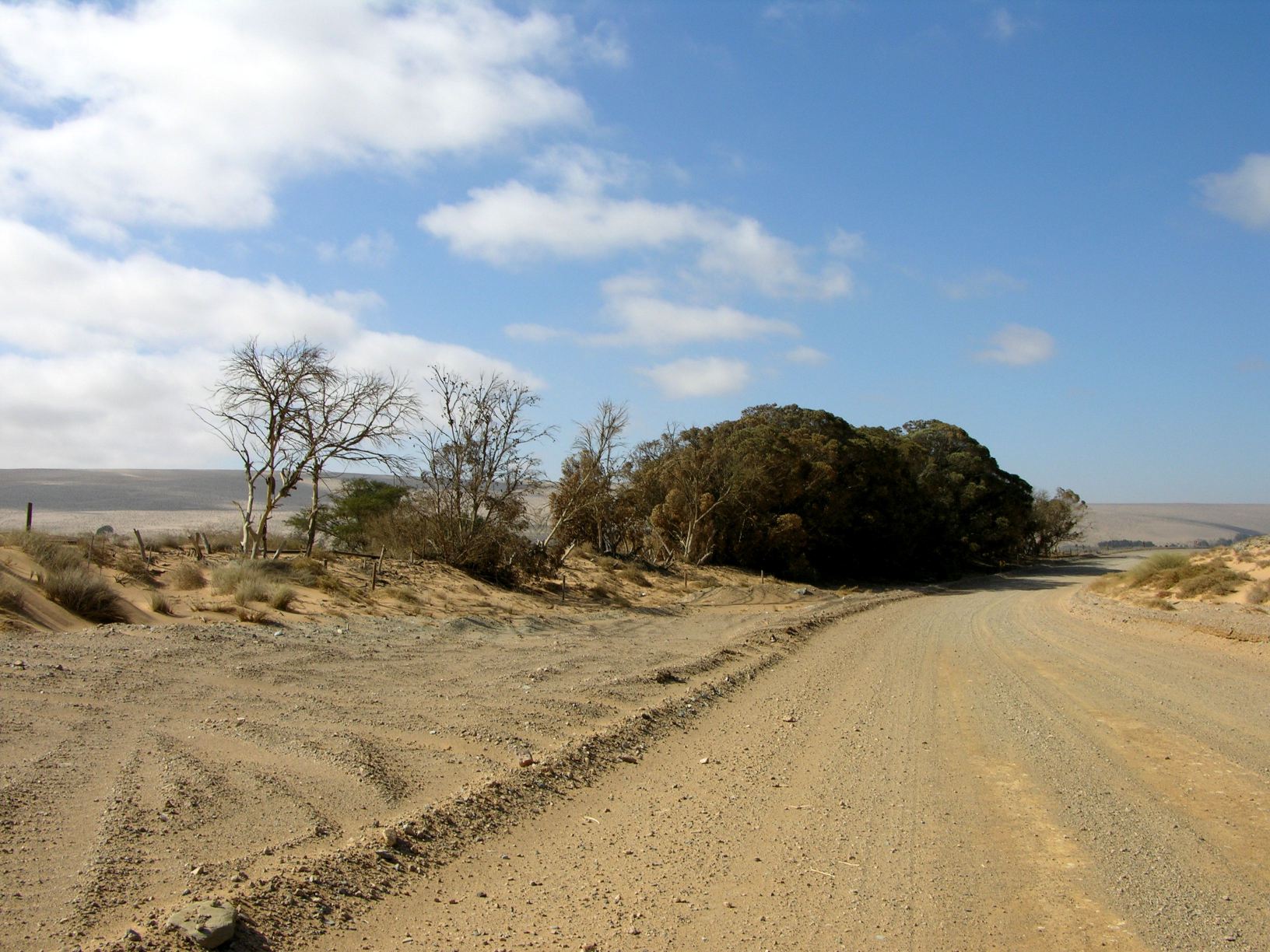
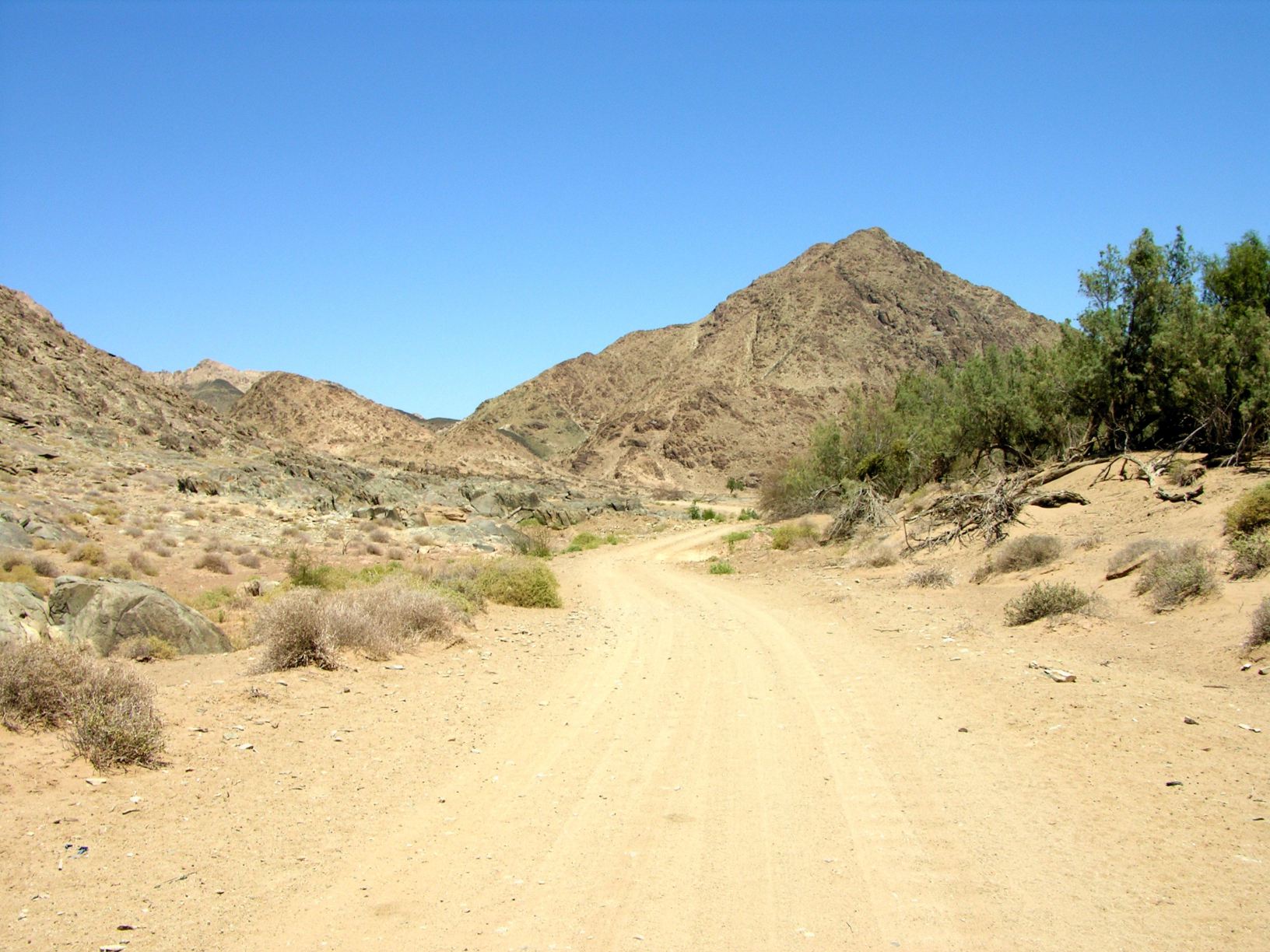
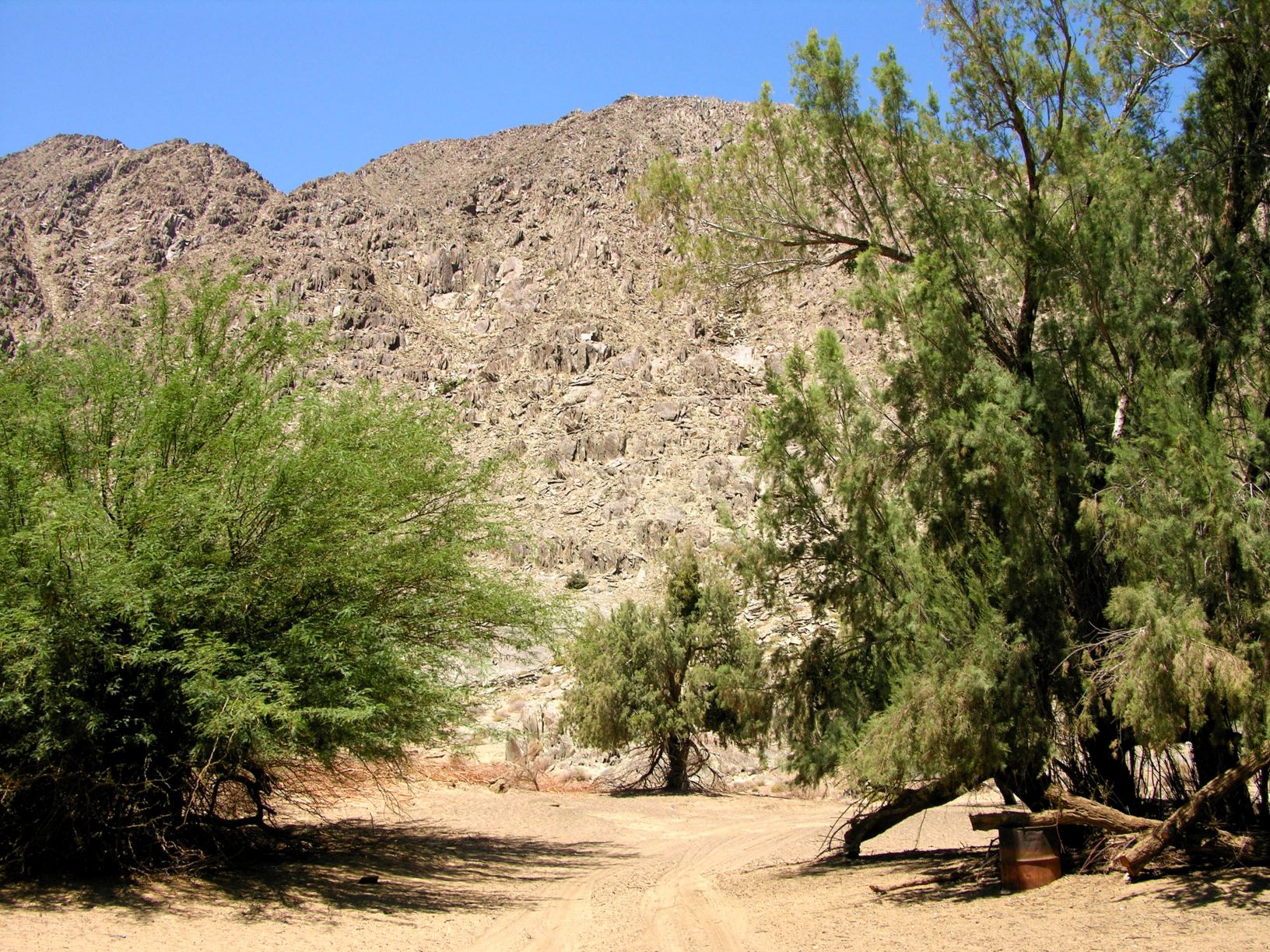
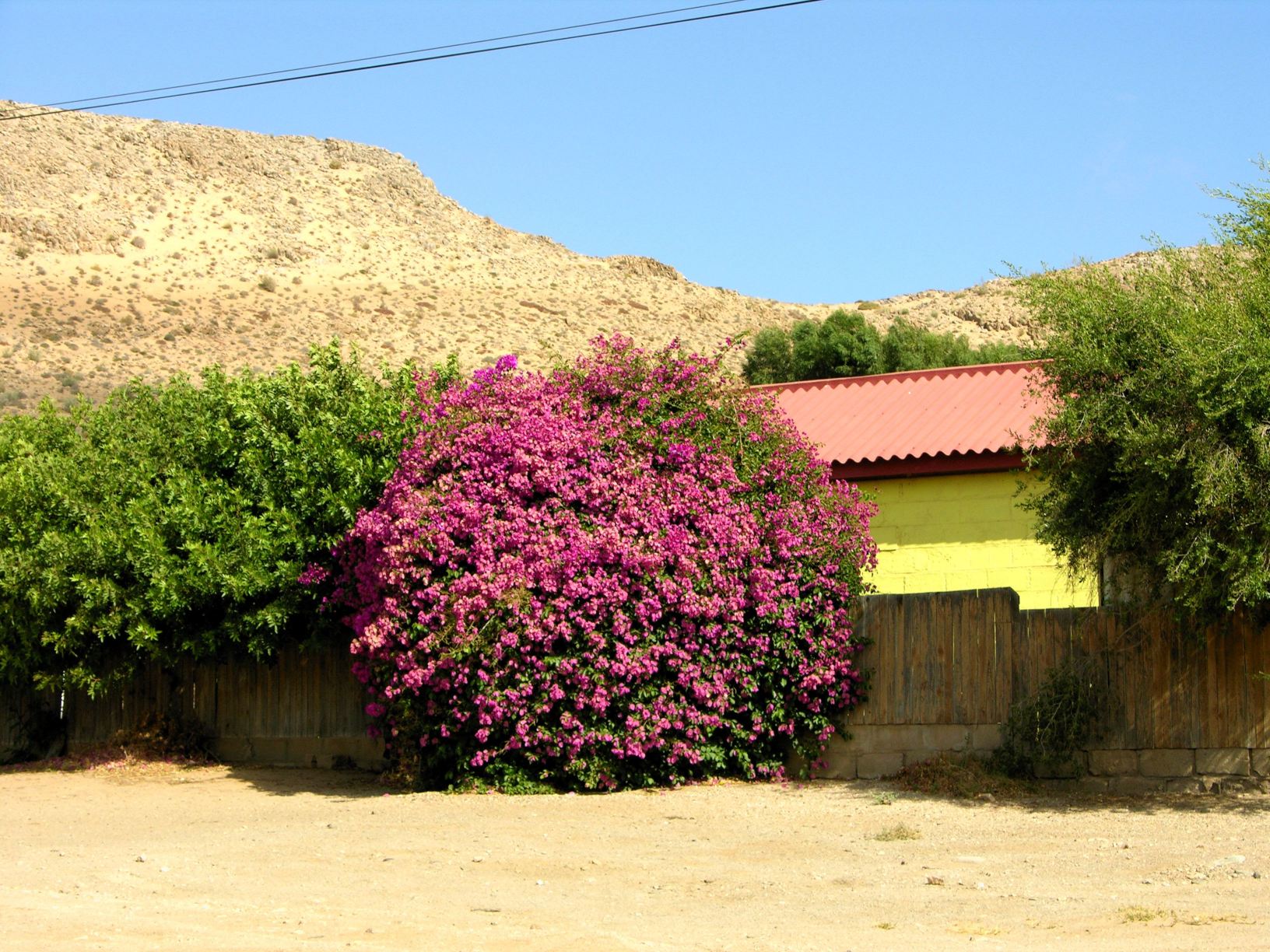
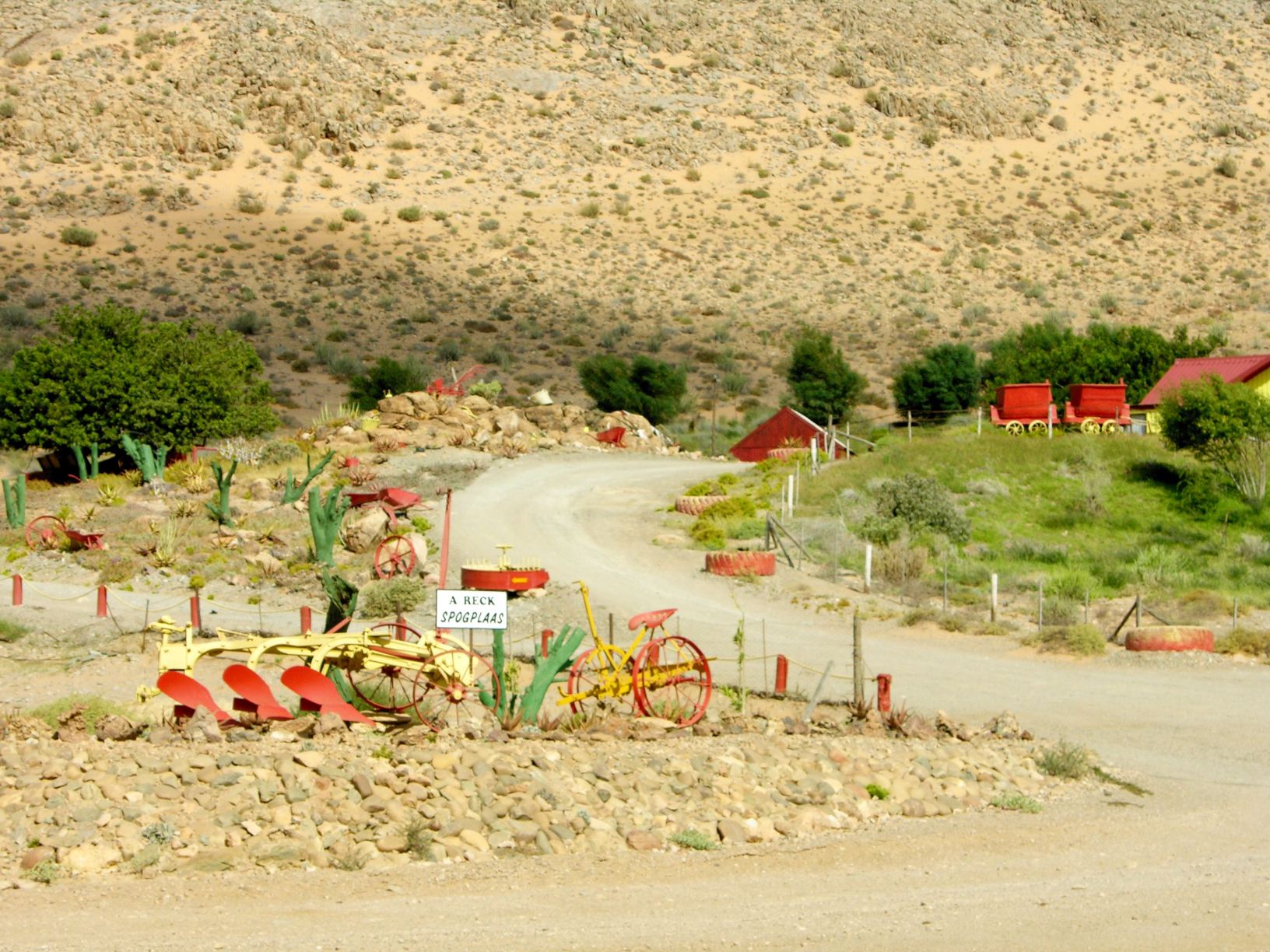
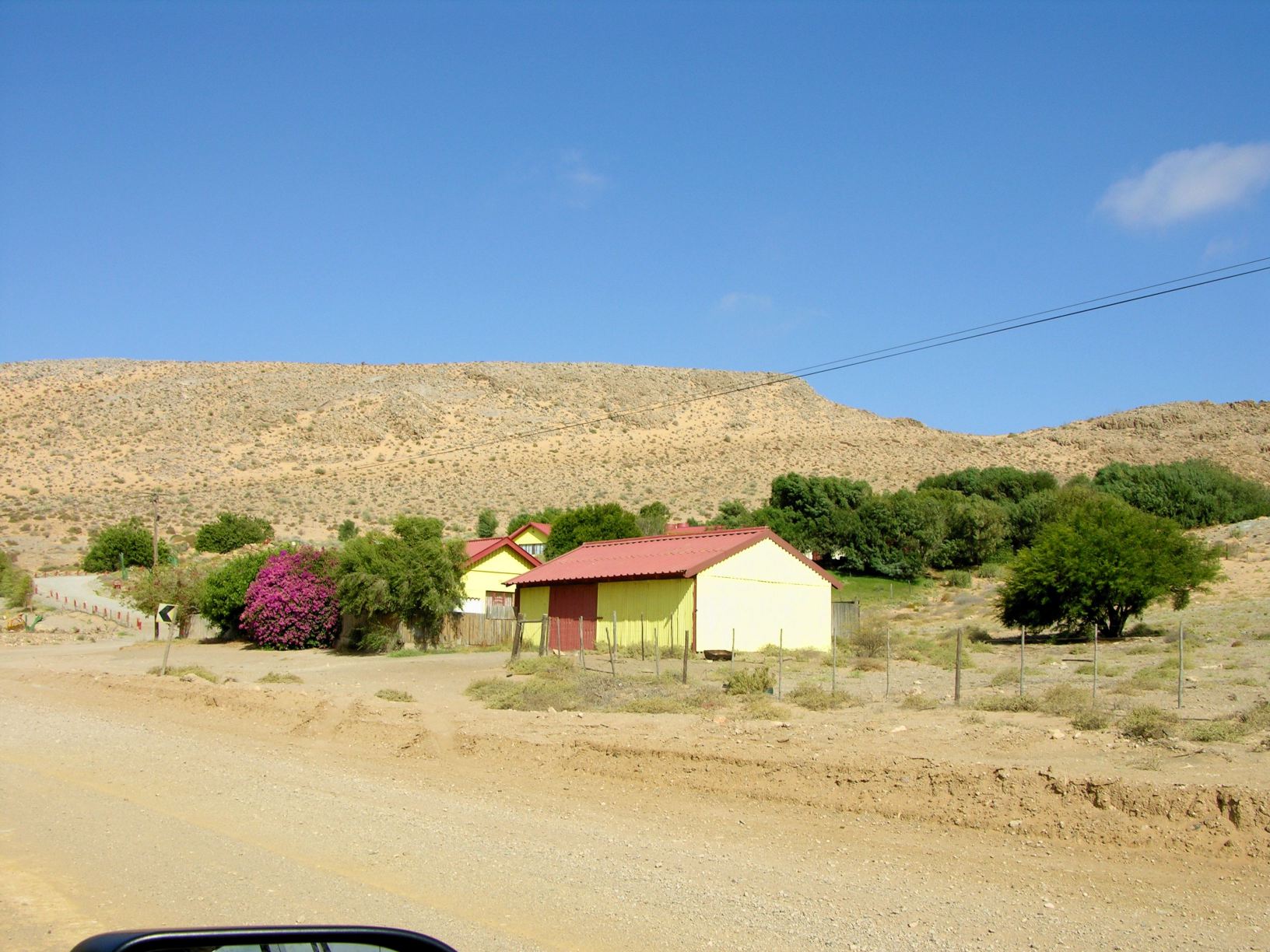
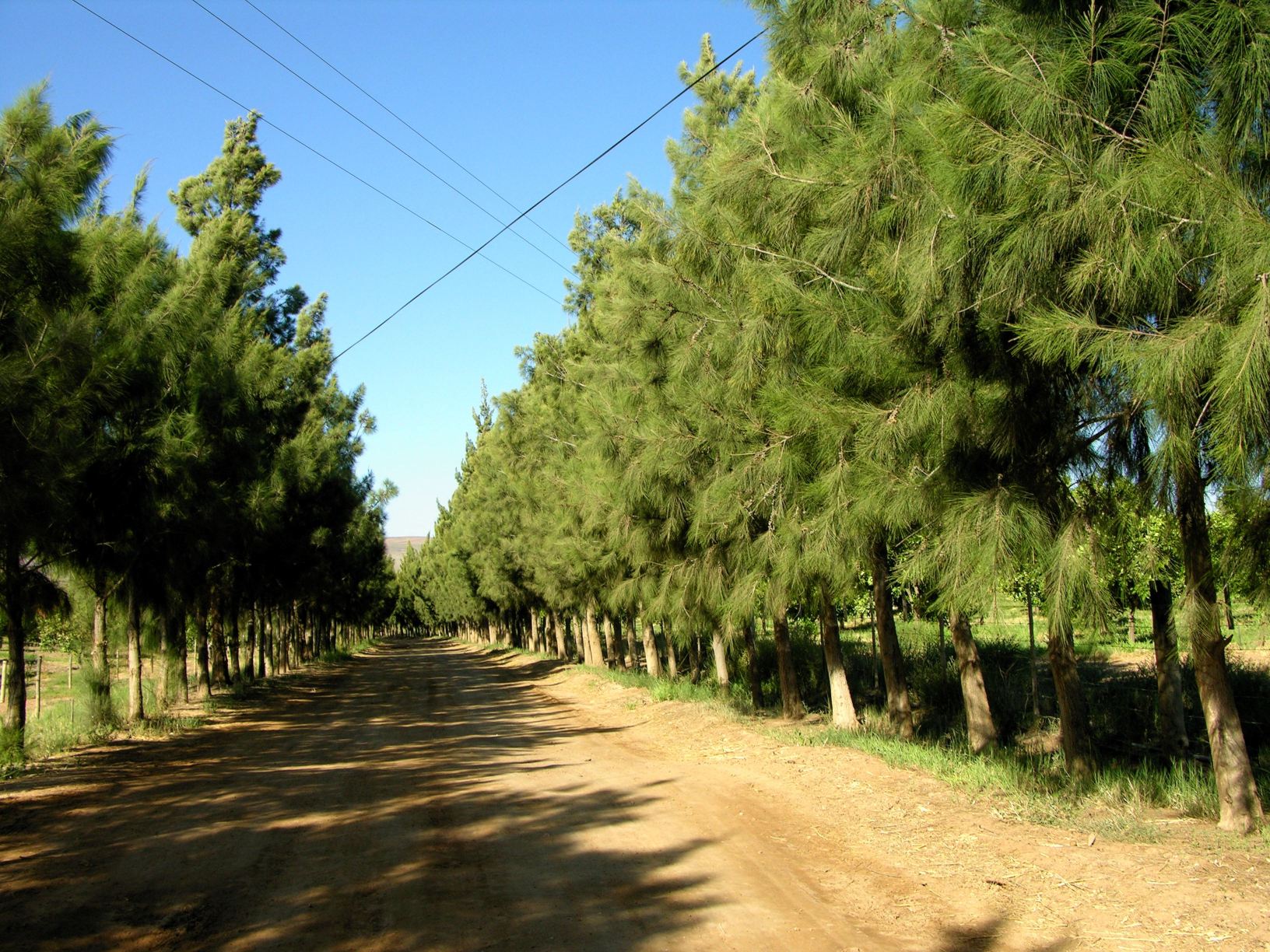
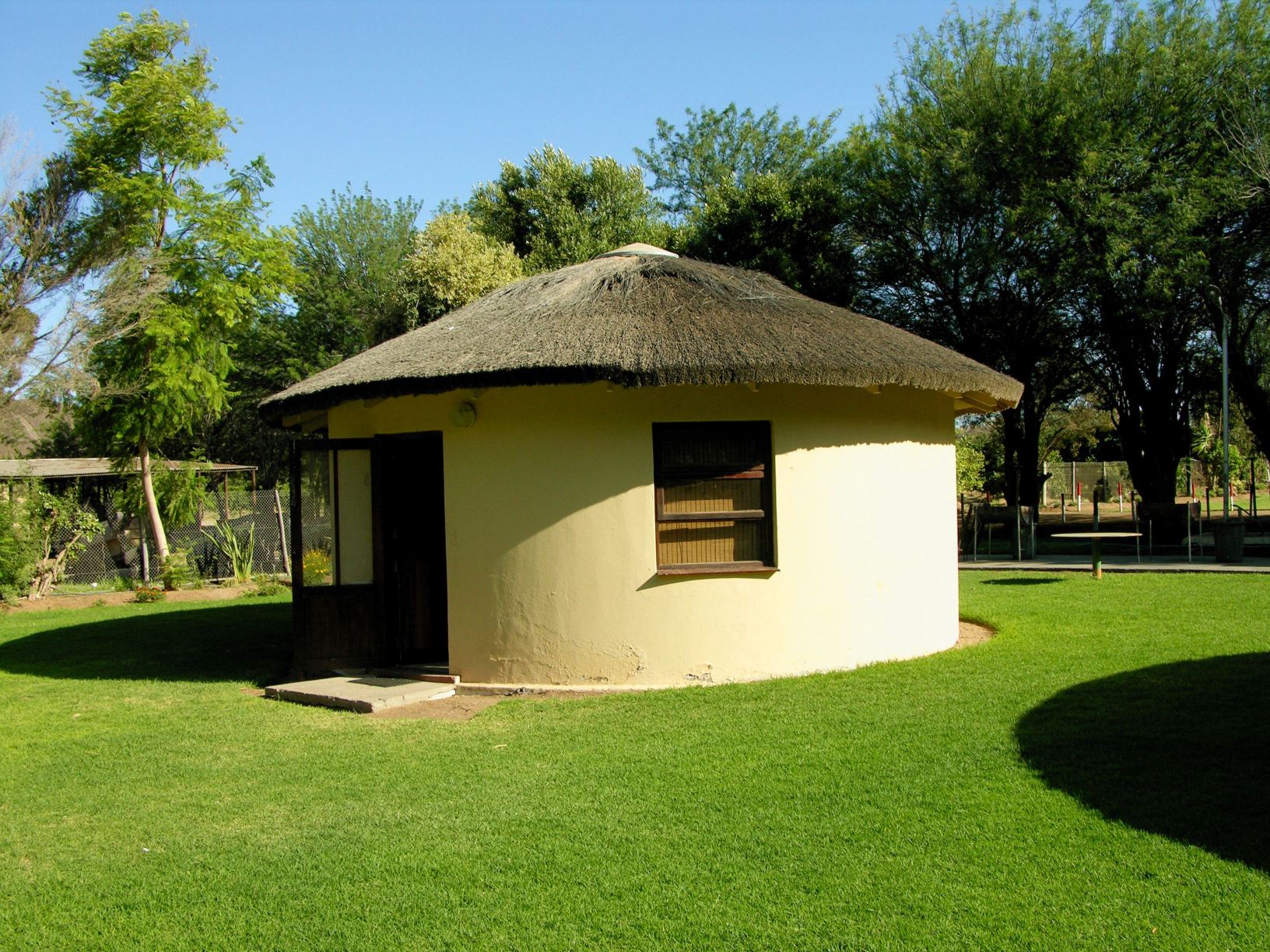
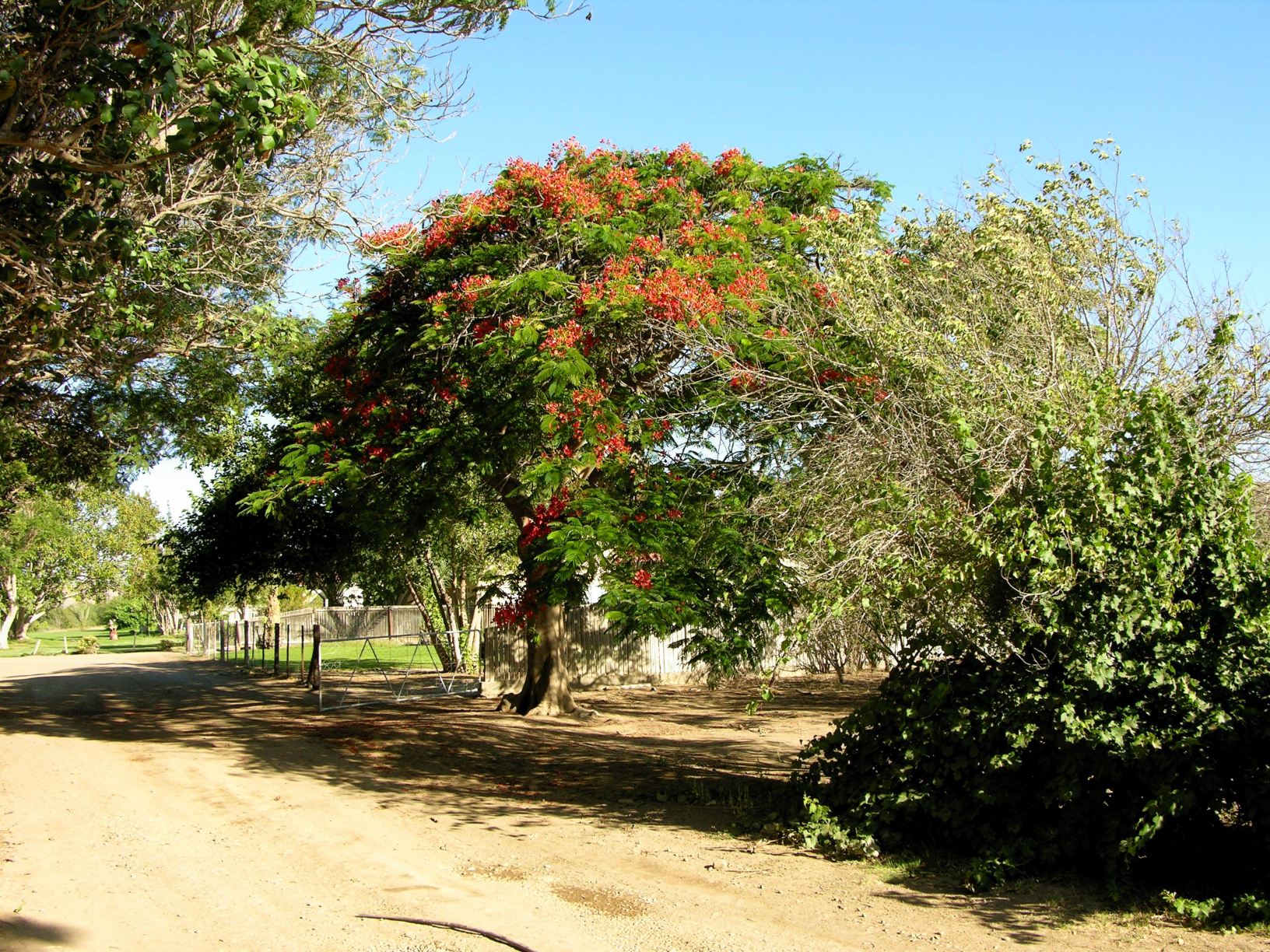
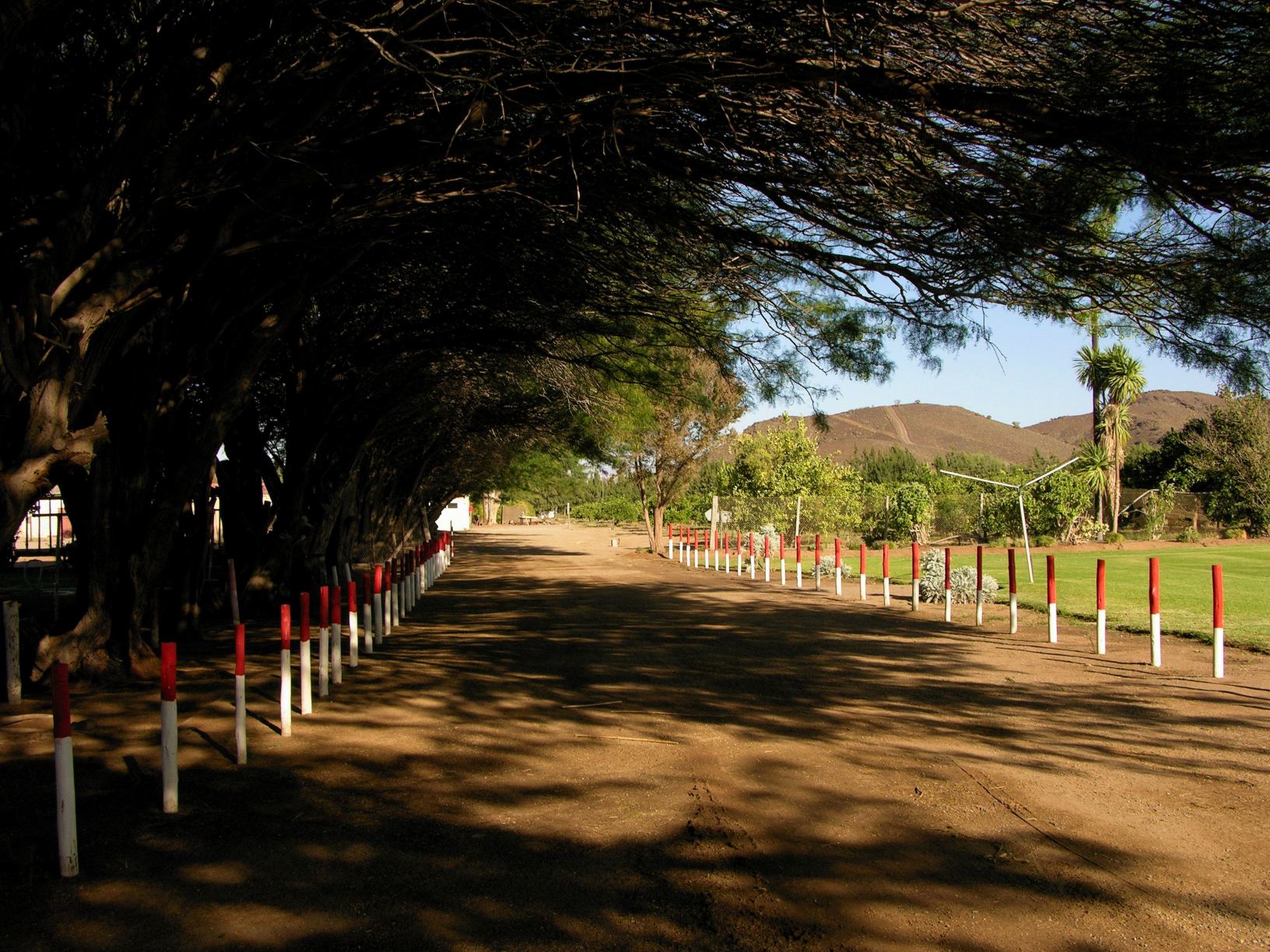
After dinner we went for a walk down to the river. It turned out to be quite a long way and the bank was thickly overgrown. I wanted a swim, and even considered swimming over to the forbidden Namibian diamond area, but there was no way to get to the water. Then something terrible happened. There was a baboon in the road. As I've said, Tanya is as scared of them as she is of dogs, and she's terrified of dogs. What's more, the baboon offered an emphatic ‘Grrrrr.’ Tanya vanished as if blown away by the wind. Back to camp we went.
In the morning, the moment we crossed the edge of the sea fog, we left the cold behind and were hit by frightful heat. It was almost 50°C outside.
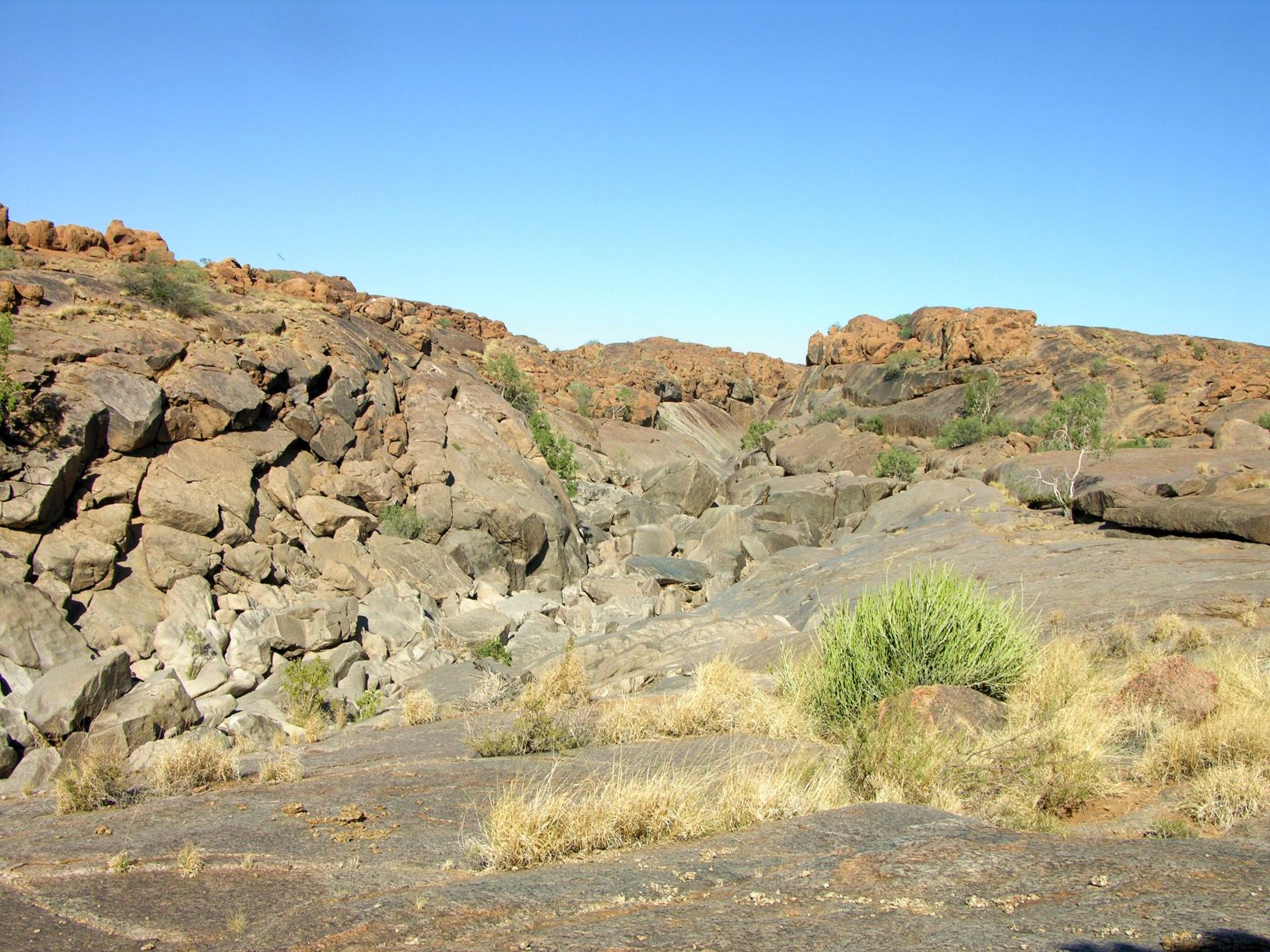
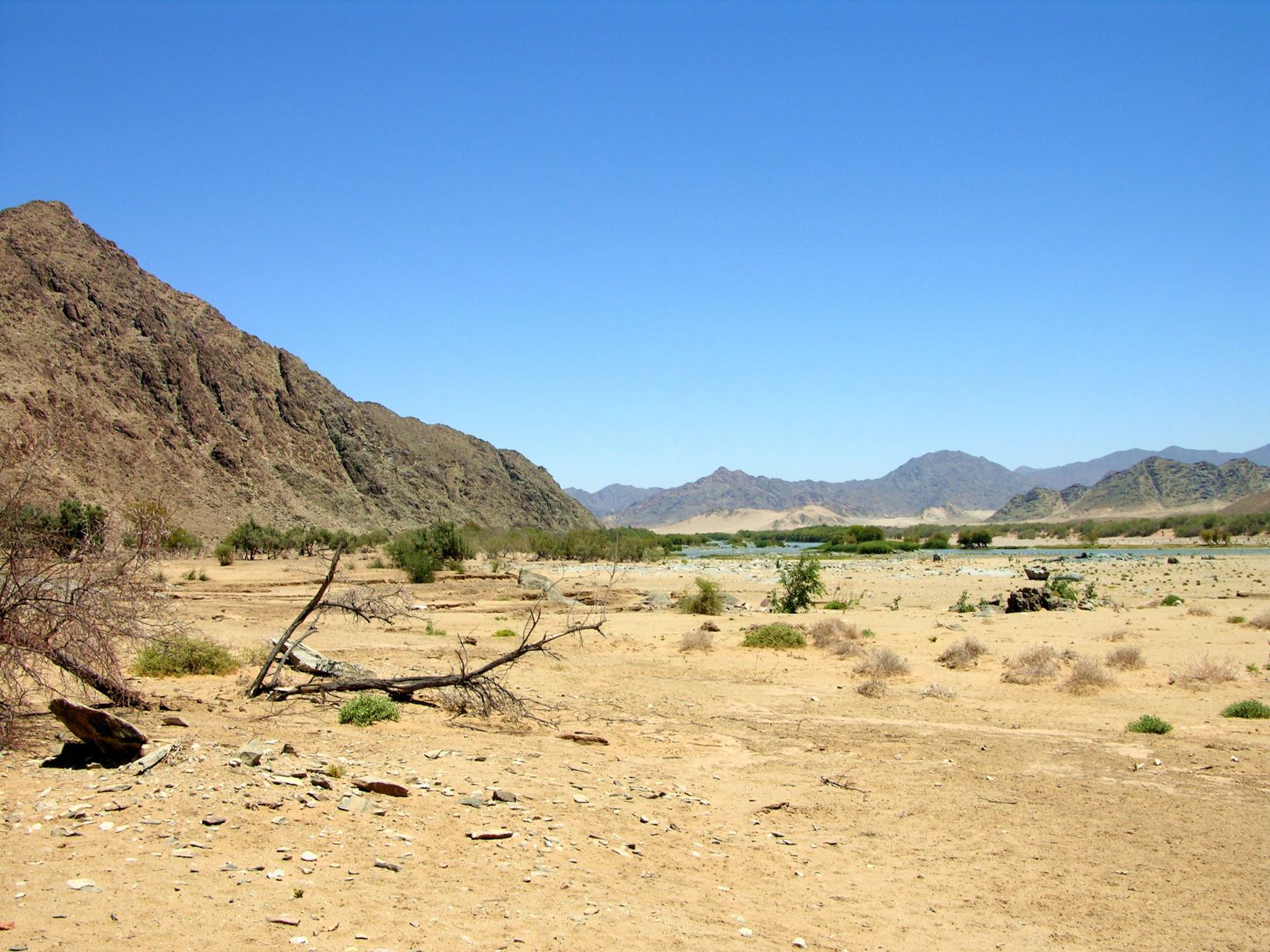
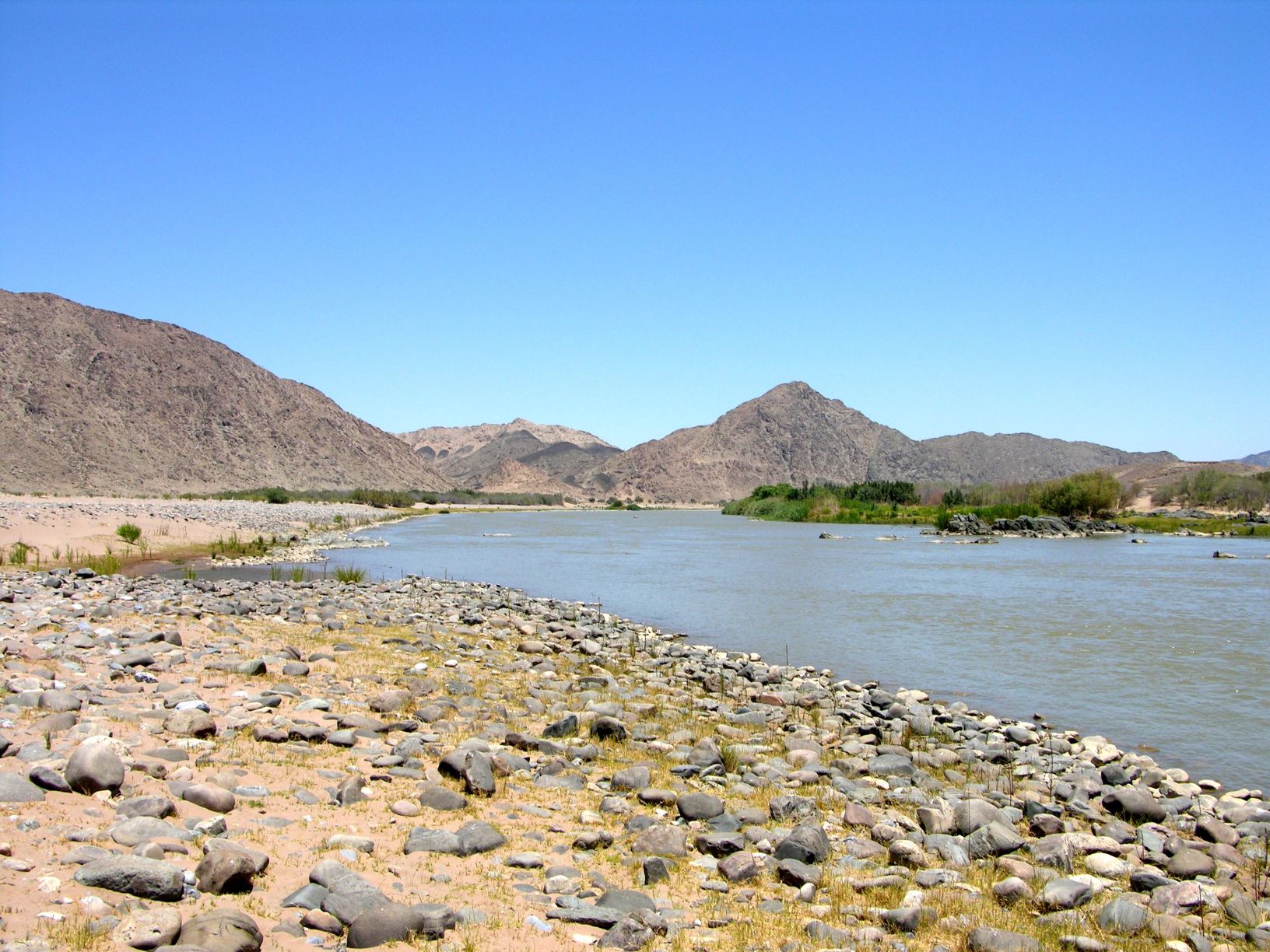
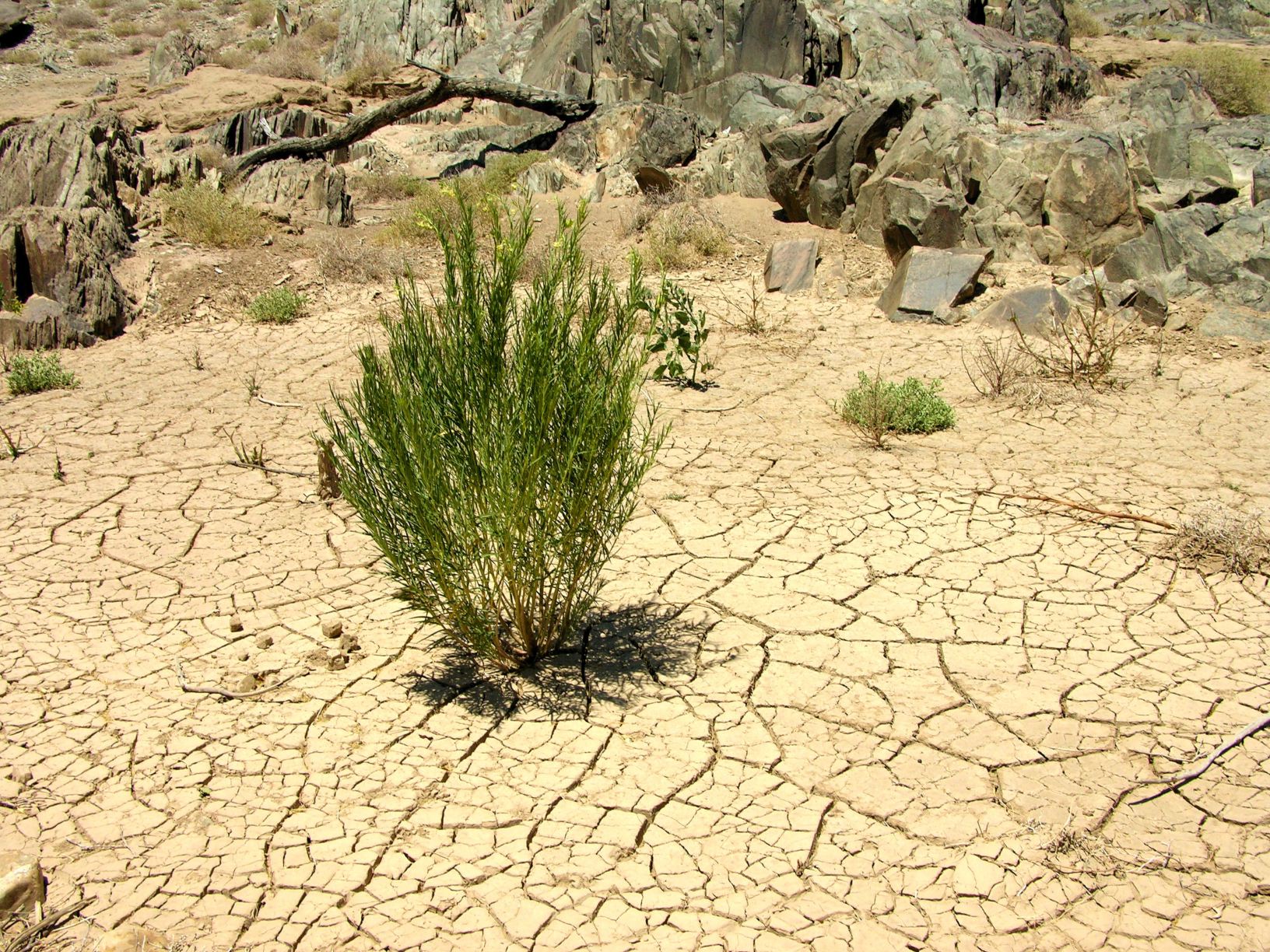
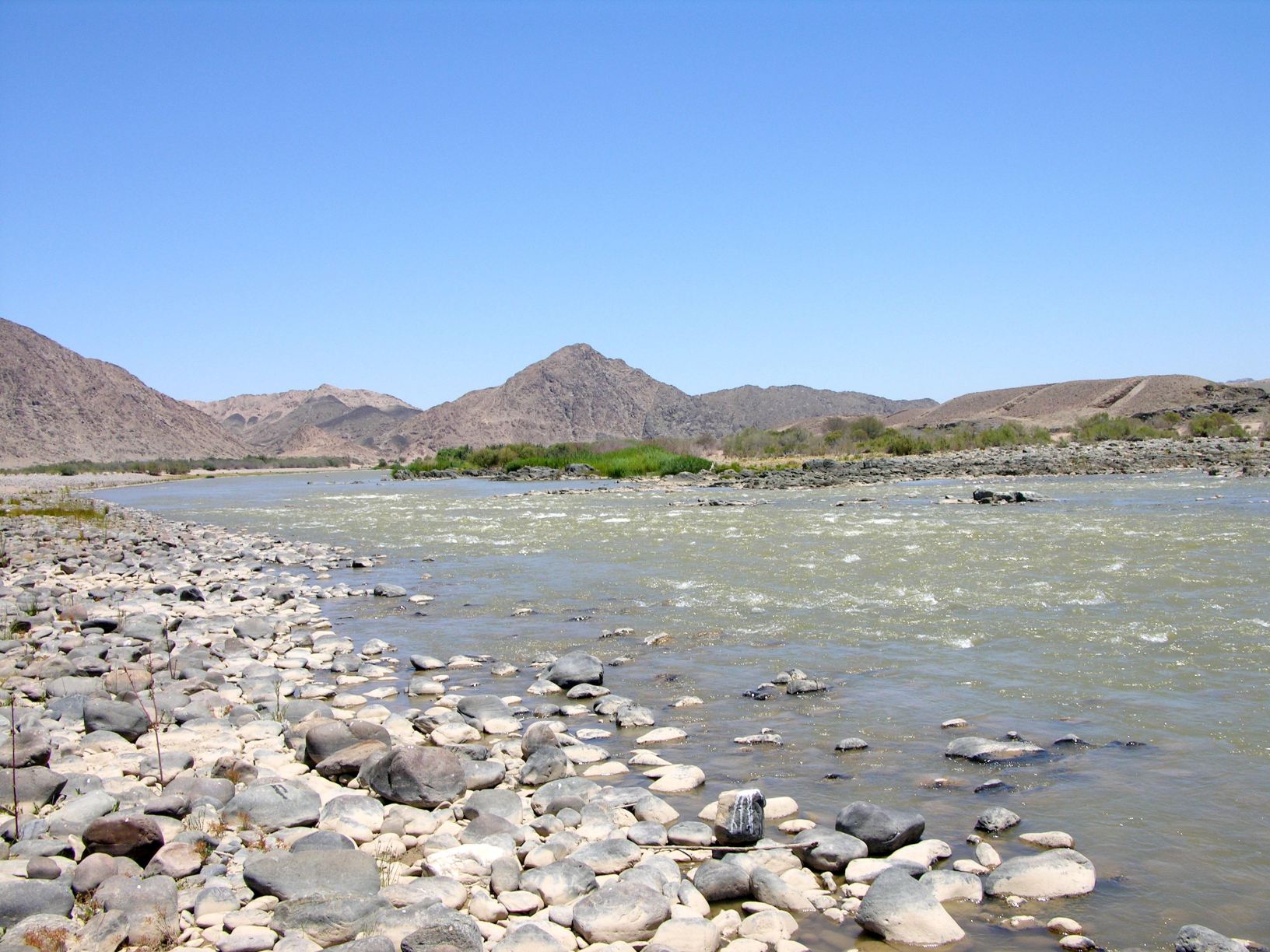
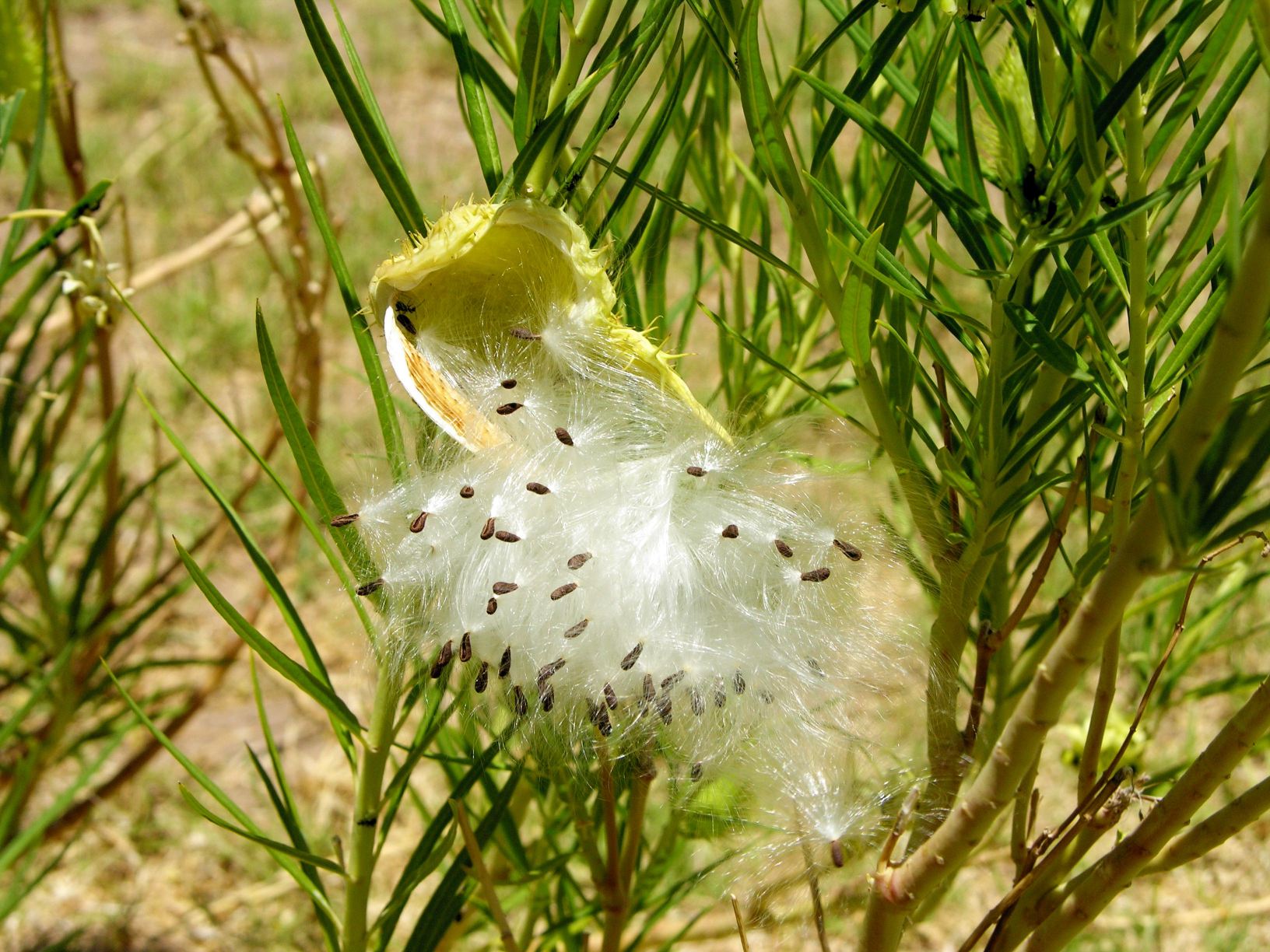
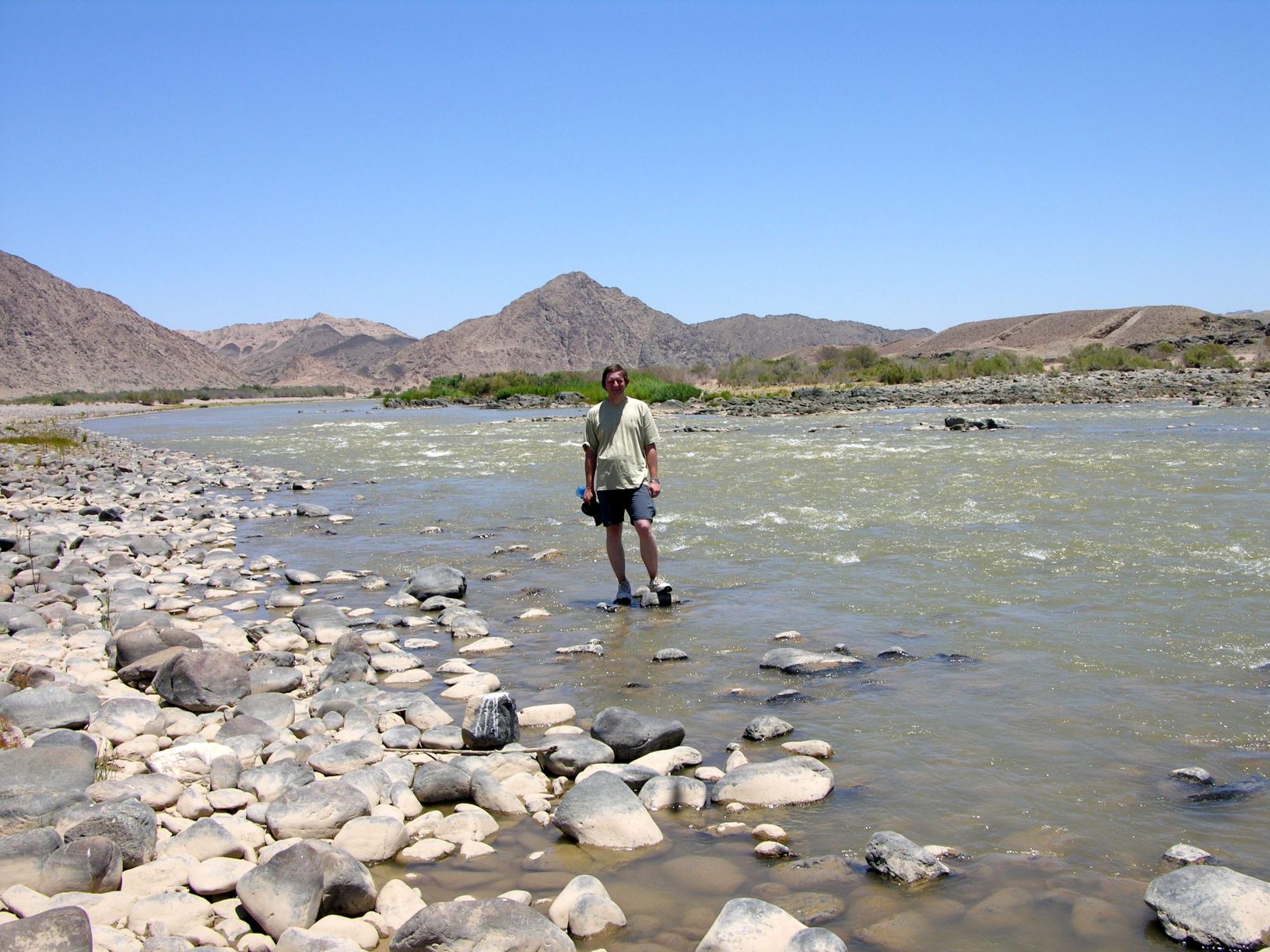
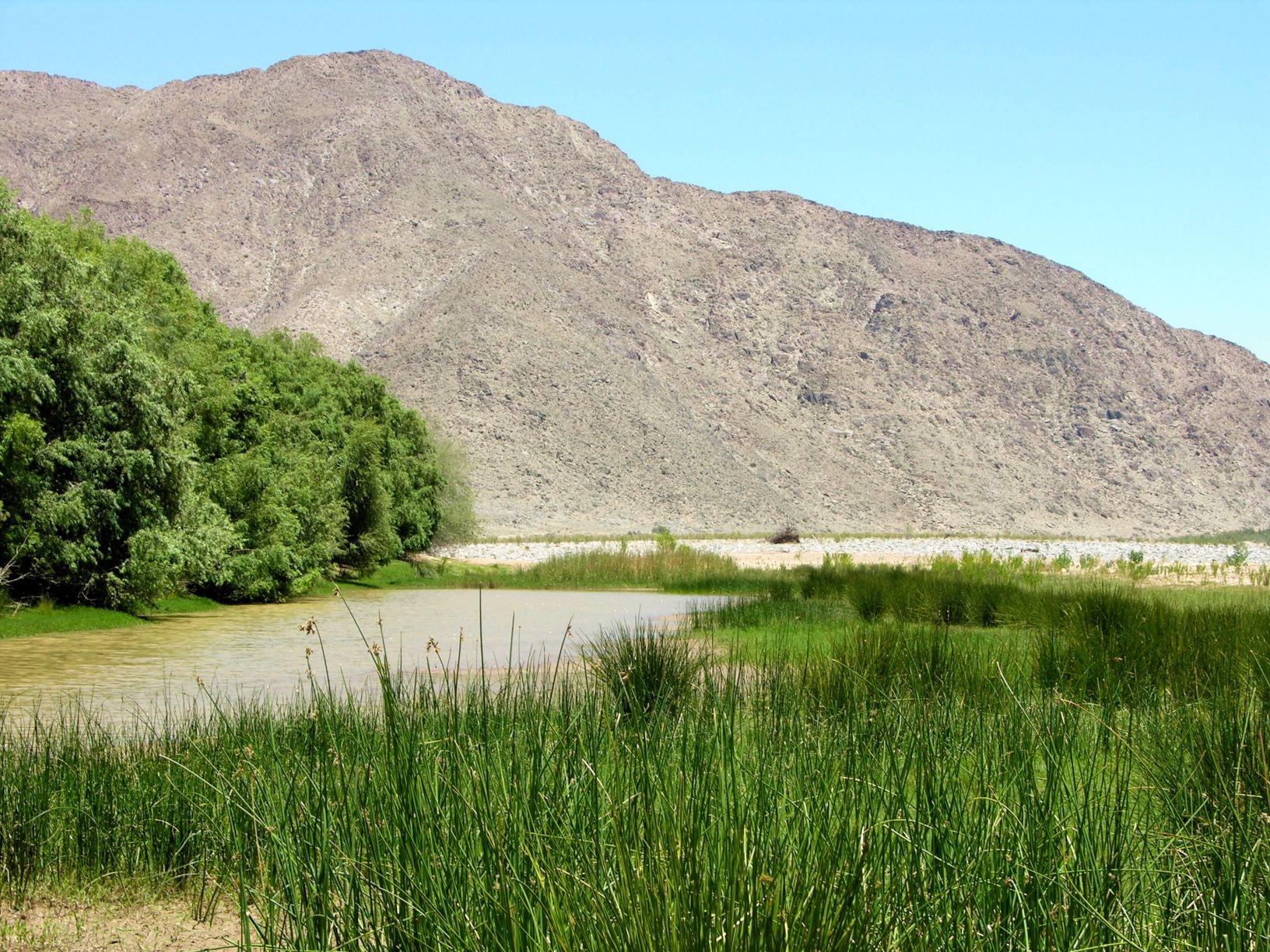
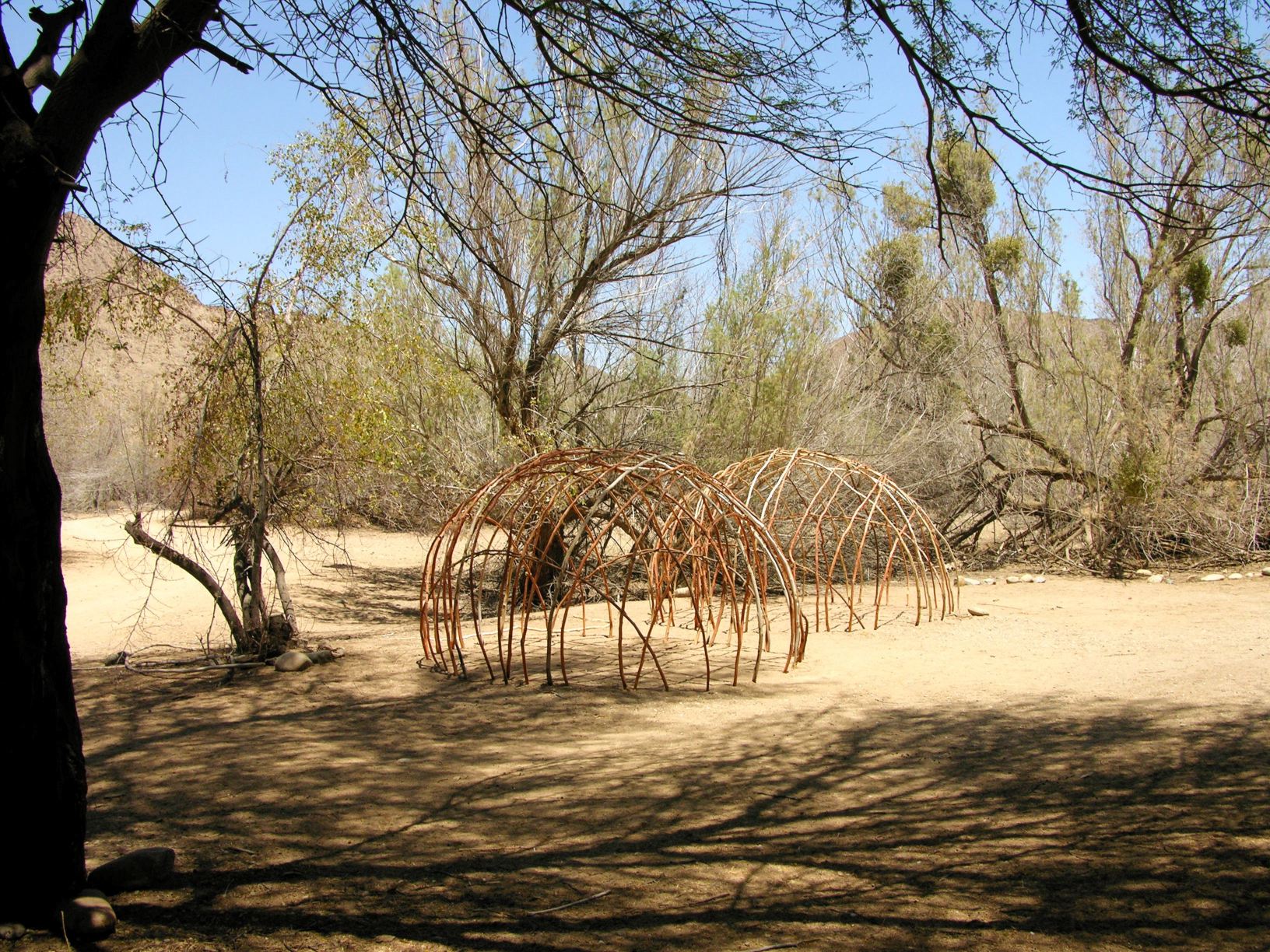
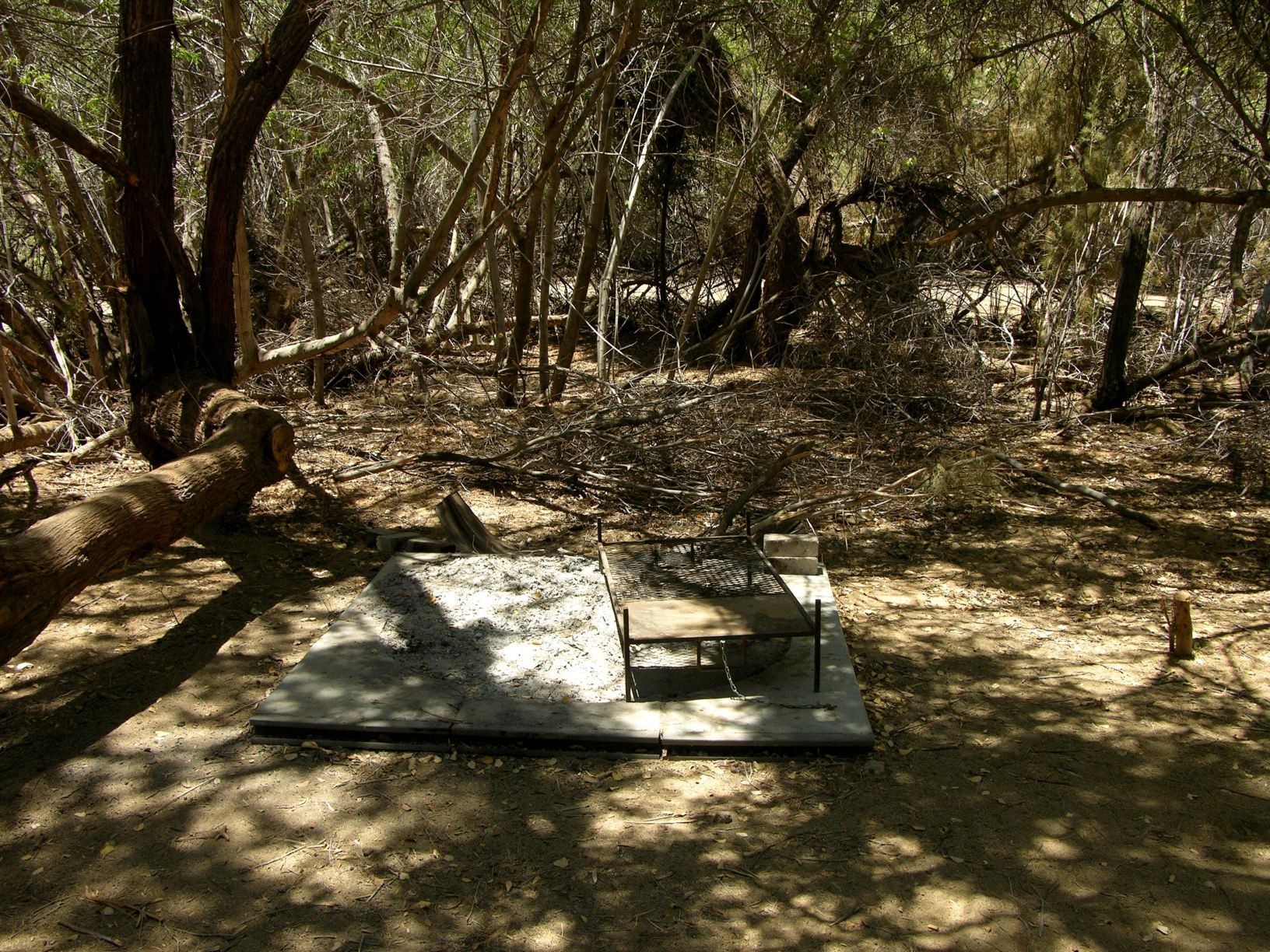
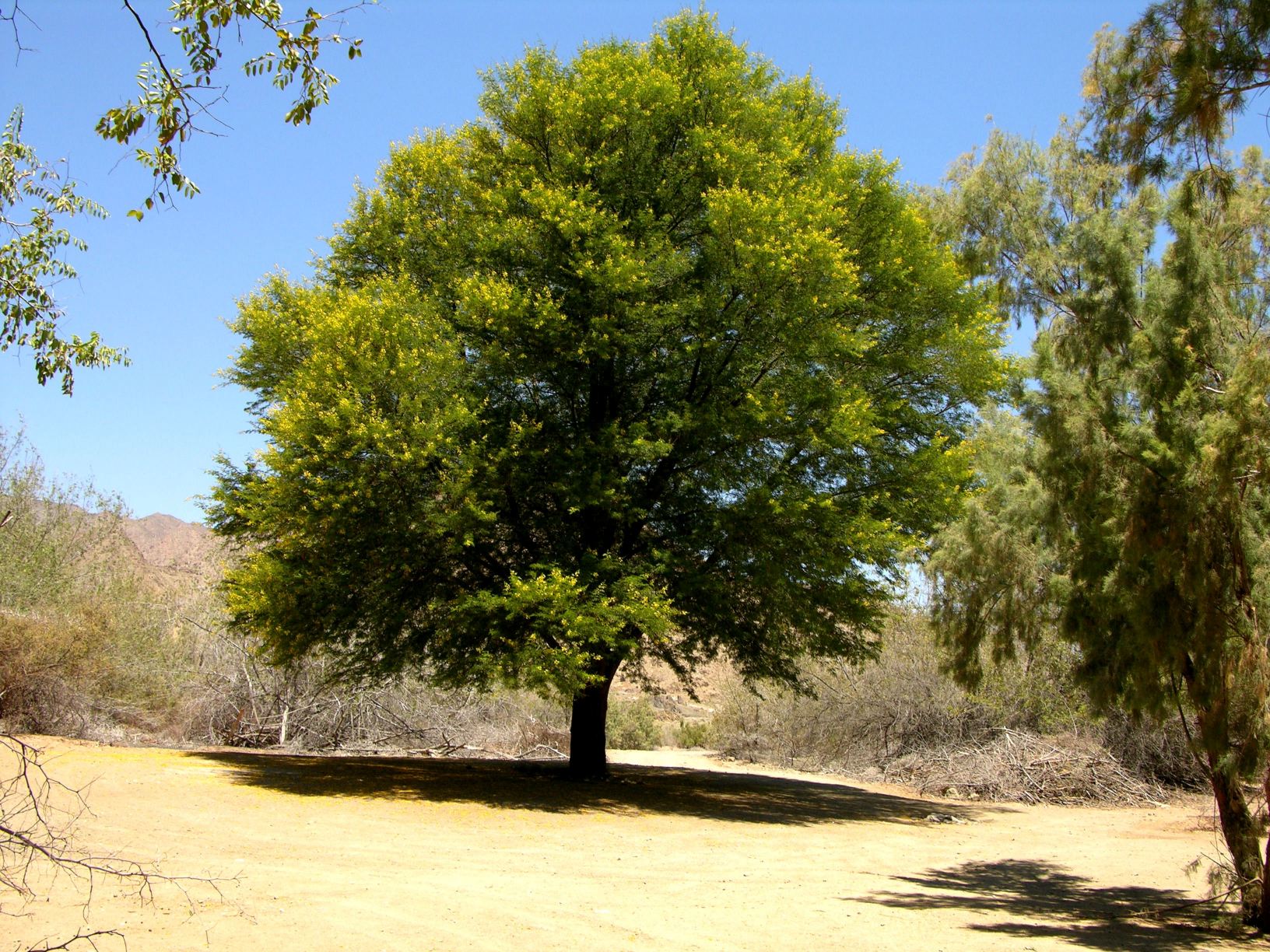
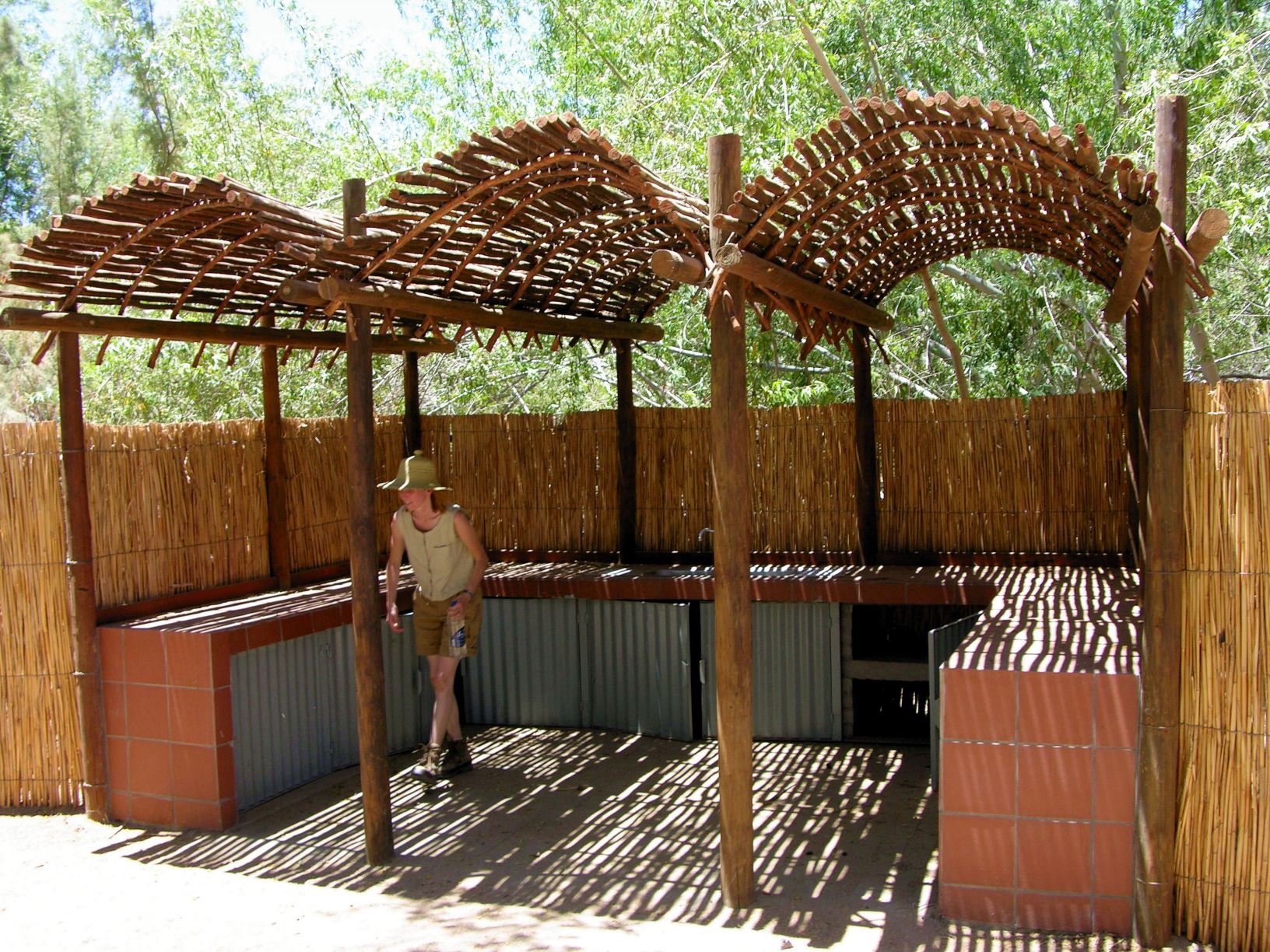
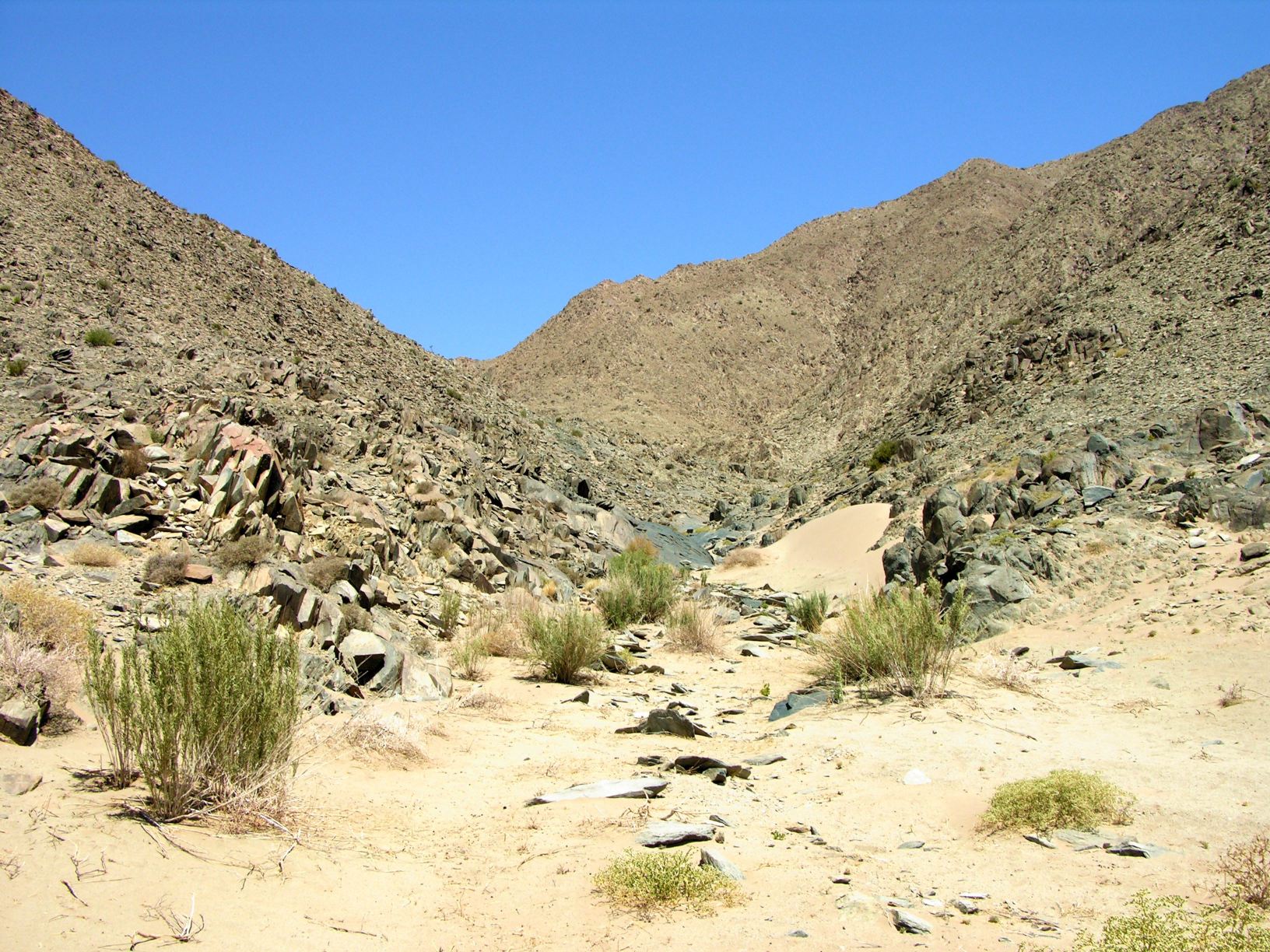
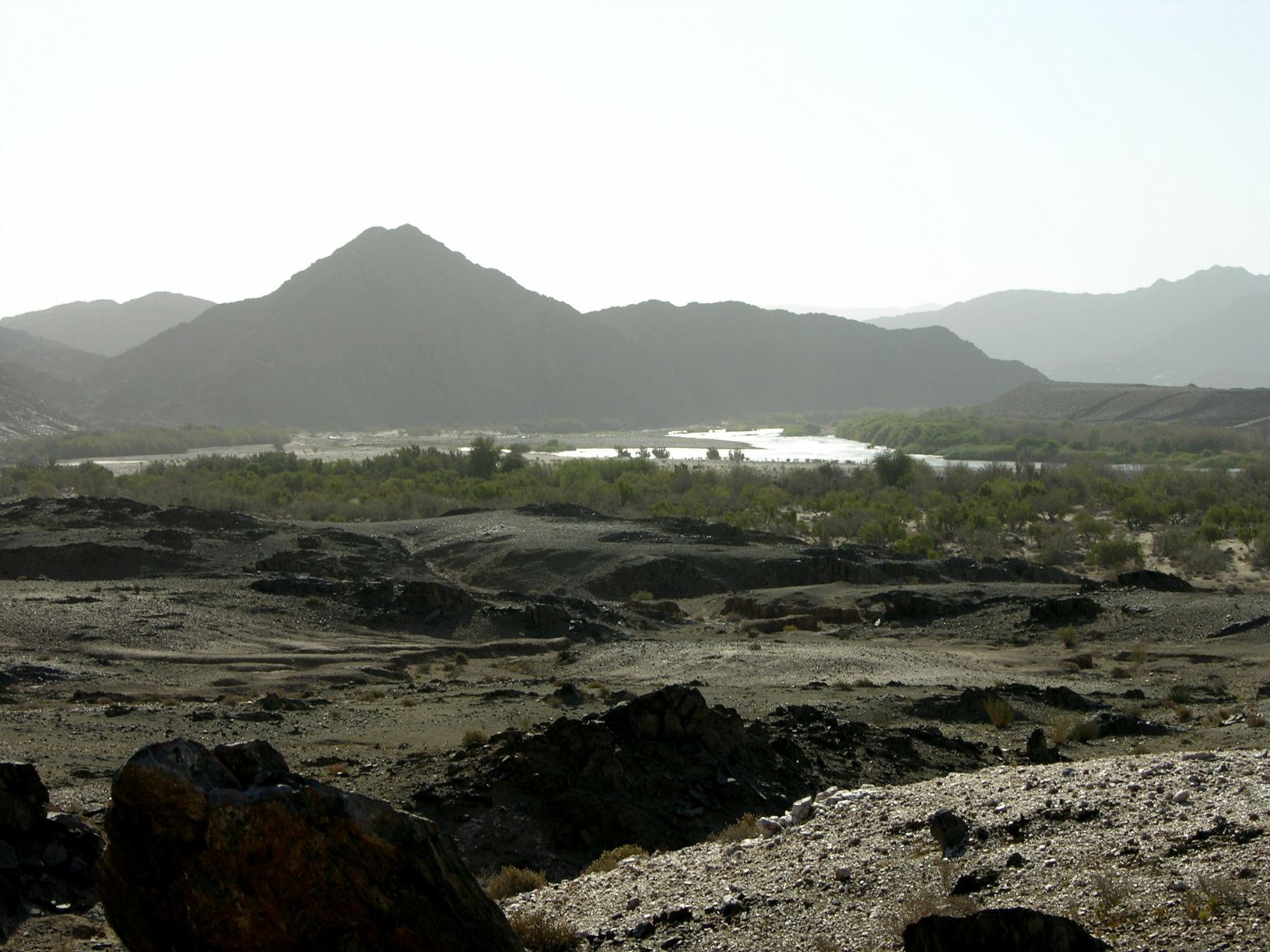
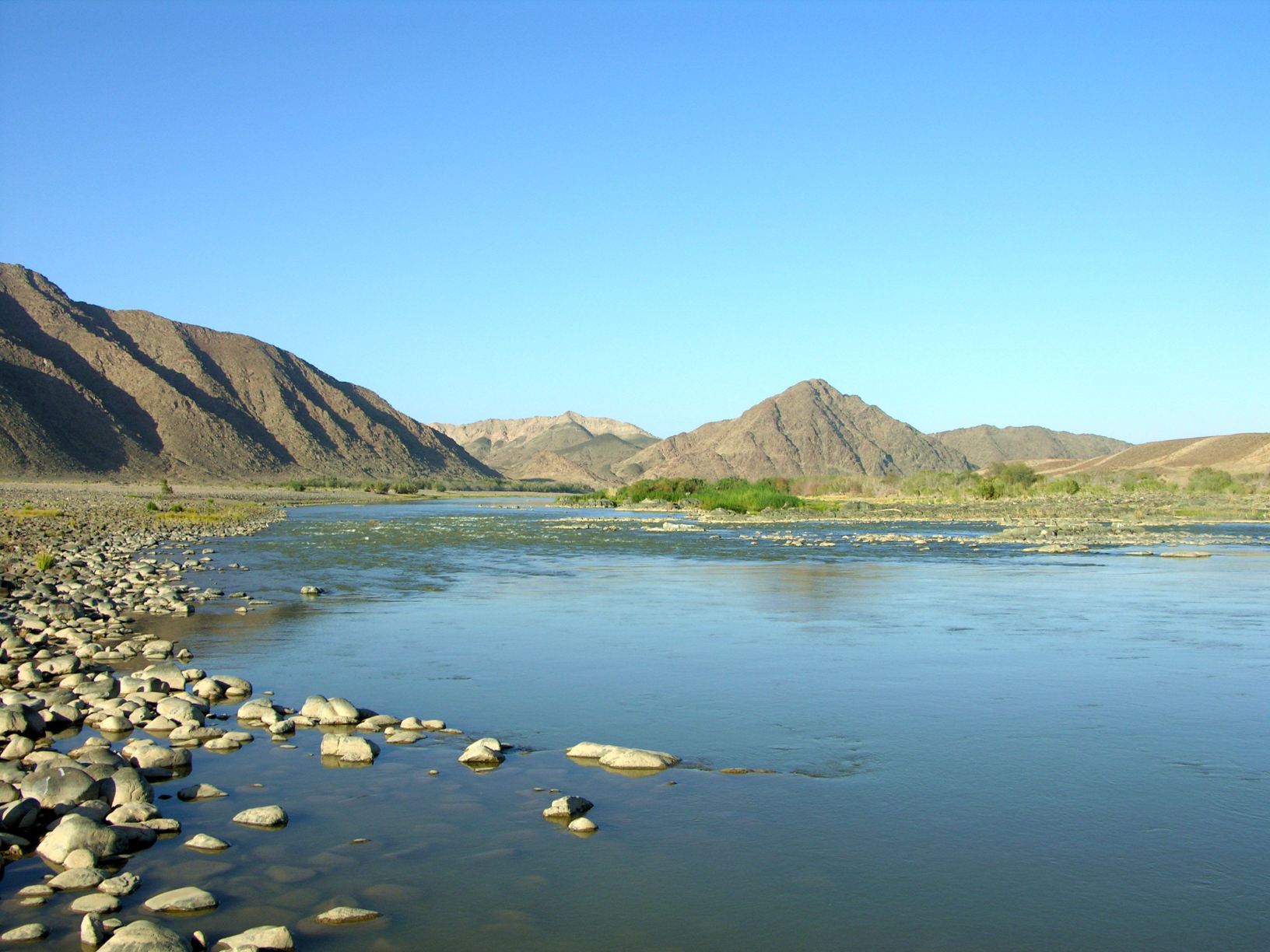
Once we were over the park boundary the road got much worse. We drove along a riverbed of loose sand. It was a miracle we didn't get bogged down several times, but nearly doesn't count. We did get to the Orange River. Here in its lower reaches it's quite narrow. There was a drought, and almost all the water had apparently been taken to irrigate the countless plantations. There was plainly less water here than thousands of kilometres upstream in the Drakensberg, in Lesotho. It was still flowing quite fast. We left the car on the bank and set out on a long walk along the river. I kept looking for a place to swim across to Namibia. A few kilometres upstream, we came unexpectedly to an official campsite. It had been built a few years before, but it seemed to have very few visitors. A thick coat of dust covered everything it could. The only fresh footprints were animals'. But everything worked. Water came out of the tap, which was good, as we'd just been about to drink that murk from the Orange. The shower worked too, so we cooled off. Even the toilet worked, and there was paper. A regular lost city. We might as well bring the car over. We went to reconnoitre the road. You needed a proper off-roader here, of course. But if you put a stone in here and drove slowly… I spent an hour sizing it up, then got up some speed. It wasn't the right car for the job, of course. I dented a hubcap and knocked the bumper off. Never mind, I put it back on. Now we could park next to the shower under a magnificent tree. Never mind the tree itself, it was the shade that mattered. To have a doze under a tree in the midday heat of an African summer is bliss. Get too hot and you can go for a shower. With nobody about, you don't even have to get dressed afterwards.
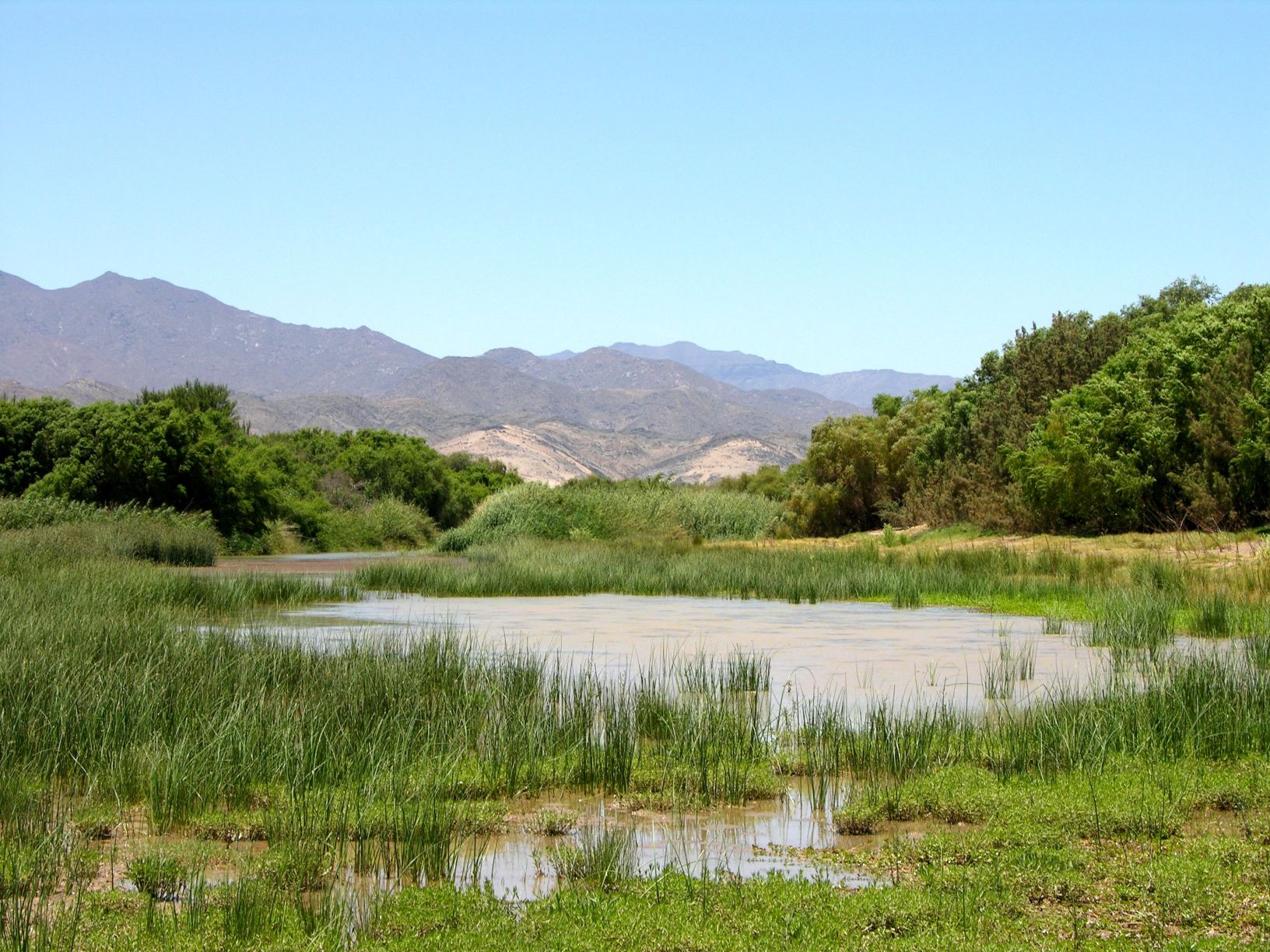
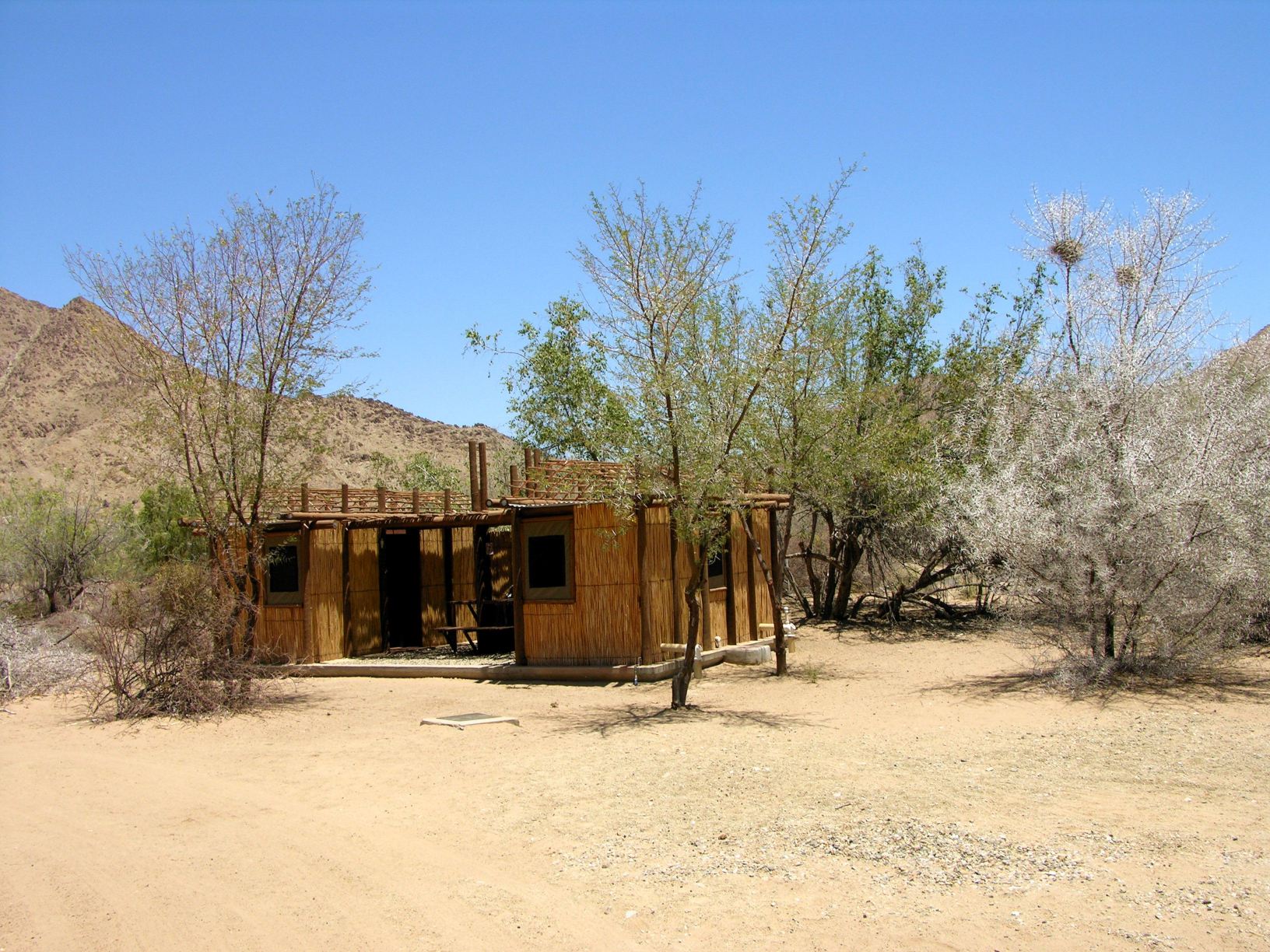
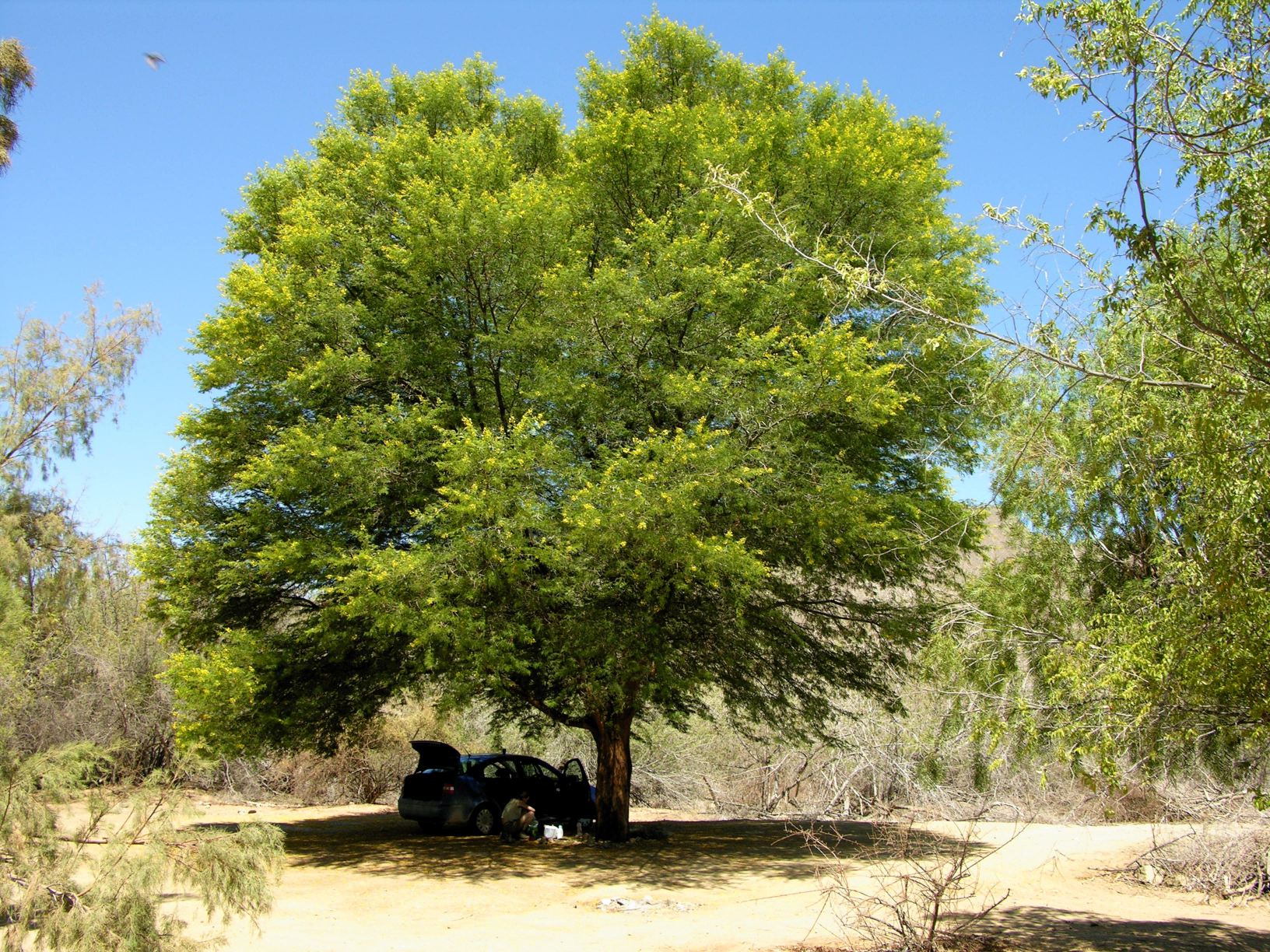
The one nuisance was the monkeys. Not the frightening baboons, just the ordinary sort. They're scarcely bigger than cats, and Tanya isn't scared of cats. But leave something out and take your eyes off it and they'll pinch it in no time. The beasts know how to open car doors and unzip rucksacks. And the neat way they open a packet of biscuits! They don't steal any old carrot or cabbage, either. They've got good taste. They find the sweet stuff, the sweets and chocolates, in a flash. Lock the car up, and don't leave sweets outside.
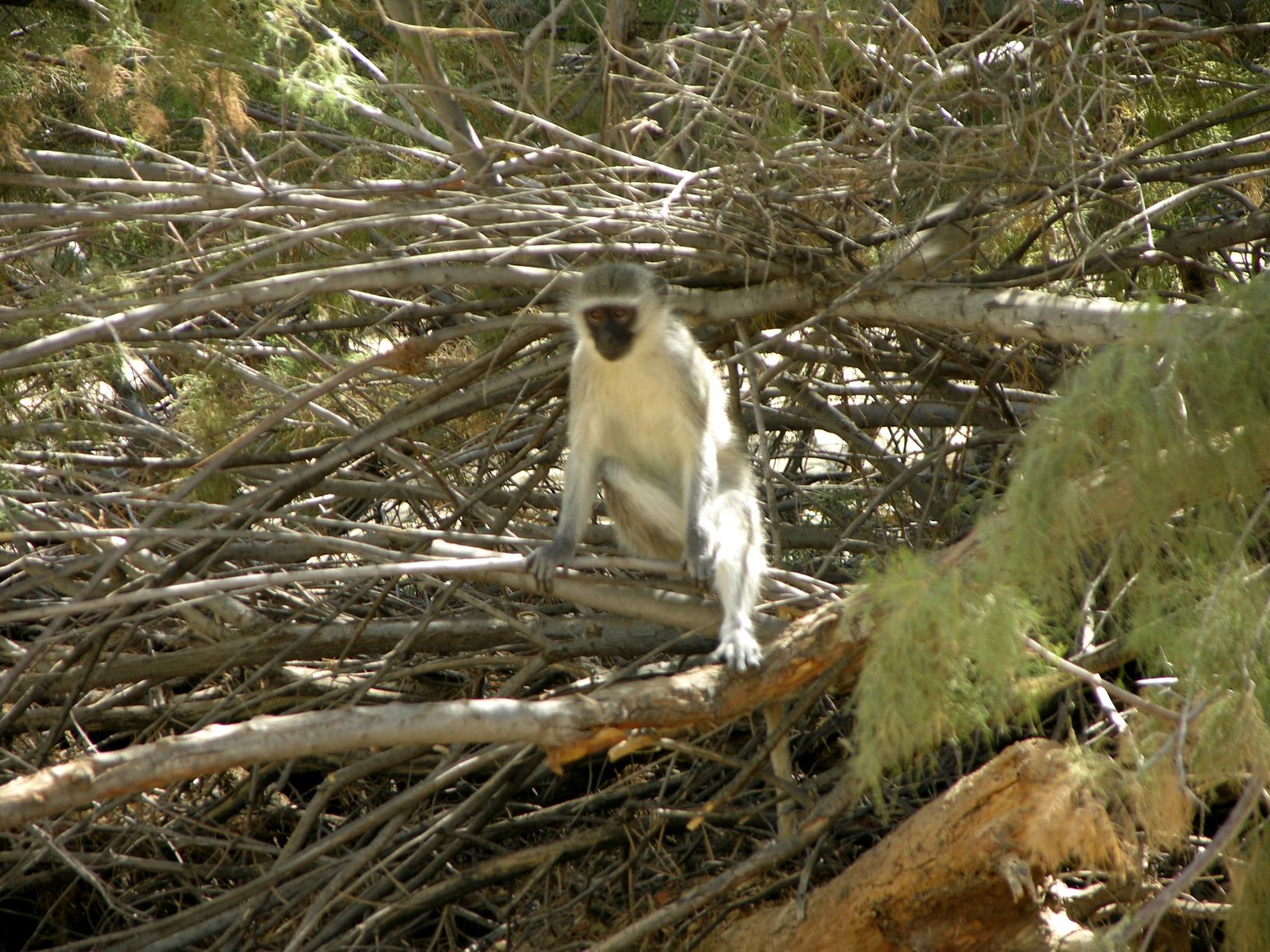
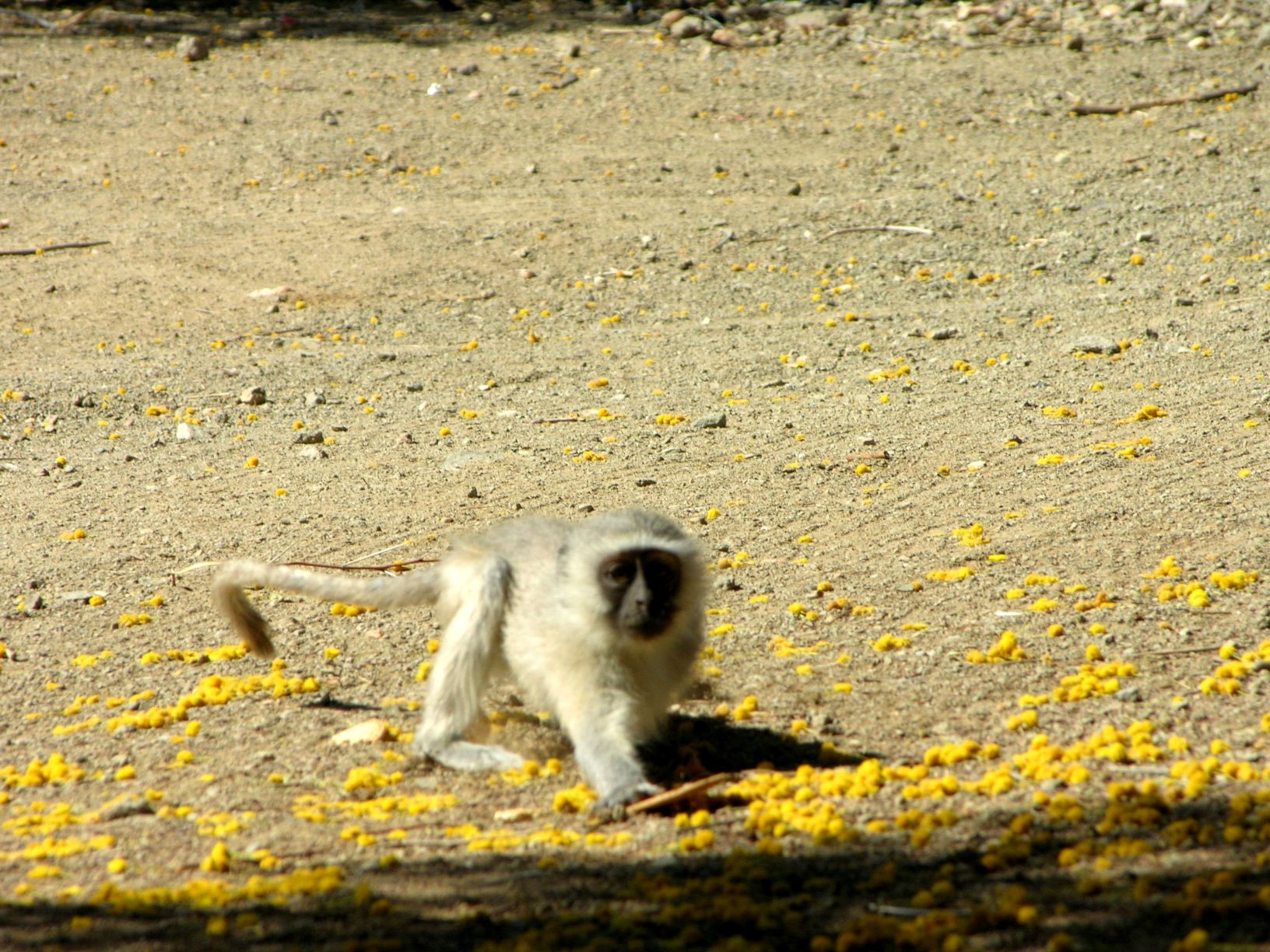
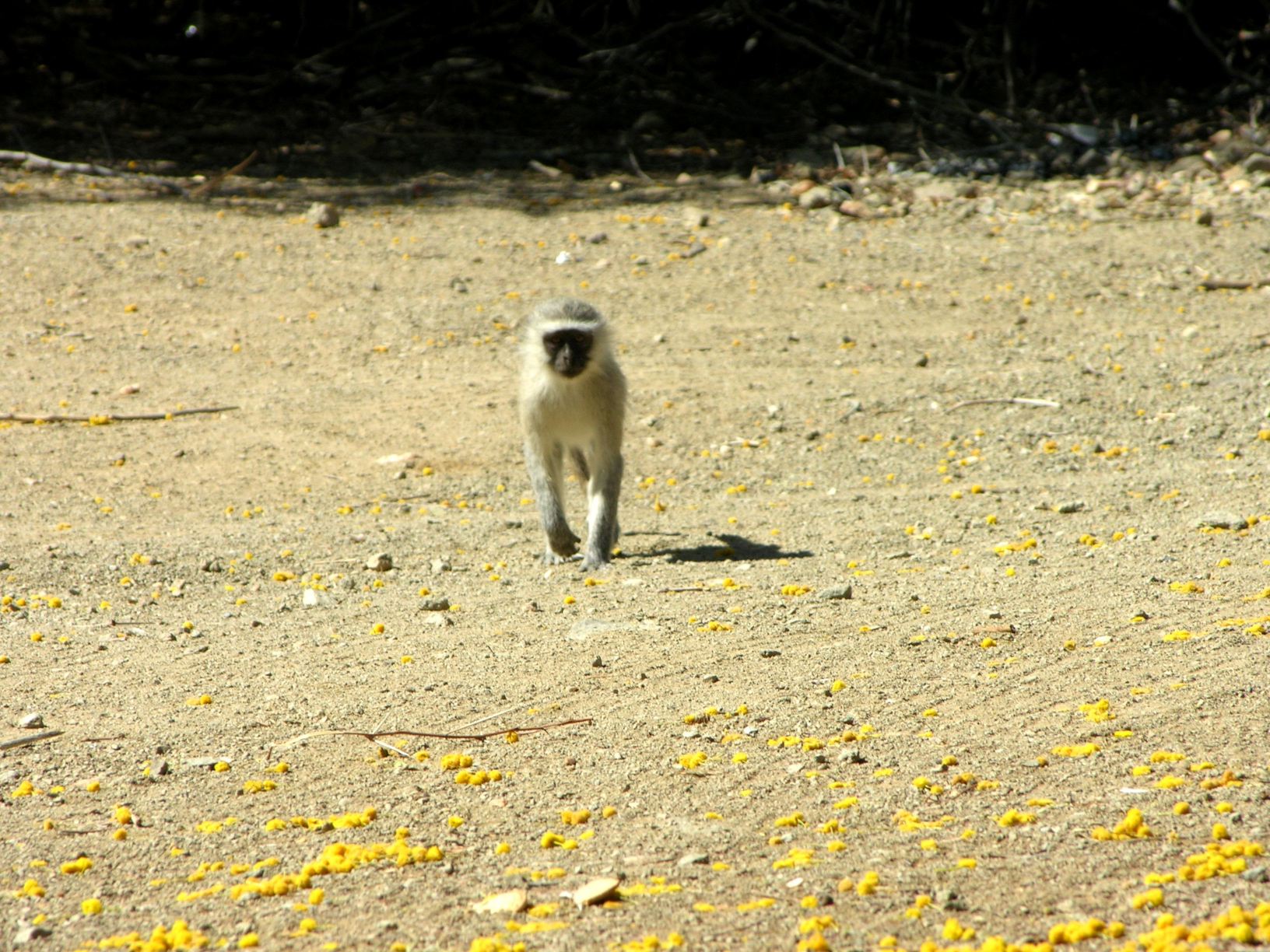
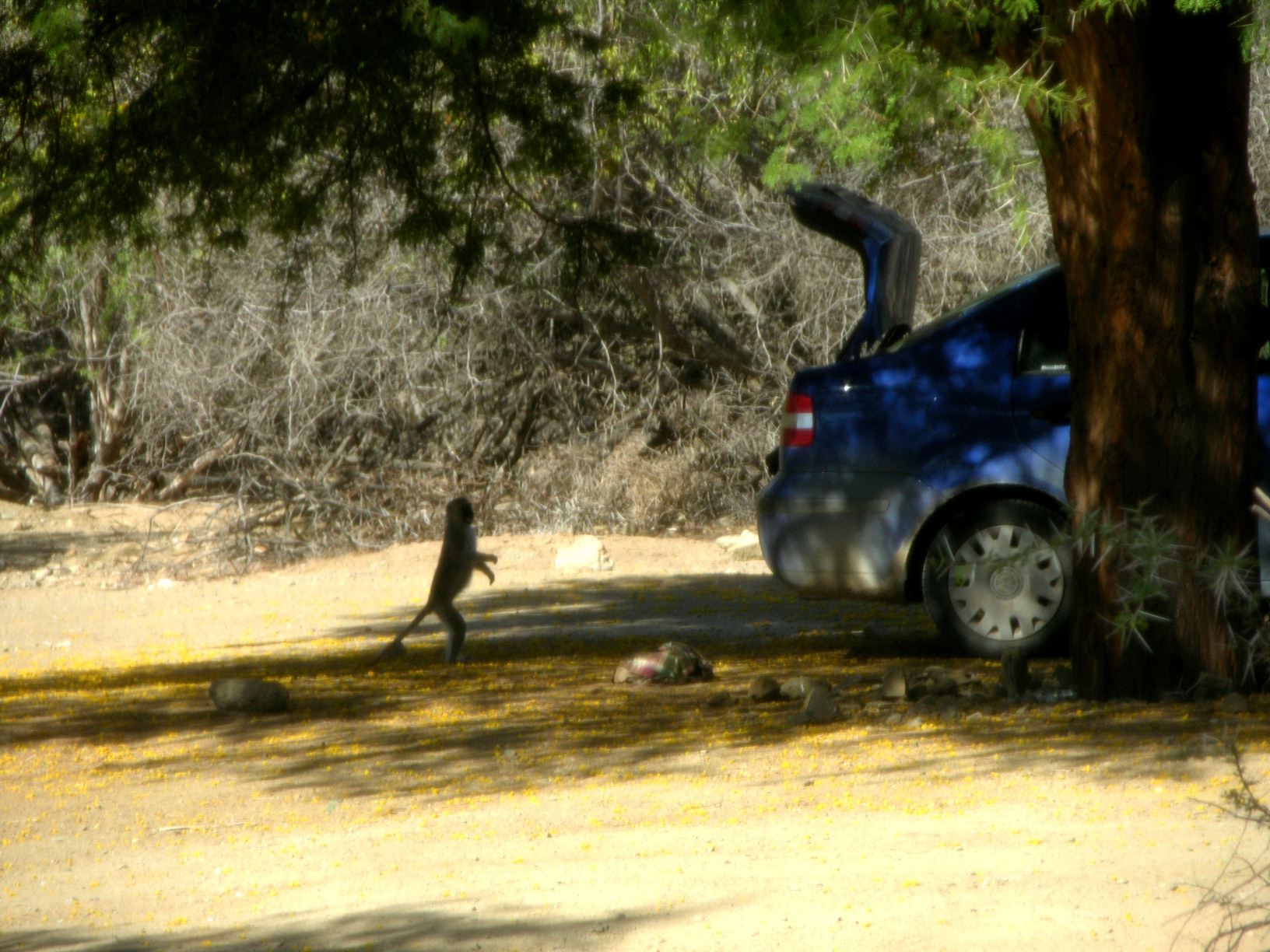
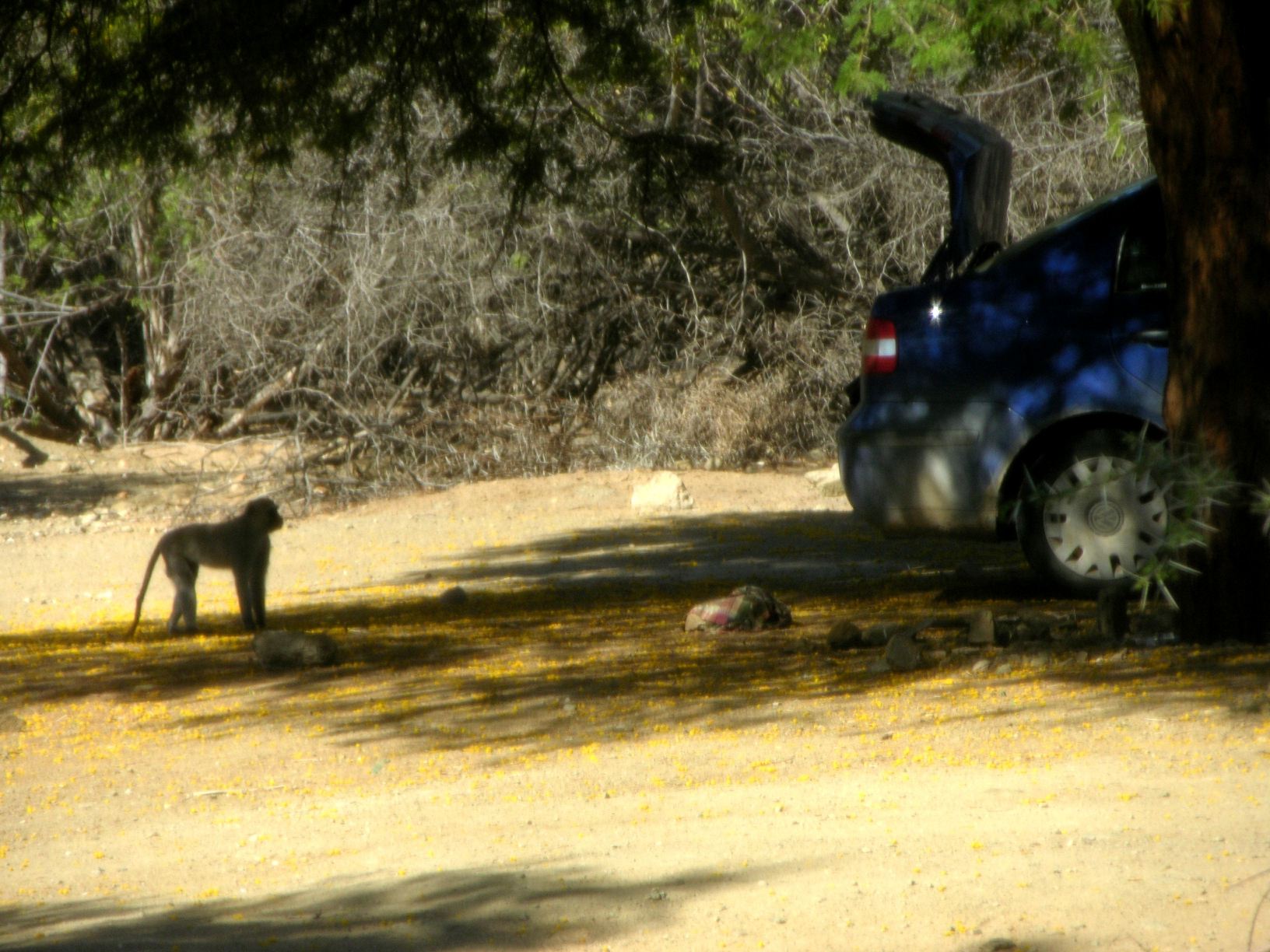
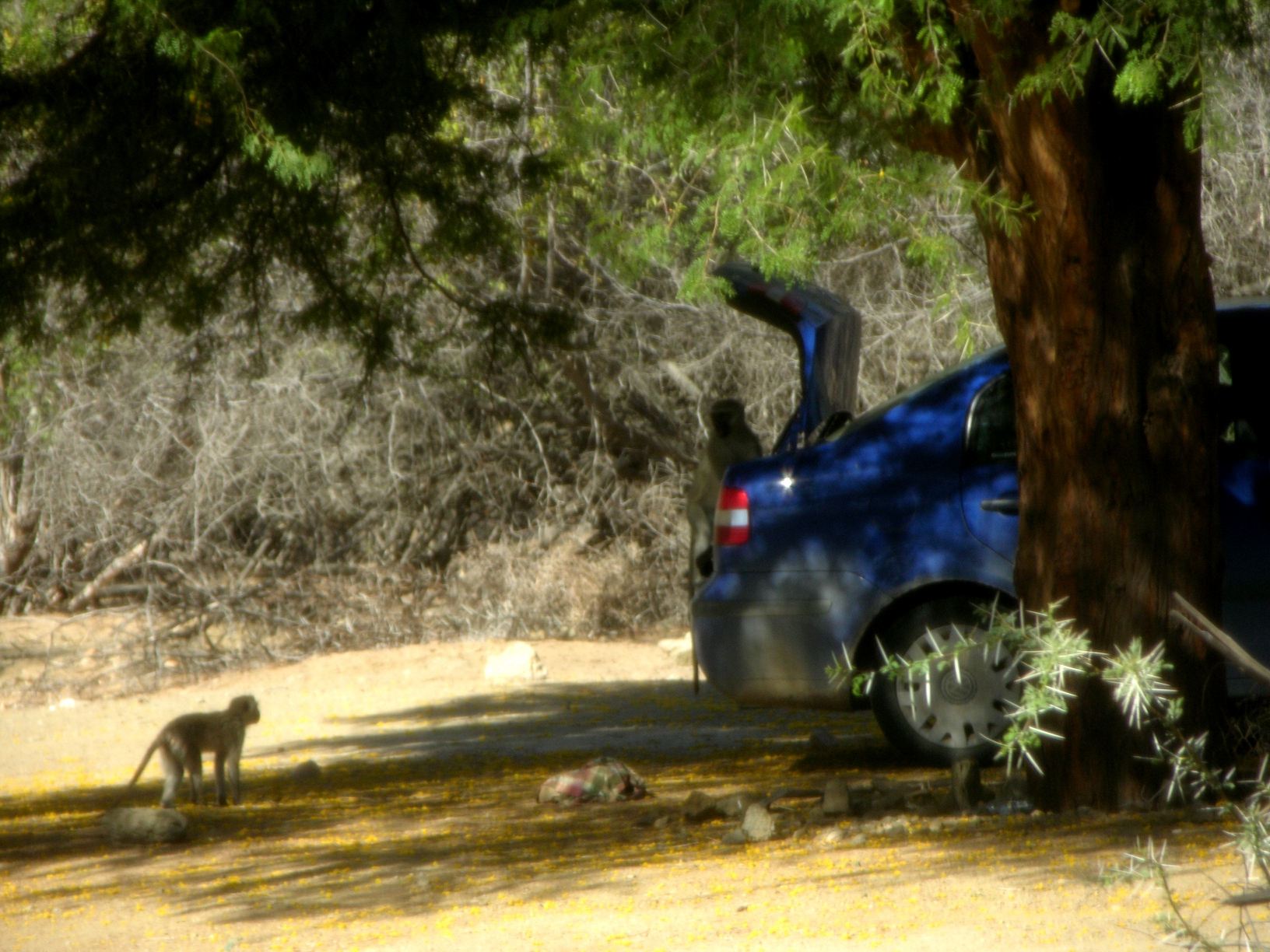
They'll all sit on the car anyway and tug at the handles. They remember it opened before, so they pull on all the parts that stick out. All right, they're light enough and won't dent the roof. They'll scratch the paint with their claws, but nothing too bad. The trouble is they shit a lot and they do it often. And they're so close to human beings. The smell is quite close, too. When we got back, our car was… how do I put this politely? Let's just say I didn't fancy washing it by hand afterwards.
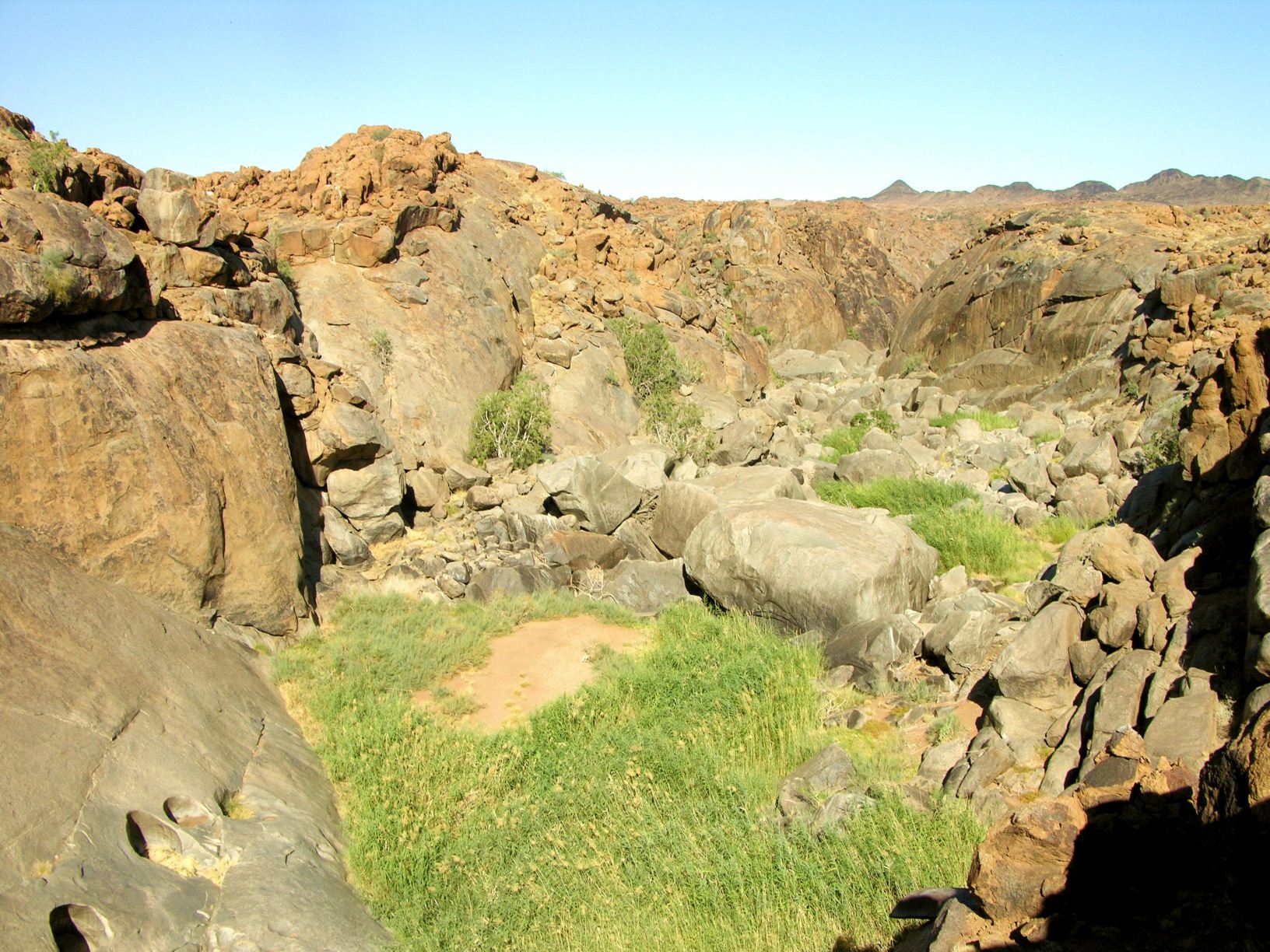
As soon as the daytime heat let up, we went off for a walk through the nearby mountains and valleys. We climbed the peaks by the river. It was all really beautiful. For the first time in South Africa, we had a feeling that we hadn't come all this way for nothing. It was really wonderful here.
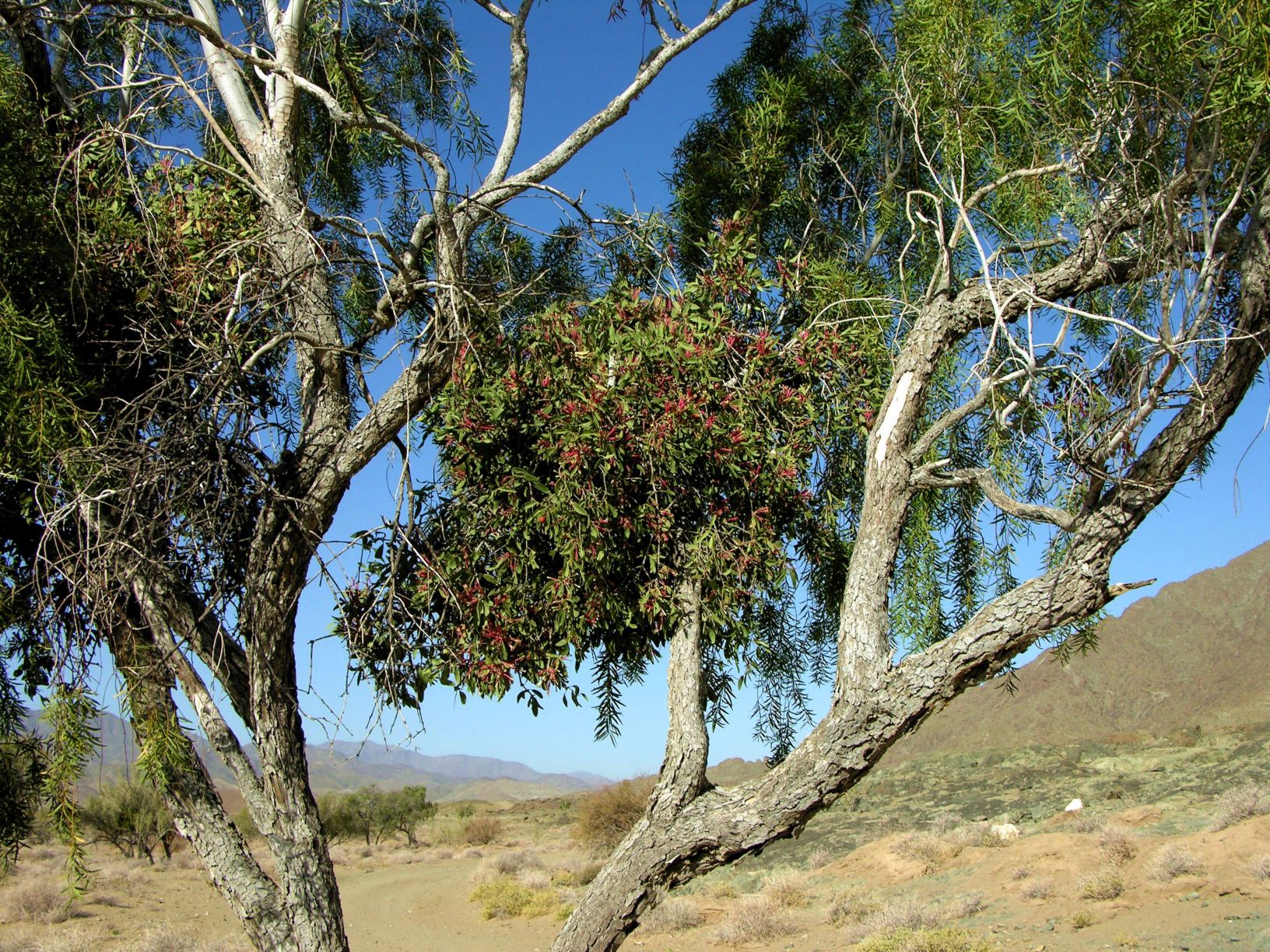
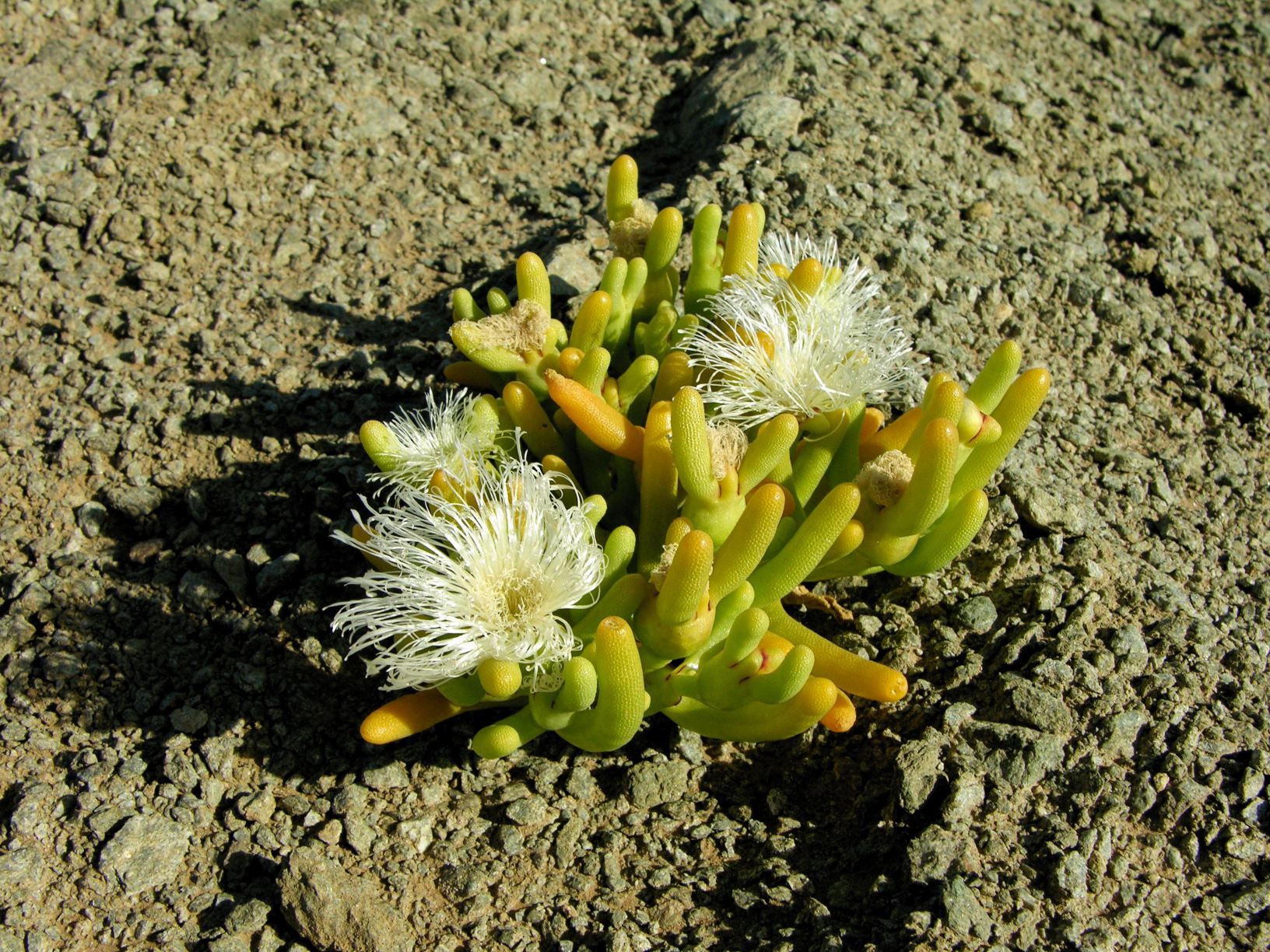
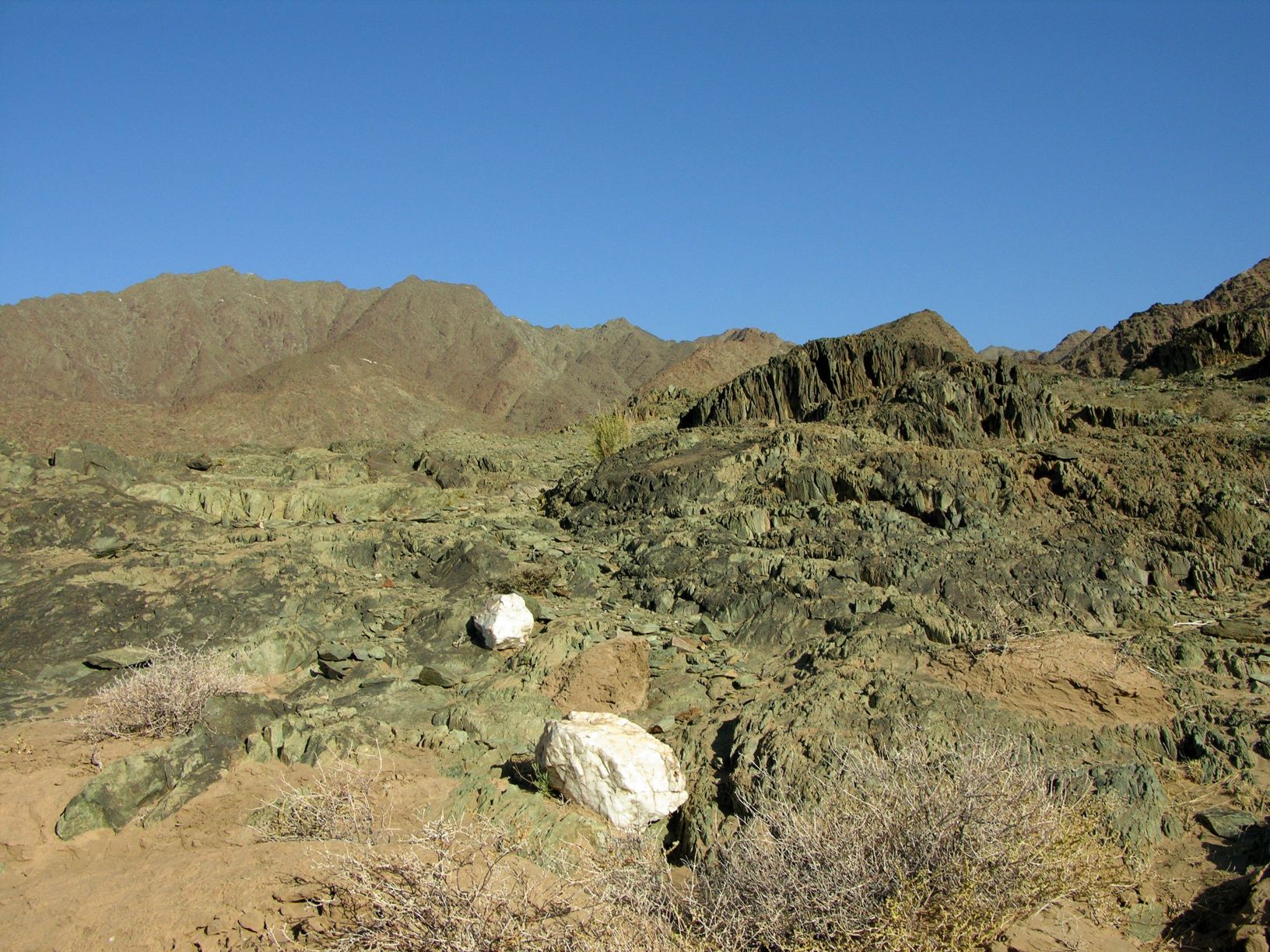
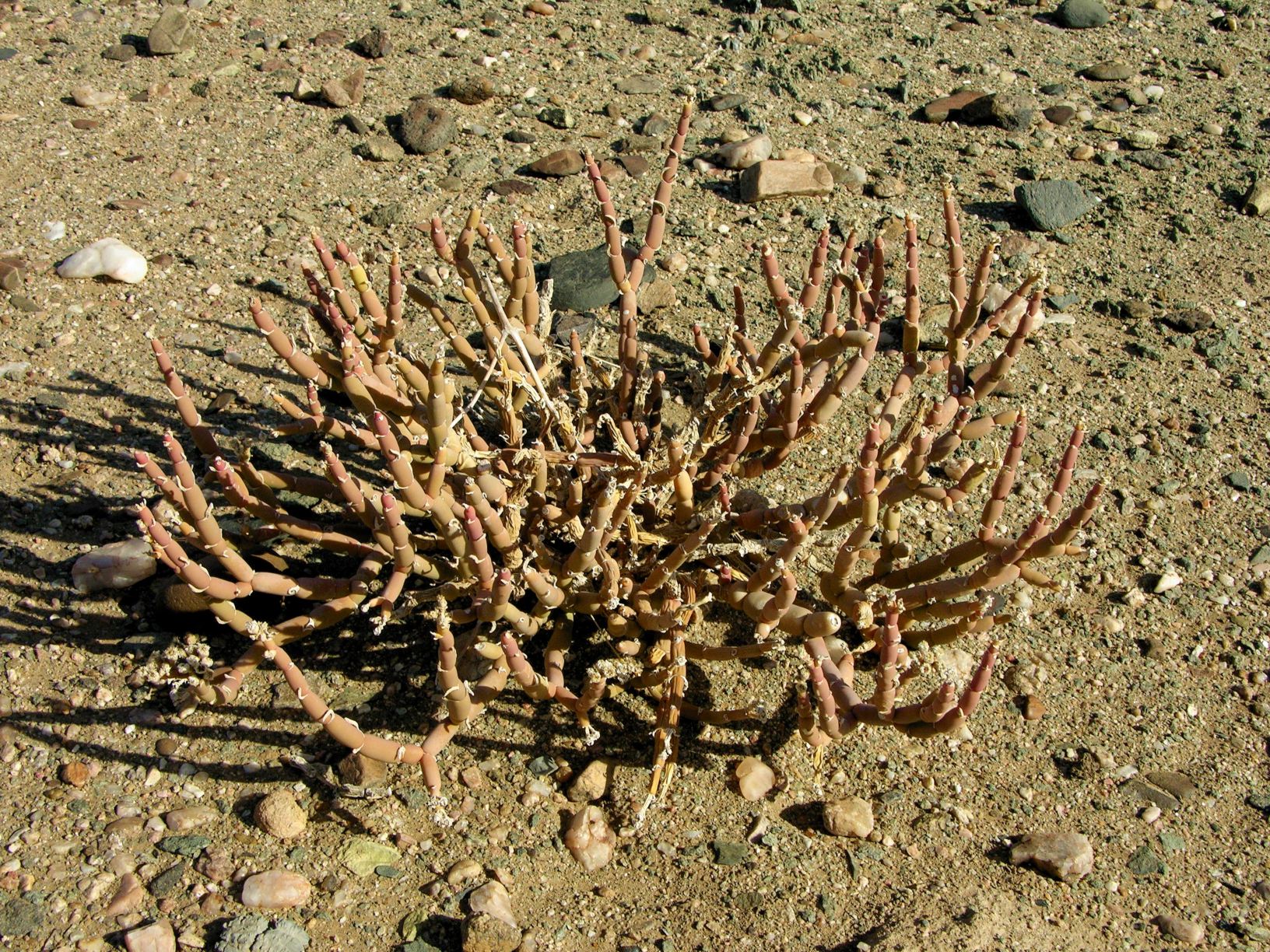
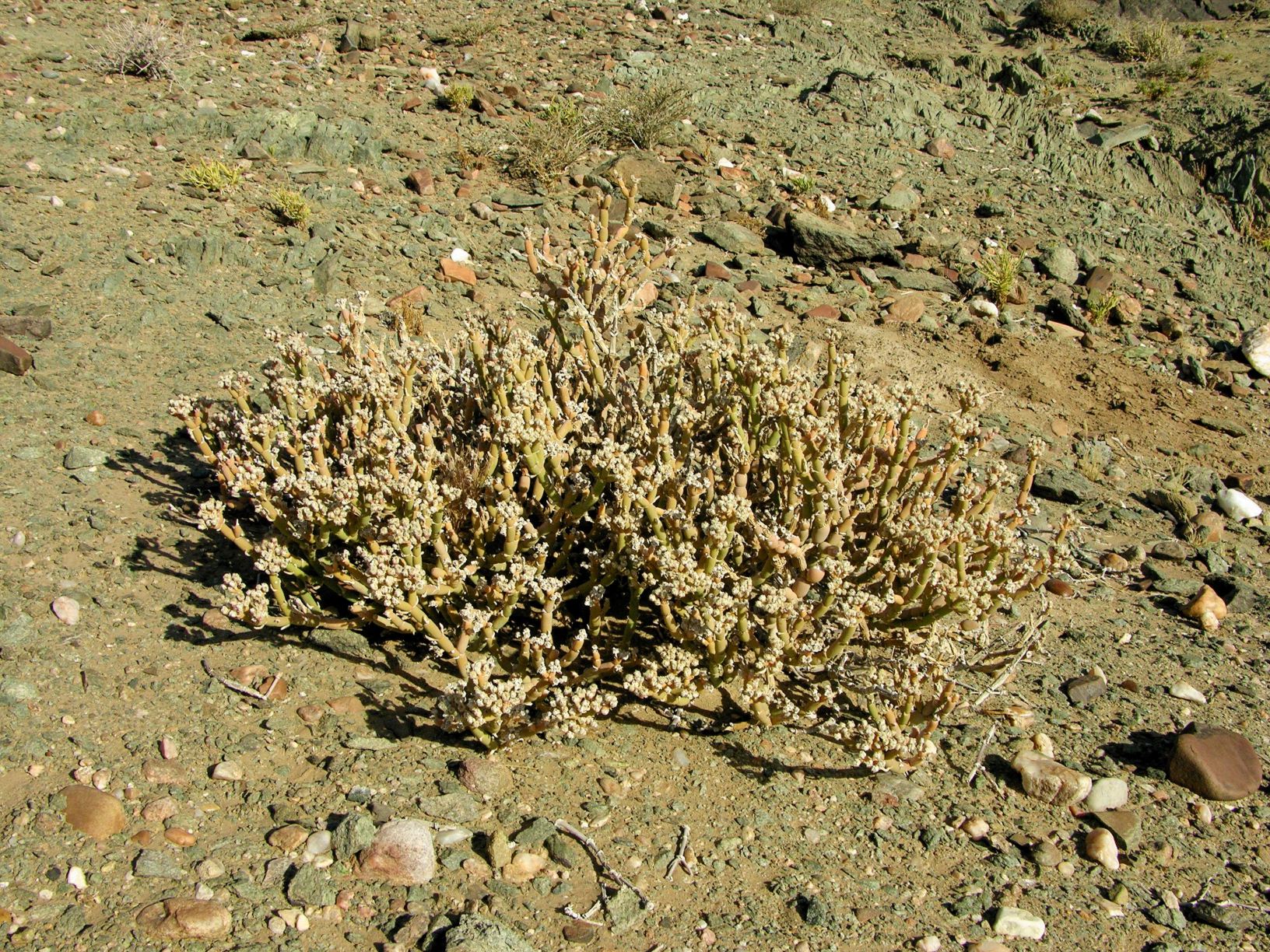
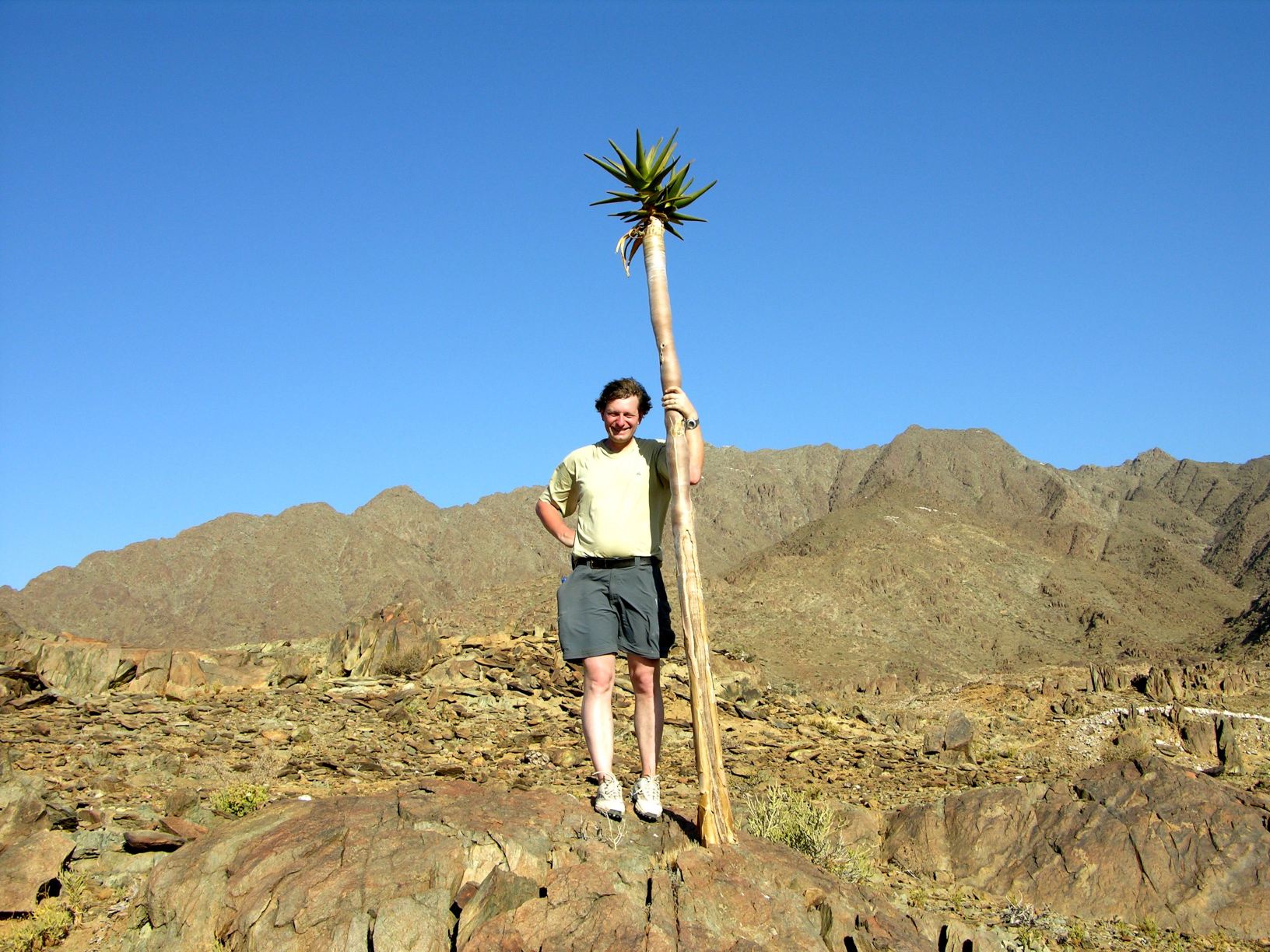
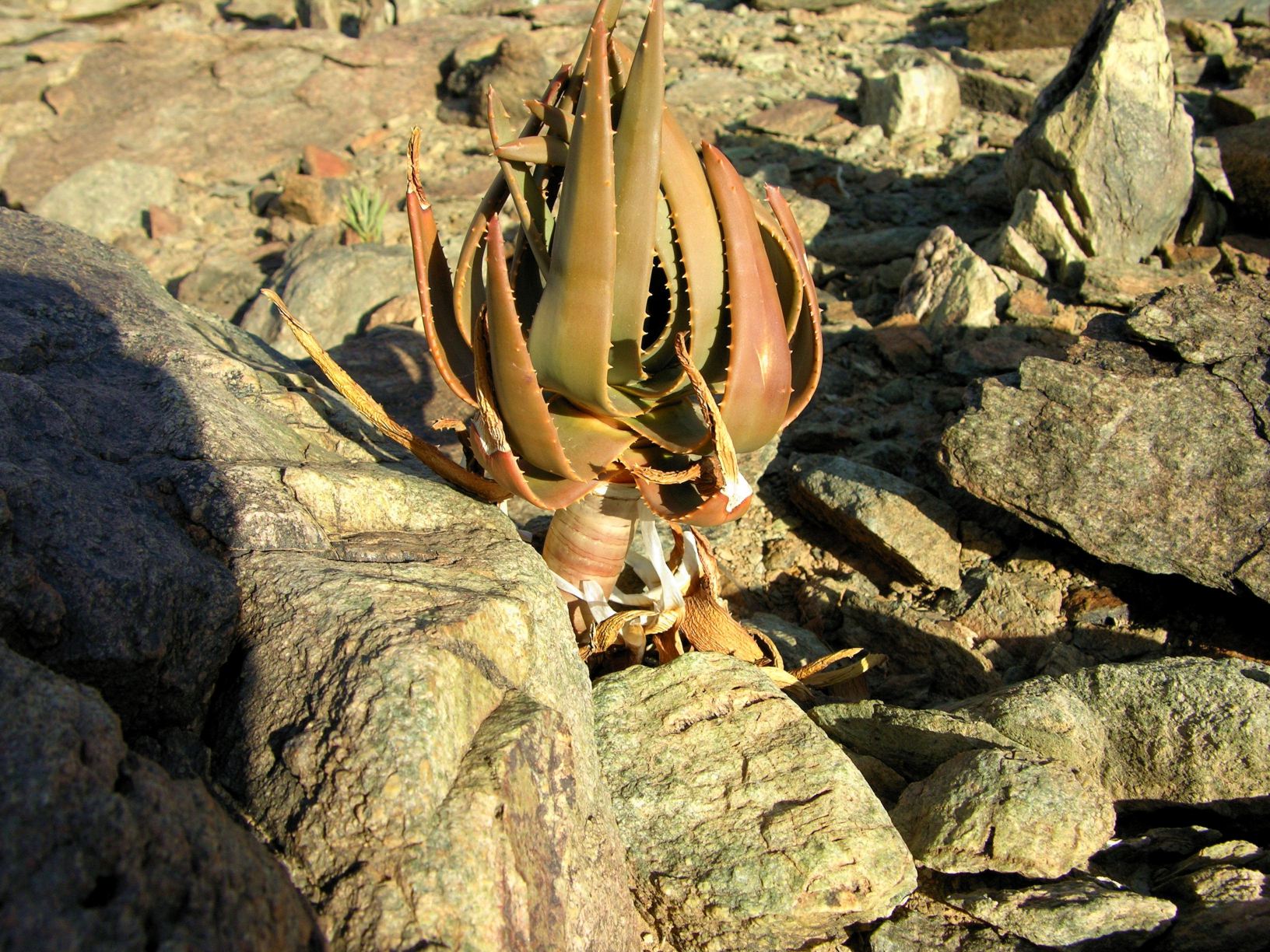
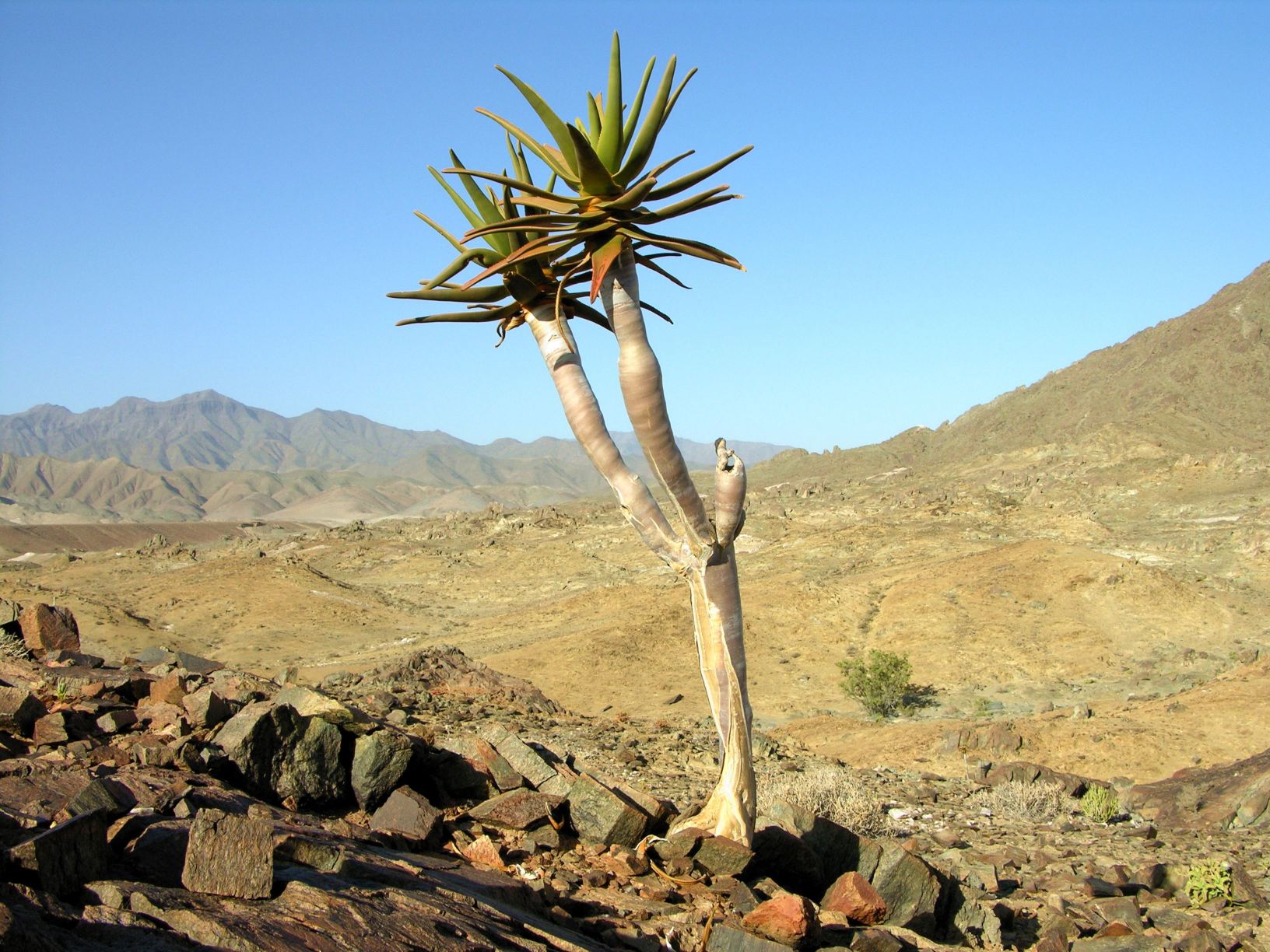
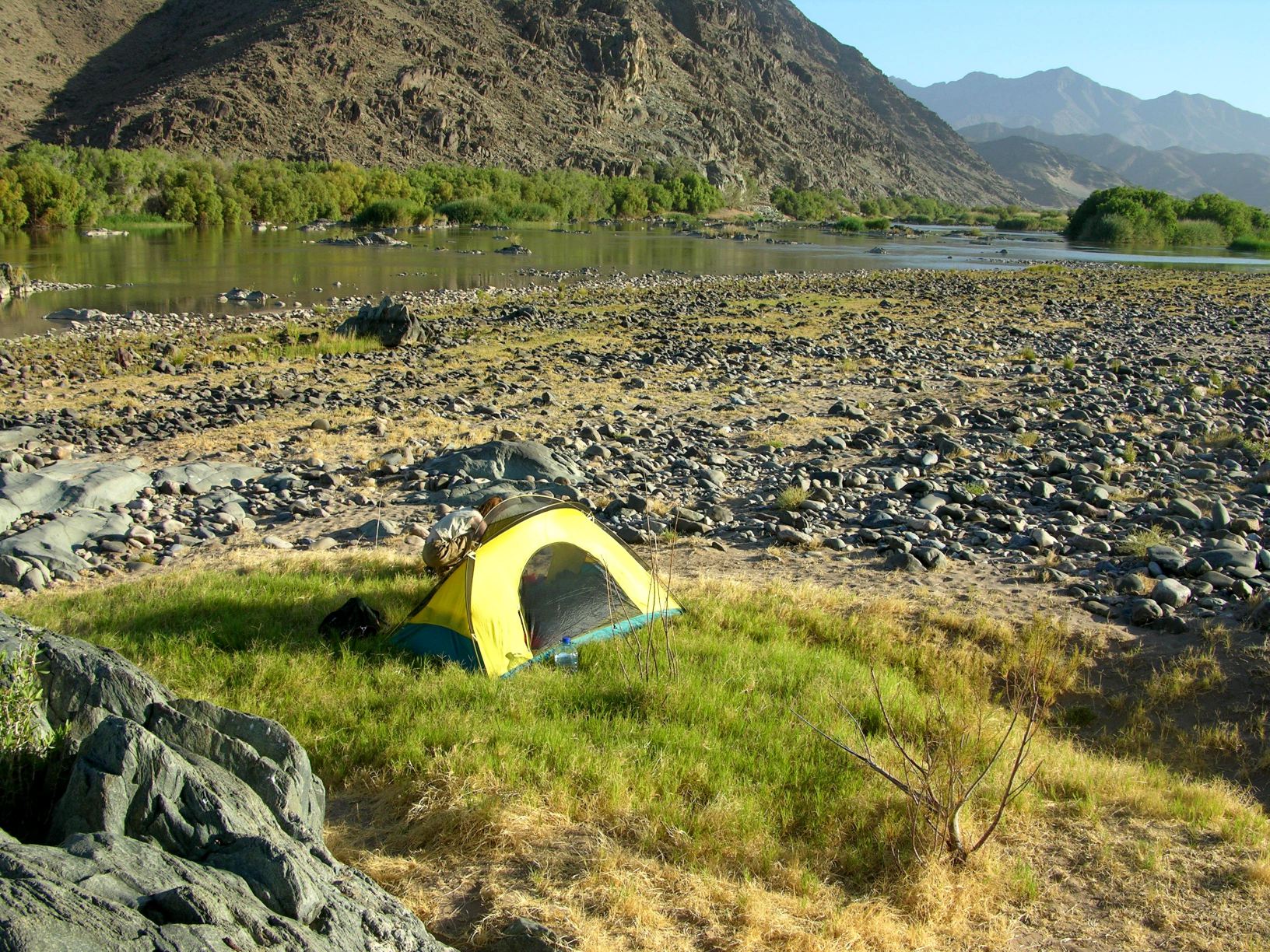
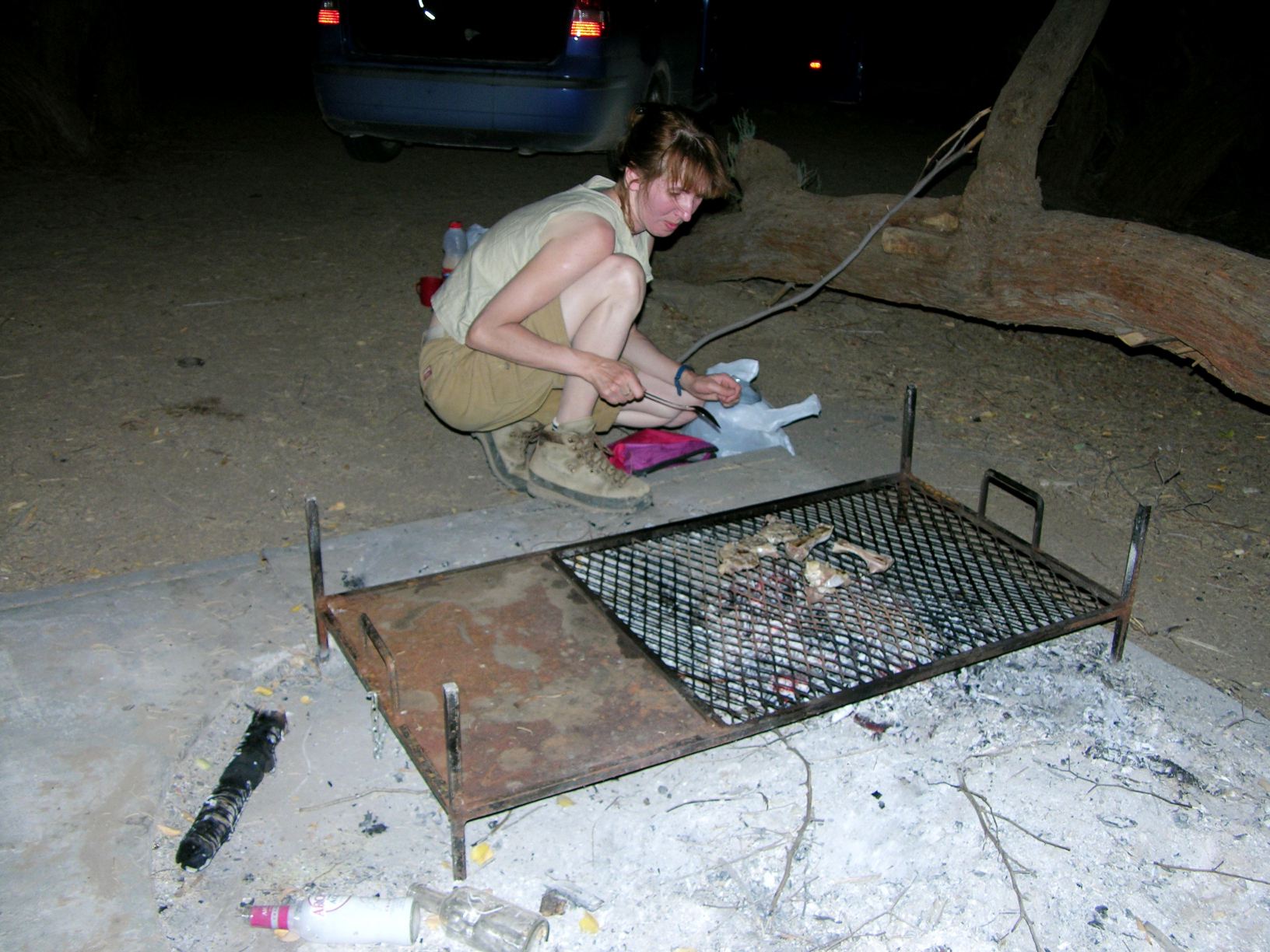
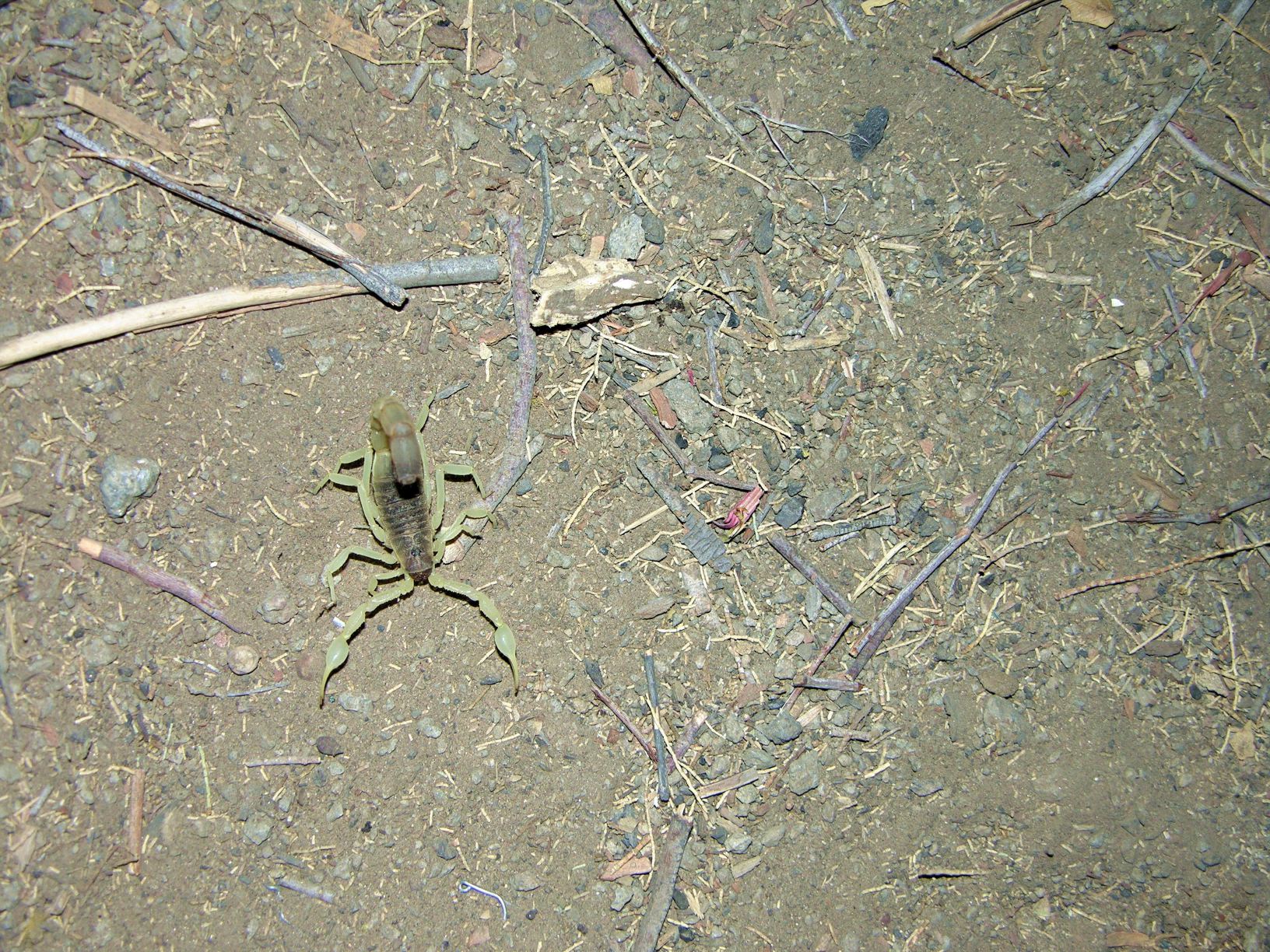
We got back to the river at sunset. We stayed the night in our tent, right by the water (28°04.367′S, 16°57.754′E). It was our finest night under canvas on the whole trip. Not a soul around. The water murmurs over the rapids. A path of moonlight, the Southern Cross rising over the mountains. We had the obligatory bottle of Orange River and had brought meat for the barbecue. Scorpions crawled about underfoot, but never mind them. They're deadly in fairy tales.
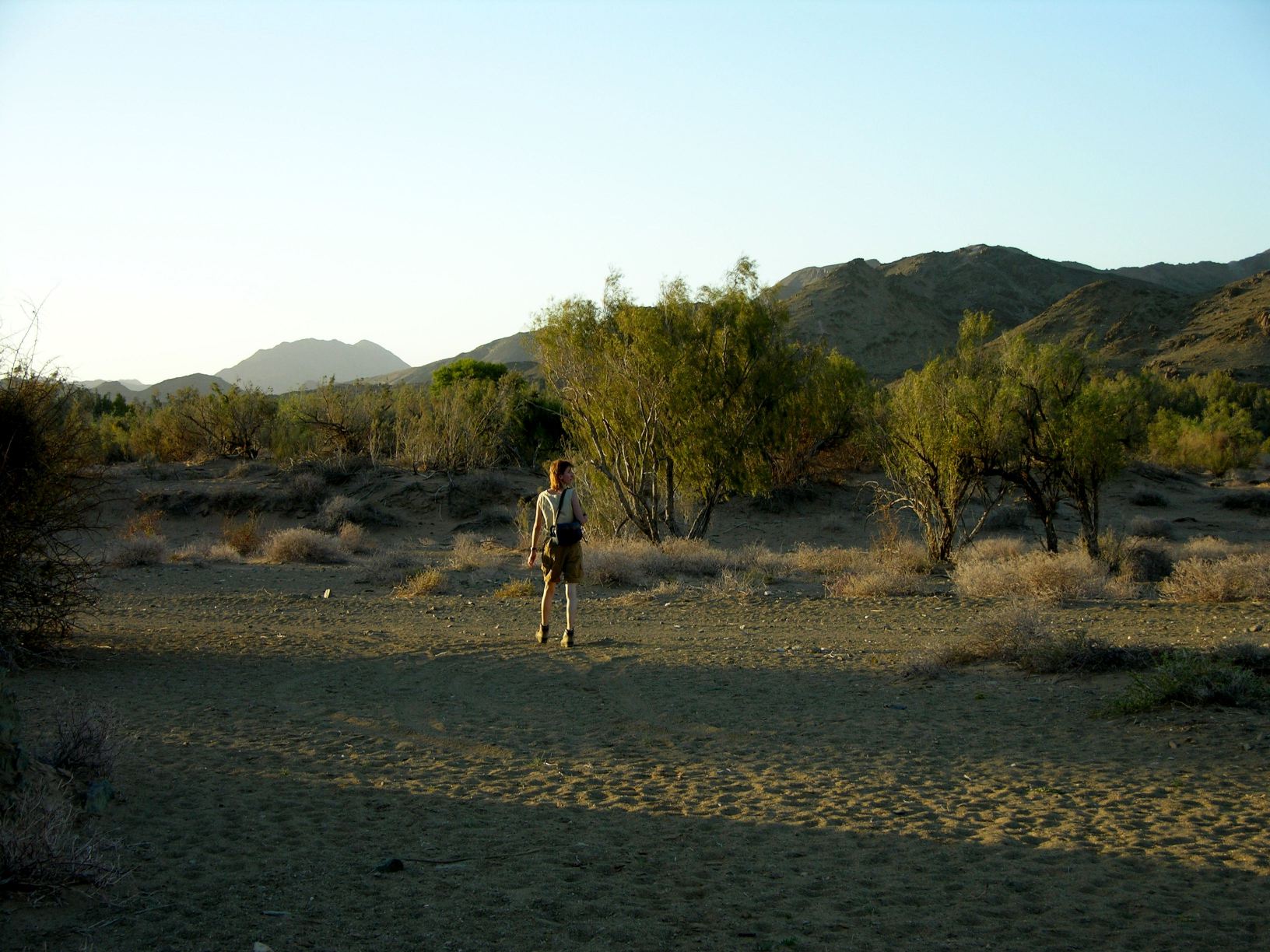
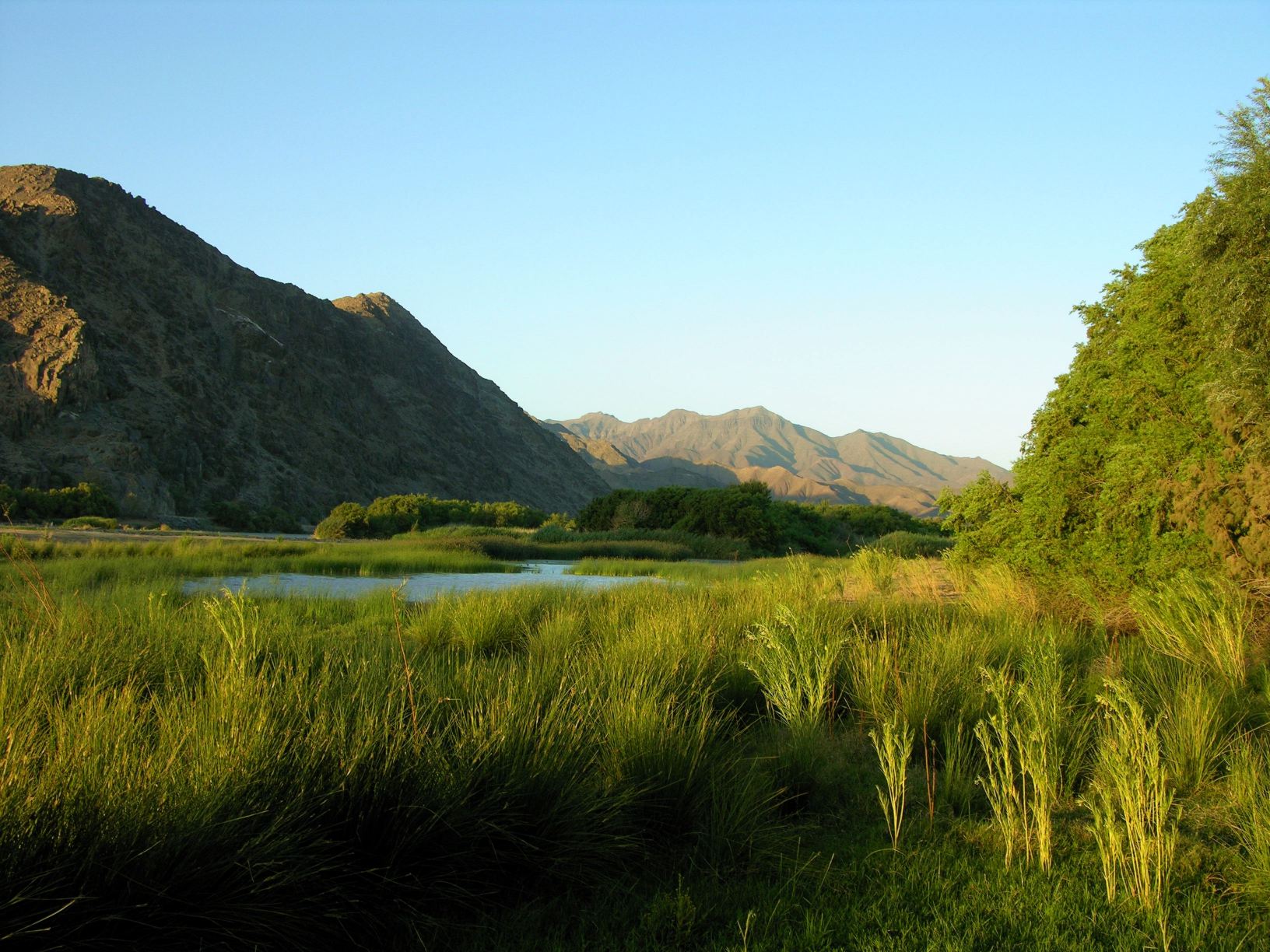
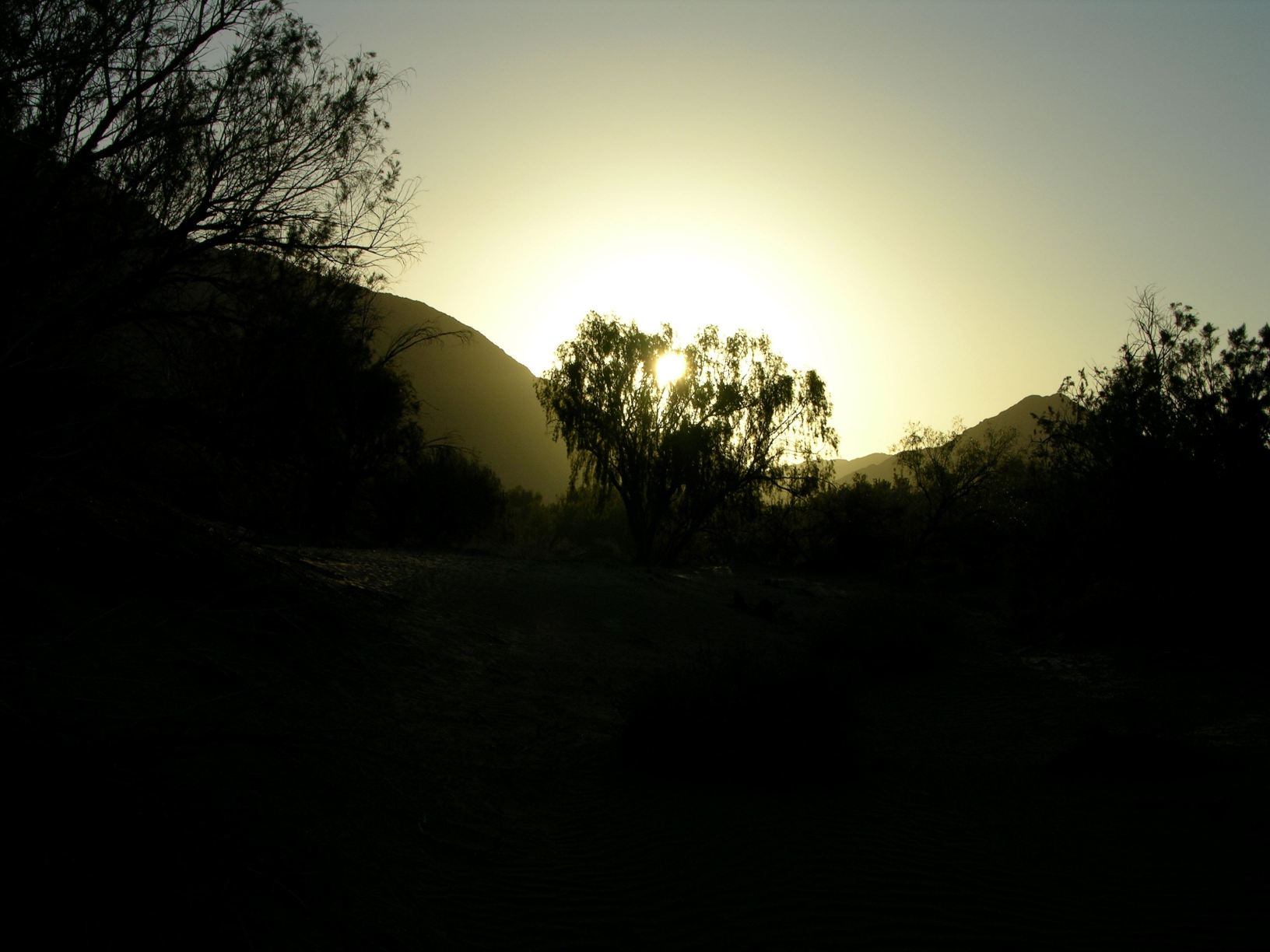
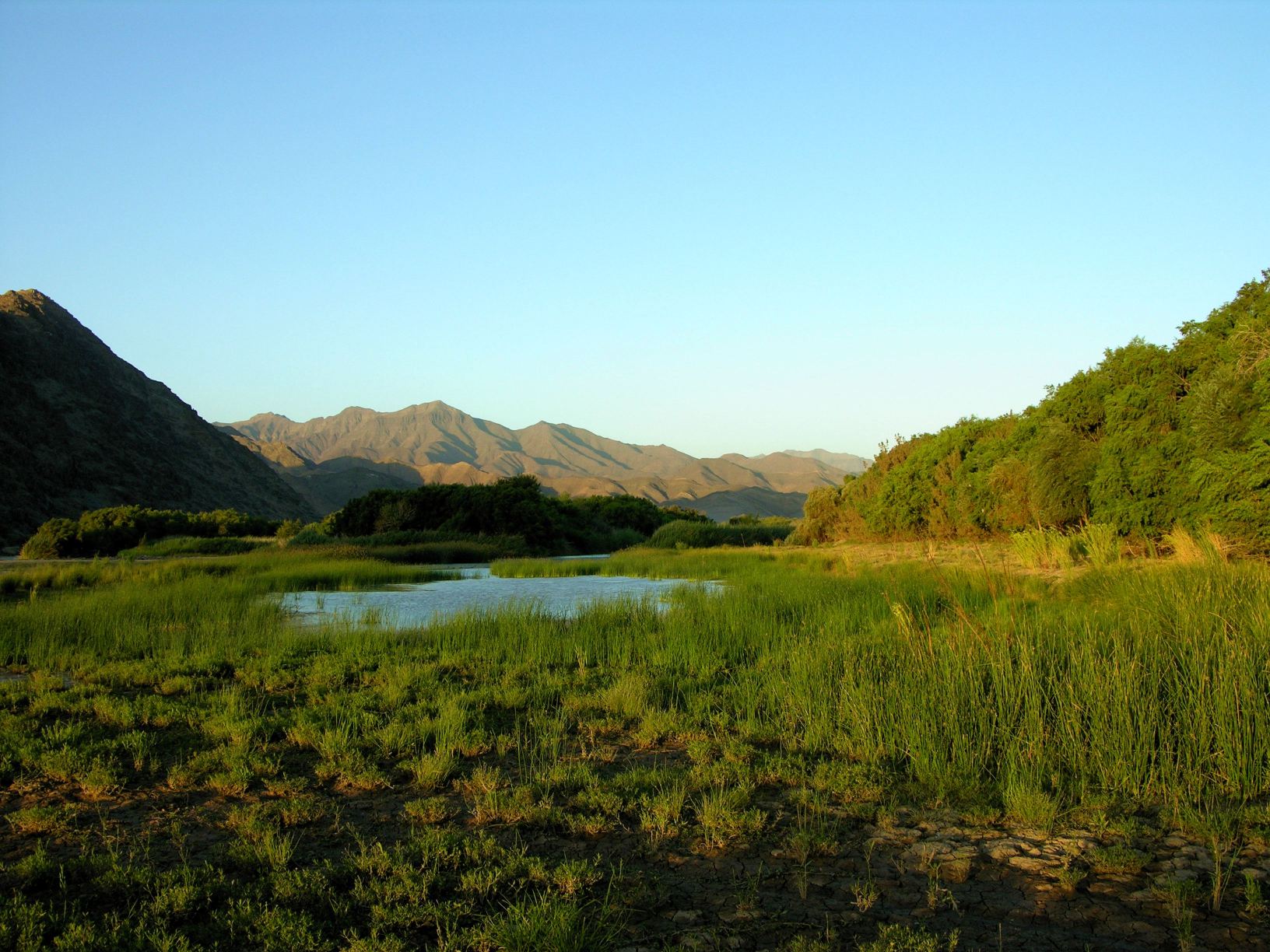
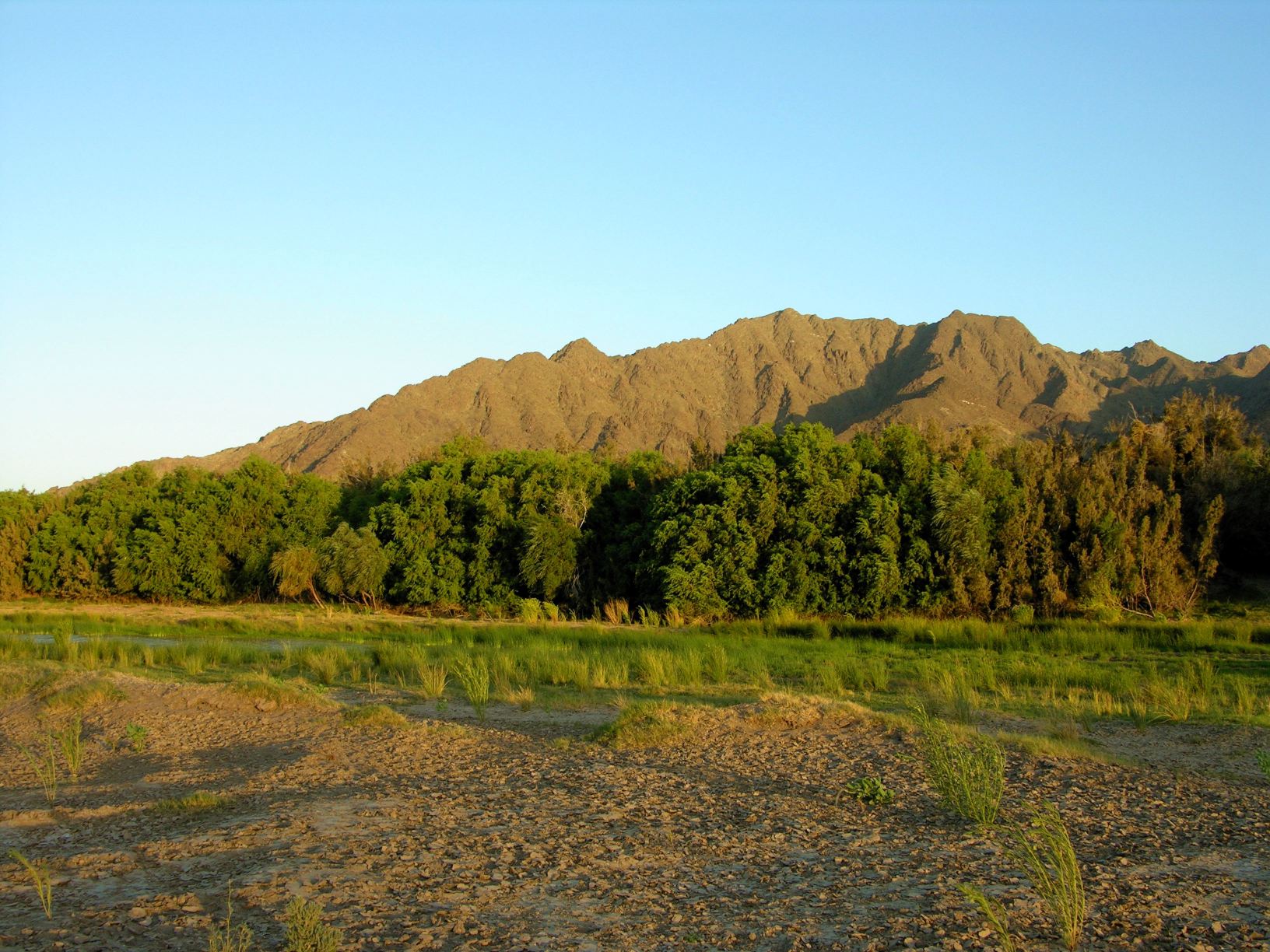
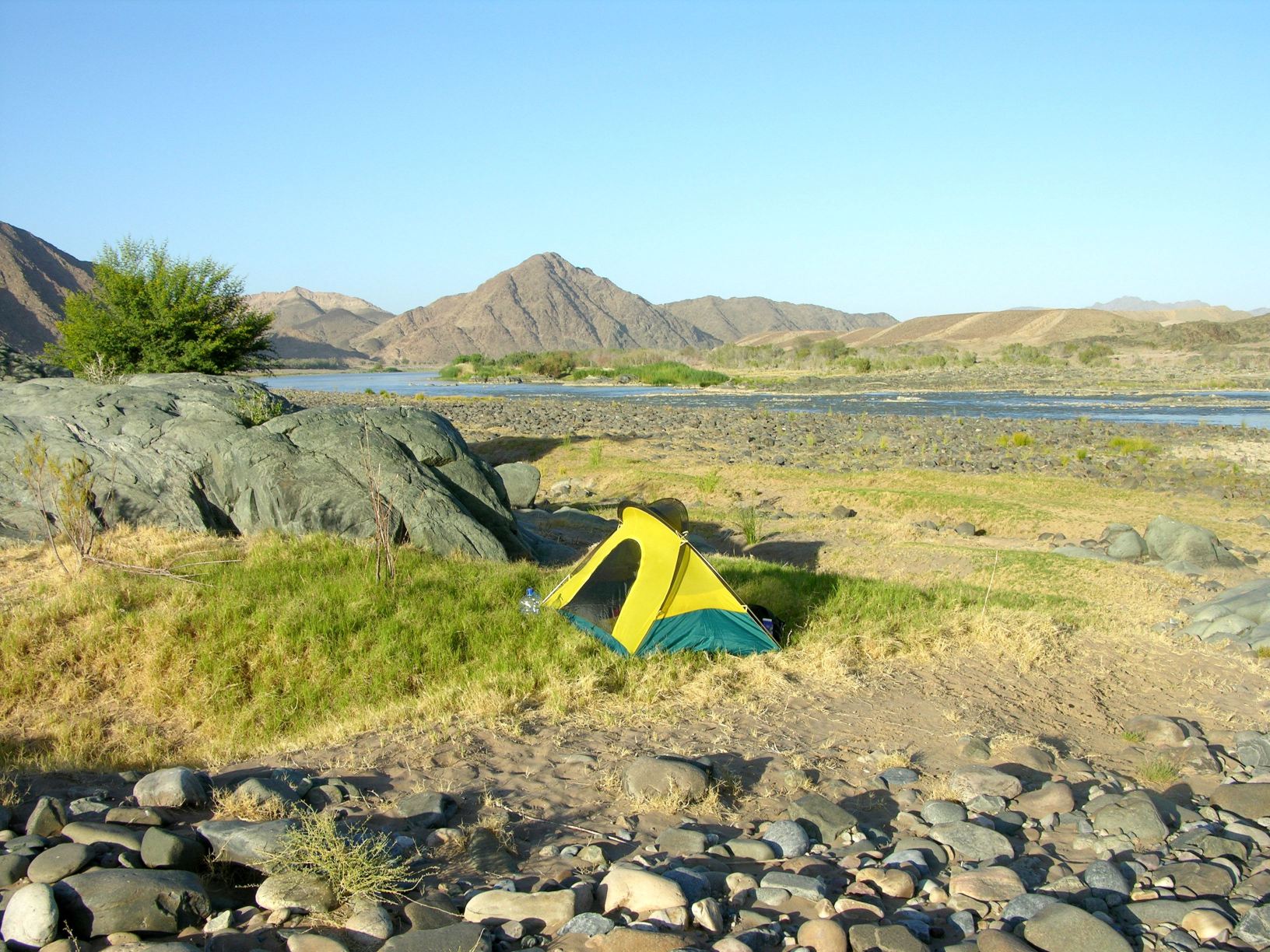
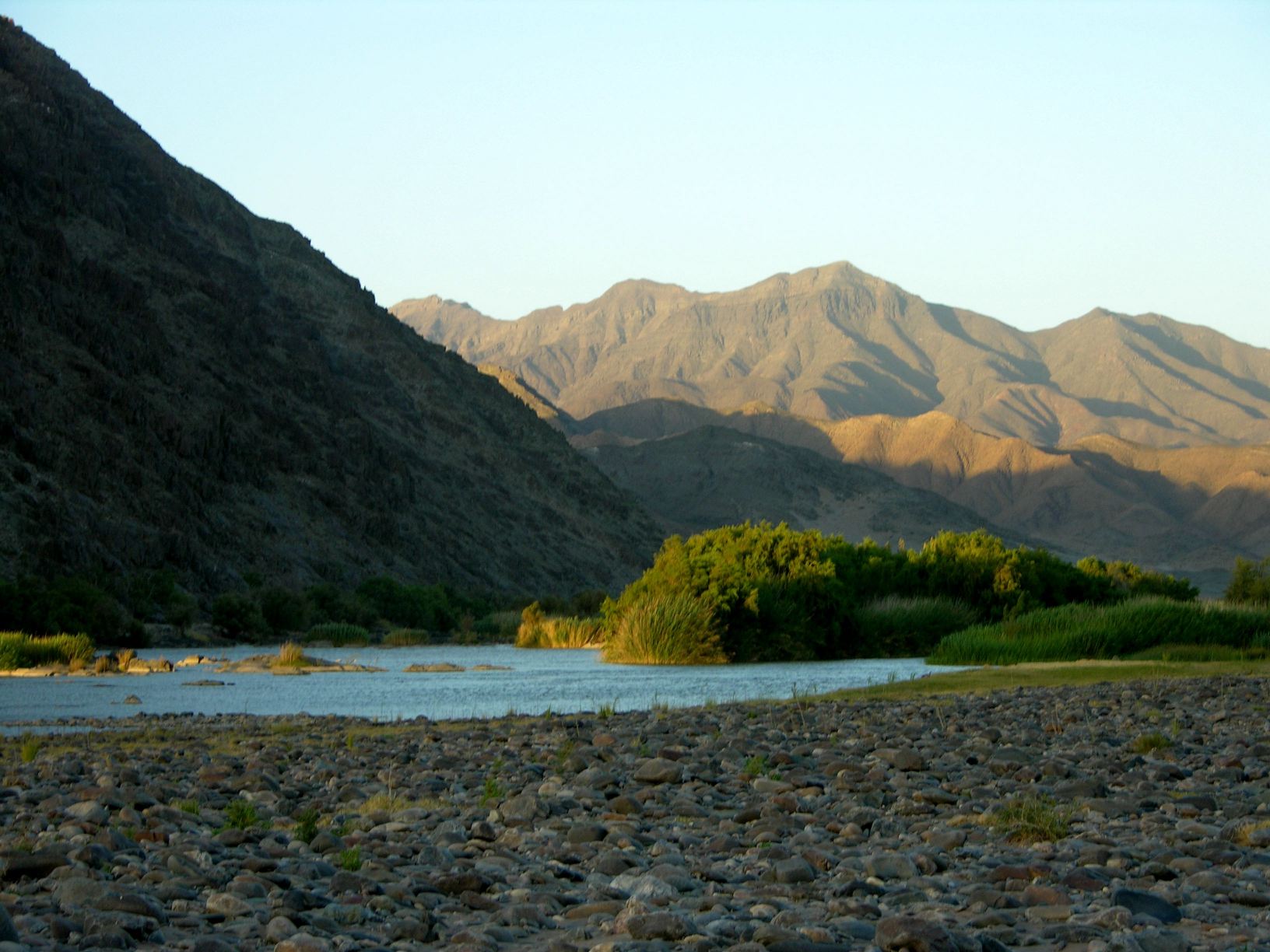
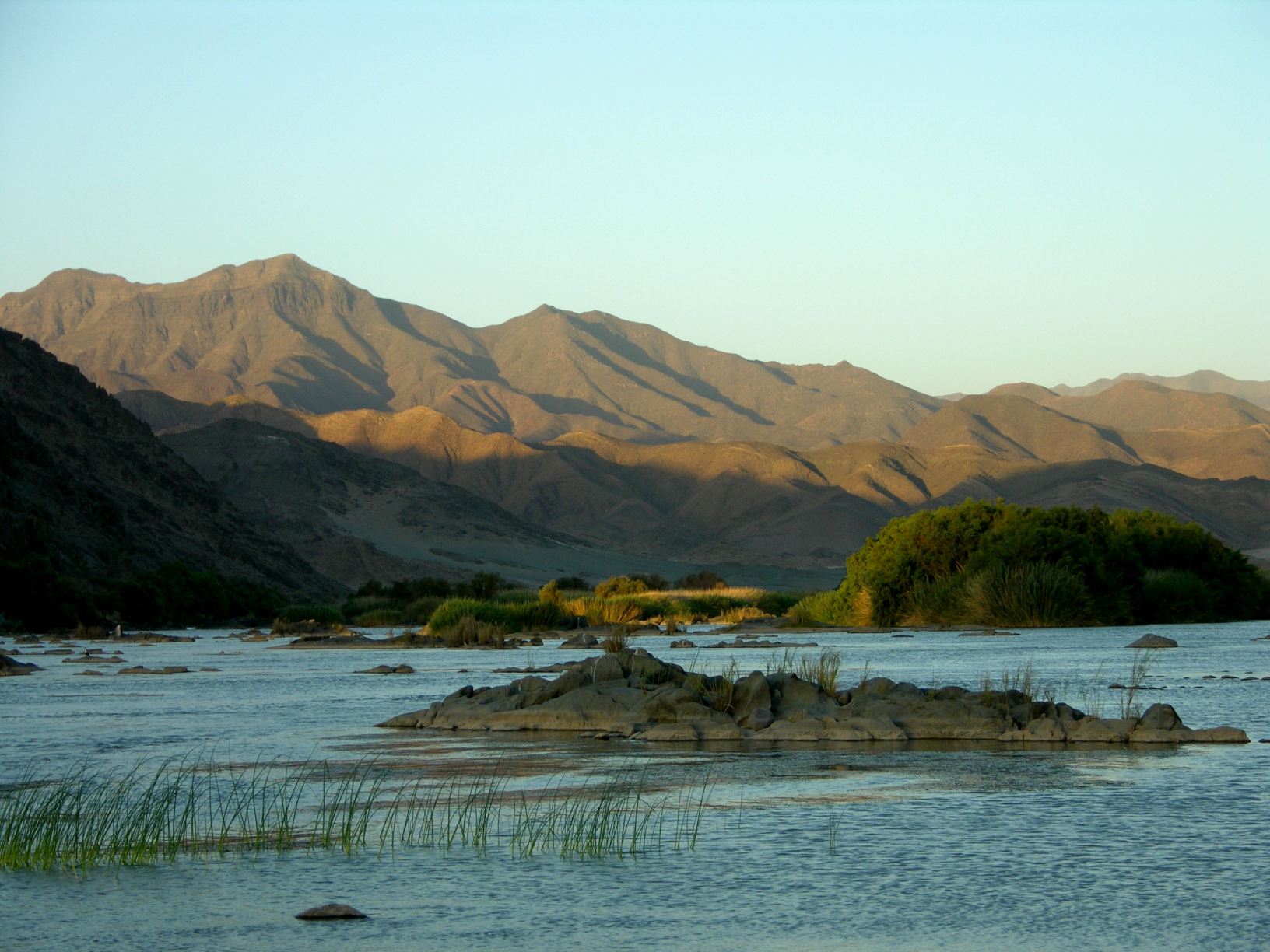
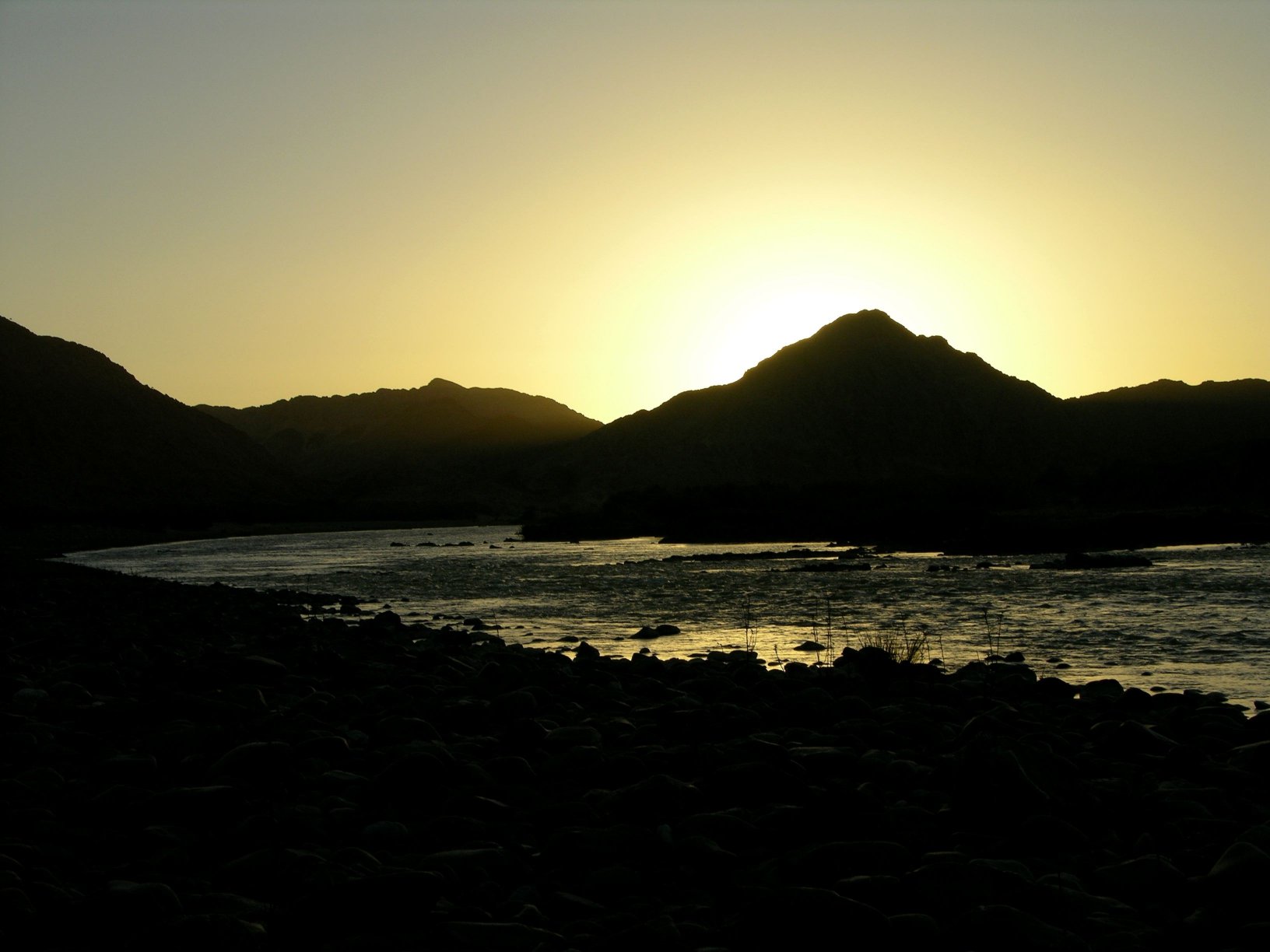
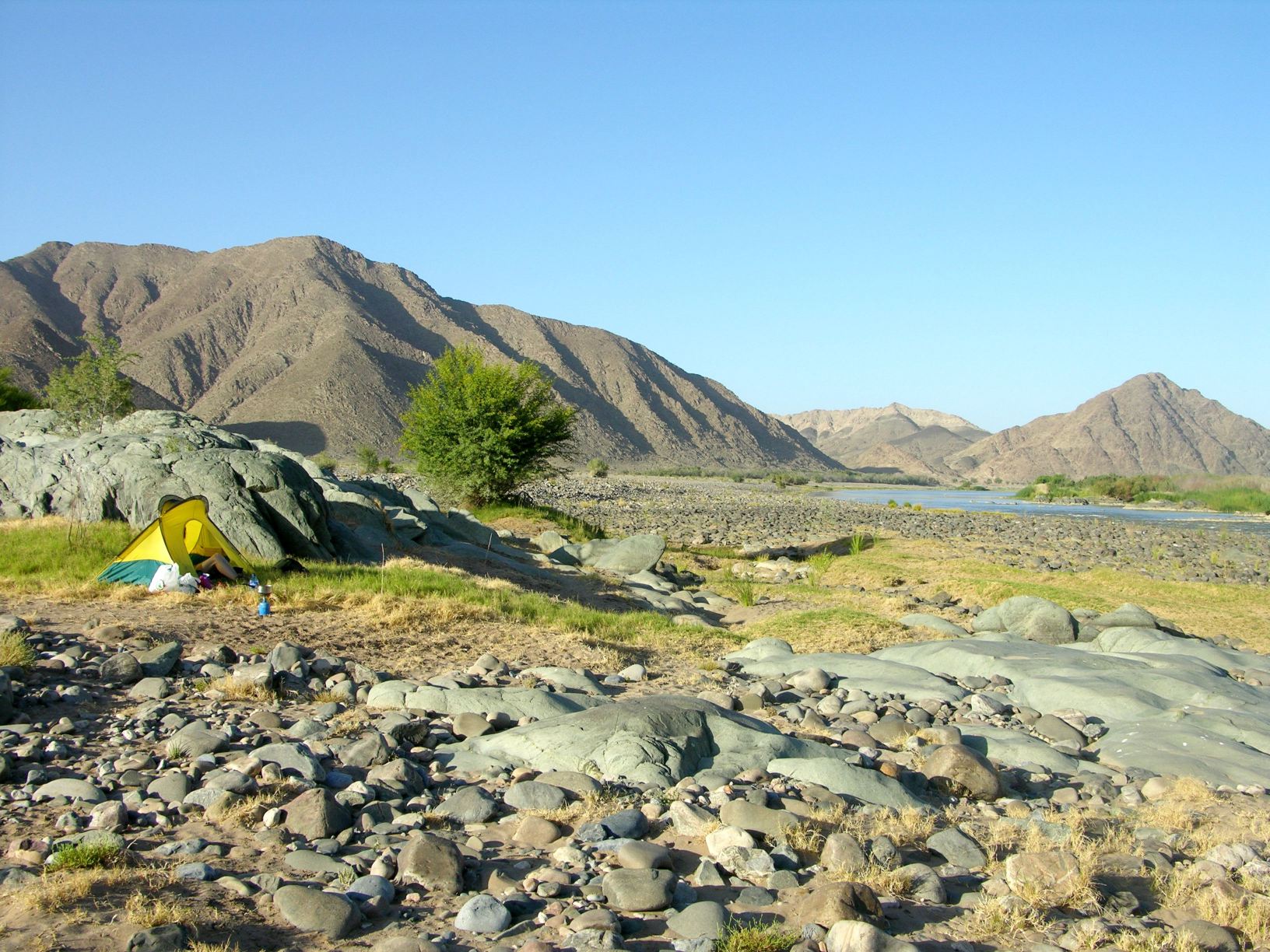
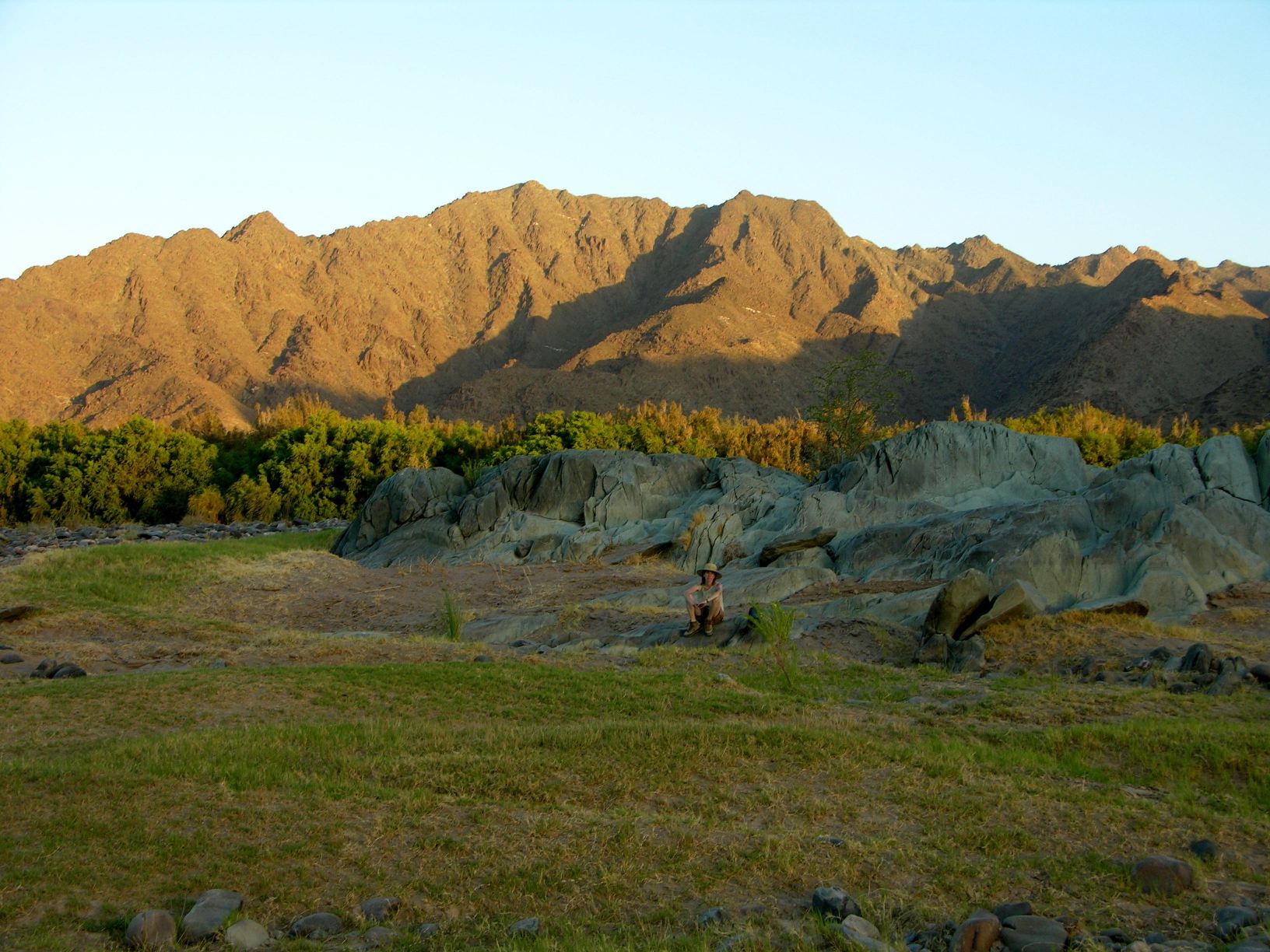
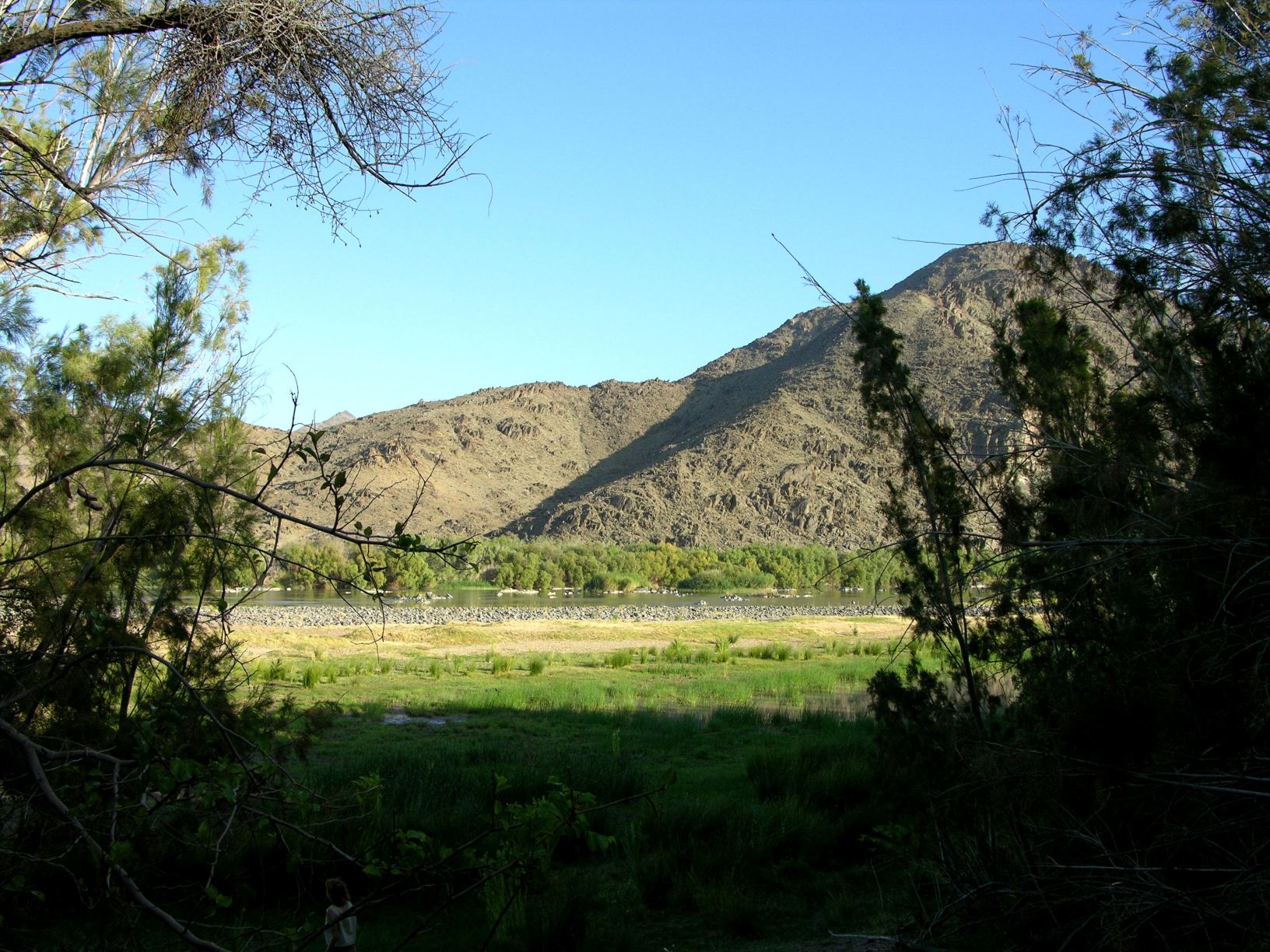
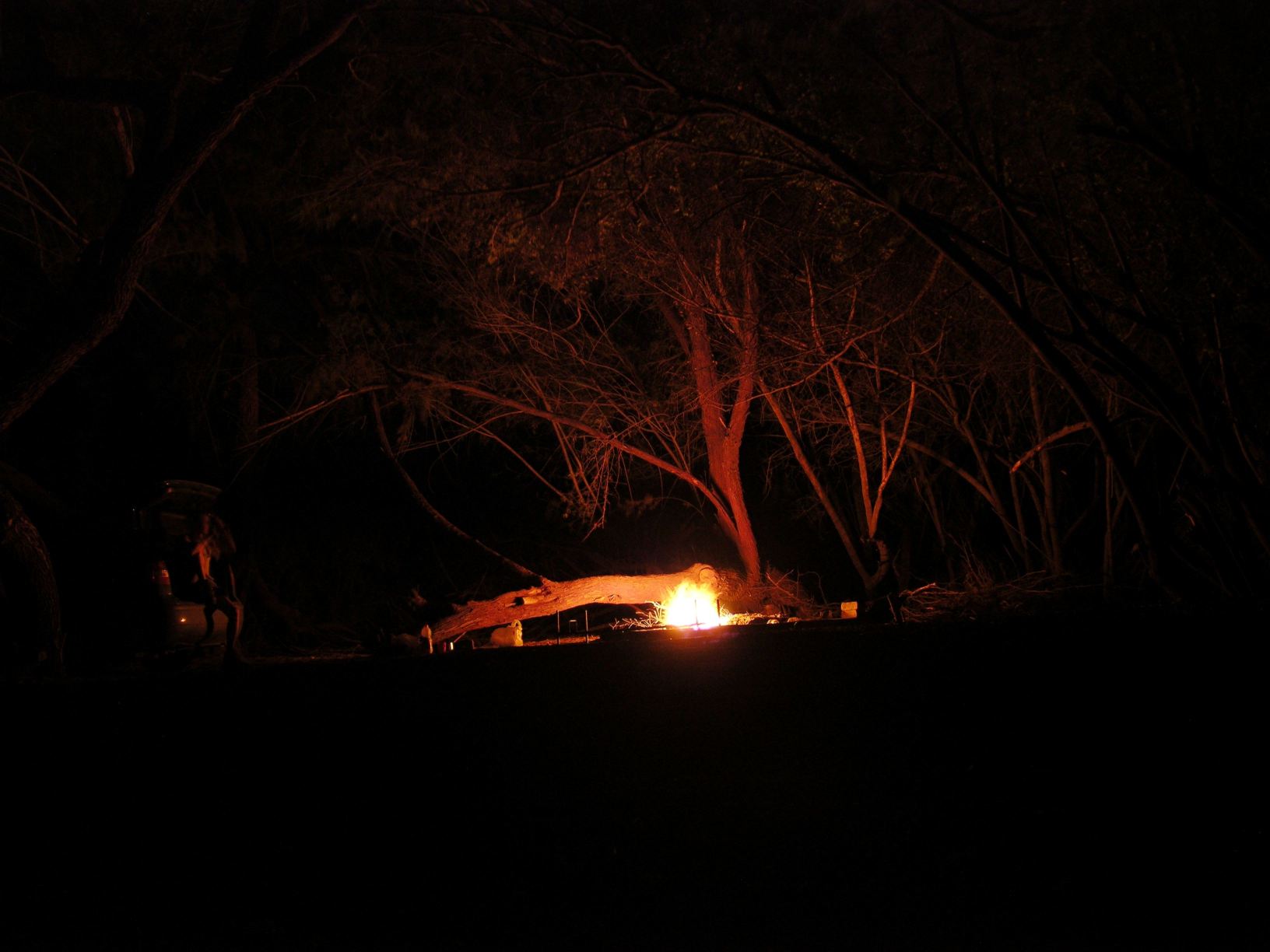
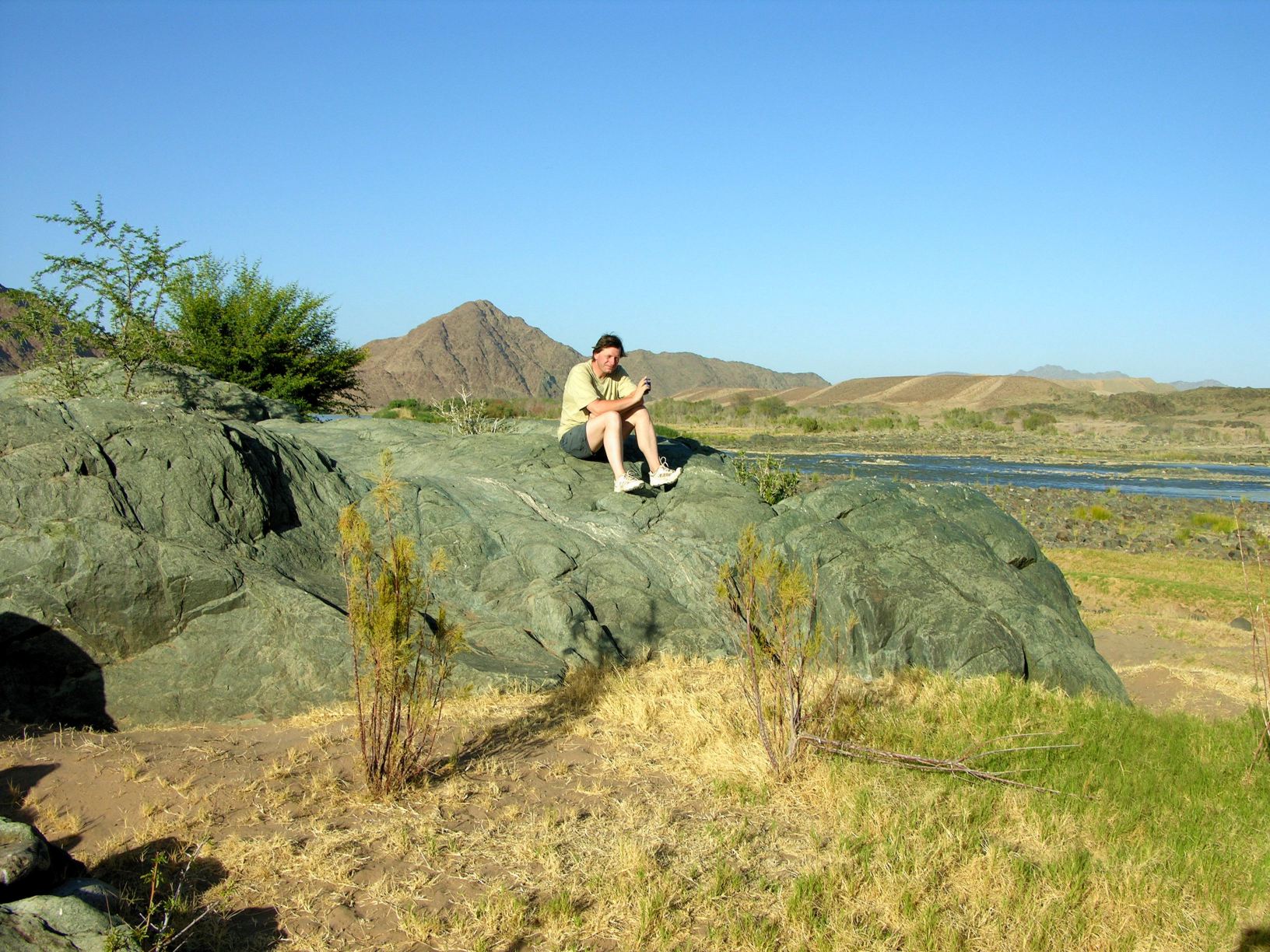
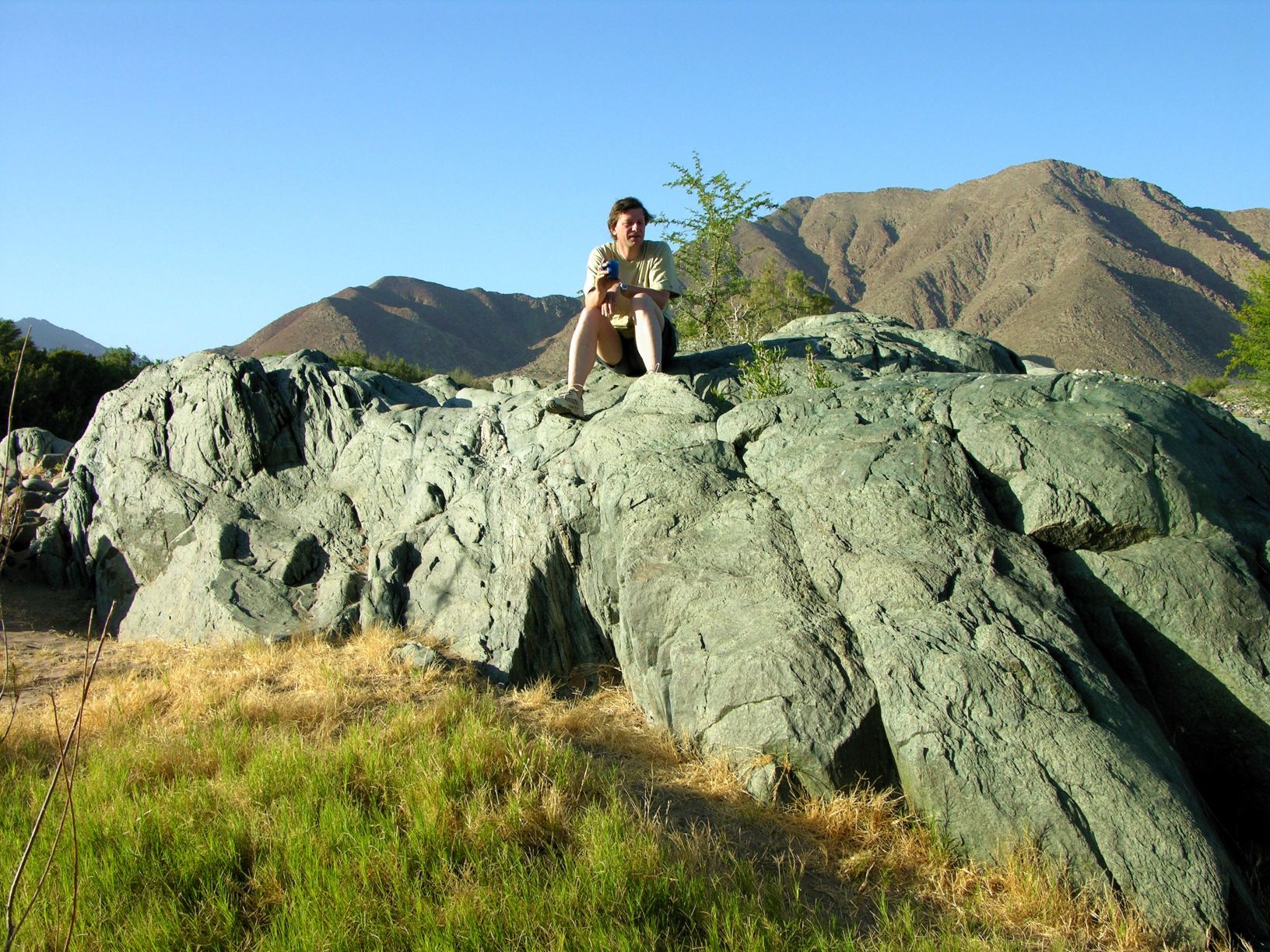
Once it was dark, I did swim across the river and found myself in Namibia, in the forbidden diamond area. No difference on that bank, naturally. But if only I'd known when I was at school that I'd do something like this!
I decided a minute in the country was long enough for one visit and went back to finish the bottle and look at the stars. We slept splendidly, right through sunrise and the cool of the morning. Never mind. Your body deserves a rest now and then. We did have our morning coffee at leisure, once or twice.
The drive back was more of a tragedy. I took a ditch too fast on the way out of camp, badly bent a wheel rim, broke a hubcap and punctured a tyre. Not to mention the bumper falling off again. Why had I bothered putting it back on? Better to let it lie in the car. Luckily there was a spare. There was no pump, though, and the impact had let air out of a second tyre. It wasn't entirely flat, so we could still drive. The question was for how long. It was another hundred or two kilometres to the tarmac. And how many more stones and potholes along the way? It was plenty hot outside, and a breakdown could turn into quite a nuisance. The village was tens of kilometres away and people didn't come through here every week.
I don't know how we managed it, but we did get out of the Orange valley. We believed we were saved, and instead of heading back to civilisation we turned the other way, farther into the mountains. It's hotter there and the pachypodiums are fatter. The bank is a bit chilly for their liking, you see.
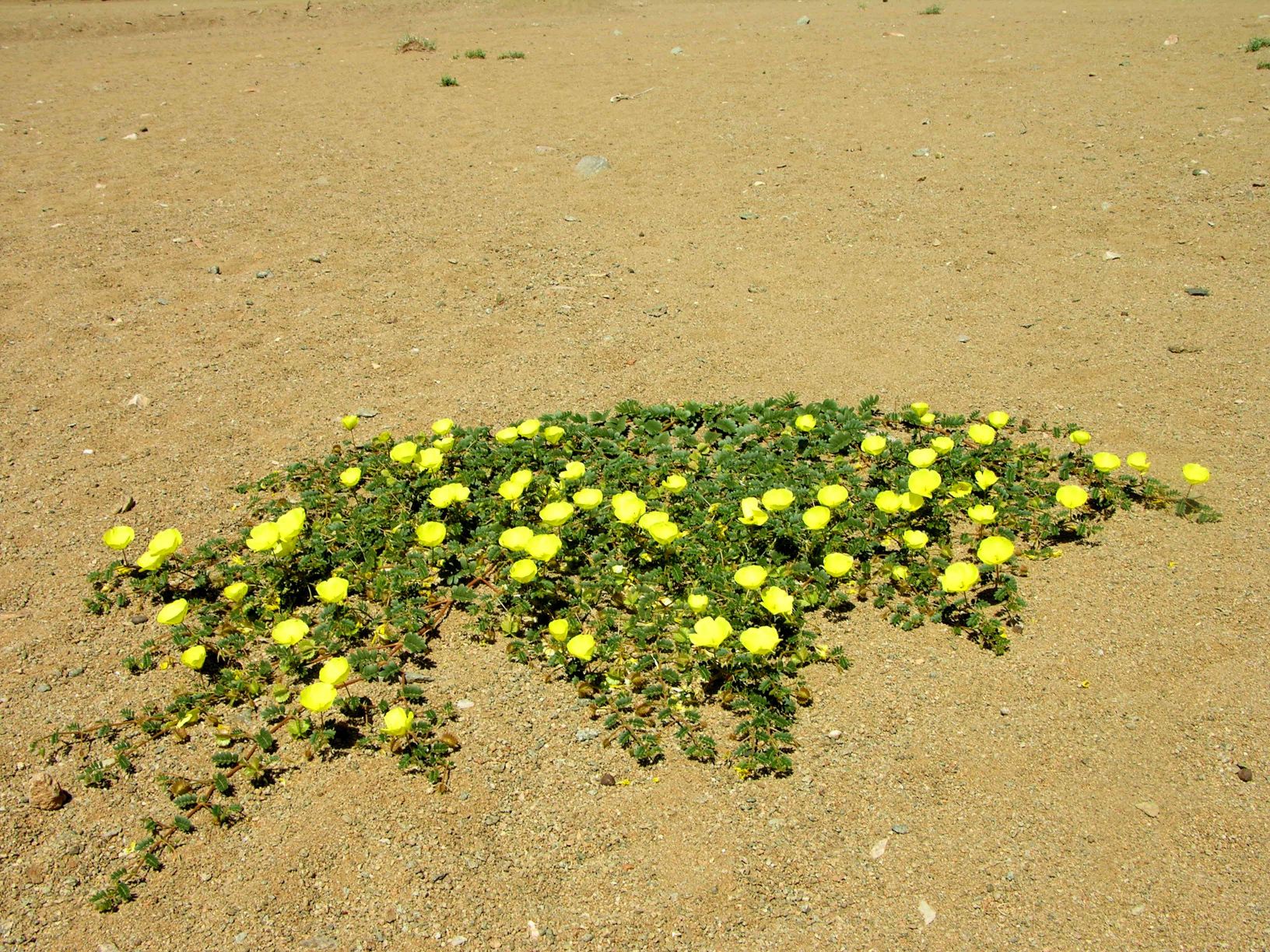
We got out of the park intact, but our luck stopped there. On the road towards Alexander Bay, near the turn for Sendelingsdrif, another unfortunate collision with a rock finally flattened the second tyre. Luckily the rubber itself looked all right. The phone didn't work. No signal, so we couldn't call for proper help. We'd just about lost heart when a farmer turned up out of nowhere in a four-wheel drive that was falling apart. To our surprise he stopped. Even more surprising, he had a hand pump. Better yet, the tyre inflated and no more air seemed to be coming out. Not a hiss, at any rate. A miracle. We could drive. Each kilometre brought us closer to civilisation and, with any luck, to a tyre shop. We got to Alexander Bay, filled up on petrol and put more air in the tyre. We couldn't find a tyre shop open. It was Sunday evening and everything was shut. We risked going on to Port Nolloth. It was tarmac from here, so there shouldn't have been a problem. And there wasn't.
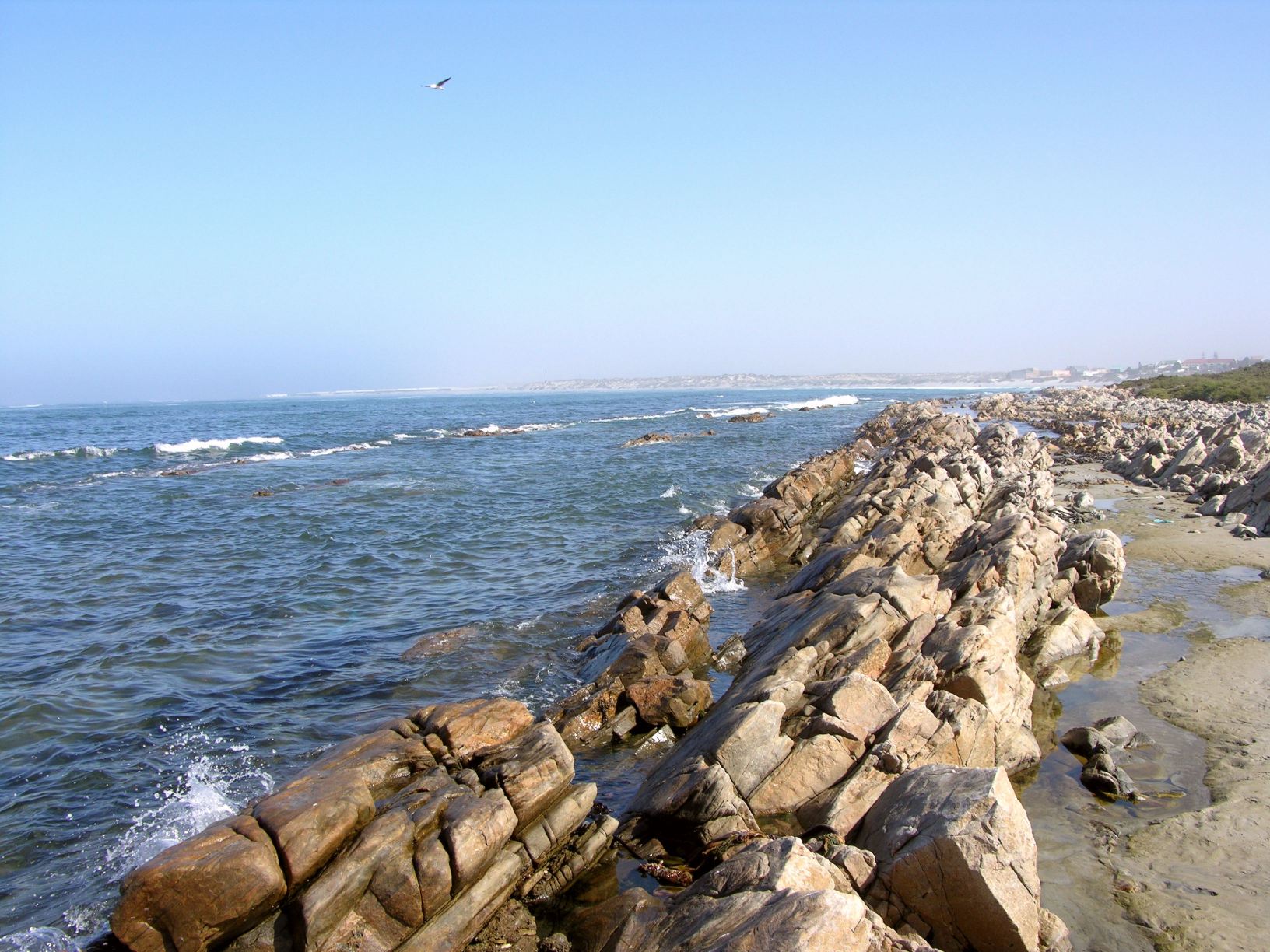
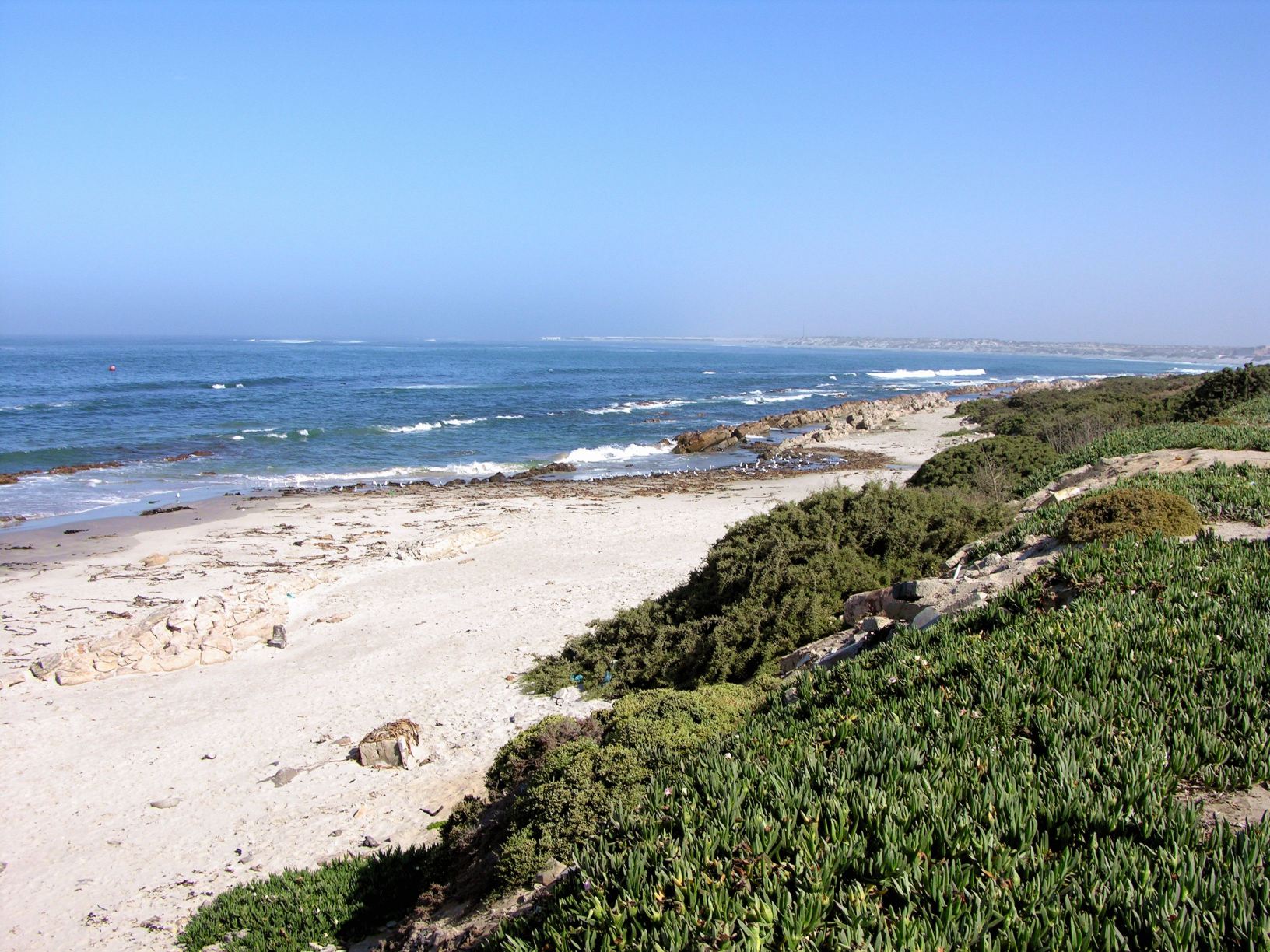
The only port on the west coast is Port Nolloth. Only the diamond companies use it.
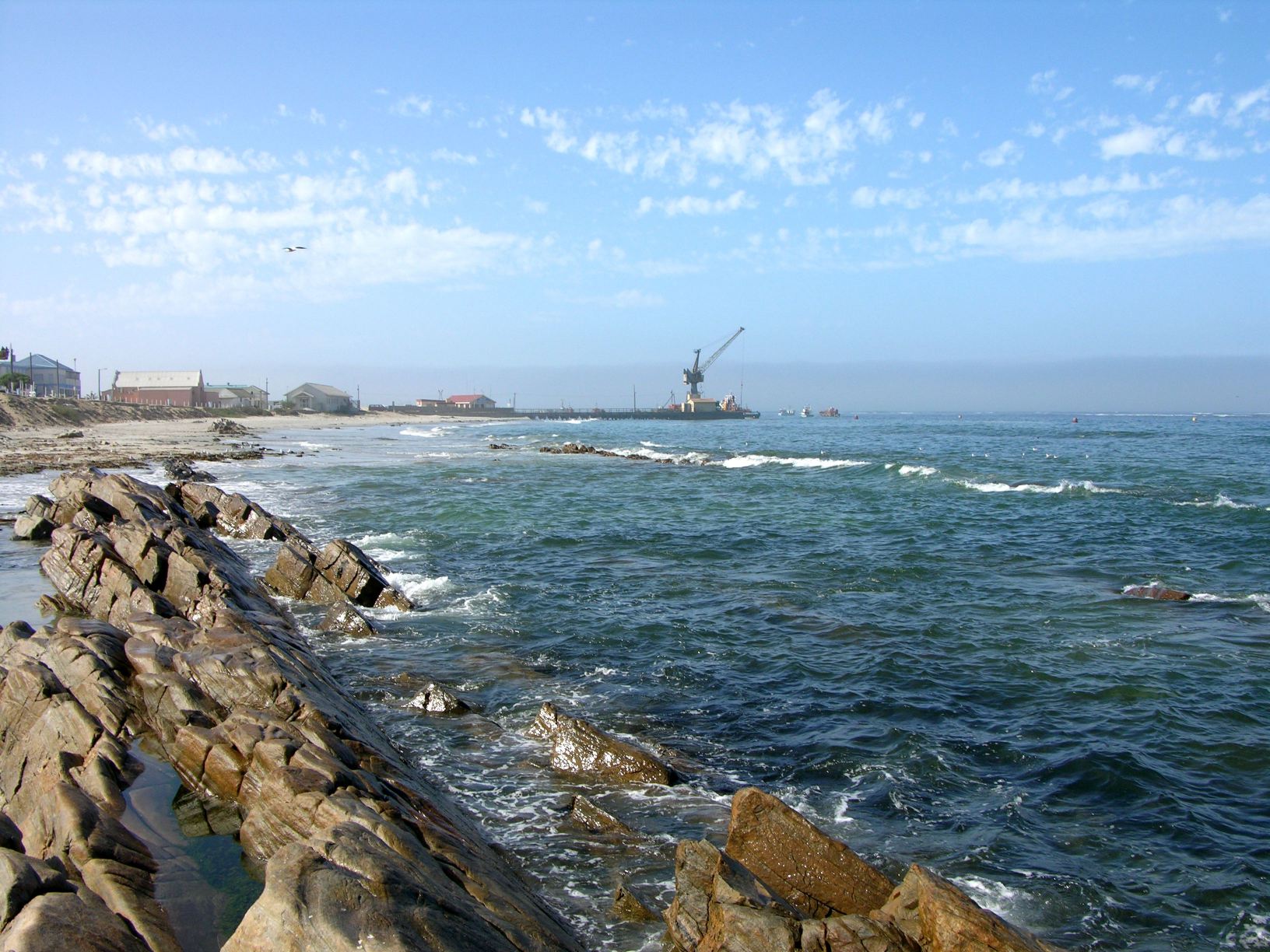
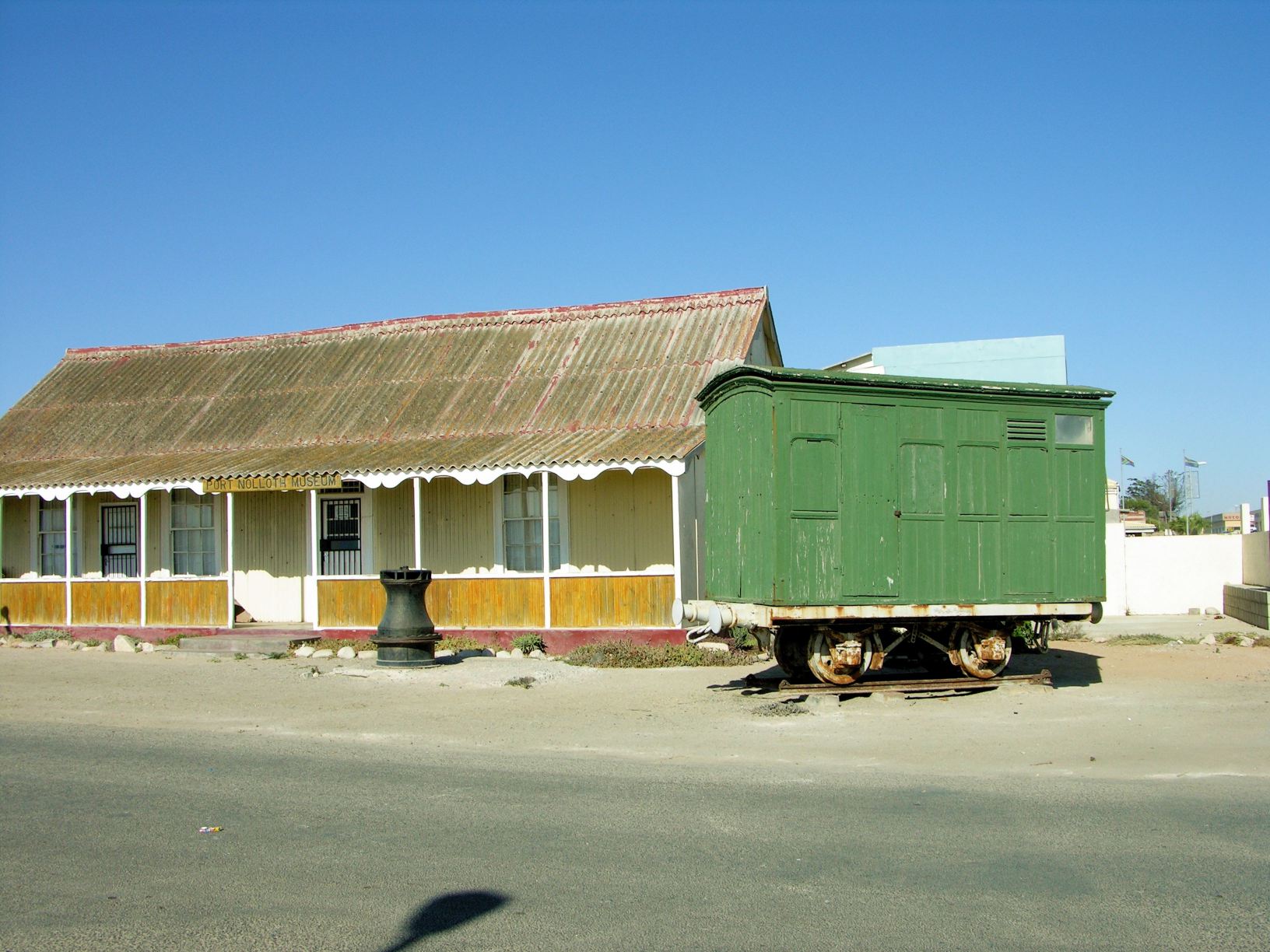
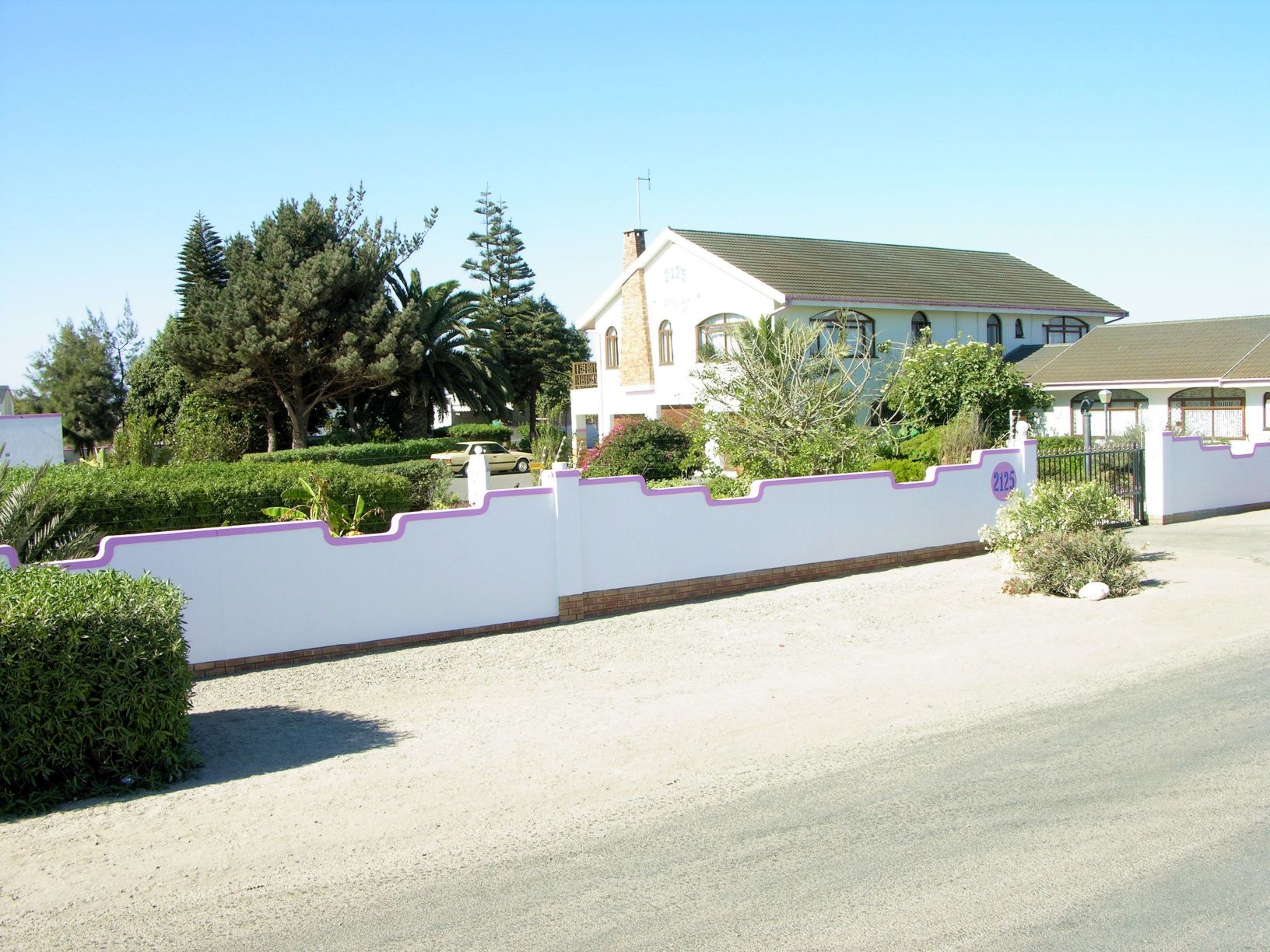
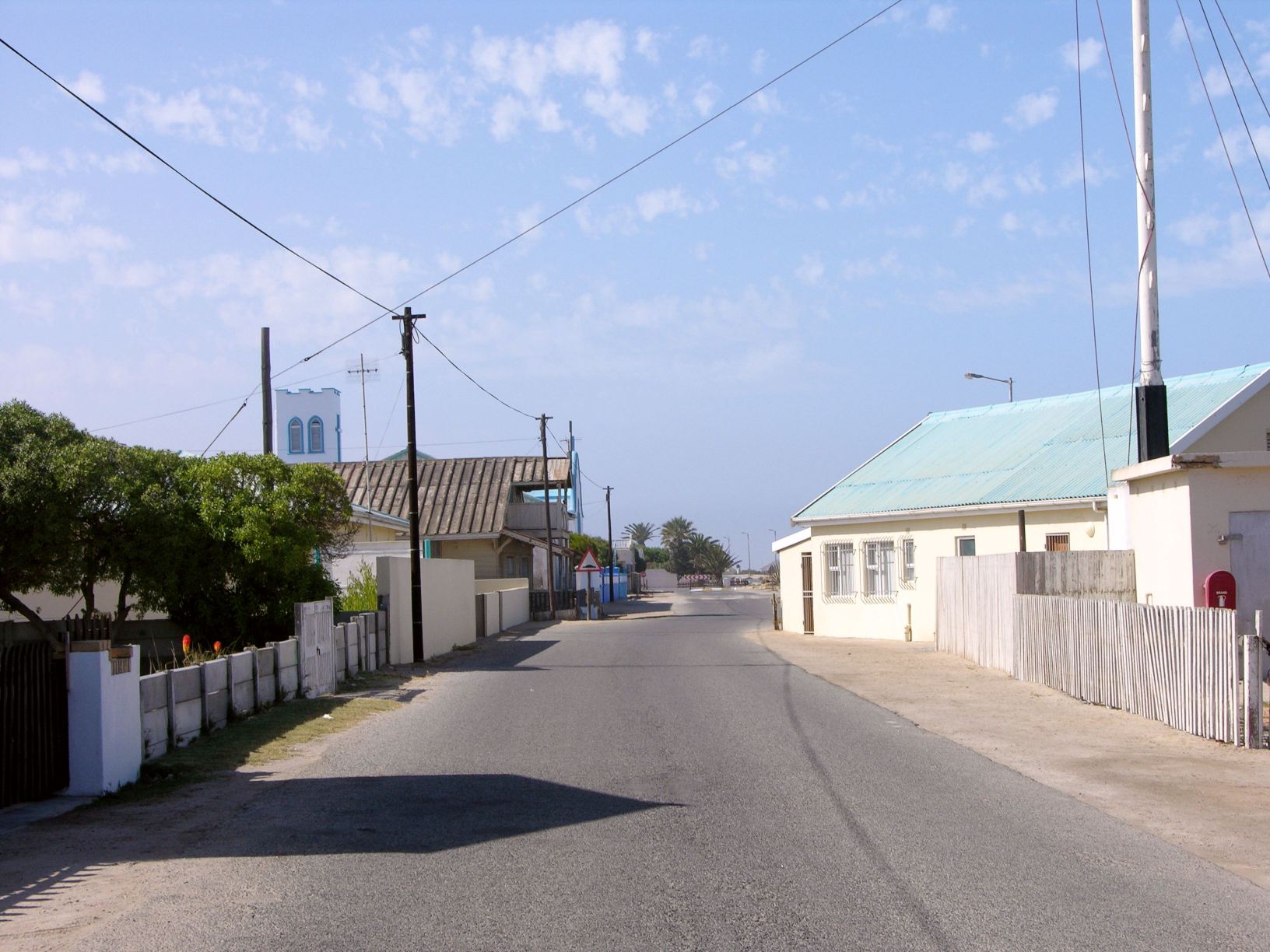
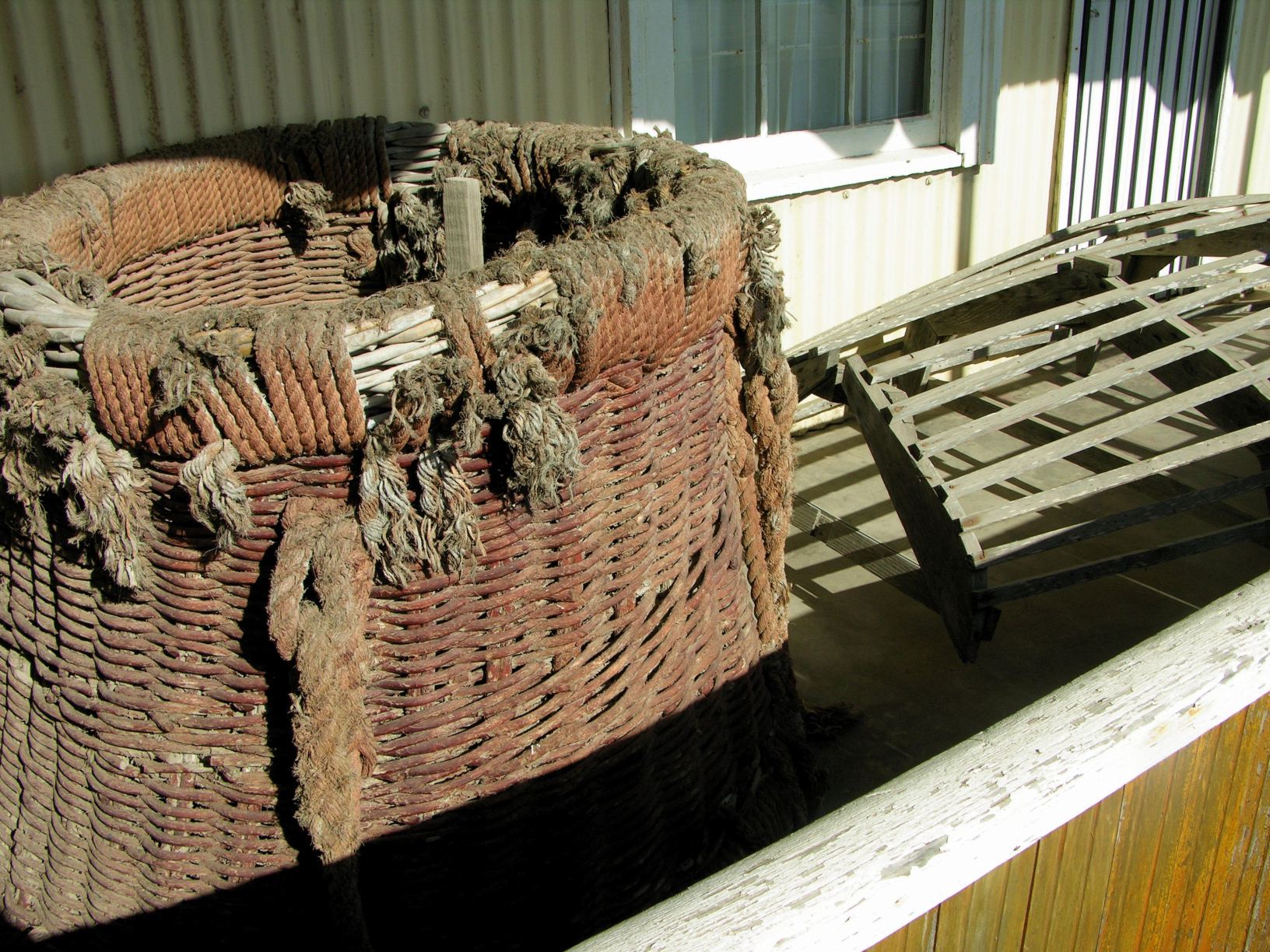
Times have changed and most goods go by road now. The harbour is almost abandoned. Only a few old fishing boats put out to sea. The illegal diamond miners are based here as well.
It's an ordinary, sleepy little town, except for one remarkable hotel, Bedrock Lodge (tel. 027-851-8865/7176, 29°15.274′S, 16°52.103′E). They'd recreated the interior of an early twentieth-century house, or more accurately they'd simply never taken the period furnishings out. Old furniture. Crockery and other utensils sitting in the cupboards. Even clothes hanging on the hooks. Guests are let in amongst all of it and can use whatever they like. In effect you have a whole museum all to yourself. They charge just 250 rand a night. Less than a little standard room in a city, and here we got three enormous rooms.
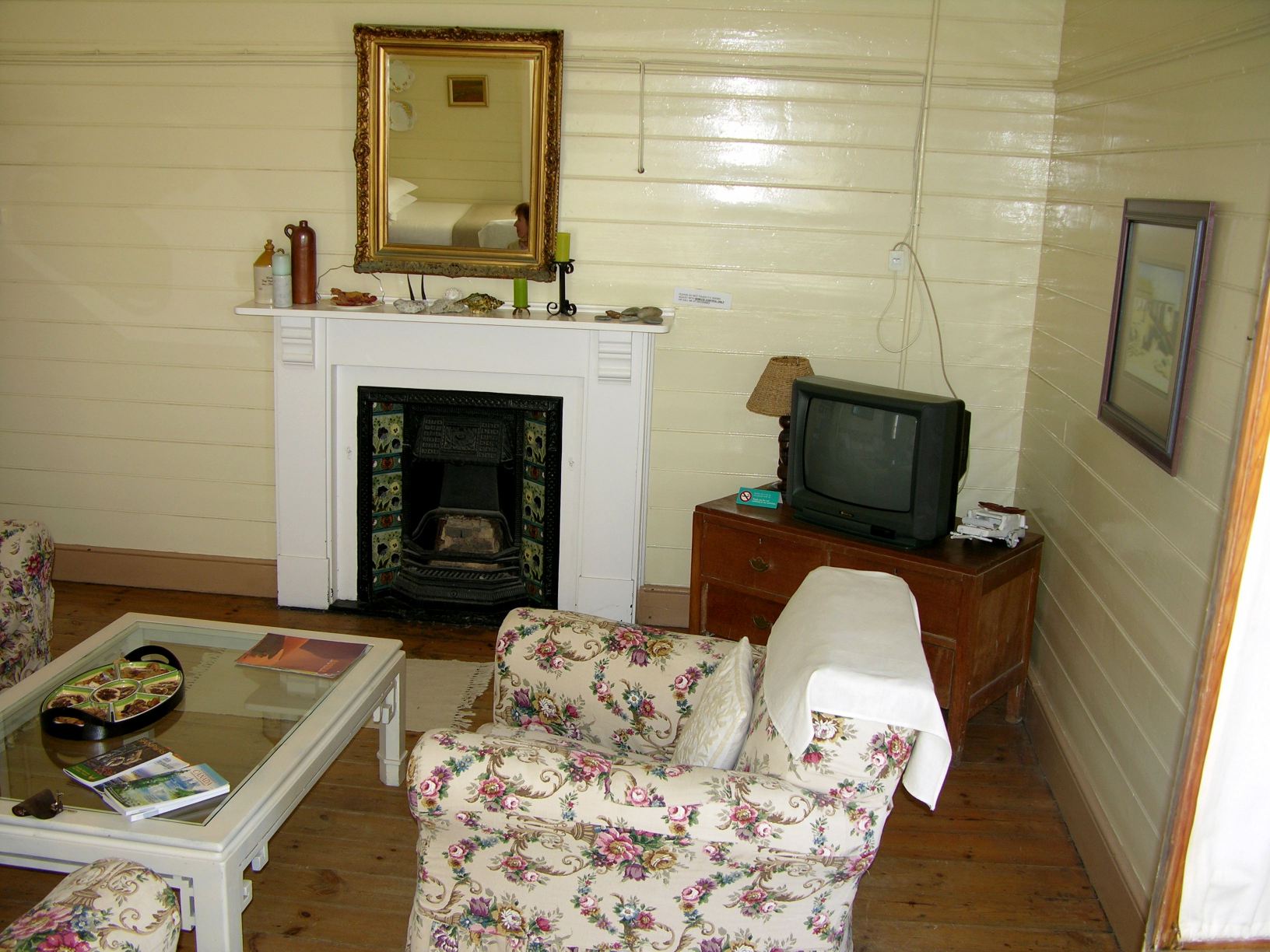
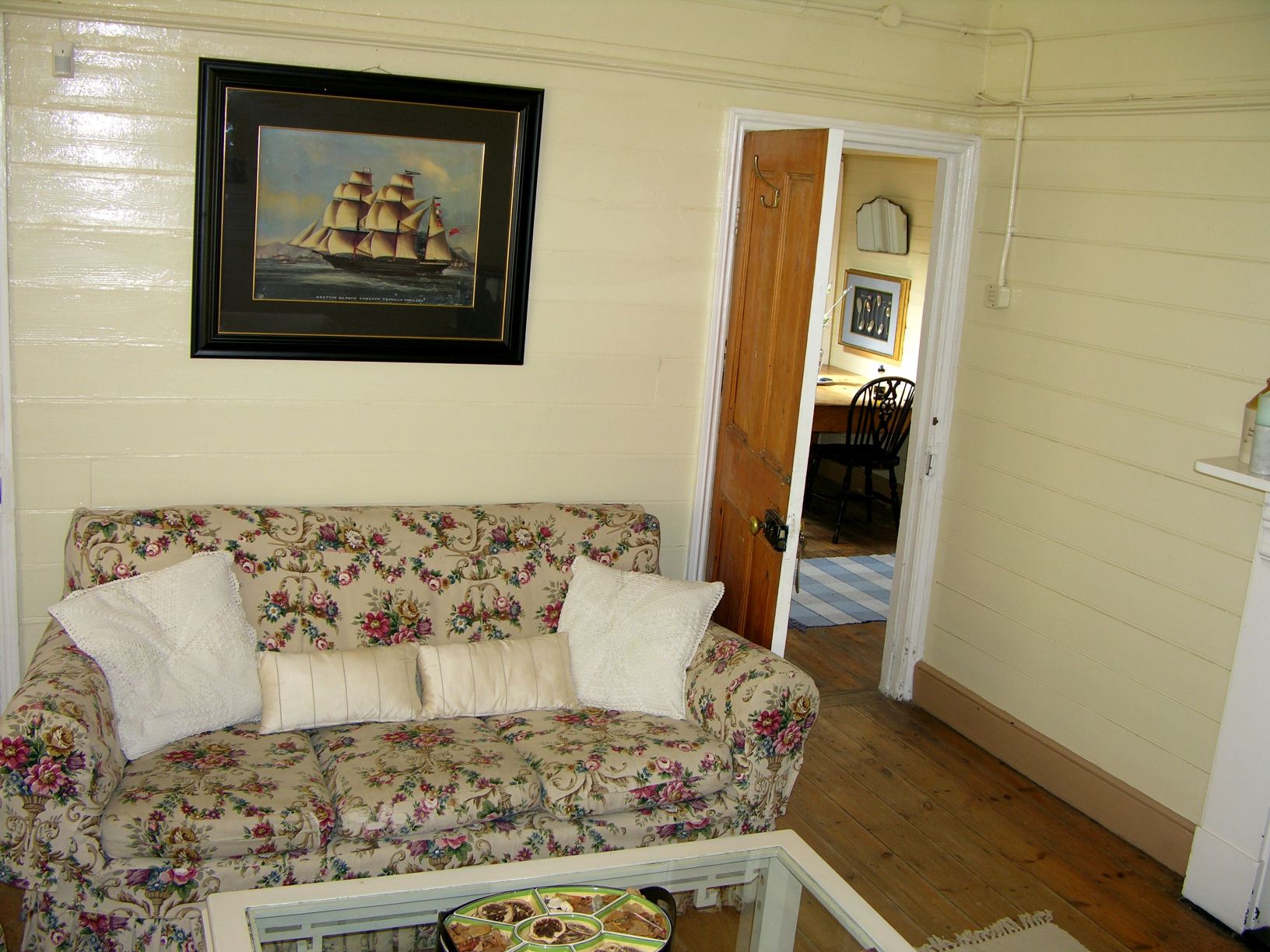
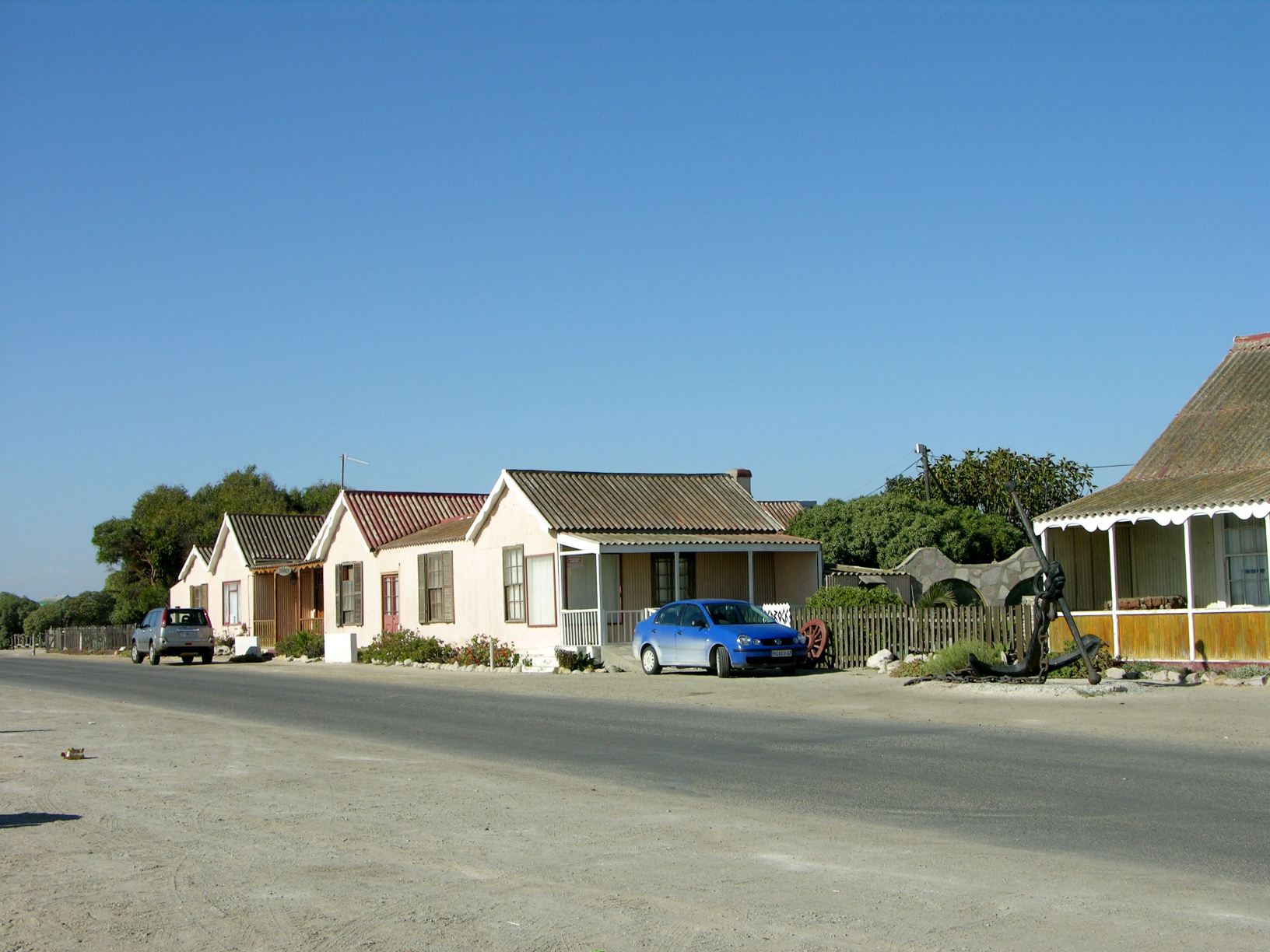
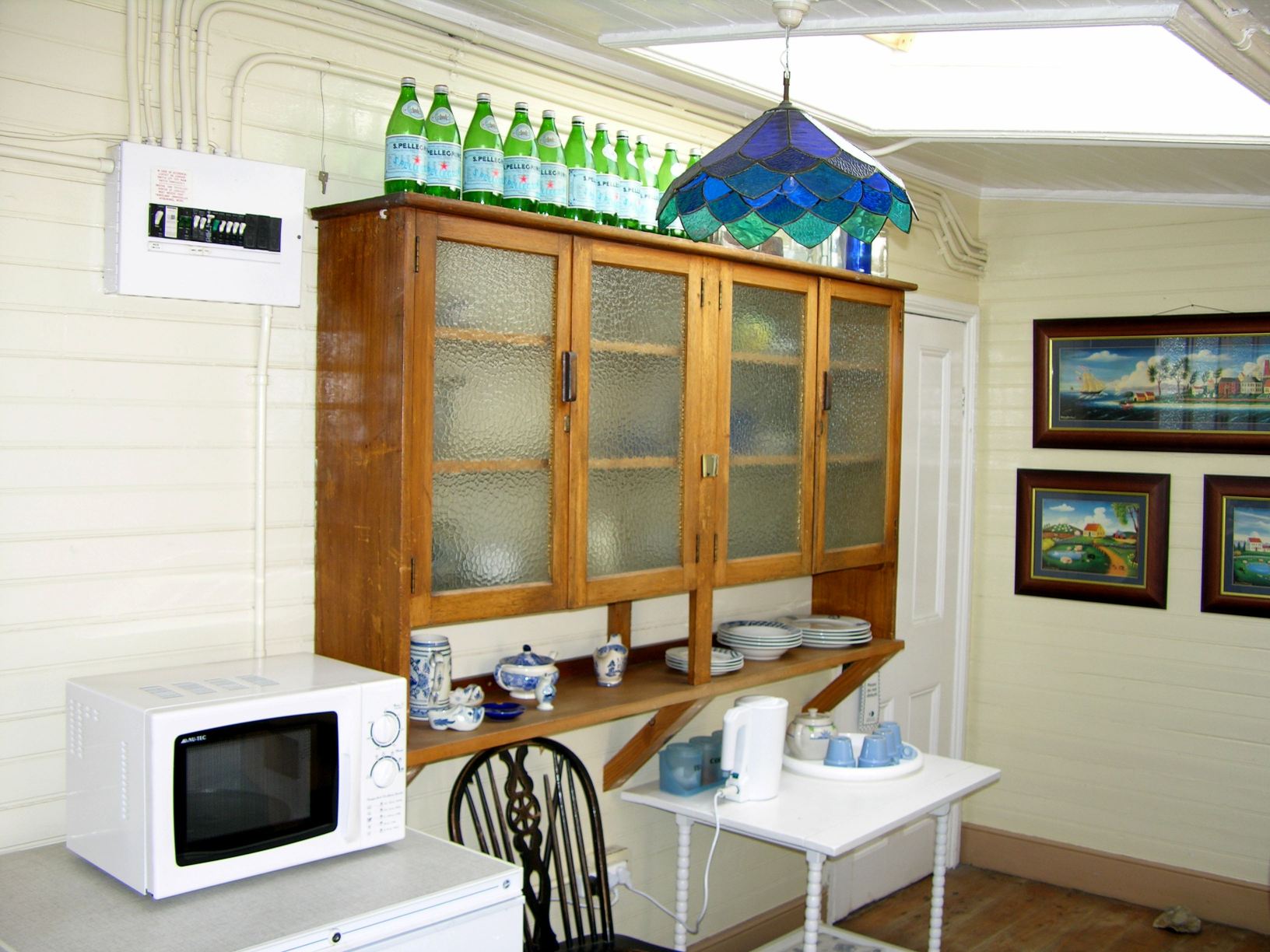
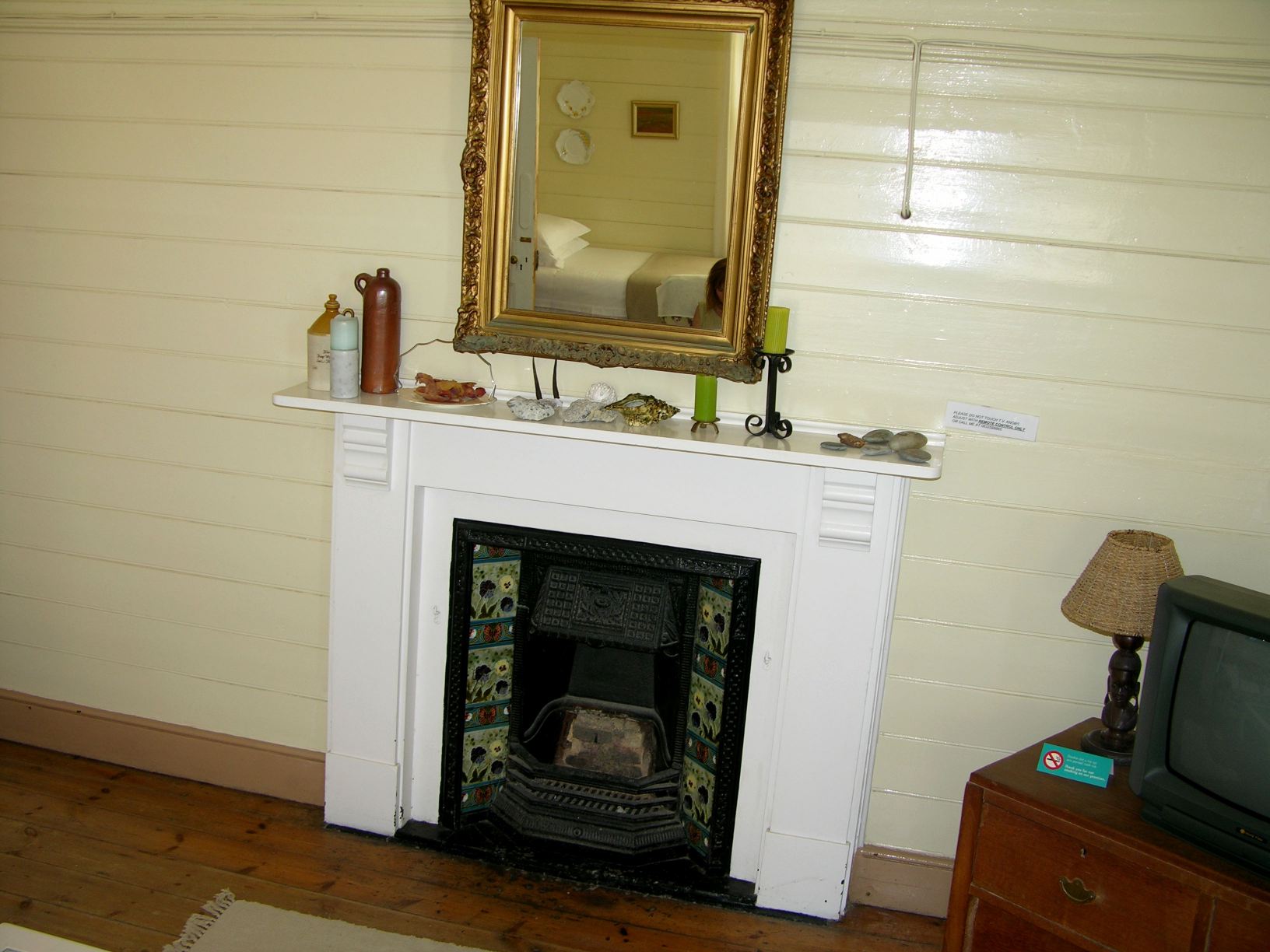
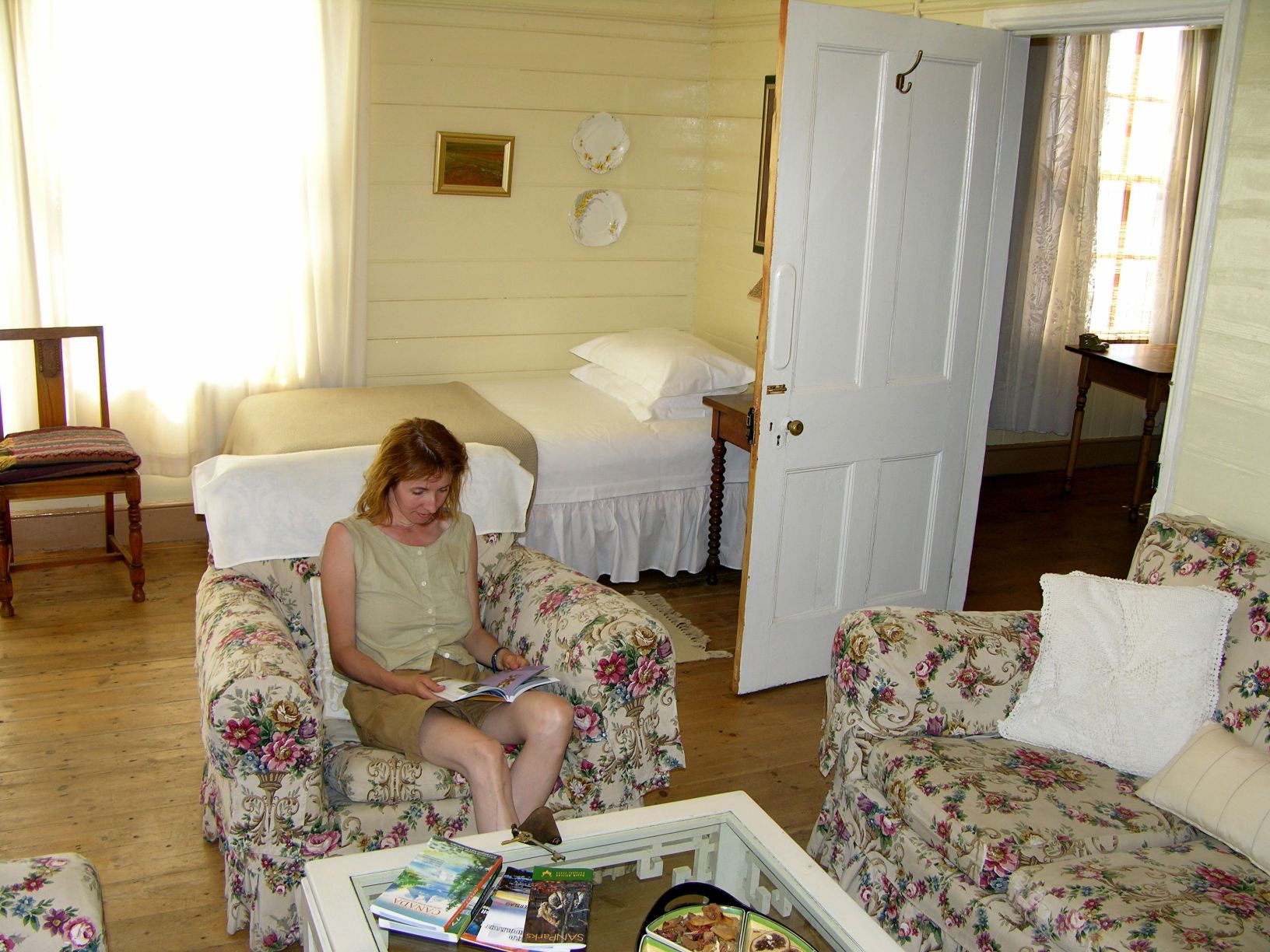
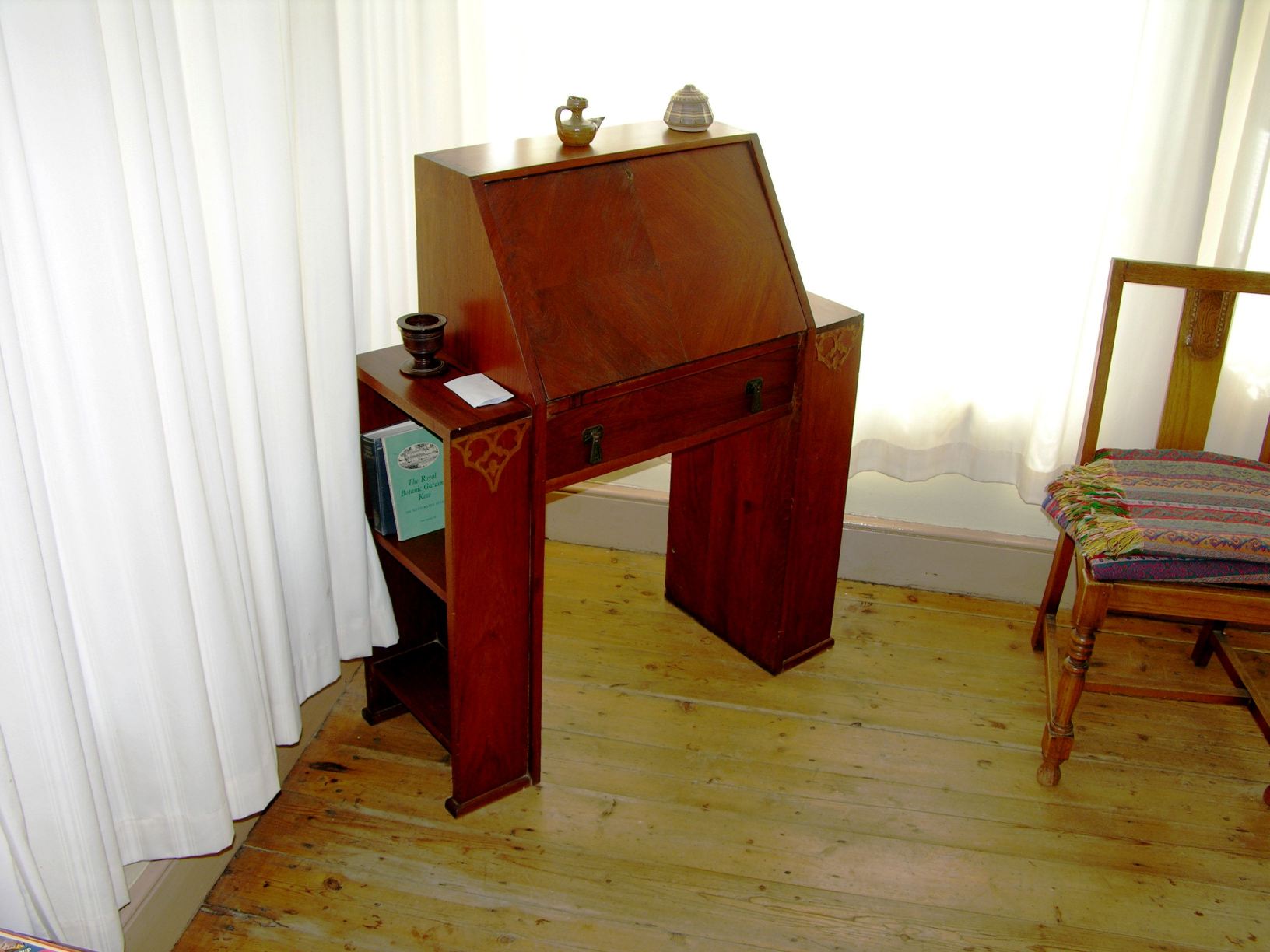
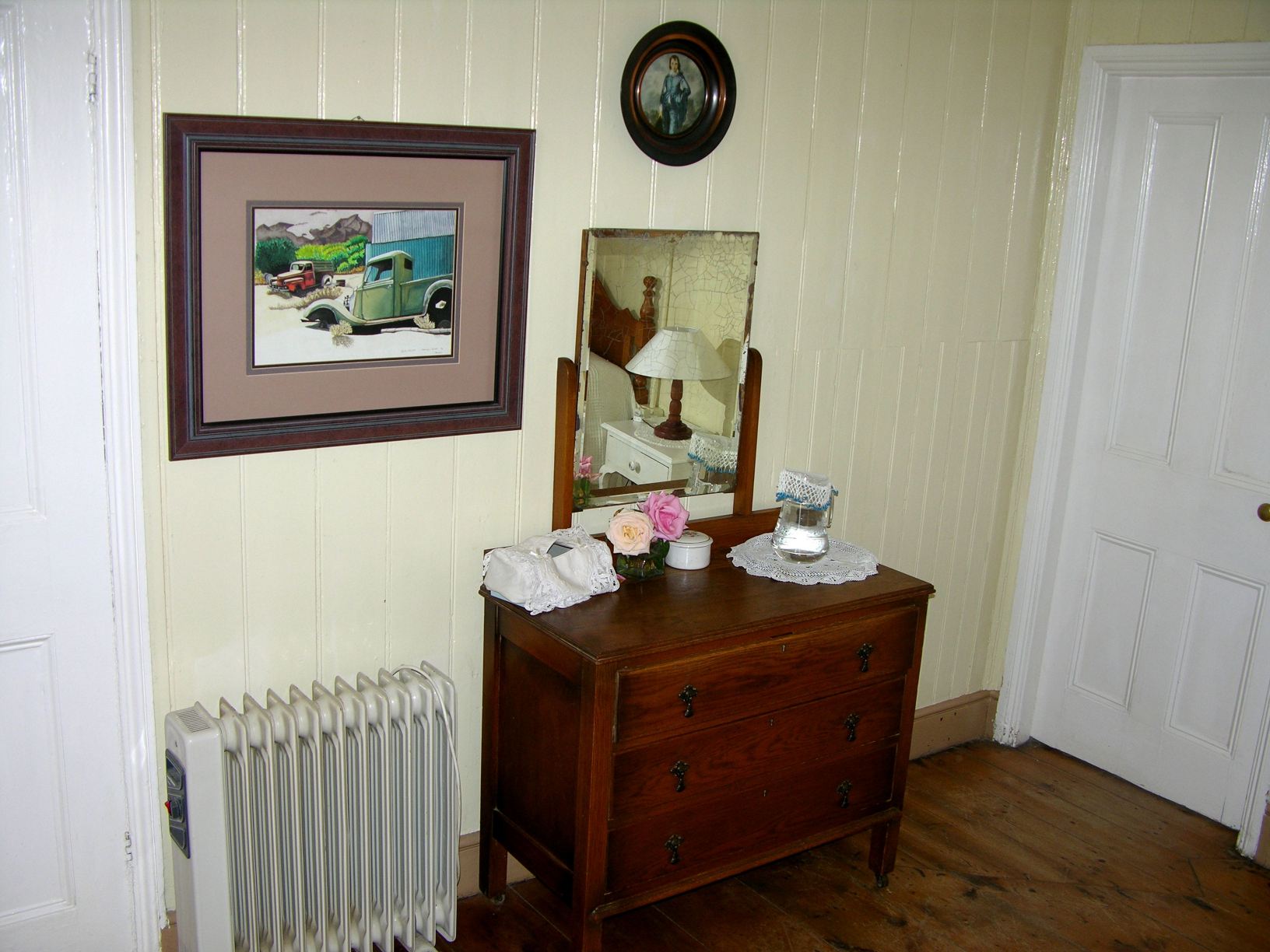
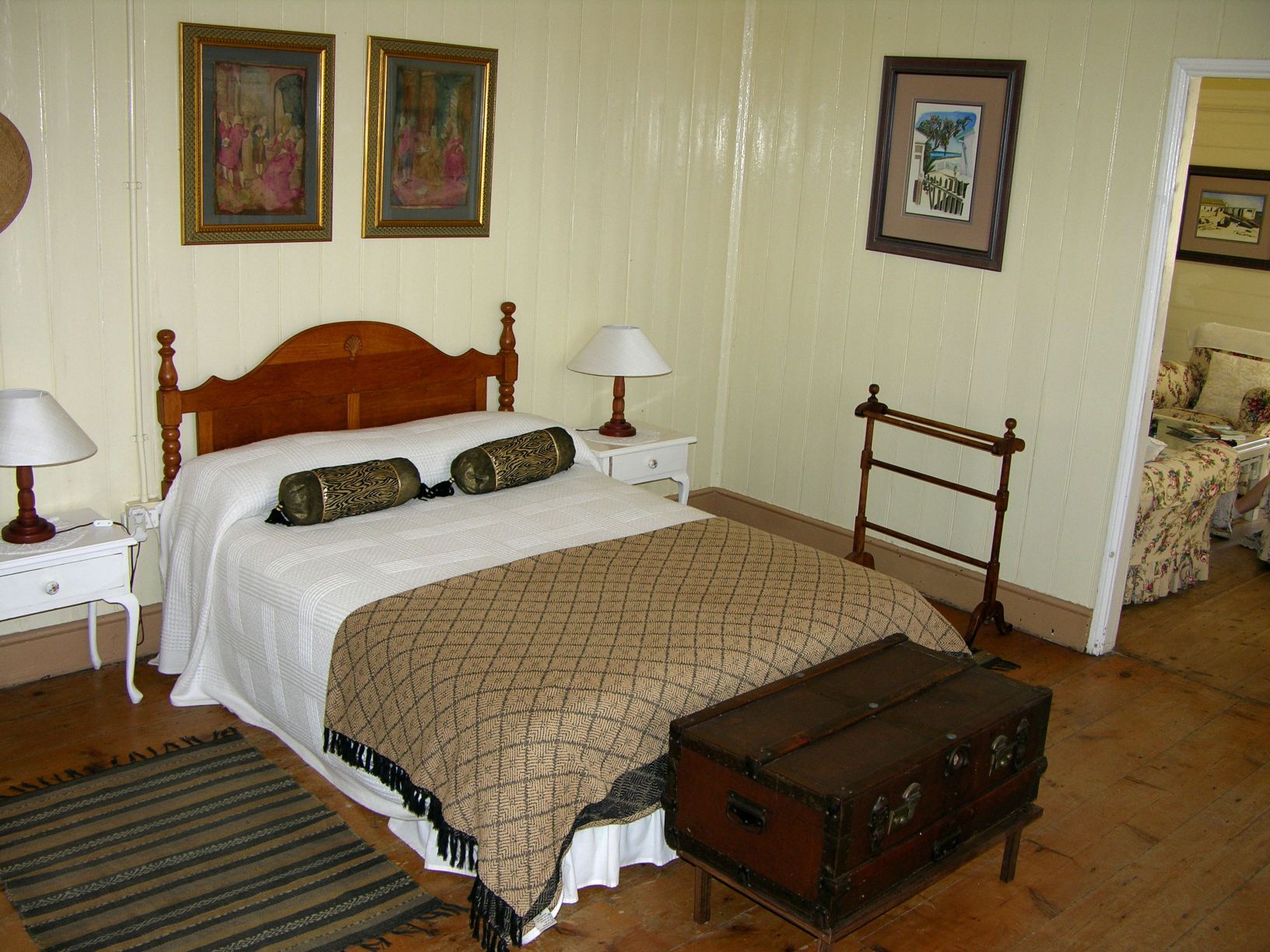
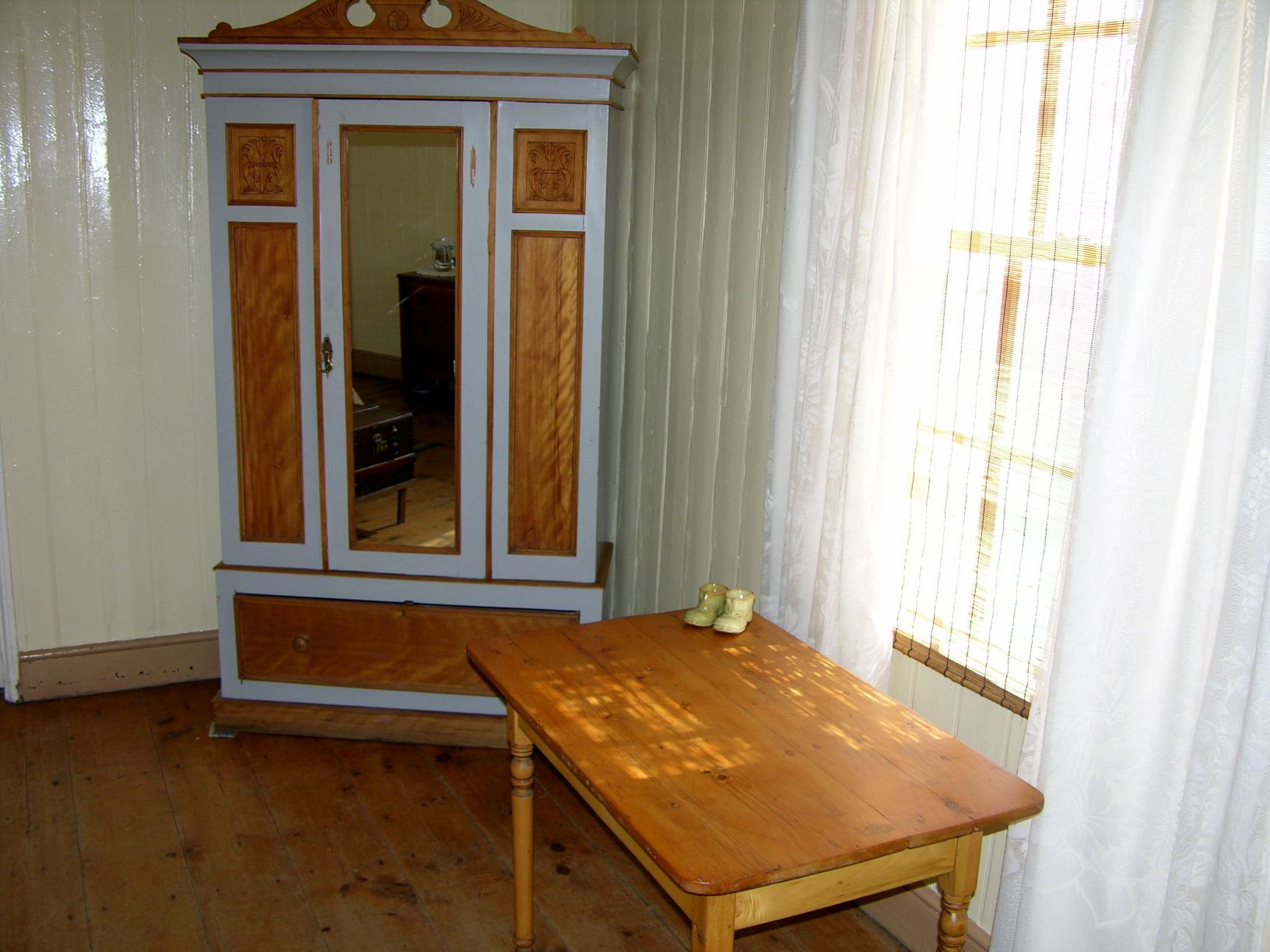
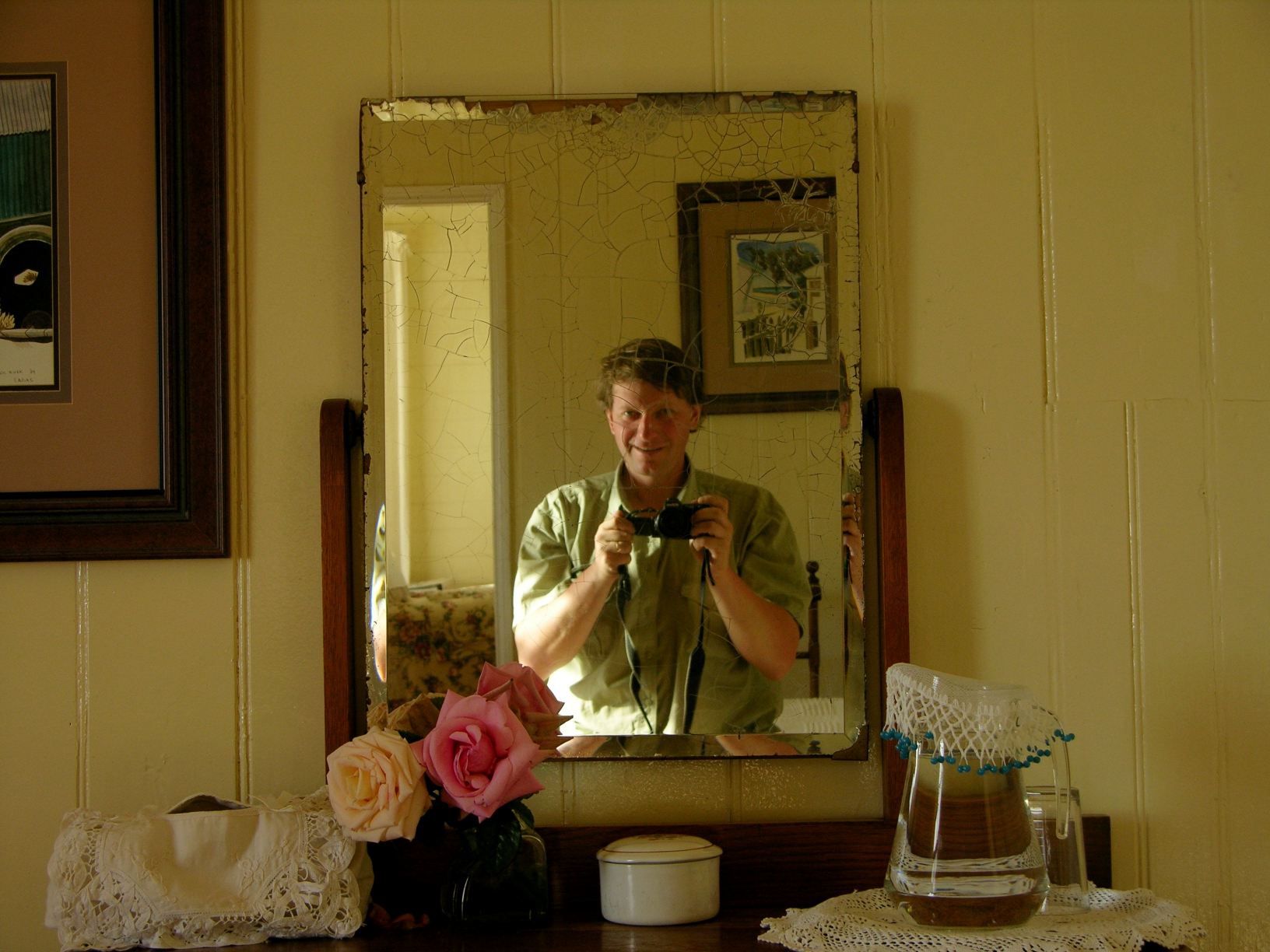
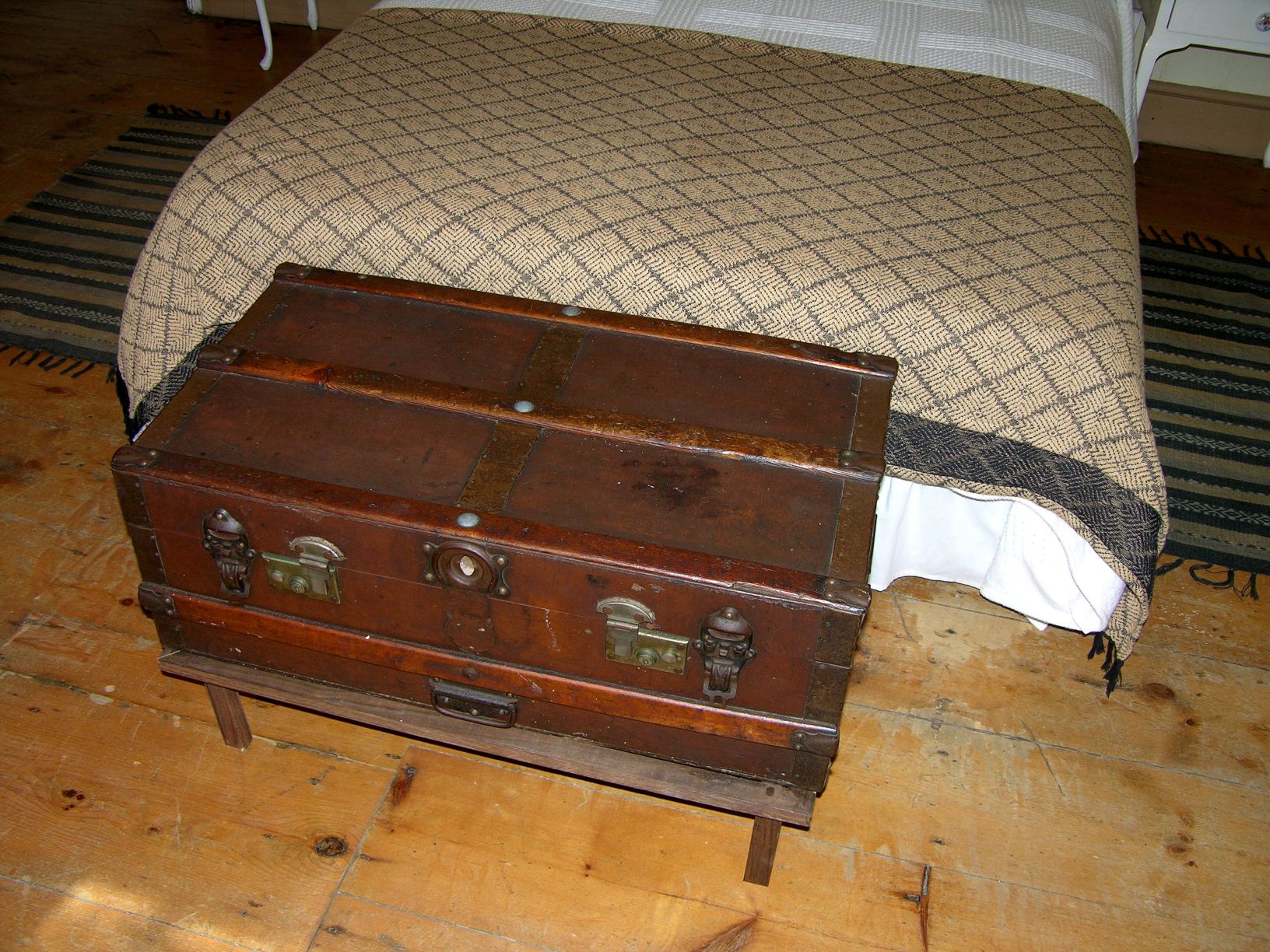
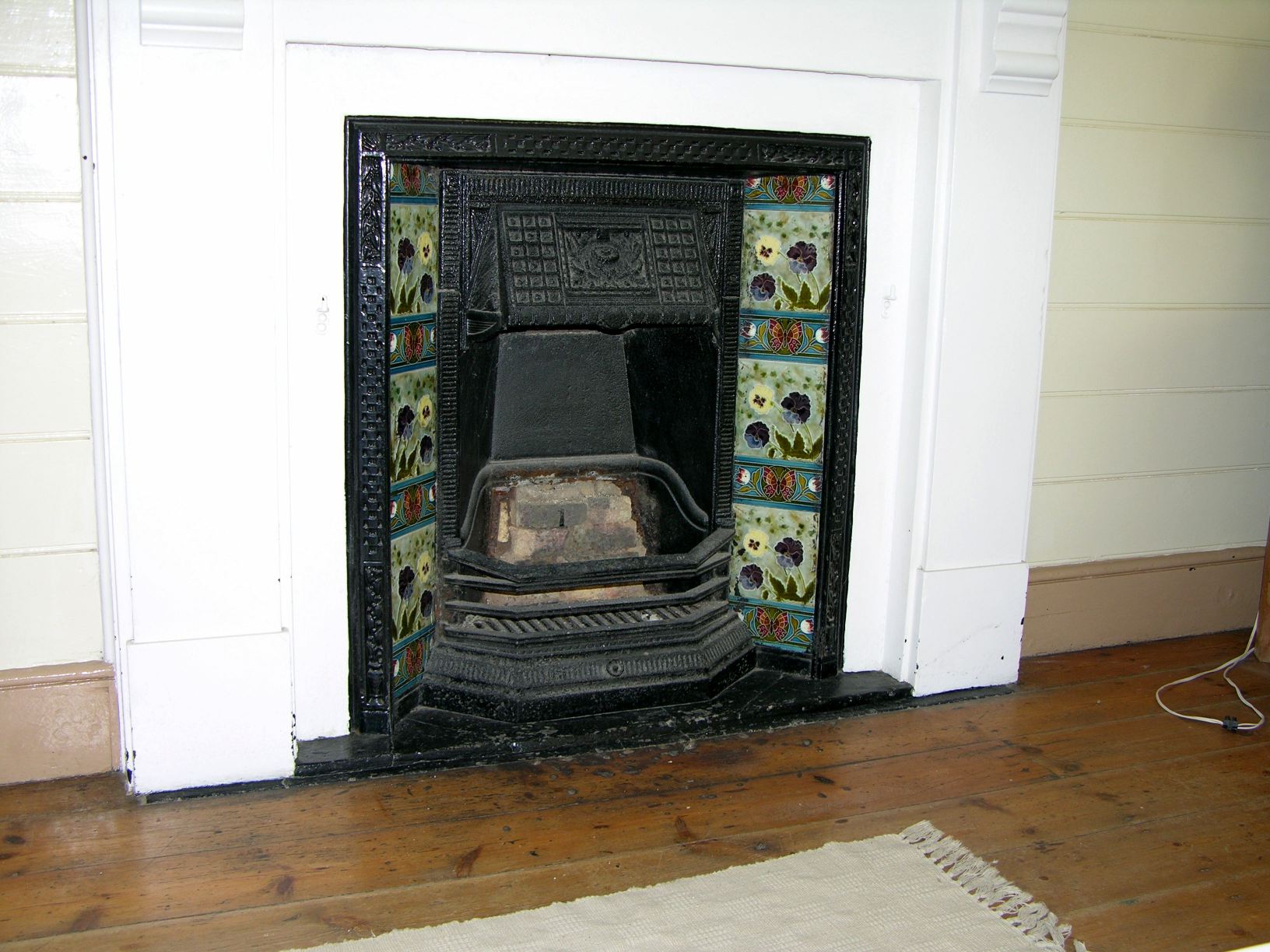
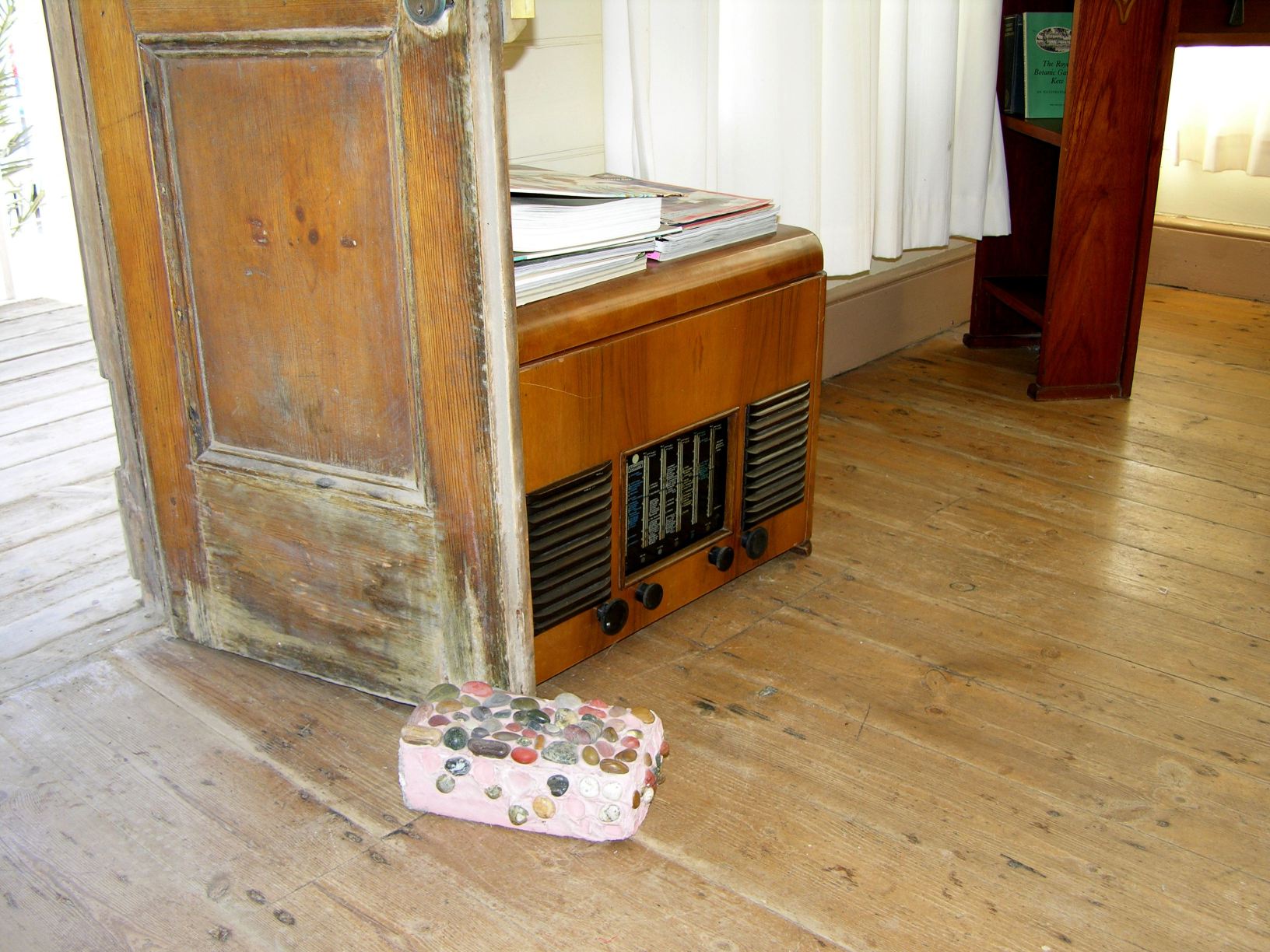
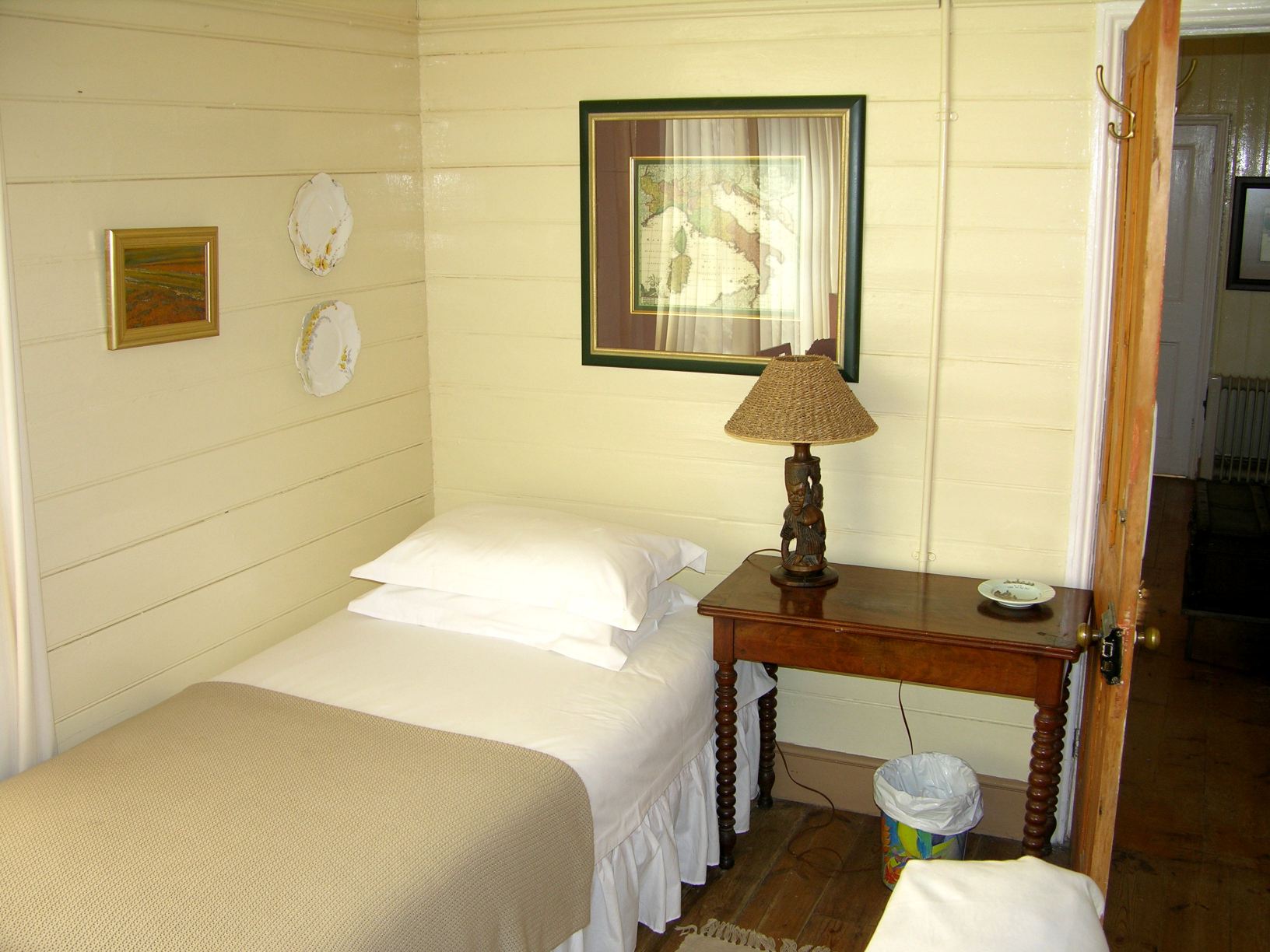
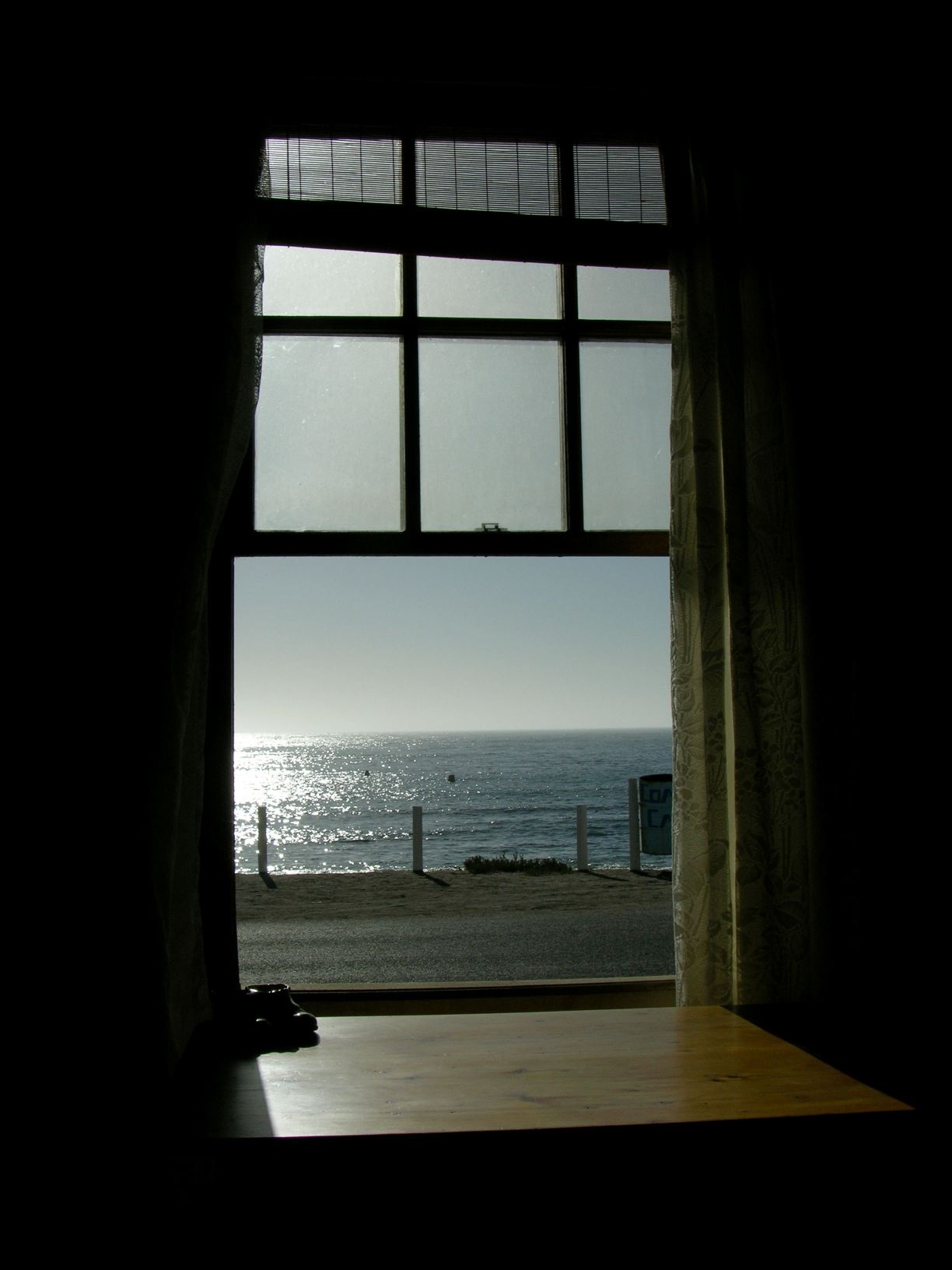
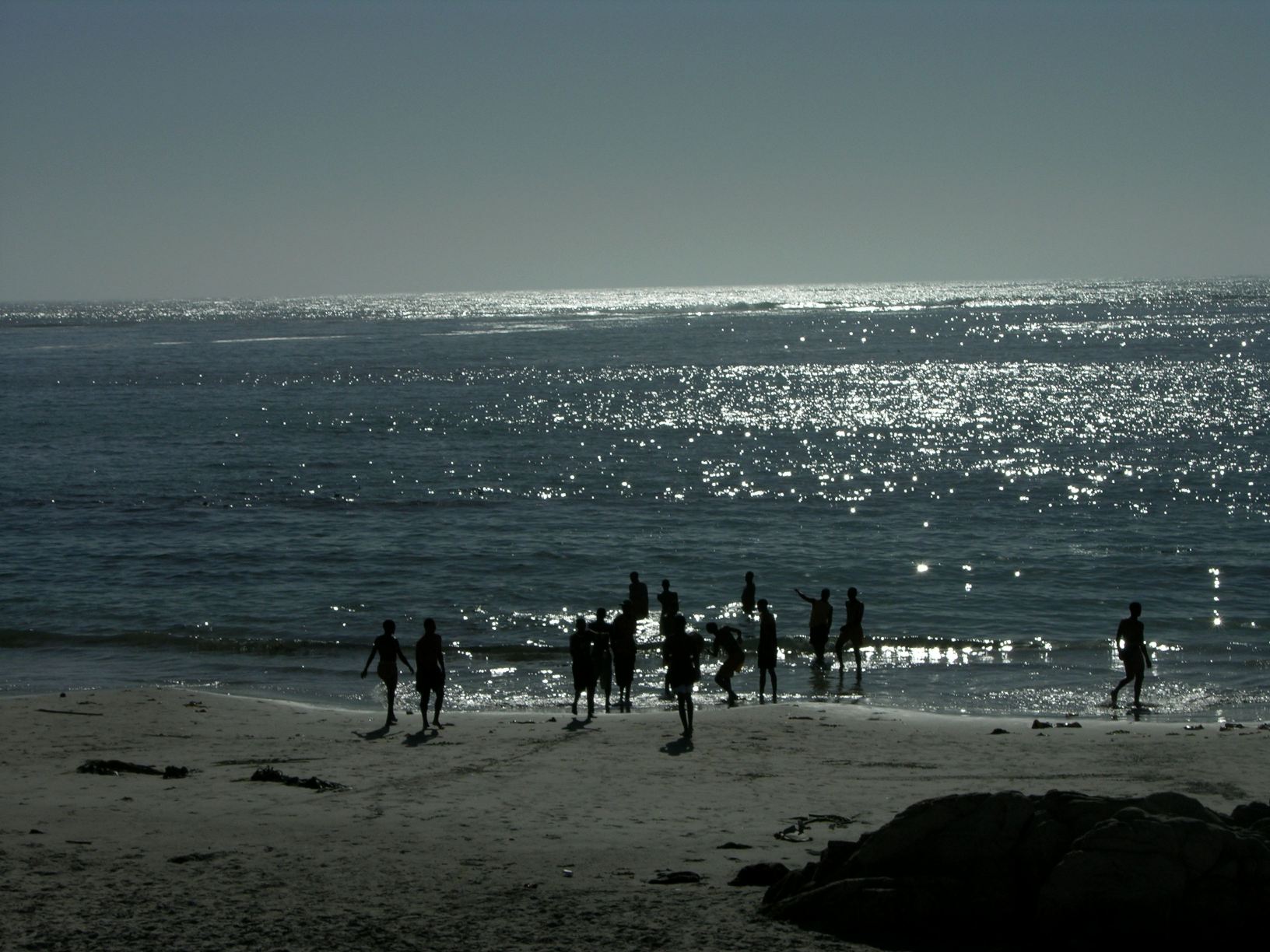
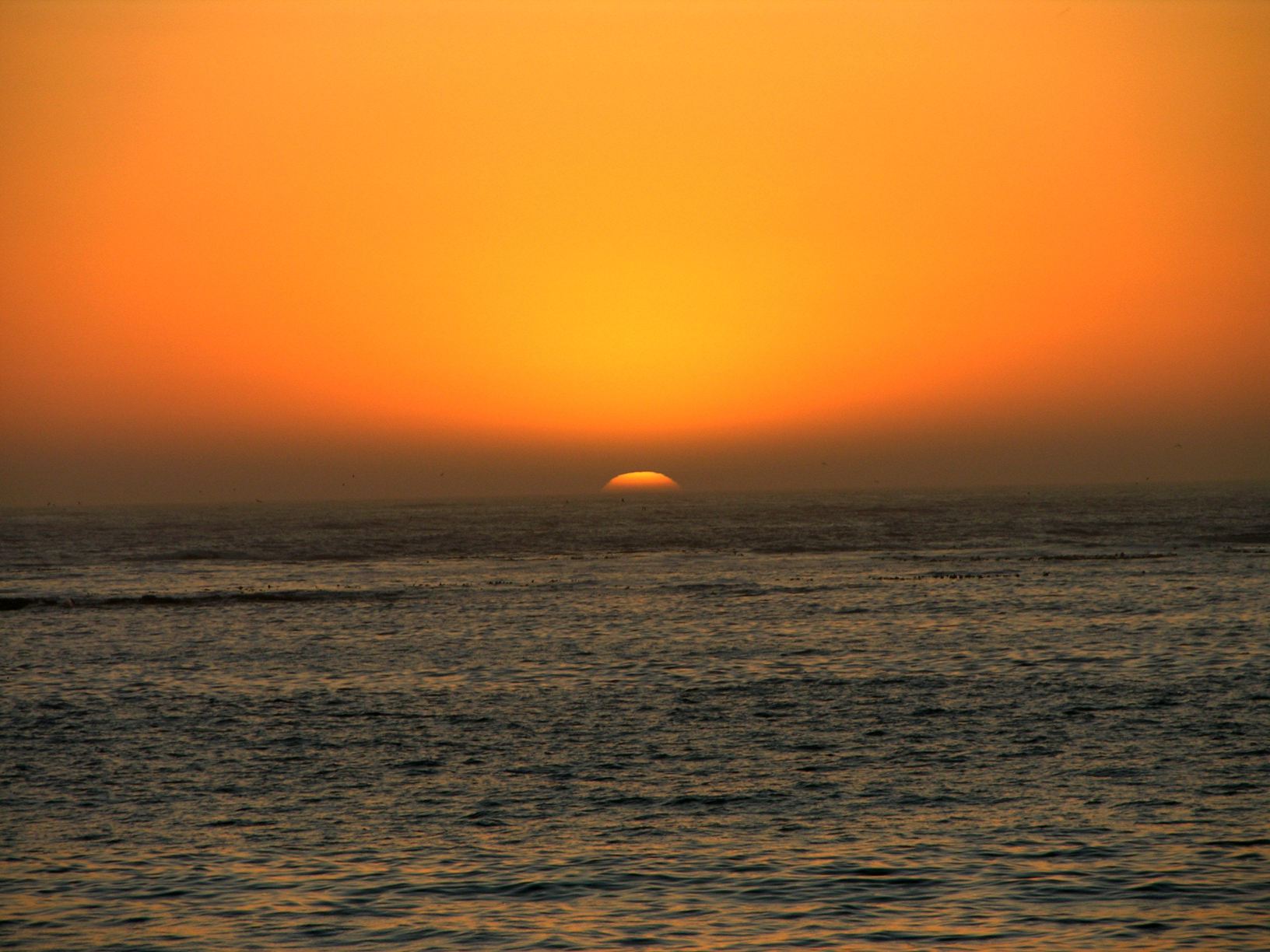
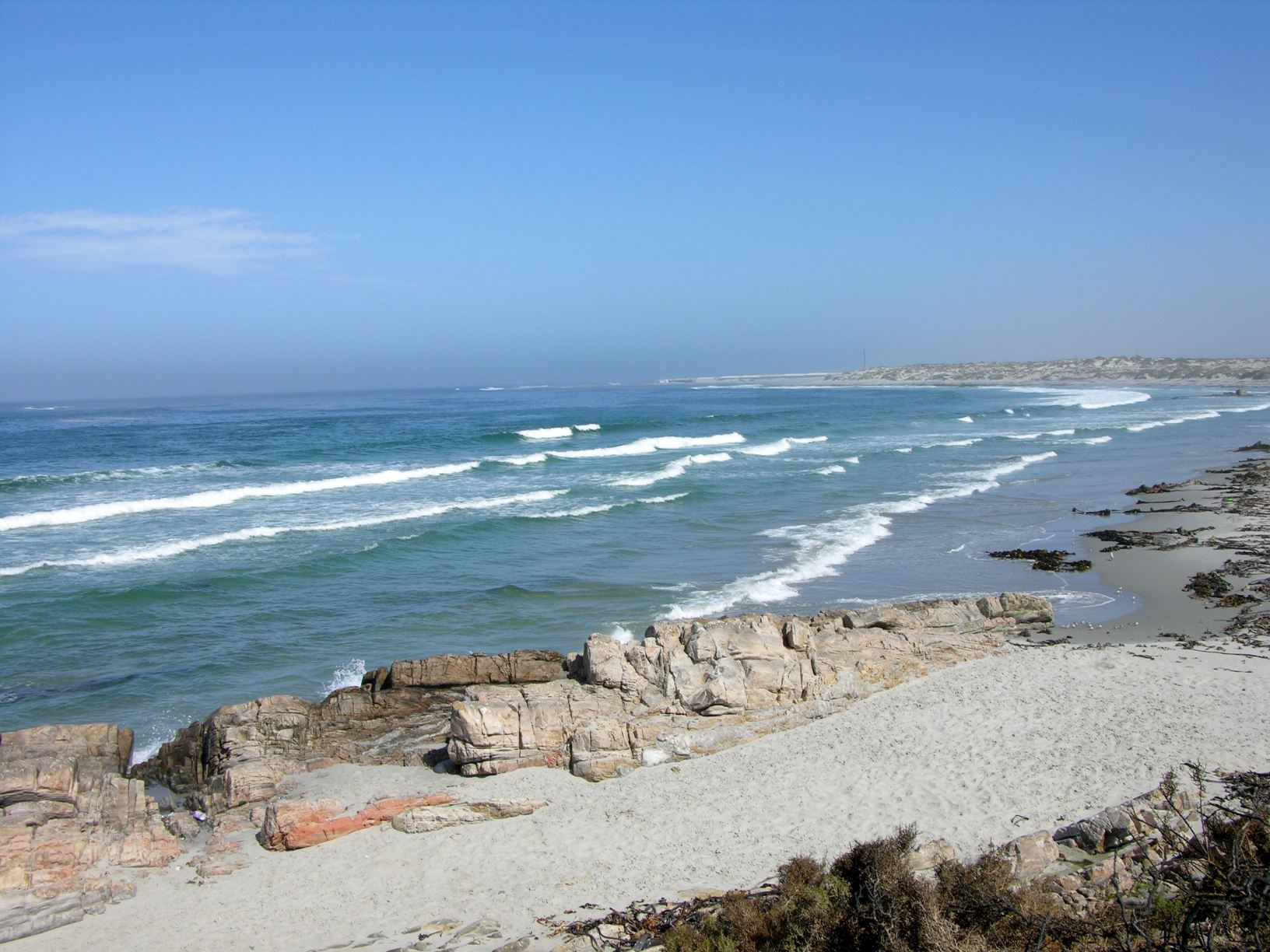
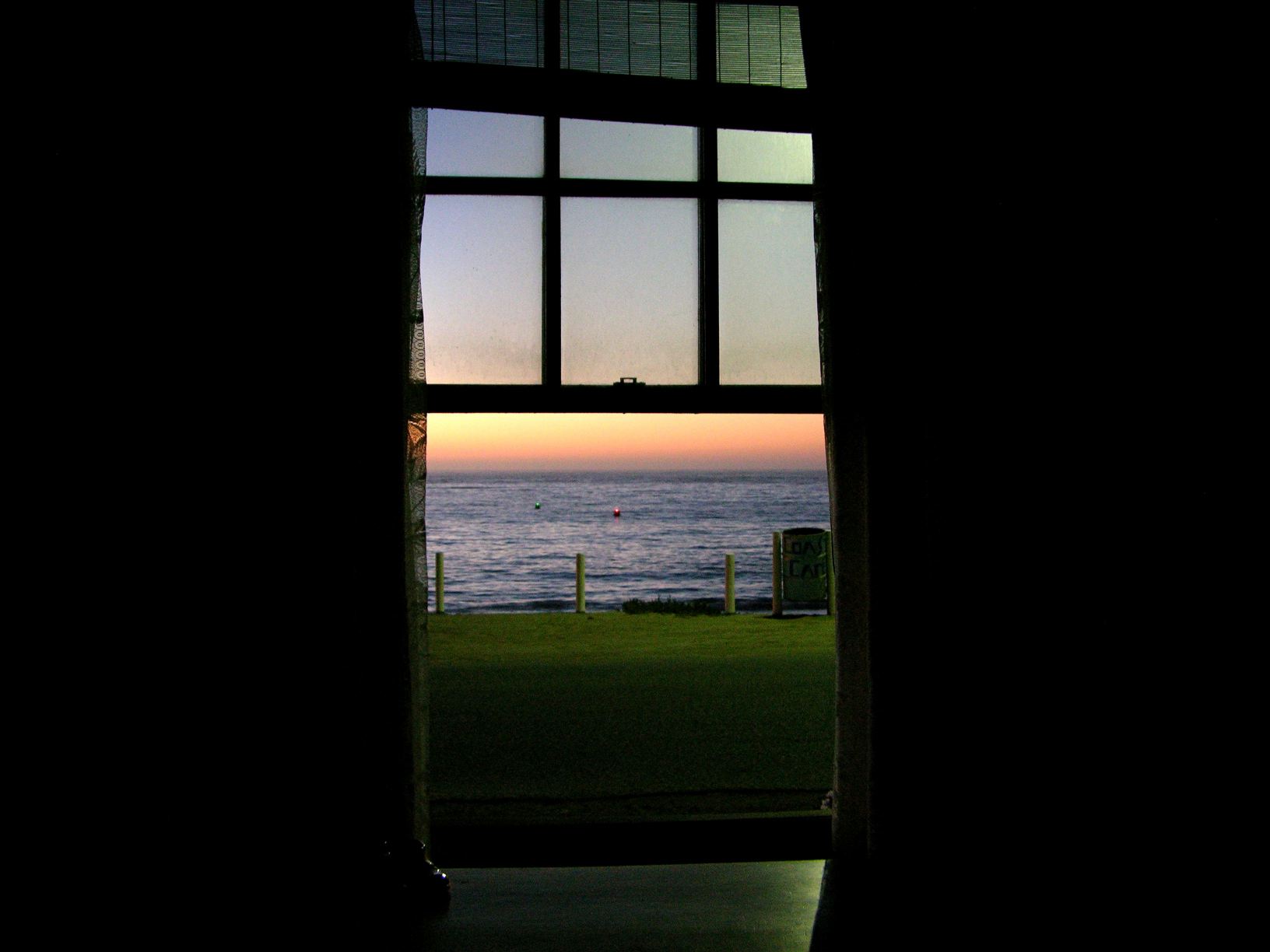
You want to spend more than a day somewhere like that. The windows look onto the sea, where the orange sun sets. We even saw the green flash, only the second time in our lives. It isn't hot down by the sea, a little over twenty degrees. Children splashed about on the beach. Neither hot nor cold. The wind stirred the old lace curtains. No, a few days' peace here wouldn't be enough. You'd need the rest of your life. A sweet longing took hold of me. Perhaps it was a longing for childhood. I think we had curtains like that at home forty years ago. Perhaps it was for peace. The Master and Margarita ends in a little house in the hills just like that. I'd always hoped I'd live in one someday. At an unhurried pace, with no commotion.
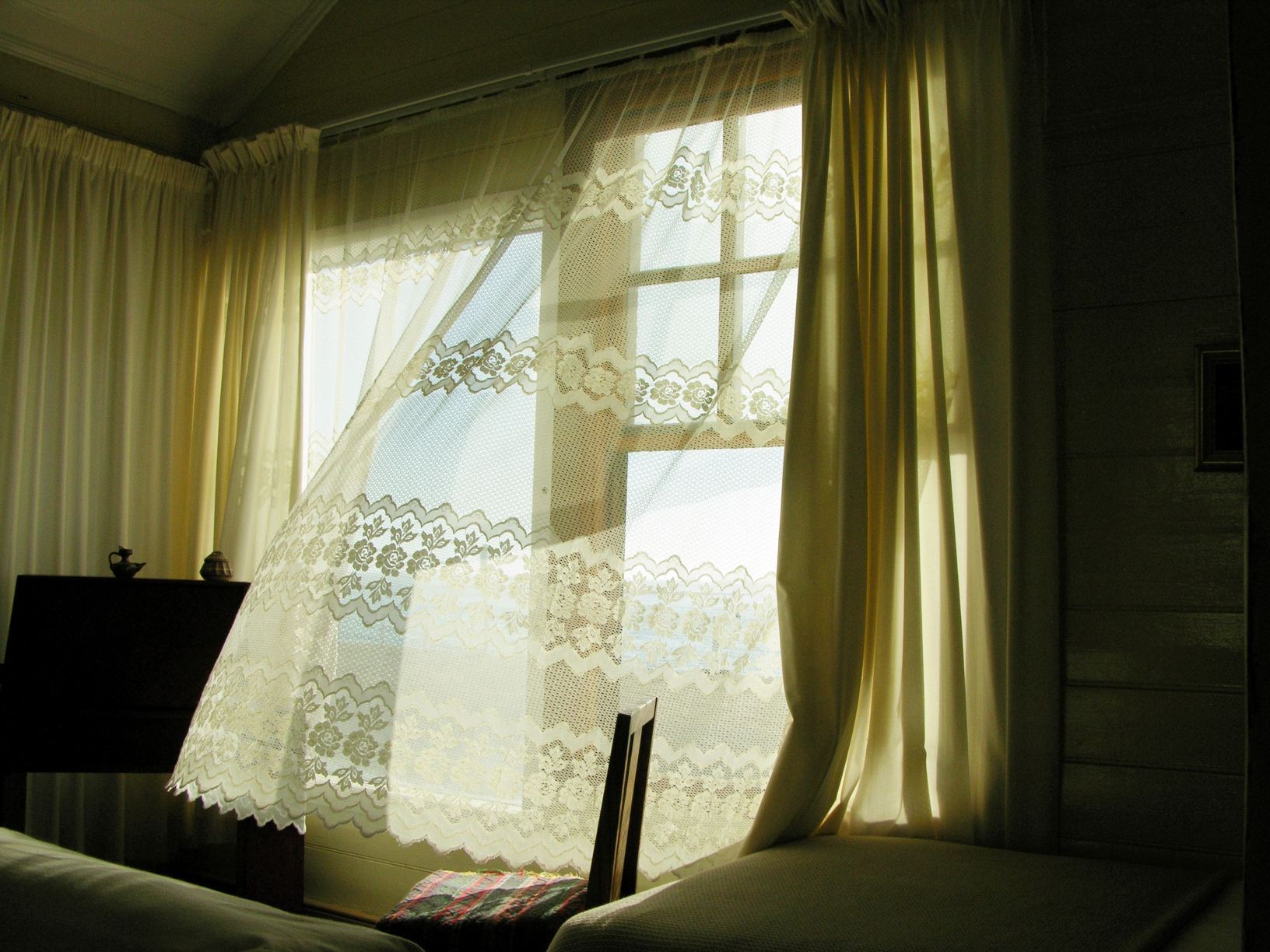
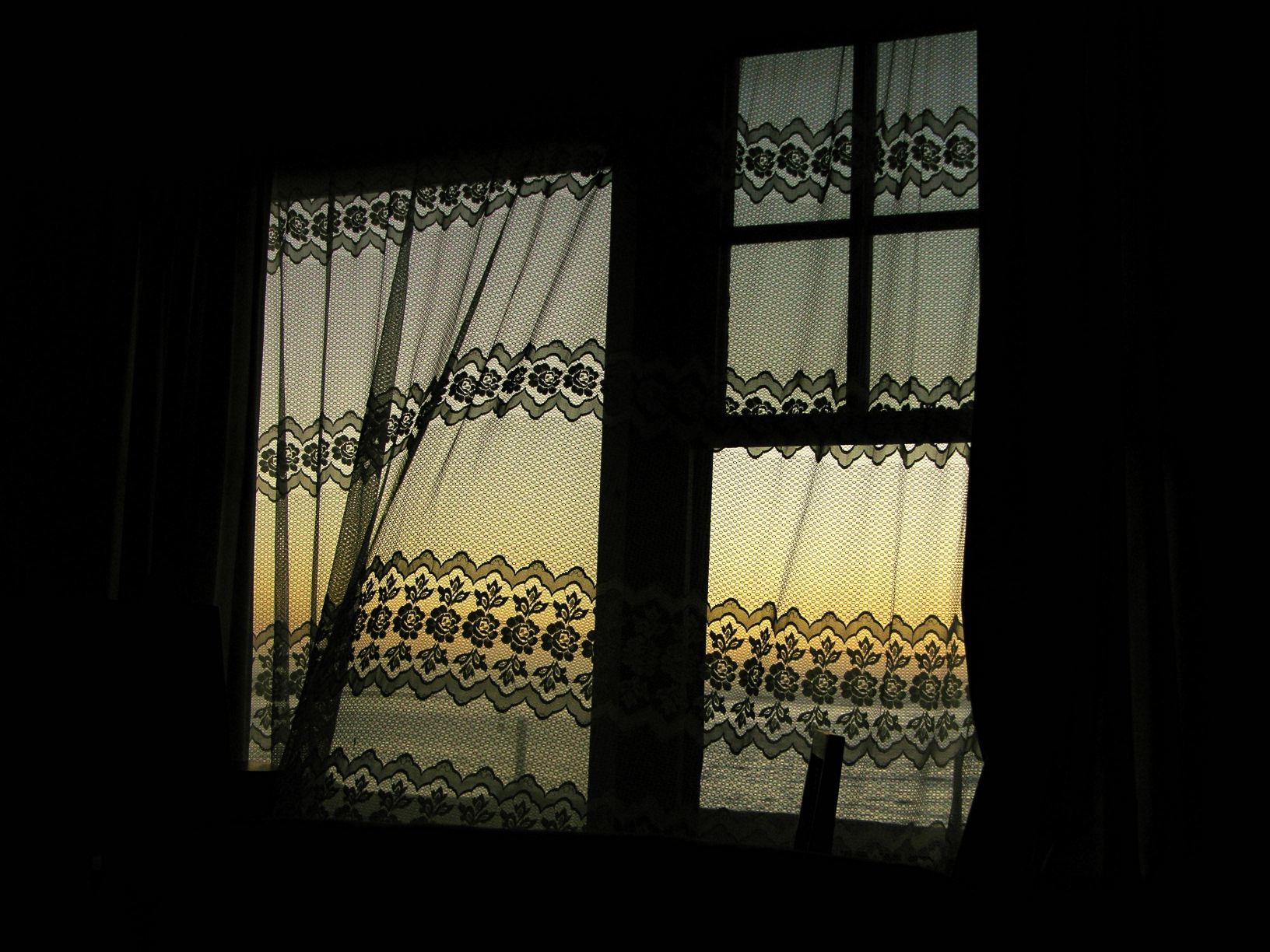
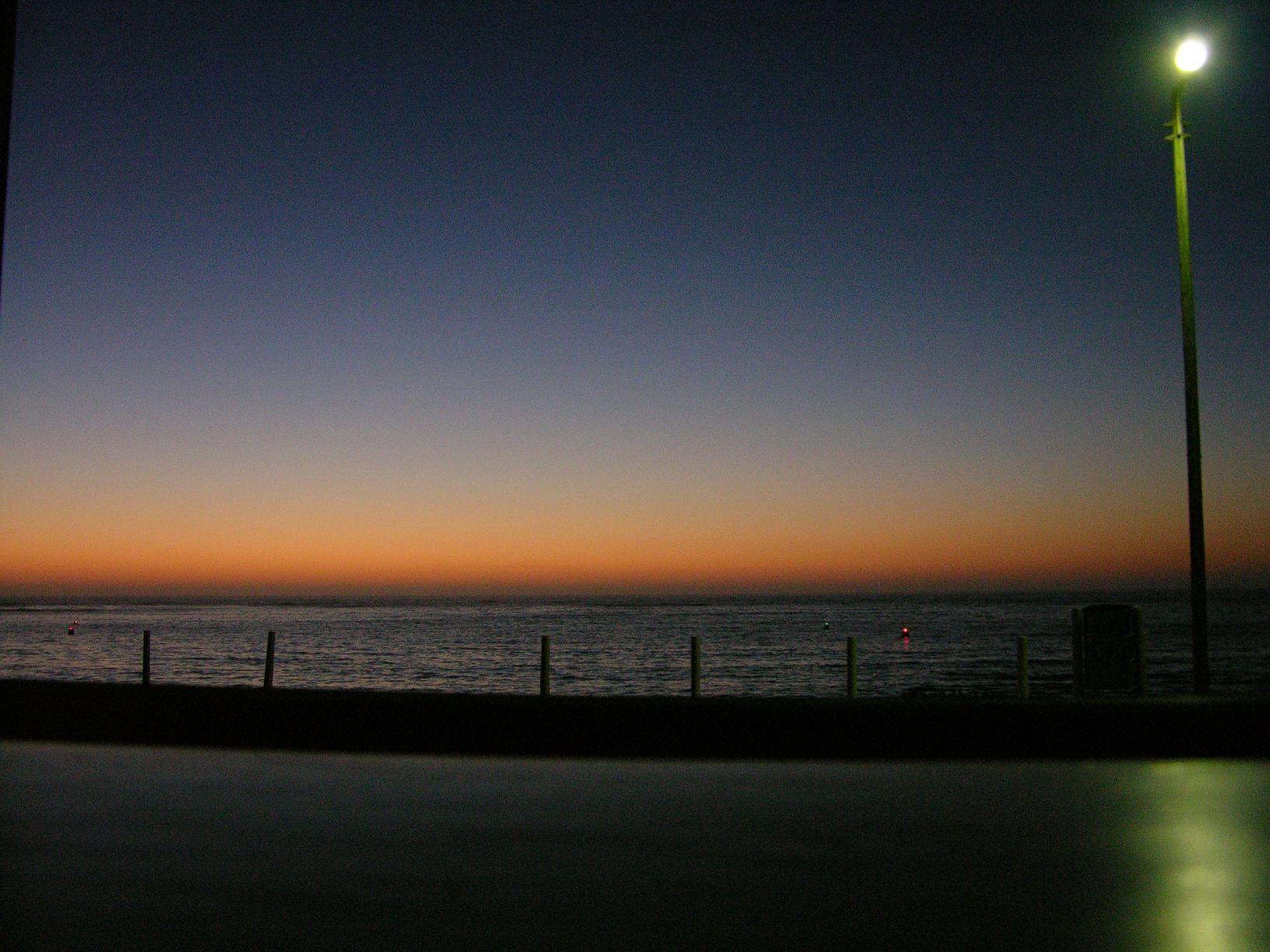
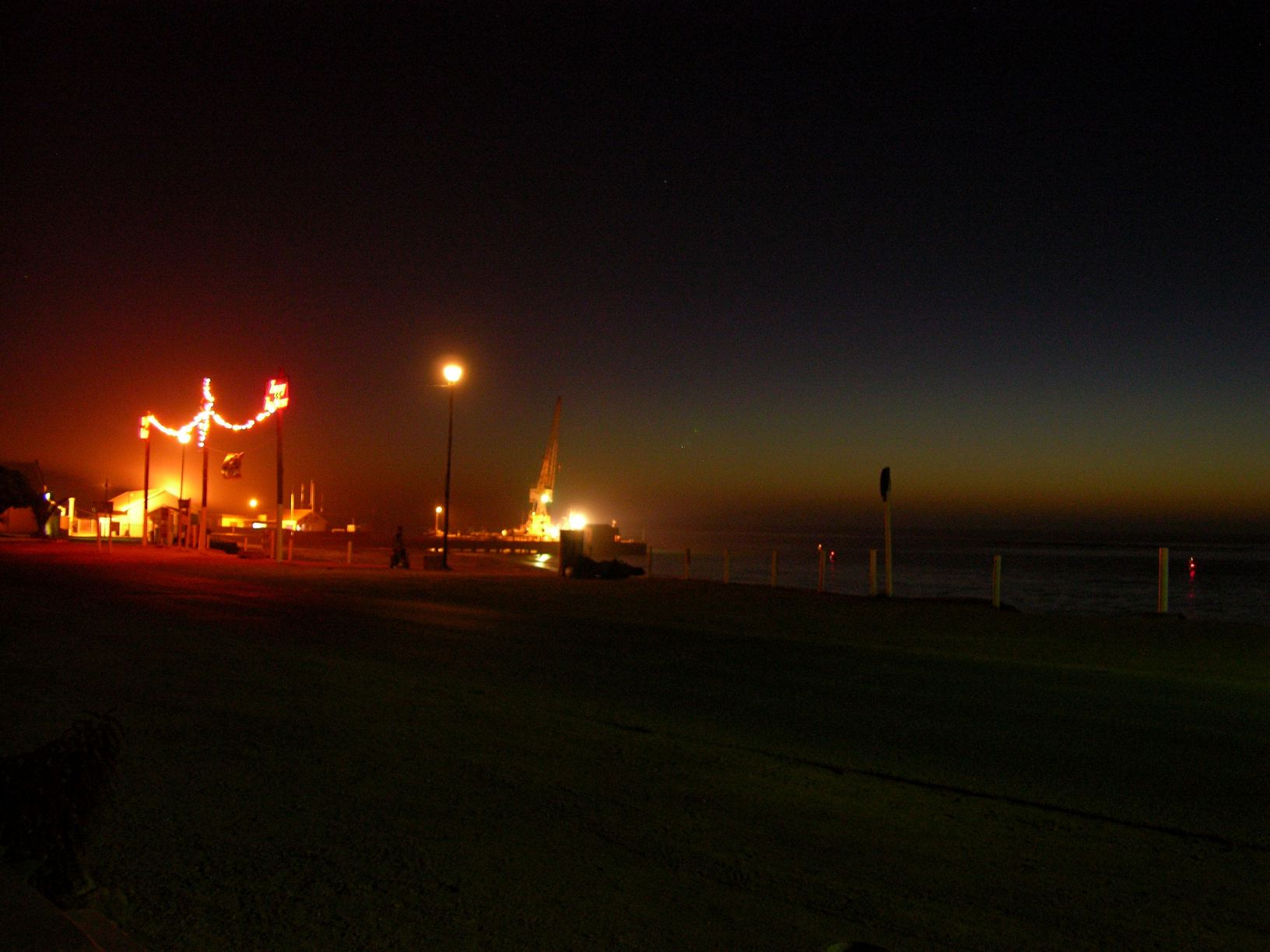
It grew dark, and the little harbour lights came on. The fishermen came home. It was still warm. Beyond the window, against the stars, a sign blinked ‘Happy New Year 2005’ beside Father Frost. I'll remember that day as long as I live. It had begun beautifully, too, in a tent on the banks of the Orange.
The following day began with the car repair. We found a tyre shop quickly. It looked respectable enough, but they straightened the rims with a sledgehammer. They patched the holes in a way I'd never seen. There was a piece of string sticking out where the hole had been. They said it would fall off as we drove. They charged ten rand a wheel, a bit more than a dollar. The price of a glass of tea. I was a little frightened to drive on tyres like that, but there was no choice. My fears turned out to be groundless. They lasted the rest of our trip.
Next stop, the car wash. A thousand kilometres of dust and dirt, and on top of it all monkey droppings had covered the car with a thick, stinking crust. It took them more than an hour to wash and vacuum it. They even covered the scratches on the rims and bumpers with some sort of gloop. Now the car was almost new again. I began to hope we might get it back to Avis without a scene. All the worst roads were behind us and ahead lay civilisation and tarmac.
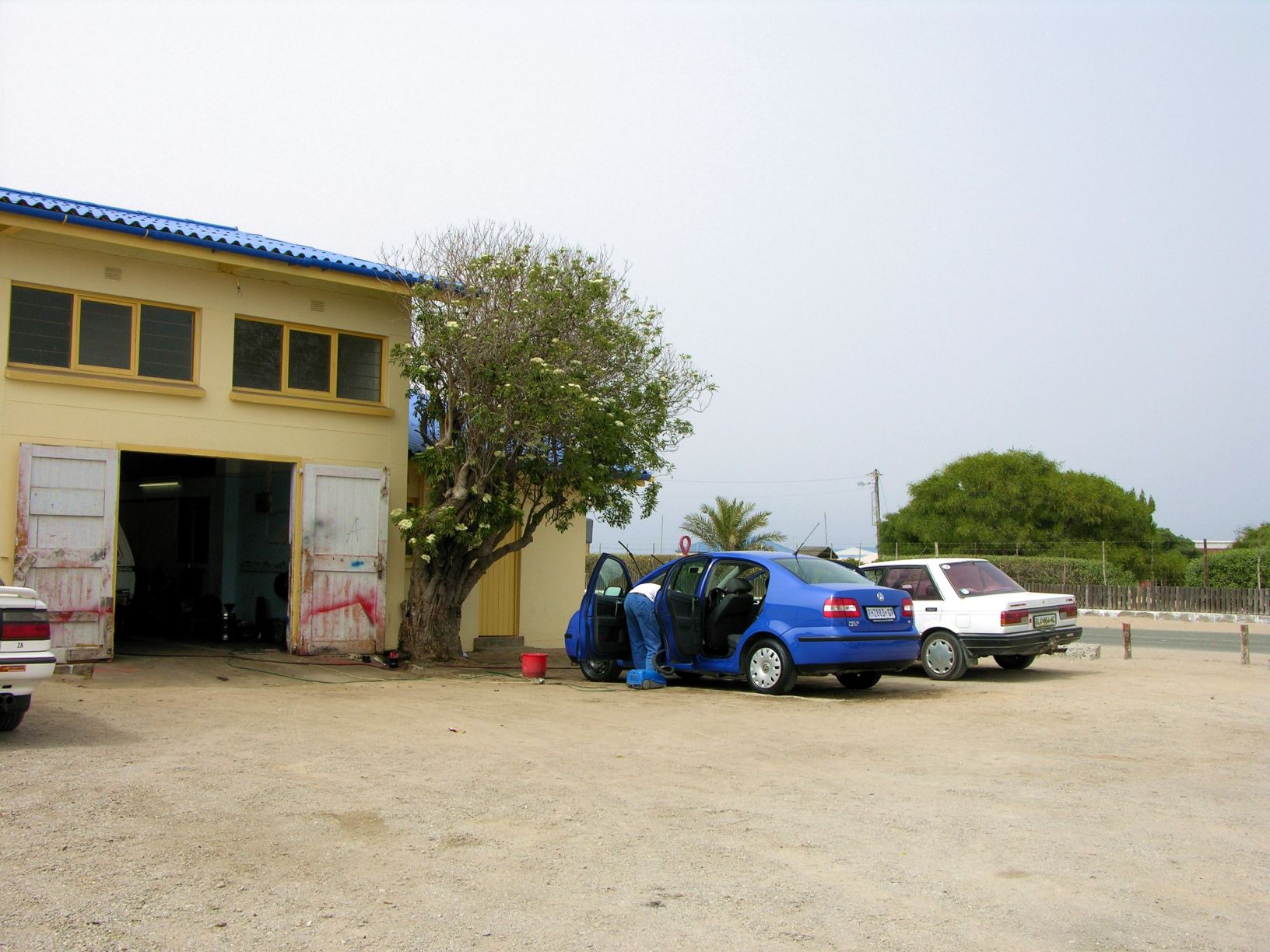
Unfortunately, shortly afterwards a white farmer drove into my rear bumper as I was leaving a car park. He apologised profusely. We could have filed an accident report, but the damage was slight and practically invisible. I'd had a broken front bumper. Now I had a broken rear one too. Well, time was worth more, and there was only one insurance excess, which I'd probably already used up. On we went.
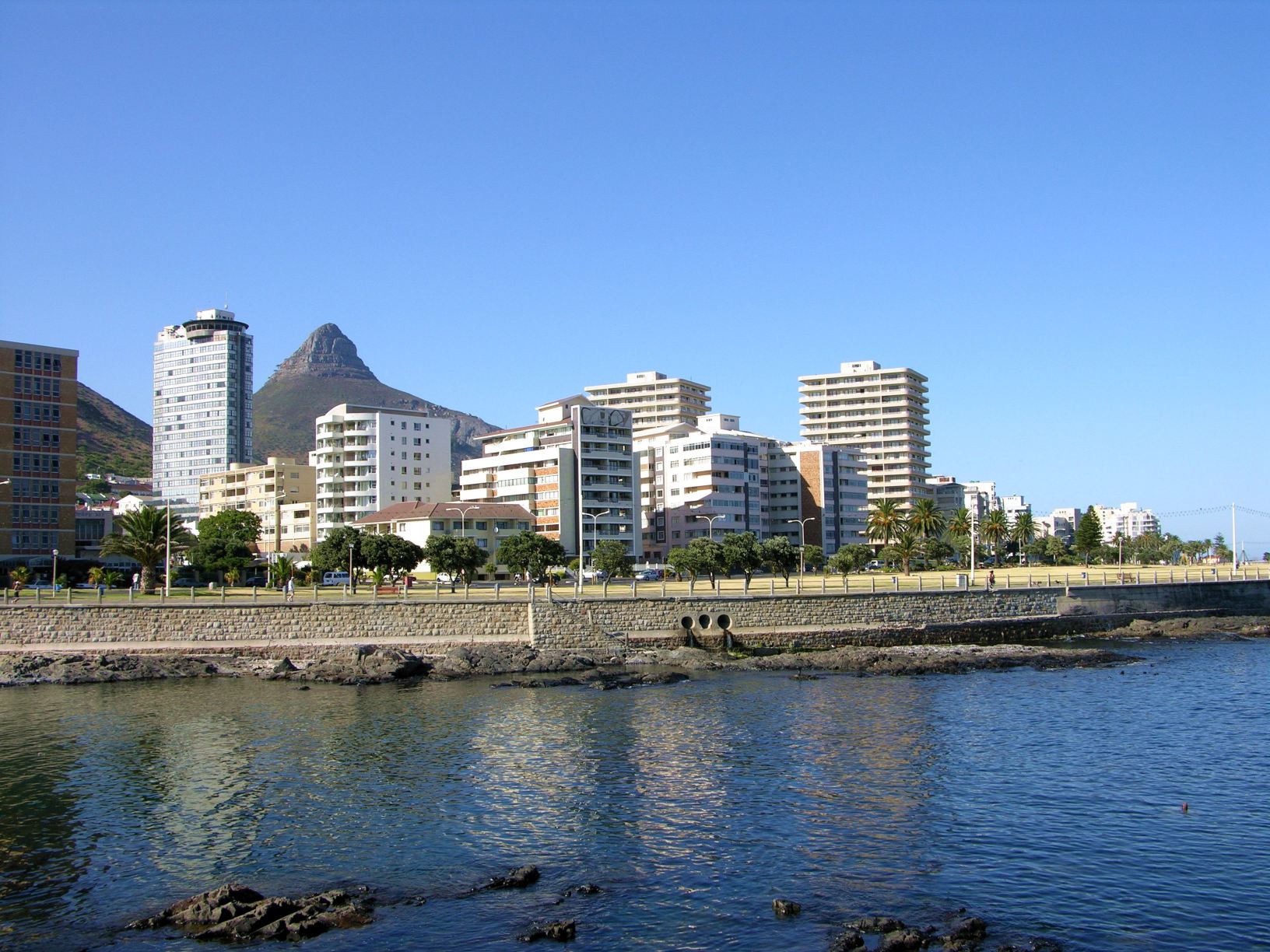
There were still plenty of interesting places on the west coast but it was time for Cape Town. We'd paid for a hotel there. It wasn't really on our way, but we hated wasting the money. How I hate prepaid hotels. How many times have I sworn that the next time I'm forced to book rooms to get a visa, I'll immediately destroy every record of where or what I've paid for? This time, though, we used the Ritz (33°54.556′S, 18°23.824′E). It's a high-rise towards the city centre, more precisely in Sea Point. Cape Town is built on mountains and they're what divide it into several centres. We had a look at the rates and discovered that booking from Russia had cost more than walking in and asking for a room. It wasn't cheap to begin with. It's central, all right, but with a car that's more hindrance than help. First you have to fight your way through jams on narrow streets, then pay to park, then get back out again. It's much simpler to stay at a motel a few dozen kilometres out of town.
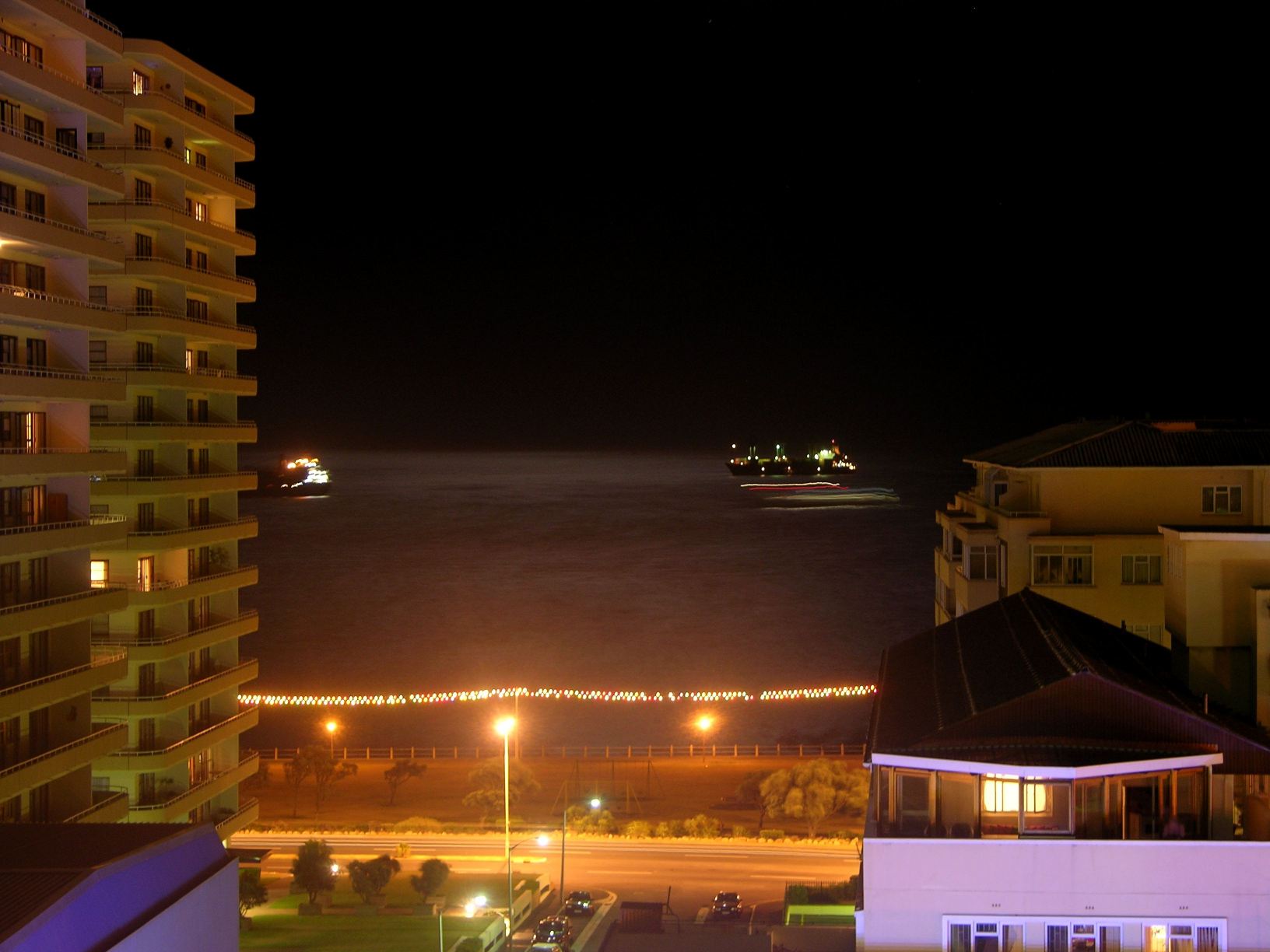
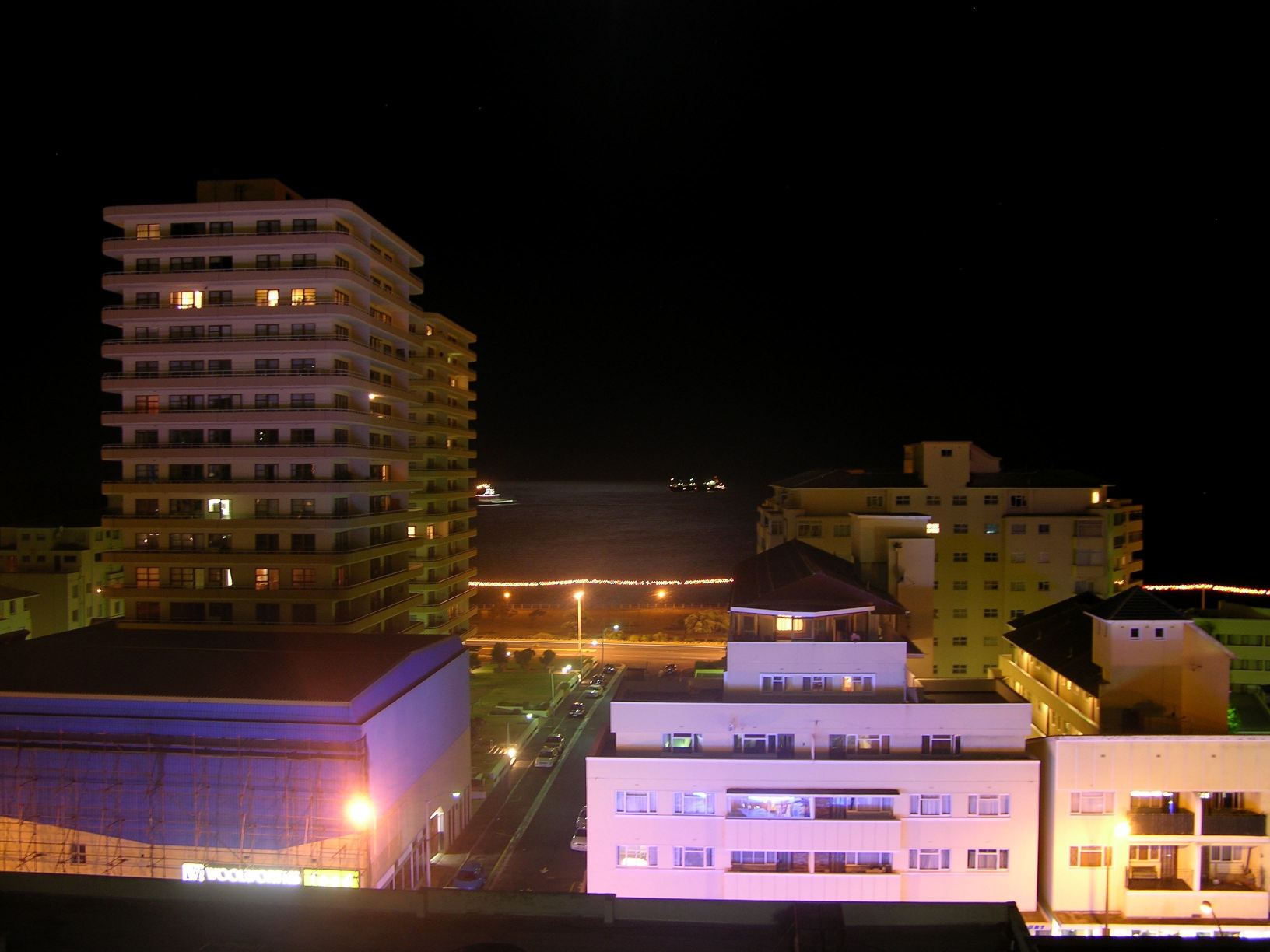
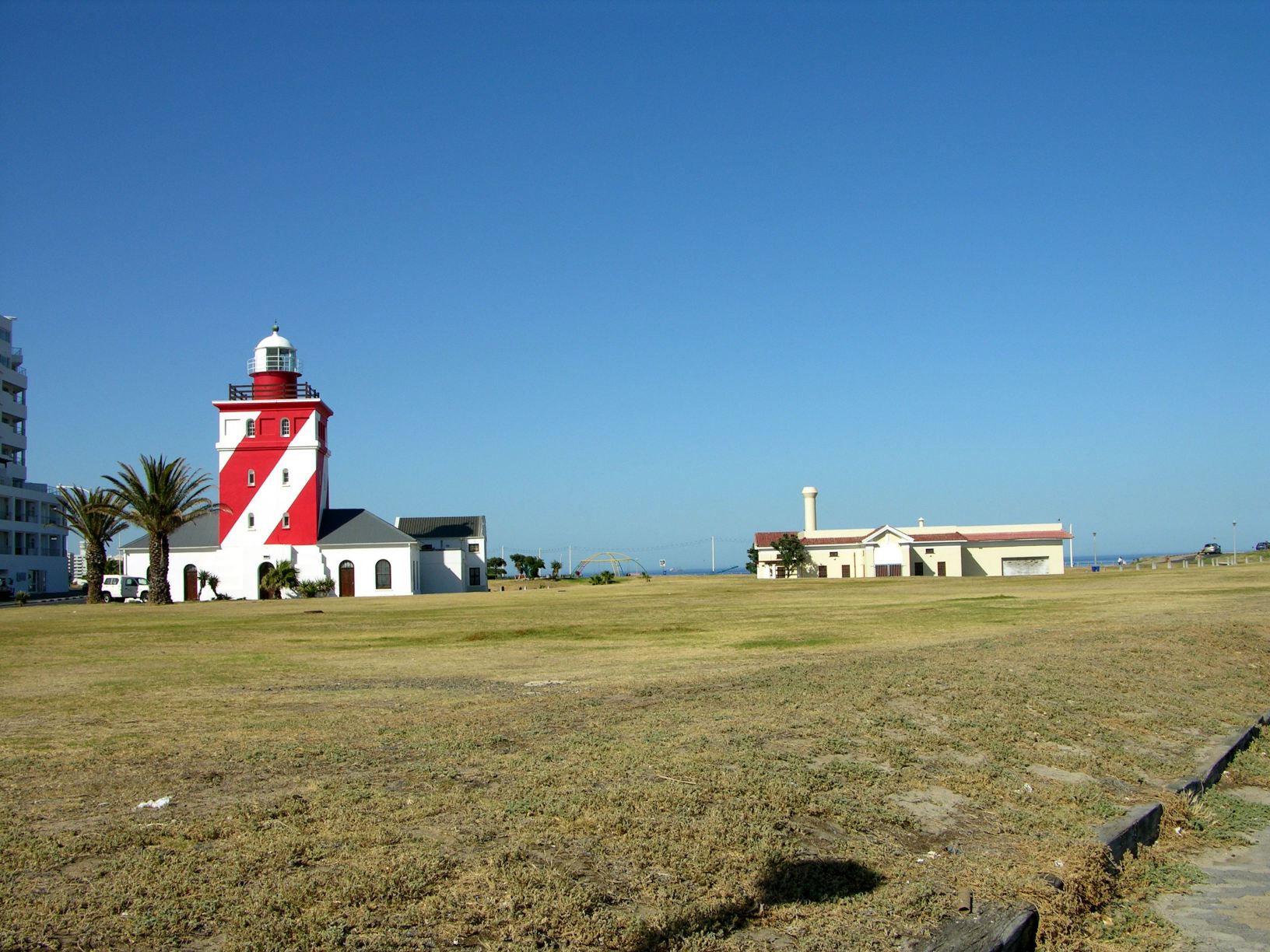
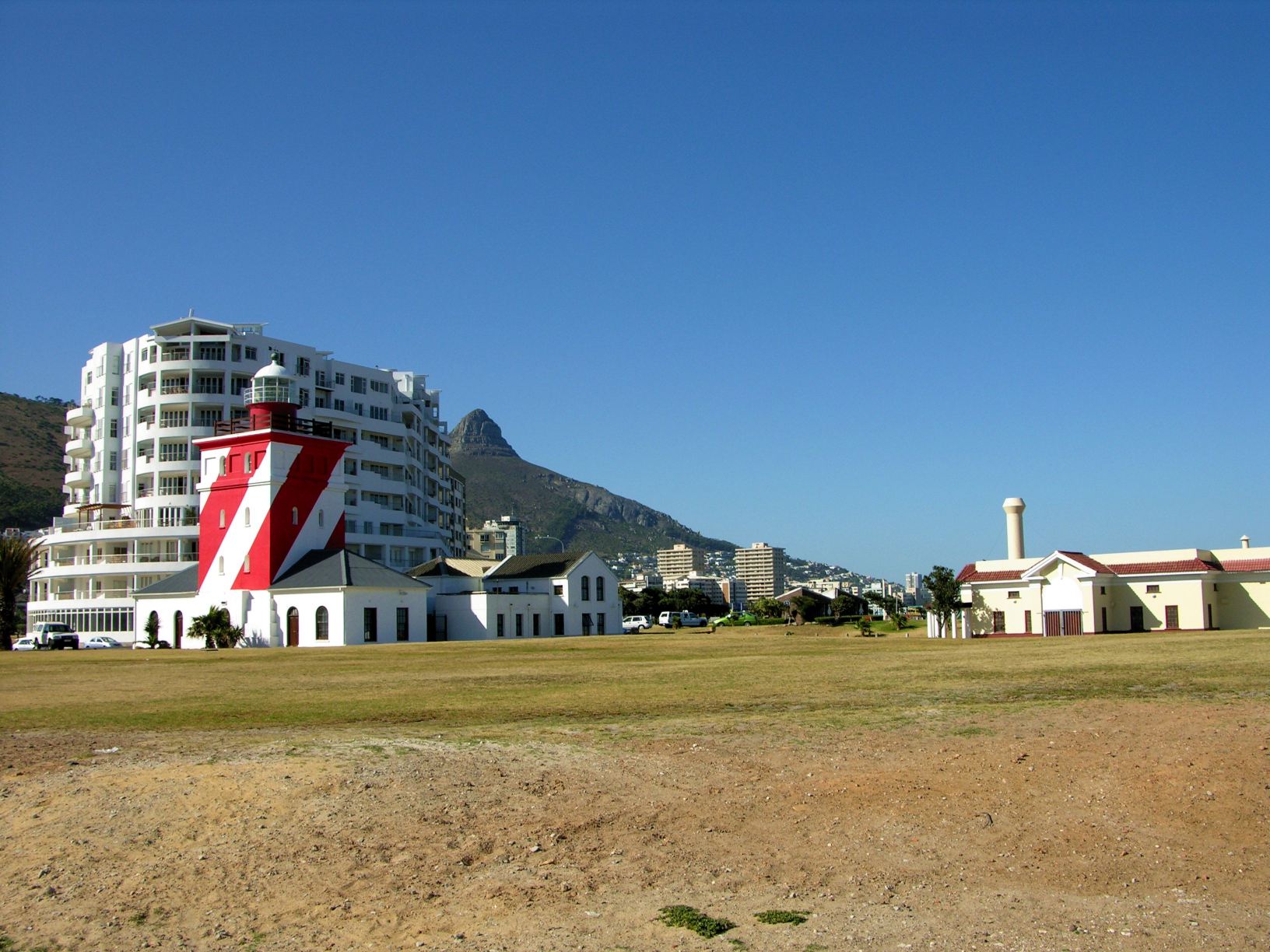
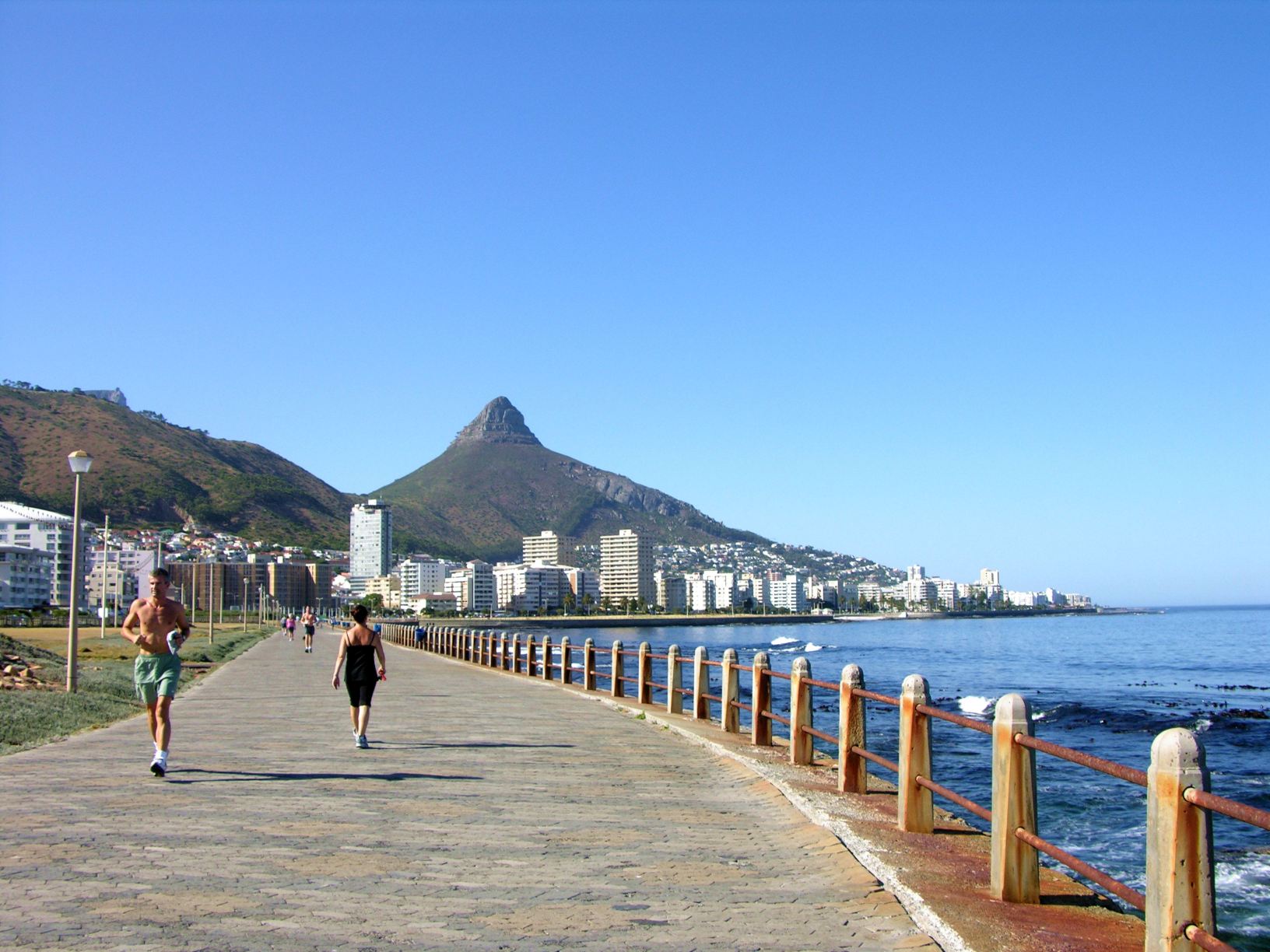
Cape Town has declared itself a safe city. A huge police presence had made it possible to walk anywhere in the centre in safety, even at night. People made the most of it. The streets were full of people till late in the evening. They went jogging along the waterfront. Even women in miniskirts felt comfortable going out alone. Across South Africa, rape was a grave problem. Our impression from stories we heard was that, in most cities, precautions weren't enough to keep people safe. HIV made it worse. I assumed that many offenders had it. If you listened to the local youth radio station and its phone-ins, you'd often hear women from respectable districts who'd stayed indoors and hidden as well as they could, only to be assaulted at school. Now they were living with HIV, pregnant, and asking what they were supposed to do with the rest of their lives. It seemed to me that harsher penalties would only make things worse. Someone who expected a slow death from AIDS might see committing rape and being executed for it as a better way out.
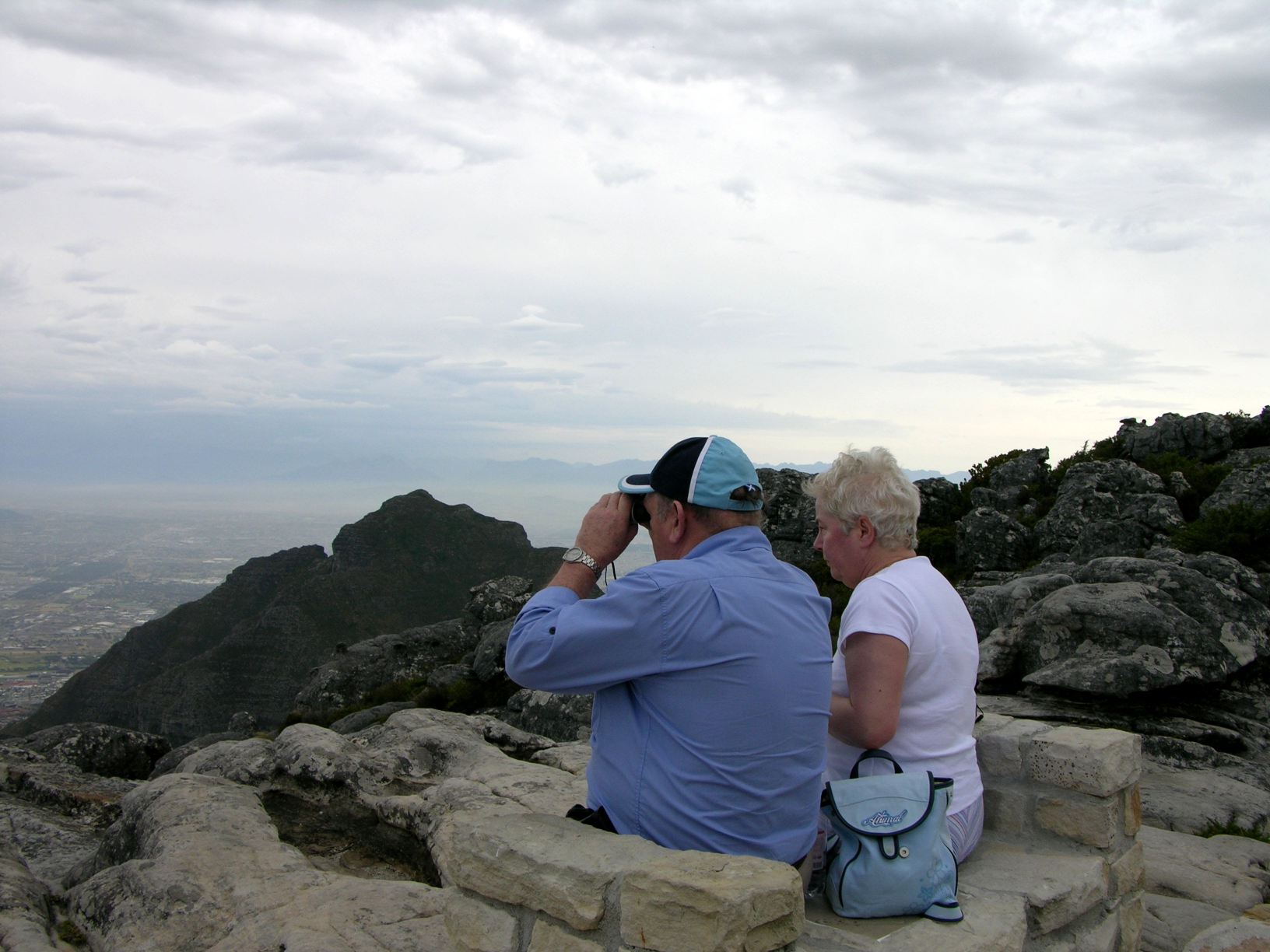
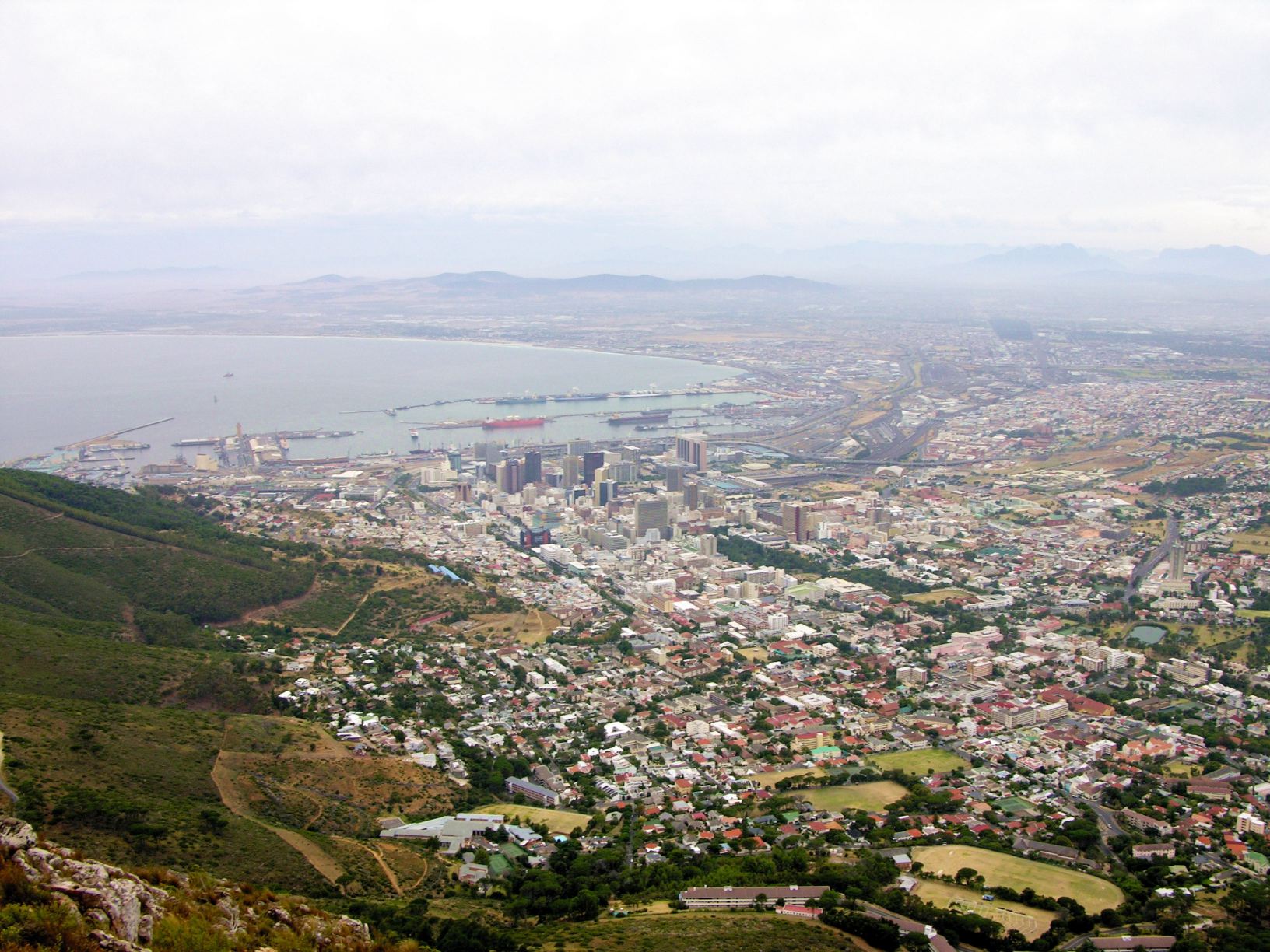
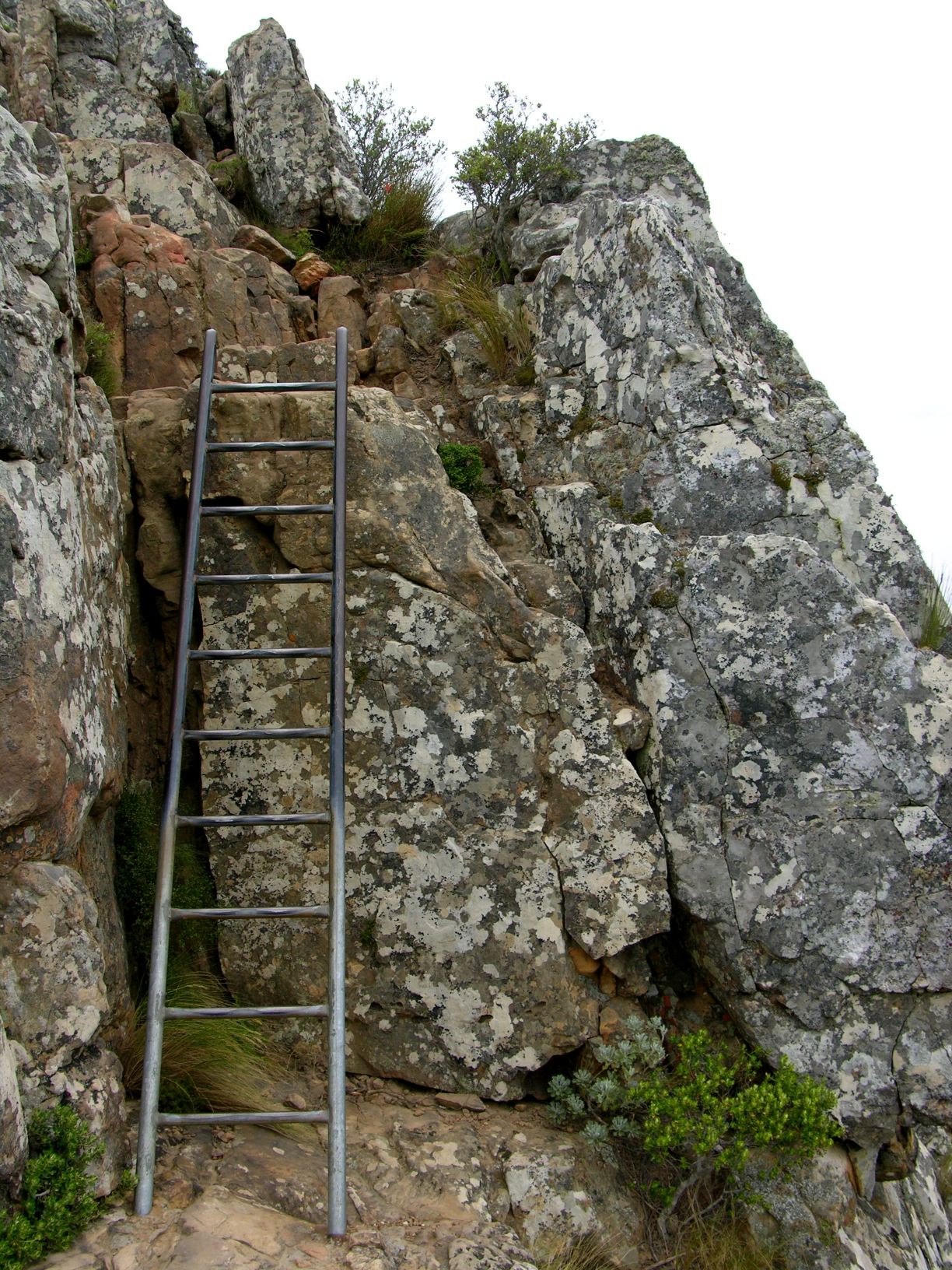
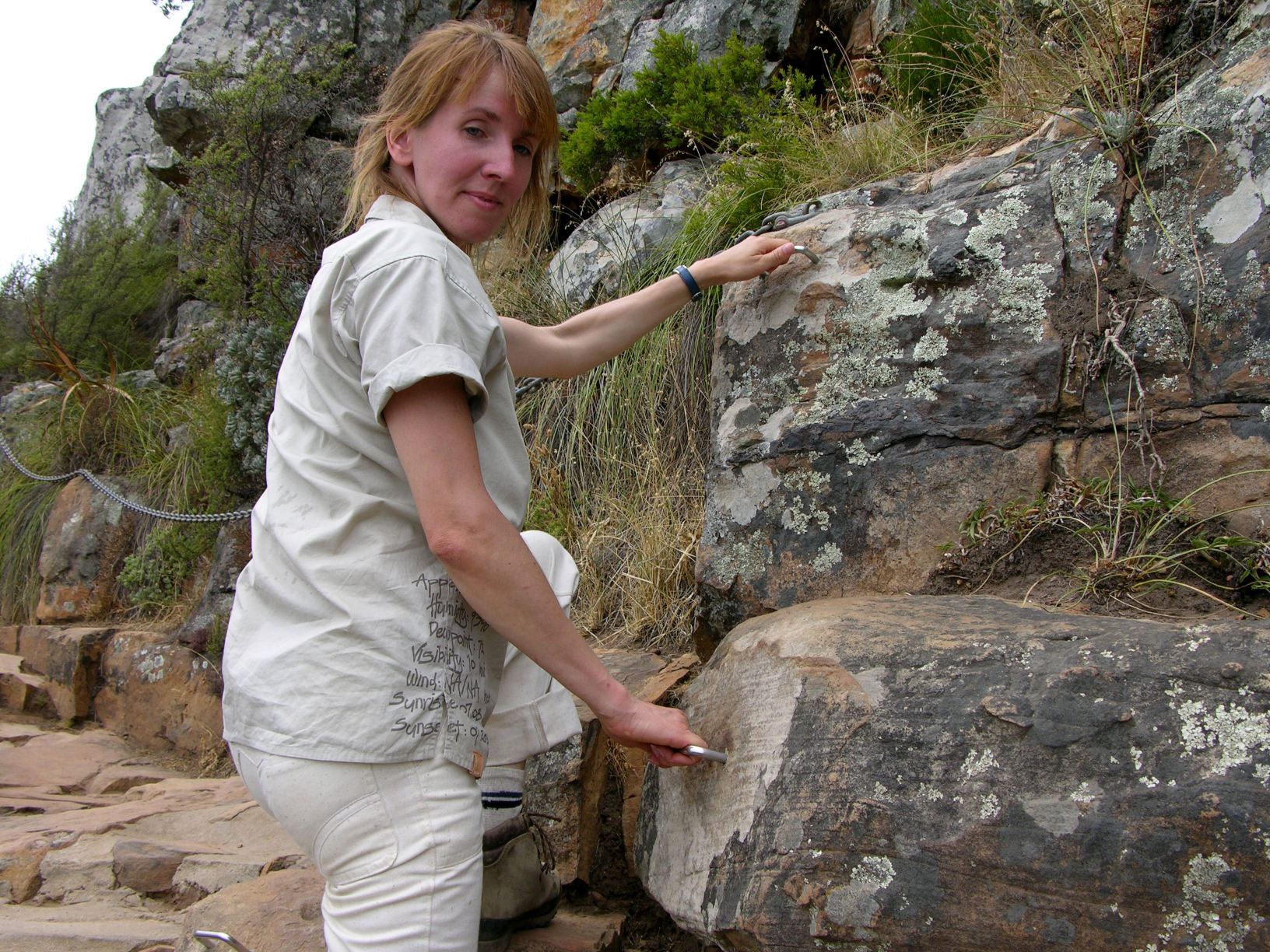
Cape Town's number-one attraction is Table Mountain. There are thousands like it here, of course, but this one happened to be beside a city. It became famous around the world and even made it into the sky as a constellation. Up on the summit there's a national park. What you go there to see are the plants and birds. There are 2,285 species of plants on the mountain, compared with 1,492 in all of England. There are a few paths for visitors, and you're supposed to stay on them. You can get up the mountain for 110 rand by cable car. Or you can walk. Despite the apparently sheer face, hundreds of tracks lead to the top. Most require only the stamina to climb a kilometre in the heat. It's worth noting that you can eat and buy water at the top, but it costs three times as much as in town. There's no road to the summit. From the north you can get fairly high along a gravel road to a little reservoir. It's still a fair walk from there and easier just to go on foot from the start.
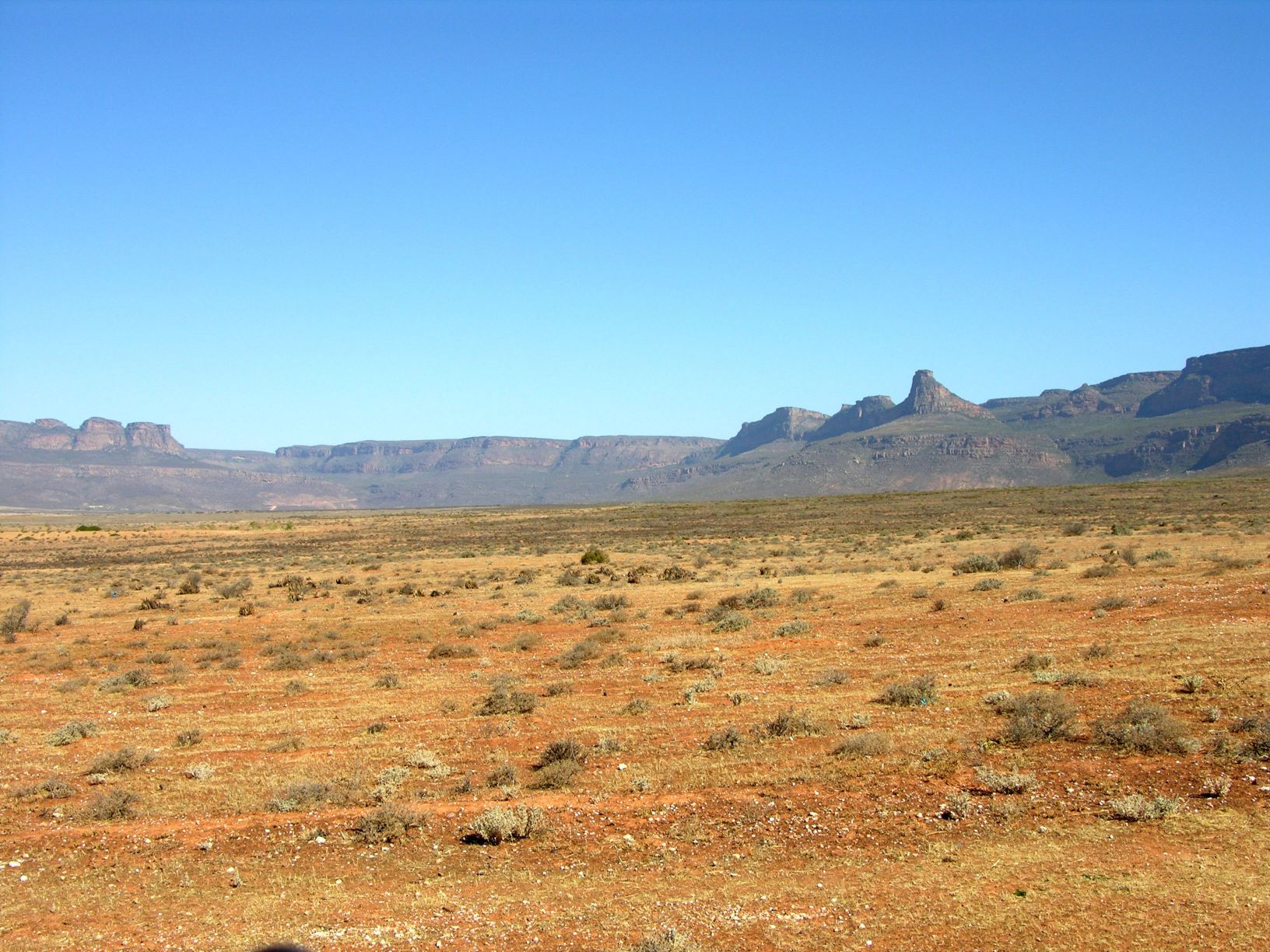
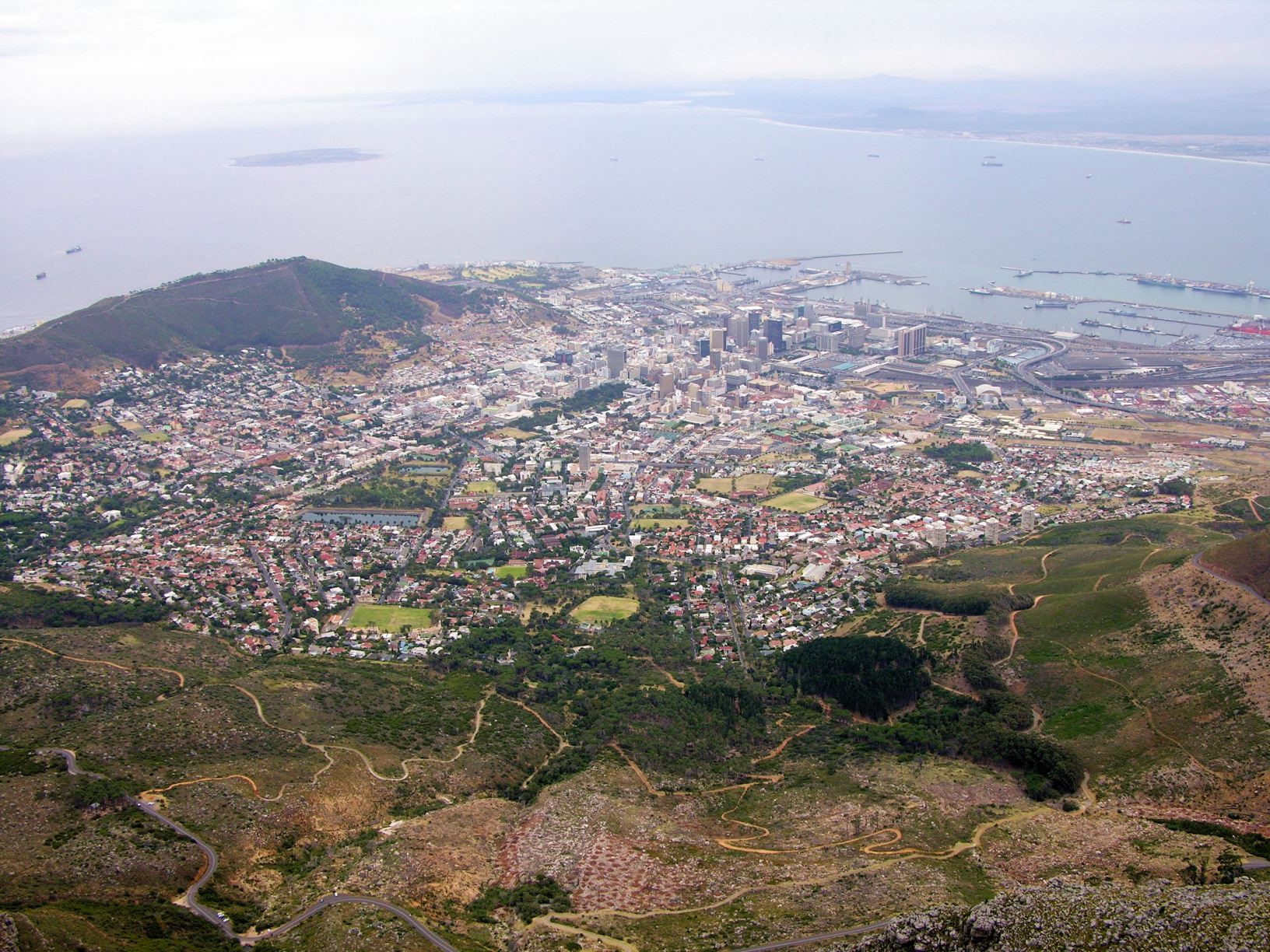
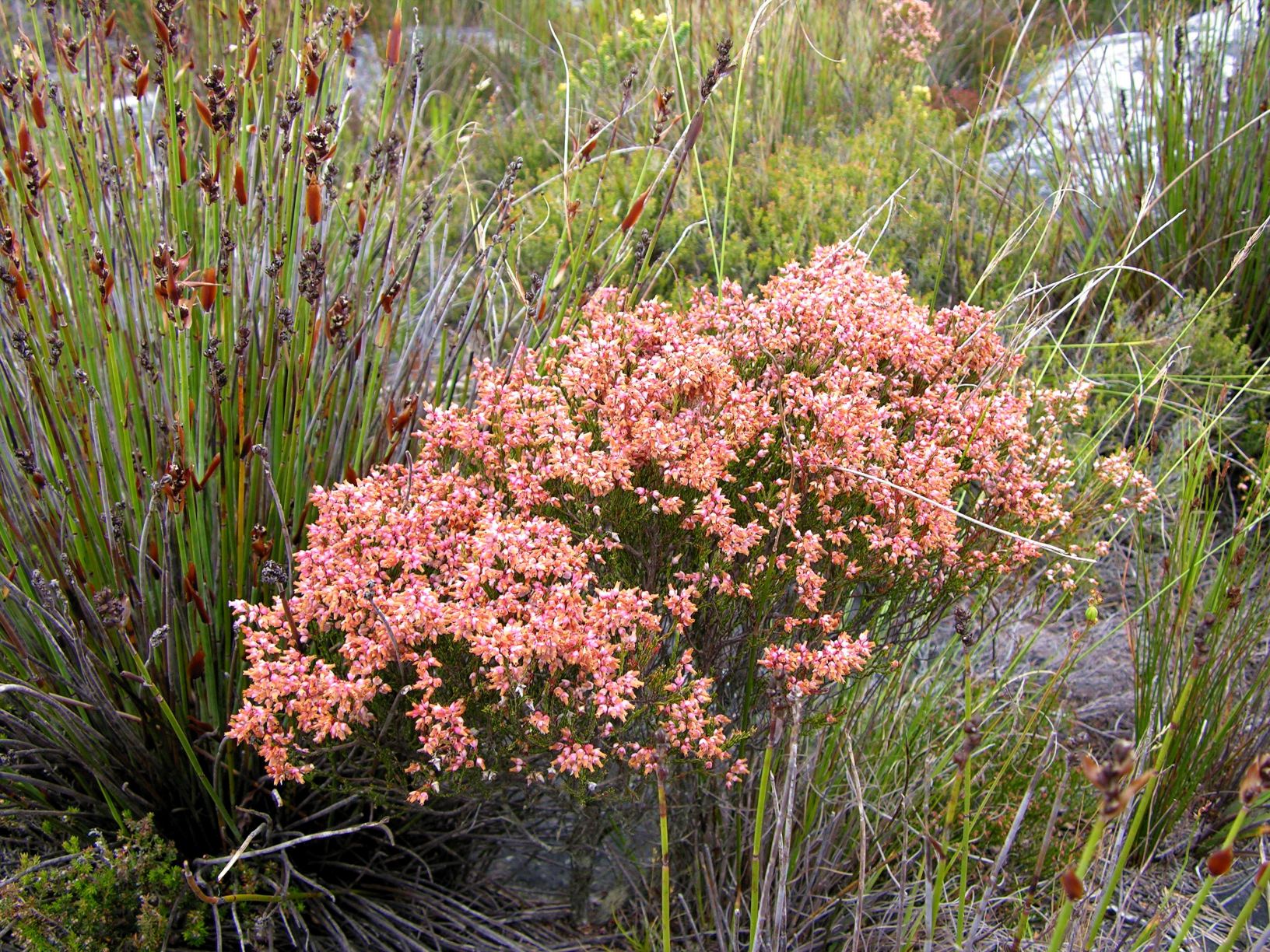
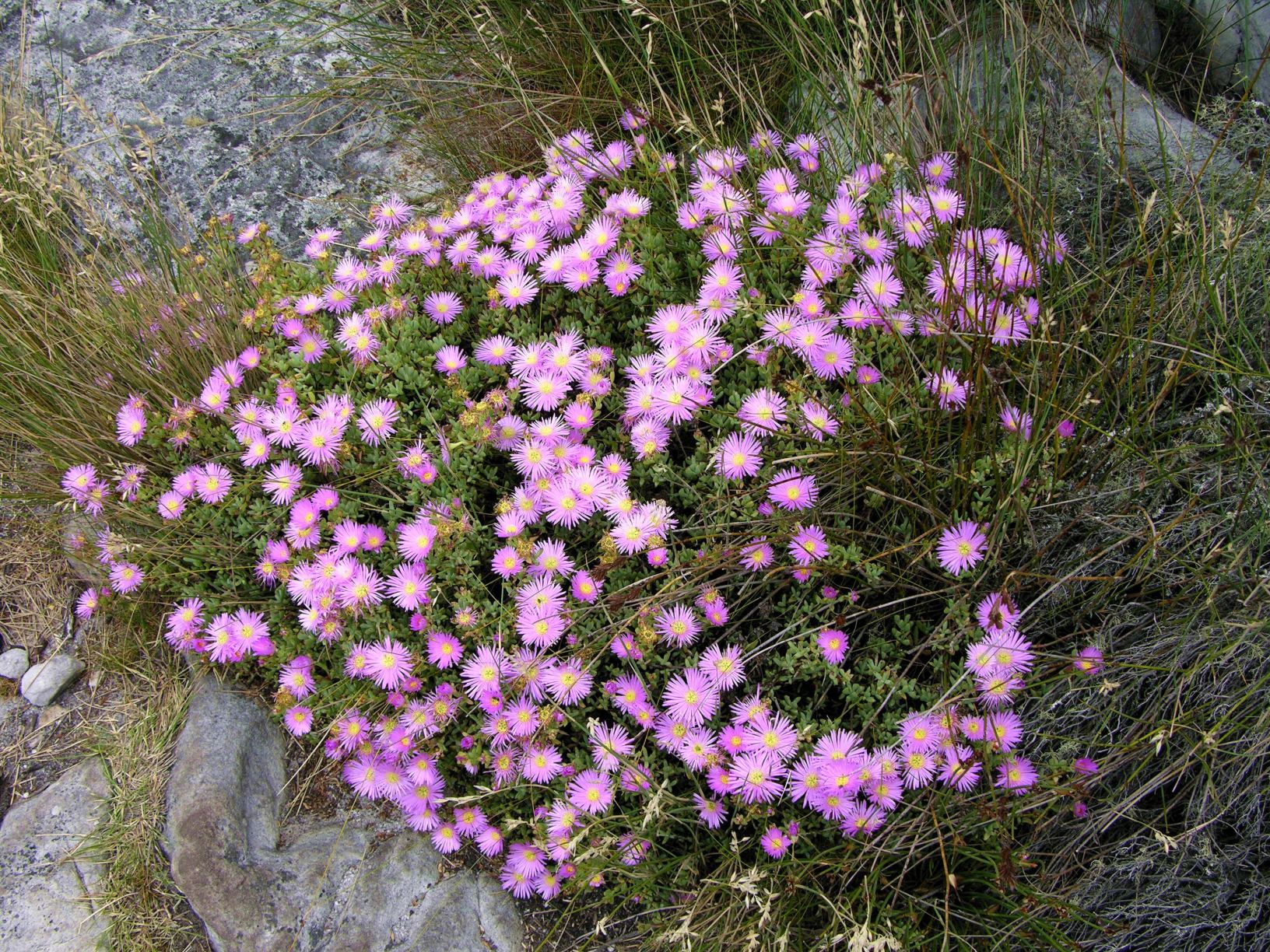
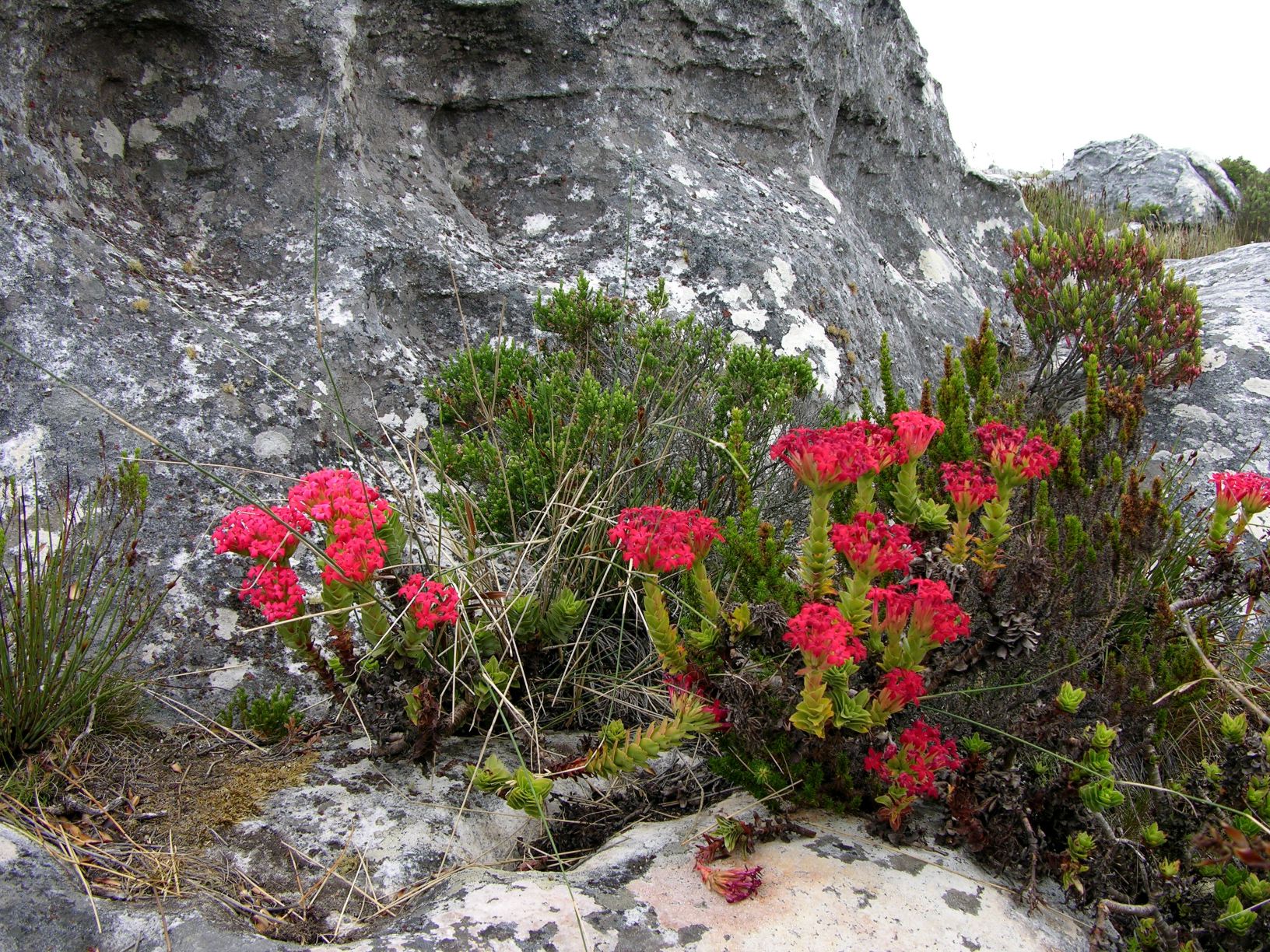
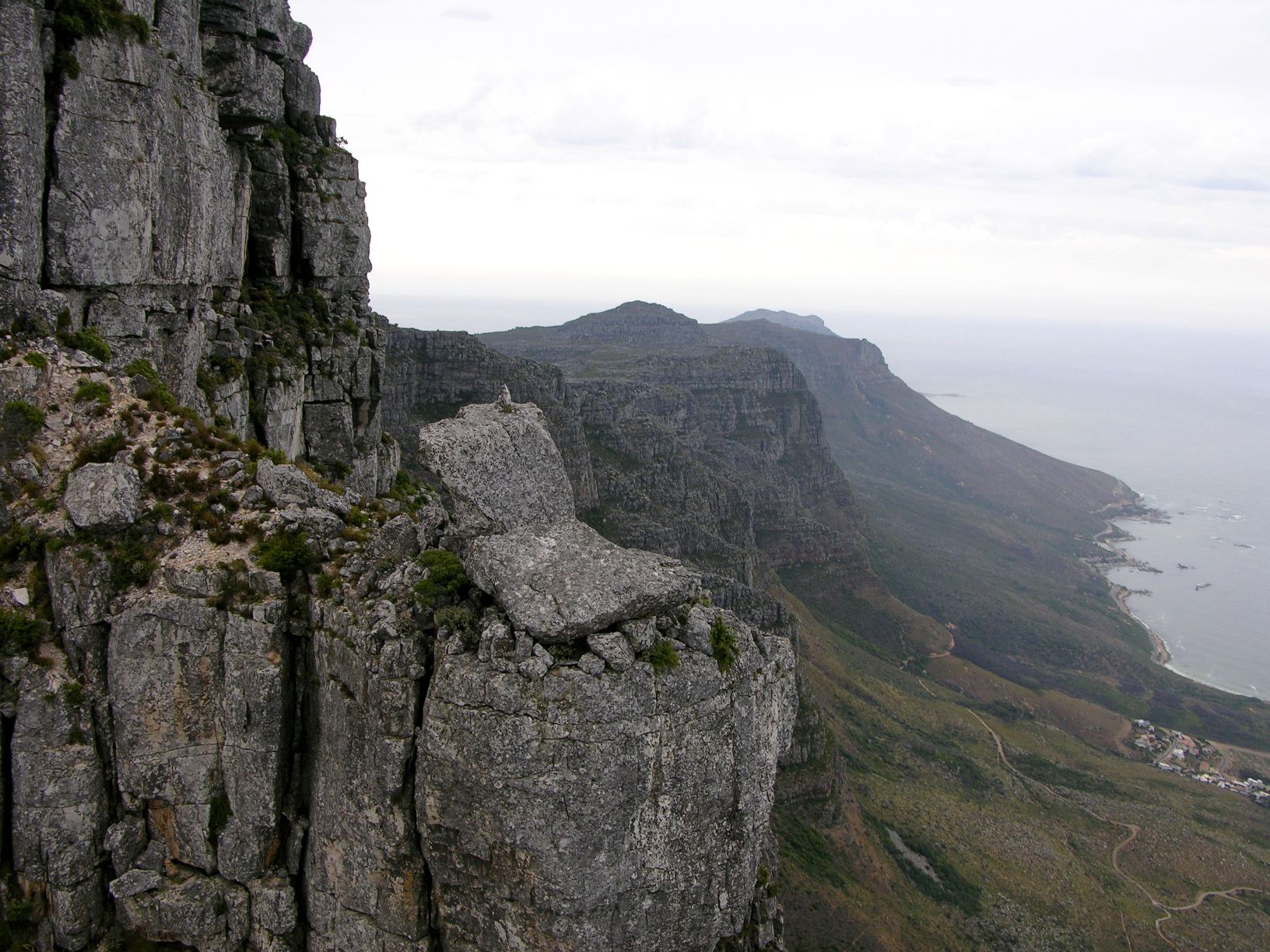
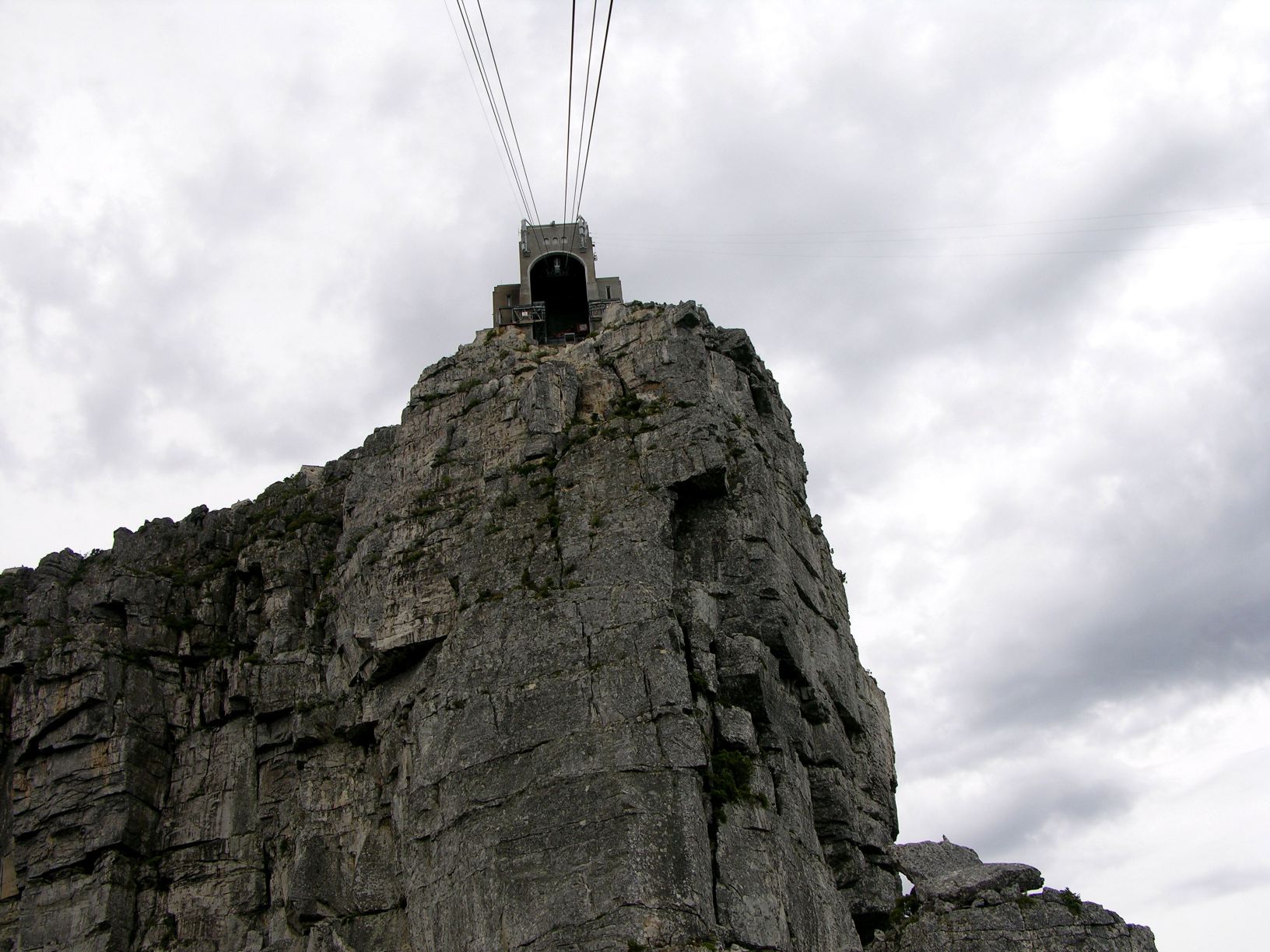
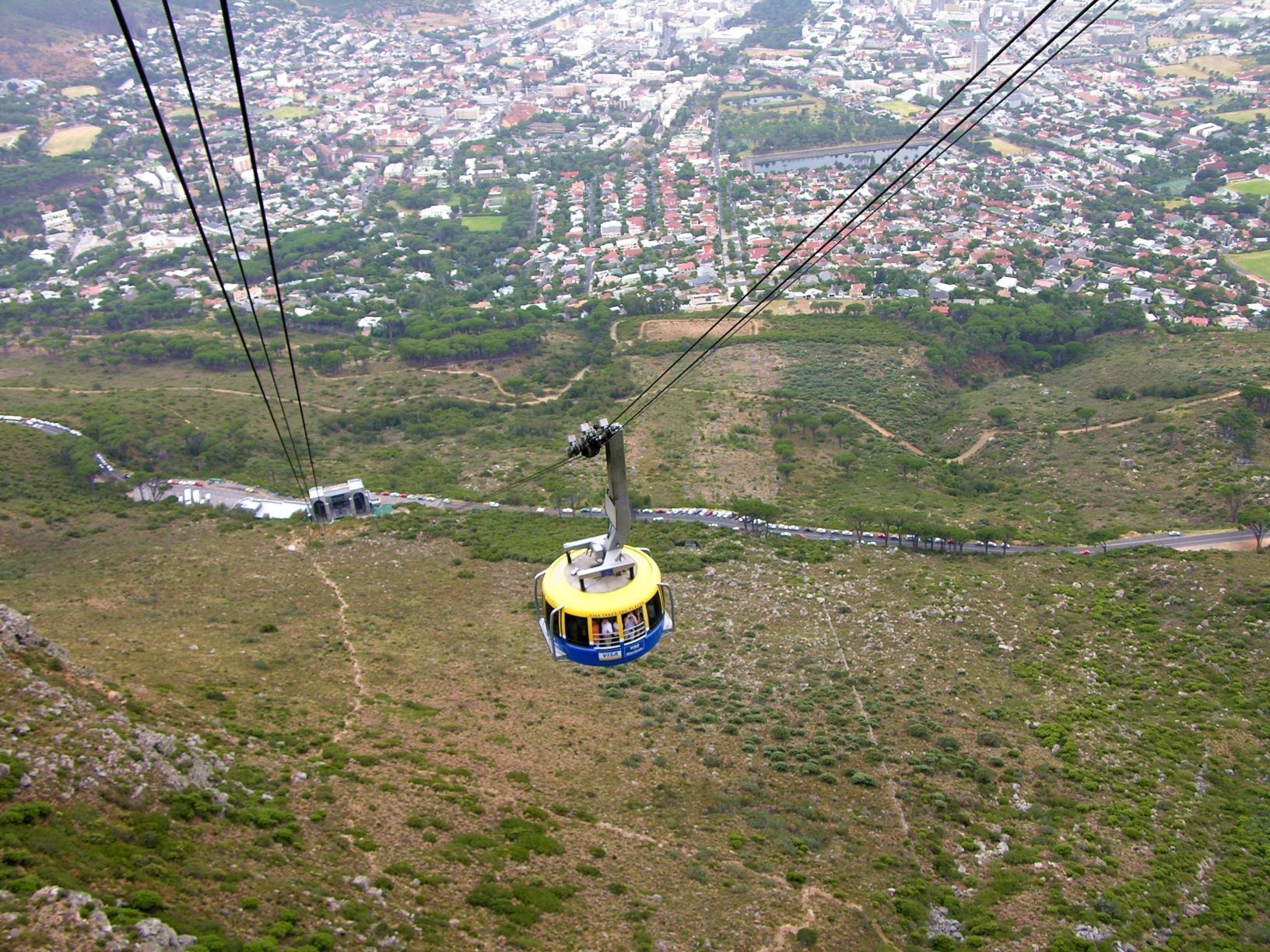
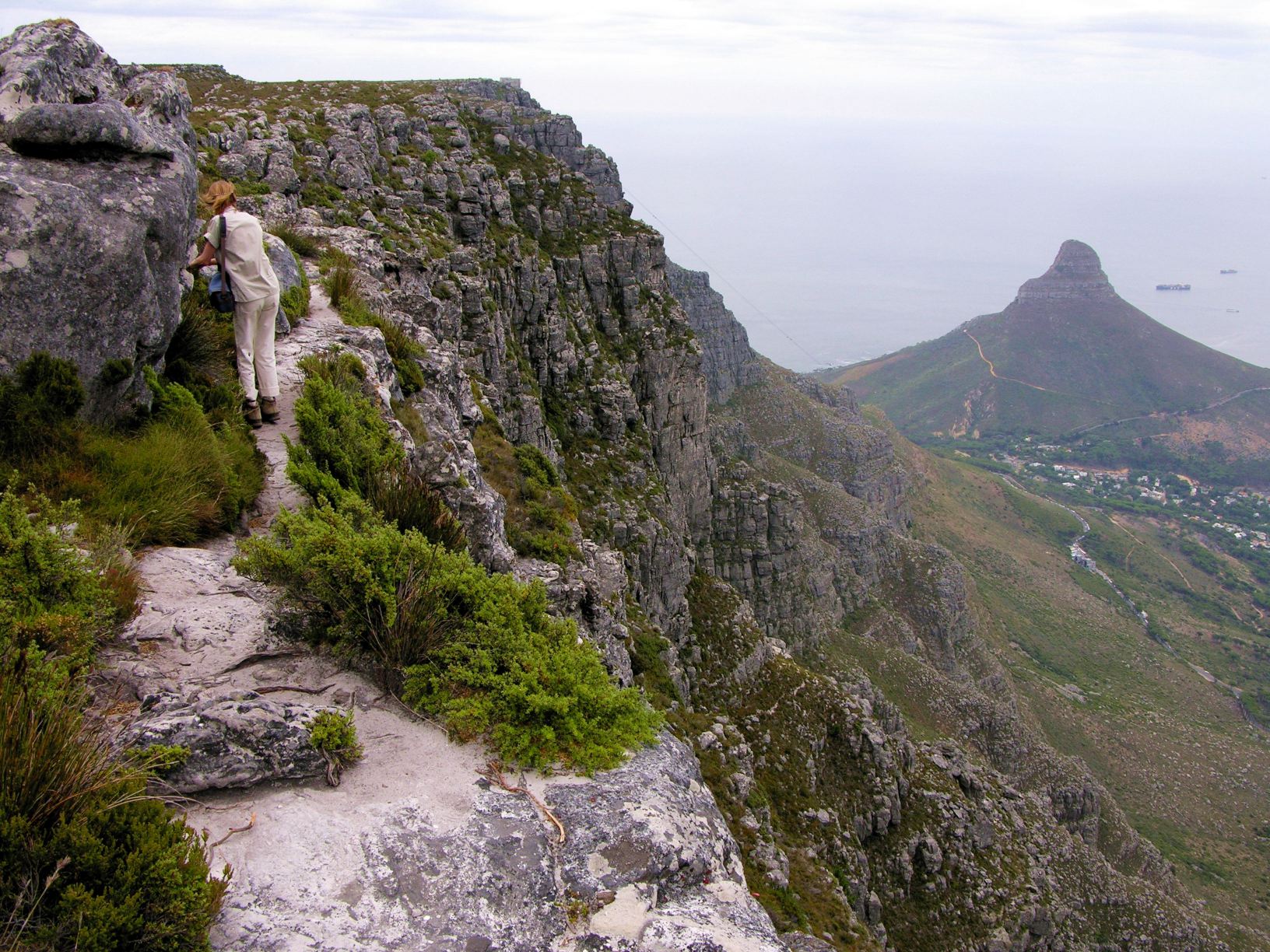
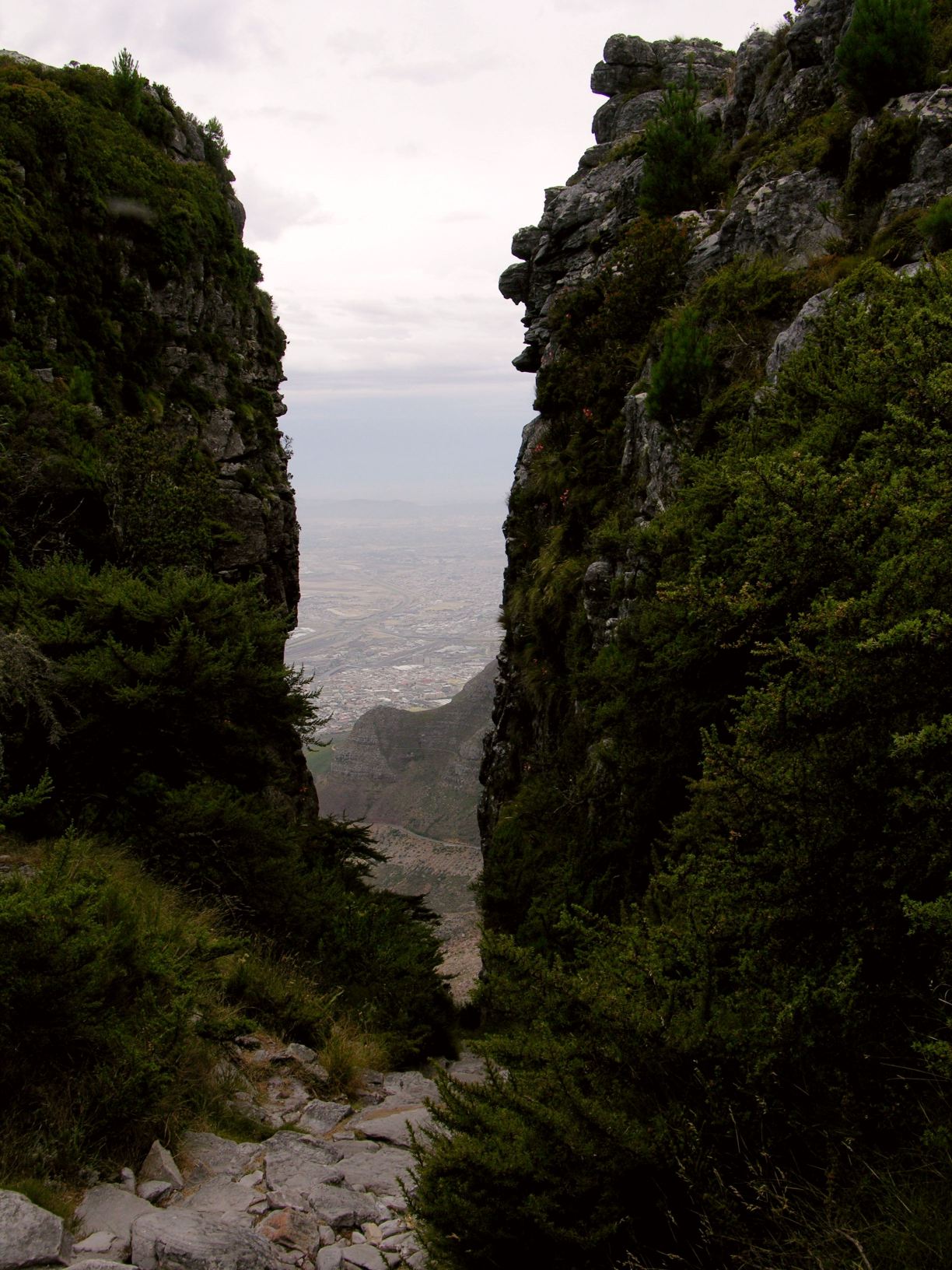
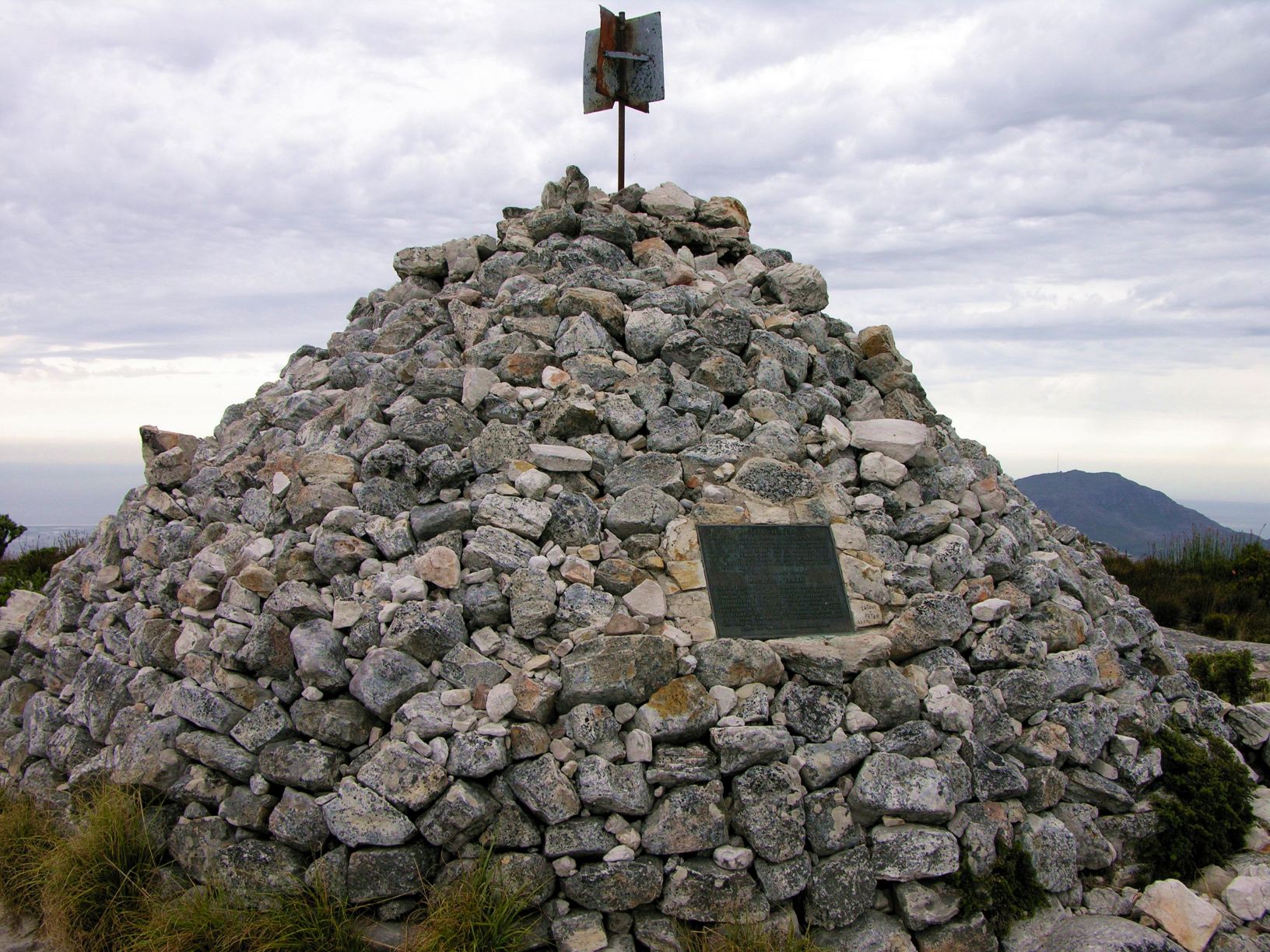
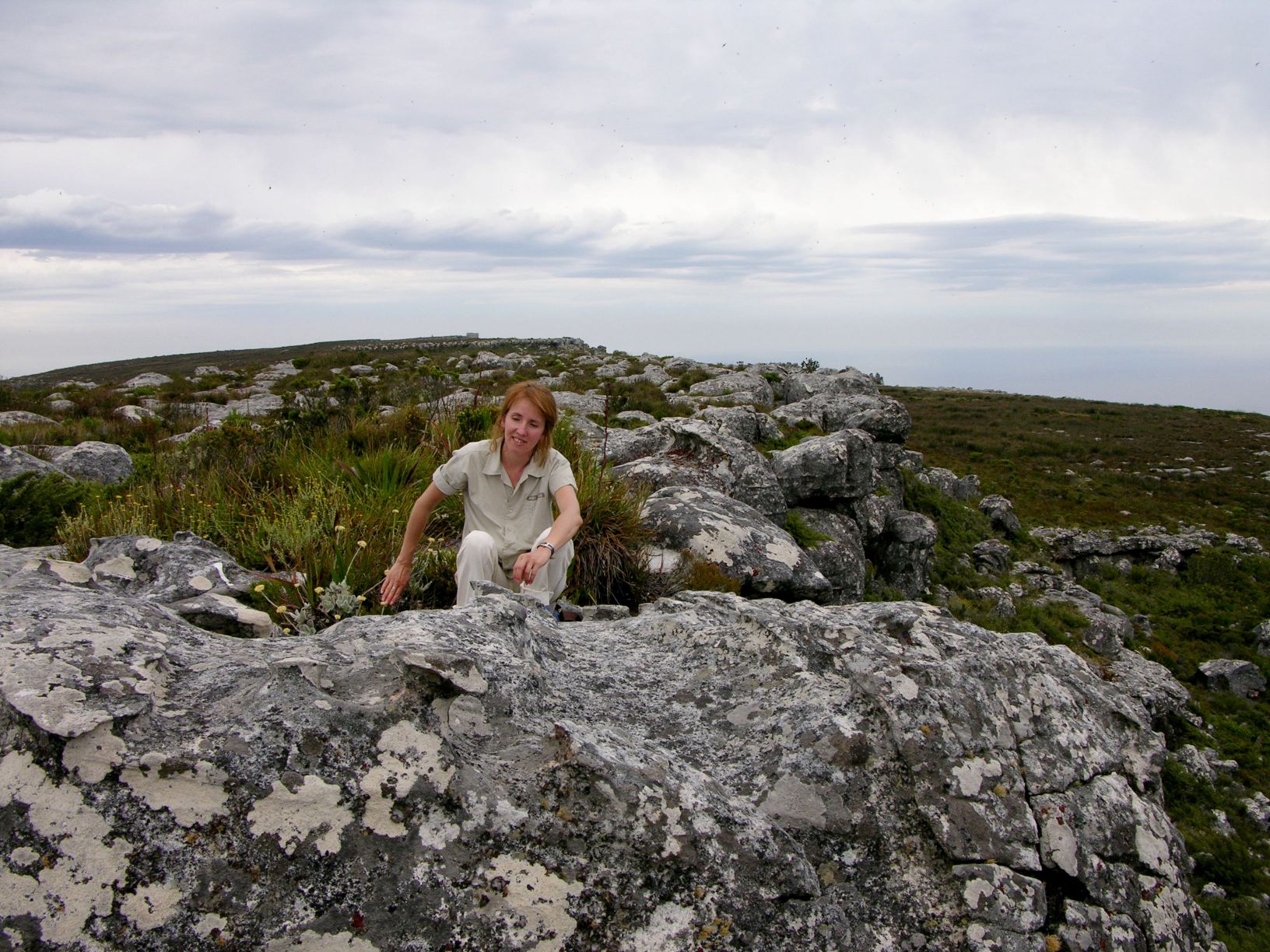
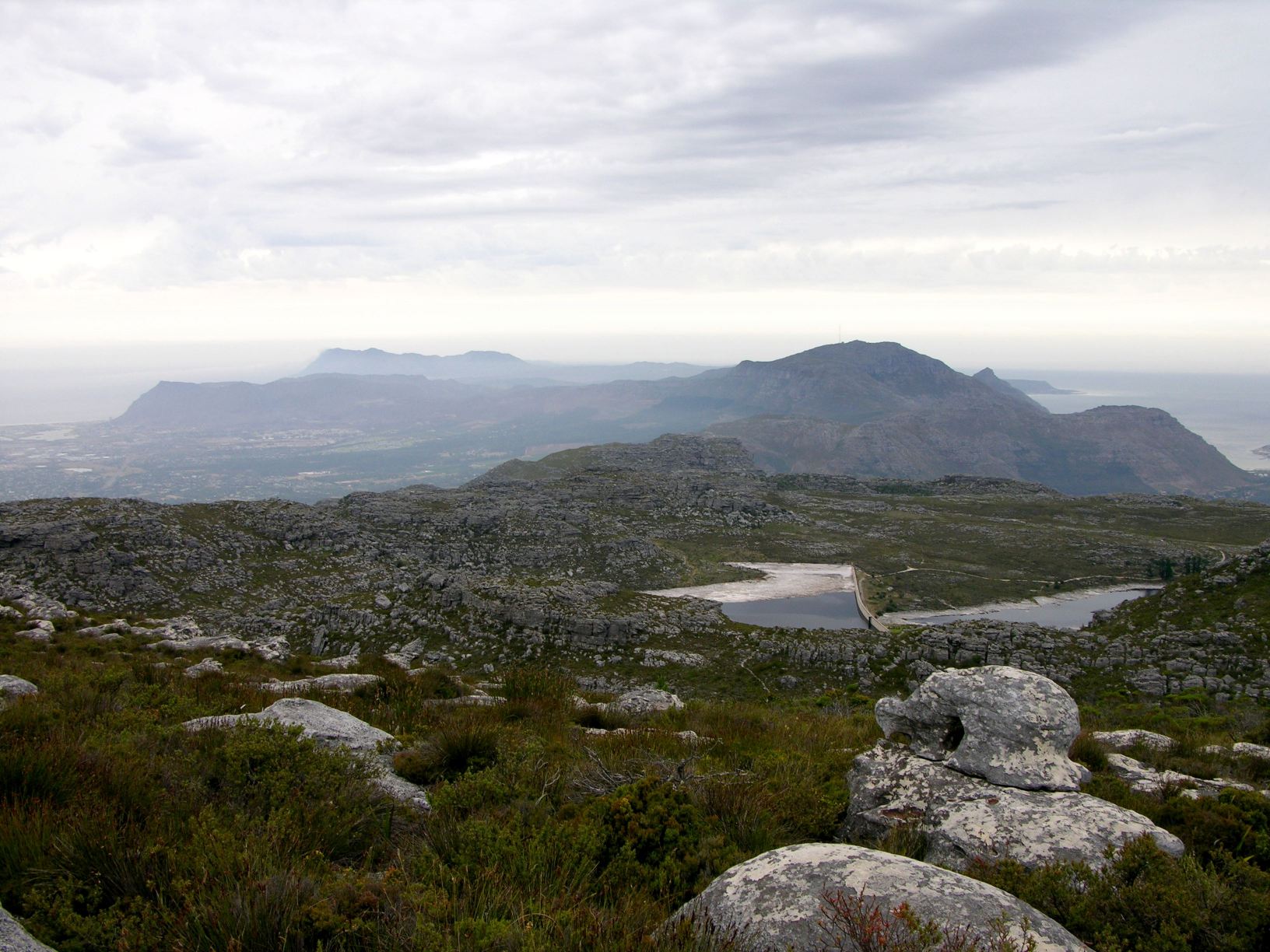
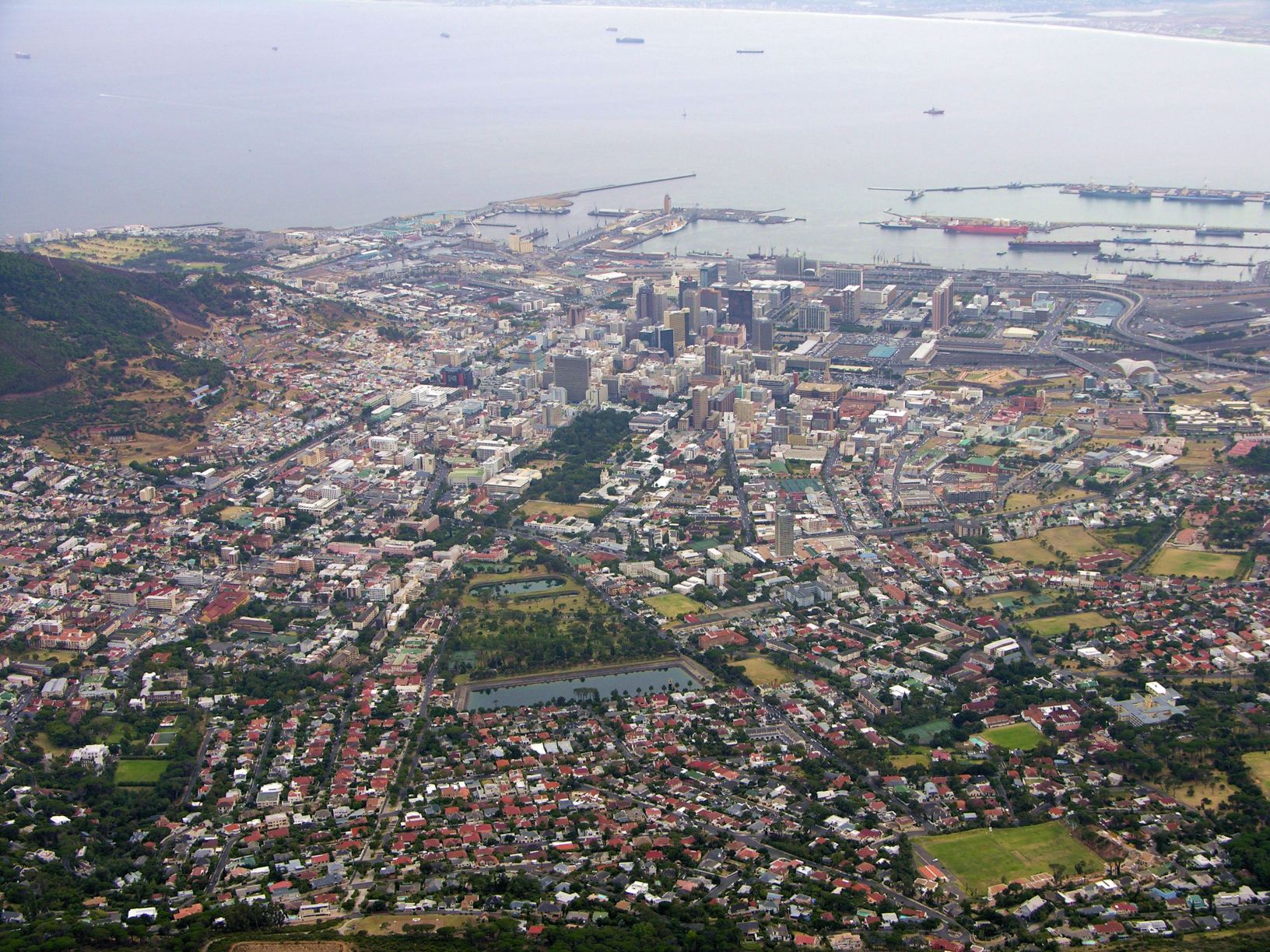
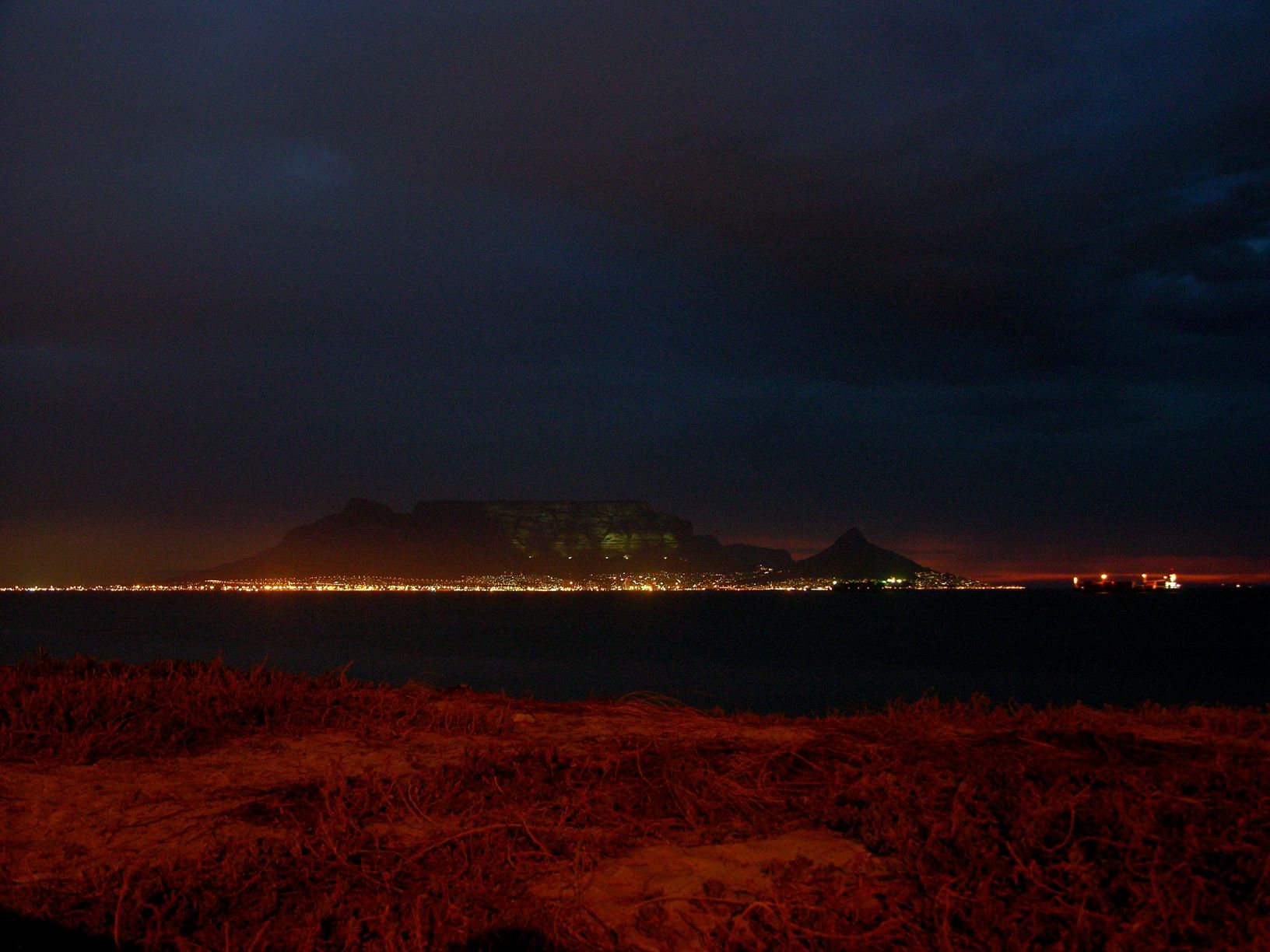
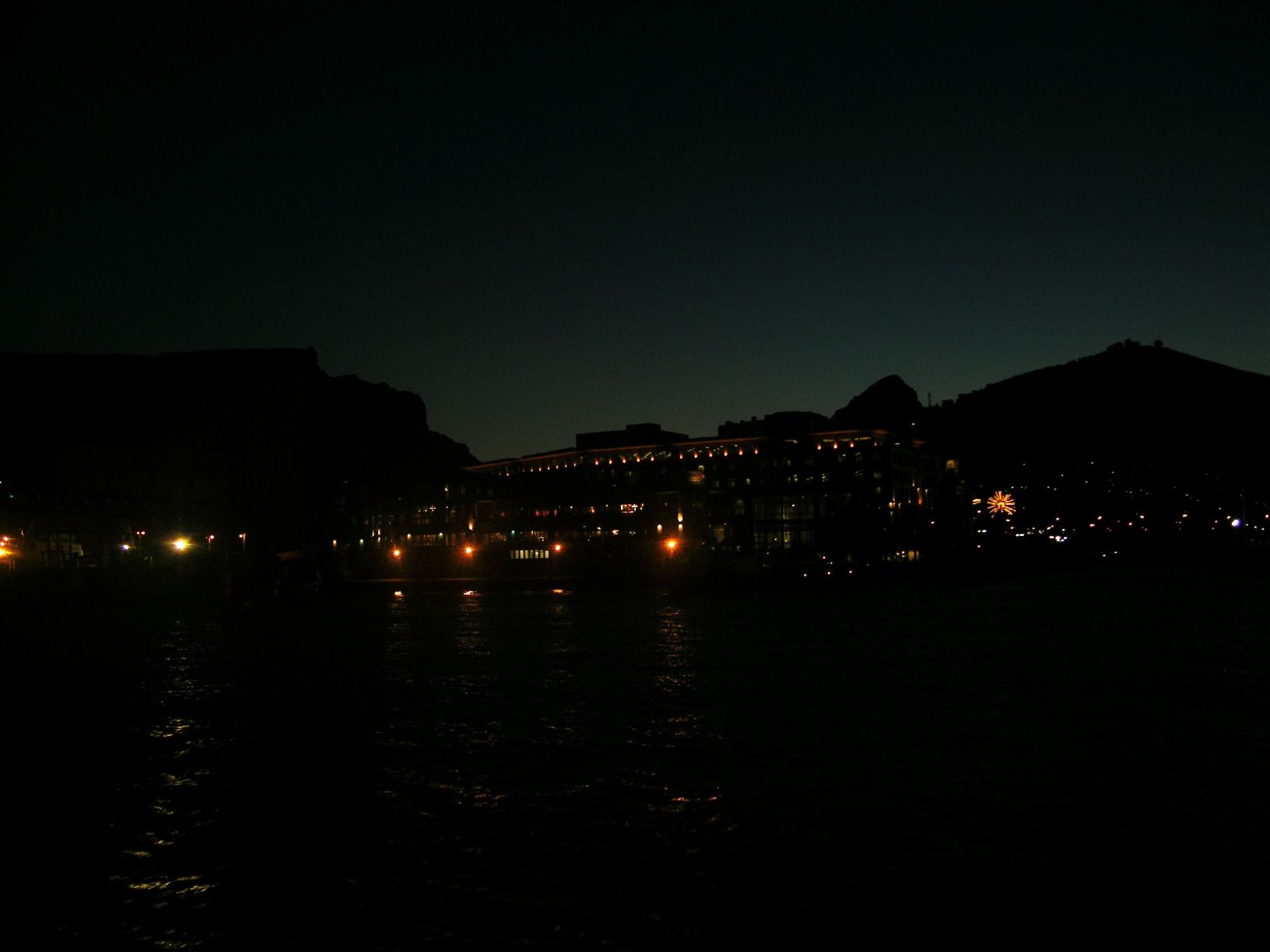
At night the apparently sheer face of the mountain is floodlit. I doubt there's a grander subject for a lighting technician anywhere in the world.
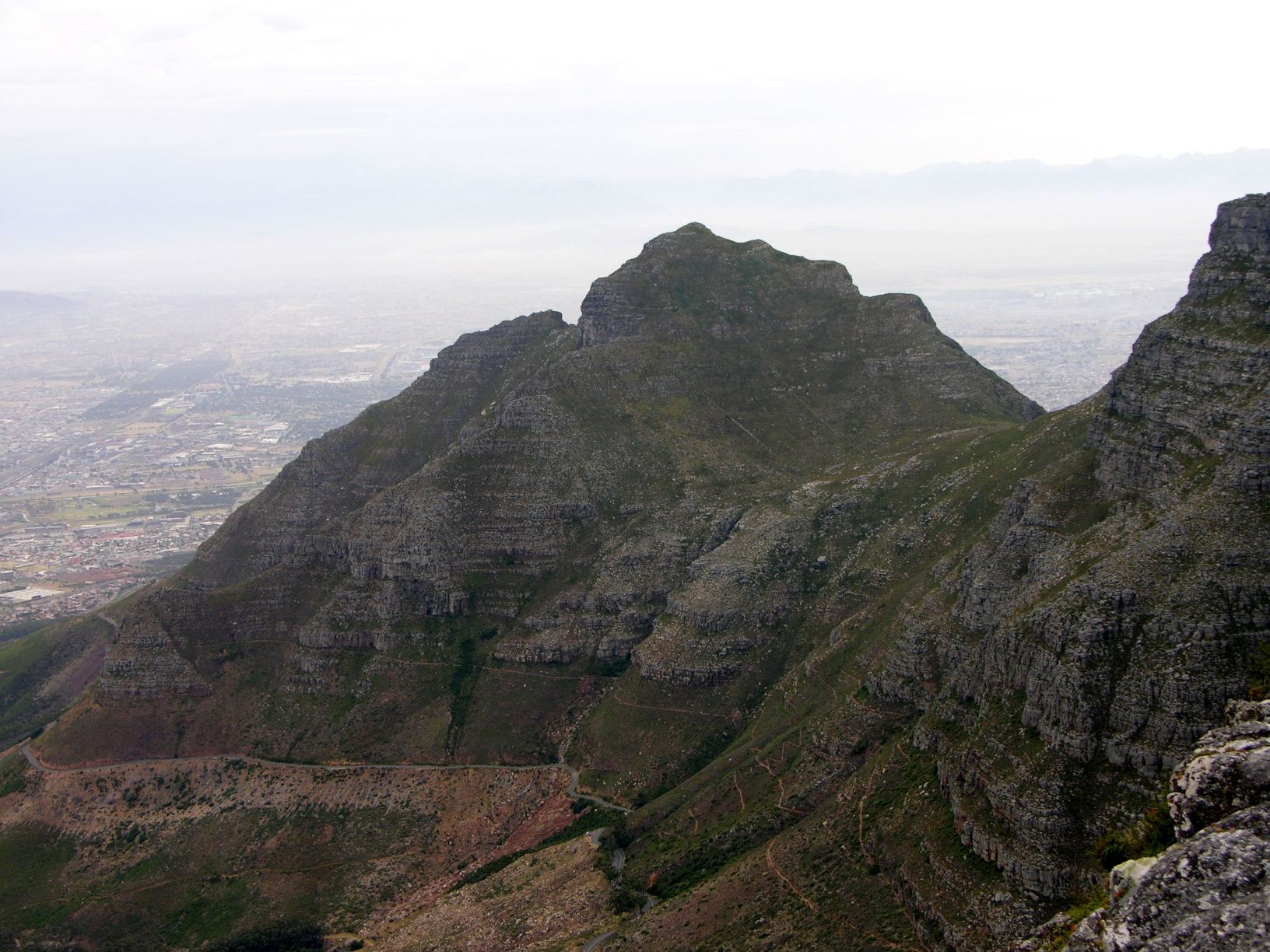
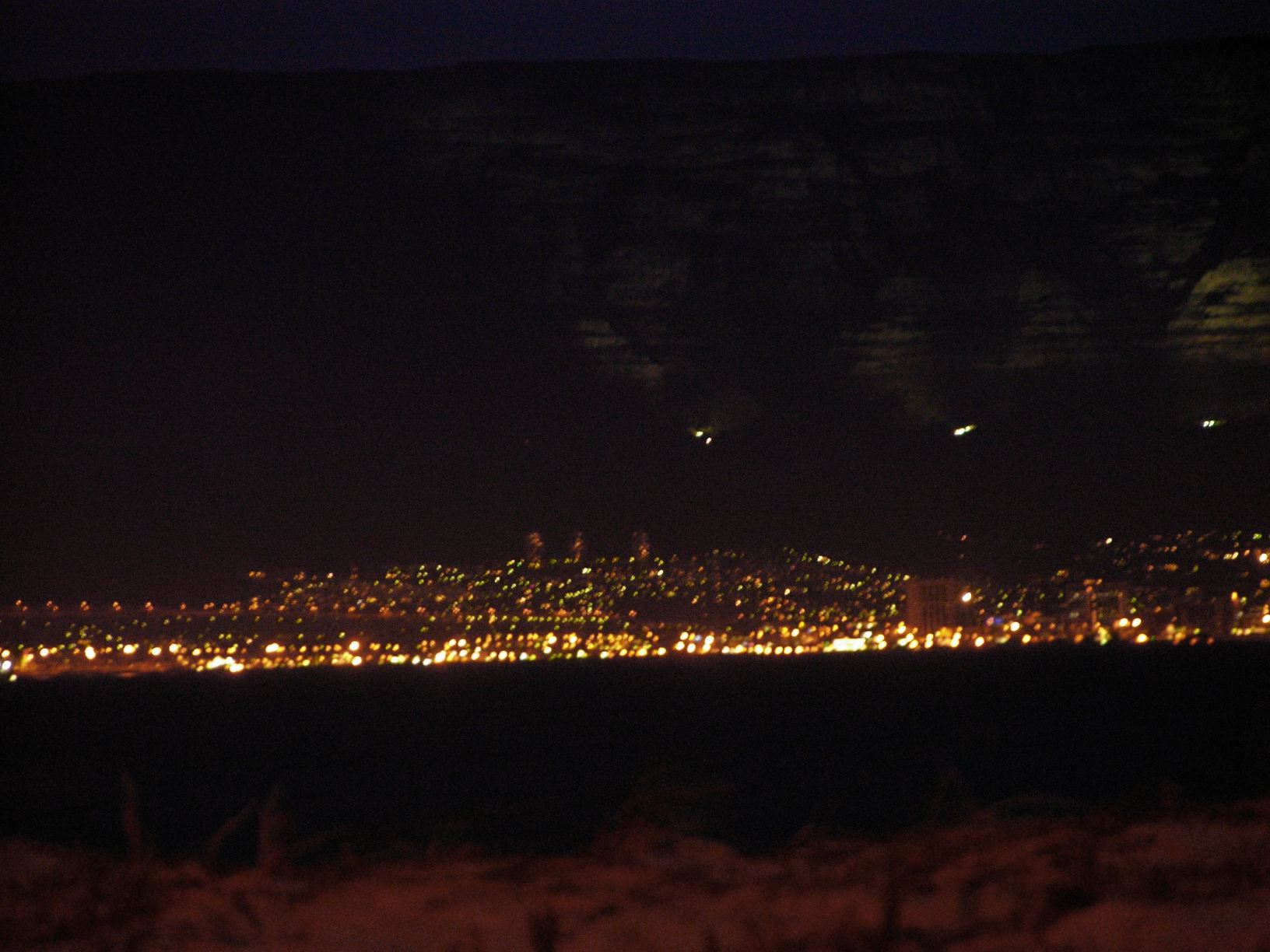
The best way to look at the mountain is from a distance, the way sailors saw it coming into port, when they gave it the name. You can see that classic view without going out to sea. All you need do is drive to the other side of Table Bay. Especially beautiful at sunset.
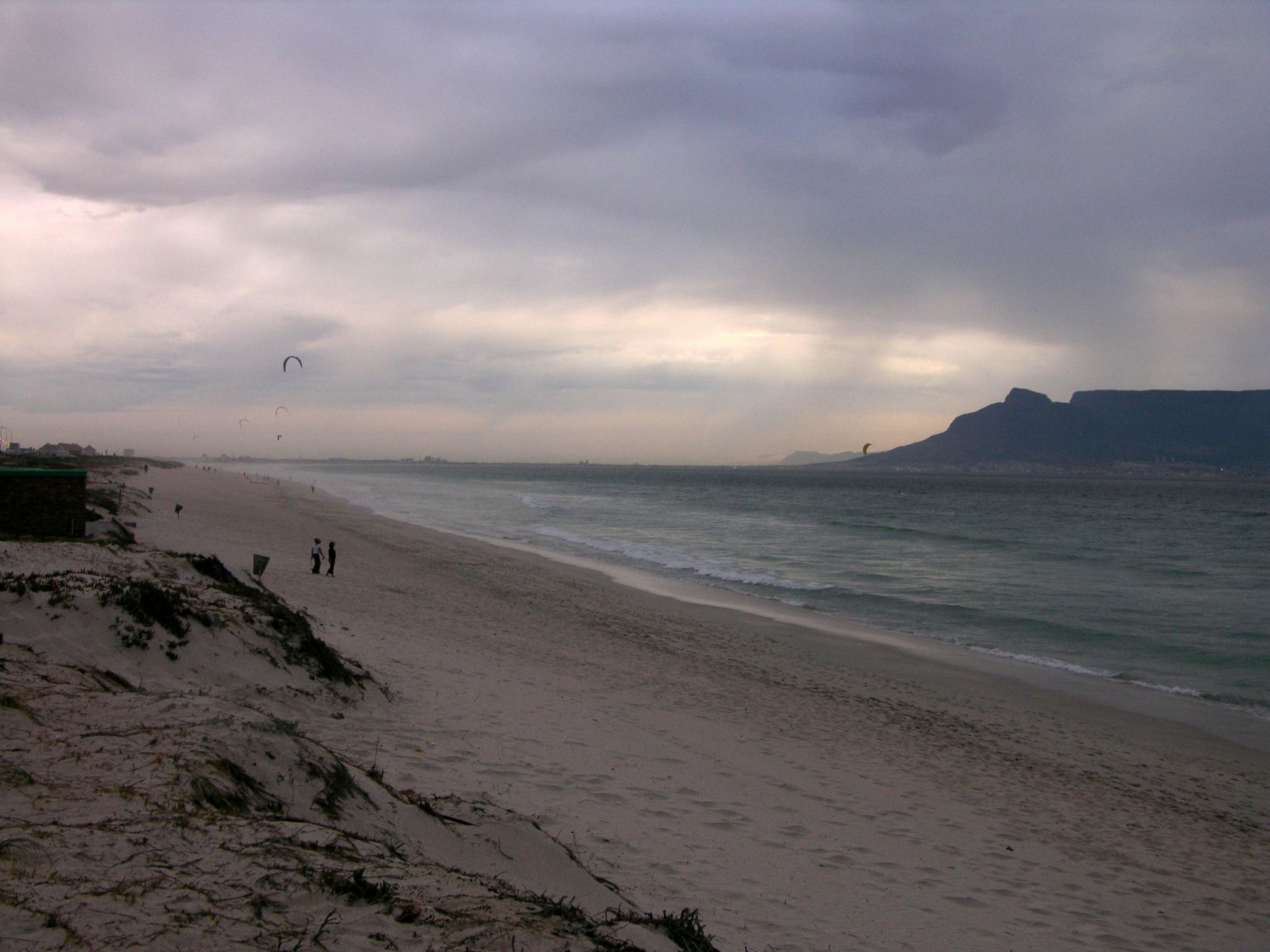
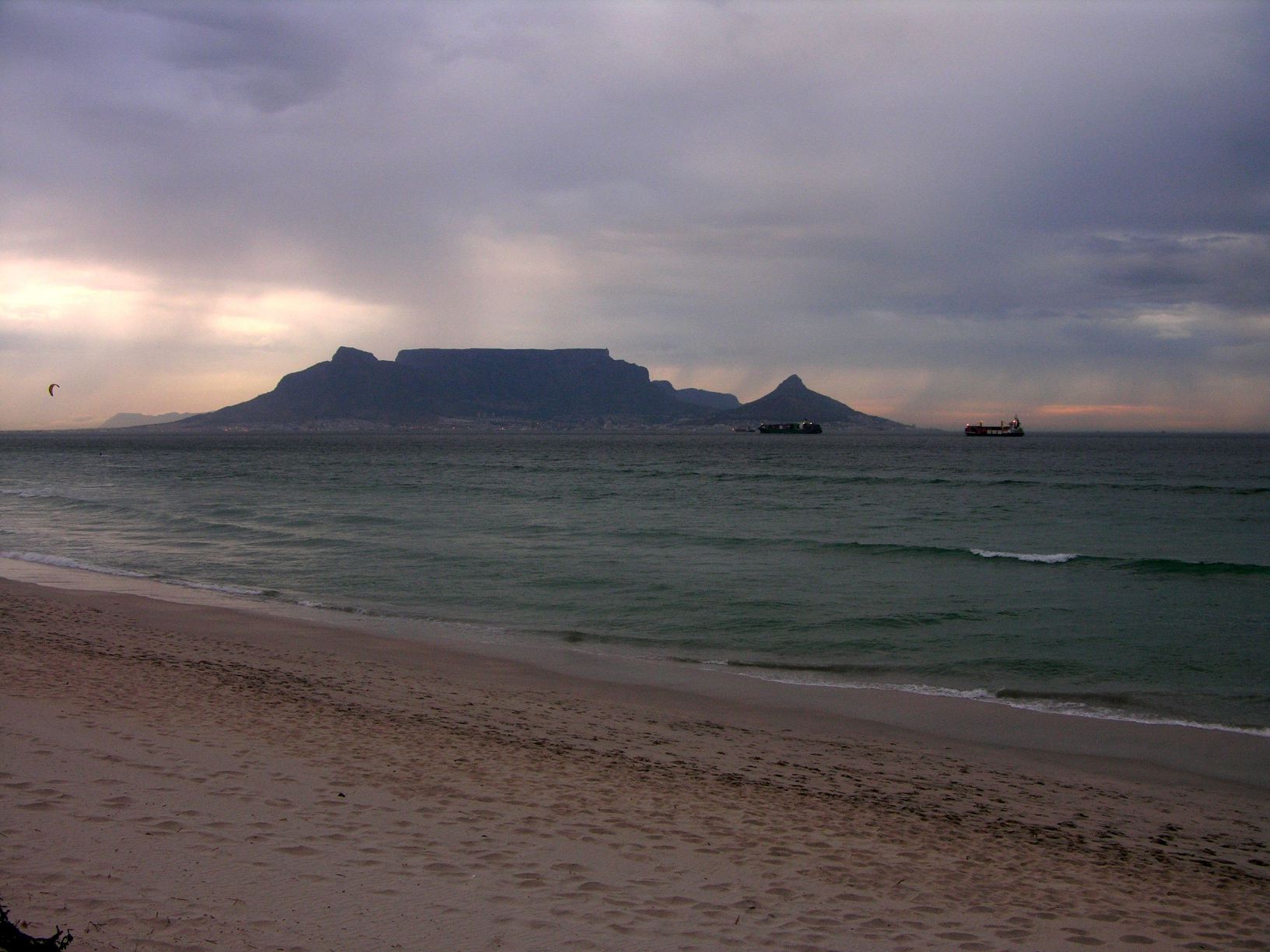
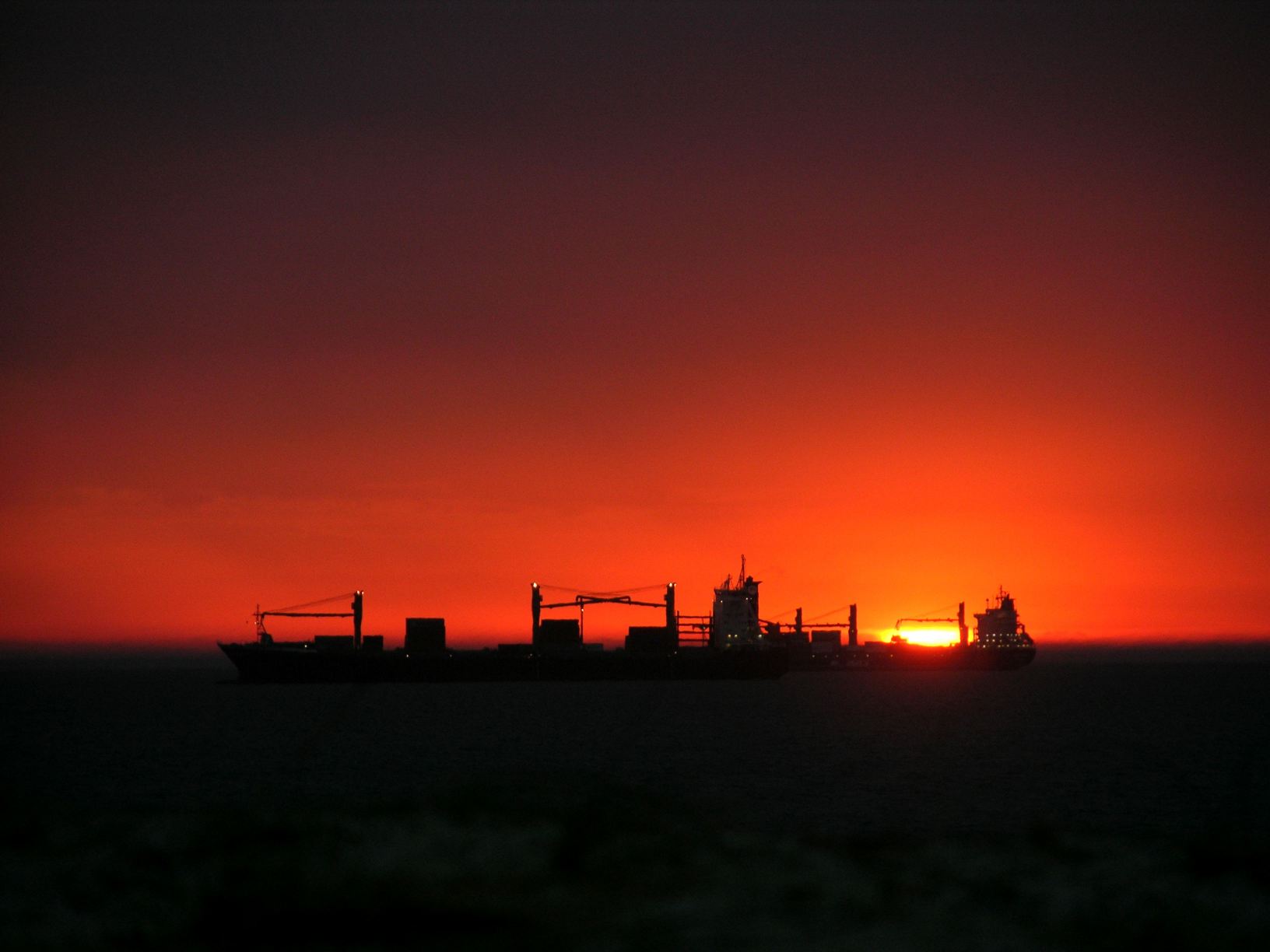
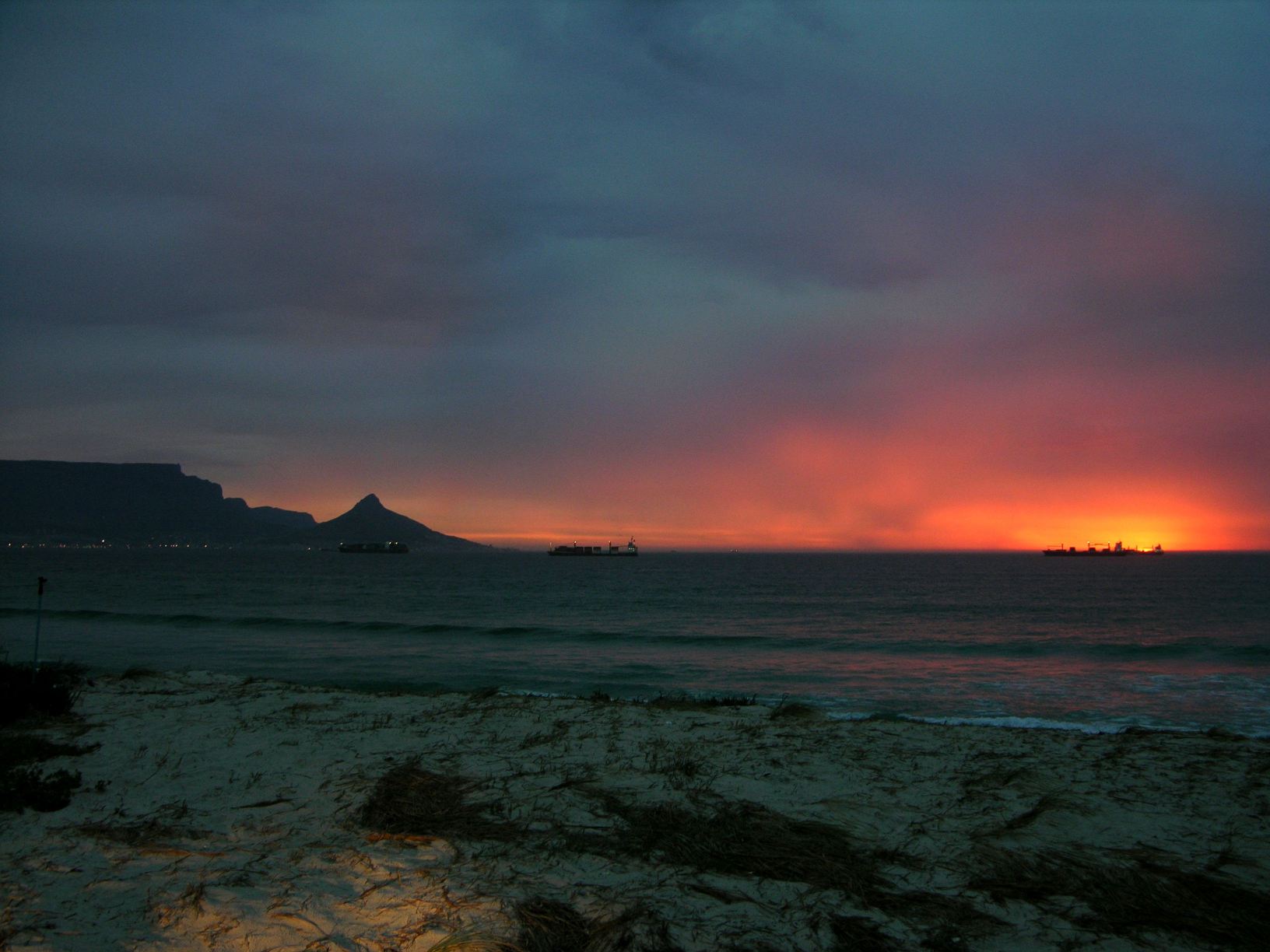
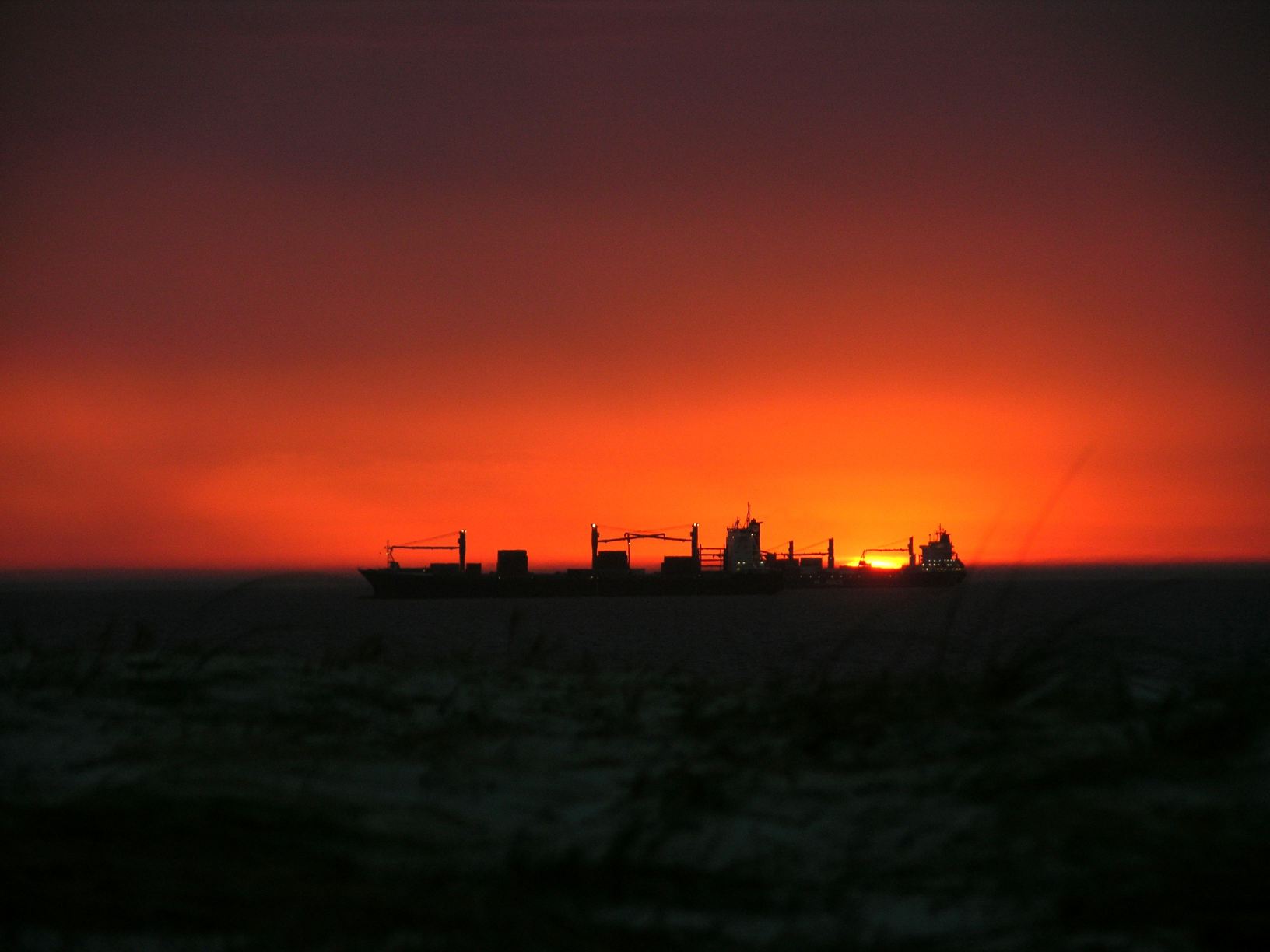
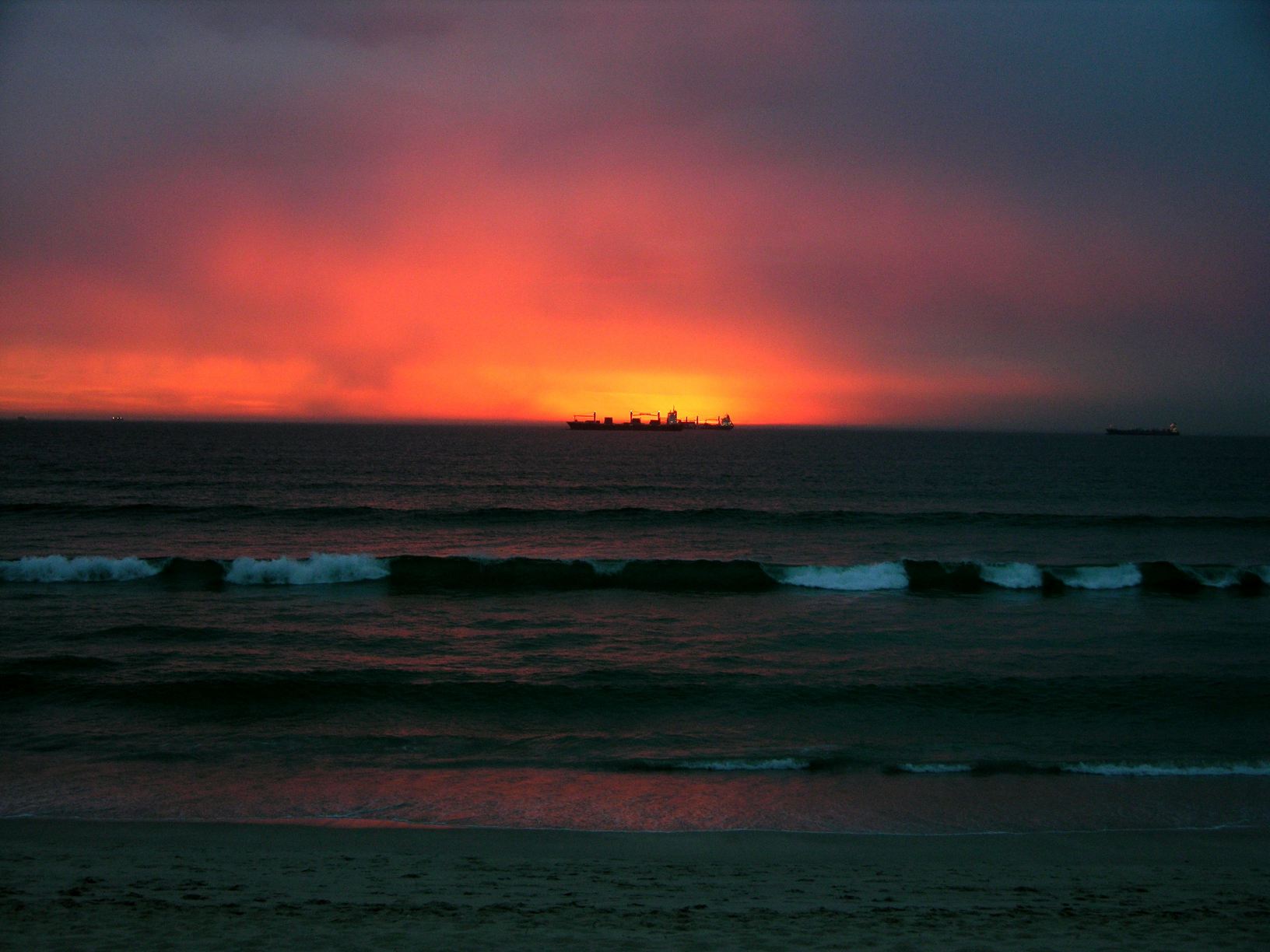
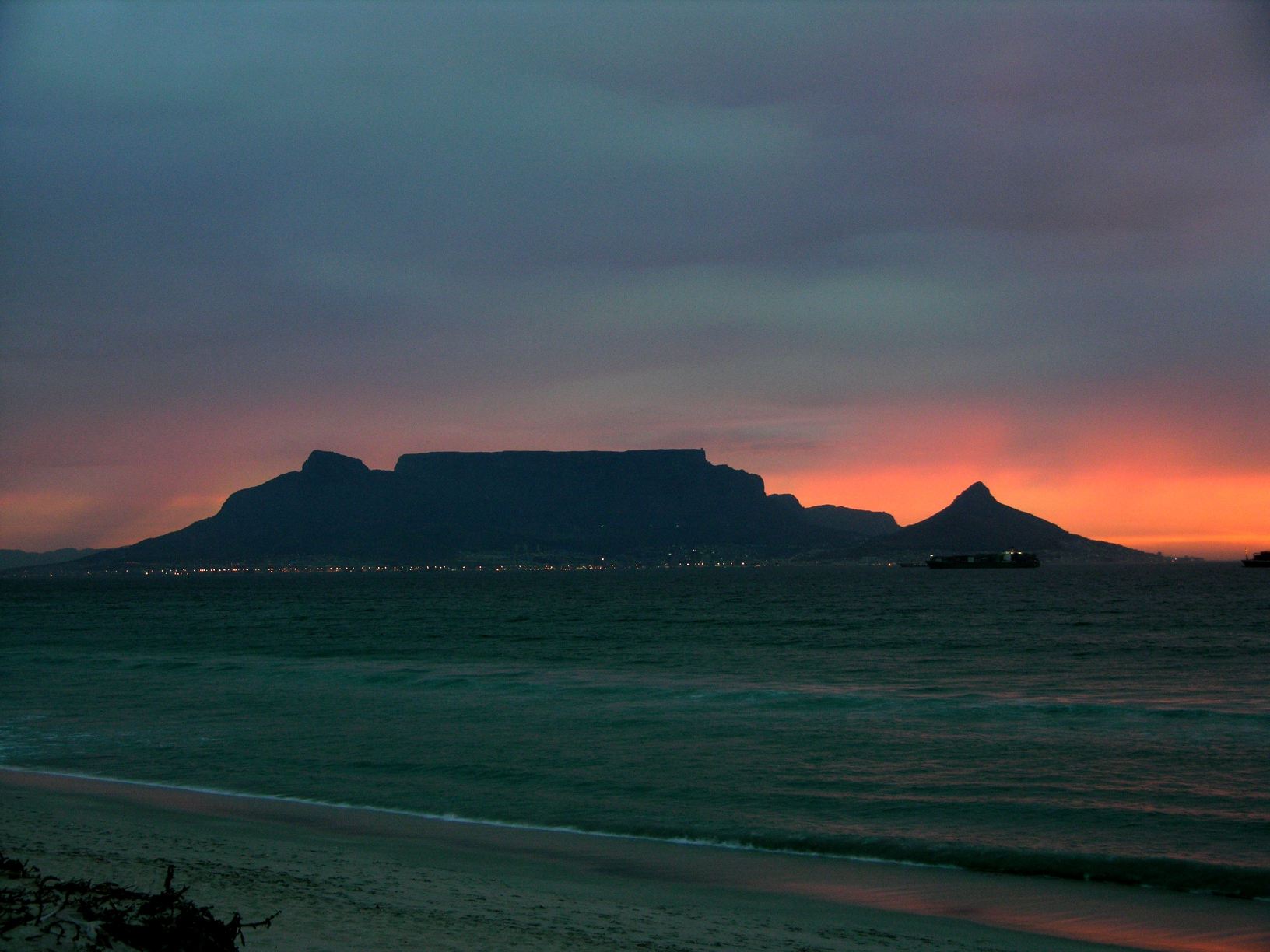
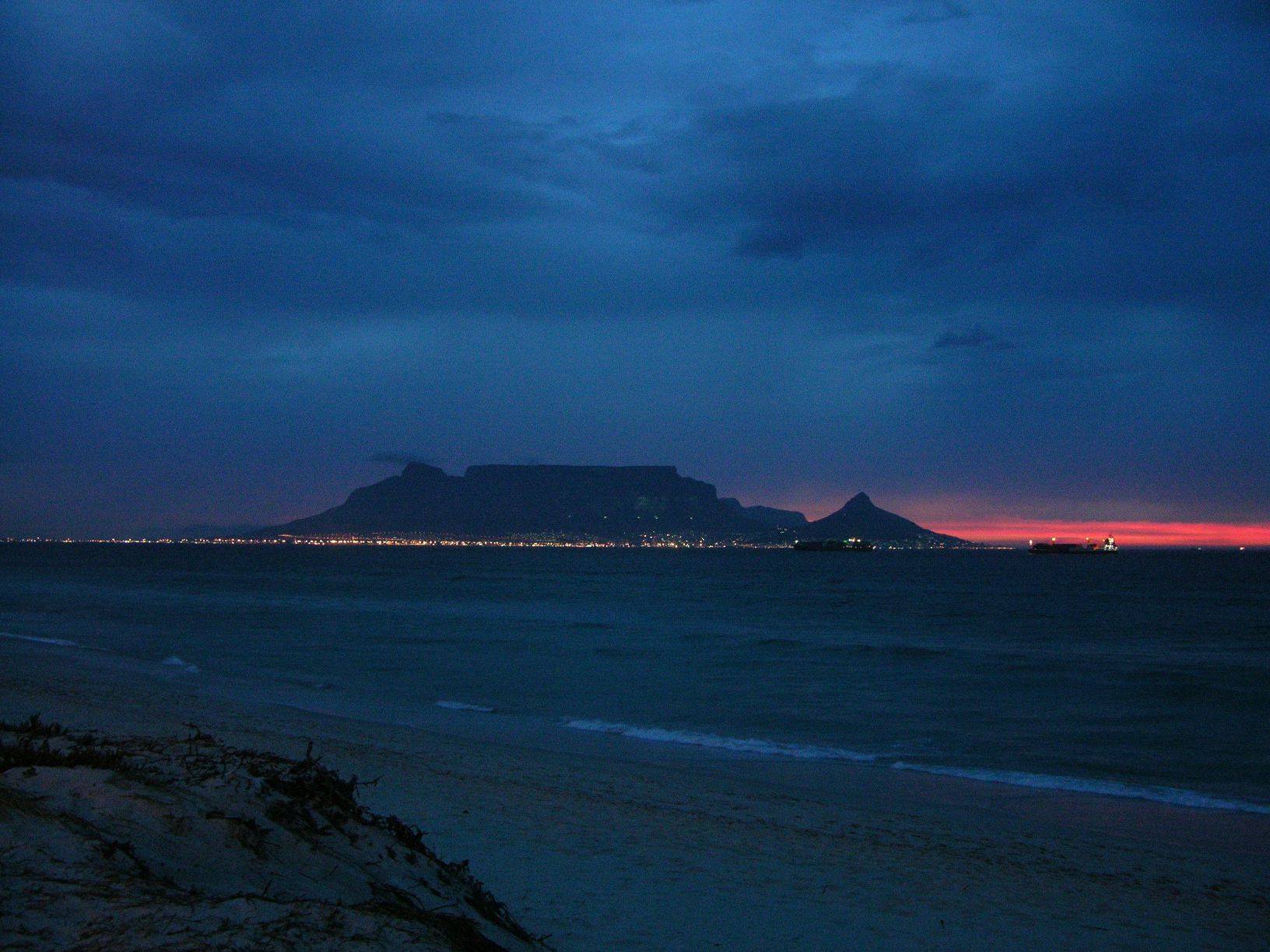
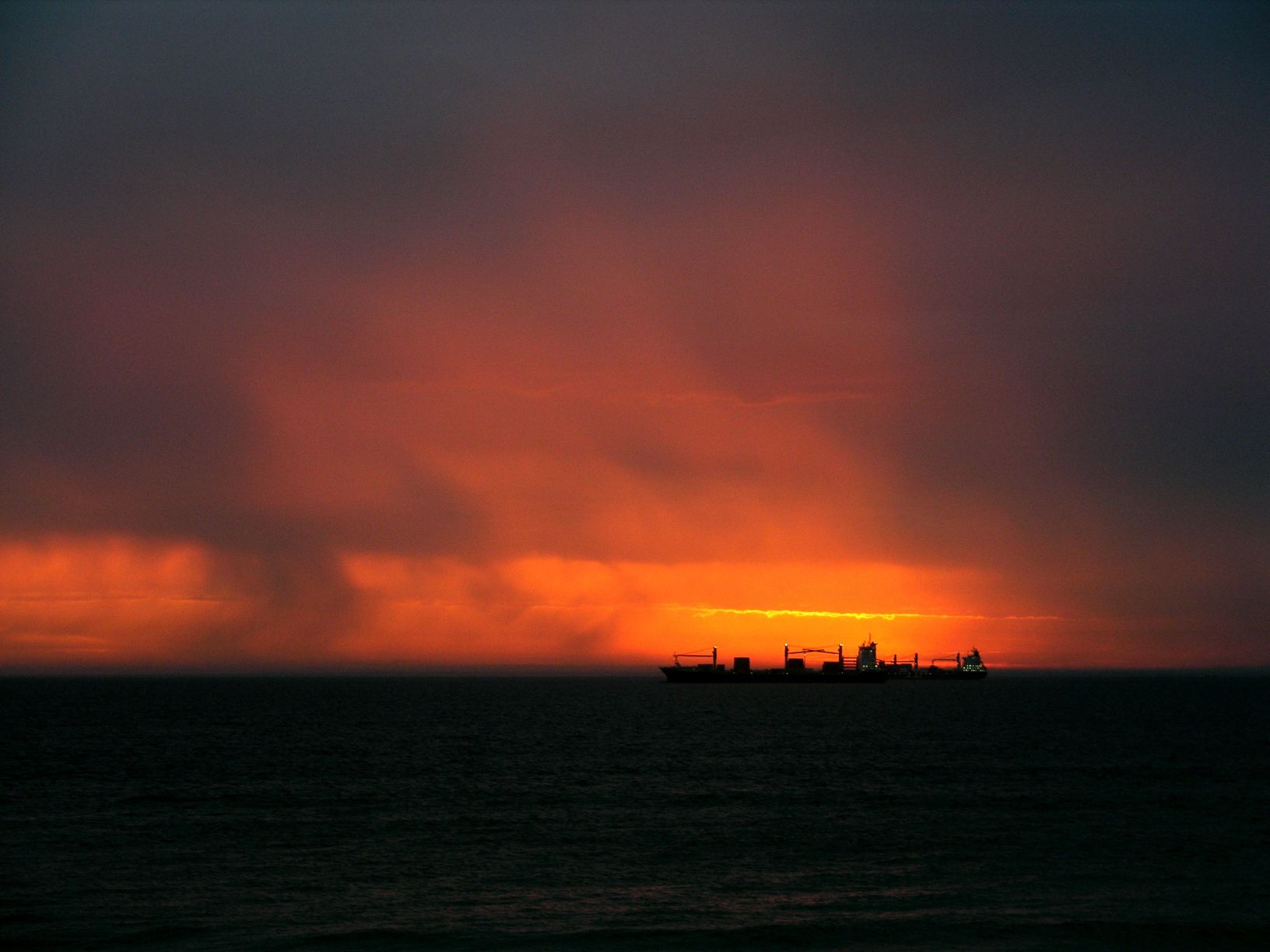
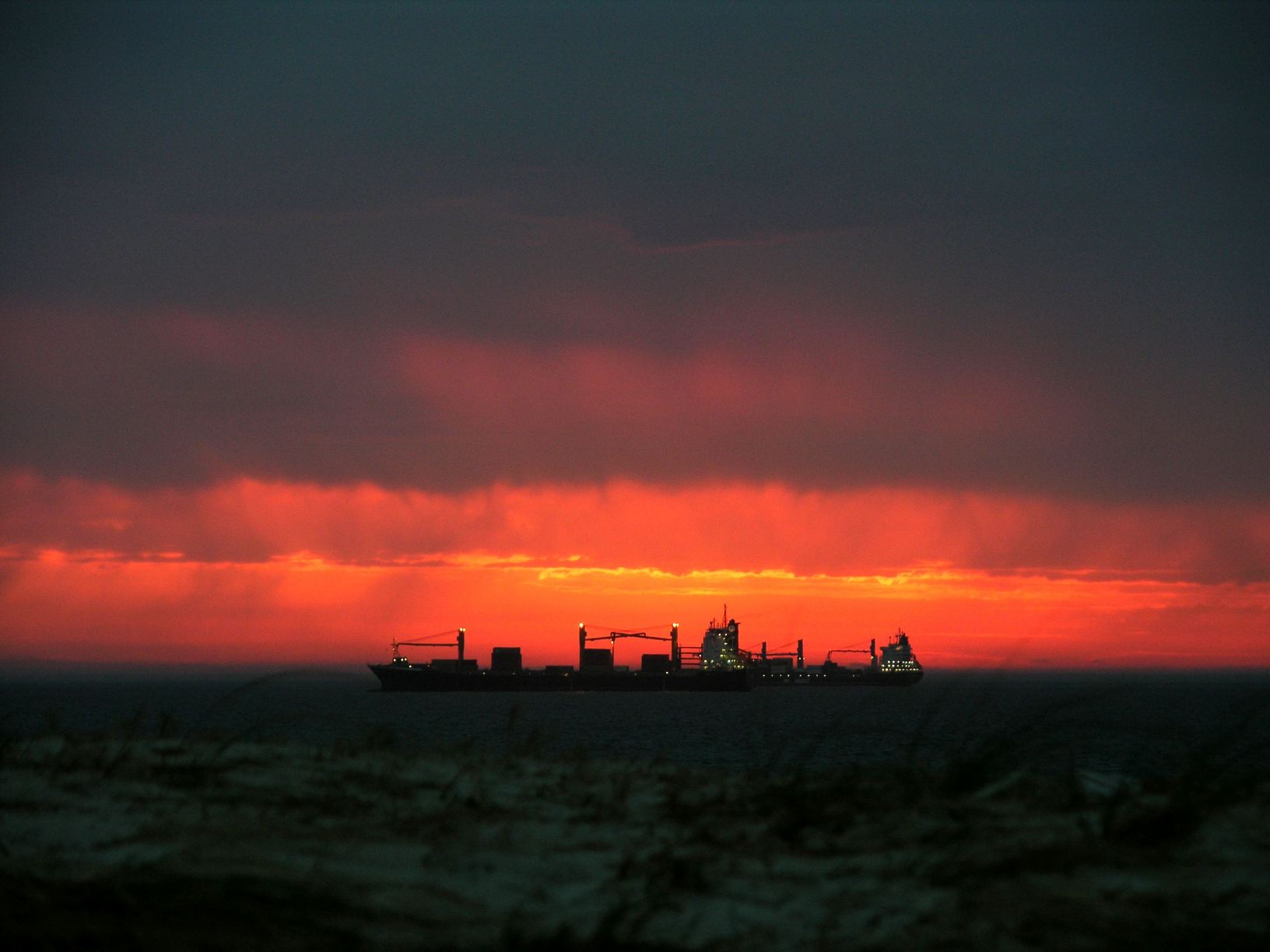
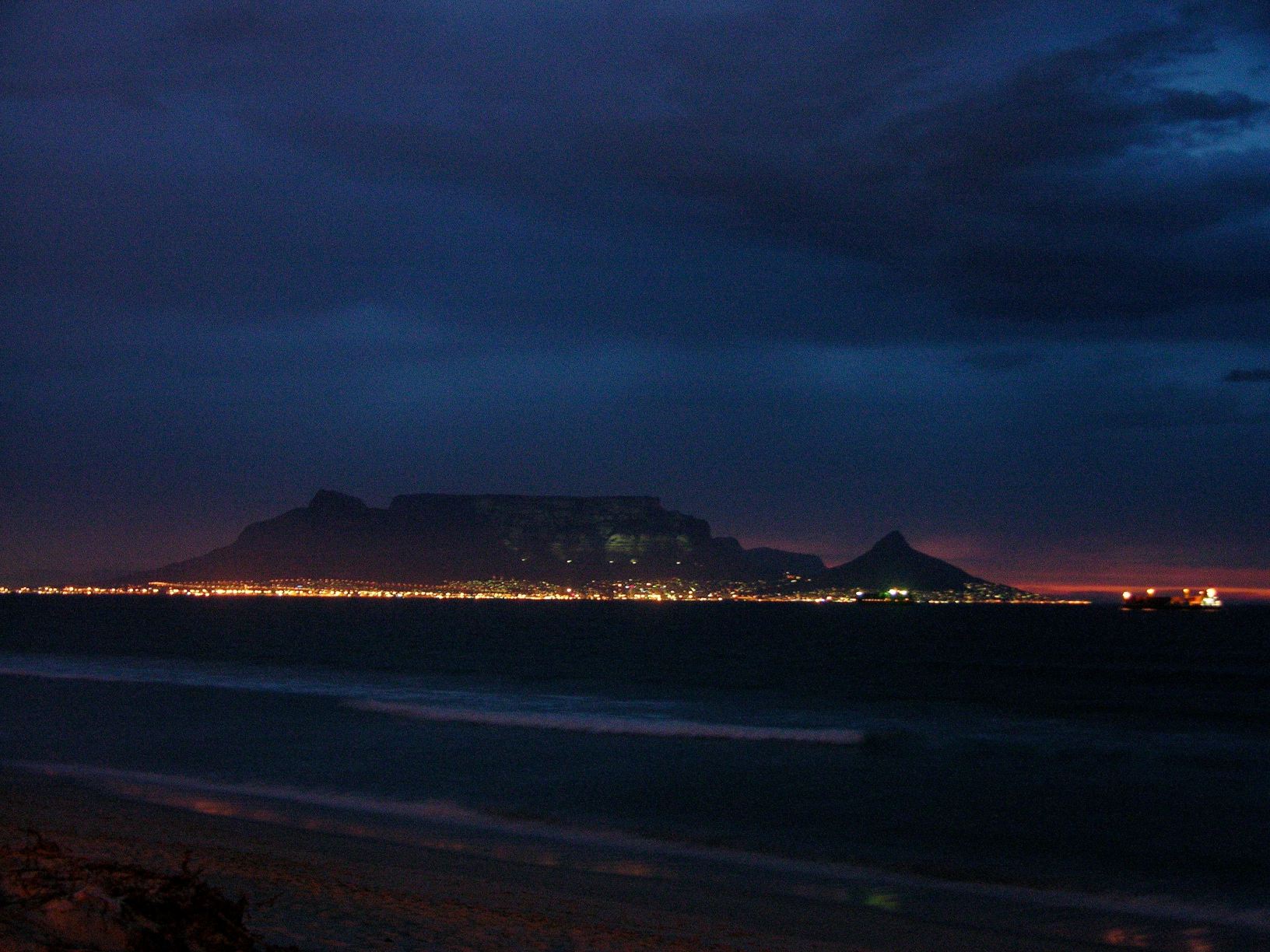
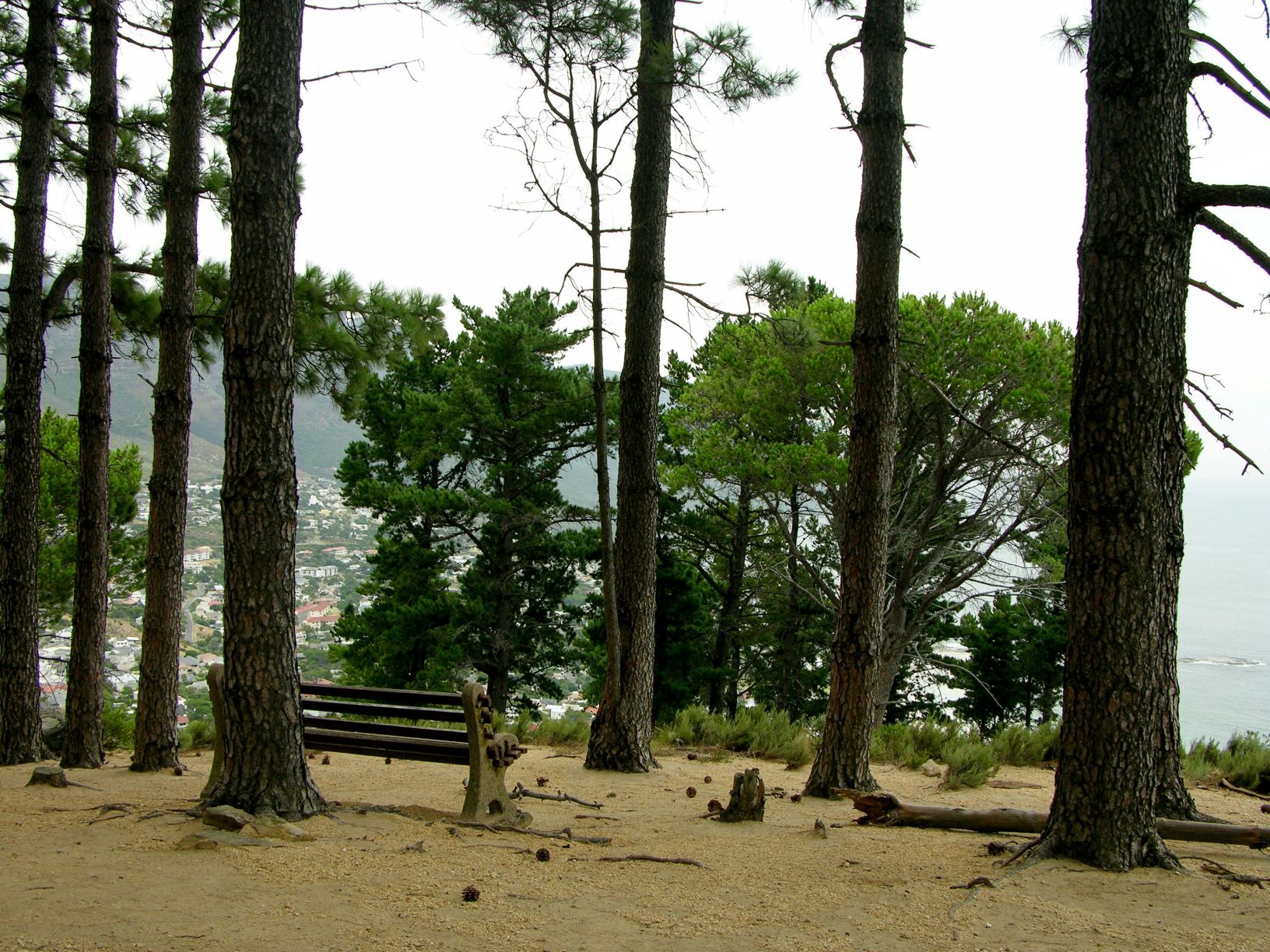
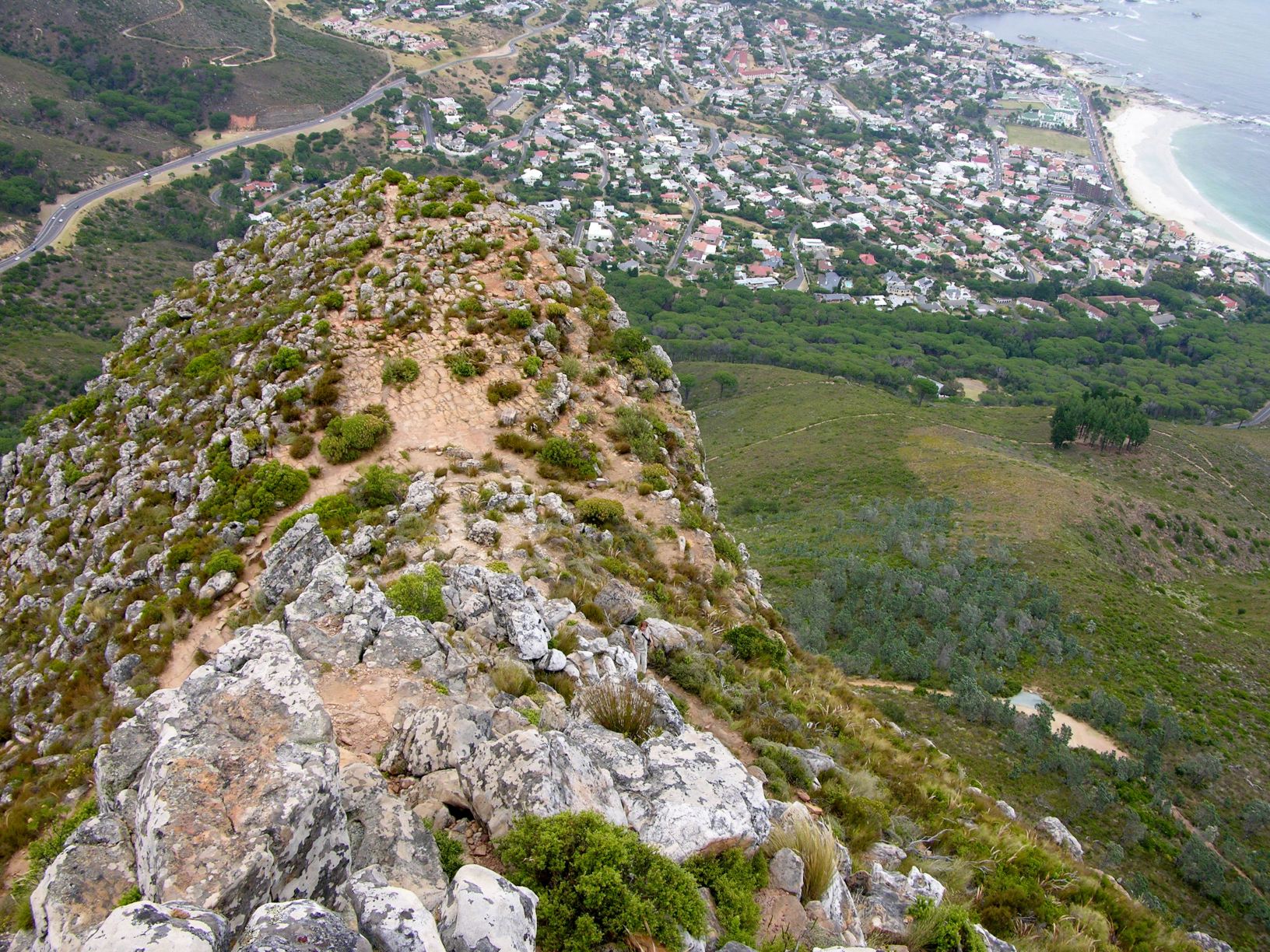
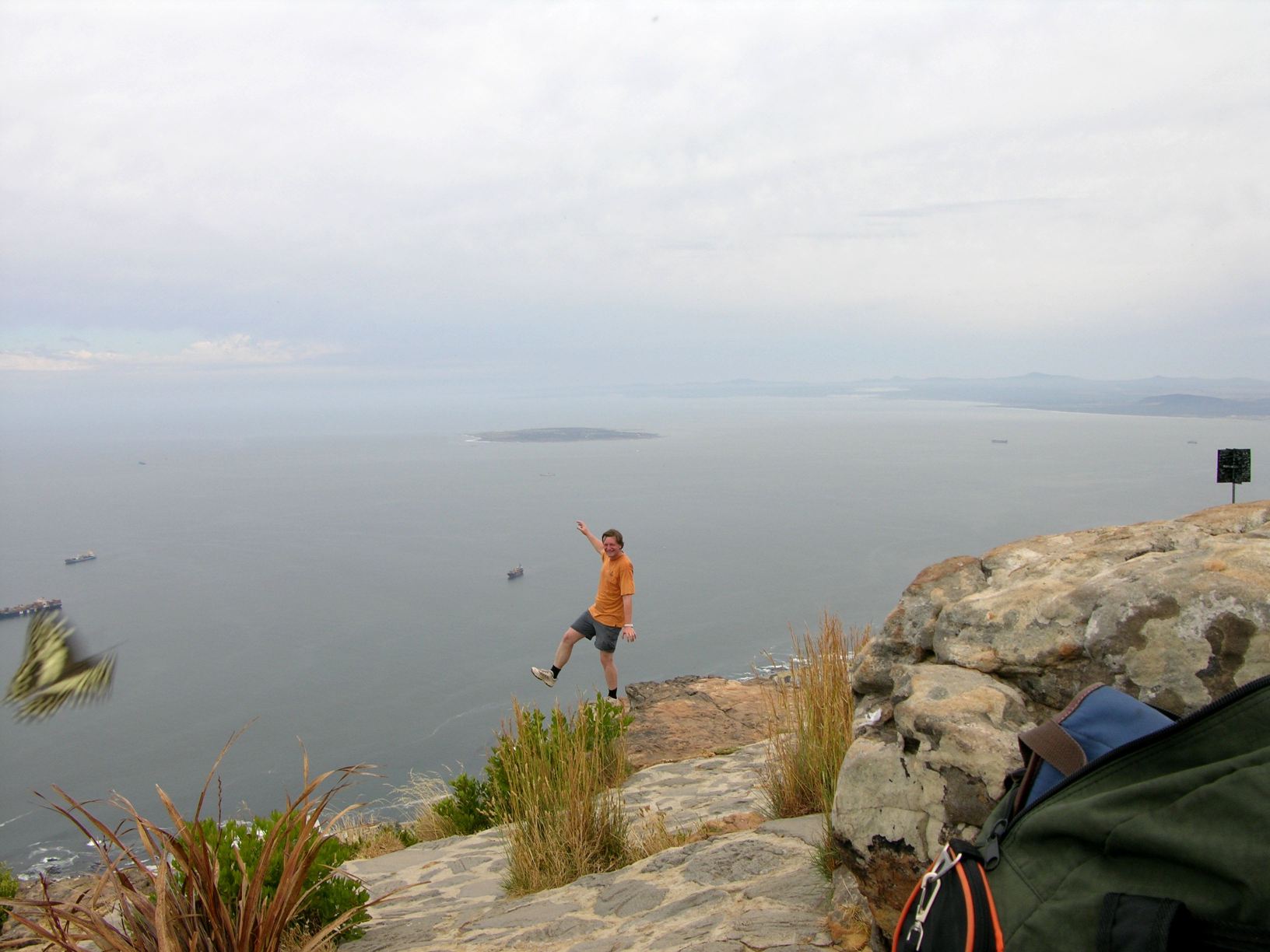
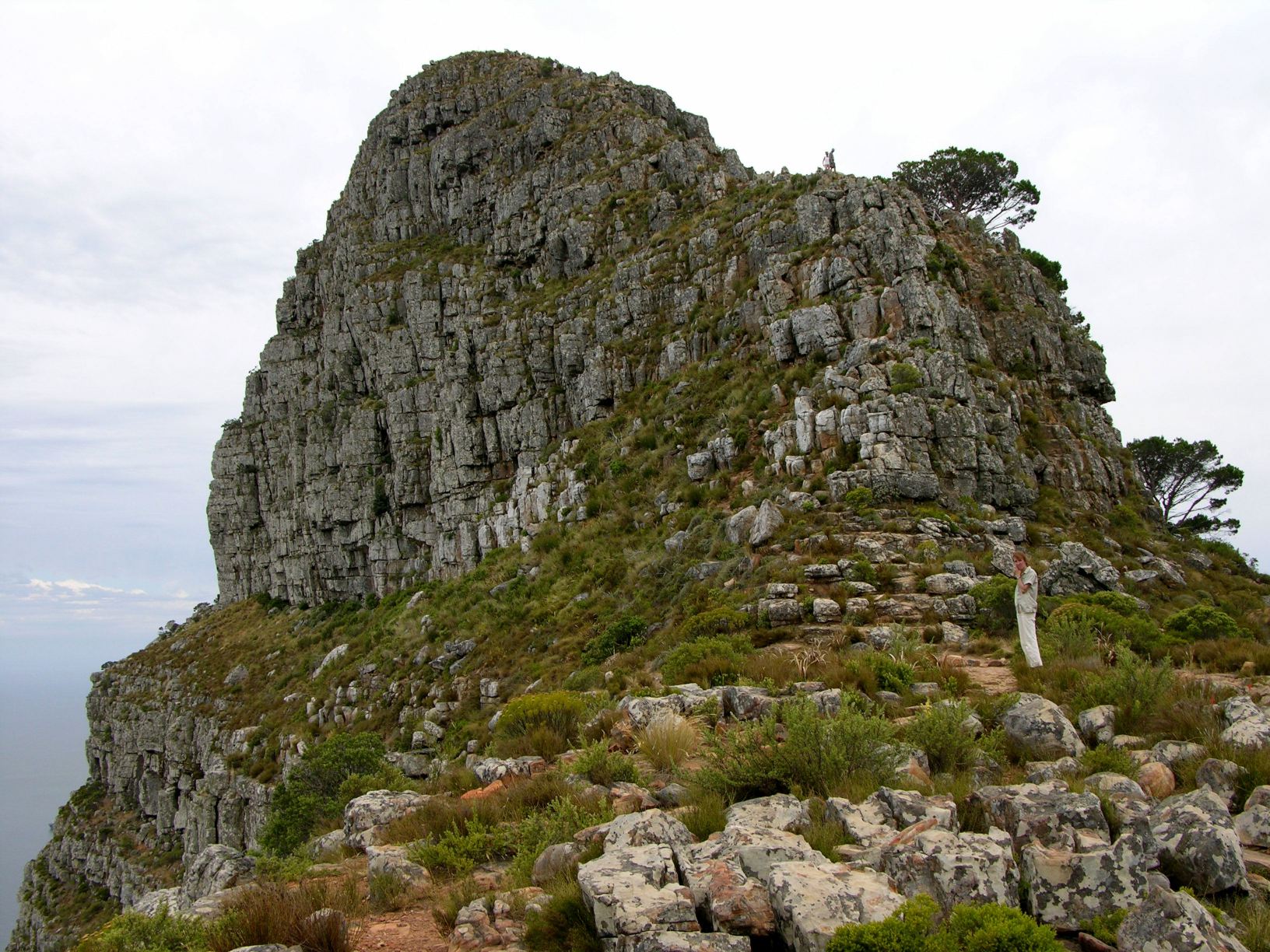
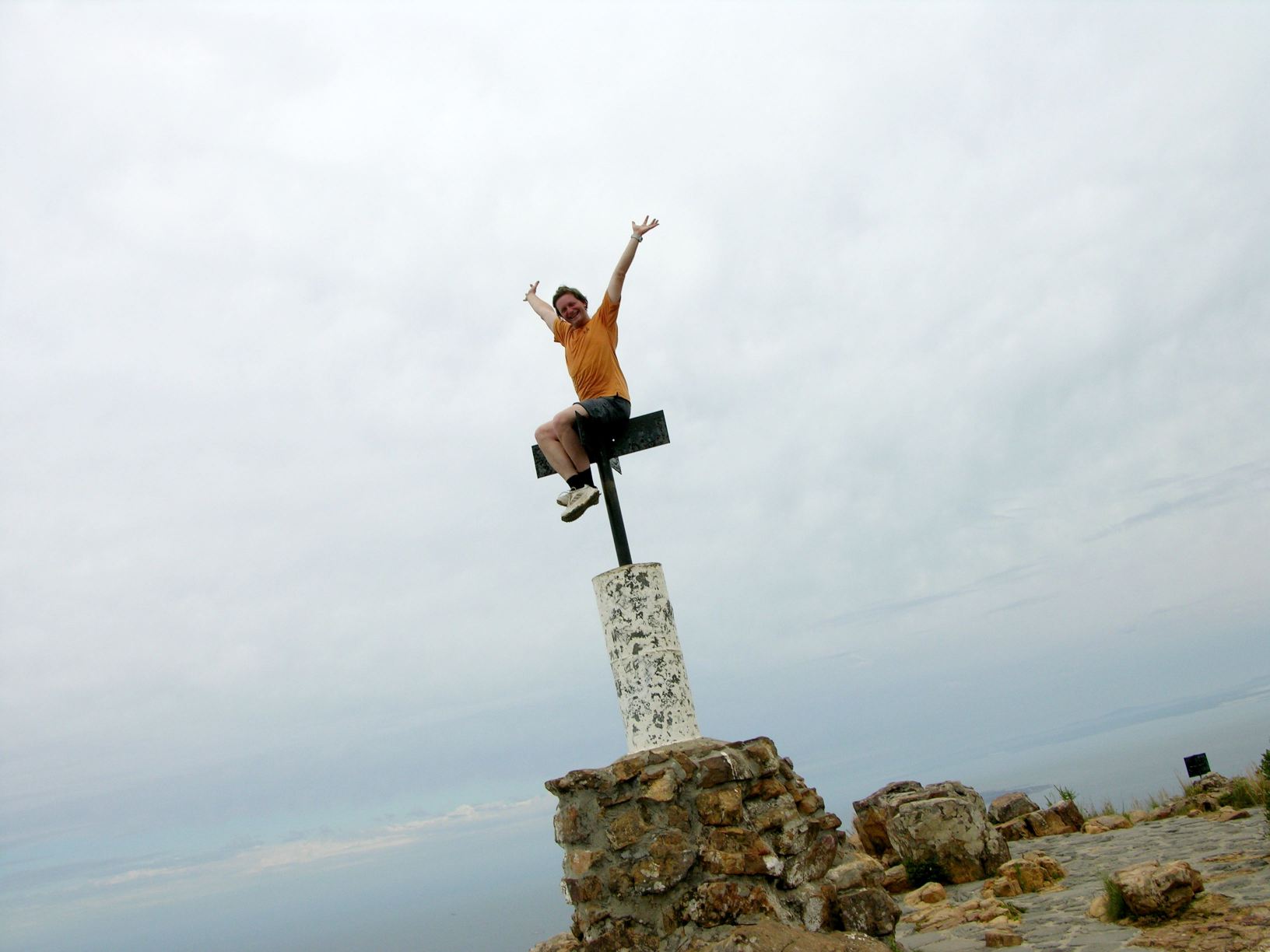
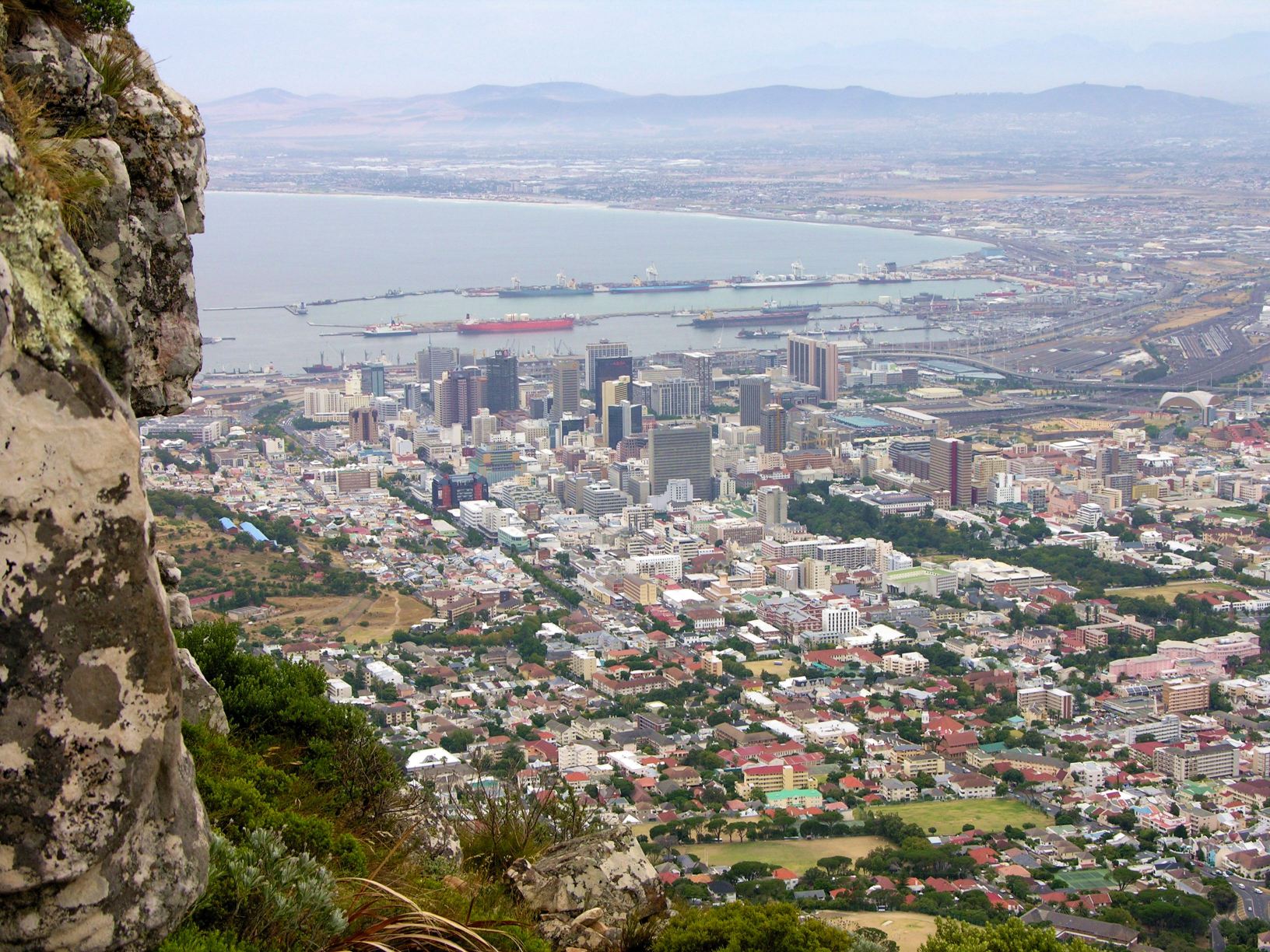
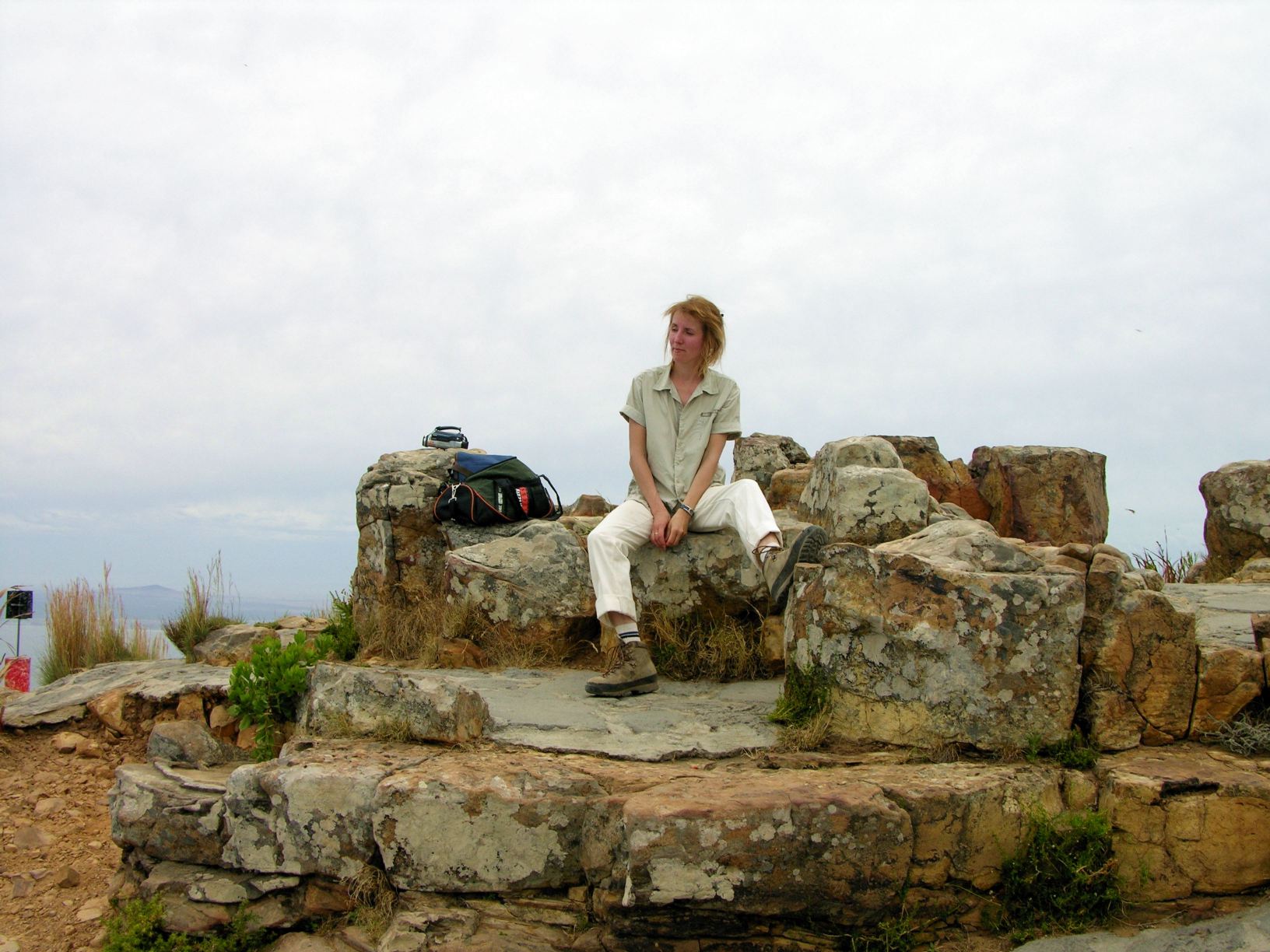
Besides Table Mountain, there's Lion's Head, a pointed outcrop between Table Mountain and the sea. It rises 670 metres. You can reach the top only on foot. The track is well maintained but fairly steep. I enjoyed climbing the Head more. There are fewer people, and the view is every bit as good.
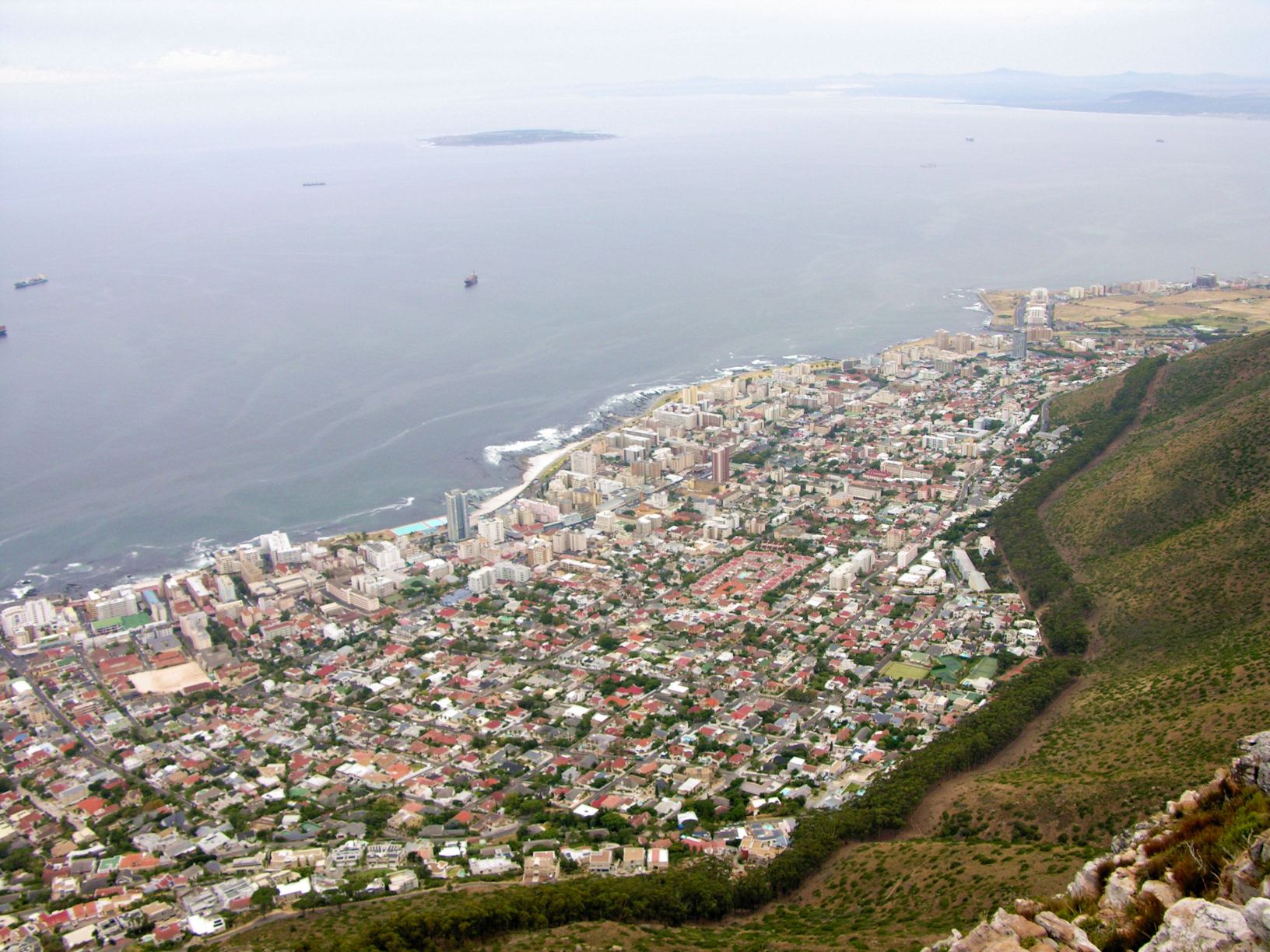
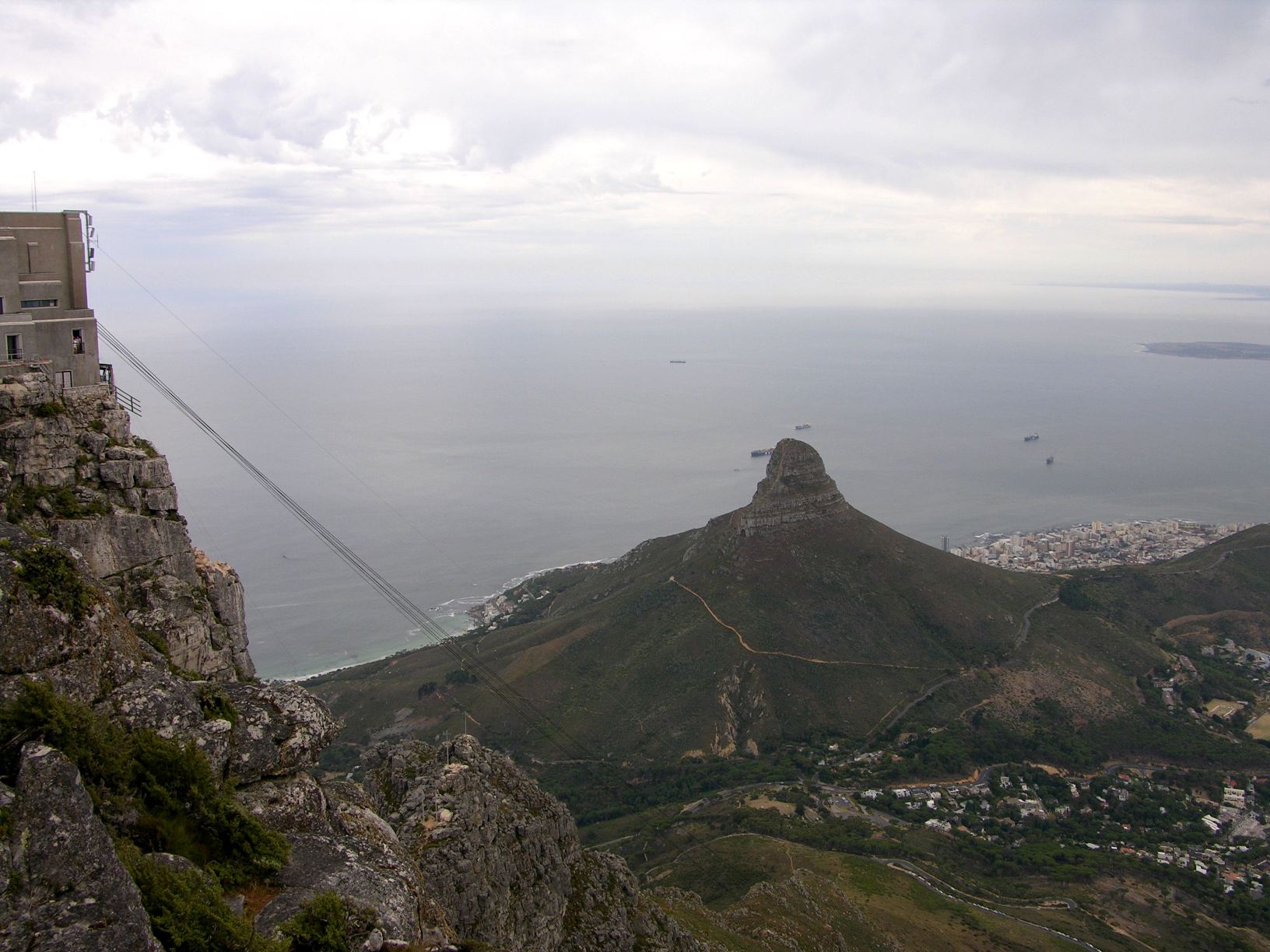
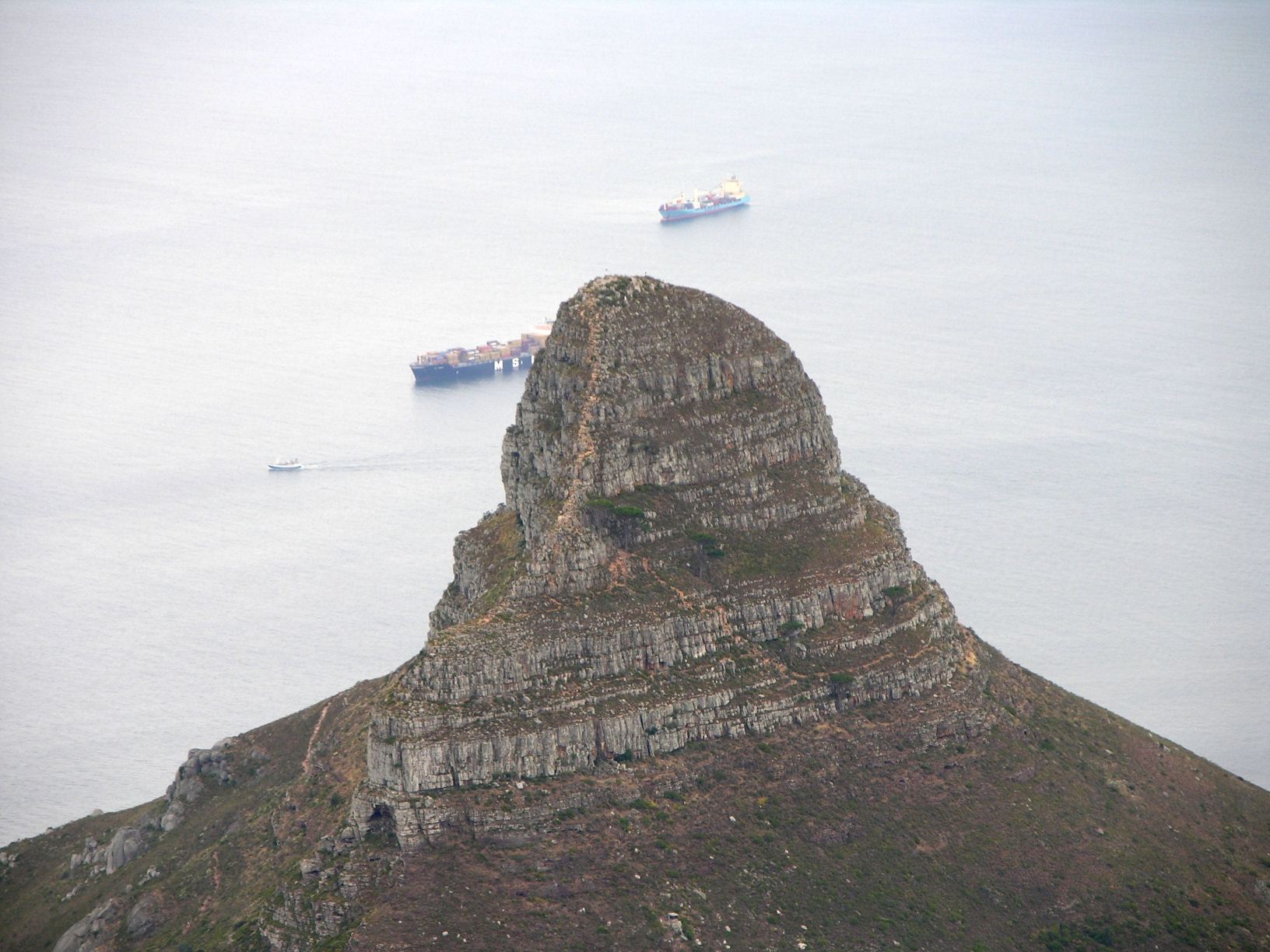
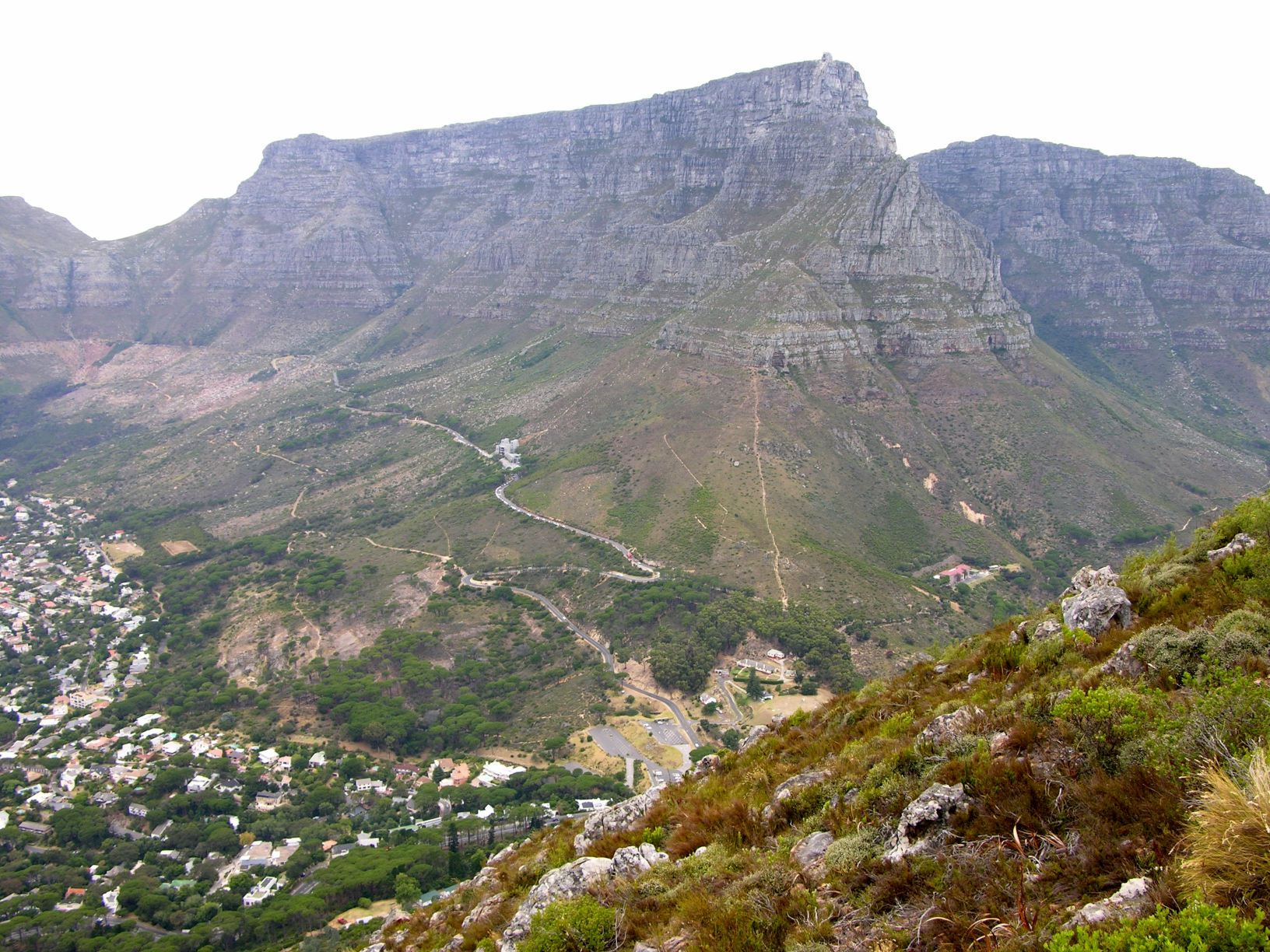
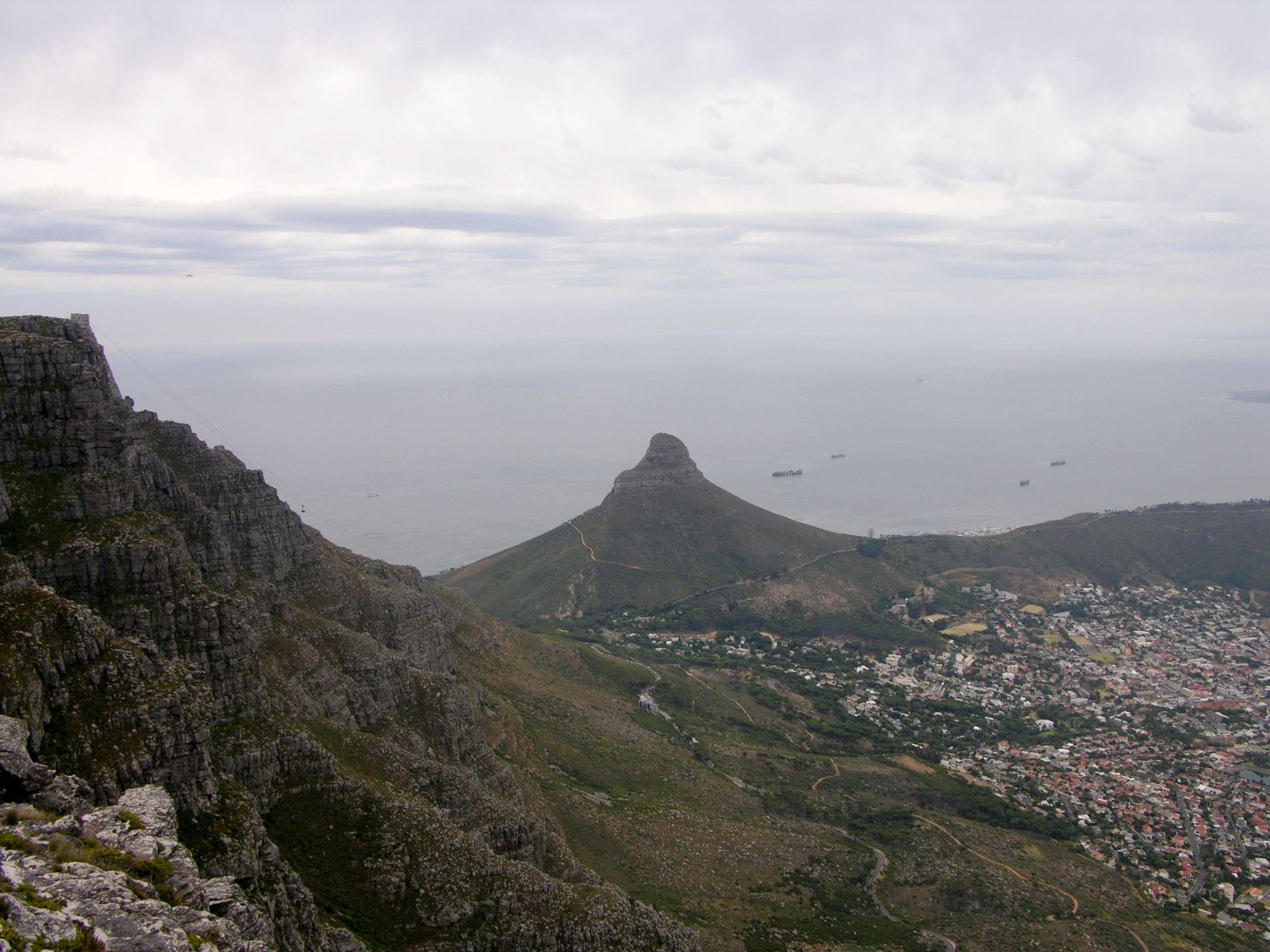
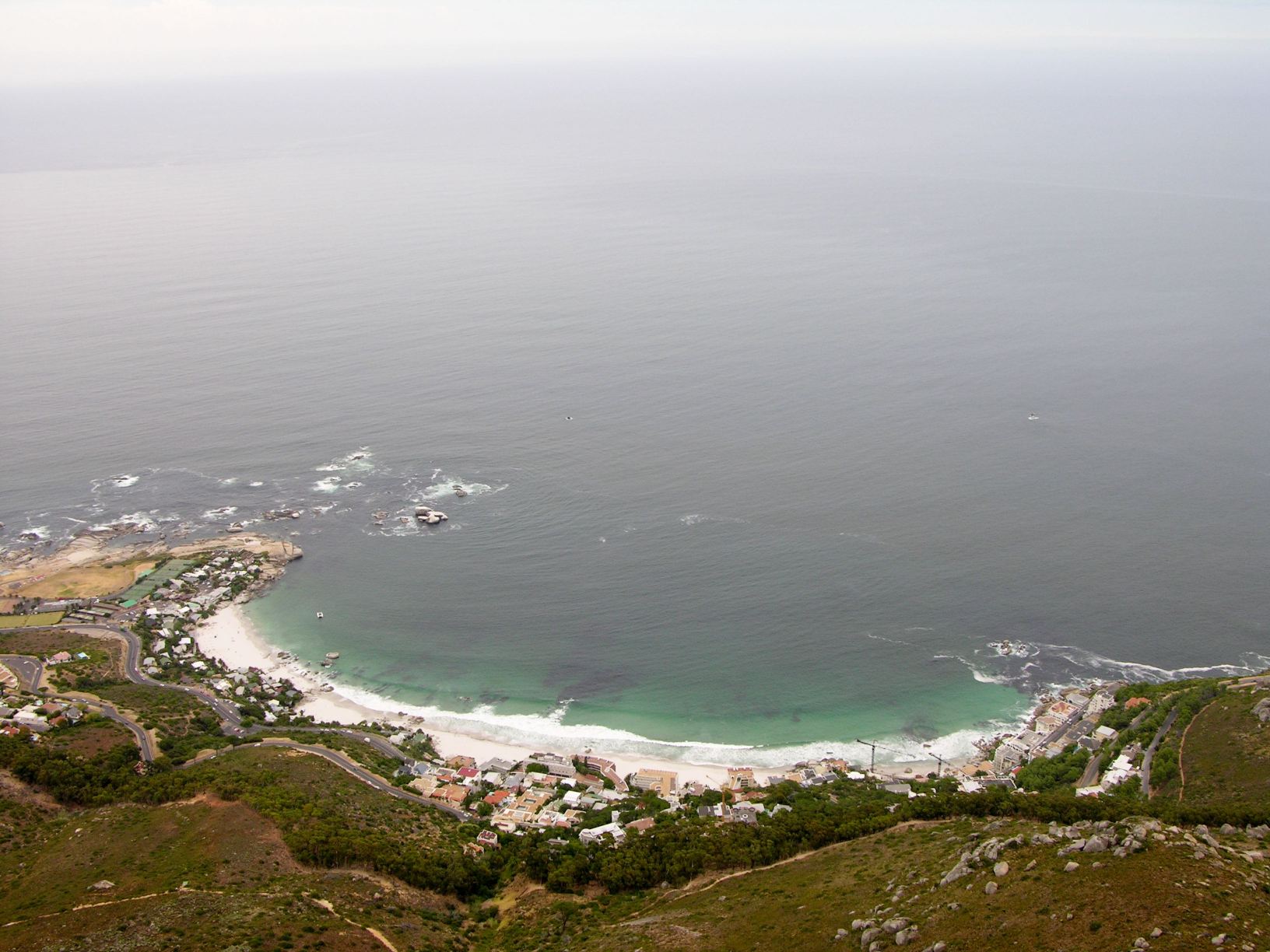
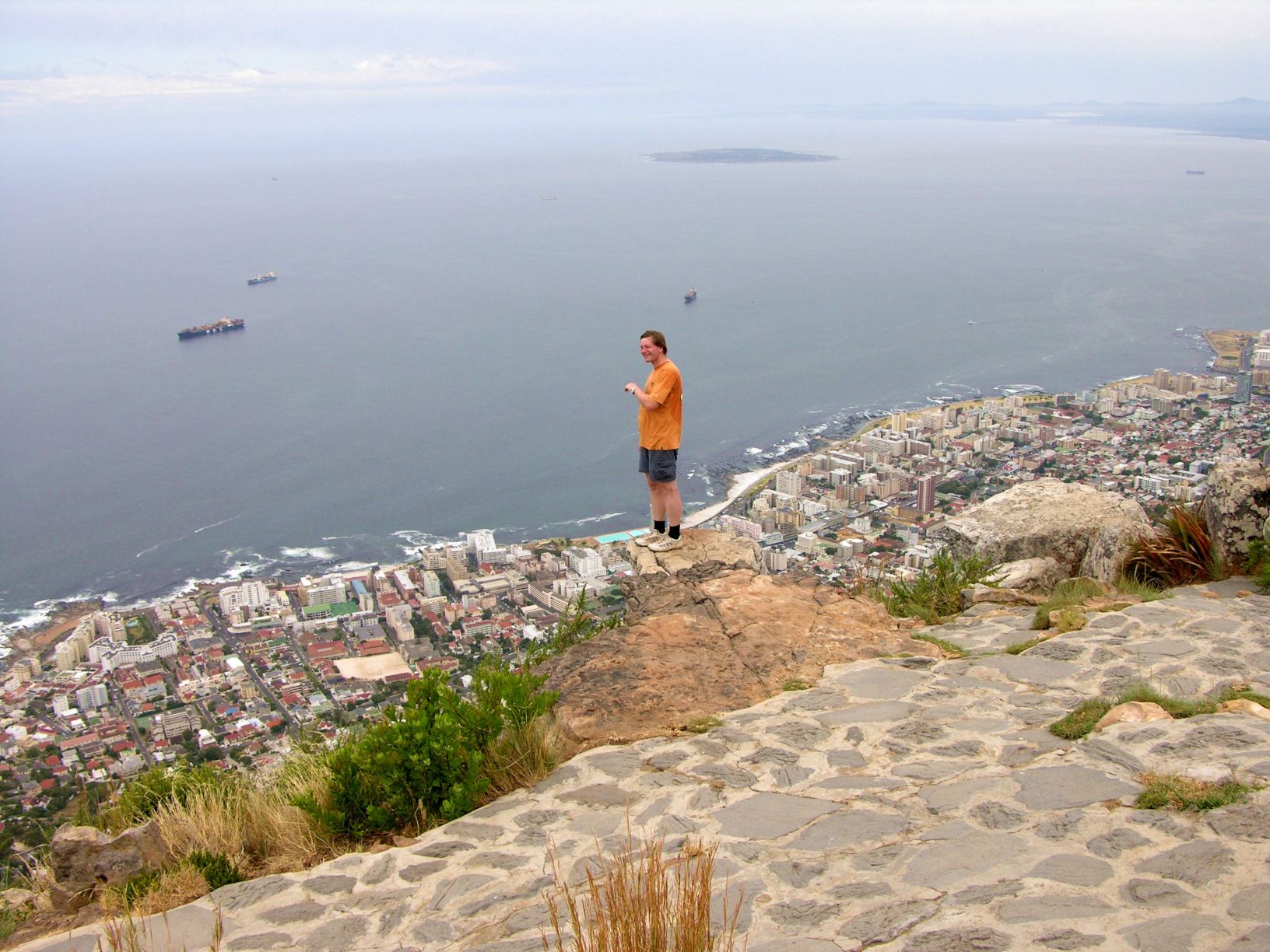
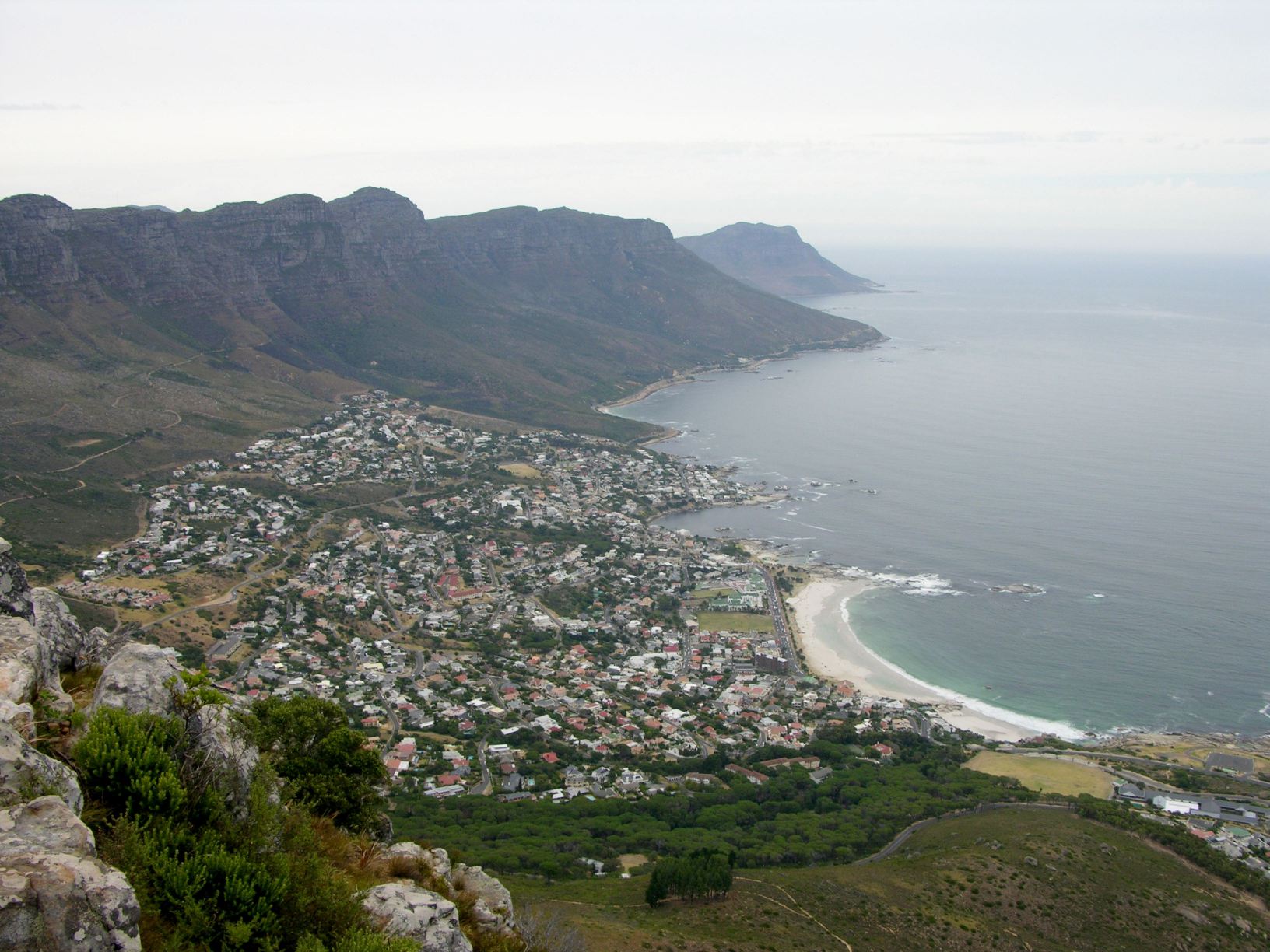
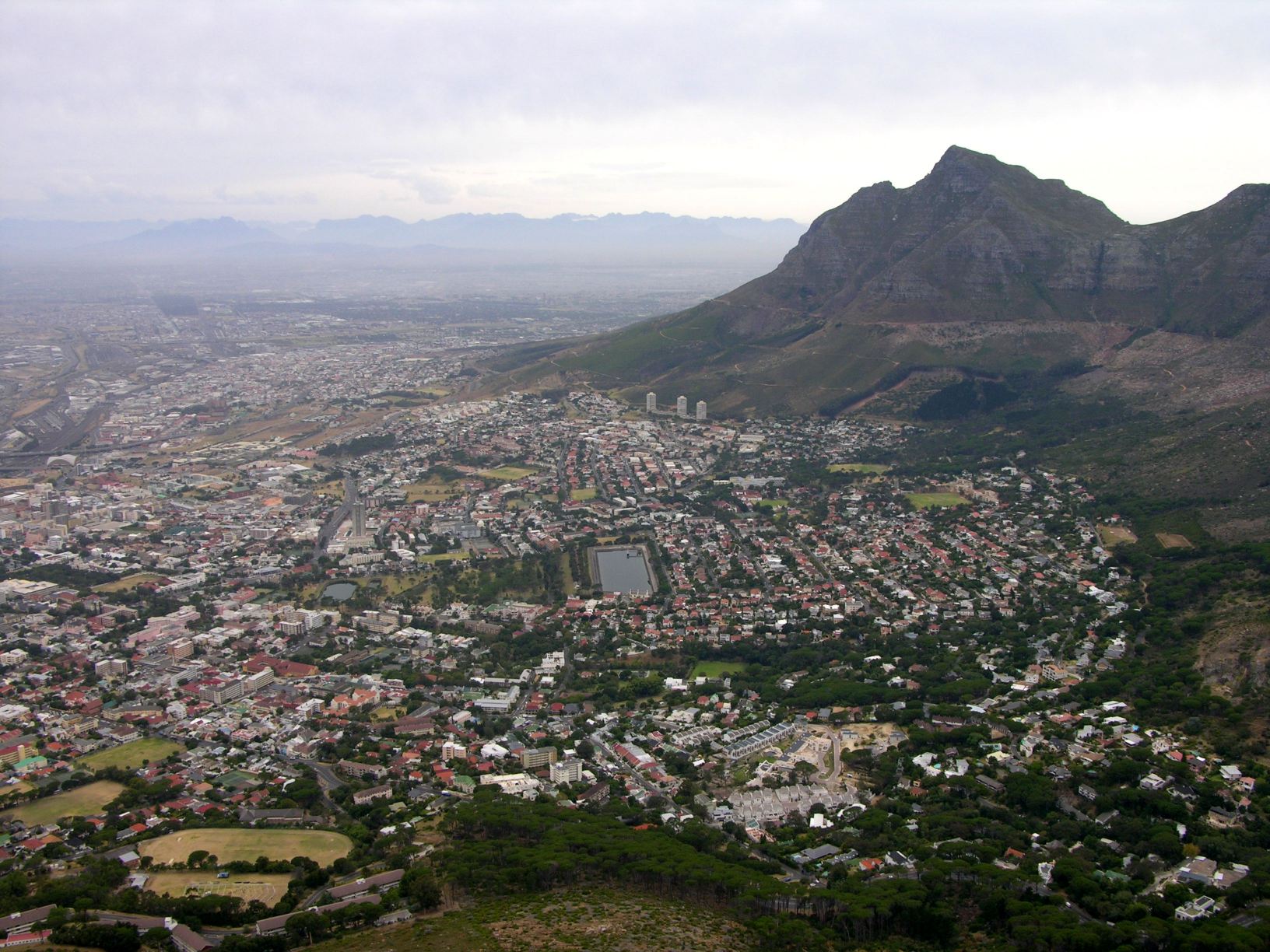
In town itself, it's worth going to the Waterfront, the old harbour turned into a gleaming shopping centre, mostly for tourists. Surprisingly, prices aren't particularly high, so it's a reasonable place to pick up souvenirs. An animal skin, for instance, or a mounted animal. A dressed zebra hide costs about $1,000. An antelope or warthog head goes for $400 to $1,000. There are cheaper trinkets too, of course.
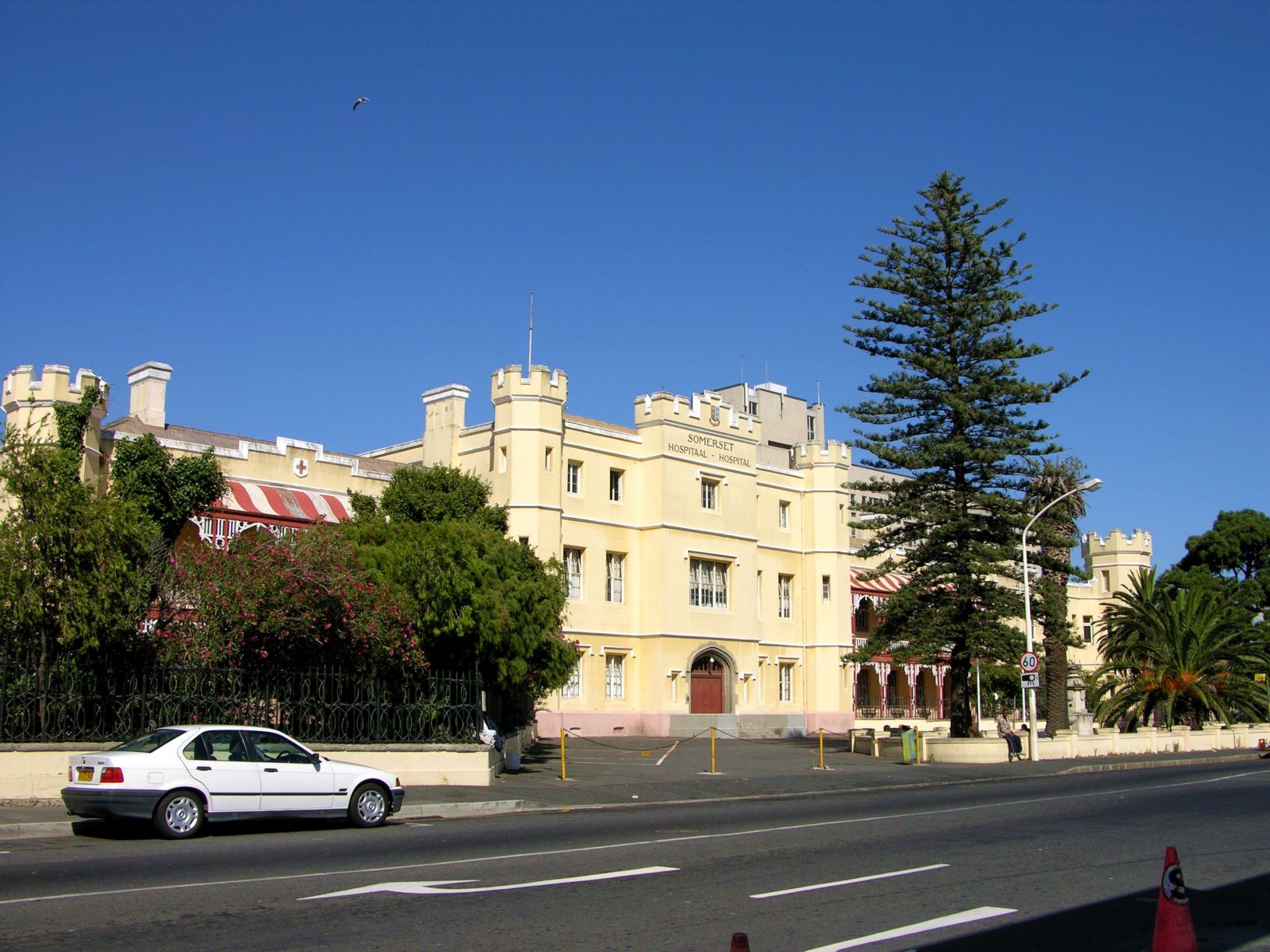
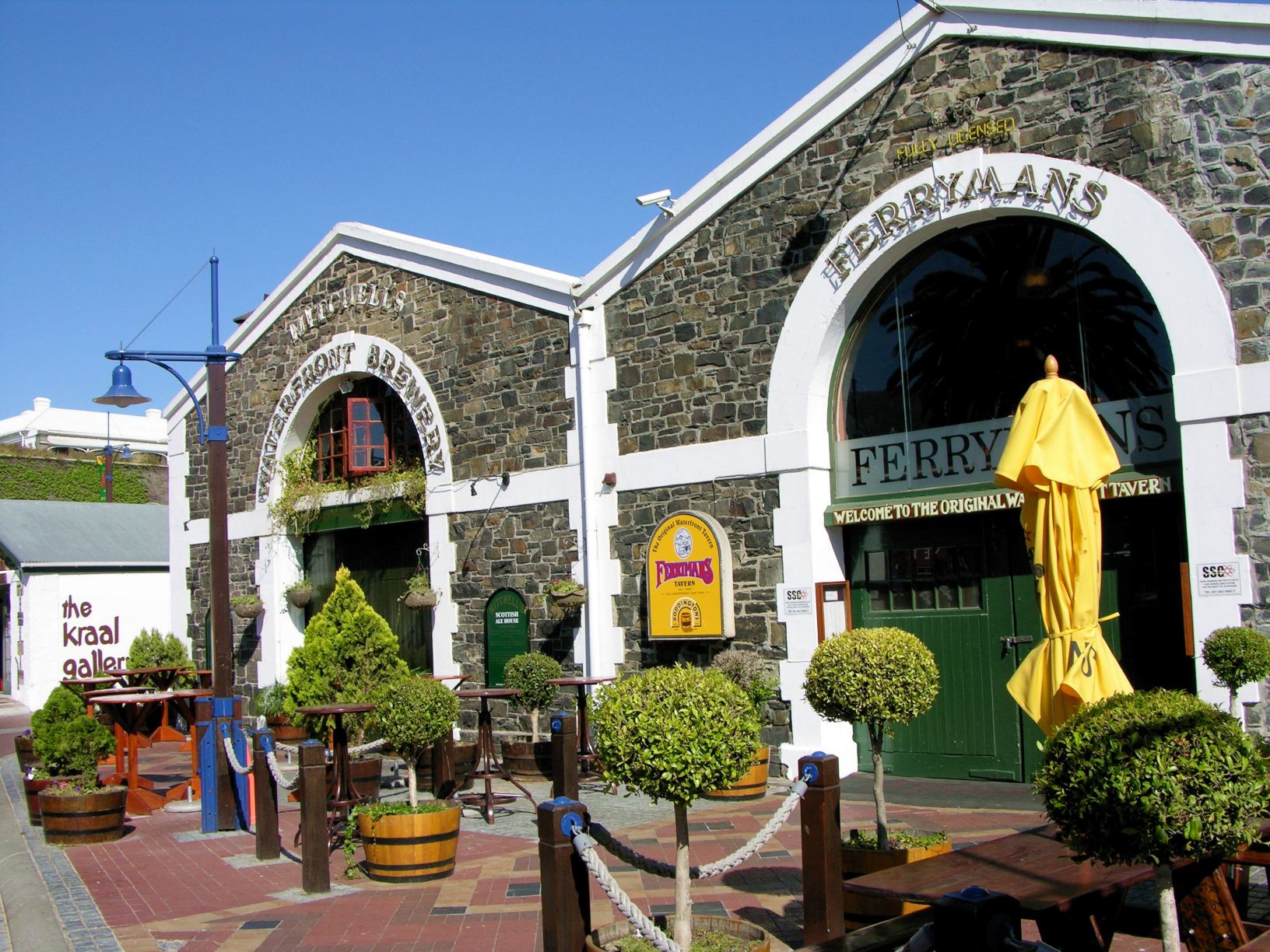
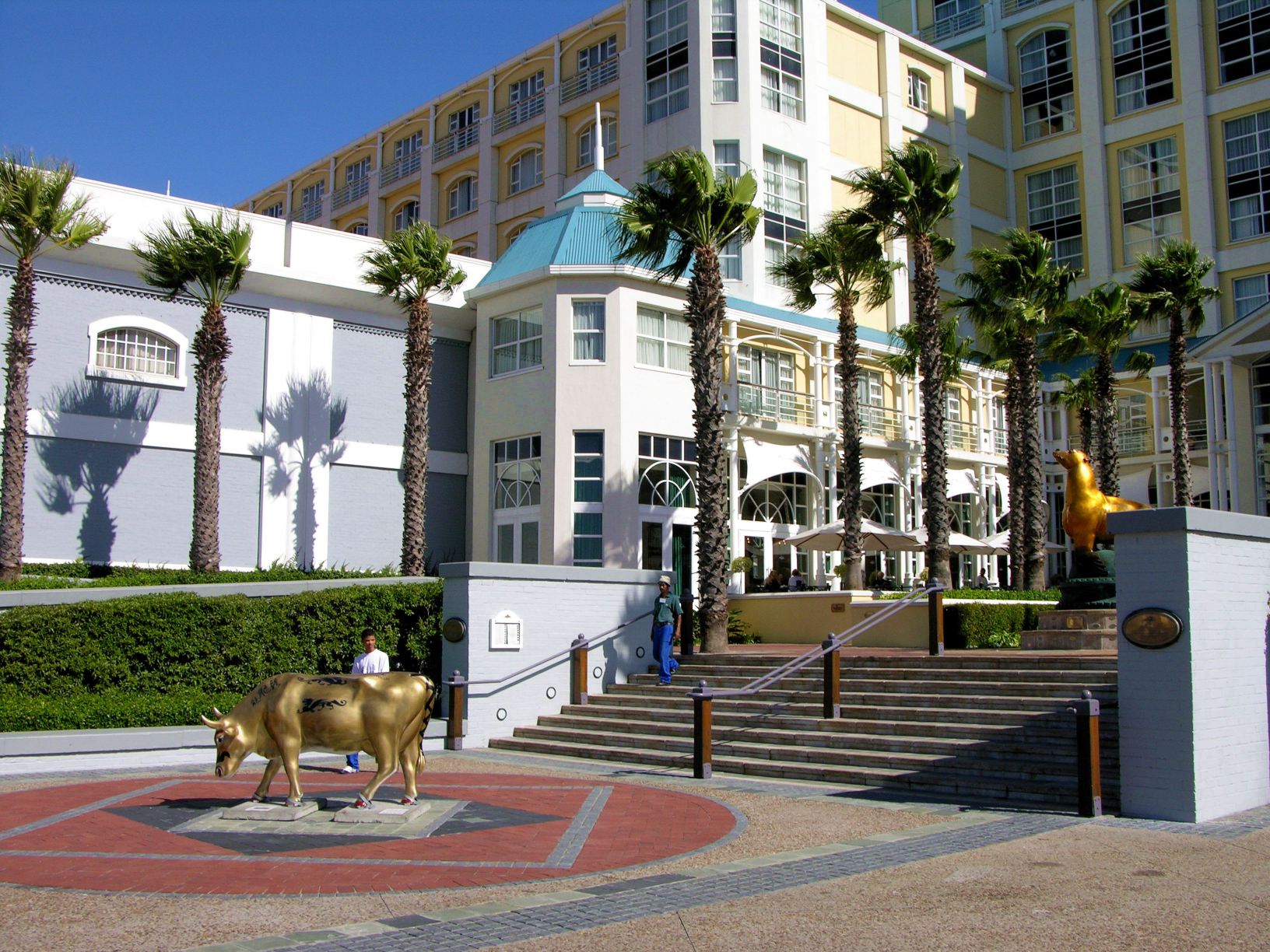
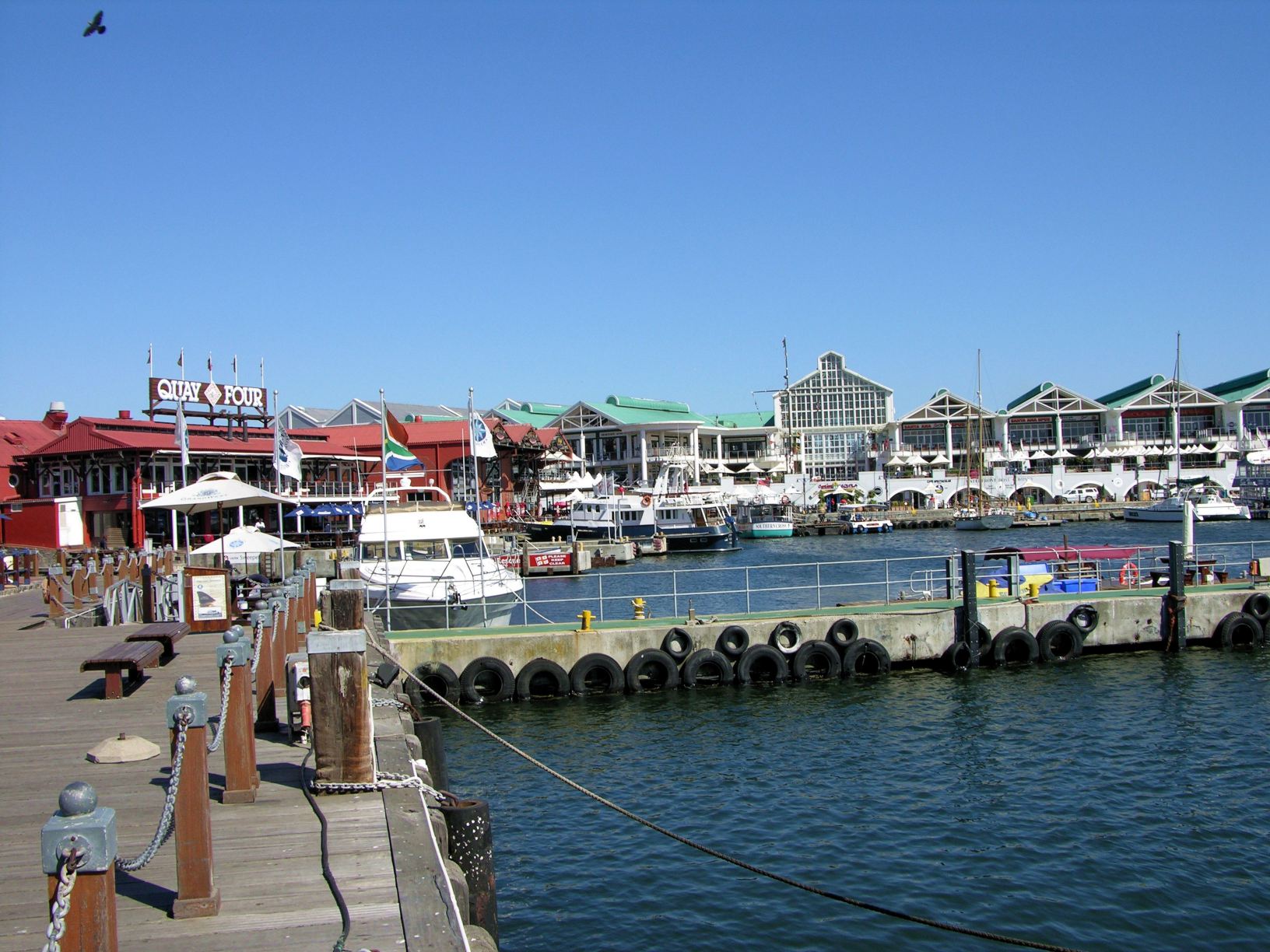
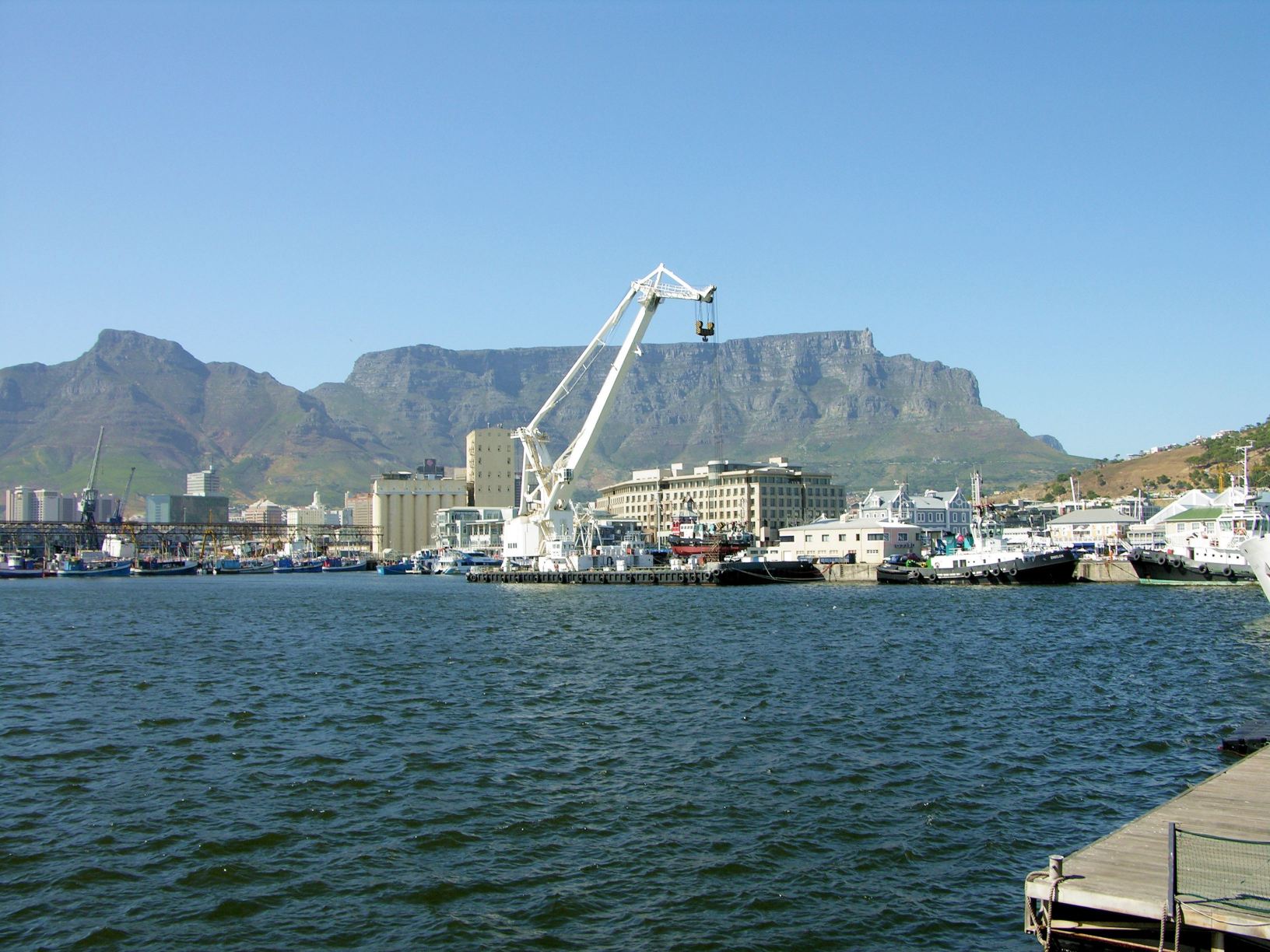
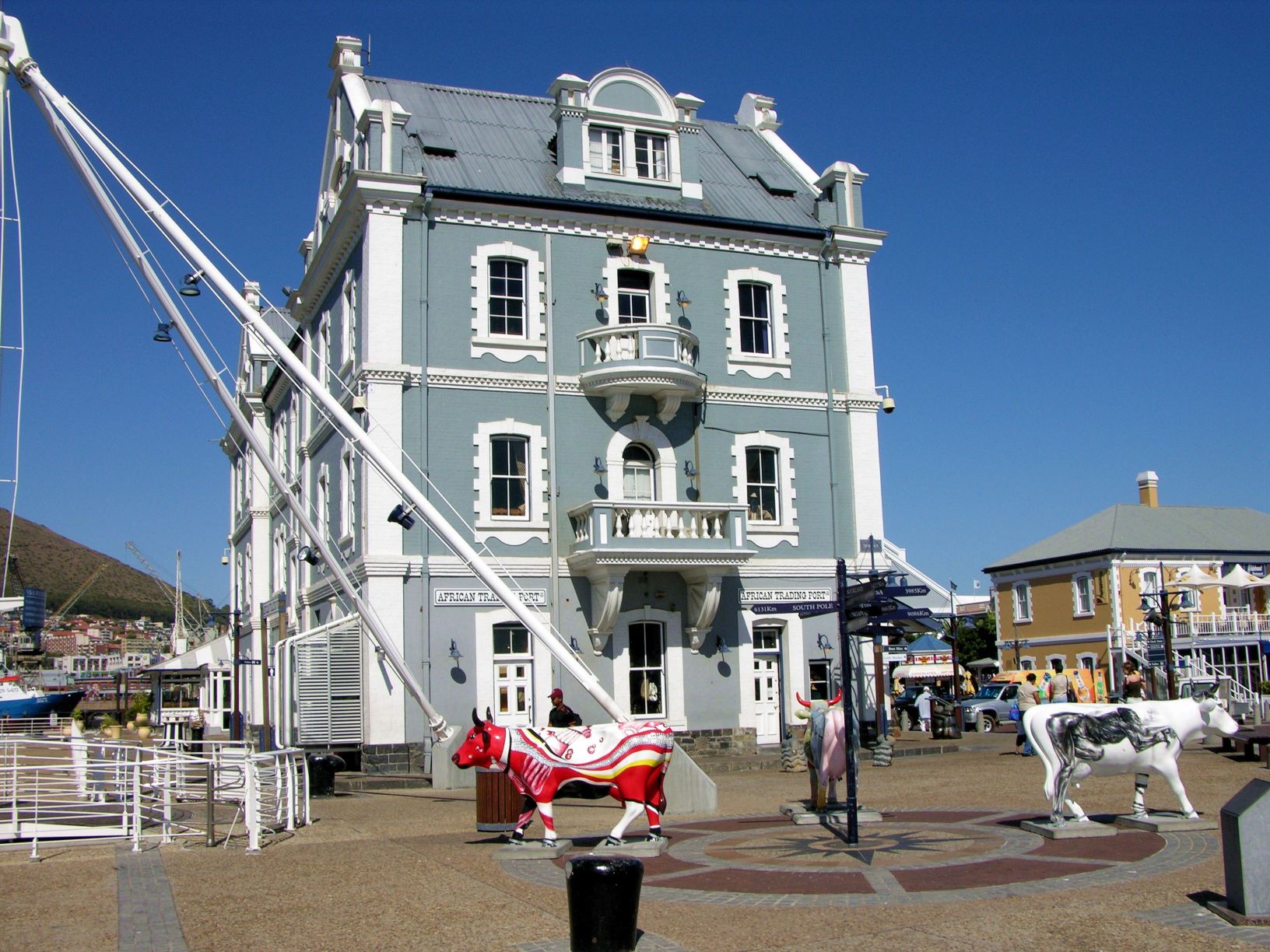
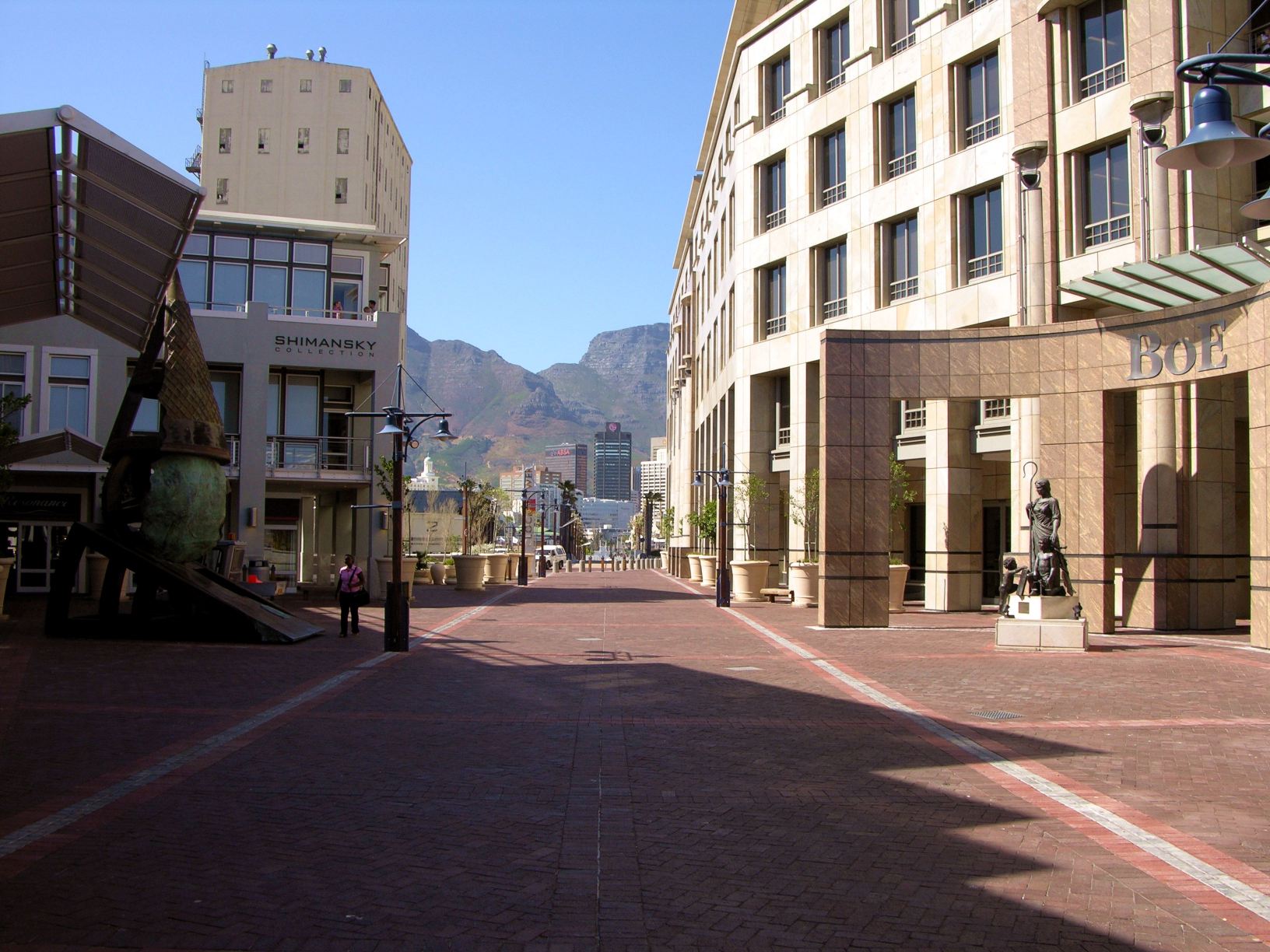
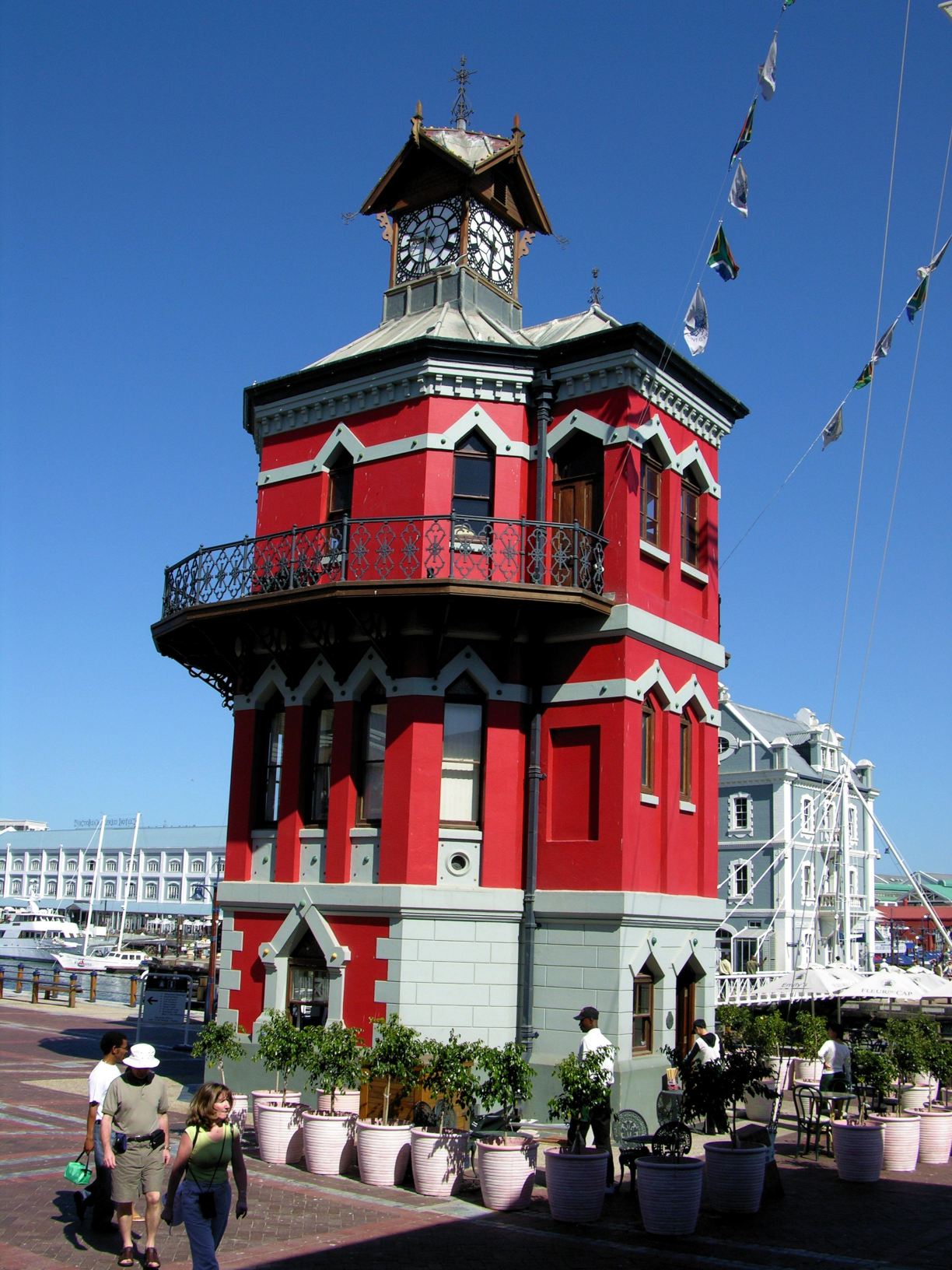
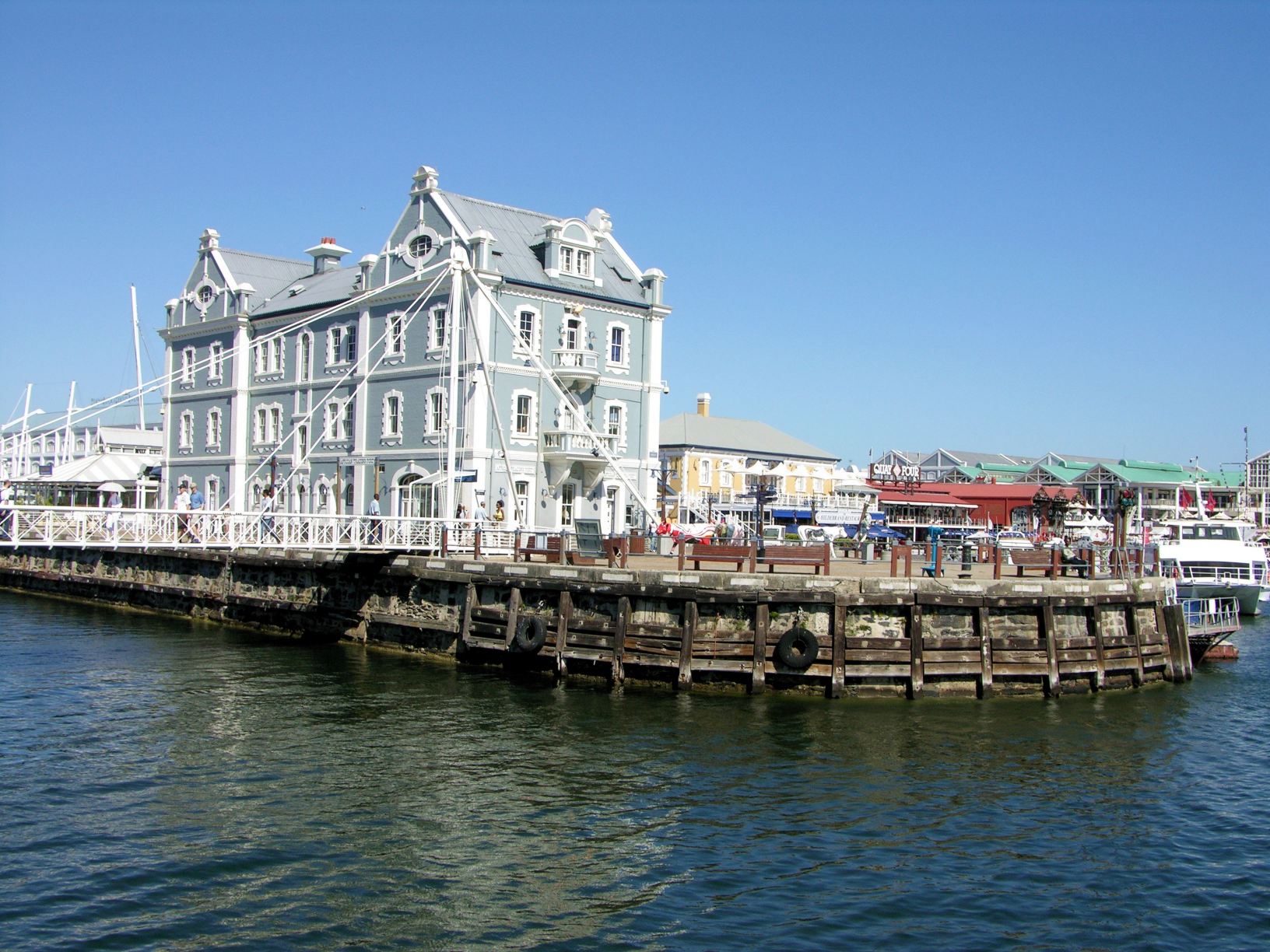
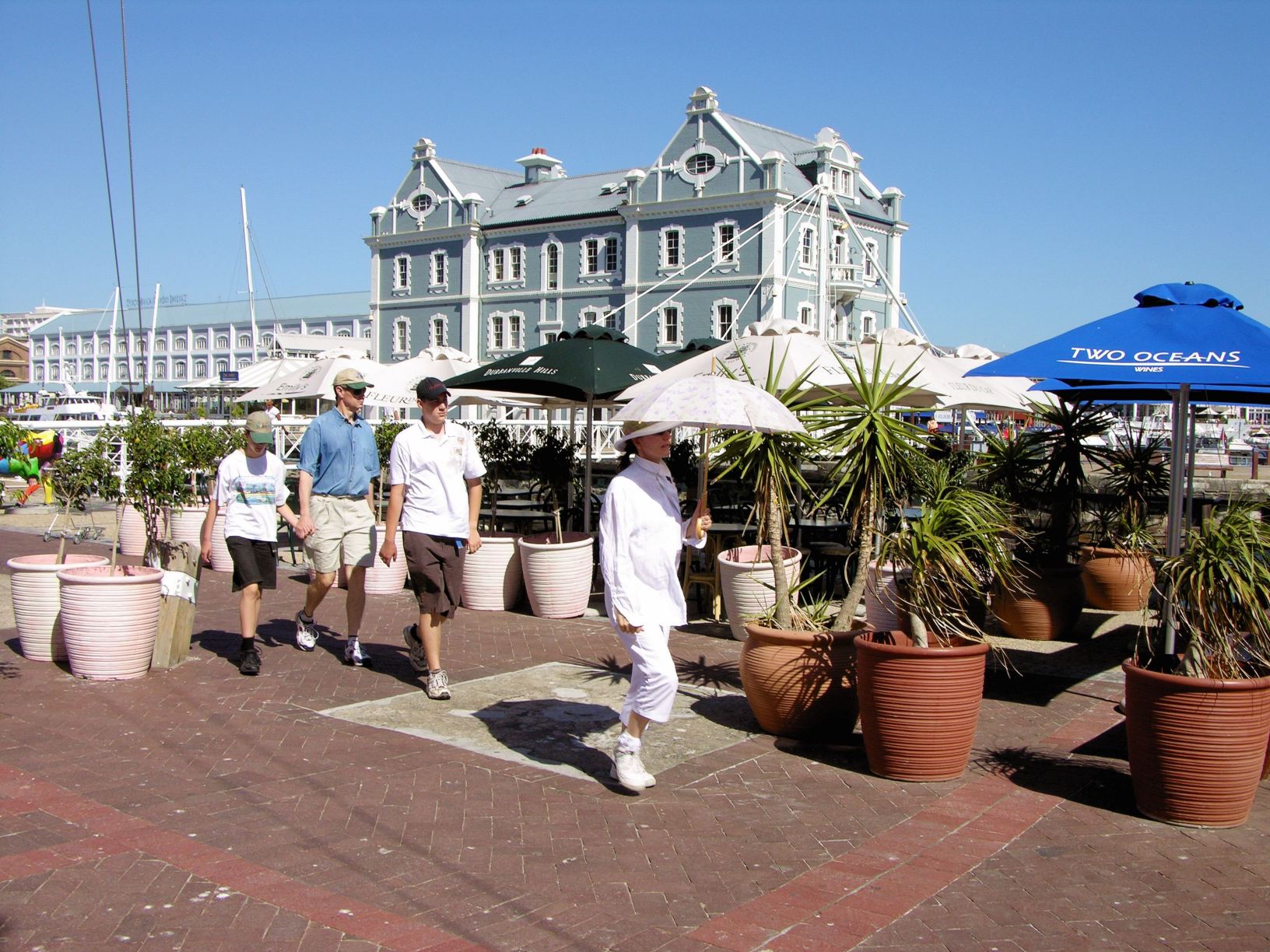
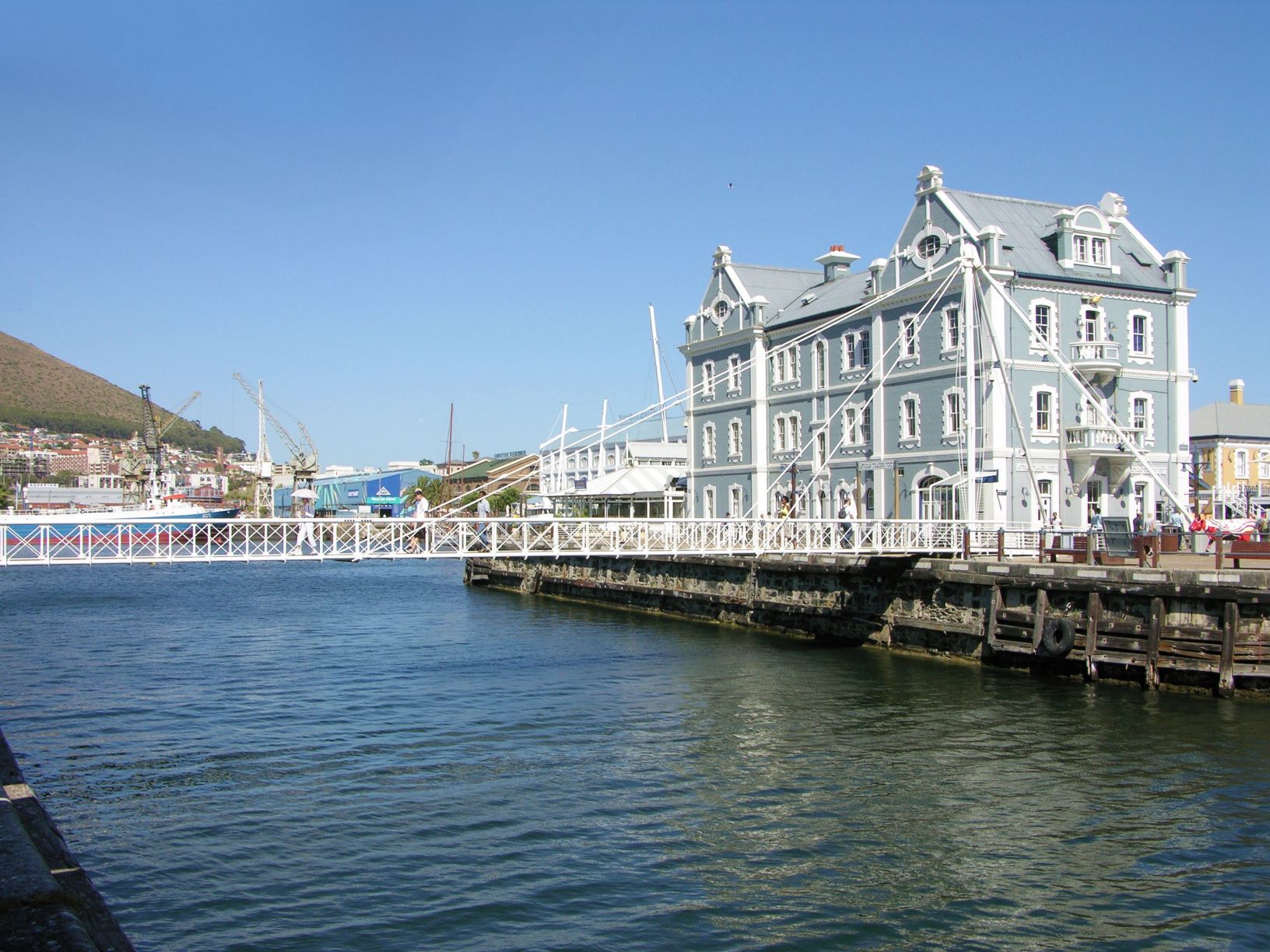
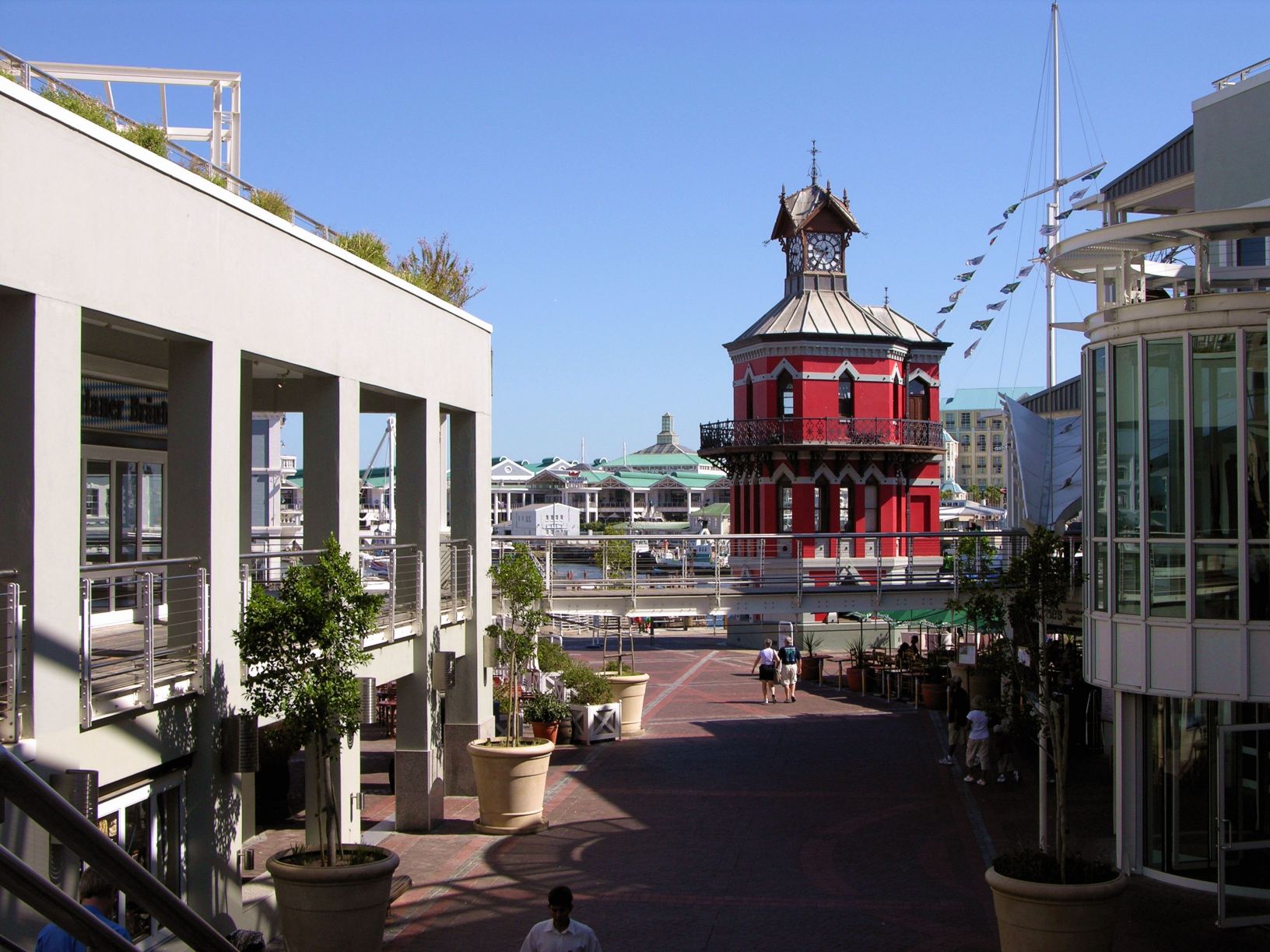
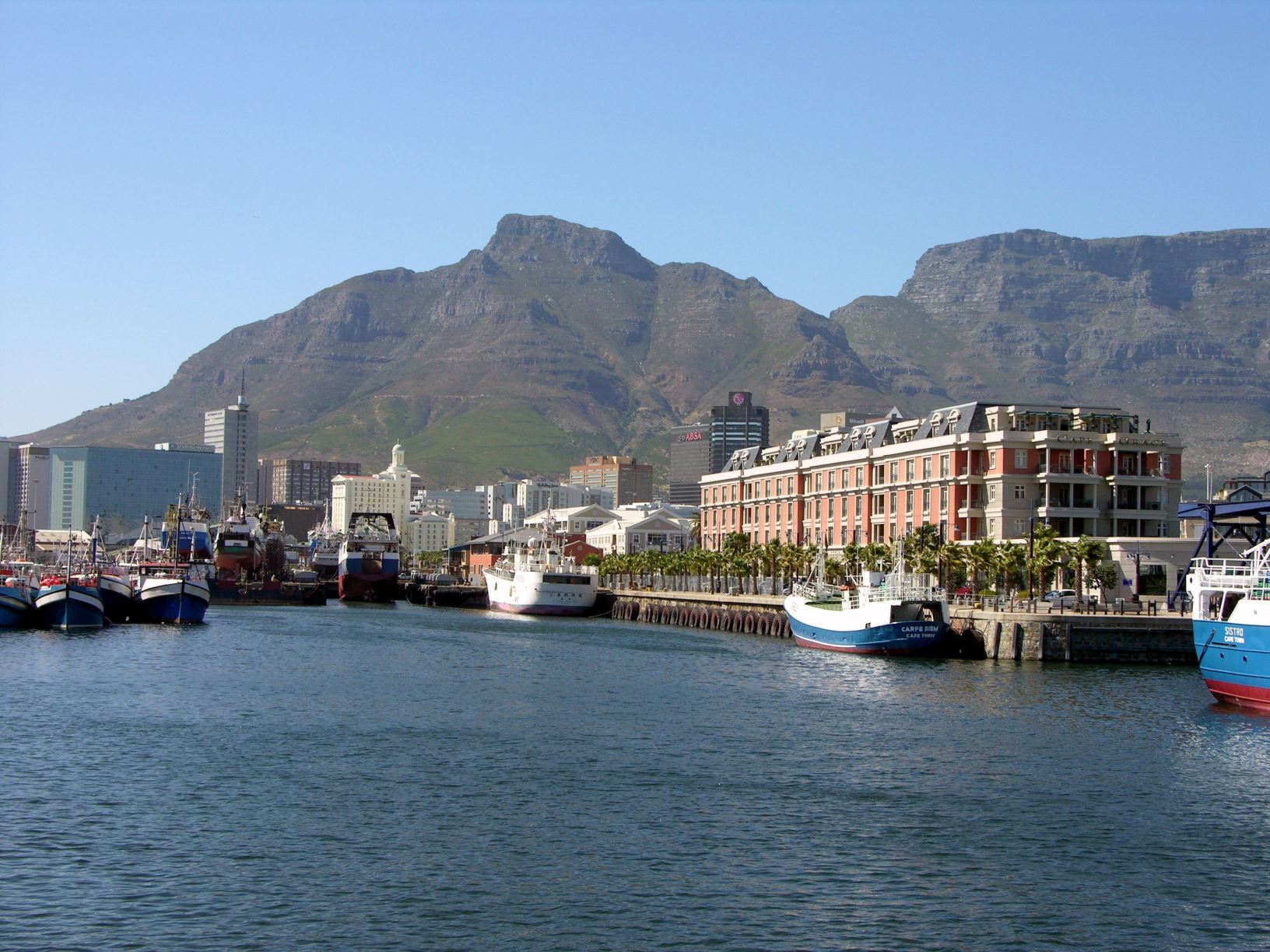
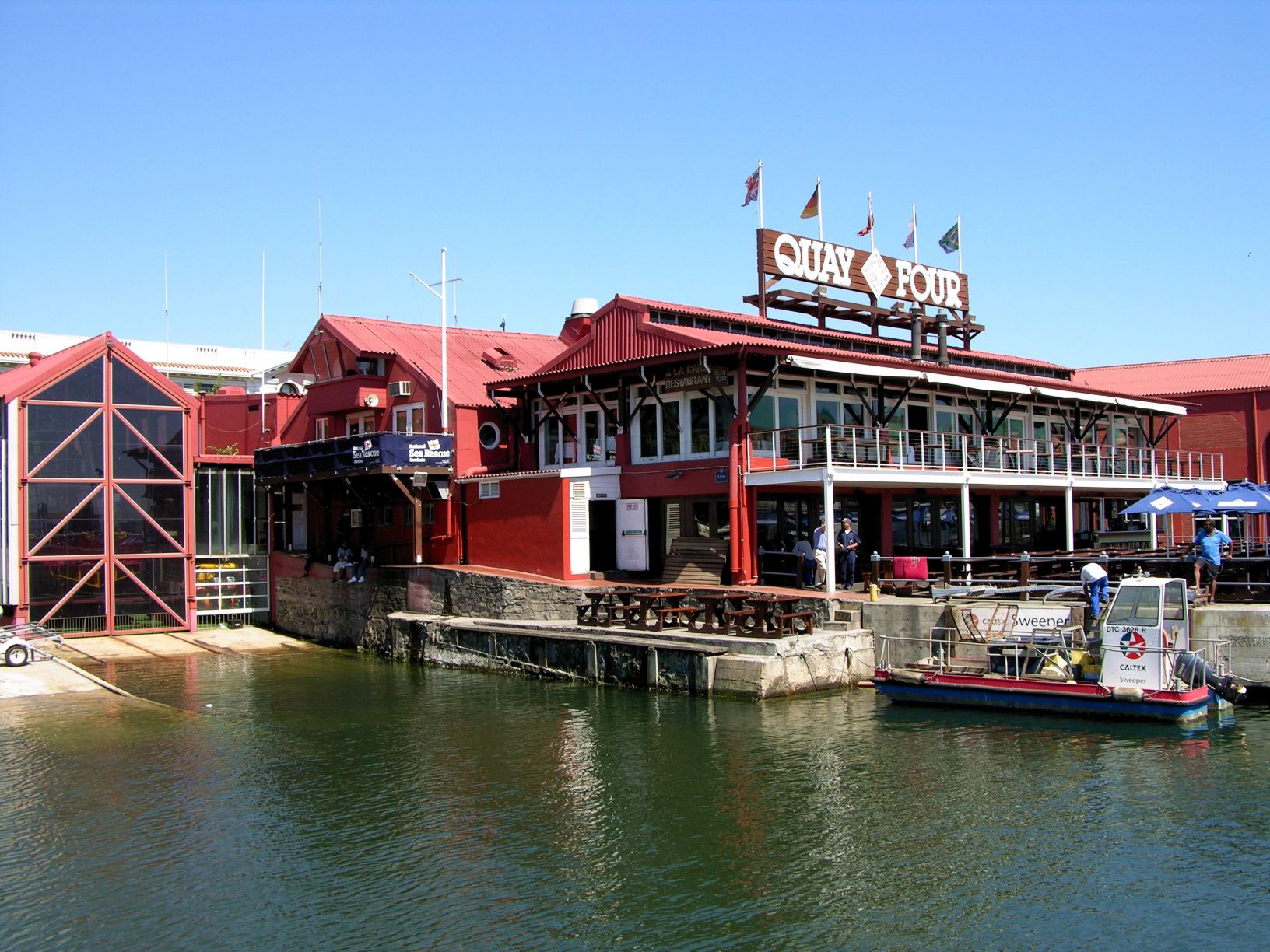
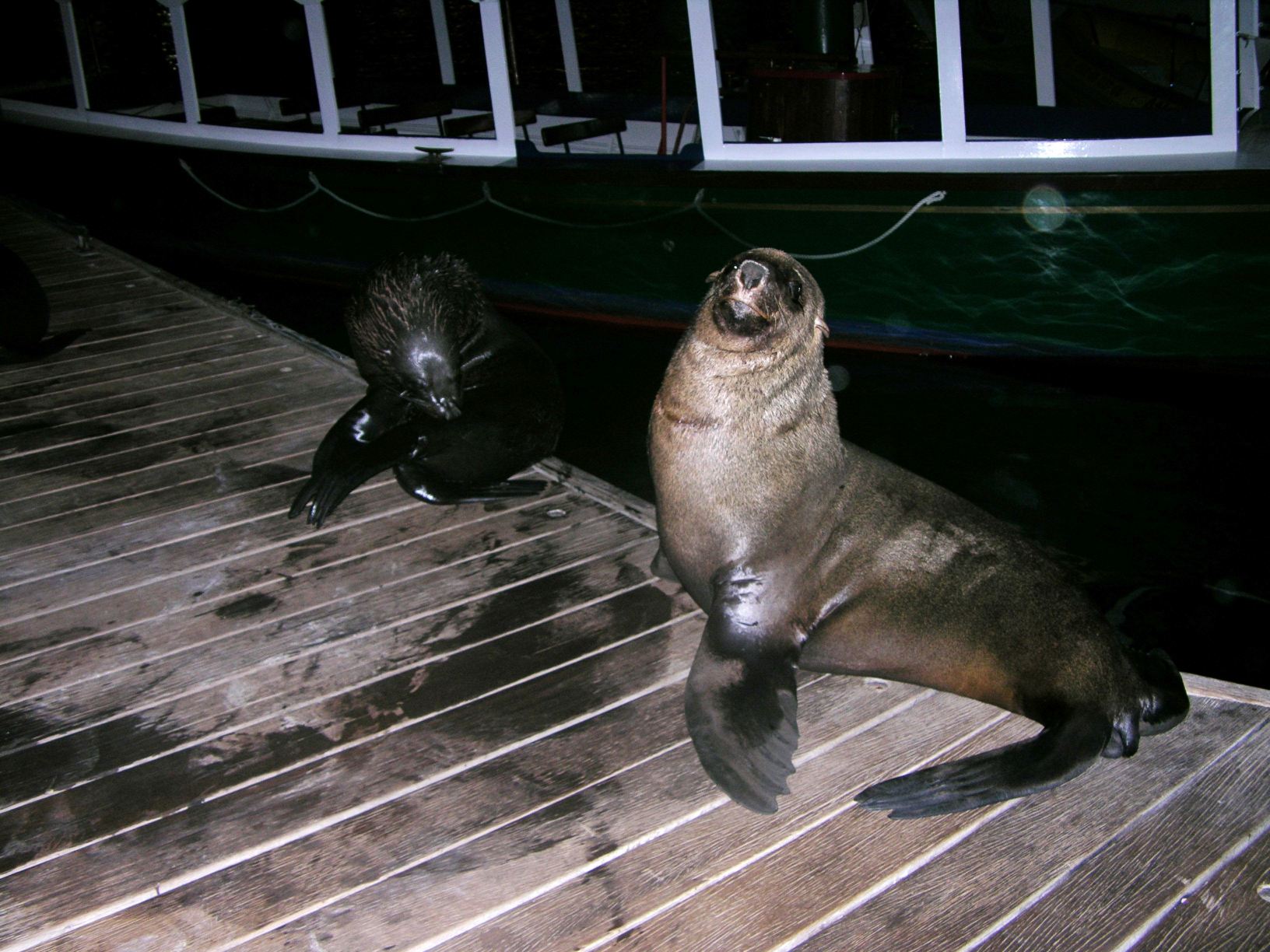
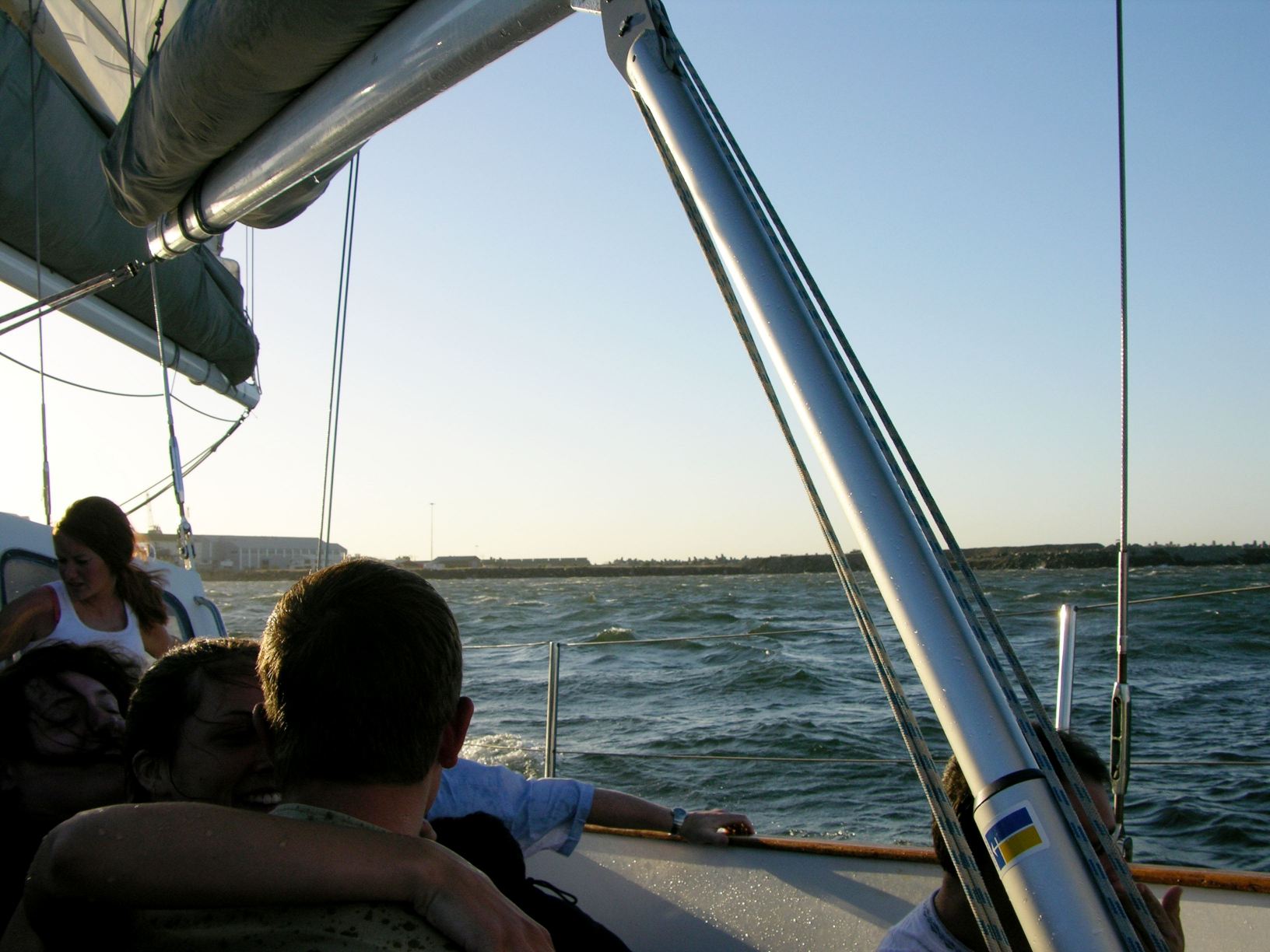
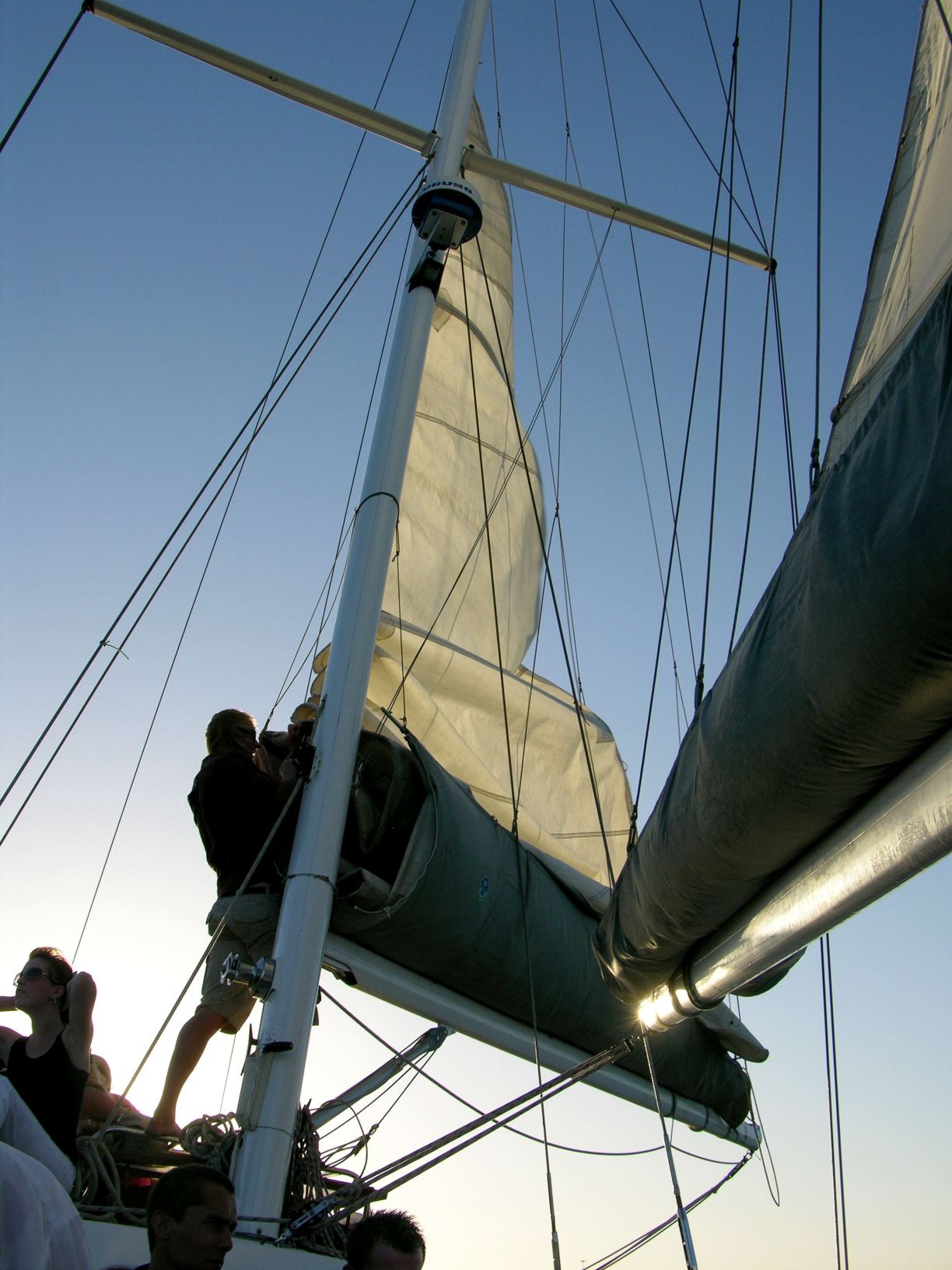
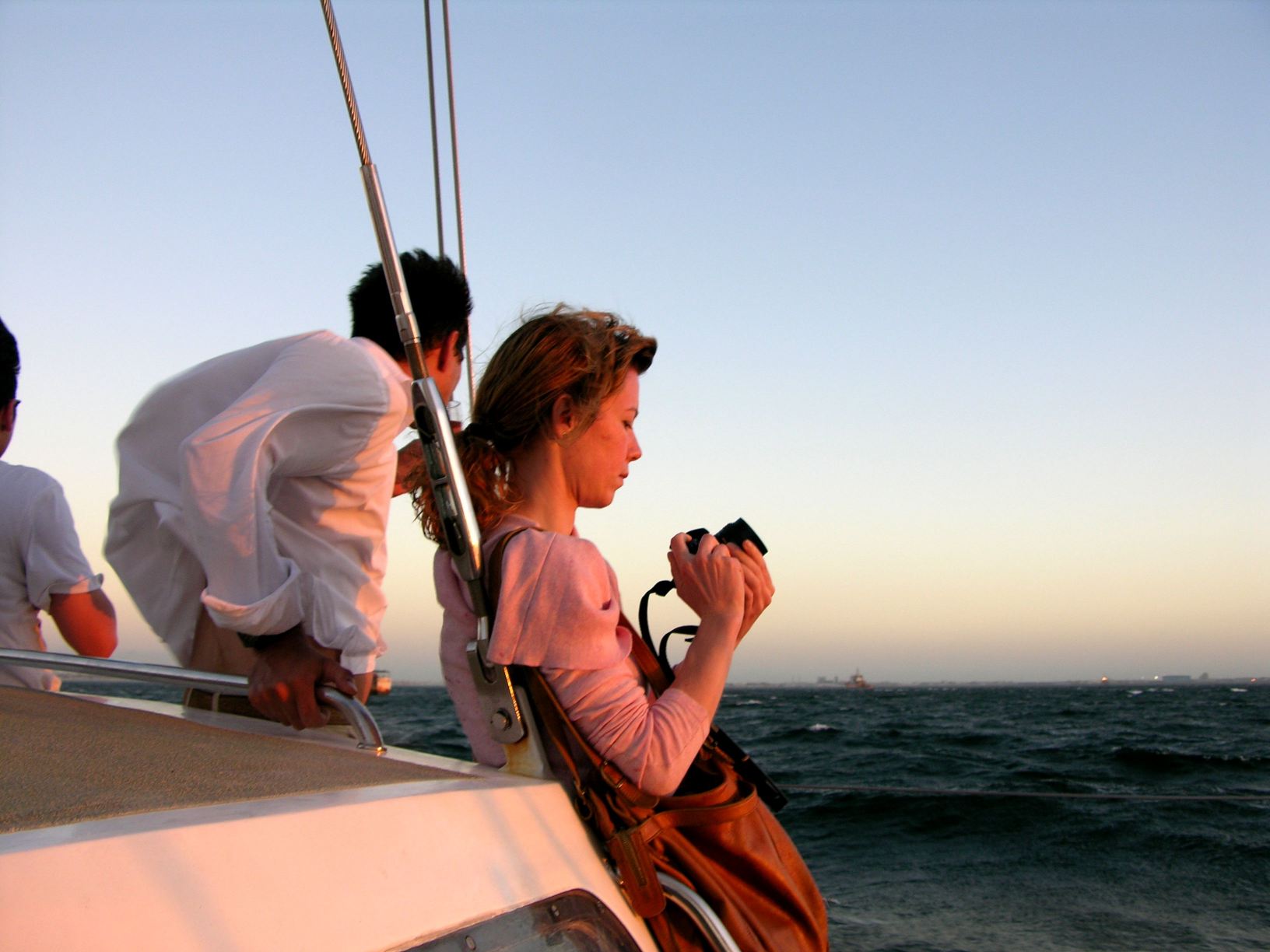
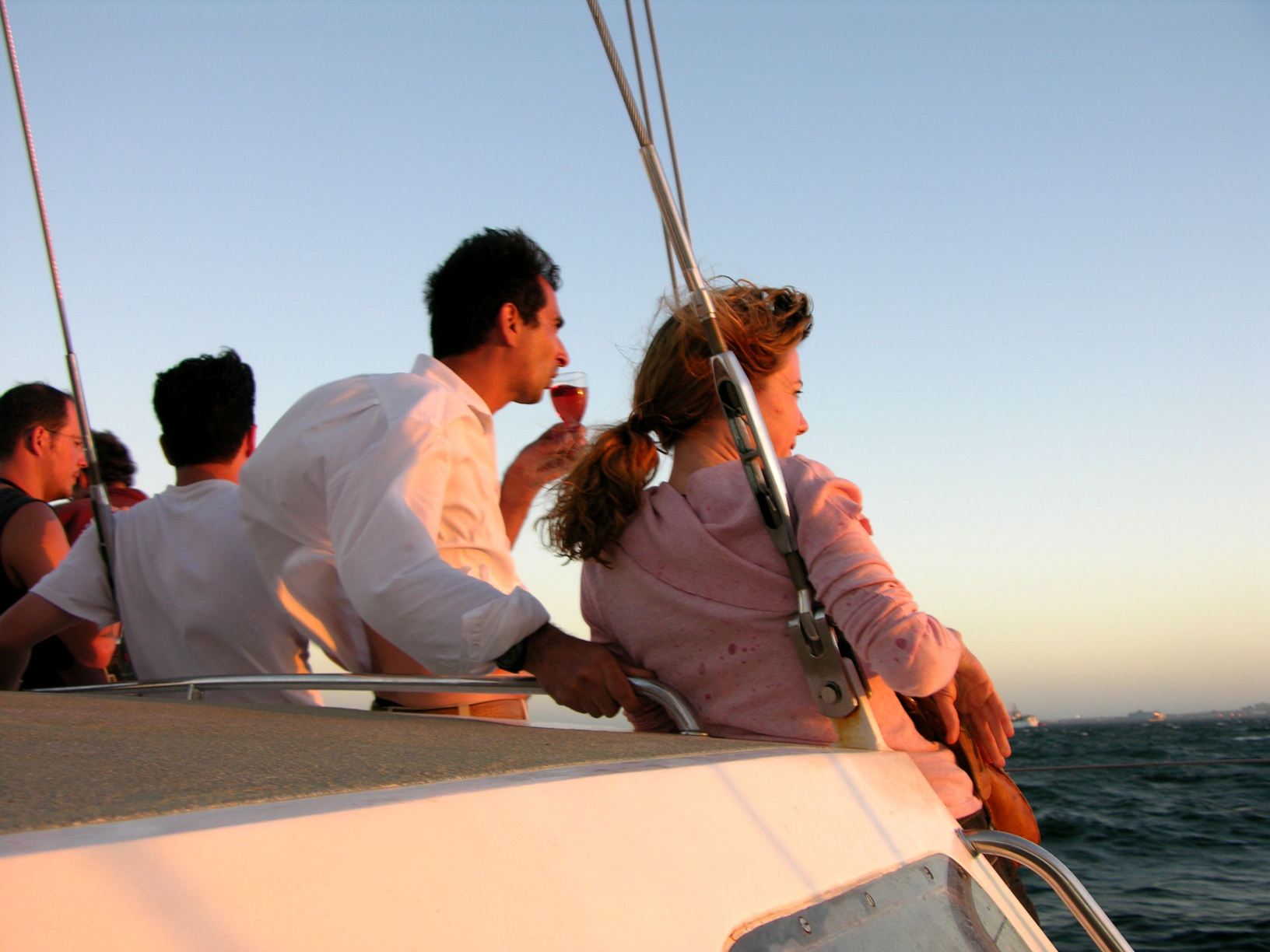
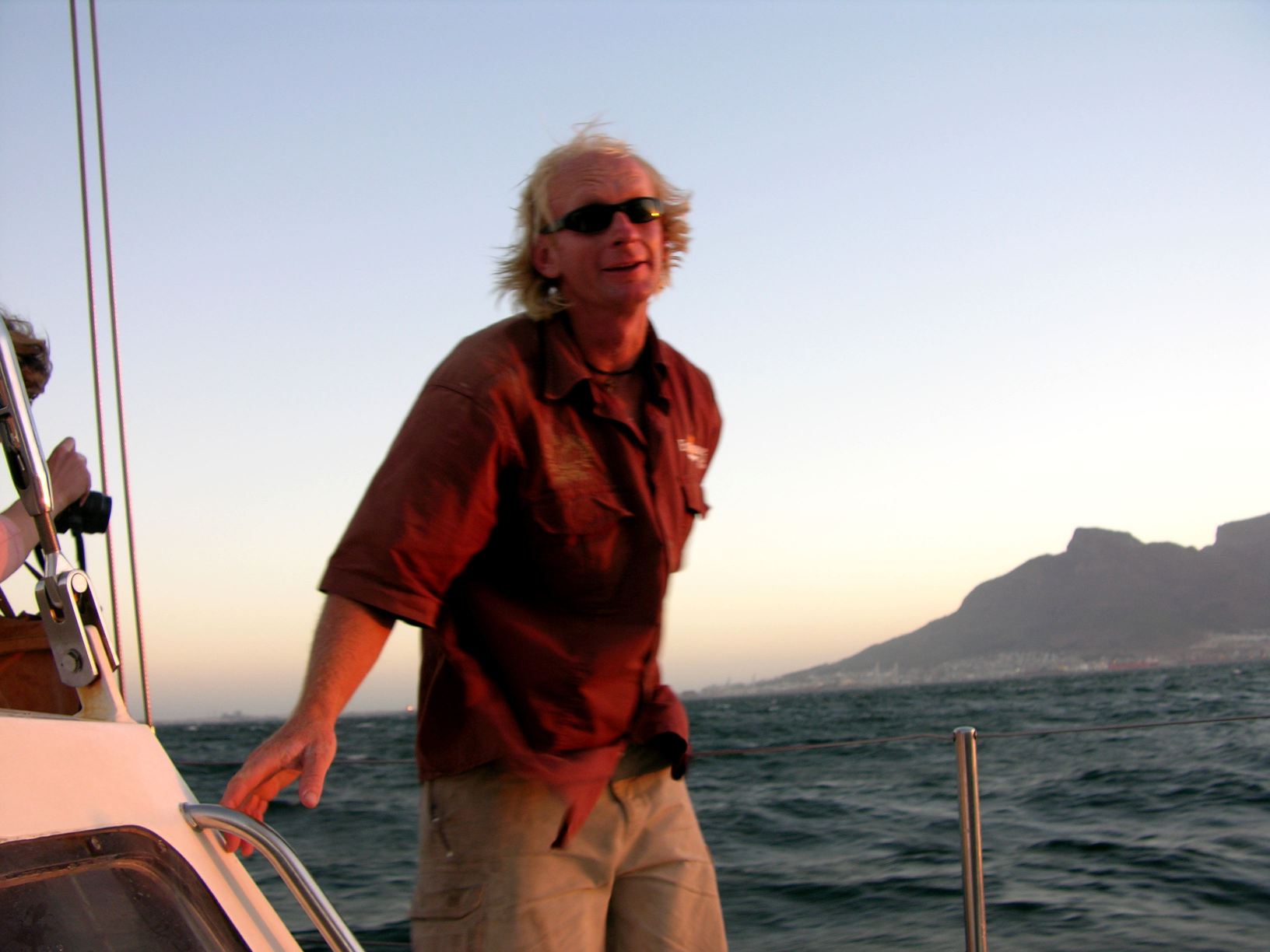
The Waterfront is where the boats leave to take tourists out to sea. The most popular outing is the sunset cruise with champagne. You can go by motorboat, but better by sailing yacht. That's what we did. The trip lasts two hours. It was hot and still in town, but the wind was strong at sea, just a little way from the shore. We stood on the open deck, constantly showered in spray from waves breaking against the side. In the end we were soaked through. It got very cold and the champagne was just the thing to warm us up. We dried out and got warm again, but the video camera, the still camera and our passports all got a bit wet. We should have brought jackets and a dry bag.
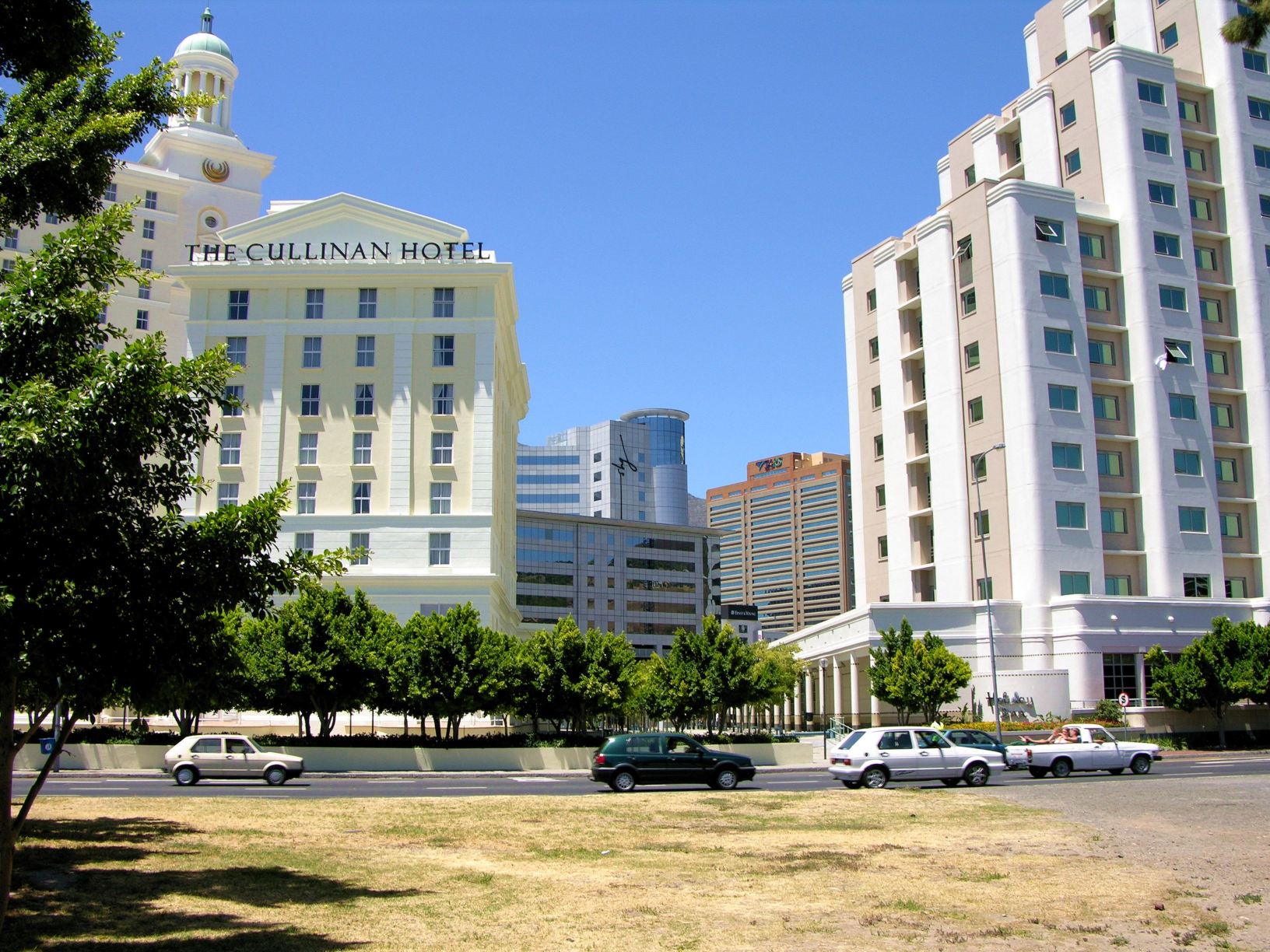
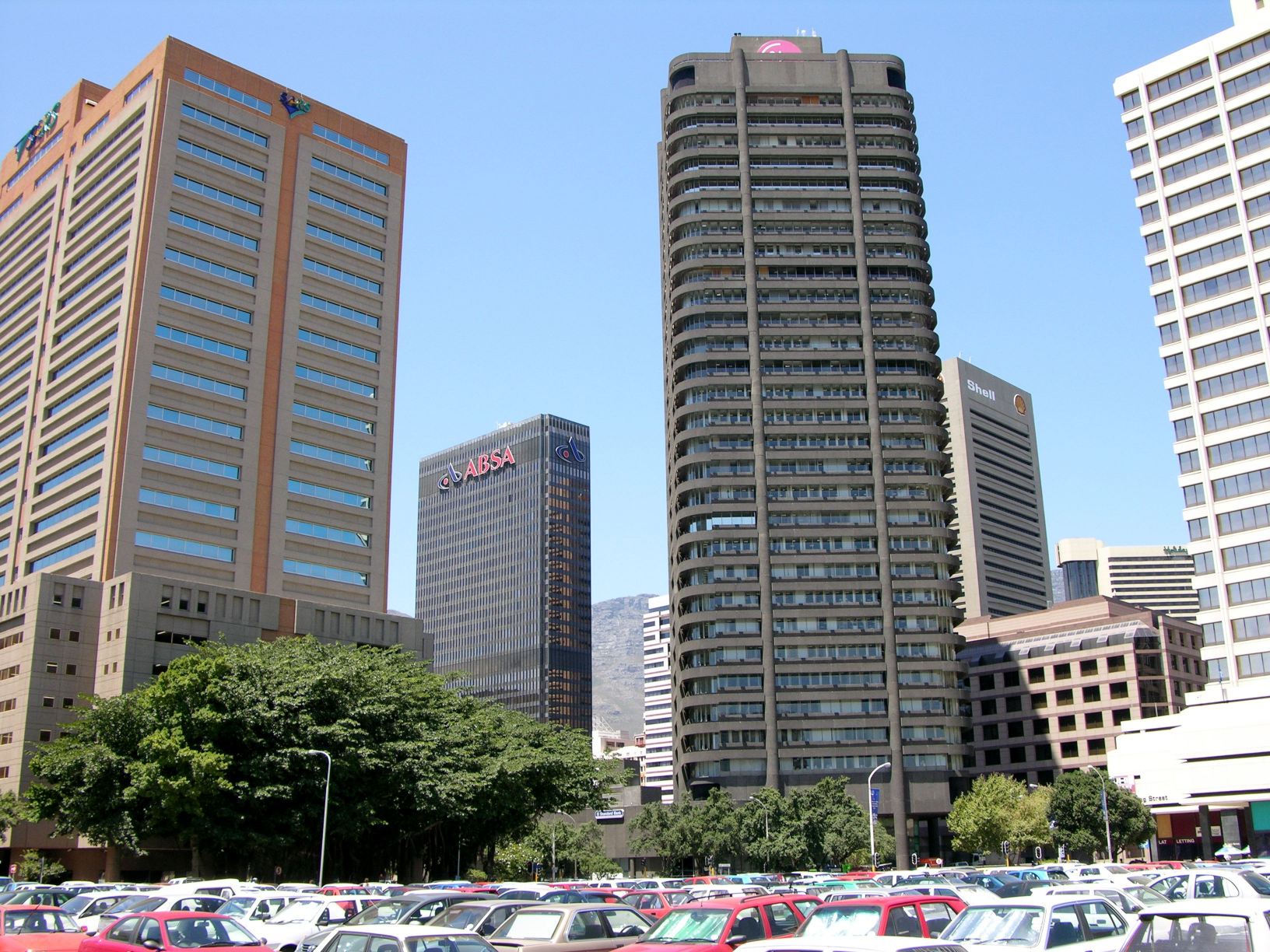
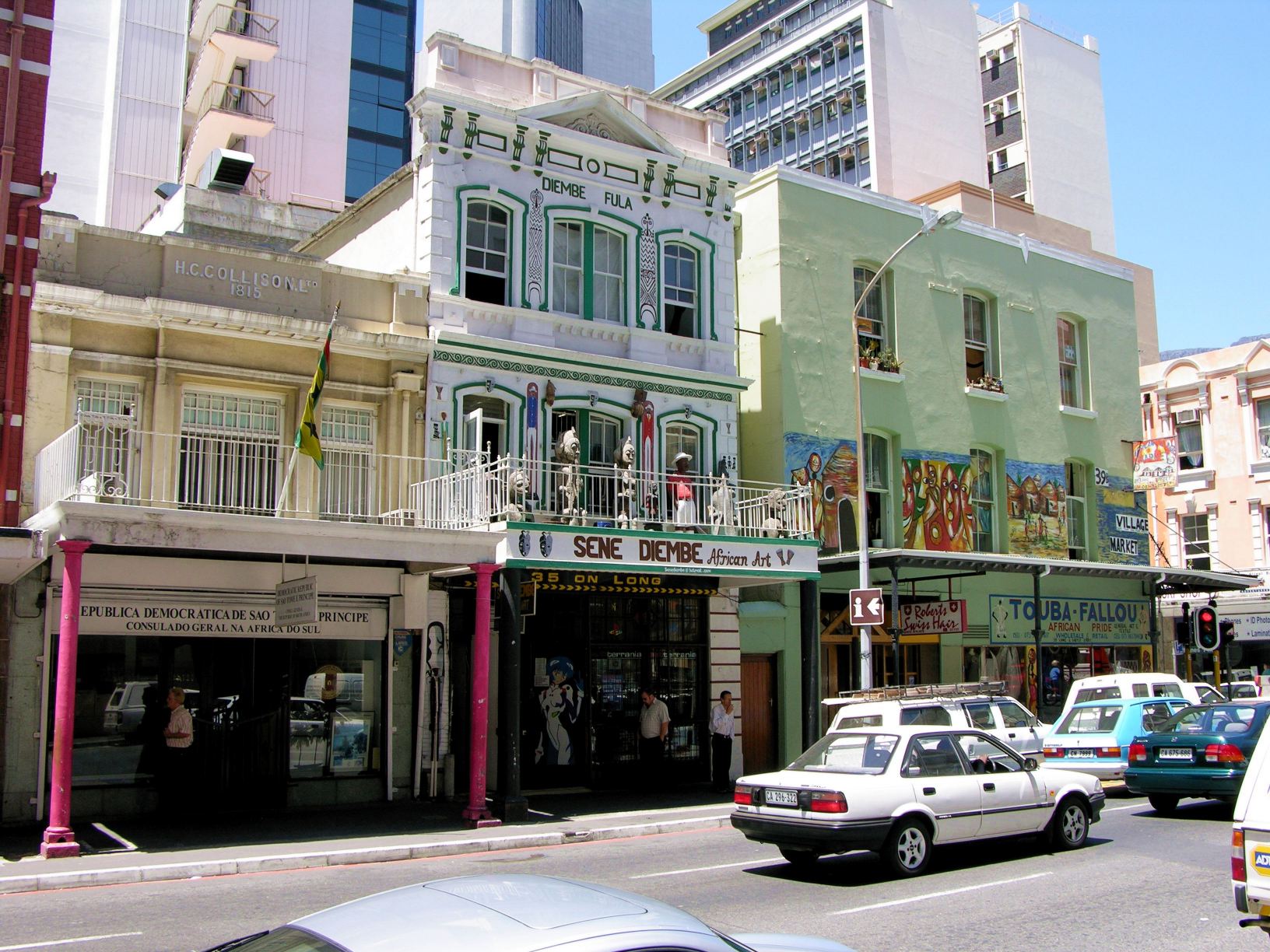
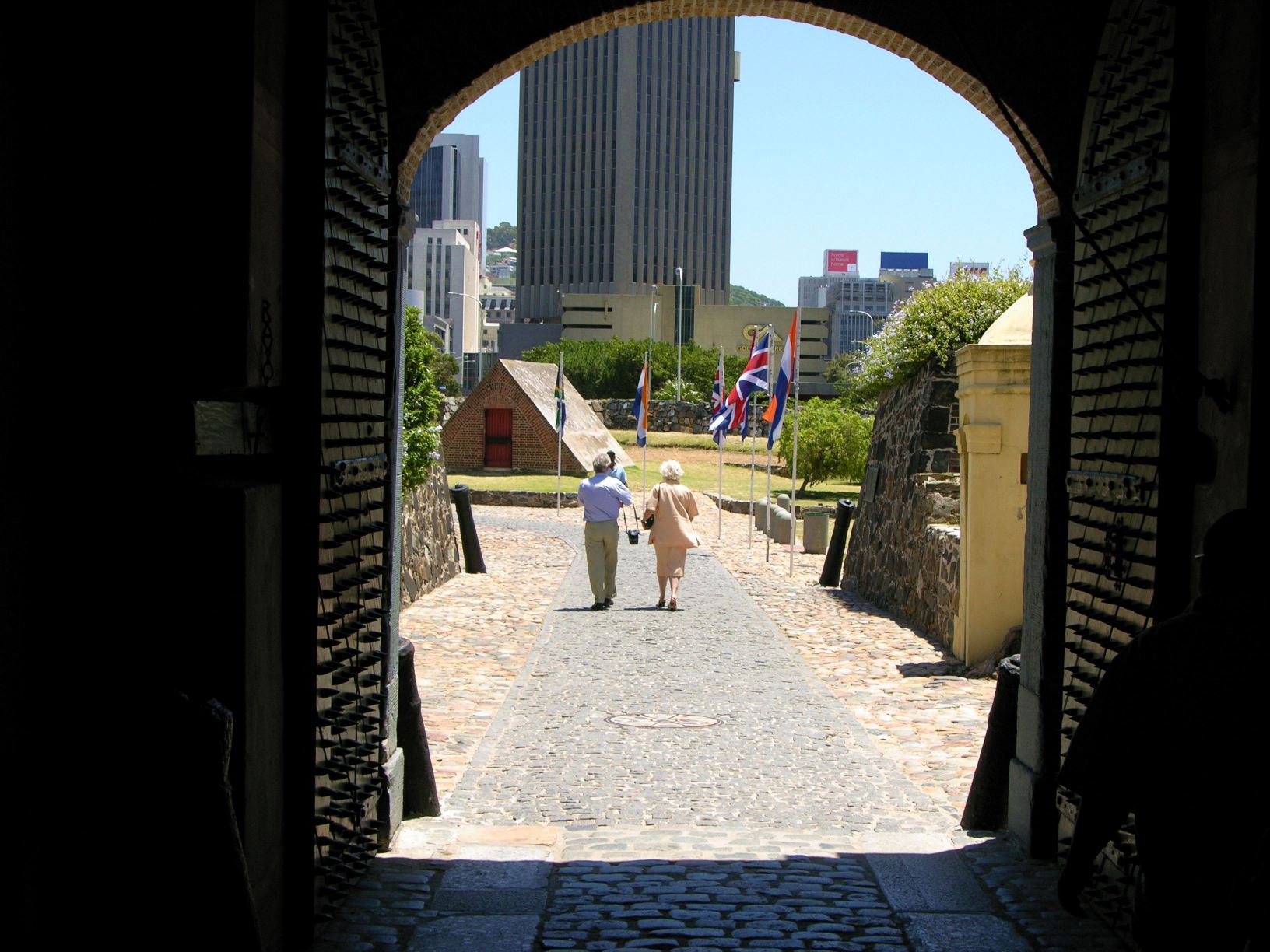
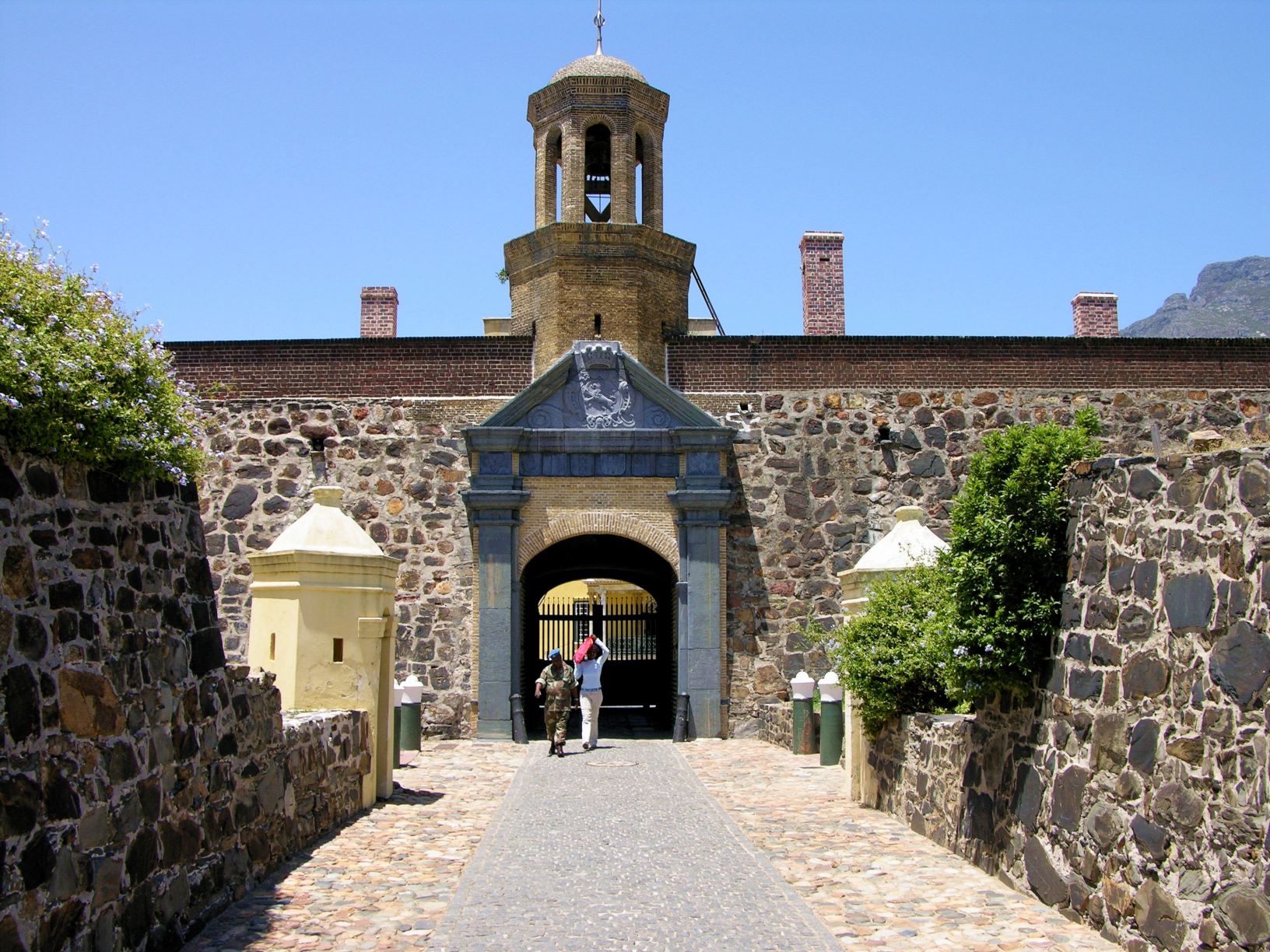
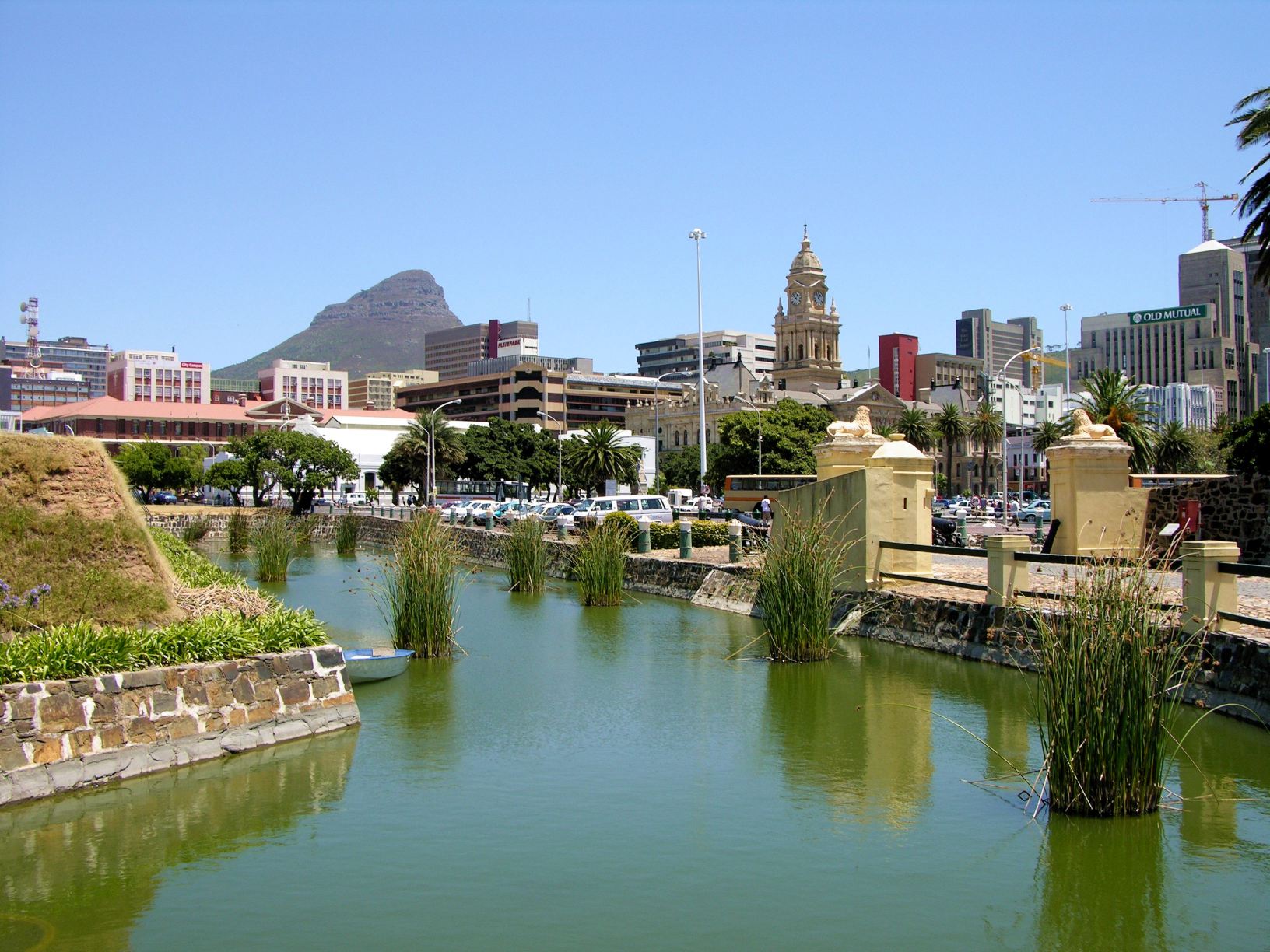
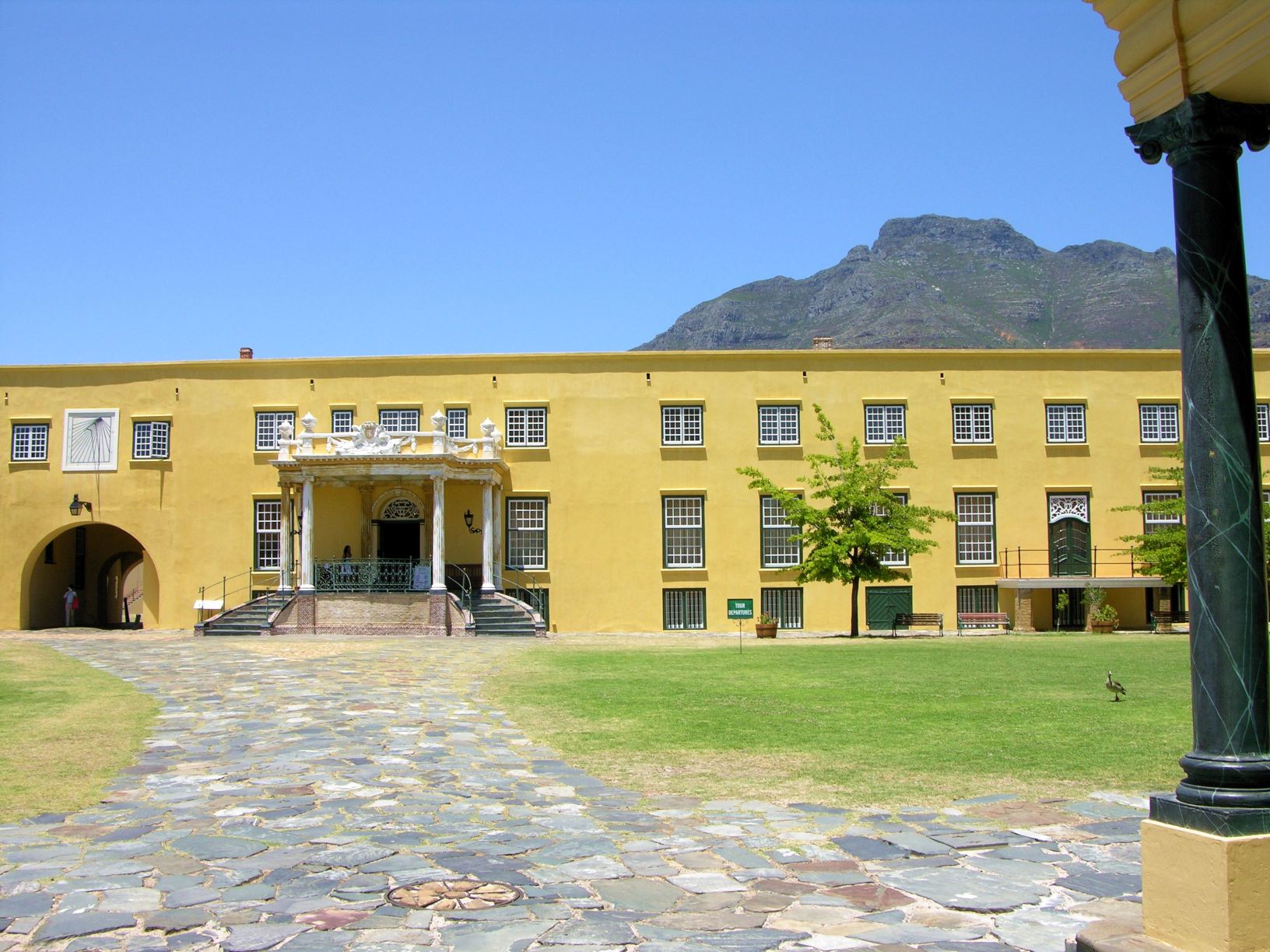
The main business district with the skyscrapers is full of shops too, but they're more for locals. The area is predominantly Black, and quite safe. Here, too, is the fortress around which the city first grew. The present walls, built in 1700, look very much like those of the Peter and Paul Fortress in Saint Petersburg.
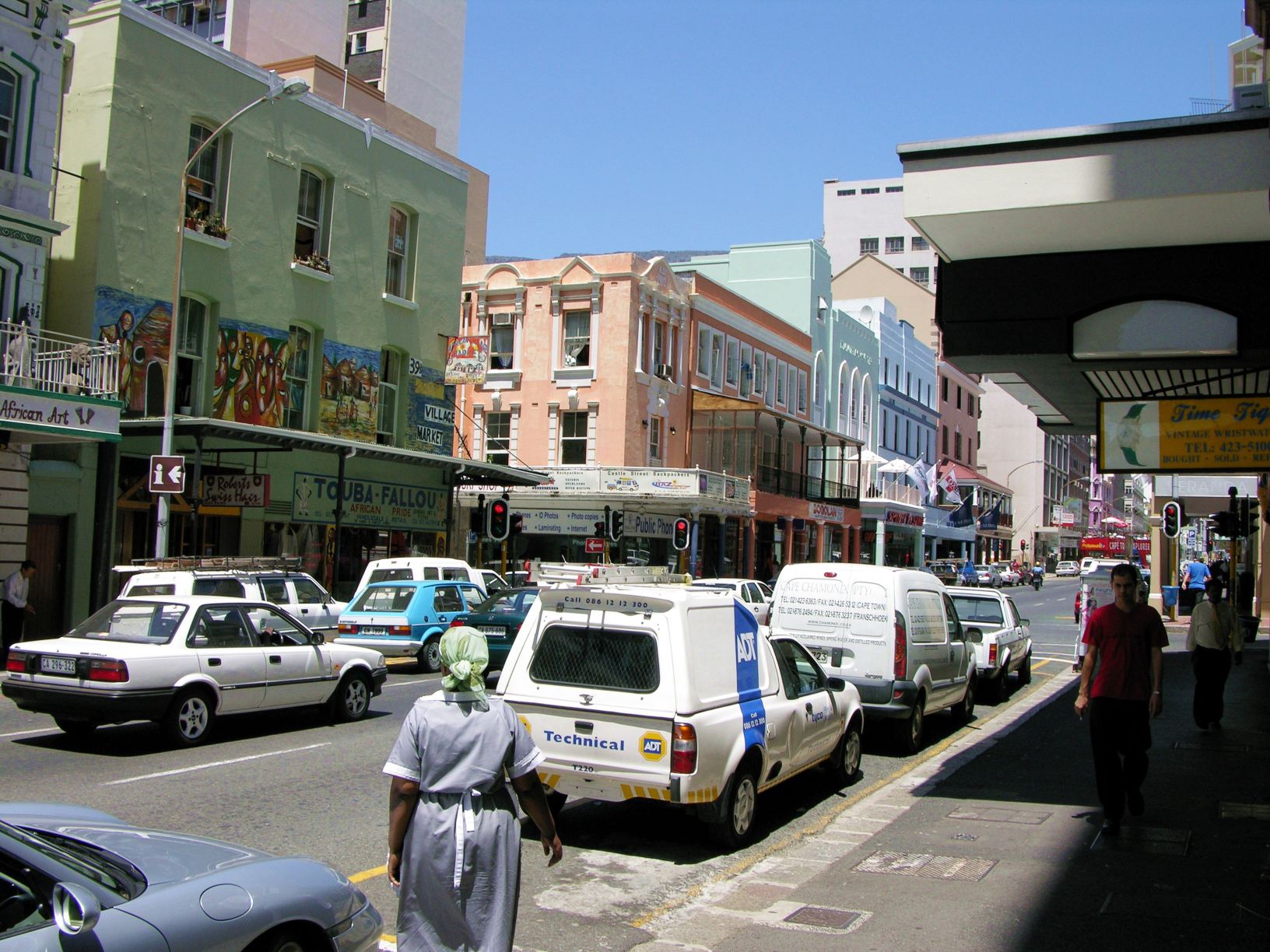
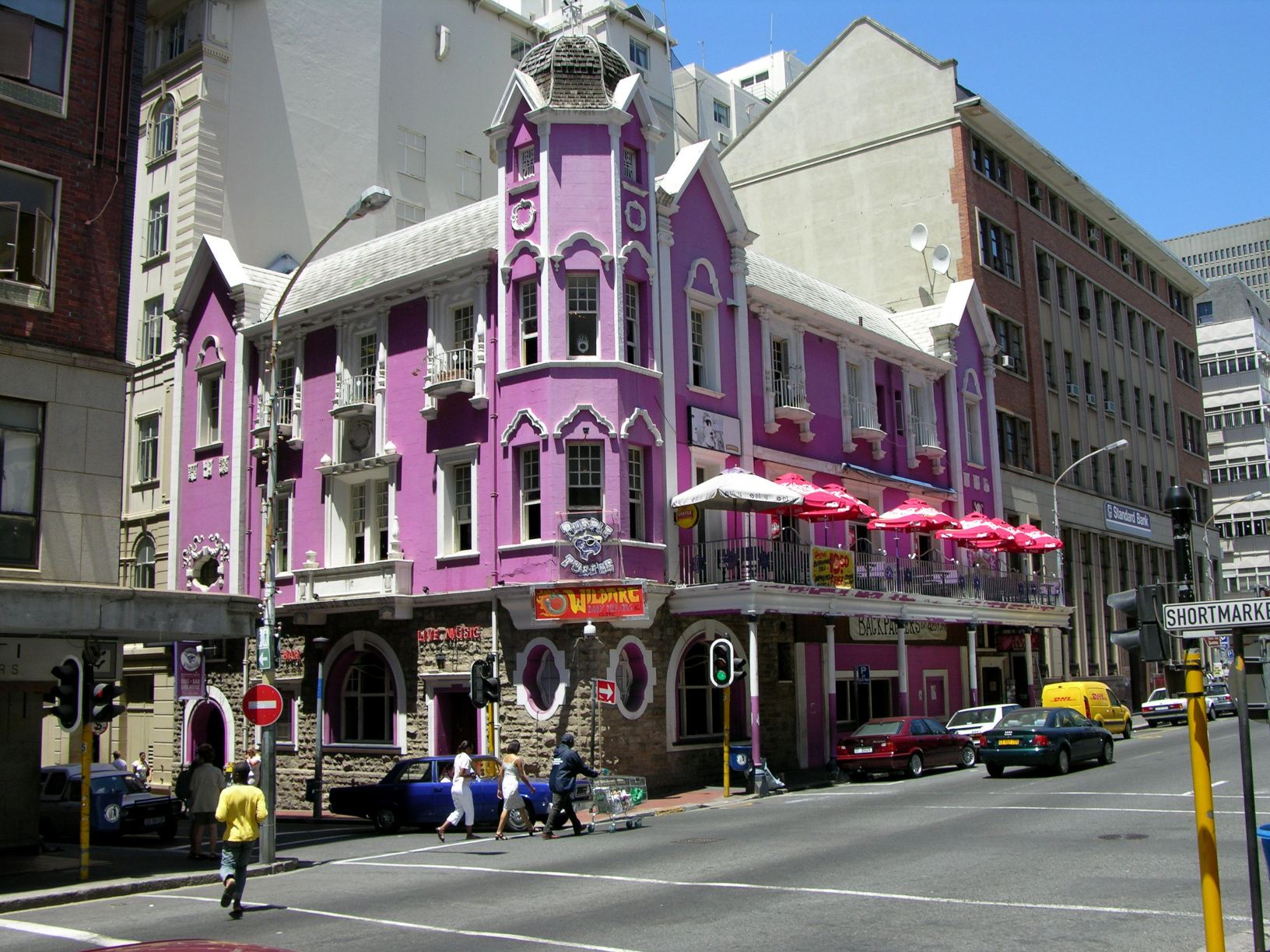
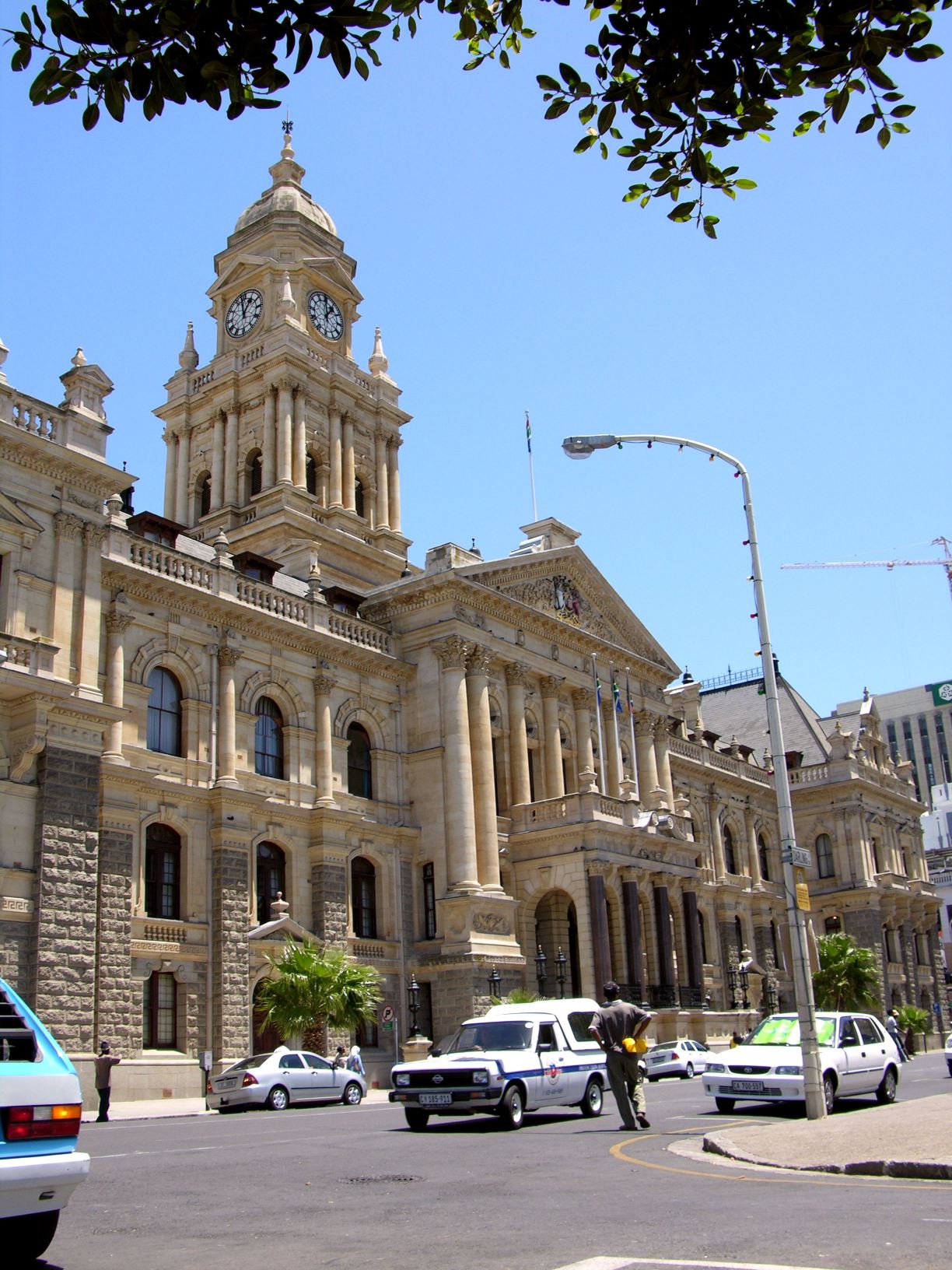
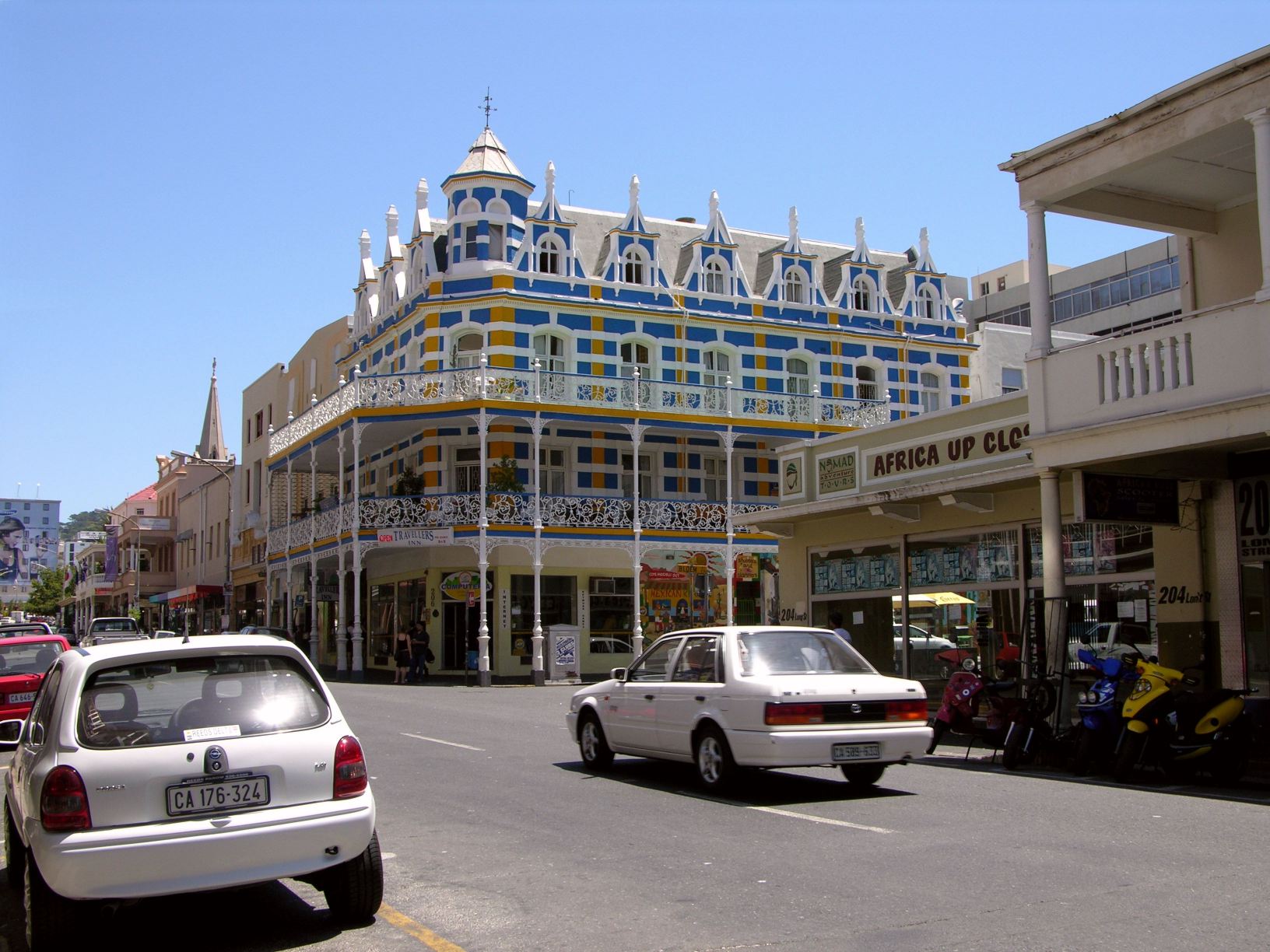
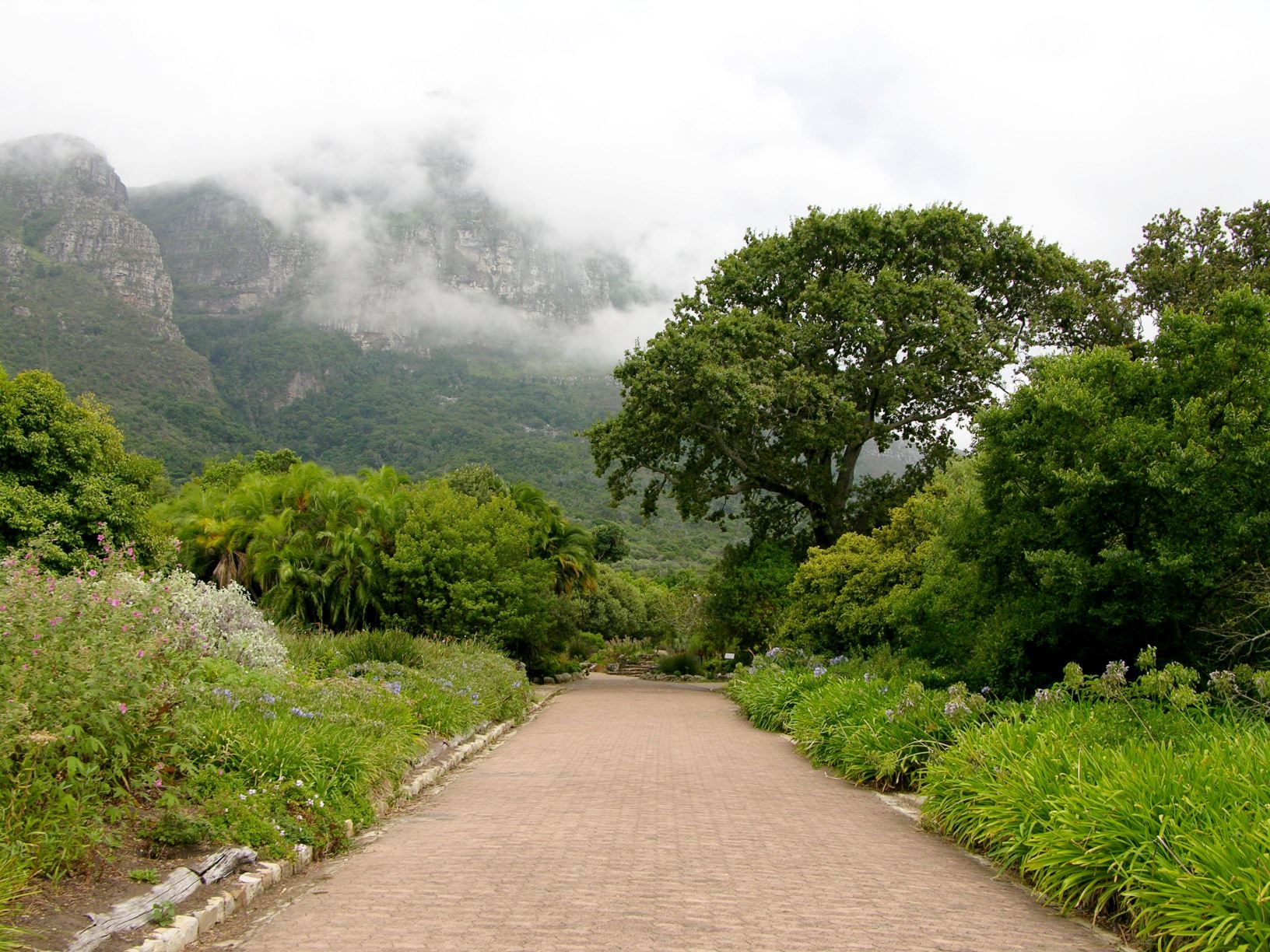
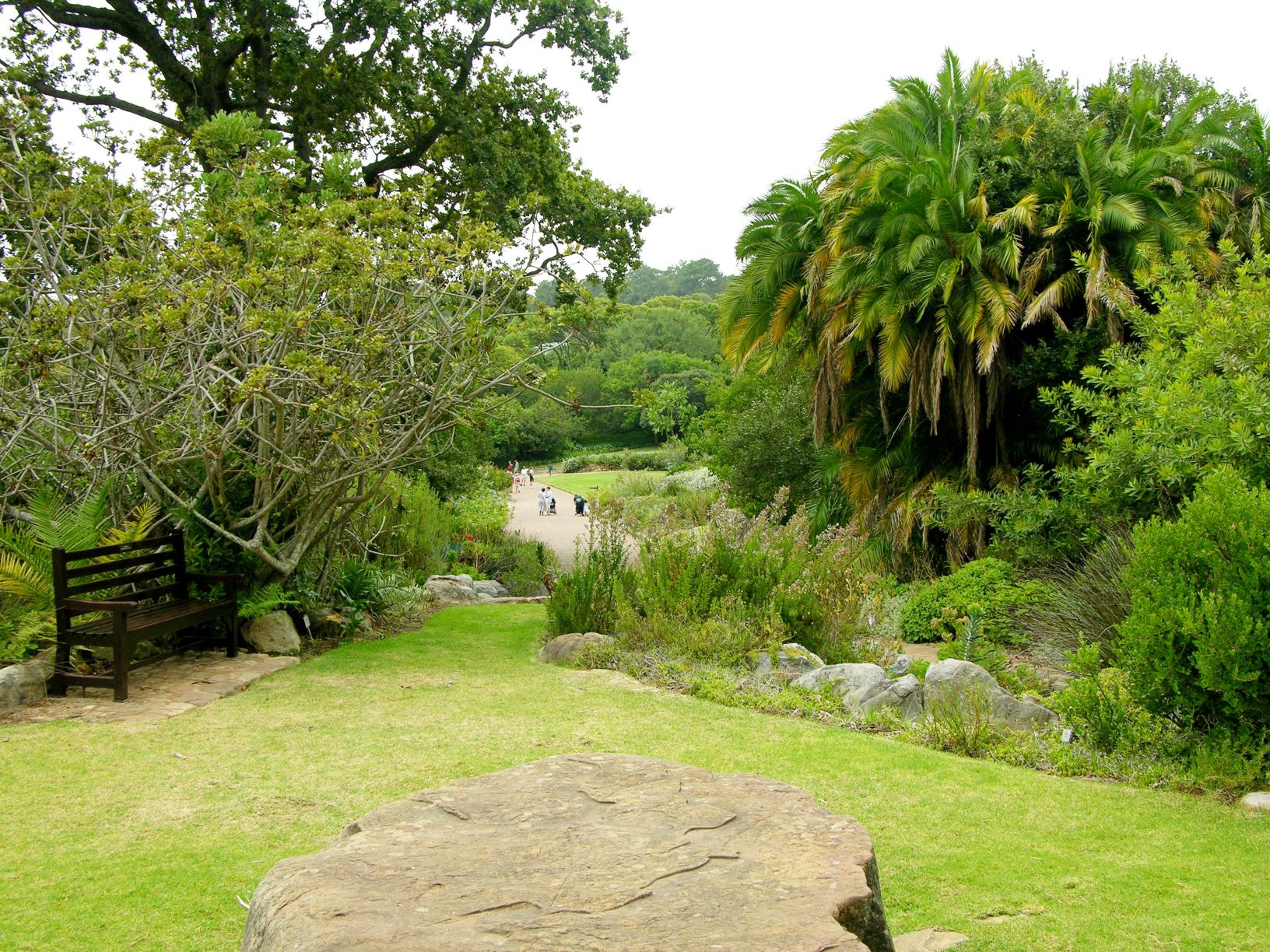
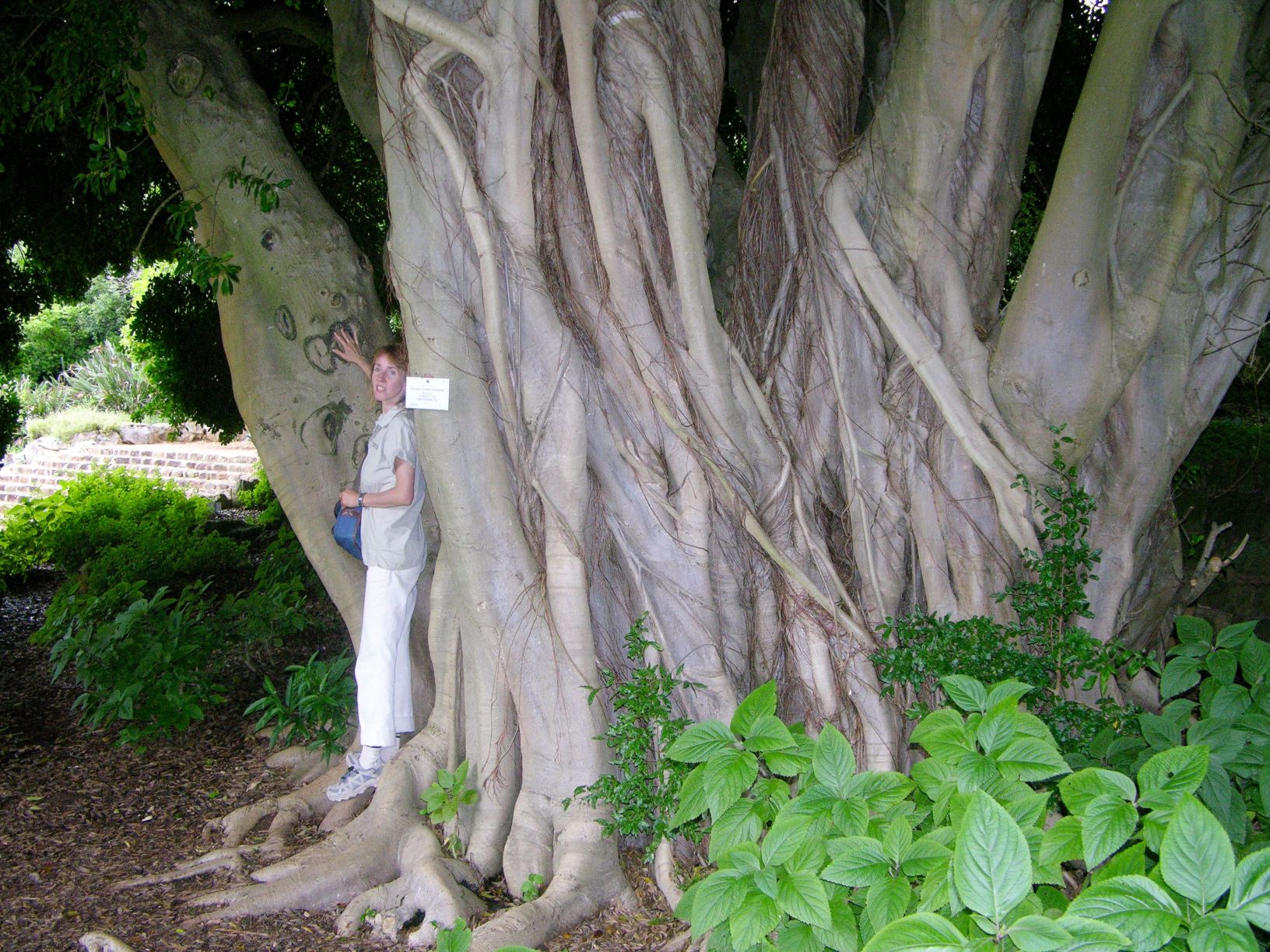
Behind Table Mountain there's shelter from the cold sea winds. The climate is milder and the plants grow thicker. That's why Cape Town's botanical garden is here (website). If you believe Lonely Planet, then it's one of the best in the world. We set aside the whole evening to walk around it. The garden really is beautiful and big. With care and timely watering, the trees have grown enormous. I especially like the fig trees. Imagine growing that big! Quite a different thing from a rubber plant in a pot at the cinema.
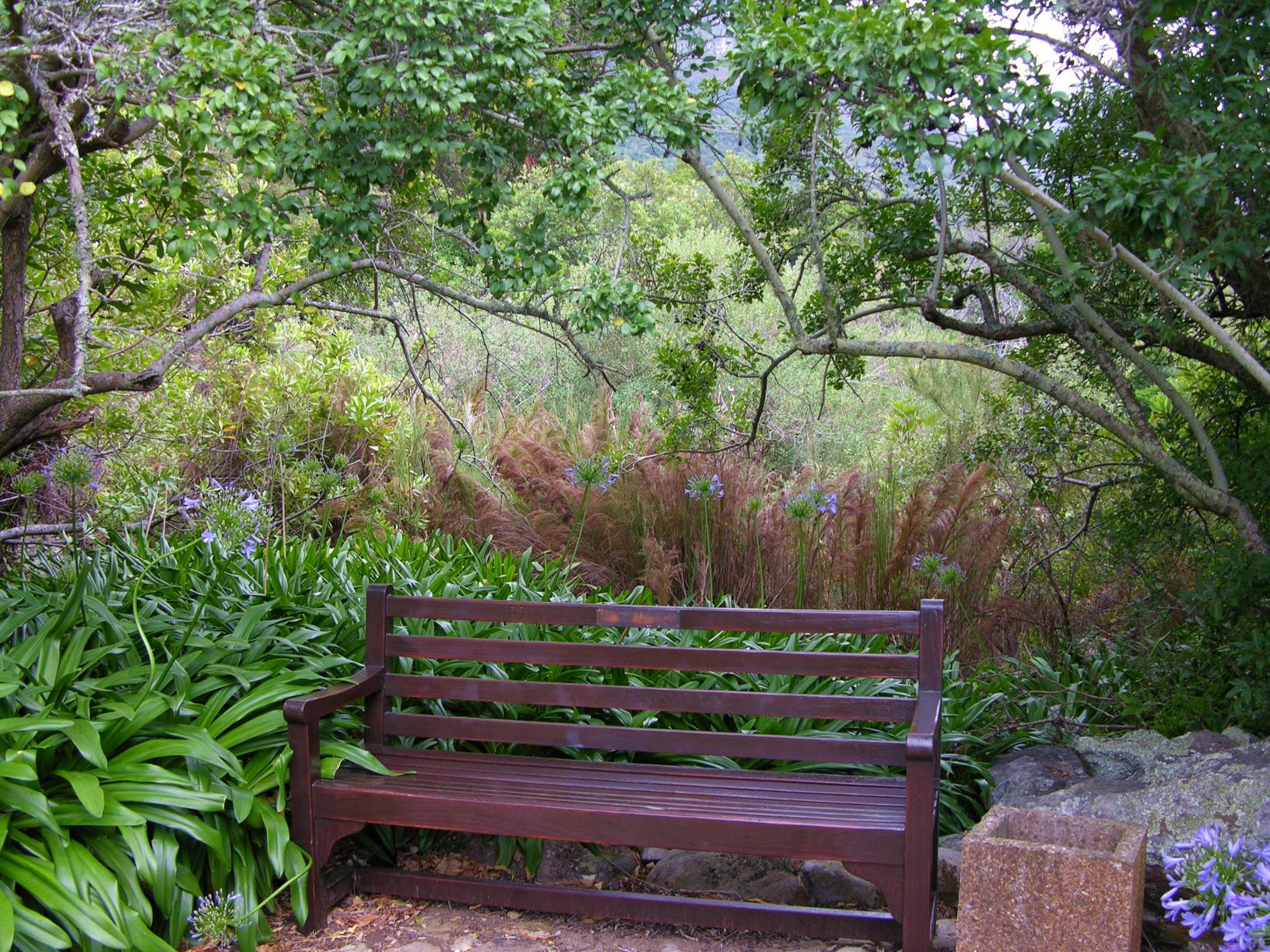
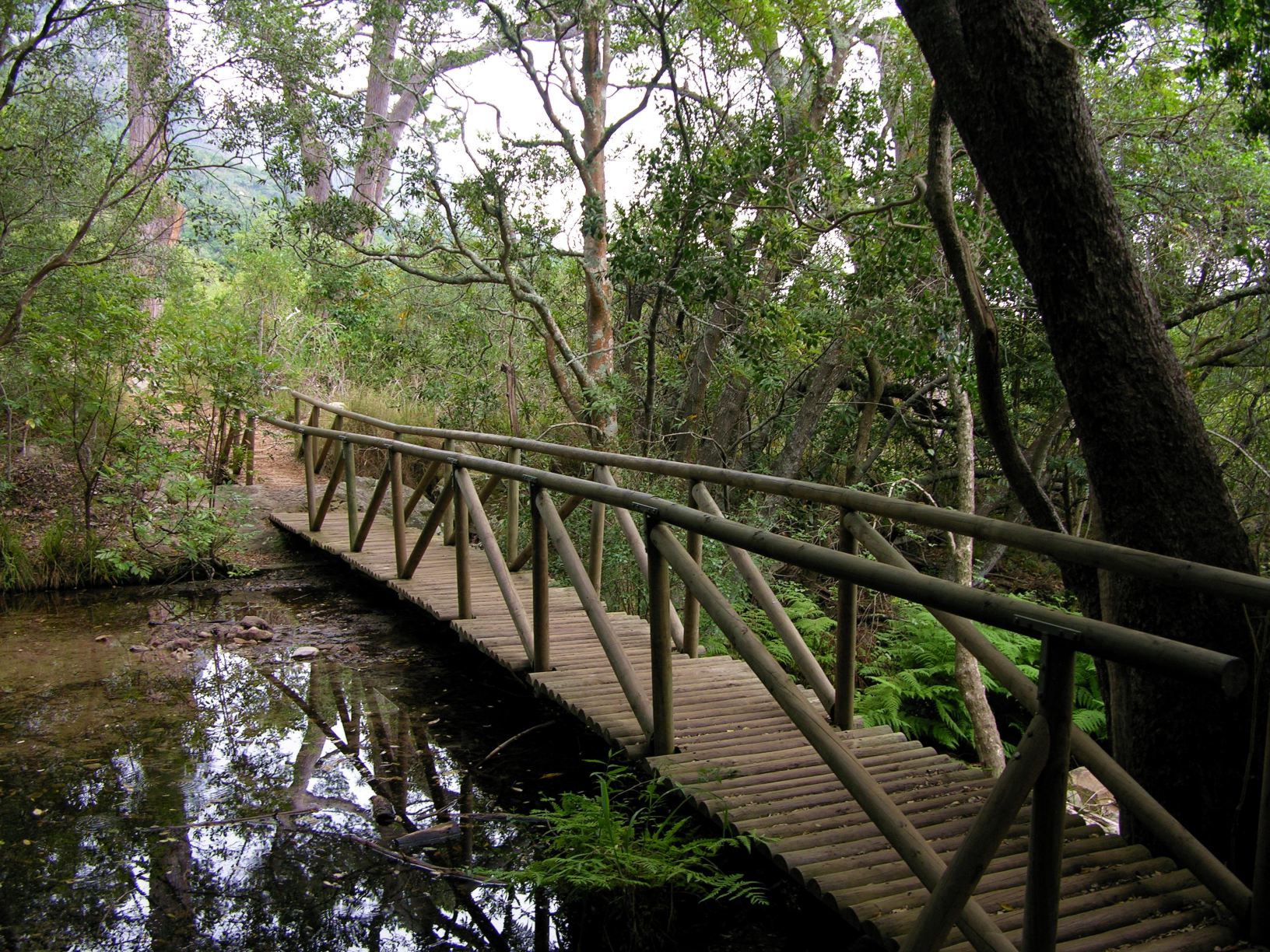
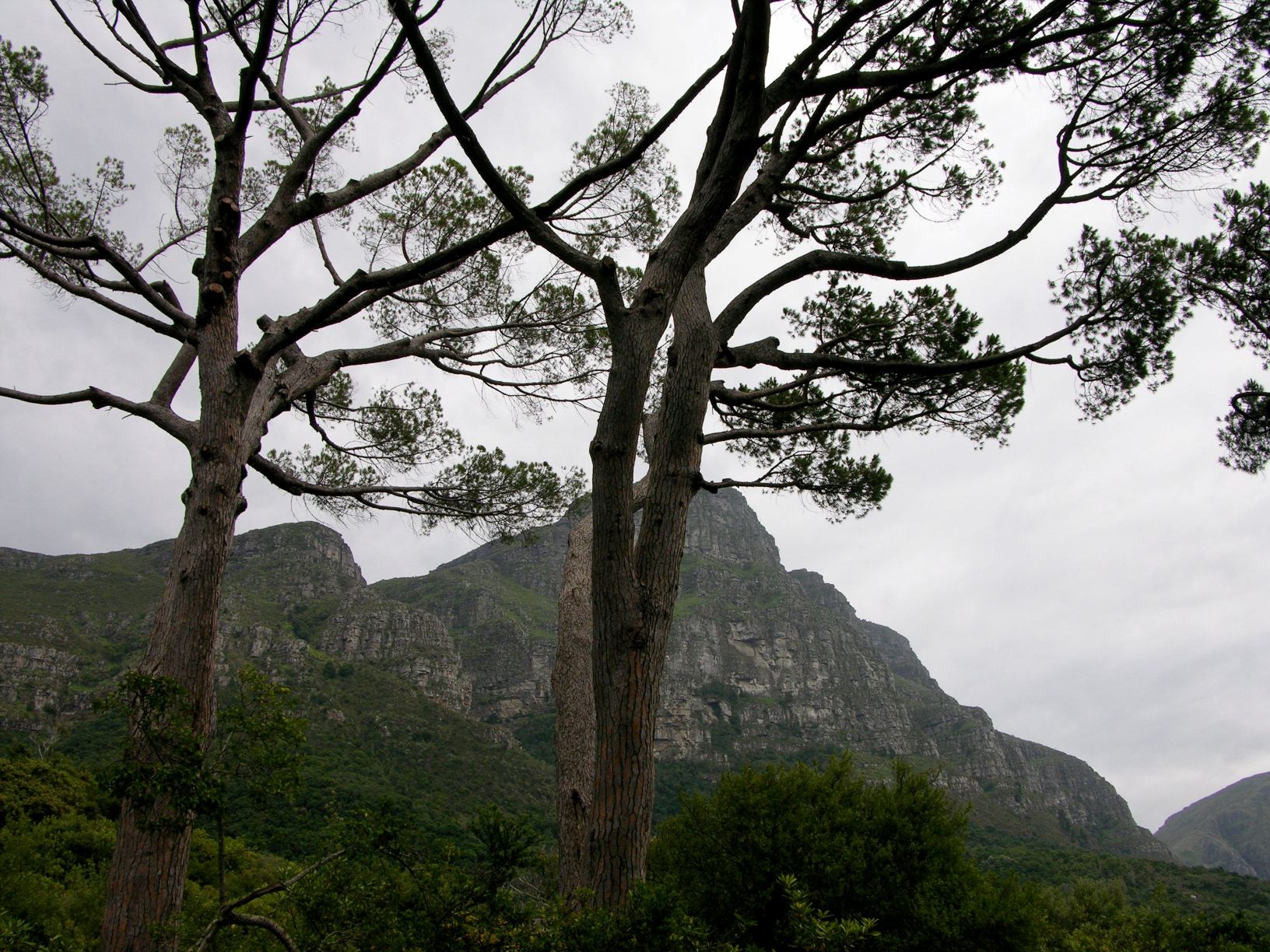
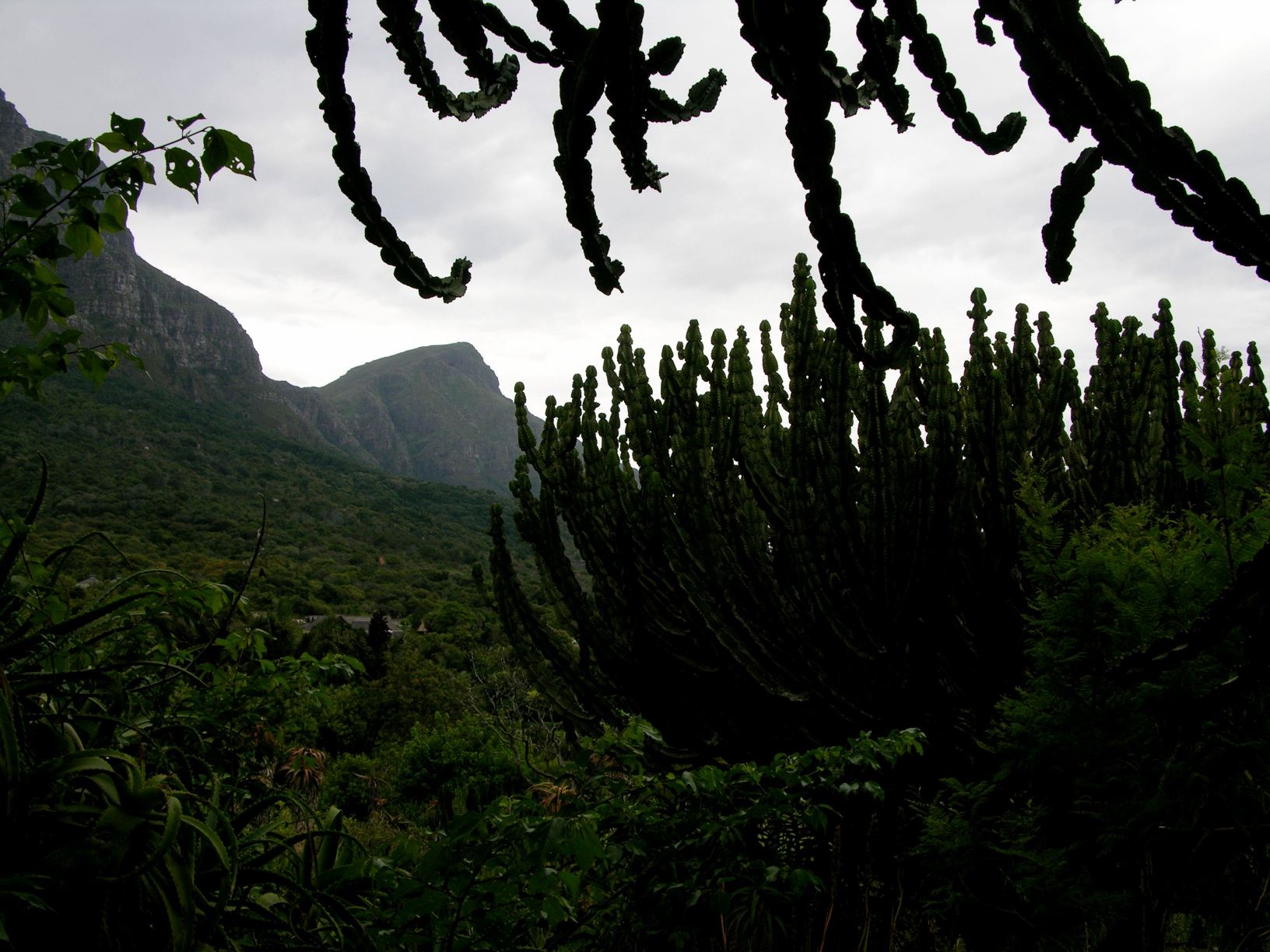
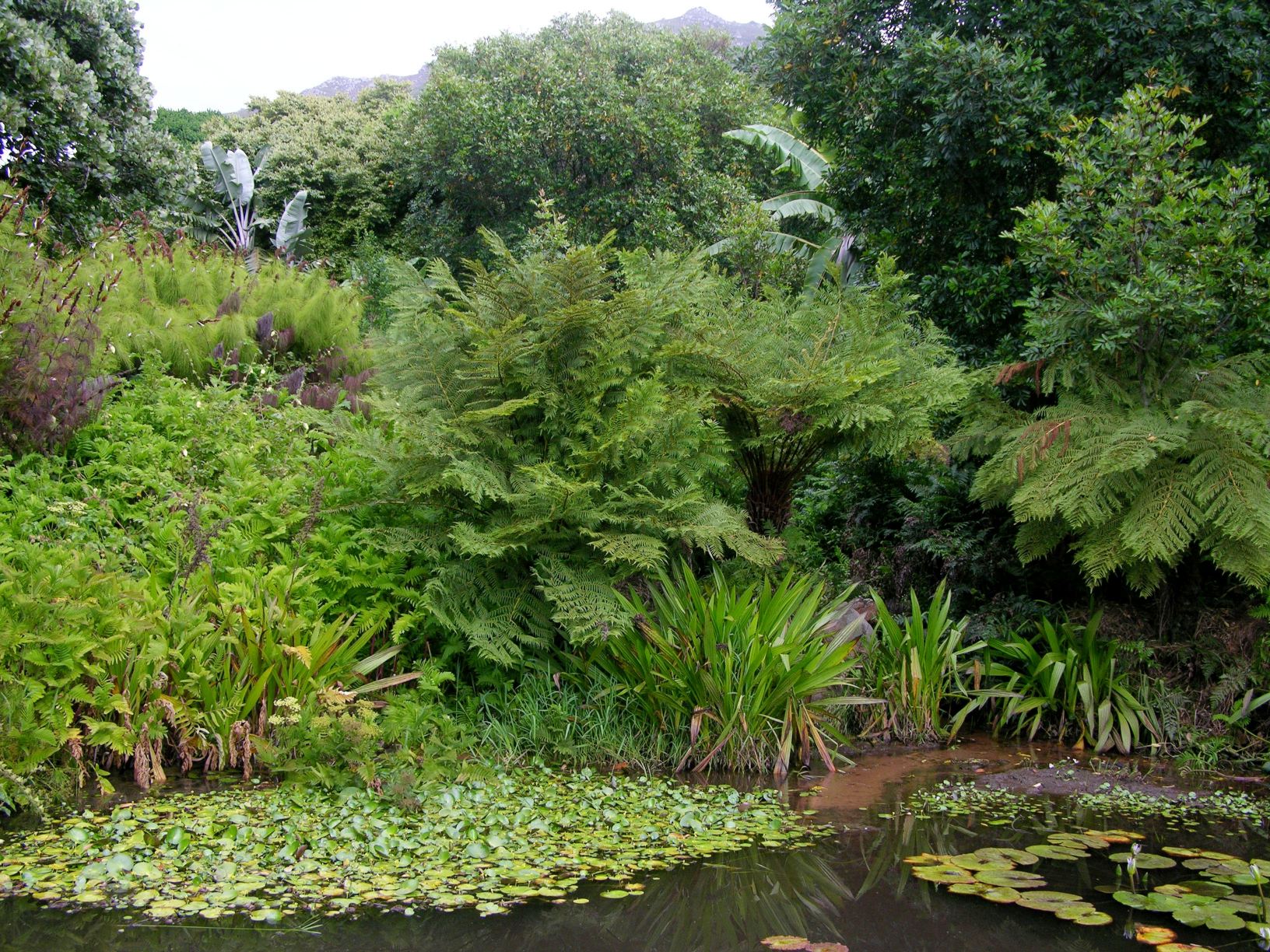
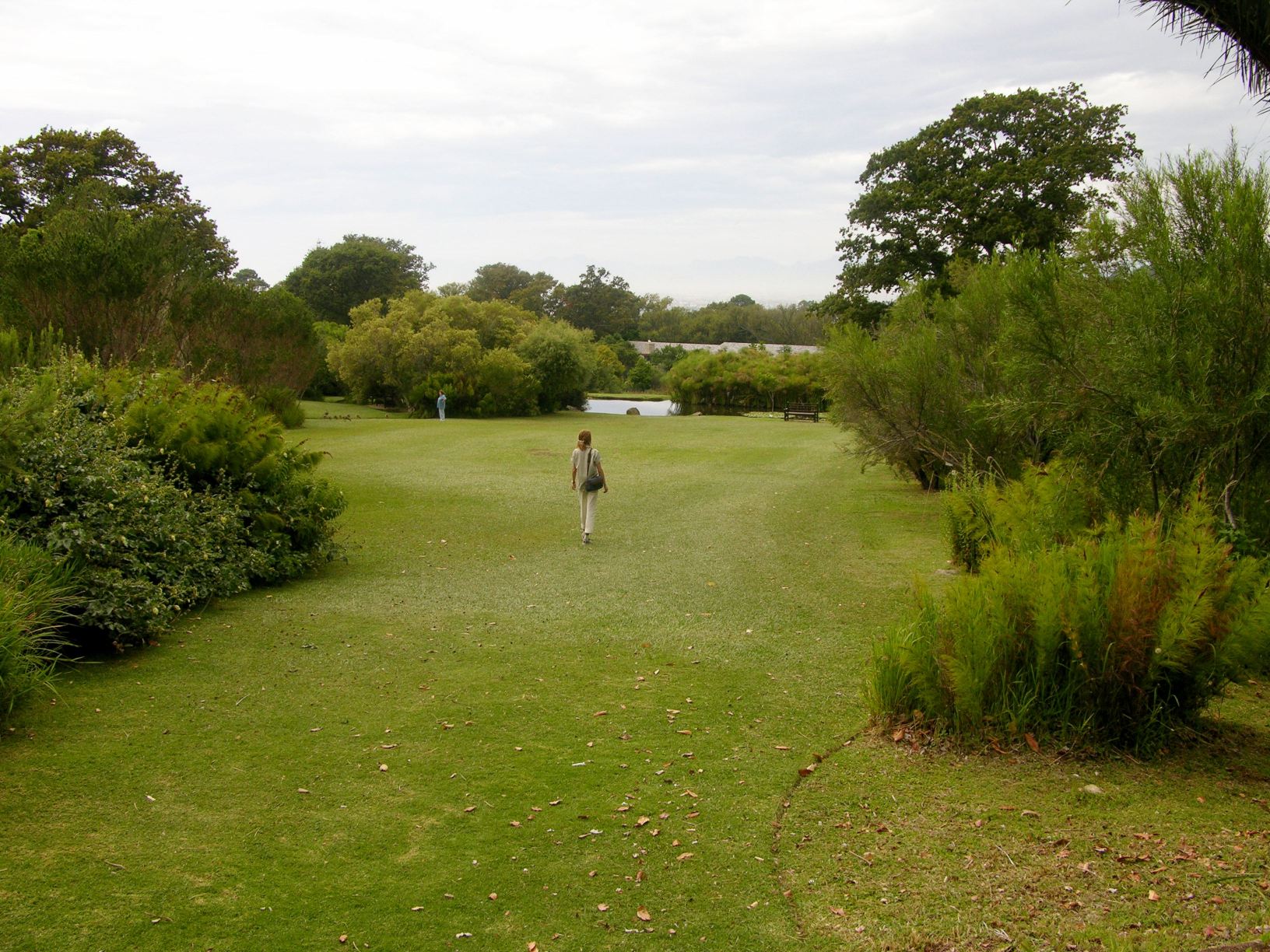
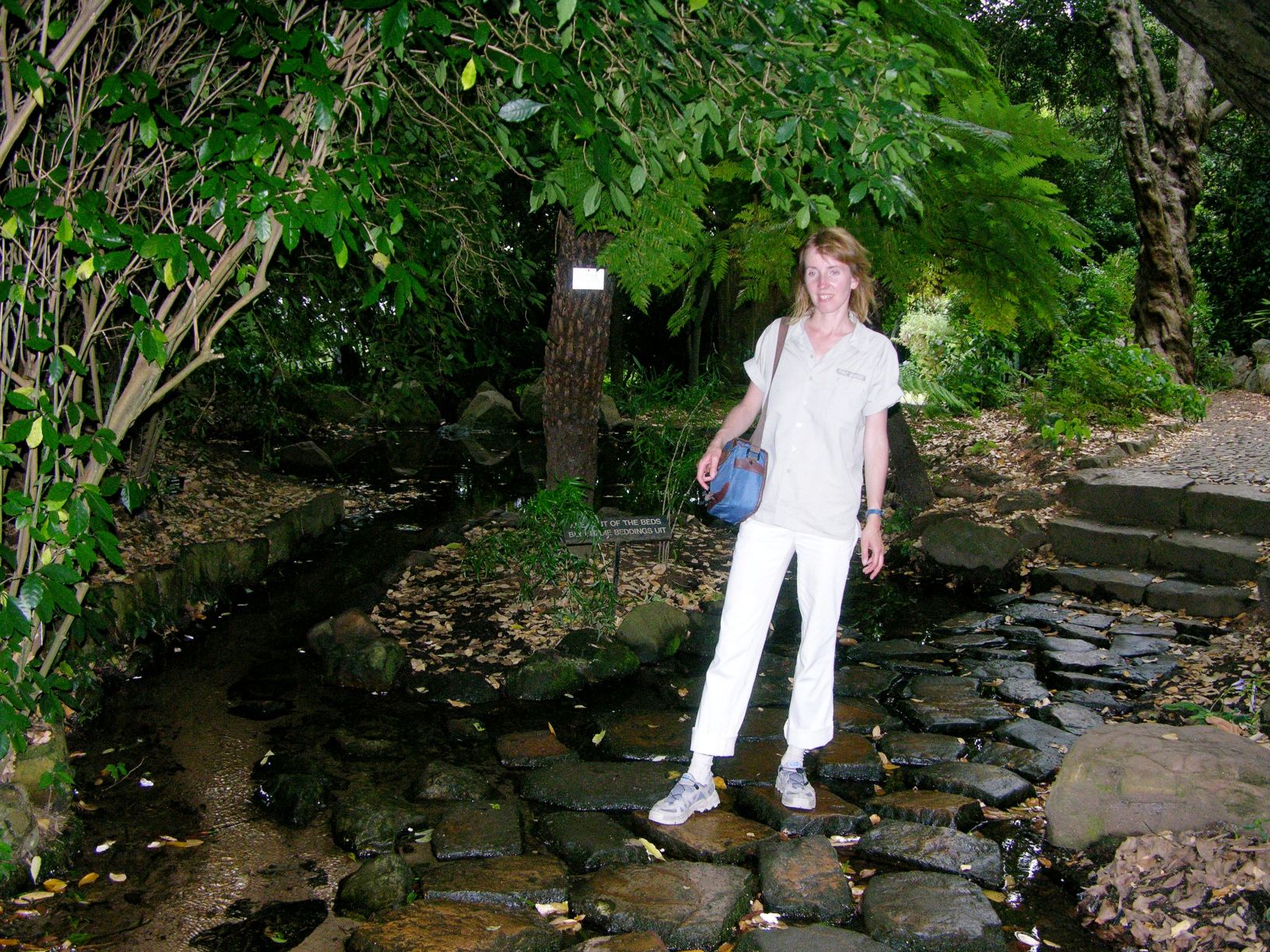
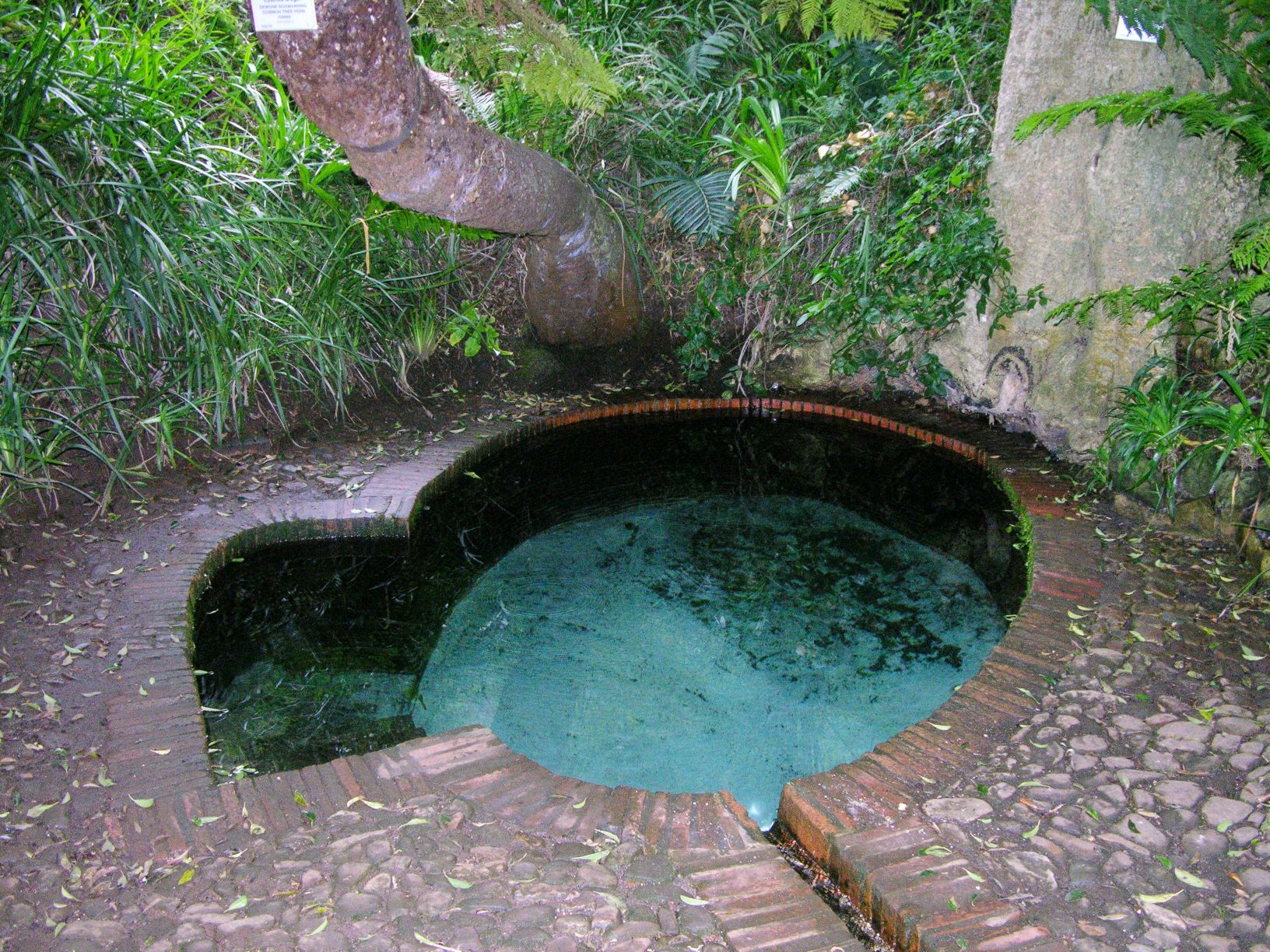
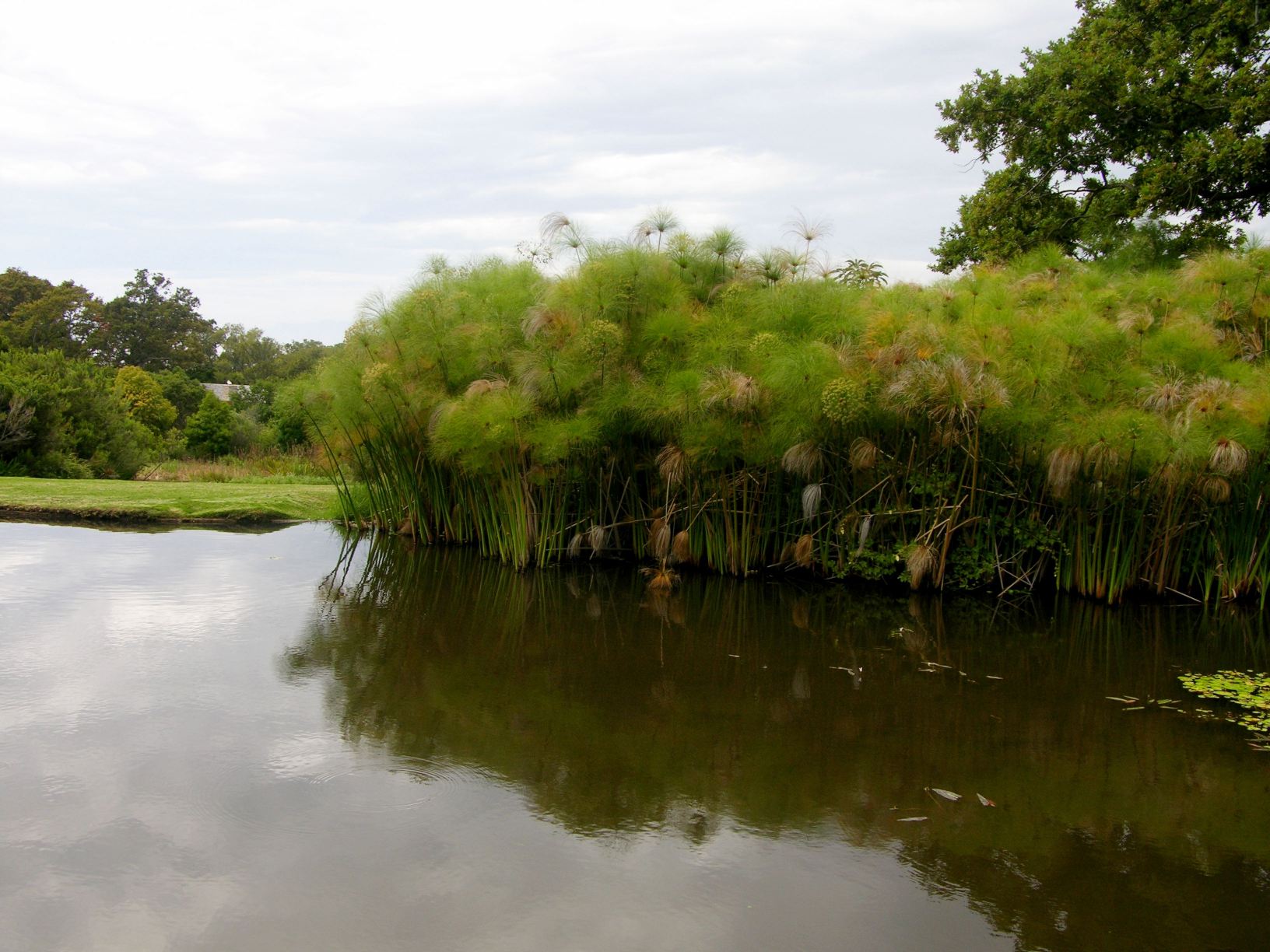
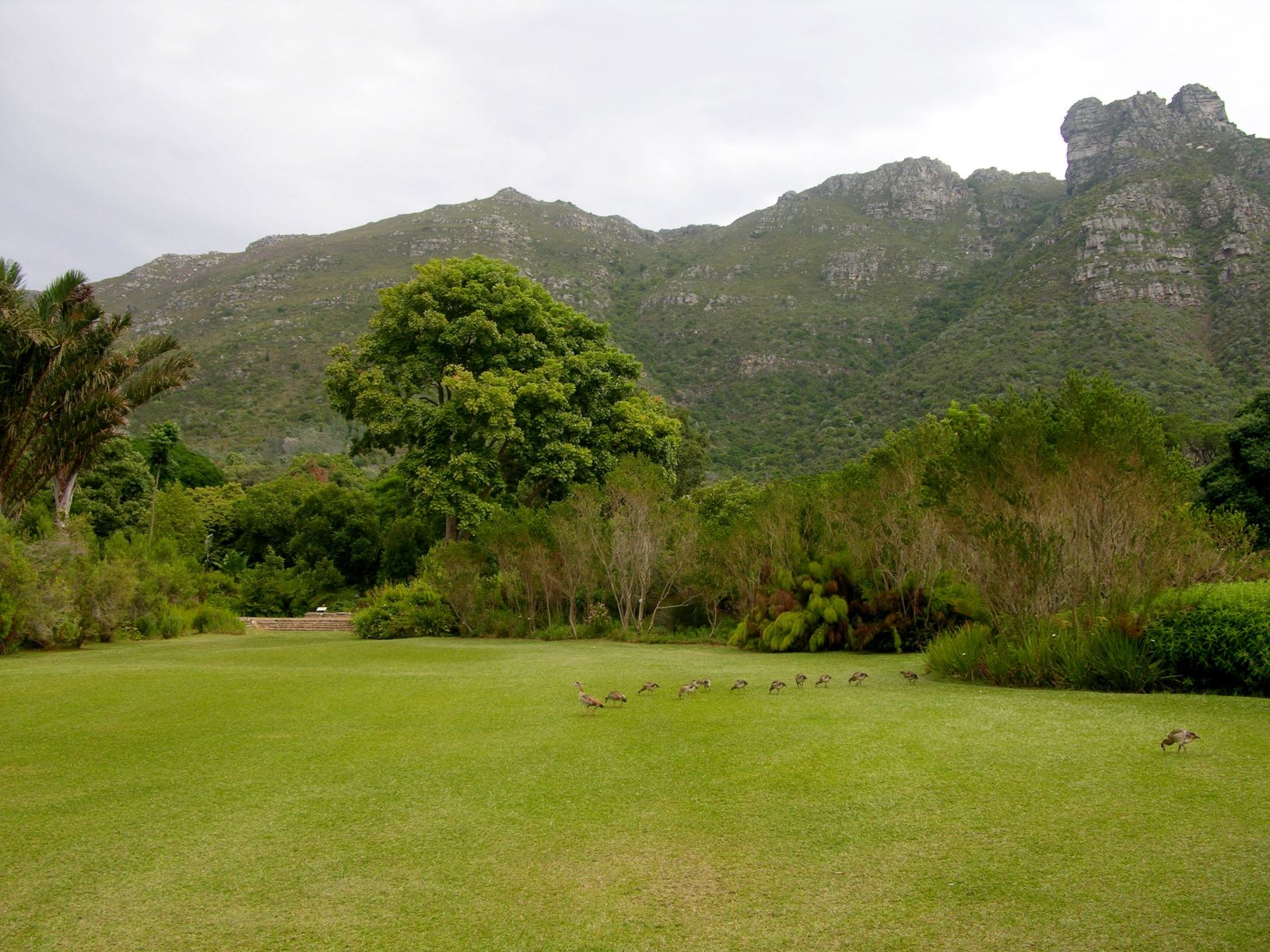
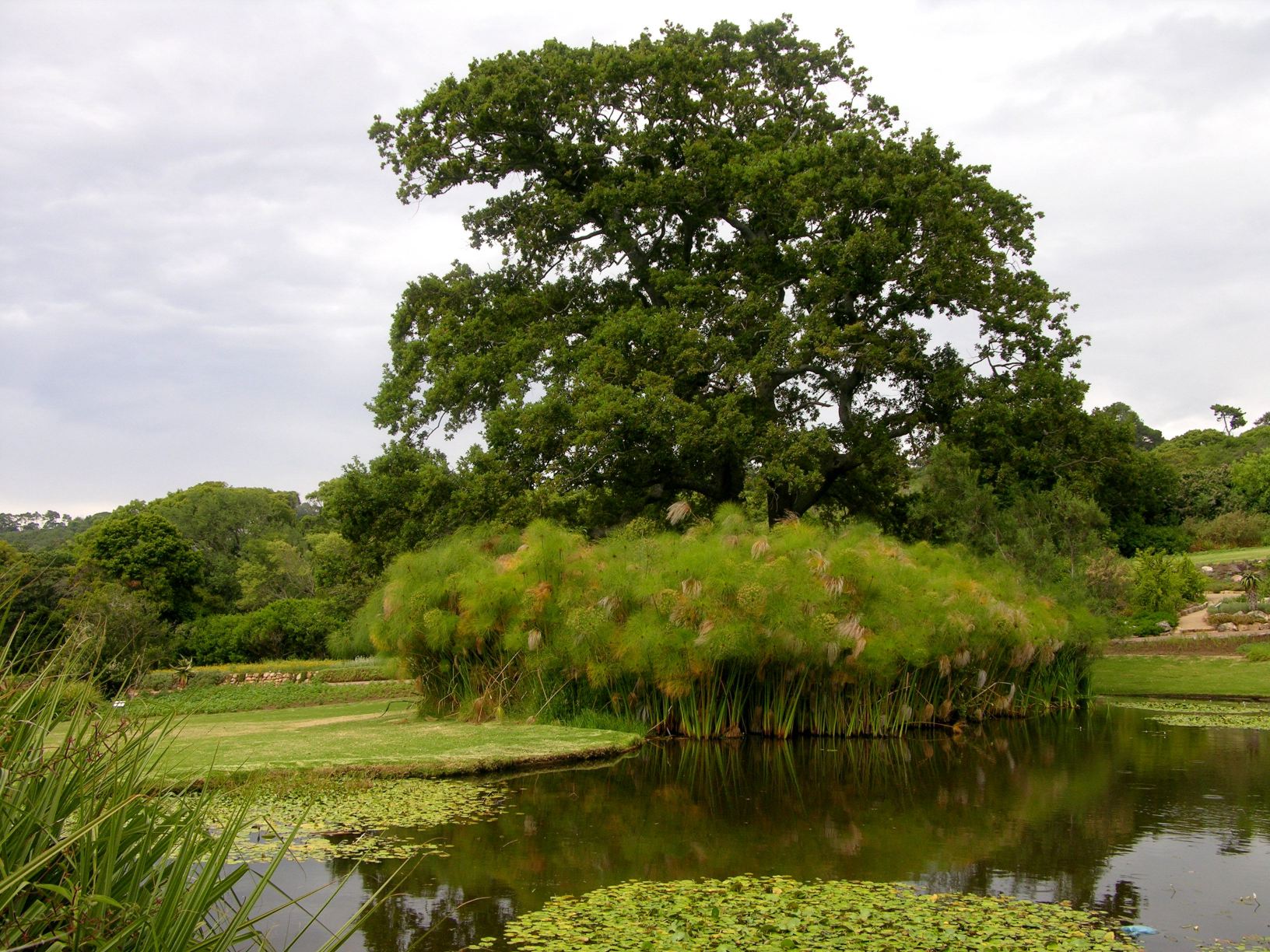
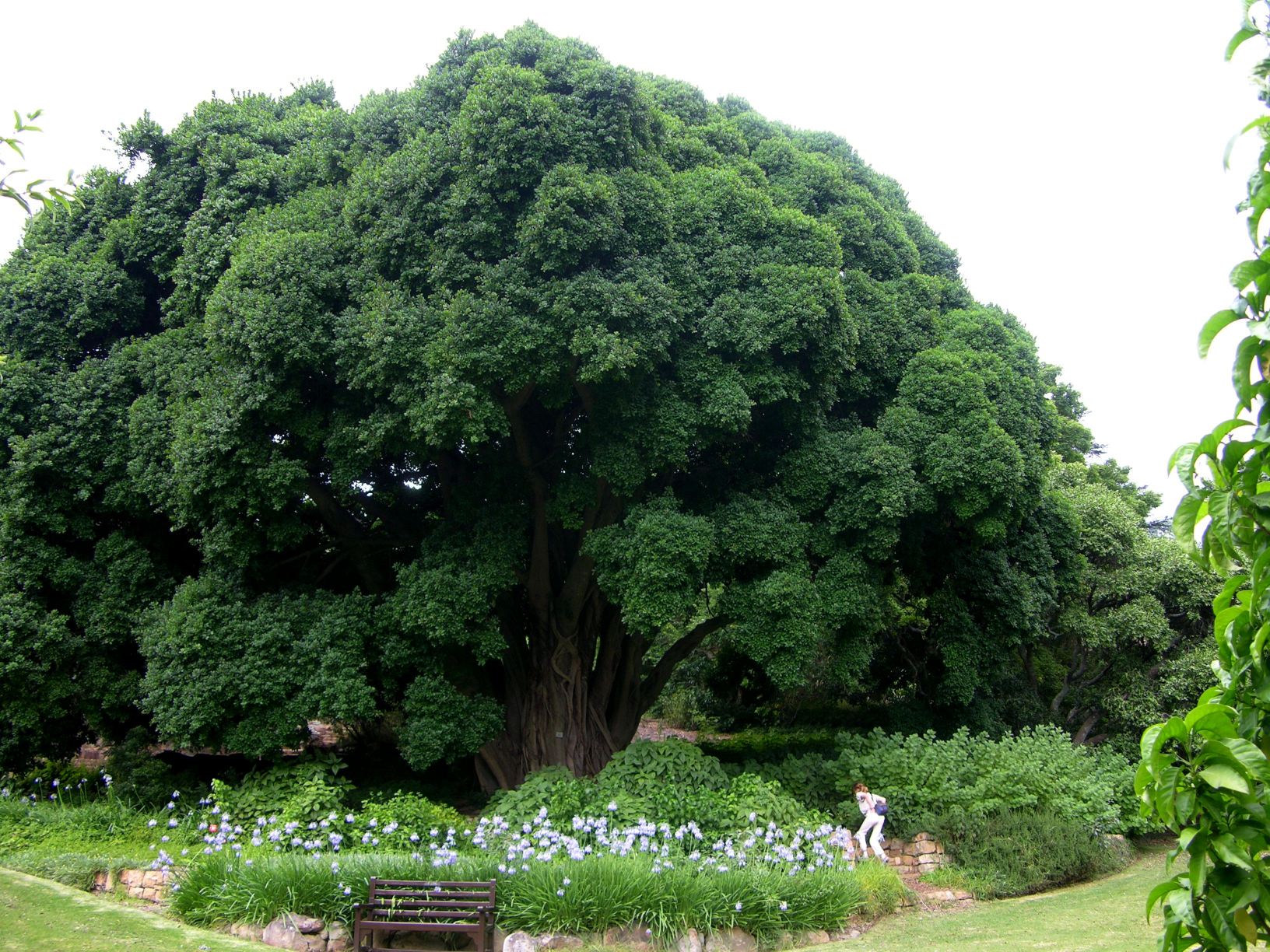
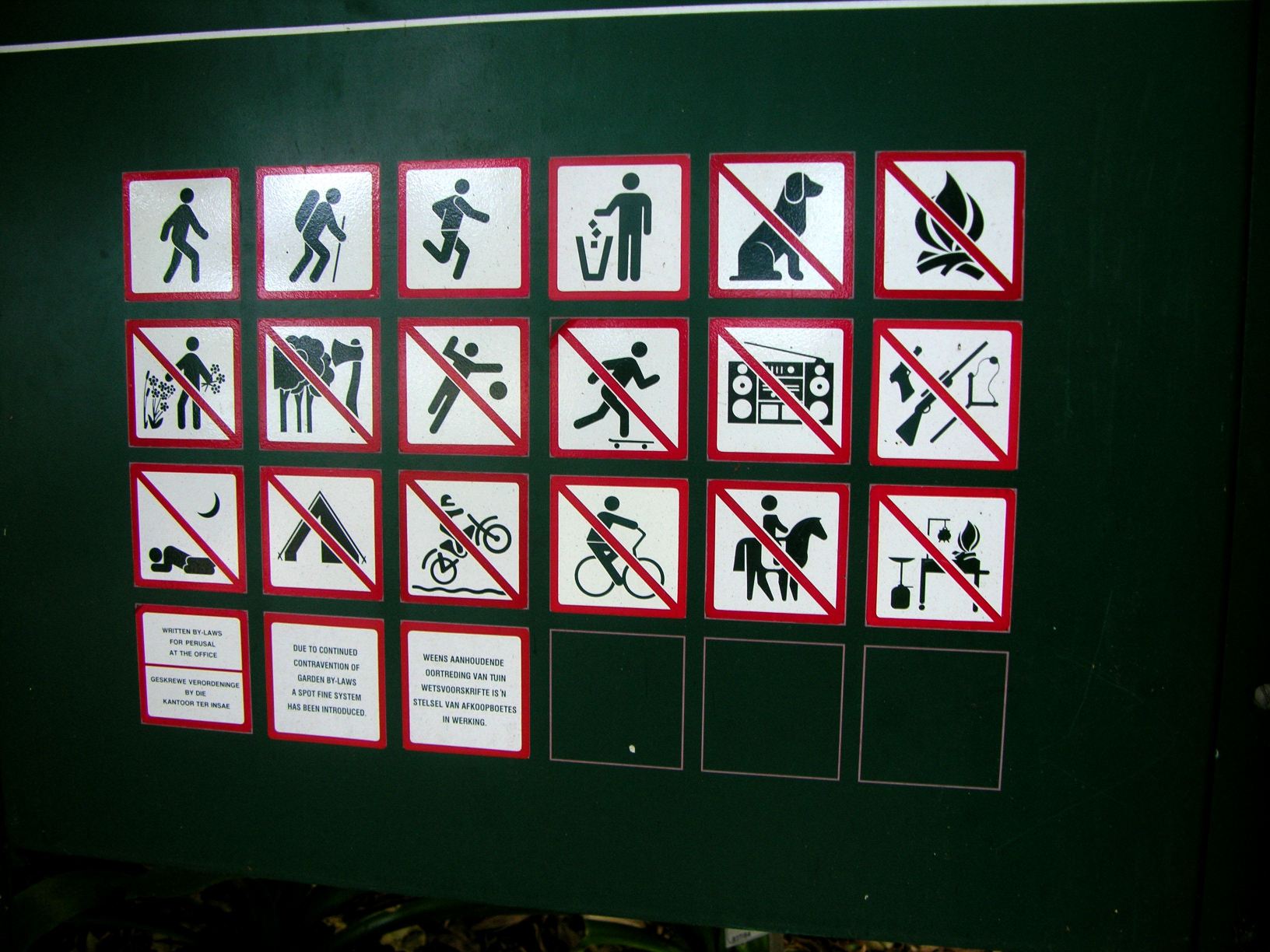
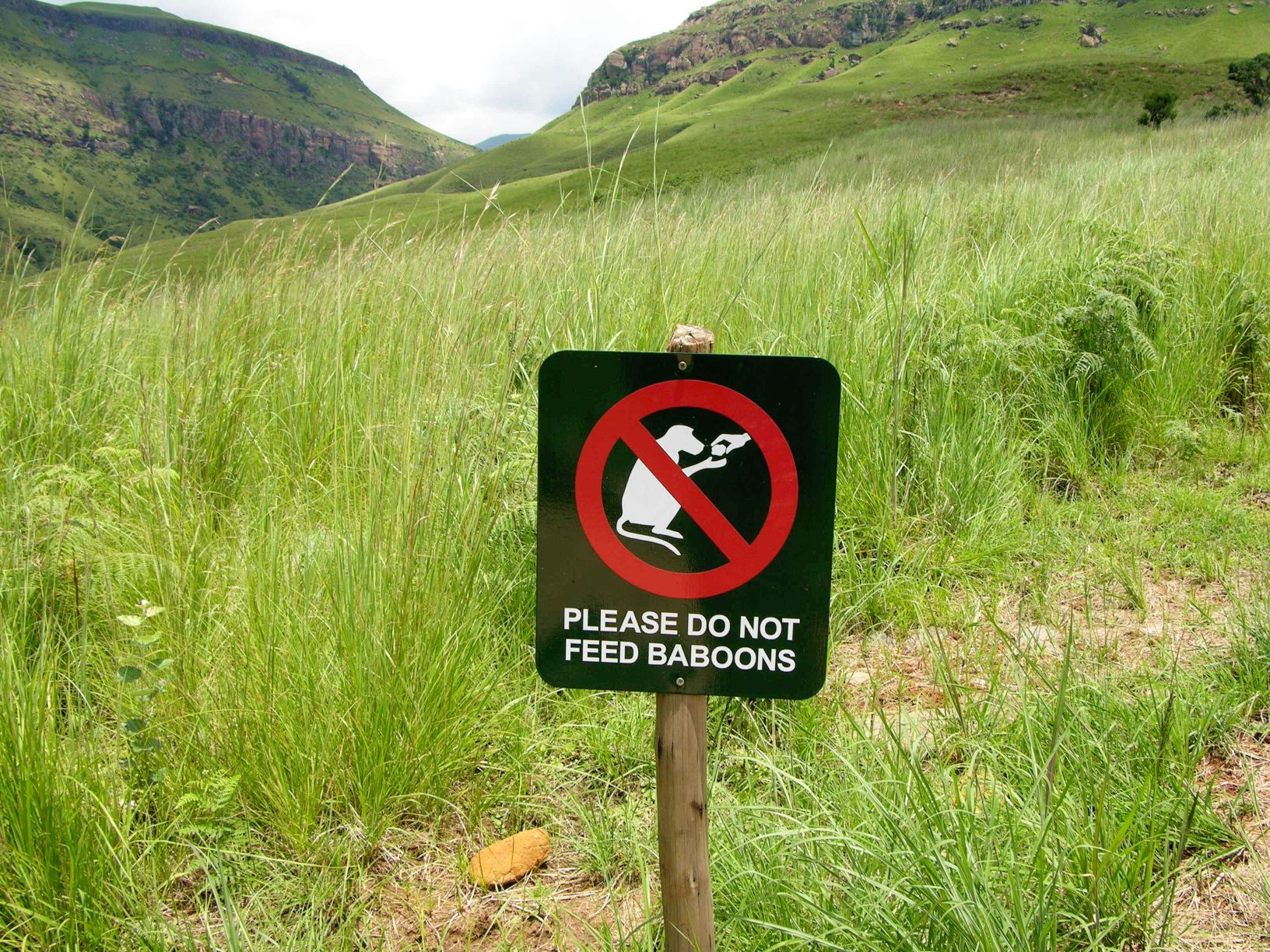
People in South Africa are a varied lot, and evidently used to doing as they please. That's why signs are posted everywhere in the park telling you what you can and can't do. Try to guess what each one means.
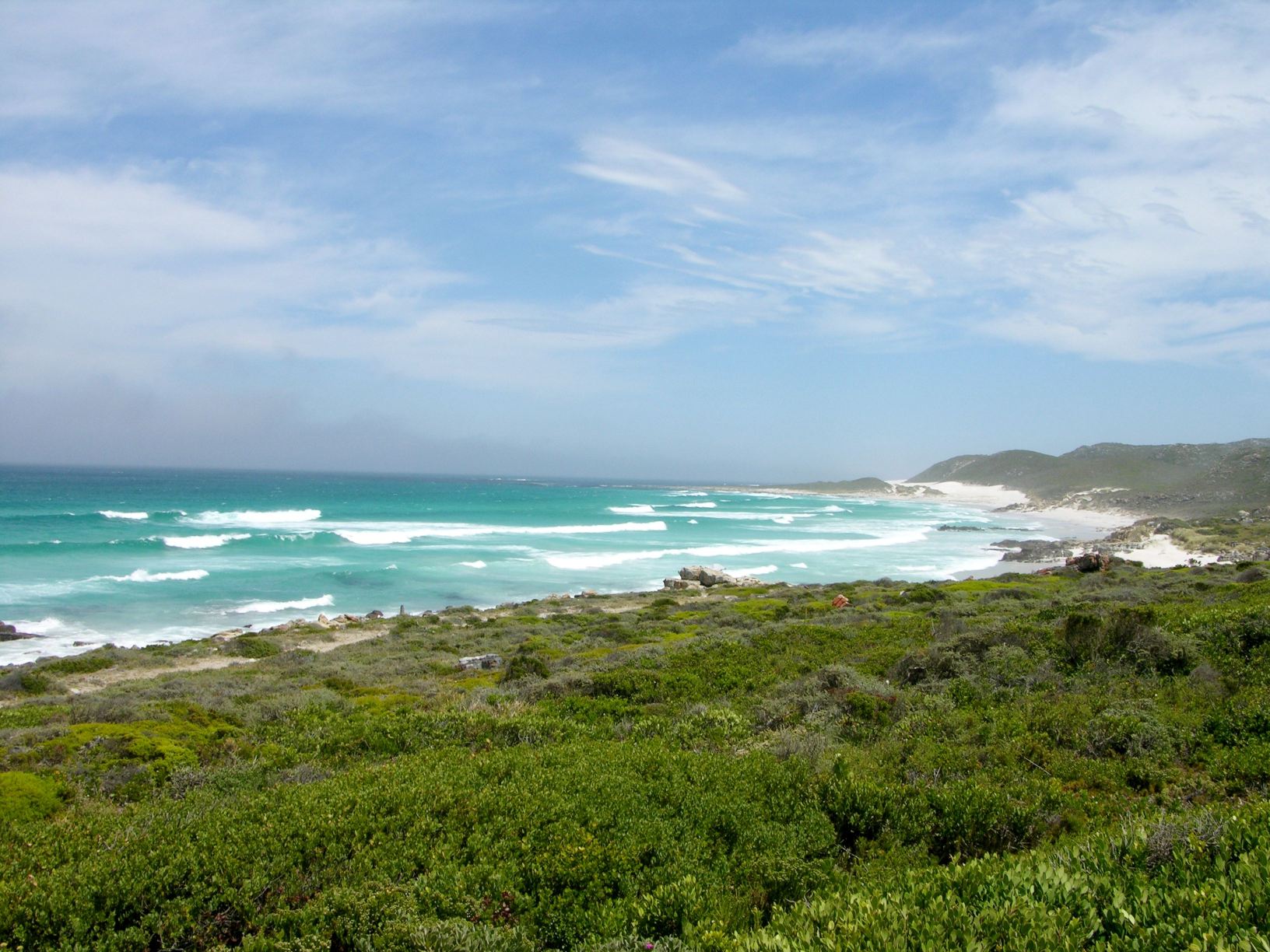
We got three nights' use out of the hotel in Cape Town. It's a beautiful place, and two days might be too little time to do it justice, but the countryside was already calling. We live in a town the rest of the year as it is.
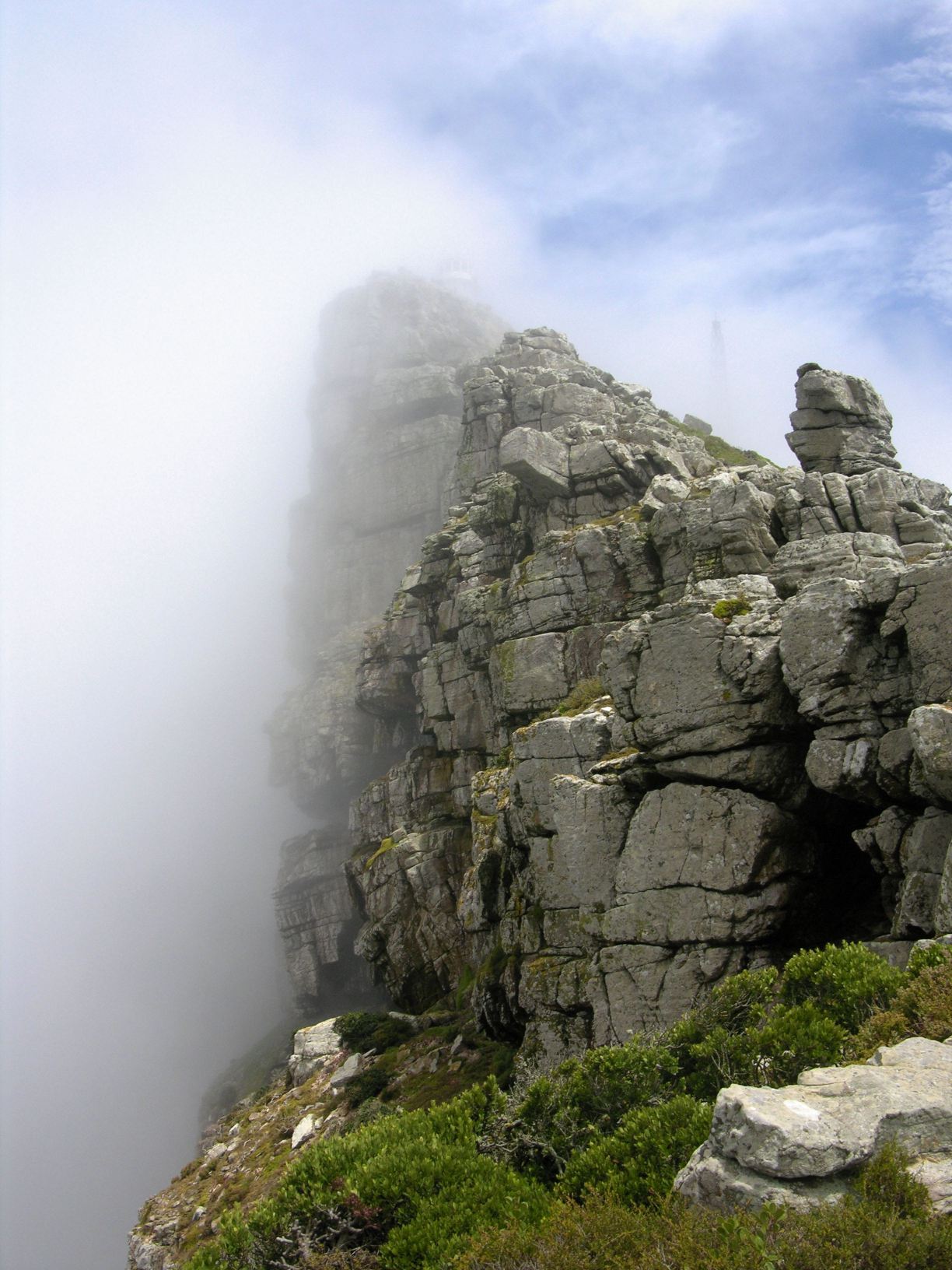
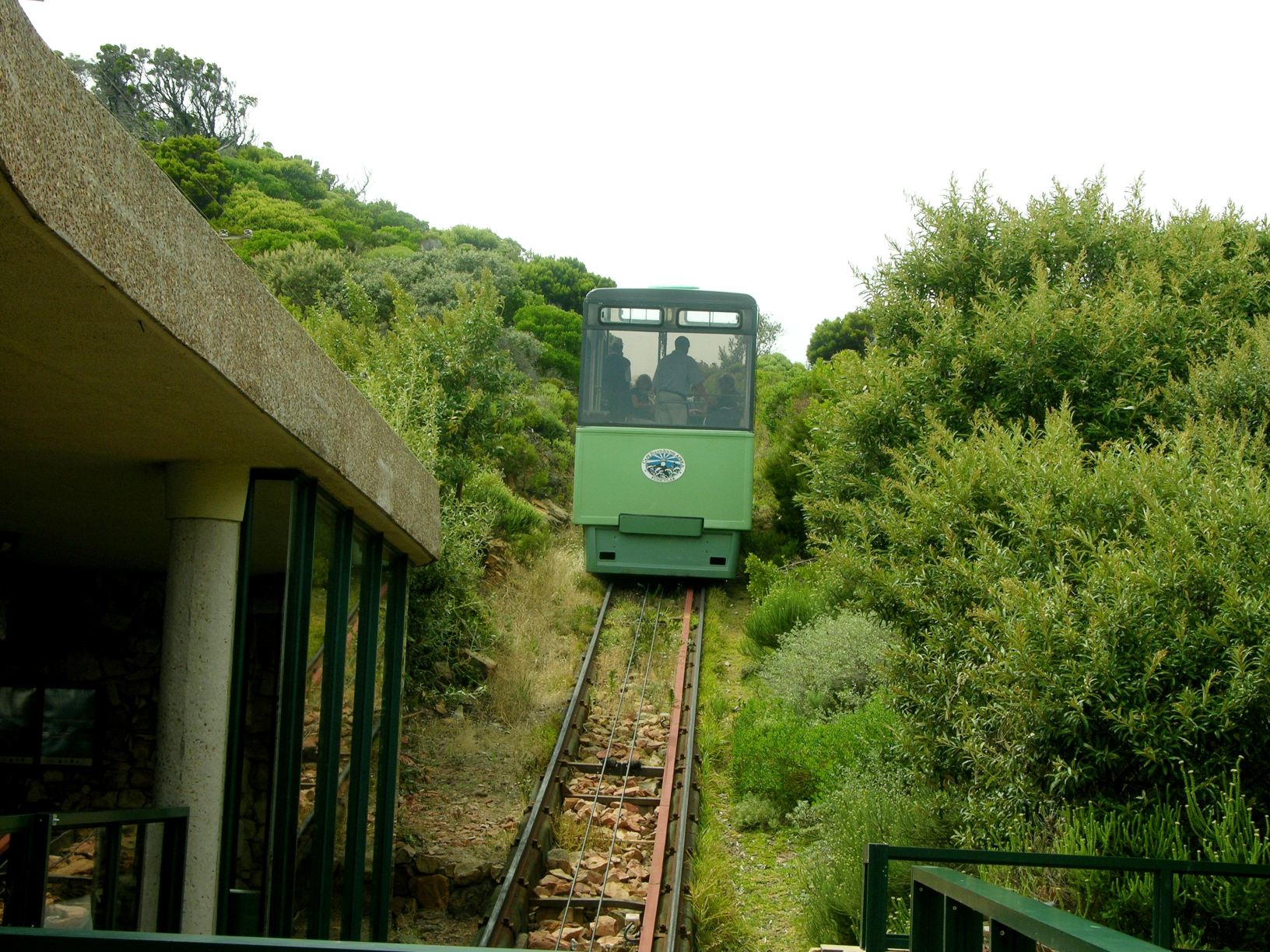
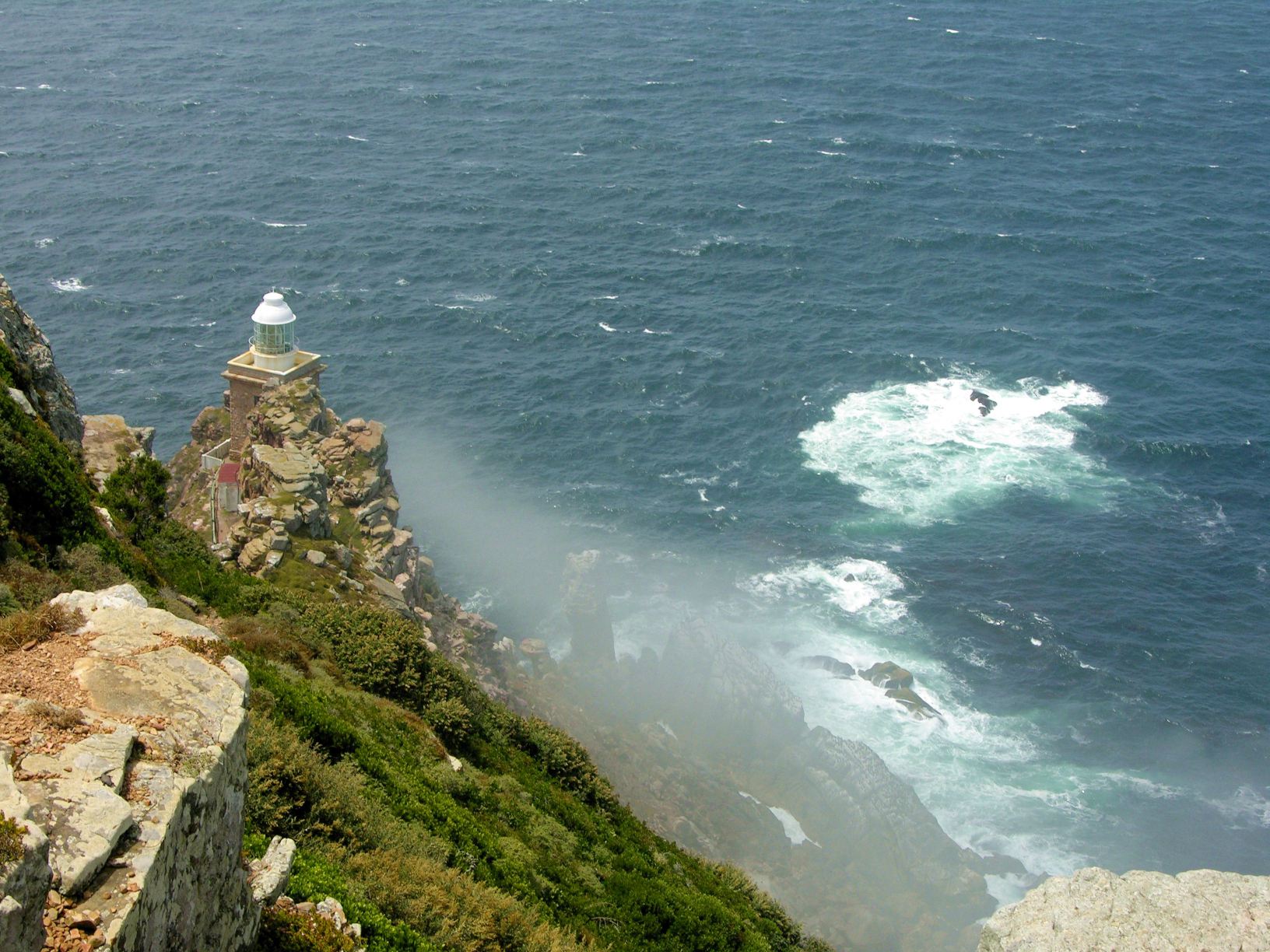
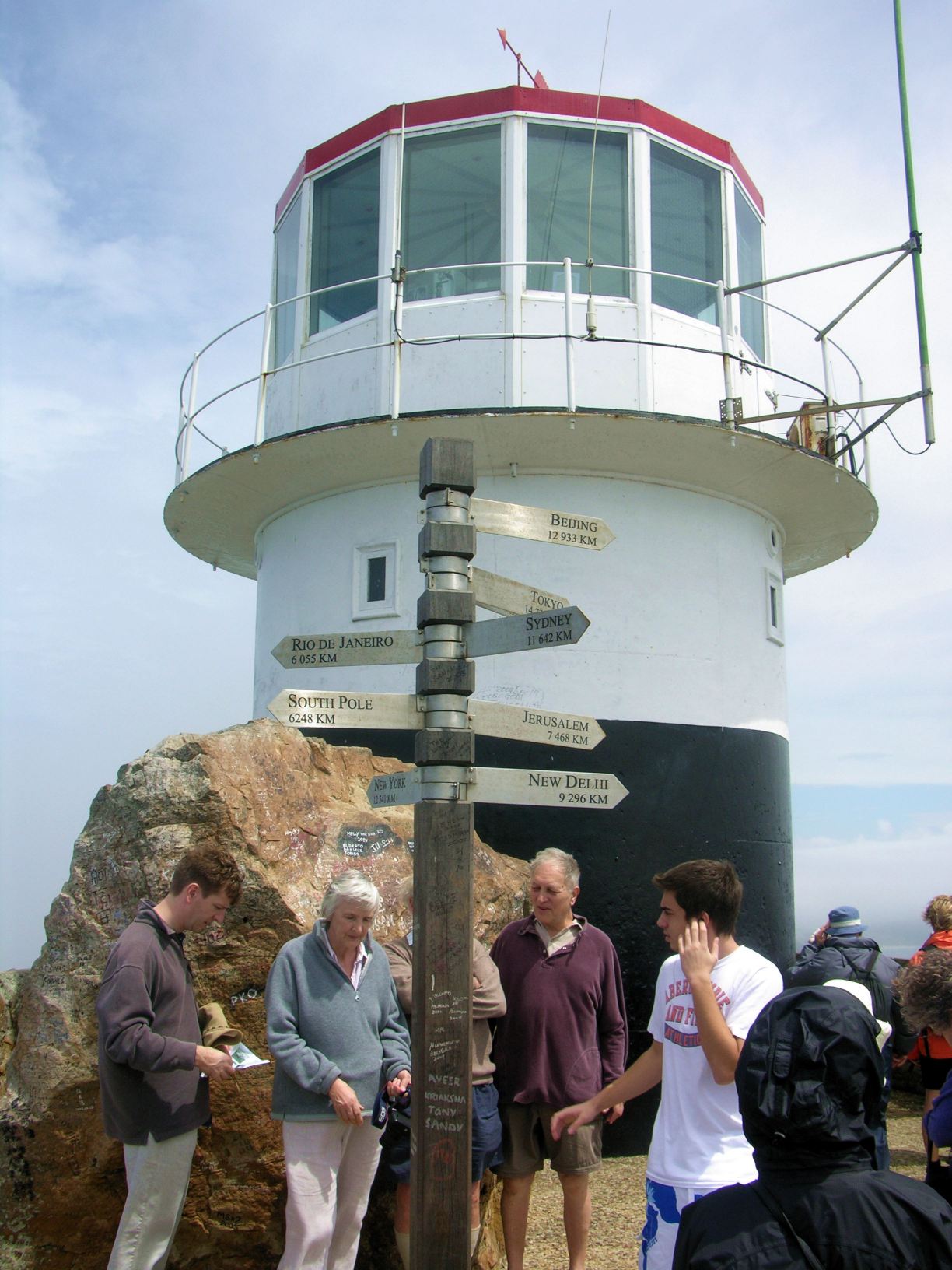
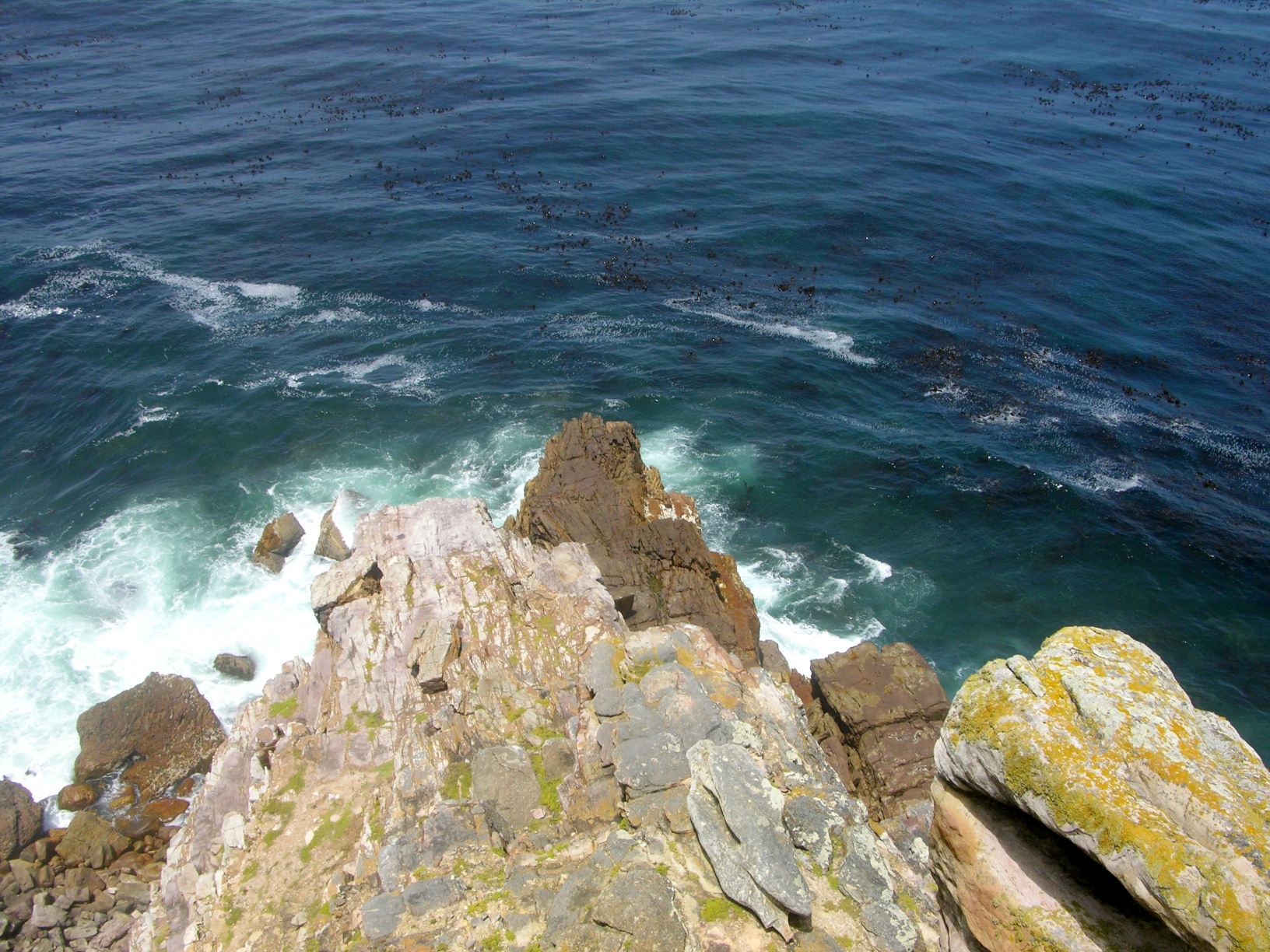
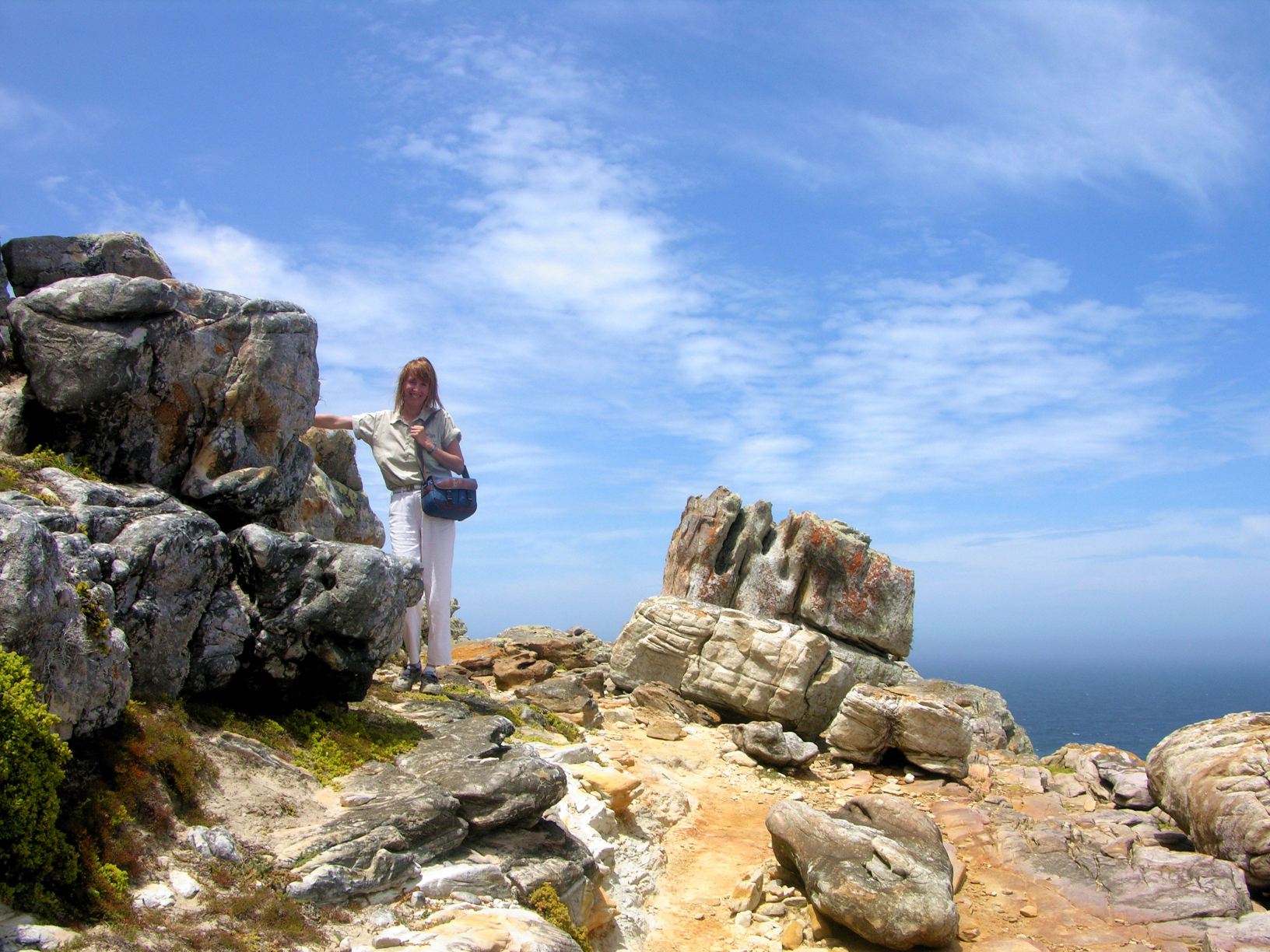
Seventy kilometres south of Cape Town, Africa ends and the ocean begins. The Cape of Good Hope isn't the continent's southernmost point, but is probably its most famous. The rocky spur jutting into the sea is part of Table Mountain National Park. The park has an excellent network of sealed roads, and the southern point is less than a hundred metres from the car park. Tour groups usually take the funicular up a nearby hill, with two lighthouses, a weather station and a view towards the true Cape of Good Hope. Unfortunately you can't go into the lighthouses. Even the path to one of them is closed. Besides the lighthouses there are plenty of Second World War structures on the cape. I don't know what was to stop enemy ships sailing a hundred kilometres farther out, beyond the reach of the coastal guns, but they put plenty of guns here anyway.
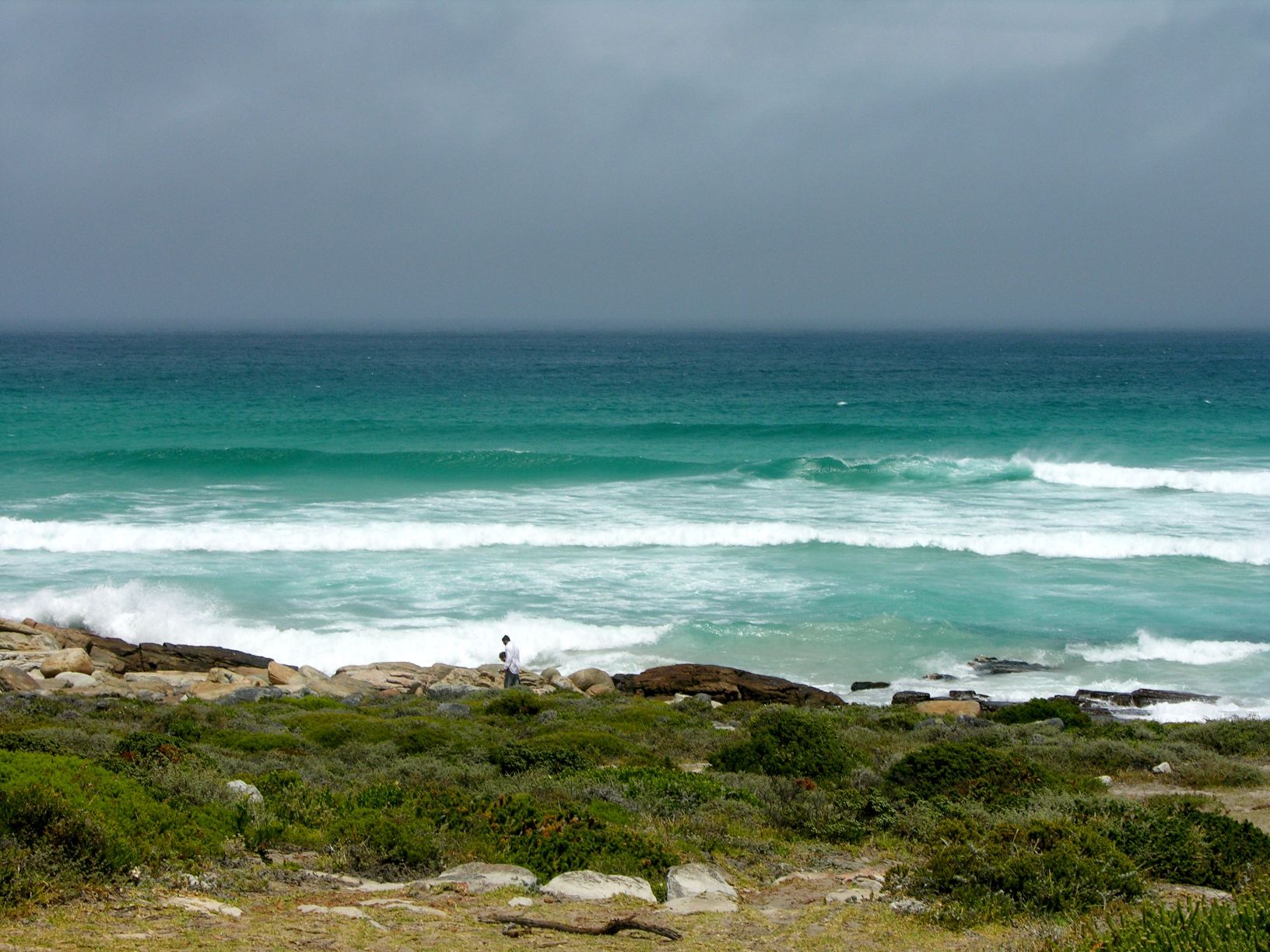
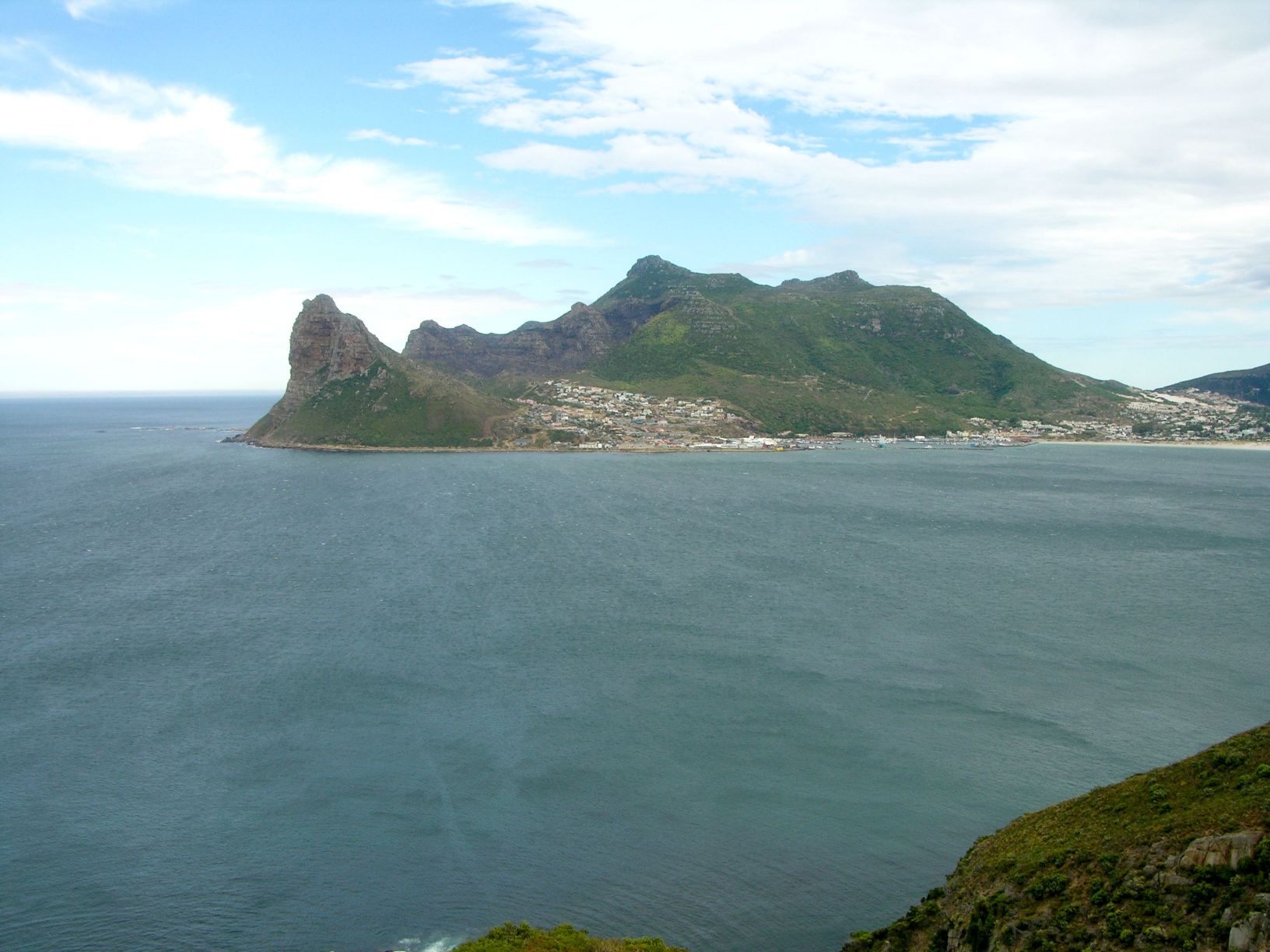
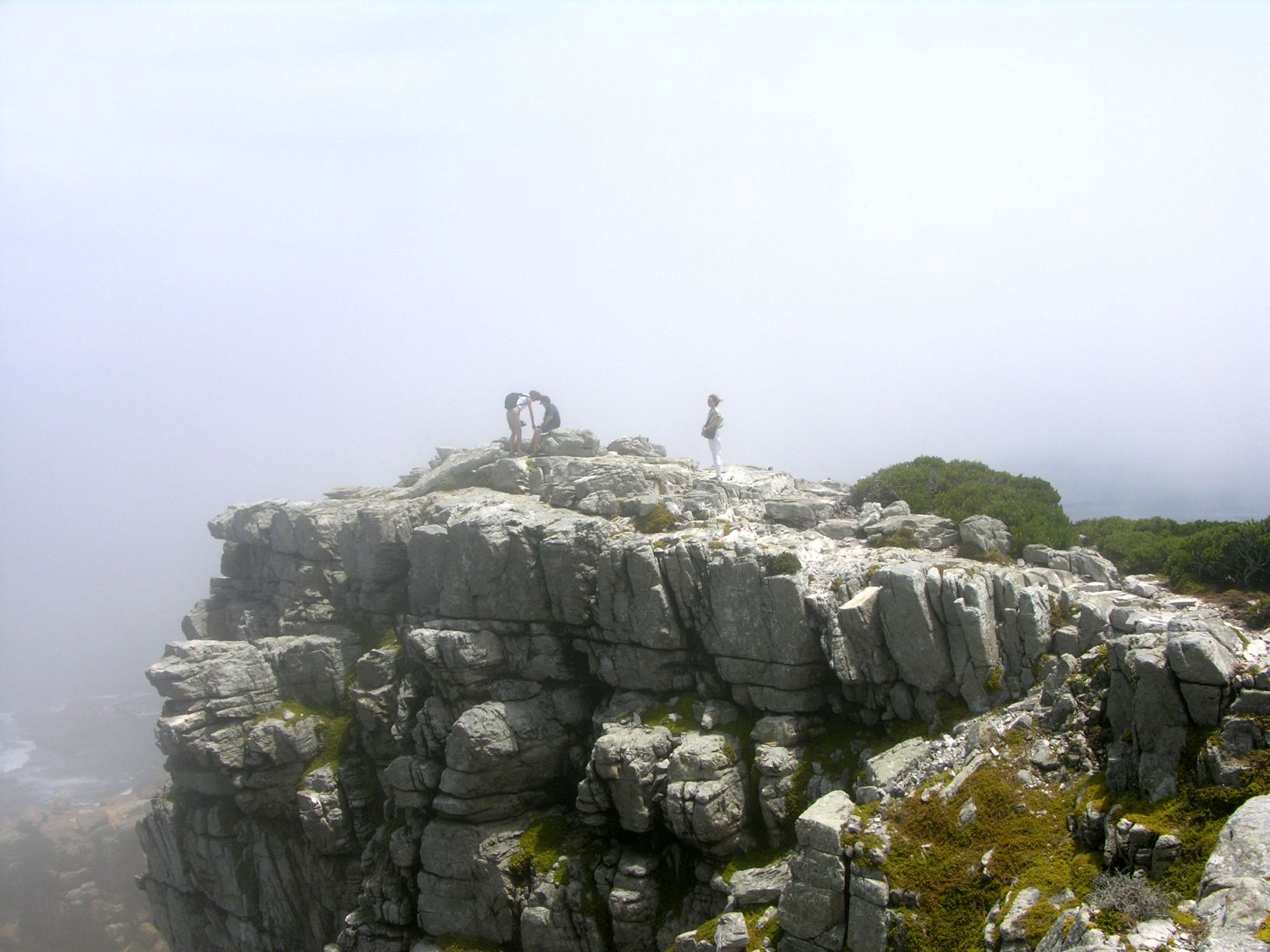
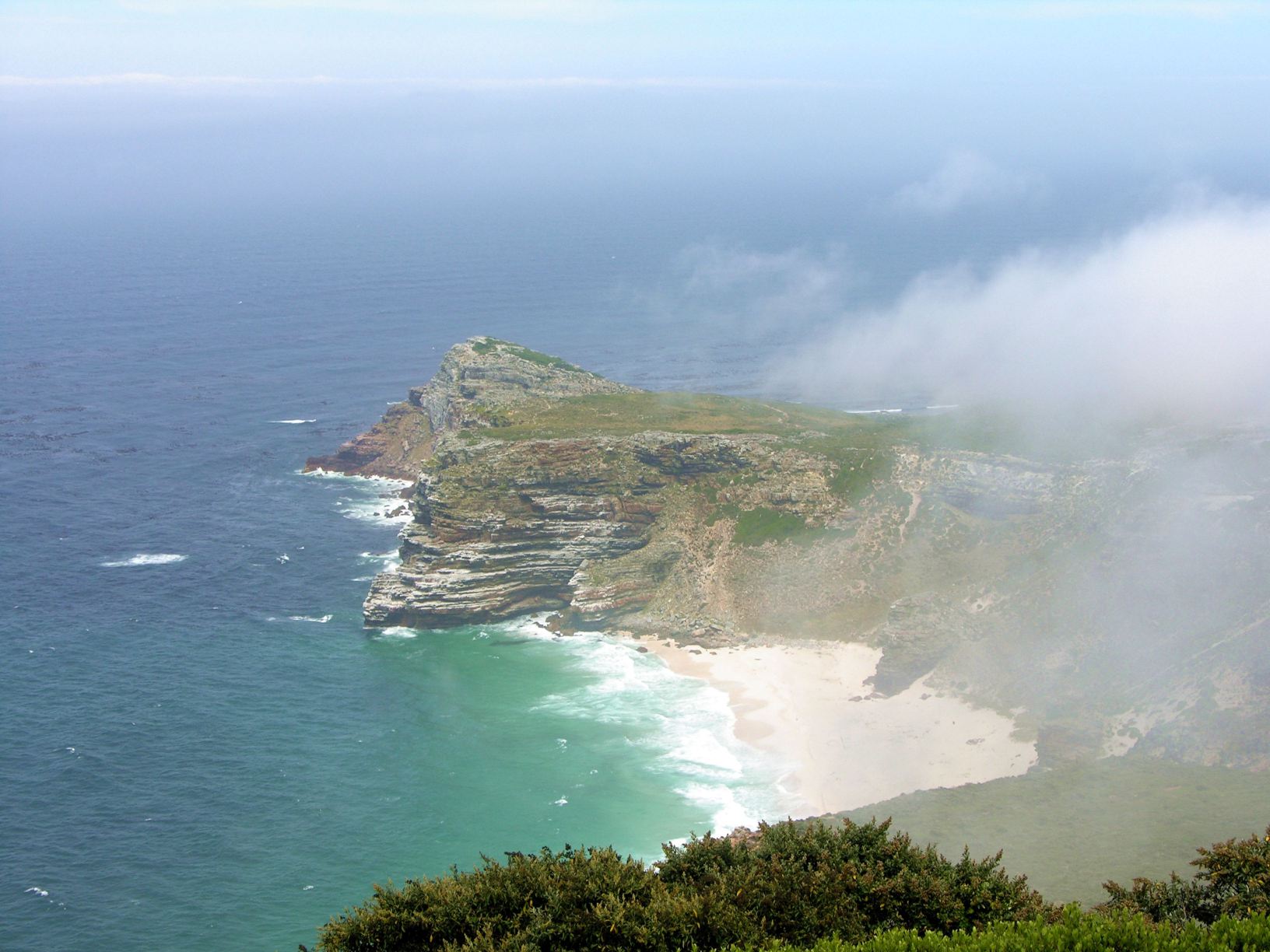
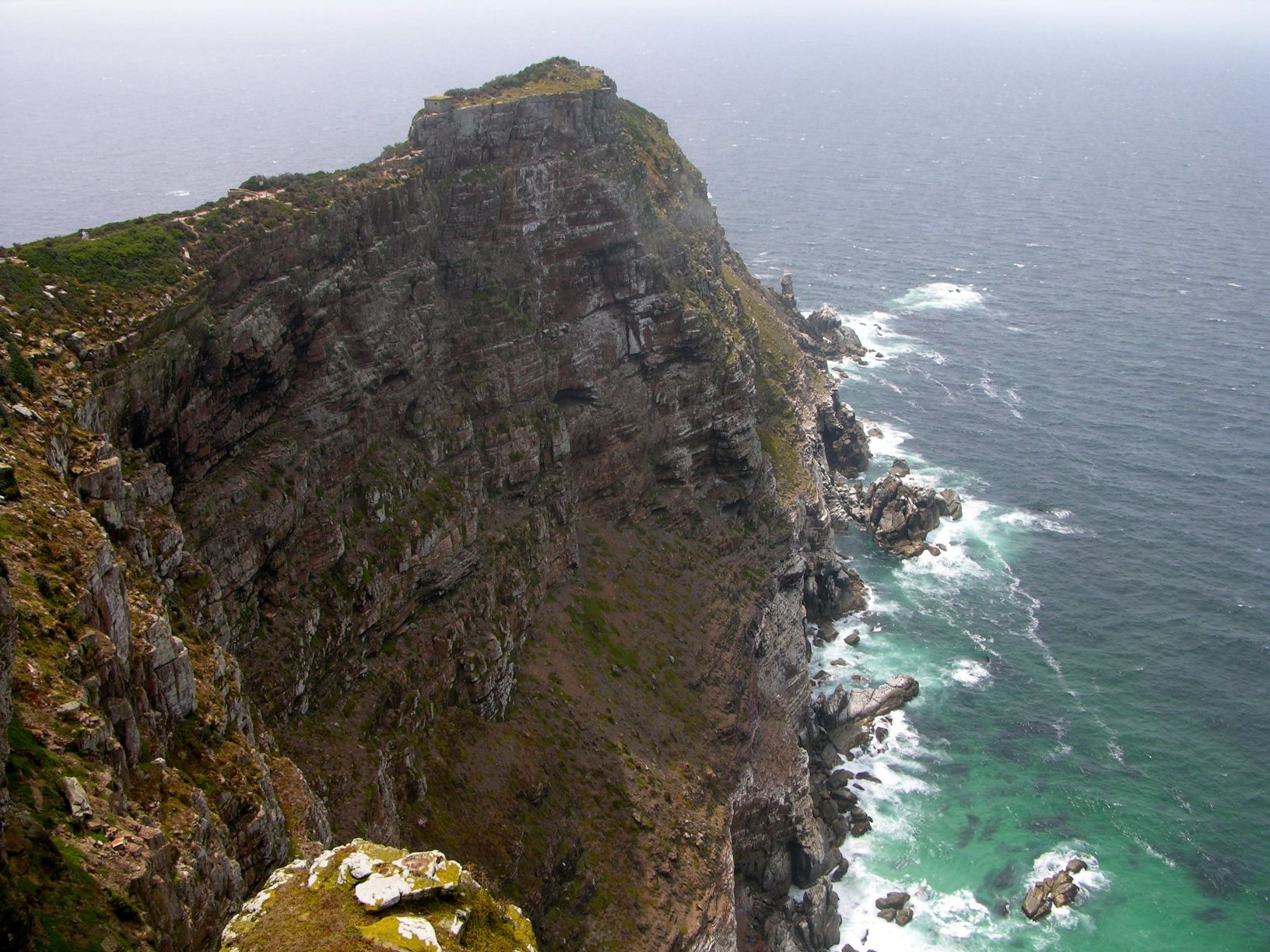
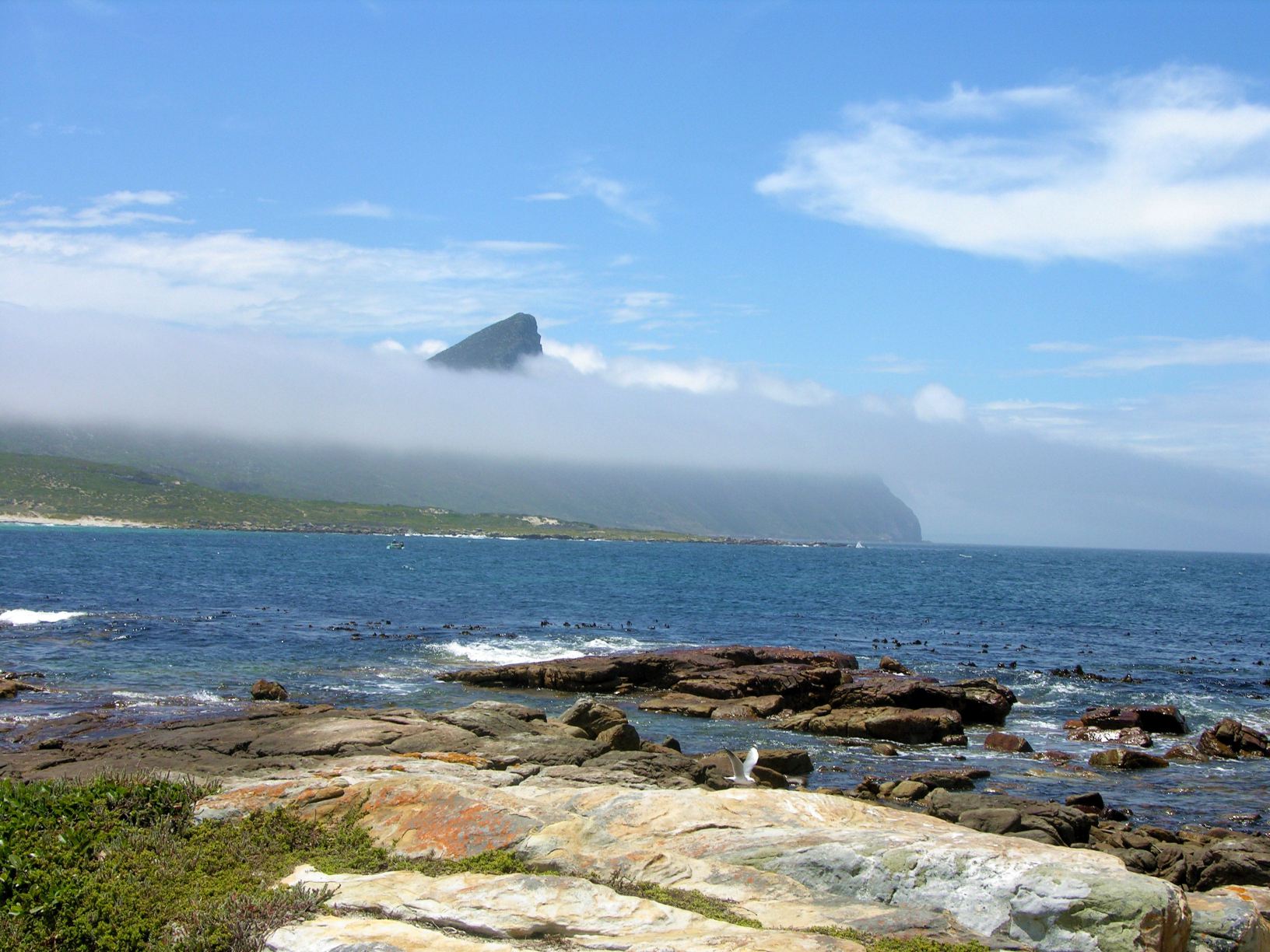
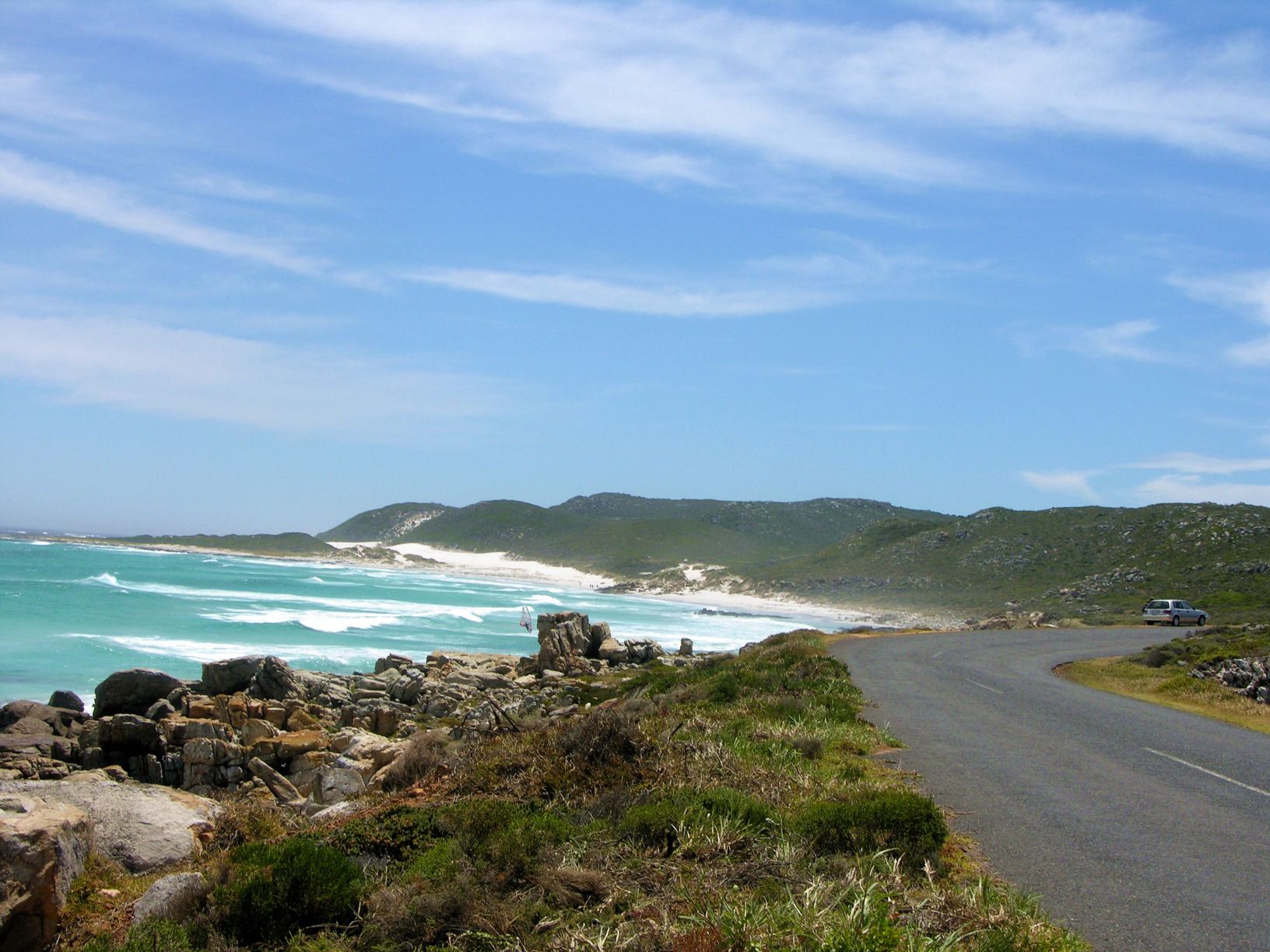
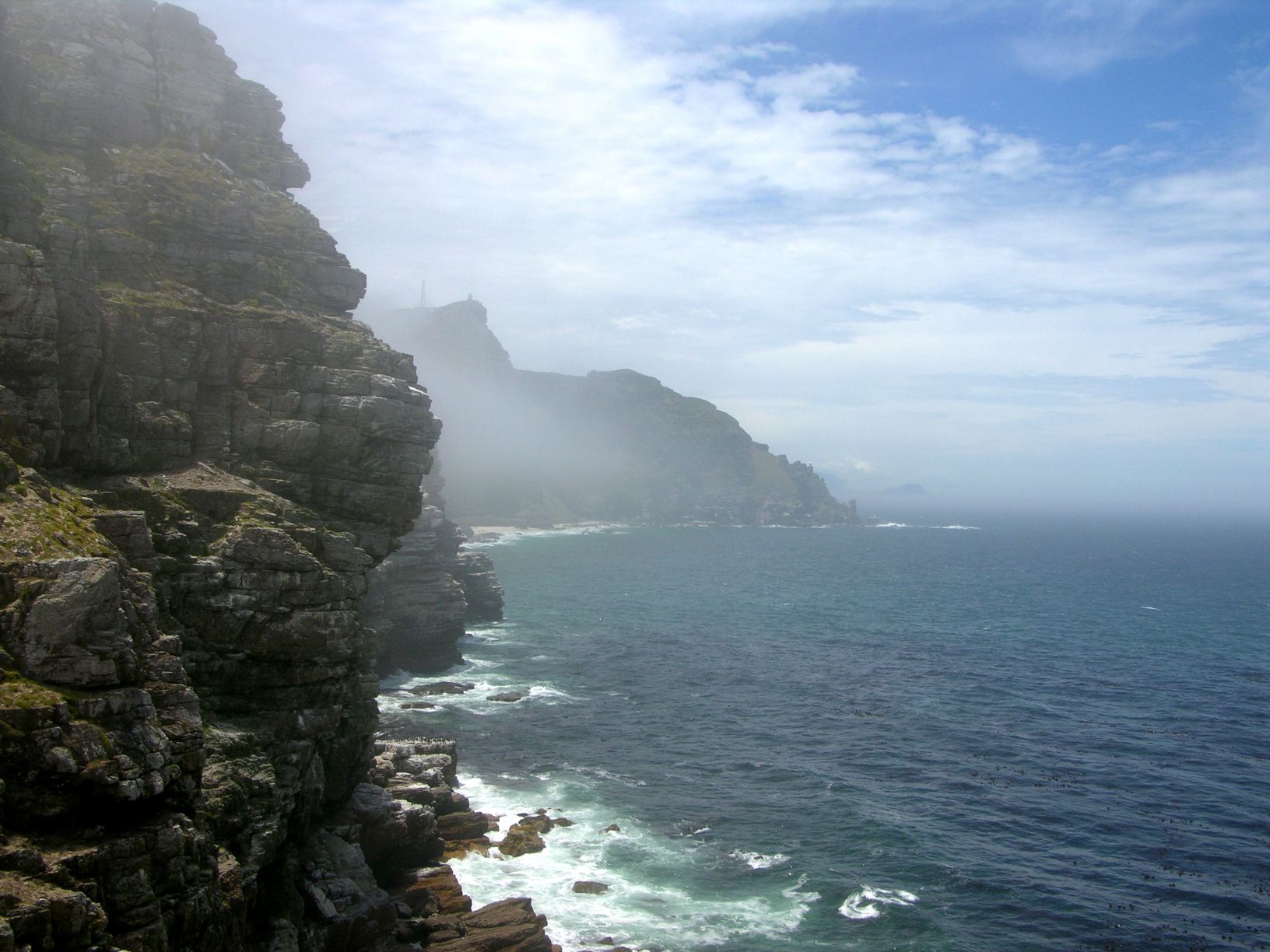
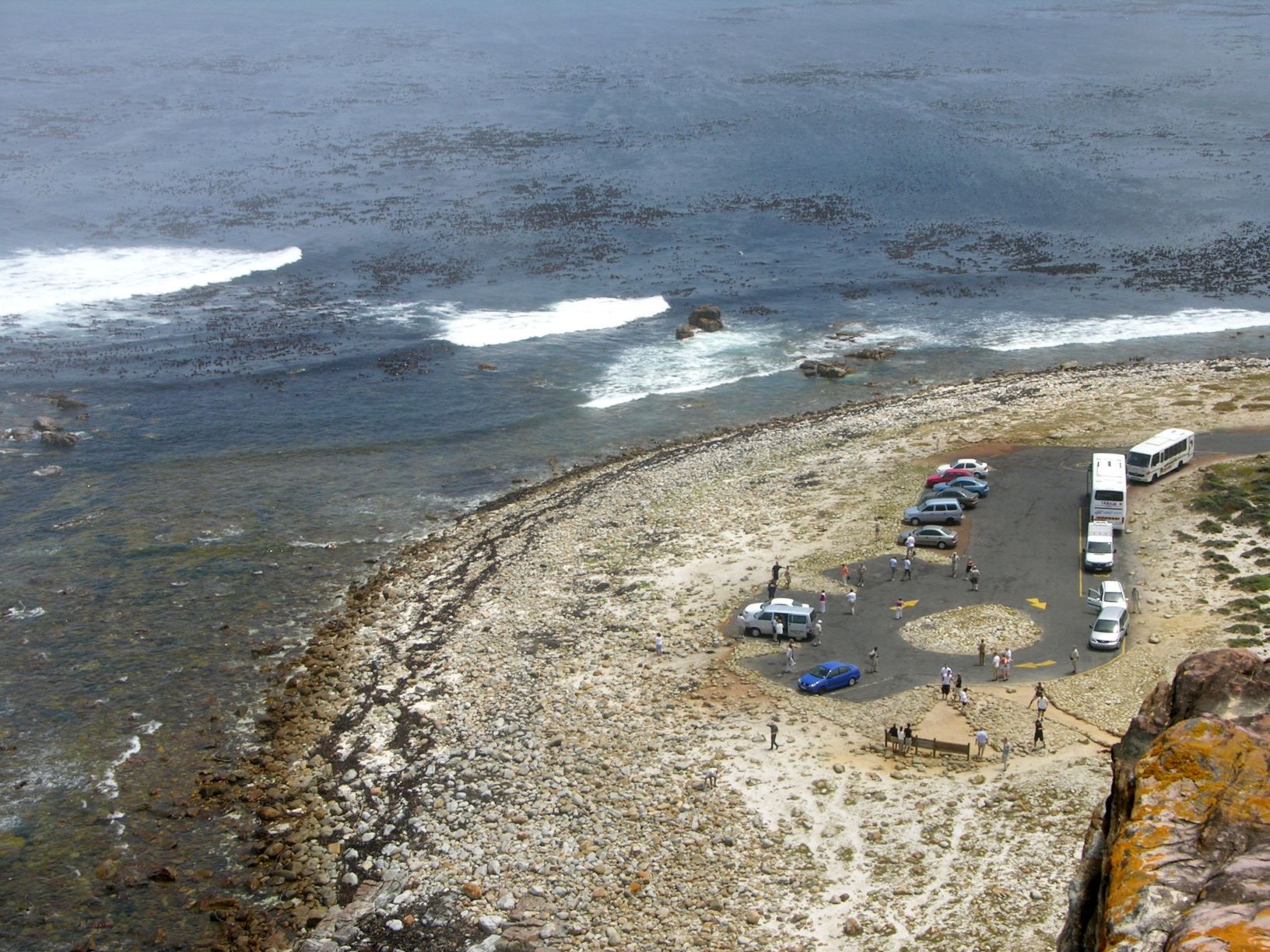
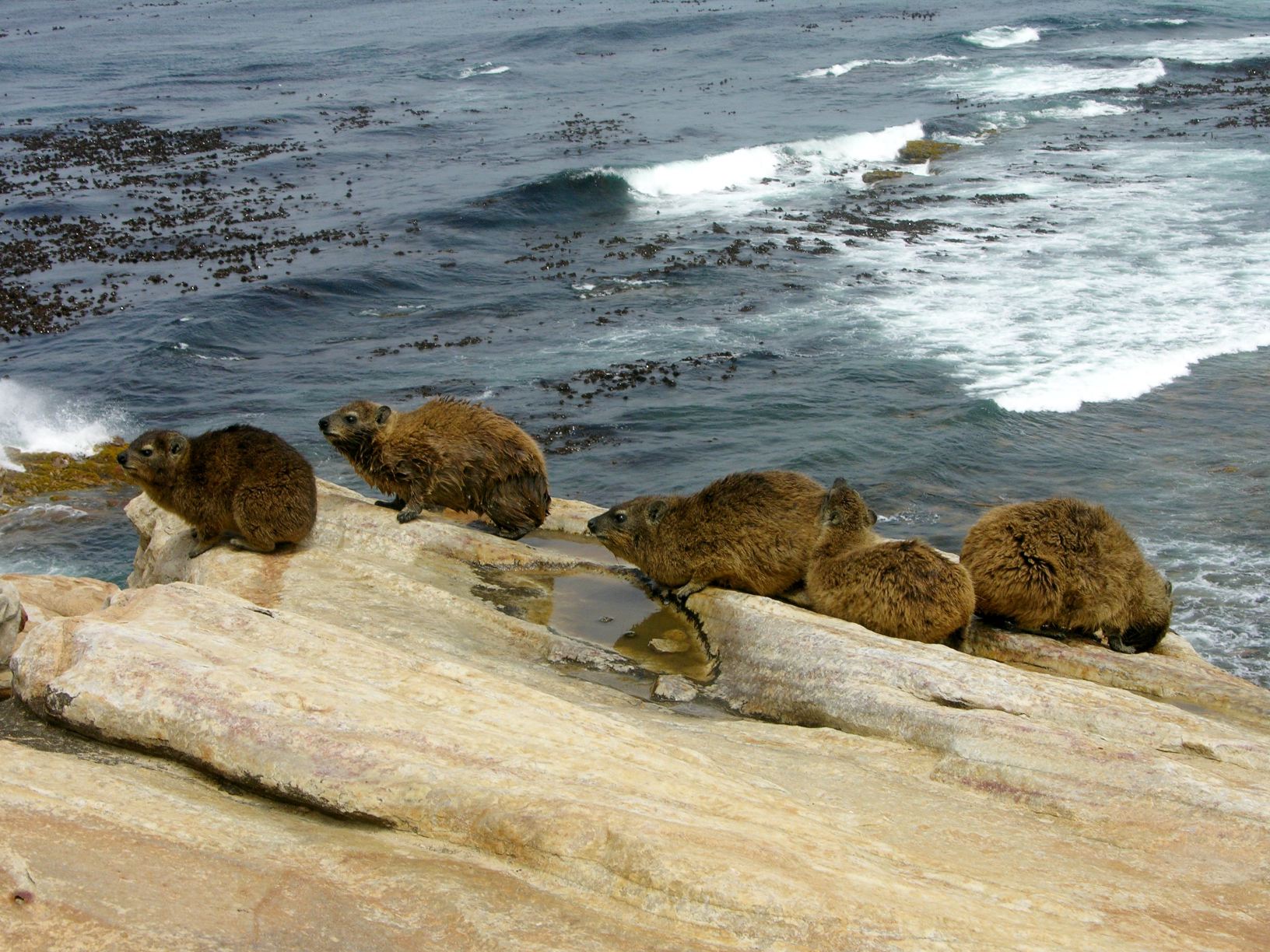
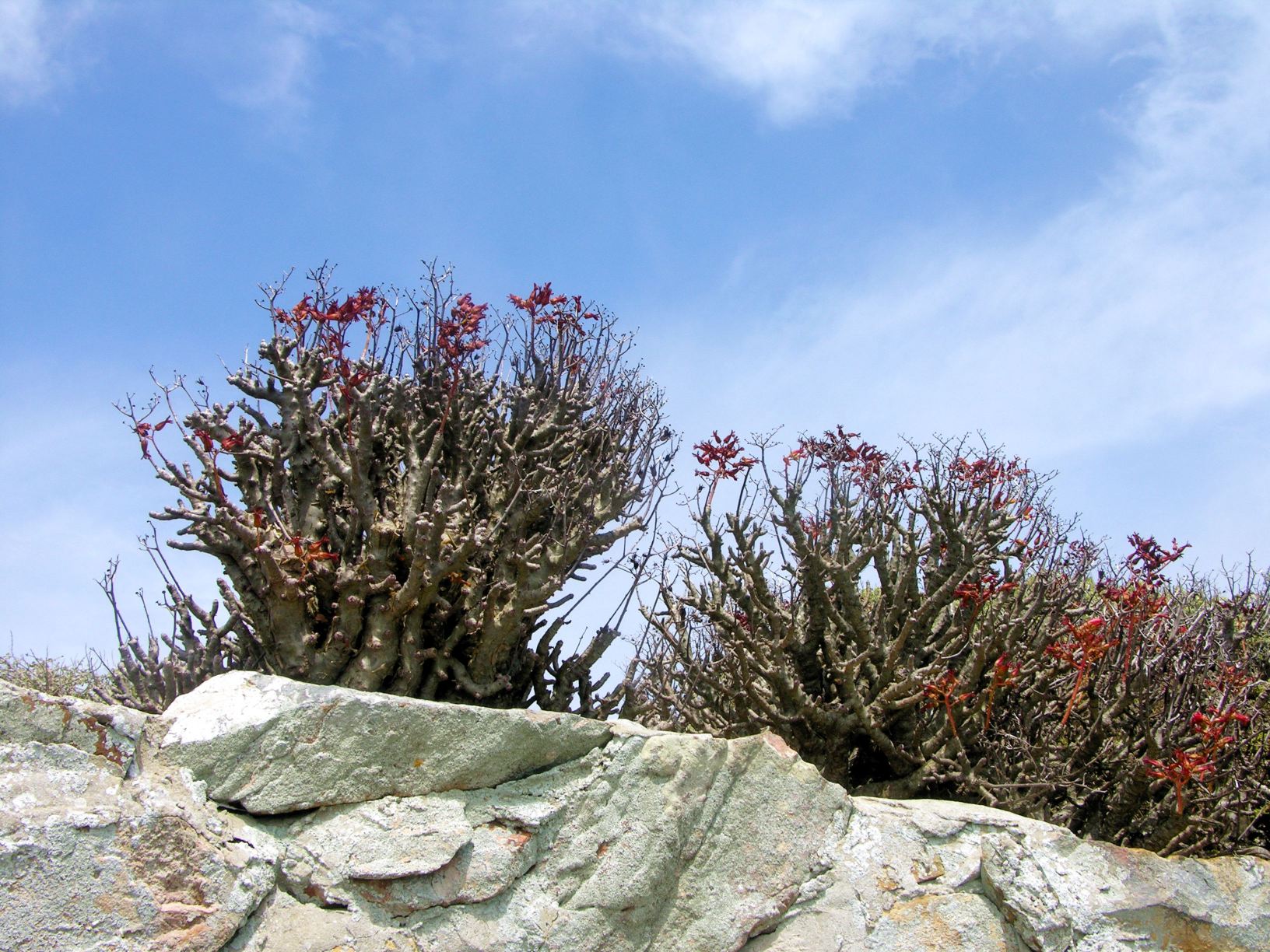
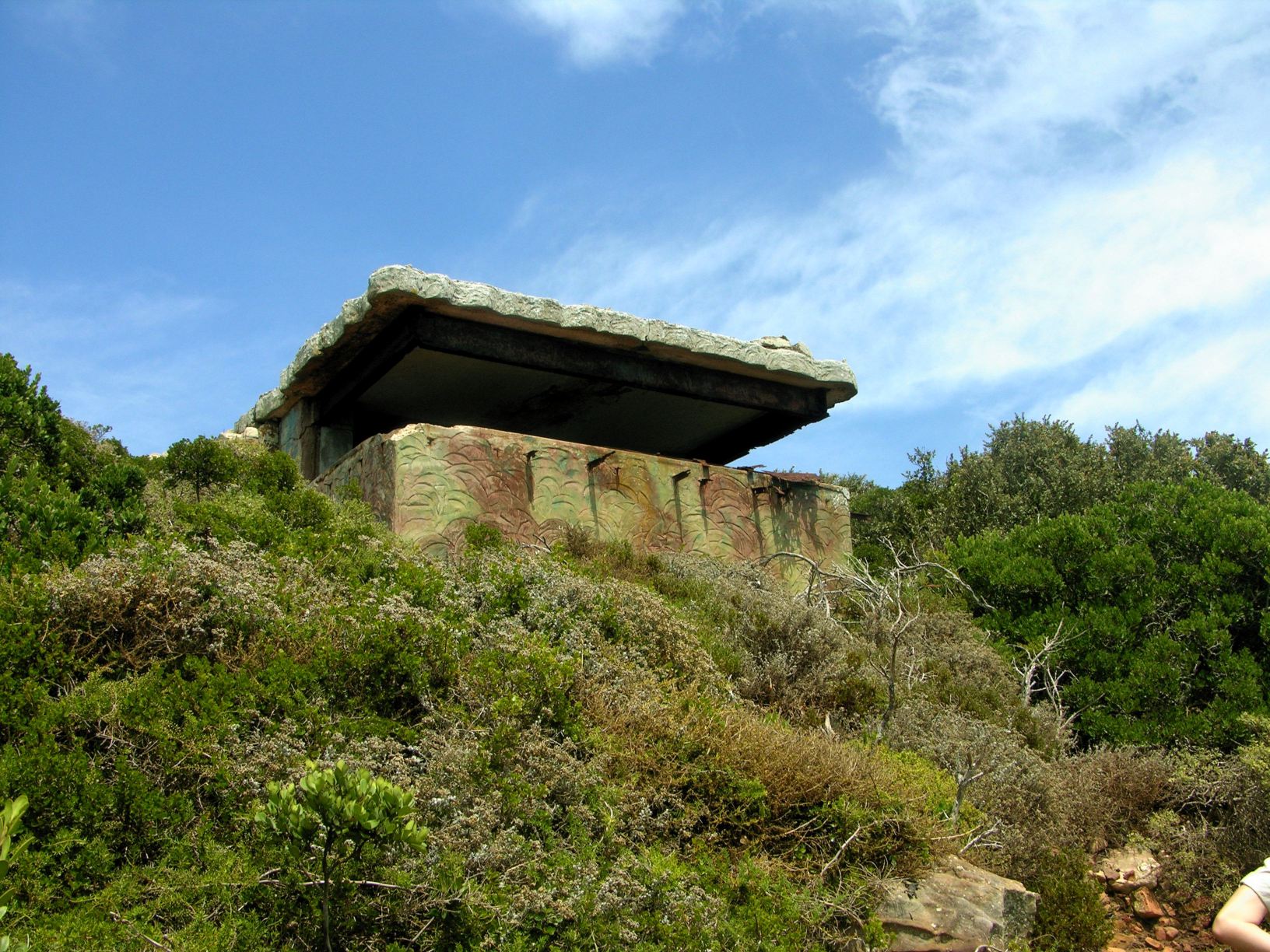
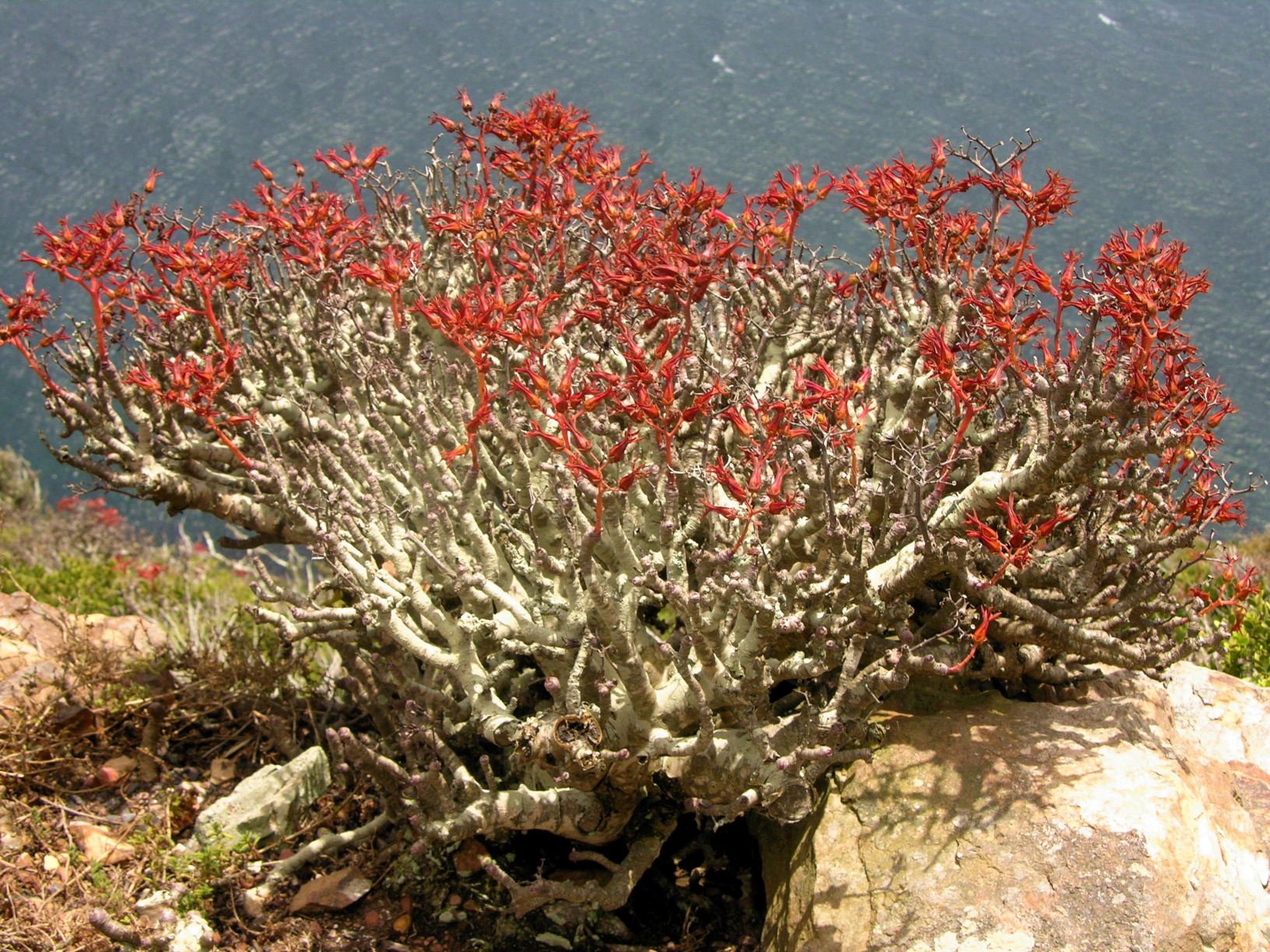
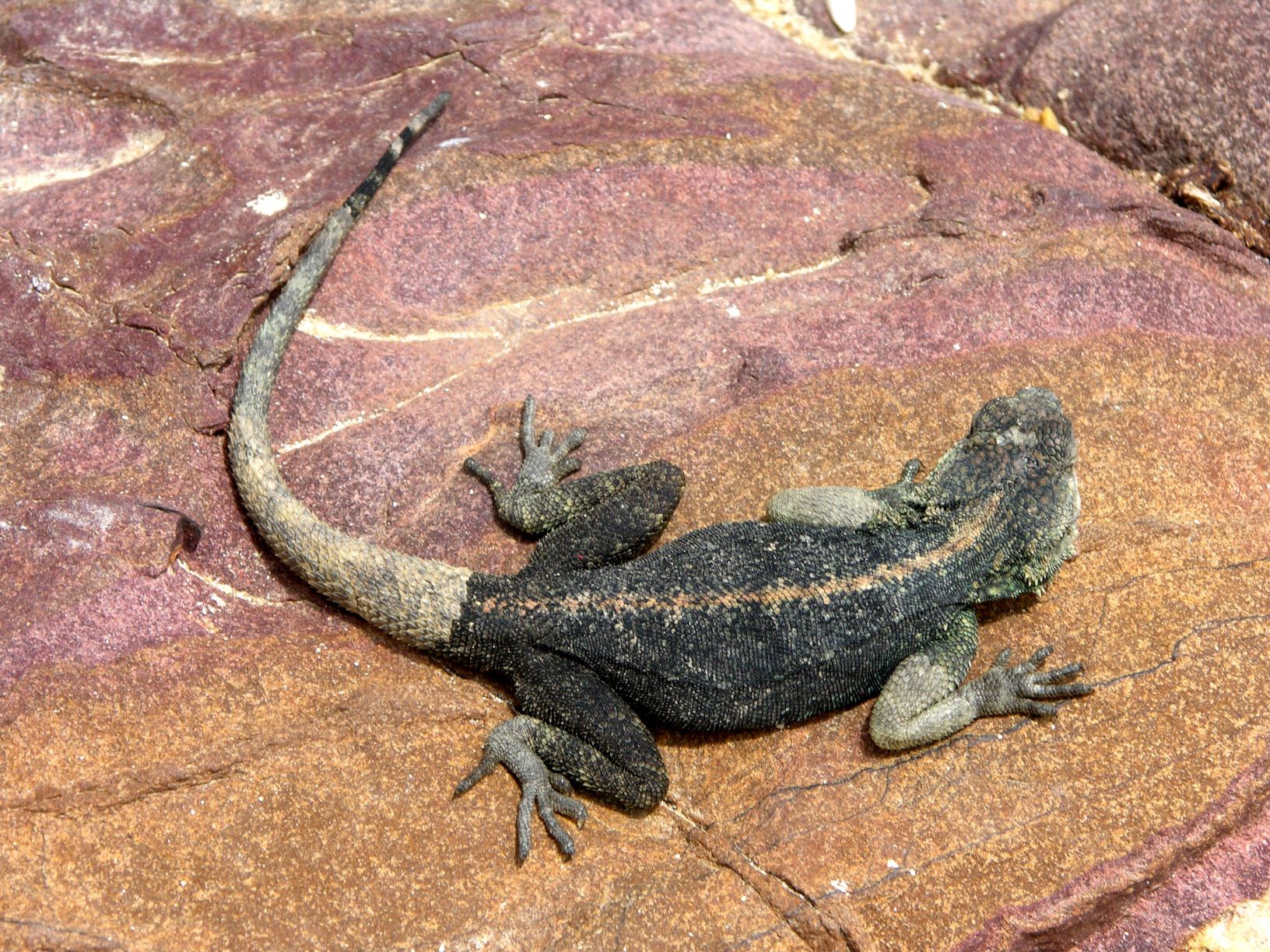
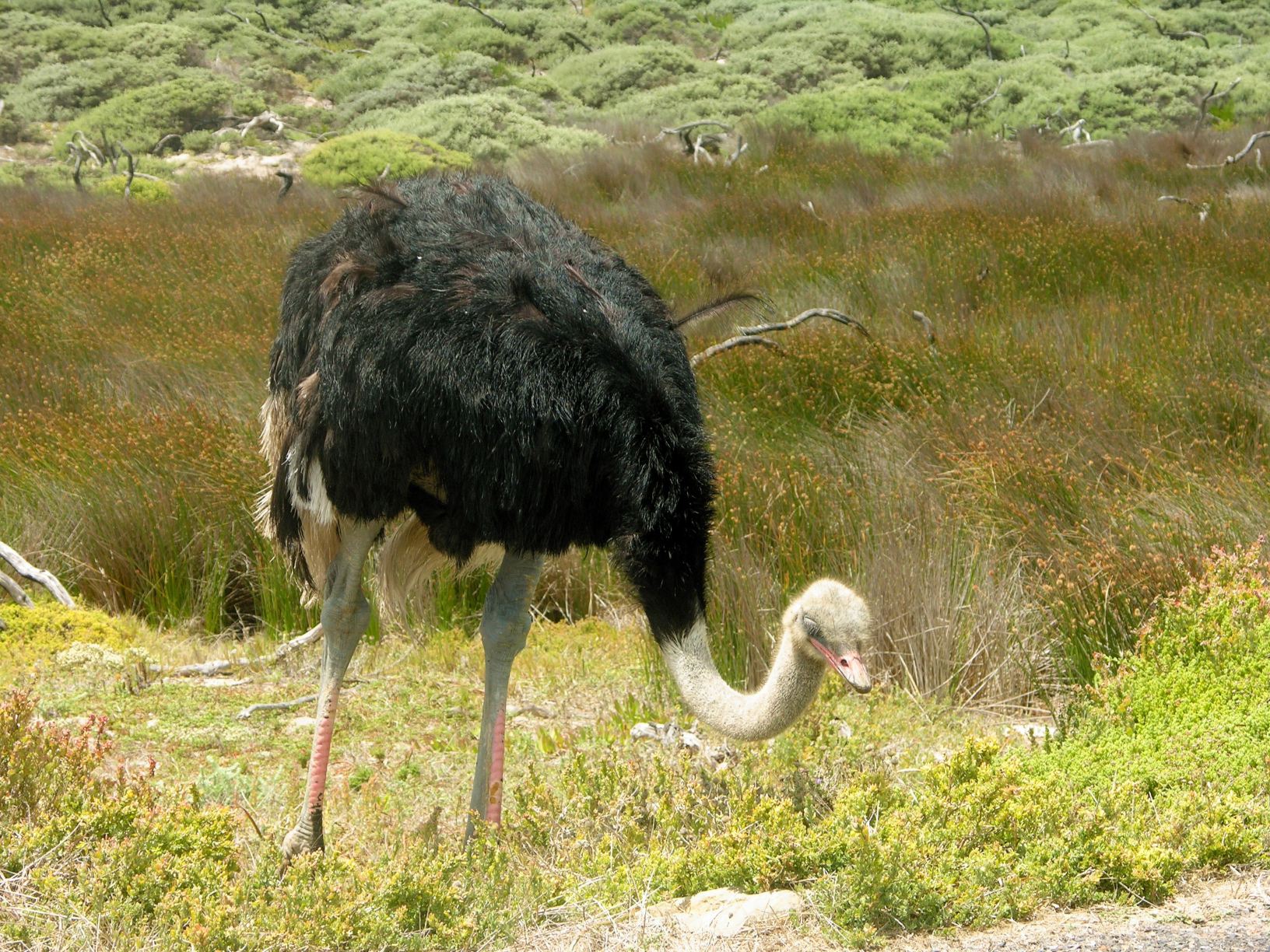
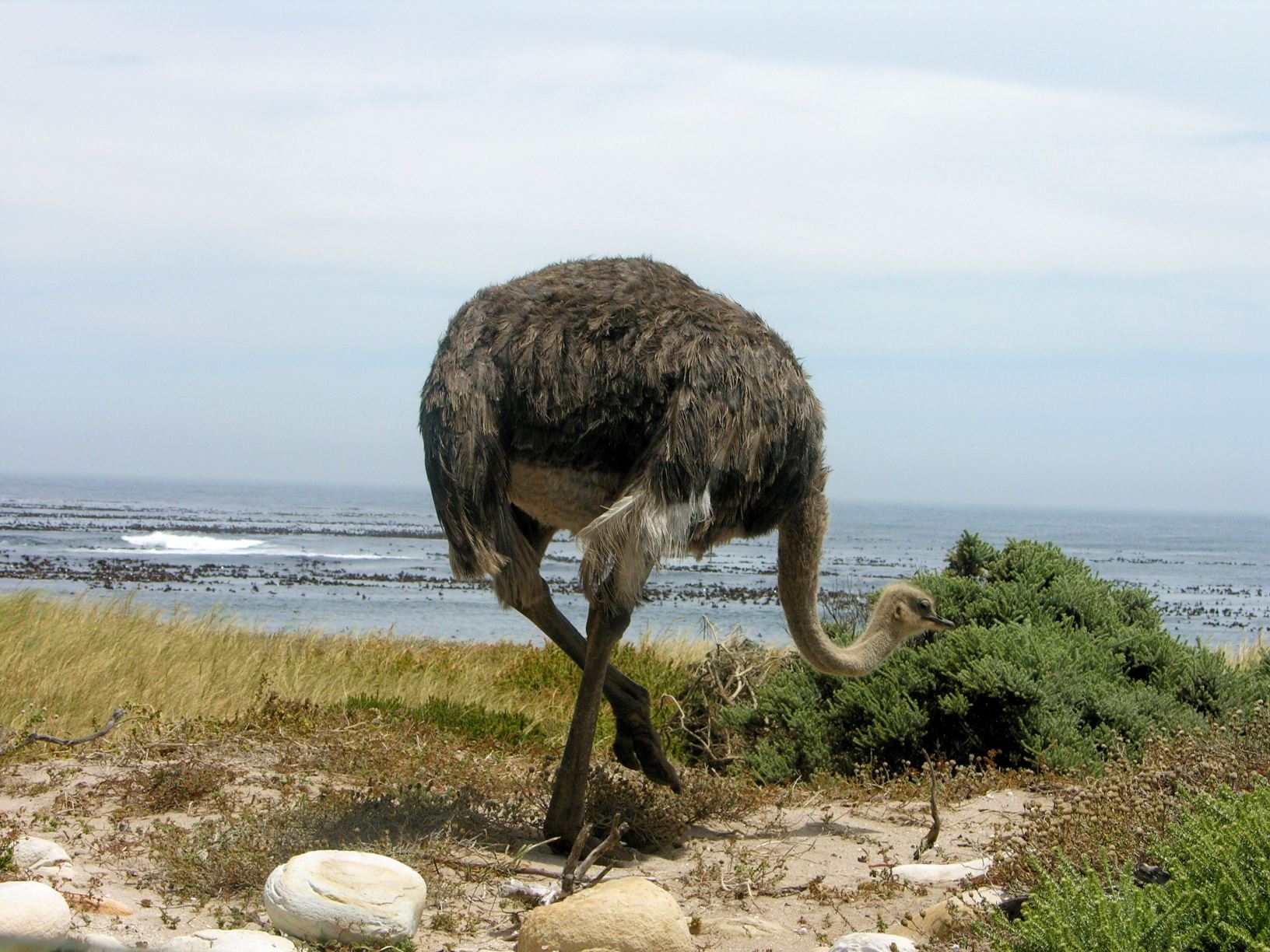
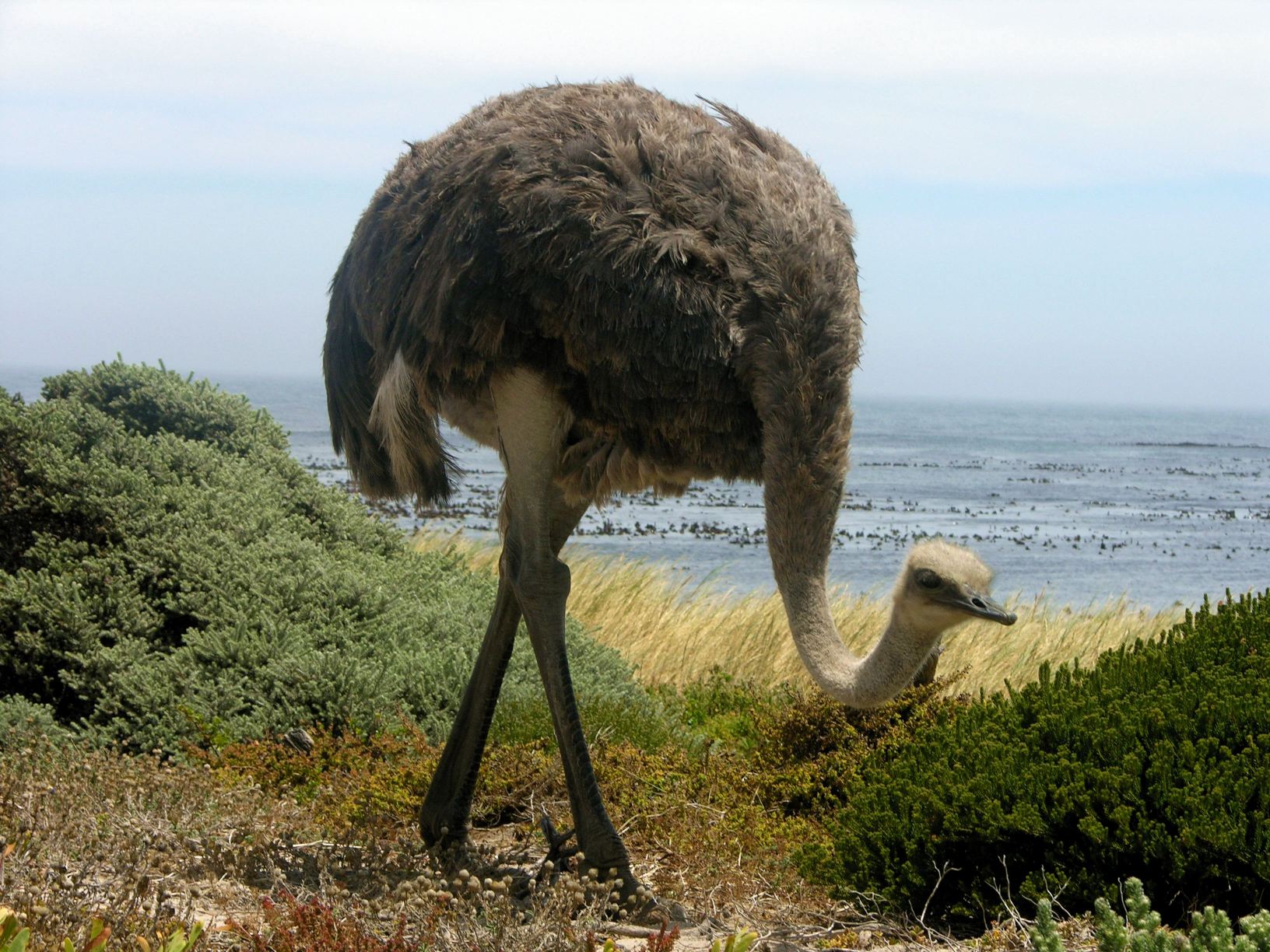
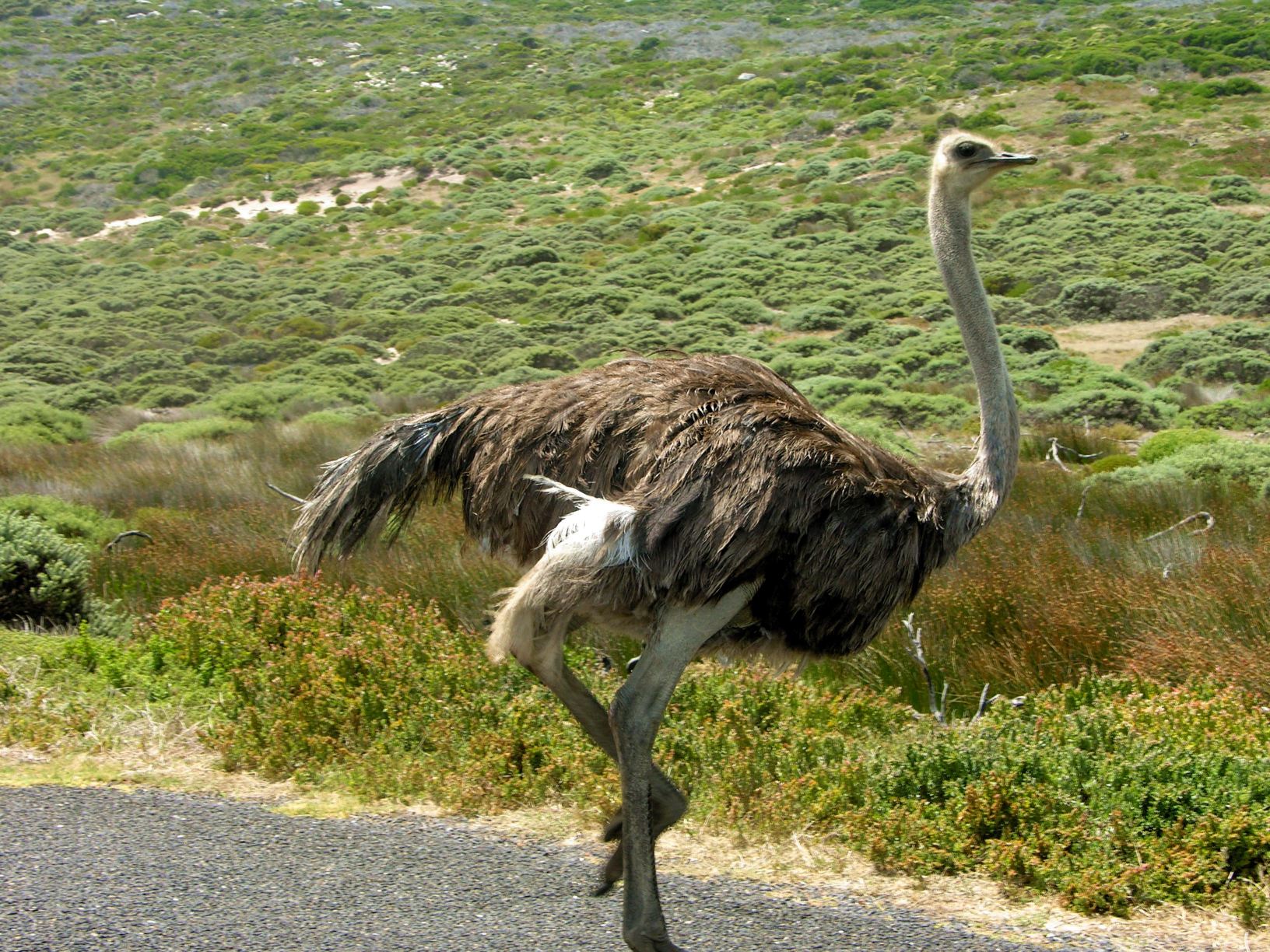
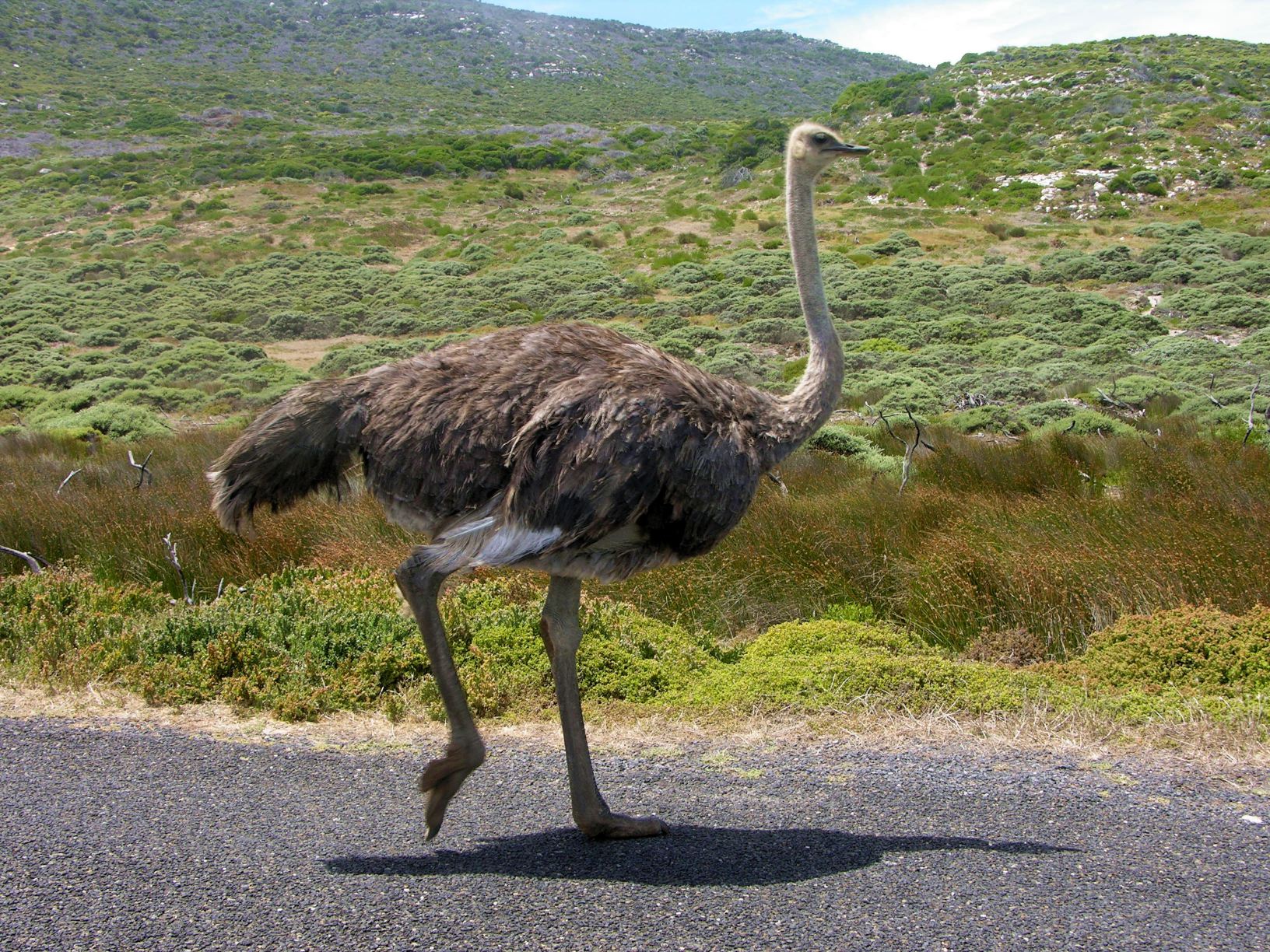
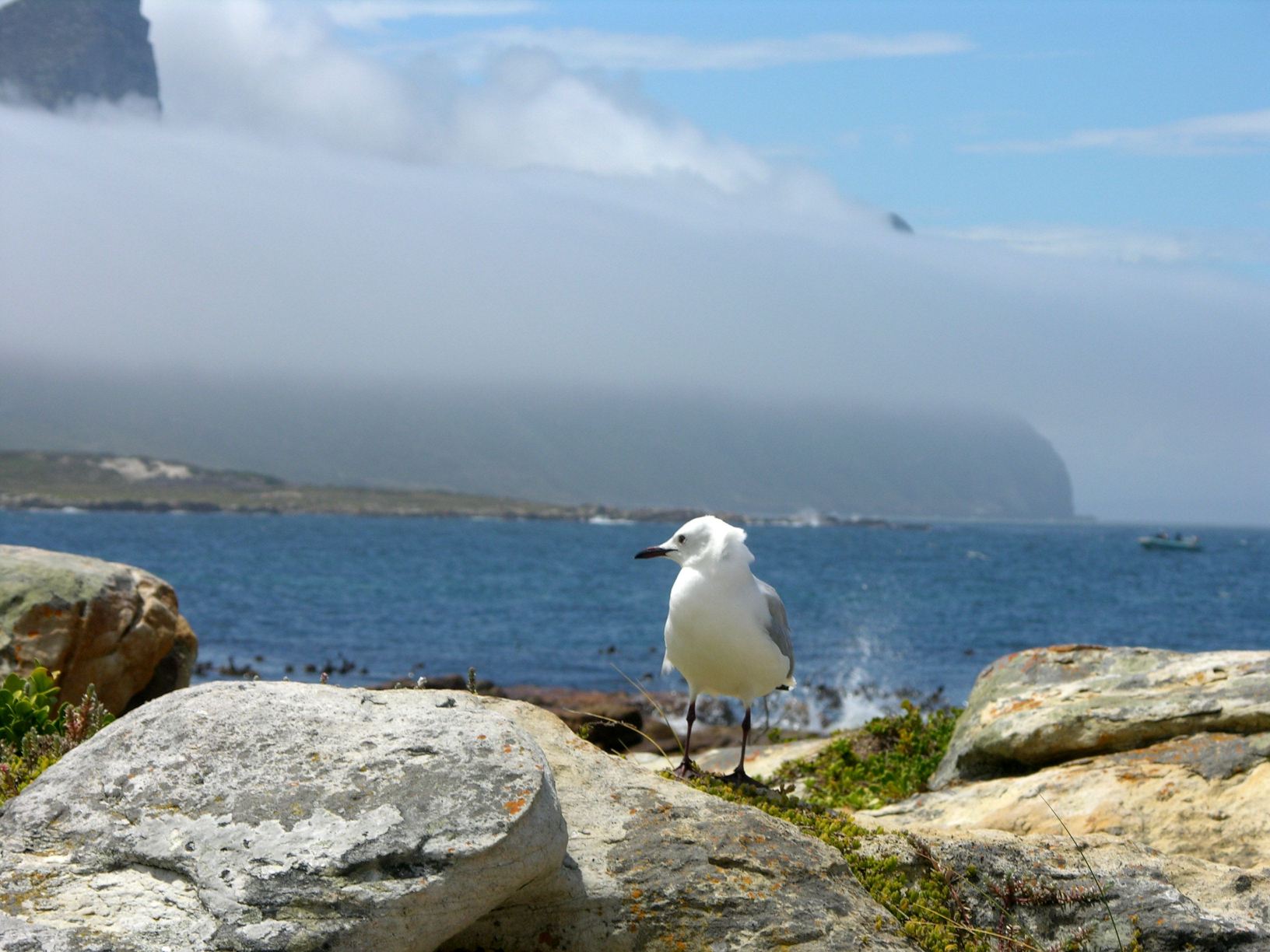
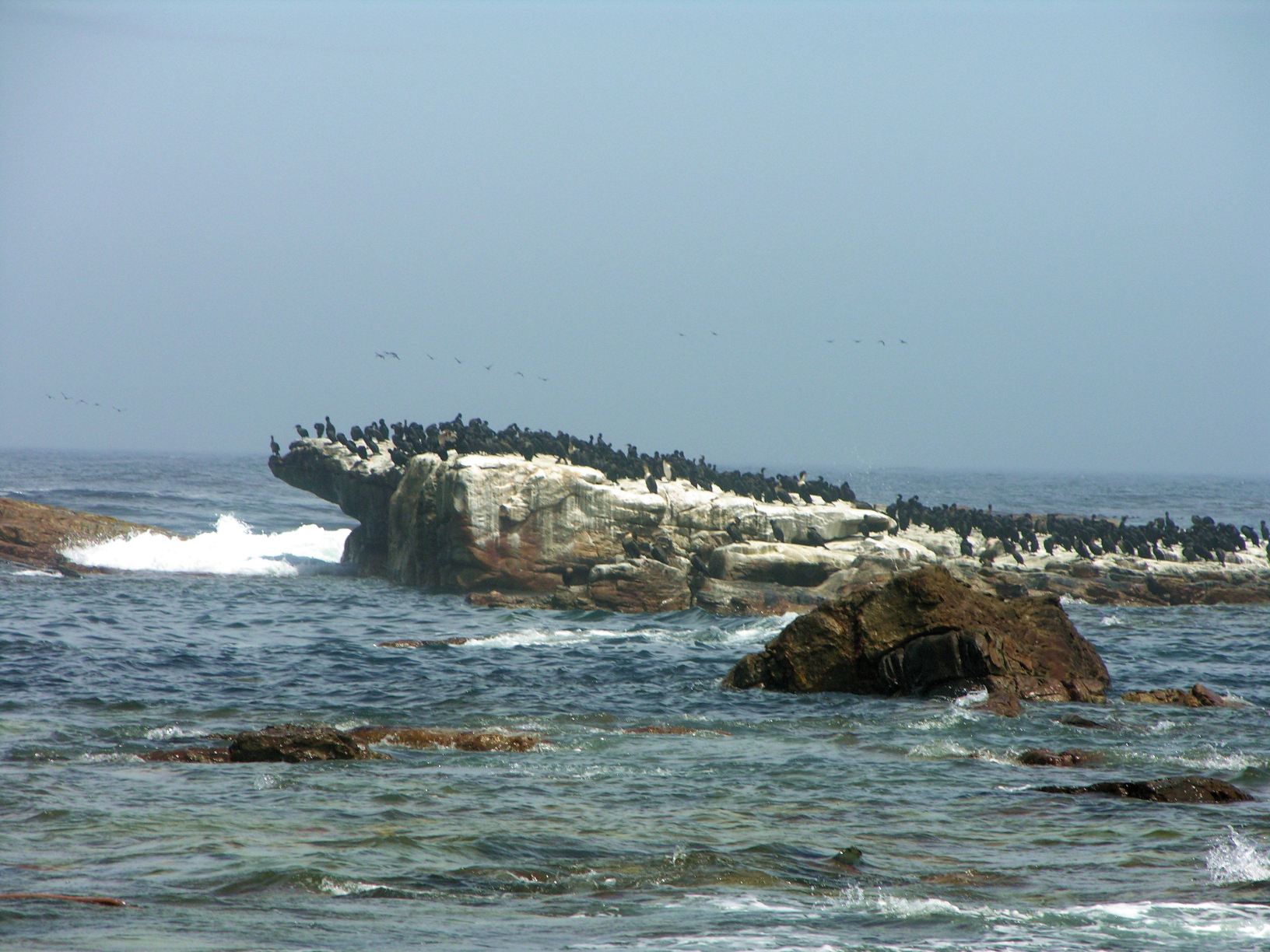
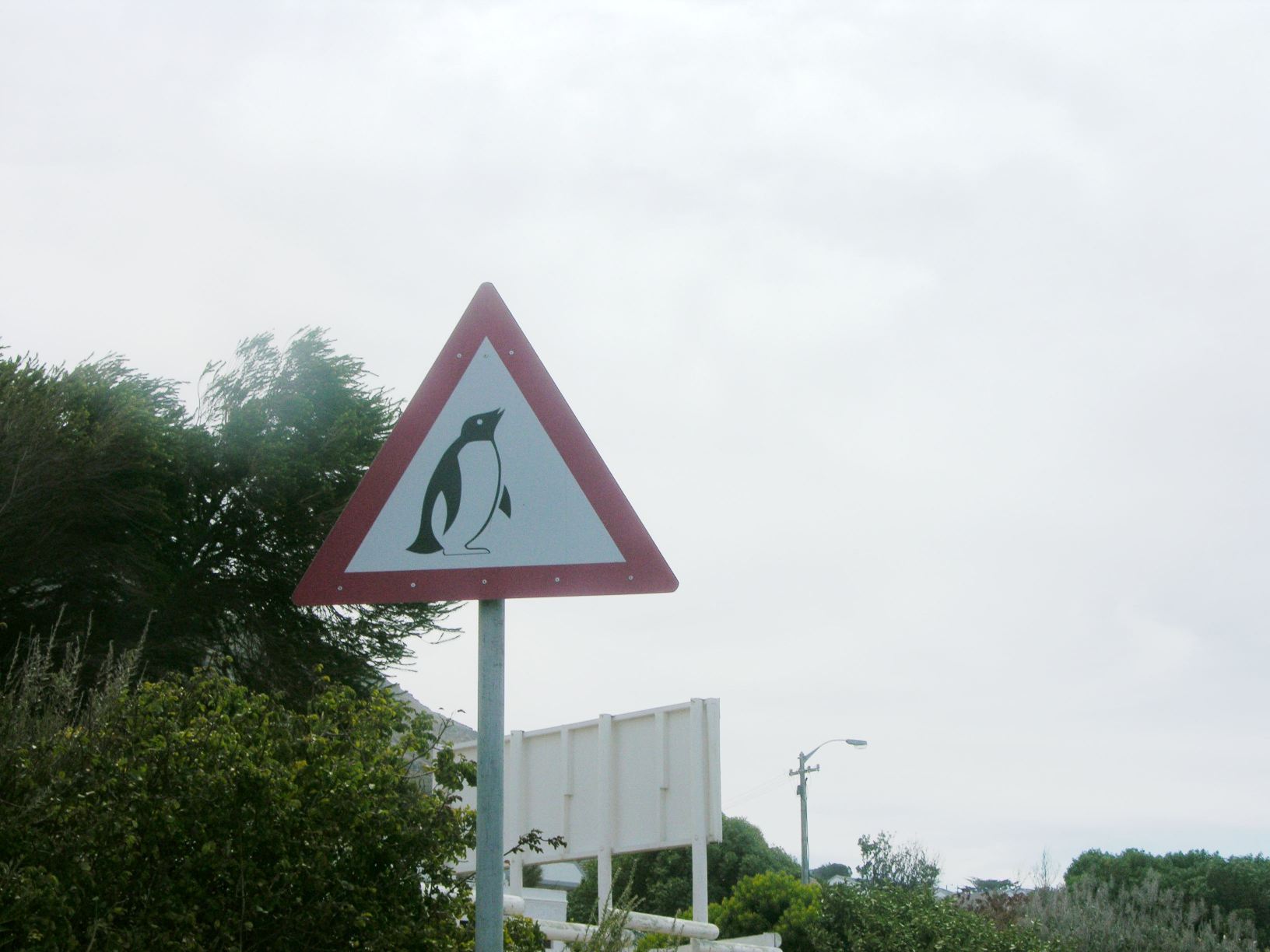
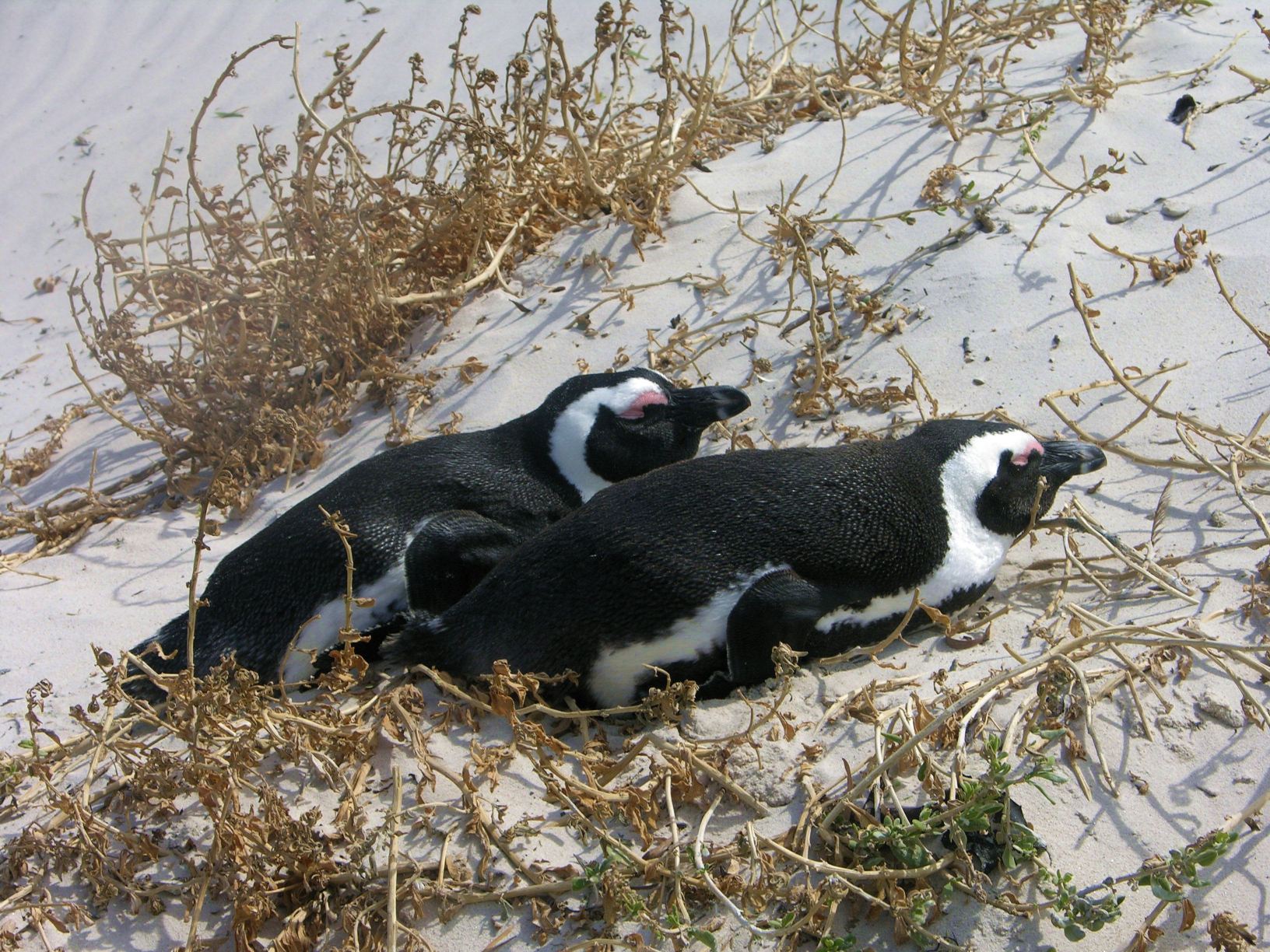
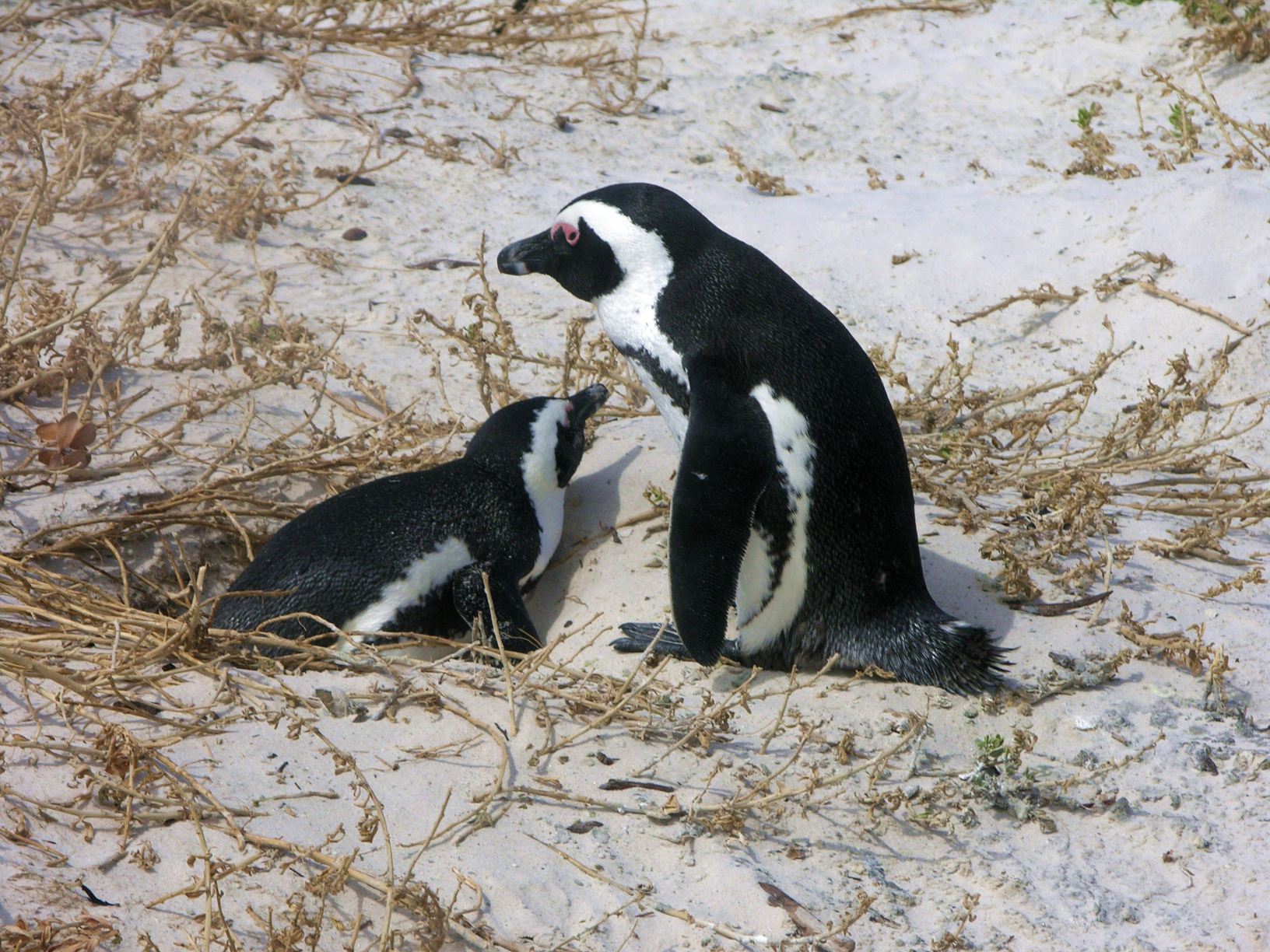
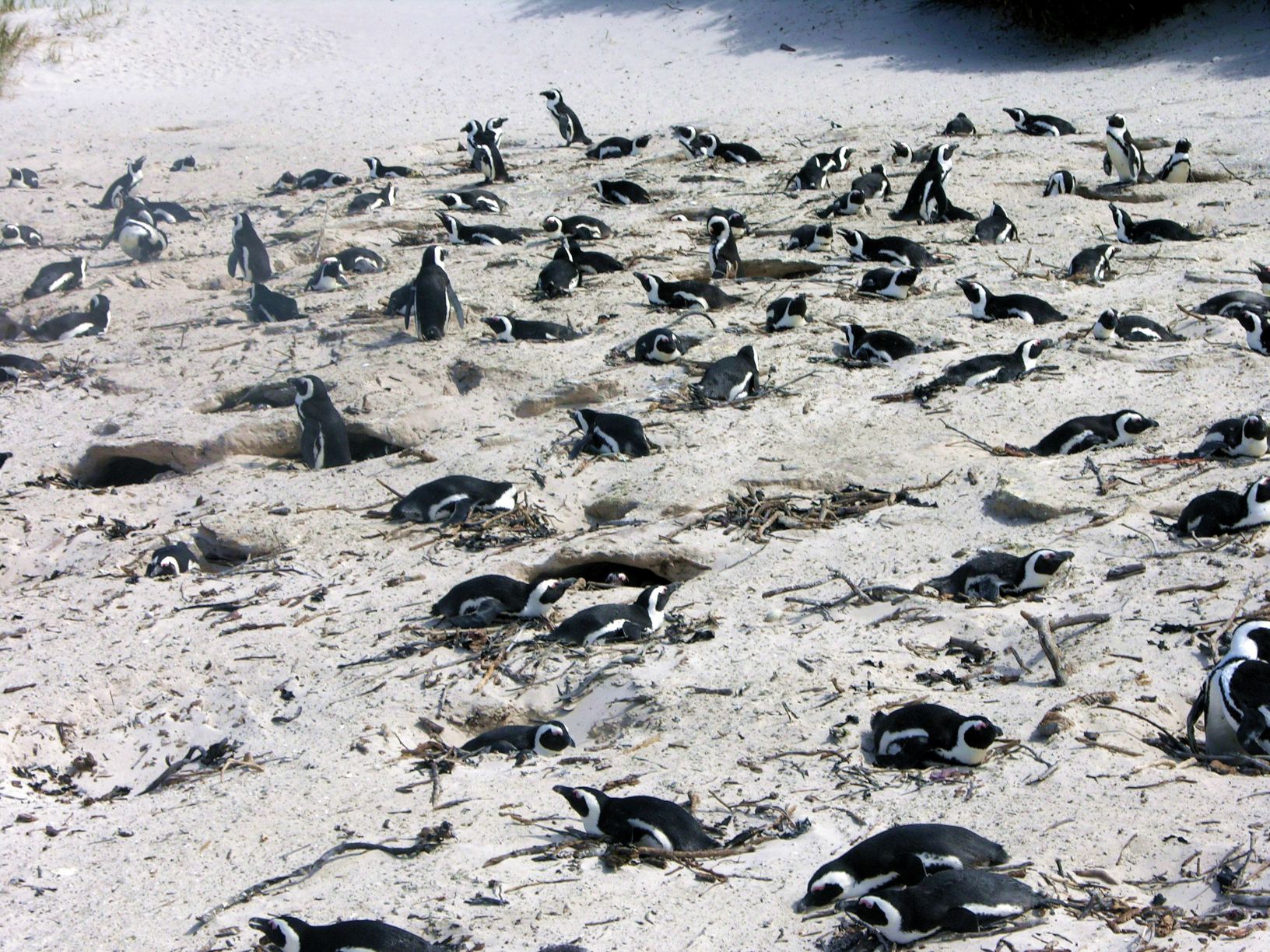
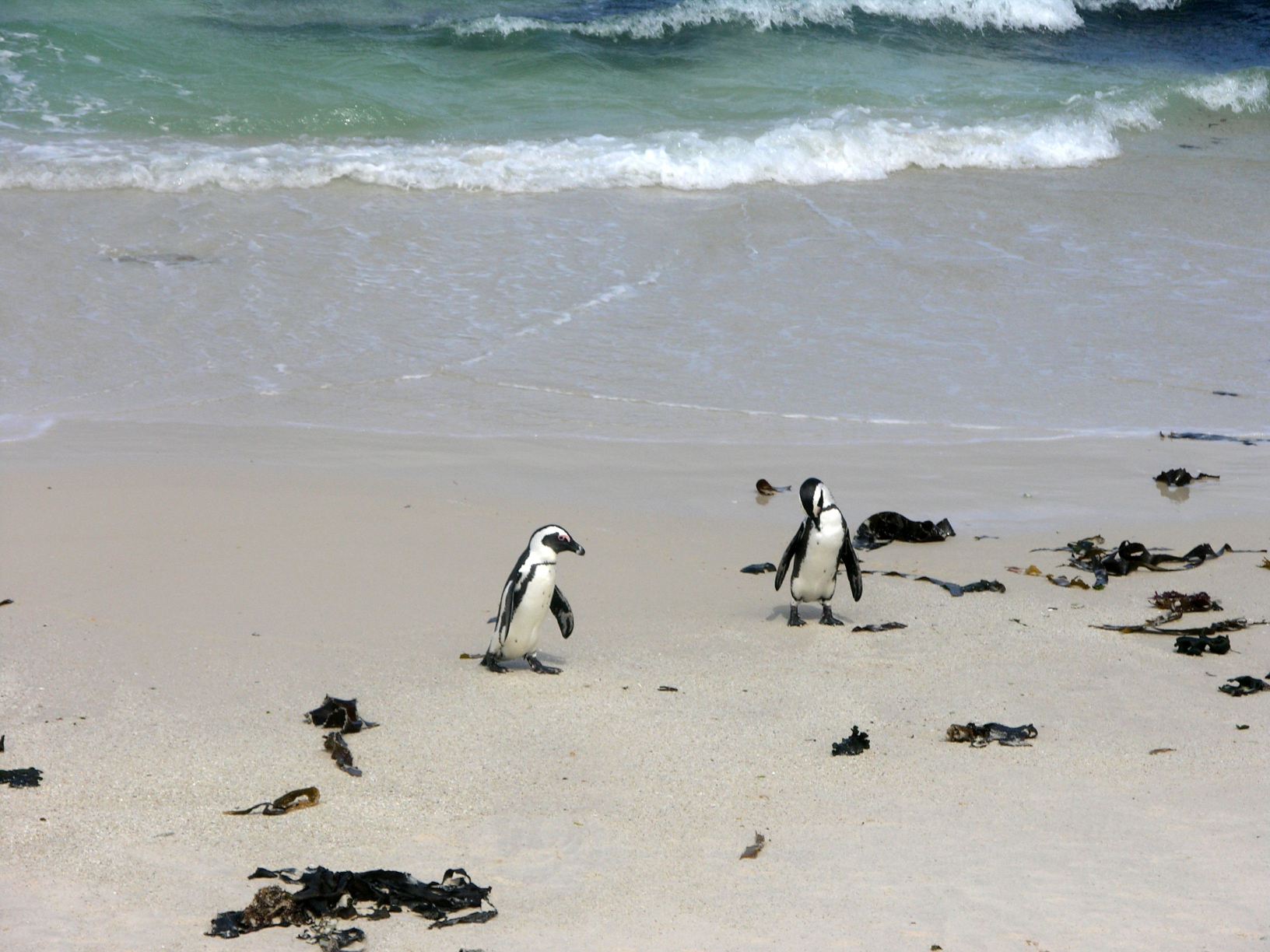
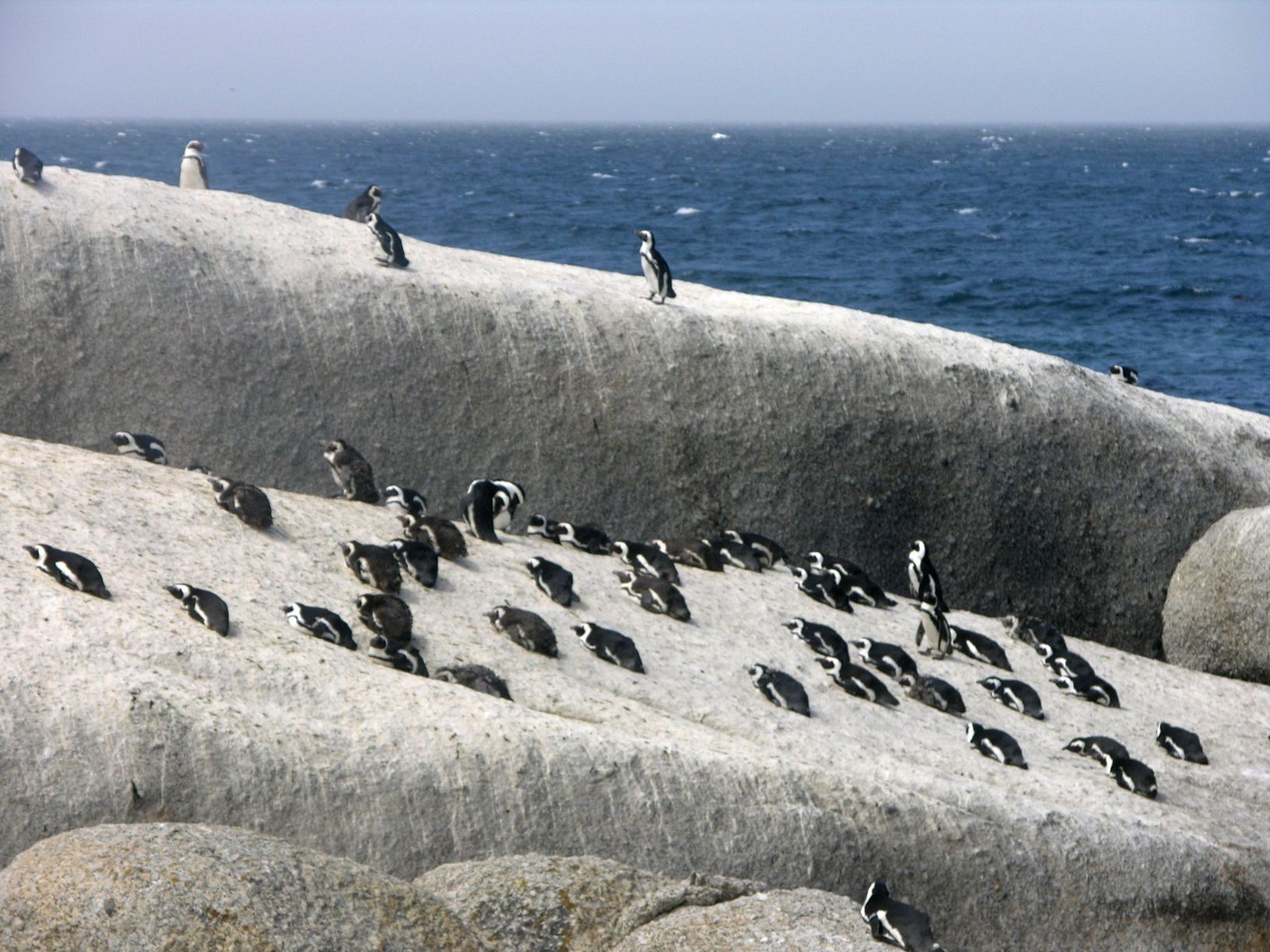
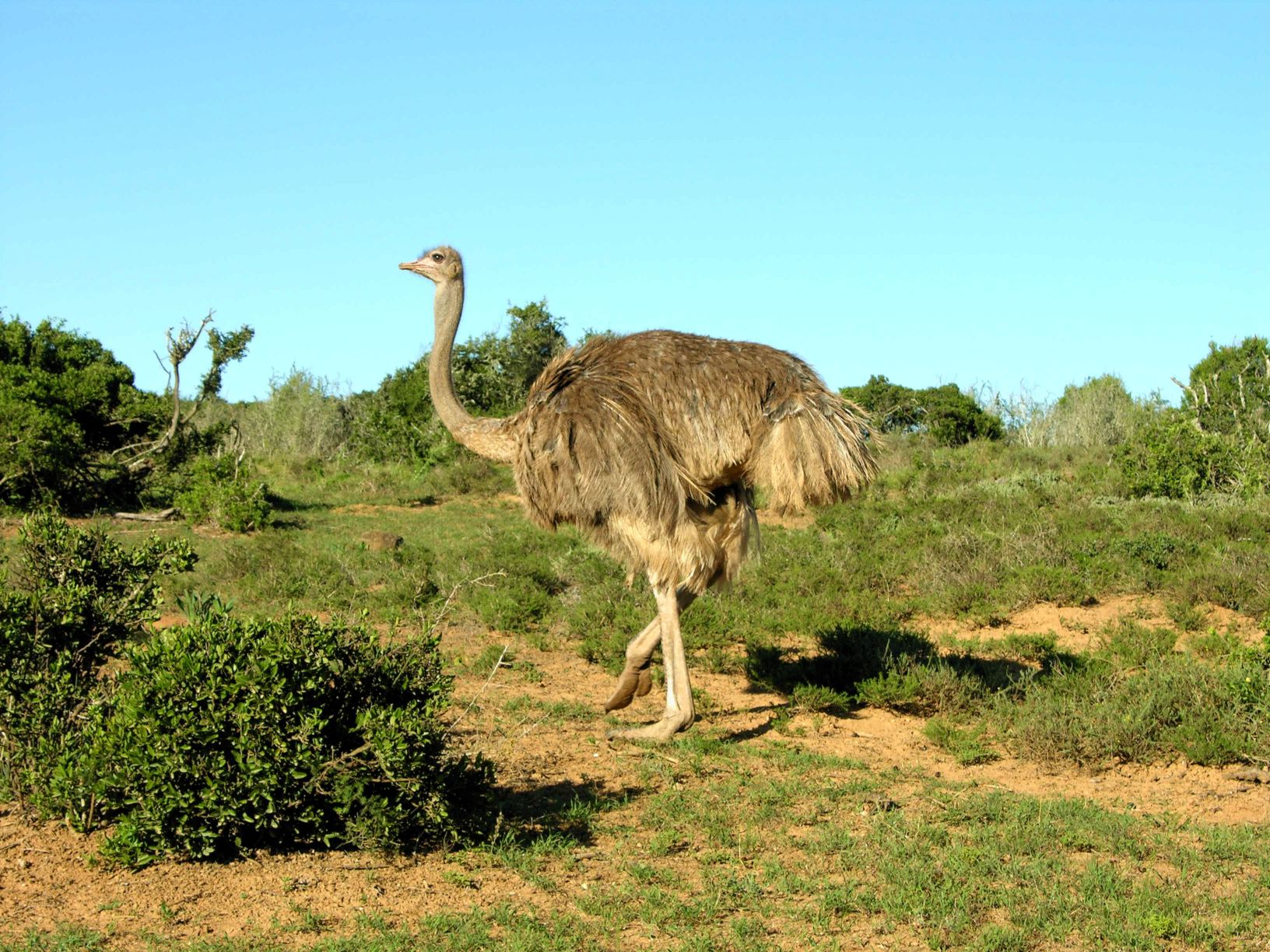
As for the local wildlife, there's no shortage of ostriches striding about, or of dassies, and there are many sea birds, including a colony of African penguins. They nest on Boulders Beach near Simon's Town (park website). It's all organised and you pay to get in, but there really are lots of penguins, even in the daytime.
South Africa's coastal resorts begin in Cape Town and run along the south coast. Little towns merge one into the next. People don't come to the sea to swim here exactly. On a huge beach you might see only a handful of people who've braved the water. Most of the holidaymakers are surfers. The water is on the cool side, about twenty degrees. There are cold currents around the south of the African continent. Every cloud has a silver lining, though: sharks don't swim in that sort of frost.
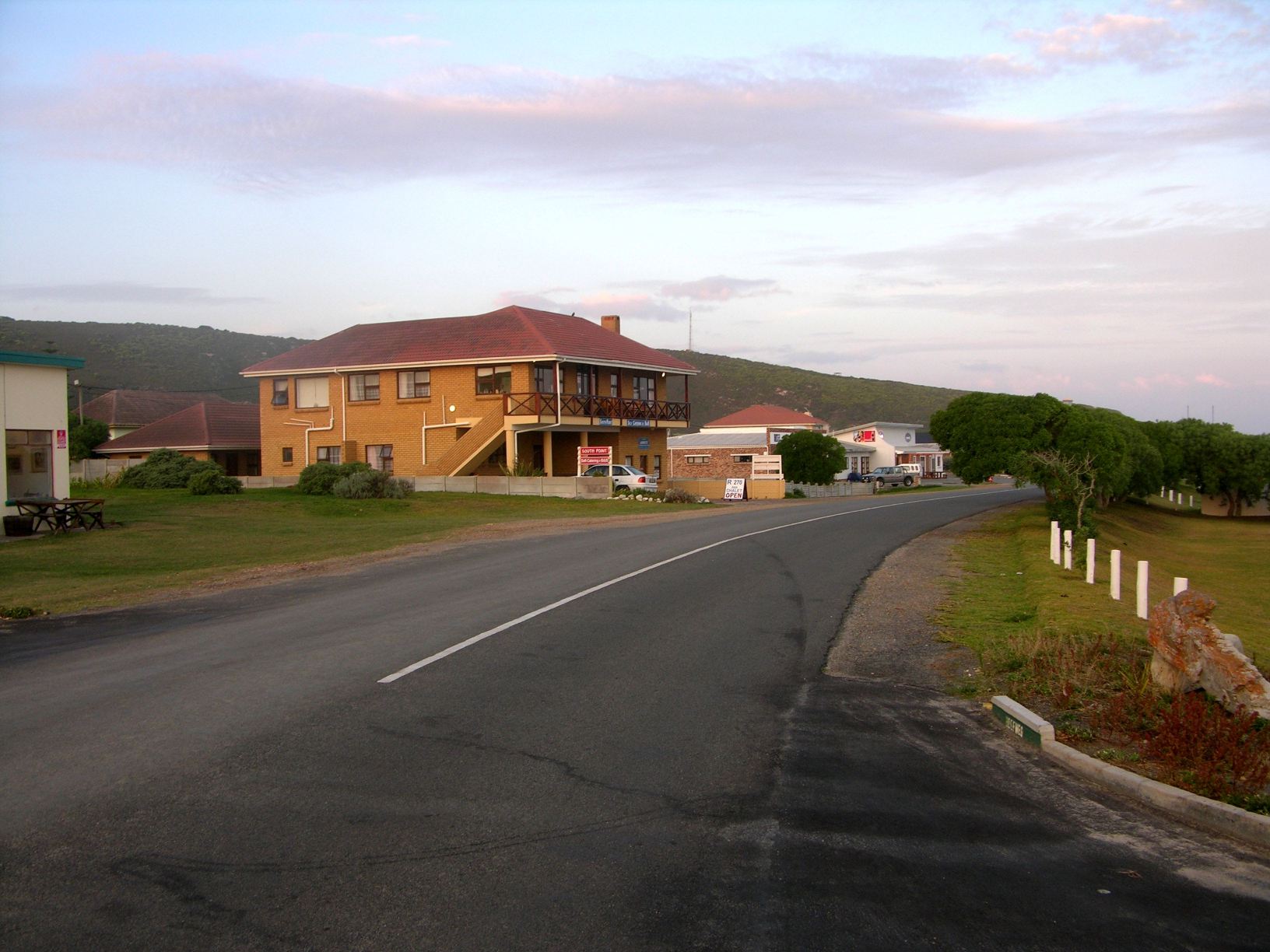
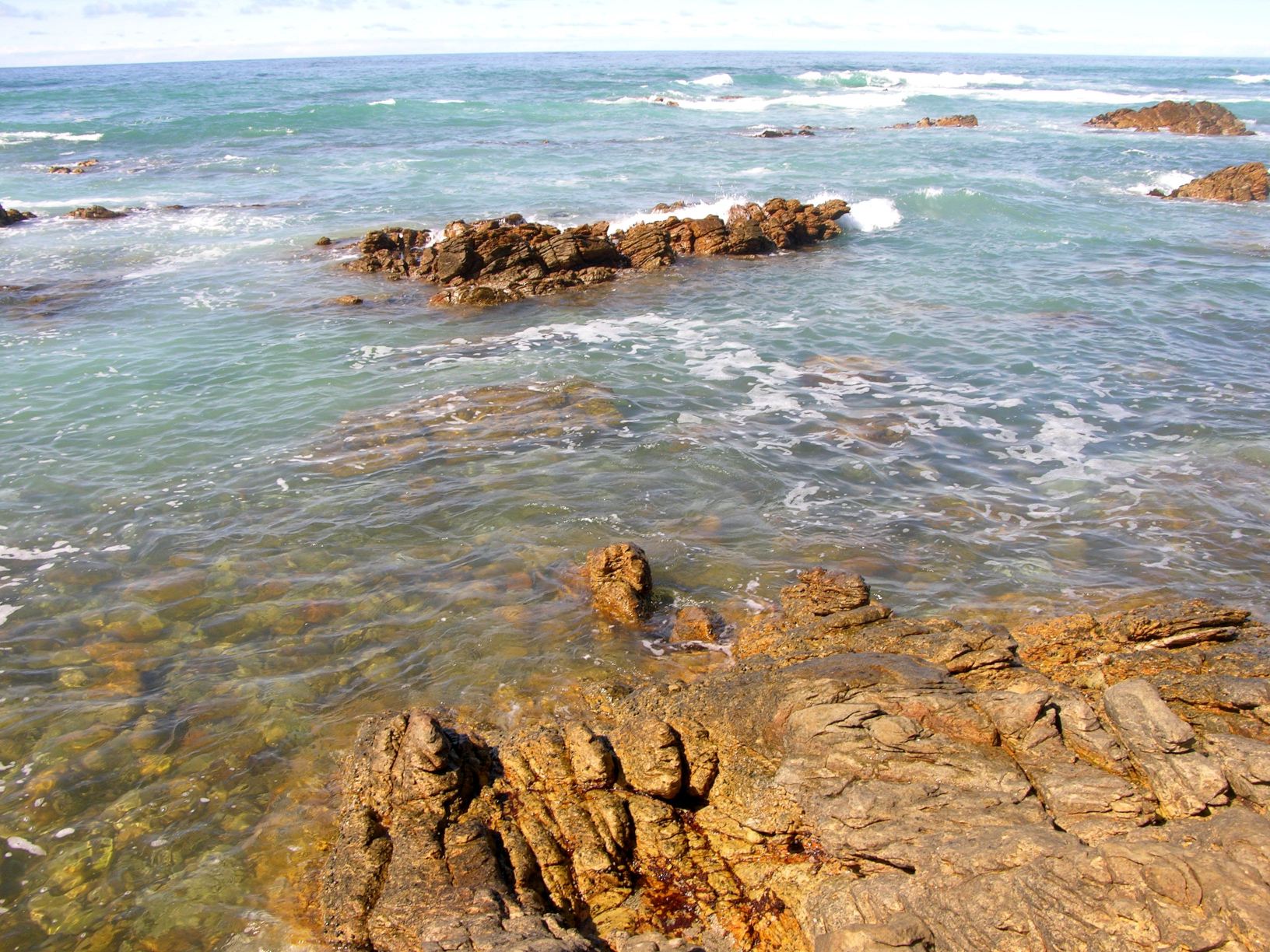
Cape Agulhas is an island of sorts amid all that civilisation. There is a national park of the same name, protecting plants, tortoises and birds. There are no lions, so you can walk about without any fences. Cape Agulhas itself is low and not as striking as the Cape of Good Hope, but it has the distinction of actually being the southernmost point of Africa. We reached it as the sun was setting and stayed the night in the nearest town (34°49.572′S, 20°00.692′E).
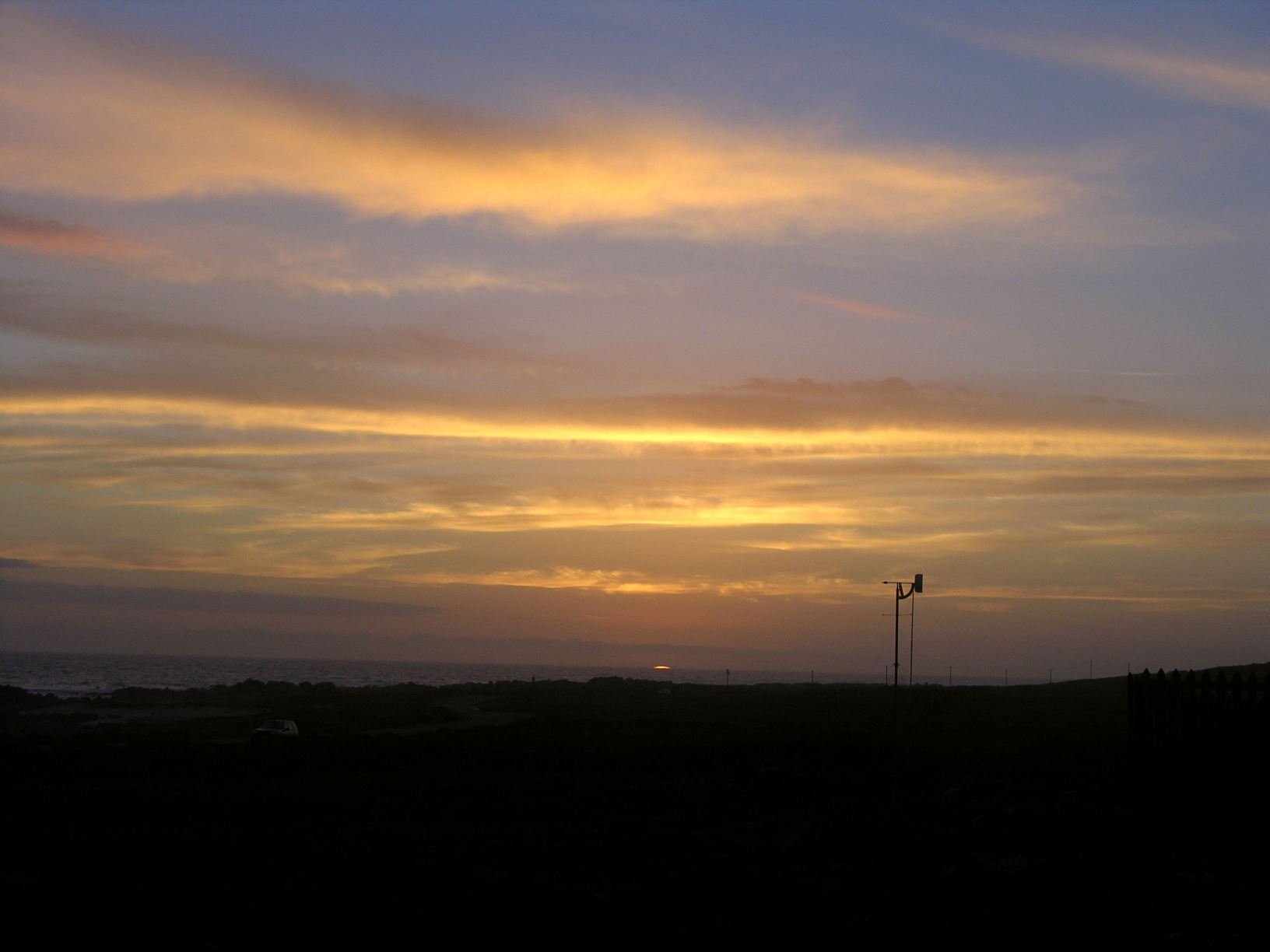
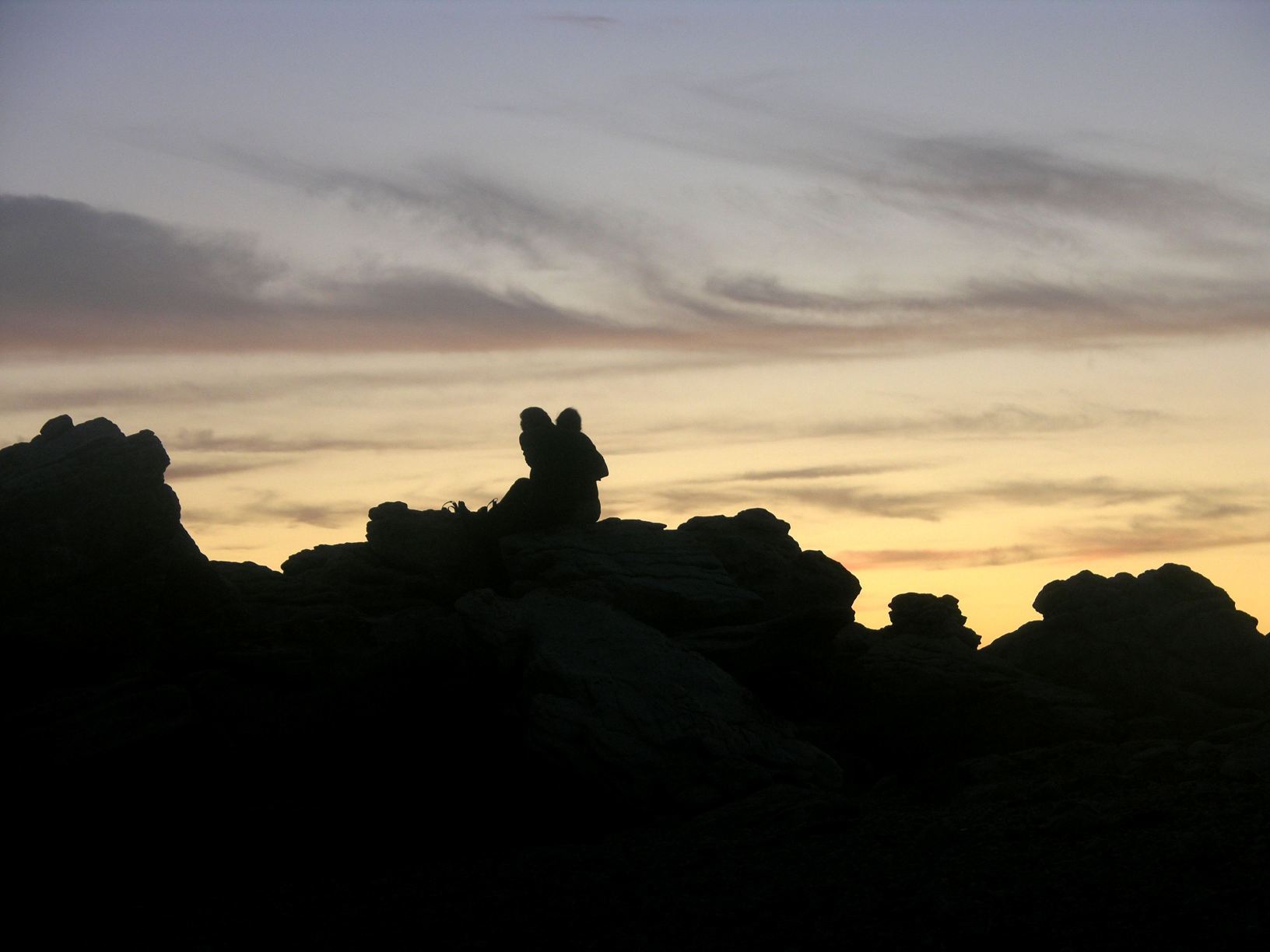
We watched the sunset on the cape. According to convention, this is where the Atlantic meets the Indian Ocean. There's even a sign. I was going to swim from one ocean to the other when a young couple appeared, obviously waiting for us to leave so they could have sex at the southernmost point. Ah, youth. Well, in that department we could only yield the floor.
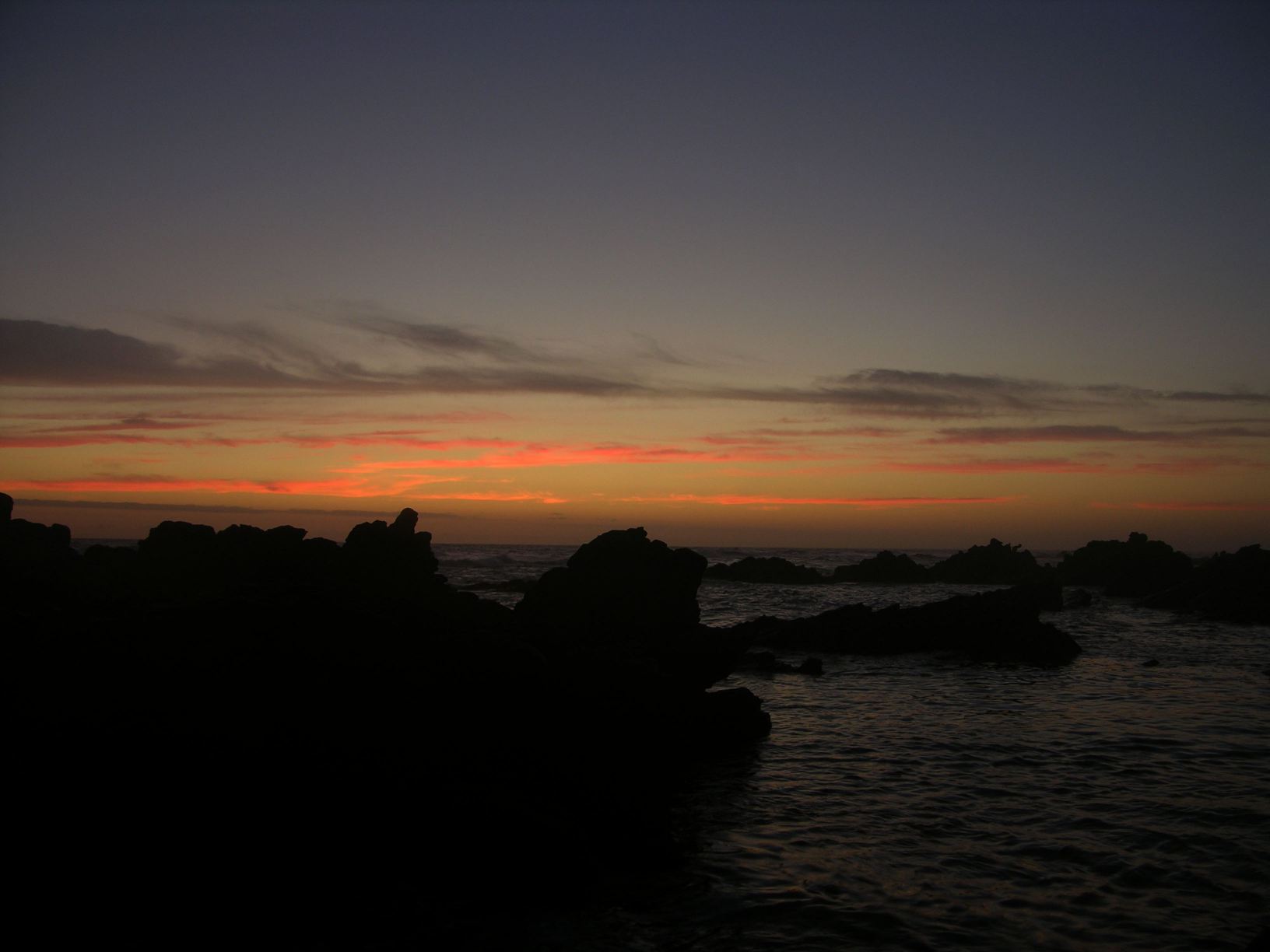
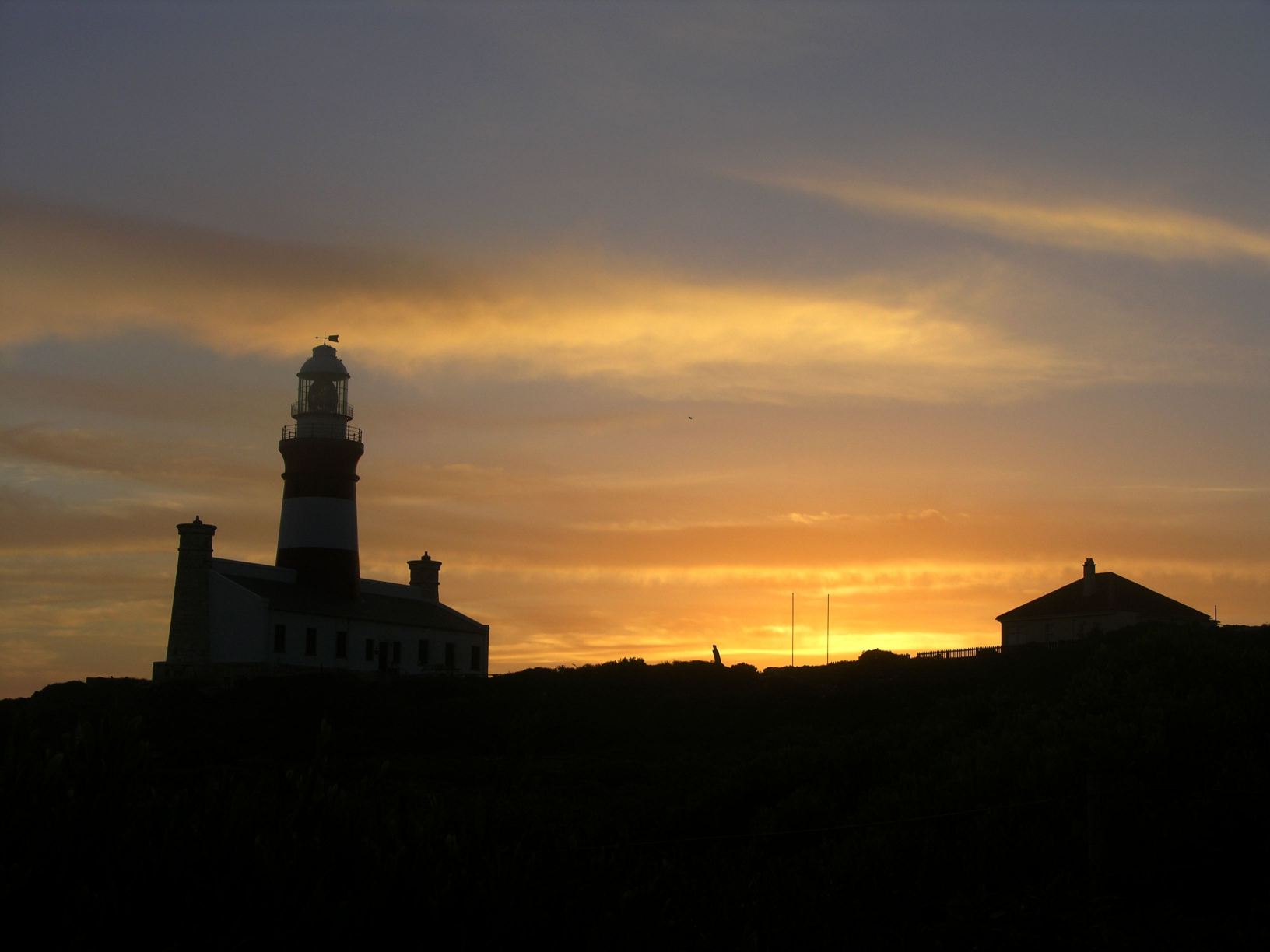
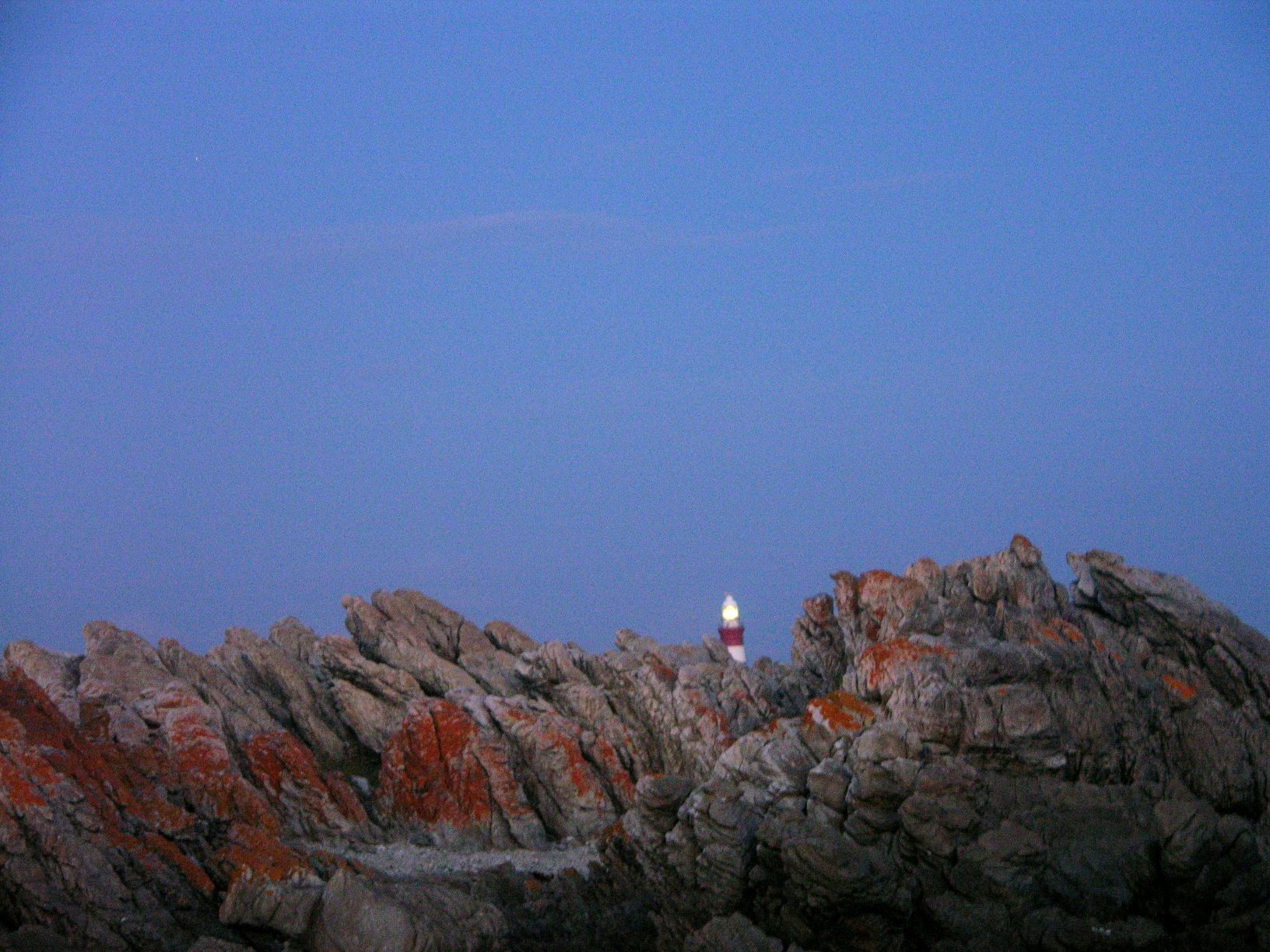
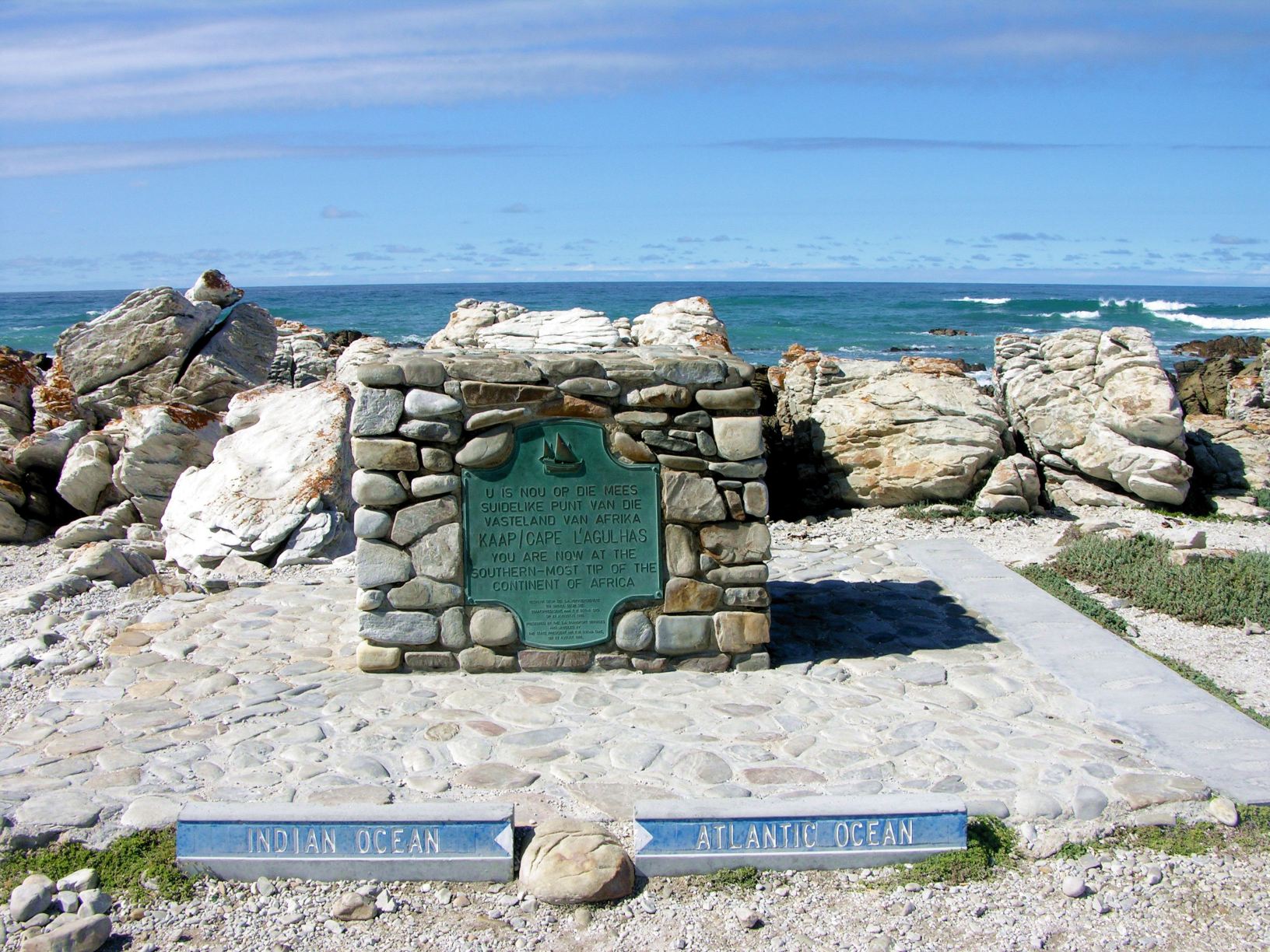
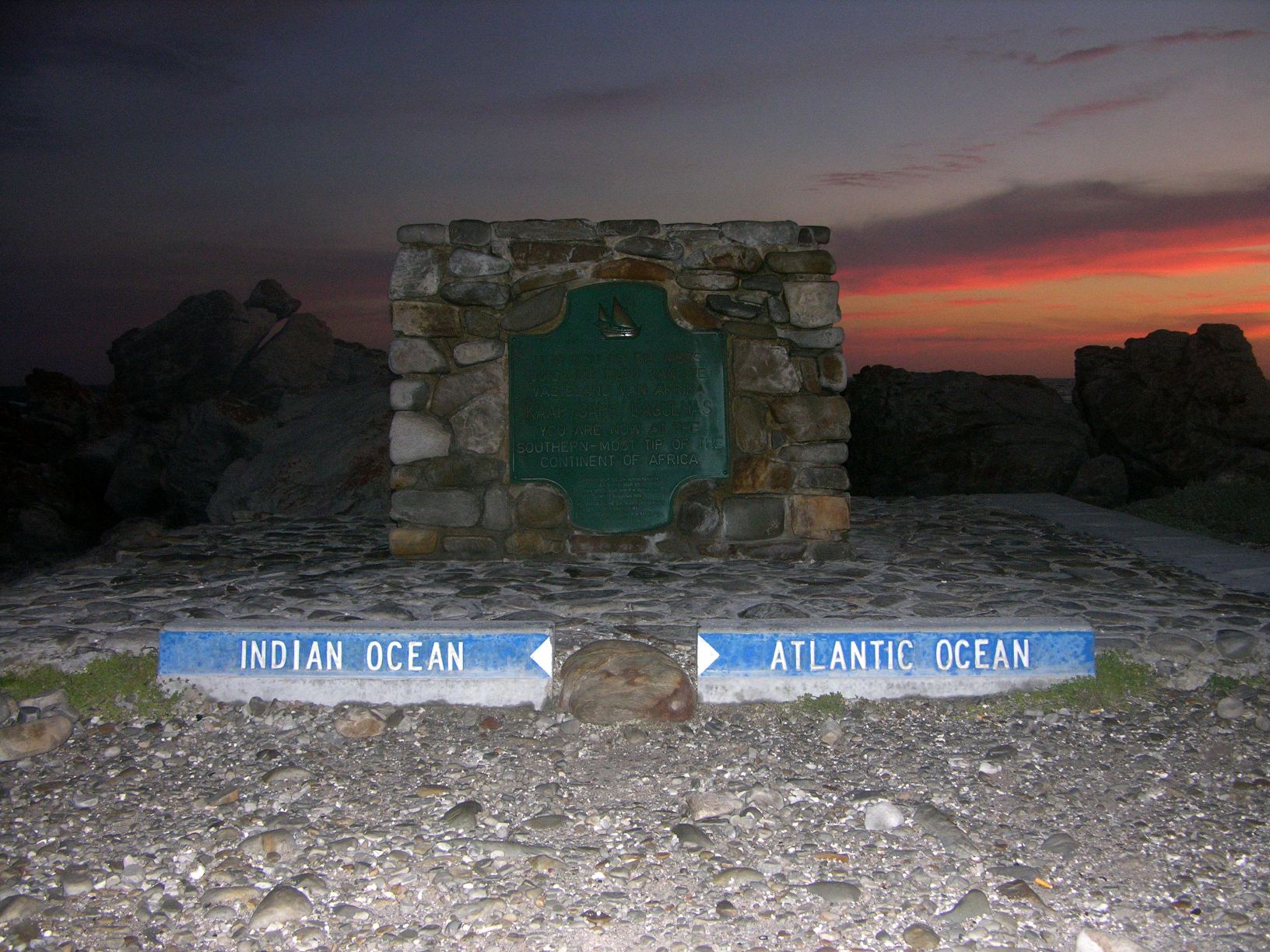
I went from one ocean to the other the next day, on foot. Look at the coordinates and you'll see why this particular spot on the world map feels chosen. The southernmost little stone is at 34°50.007′S, 20°00.000′E. Nine zeroes. That's something. It doesn't happen by accident. Better odds of winning a million in the lottery with your first ticket.
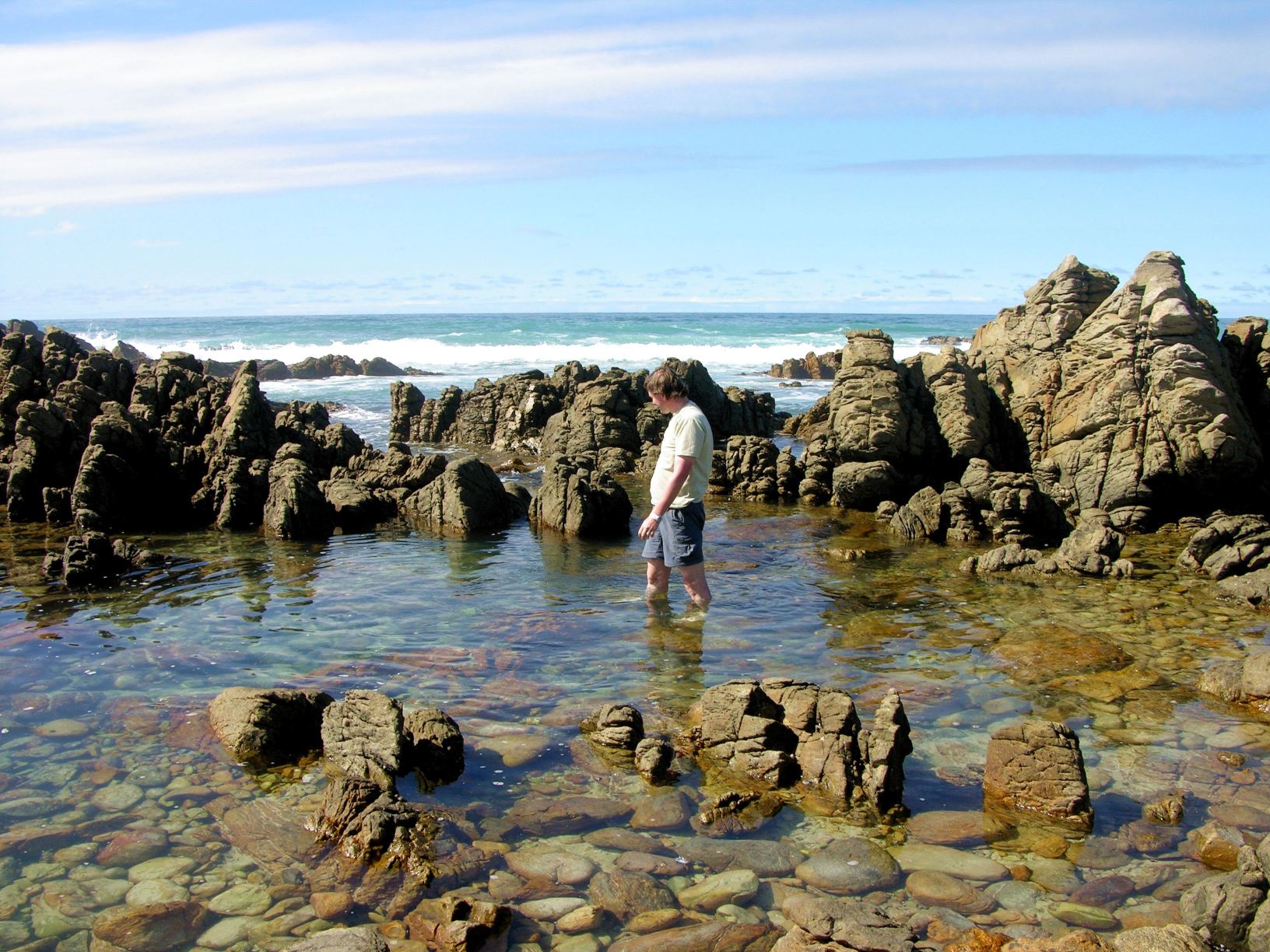
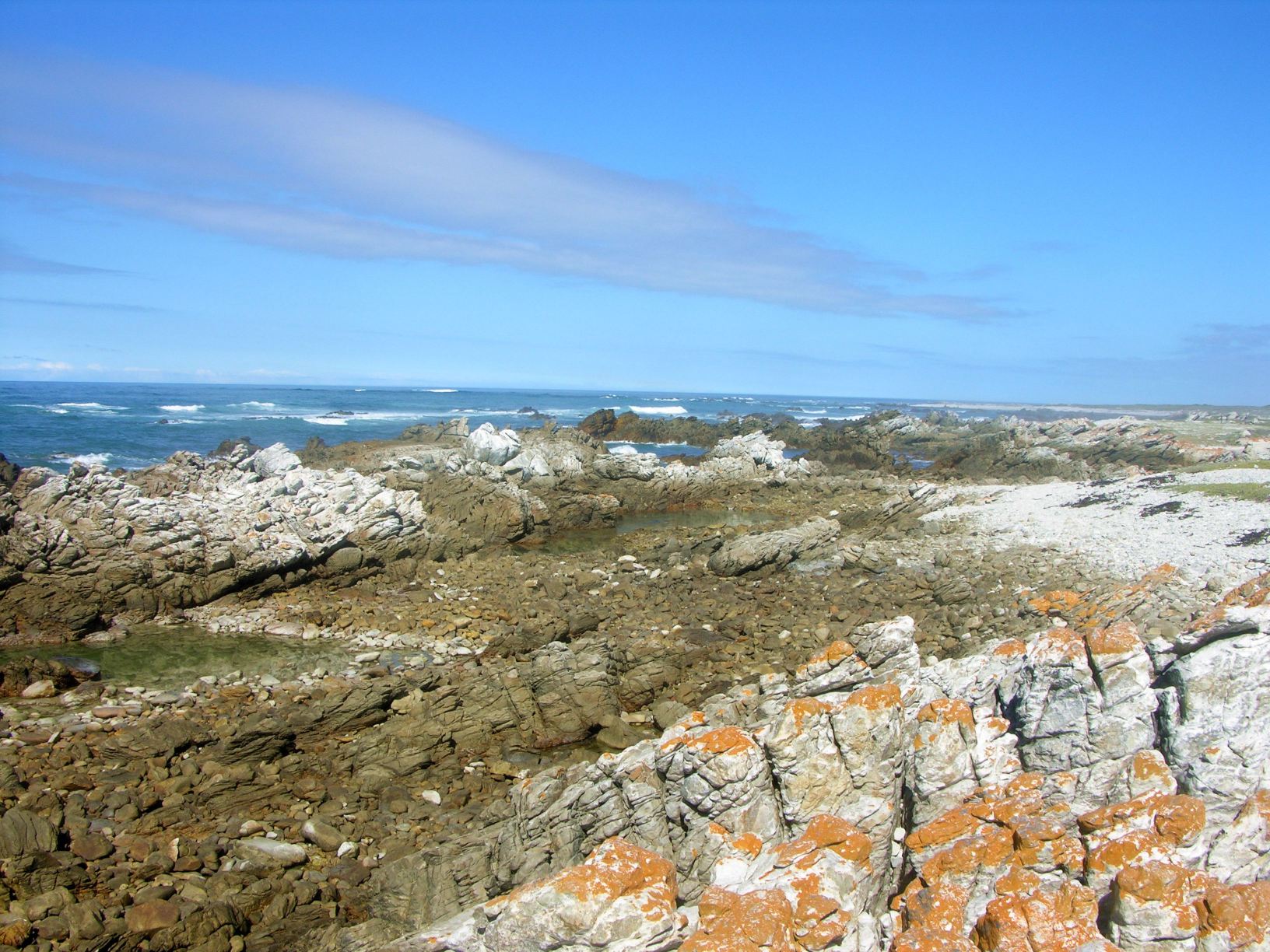
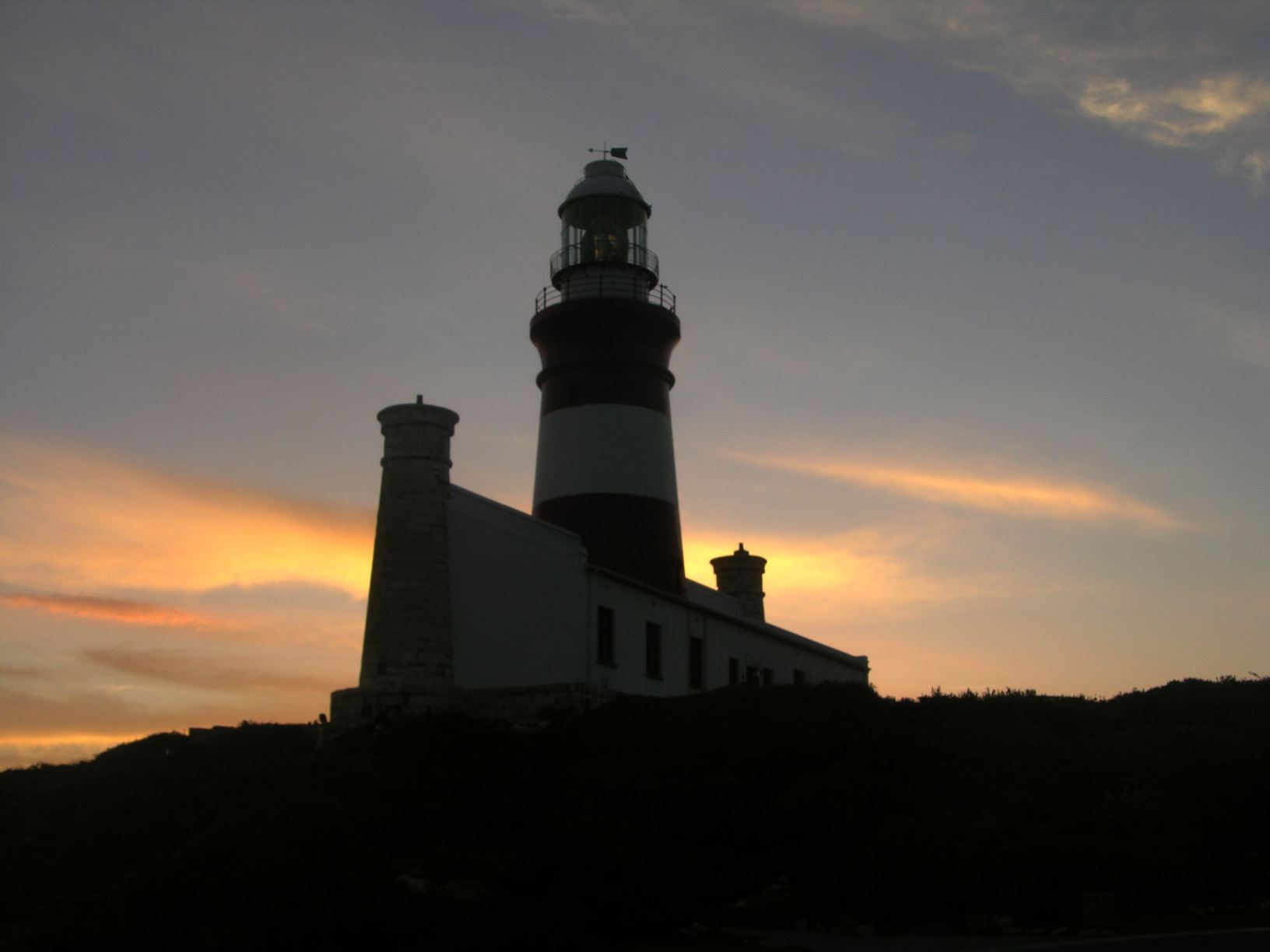
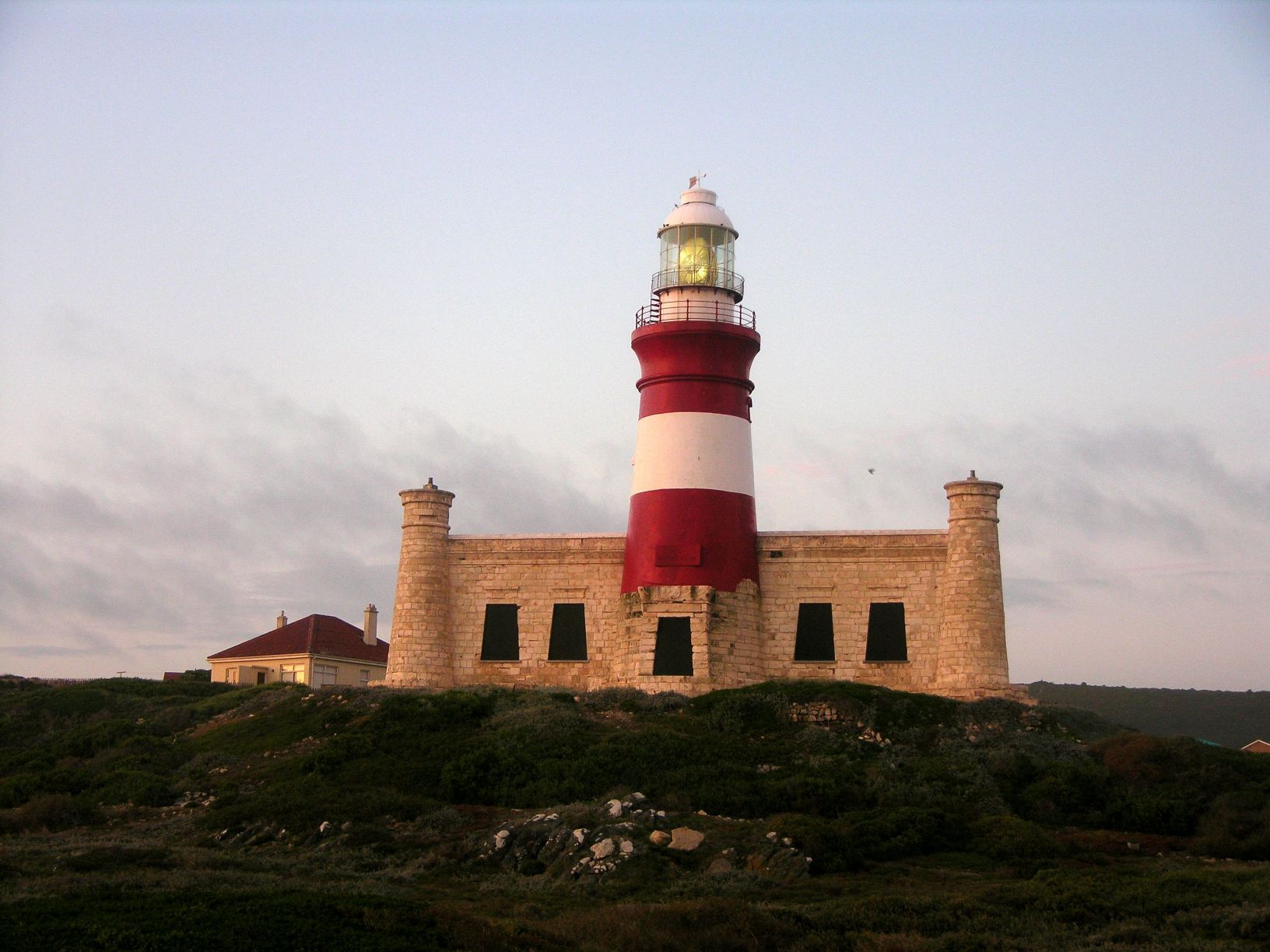
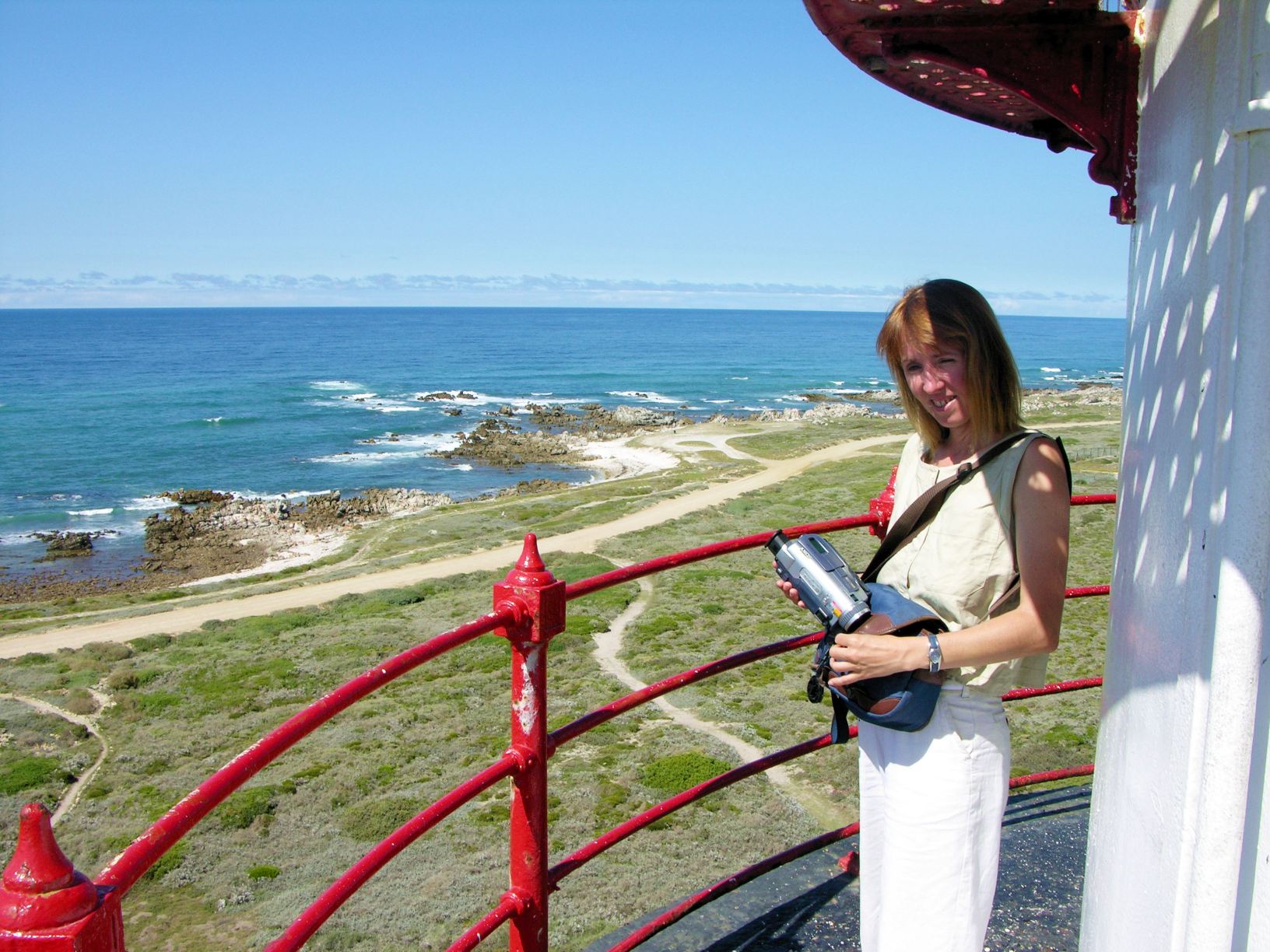
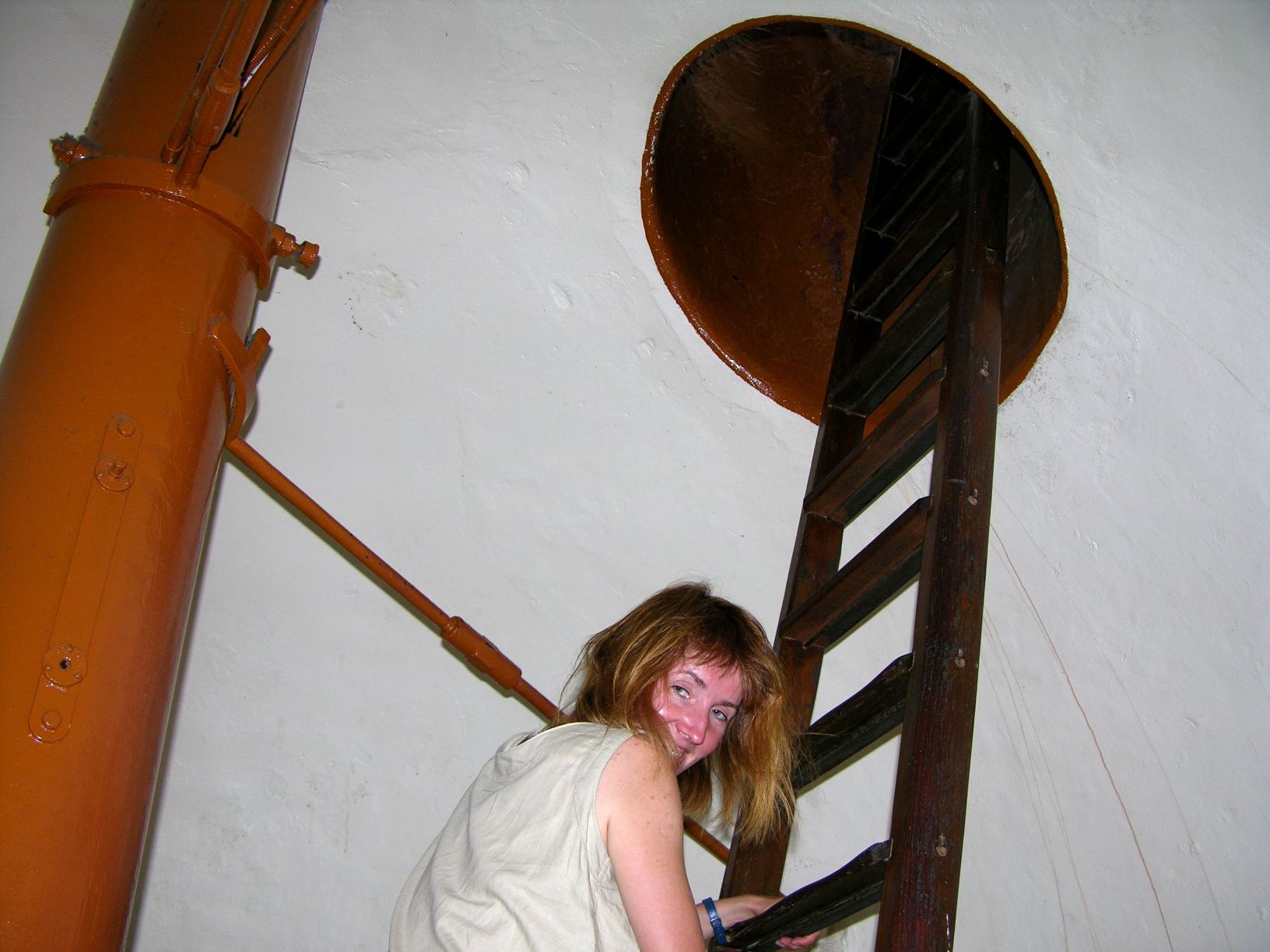
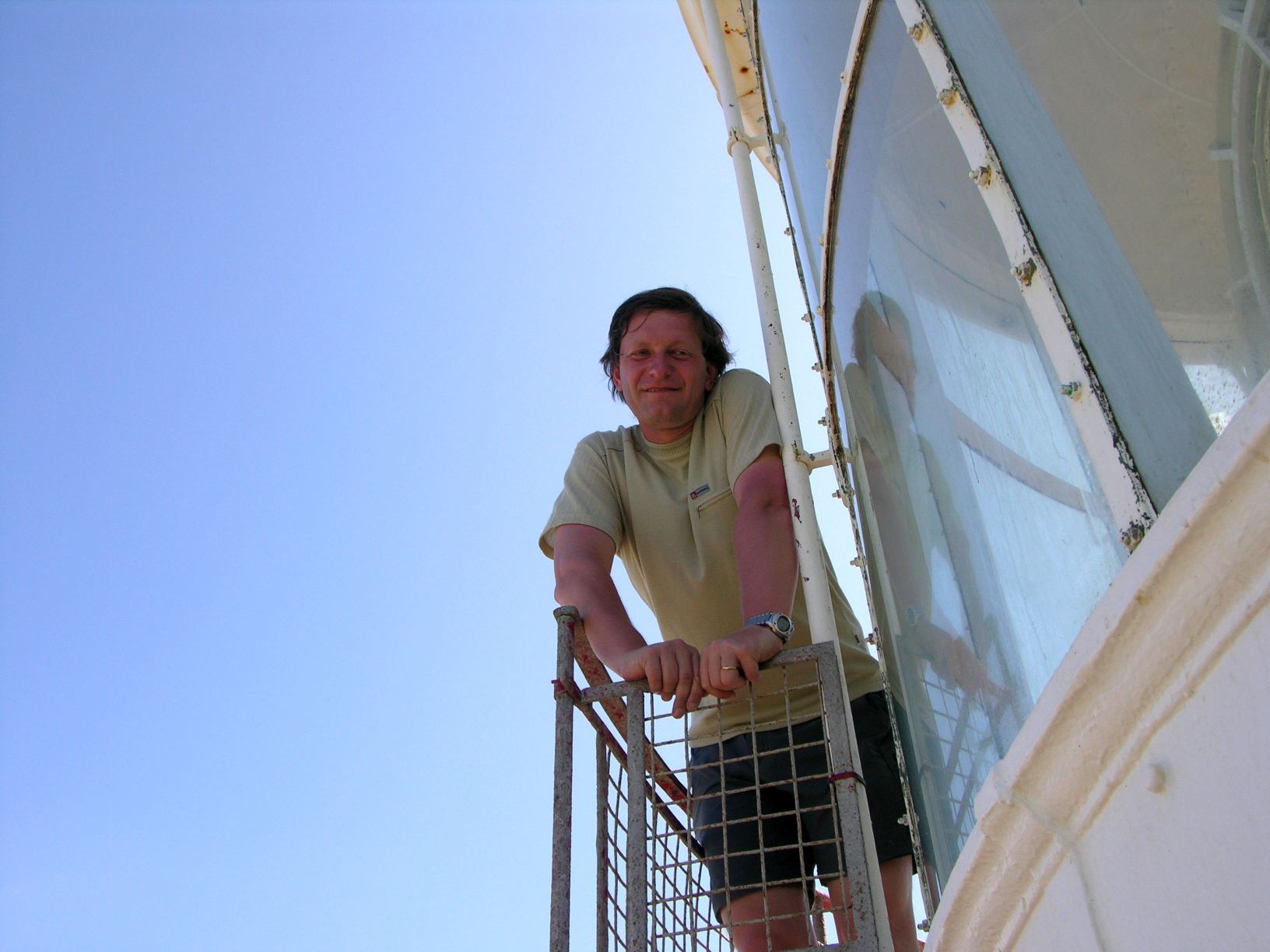
A cape like this couldn't be without a lighthouse, of course. At Agulhas it doubles as a museum and café, besides its primary function of shining out to sea. You can climb the lighthouse. Alas, progress has reduced a lighthouse to a plain light bulb controlled by a processor, and it isn't even needed any more. Every ship has GPS. In the old days you had to bring in gas and light a burner. There was always a keeper.
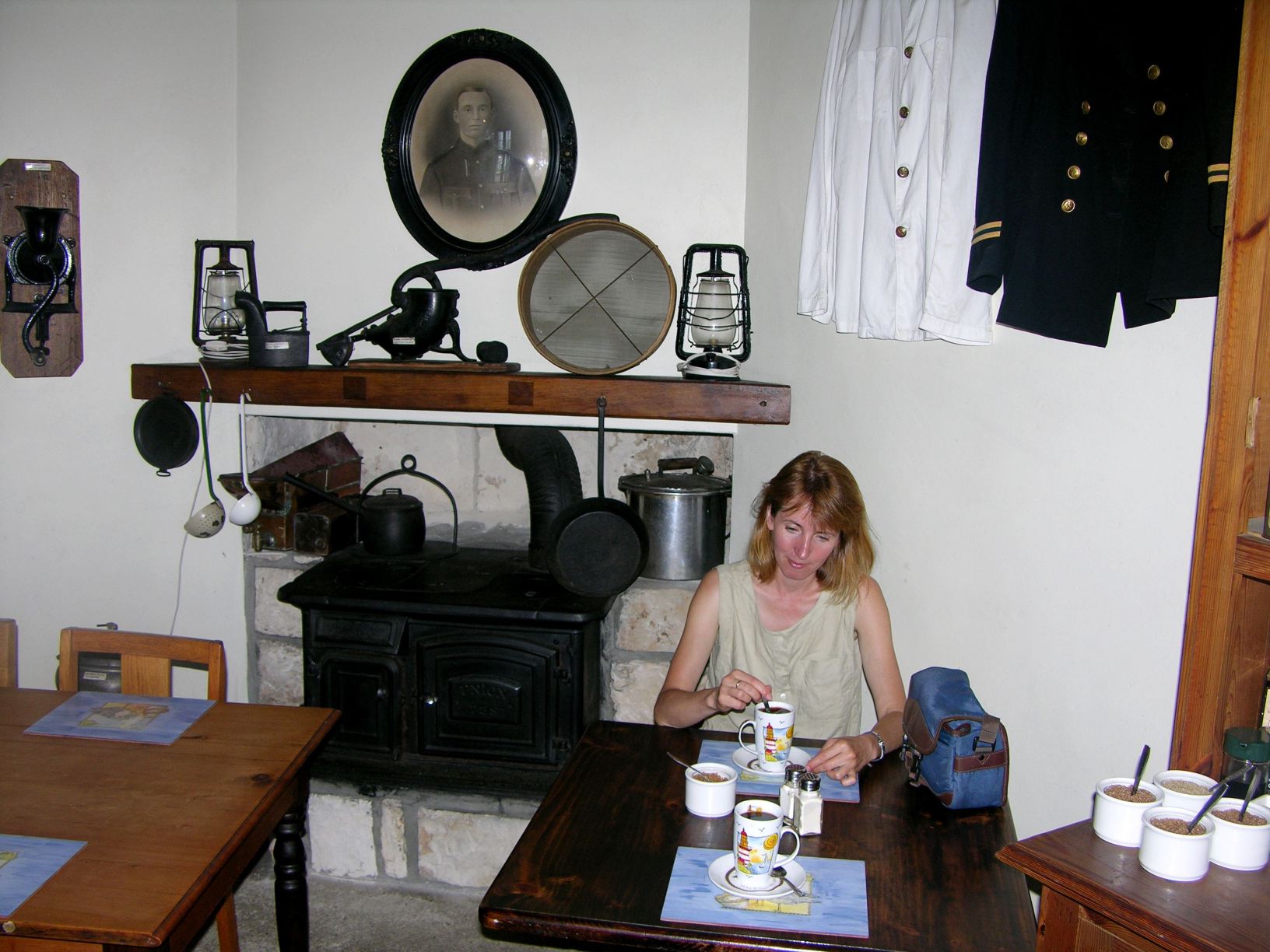
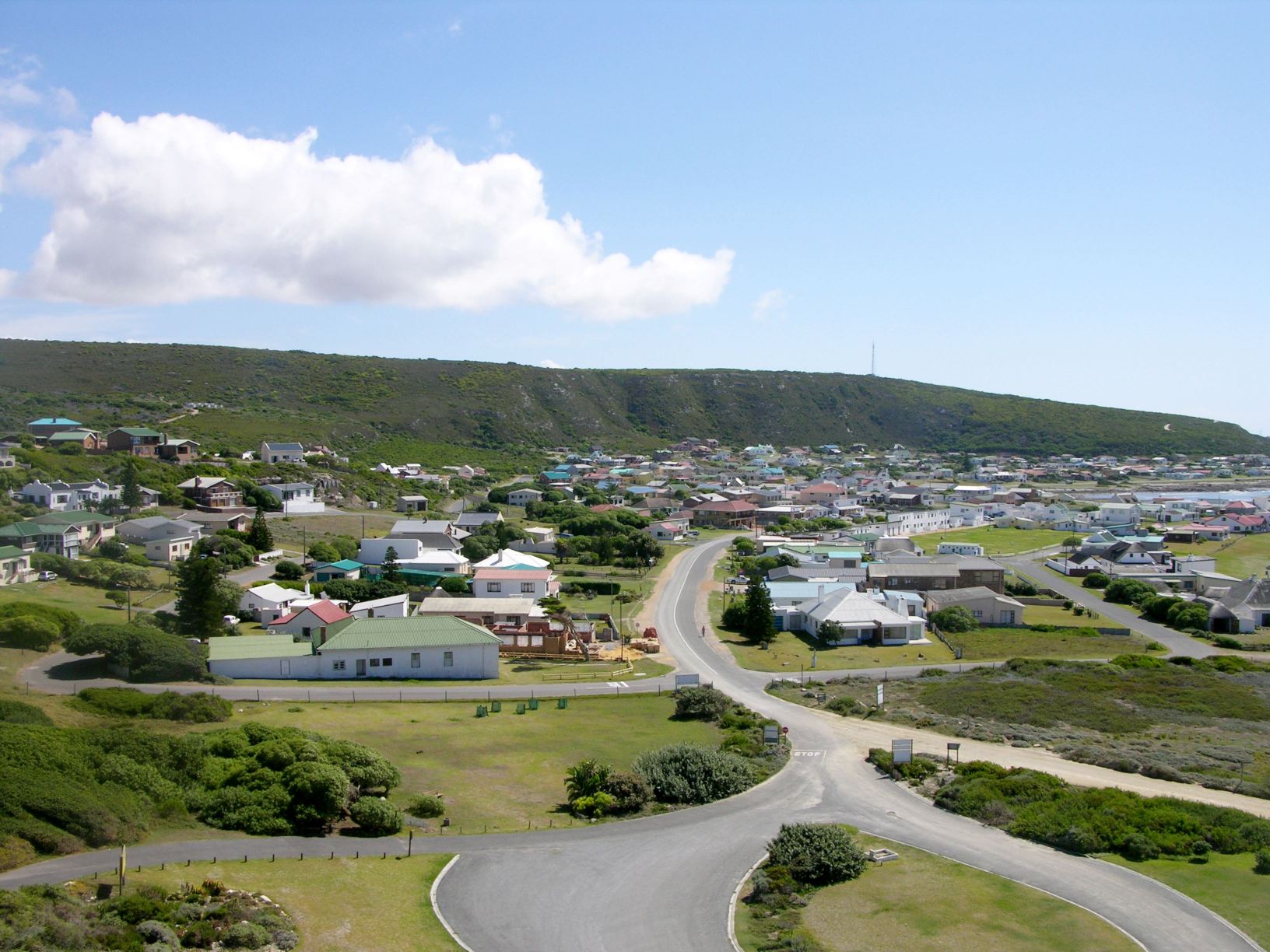
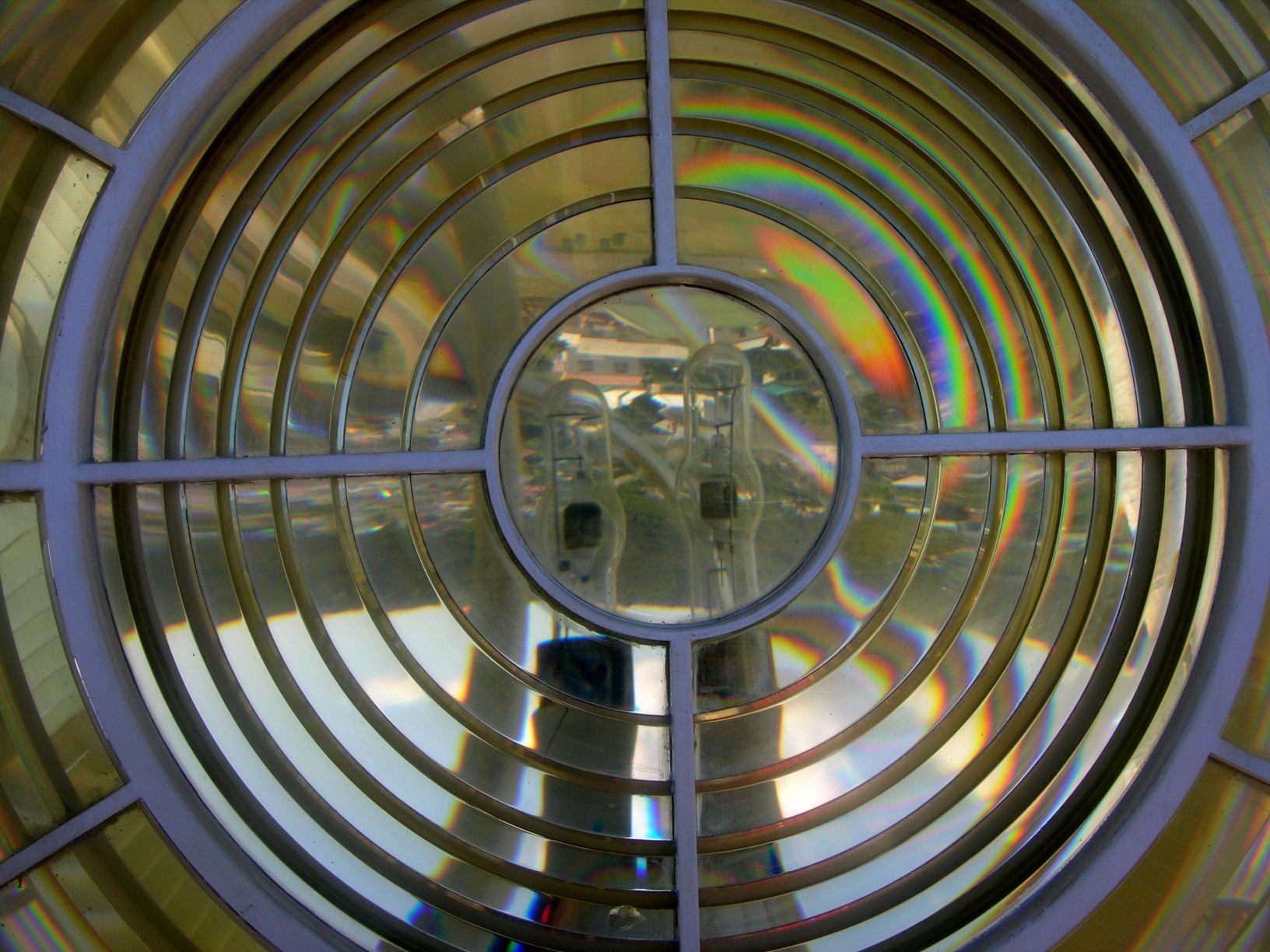
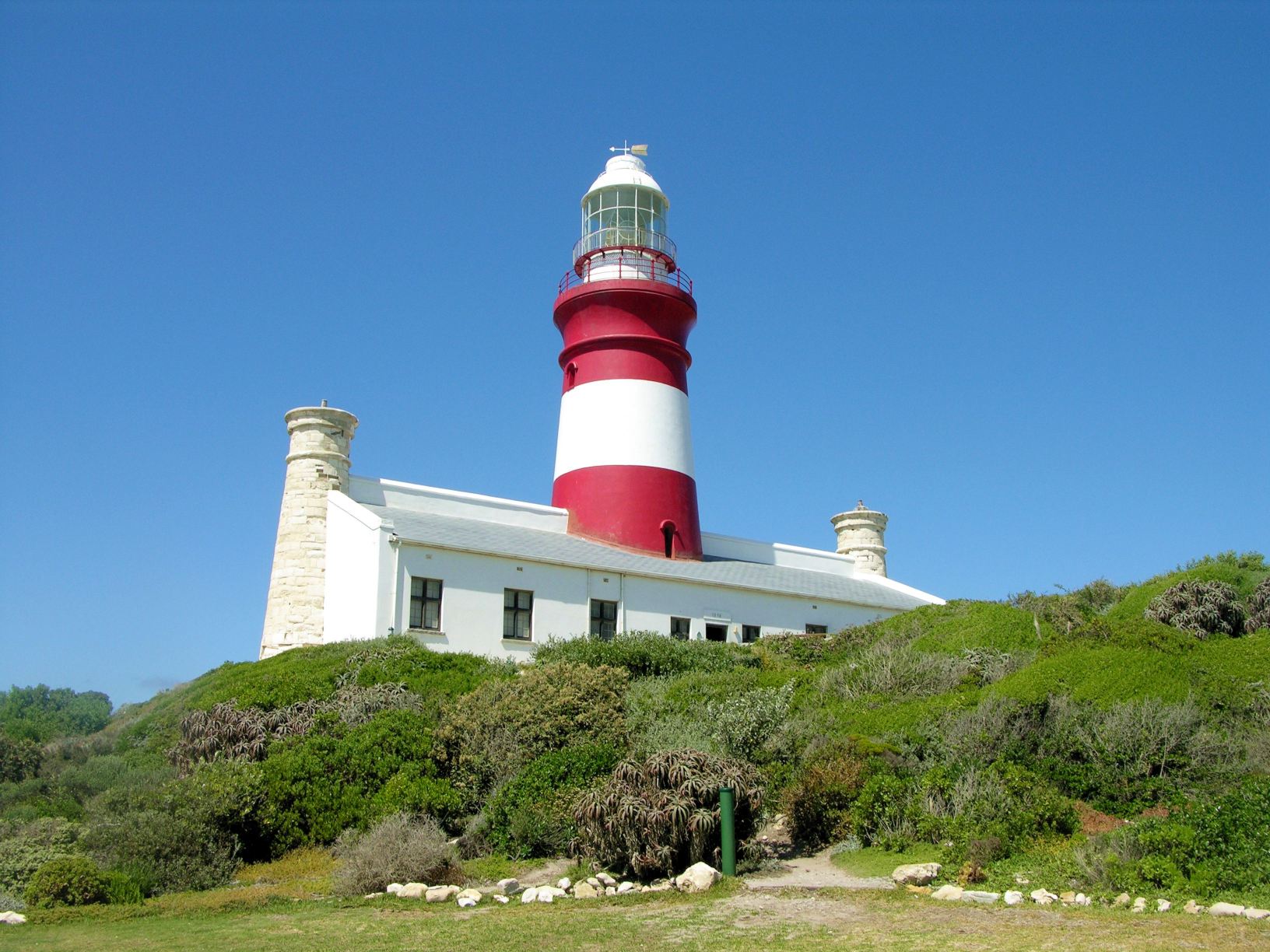
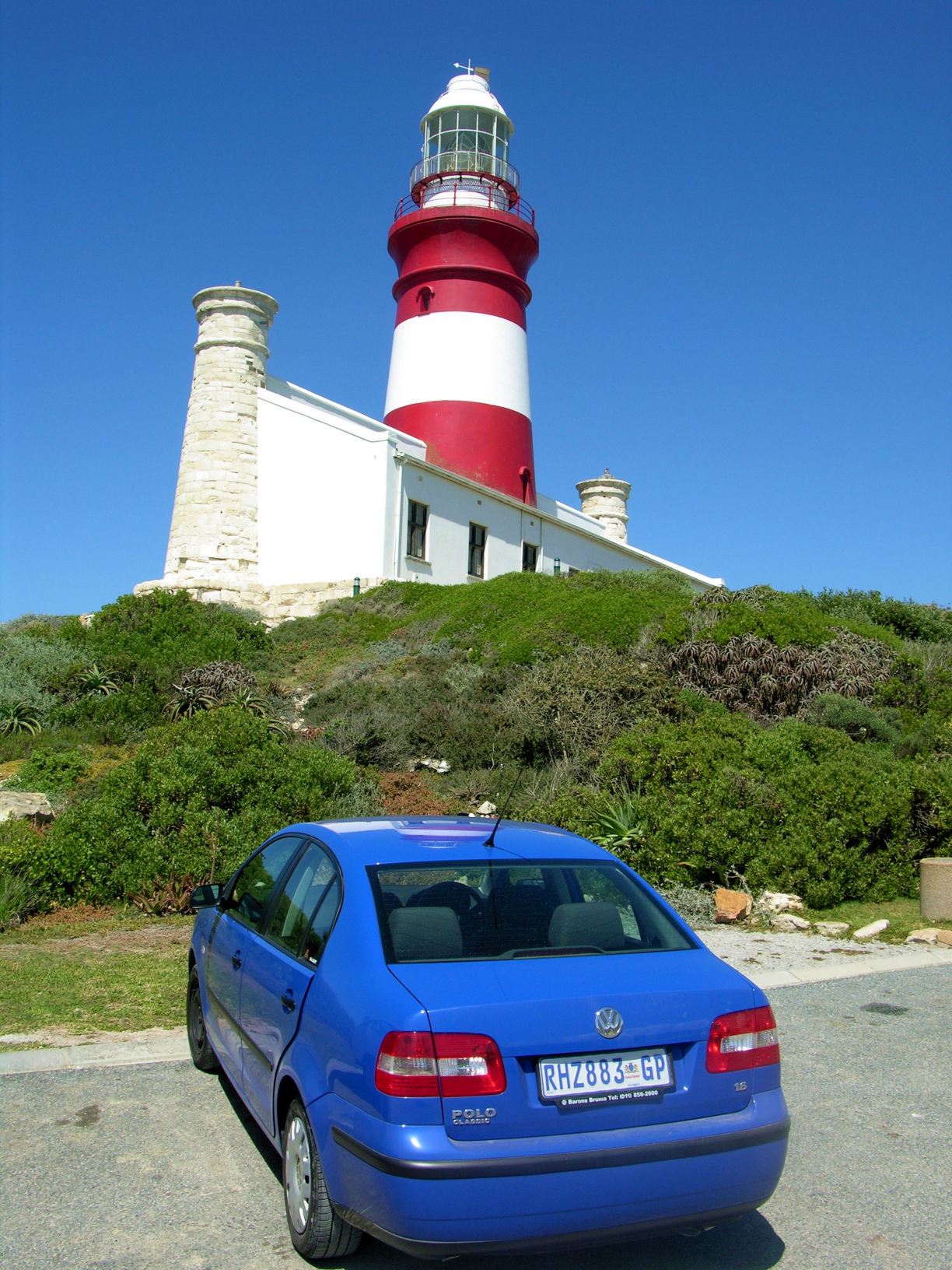
The museum tells the story of the lighthouse and its glorious past. There's a section on modern lighthouses too. Below a world map are photographs from different countries. They put Russia in the Balkans, alongside Turkey, and showed the Rostral Columns of Saint Petersburg. The columns' gas flames demonstrate that electricity hasn't been invented everywhere in the world yet. Some Russian tourist had used an arrow to move Russia to Europe, but someone really ought to send them photographs of actual Russian lighthouses. When I get around to it, I'll write to them.
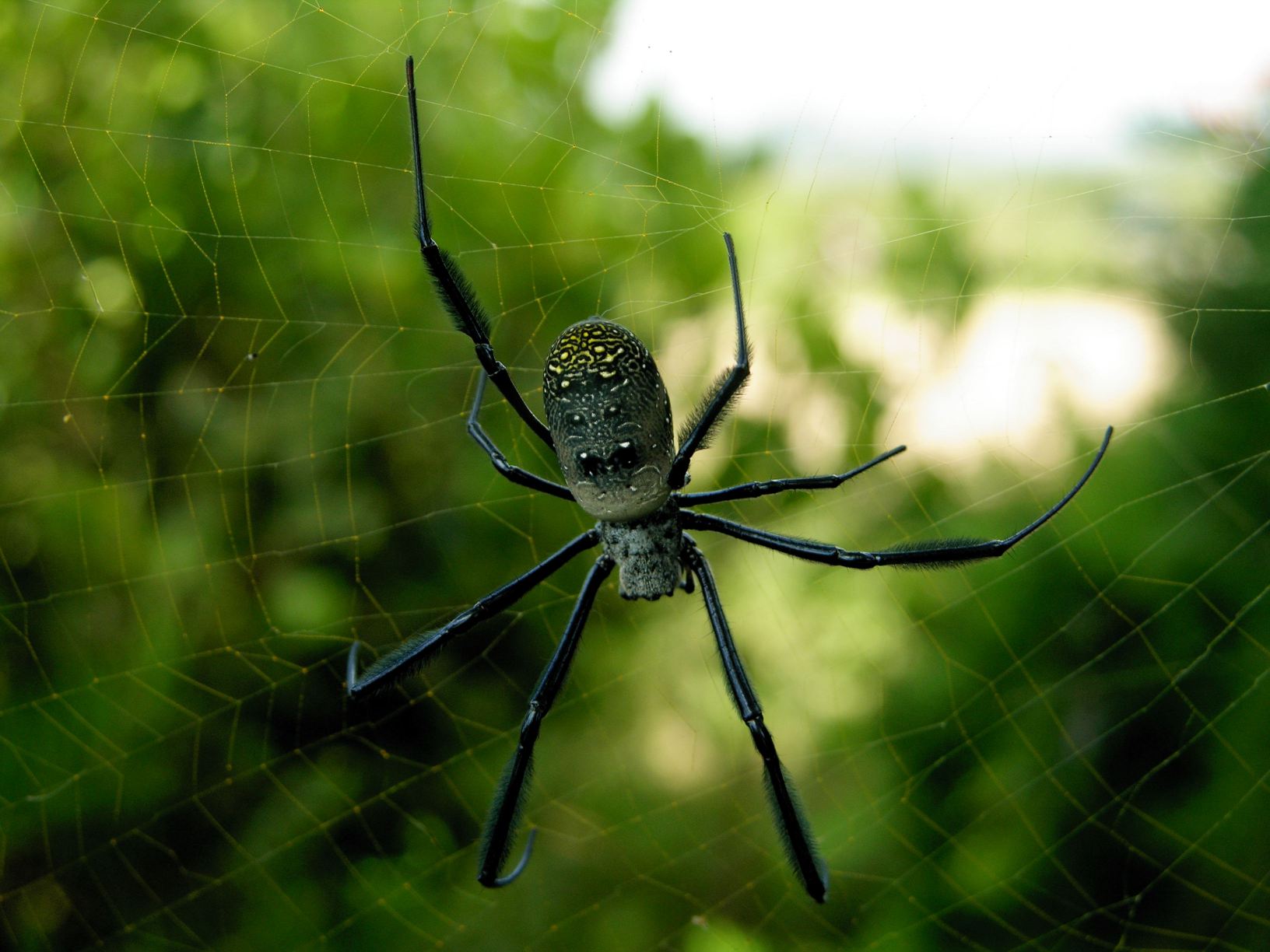
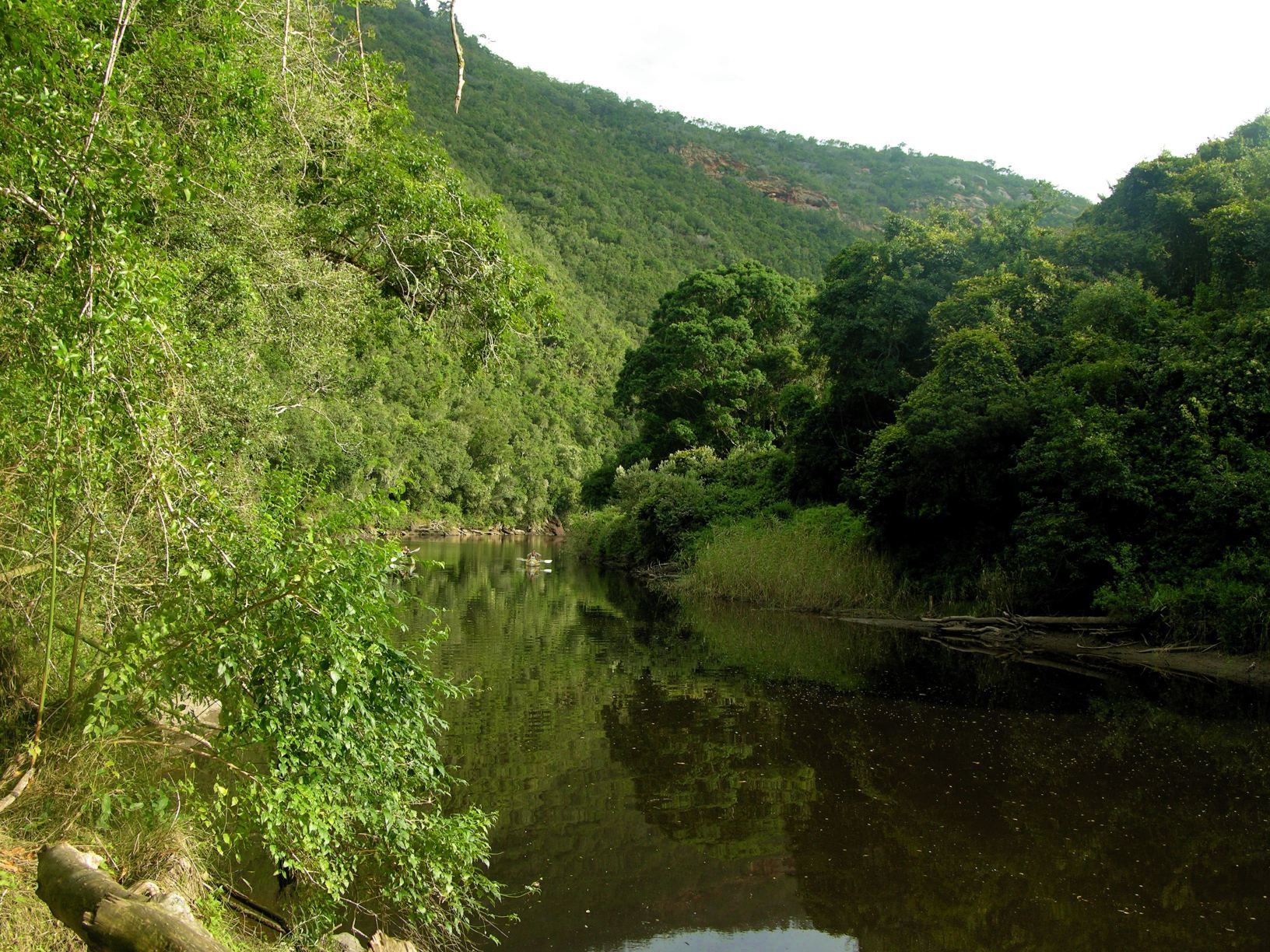
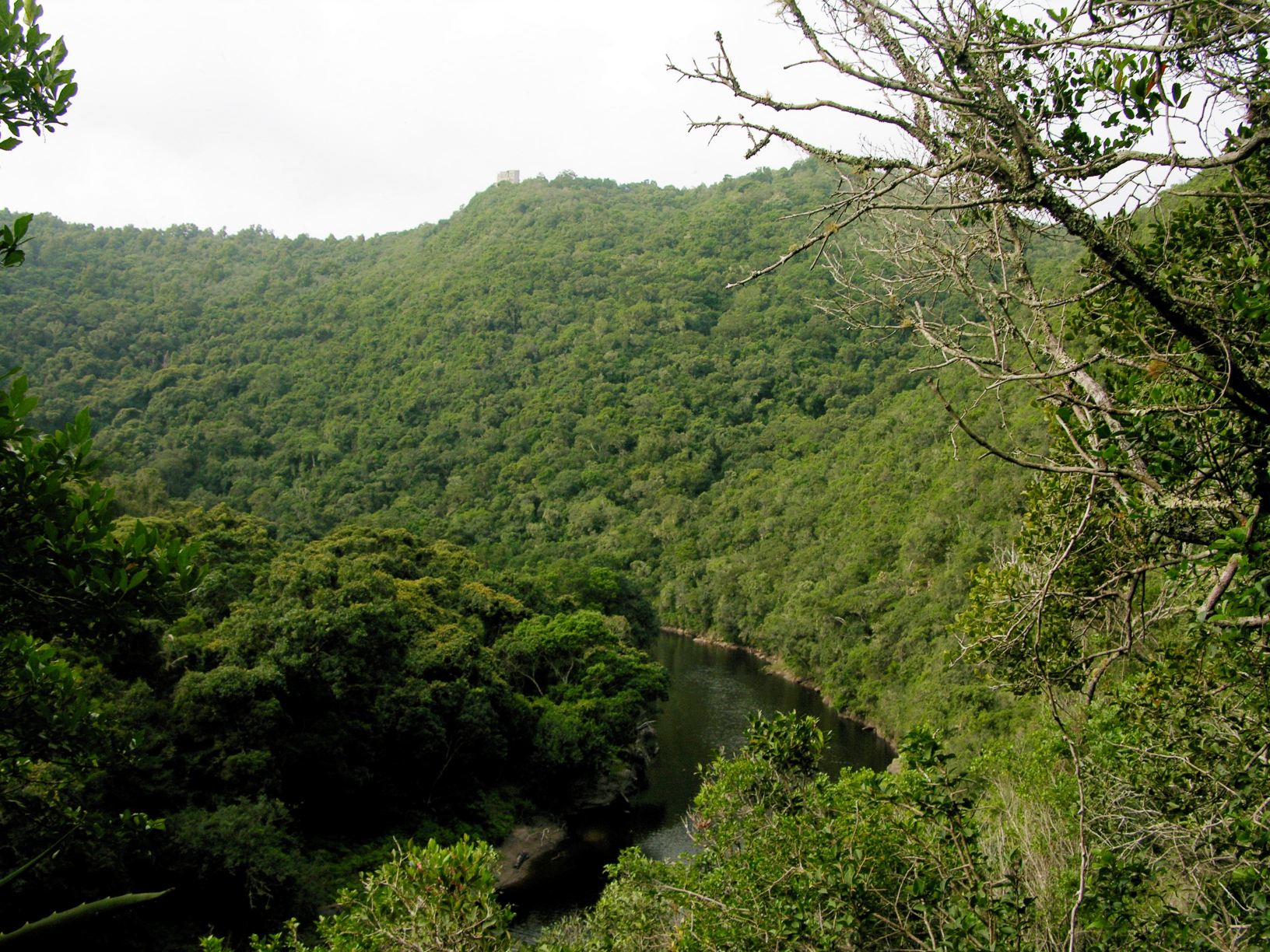
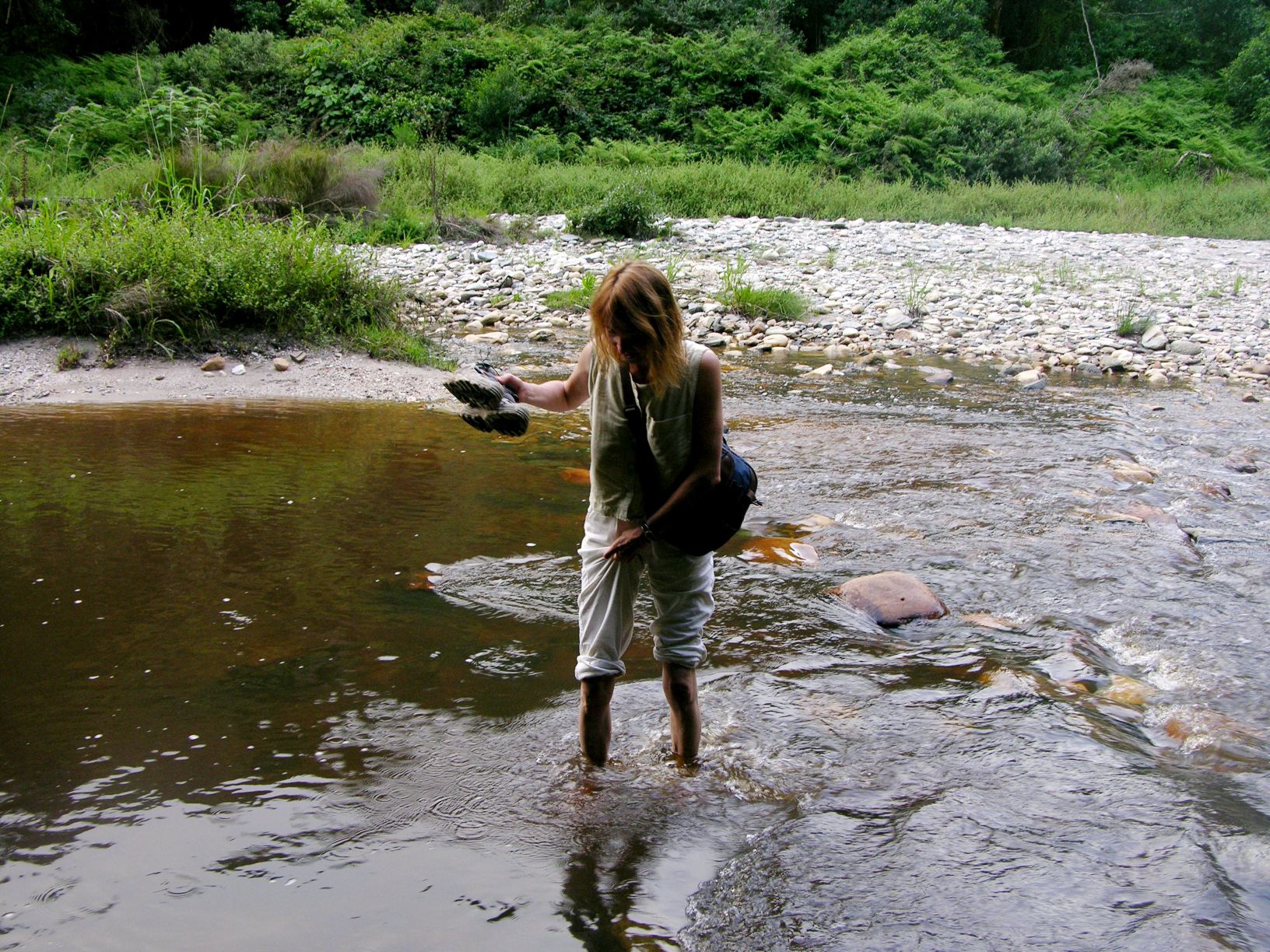
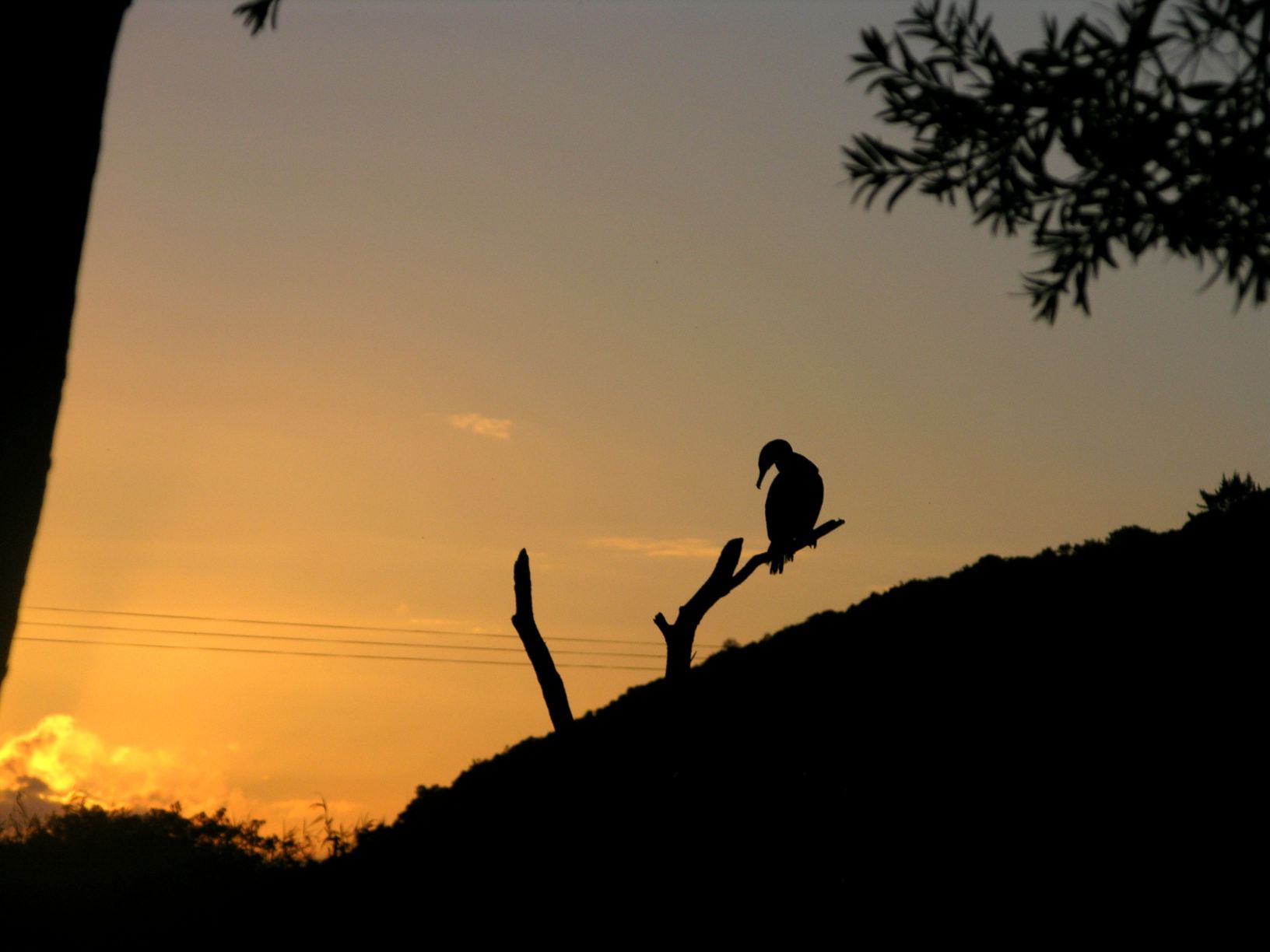
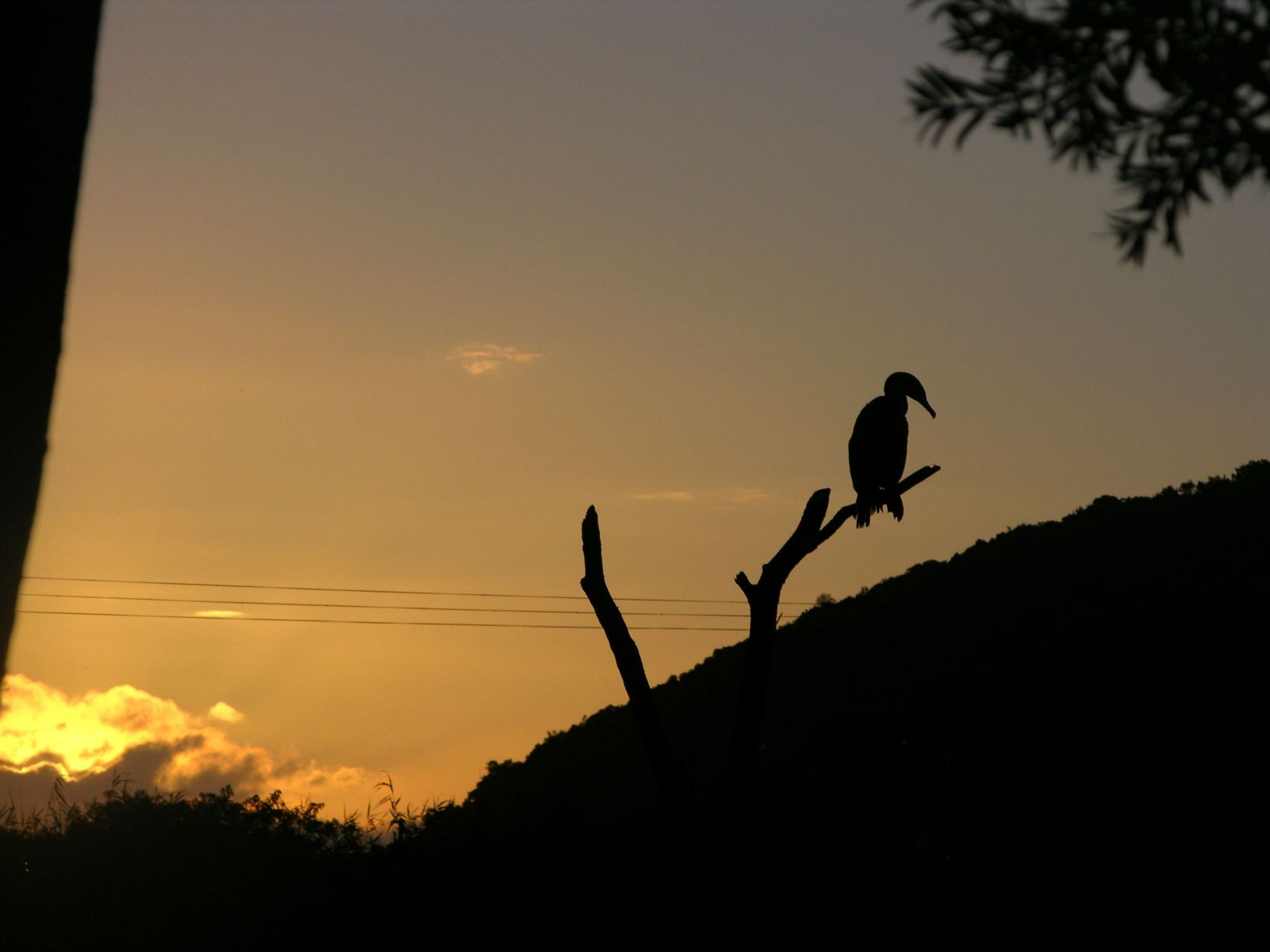
As we went east, the desert climate gave way to a subtropical one. Rain became frequent and the forest turned into dense thickets. Wilderness National Park is a surviving stretch of forest west of Knysna, an excellent place to stay the night at a campground (33°59.316′S, 22°36.419′E), go for a walk or even do a bit of kayaking. We couldn't get a kayak, which turned out to be no great loss. You can only paddle a kilometre or two up the river before the waterfalls begin. A much better way is to walk the whole thing. The path is fairly wild and we had to ford the stream. The birds are protected in the park, especially the kingfishers, of which there really are a lot.
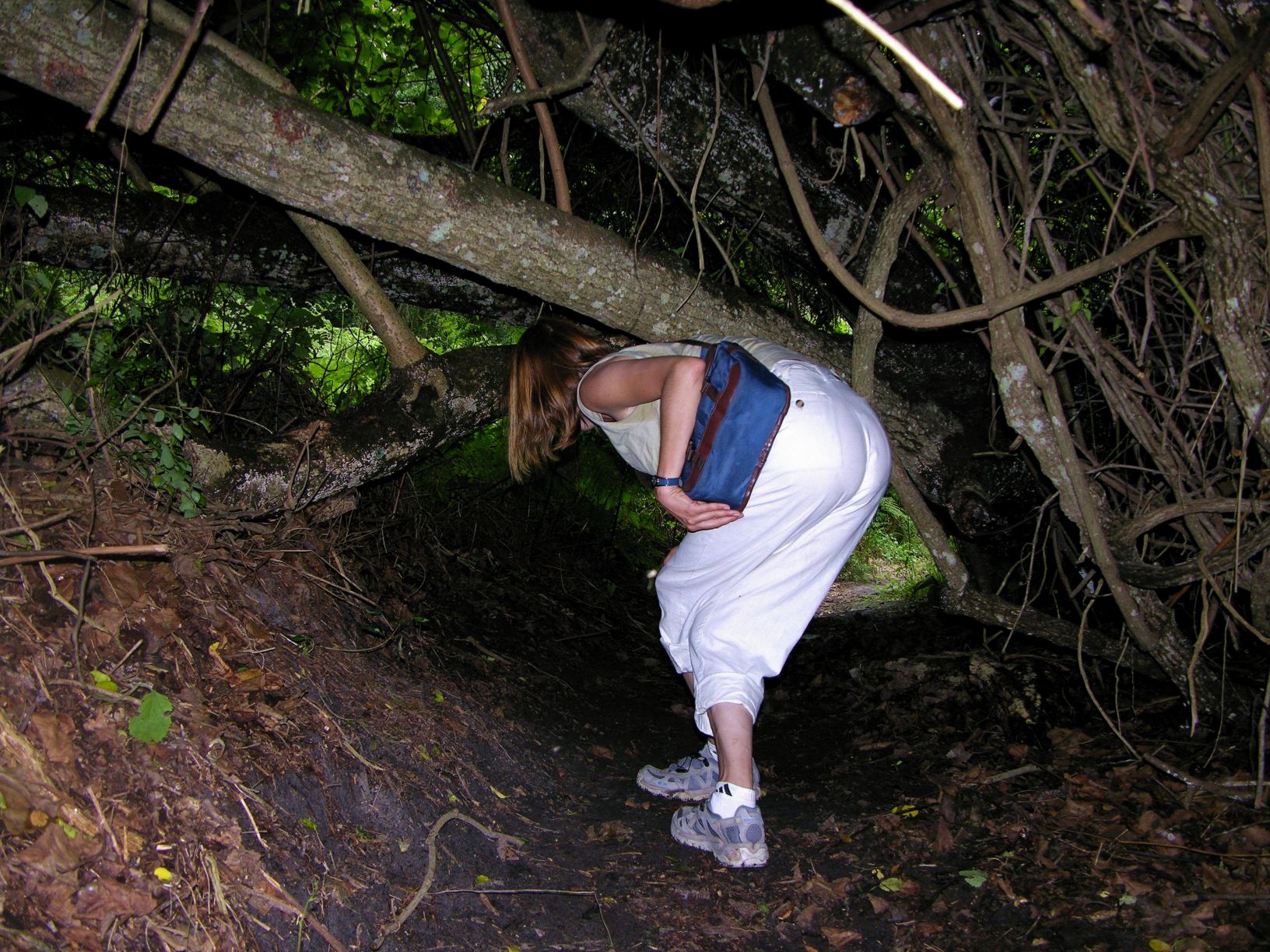
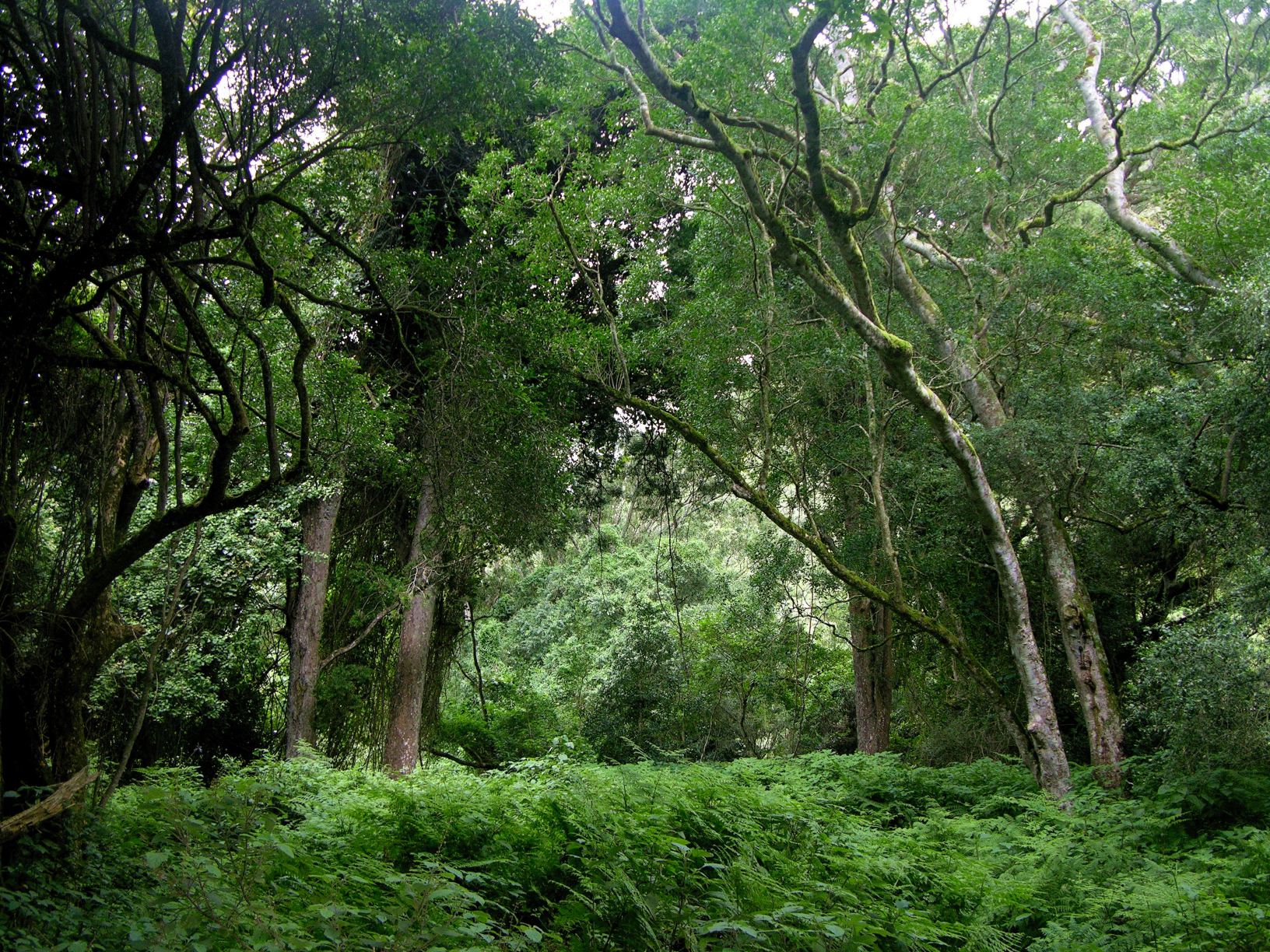
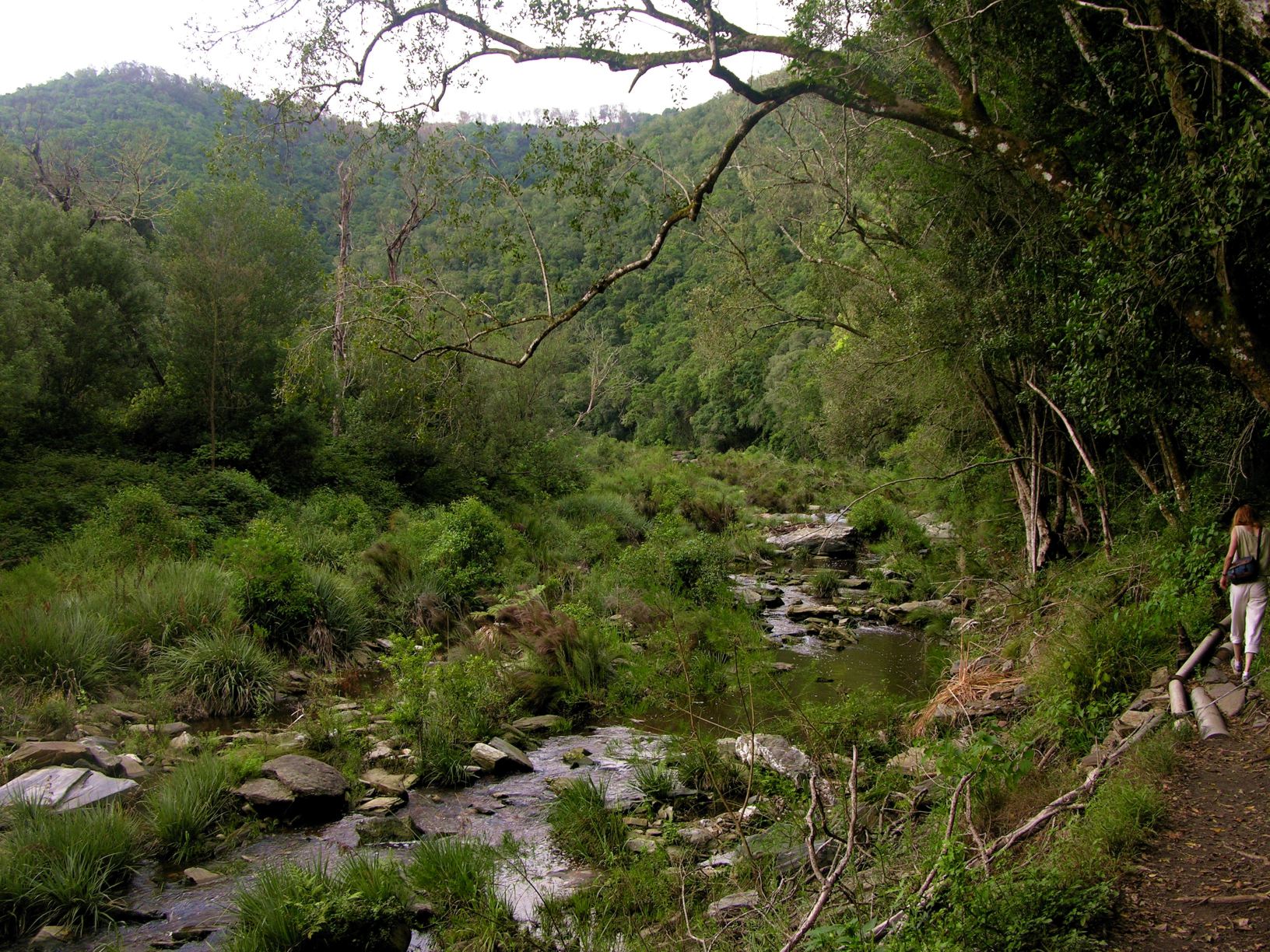
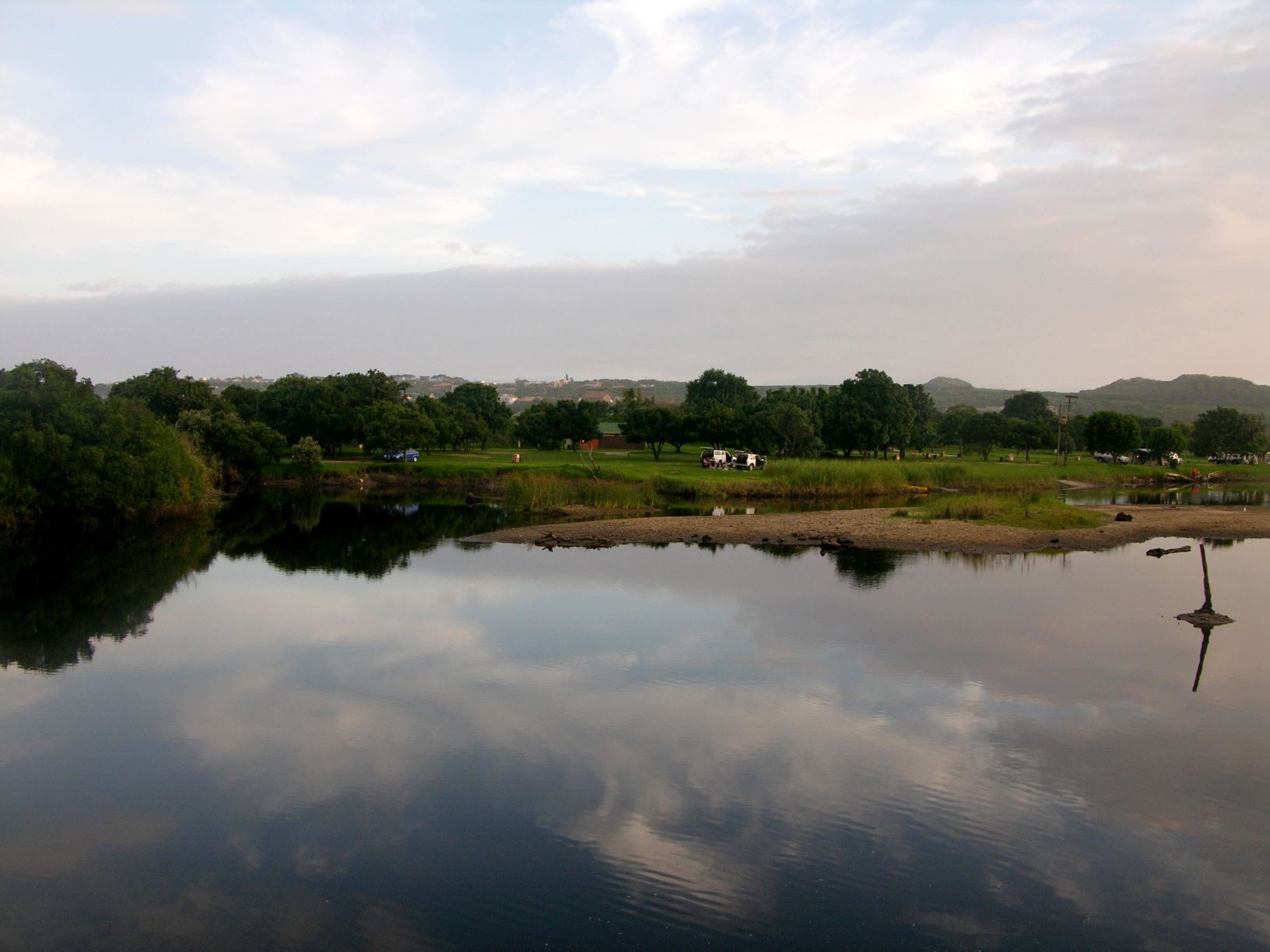
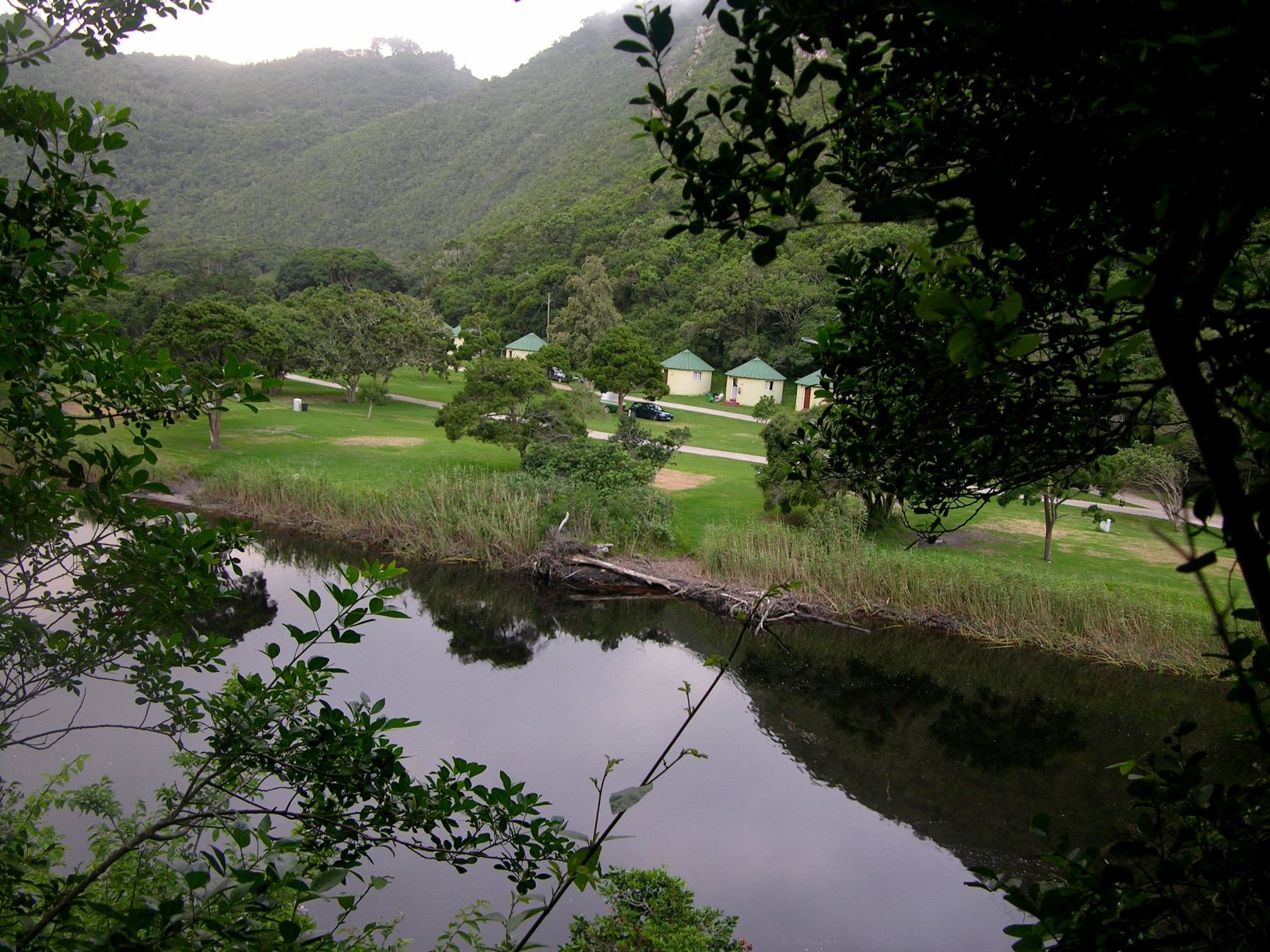
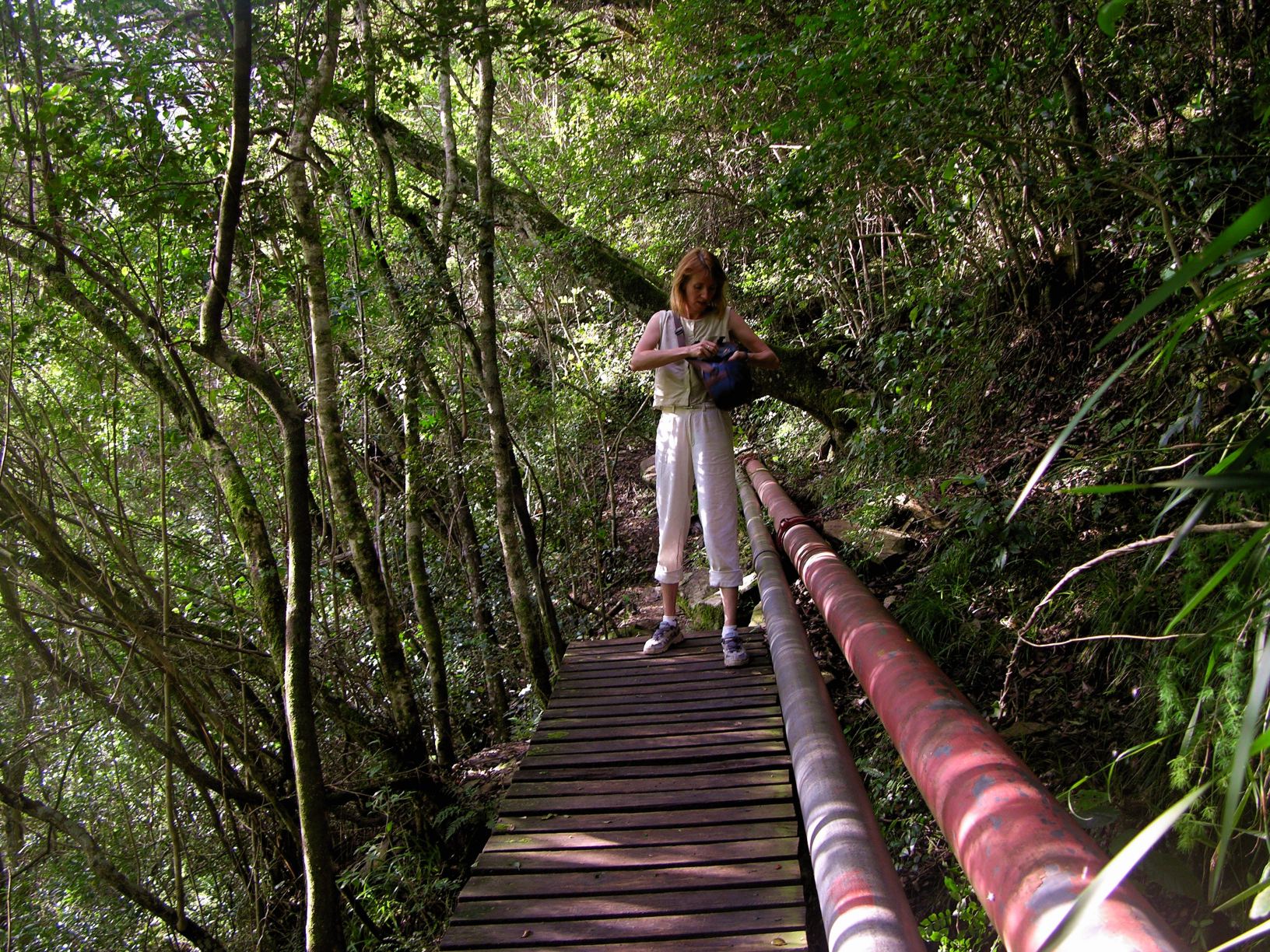
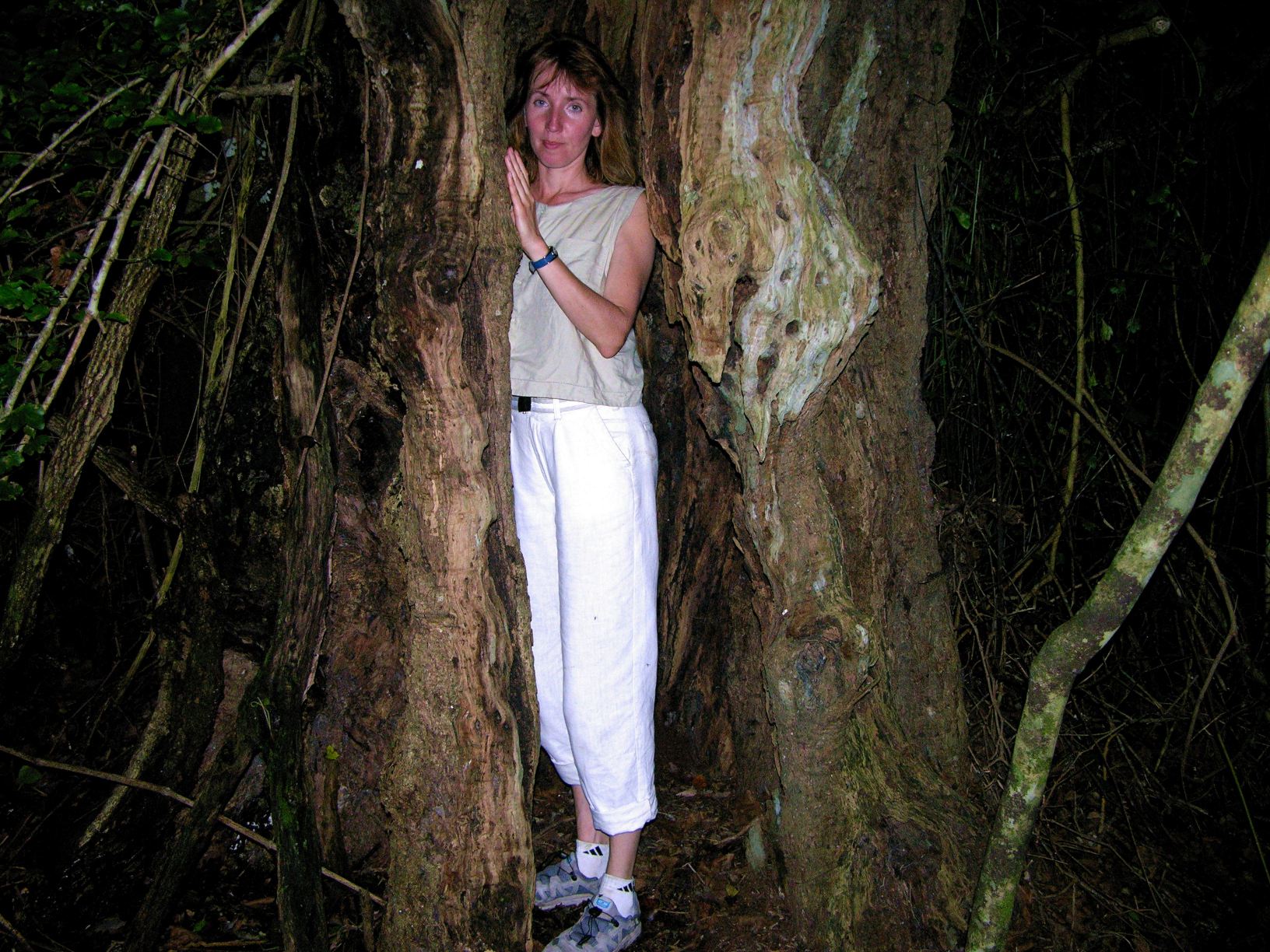
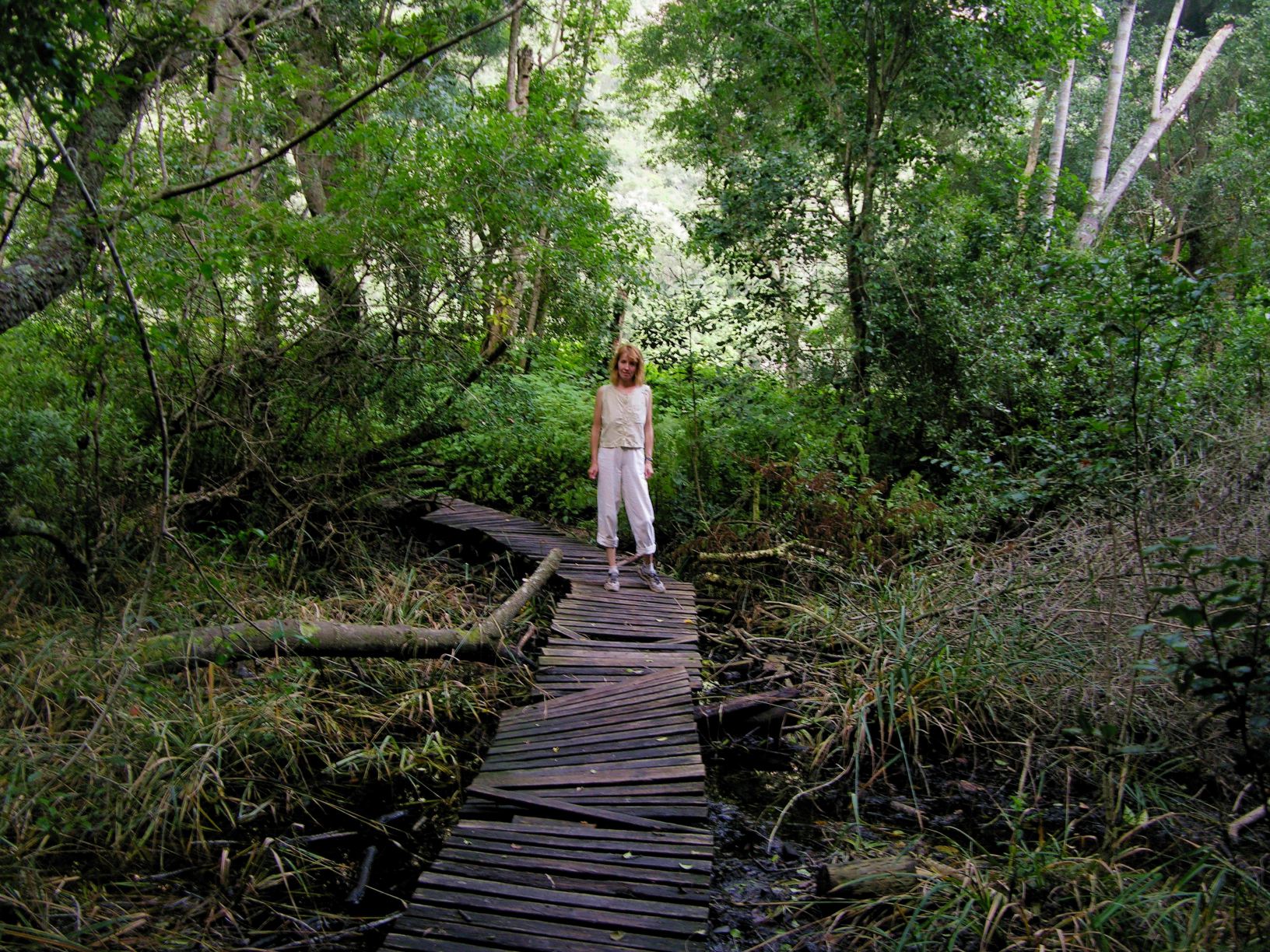
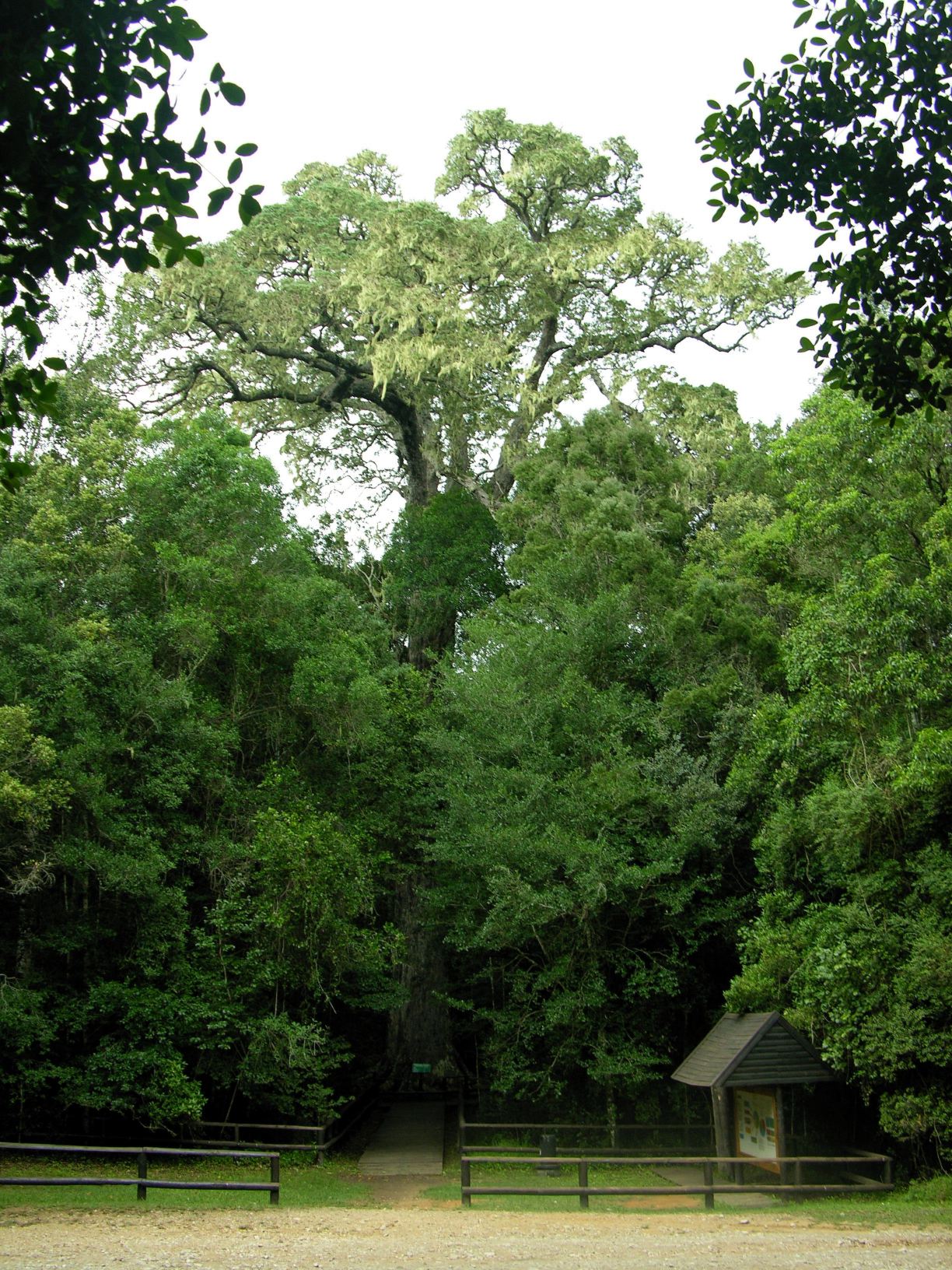
Knysna itself is a typical town aimed at package tourists and of no particular interest. But north of town there's a eucalyptus forest where there are still wild elephants. There are plenty of national parks, of course, but elephants these days hardly ever live in truly wild surroundings.
Elephants in the Knysna forest don't get on with people. There are lots of orange plantations nearby, which offer some very tasty pickings. To keep an elephant out you probably need a concrete fence five metres tall, like the barriers in Israel. The farmers can't afford those, but they do have rifles. The elephants may be clever, yet every year they raid the oranges, and the farmers kill them by the dozen.
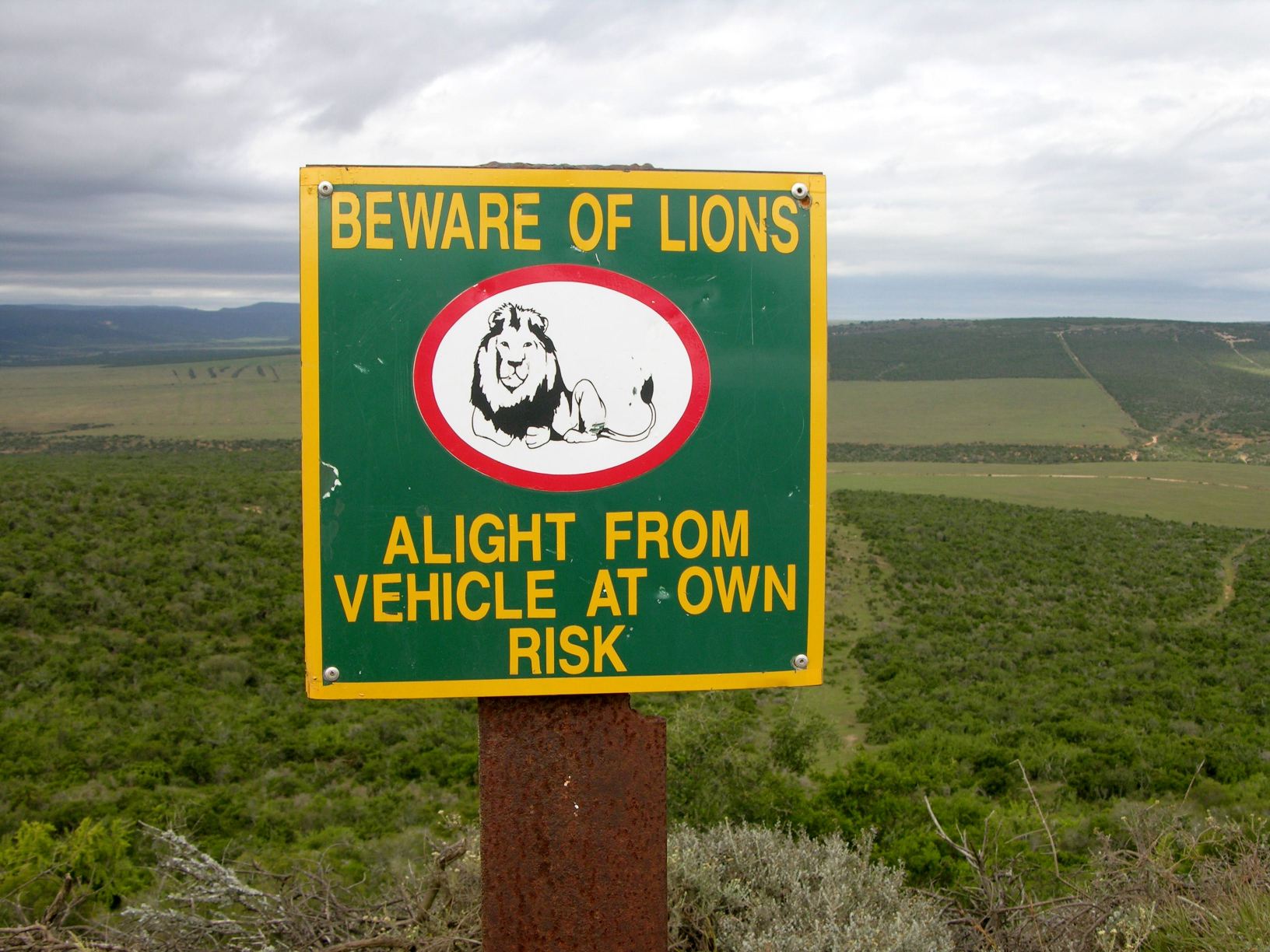
The elephants, instead of realising that the whole quarrel is about oranges, have taken offence at the entire human race. They hide. It's very difficult to find them in the forest, but they're there. Apparently they take all their anger out on the road signs, which means the road crews don't like them either. There have been cases of cars being smashed. Now at the entrance to the forest there's a sign that says you enter and drive at your own risk. If you get trampled, you were warned.
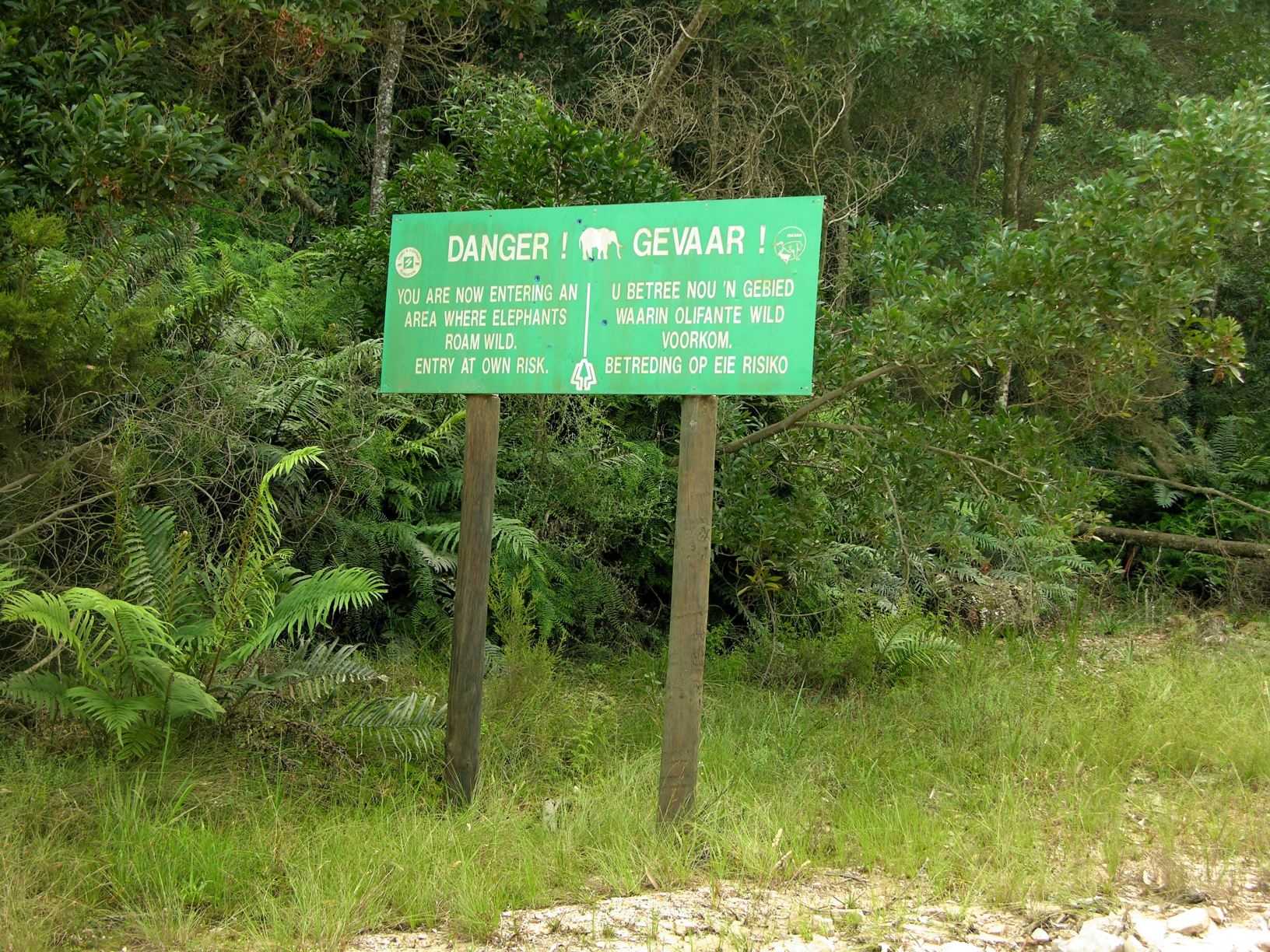
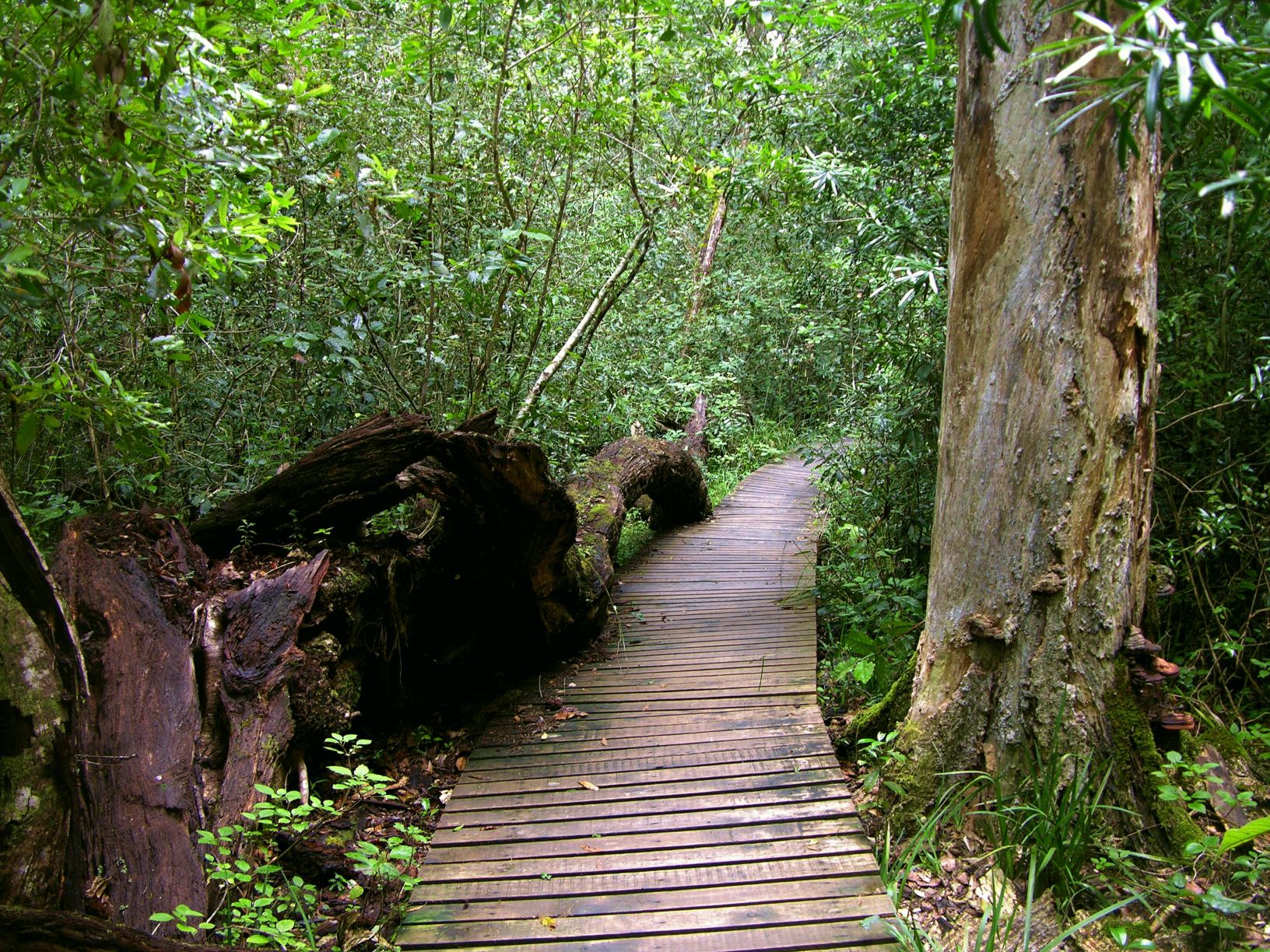
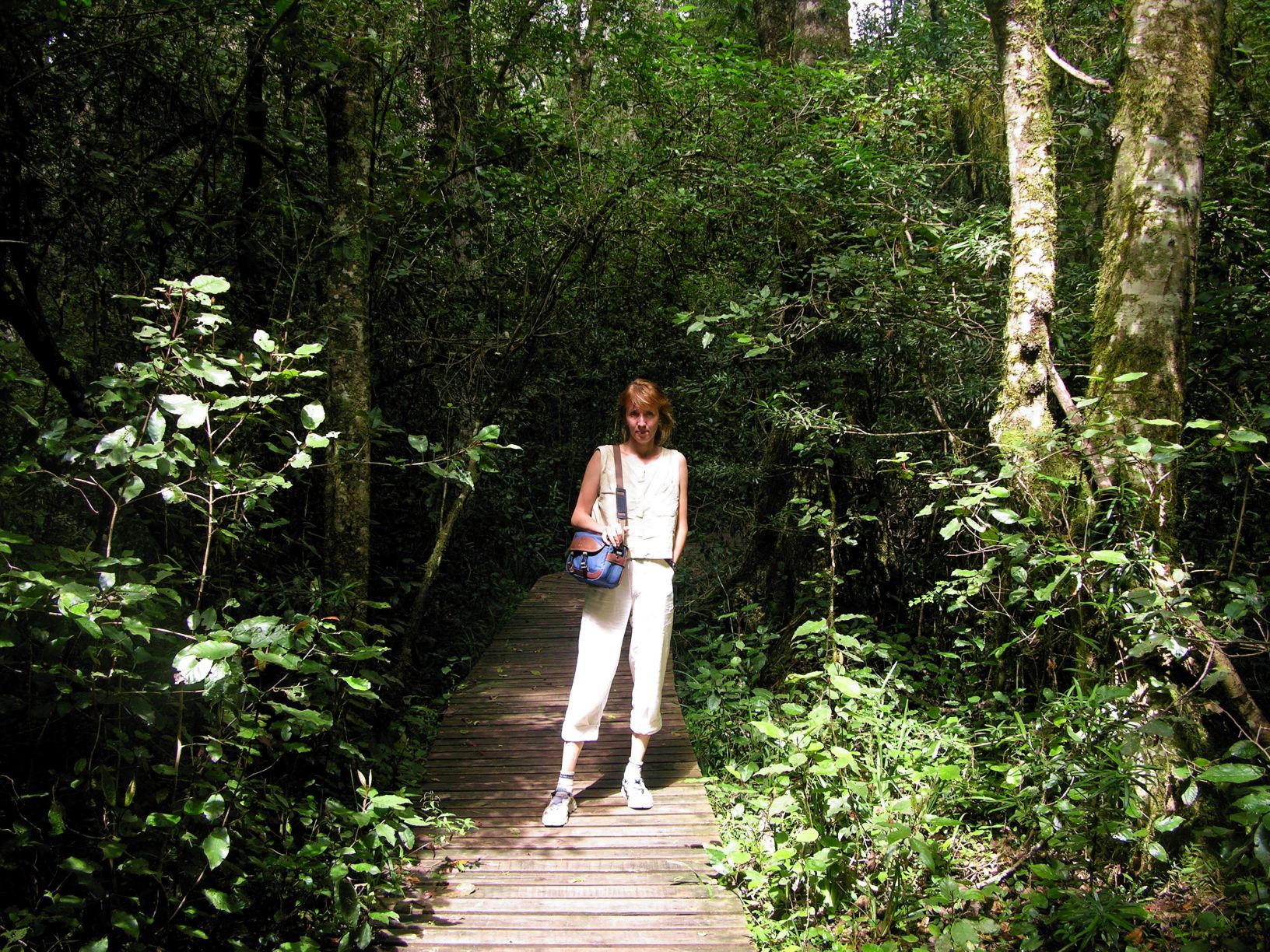
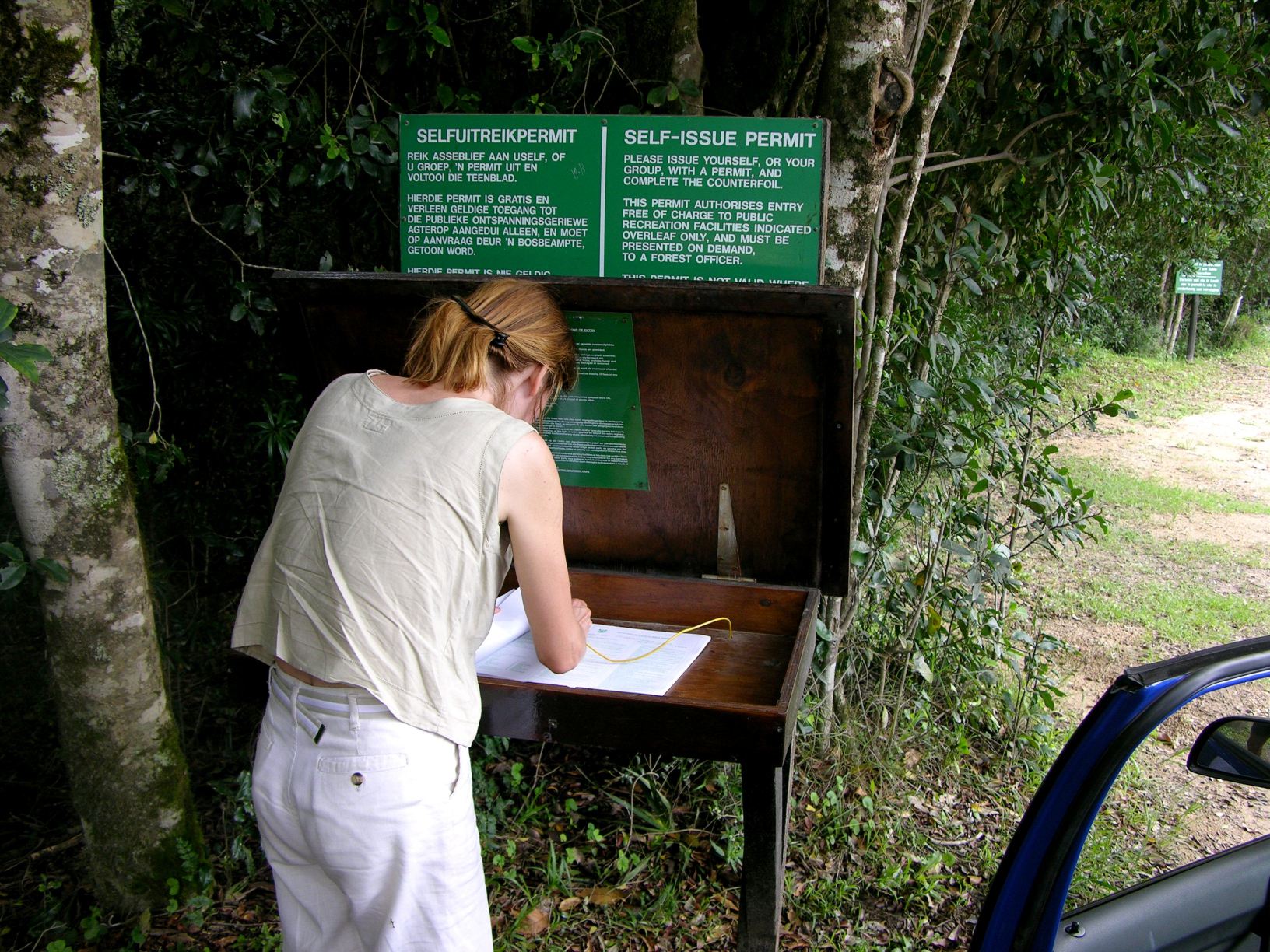
You can drive in the forest. It's best in a four-wheel drive, since the only road passable in a small car is the main route to Prince Alfred's Pass. Better still, walk. For that you need a permit. How else could you go into a forest full of elephants in a civilised country? There are issues of safety and lawsuits against local authorities and the like. Afterwards, people will ask who let you go in. But South Africa is a free country as well as a civilised one. You can write out your own permit to enter the forest. And once you've given yourself permission, who's going to stop you? In you go.
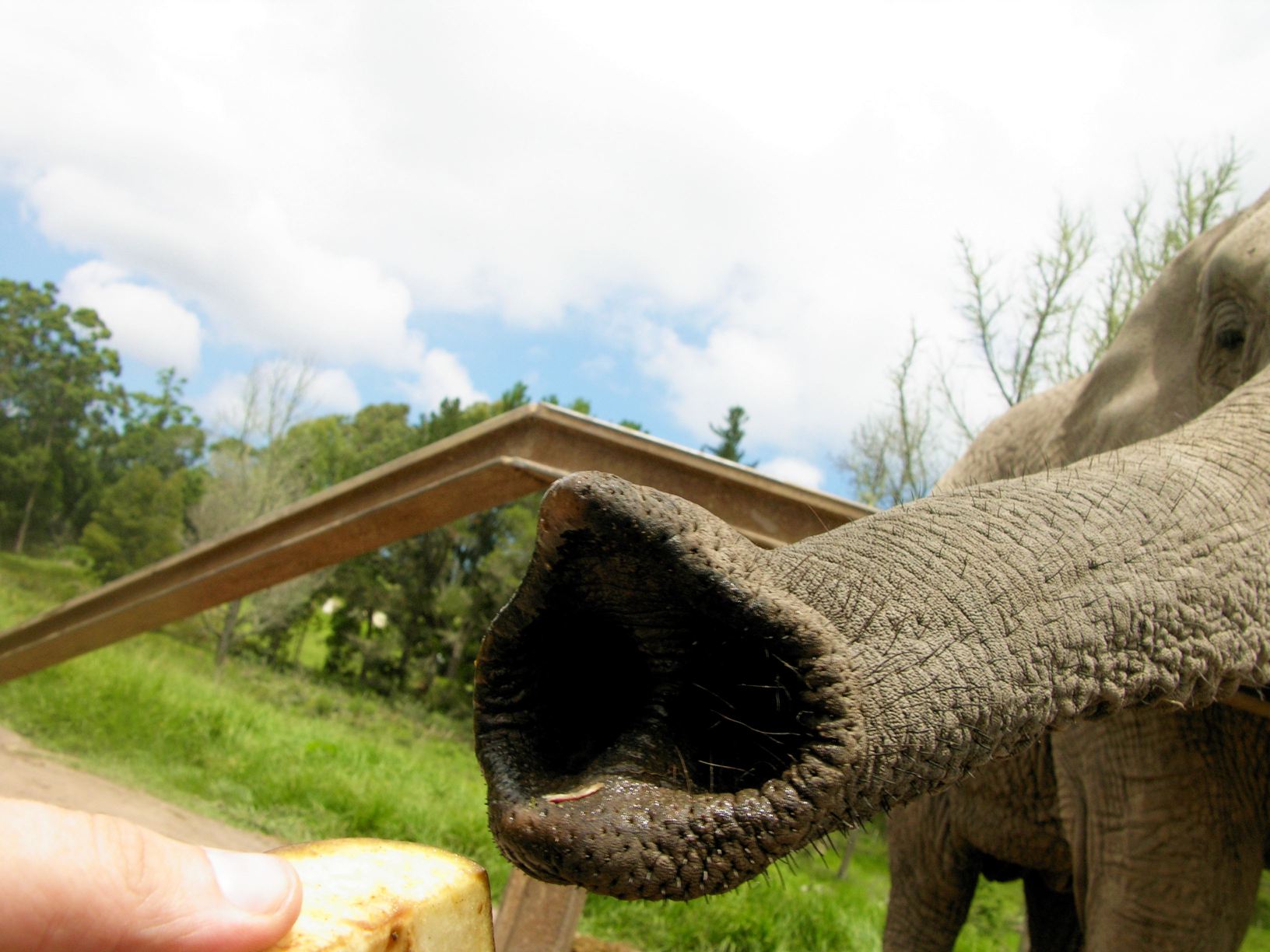
The chance of seeing a wild elephant is tiny, of course. In the nearby elephant park, however, it's no problem. In Africa, there are the ordinary national parks and the private ones that usually have the word ‘Game’ in their names. In the former the animals live their lives and people simply leave them alone. In a game park, it's more like a zoo all the time. At Knysna Elephant Park they'll take you right up to the nearly tame elephants. For a little more money you can buy a bucket of fruit and feed them by hand. Nearly all the elephants in the park are rescued calves, hand-reared after their parents were killed raiding orange groves. Some calves, though, had already been born in the park. You can put a few other calves with a mother who has one of her own. She can tell them apart and lets them feed second, but she doesn't reject them. One of those calves you can catch, stroke, tug by the tail or trunk and play with. A calf with its own mother stays between her legs. You can't get it out, and if you could she wouldn't like it. She might whack you with her trunk or just trample you. Somebody else's calf has to scamper about around the outside. Playing with a calf is a pleasure. Its trunk is soft and its expression is solemn. I'm about as strong as a one-year-old elephant. I can at least hold one and stop it, though I can't pick it up. An adult weighs two or three tonnes, twenty to forty times as much as a person. That's about the difference between a person and a kitten.
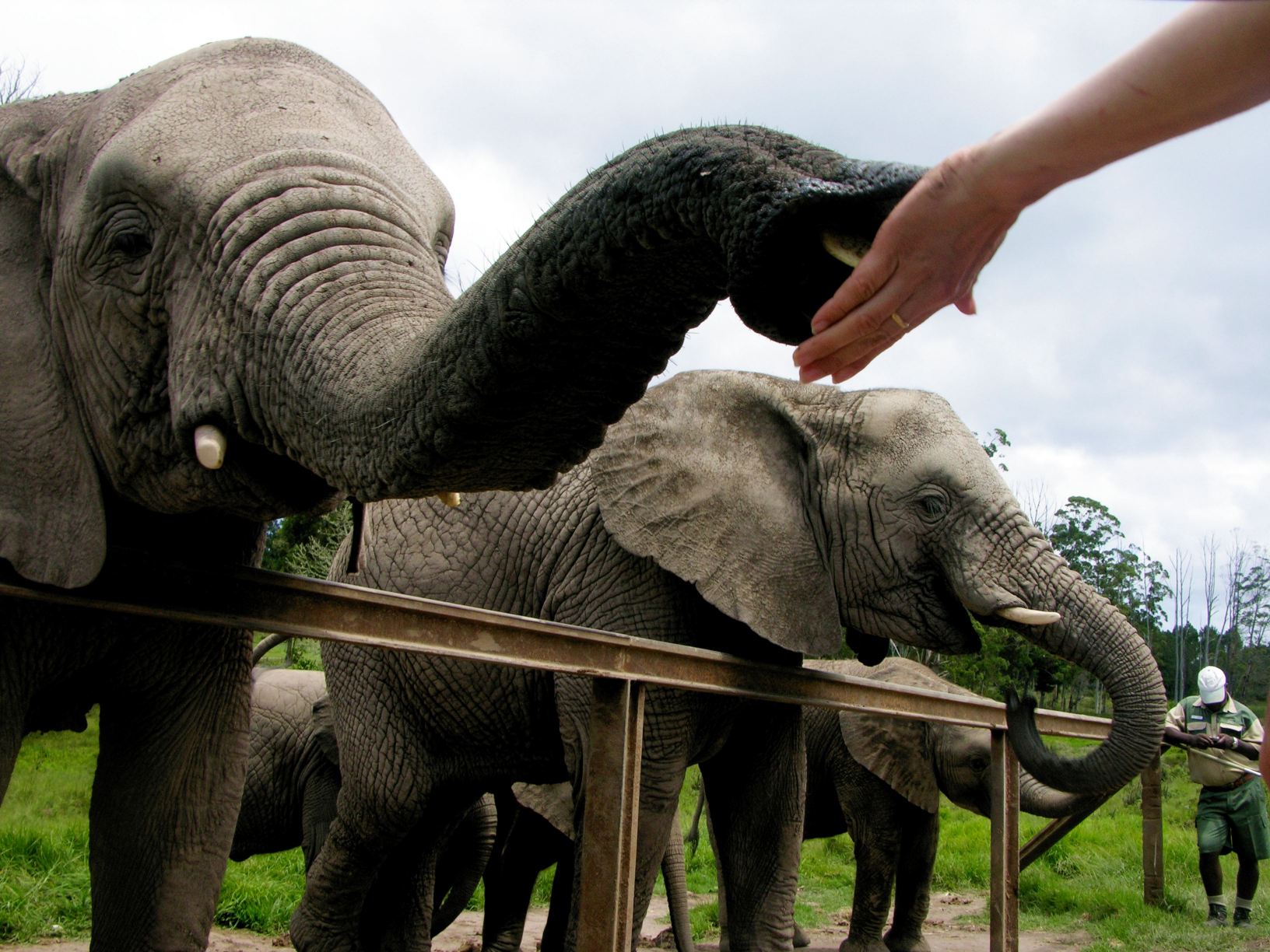
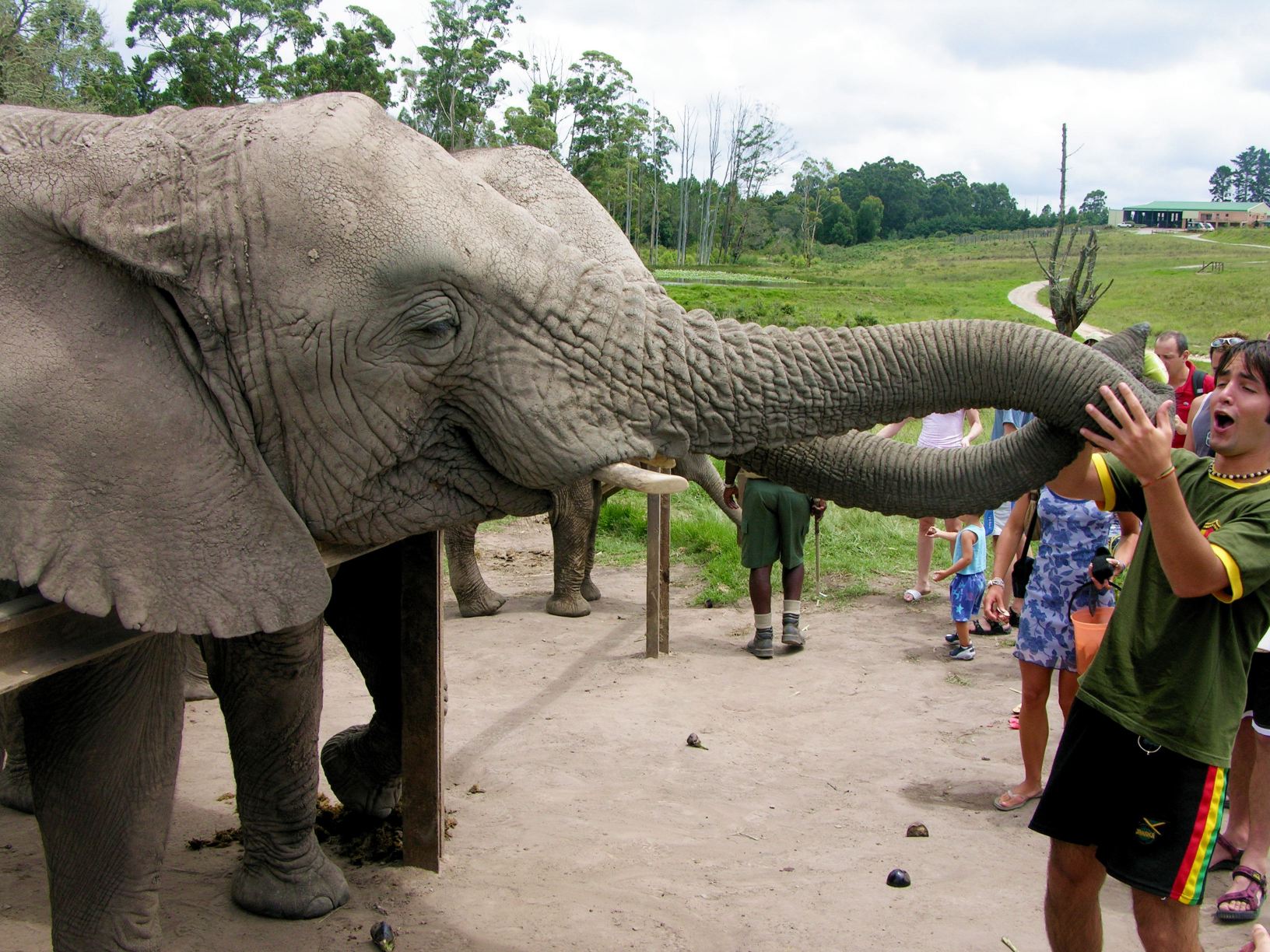
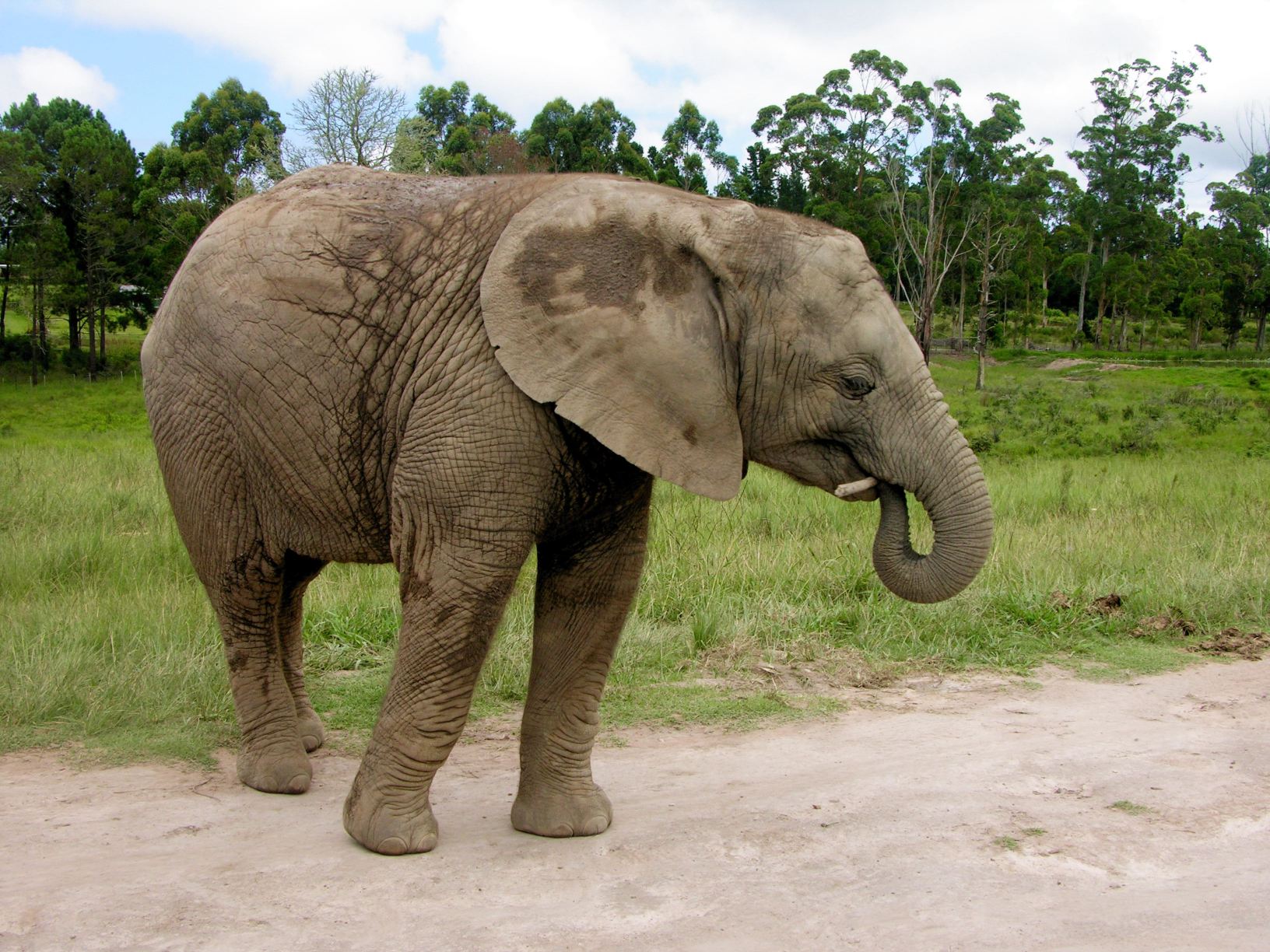
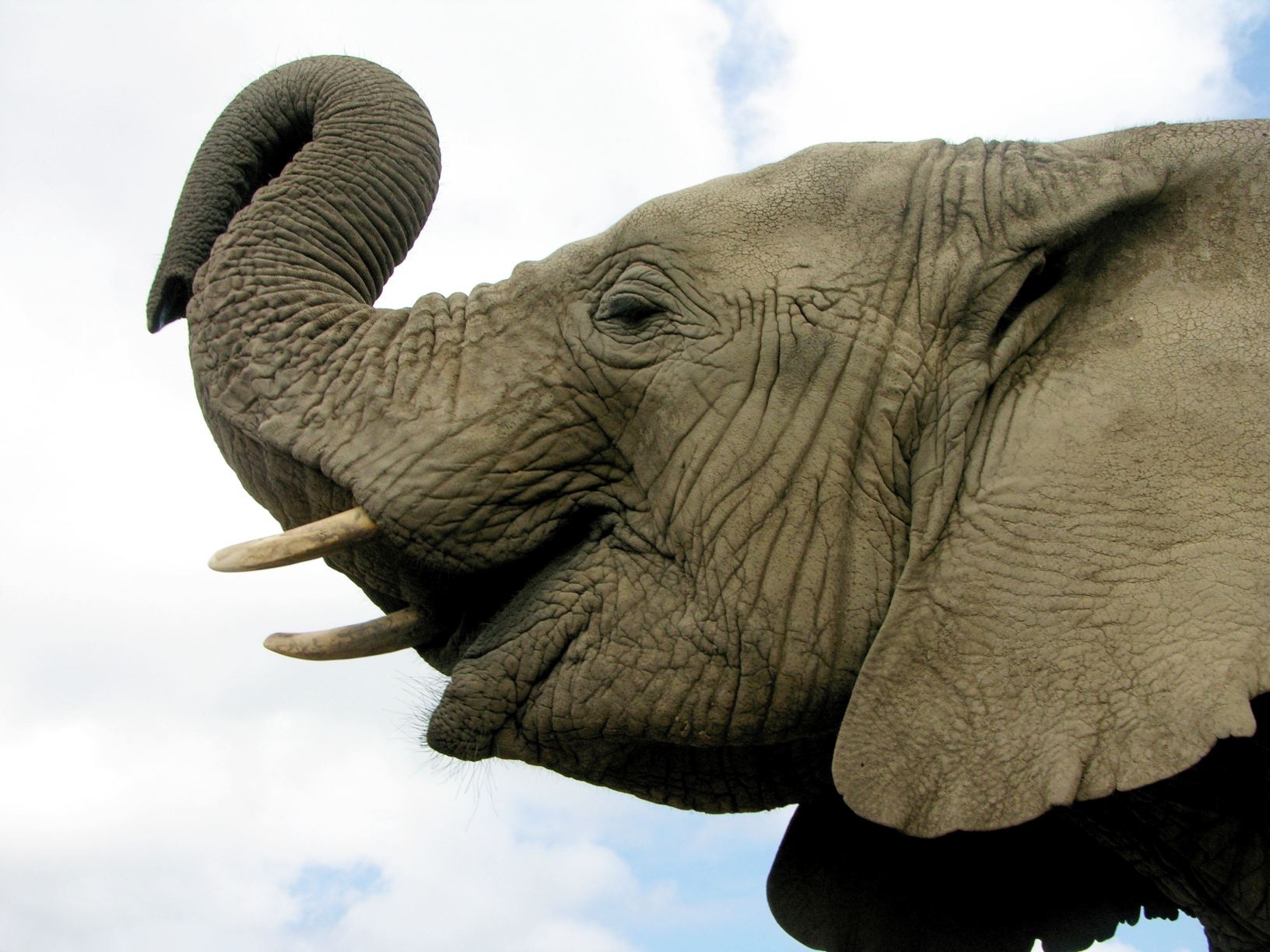
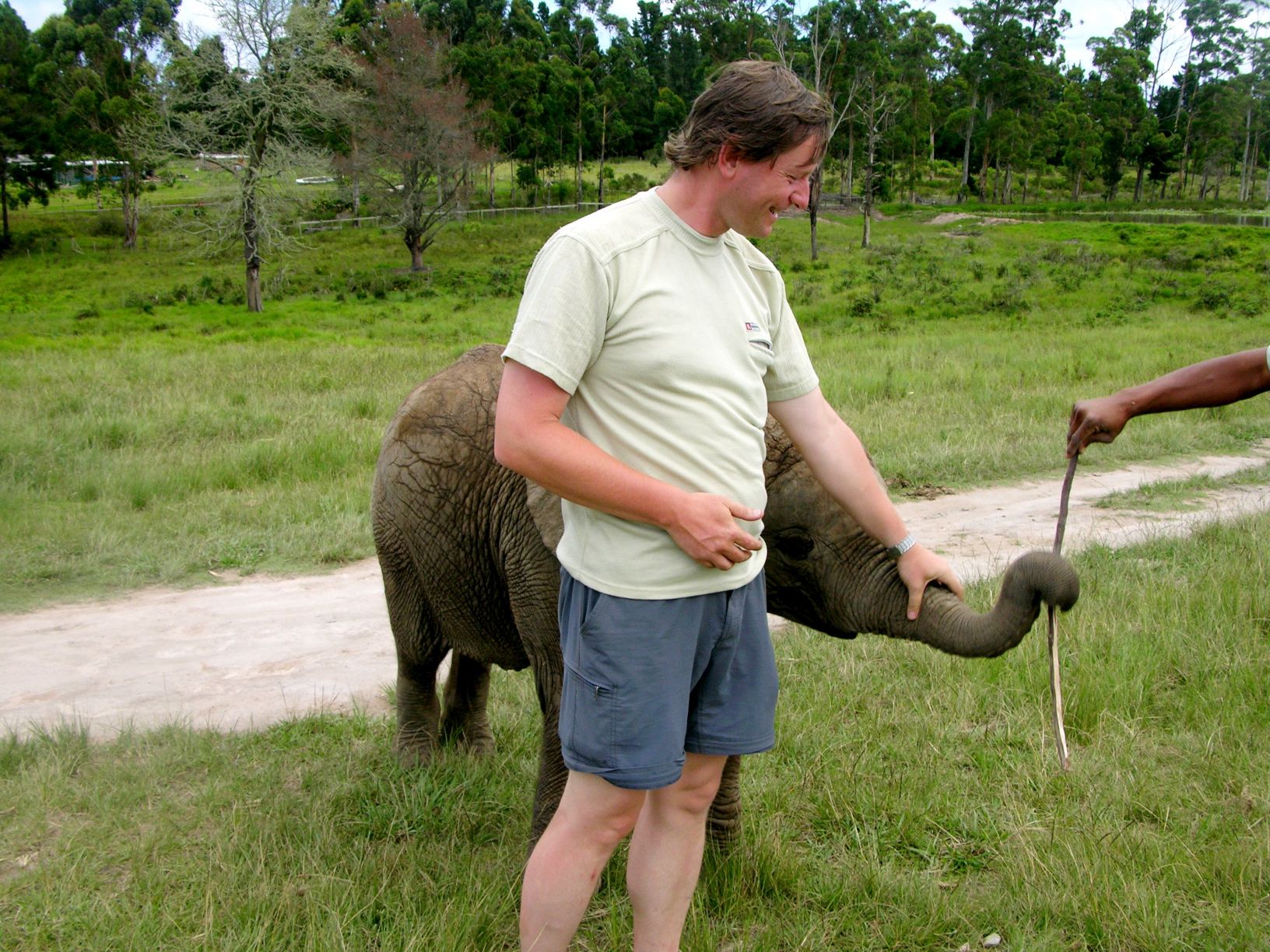
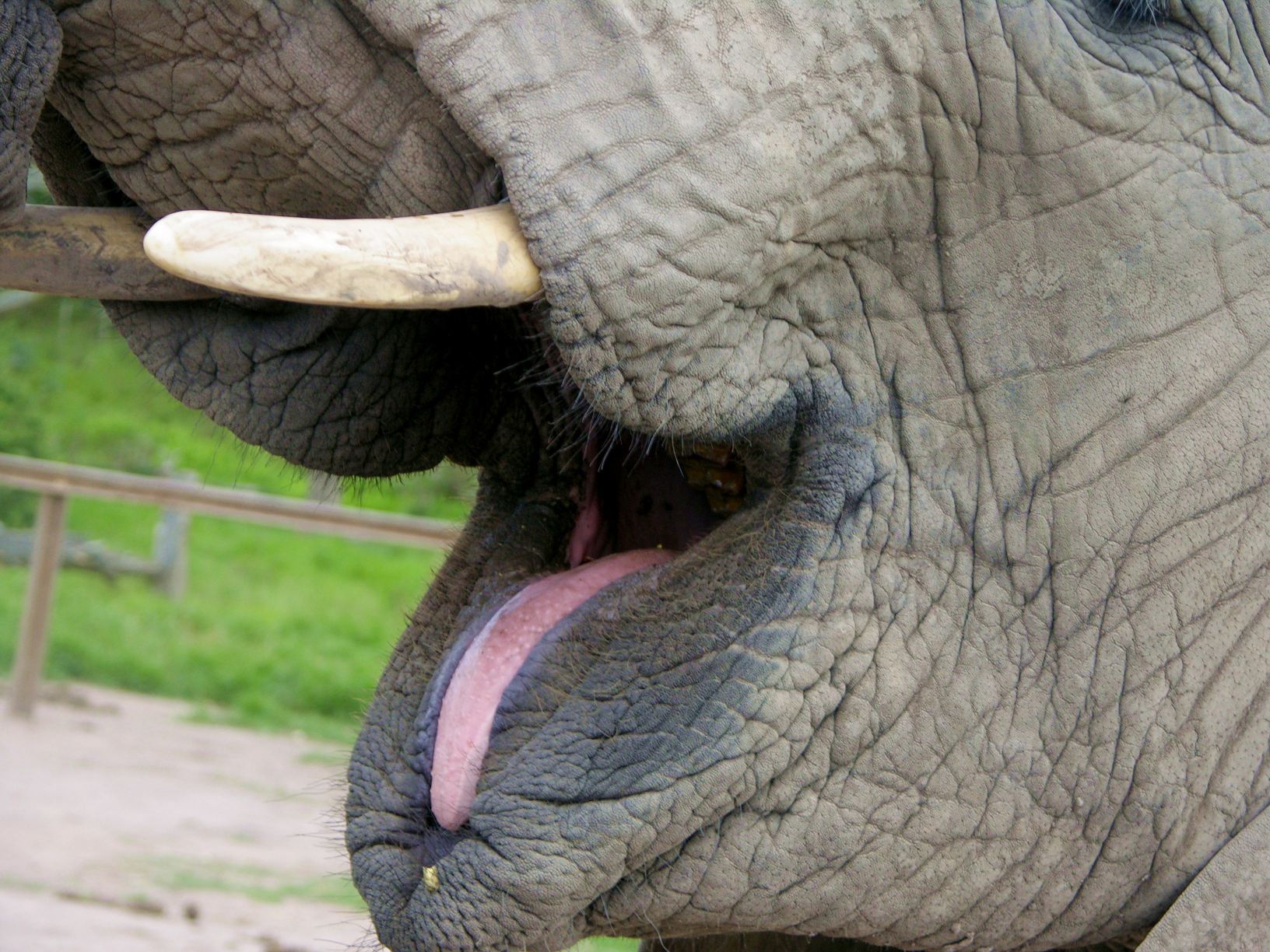
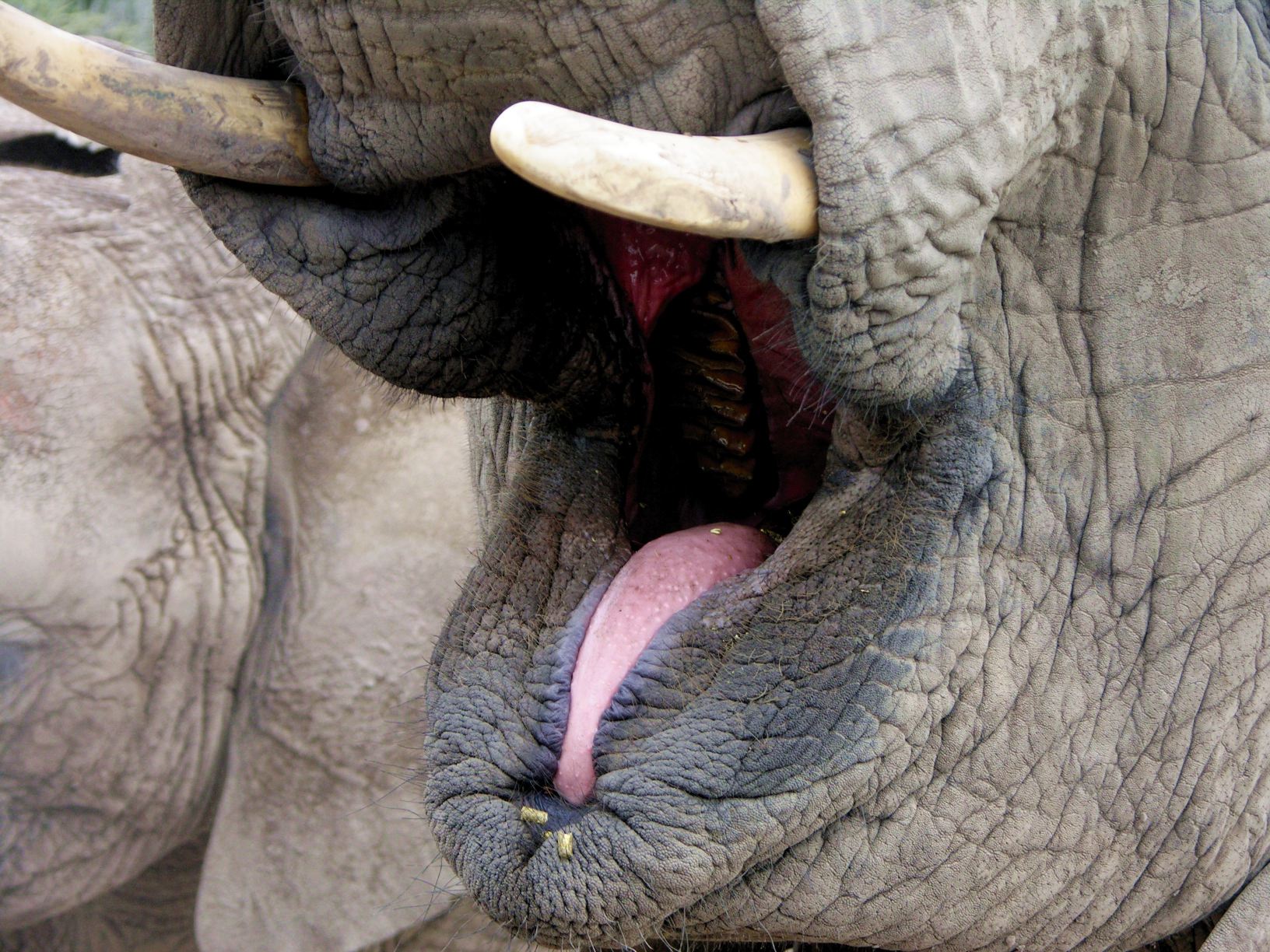
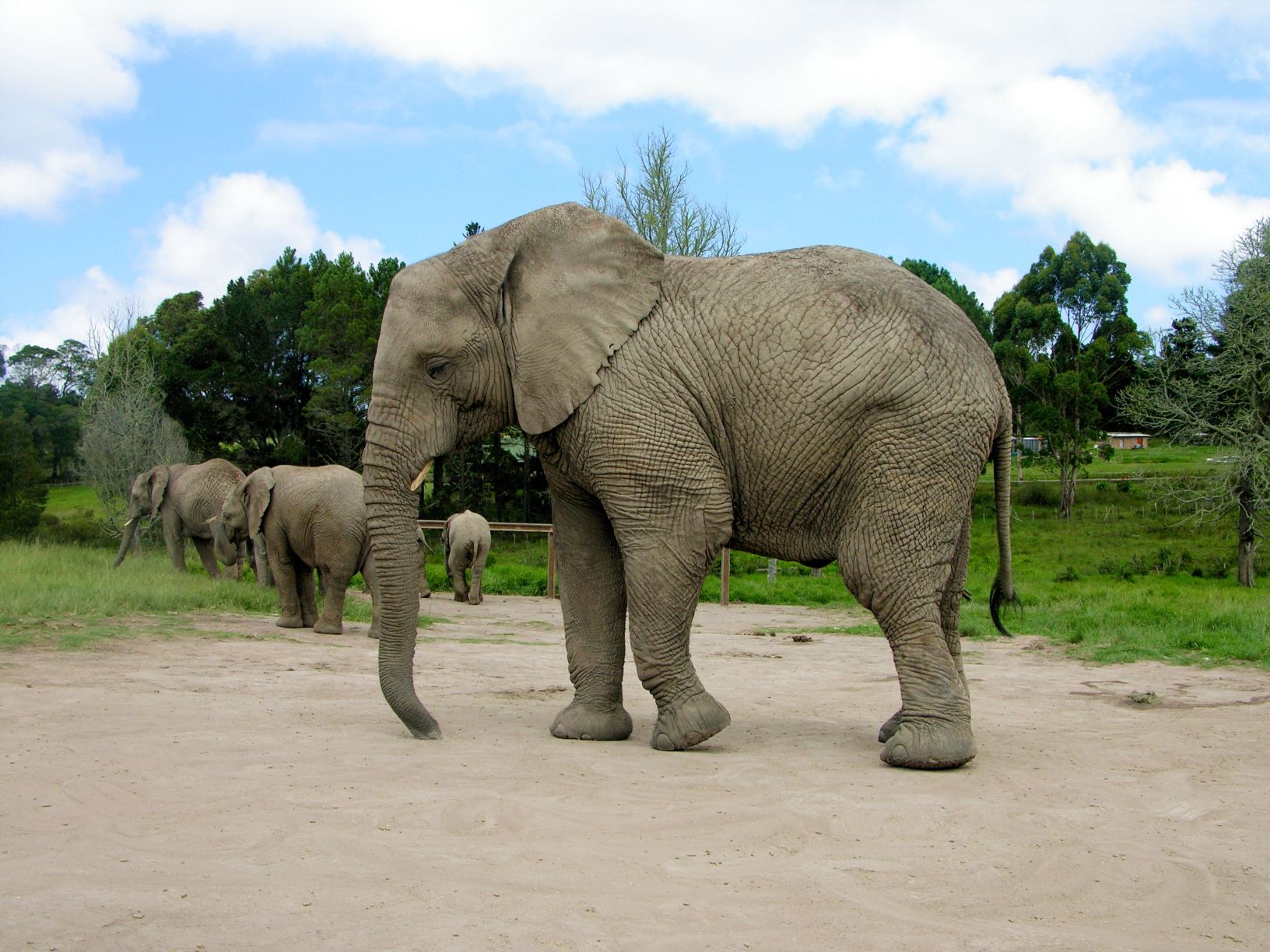
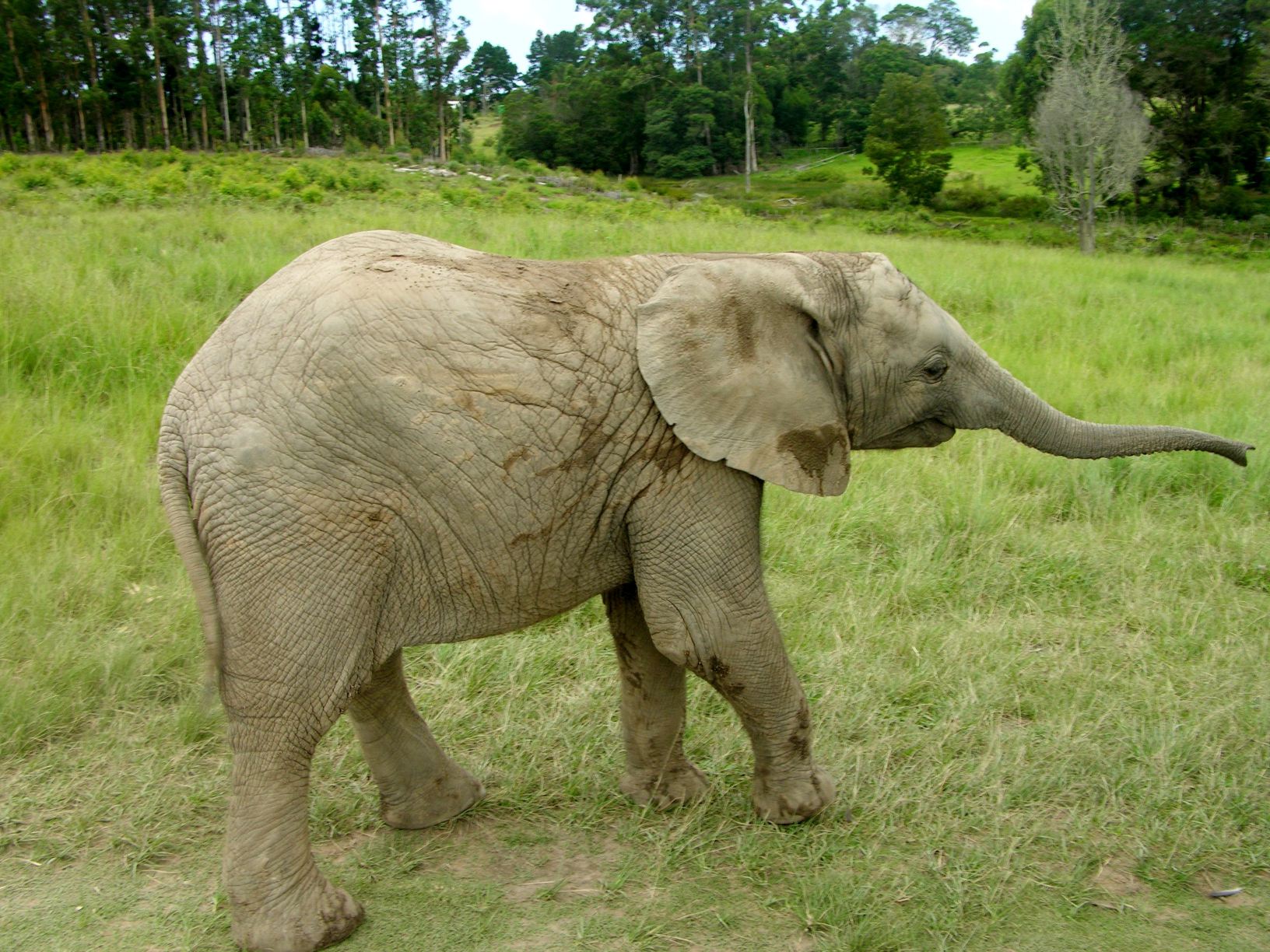
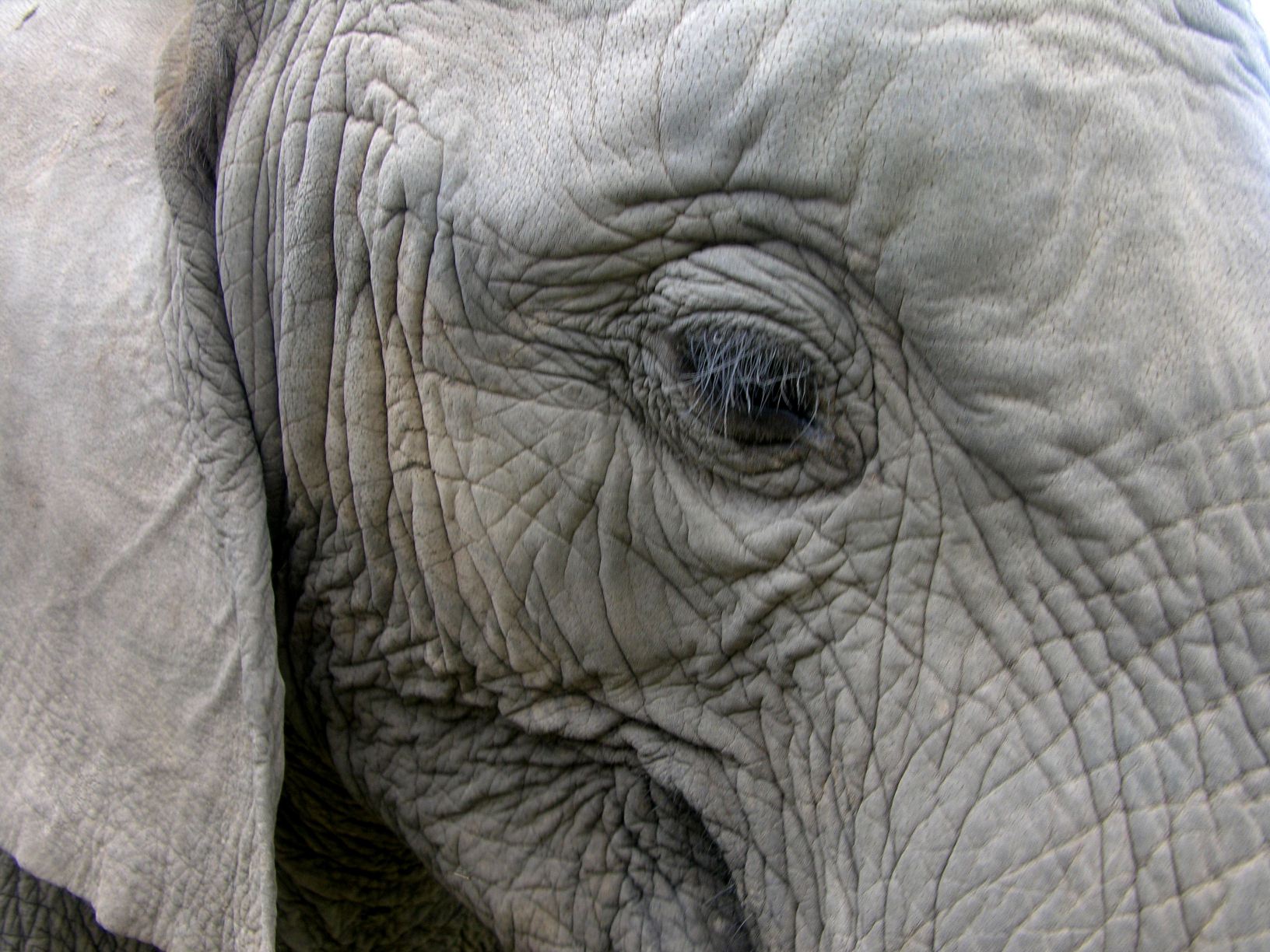
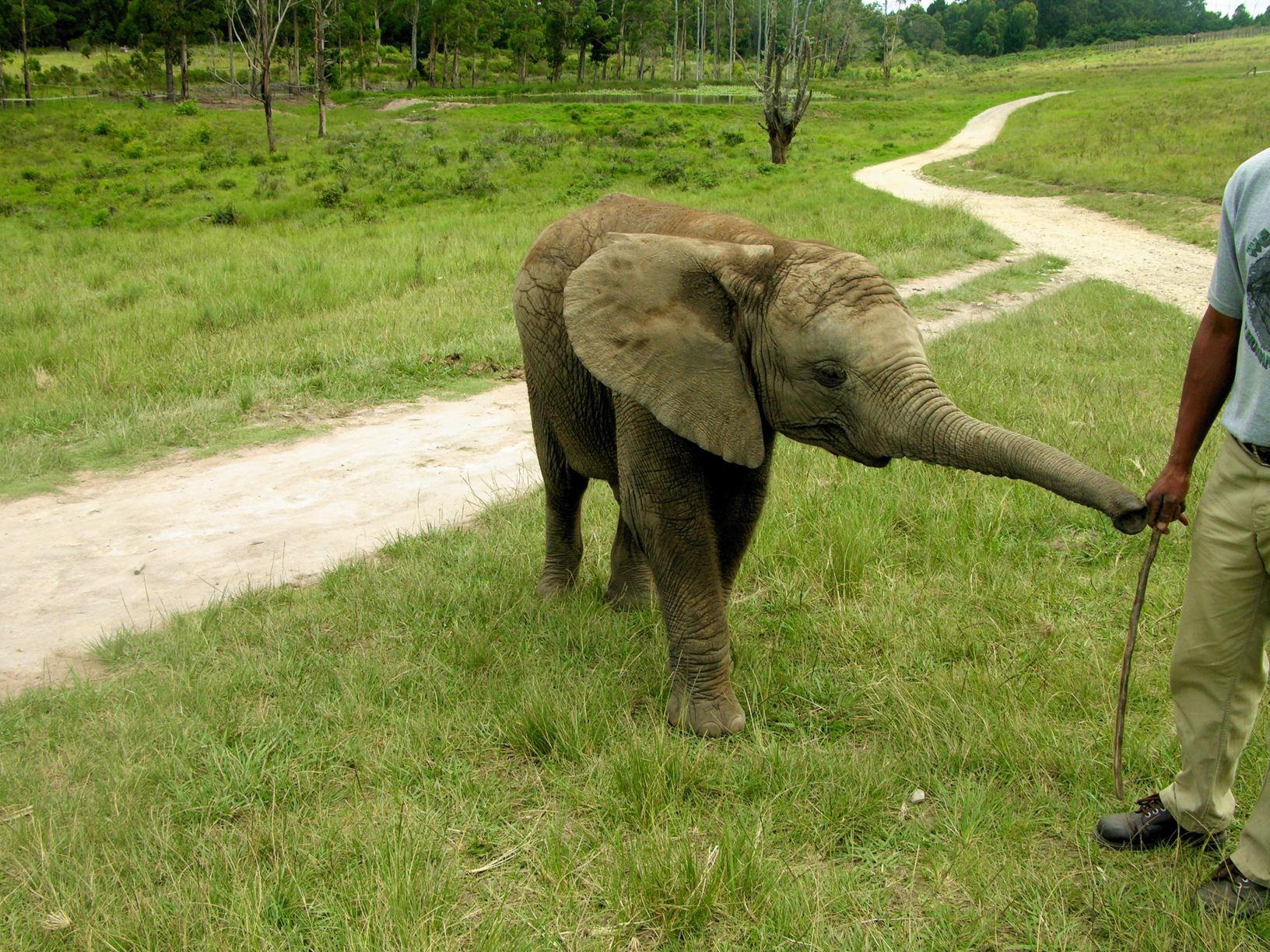
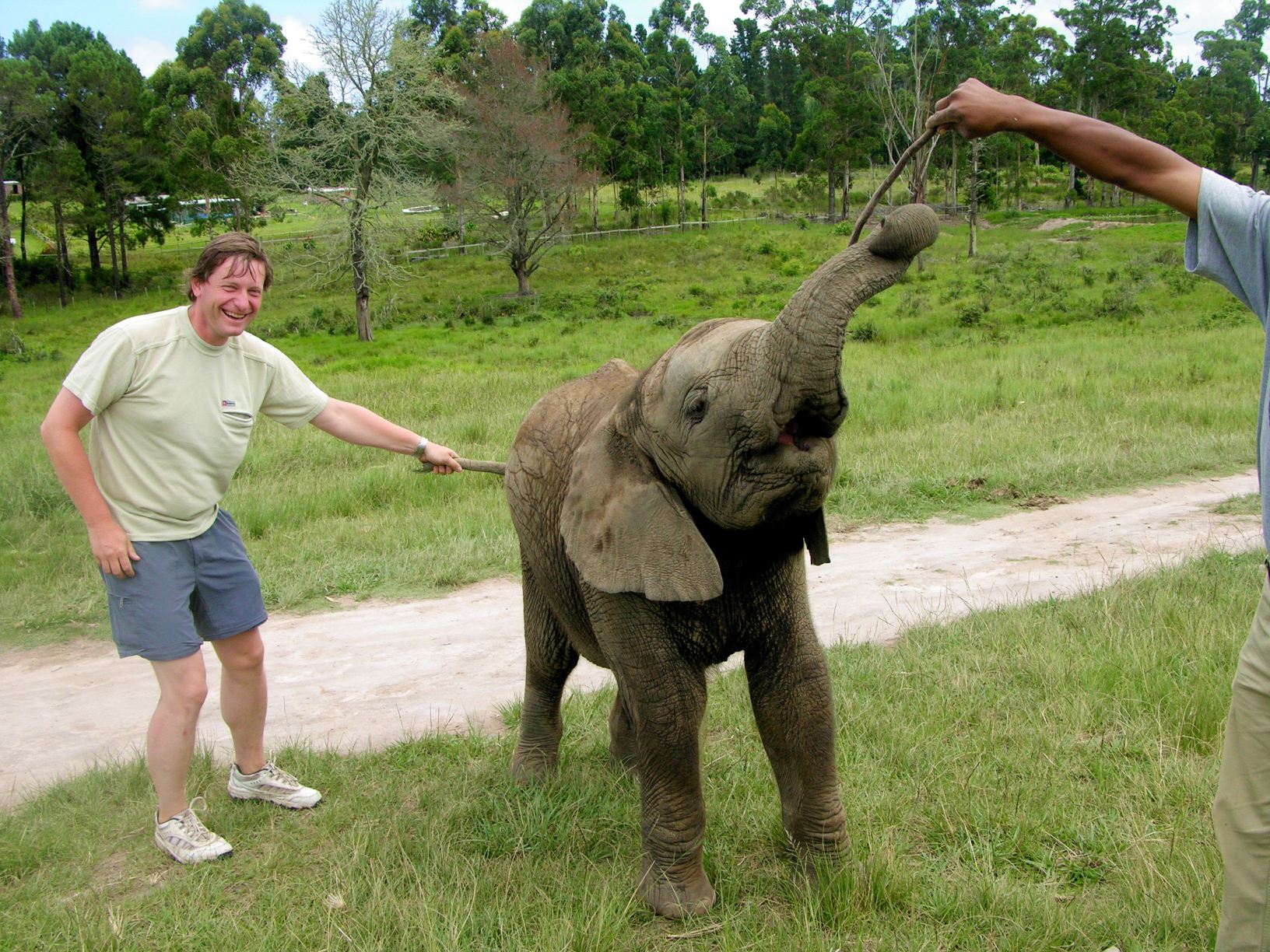
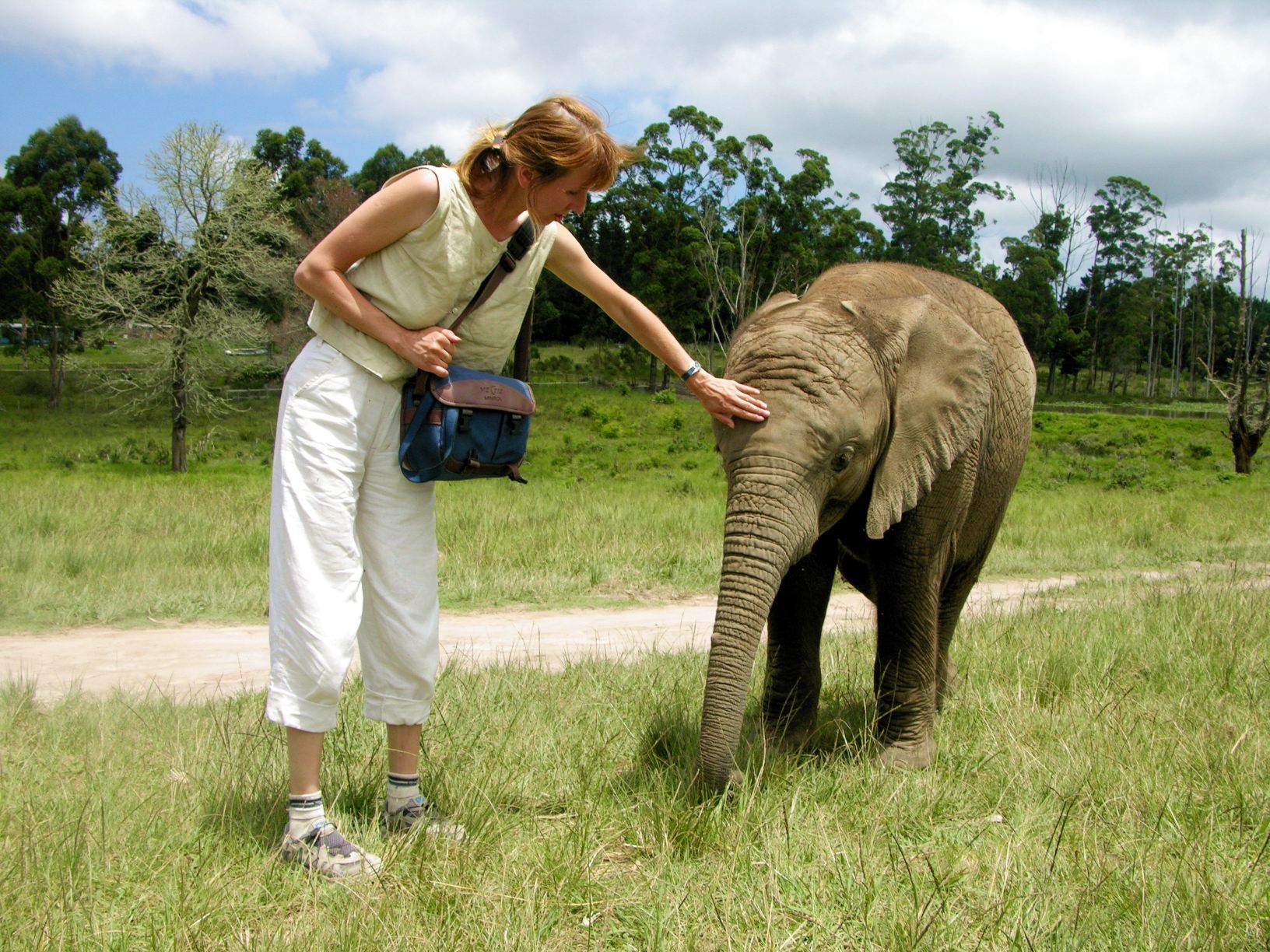
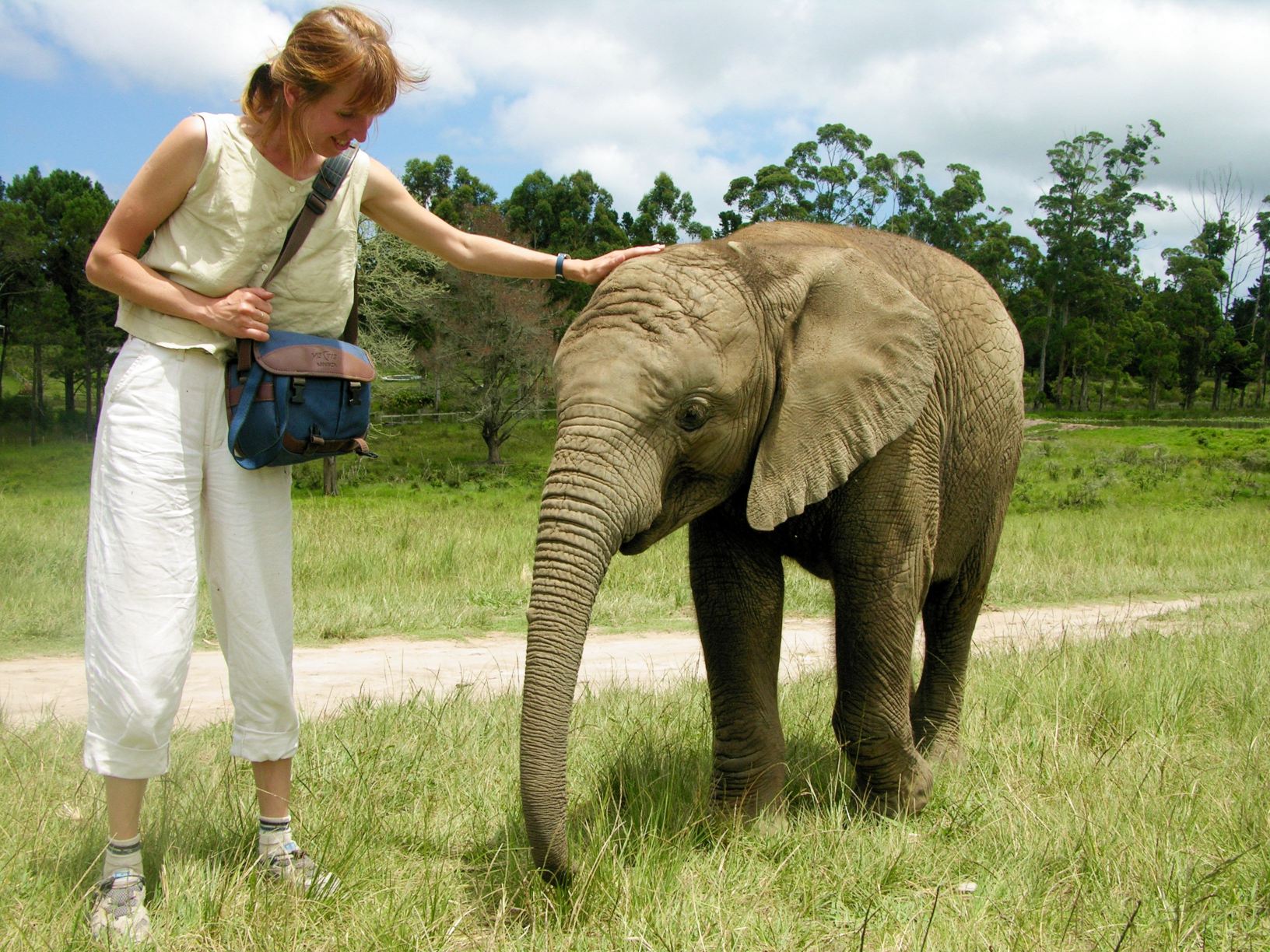
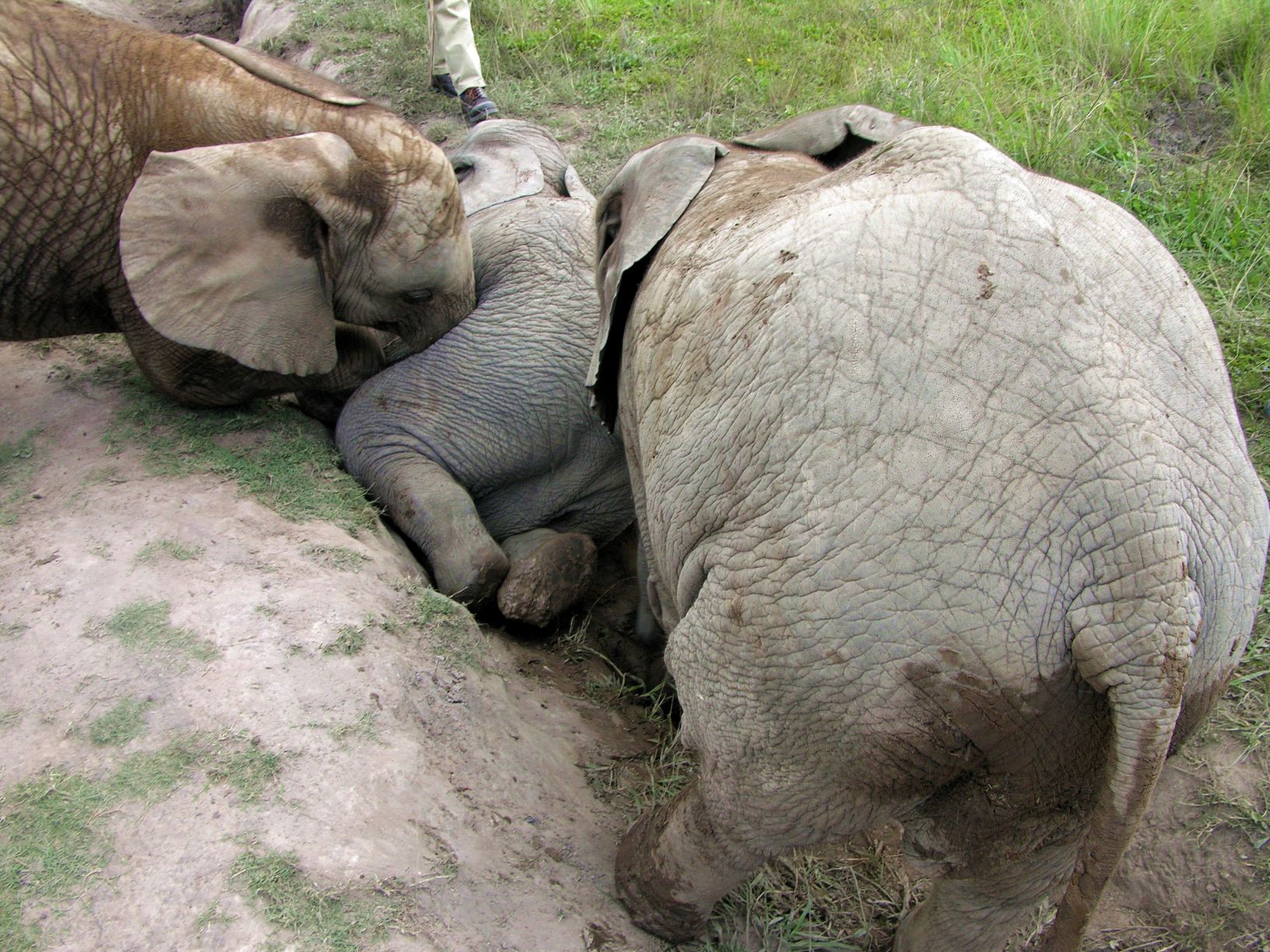
Elephants are intelligent and quick to take offence. You can do just about anything with a calf, but even a tame adult elephant might give as good as it gets if it doesn't like something. When I pulled one by the tail, at any rate, the keepers were alarmed and shooed me away. They said elephants take it as a sign of disrespect. The instructions for being around elephants also say not to end up between two of them. They'll lean against each other and crush you. What can you expect? They're elephants. One might also sit on whoever's offended it and have a little rest. In the wild they're more dangerous than lions. More people are killed by elephants. If a mother decides you're in her way, she may run over and kill you. The advice we heard was that with elephants, unlike predators, you run away if attacked. Showing that you've given in is all the elephant wants. Often the elephant is just frightening you. They'll charge to within a metre and stop dead without touching the troublemaker. Then again, they might not stop. It's hard to outrun an elephant anyway. The speed I was told was 60 km/h, twice as fast as a hundred-metre champion. They can't keep it up for more than three hundred metres, though. They tire.
All that talk about the lion being the king of beasts is nonsense. The real king of Africa is the elephant. If a lion gets in its way, the whole pride had better clear off. Otherwise it's a smack on the back of the neck with the trunk and food for the jackals.
It may all be tame in a game park, but it's still worth a visit. In a wild park you won't get to see the animals from that close, let alone hug a lion, pull an elephant's tail or sit on a rhinoceros.
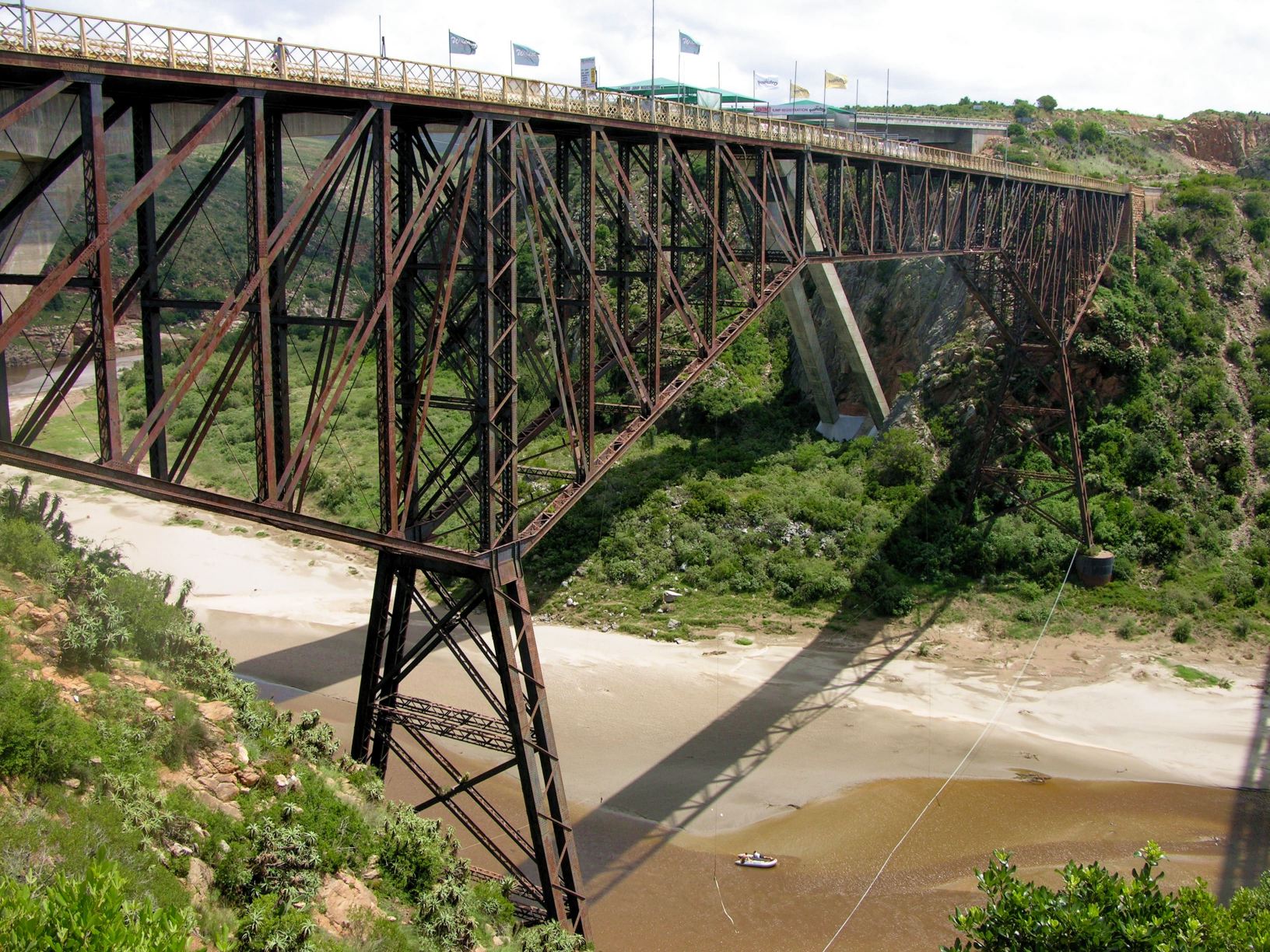
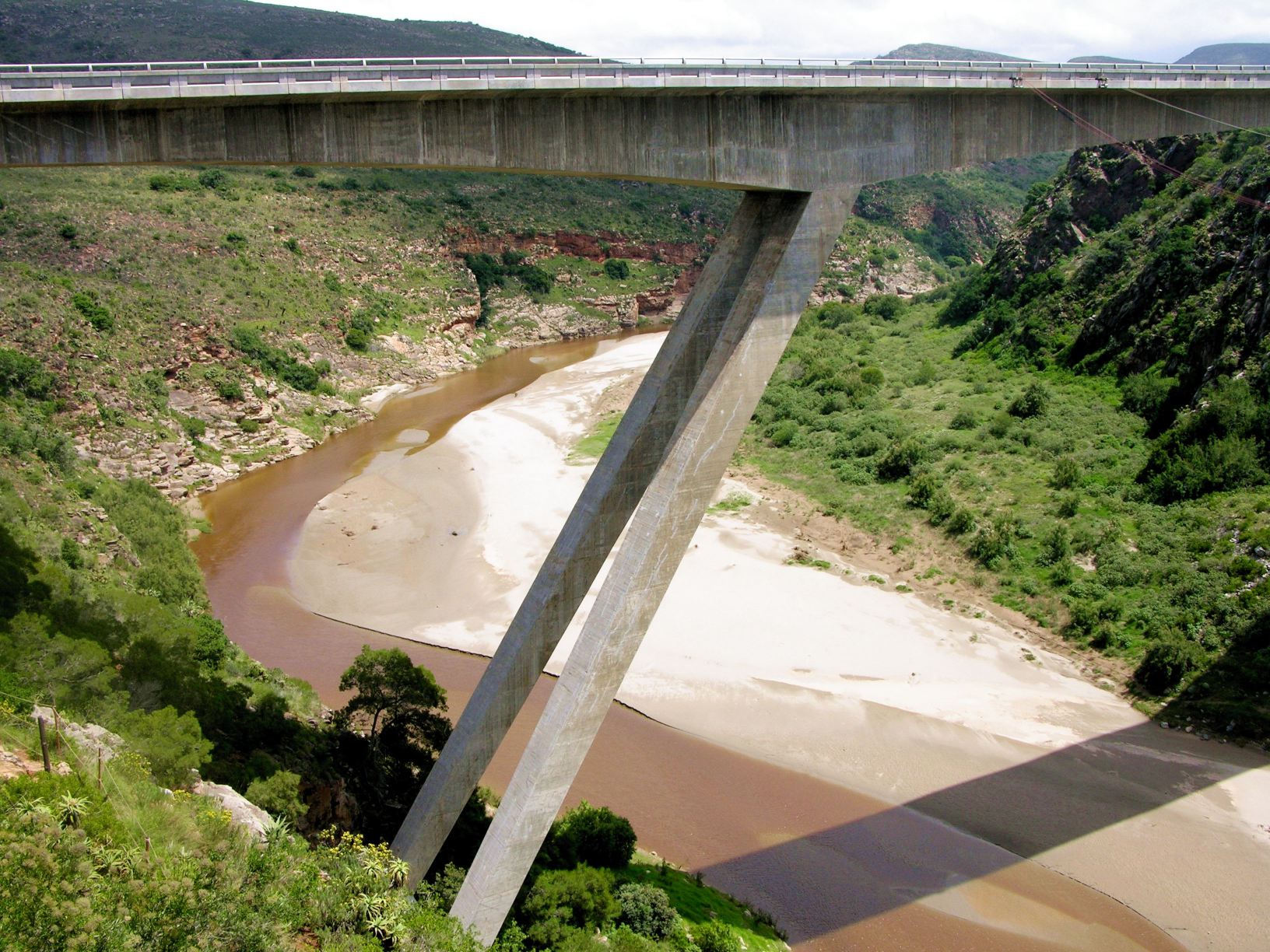
The coastal road, the N2, crosses the many gorges cut by rivers that run into the ocean. Excellent bridges have been built over them in recent decades. The highest crosses the Bloukrans River, before the Storms River if you're coming from Knysna. It's 260 metres high. Nearly the height of the Eiffel Tower.
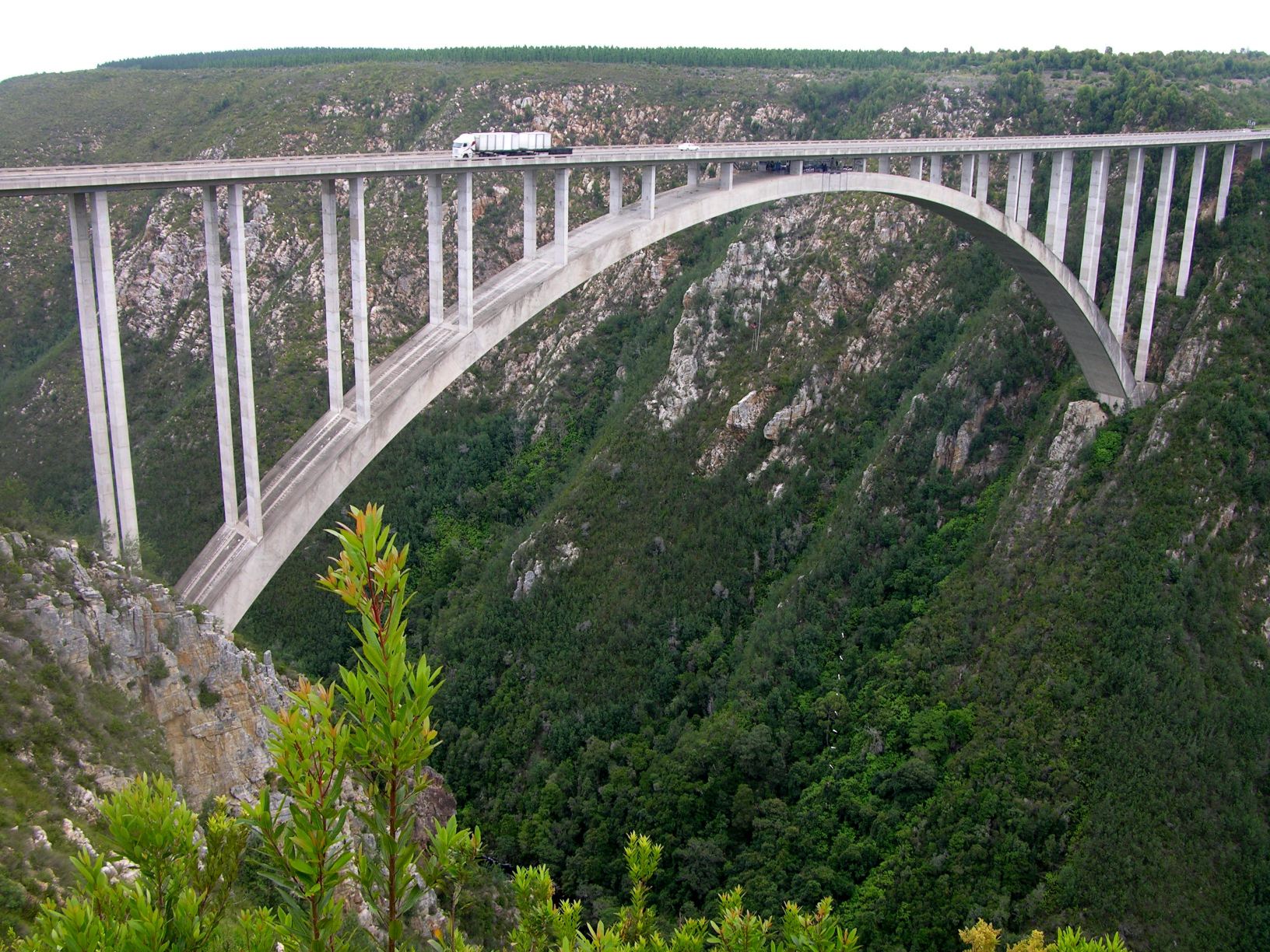
It just so happens that this bridge is home to the world's highest bungee jump. That's where they tie a rubber rope to your ankles. You jump and fall freely until you run out of rope. Then you go flying back up again, like a human yo-yo. Assuming the rope doesn't break, of course.
Its proper name is bungee jumping. The sport came out of New Zealand. Islanders had jumped like that with vines from time immemorial, as part of a boy's initiation into manhood. The islanders jumped ten metres. In New Zealand they do seventy or eighty. Anything higher is considered dangerous. At the highest New Zealand jump, 130 metres, they don't attach the rope to your ankles any more. They put it round your waist and you jump feet first. Devotees jump every which way, even out of helicopters, but two hundred metres is considered the limit even then. In South Africa people must be tougher, or perhaps life comes cheaper. In any case, here they had a 216-metre drop. There was nothing higher anywhere, as the Guinness Book of Records attested.
As the local advertisement says, ‘You'll be scared for a few minutes. If you don't jump, you'll regret it for the rest of your life.’ I'd wanted to jump off that bridge all my life anyhow. No choice. I'd have to jump. It cost 550 rand for one jump. Once an hour they gathered a group and led it out to the jump site. I got scared just going there. You don't actually jump from the road deck, but from a platform on top of the arch that supports it. To get out to the middle of the bridge there is a suspended walkway made of metal grating. You walk along, everything swaying under your feet, and the view below is like the one from an aeroplane. Clouds down there, and beyond them a forest in the haze. Jumping is scarier still. I'd done it in New Zealand before and I was scared all the same. In New Zealand, oddly enough, people are afraid to jump. They talk them into it, count ‘Three, two, one, go!’ three times, and only then shove them off. In South Africa they're all brave. They jump at the first go.
I was the heaviest, so they had to use the thickest rope. Taking that step into the void is frightening, of course, but after that it's pure delight. You fly for fifteen seconds absolutely free, like a parachutist. There's just no ripcord to pull. The ground comes racing up. You begin to make out the branches of the trees and then there's an awful yank on your feet. The acceleration at the bottom is five g. It feels as if the rest of you is about to pull loose from your skeleton and carry right on. It lasts only a couple of seconds. Then you're weightless again, flying back up towards the bridge. Now it's way off behind the clouds. For a moment you think you'll reach it and bang your head. Then it all happens again, although at the bottom the pull isn't nearly as strong this time.
At many bungees they unclip you at the bottom and you run up a set of stairs. Here it's rocks and white water down there. And not everybody can walk 260 metres uphill on stairs in the heat. So a man comes down the rope like a spider to where you're hanging, clips you onto his line and takes you up to the platform you jumped from. It takes a few minutes, during which you hang upside down over the drop. By then, by the way, it's not at all frightening. Your body has figured out that it can fly without any trouble.
Besides headfirst jumps, there's a simpler way to fly for the less daring. The Flying Fox. They clip you to a sloping cable suspended over the river and send you down it to the other bank. Tanya flatly refused to jump or to fly like a fox, though she regrets the latter.
I, for my part, was delighted. A good mood was guaranteed for a day or two. Without adrenaline my body just wilts. Here I'd recharged a little, at least.
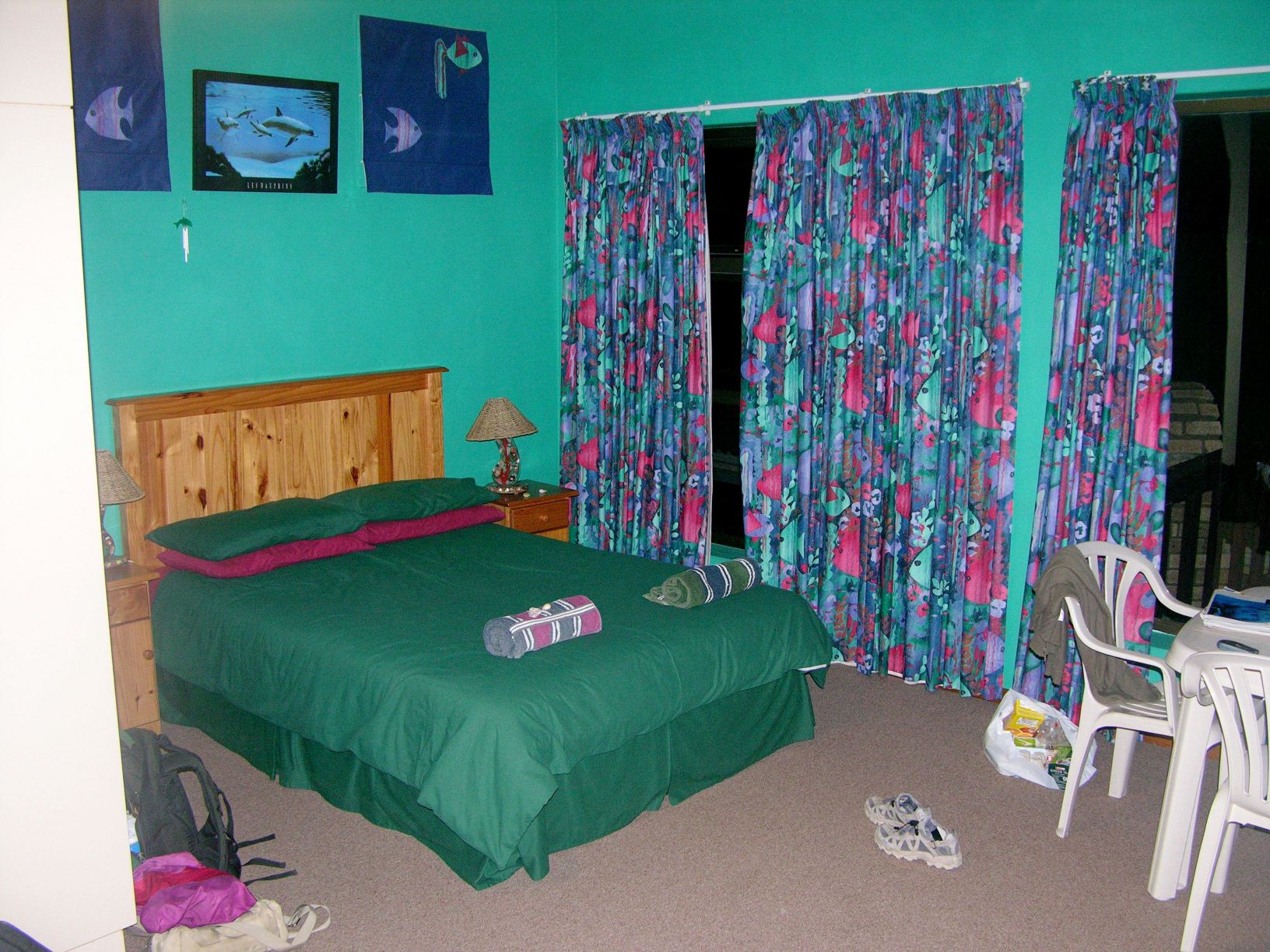
We spent the night on another African headland, Cape St Francis, in the village of the same name before Port Elizabeth (34°12.111′S, 24°49.952′E). Nearby Jeffreys Bay is supposed to be the best place for surfing. The sea really was teeming with surfers. It was more crowded than we'd have liked, and we spent an hour looking for somewhere to stay. Everywhere else we'd found a place in a few minutes. There were rooms here too, only very expensive ones at 600 to 1,000 rand. We wanted one for 250 and eventually found it. The little house was lovely, by the way, and every bit as good as the ones that cost several times as much (Cape St Francis, 16 Stavenisse Avenue, tel. 042-2980298).
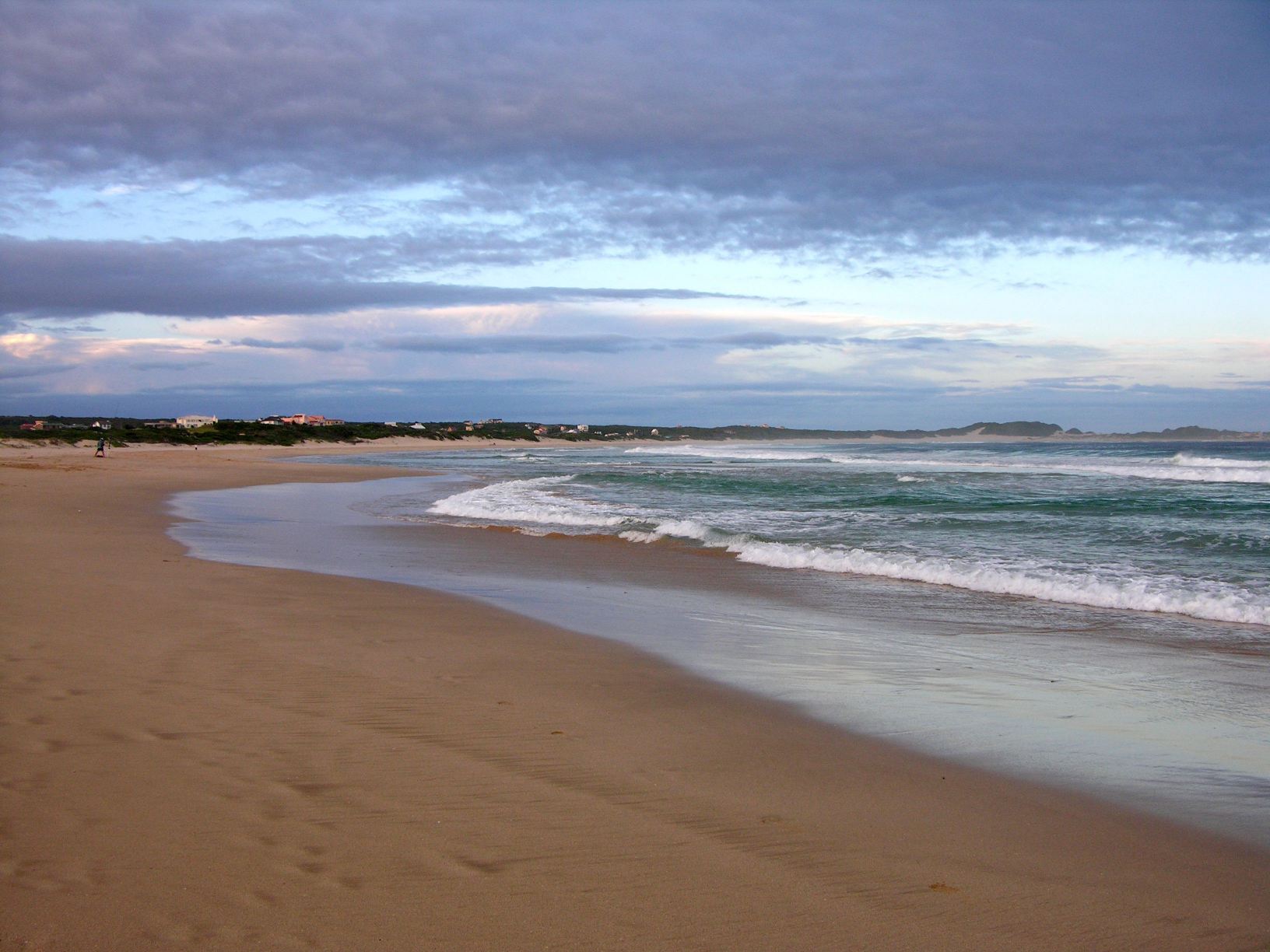
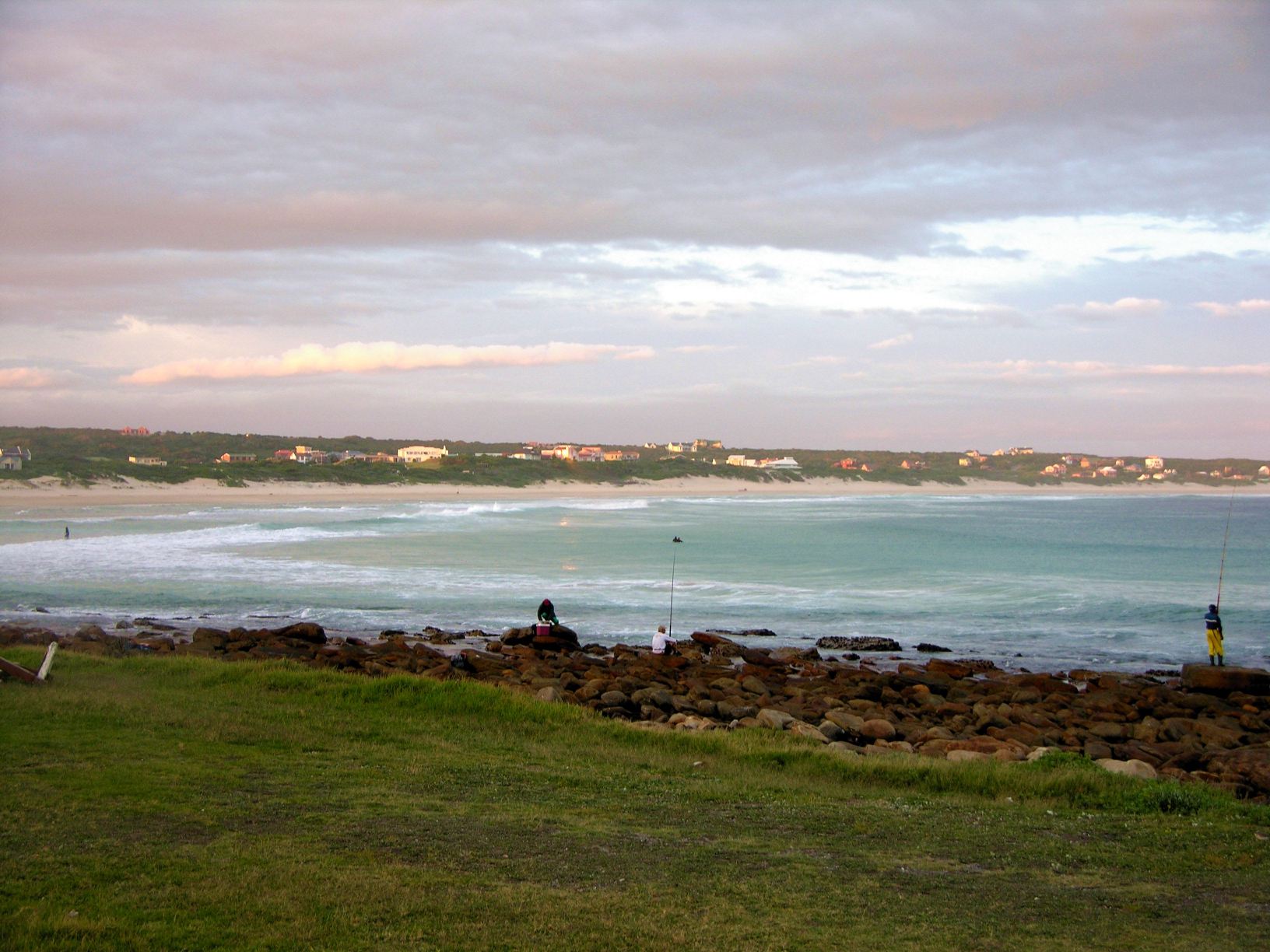
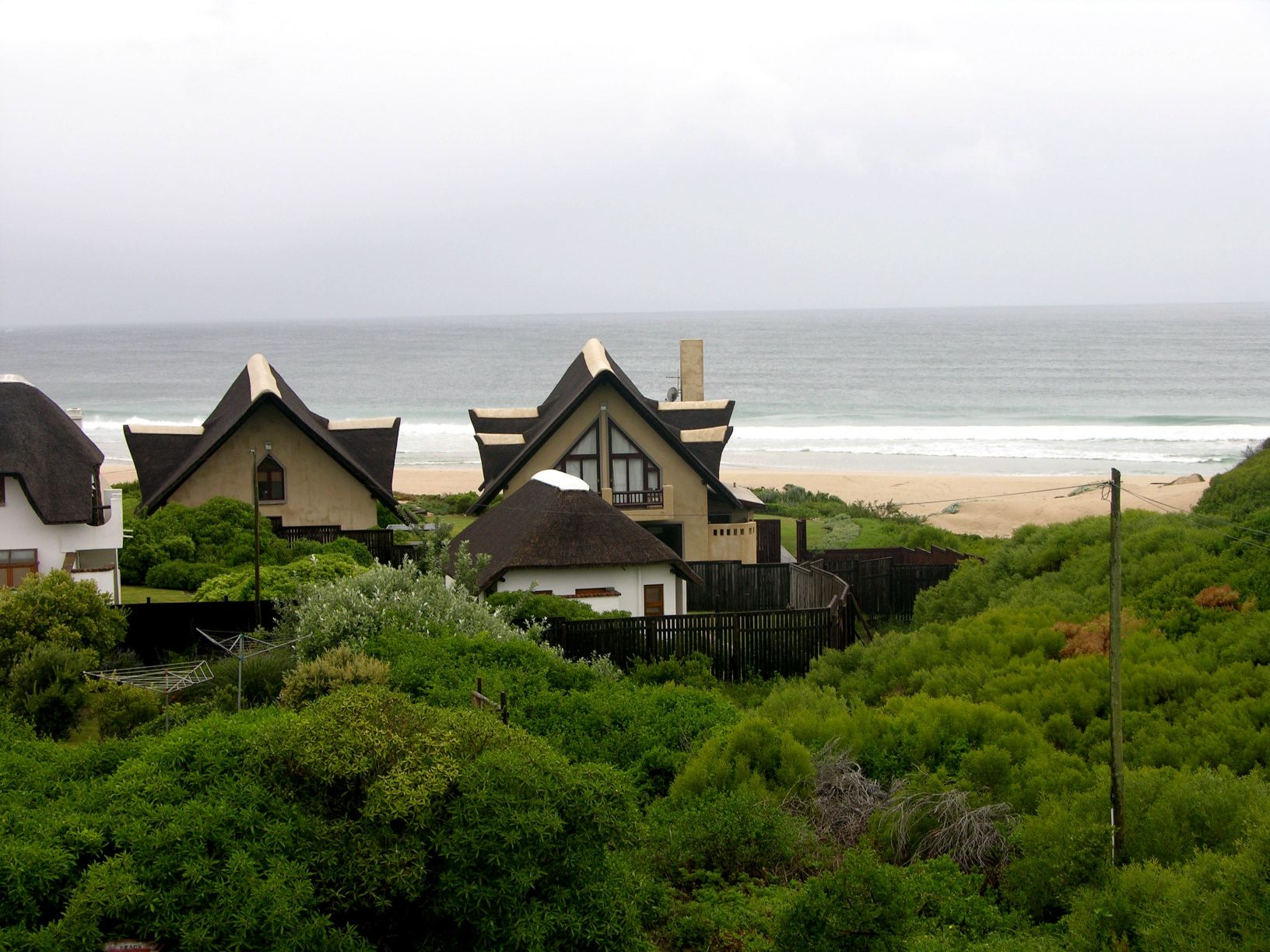
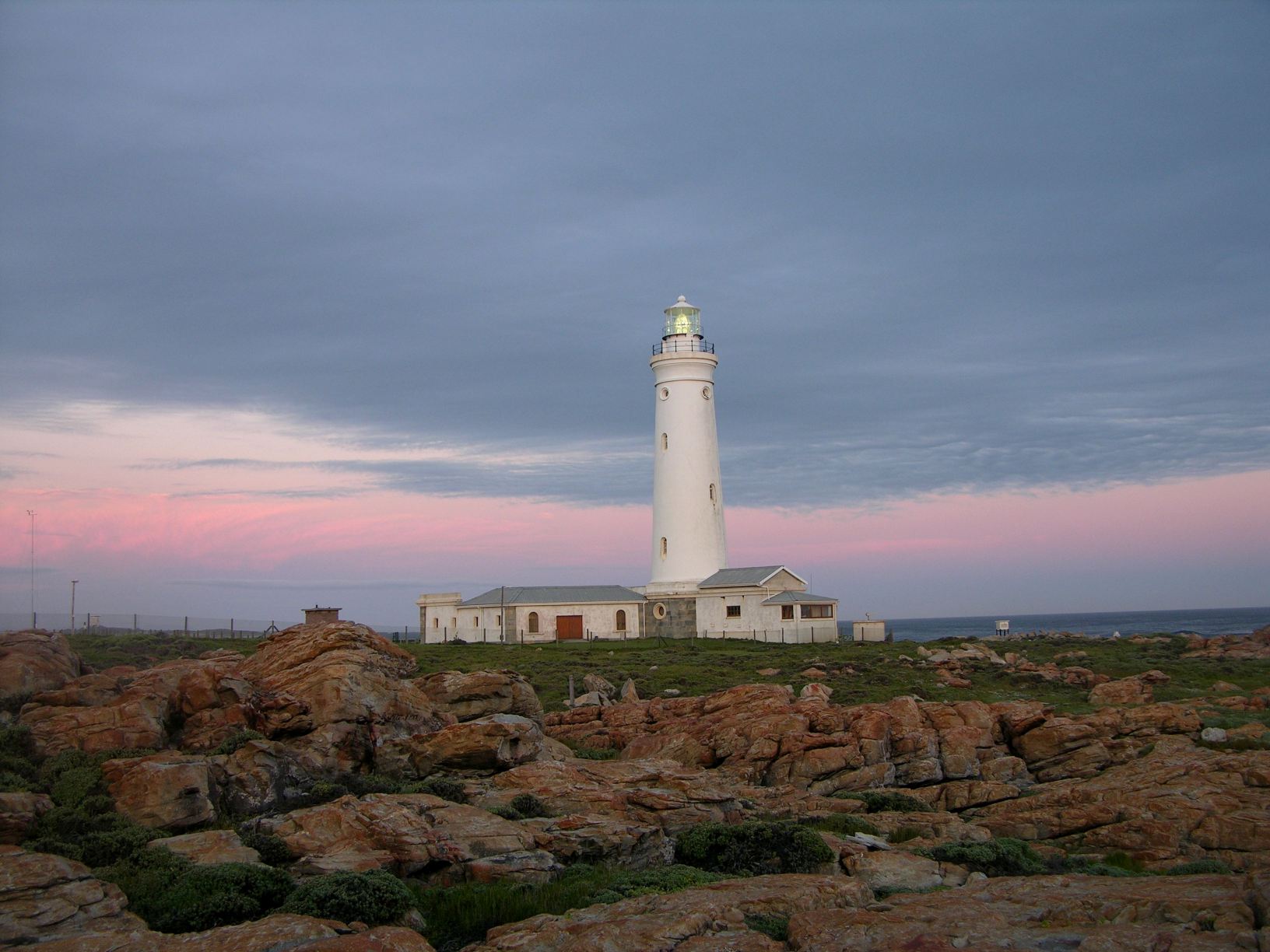
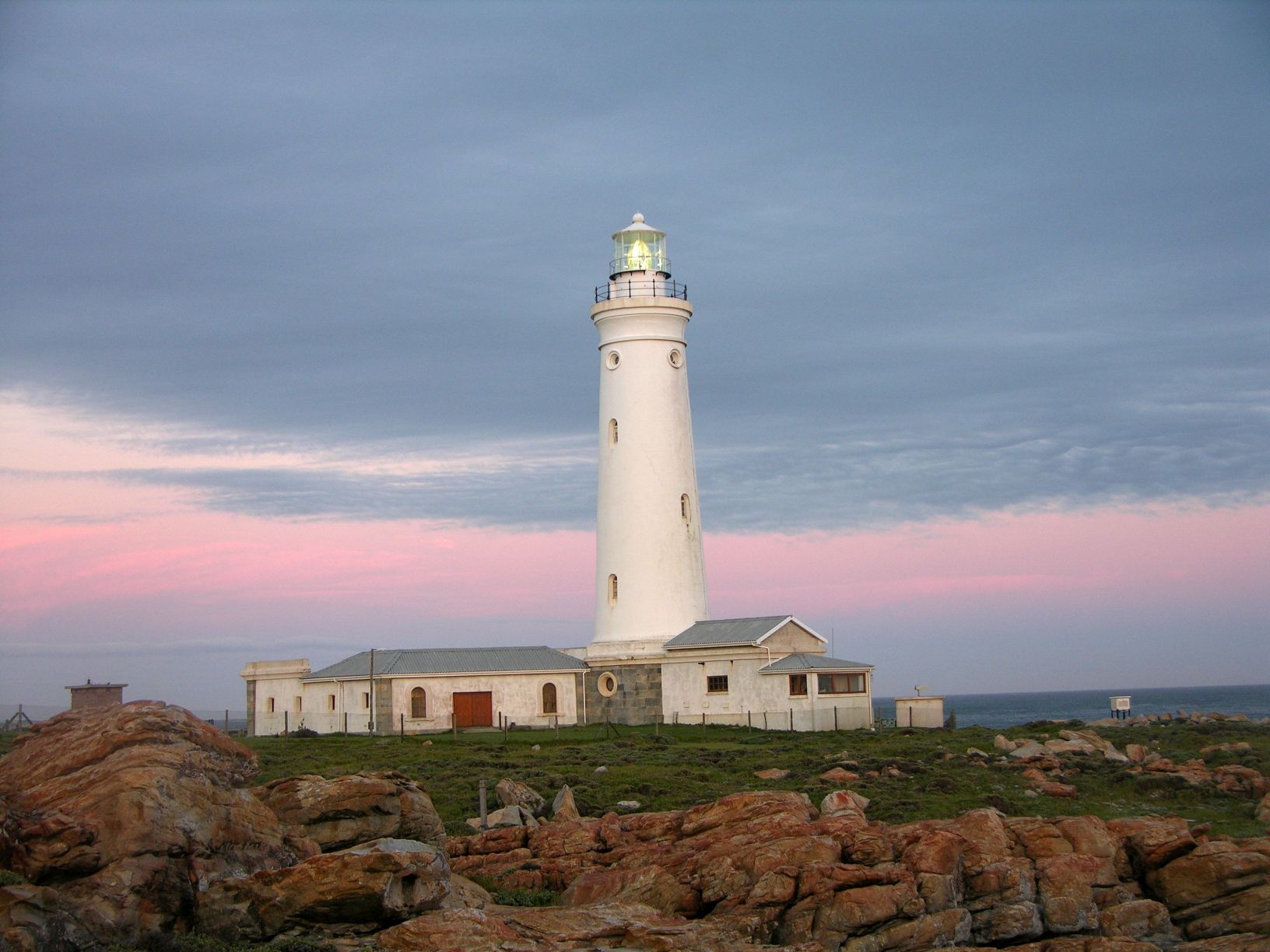
We went for another walk and watched the sunset. We looked at the lighthouse, at the keeper's family who still lived there, at the children who watch the ocean and the sun setting into it every evening. To grow up with all that beauty!
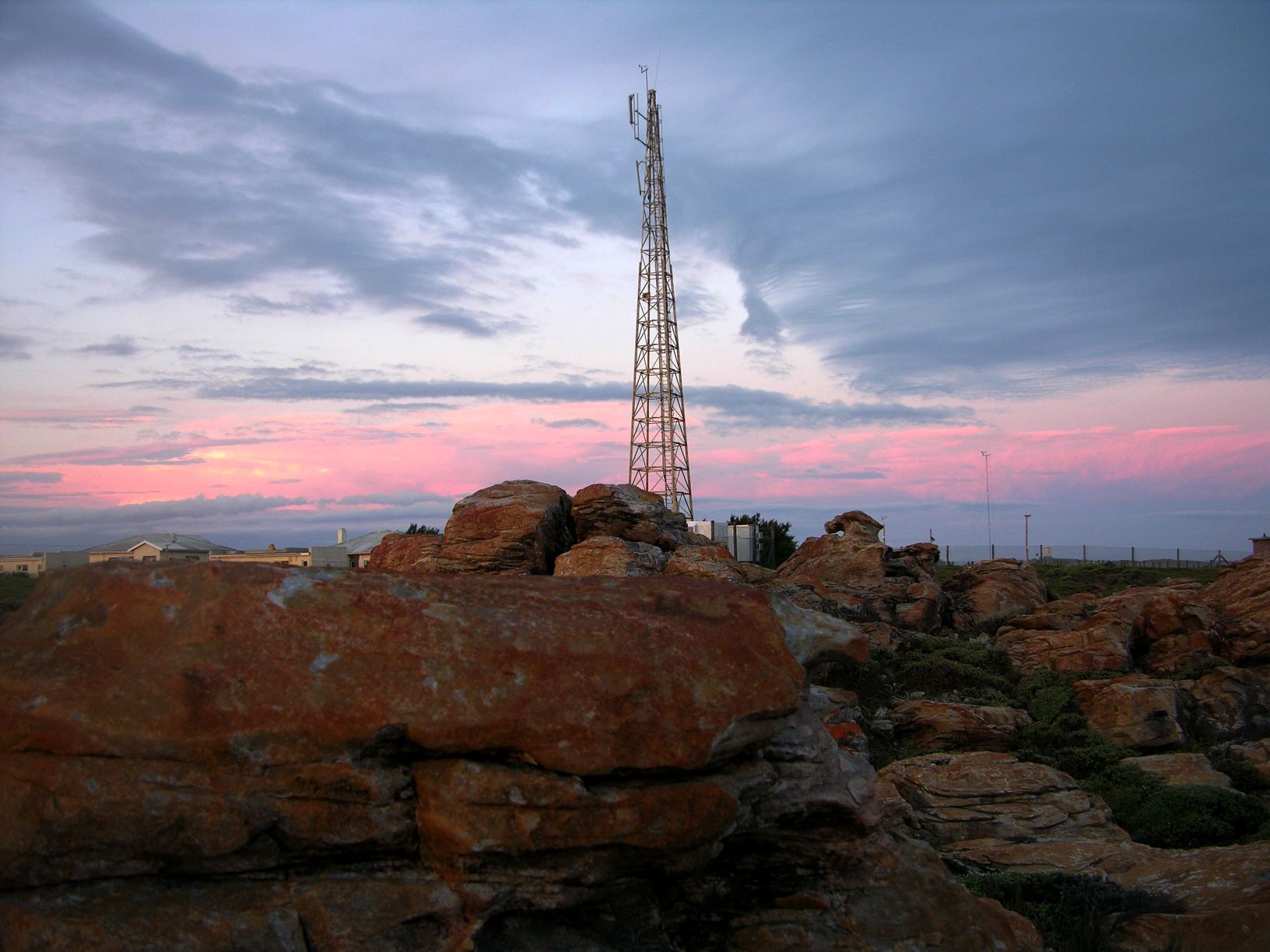
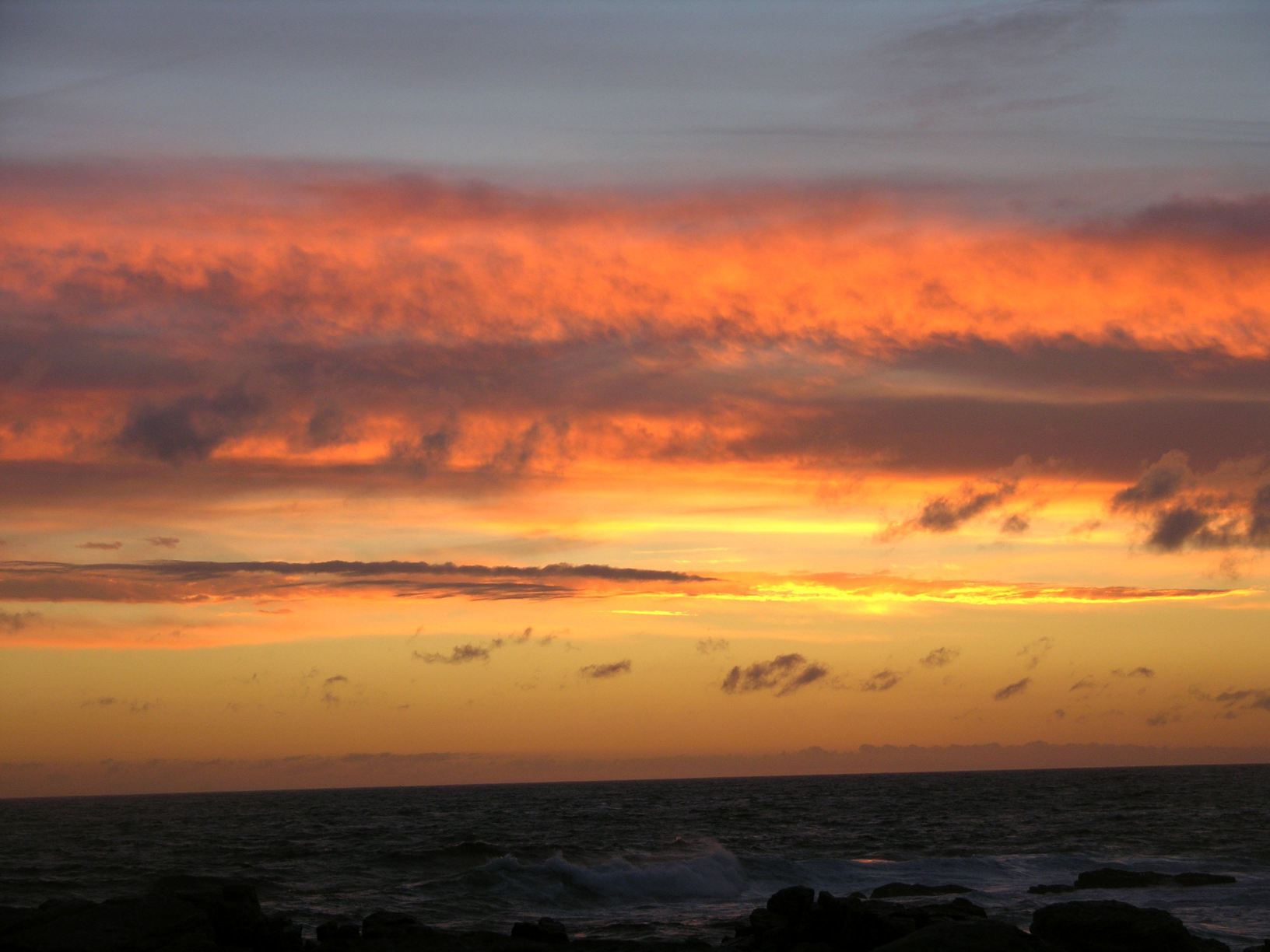
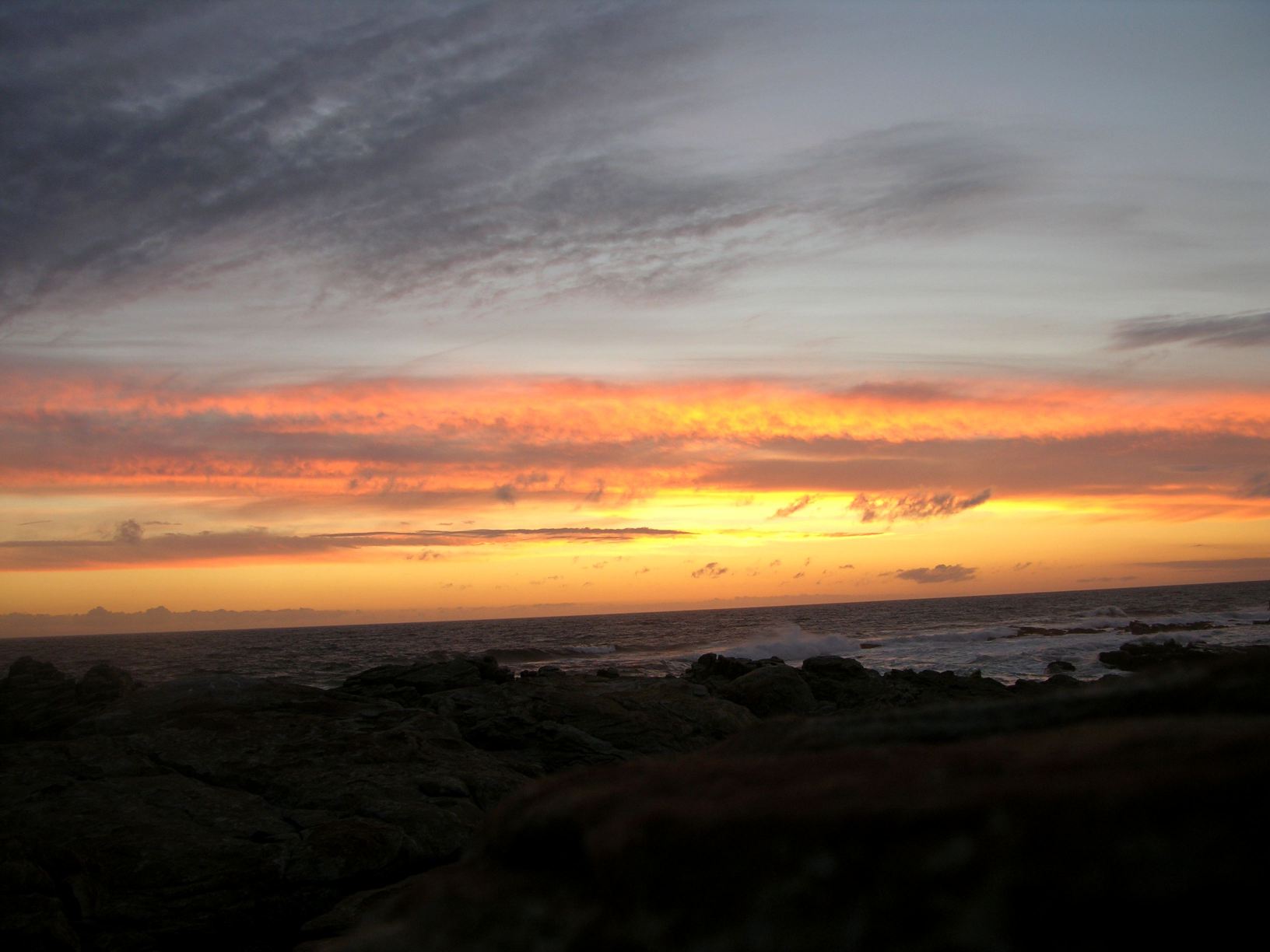
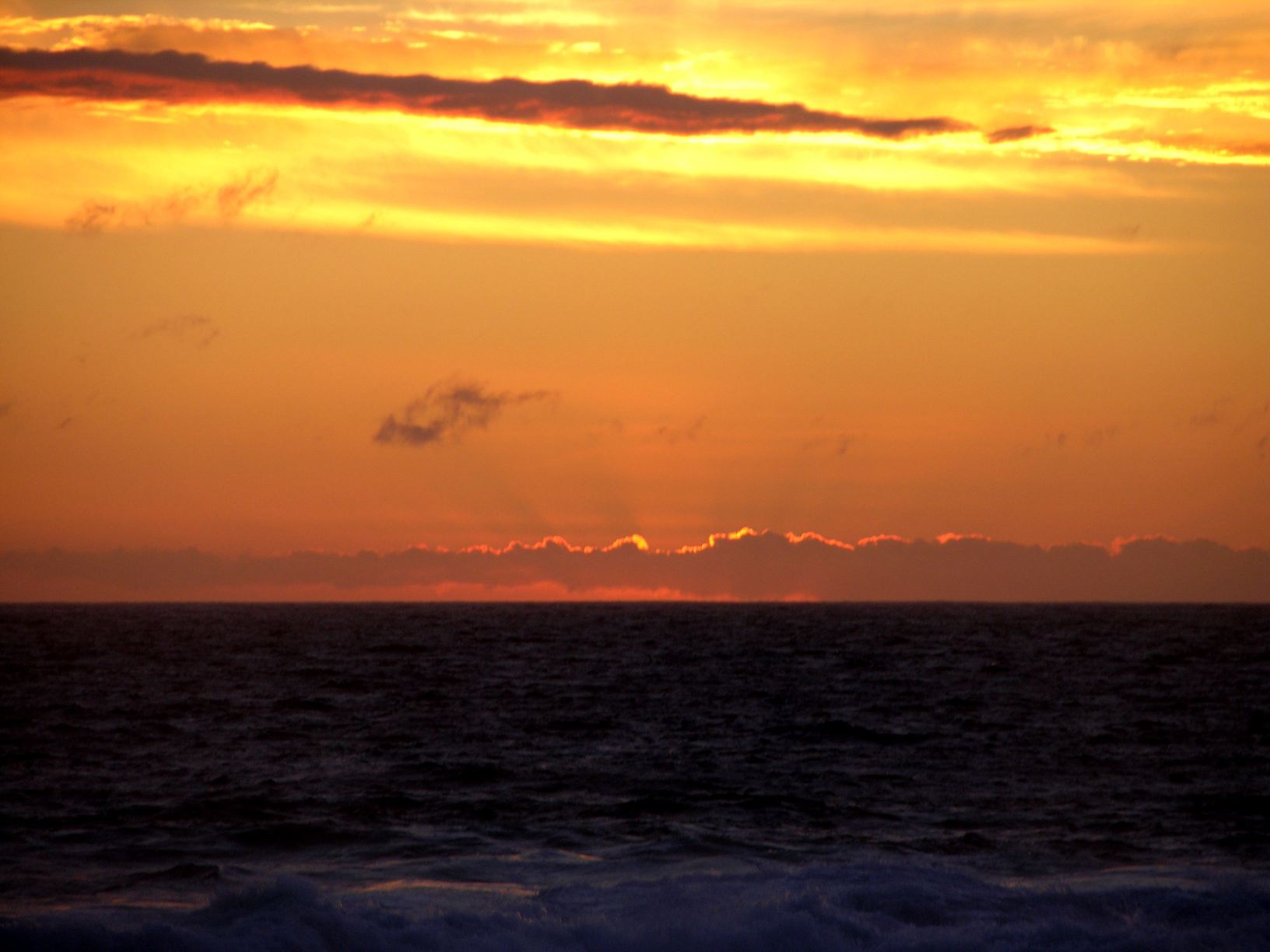
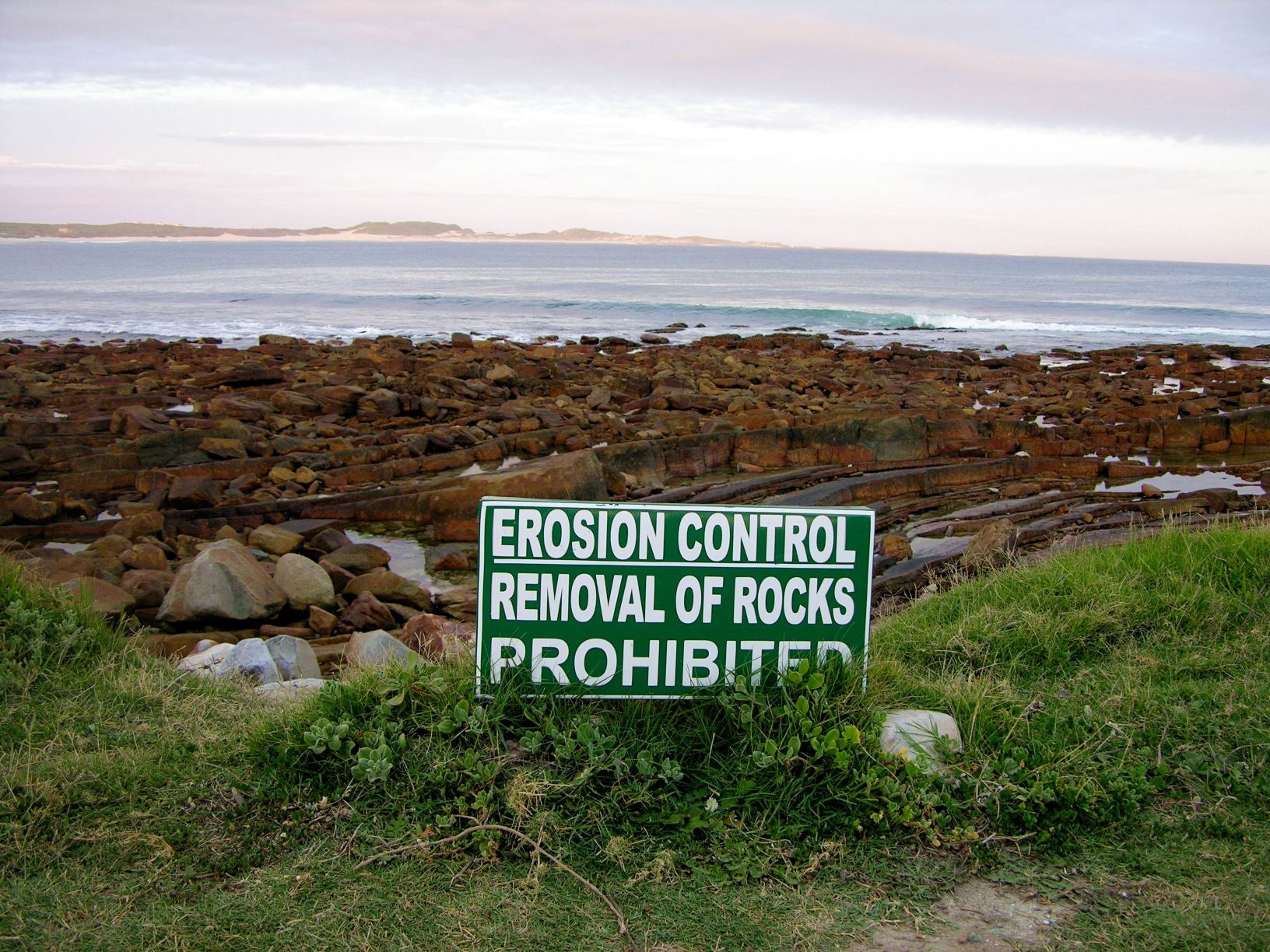
Civilised countries have plenty of prohibitions, but this was a new one on me. Out on a rocky headland well away from anyone, you're forbidden to take stones away. It's like stealing snow in winter.
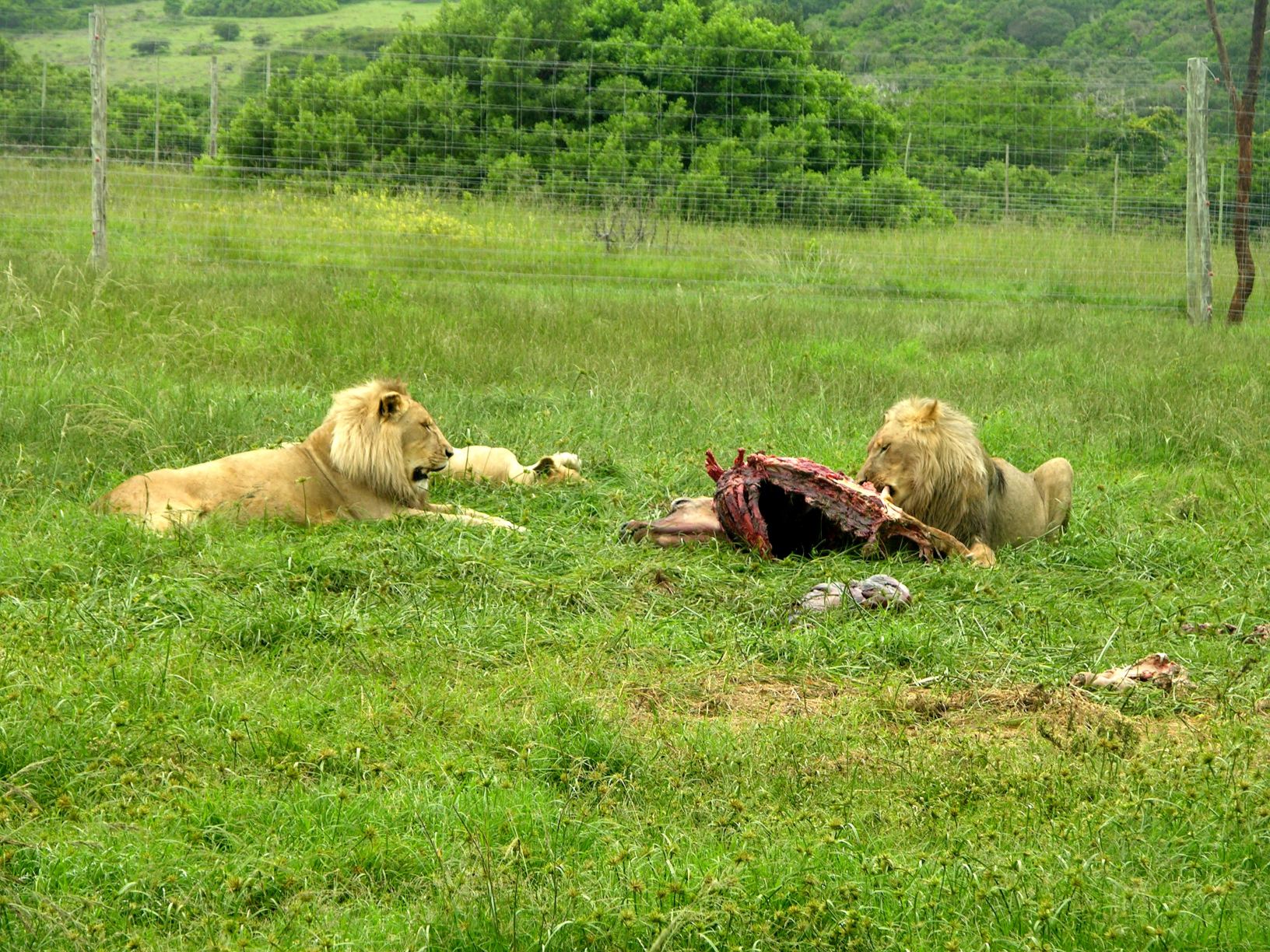
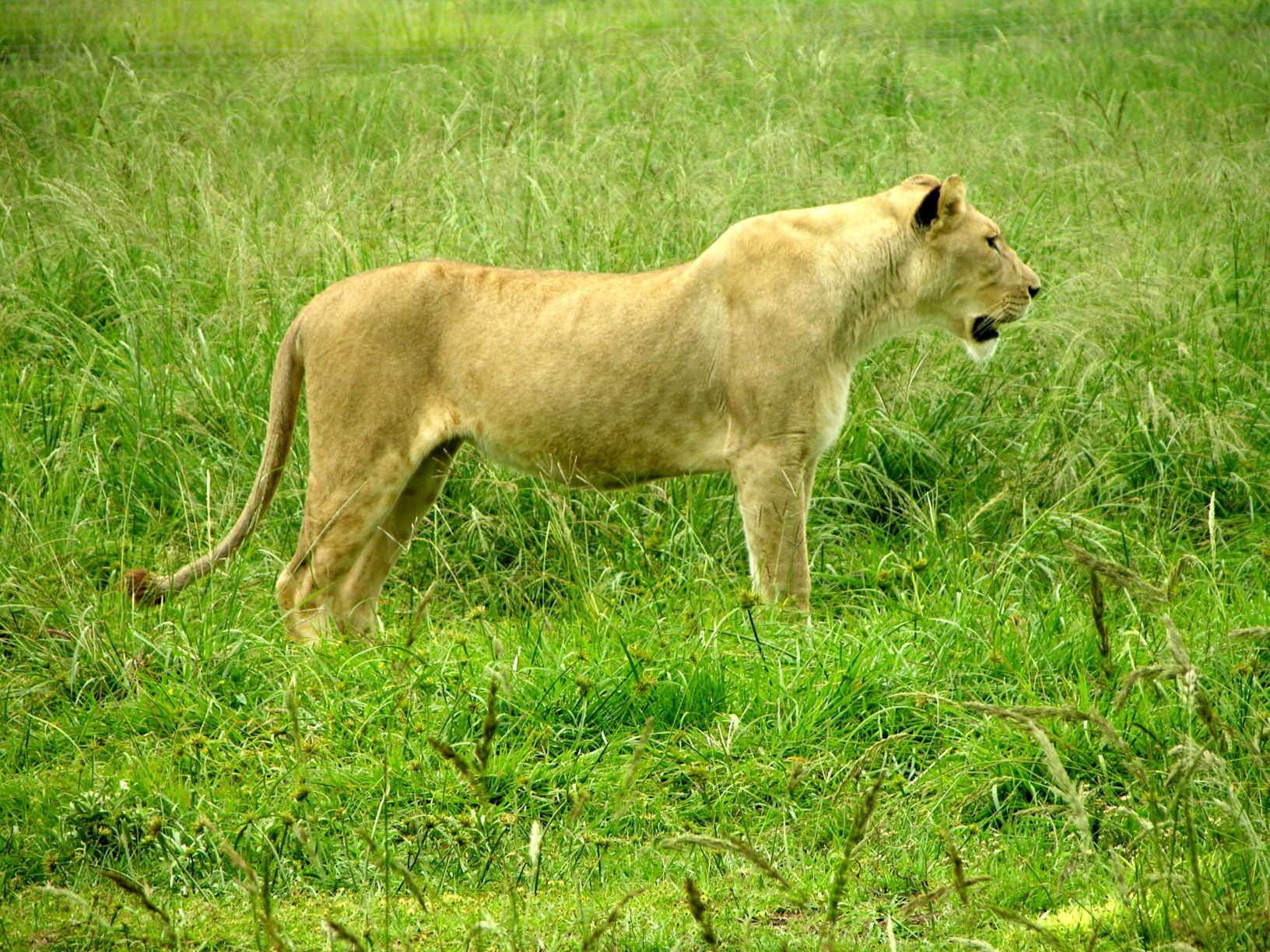
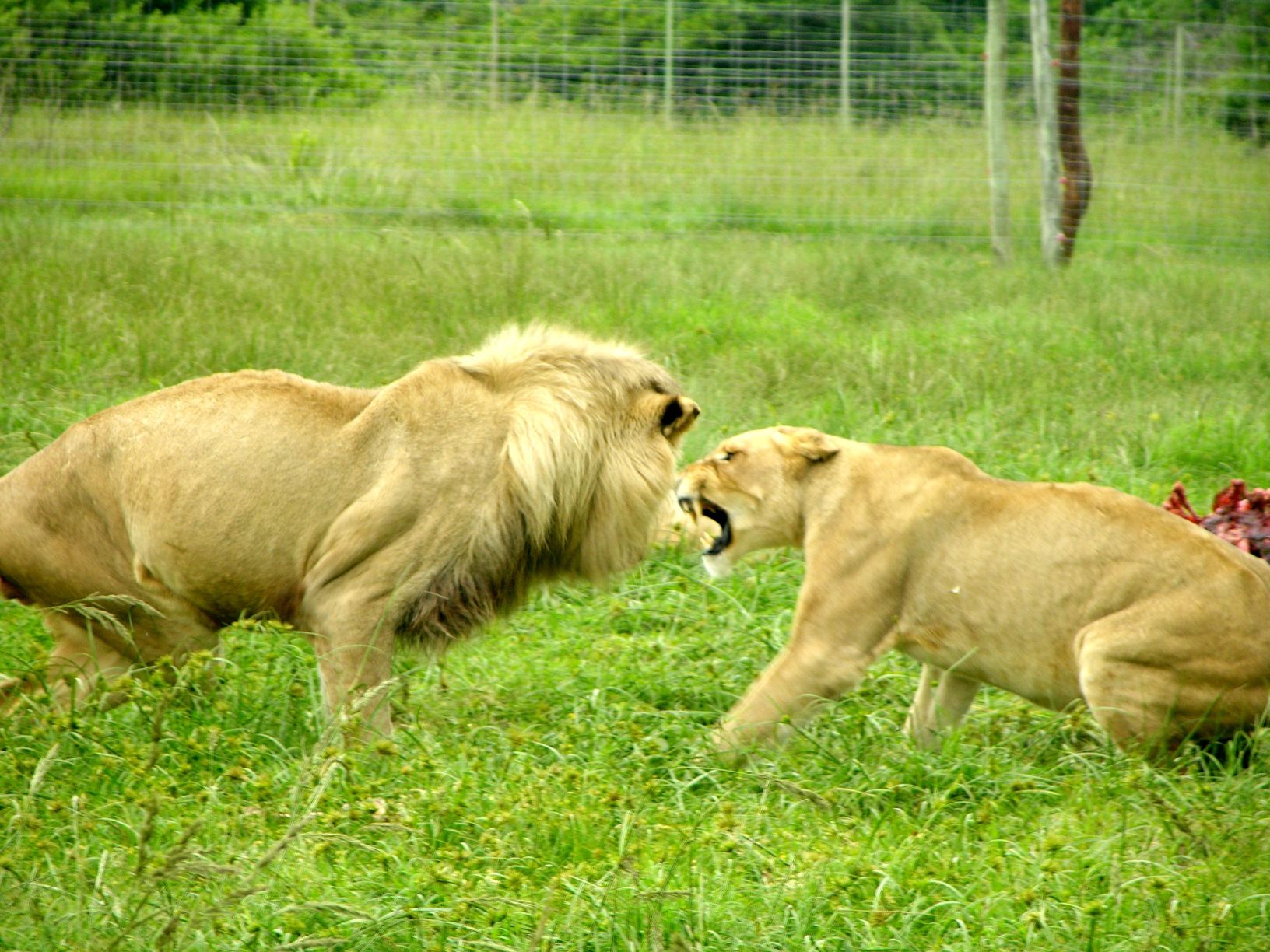
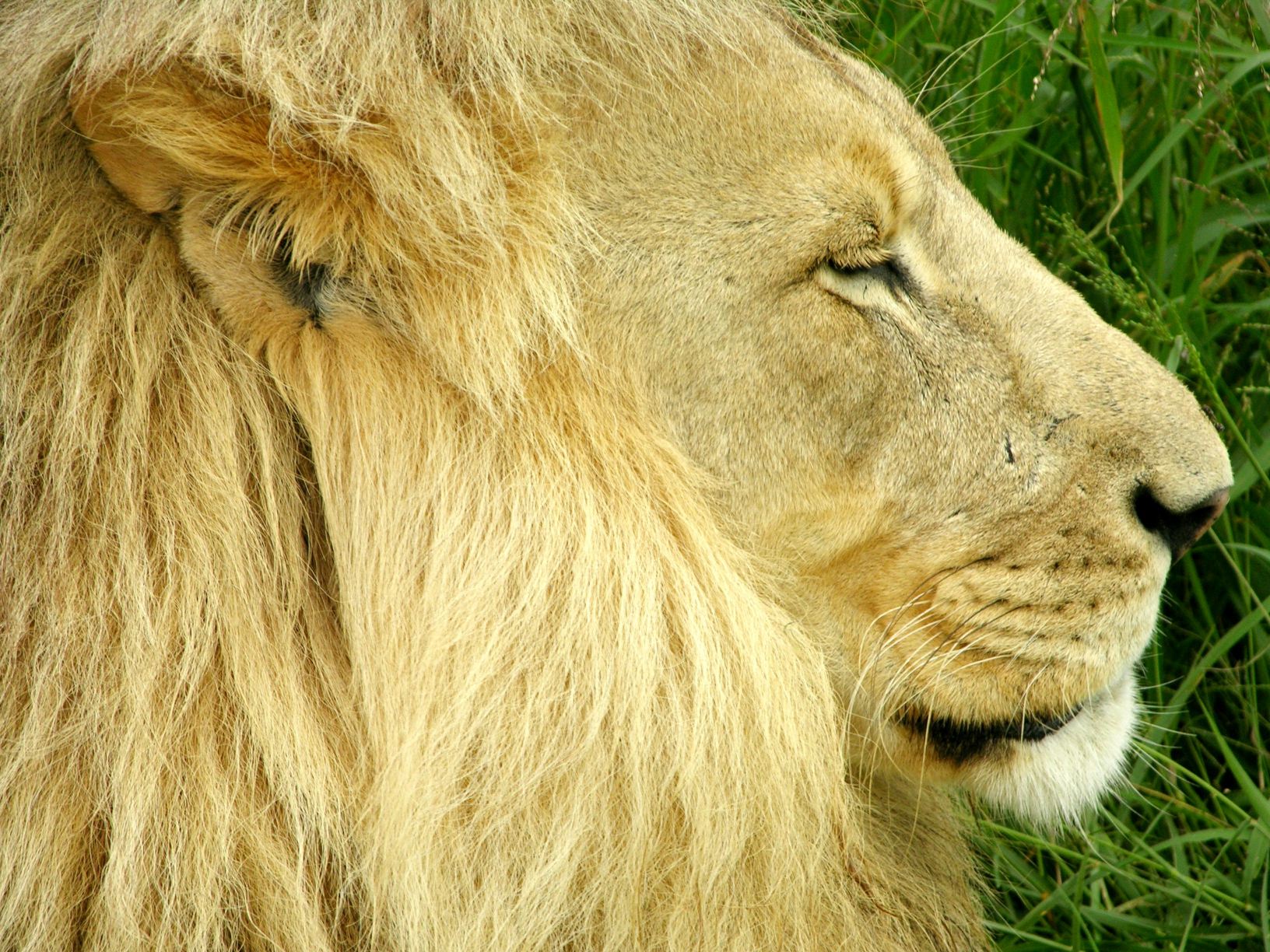
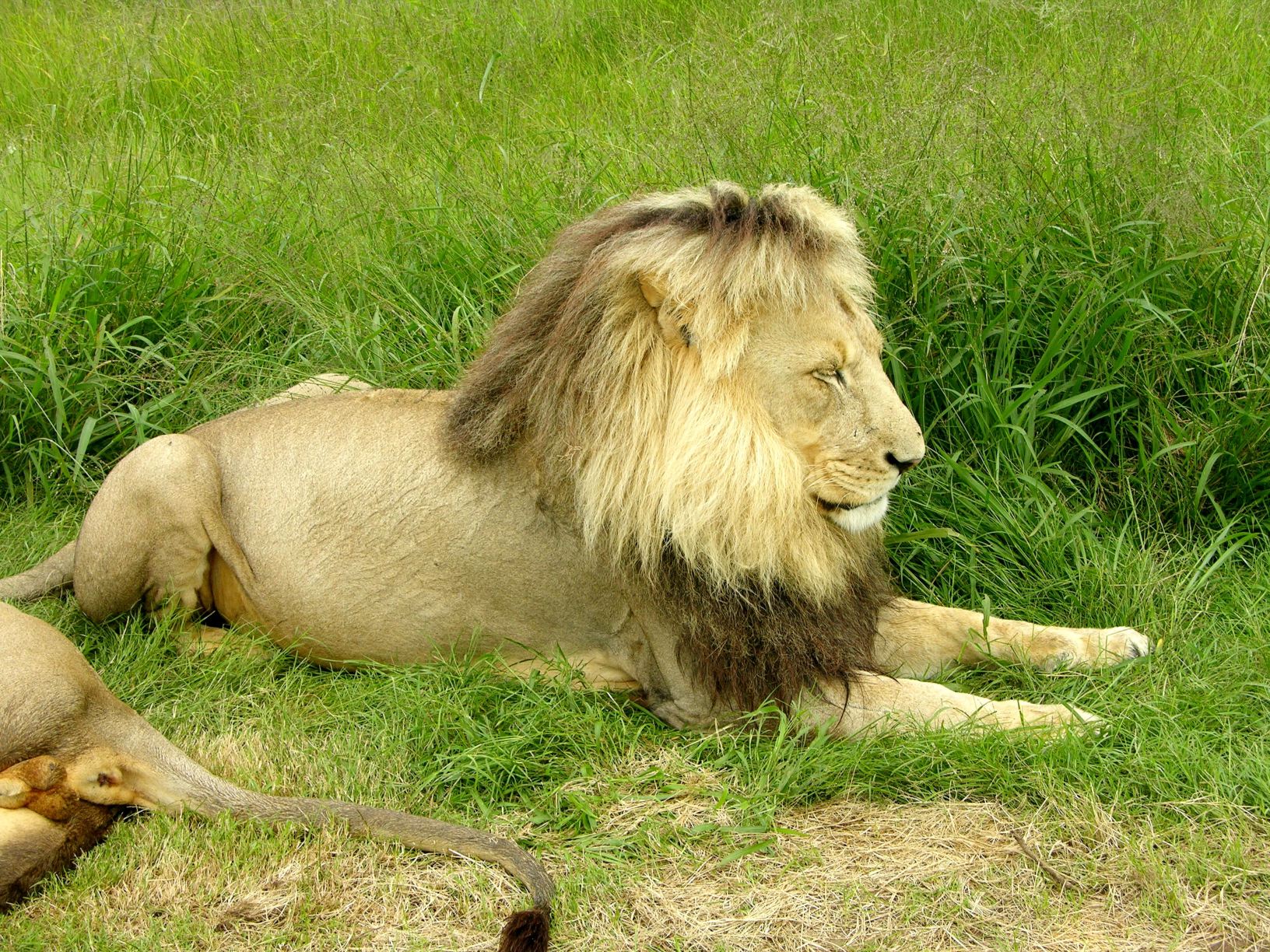
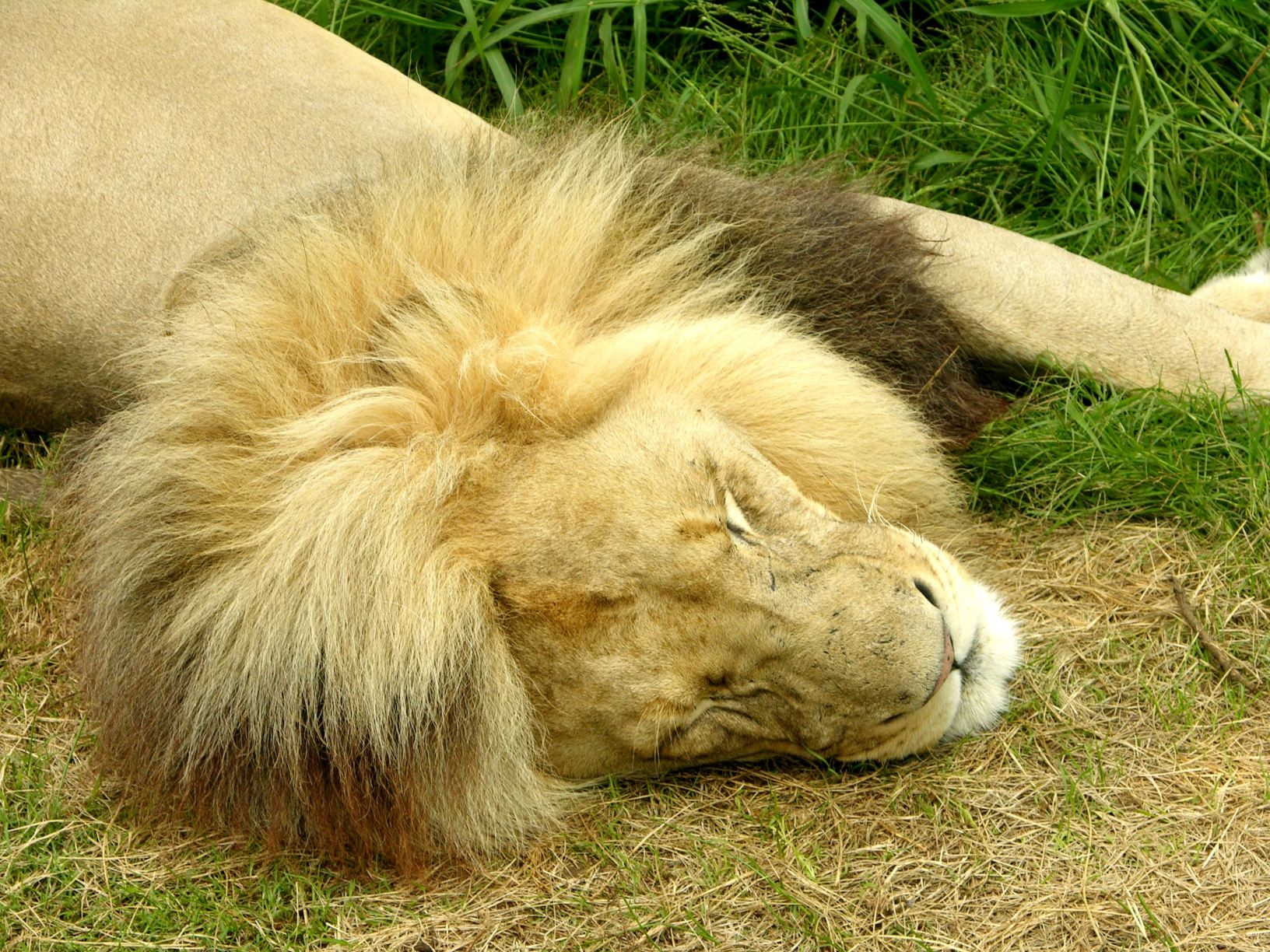
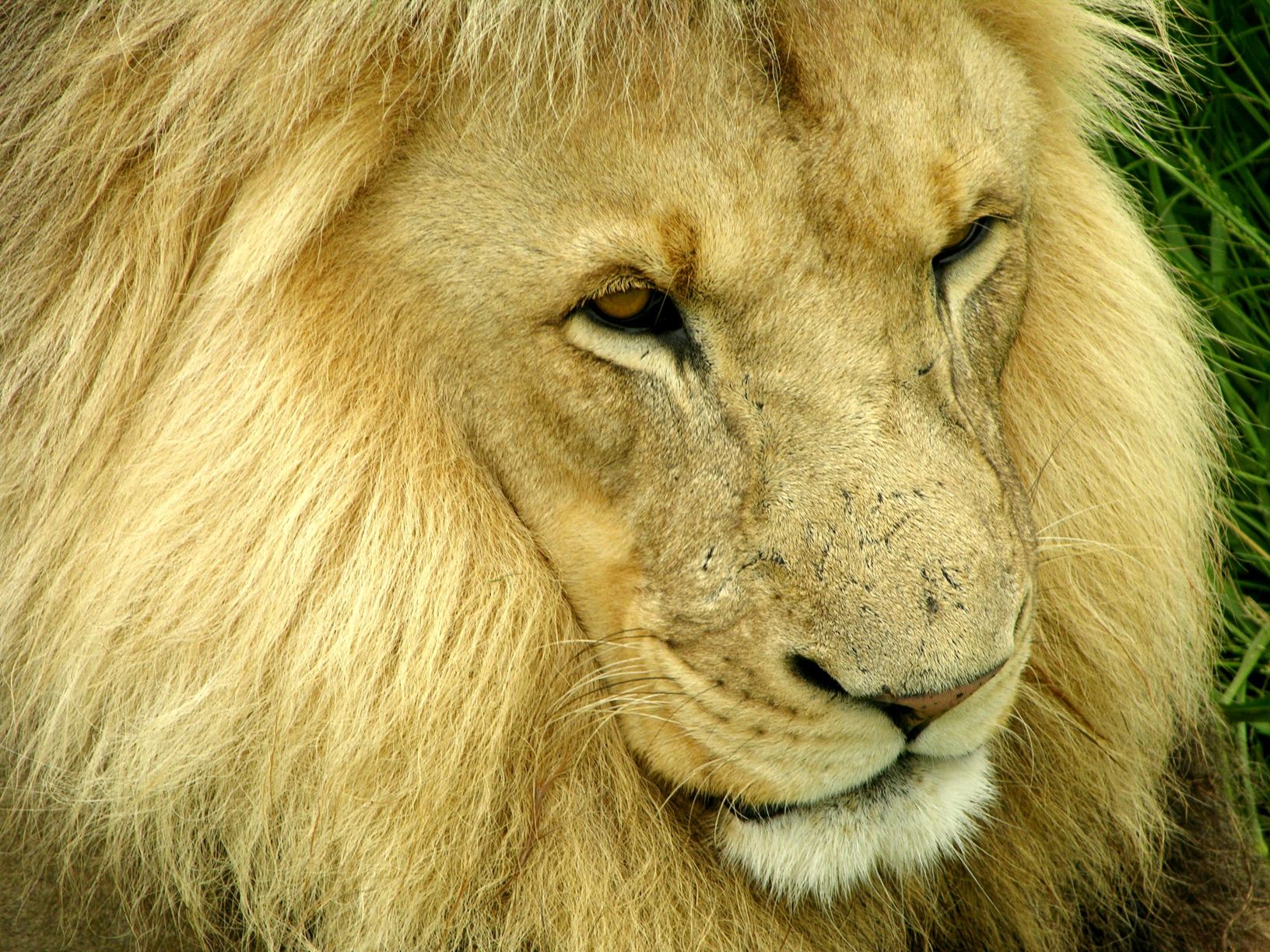
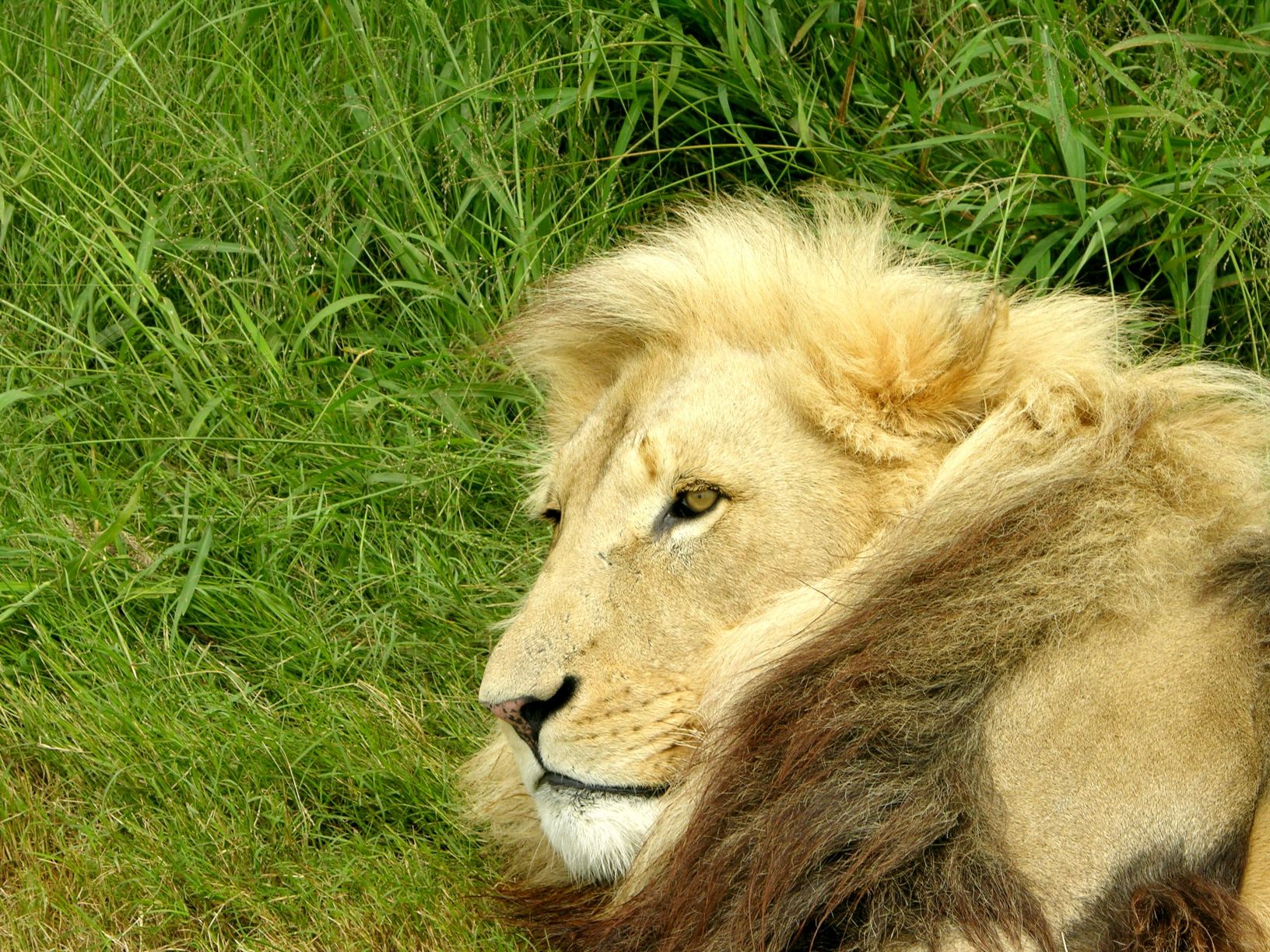
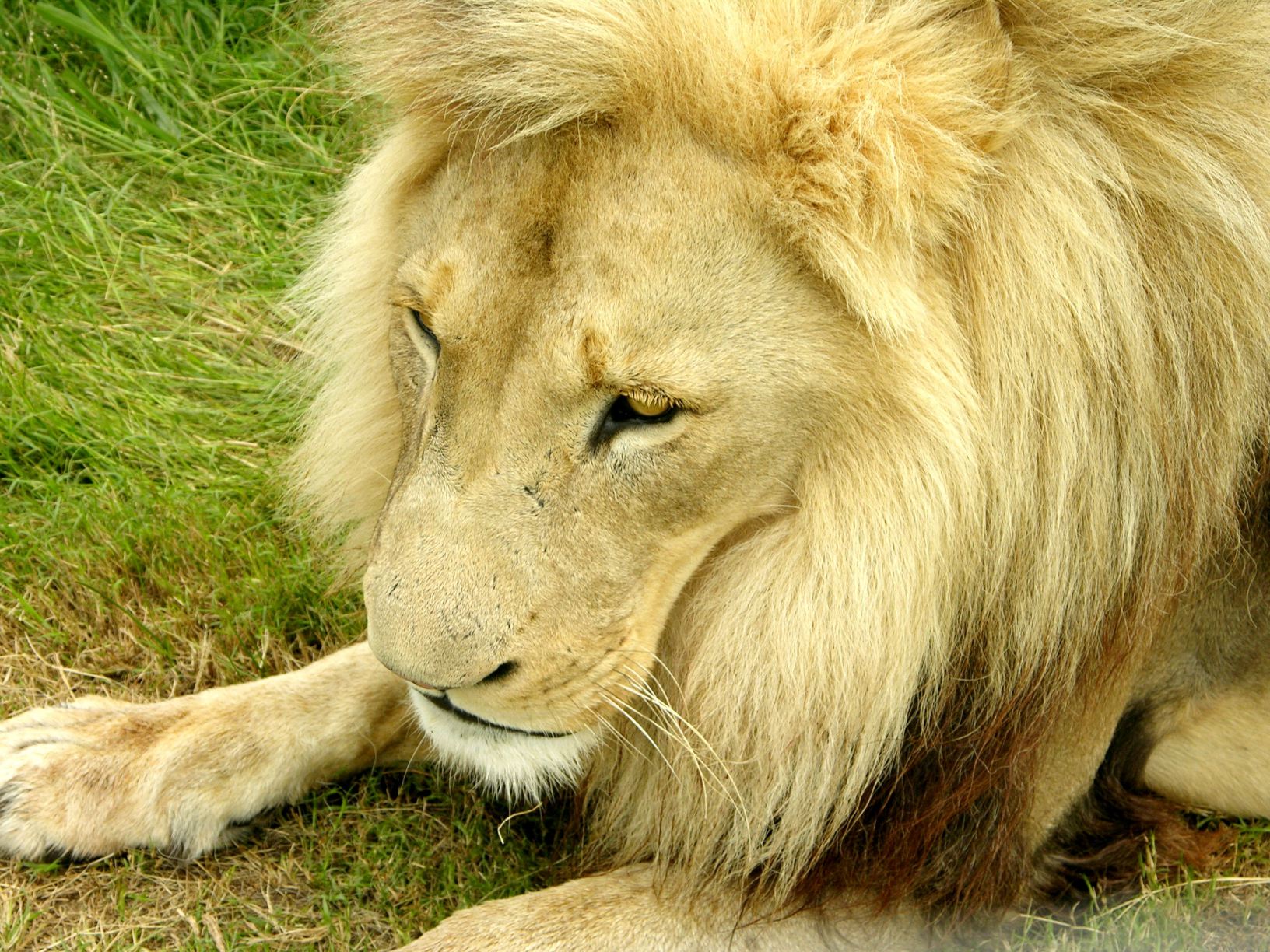
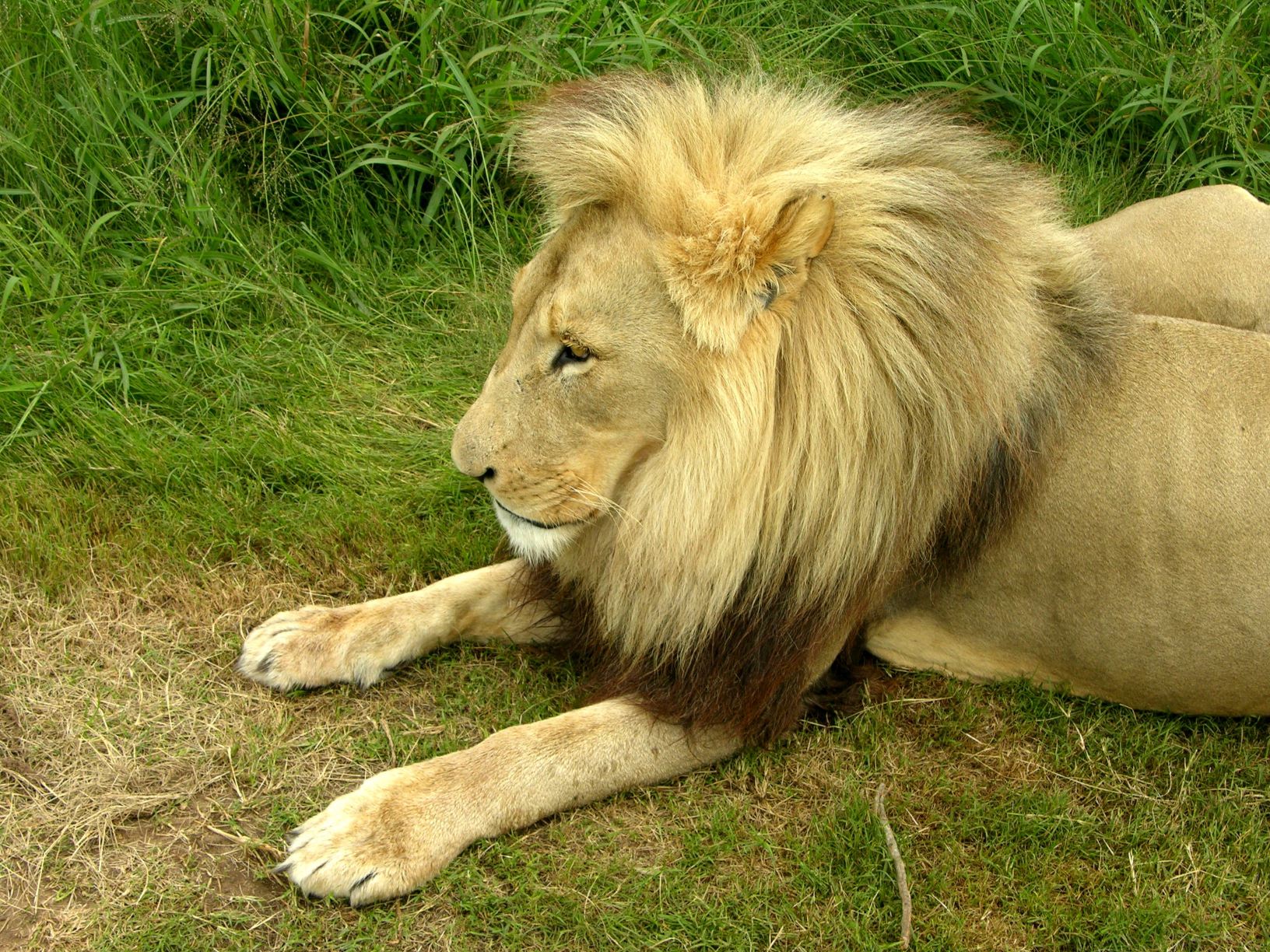
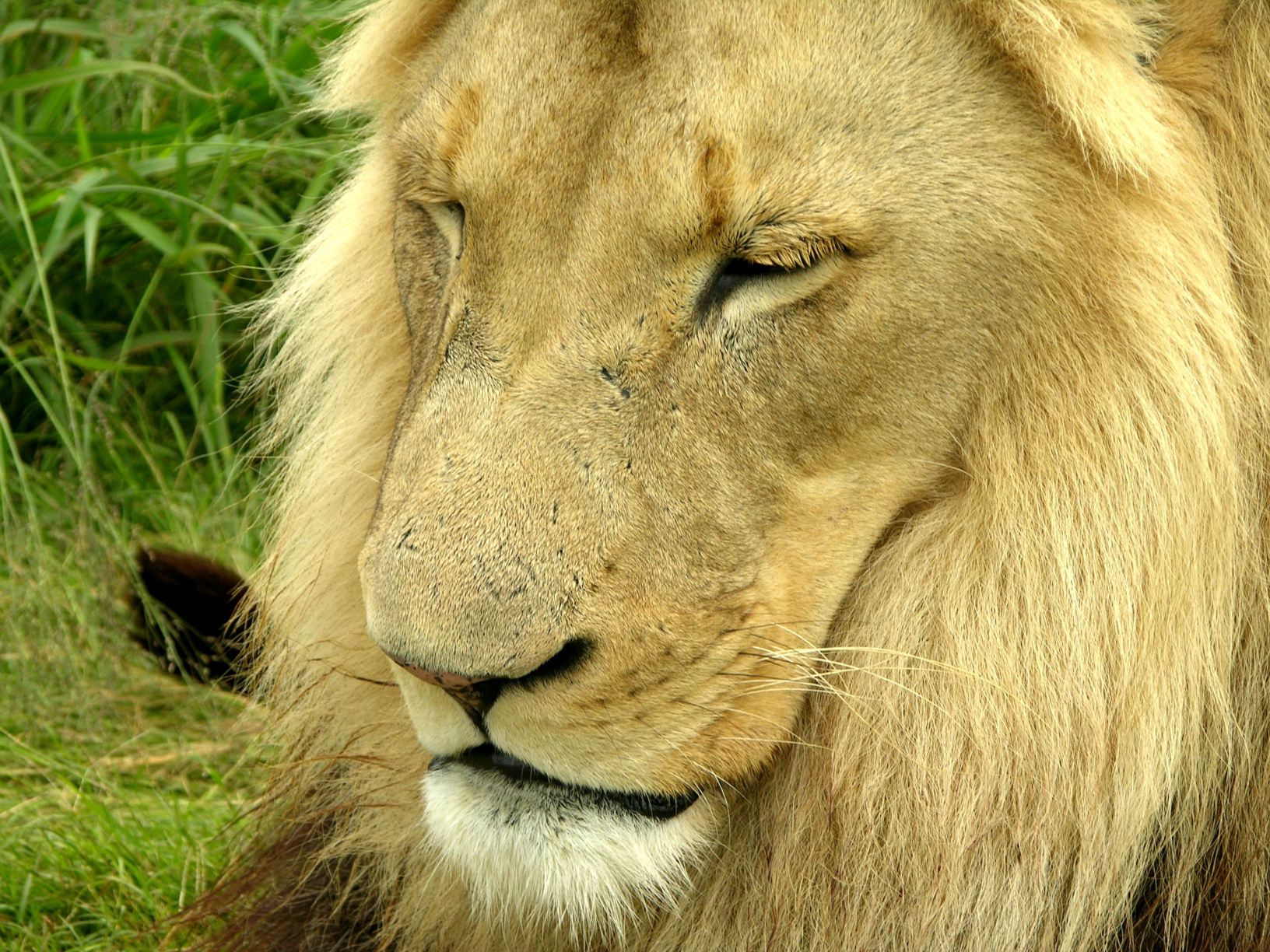
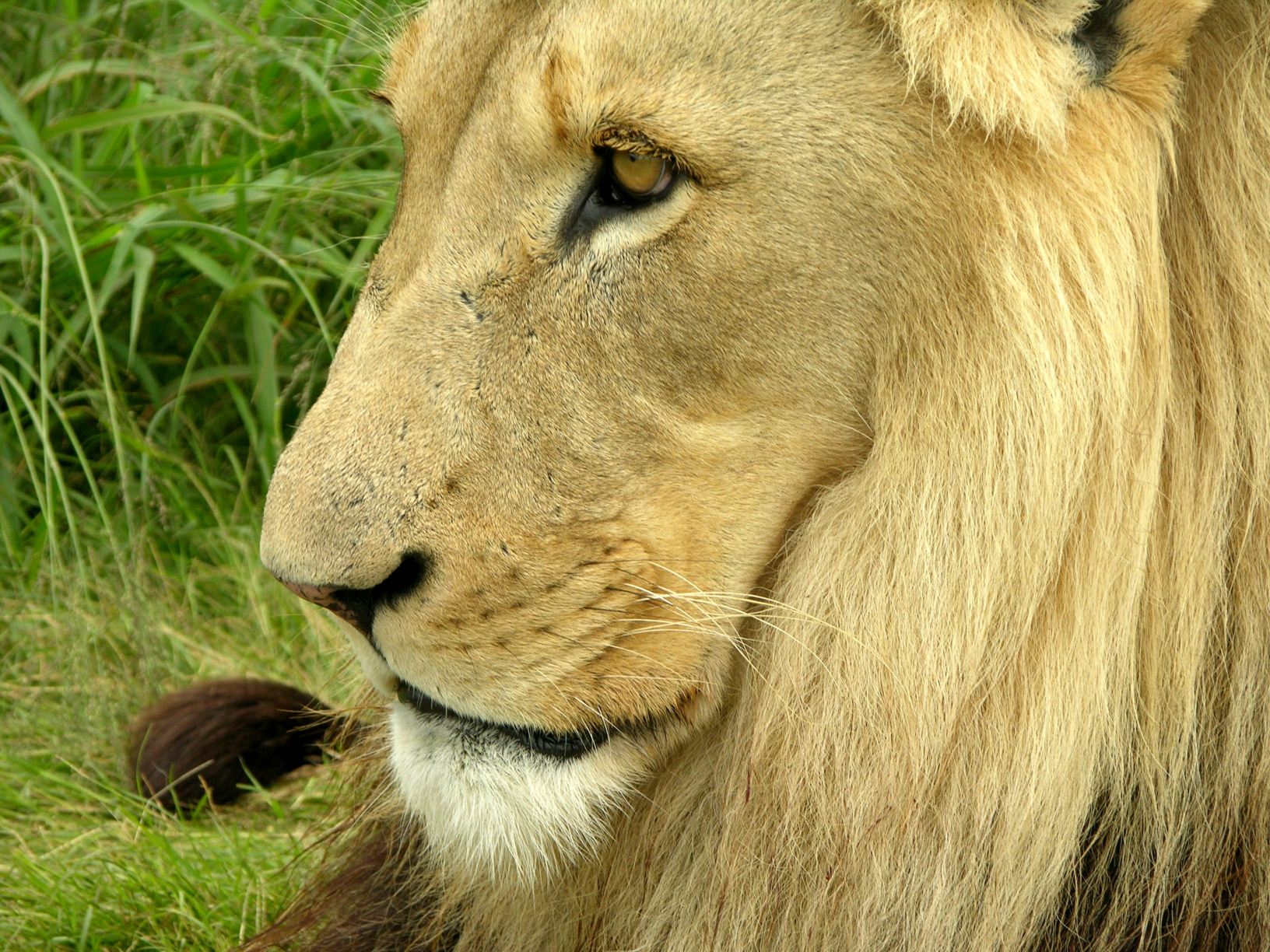
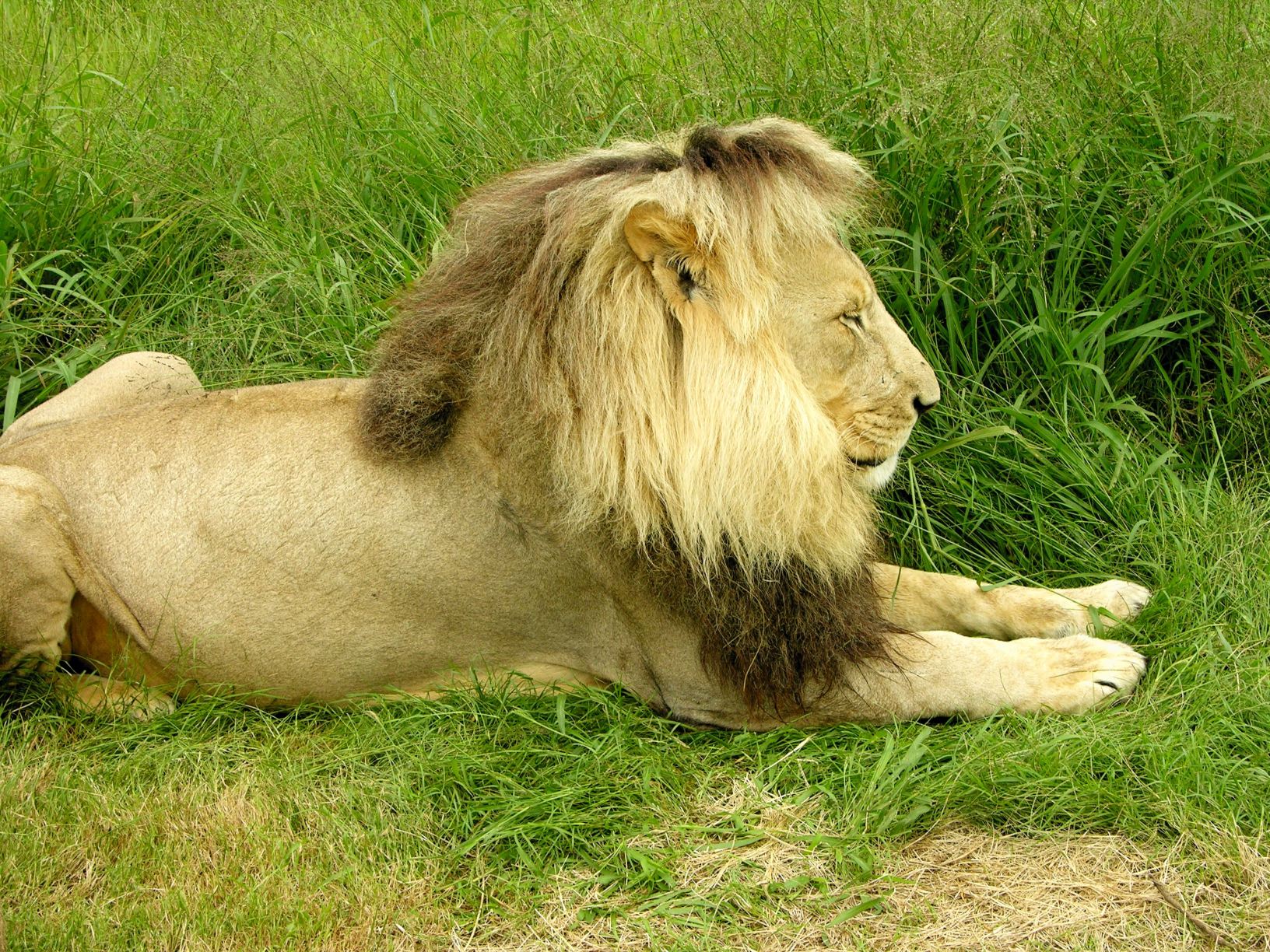
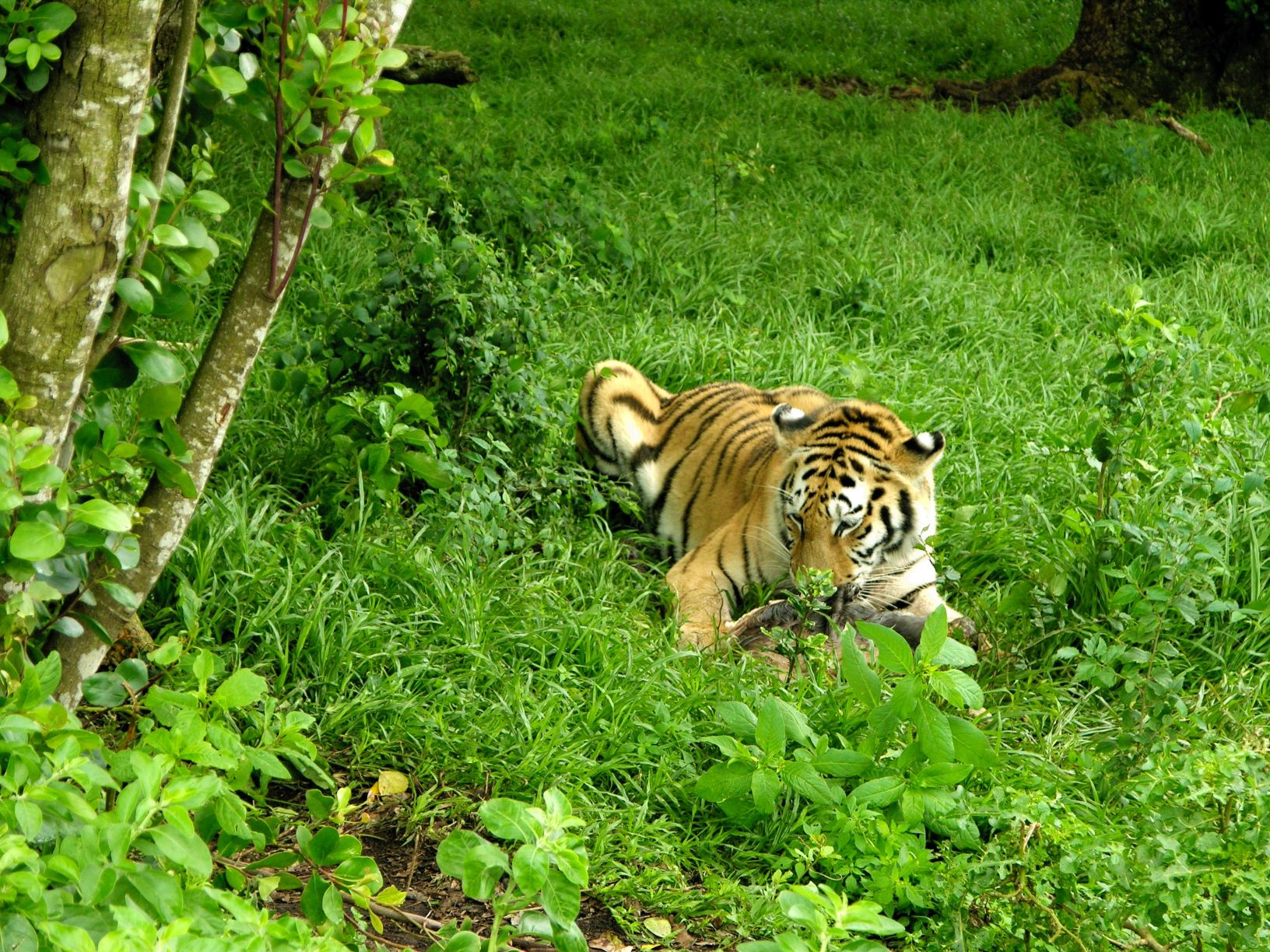
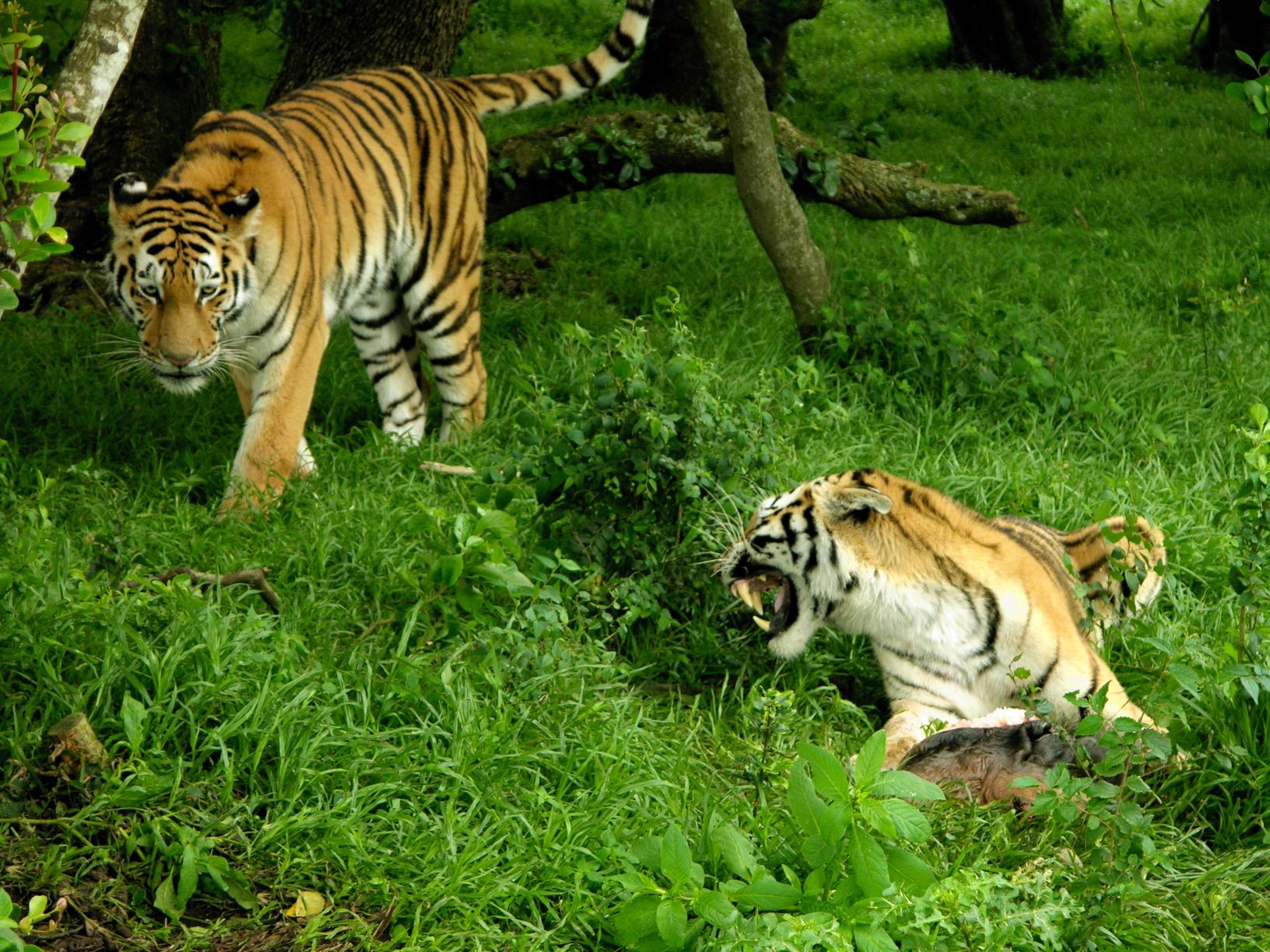
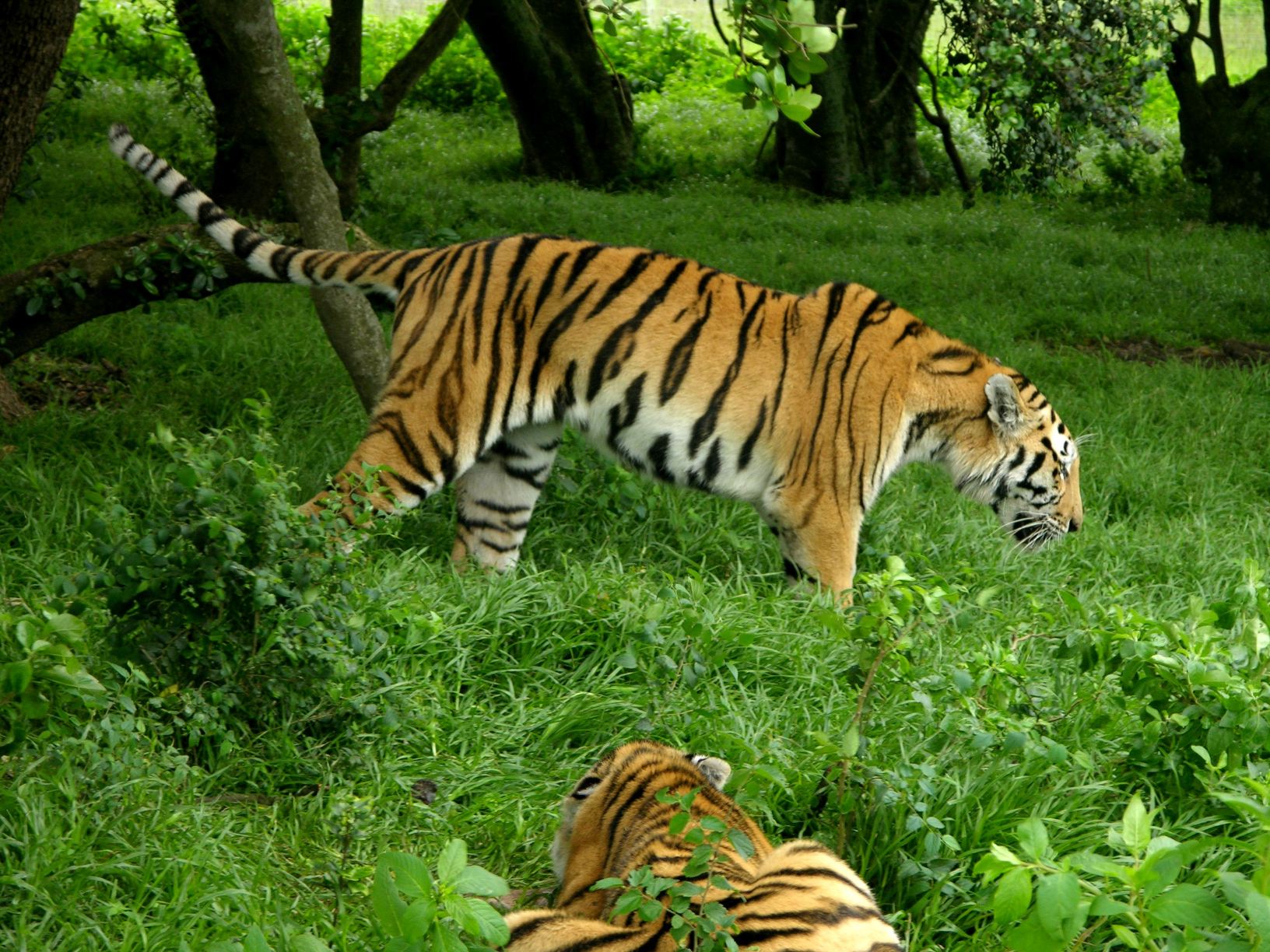
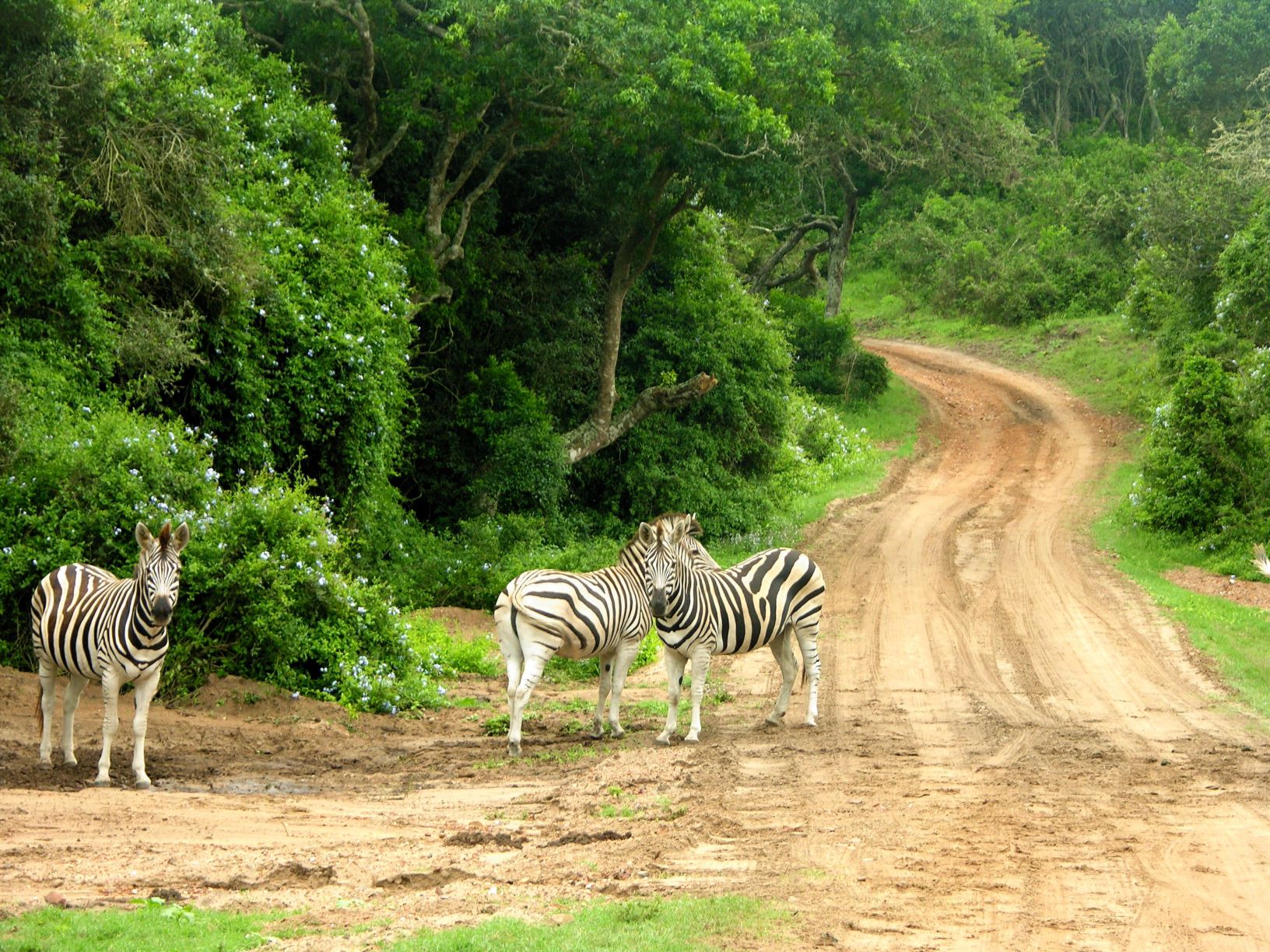
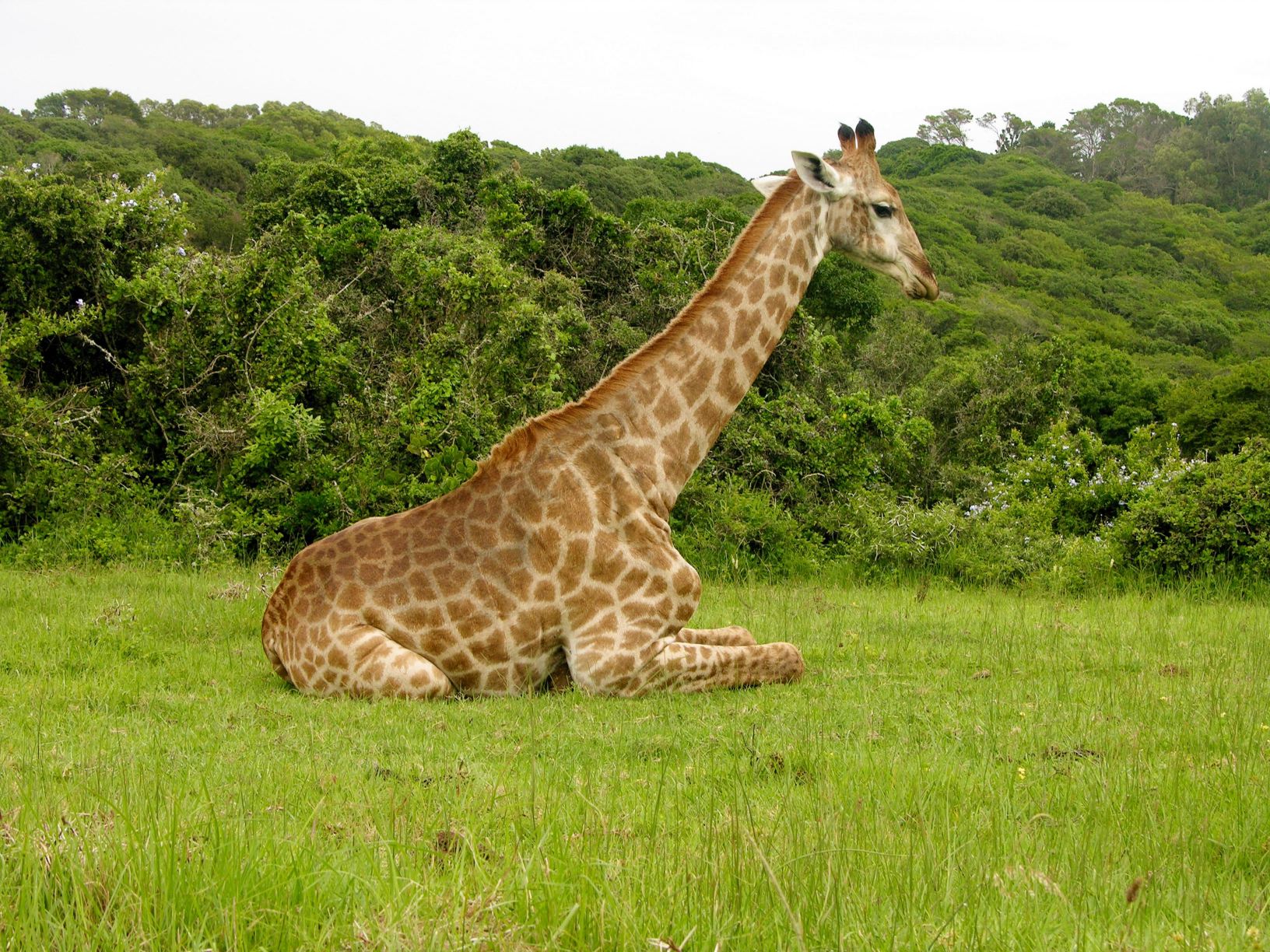
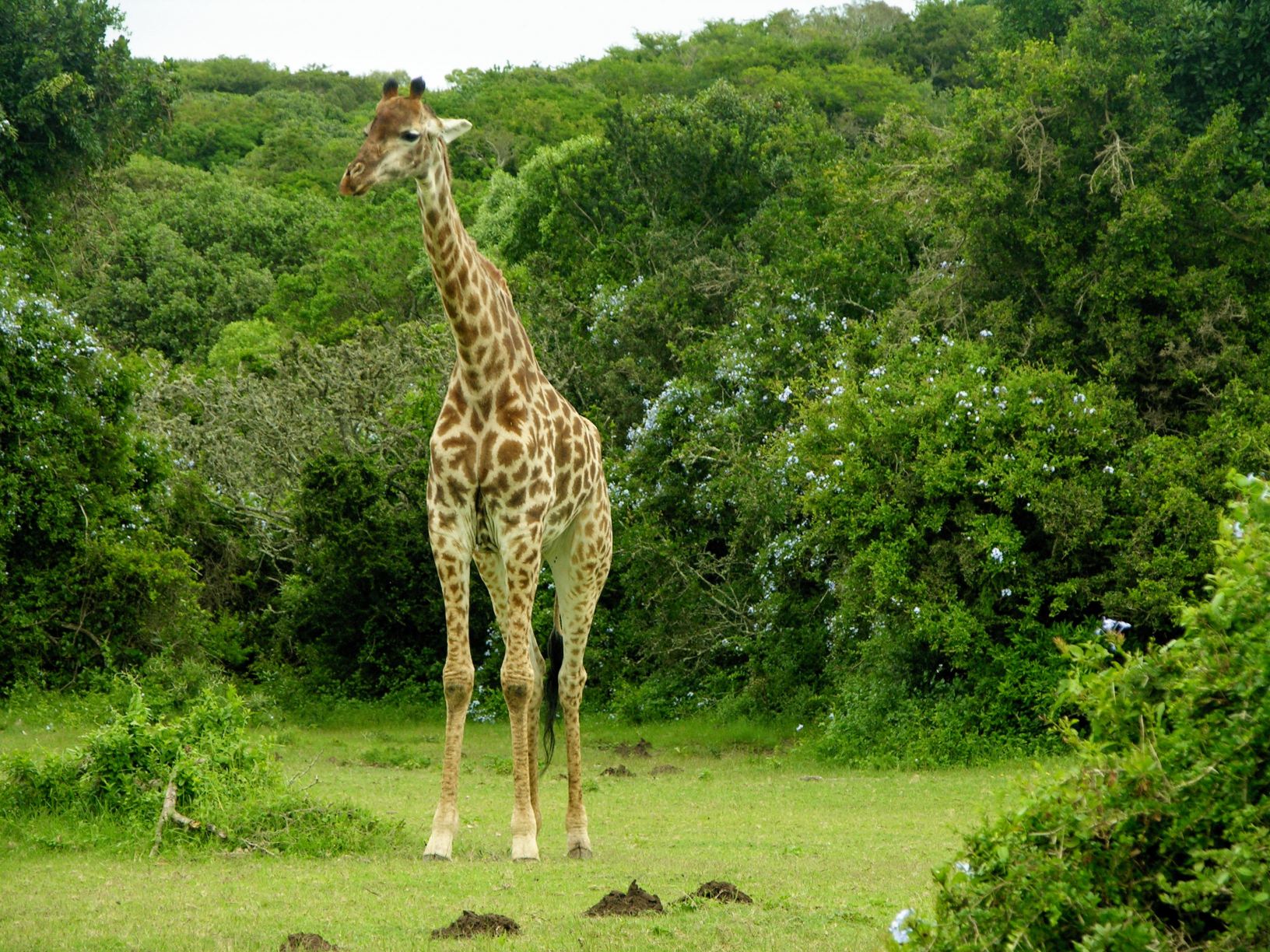
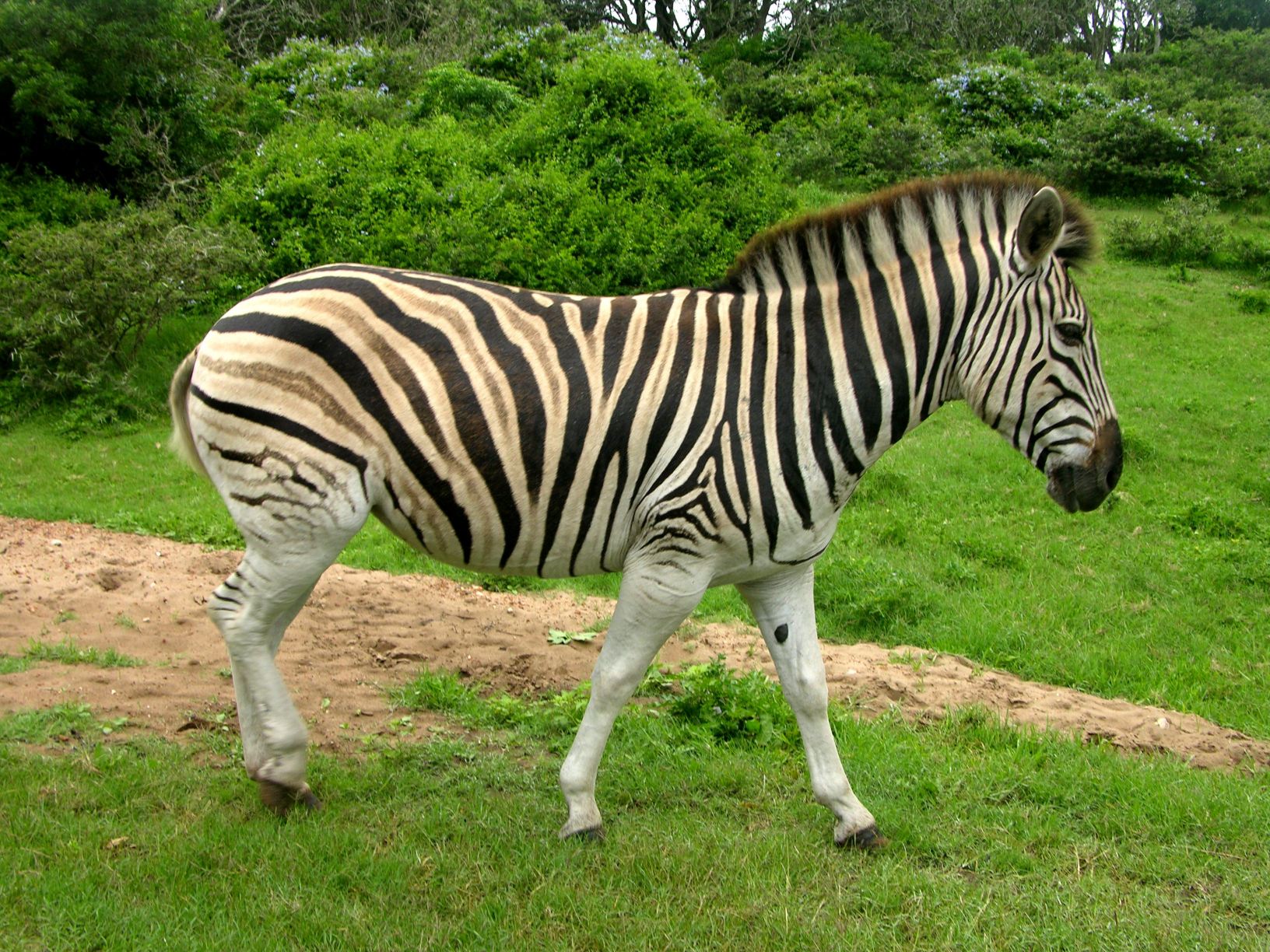
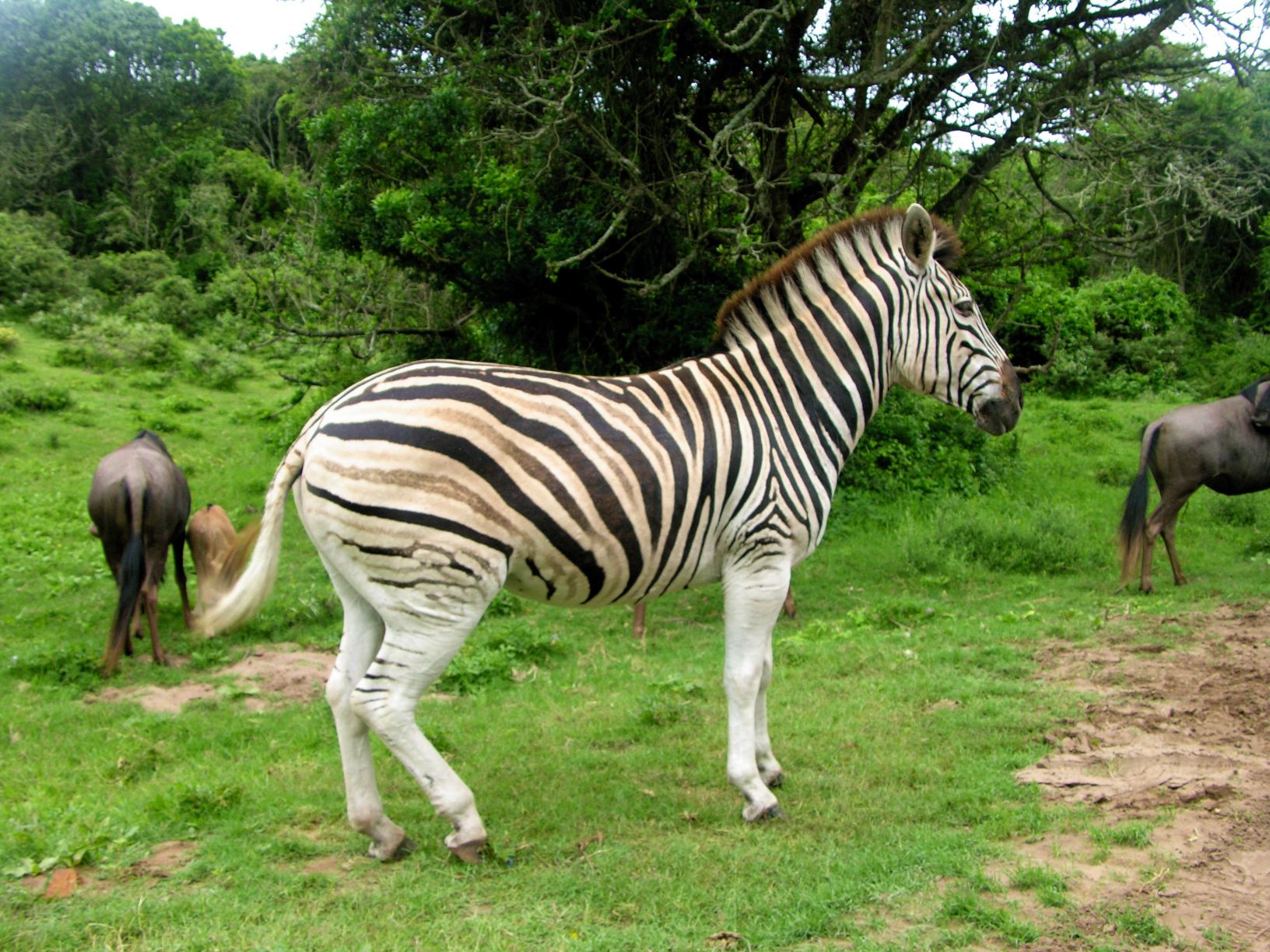
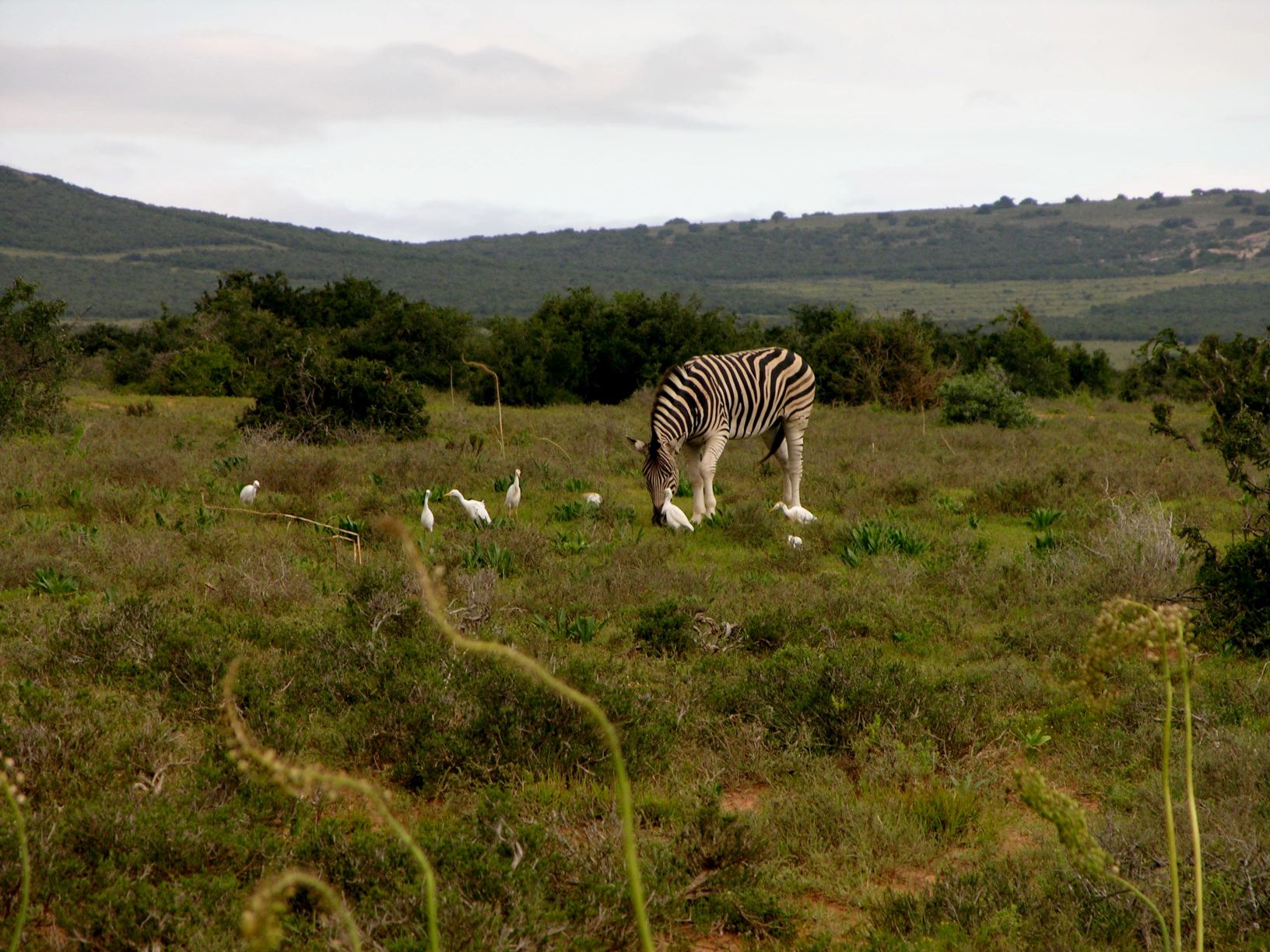
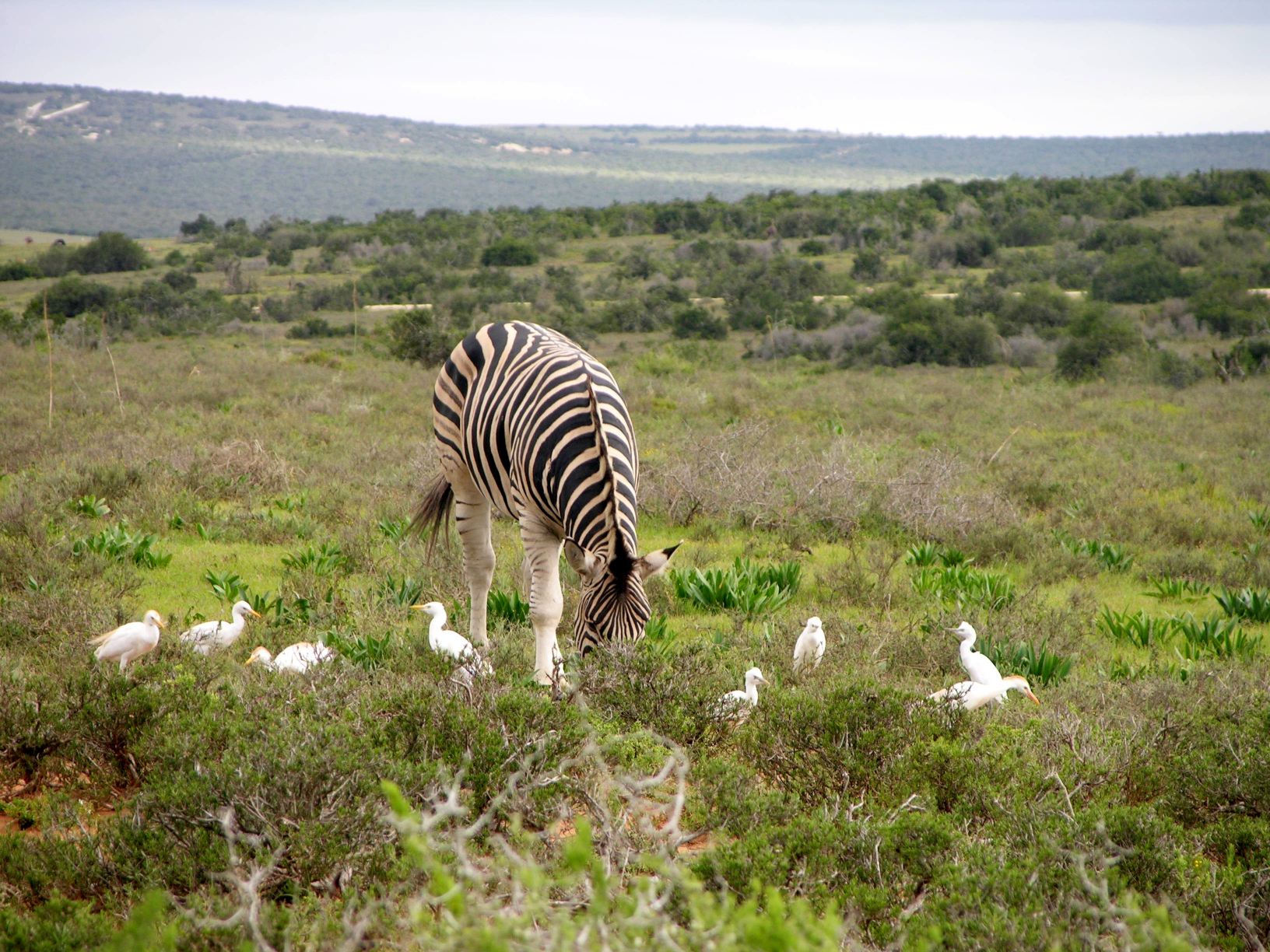
In the morning, following a road sign, we turned into another private game park with lions. Sadly I don't remember what it was called or exactly where it was, which is a shame because it's a good park. Here you can go amongst the lions. In a car you can get very close to them, or you can walk on foot and watch from behind a fence. The lions were very sleepy. I longed to get out and pull one by the tail, but alas, the keepers were nearby and I was frightened of them. You can stop and open the door, though. That goes unnoticed. In the end I was able to look at a lioness's face from twenty centimetres away. You can even see Asian tigers here, which don't live in Africa, not to mention the giraffes as well as the striped zebras. They don't feed game park lions live prey. They toss them a carcass from the shop. They're always full and sleepy. I imagine you'd have to kick one in the face for quite a while before it woke up and bit you.
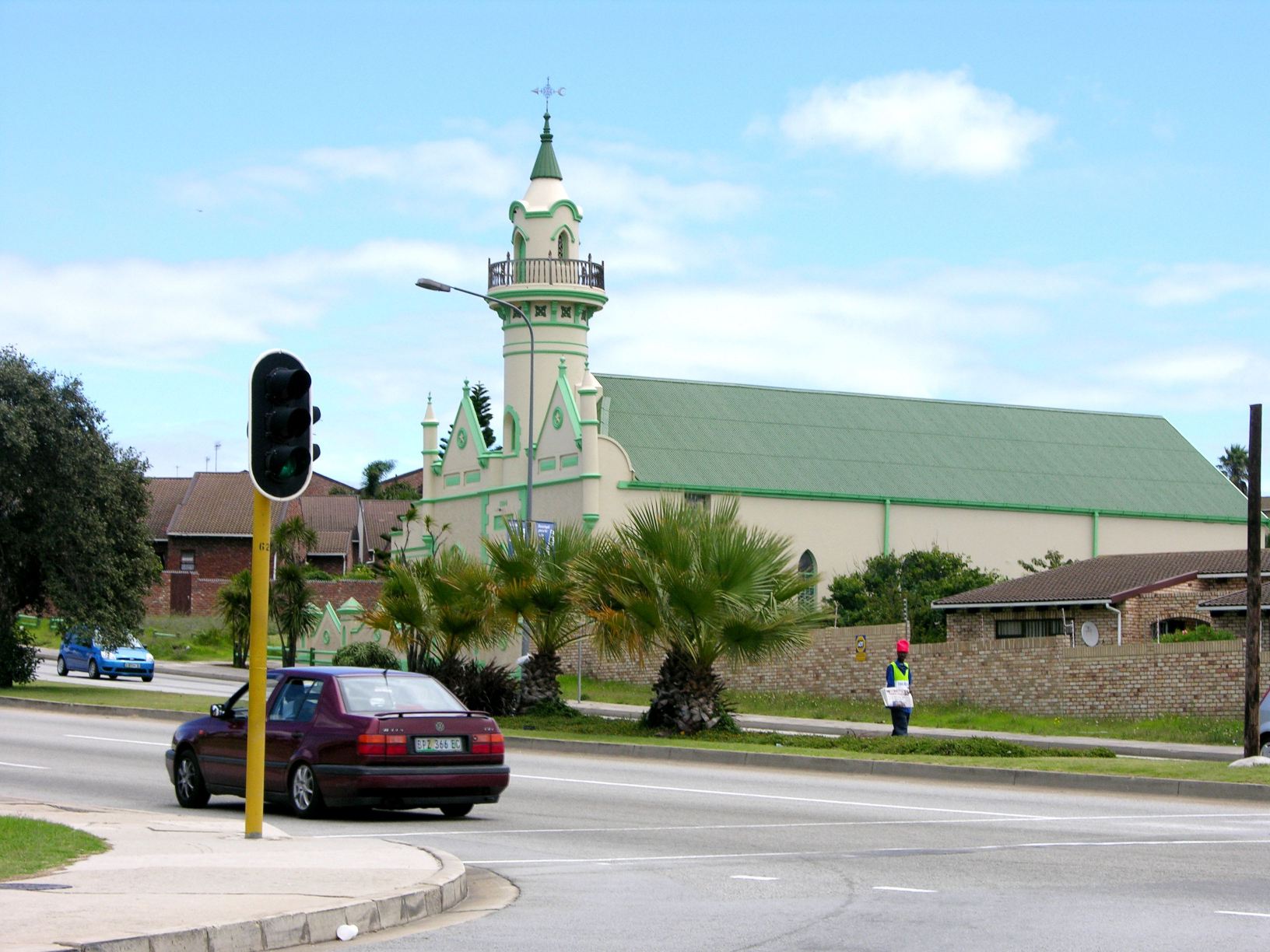
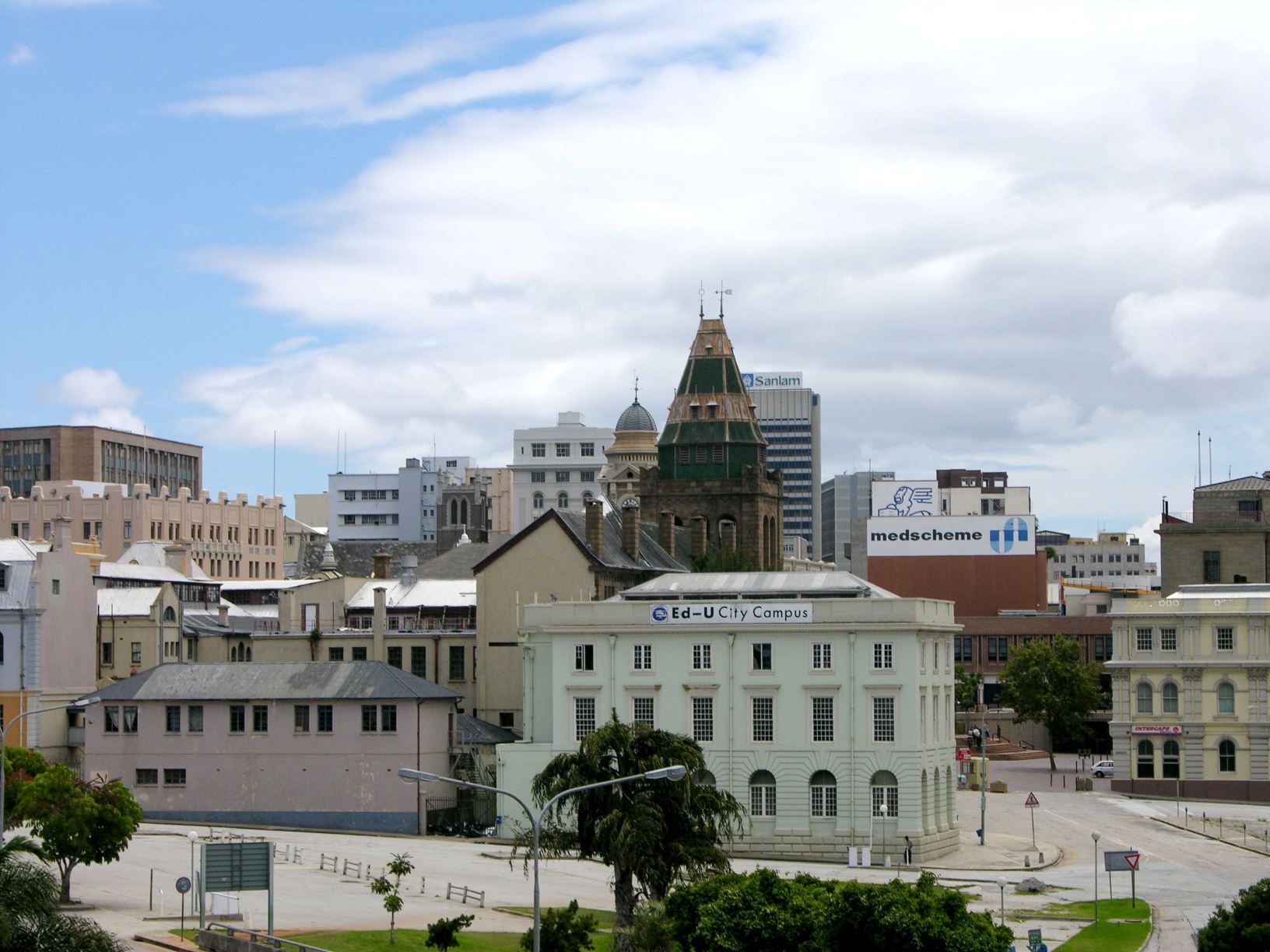
Port Elizabeth turned out to be a fairly uninteresting city. The advice was for white people to give the old port district a miss, but by then it seemed out of date. The police had achieved some semblance of order.
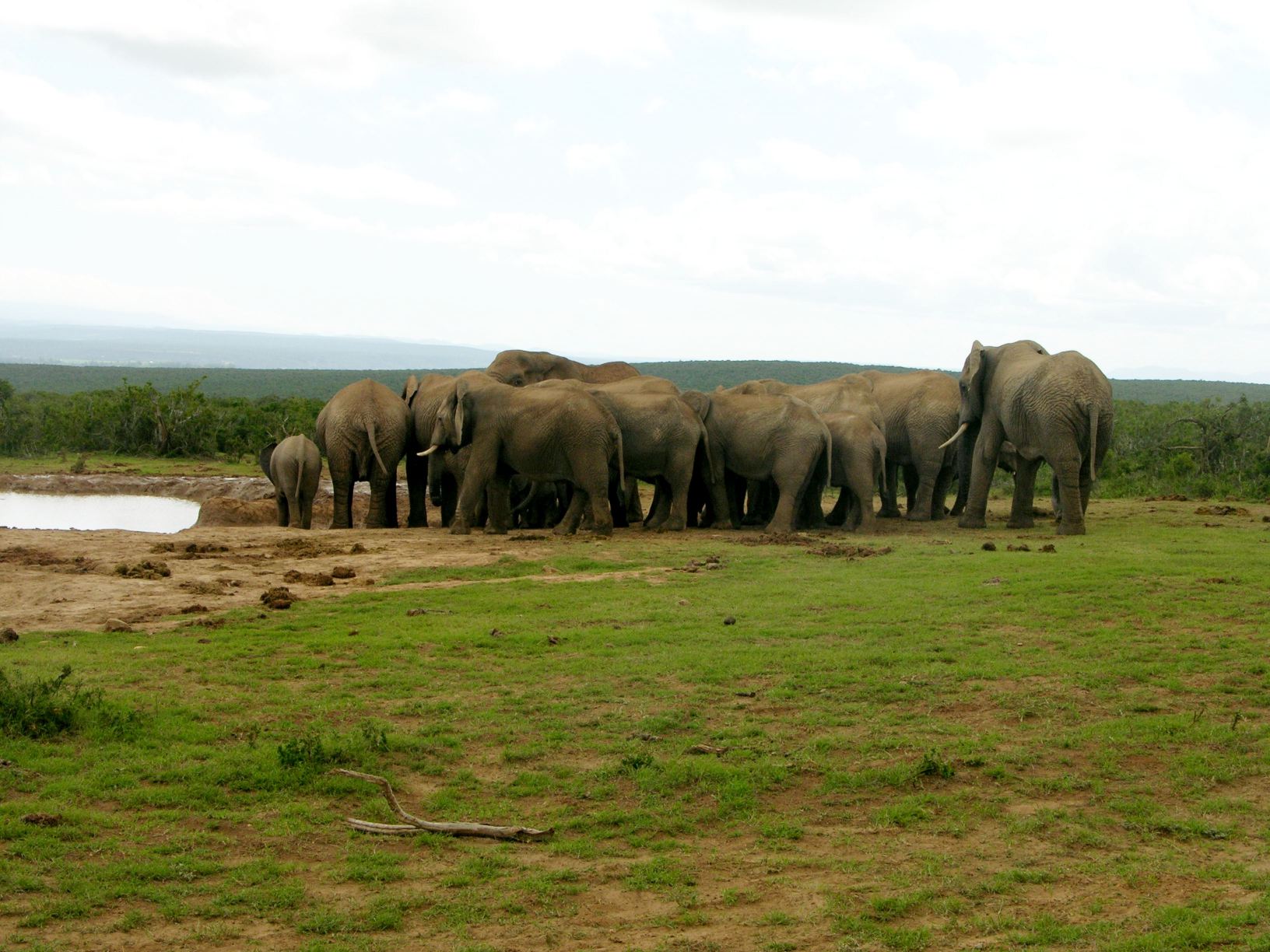
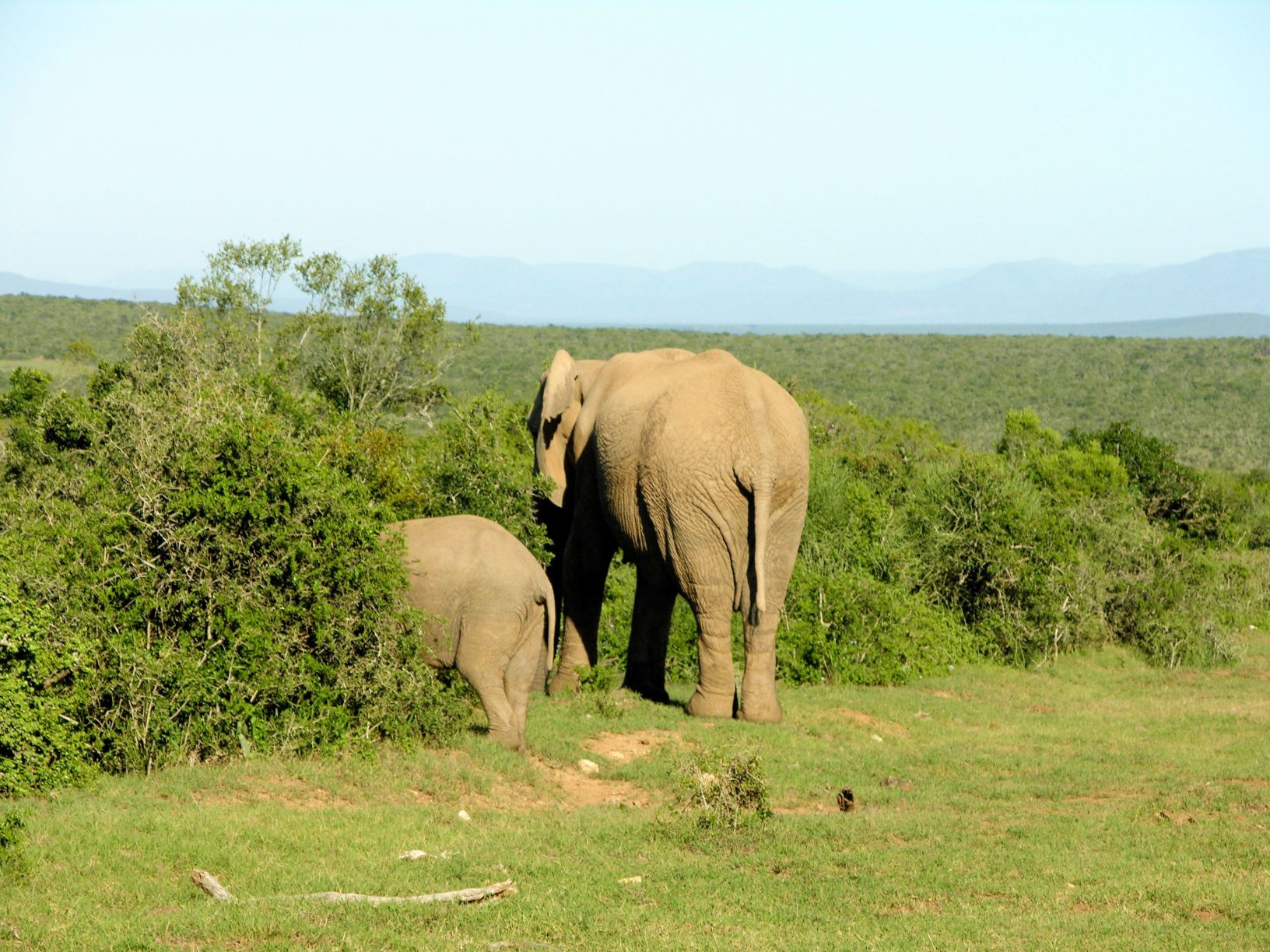
Just north of the city, a large expanse of land is set aside for Addo Elephant National Park. The proximity of a big city and the ploughed fields all around made me suspect this was just a zoo. In fact it turned out to be one of the best parks in the country. Nowhere else can you see a herd of elephants at a waterhole like this. There are 326 now, and it all started with eleven animals in 1931. The plans are to expand the park to take in 2,500. There are lions too. A freshly eaten antelope lay right in one of the parking areas.
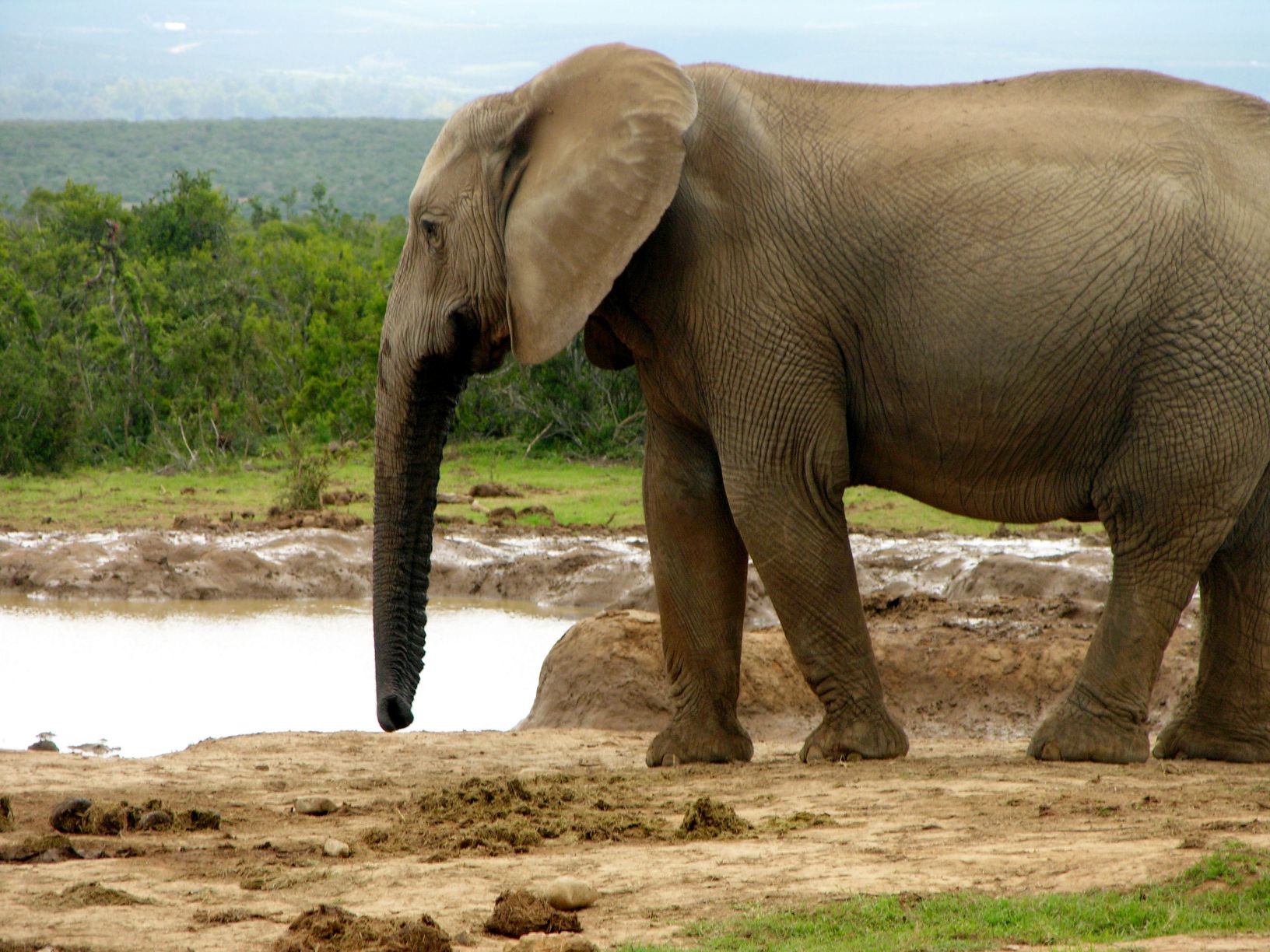
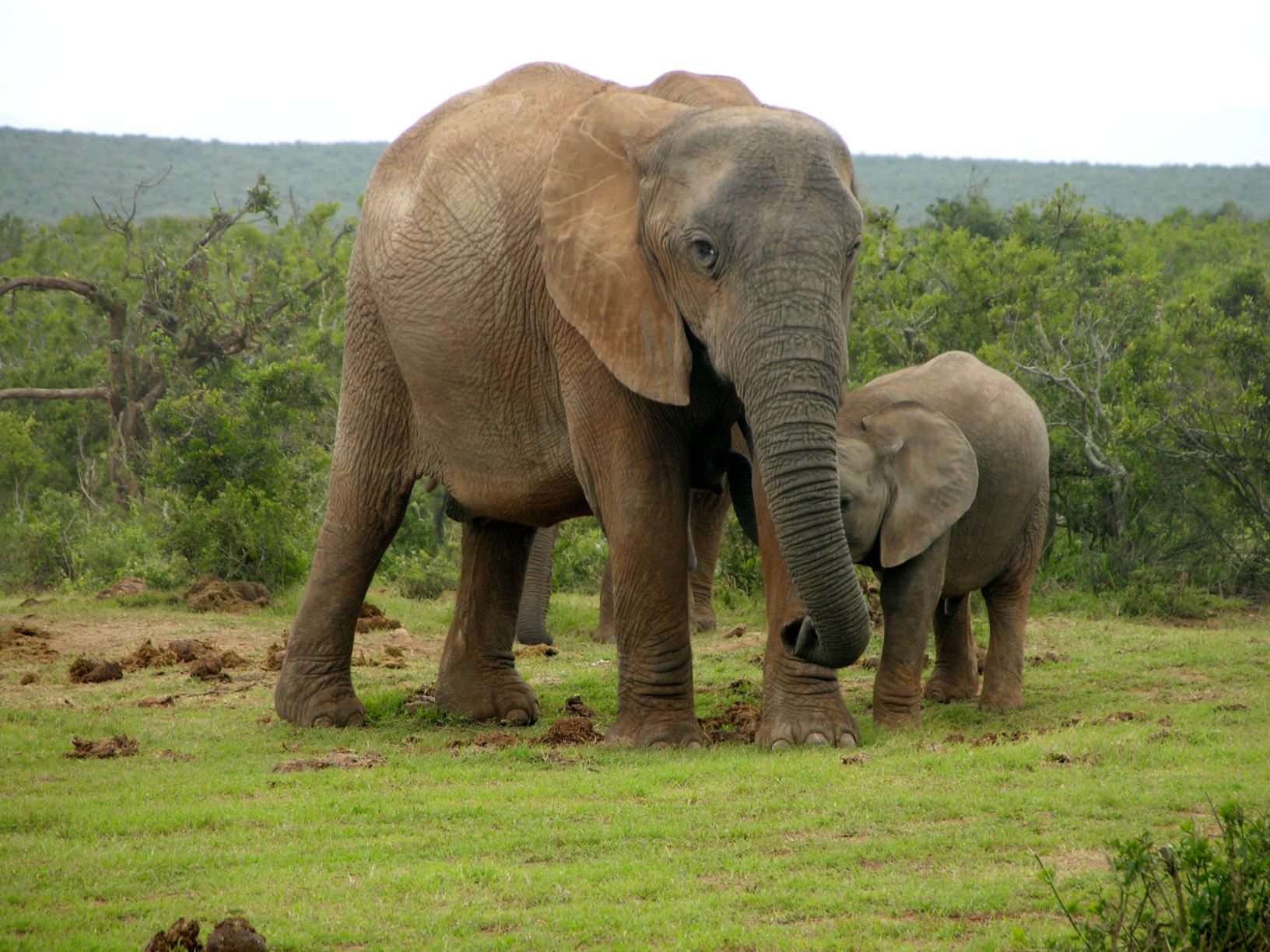
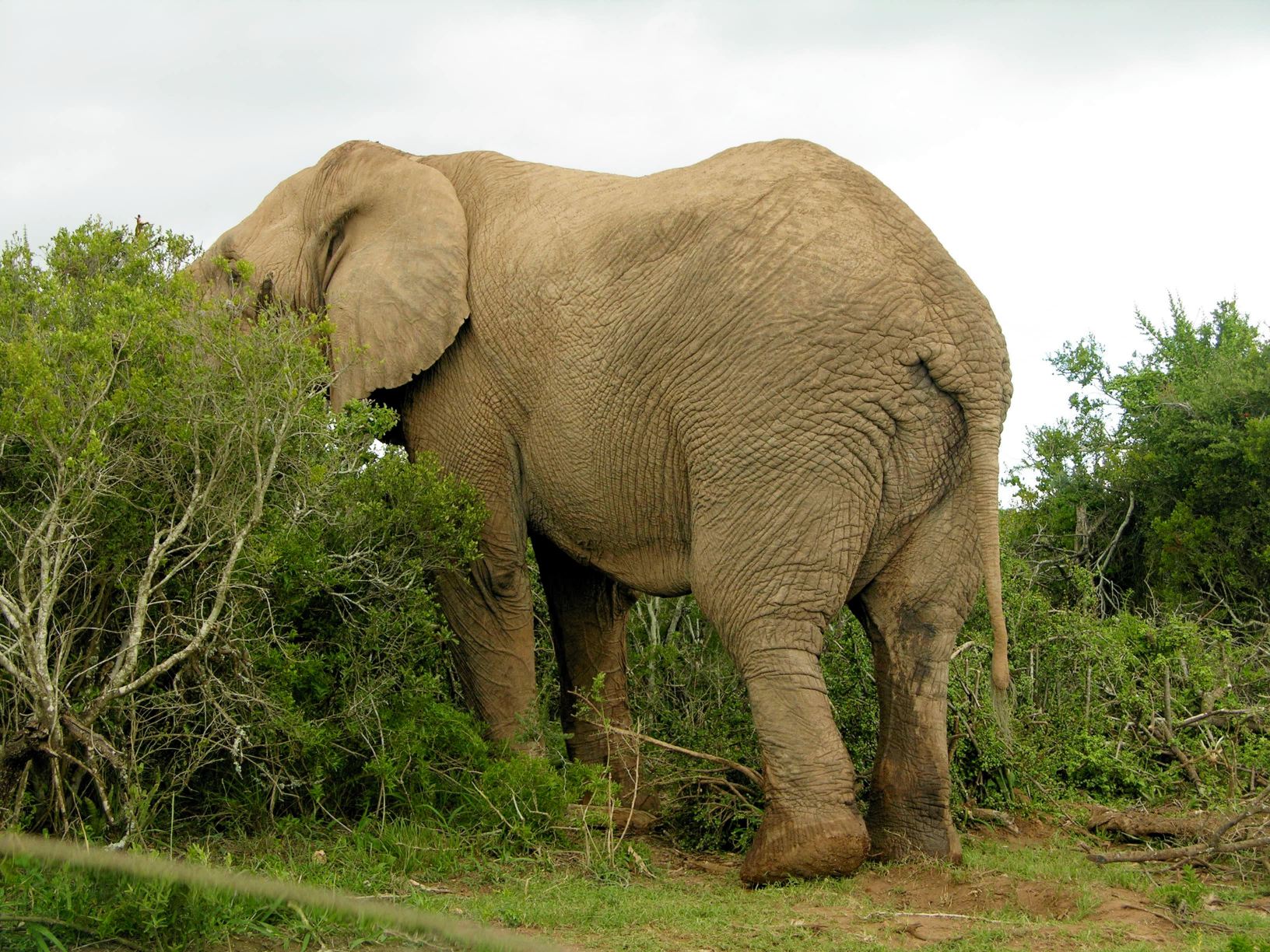
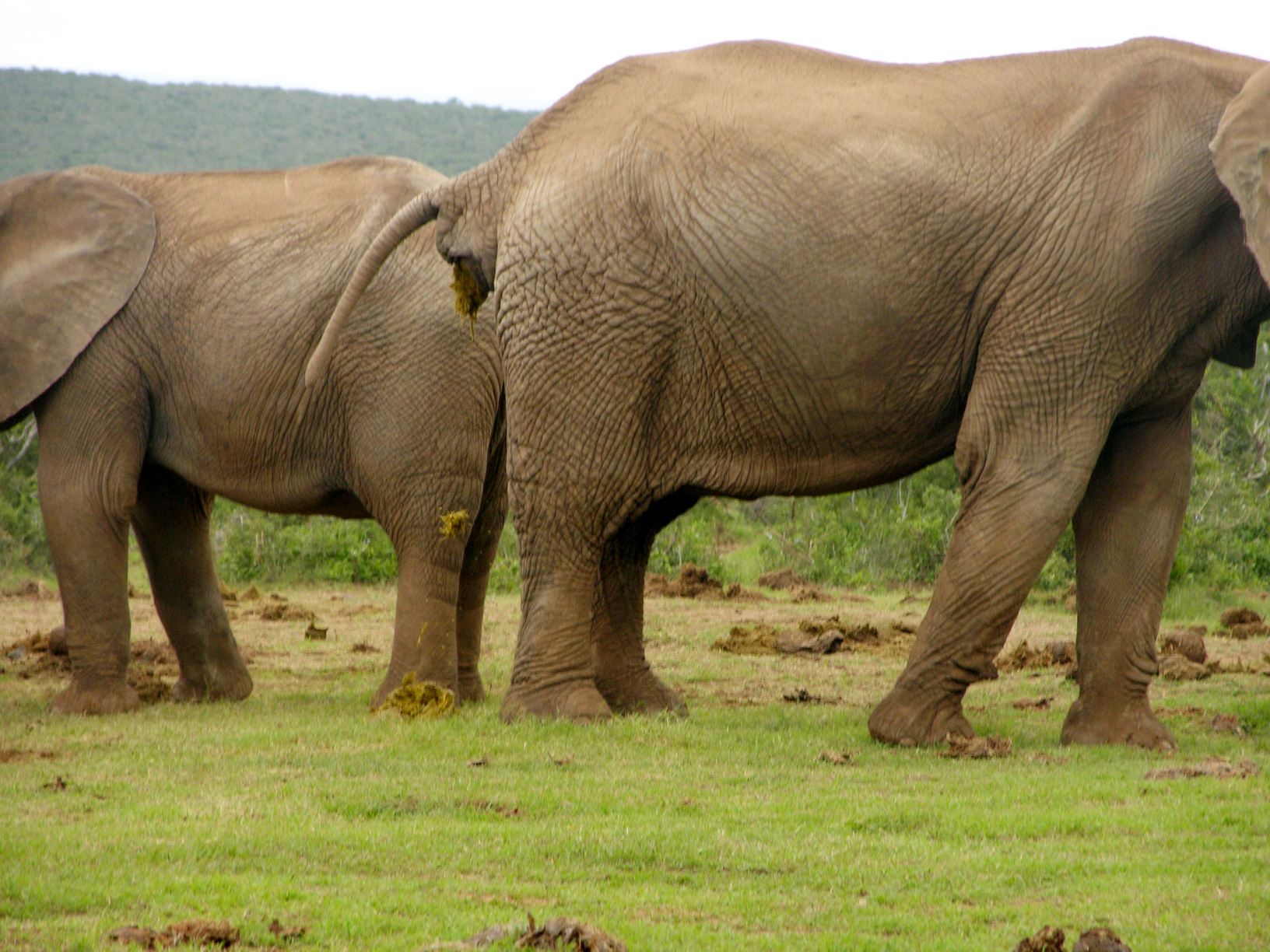
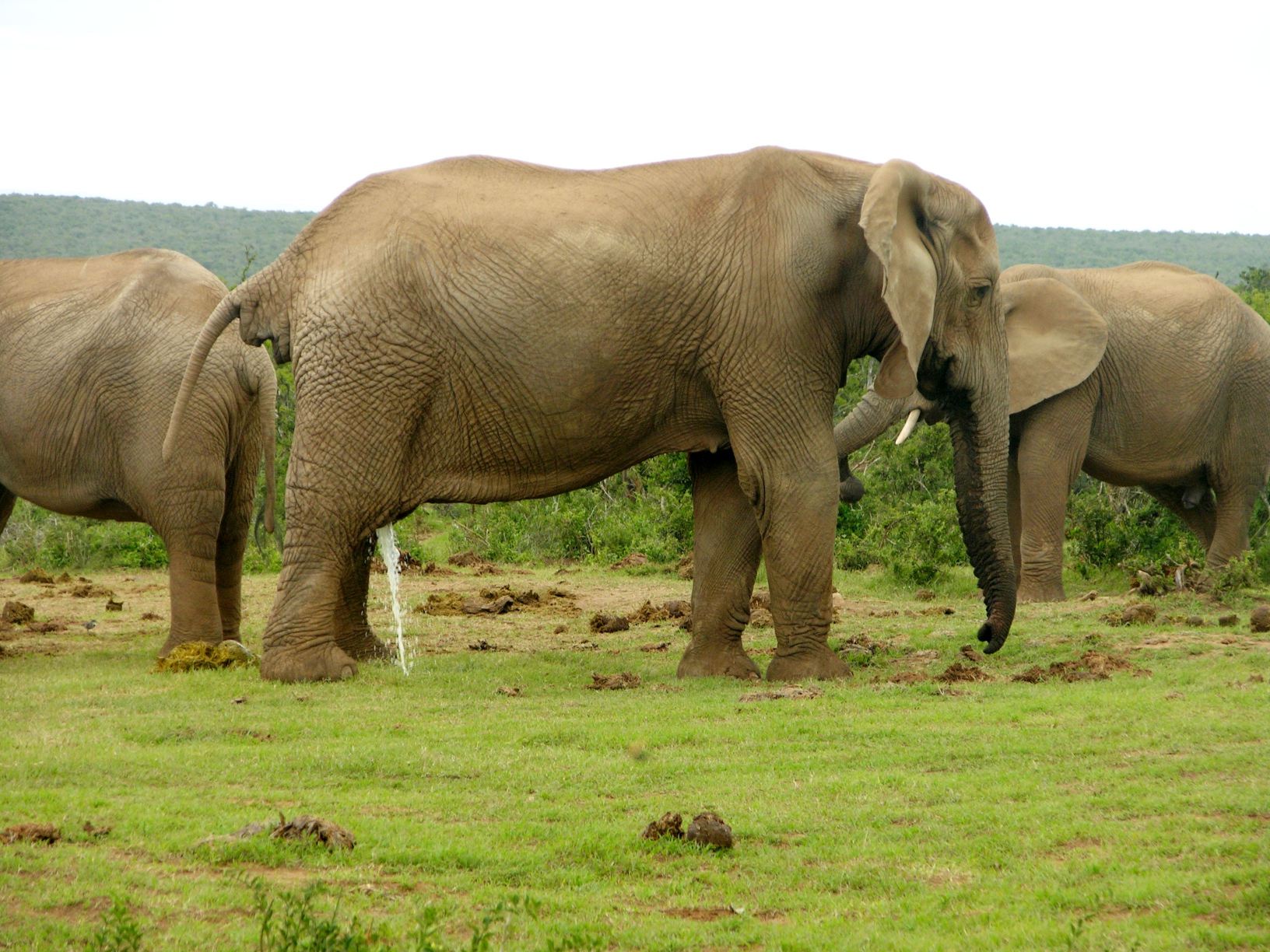
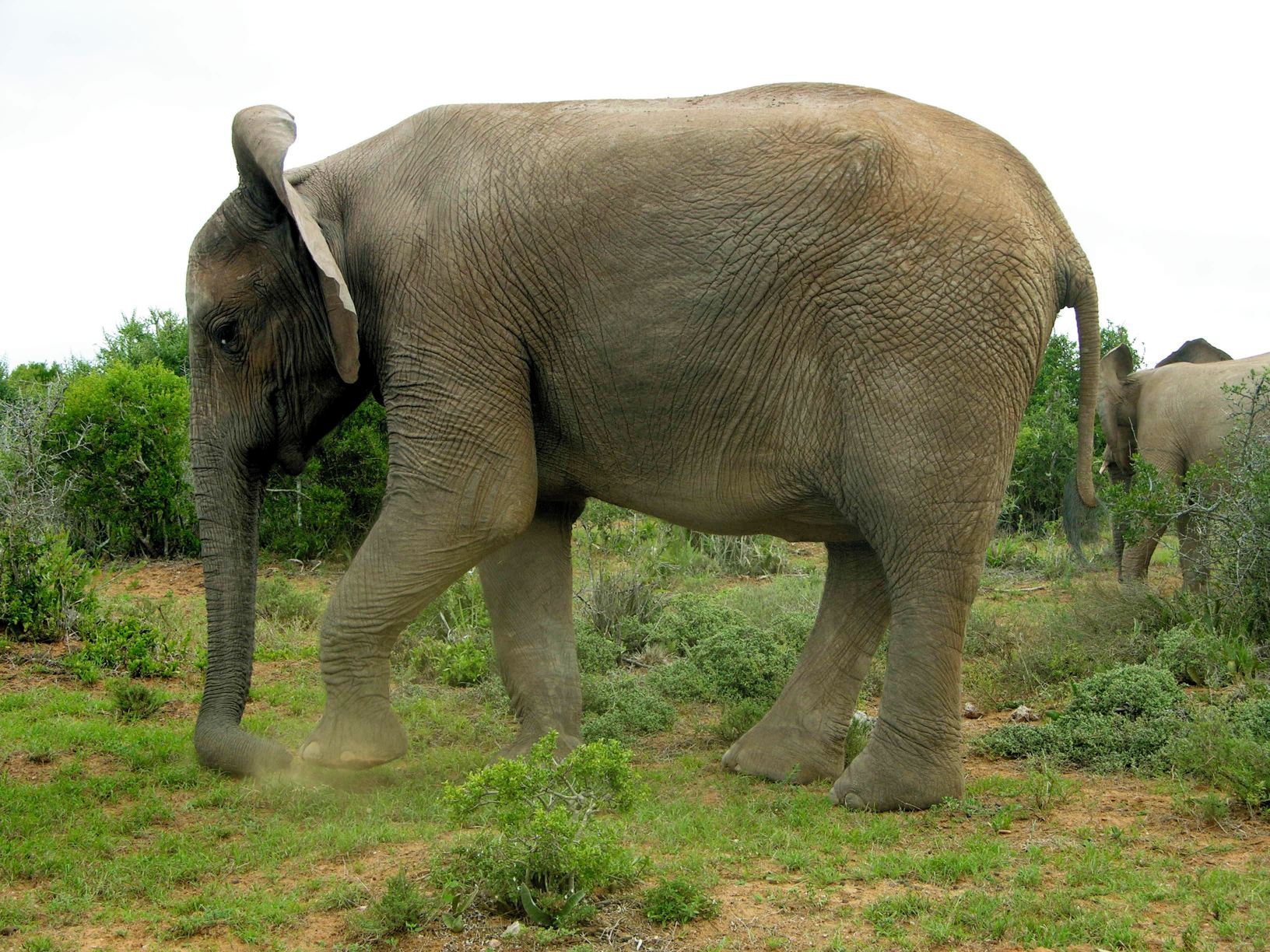
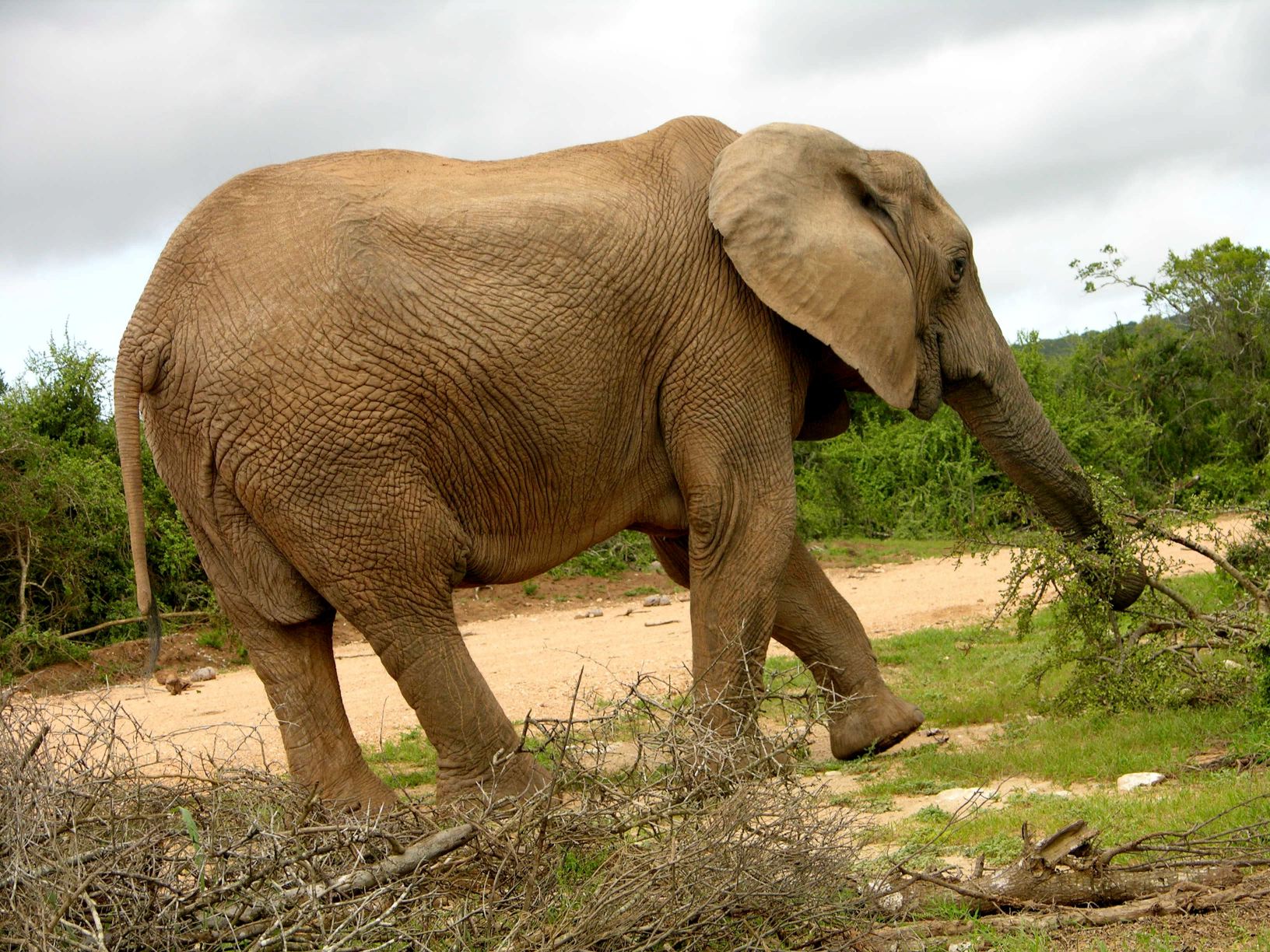
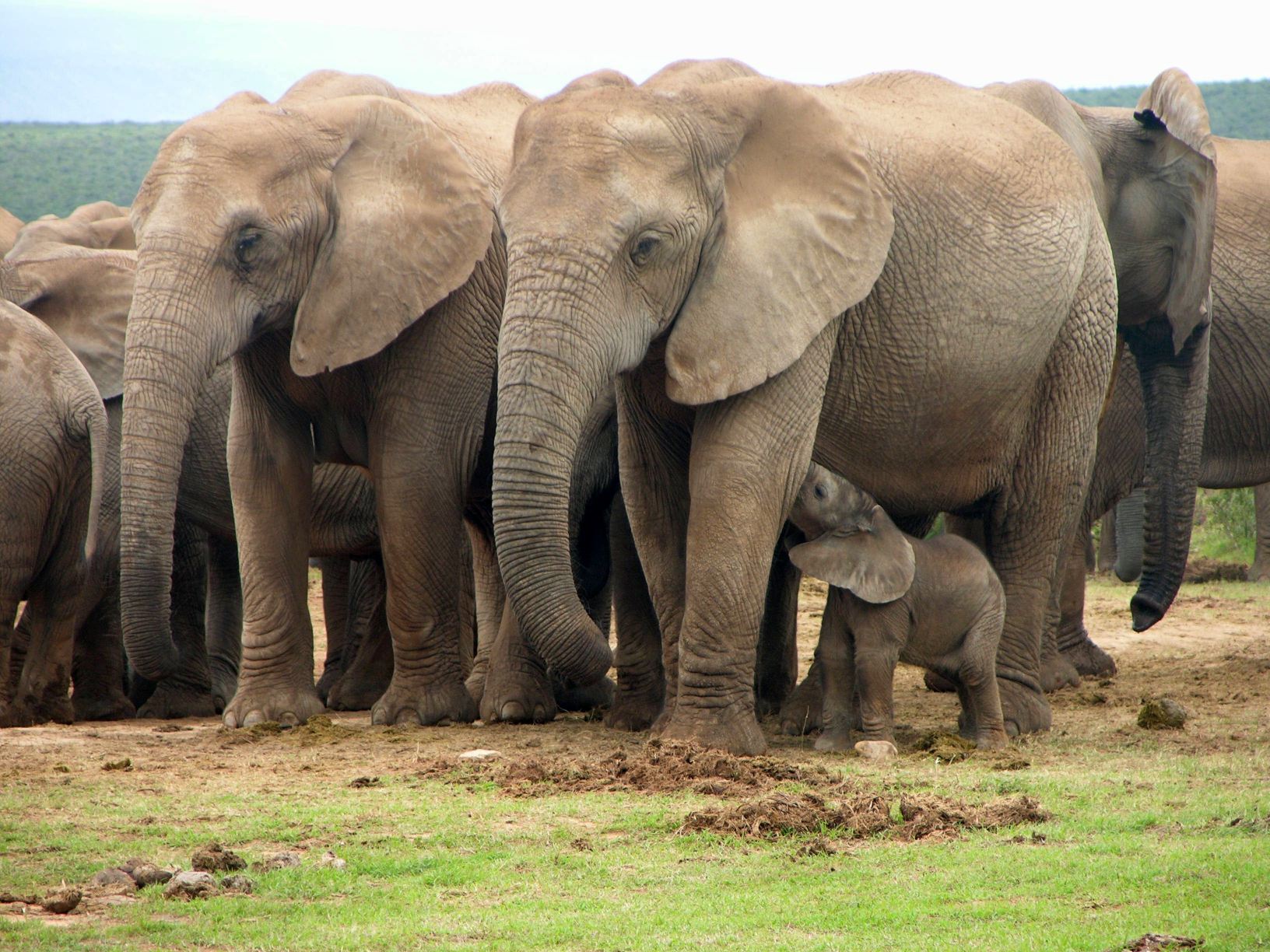
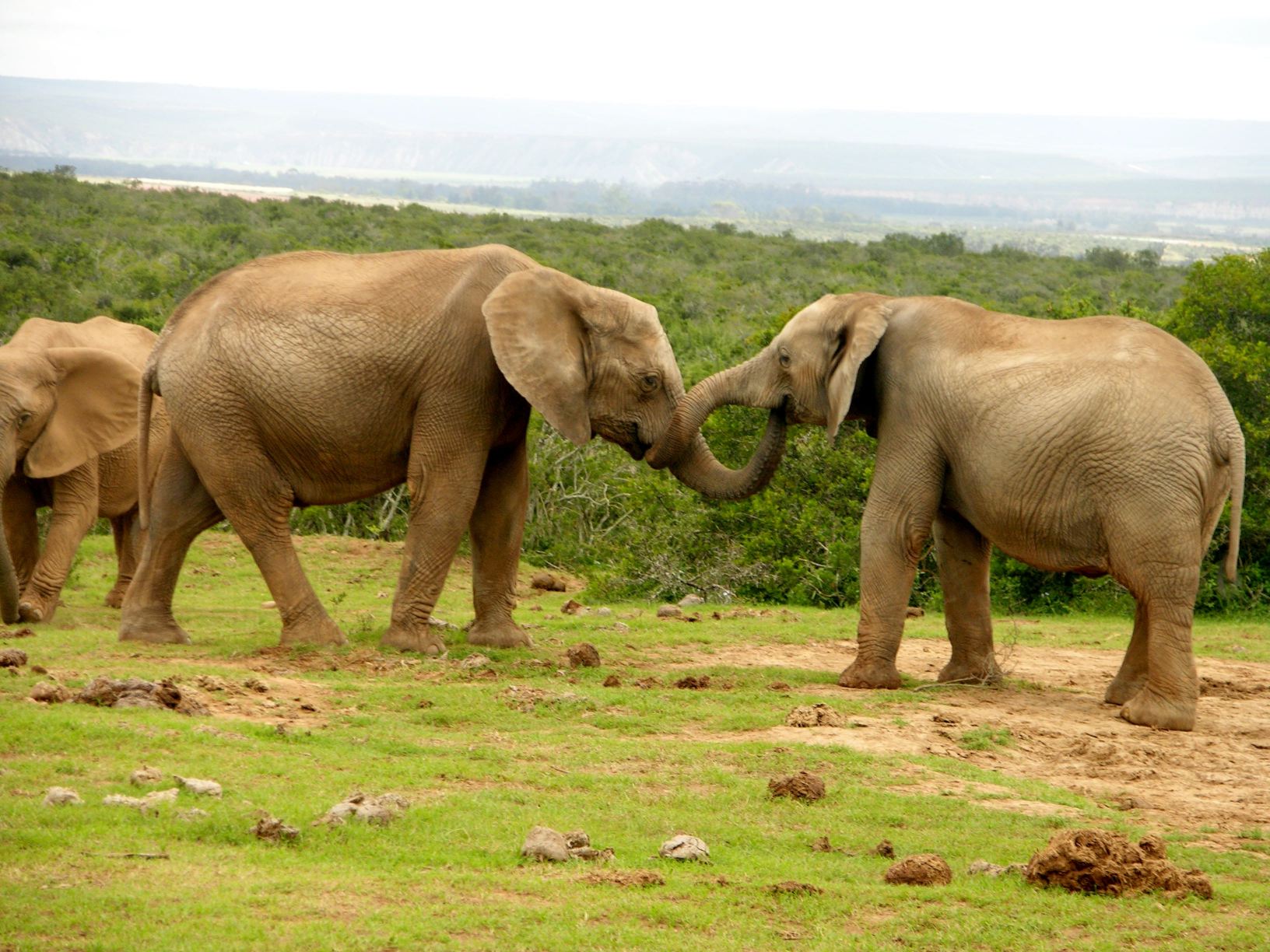
The best way is to stay in the park overnight (33°26.640′S, 25°44.682′E) so you can be there in the evening and very early in the morning. Especially the evening. Elephants everywhere against the sunset. It was a pity you were meant to be back inside the camp on time, just as it was all beginning. And you can't always get through. A herd of elephants can block the road. Let the linguists say what they like! Now I know exactly where the Russian word zaslonit, to block, came from. And slonyatsya, to go wandering about, for that matter. It's an unforgettable feeling when you're in a car with a herd of elephants all around and the little ones looking in through the window. They stick their trunks through, then go off to drink milk from their mothers. An elephant has udders shaped like a woman's breasts, between her front legs. At the waterhole the calves fool around and roll in the mud. Their mothers pull them out with their trunks and spray them with water. The herd has a complex social order. If one of them has been off by itself and comes back, for instance, it's customary to greet the others with a trunk.
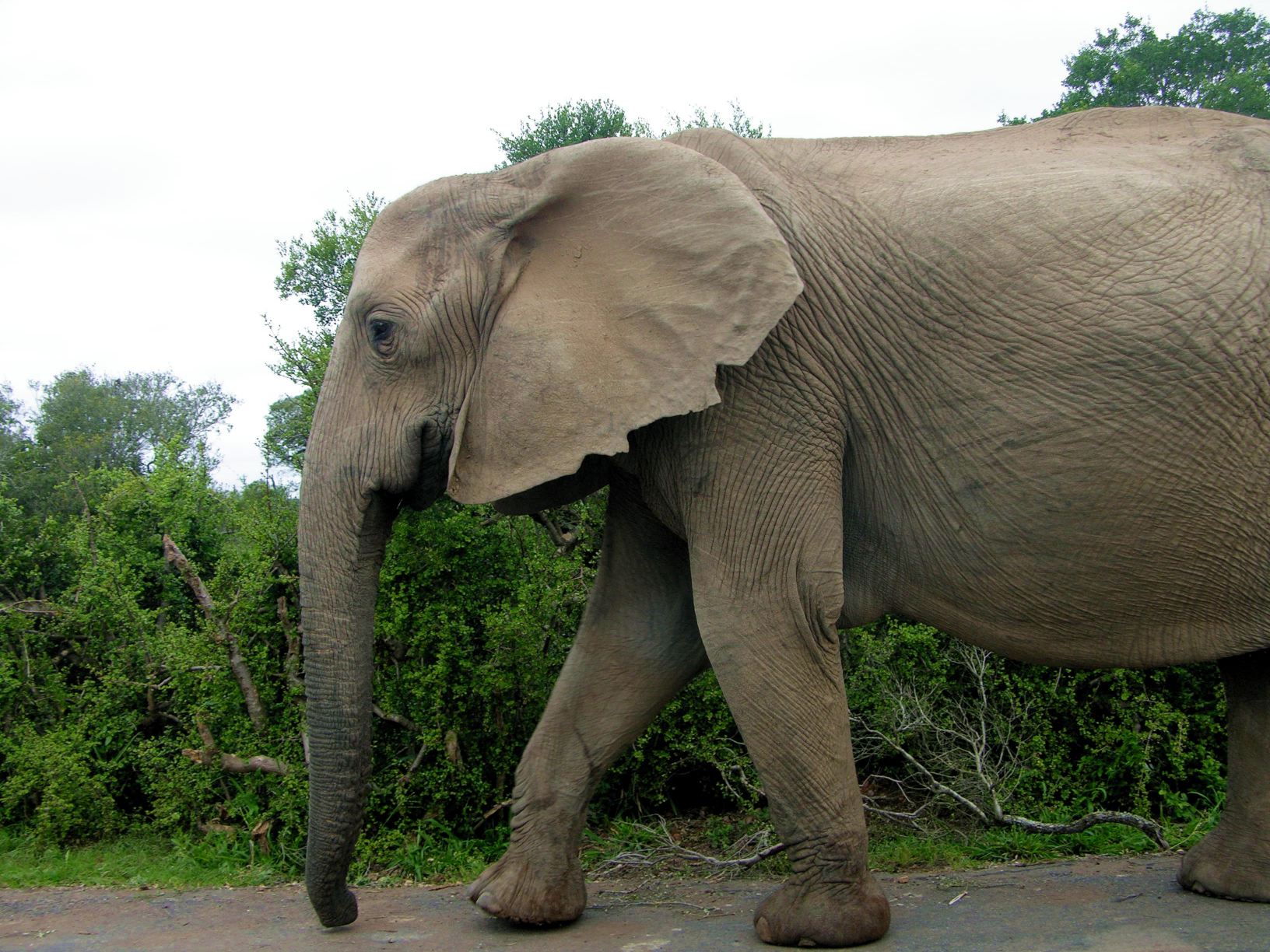
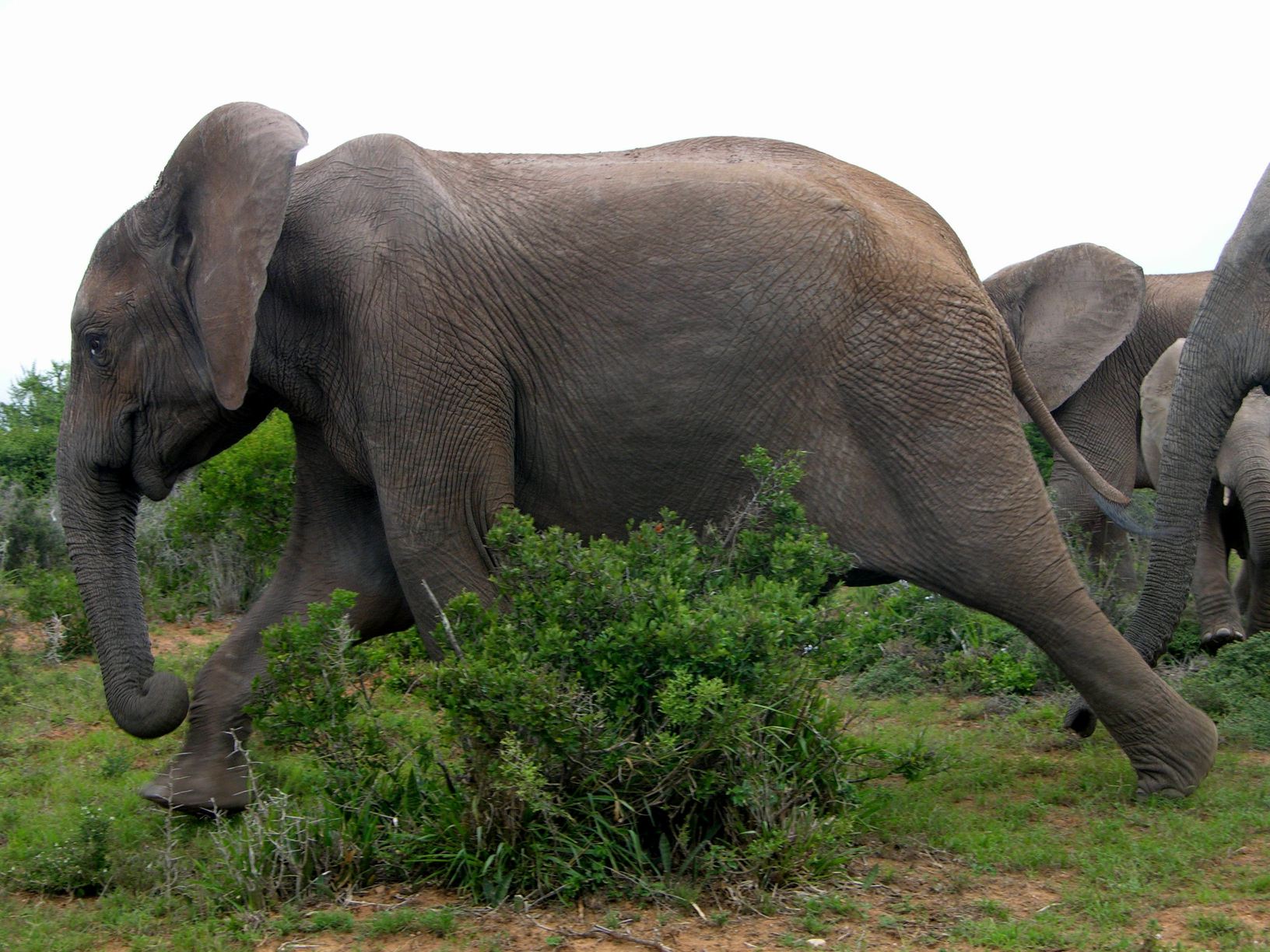
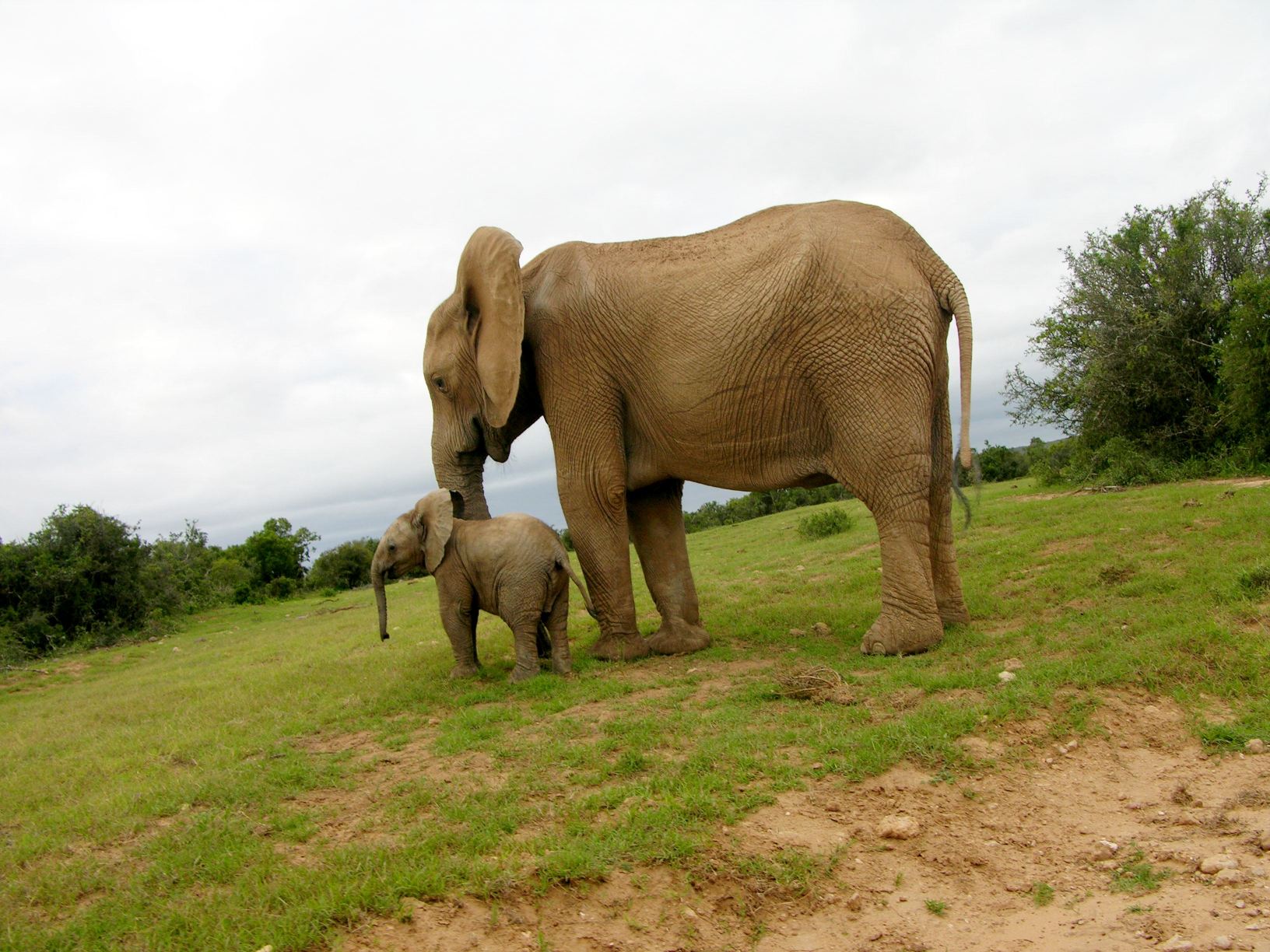
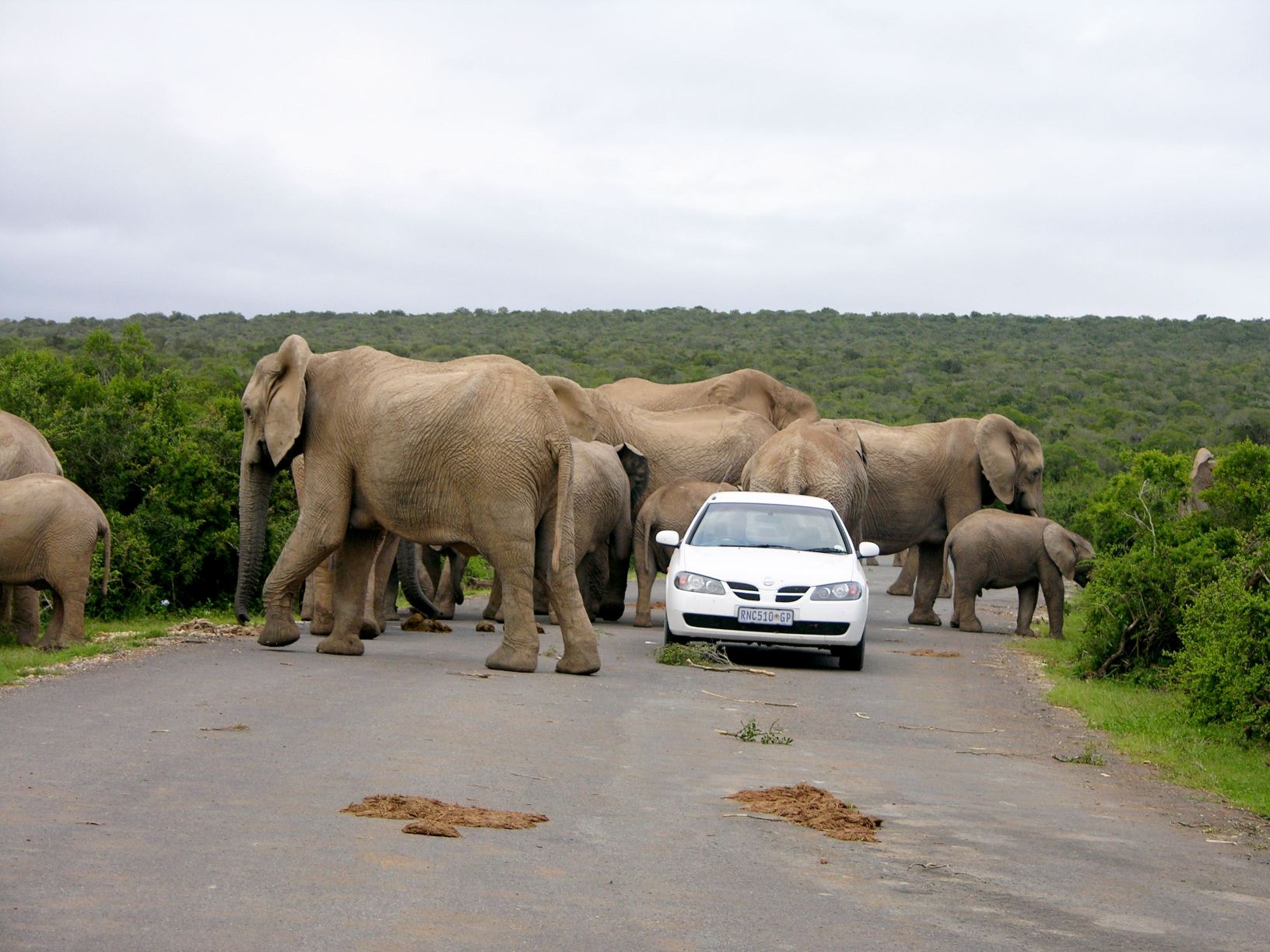
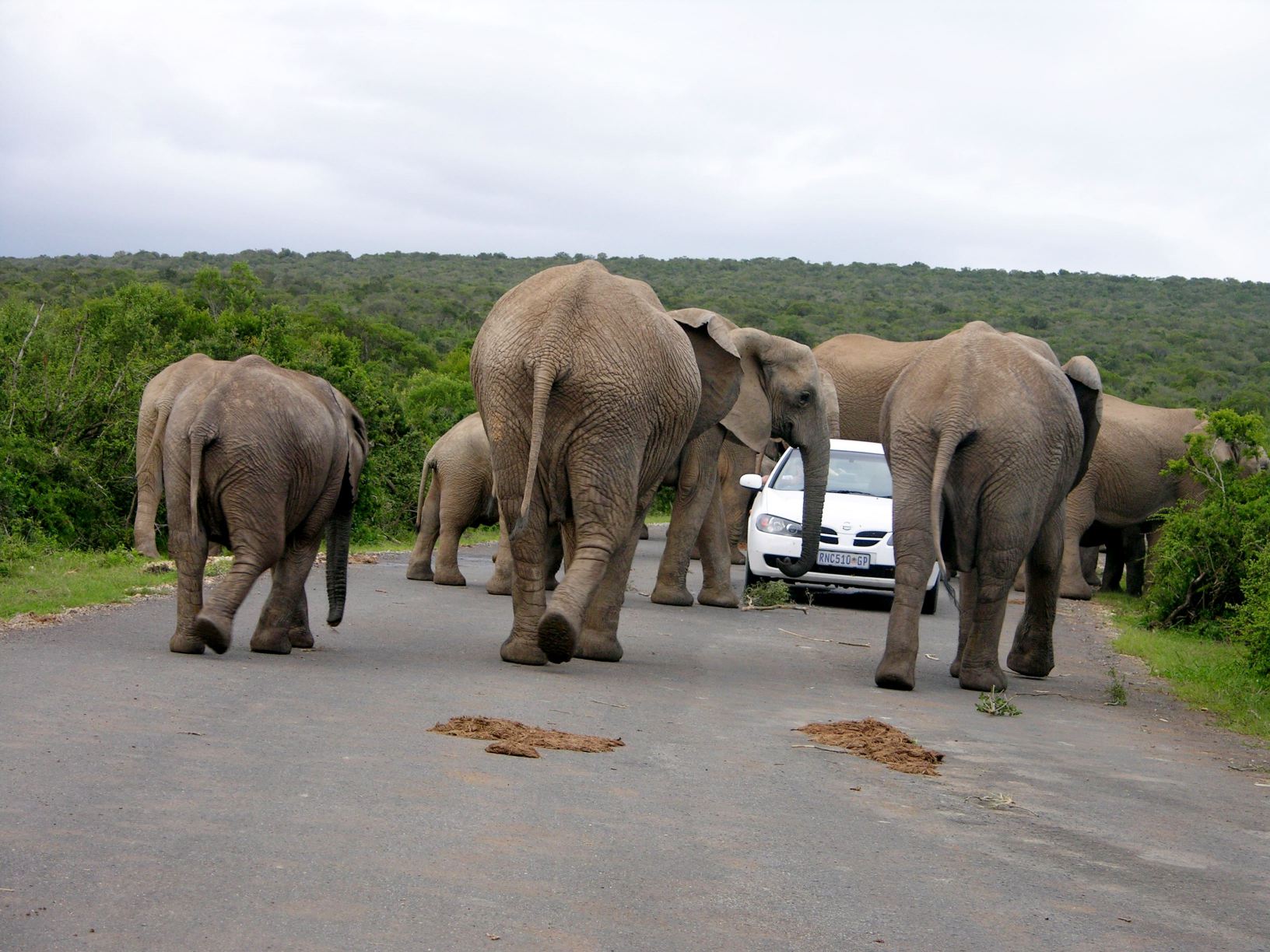
An elephant lives about as long as a human, seventy years. A calf grows until fourteen, after which a male is driven away and a female becomes part of the herd. Pregnancy lasts two years. A calf can go on drinking milk until it's five. One female may have four generations of calves with her at once. They're born one at a time. Until it's a year old, a calf is very helpless and can't take a step without its mother.
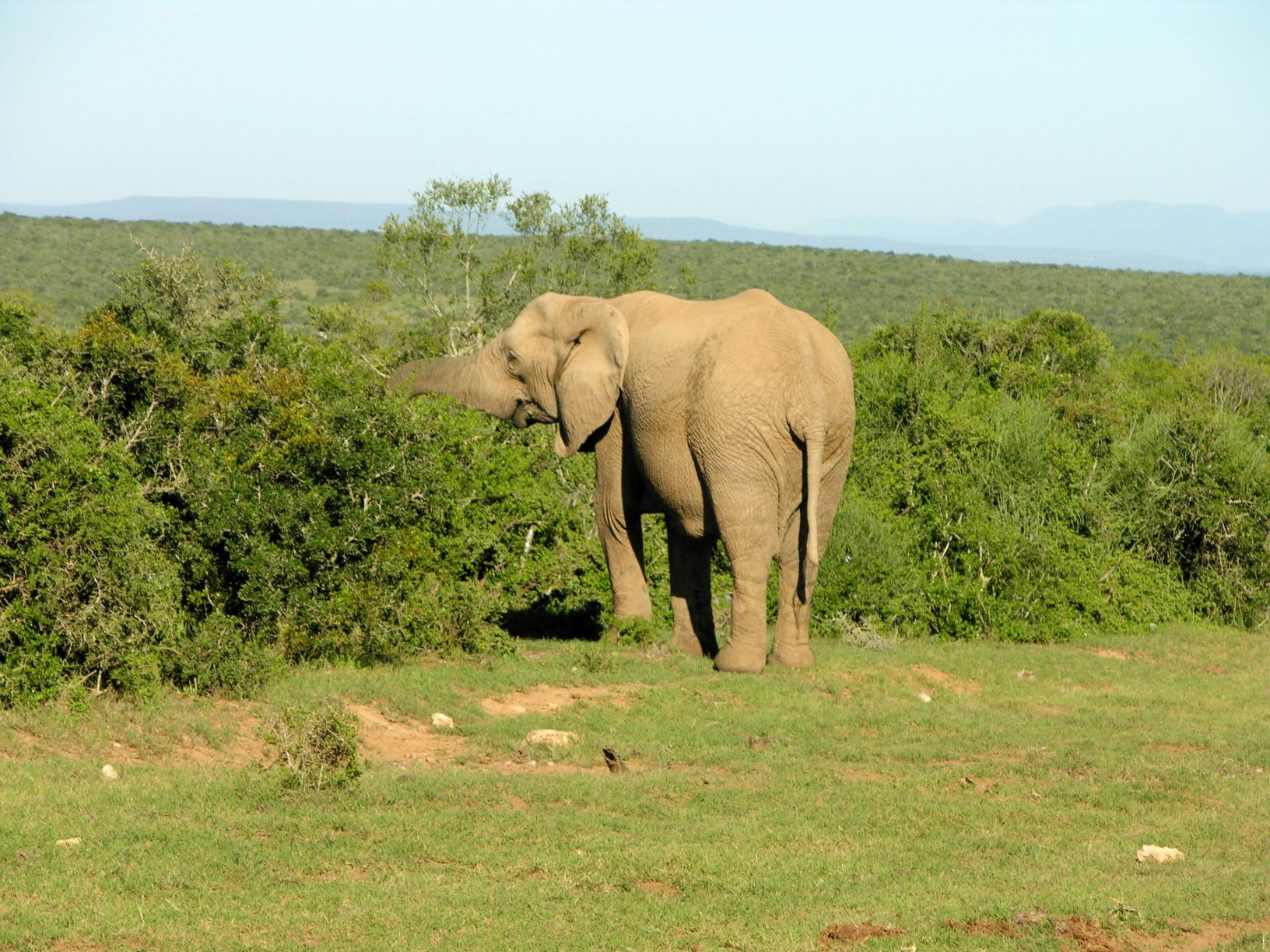
And the mess they make on the road! Once a herd has gone through there's nothing but heaps of several buckets apiece.
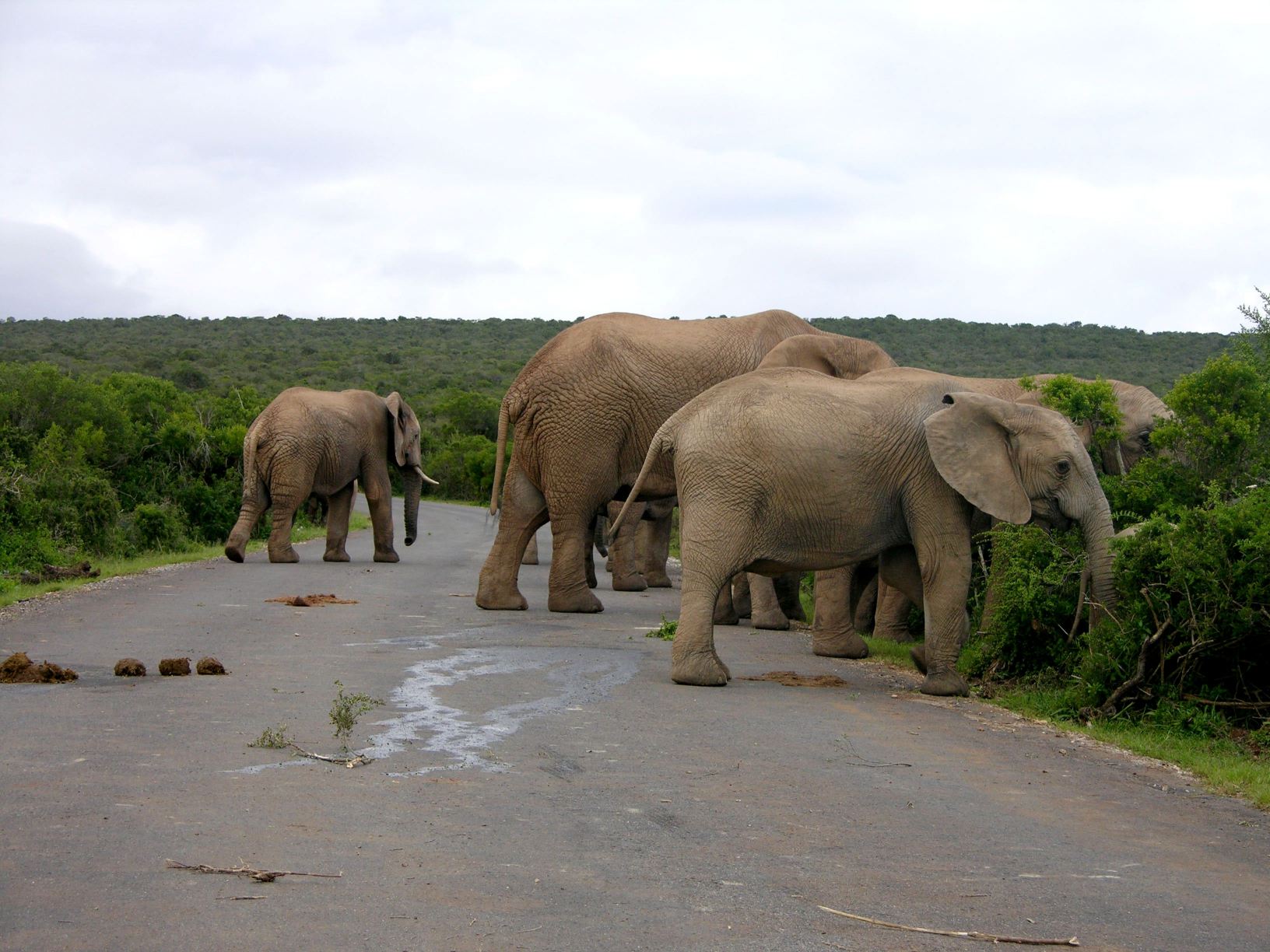
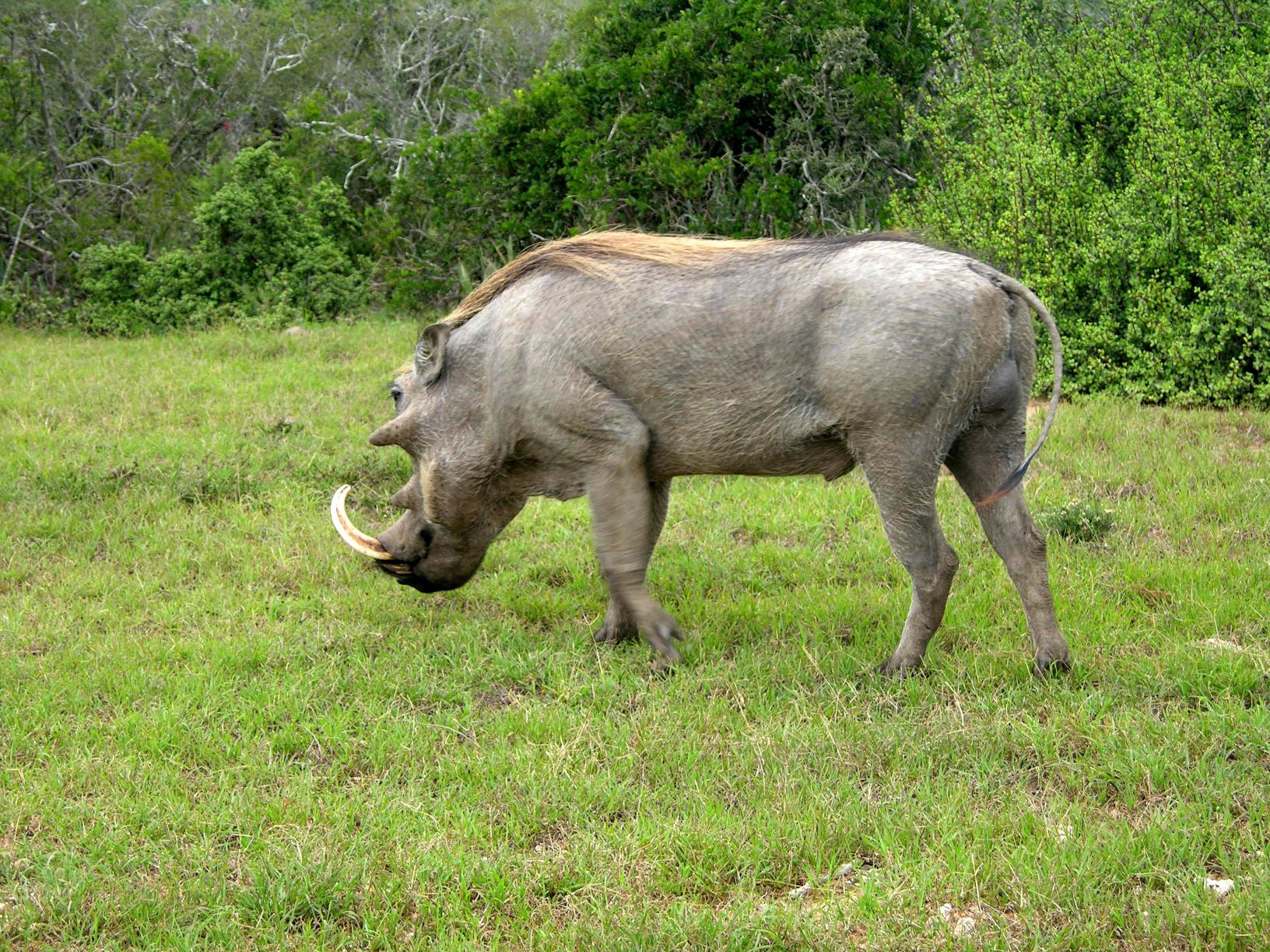
I love elephants. I could just write about them all day. There are also lots of warthogs at Addo. It's a sort of southern wild pig. Timid, runs fast, grunts. A charming animal. They say it's not altogether harmless, but I have trouble believing it. As a child, there was a dreadful picture of a boar in my Baron Münchhausen book. I was afraid of wild pigs after that. When I saw a picture of a warthog, I thought that if I ever saw one in life I'd die of fright. Well, I did see one. And I'm still alive. You can buy one stuffed in South Africa. I still regret not buying one. It would have been awkward travelling with it, but just imagine a face like that on the wall…
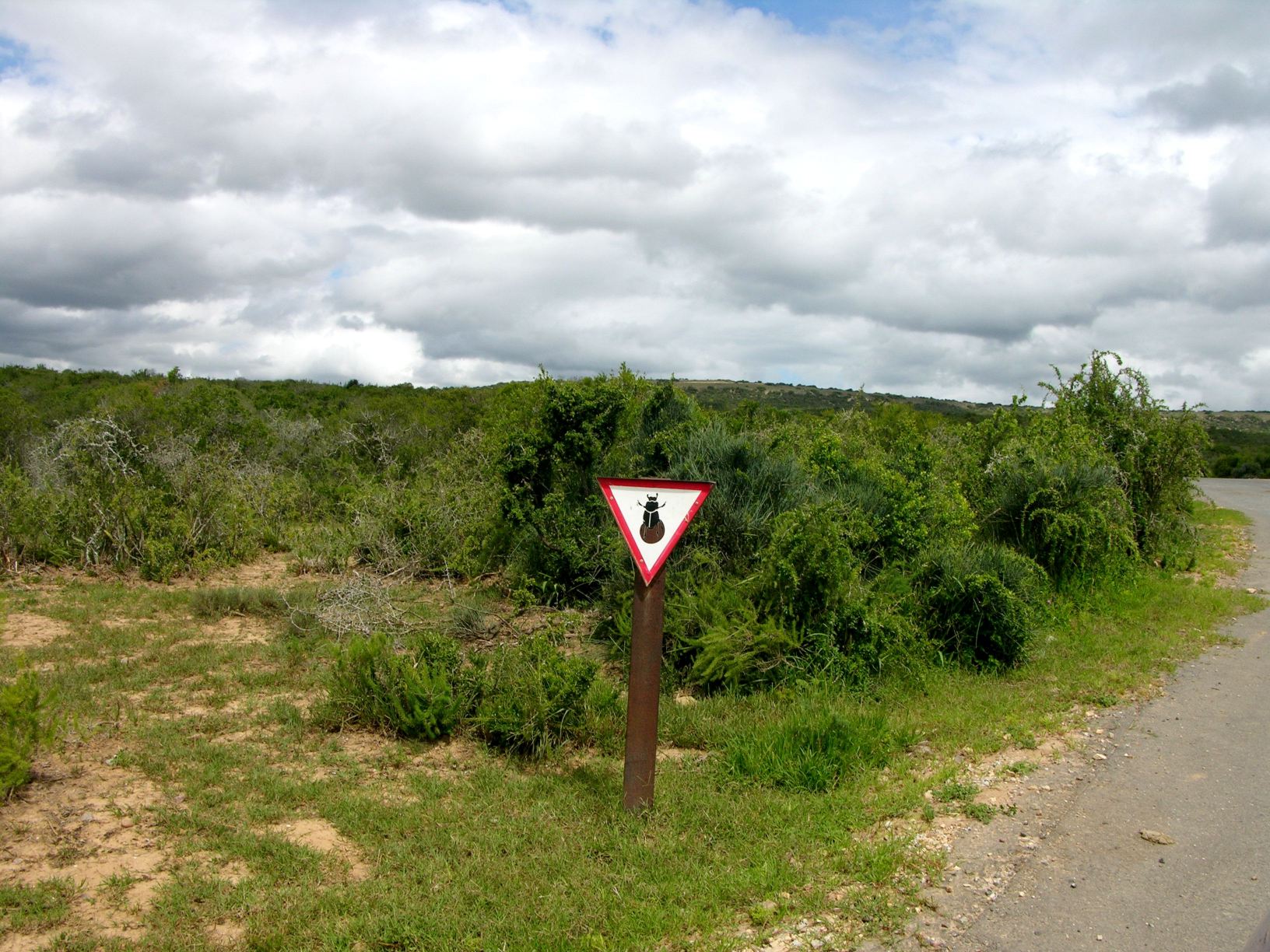
They protect nature more and more zealously every year. At Addo you now have to give way to dung beetles when driving. Yes, the days when there was pride in being human are over. I do feel for the beetle, of course, and wouldn't have squashed it anyway. What's worse is how few places there are left where you can roam with a tent without marked paths or formal campsites. In South Africa the rules allow it only in the Great Fish River Reserve, along the river of that name west of Port Elizabeth. Of course, if you put up your tent in the dark and take it down in the morning nobody's likely to catch you. But it would be nice to have the freedom legally.
The next big city, East London, is one you can safely pass as well. Perhaps stop at a supermarket. They're like the ones in Europe, and it's easier to fill a car with supplies that way than to go round the little shops. Only the Game chain had camp stove gas.
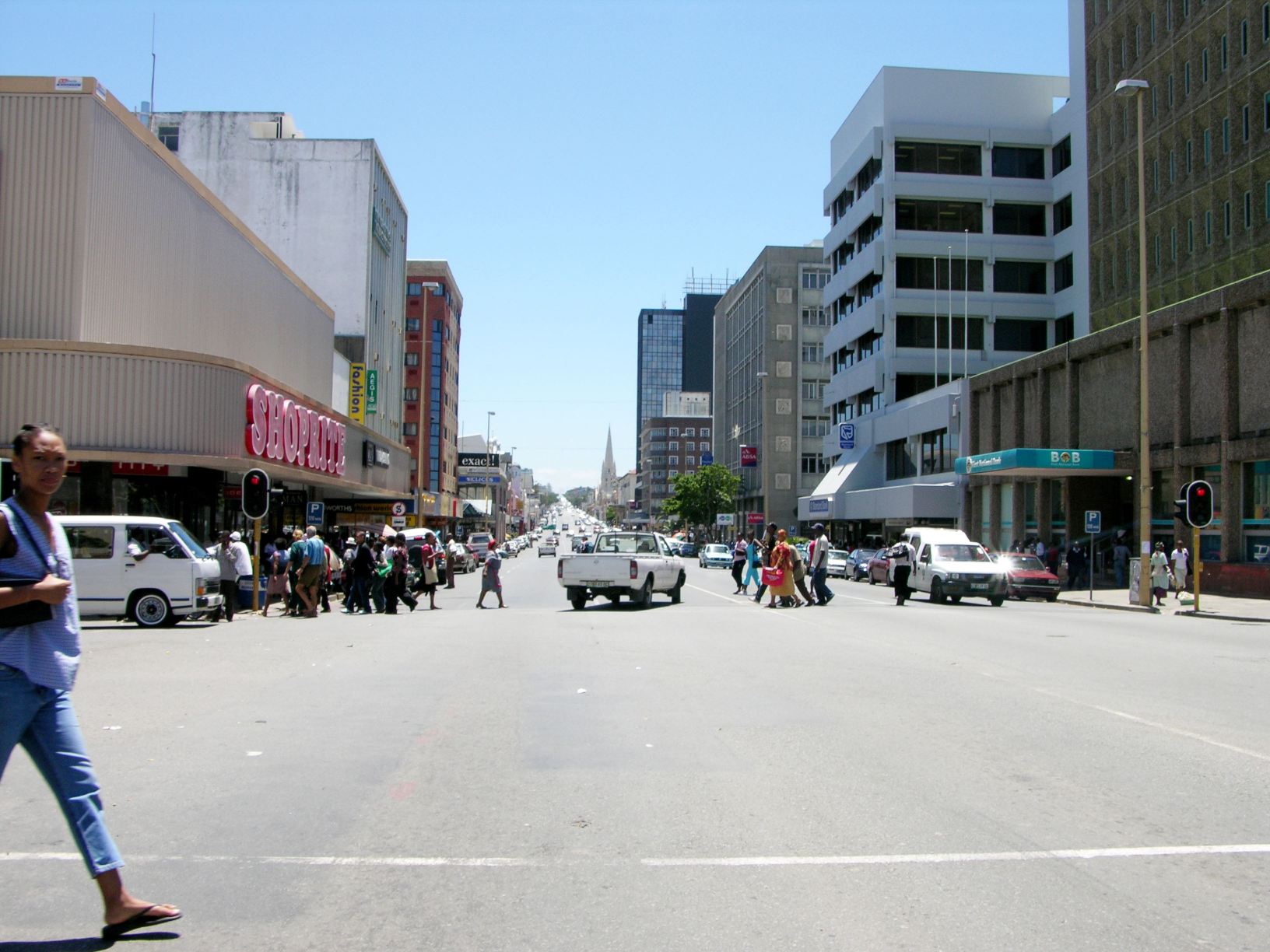
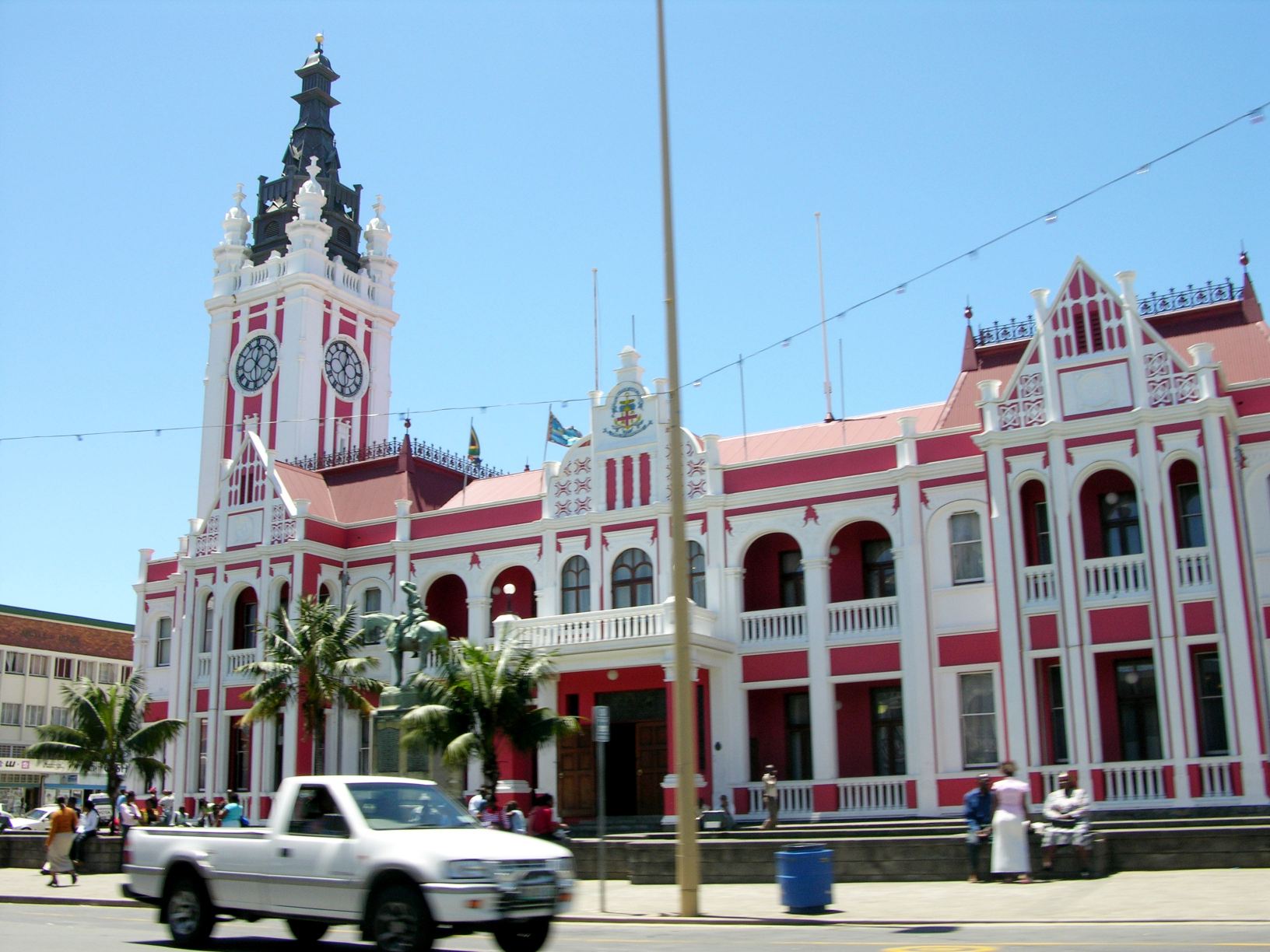
Roadside trade flourishes in Black towns. Out on the main roads there's little to buy but fruit. On some stretches roadside trading isn't allowed. They've come up with a road sign for it, showing an old lady selling mandarins with a line through her. Nobody's in any hurry to obey. An old lady is standing under it selling mandarins.
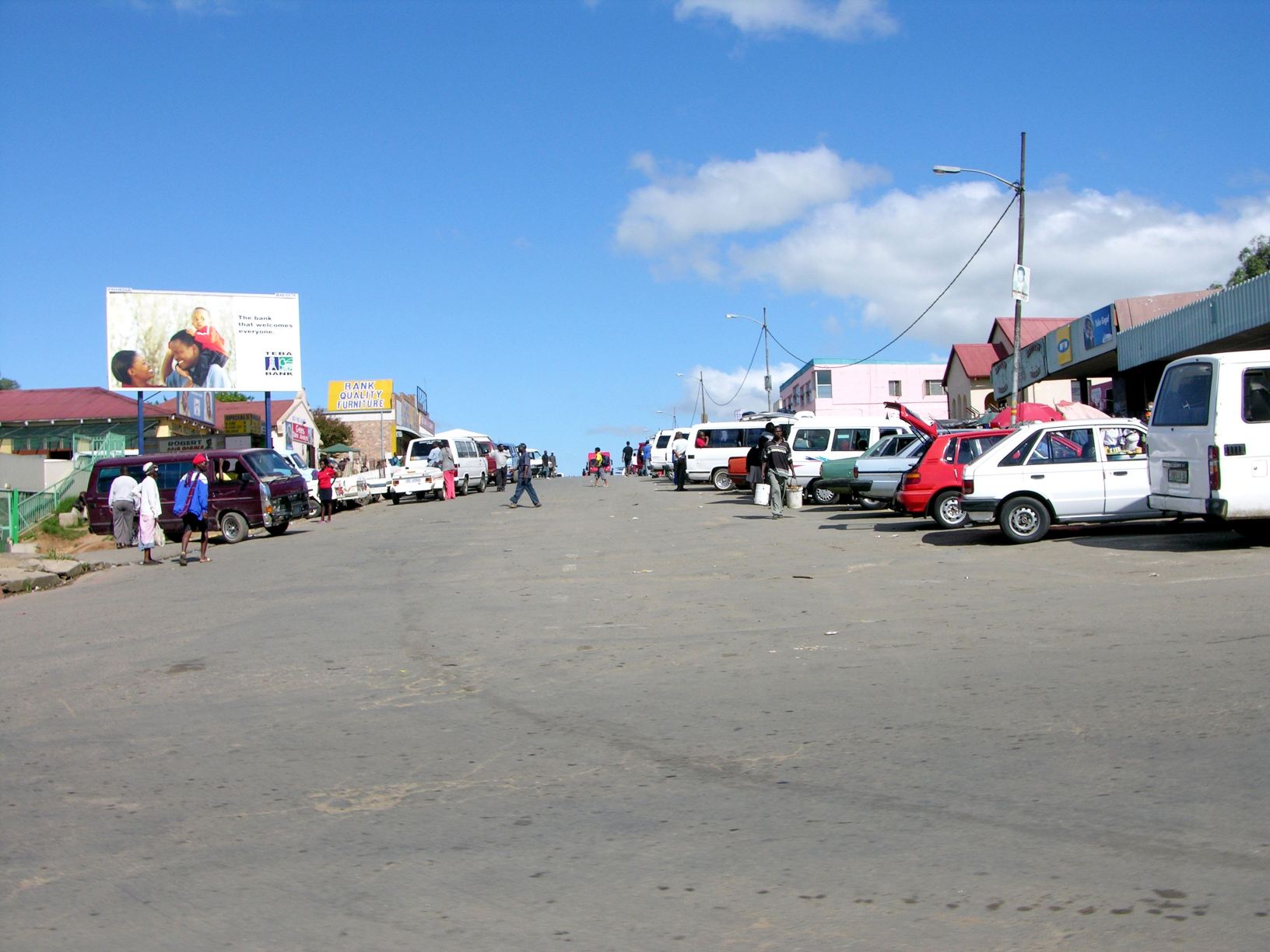
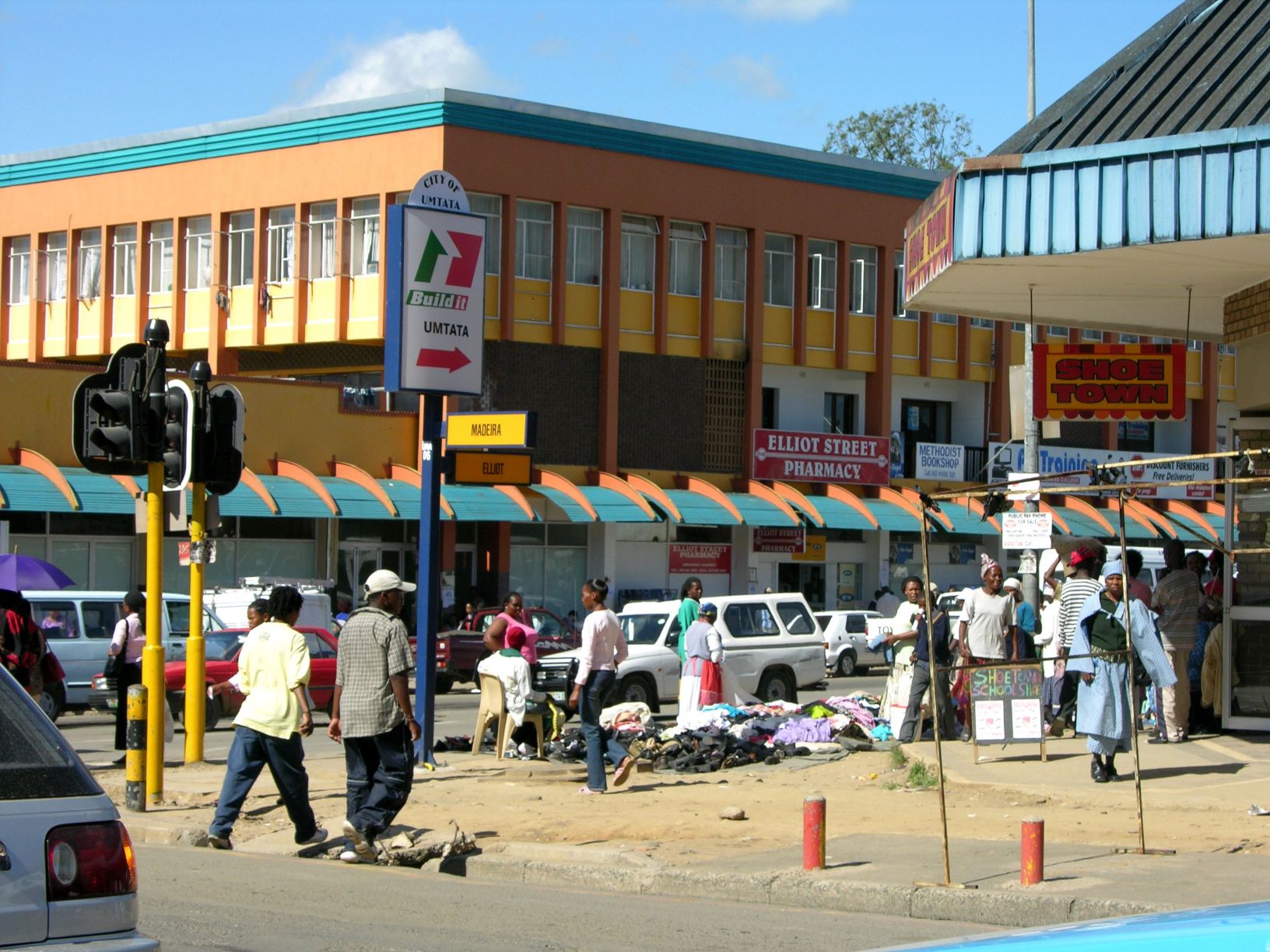
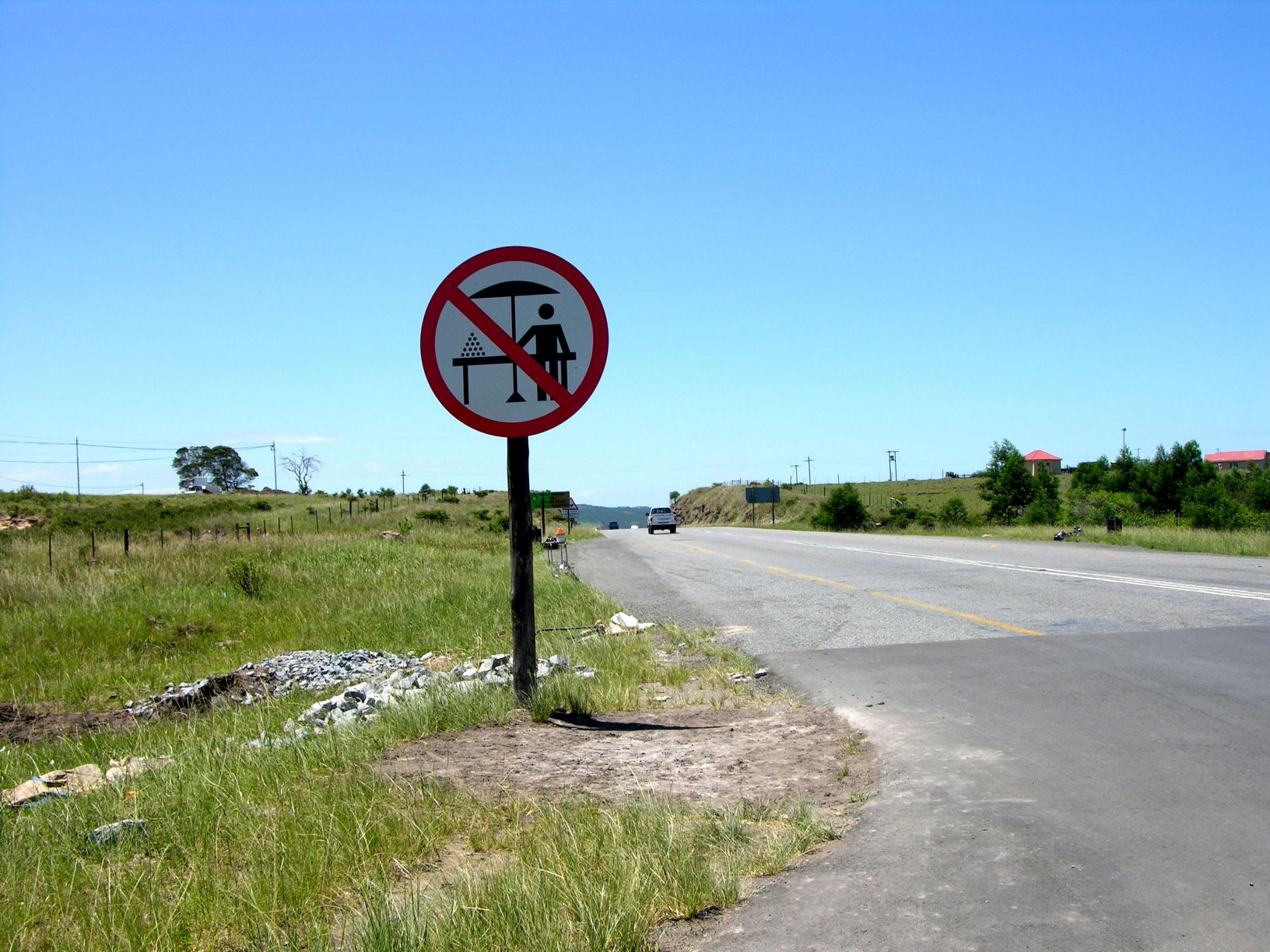
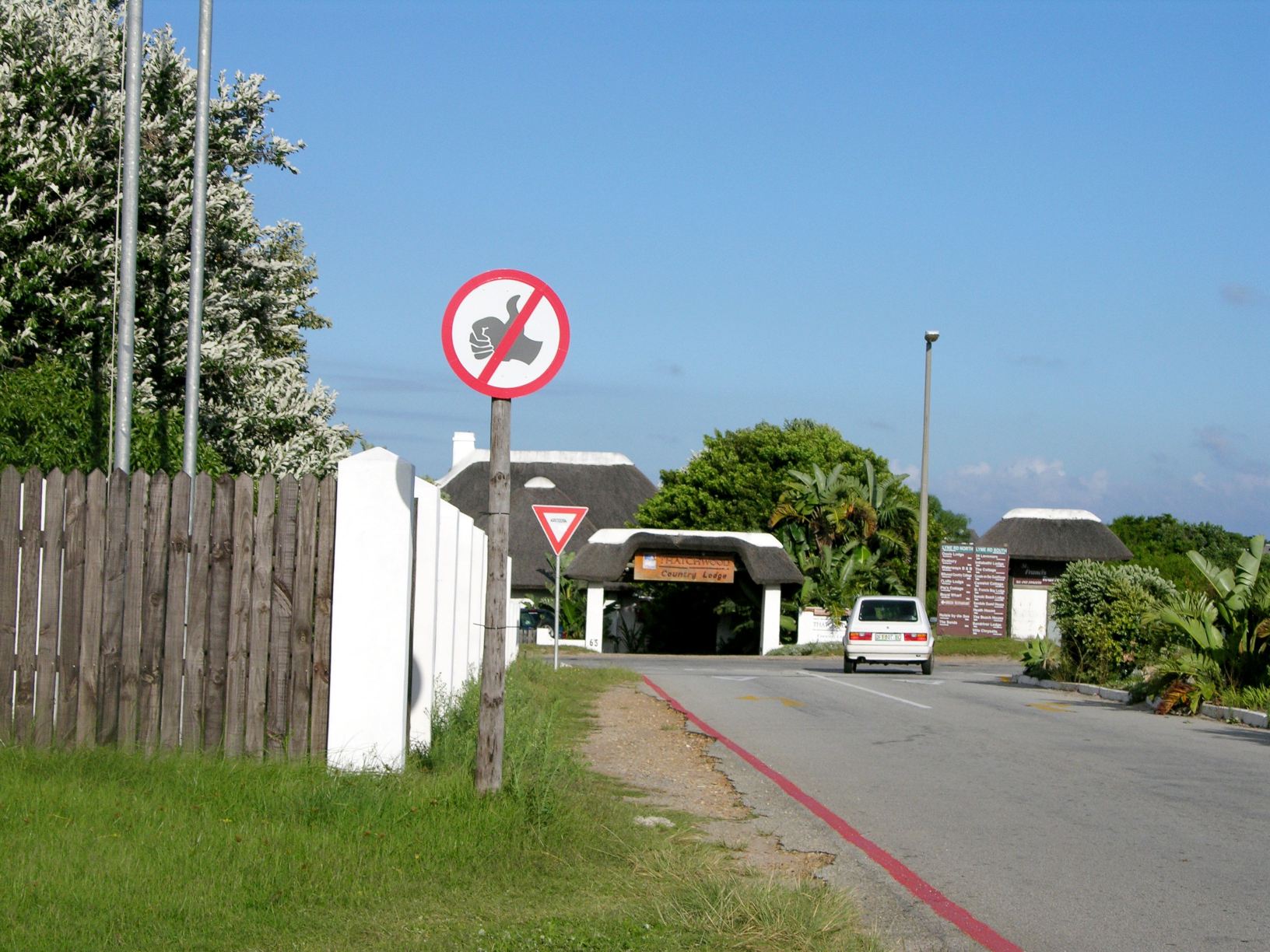
The other sign you see on the roads says ‘No hitchhiking’. It's a fist with the thumb sticking out, crossed through. The first time I saw one I thought it meant ‘Drive in here and you'll get what's coming to you.’ Hitchhiking is widespread in South Africa, by the way.
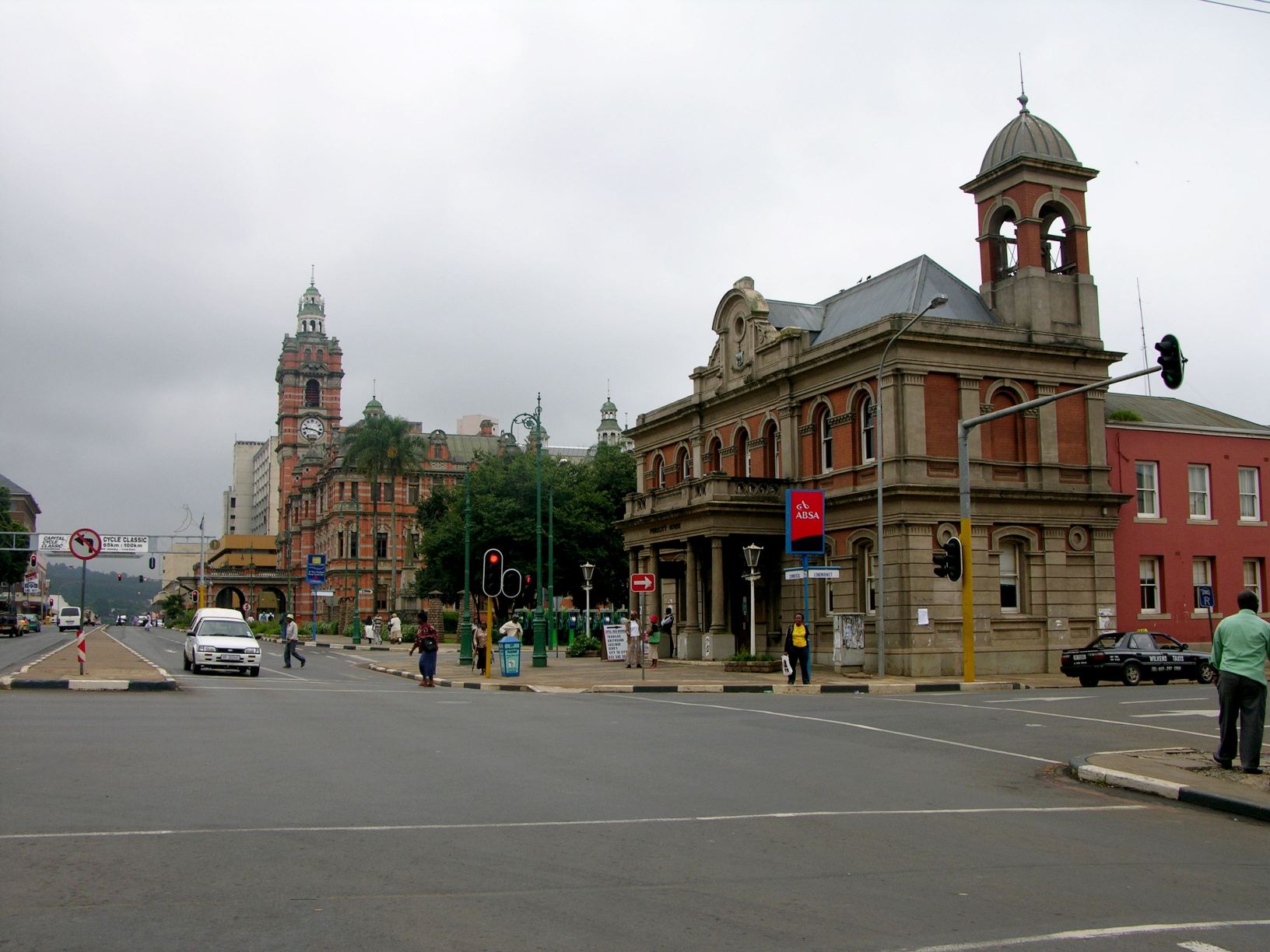
That evening we drove north-east for a long time. The weather turned and instead of the African heat we were used to it felt like September in Saint Petersburg. We spent the night in Riverside (30°16.447′S, 29°56.041′E), a little Black town before Pietermaritzburg, and had a walk around the latter the next morning.
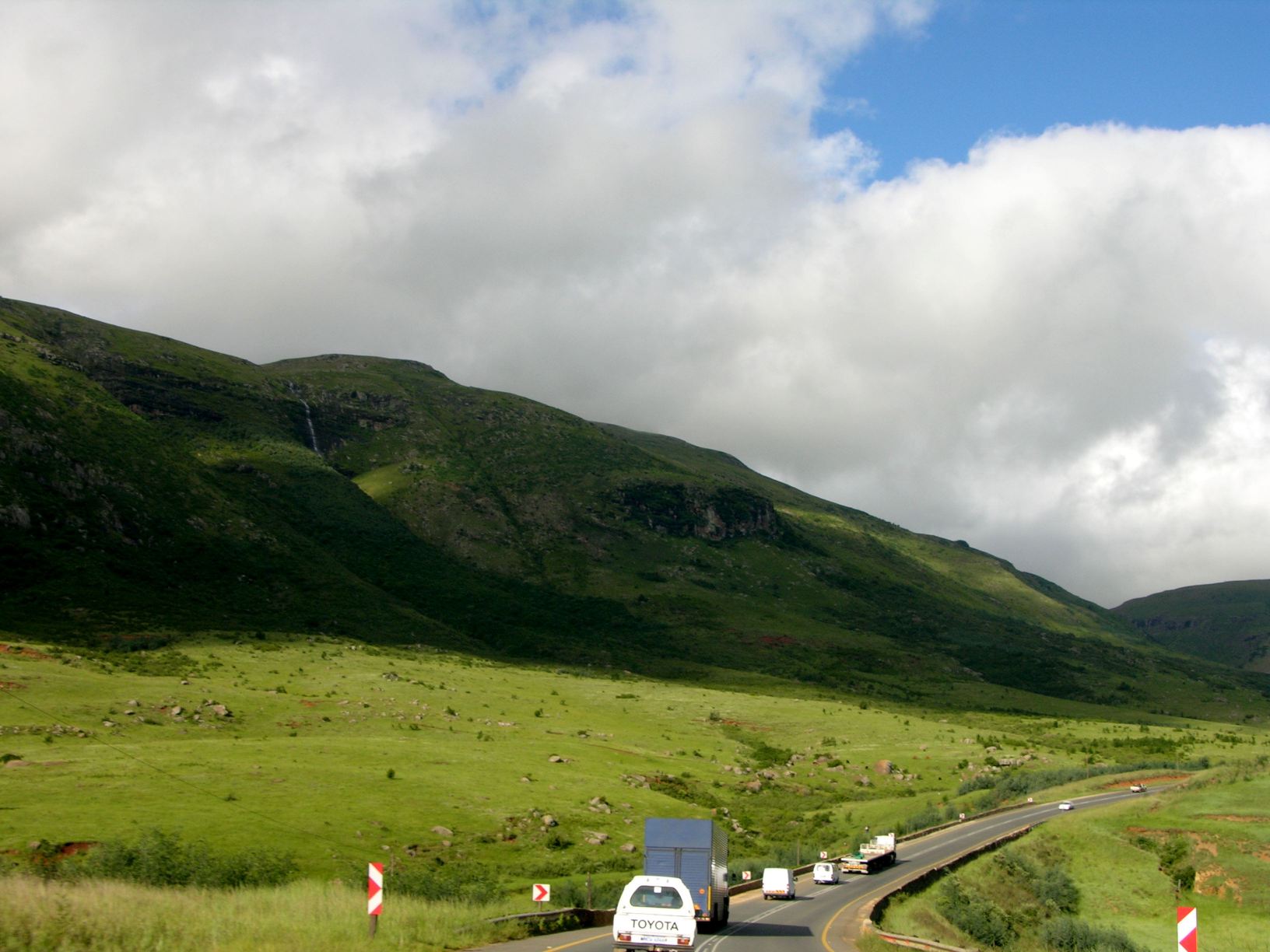
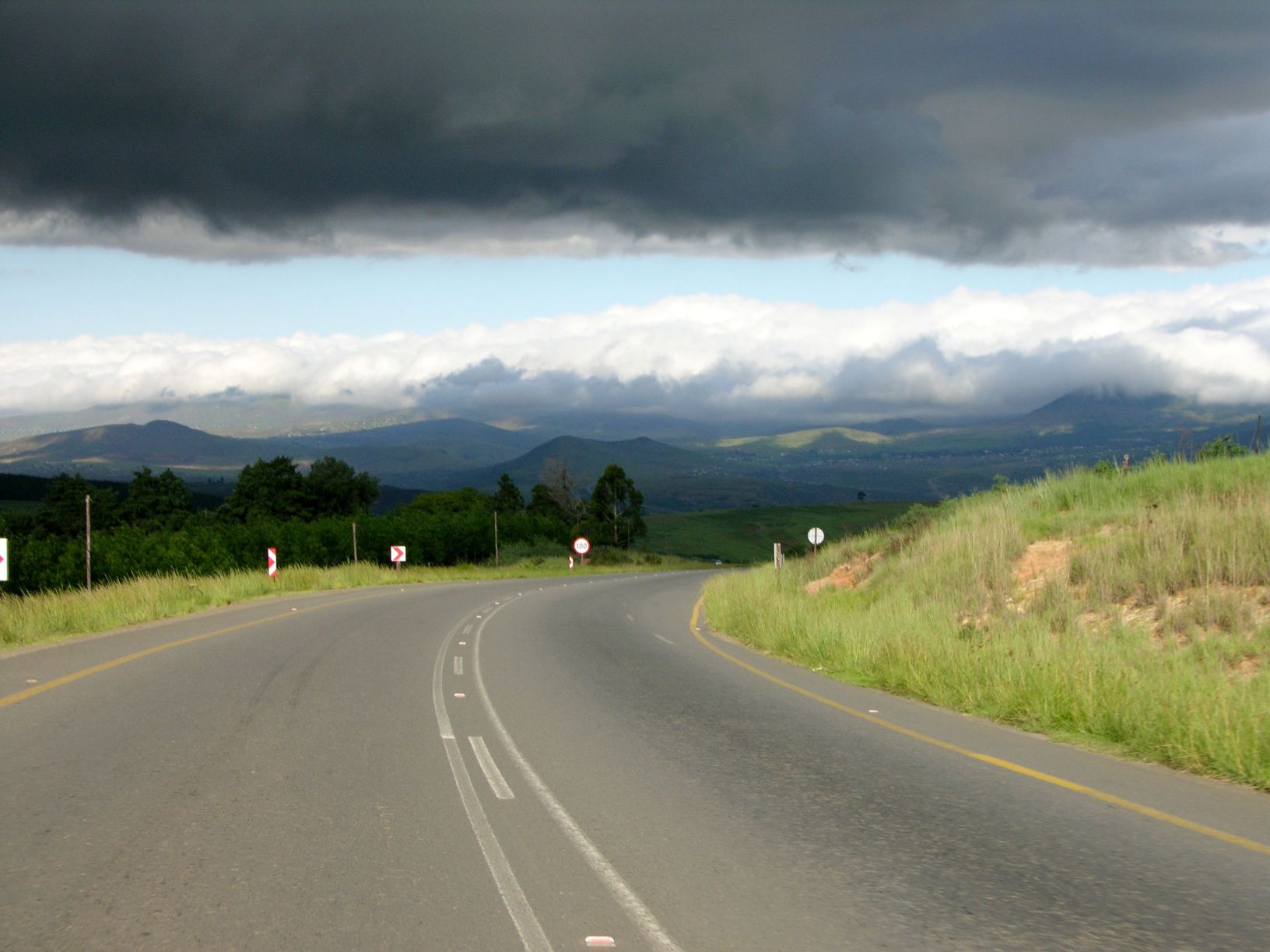
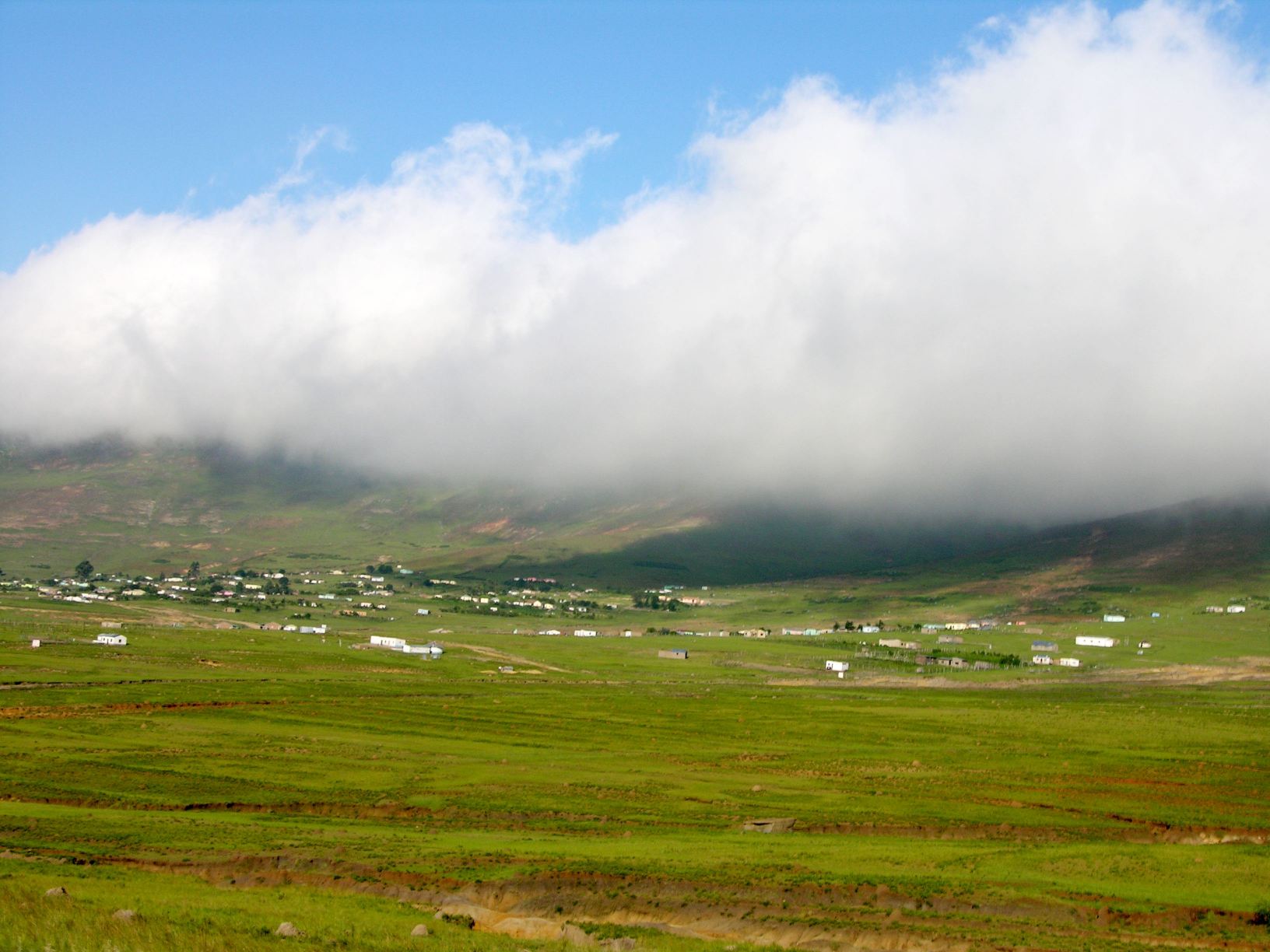
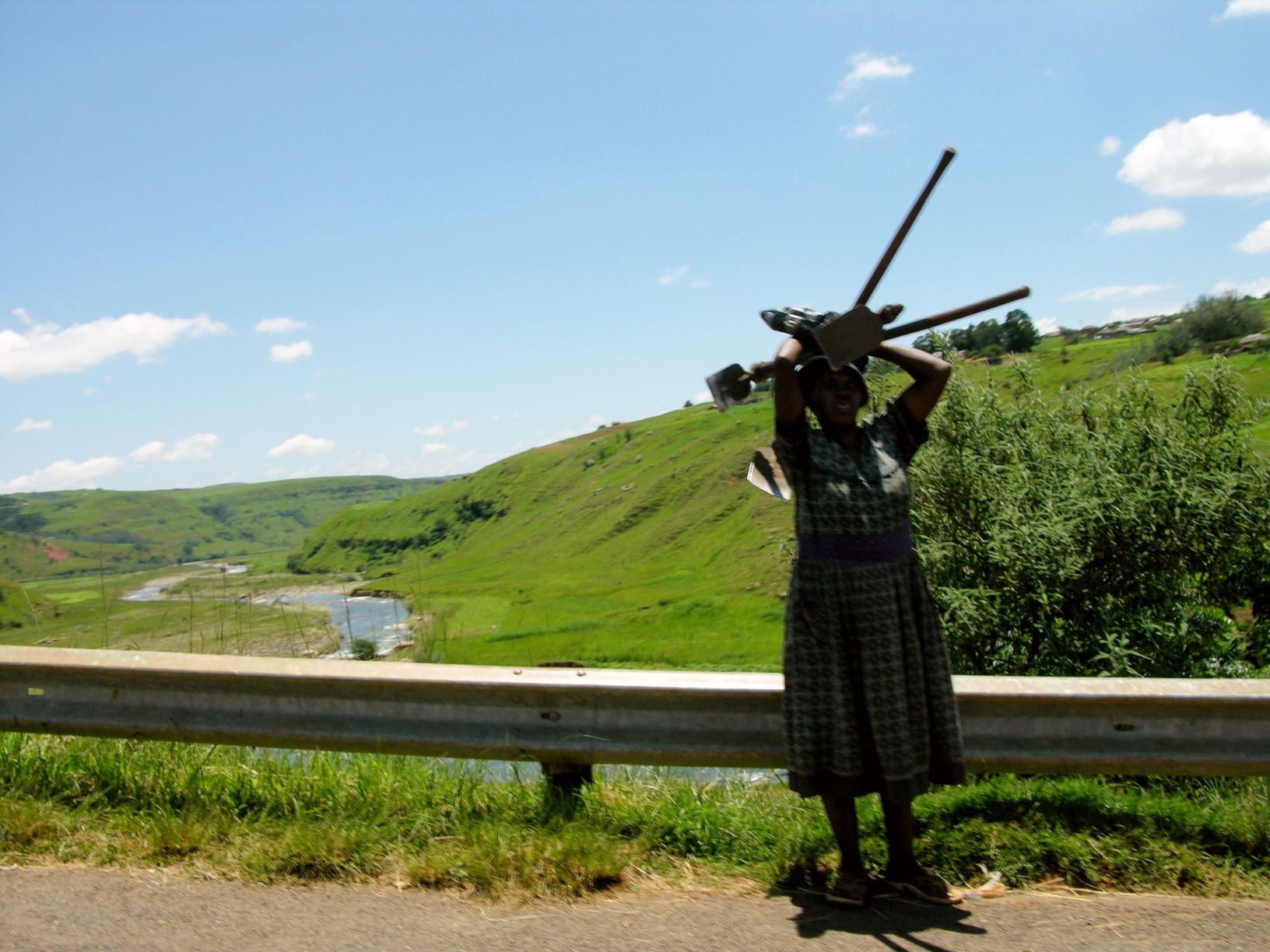
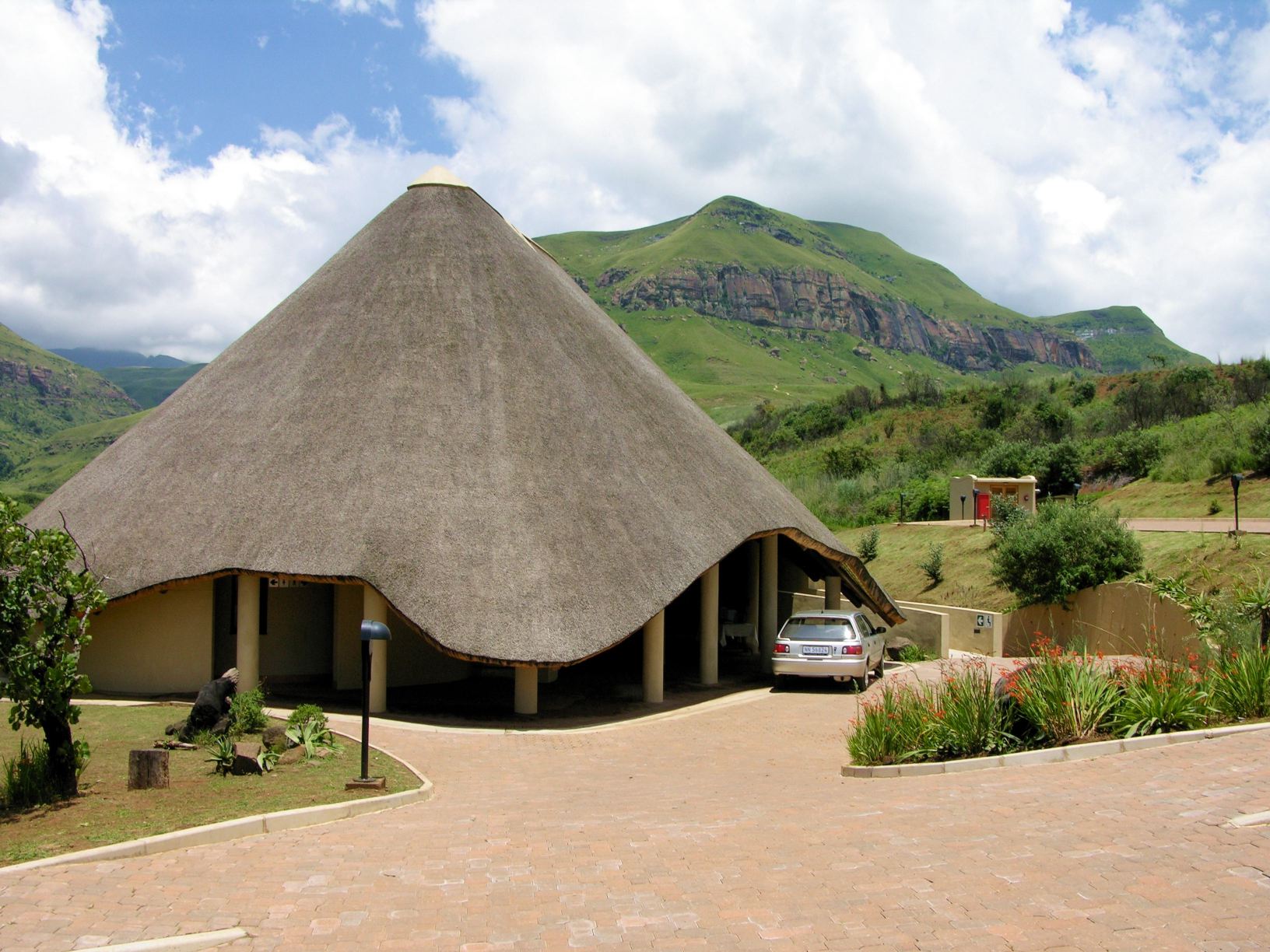
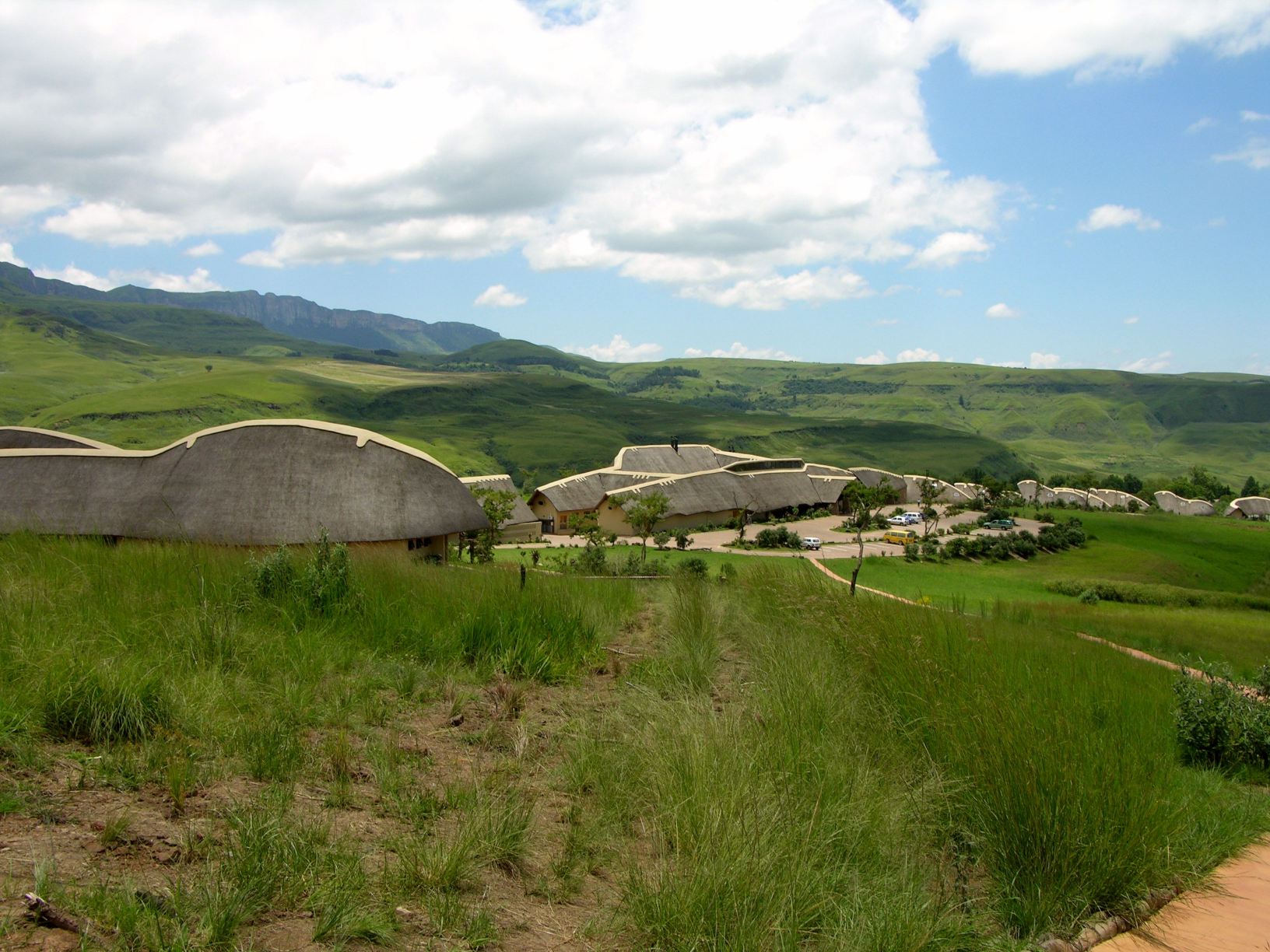
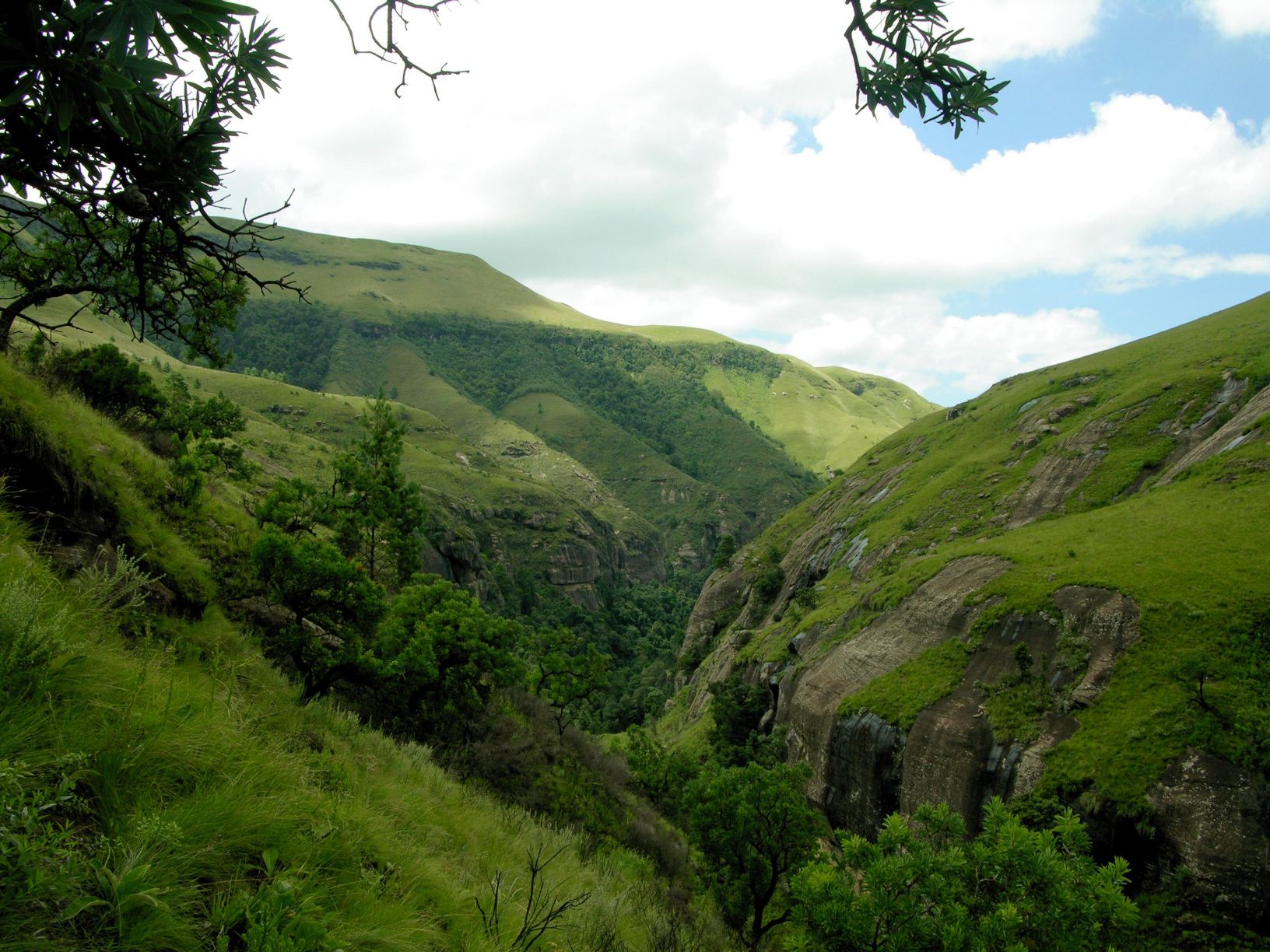
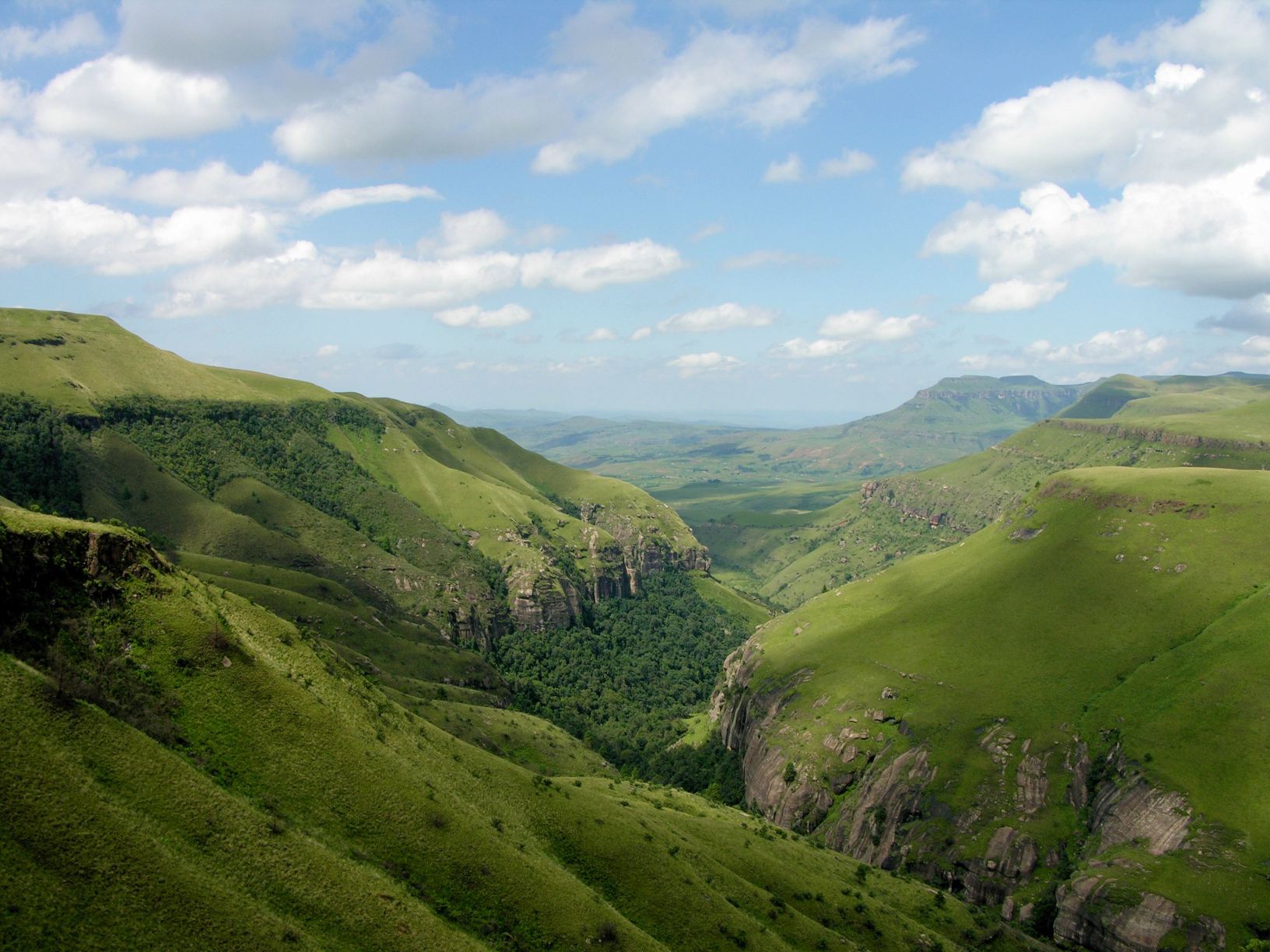
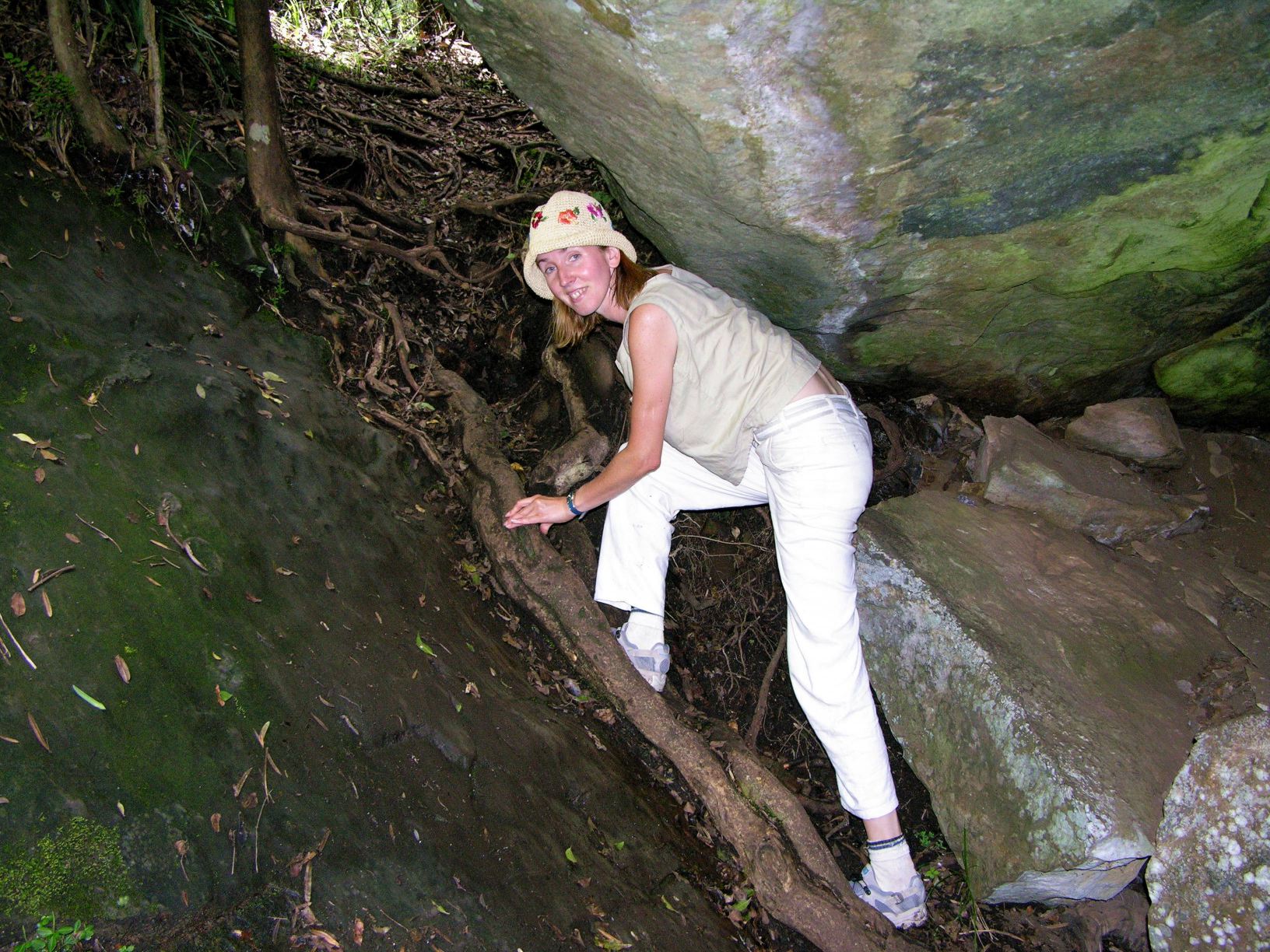
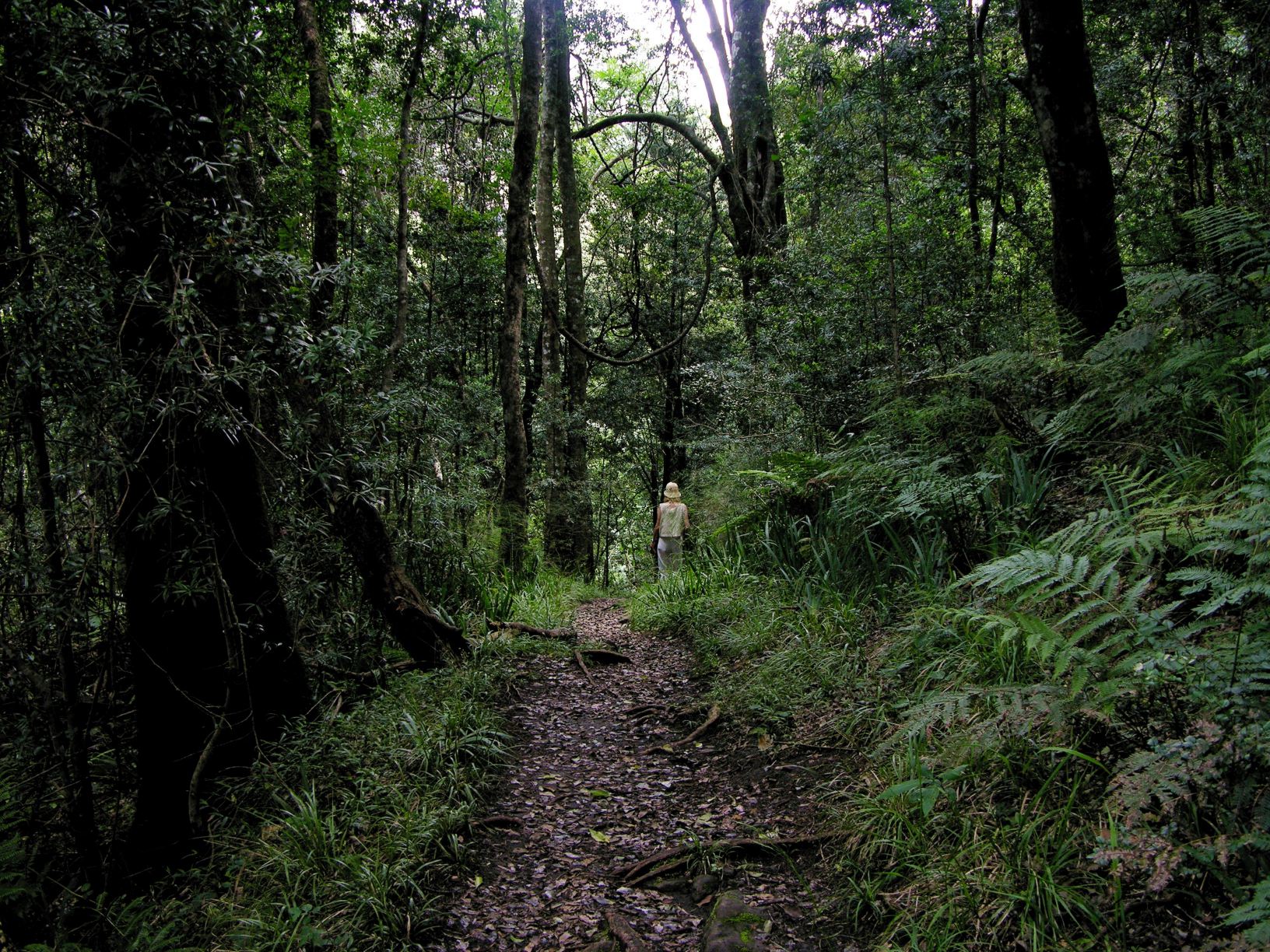
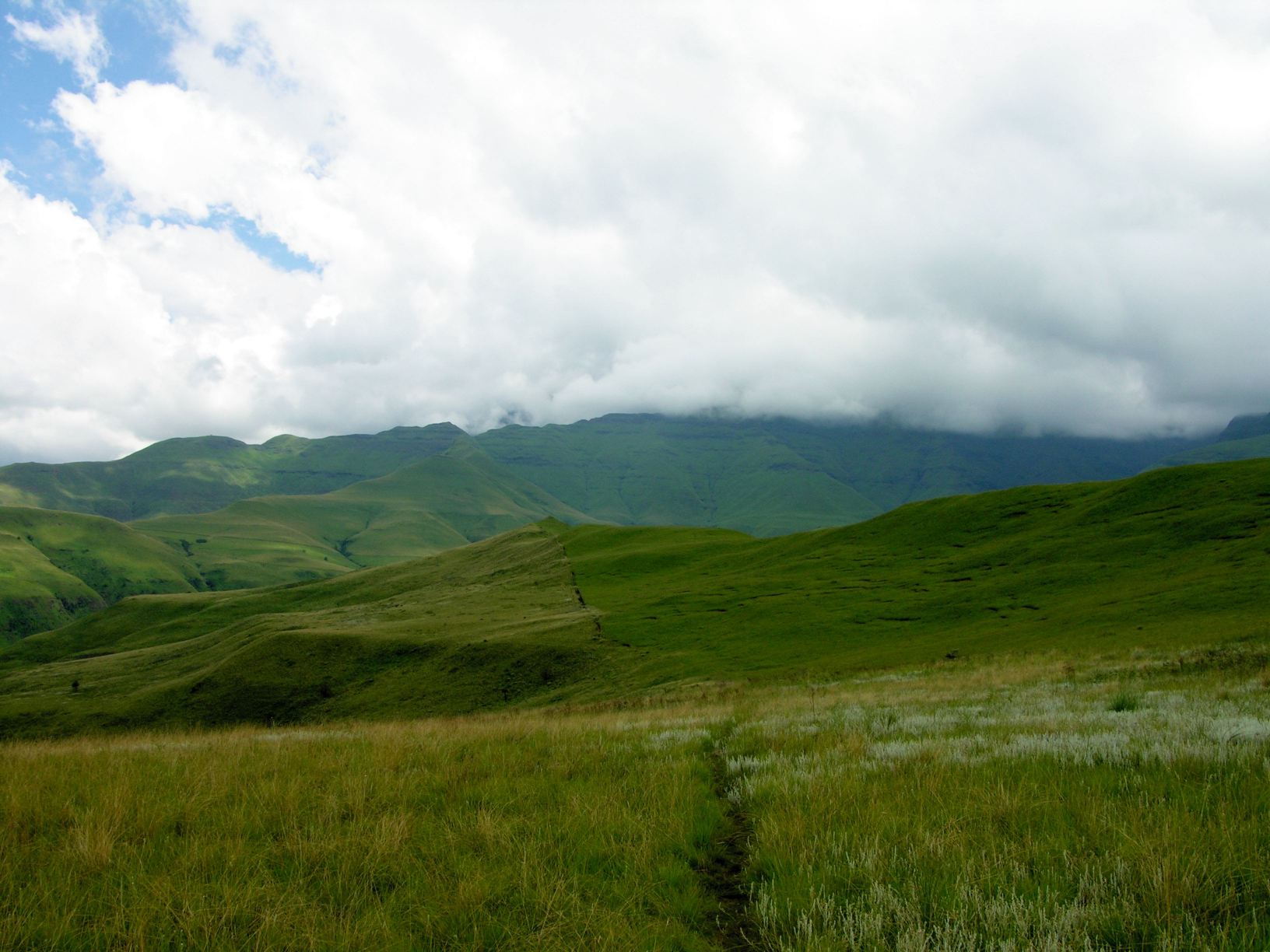
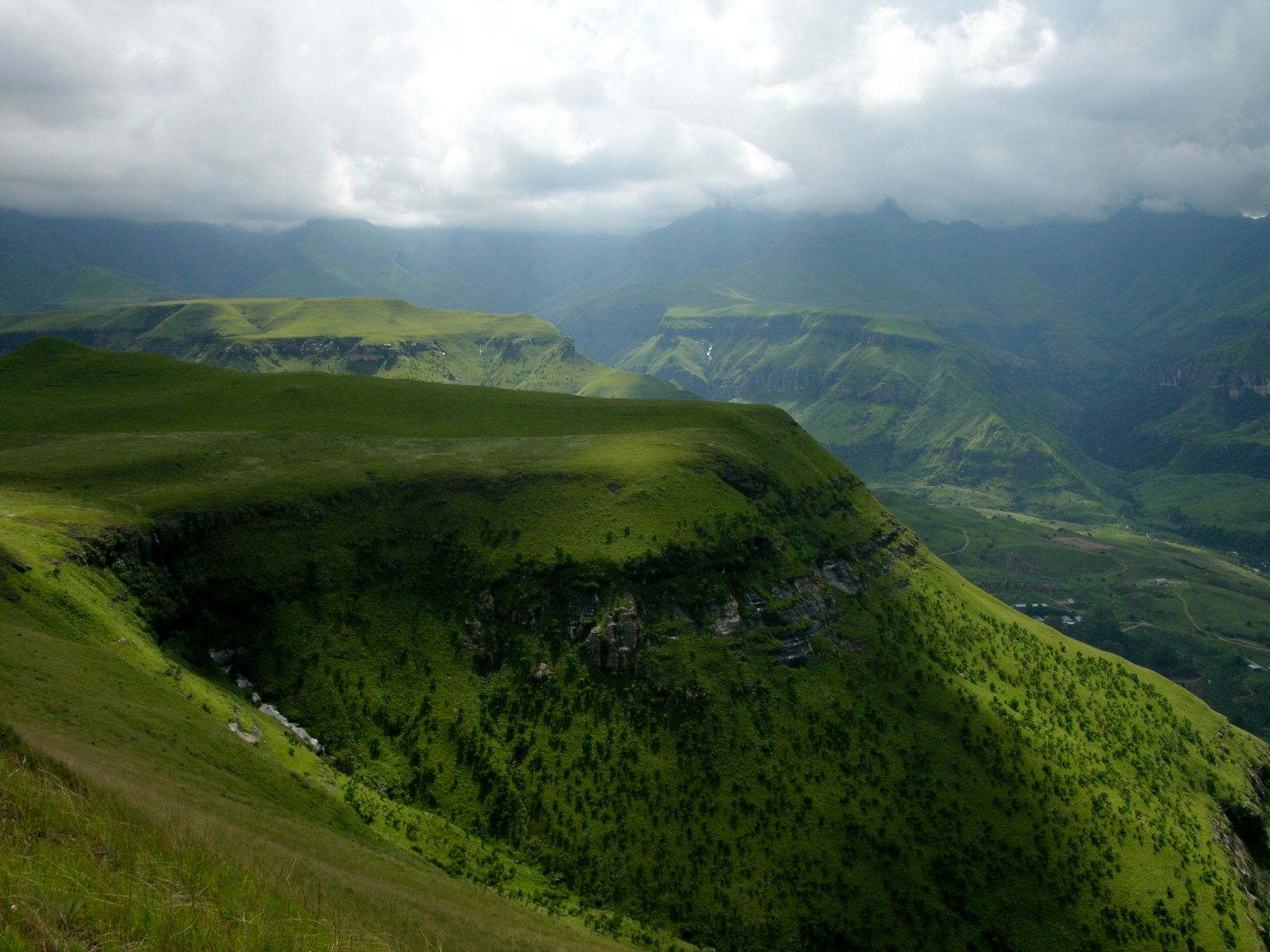
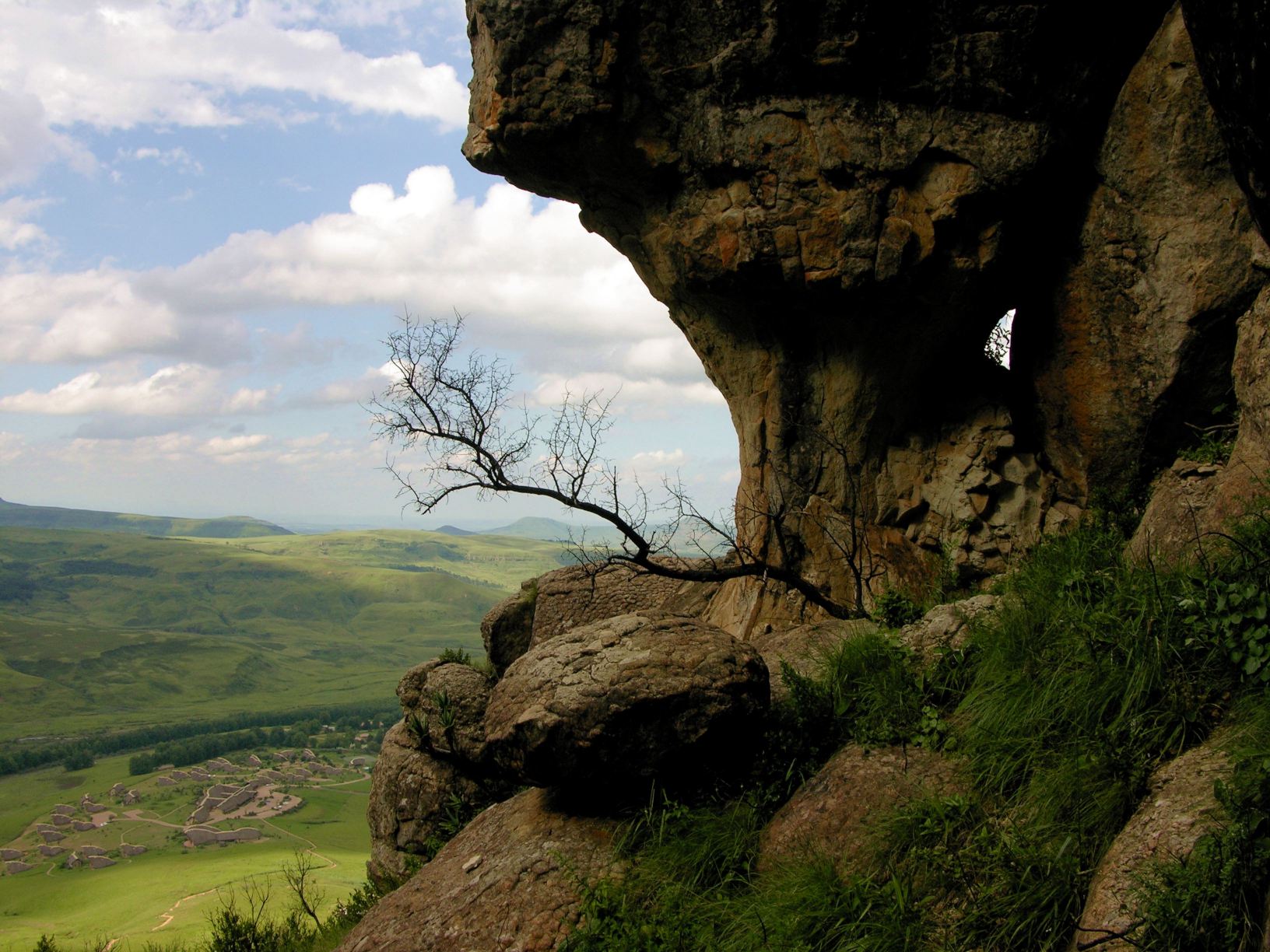
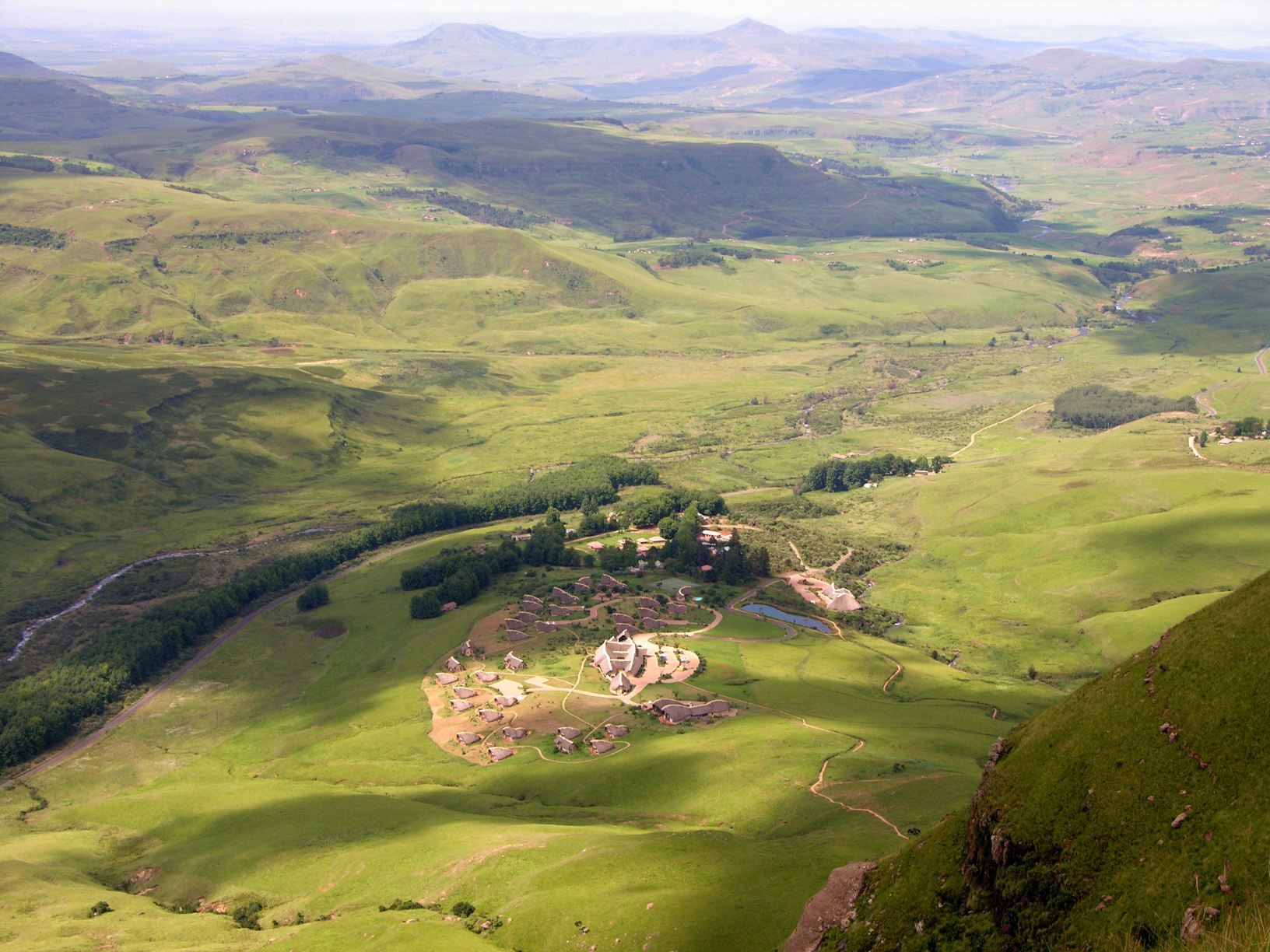
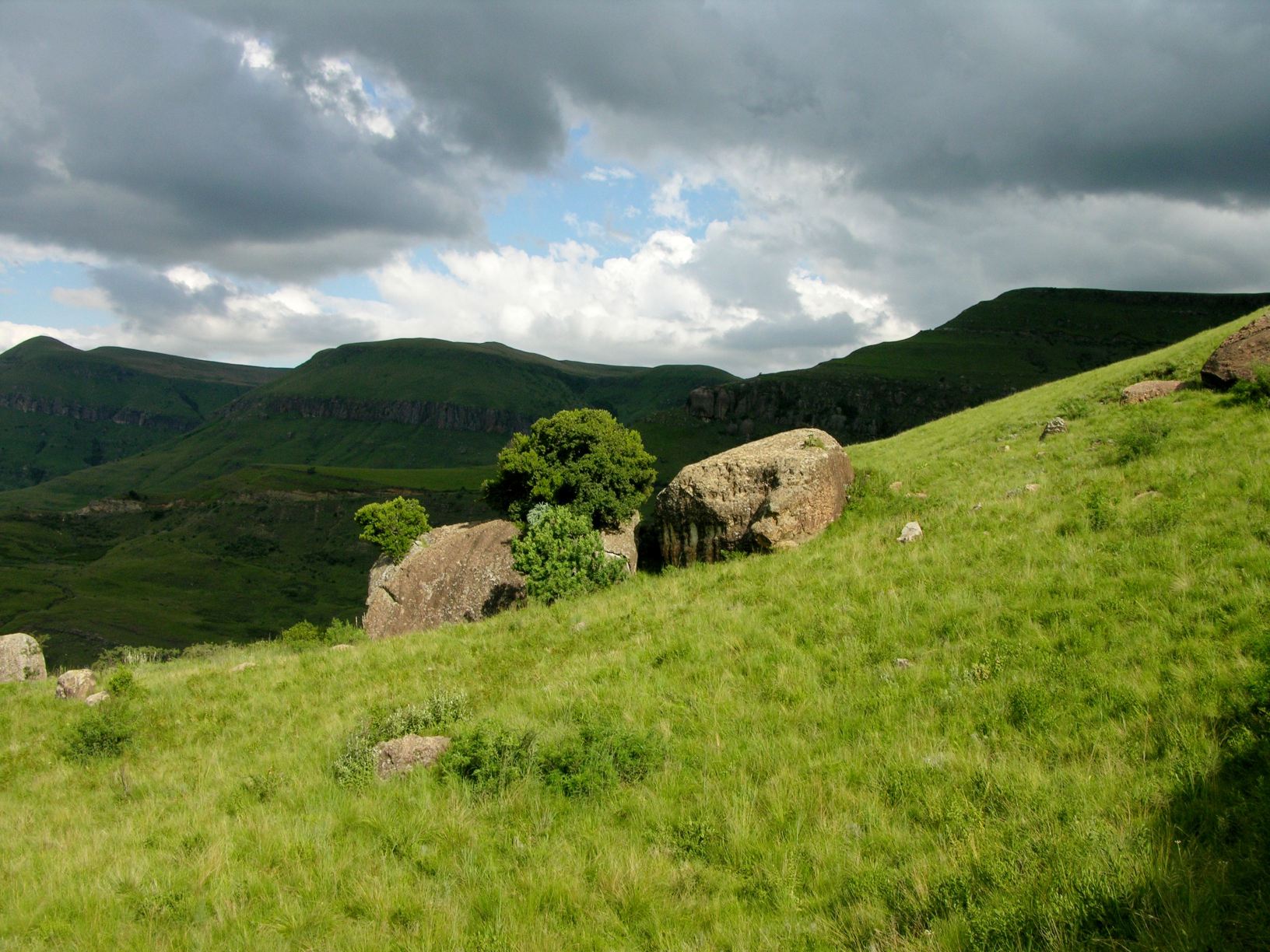
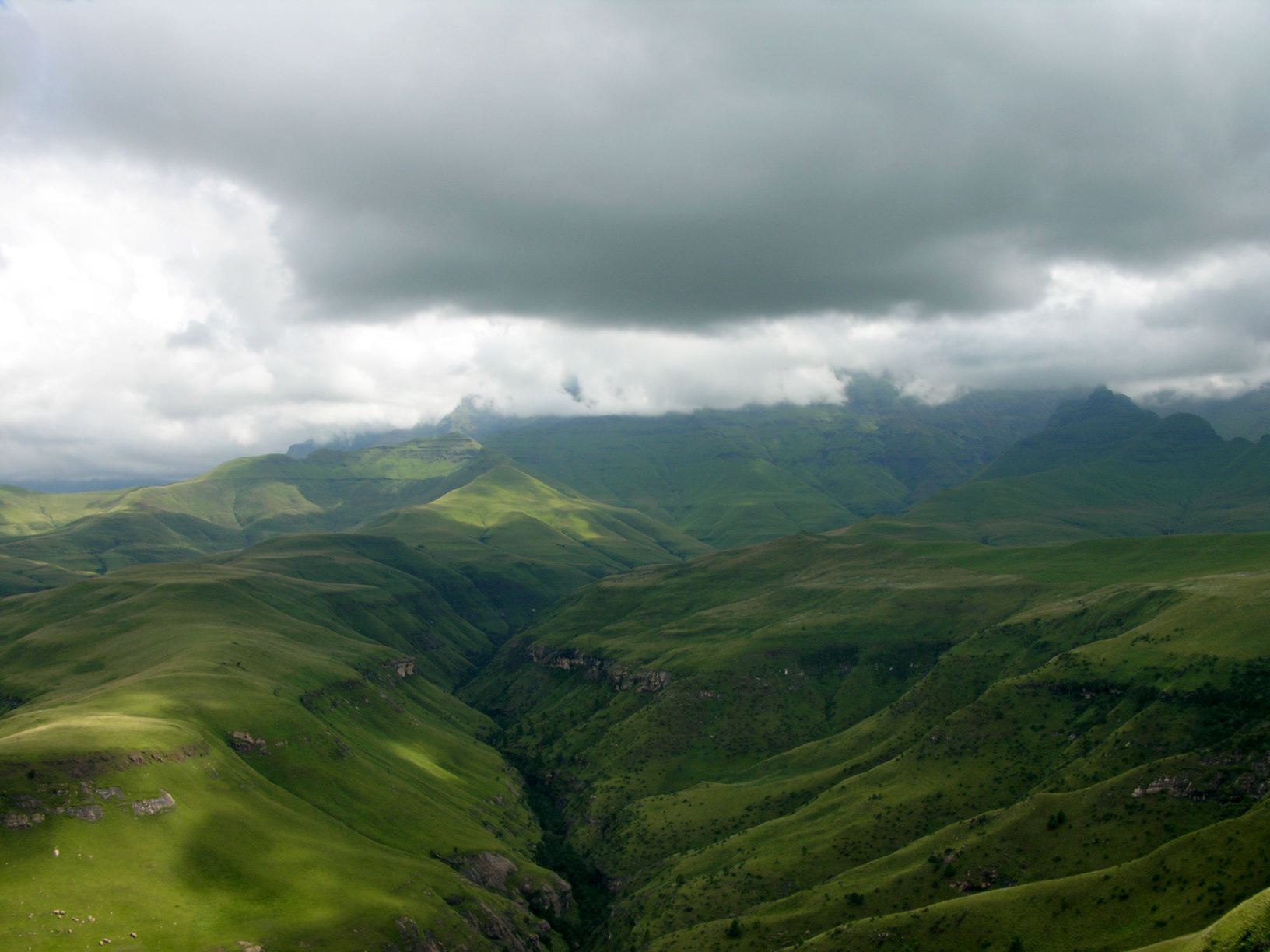
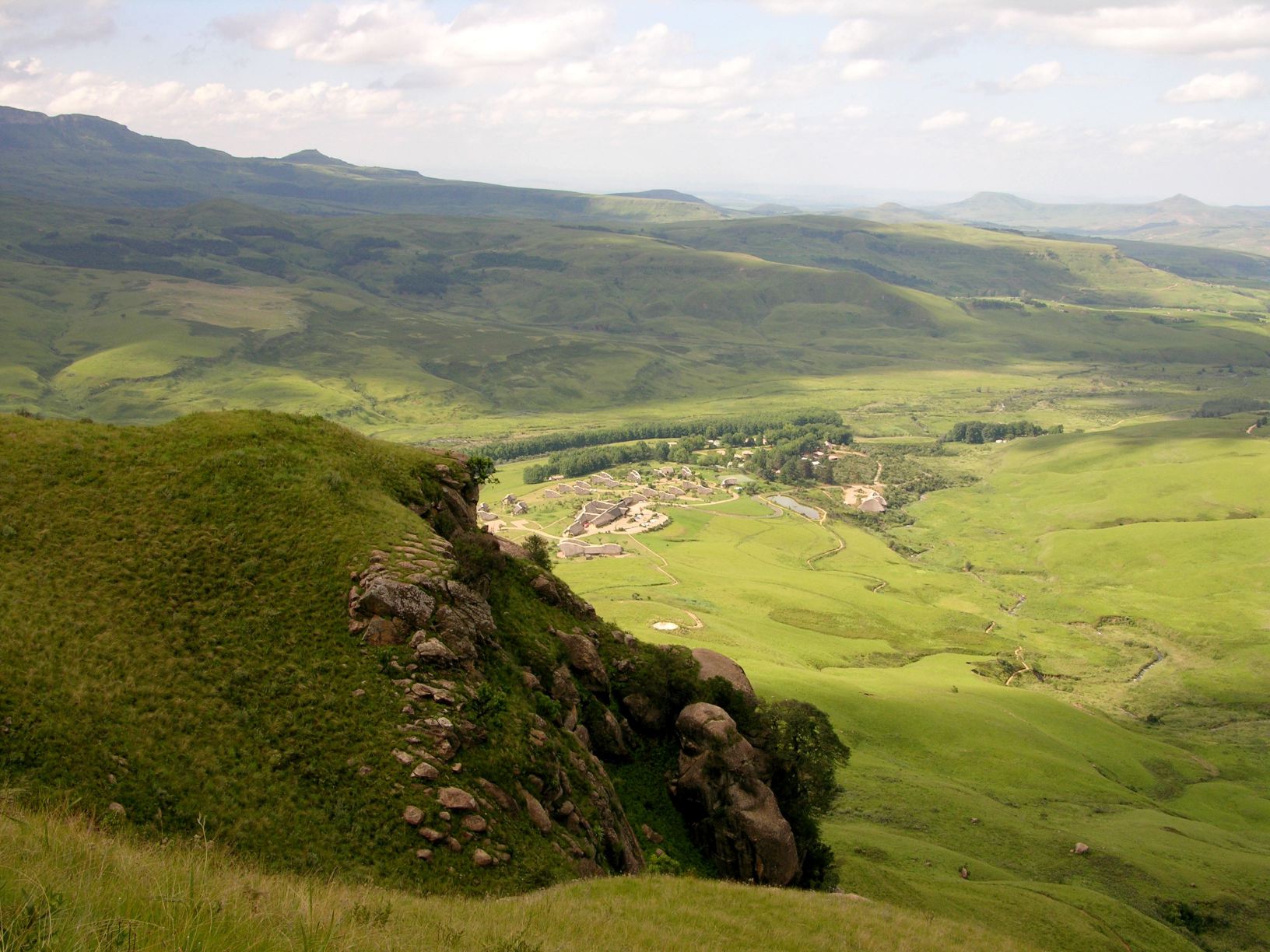
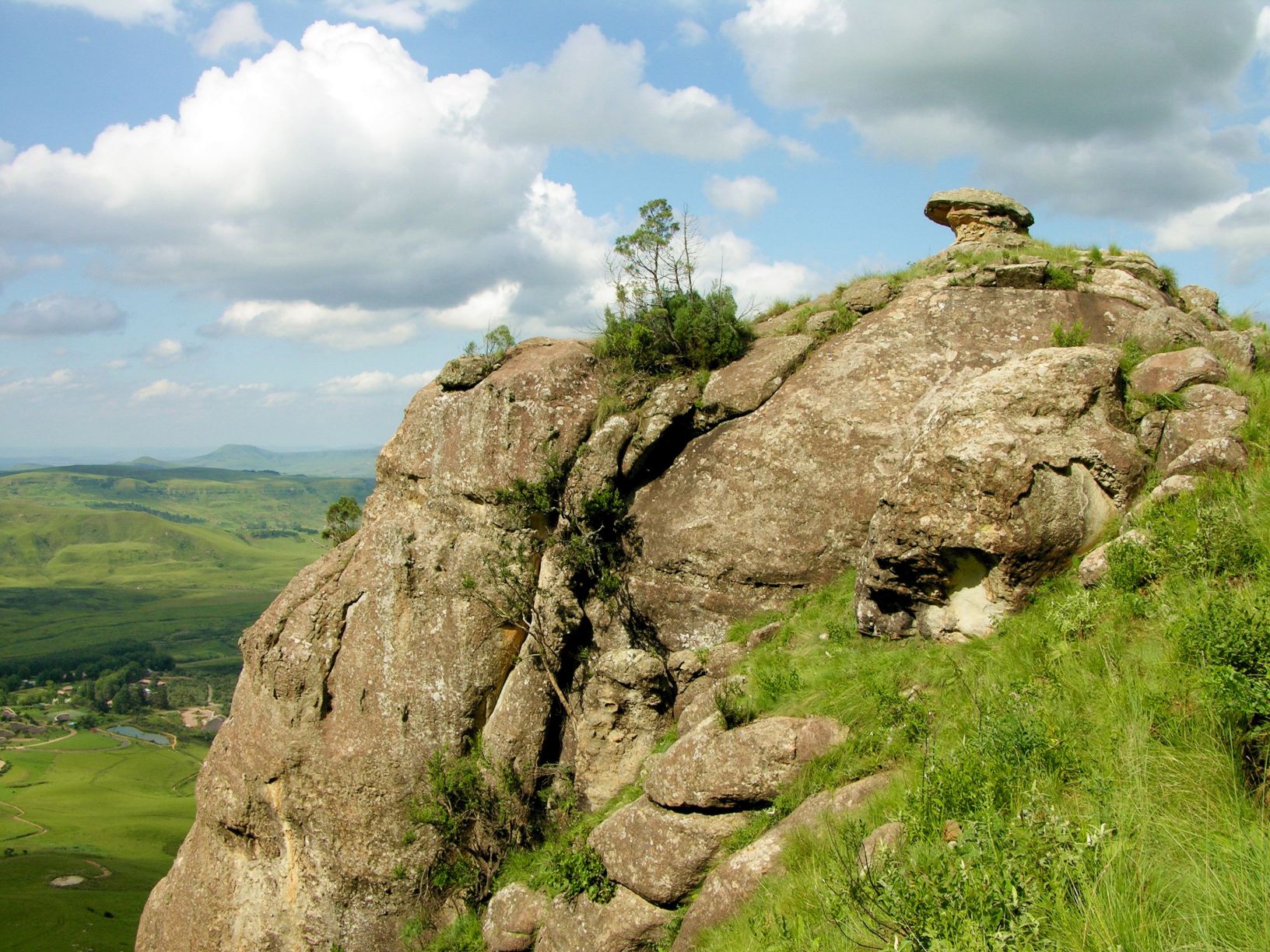
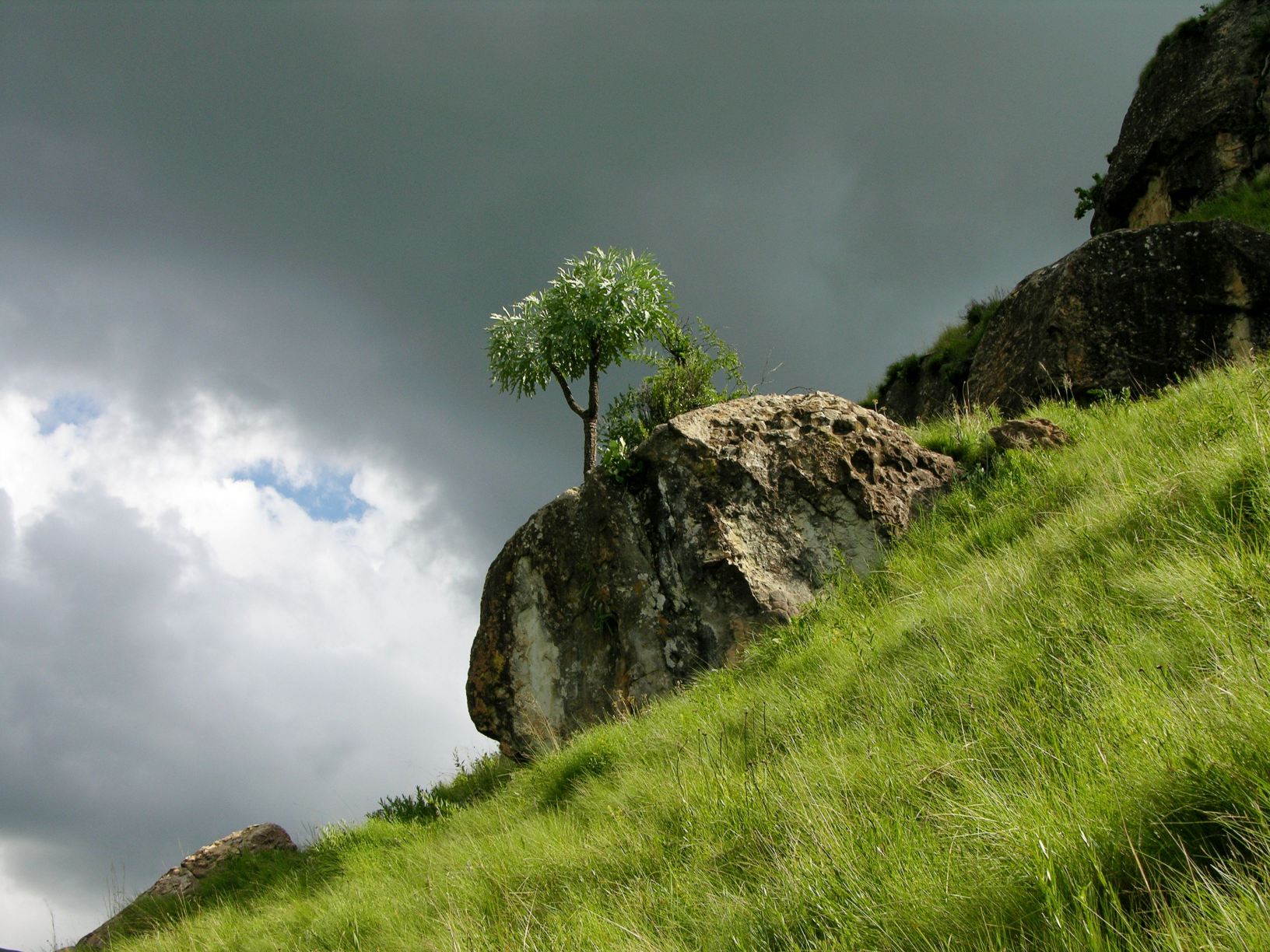
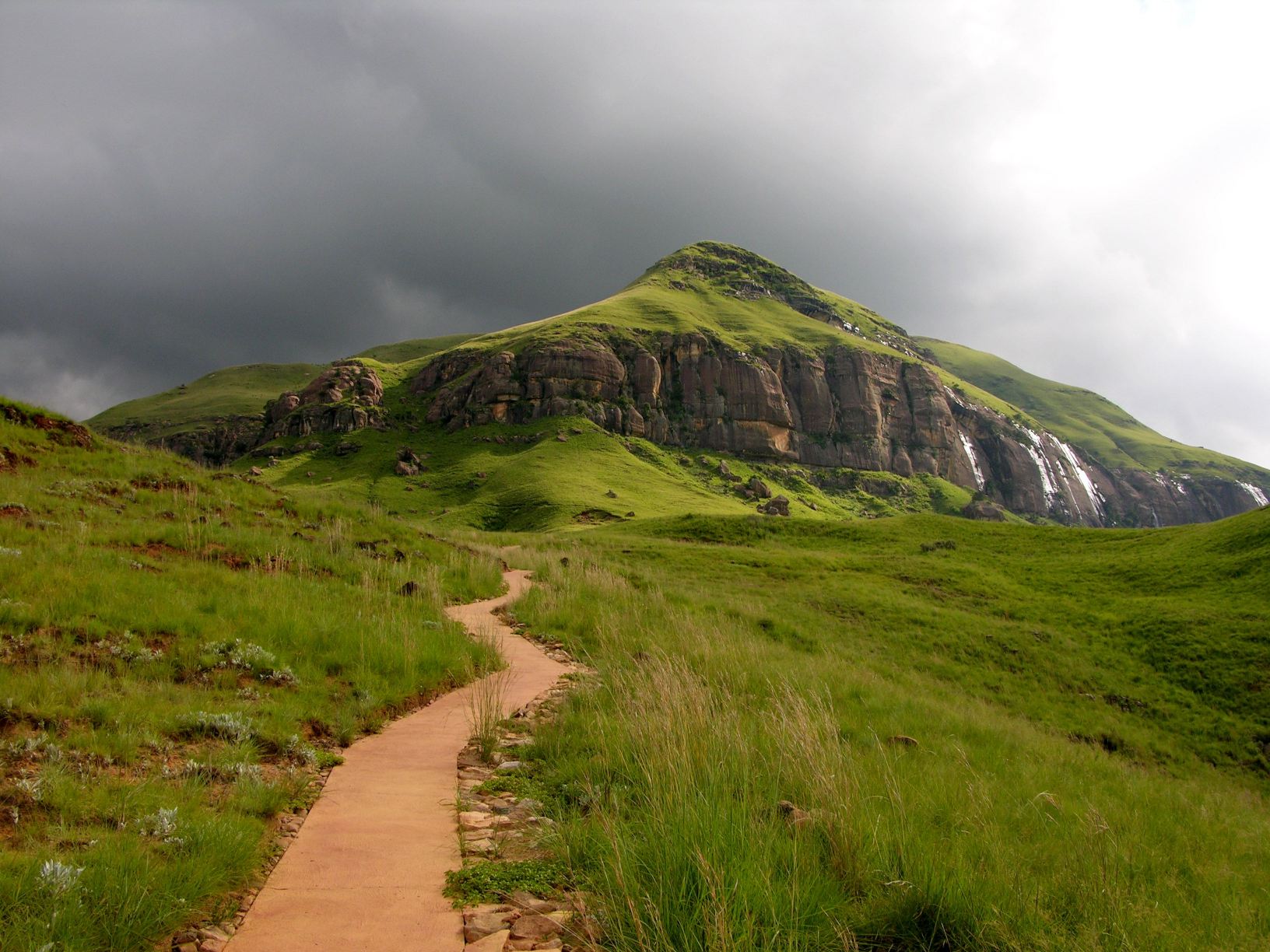
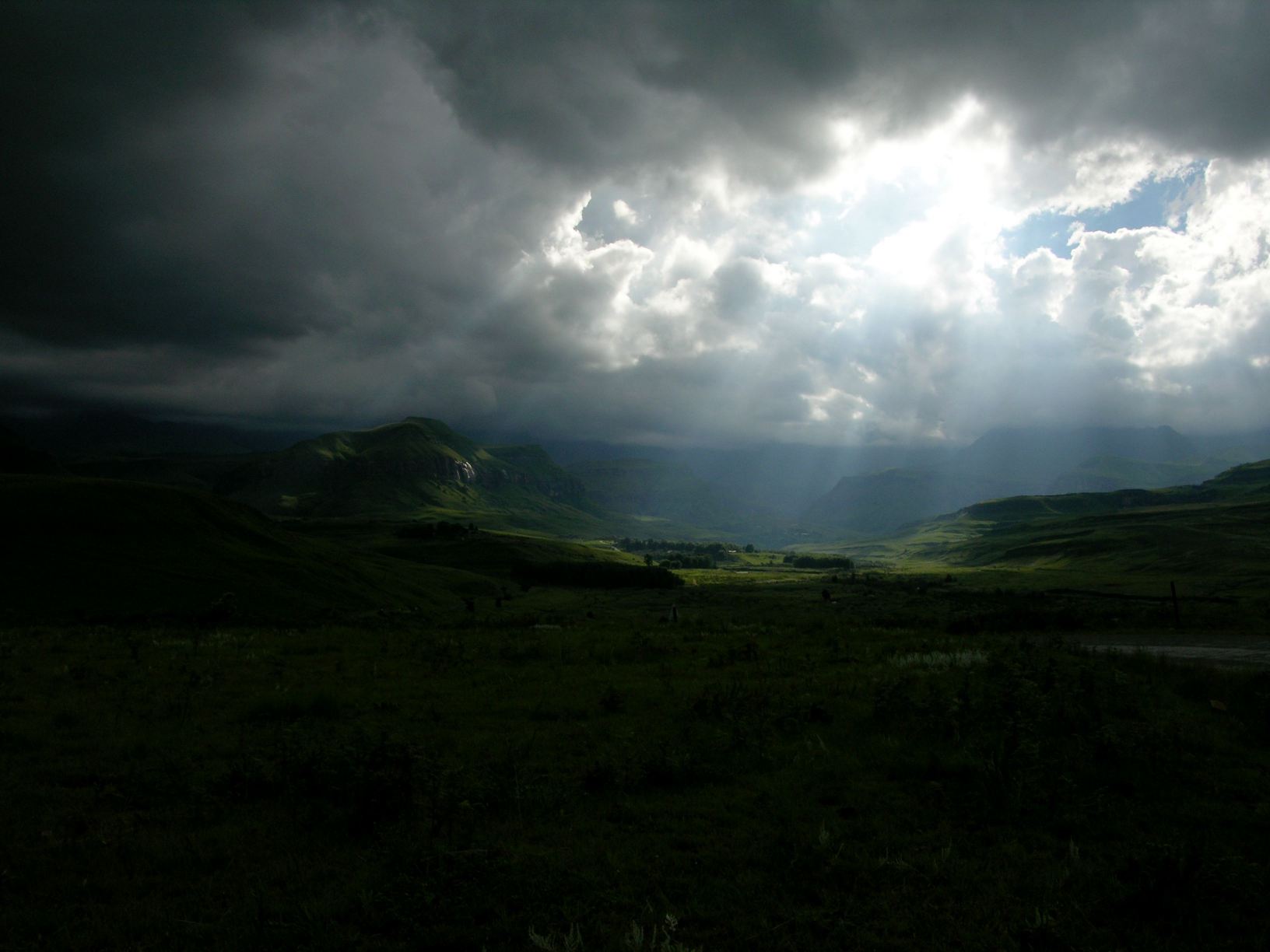
The Drakensberg isn't all in Lesotho. Its eastern flank, in South Africa, is protected as a national park, uKhahlamba-Drakensberg Park. It's the most popular place for walking. Officially you're supposed to keep to the marked tracks, but anyone who wants to walk and camp wherever they like just does. Unfortunately, summer in the mountains is rainy, so we had to make do with a morning excursion before the afternoon storm. The stream valleys are thick with subtropical forest; the summits are alpine meadows. People mill about within a few kilometres of the gate. Beyond that there's peace and quiet. It was a splendid walk. When the clouds thickened, we had to make ourselves scarce and drive on. We'd hoped to stay somewhere nearby that night, but it was expensive in the park and still early. We headed north towards the capital. This was where something strange happened. Whereas before then there had been signs for little hotels of every sort at every turn, as soon as we entered the Free State they ceased to exist. We started trying towns along the road. There were almost no hotels and the few that did exist were filled with workers, Chinese among them, who had been staying there for ages. Nobody was expecting visitors like us. That was bad news, because every kilometre brought us closer to Johannesburg, a place where it could be dangerous to look for a room at night. There was nothing for it. At eleven in the evening we finally got onto the city ring road. We had to drive to the airport, where on our tenth try we got a room at the Holiday Inn for 700 rand.
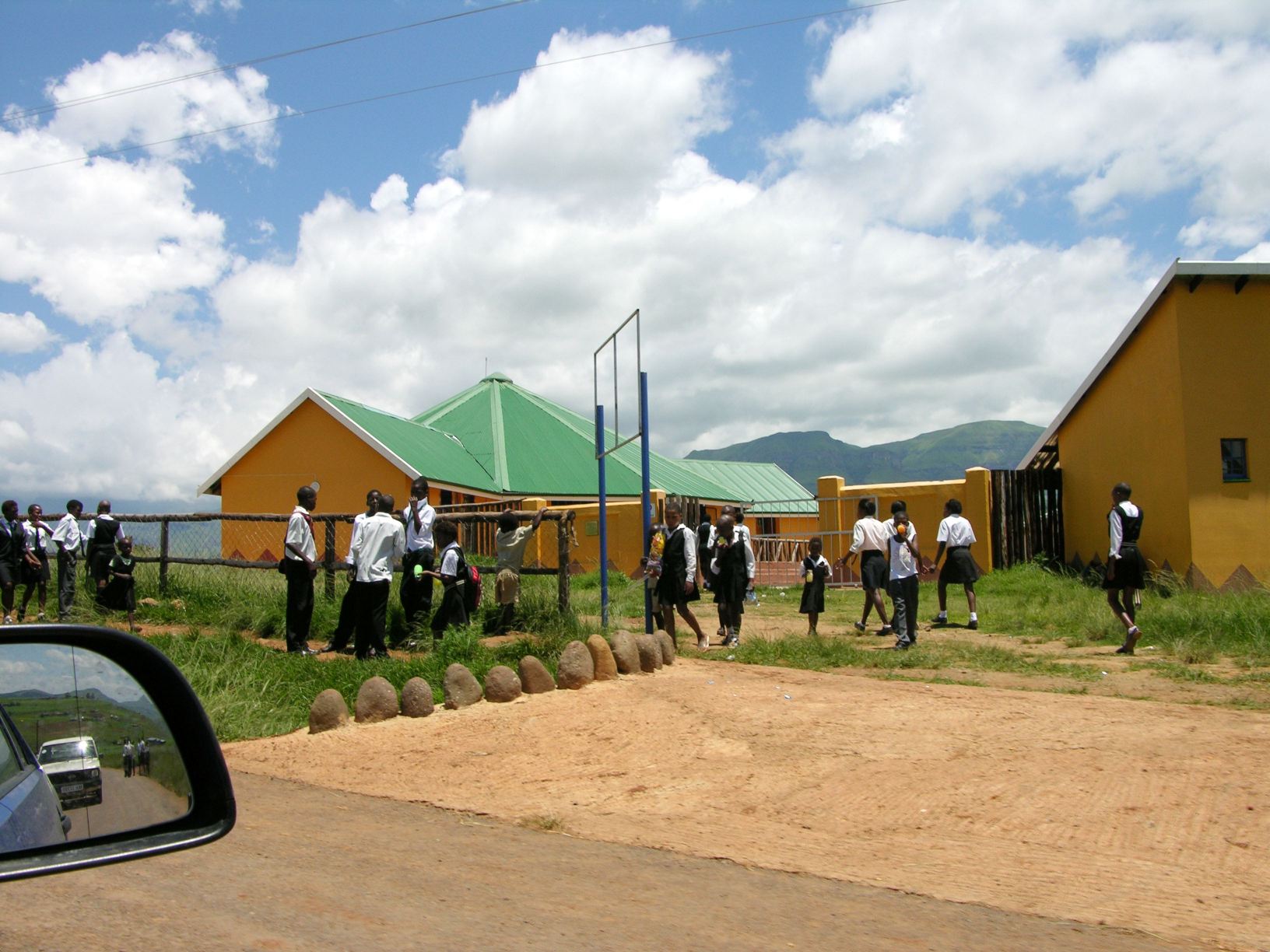
We needed a Swazi visa. There was a consulate in Johannesburg, but Pretoria was a safer bet and only forty kilometres away. The consulate turned out to be right in front of the country's main government building. A visa cost forty rand and they gave them to anyone who asked. All you had to do was name the crossings where you'd come in and go out, though you could then enter somewhere else altogether. Hand in your passport before eleven in the morning, and you could get it back after two. We had some time to spare.
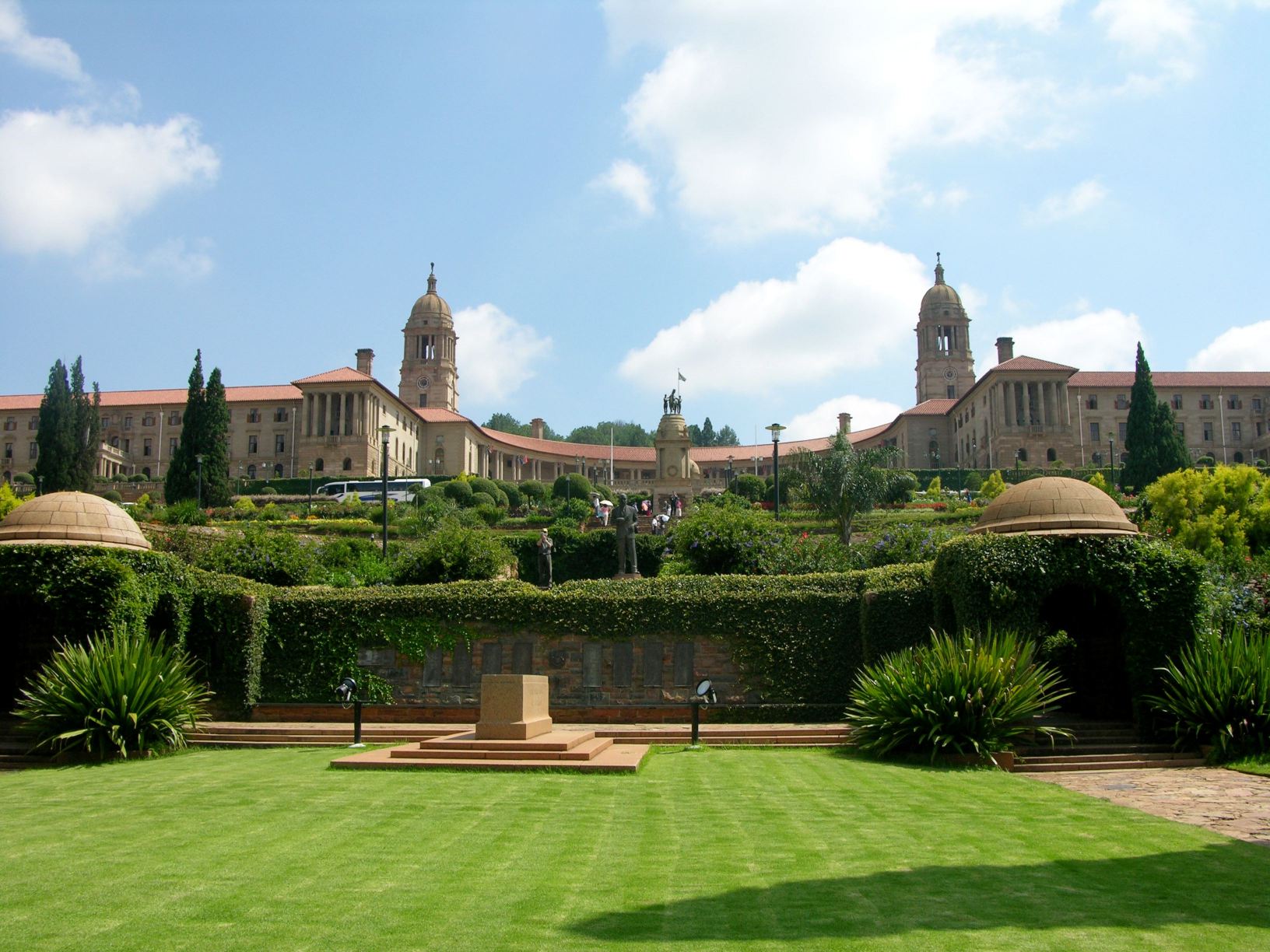
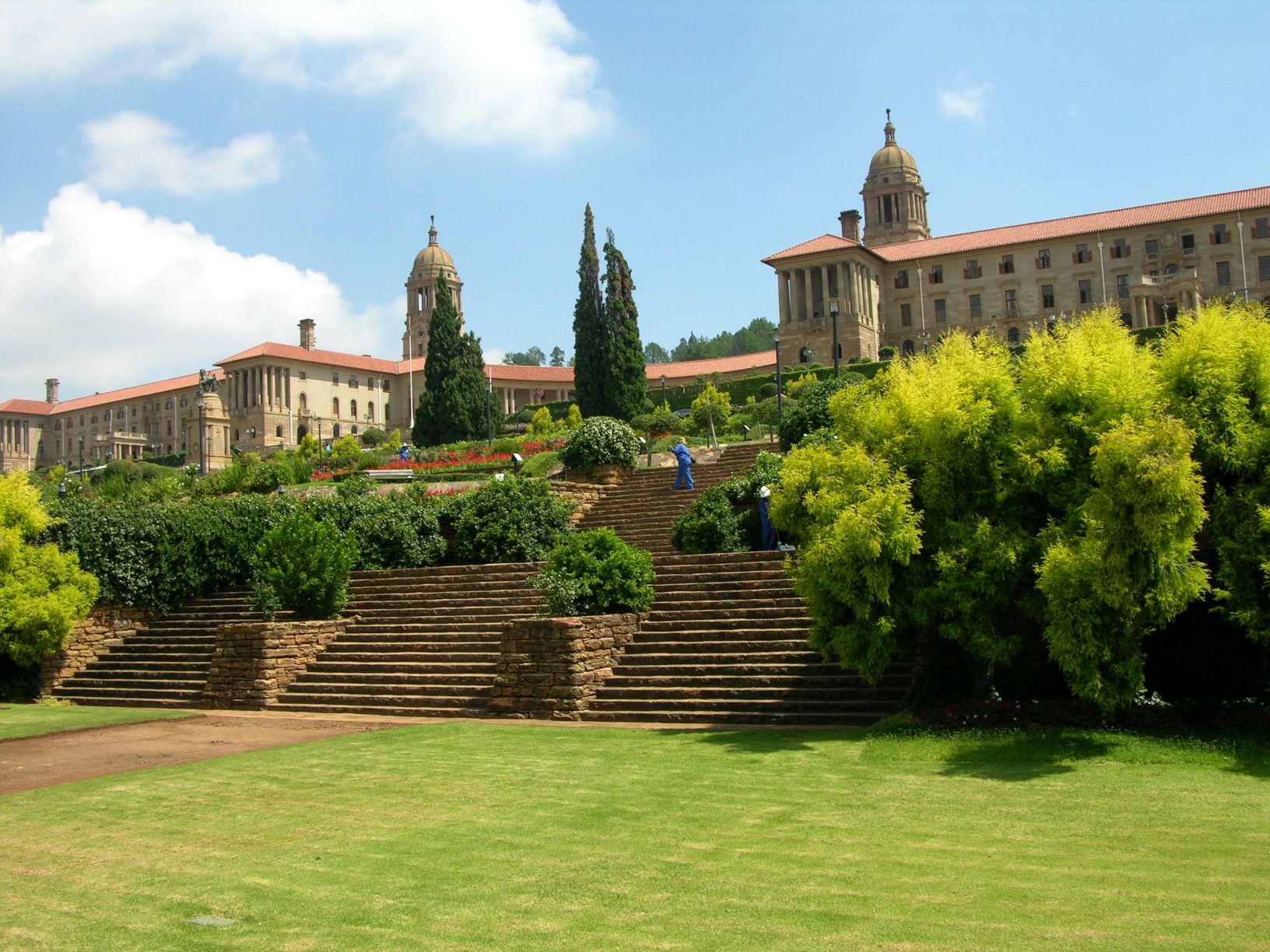
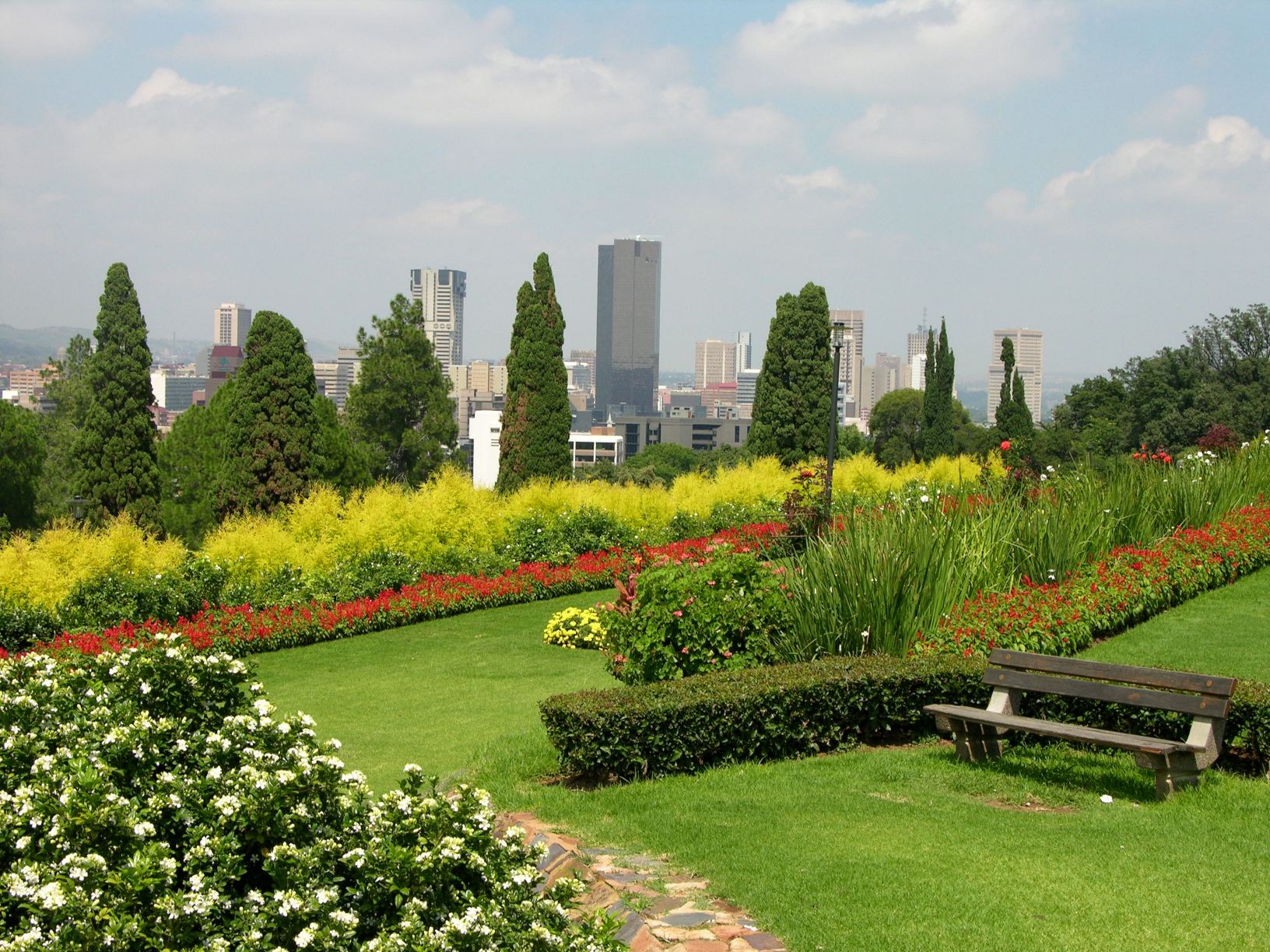
We walked around the government building on the hill. The adjoining park was immaculate. I remembered it from pictures in Soviet newspapers describing the savage crimes of the racist regime. The famous international community had hounded the white government then, and in the end it got its way. I wasn't sure whether life had got better here. South Africa, I thought at the time, might be the only country where things hadn't got much worse after the colonists left.
After a little walk around Pretoria, we decided it was time to poke our noses into central Johannesburg. The devil isn't as black as he's painted. We wouldn't get out of the car.
We found a suitable exit from the motorway. At the bottom there was a heavy police presence. You got the impression they'd drawn up in a ring, shoulder to shoulder, all the way around the dubious city centre.
The streets were indeed almost entirely Black, though you saw the occasional white face. It seemed to depend on the street. On one of them, somebody shouted right through our window, ‘This is an African street. Whites have no business here, not even in a car. Get out!’ Yes, a cheerful little place. The triumph of the national liberation movement. There were plenty of quite respectable skyscrapers. Were Black people the only ones working in them? More likely everyone drove there and parked underground. There were abandoned buildings as well, their windows broken and rough sleepers inside. That was the group we were afraid of. There did seem to be plenty of shady-looking people on the streets.
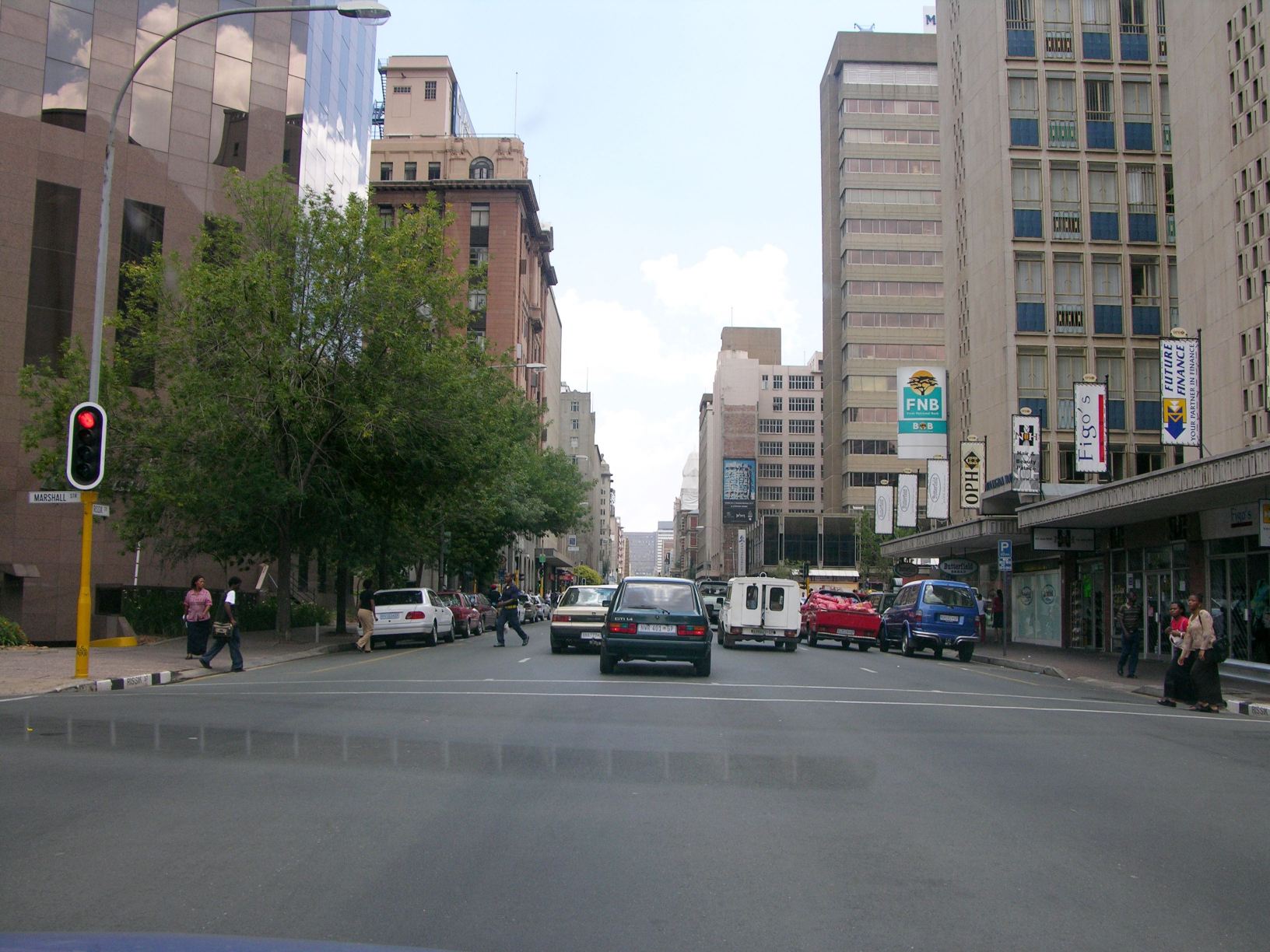
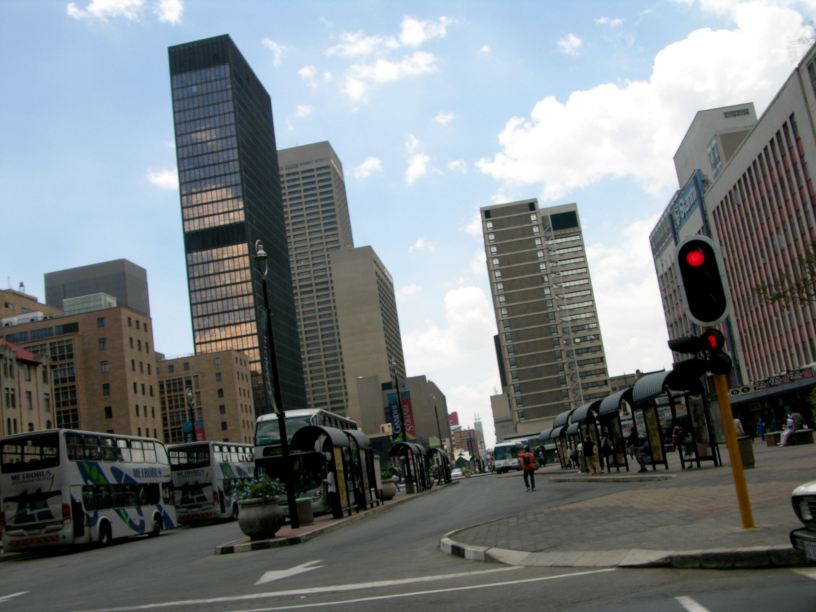
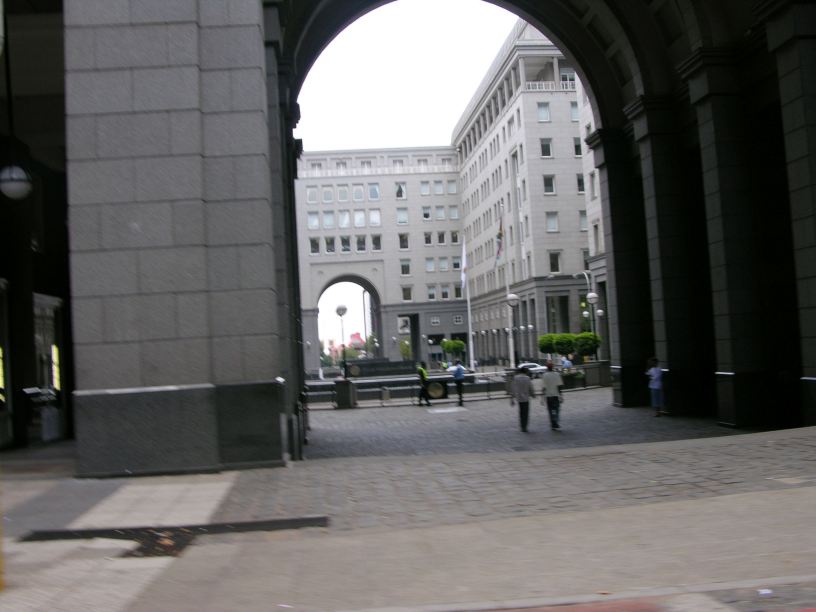
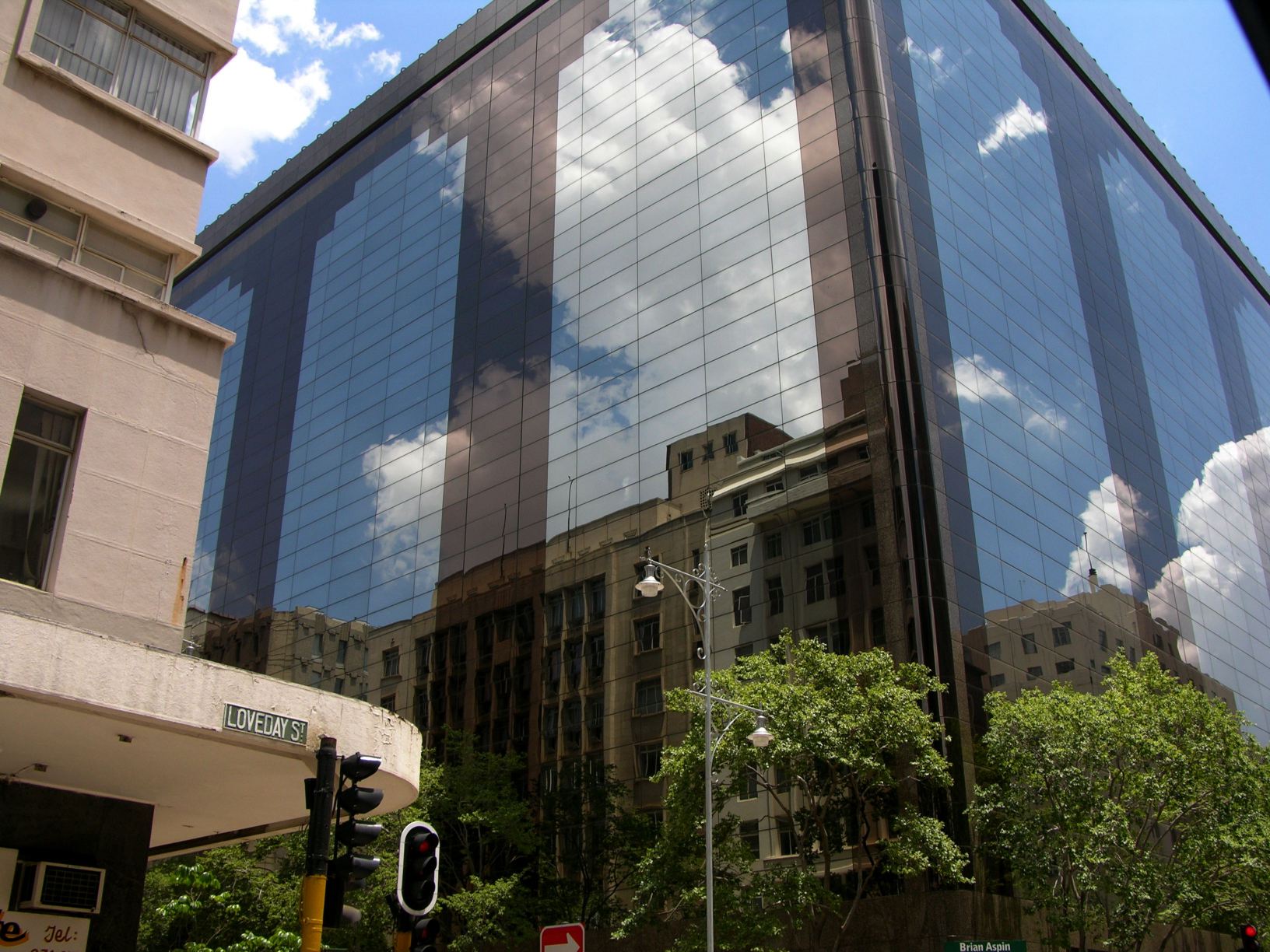
I tried to photograph buildings as I drove. Tanya wouldn't, and when Tanya doesn't want to do something there's no persuading her. If only I had at least three hands. I drove slowly and looked around. A red light was a gift, a chance to take a proper look. I stopped at an amber light and a minibus taxi ran into me. The driver leapt out, wound up and yelling: ‘He was driving too slowly! He stopped at an amber light! It's his fault, he's smashed my car, he's got no business driving around here at all!’ I yelled right back. In Russia I can out-shout quite a few people, but I was no match for his temper. A crowd began to gather. I couldn't see much sympathy in their faces. Perhaps this wasn't the best place to seek justice. We didn't even have our passports. They were at the consulate. I probably shouldn't have got out of the car. My bumper was largely in one piece, except that it had fallen off again. That was the third time. I'd put it back. A tough bumper, though. All the lights on the minibus were smashed. The man was still yelling: ‘Police! Get me the police! He was driving too slowly! My lights! How will I feed my family? White people bring nothing but grief! He's cost me thousands of rand!’ The drivers trapped behind us broke the deadlock. ‘You're blocking the whole road! Clear the intersection!’ We got into our cars. The minibus overtook me, making a show of sounding its horn, and pulled over to park. The traffic surged forward, I swung quickly to the left, and that was the last he saw of me. The man started to move but it was too late. He couldn't get across three lanes in a flash. And that's how I left the scene of an accident. If they did catch up with me later, at least it wouldn't be in the roughest part of downtown.
Finding the way back onto the motorway turned out to be hard. We circled through suburban roads for hours, repeatedly passing under or over the motorway, before making it onto the ring road in the south of the city. We almost missed picking up our passports.
We had our visas, and now we knew what came next. We bought plane tickets out of Swaziland to Johannesburg. Our South African visas expired on 31 January, and our flights home were on 7 February. We'd sit out those days in Swaziland. We'd leave the car there, too, and go through South Africa via the airport transit lounge.
We had nothing left to do in the capitals. We made a quick exit from Pretoria and headed north.
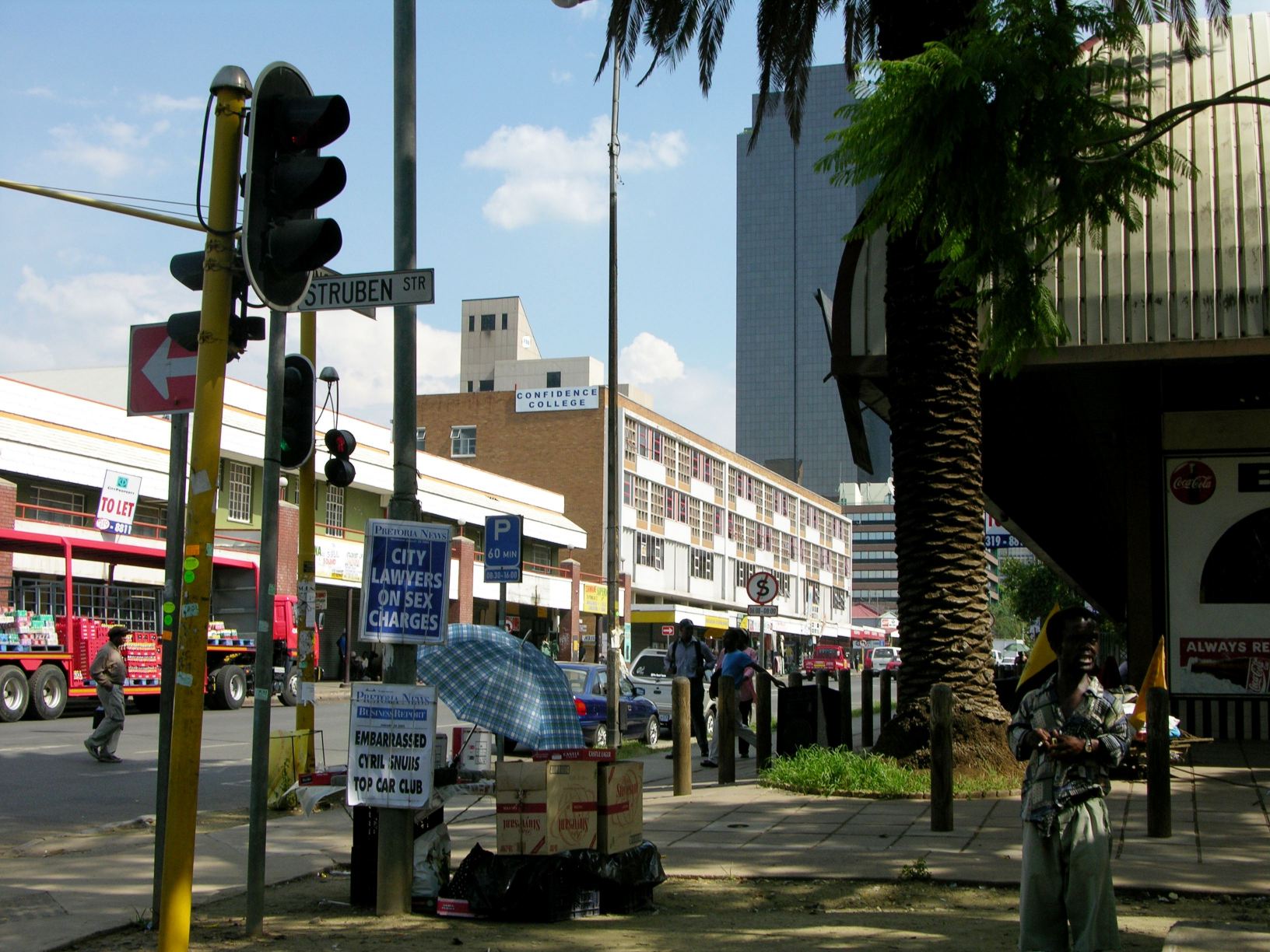
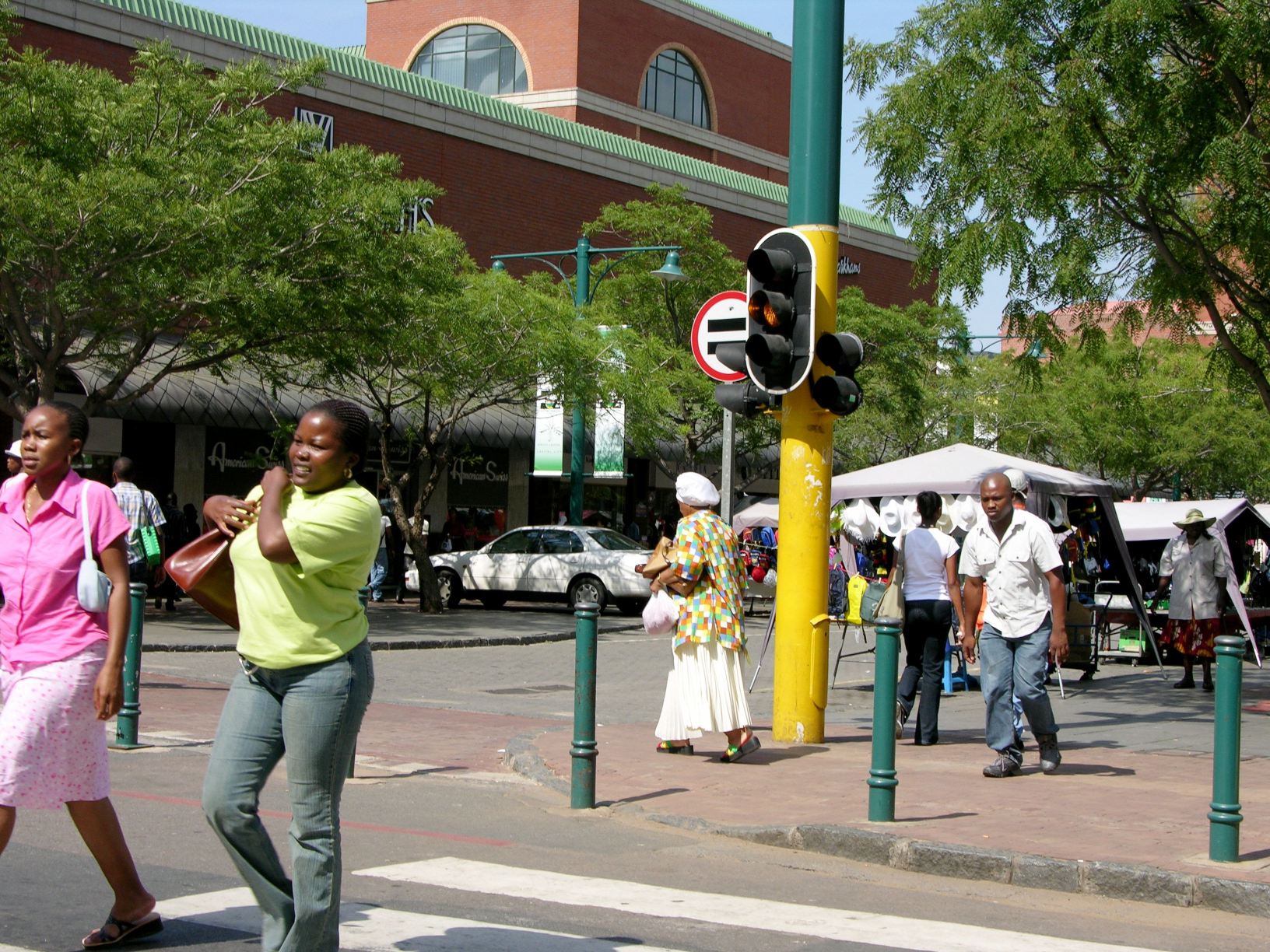
Up there was a town called Pietersburg. No connection whatsoever with Saint Petersburg in Russia. They had a Peter of their own, who had fled Mozambique to get away from malaria and the locals. The town had 300,000 people by then and was capital of the northern province. There weren't many sights in it. We stopped for the night at the Union Caravan Park (23°56.258′S, 29°28.375′E).
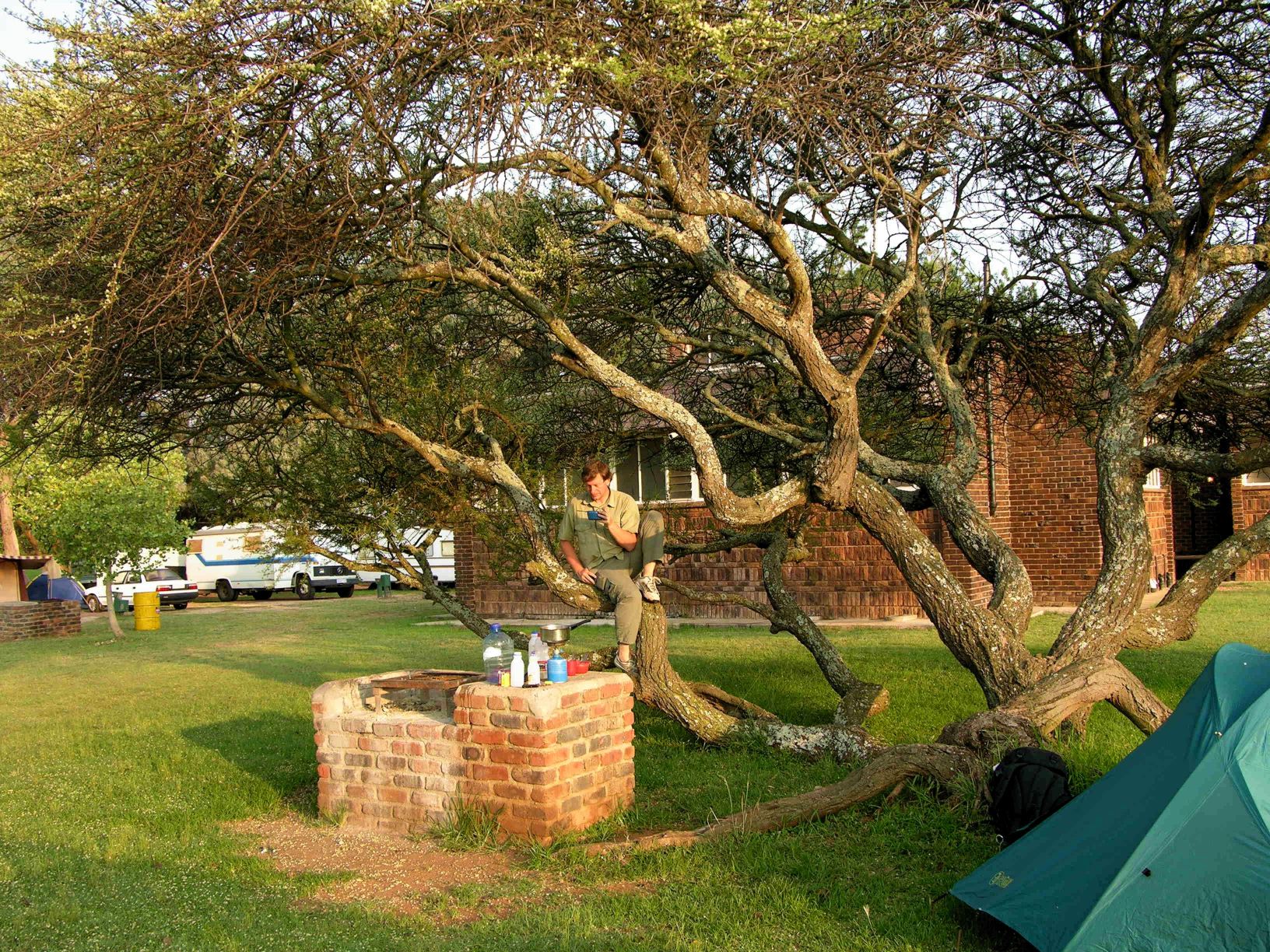
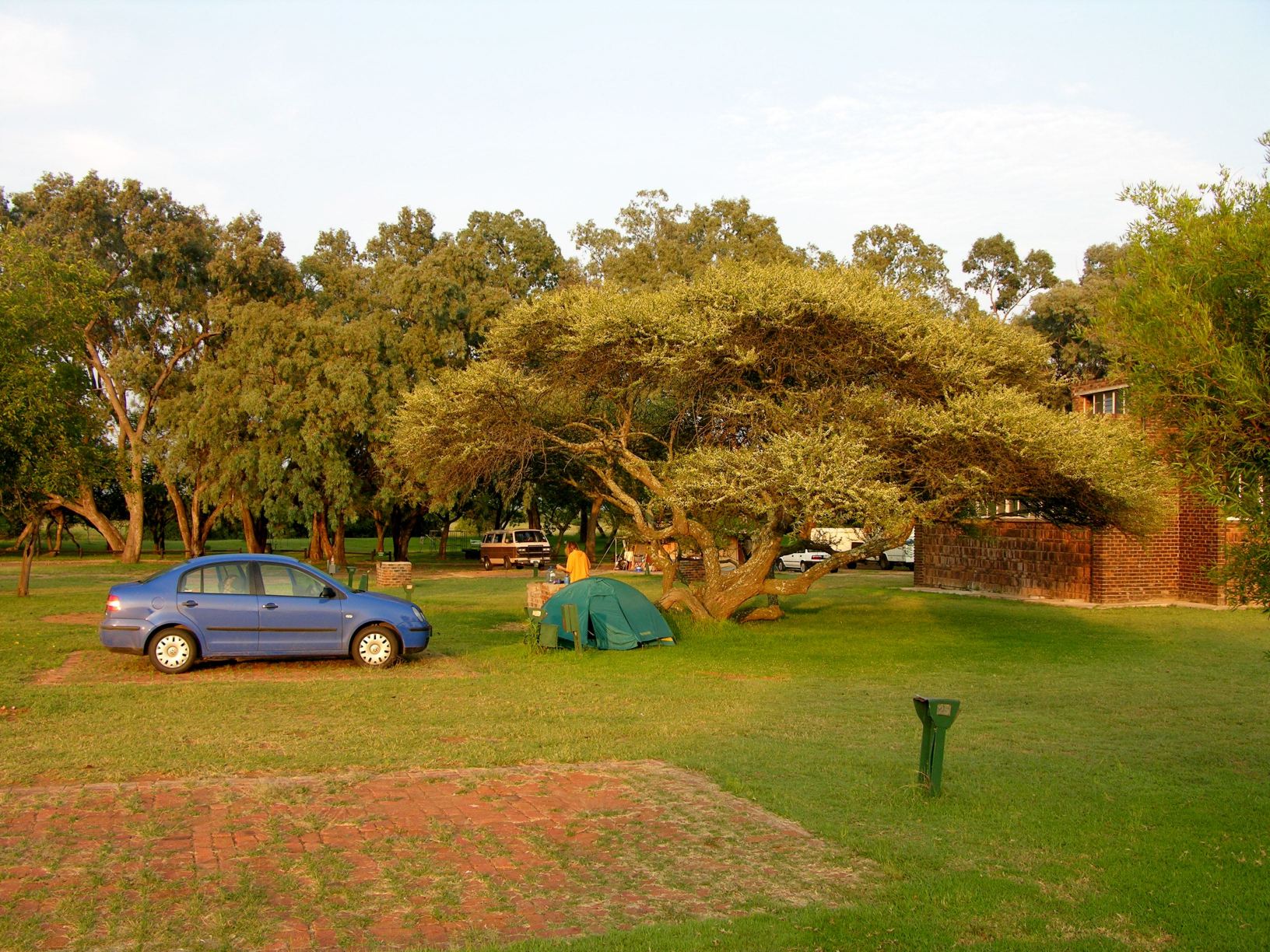
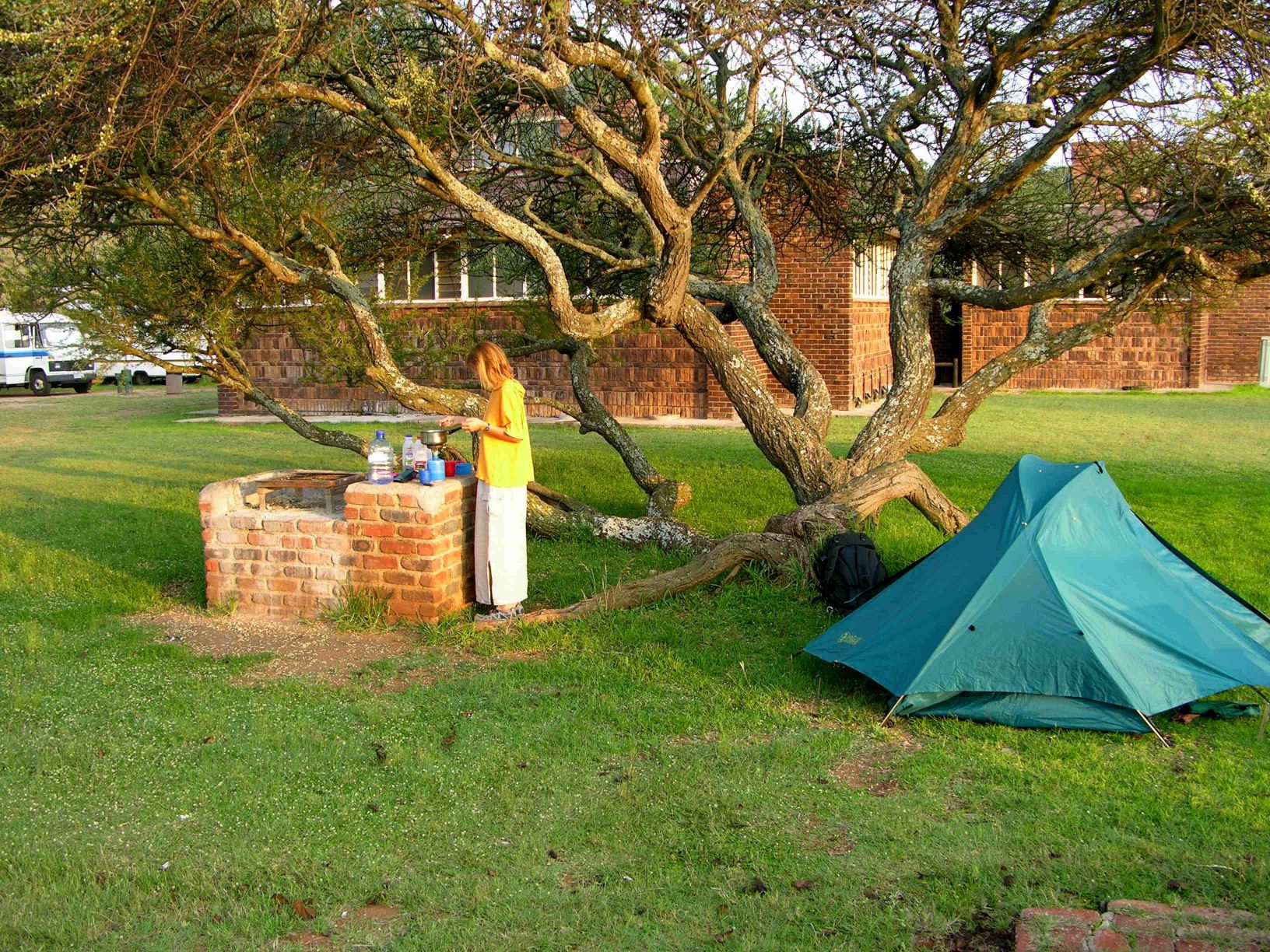
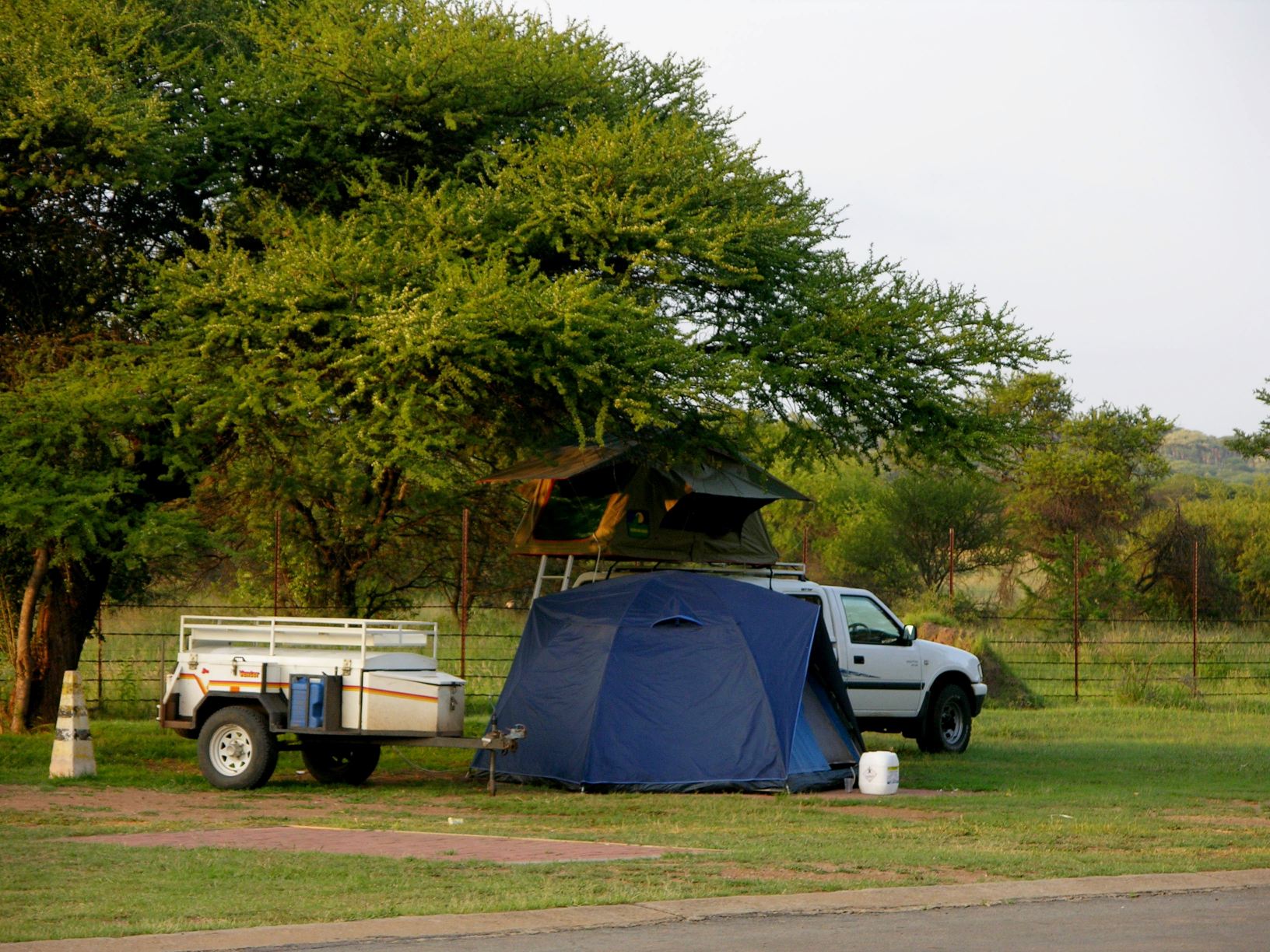
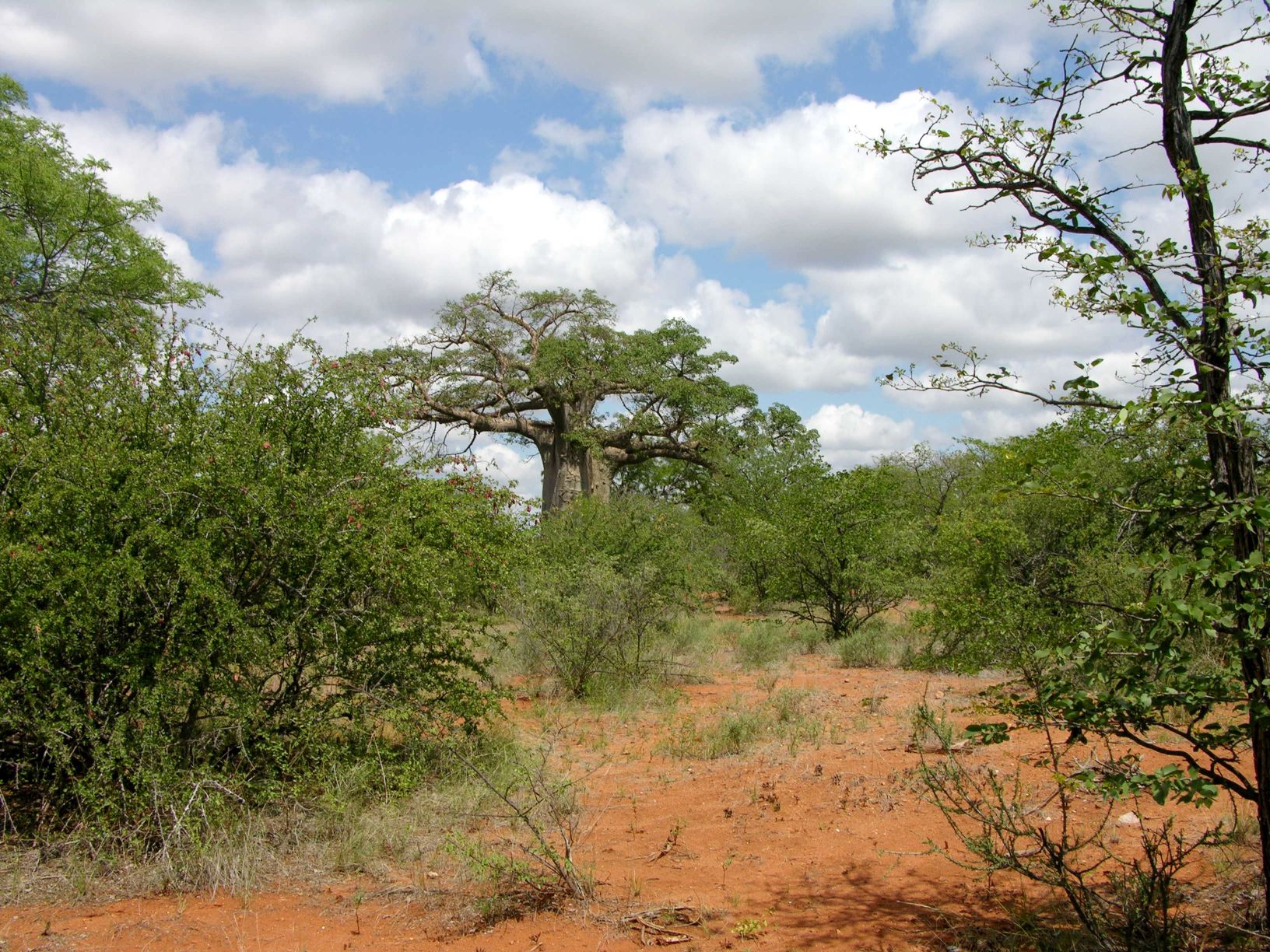
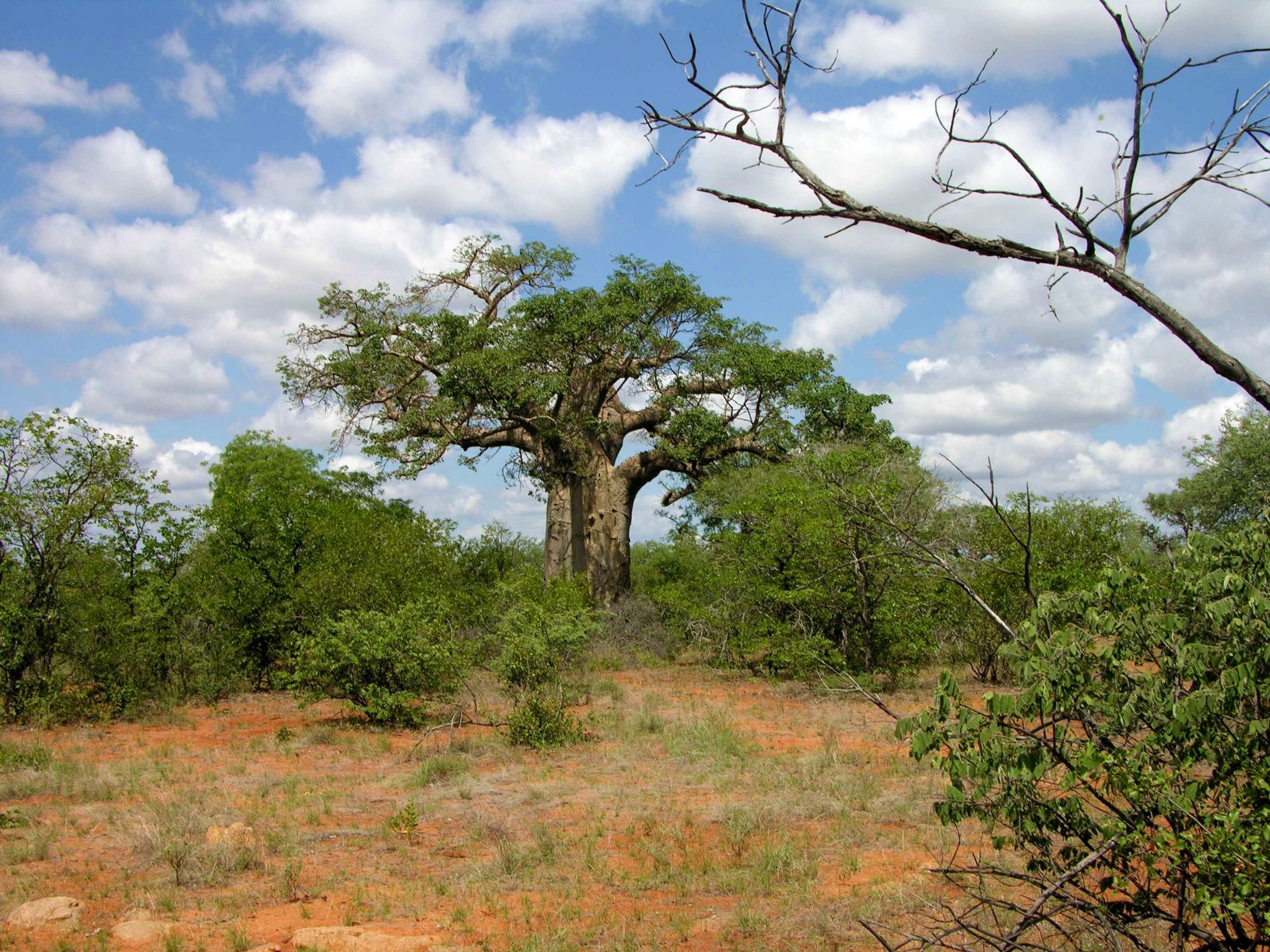
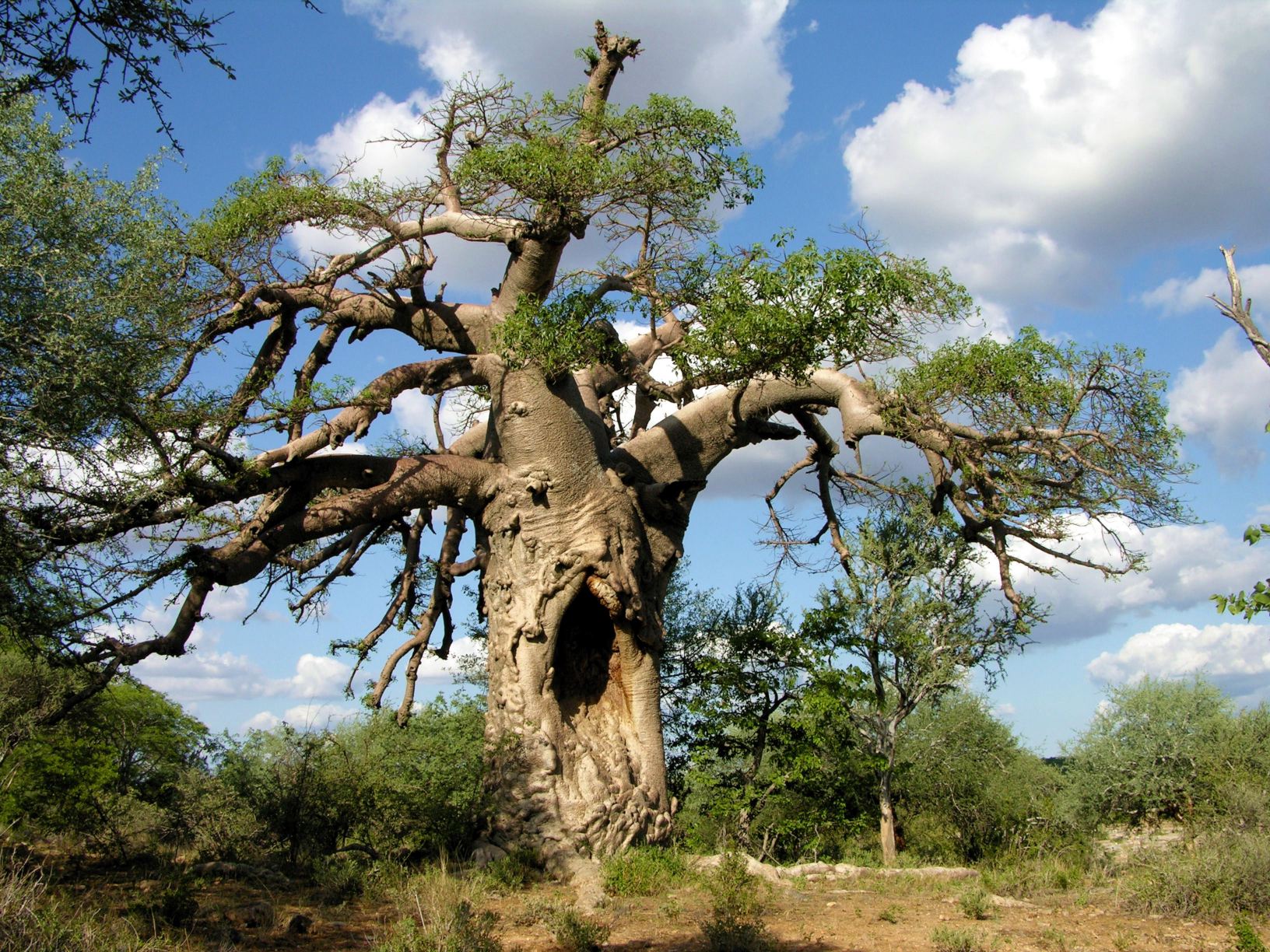
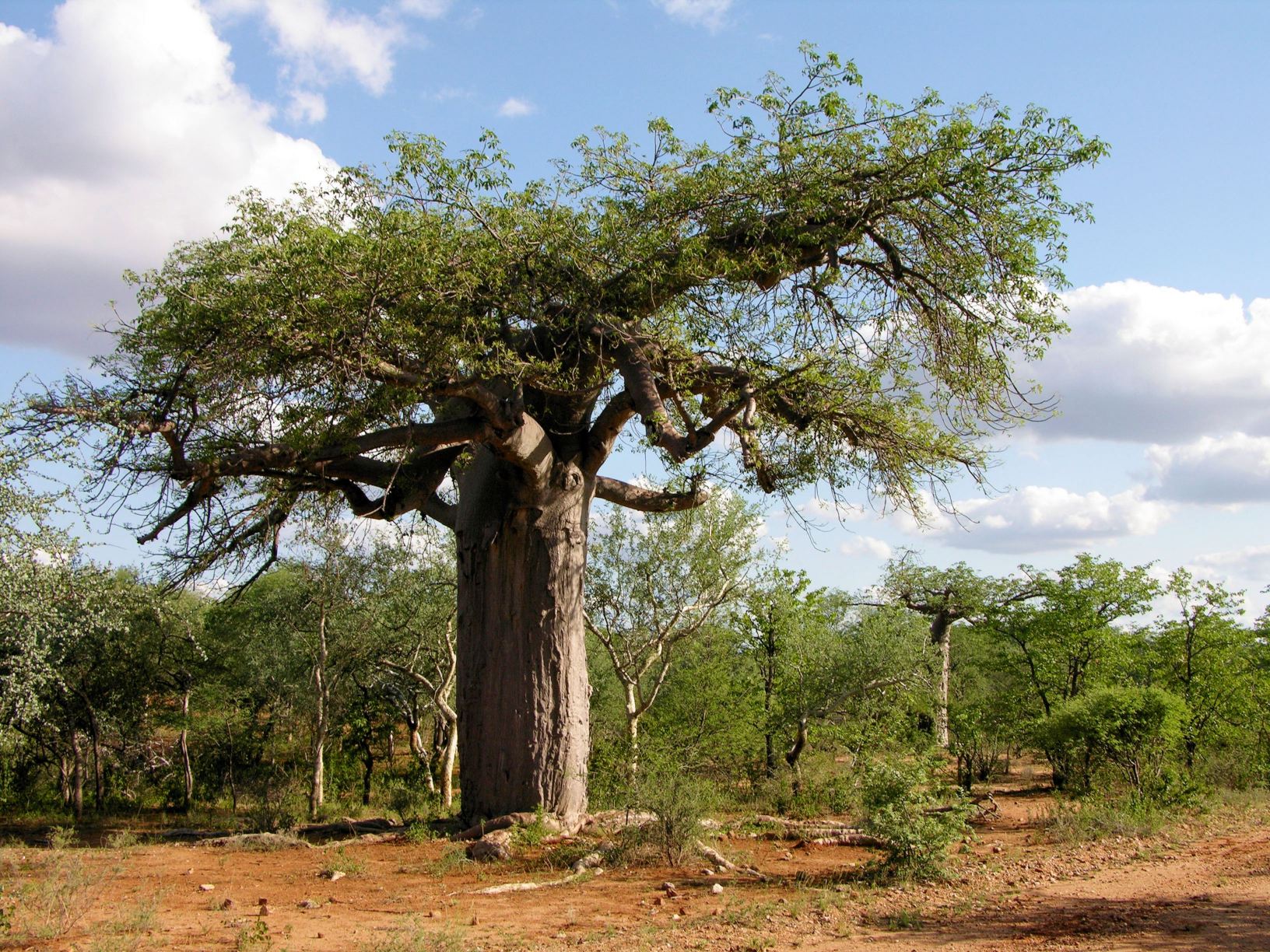
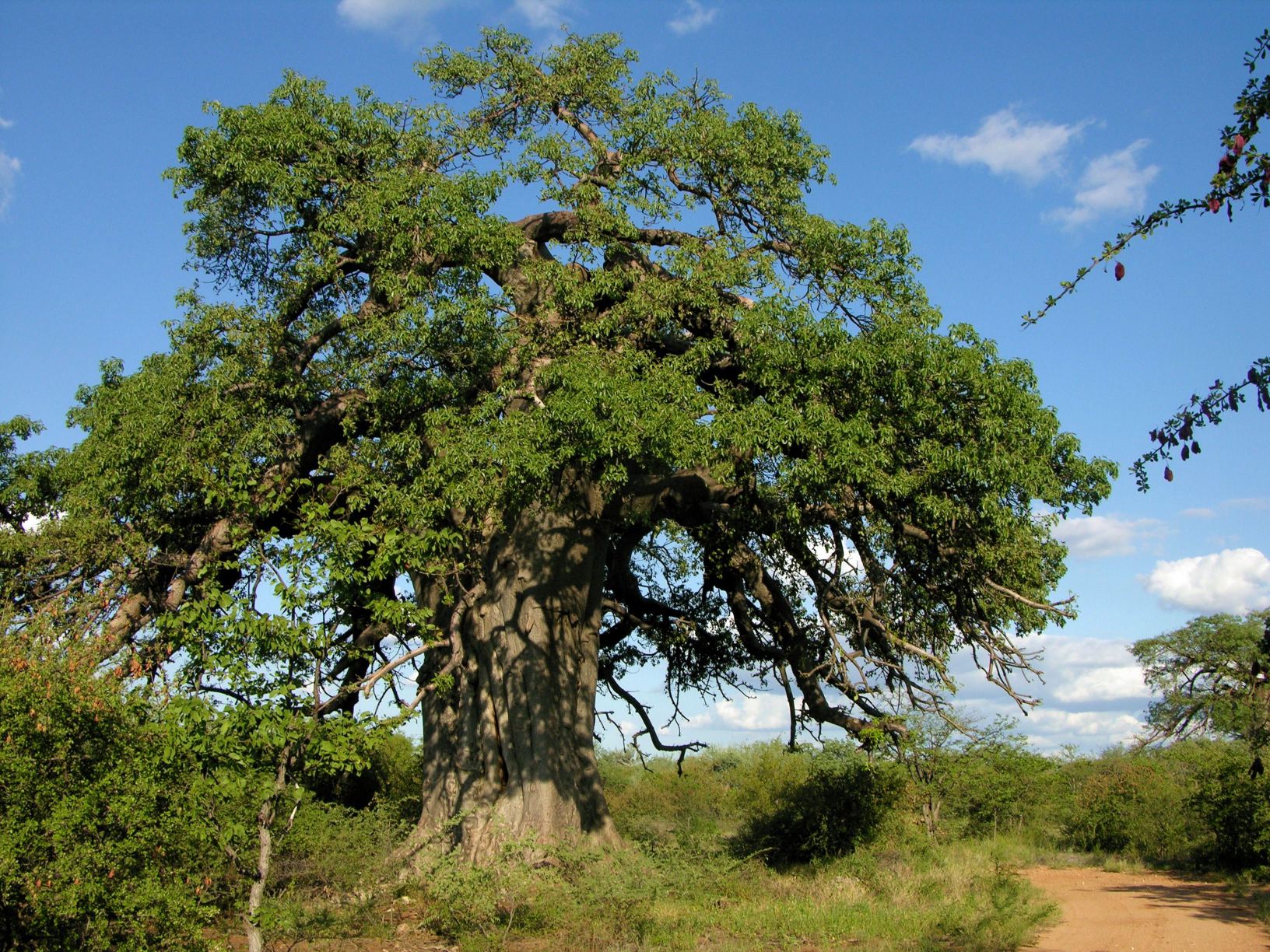
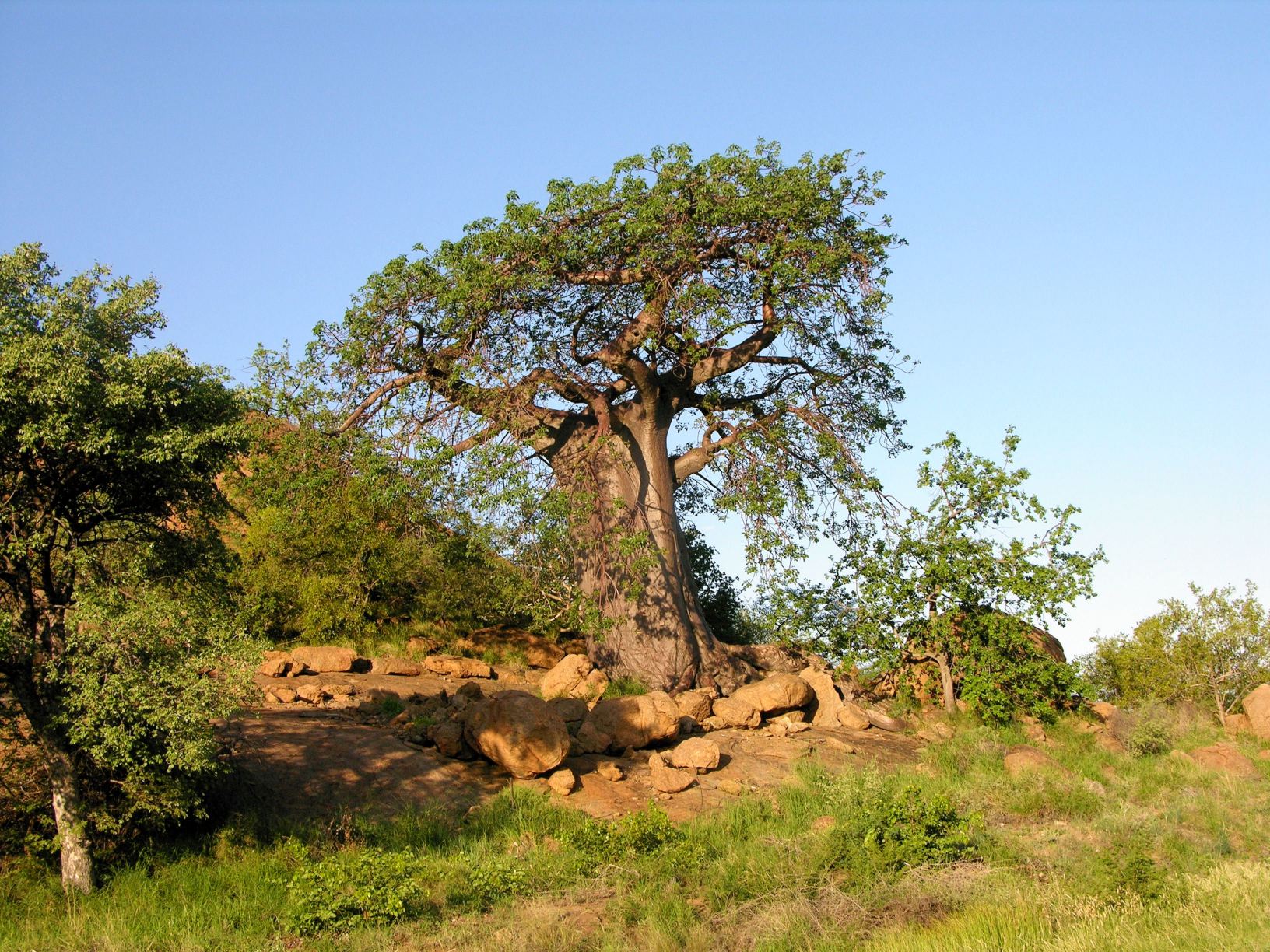
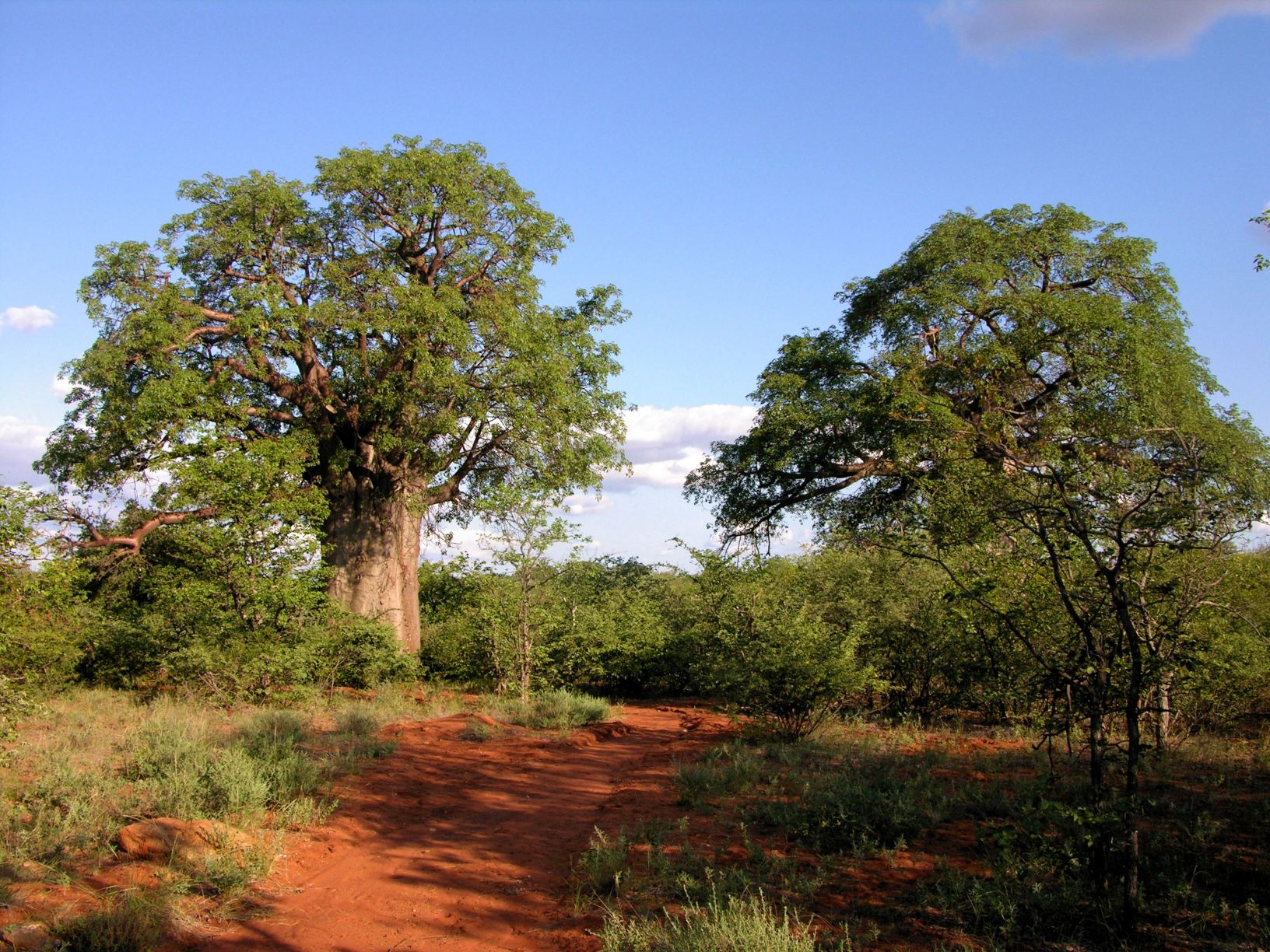
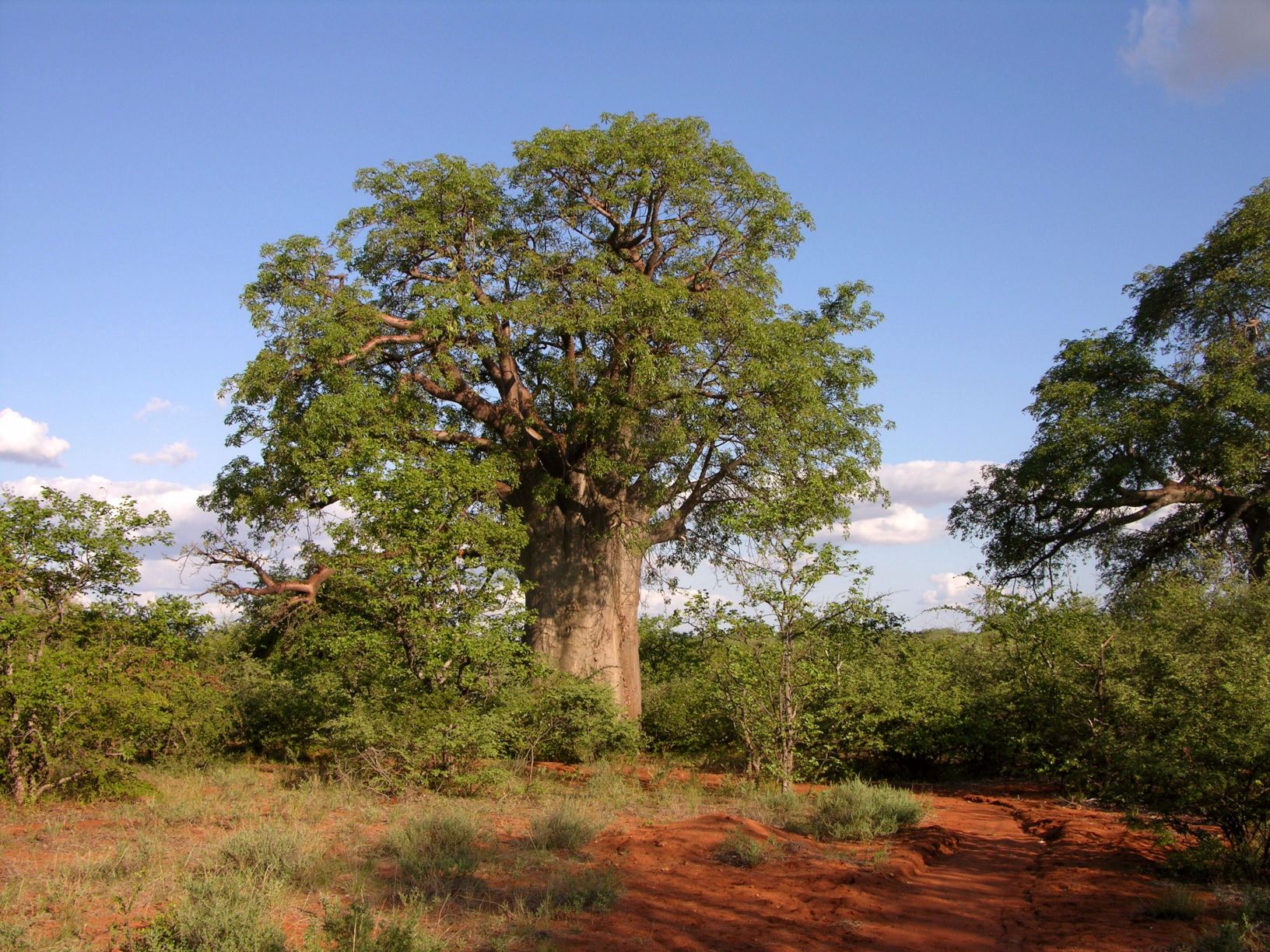
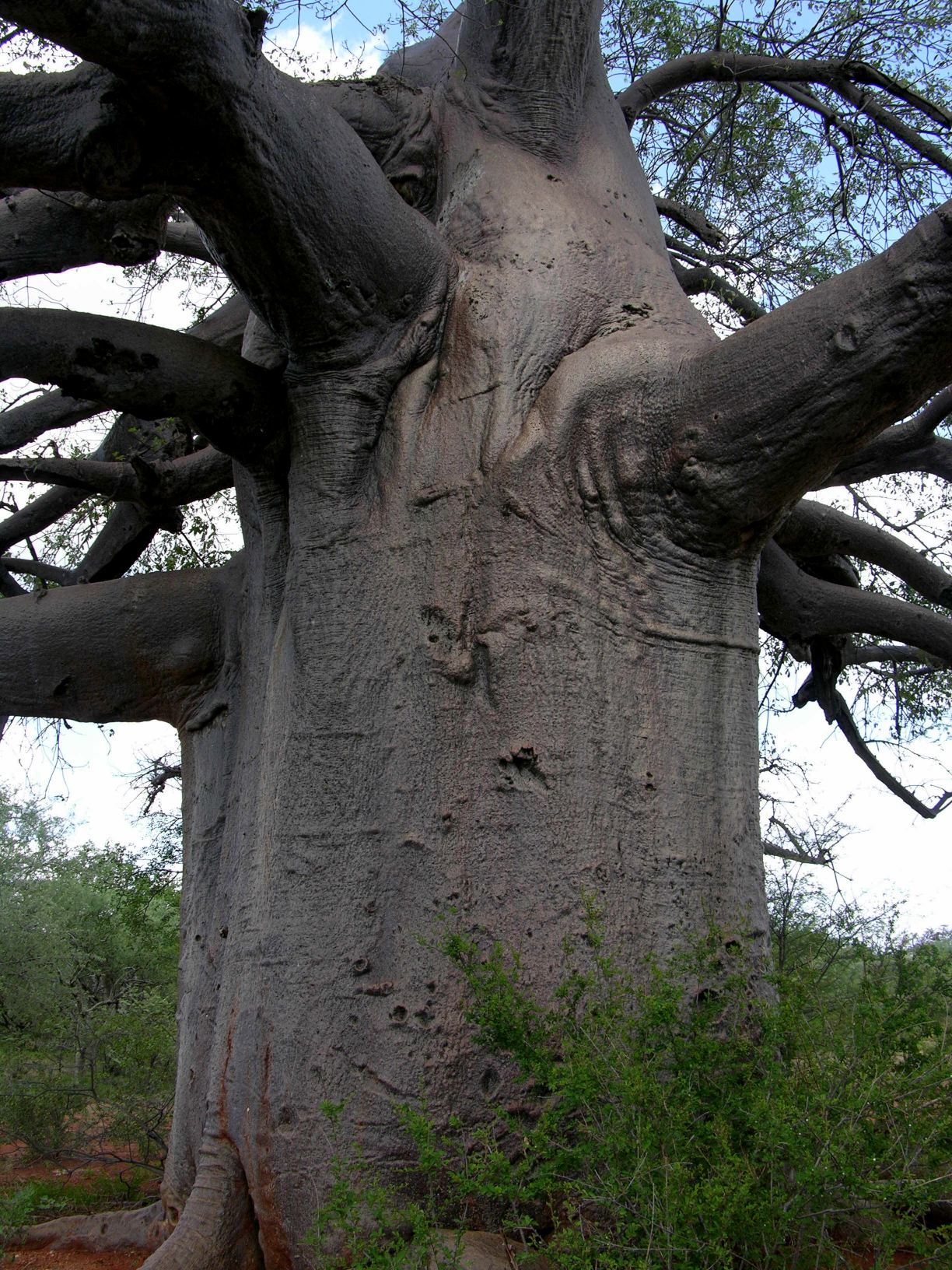
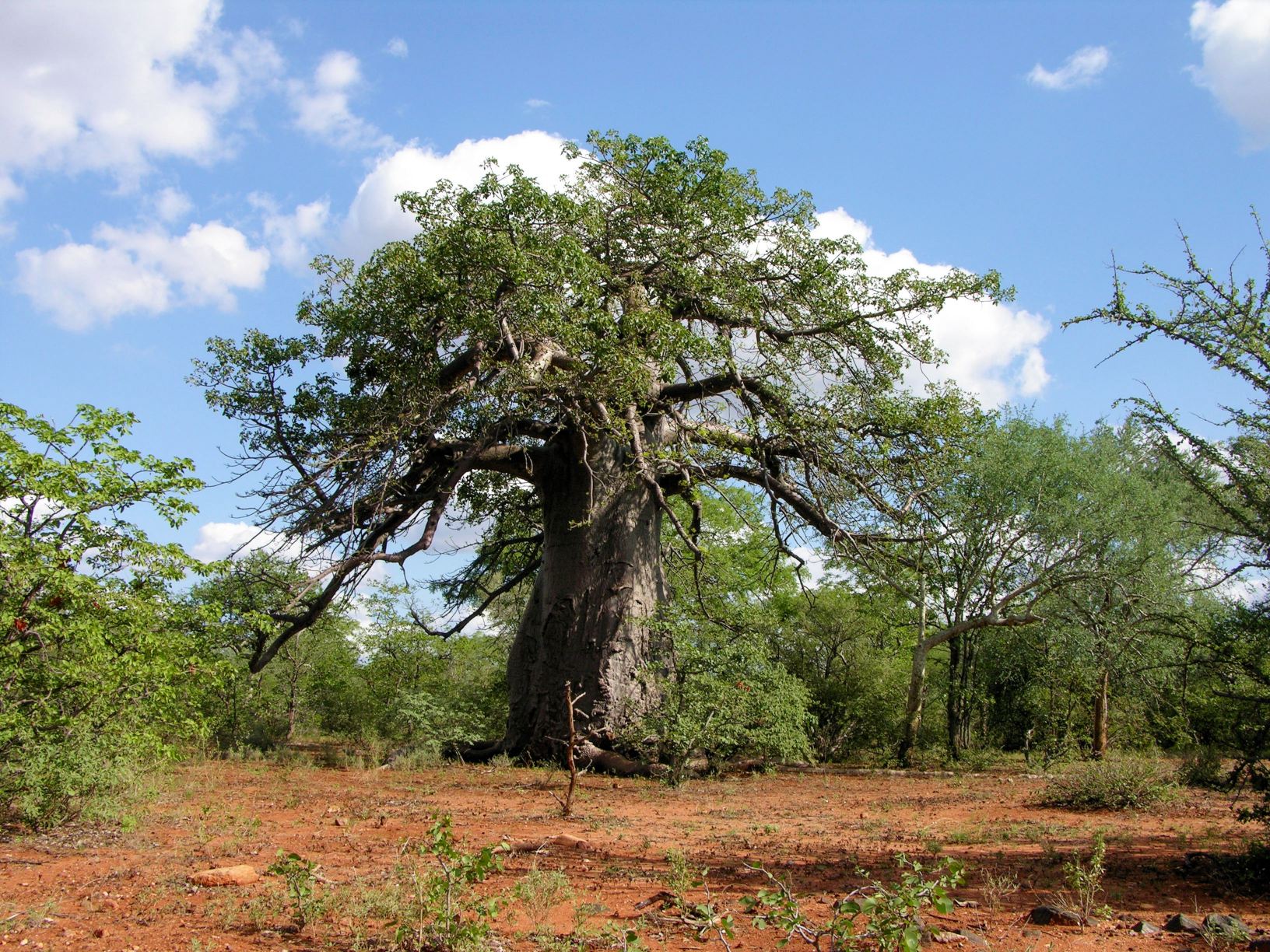
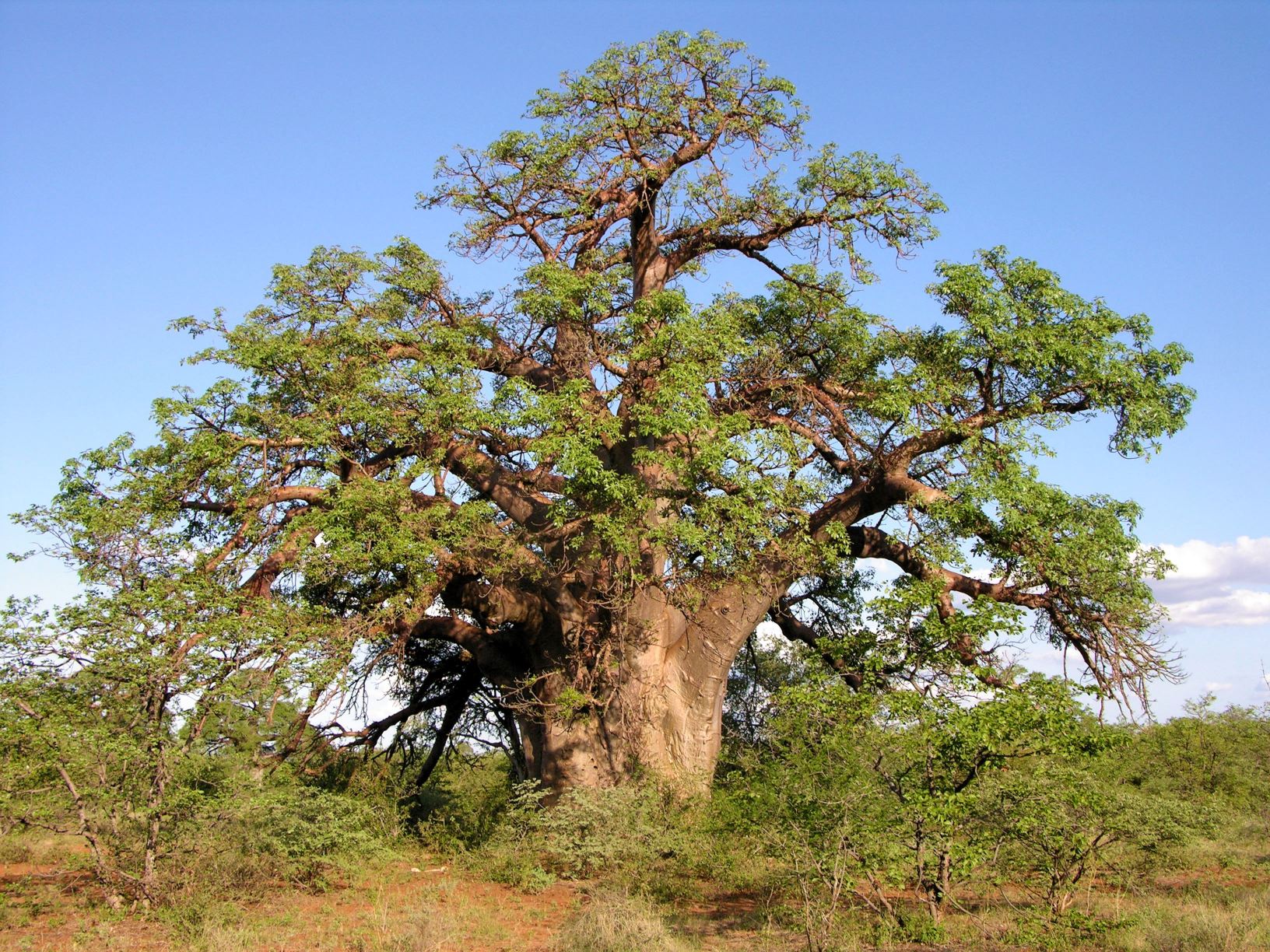
In the morning we reached Messina, the northernmost town in the country, on the border with Zimbabwe. The climate had changed a great deal. We'd crossed the Tropic of Capricorn. Baobabs began to appear along the verge. What convenient trees for roadside lay-bys! Now that's a tree. No wonder the sign has a bench under a tree on it. Quite unlike the ones in the desert.
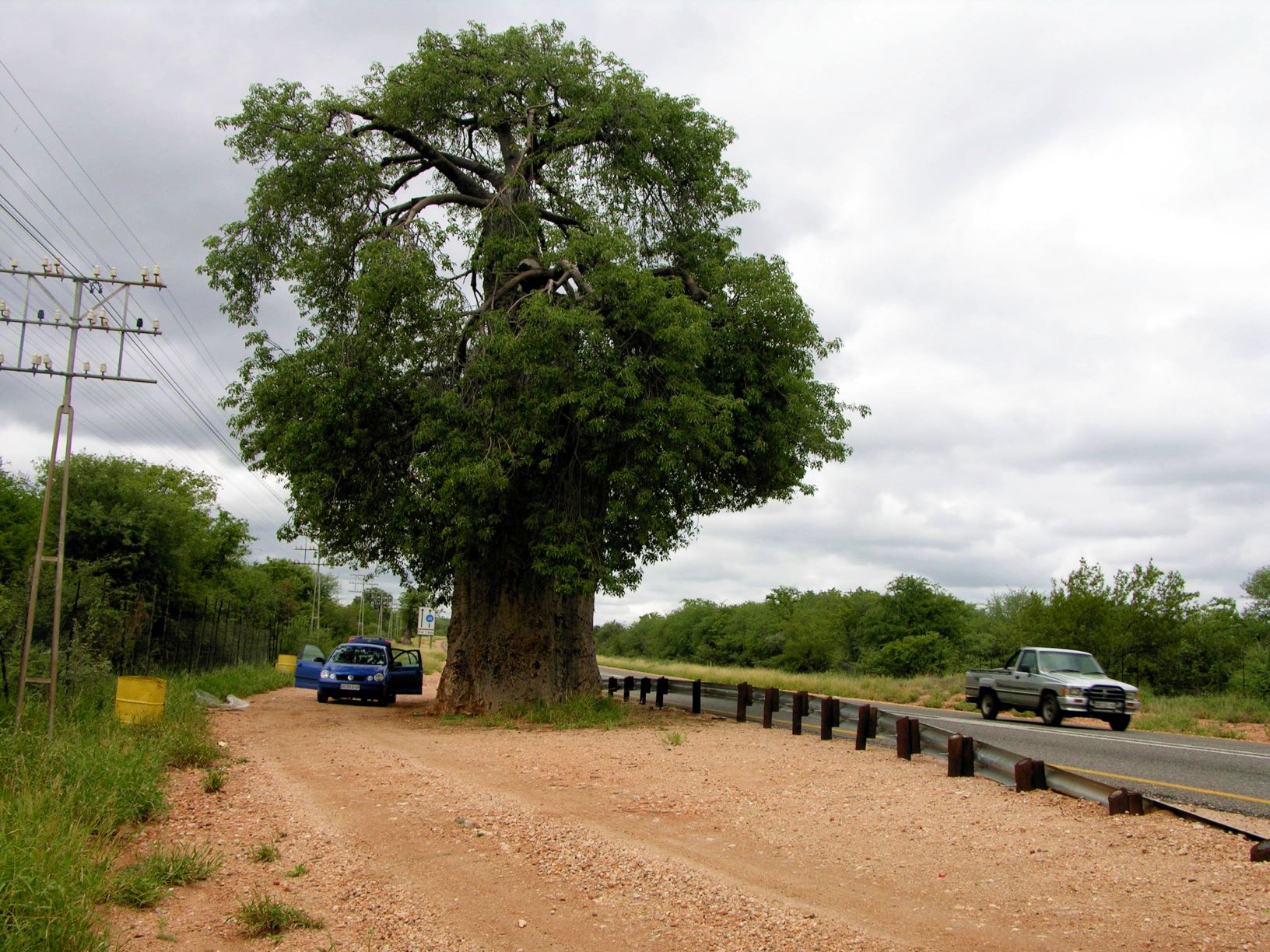
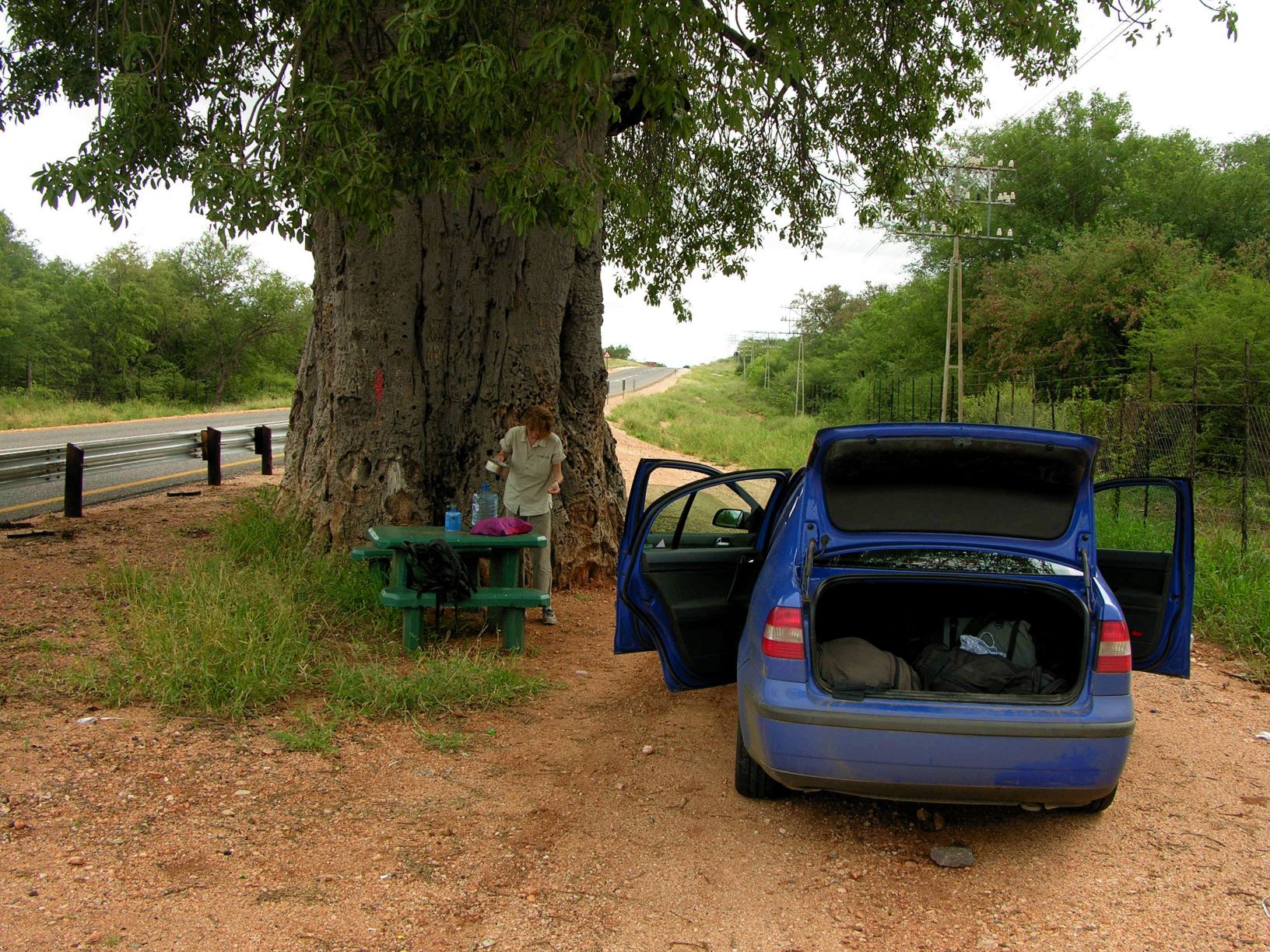
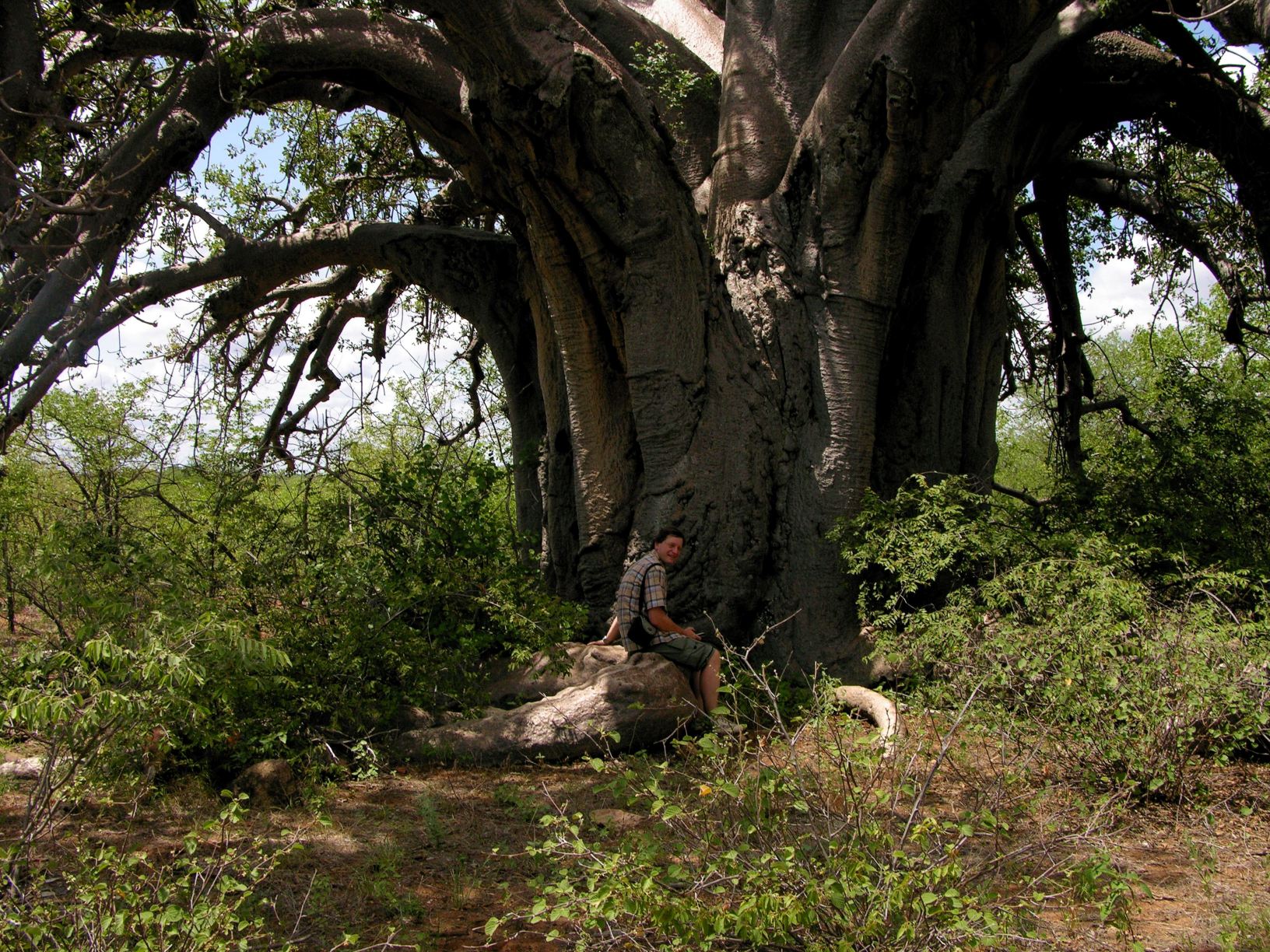
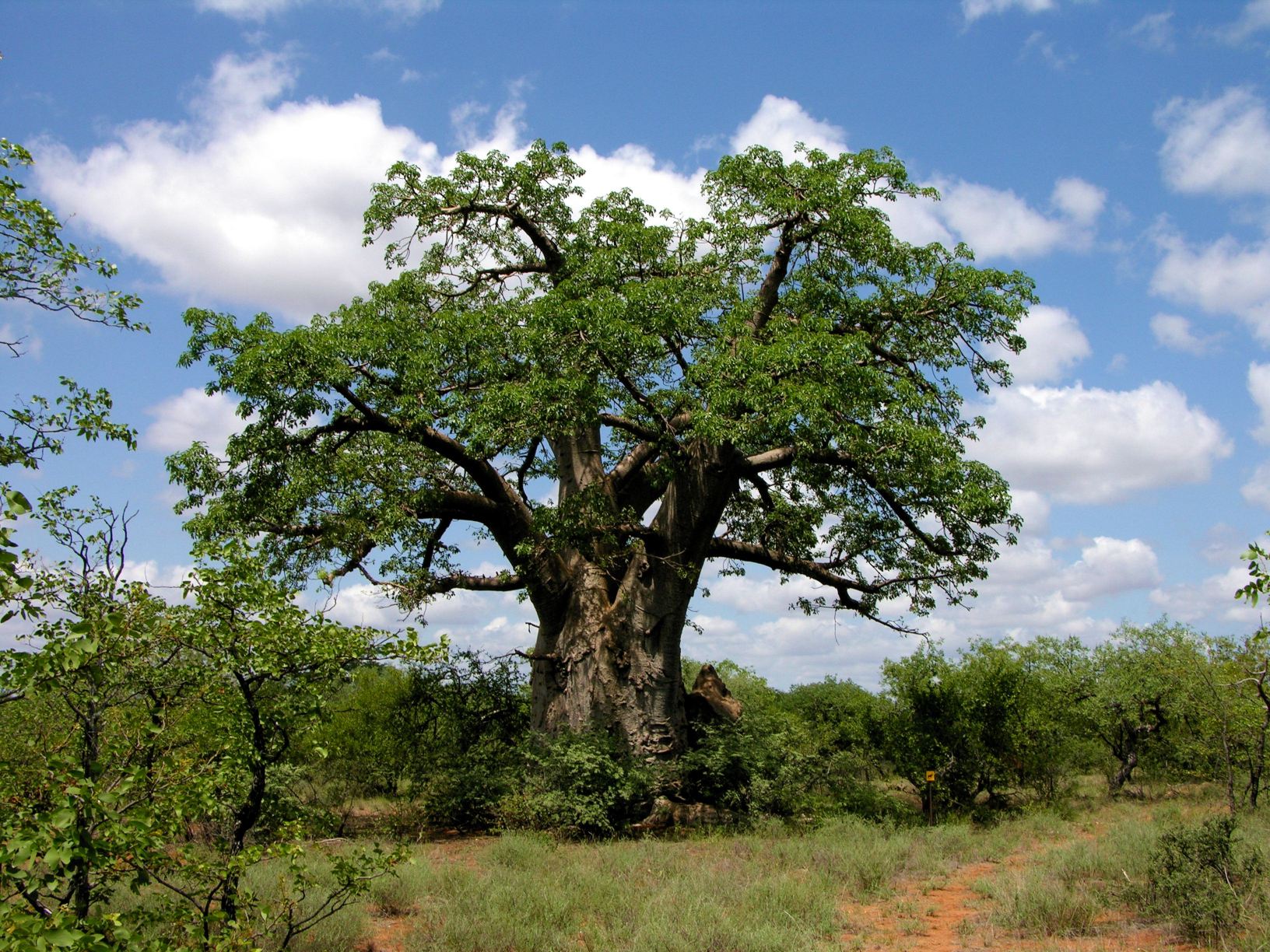
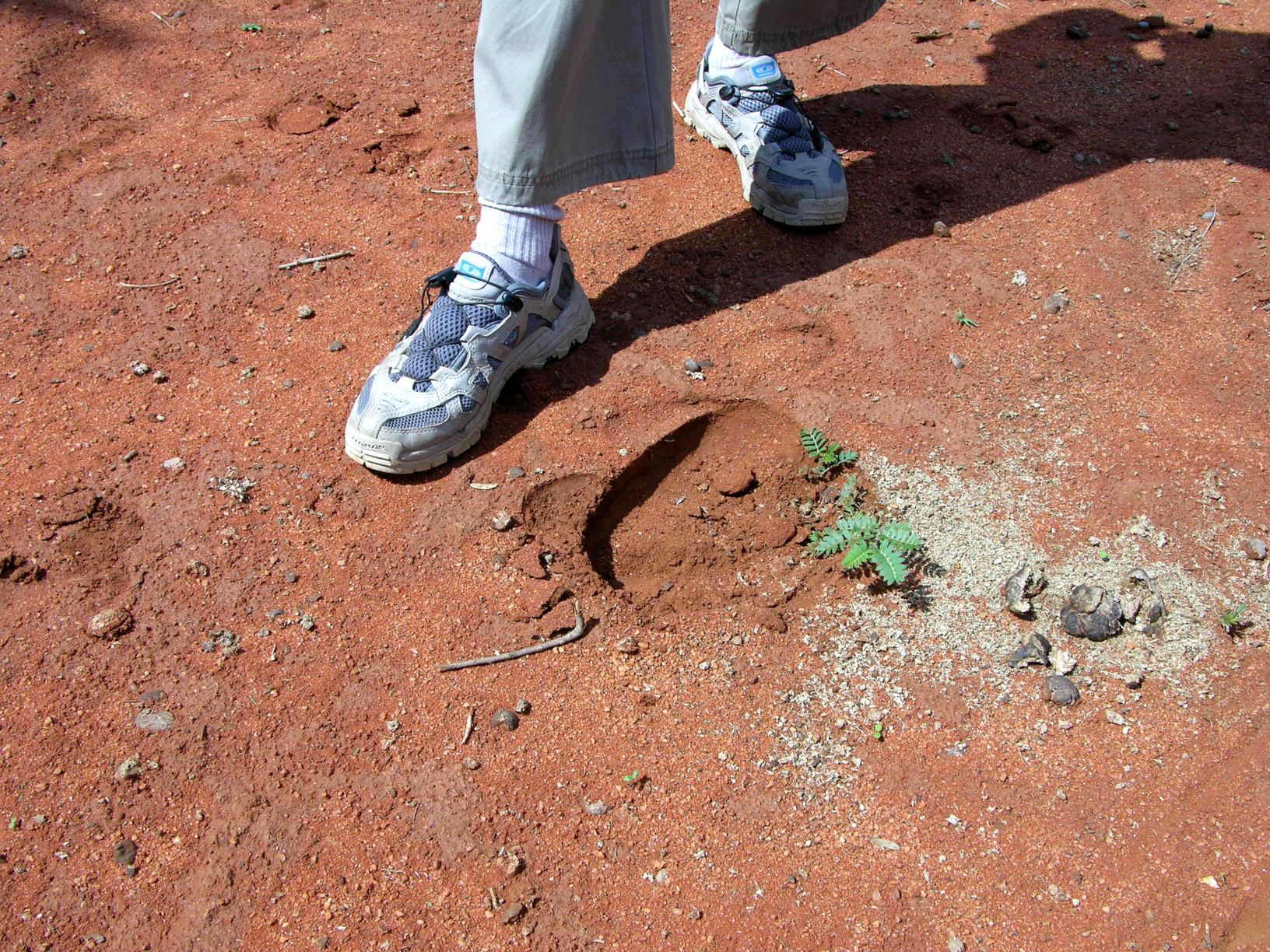
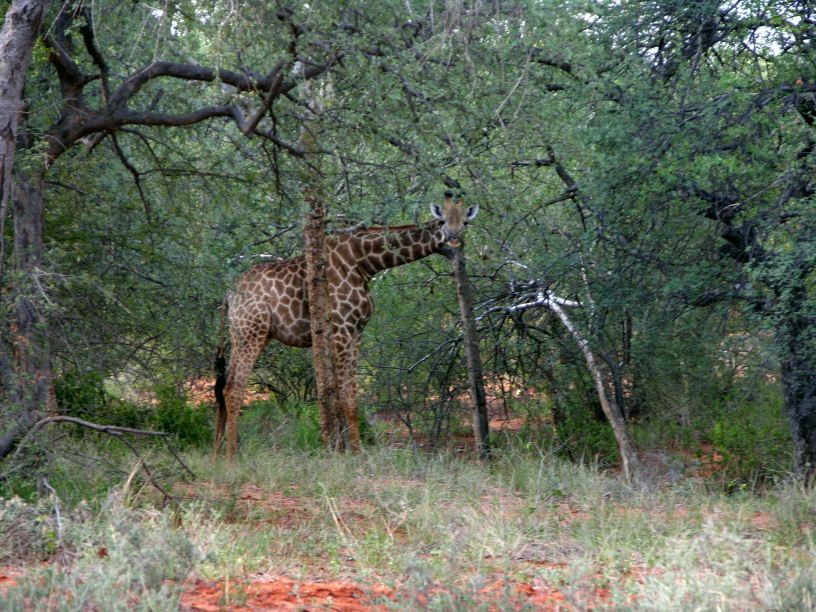
We stopped for a bite to eat. There was the emptied skin of a dried crocodile and a beer can lying under the table. That's what people have with a drink here. Before Messina there is a baobab forest that's protected as a national park. You can go walking or drive. We did both, of course. Our little car had trouble getting through on that road. Stones, bumps, sandy riverbeds. I'd almost decided that we'd never get out. Better by far on foot. A bit hot, of course, over forty in the shade. But you get to climb the baobabs. And you can frighten the giraffes. It was at that point that I needed to call Russia on business. Picture the scene, among the baobabs and giraffes, talking about something to do with the office.
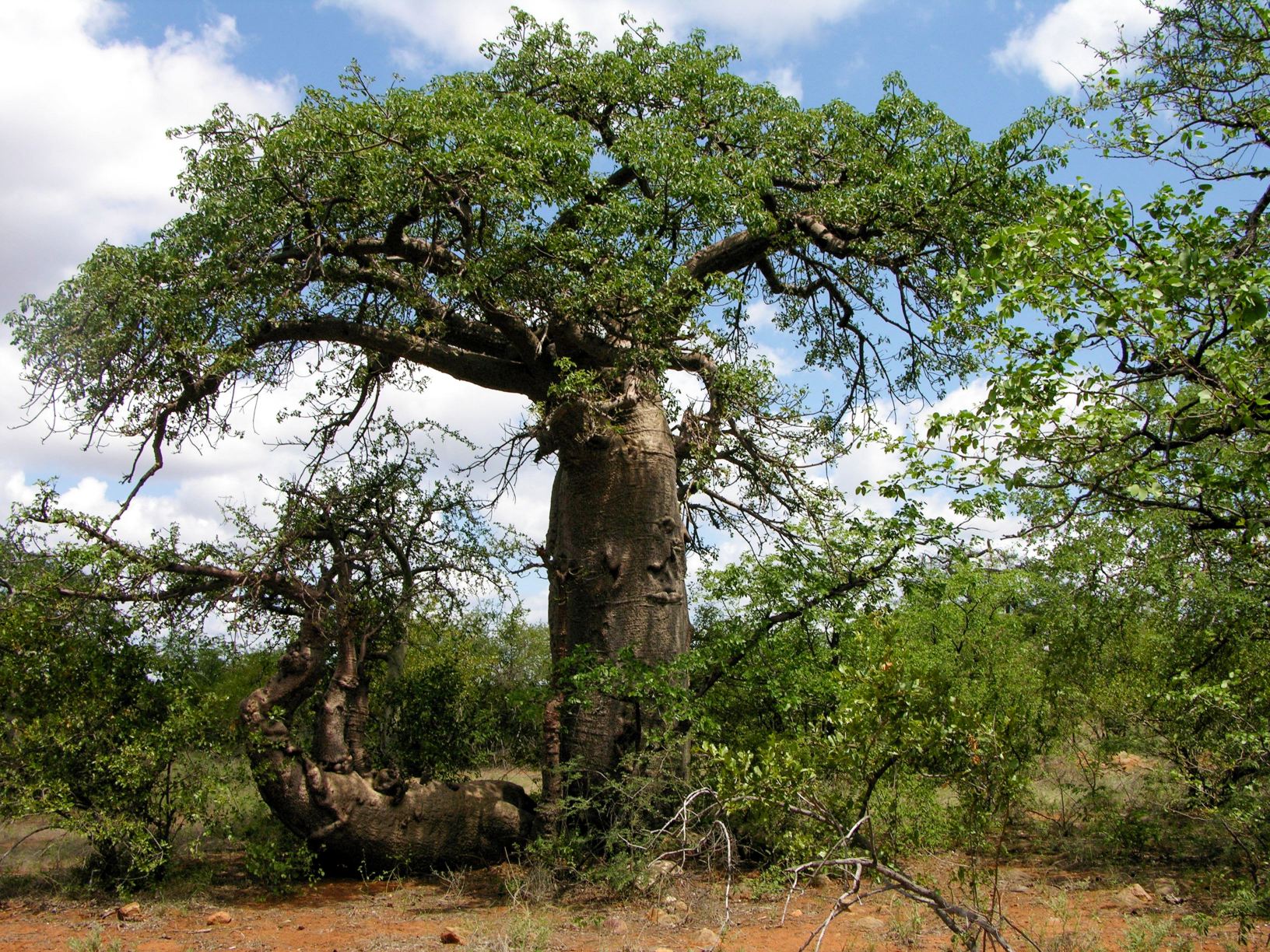
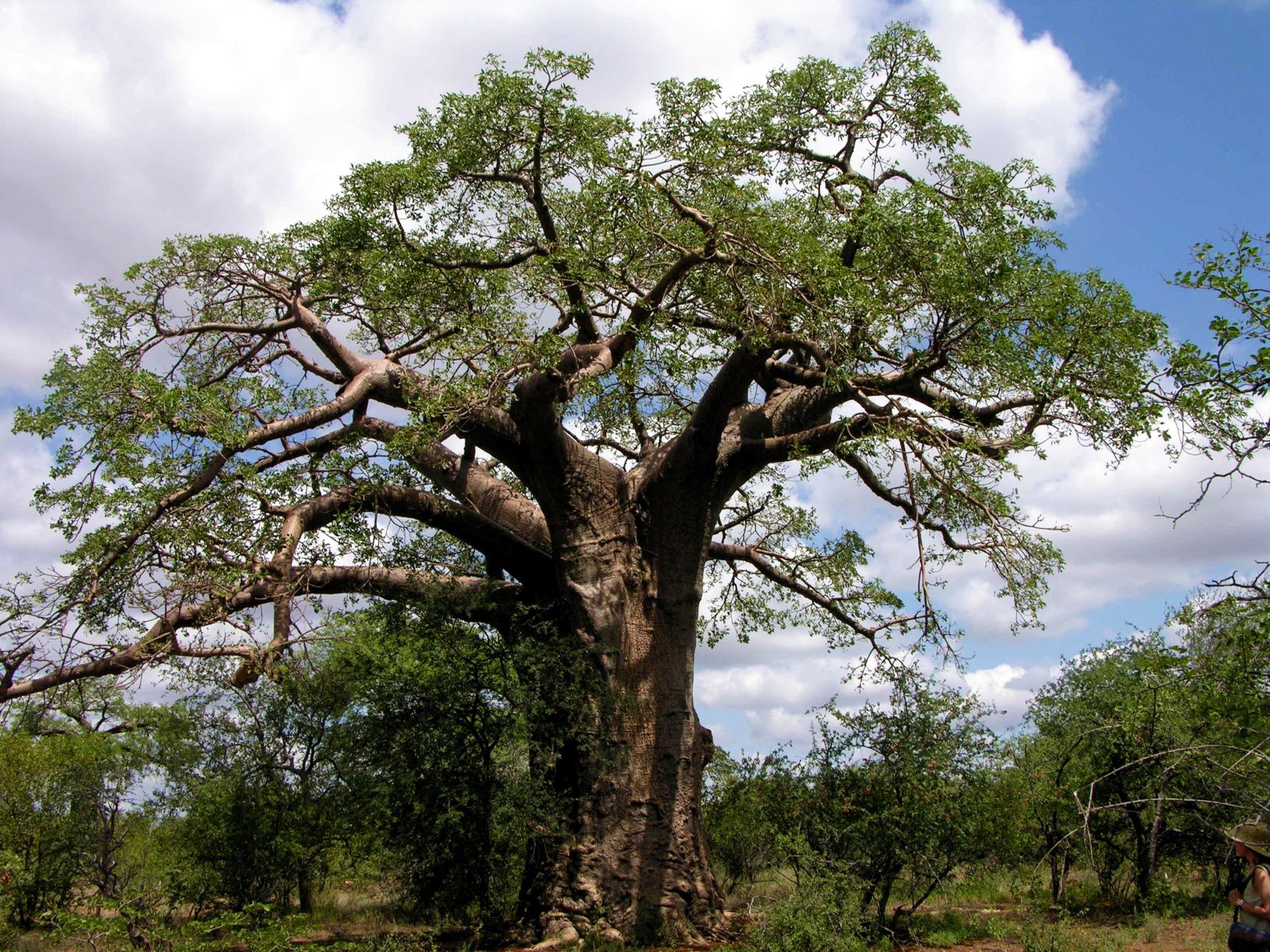
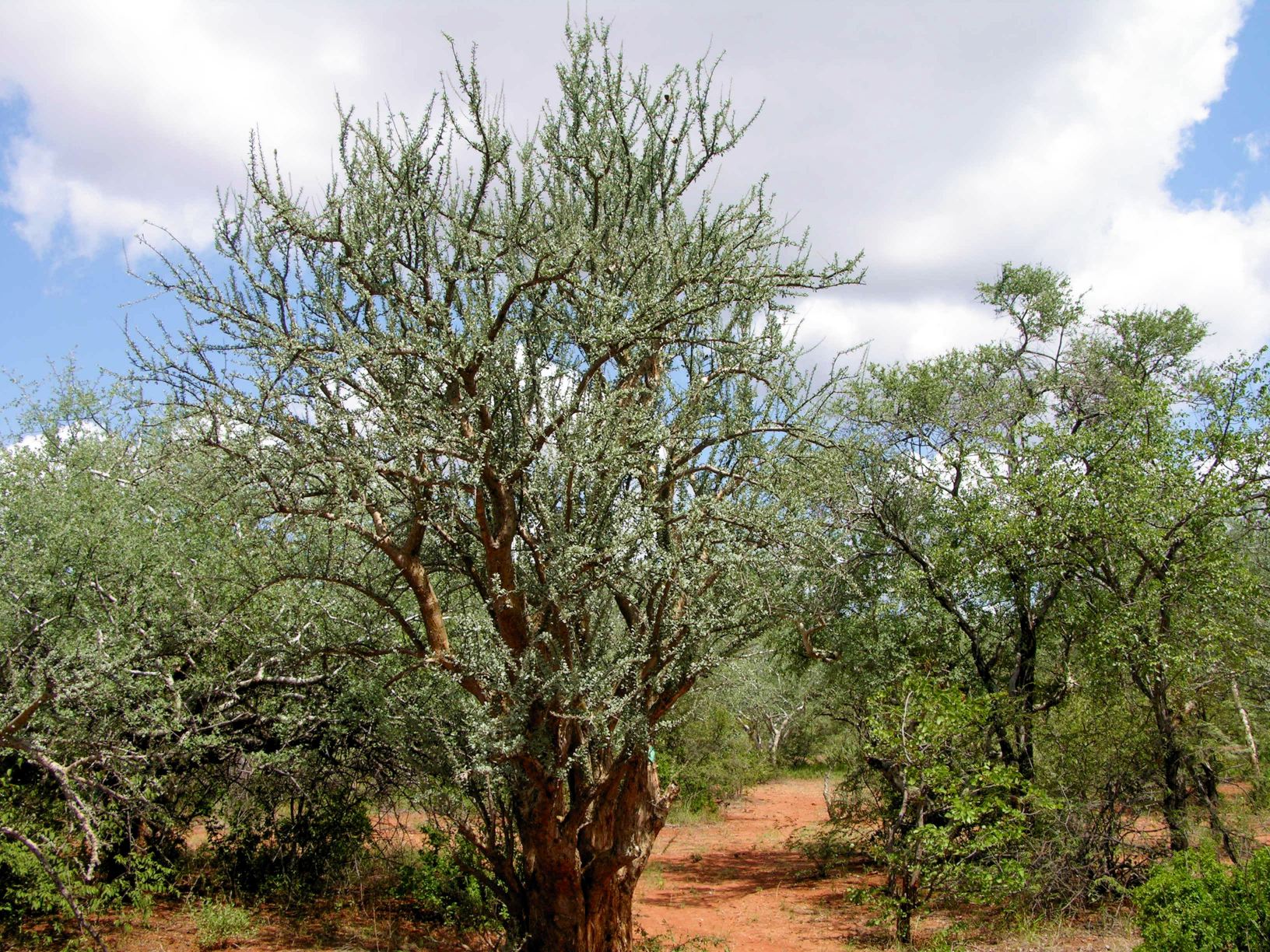
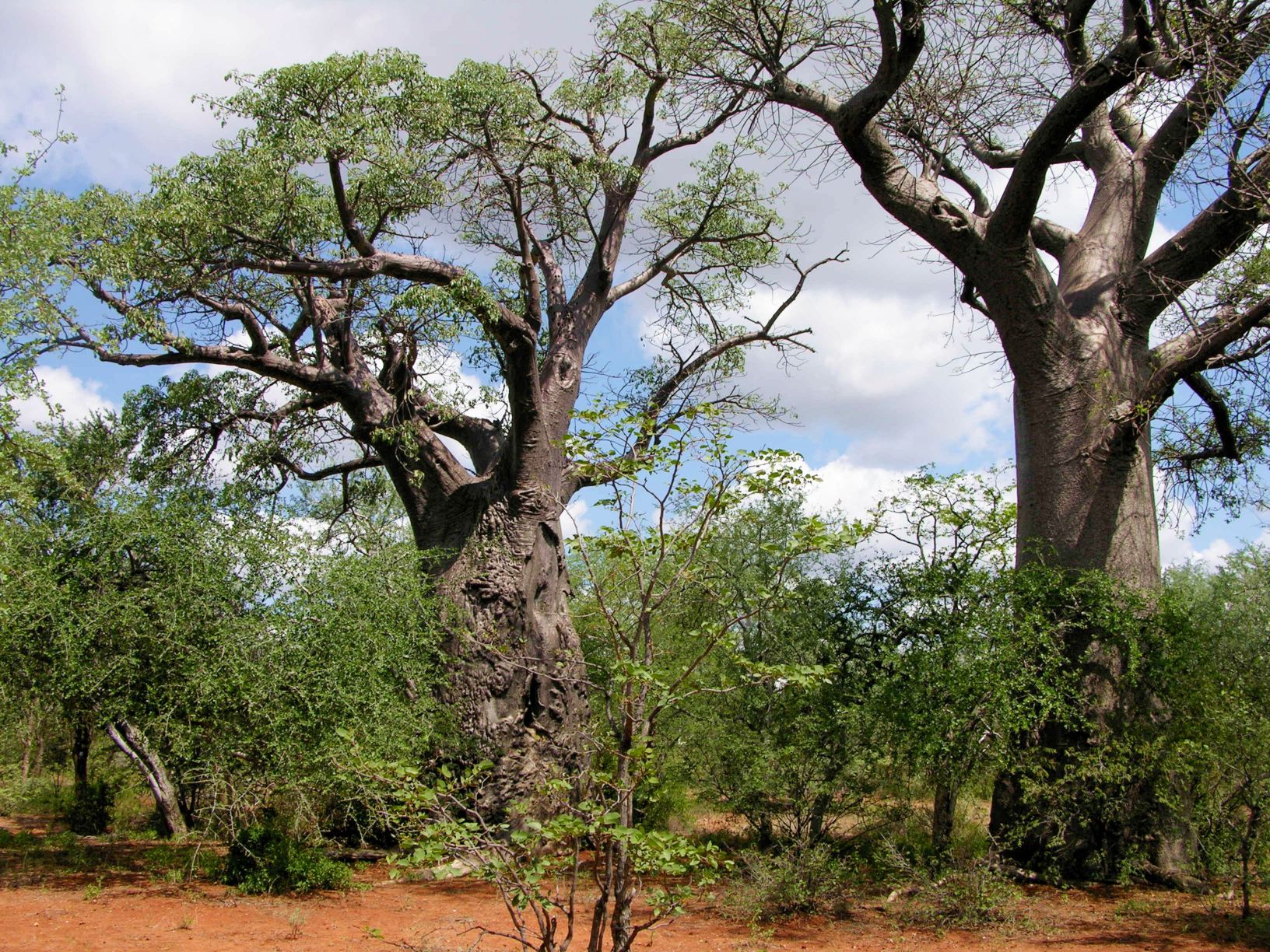
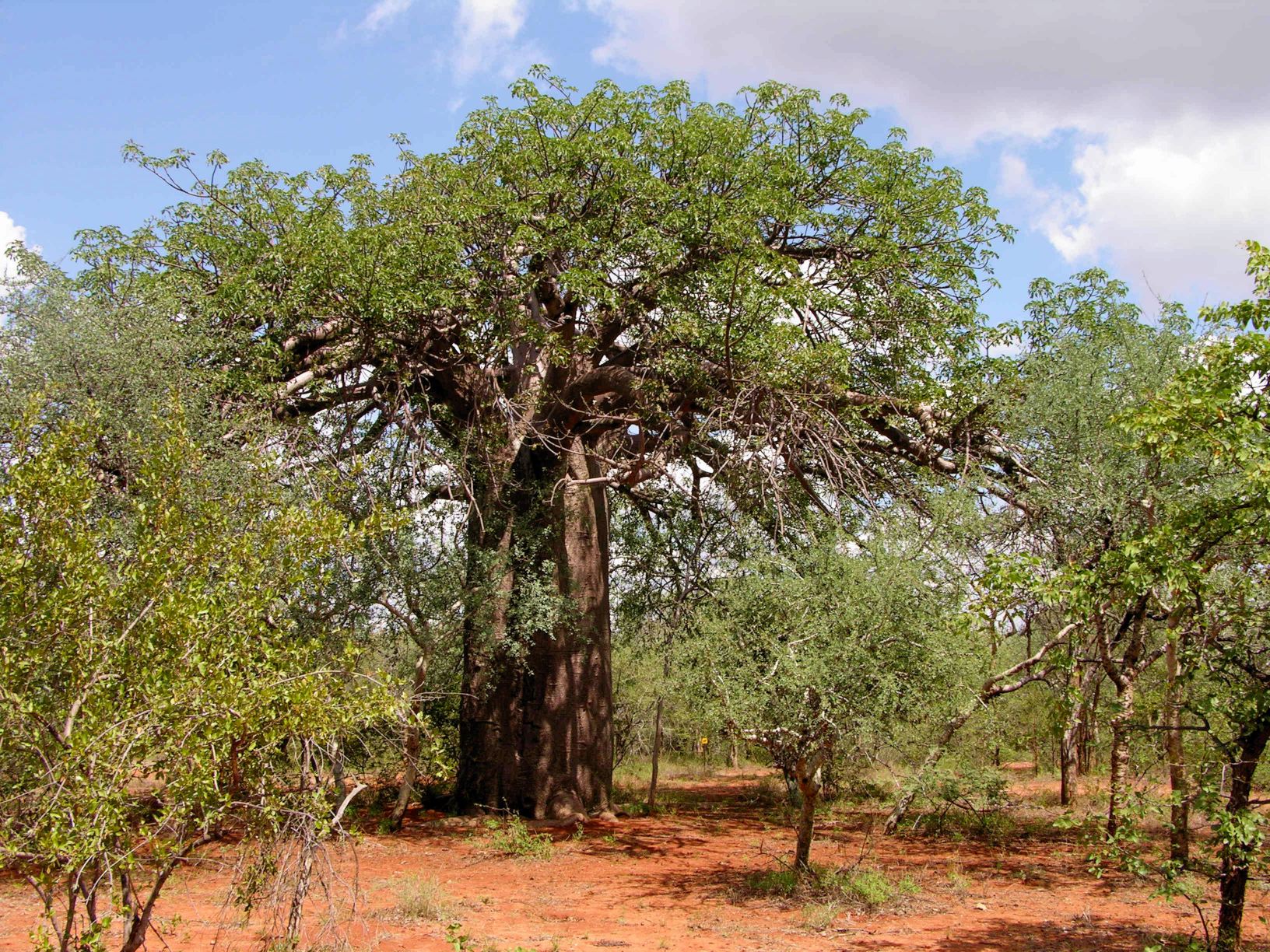
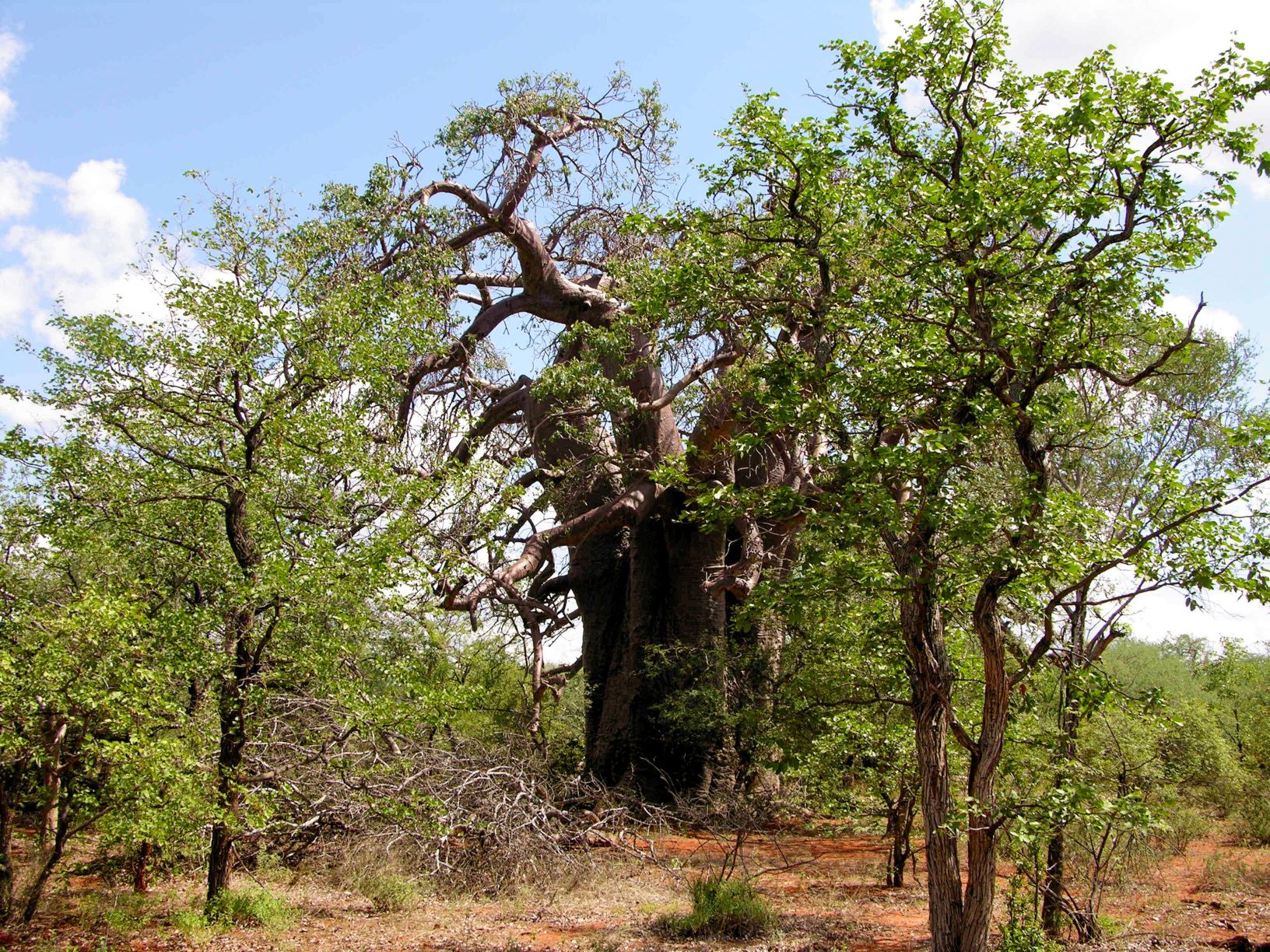
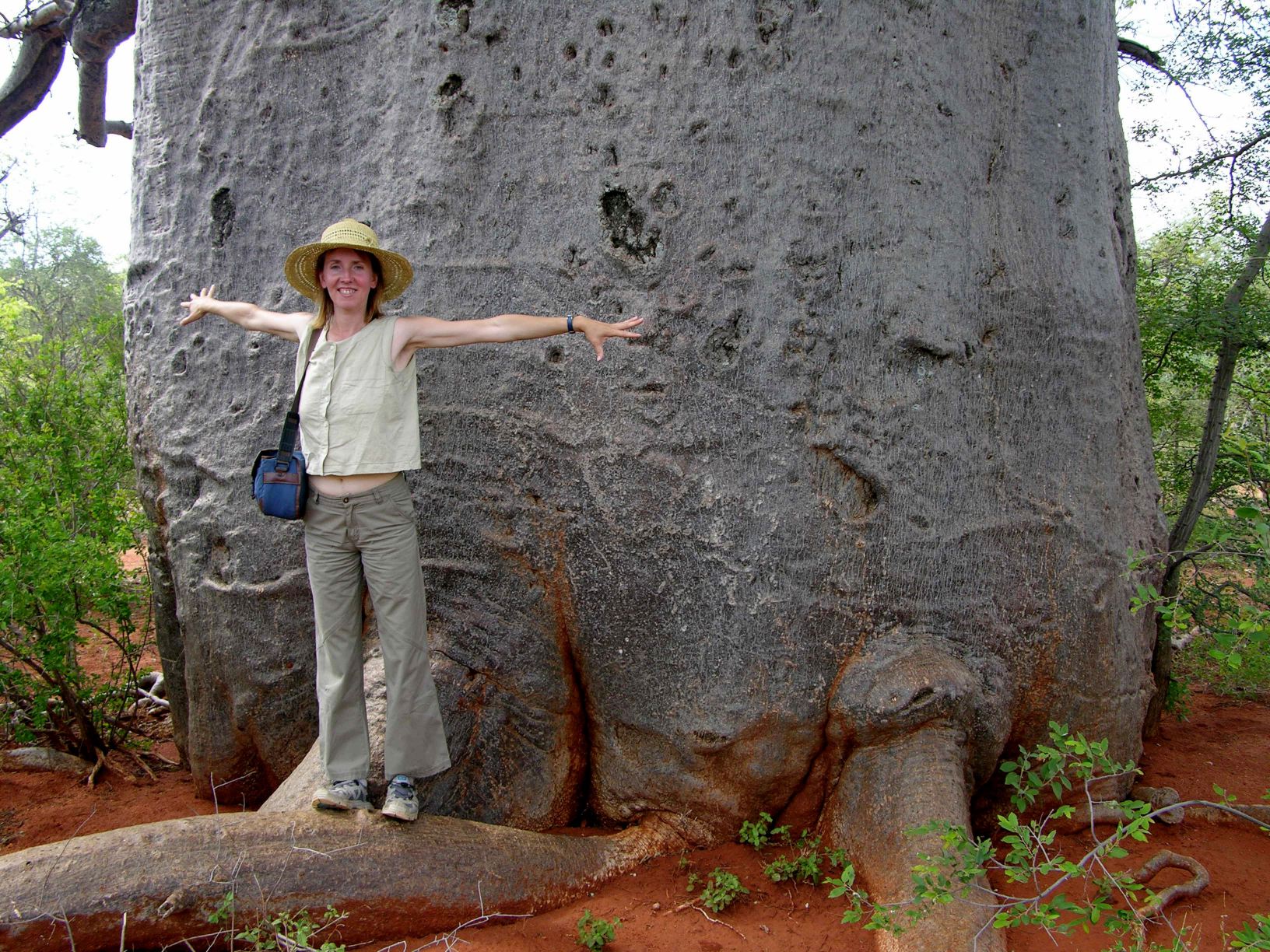
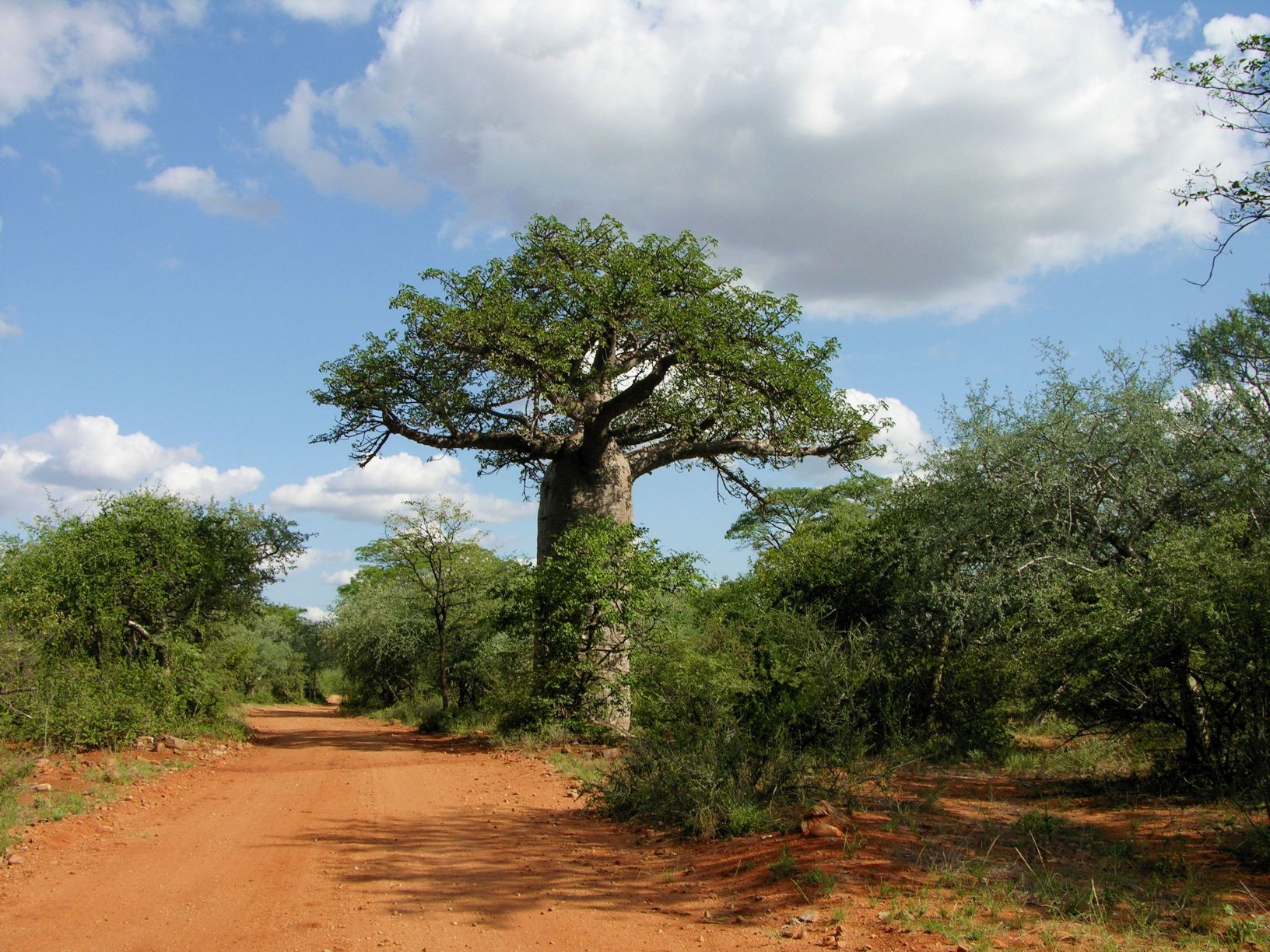
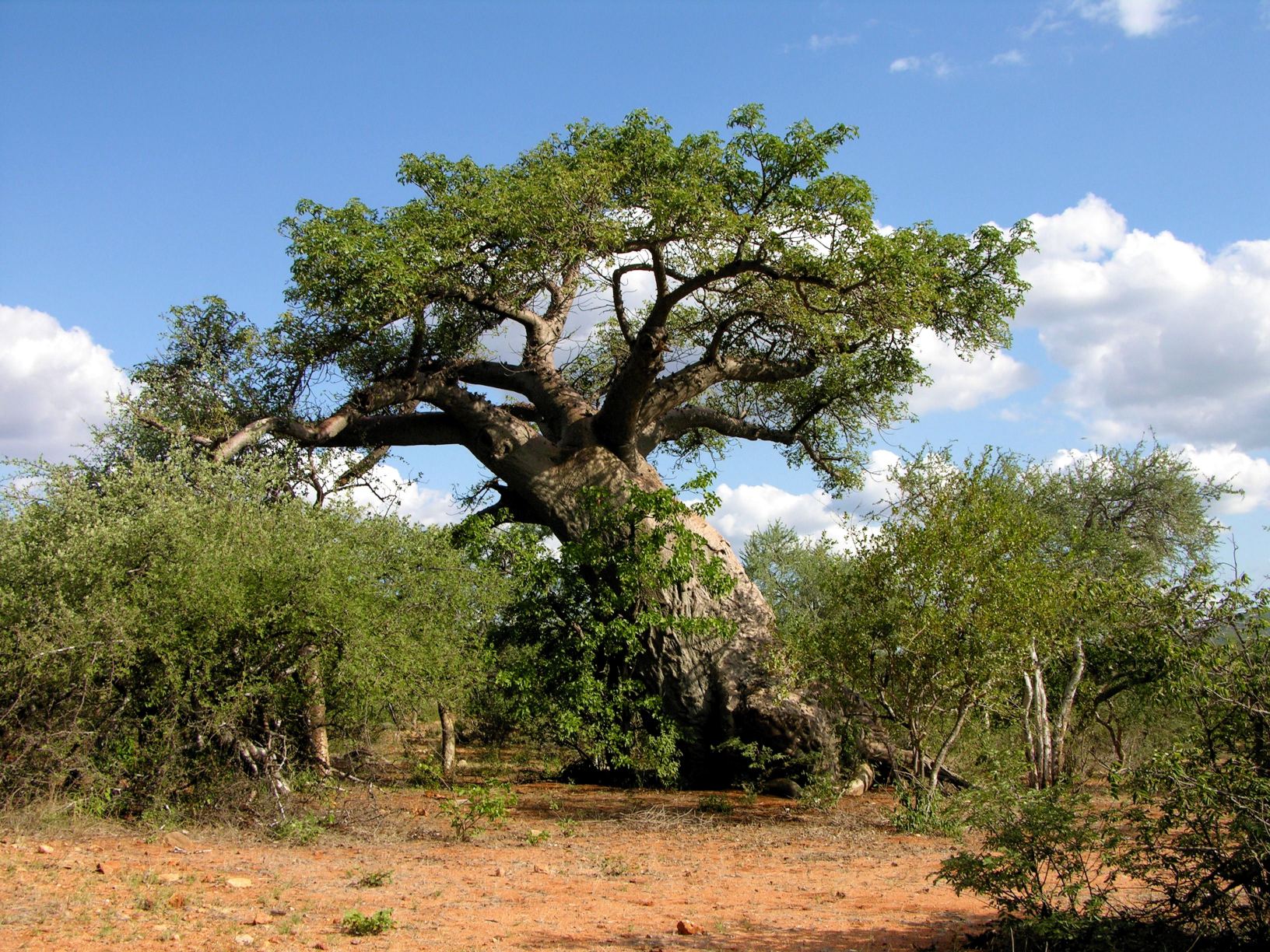
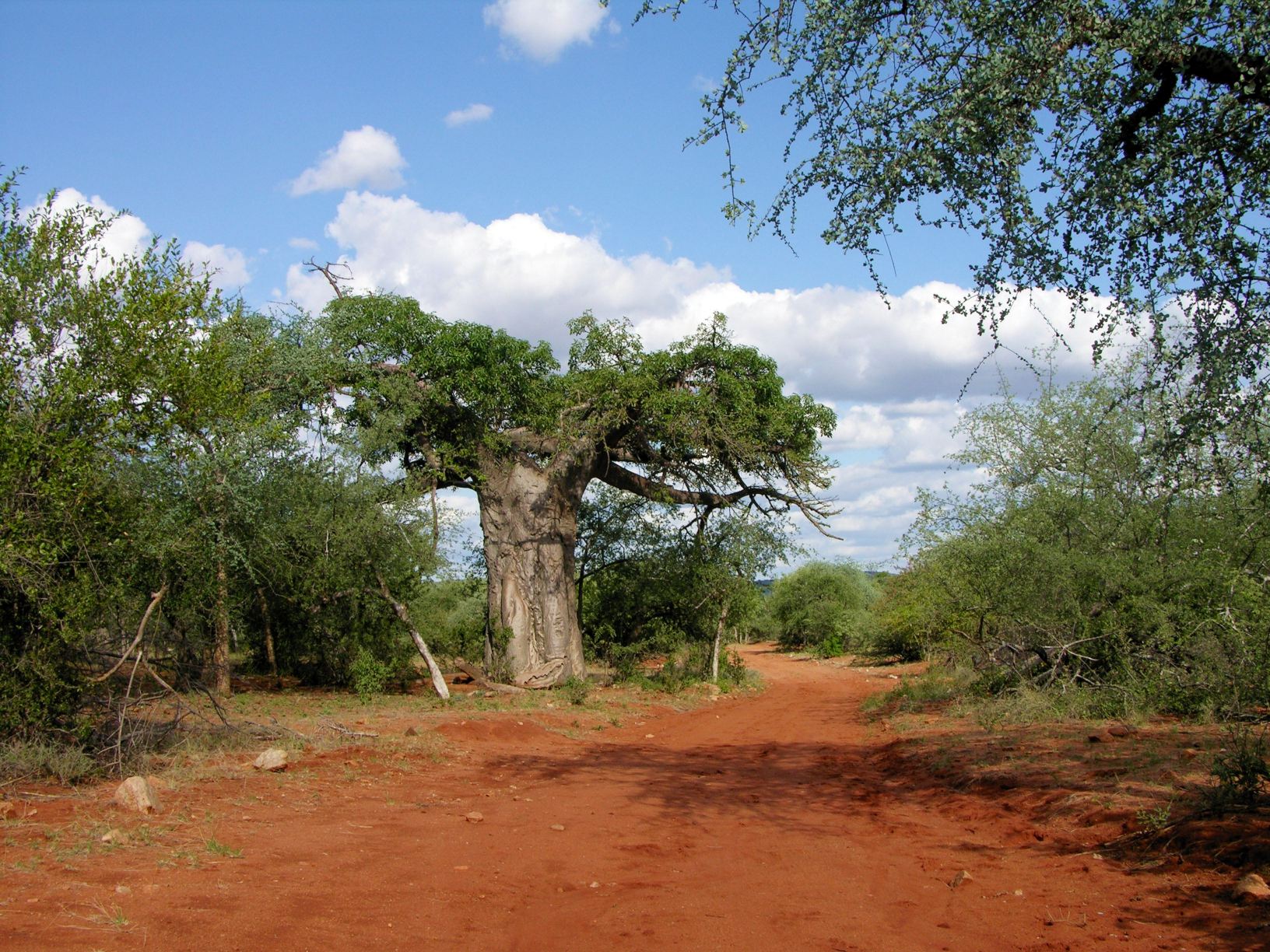
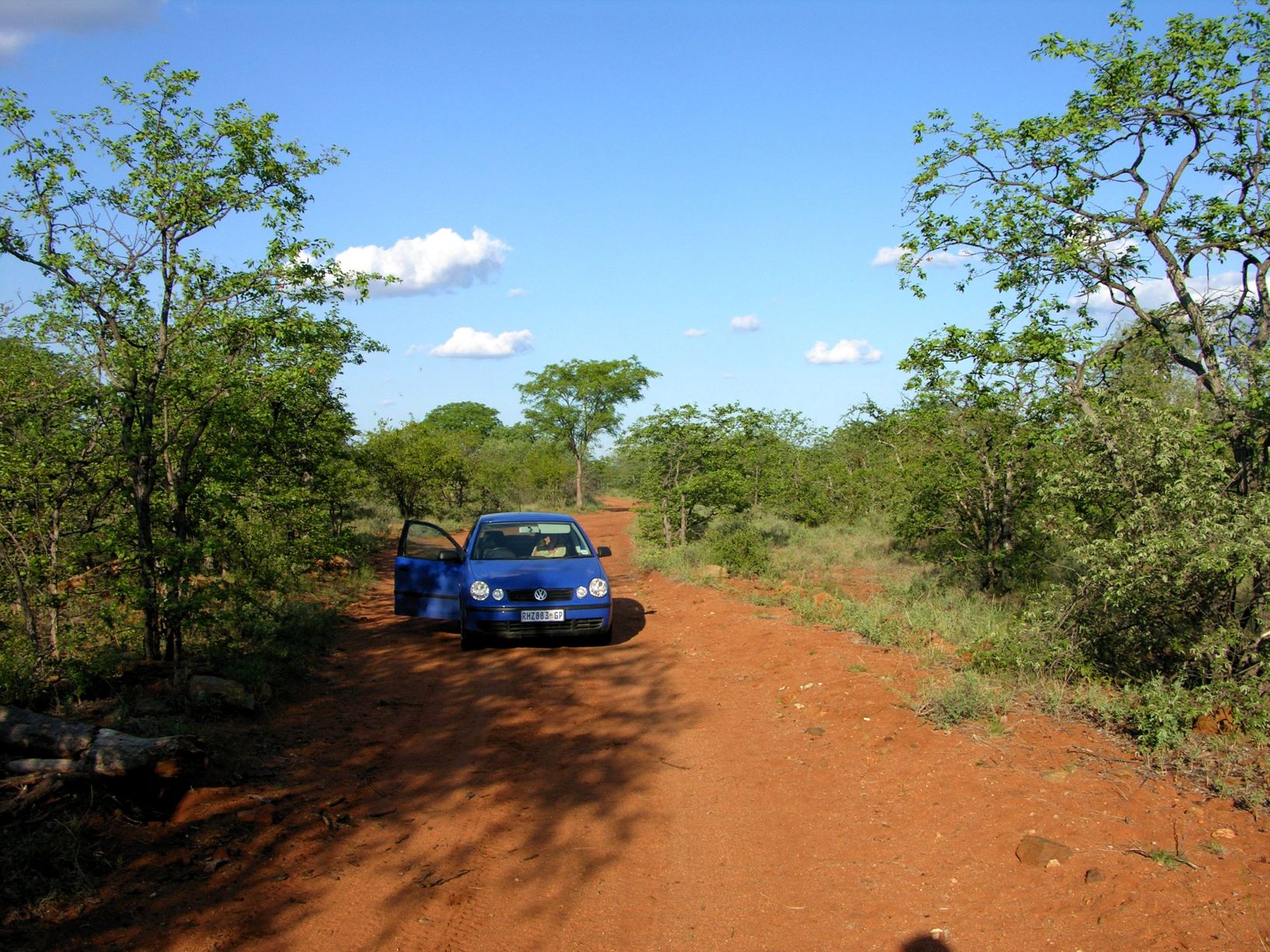
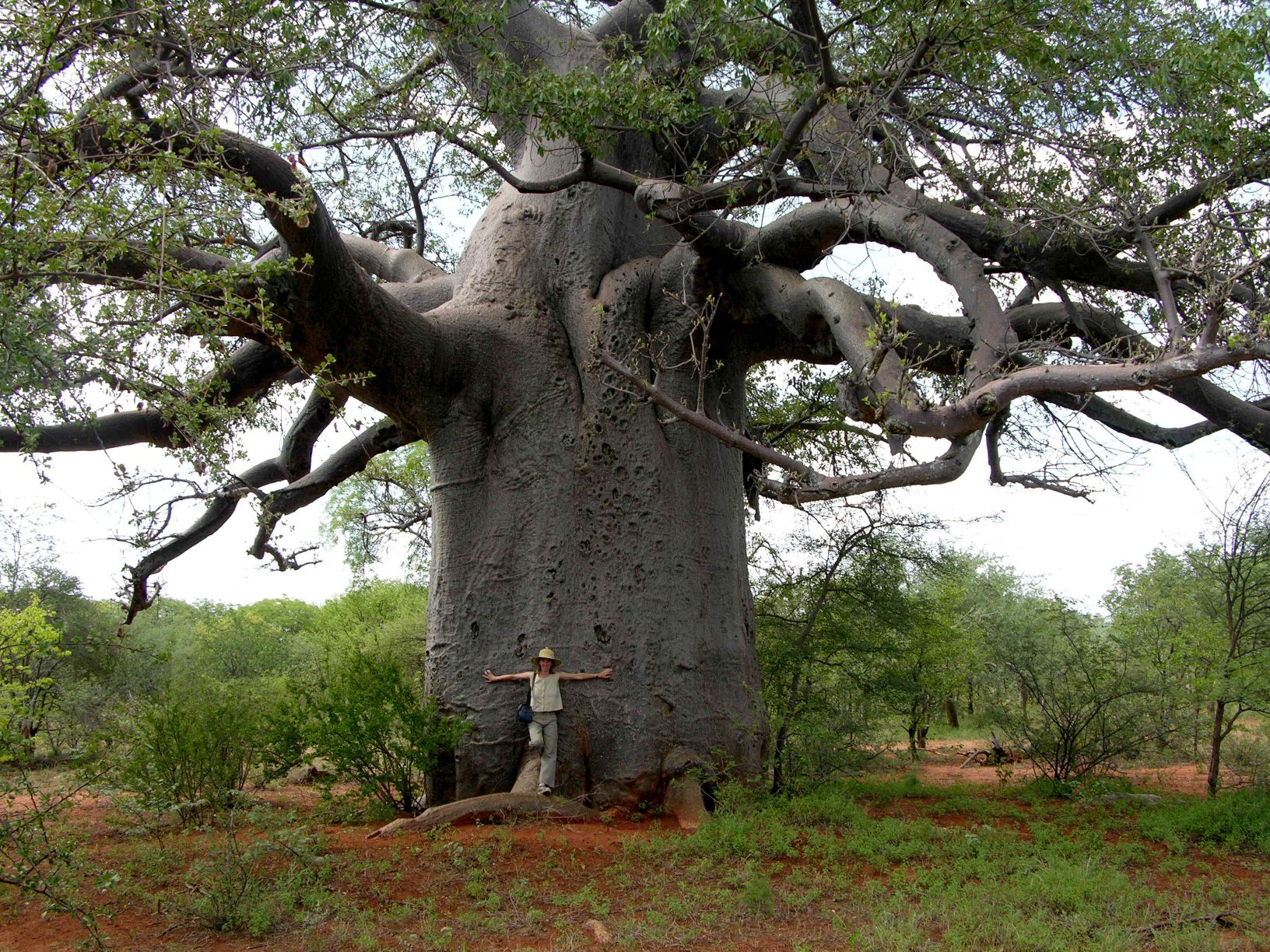
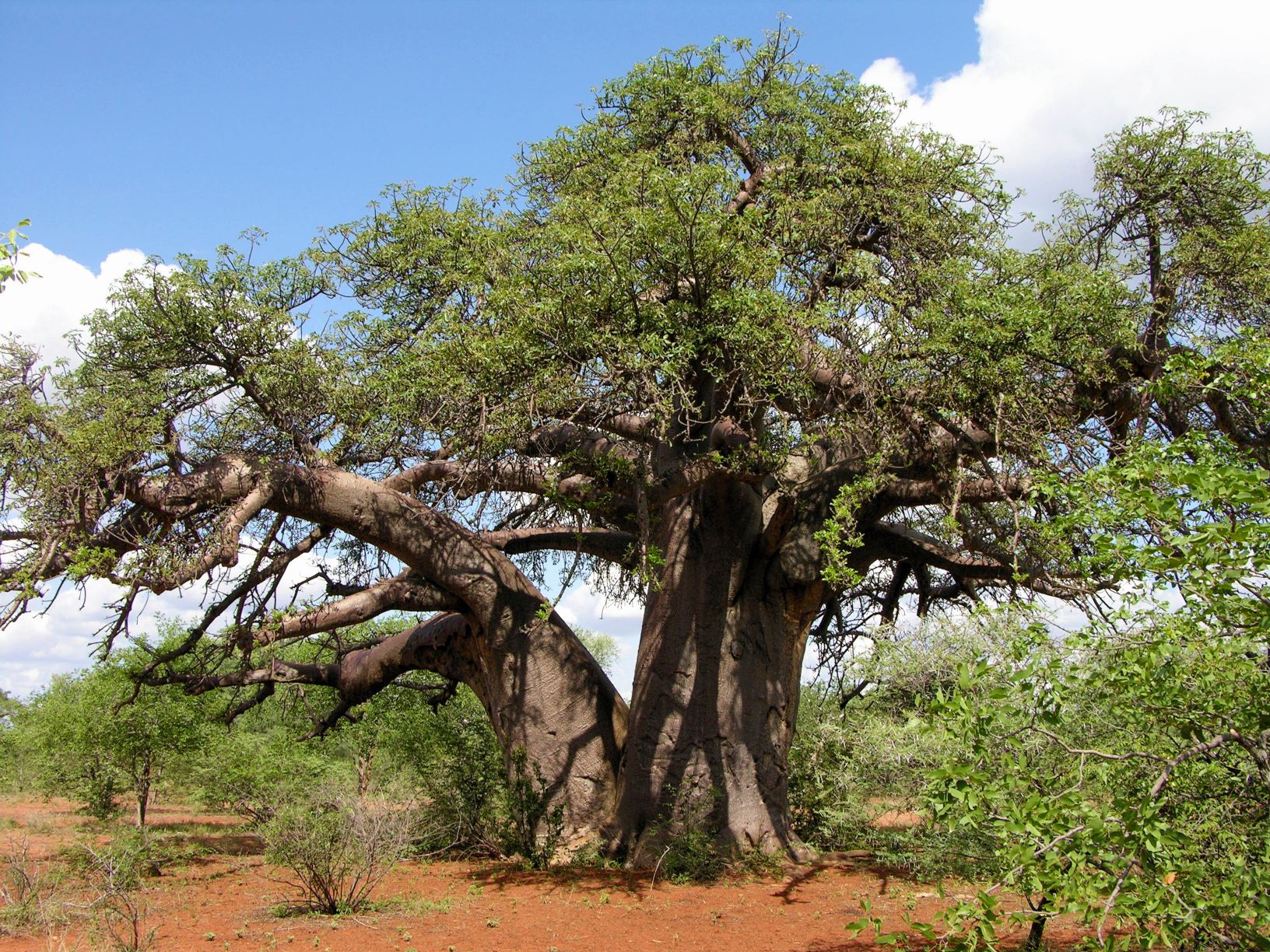
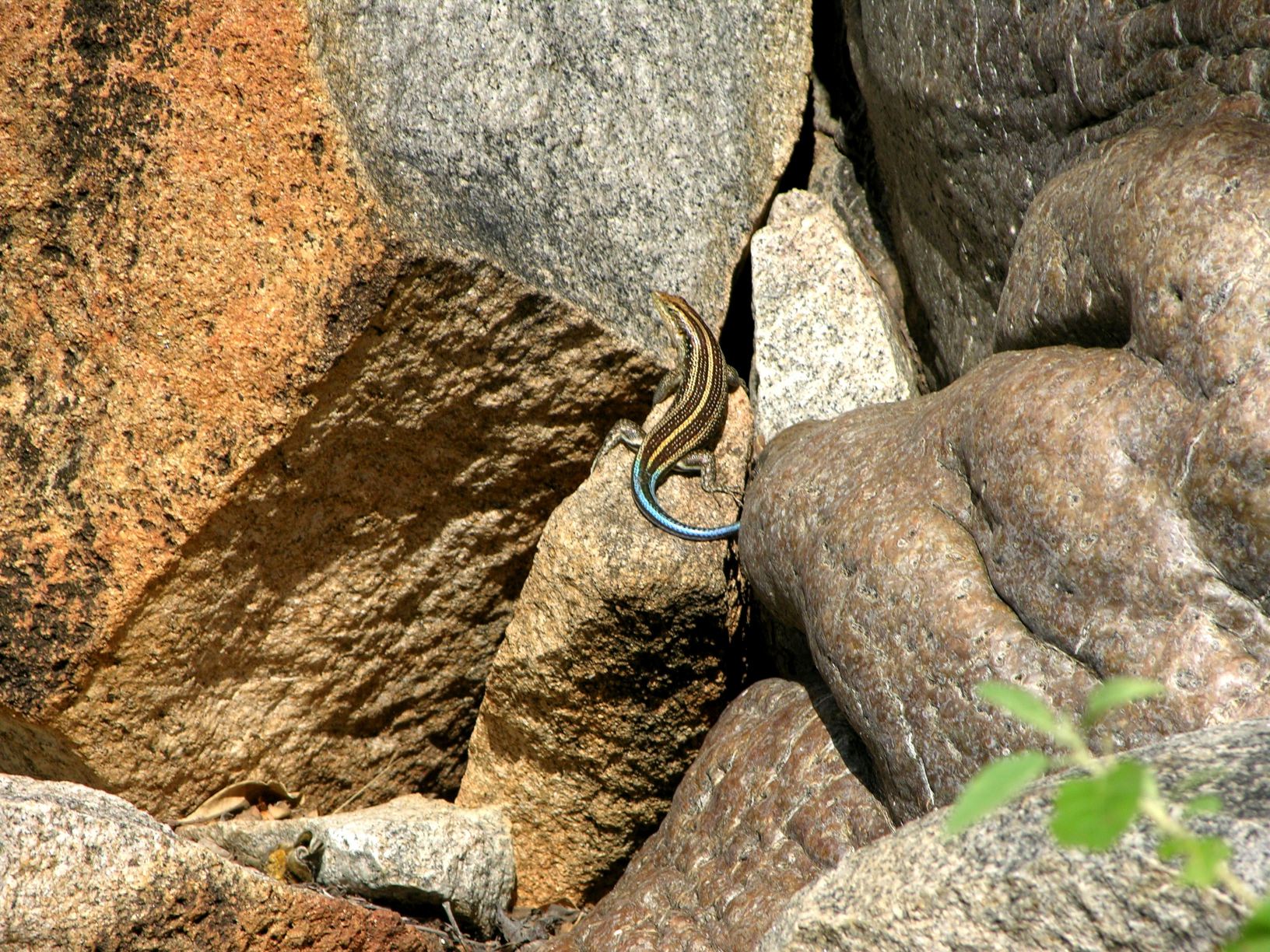
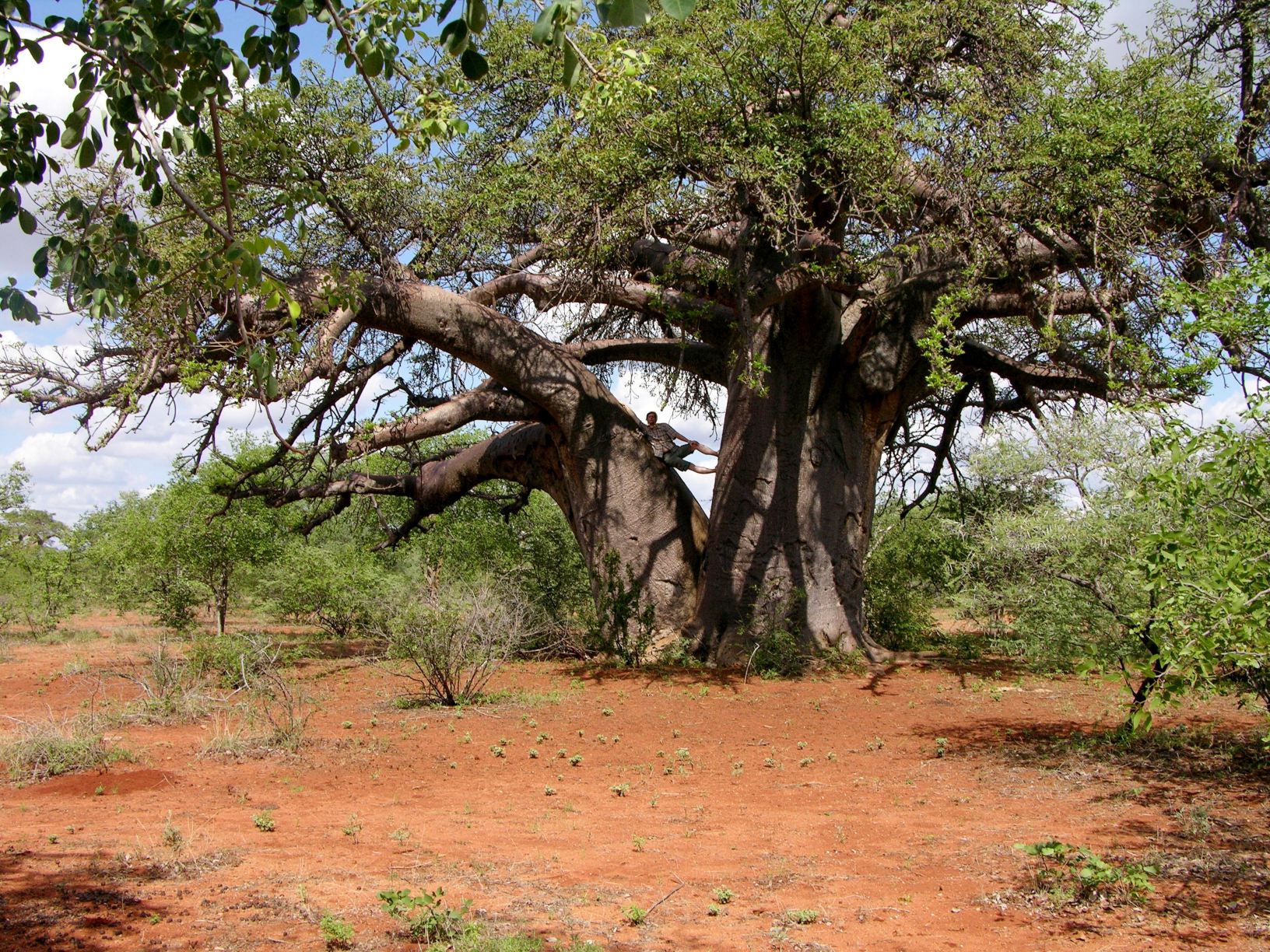
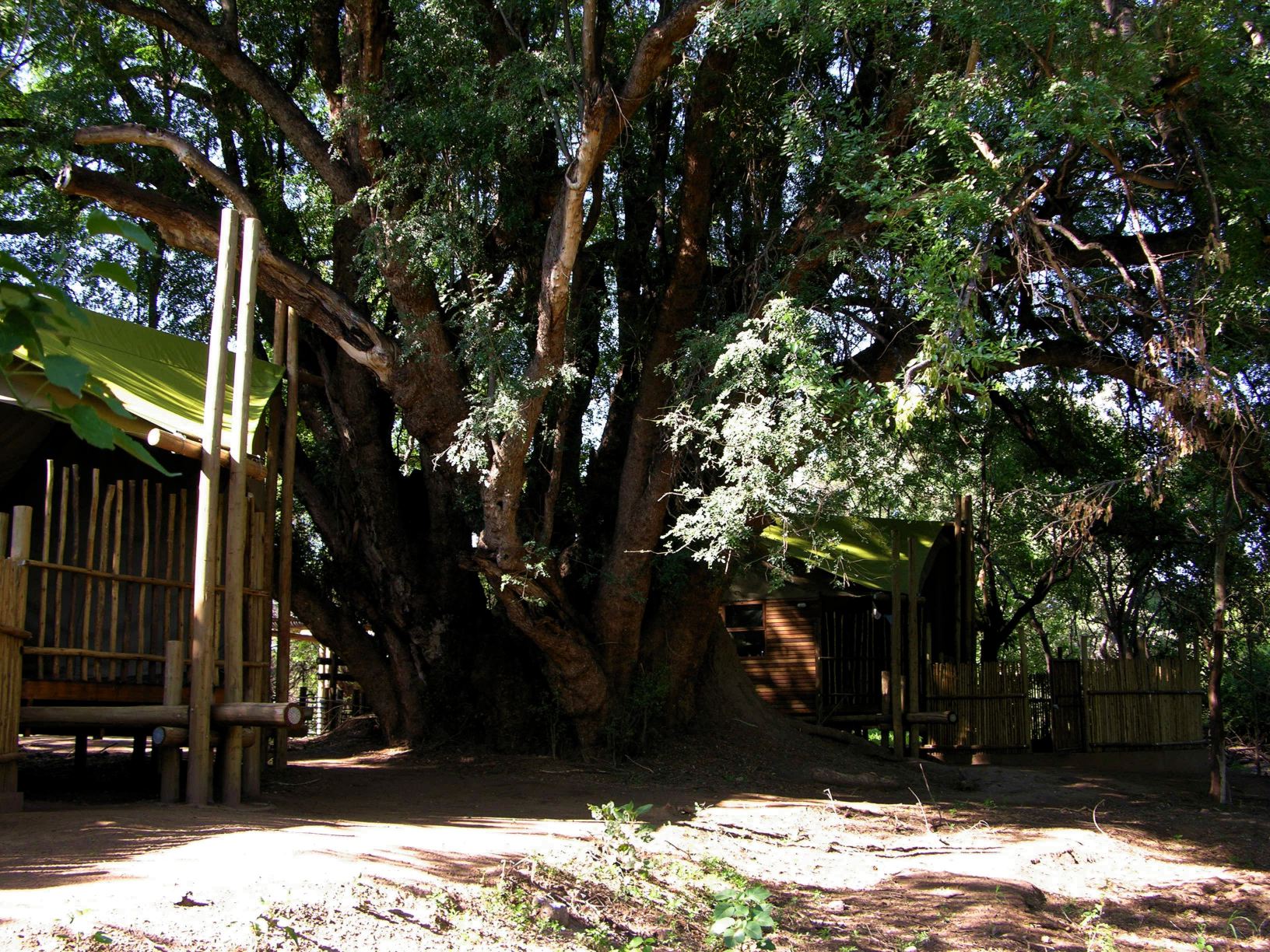
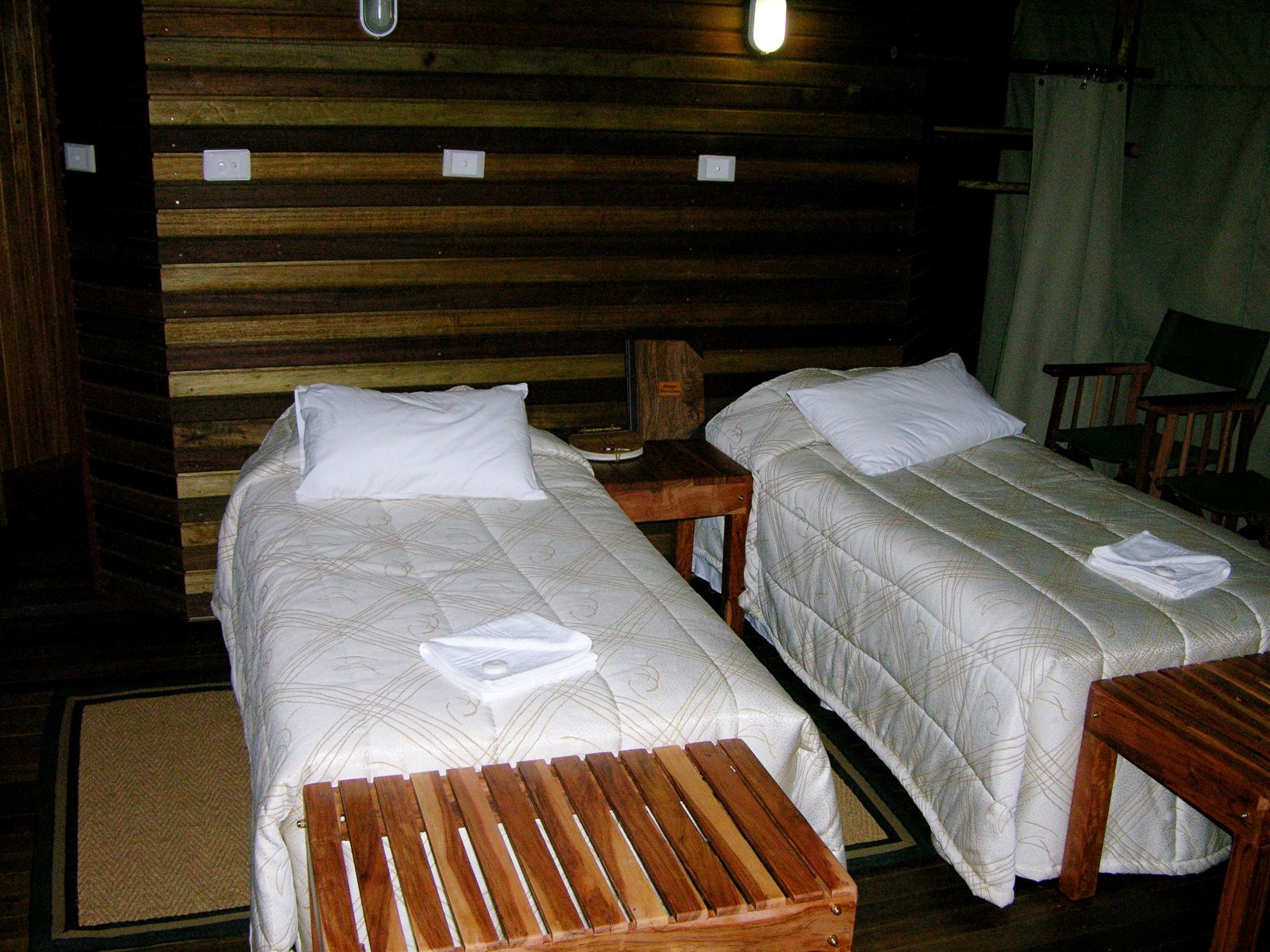
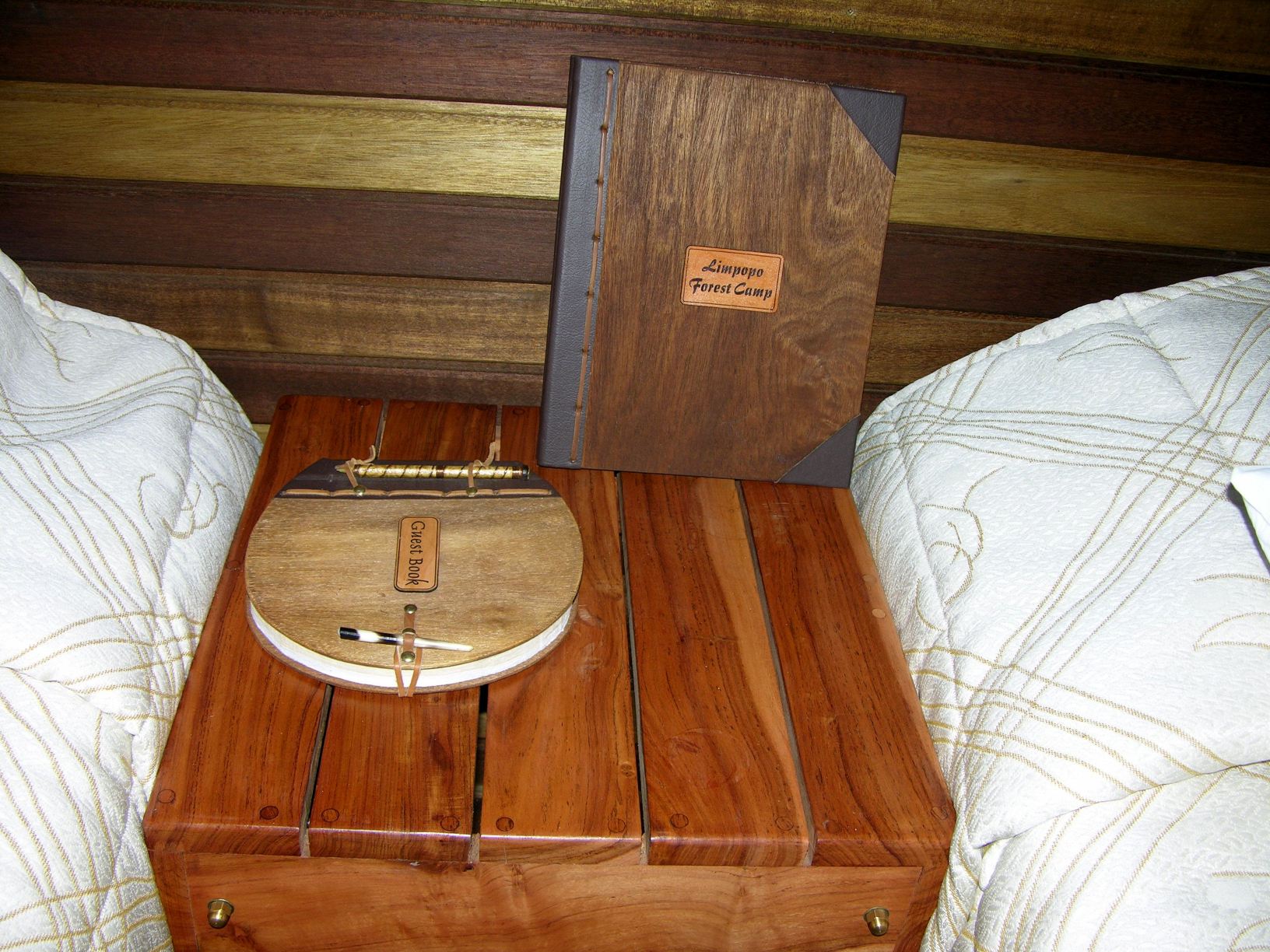
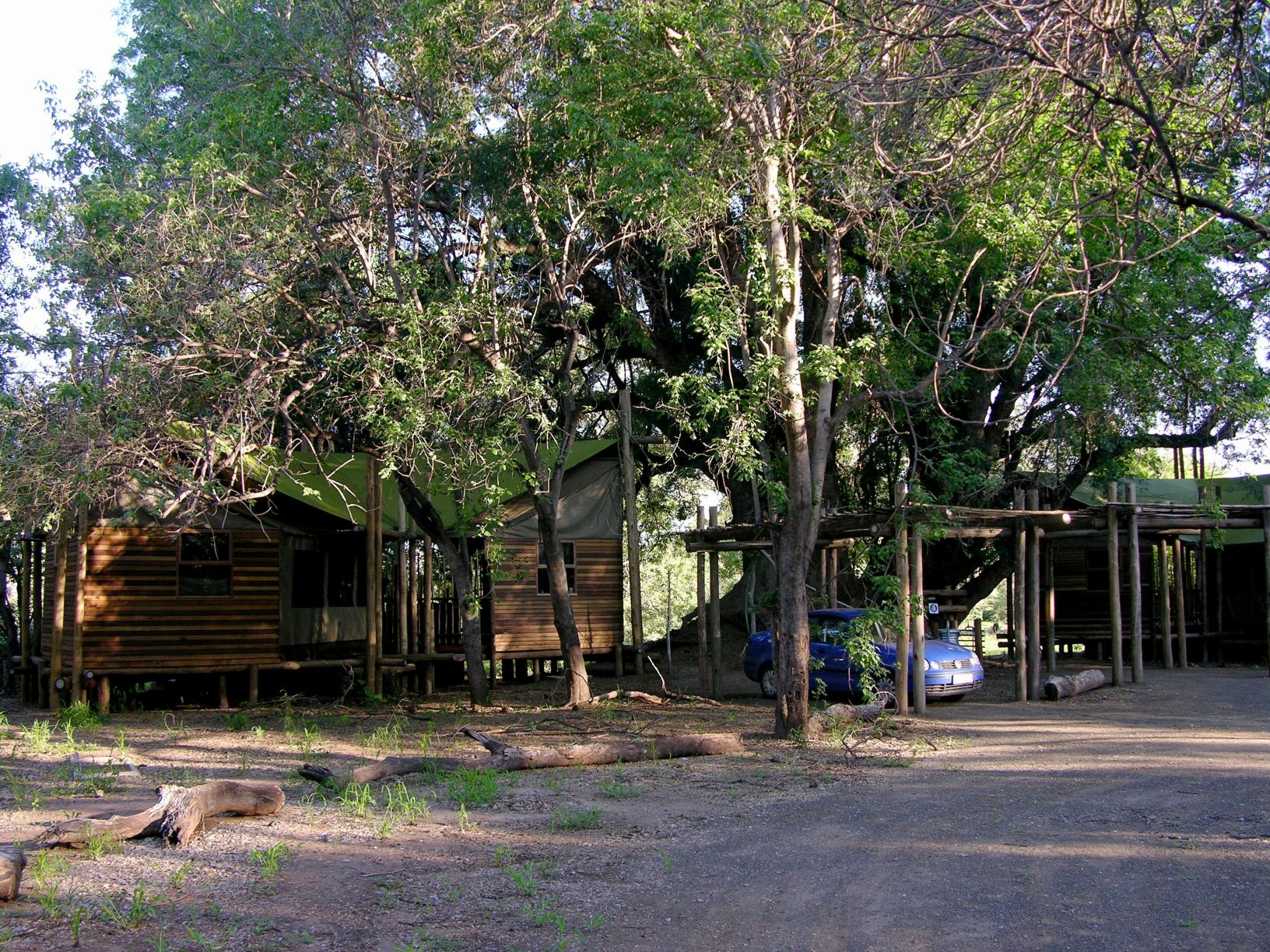
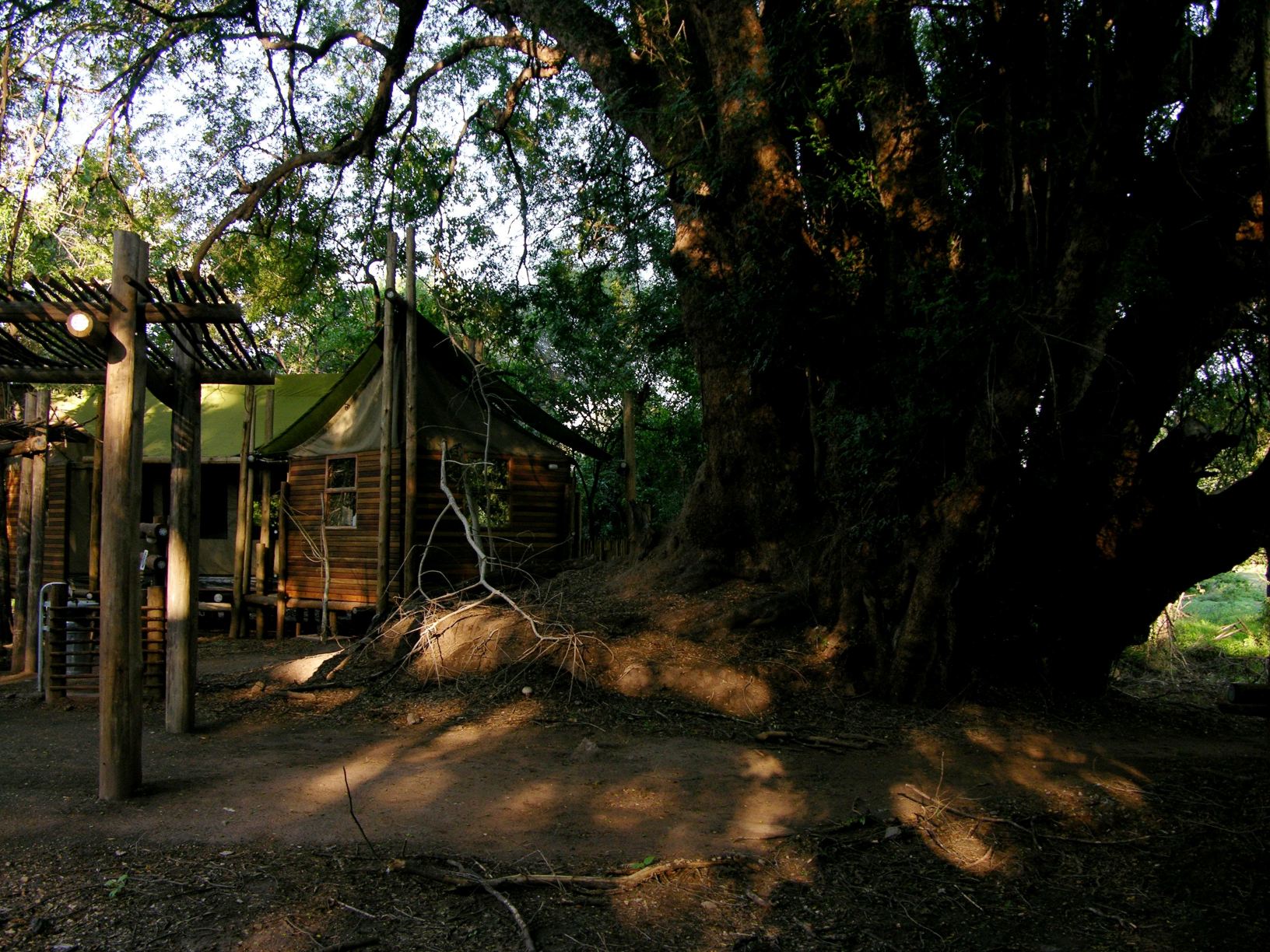
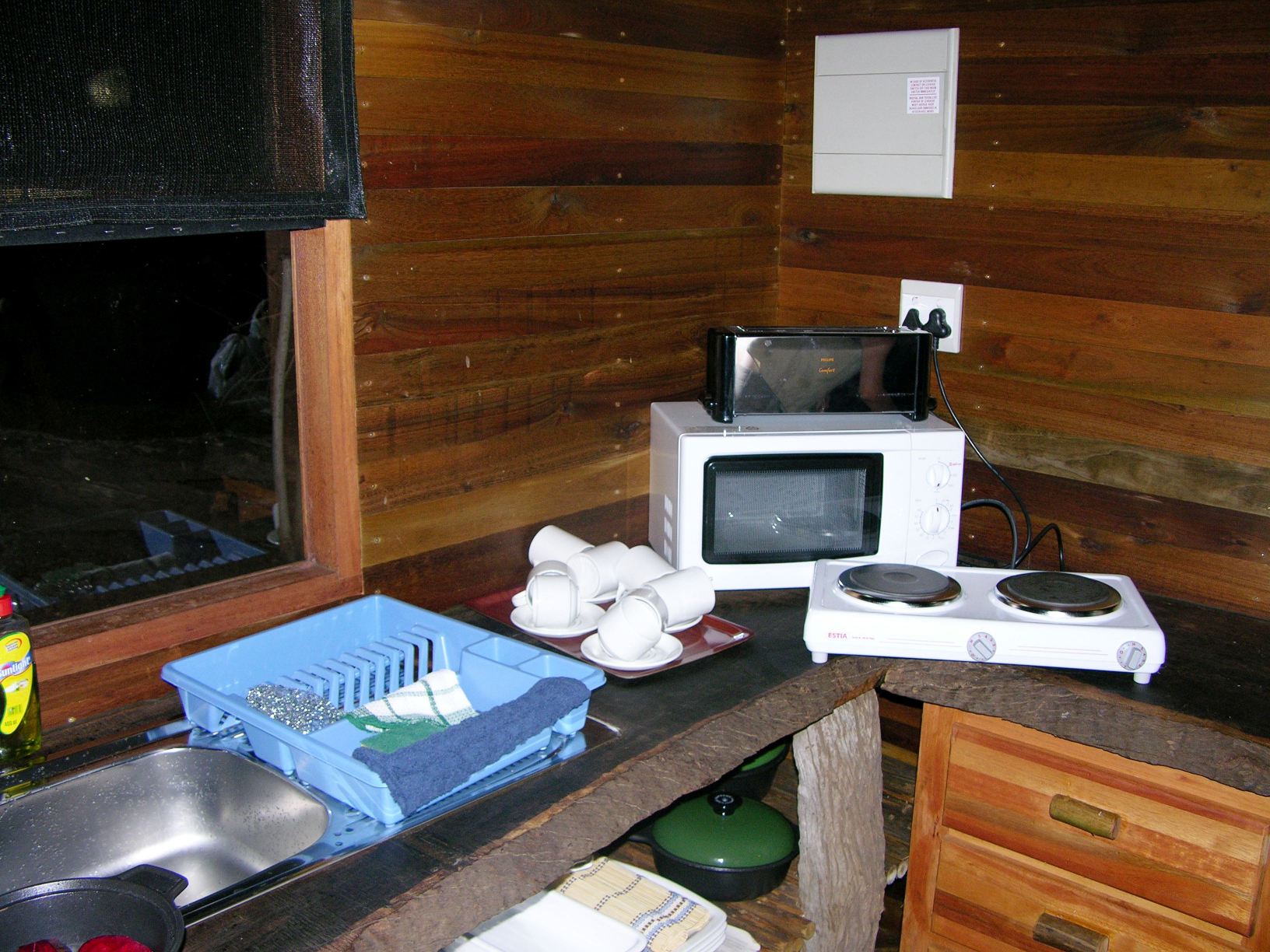
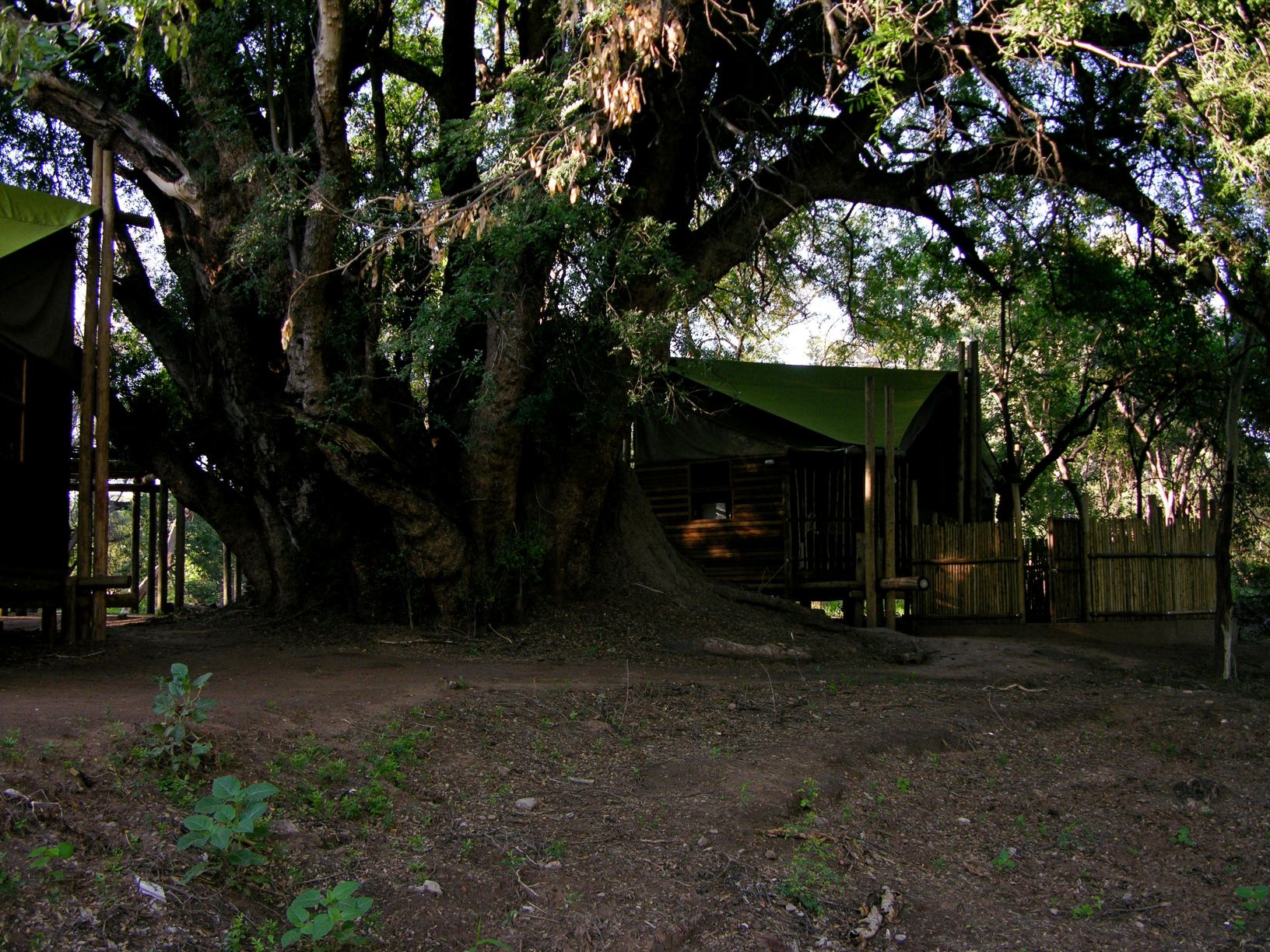
Towards evening we reached the recently established Limpopo park. There was room for us in the far corner, right on the Limpopo. They called it a safari tent, but it was quite luxurious (22°11.164′S, 29°12.400′E). There really was a tent pitched under a large tree, but inside it was everything you needed. A full set of crockery, a microwave, a shower and a fan. There was a fence between it and the park, with the animals walking around on the other side. Antelope of all sorts all the time, and elephants almost every night. Sometimes a leopard sits right up in the branches of the tree next to it. We weren't lucky enough to see that one, but in the guest book people were always writing about it. An extraordinarily comfortable place. Even the phone picked up a network somewhere in neighbouring Botswana. Quiet all around us. We were alone in the entire camp.
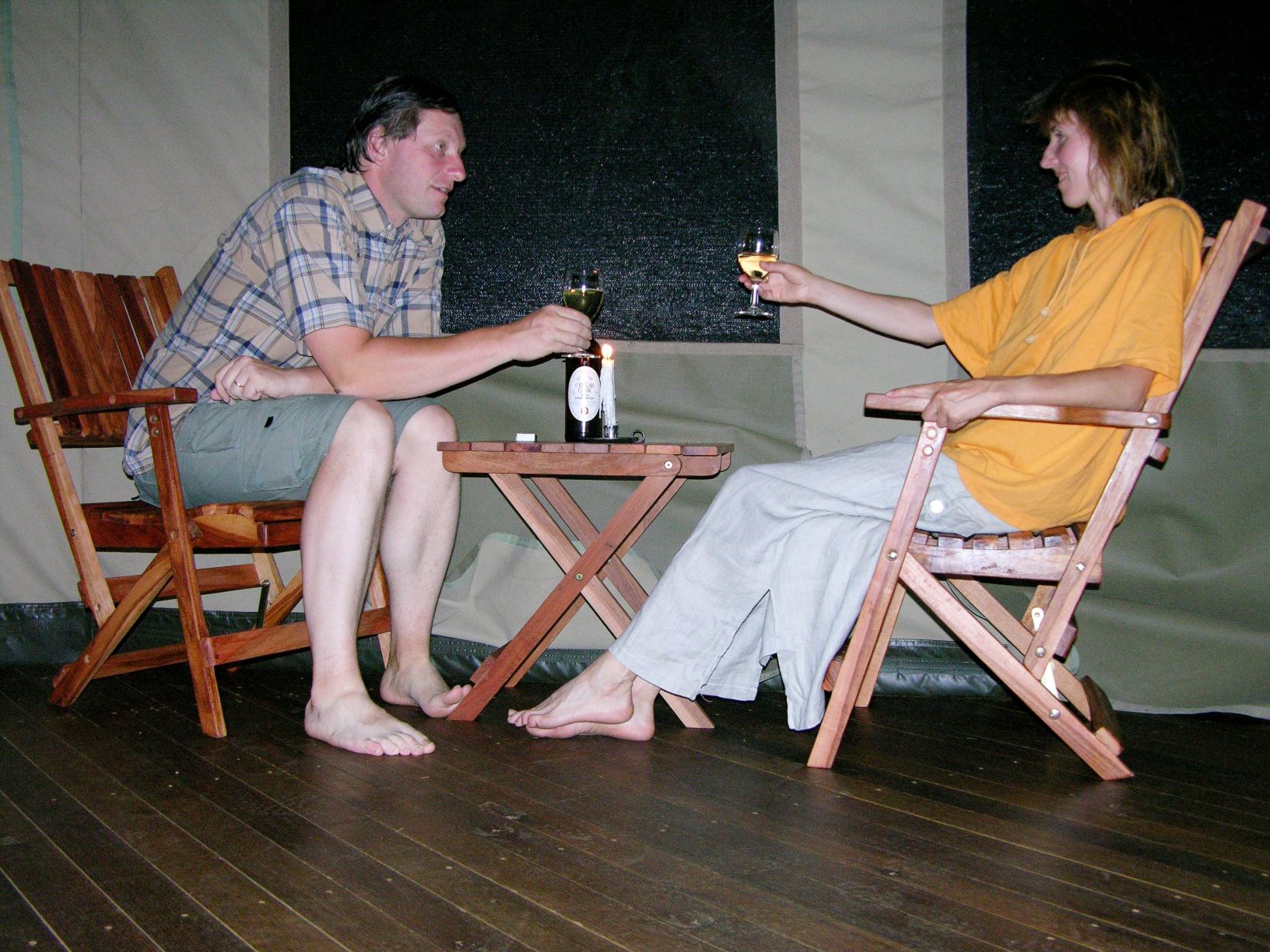
We declared it a holiday. Out came the usual bottle. What a place! It's hard to believe that all this is ours to enjoy, when we were born behind the Iron Curtain in one great big Soviet prison camp. We lived to see the end of it. It's coming back before our eyes, of course. The thought keeps nagging at me that this might be the last time. They'll go and shut the borders on us. Well, never mind. We outlived the old lot and we'll outlive this lot too.
In the morning I went to swim in the Limpopo. There are crocodiles, of course, but I thought I'd manage somehow. They'd only recently been brought here, incidentally. People killed them all here years ago and now they're trying to bring the population back. Not very successfully, they say. Time to go swimming quick, before they grew to five metres. Alas, the crocodiles turned out not to be the worst of it. The problem was that we were in the national park and the river wasn't. There was a fence right down by the water. And what a fence, three strands of electrified barbed wire. So much for my swim. On the way back, though, I startled a kudu. Neither of us noticed the other until we came face to face. The kudu sprang about five metres and took off into the distance.
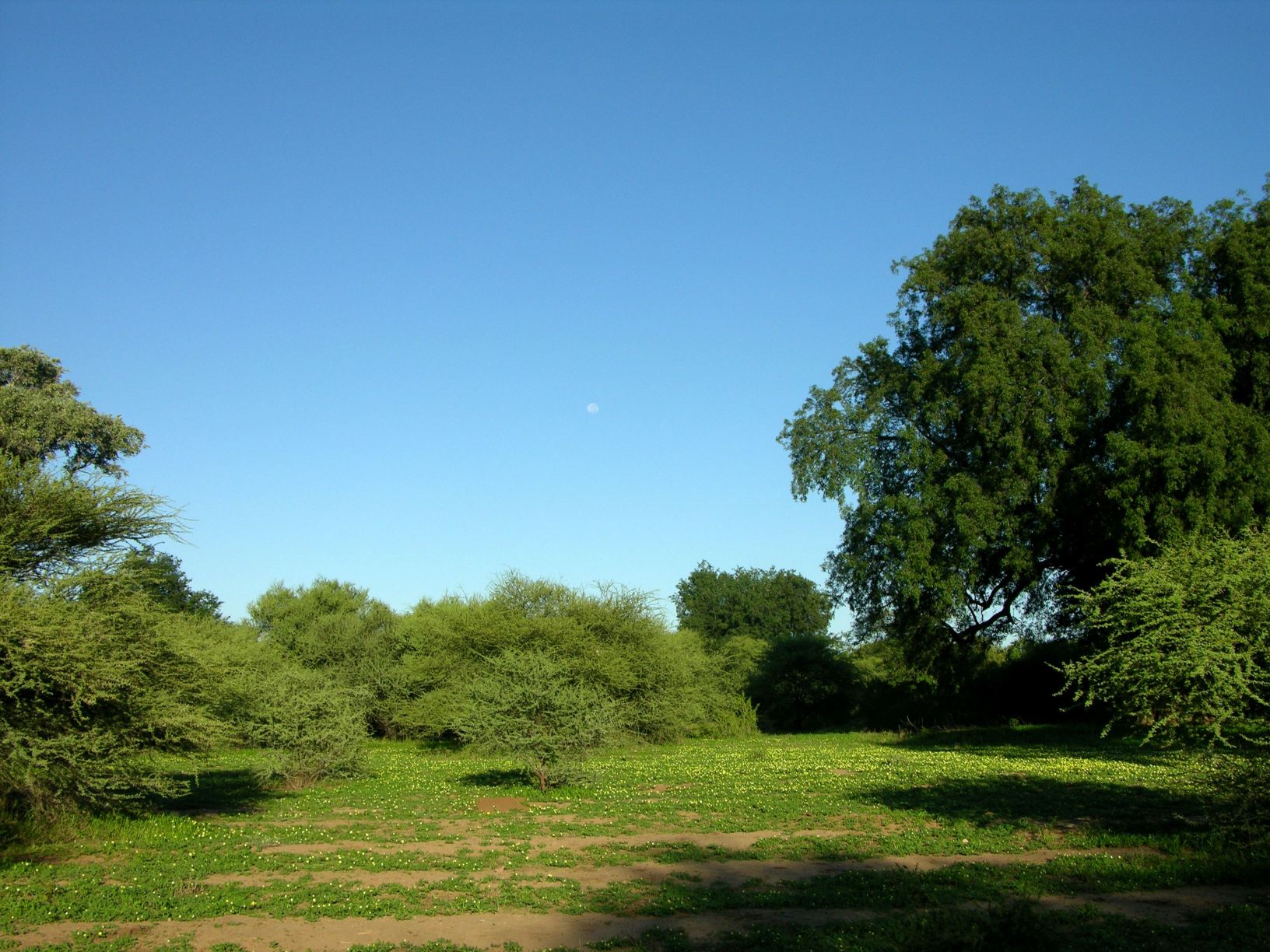
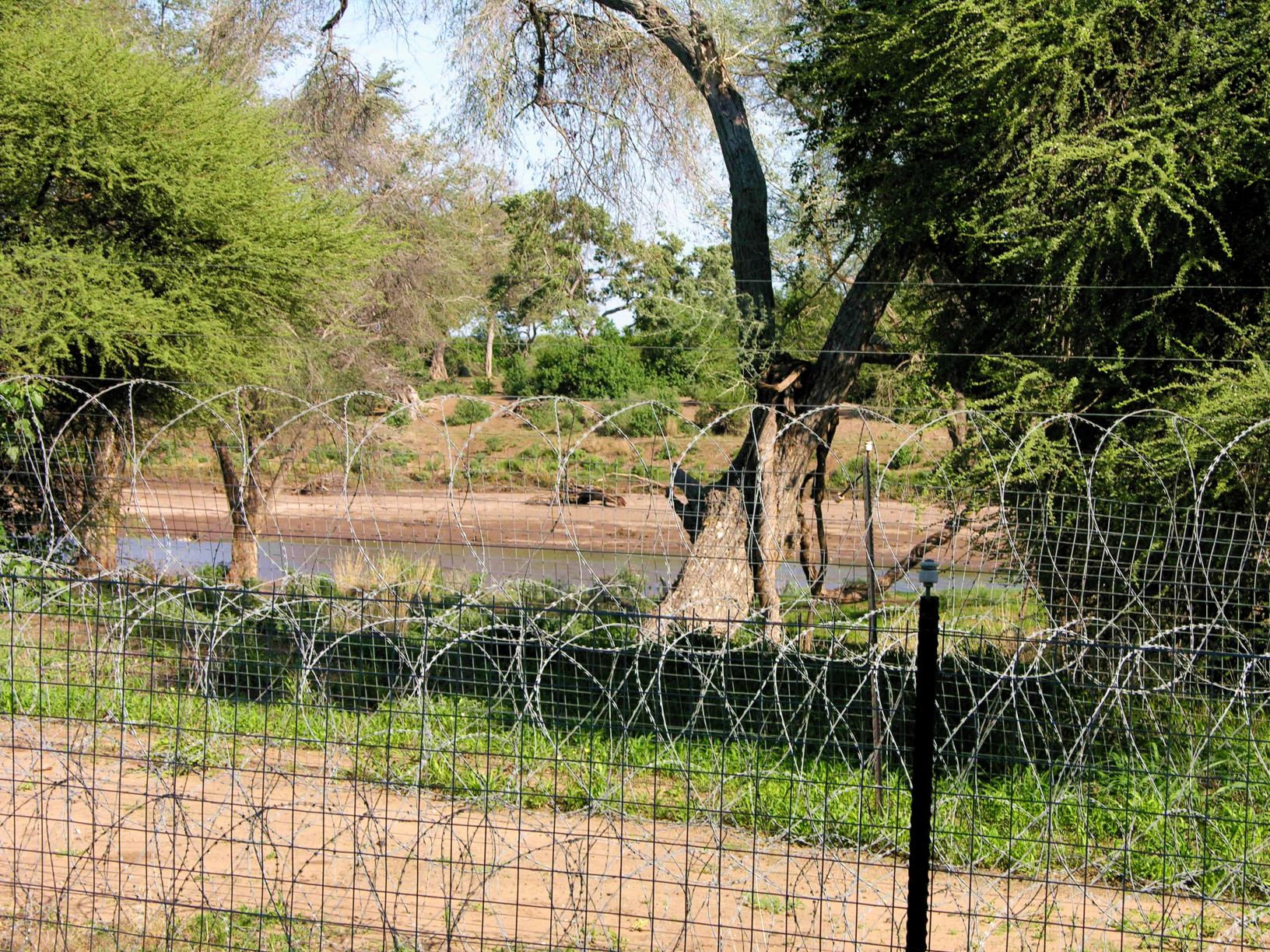
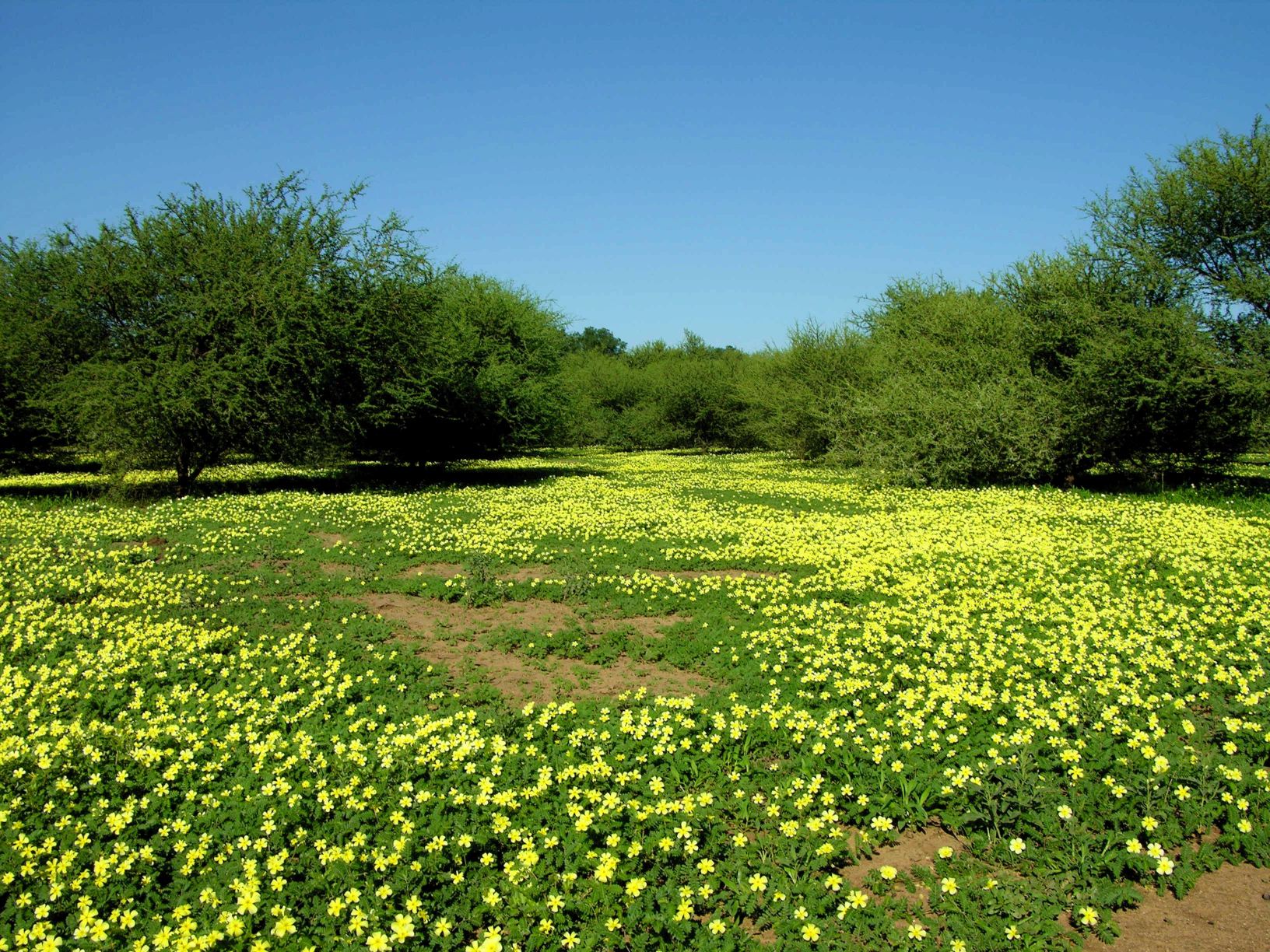
The Limpopo park is new. They've built excellent hides with little slits for watching waterholes or a river with hippos in it. Everything was ready, except that they hadn't brought the animals yet.
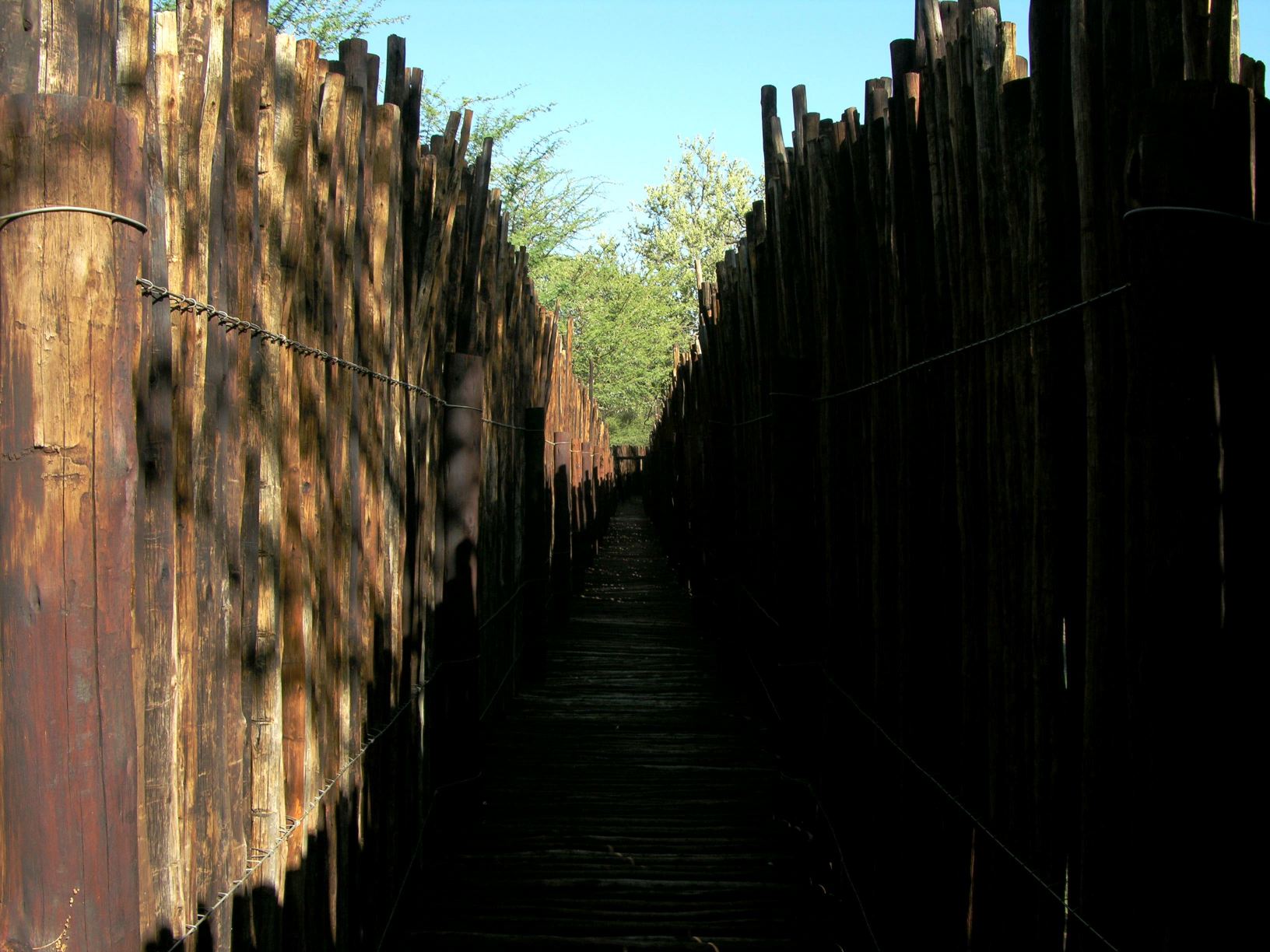
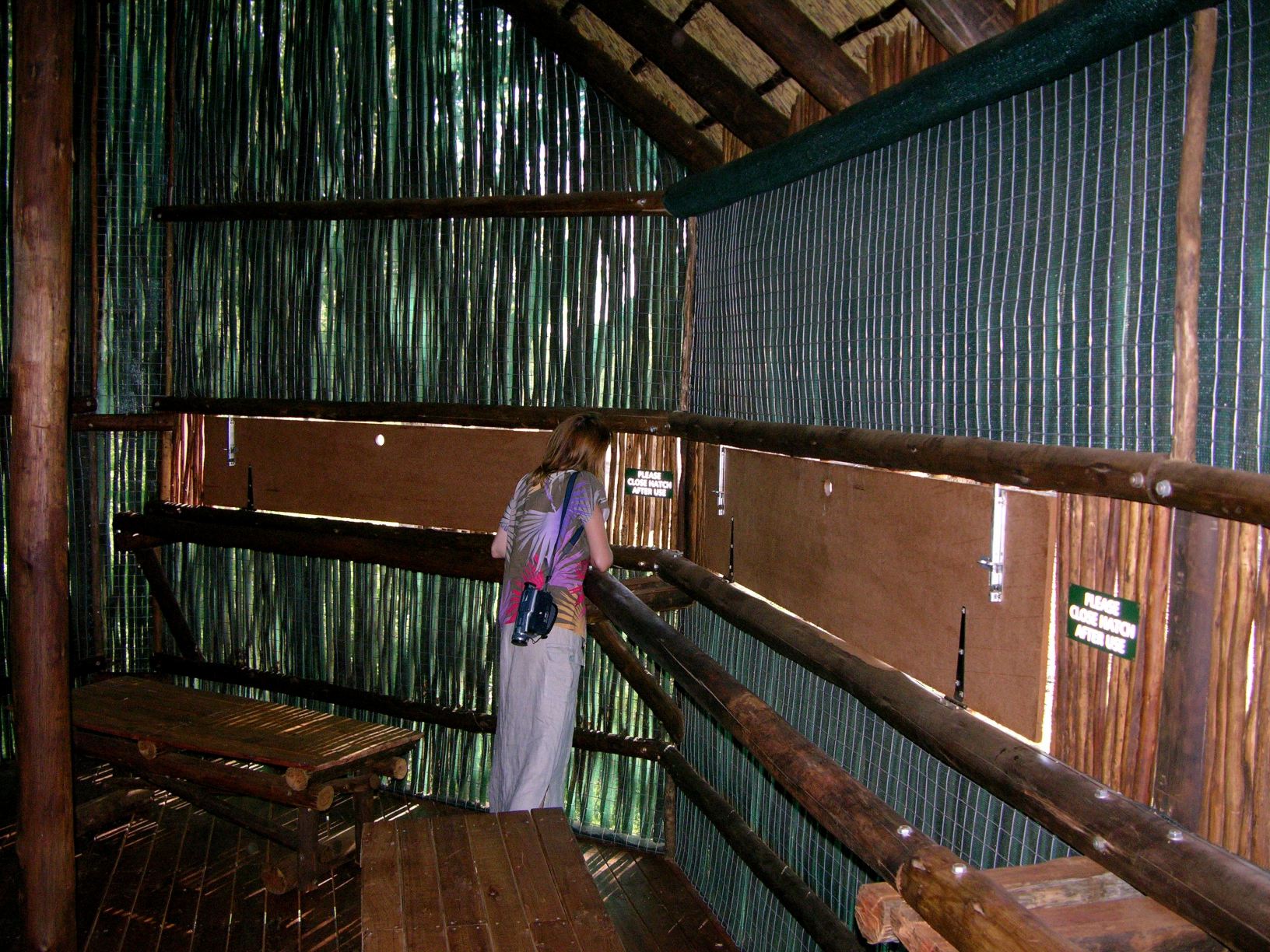
We'd stayed at the western end of the park but the main drivable roads are in the east. This is where its only pride of lions lives so far. You're supposed to see them on a special guided outing. That was of no interest to us. The junction of the Limpopo and the Shashe was well worth seeing, though. This is where South Africa, Botswana and Zimbabwe meet. Nearby, over the Limpopo, they've built a lookout over the water. There were no hippos, but the young crocodiles were very lively. That's the fate of humanity, isn't it? One generation clears the river of everything nasty that bites, thinking how well their grandchildren will live as a result. Then those very grandchildren bring crocodiles back and breed them with equal devotion, also for the sake of future generations.
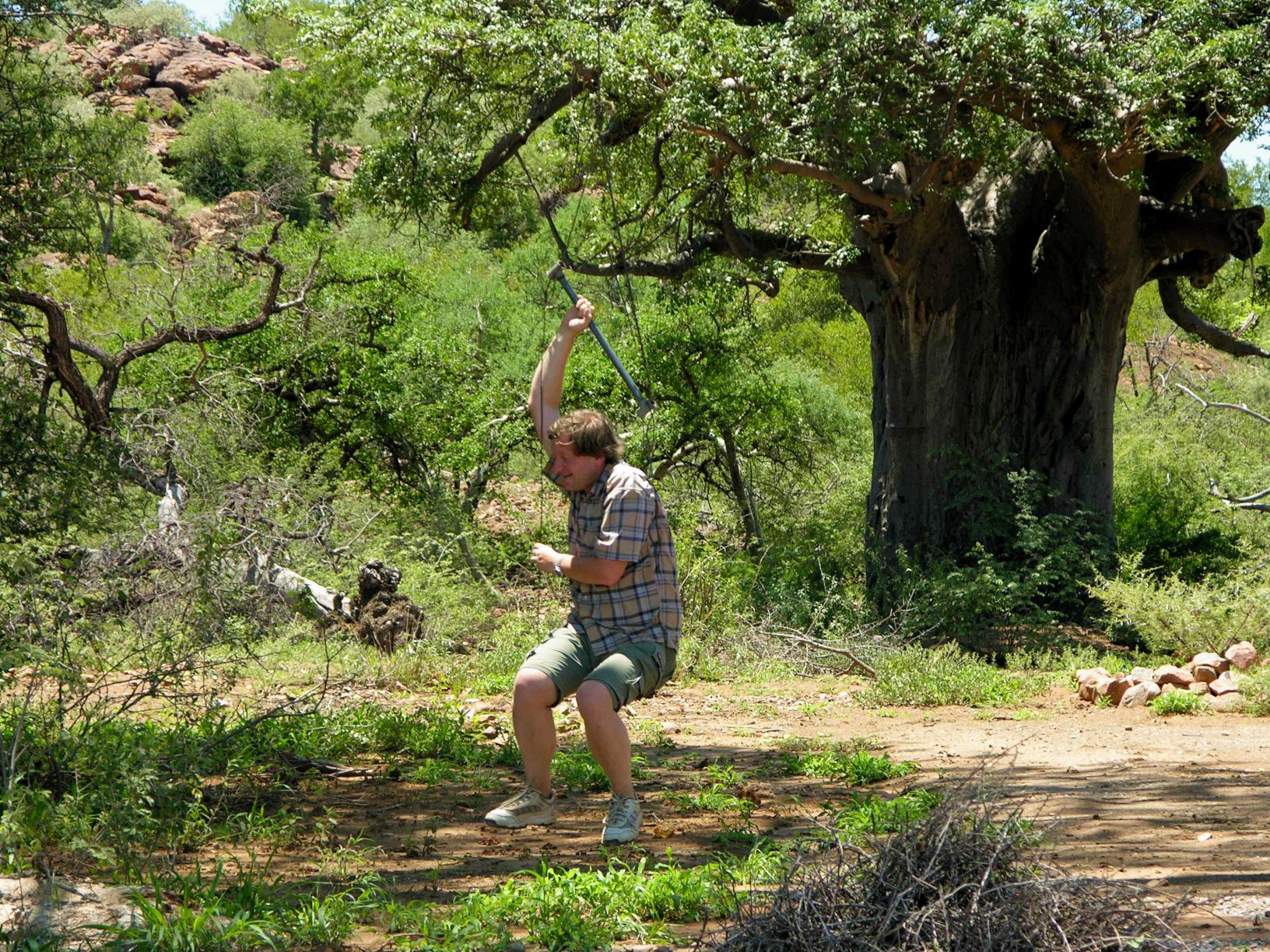
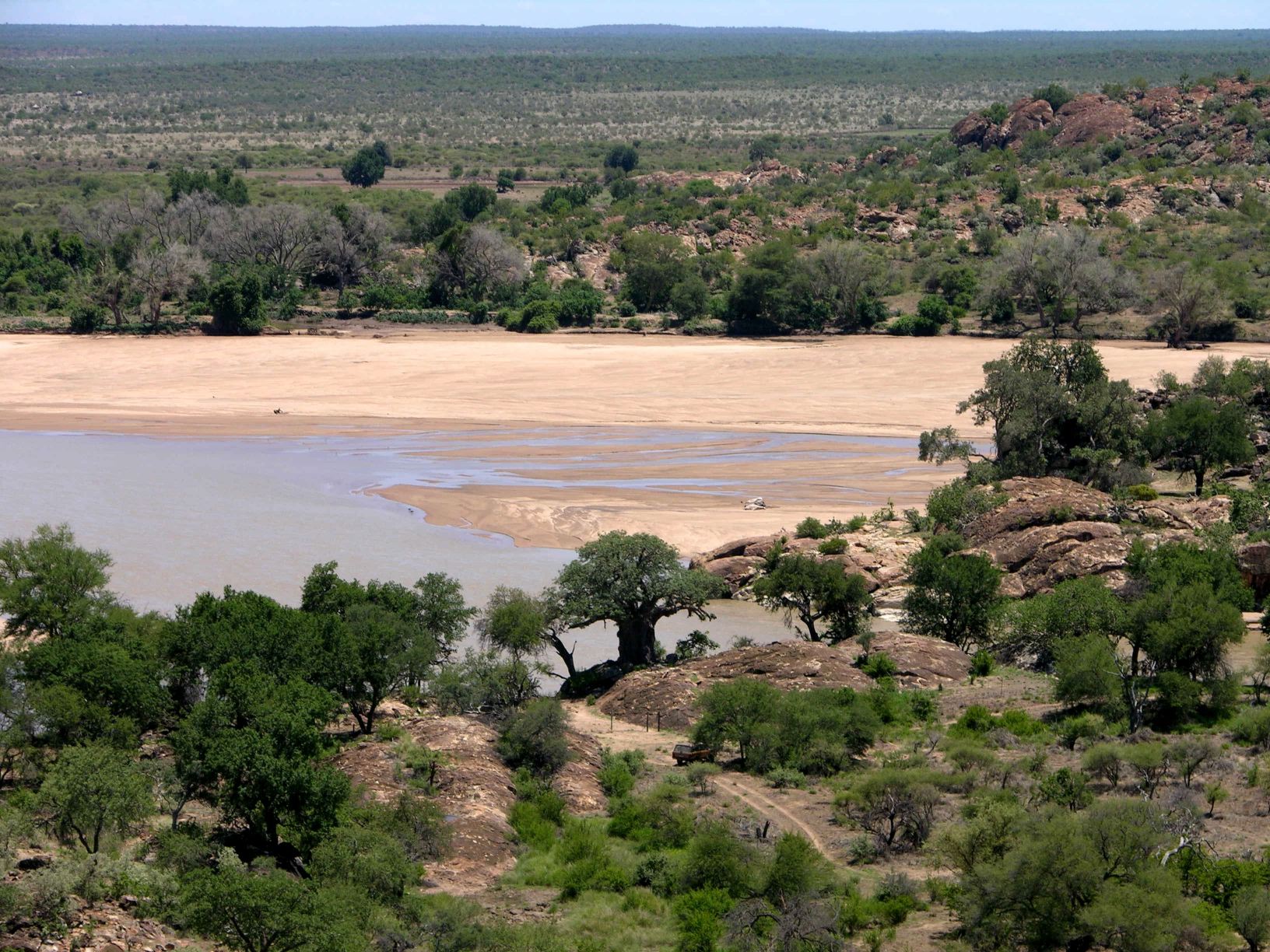
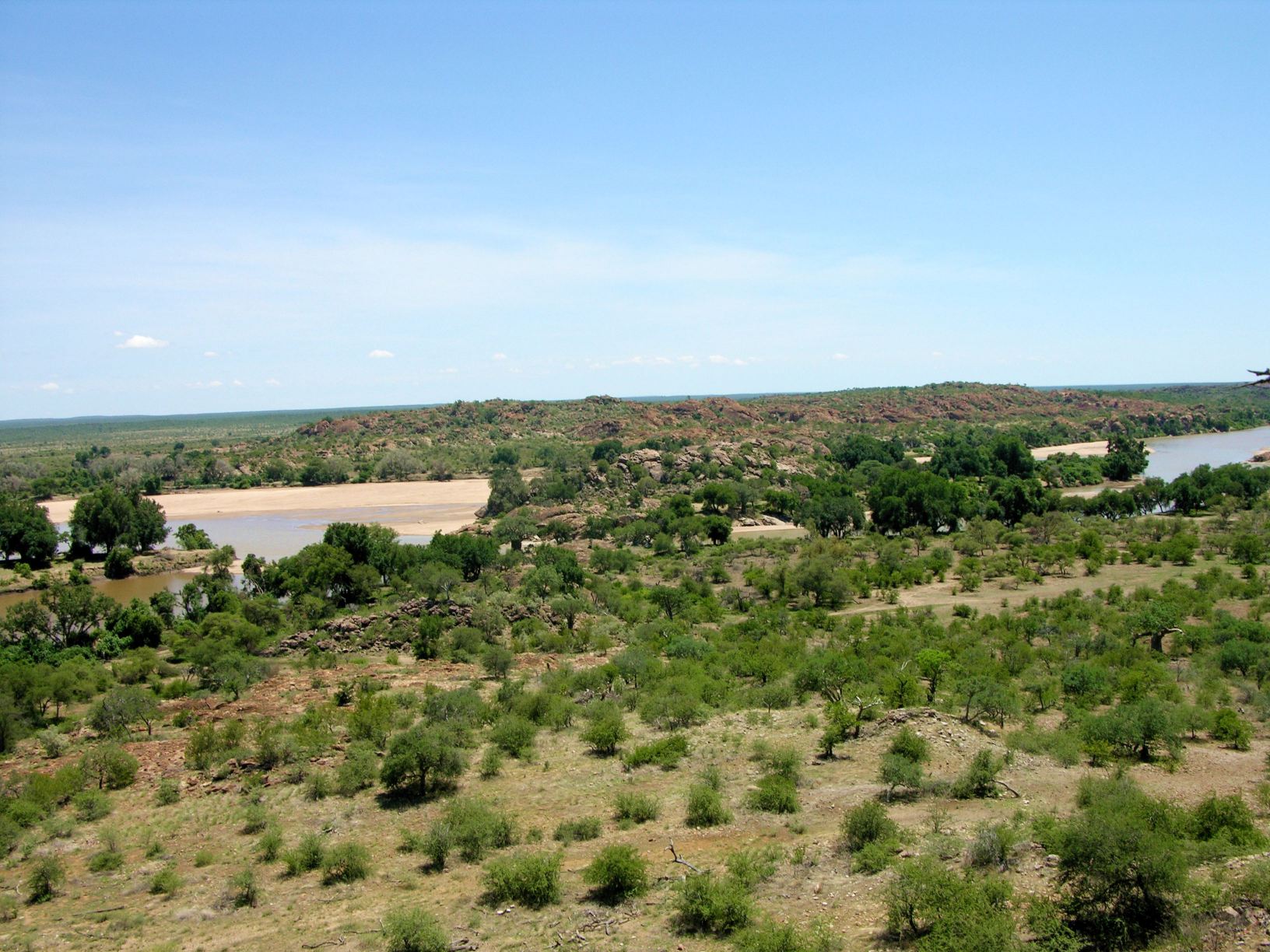
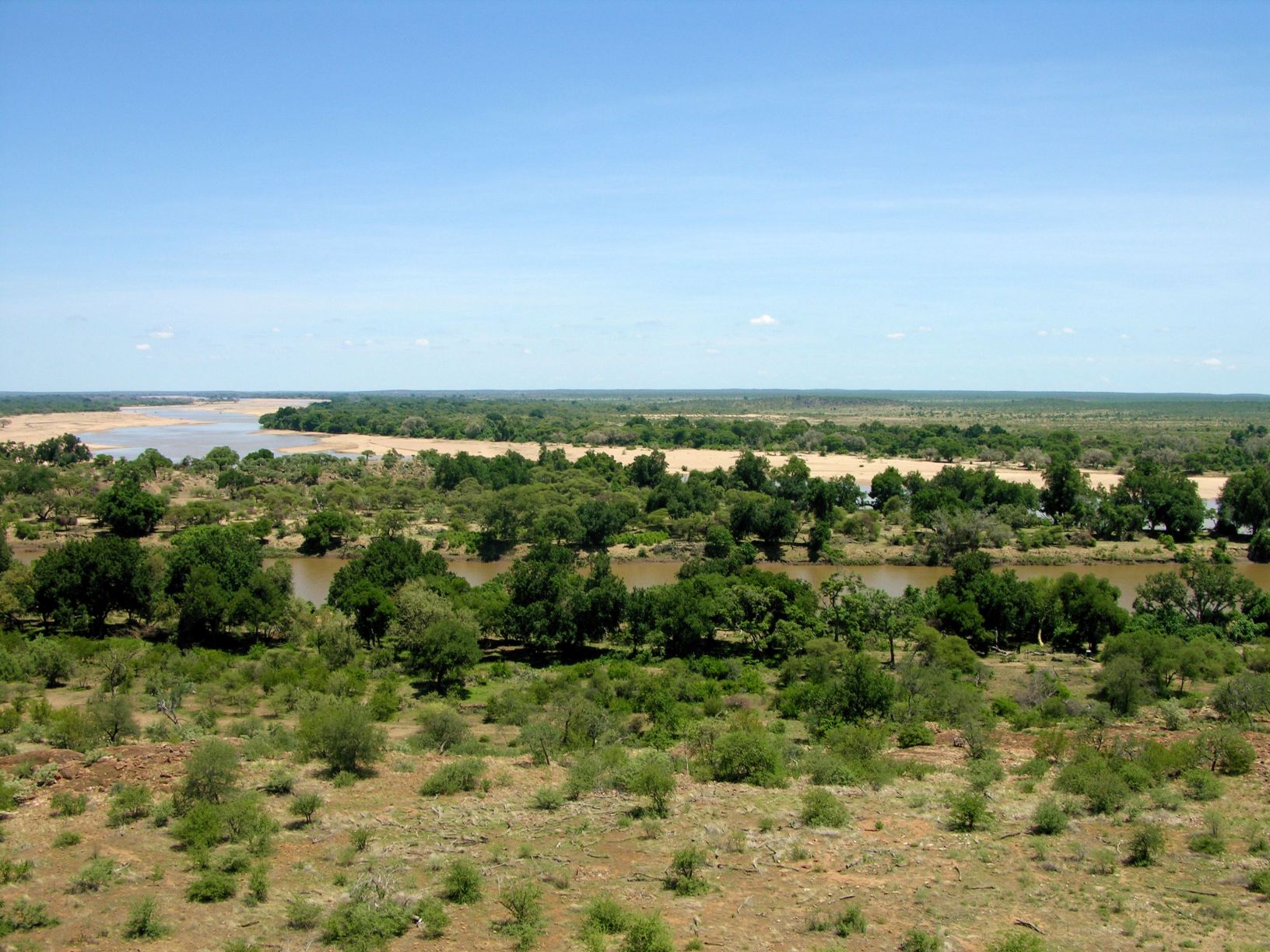
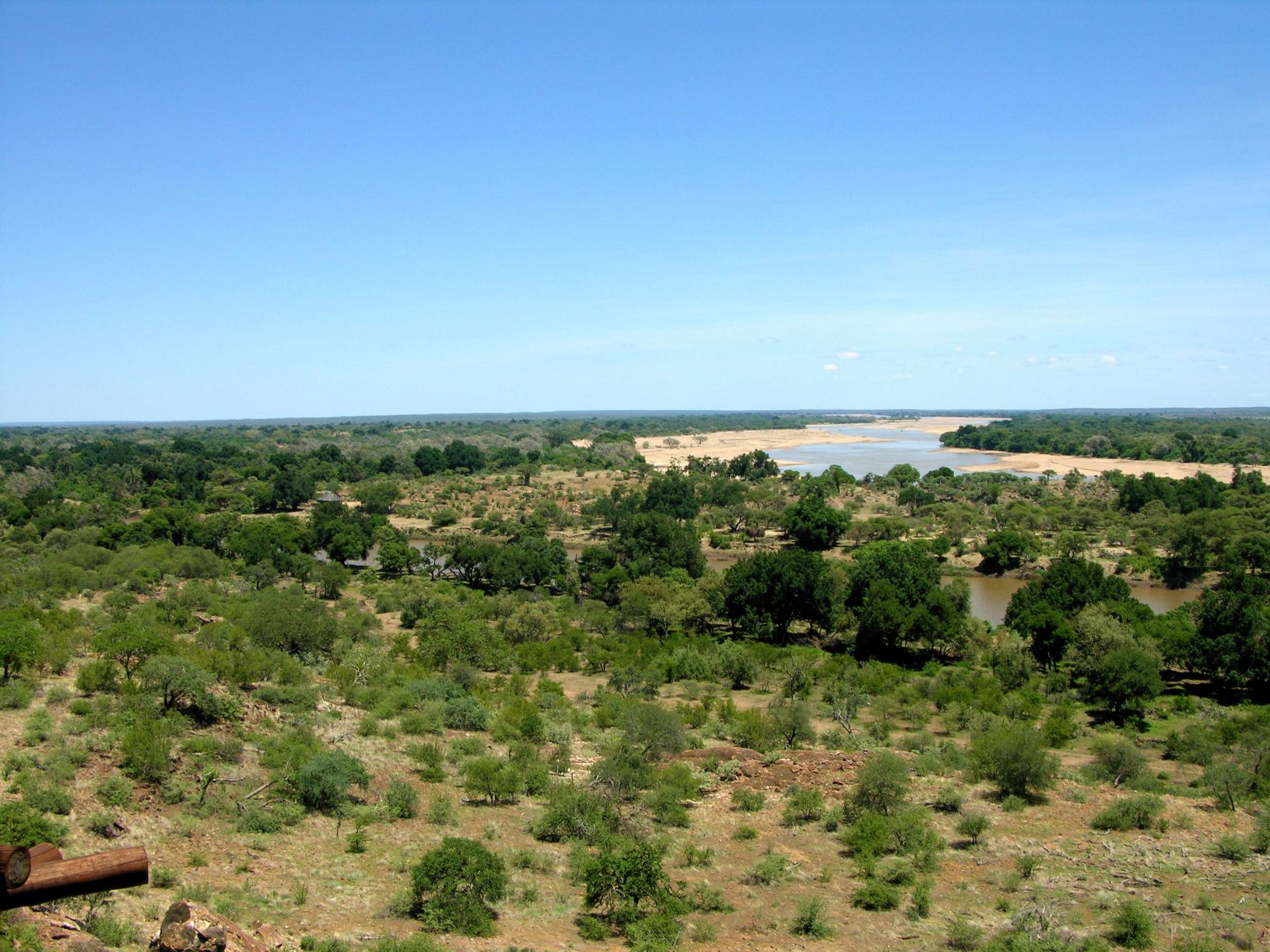
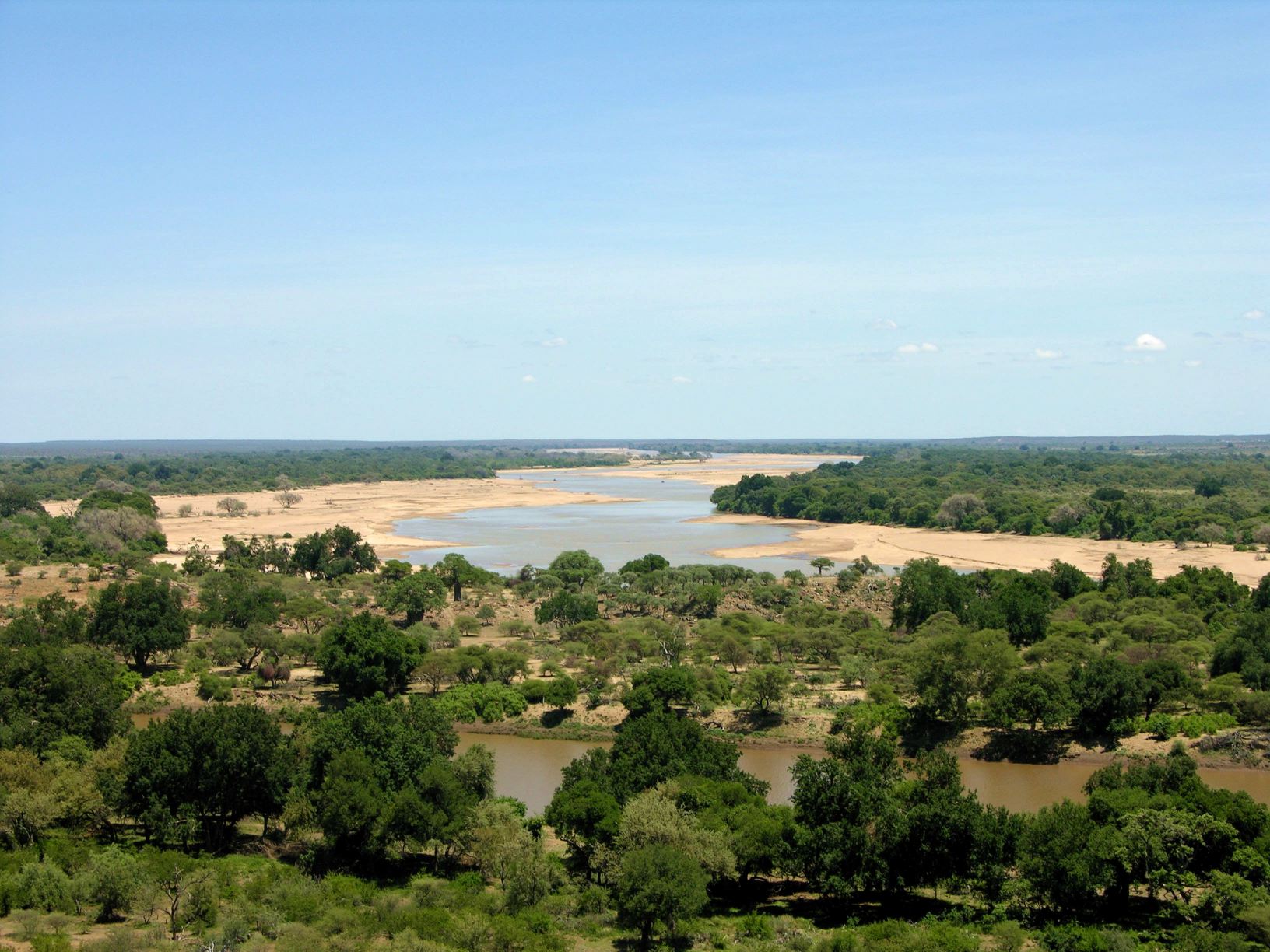
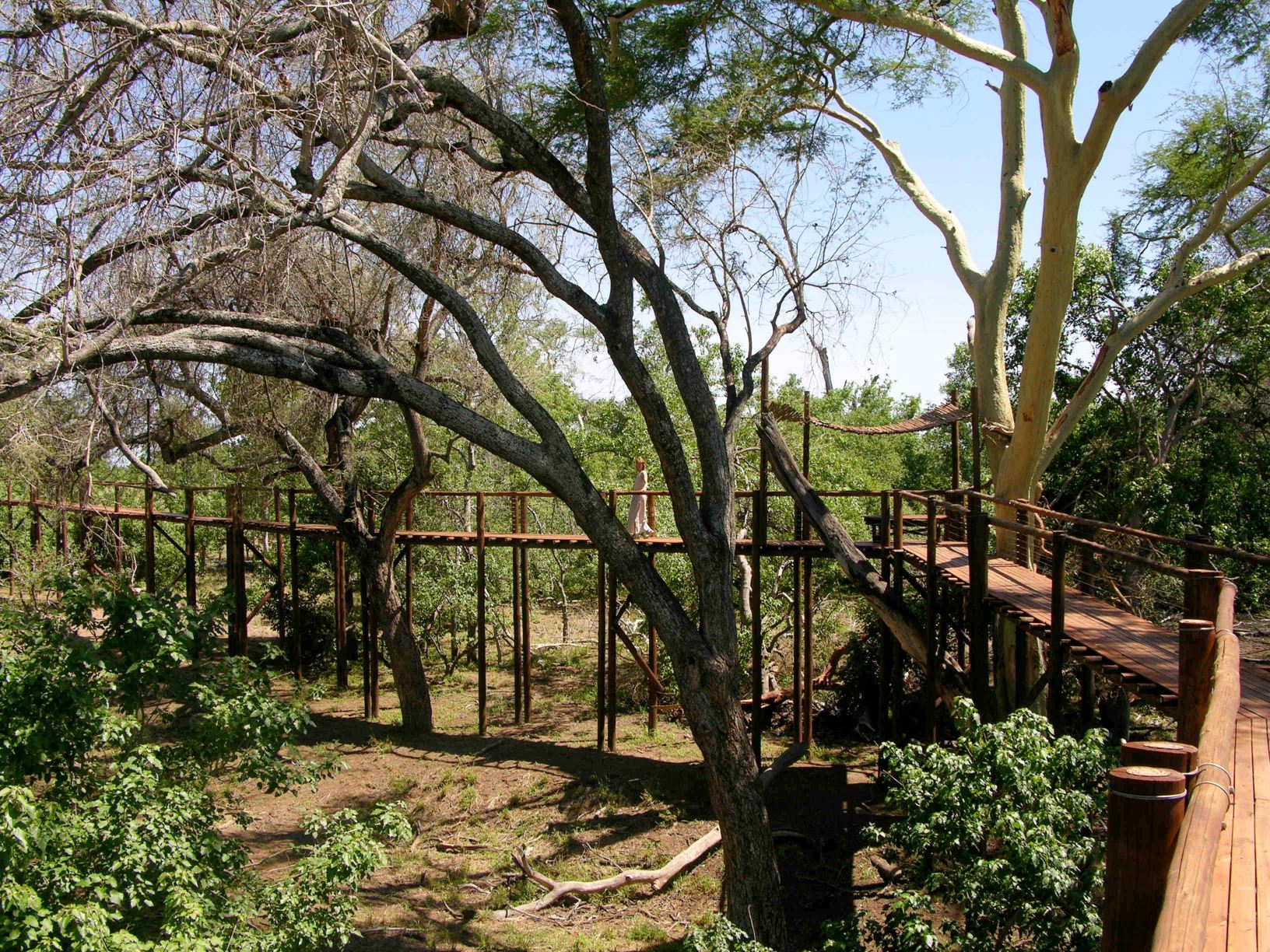
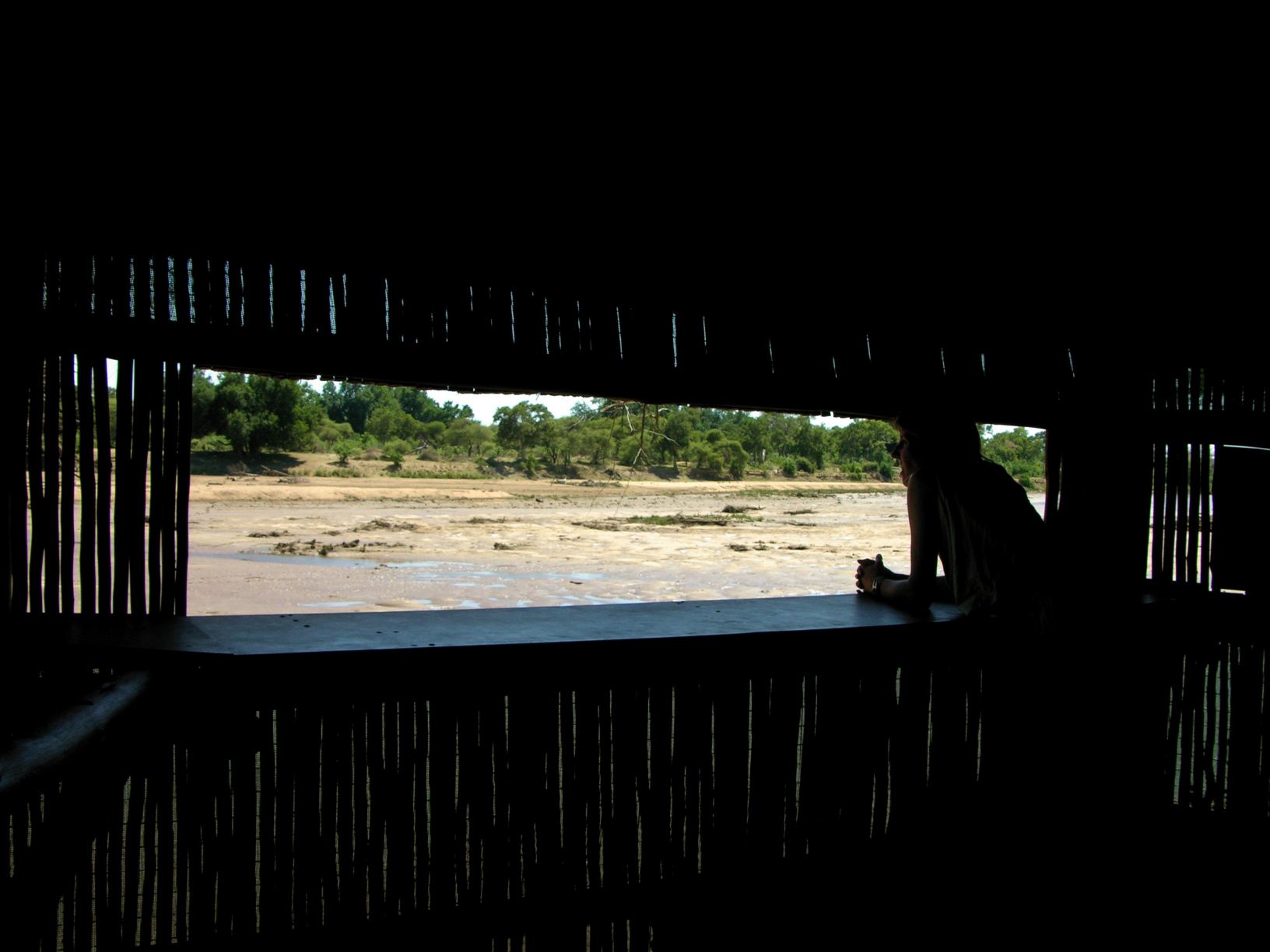
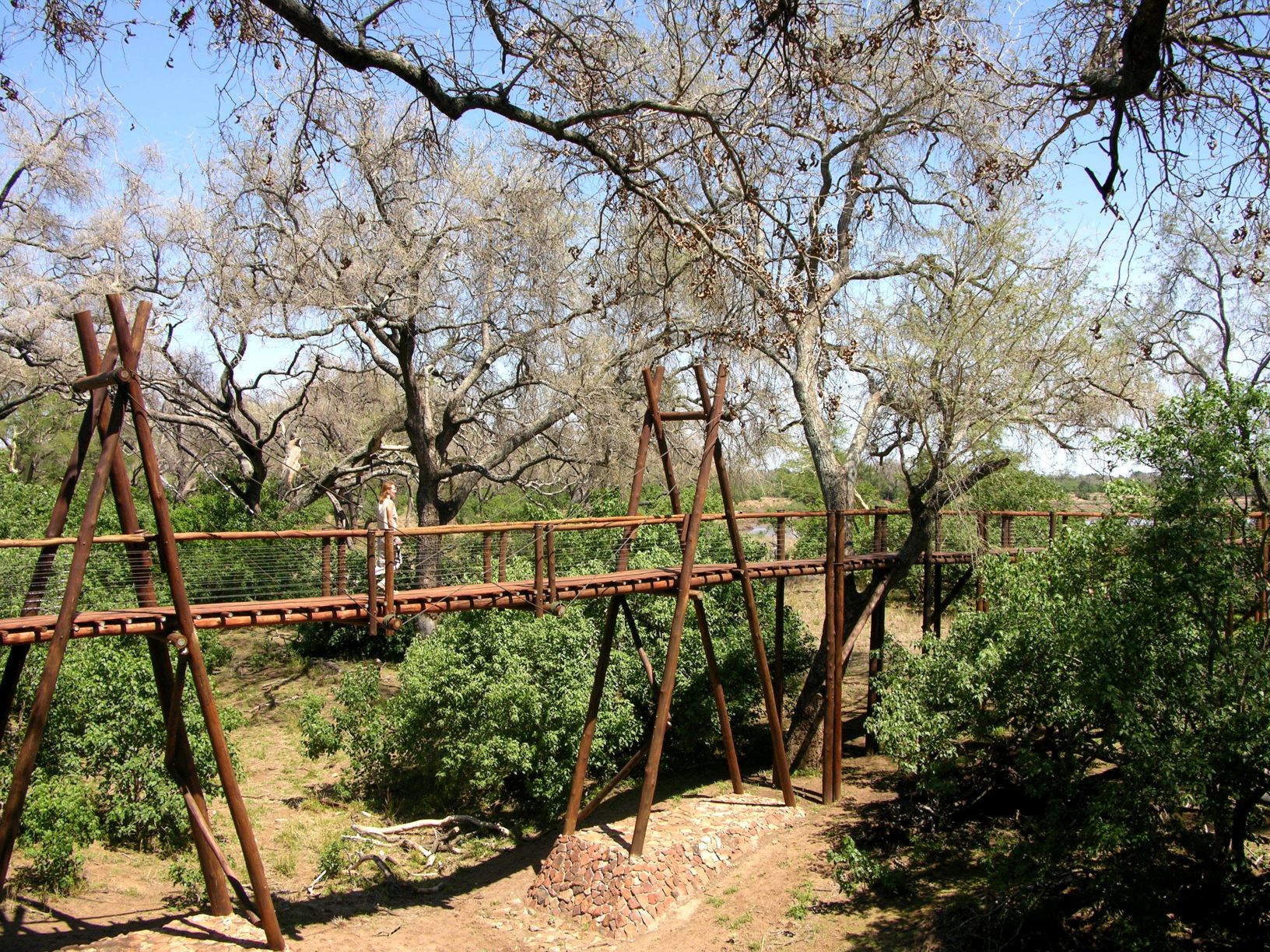
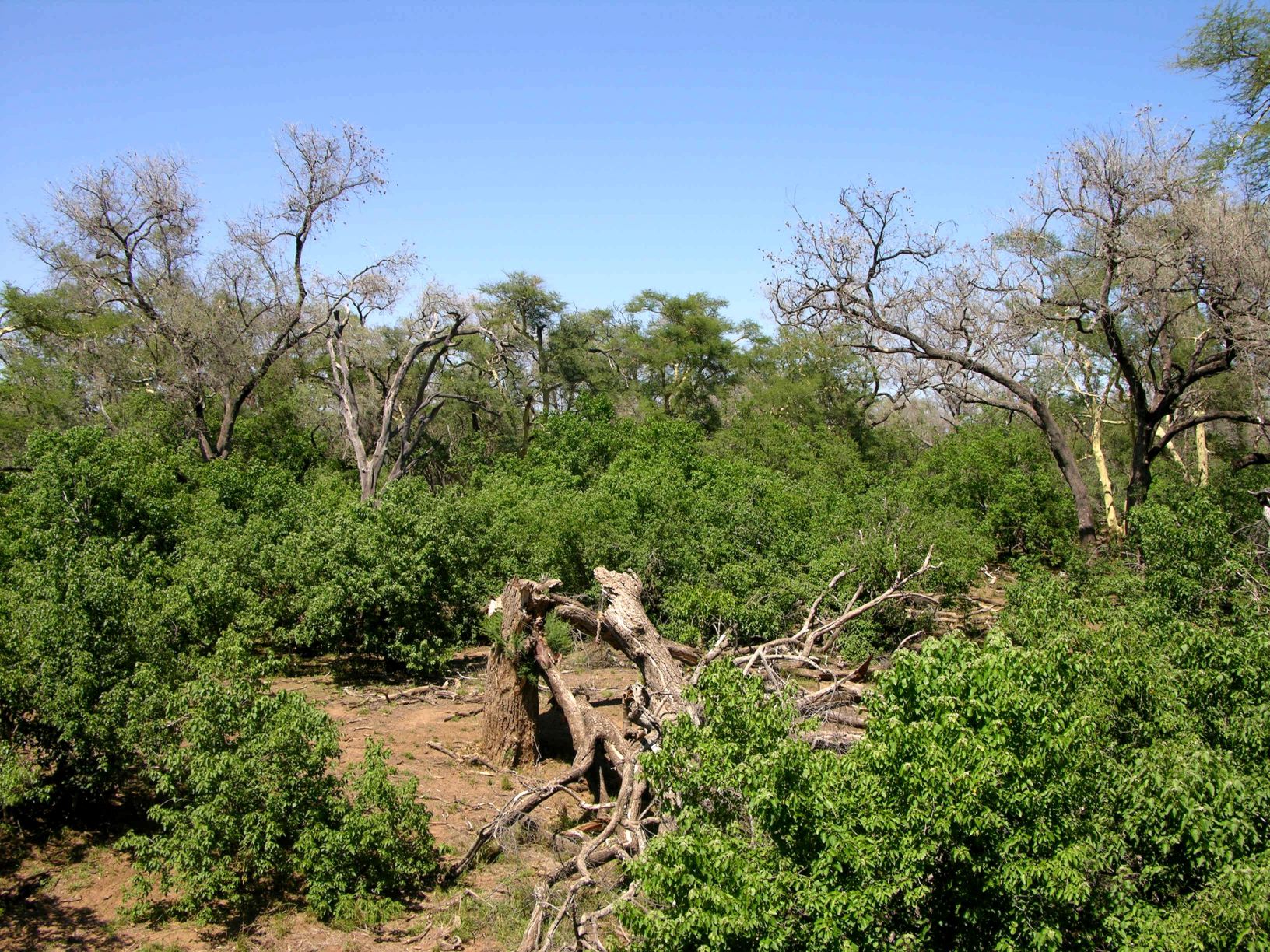
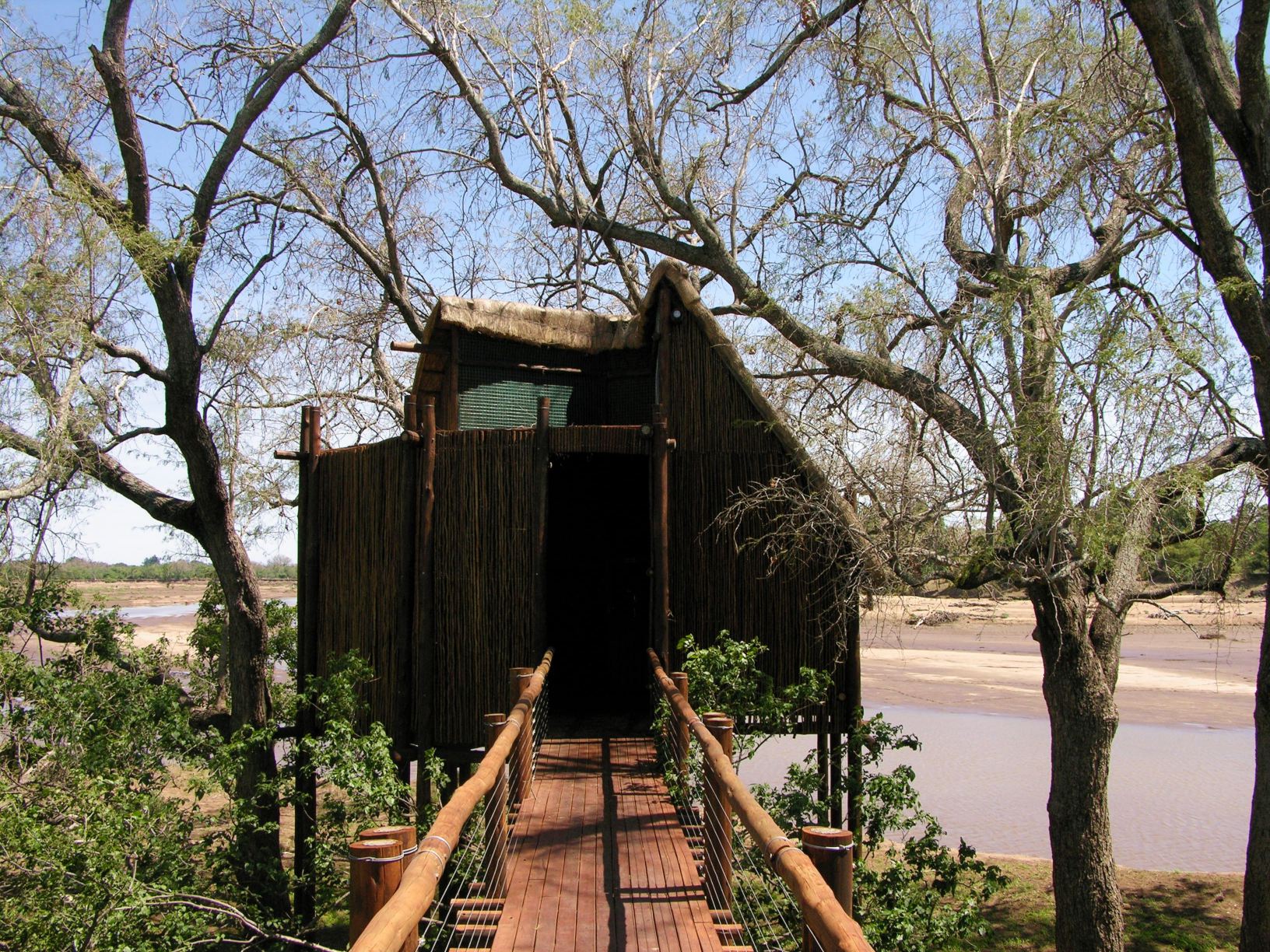
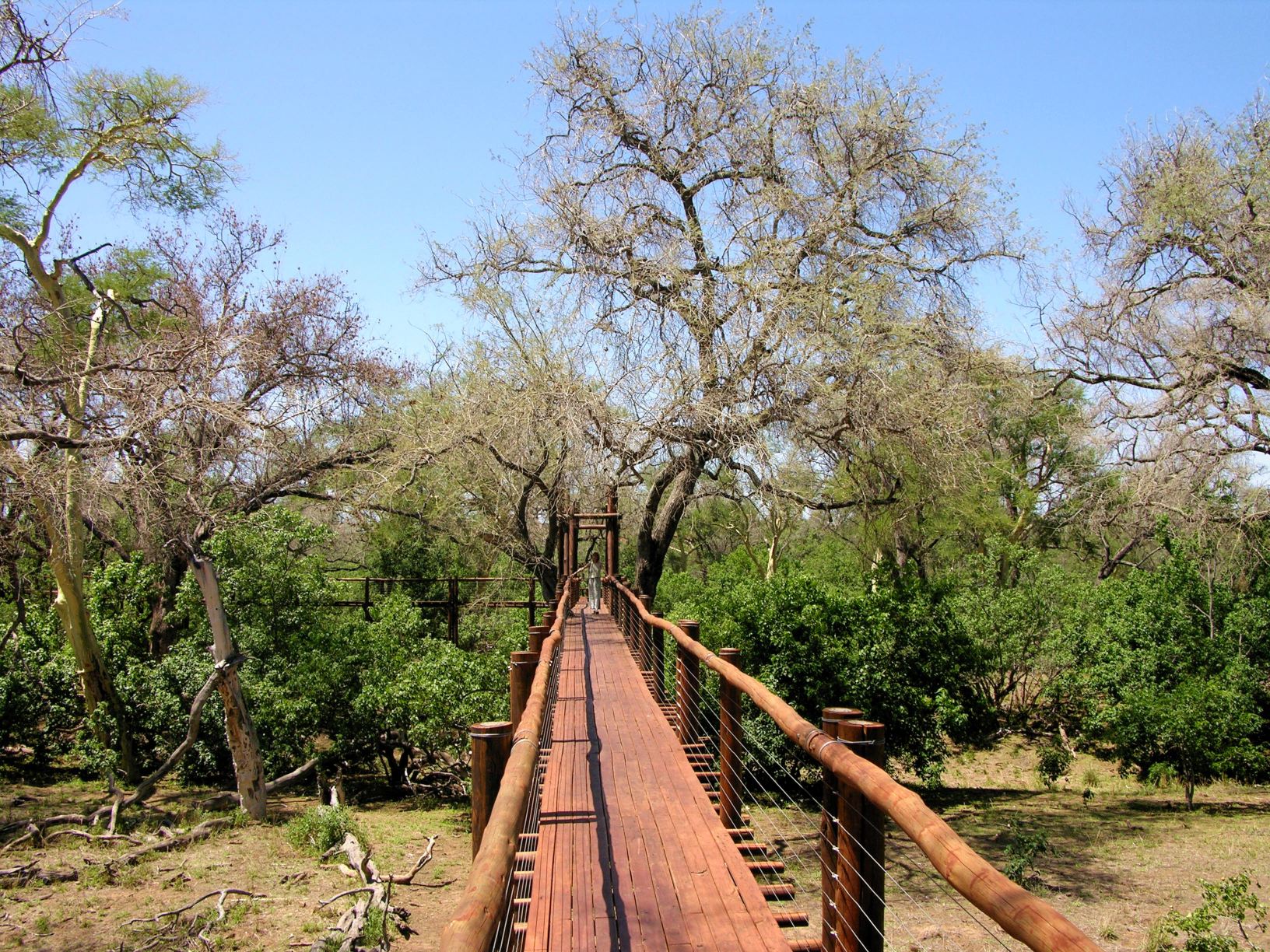
The greens haven't taken over absolutely everything in South Africa yet. There are a lot of parks created specially for hunting. Most of them are up north. It turns out much more profitable than growing potatoes to put a fence around a big piece of land, raise lions and elephants in it, and then charge rich hunters a fortune to go in. Antelope breed quickly and don't need anything to do it. Lions breed successfully too, as long as there are antelope, so a lion hunt costs only a few thousand dollars. Elephants are another matter. You wait decades for an elephant to grow up, so shooting one is very expensive, but there's still demand.
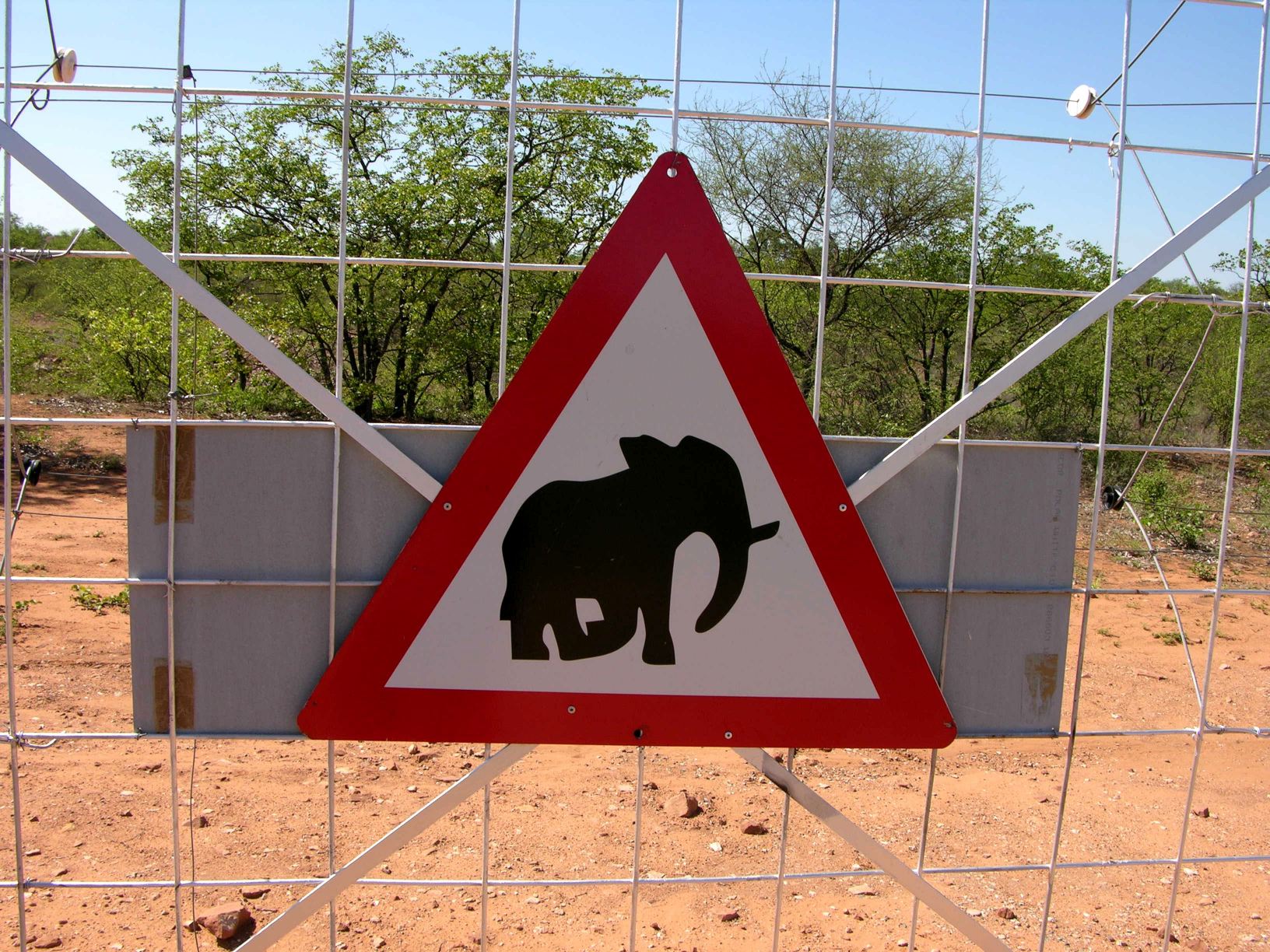
Our trip was already nearing its end. We'd saved South Africa's main park, Kruger, for last. It's the oldest and most famous. It stretches along the Mozambican border, a hundred kilometres across and four hundred long. A dozen or so gates connect it with the outside world. There are camps with petrol stations, cinemas and even an airstrip. You can rent a car in the park itself.
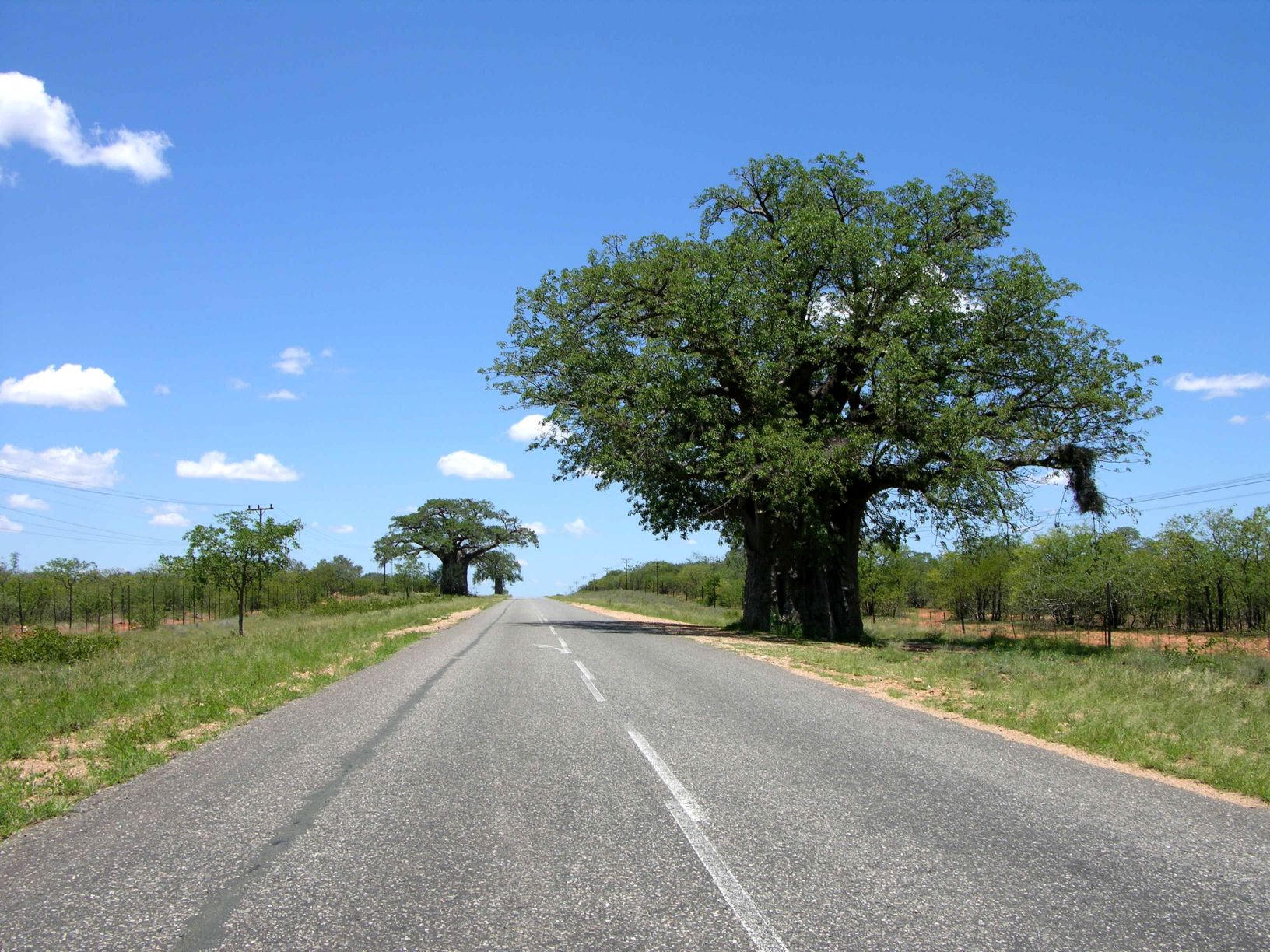
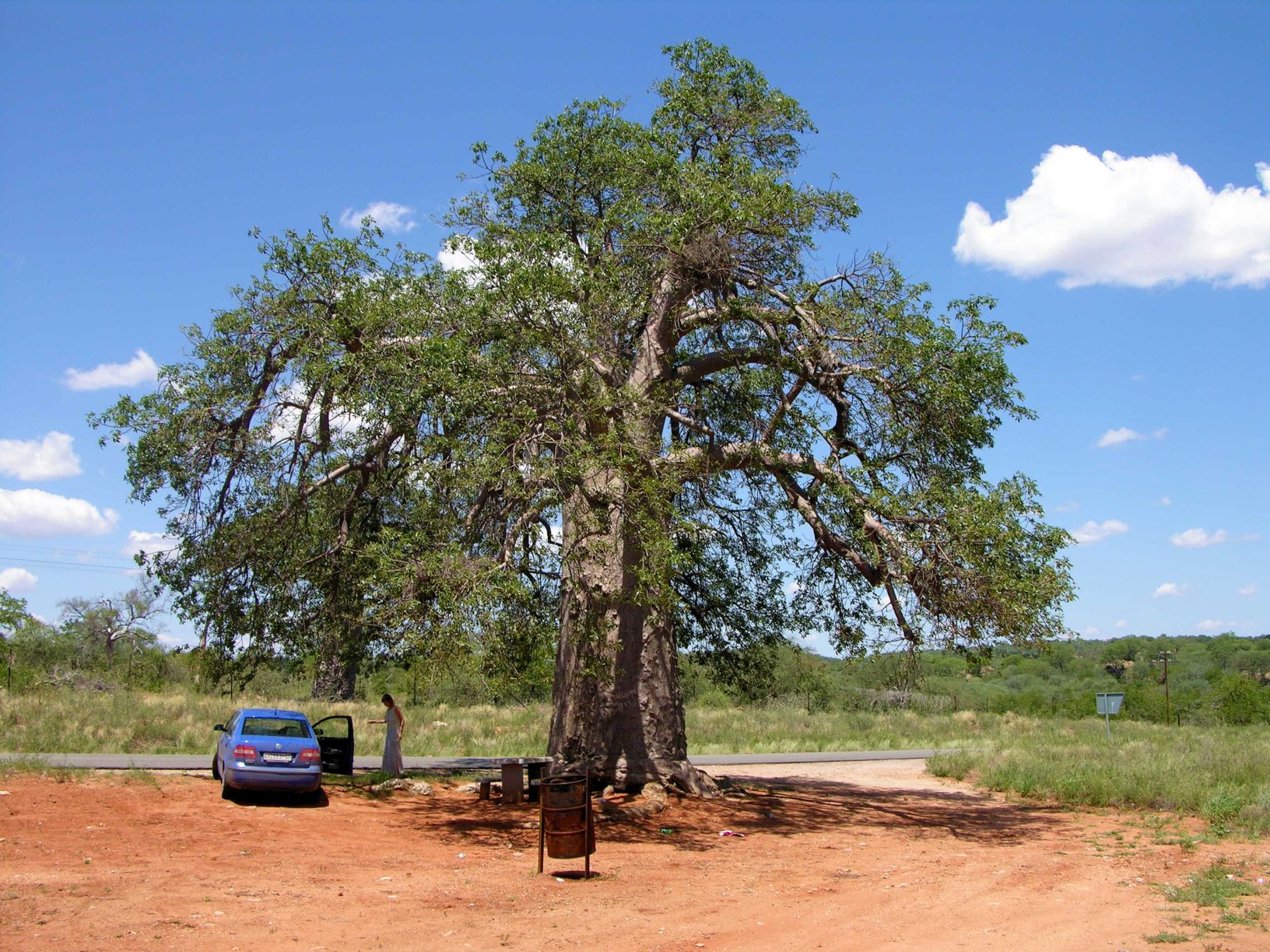
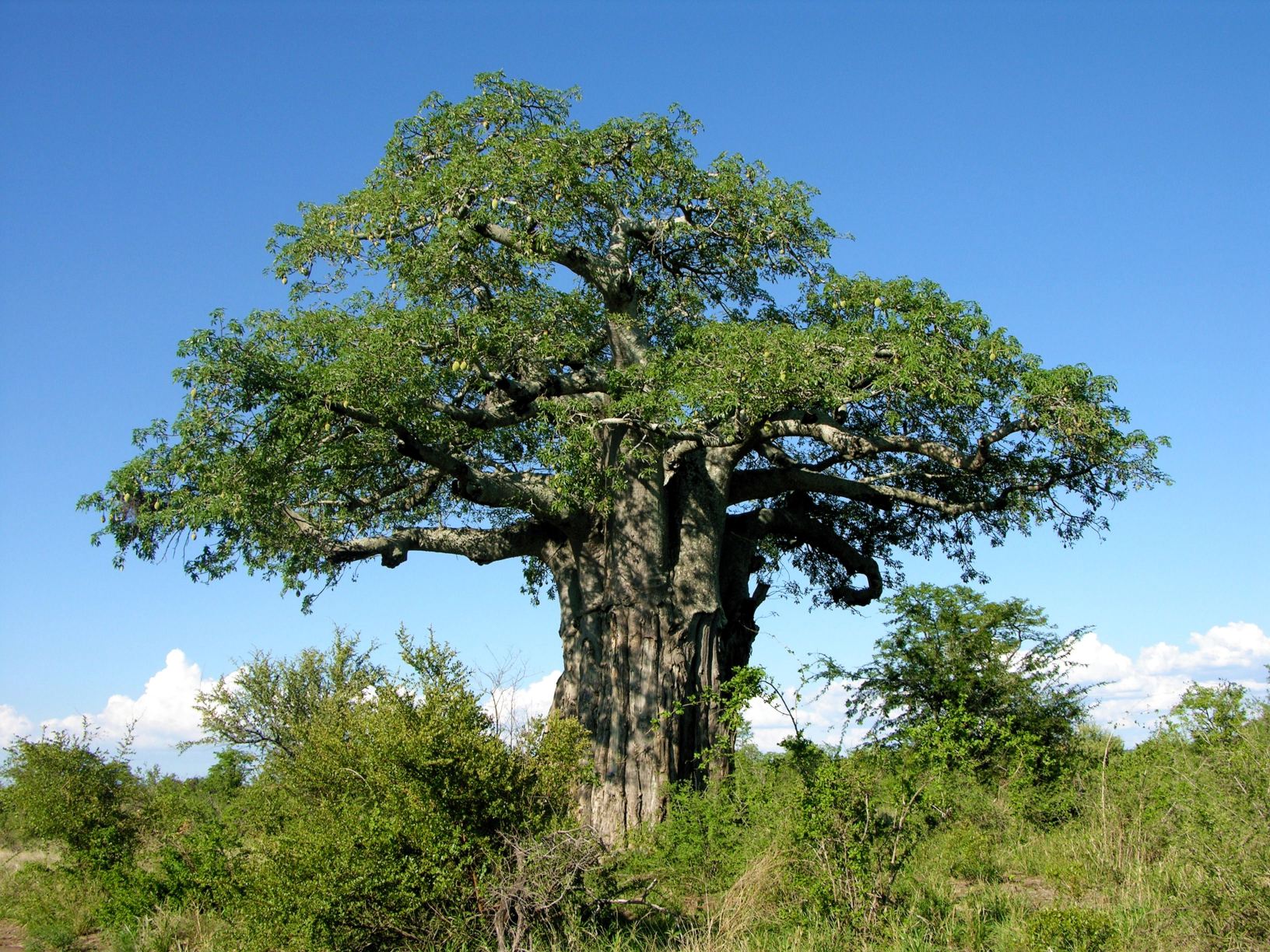
We went in through Pafuri Gate, the northernmost entrance, and stayed at the nearest camp, Punda Maria (22°41.594′S, 31°01.009′E). The northern part of the park turned out to be rather poor for wildlife. All we saw that evening were antelope and giraffes.
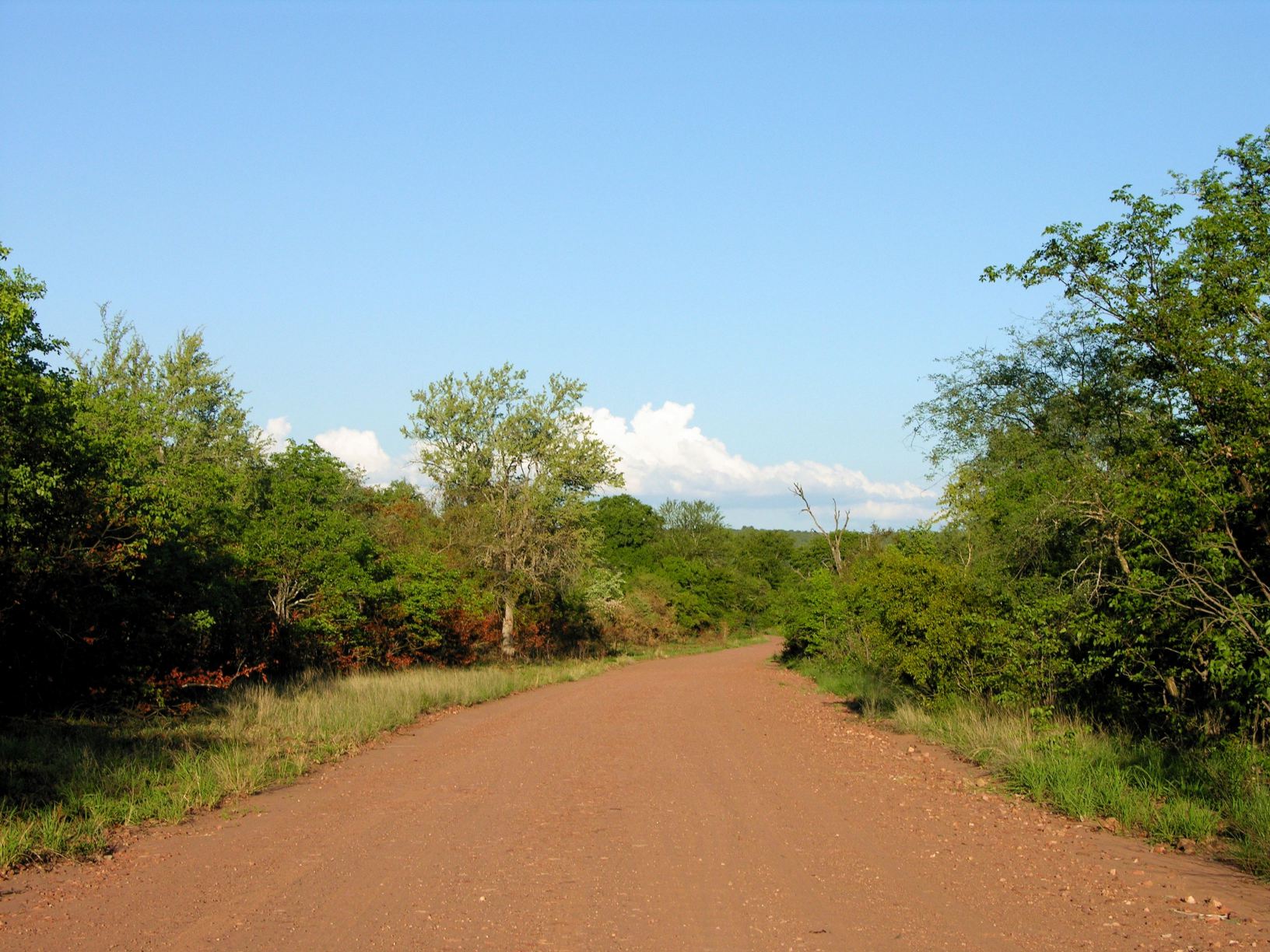
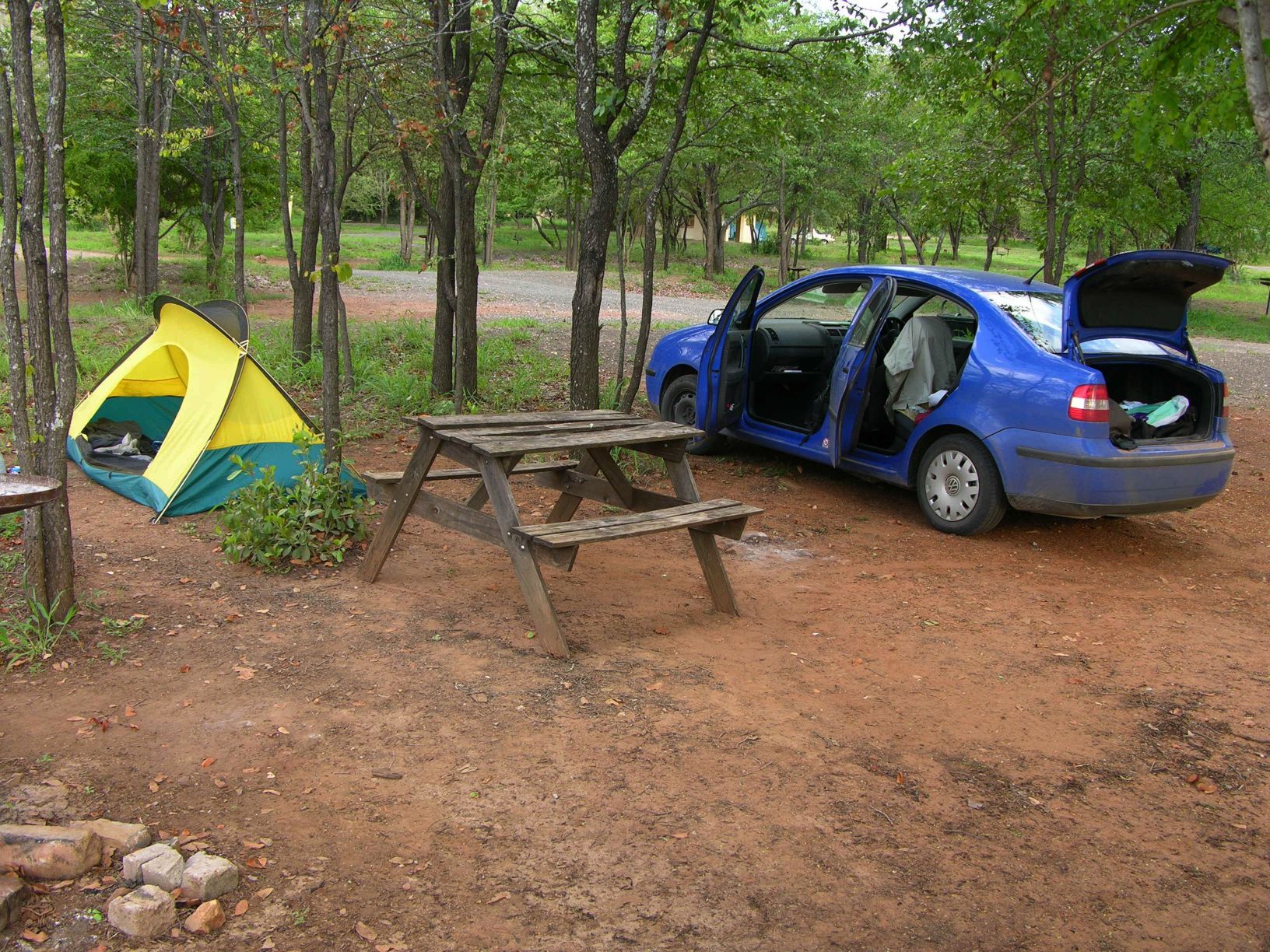
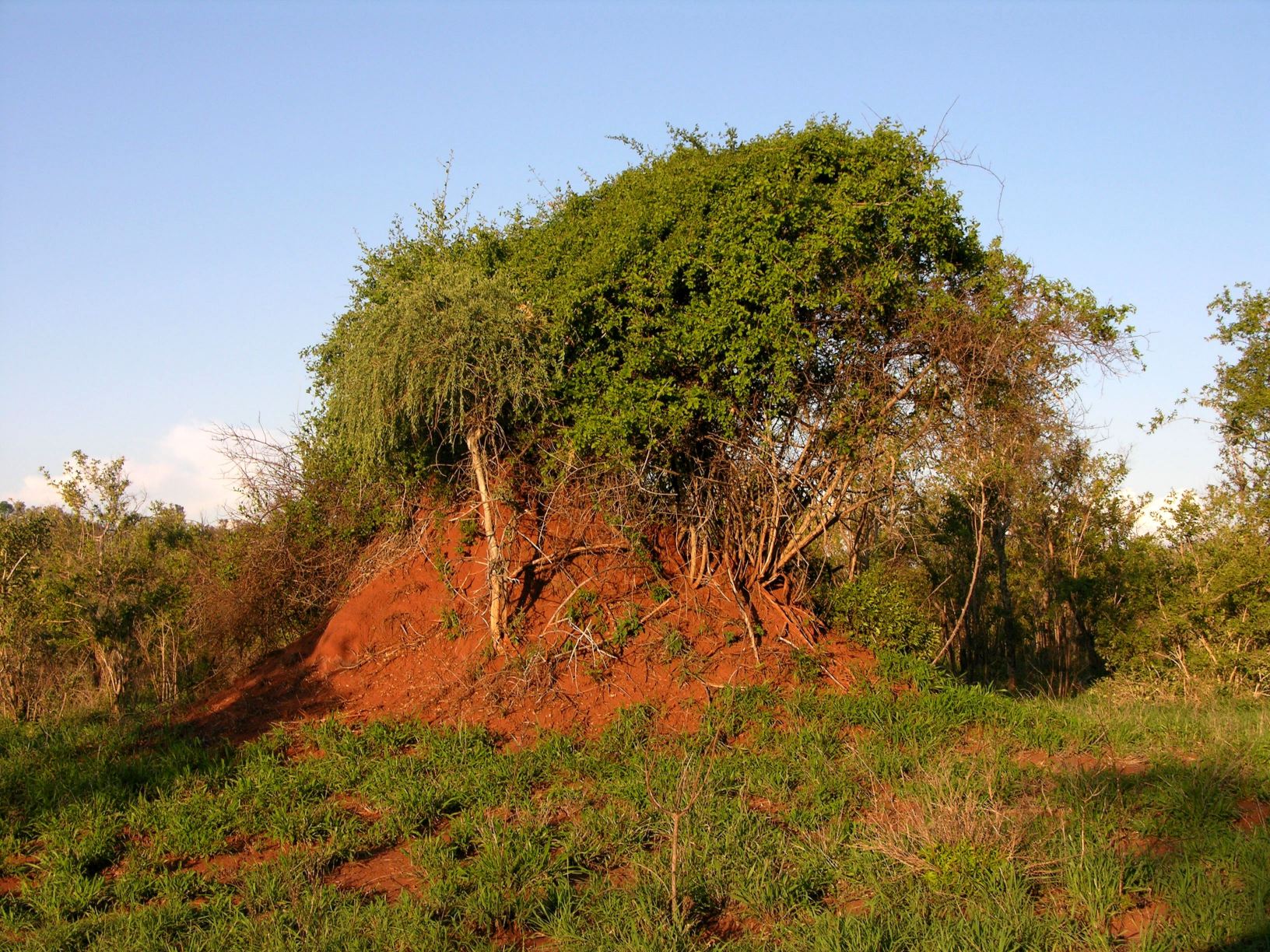
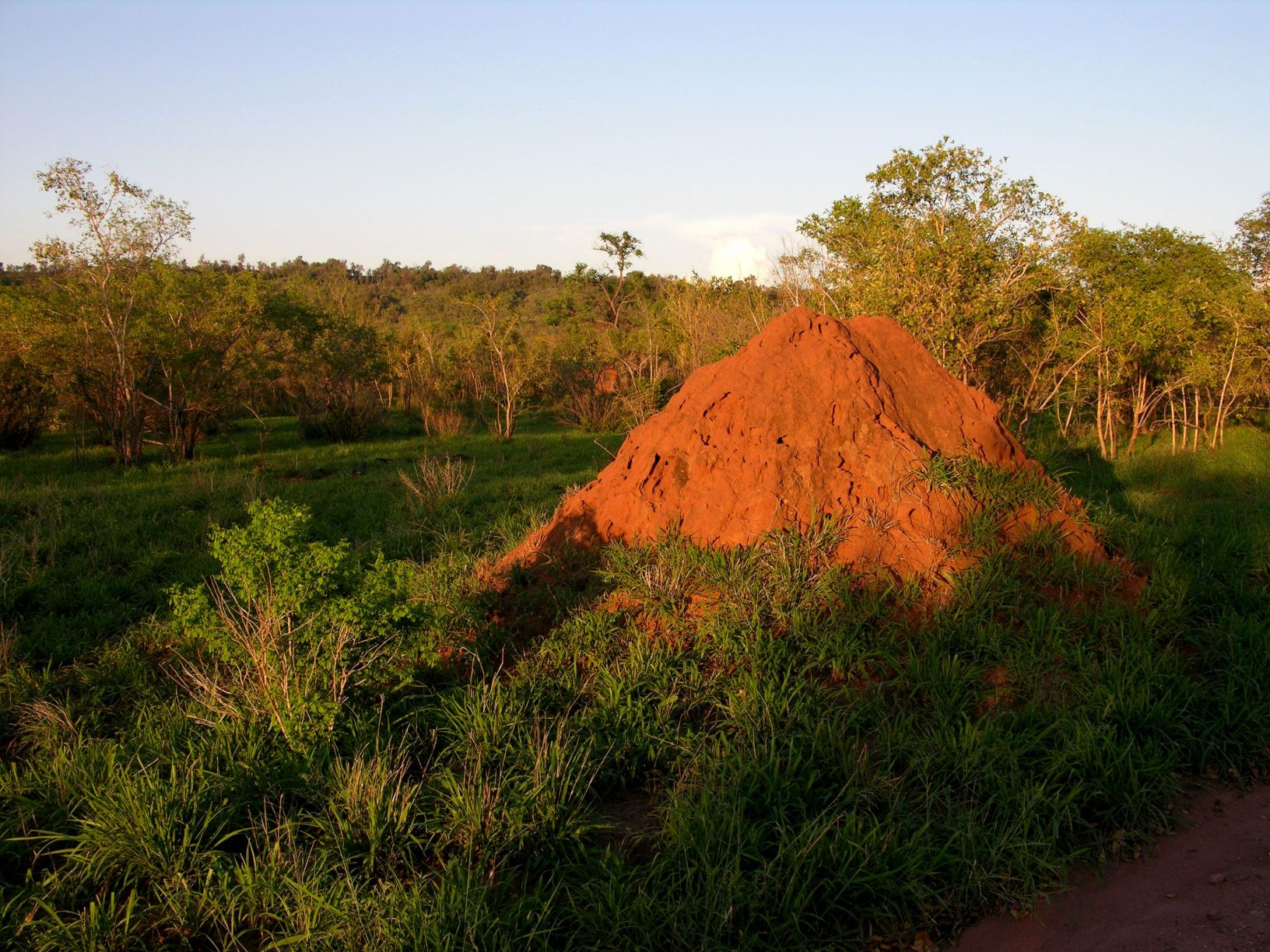
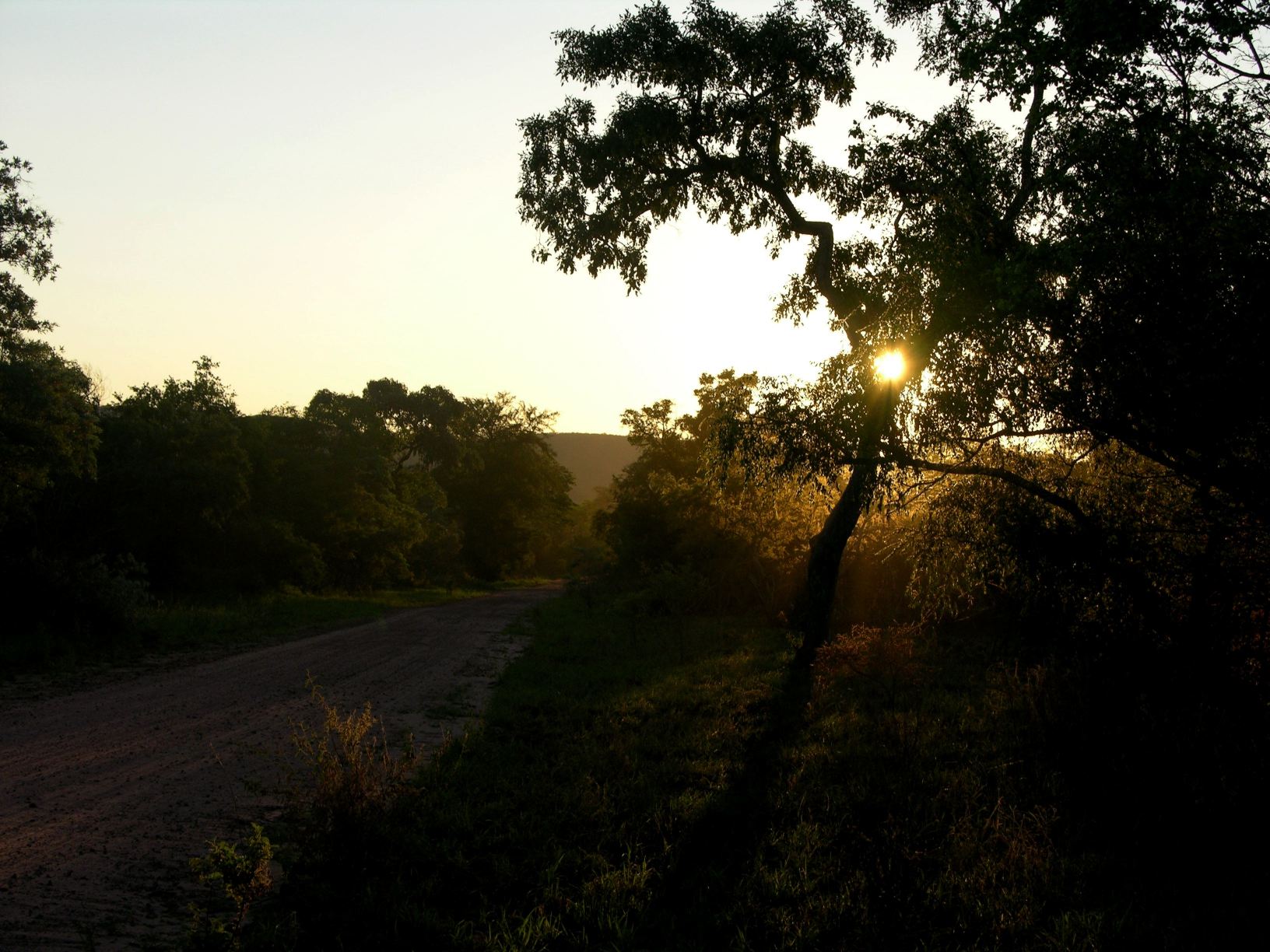
We slept in a tent, which isn't ideal here. It's hot and humid at night. We ought to have opened up the windows, but northern South Africa is a malaria area. There aren't many mosquitoes, but there are some. We had to sleep, or rather try to sleep, in the dreadful stuffiness.
On the second day, as we drove south, we began to see lions. First we saw a lioness, then a lion. Leopard tortoises began to appear on the roads. There were more elephants, giraffes which stood out, zebras too, and buffalo. Broods of warthogs ran around the bushes. There were lots of storks, the scavenging marabous, and all sorts of other birds of various species.
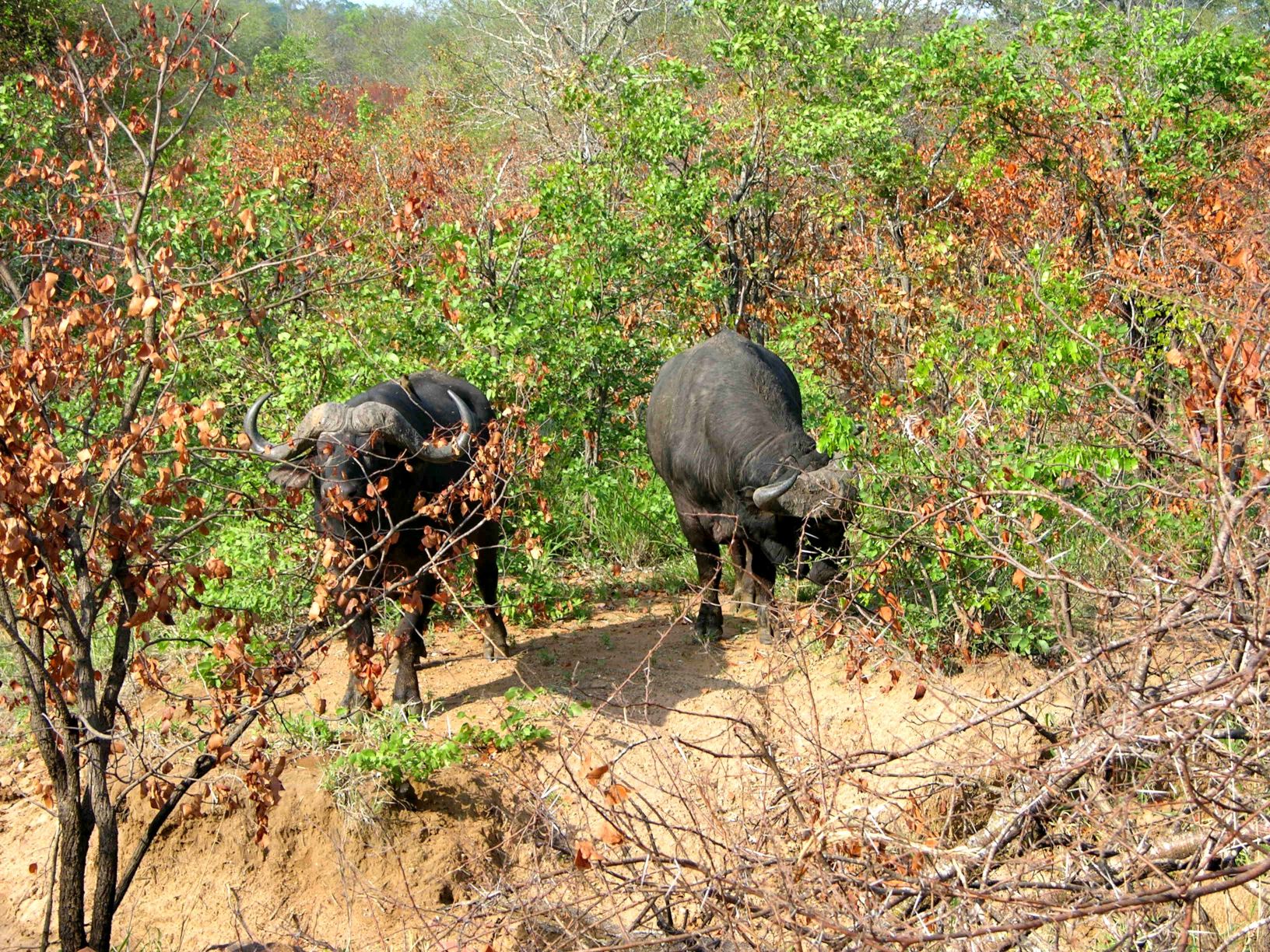
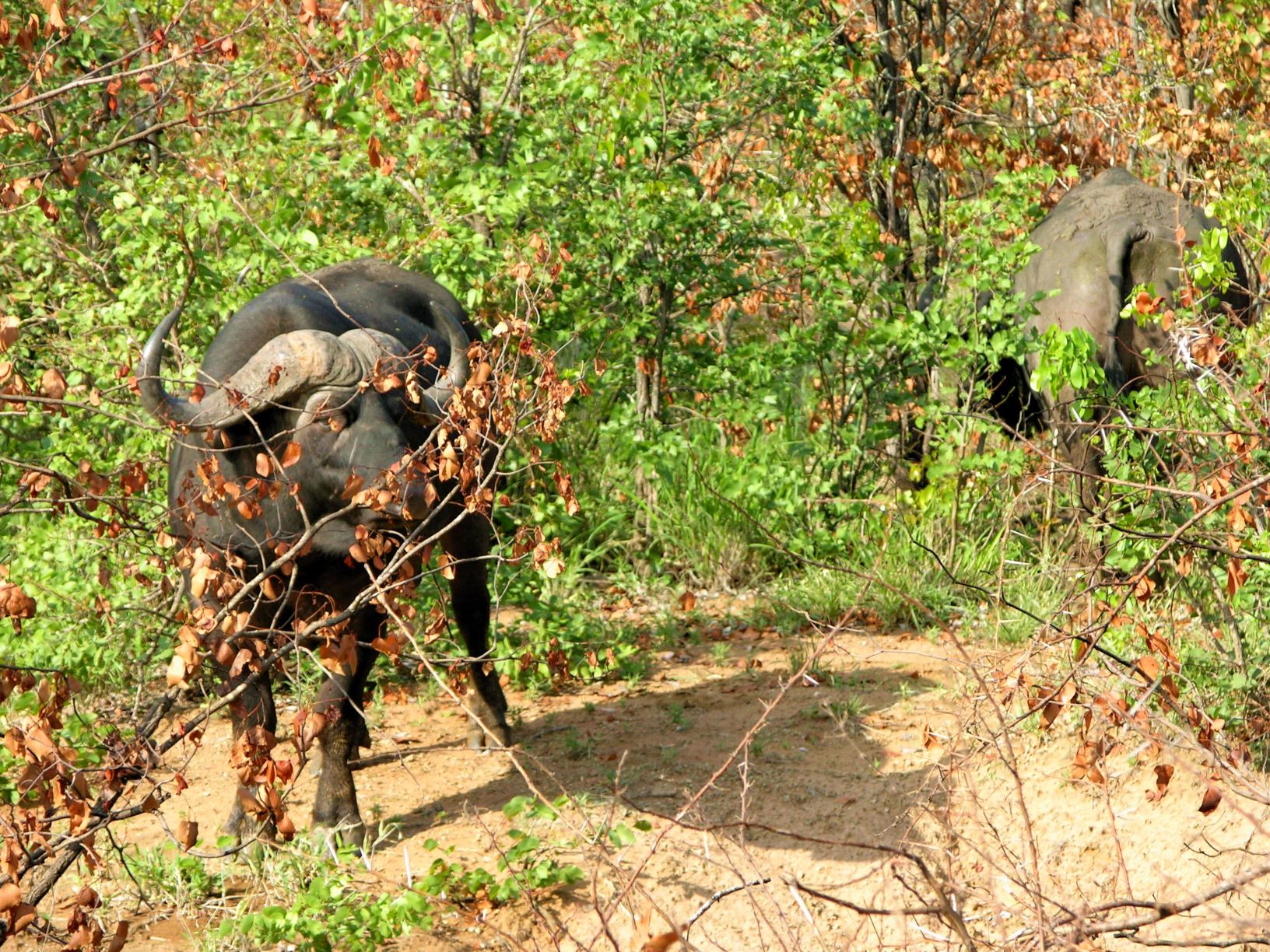
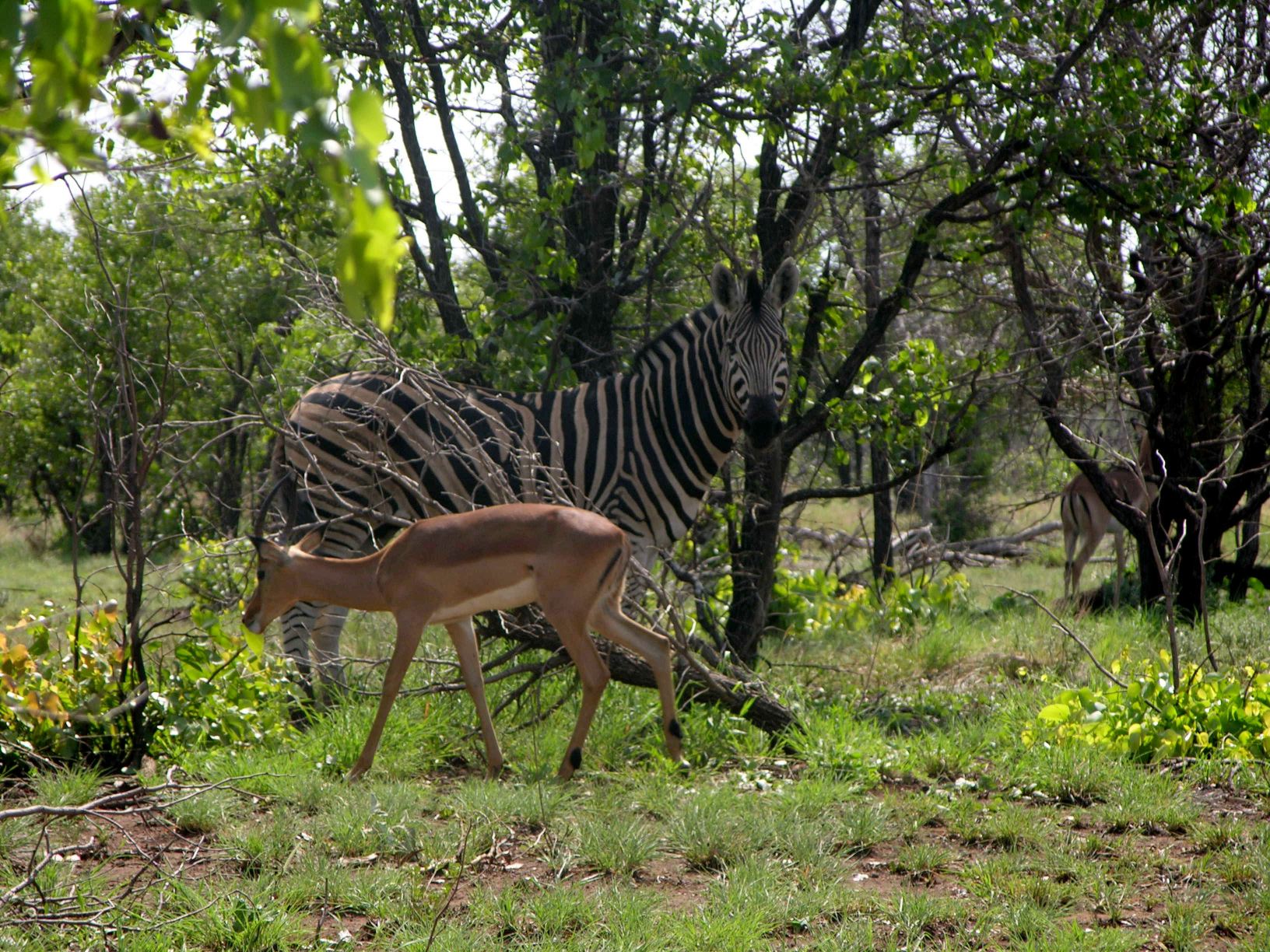
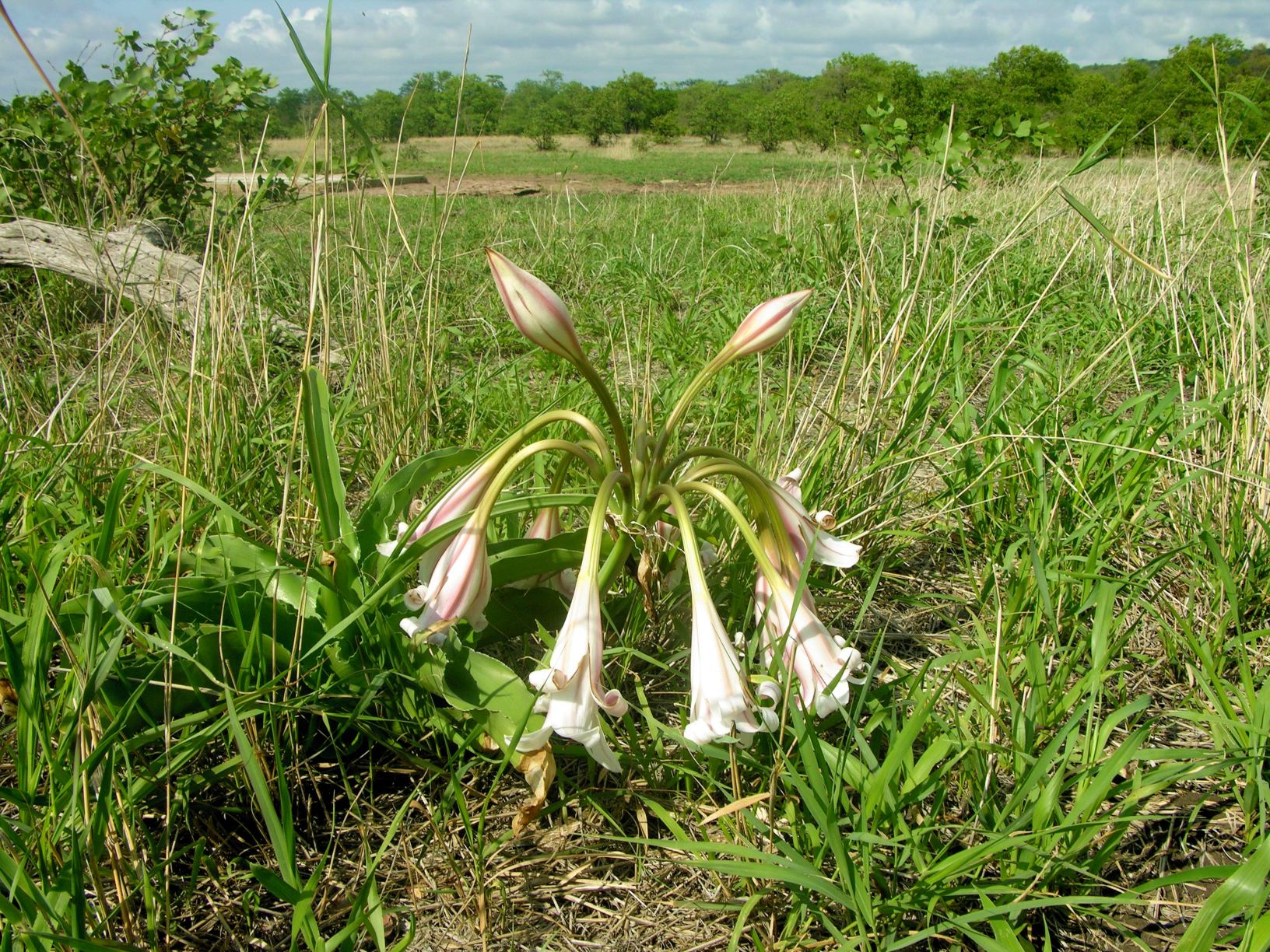
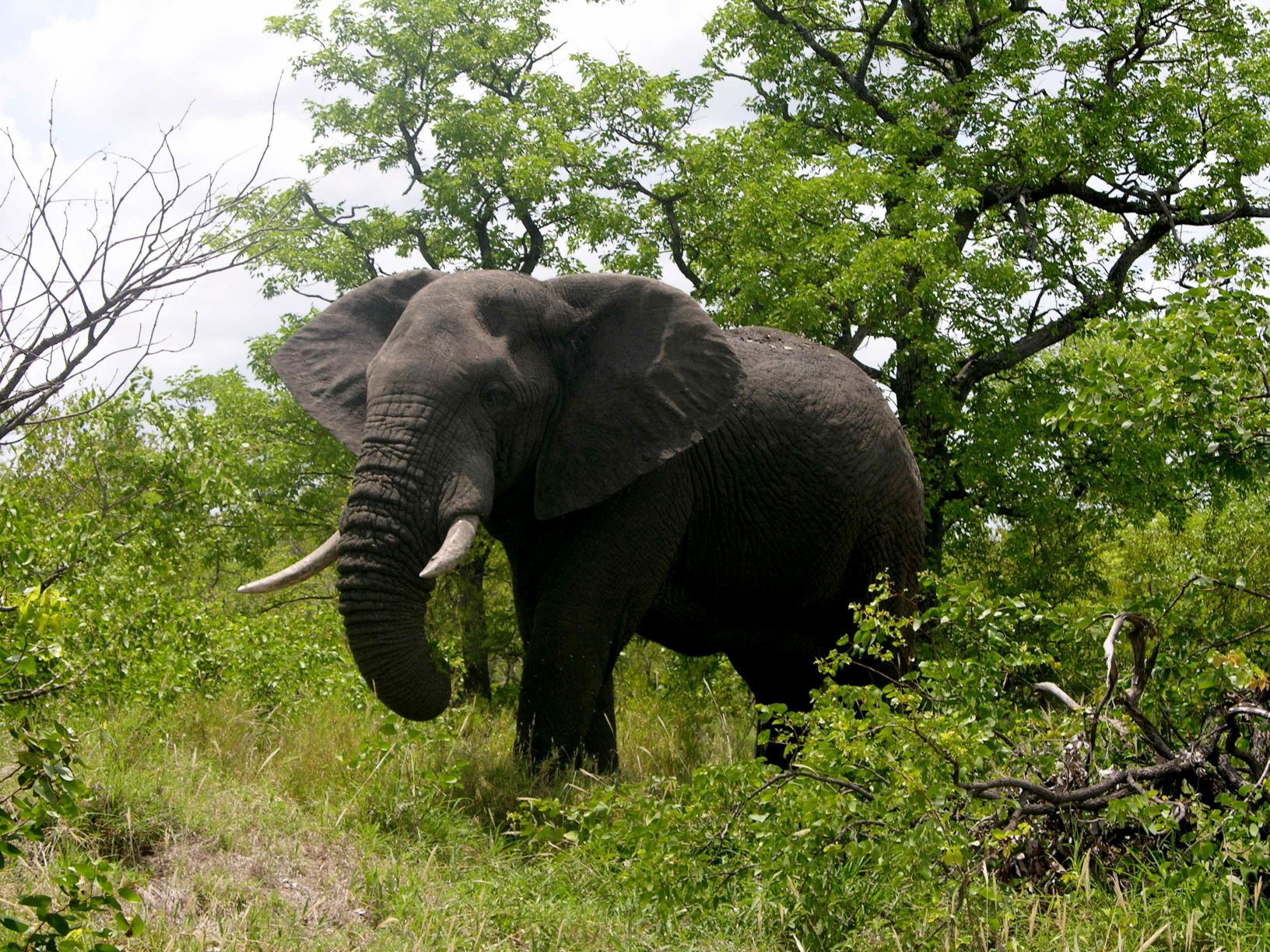
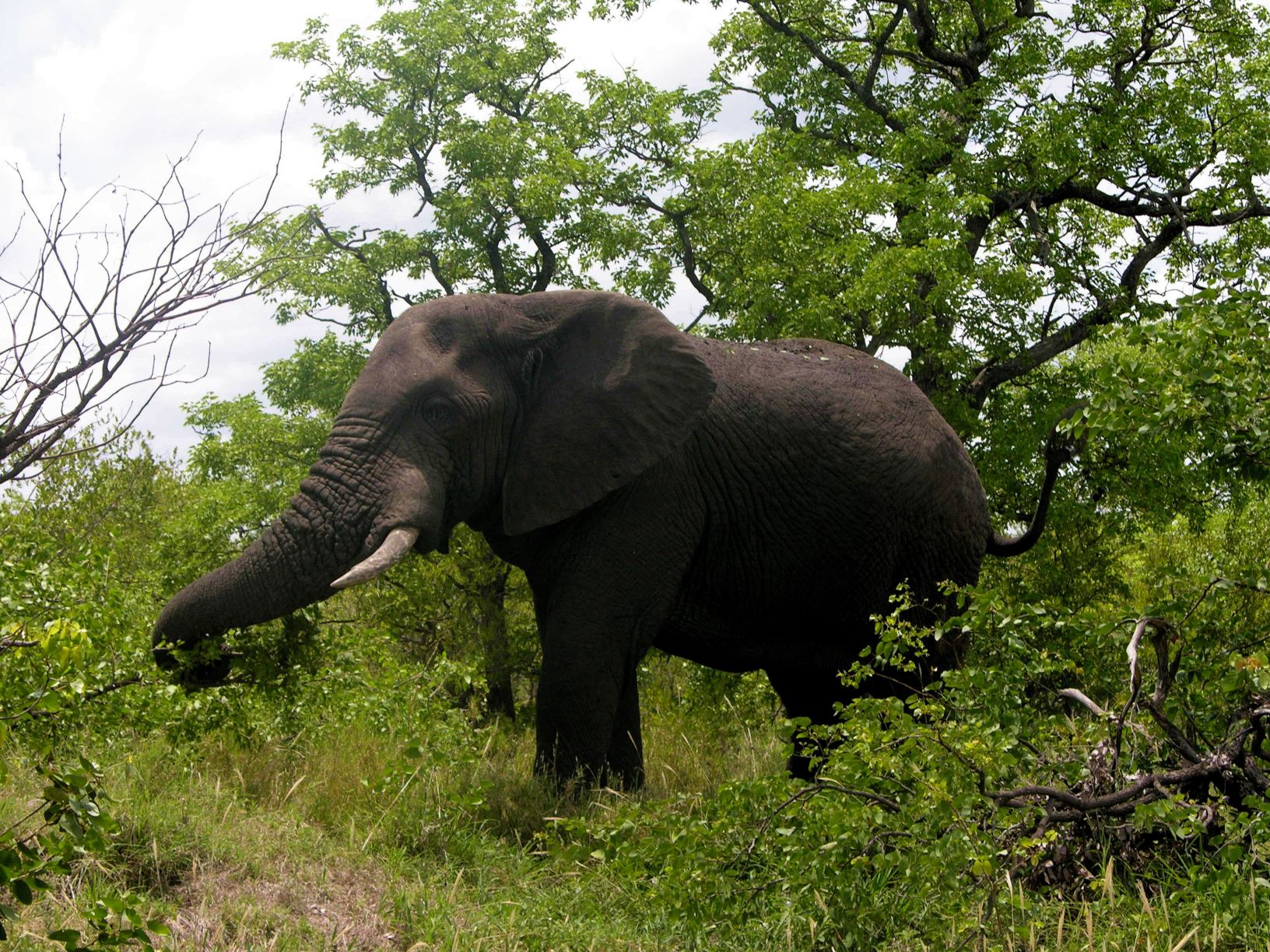
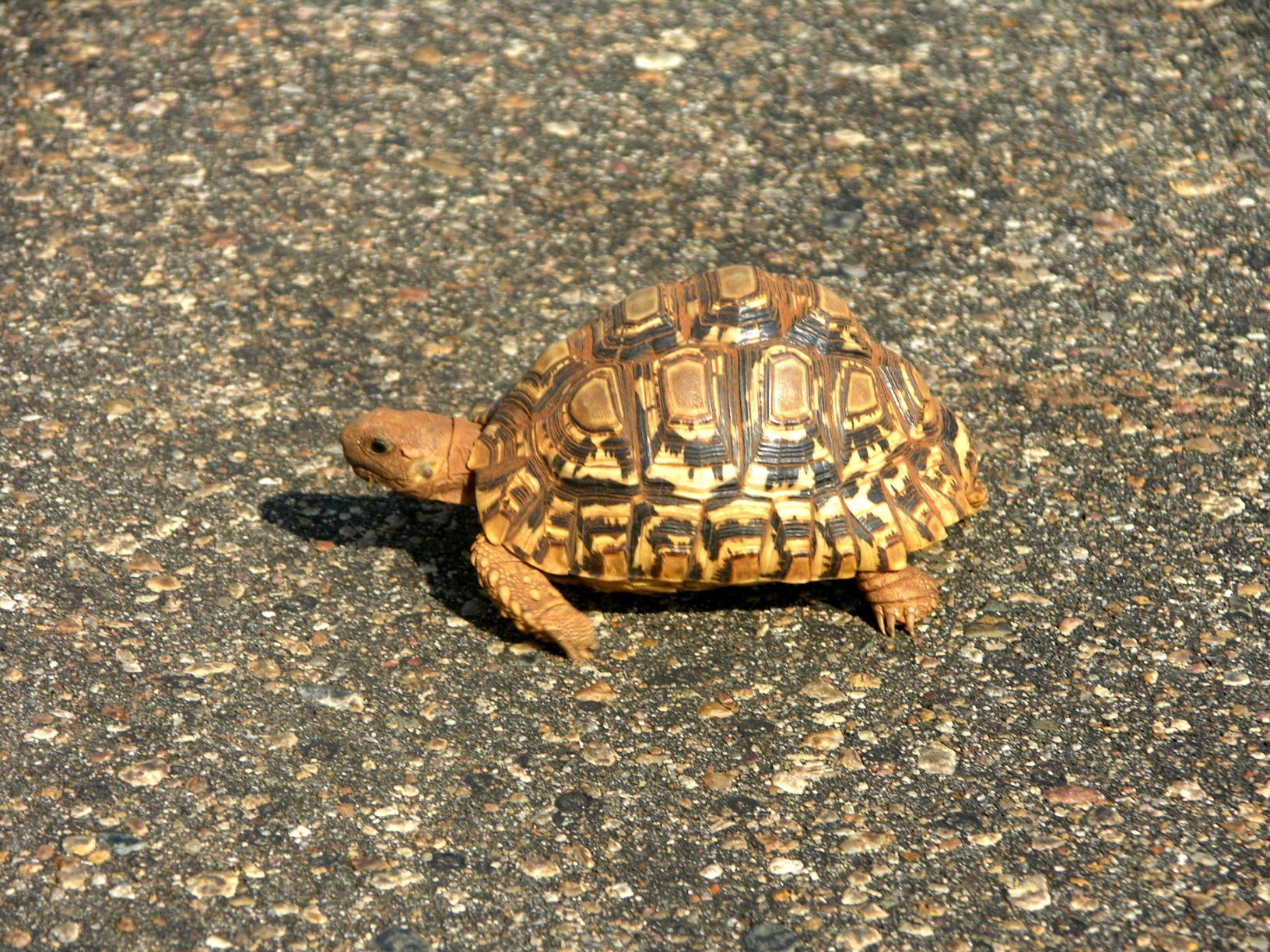
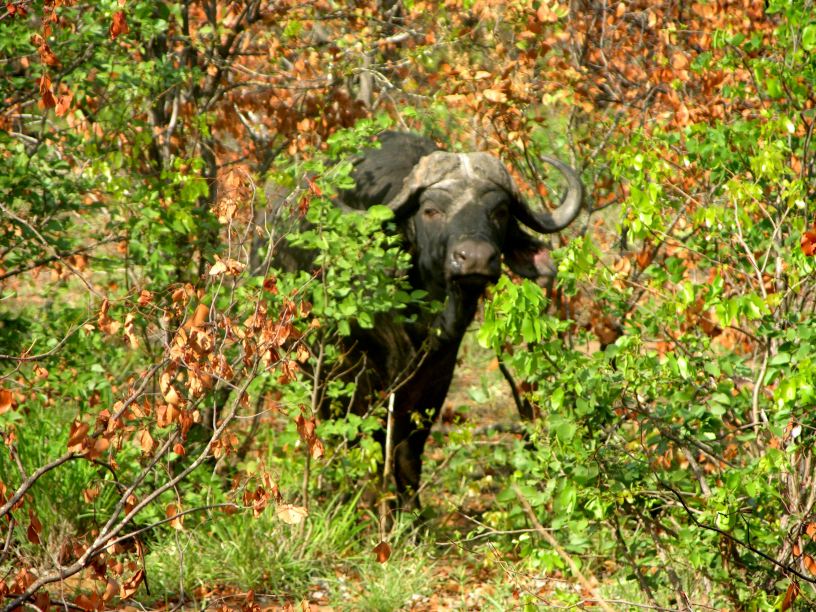
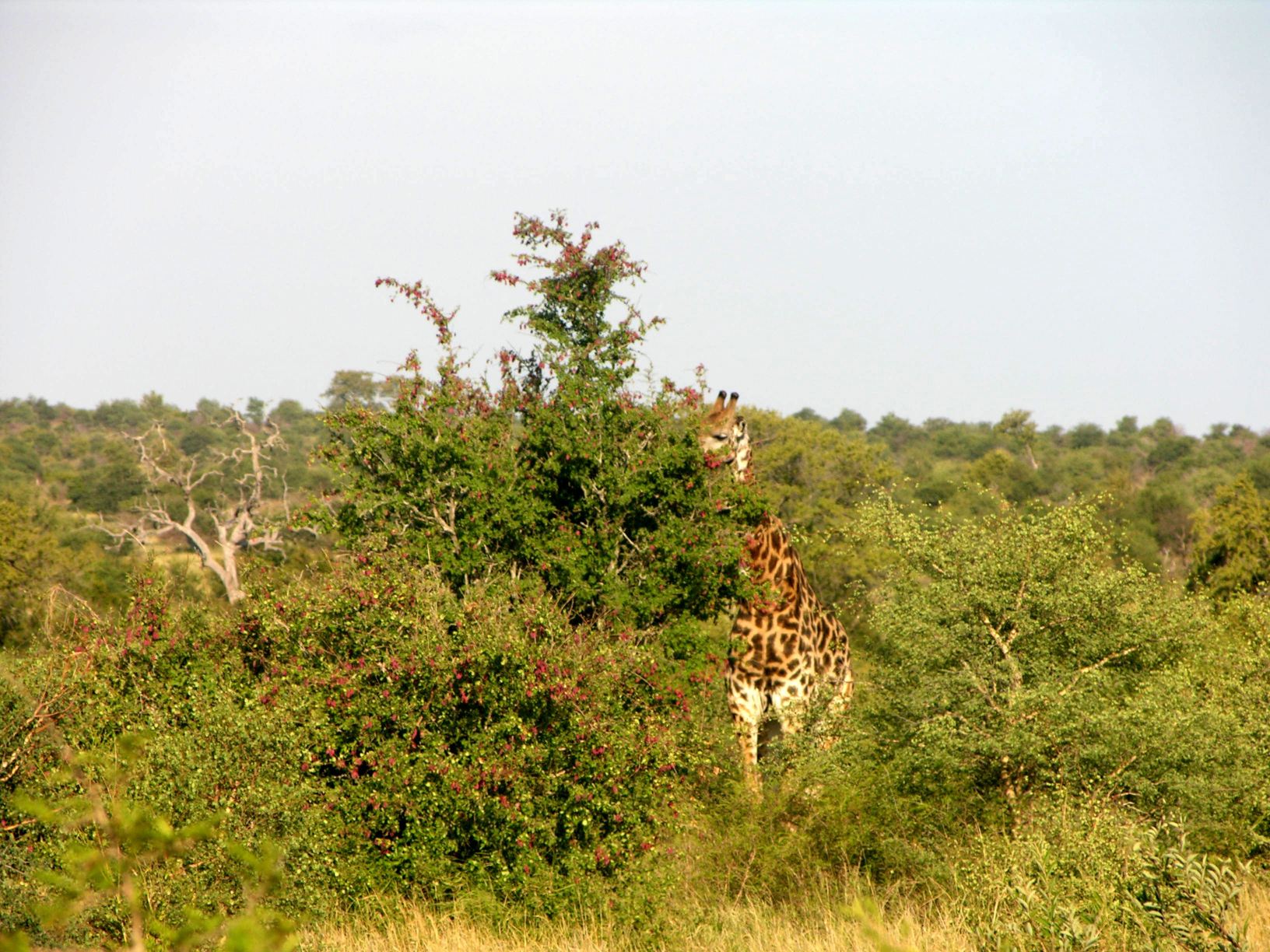
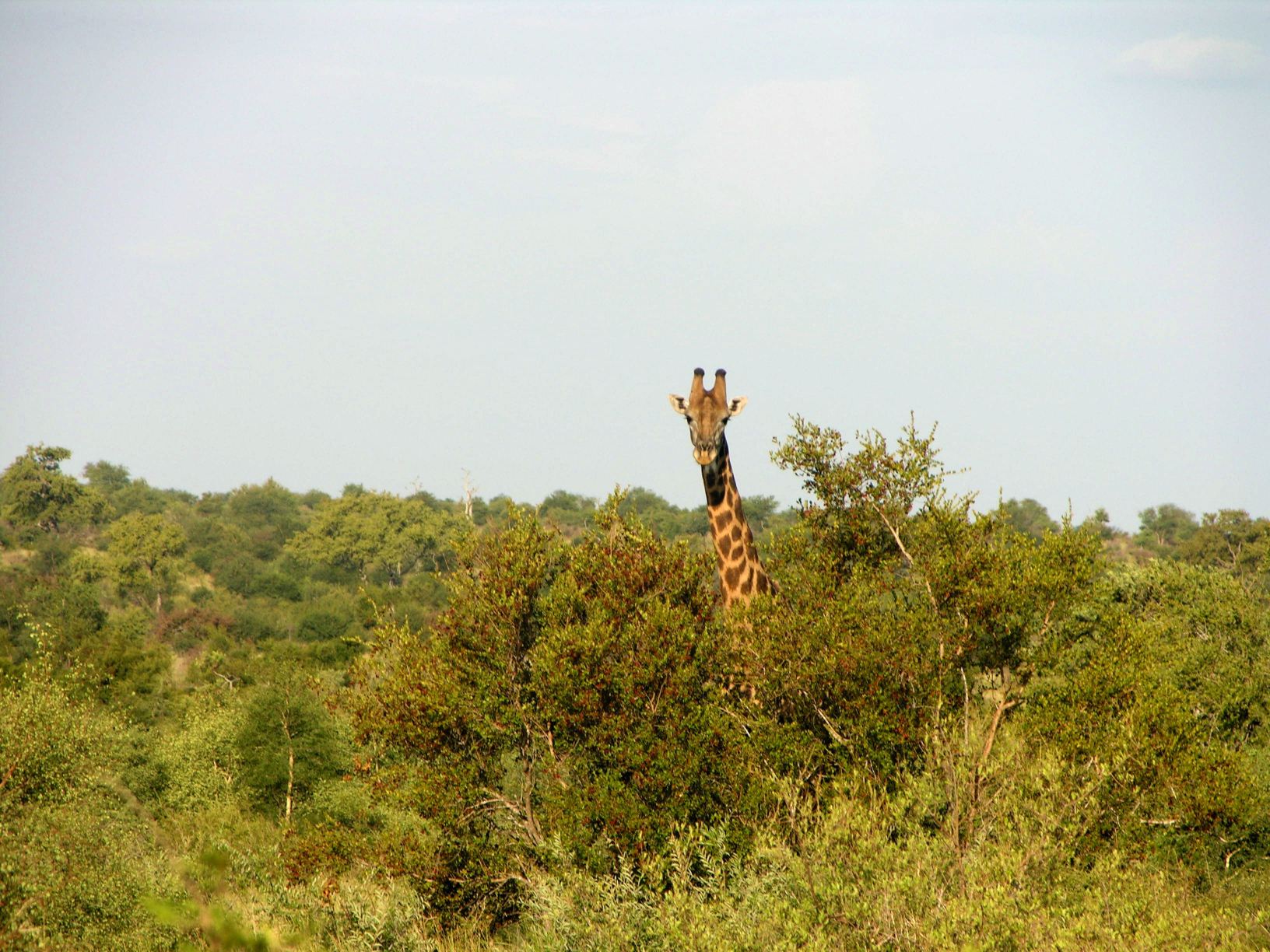
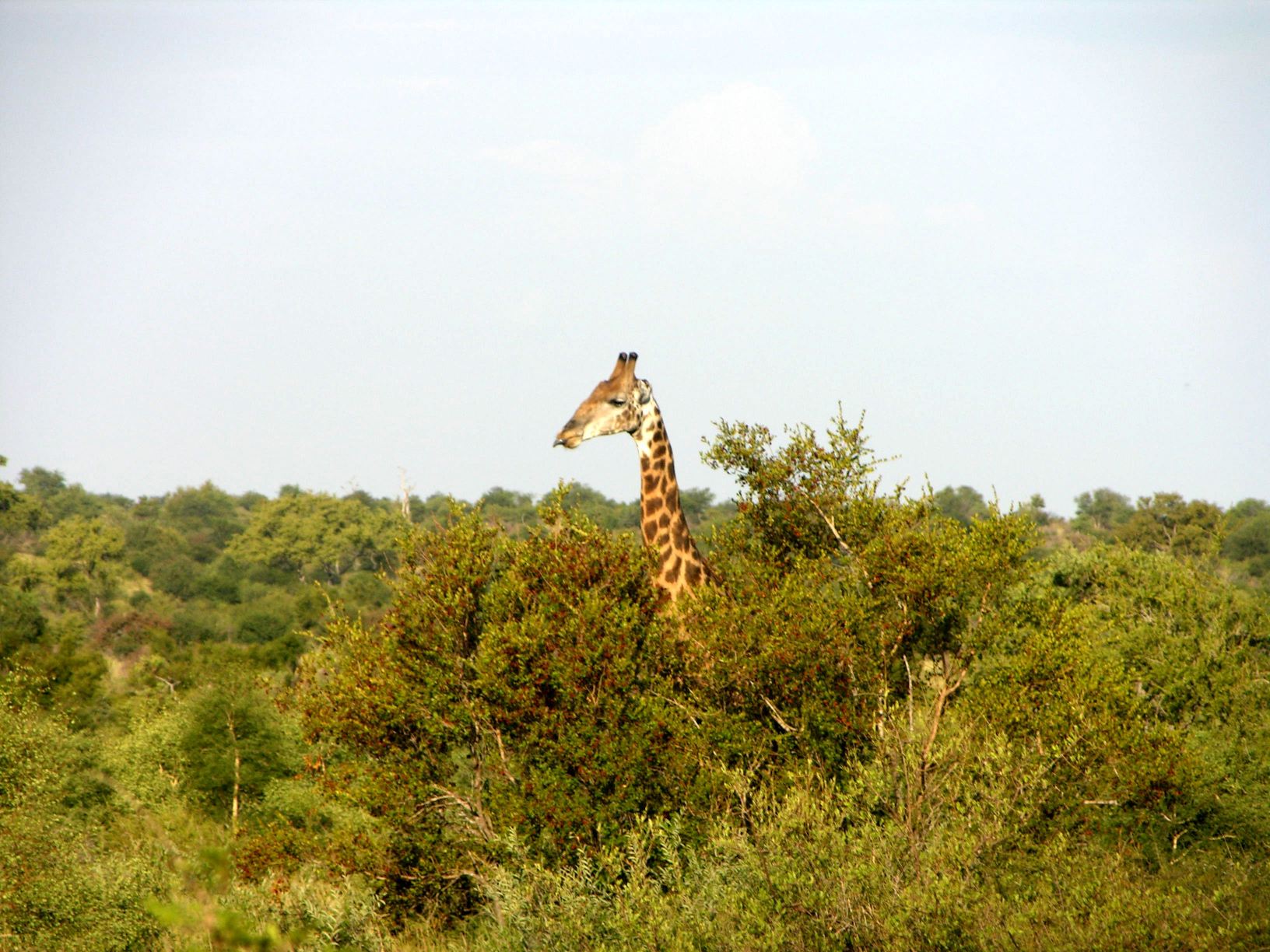
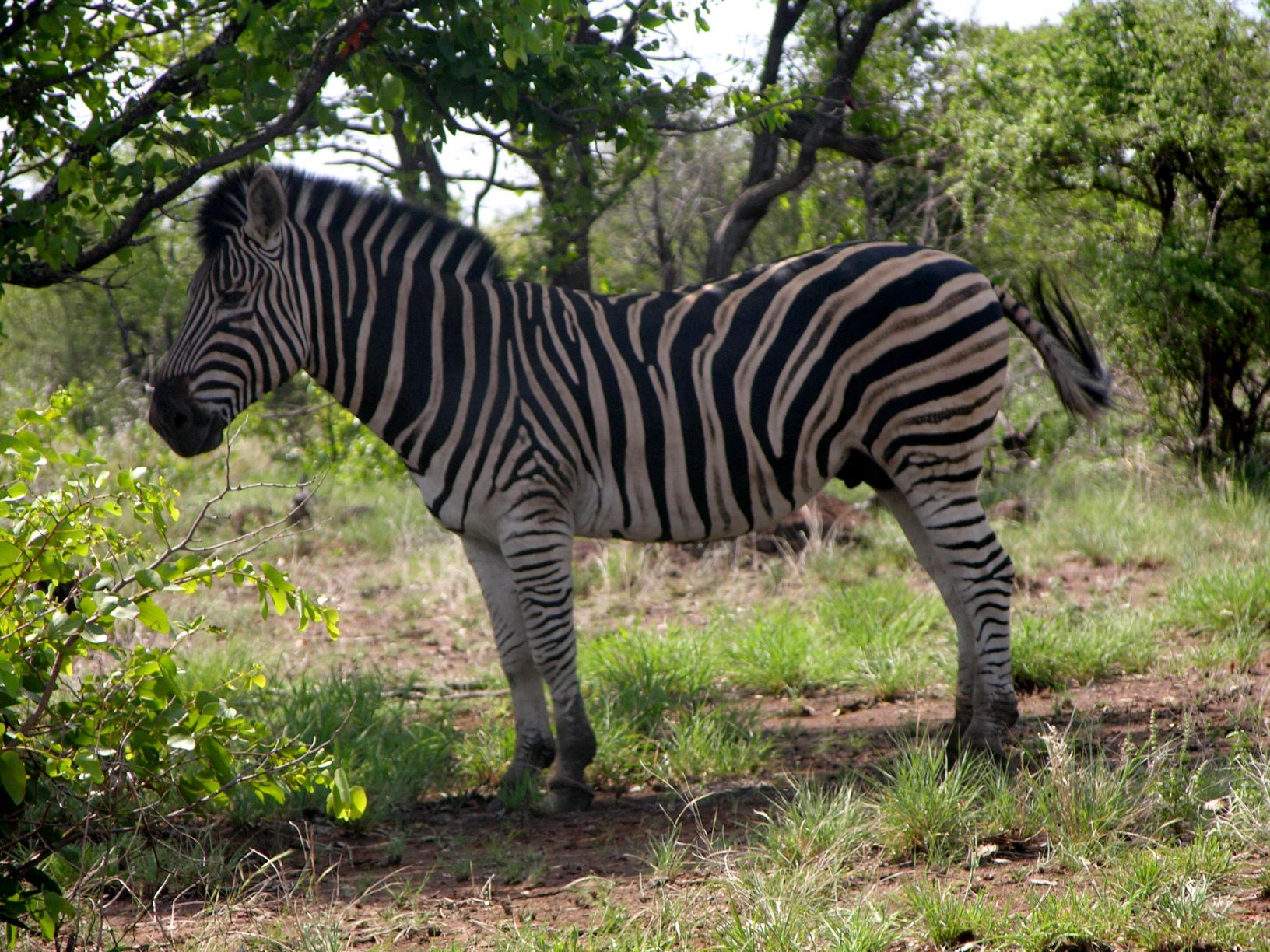
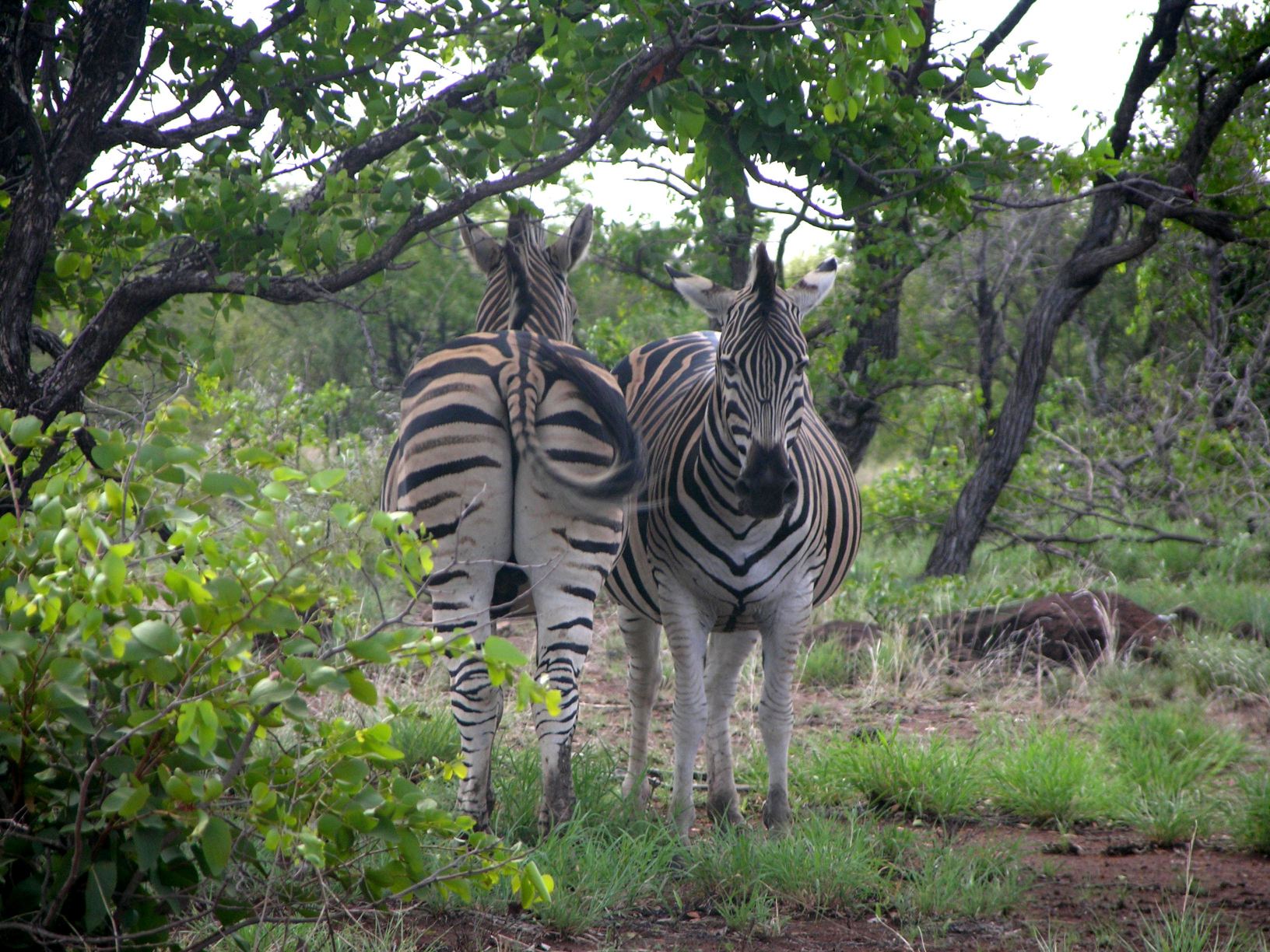
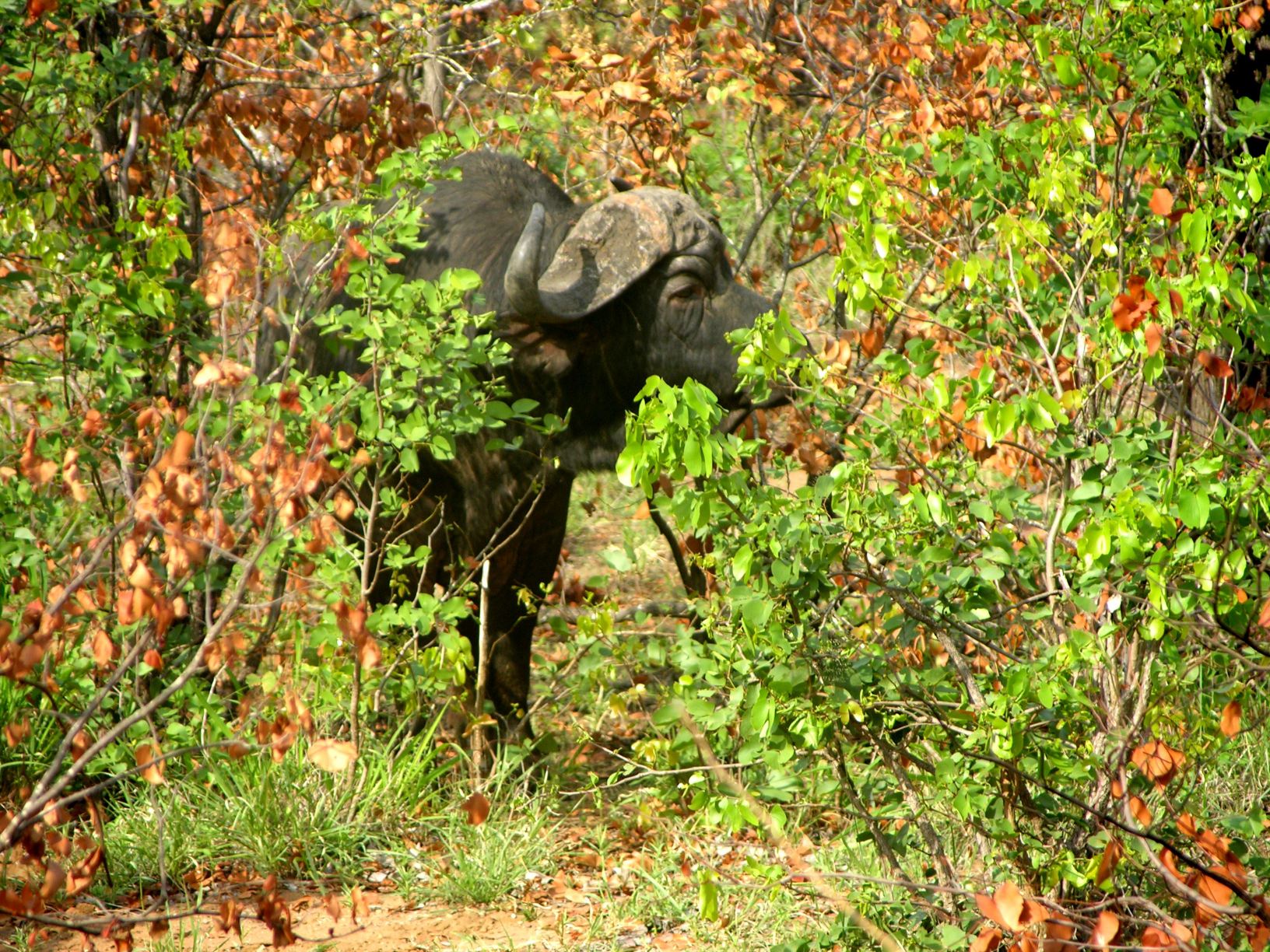
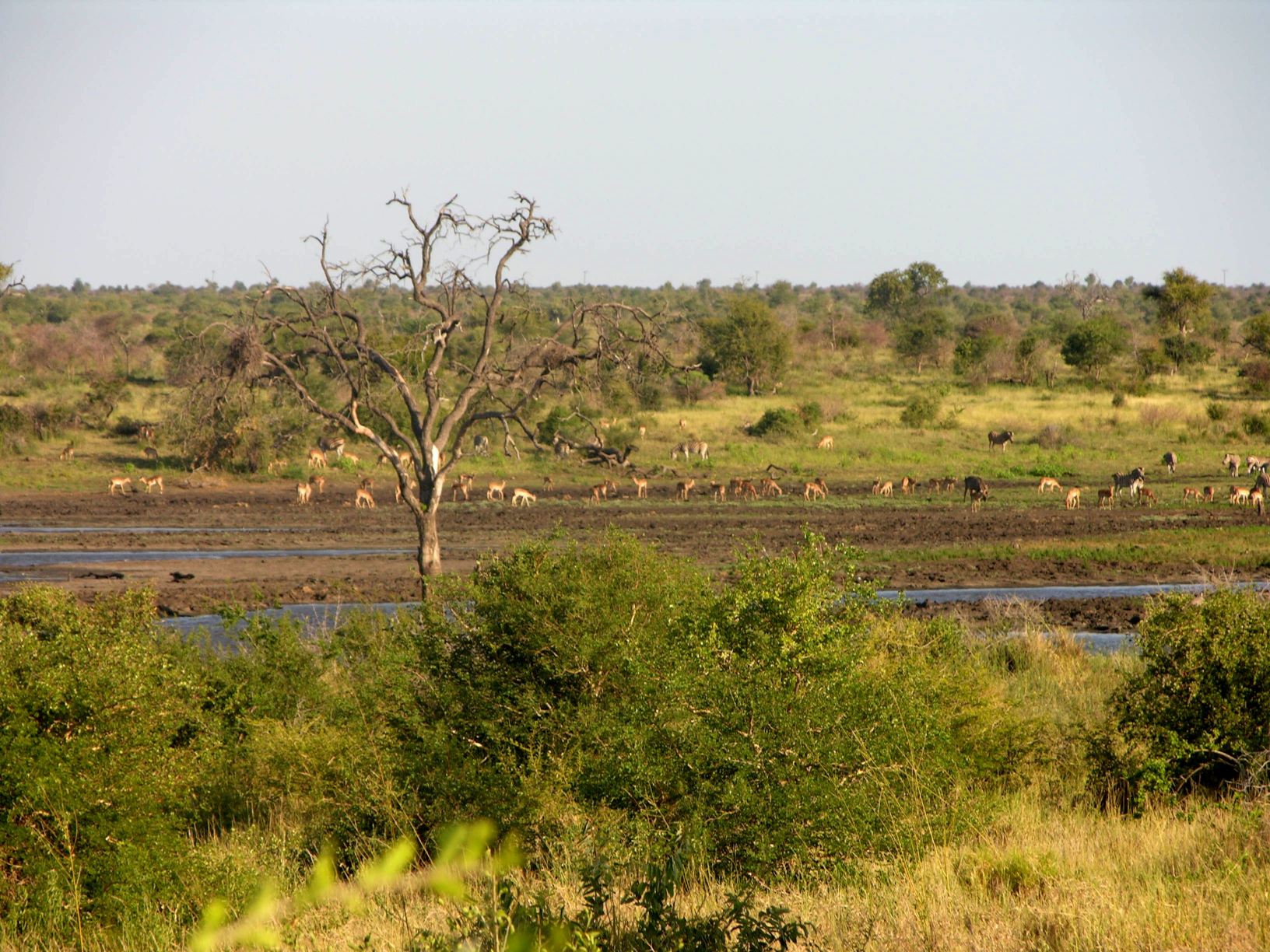
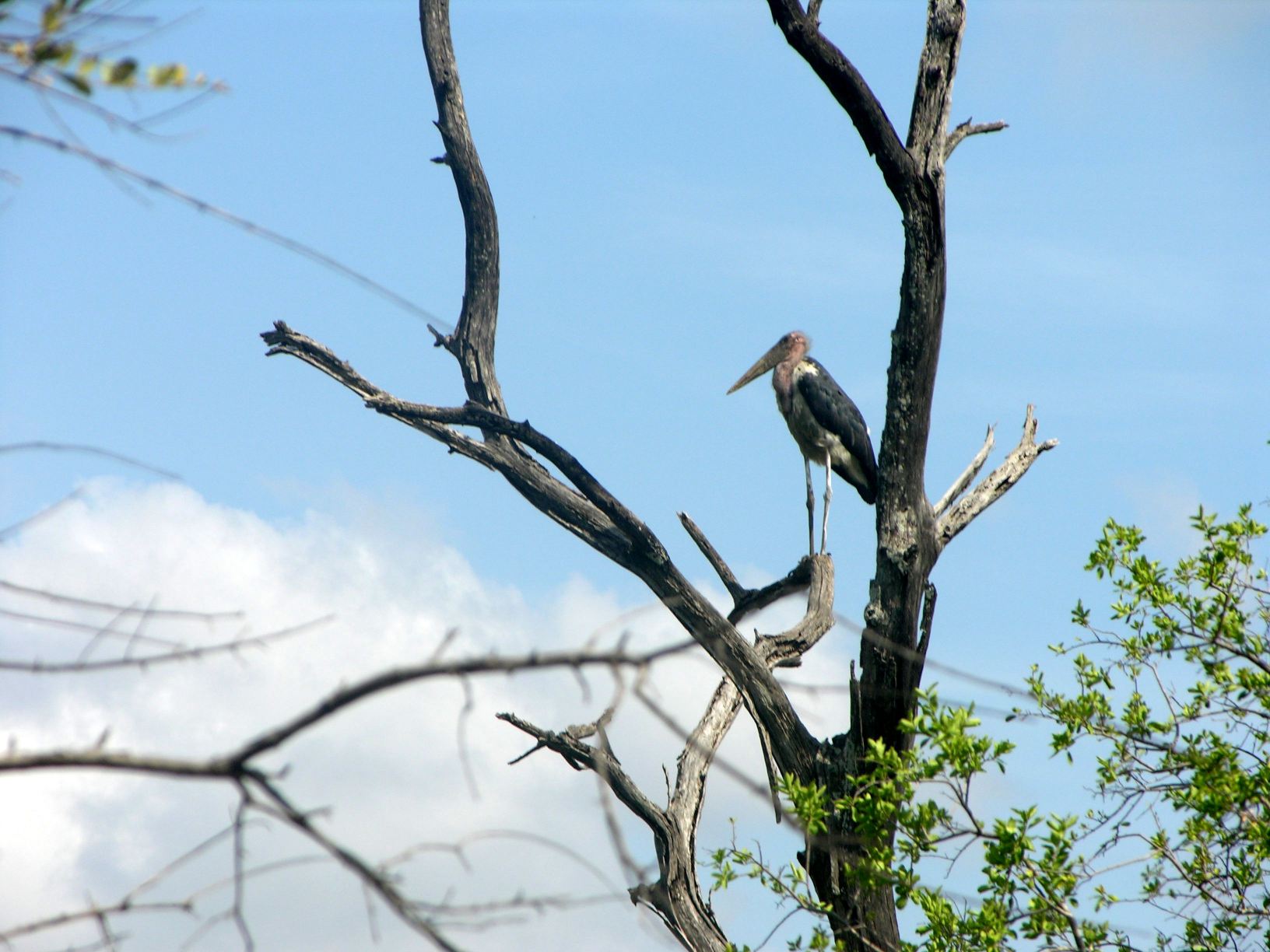
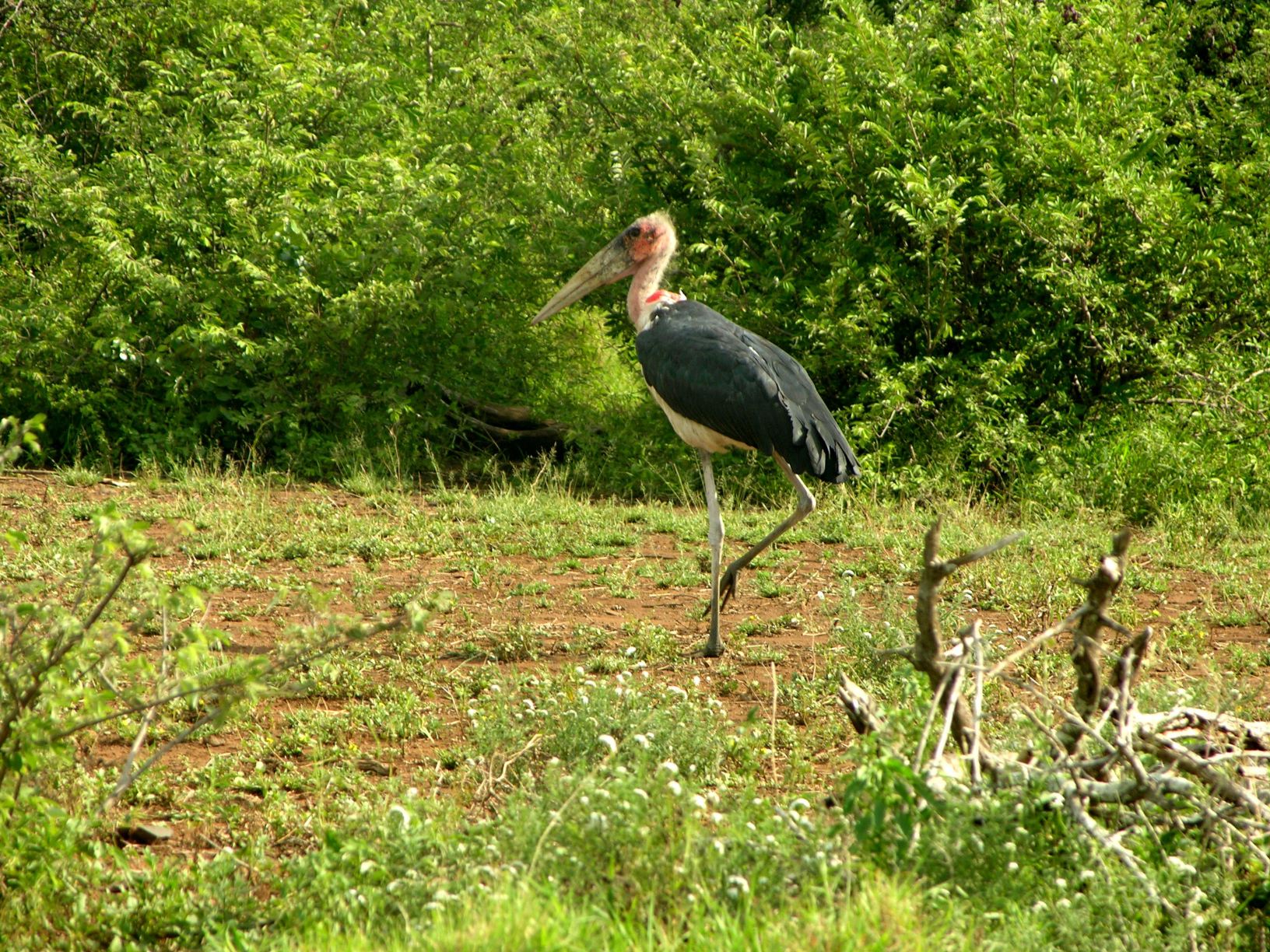
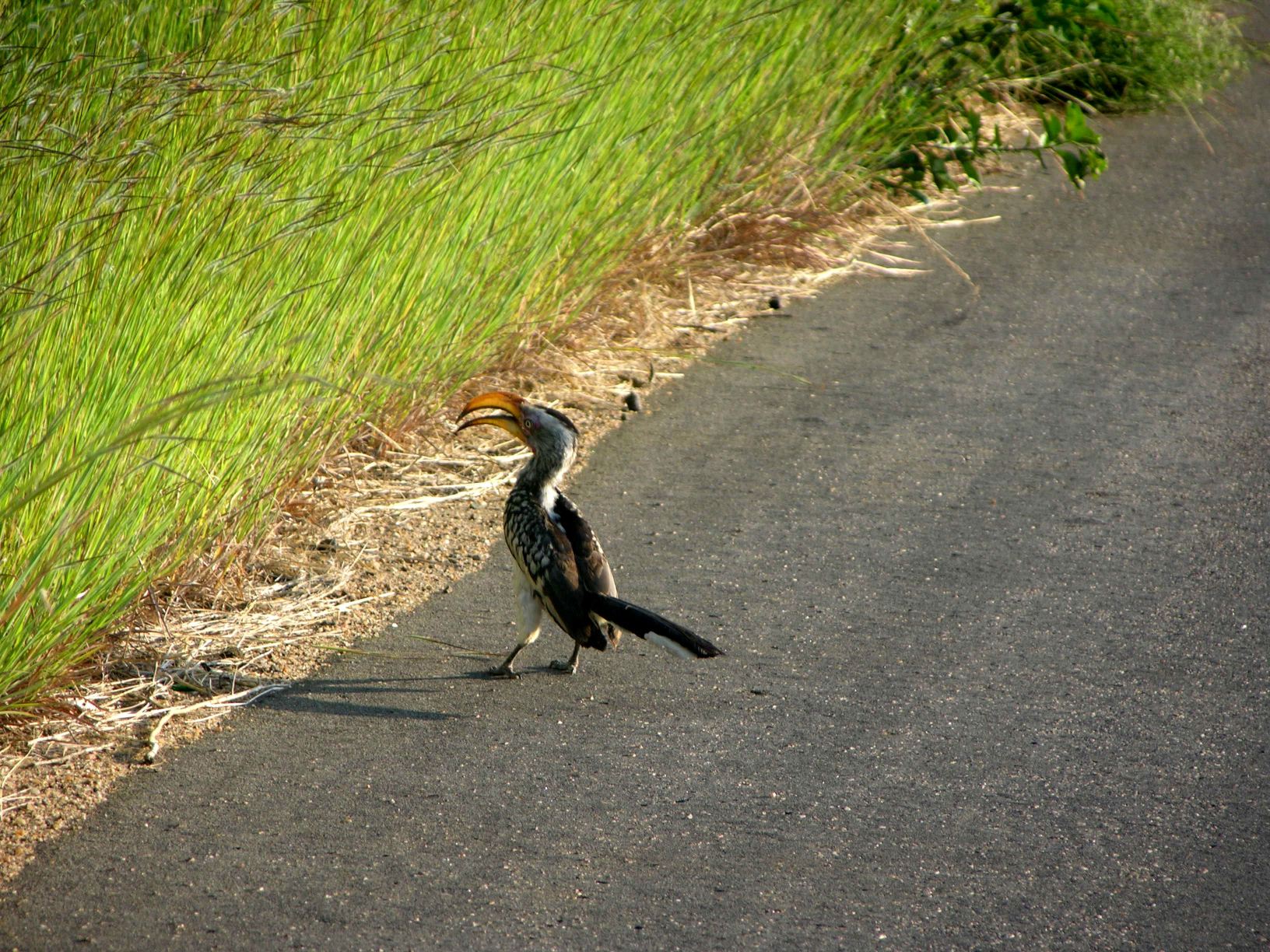
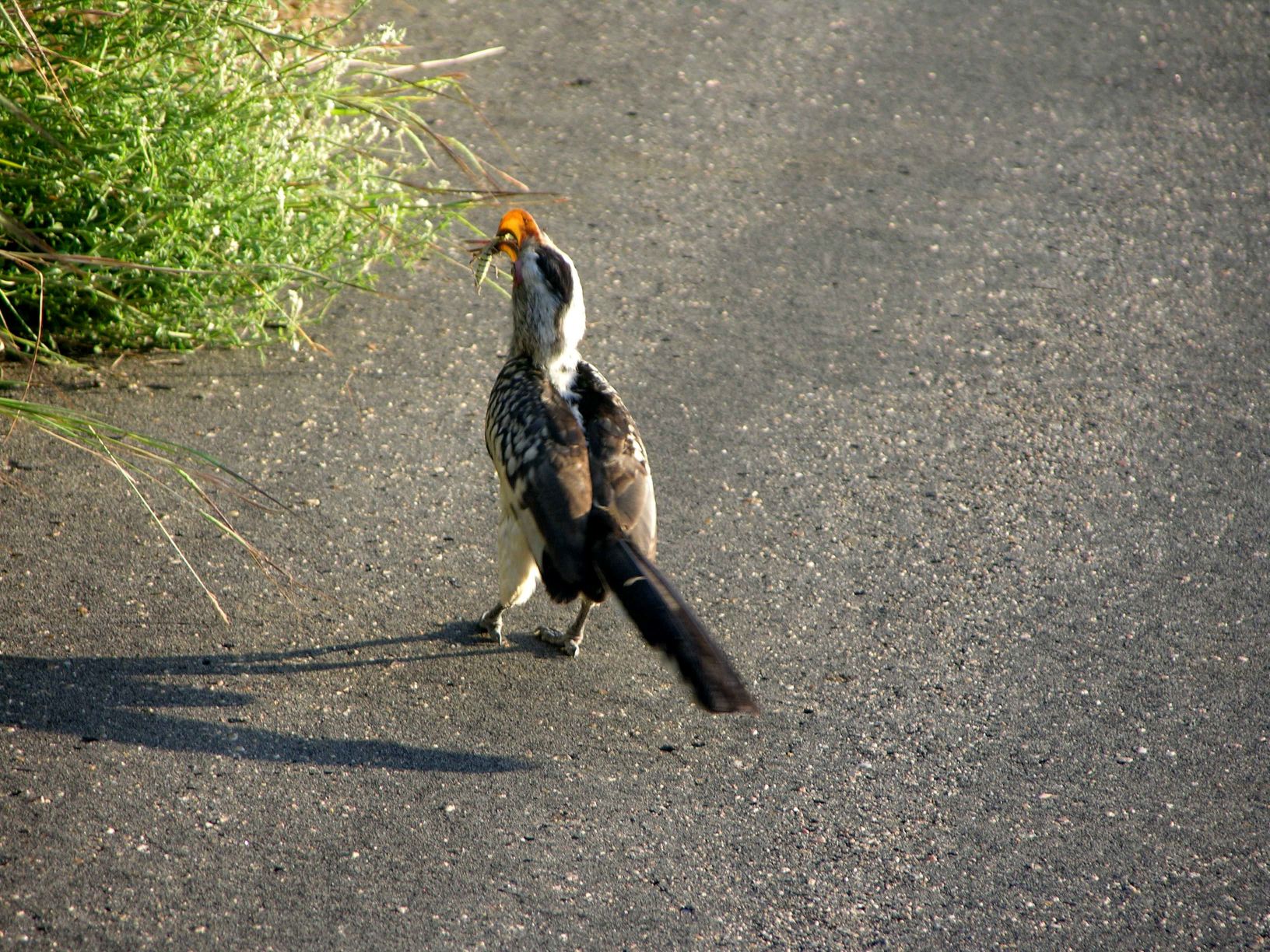
We stopped for the night at Satara Camp (22°41.594′S, 31°01.009′E; 24°23.701′S, 31°46.703′E). They say this is the best place for lions. If so, it was the place for an evening drive. That's what we did, and it paid off. We were lucky. A foolish zebra was frightened by the lights of the vehicle and leapt right into the jaws of a lioness. She jumped onto its back and brought it down in an instant. The lioness didn't even bite through the thick, hairy hide. She simply clamped its throat and waited patiently for it to die. It went on kicking for several minutes. Then its legs tensed one last time and went limp. The lioness let go and licked the little trails of blood on its belly where her claws had scratched it. She was plainly in no hurry to eat. After a rest she started at the hind end. She bit off the tail and gave it to the cubs to play with, then stripped off a piece of hide and let them start eating the zebra from the rear. She turned her attention to the stomach. She ripped open the belly, pulled out the guts and started on those. Perhaps it's customary to save the best for the children, or perhaps she fancied some vitamins. In any event, she began with the rectum and chewed it up, contents and all. A lioness hunts with the pride. The other lionesses don't come up to the kill at first, granting the successful hunter the right to enjoy it by herself. Cubs are another matter. All of them got in, hers or anybody else's. It was a small pride, three adult lionesses and three cubs. One adult lioness was allowed in almost at once, but they kept the last one away from the kill for quite some time. The male never showed up. The usual idea is that a lioness brings the male his prey. That's utterly wrong. When a lioness catches something and begins to eat, the male will come. He might come straight away or show up later along with the jackals. If he comes at once, she may not let him in. One roar from her and he'll put his tail between his legs and clear off. A female is every bit as strong. We watched them eat the zebra for almost an hour. In that time they ate at most ten per cent of it, but I'd worked up an appetite. I wanted to join in. I'll bet zebra is delicious. It was interesting that the herd the zebra had been snatched from was grazing nearby. The lions were fed that night and another pride couldn't be on their territory. The whole area would have a quiet night. Of course, you can't try to drive lions off their kill. They might charge and bite. At a distance of ten metres, though, it seemed perfectly safe to walk around nearby.
A lion doesn't normally eat a human. It's clever enough to see the consequences. It doesn't need a load of hunters coming after it for a mouthful of bony meat. But people said most of the lions in Kruger had eaten humans. The thing is that Kruger National Park effectively forms the border with Mozambique. They'd been building socialism there, as everybody knows. Samora Machel was a great friend of the Soviet Union. When the USSR died, the aid came to an end as well and the delights of the new social order immediately made themselves felt. Hungry people ran for South Africa. The lions, the story went, learnt to eat people crossing illegally. It might be propaganda, of course. They had to frighten would-be refugees somehow. I heard the claim that the lions had got up to eating one in three by the end.
We were very lucky to see a lion hunt. Those organised outings usually come to nothing. A pride doesn't need a zebra every day. A hunt lasts a few minutes. The chances of the vehicle being in the right place at the right time are close to zero.
On the following day, we couldn't resist going back to the site of the hunt, though it was out of bounds. The pride had eaten its fill and was lying content under the tree where they'd dragged the remains. The moment we stopped and opened the door a crack, they took fright and decided to leave the kill and walk off, much to the delight of the jackals. I find it hard, after all, to believe they'd eaten all those migrants.
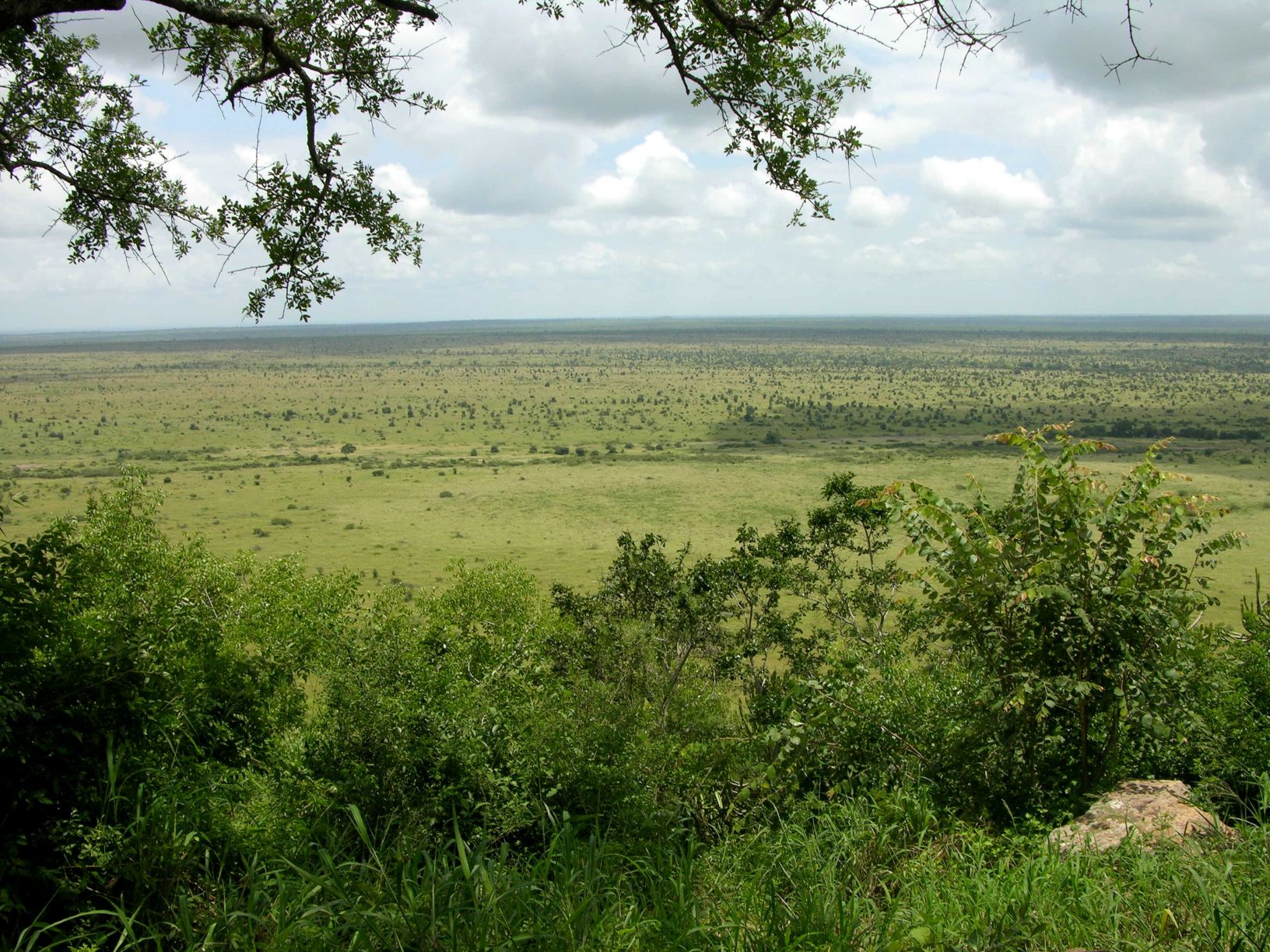
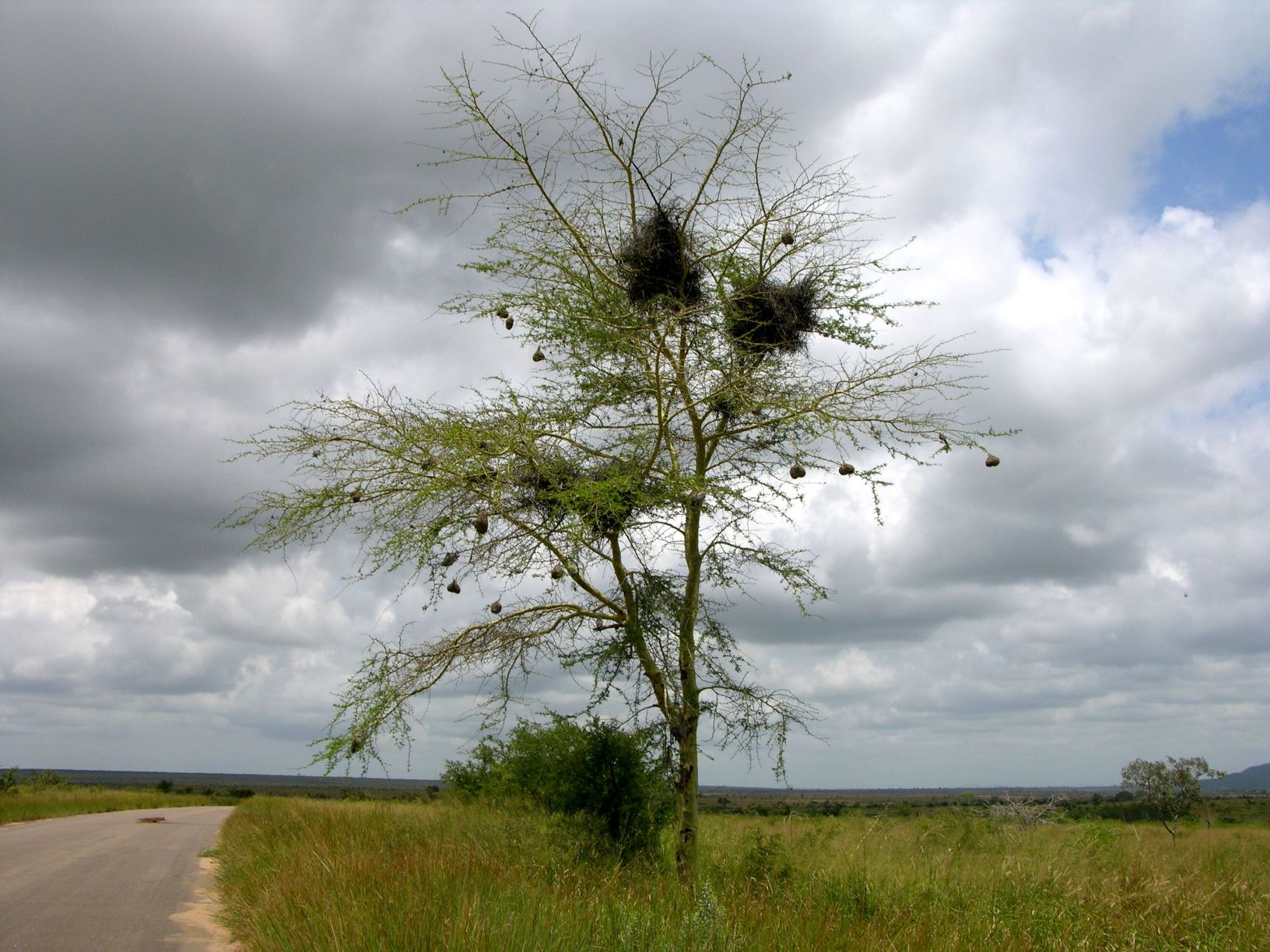
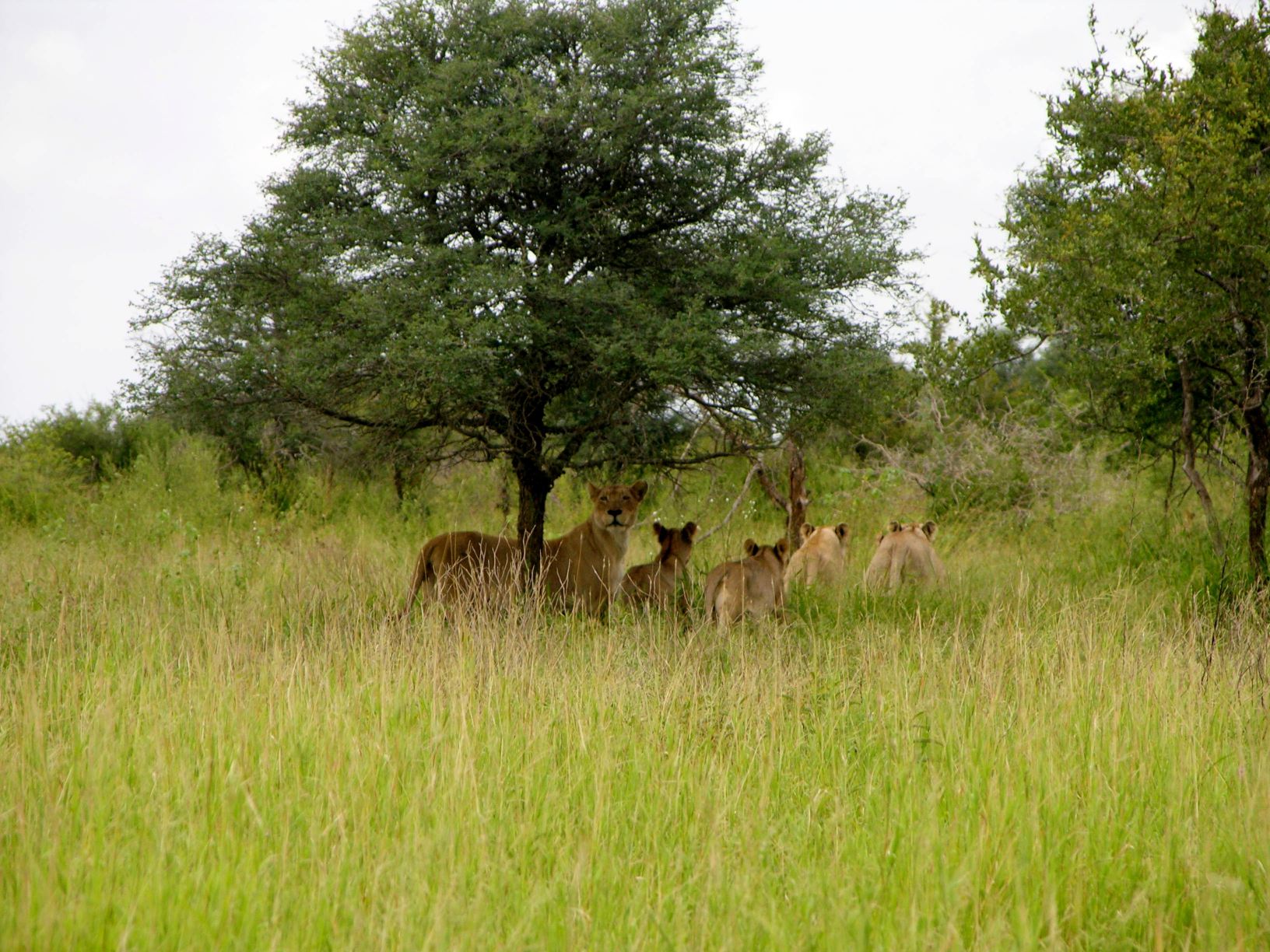
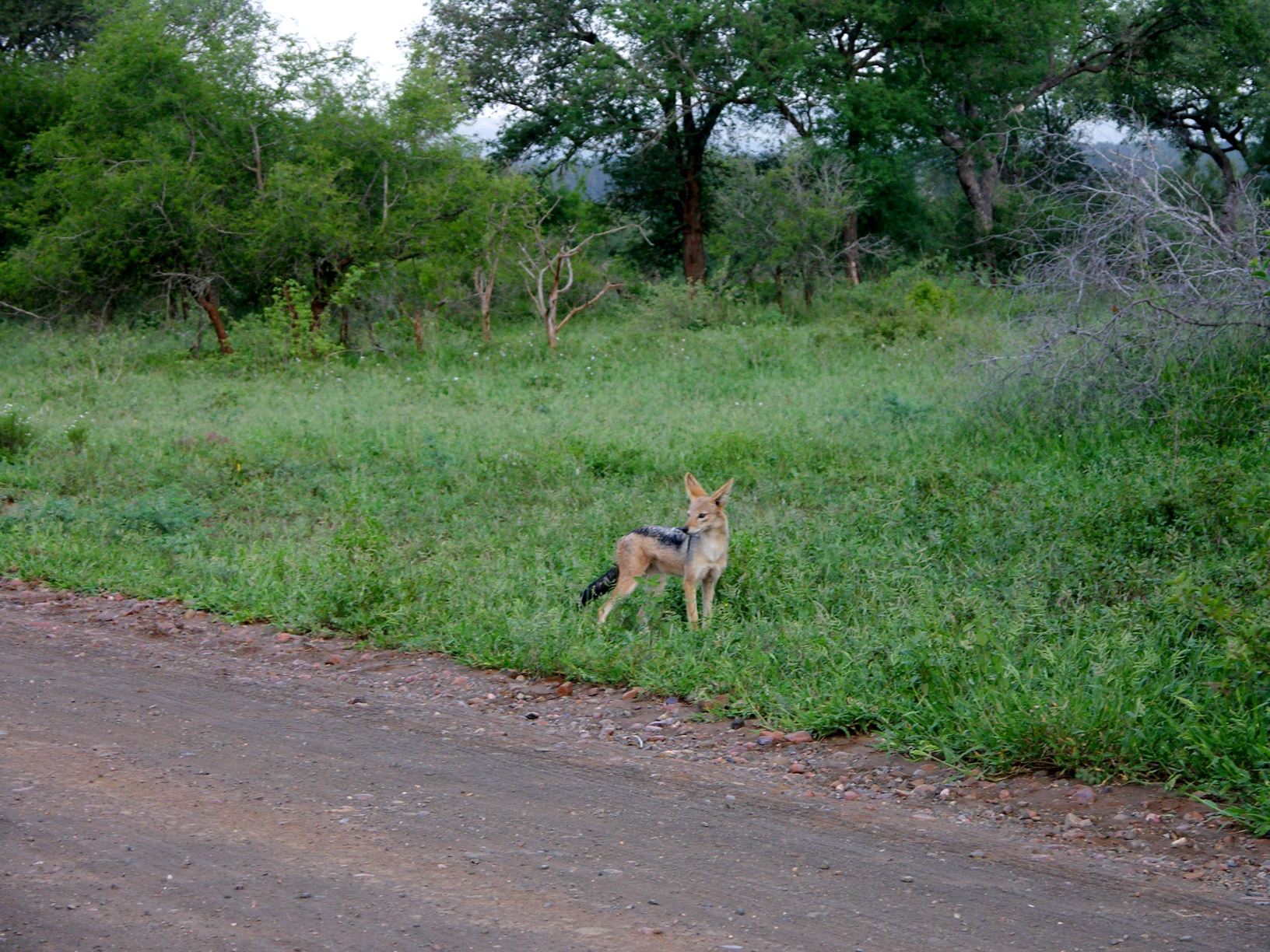
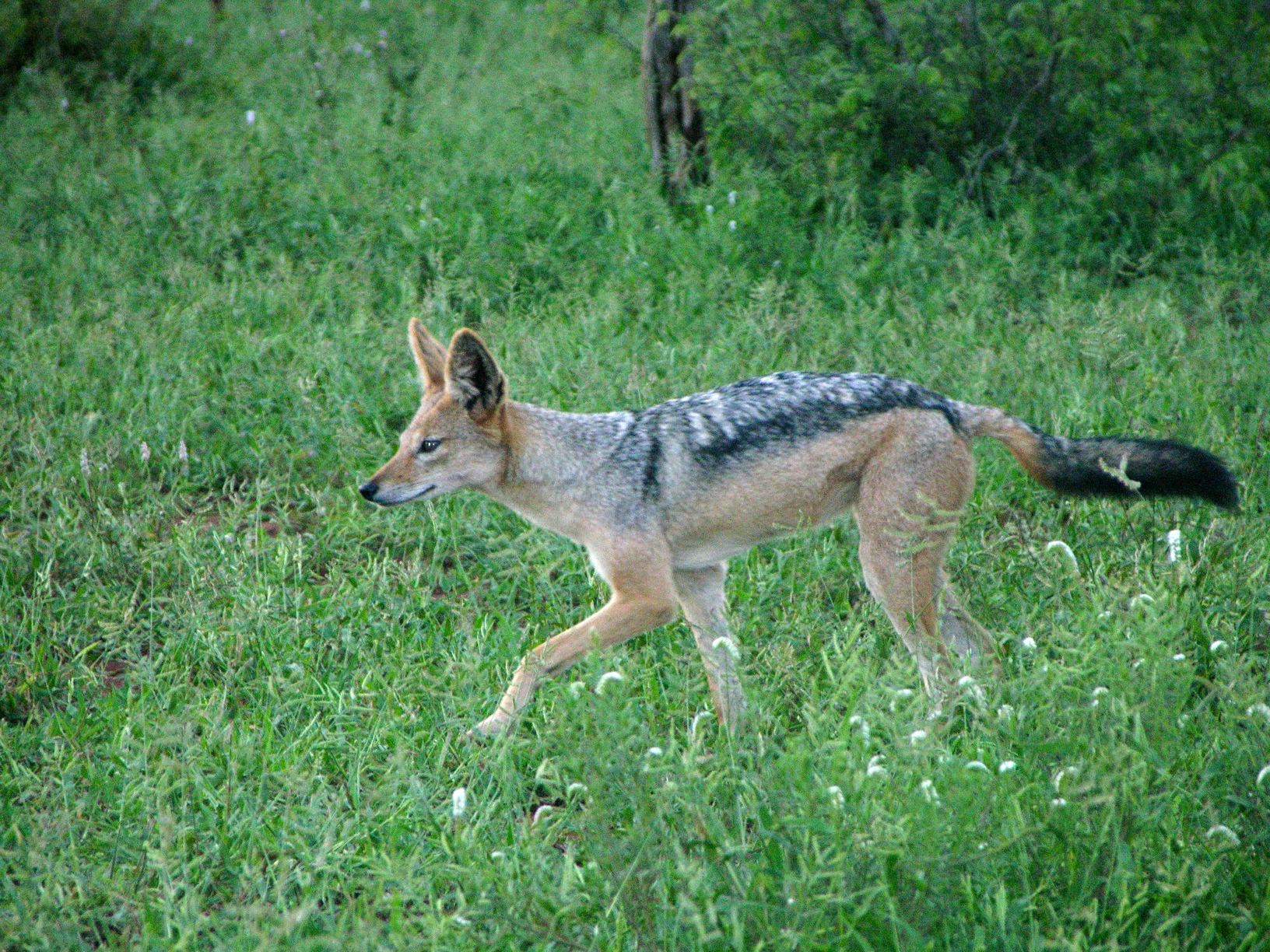
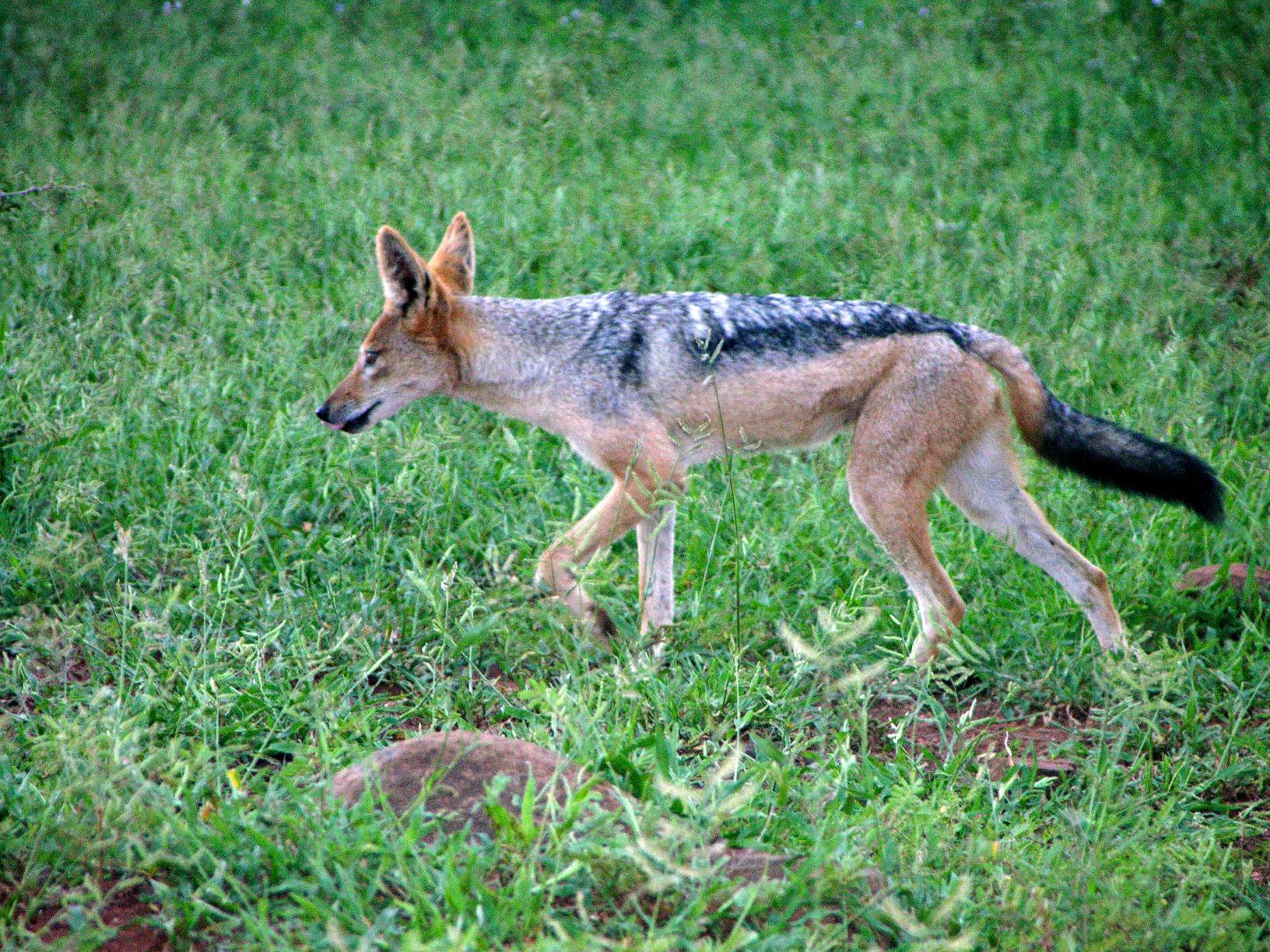
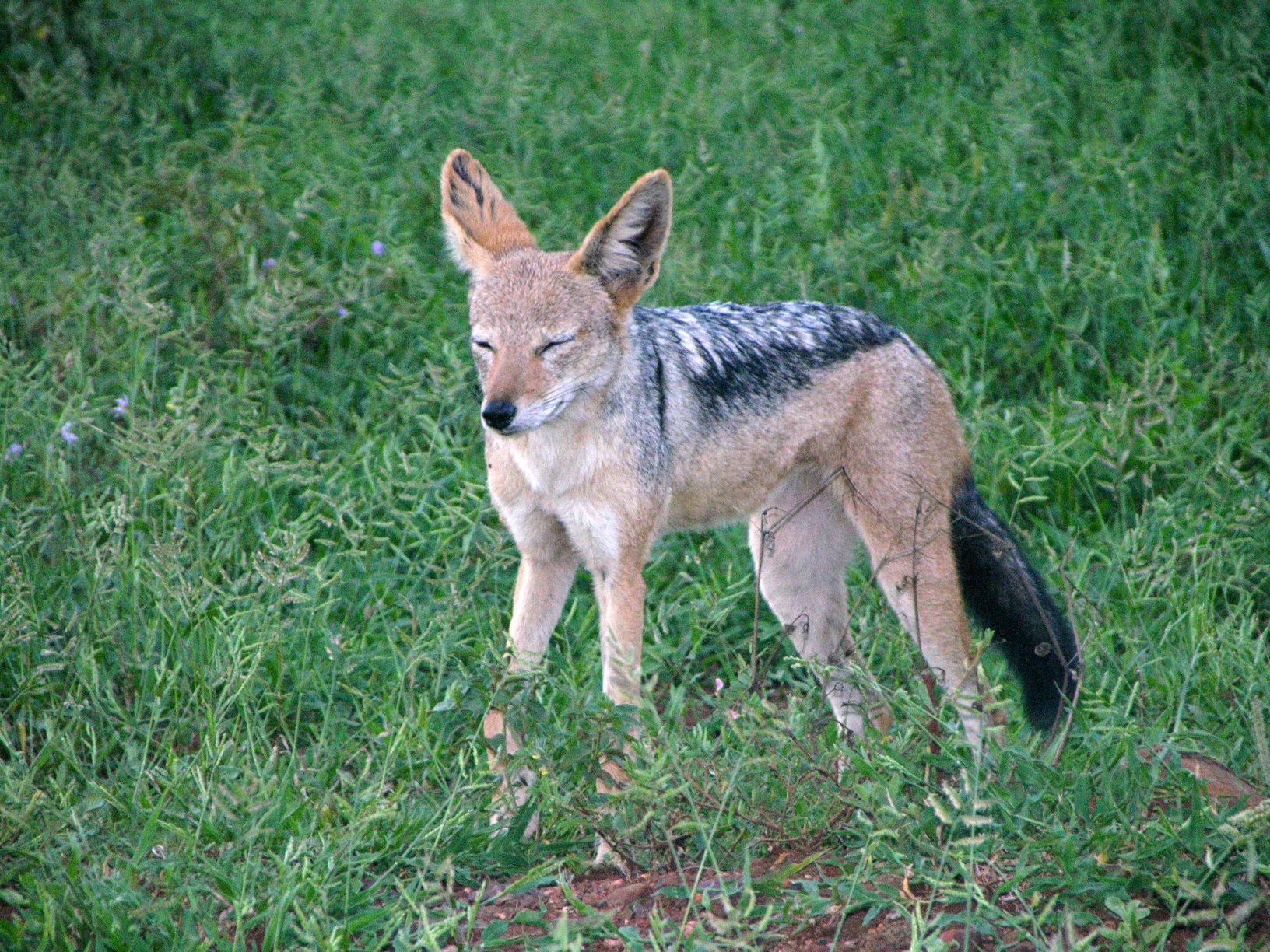
On that same forbidden track we met a buffalo at close quarters. It turned out that as soon as you left the official route, the concentration of animals went up severalfold. We were delighted. Unfortunately we were clearly visible from the main road, including to the organised tour vehicles. Time to clear off. A little farther south we picked a quieter spot and turned again onto a good track with a no-entry sign at the entrance.
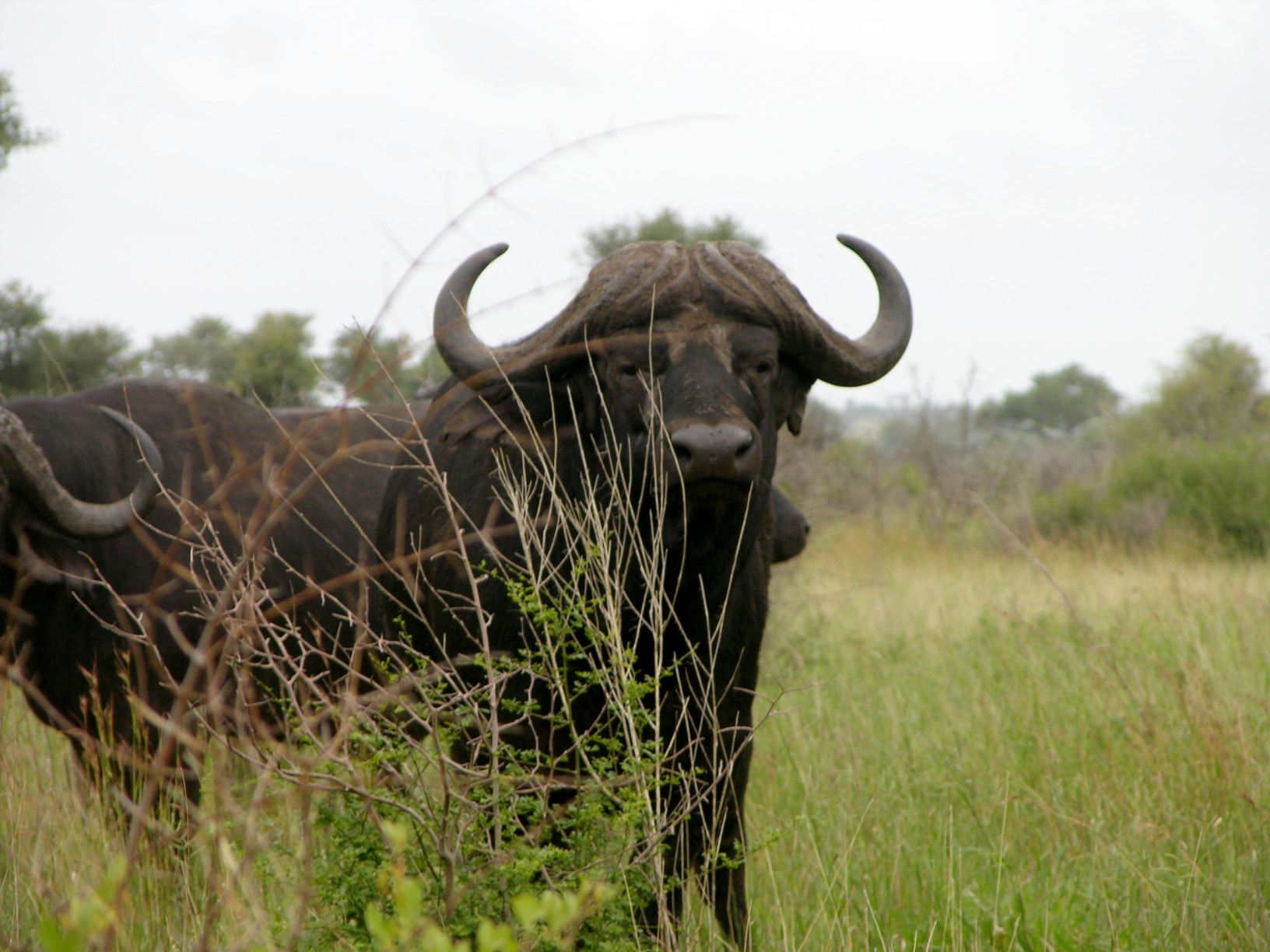
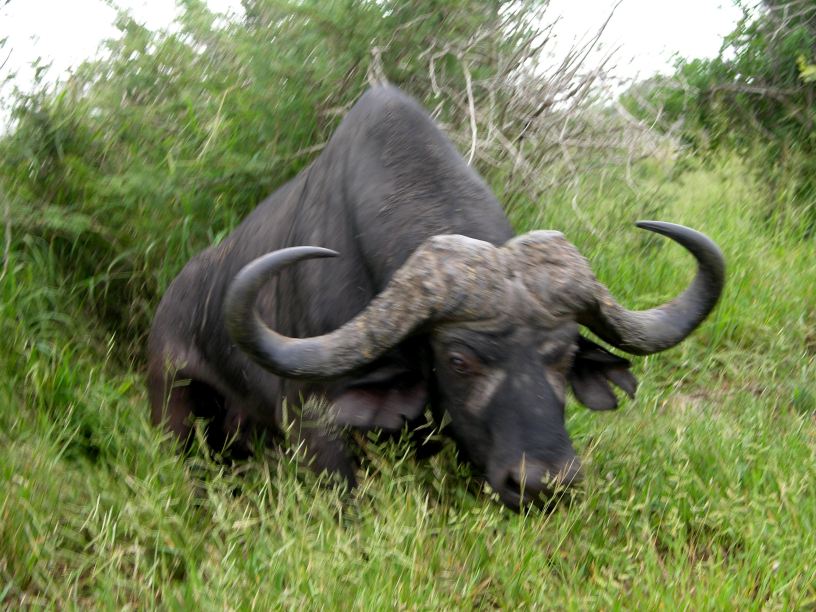
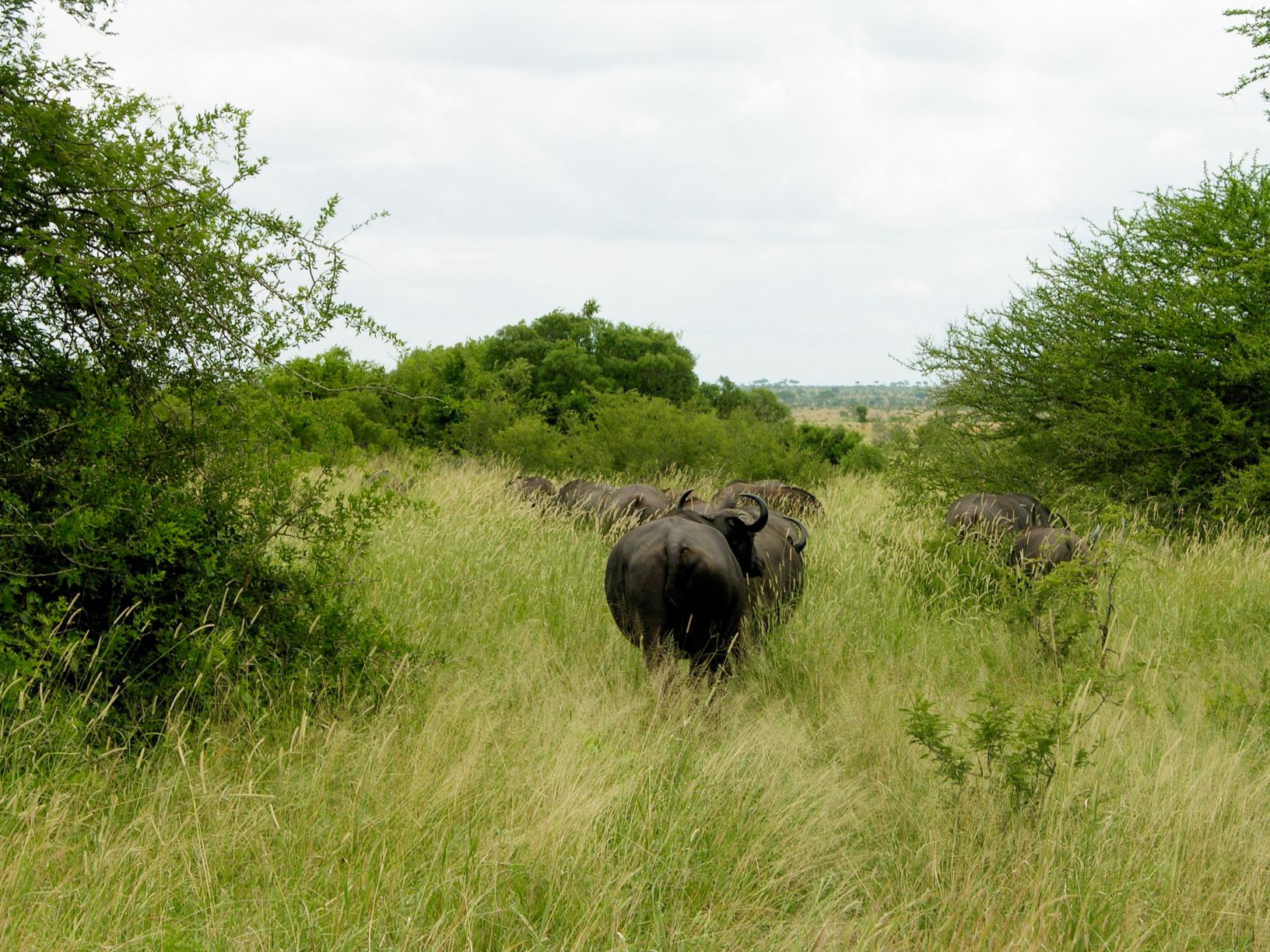
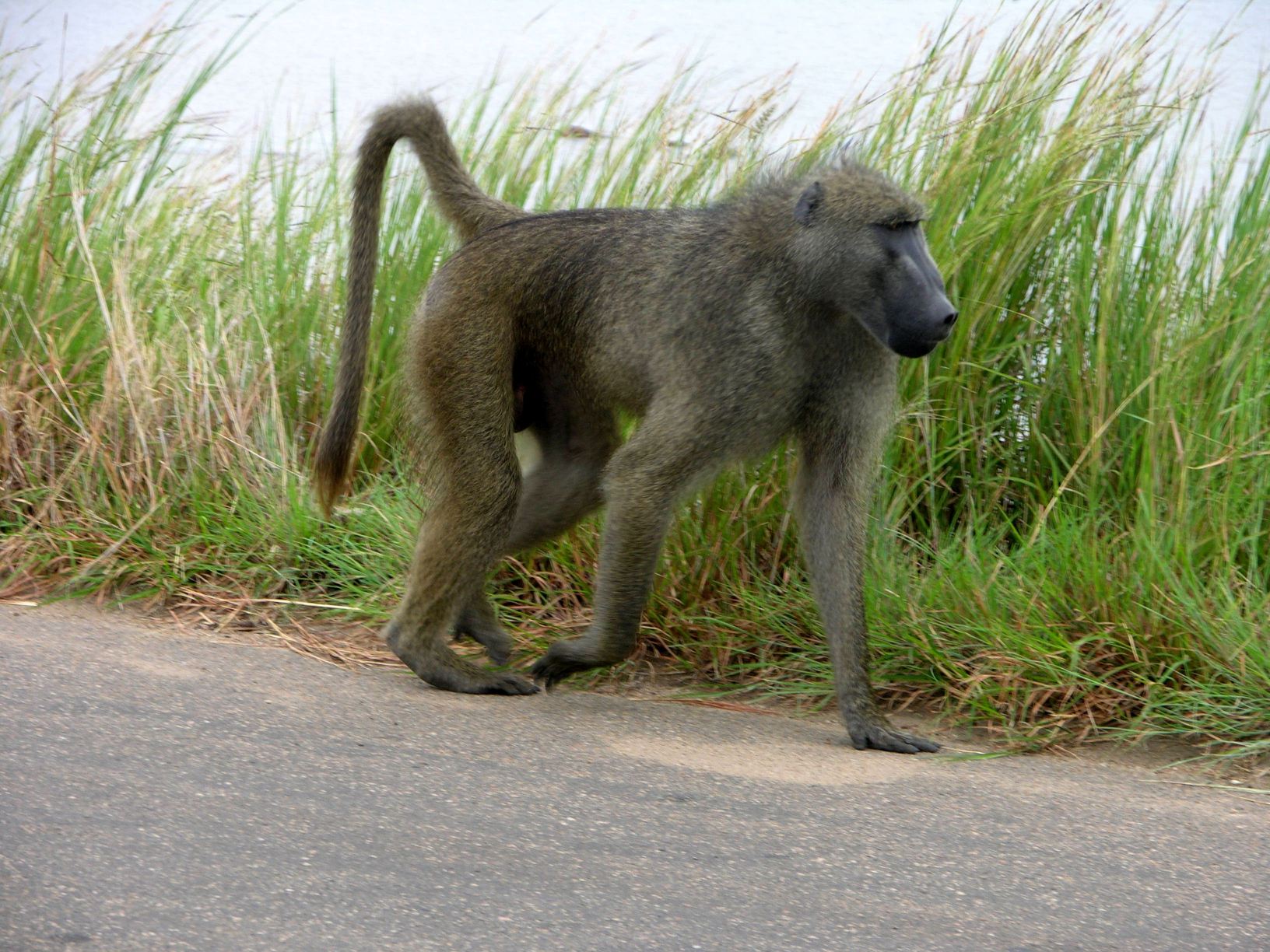
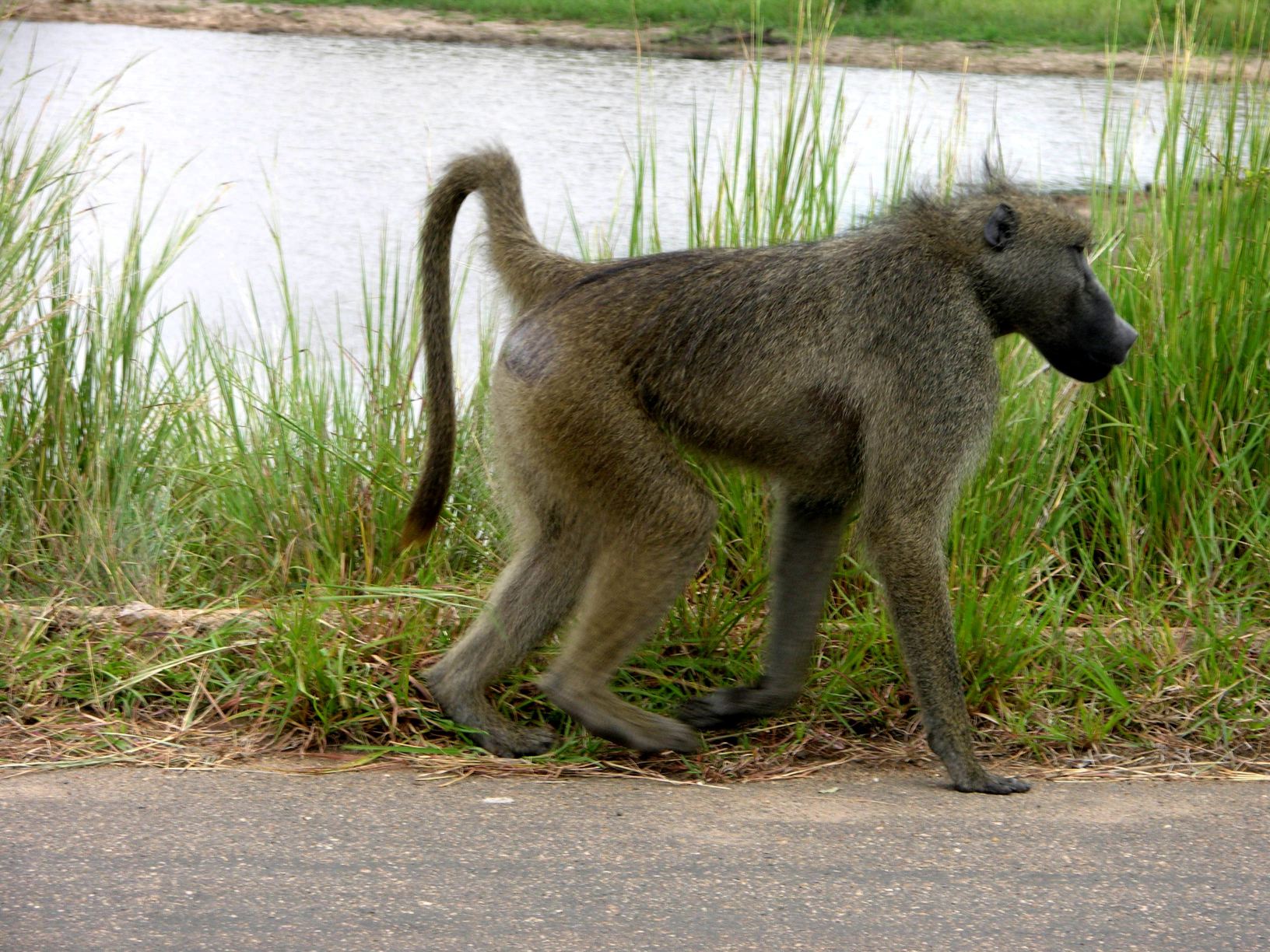
Straight away we saw a male lion following a lioness. He walked right past us without taking the slightest notice. On we drove, slowly, at walking pace. So slowly that a black rhino grazing in the tall grass let us pass. We noticed each other at the same time. I saw a horn a metre from the car. It started by the wing mirror and ended somewhere by the boot, where it turned into a face. The look on that face wasn't friendly. At first the animal edged away. I stopped and reached for the camera. A shame the grass was in the way, though without it we would never have got so close. When he saw me photographing him, he decided it was sheer disrespect. Black rhinos are famous for their foul temper. One might even charge a locomotive, with unhappy consequences for both rhino and locomotive. Our feeble little car was a toy to him. His two tonnes against our six hundred kilos. Like going head to head with a KamAZ truck.
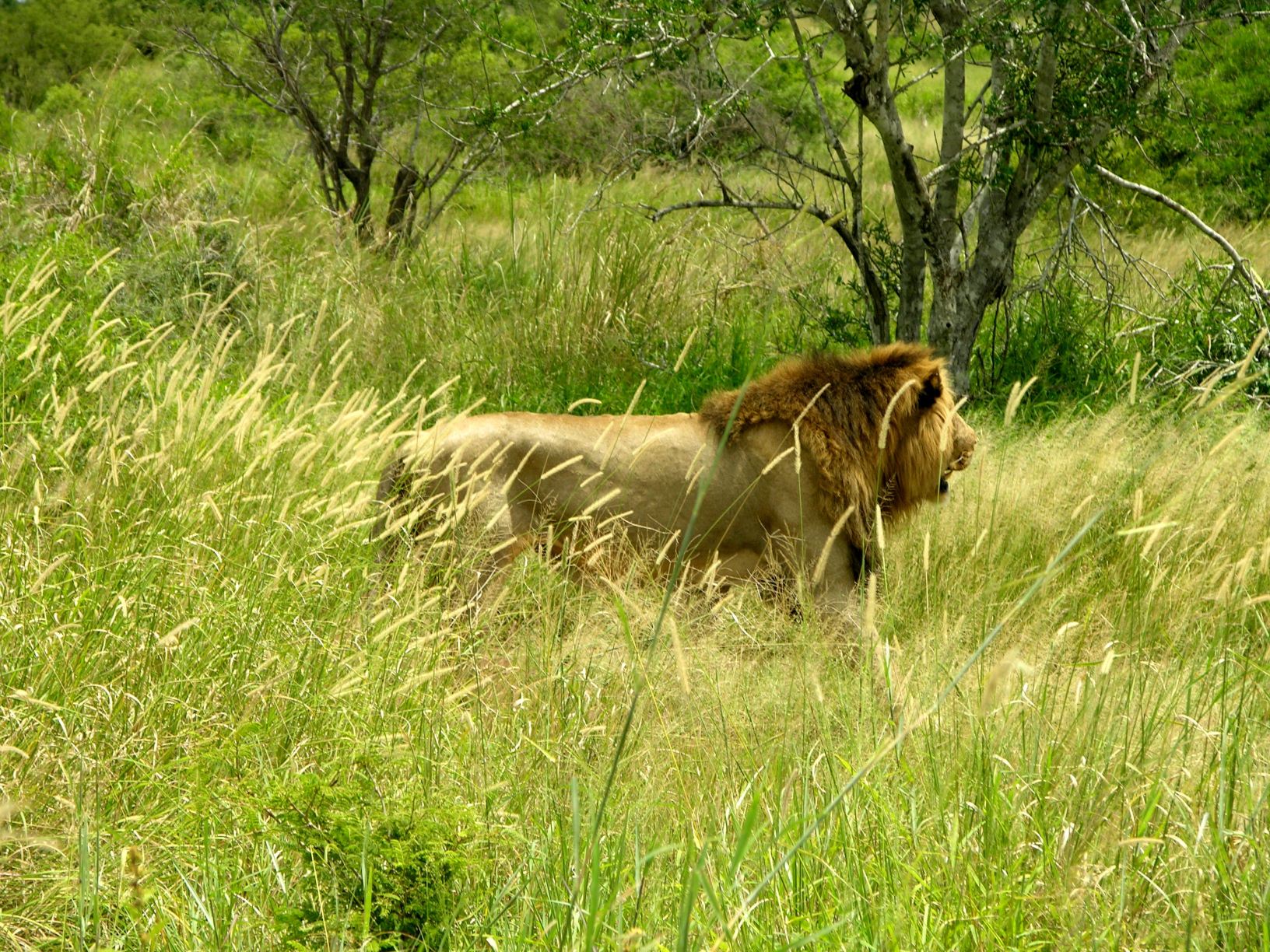
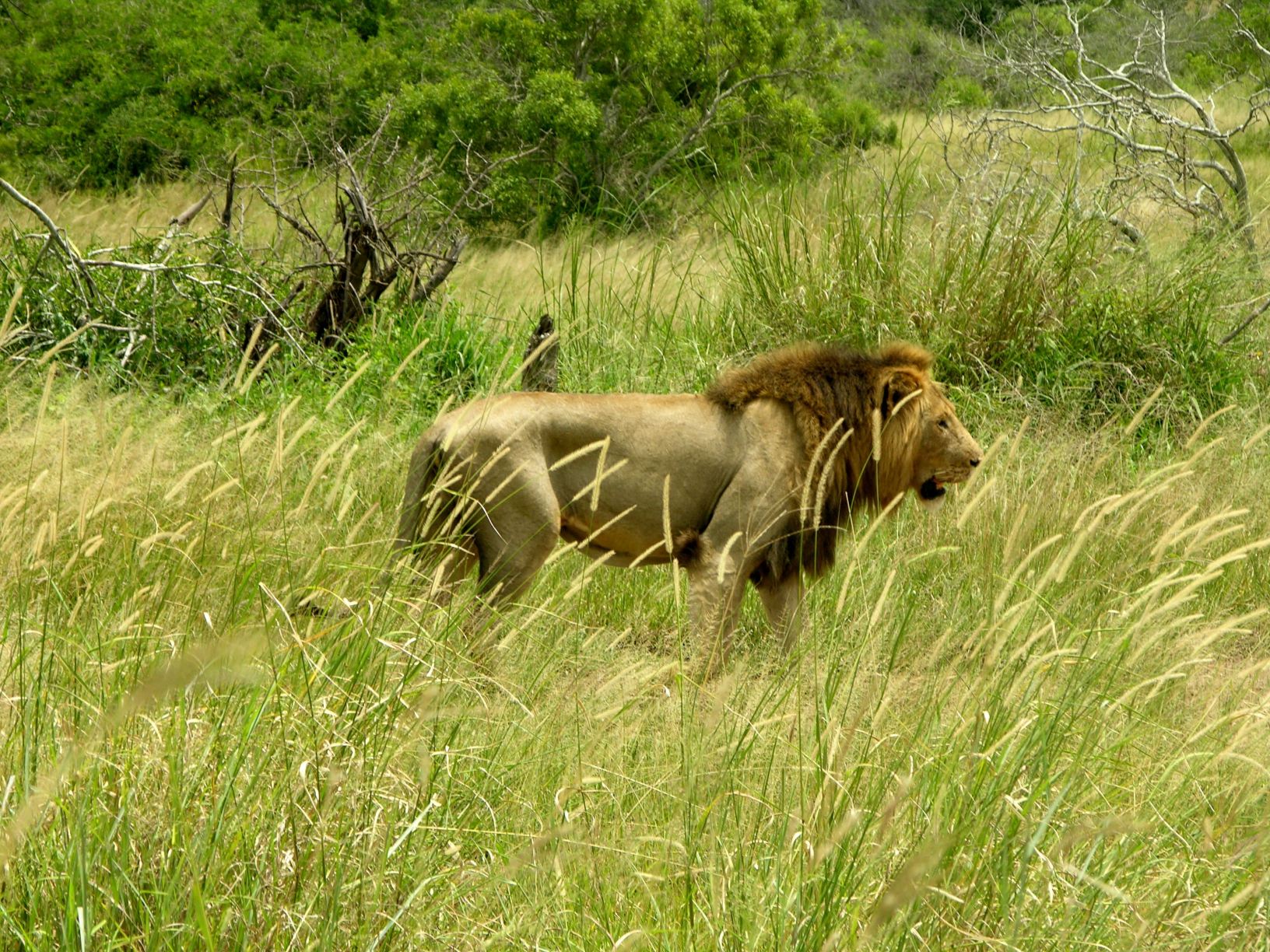
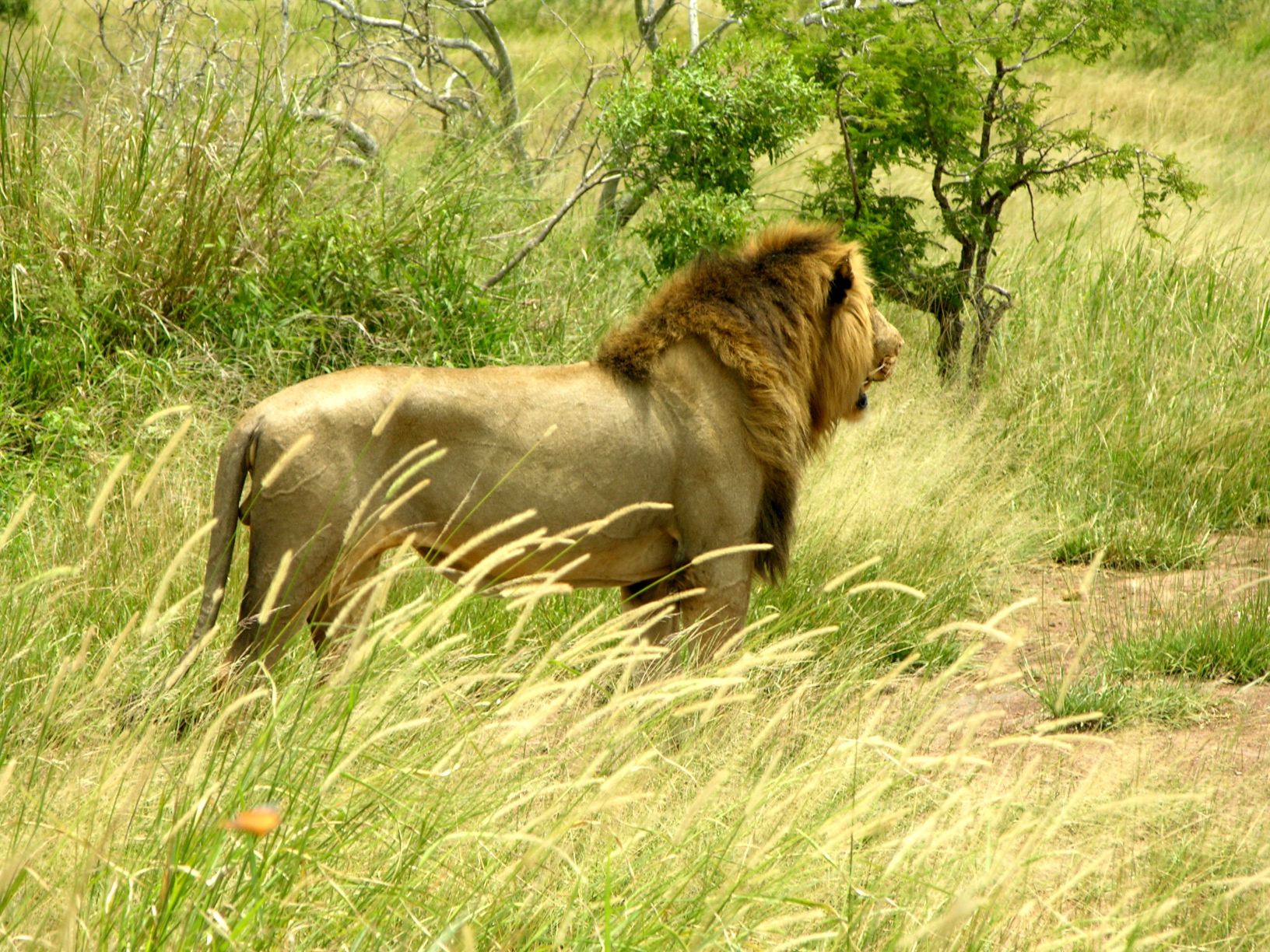
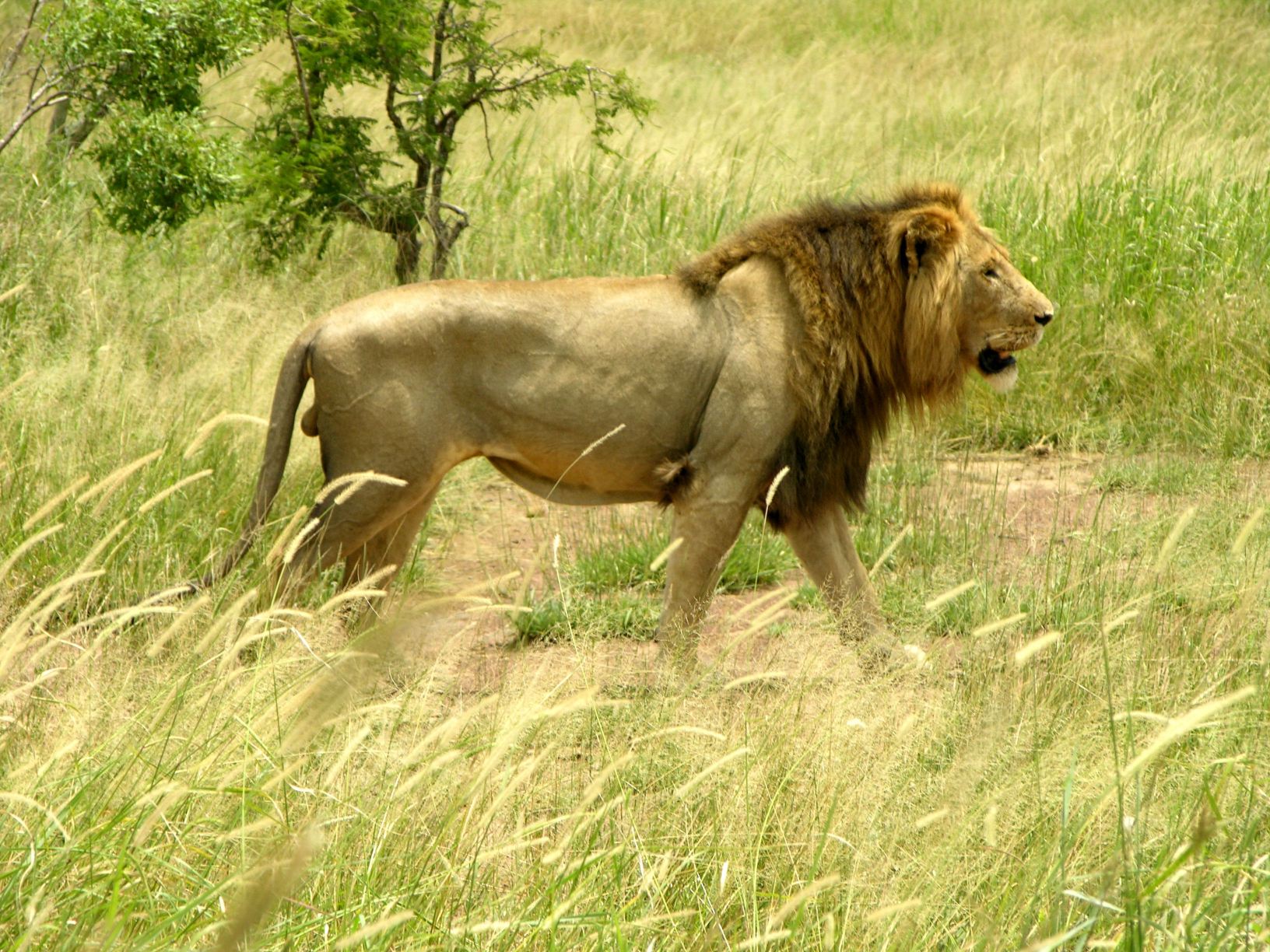
This monster came out onto the track behind us, lowered its head and started to paw the ground furiously. Oh, how to get a photo of that? He was behind the car, where you couldn't lean out through the window to see him properly. Tanya had pressed herself into the seat in terror. I told her to film him, but she'd taken the tape out and couldn't get it back in. In the end, with her hands shaking, she broke the camera. We must have stood there for a minute, squared up to each other. When the rhino saw we weren't moving he decided to go away in peace, into the bushes to nibble the grass.
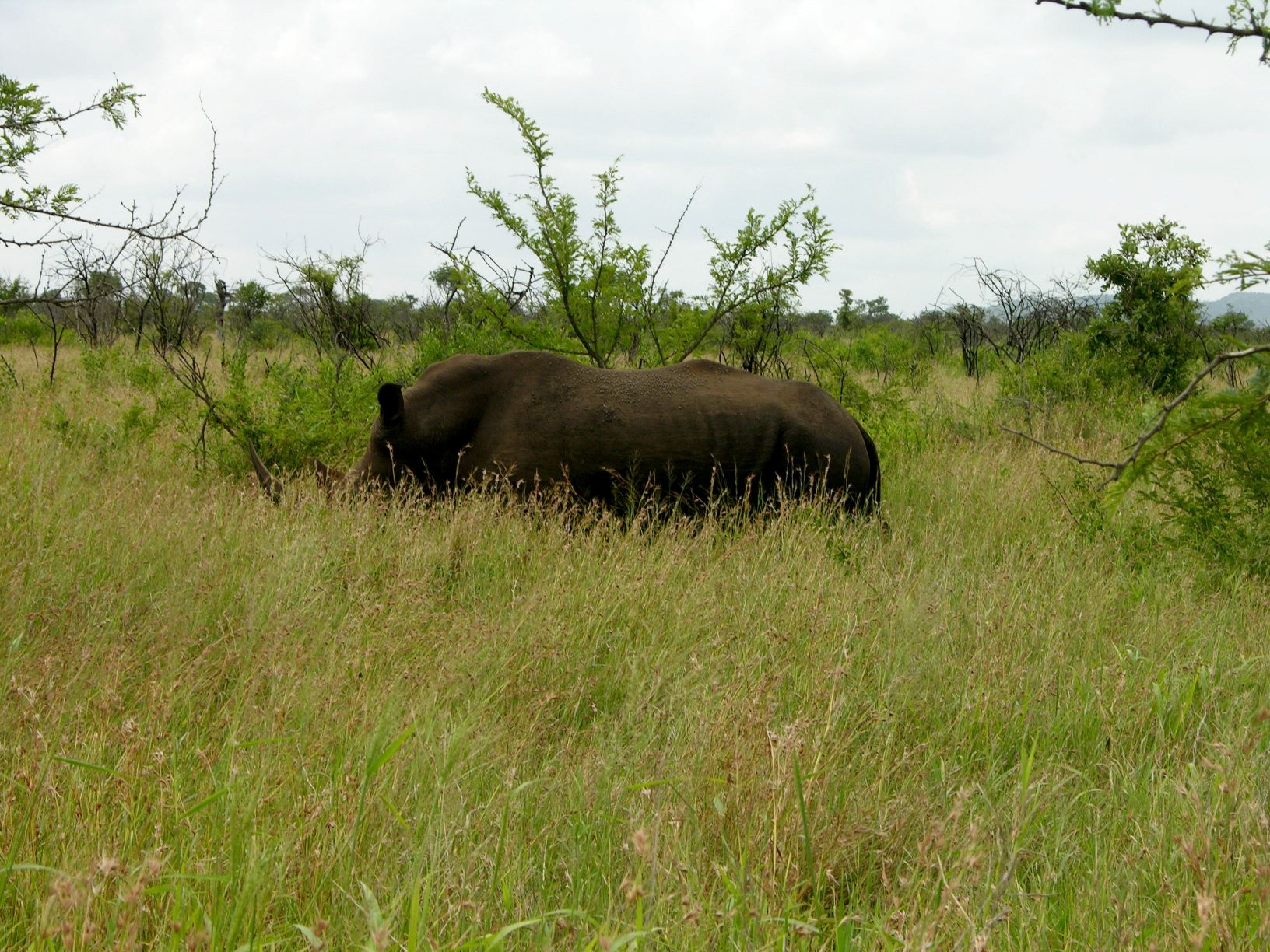
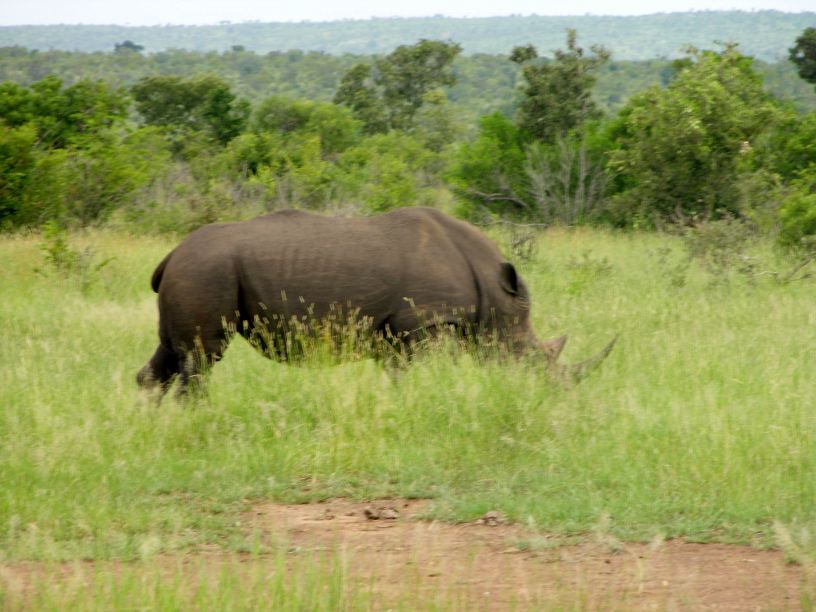
Well, that was luck. It had been worth our third day driving about the savannah from dawn to dusk.
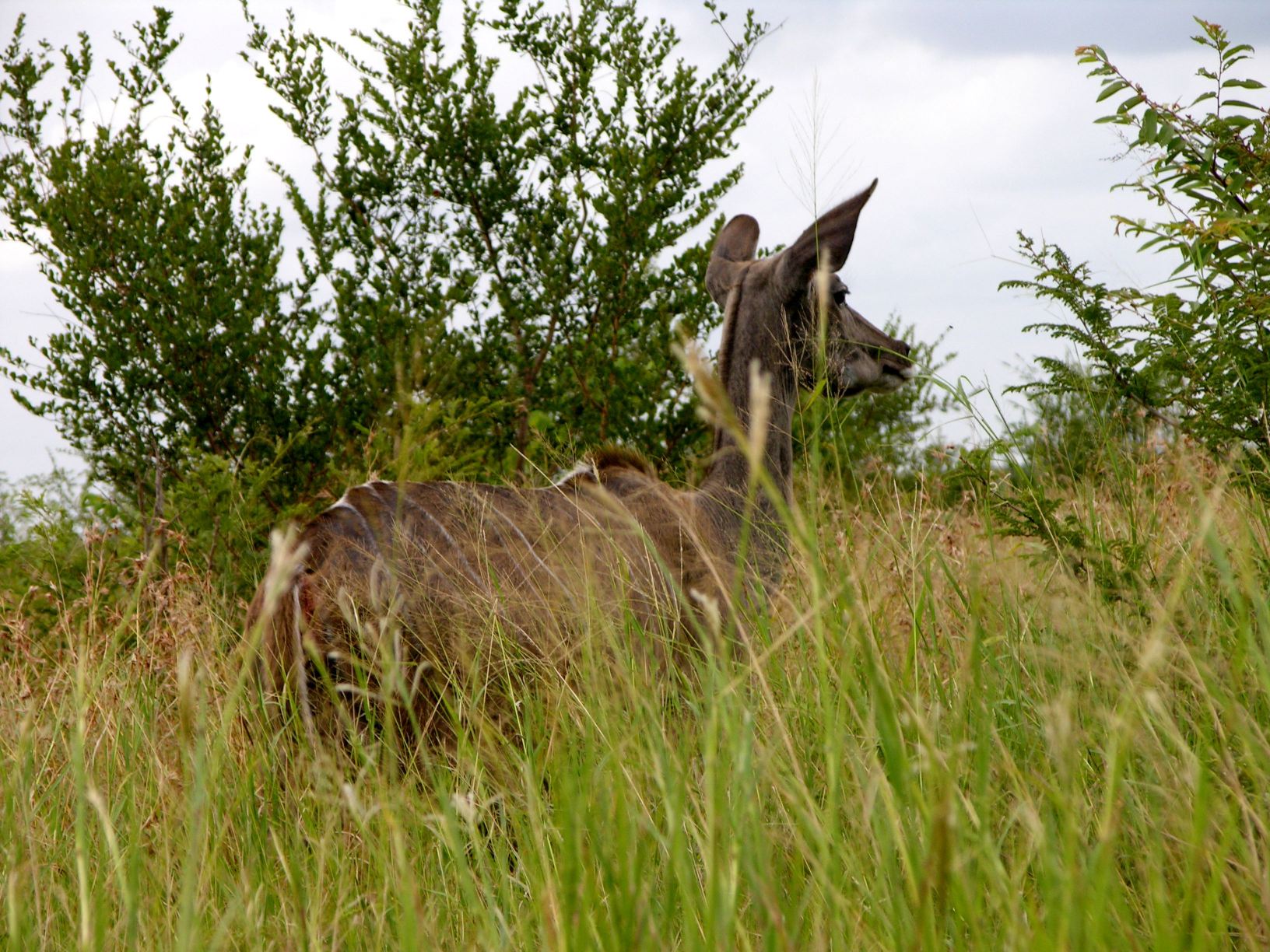
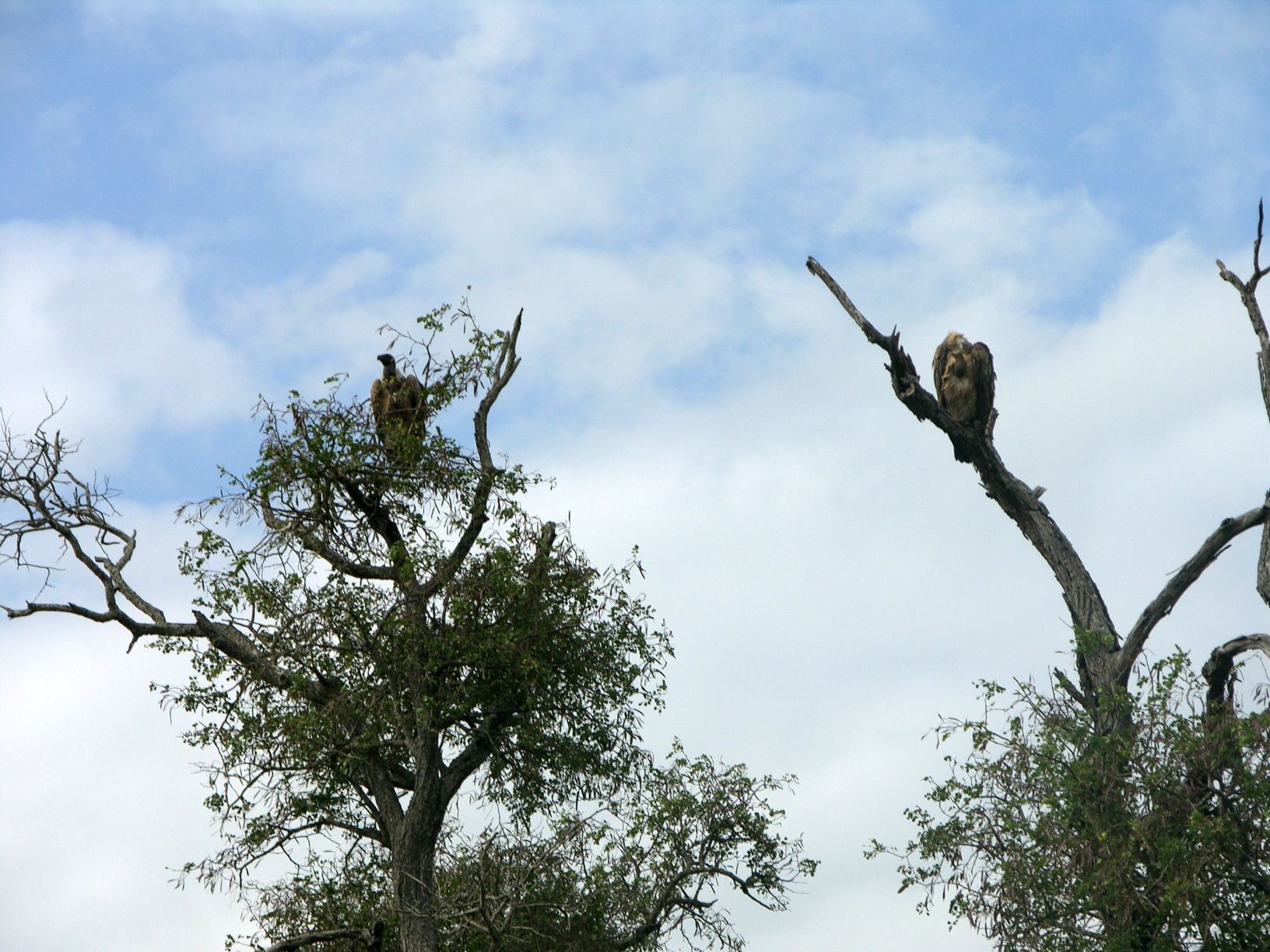
The hippos were the only big animals we hadn't had a good look at. All of them grazed quite a way from the roads and parking areas. It was a frightening prospect going into the river with them, so we'd looked from afar. But I did want to see one. All right, nobody else about, it seemed. I mean guides or any other self-appointed wardens. The hippos themselves seemed to be there. I got out of the car and took a path down to the river. We met at once. From a few metres away came a fearsome roar. An enormous mouth opened and went thundering into the water. I went back to the car at much the same speed.
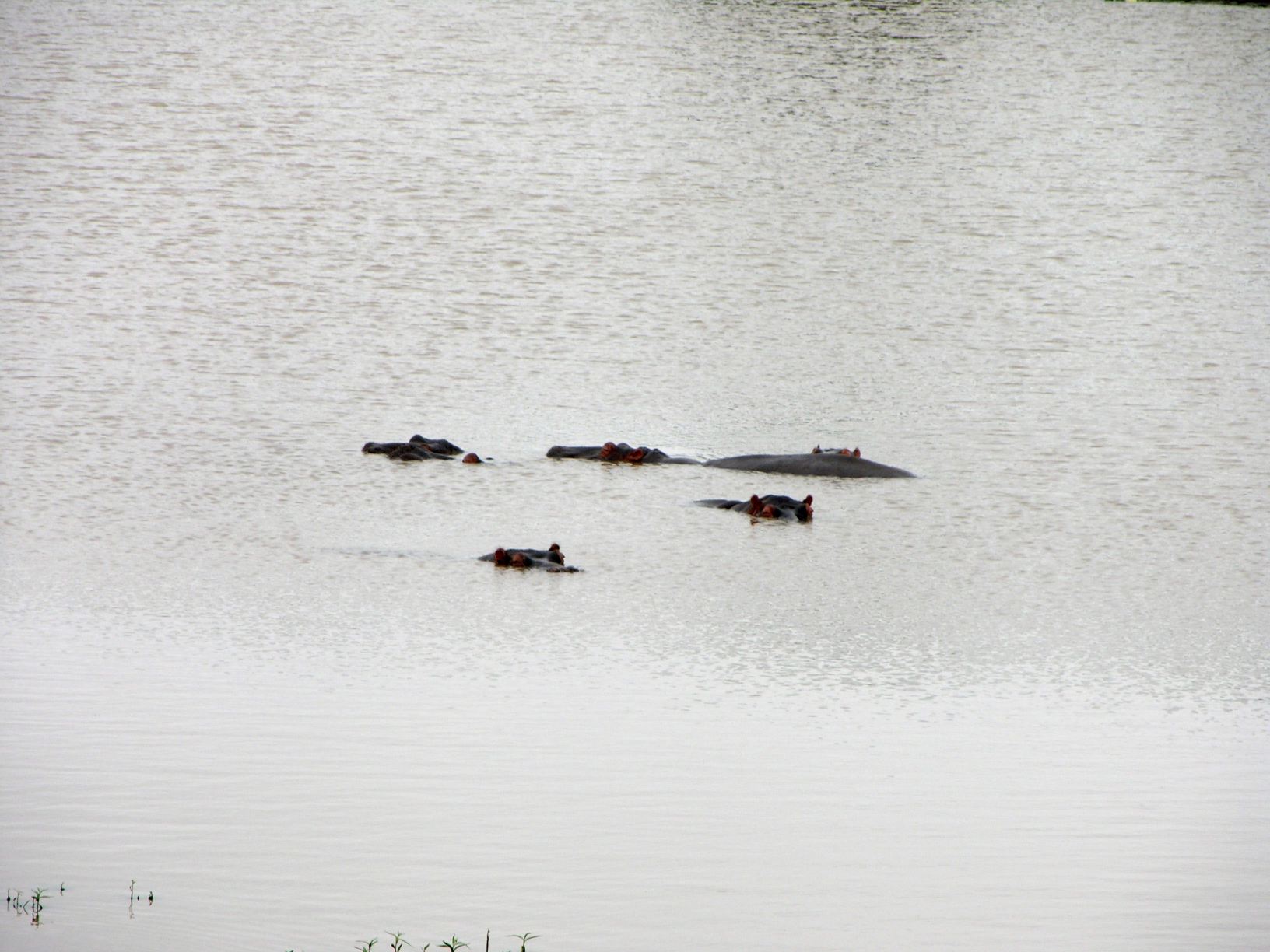
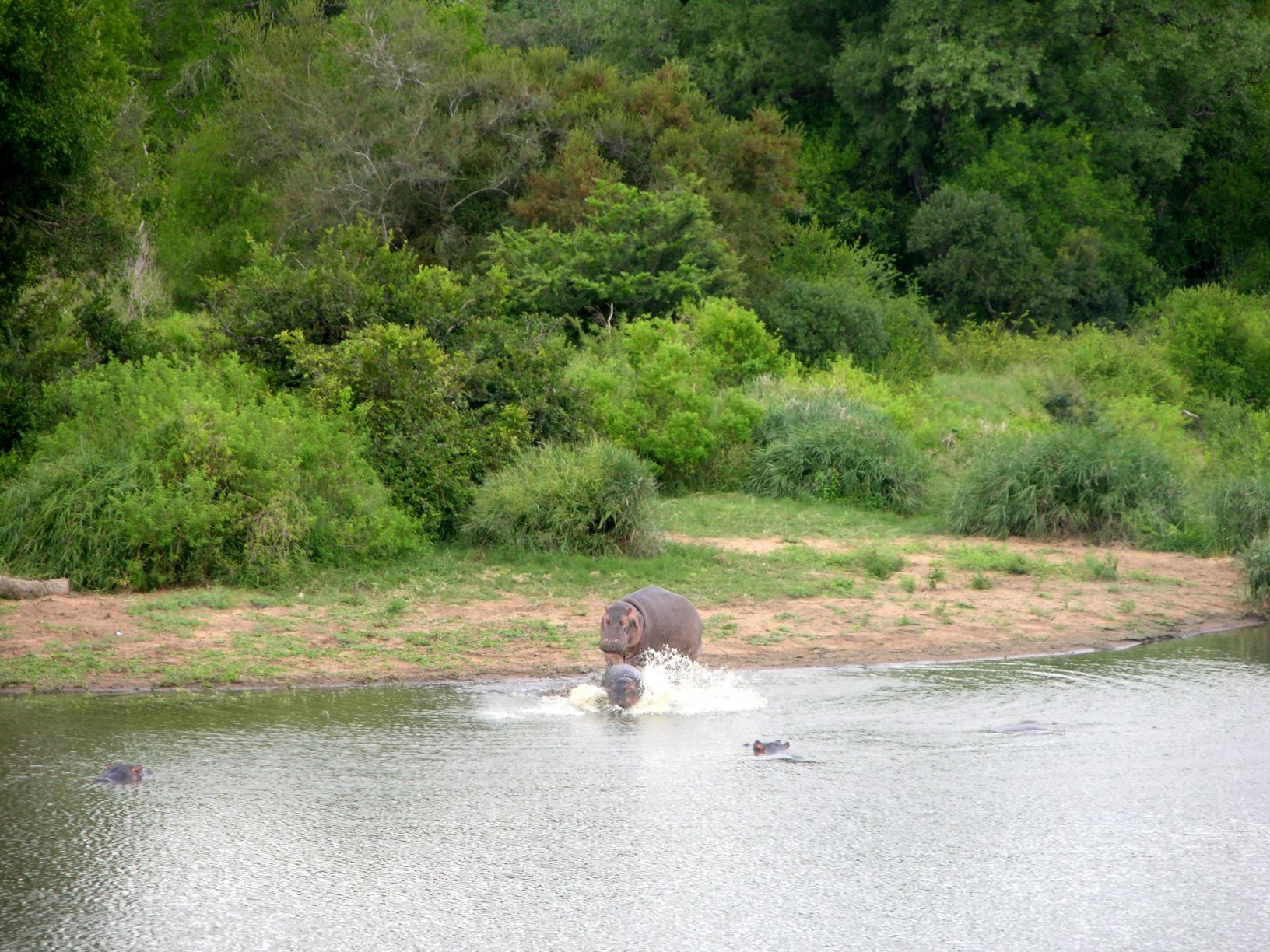
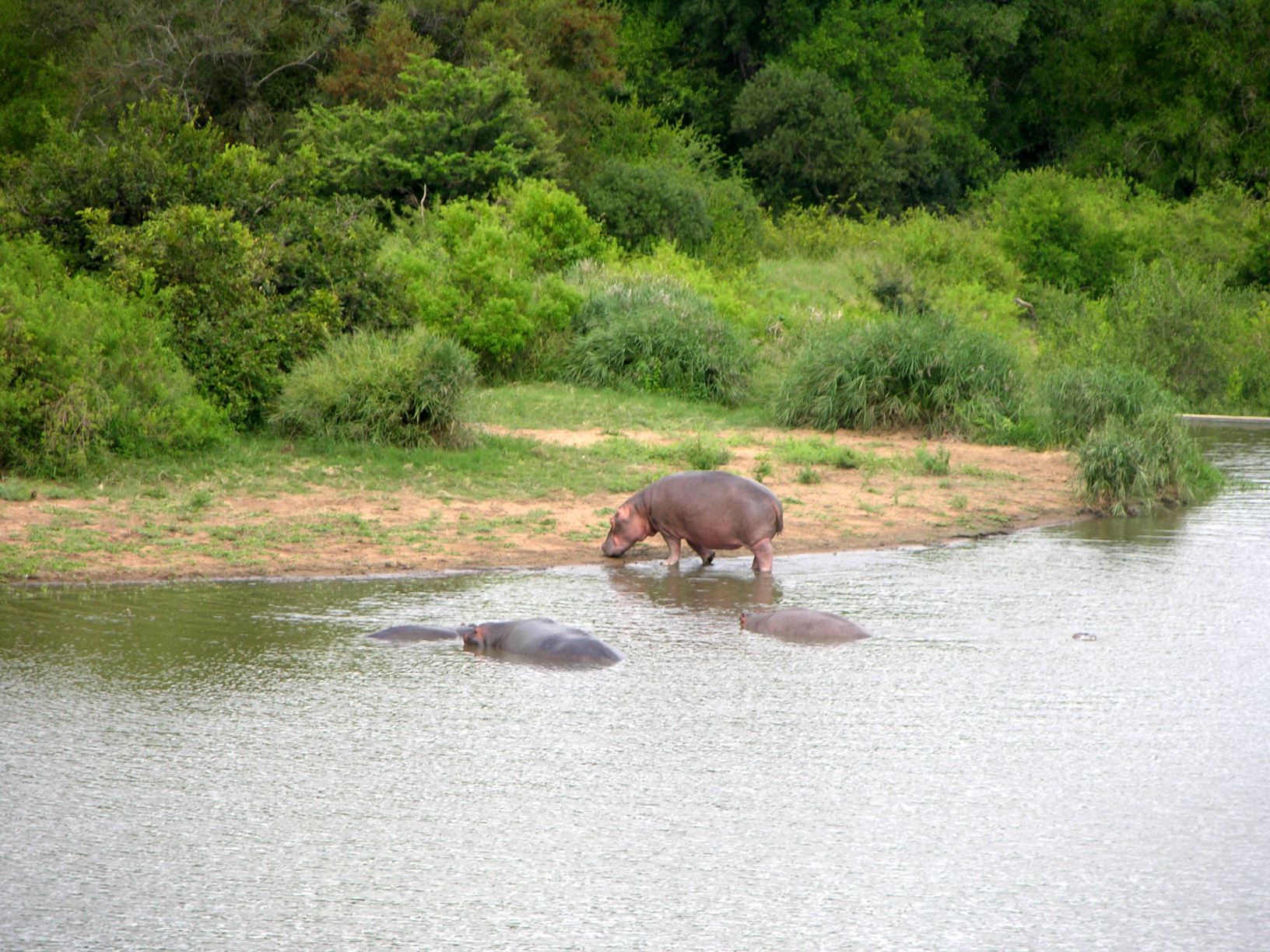
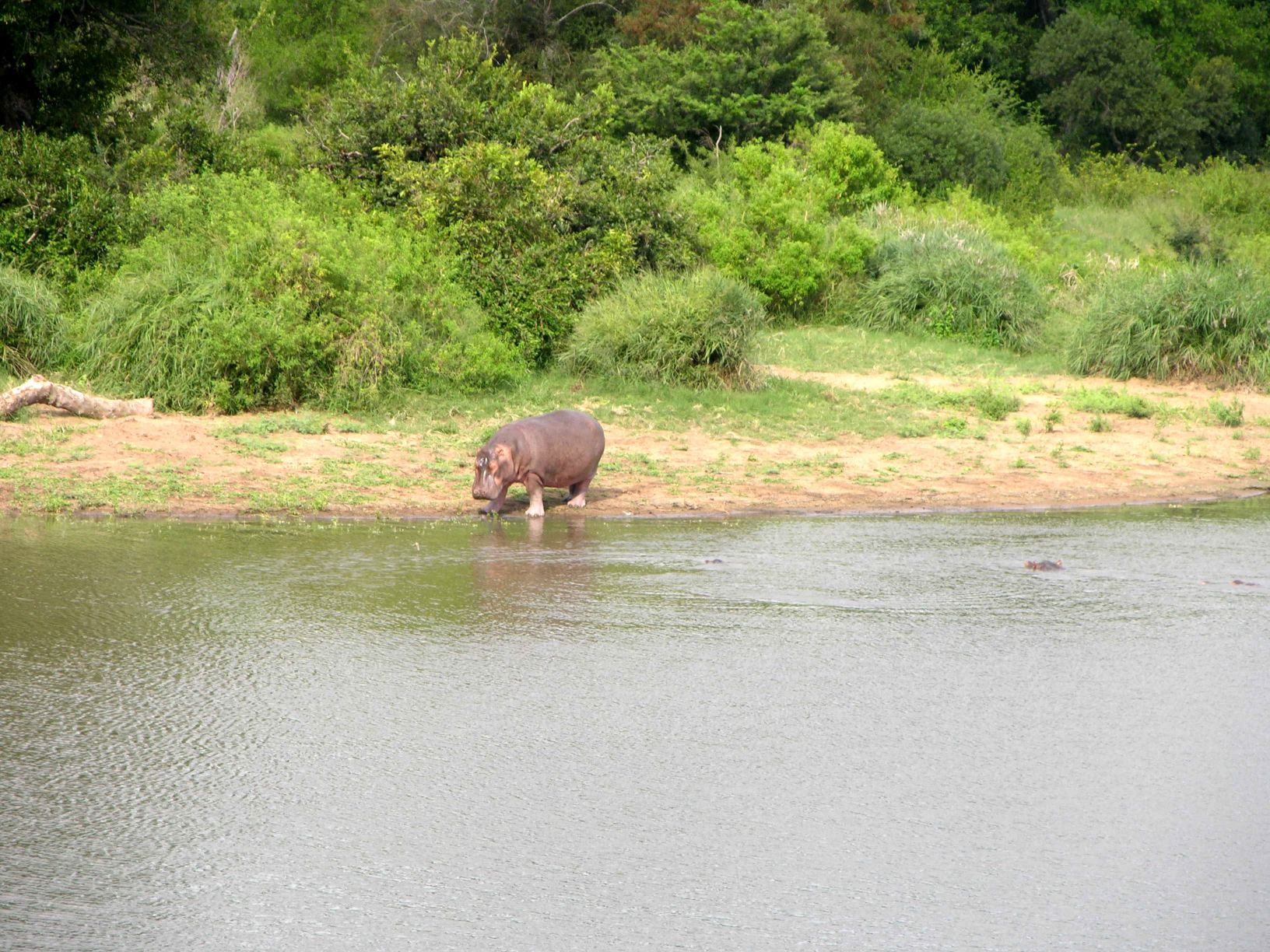
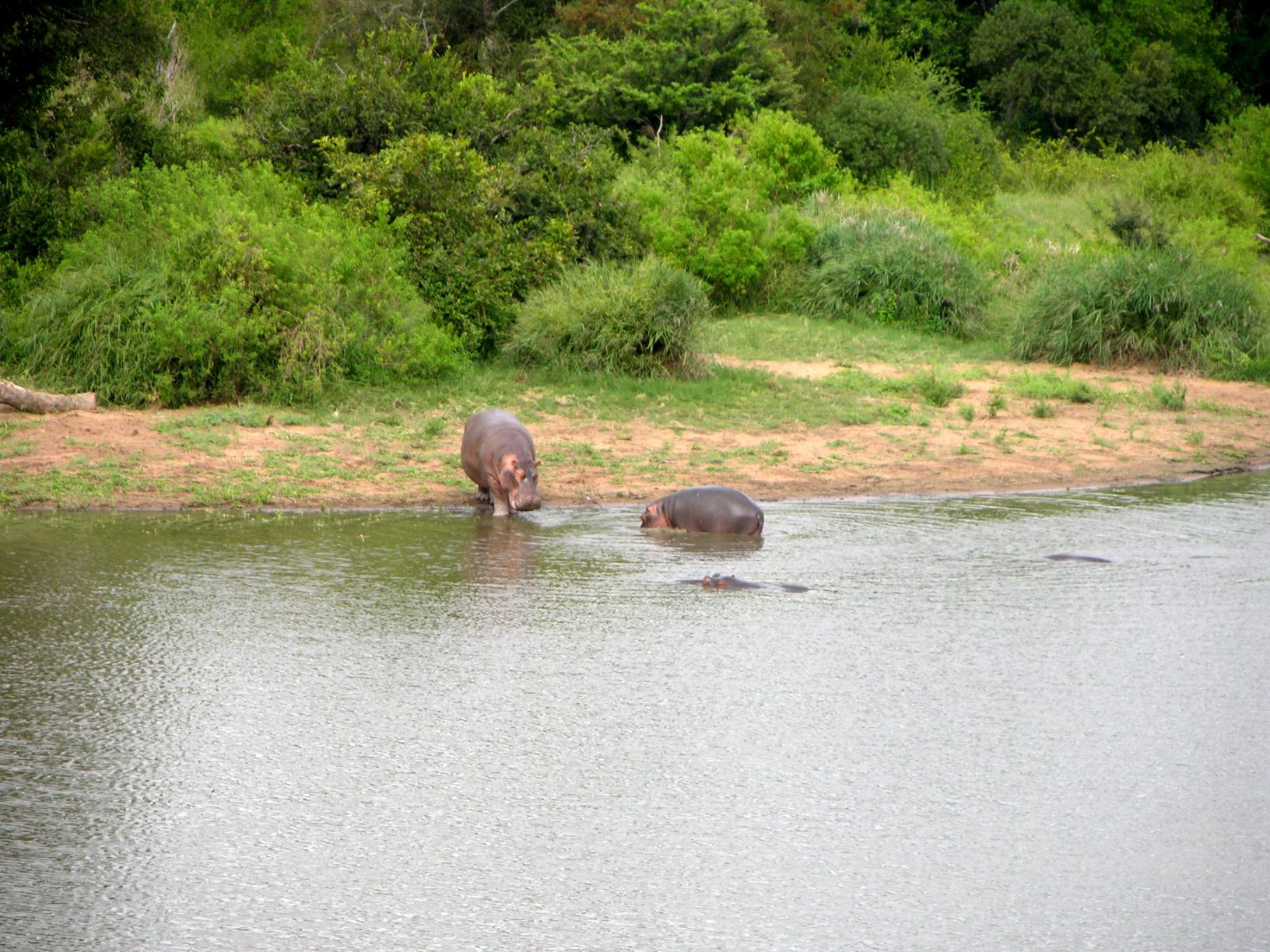
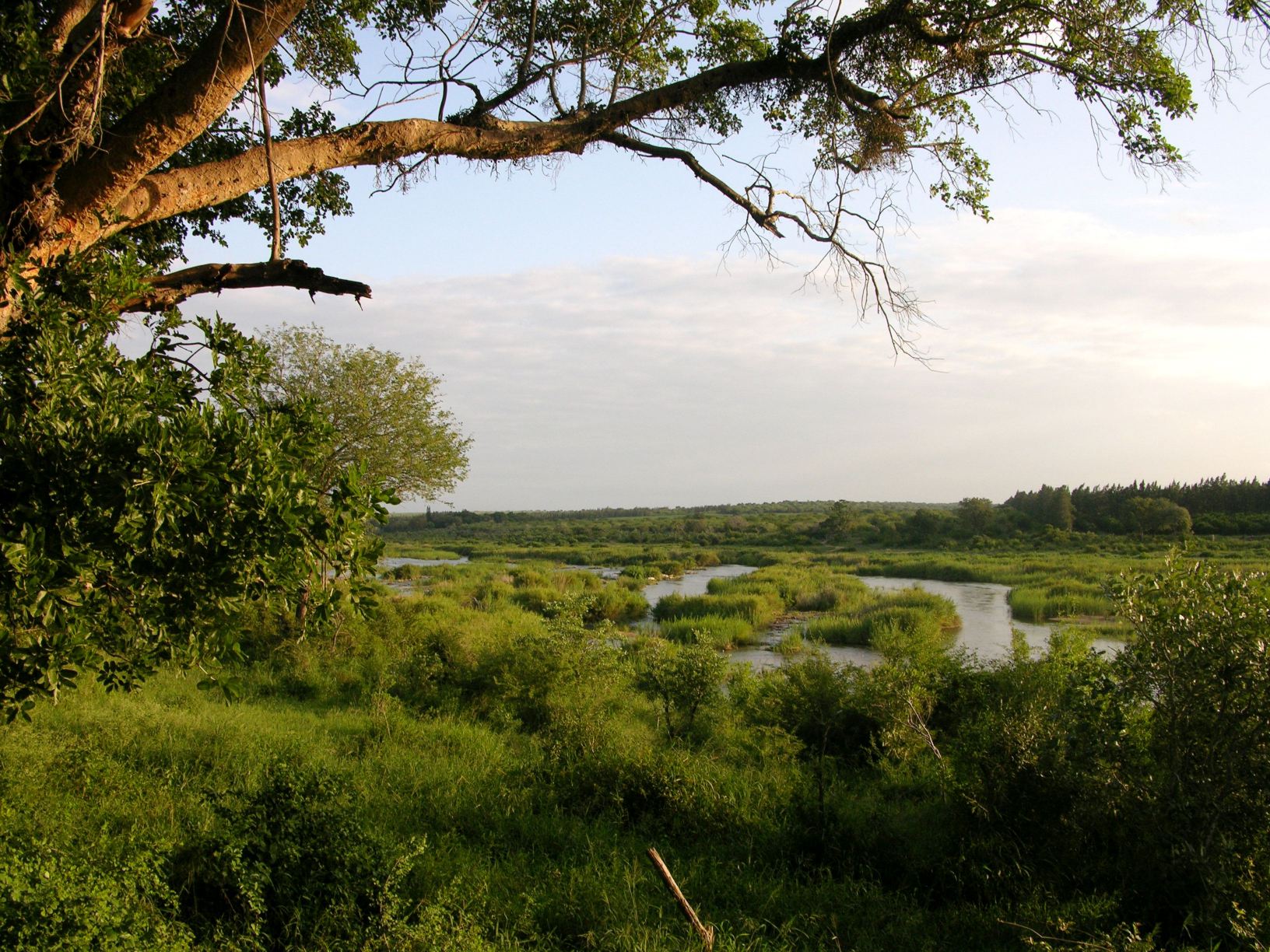
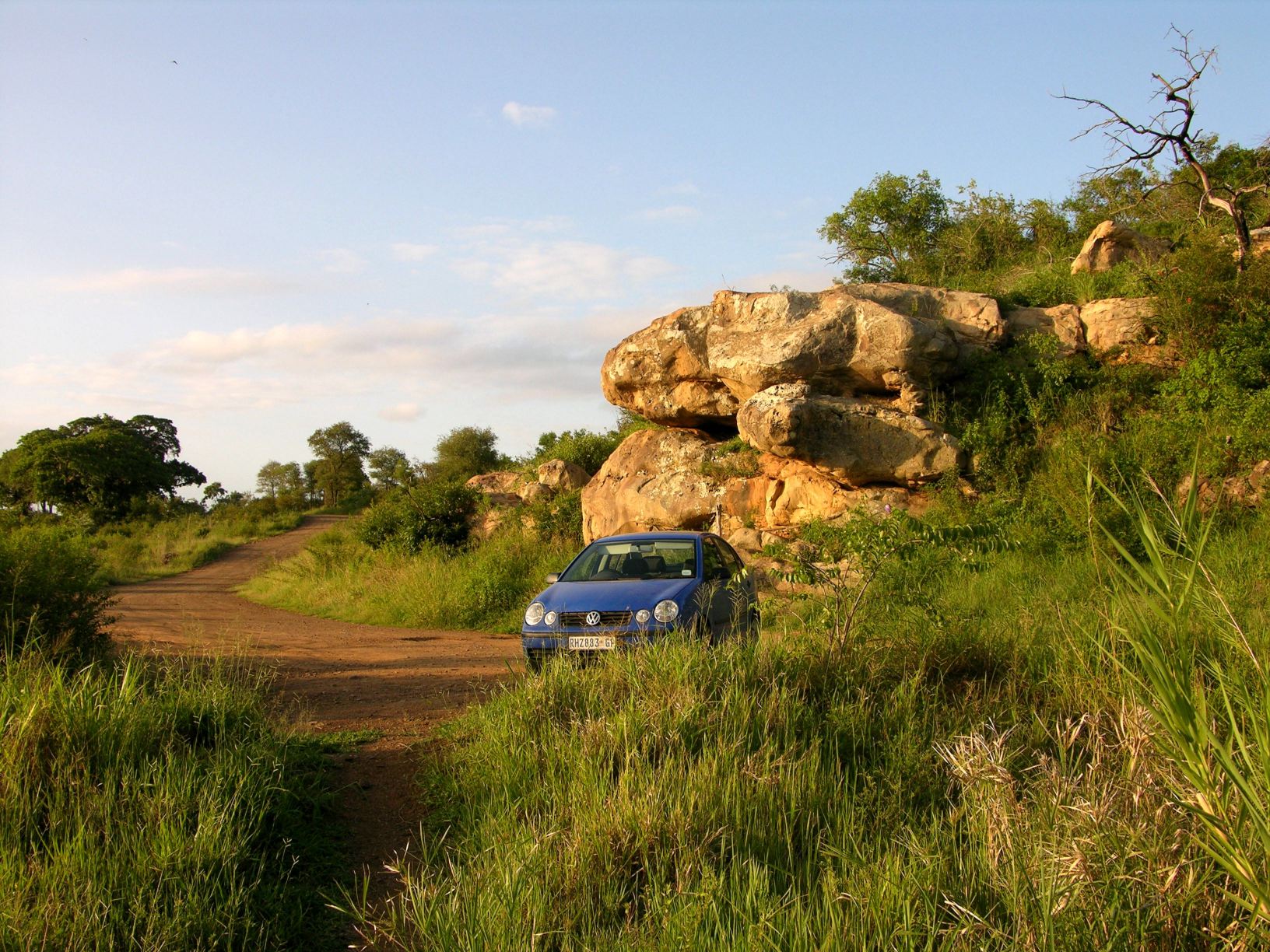
A little later we came across a group of white rhinos, unfortunately a hundred metres away this time and against the sun.
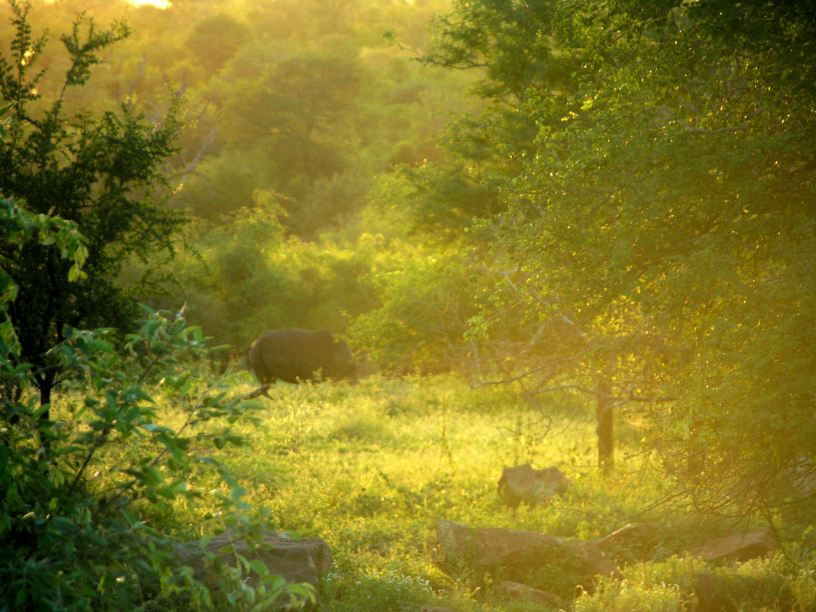
There, now we could live in peace. We'd seen the main animals. Mind you, I could easily have spent another week mooching about here. But however long you make your holiday, it ends all the same. Tomorrow was also the last day of our visas.
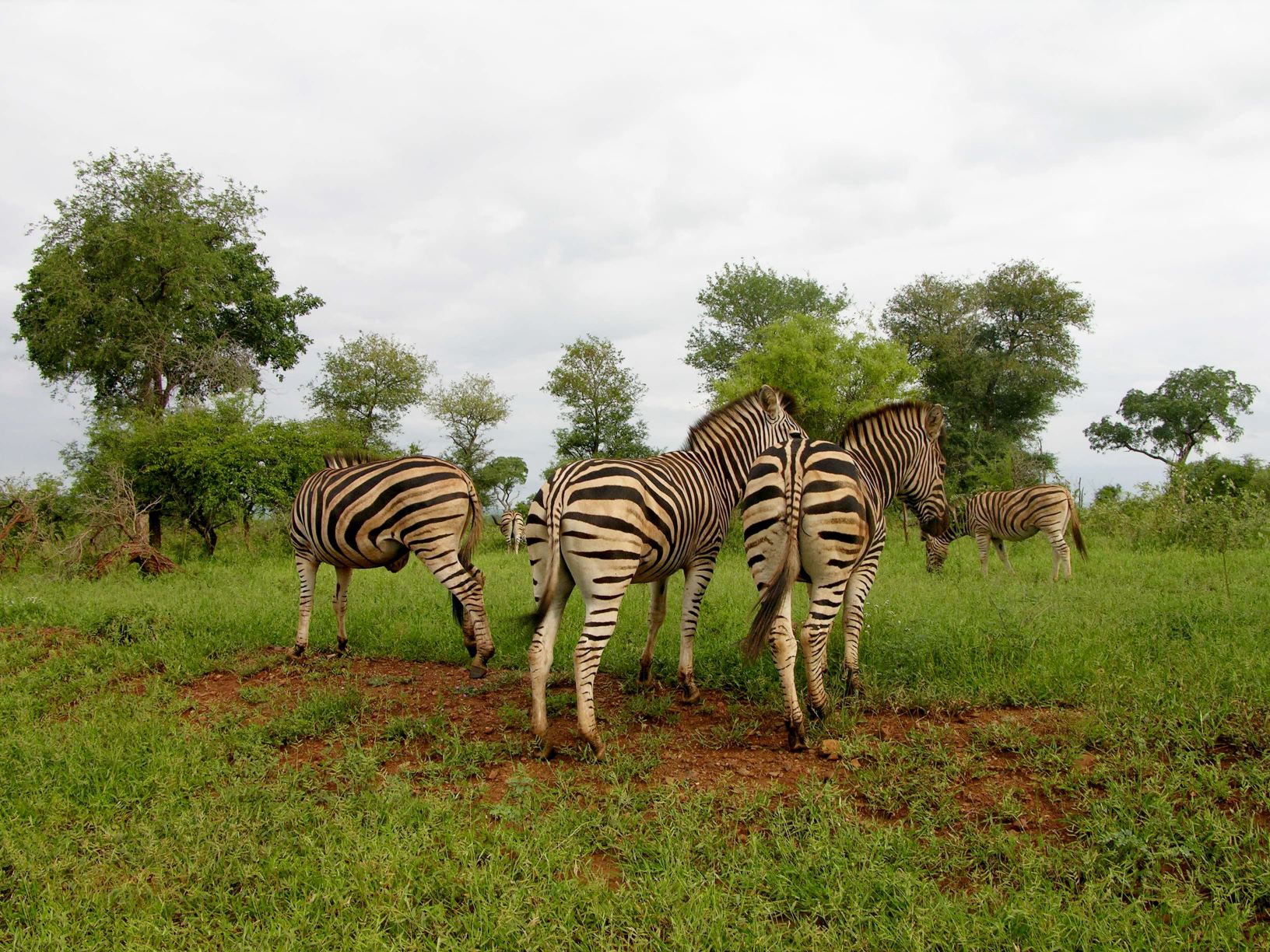
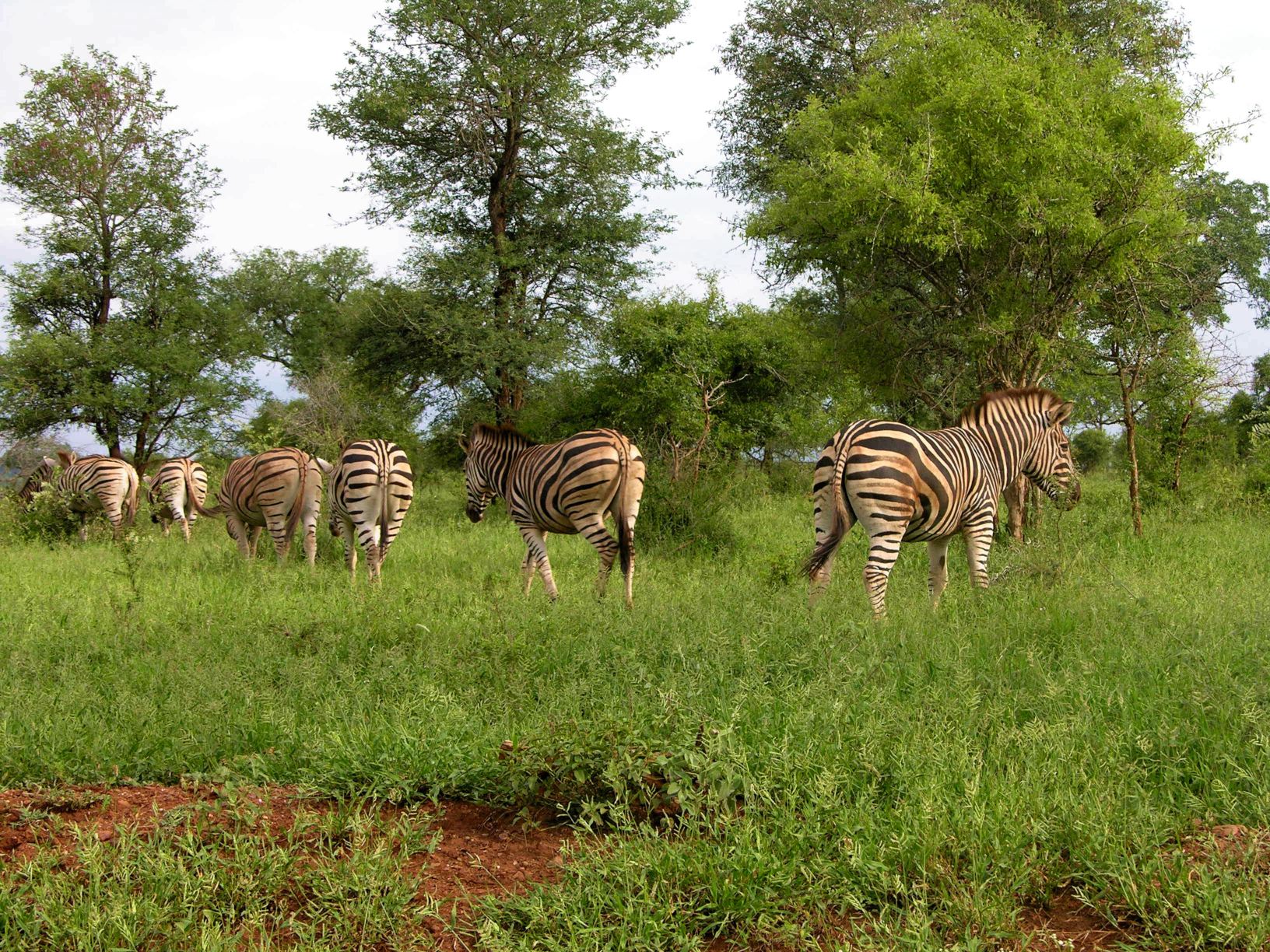
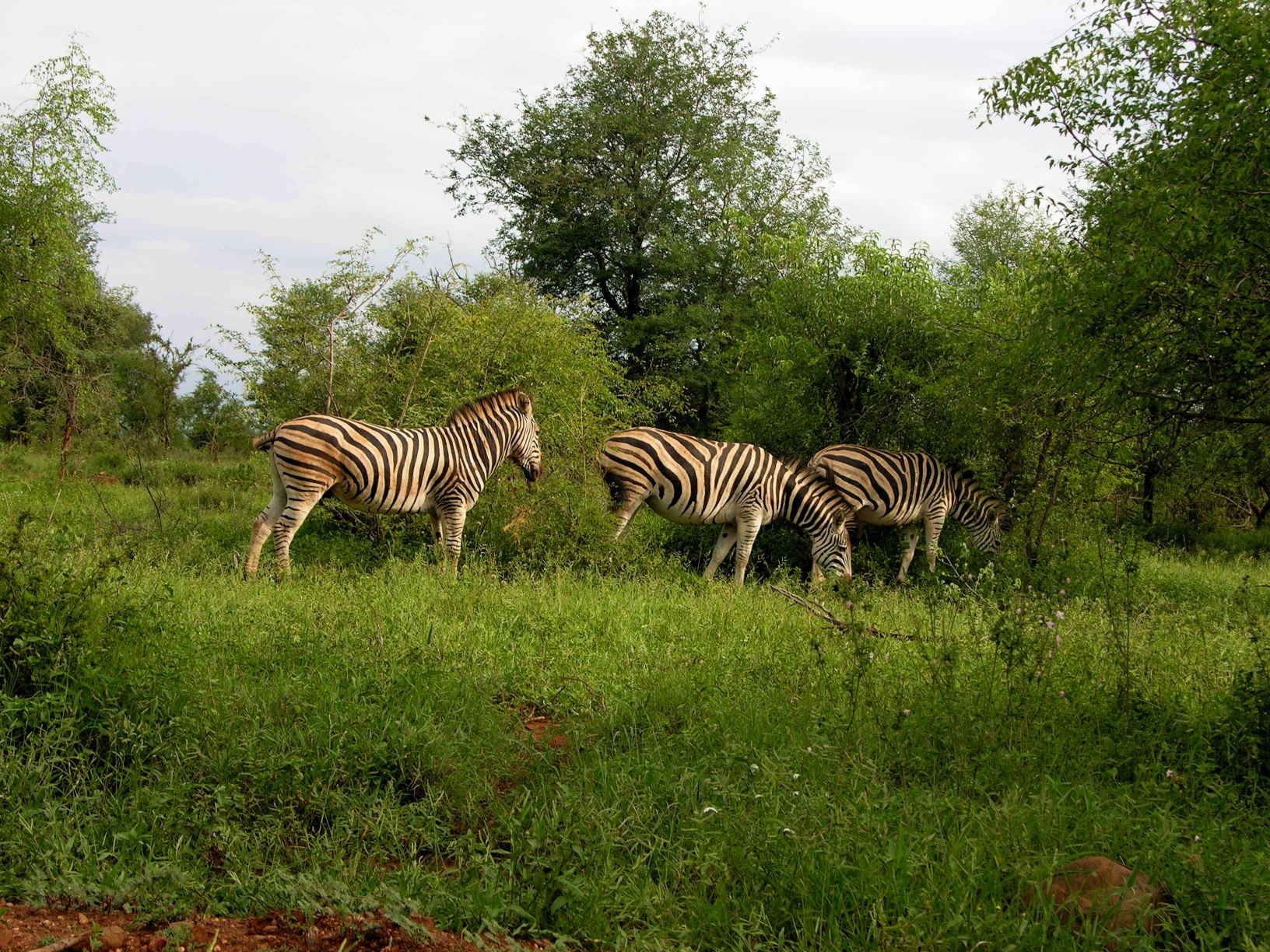
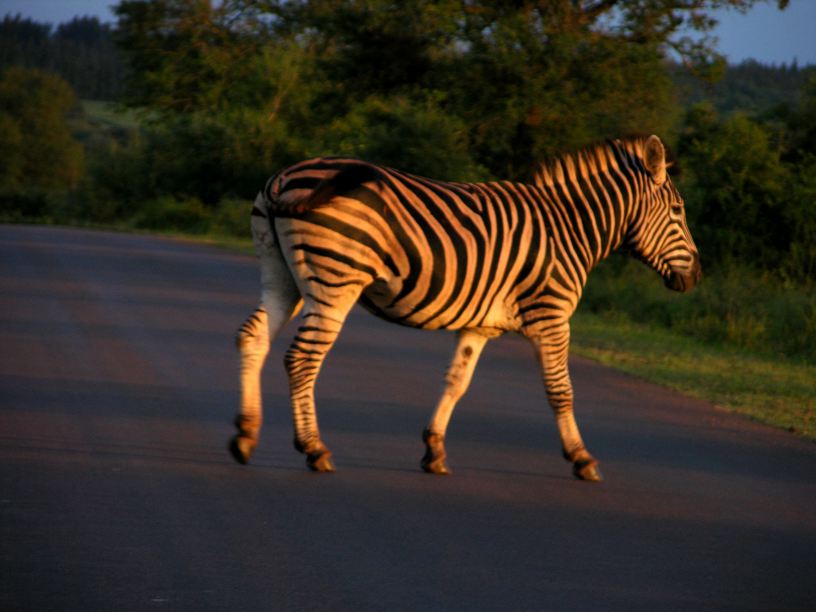
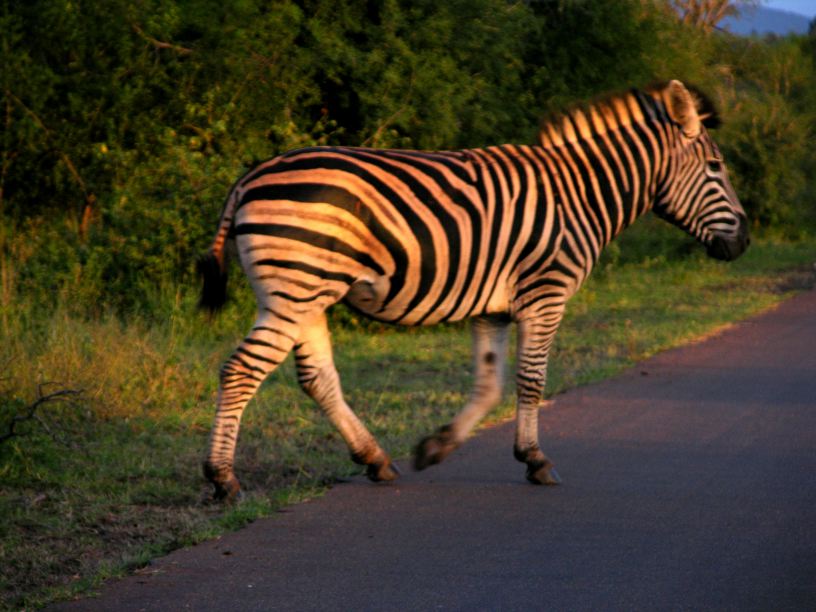
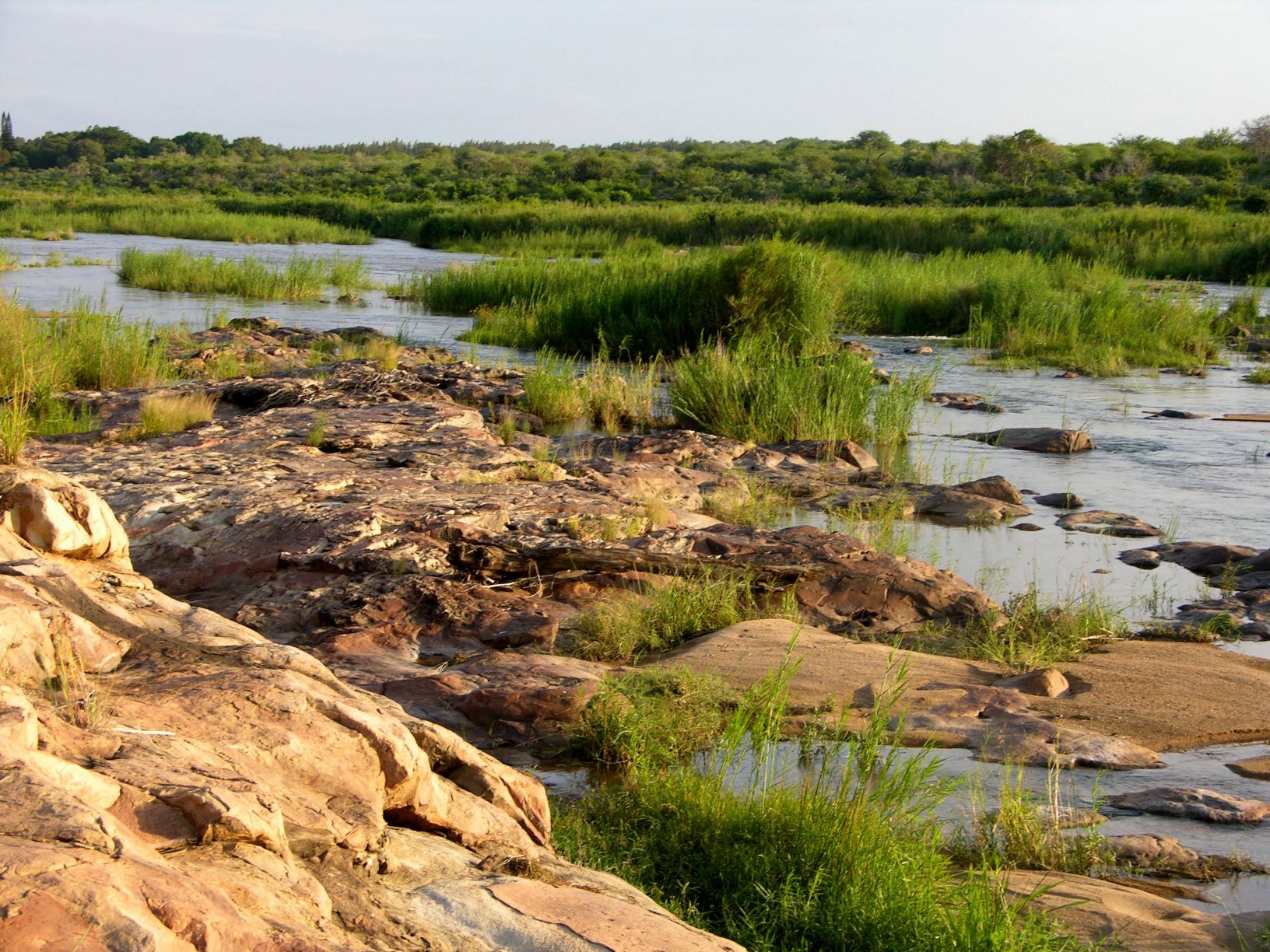
At a waterhole you can't help wanting to stay the night. Put the car in the bushes and wait for dark. The trouble is there isn't much vegetation and it's hard to hide properly, as so many people drive around the park. The moment anything looks wrong, everybody wants to help and explain that it's dangerous here without a car. In the end our car genuinely did break down. The cooling system stopped working at low speed. Evidently nobody had tested a little city Volkswagen at five kilometres an hour on sand in forty-degree heat for ten hours on end. Now the engine boiled over, and we had to wait for it to cool down. The moment I opened the bonnet, the helpers appeared in droves. They all offered to call a breakdown truck or tow us out. It doesn't seem easy to spend the night here with a car without being noticed. We spent our last night at Crocodile Bridge Camp (25°21.518′S, 31°53.634′E).
In the morning we left the park over the bridge of the same name. At the exit the guards looked carefully in the boot to see if we were taking out any animals we'd shot. I took that as a good sign. If they're catching poachers as they come out, it must be hard for them to keep track of them inside the park. Next time, if there is a next time, we might risk not coming back to camp for the night.
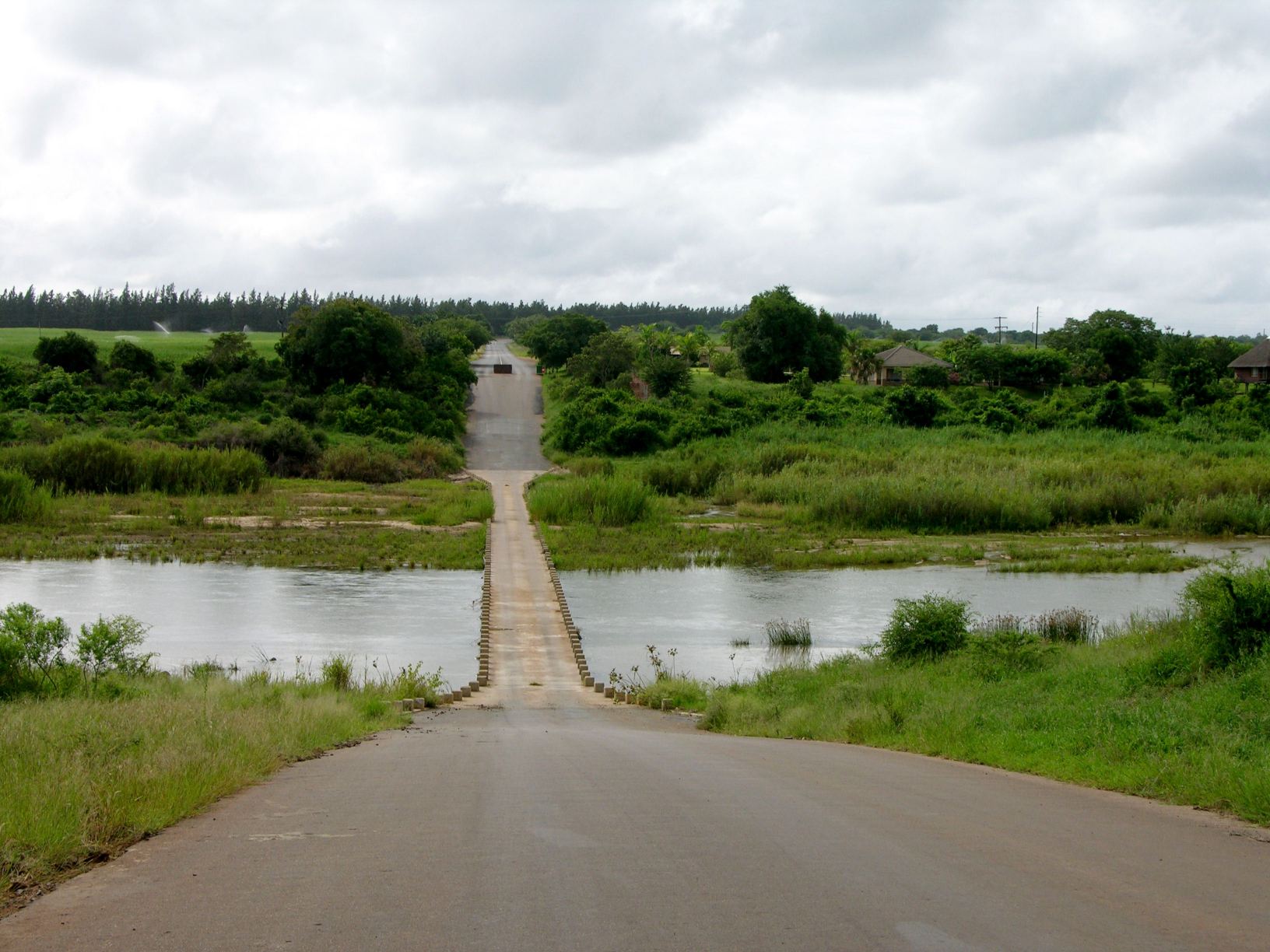
The country is wild here. The park was over, but the hippos were still about, lying in streams right by the road. There were even signs for them on the highway to Mozambique. Imagine a hippo standing just beyond the bend. Hitting one would be worse than hitting a moose.
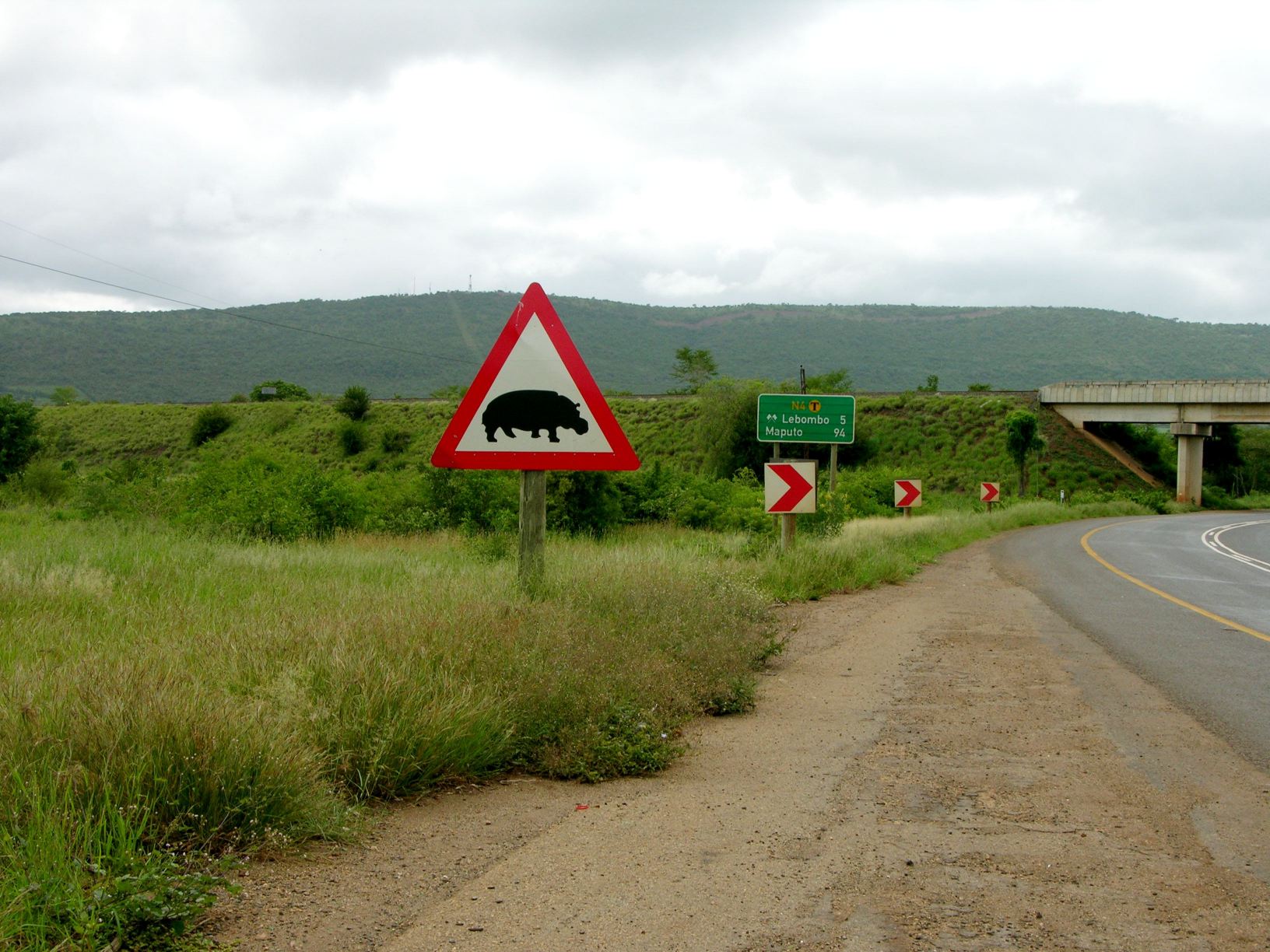
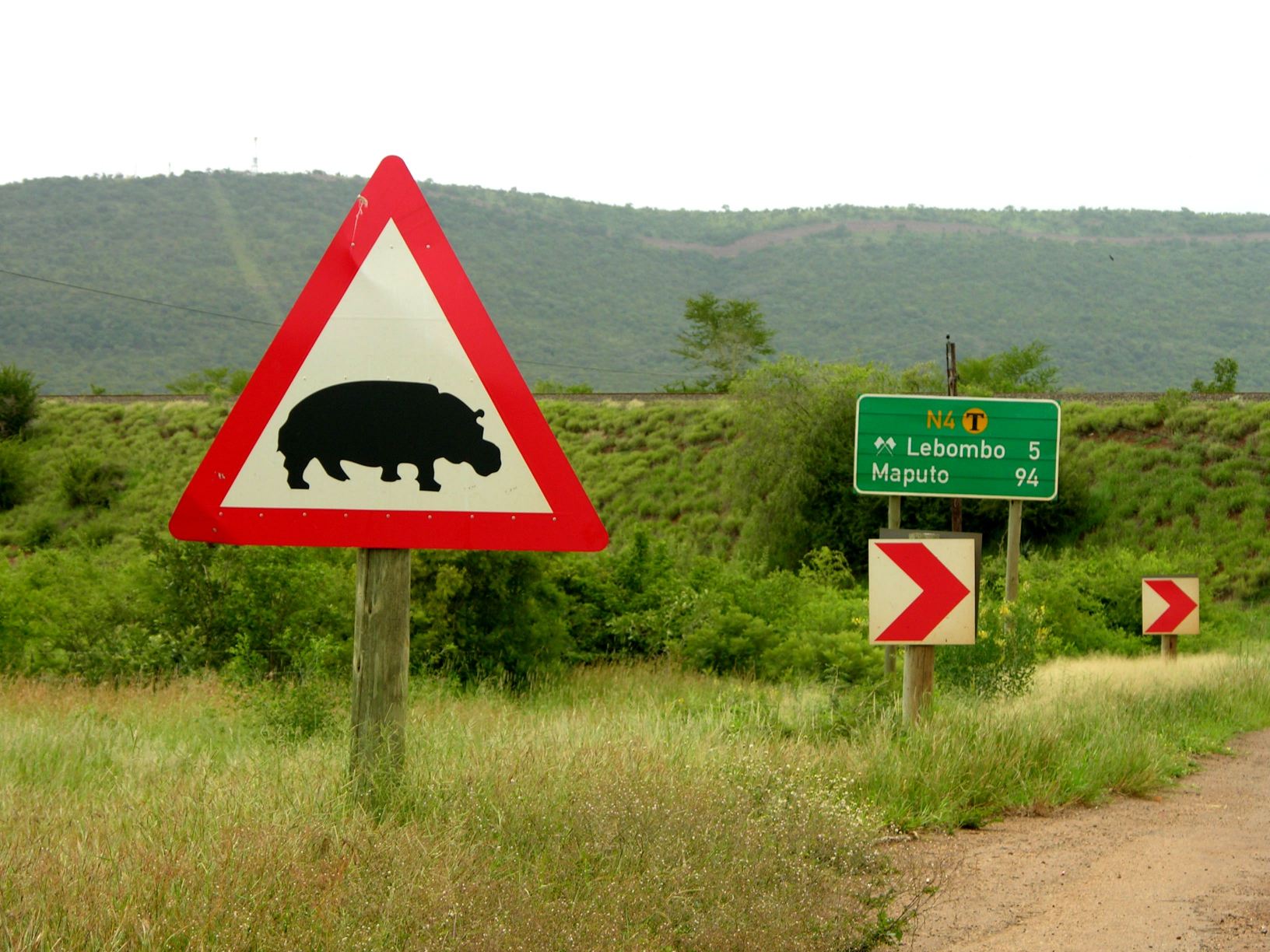
On the way to the border we saw the memorial built on the spot where President Samora Machel's plane went down in 1986. It flew into the mountain there, through pilot error according to one account. It was a Soviet Tu-134 with a Soviet crew. The Soviet report, naturally, insisted that the South African security services arranged the disaster by setting up a false radio beacon that overwhelmed the genuine one at Maputo airport. I found that hard to believe. If history tells us anything, it's that the KGB always lies. The South Africans naturally denied it and, as far as I could see, had nothing to gain from the accident. A living demonstration of what follows the establishment of a pro-Soviet regime would be far more useful than the regime's collapse and the inevitable job of rescuing a starving country.
That's the last thing we saw of South Africa. We left it at the Mananga border crossing.
Leaving aside the problems of getting a visa, the country was well suited to independent travel and felt quite safe. National parks gave you a great deal of freedom, especially if you let yourself break the rules once in a while. The main thing was that nobody foisted a guide on you, as they do everywhere in the rest of Africa. South Africa is a country to get about in by car. It isn't huge and you can easily cross it in any direction in two days. You're expected to have a car, and the infrastructure is all built for drivers. Without one, everything takes a long time.