Lesotho
Chapter 2. Lesotho, the kingdom of horses
We bought tickets to Maseru, the capital of Lesotho, at Johannesburg airport. We could have done it in Russia, but we didn't know until the last minute whether we'd get the visas. If we hadn't, we'd have flown to Bloemfontein, picked up a car and gone overland. As we later discovered, that's what we should have done anyway. But we had tickets, so we took the South African Airways flight. One hour in the air, 400 kilometres. It was a tiny thirty-seater turboprop, called an AirJet 30, so low that even Tanya couldn't stand upright in the aisle.
We had to fly over the Drakensberg, where at this time of year it's always thundering. Lesotho has some of the fiercest thunderstorms in the world. They pose a real danger to the locals. I read that one rural resident in a hundred is killed by lightning. The day we flew was no exception. Our little plane had to pick its way through lightning and thunderclouds before lining up with the single runway at the country's only airport. There probably wasn't another flat spot in the whole kingdom large enough for one.
We were the only white people on the plane. Everyone else was either local or a Chinese trader. The traders were more or less locals too, only their papers weren't in order. At passport control they got a long telling-off for overstaying their visas and were told they owed a fine. They didn't pay, but were let in all the same. We'd heard you could get a visa on arrival. The woman at the desk assured us you couldn't.
Five members of staff met the thirty passengers. A border guard, a customs officer, the man who kept the key to the terminal door, and two people representing rival car rental firms.
One was Avis and the other a local outfit. Only Avis had a four-wheel drive. Their prices were eye-watering, and there was no unlimited mileage rate. Every extra kilometre cost 5.5 rand. The 500 rand a day only got you a hundred kilometres. In South Africa it was much cheaper, and there's no problem driving a rented car across the border into Lesotho.
We had to take the Avis four-wheel drive. It wouldn't be ready till tomorrow, and today we needed to make our own way to the little village of Malealea, where we'd booked a bungalow to see in the New Year.
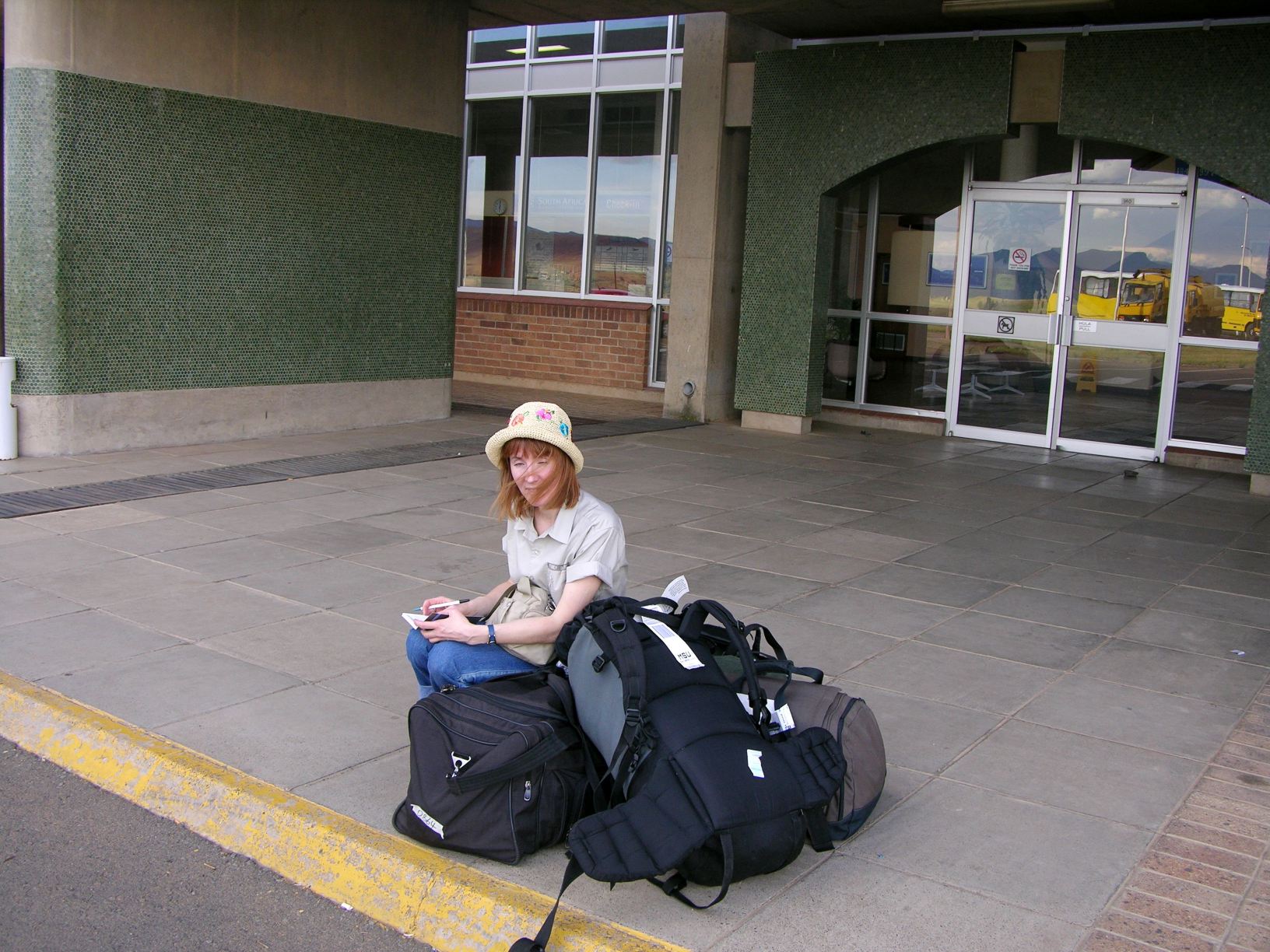
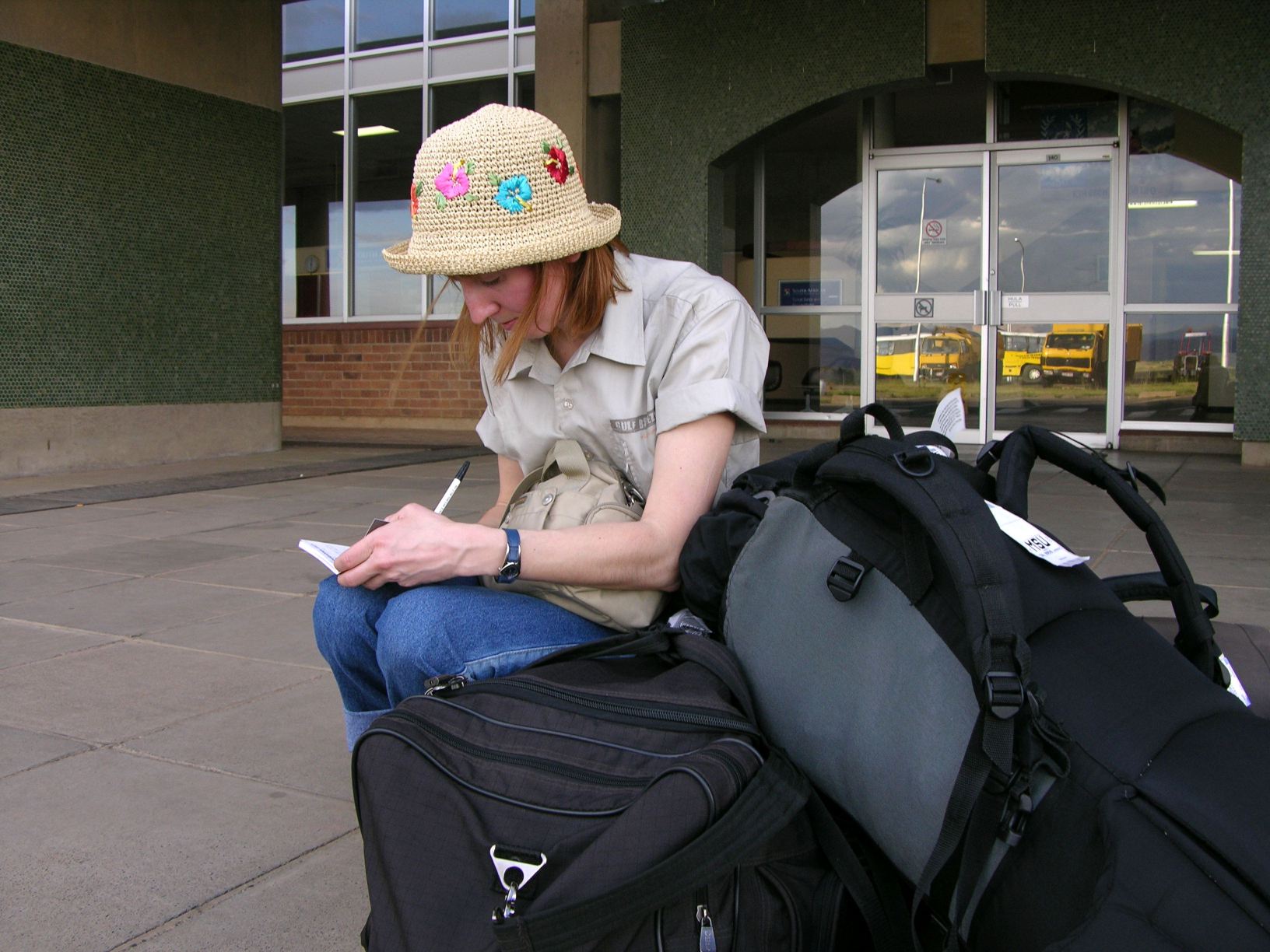
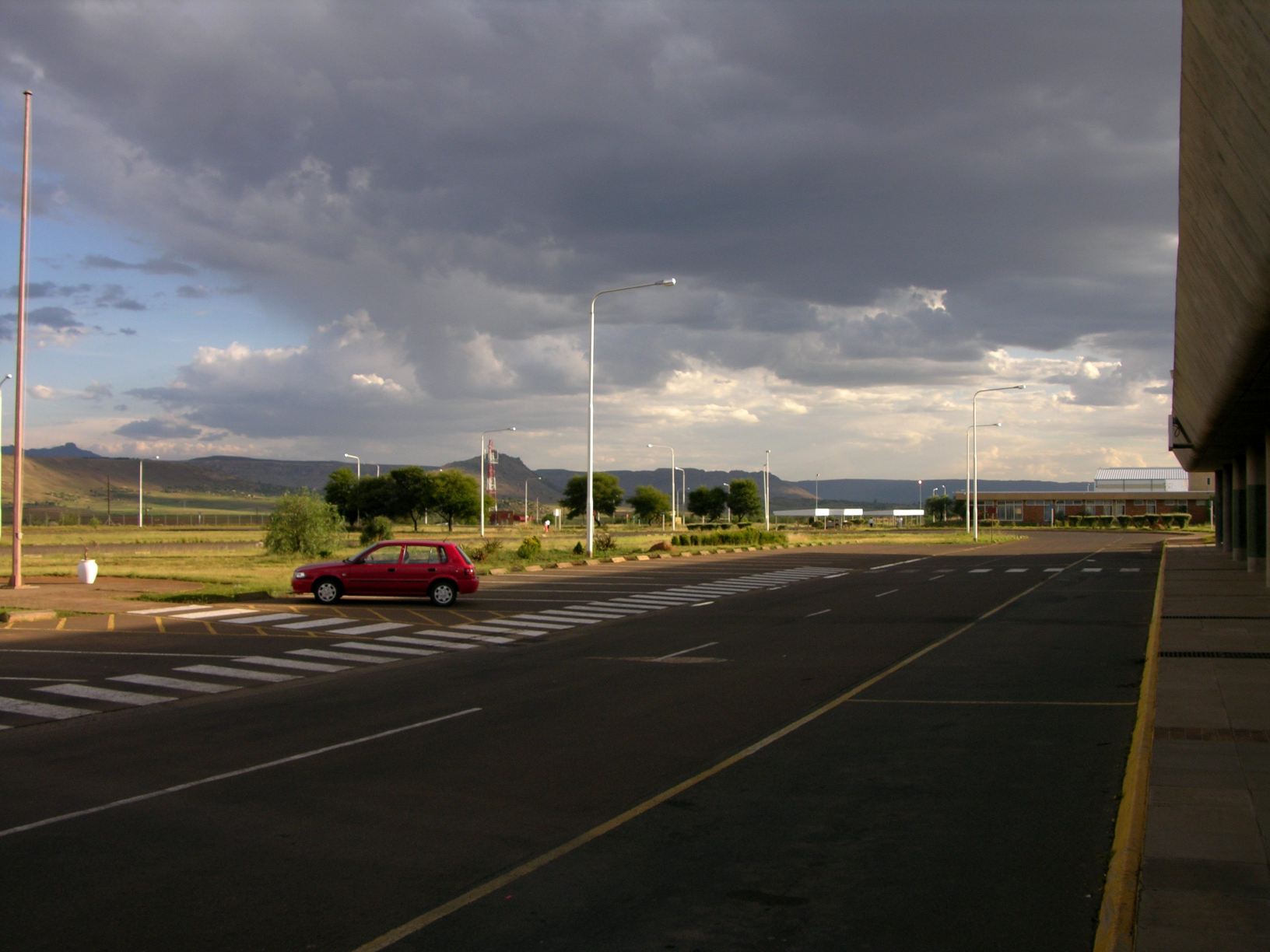
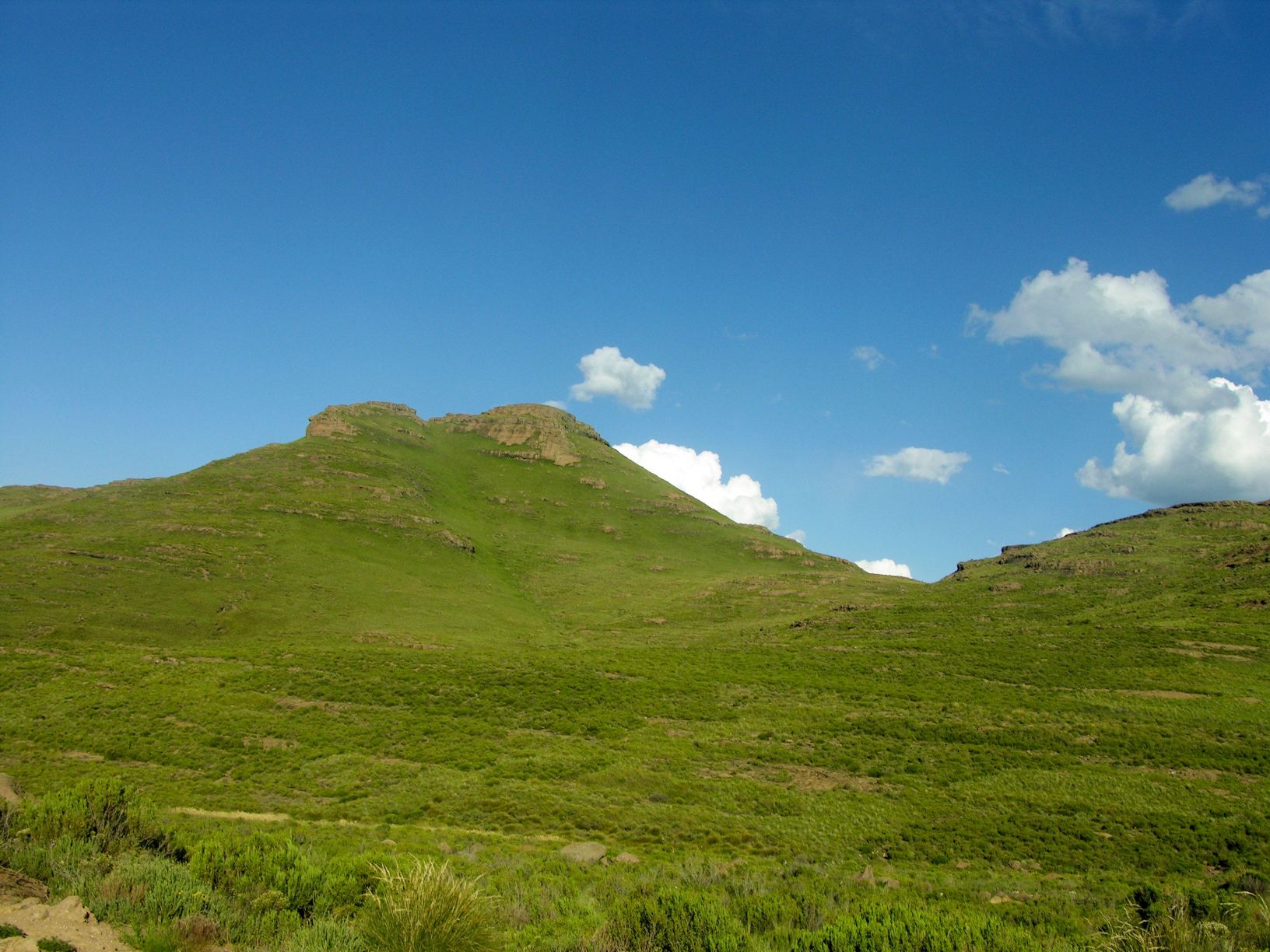
The Avis manager promised to give us a lift into town and asked us to wait. The man with the keys ushered us out of the airport. He'd long been impatient for us to finish bargaining with the rental men. So now we're sitting on our backpacks in front of a locked door. Everyone's left and we're on our own. This gives us a chance to look around. Mountain meadows on every side. A warm wind is swaying the odd tree. Mountain peaks in the distance. They see snow only in the very middle of winter, so it's not much of a place for ski resorts. The sky above us is a perfect mountain blue and the setting sun casts red rays over the whole world. Somewhere in the mountains a storm is still going. We liked it. We were glad we'd come.
Lesotho isn't all that small. It's about the size of Belgium. It's proud of having no racial segregation and no trouble between Black and white residents. Fair enough, though to give the full picture, there are hardly any white residents. There might be a hundred or so, I'd guess. Somebody has to bring in specialists. There are probably another hundred tourists drifting to and fro at any one time, and everyone else is Black. Most people are Basotho. Their language is Southern Sotho. English is the second official language and many people speak it well. They teach it properly at school, and all upper secondary classes are taught in English. Lesotho is in the Commonwealth, but its head of state is the local king and not the Queen of England. It's a constitutional monarchy, with no real powers for the king. The state uses the king's coat of arms, with a large Nile crocodile at the centre. Crocodiles simply cannot live in these mountains and never could have. Of course, people travelled and brought back tales of a fearsome beast. Why be surprised? Sweden has a lion in its arms.
Lesotho is surrounded on all sides by South Africa. There's no other country in the world like it, unless you count the tiny European states that hardly qualify as countries. It happened because white settlers didn't get this far in the early days of colonisation. Not because the Basotho killed them all and ate them for dinner, but because no farmer in his right mind would have gone to such mountains in the first place. For some reason people also took it for granted that there couldn't possibly be gold or diamonds there, so the prospectors passed this God-forsaken corner by. There was a war all the same. The Basotho kingdom fought the Boers in the nineteenth century. The war meant they had to make an agreement with the British Empire and become part of it.
Times were already more humane, and there was little to be had from this land anyway, so the British were in no hurry to impose their ways. As I understood it, Lesotho was under the Union of South Africa, itself a British colony. Then Lesotho became a country in its own right. That's when it got lucky. There were diamonds after all, as many as in South Africa. A 215-carat diamond had recently turned up at Lesotho's Letšeng diamond mine.
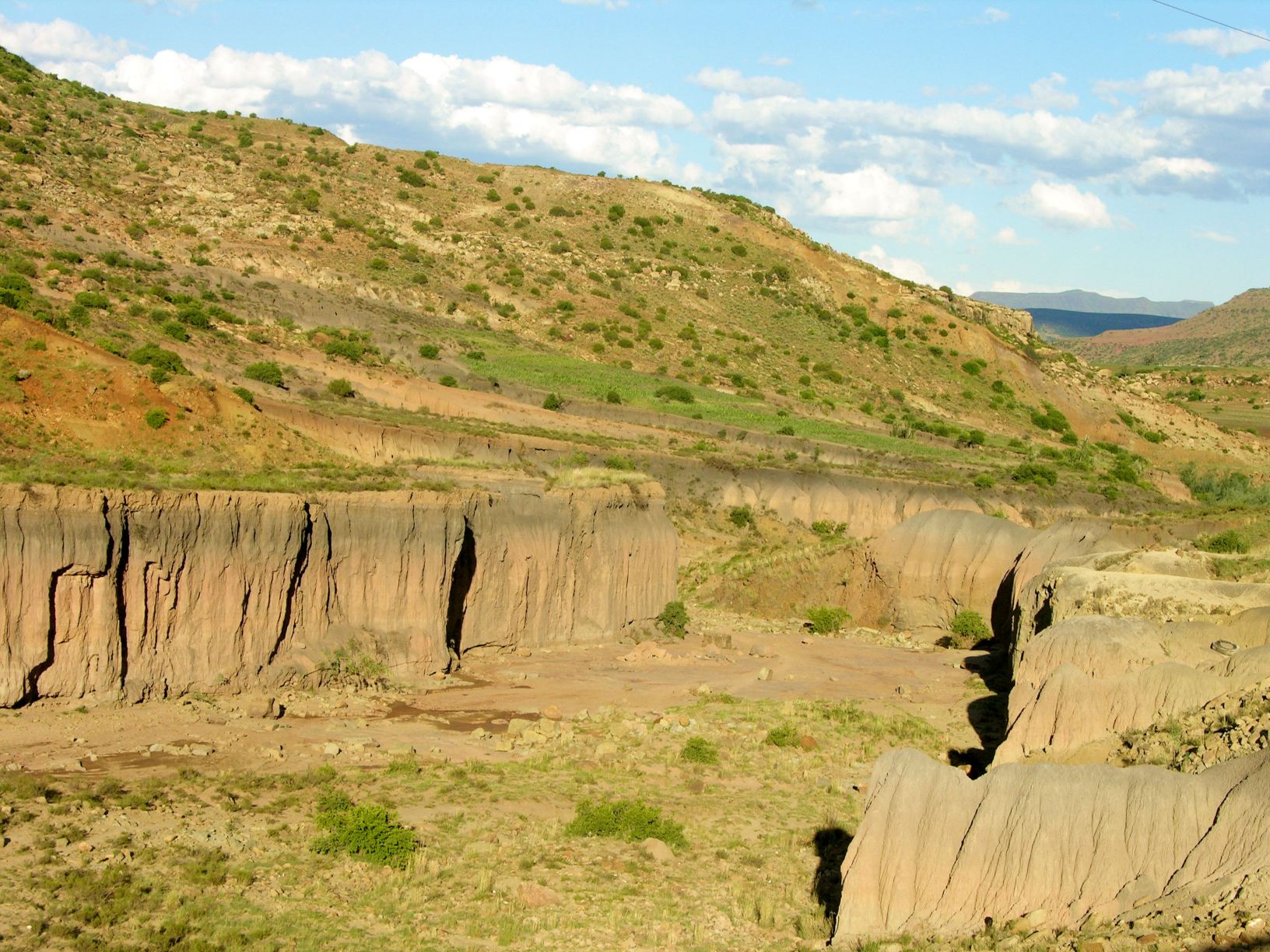
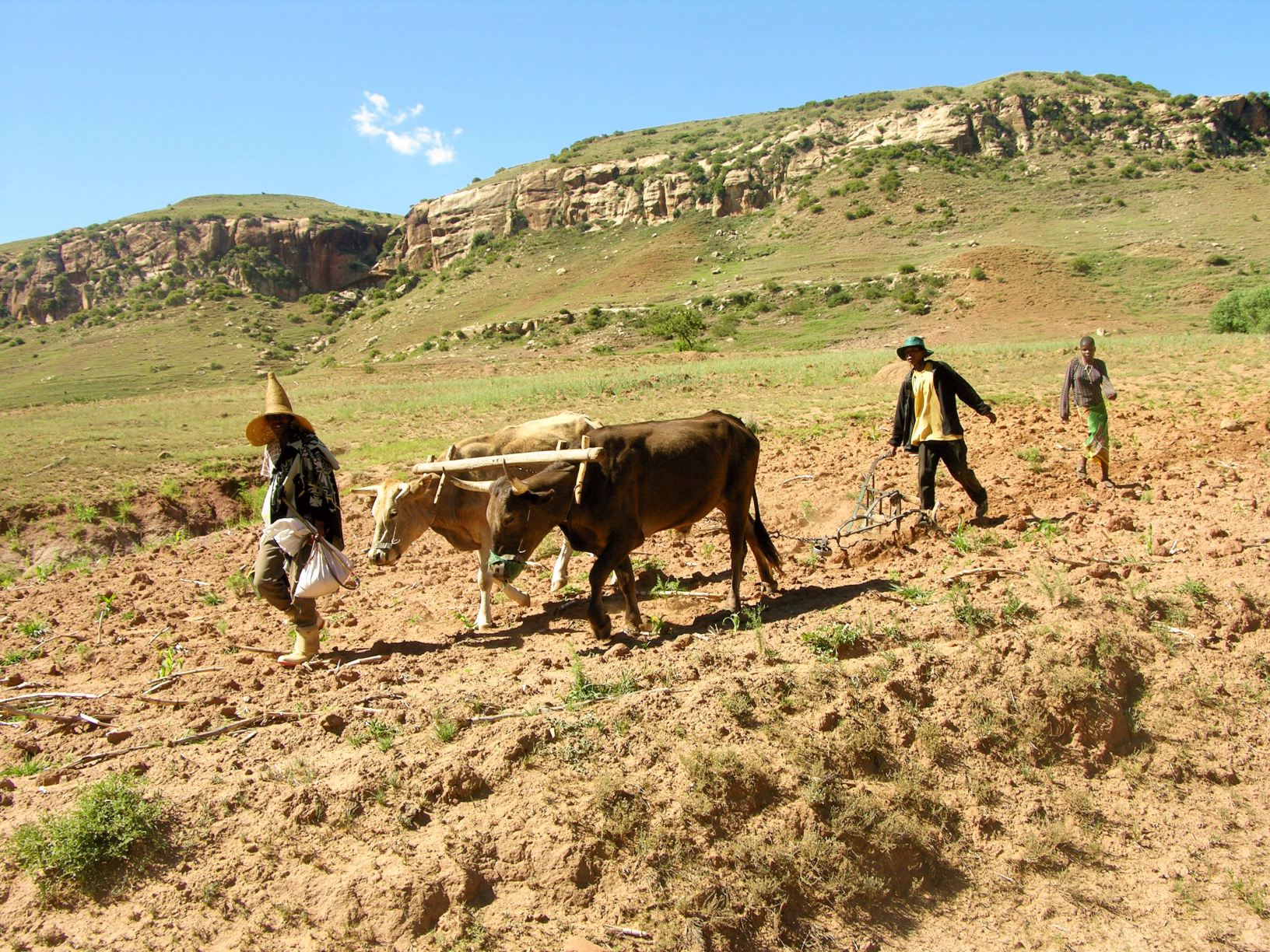
That was welcome news. It's a poor country, with problems to spare. Decent roads are hard to find, though that's the least of it. Projections suggested that if farmers carried on at the same pace and with the same methods, by 2040 erosion would have wiped out all the farmland. But that's not even the main thing. The dreadful one was AIDS. It was said that 40 per cent of the country had HIV, or 60 per cent if you looked at people of childbearing age. If things went on like that, the country would be empty long before 2040. On top of it all, poor harvests had left people hungry year after year. People really did die of hunger, and only substantial aid from richer countries kept them going. Lesotho's population stood at 2,150,000 at the time.
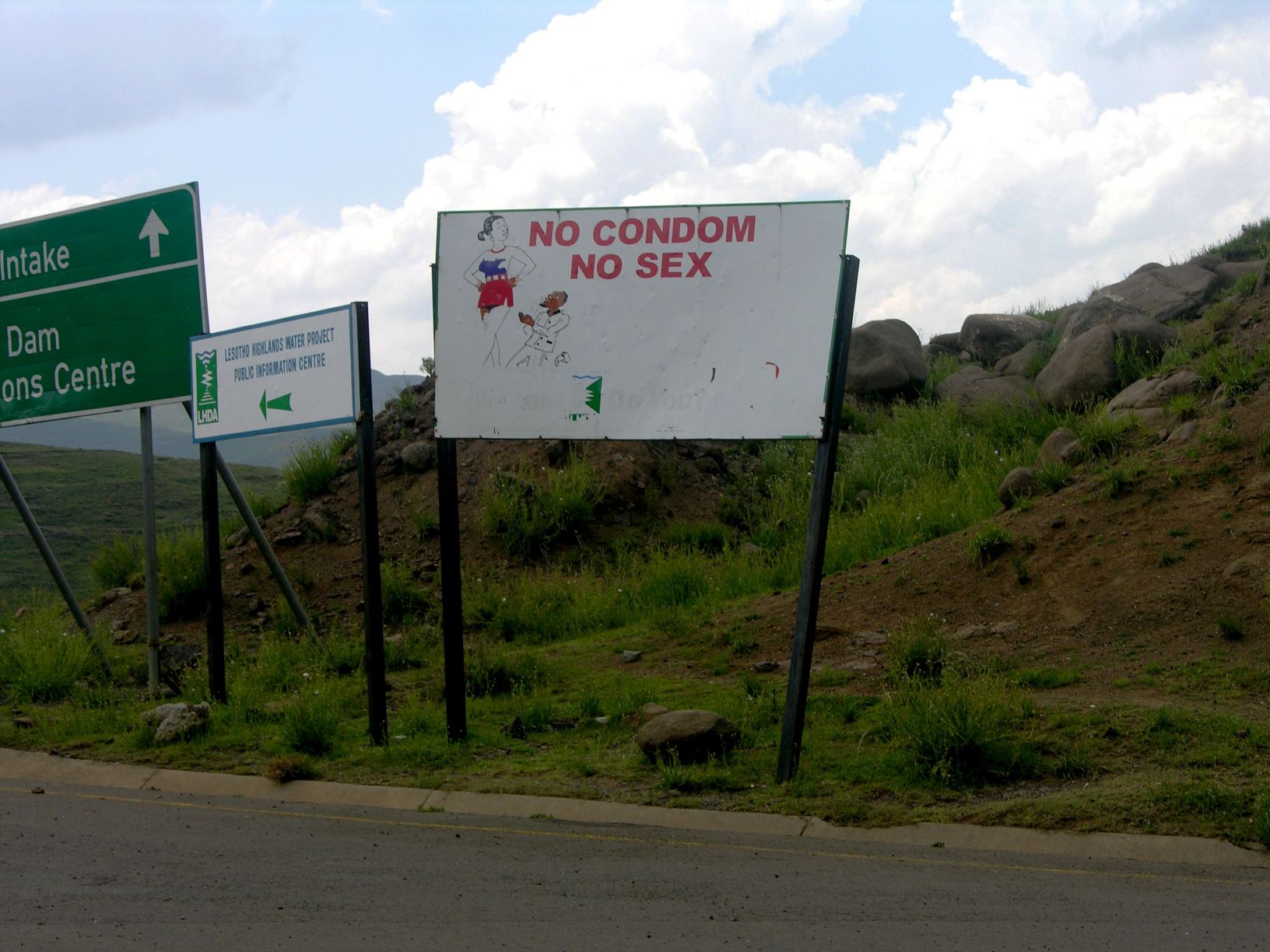
You'd think it was impossible to live with so much on your shoulders. Any European country that heard such things about itself would hang itself from sheer despair. Yet here people were cheerful. They had fun, drank, danced and sang. At least I didn't see much despair on their faces.
Sitting on our packs at the terminal door, we'd just about given up on the man who'd offered us a lift and were working out how many hours it would take to walk, when at last he turned up and drove us into central Maseru. A minibus runs to Malealea, but it was late already. Nobody could say for sure whether there would be another one that day. It leaves from the market, the country's biggest. Standing there waiting seemed pointless and more than a little risky. People in Lesotho insist there is no crime. That's compared to South Africa. There are pickpockets, all right, and they're very good at cleaning out unwary white travellers. In the end we looked for a taxi. Malealea is 83 kilometres away and not everyone is keen to go that far. We could have spent the night in town, but it seemed a waste after paying for the hut in Malealea. Oh, how I hate making bookings. You're bound hand and foot by them.
On the tenth try we found a fearless woman taxi driver. She'd never heard of Malealea in her life, but she was prepared to go as long as we paid. She asked for 250 rand. It didn't seem dear, so we agreed.
It was a long drive. Only the first bit of road was sealed. The thunderstorm had turned serious. Lightning struck the hills beside us, one bolt after another. The downpour filled the potholes and turned parts of the road into a mountain stream. We could hardly see. This is the kind of weather they have in vampire films. The car sat low and scraped against every bump, but the woman was a trooper and kept on driving. Luckily we had a good map and a GPS. We told her the way and it seemed to work out. The road signs in Lesotho are quite decent, if you can make them out in that downpour. It also helped that on local maps they give the coordinates of intersections as a matter of course. GPS units must be fairly common here. Even in a deluge you can be sure you haven't driven past your turn.
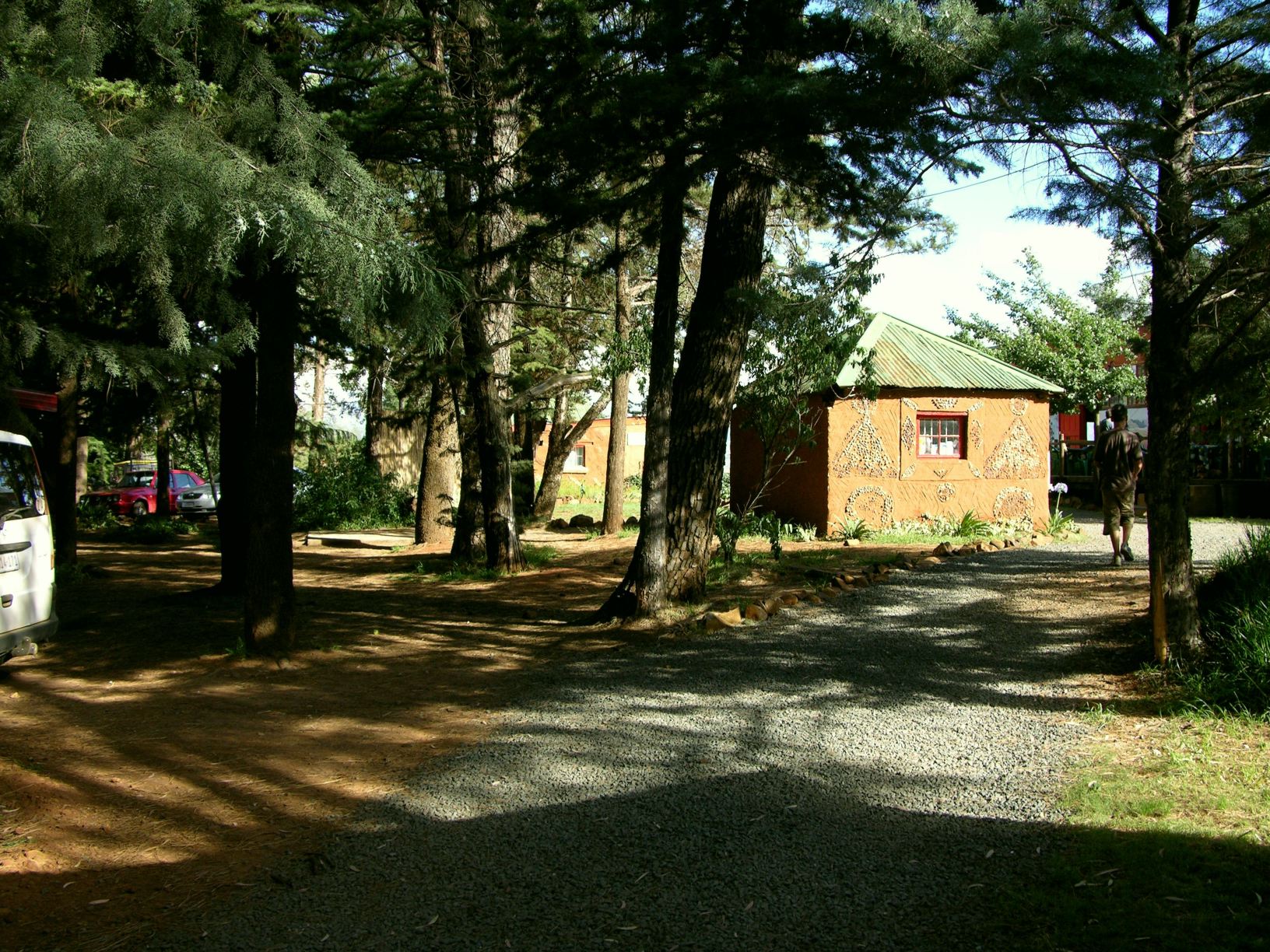
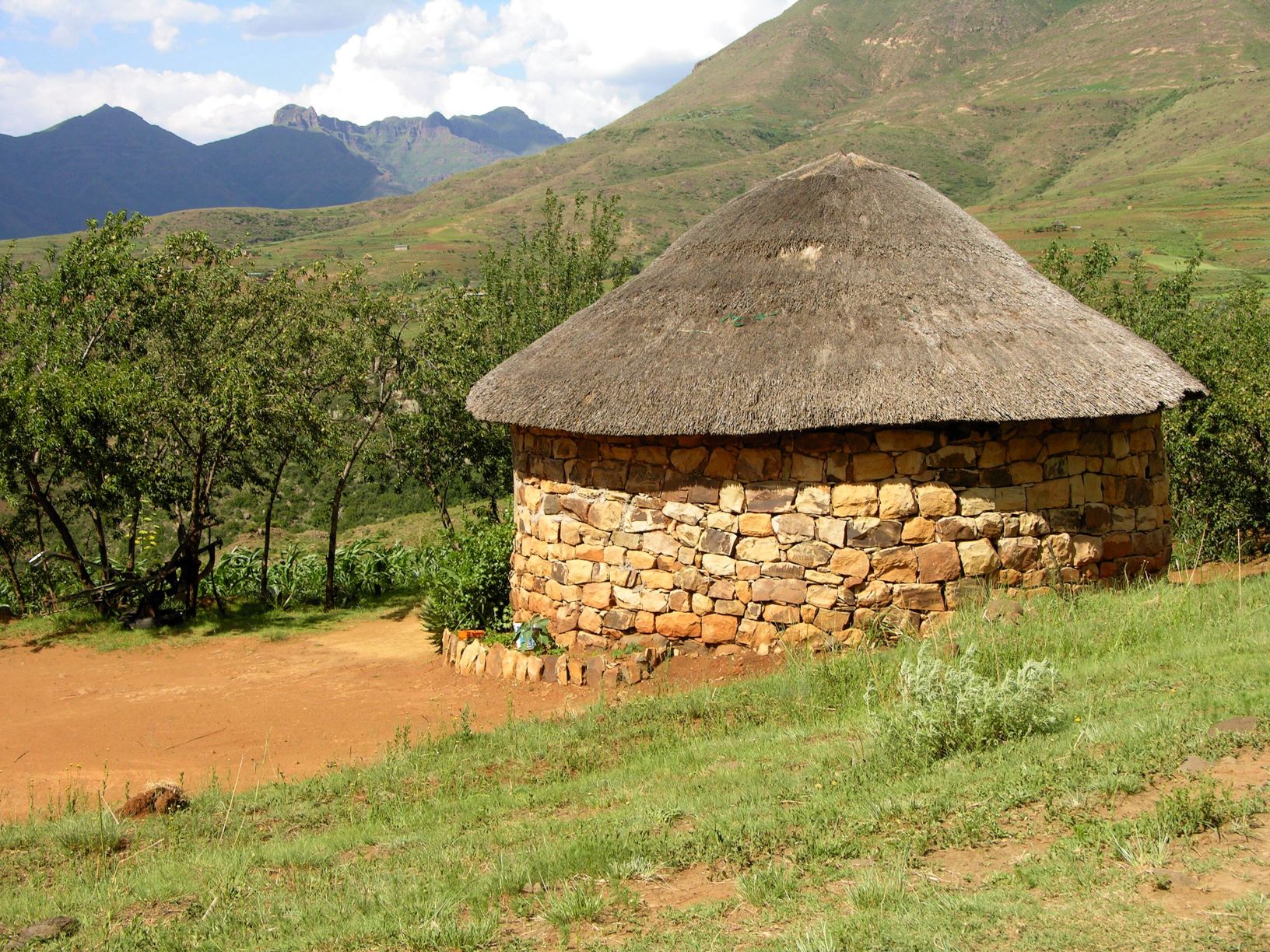
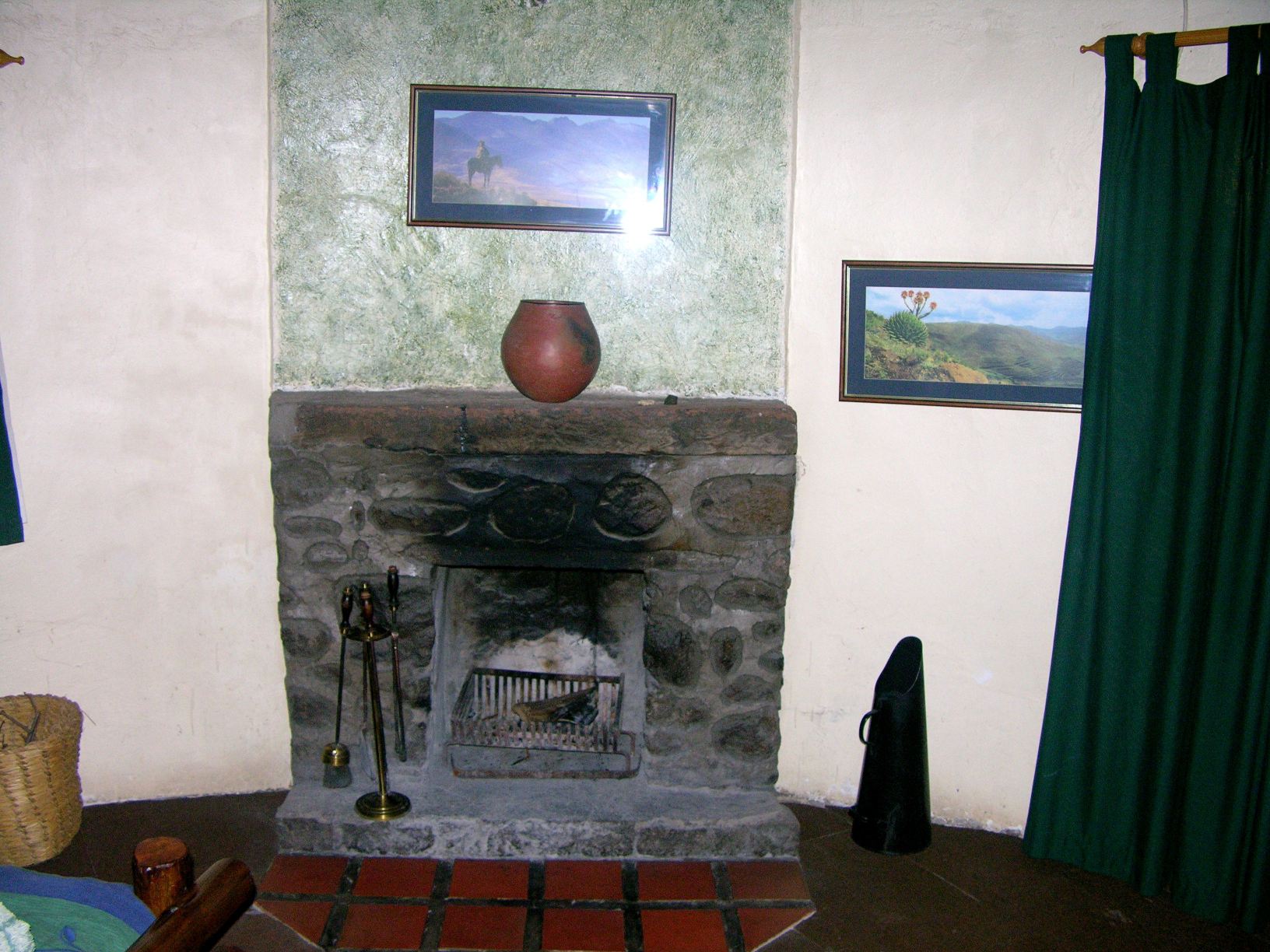
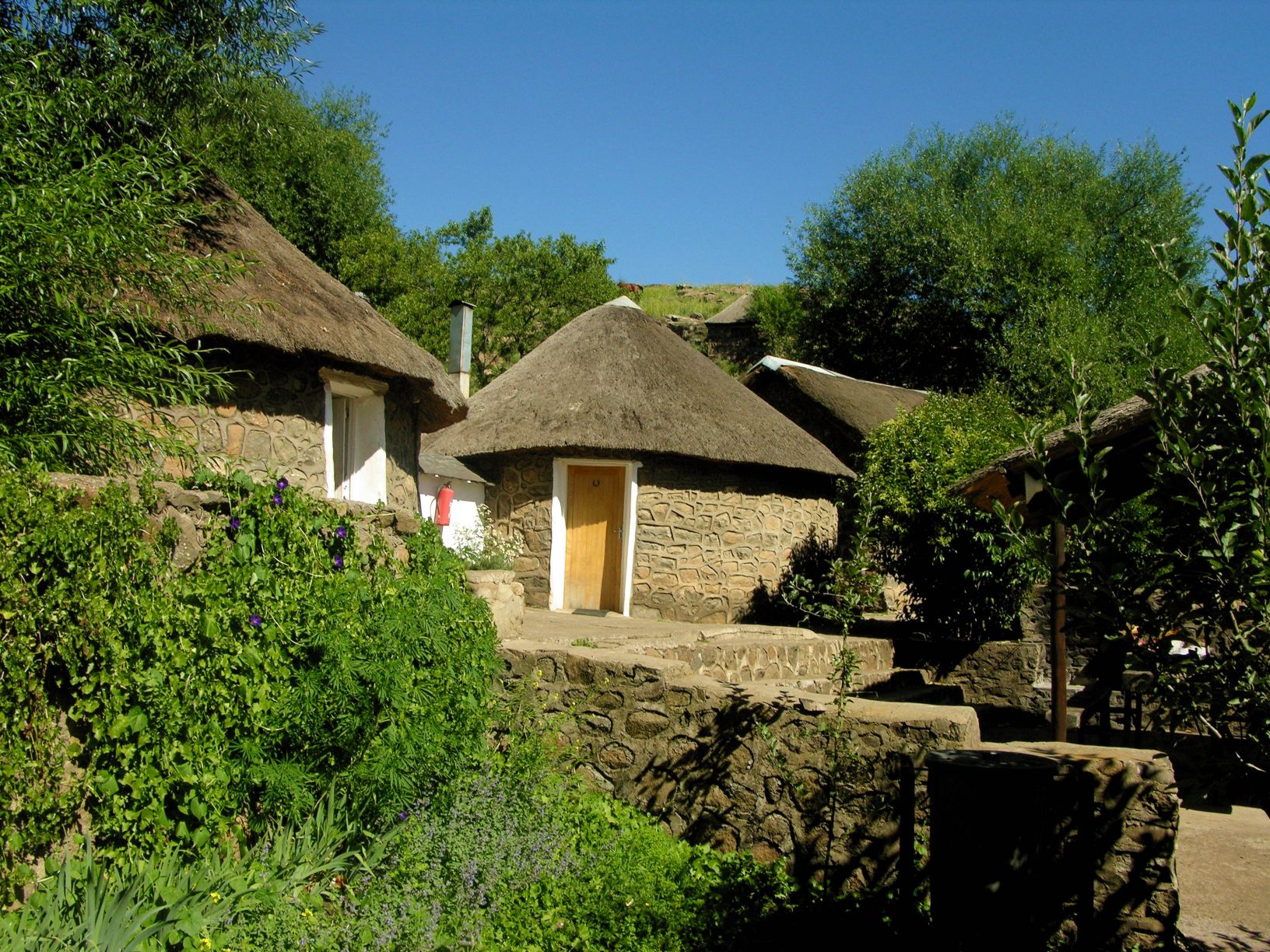
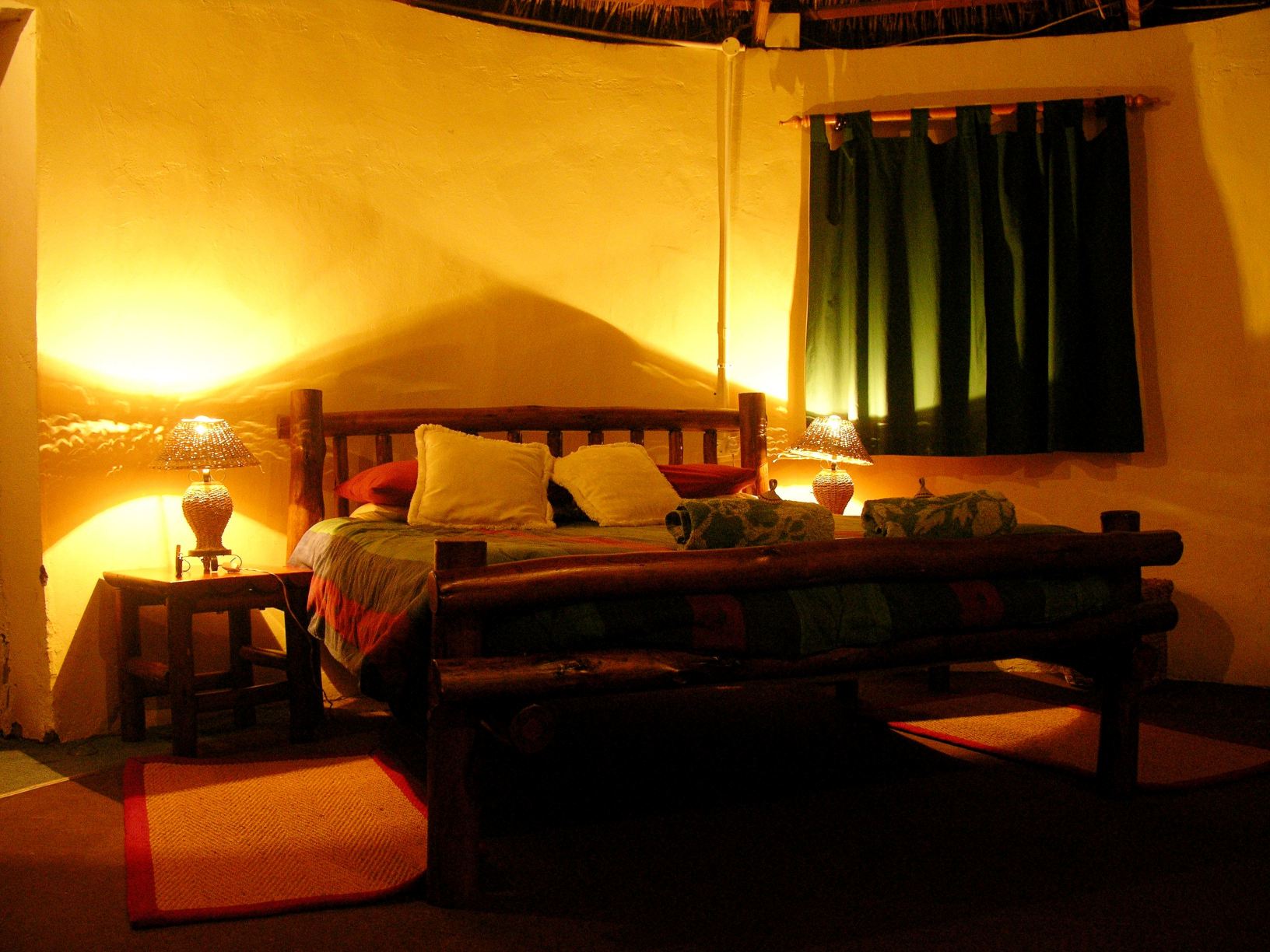
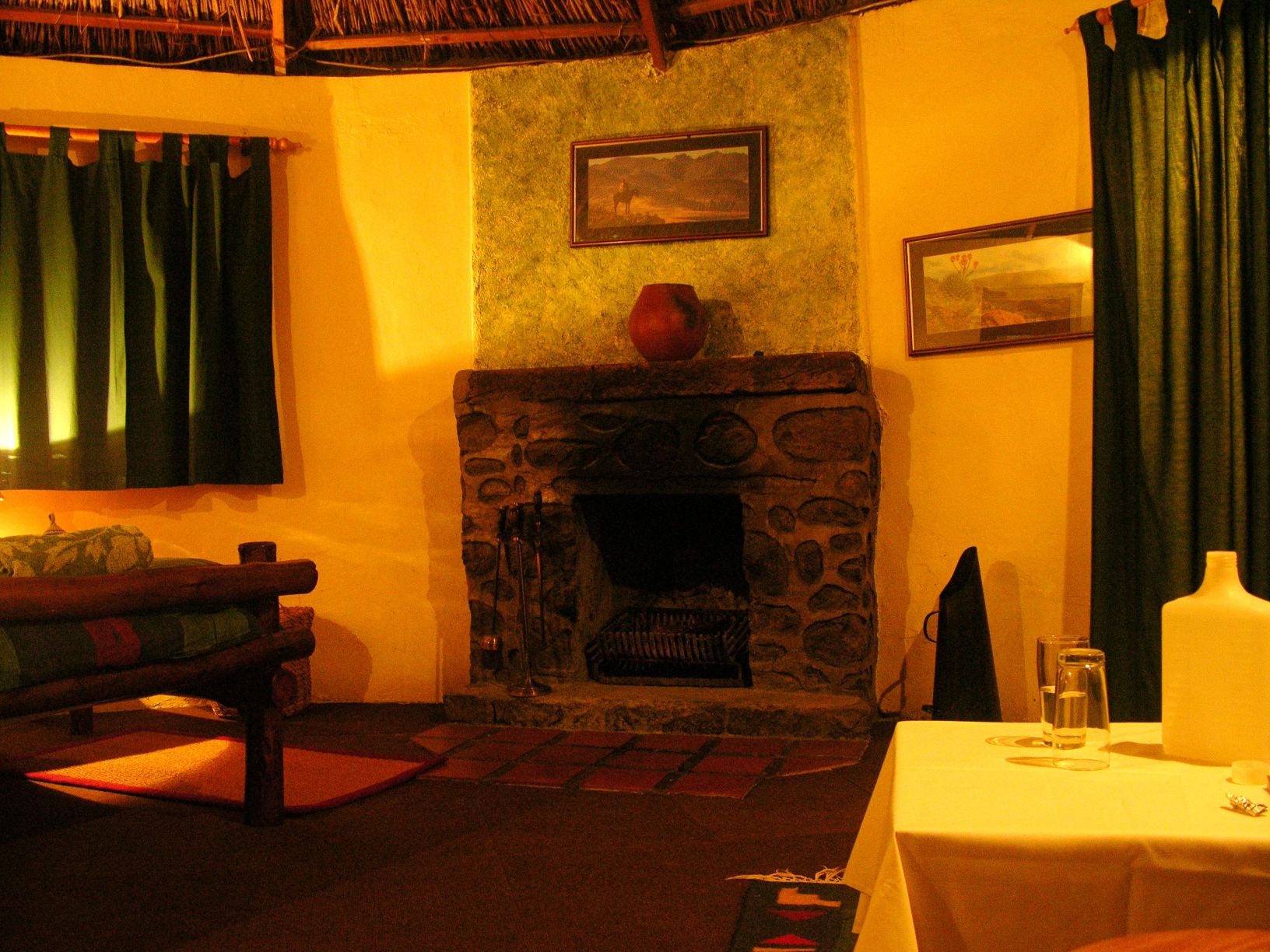
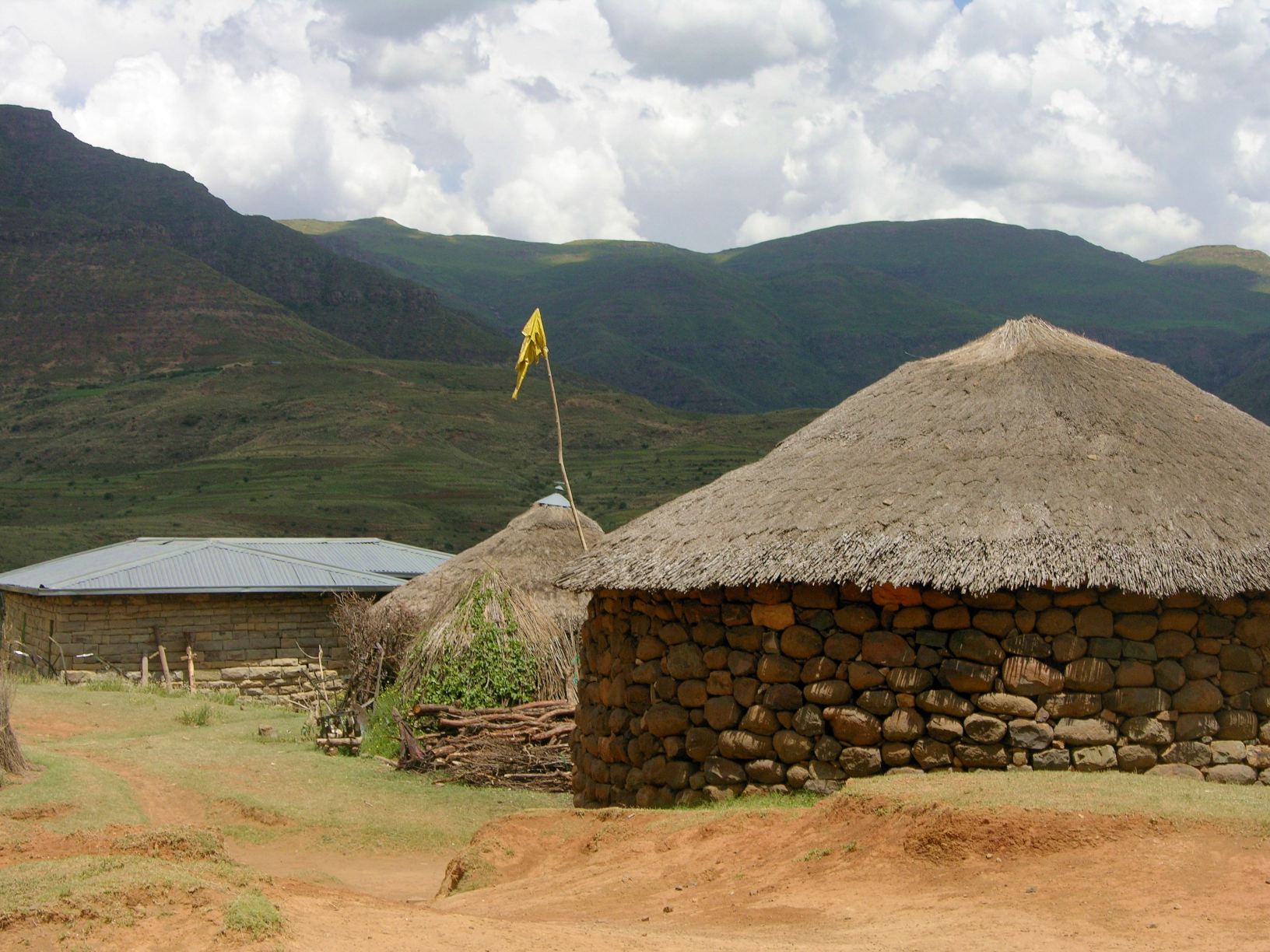
It was pitch dark when we reached Malealea (29°49.692′S, 27°35.999′E). It's an old estate founded in 1905 and now a campground for Western tourists. It's very well done. We had one of the round huts they call Basotho rondavels. There were several, but ours was the very one pictured in all the advertisements. I'd found it on the Malealea website long before the trip. It's built like a traditional Basotho dwelling, with stone walls and a thatched roof. The shower has a gas heater. Electricity comes from a diesel generator, from six till ten in the evening. Perfectly habitable. They just ask you to save water. Wash only if you need to, which is an interesting thing to say. Who goes to wash if they don't need to? More interesting still is the request to go to the toilet only if you really must, and not to flush too often. I thought of the class of schoolchildren who were all told to hand in a urine sample. They took a bucket and filled it between them. This was how we were supposed to save the country from soil erosion.
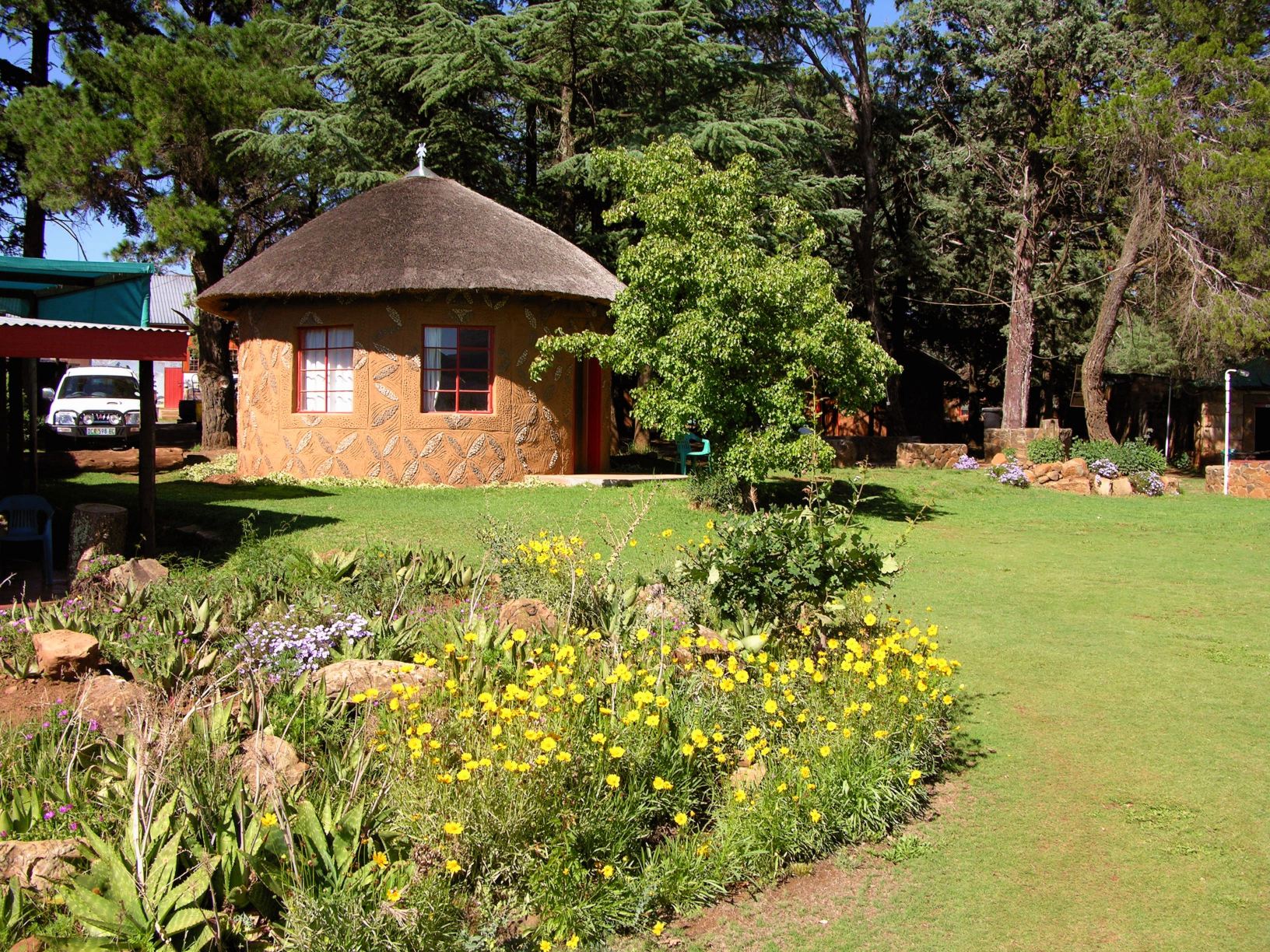
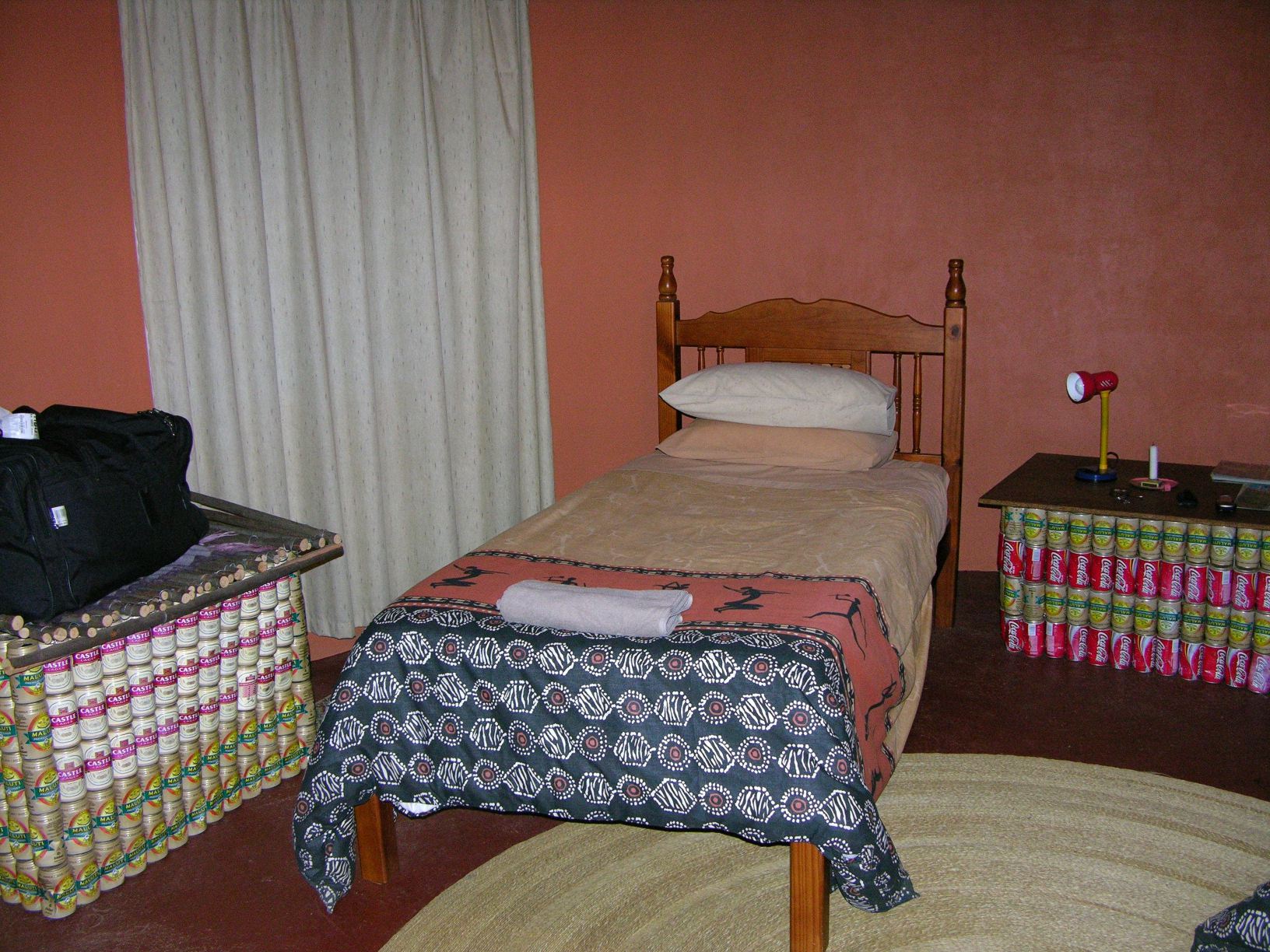
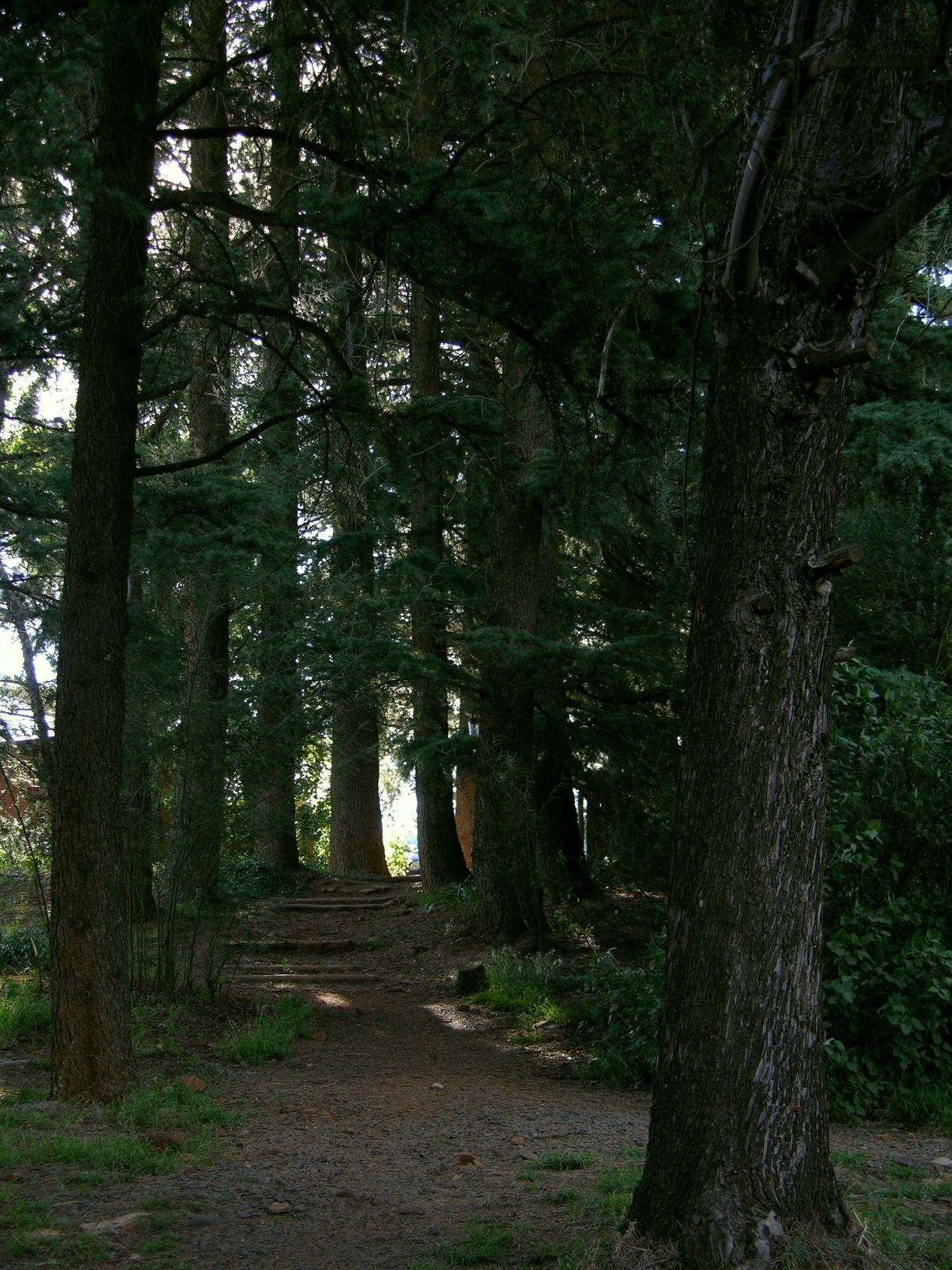
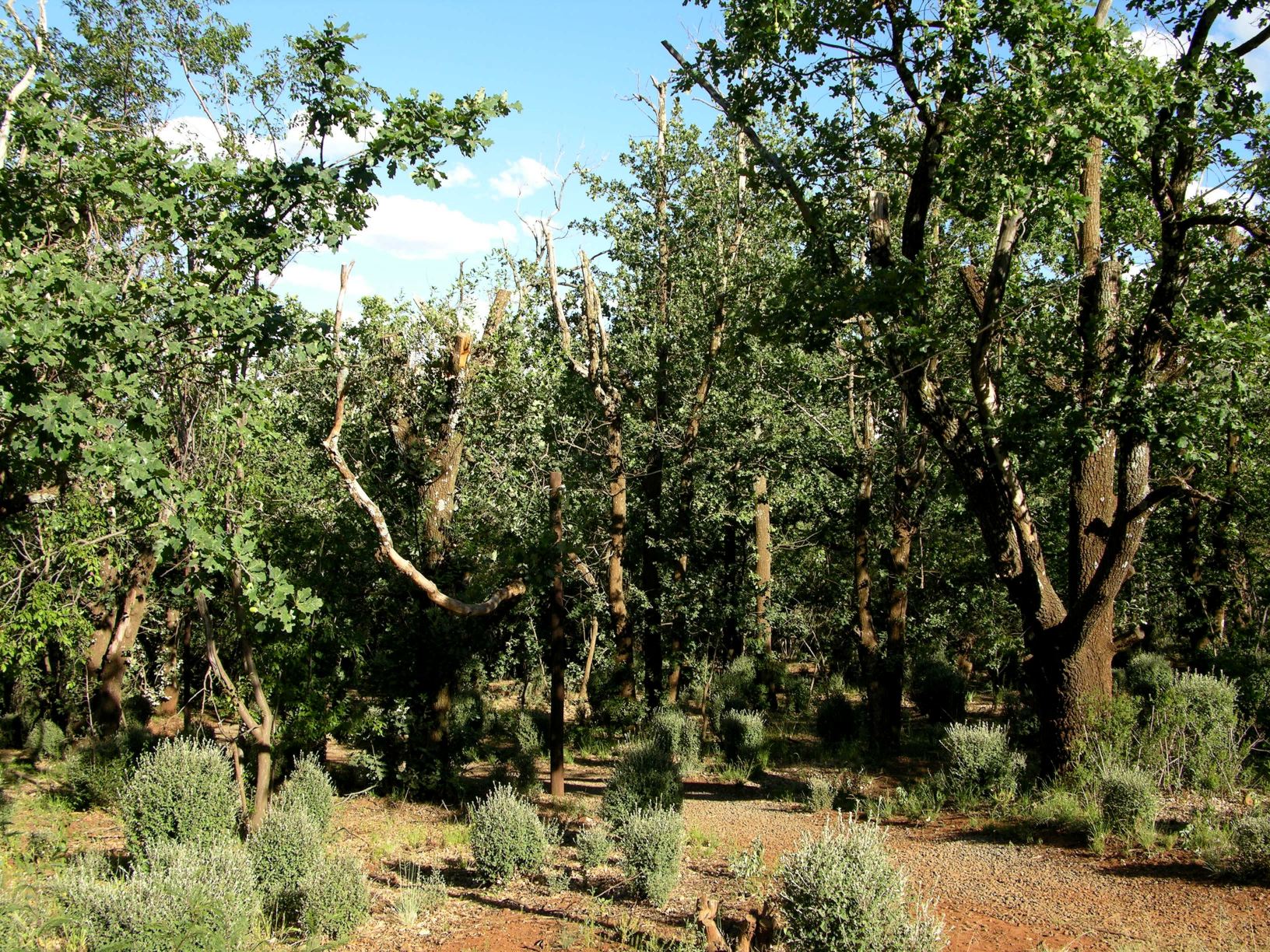
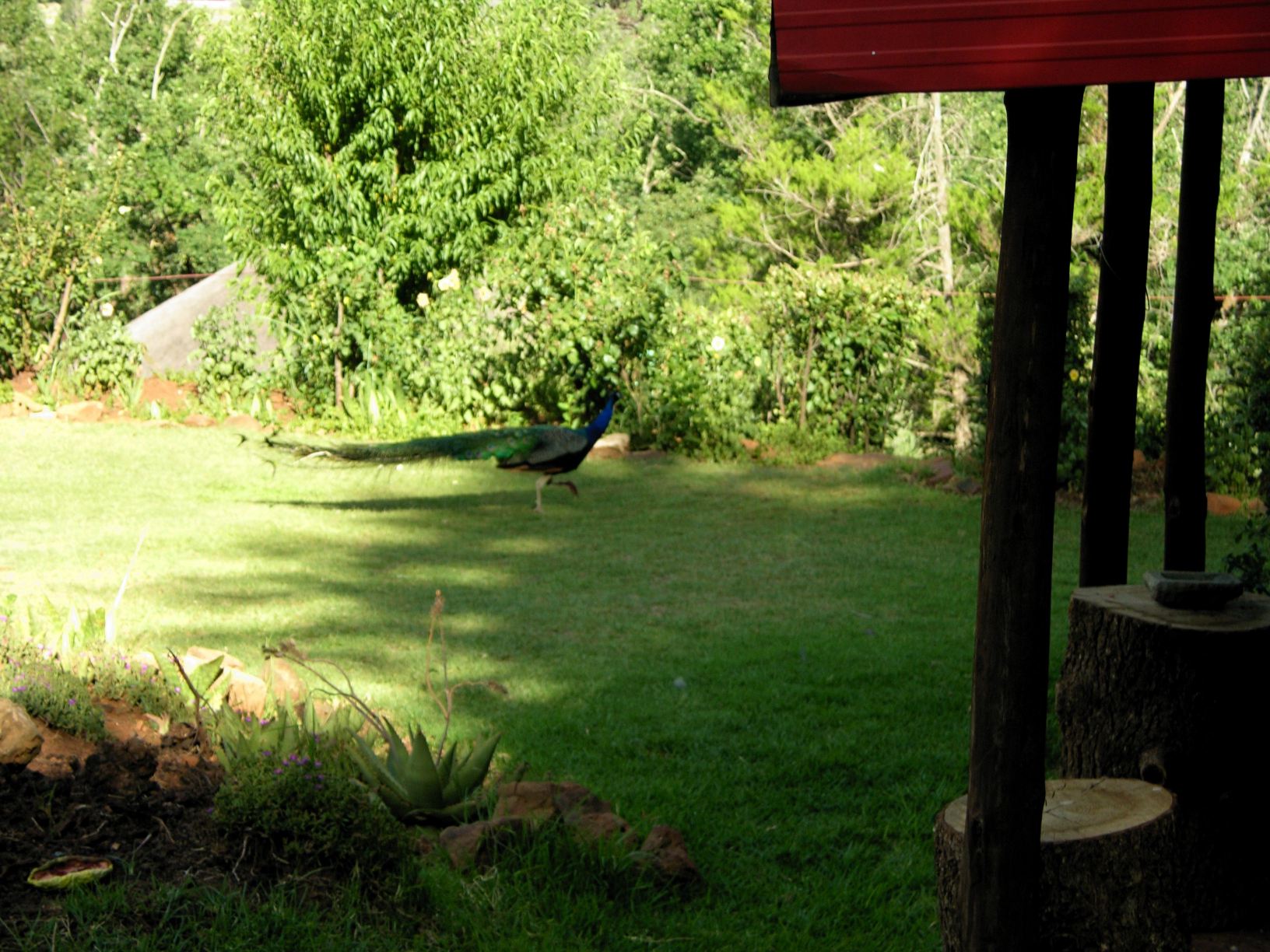
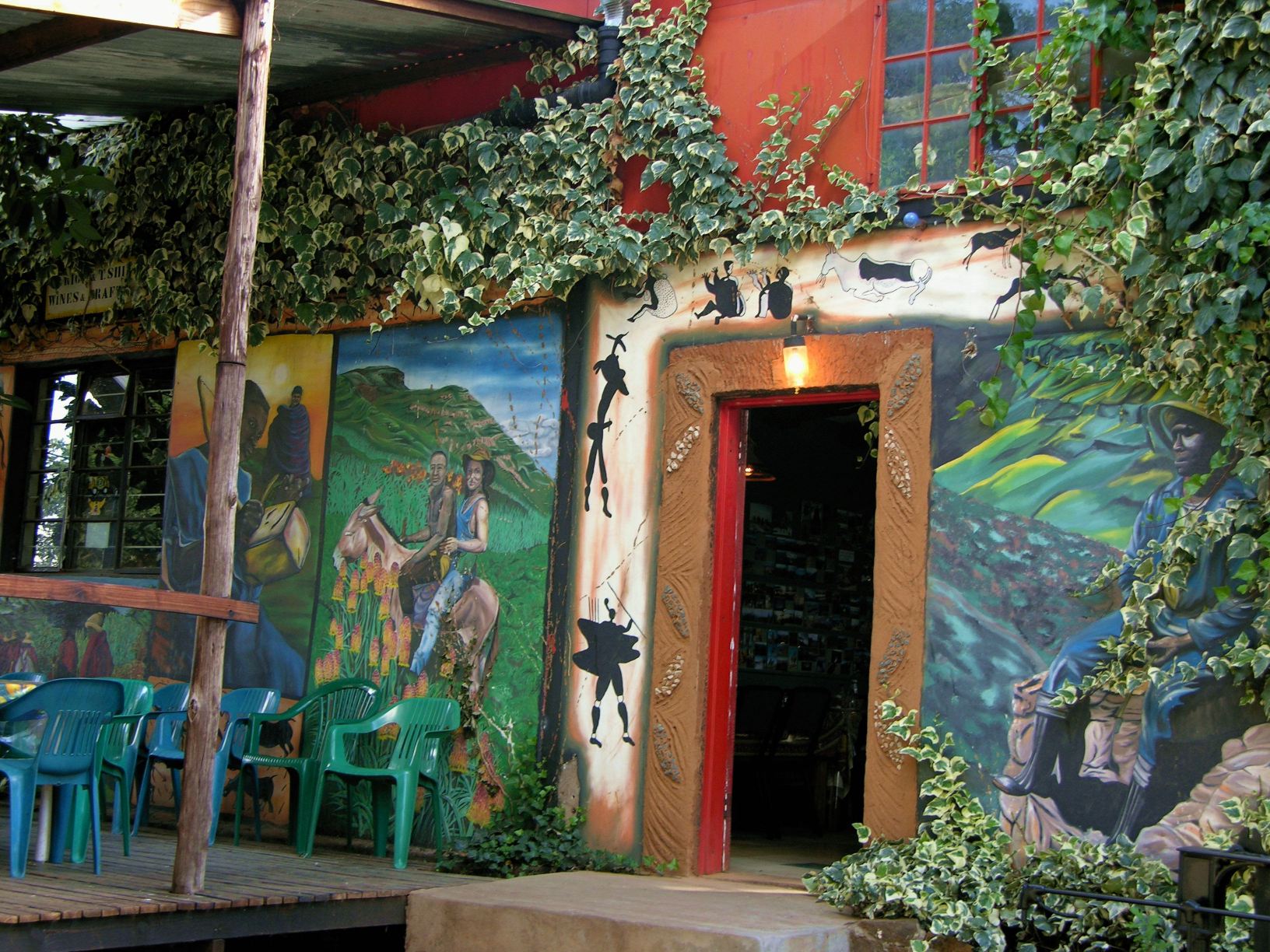
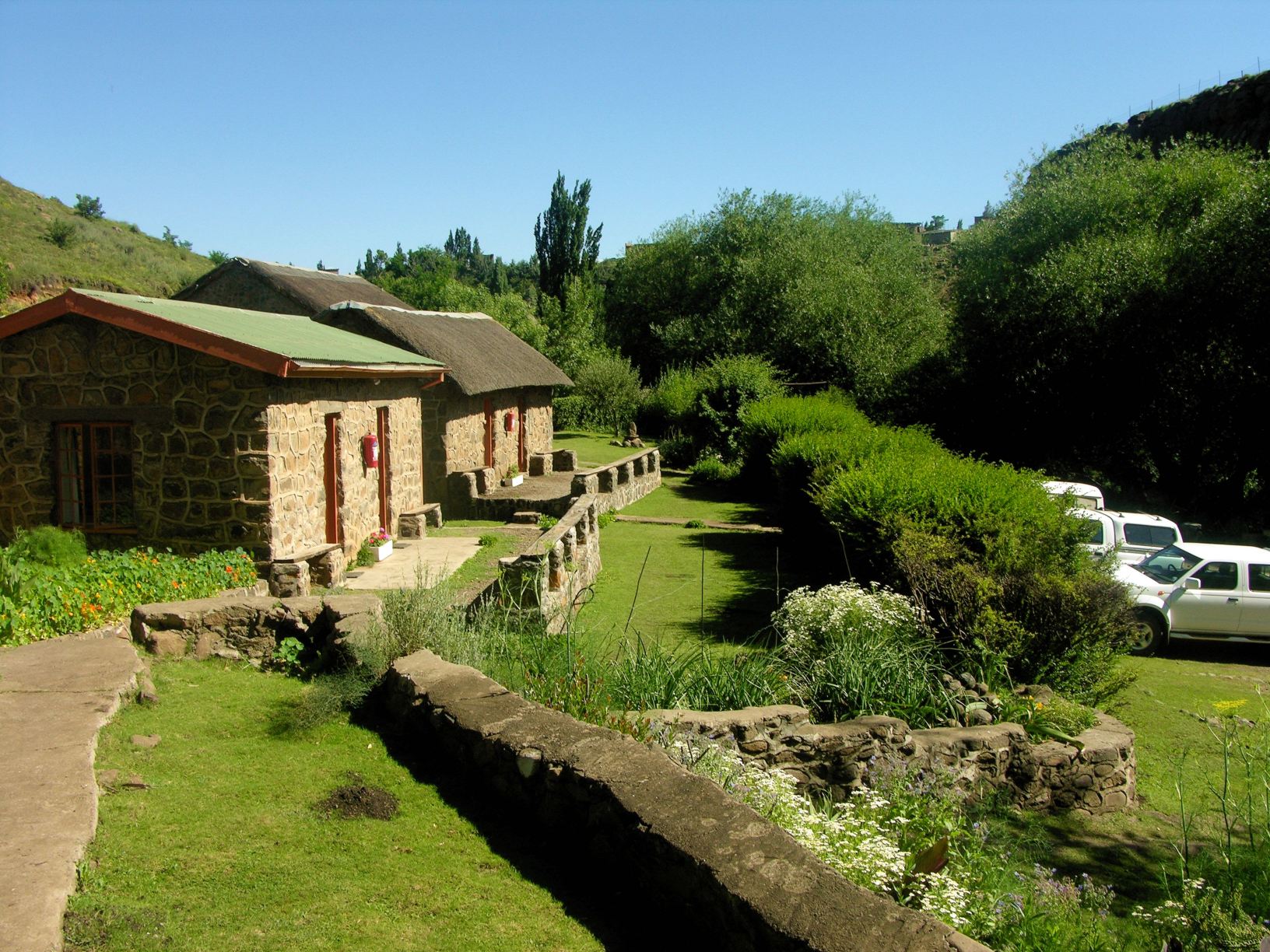
Diana Jones, the owner, was there to meet us. A lovely woman and a brilliant photographer. Her name appears beneath almost every photo of Lesotho, online and in Lonely Planet. Dinner was already over, but she fed us the leftovers, which were delicious and filling. She and her husband had built the campground with their own hands. There were photographs all over the walls, the old estate's grounds were beautifully kept, and a family of peacocks ran about. The huts were painted with pictures on the outside. You could feel that they'd put their hearts into it. It was their life's work.
Lesotho had two mobile operators, Vodacom and MTN. Prices were much the same. Text messages didn't get through to Russian networks. Although both operators were effectively South African branches, neither offered roaming with anyone. You could call abroad. Coverage left a lot to be desired. The only way to send a text was to pick up a South African signal on a hill somewhere. You couldn't do it in central Maseru. You had to go out to the border bridge. From Russia, you had to add the country code, 266, to the six-digit local number.
Early in the morning, we were woken by a peacock singing loudly and at considerable length. Next time I see one of those chickens in a campground advertisement, I must remember the voice, forget the magnificent tail and find somewhere else to stay.
You'd never know it had rained. Overhead was an endless blue sky, framed by mountain peaks.
We had to go back to the capital to get the four-wheel drive. We were lucky with the minibus, though we had to change to another one at Motsekuoa. It's easier that way, including in the other direction. Minibuses run one after another out of Maseru on the A2 south. A ride usually costs between five and fifteen rand, depending on what sort of bus it is.
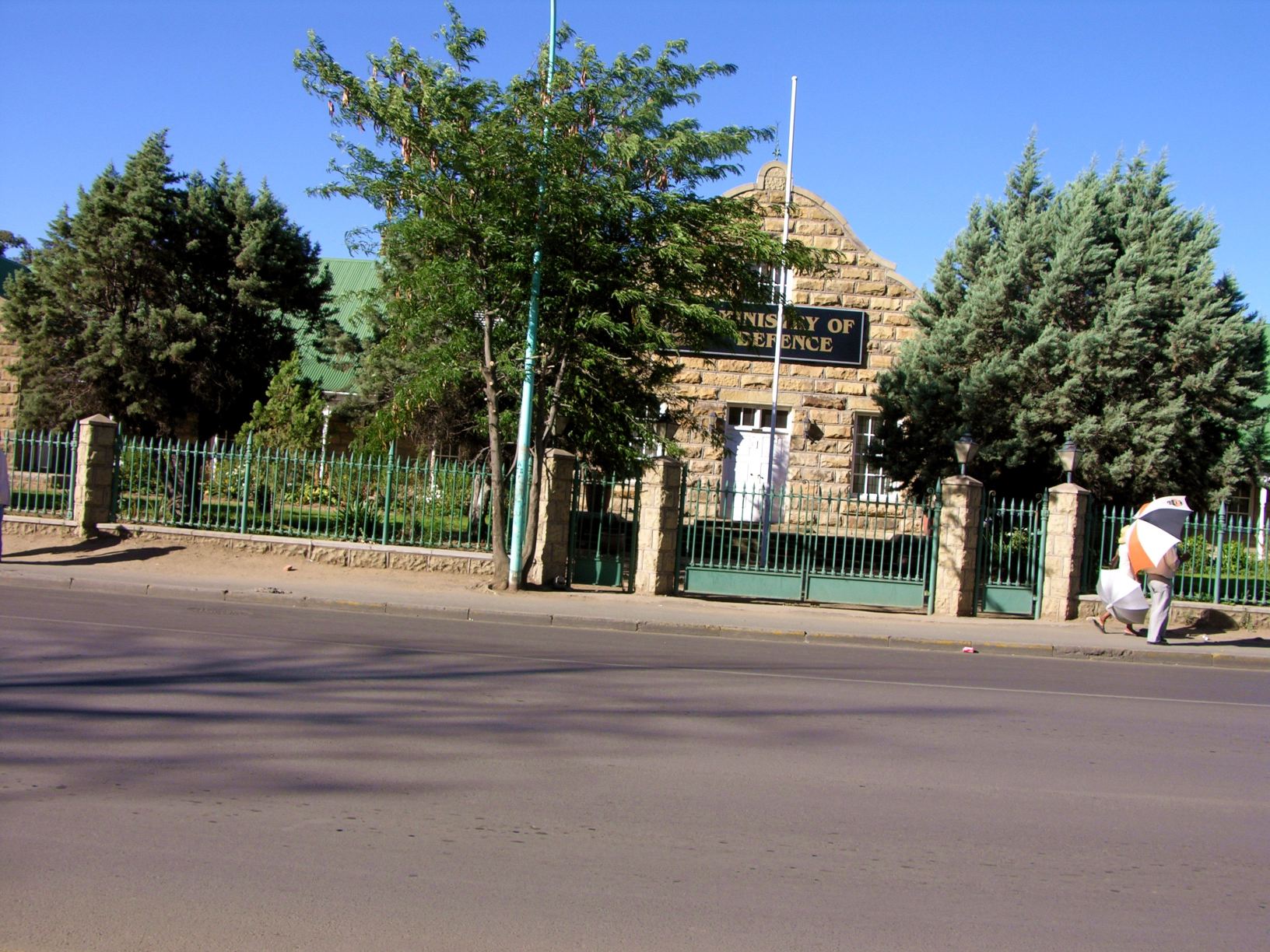
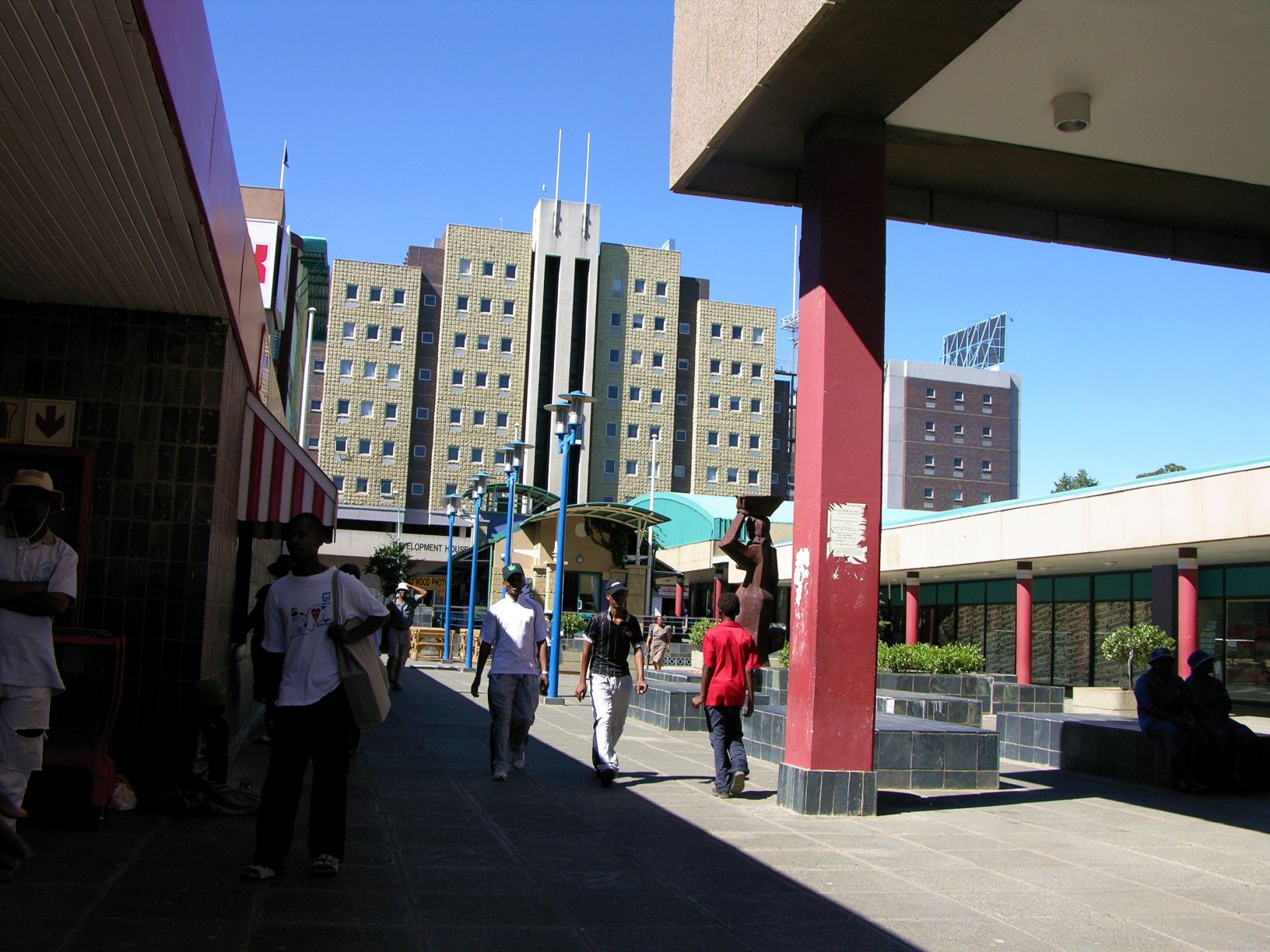
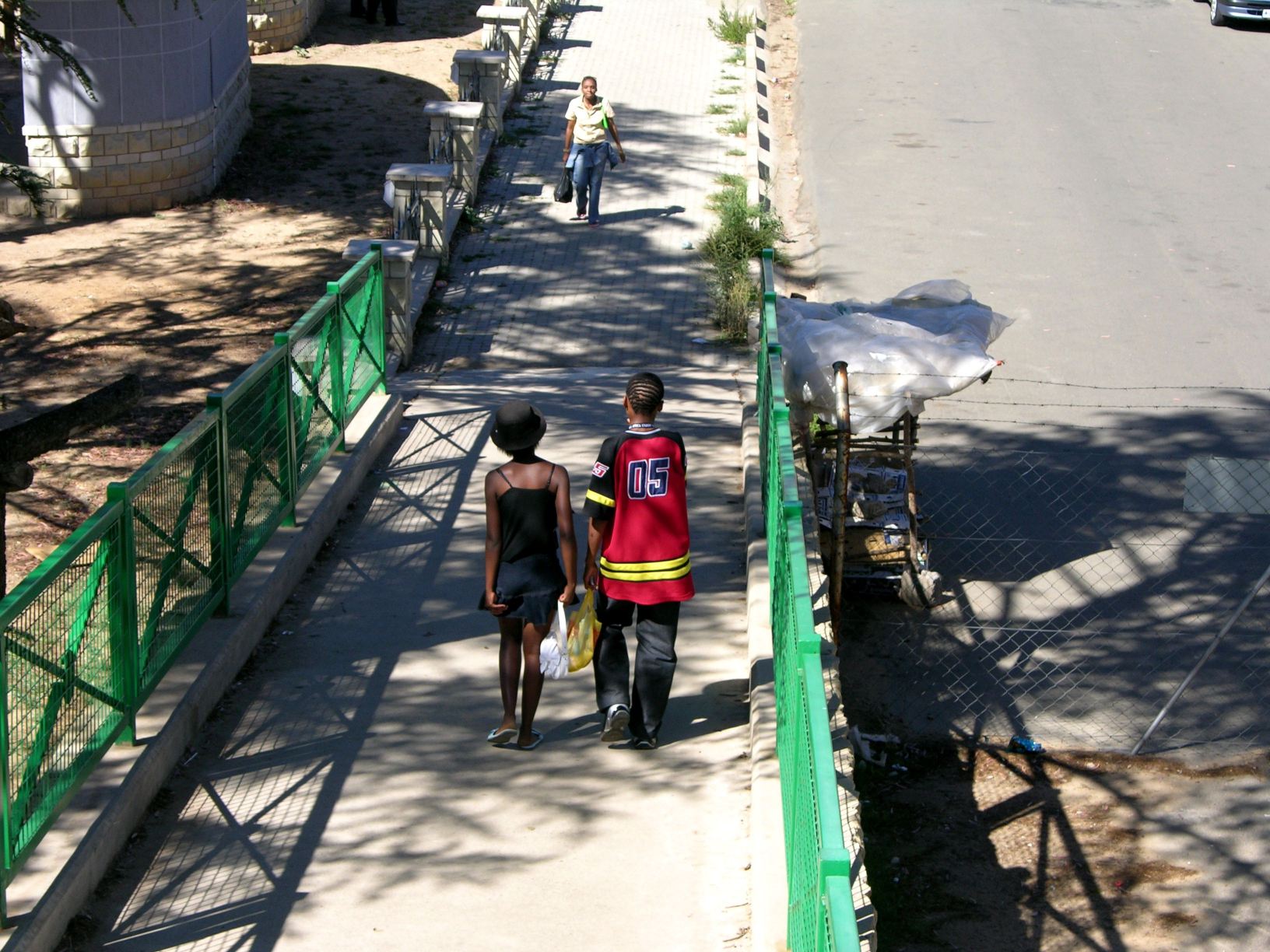
Maseru, the capital of Lesotho, isn't a particularly interesting town. A few old churches, a main street with shops and government offices. That's about it for sights. You're not allowed to photograph government buildings, especially the Ministry of Defence. They take the army seriously here. There's even a ‘Royal Centre for Military Research’. Evidently Lesotho is getting ready for a war. With South Africa, presumably. Who else?
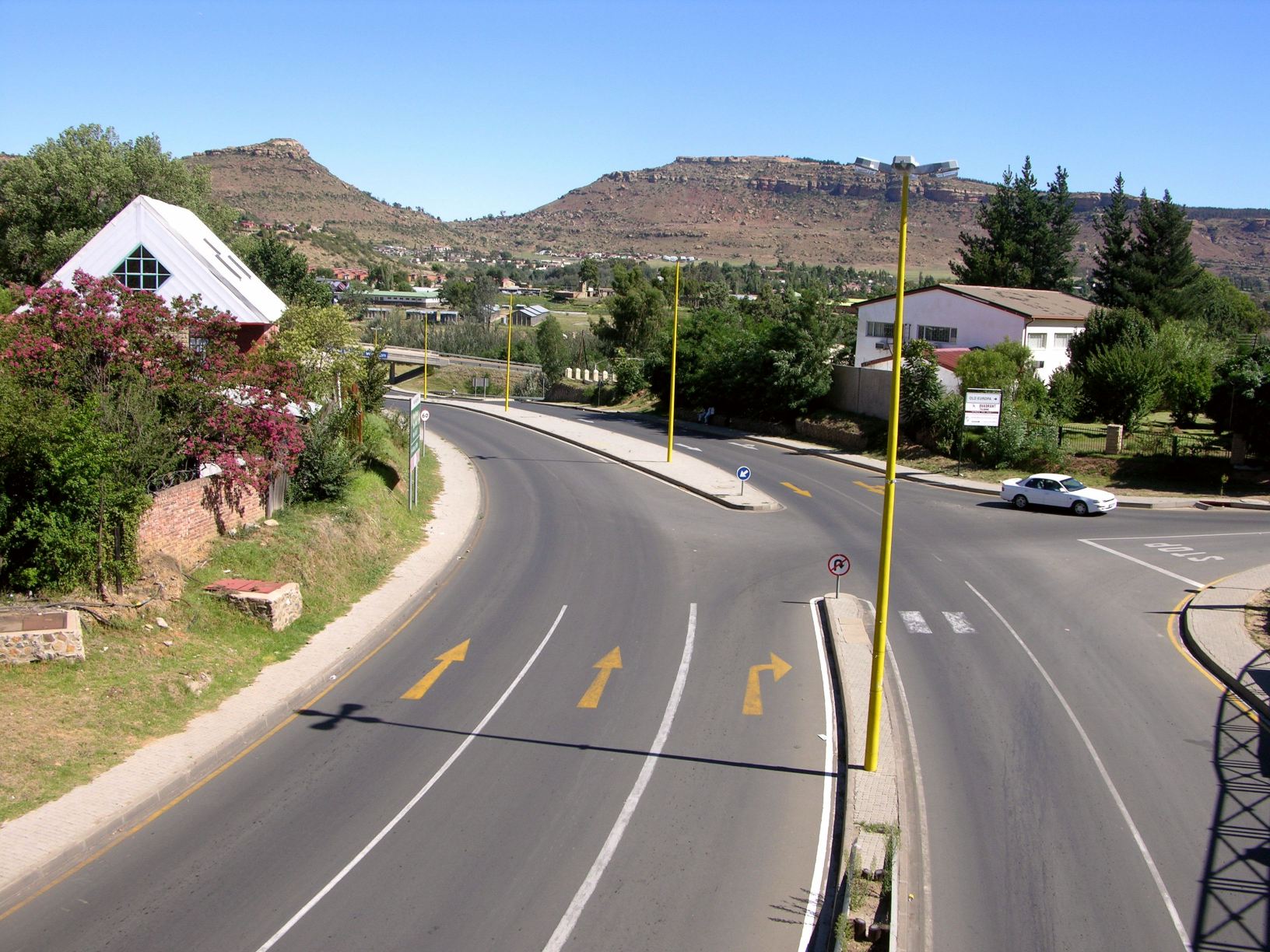
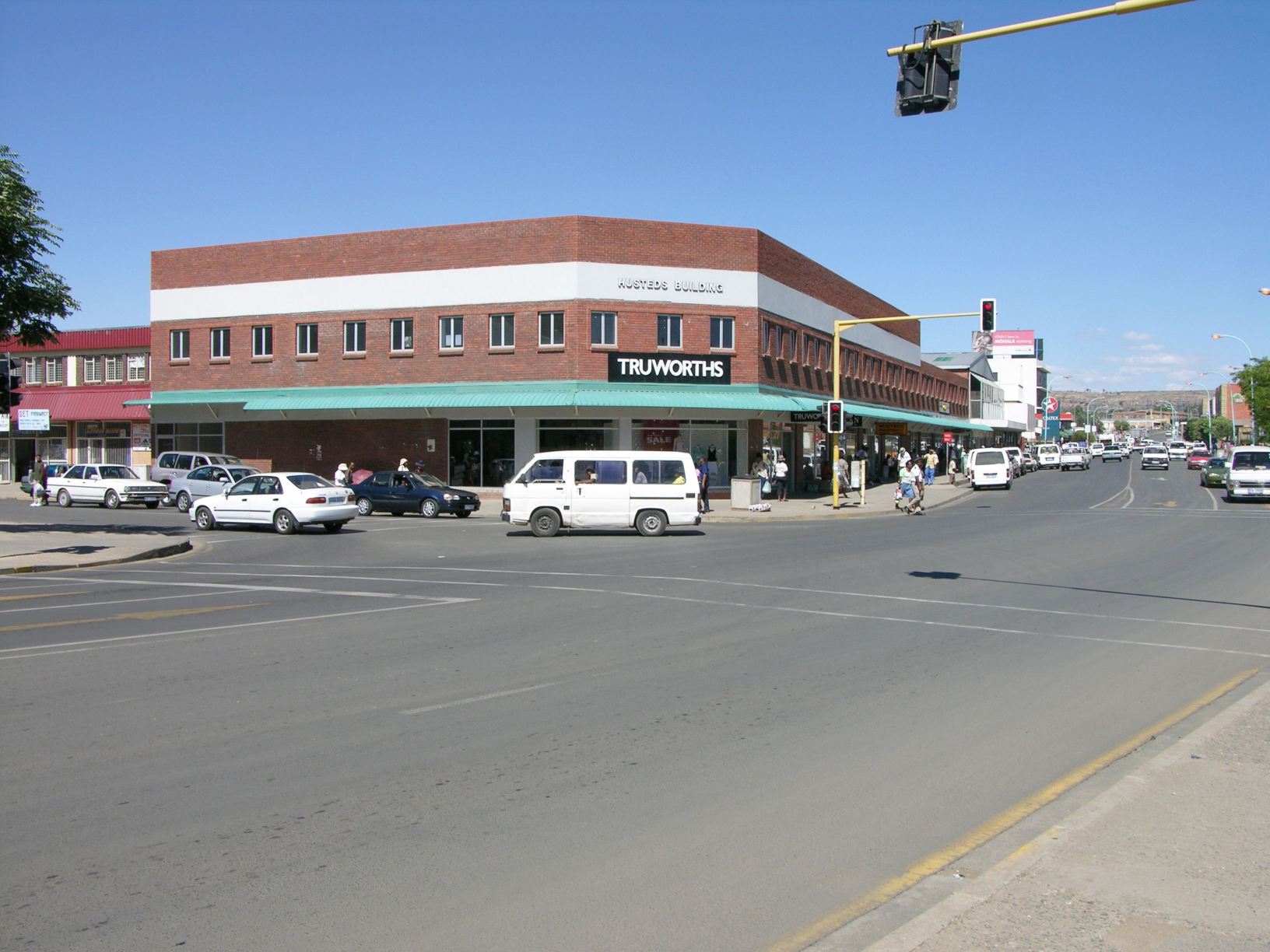
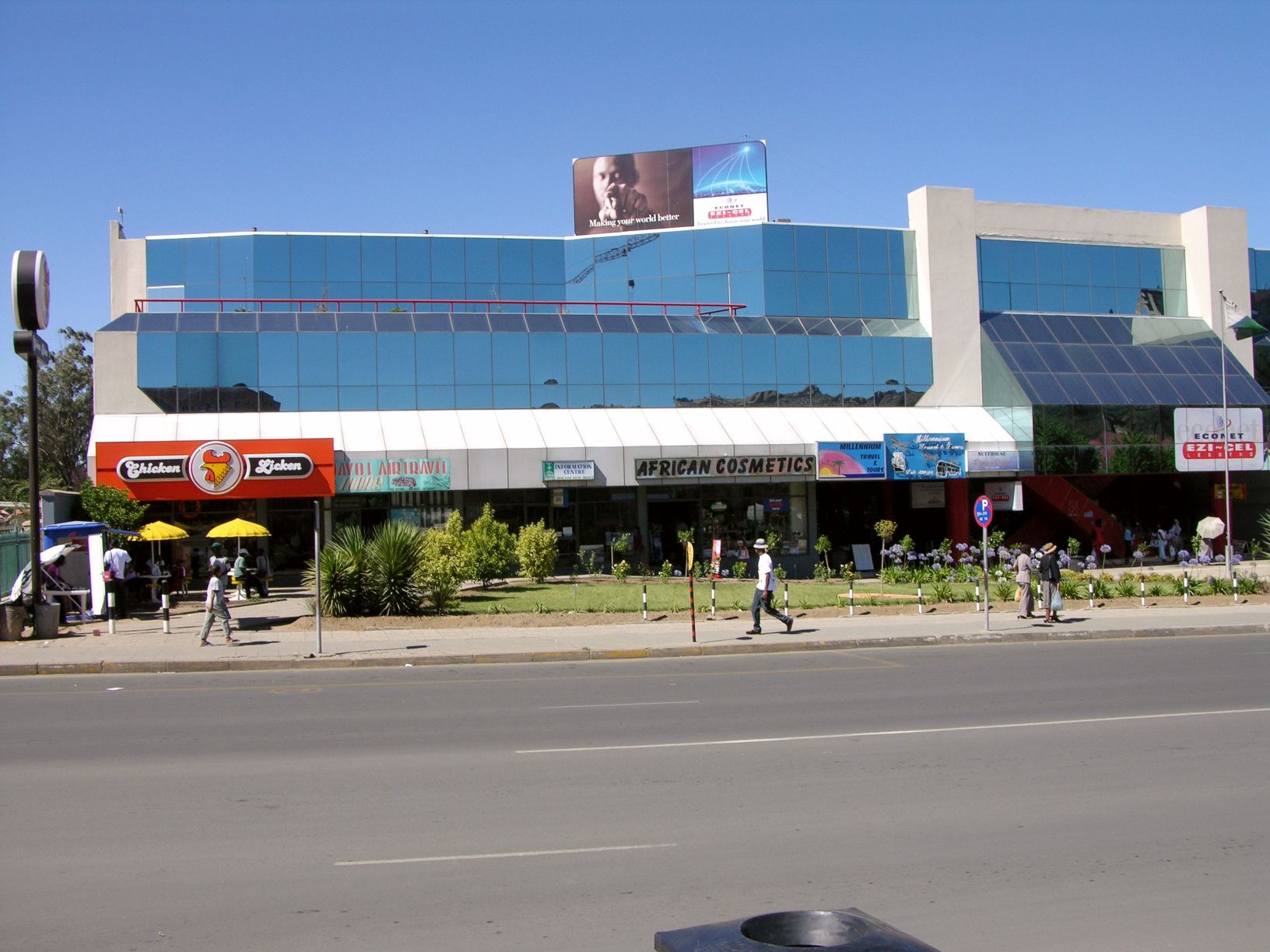
There are several ATMs on the main street. They hand out a mixture of local money and rand. Lesotho has its own currency, the loti, plural maloti, divided into a hundred lisente and pegged permanently to the rand. The locals don't always see the two as equal, however. If they spot both currencies in your wallet, they ask, oddly enough, for their own. It's pretty money. Nobody takes it in South Africa and you can't even exchange it there, so it's best to spend your maloti before leaving.
The big shops take credit cards, but people rarely use them. I tried it once and the till seized up. We waited quite a while for them to work out what to do. On the bank statement the transactions generally showed as South African and the currency as rand.
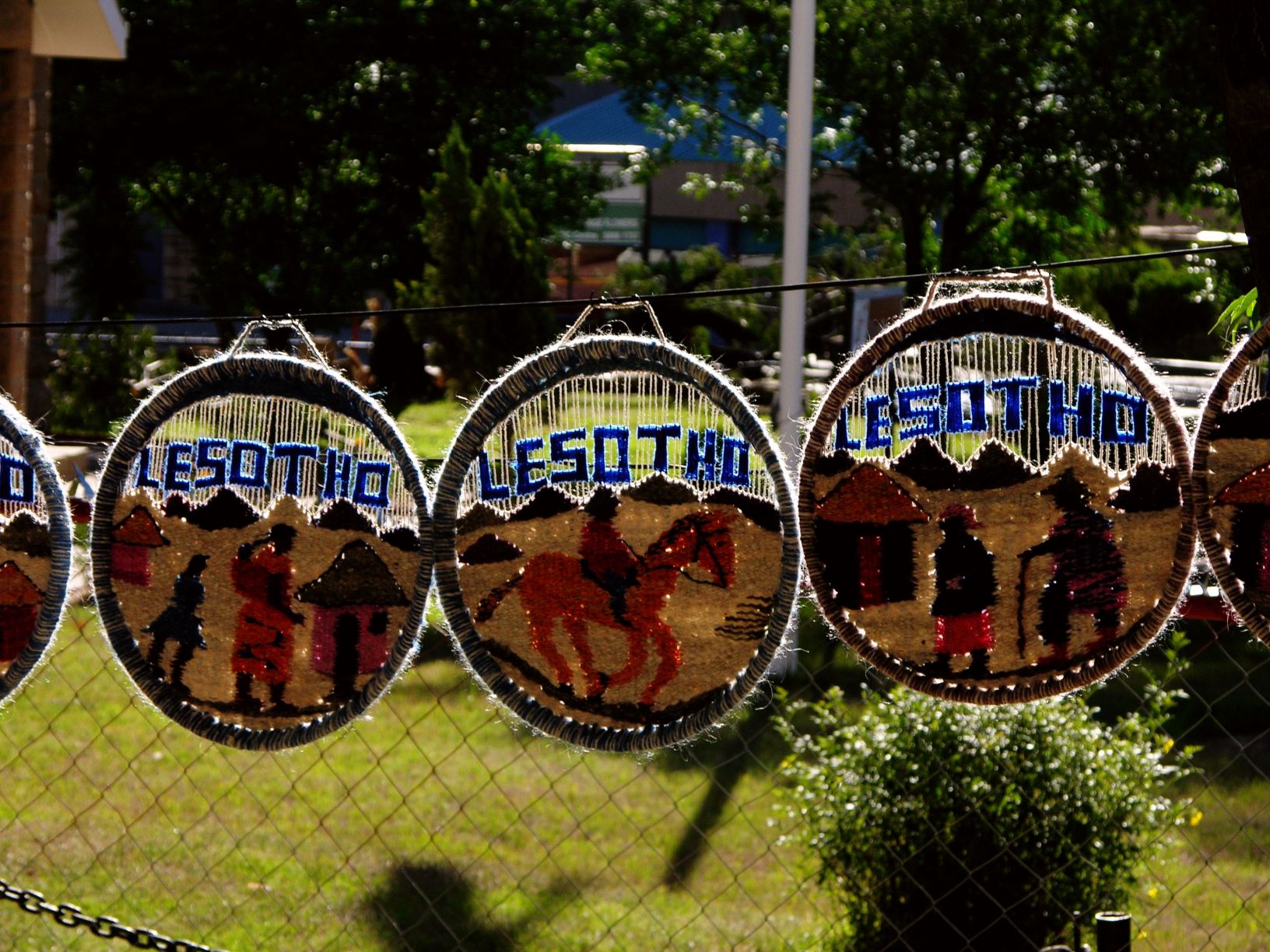
The postal service isn't much good. There's a main post office, but even there we couldn't buy a postcard and a stamp and send it to Russia. We only found a letterbox and stamps in Malealea, provided especially for tourists.
There isn't much choice in the shops. No camping gas and no large sizes in shoes or clothes.
On 31 December, finding somewhere to eat turned out to be quite a business. All the cafés had closed. Only KFC would feed us our regulation chicken.
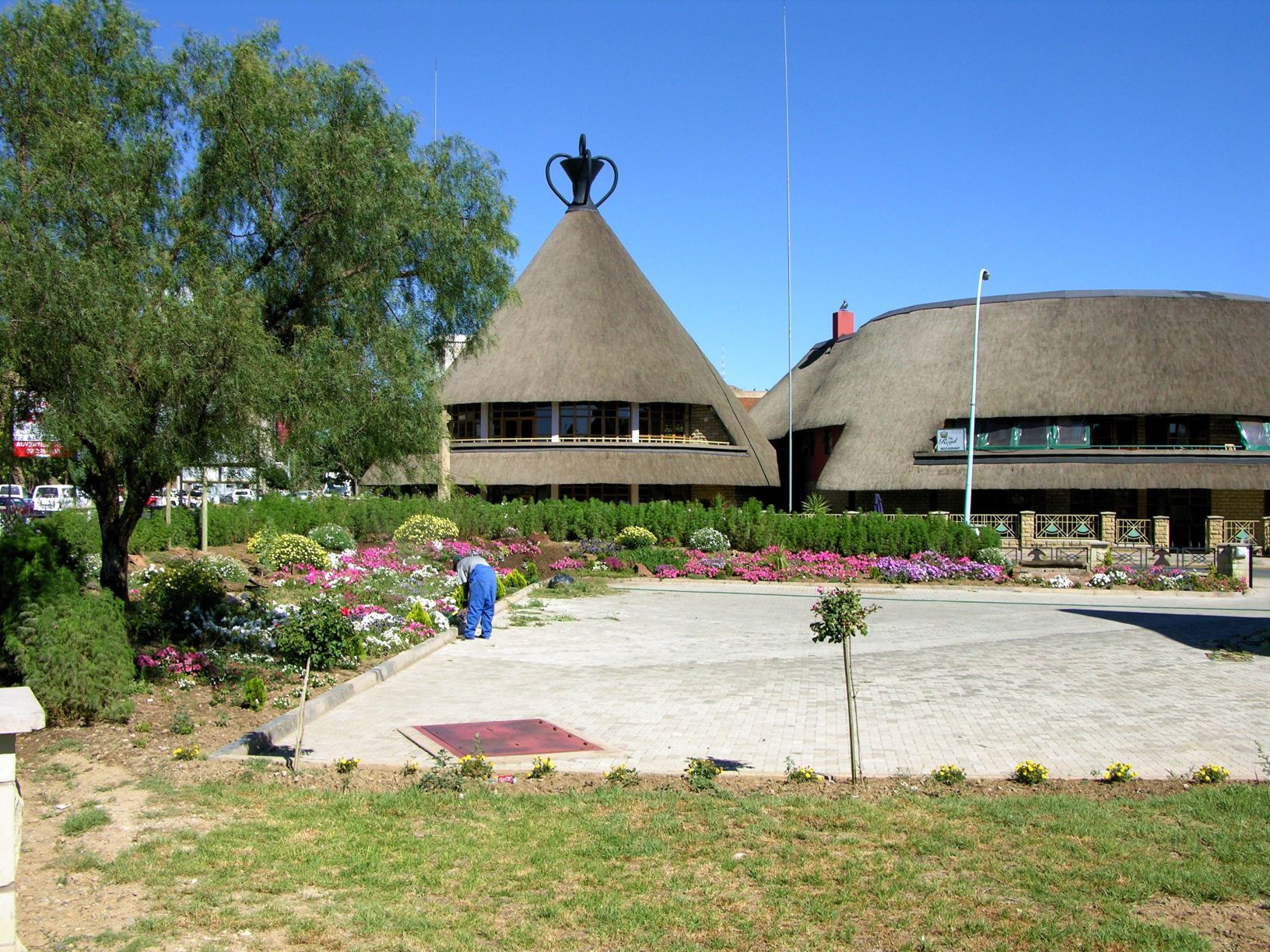
There are a few restaurants for tourists, but all were shut, as was the national museum. Its thatched roof is shaped like the traditional hat, complete with a handle.
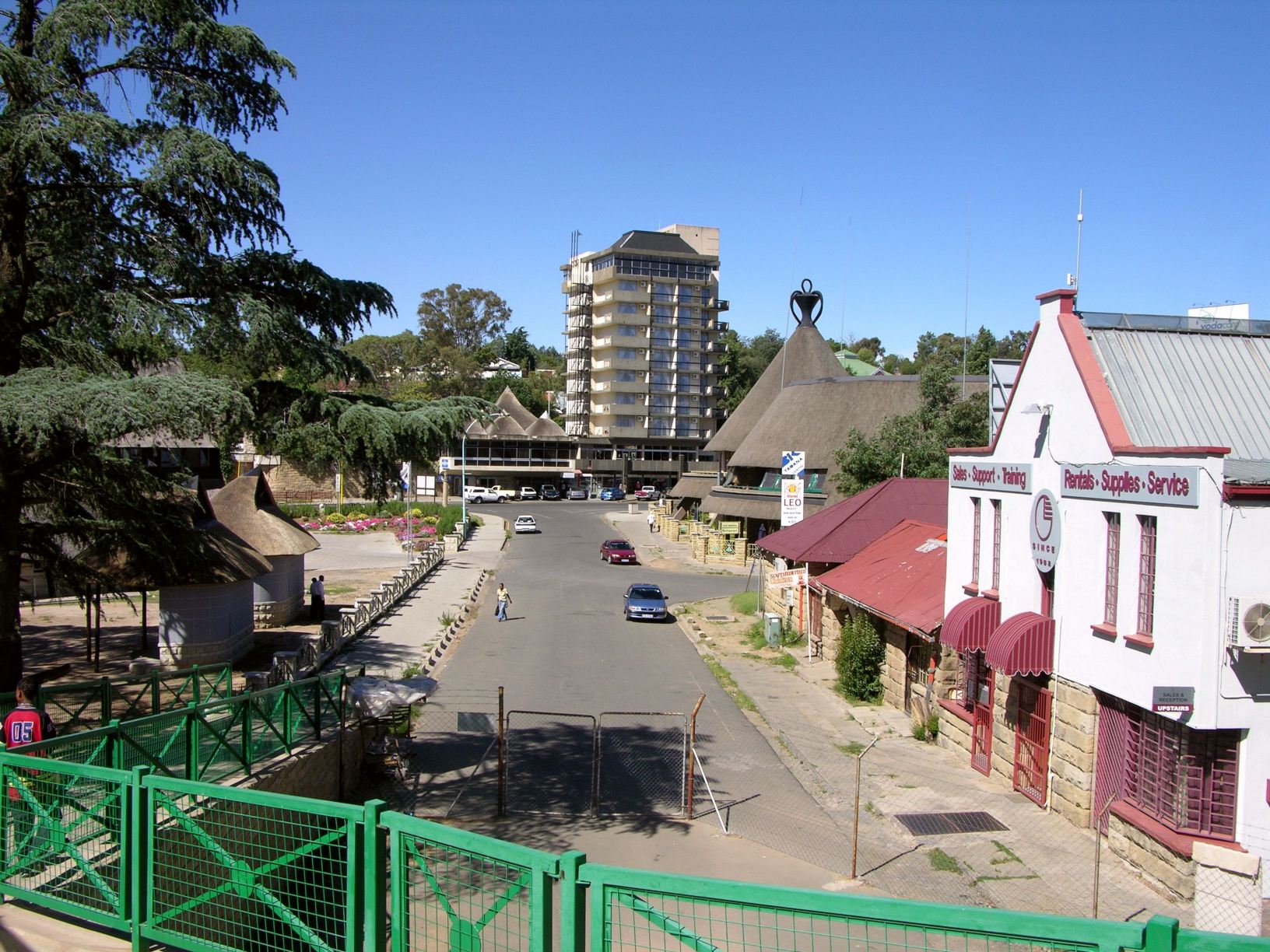
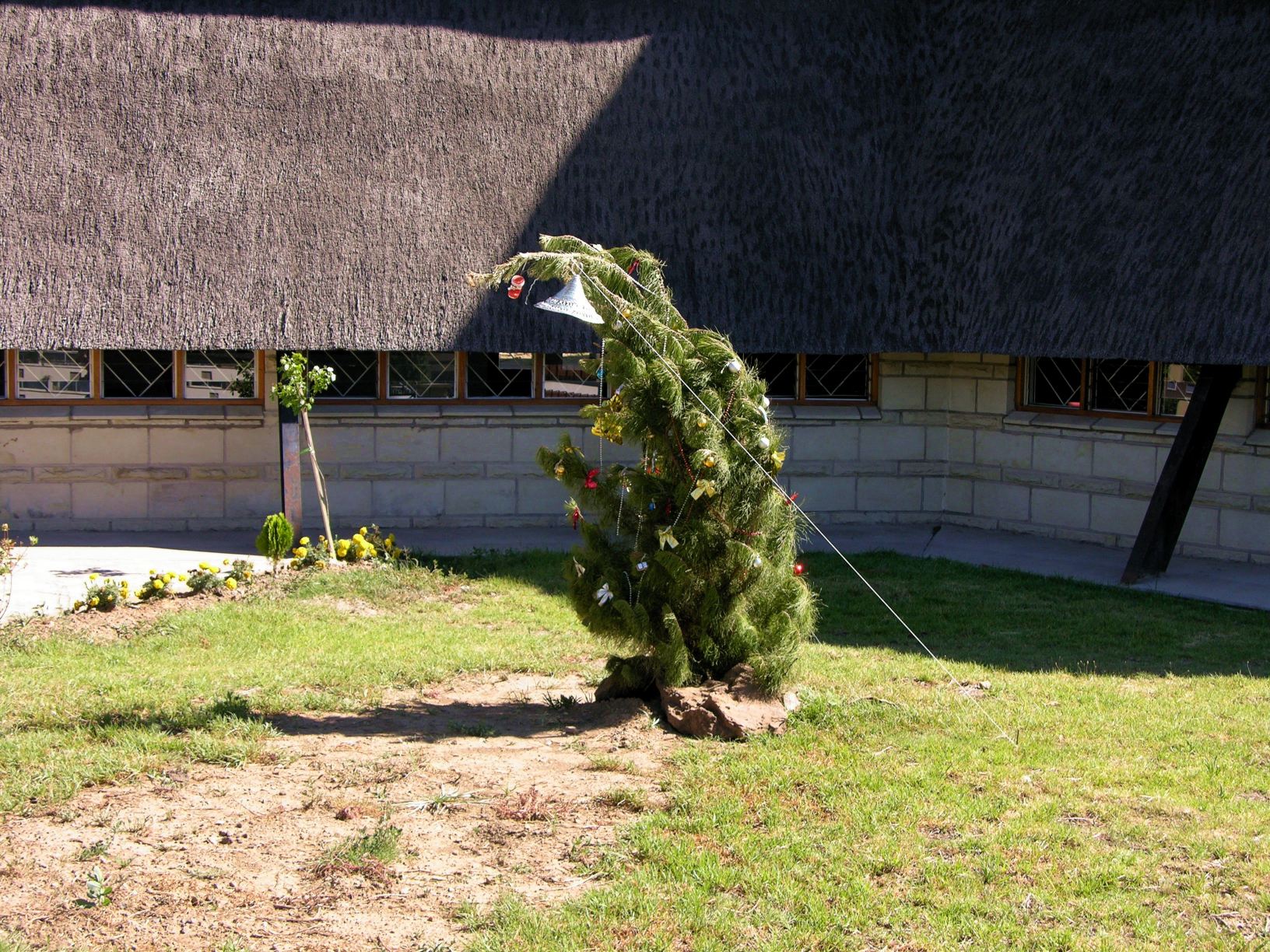
As in any self-respecting country, the finest spot in town was occupied by Lesotho's main Christmas tree.
The Avis office was on top of a hill in the Lesotho Sun, the most expensive hotel catering to foreign guests (tel. 22320087). We walked up. The office was shut as well. Attempts to ring the boss on his mobile got us nowhere. Even on top of the hill our phones couldn't pick up South Africa. I left Tanya to watch the locked door and went back down to buy a local SIM.
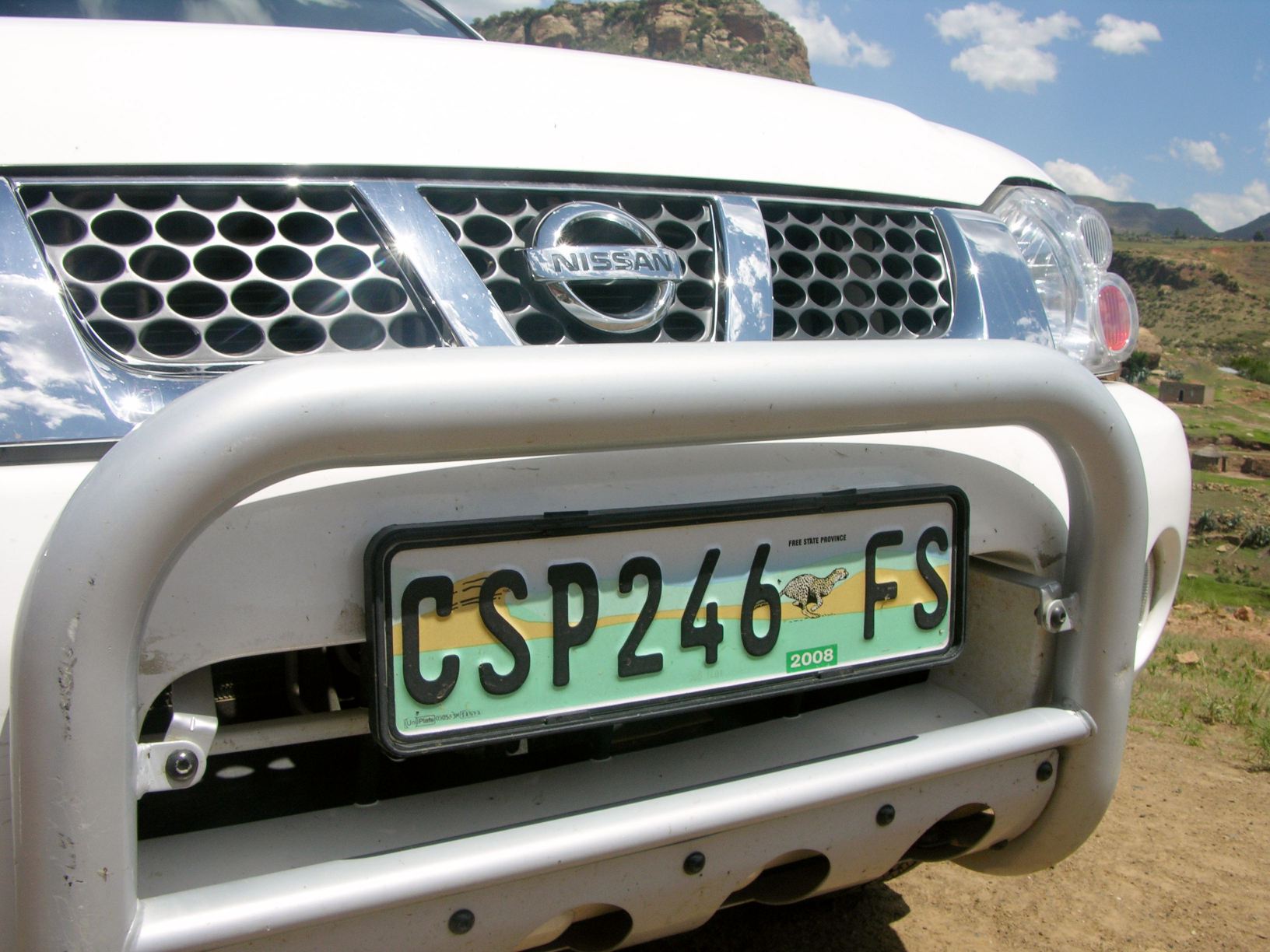
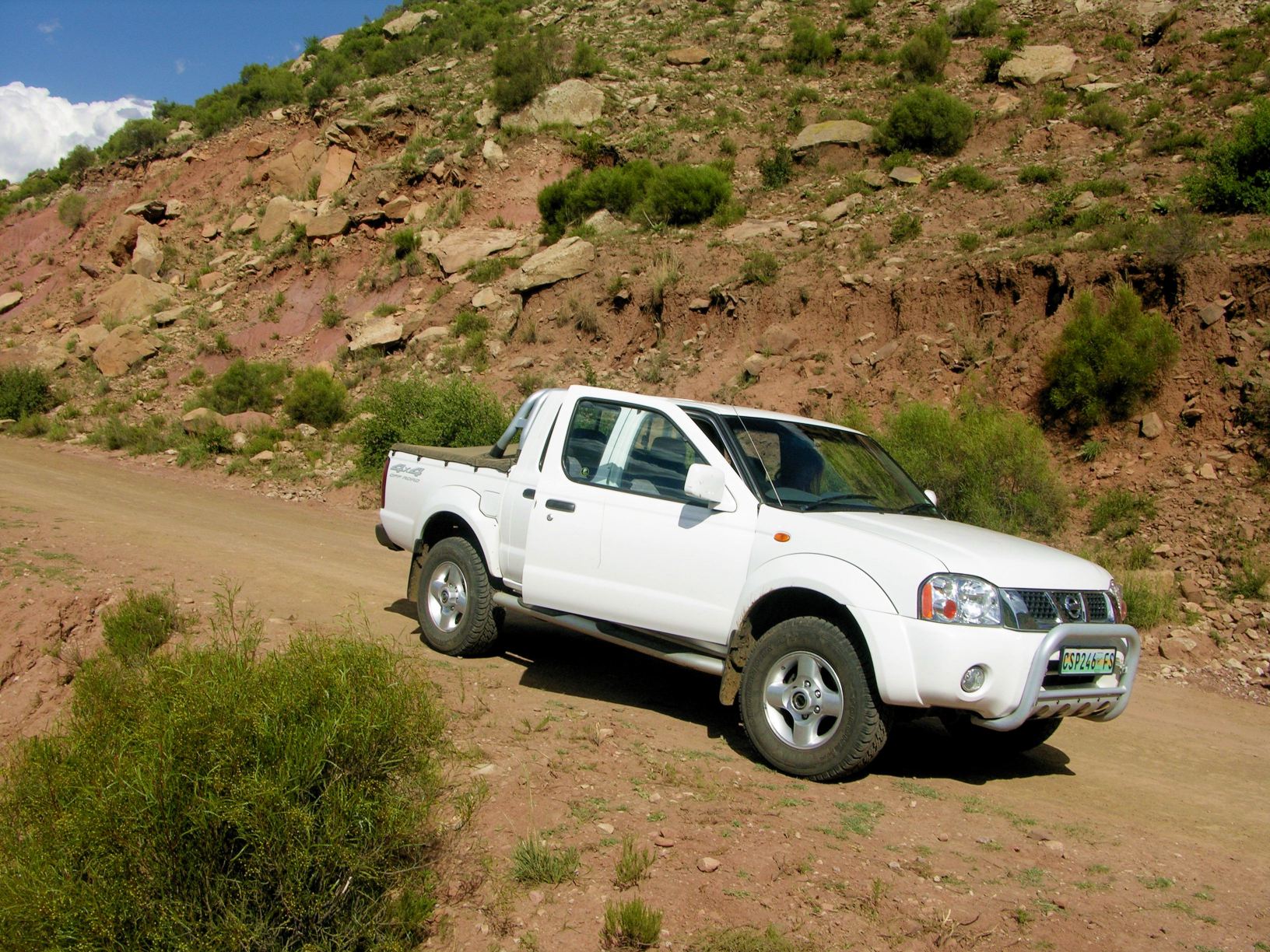
When I came back the office was open and Tanya had already done all the paperwork. We now had a car, a Nissan Hardbody, the right-hand-drive equivalent of a Patrol.
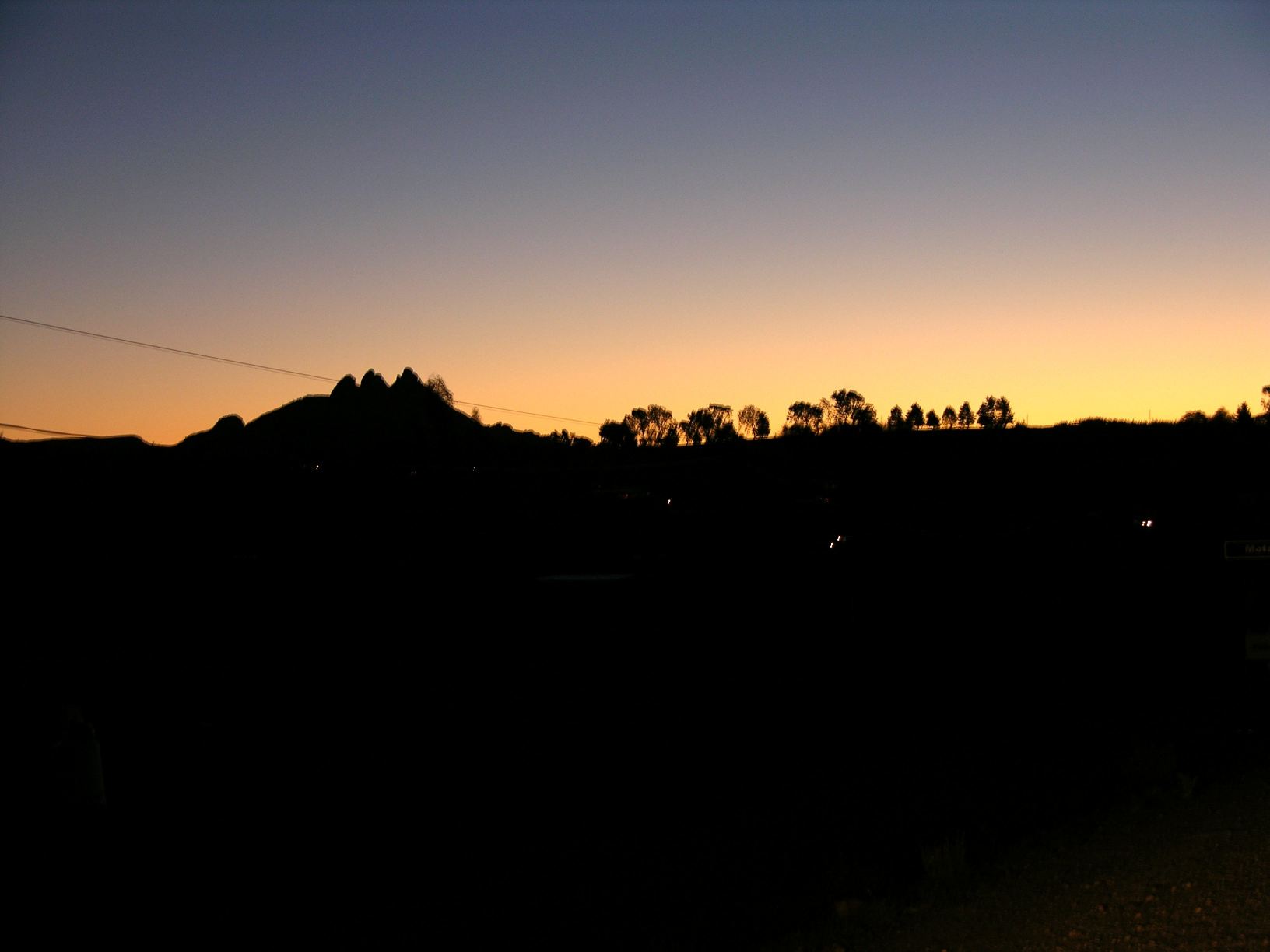
After making the rounds of the shops, we set off to celebrate New Year in Malealea. It was a cloudless evening with a lovely African sunset. We got there after dark.
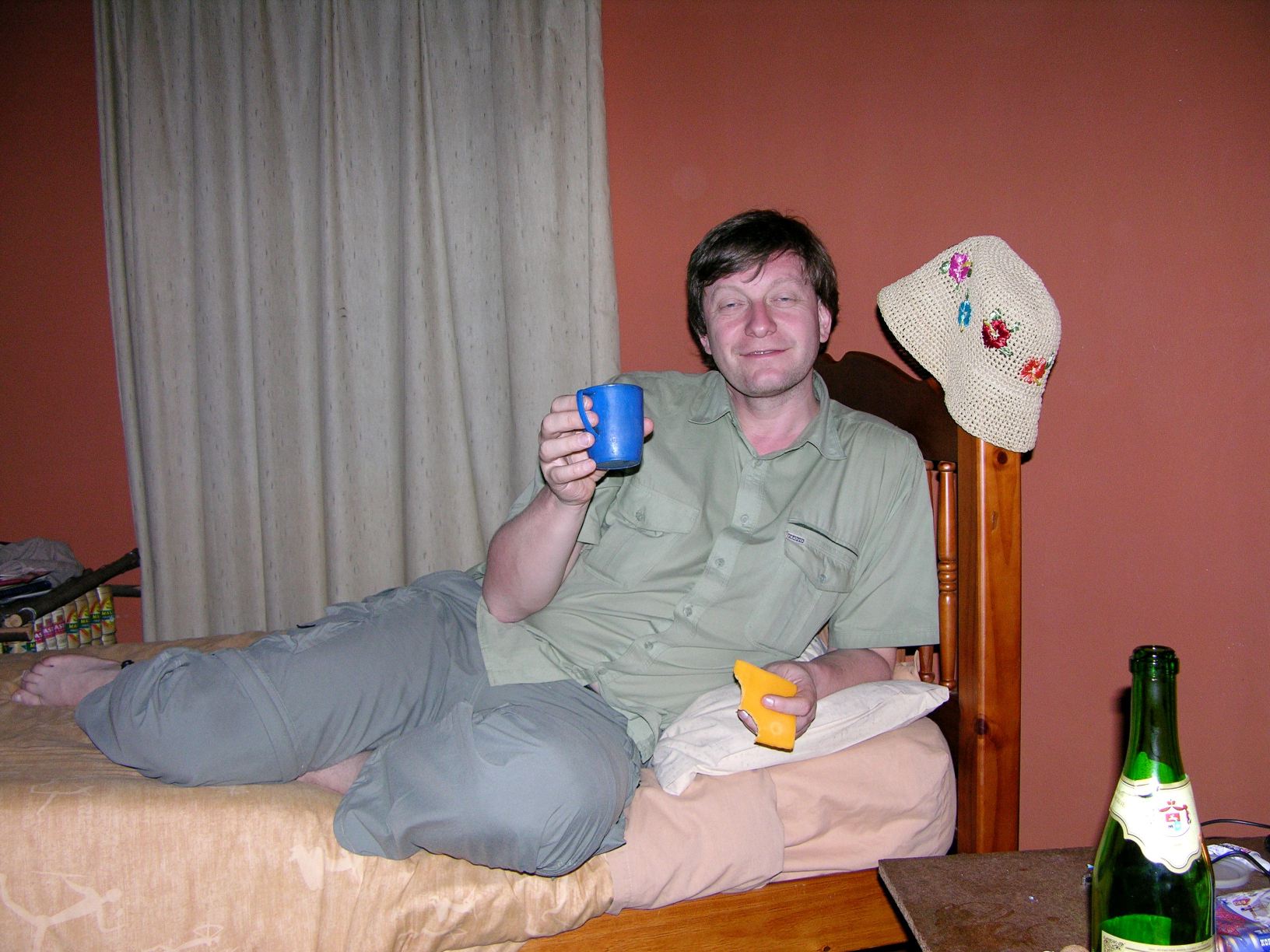
The young visitors were making a great noise in the dining room as they got ready for New Year's Eve. They were playing some sort of quiz game, like ‘What? Where? When?’, and laughing loudly. We have no taste for noisy gatherings, so we slipped away to hide in our hut. They tried to invite us in, which scared us even more. We quietly said goodbye to 2004 and welcomed in the new year, 2005.
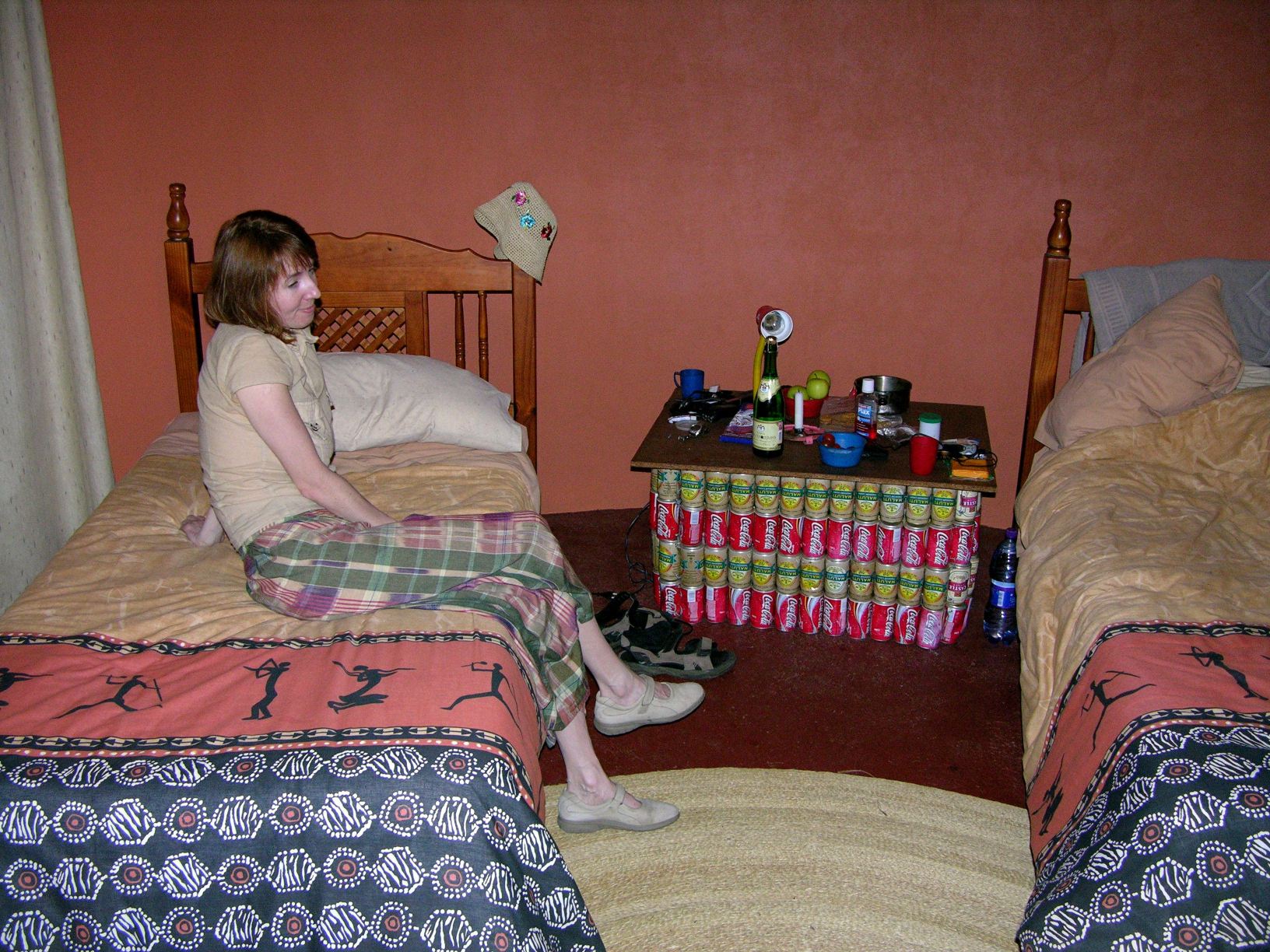
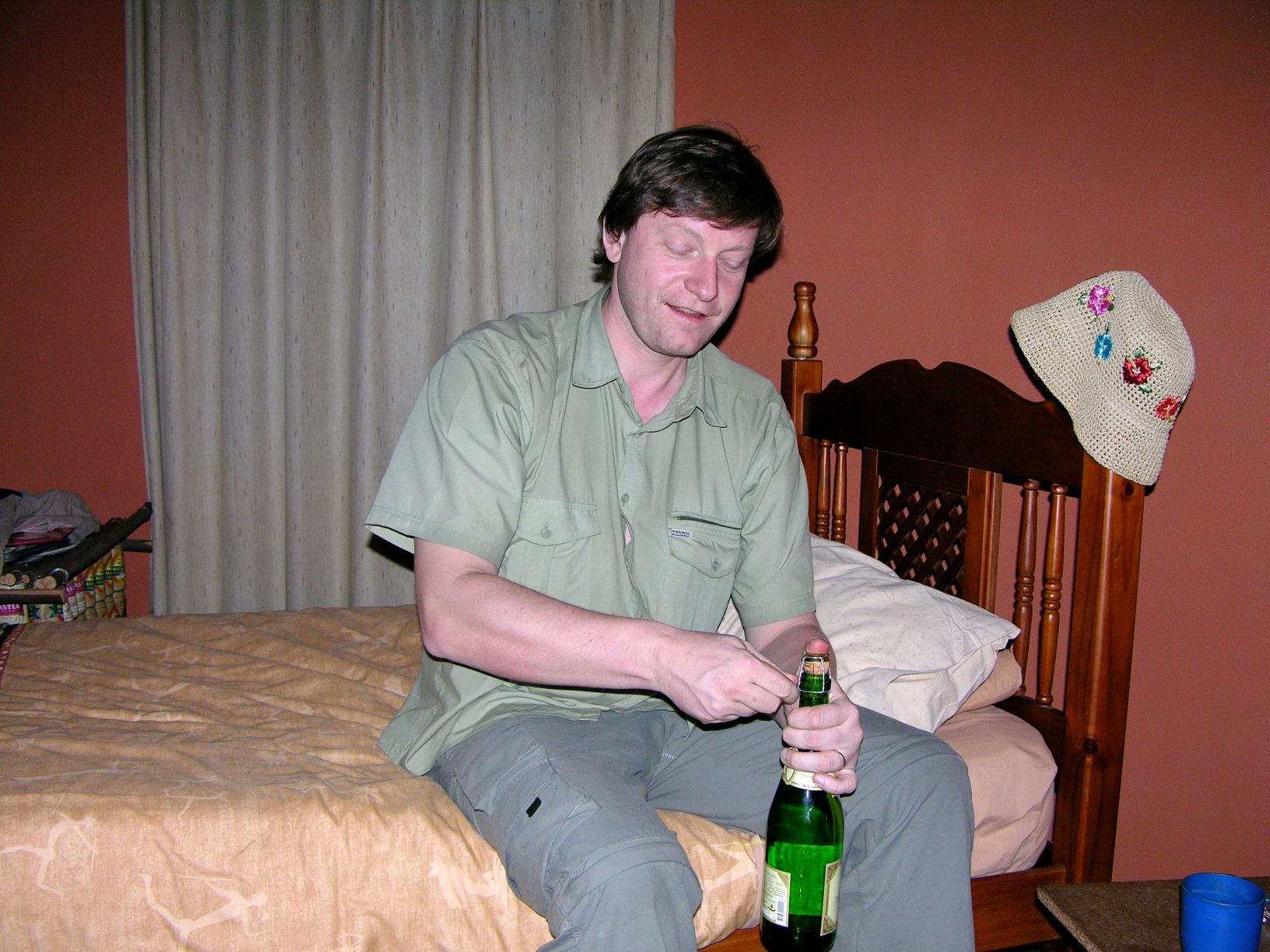
There was no mobile signal in Malealea, not even from the local network, so we couldn't send messages or call.
They shut off the generator at one in the morning and the celebrations ended in total darkness. It was a new moon. There was no electricity for tens of kilometres around. Mountains all round us, and we were at 1,800 metres. The sky was perfectly clear. I'd never seen stars like that. The centre of the galaxy is in the southern sky, so the Milky Way is brighter and wider, and it seems there are twice as many stars. The Magellanic Clouds were there, too, and the Southern Cross was rising behind the distant mountains. Their summits lit up with flashes of heat lightning. It was astonishing. Night after night I sat for hours on a little bench, looking at it. Tanya slept while I sat and watched, trying to fix the most beautiful night sky of my life in my memory for good.
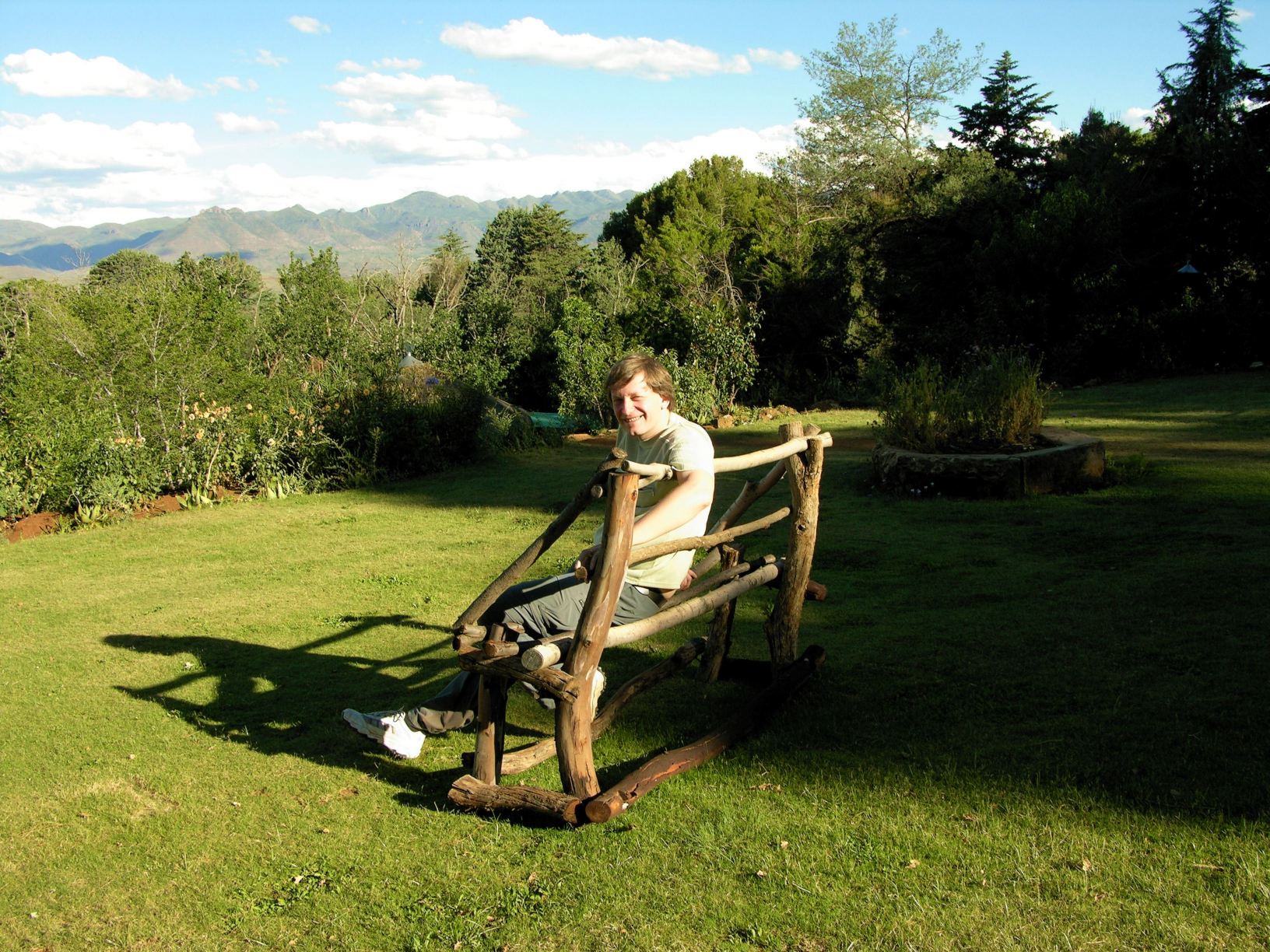
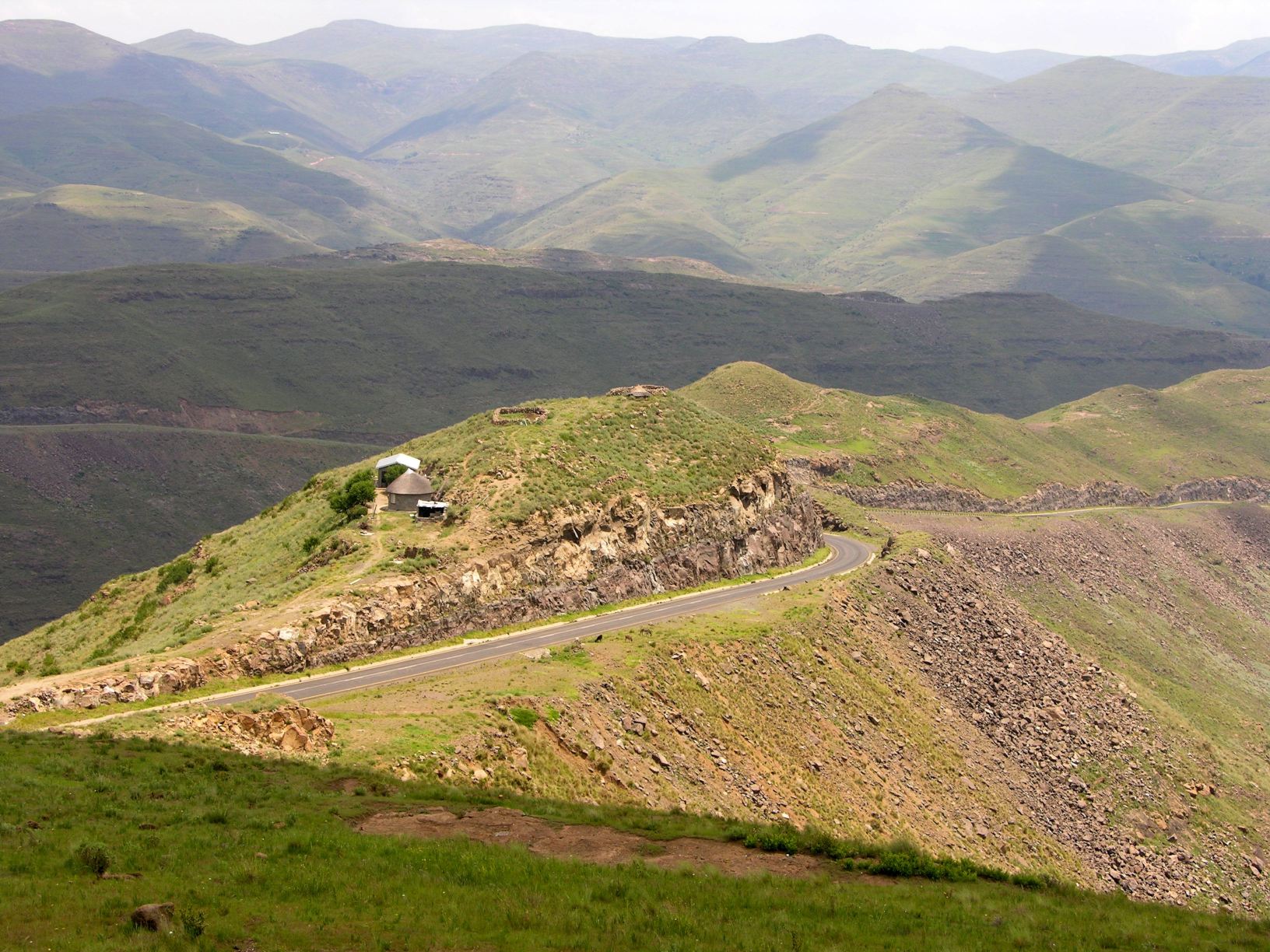
On the first day of the year we set out on a long drive round the country. We started on a little road running north from Malealea. A narrow mountain road, a pleasure to drive. The map said that in the rain it became impassable, as any car would slide off the mud into the ravine. I can well believe it.
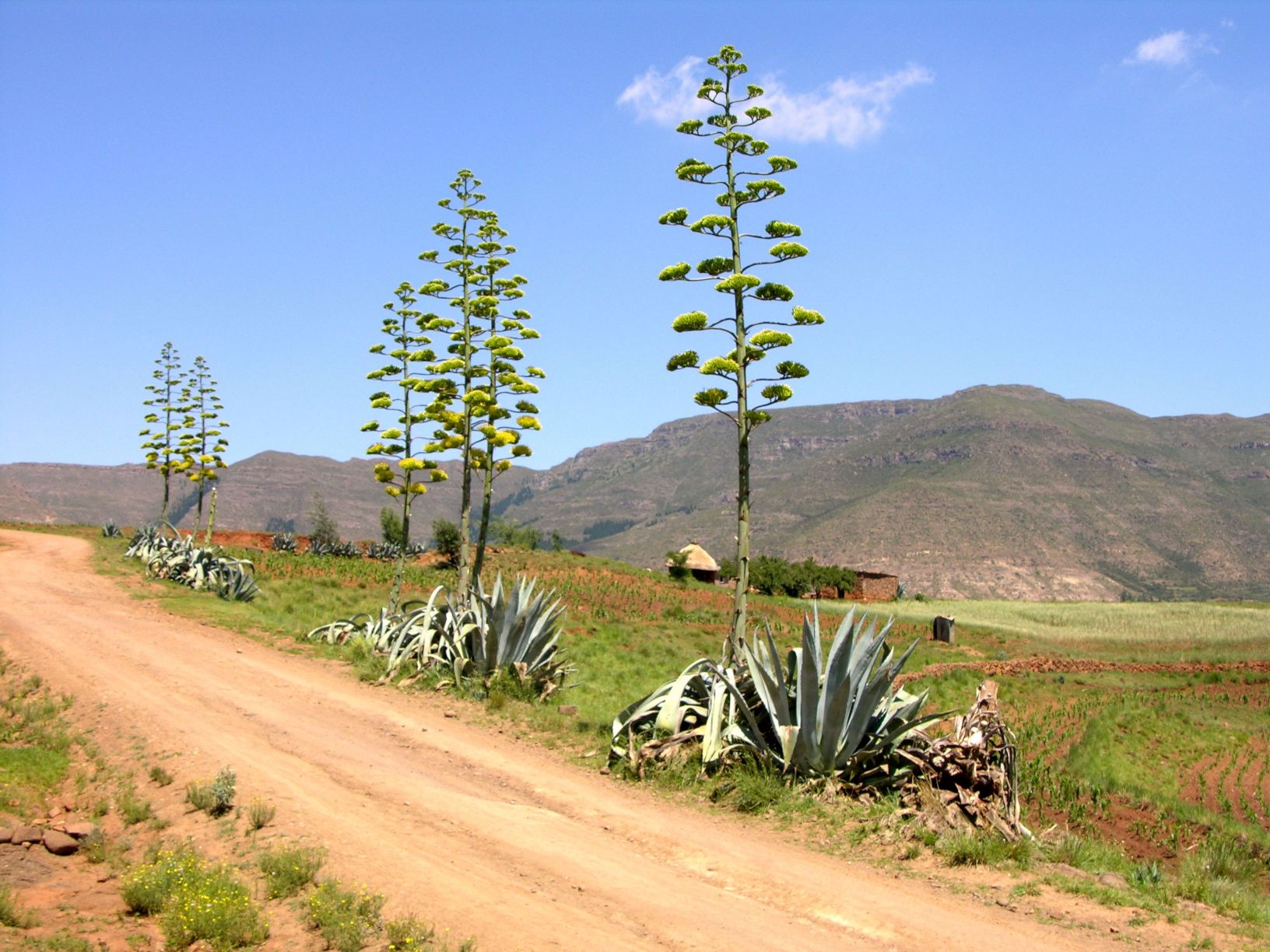
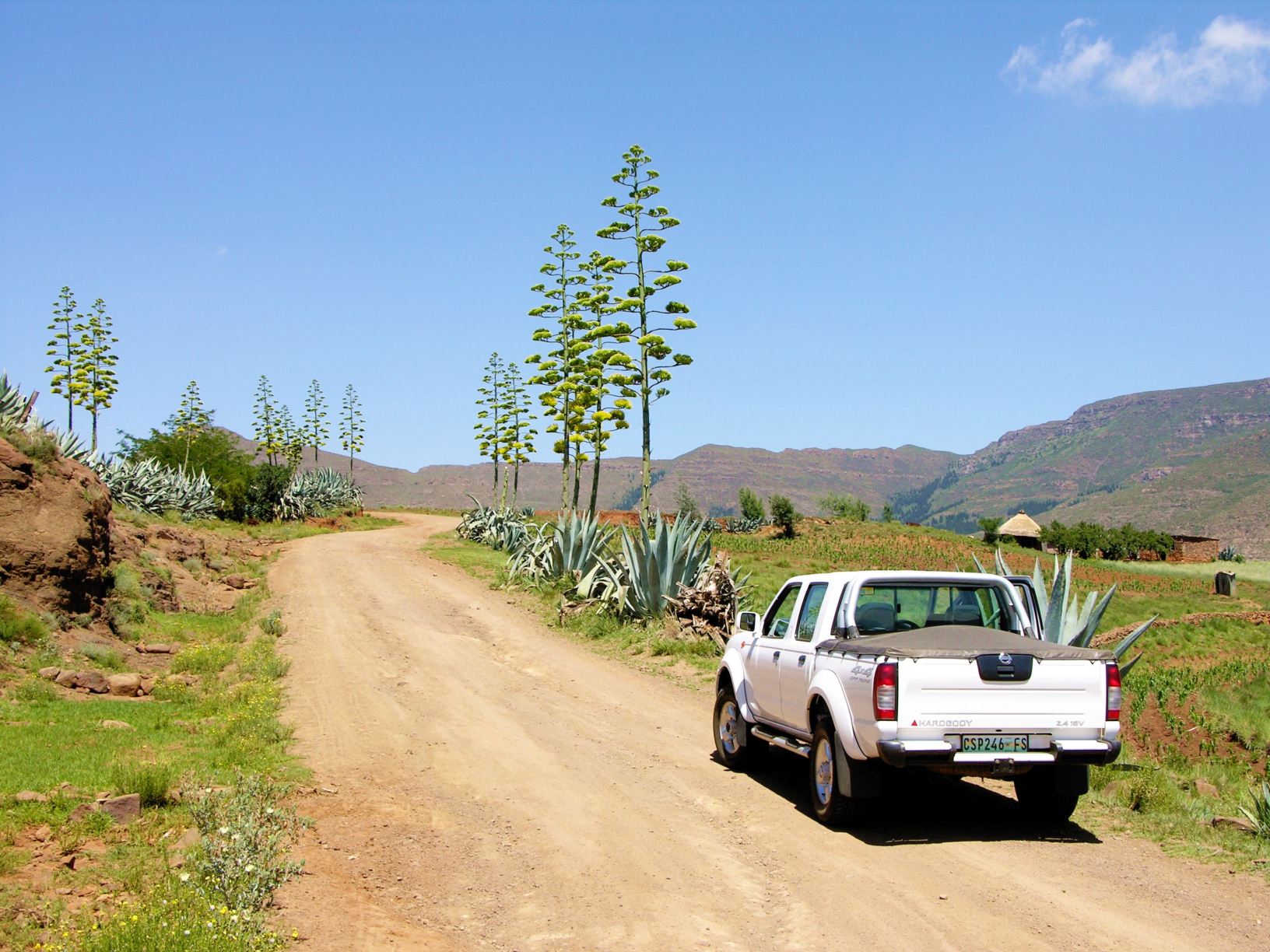
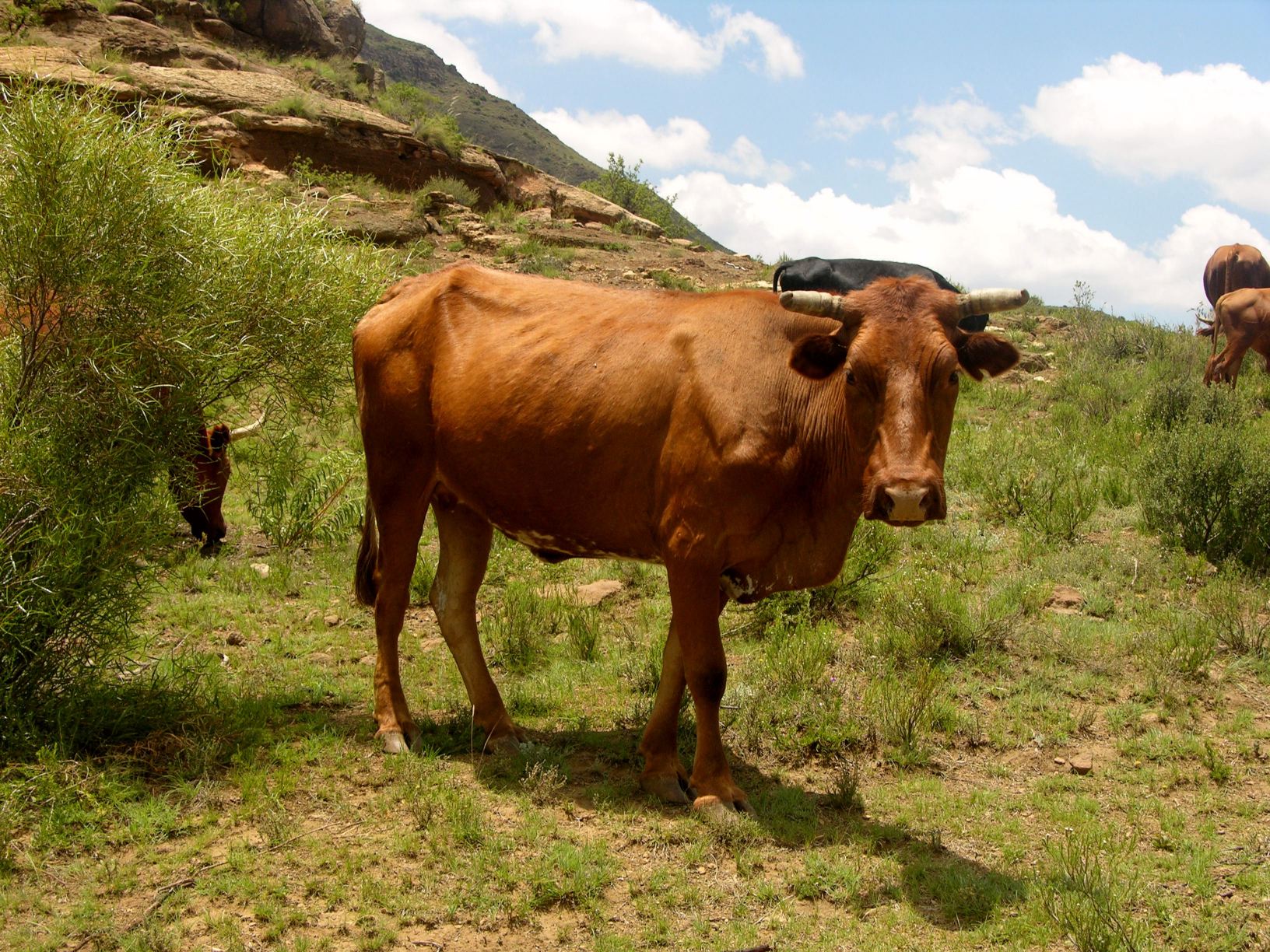
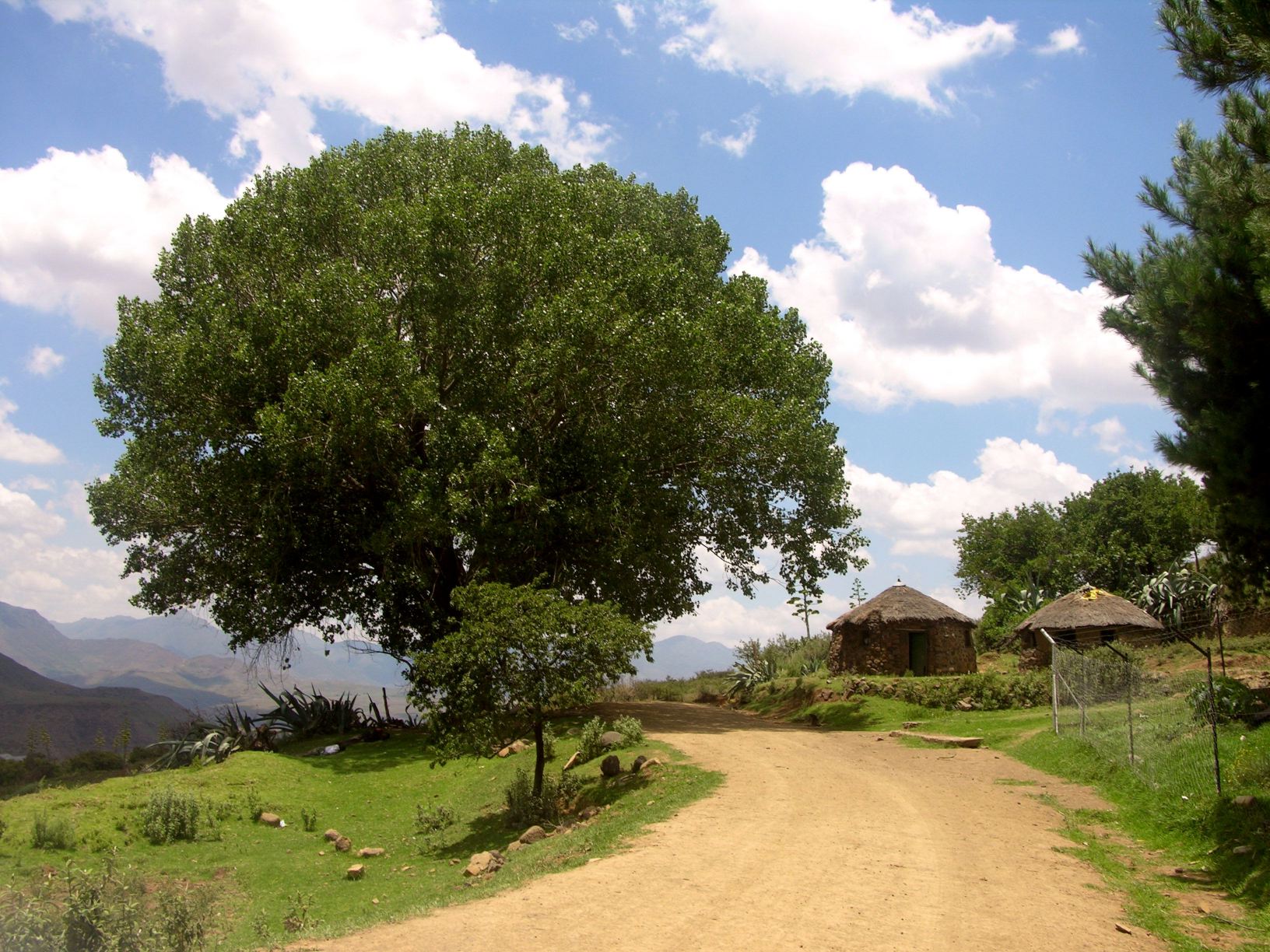
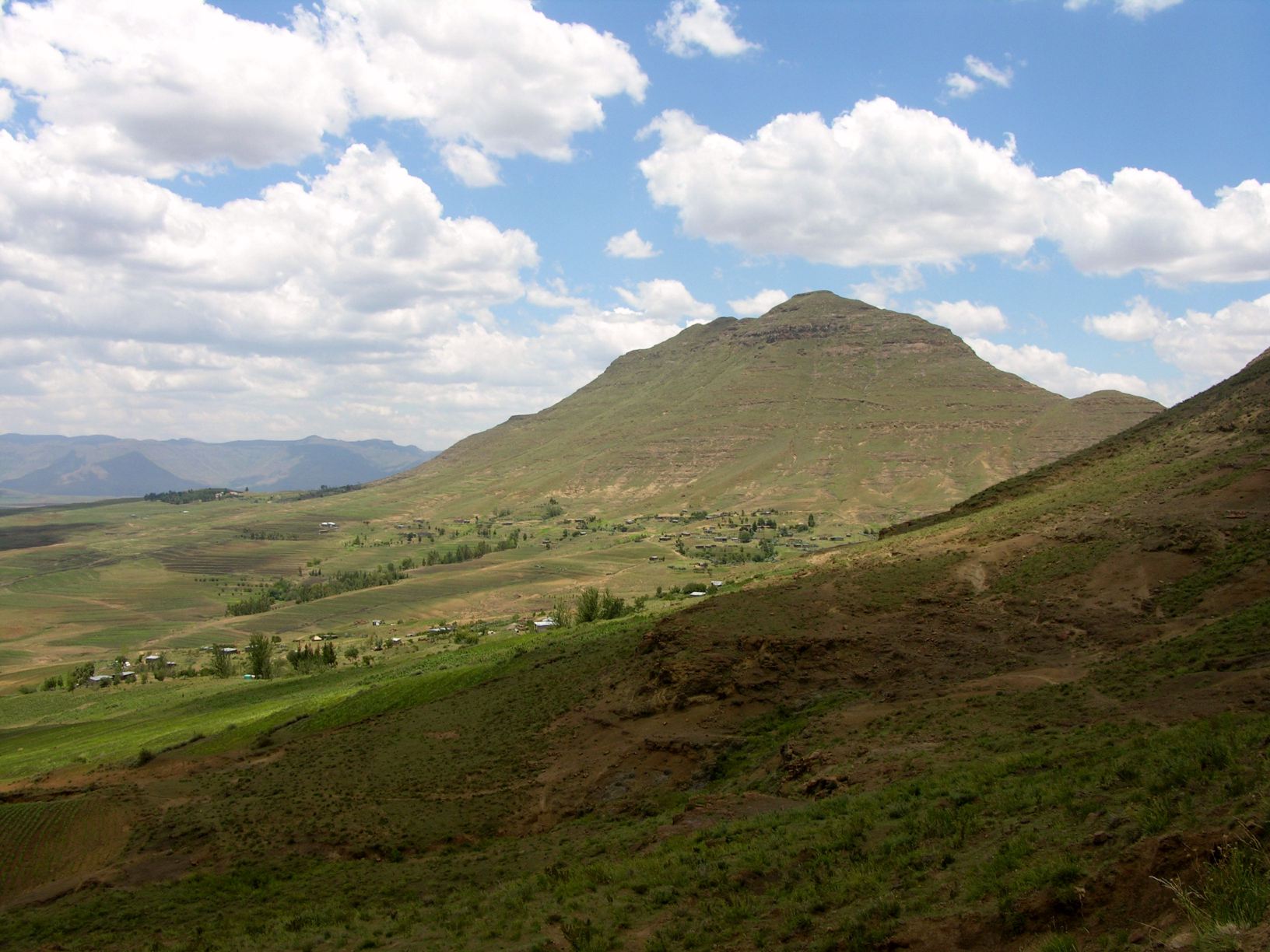
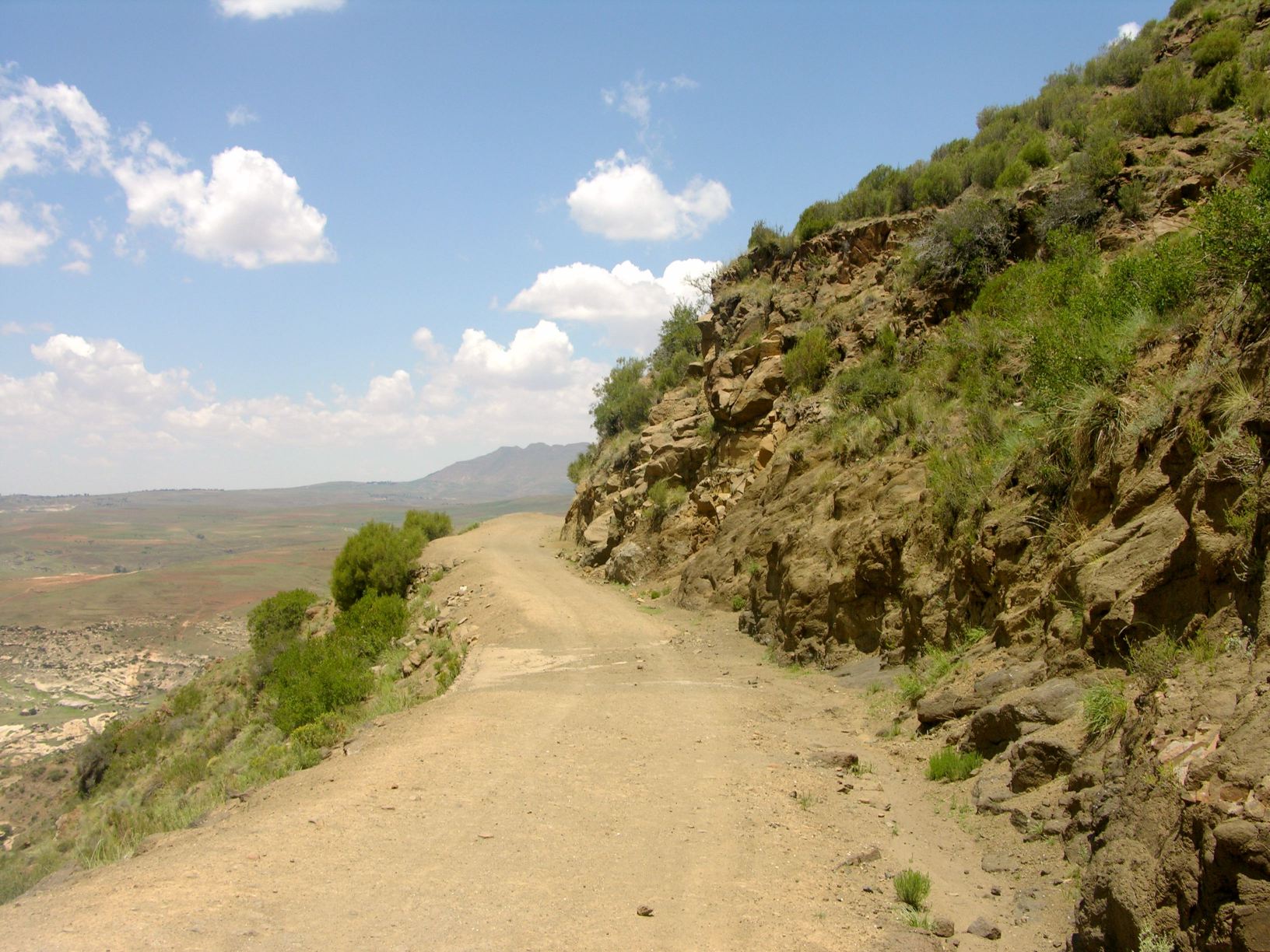
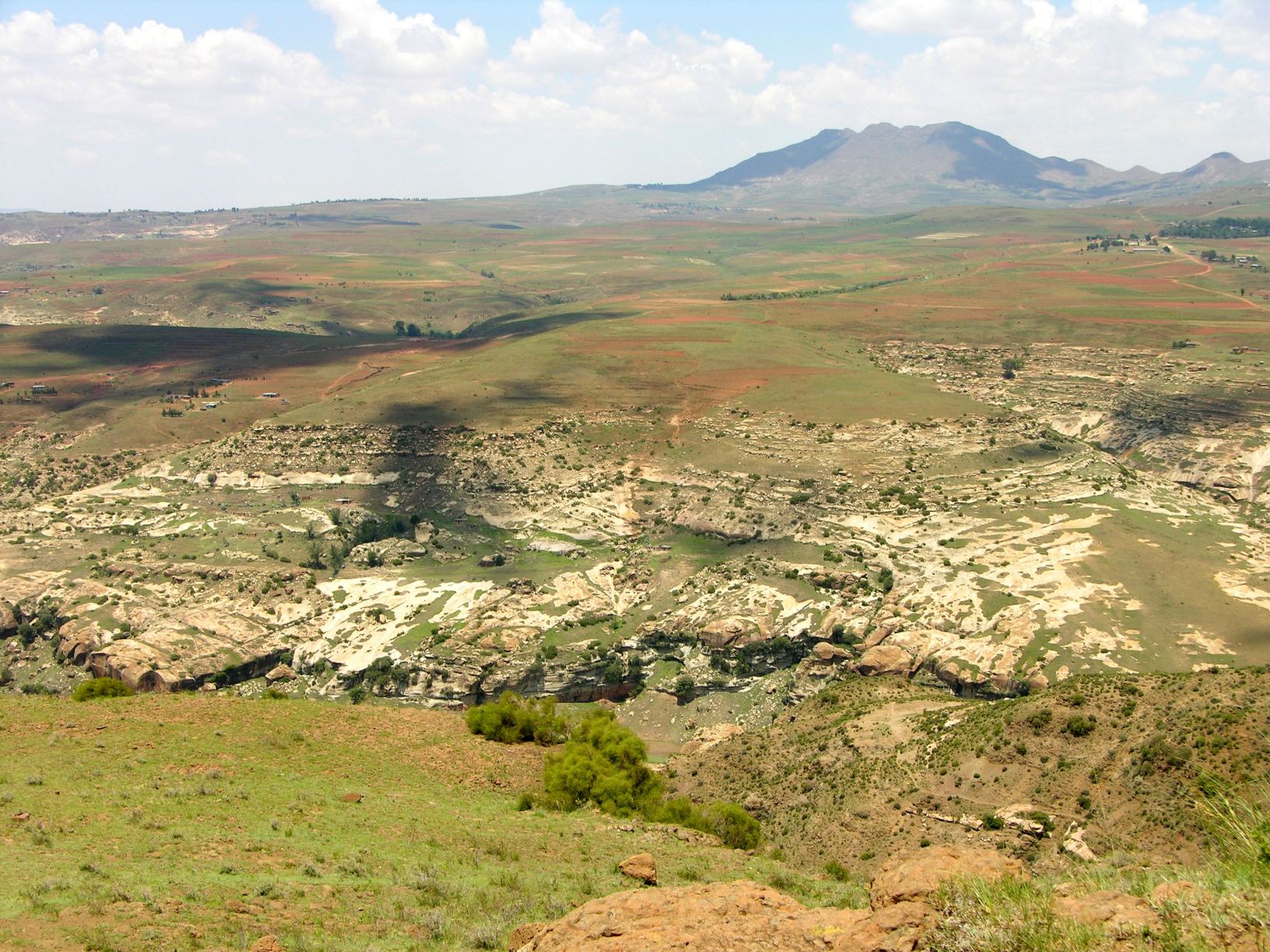
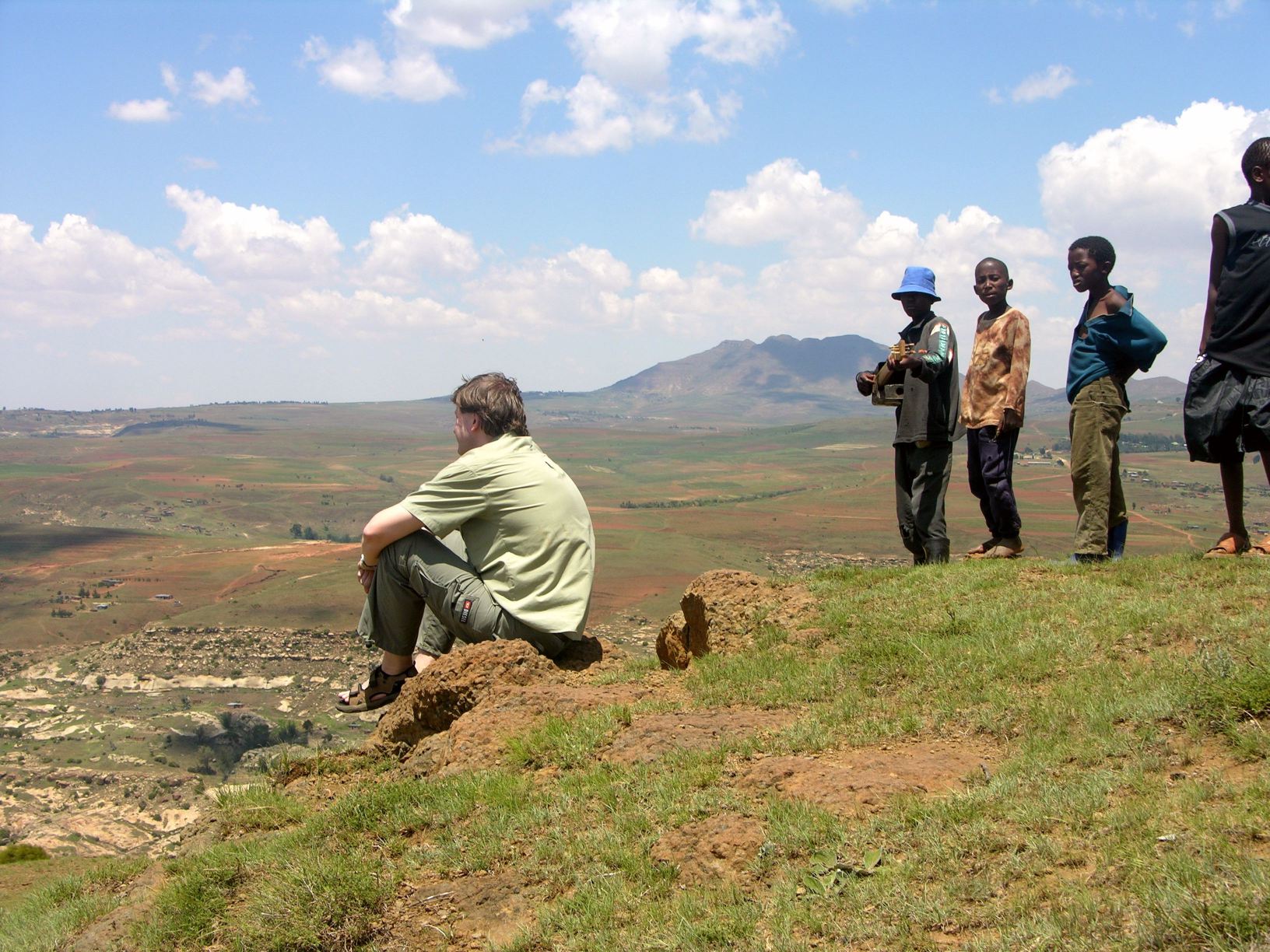
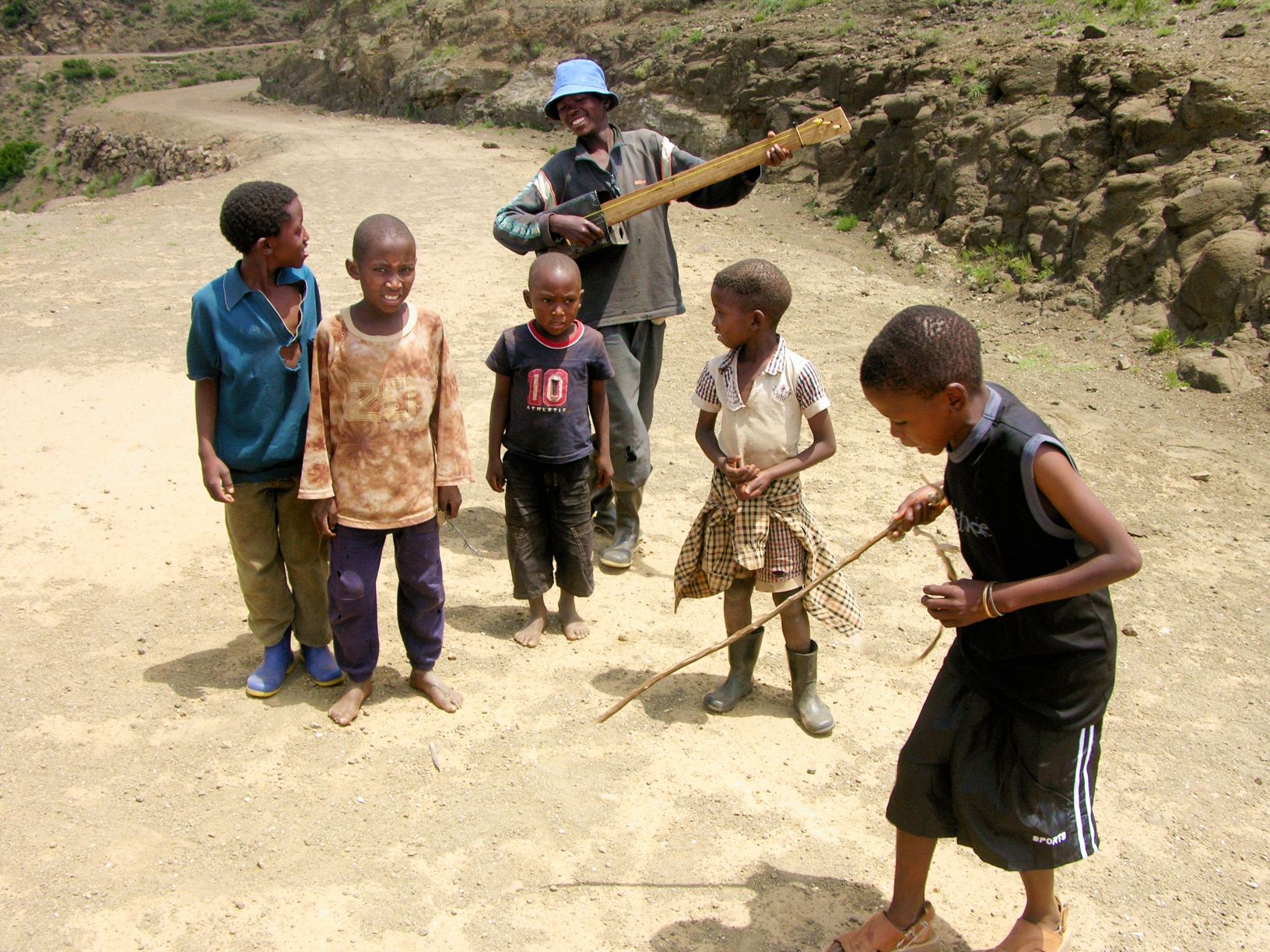
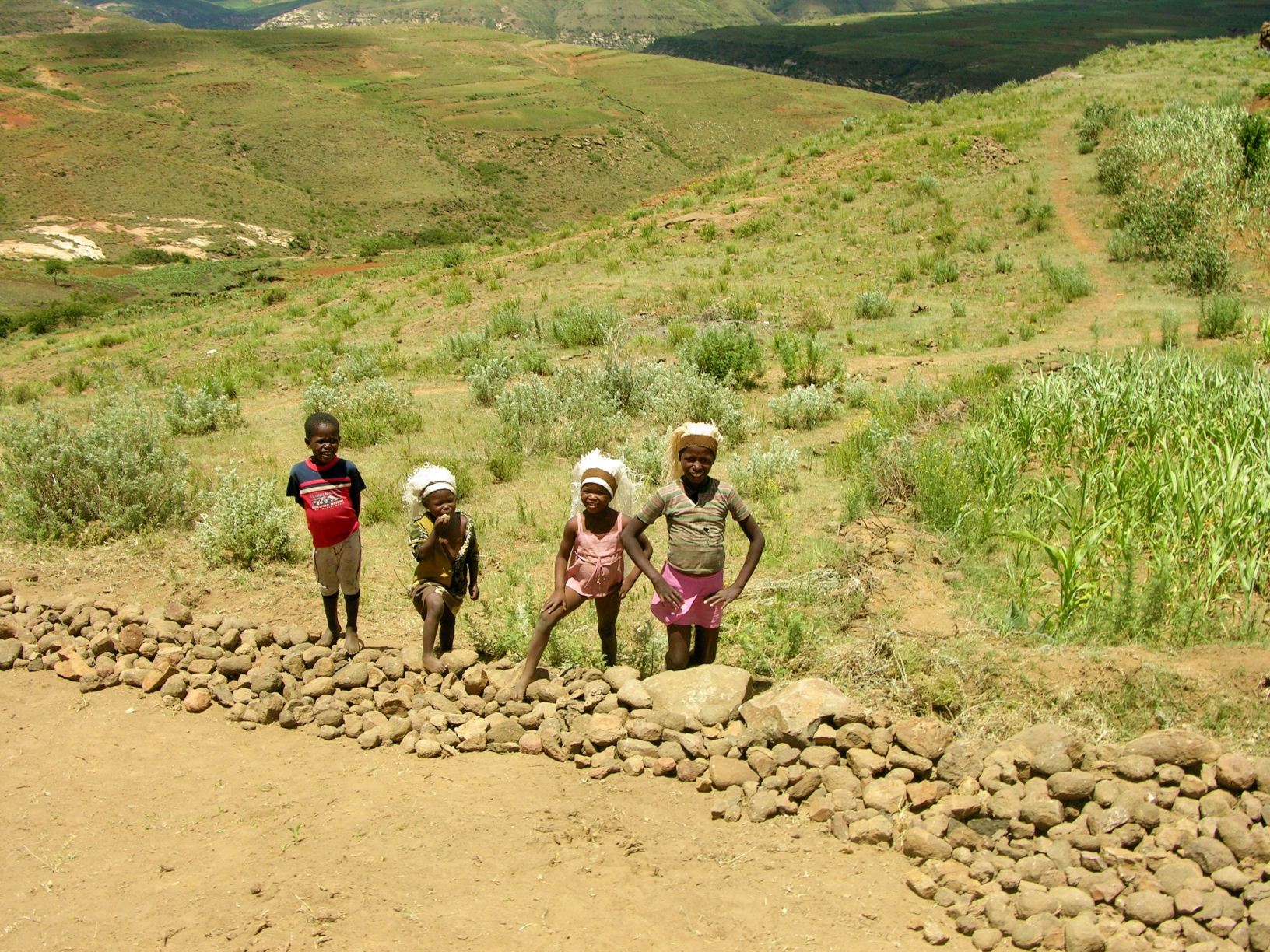
We stopped at a viewpoint marked on the map for its panorama. Local children tending goats rushed right up to us to sing and dance. Their clothes were in rags and their guitar was made from a tin can, but they were really good. They put everything into it. They were happy with ten rand.
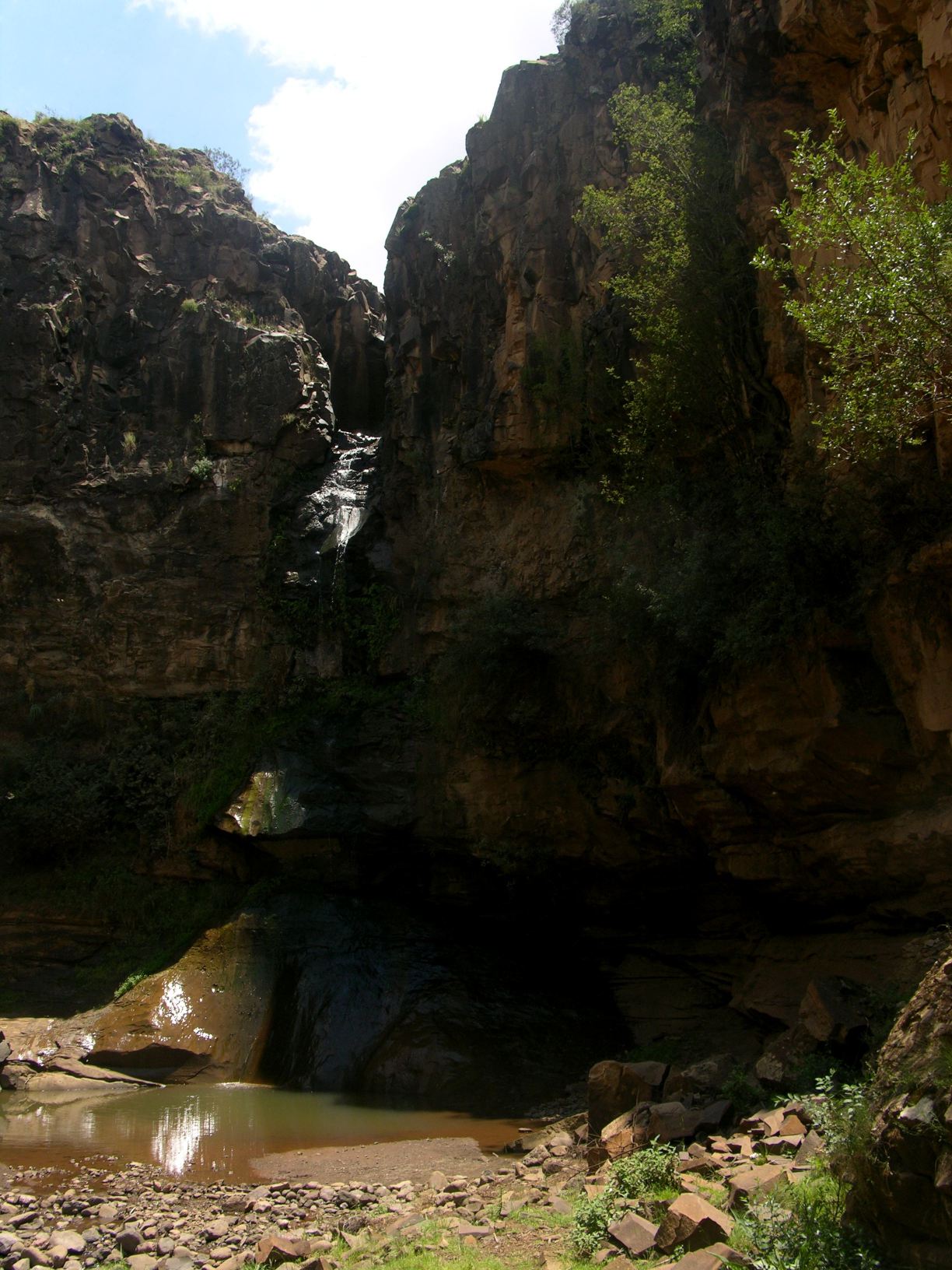
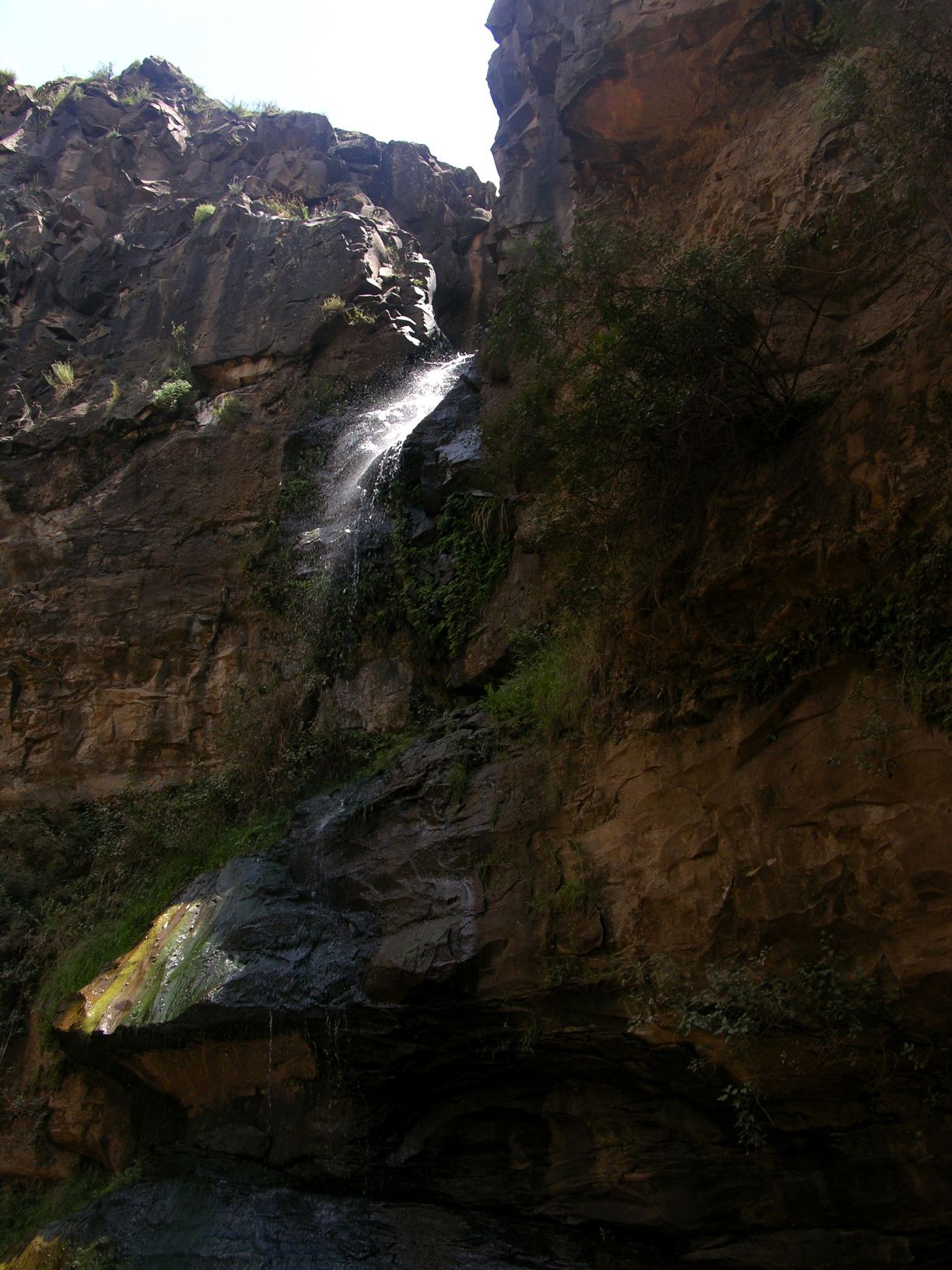
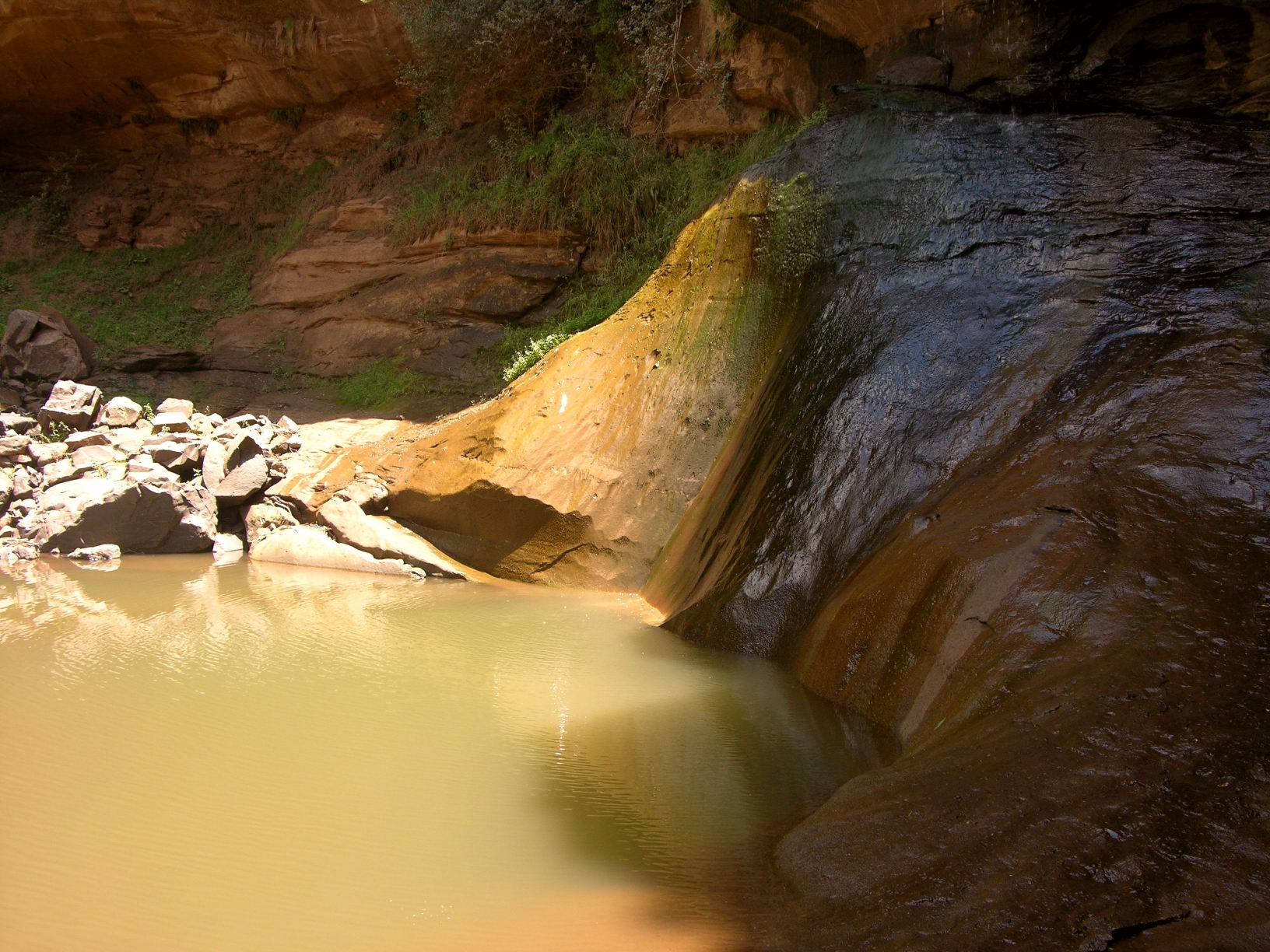
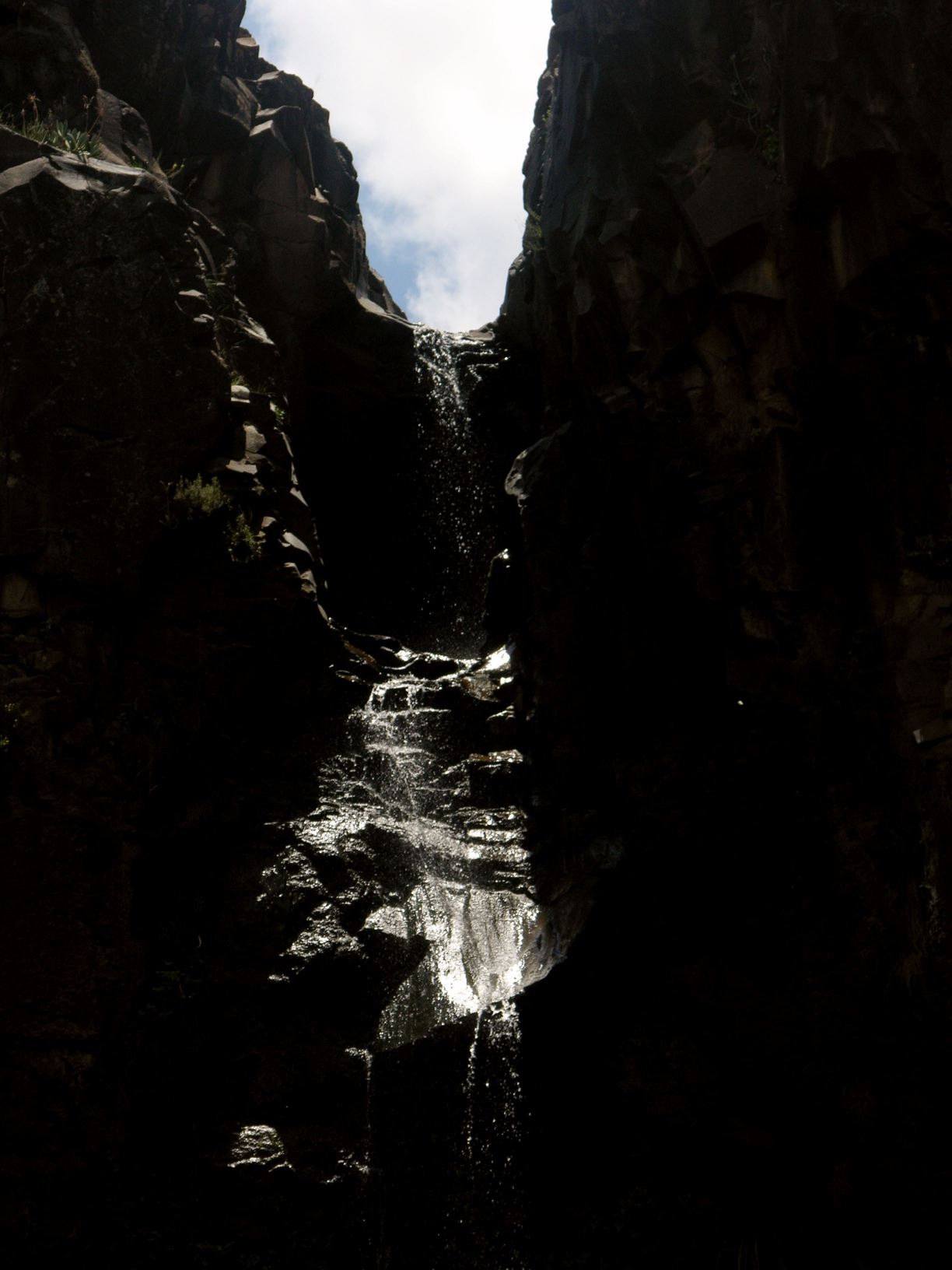
The other thing to see on that road was the Botsoela waterfall. People were waiting for us there too. One watched the four-wheel drive for five rand, and another led us a hundred metres down the path to the falls. A sad little trickle dropped twenty metres. They said it was a very dry year and the waterfall was usually impressive. Hard to believe.
South of Malealea there are lots of roads that only a four-wheel drive can get through. One goes to the top of a mountain. The map marked it as especially difficult. We gave it a go, and it certainly lived up to the warning. The ground was dry and the car had true four-wheel drive, yet the slope was so steep the stones flew downhill from under the wheels and the car slid sideways. Tanya was sure we'd go over the edge and groaned in fright. It was scary, and there was nowhere to turn round. All we could do was drive higher and higher. We made it to the top, but I wouldn't be in a hurry to do it a second time.
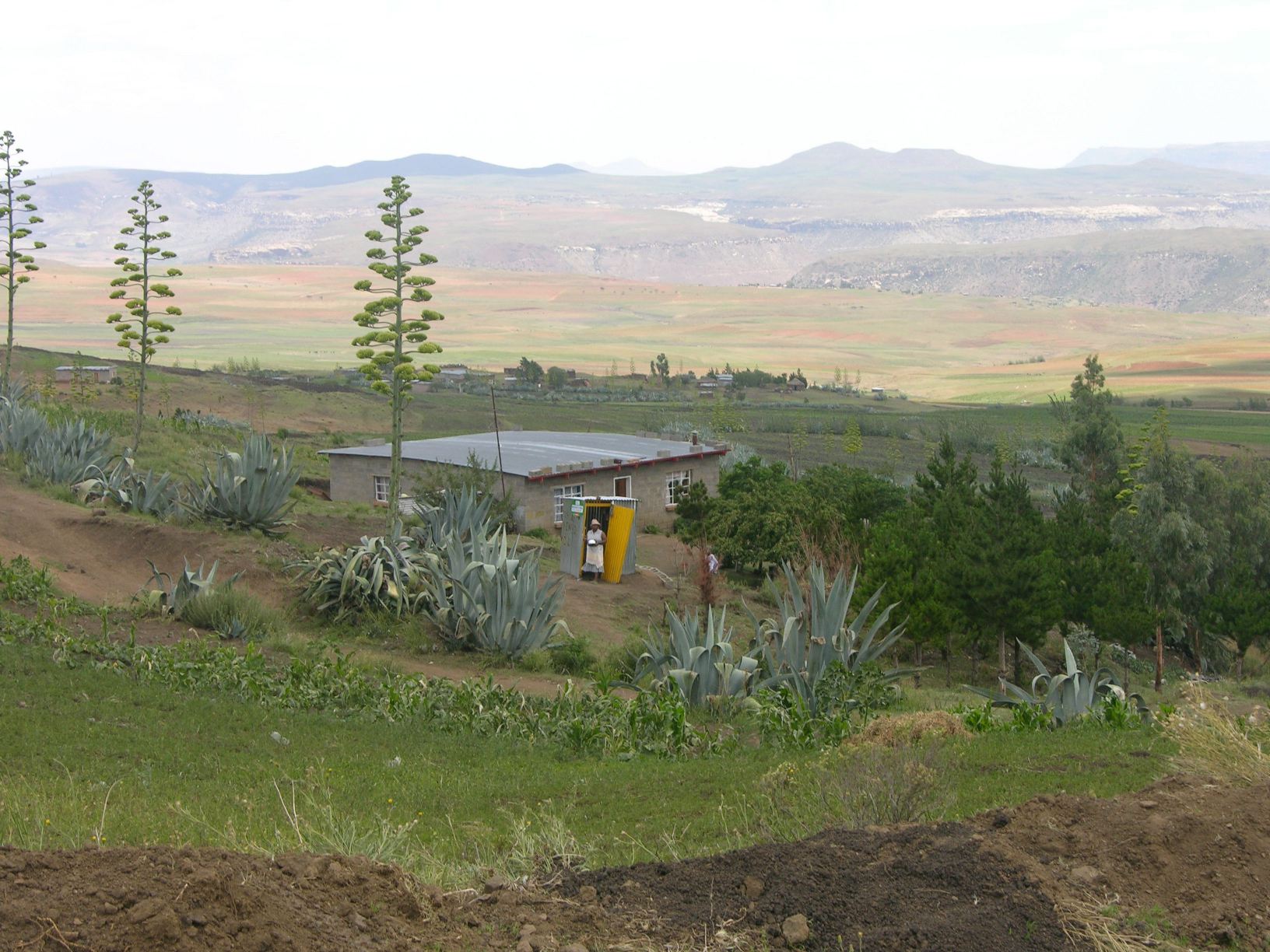
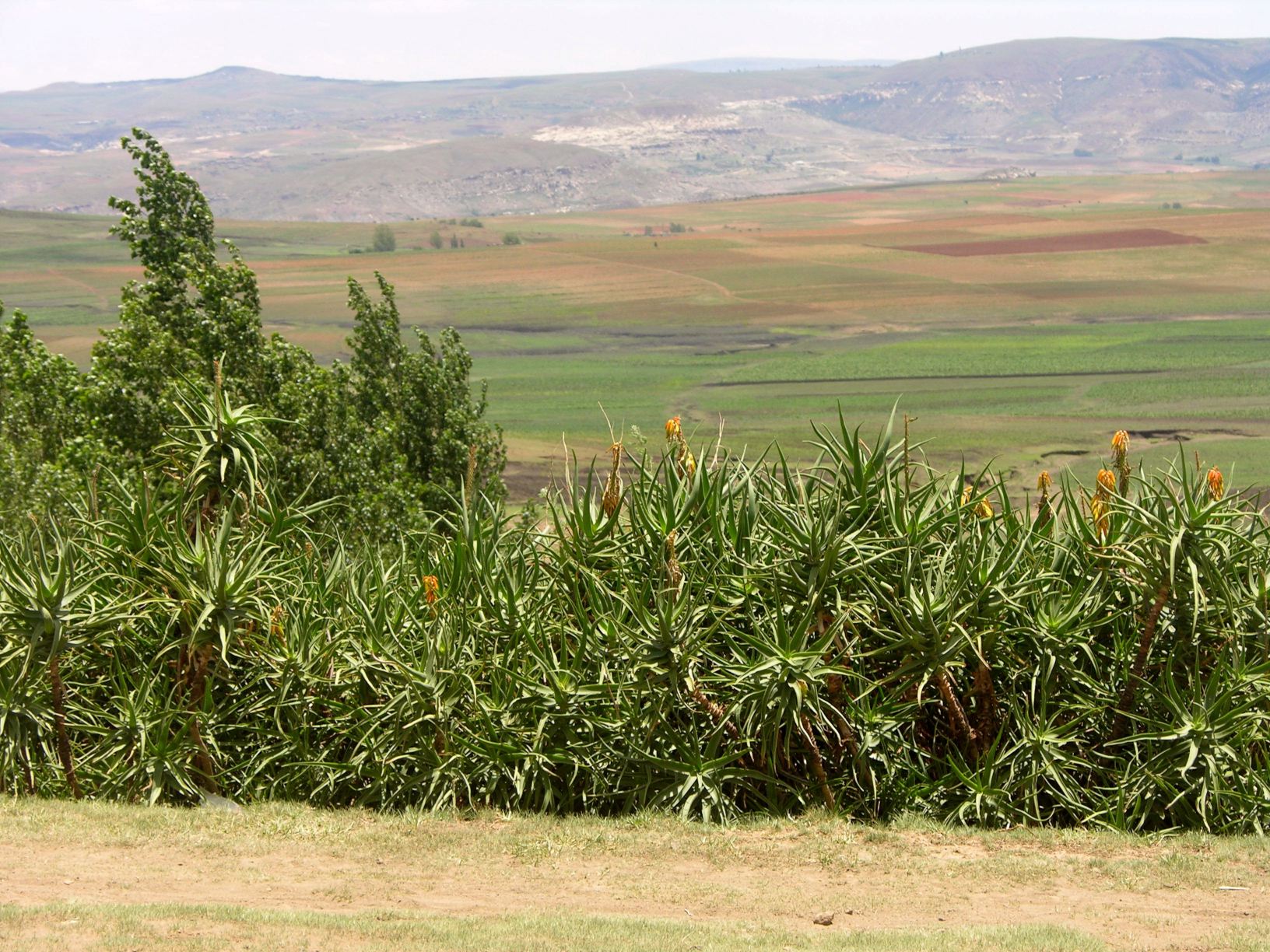
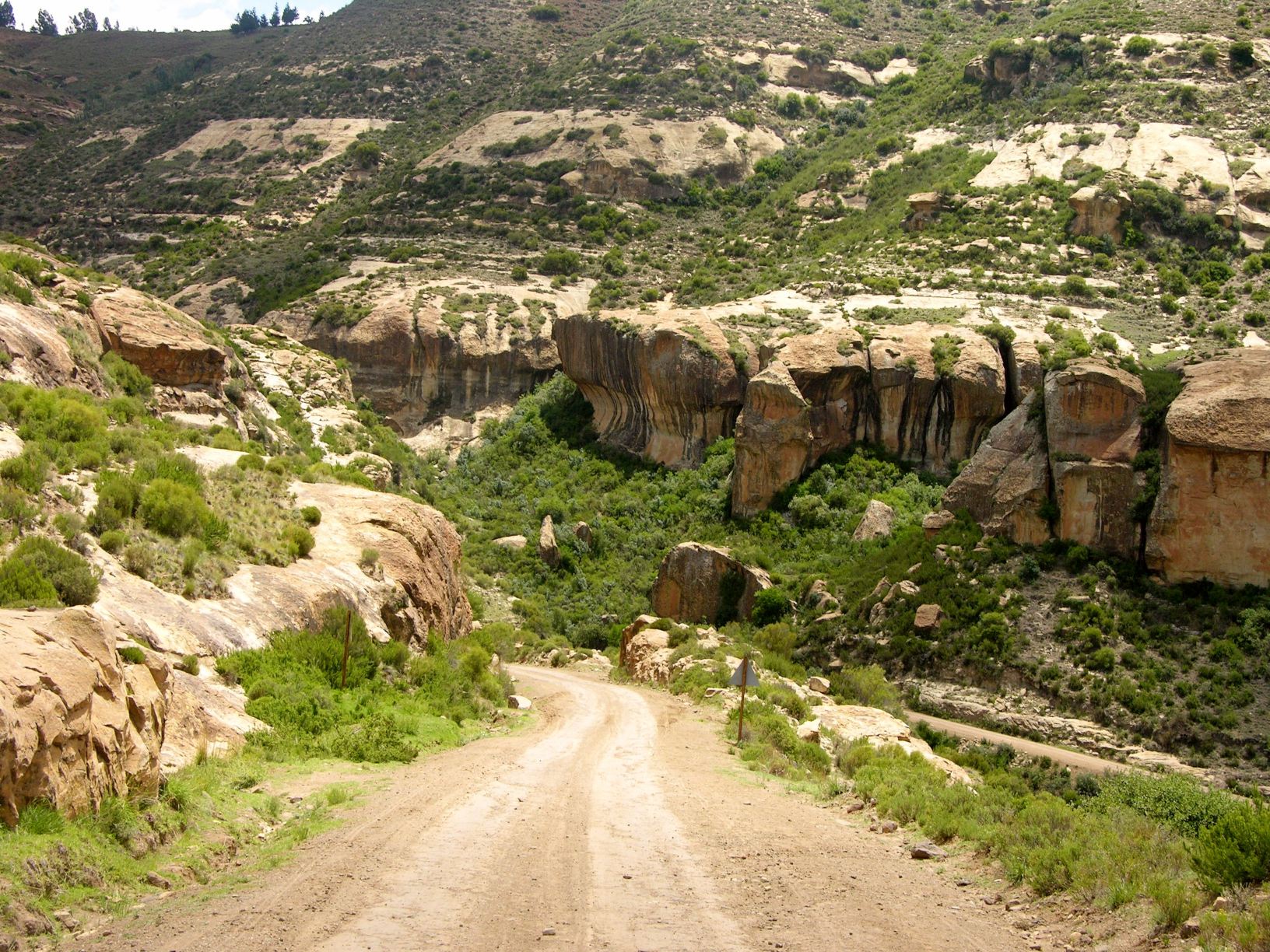
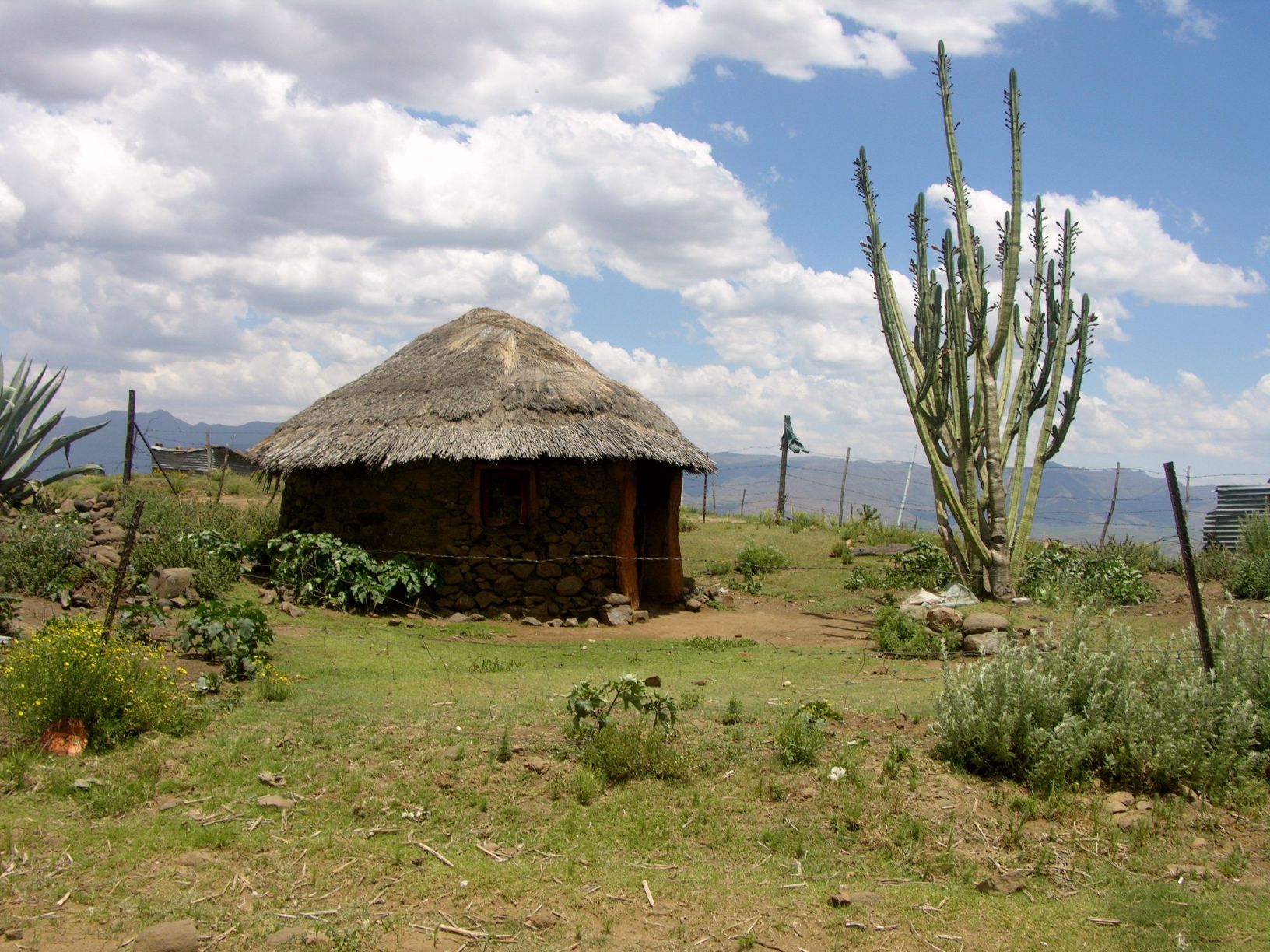
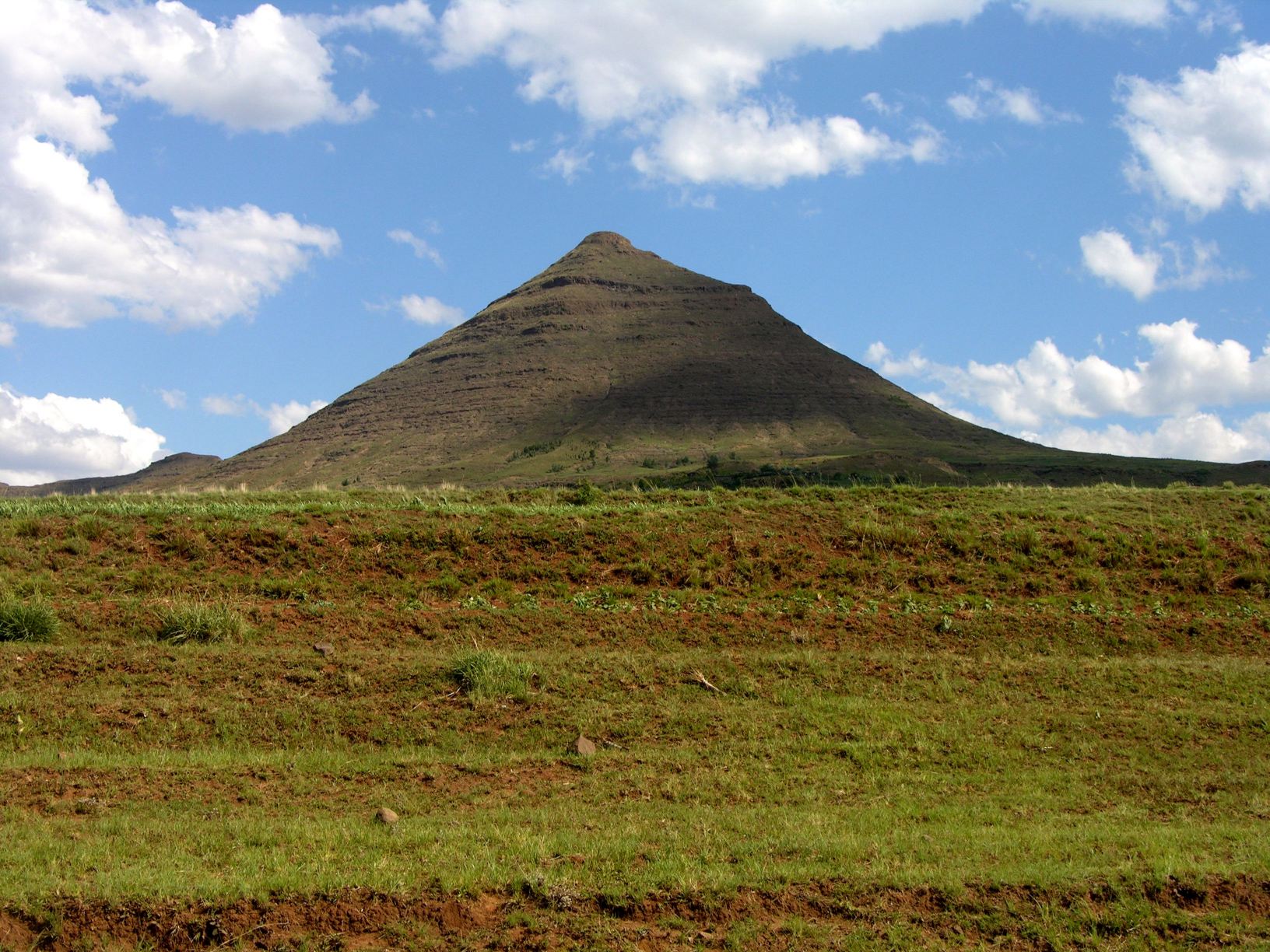
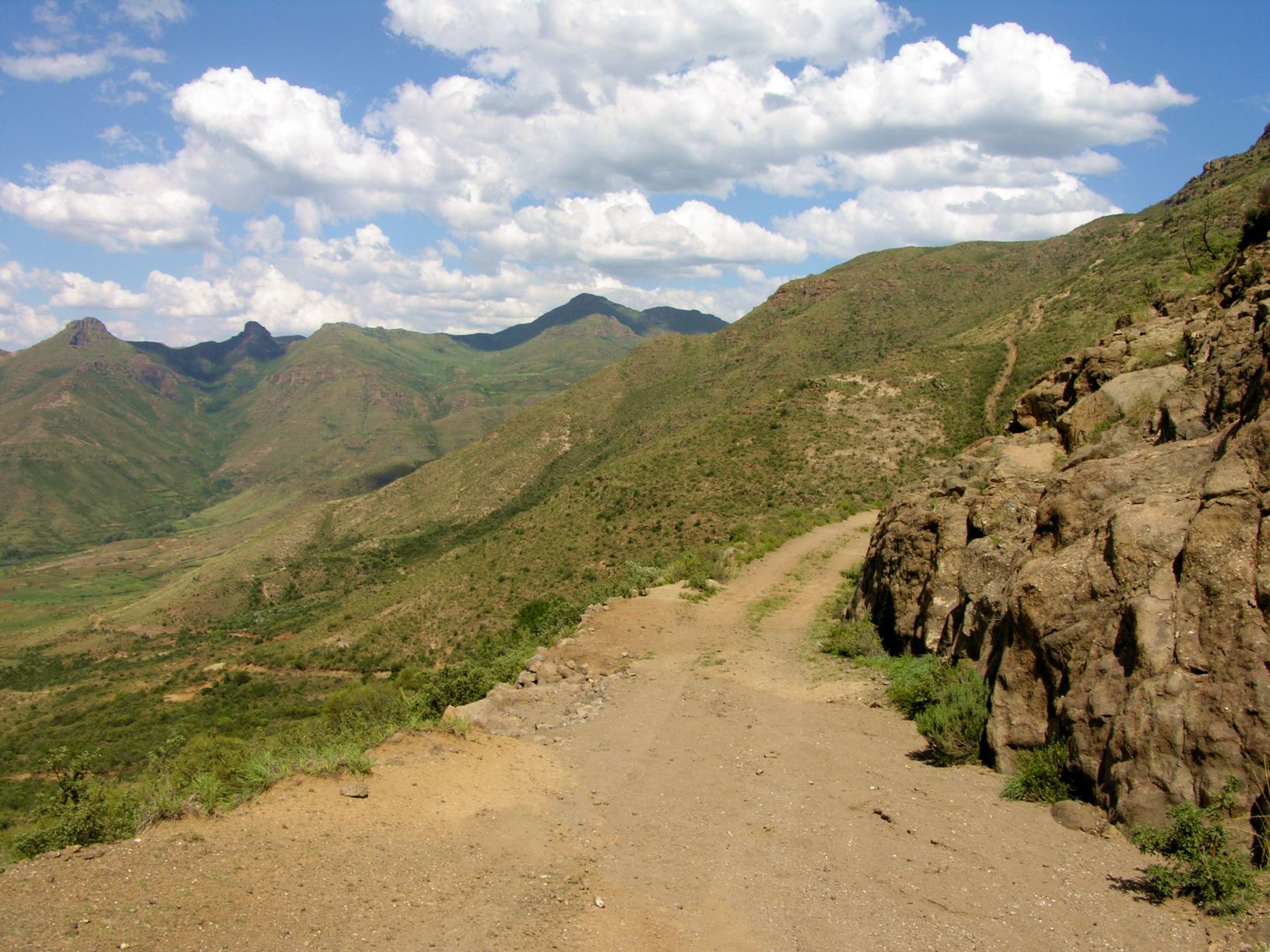
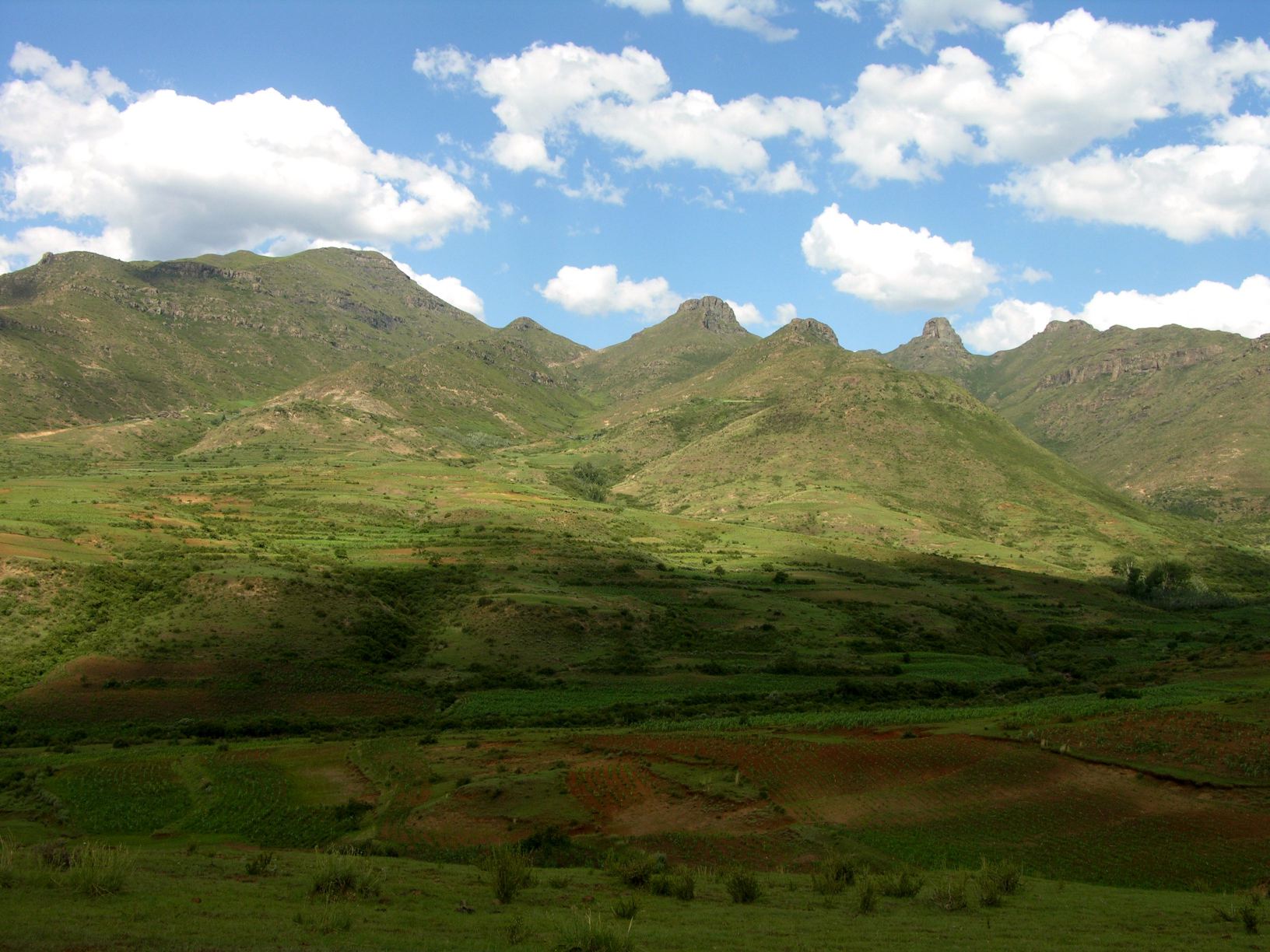
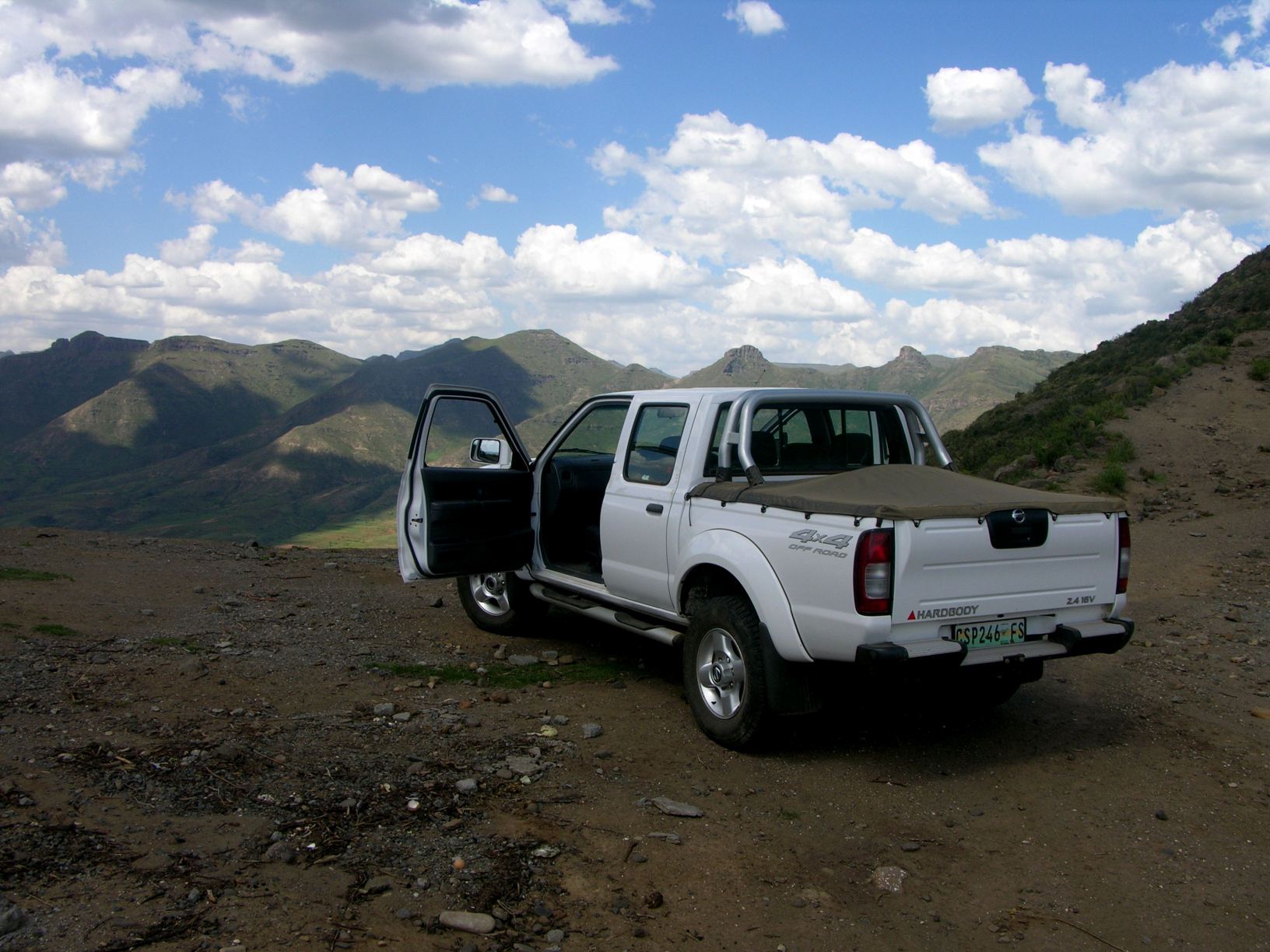
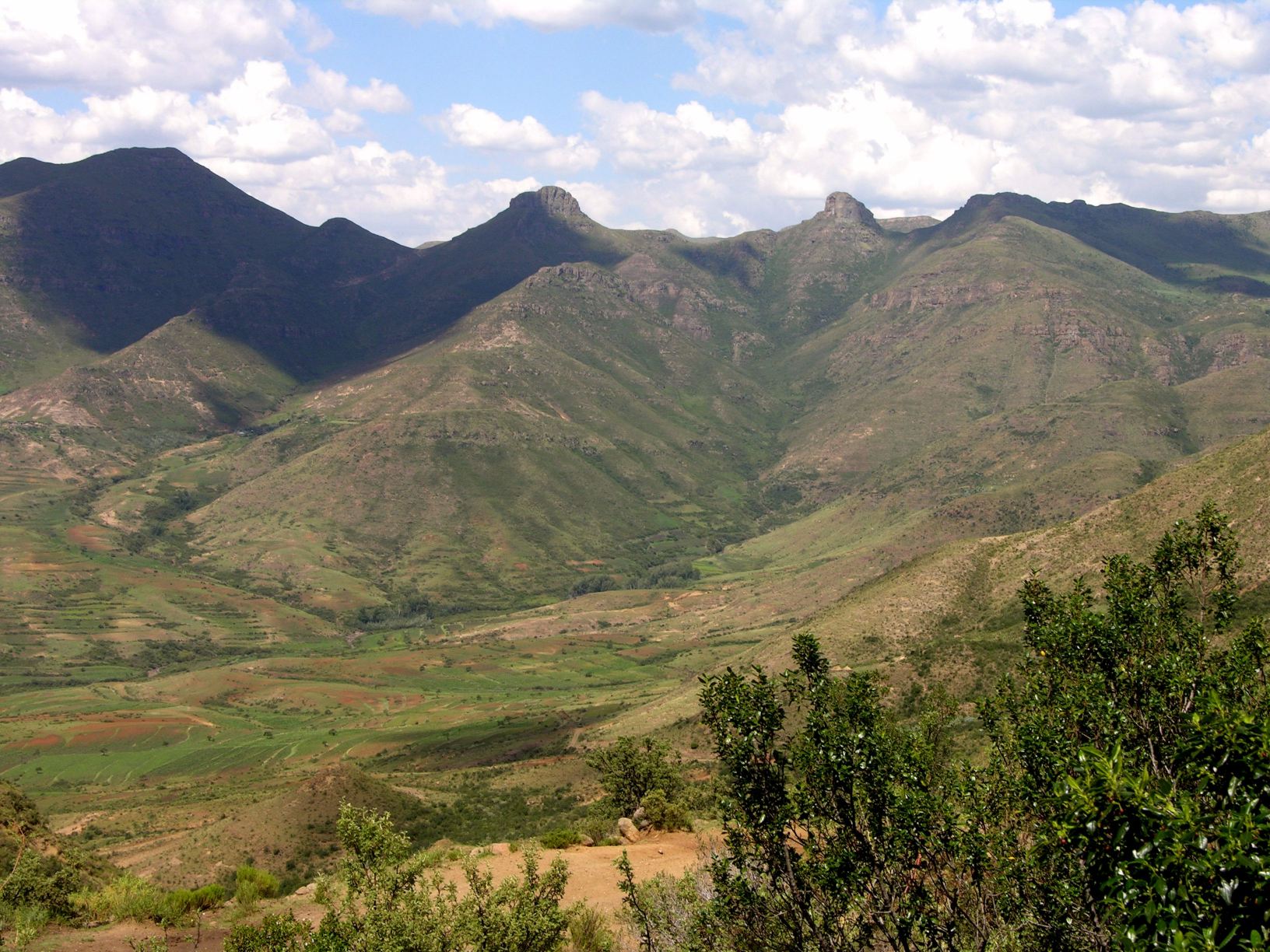
After our fill of rock climbing in a four-wheel drive, we decided to carry on along ordinary roads. They weren't easy either, of course. You couldn't drive fast. It took us several hours to cross the mountain pass to Mohale's Hoek. But up at the top our phones picked up a signal and all our New Year messages finally went out.
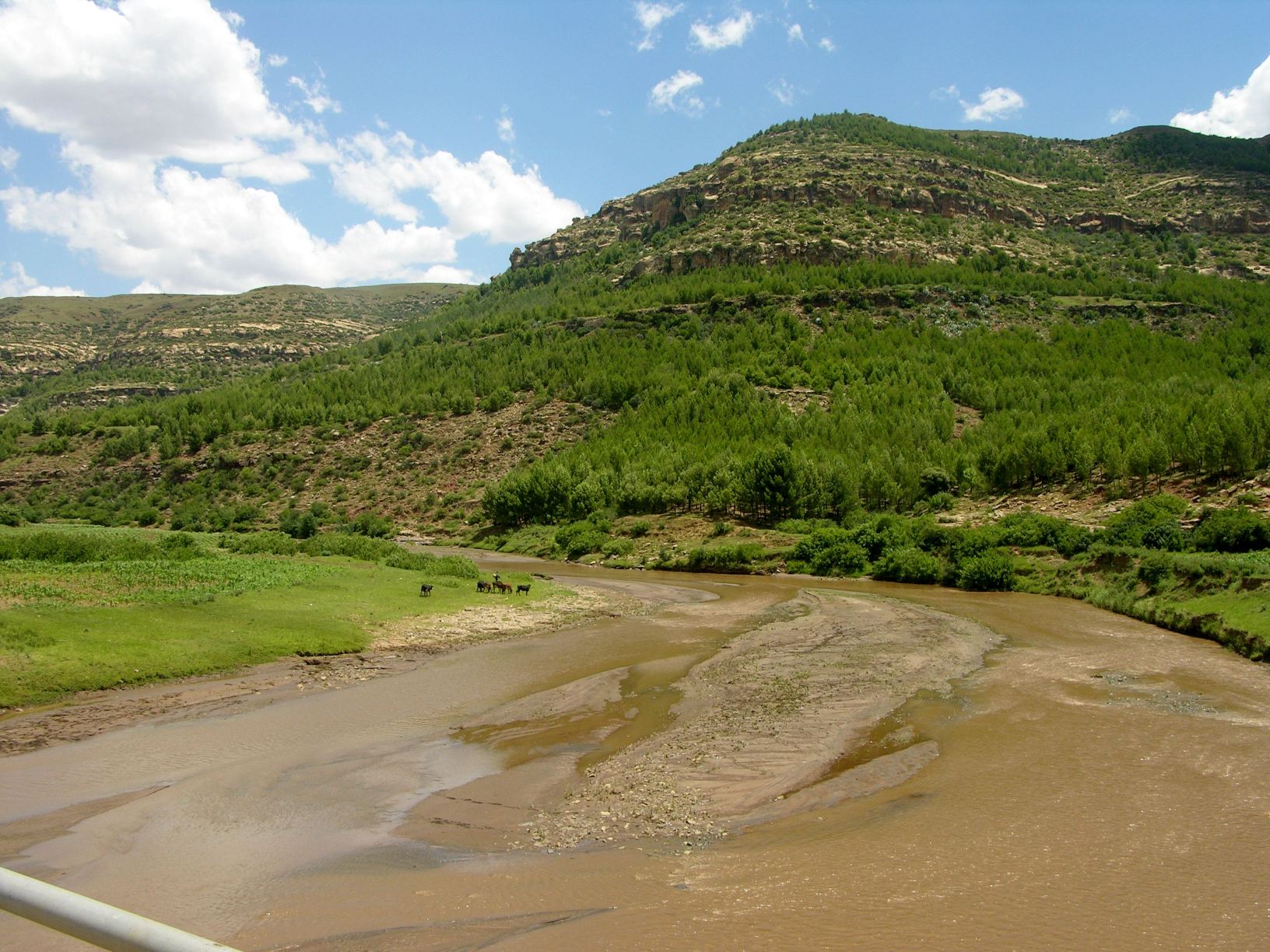
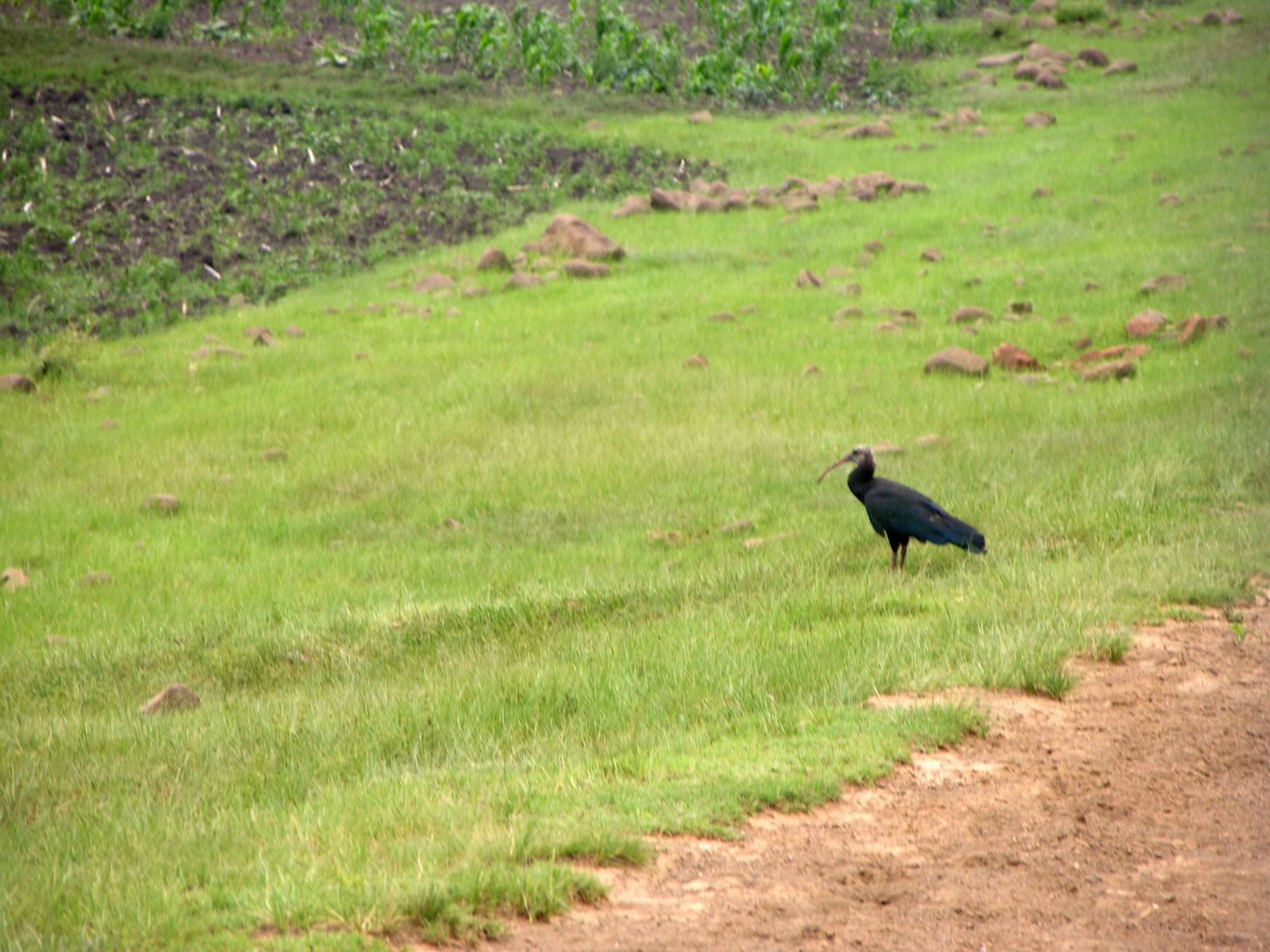
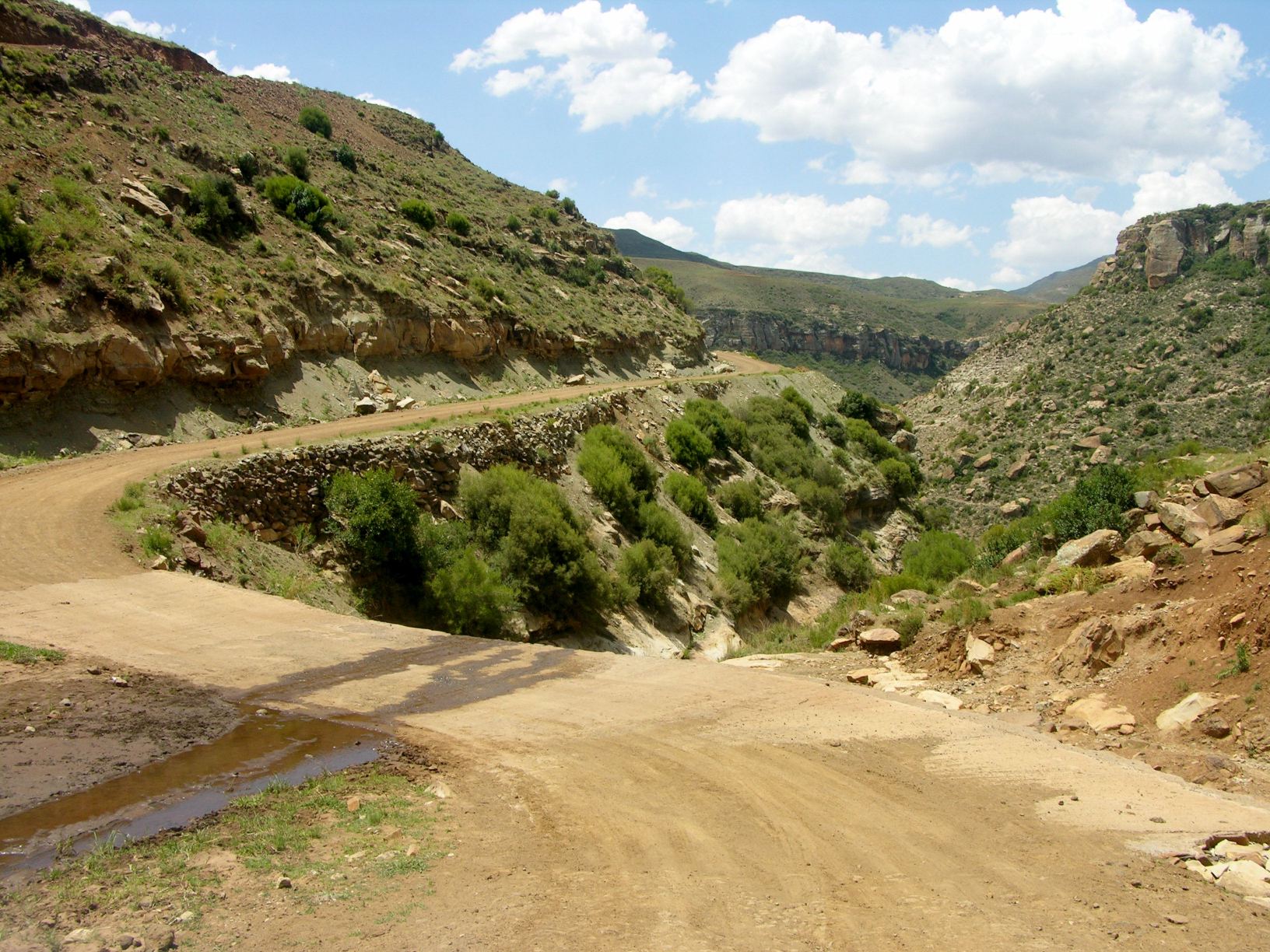
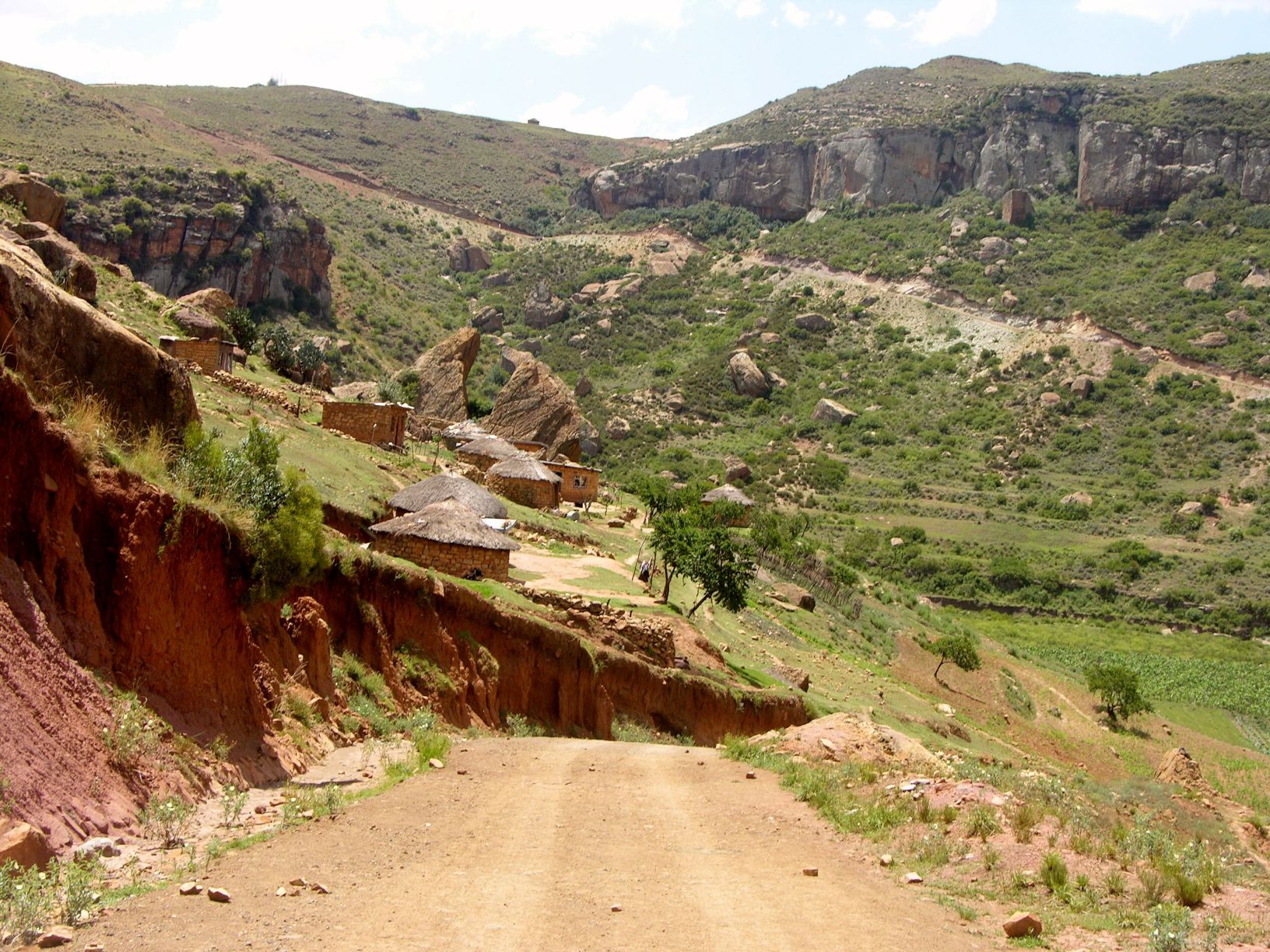
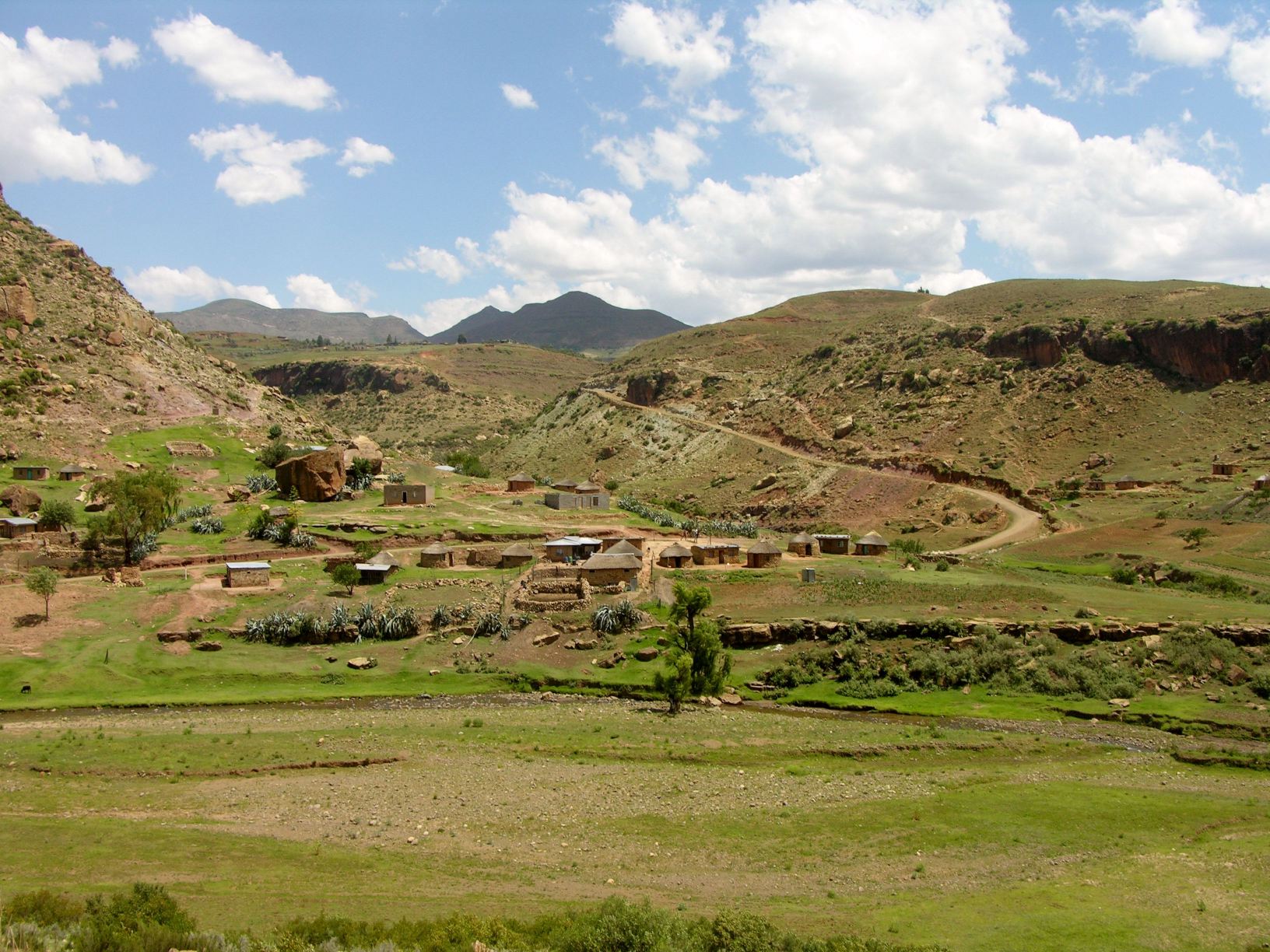
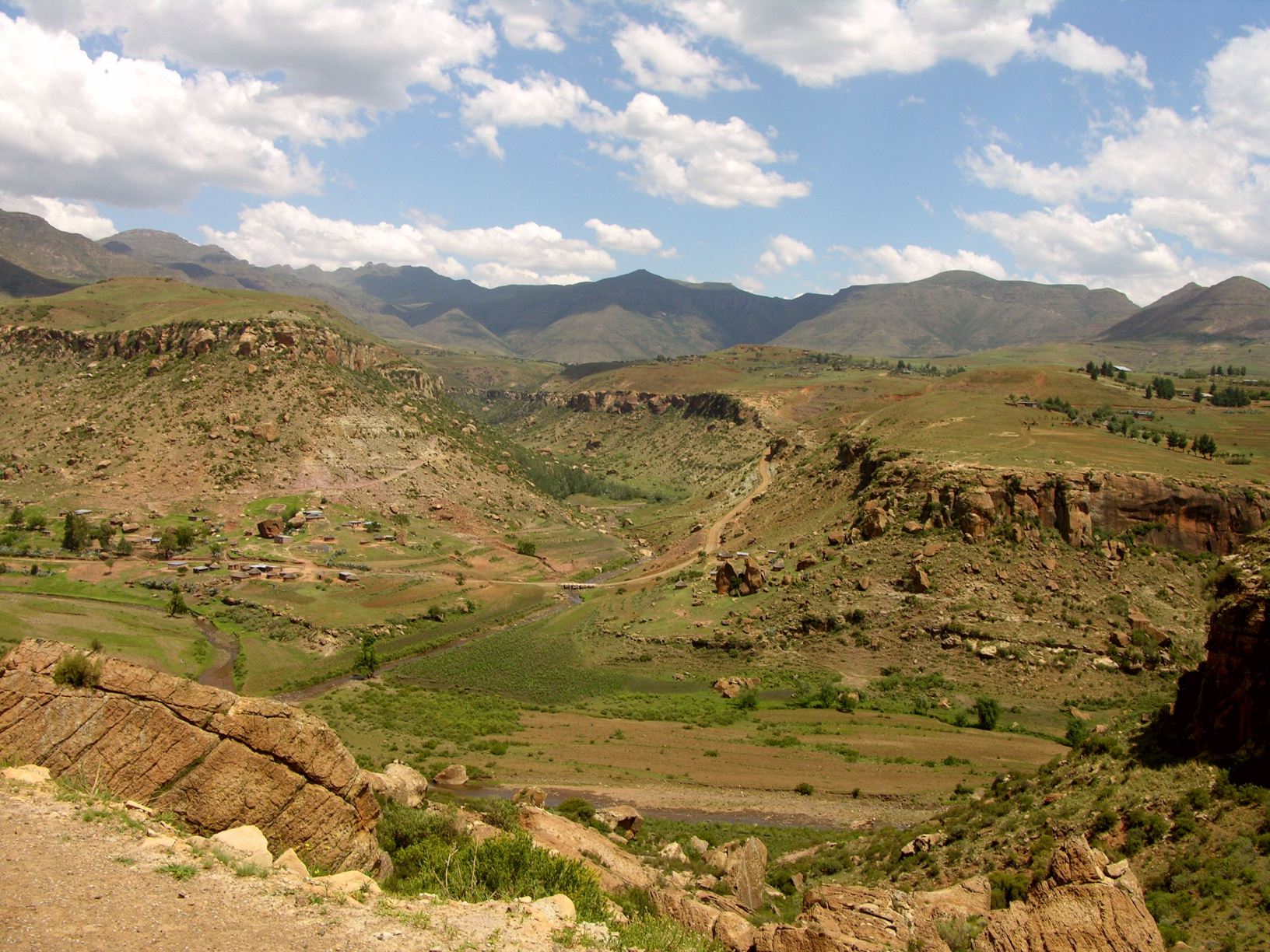
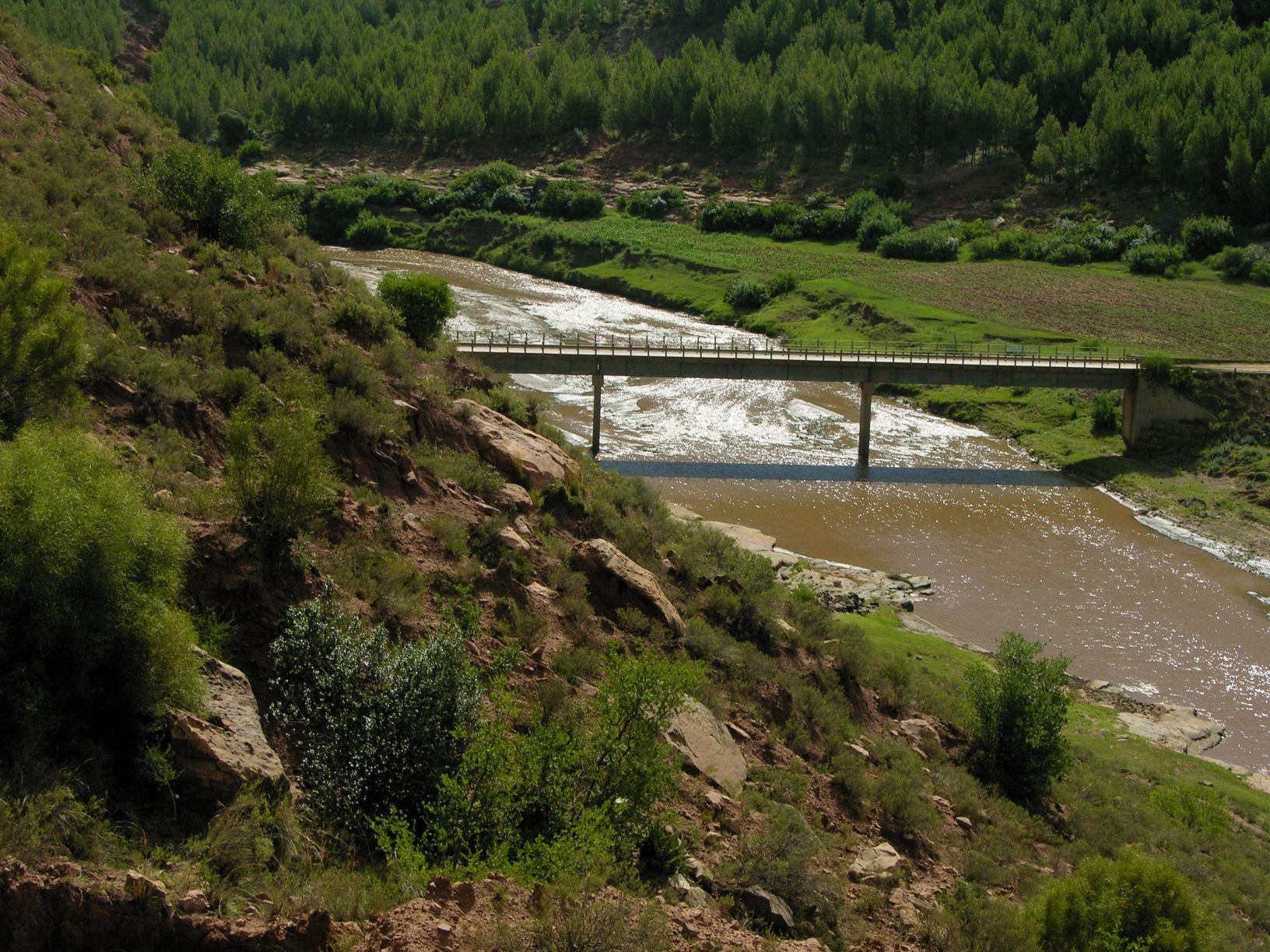
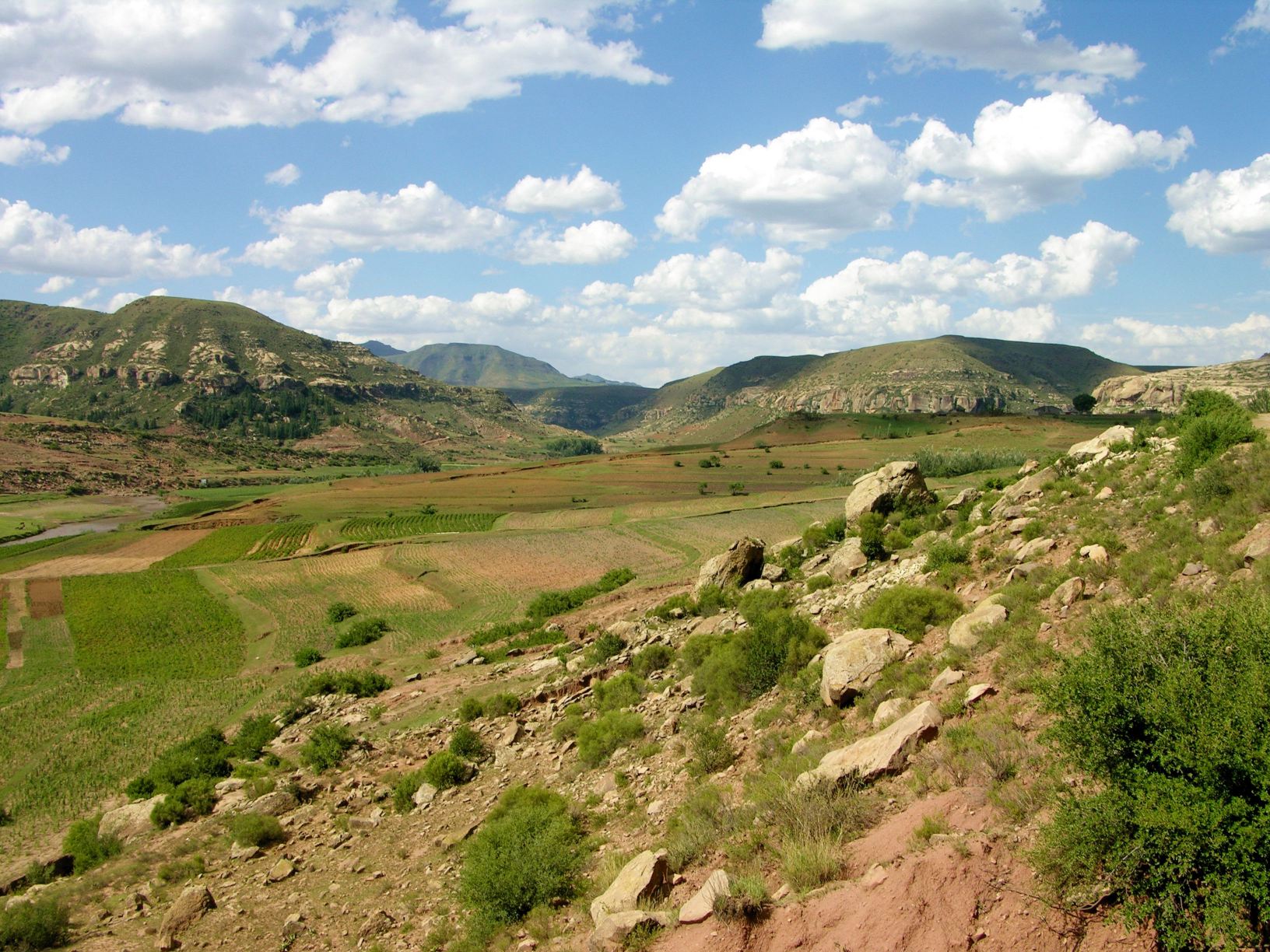
Just before Quthing, the country's southernmost town, the road crosses the Orange River. It rises in the mountains of Lesotho, where it's called the Senqu. That's the local name, but you see Orange here too, especially in the names of hotels and cafés. Here at last was the river I'd dreamed of as a child. The sky wasn't orange, of course. Neither were the children or the mothers. There have never been camels in these mountains, unless a travelling circus happened to pass through. The river was named for the Prince of Orange, anyway, and not for the colour of an orange. Yes, the song was made up. It was still lovely to be here, especially since there were dinosaur footprints in a rock. It walked here a long, long time ago, a hundred million years or so. And it turned out to be only a little bigger than a chicken, judging by its feet. Never mind. Size isn't everything. It was probably nice and didn't bite anyone.
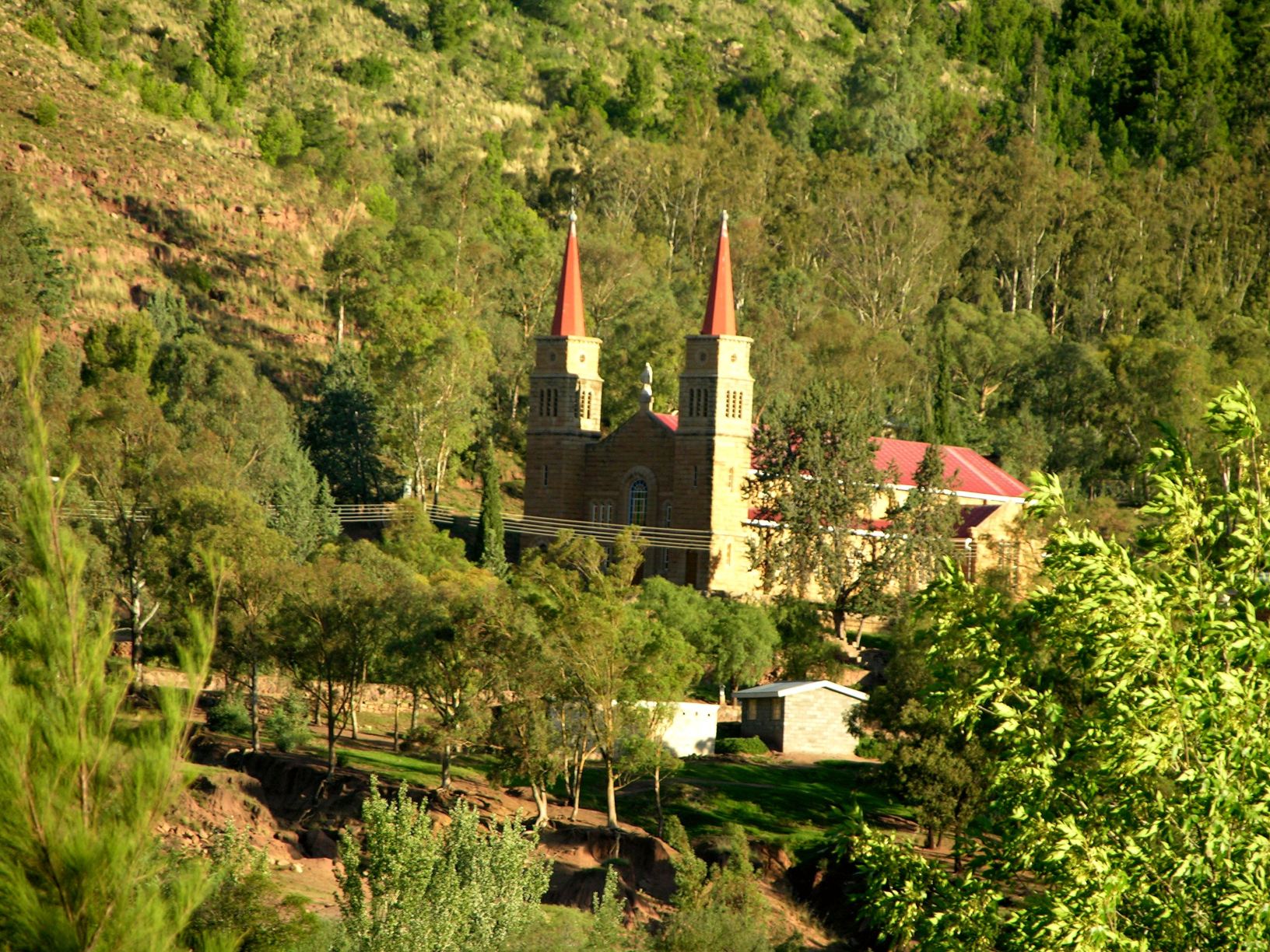
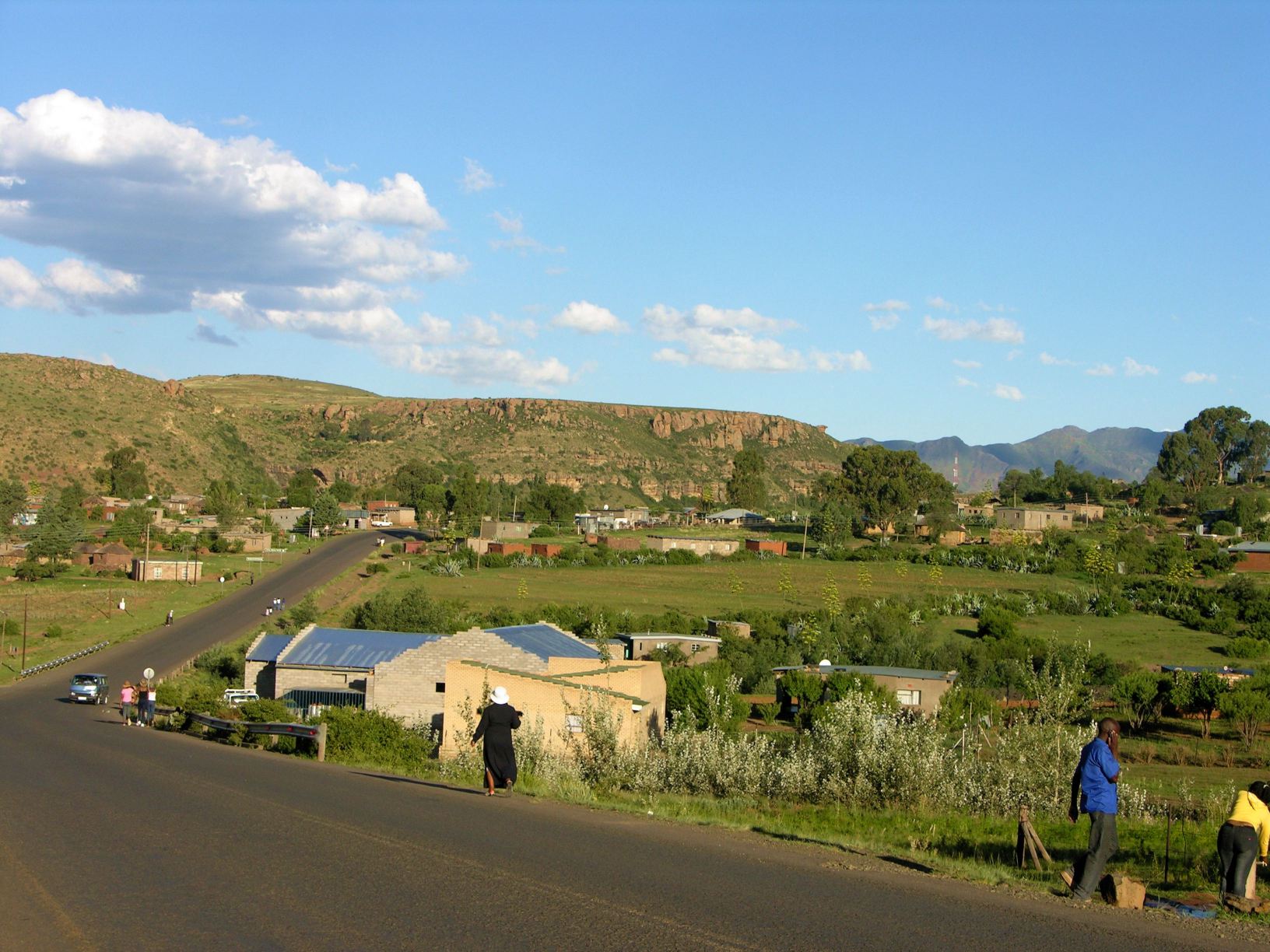
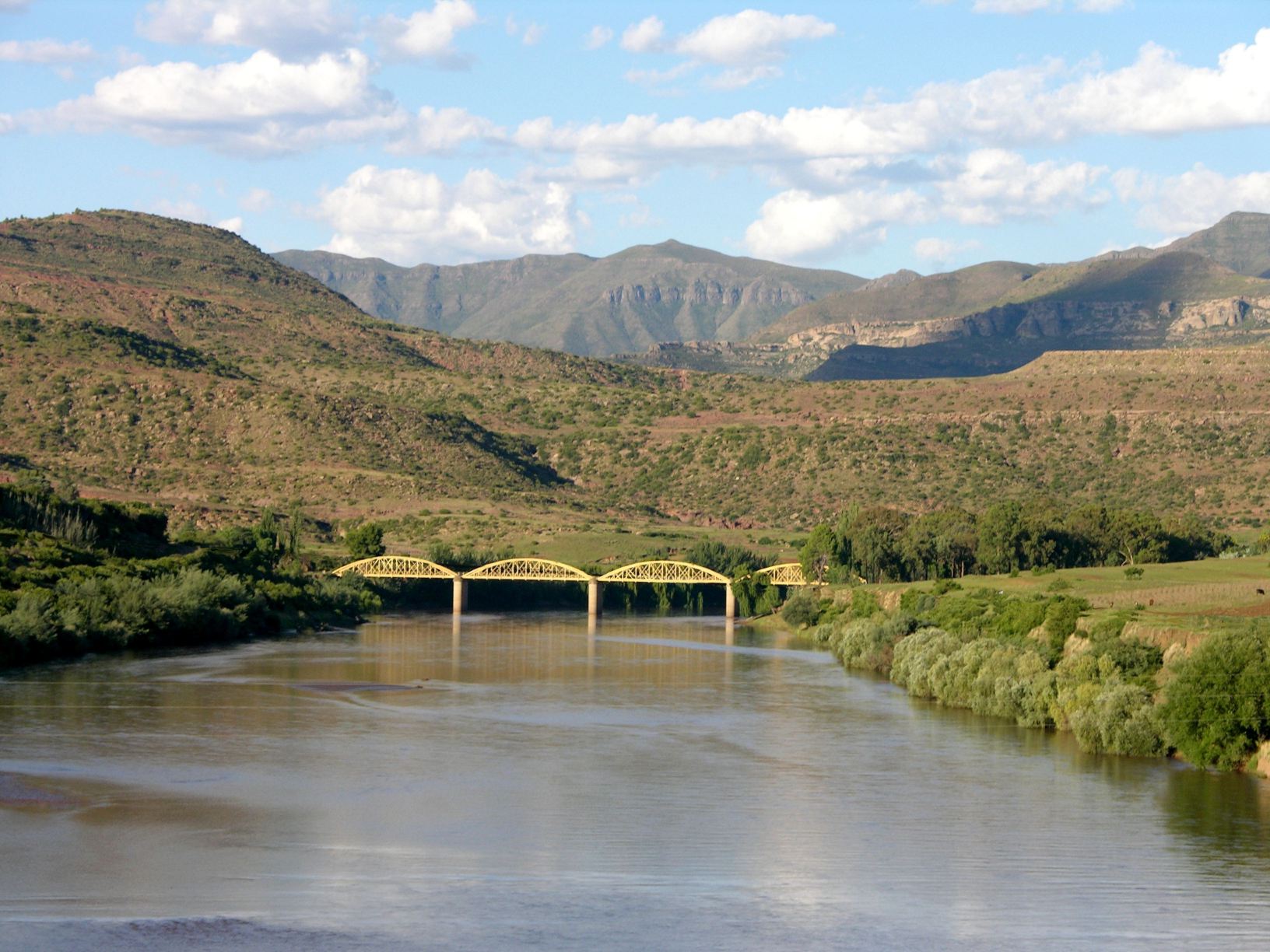
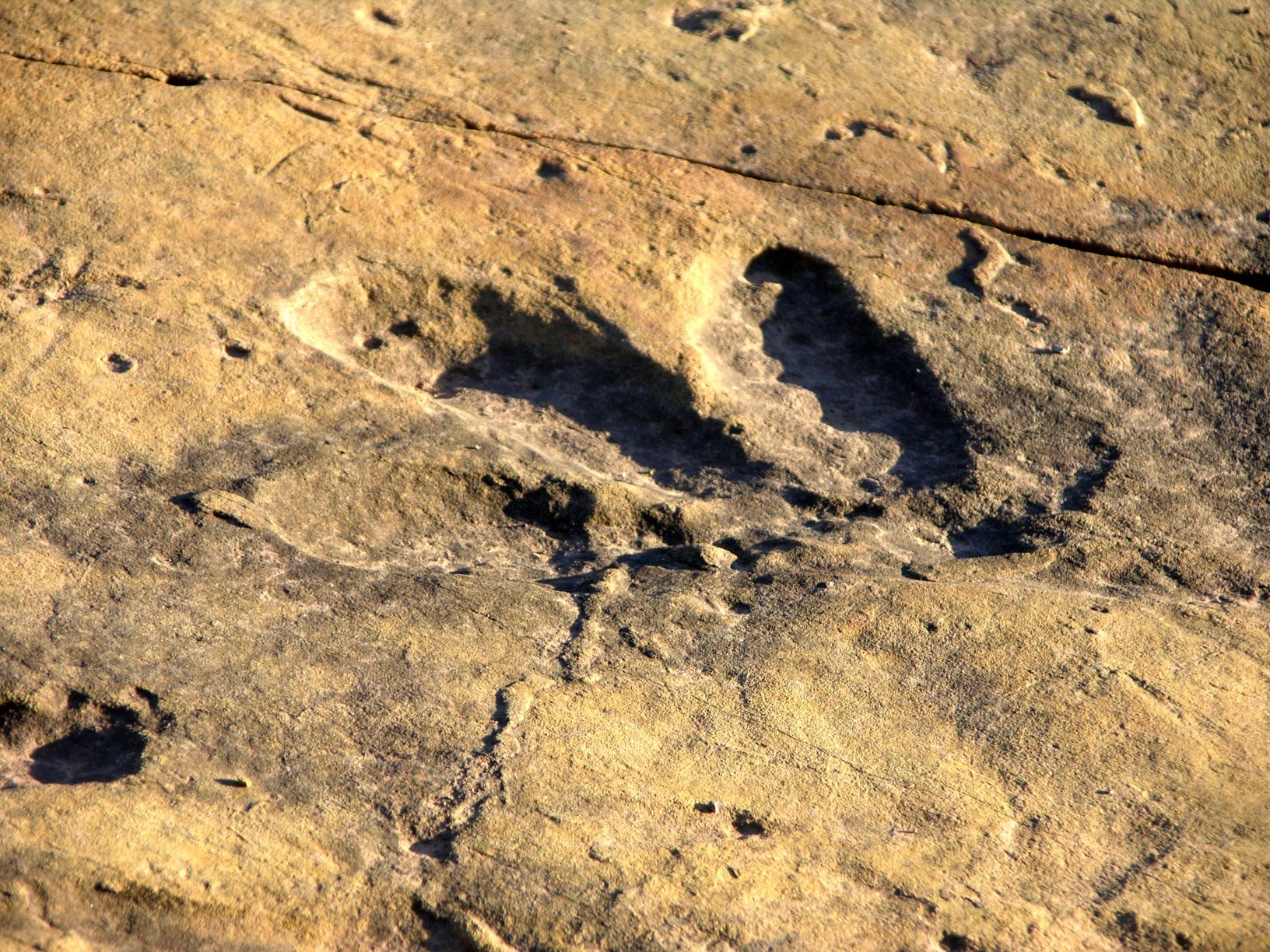
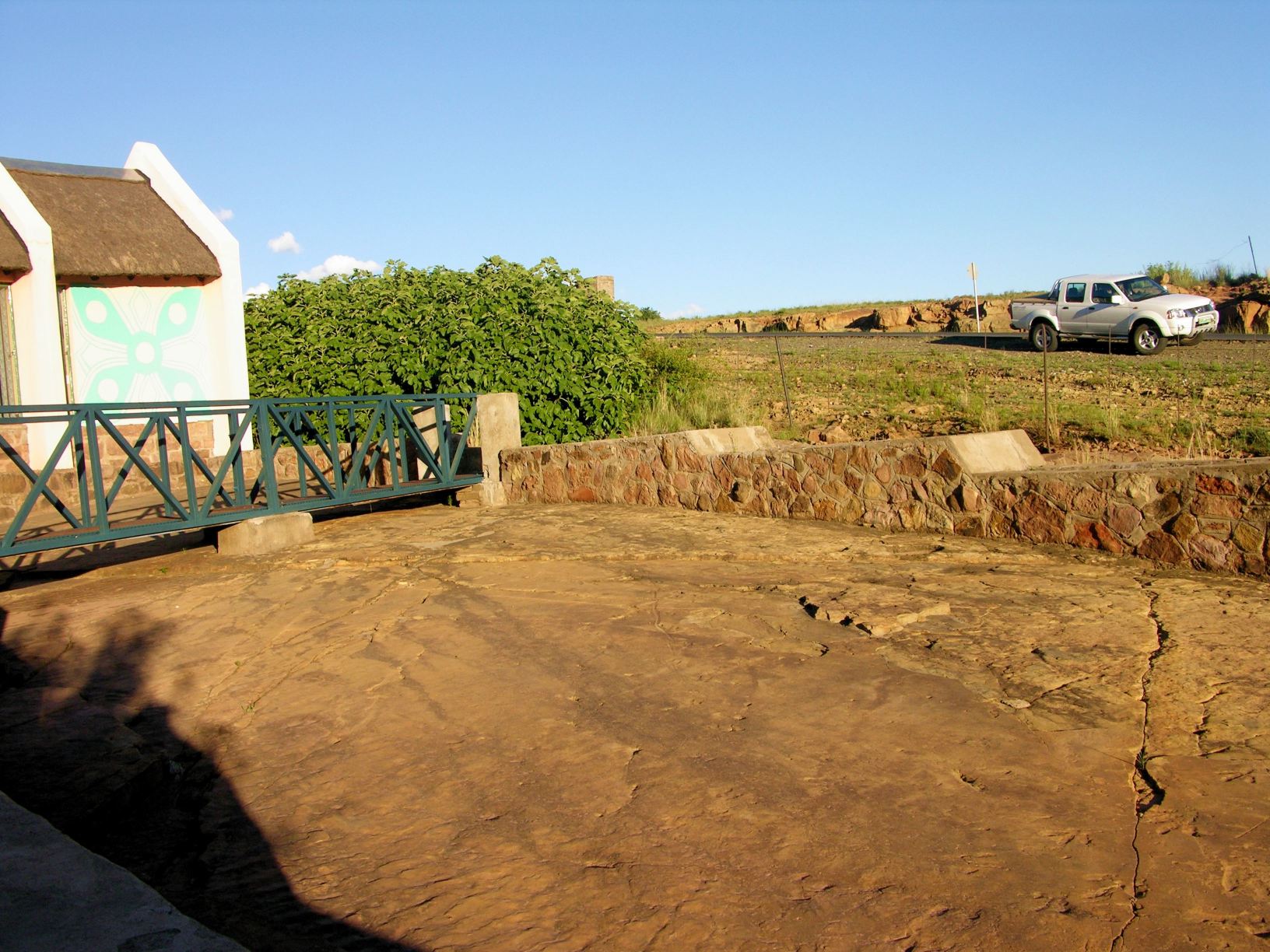
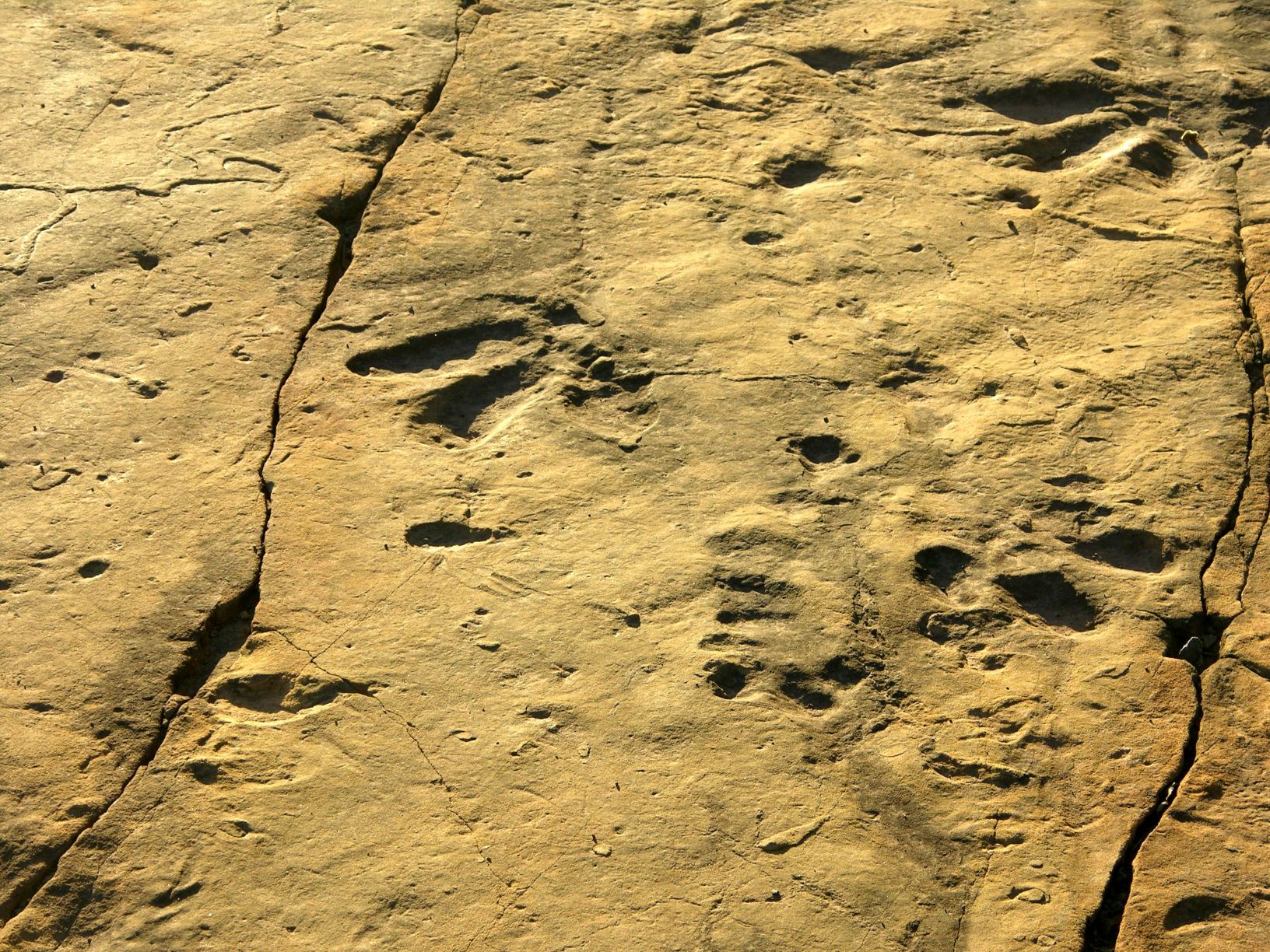
New Year's Day is a holiday in Lesotho too. People had been getting ready to celebrate since morning. Everyone in the villages was dressed in their finery, and the shops and cafés were shut. Our dinner was sausages with milk, the only things we could buy at the only petrol station open. It didn't have unleaded petrol either. They told us you couldn't get it anywhere outside the capital. Bad news. Tomorrow we'd have to drive all the way back to Maseru for it. The first tank was already nearly empty. Petrol in Lesotho was 4.44 maloti a litre, or US $0.51.
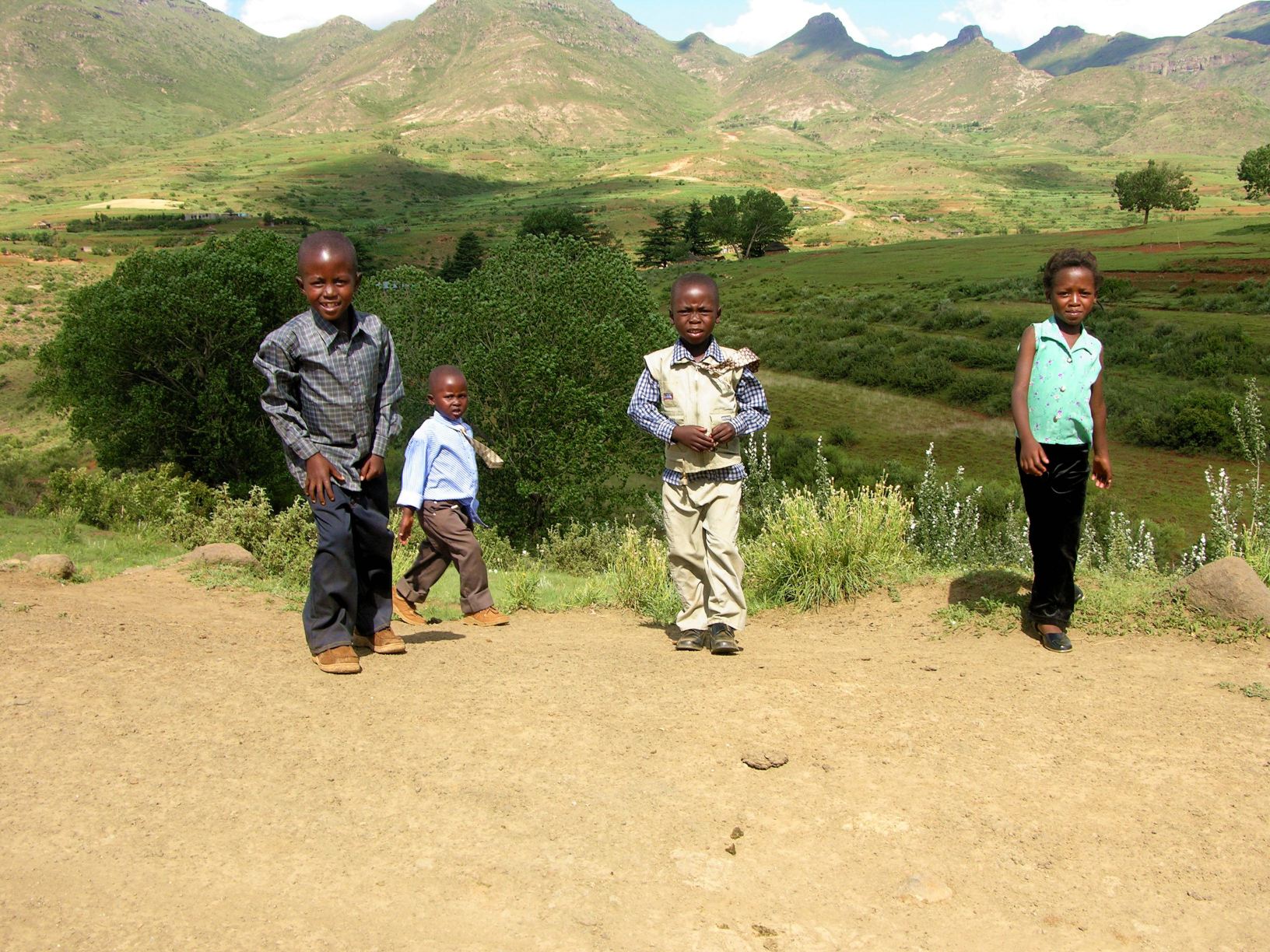
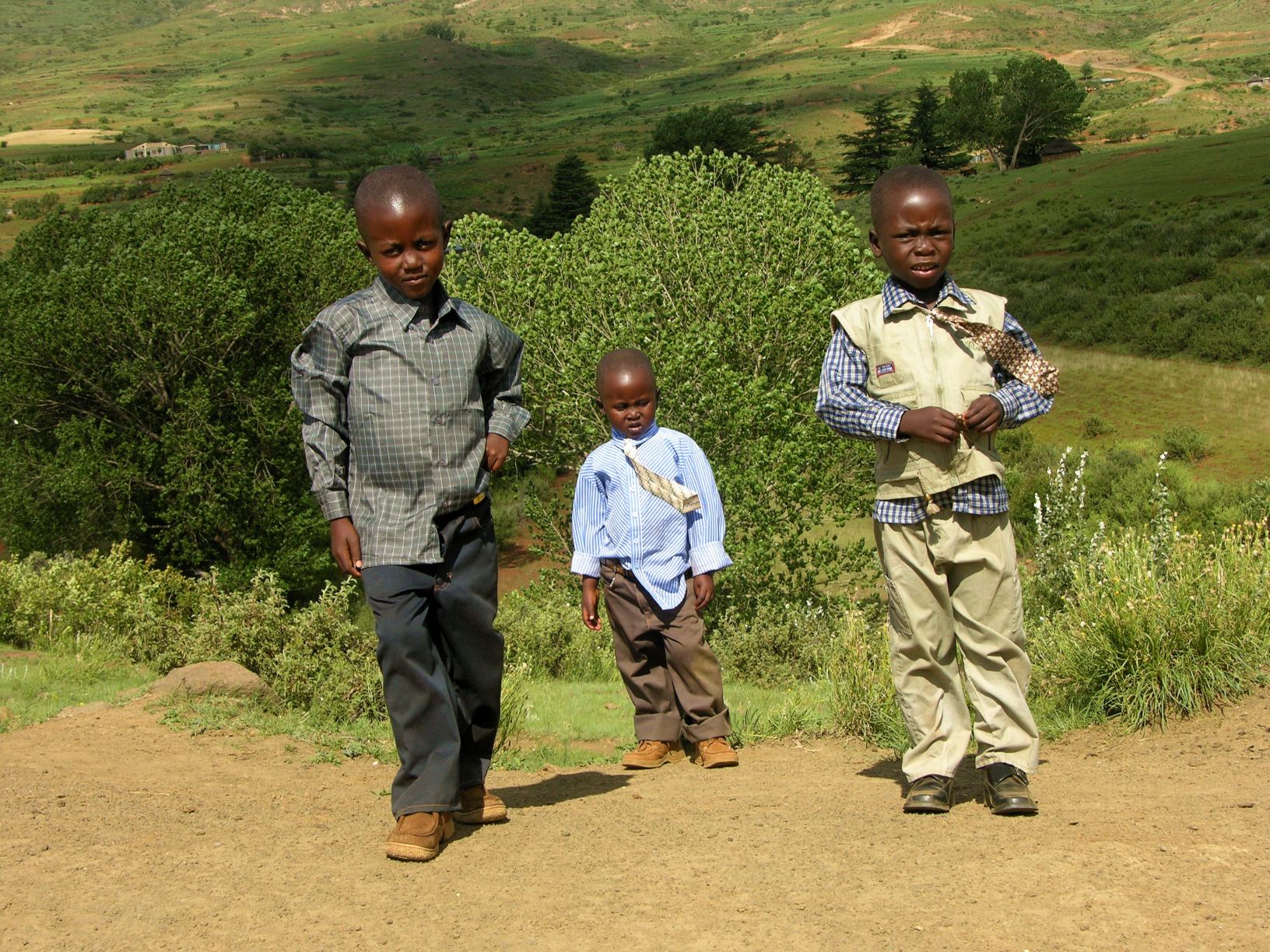
We drove back to Malealea after dark along the same mountain road. Up on the pass we finished our sausages under the stars and sent another batch of texts. By then people had celebrated in the best Basotho tradition by getting roaring drunk on local moonshine, children and all. You're already driving on a mountain road in the dark with sheer drops to the sides, and on top of that people are lying in the road, staggering along the verge, positively trying to fall under your wheels. Young women in beautiful dresses lay in the dust. There was something oddly familiar about it, something of our own backwoods at home.
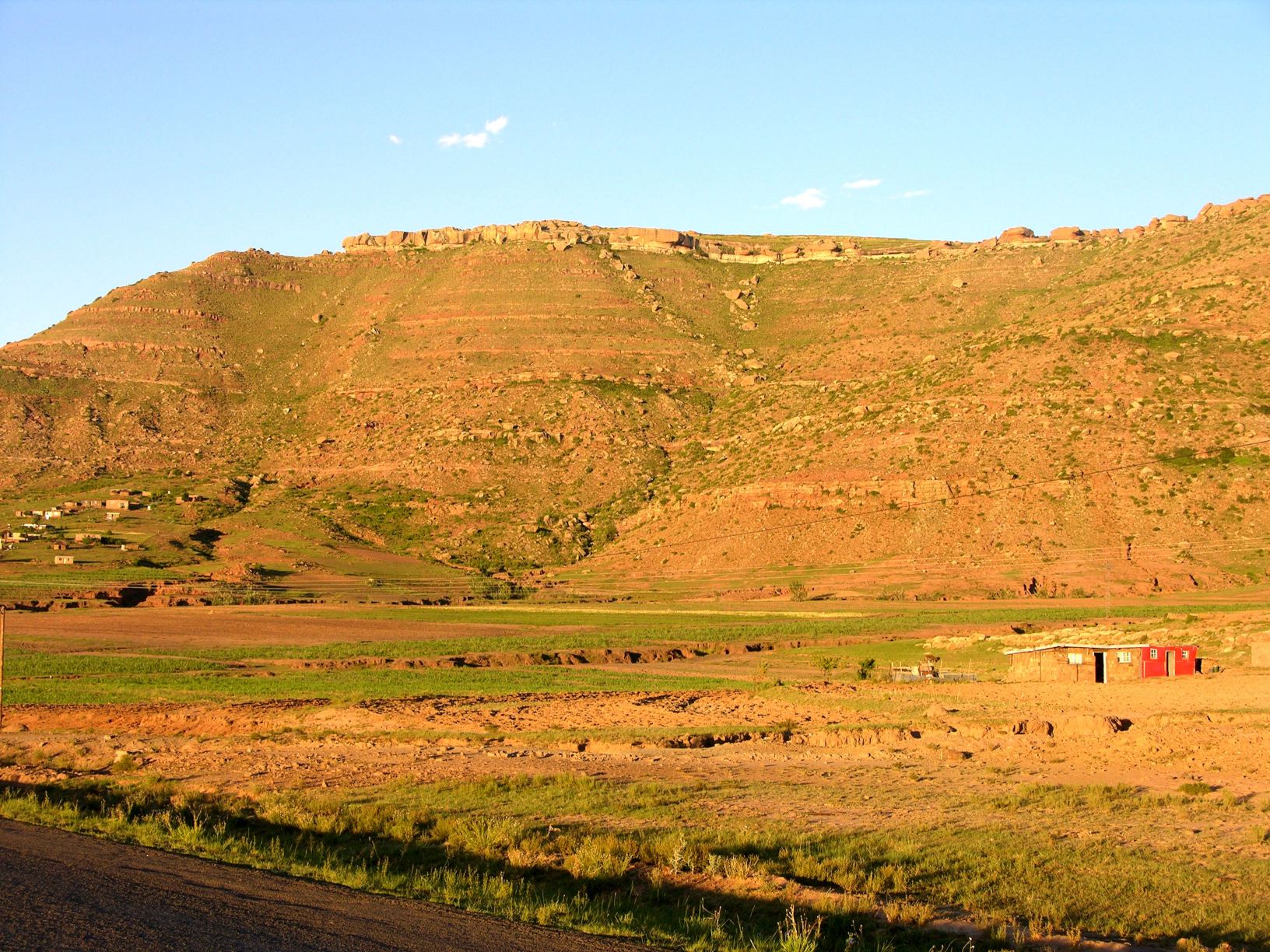
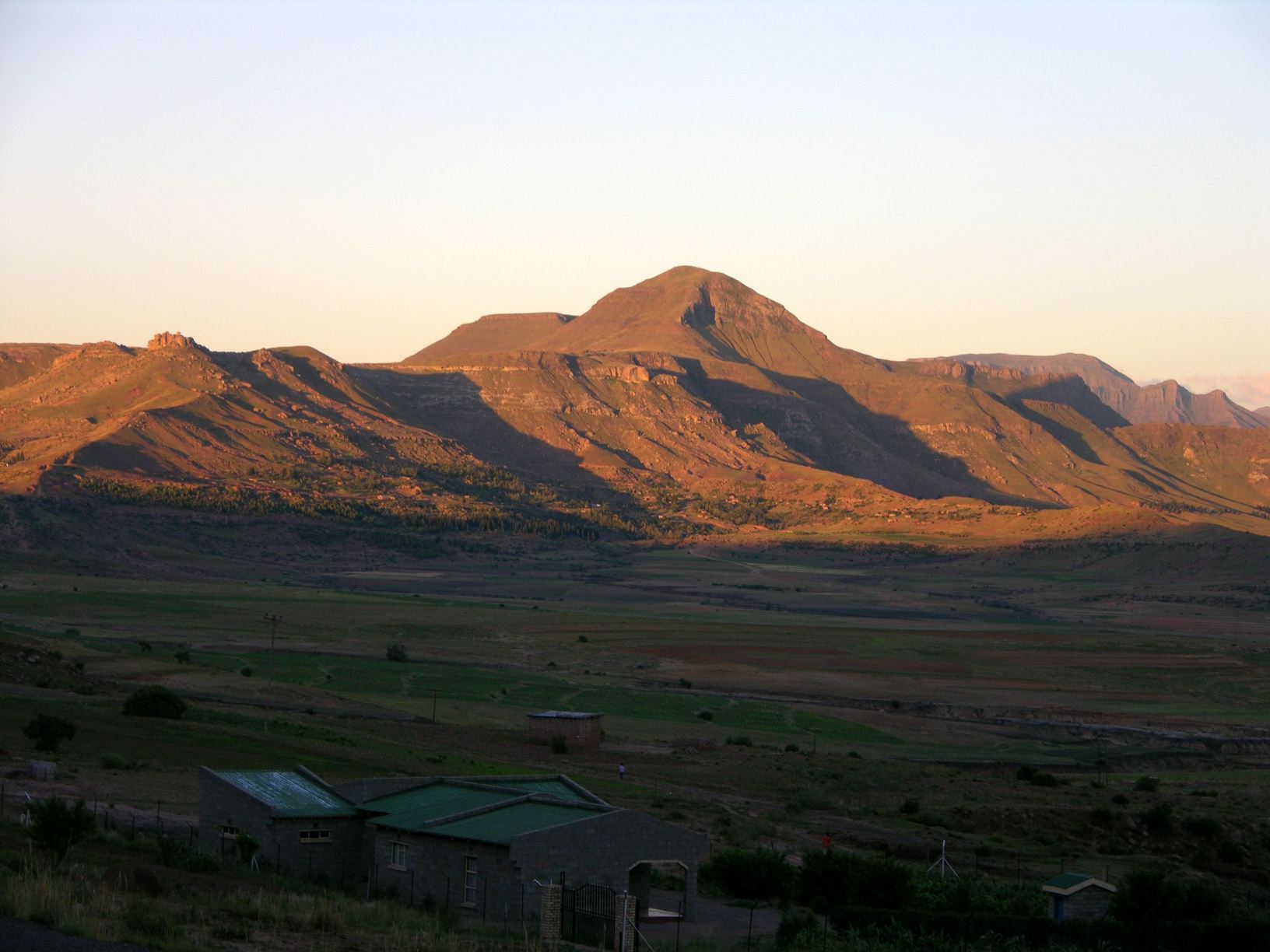
You were supposed to get back to Malealea before ten at night. Then they shut the gates and cut the power. Show up later and they take it as a personal affront and fine you. We had to put our foot down for the last stretch. We only just made it. The young crowd was still celebrating noisily, but we hadn't even got all our gadgets plugged in to charge when they cut the generator. We cooked some of our trail rations on the camp stove, in the dark.
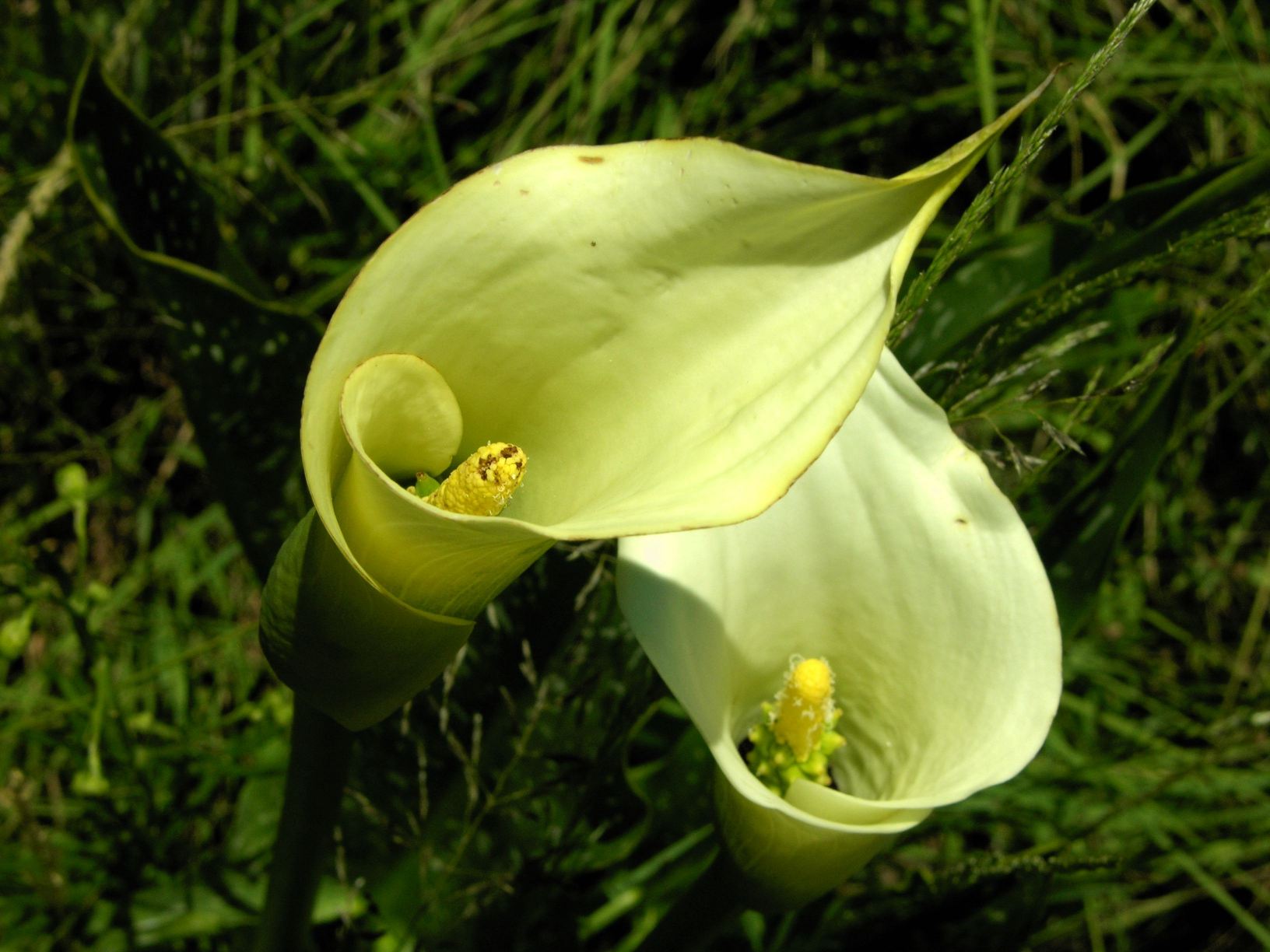
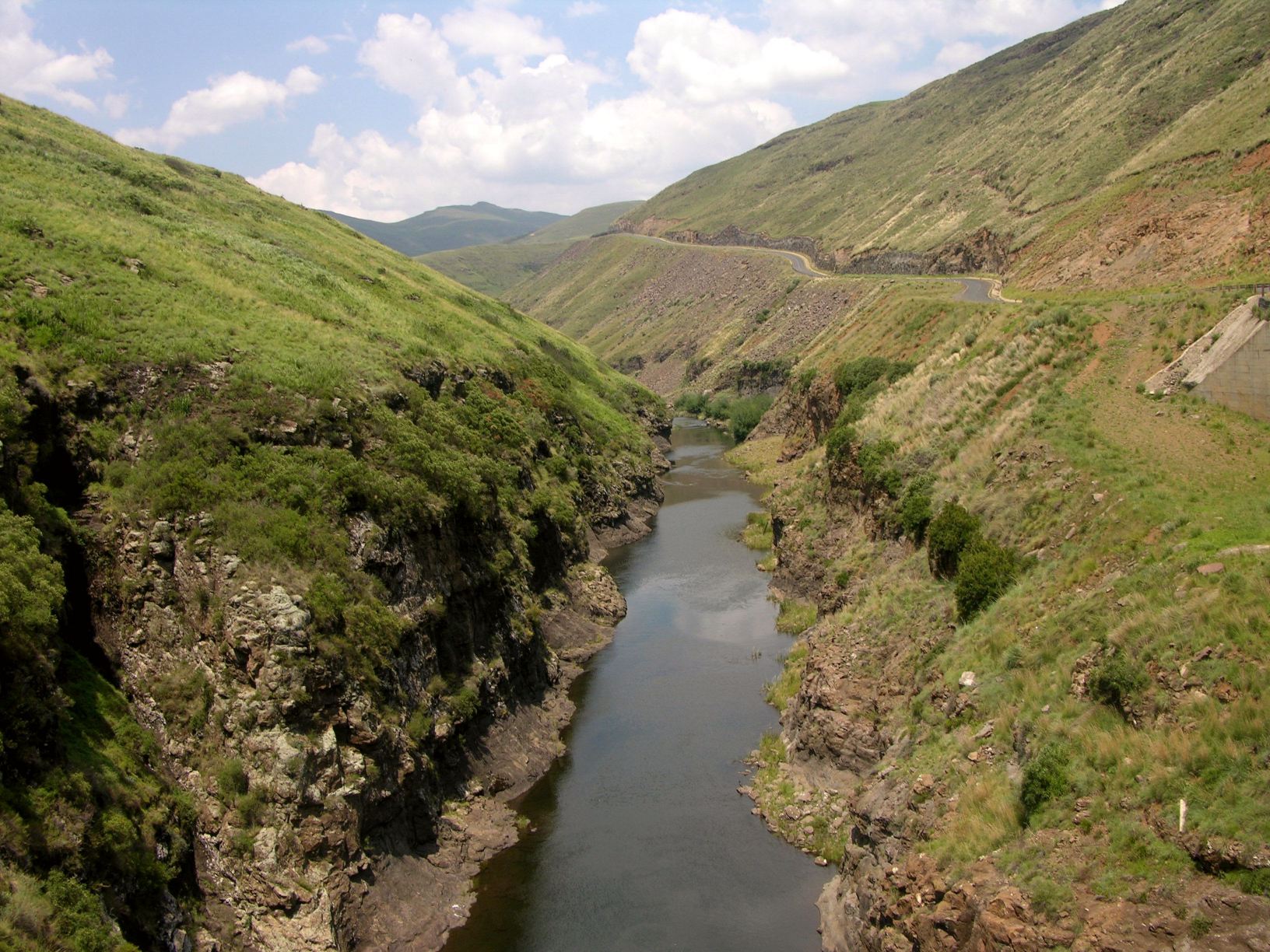
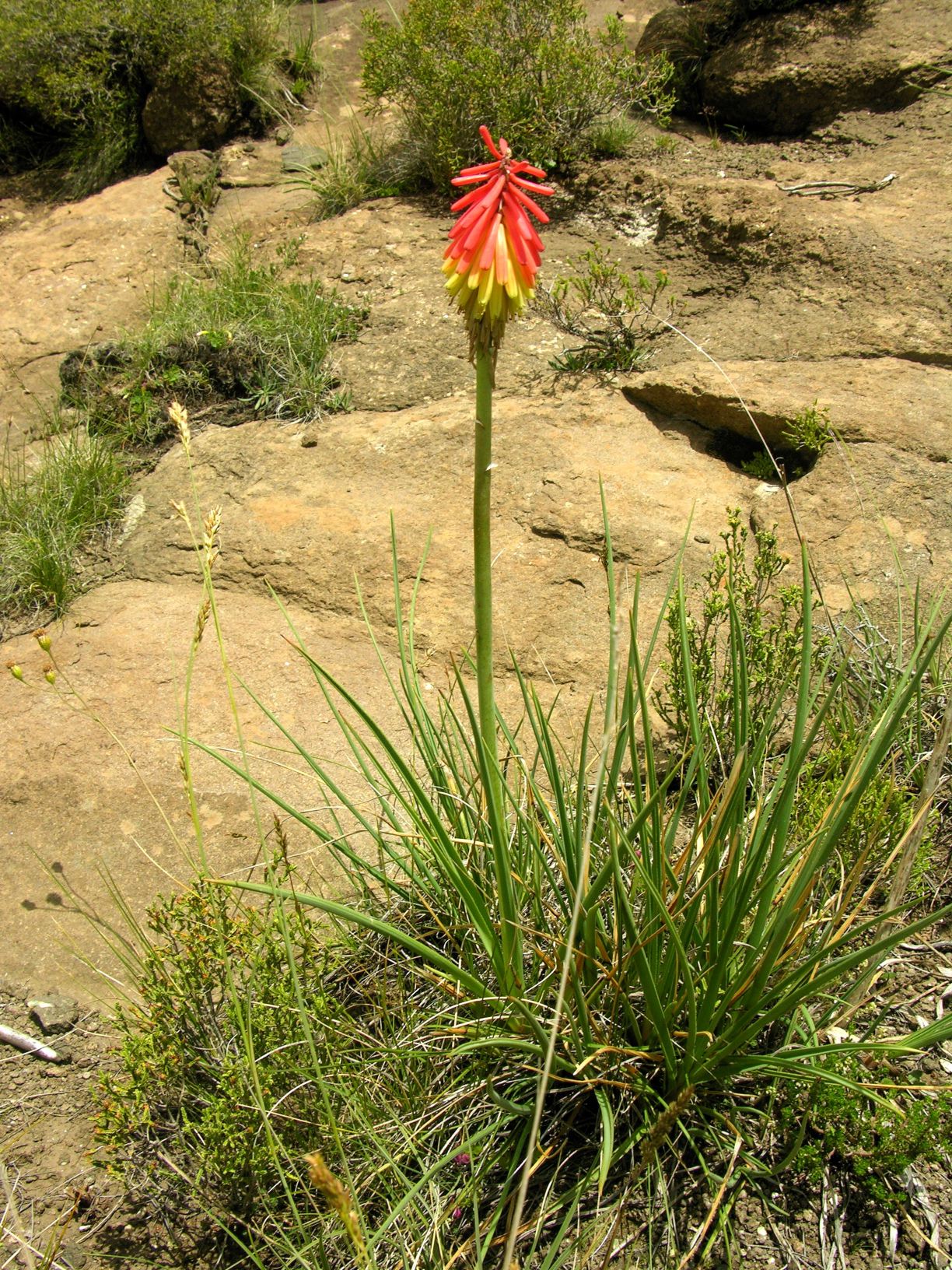
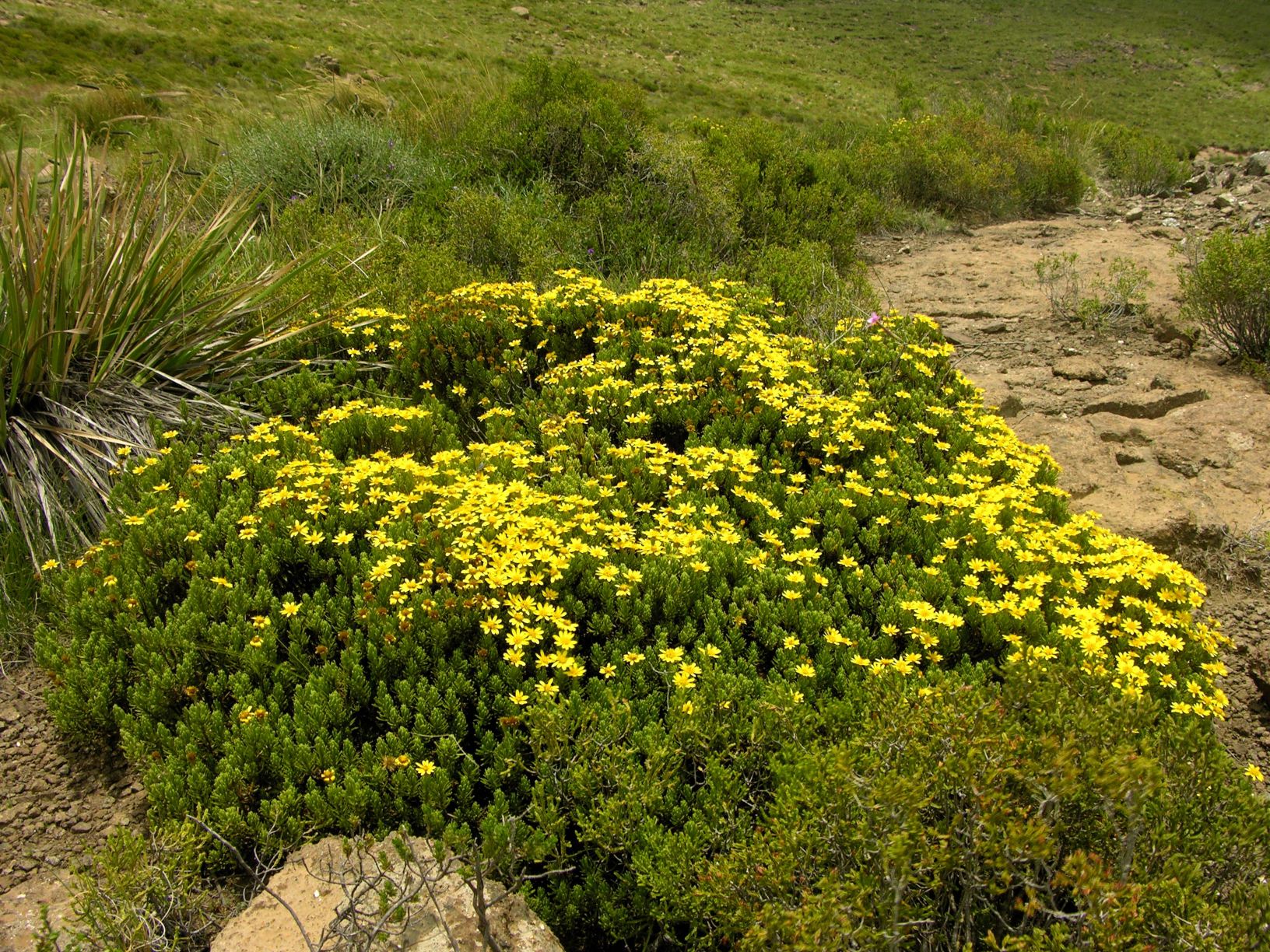
For the third day running we had to go back to Maseru, this time for fuel, and on over the delightfully named God Help Me Pass to a new dam built by the European Union. Here the road climbs as high as 3,000 metres. You begin to see alpine vegetation. Let's say it isn't hot, and the wind blows, but it's worth getting out for a walk. The flowers are quite unlike the ones in Europe, and there are masses of butterflies.
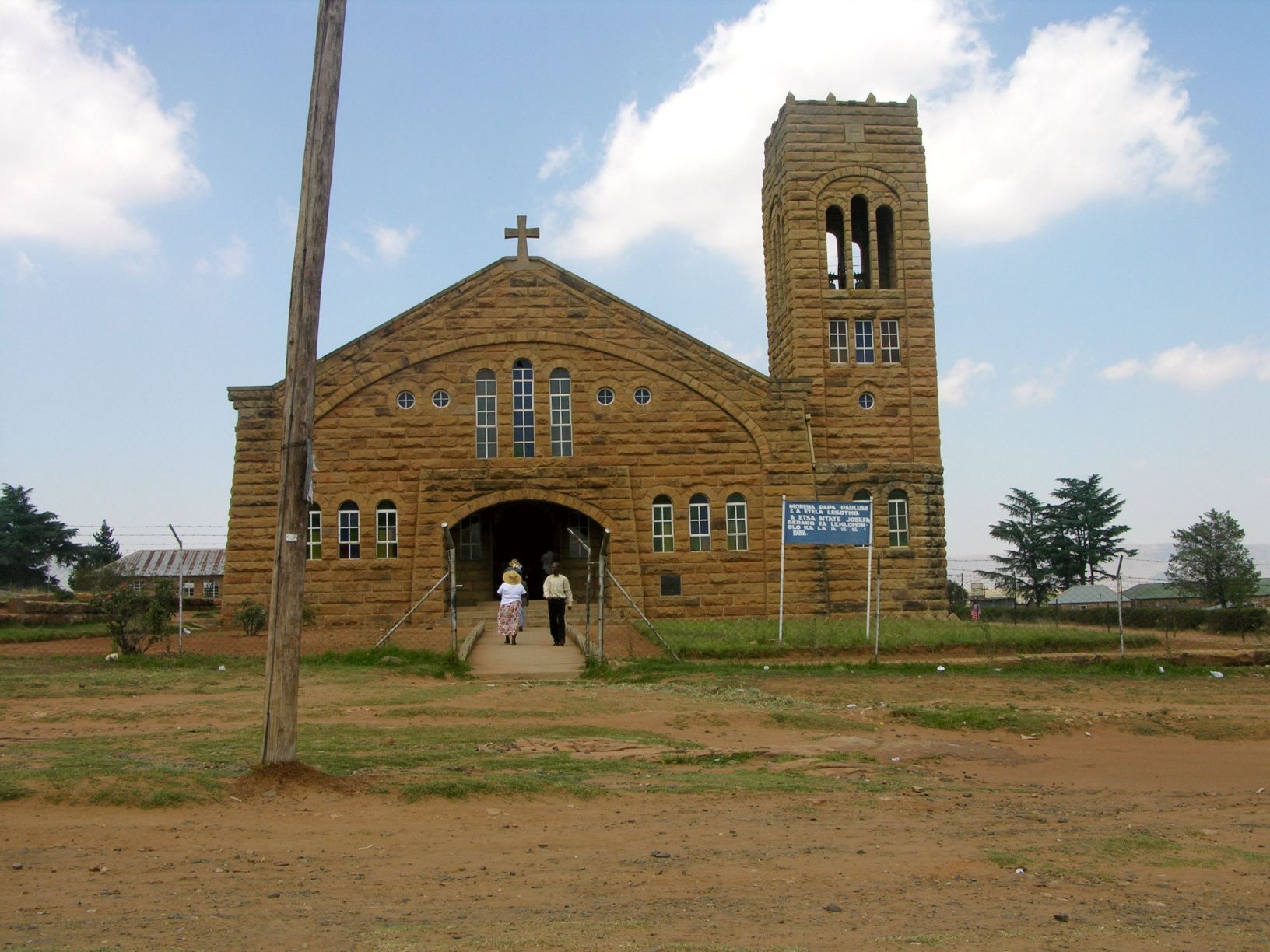
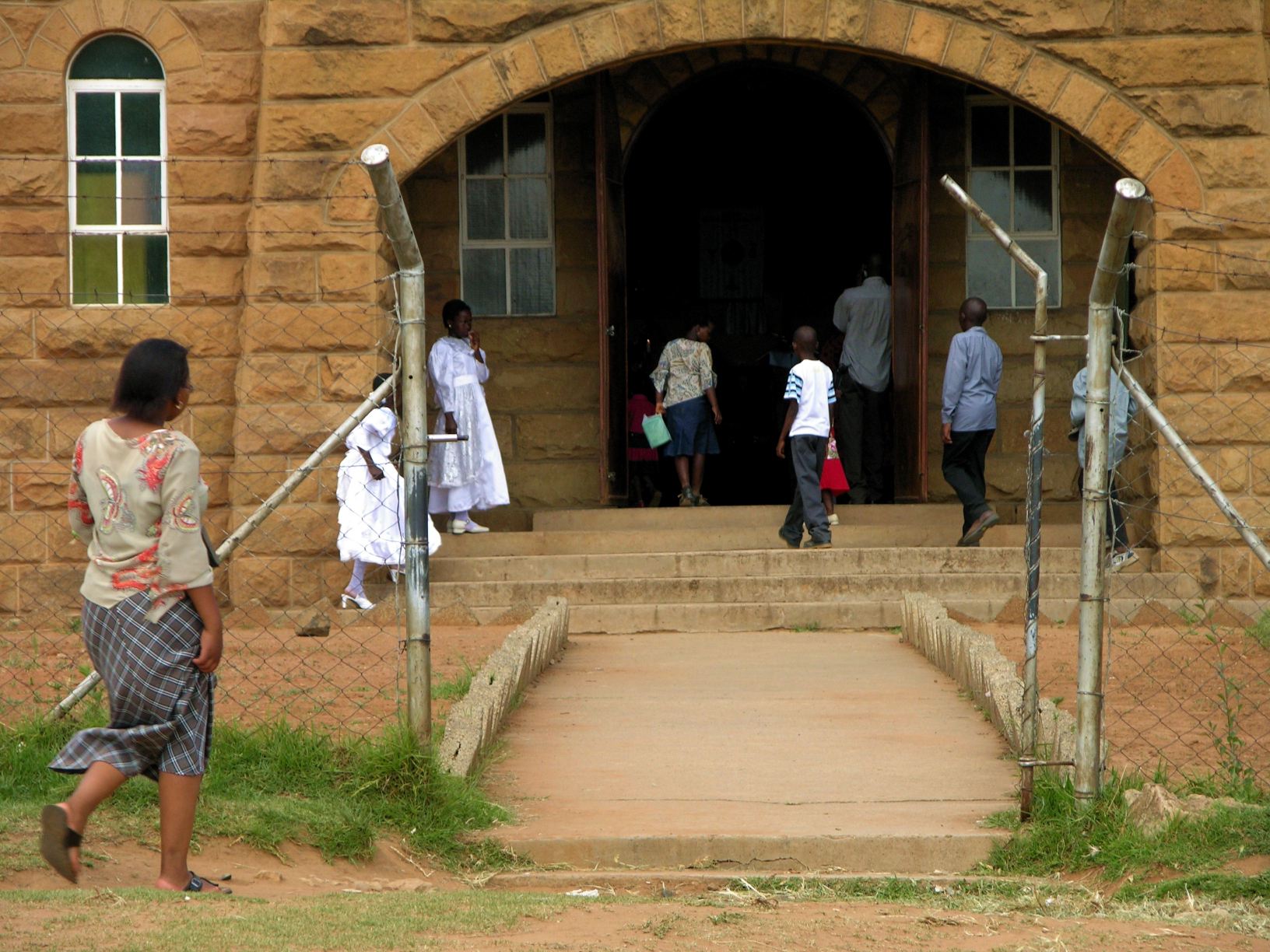
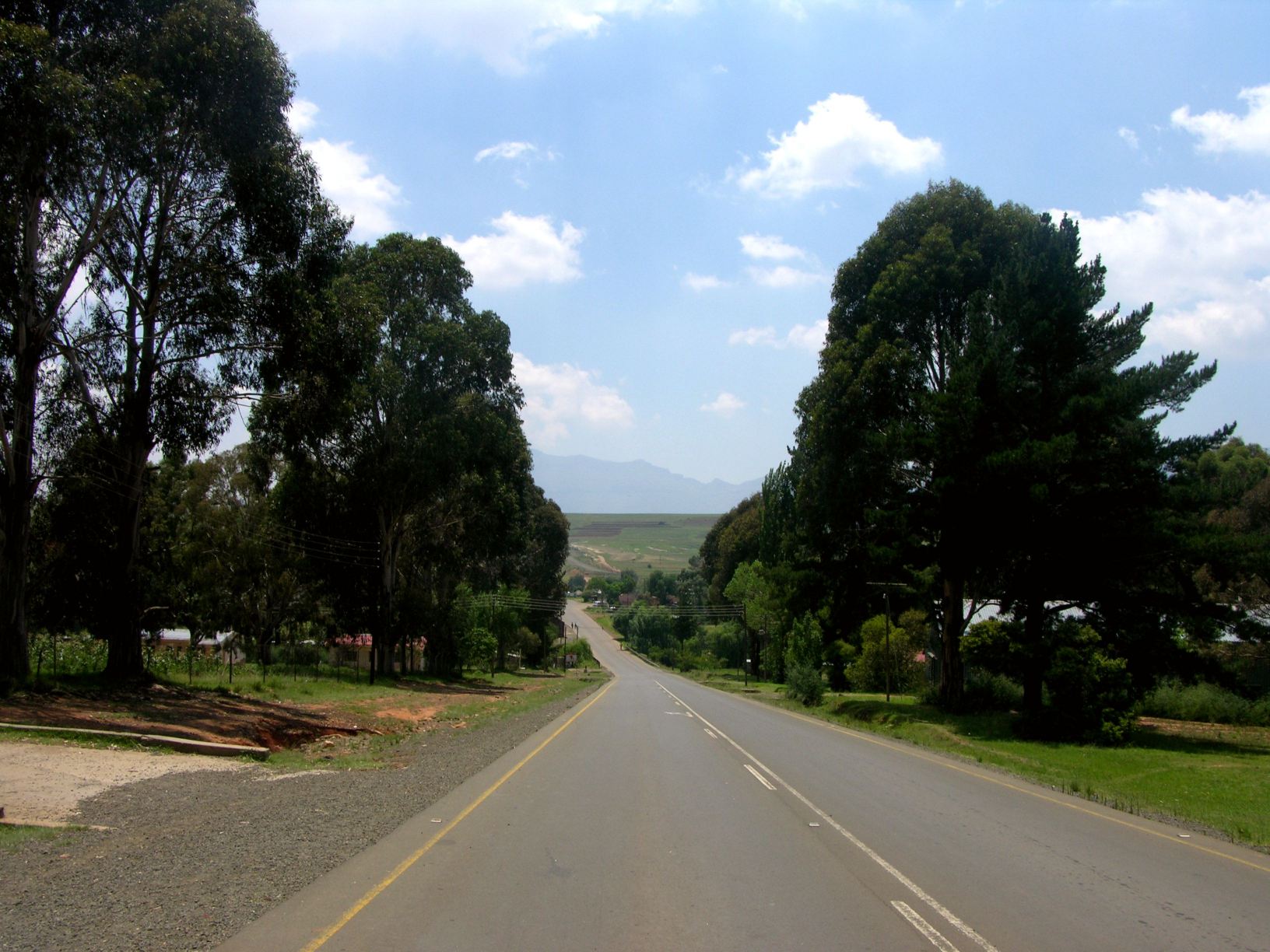
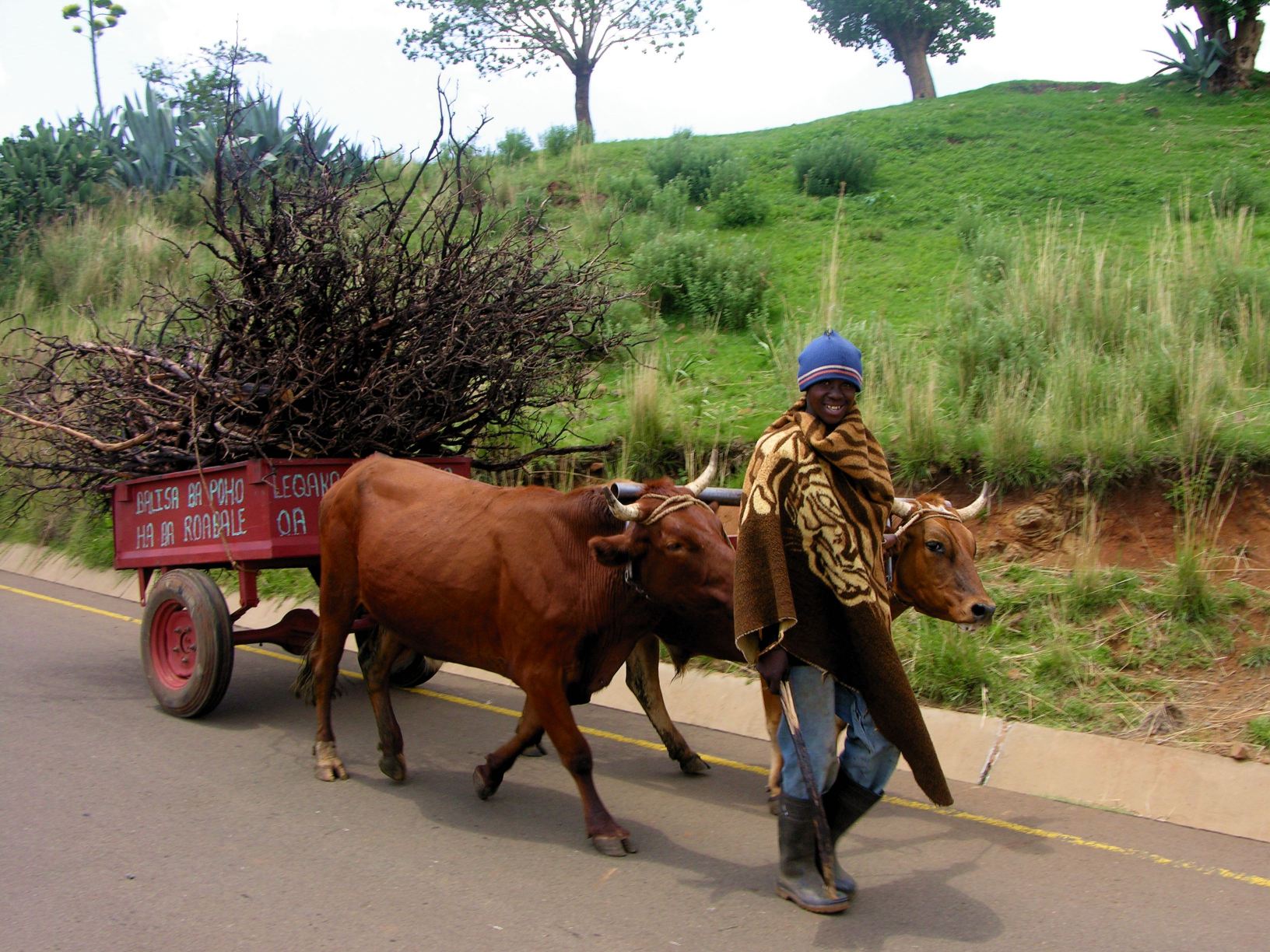
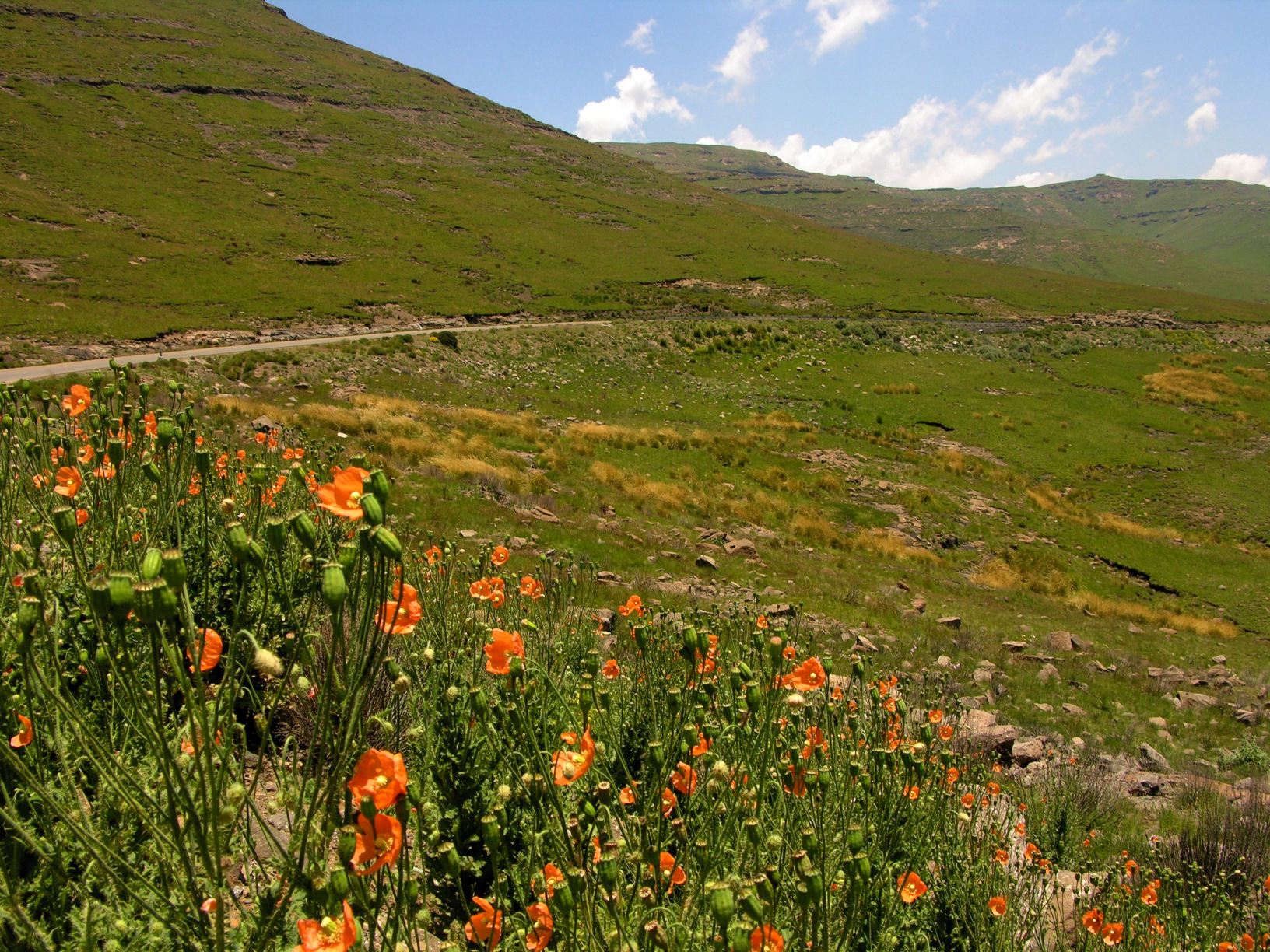
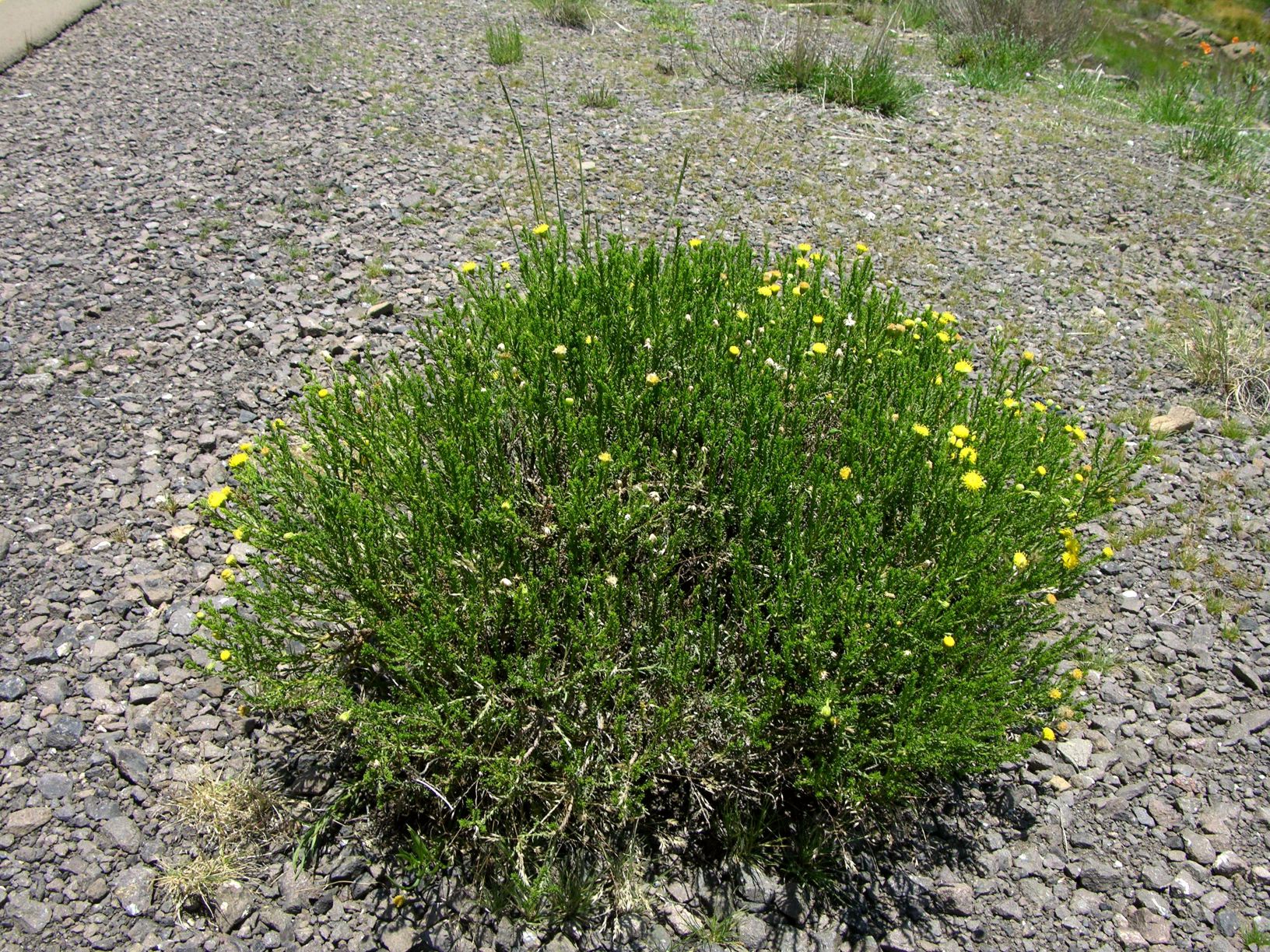
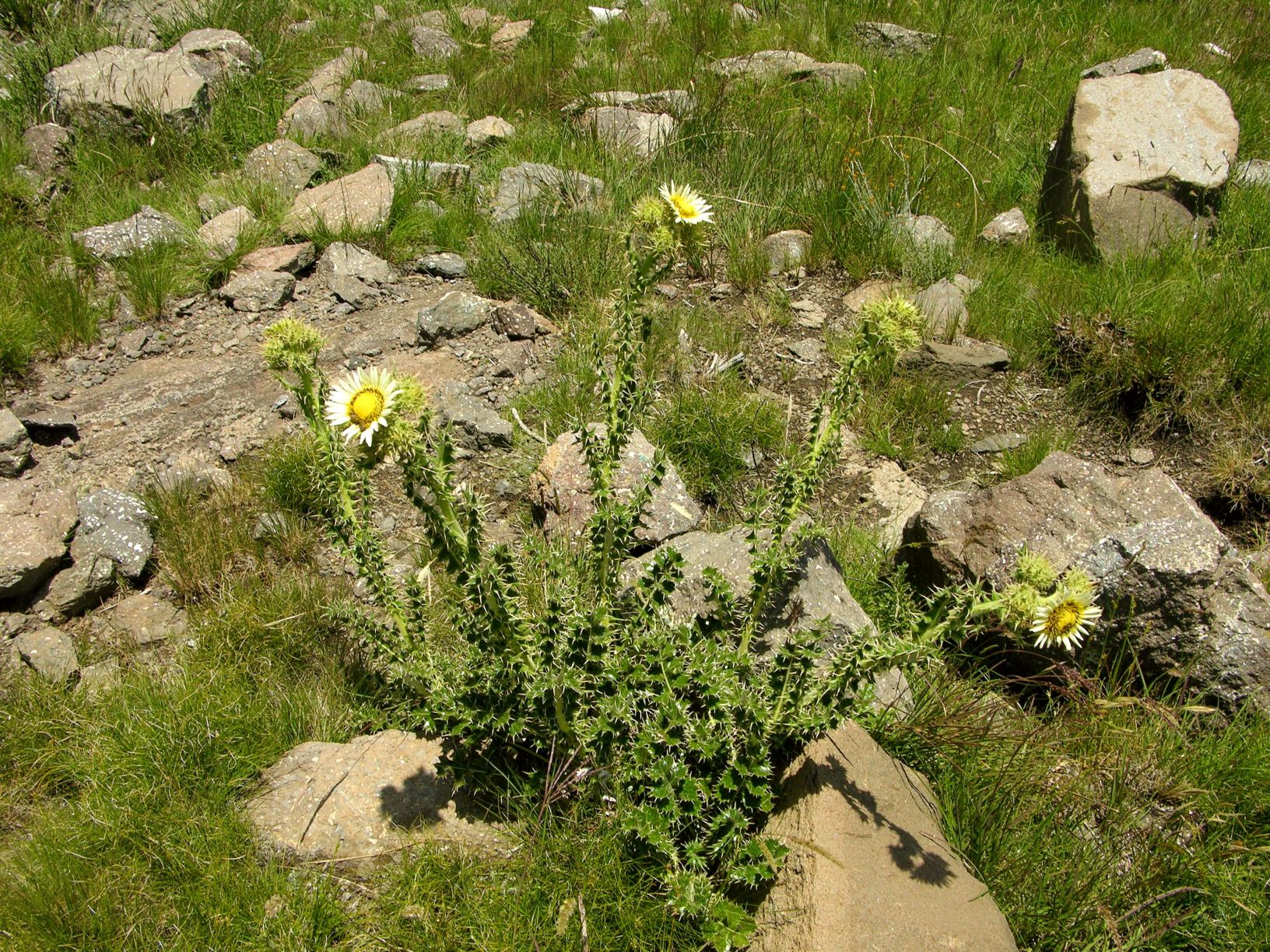
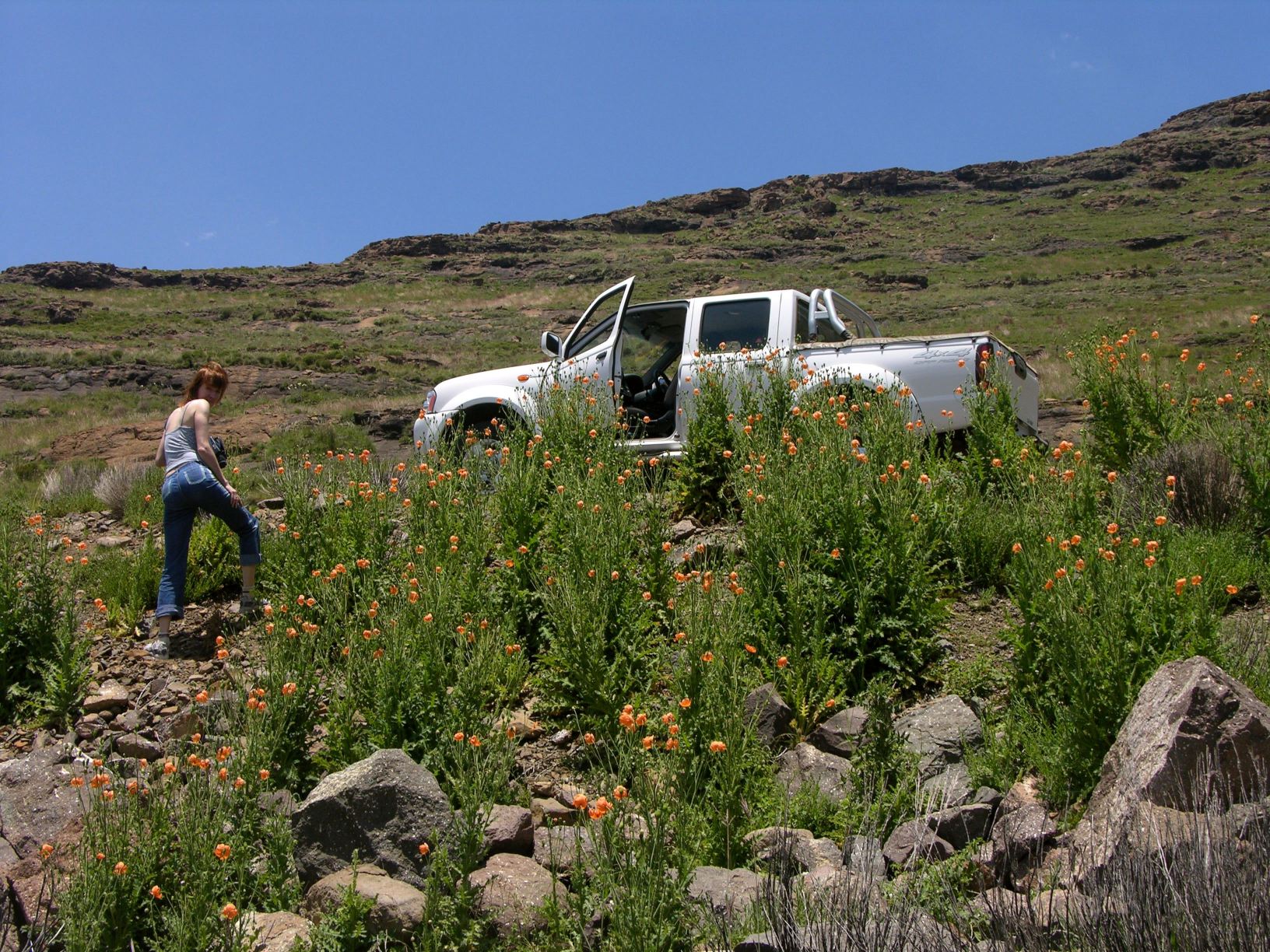
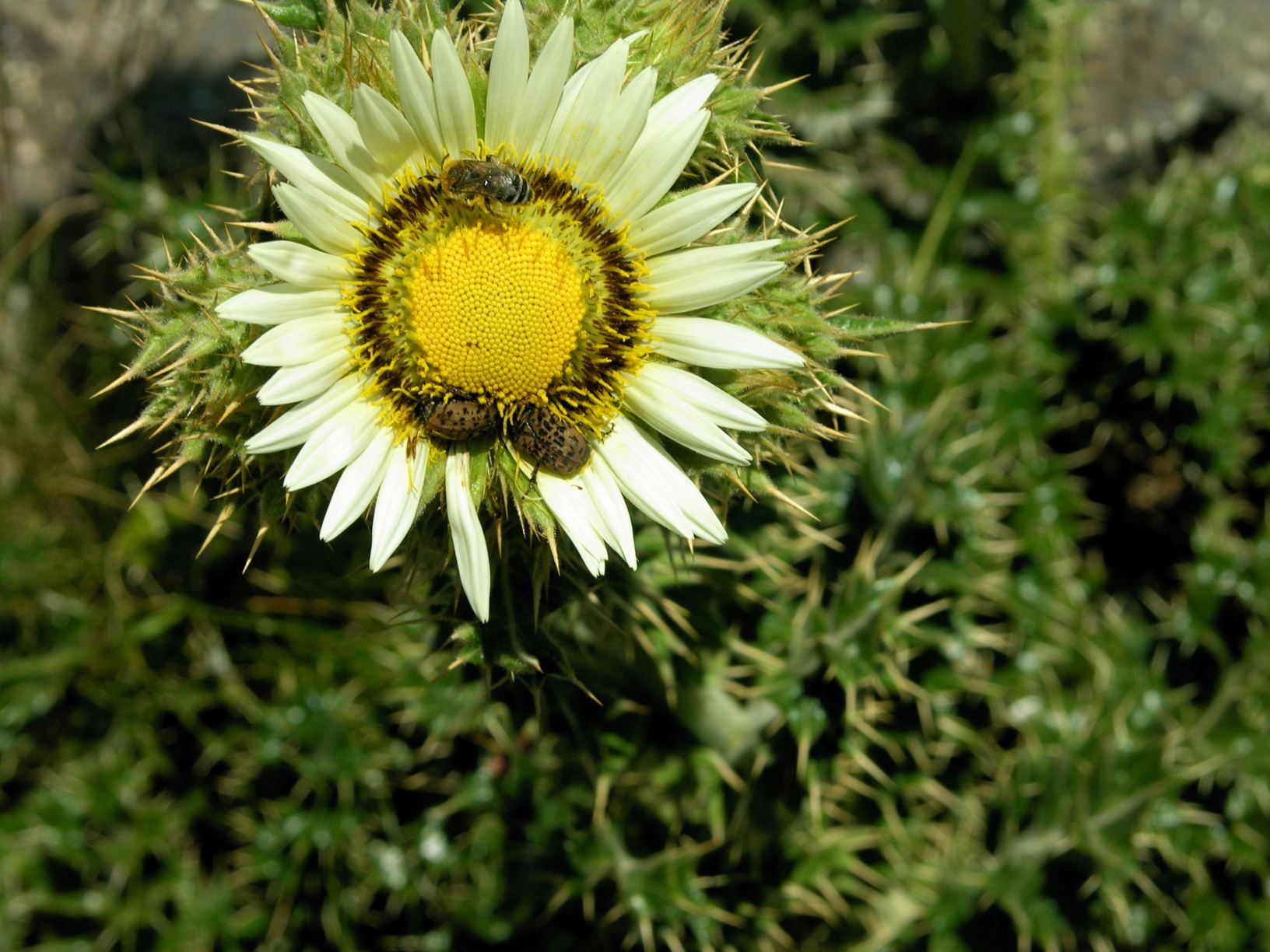
People are proud of living at such altitude. They say Lesotho is the country with the highest lowest point. That needs checking, of course. Maseru is at 1,500 metres, and there are plenty of mountainous countries in the world. They also say Lesotho has the highest café in Africa. Advertising again, I suspect.
The thing they're proudest of is snow. Everyone you meet tells you that you've come at the wrong time. You should have come in July, then you'd have seen snow. When we explain that this is precisely what we've come to get away from, and that at home it's on the ground more than half the year, they look bewildered. Such a marvel could only exist in Lesotho. There are legends of blizzards and metre-high drifts, although in practice it snows occasionally and lies for a few days. The capital rarely sees it.
We had a look at the dam, a feat of engineering built to save the country from soil erosion and supply water. Then we drove back, nearly as far as the capital, and had lunch at a very decent motel near the town of Nazareth. Close by there's a Rome of their own, too, with a university. I don't know how strong the religious influence is, but all the students wear uniforms that look a lot like something from a church mission.
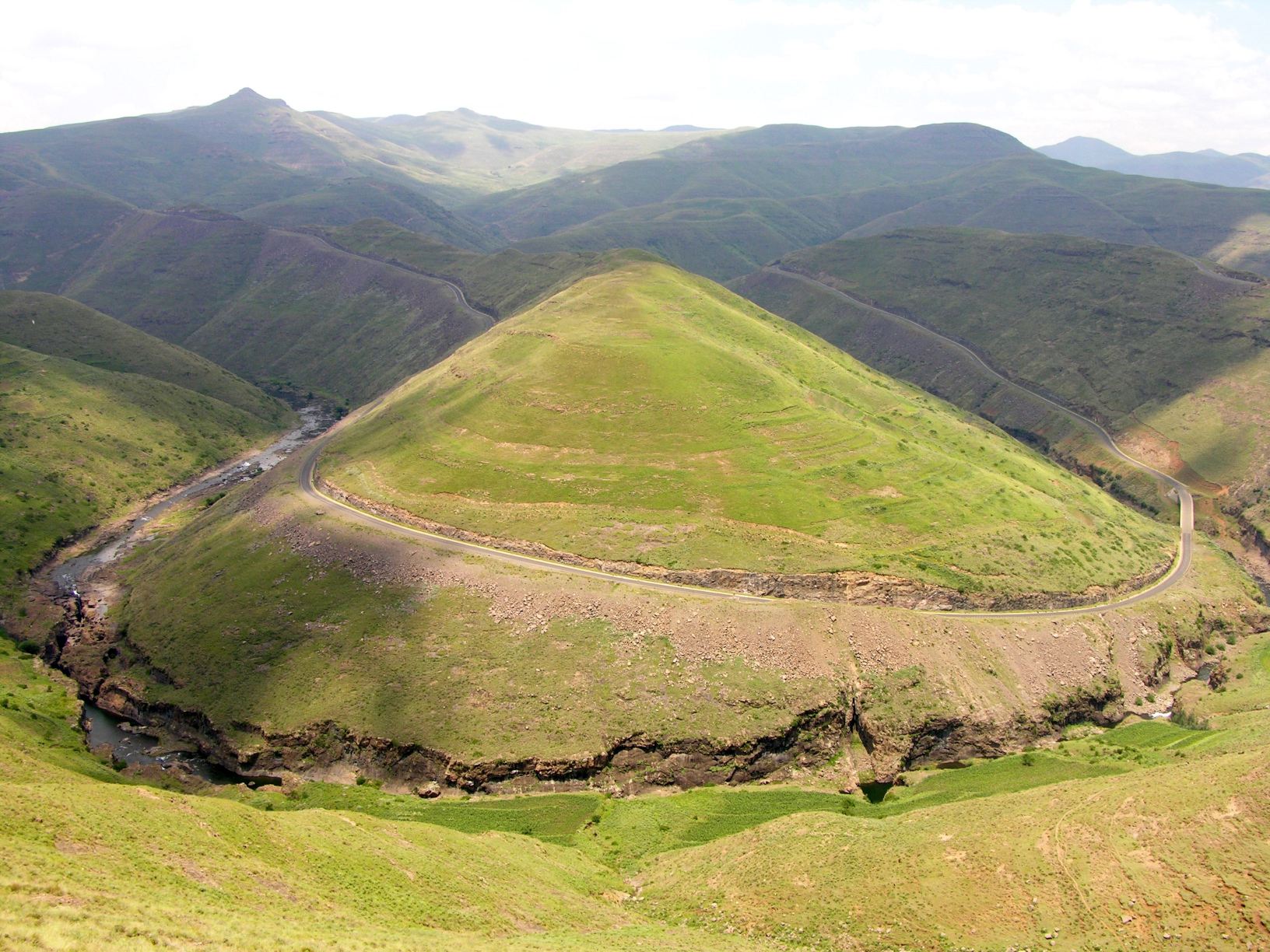
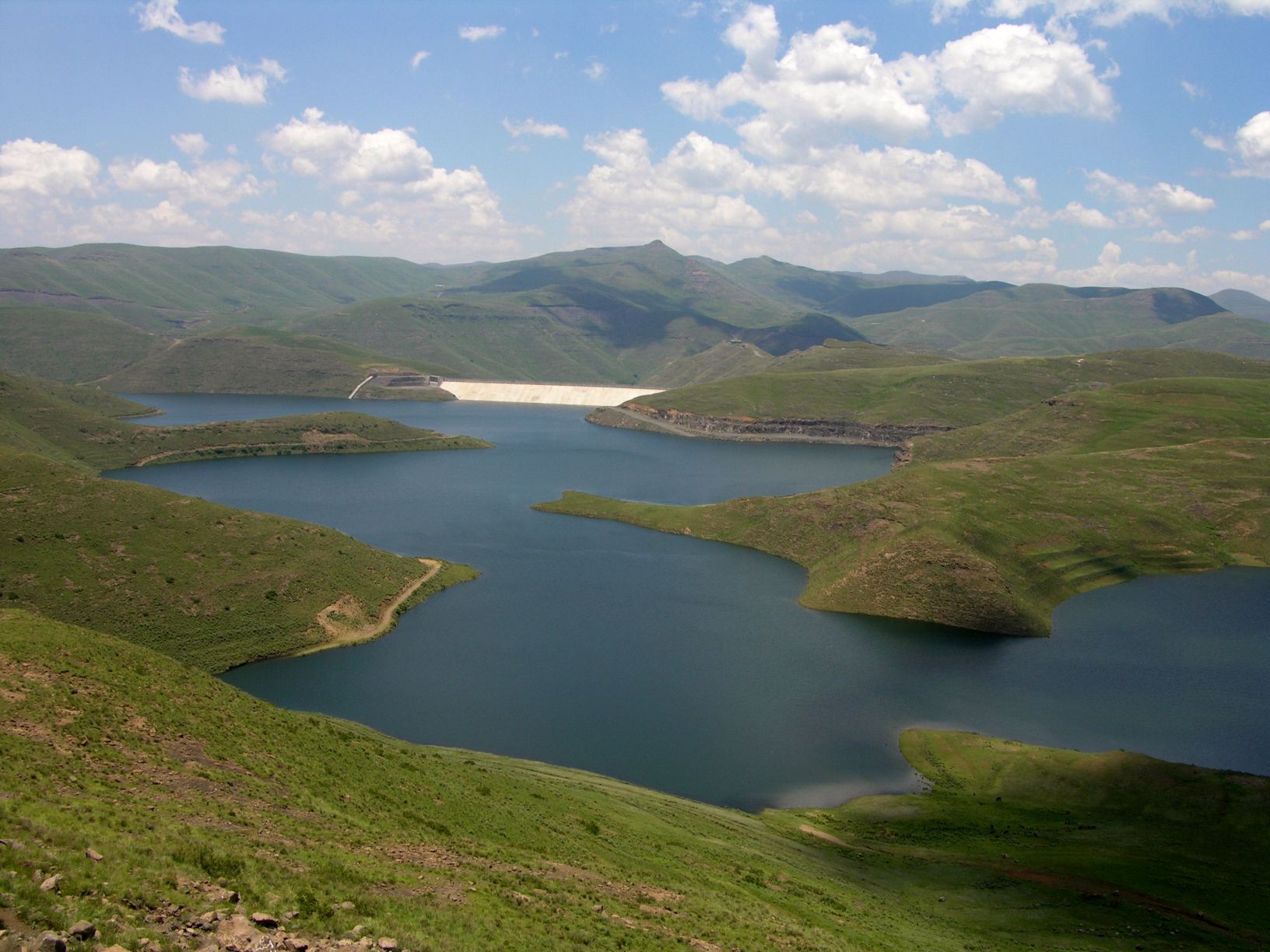
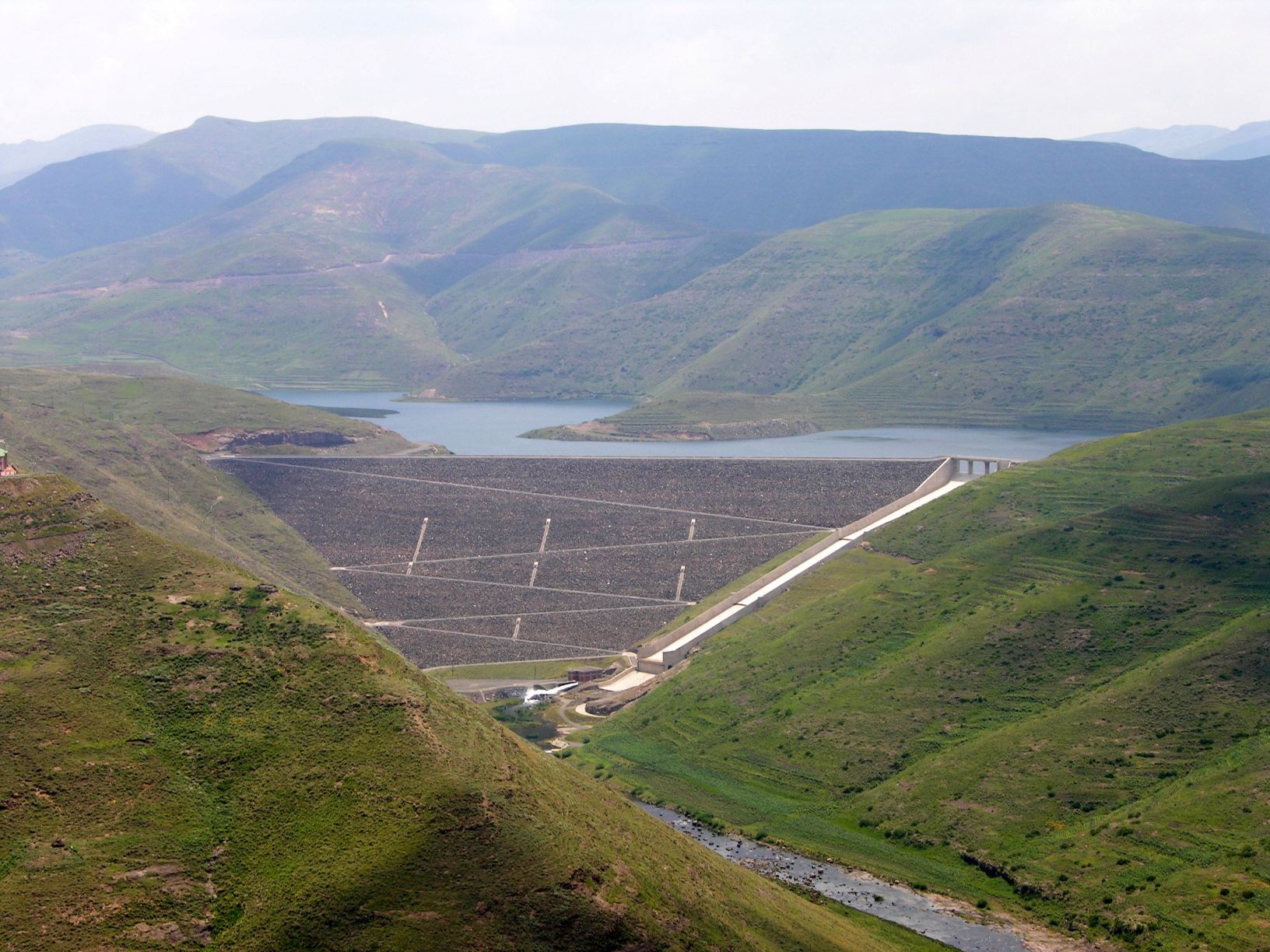
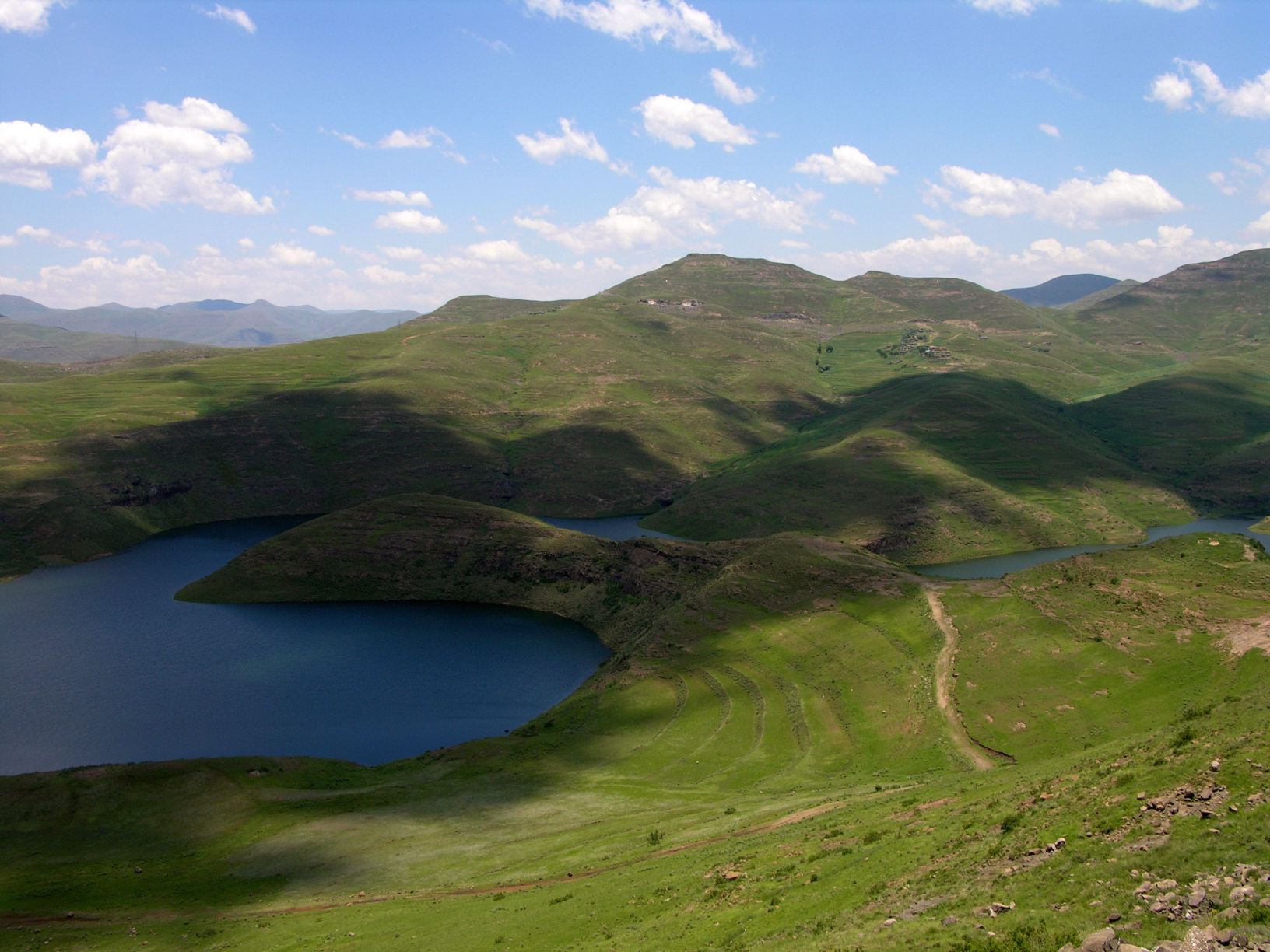
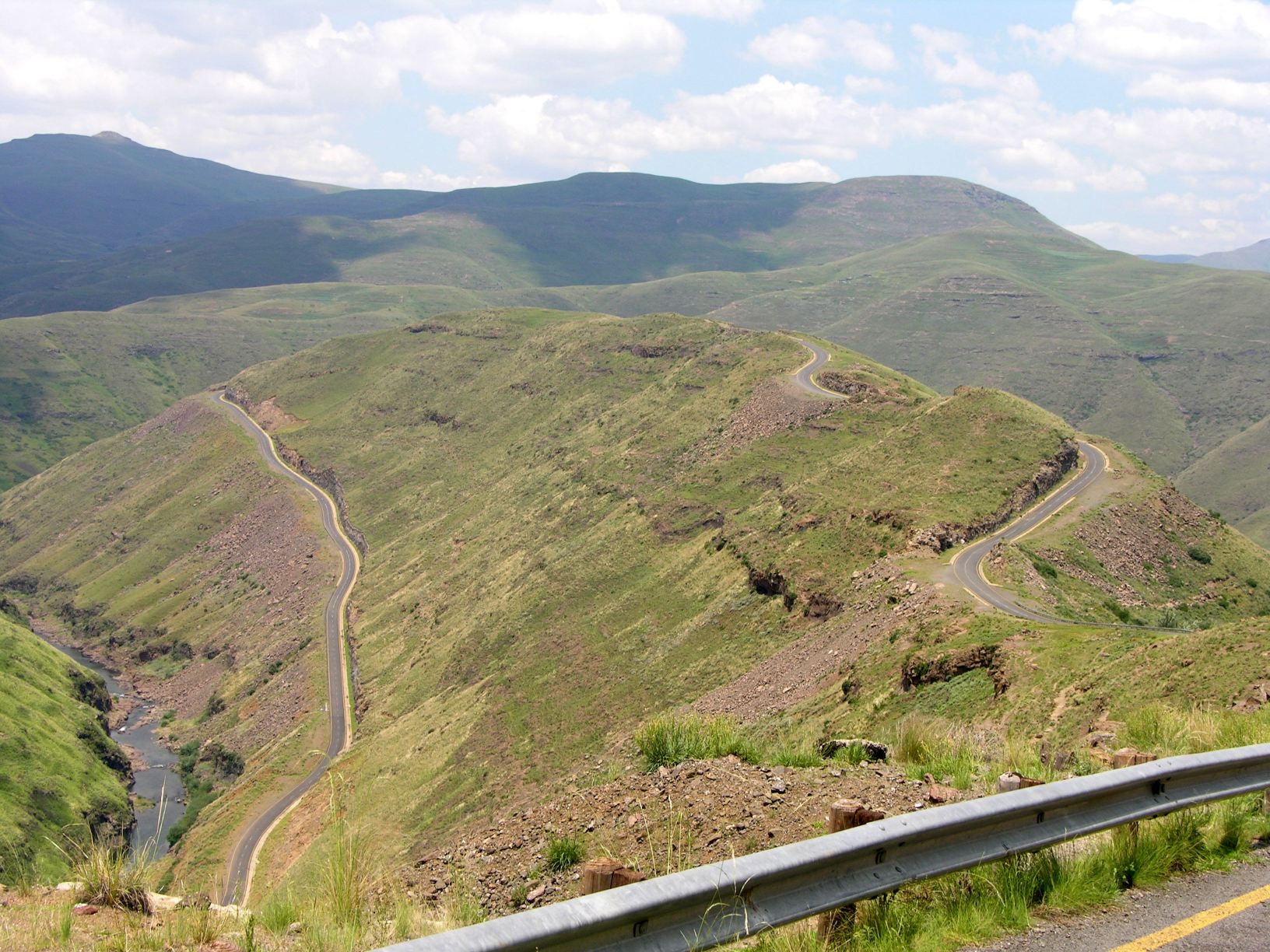
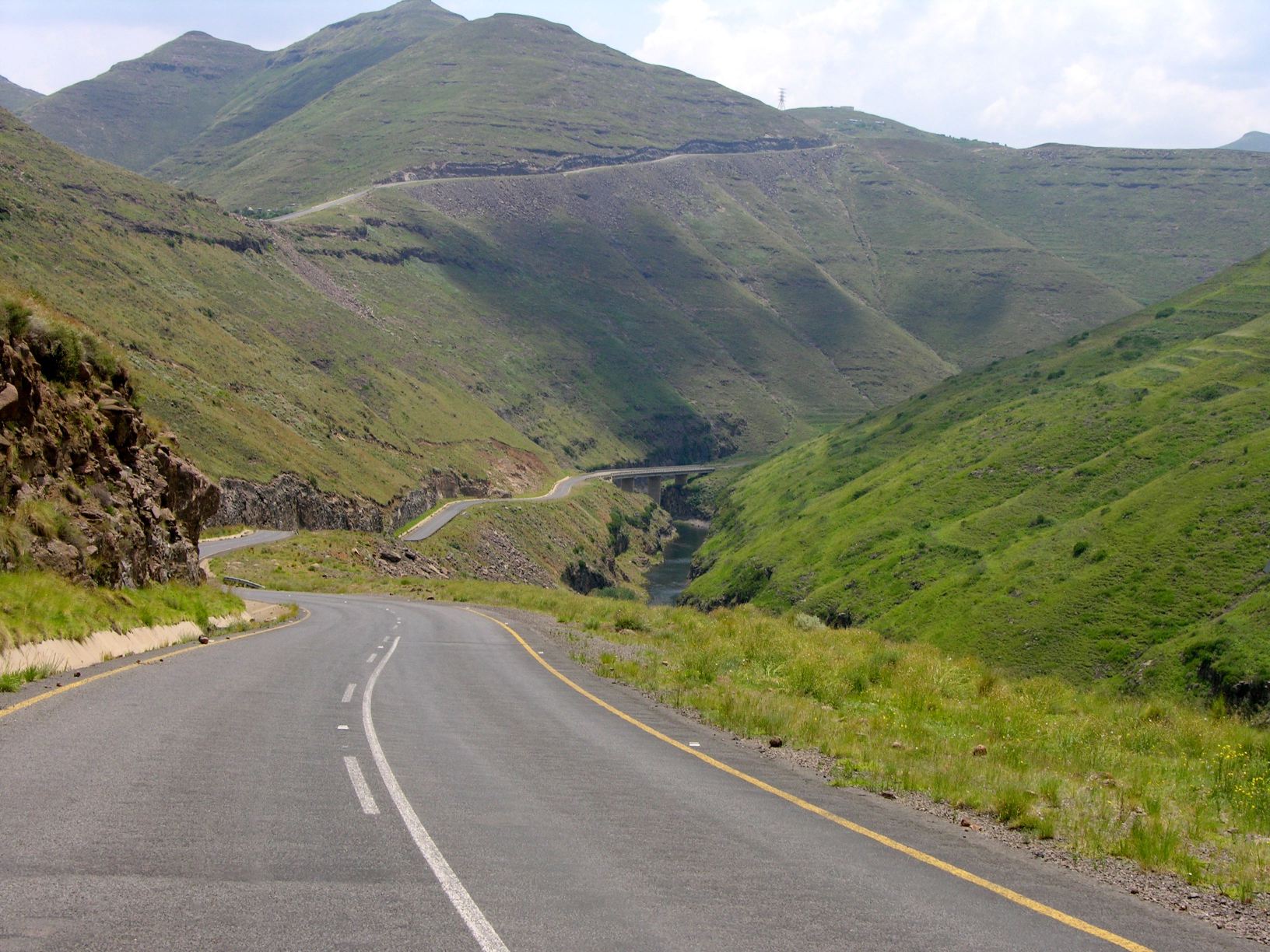
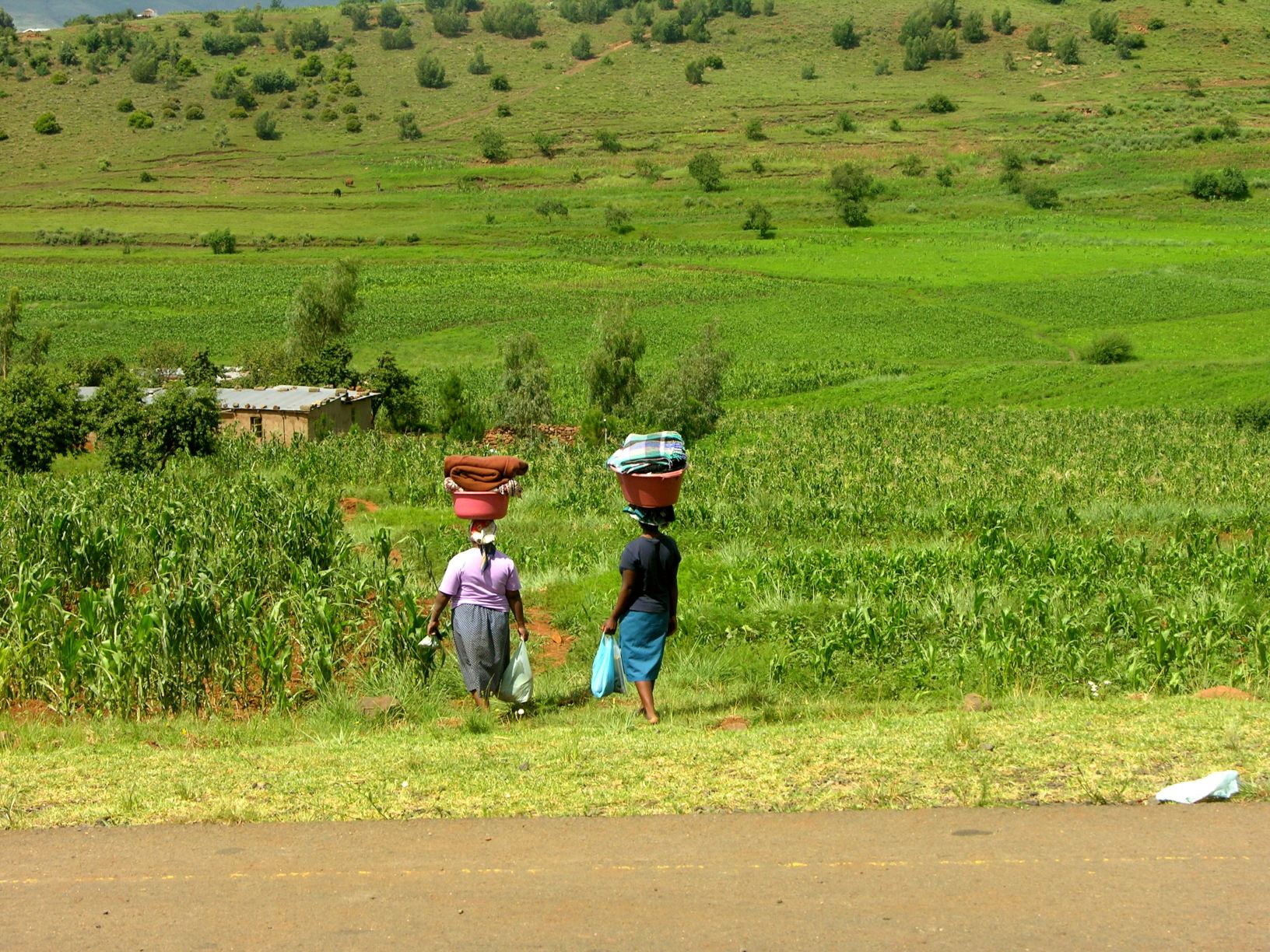
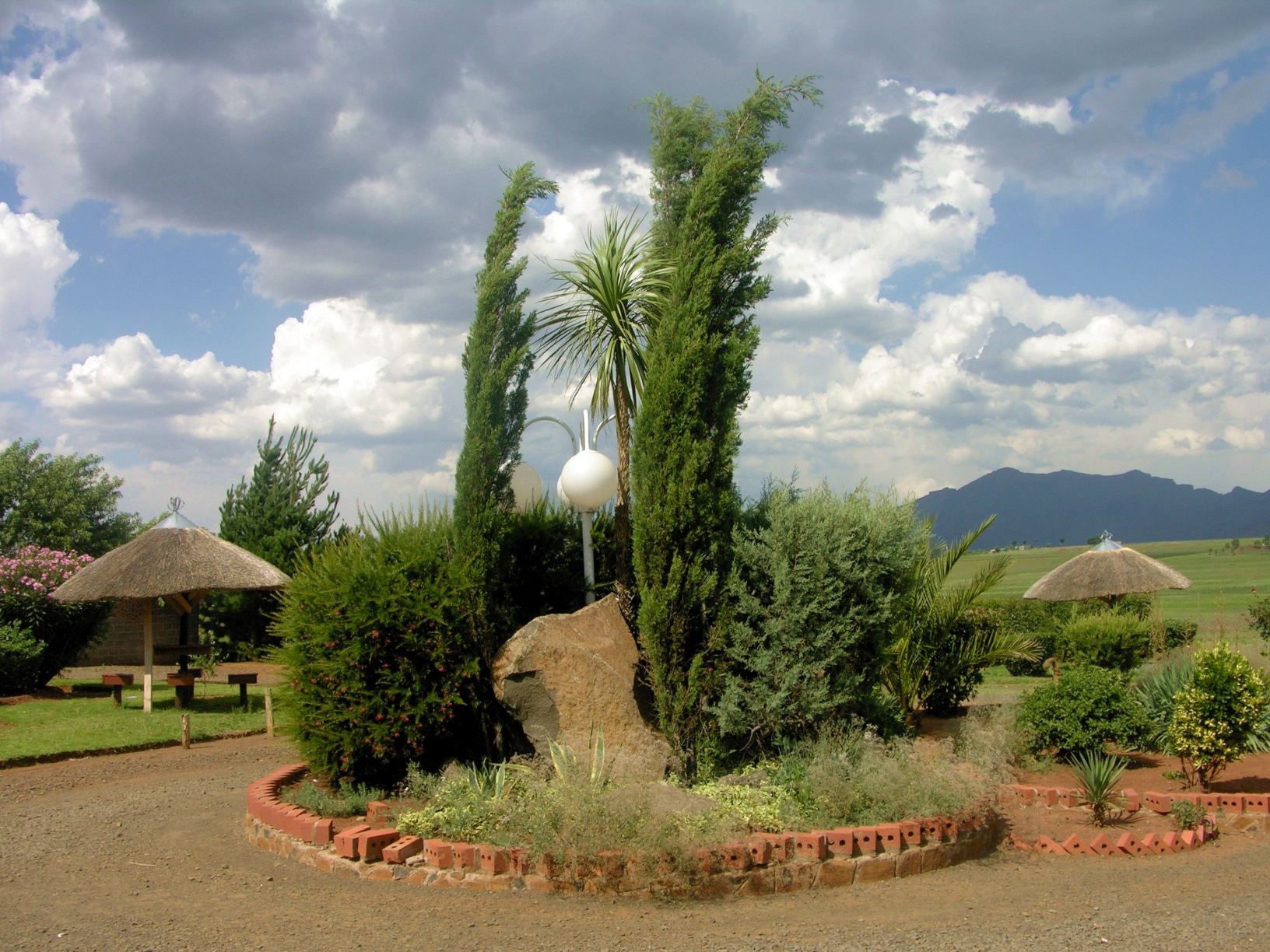
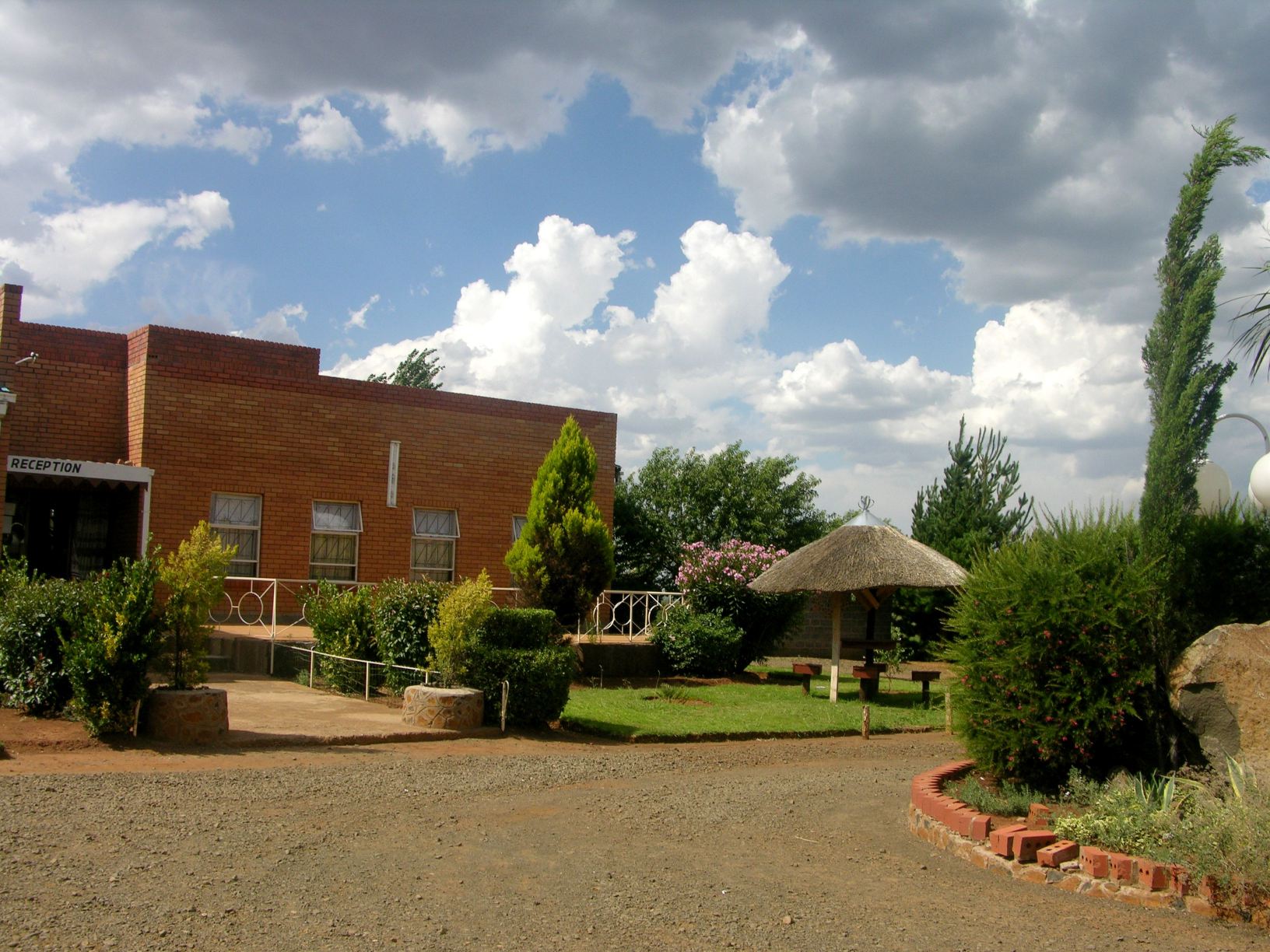
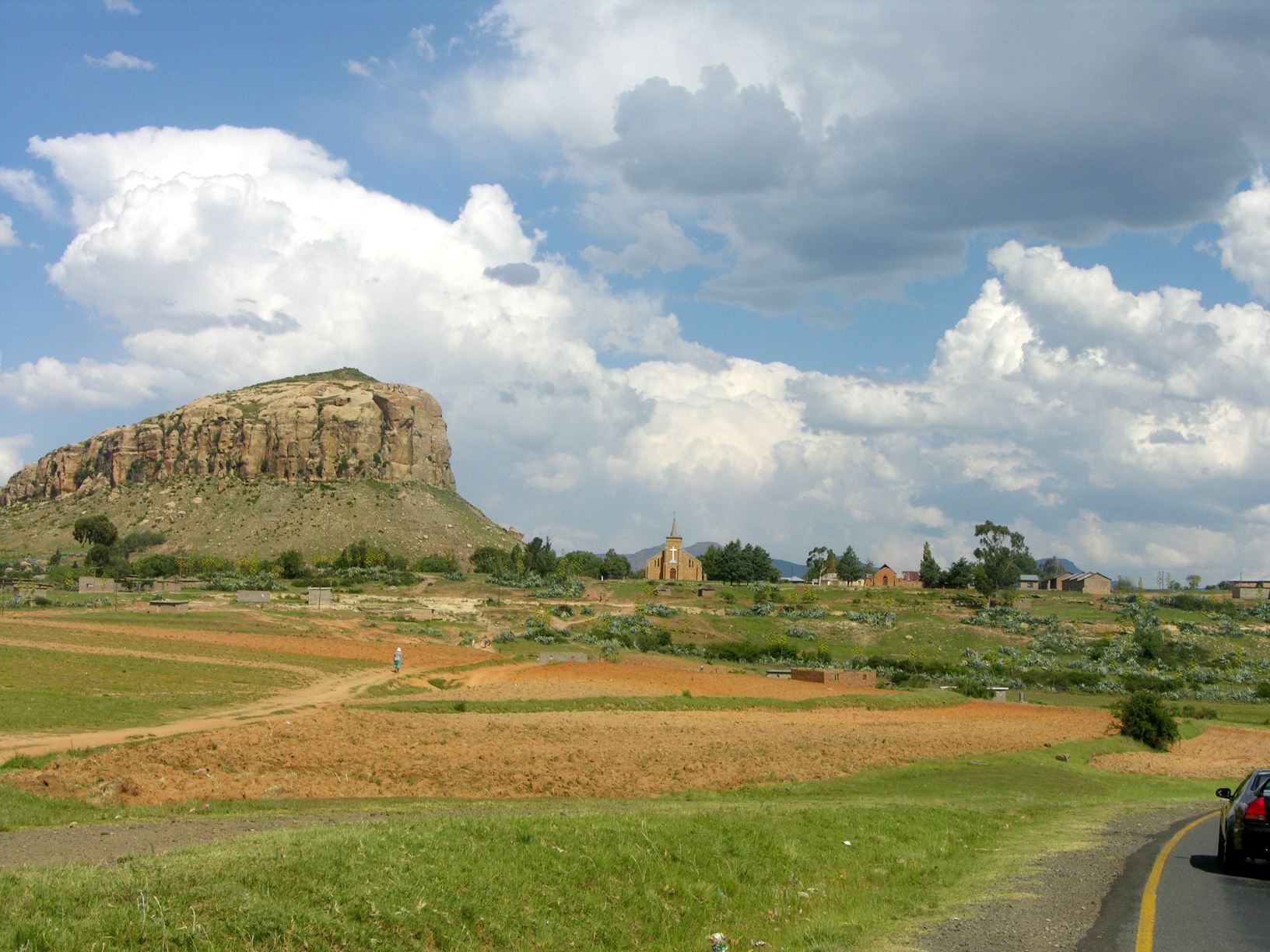
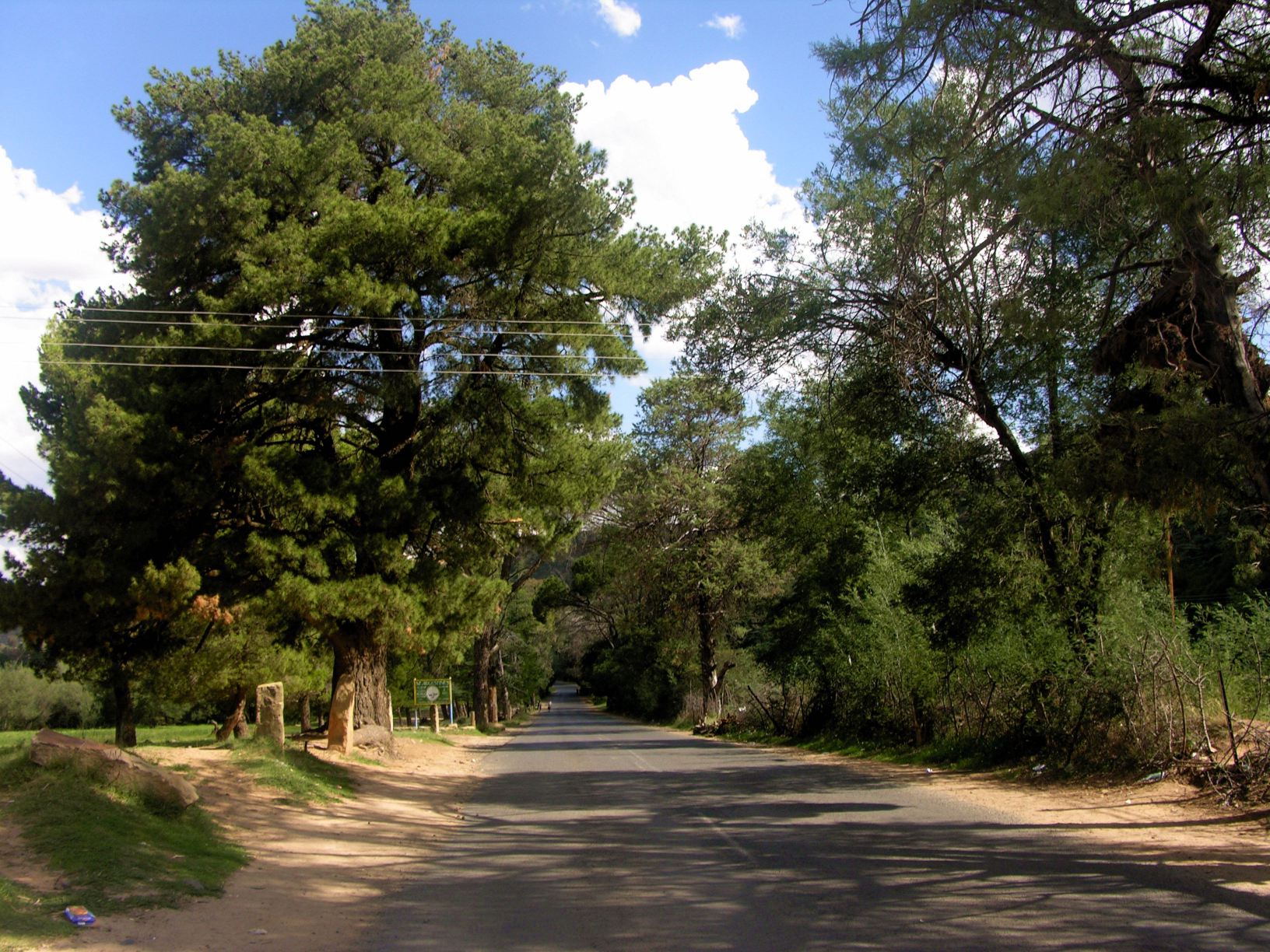
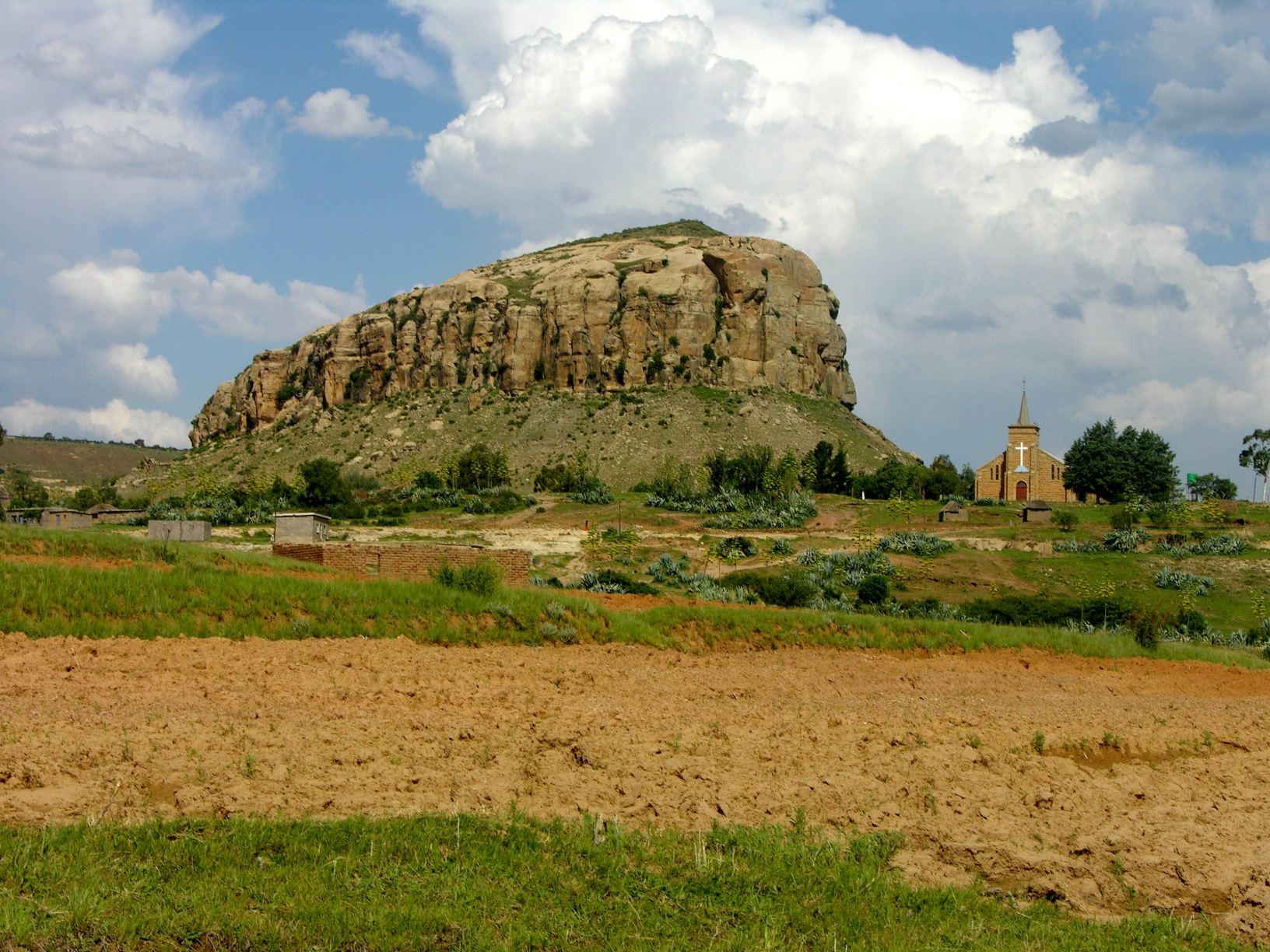
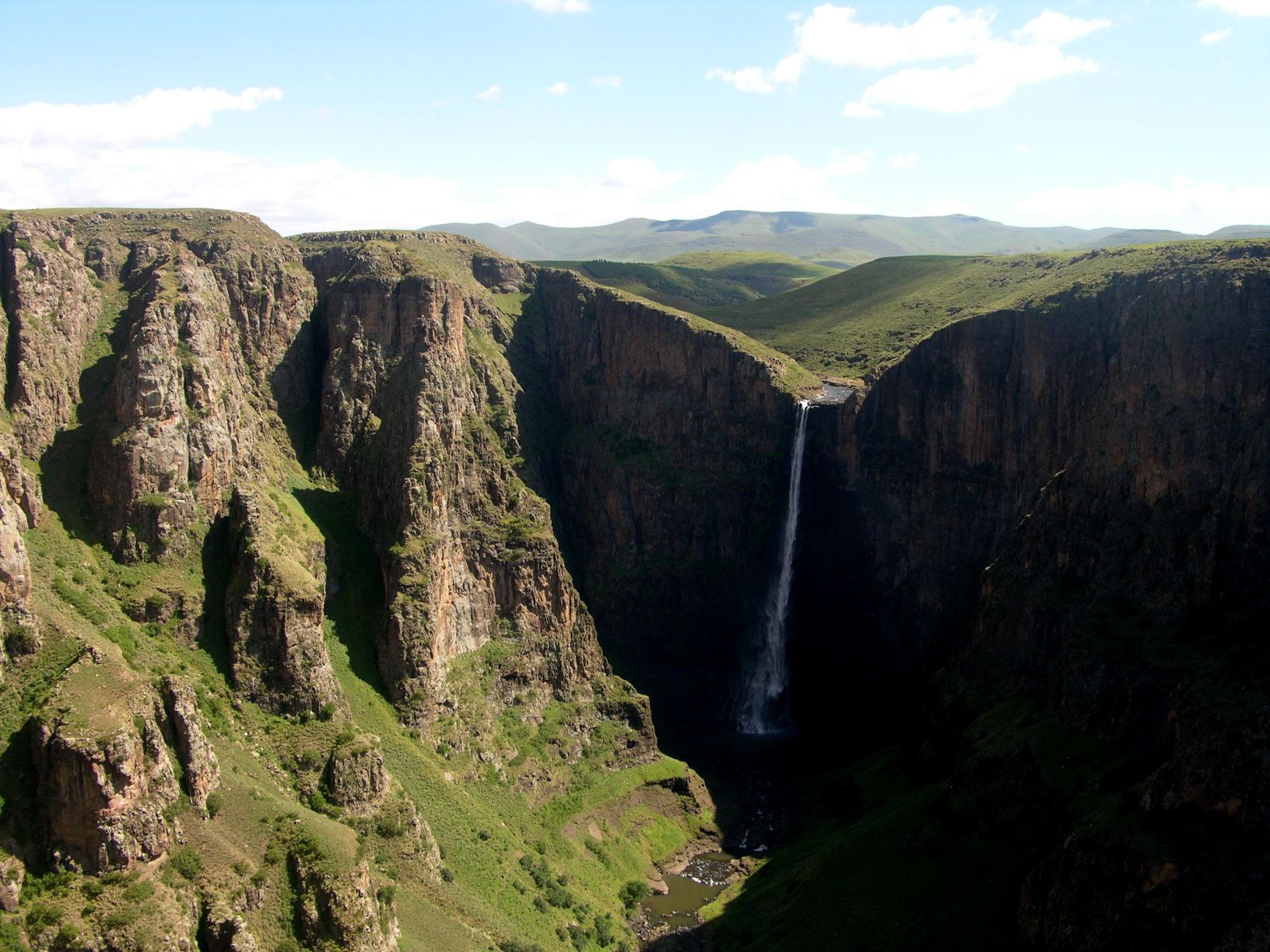
Beyond Rome the road climbs steeply into the mountains, to southern Africa's highest waterfall, Maletsunyane, at Semonkong. It's a several-hour drive. On the map the road is marked as passable for ordinary cars. You're better off not attempting it without a good four-wheel drive, particularly since the waterfall itself is another ten kilometres or so beyond town and that stretch is strictly four-wheel drive.

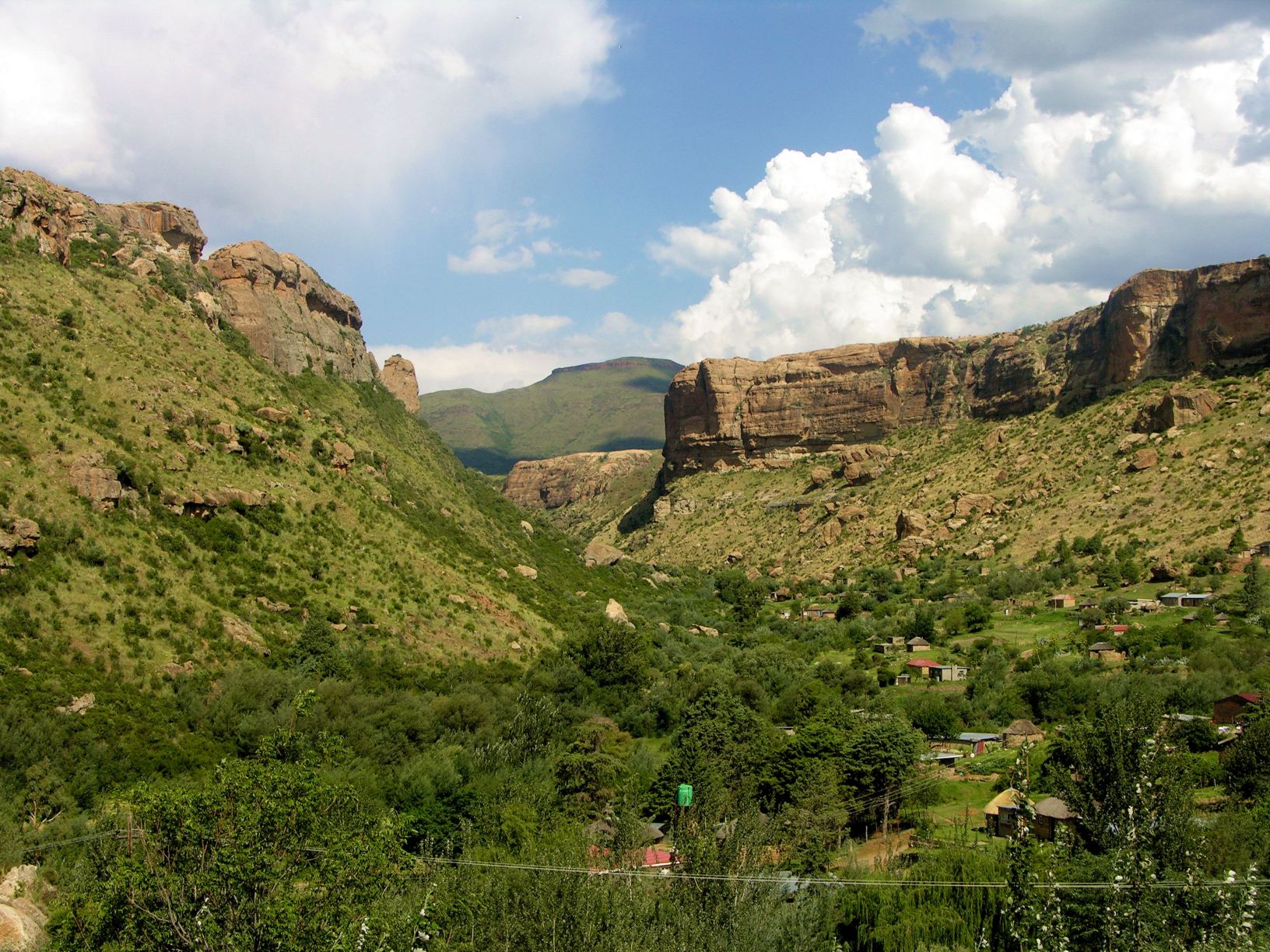
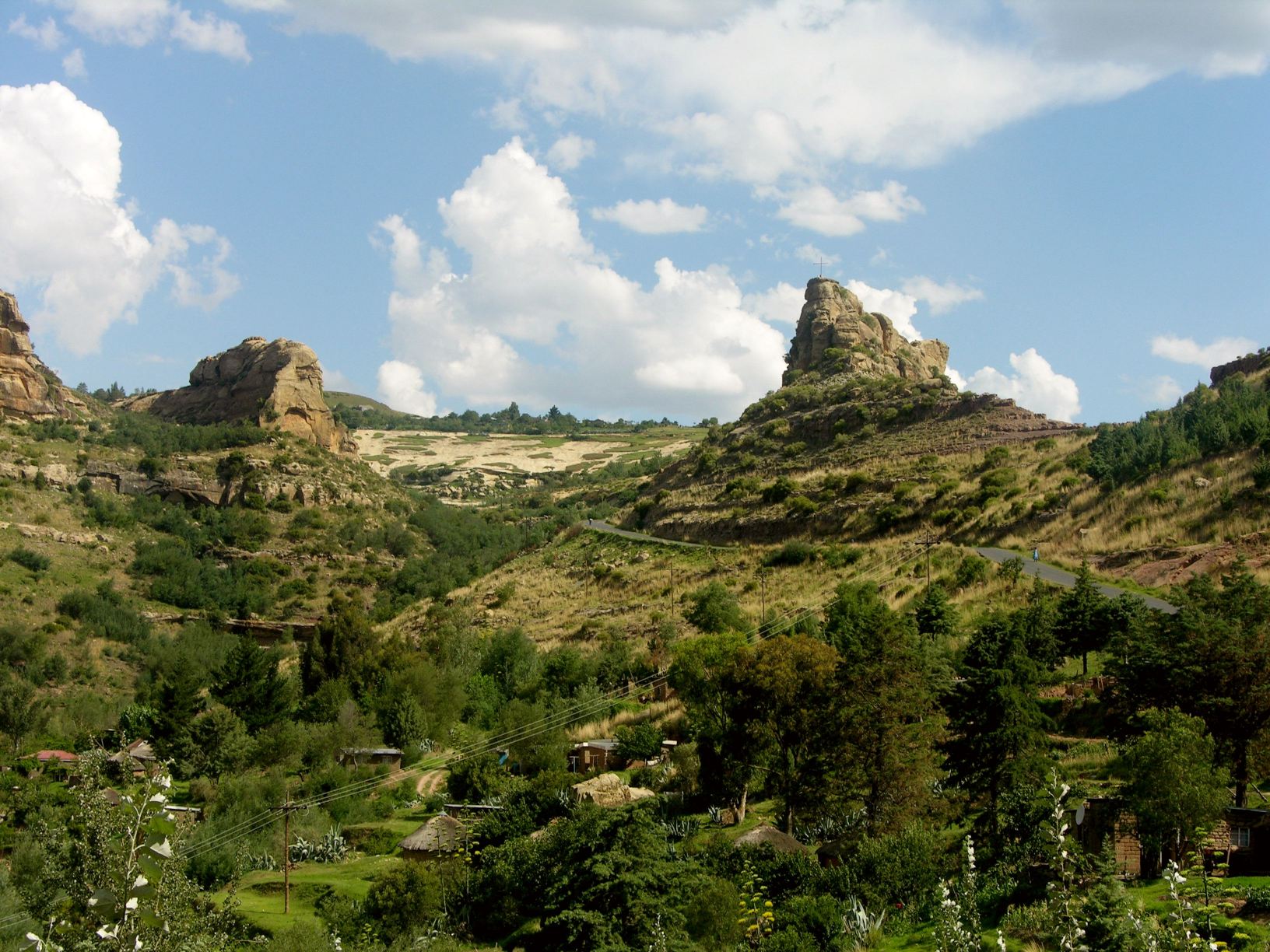
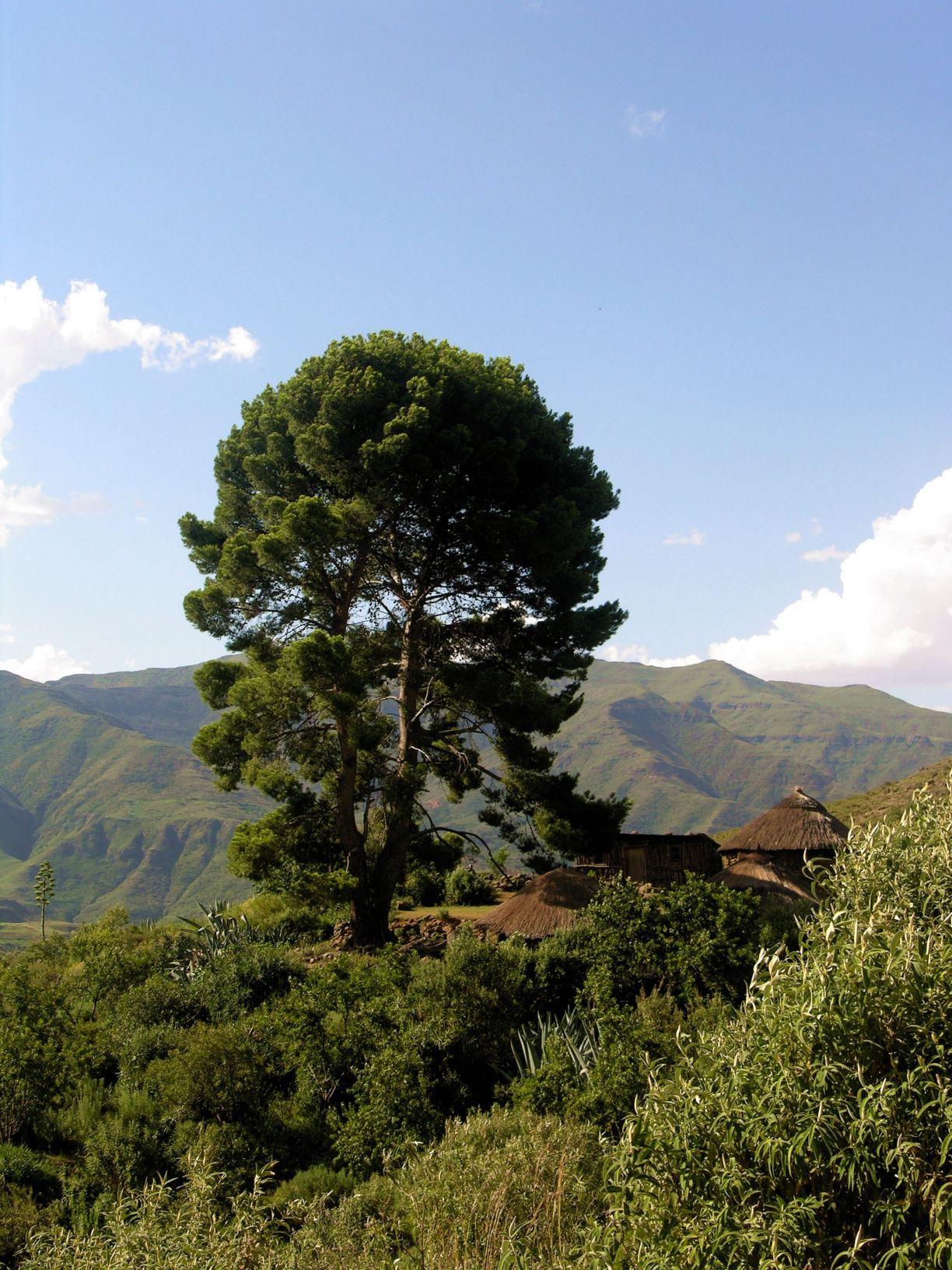

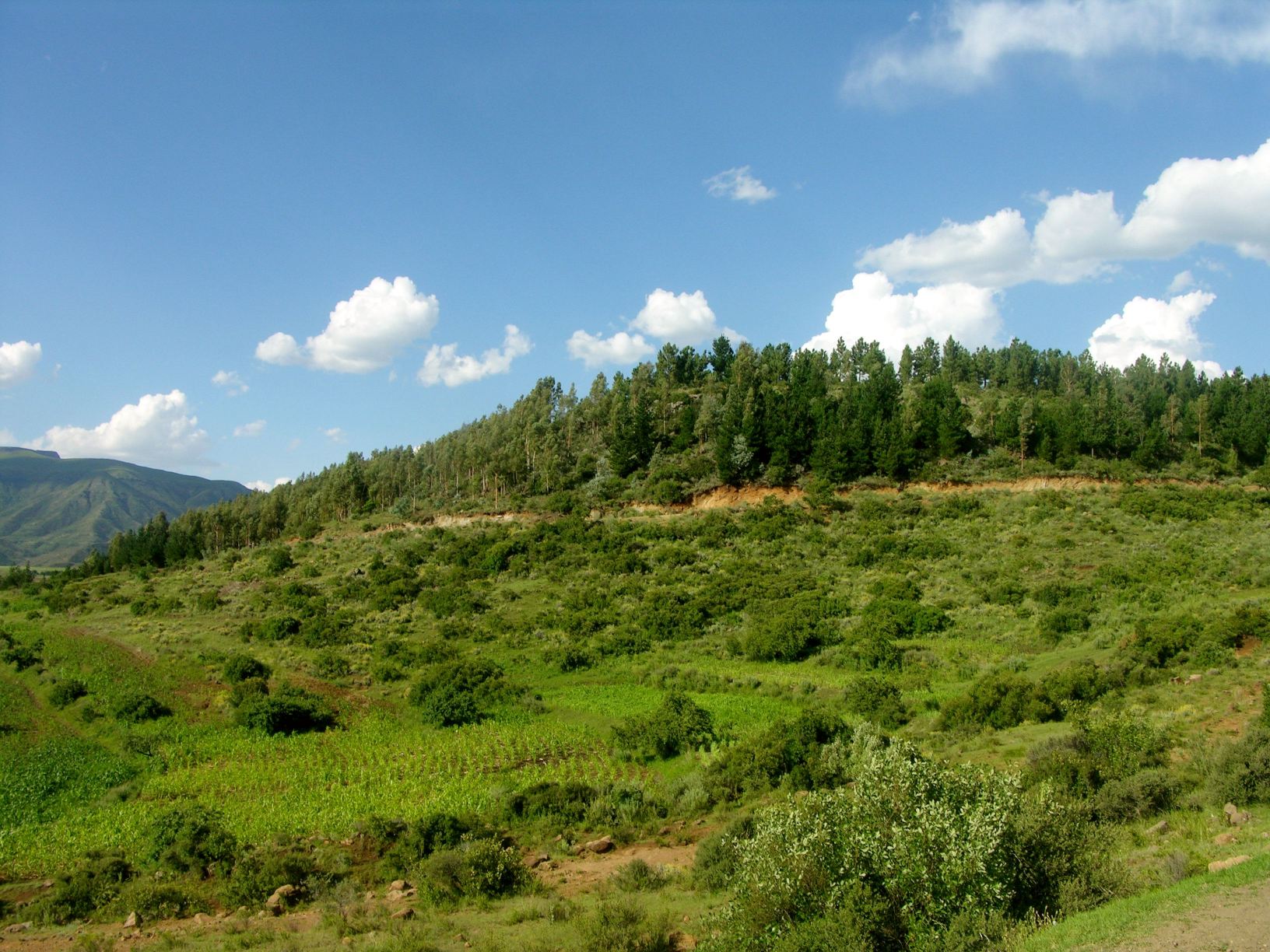
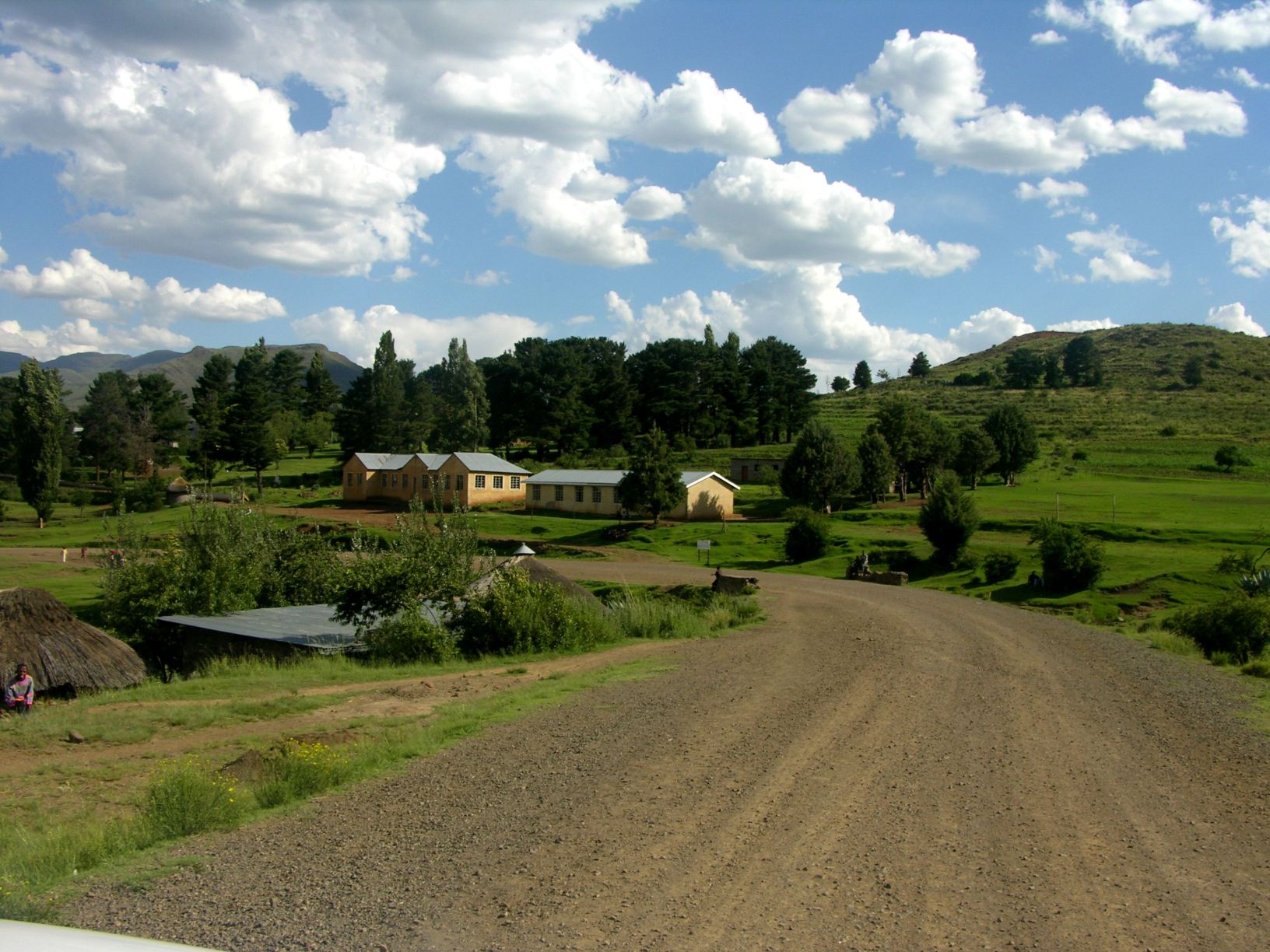
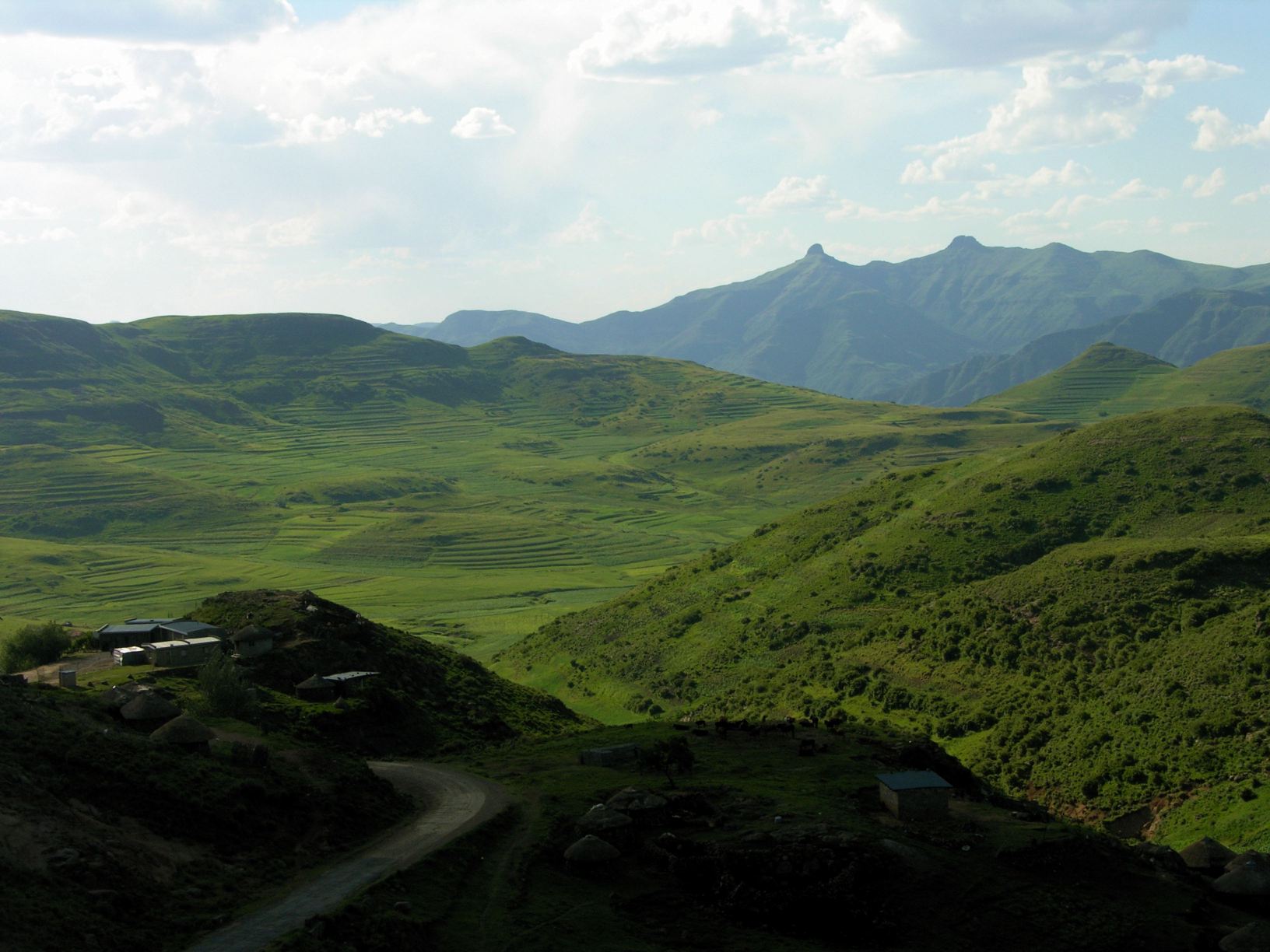

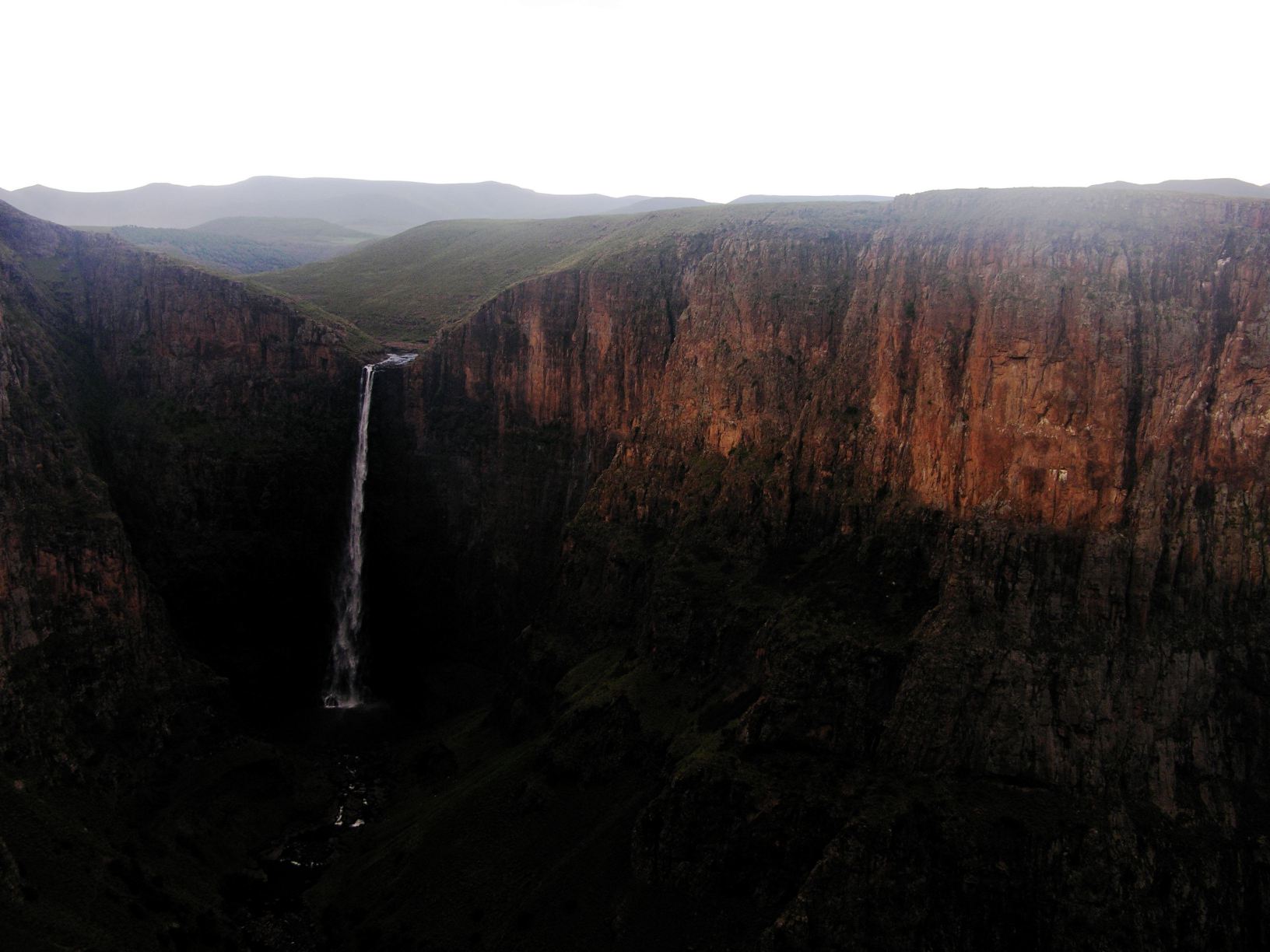
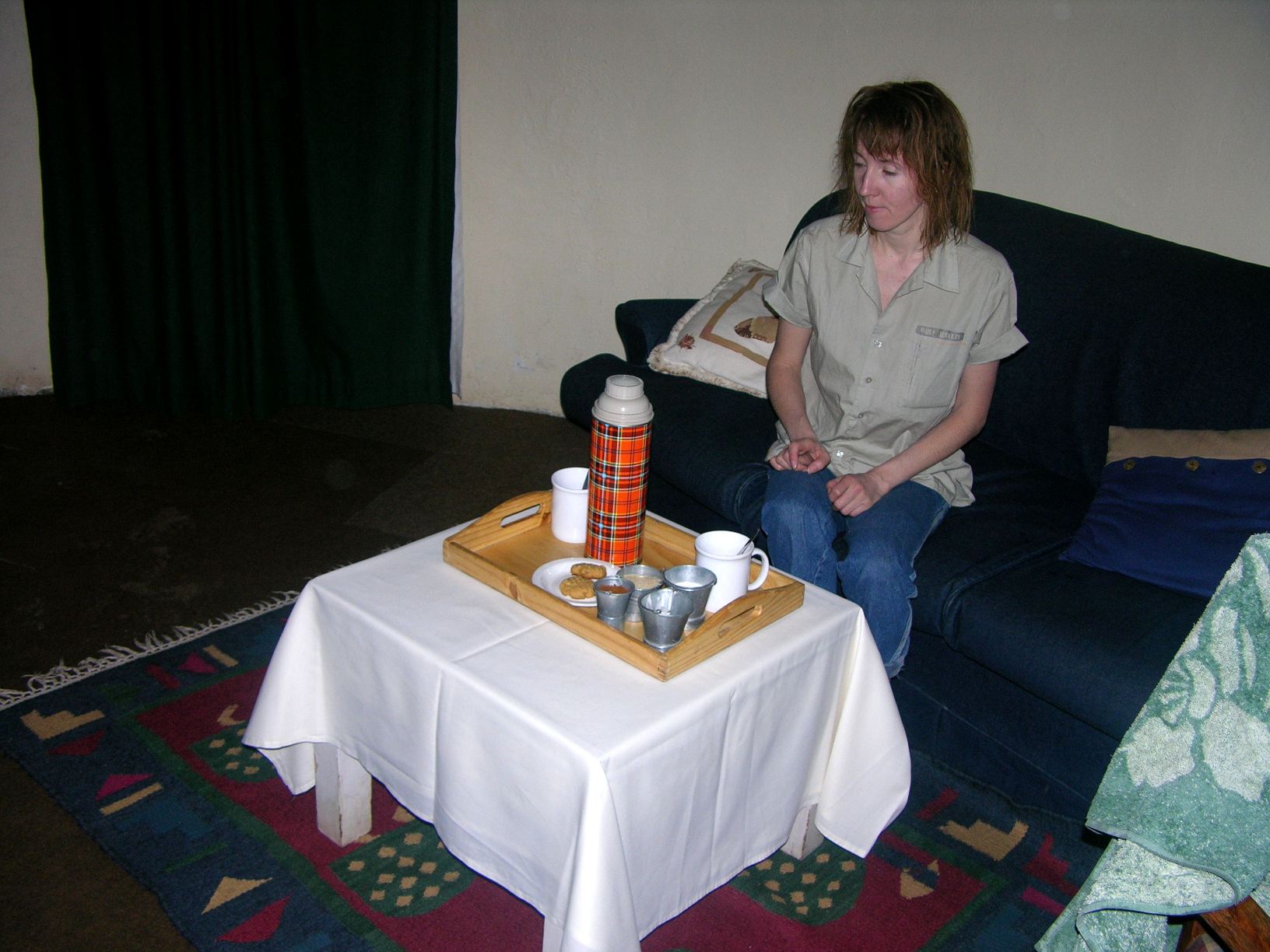
We only reached the falls at sunset. We needed to find a place to stay, so we went back to Semonkong without a proper look around. There's an excellent motel there, Semonkong Lodge (lodge website, 29°50.416′S, 28°03.113′E). Once again we took a round bungalow. According to the owners, we were the first people from Russia to stay there. It was probably better run than Malealea. There was an ordinary restaurant instead of set meals served to everyone at fixed times. You could borrow books on the biology and geography of southern Africa.
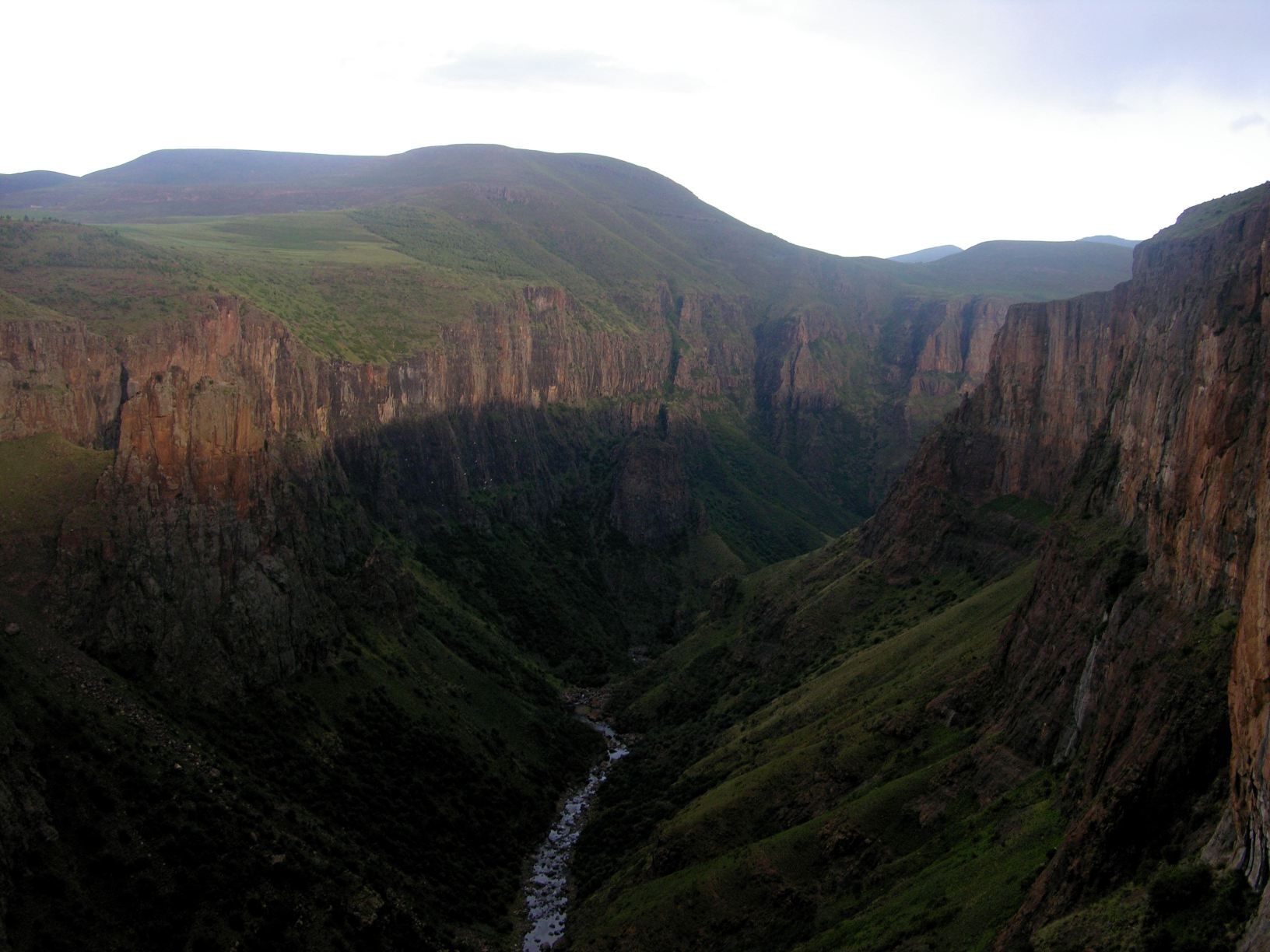
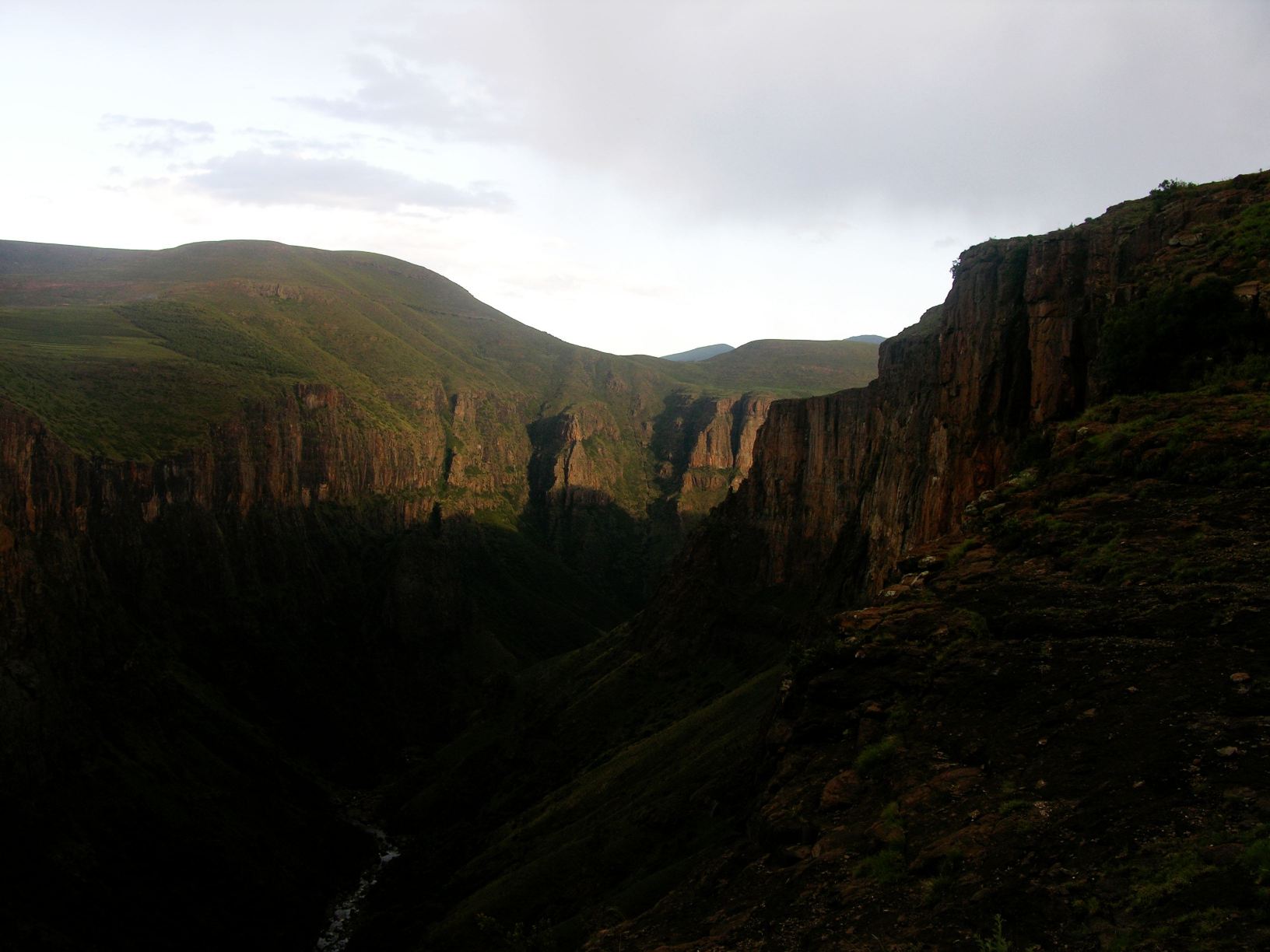
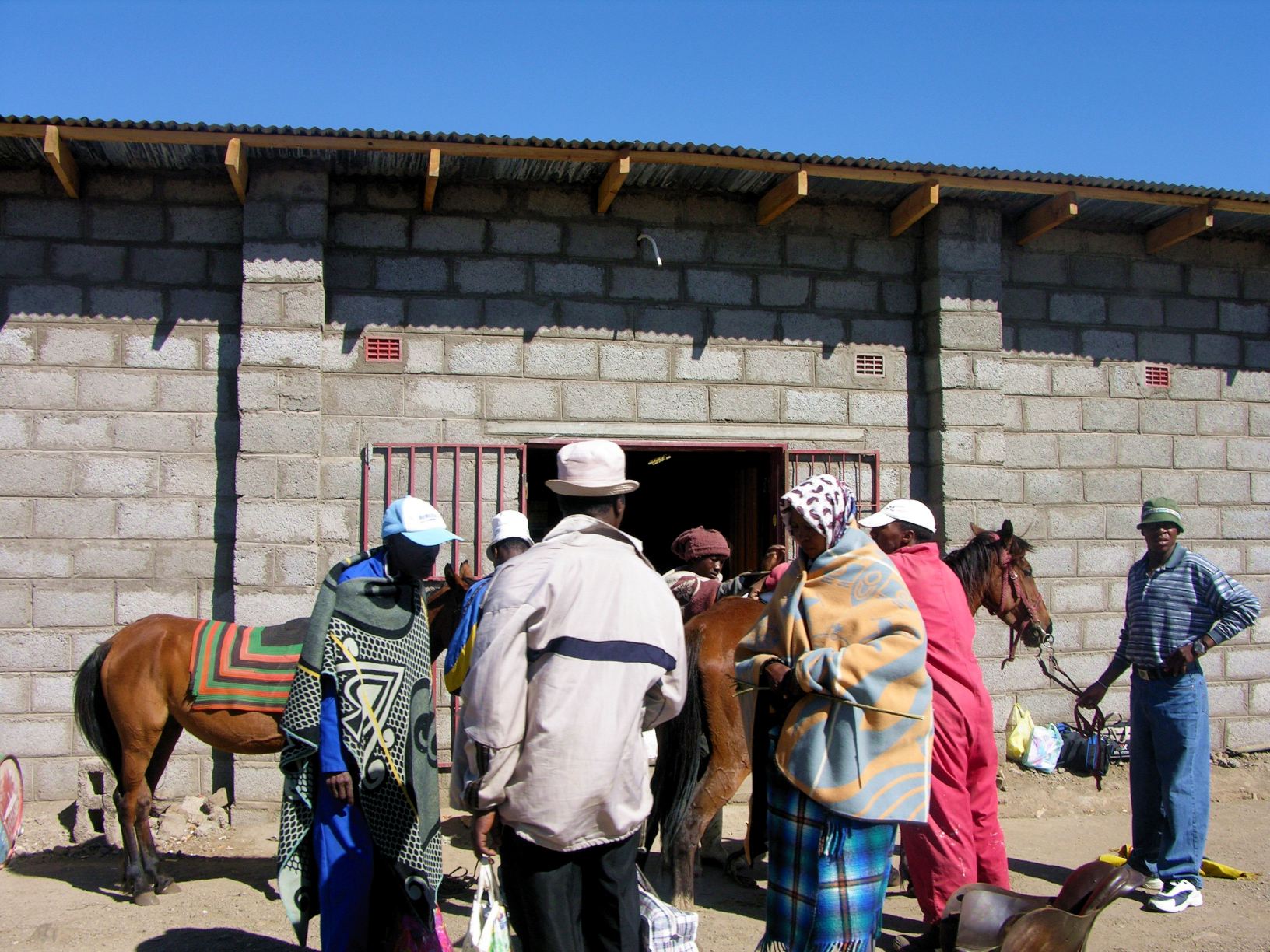
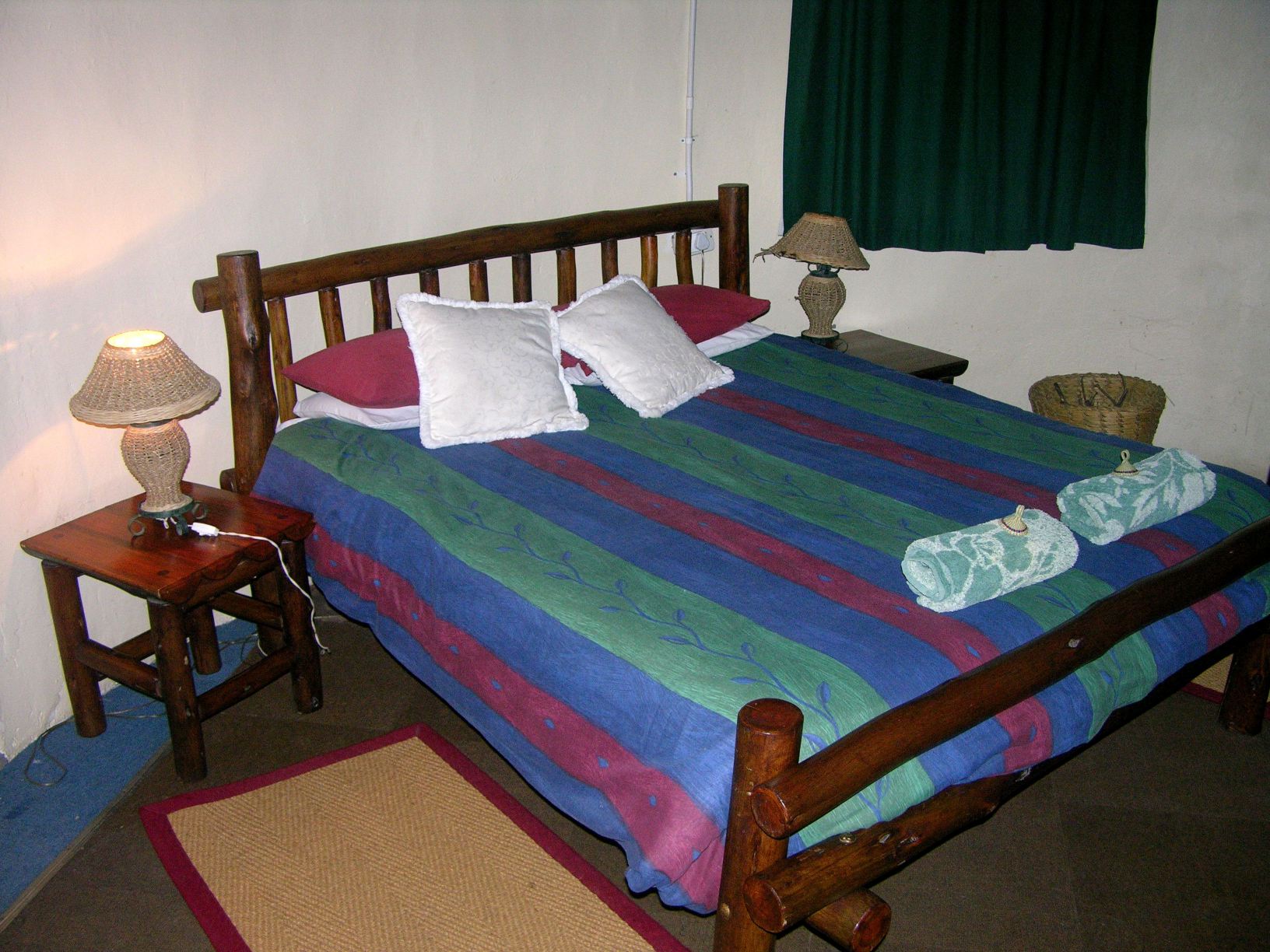
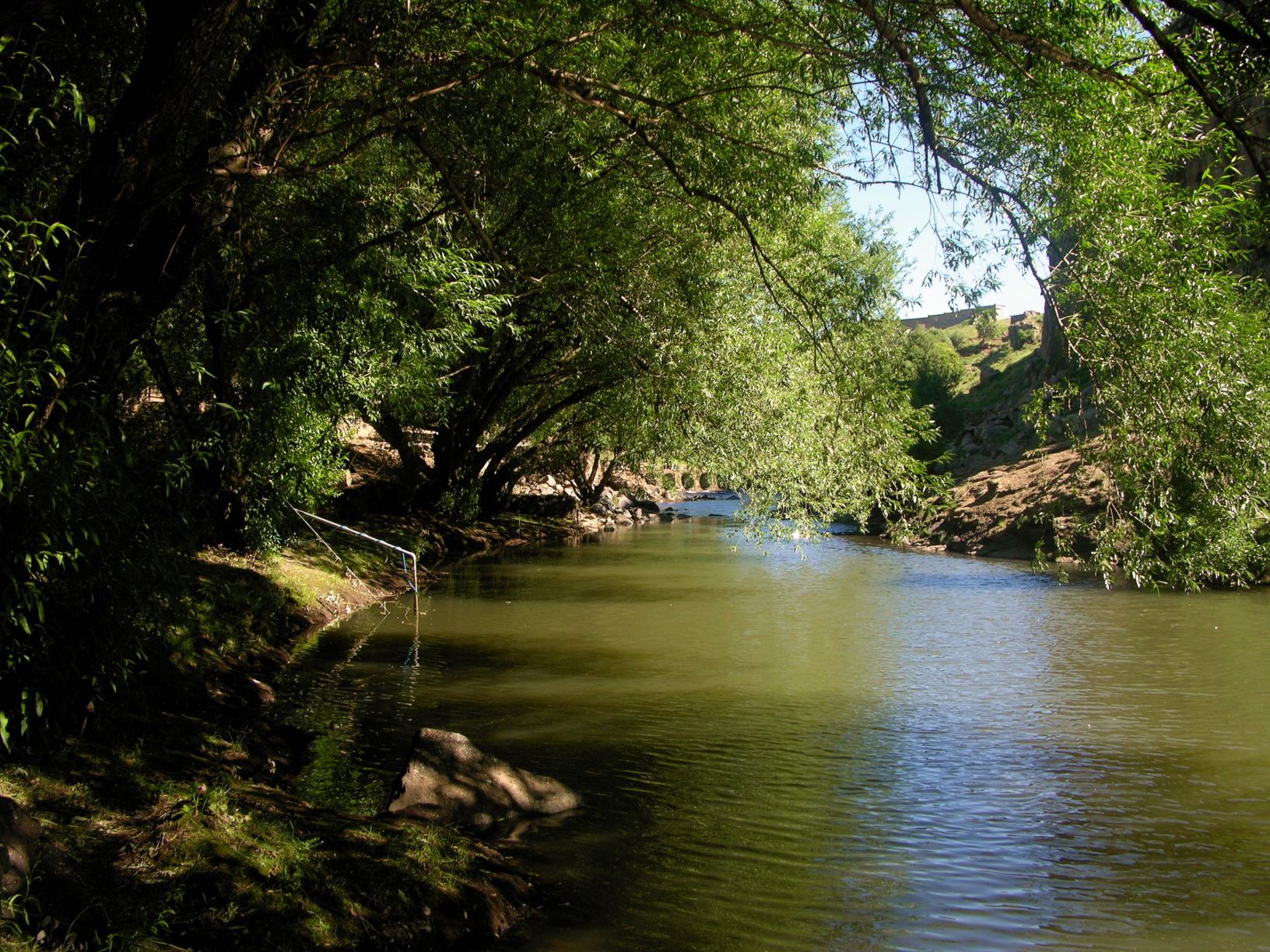
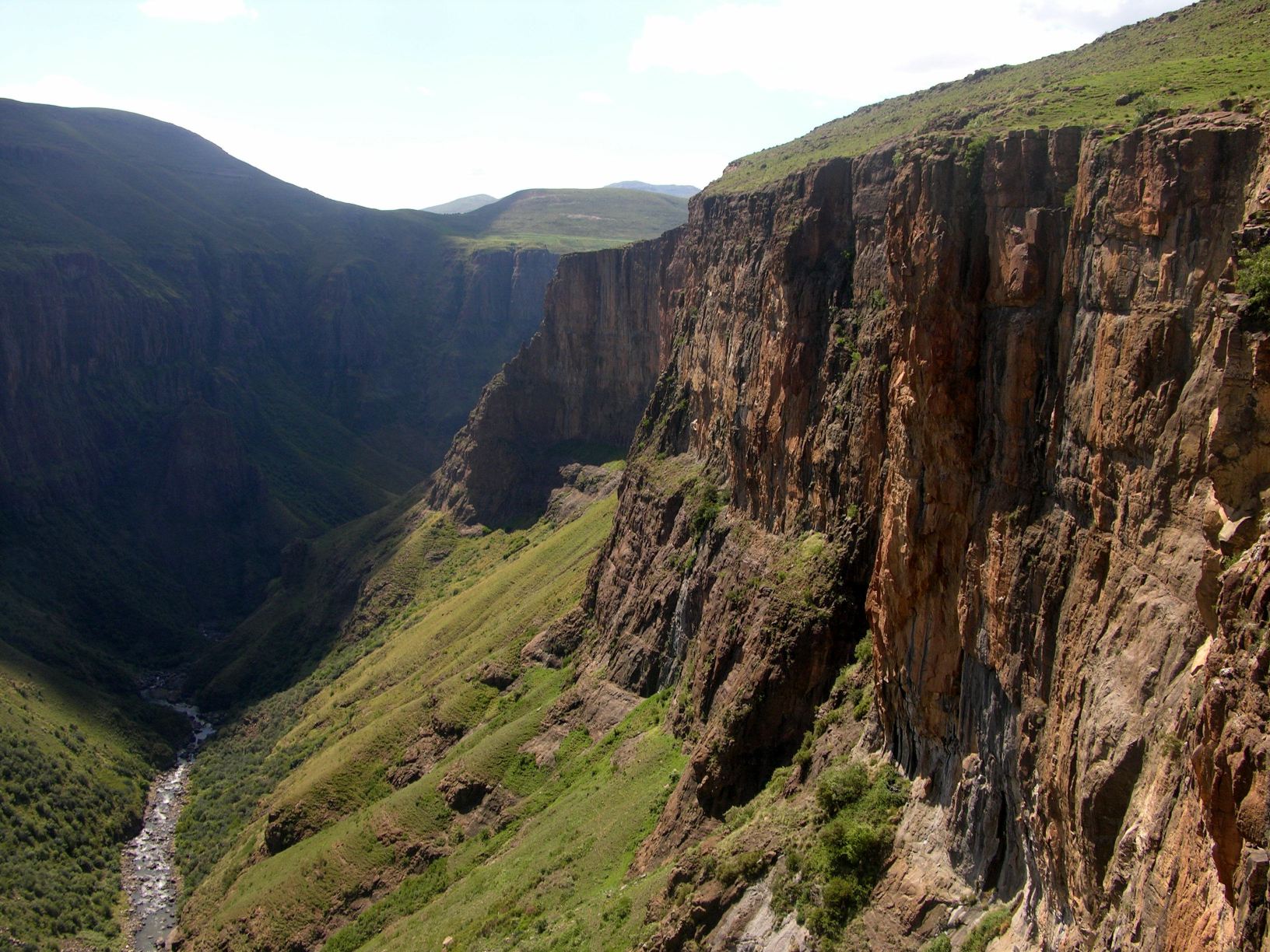
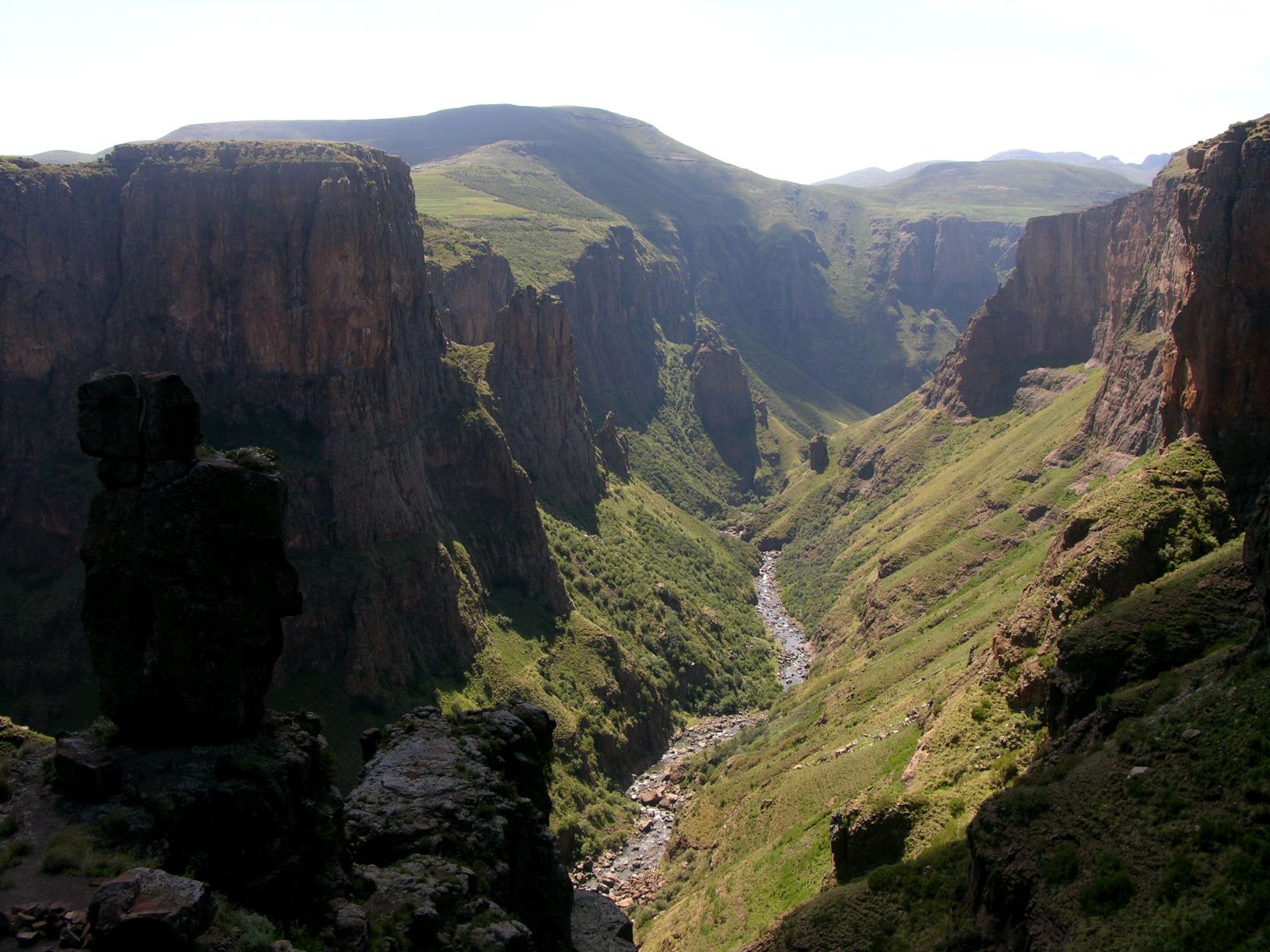
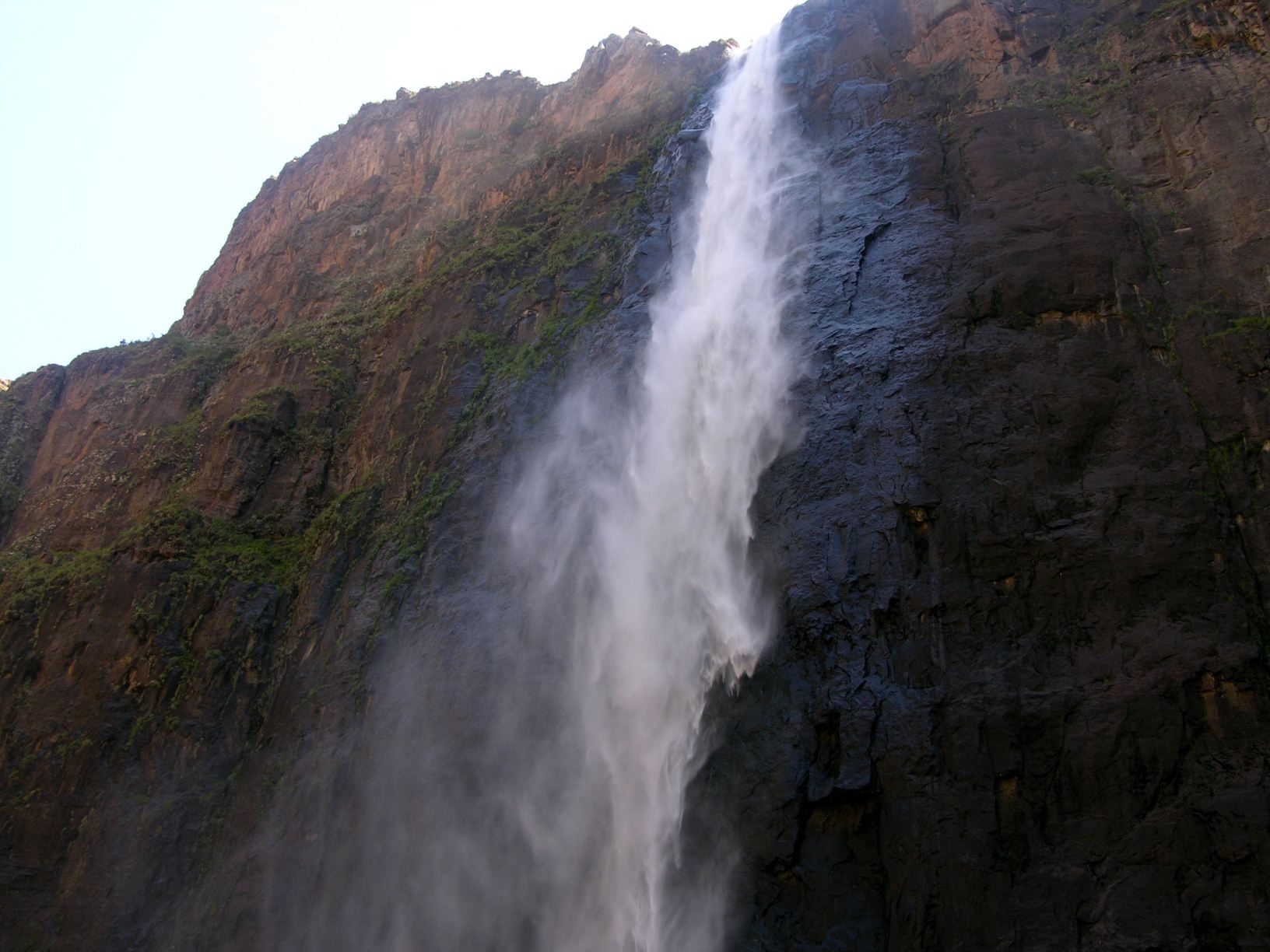
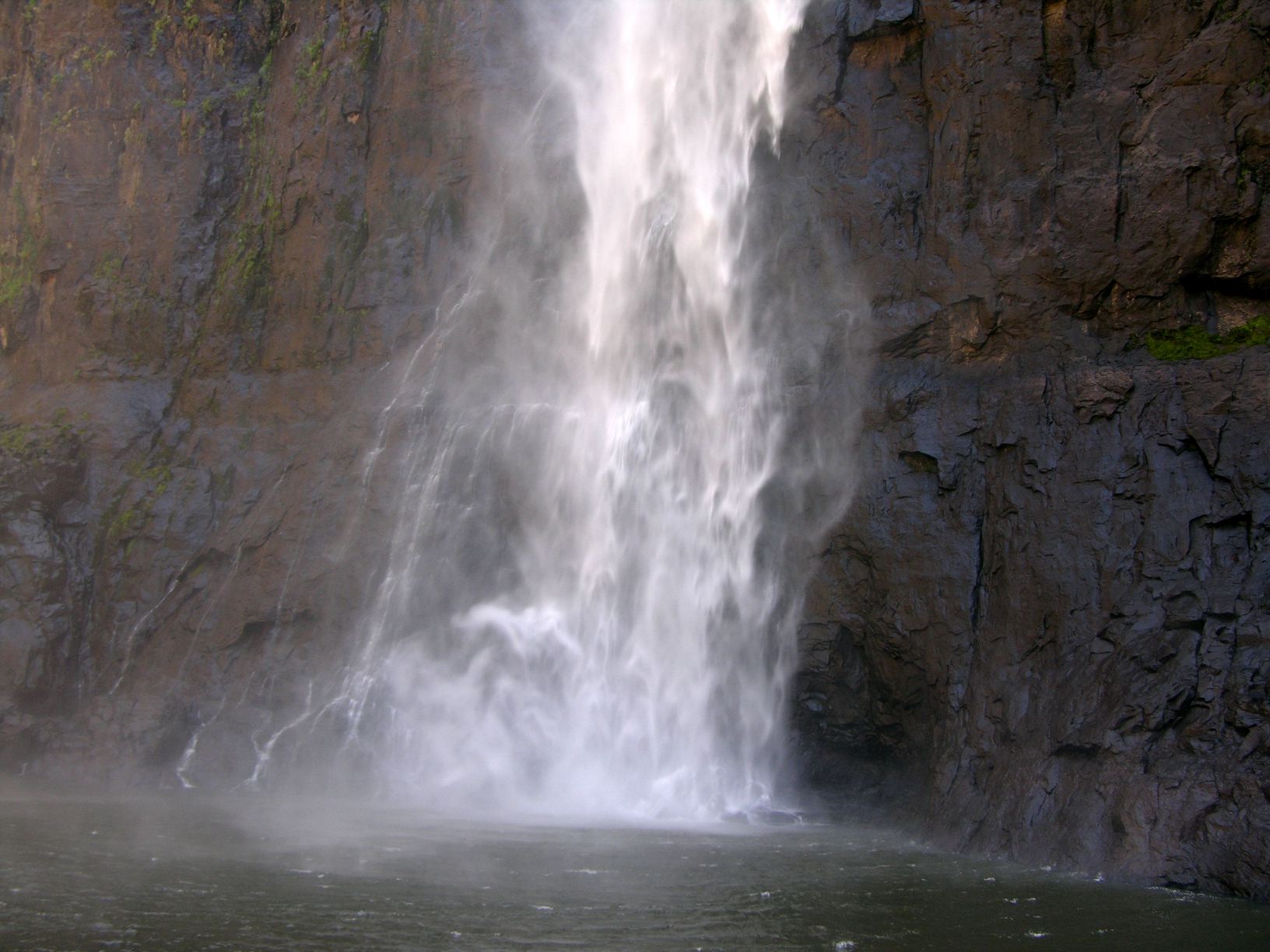
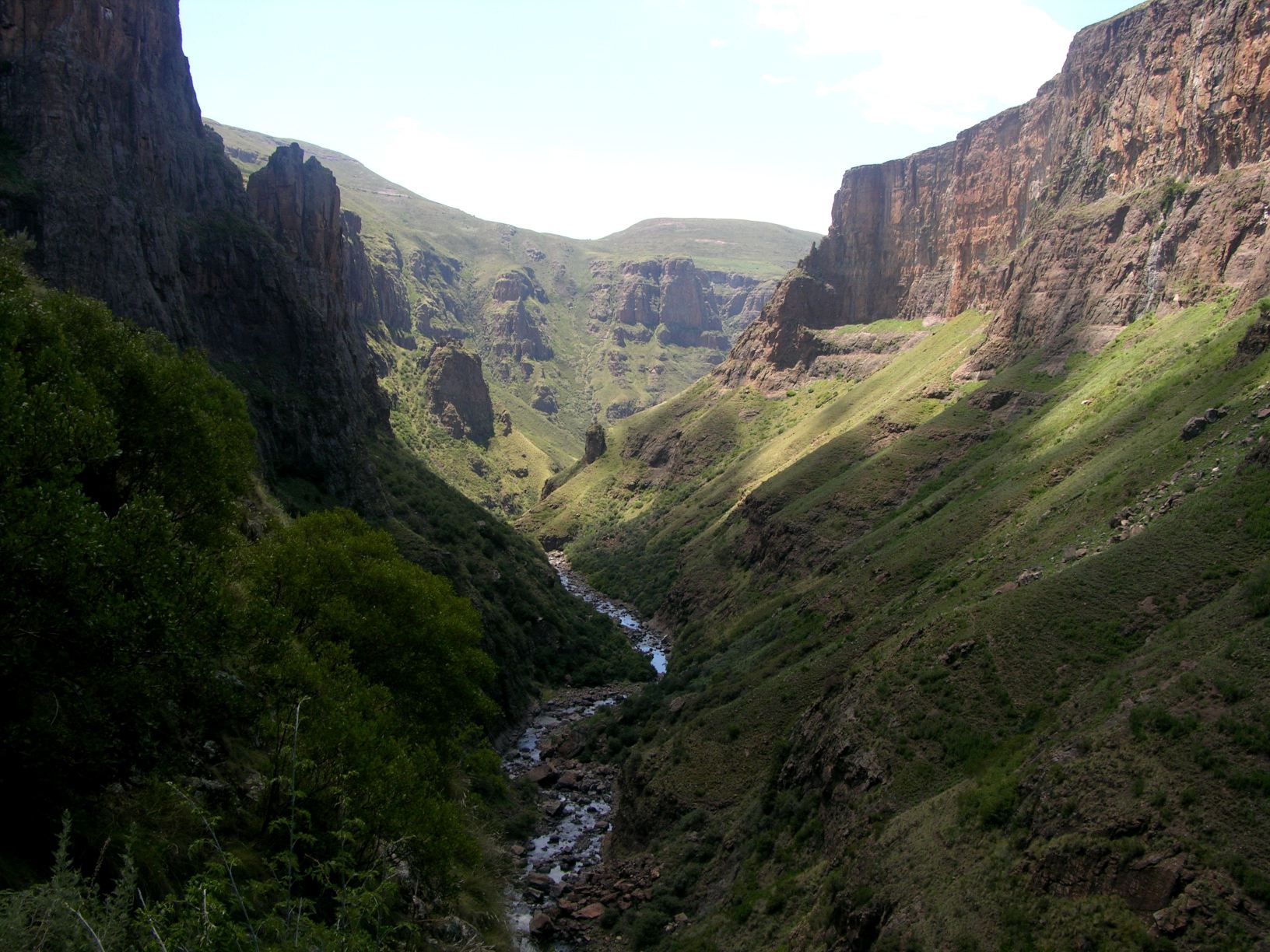
In the morning we drove back to the falls. This time we had enough time to walk around and even go down to the bottom. The water drops 192 metres, and there's another hundred metres up to where you park. The path turned out to be quite long and hard. The tropical summer sun soon put an end to the cool of the morning. Down at the bottom there was no breeze and it was humid, too. At least you could have a swim in the river. The water probably wasn't much above 15°C. You couldn't swim for long, but it cooled you down beautifully before the long climb, which was extraordinarily hard. On top of everything, we hadn't brought sunscreen and quickly got burnt.
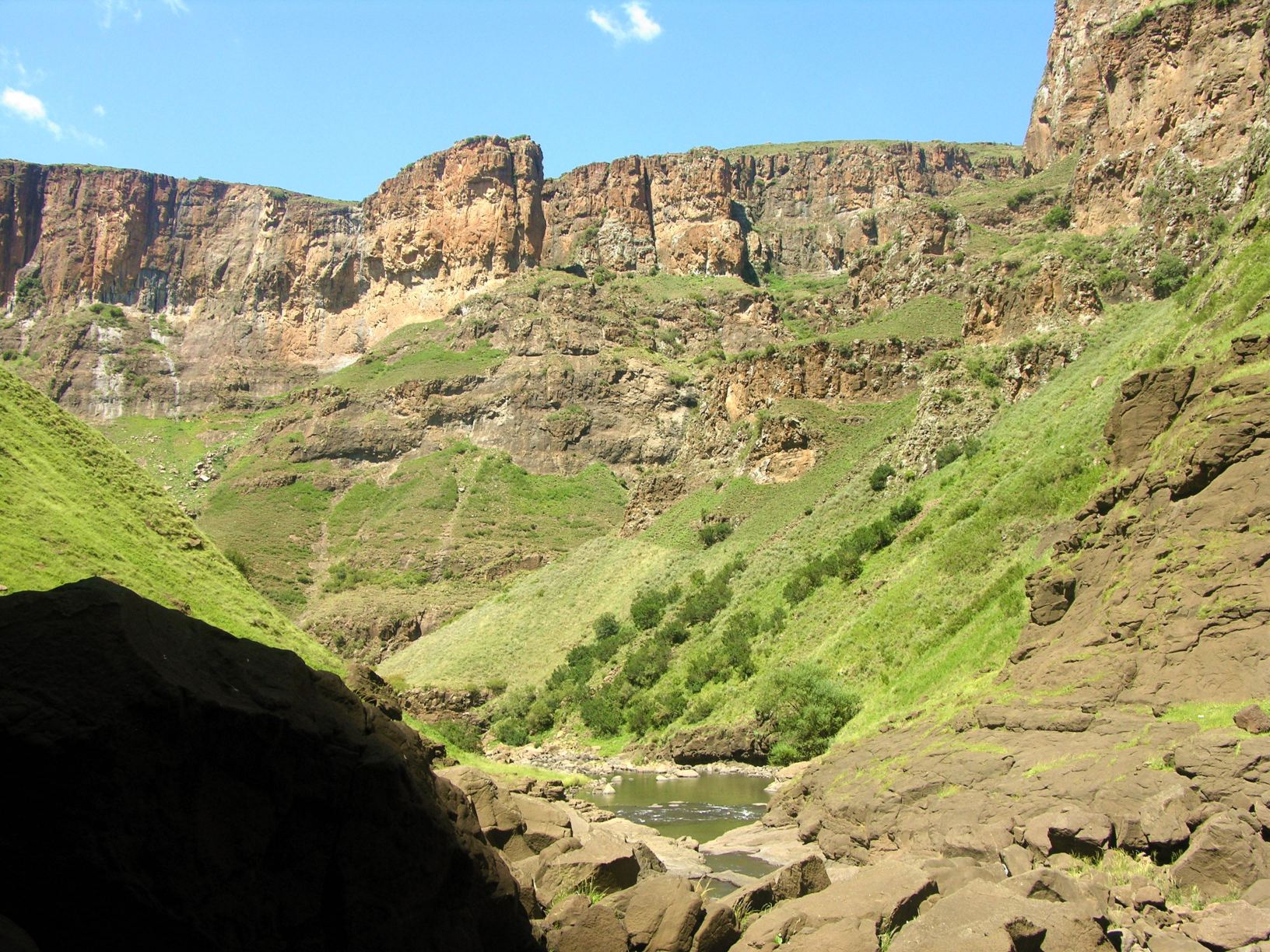
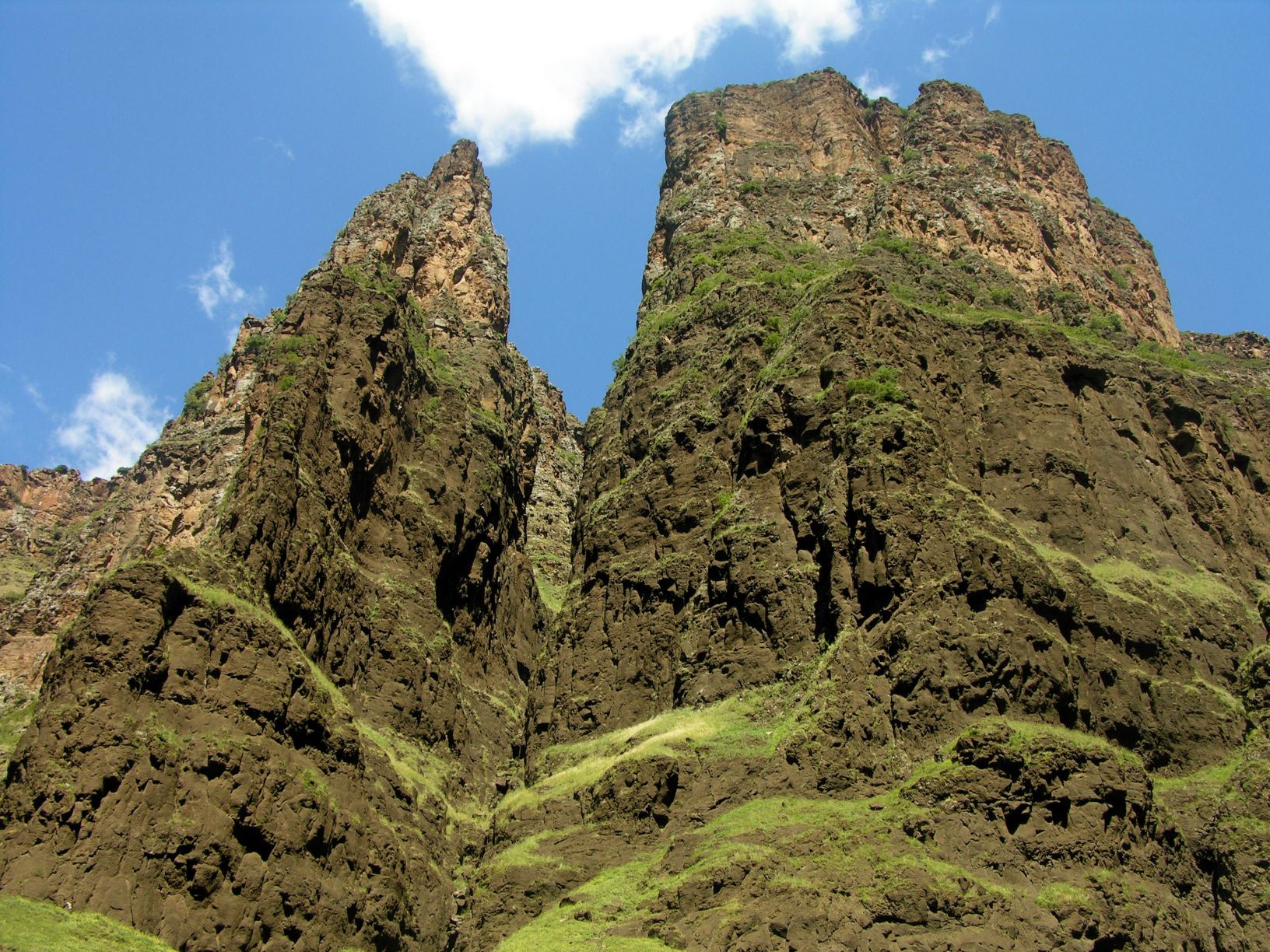
This was our third day with the four-wheel drive and we'd already run up 6,811 rand. We'd be ruined at this rate. We needed to switch to something cheaper at once, so we drove straight from the falls to the Avis office in the capital to return the ruinous heap of metal.
With no wheels left, we quietly made our way down to the bus station. A minibus for Malealea came along a few minutes later. It's a few hours' ride, and they pack people in like bales until there isn't a gap left. The man next to me was a guide from Malealea travelling with his one-year-old baby. The little Black boy slept peacefully despite the crush and the bumps. I'd often wondered whether the hair of such a small child was as stiff as an adult's. Only now did I get a chance to stroke a child's head. The hair, of course, was as soft as down.
That evening the local school's choir and rock band were performing in Malealea. We hid in our hut, expecting little from a village amateur show, but changed our minds at the very first notes. The choir sang like professionals. We're hardly experts, but they had wonderful voices.
Despite all the misfortunes that have befallen this mountain kingdom, you can sense it has a future. The children are eager to learn. They earn their own way through upper secondary school, the equivalent of our final school years. They do odd jobs at the campground, look after the horses and sing in the choir. They dream of getting a first-rate education, then getting a job. Perhaps they'll go to work in South Africa and, when they've saved up, even get into an English university. It's hard for them to get out into the wider, wealthy world, but they make an effort. They copy textbooks out by hand and take turns learning to use their village's one computer. They believe in their own abilities, ask nobody for handouts and blame nobody for their failures.
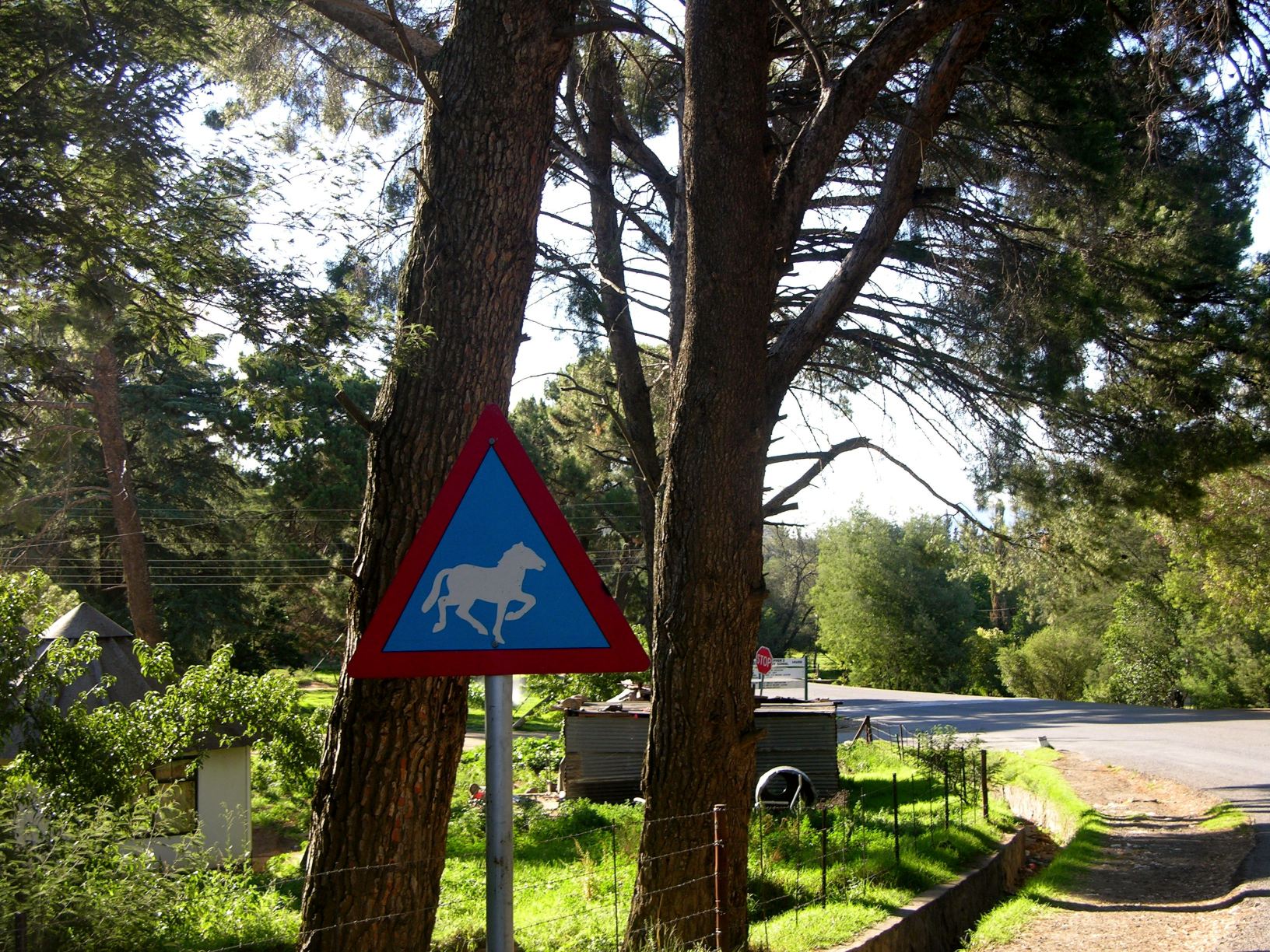
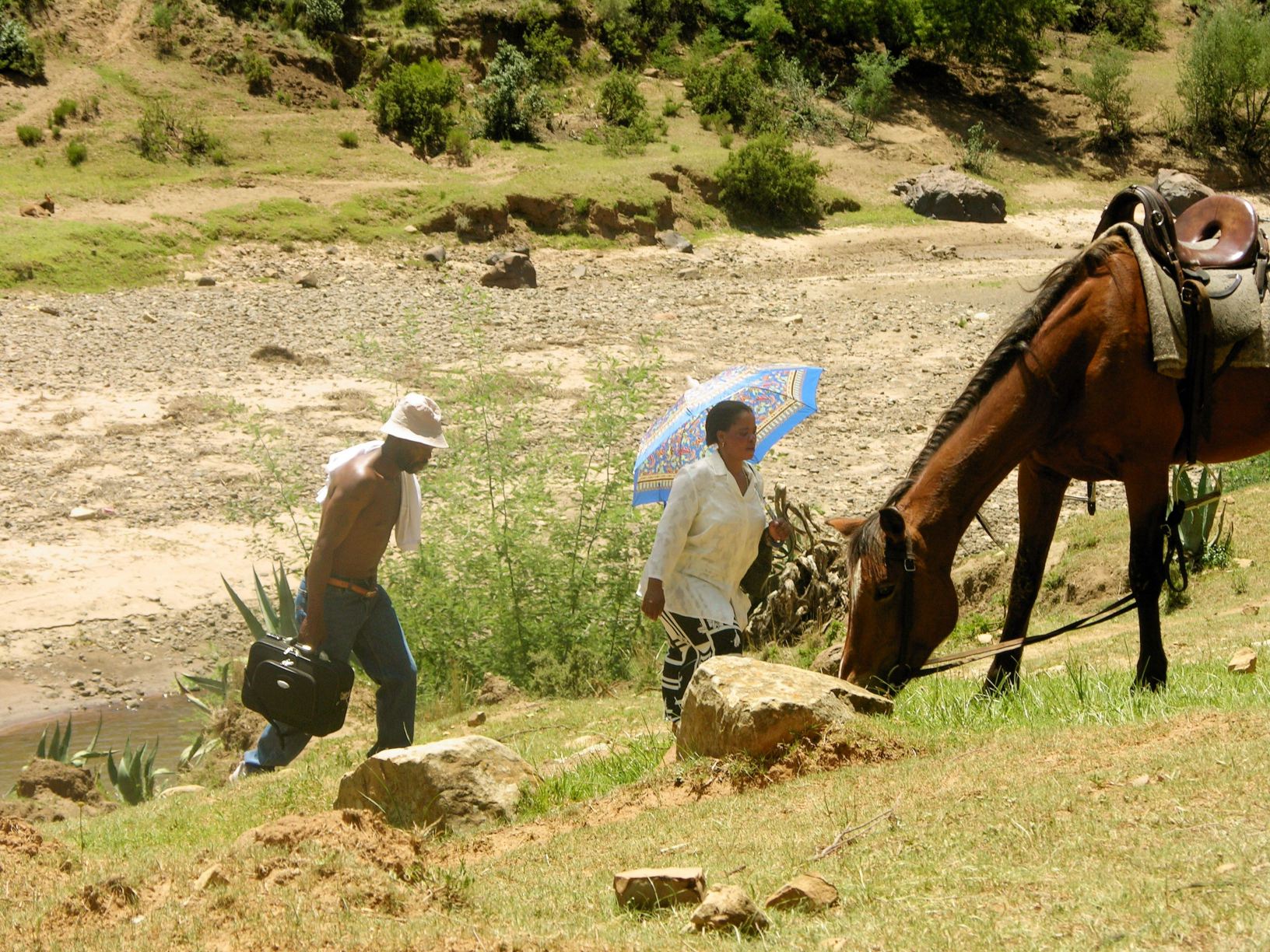
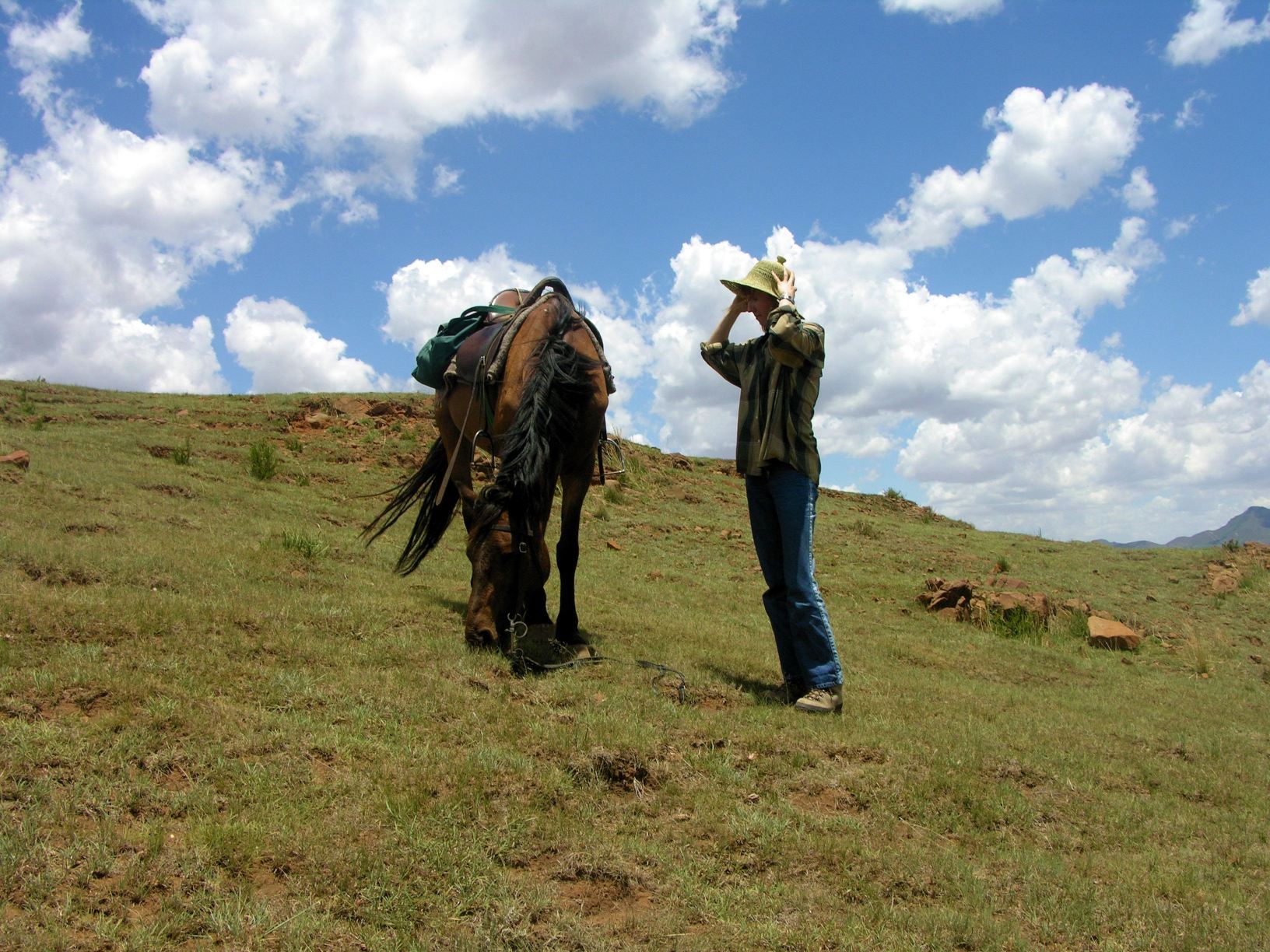
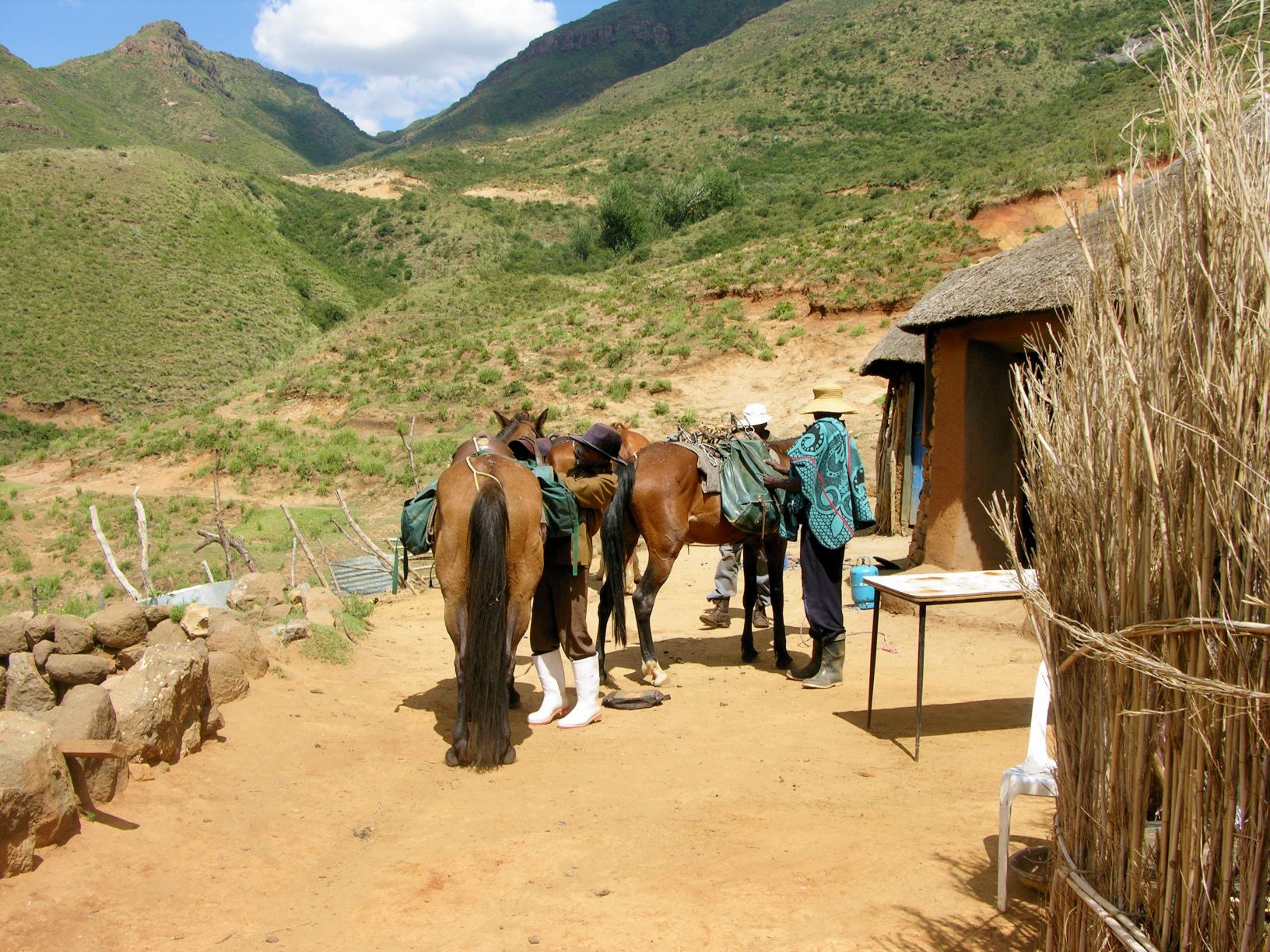
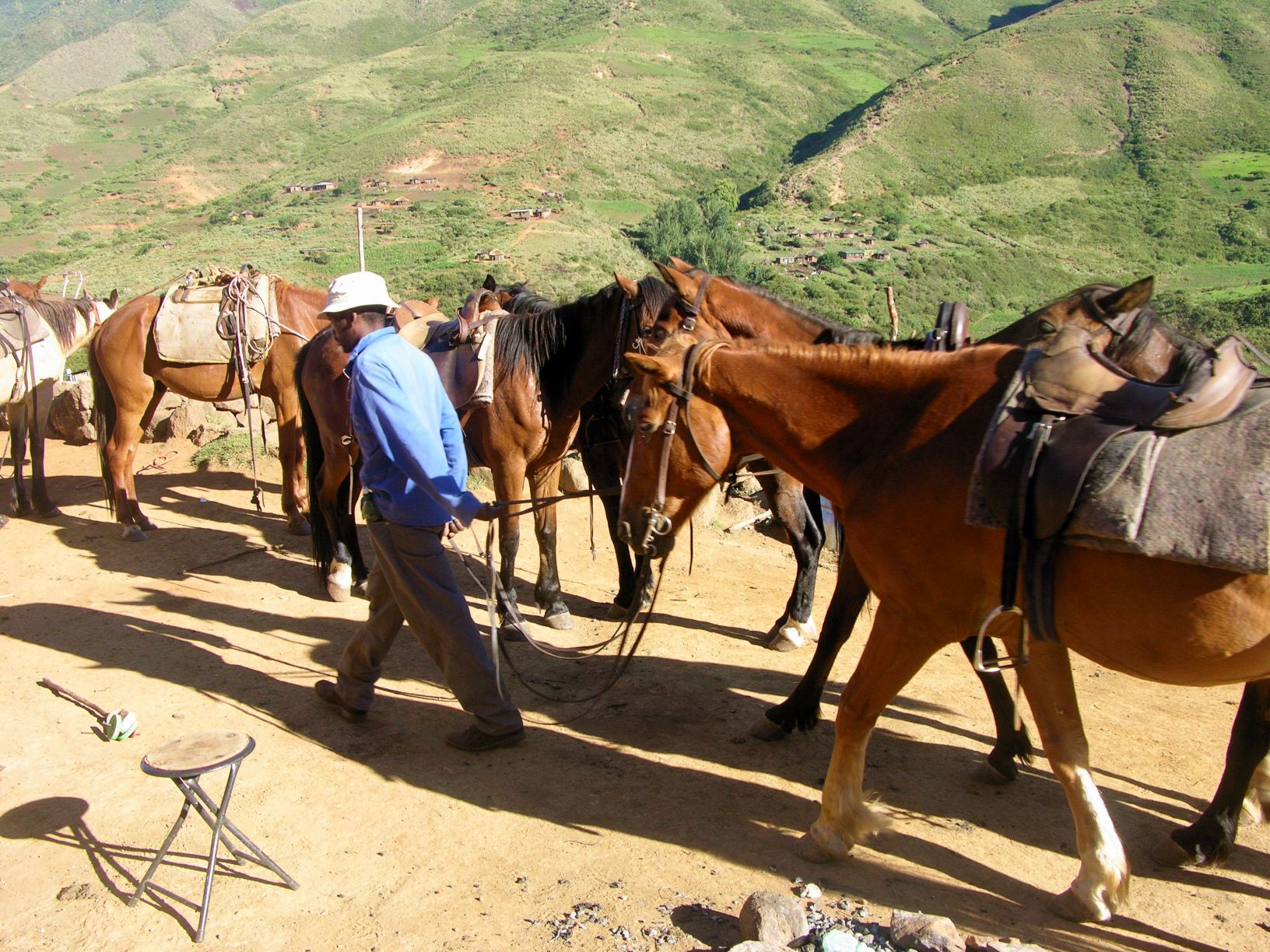
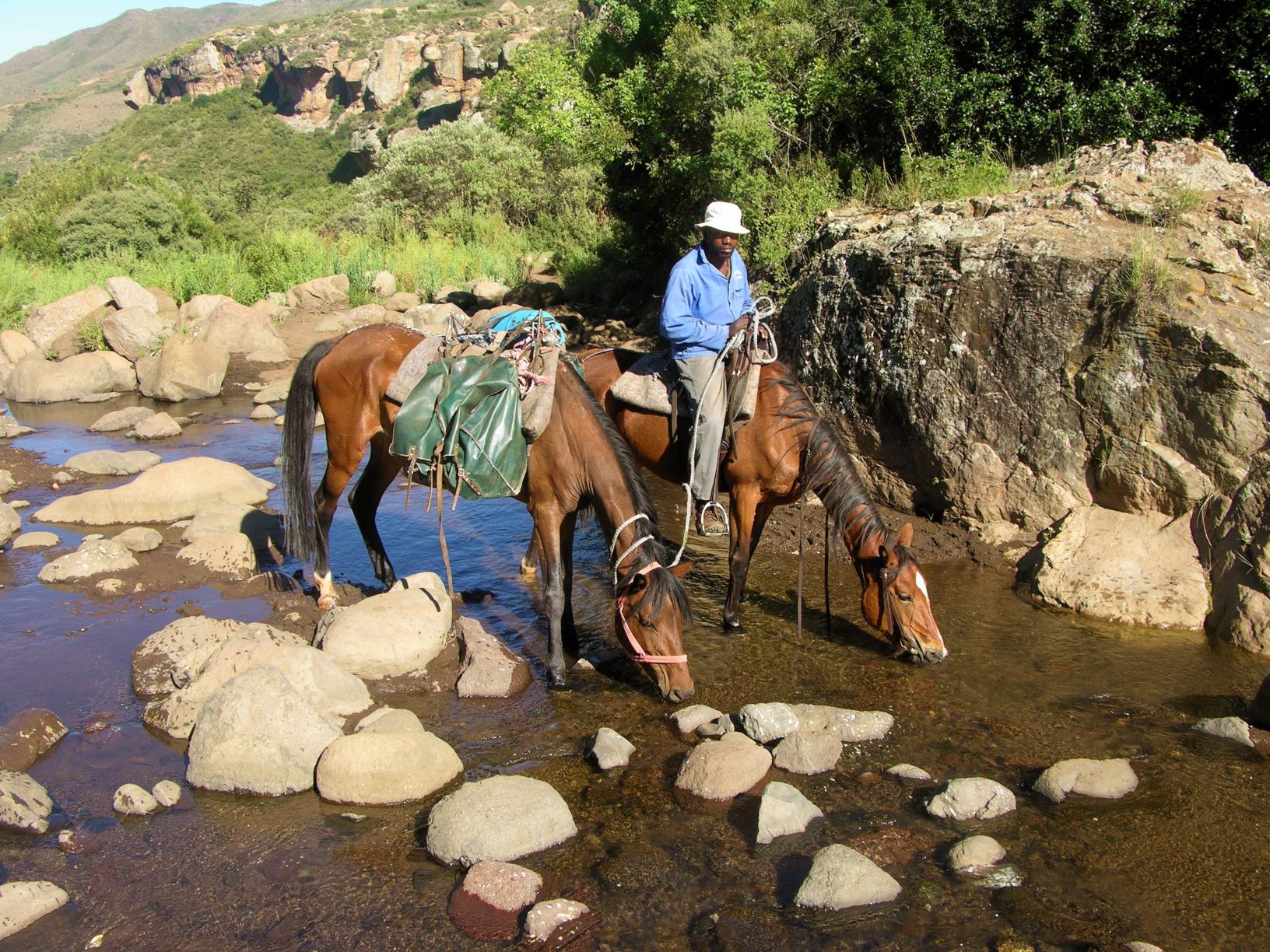
Of course they're fortunate to have a place catering to foreign visitors in their village. It takes plenty of hands to run and broadens their horizons. Their main source of earnings is the Basotho ponies, as they call the local horses. They're certainly no draught horses, but ‘pony’ isn't quite the word either. They're normal-sized horses of a local breed, descended from horses brought over from Europe at various times. Generally speaking, horses have a hard time in Africa. The tropical heat soon makes them succumb to diseases and parasites, but it's cold in the Drakensberg. A local breed emerged, and since the people here are small and there isn't much grass to eat, the horses never grew especially tall. So ponies it was. Over hundreds of years the Basotho made the foreign animal their own and turned it into an essential part of their culture. There are few roads in the country and most people can't afford a car, so the pony is still the main way to get around. There are no car parks outside the shops or metal hoops for bicycles. People come on horseback, tether the horse and go in to shop. Just like in an American Western. The capital is a different matter, of course.
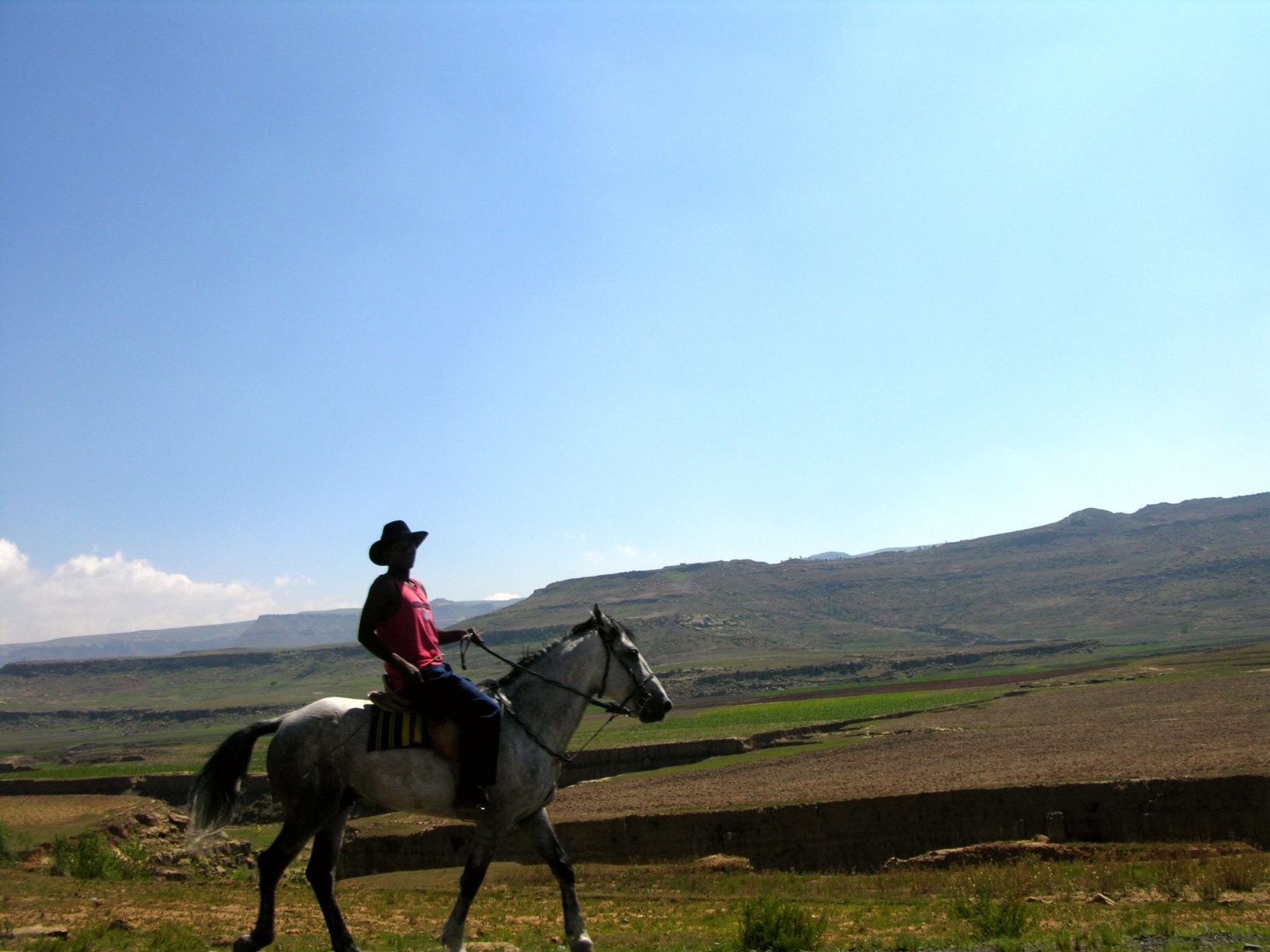
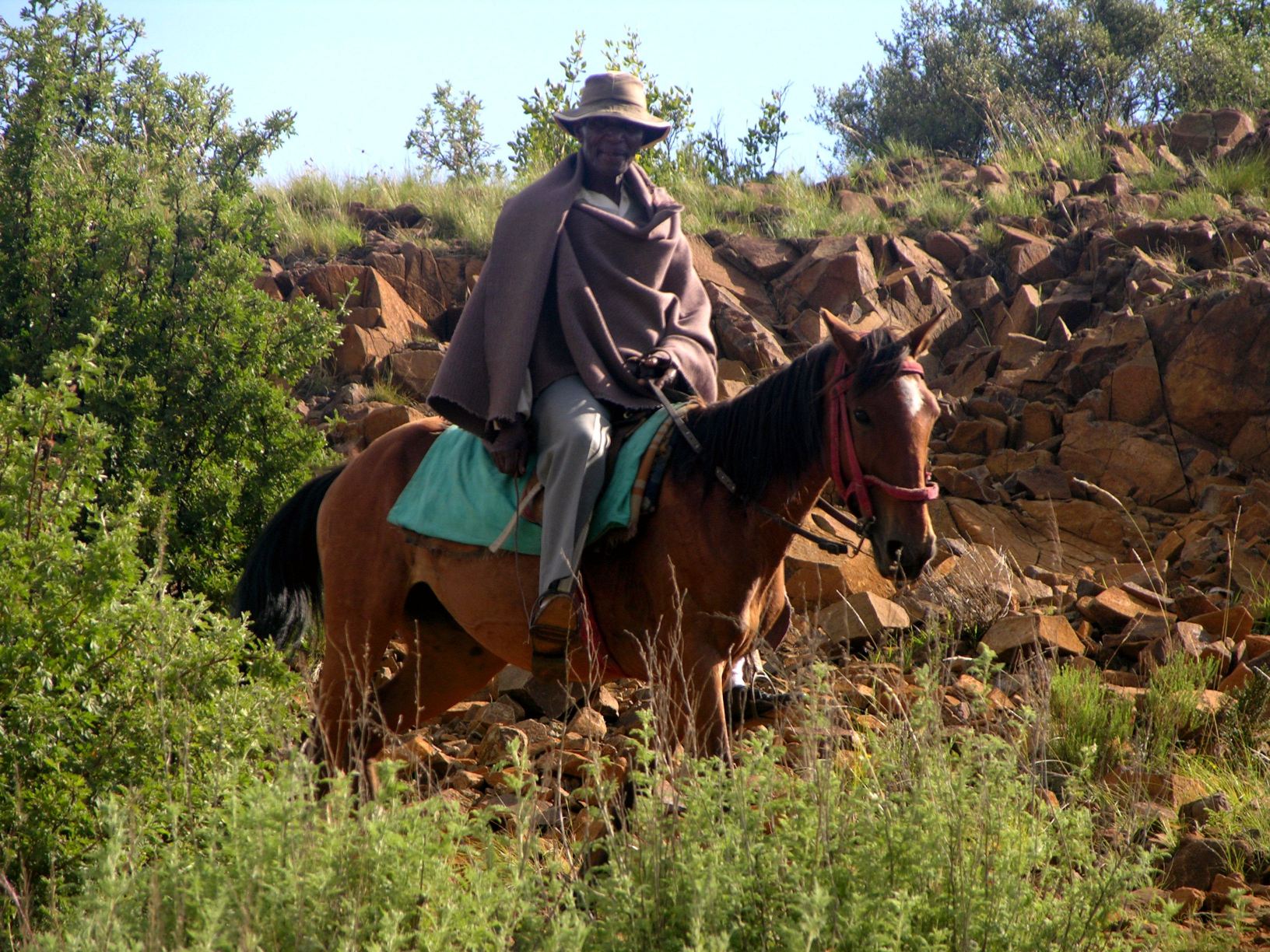
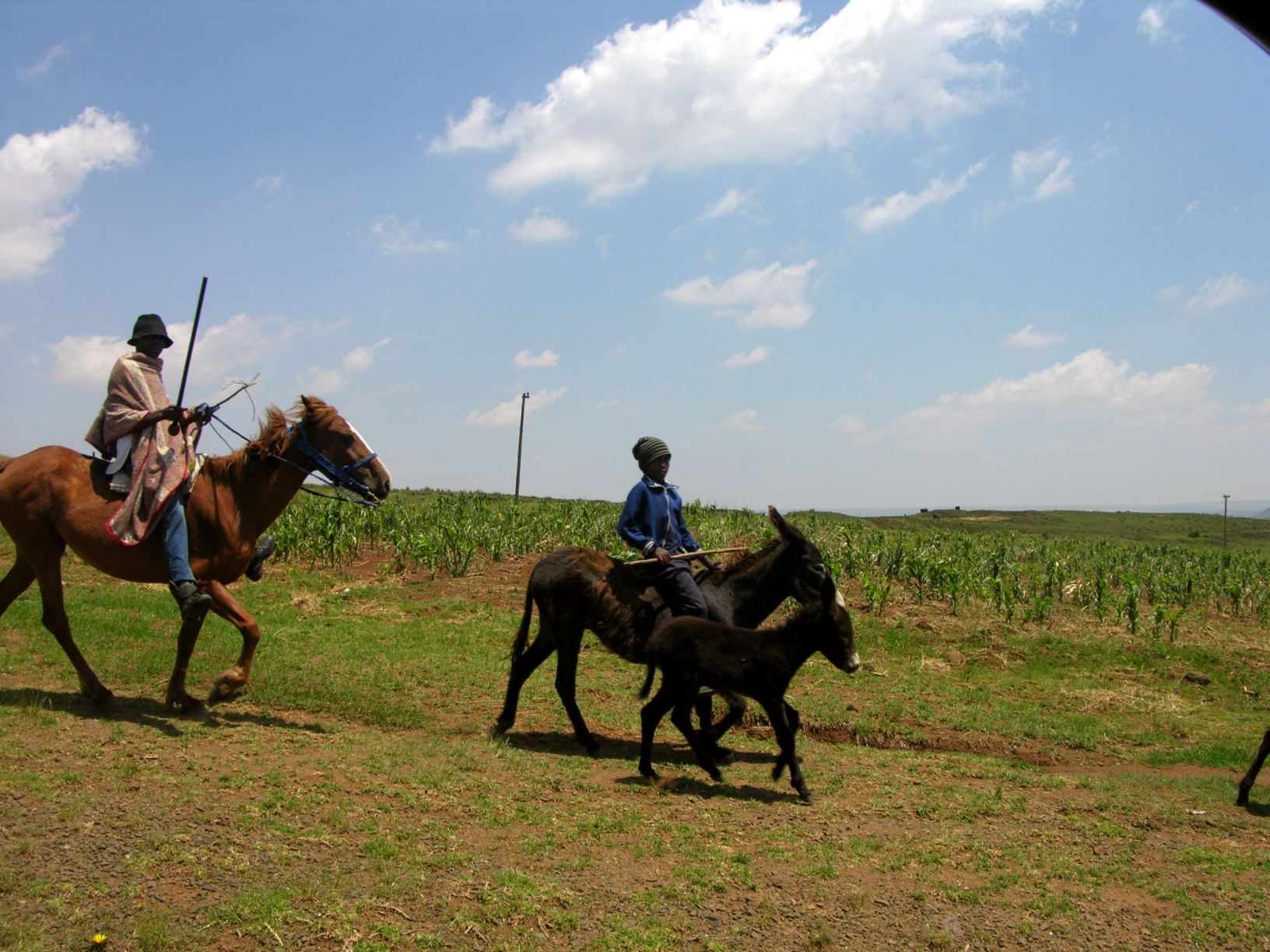
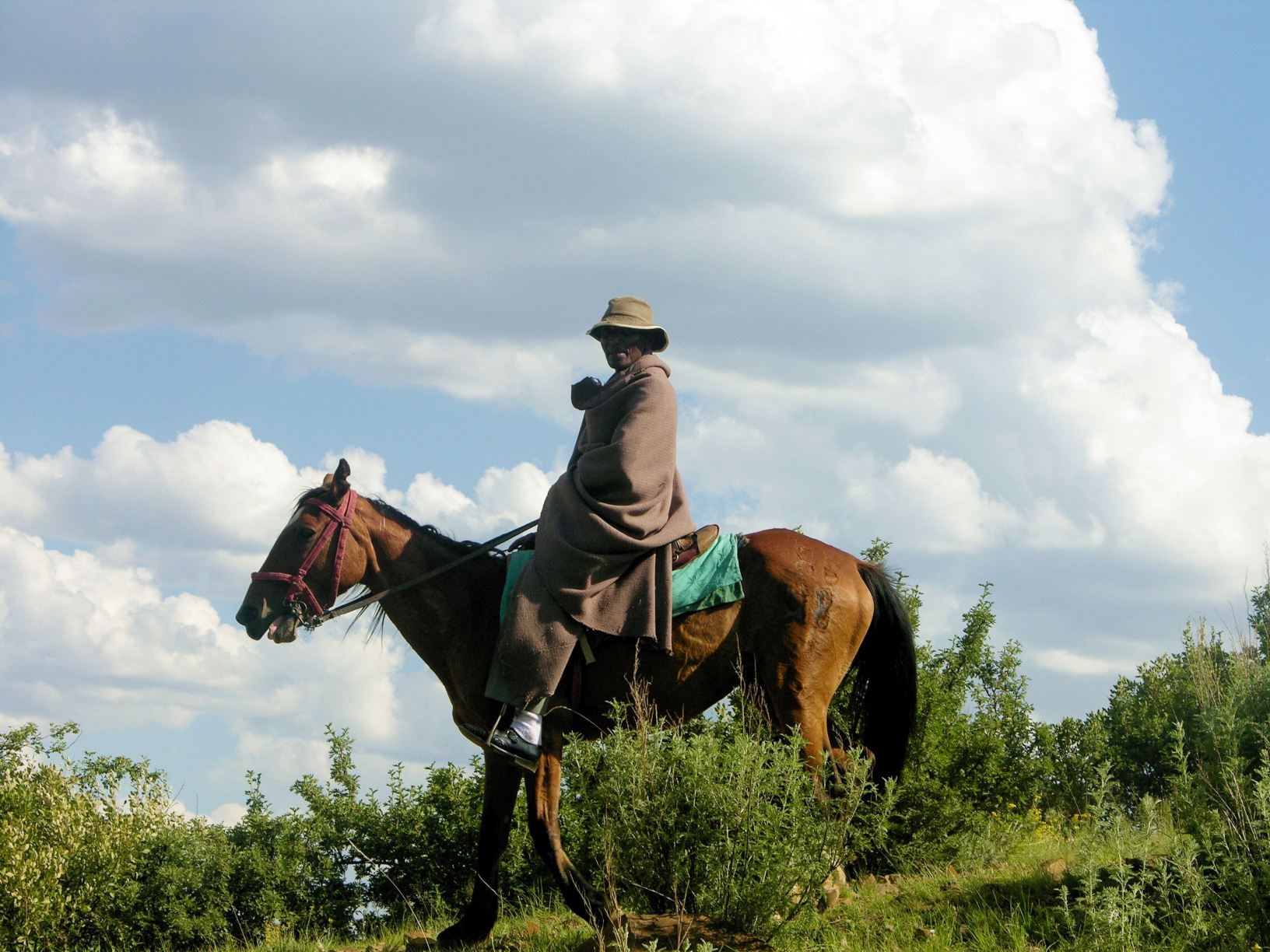
As white tourists made their way into the country, someone thought of hiring out the horses and even running multi-day trips. We wanted to go for a ride ourselves. As always, we were short of time, so we settled for two days. It ought to have been ten.
The pony riding instructions stated a weight limit of 90 kilos. A glance in the mirror told me I probably wouldn't pass for 90. Tanya cheerfully said we could fix that in no time: no dinner, no sugar on the porridge, lunch on a saucer. The prospect of starving to death appalled me, and I said no. I'd stay the way I was and let them decide. If they thought I was too heavy, so much the worse for them. Just in case, I practiced holding my stomach in and pursing my lips.
When we went to ask, to my surprise I was declared to be in tip-top shape. At least that was the opinion of Diana, the owner. She booked me a bigger horse, of course.
By eight in the morning you're supposed to have a bag packed with your sleeping bags and food, then carry only water and something to nibble on the way. The main thing is to remember lots of sunscreen.
The advertisements say you don't need any riding experience at all. Just about anyone can go for an hour. They hoist the older ladies into the saddle and two people lead the horse by its bridle. I wouldn't advise someone who has never ridden before to set off for several days. First, the route covers rough ground. The horse may make a sharp turn or jump. Hang on tight: the stones down below have sharp edges. Second, if you've never ridden a full day, your backside will be rubbed raw and your legs will hurt like anything.
Tanya and I had ridden for two hours every weekend all autumn, and we were still pretty worn out after eight-hour days in the saddle.
All the longer routes head into the mountains east of Malealea. In a day you can reach the first pass if you're only going one way, in five days you can get to Semonkong, and in ten to the famous Sani Pass.
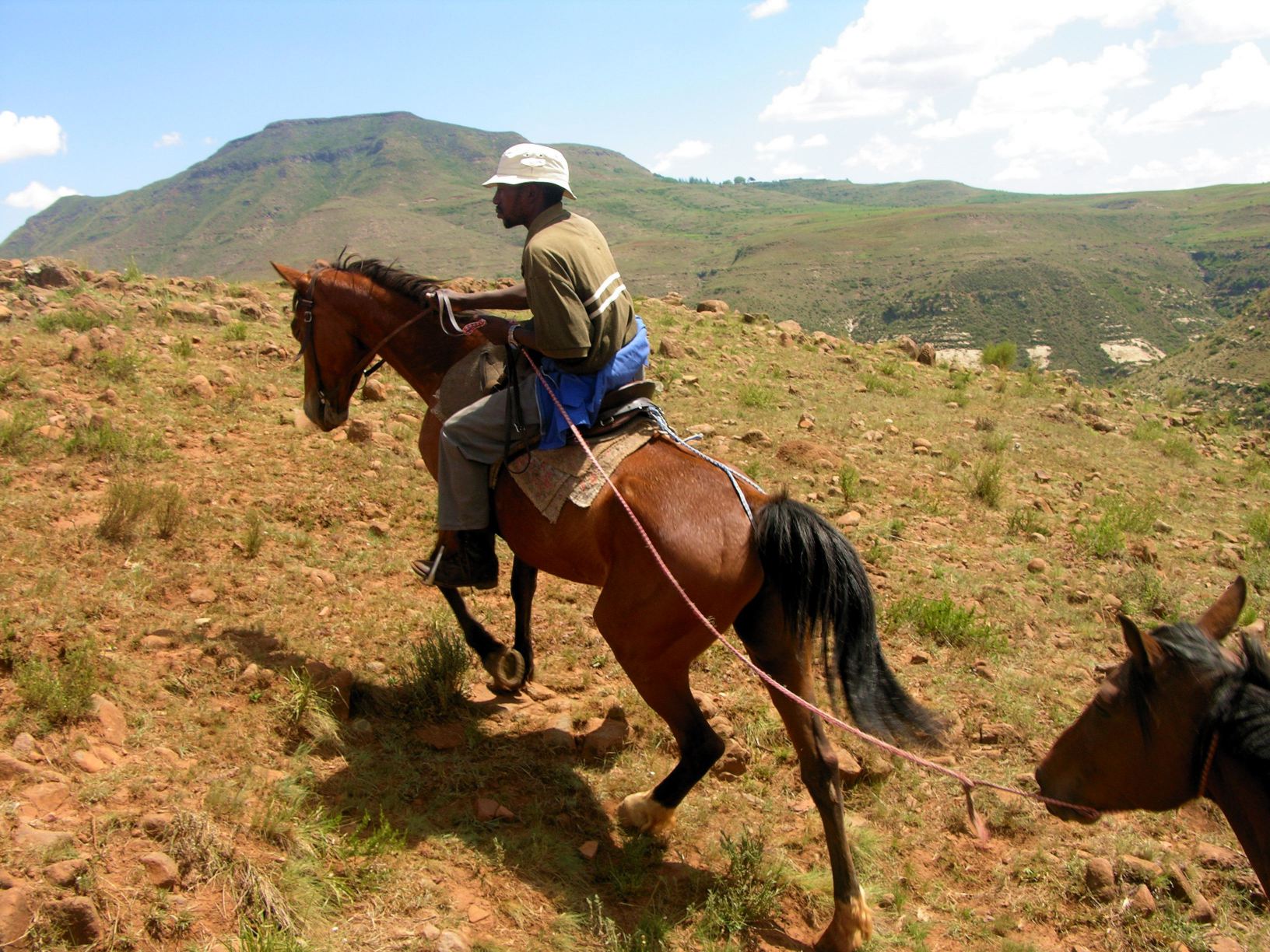
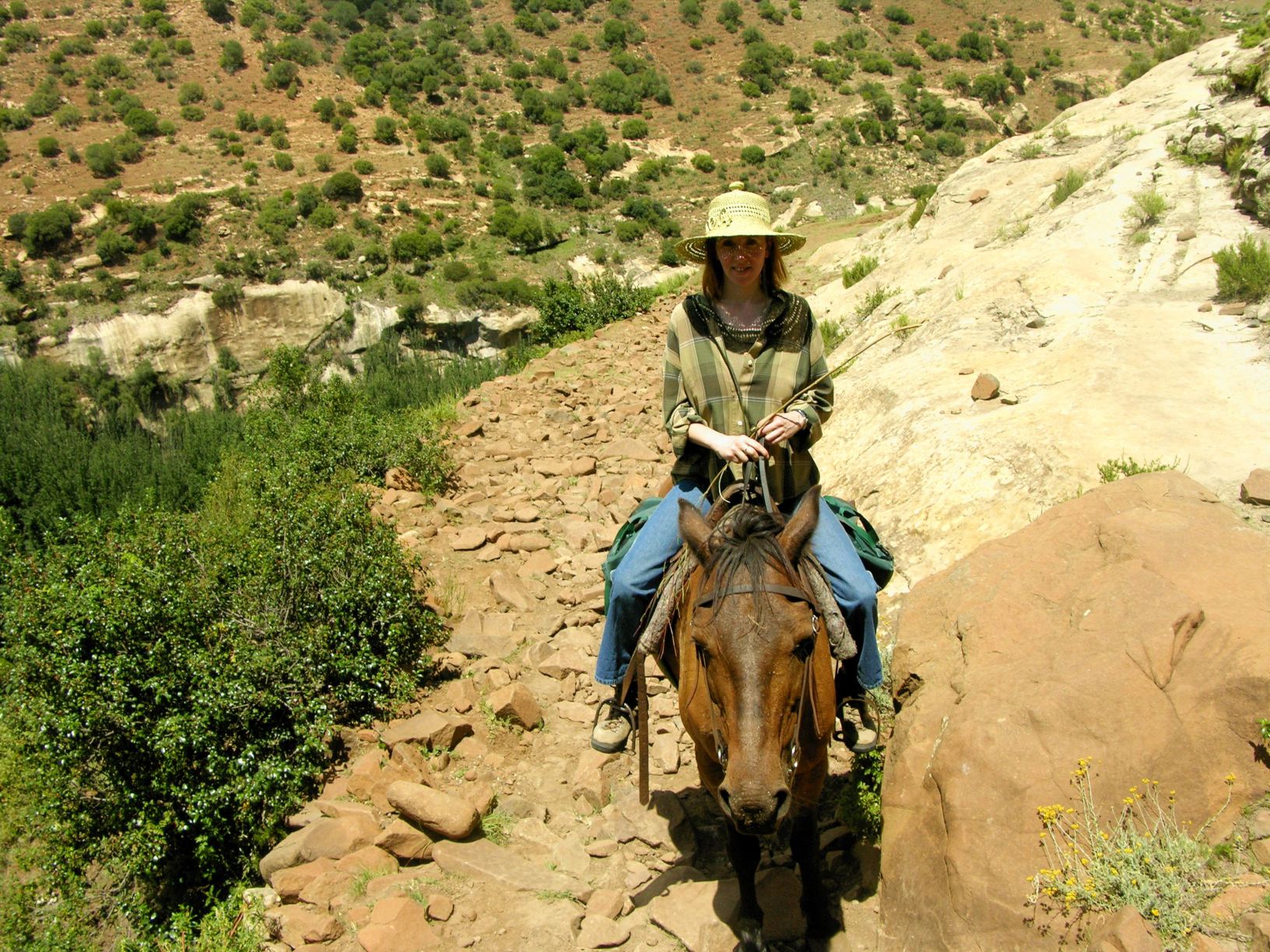
The horses go at a walk. Only at the end did we get to gallop. I got a magnificent horse named Bushma, obedient and tireless. Tanya, on the other hand, had a mare that hadn't been properly broken in. Right from the start she broke into a trot and set off the wrong way.
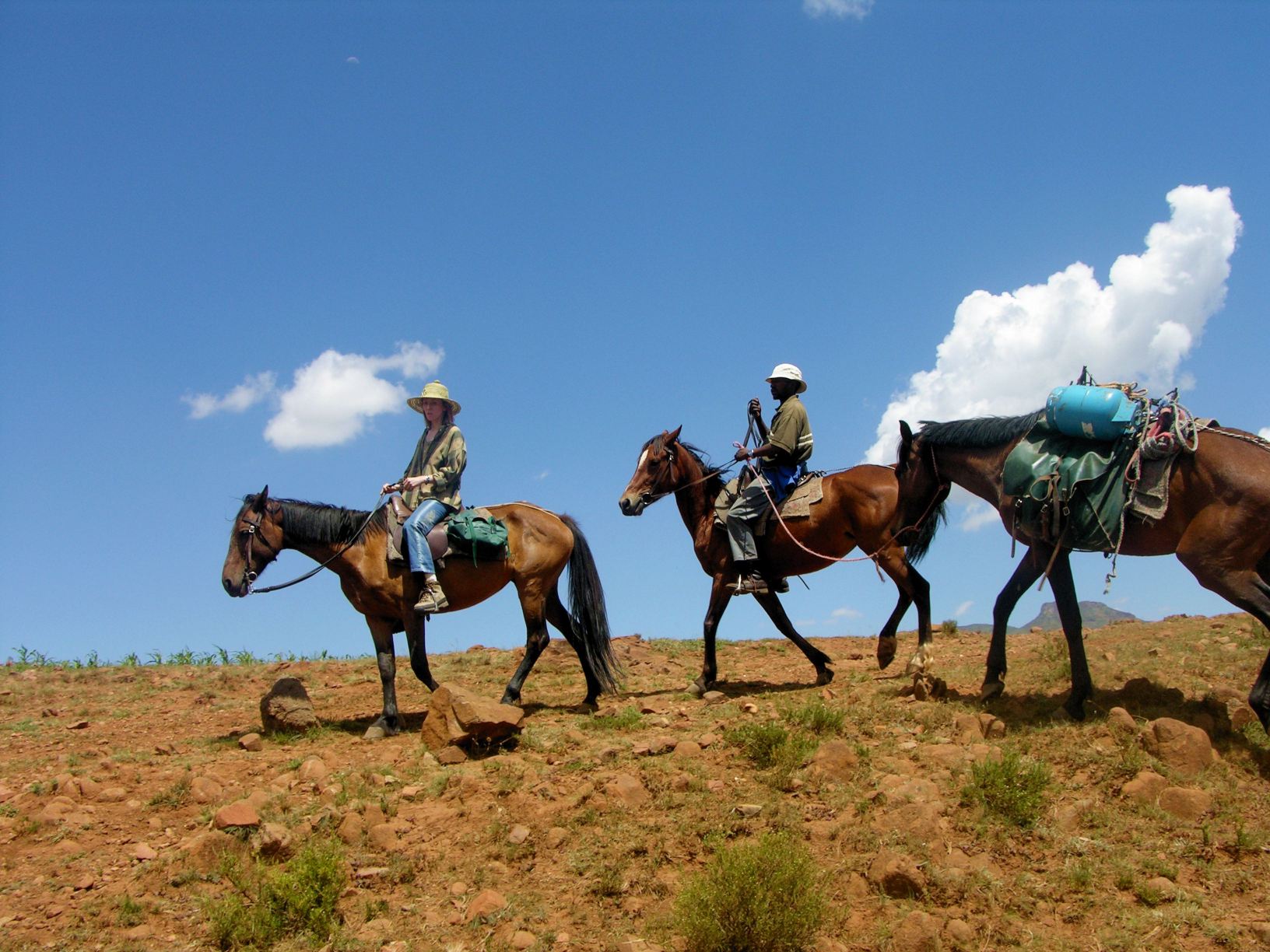
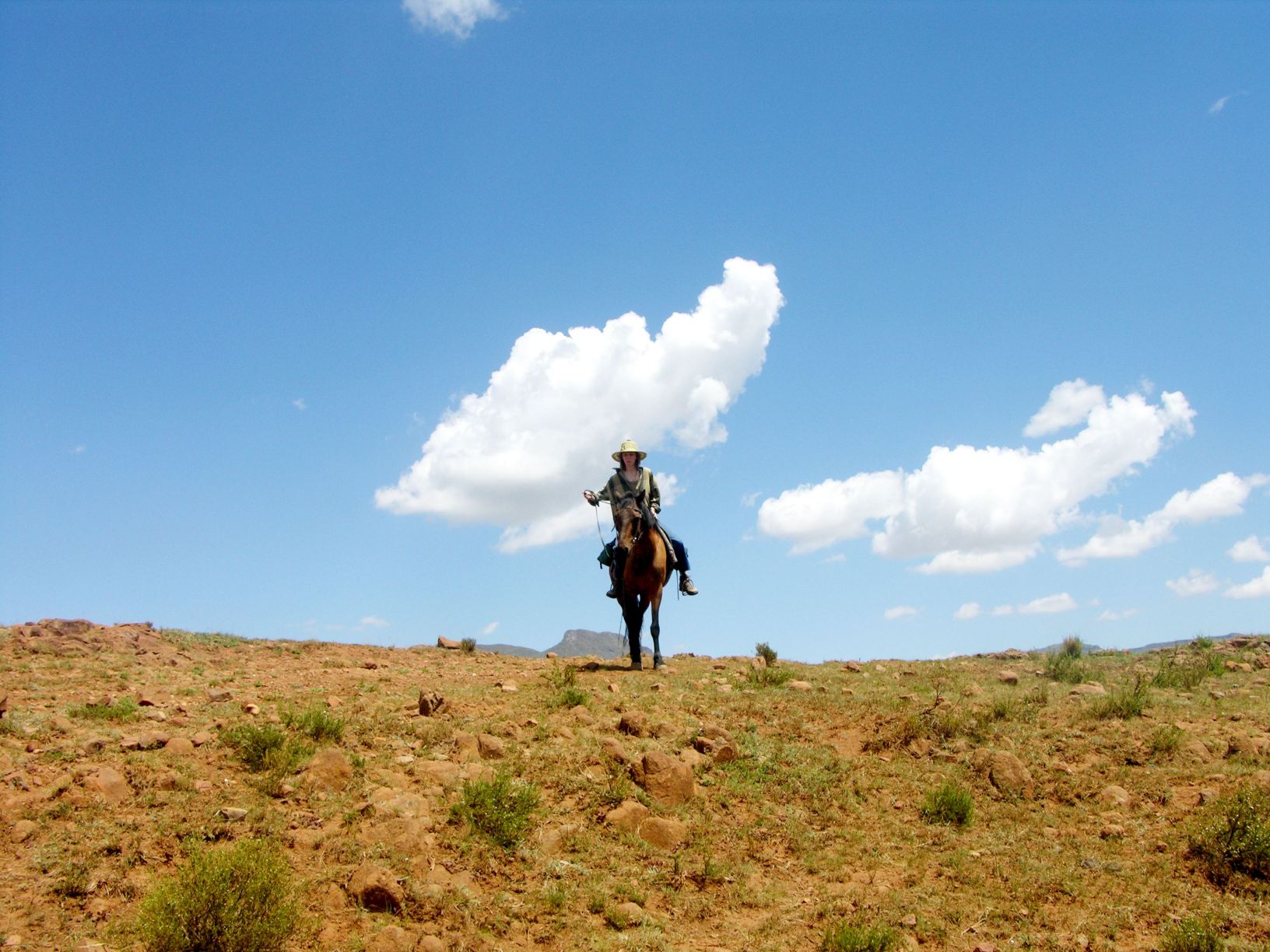
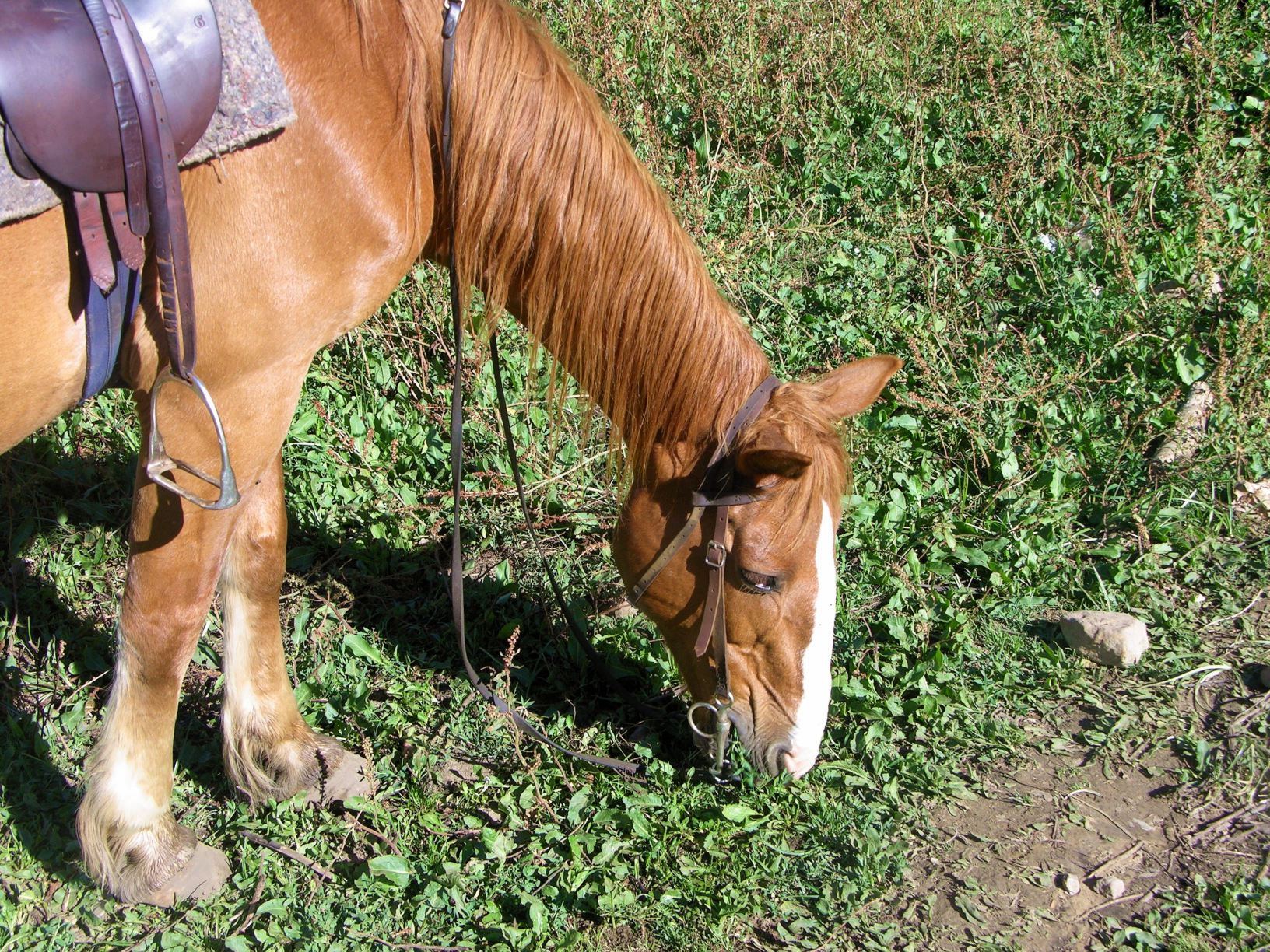
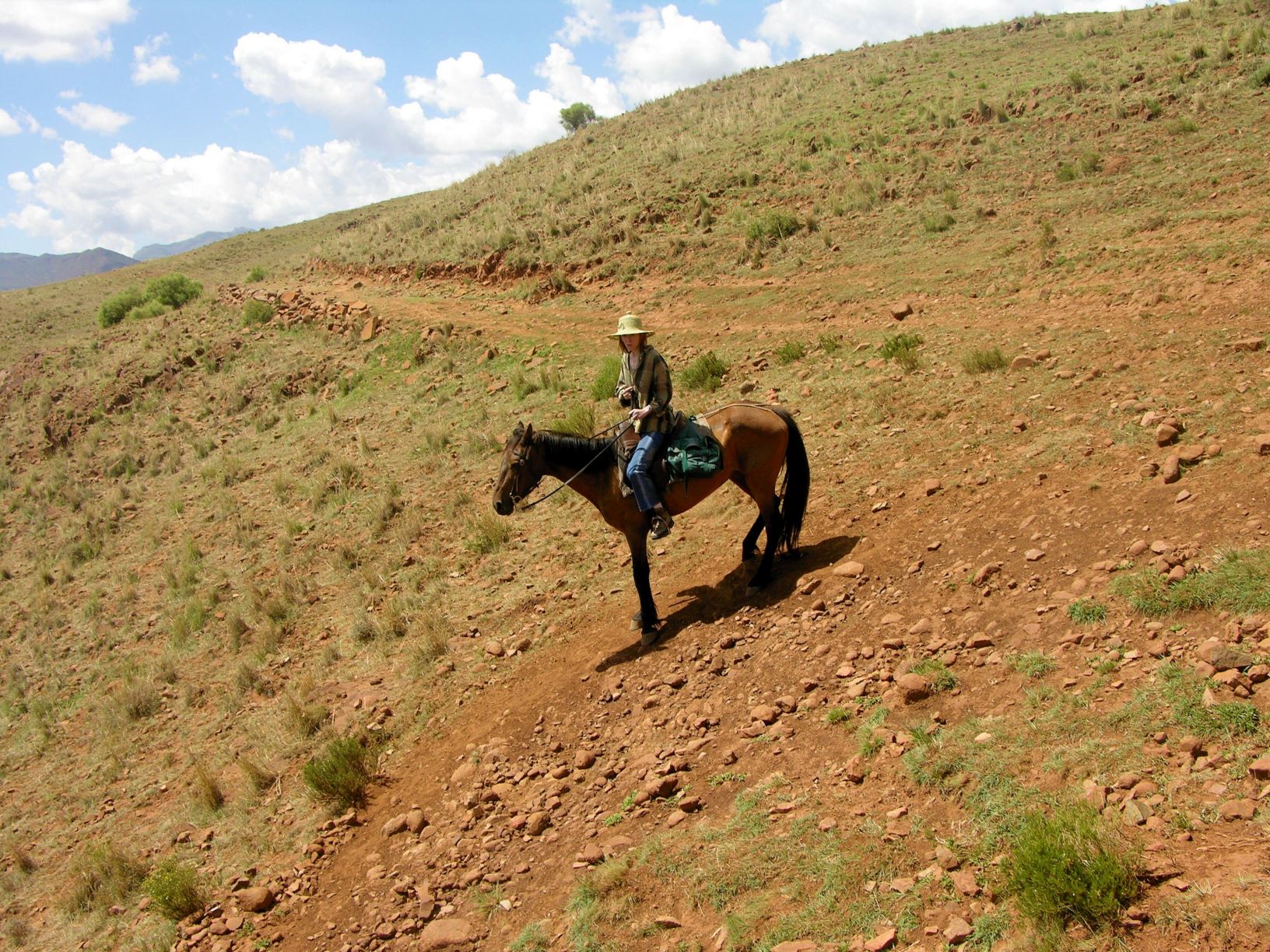
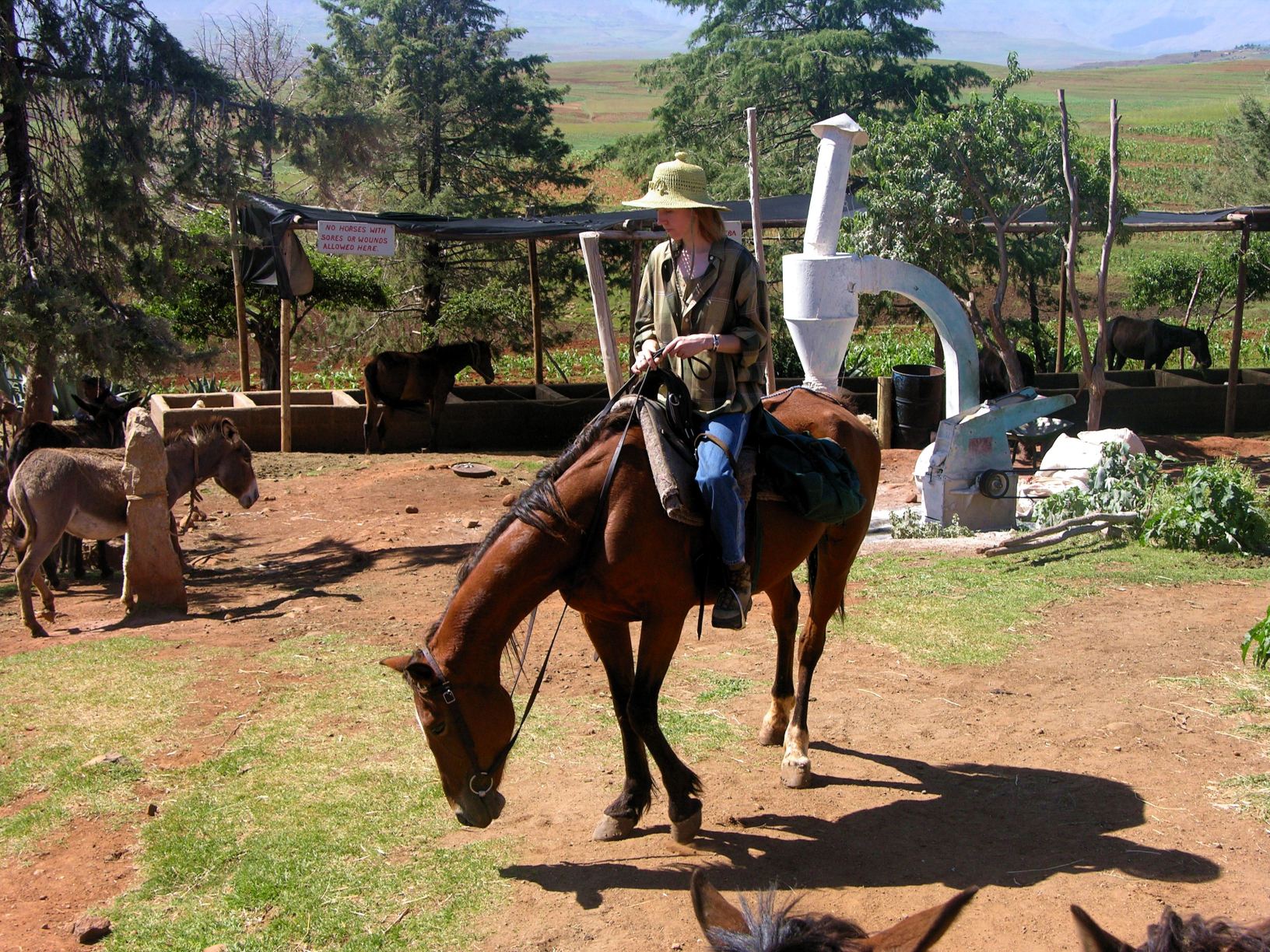
The horses come with a guide. He rides his own, with a packhorse following on a lead rope. Apart from the guide and the horses, it was just the two of us. The ride cost us 1,310 maloti all told.
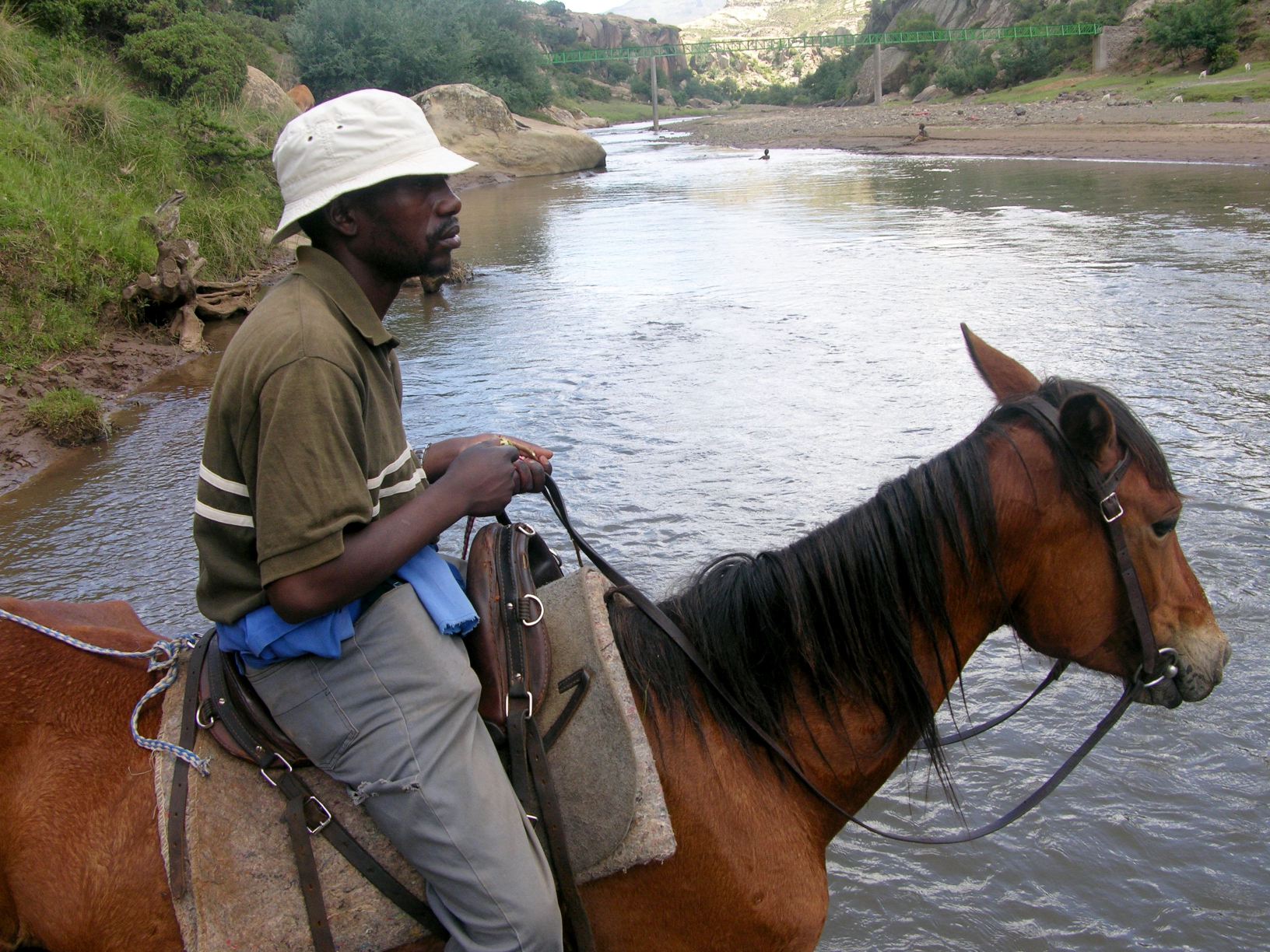
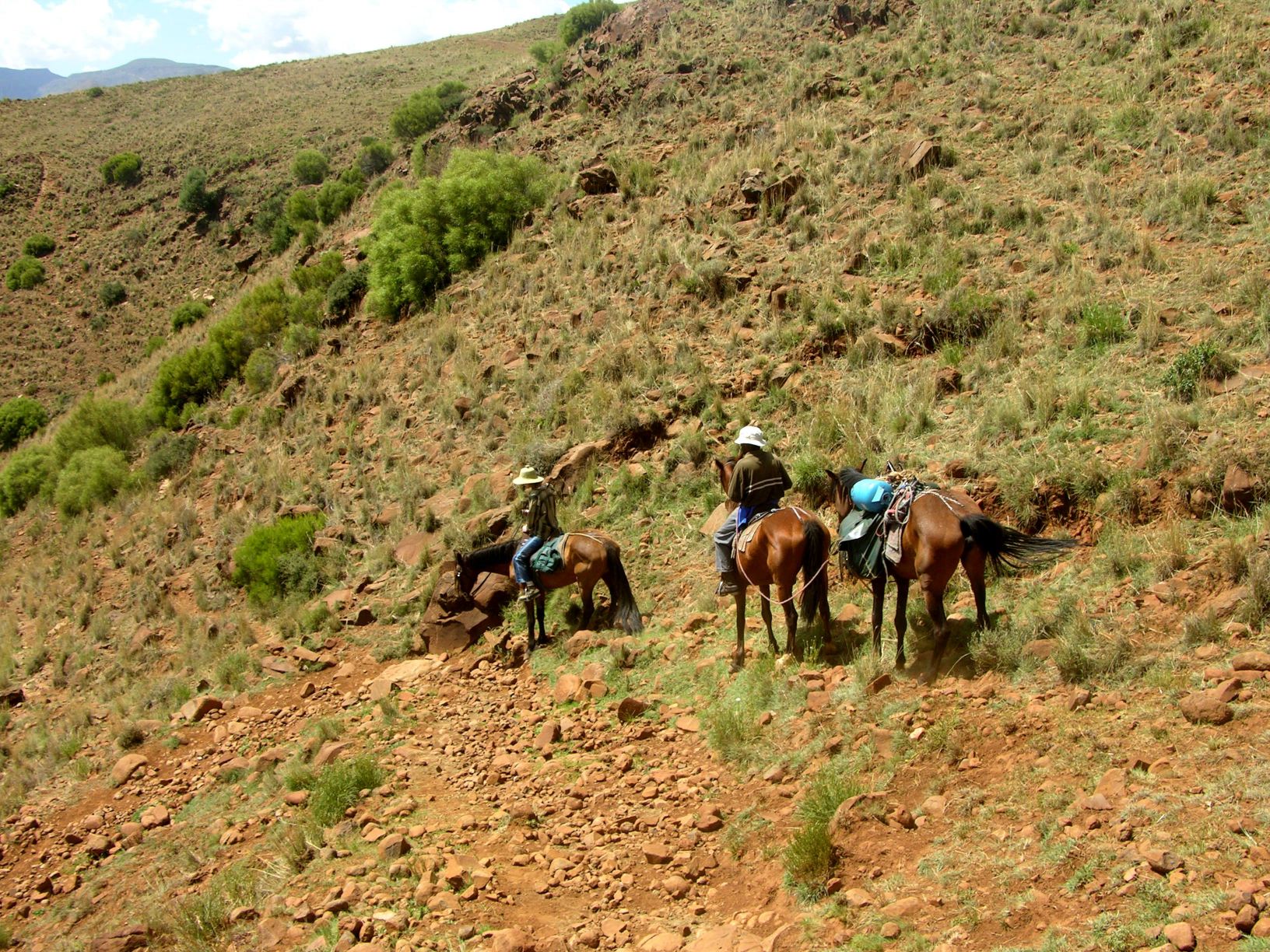
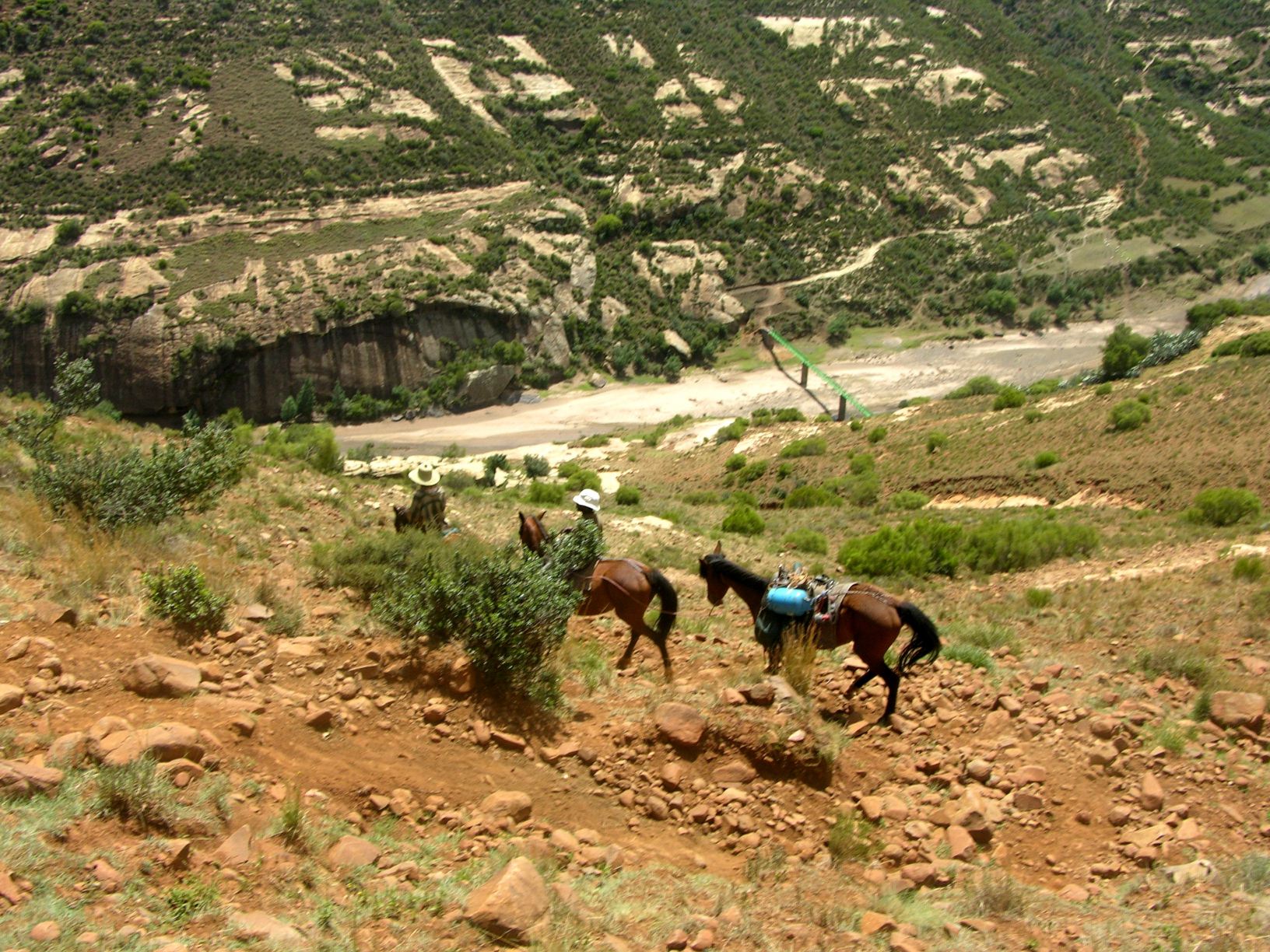
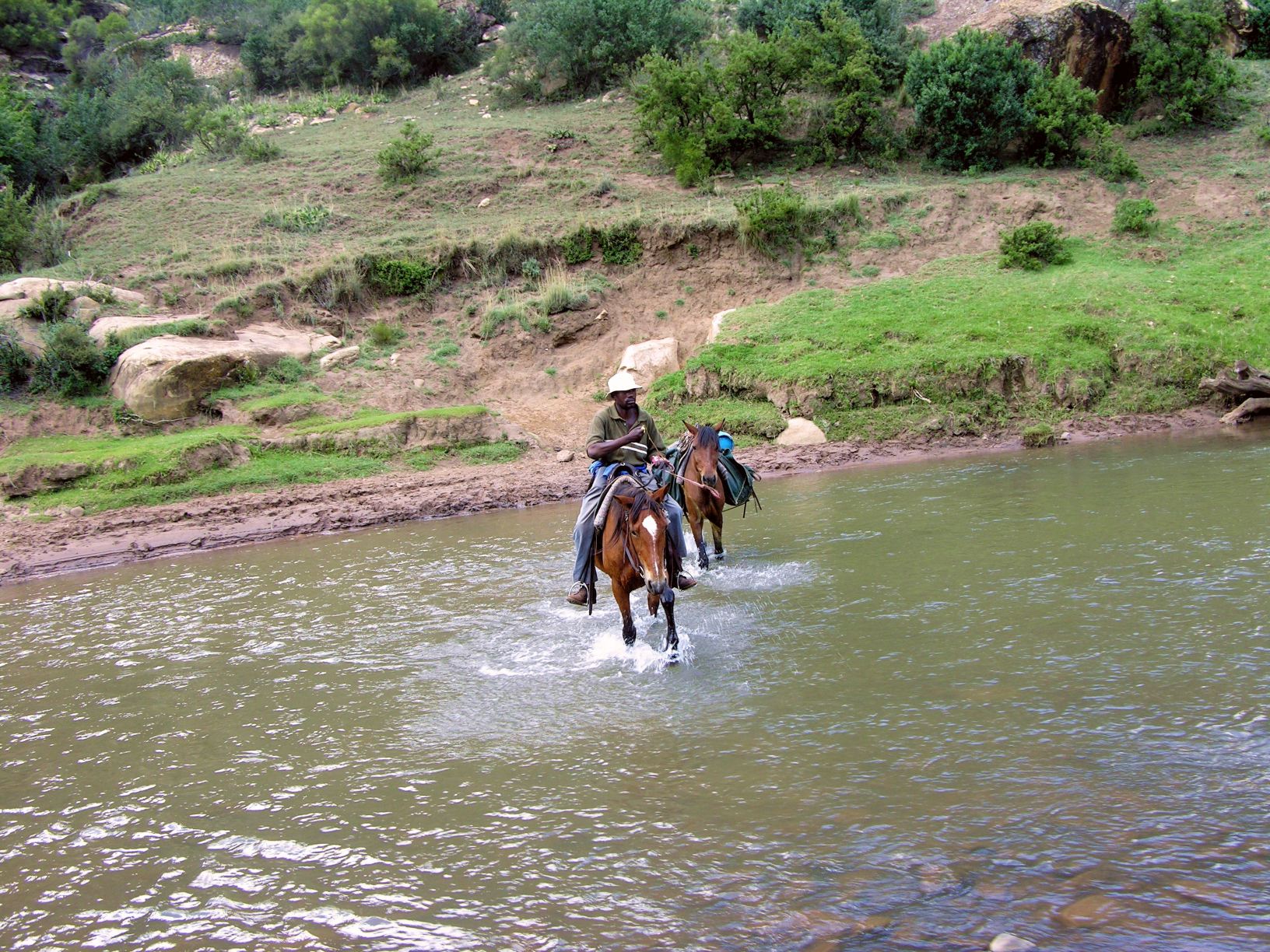
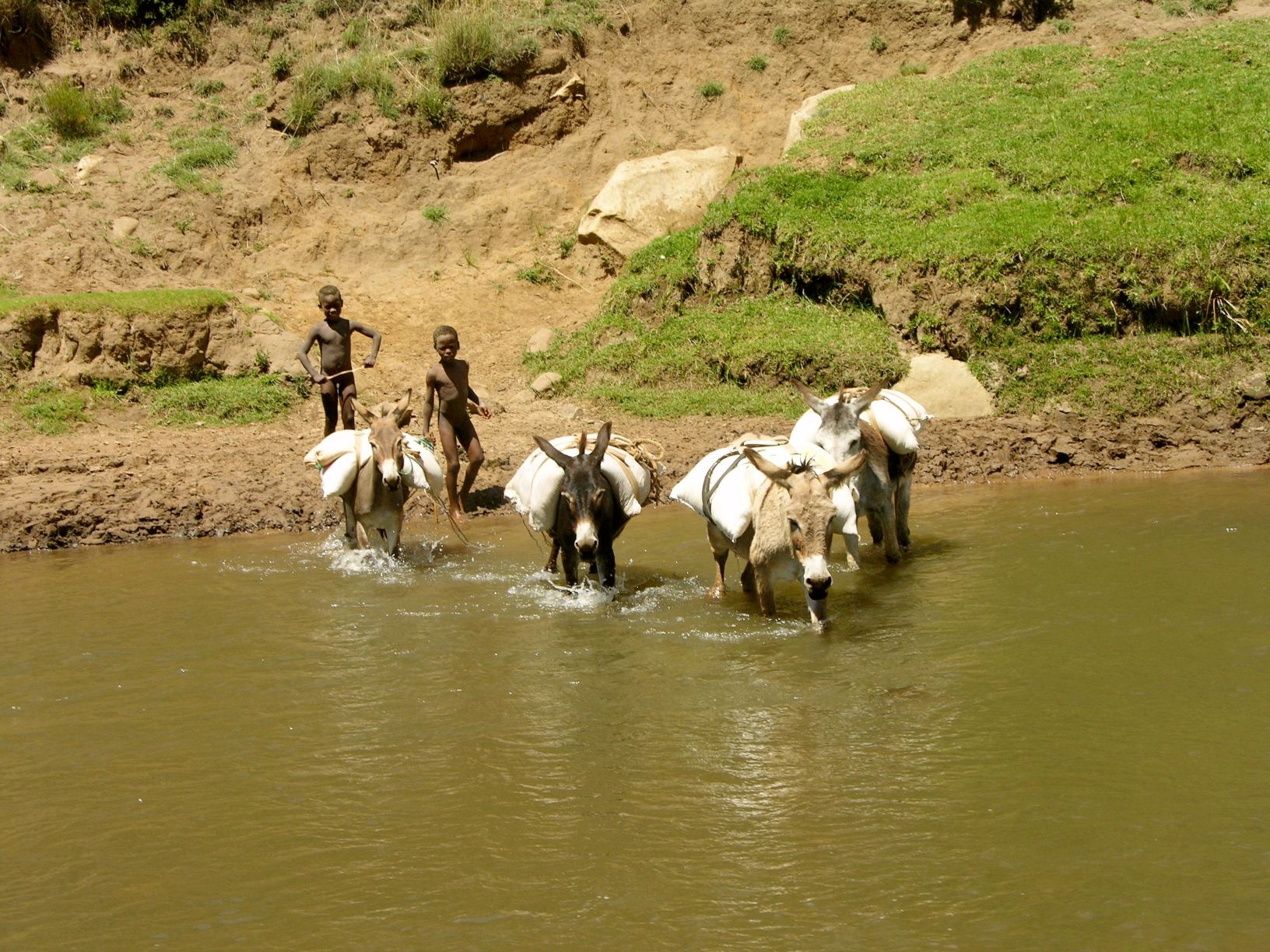
Not far from Malealea, the bridle track crossed a hundred-metre-deep river gorge. The horses kept up the same pace along a narrow, rocky path strewn with loose, sharp stones. Then they forded a mountain river up to their knees and scrambled up the other side on just as steep a track. The heat was dreadful. The horse's shoulders were hot as an iron. One of ours in Russia would have dropped dead on the spot. This one had evidently been built for tropical mountains. The ride to our night stop took seven hours, including an hour's break for lunch. By that time we'd followed the course of a mountain river to the last and highest village in the gorge, thirty kilometres from Malealea as the crow flies (29°50.187′S, 27°45.312′E, elevation 1,873 m).
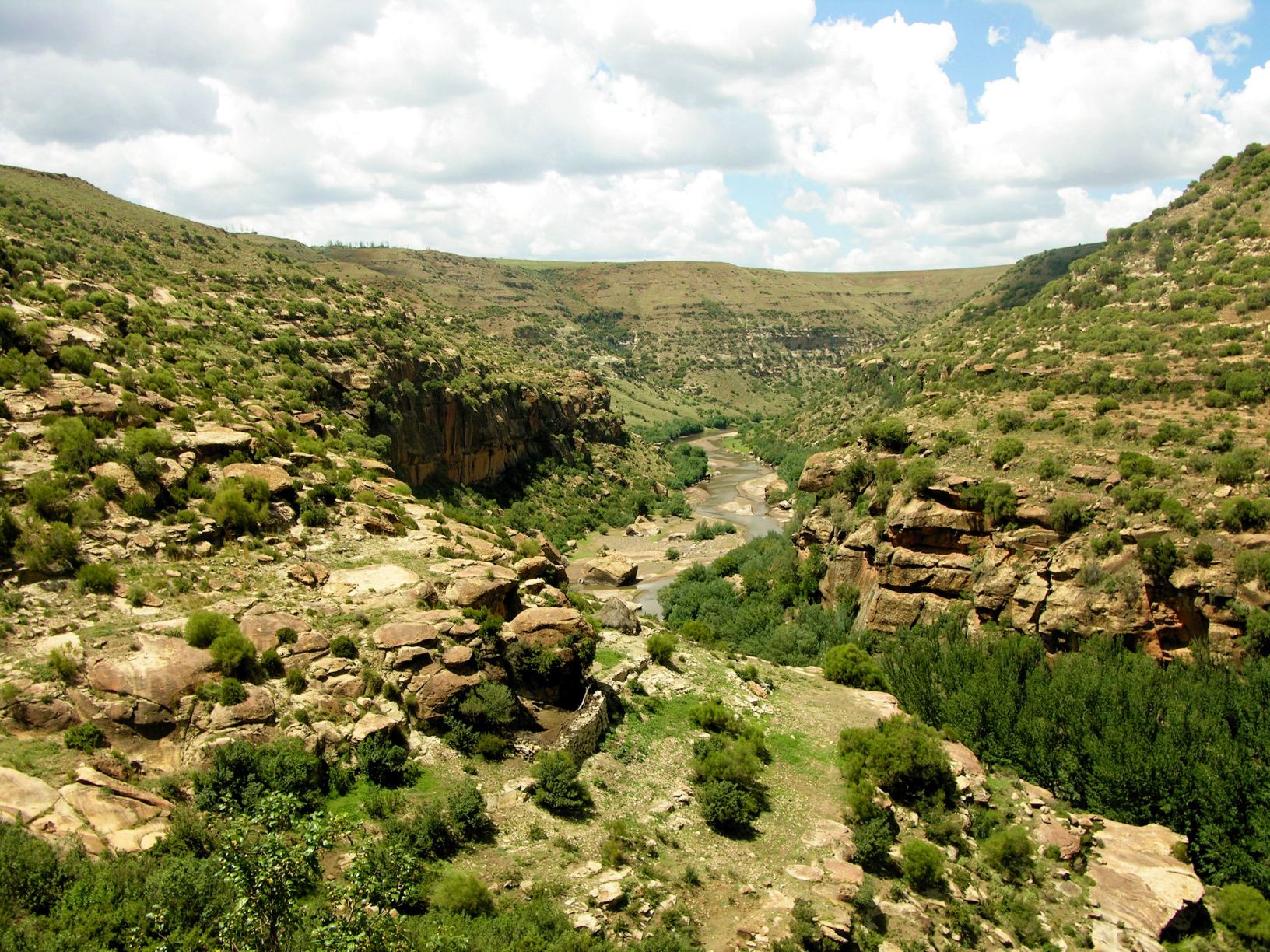
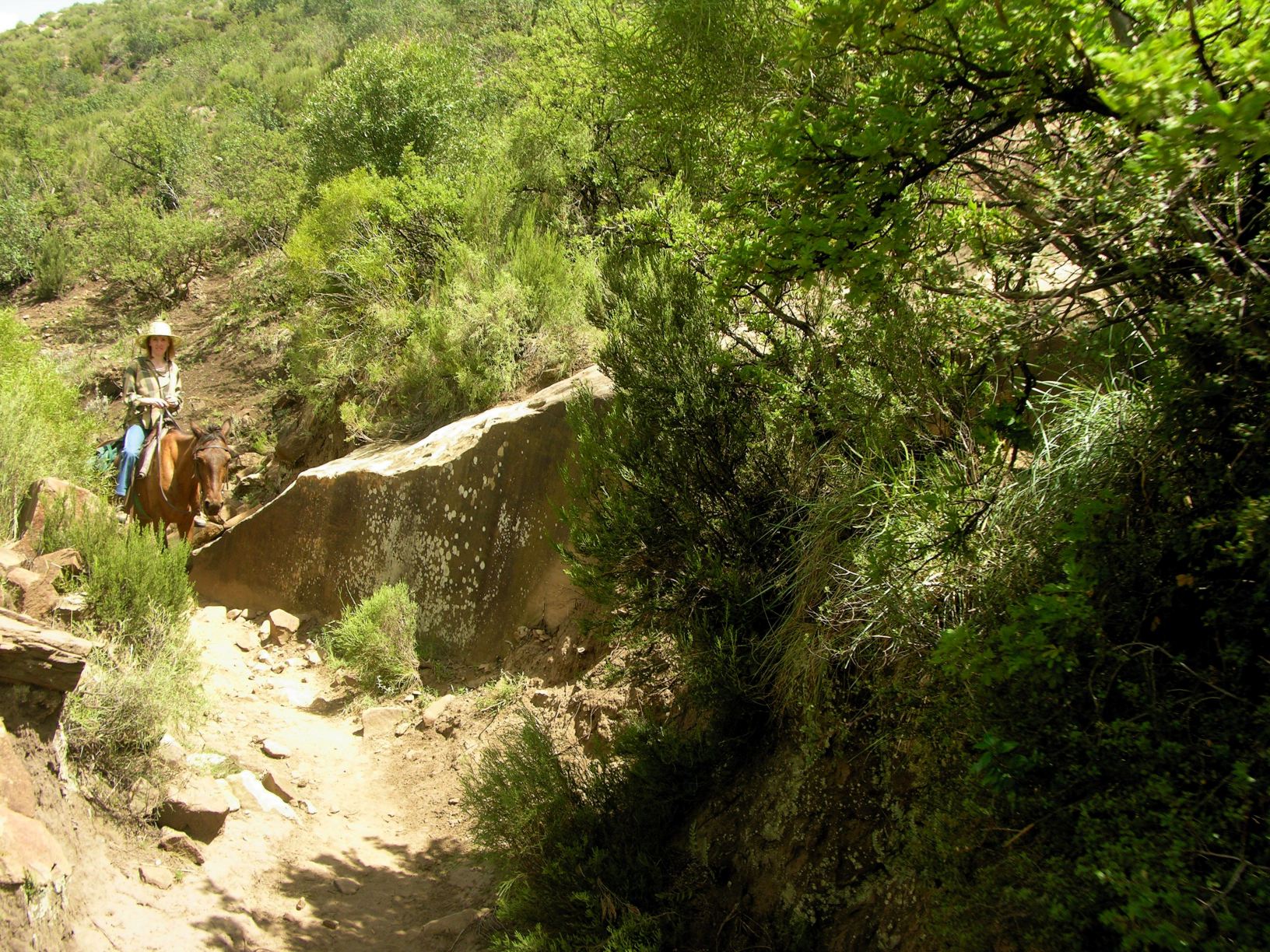
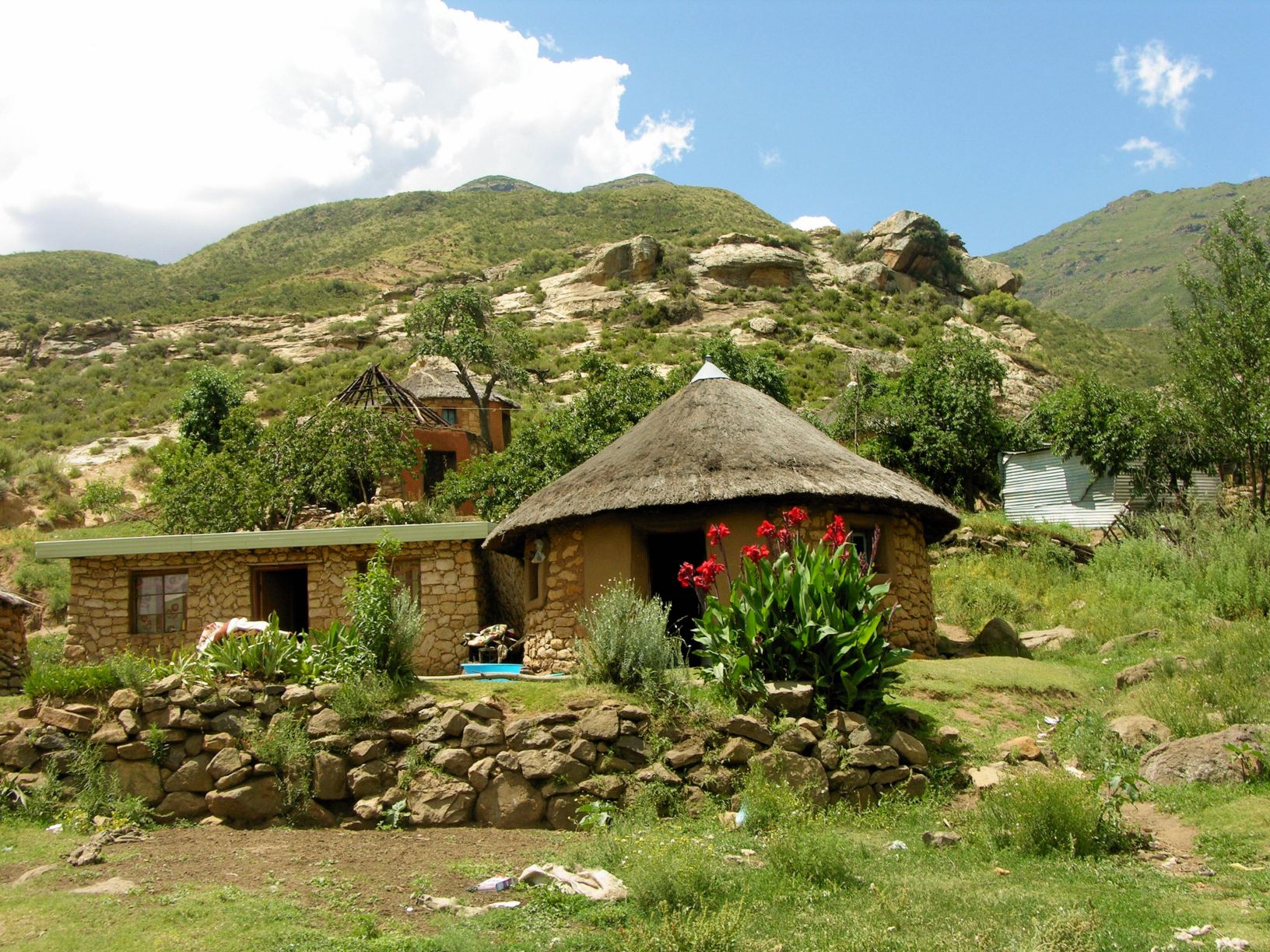
There was a separate round hut for our overnight stay, with a gas stove and two mats to sleep on. They bring an enormous gas bottle from Malealea every time and lug it back again with hardly any gas gone.
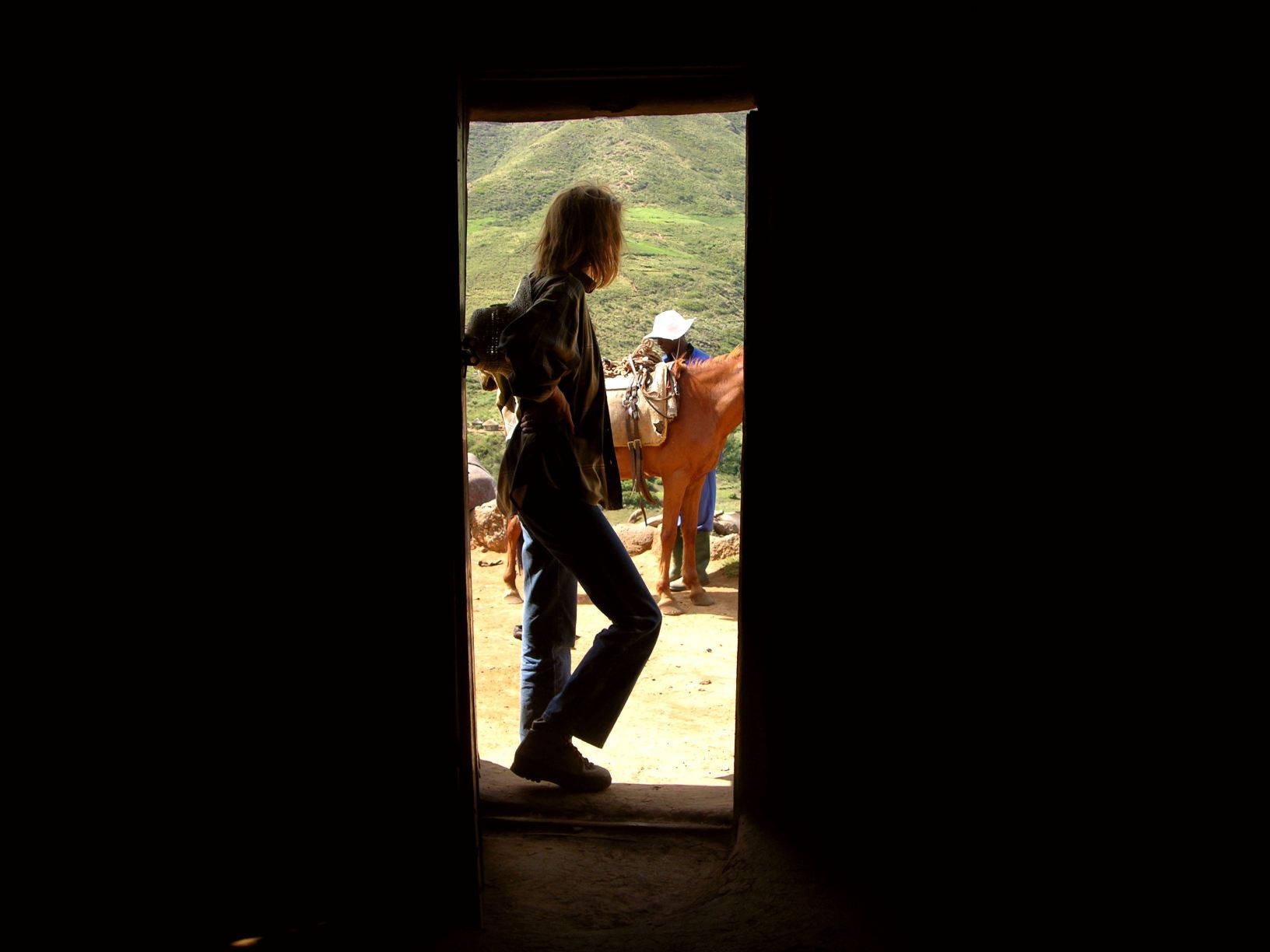
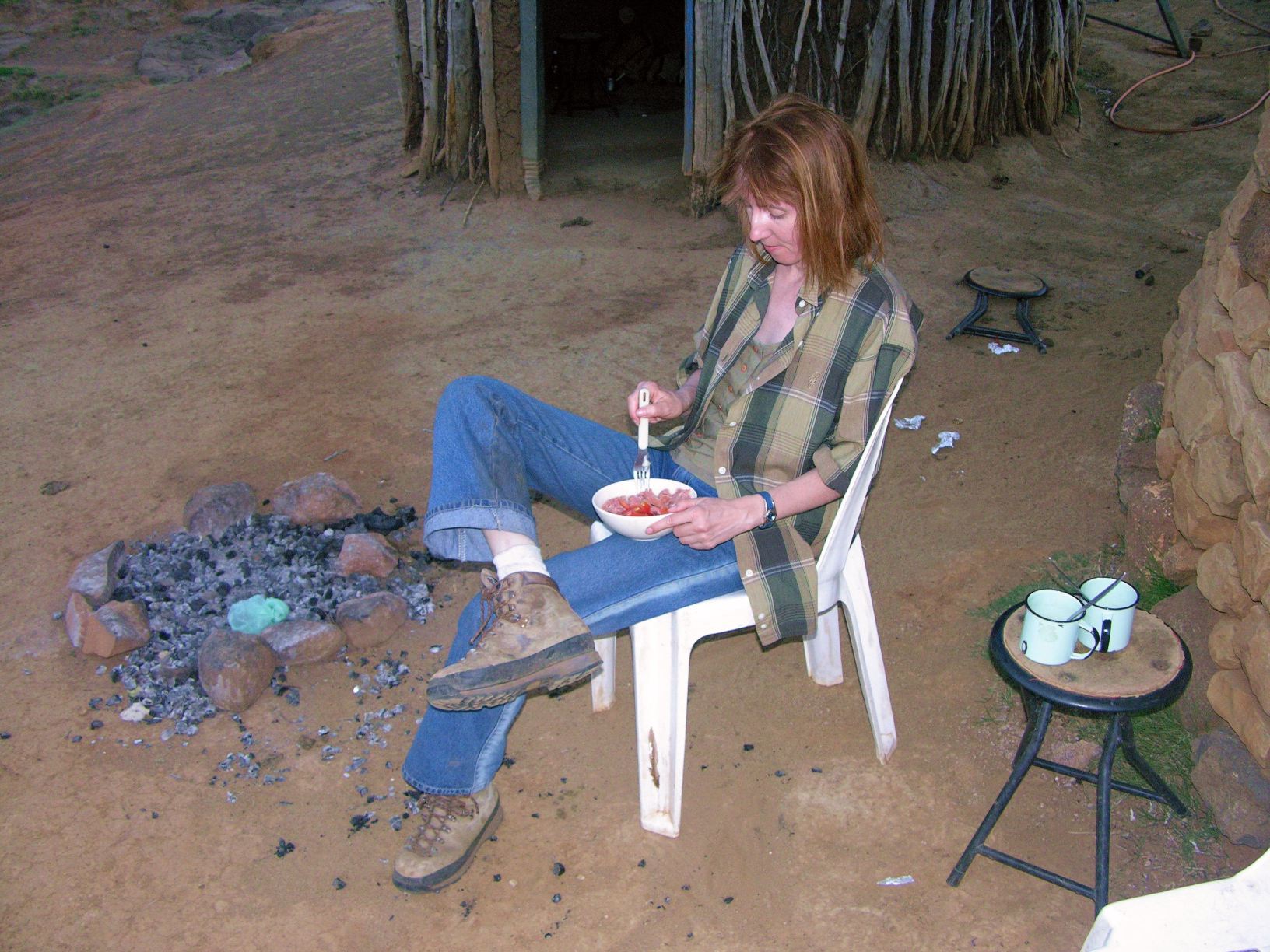
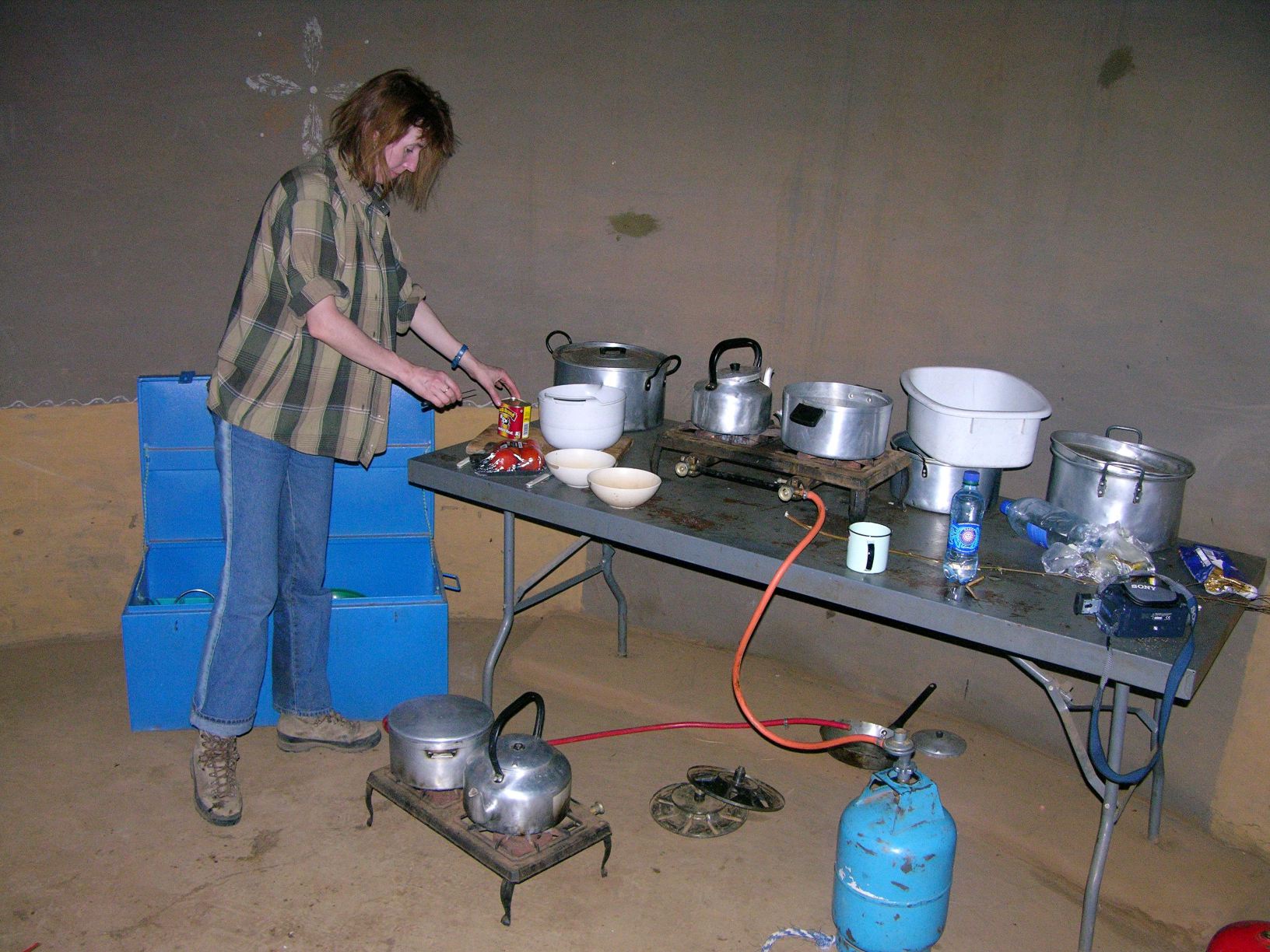
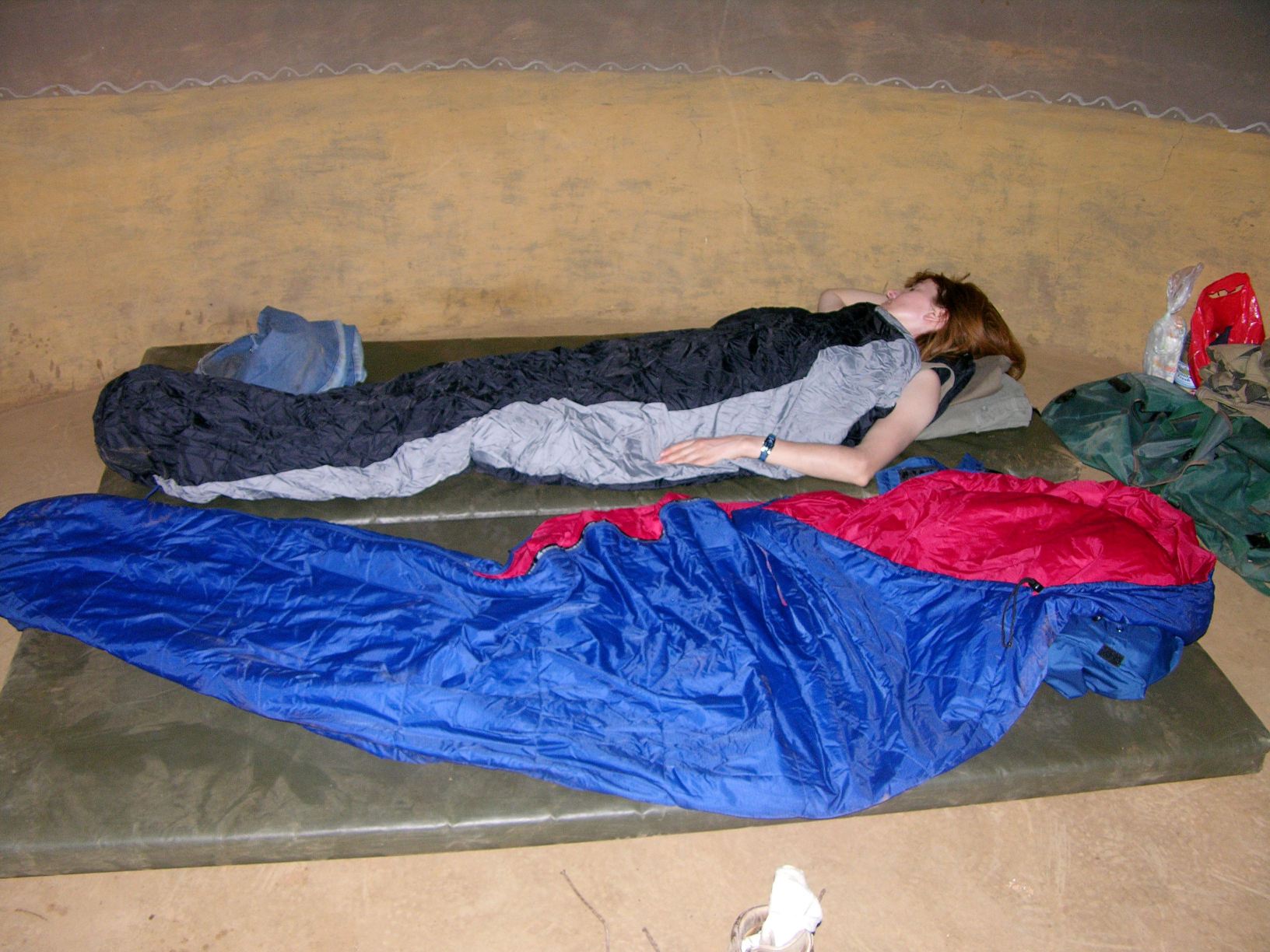
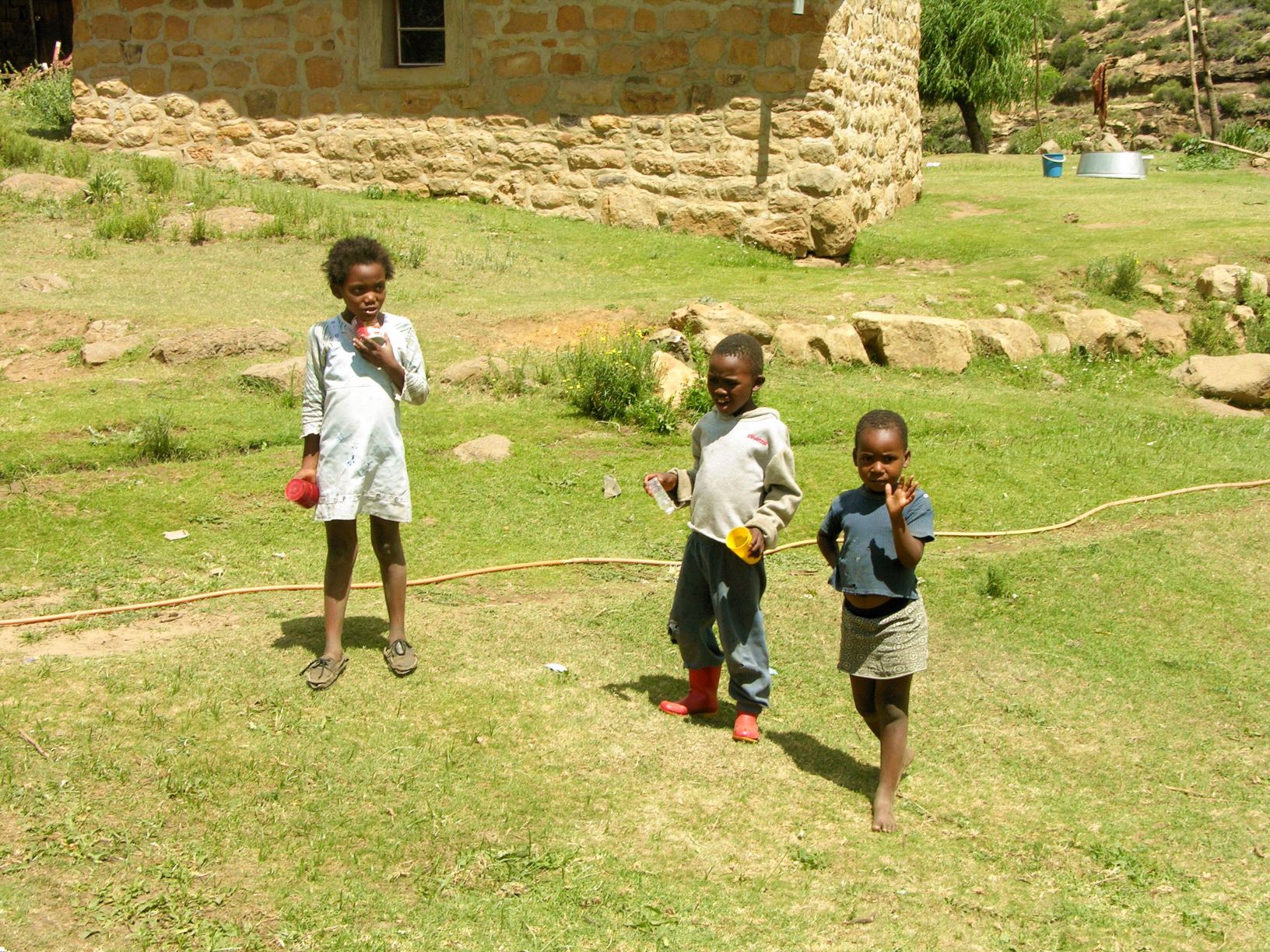
There were another three hours to sunset, enough for a walk to the waterfall a few kilometres and fifty minutes' walk upstream. The overgrown little path winds about and crosses the river twice, but you can follow it on your own. The main thing is to keep to the left bank towards the end, well back from the water. It's hard to get lost, but by the rules you have a guide, at ten maloti an hour. They sent a Black boy of about twelve with us. He changed his clothes for this important mission and even put on an enormous pair of white gumboots. We like to walk on our own, but it would have felt mean to deprive him of the money he'd been waiting to earn.
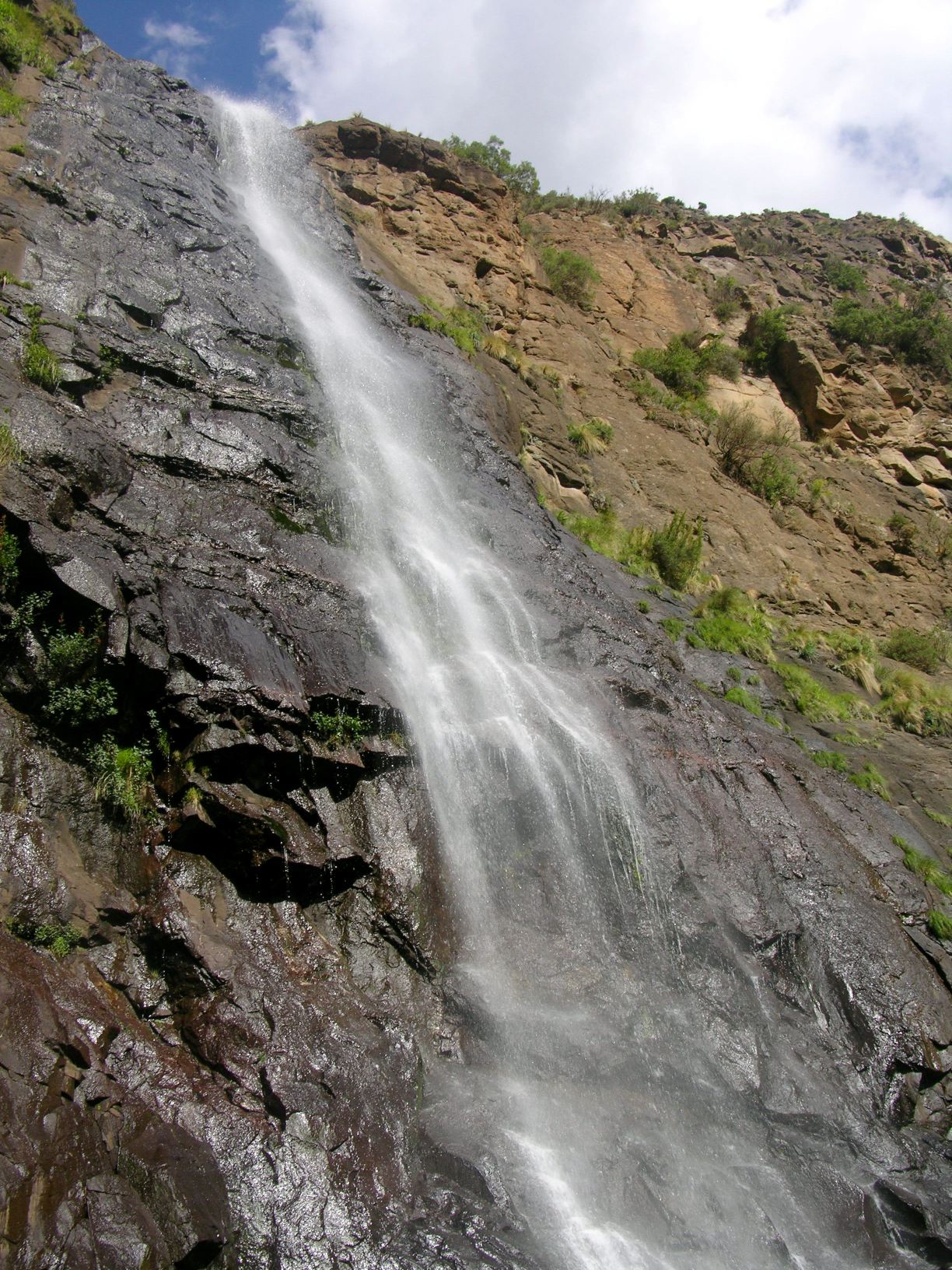
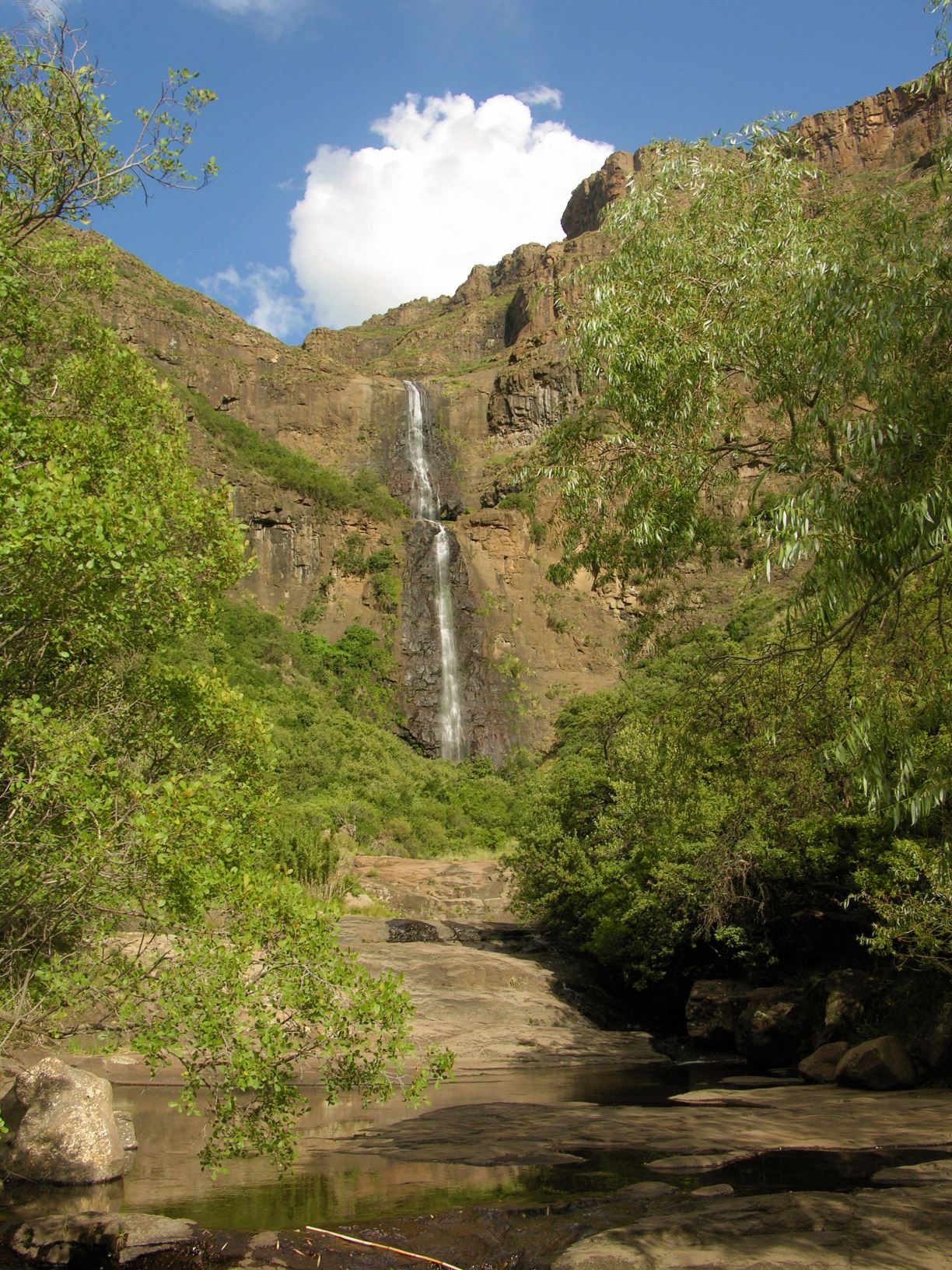
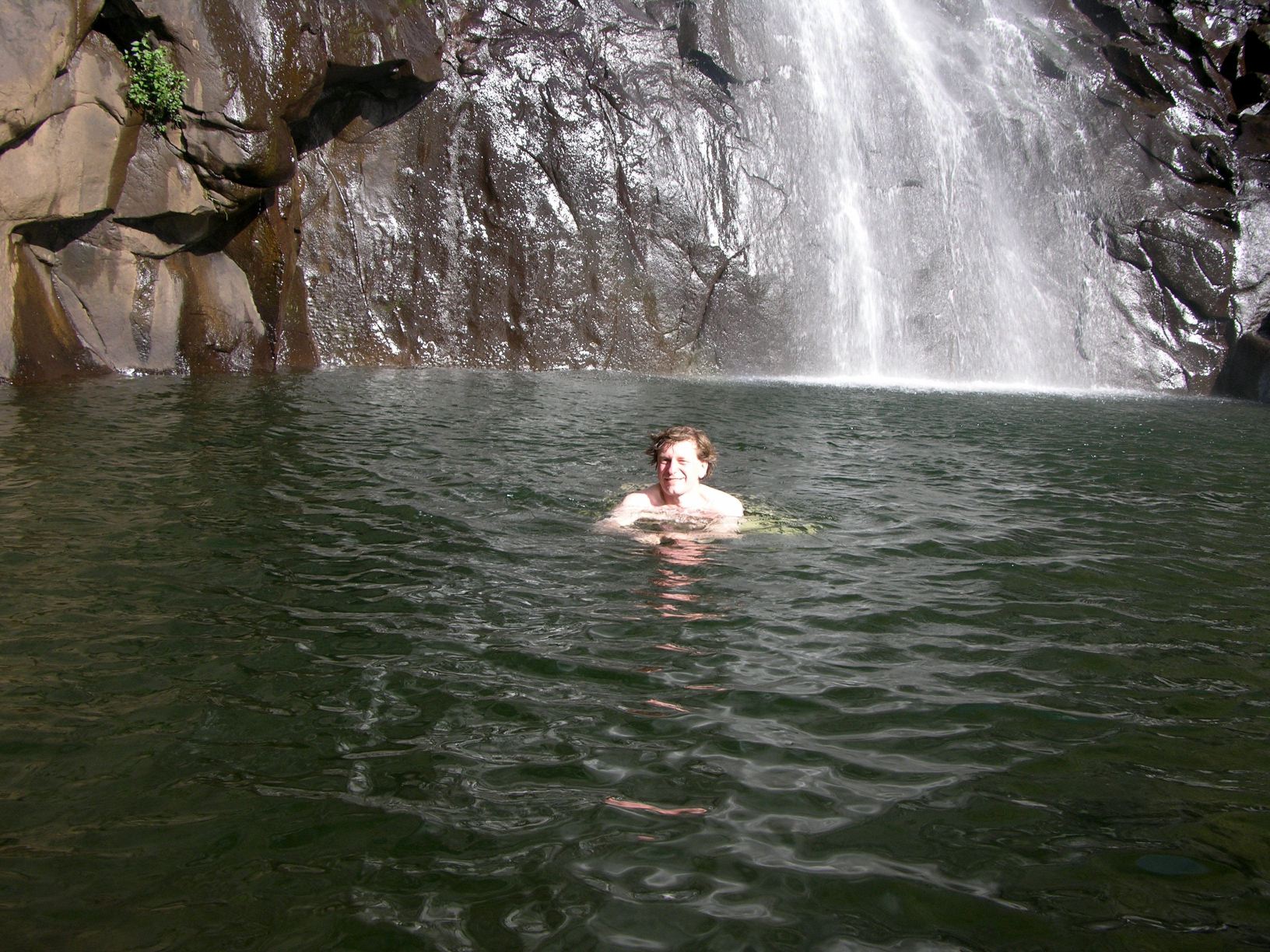
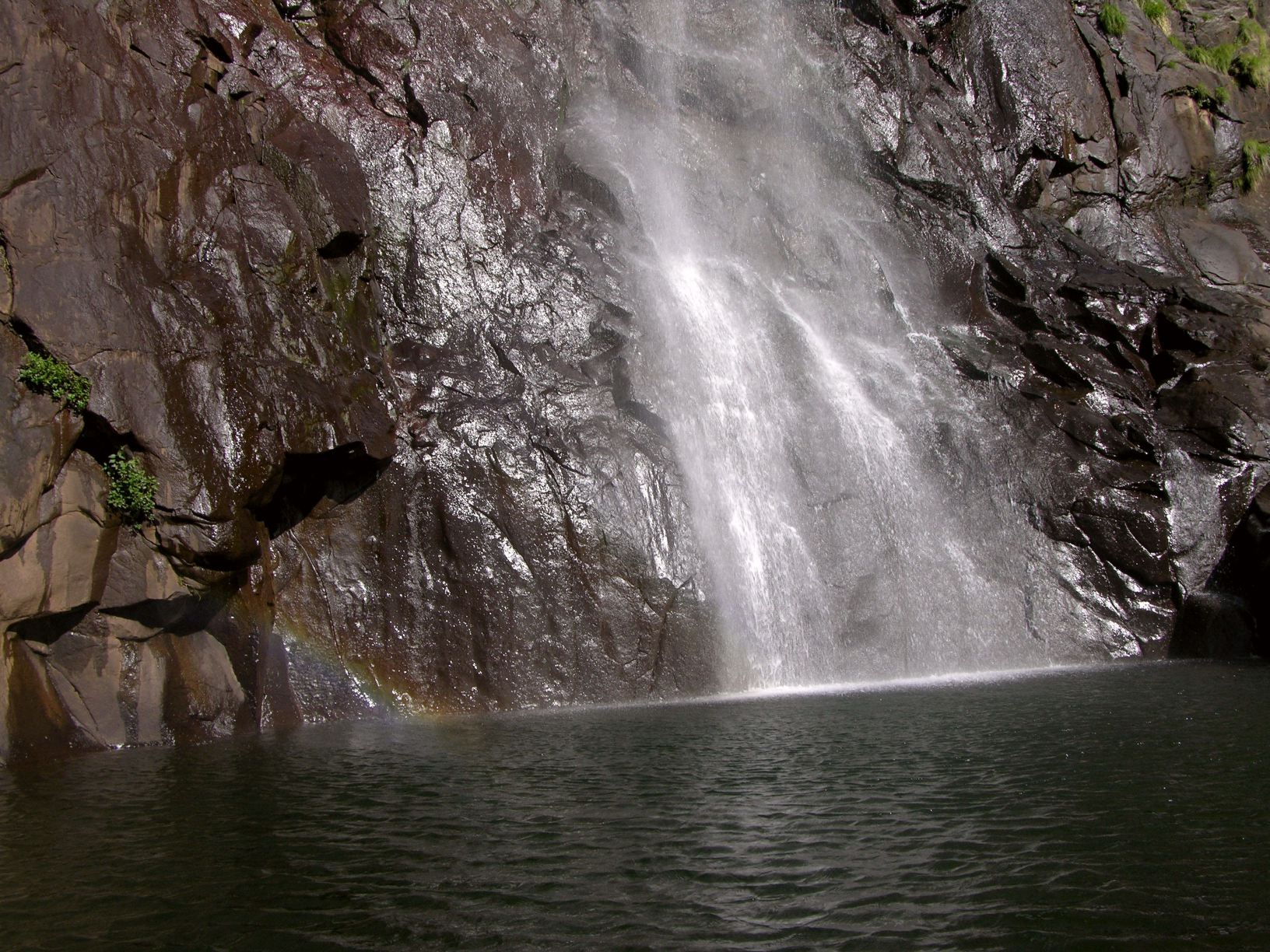
There was plenty of room for a swim below the waterfall, so in we went. The water was on the cold side, probably ten to fifteen degrees. Instead of the three hours allowed for the outing, it was obvious we were going to do it in two. Our guide did his utmost to slow us down and get into the next hour, even by a minute, so he could charge for it, but he couldn't manage it.
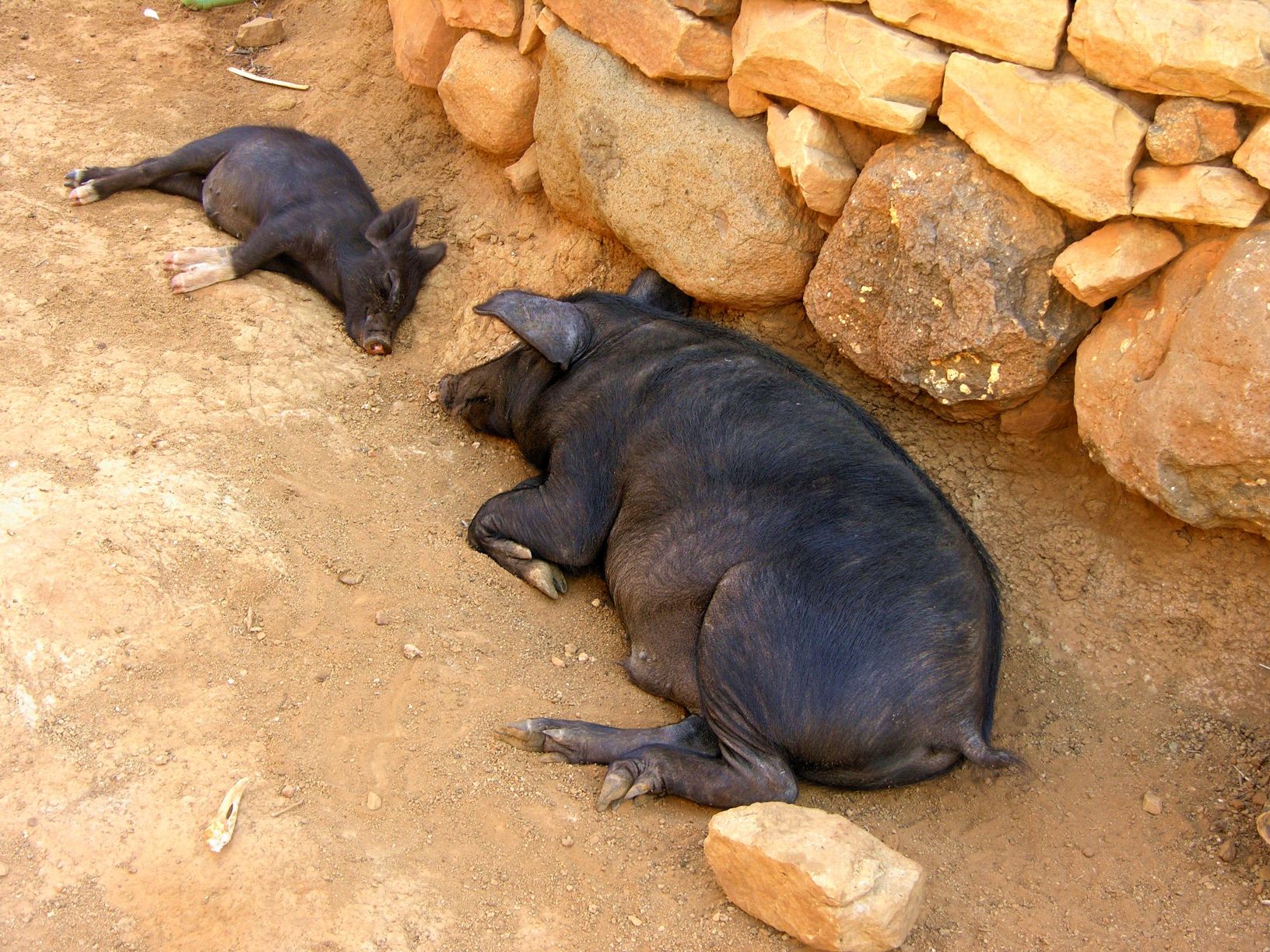
You're expected to cook for yourself. On the whole, nobody paid us any attention, which was rather pleasant. All around us, life in the village went on as usual. Piglets rolled in the dust, grunting happily. Cows came down from the mountains with their bells ringing.
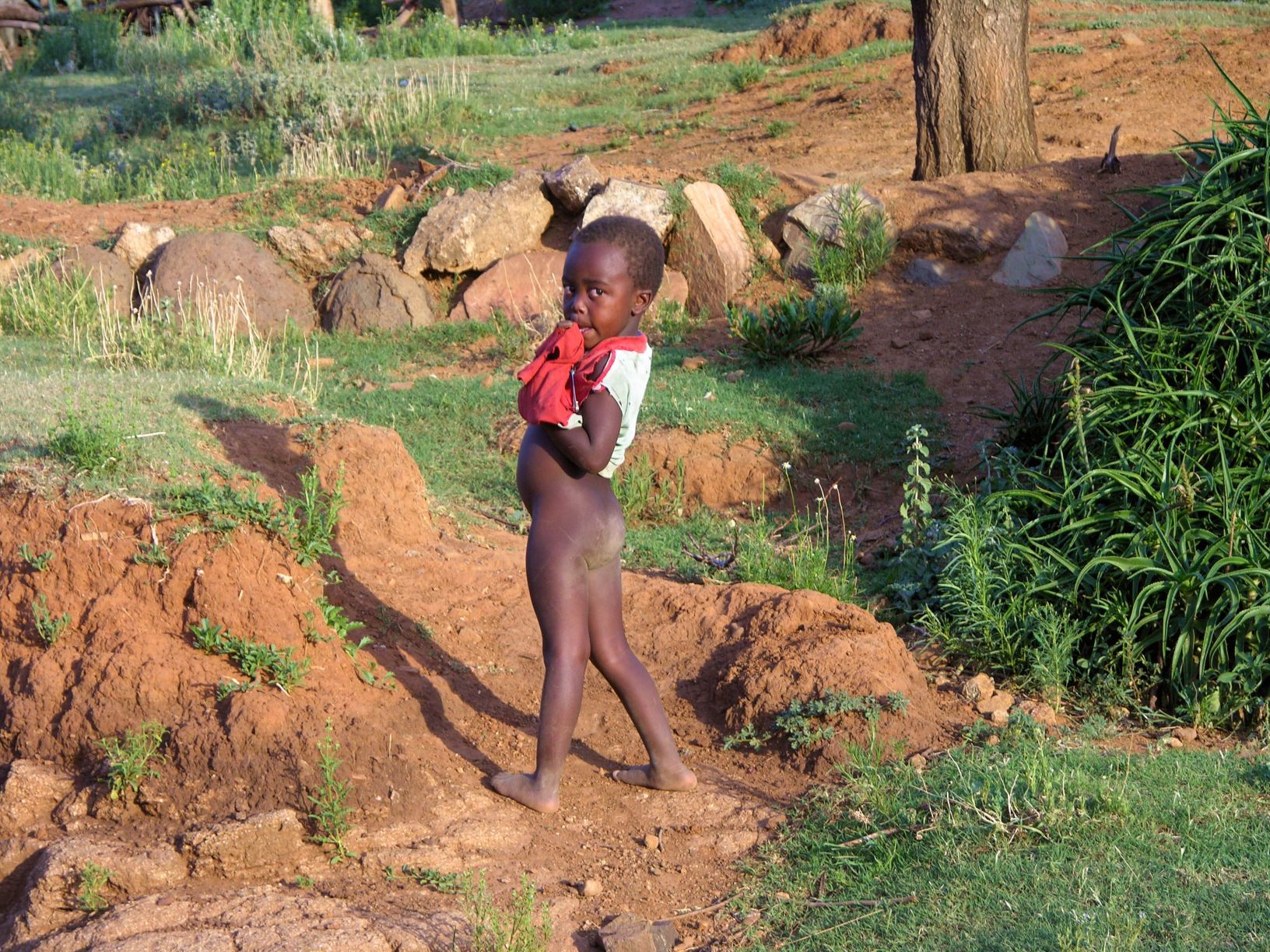
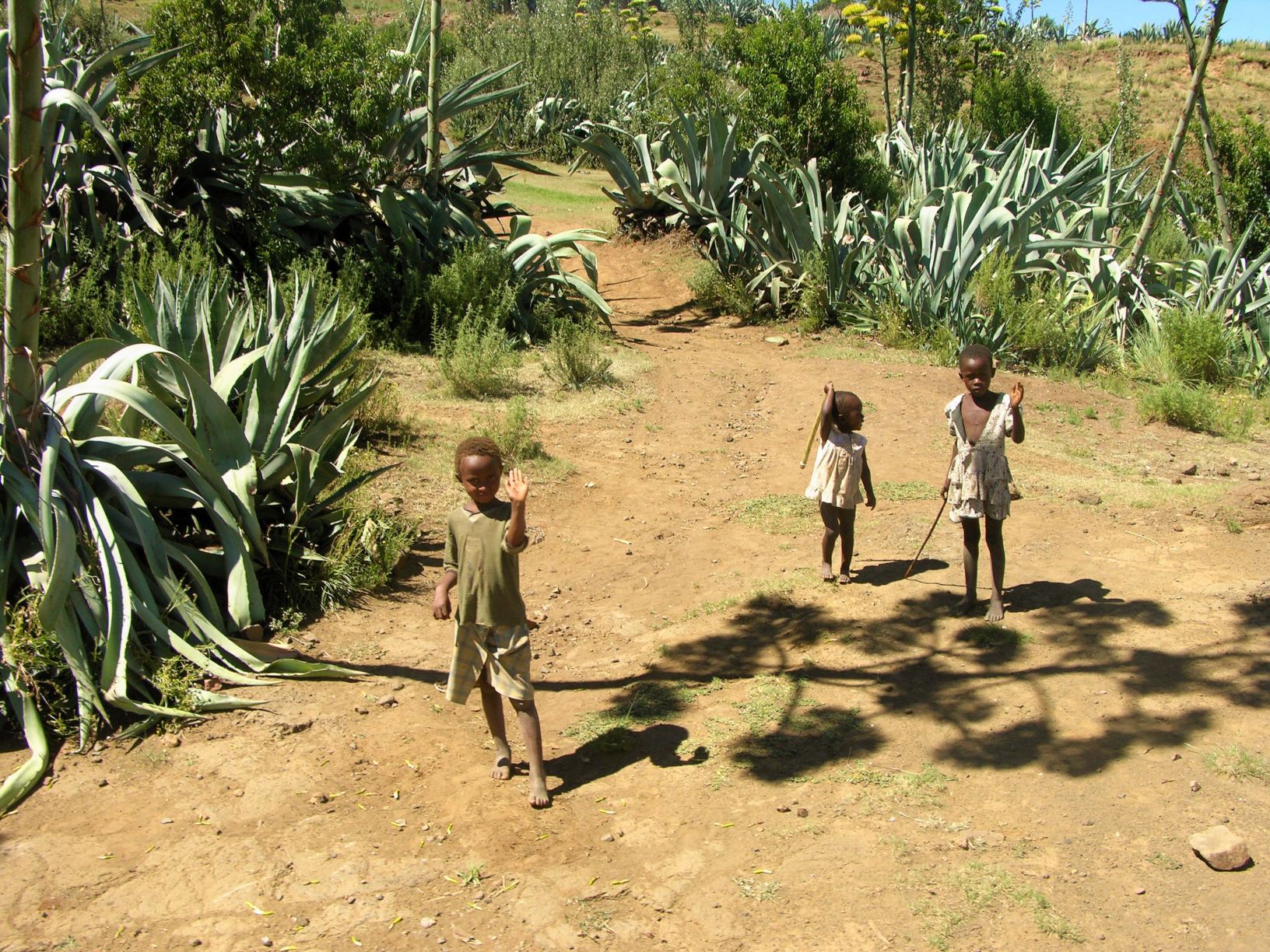
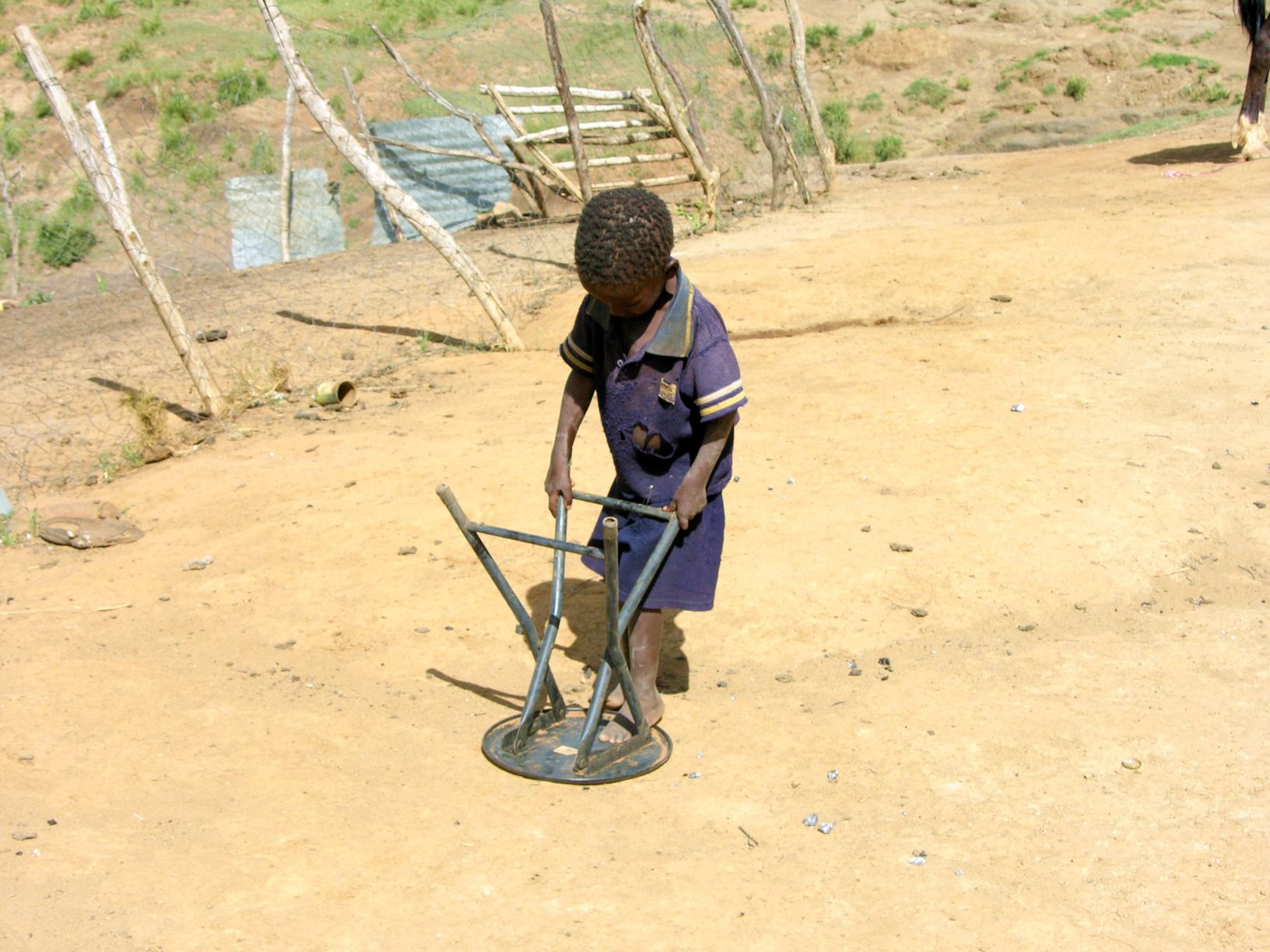
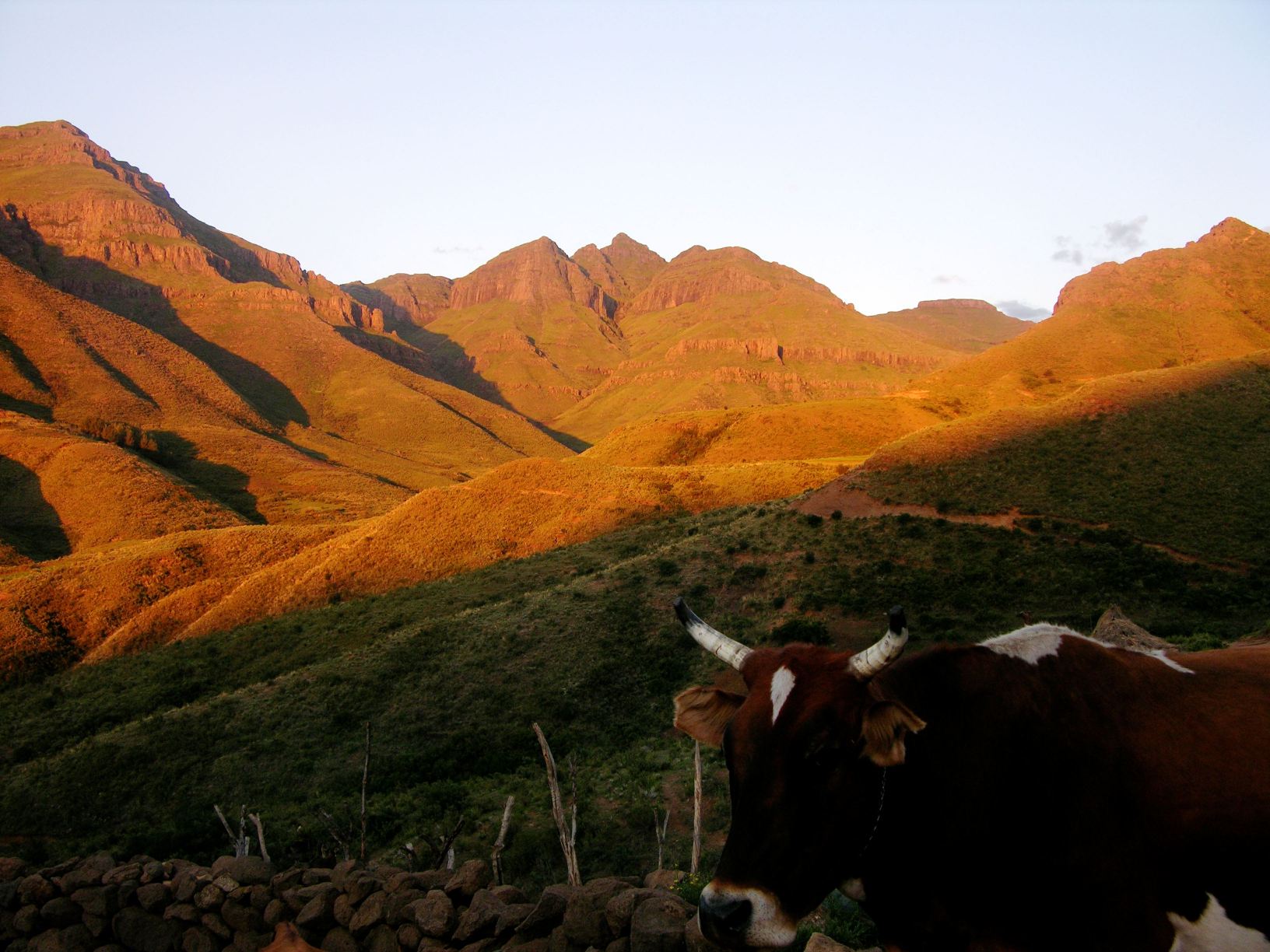
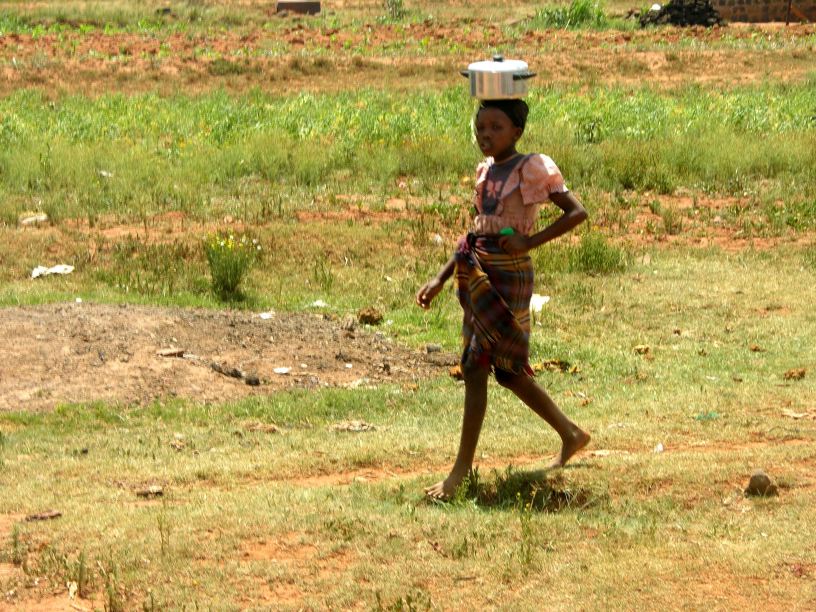
It began to get dark. There was hardly any mains electricity in Lesotho, but you can't stop progress. The villagers get hold of car batteries somewhere, presumably old ones already a few years into their useful life. In the morning the village girls balance one of those 70 amp-hour wonders on their heads and walk for a whole day to Malealea. They get it charged on the generator and walk back to the village the following day. How they don't break their slender necks is beyond me. The charge lasts a few days. They turn on the bulbs only when they really need to, but plenty of people have radios and cassette players.
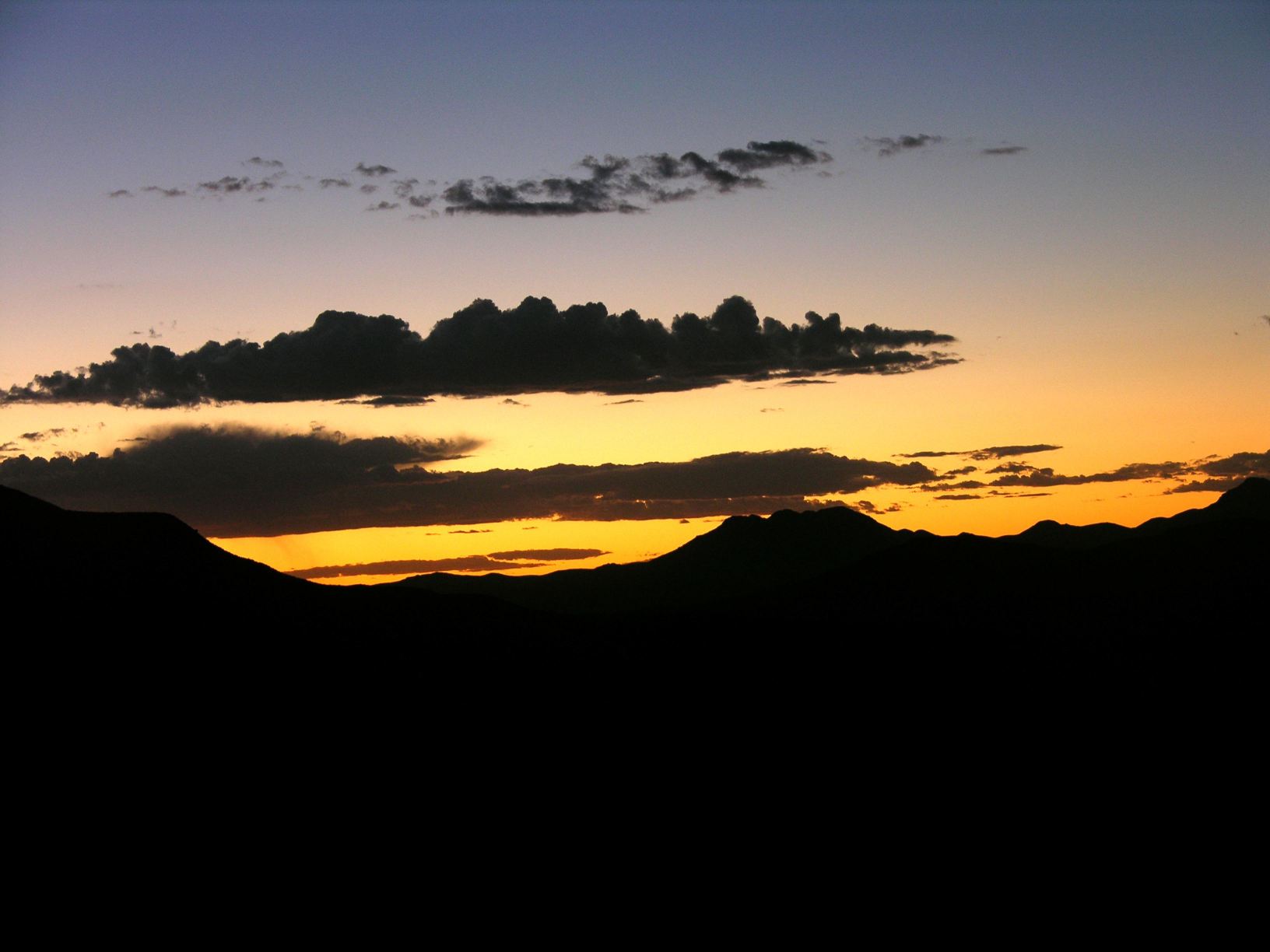
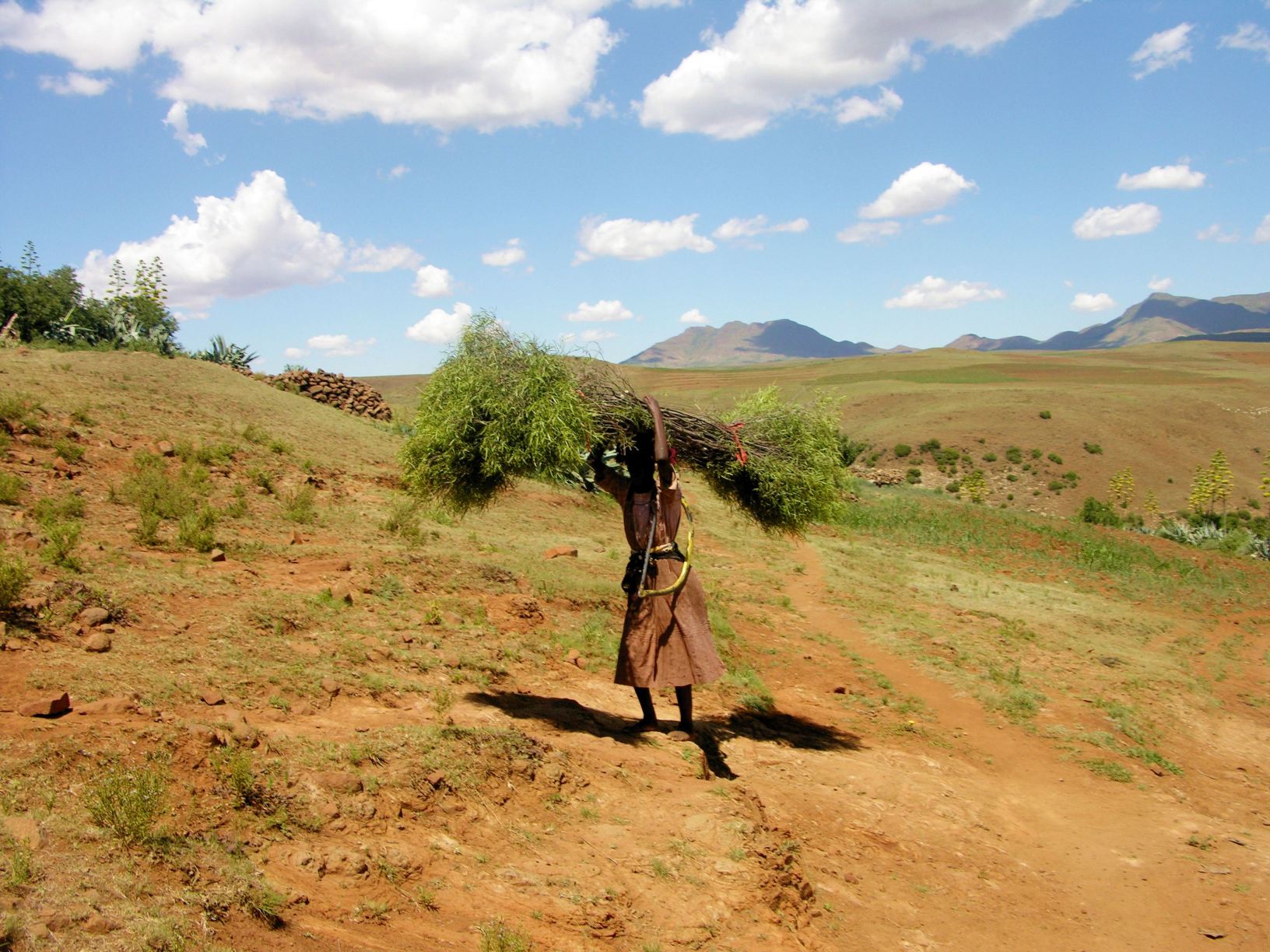
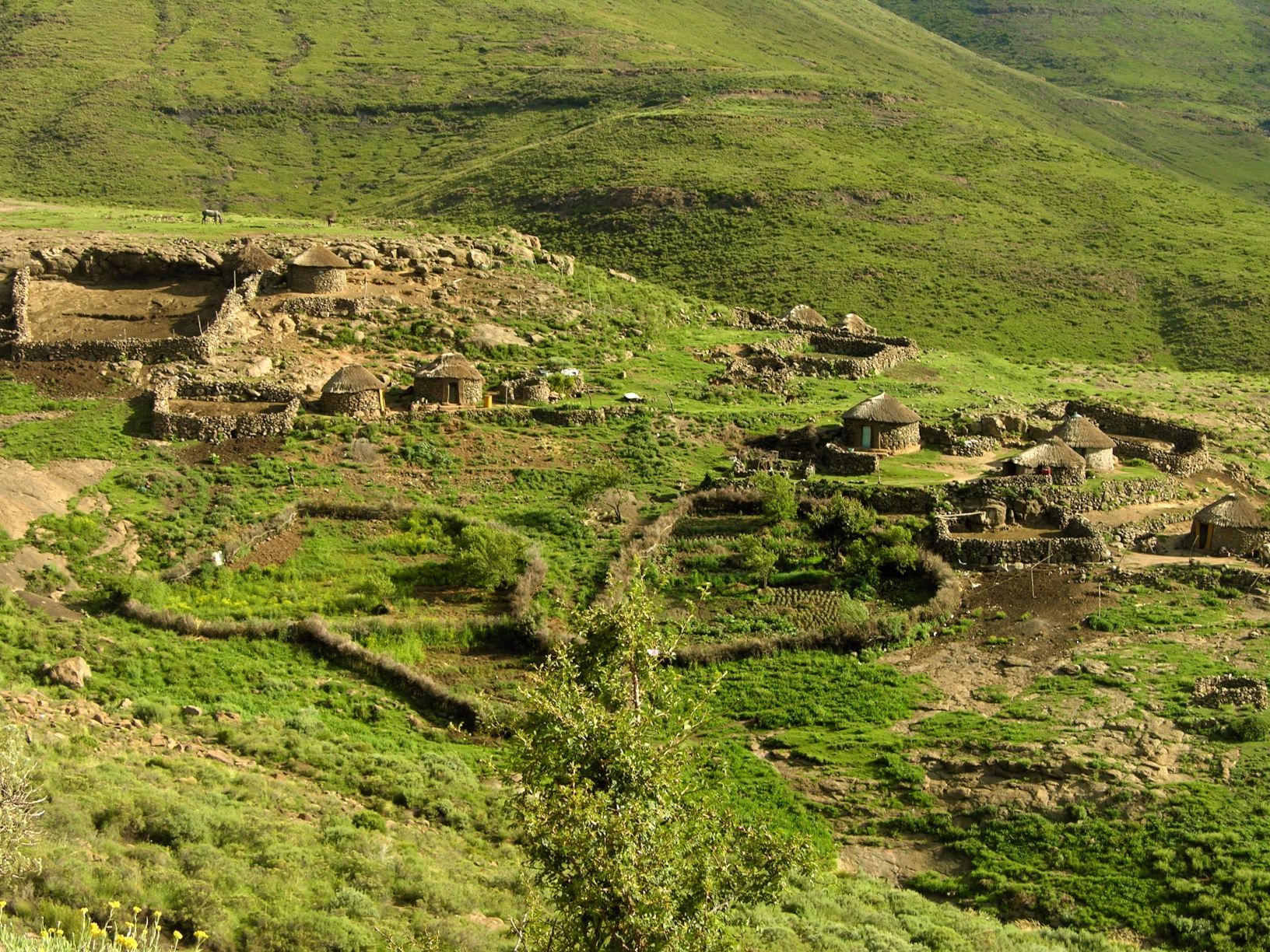
Here the idea of a hearth and home is entirely literal. After a long working day the family gathers in the yard in front of their hut and lights a fire in a ring of stones. They sit in a circle and start cooking dinner in the open air, in the last rays of the day. First they lay some kind of grain on a flat stone and grind it into flour with another flat stone, then cook it in an aluminium pot. There are signs of civilisation, of course, but much of it hasn't changed since the Stone Age. Smiles all round, everyone content. Today God has provided a chicken. That's a celebration. I liked watching them. In our beautifully renovated flats, we'll never take such pleasure in life, let alone in a chicken.
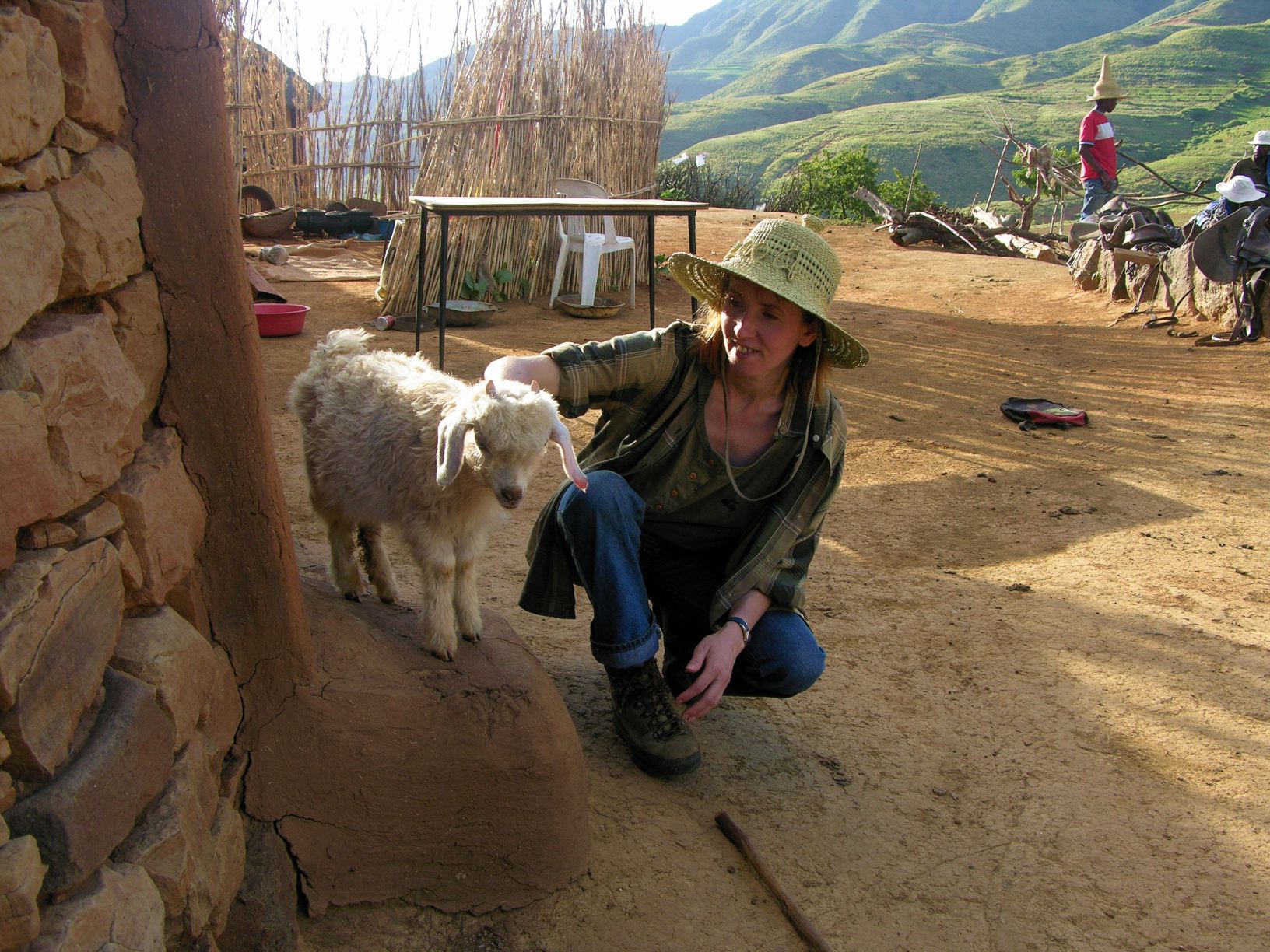
A month-old kid attached herself to us, affectionate, warm and cuddly. The hut had heated up all day, then we cooked in it too. We left the door out to the yard open so it wouldn't get stuffy. In the middle of the night we woke to a terrible smell and wet sleeping bags. The wretched creature we'd fussed over had climbed onto a sleeping bag for warmth and peed on it. For dozens of days to come, that smell would herald our arrival at one campground or hotel after another. We had to turf the damn goat out.
We set off early the next morning to keep the midday sun from making the ride any harder. As it turned out, we did it in just four hours. What's more, towards the end they let us gallop along the flatter bits.
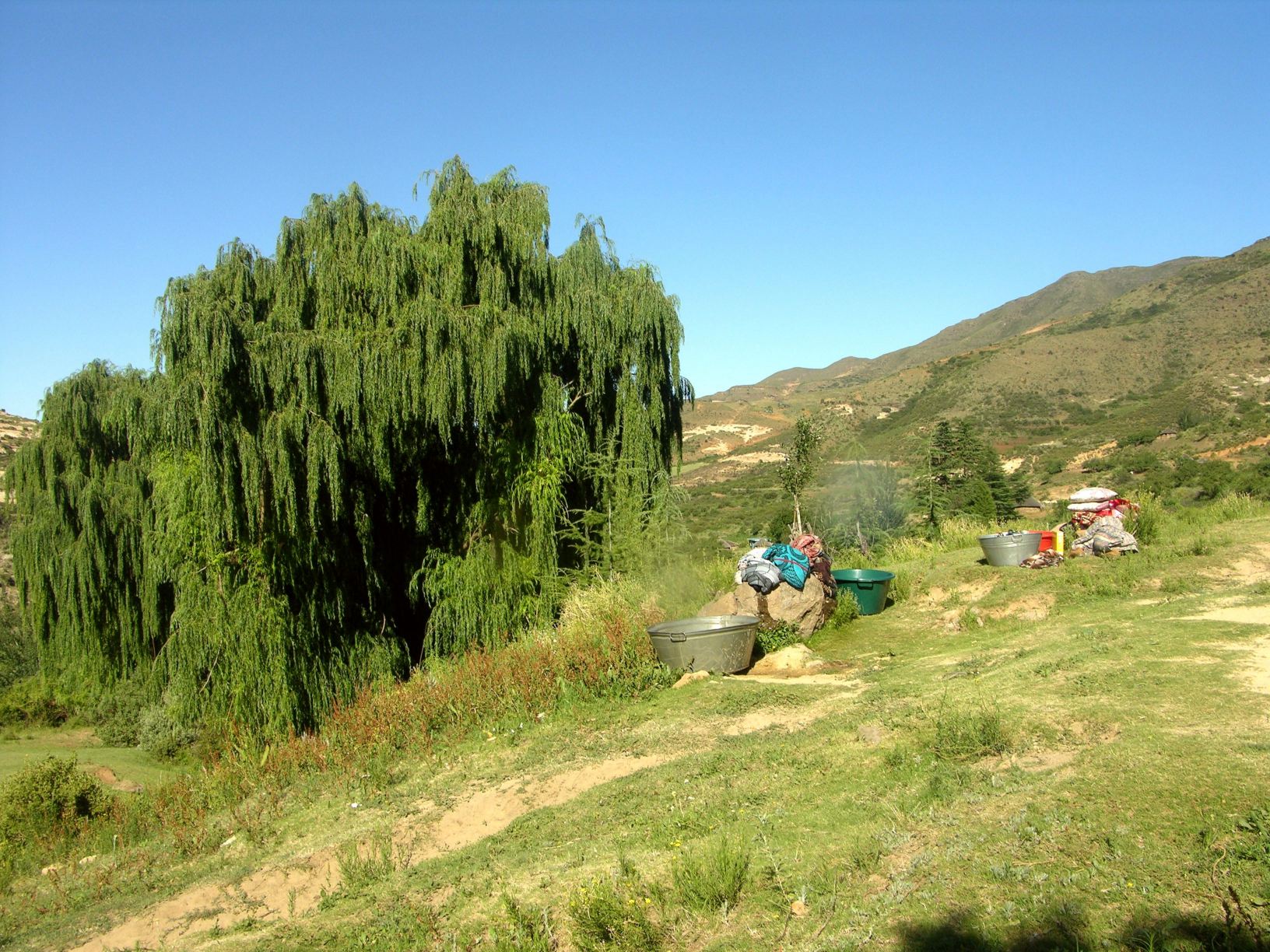
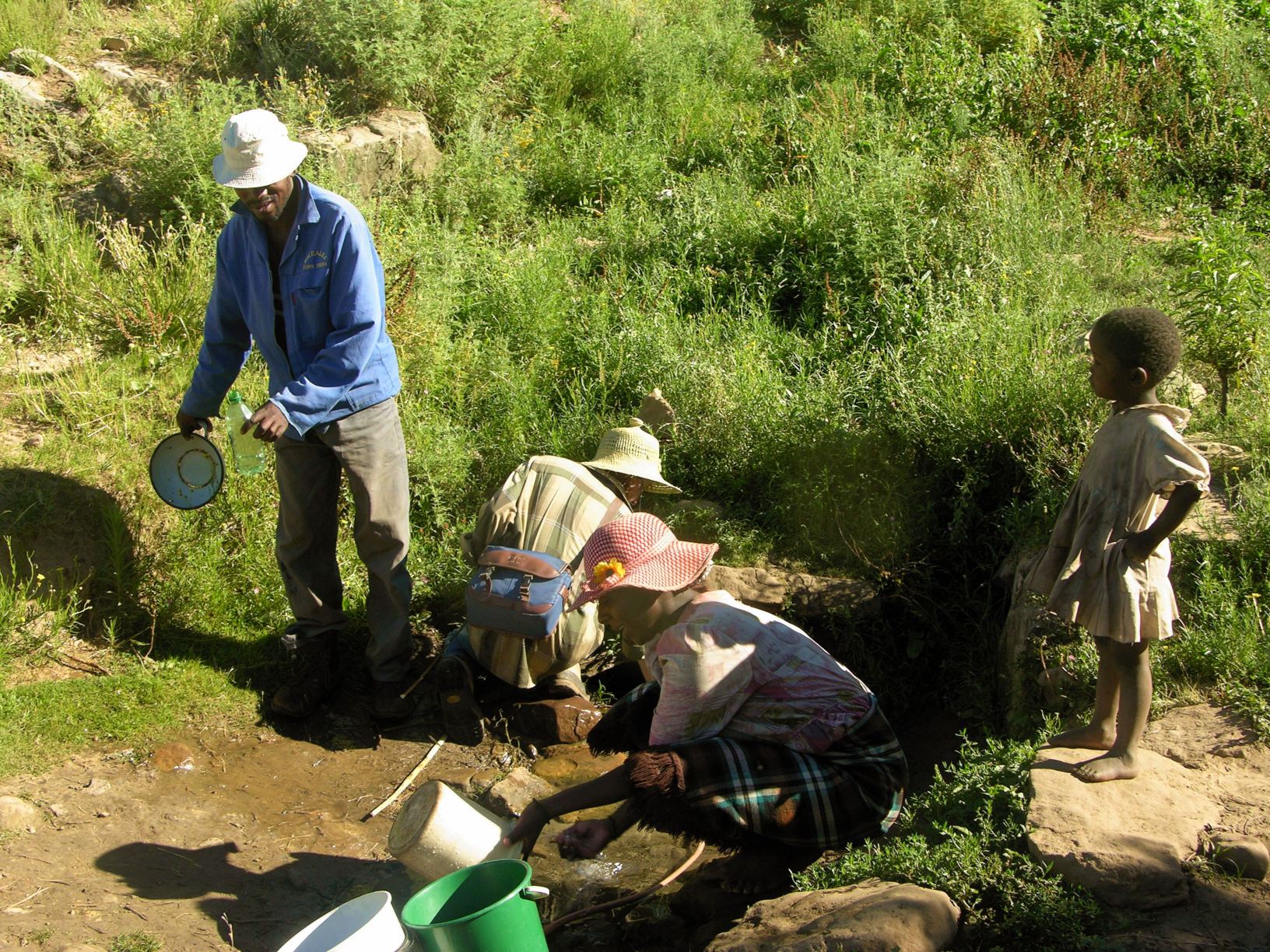
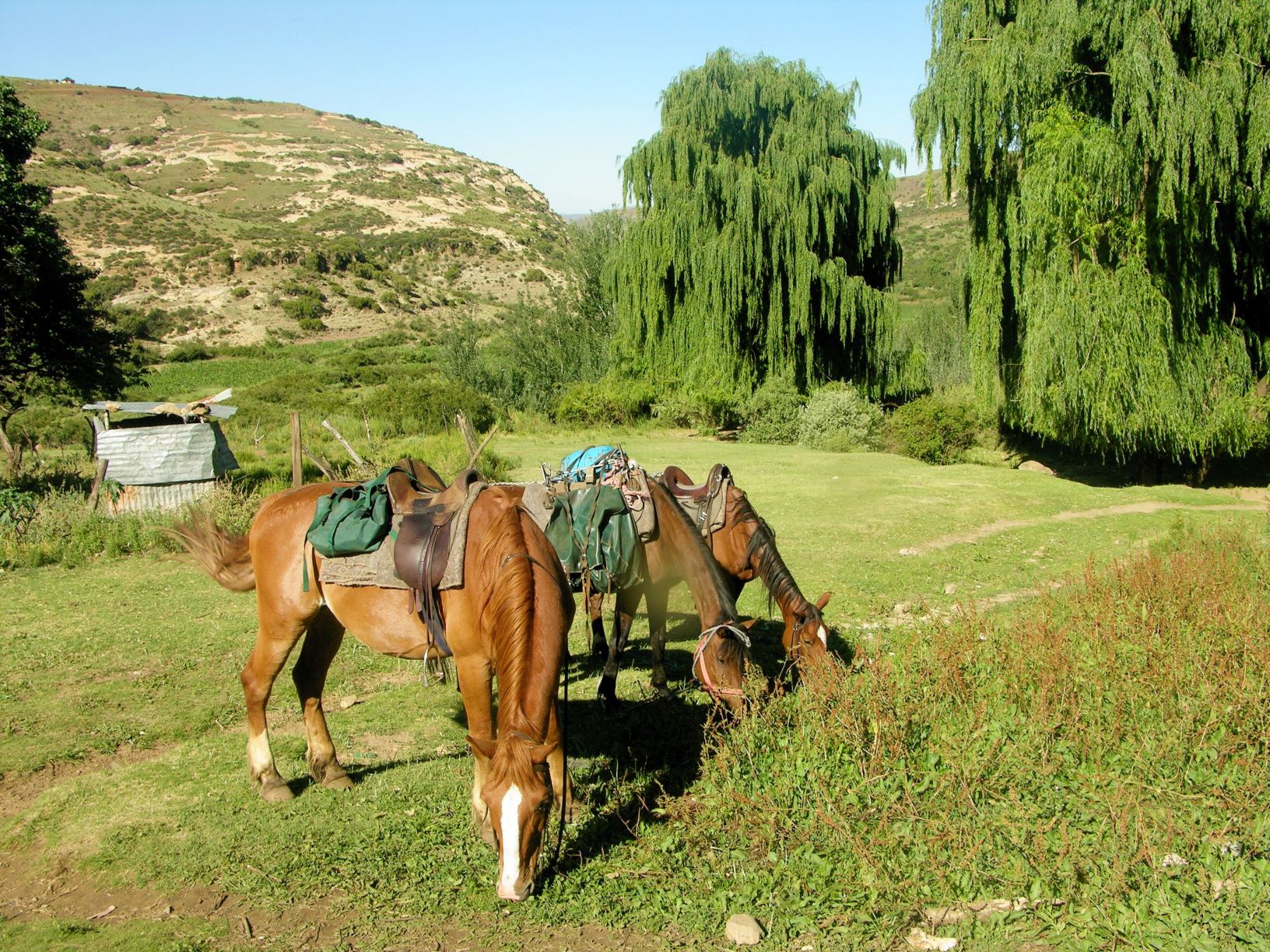
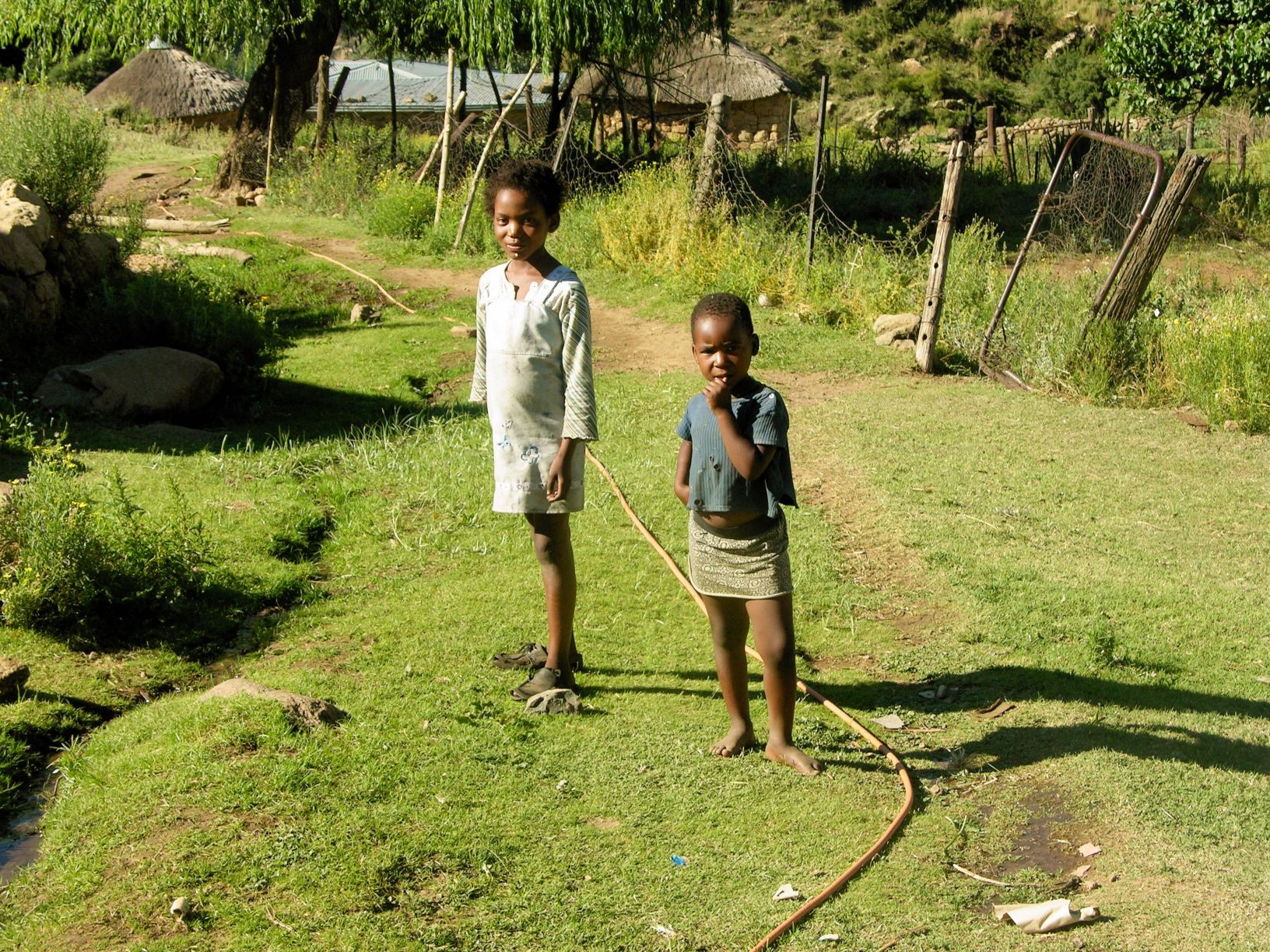
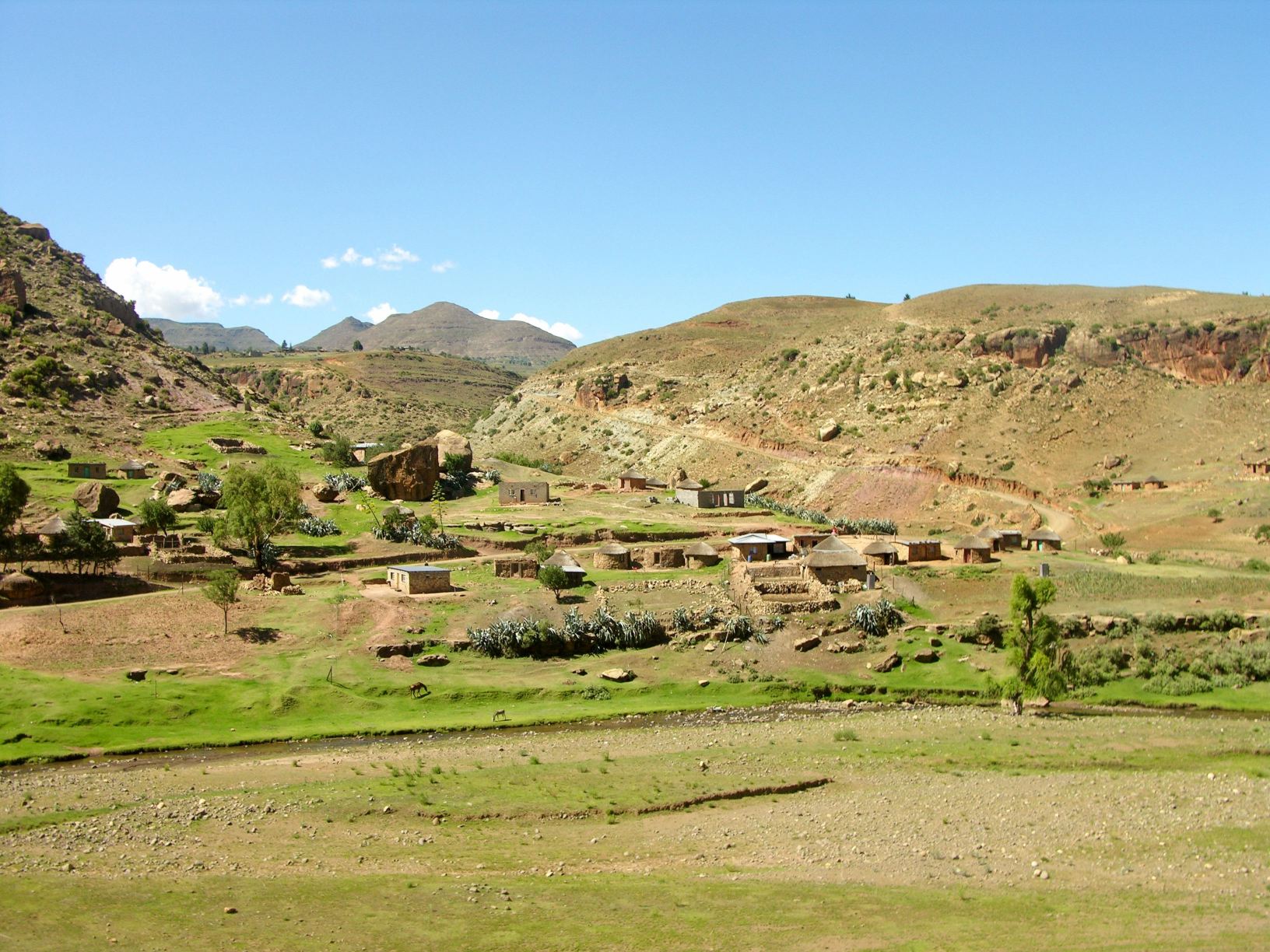
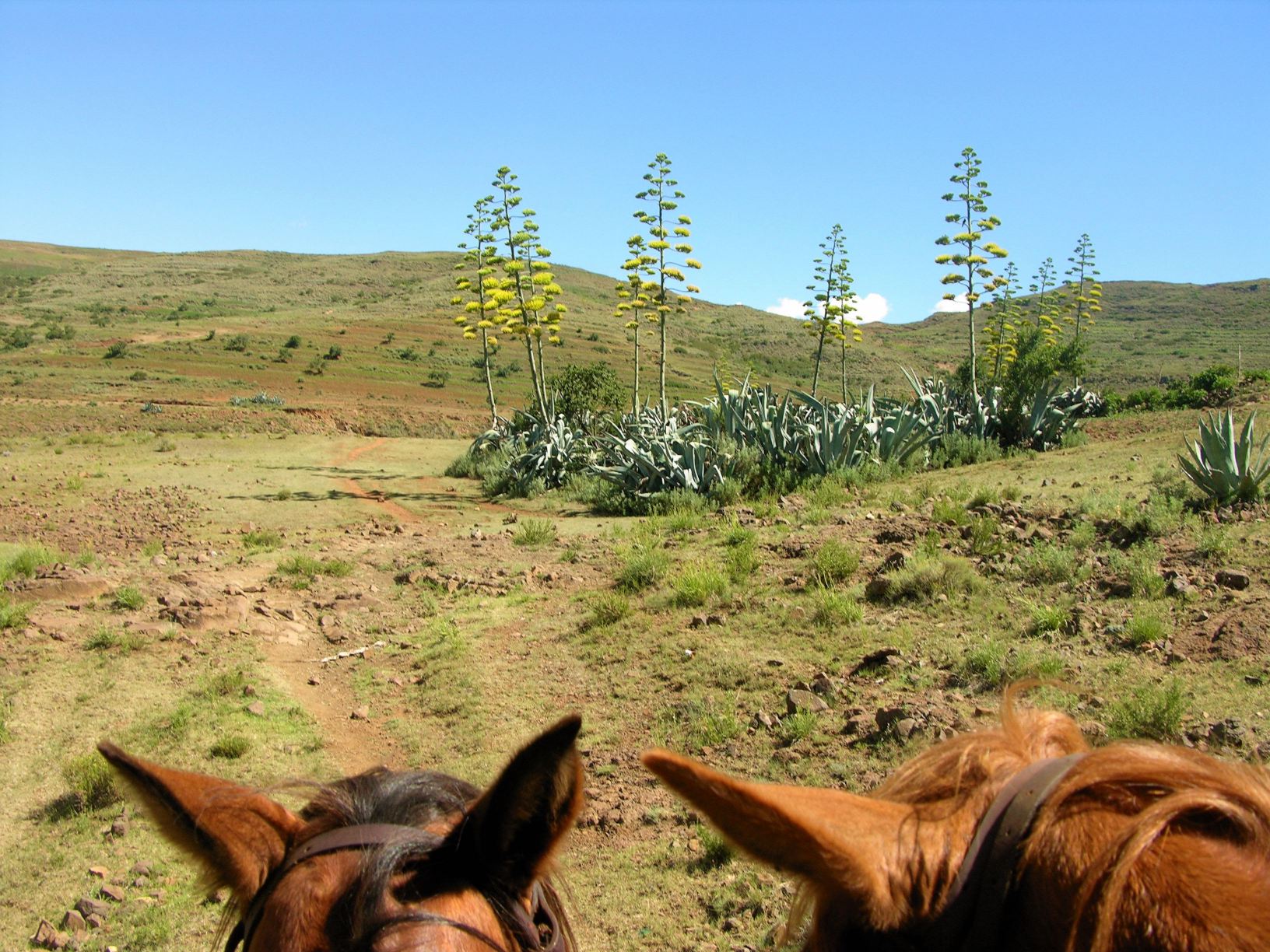
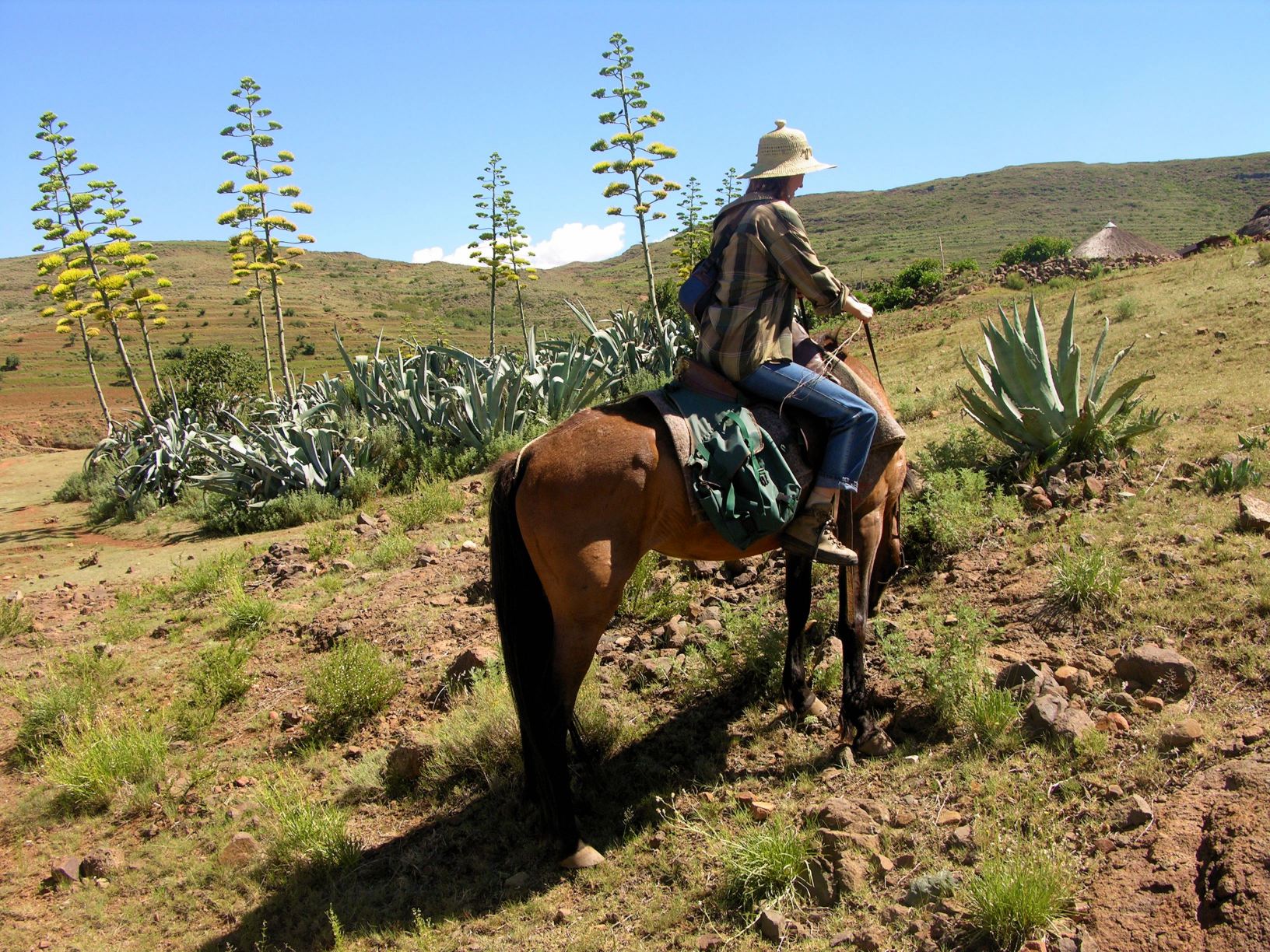
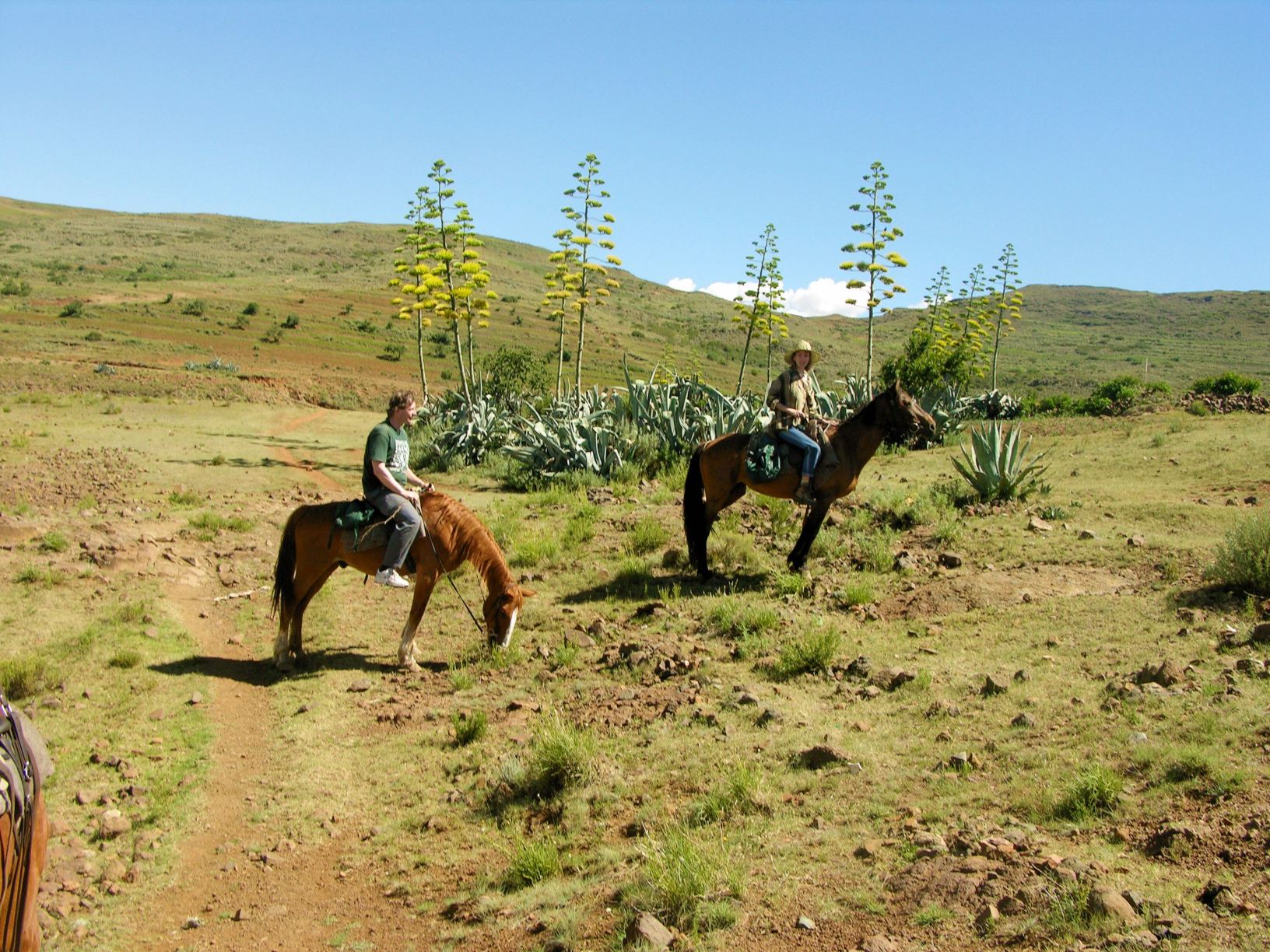
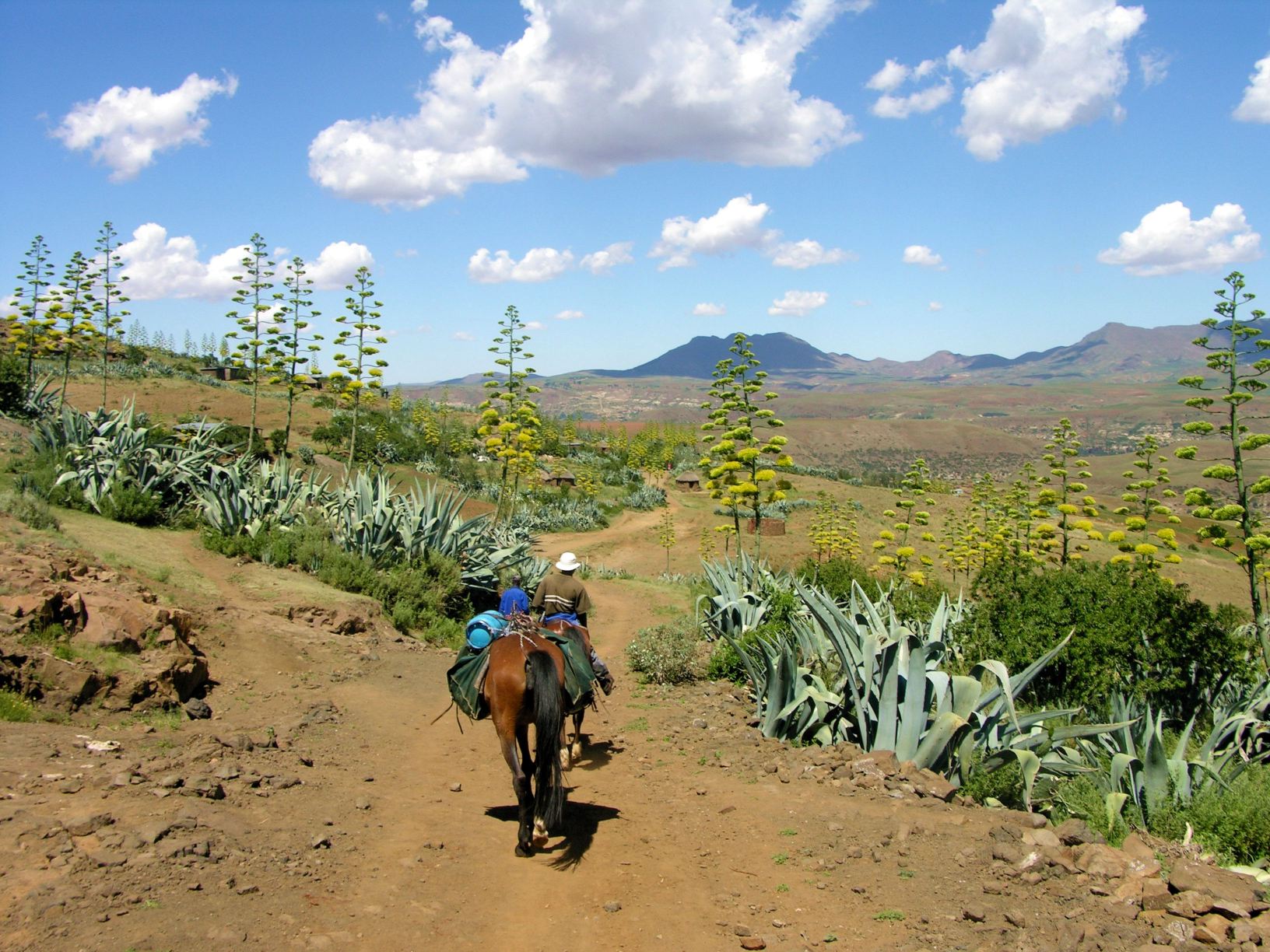
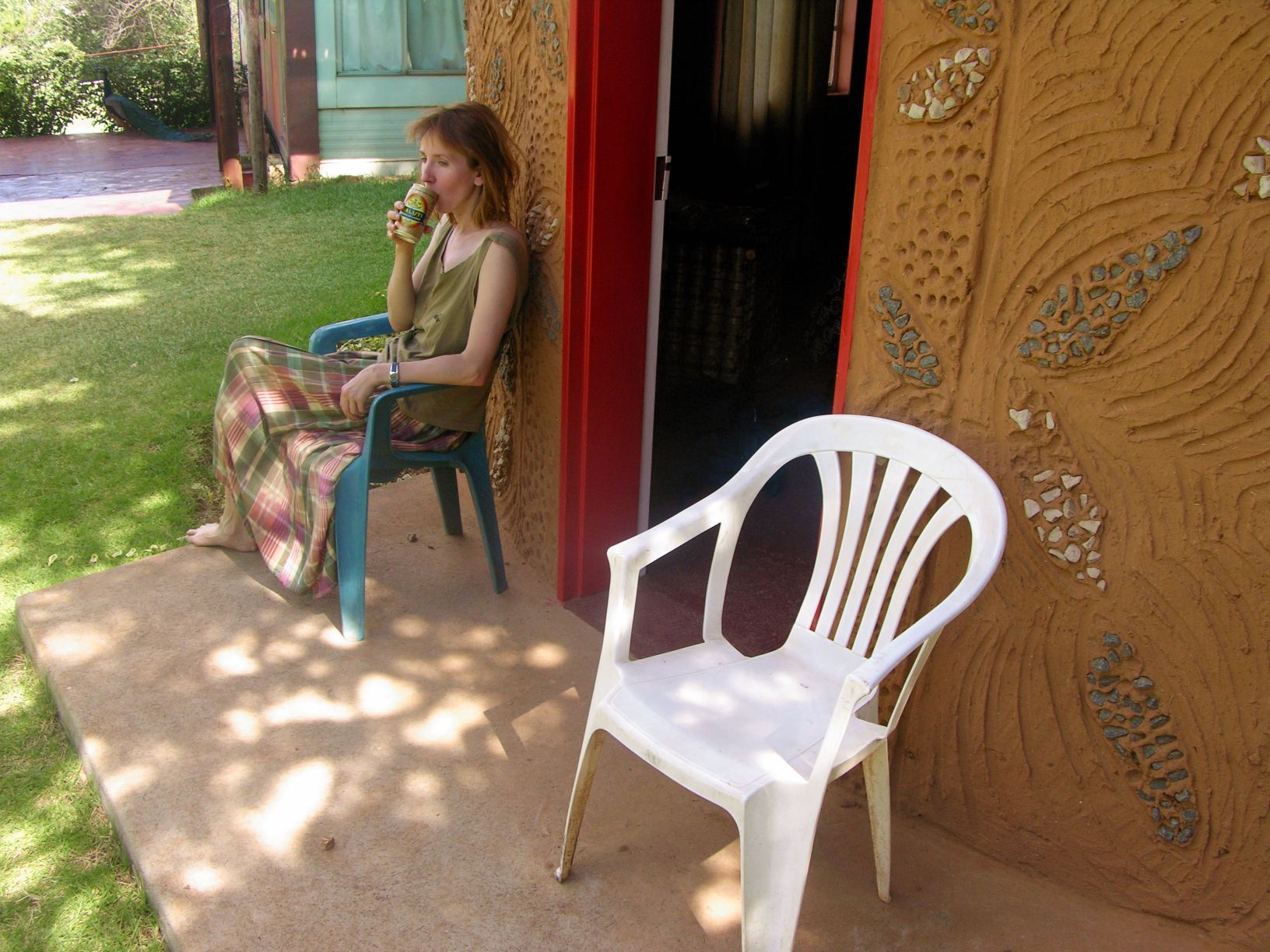
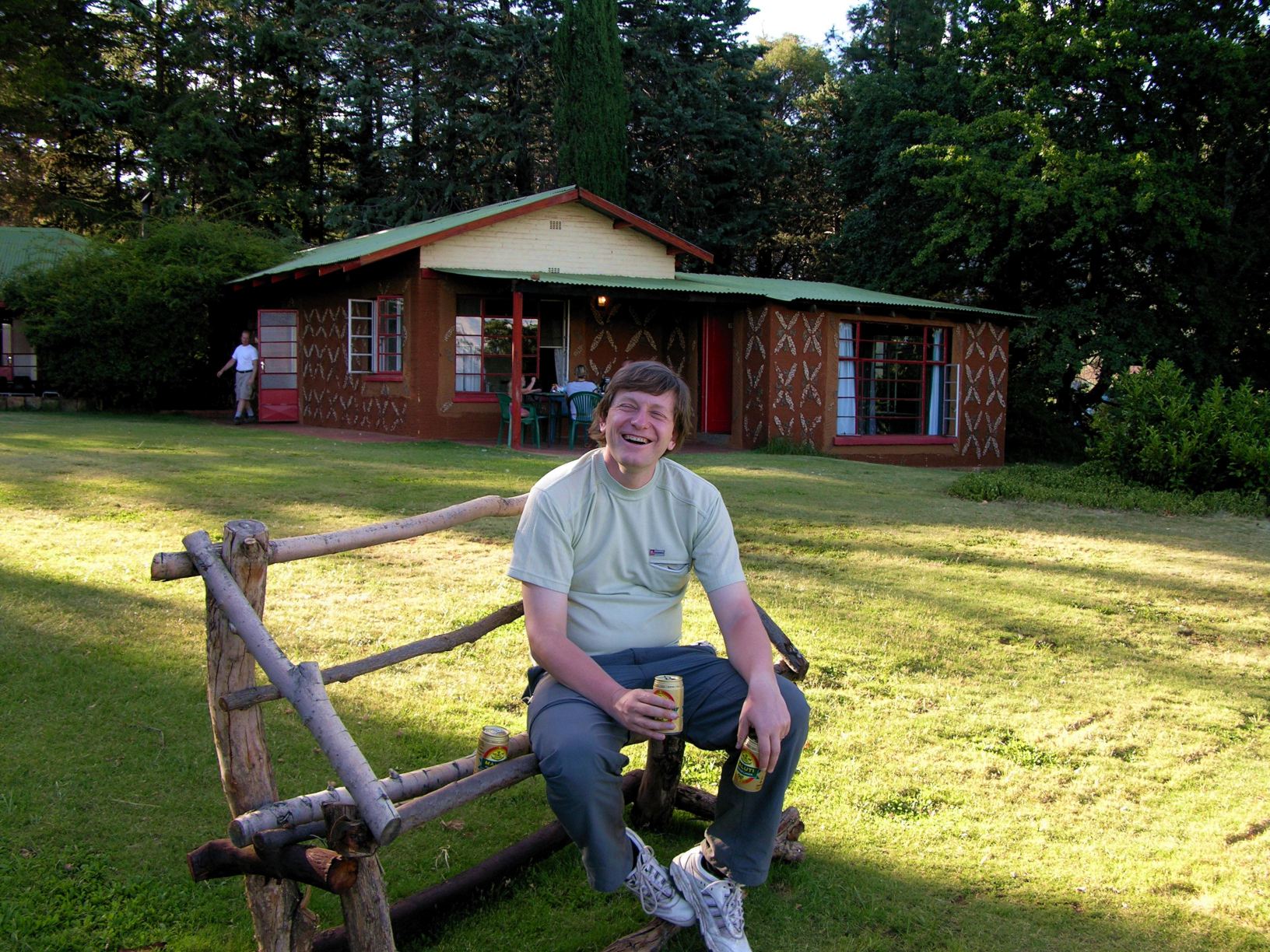
We spent the rest of the day on short walks around Malealea. We bought some local beer. They're very fond of it here and brew it in the villages, for themselves and to sell. A yellow or black flag over a house means you can buy one of the two kinds. Lonely Planet warns that you need a cast-iron stomach, but I thought it perfectly drinkable. Apart from the beer flags, red means raw meat and green means vegetables and greens. We seldom saw either of those. In any village, though, one house in three seemed to sell beer.
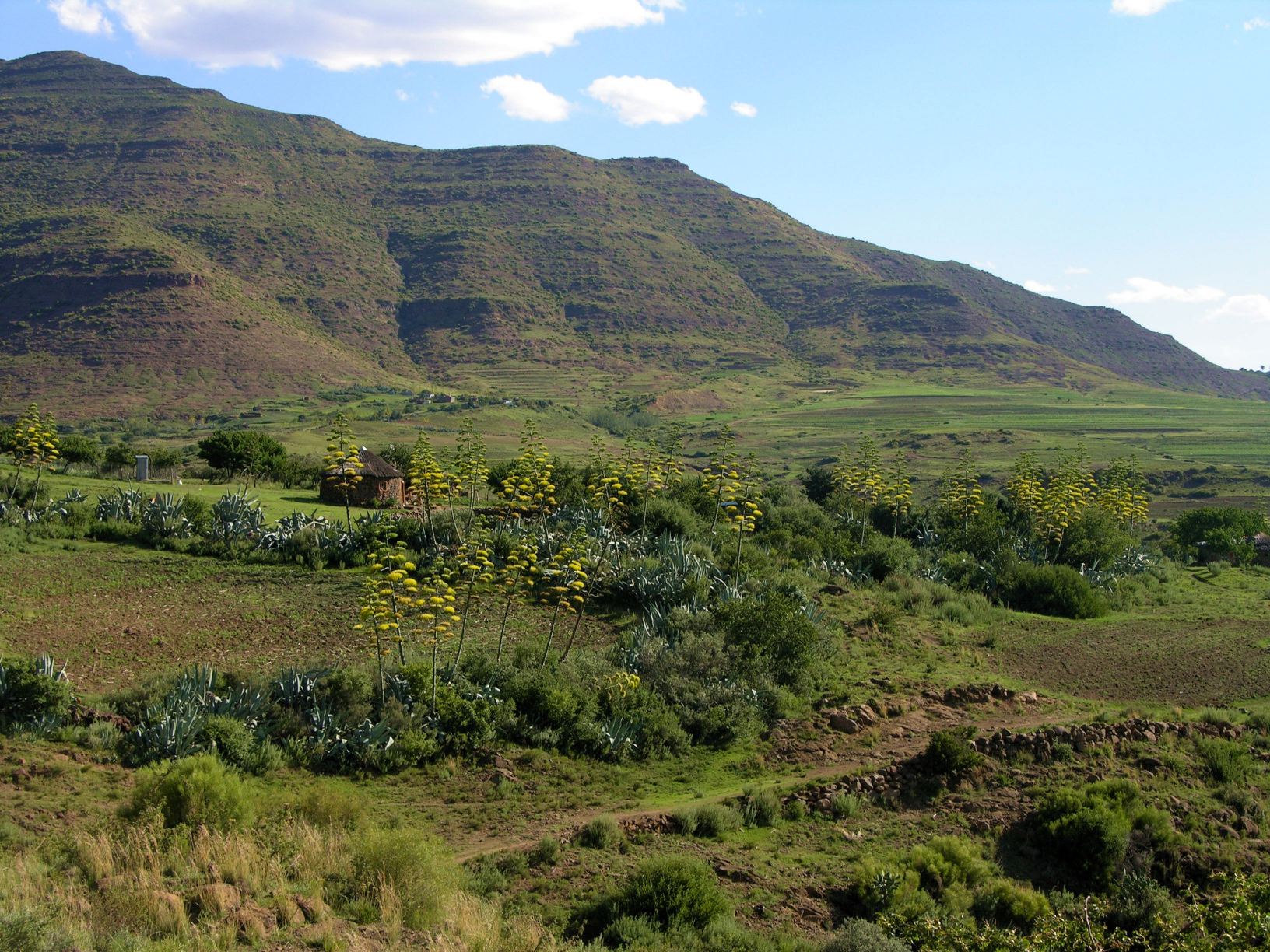
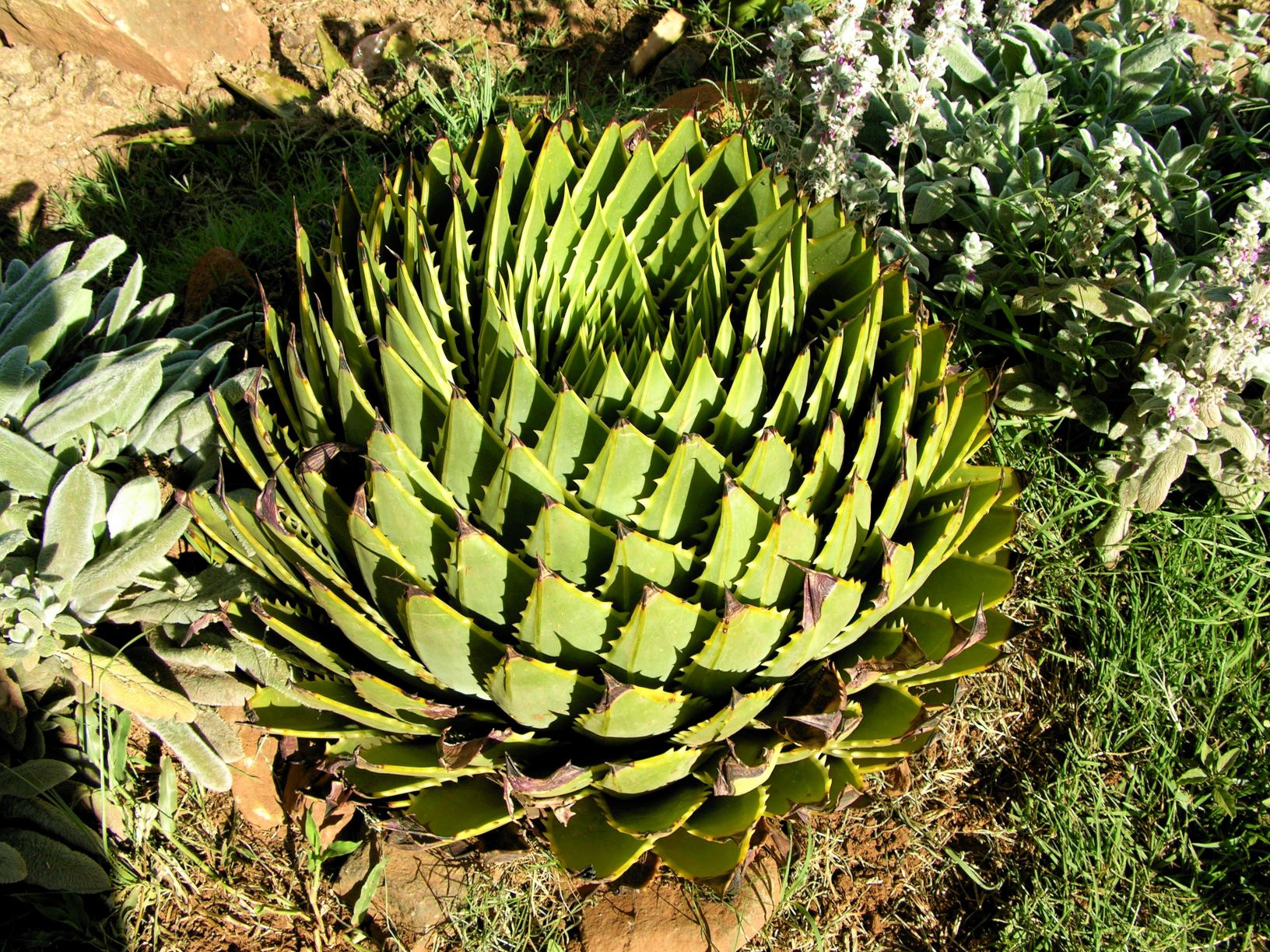
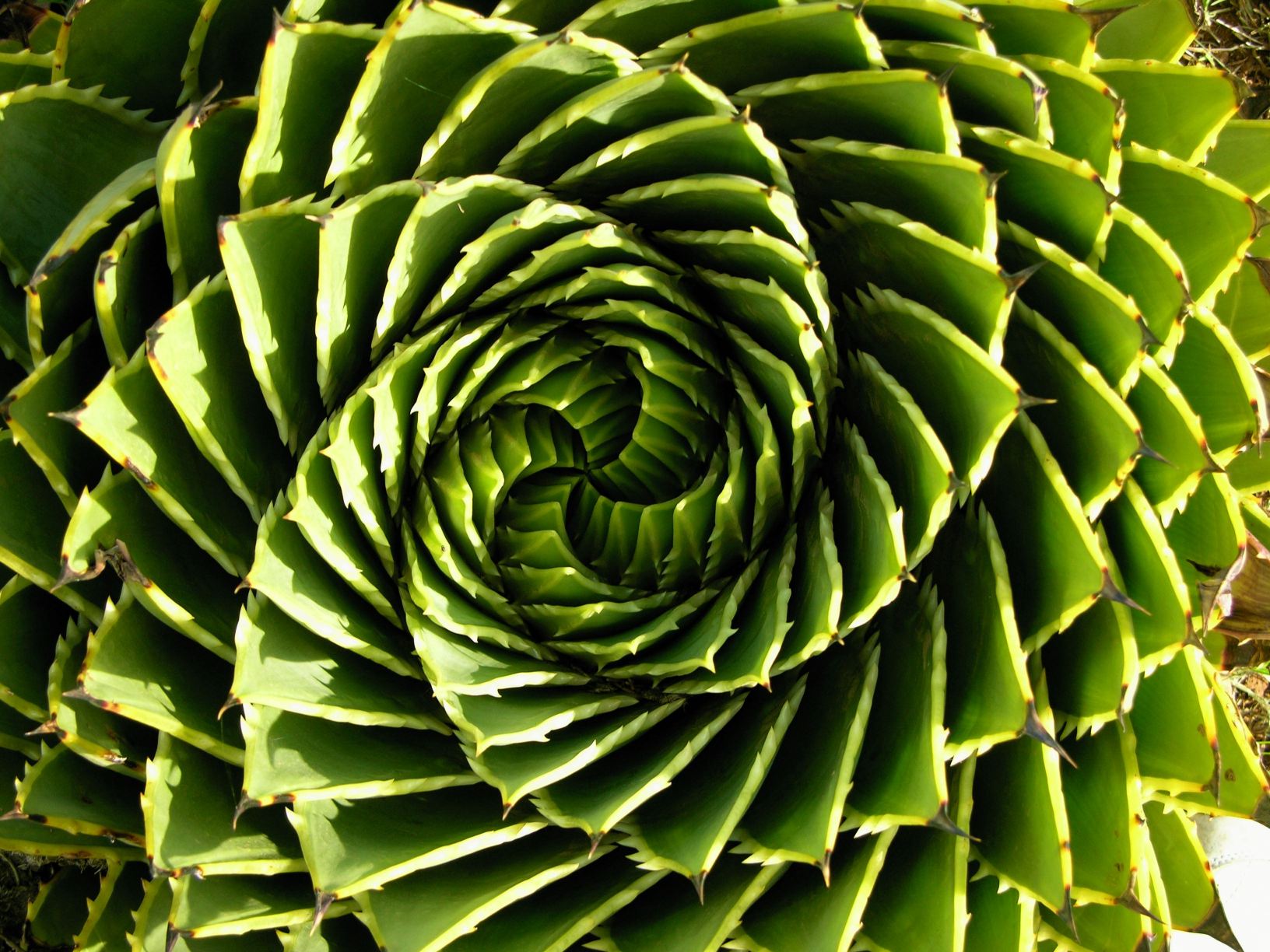
We finally had a chance to find and properly look at the local endemic plant, the spiral aloe (Aloe polyphylla). A fine ornamental flower. I'd like one on the windowsill at home, but for some reason I've never seen them for sale. Curiously, some spiral to the right and others to the left.
Lesotho has less wildlife than neighbouring South Africa, of course. There are no elephants, lions or giraffes. A few antelope species, foxes, plenty of rodents and the odd jackal can stand the cold. On the other hand there are three hundred species of birds. The black widowbirds stand out. This quite small bird has a half-metre tail. I'd always wondered how it could fly with that in the way. It turns out it uses the tail like a parachute. First it shoots upwards with the feathers folded along the shaft, then fans them out and floats down, looking for prey.
Lesotho is a wonderful country, but it was time to move on. After eight days we were honestly a little scared to go back to South Africa, but we had to. We sat on our backpacks thinking that if it all got too much over there, we could just come back. We had multiple-entry Lesotho visas, after all.
There wasn't much transport about that day. After an hour sitting by the road, we managed to flag down a local car as far as the nearest junction. From there we found a minibus.
The bridge to South Africa, the famous Maseru Bridge, is a fair way from the centre of town, so we took a taxi.
There was a queue at the border. The Lesotho authorities had no interest in us, but the South Africans took their procedures seriously. They checked the citizens of Lesotho thoroughly. No visas are needed in either direction, but officially Lesotho citizens aren't allowed to work in South Africa. In practice it's how half the men make their living. I couldn't quite see the point of checking everyone that thoroughly. There's no one guarding the border in the mountains. Anyone who really needs to cross illegally will cross.
We met one such worker in the queue. He'd managed to get an education, legal status, and a well-paid job where he could keep his hands clean. He immediately offered to help us get to Bloemfontein, since he was going that way himself.
We crossed the border on foot, over the bridge across the Mohorare, or Caledon, River. We spent a little over an hour queuing. There was no queue for vehicles, but you couldn't use that to get through faster. They tipped all the passengers out anyway and sent them through the pedestrian channel. Only private cars went through without queuing and with their passengers still aboard.
Beside the road bridge there's a railway bridge. There hasn't been a passenger service to South Africa for years, but there was one freight train after another.