Ecuador
Chapter 7. Ecuador
We spent a day in Ecuador on our way from Colombia, crossing the border bridge on foot. Luckily, Ecuador was one of those rare countries that admitted Russian citizens without a visa and, more importantly, without idiotic questions about hotel reservations or tourist vouchers. You handed over your passport, they put it through a printer, and you were free to go where you liked for thirty days.
Unfortunately, we had twenty hours before our flight.
It was 6.5 kilometres from the border to Tulcán, the nearest town. A seat in a minibus cost one dollar. That meant a real American greenback. Ecuador's government had grown tired of inflation and had given up trying to impose financial discipline. Every local currency seemed to lose its value as soon as it was issued, so they decided to use American cash. Curiously enough, the US dollar began losing value afterwards. Could this have been the mysterious power of the Ecuadorian economy?
The coins caught my eye. One dollar had an eagle and the words “United States of America” on one side. On the other, alongside “In God We Trust”, was a woman carrying a child in place of the usual president. It was a US Sacagawea dollar.
There is plenty to see around Tulcán, and Ecuador as a whole is a fascinating country. We had to get straight on a bus, though we still had a few hours to look around.
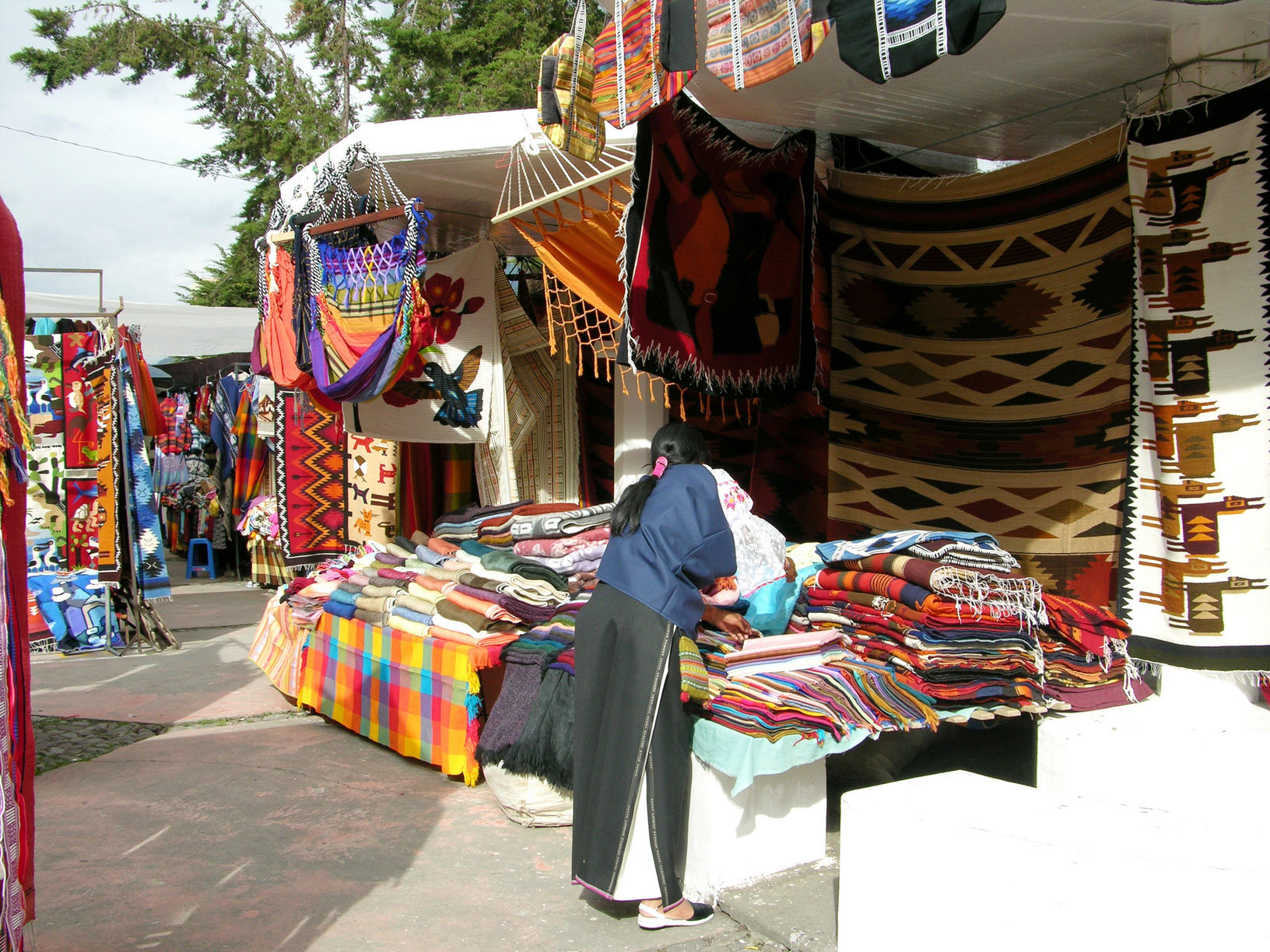
There wasn't time for the mountains, but we could get to the market in Otavalo and have a look around before Quito. At last, the moment had arrived to give Tanya her heart's desire. I could turn her loose and say, “Buy whatever you like, my love. Whatever you can lift and carry.” This time there was no need to carry the lot in a rucksack. We would somehow get it as far as the plane. We left the bags we already had at the bus station after buying our tickets to Quito.
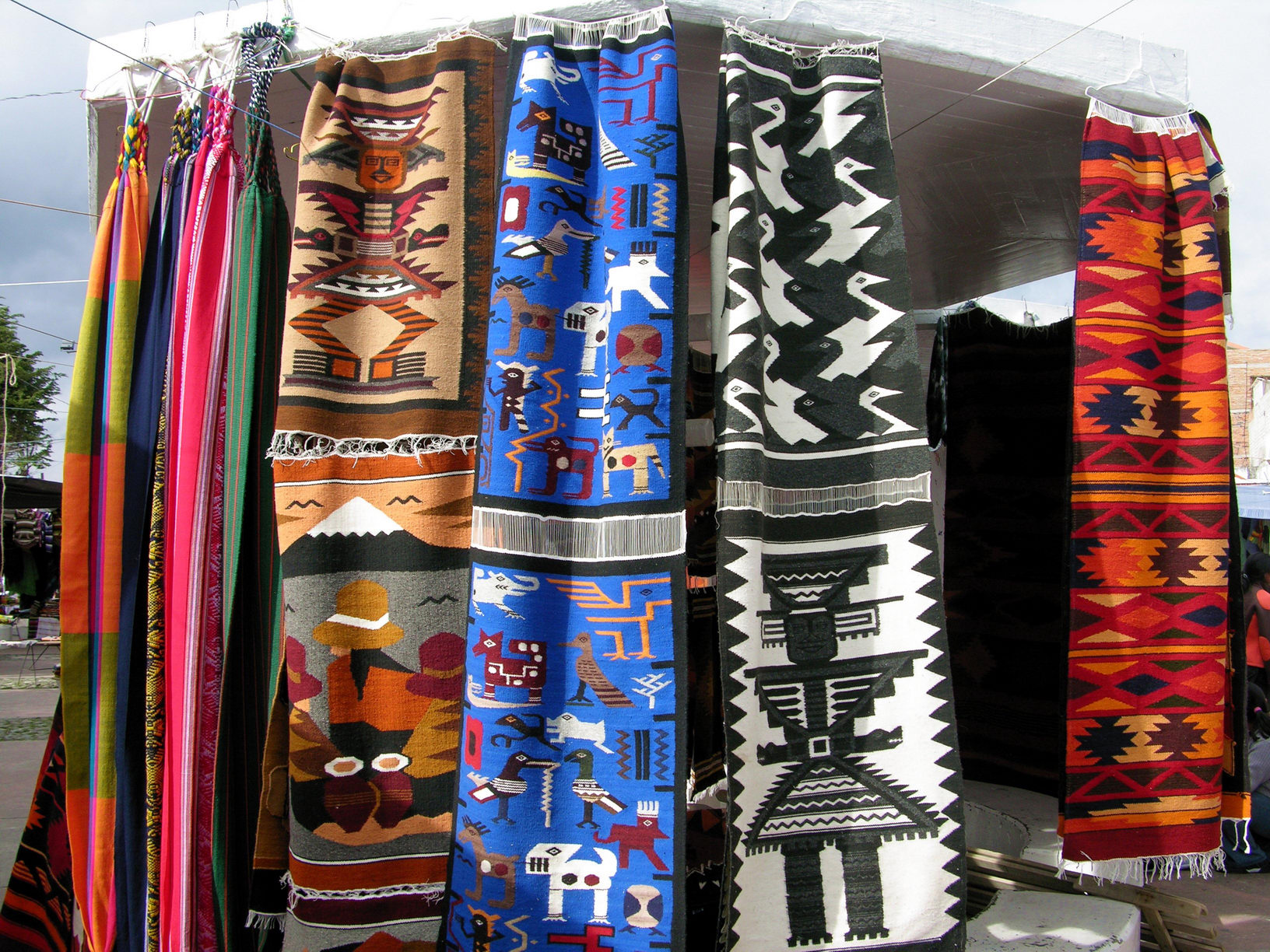
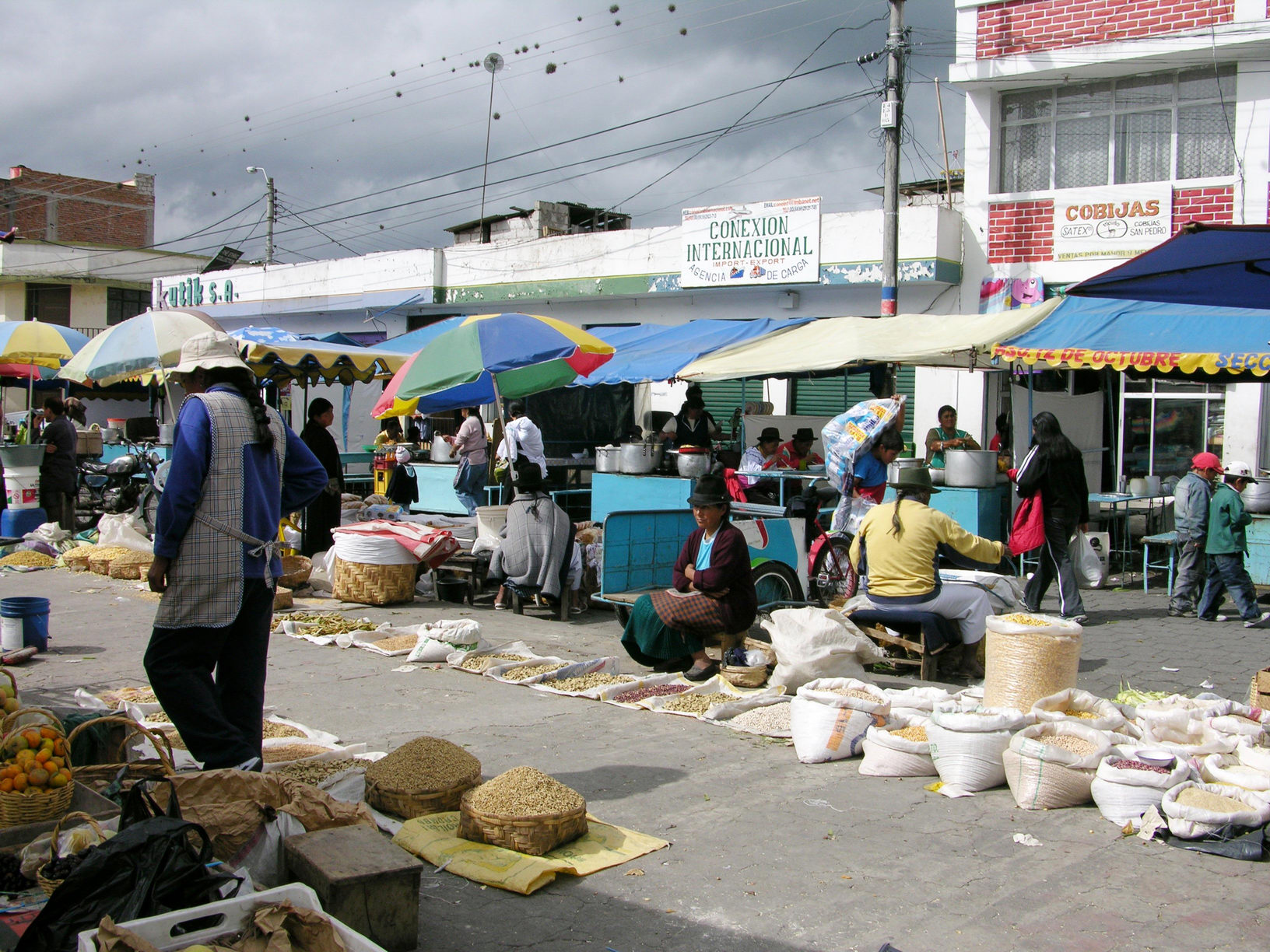
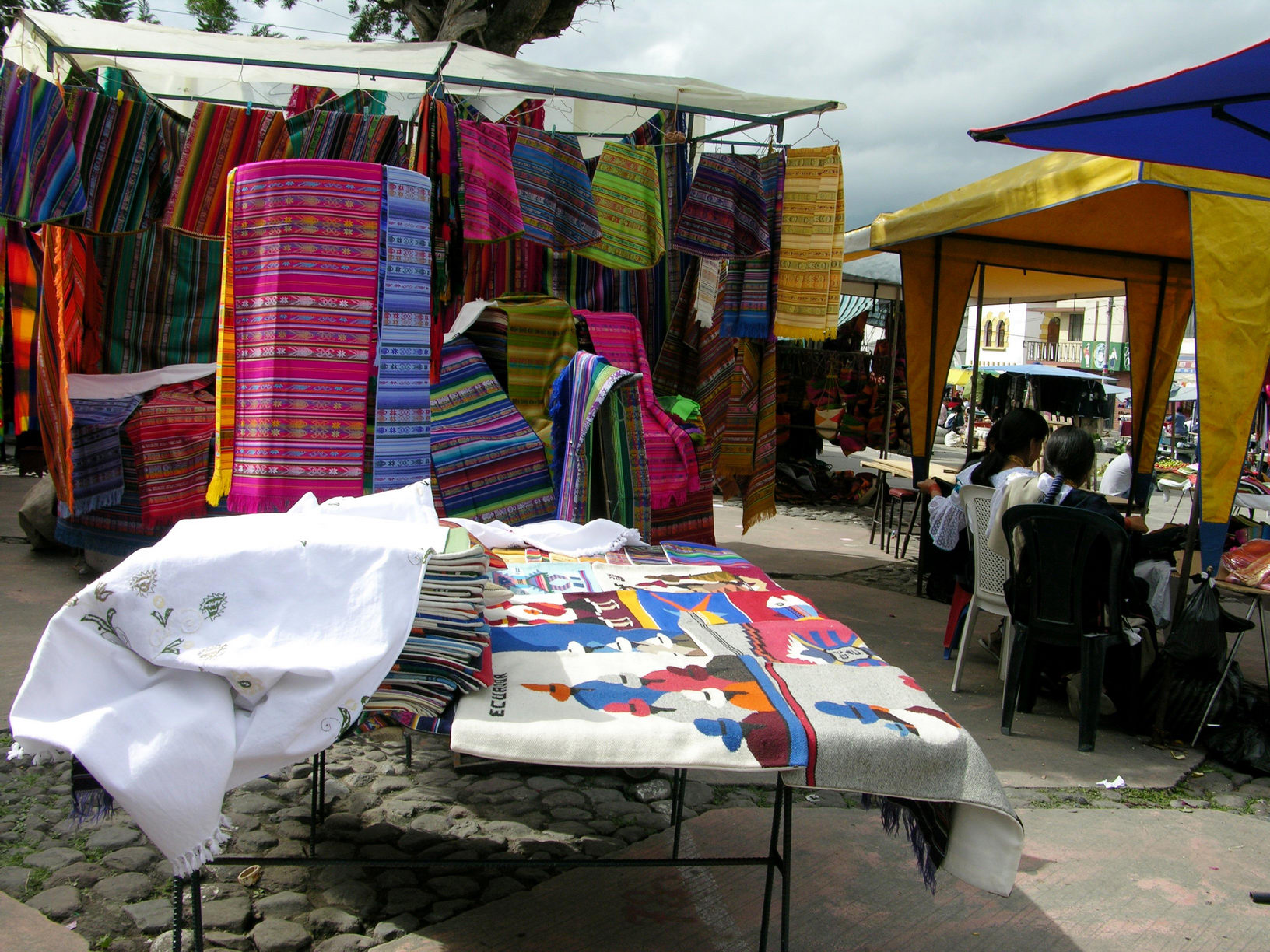
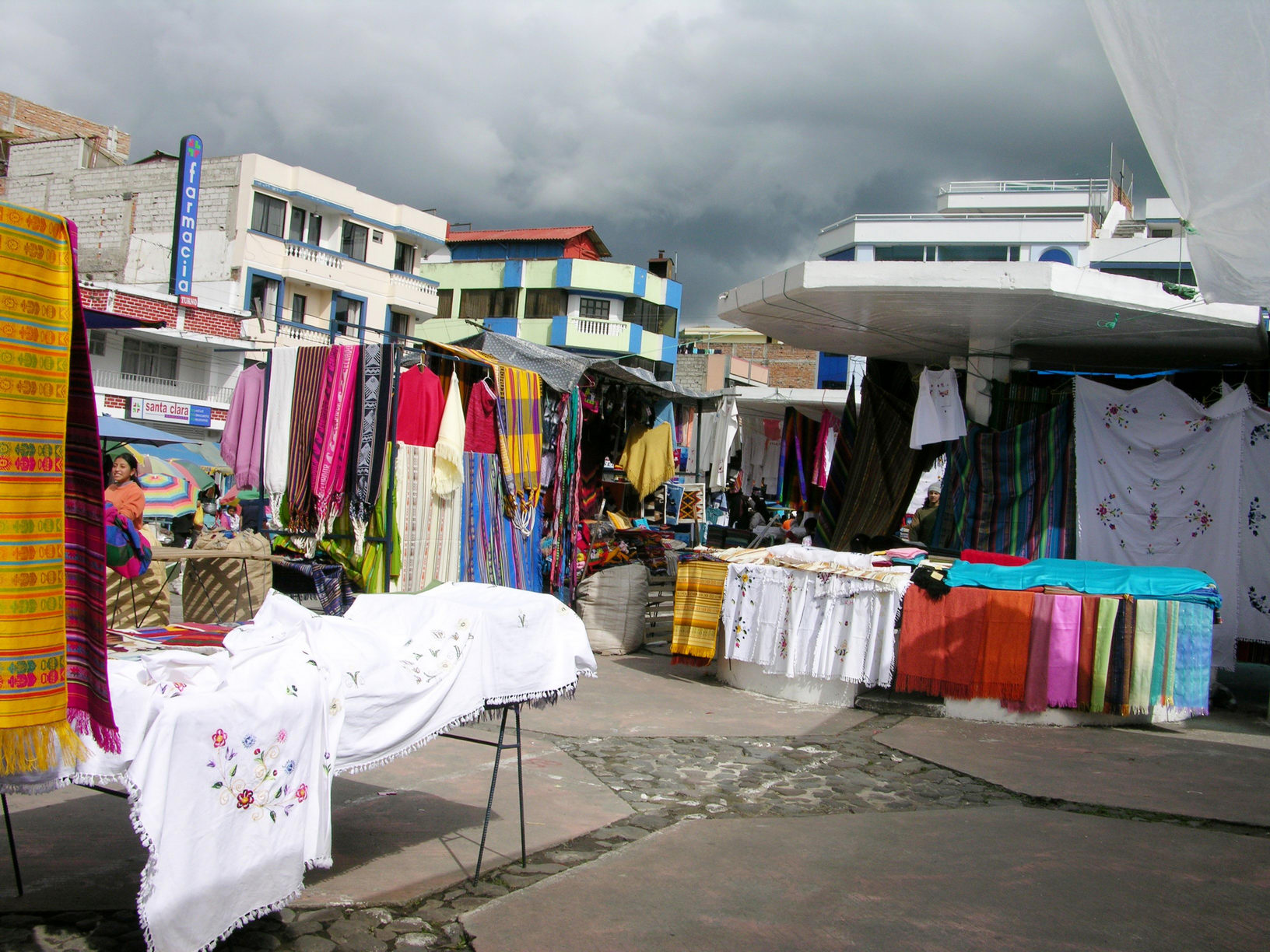
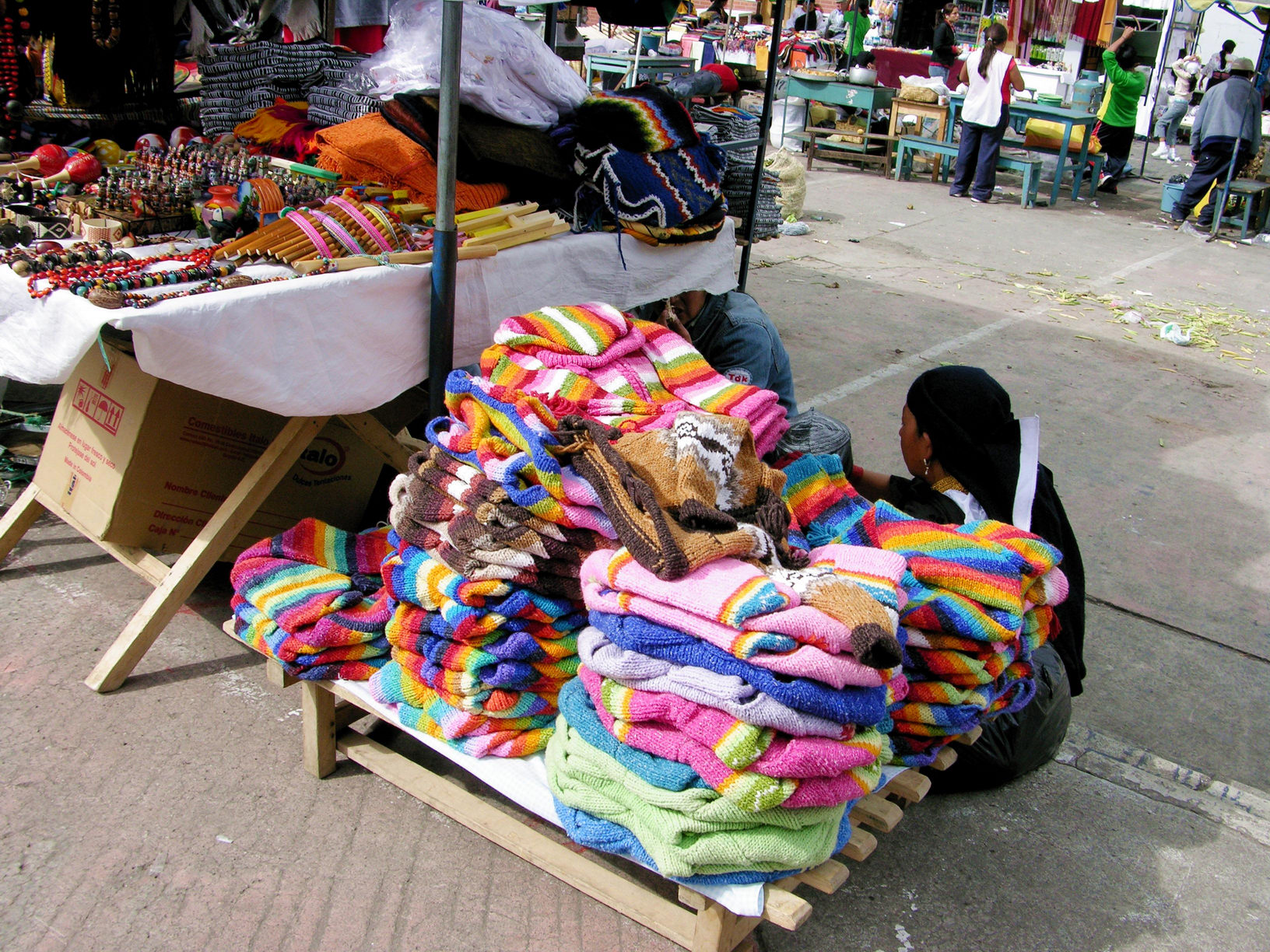
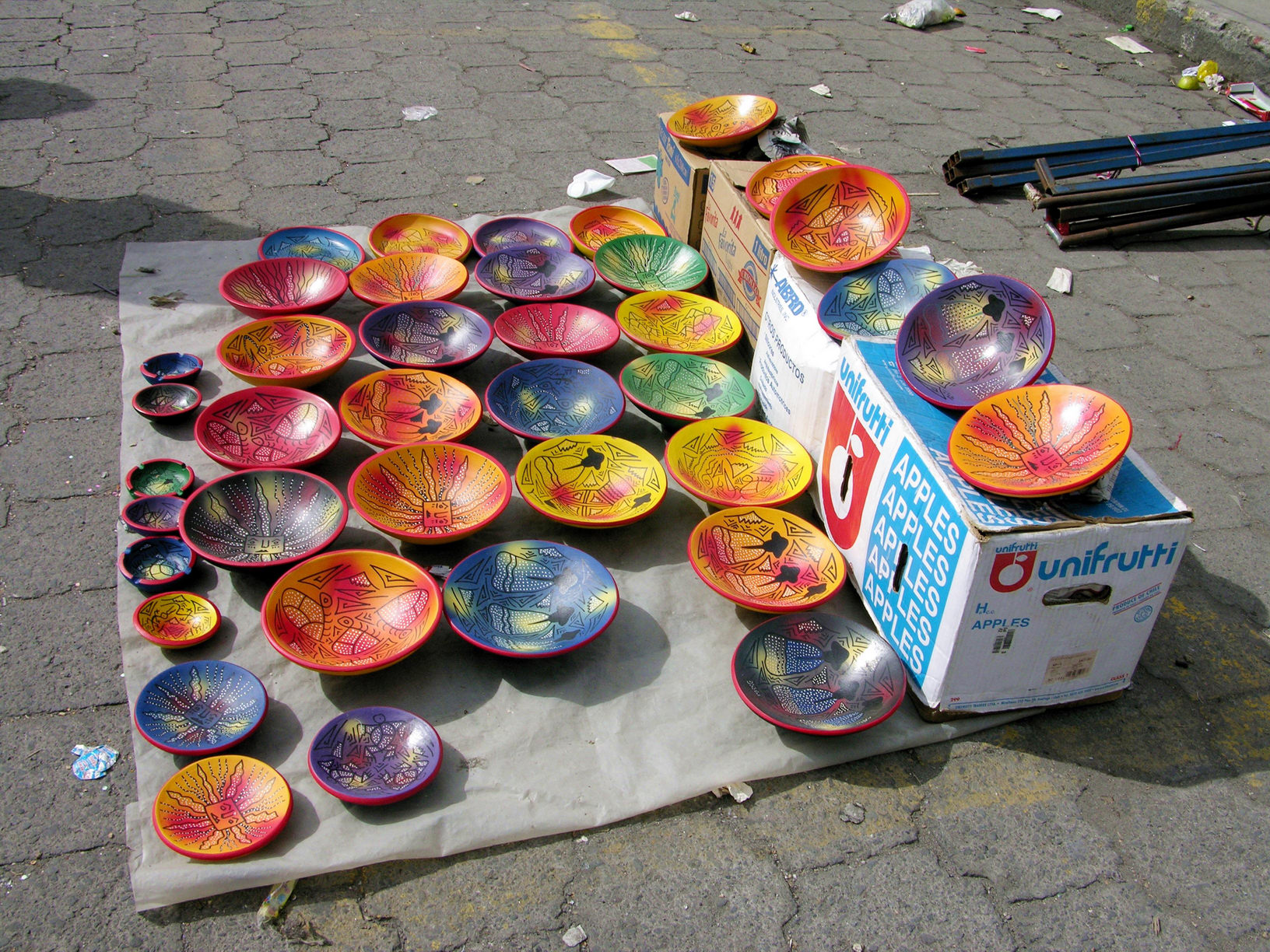
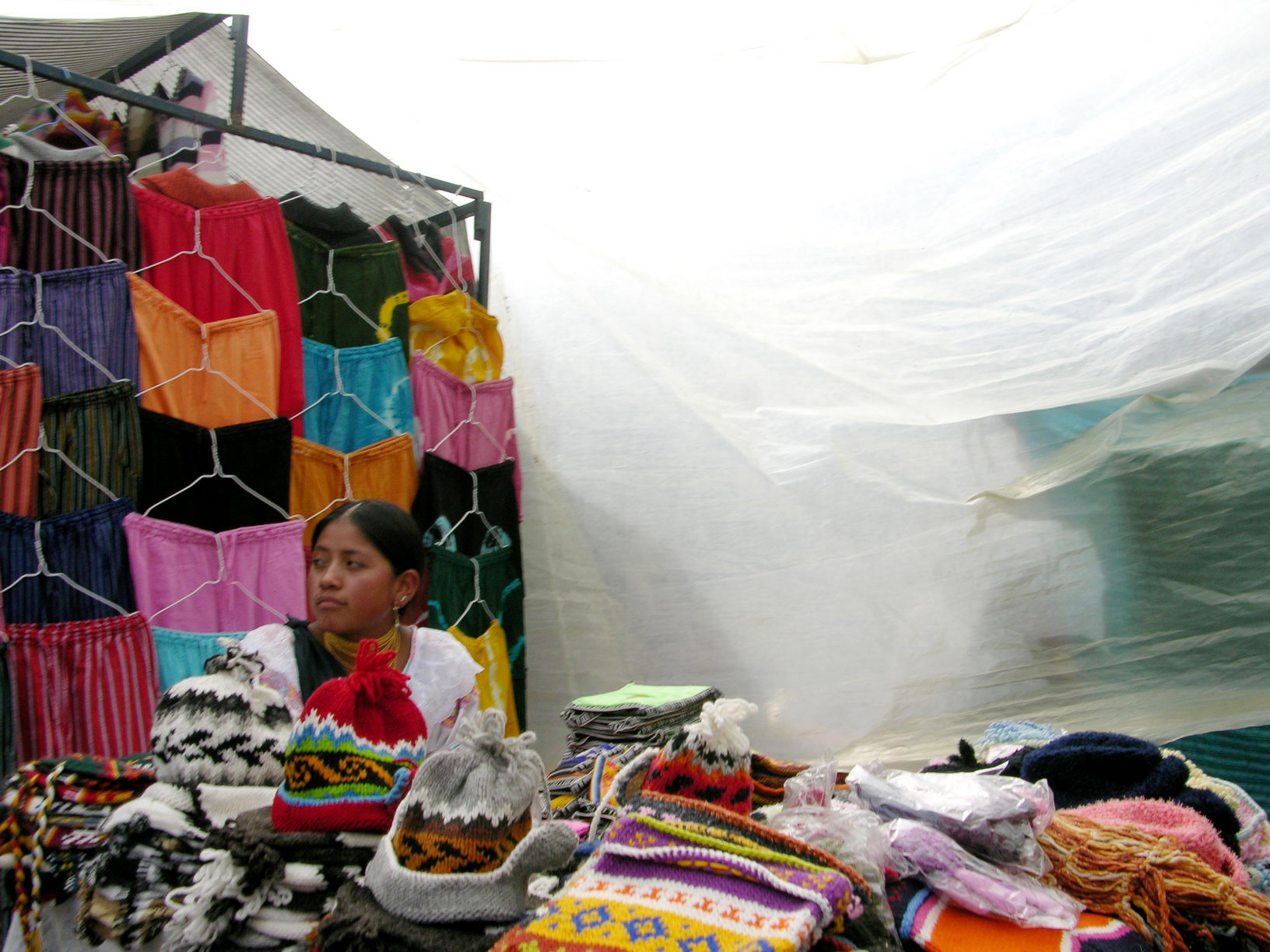
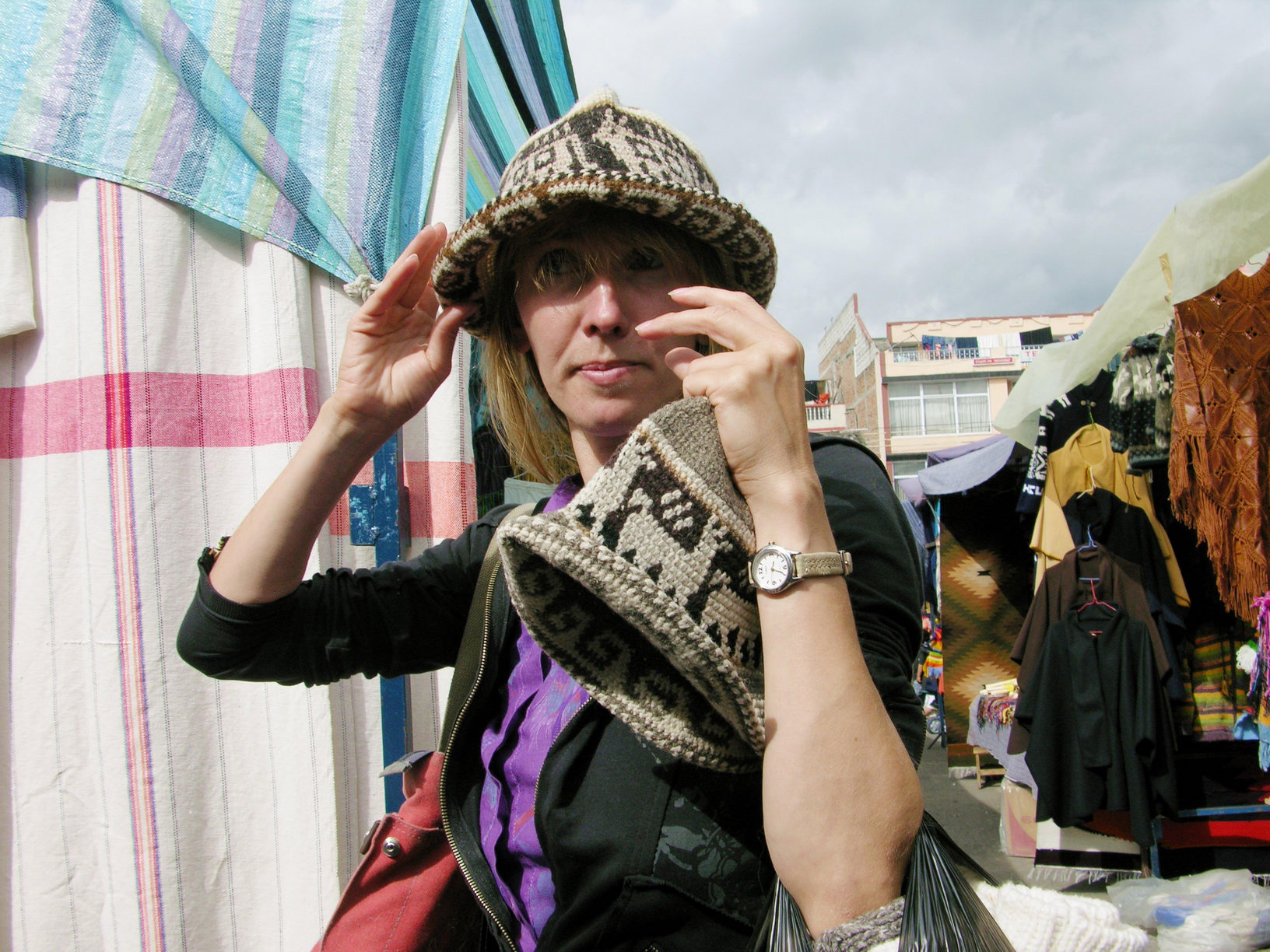
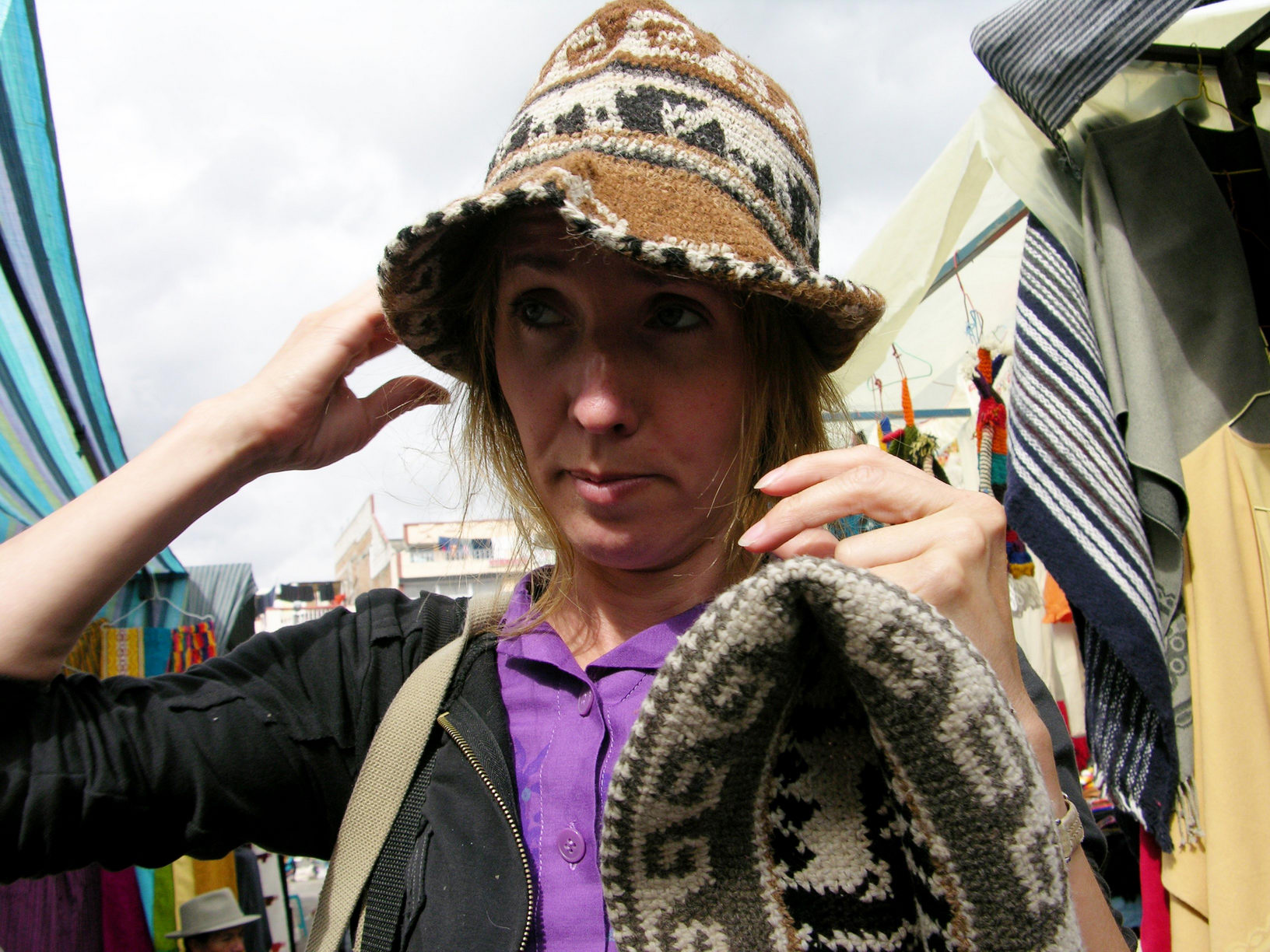
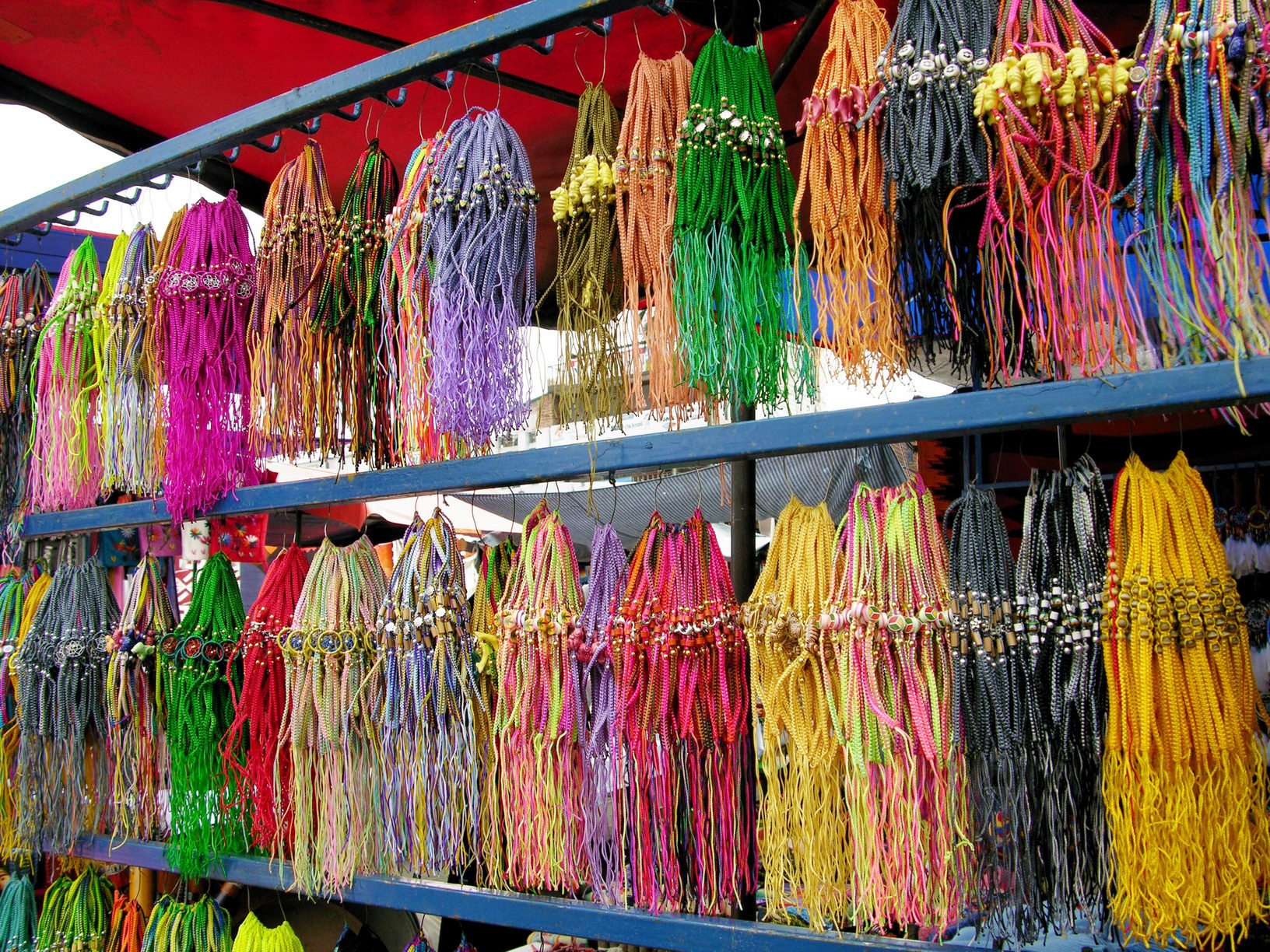
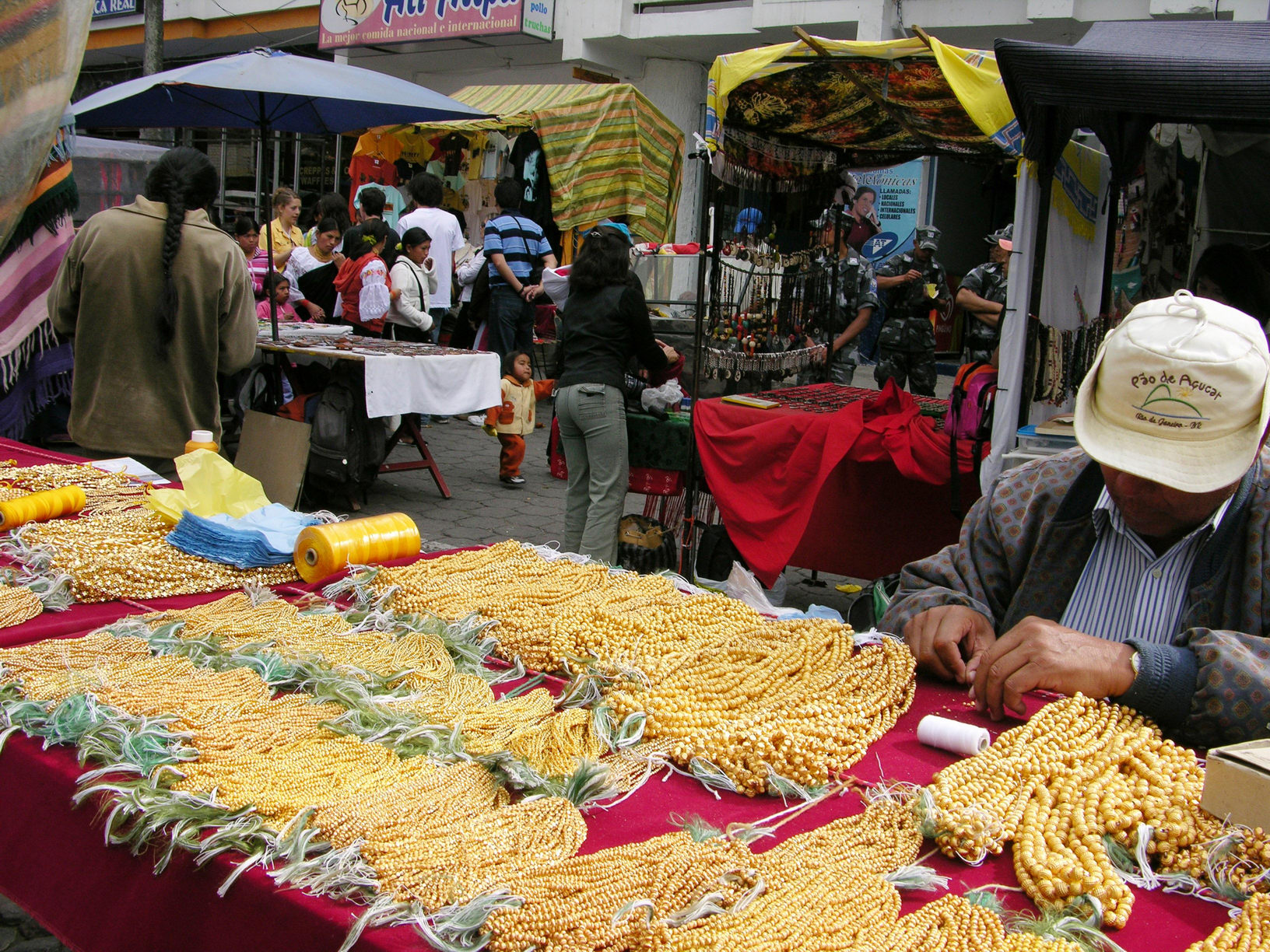
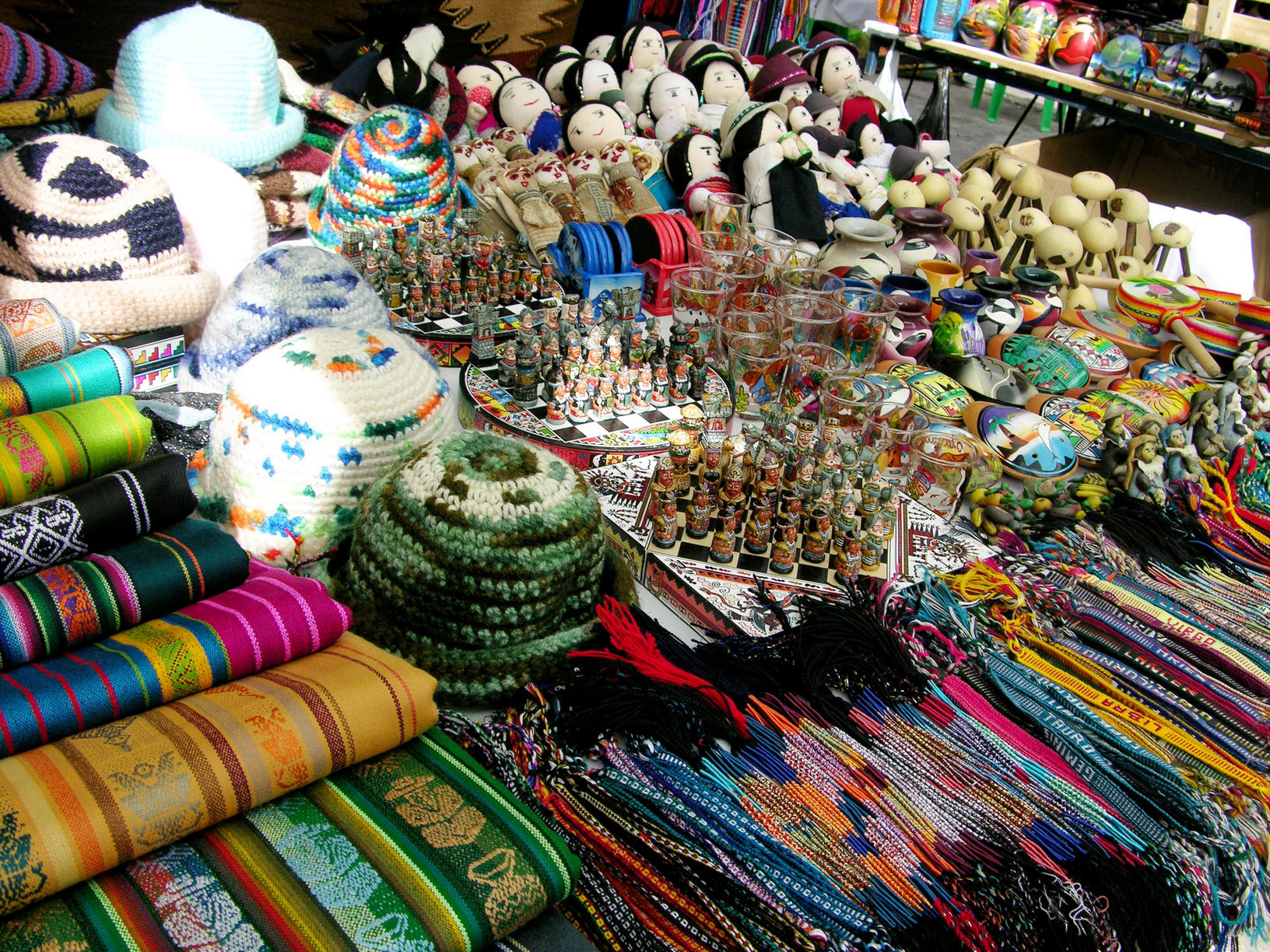
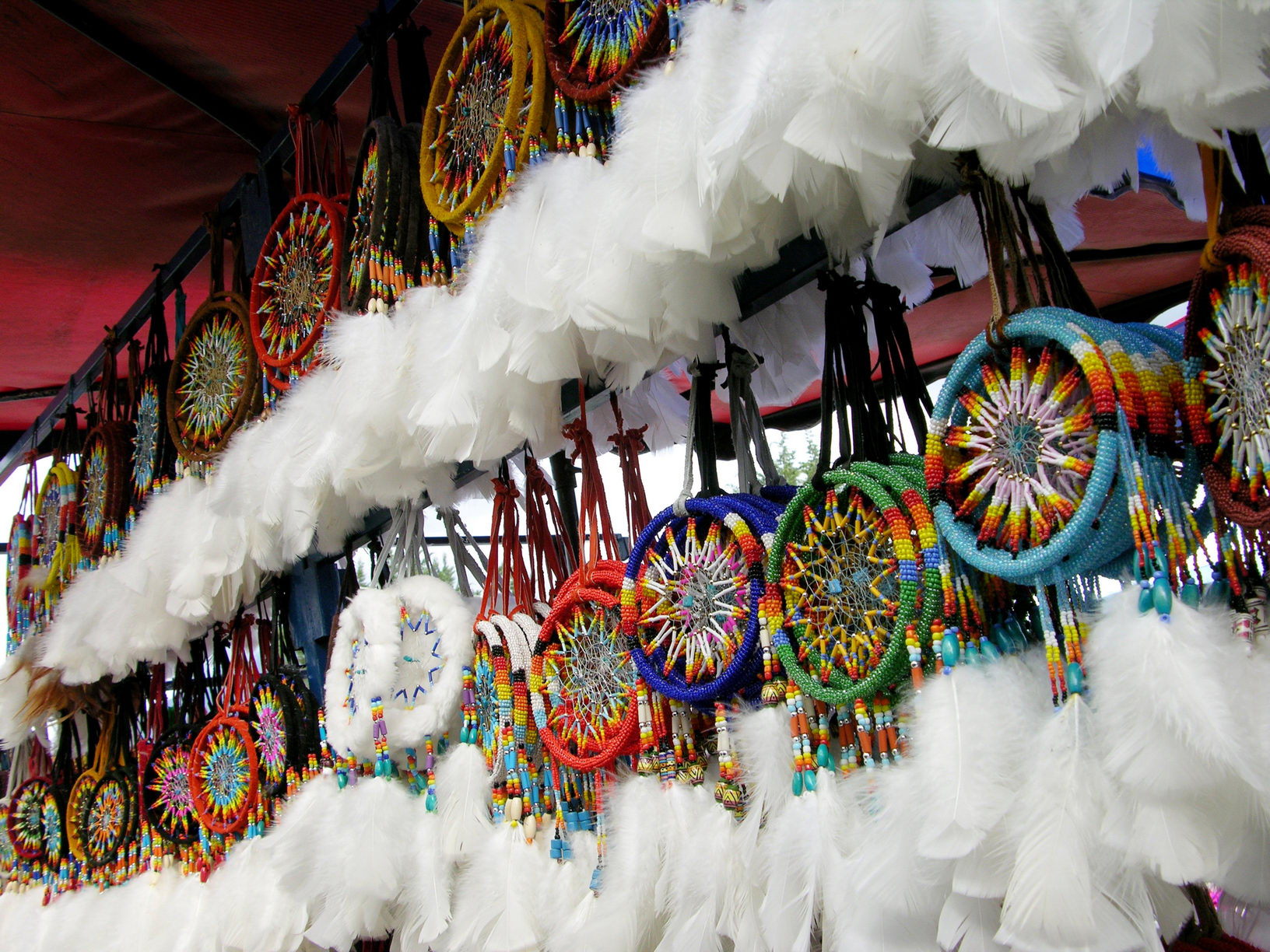
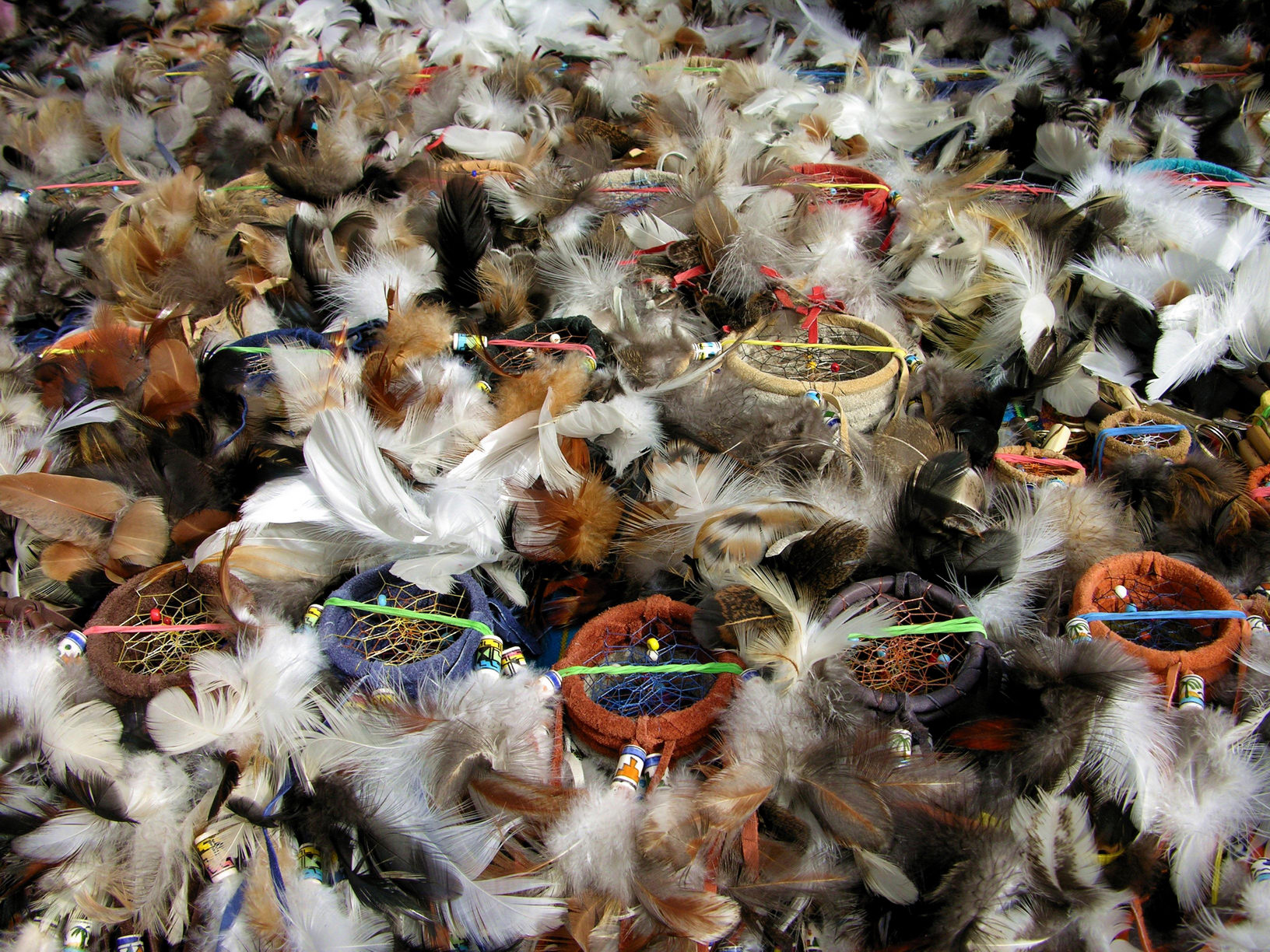
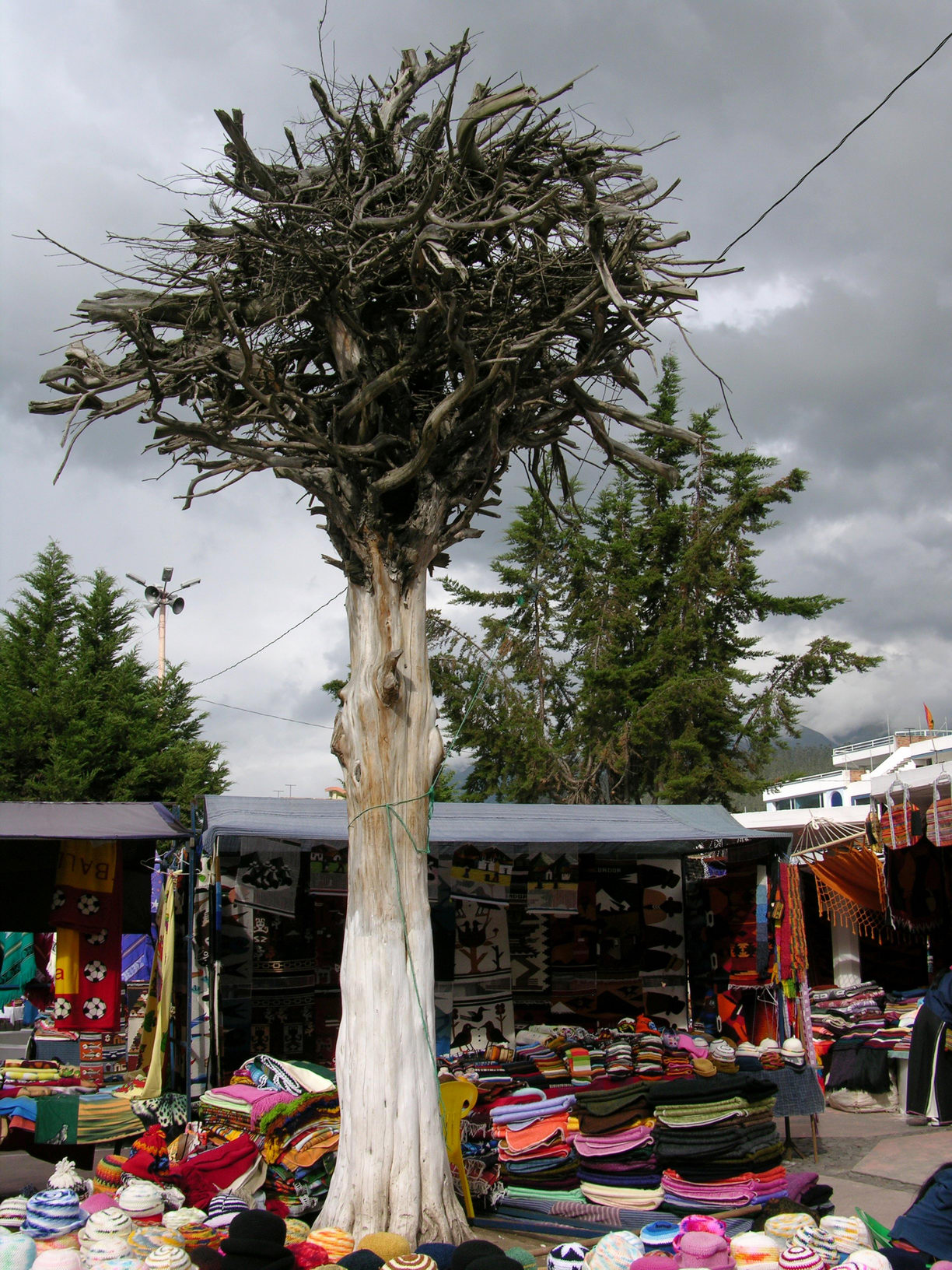
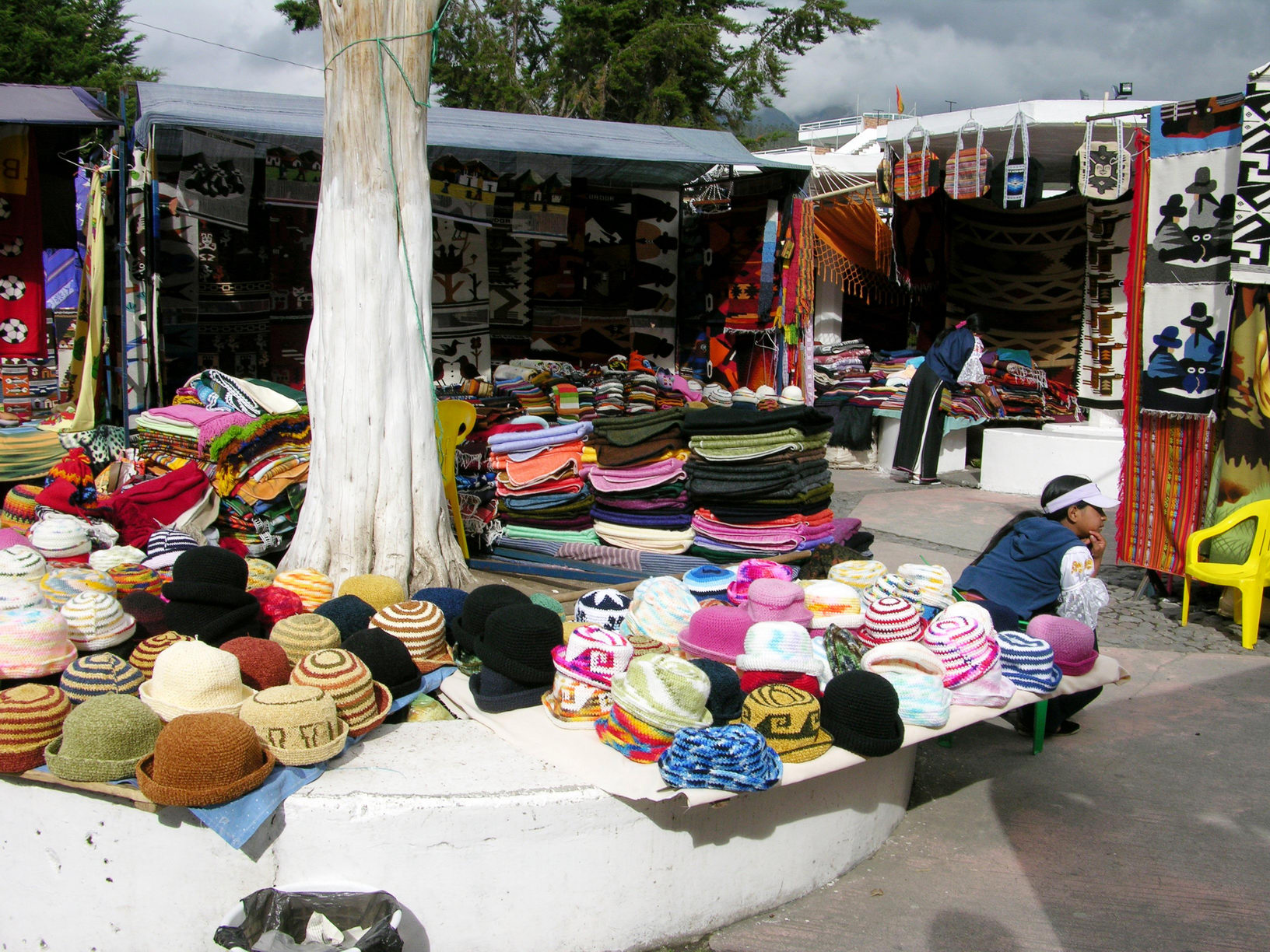
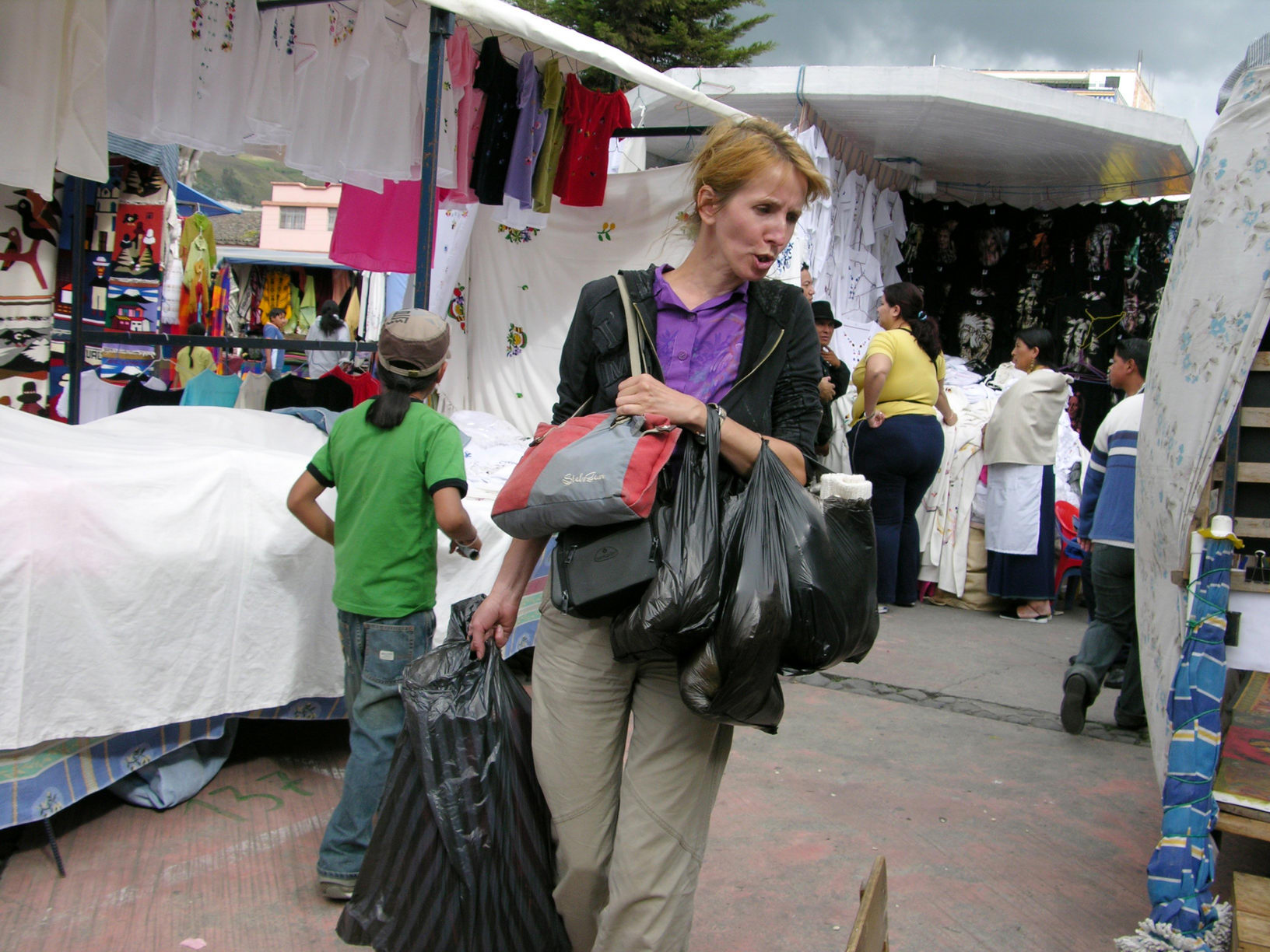
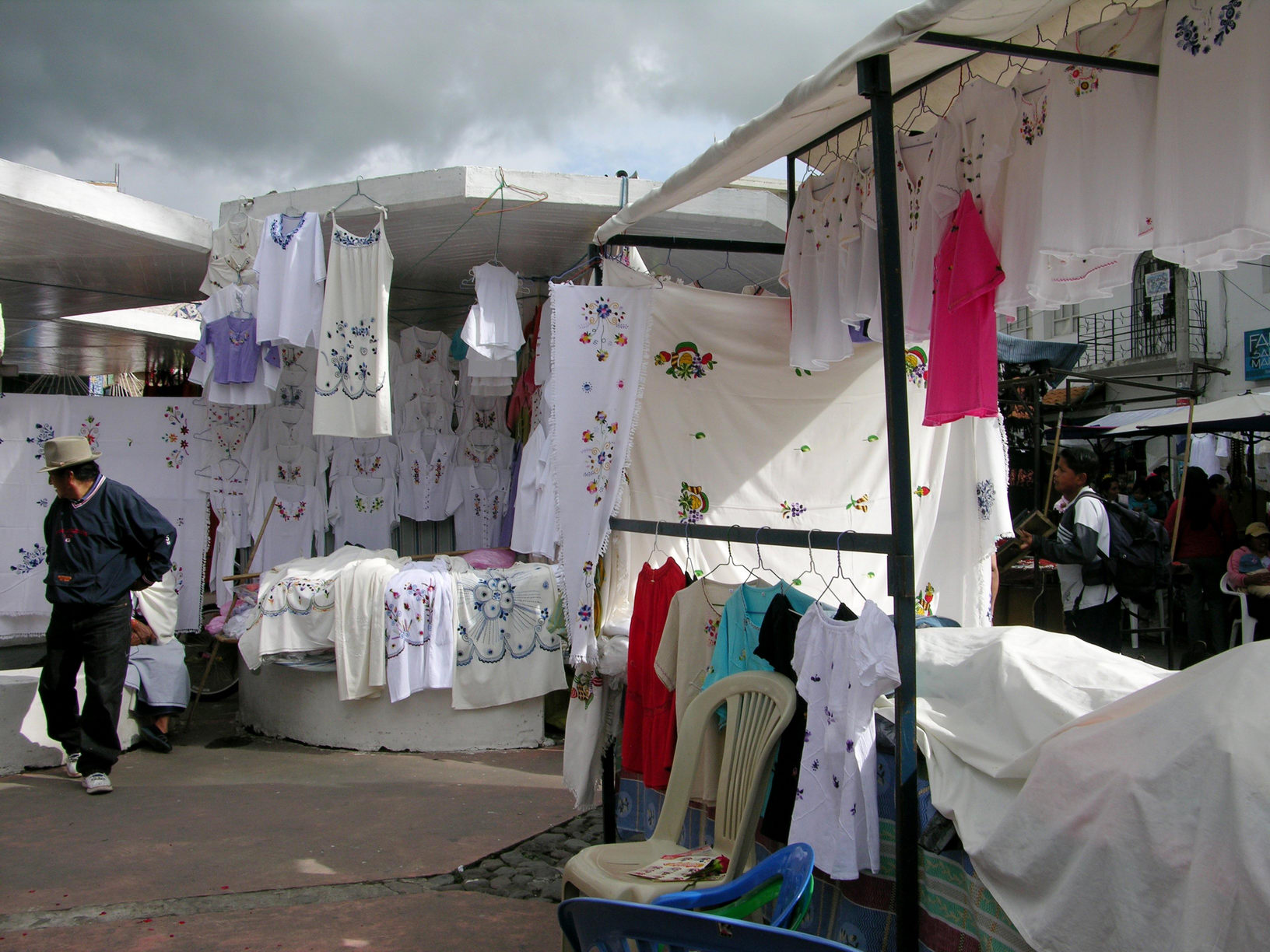
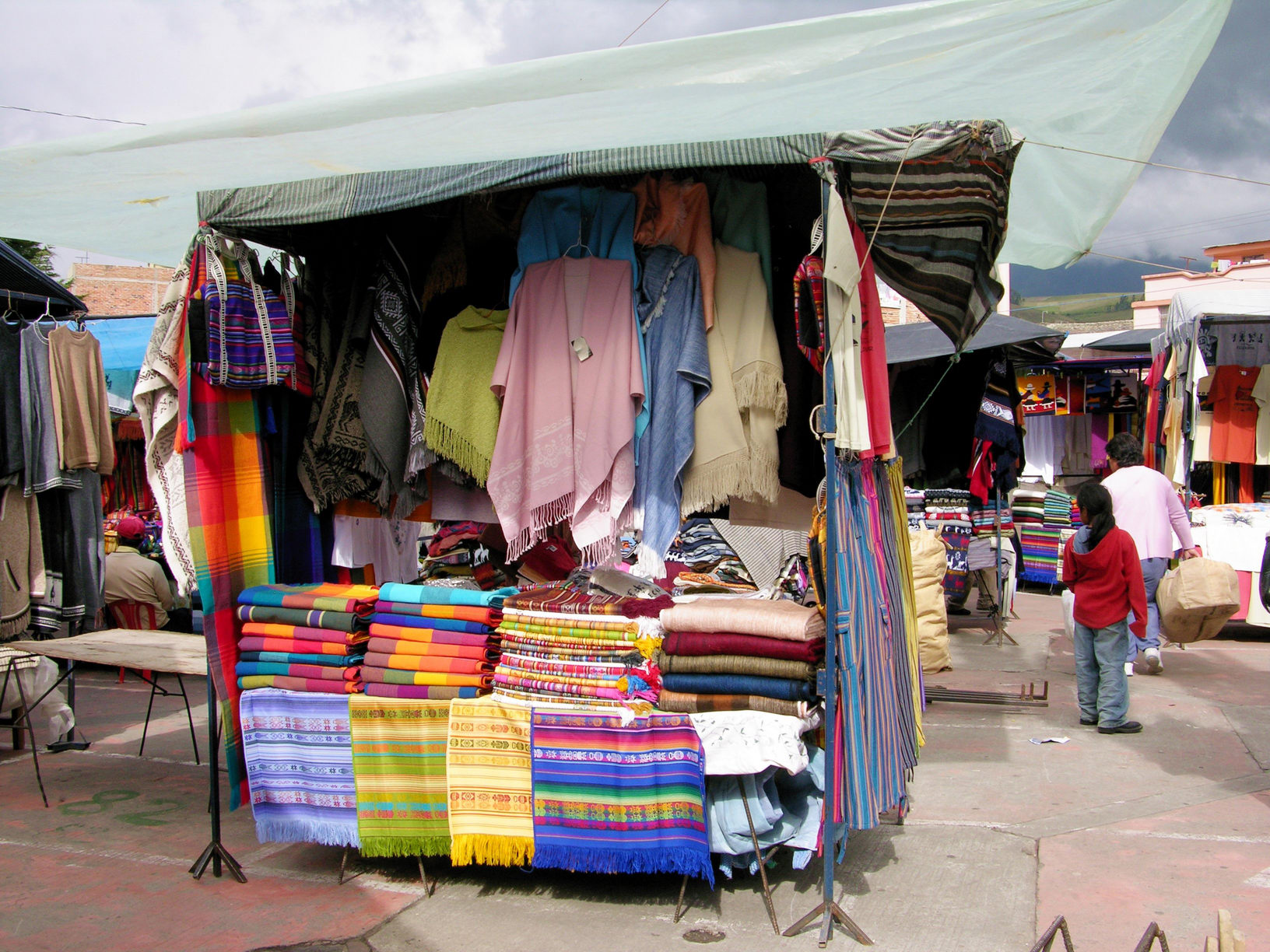
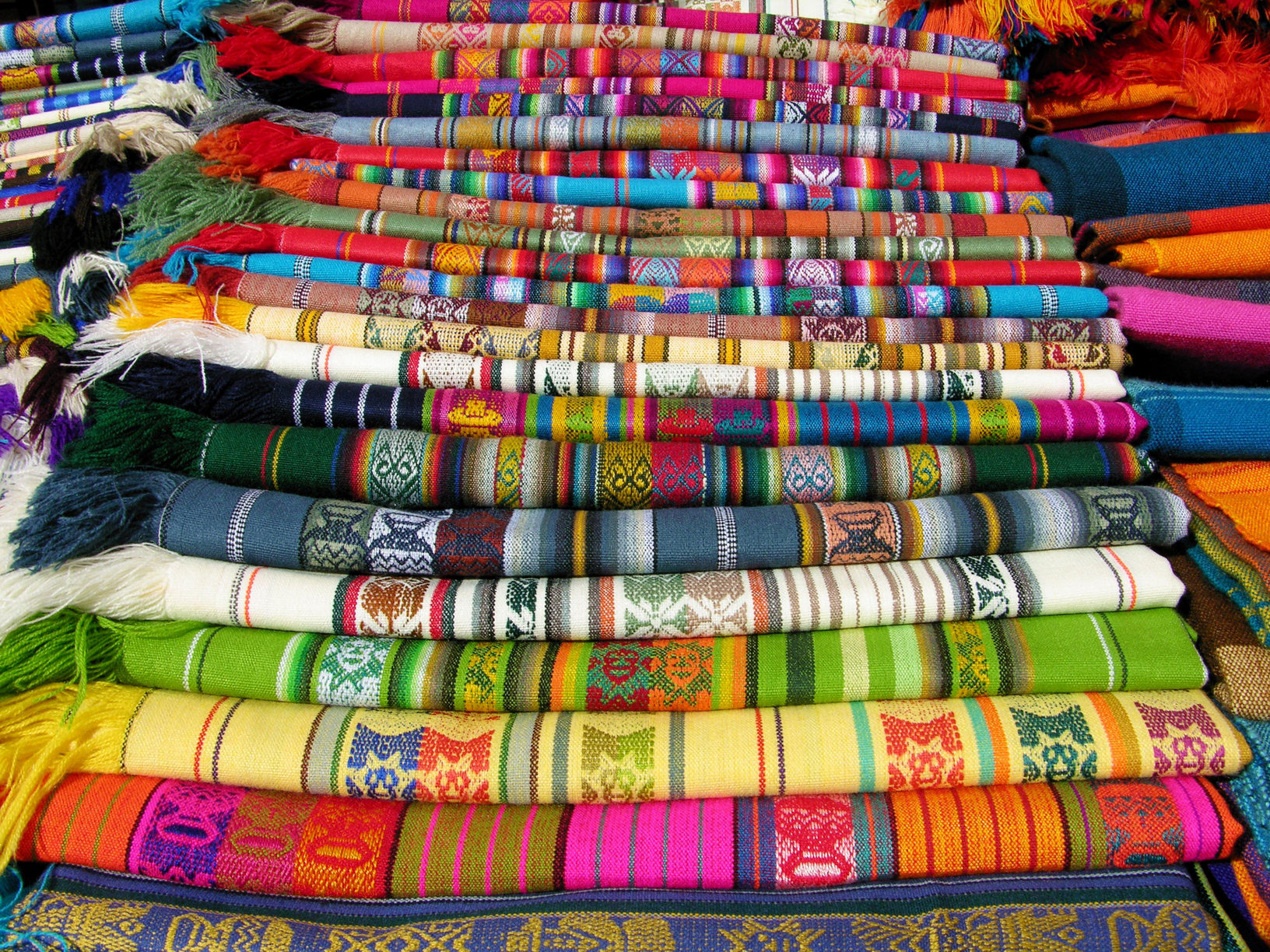
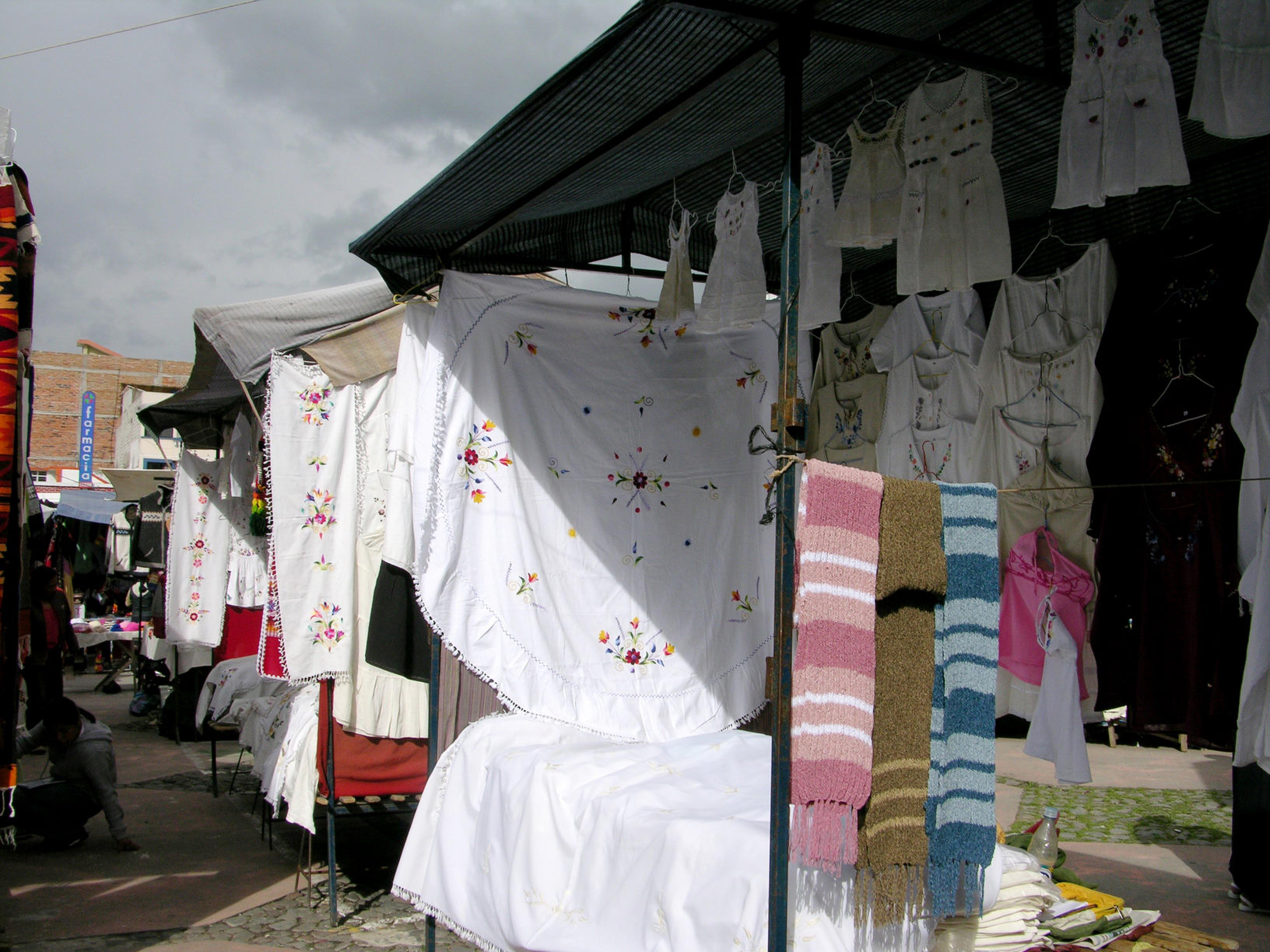
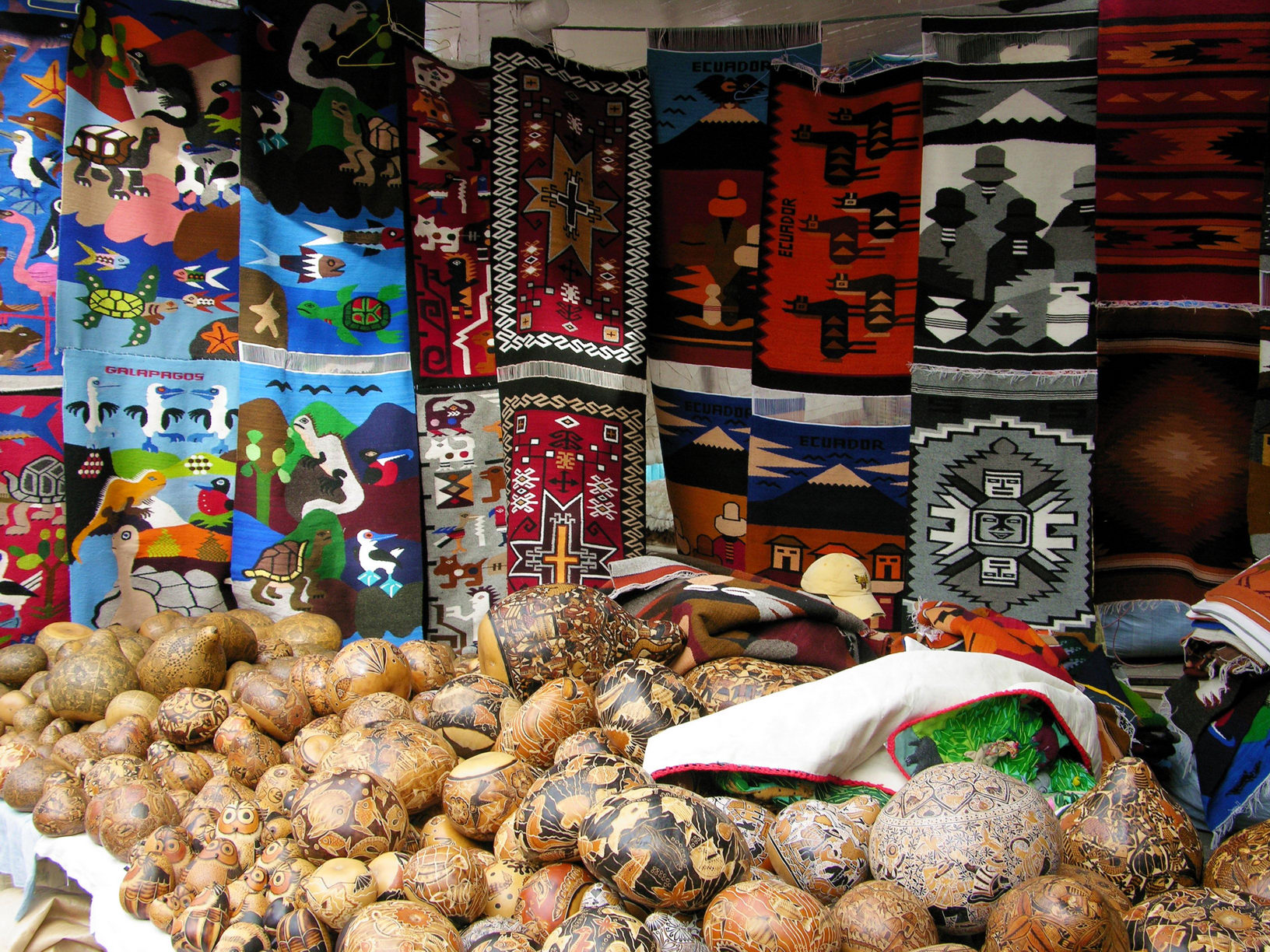
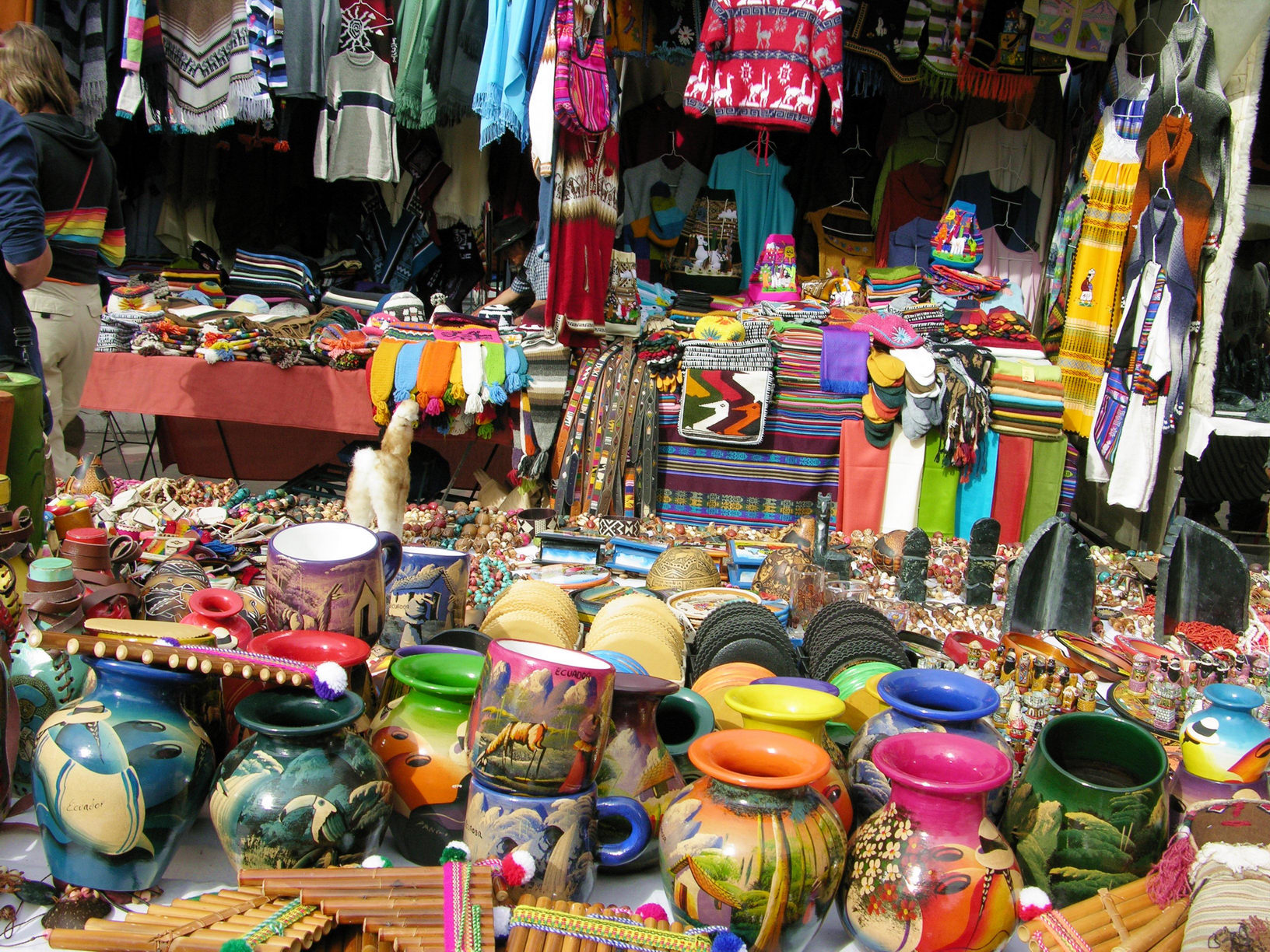
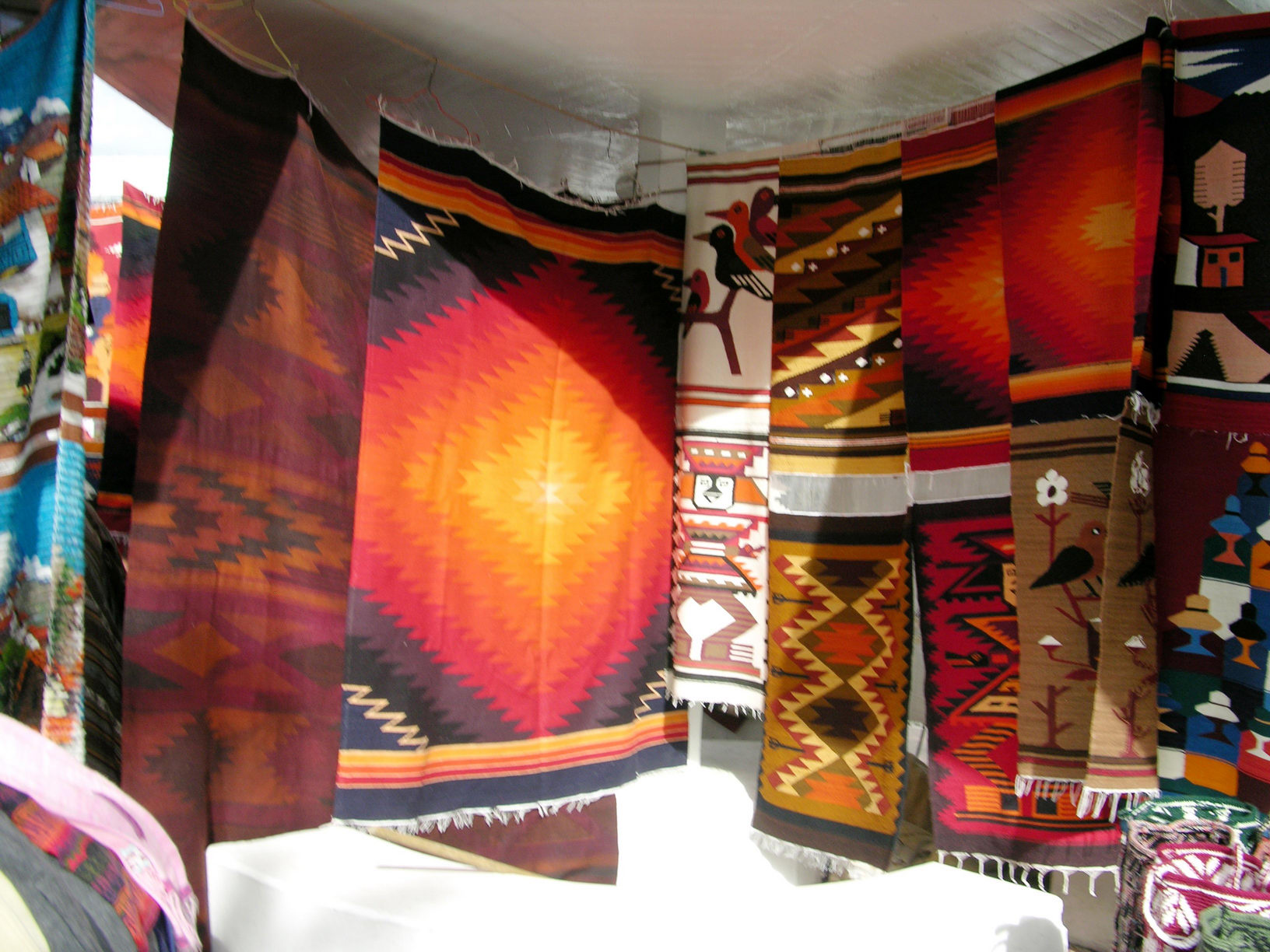
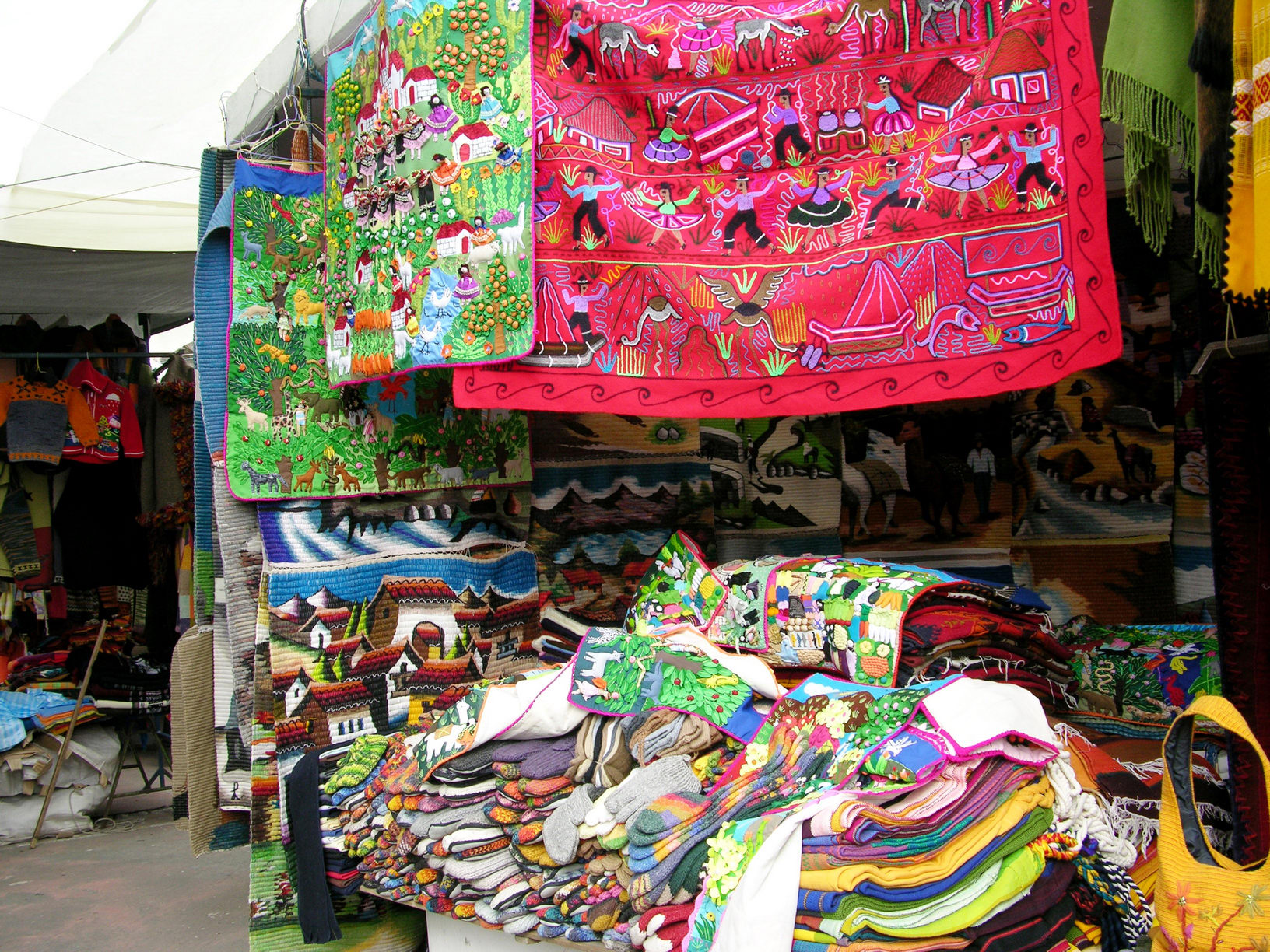
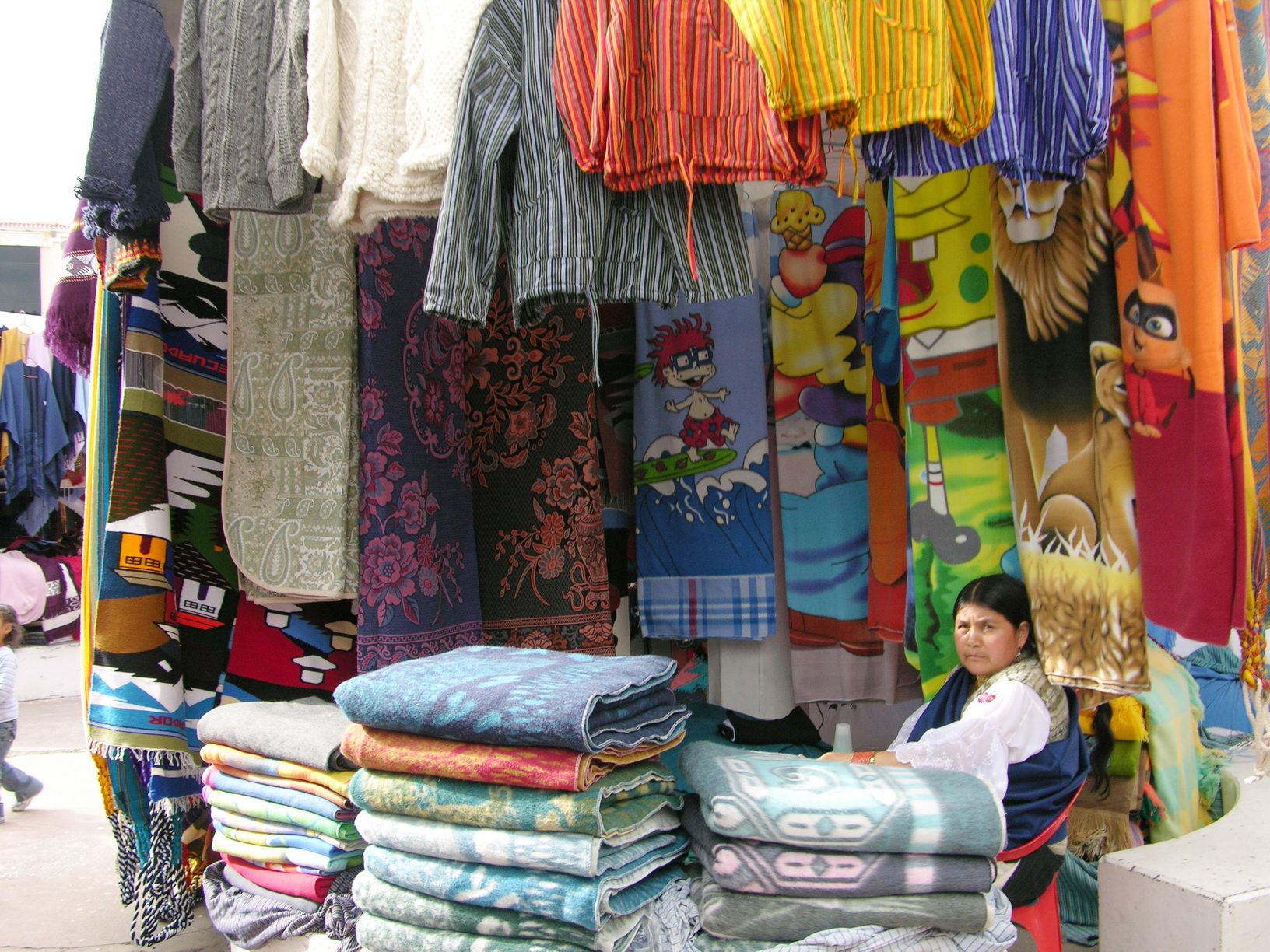
Otavalo's market caters to tourists. Everyone was dressed in traditional Indigenous clothing, but there was something of a performance about it. I saw one woman, still in her chola clothes after work, get into a Lexus and head home. A young man in jeans and a T-shirt was driving.
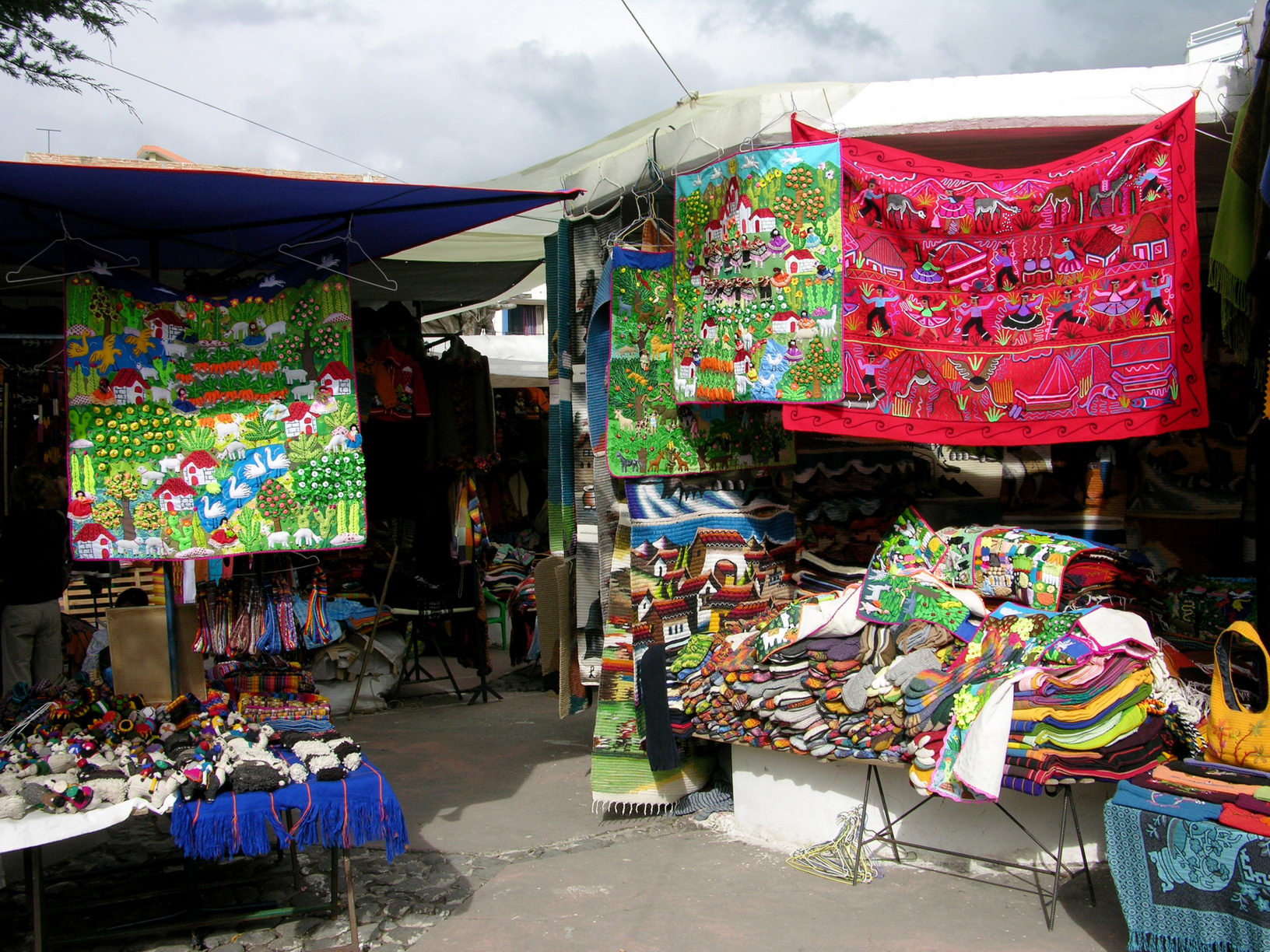
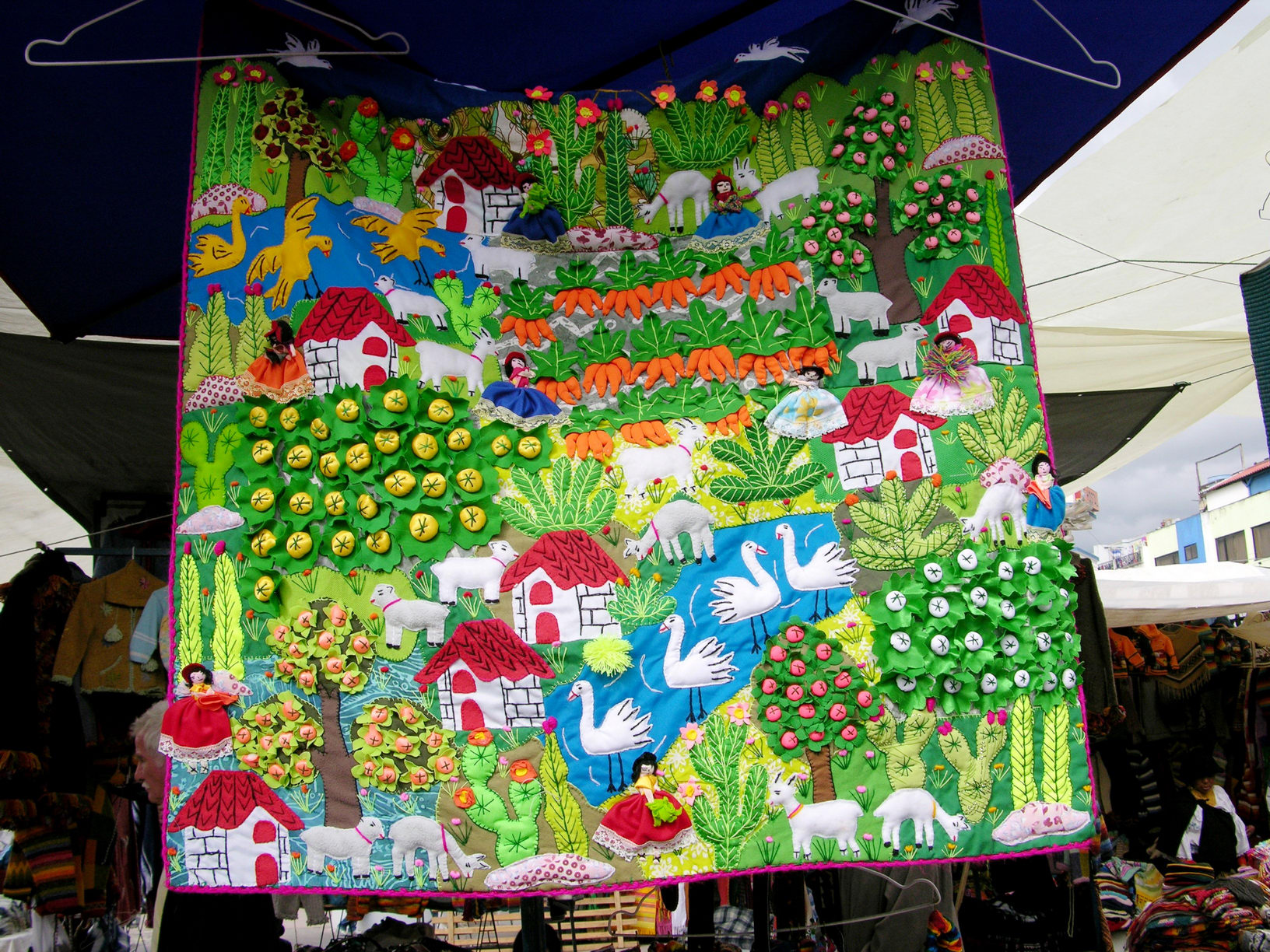
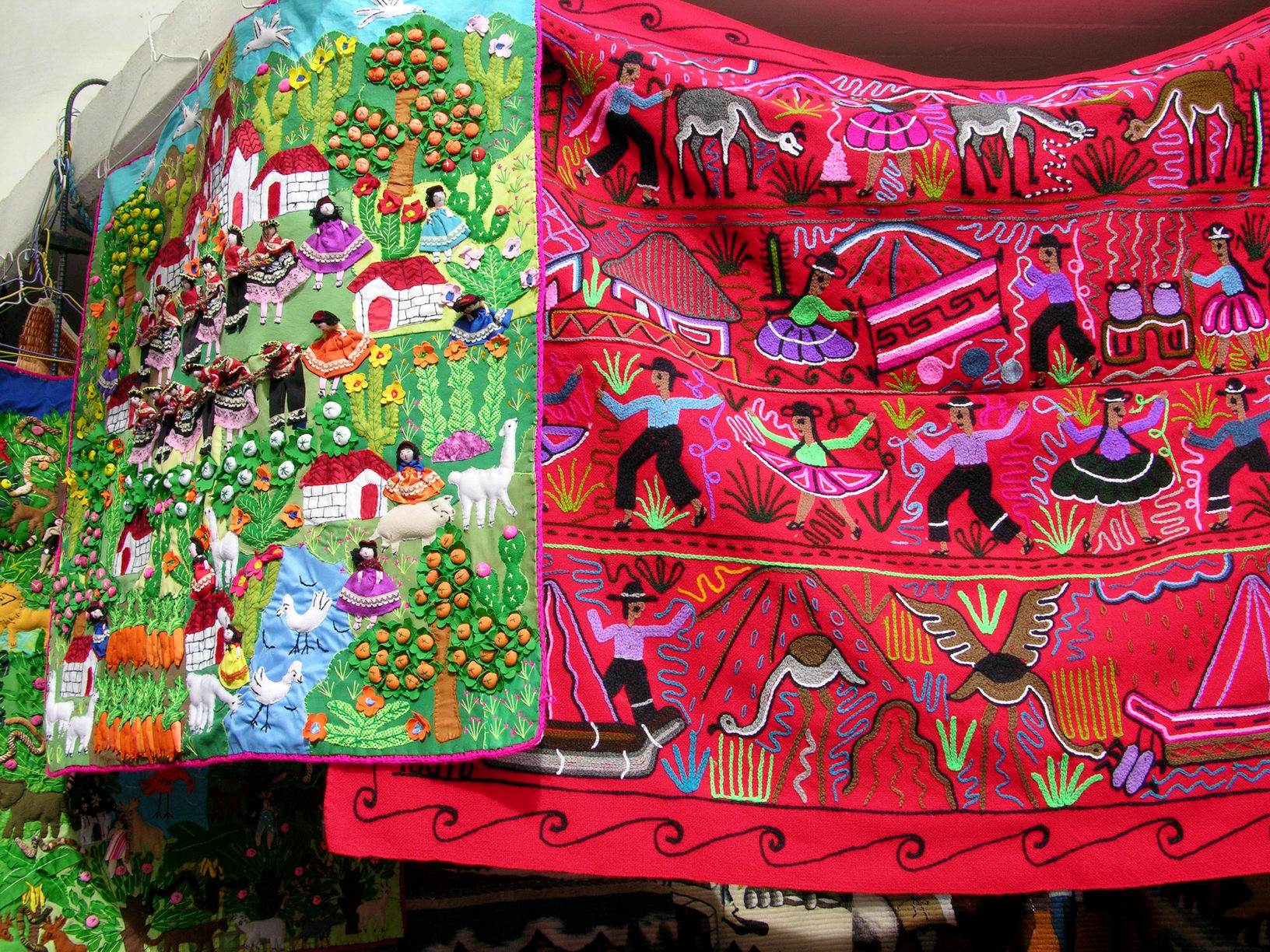
The market was divided into two sections. There was a section with nothing but souvenirs for visitors and another one next to it with food for local shoppers. There you could get something to eat and buy some fruit.
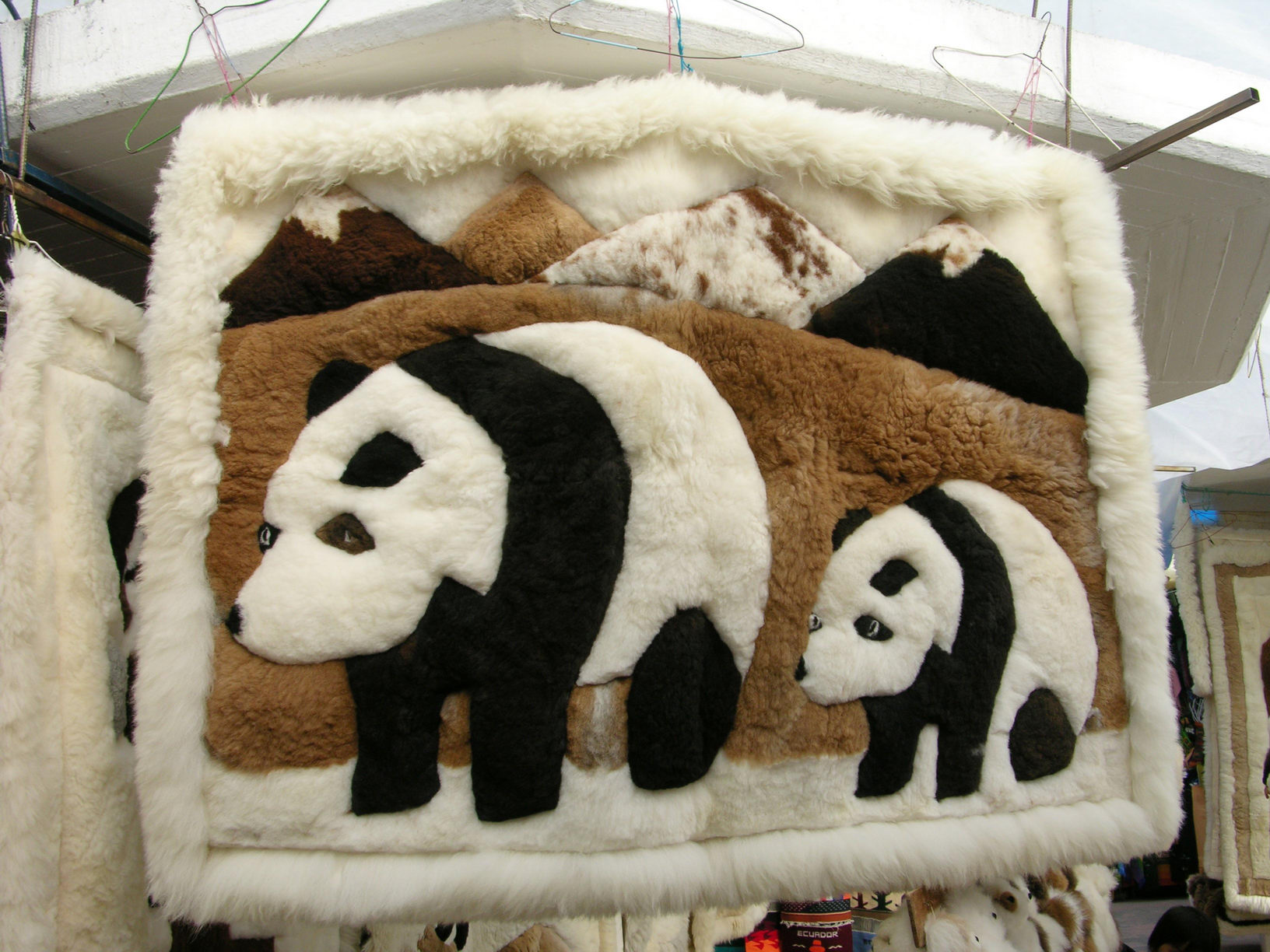
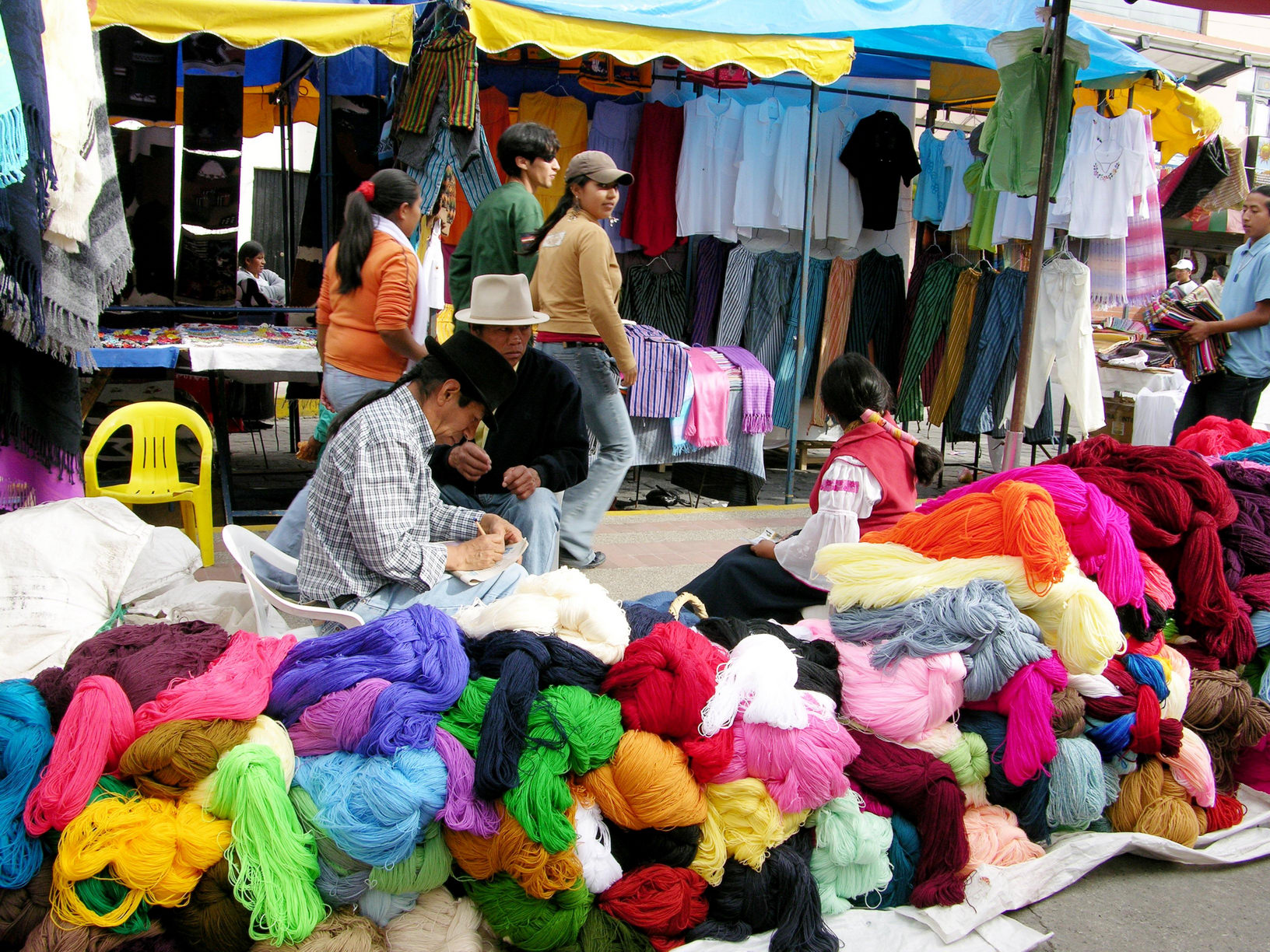
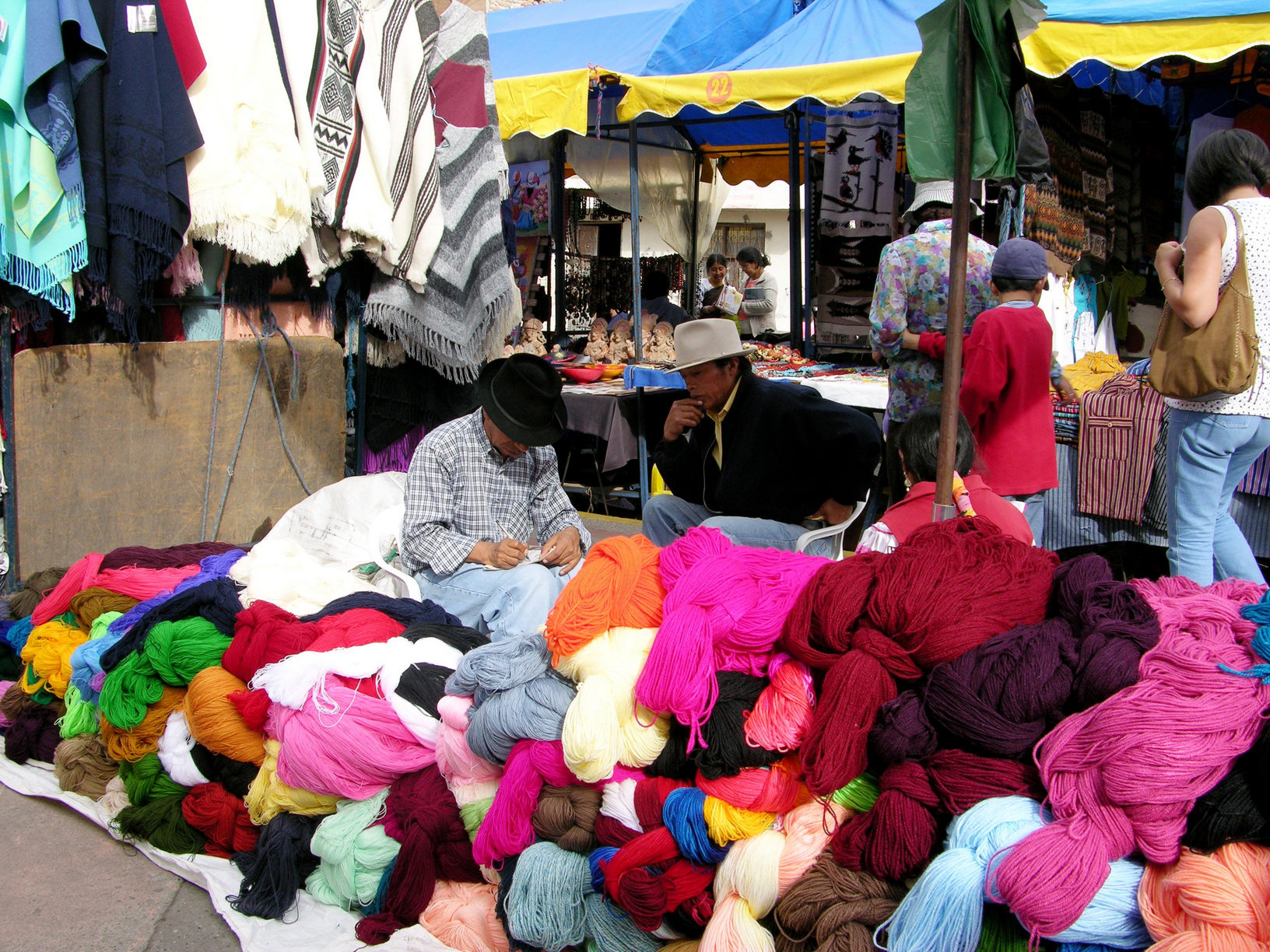
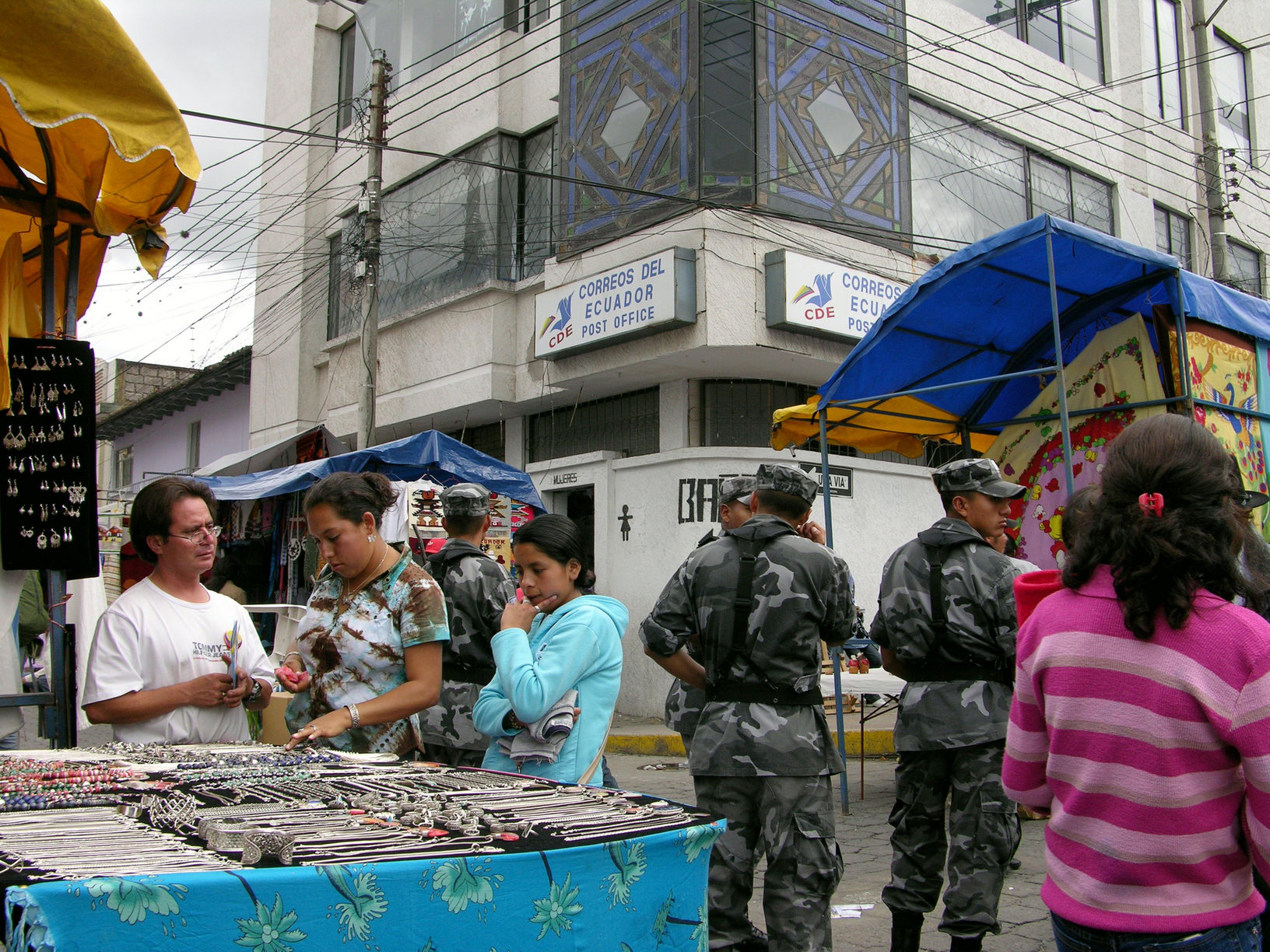
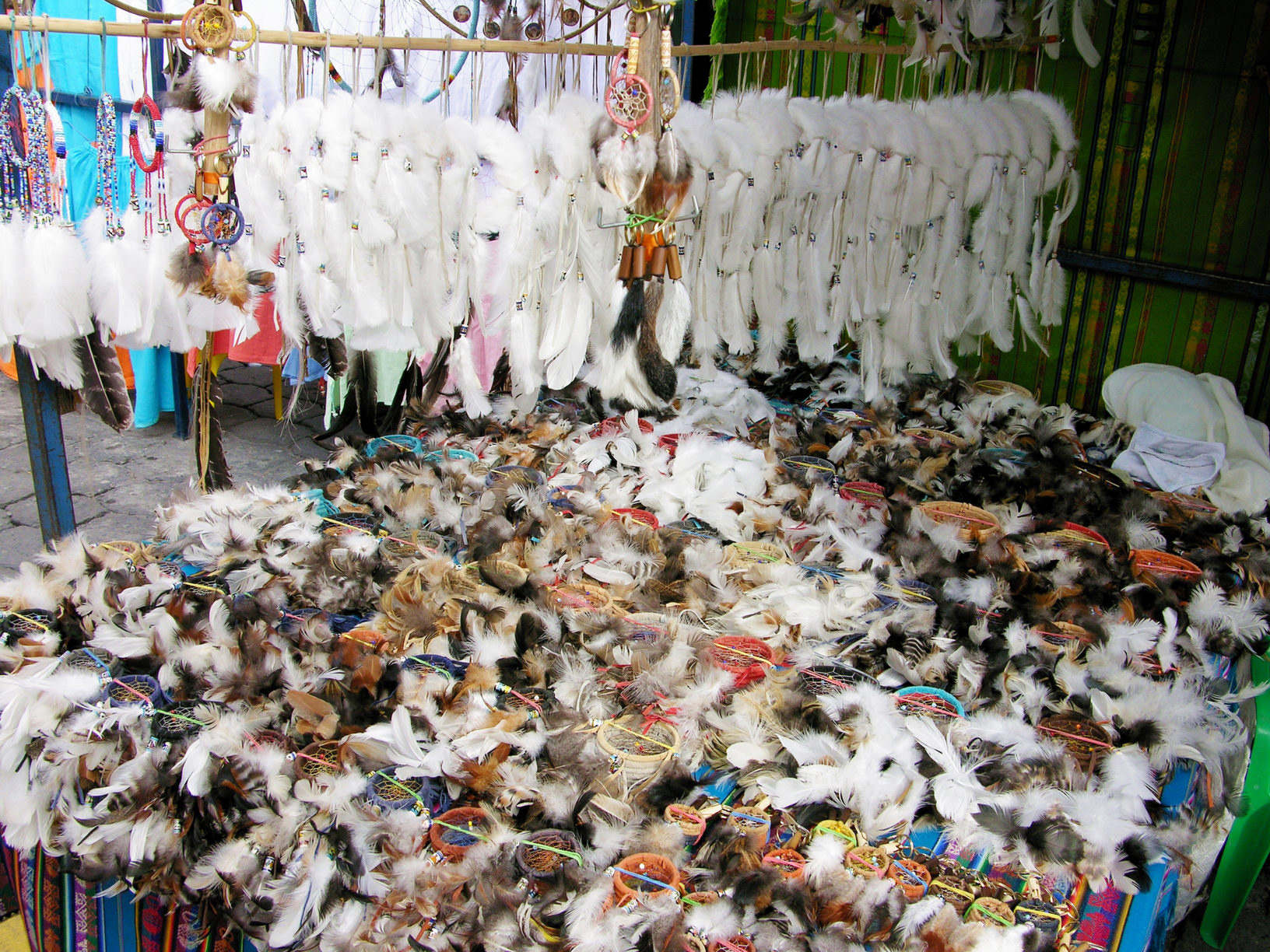
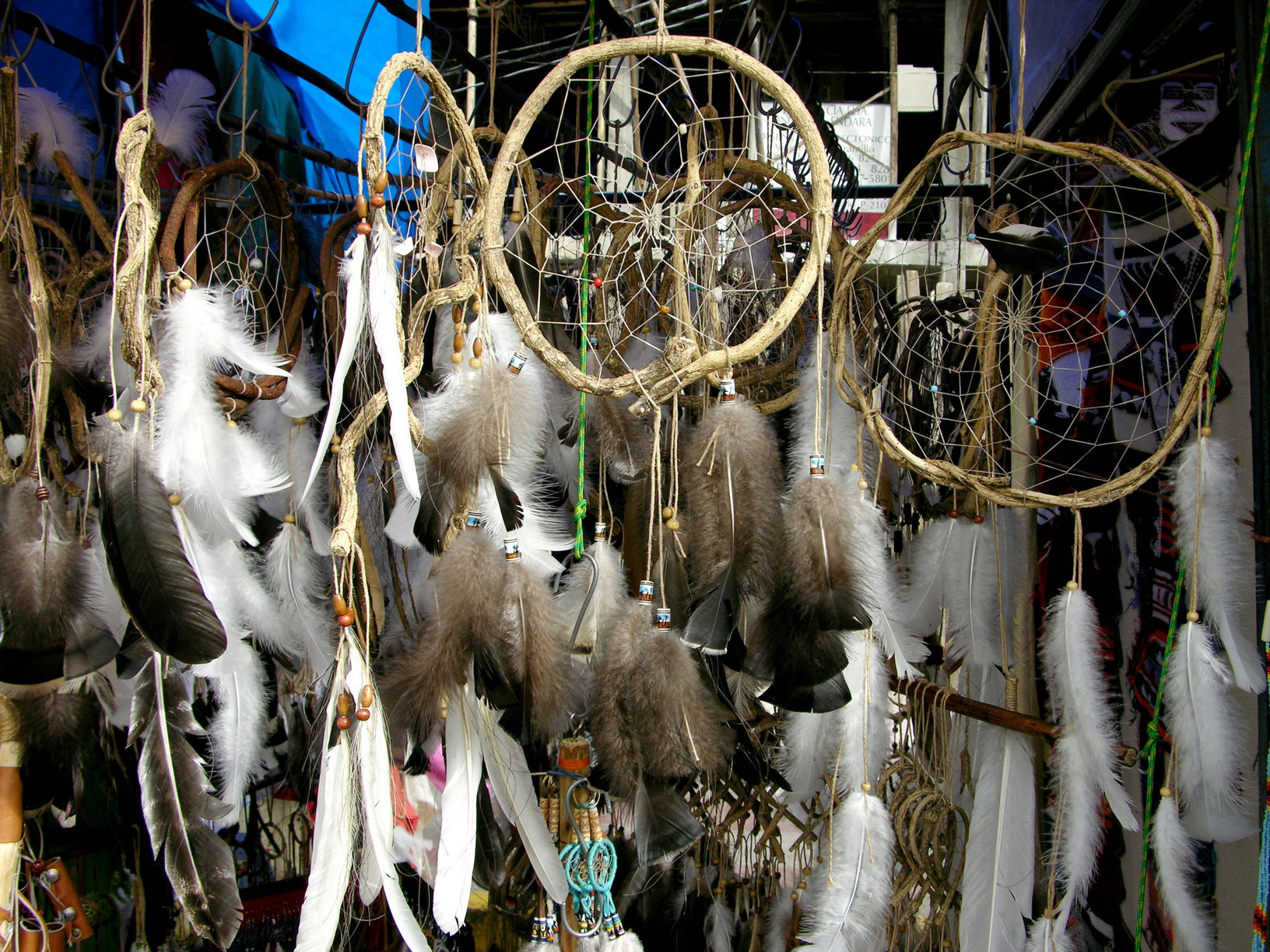
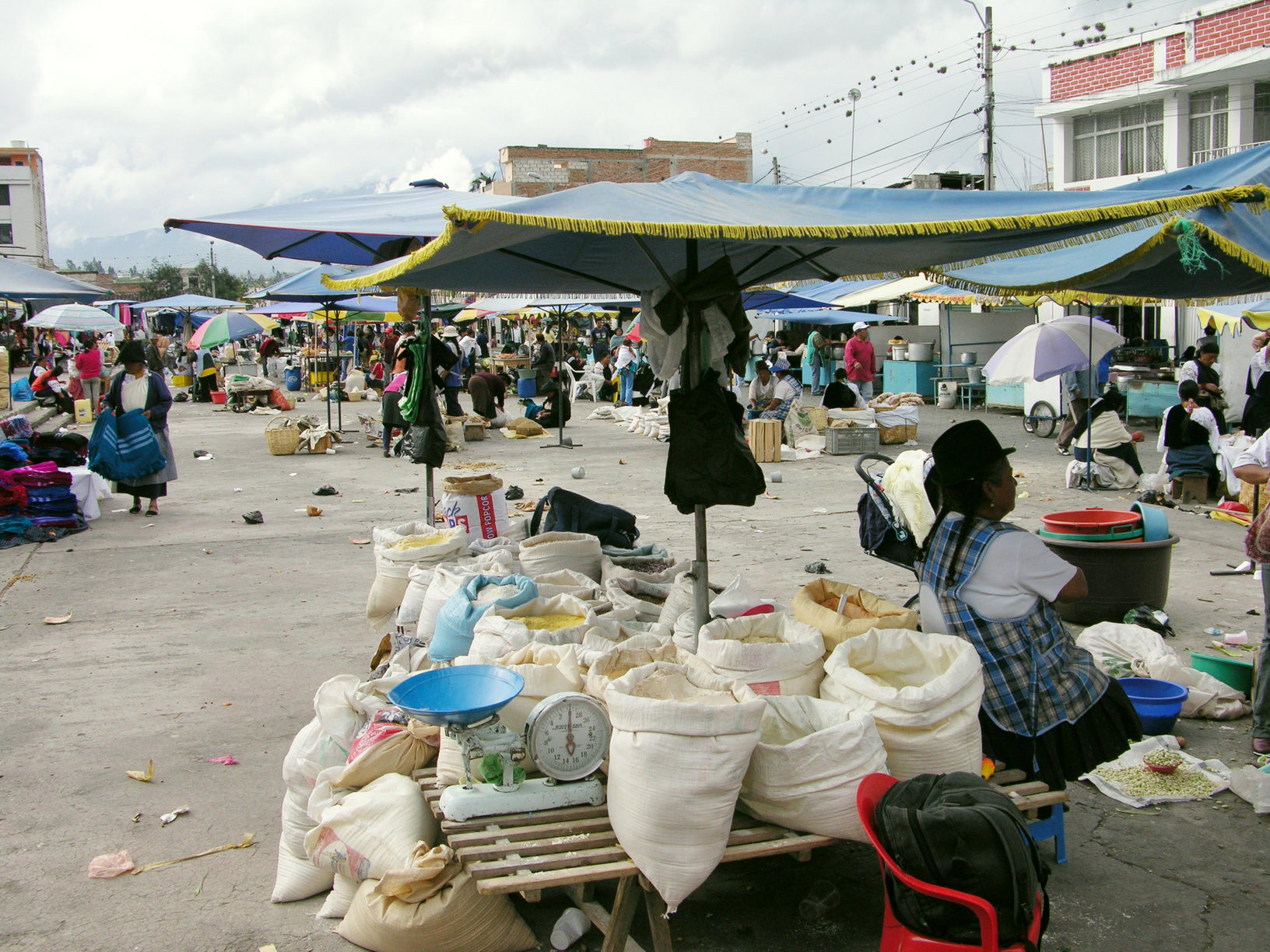
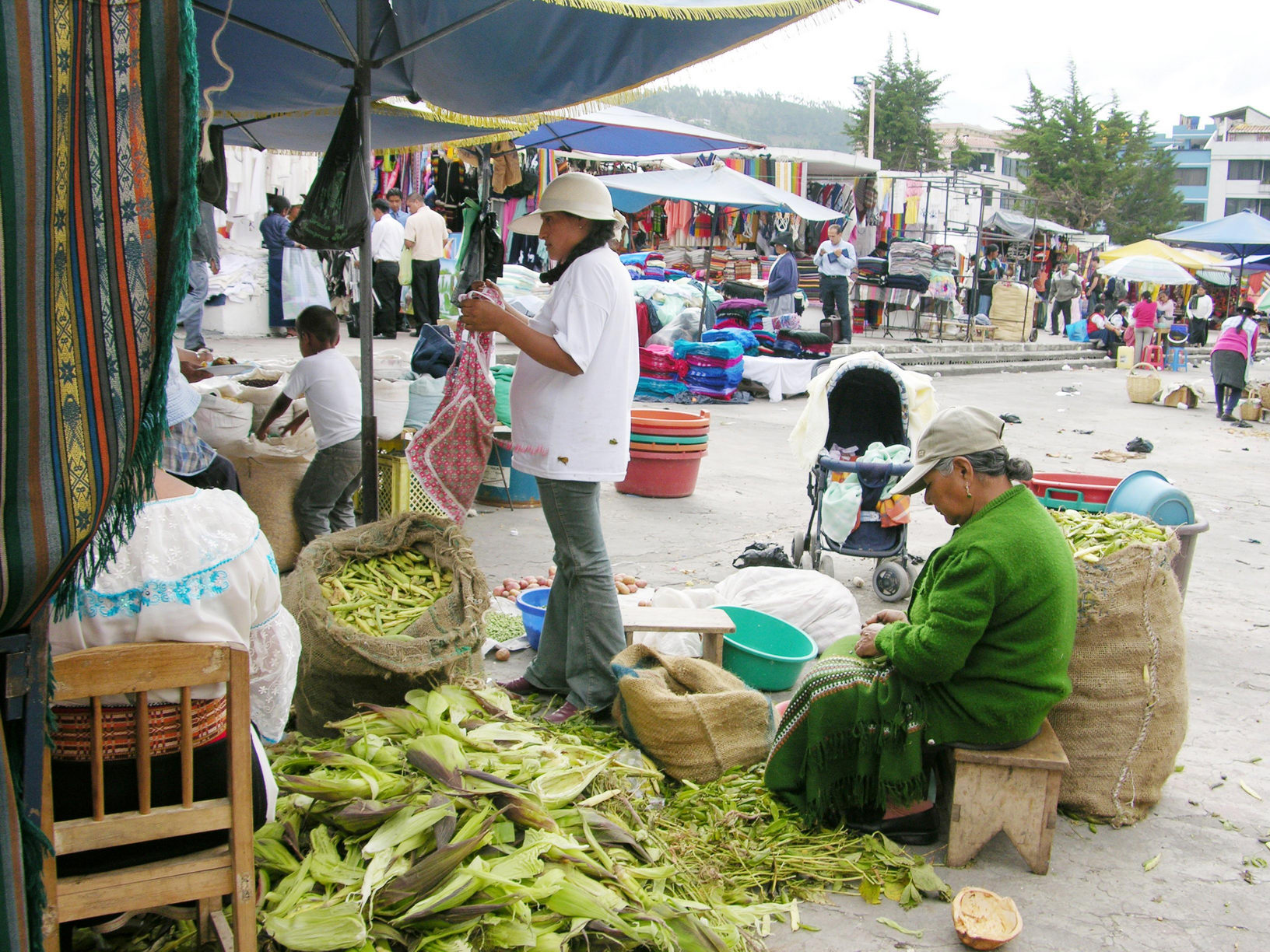
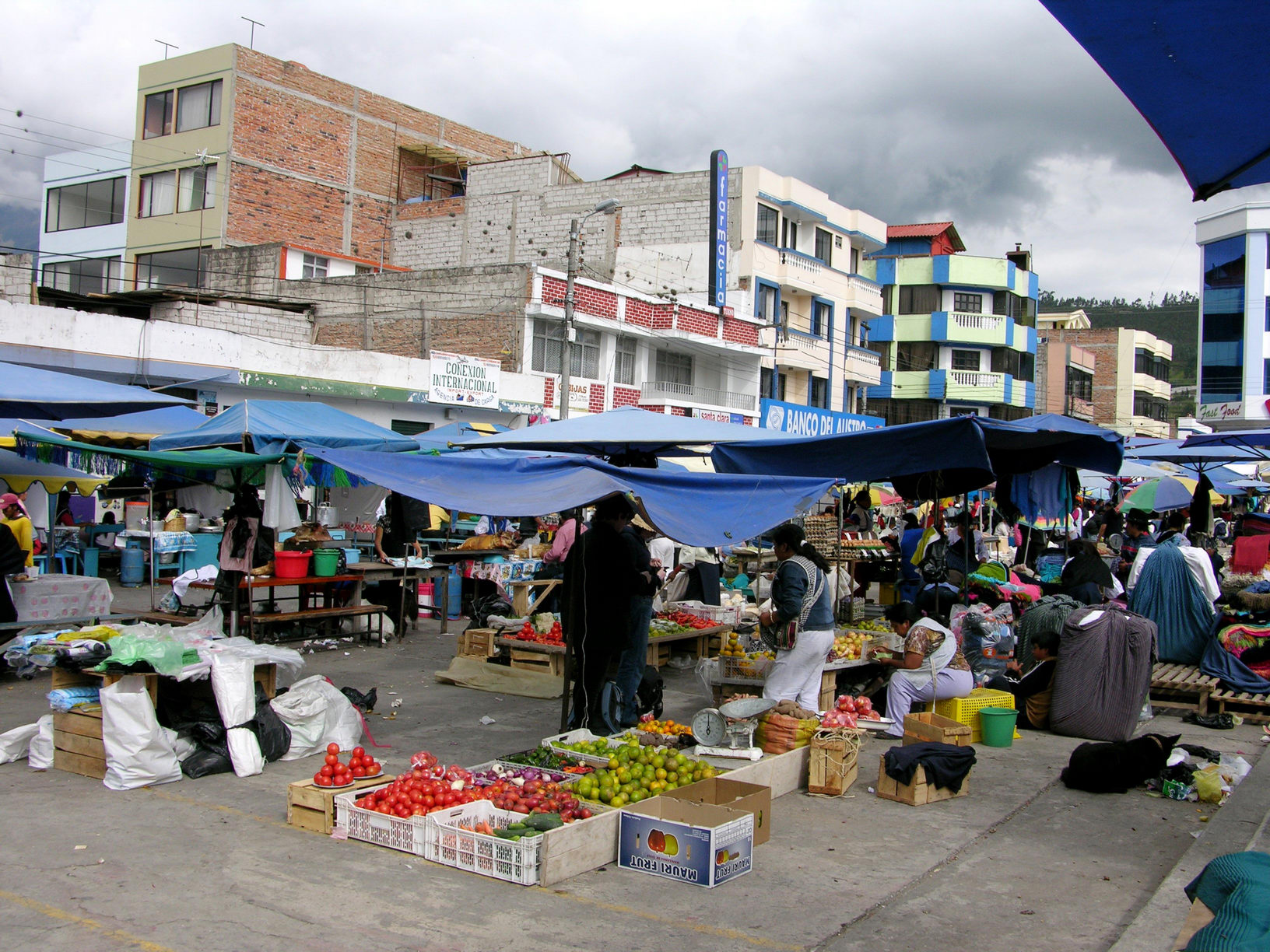
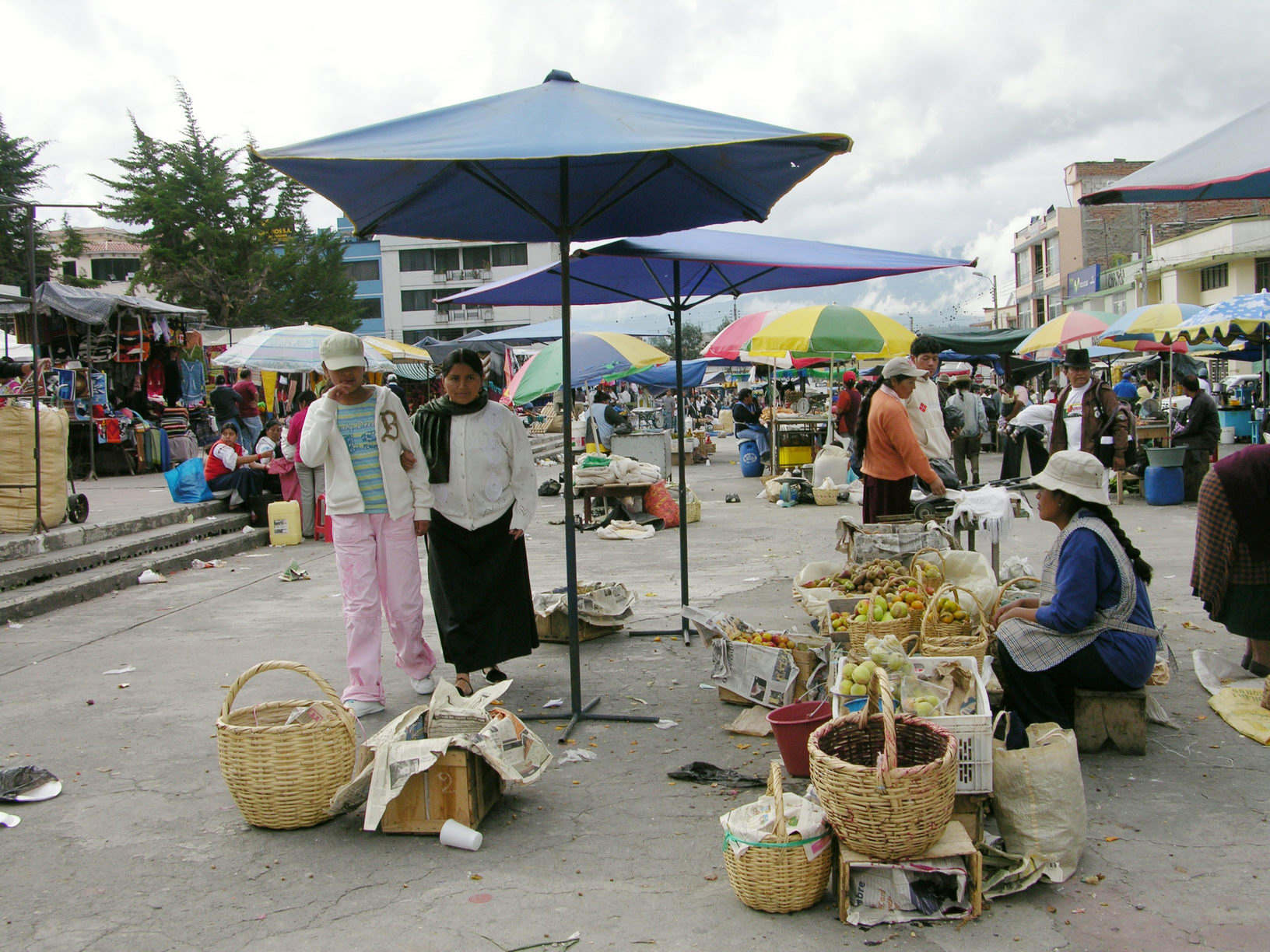
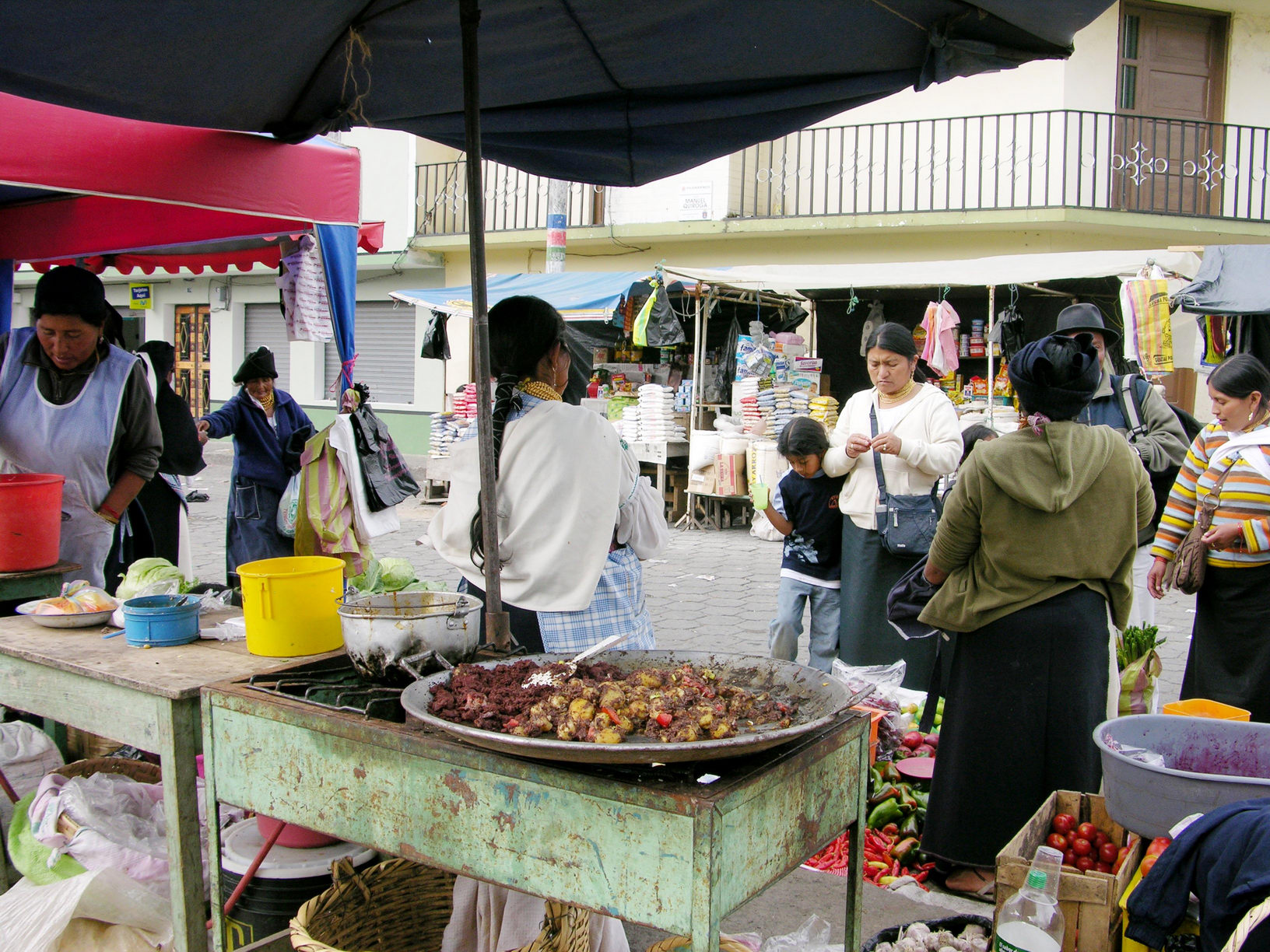
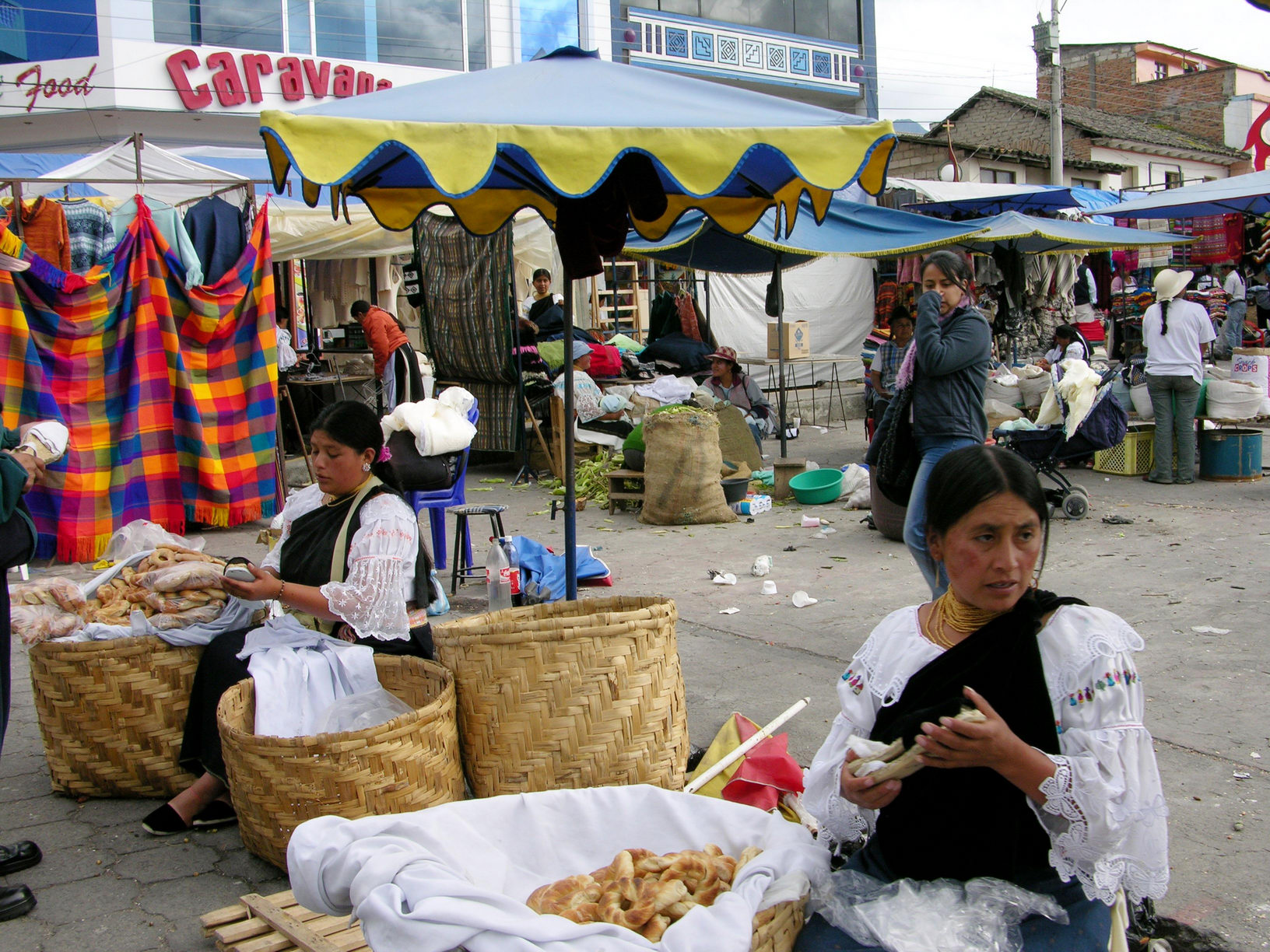
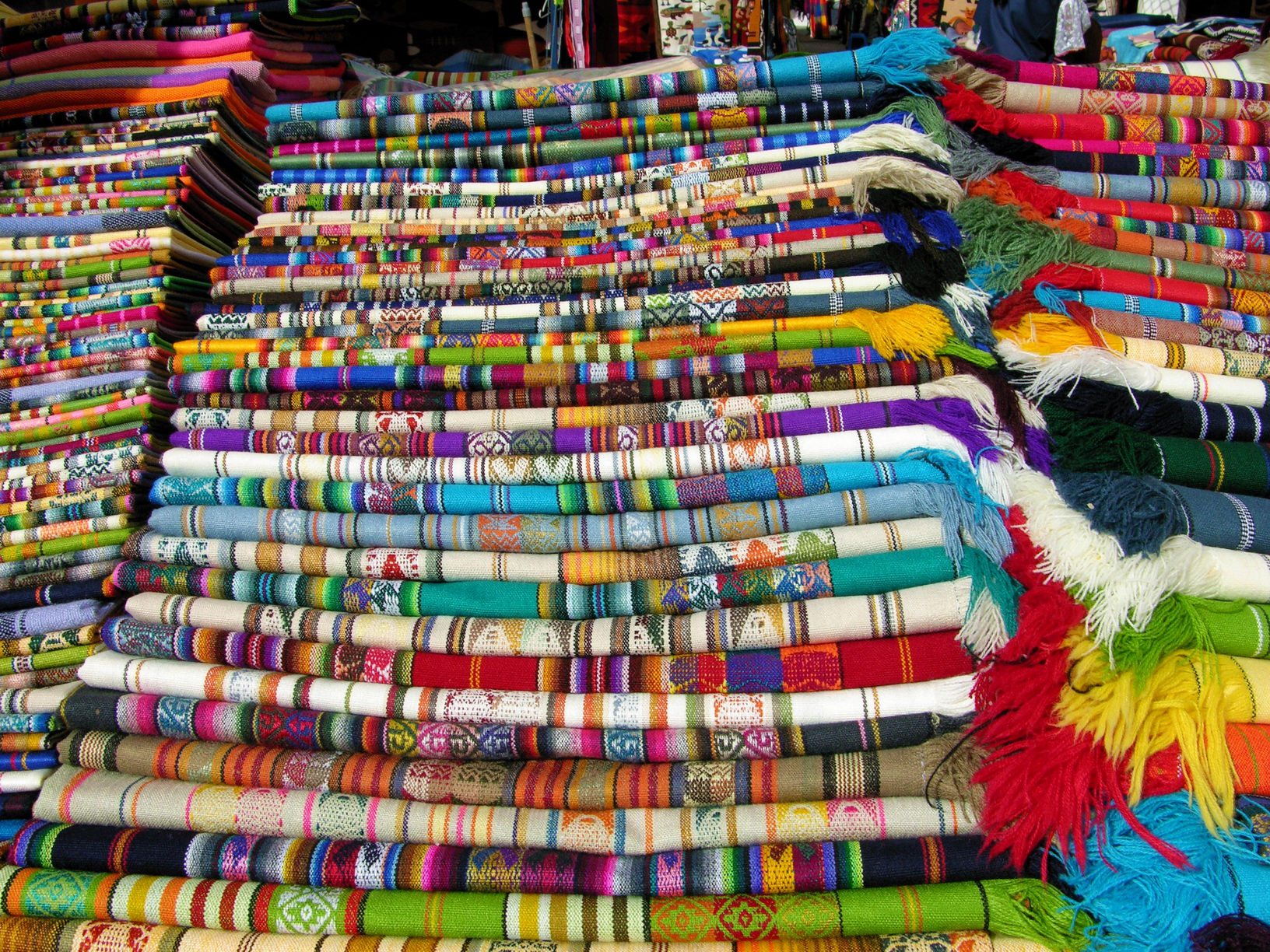
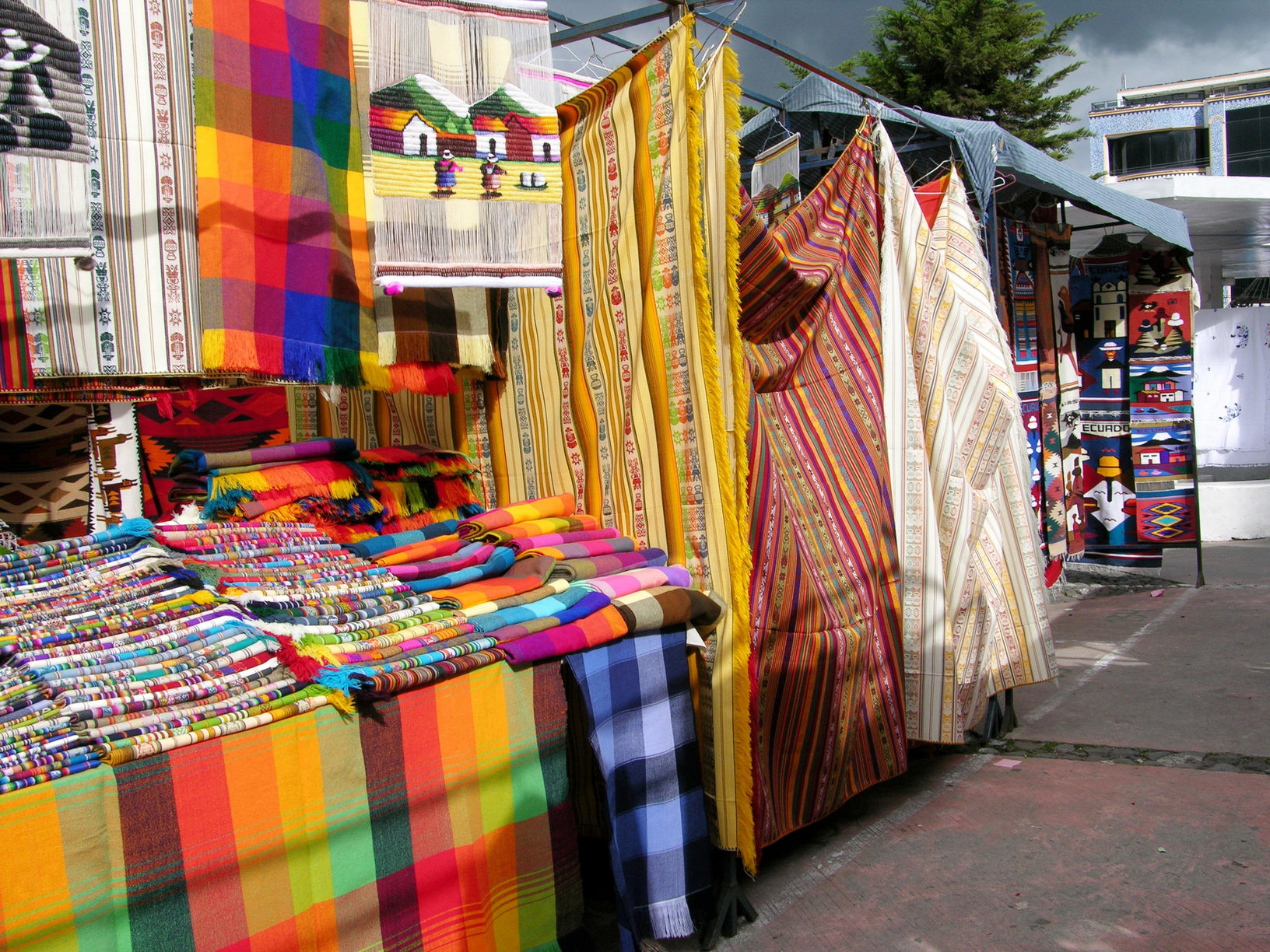
You could get cash from an ATM, and some of the more enterprising vendors even took credit cards. It was worth bargaining. A third off the asking price was quite possible. Among the useful things I noticed were woven covers for beds, towels and children's woollen mittens.
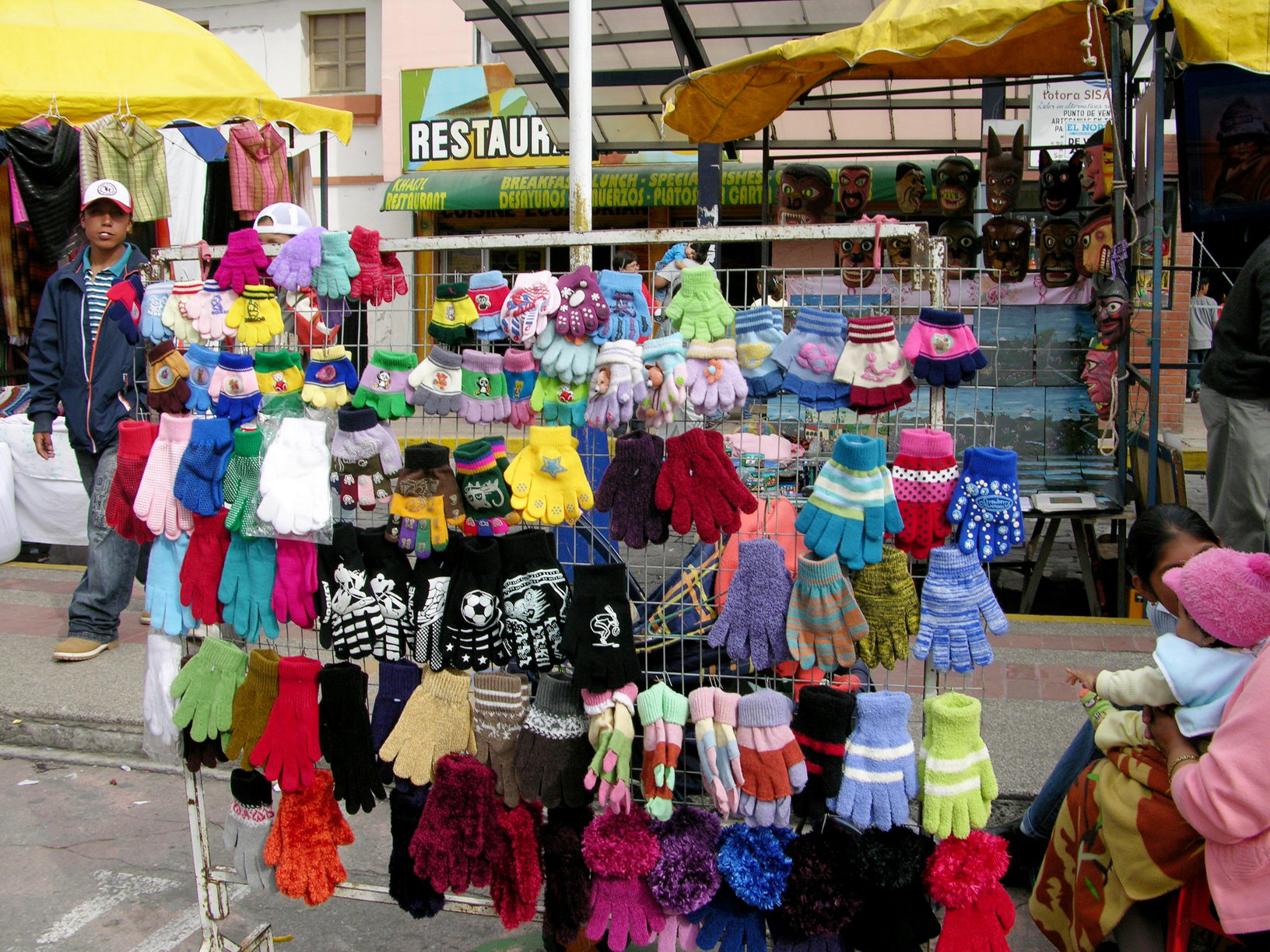
Another pleasure at the market was being able to take portraits of the Indigenous people without being charged. I had heard that some people objected to being photographed because they believed it would keep their souls from finding peace after death, and that a similar belief was found among some Muslims. Here, apparently, everyone had made peace with having sold their souls to the devil. There was nothing left to lose and you could take as many pictures as you liked.
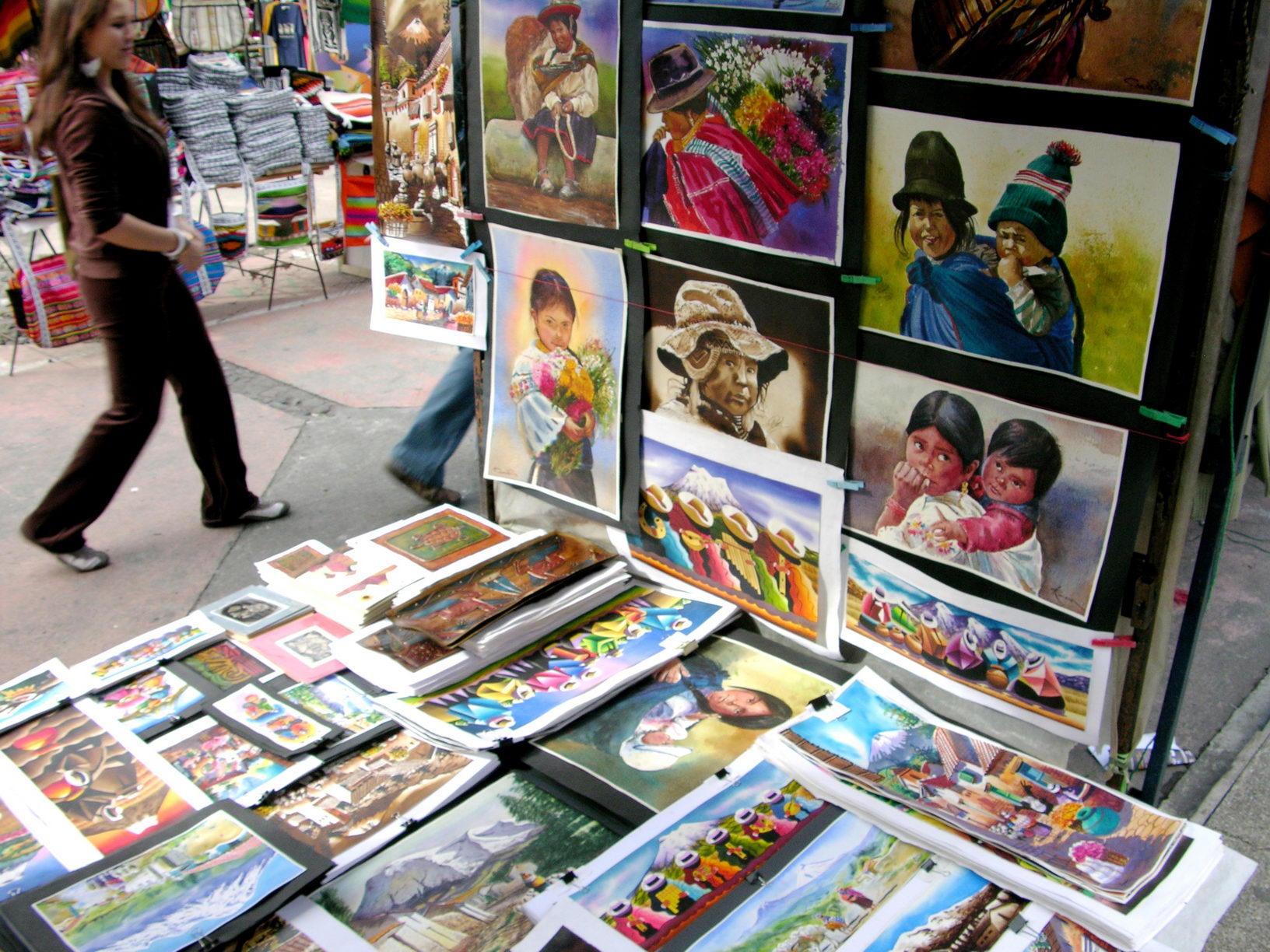
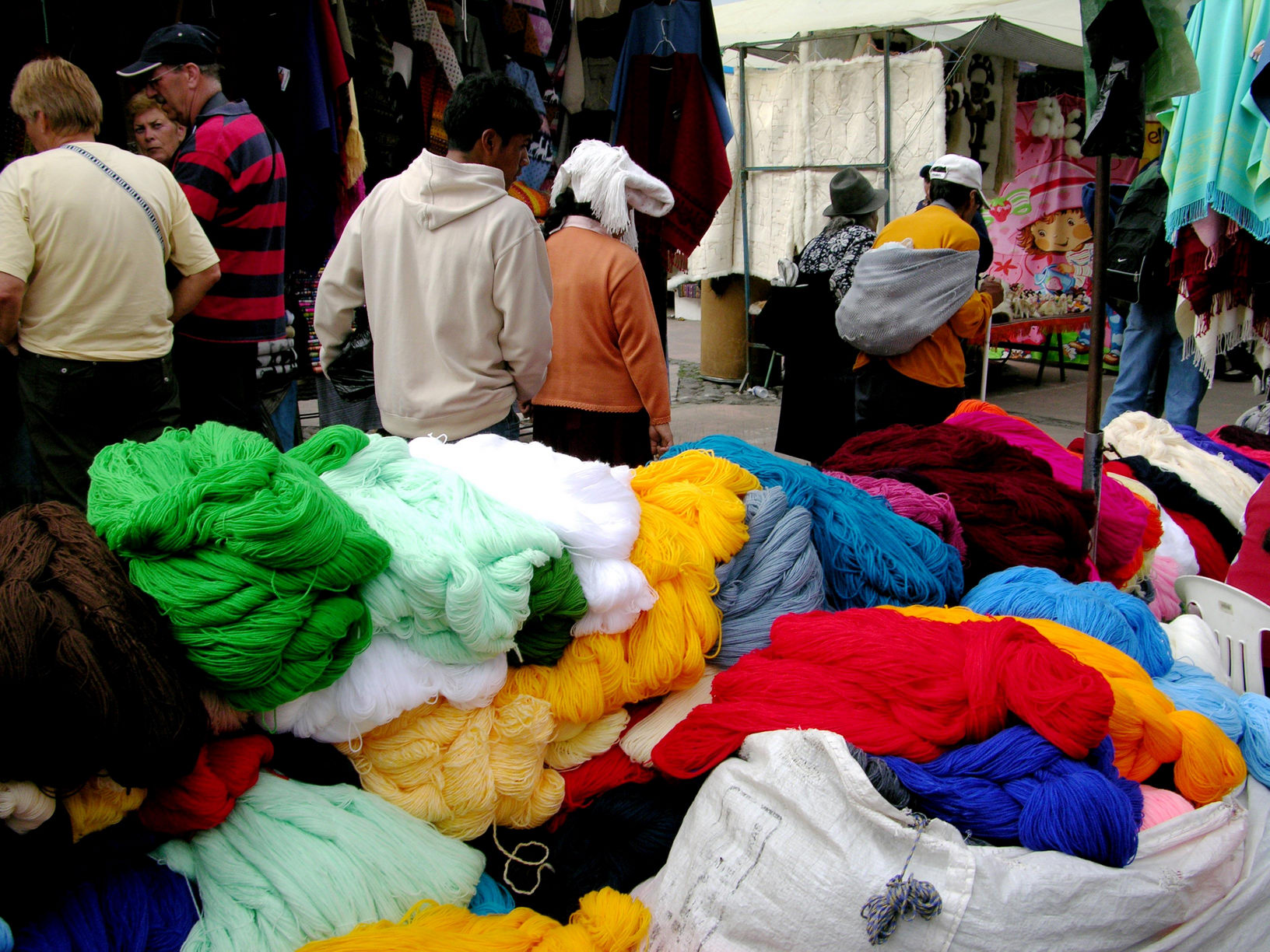
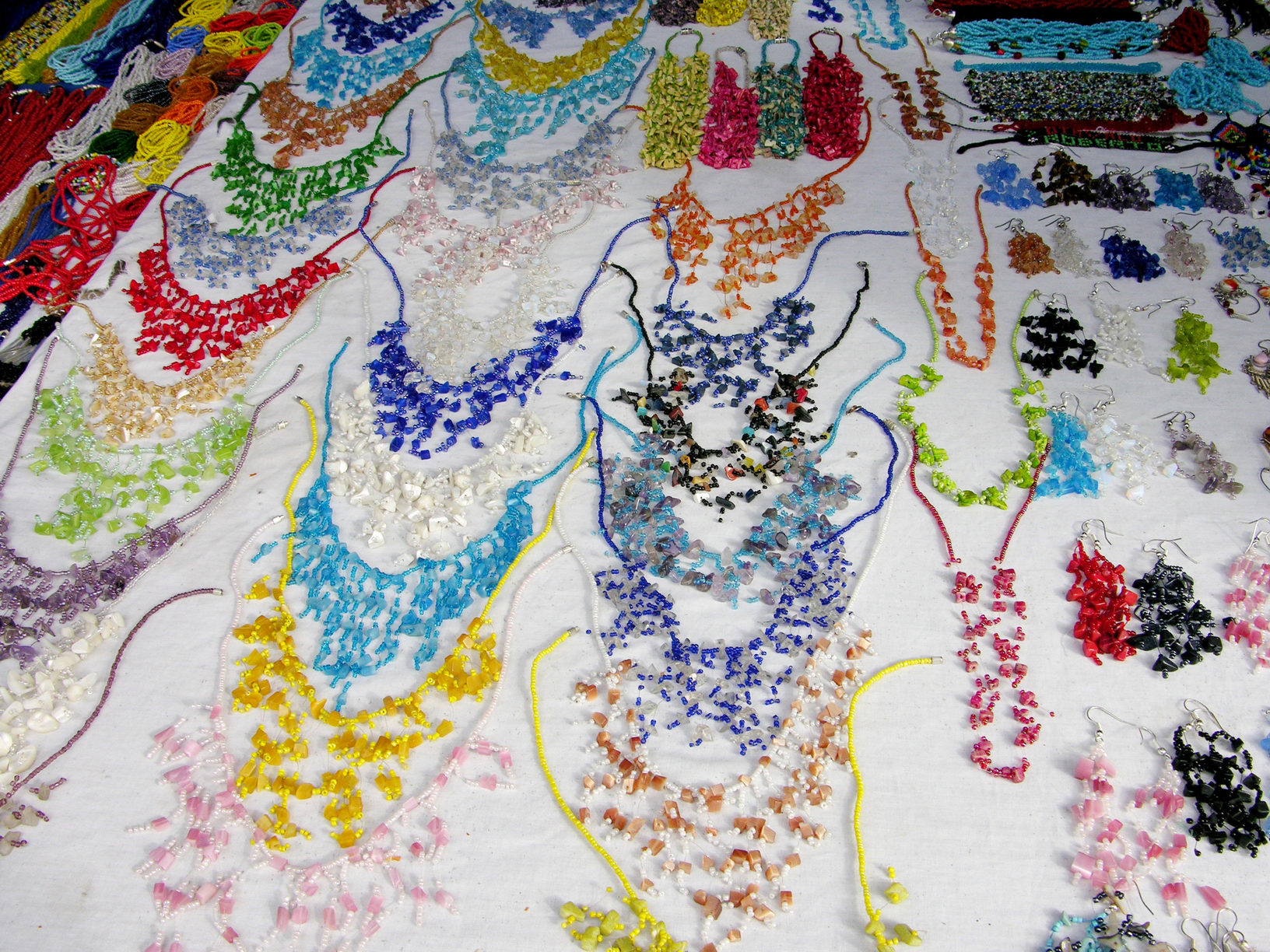
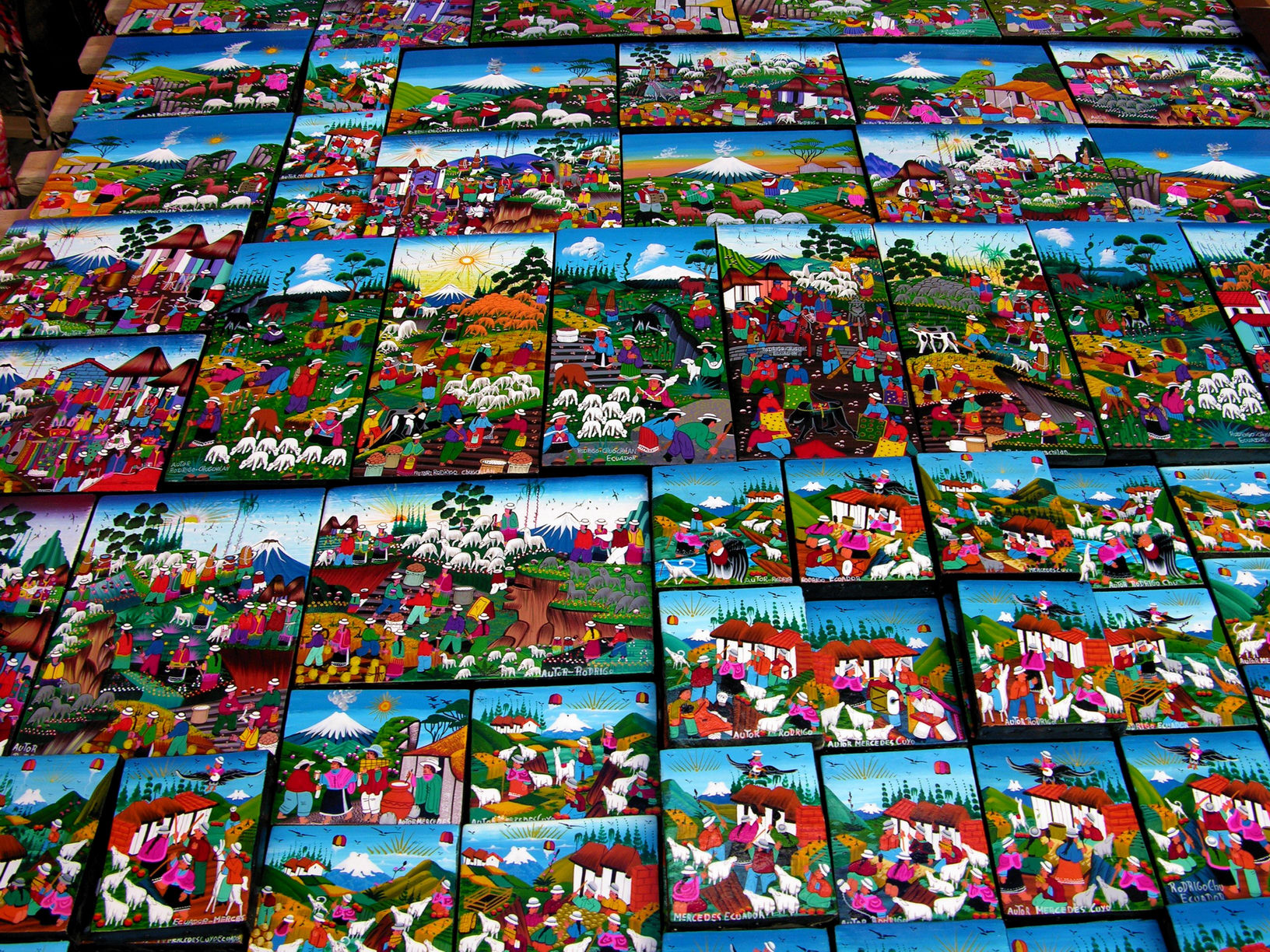
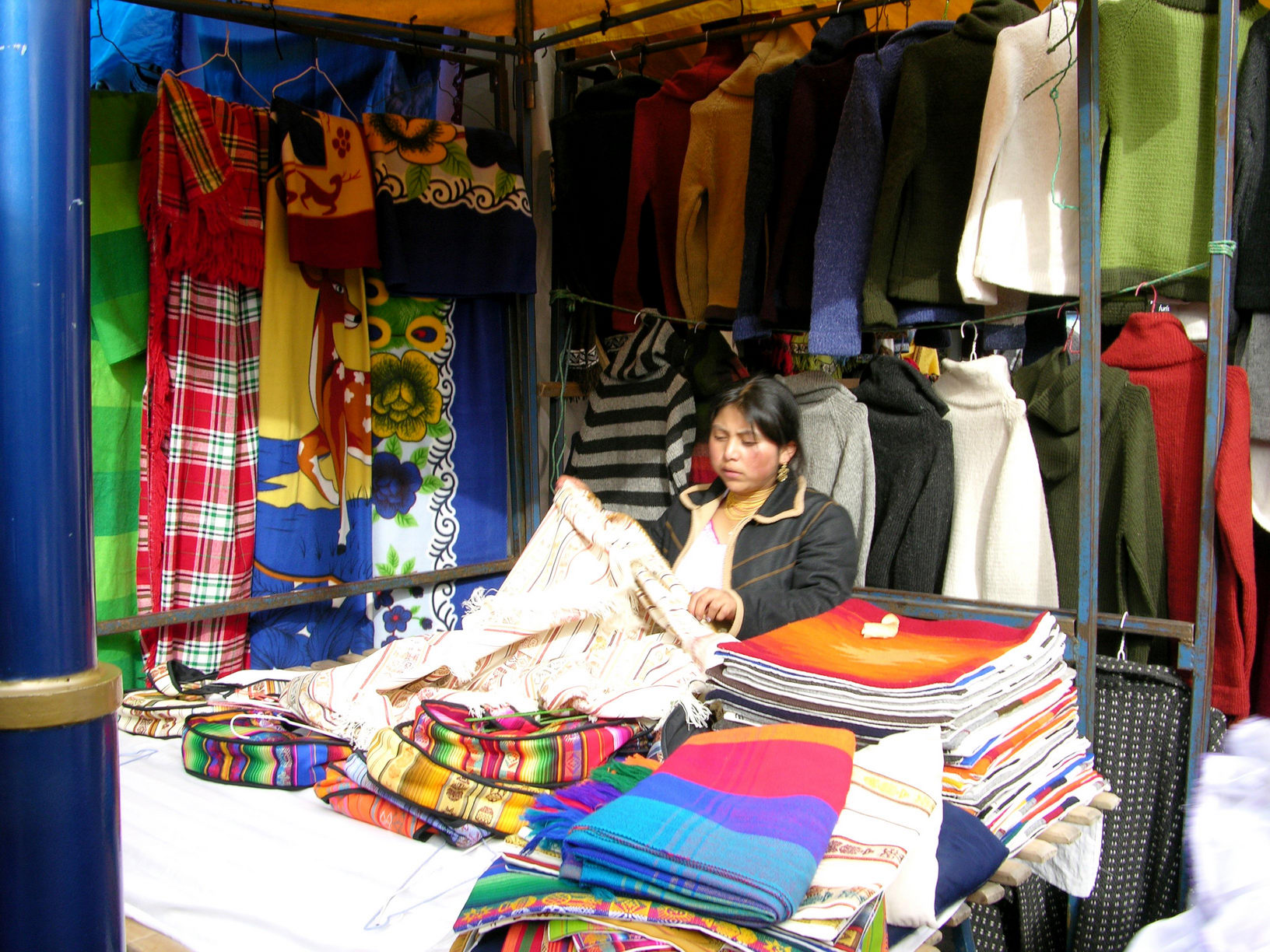
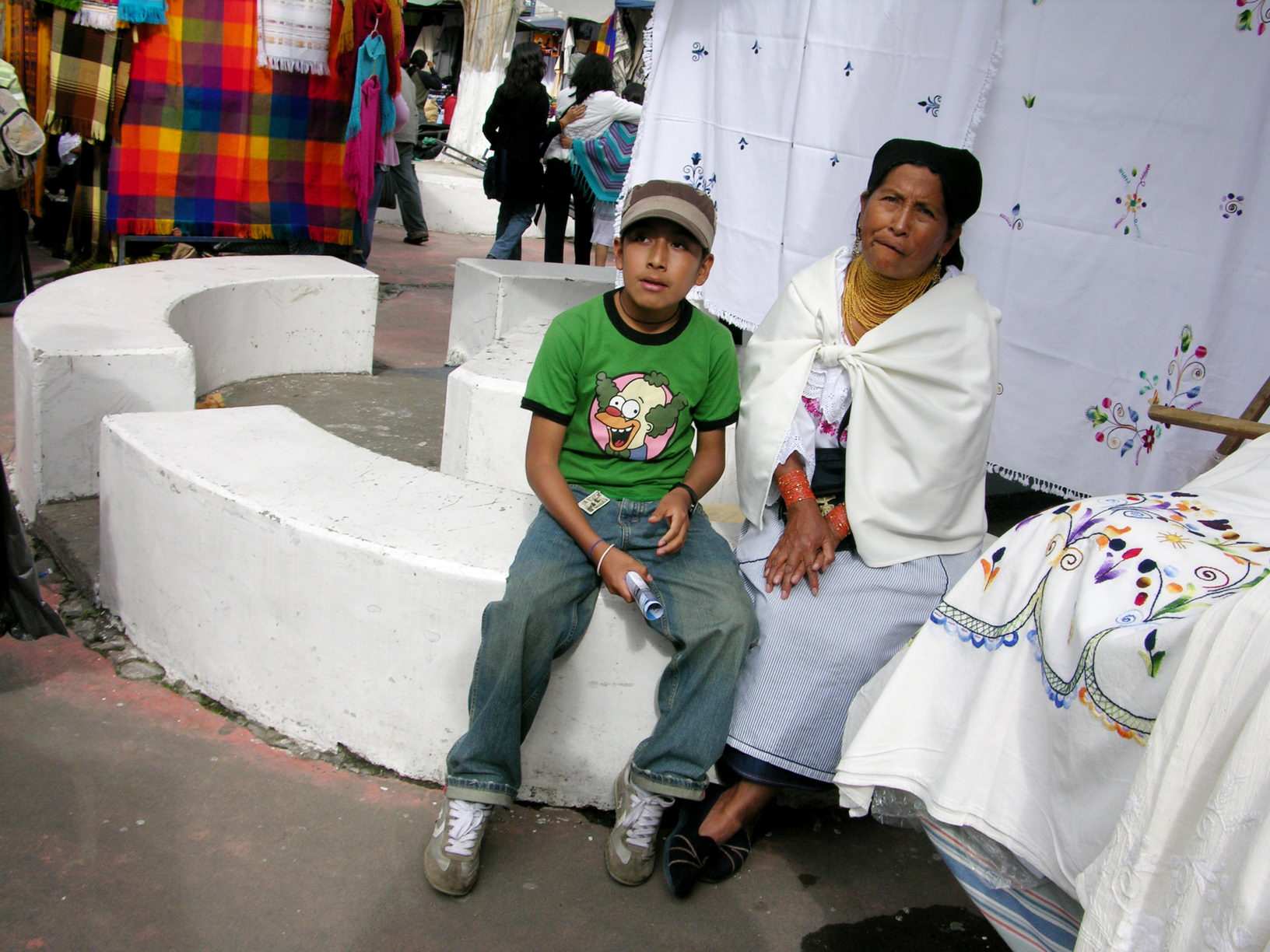
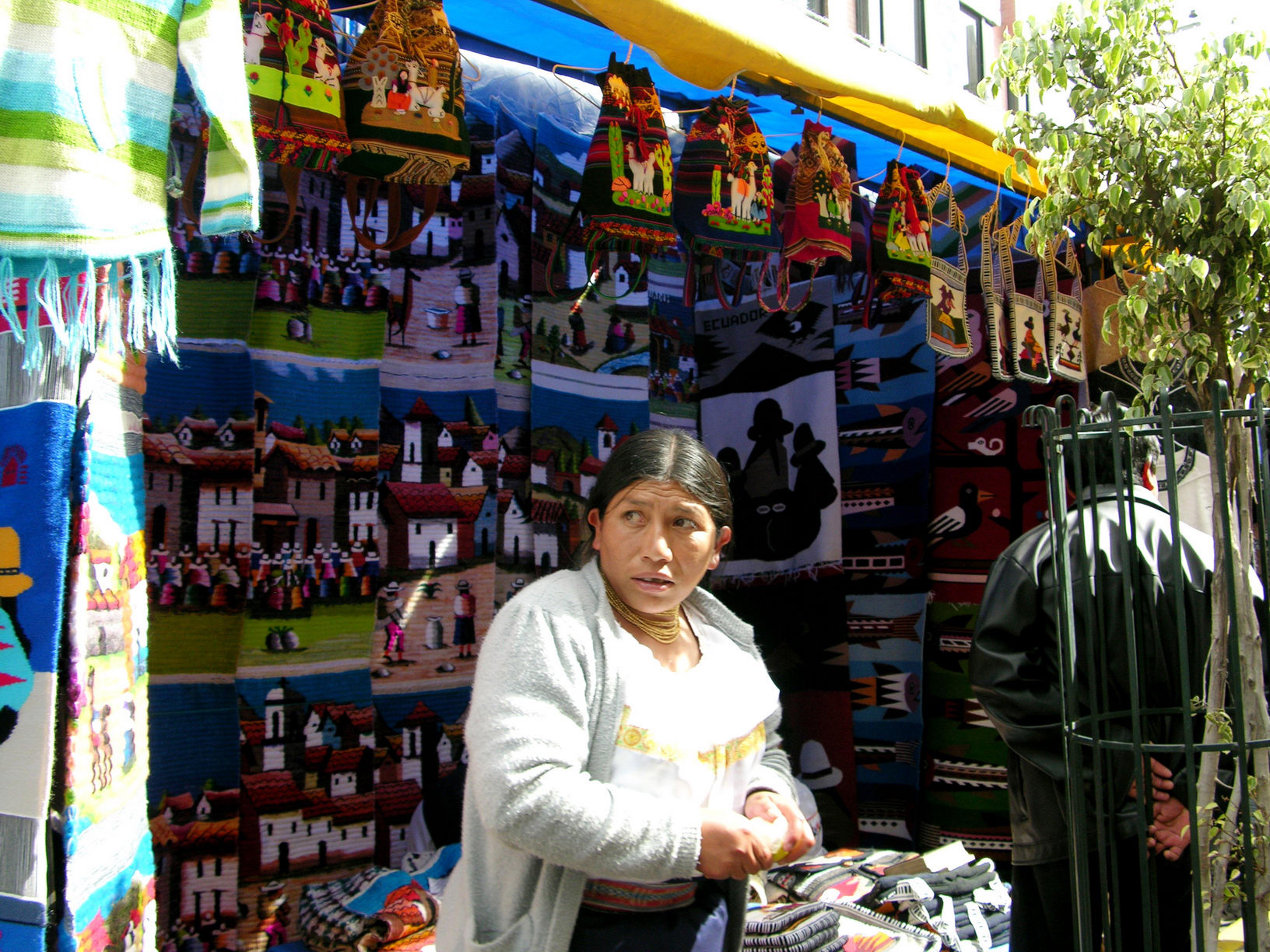
In no time, Tanya had spent $200 and was festooned with packets and bags. We had to crawl back to the bus. On the way we stopped at a Chinese restaurant. We'd almost forgotten what one looked like. We hadn't come across any Chinese people in Brazil or Colombia, whereas in the Guianas at the start of the trip there had seemed to be nothing else to eat.
It was dark by the time we got to Quito. We found a hotel in Lonely Planet (0°13.263′S, 78°30.591′W) and took a taxi. The hotel turned out to be two hundred metres from the bus station, but it took an age to get there. Quito is enormous, with traffic jams and a tortuous road system. Everything seemed to be one-way and every turn was forbidden.
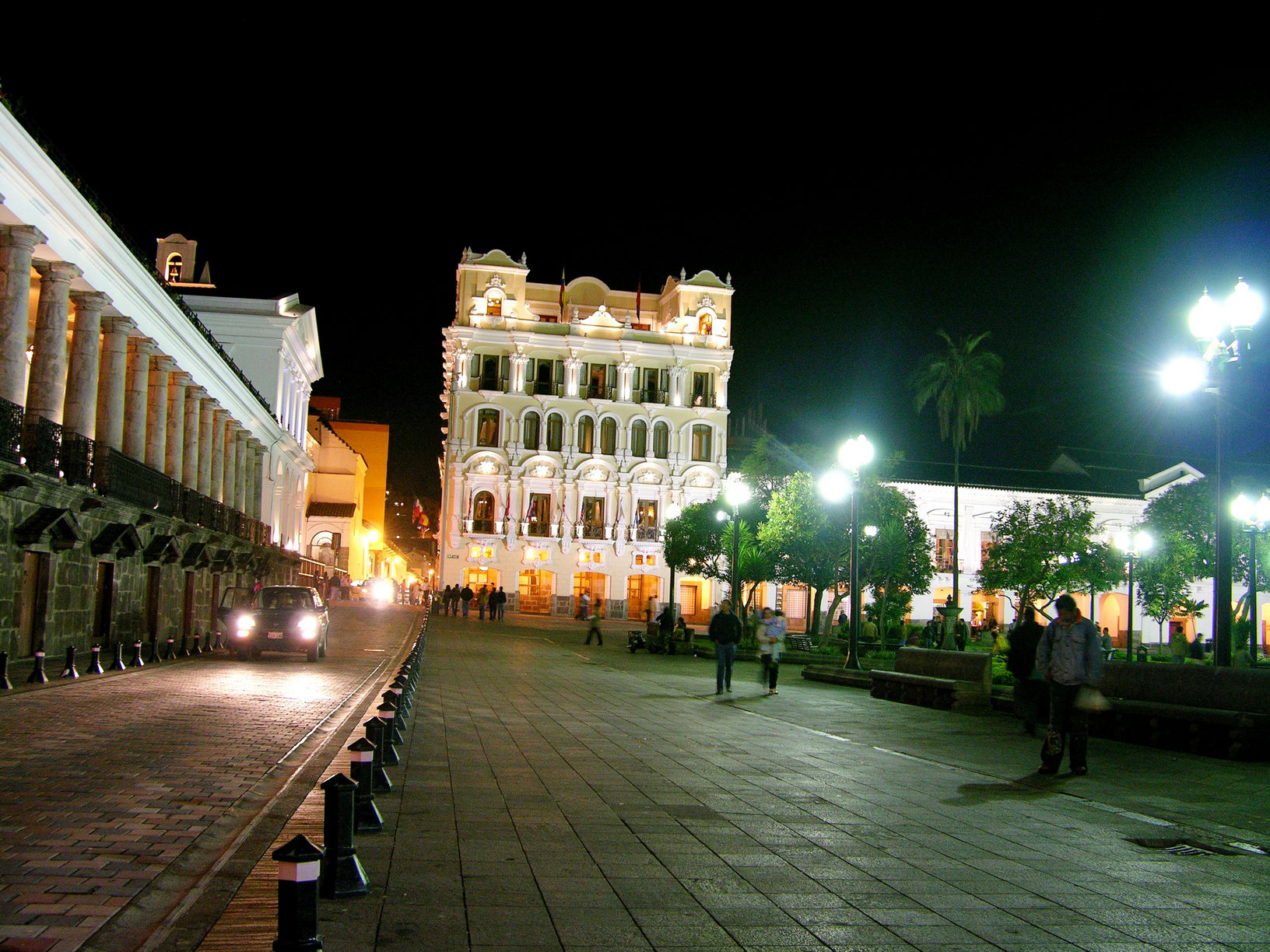
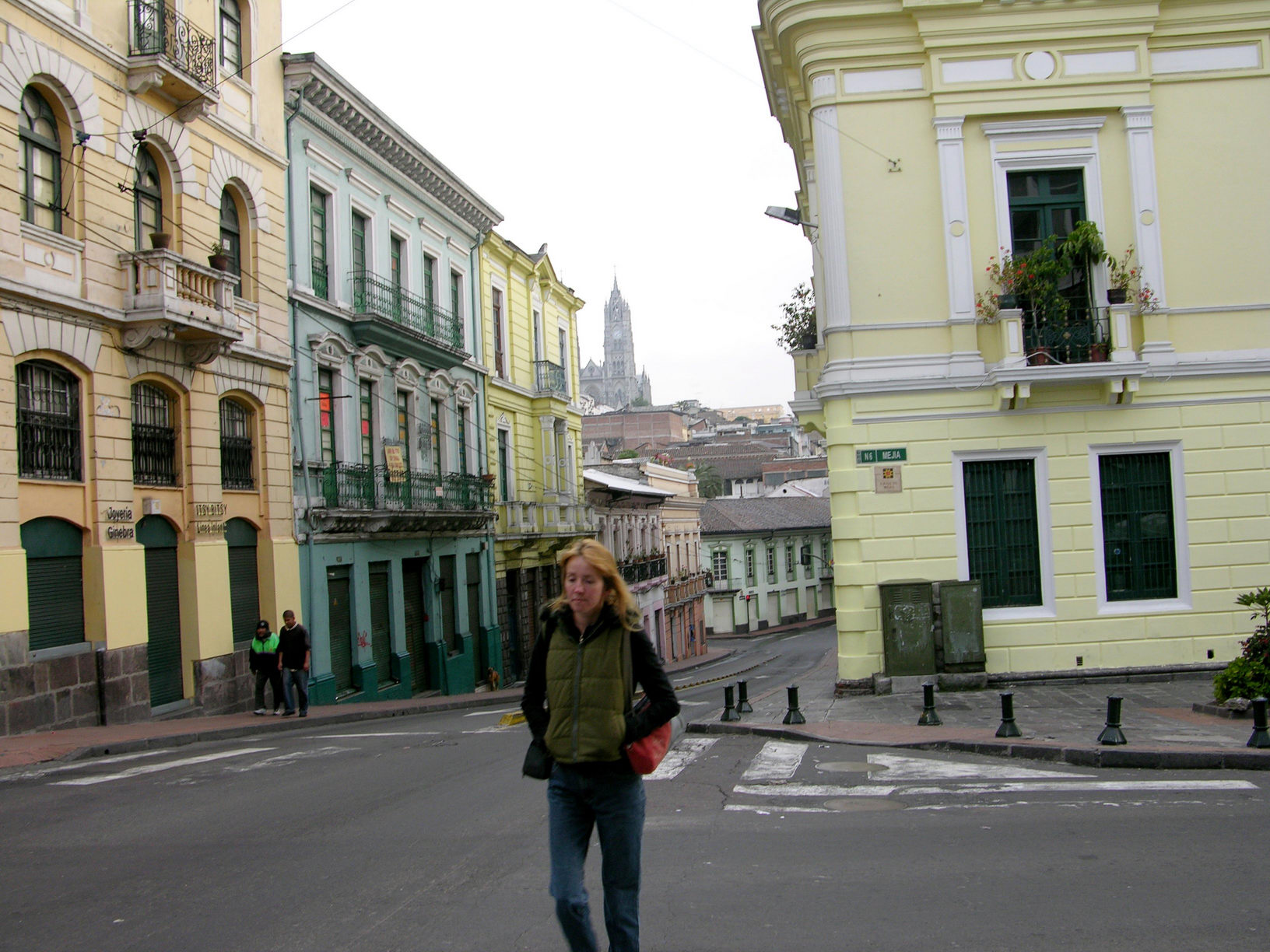
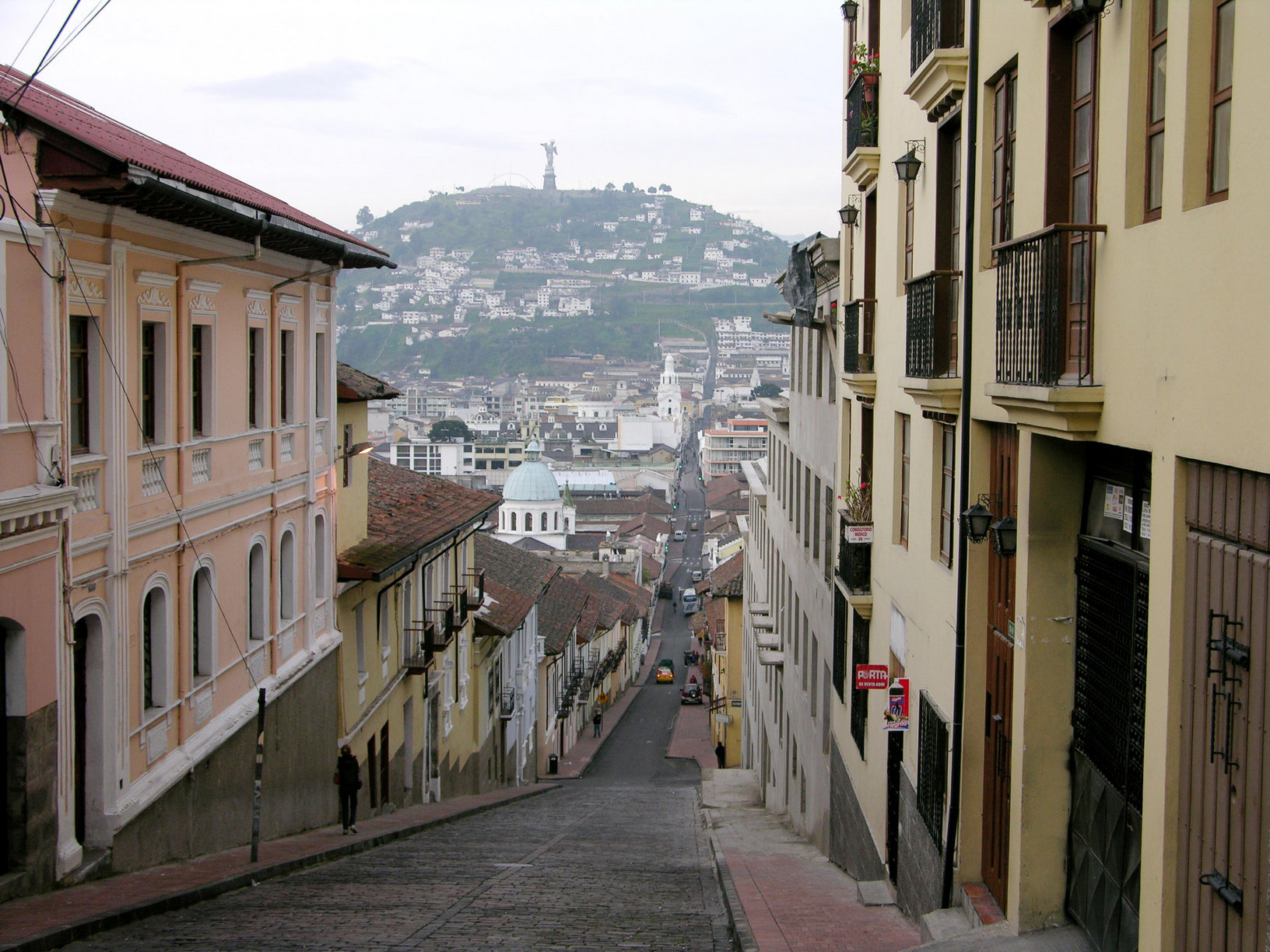
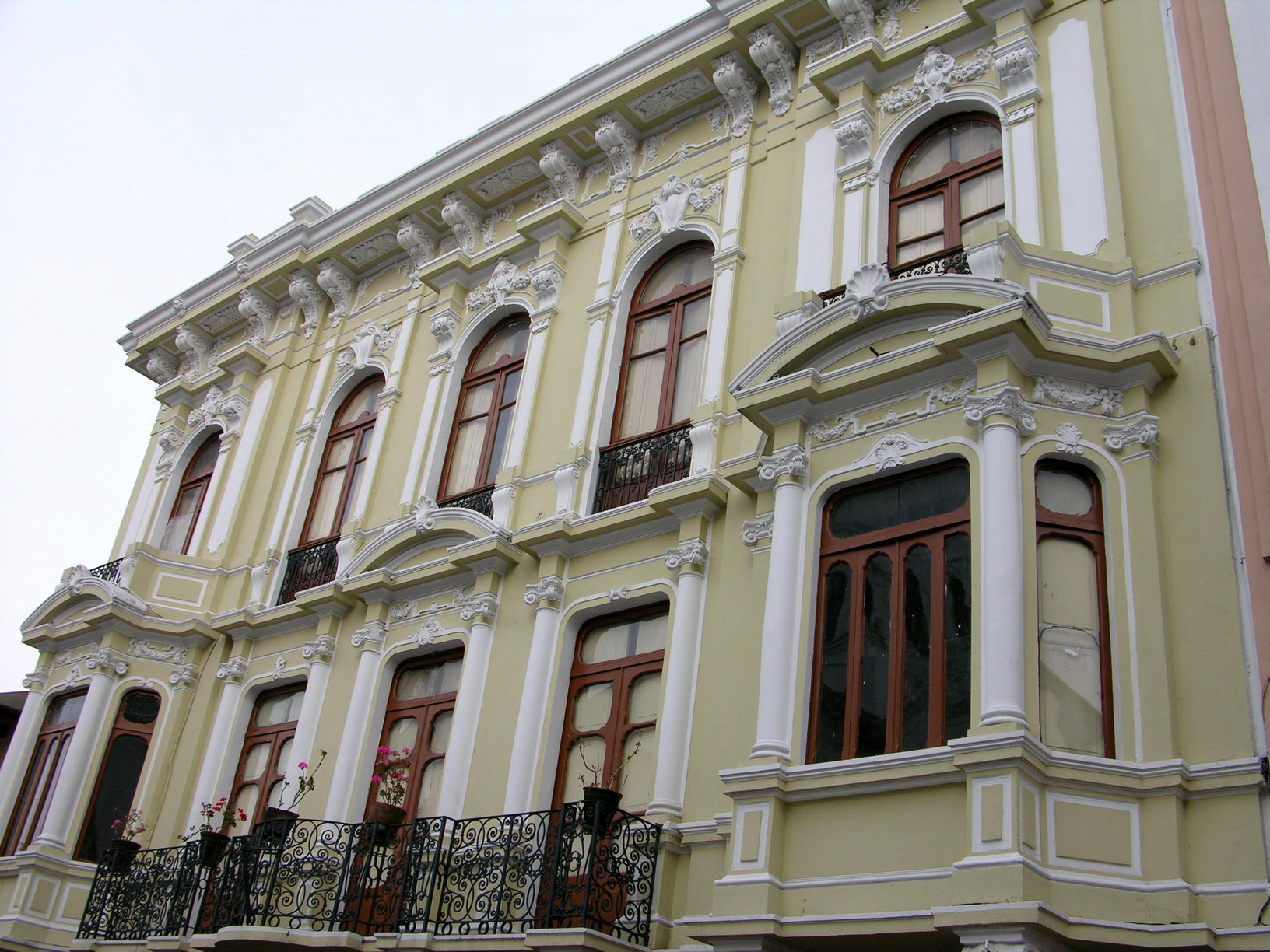
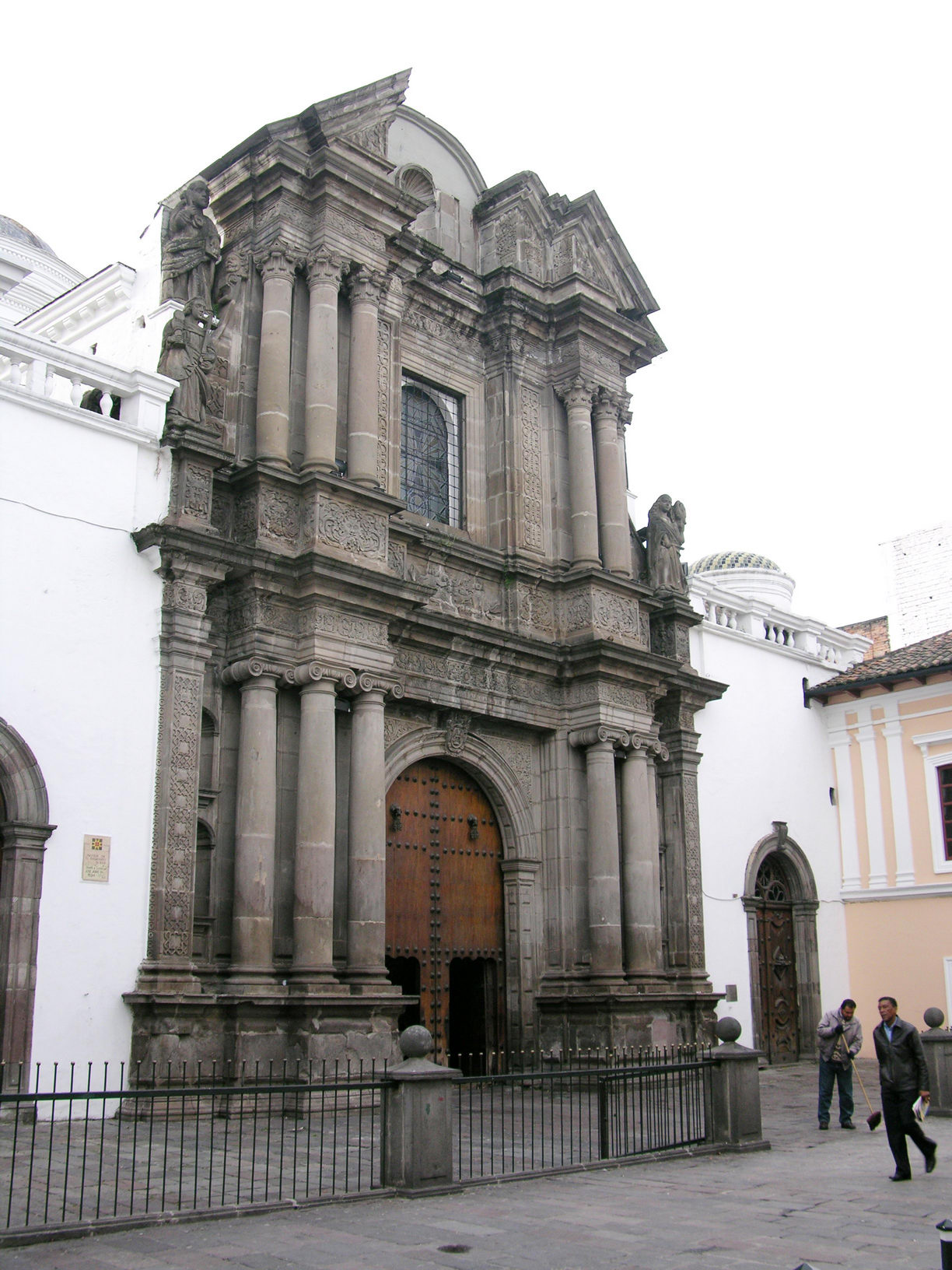
We dropped our innumerable bags at the hotel and went for a walk. Quito is an astonishingly beautiful city, a cultural capital of Latin America. There are marble palaces and painted ceilings in the arched passageways. In places it is spotless and well tended, as neat as the cleanest European town. The great cathedral is the size of Cologne's. Russian flag-wavers are fond of saying, “Saint Petersburg is the most beautiful city in the world.” As if they'd seen the whole world and compared it objectively. Here I was walking through Quito, thinking that perhaps it was even more beautiful than Saint Petersburg.
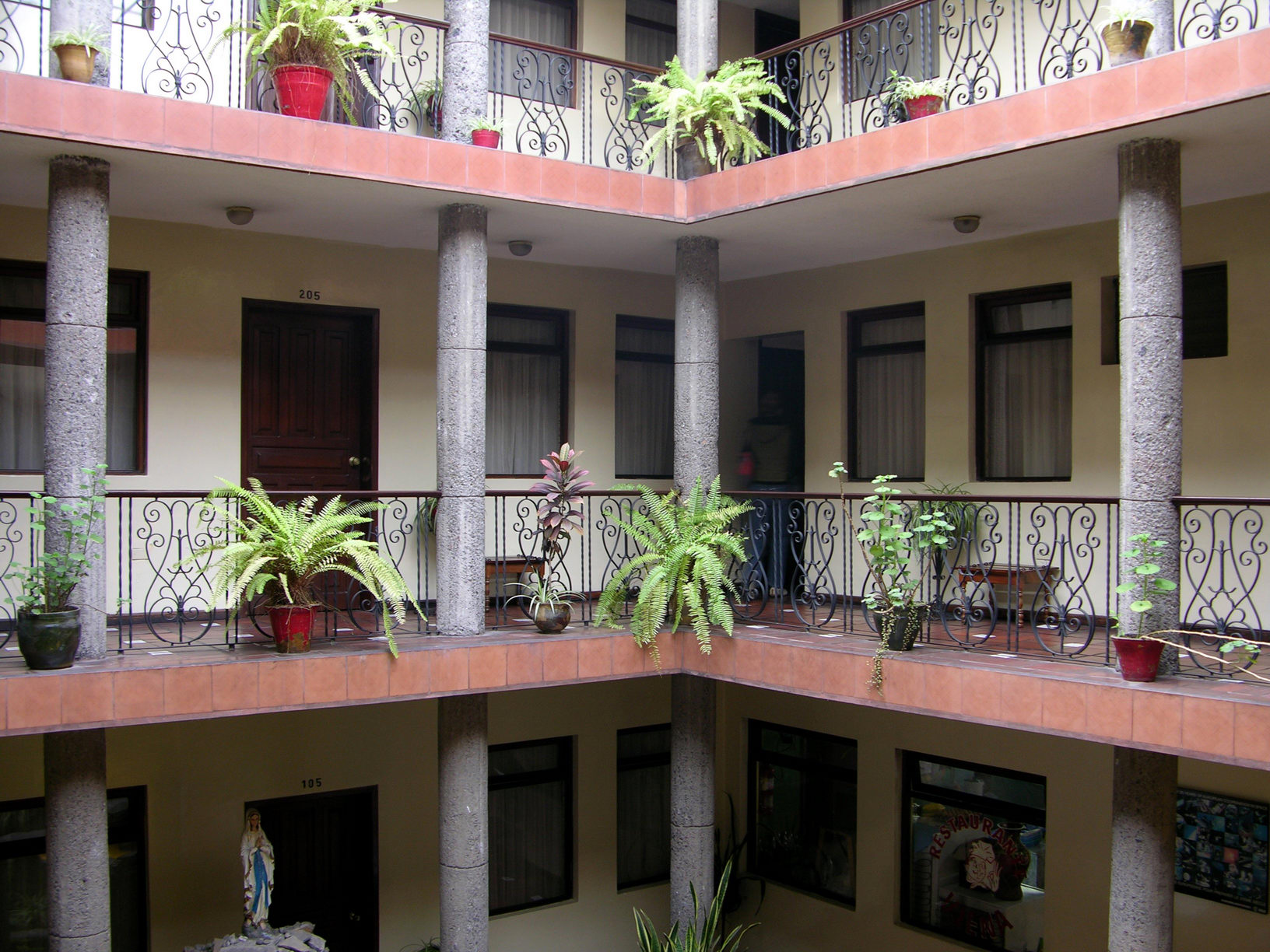
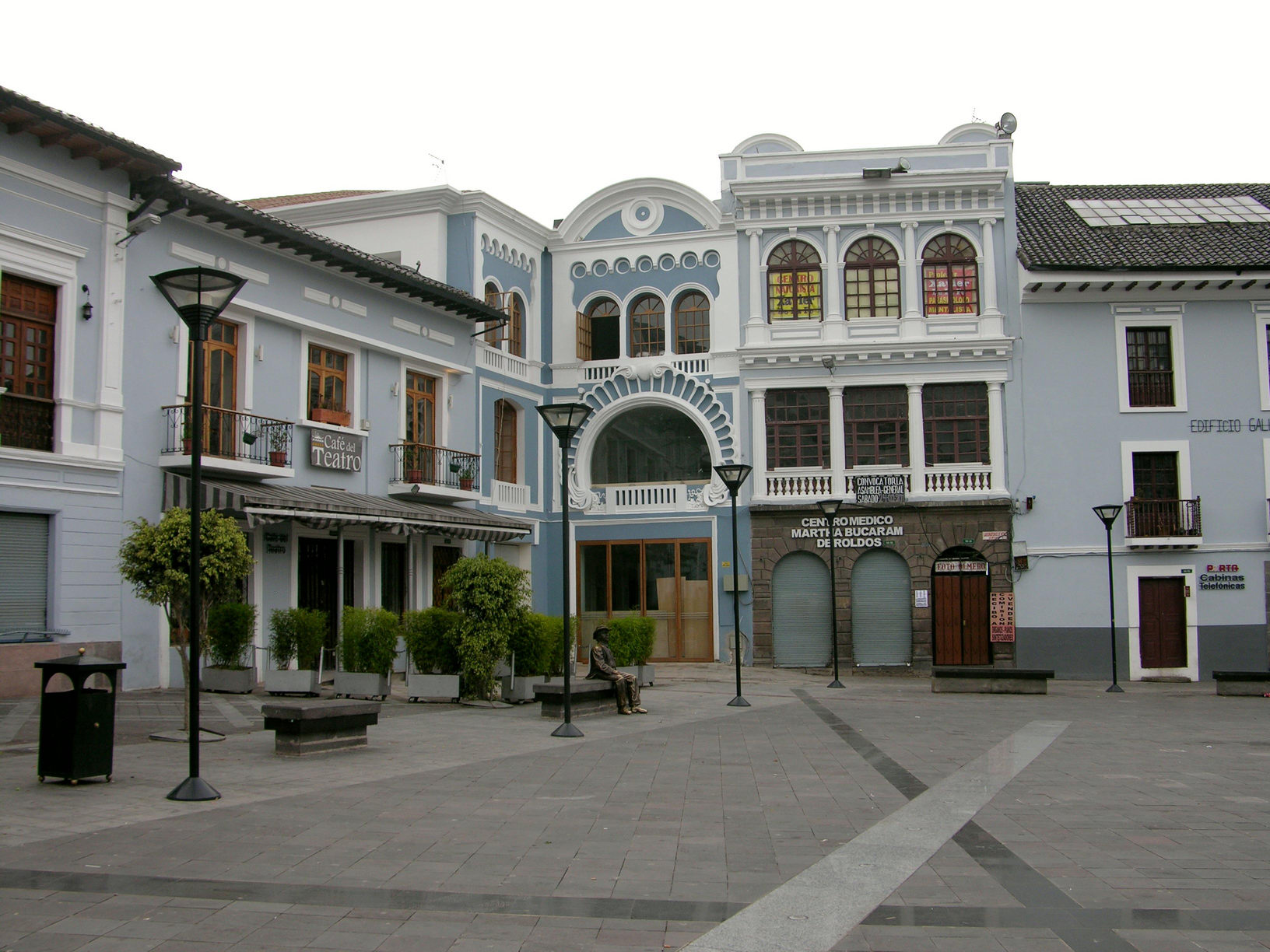
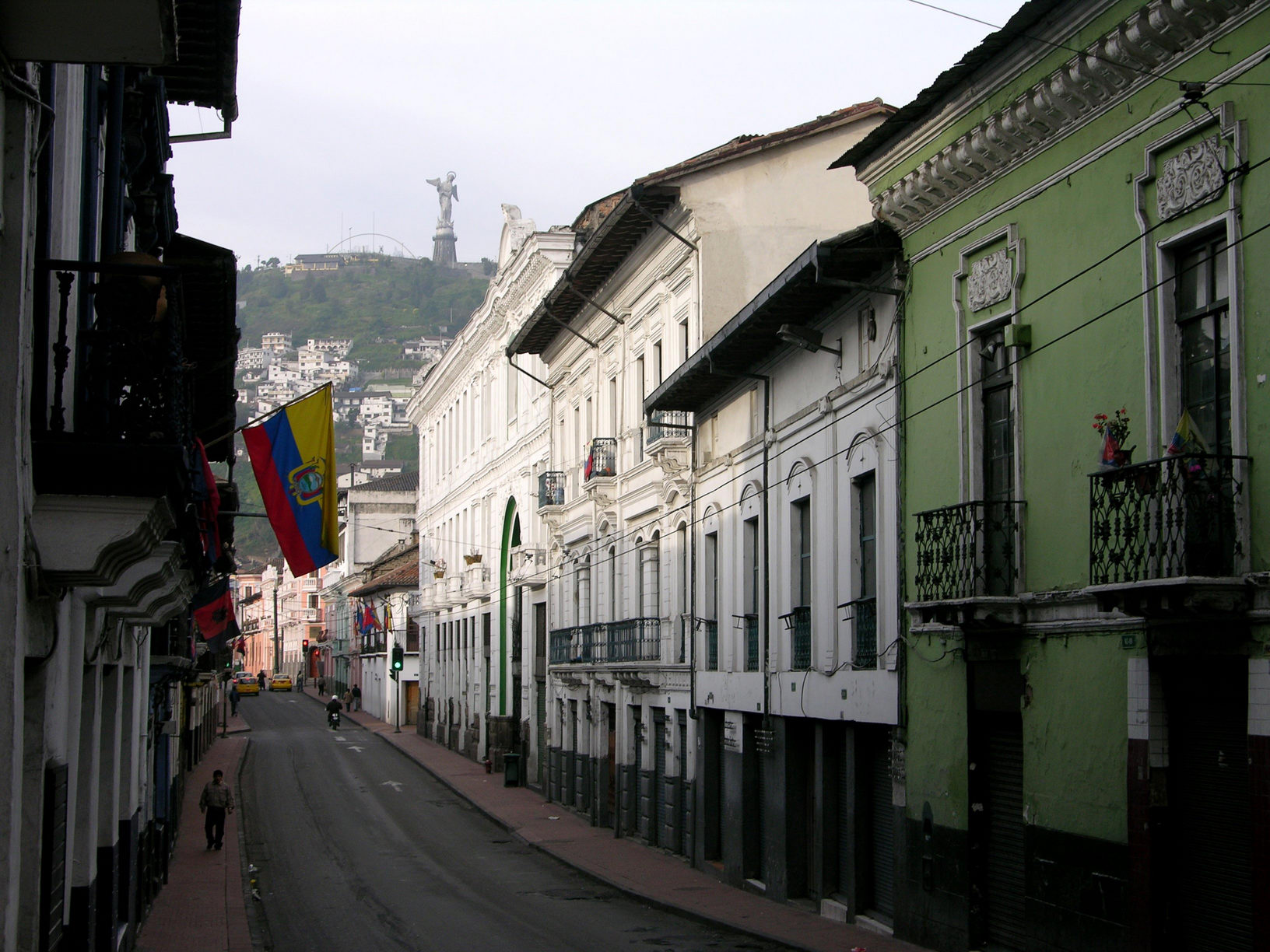
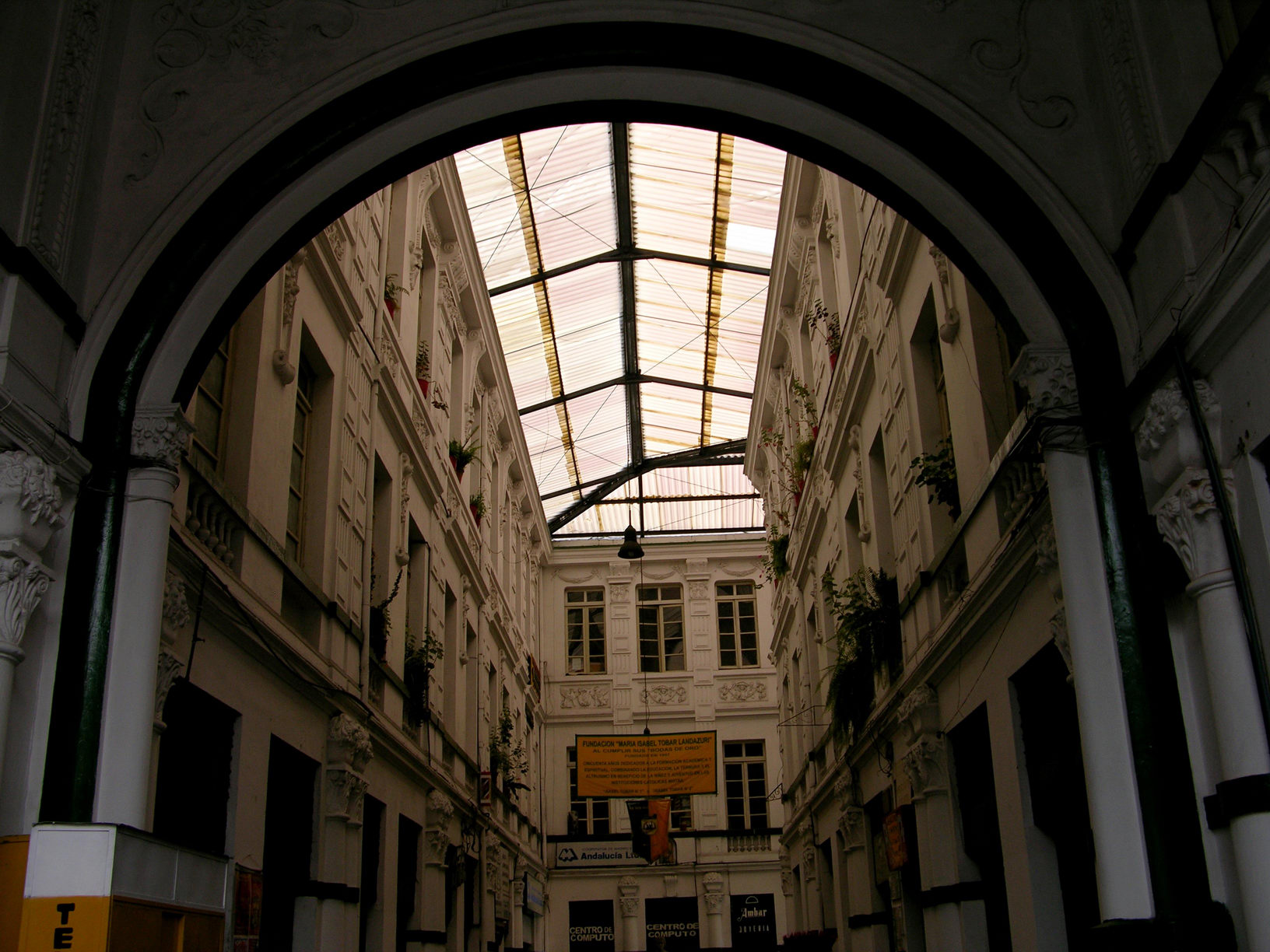
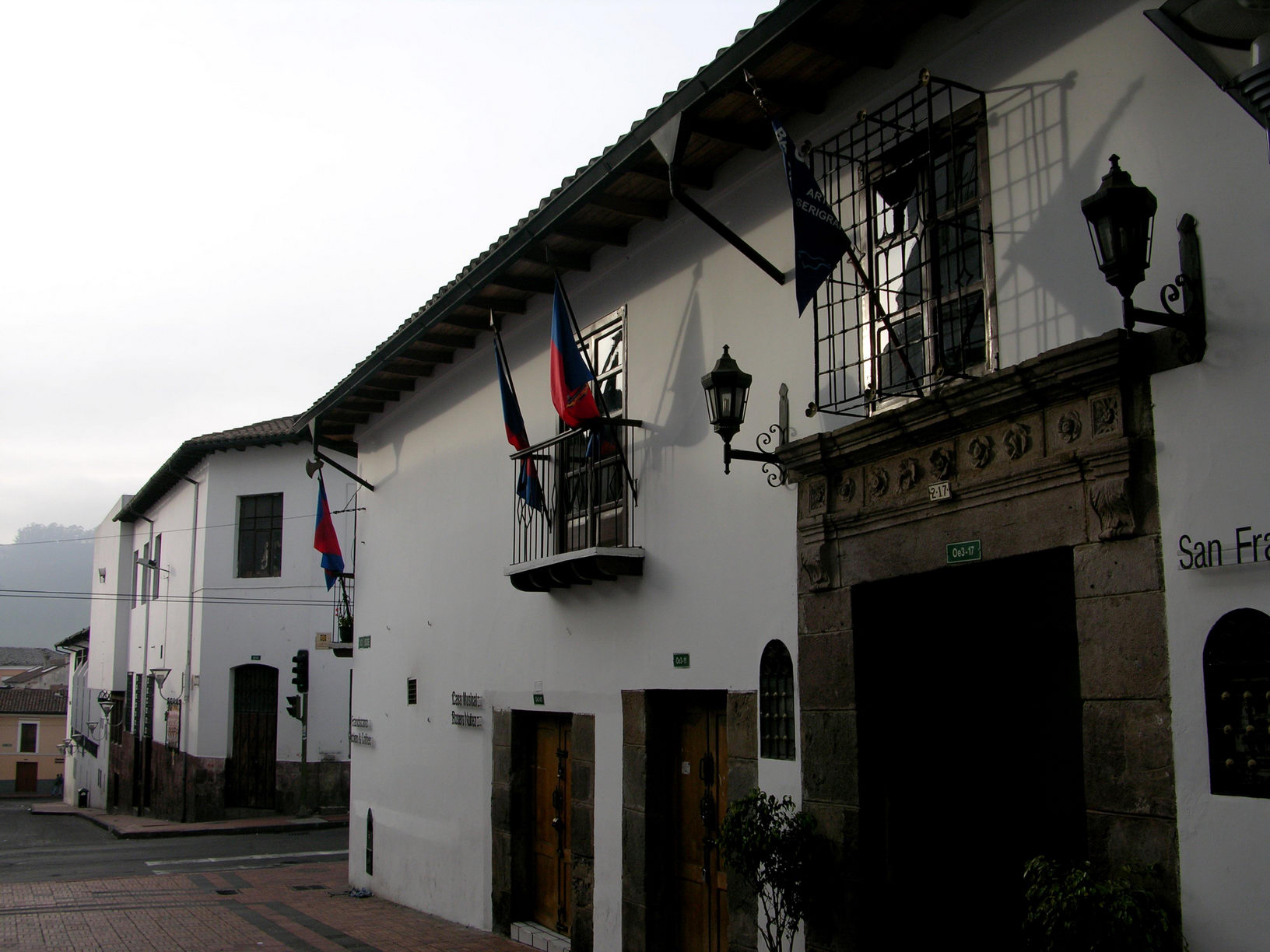
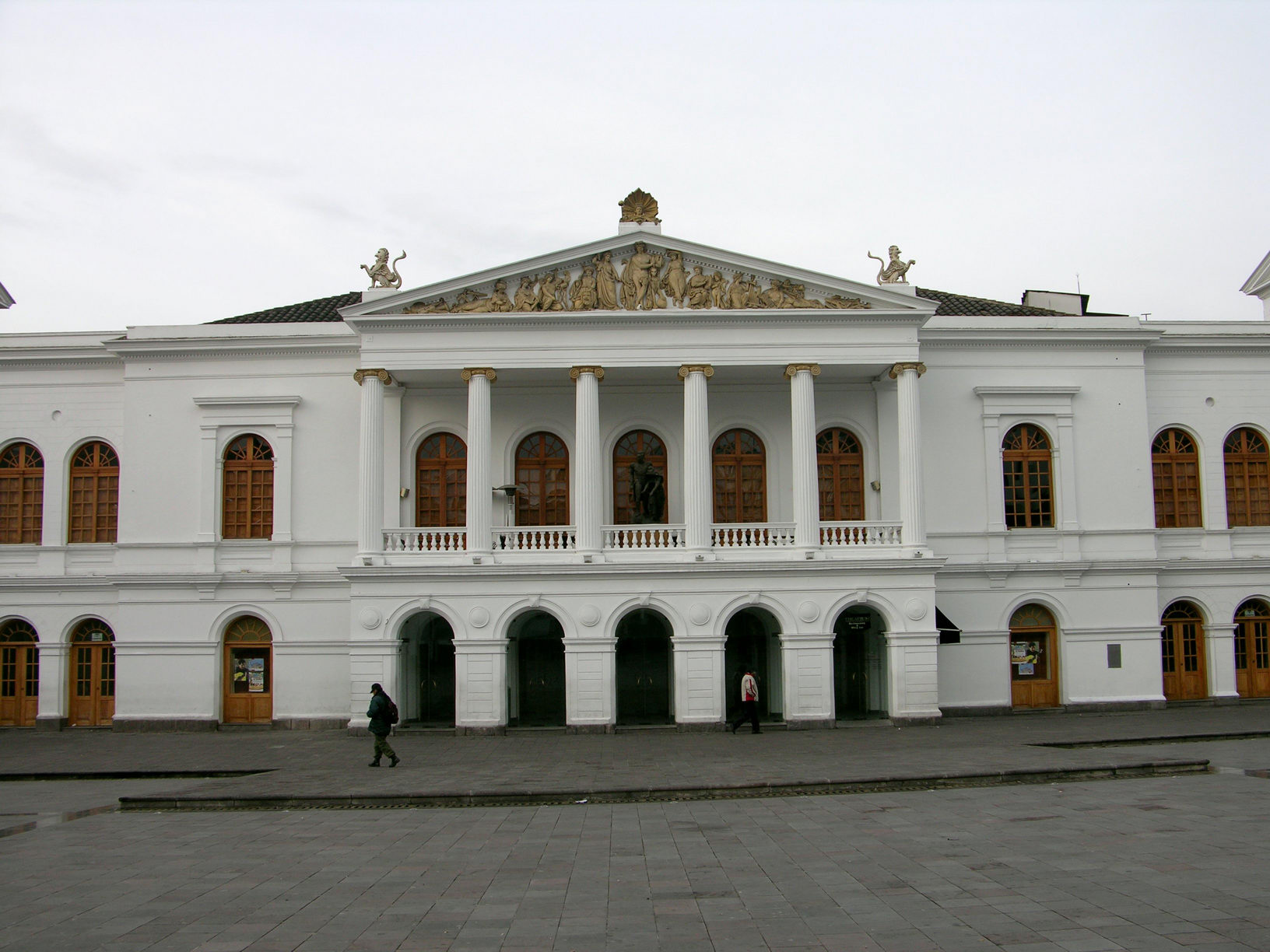
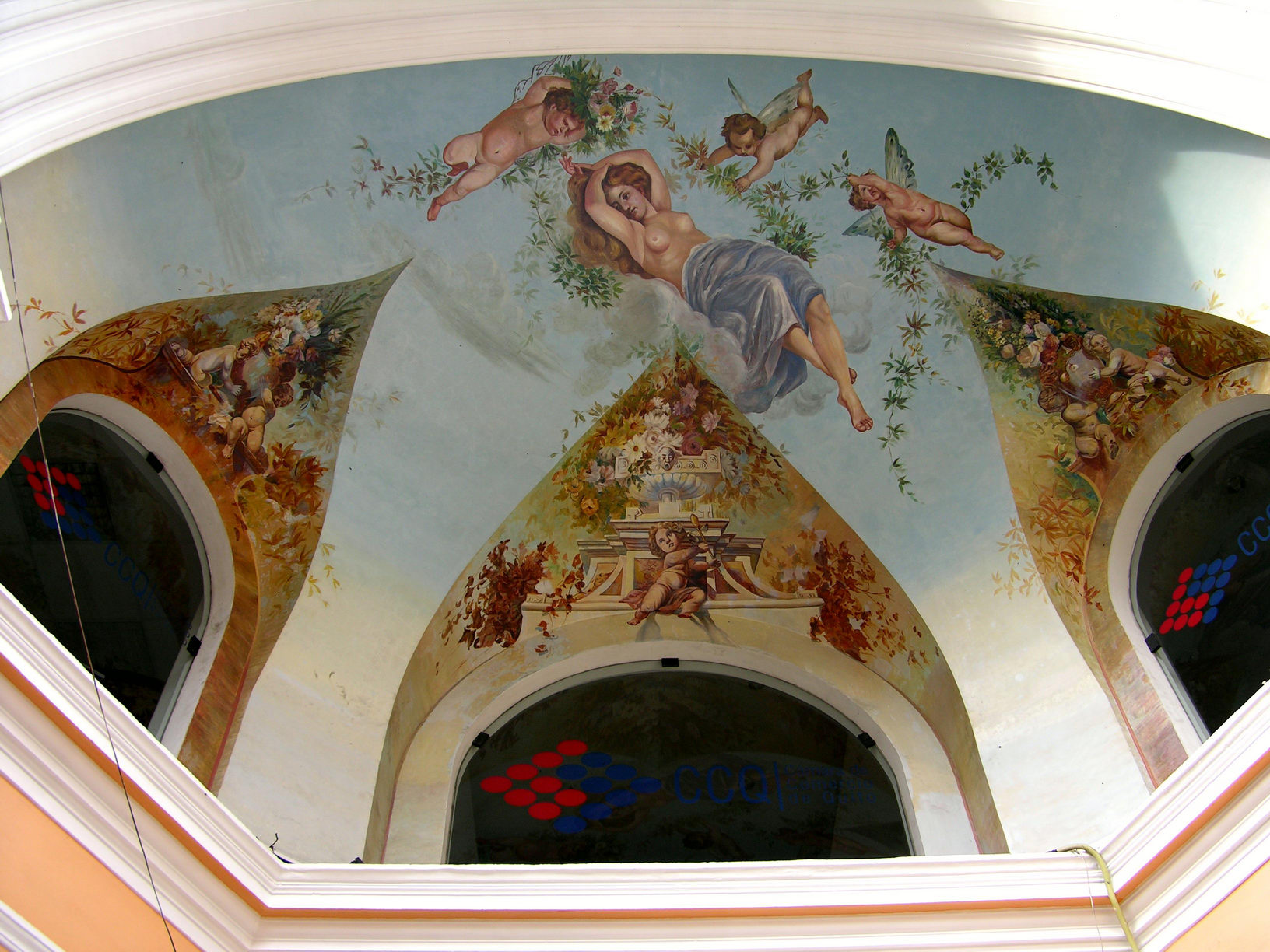
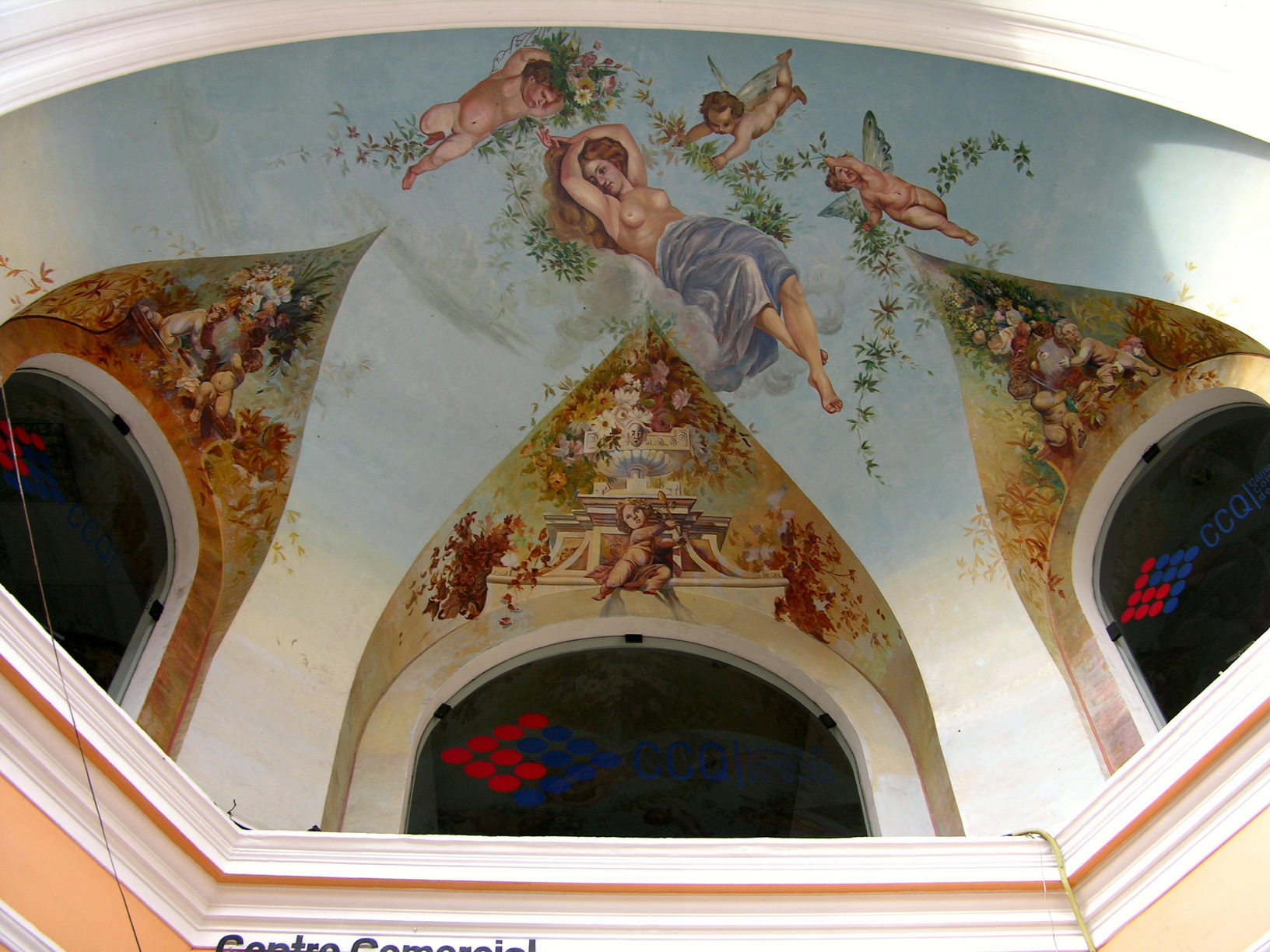
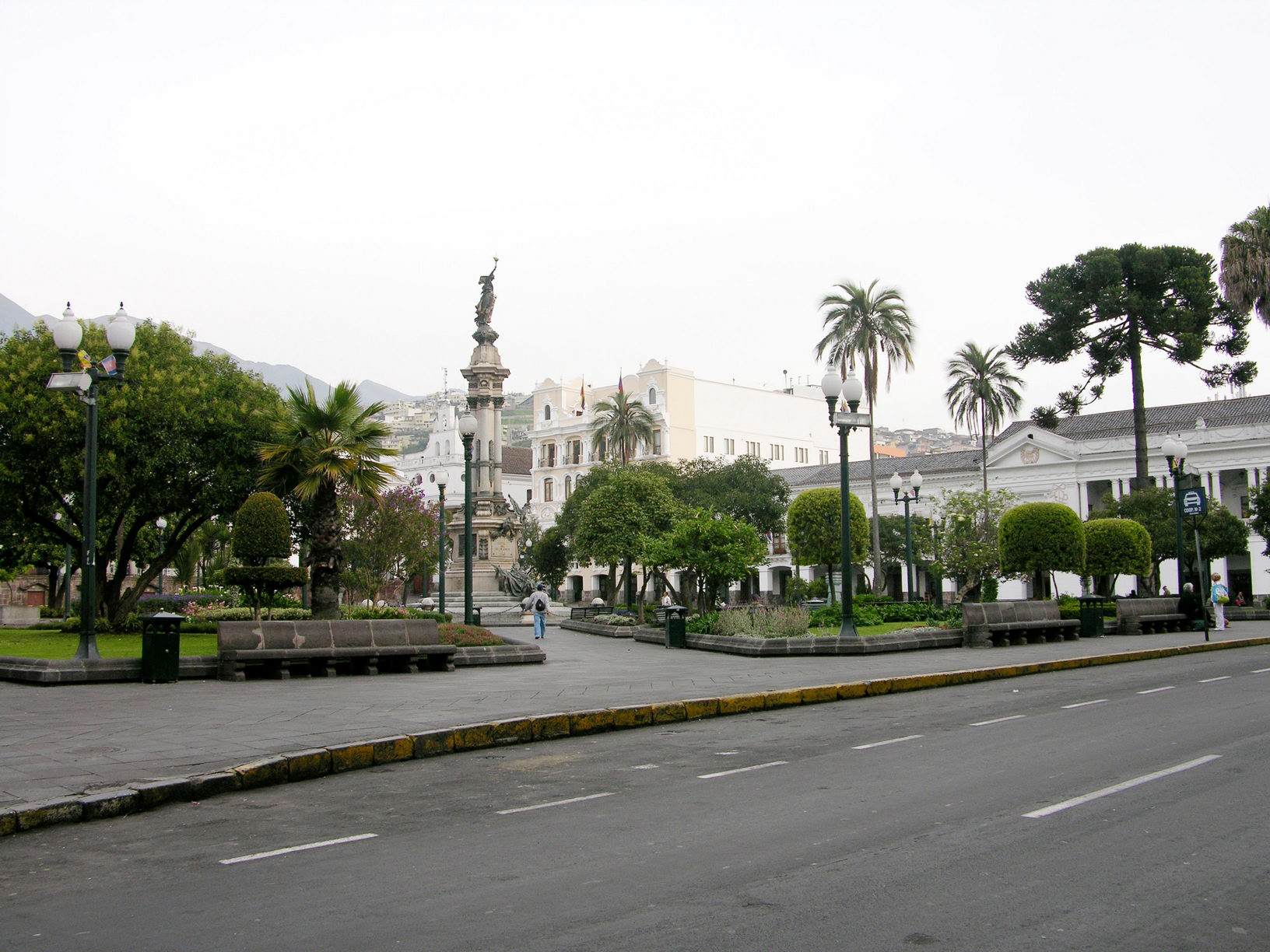
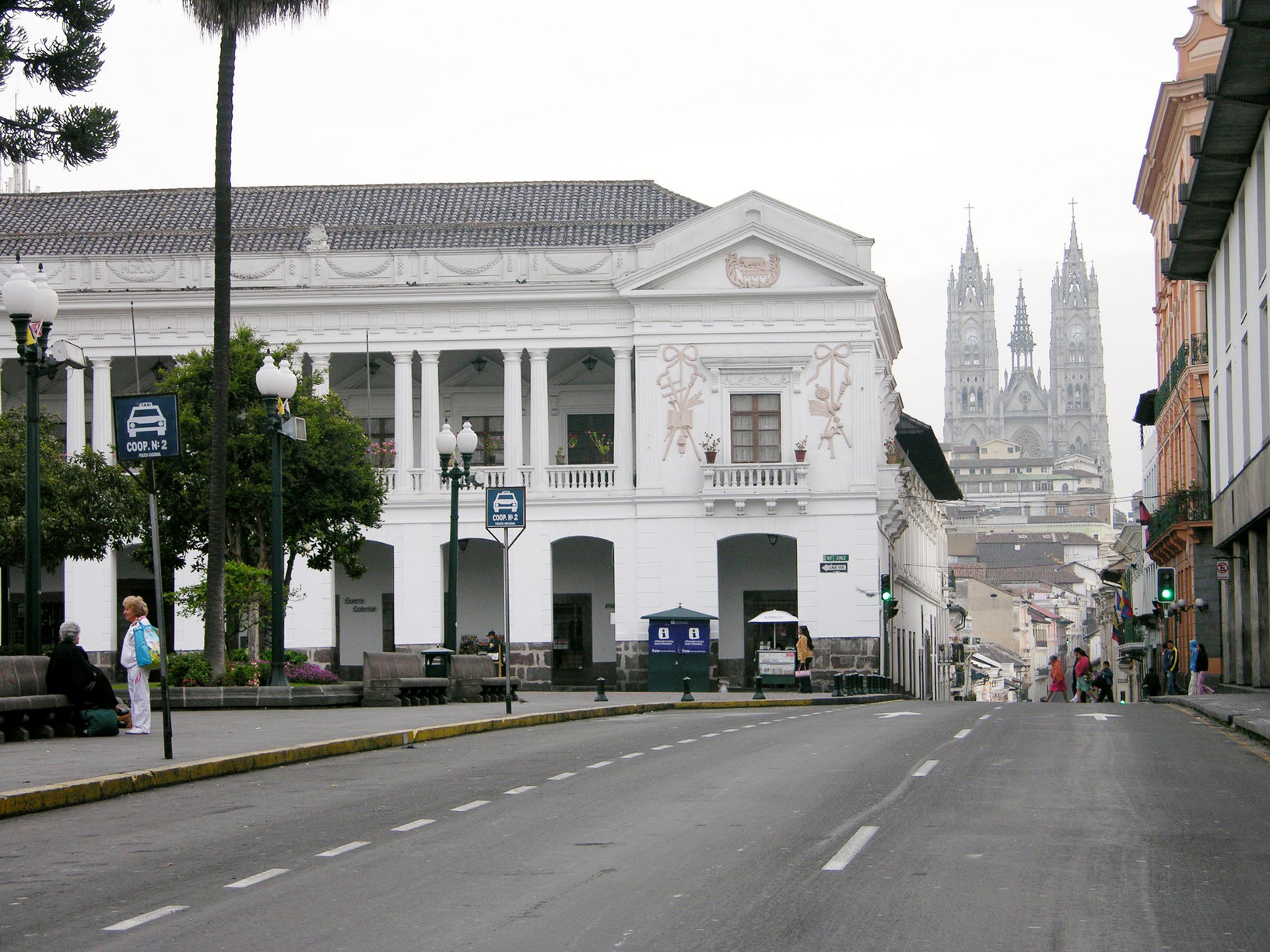
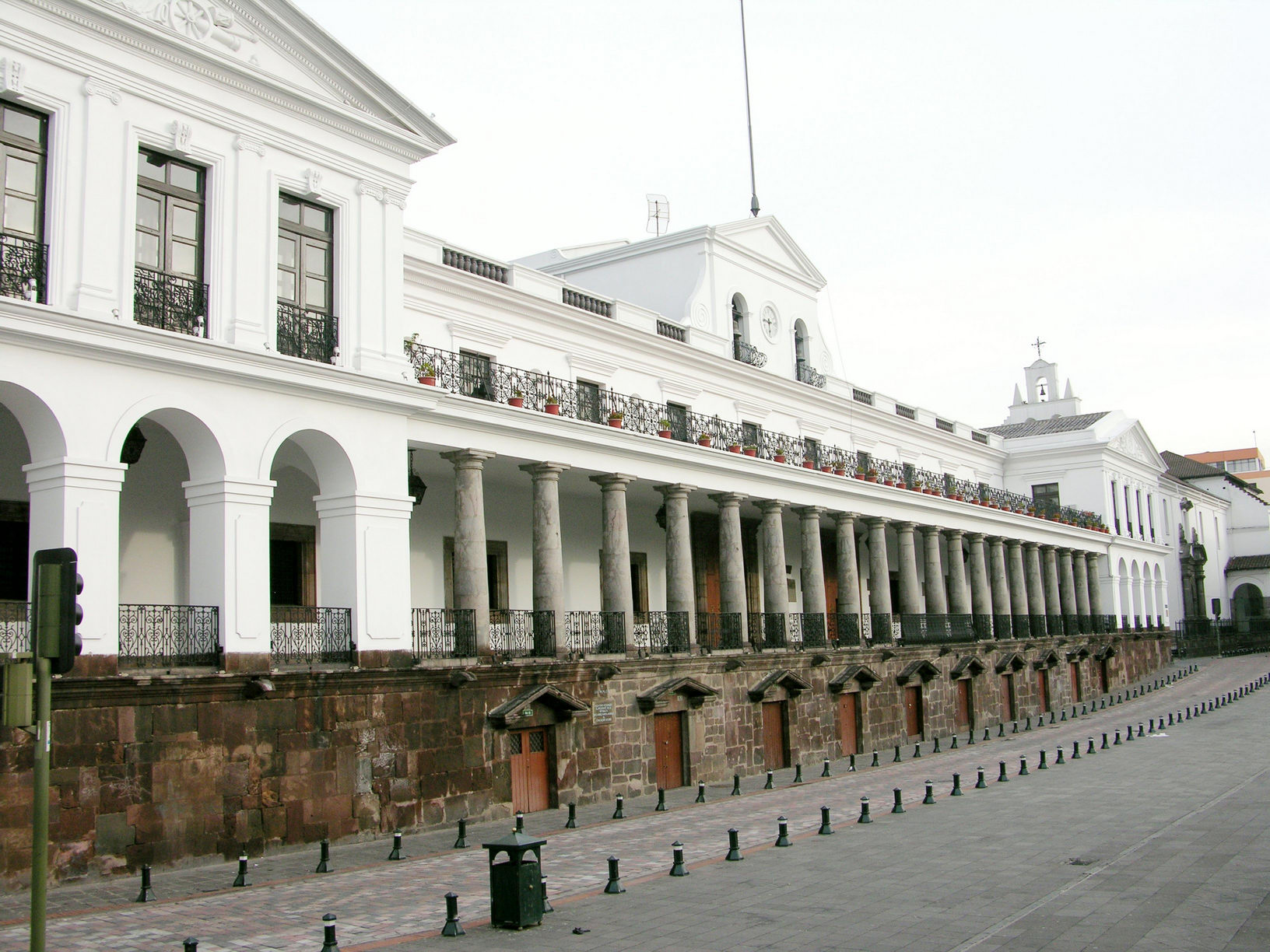
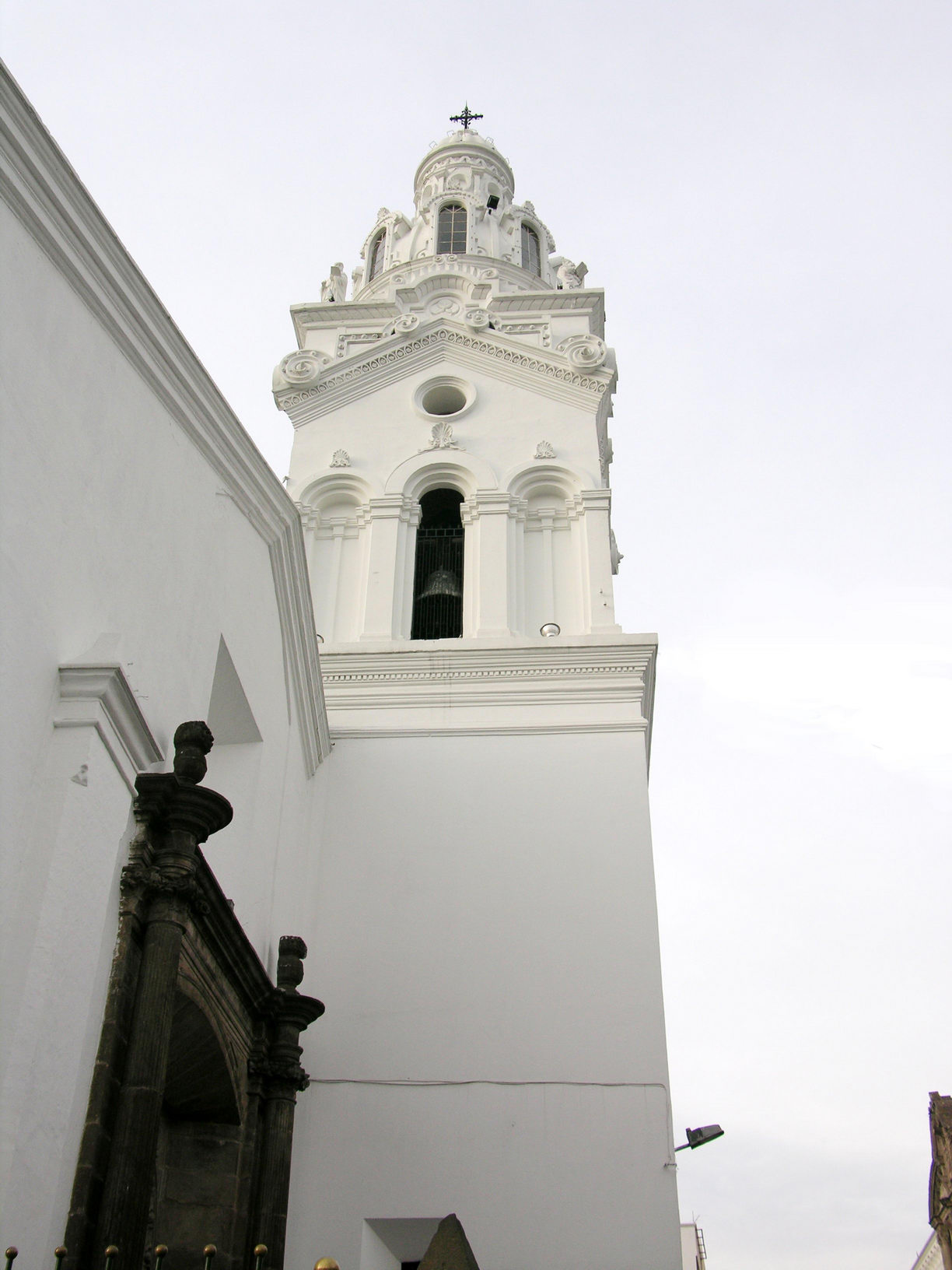
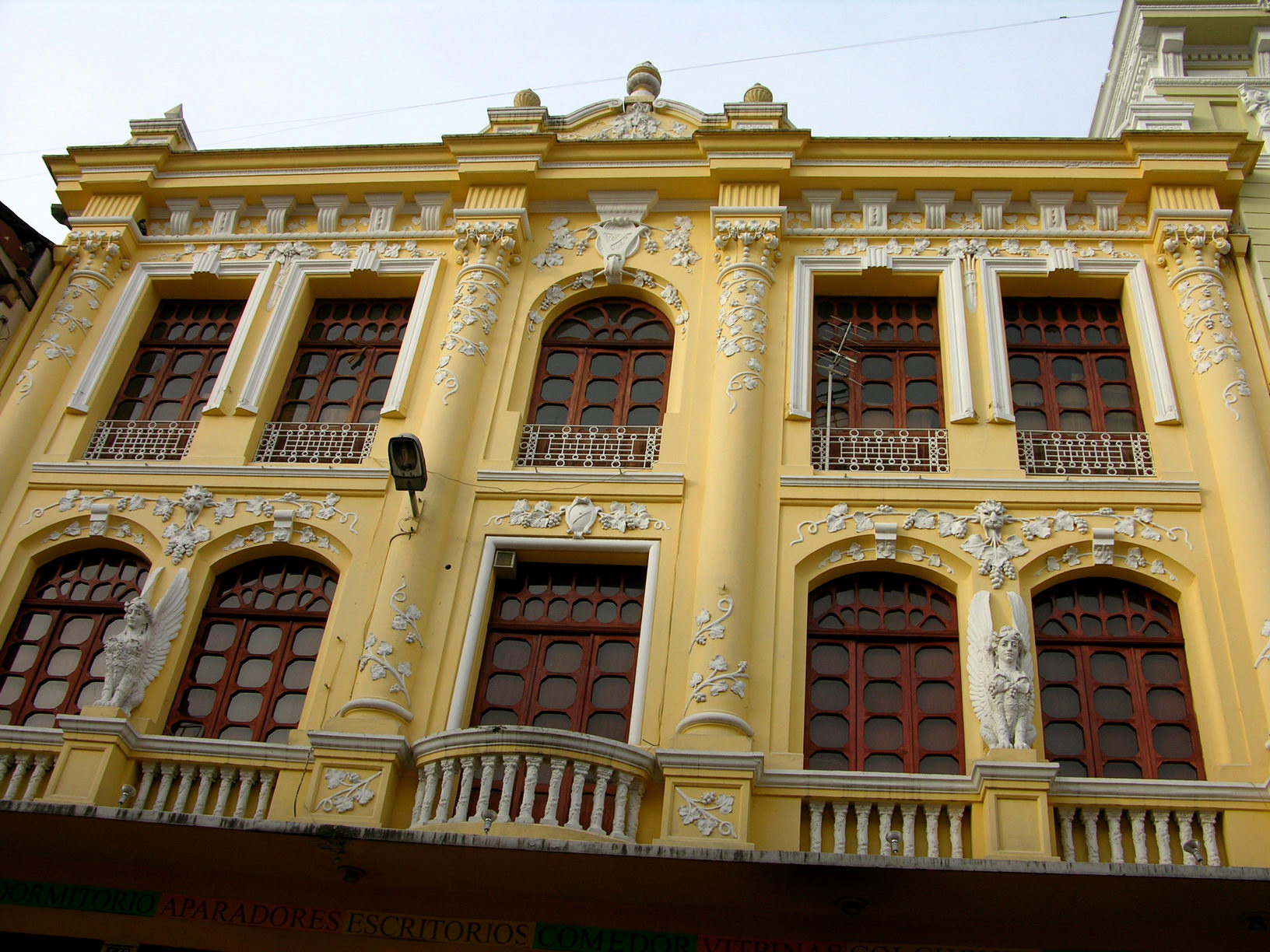
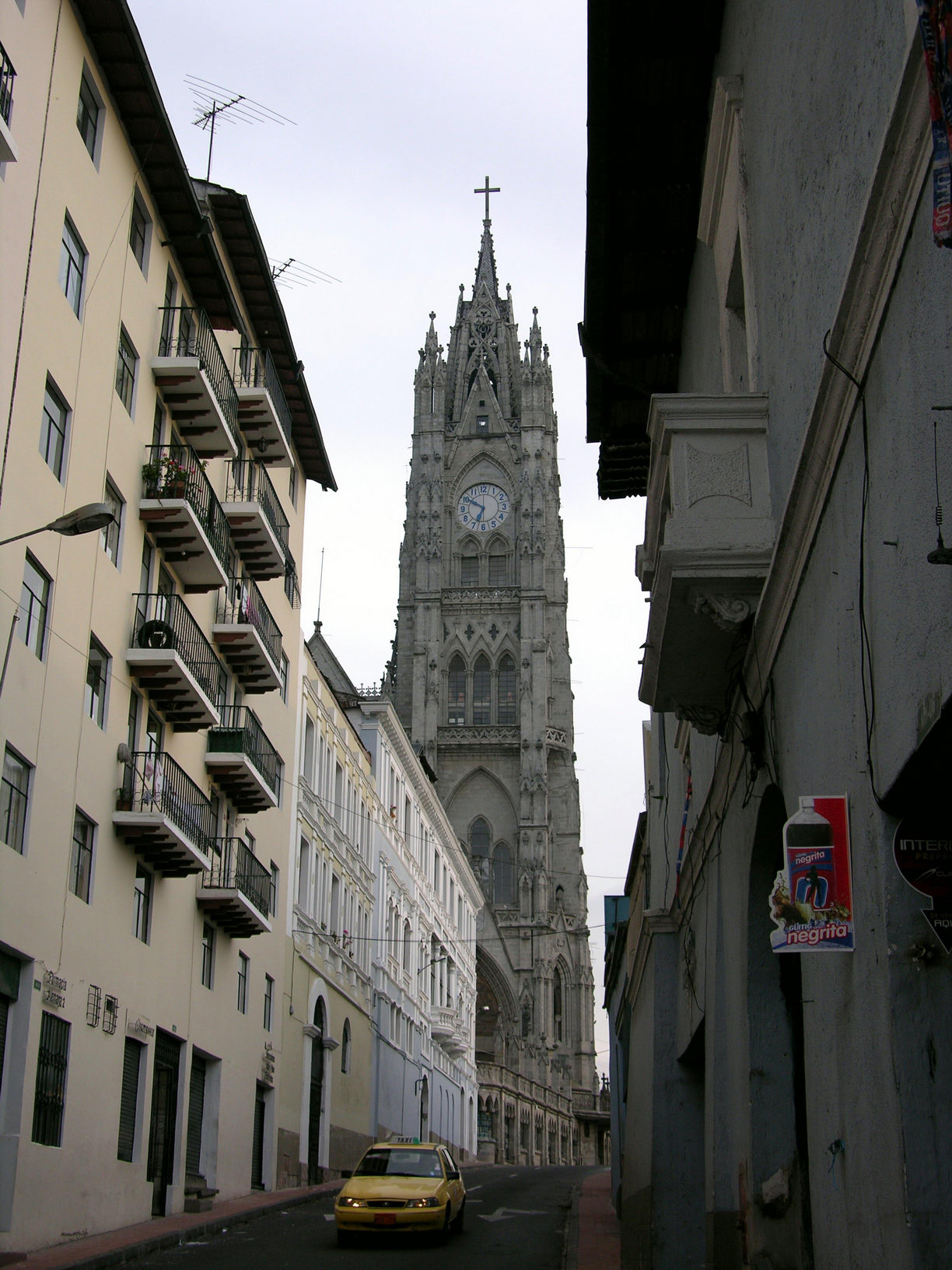
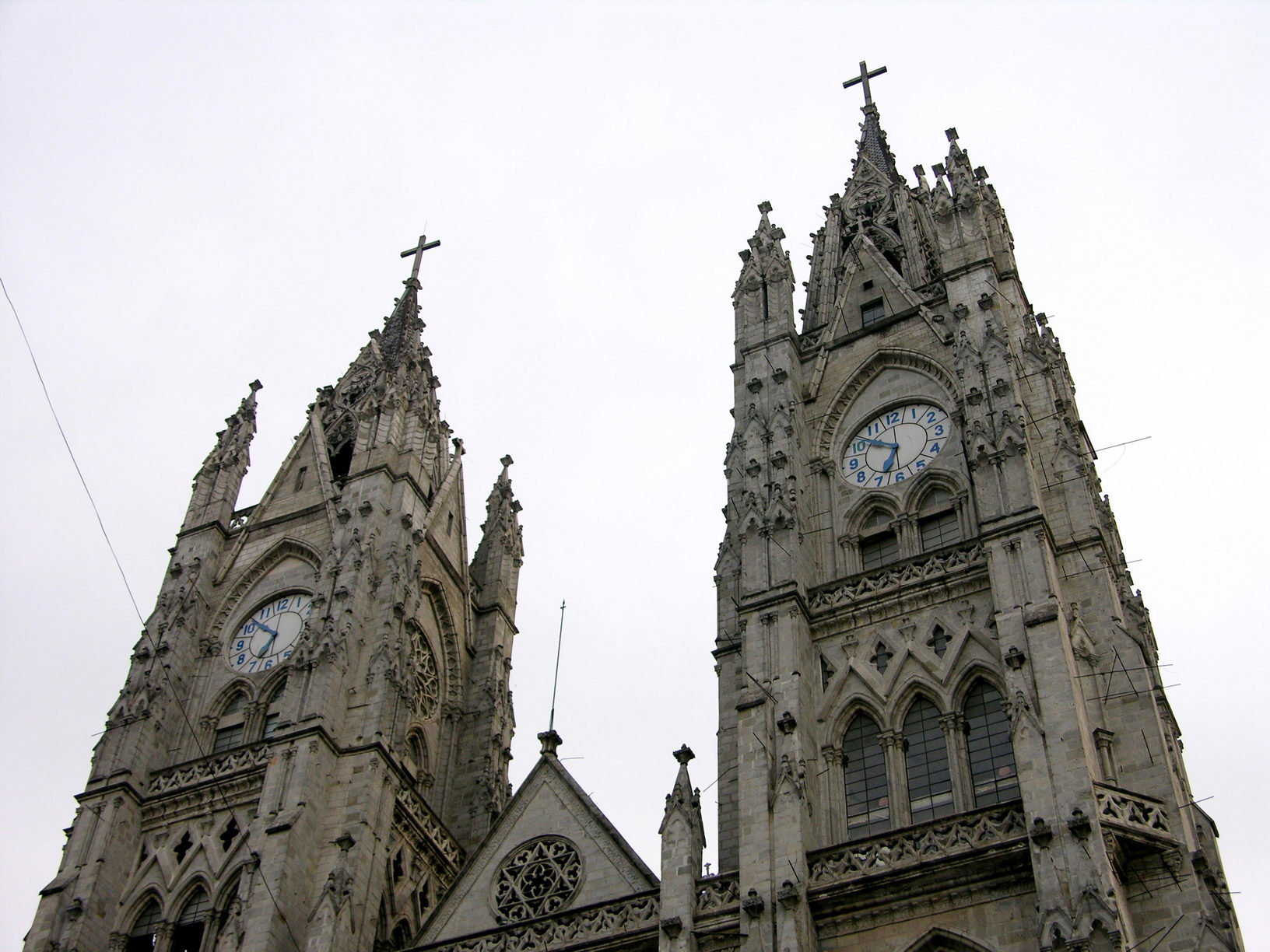
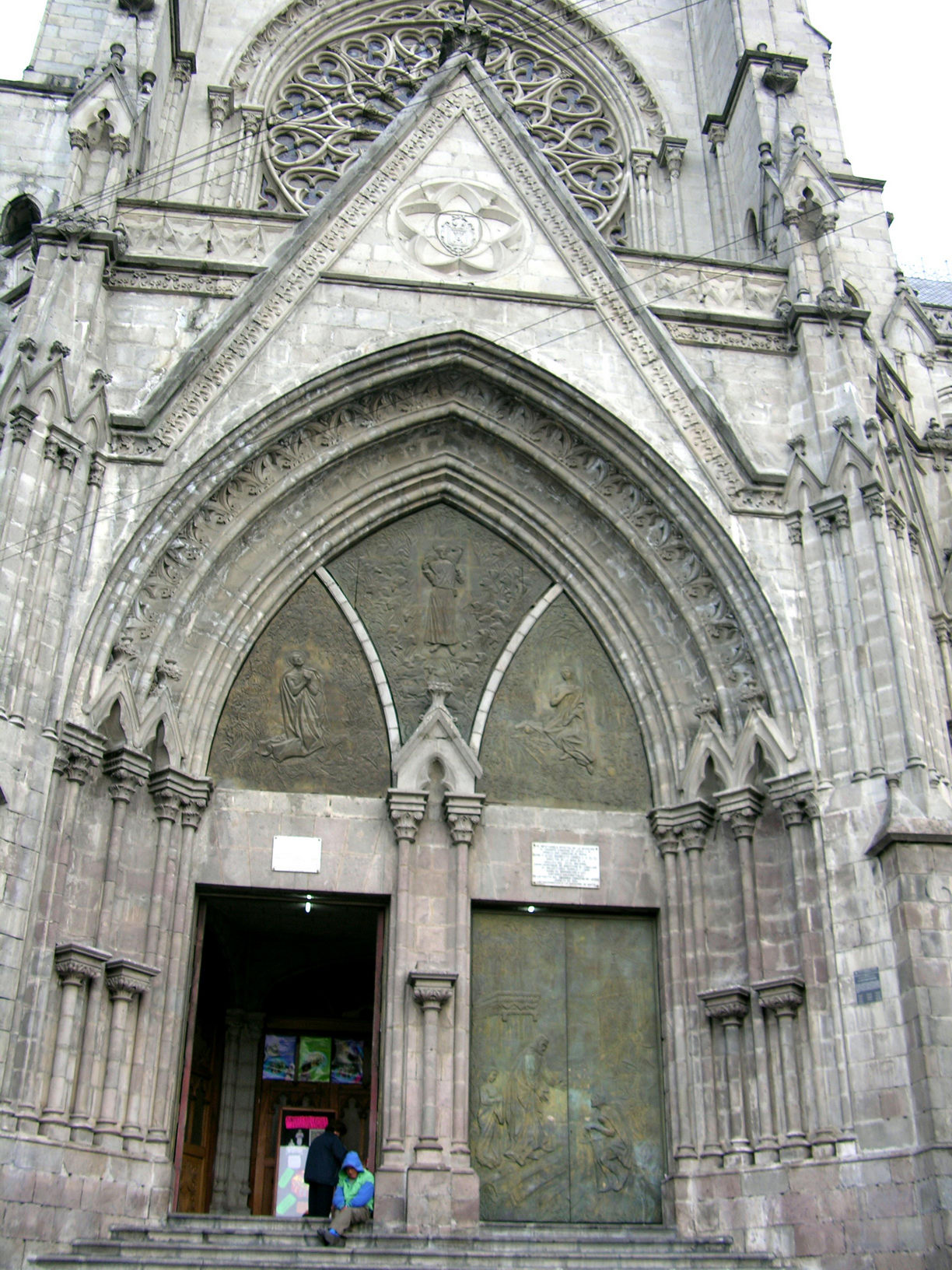
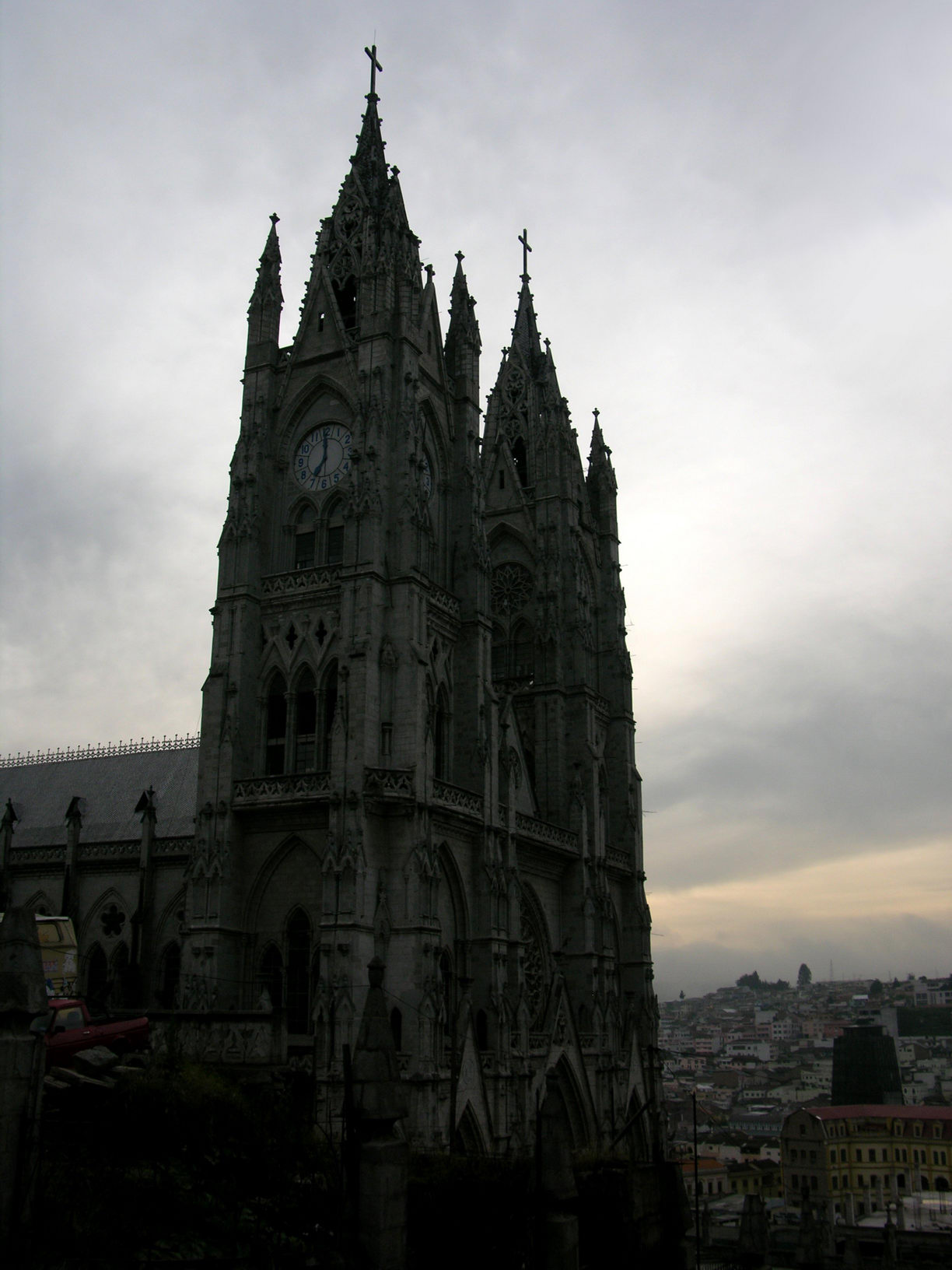
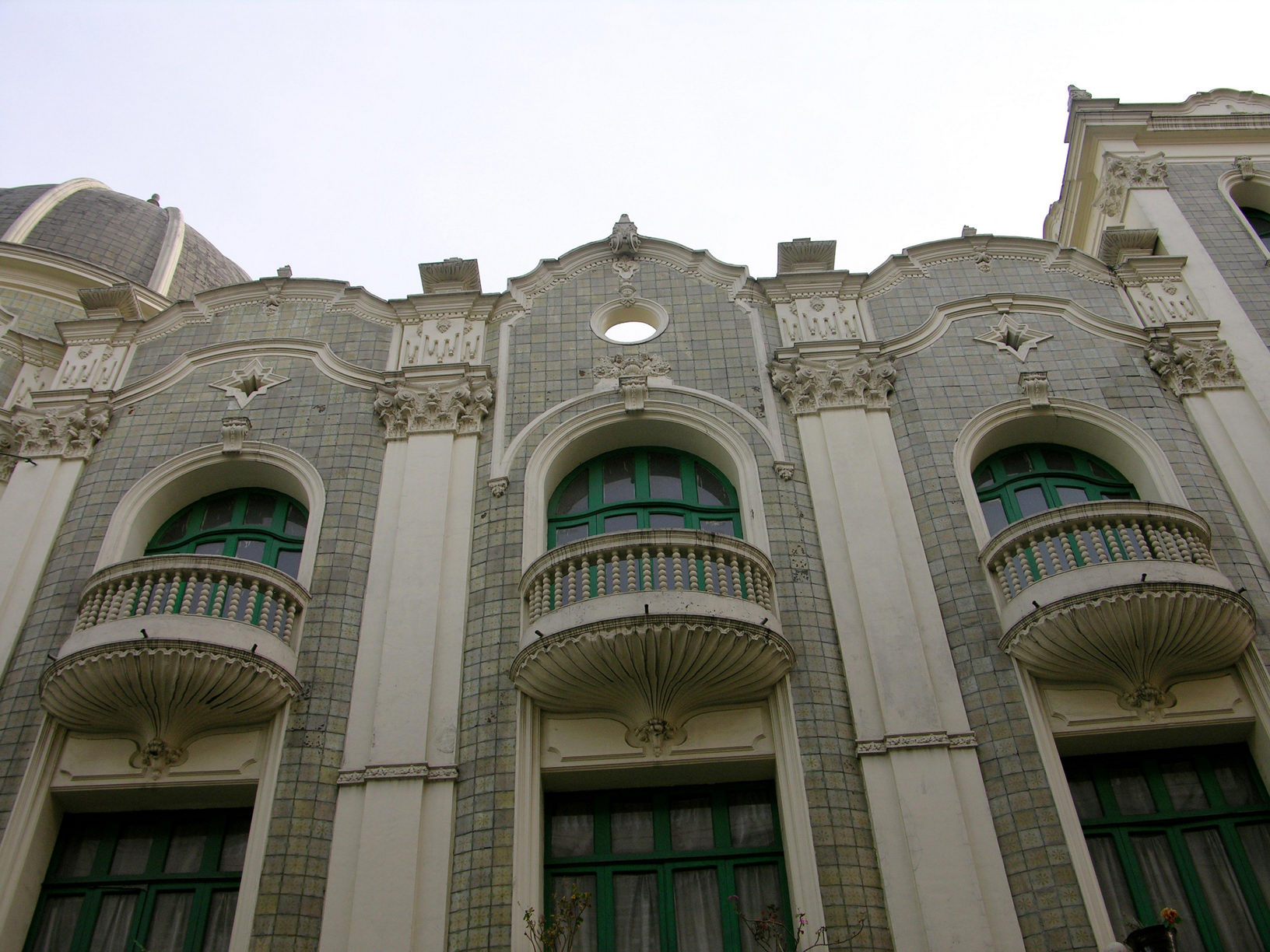
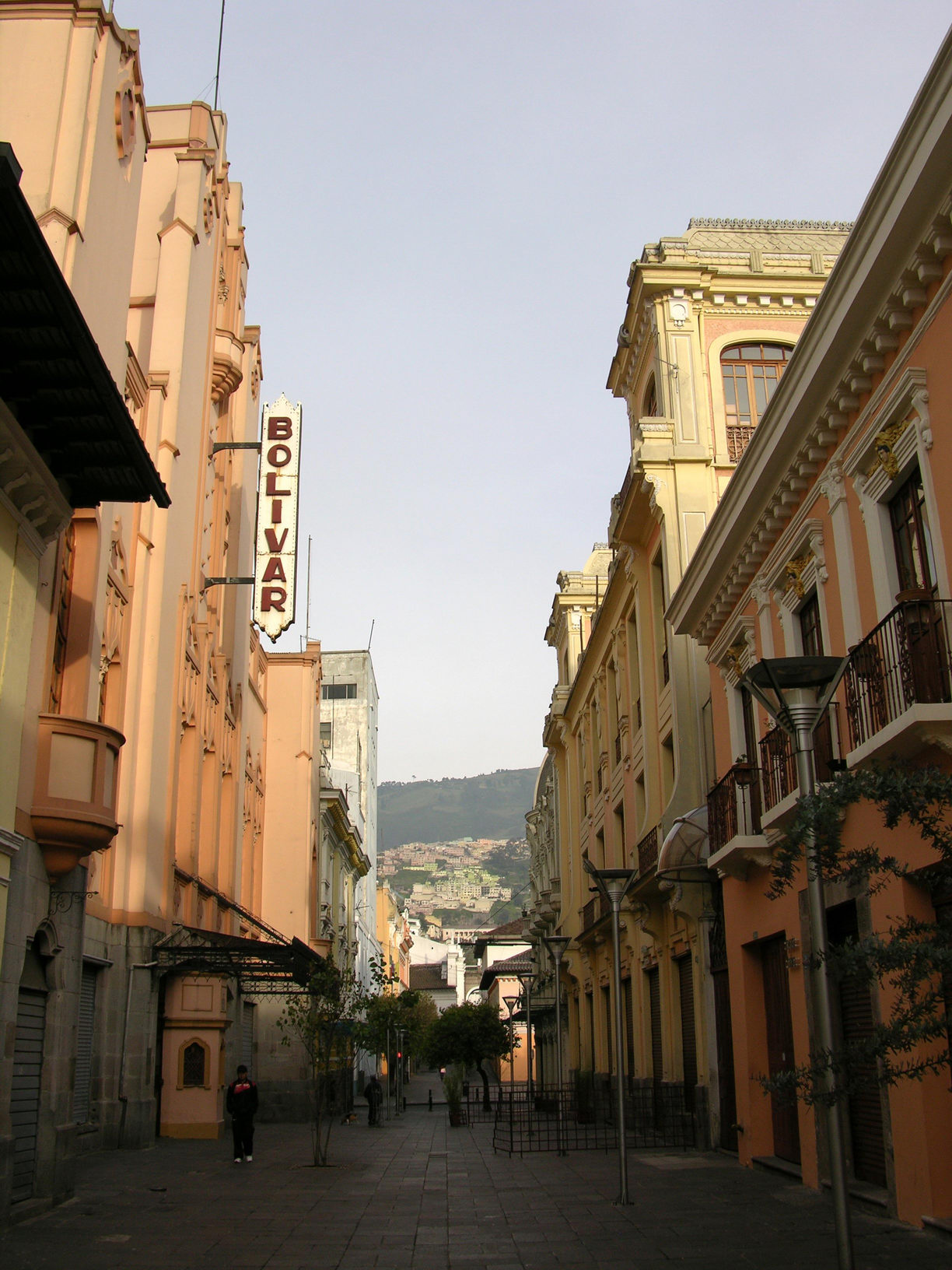
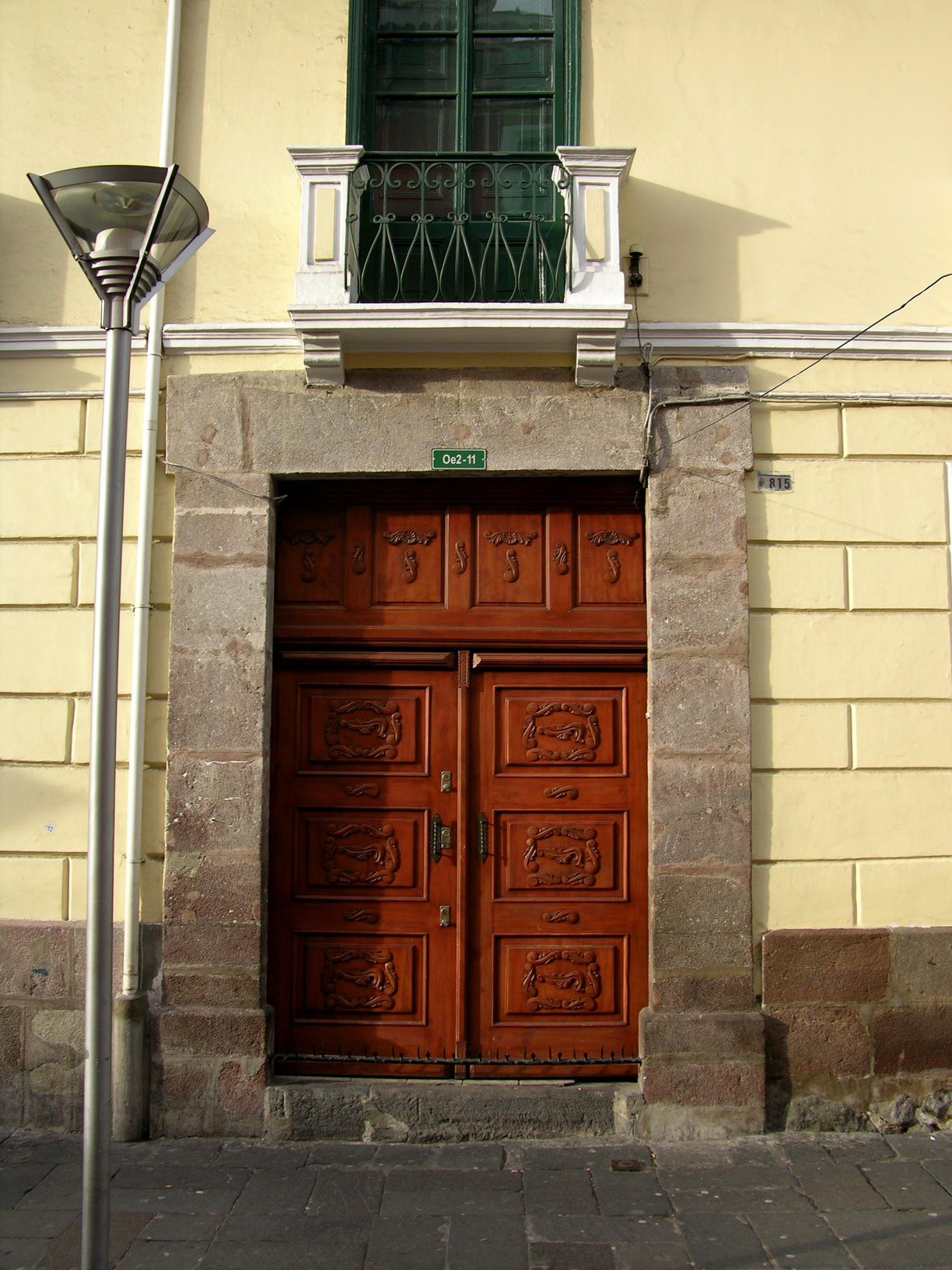
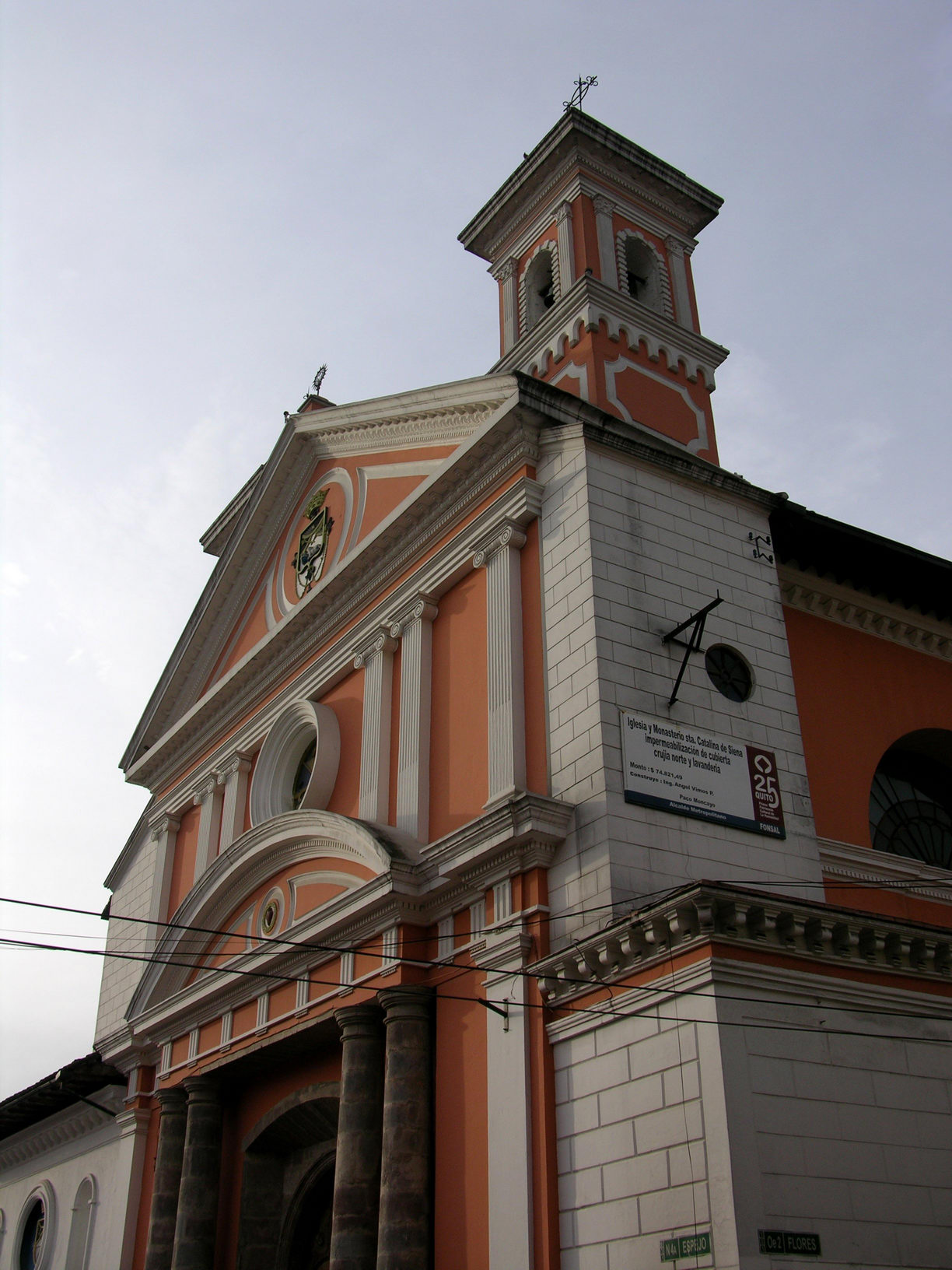
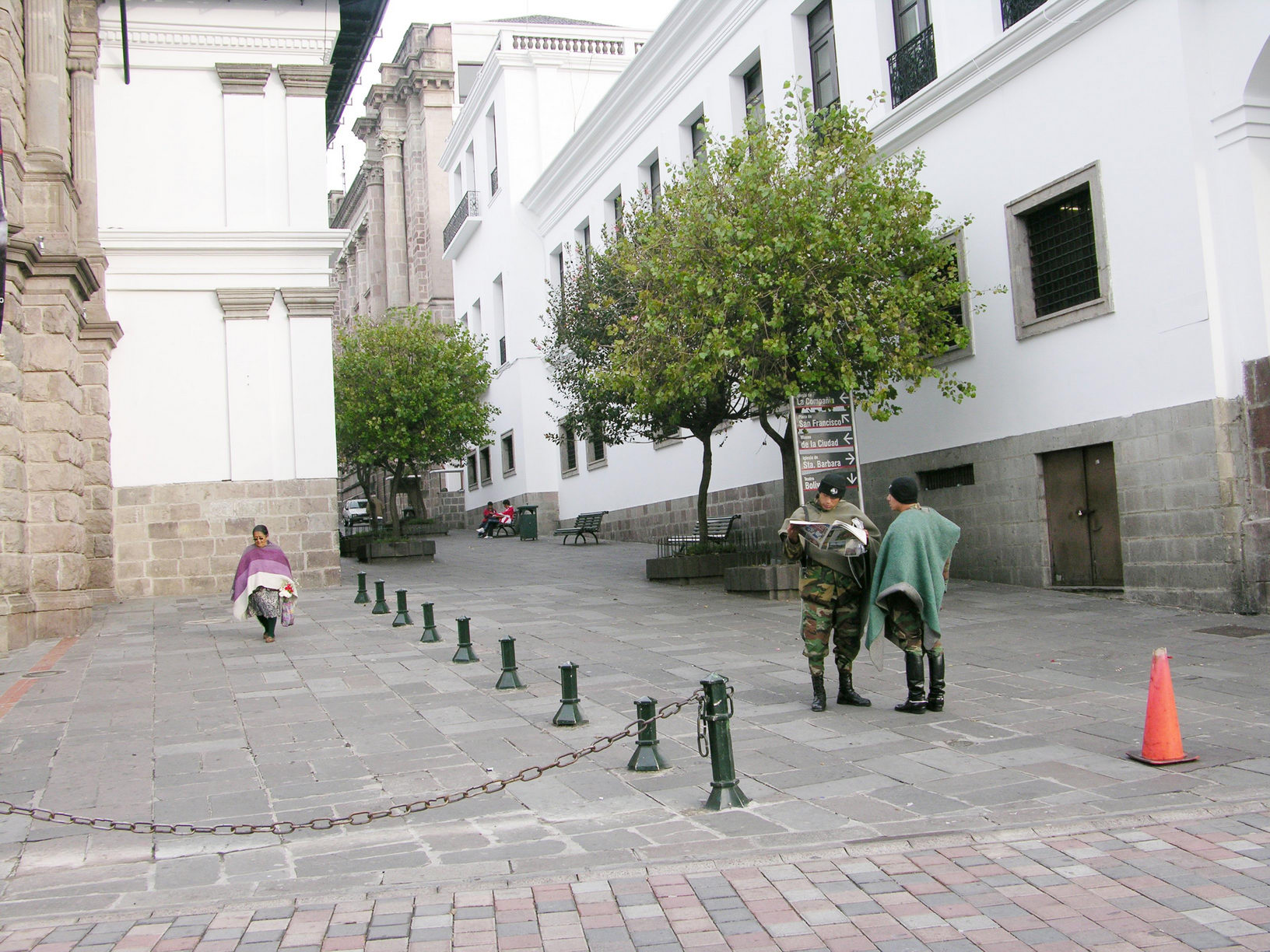
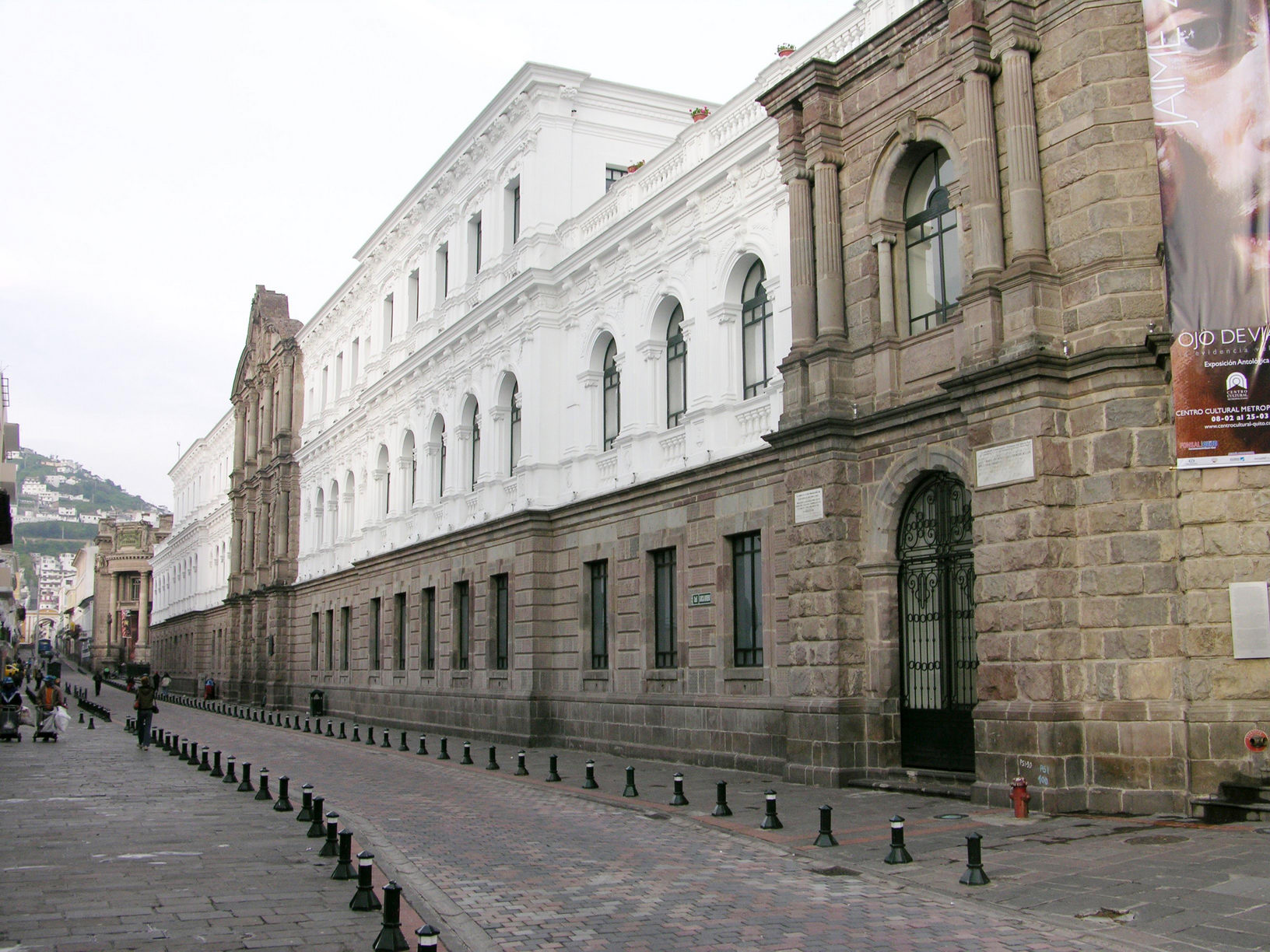
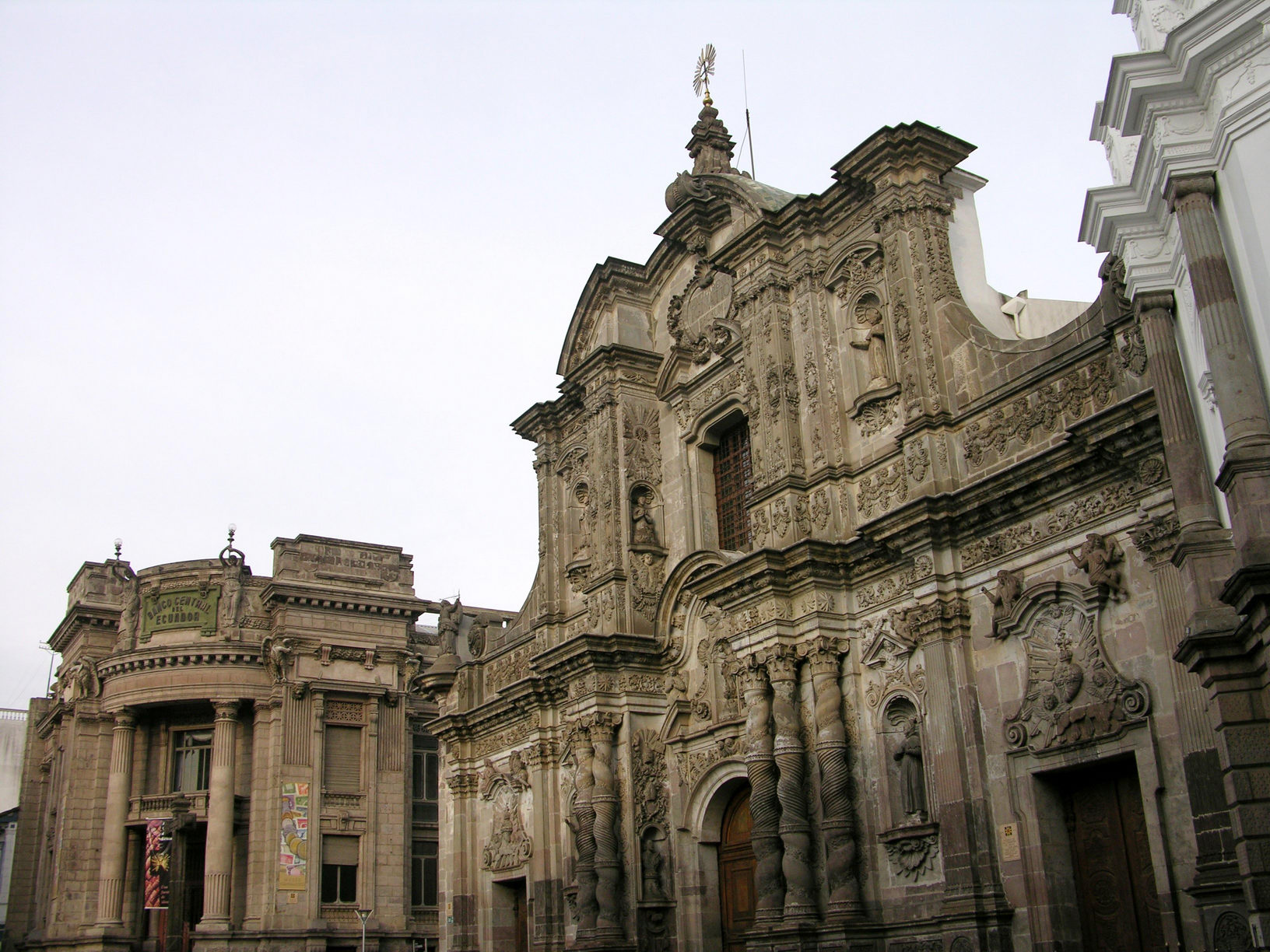
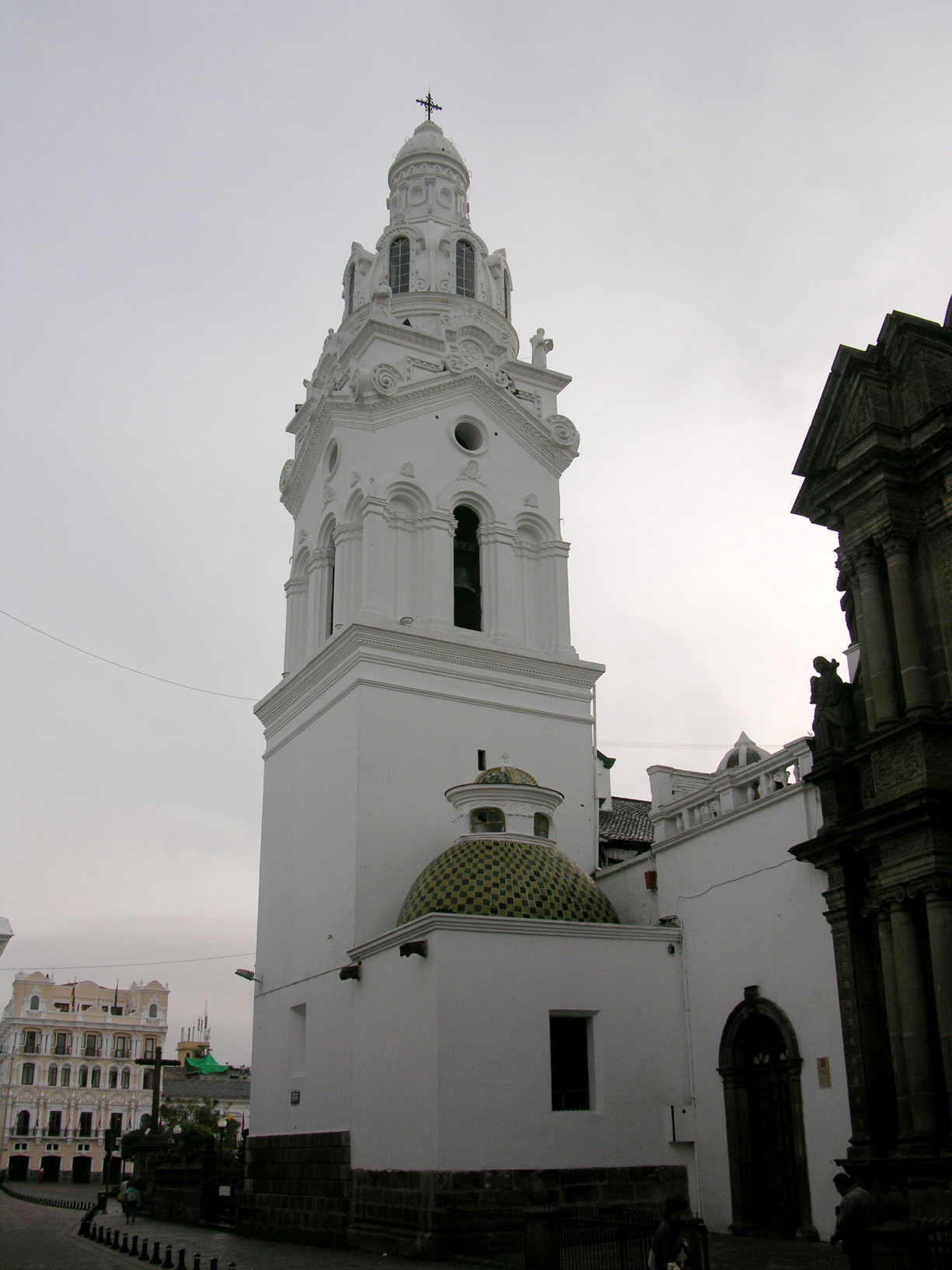
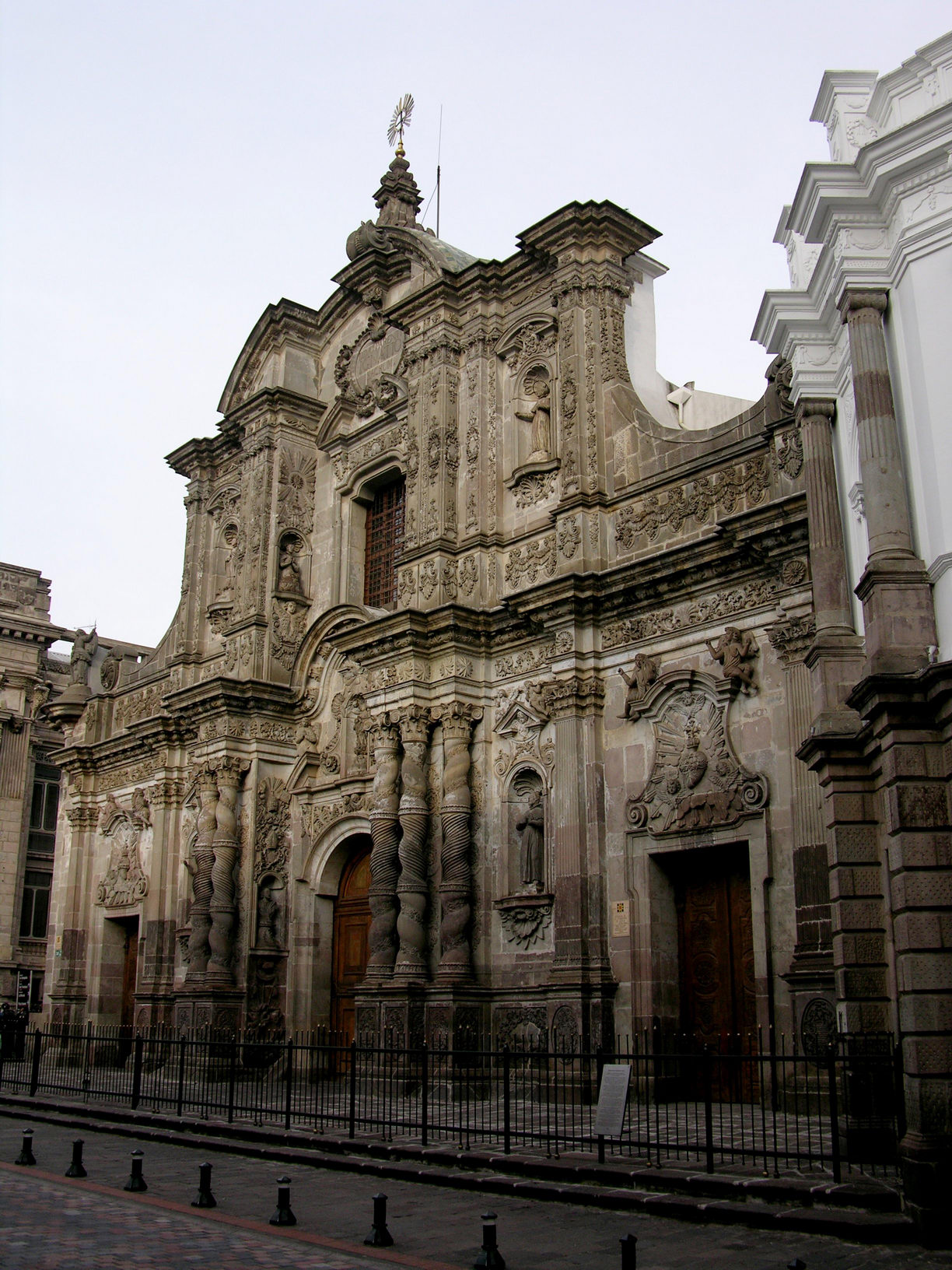
People go to bed early here. By nine in the evening everything had already closed and the streets were deserted. Quito was said to be safe, even at night. We found just one open restaurant, La Cueva del Oso, with a vast old dining room. This was our farewell dinner. We shared a bottle or two. It's always sad when a trip comes to an end. The day after tomorrow we would be back in winter, on a cold February evening.
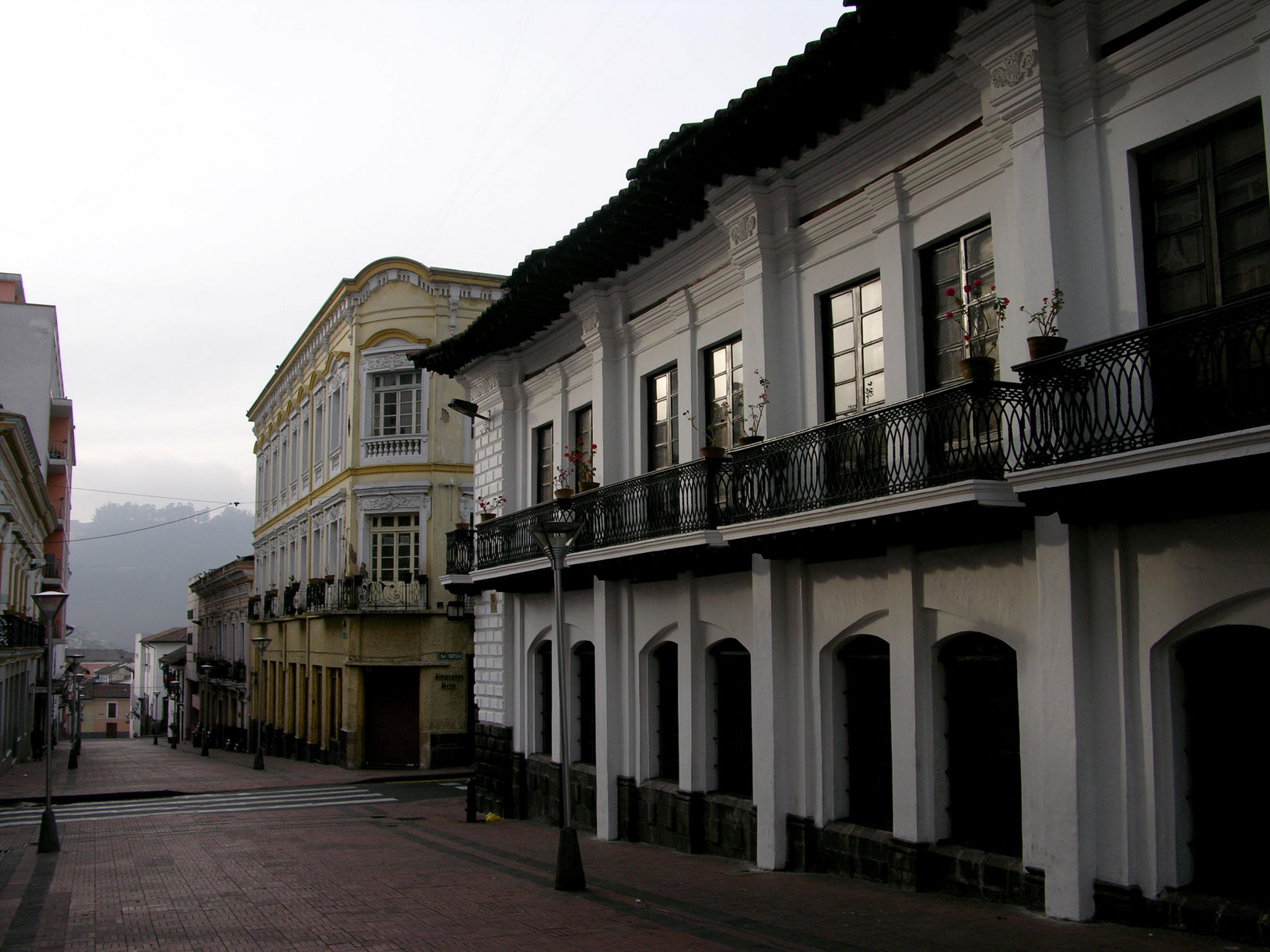
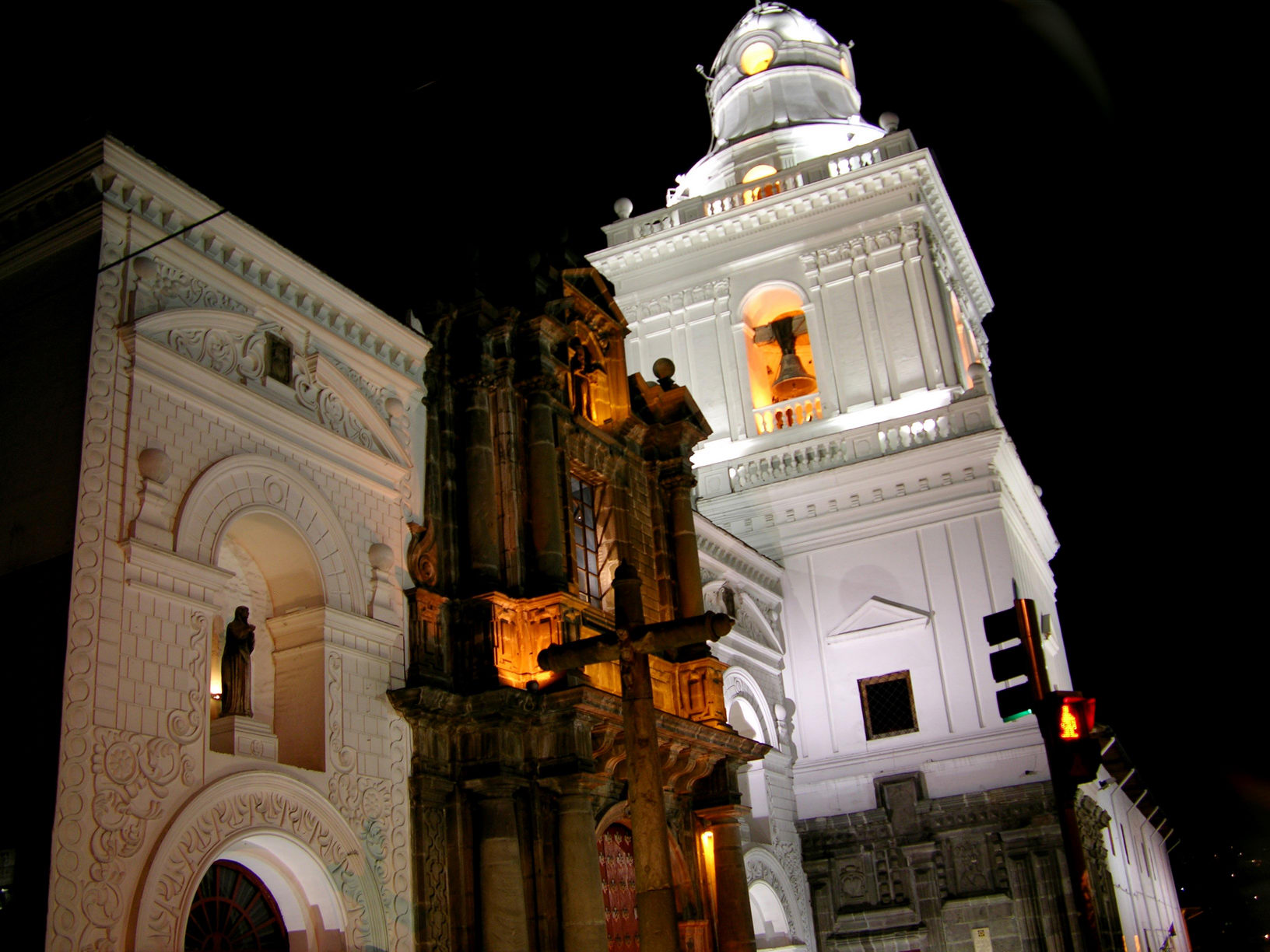
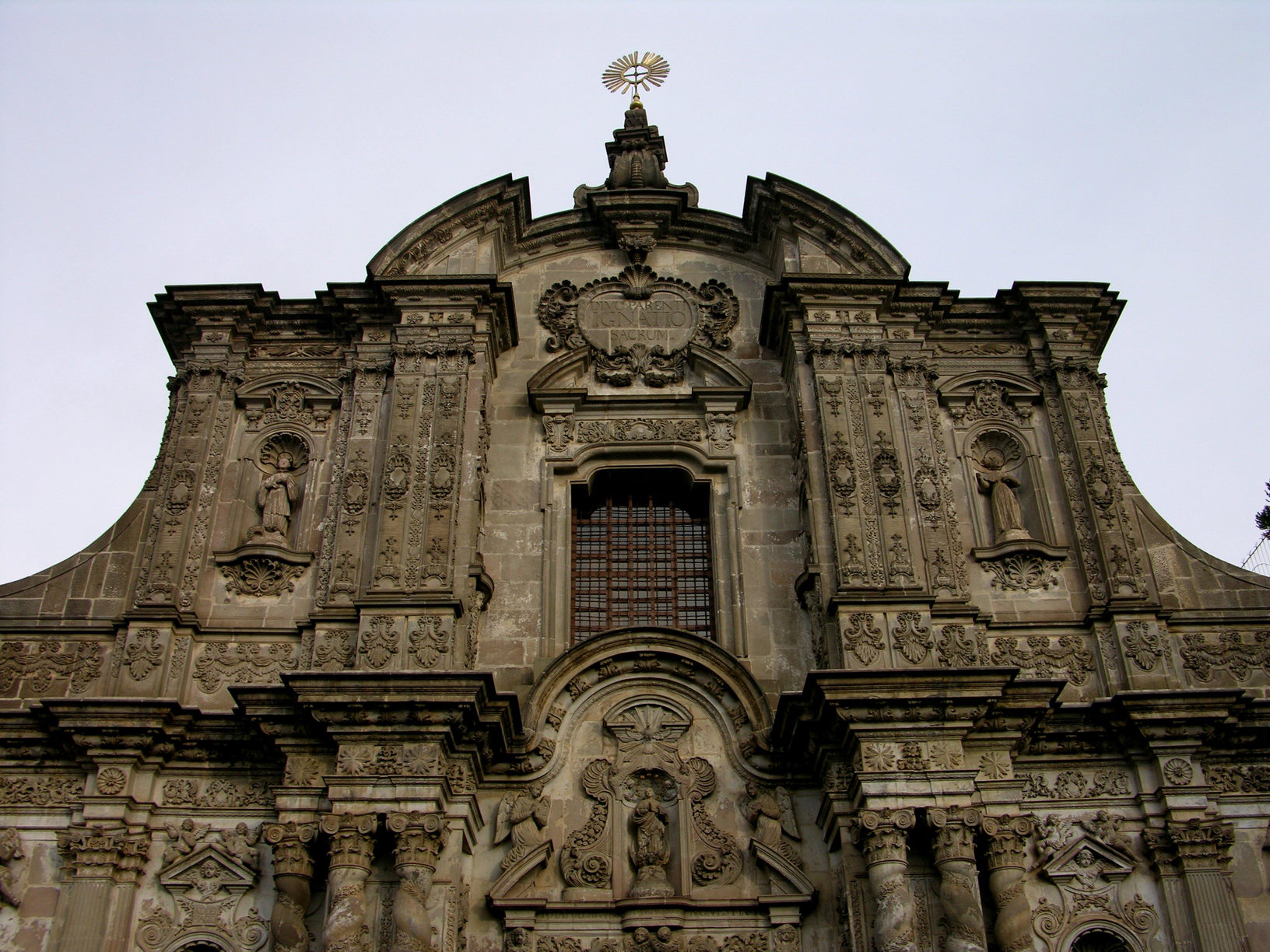
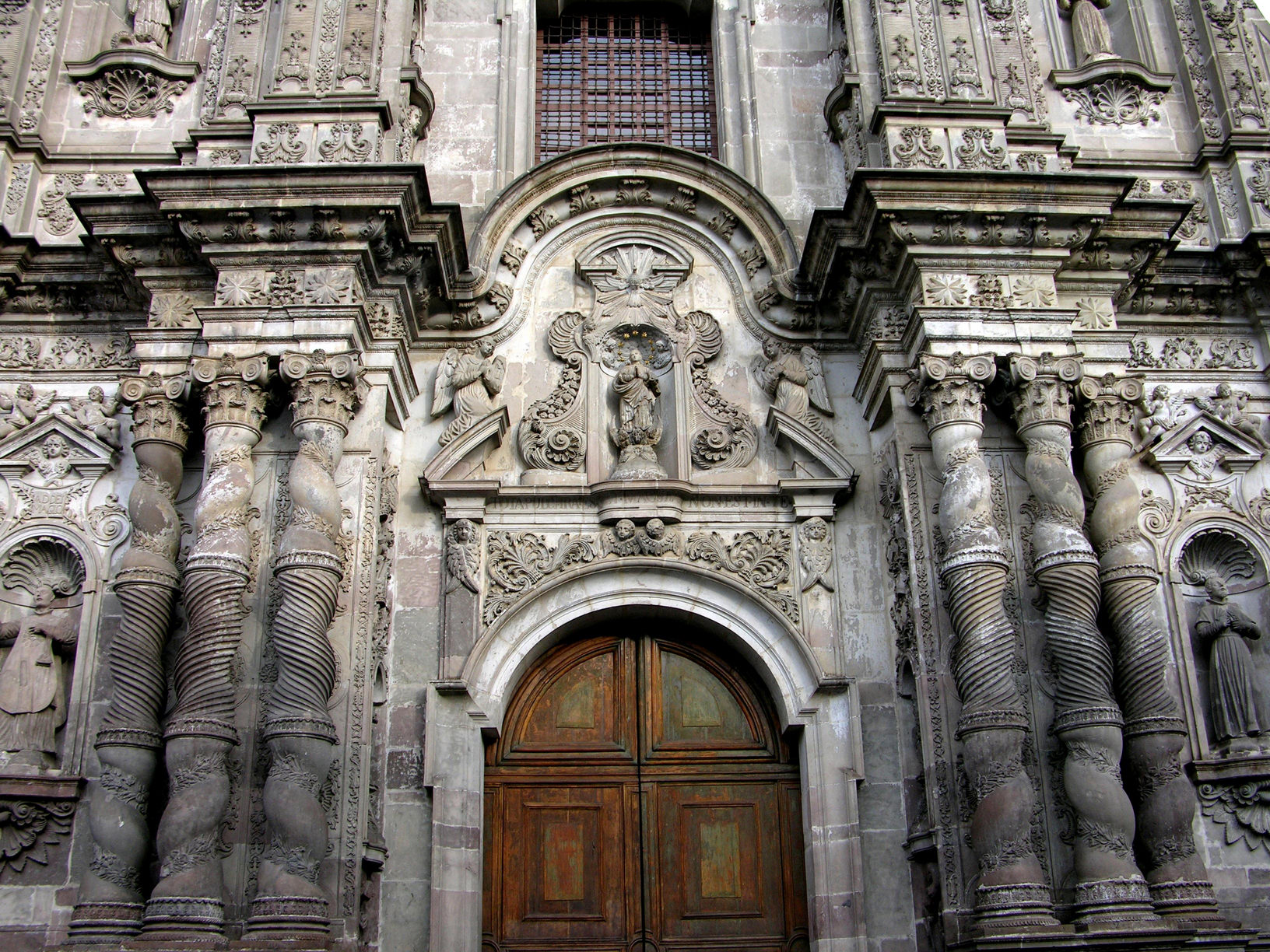
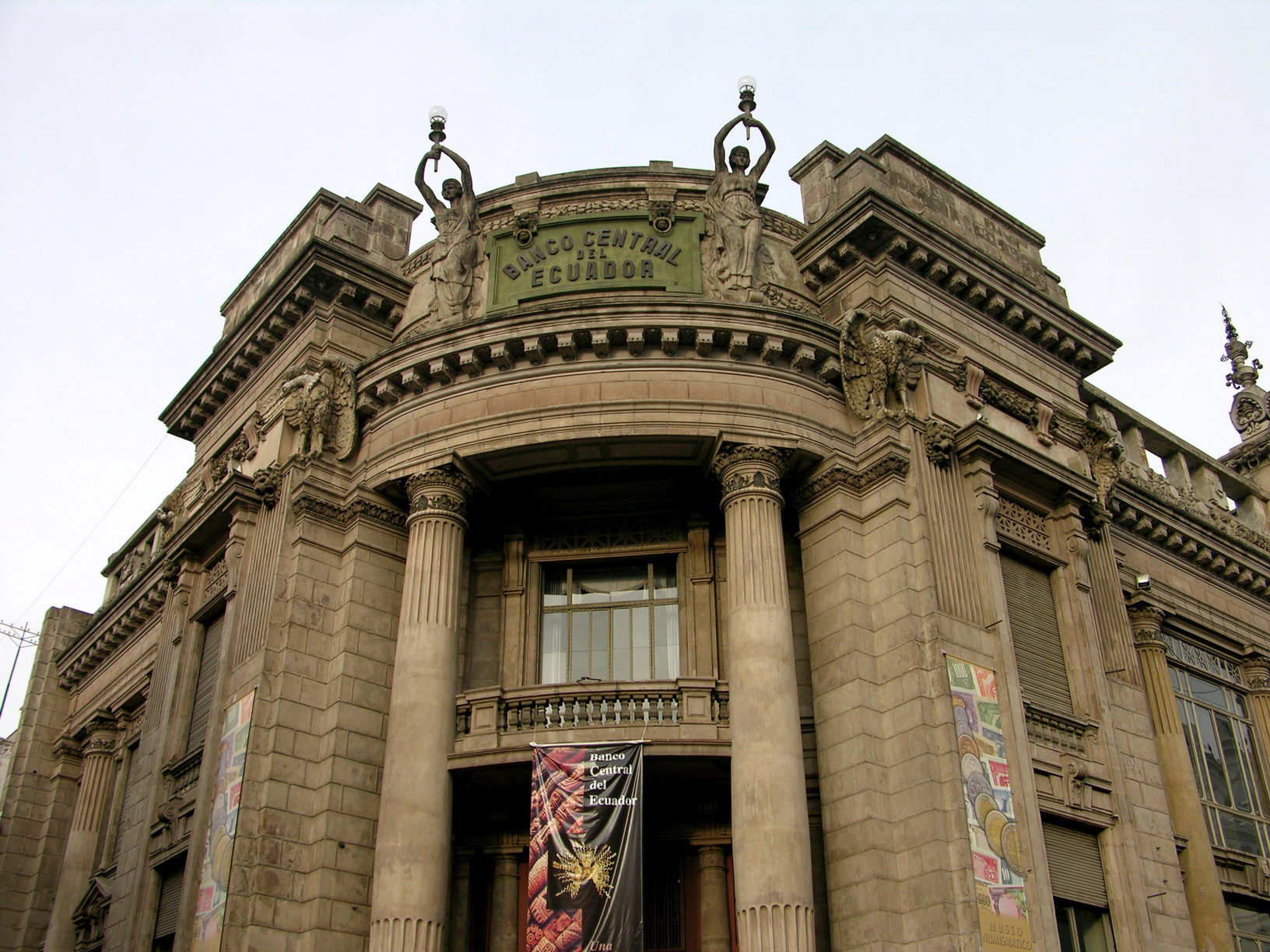
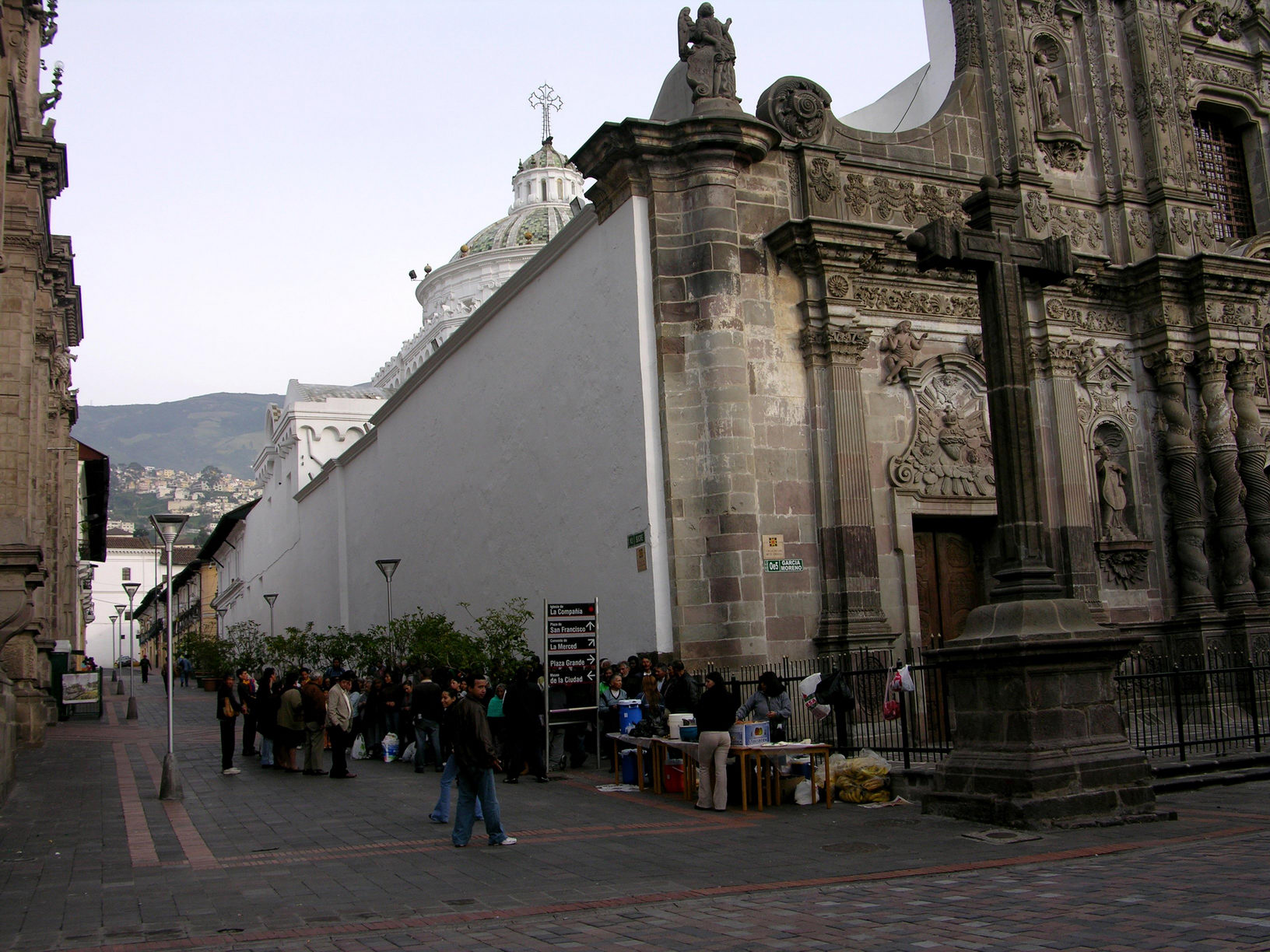
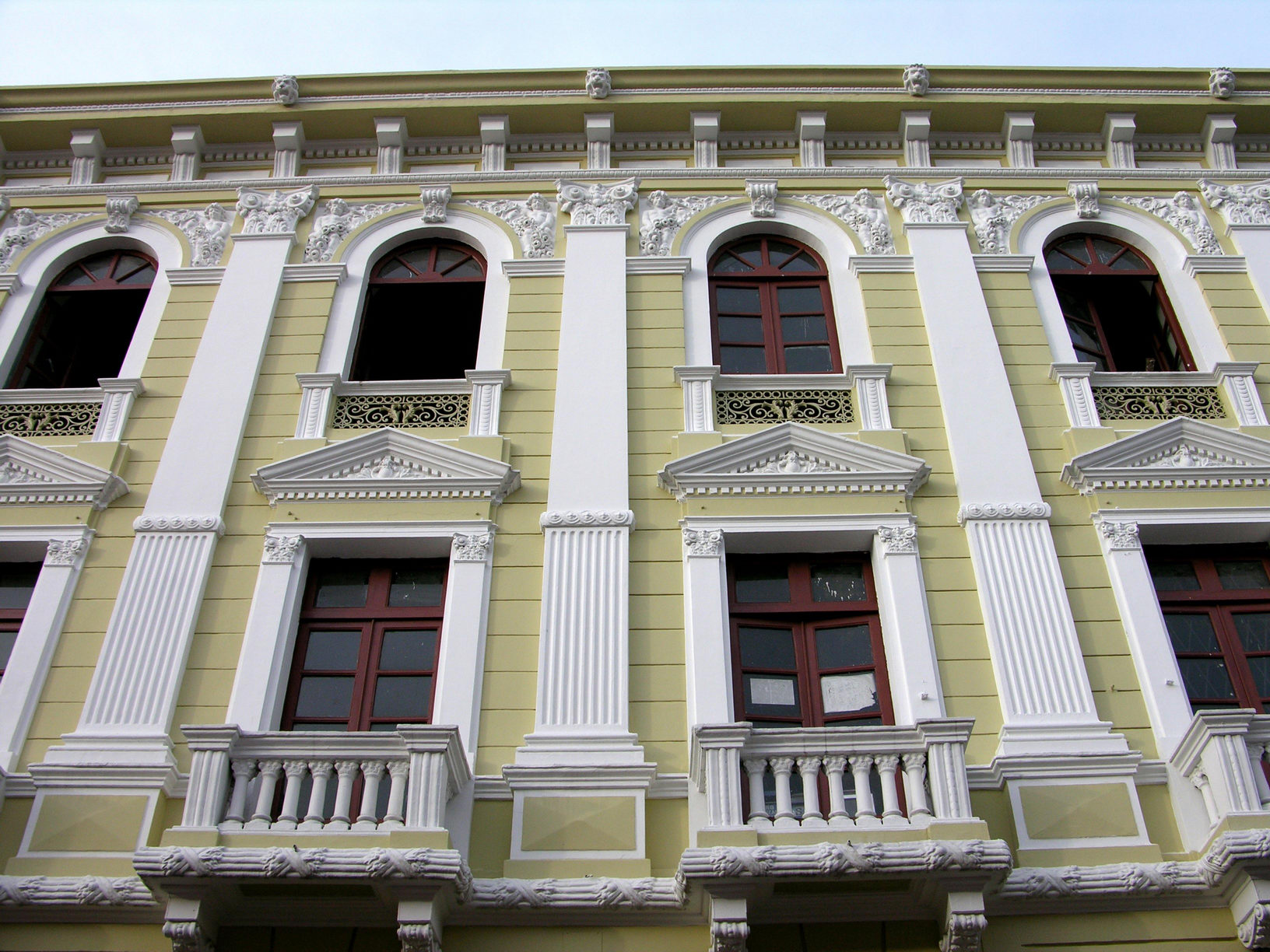
In the morning we were up before dawn and made one more quick circuit of the centre. We went as far as the basilica on the next hill.
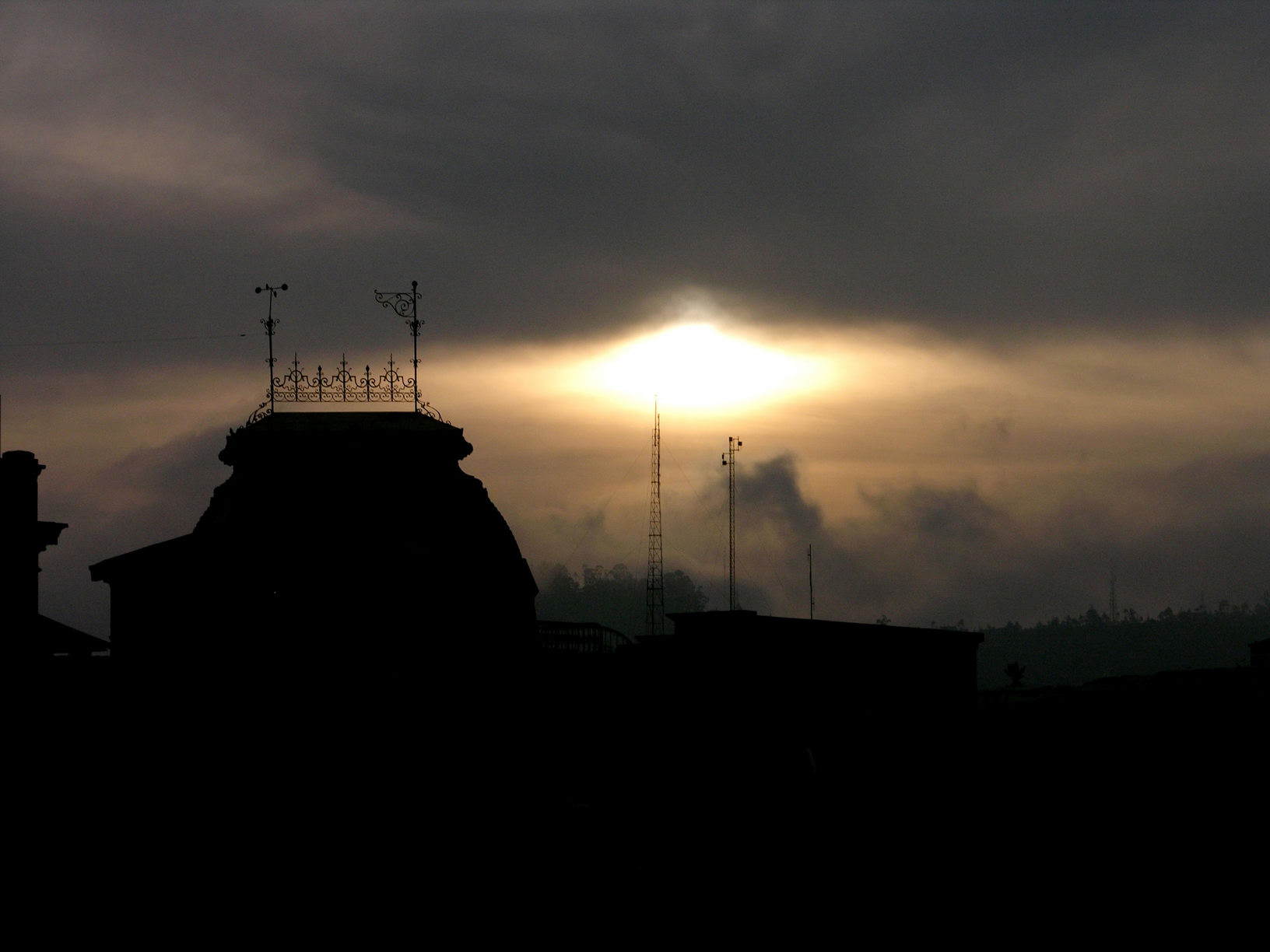
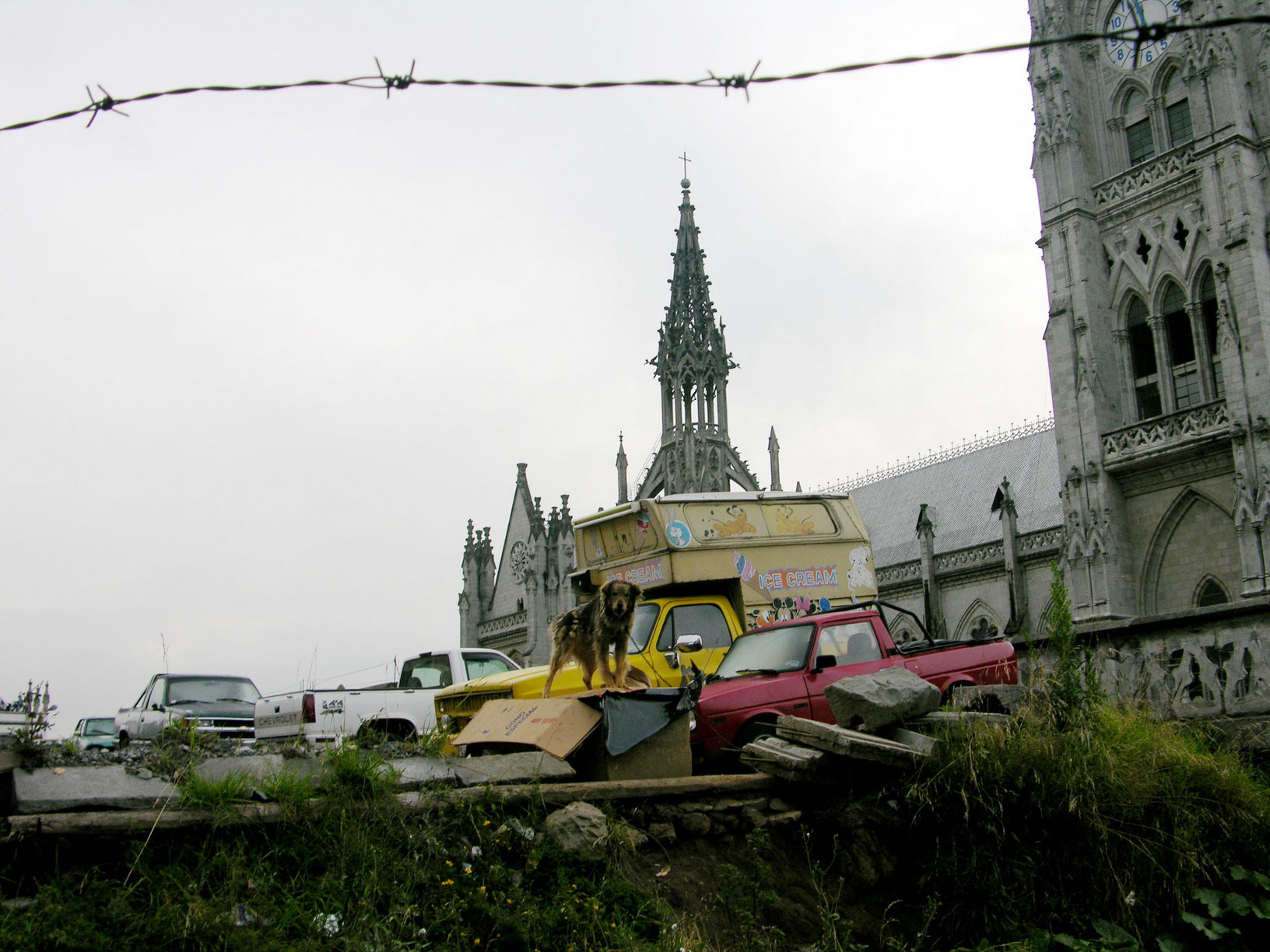
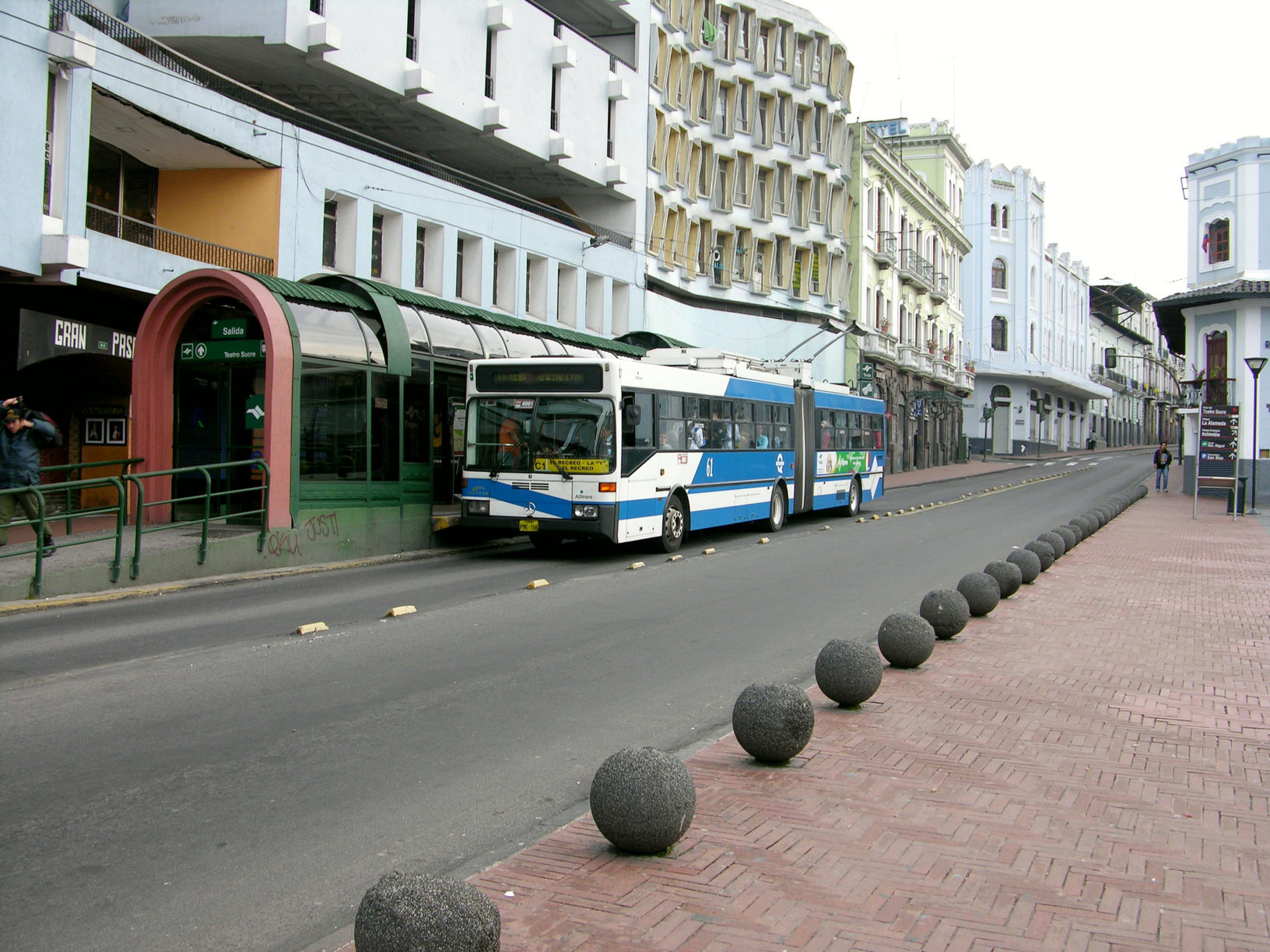
It was time for the airport. Quito had a good public transport system. Its rapid transit ran on express trolleybuses, but they didn't go all the way to the airport. We didn't fancy changing, so we tried to find a taxi. That took longer than we expected. Cars with taxi markings kept going past without stopping. We eventually got the hotel receptionist to call one.
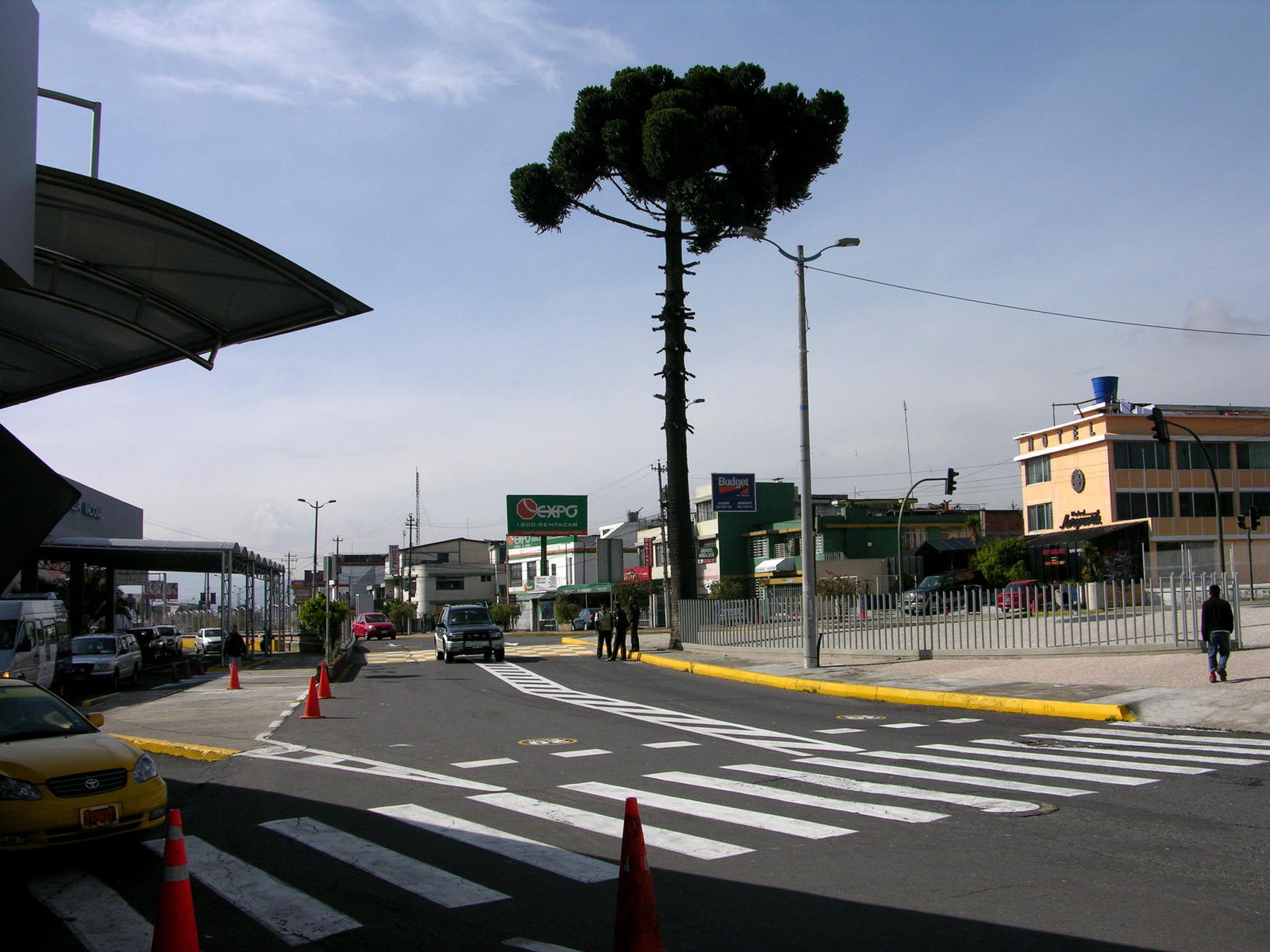
The airport moved at a crawl. There was a long queue at passport control. Ecuadorian passports carried a fingerprint, so their holders had to give an inky impression on paper the old-fashioned way. Then someone took a long time comparing it with the one in the passport. We nearly missed our flight. From duty-free we bought a box of coca tea bags. Now we would have to get those through customs as well, as if the little gold statue weren't enough.
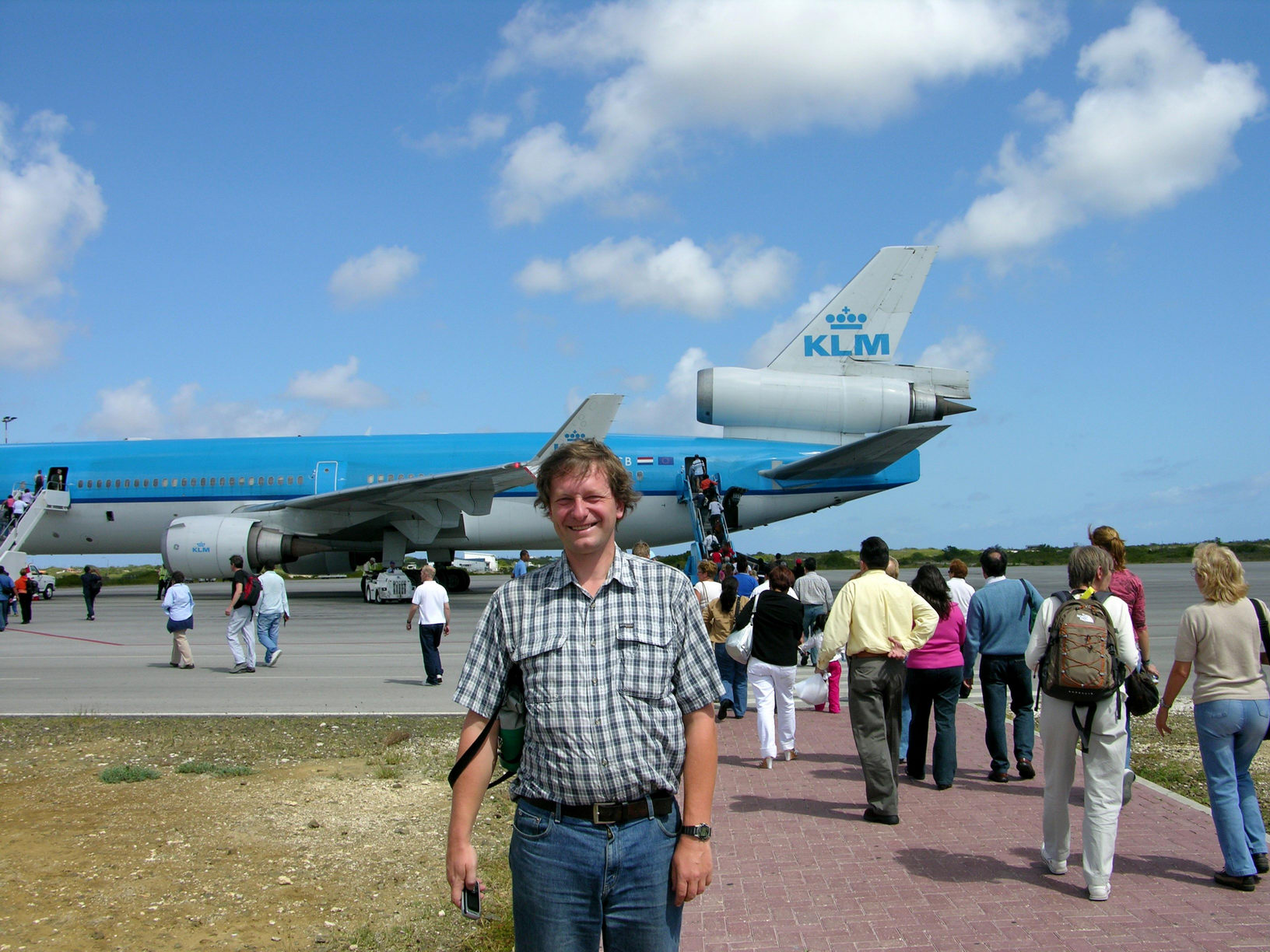
Our KLM MD-11 was stopping in the Netherlands Antilles. Before long, the roads and mountains where we'd spent the past twenty days were passing under the wing. Galeras, the volcano near Pasto that I had climbed in such pouring rain, lay plainly in view. Then came Colombia's great Magdalena River and the ocean. Goodbye, Latin America.
In the Antilles we landed on Curaçao, near Willemstad. All the transit passengers were herded into a stuffy room with barely enough space to stand. The little café could feed perhaps one person in ten.
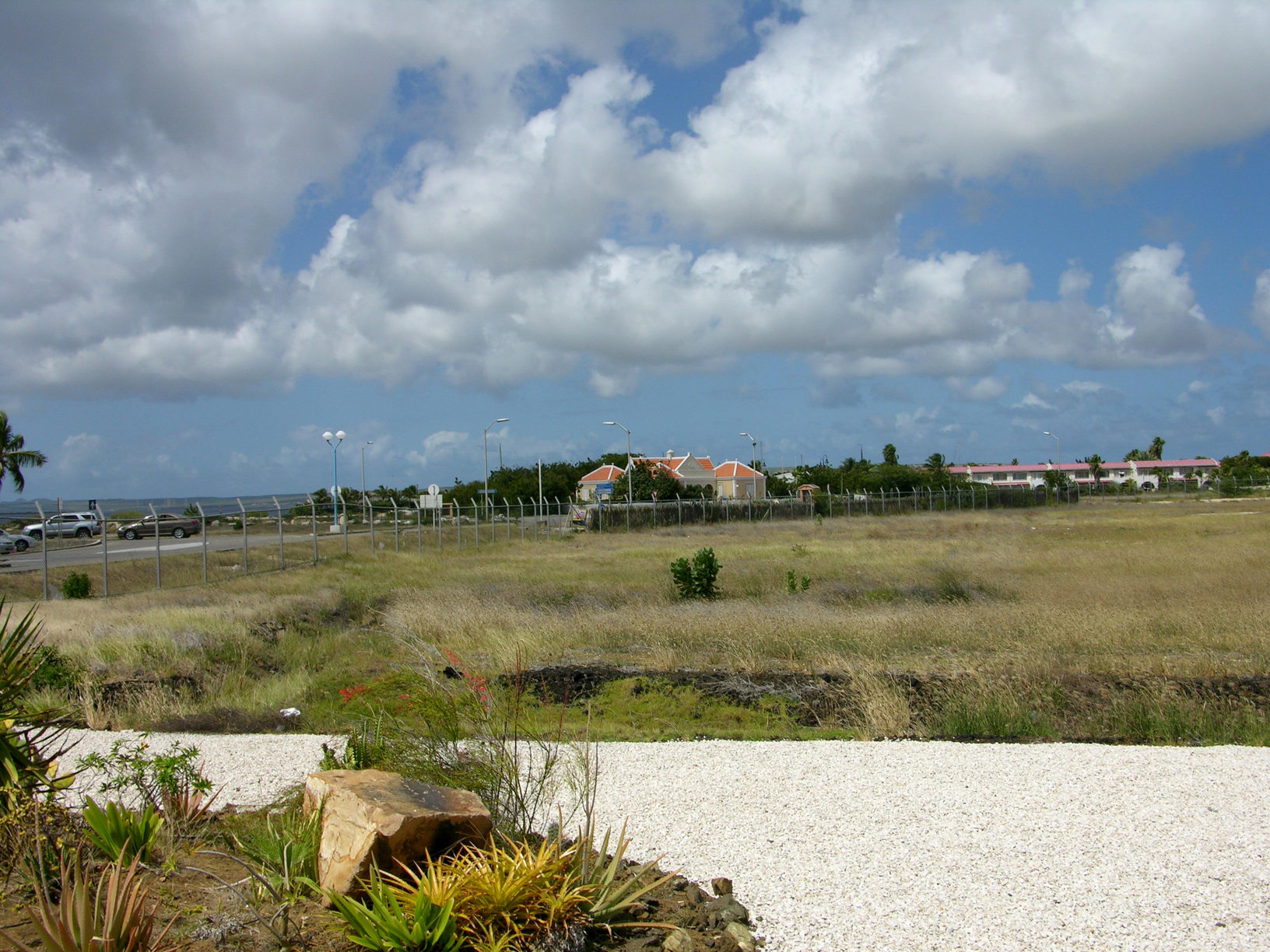
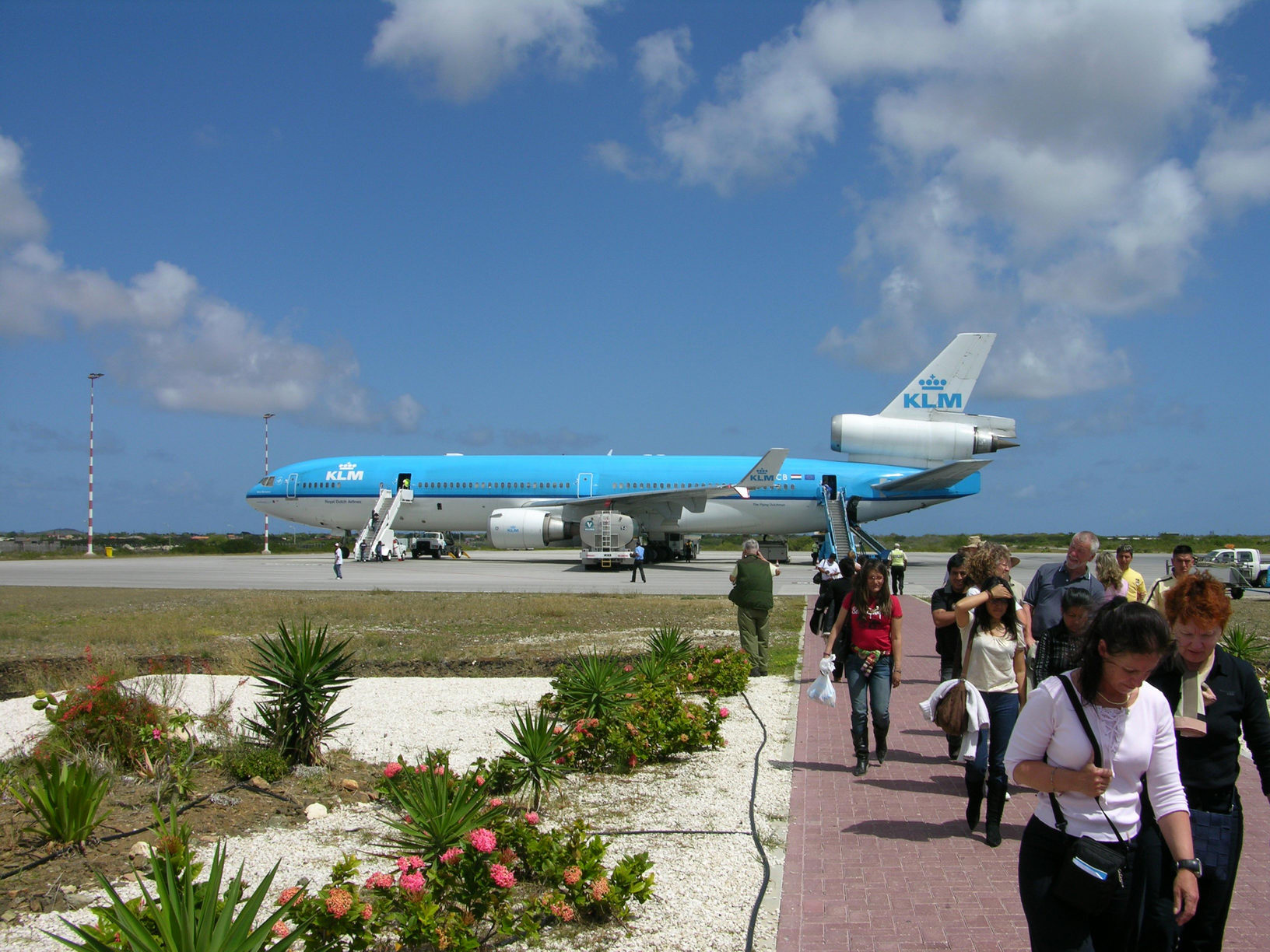
Outside was a treeless plain. The island looked bare and dull to me. It seemed a place to lie on the beach or go diving.
It was ten hours to Amsterdam. The plane turned north. Night fell somewhere over Puerto Rico. Then came the Sargasso Sea and Bermuda. I couldn't sleep for thinking. What was waiting for us at home? When we left, our country had sunk to ethnic cleansing. Ahead lay the looming crisis of 2008. Why did we have to be hostages to all this? All we wanted was to work in peace and use what we earned to see the world. Was it time to leave? Yes, reason said. It was time. So somewhere over the Bermuda Triangle we decided to change our lives. It felt like the end of a whole stretch of our lives, far more than the end of a trip. Better not to dwell on what came next. An immigrant's lot is seldom easy, but there is more at stake than comfort.
Then came the long wait in Amsterdam and the insolent taxi drivers in Saint Petersburg asking for eighty dollars. After Latin America it was unthinkable to pay that. We took the metro. How cold it was in a light jacket and how dark. The thought that there were only ten months until our next journey into sunshine and freedom was no warmth at all. Well, at least spring wouldn't be long.