Falkland Islands
Falkland Islands. Penguins for the people
We've been told since nursery school that penguins live in Antarctica and freeze down there, presumably because they enjoy it. This stereotype is so firmly lodged in people's minds that if a poor penguin turns up on some warm Brazilian beach, kindly nature lovers will put it straight in a refrigerator.
I should say right away that this is entirely wrong. For a start, most penguins have never been on the ice of the sixth continent. They're quite comfortable on islands where snow is unusual. Millions live on the Kerguelen Islands, South Georgia and plenty of other little islands, and it doesn't have to be cold there at all. Humboldt penguins are quite at home farther north, for instance, and there are penguins even in Ecuador, on the Galápagos Islands, right on the equator. There are penguins in Africa and New Zealand as well. The main thing for them is an absence of sharks and other predators at sea and on land. They can't outswim a fast fish and the chicks are helpless for a long time and can't fly. Never mind the chicks, the parents can't build nests on inaccessible rocks either. So they stick to cold water and nest on islands, cold enough that foxes, wolves and the like can't live there. Antarctica meets those conditions too, of course, but that's for the extremists.
Unfortunately, wherever people live there are usually dogs, possums, cats and other greedy pets. To them a penguin is better than a sandwich. So in New Zealand, South Africa and Latin America you can only see penguins in specially protected areas, walking along a path with an eagle-eyed warden. You must turn mobiles and camera flashes off. You can't get close, naturally. Every single bird is accounted for. The whole thing invests penguin conservation with a sacred air. It's obvious to everyone that they must be protected because they're on the verge of extinction. That's the second stereotype I'd like to take on.
There are plenty of penguins on earth. The majority aren't in danger of extinction. Most aren't frightened of humans at all, so you can come within a few centimetres of them. If anything threatens them it's commercial fishing in the southern seas. It's not in the greens' interest to take on the fishermen, who might whack them over the head. Showing off to tourists, though, is pleasant and safe.
You can walk among penguin colonies only where people don't live. Places people don't live are hard to get to. Nowhere for a plane to land. Ships don't call there. The waters of the Southern Ocean are too rough for small private yachts. It's hard, and above all expensive, to organise an expedition of your own. Organised tours aren't cheap either. They're run by hardened conservation extremists. The tourists have paid thousands upon thousands of dollars but aren't allowed to walk anywhere on their own. Mostly they're kept on the ship and put ashore for a few minutes, when the rule is “one step to the left or right and you're shot”. Since everyone knows penguins ought to live in Antarctica, that's where they take the well-off pensioners. Antarctica is meant to be protected with particular zeal, so it's all very strict.
It looks thoroughly depressing at first, except for one thing. The enormous Falkland Islands have only two thousand people and six hundred thousand penguins. Normally you wouldn't build an airport for so small a population. I mean the people. Penguins, as we know, don't fly. But the famous war between Britain and Argentina helped. Afterwards they built the enormous Mount Pleasant air base to prevent another Argentine attack. Now scheduled flights go there and anybody can get to the penguin islands.
Well, any normal person can. Russian citizens needed a visa, and a special Falkland Islands visa at that. British consulates issue them. Knowing the British worked quickly and didn't ask unnecessary questions, we weren't in particular haste to send in the papers. There were other visa problems. I expected no good, for example, from the French over the Tahiti visa or from the Chileans with their vetting by the local KGB. So we took the papers to the consulate with a month to go. “Papers” is an impressive word for them. A Russian going abroad usually needs proof of a hotel reservation. Fortunately Britain is the ideal country where this particular requirement is concerned. A printout of an email, a fax or any other piece of uncertified paper will do. The thinking is that any criminal can forge a stamp and there's no need to make an honest person's life hard.
Only there are virtually no hotels in the conventional sense in the Falklands. A couple in the capital, of course, but what did we want with those? There was nothing for us there. We wanted to get out into the wild, to the penguins.
Of course we could have booked one of the exorbitantly expensive places and then not stayed there, but we decided not to lie. The British are always telling us not to. Let them have the truth, then.
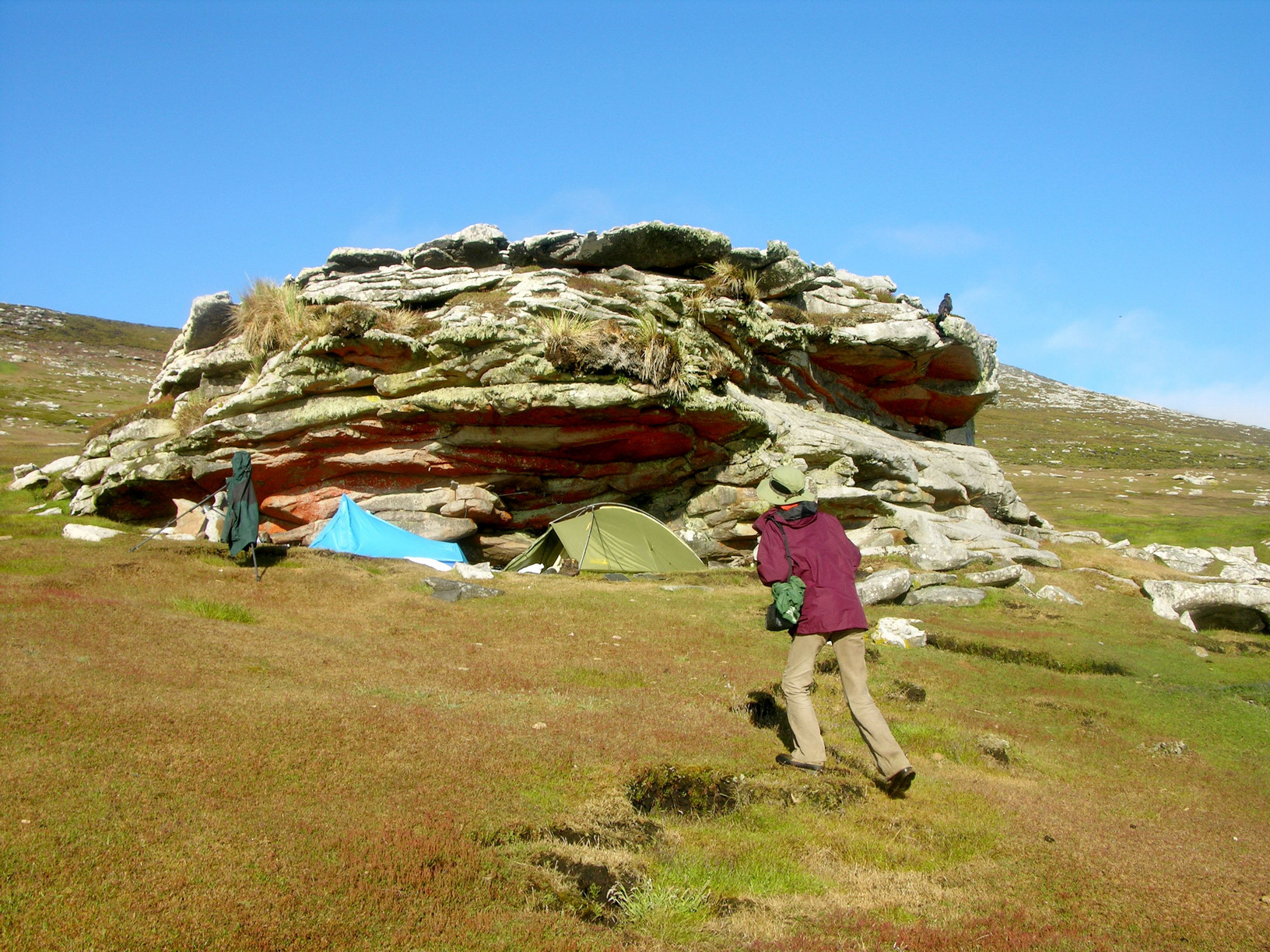
For New Year we'd actually booked the quite respectable Darwin House (Darwin.h@horizon.co.fk), but after that we wanted to camp on the islands with few inhabitants. We got lucky there. On Saunders, one of the best islands from a penguin point of view, there's a great rock that makes an overhang, almost a cave, where you can put up a tent. Swiss photographers once camped under it for a month and since then the boulder has been called the Swiss Hotel. How grand that sounds! So we booked the Swiss Hotel for three nights. All above board. The island belongs to one farming family, and you have to pay the owner, Susan, ten pounds a day for permission to walk on their private property. We exchanged emails with her (David & Suzan Pole-Evans, davidpe@horizon.co.fk). We said we'd like to reserve the Swiss Hotel. “Yes, delighted,” she wrote back. “Spend the night under any bush you like, as long as you don't pitch on top of the penguins.” “No,” we said, “it's for the embassy. Can you give us a proper confirmation? I, Susan Pole-Evans, living at such-and-such an address, passport number, issued on such-and-such a date, resident on Saunders Island, confirm the booking of the Swiss Hotel for two people.” She replied, “Yep, I confirm it.”


In much the same way we booked our last night in Stanley, at Kay's campsite (kay@horizon.co.fk). She didn't need a long explanation of what we wanted. Her friend Susan from Saunders had already told her about the strange people who needed a visa. A reply quickly came back confirming that a spot on the lawn had been booked for us for any day of any year at five pounds a tent, breakfast included.
And so I turned up at the British consulate in Saint Petersburg with a handful of email printouts. The woman at reception was delighted. “Oh, wonderful, hooray! We've never done a Falklands visa. This is much more interesting than another visa based on a dubious invitation from London.” Then she went to ask what a Russian citizen had to do to see a penguin. When she came back she said, “Don't laugh. I'm going to ask you some ridiculous questions.” And she began: “Were you born in Argentina? Are you Argentine citizens? Did you serve in the Argentine army?” No, no, never served. I've rattled off answers to questions like that since childhood. Well, all good so far. But if you're not sleeping on the ship that brought you to the islands, the visa request has to go to the Falklands, where the local government decides whether to let you in. That would take one to two months. Disaster. We had five weeks until departure and one of them was Christmas week.
That wasn't the end of our dealings with the consulate. The consul called me in for an interview.
“Now tell me honestly. What do you want with the Falklands?” “You weren't born in Argentina… It's not a tourist spot. There's nothing of interest there.” “Penguins, elephant seals, cormorants and so on,” I said. “There are penguins in Antarctica. You're obviously hiding some cunning plan. Are you a birdwatcher? What organisation do you belong to? Show me a membership card.”
It was on the tip of my tongue to say that I like nature strictly one to one and don't go in for group affairs in that department. But I was in a consulate and the man already couldn't make me out. Jokes like that might cost you your visa, with “intended to rape a penguin” as the reason. Though it would have been very English humour. I had to force out something politically correct. He conferred with the other clerks and they remembered a BBC film with penguins jumping about in South Georgia. He asked whether I'd confused the Falklands with South Georgia. I said I'd like to get there too, if I could only work out how. So not this time. The Falklands were nearby and they had penguins as well.
I had the impression that penguins brought up very negative associations for the consul. Perhaps a poisonous penguin had bitten him in childhood. If I'd been going to watch football or drink beer in a pub, all would have been clear. In the end, though, he evidently decided that penguins were a personal matter for him, that officially we were idiots, and that he was supposed to let idiots through.
“All right. Now wait. We're sending the request.”
Only he didn't give us the passports back as promised. It took three more visits to the consulate to get them returned with “pending” stamped in them so we could collect our other visas.
Time passed. It was the last day before Christmas. We'd given up hope of seeing the Falklands on this trip. Then the consulate rang and stamped the visas in one day. Just a little consulate stamp saying “Single entry to the Falkland Islands permitted for up to one month”. And there was a special stamp after all, although they'd said they'd never done a Falklands visa. Perhaps the stall next door had spent five weeks carving it.
You can get to the Falklands on a military aircraft, an RAF Vickers VC10 based on the islands. Six times a month it flies to RAF Brize Norton near Burford in Oxfordshire. They wanted £1,280 one way. The plane made an intermediate landing on Ascension Island in the Atlantic. It's a military aircraft but the service is much the same as on a civilian flight. It was meant chiefly for the relatives of British forces personnel, who could make the journey for practically nothing.
Foreigners were allowed on too. I even found the welcome in Russian they were instructed to hand to passengers who didn't speak English: “Dear passengers, the crew of No. 216 Squadron of the Royal Air Force welcomes you aboard… During the flight you will be offered a meal and soft drinks.”
For ordinary people it's much cheaper to fly from Chile. Once a week on Saturdays LAN Chile flew to the Falklands from Santiago, stopping at Puerto Montt and Punta Arenas. We meant to go on 31 December. Naturally there were difficulties with tickets. It soon turned out that the plane was full only as far as Punta Arenas and flew on half empty. That was why we had to stop over and spend the night in Punta Arenas.
At Punta Arenas airport the flight was, of course, listed as going to the Malvinas. On board the half-full Airbus A320 there were only English people from the Falklands. The crew were the only ones speaking Spanish.
The flight went north of the Strait of Magellan over Argentine territory. We had an excellent view of the strait, then the clouds began. I noticed something interesting. Seen from above, the Patagonian plain developed the very distinct traces of fresh volcanic craters, though from below it all looks worn smooth by millions of years of erosion.
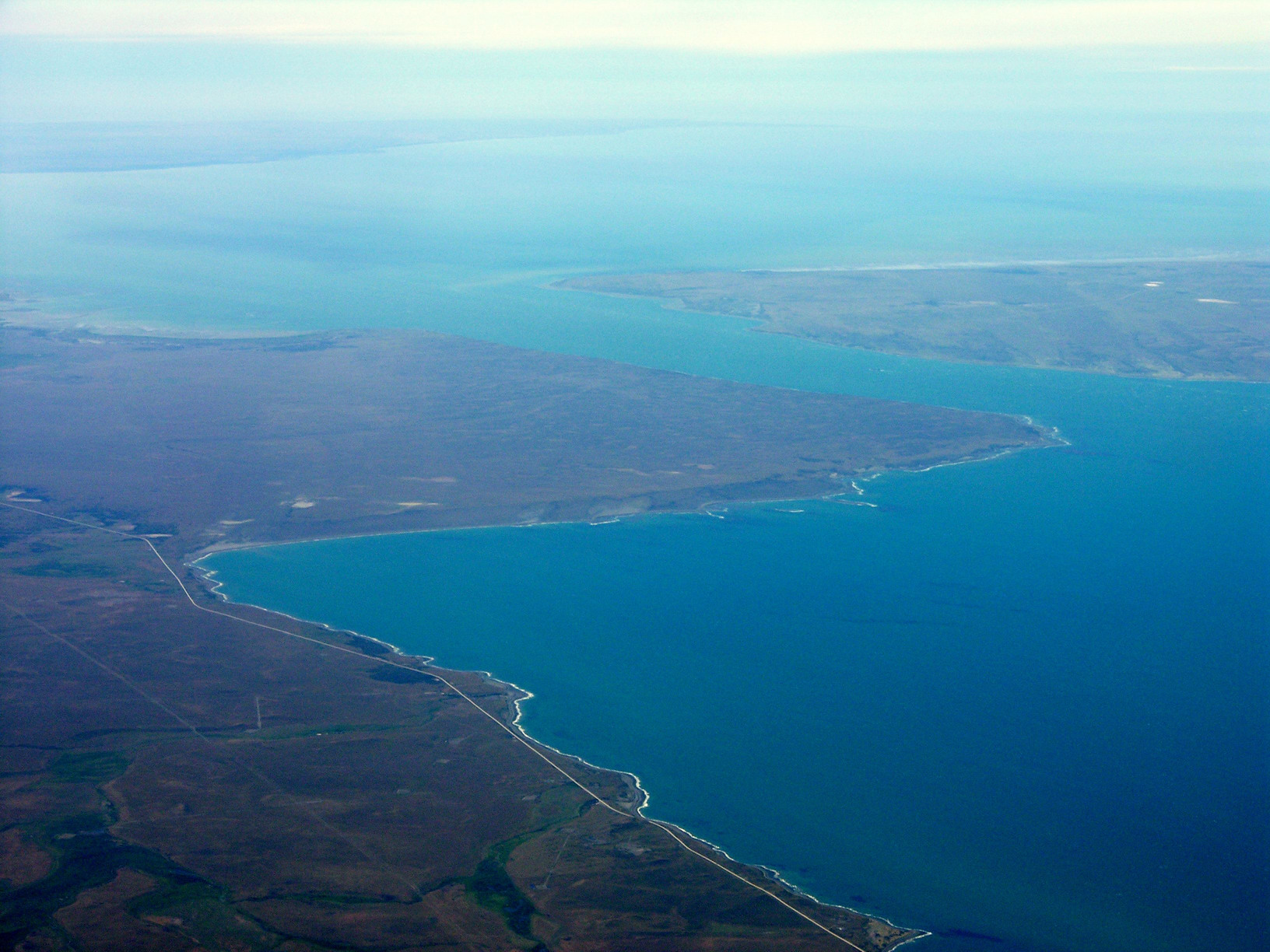
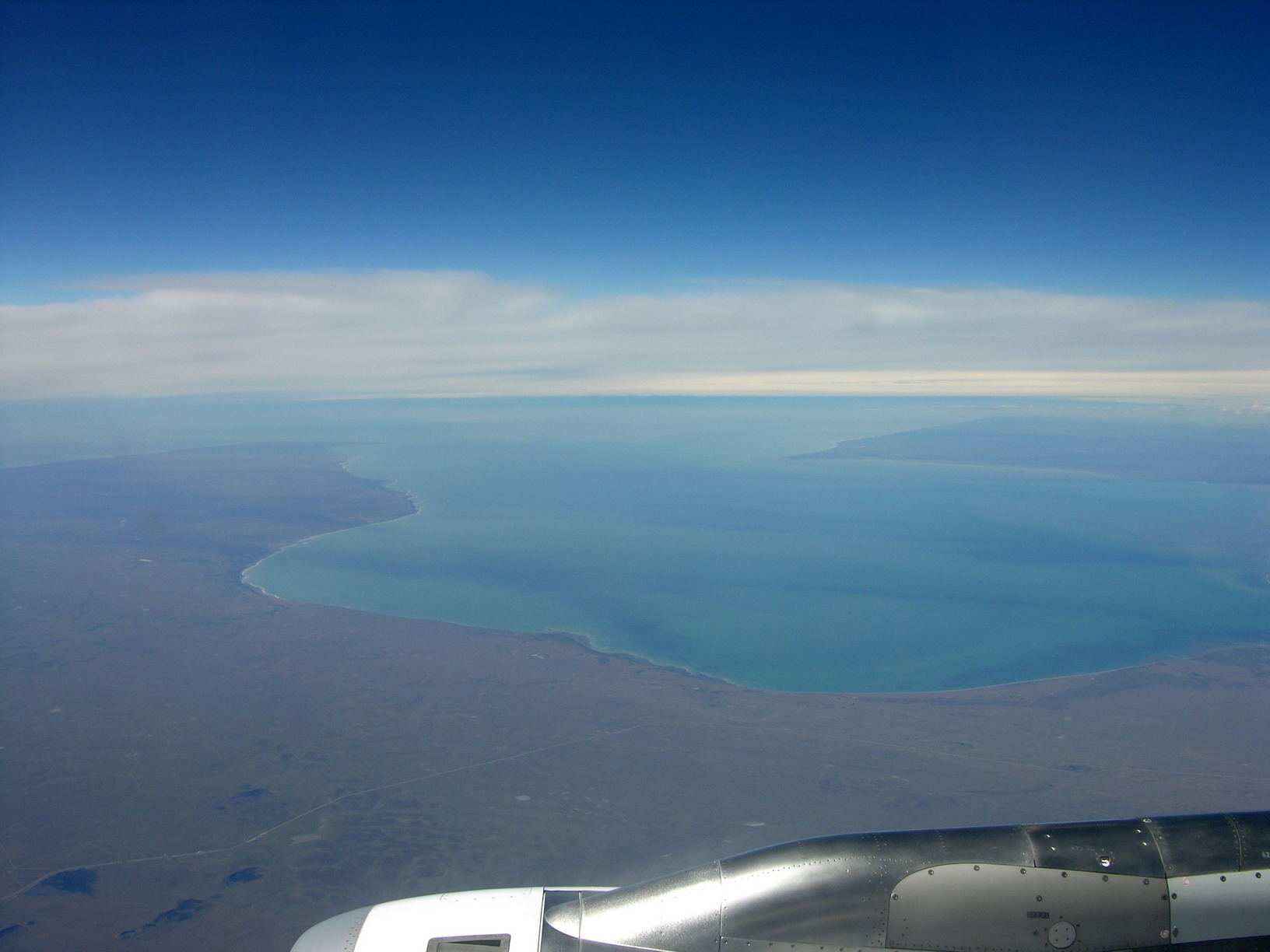
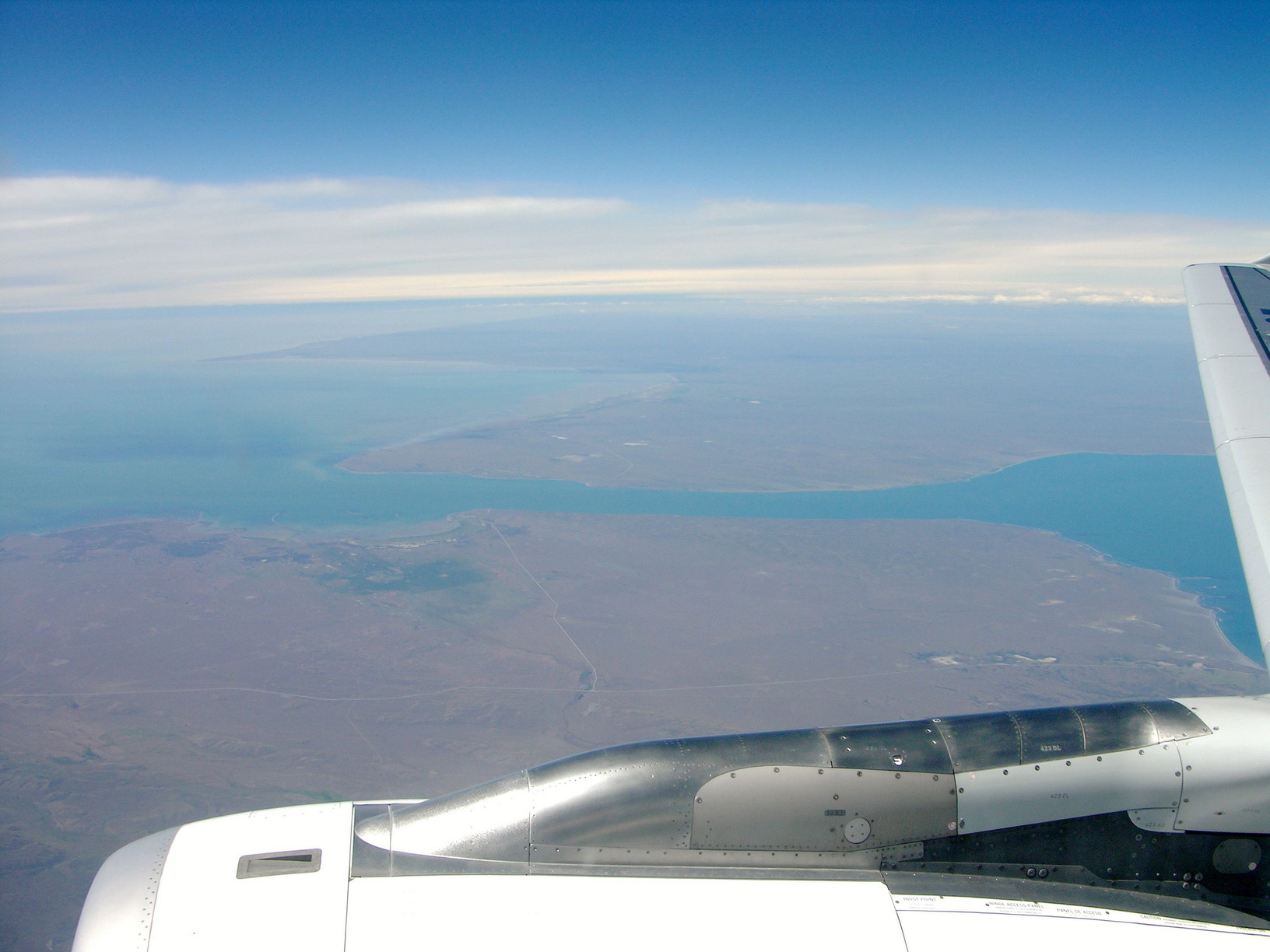
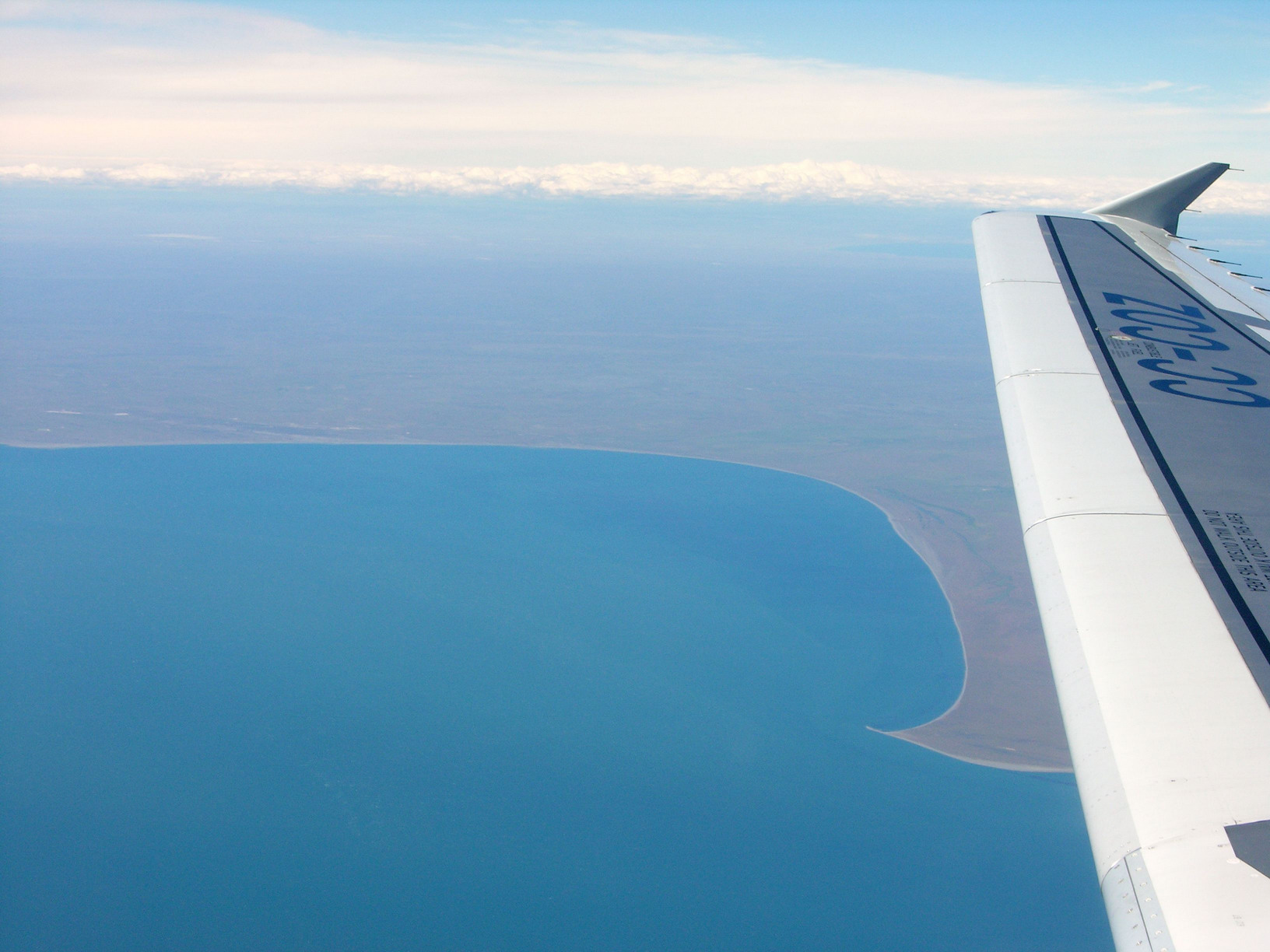
The Falklands greeted us with low clouds and a drizzle. They announced on the plane that we were on a military base and weren't allowed to take photographs. The base is well kept, with lots of hangars and barracks. Concrete penguins stand at the edges of the runway. There were about a thousand people working there at the time. After the war there had been five thousand, more than the whole local population on all the islands.
The base, and therefore Mount Pleasant Airport (MPN), is fifty-six kilometres from Stanley, the capital. They were built after the war. Before the war the Argentines had built the international airport at Stanley as a gift and a gesture of goodwill. The gesture, as soon became clear, wasn't one of goodwill at all, but a real Trojan horse. As soon as the airport was built the Argentine invasion force landed on it. Stanley Airport is now used for local flights. The runway is half as long and suitable only for little propeller planes, so the enemy won't get through, or rather won't fly in.
Passport control was friendly. They were interested in the visa, return tickets and a booking for at least one night. They looked at the visa and took our word for the rest. They gave us an entry stamp up to the date of the return tickets.
Customs asked whether we had fresh fruit or raw meat and let us pass without going through our rucksacks. The meat restrictions here were strict. An overseas territory it may be, but even from England you could bring in only a kilo and a half. Any more and it was practically prison.
A man from Darwin was waiting for us at the airport with a jeep. The Falklands have practically no public transport. There's a bus to Stanley timed to meet the flight. A ticket was thirteen pounds. A taxi was forty, so four people did better in a taxi. All that's for getting to the capital. To get to Darwin you're on your own. They had offered to collect us, modestly leaving out that it wouldn't be free. It cost thirty pounds. We could have counted on hitchhiking, but that always leaves a certain amount of doubt, especially on the last day of the year. Who knows whether anyone will be going out to a village of eighteen people on the evening of 31 December?
Speaking of hitchhiking, there may be no better place in the world. You don't even have to put out a hand. Everyone coming along the road will stop and take you wherever you need to go, even if they're not going that way. If it's your principle to go on foot, you'll have to explain yourself at considerable length, preferably in their local dialect of English, or they won't understand. One hitch: with a population like that, a car doesn't come down every road every day.
Hiring a car in the Falklands was very expensive. A jeep could cost £350 a day. Petrol was cheap, at sixty-four pence, and diesel forty pence. There's one filling station for the whole country. It closes at six in the evening, four on weekends. There's also a little shed at Goose Green with a drum of petrol, but it isn't quite a proper filling station.
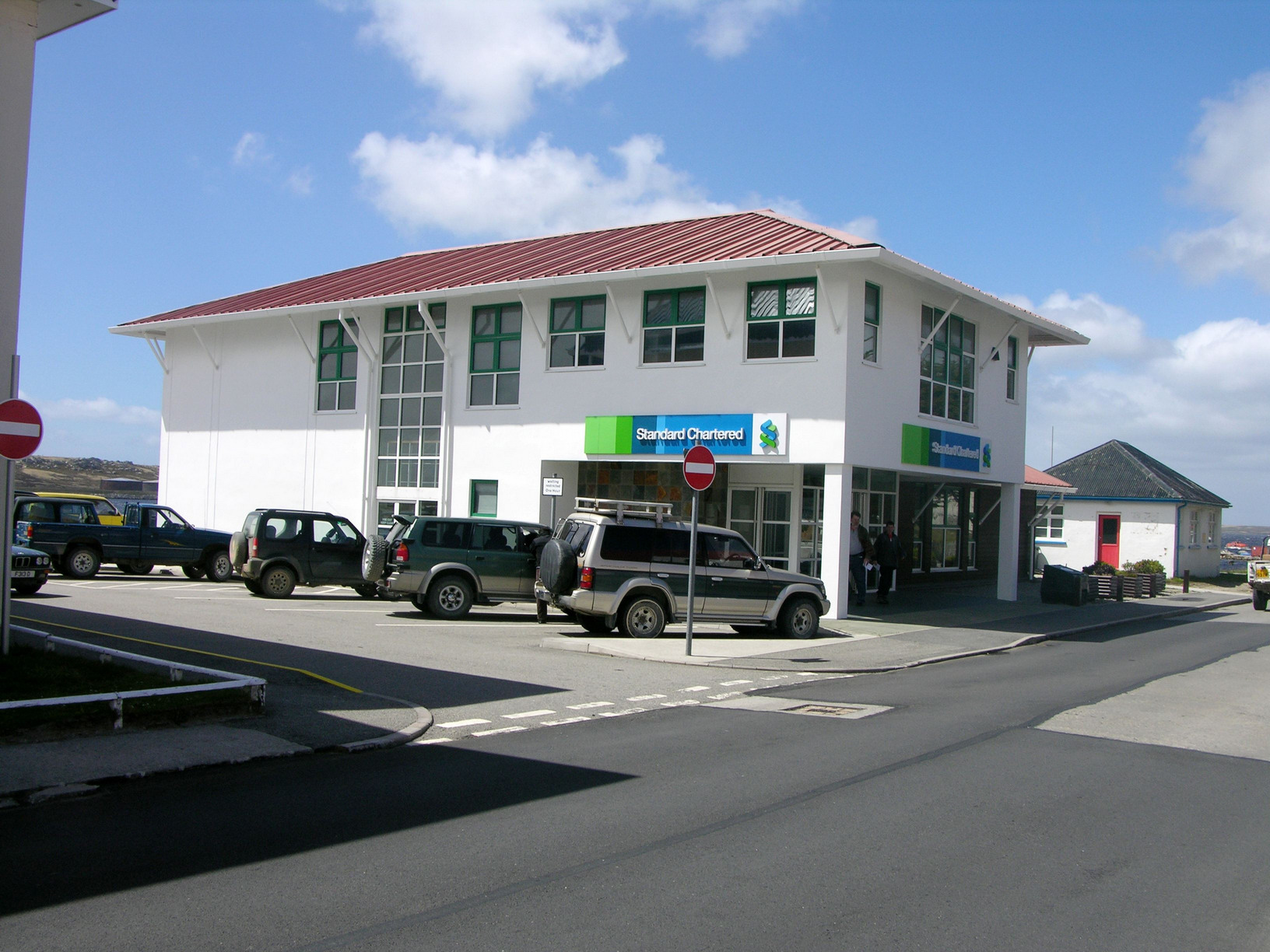
About currency. The Falklands have their own pounds, with the Queen against a background of penguins. Their own coins, too. Local money is worth the same as sterling by definition and the banks change it without a charge. British pounds are freely accepted at par. There wasn't a single cash machine in the country. The only bank in the capital, Standard Chartered, could make a cash withdrawal on a card at a three per cent charge. It closed at four and didn't open on weekends or holidays. Foreign currency exchange was much the same. In Stanley you could pay by credit card almost everywhere, while on the other islands it was cash and cheques on the local bank only. They took only the old paper imprints, so you needed a real embossed card, not one of those Visa Electron cards. It was best to make sure you had enough cash before you arrived, preferably brought from Russia. You could buy pounds in Latin America but not at every exchange.
The Falklands have their own mobile network. It covers the islands but isn't compatible with anything else. There's one GSM base station in Stanley and no roaming with anybody. Lots of houses have landlines. Stanley has the usual red British phone boxes. For £1.50 a minute you can call Europe or Russia in particular. They take coins and there's a telephone card as well. Internet everywhere, and even a webcam. The post works beautifully. There is, mind you, just one post office in the country. For the outer islands the postman is the pilot who drops in on the inhabited islands whenever there happens to be a passenger.

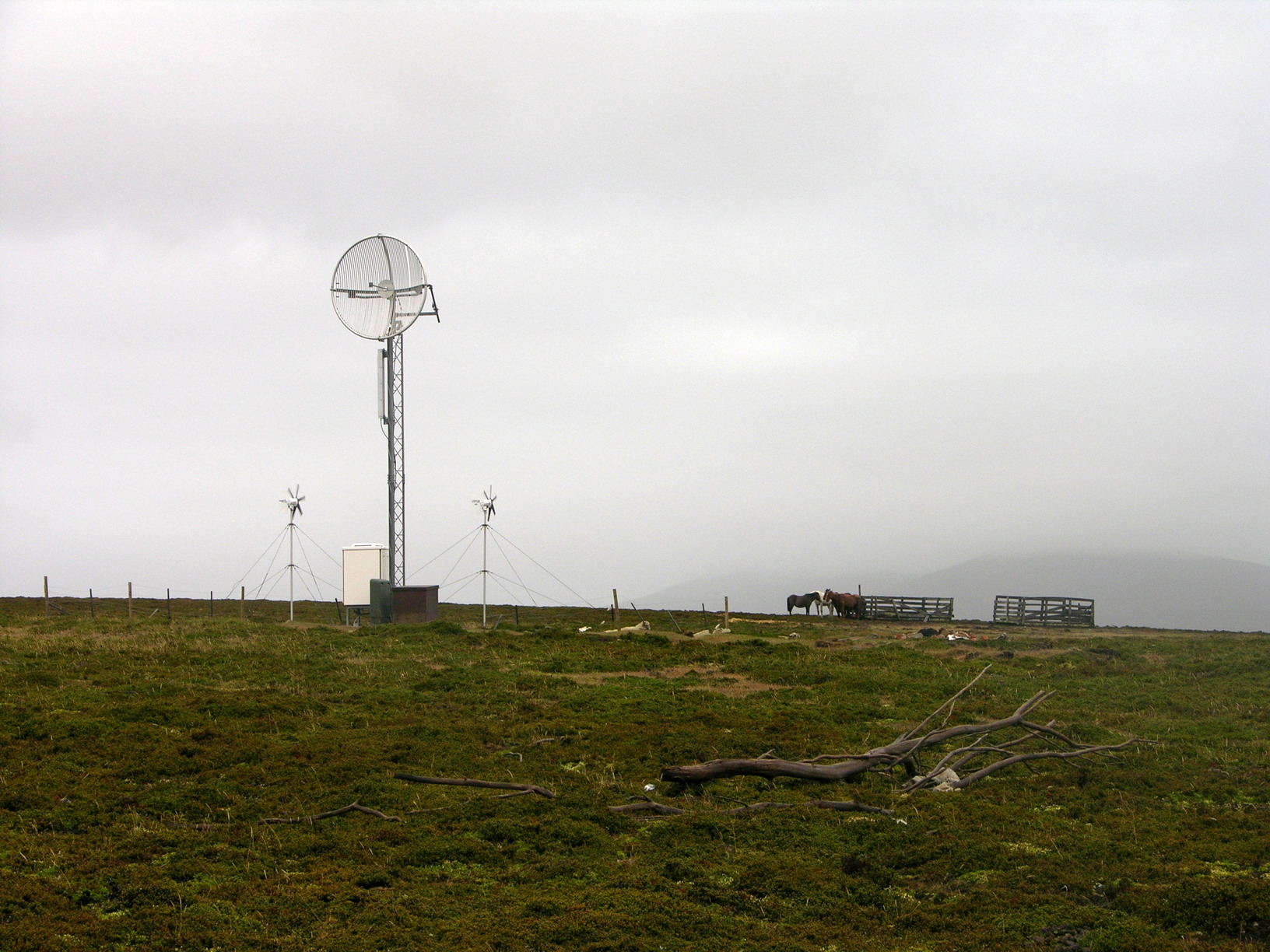
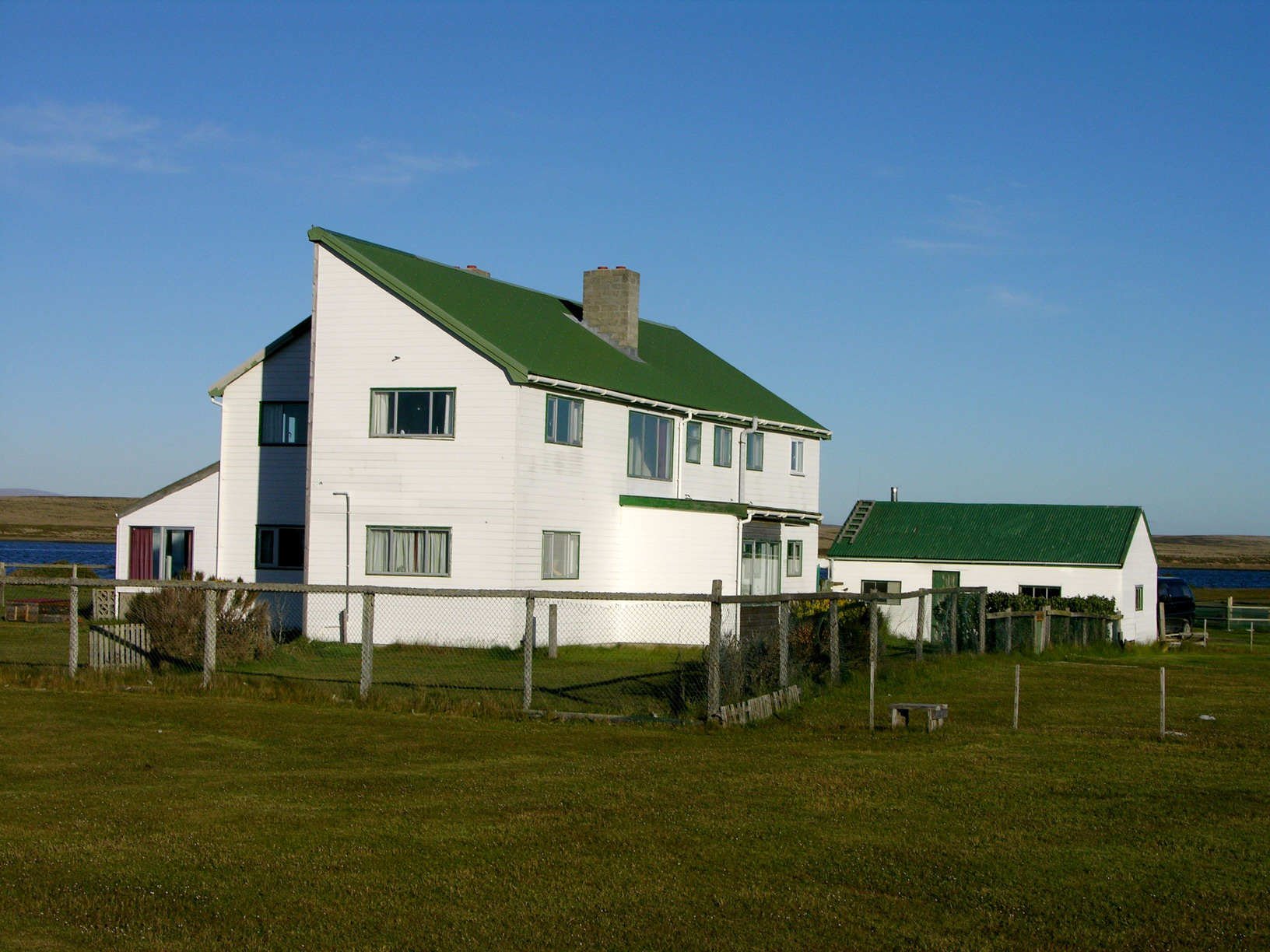
We decided to see in the New Year in a proper hotel rather than a tent. There wasn't time to fly anywhere far on the evening of 31 December, so we chose Darwin House. It stands in the village of the same name. Here Darwin spent the night during his round-the-world voyage. Ever since then the place has borne his name. The expedition left an indelible mark on maps of southern America. Charles Darwin himself, his ship Beagle and its captain Robert FitzRoy turn up in names at every step.


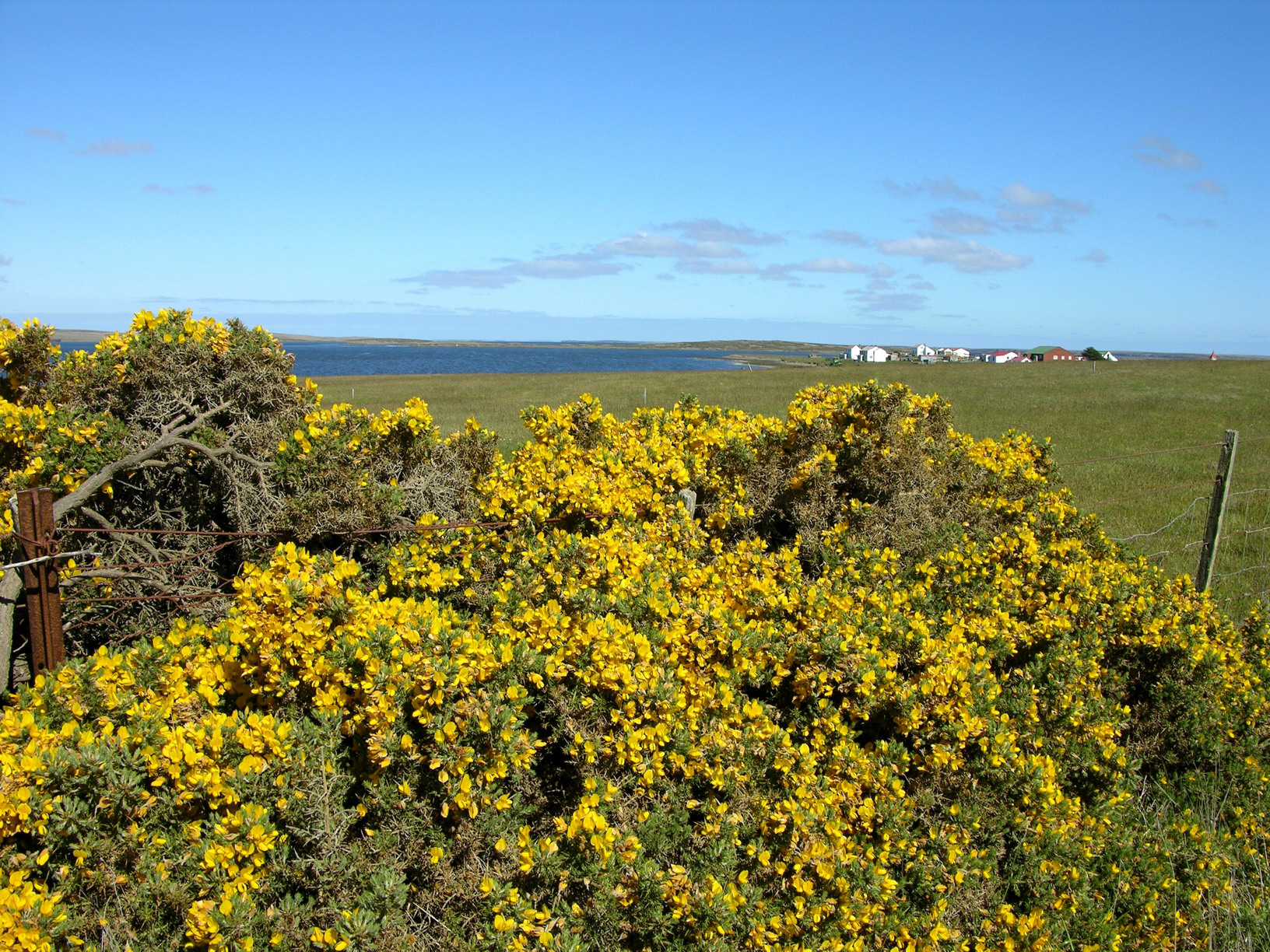
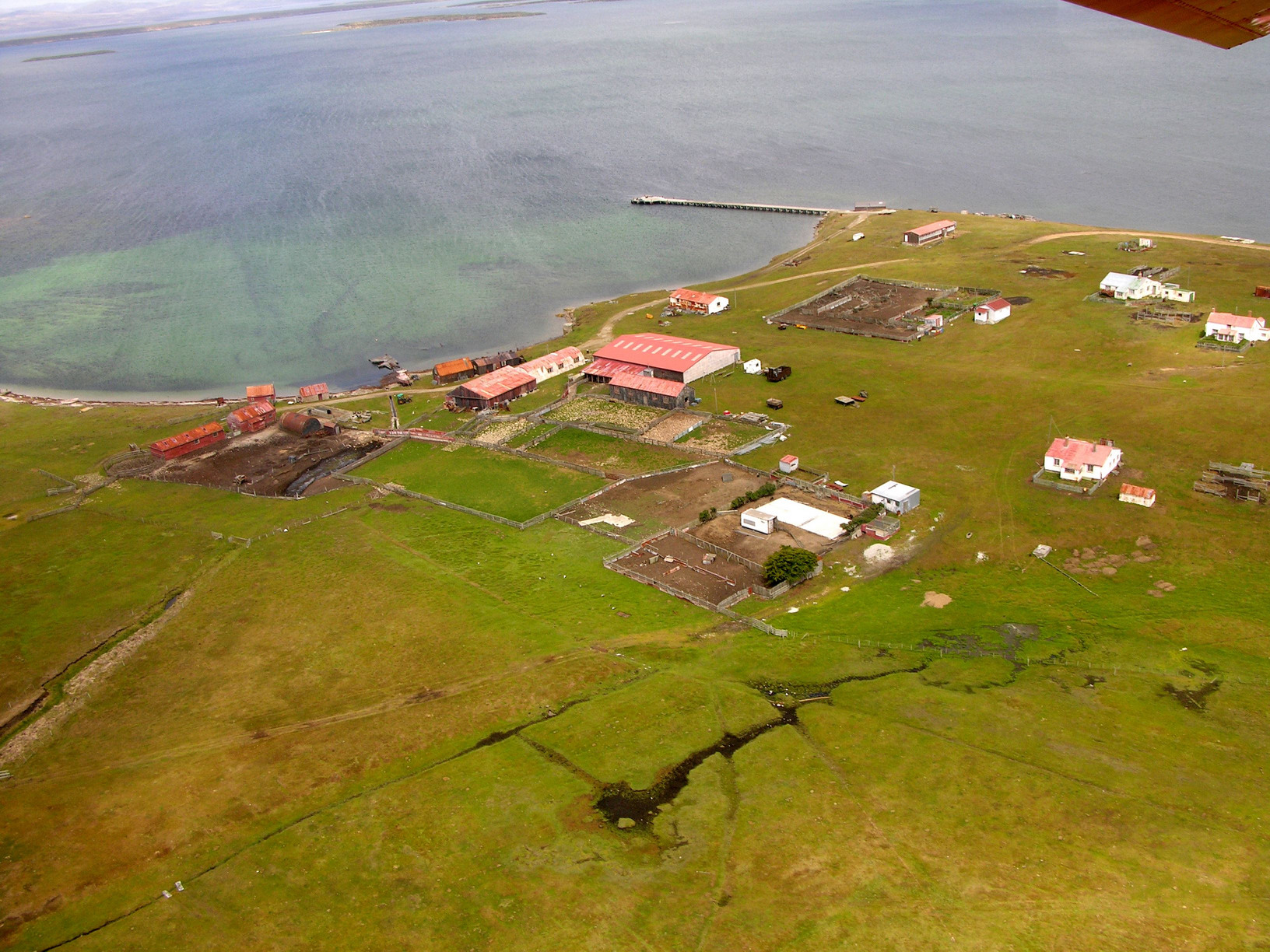
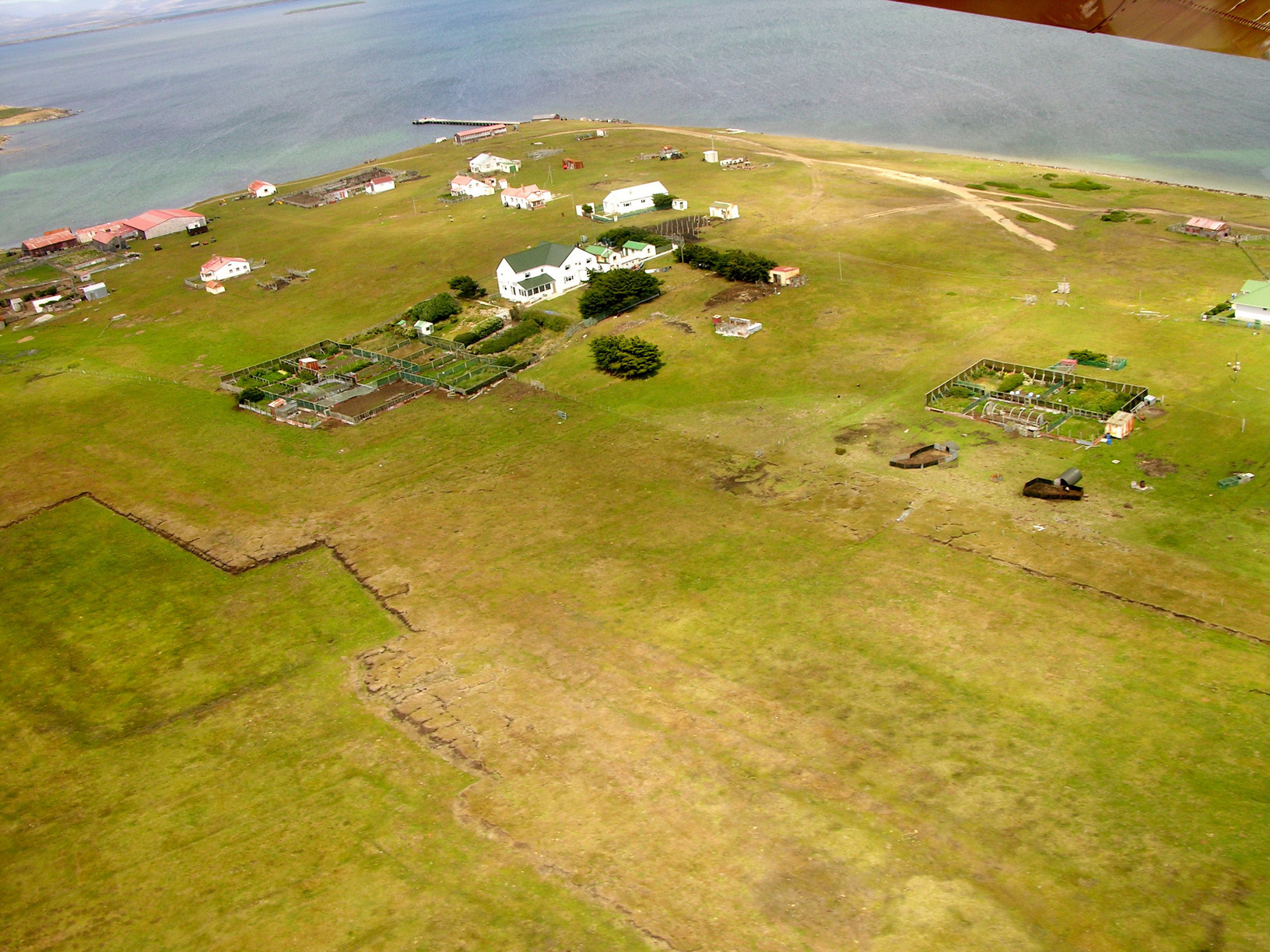
The modern Darwin House was built in 1971 (51°48.351′S, 058°57.480′W). The population of the Falklands is falling sharply. Not long ago Darwin was a little town with bridges, quays and streetlamps. Now three houses remain. Some of the people didn't die out, mind you, but moved to neighbouring Goose Green, houses and all. Eighteen people lived there at the time, making it the second-largest town in the country. Altogether there were 270 people outside Stanley, who managed to keep 600,000 sheep.


We were the first people from Russia. They'd kept their best room for us on the upper floor with a view of the sea. Electricity comes from a wind turbine. There's a generator if the wind drops. It doesn't always work, so every guest gets a torch. There was even a Jacuzzi in the room and the first thing Tanya did was get into it. As soon as we got there, we celebrated the New Year on Saint Petersburg time. A six-hour time difference, seven or eight in winter. Time is a complicated affair here anyway. The capital, Stanley, changes to summer time and the other settlements may not. People are conservative and free and don't need all that fuss moving the hands of a clock. And who's going to stop them? A farmer lives on his own island and can have whatever time he likes. Darwin turned out to be on summer time. Presumably the second city of the country was close enough to exert an influence.


The house is run by the family of Ken Greenland, the retired police chief for Goose Green and its district. Besides the house, he and his wife Bonnie, whose name is Bonita, have a farm and two grandchildren their parents had left with them for the summer.

The £130 a day includes full board. Like a film about good old England, guests go downstairs at the appointed hours, nine, one and eight, and make polite conversation around a shared table. Then the hostess appears with the food. One course follows another. They bring trays and everyone helps themselves to whatever and however much they want. It's only in jokes that the English eat very little and nothing but porridge. In real life there was an awful lot of food, and it was delicious. I don't think we've ever been fed better anywhere in the world. You can tell Bonnie likes the work. When she brings in another dish, she looks perfectly happy. She sets it down and then peeps from the doorway to see them eat it and whether they like it. A smile comes over her face at the sight of everyone chewing contentedly. It's all their own local food, beef, pork and chicken.
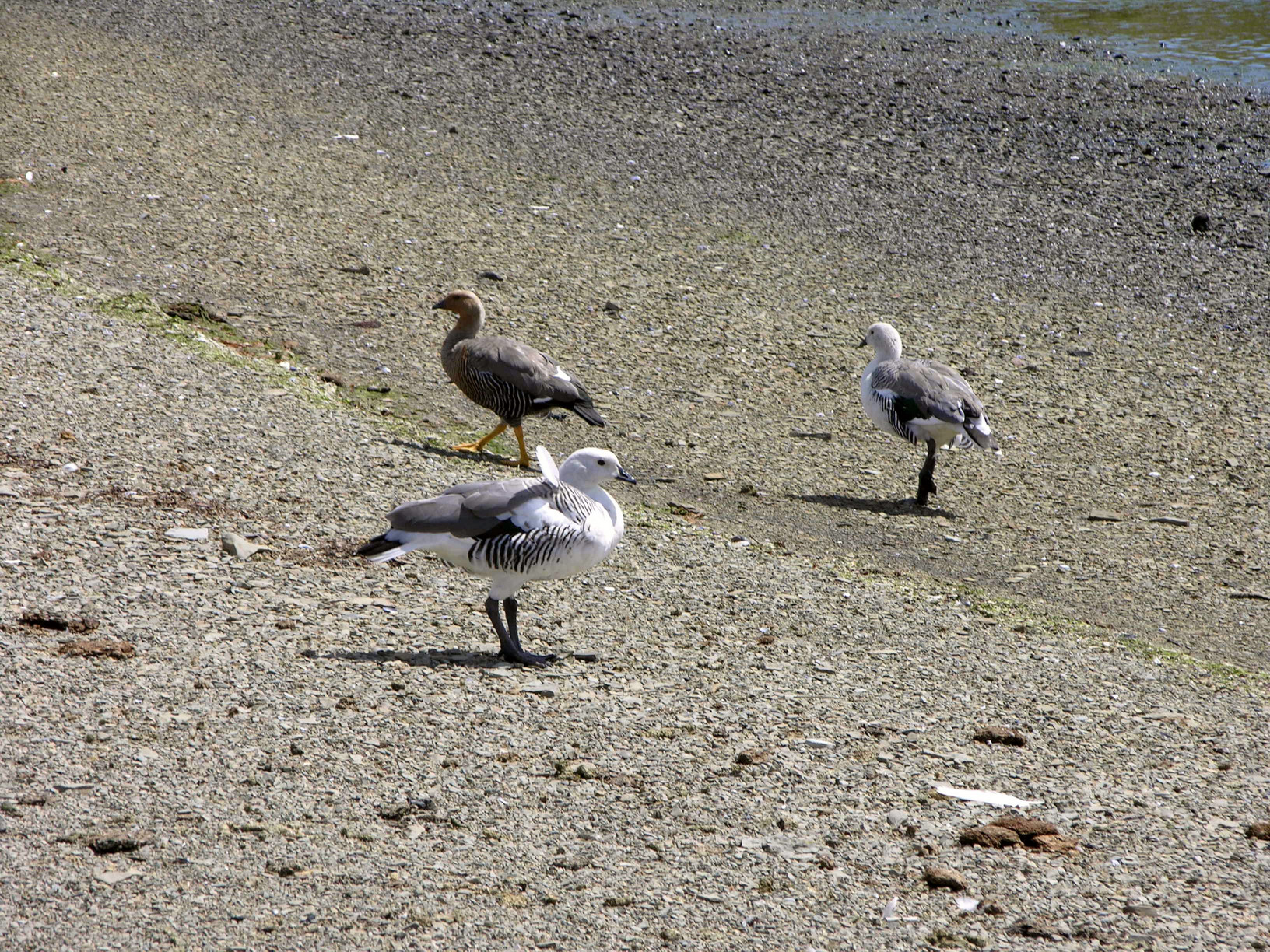
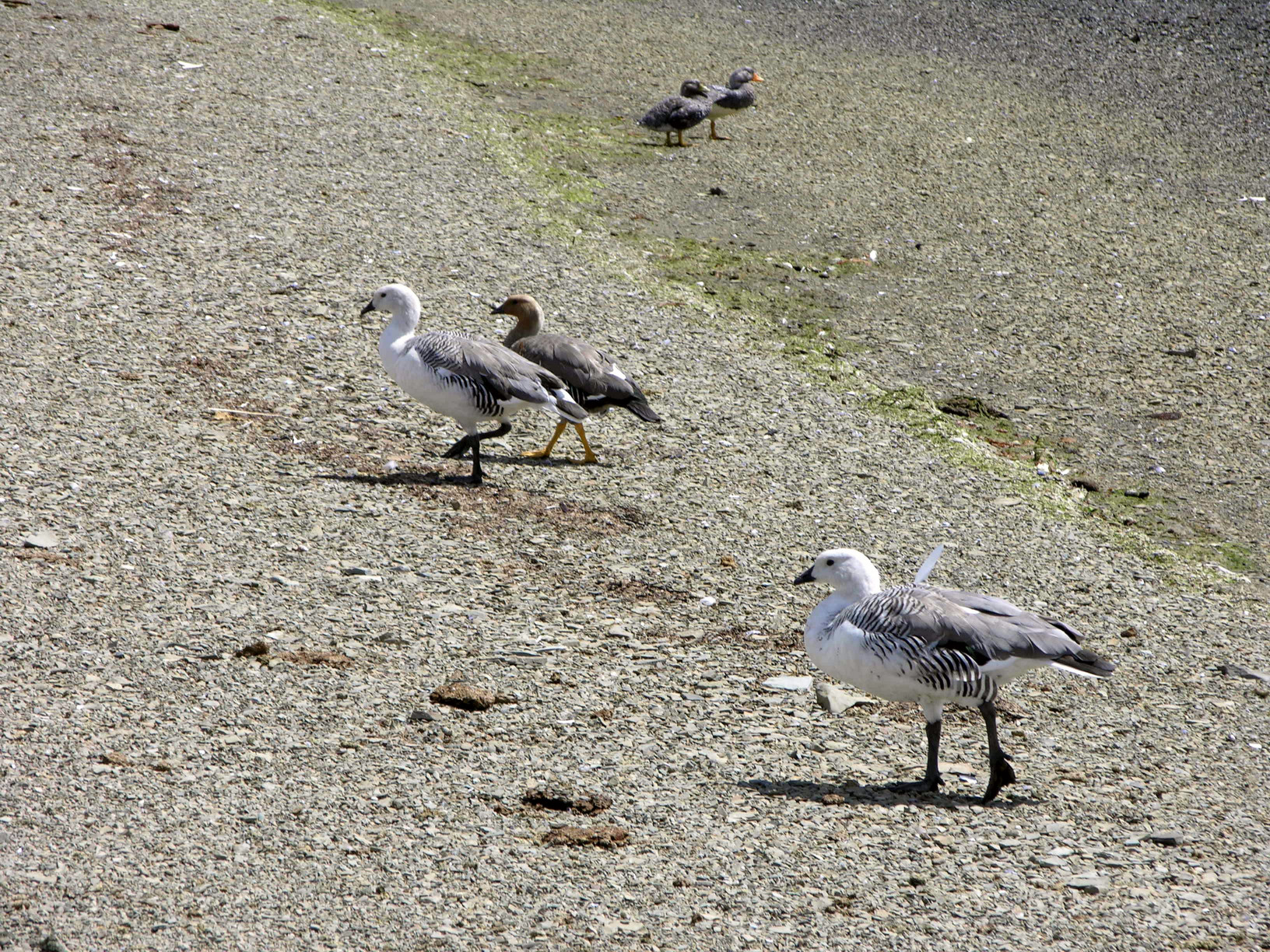
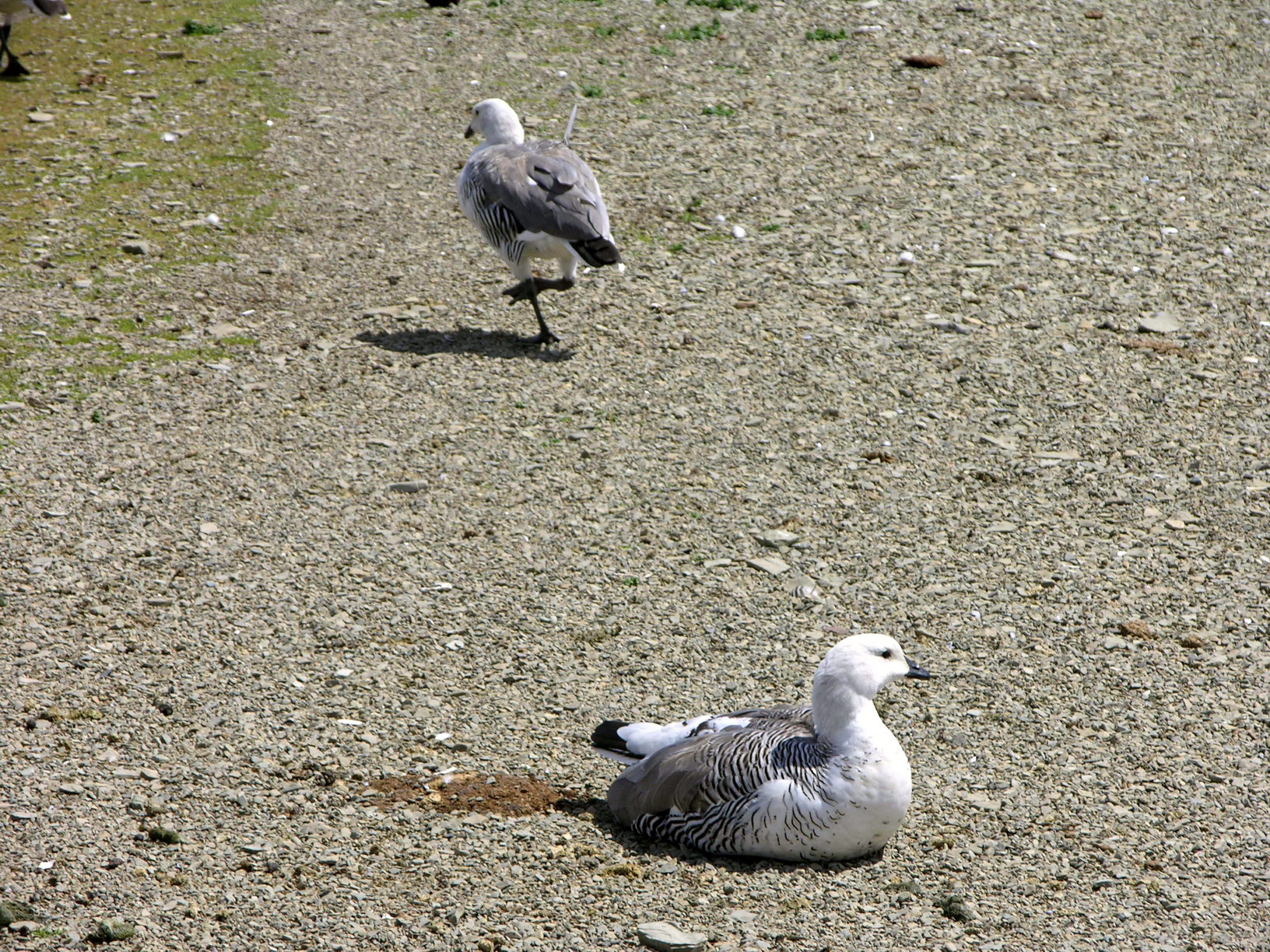
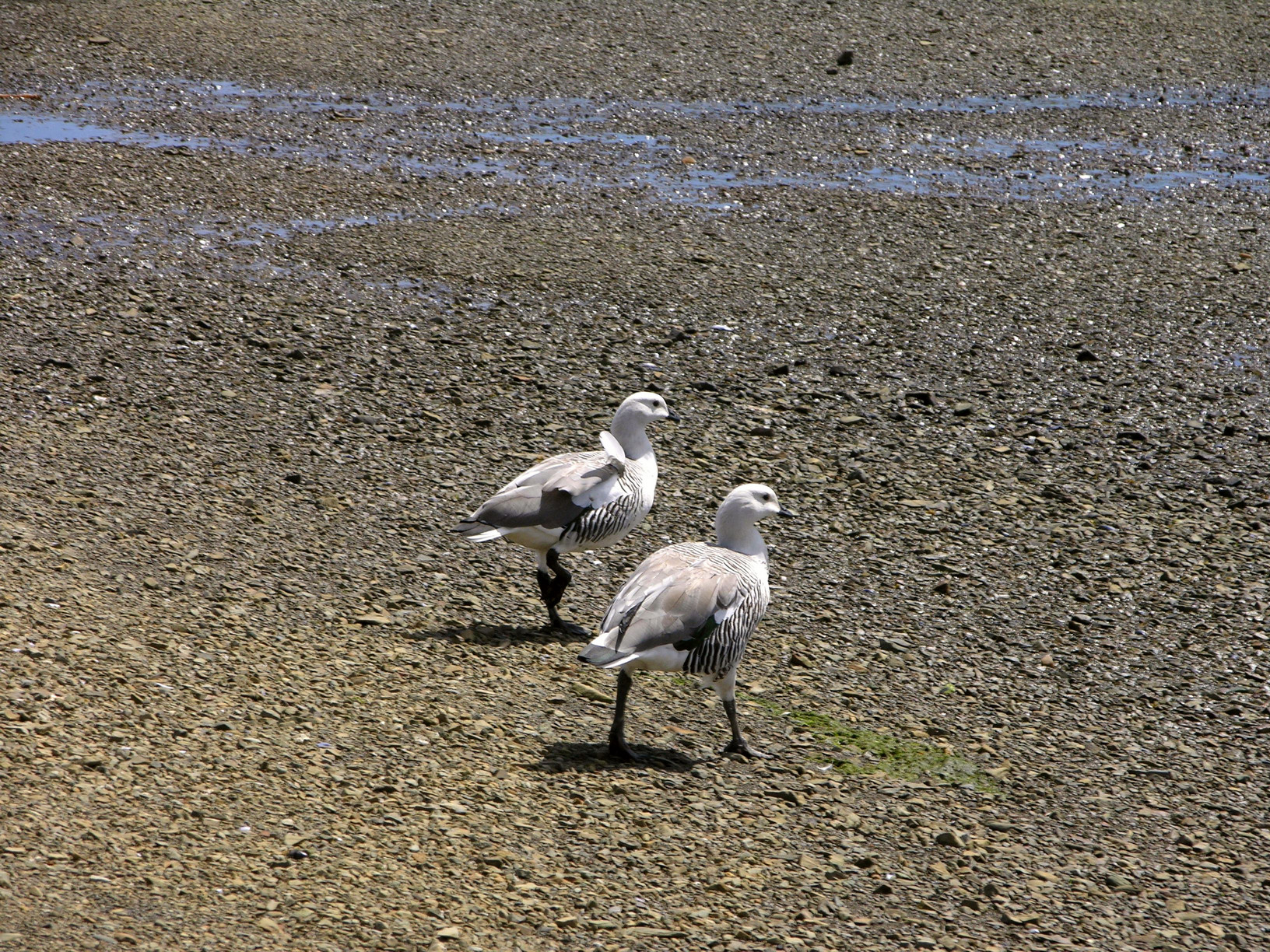
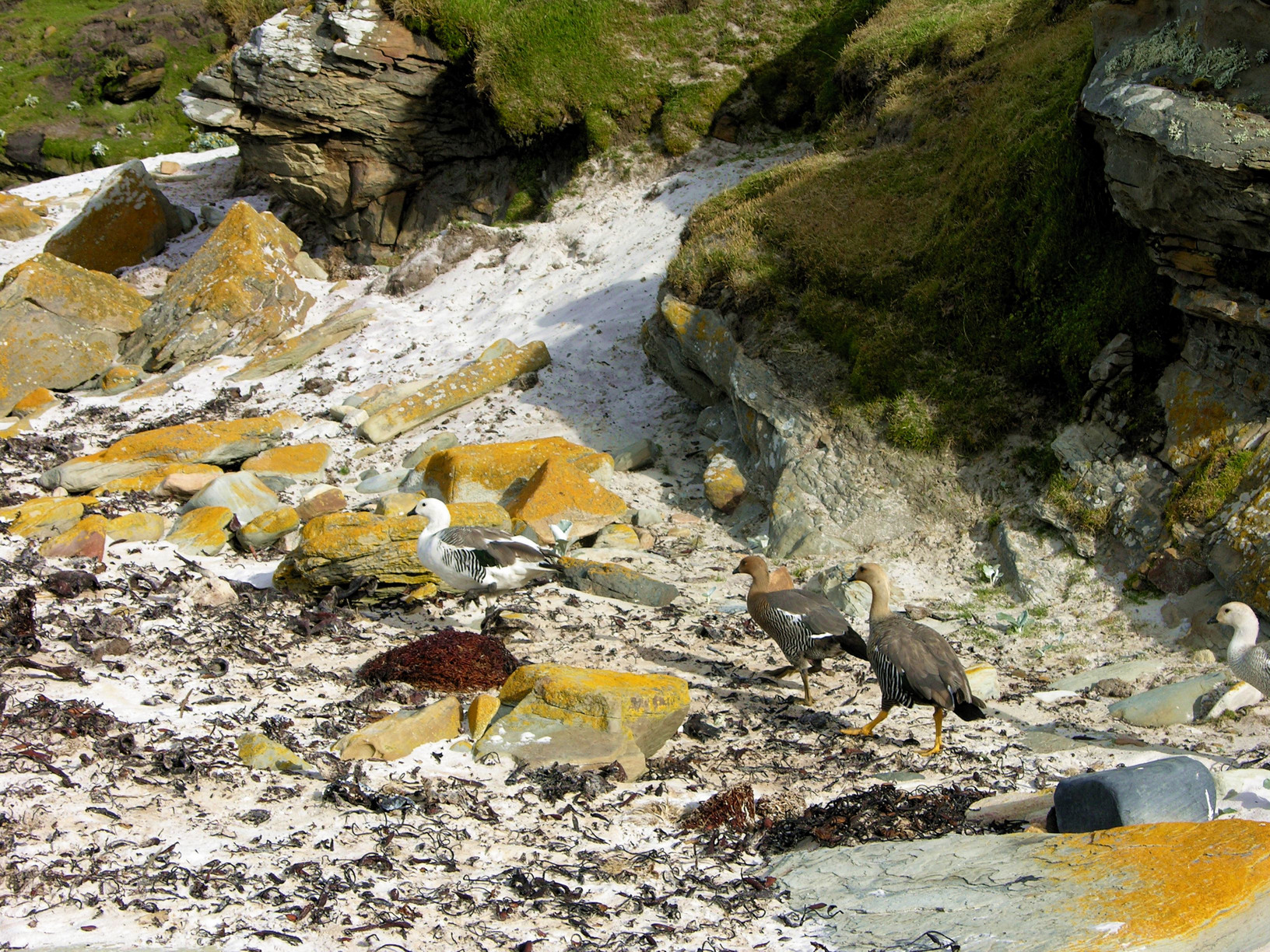
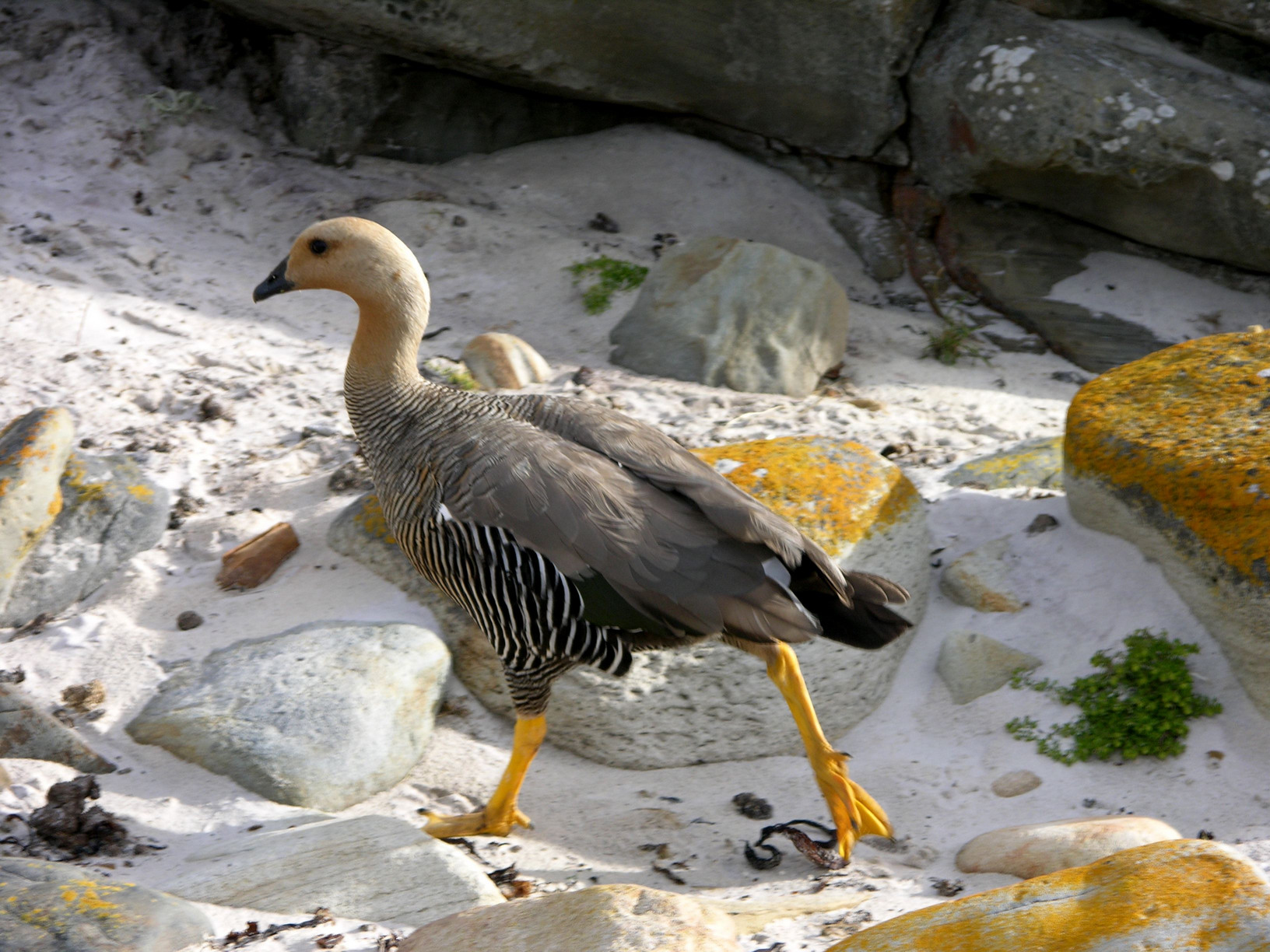
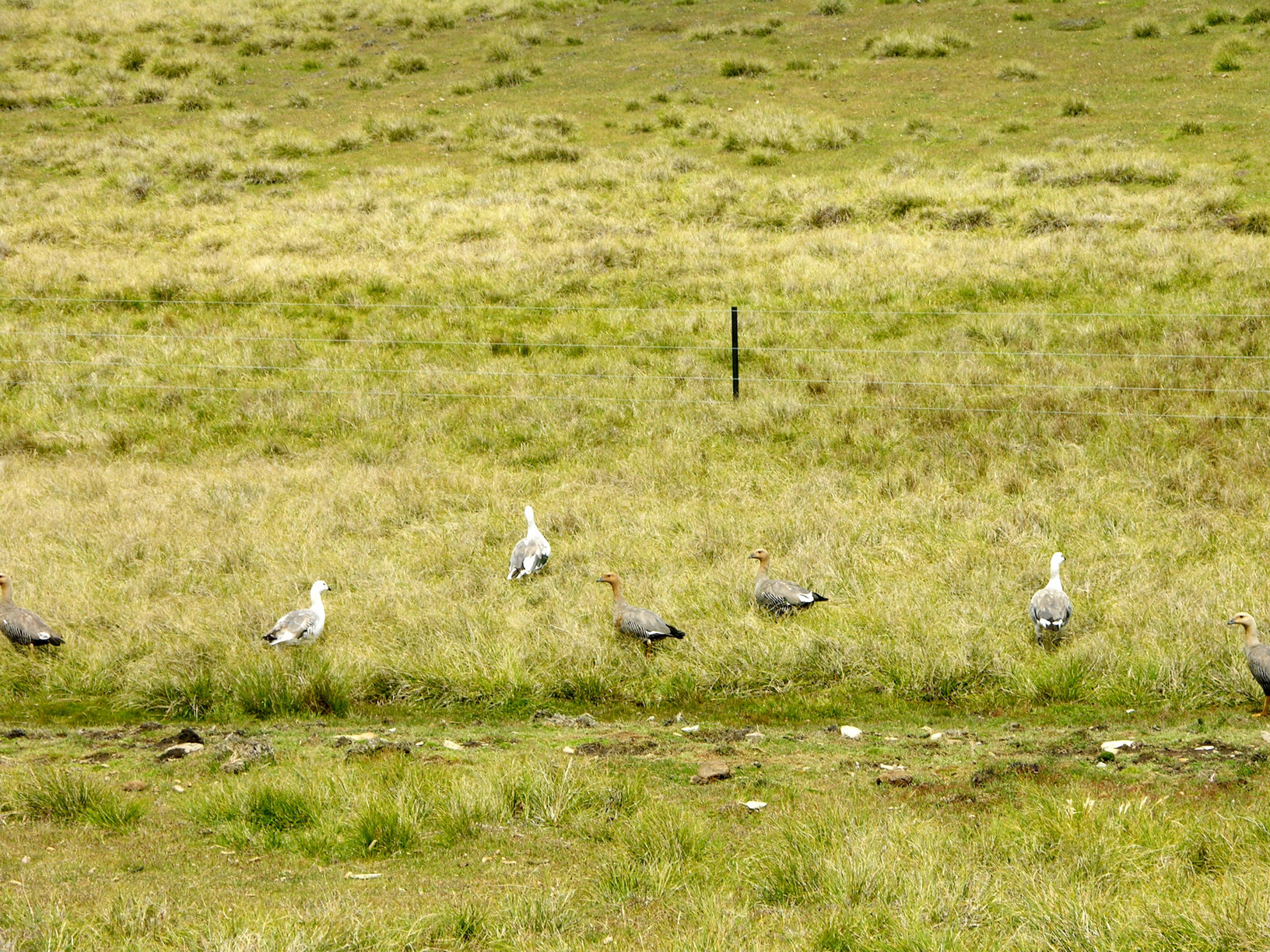
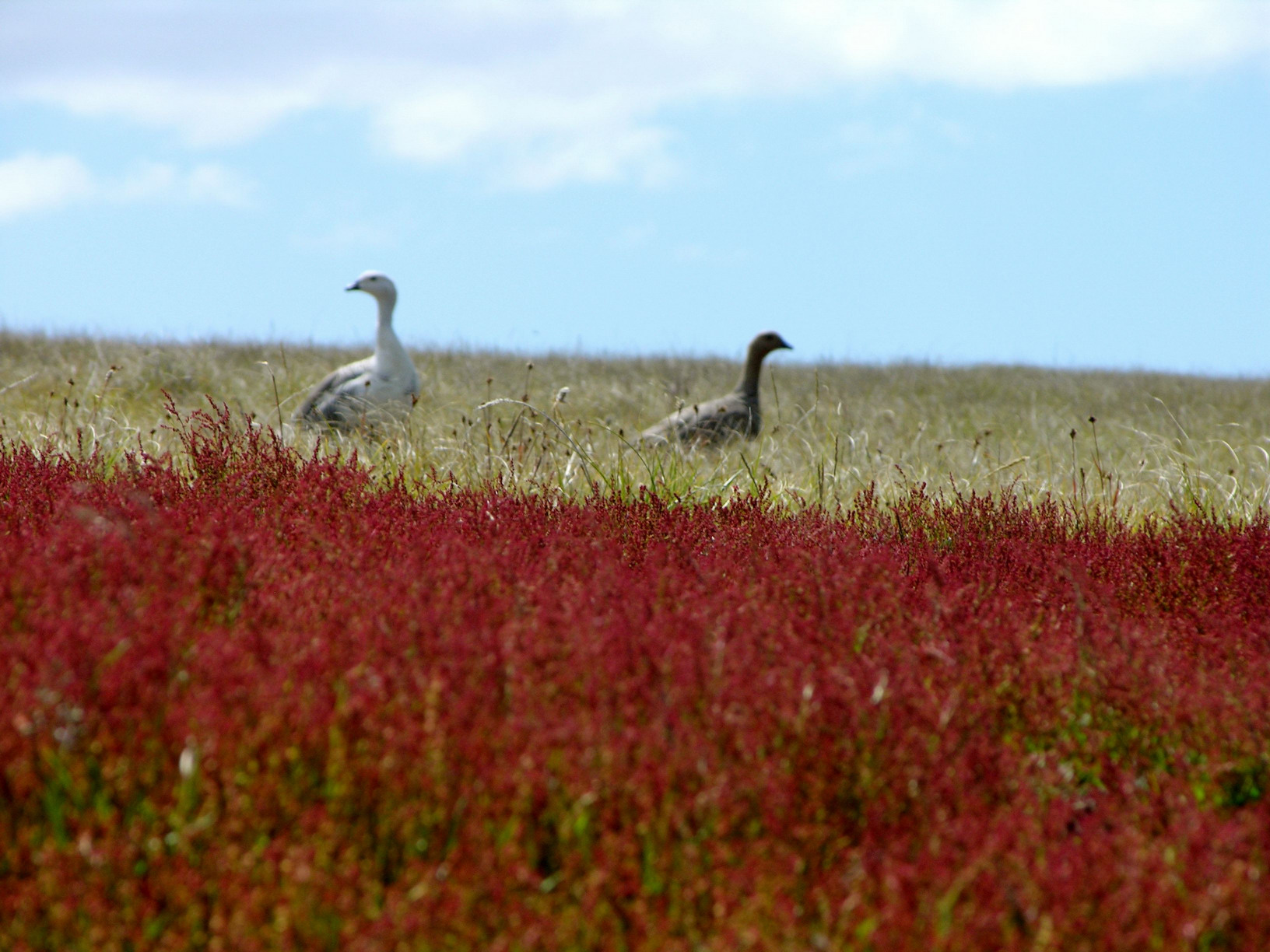
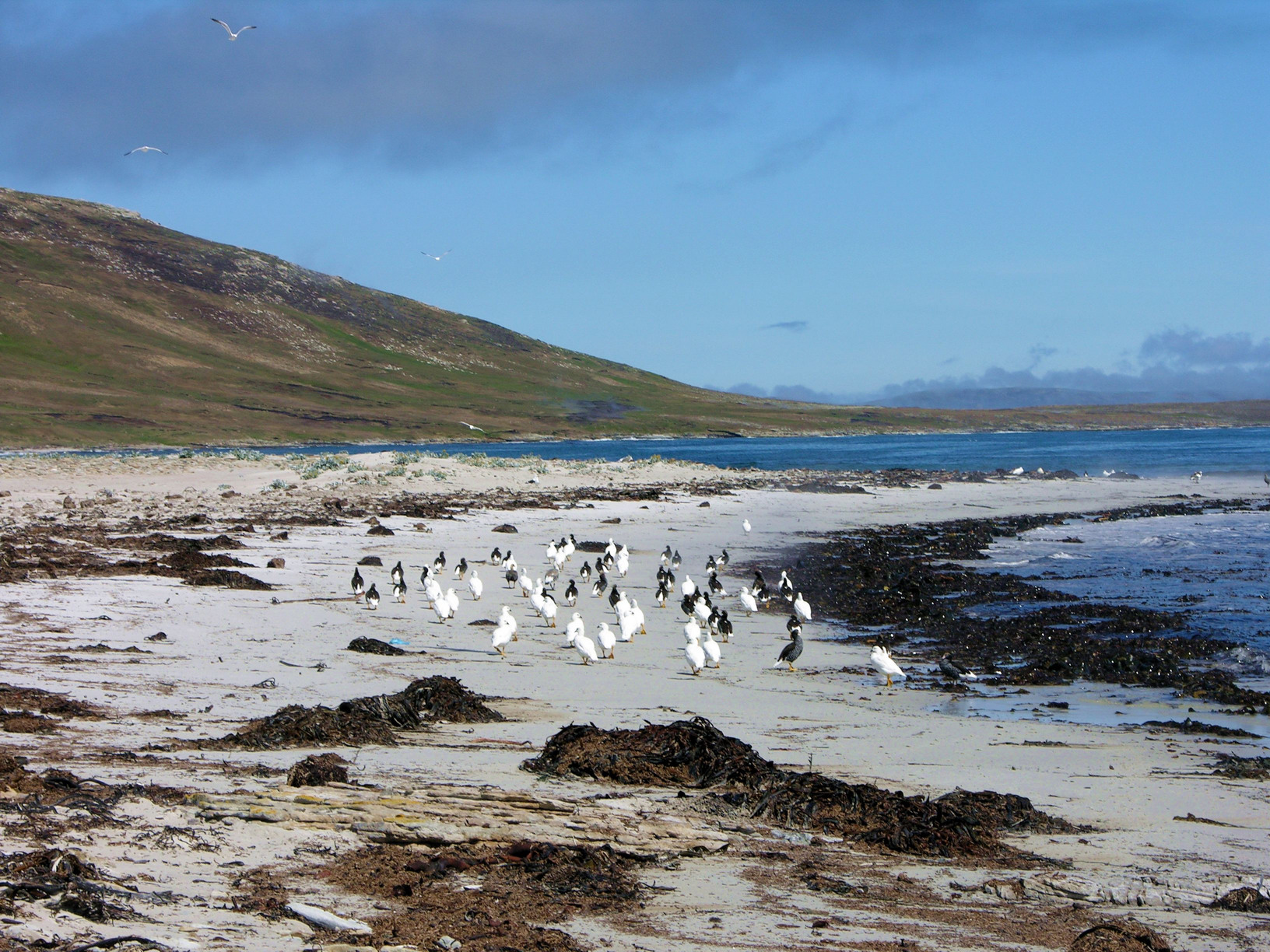
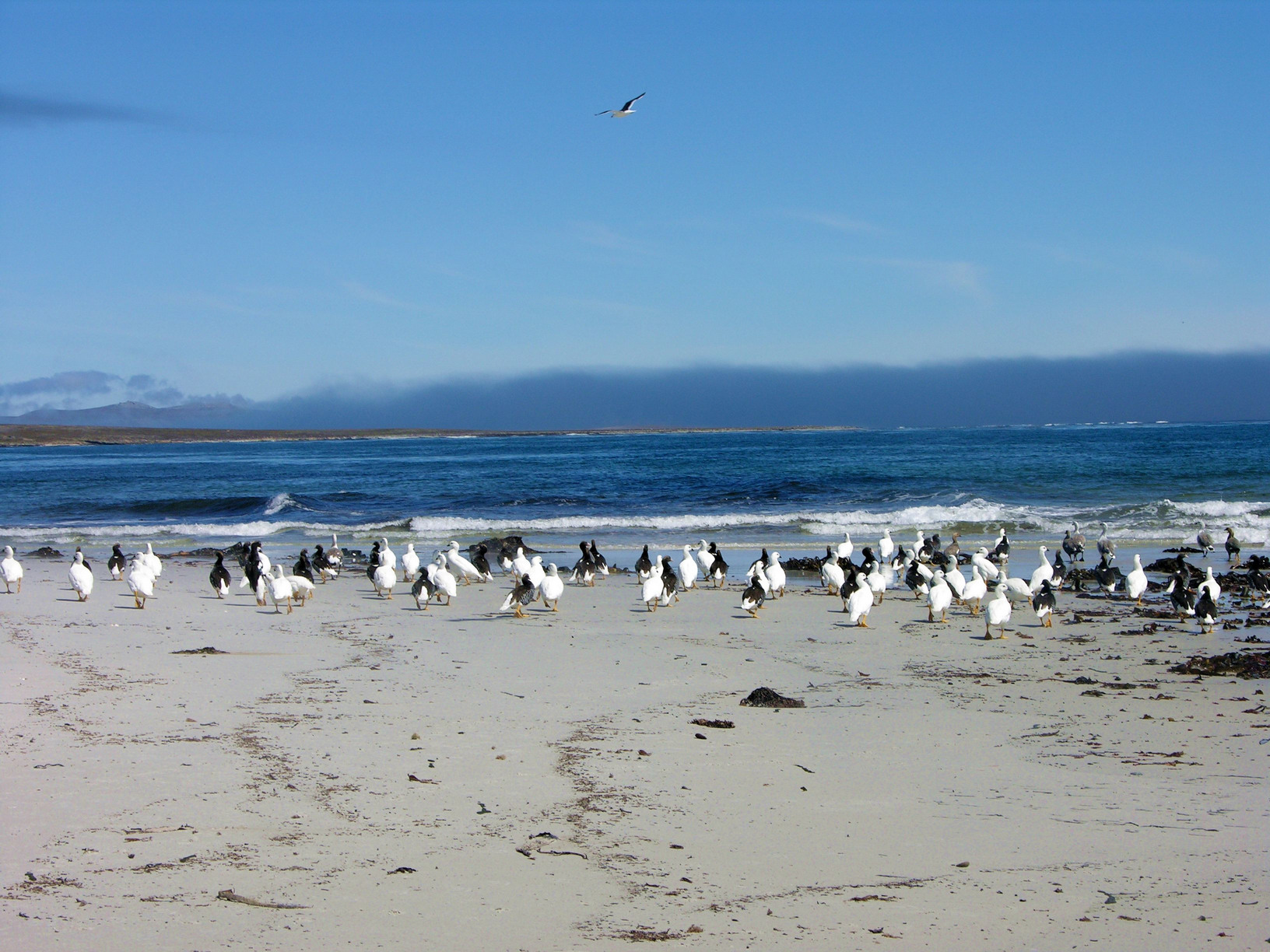
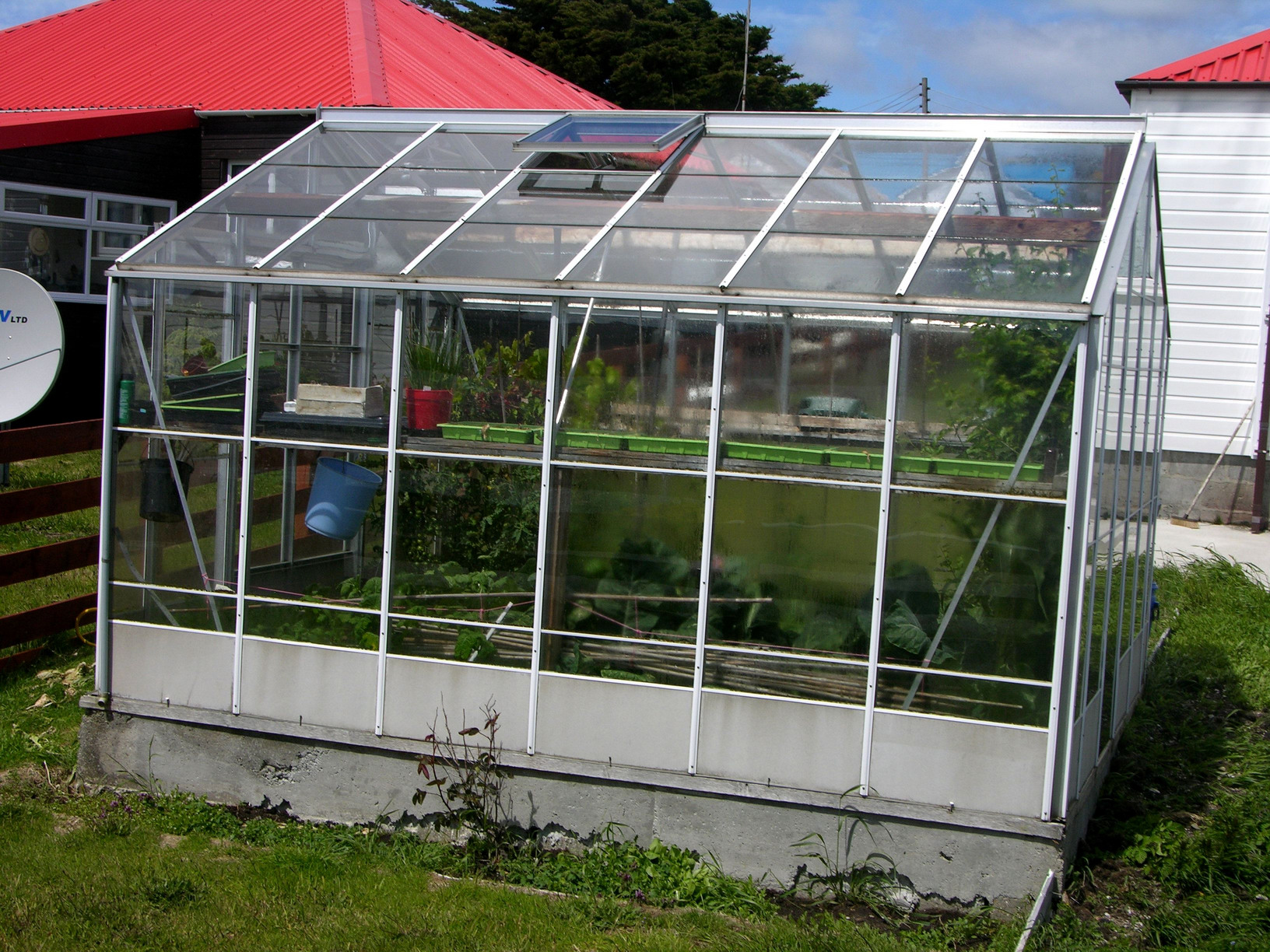
Wild geese walk round the Falklands in flocks. The ones that come too close to the farm risk becoming dinner. Tomatoes, cucumbers and other greens can be grown in the greenhouse. A little salad first, then a meat dish, then dessert. Something new every day. Homemade apple wine. If you're going away to rest quietly I don't think you could find a better place, provided you're resting and not exploring the world.

The house was cleaned to perfection. You were meant to walk about barefoot and leave your shoes and outdoor clothes on the rack by the entrance.
Darwin House sleeps twelve in all. Most guests are military officers. When they get leave they send for their girlfriends or wives from England and go to Darwin or another similar place. Not for their main holiday, just a couple of weekends with a day off in between, when their commanders don't check attendance too strictly. They go back to their unit to sign in, of course, but not for the whole day.
They were very good people, well educated and interested in a great many things. The first thing they asked me was what the Russian GPS system, GLONASS, looked like and whether I knew the codes it used.
They'd all been to many of the southern islands and told us about each one at length. Everybody was especially taken with South Georgia. You could tell service wasn't a burden to them, their commanders respected them and they believed in the country they were defending. I even thought it might be the only army in the world I'd agree to serve in. Her Majesty's service. Yes, for the Queen of England it wouldn't be a shame to die.
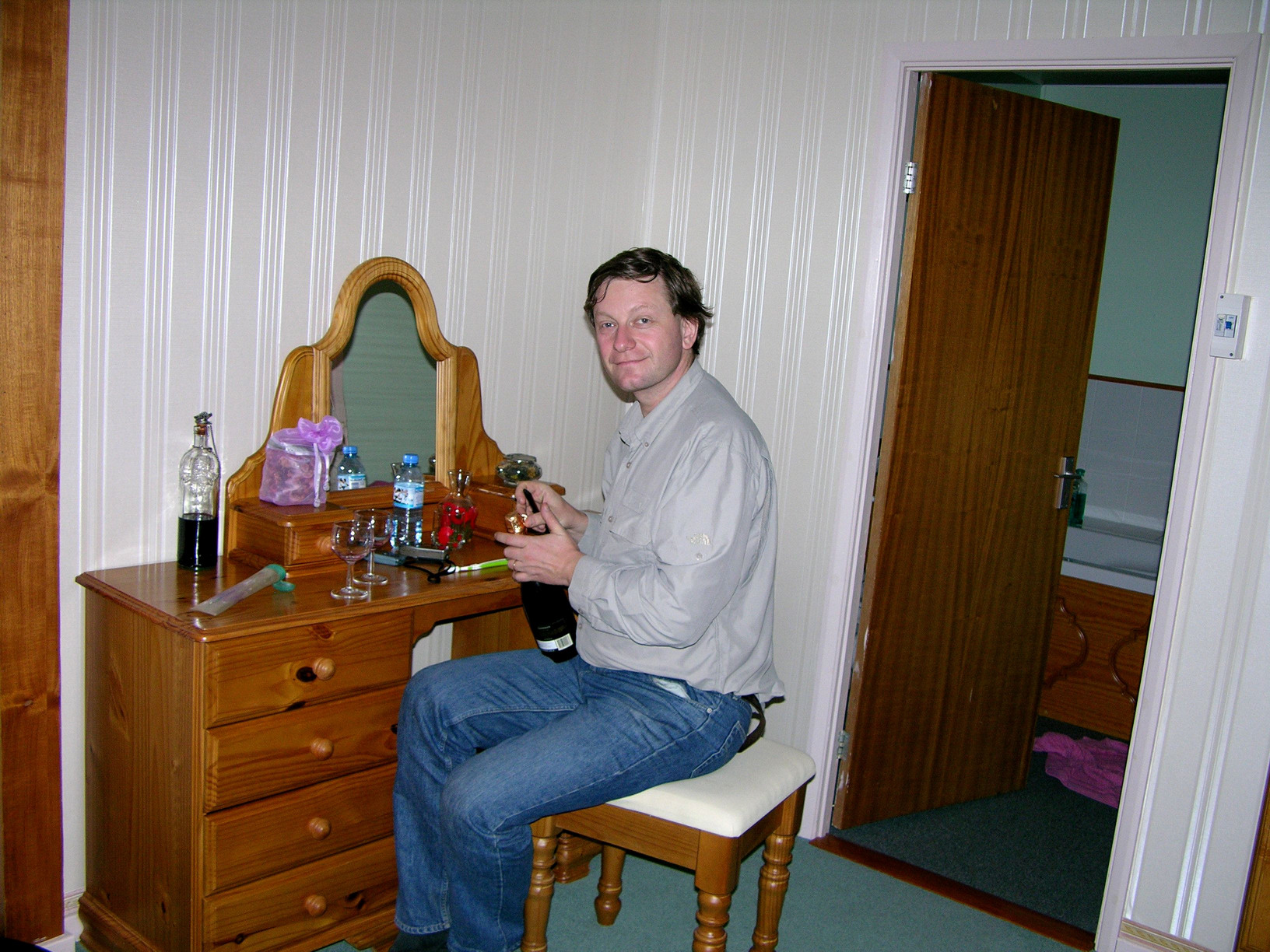
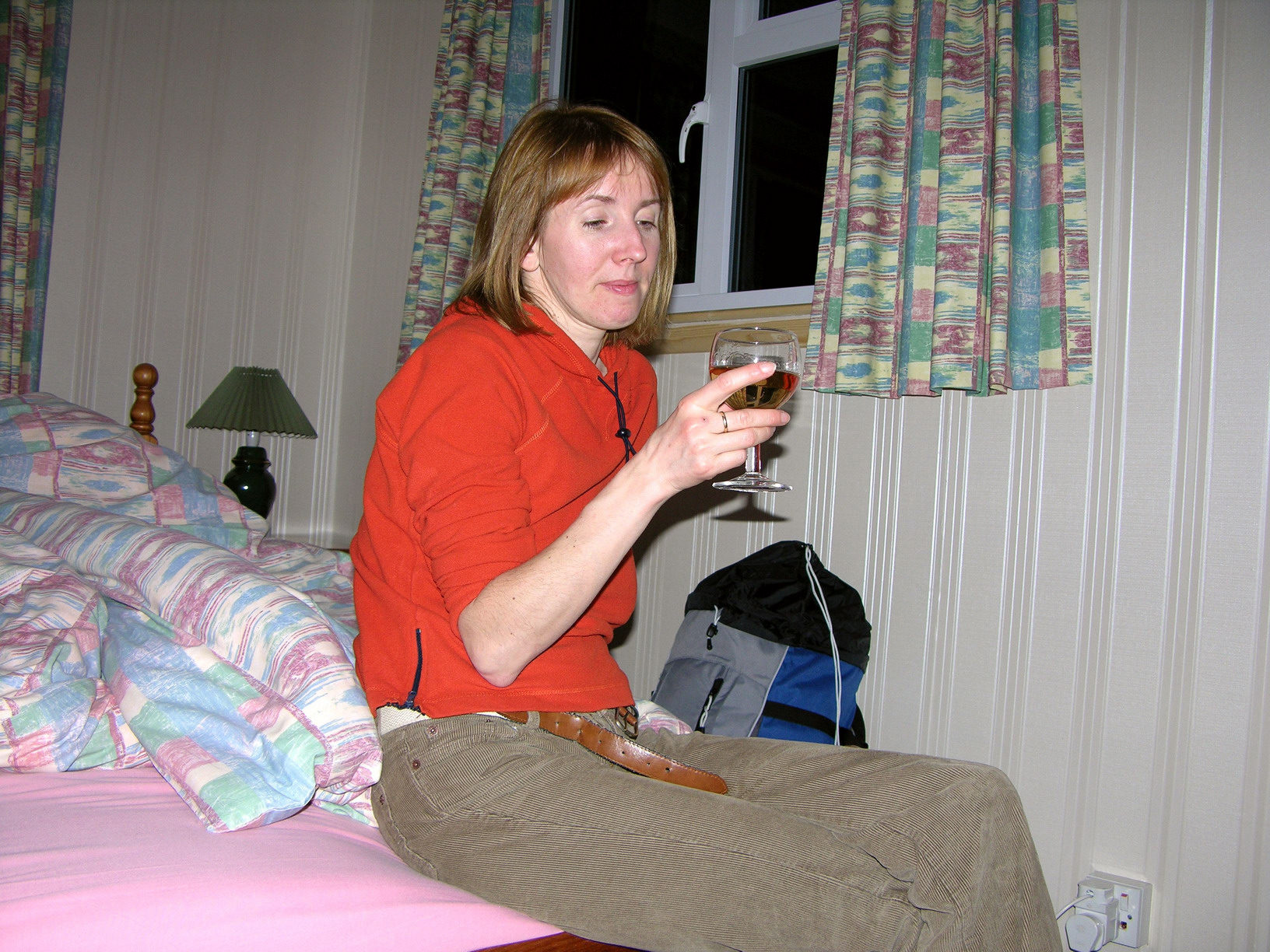
After dinner the guests all went off to their rooms. We never worked out whether there was to be a gathering downstairs to see in the New Year. No one had actually invited us, but people were talking loudly and gathering down below. In the end we decided to stay in our room. We drank the bottle of champagne we'd brought from Chile and quickly fell asleep. We still hadn't got used to local time, and back home it was six in the morning.

The morning of 1 January was exceedingly rainy. Not only did it pour without let-up, but the wind was blowing a gale. A typical local summer. The record high was twenty-four degrees, but summer is usually between five and ten degrees. Winter isn't much colder. Frosts and snow are uncommon. The current weather at Mount Pleasant is recorded here.


We went down for breakfast, slept a bit more and went down for lunch. Meanwhile the rain had almost stopped. The sky was still grey and the wind drove low cloud. It was a few degrees above freezing. At fifty-three degrees south there are no white nights yet, but the sun sets late, which gave us a few hours for a proper walk. Just time to get to the bridge over Bodie Creek.
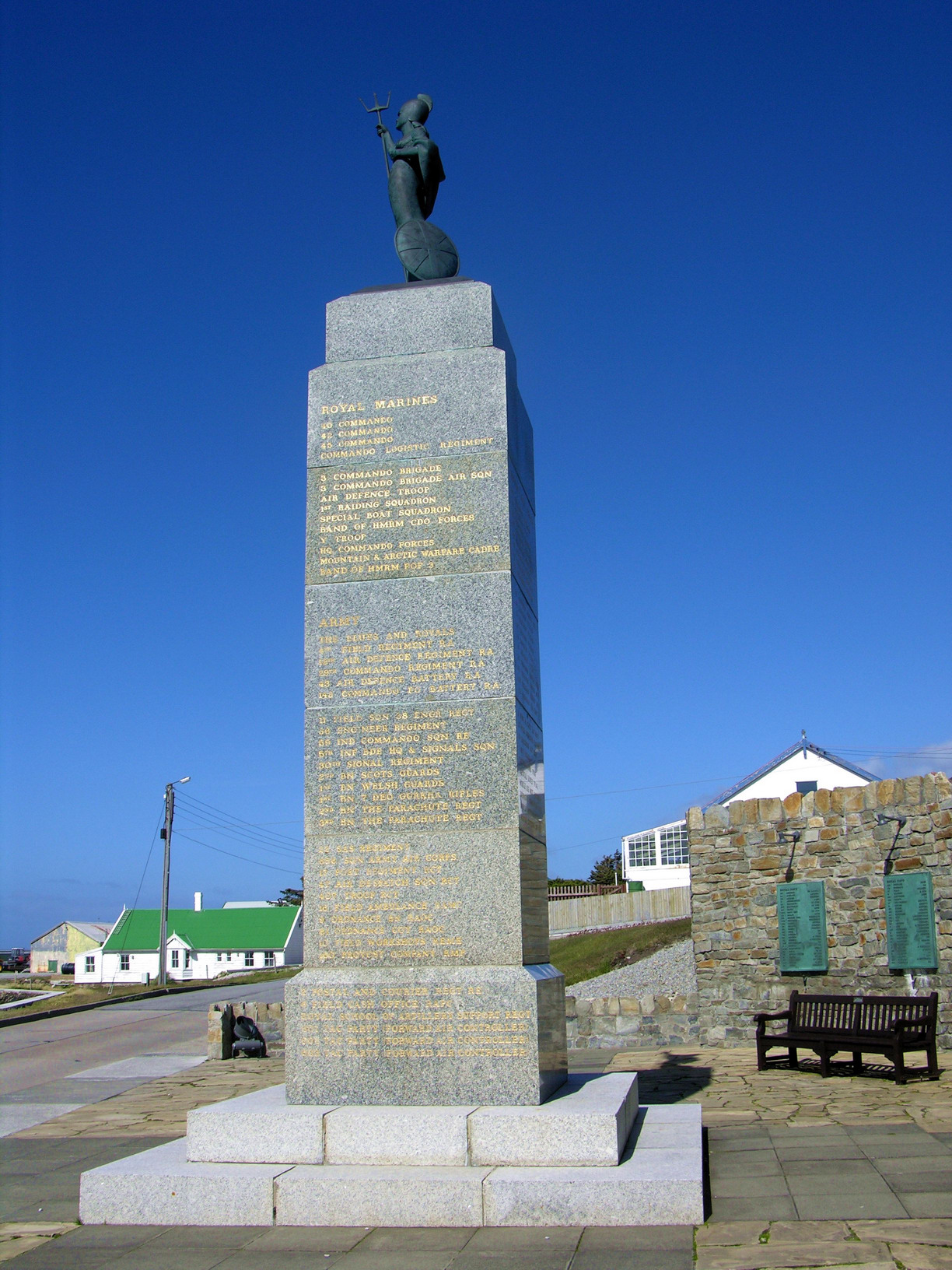
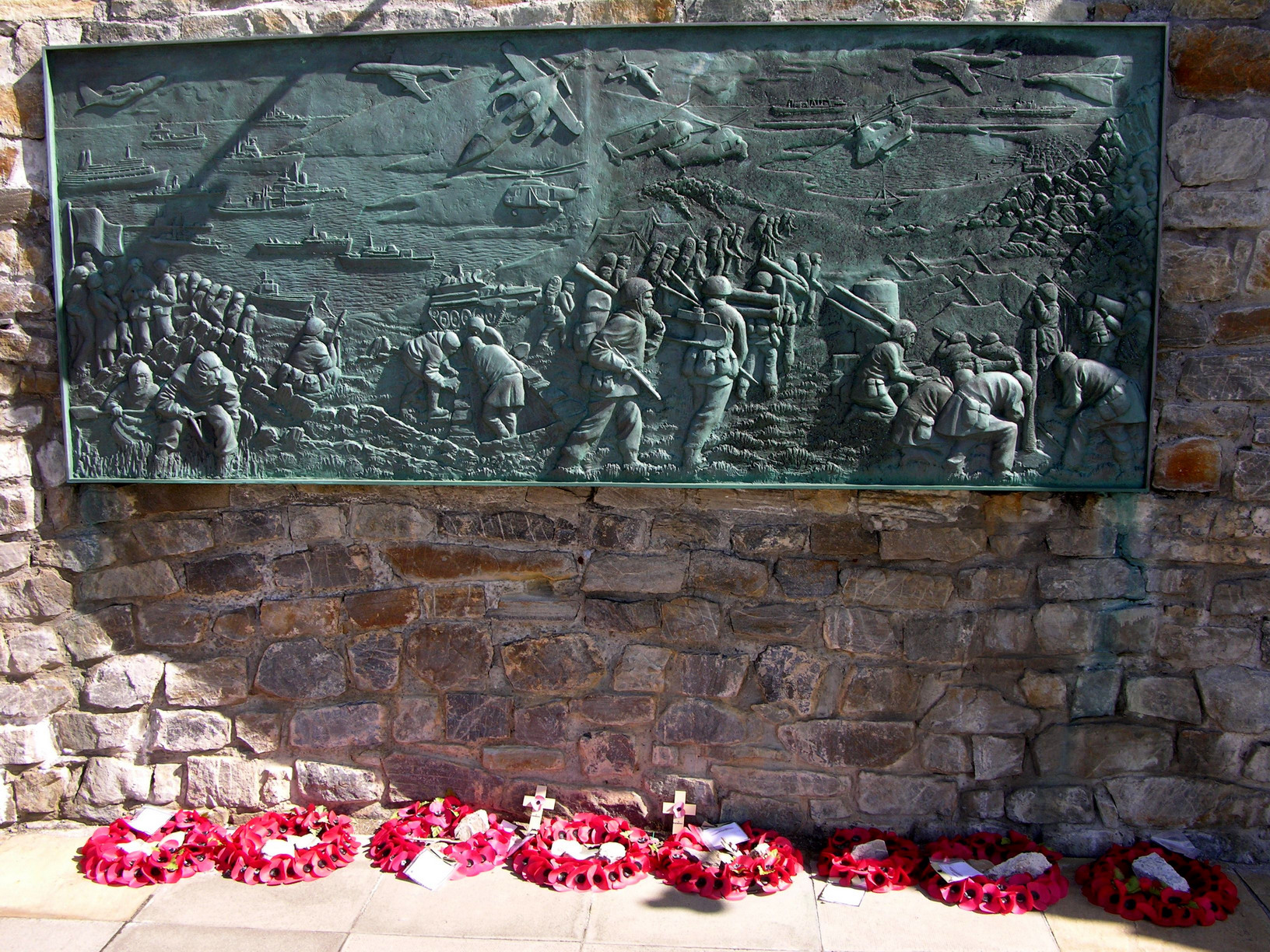
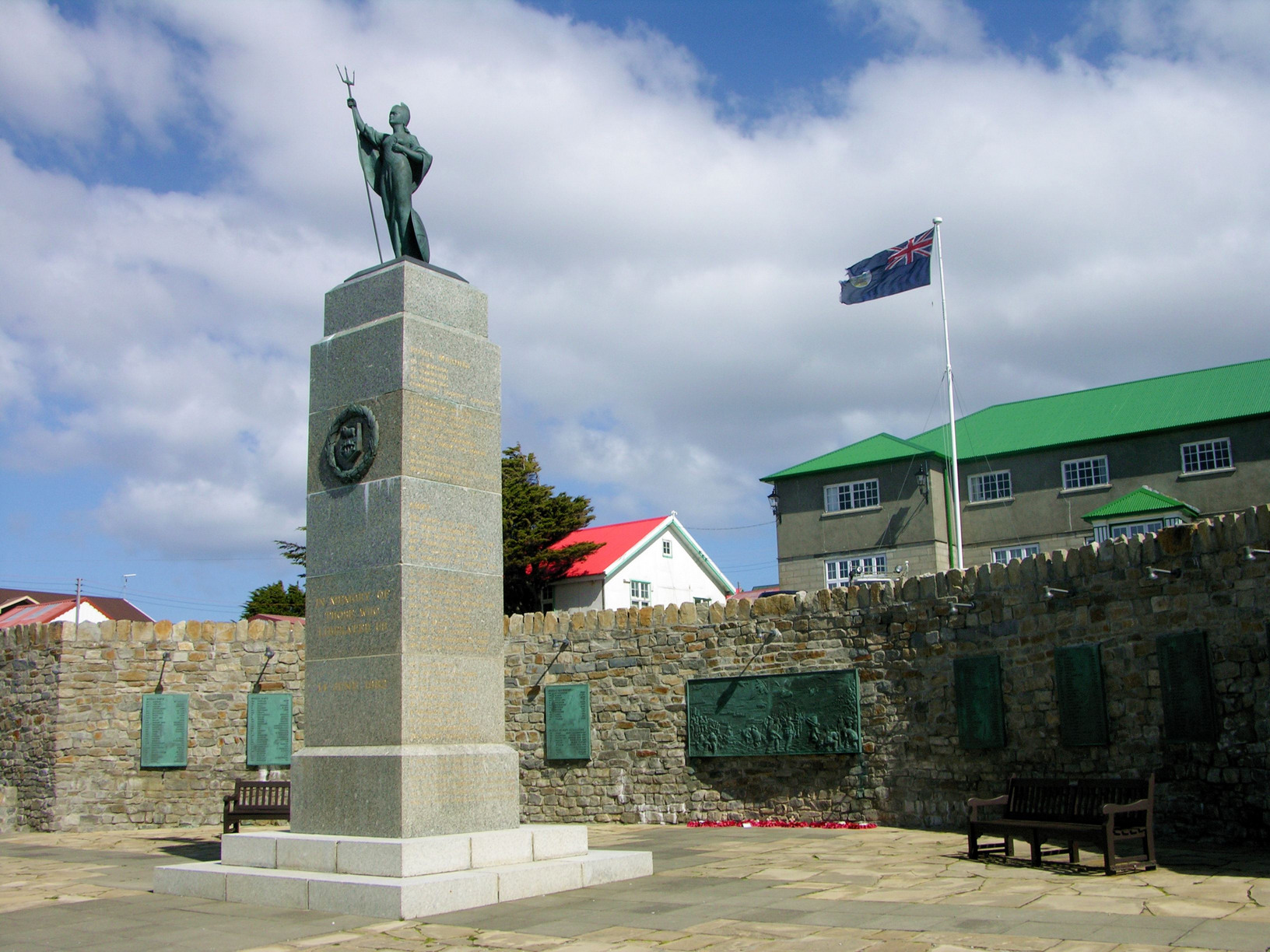
We went to Goose Green first. On the nearest hill is a memorial to the British heroes of the Falklands War (account of the battle). Here took place what struck me as one of the great battles since the Second World War. The British routed an Argentine force several times their size. The result of the war was decided. By its end hundreds had died and twelve thousand had been taken prisoner. The price the Argentines paid for allowing Galtieri to rule their country. He needed a victorious war to rally the people, whip up patriotic frenzy and hold on to power. It turned out quite differently. Margaret Thatcher did not give in and sent the fleet. To be fair, she didn't neglect to turn a military victory into a parliamentary election victory either. The well-trained, motivated British troops beat the Argentines with few losses of their own. British veterans still worry that it was more like beating children than a fair fight. Hard to square, admittedly, with what I took to be relatively even losses in battle. Attacking is always harder, of course. Shortly after the war Leopoldo Galtieri had to resign. A few years later he was imprisoned.


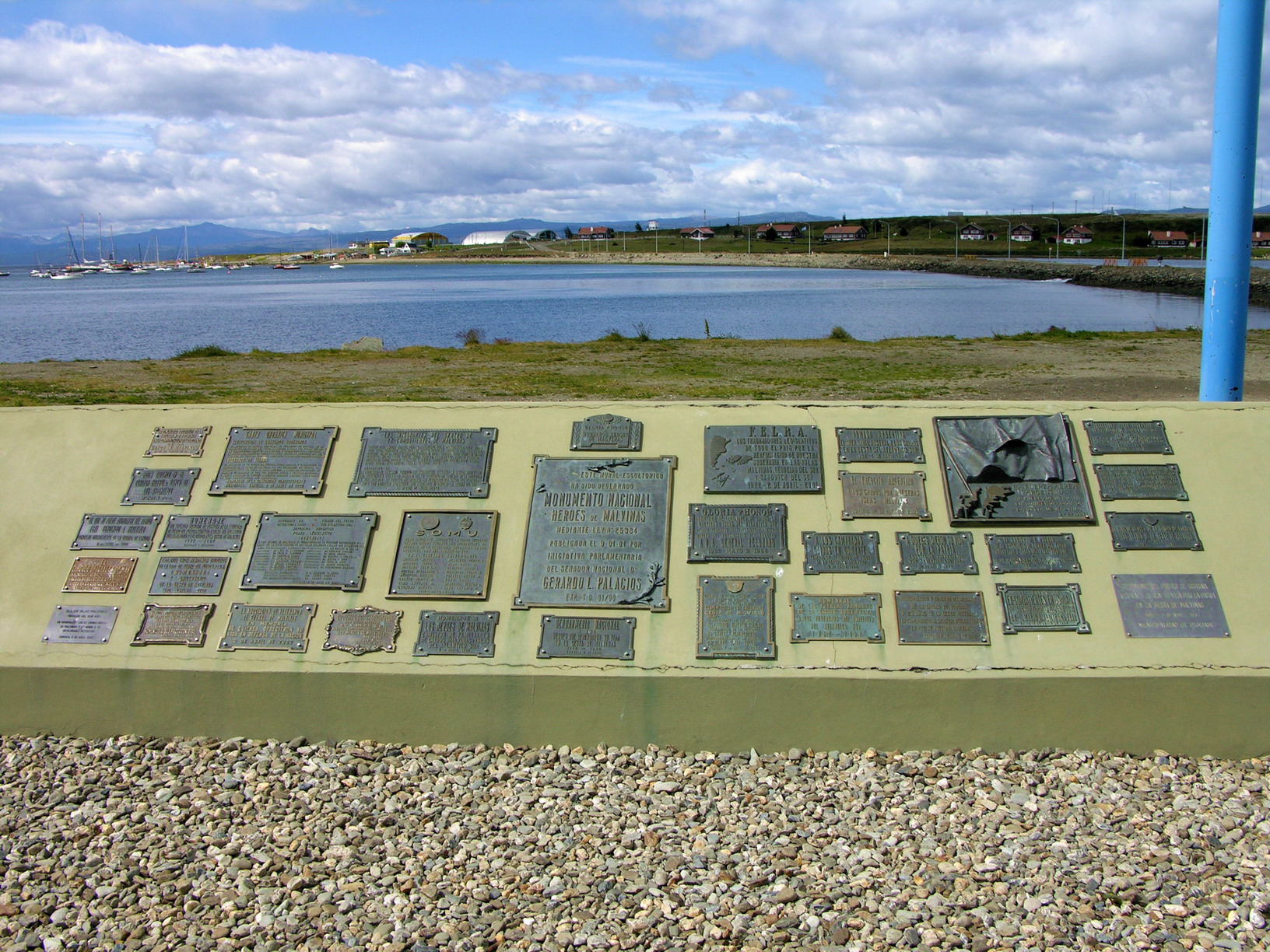
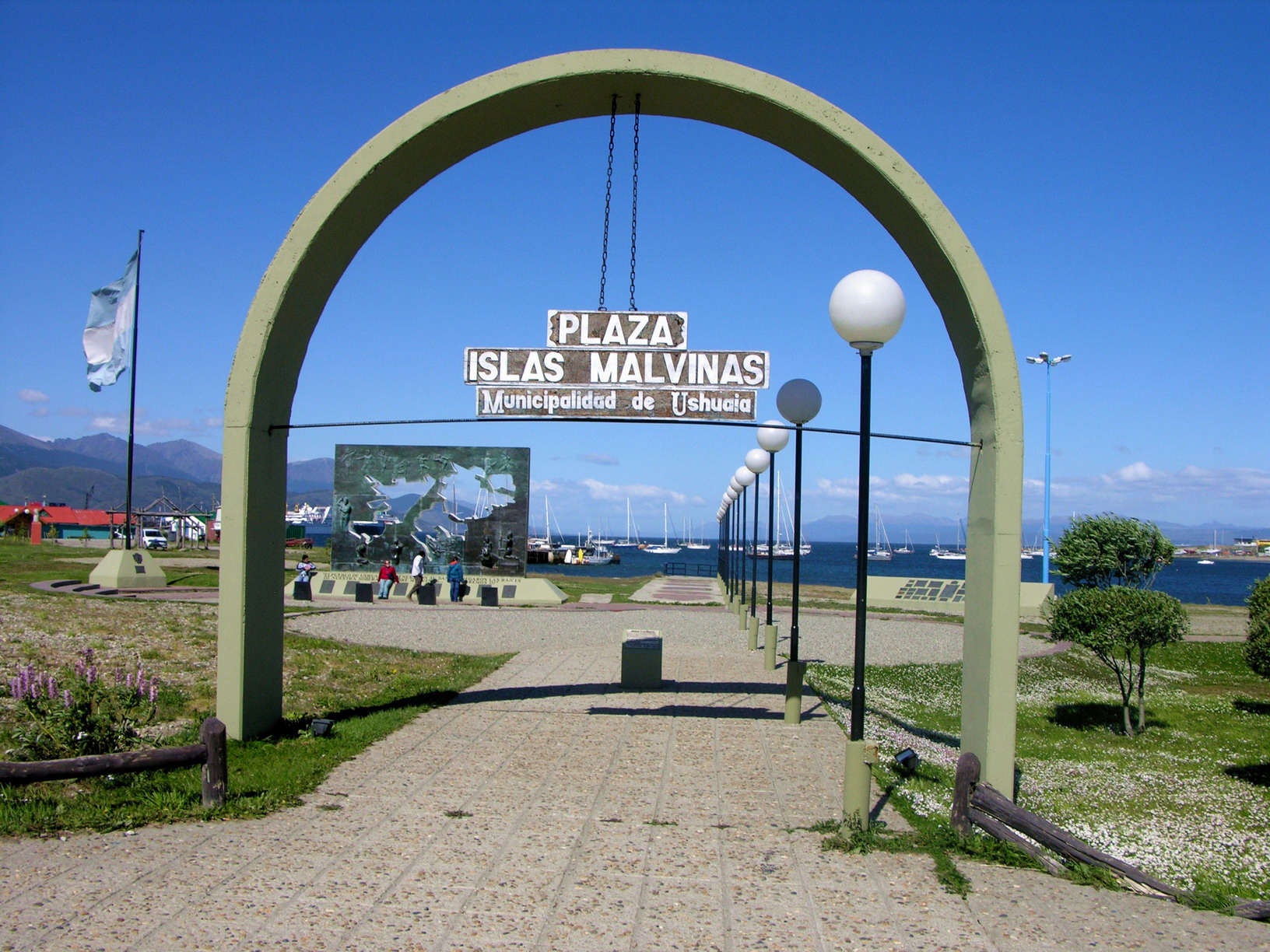
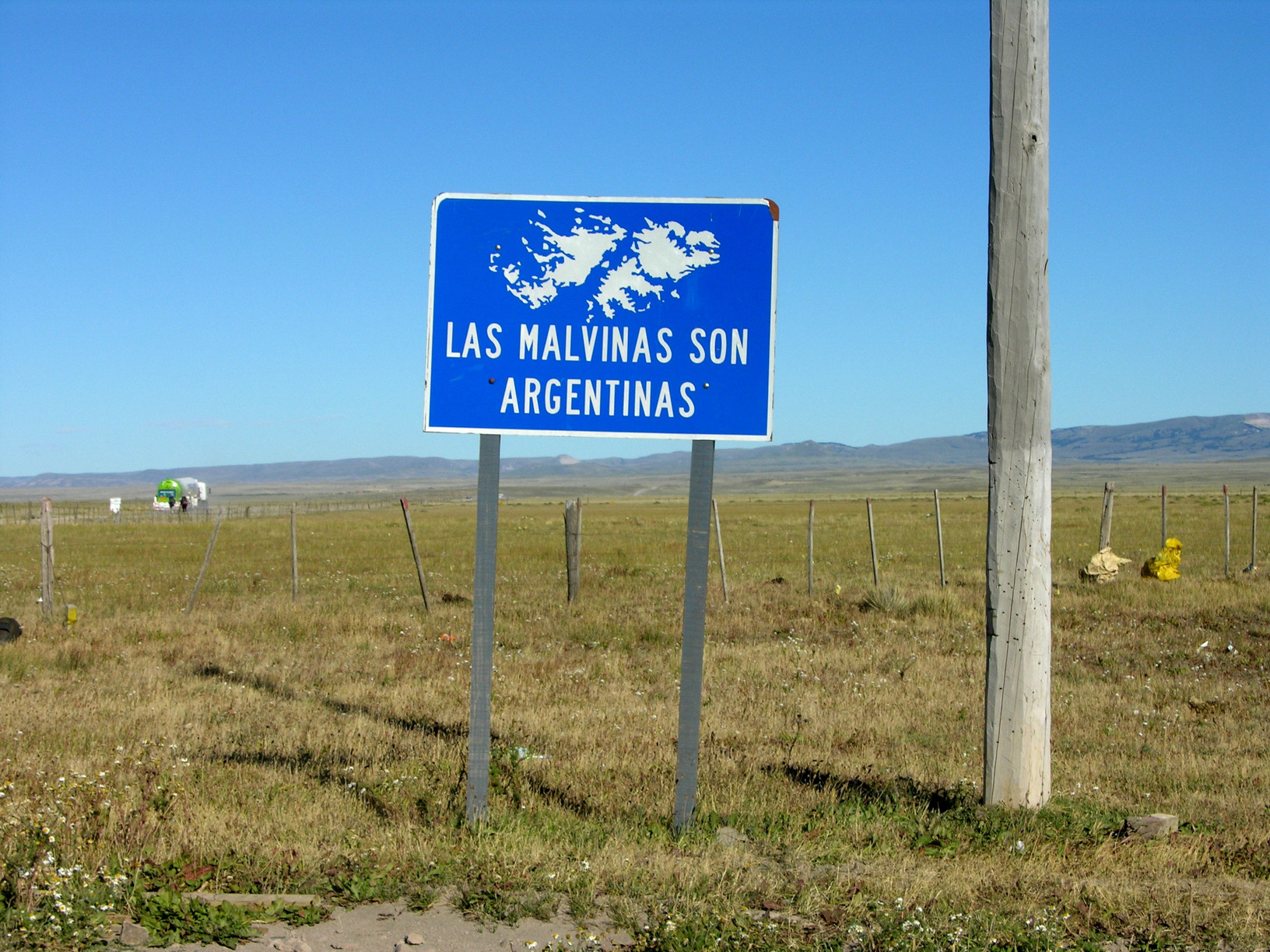
Hundreds of Argentines and Britons died. You'd think everything would be clear to everyone by now. No. The Argentines still call them the Malvinas and regard them as uninhabited. To them Stanley is Puerto Argentino, and of course all the other names have a Spanish equivalent too. In Ushuaia is a monument to the victims of the war, inscribed VOLVEREMOS, “we will return”. It's tucked away in a corner of an enormous square, by the way. The rest is presumably set aside for longer and longer lists of the dead in new, senseless wars. Even in the north of Argentina there are road signs saying “The Malvinas belong to Argentina”. Still, common sense has been prevailing little by little. Argentina and the United Kingdom established diplomatic relations, and in some cases Argentine citizens had recently even been able to get Falklands visas. All the Argentines had had to do was wait. At the then-current birth rates most of the islanders would have been Argentines in a few decades. They might have got independence and, if they wanted, joined Argentina.
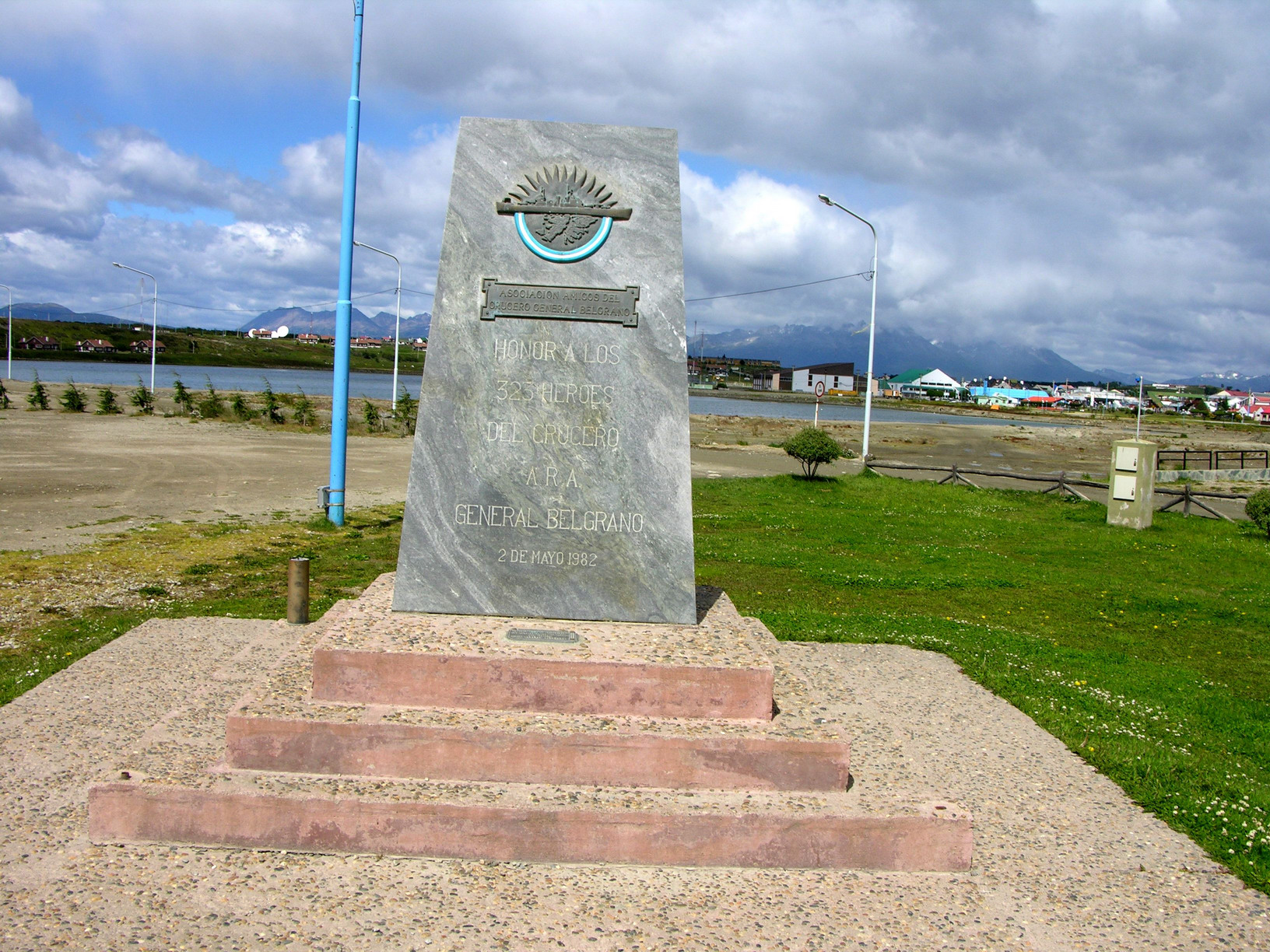
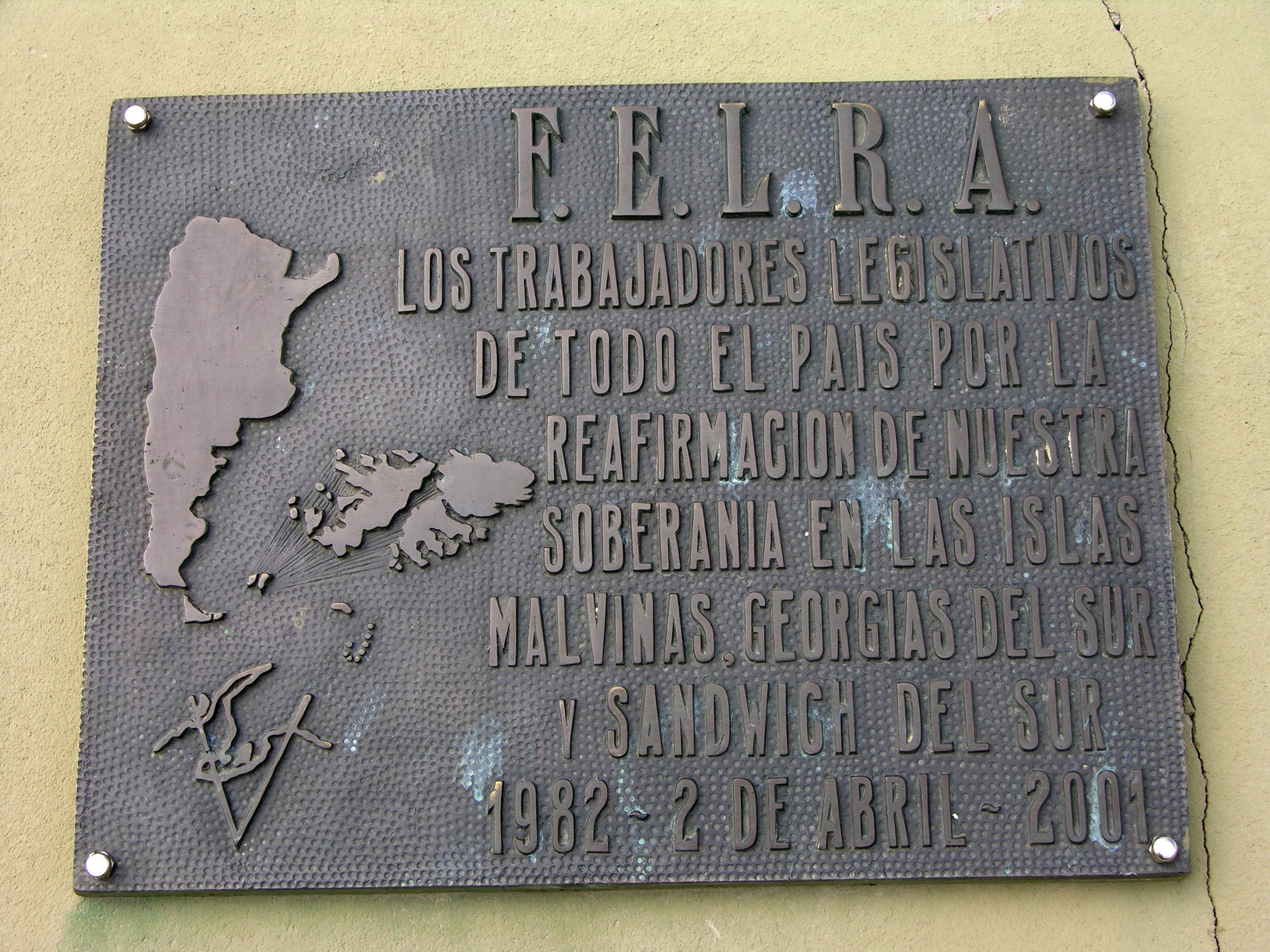
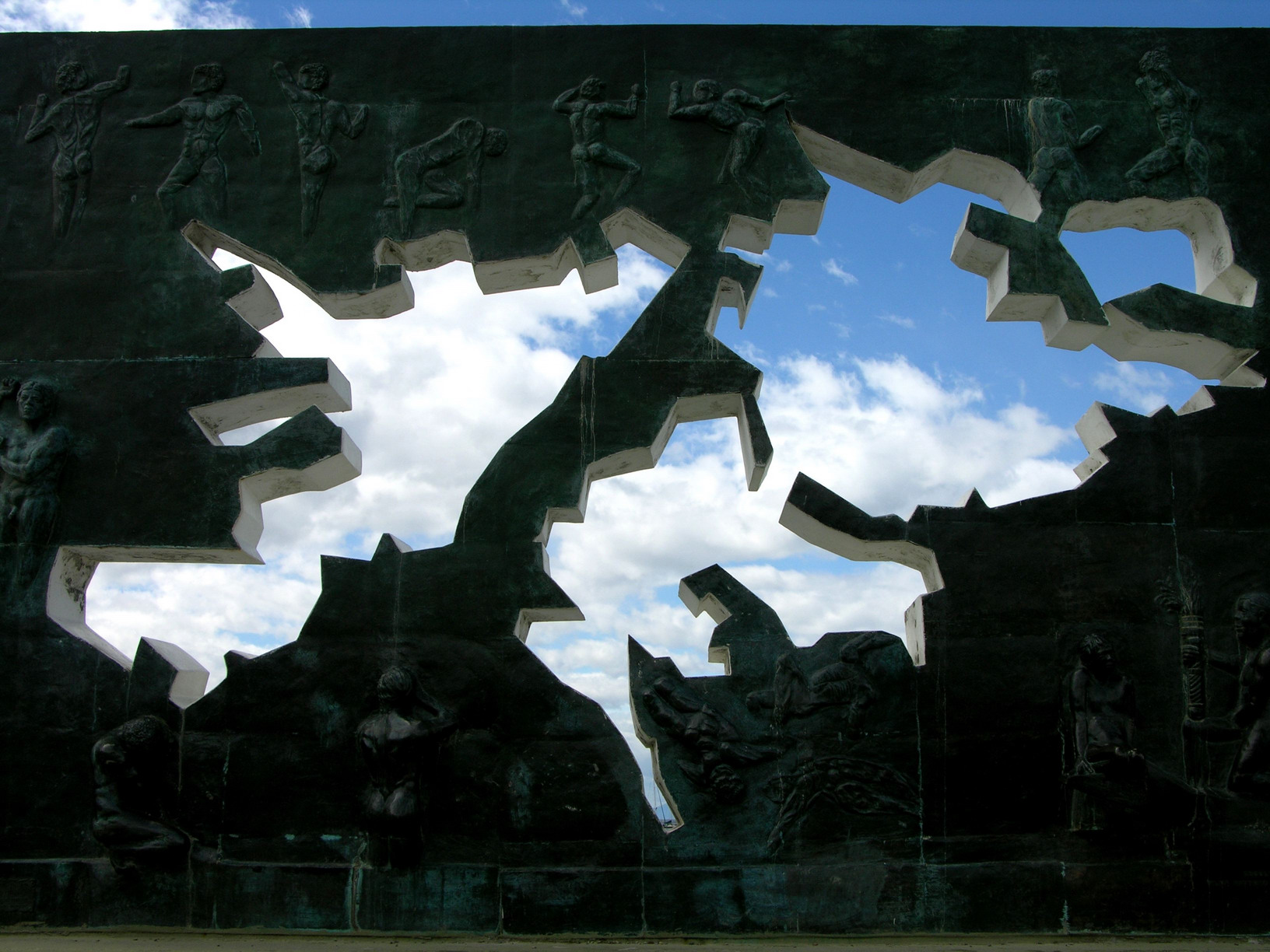
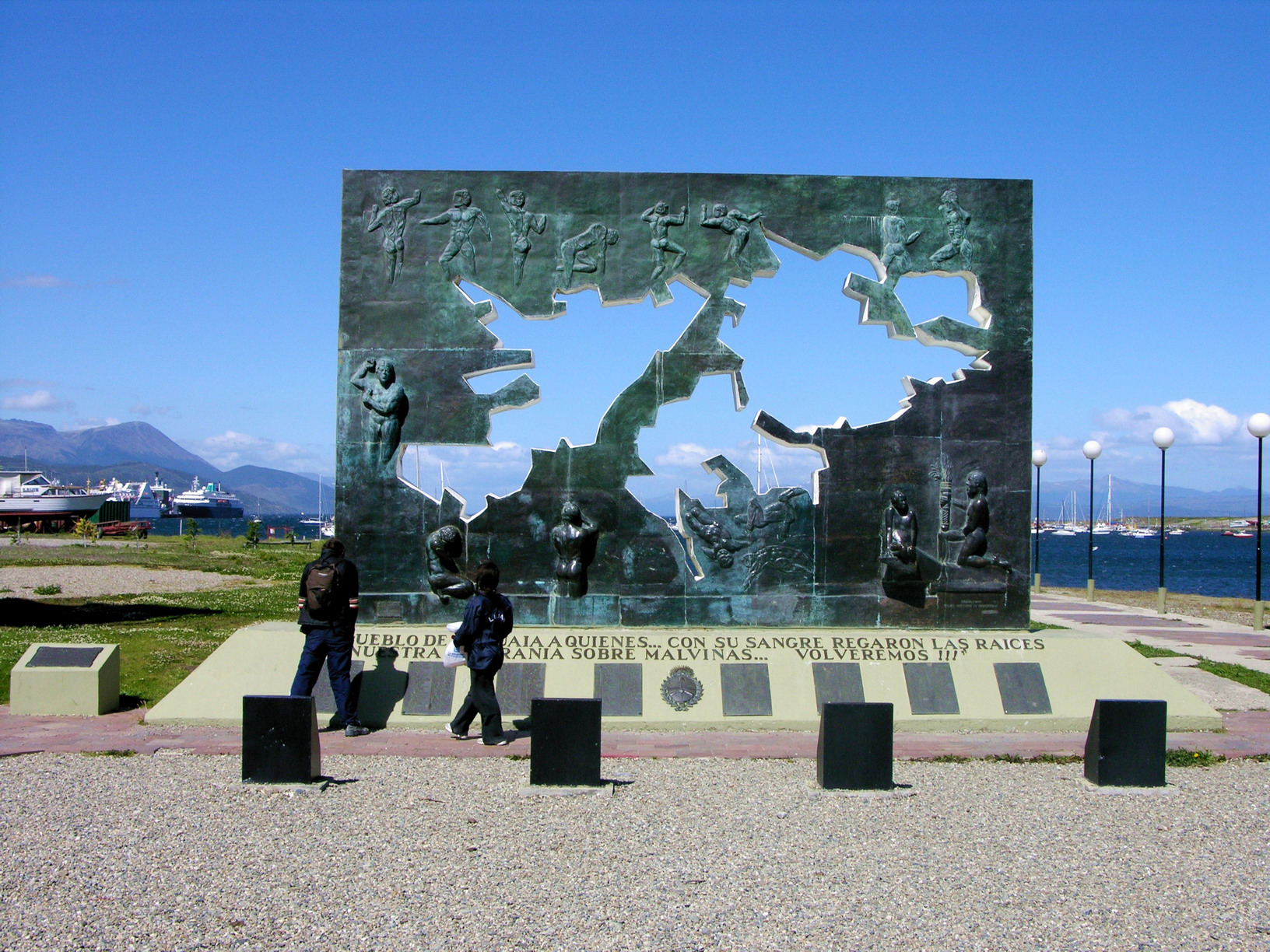
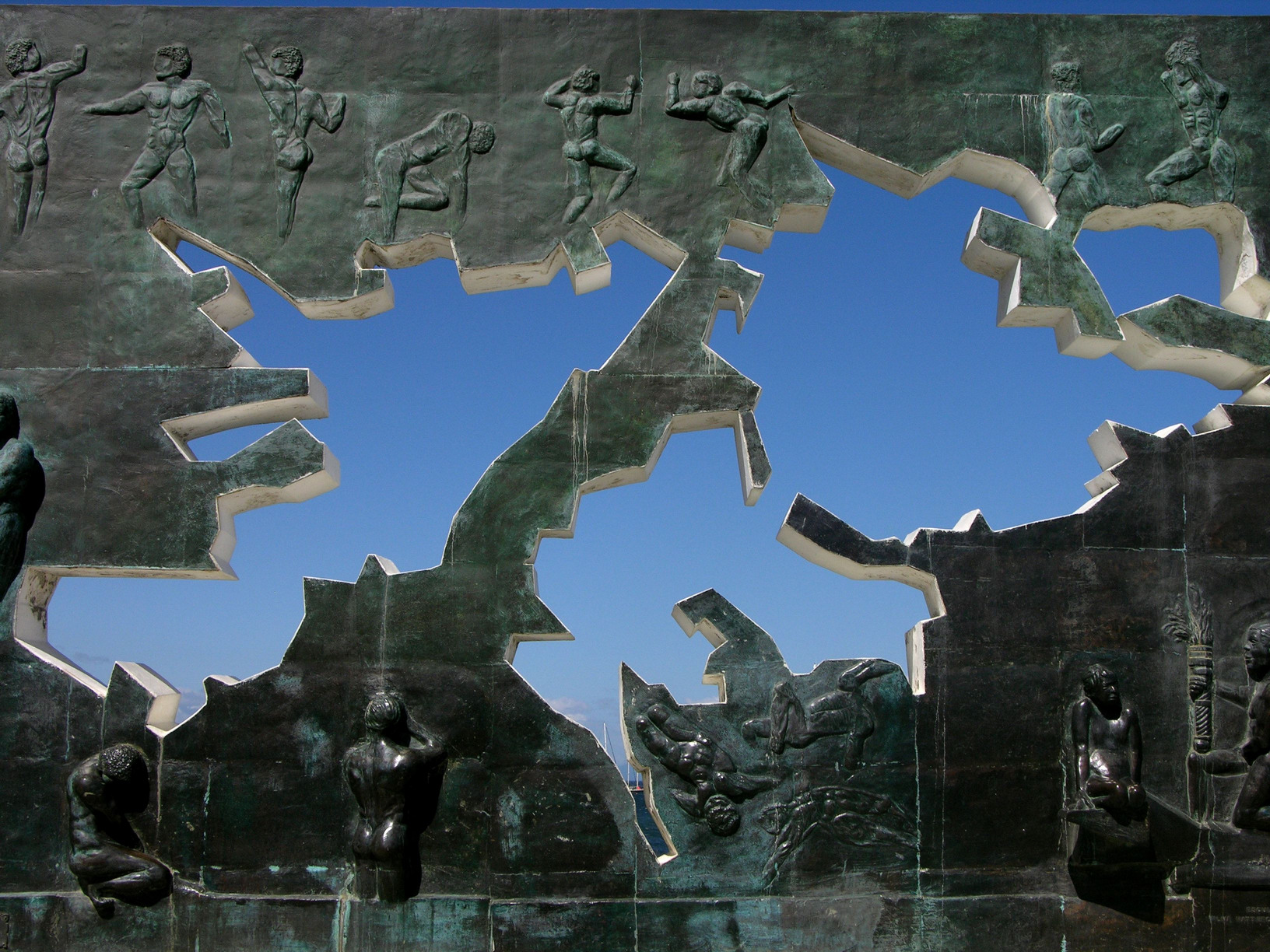
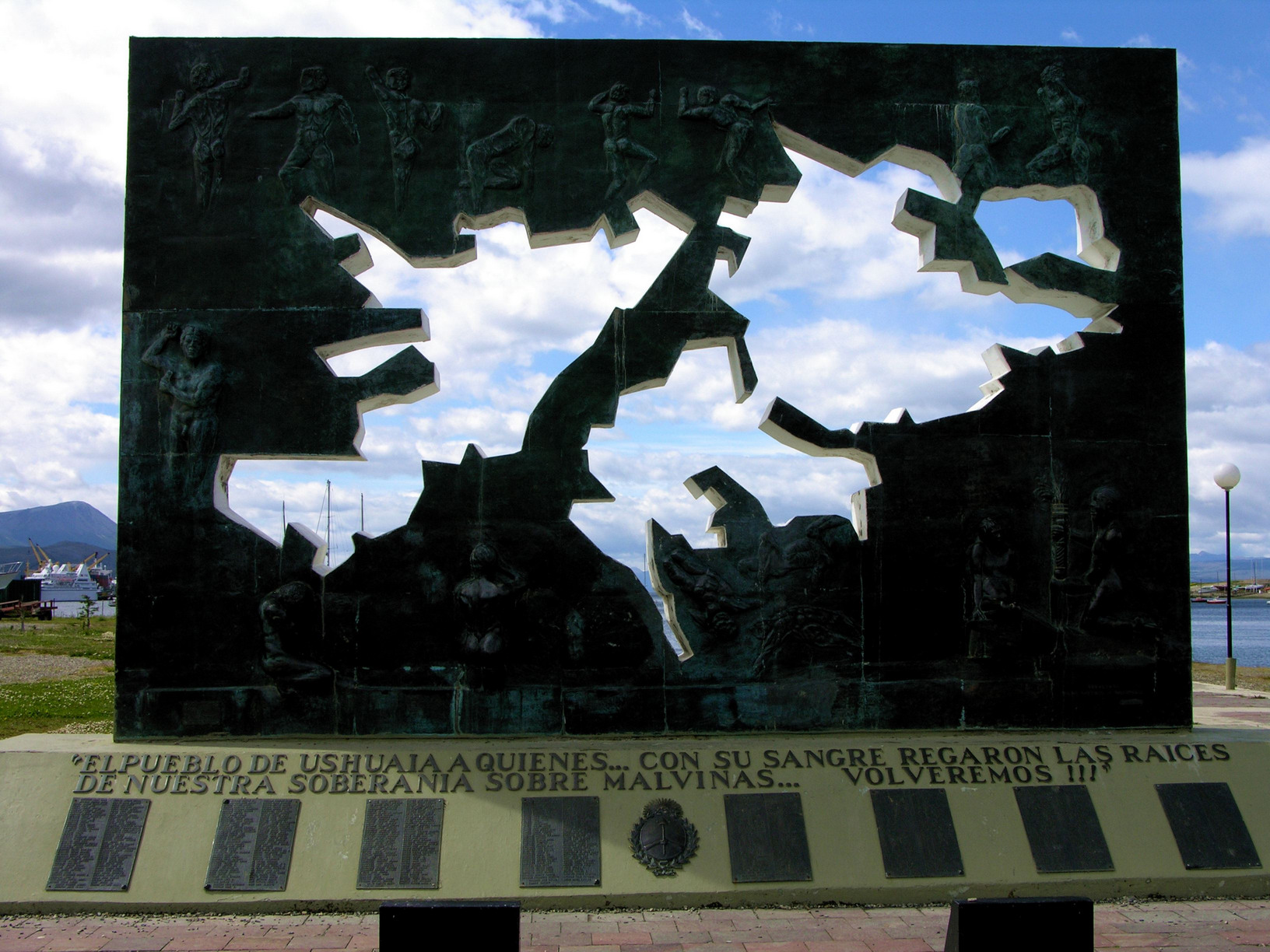
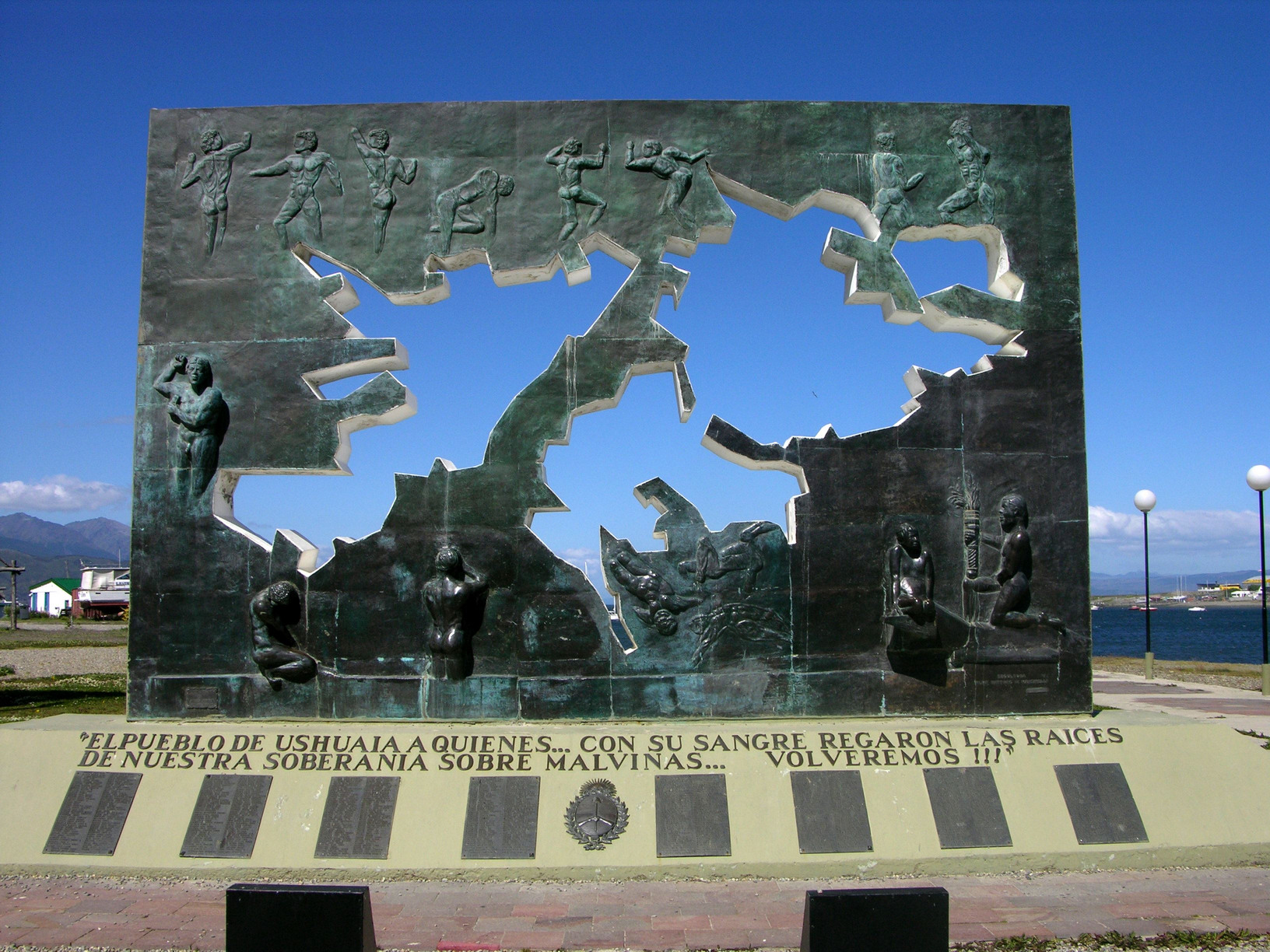
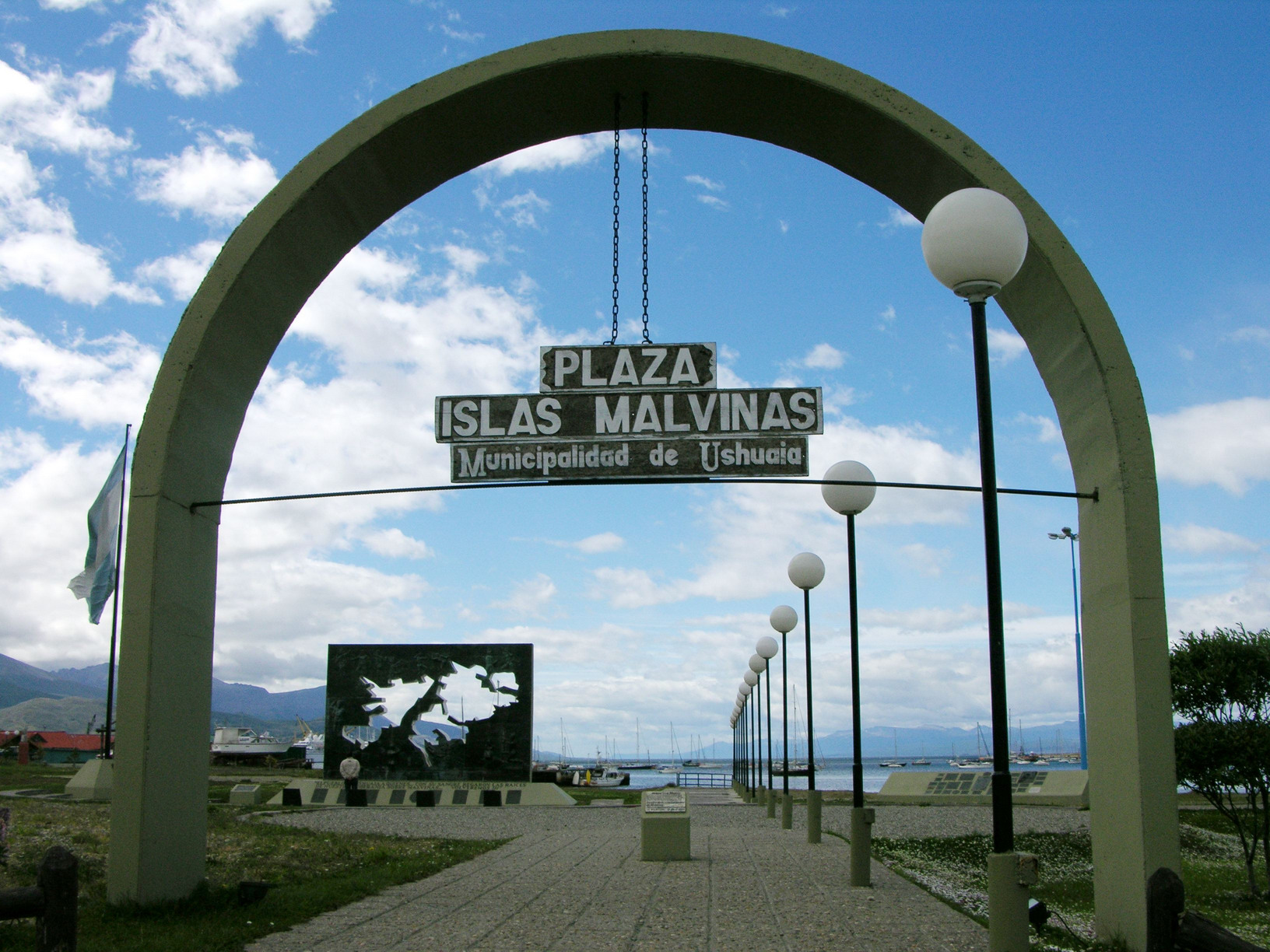
From here it's only four kilometres by road to Goose Green (51°49.660′S, 058°58.351′W). The village has nearly died out, but the last shop and petrol pump outside Stanley are still open here. Four children are still being taught at the school, which hasn't shut. A typical English little town, except you can feel that nature is taking it back and the people can no longer keep up: there's no one to mow all the grass or pave the paths. The town is slowly beginning to resemble a village in Russia's poor-soil country.


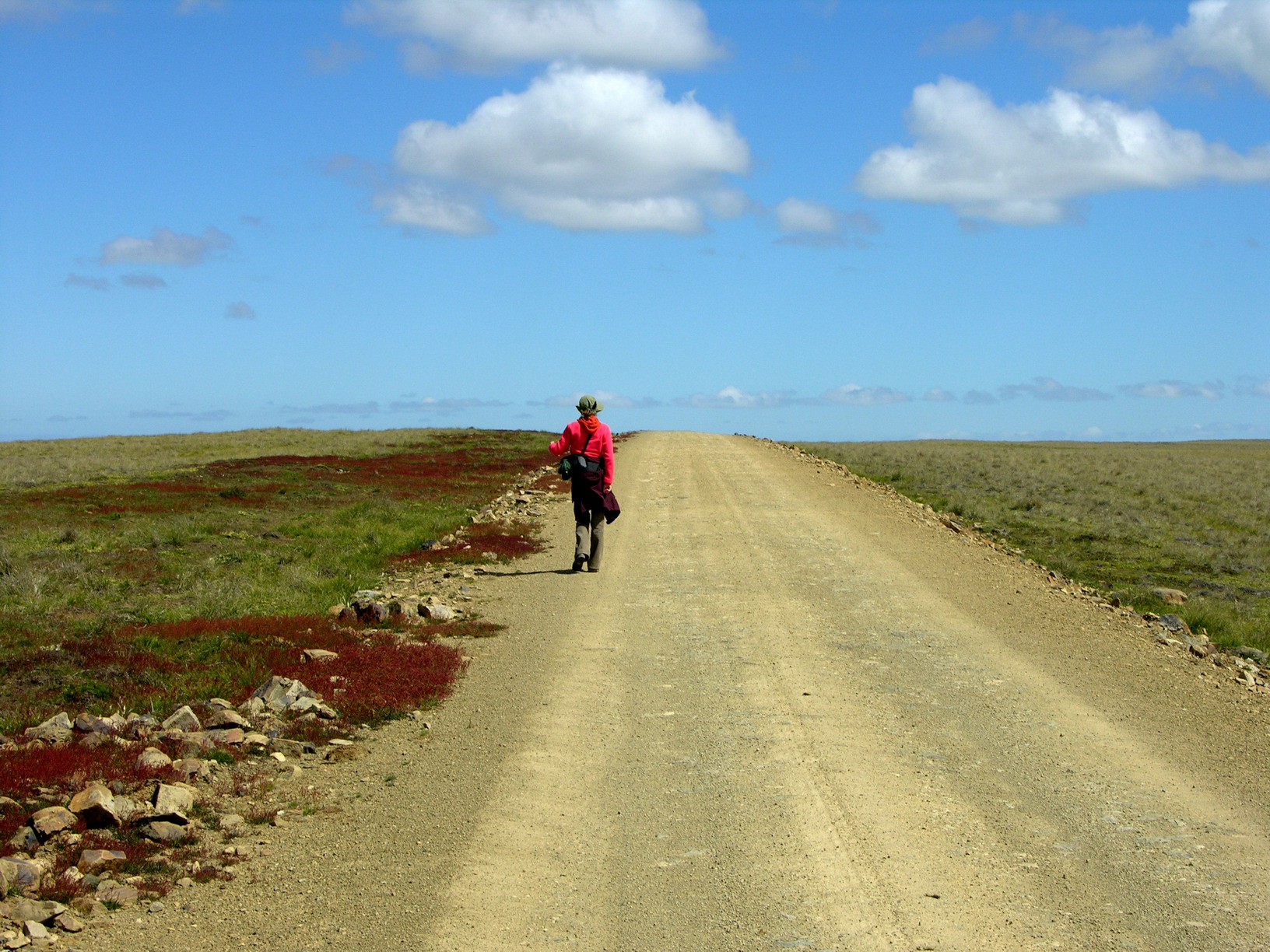
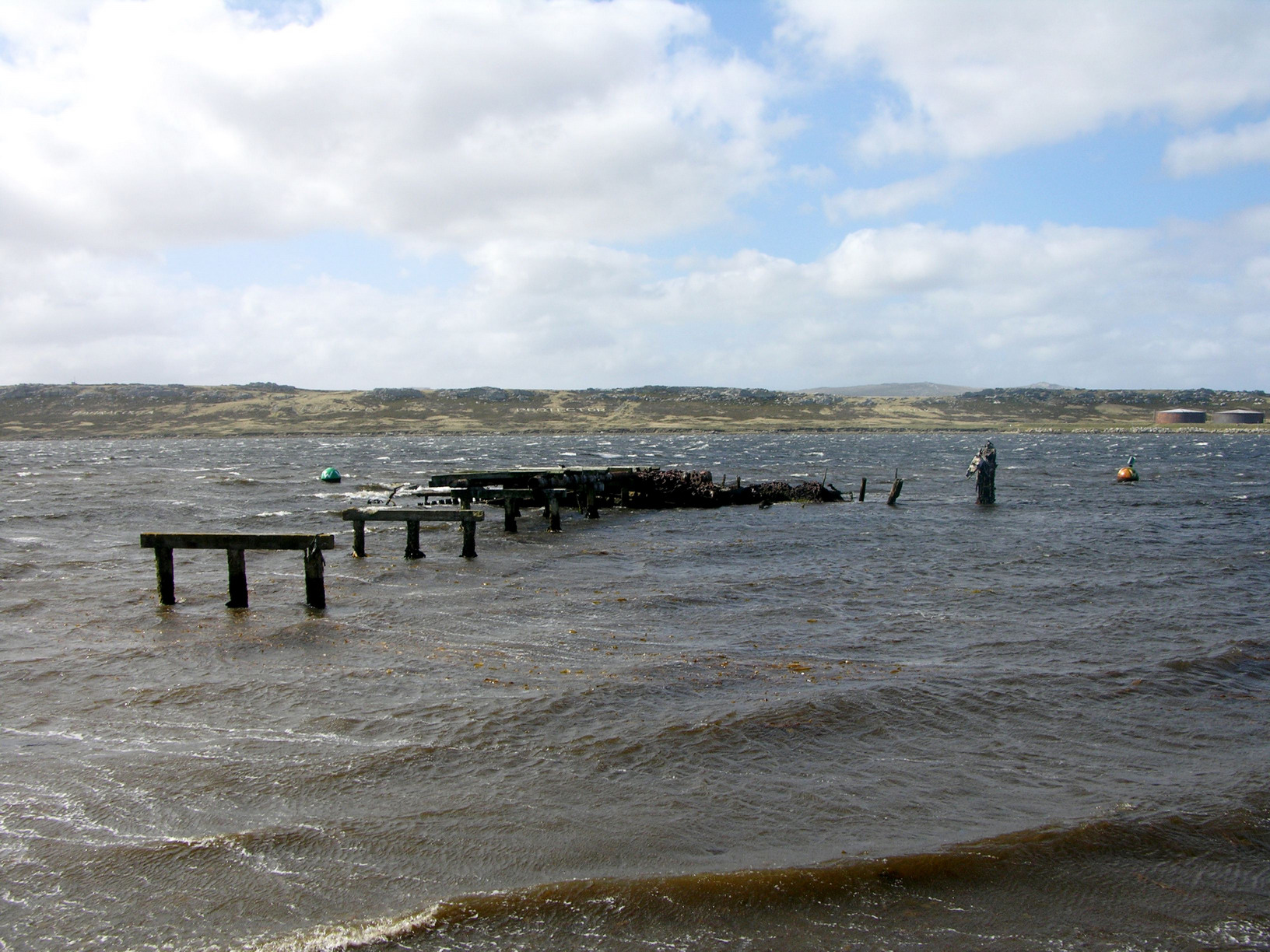
Past Goose Green you have to walk another five kilometres along a broken-down dirt road to the Bodie Creek Bridge, over a long, deep sea inlet (51°51.232′S, 059°01.048′W). People used to go over it to reach Walker Creek Settlement, but now just one family lives there. It's easier to drive an extra ten kilometres or so in a jeep than keep a bridge like that in service. It was built in Westminster in 1924–25, cost £2,290, and was shipped from England. It's a standard late nineteenth-century design. Hundreds like it survive in England. Guidebooks call it the world's southernmost suspension bridge. That isn't true. On Route 3 in Río Grande, Argentina, there's a bigger suspension bridge over the river of that name, and it's considerably farther south.


The bridge was in terrible condition. Half the metalwork had been completely eaten away by corrosion. Presumably because the bridge was built over a sea inlet. The height above the water is about five metres. The Falklands' frequent gales strip the tops off the waves and soak the unpainted metal with salt water. It was painted once, of course, but only a few flakes are left. The wooden deck had rotted too, but still held a person. Walking on the bridge was forbidden. That stopped nobody. This is what I love about the English, their complete contempt for rules like that. You can drive almost up to the bridge in a jeep, which makes it one of the most visited spots in the Falklands. The road takes skill. There are enormously deep puddles. Wherever visiting drivers get bogged particularly often, someone has thoughtfully put up little rope barriers.


The bridge was doomed. A few more years and it would collapse into the waters of the inlet. Sad. People are beating a retreat, leaving the world to its fate and hiding in dark cities and stuffy offices.
We were back in Darwin for dinner. Two British sailors, seeing how much we wanted to go walking, volunteered to help and take us the next day to a colony of gentoo penguins on their way to San Carlos, where they had to go for work. We weren't about to decline such an offer.
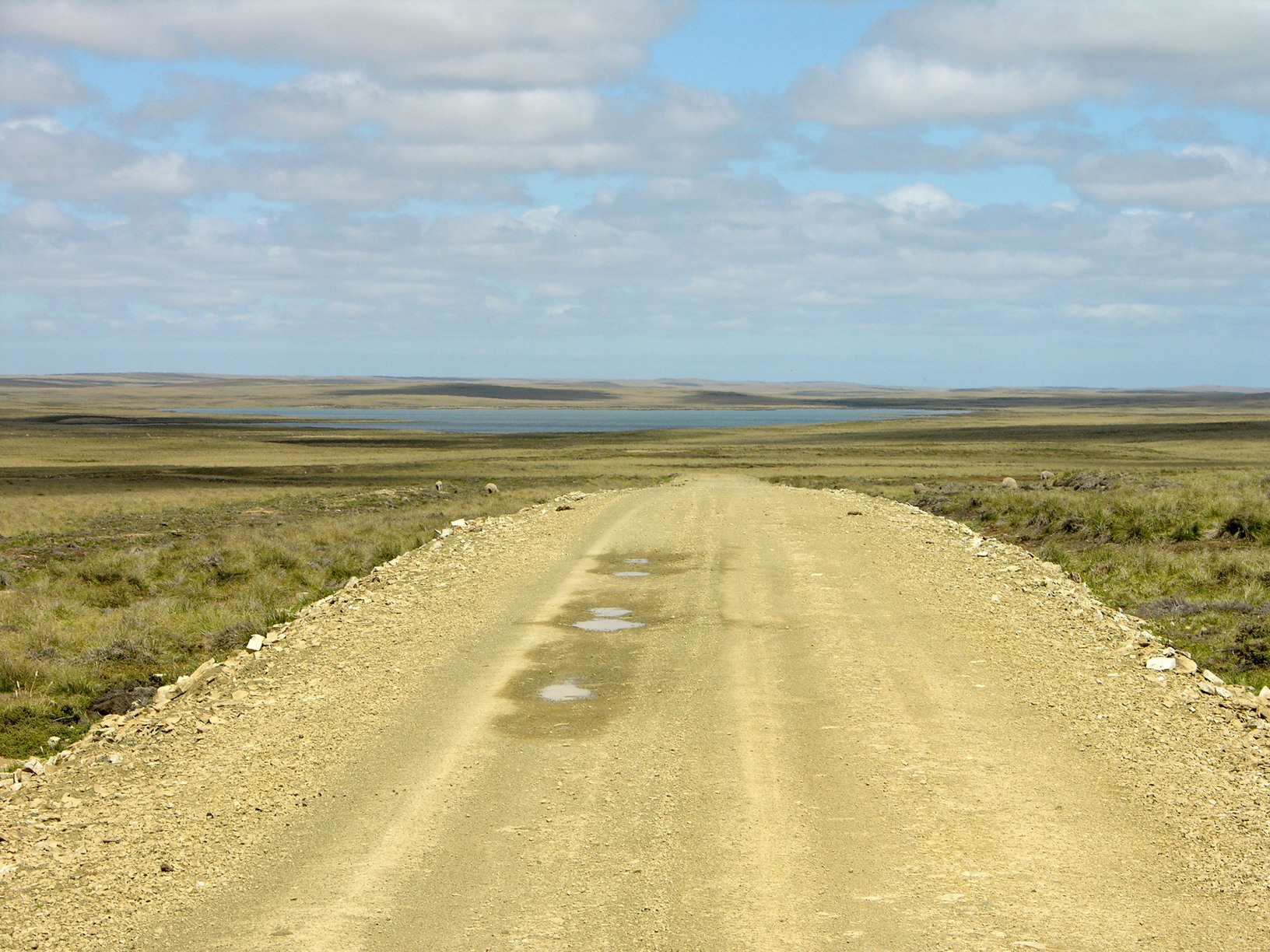
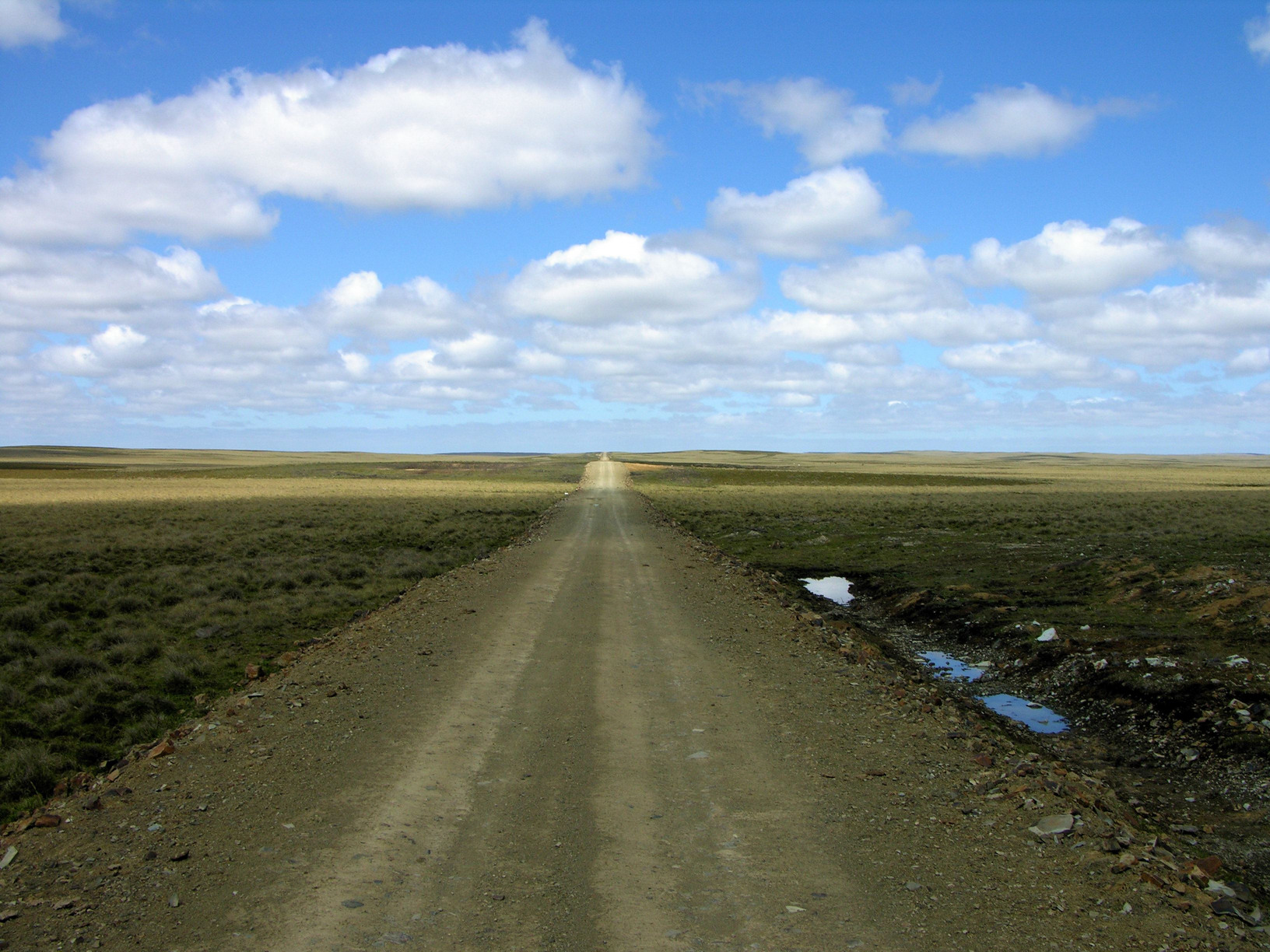
The morning of the second of January was overcast, but the rain that had come down all night had at last stopped. After breakfast they put us in the jeep. “It's not far. Seventeen kilometres, you can walk back.” On the drive it turned out that a kilometre to an Englishman was a mile, and the seventeen had grown to twenty-eight. In translation from English, forty-five kilometres. Rather a lot, of course, but now we had a chance to cross the whole island on foot. Which, in fact, was why we'd come.


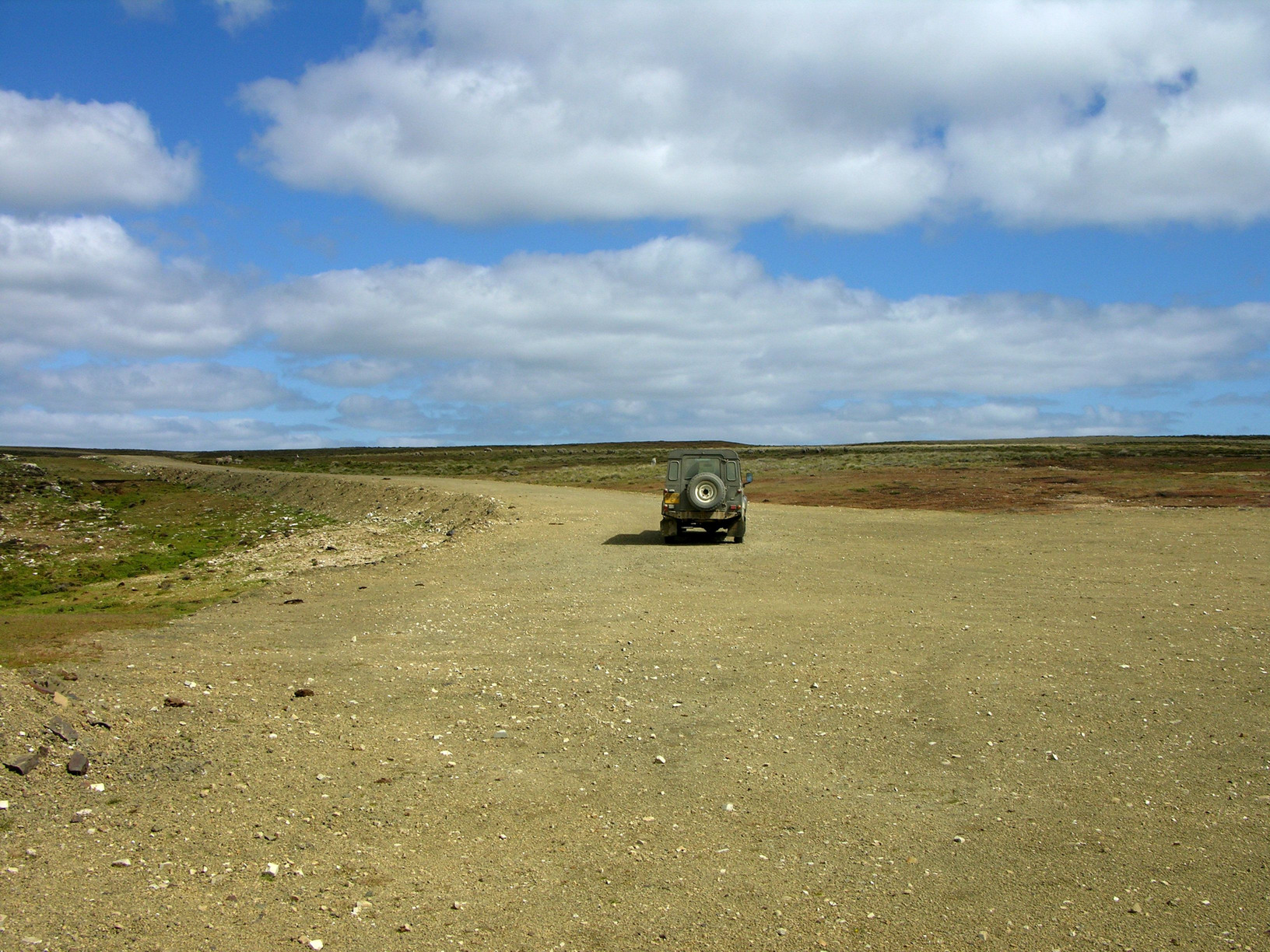
They took us to a place called New Haven, on the bank of Falkland Sound, which separates East Falkland and West Falkland. There is no village, only a landing. Perhaps in time there would be a ferry across the sound from there. Or perhaps it would go from San Carlos instead. They'd been talking about it for years, and only in 2005 did things seem to start moving. They repaired the road. Still no ferry, though. You couldn't take a car from one island to the other. You had to fly.
The road to New Haven, by the way, is nowhere near on the way to San Carlos. The boys took us out there specially. They told us it was on their way so we wouldn't feel bad about making free with their jeep. It meant leaving their girlfriends, who'd come from England to see them, an hour or two early. I love the English. They understand there's plenty in this world to be genuinely curious about. All that remained was to give them a big and sincere thank you.
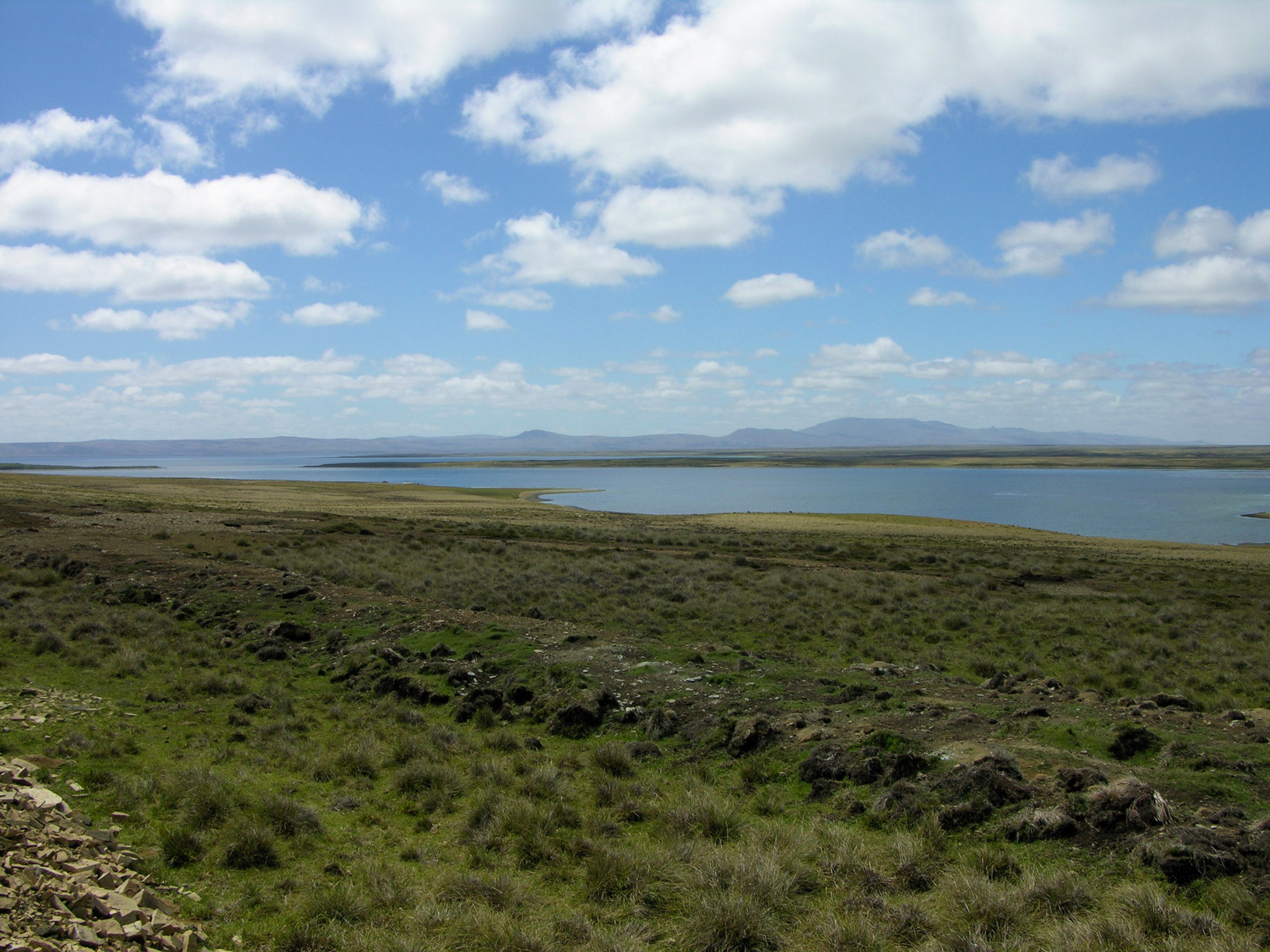
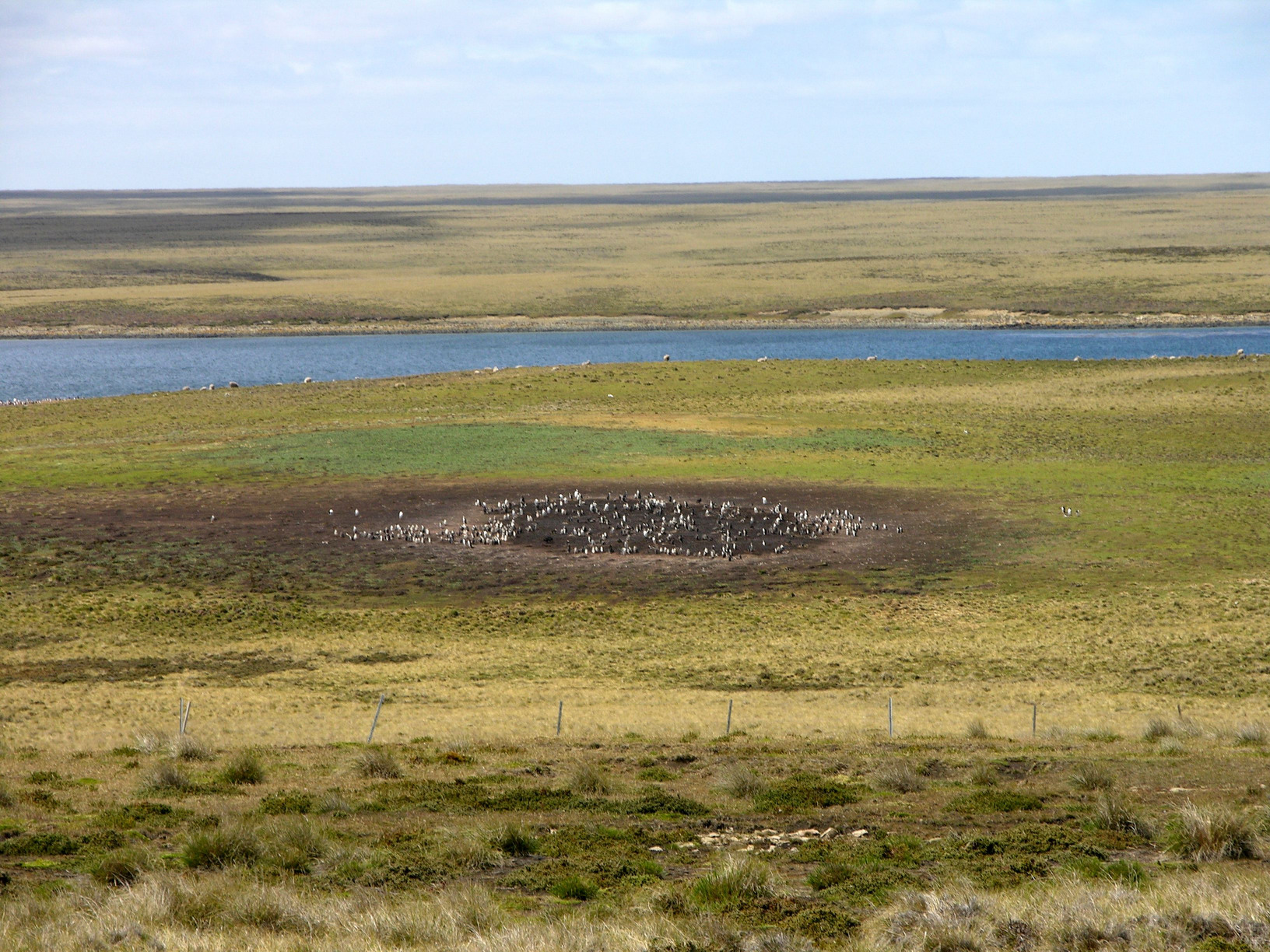
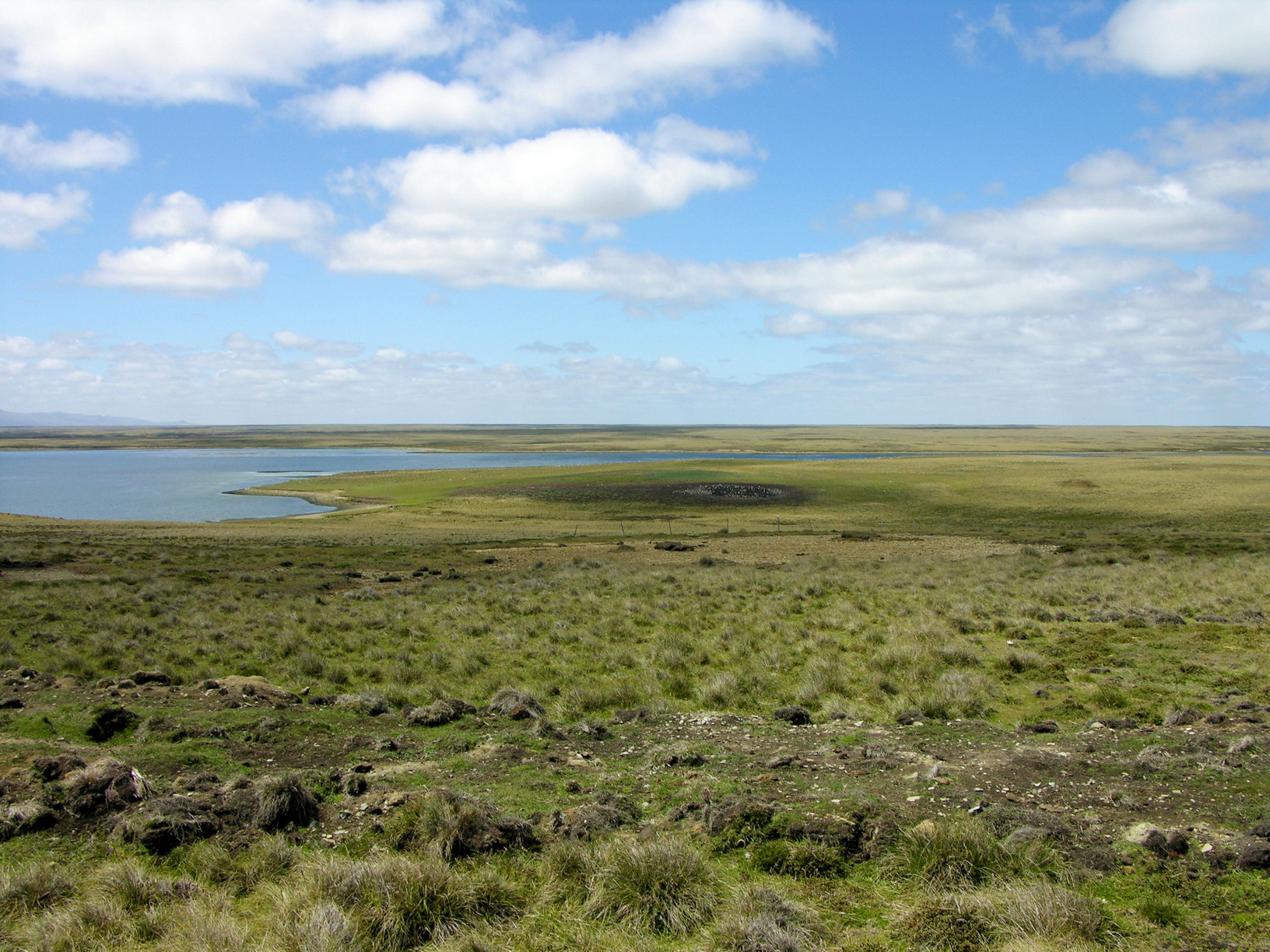
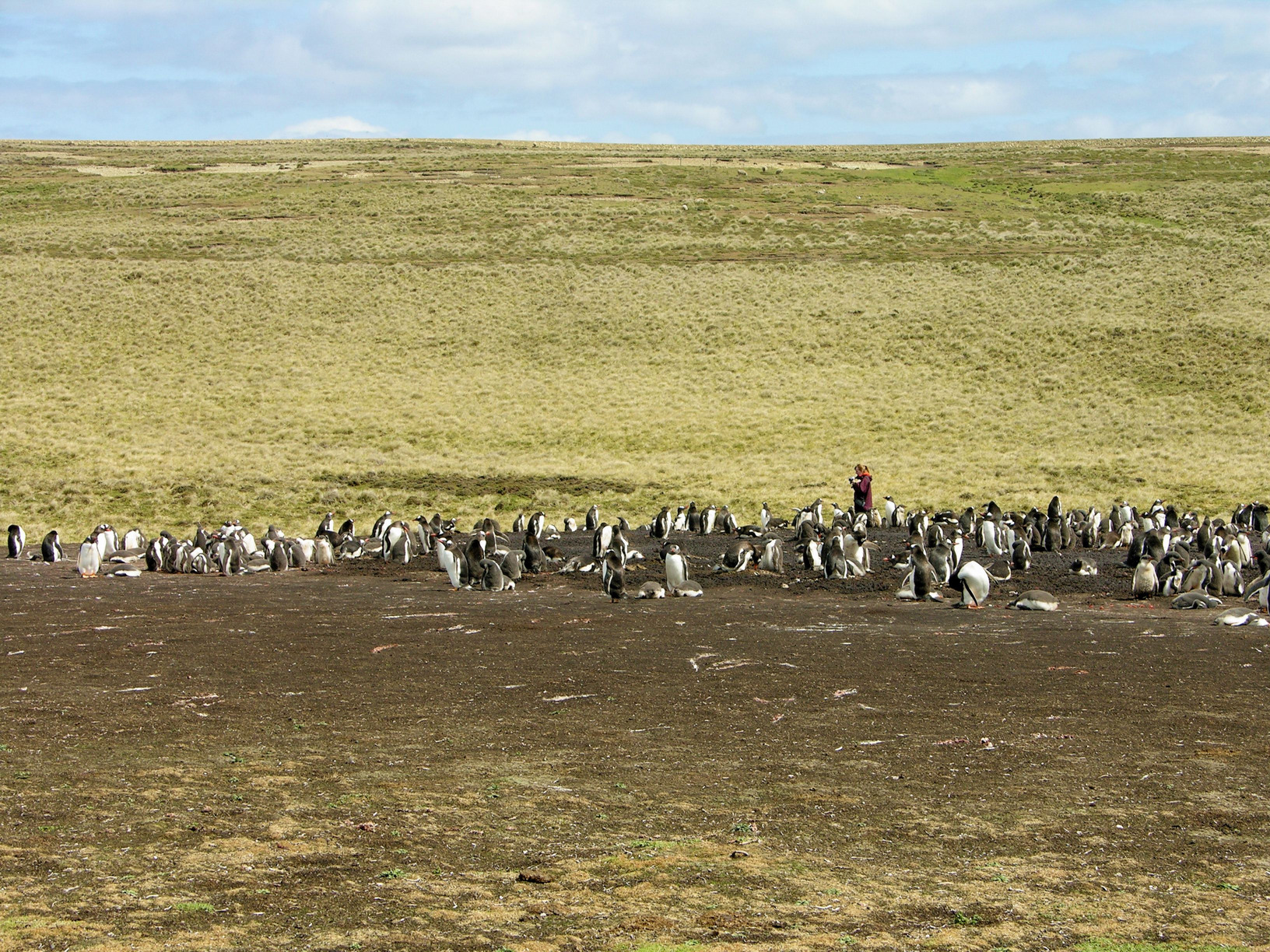
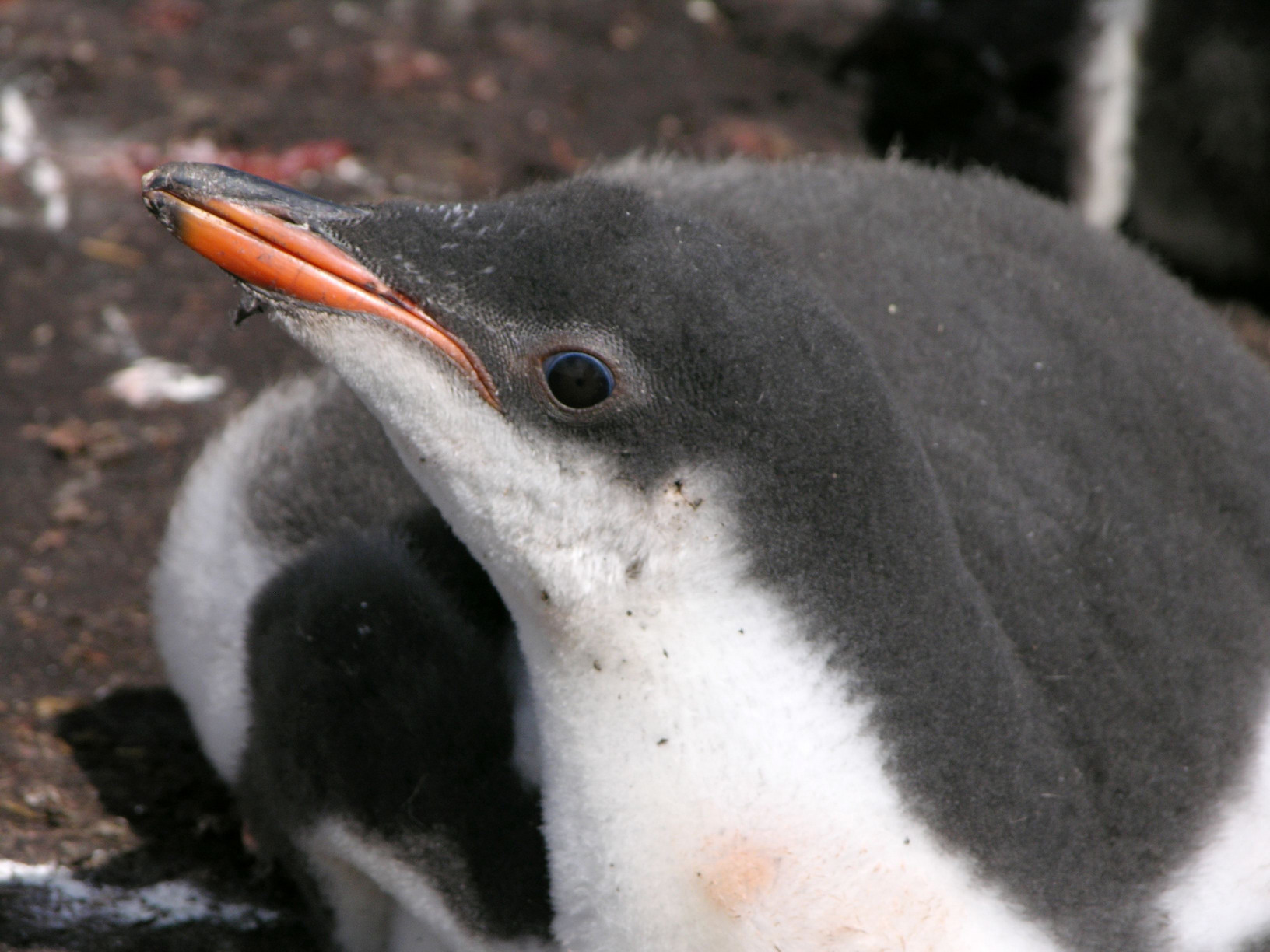
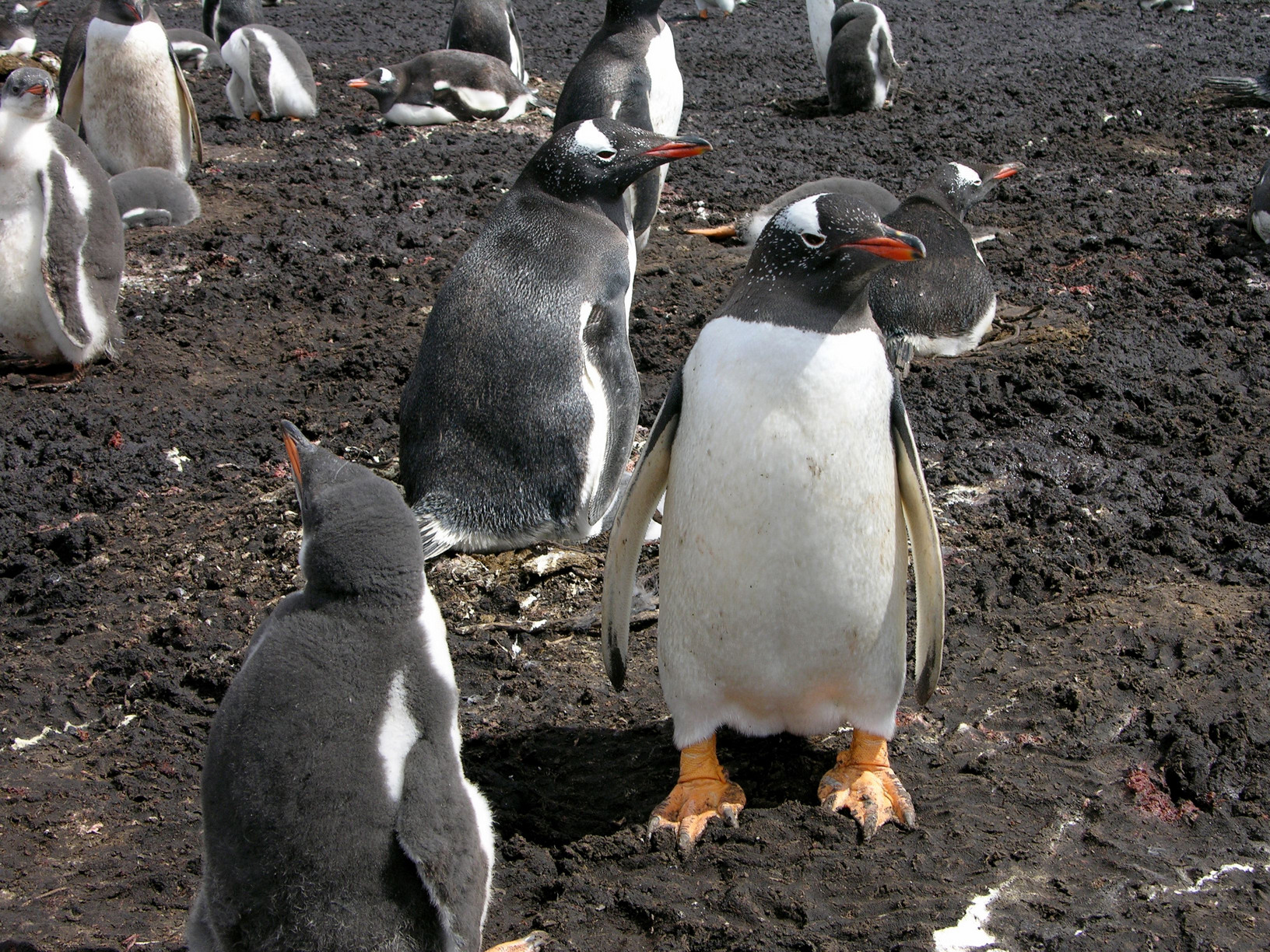
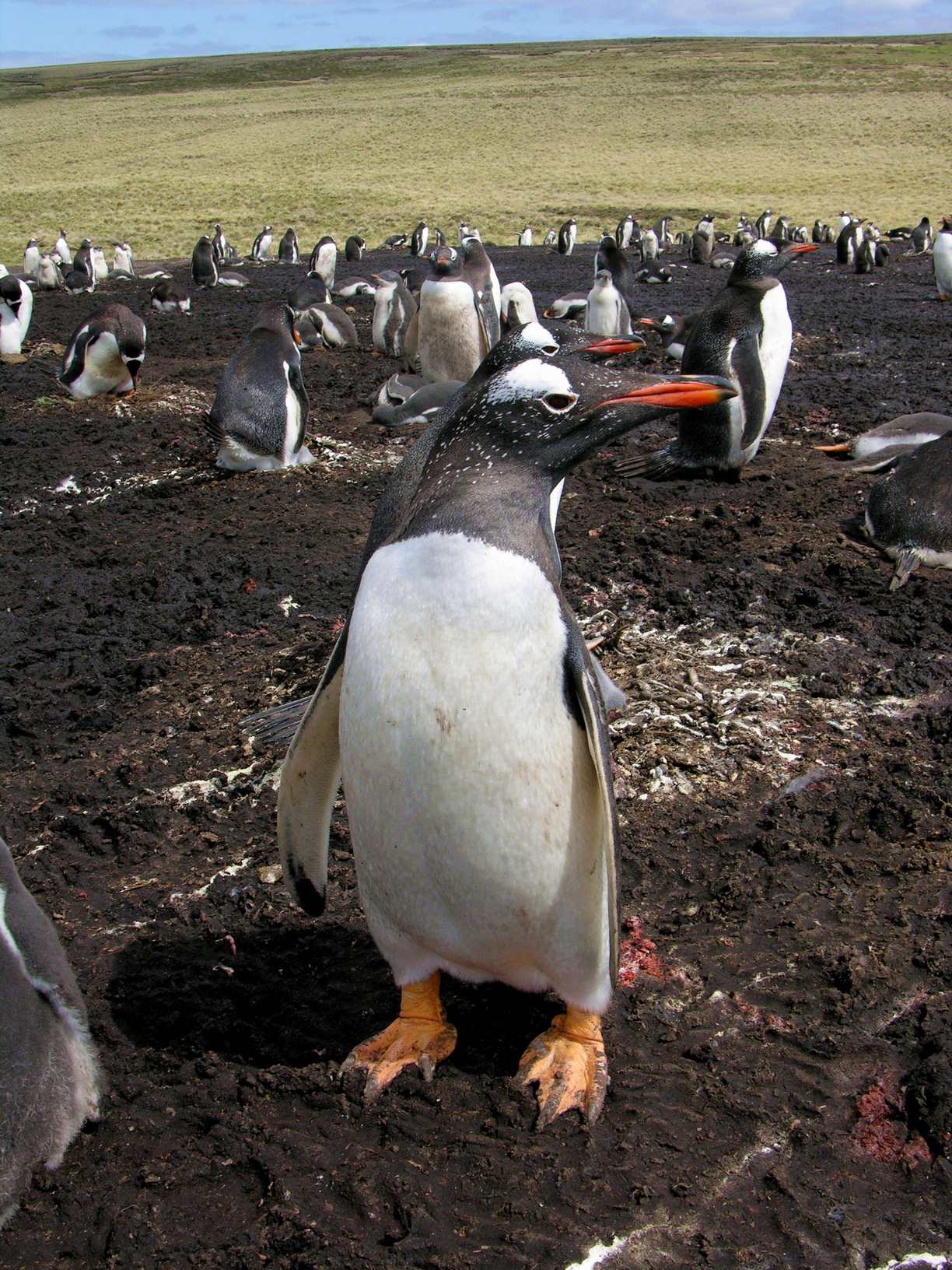
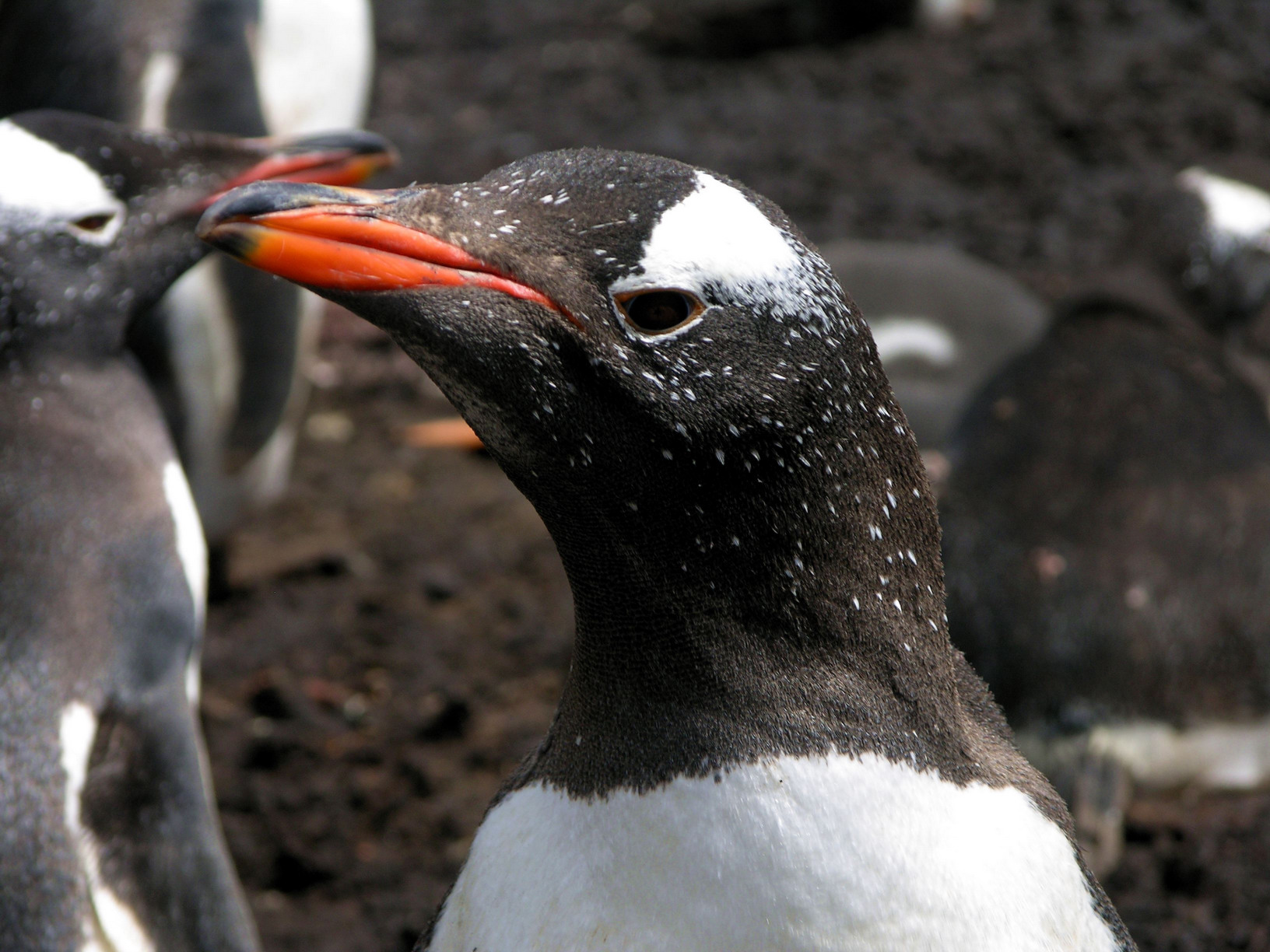
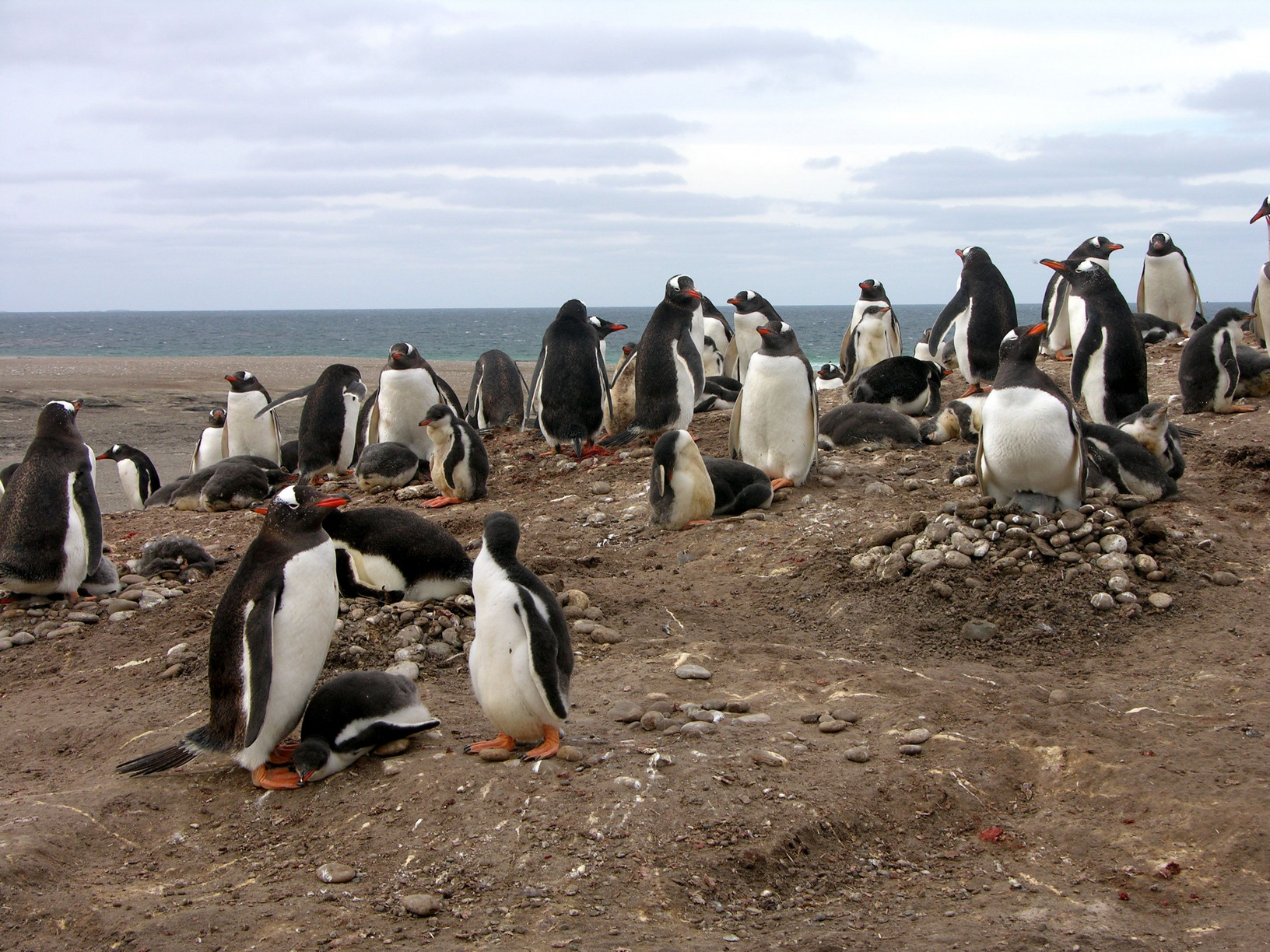
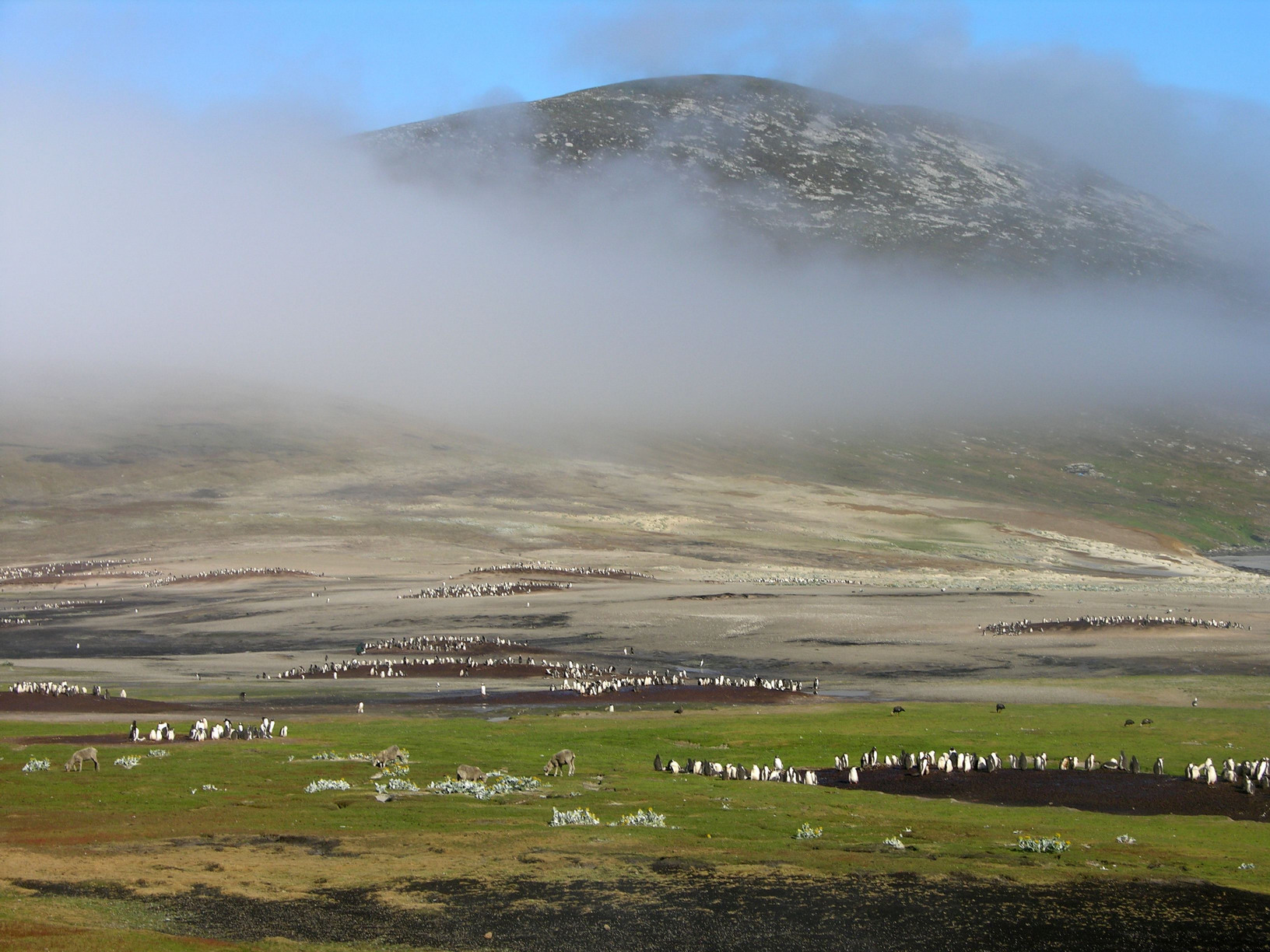
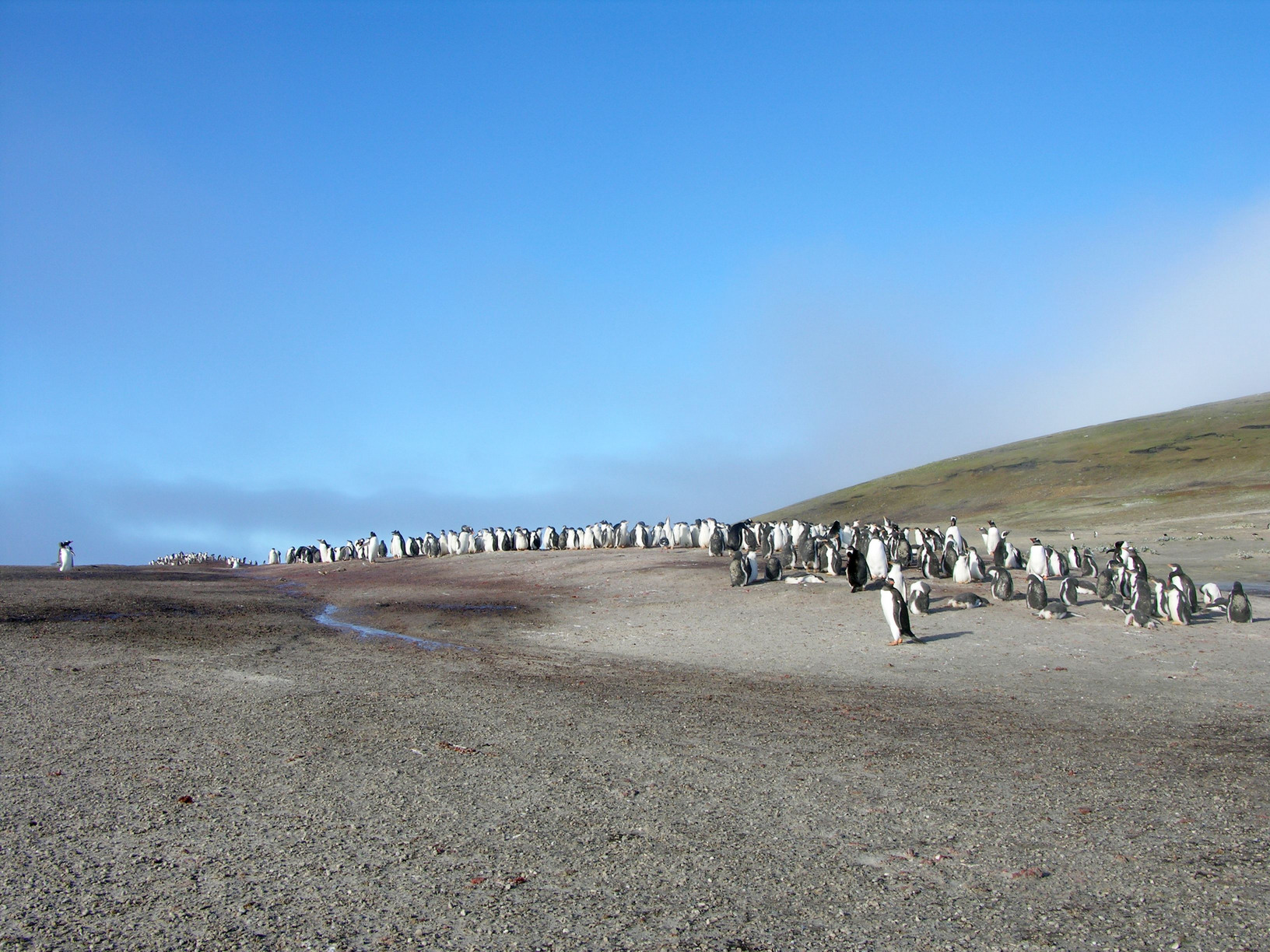
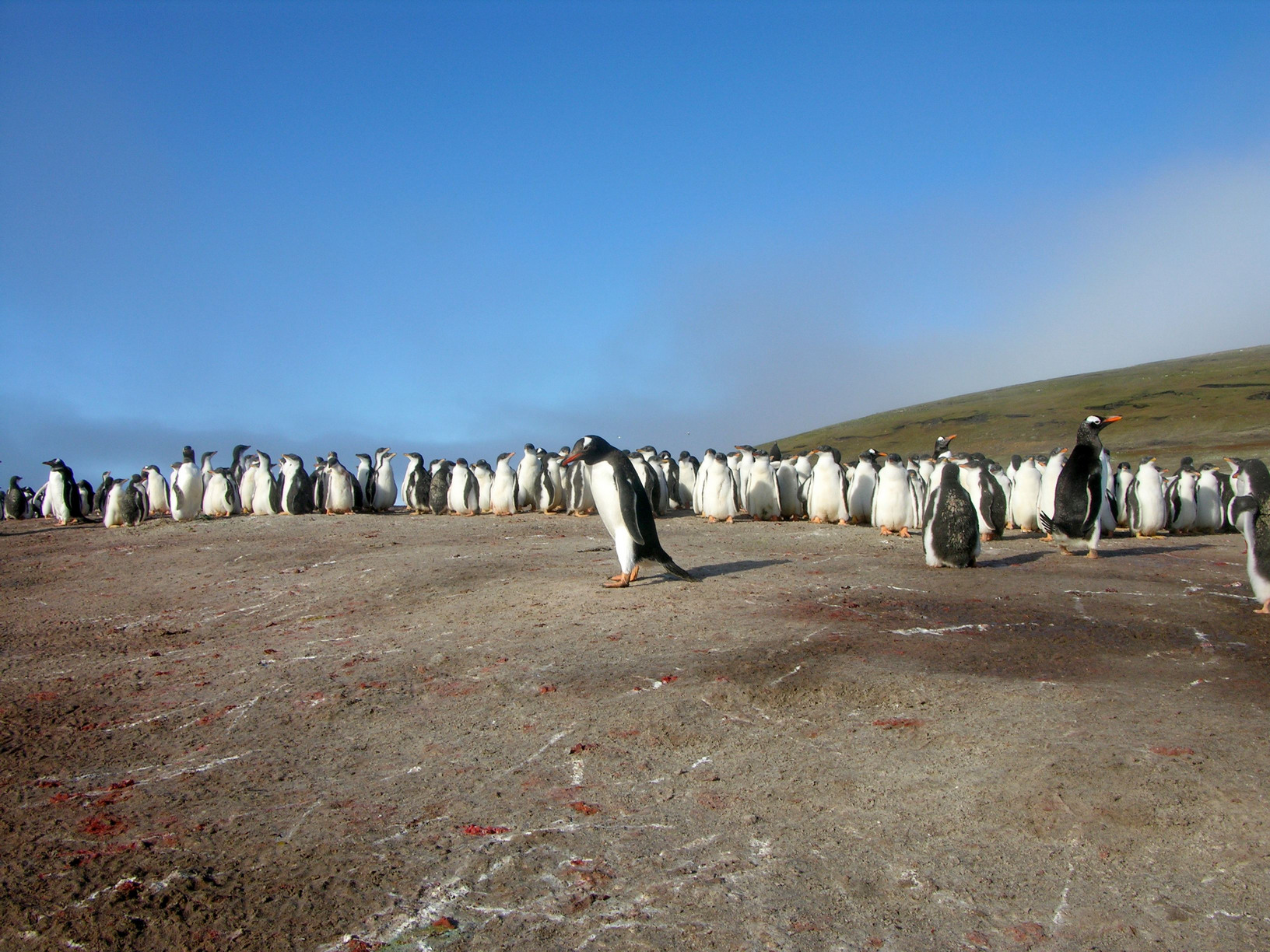
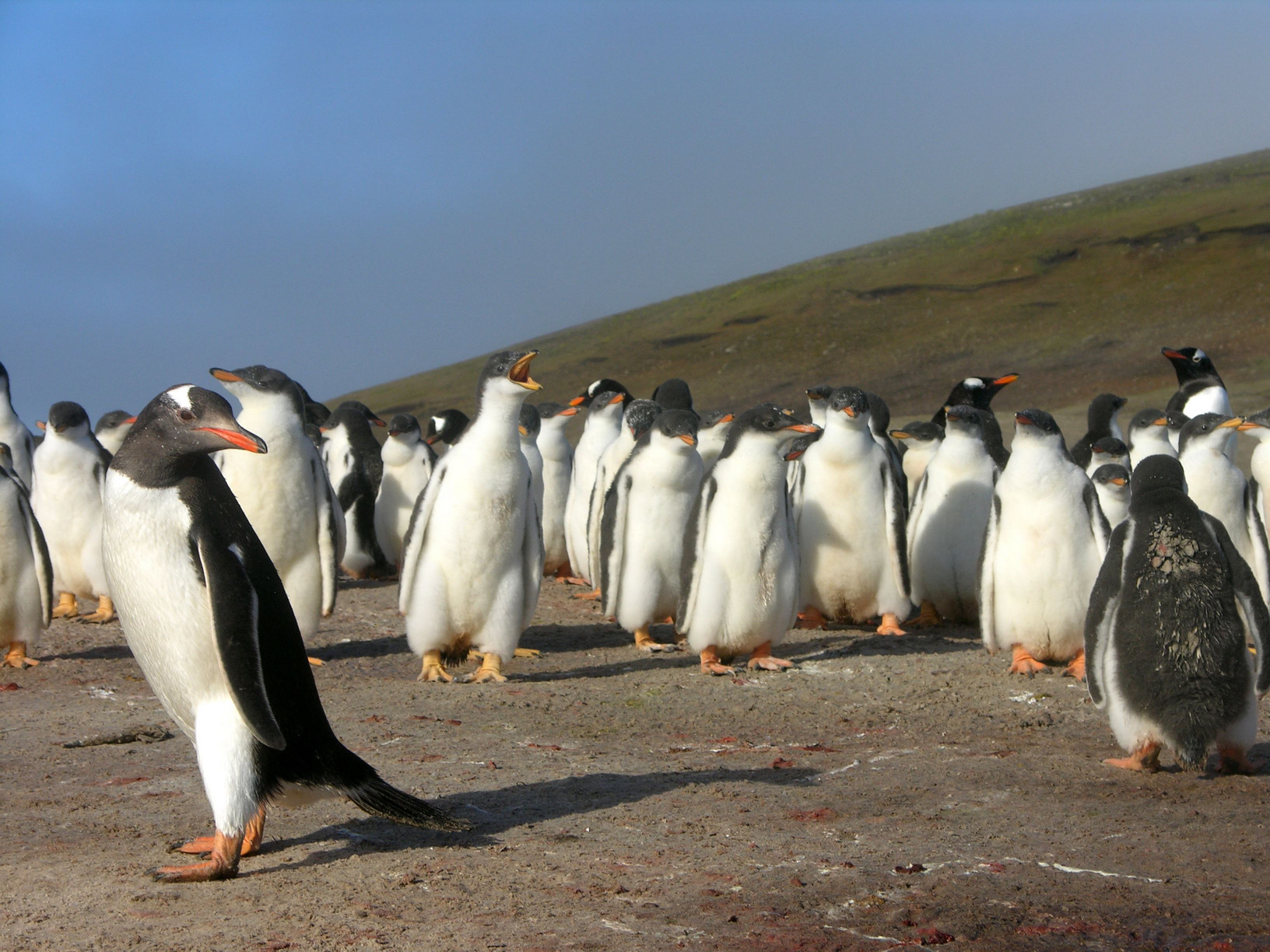
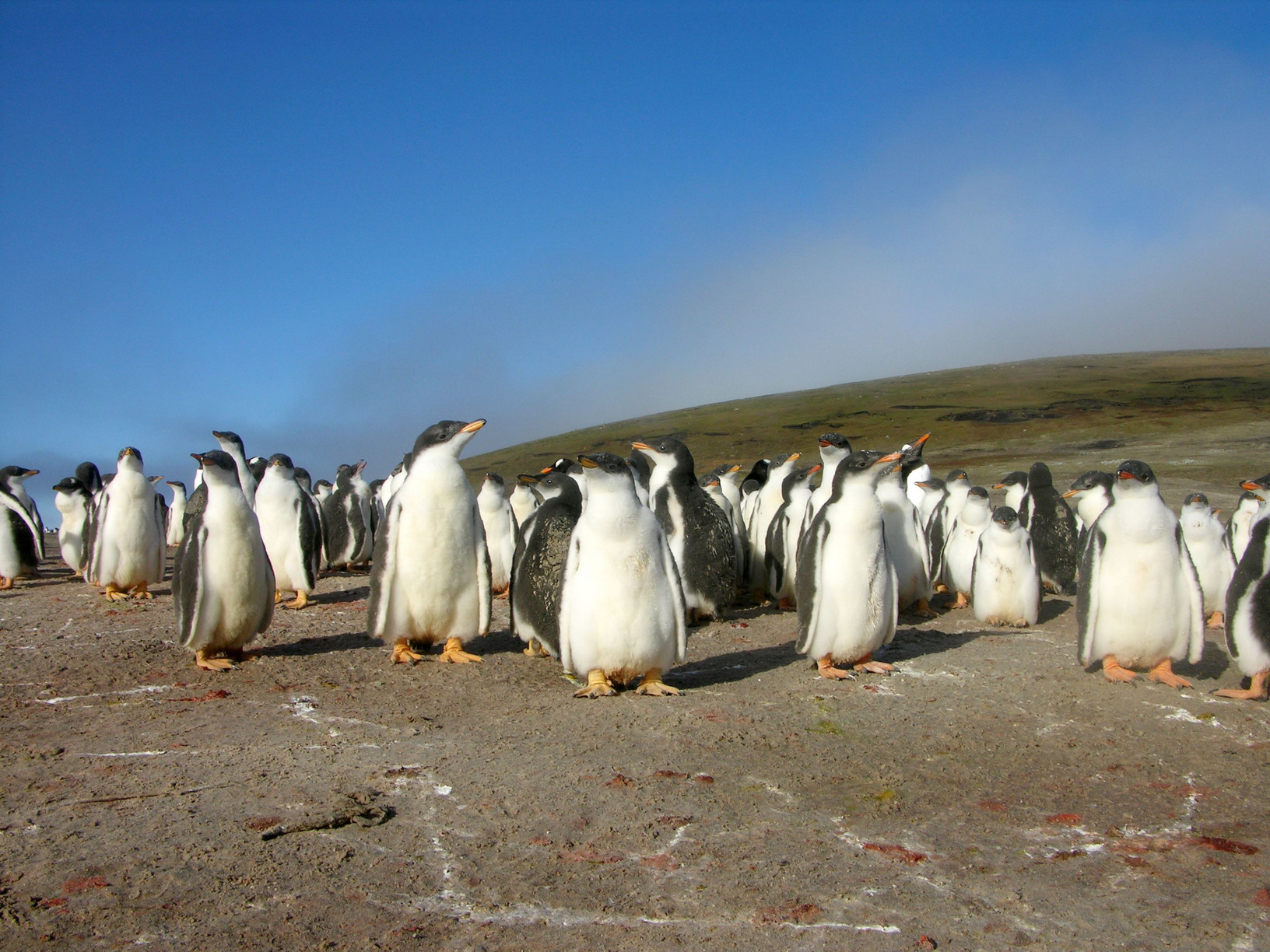
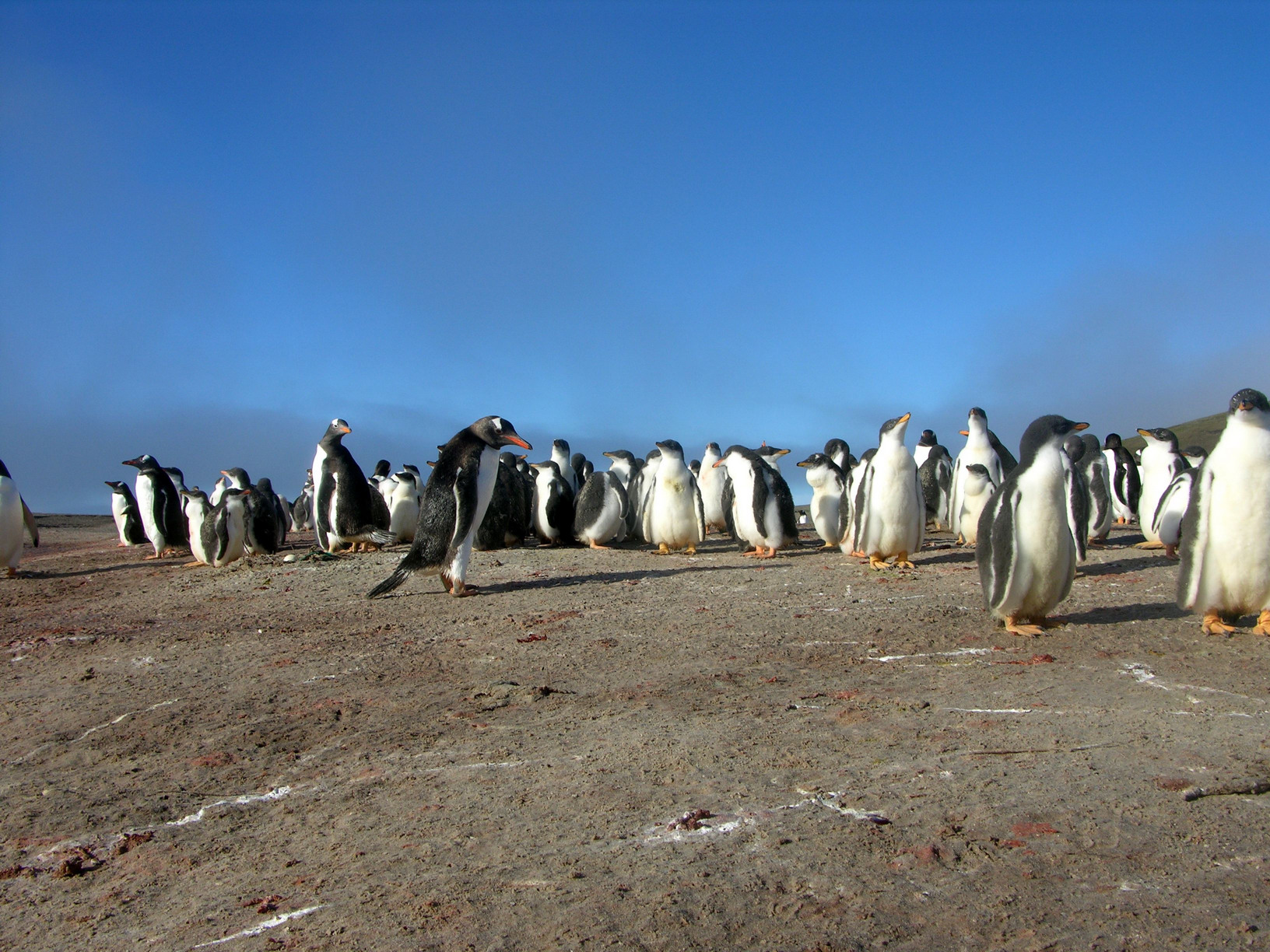
From the New Haven landing it's a kilometre on foot along the shore to the penguin colony (51°43.981′S, 059°13.199′W). An easy walk. The colony is a hundred metres from the sea, on the side of a gentle, marshy hill. From a distance you see a black, muddy patch in the grass. Gentoo penguins live in colonies of several hundred pairs. There are 300,000 in the world, 70,000 in the Falklands. An adult gentoo is eighty centimetres tall and weighs more than ten kilos. Females are indistinguishable from males by plumage or size. Eggs are laid in midwinter and the chicks are raised all summer. There are usually two eggs in a clutch. One is bigger and its chick hatches first. The second is a spare. The chick that comes out is little and only has a chance of surviving in a good year or if the firstborn dies unexpectedly. Also, gentoo penguins are known for the version of Linux named after them.
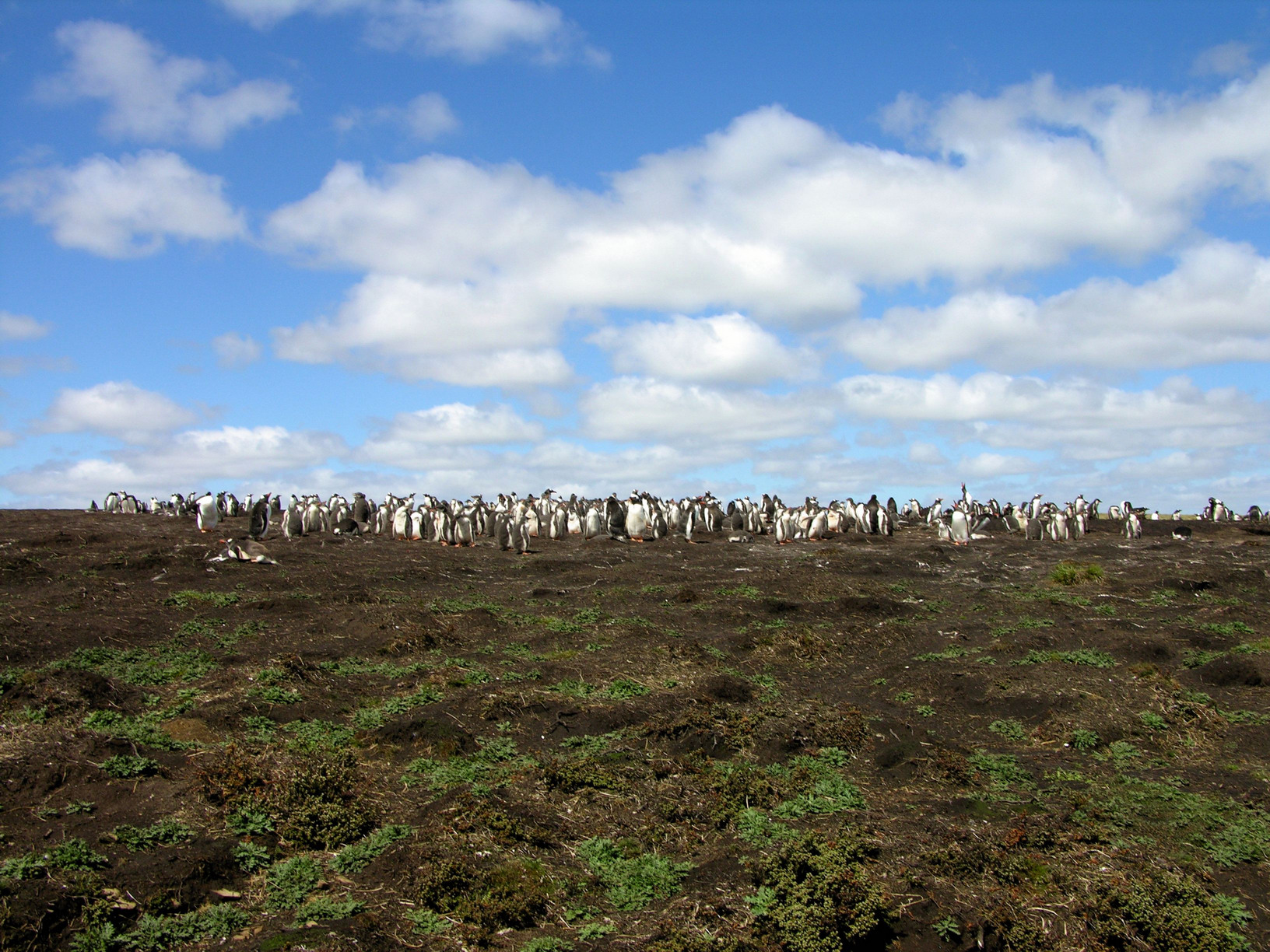
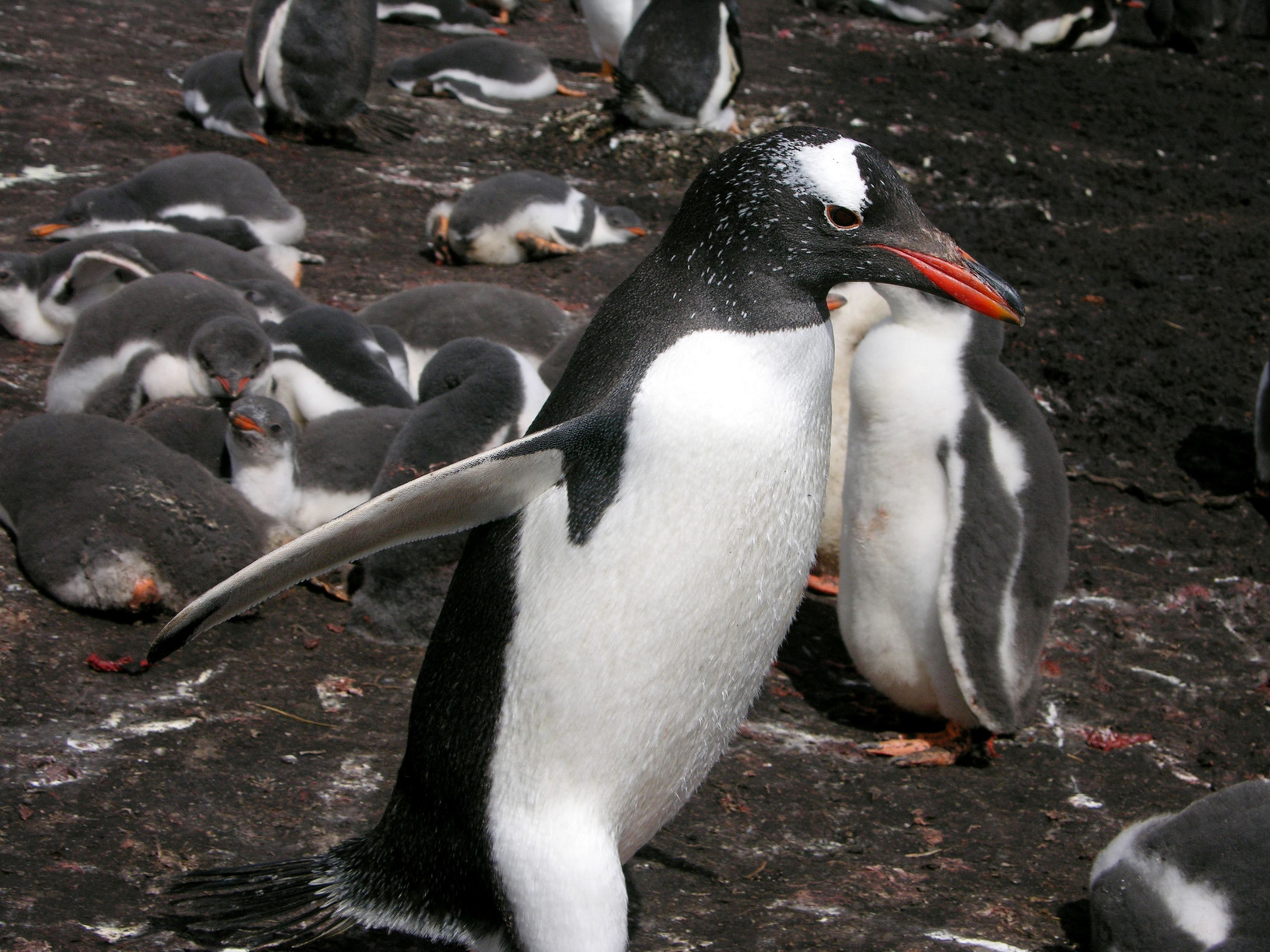
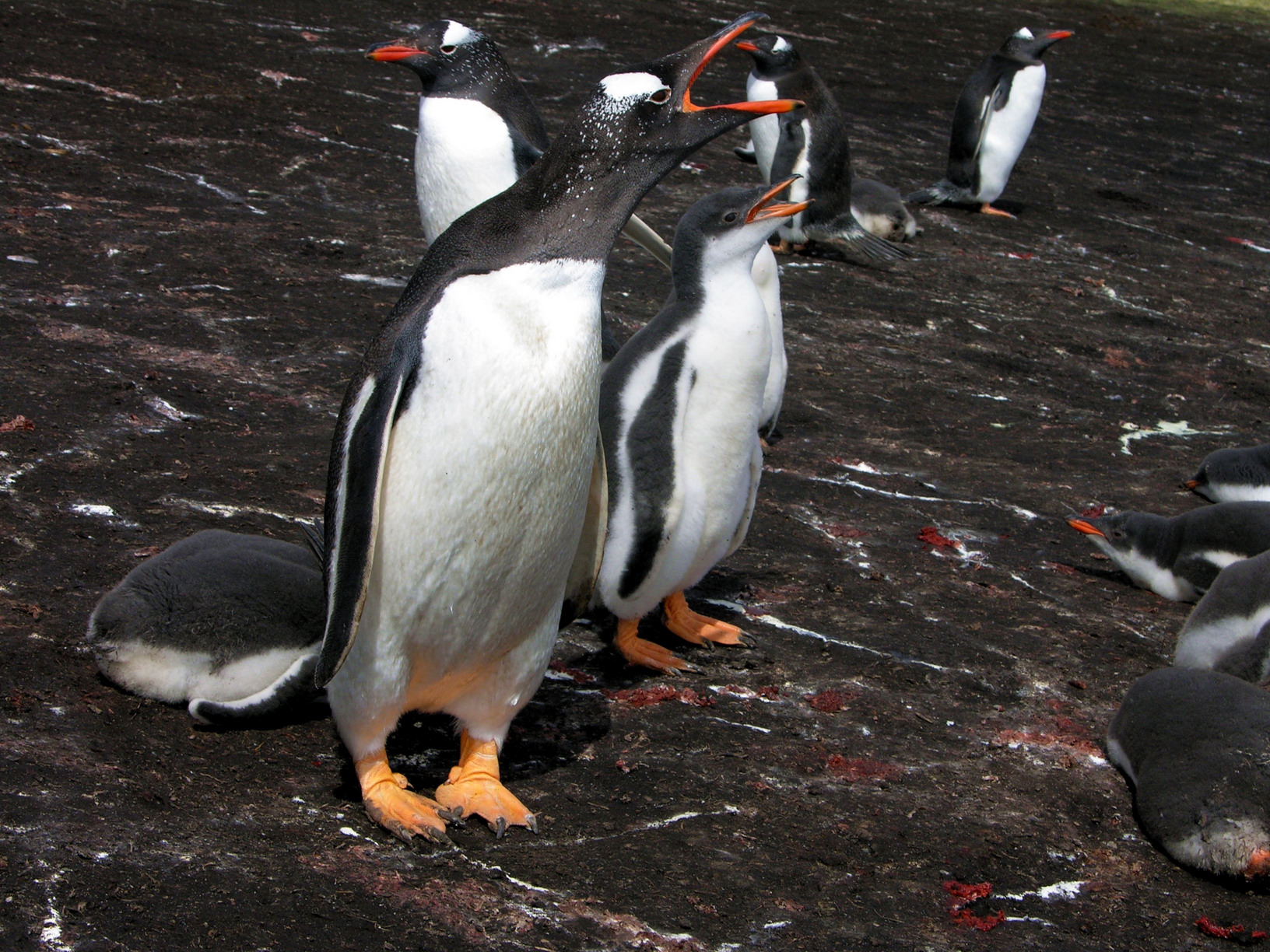
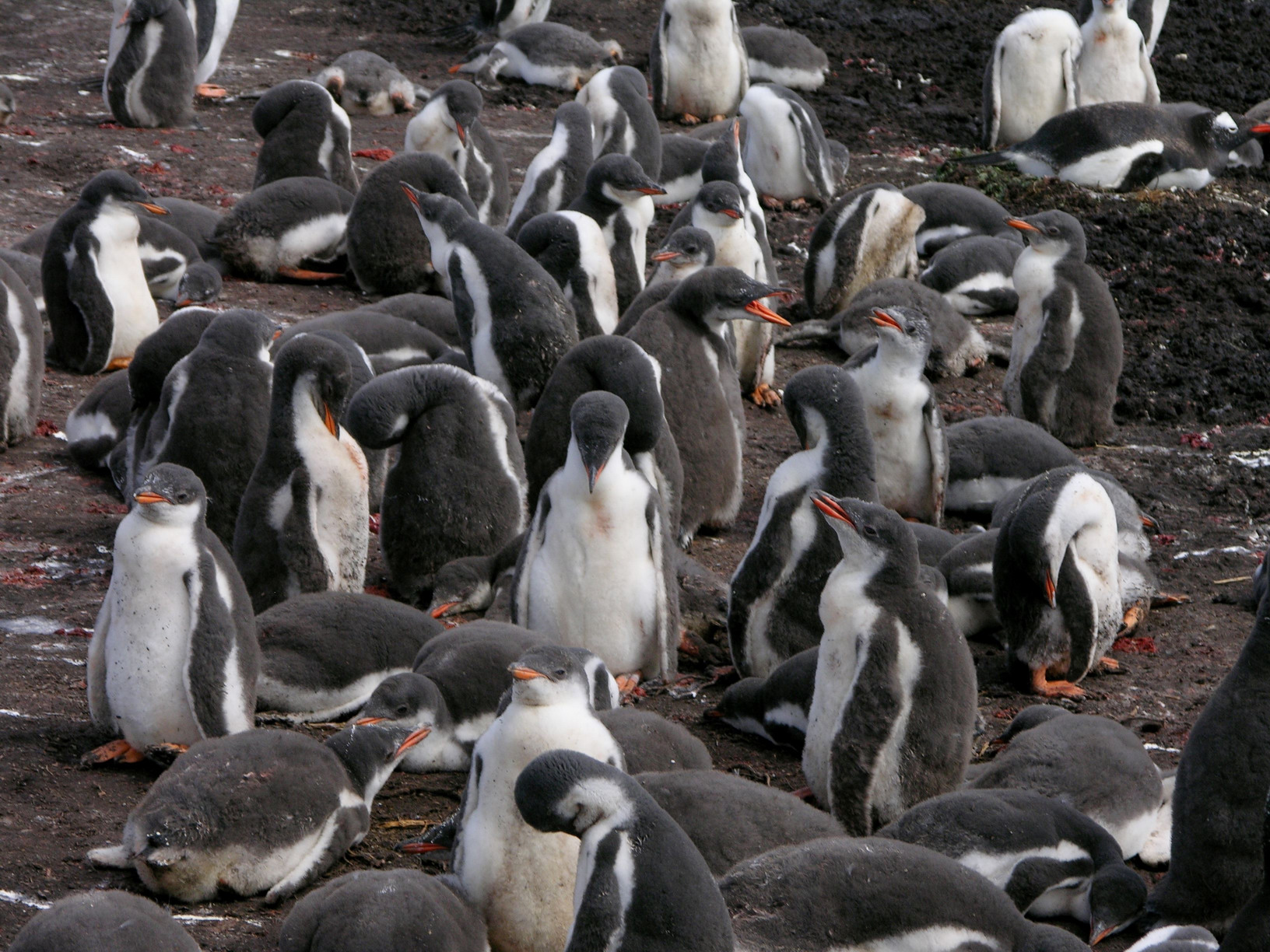
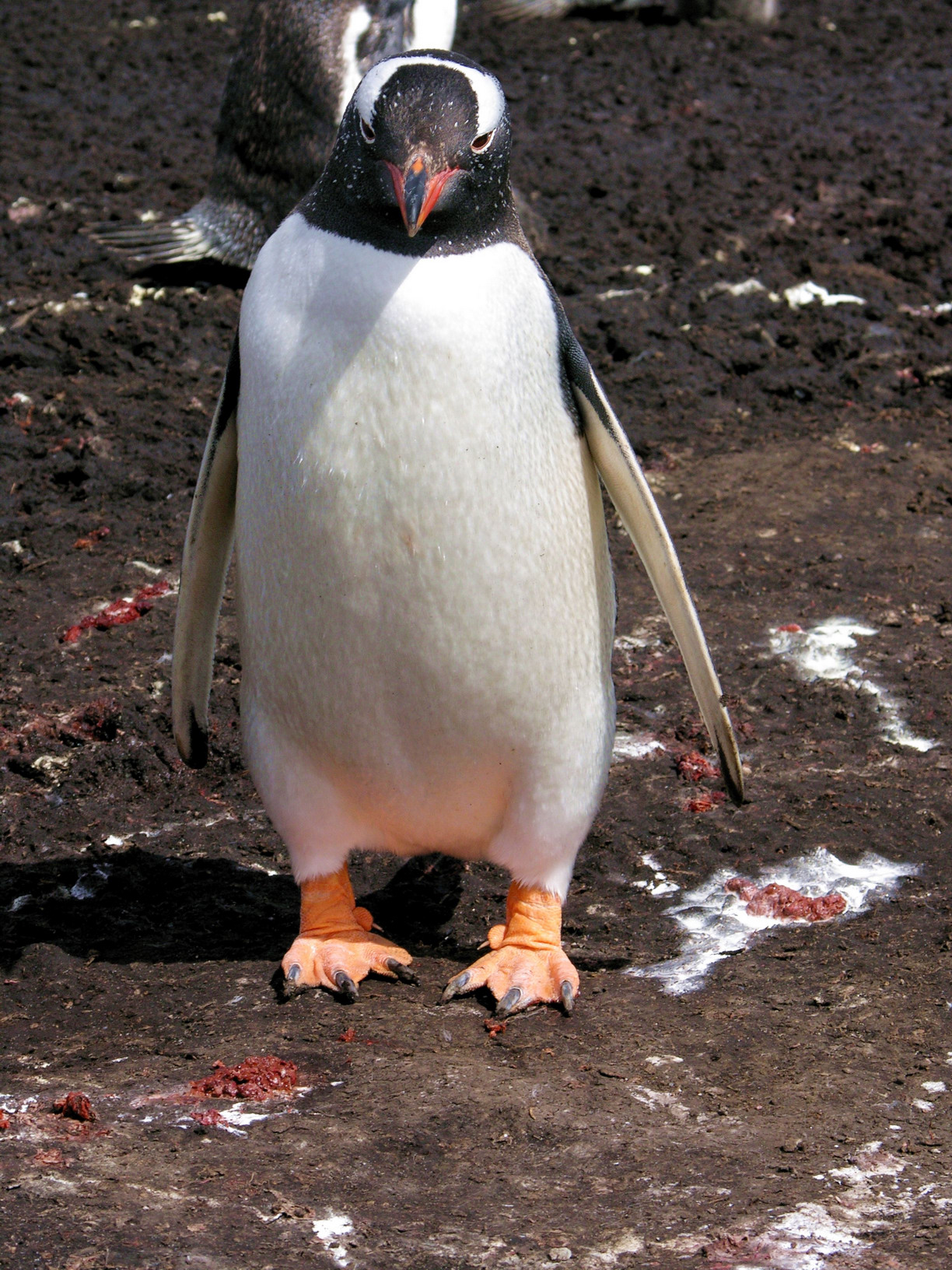
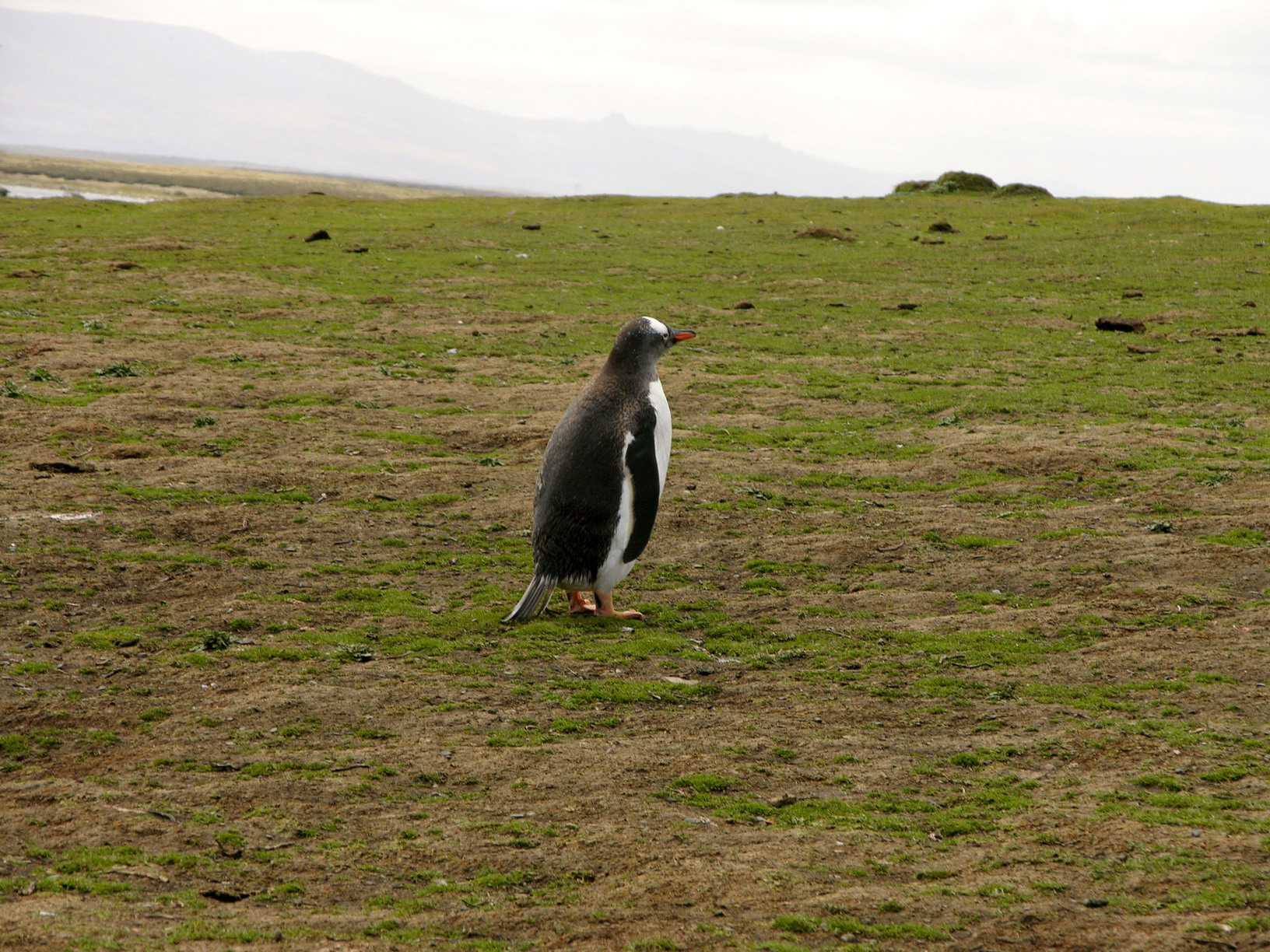
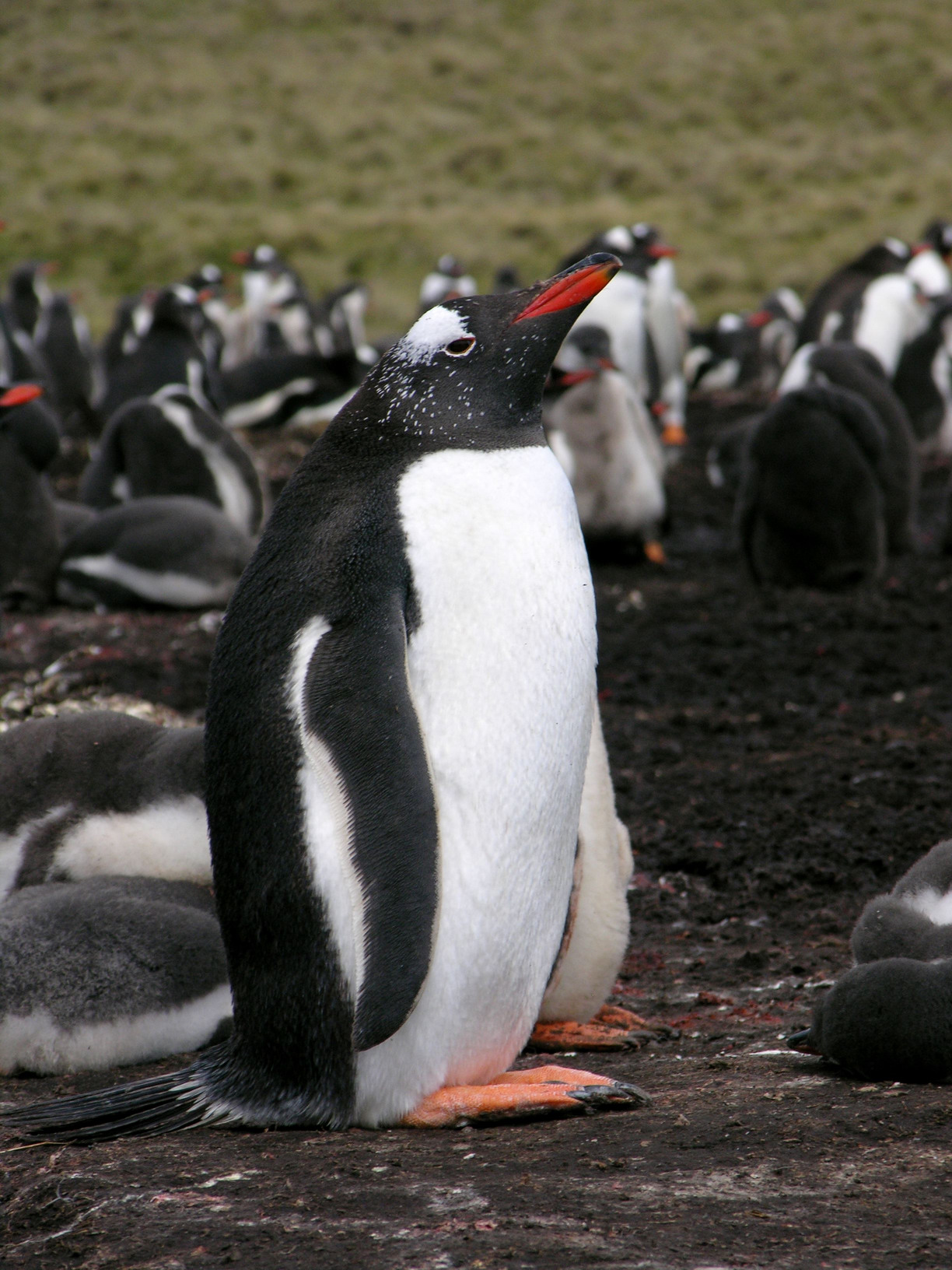
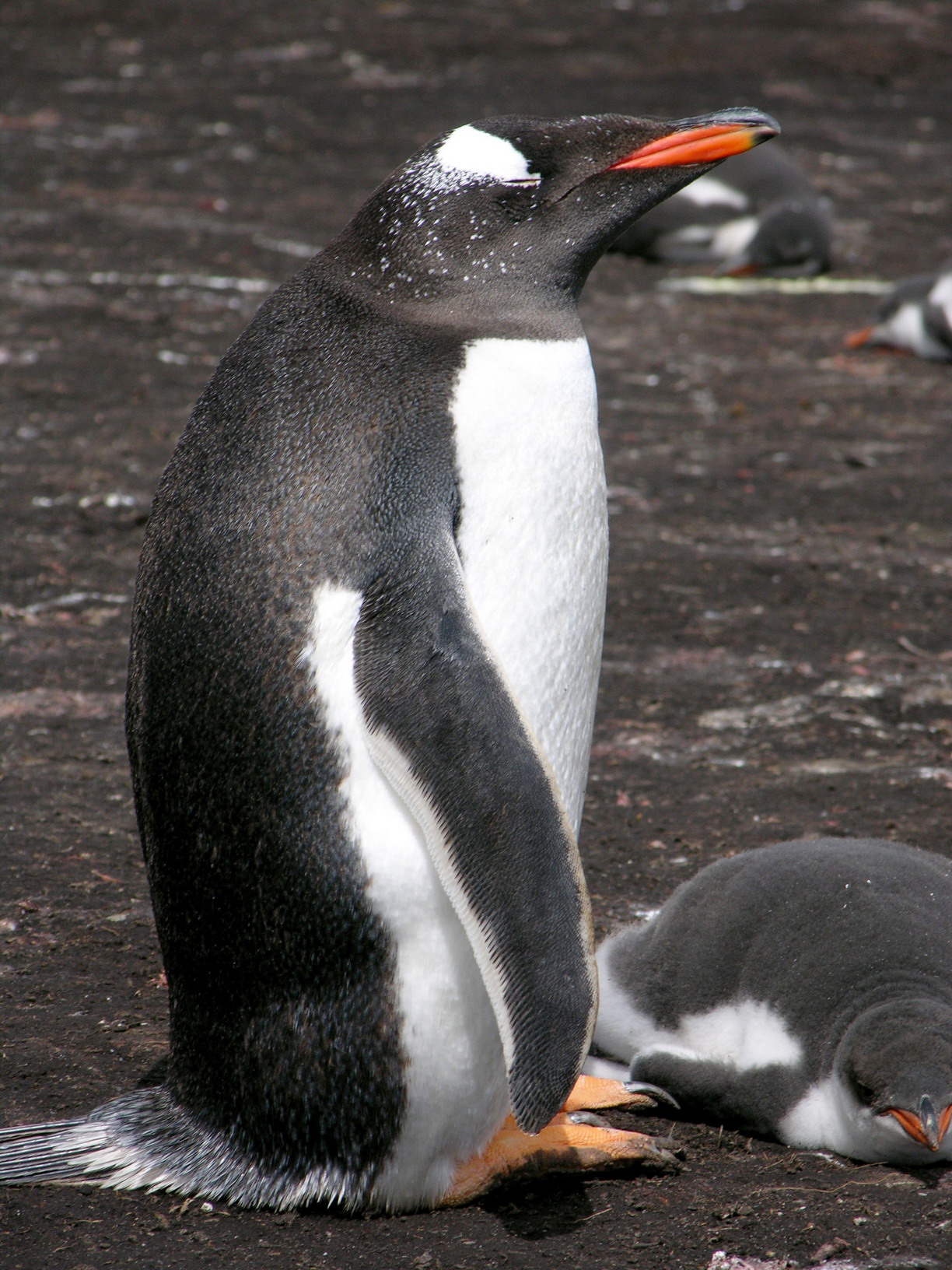
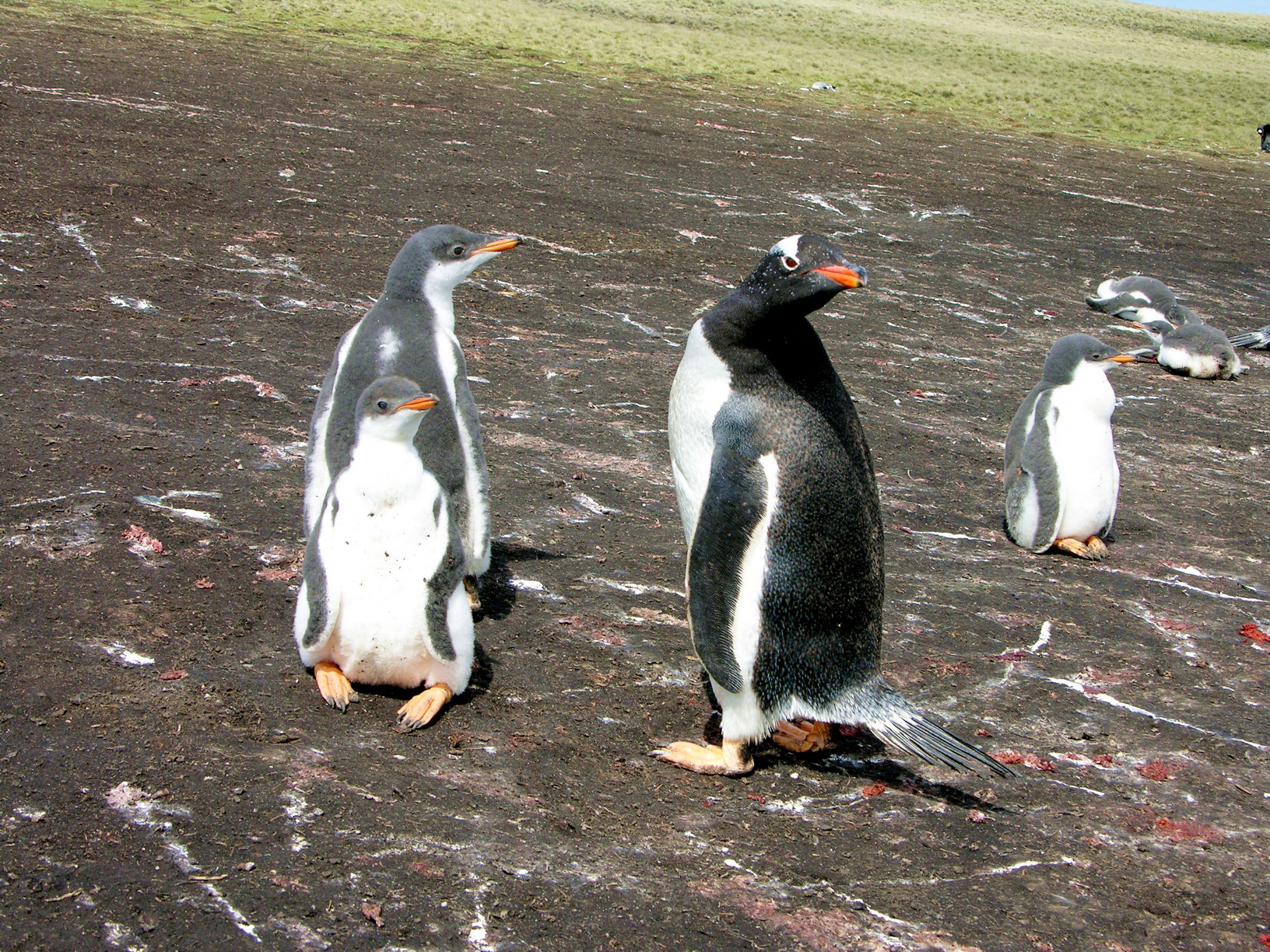
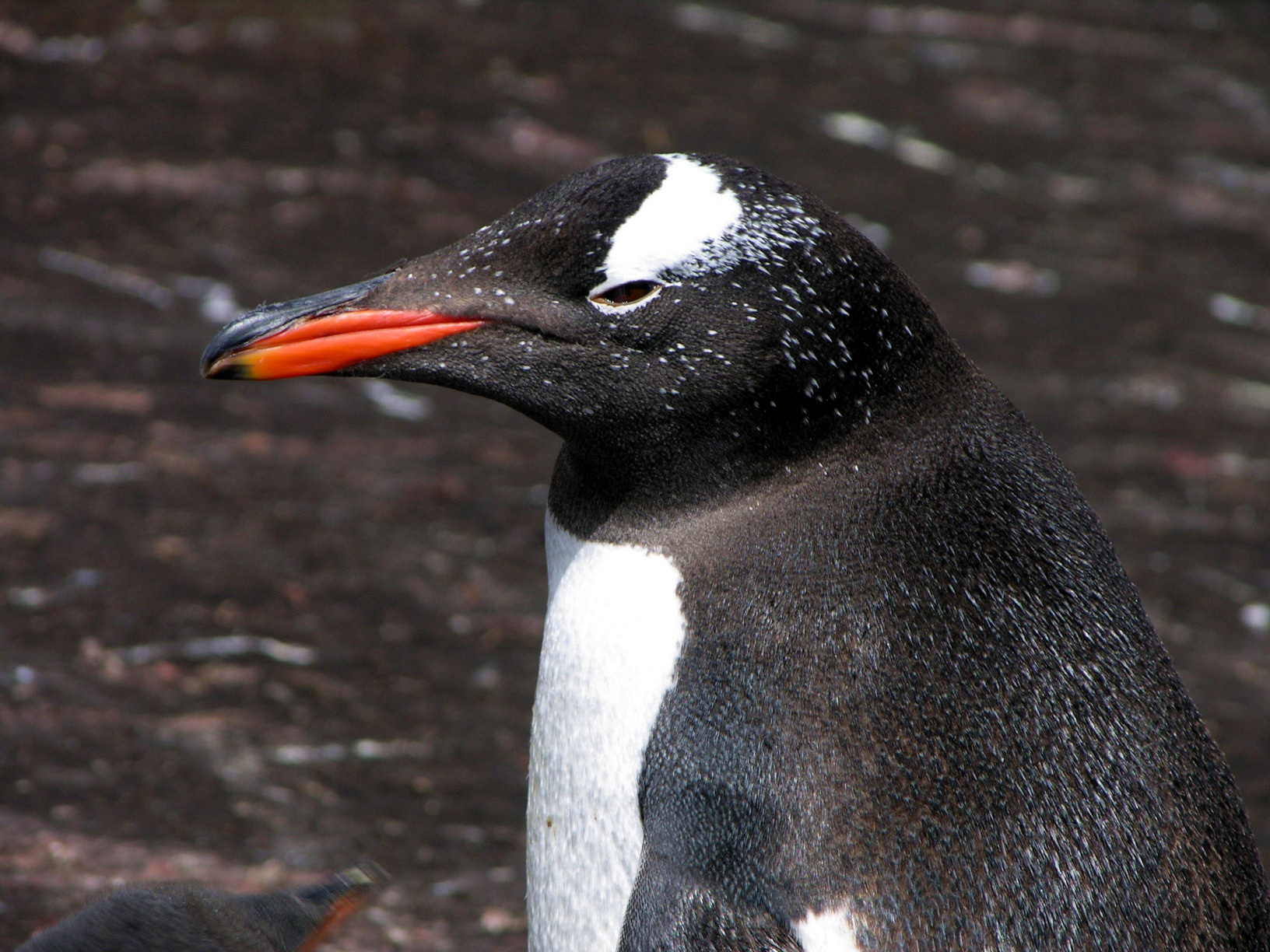
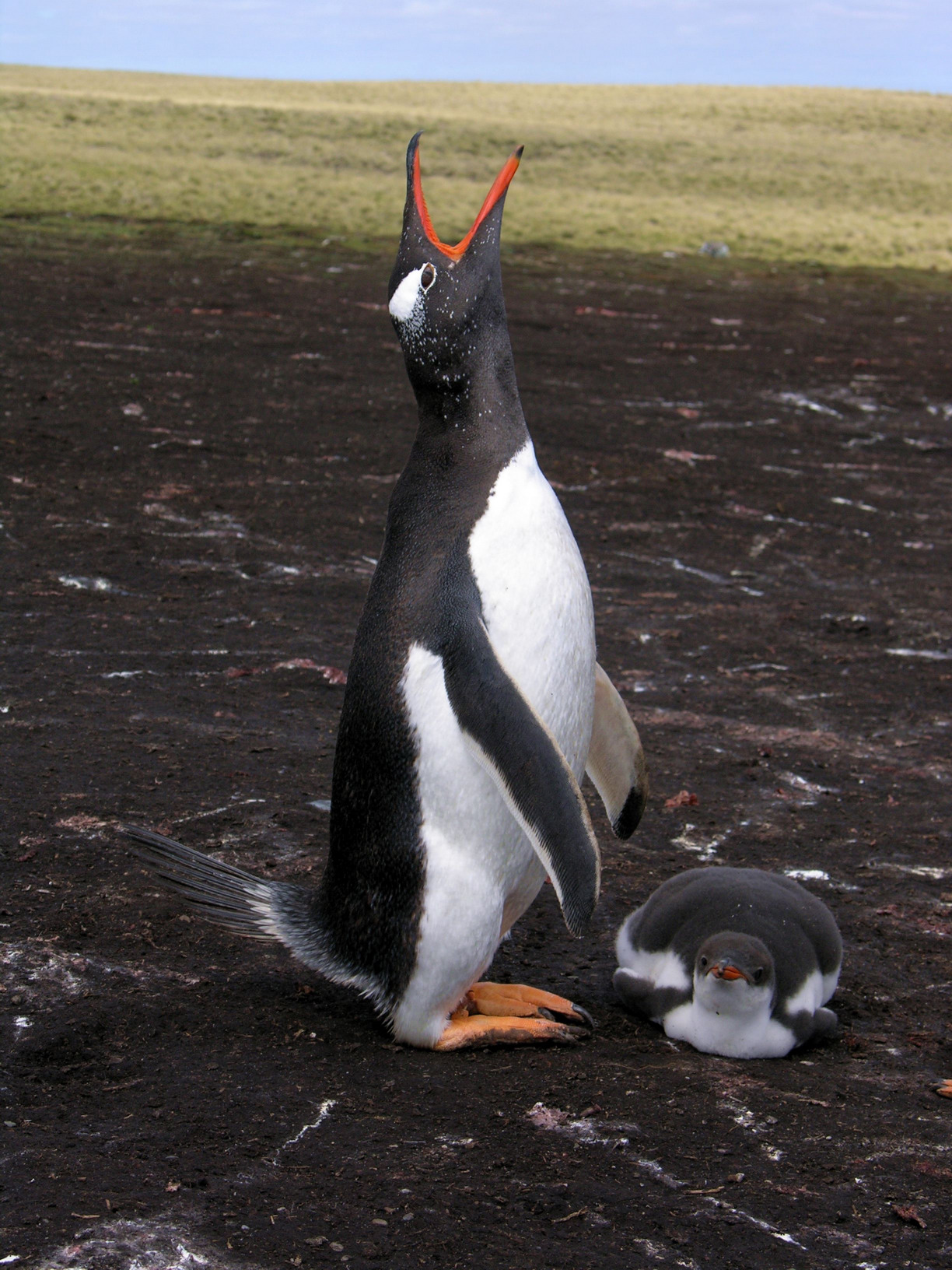
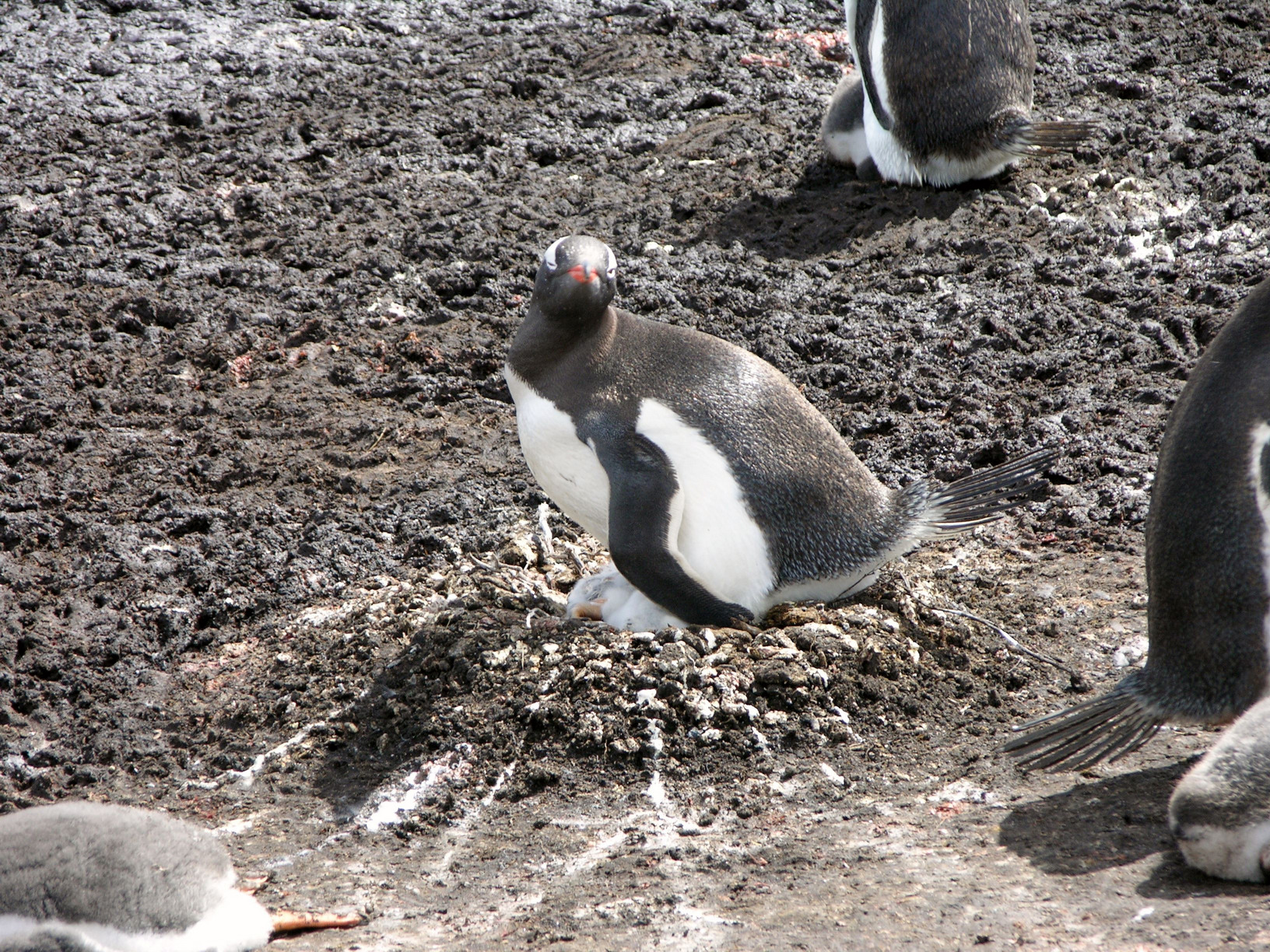
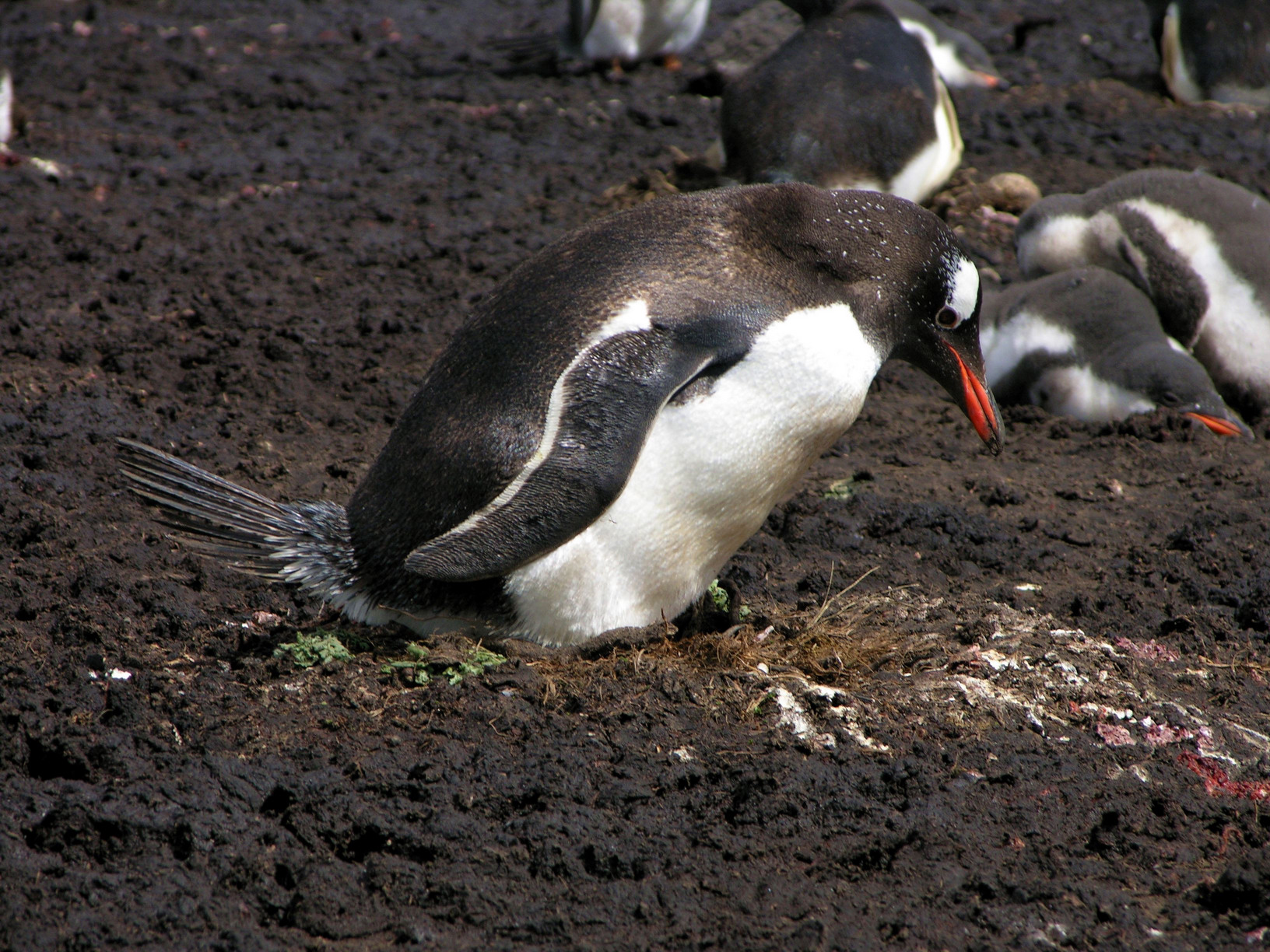
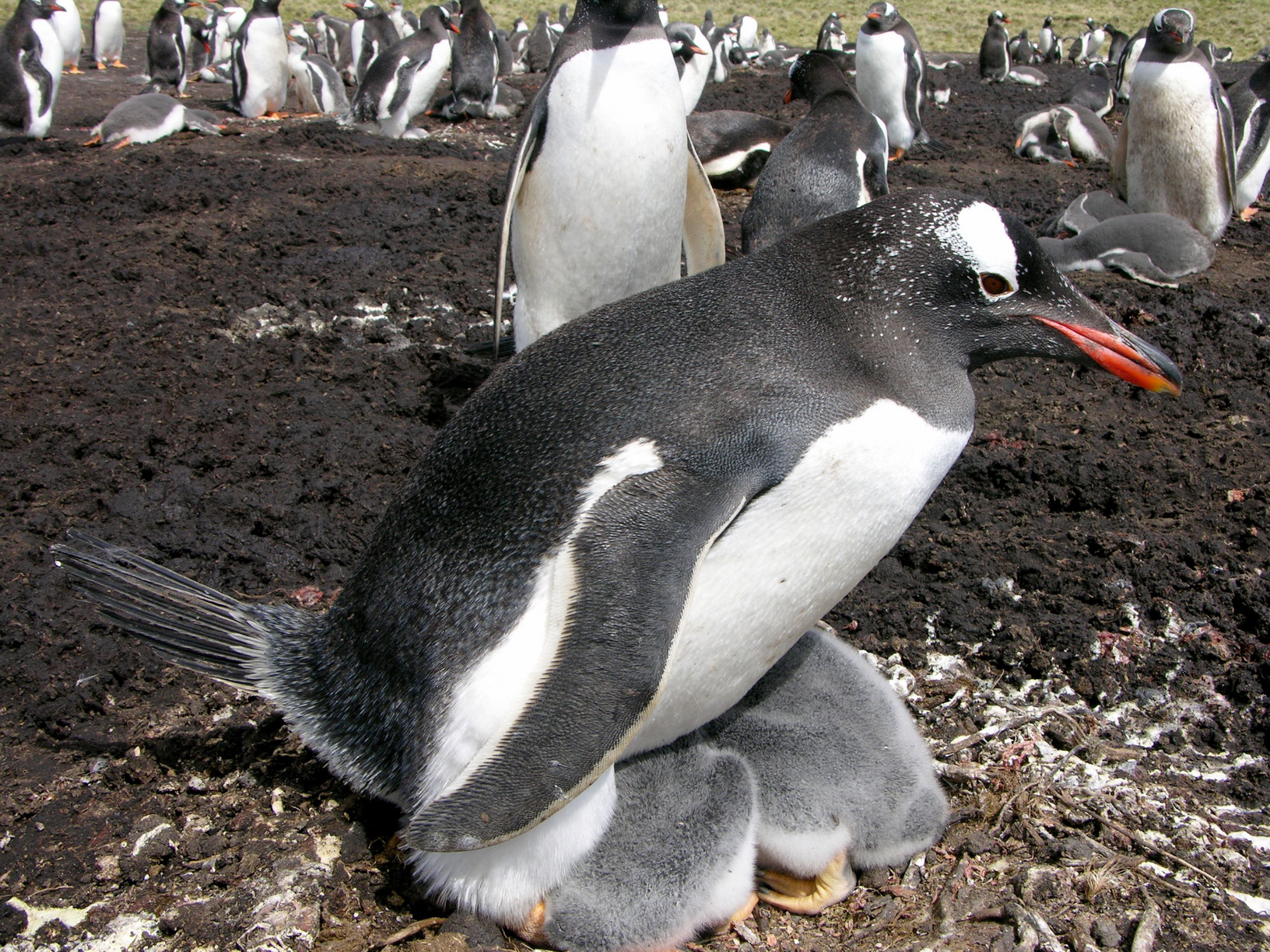
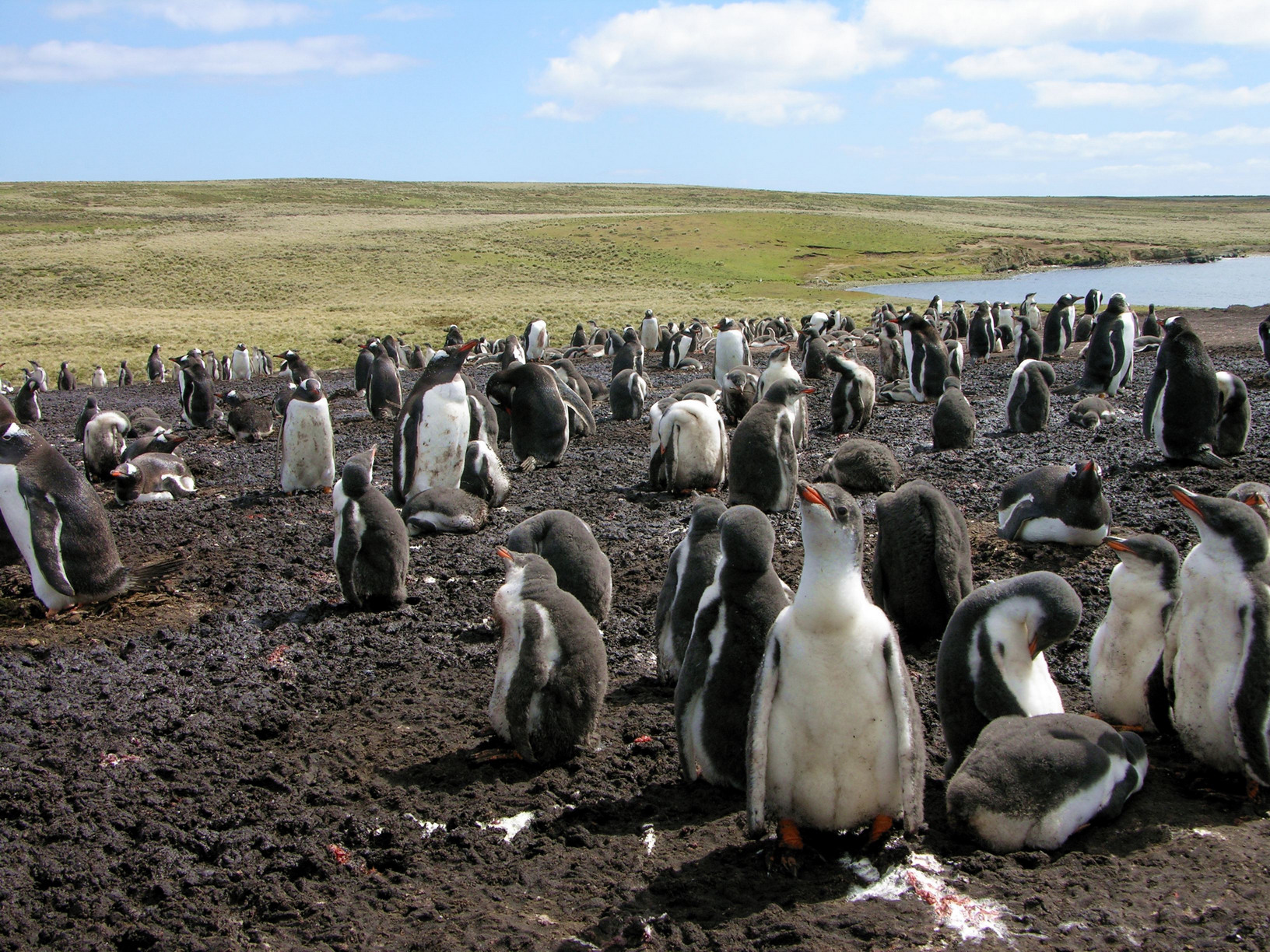
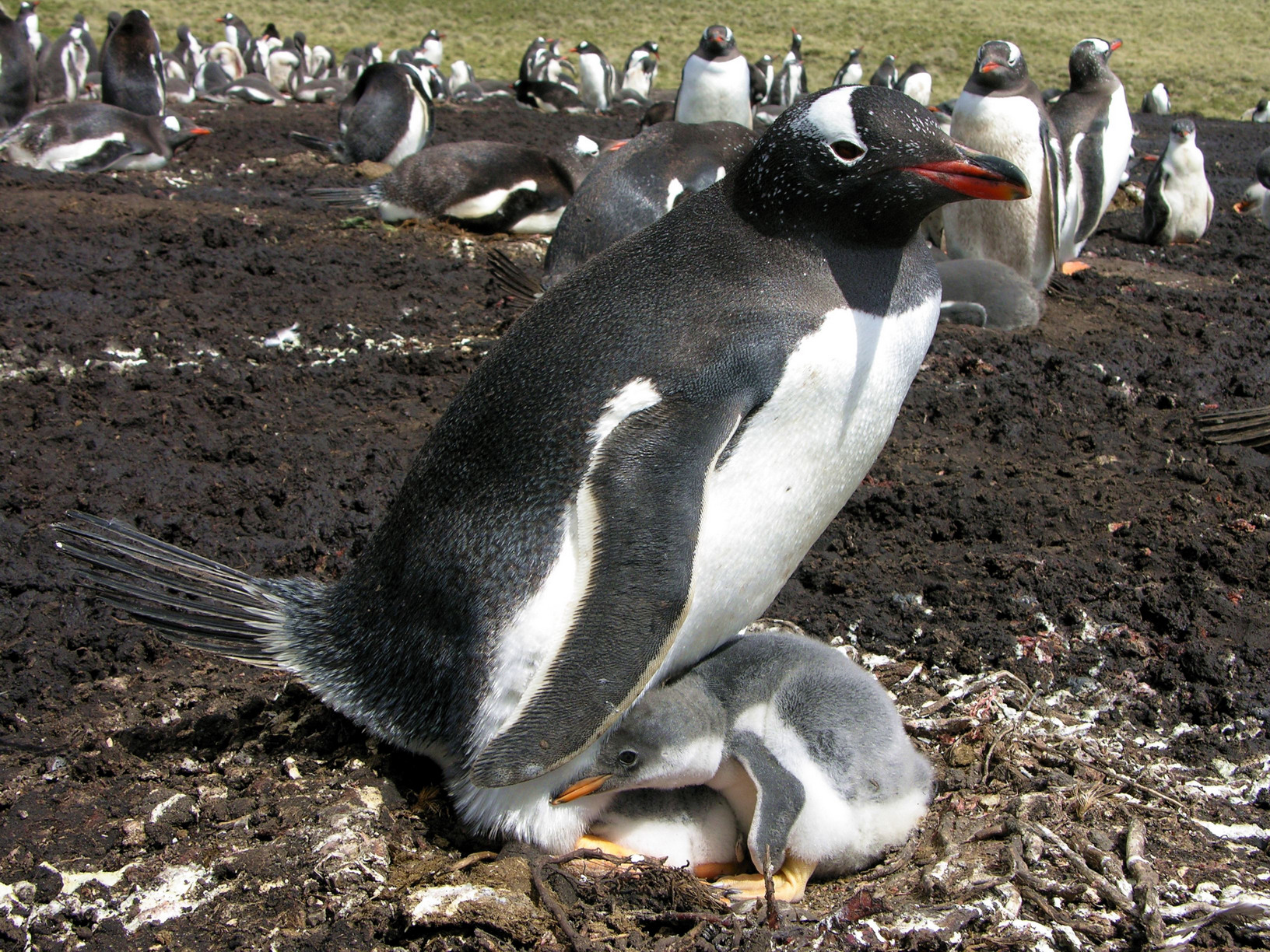
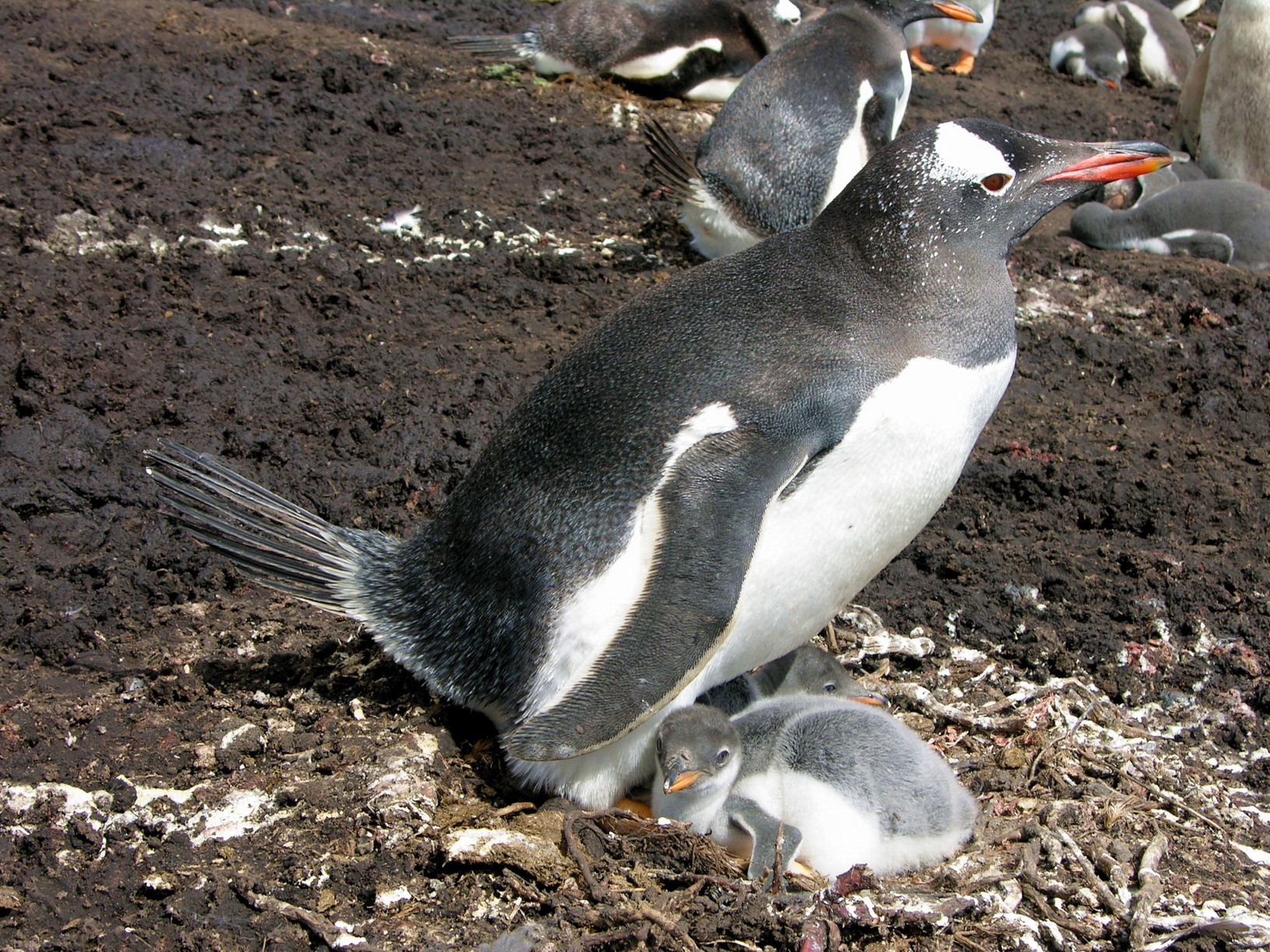
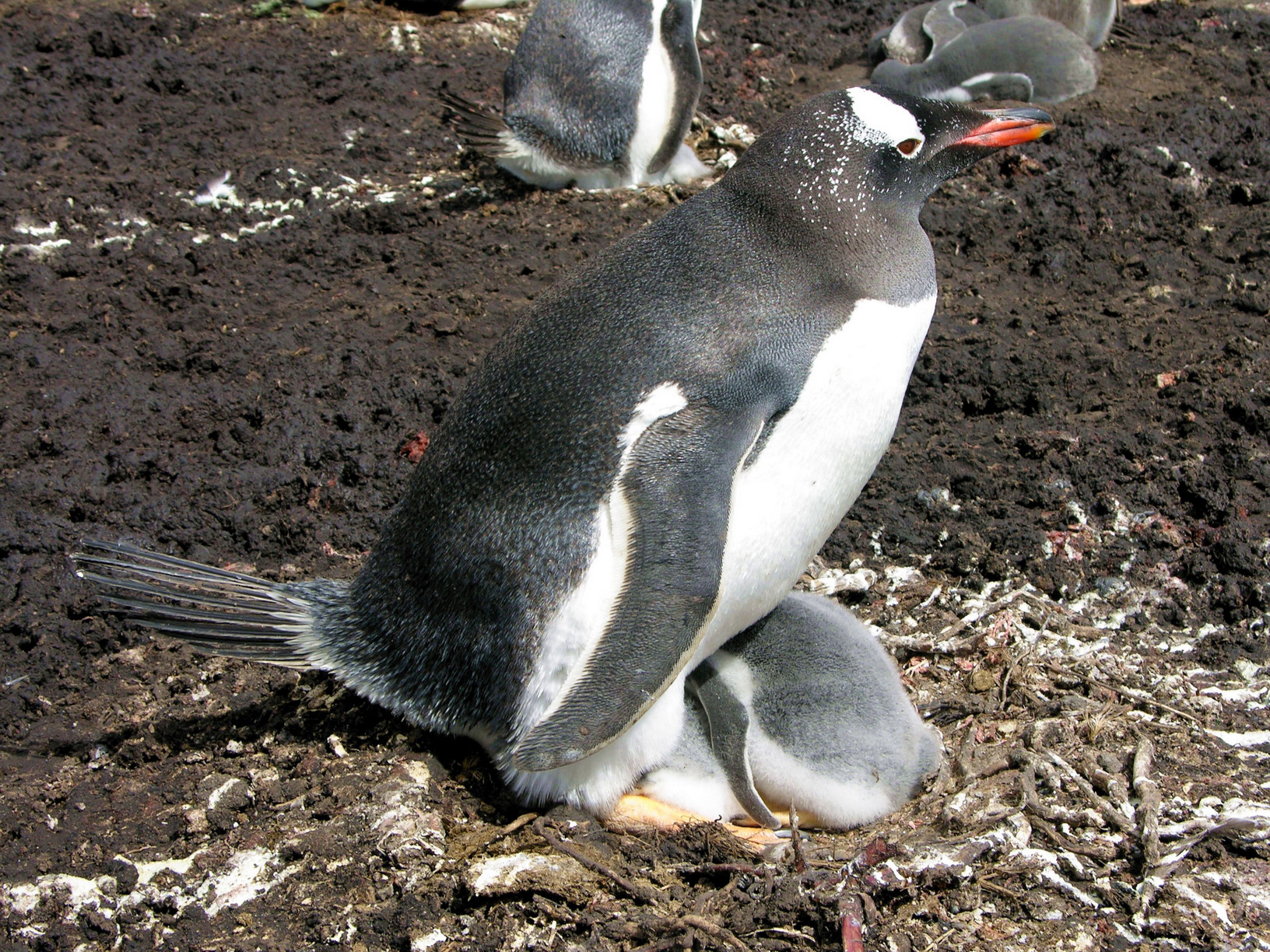
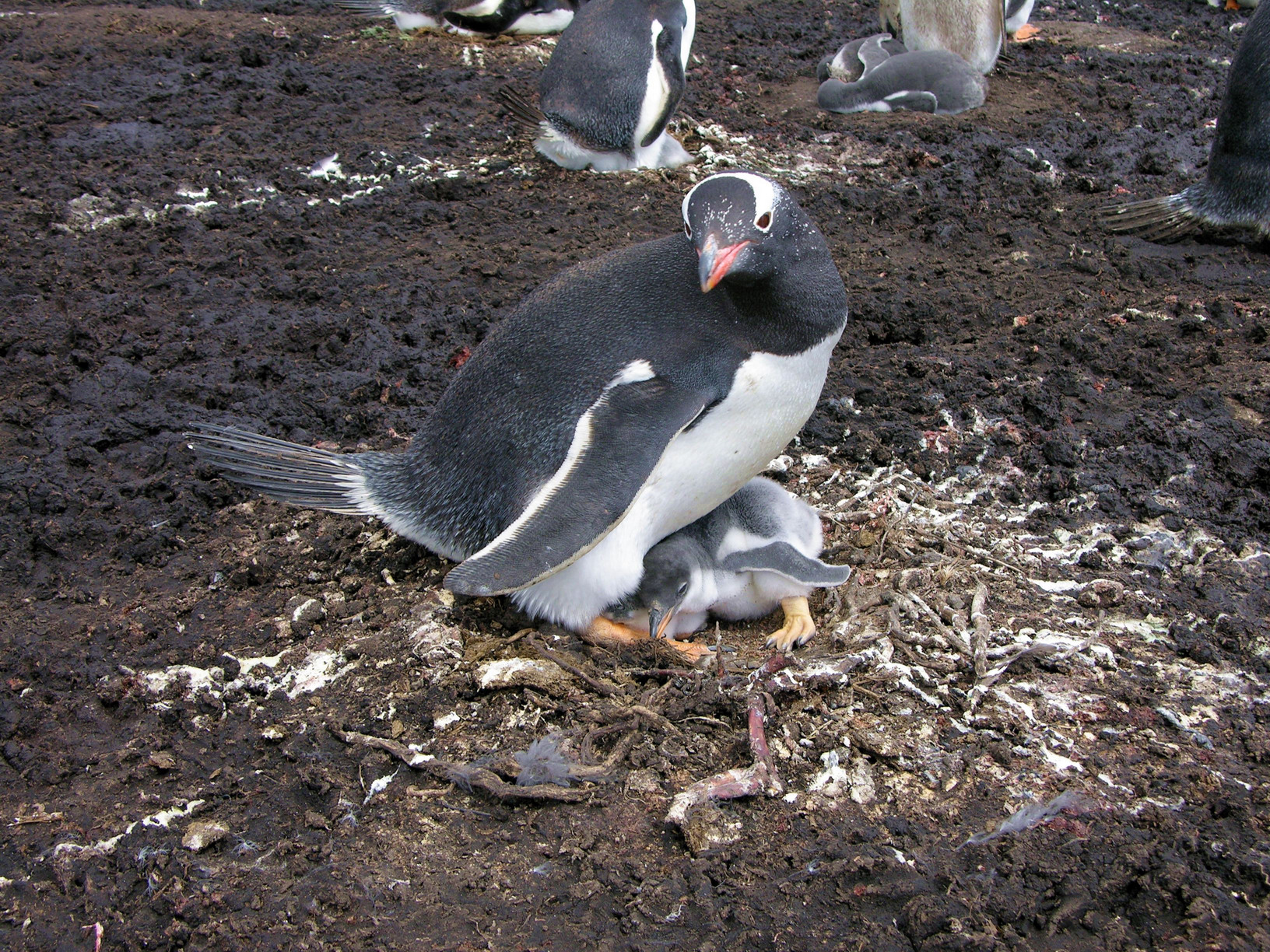
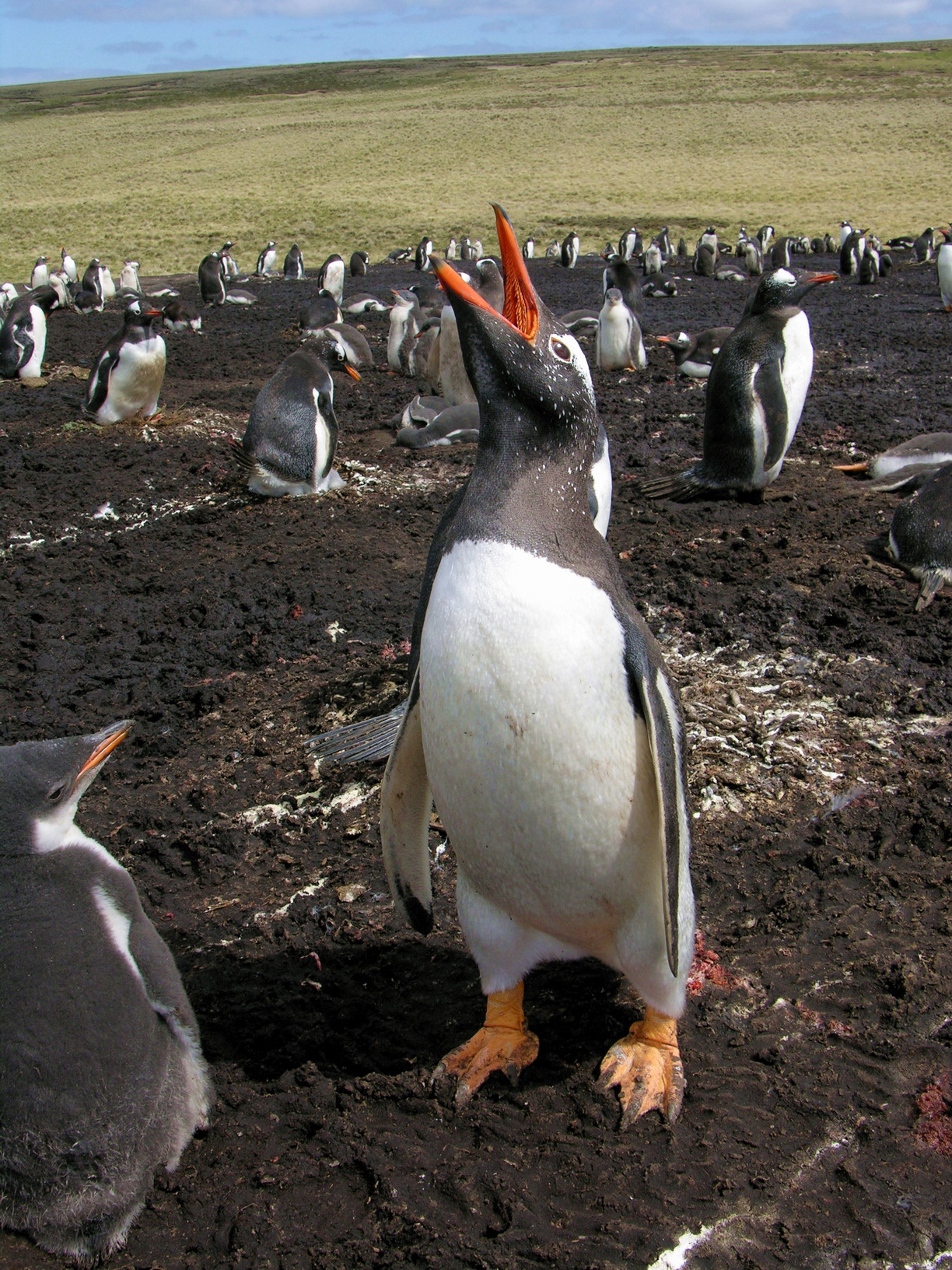
Sometimes they don't even sit on the second egg. It just lies in the mud. For some reason even the skuas don't eat it, but it's delicious. We picked up one. Broke it open, and there was the yolk and the white, just like a normal hen's egg. “Tanya,” I said, “get the frying pan!” We fried it. Delicious! The egg had been lying abandoned for months. That year's chicks were already big. Then again it isn't particularly surprising, since summer weather in the Falklands resembles a refrigerator.
Ninety per cent of gentoo pairs stay together into the following year. To win a female over, the male finds a handsome little stone and brings it to her. If she likes it, she agrees and puts it at the base of the nest.
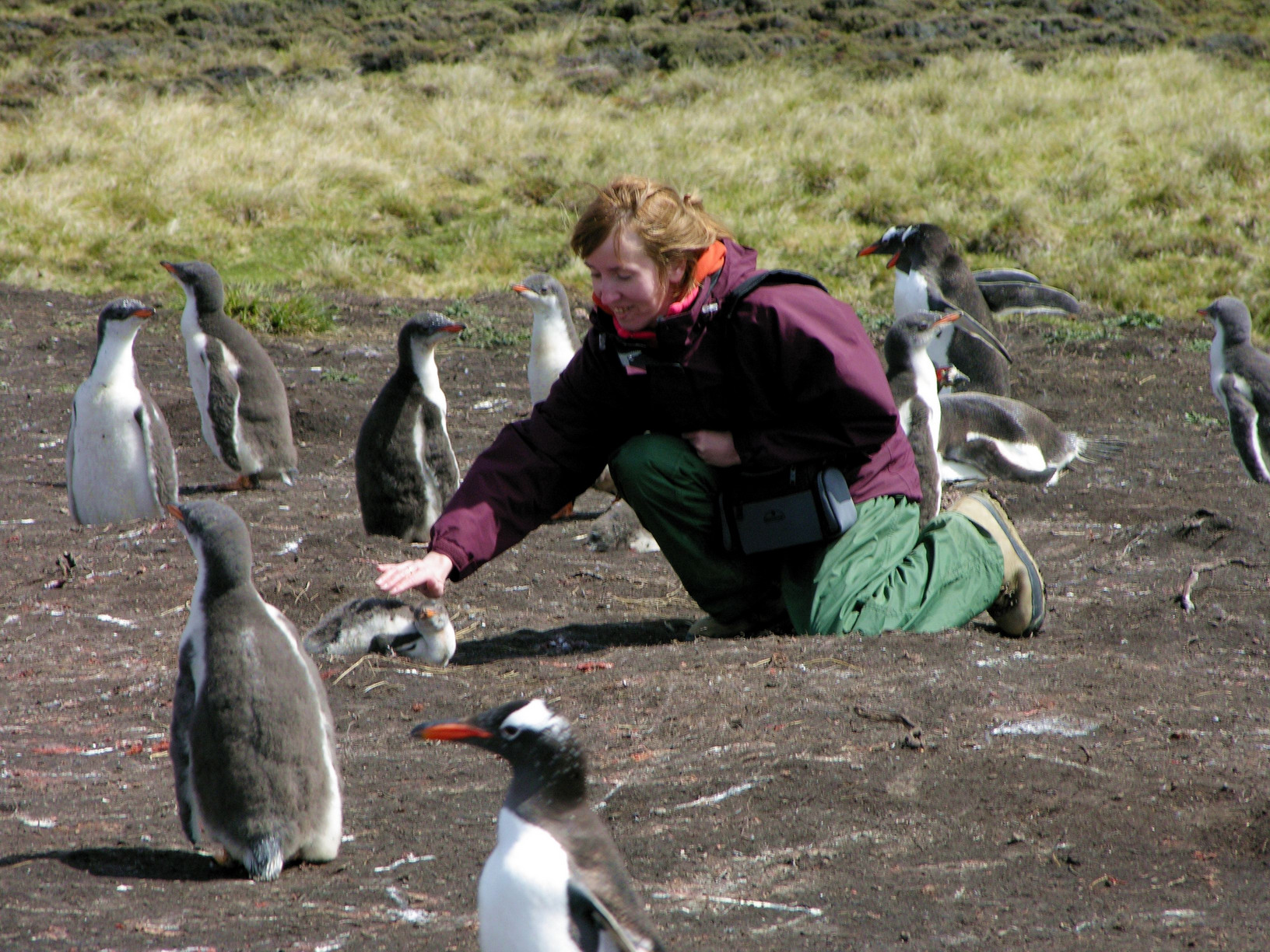
We spent three whole hours crawling among the penguins, trying to win their trust and get as close to them as we could. It isn't hard to do. As long as you don't hurry they pay no attention to people. You can photograph them from only ten centimetres away.
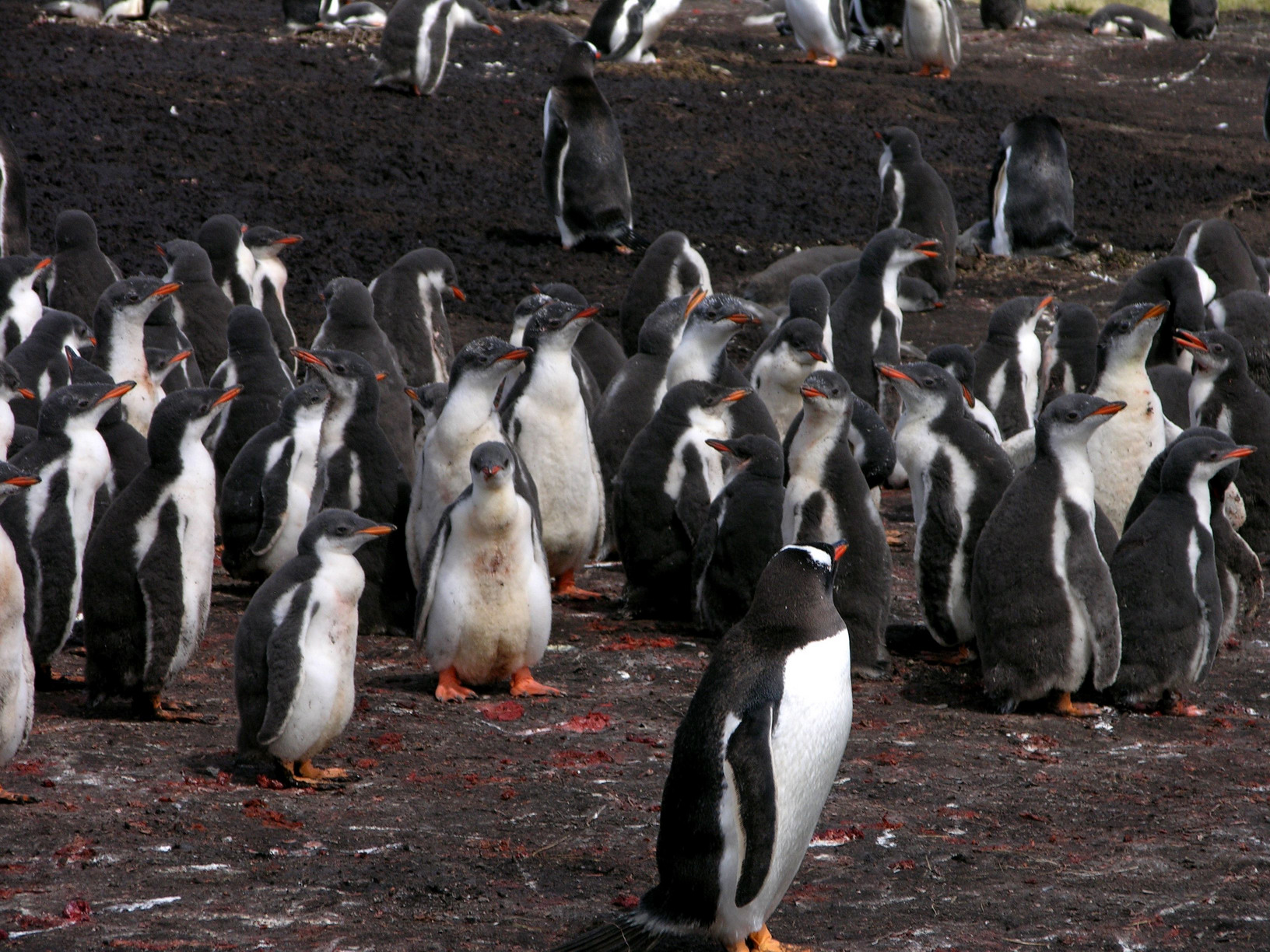
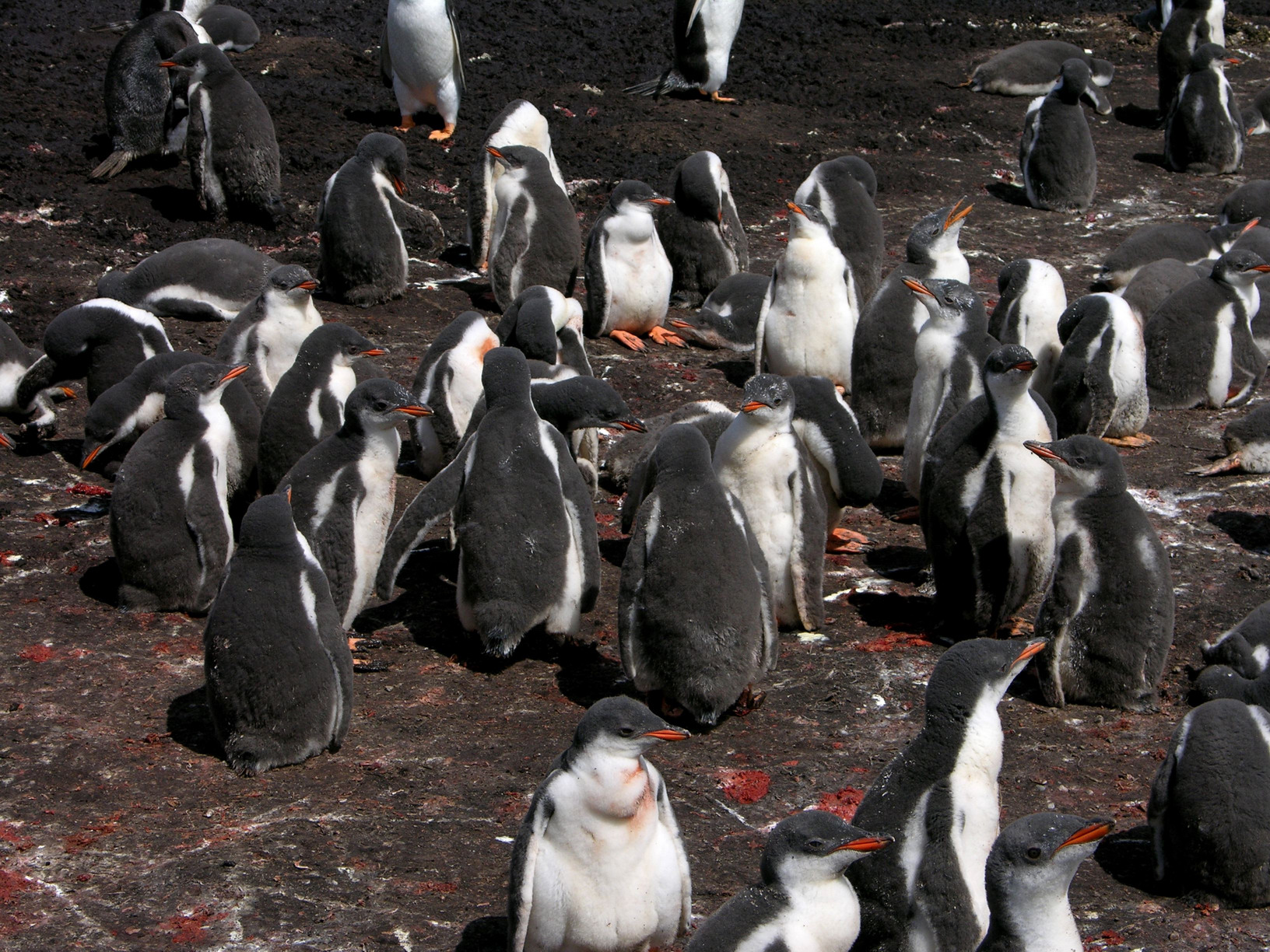
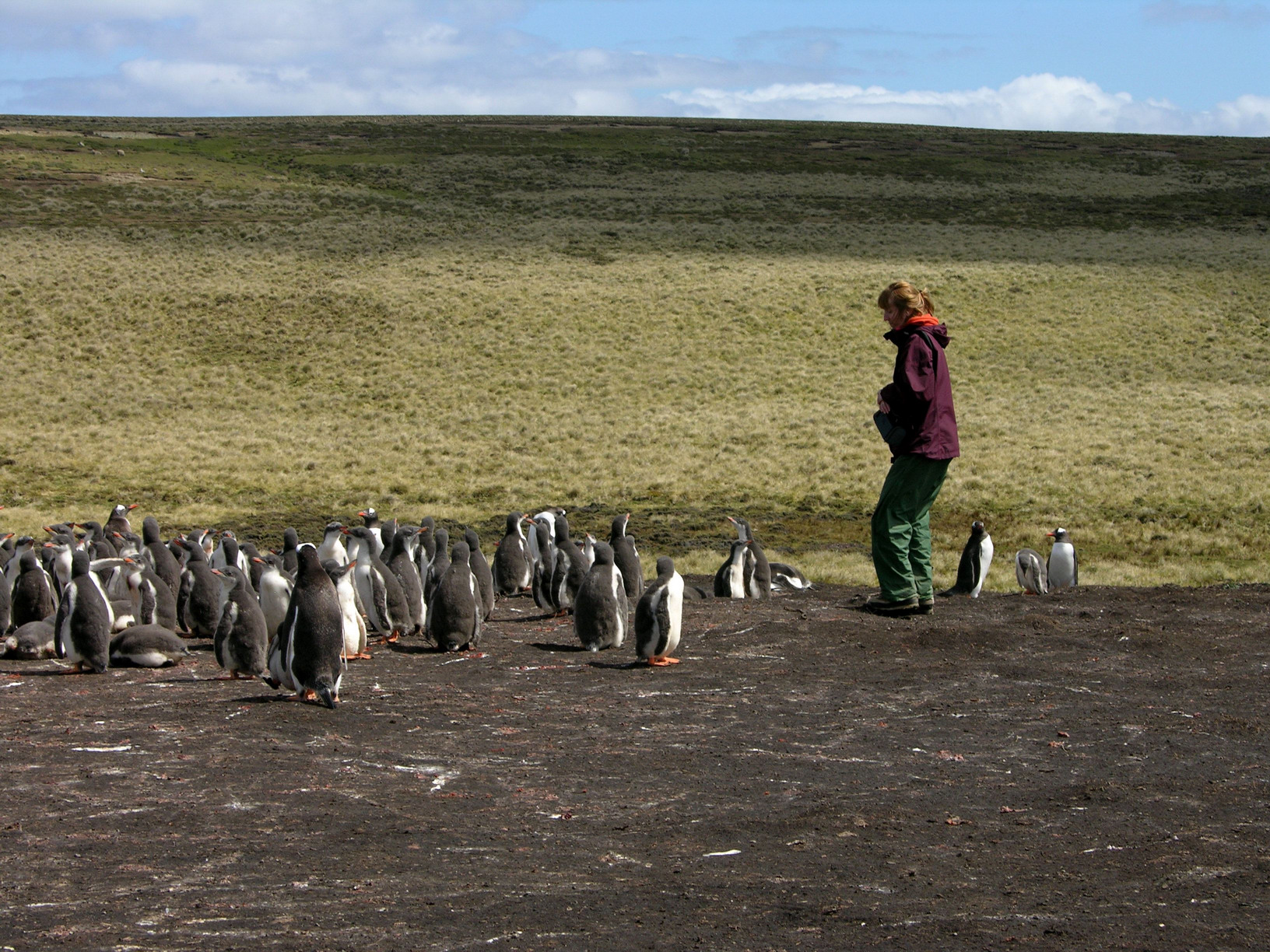
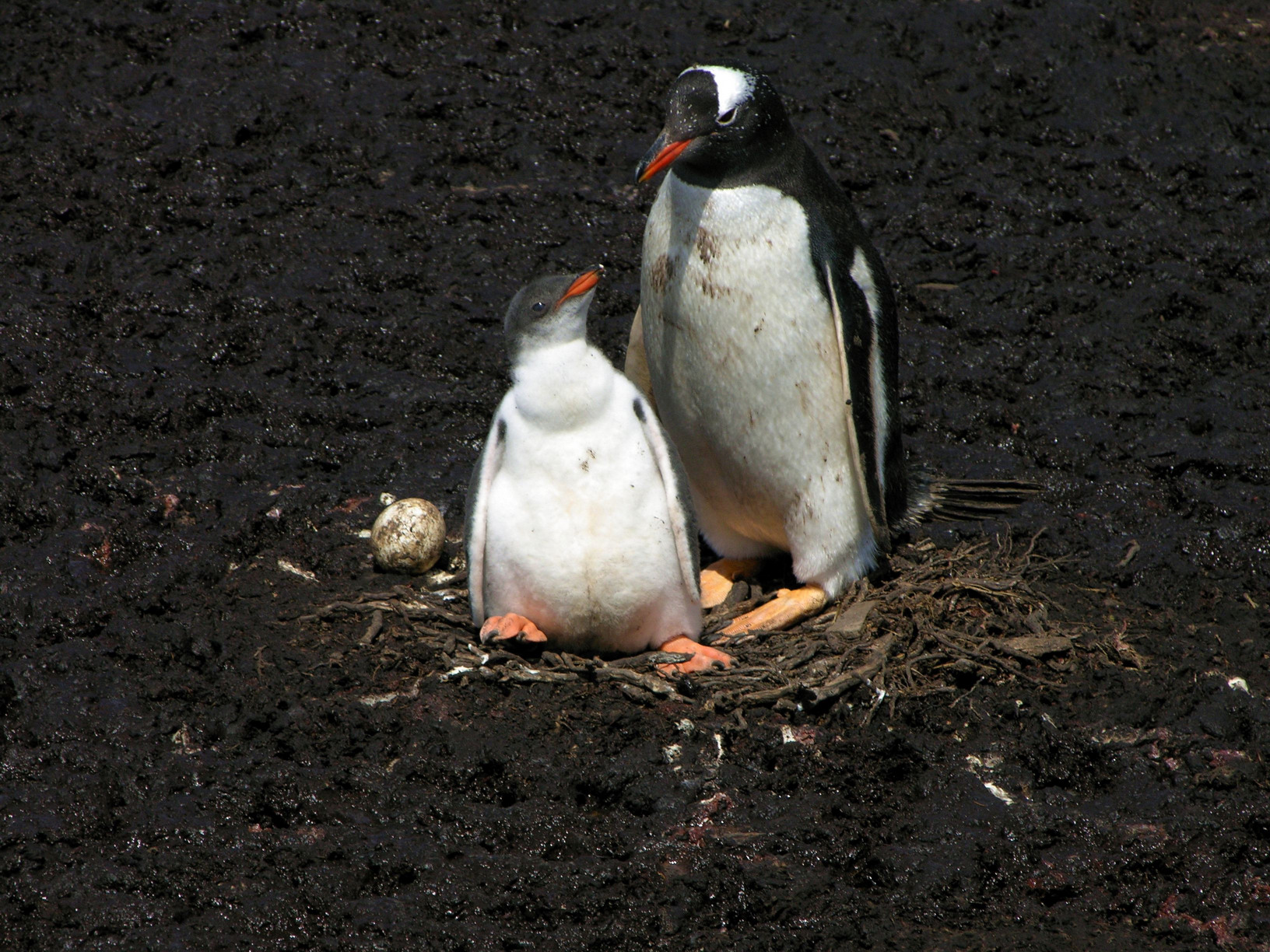
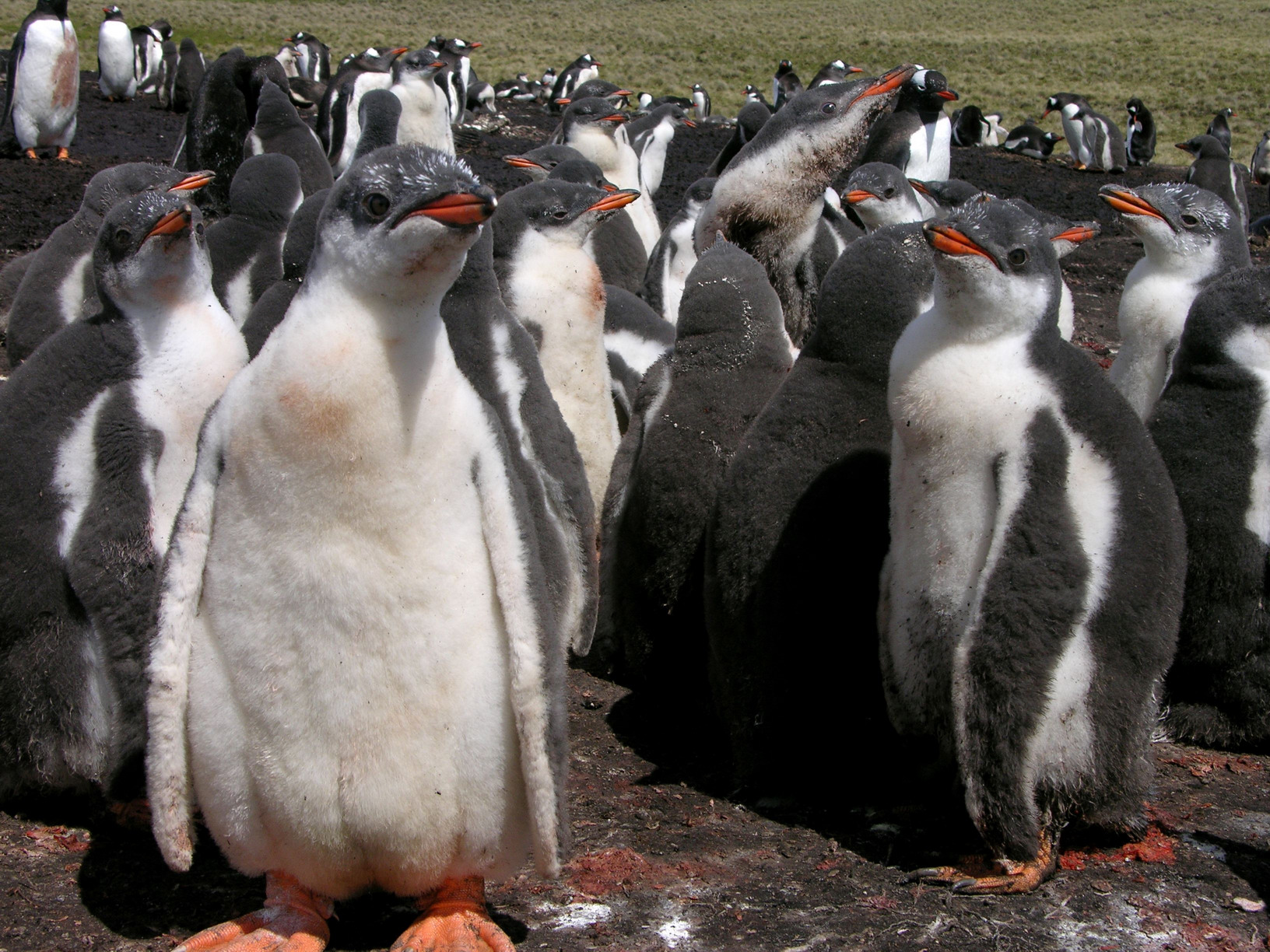
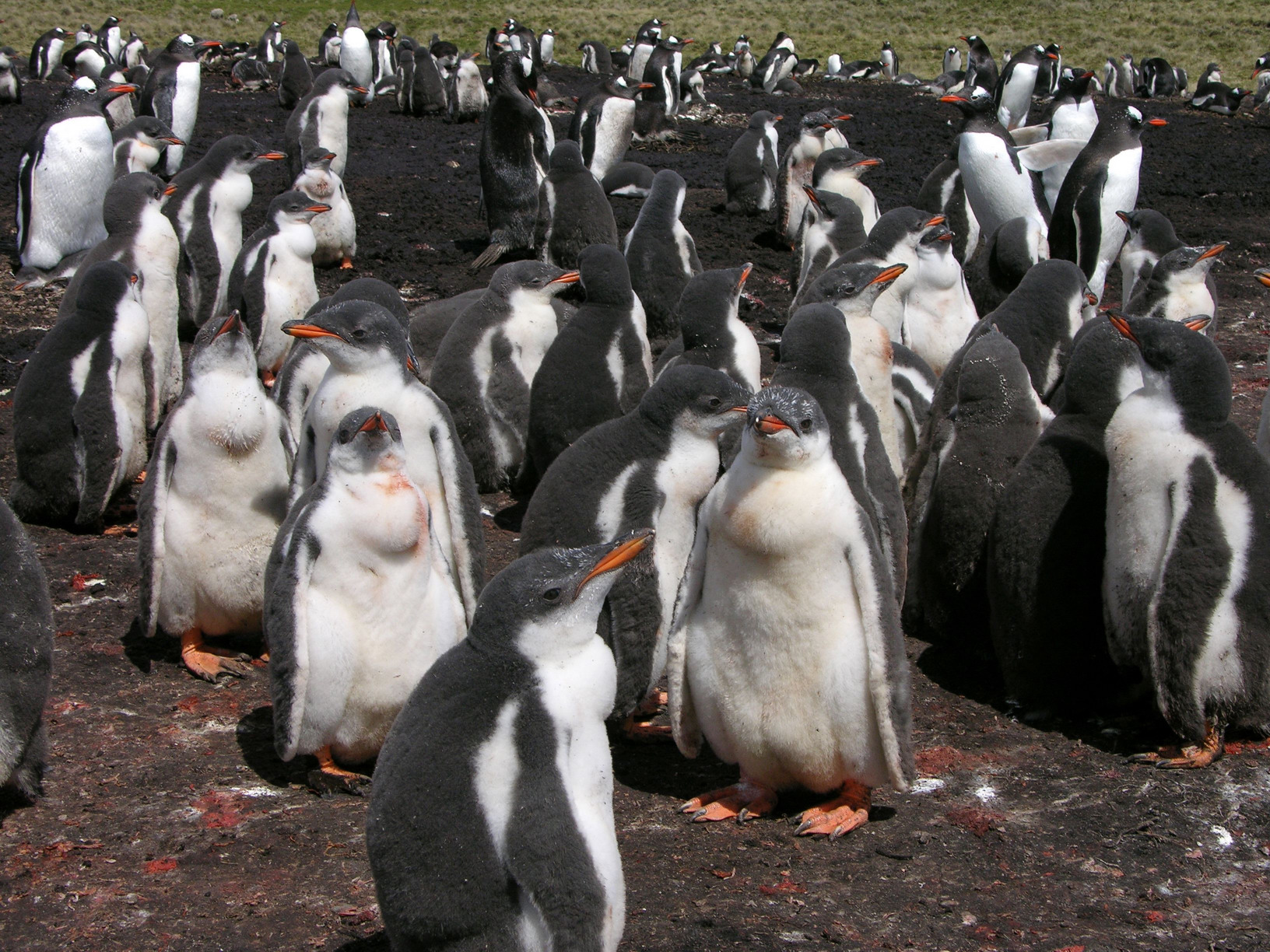
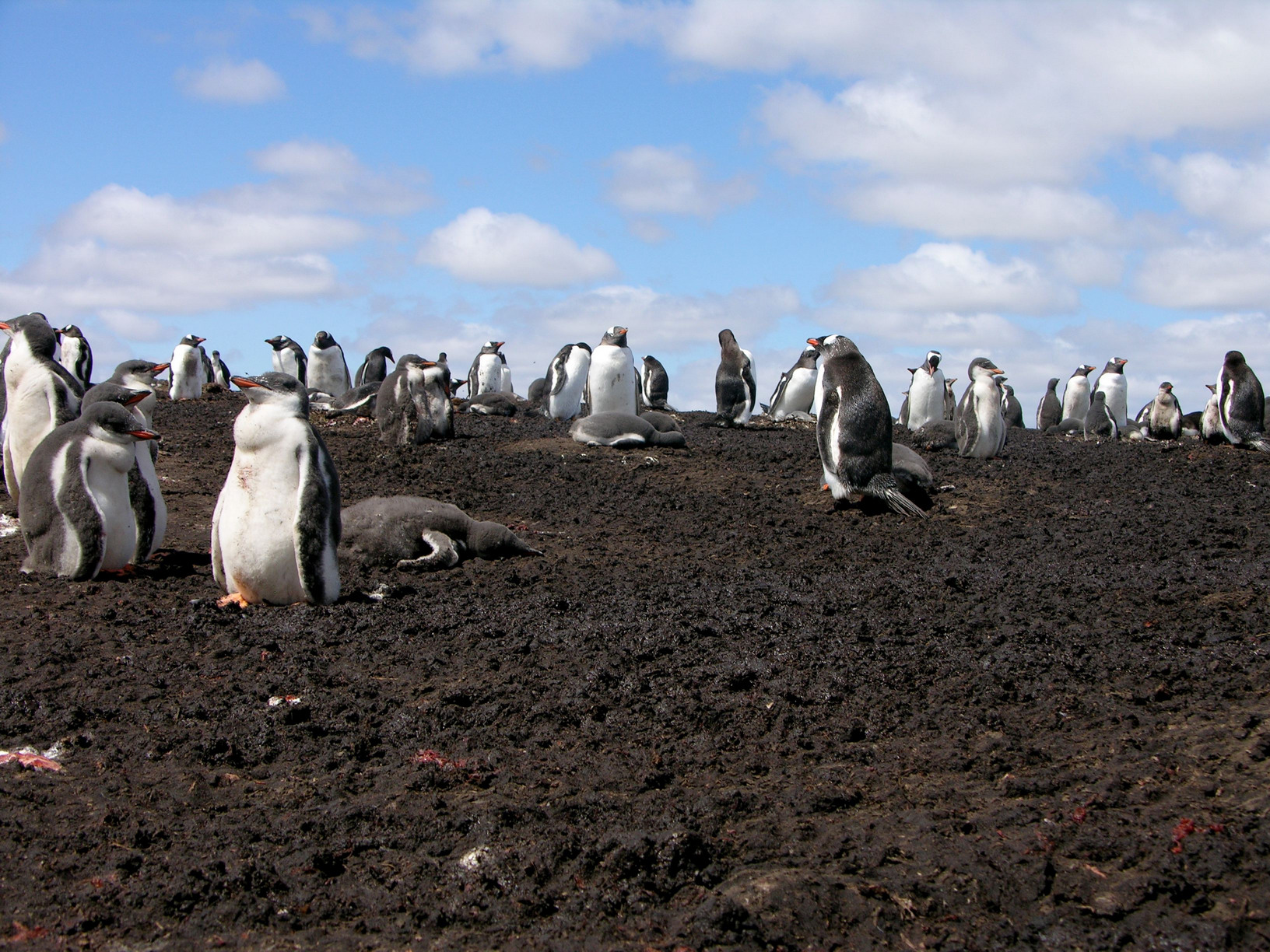
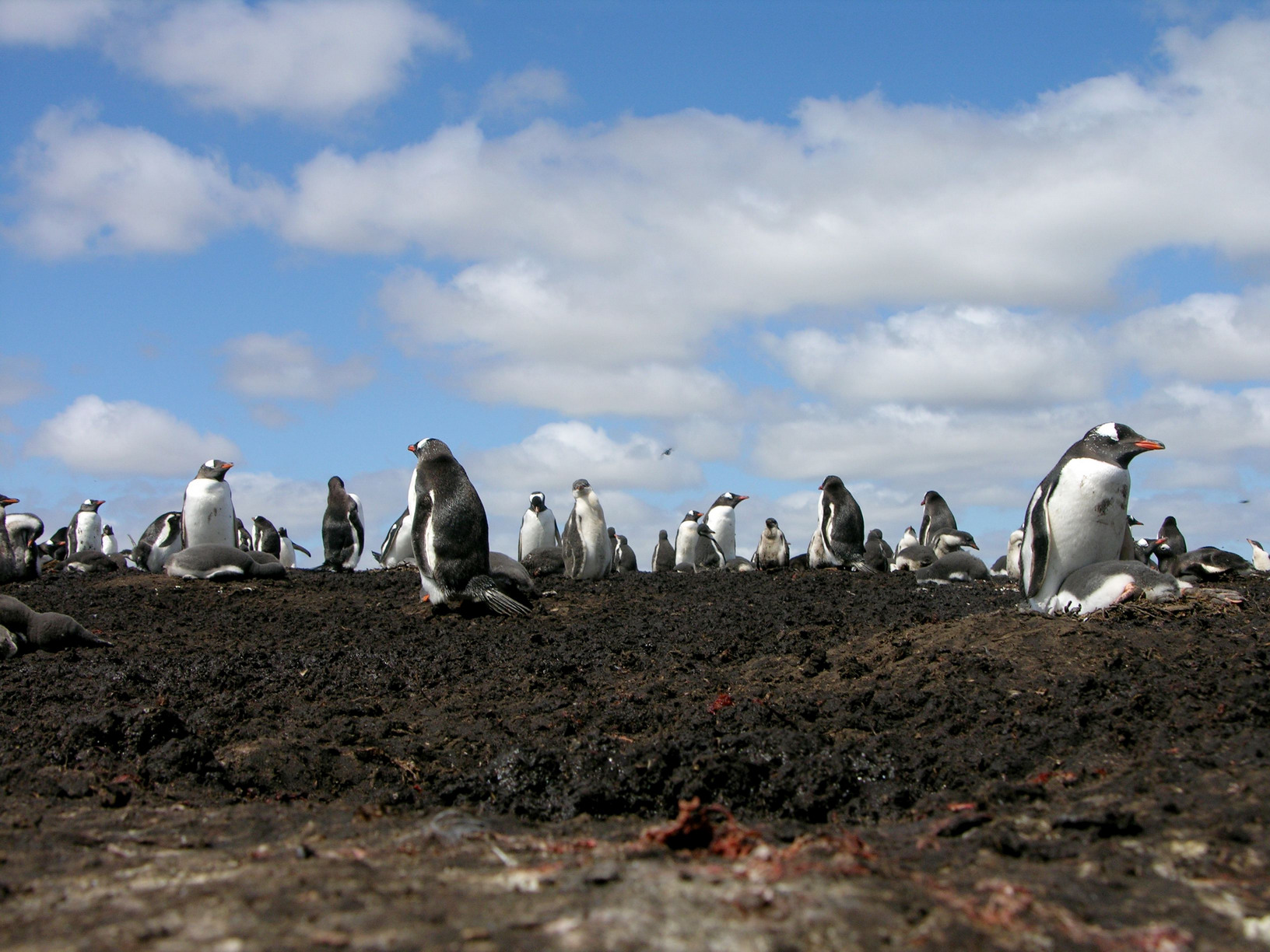
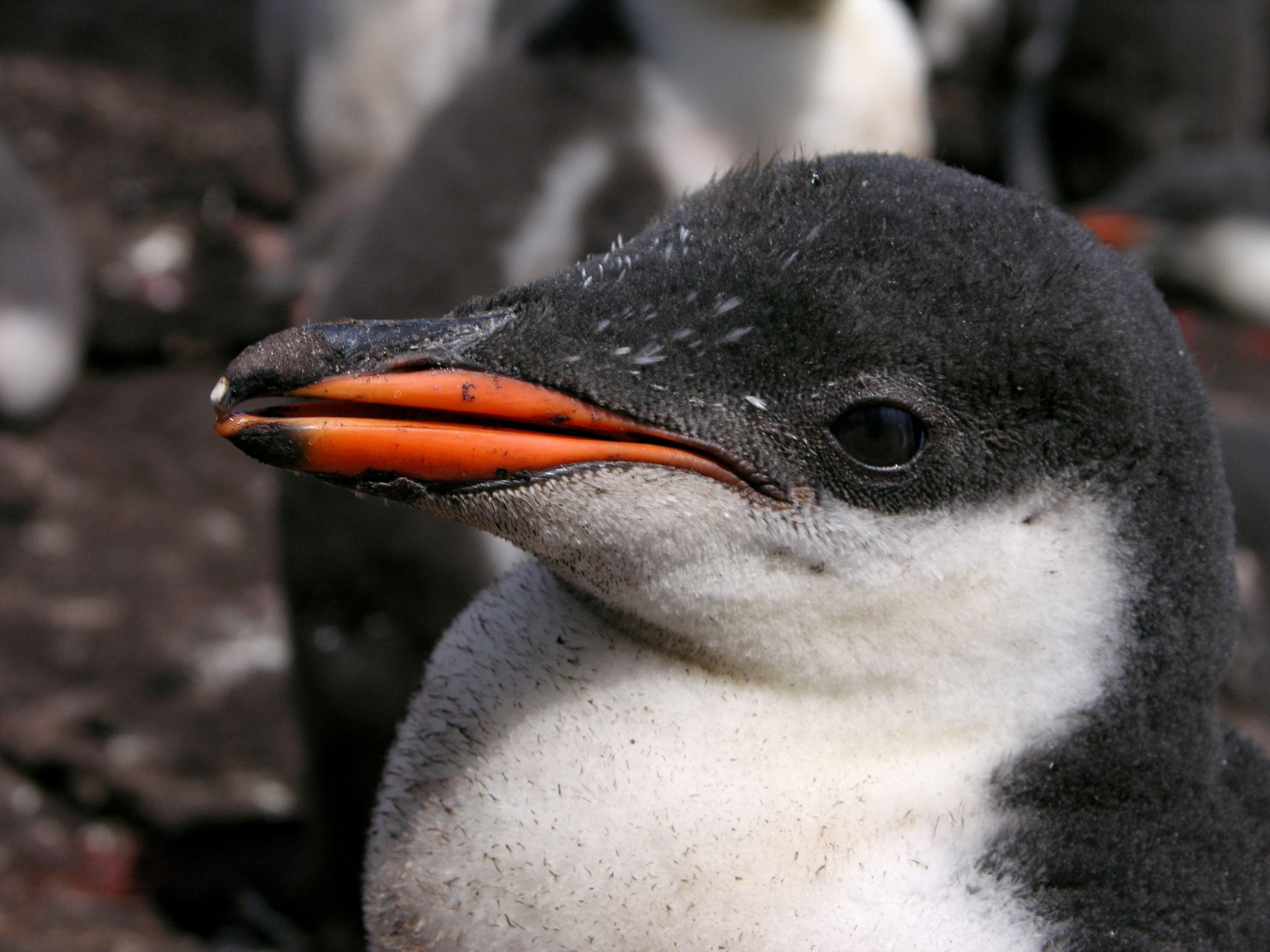
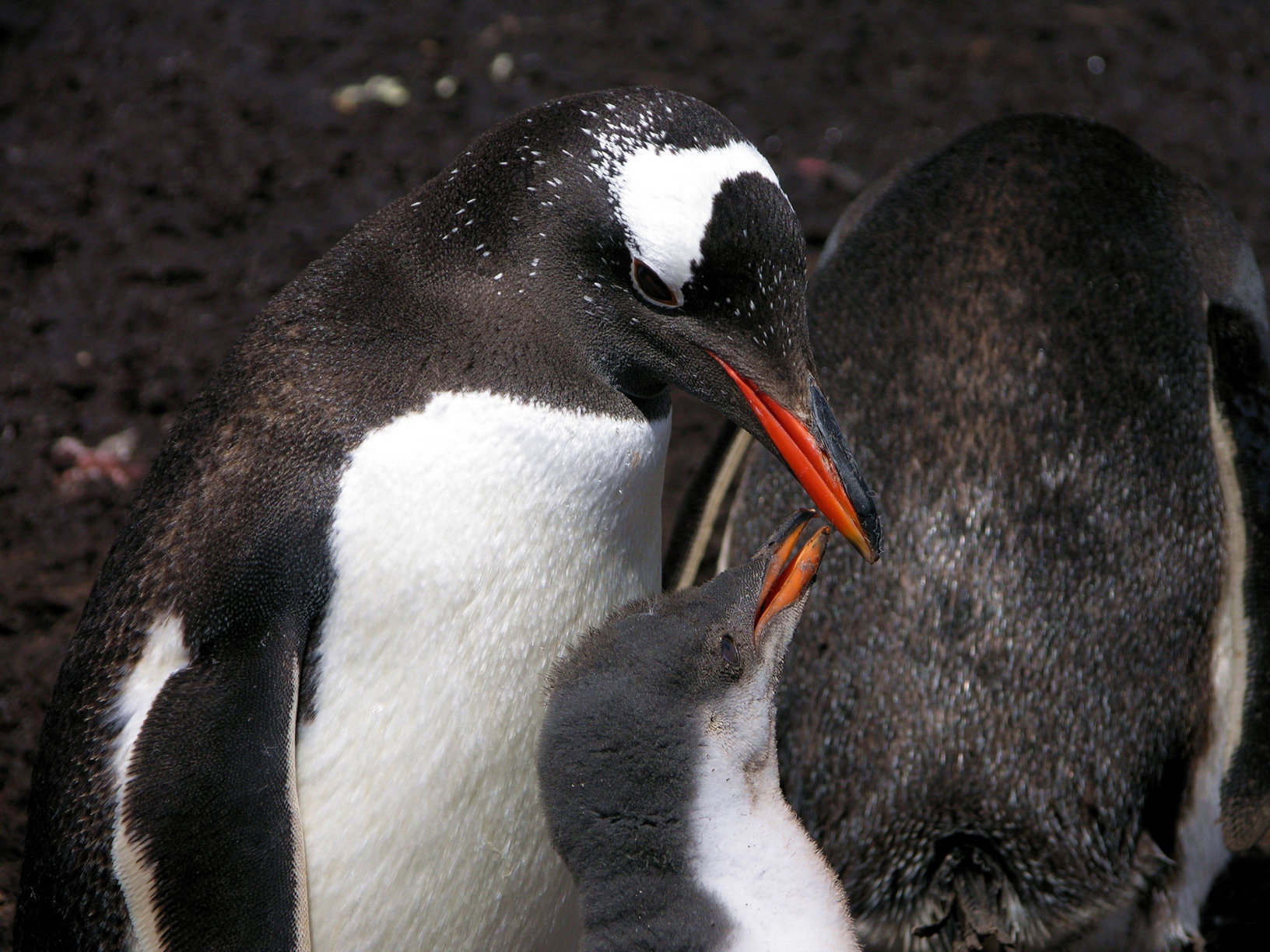
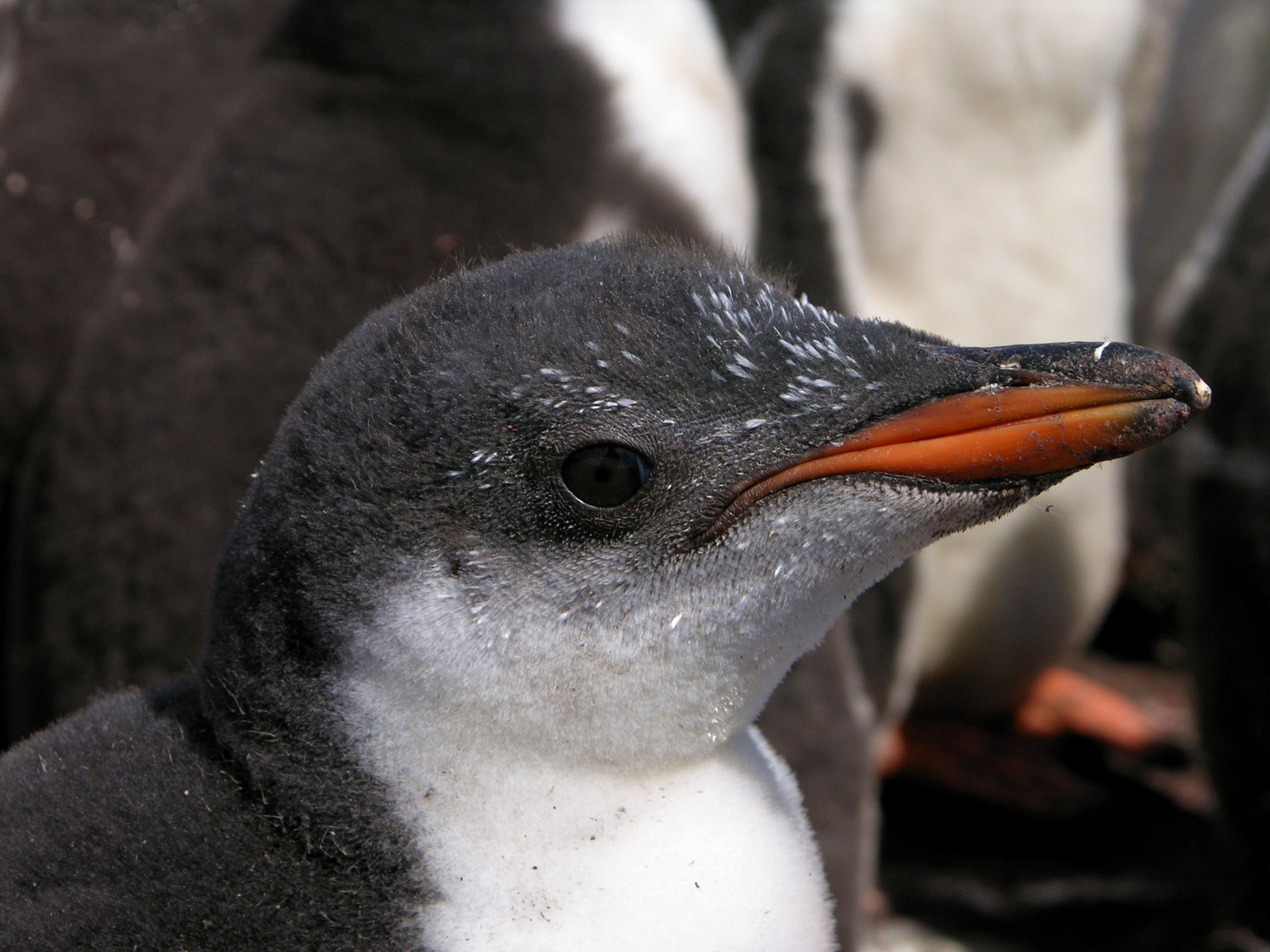
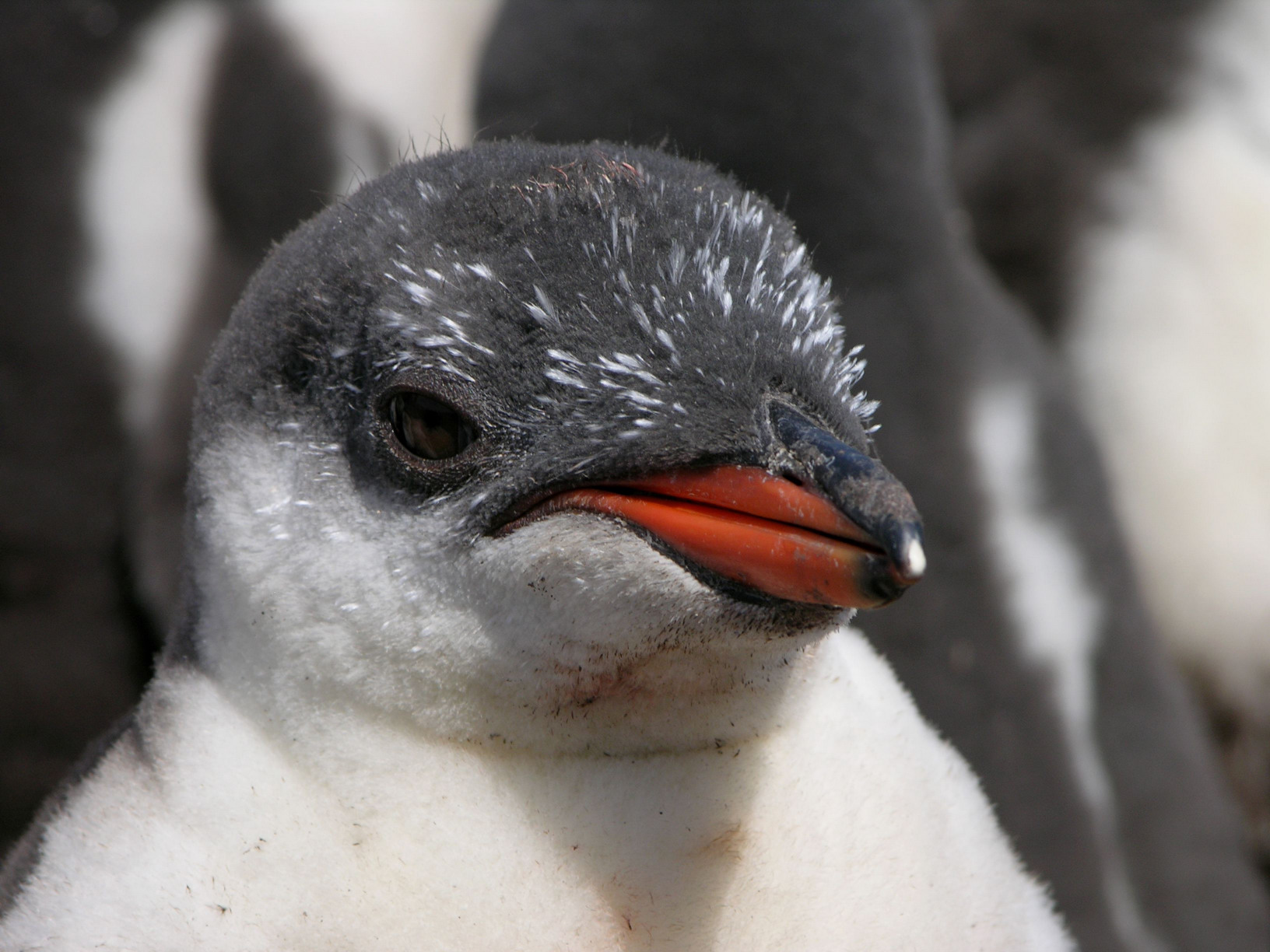
The colony is mostly chicks. The adults are fishing at sea. Newly hatched chicks hide under their mother. She can save them from skuas, albatrosses and scavengers, which circle the colony by the dozen. A slightly older chick can wait for its mother on its own. Once it's put on weight, mostly fat, it gets as springy as a rubber ball. We watched a snowy sheathbill trying to peck one to death. The chick hid its head between its feet. The bird kept pecking, but its beak bounced off without doing any good.
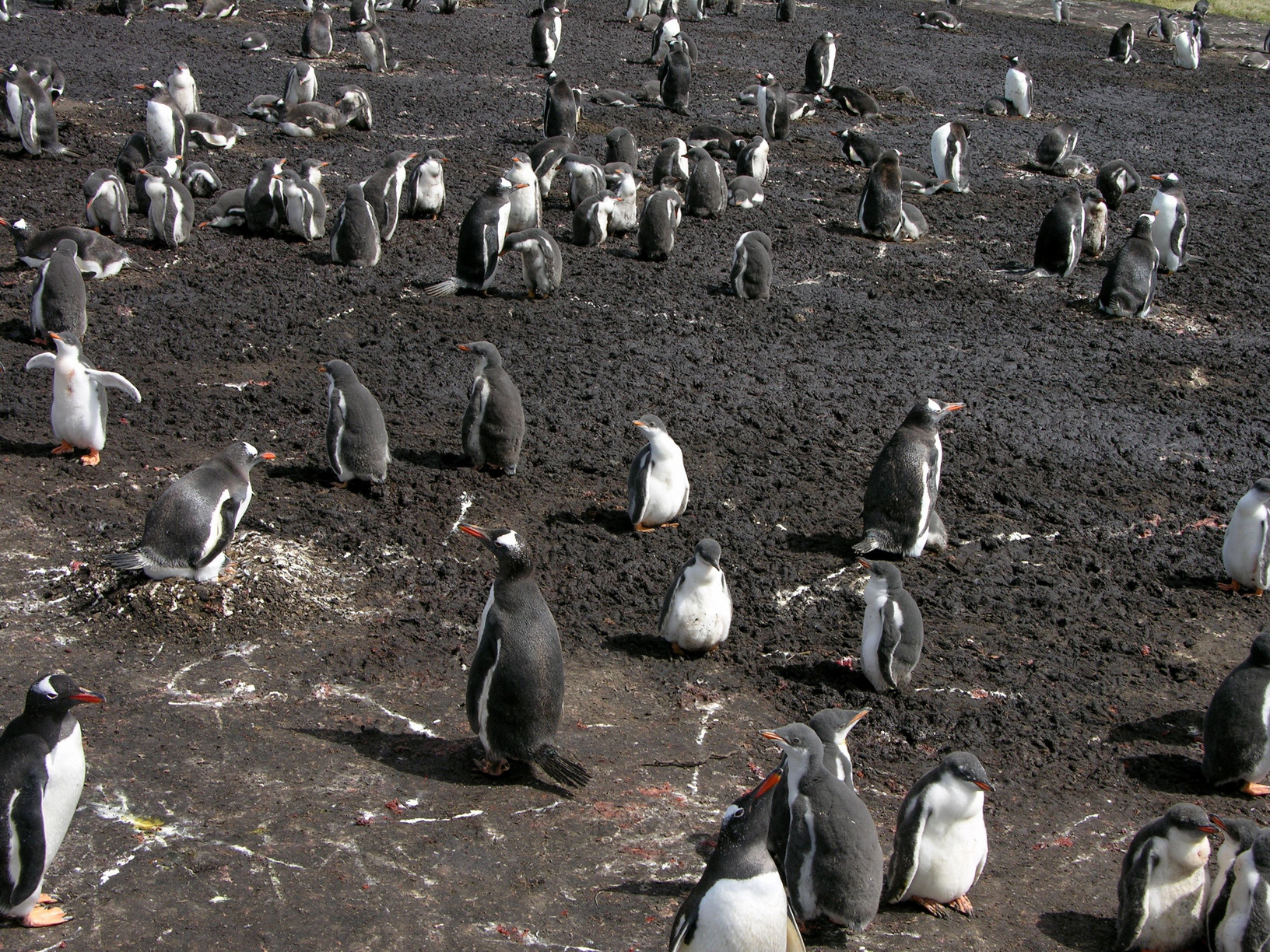
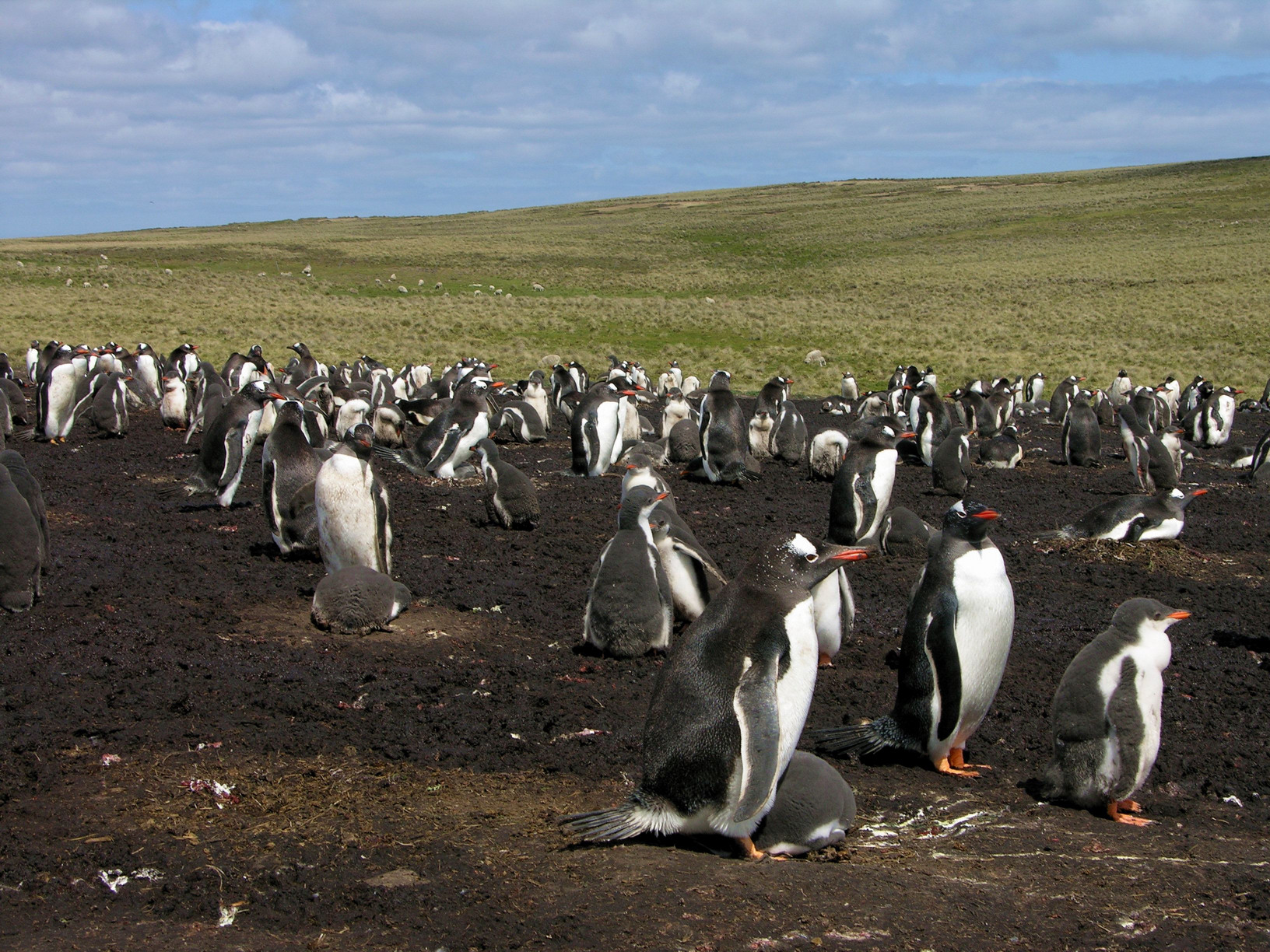
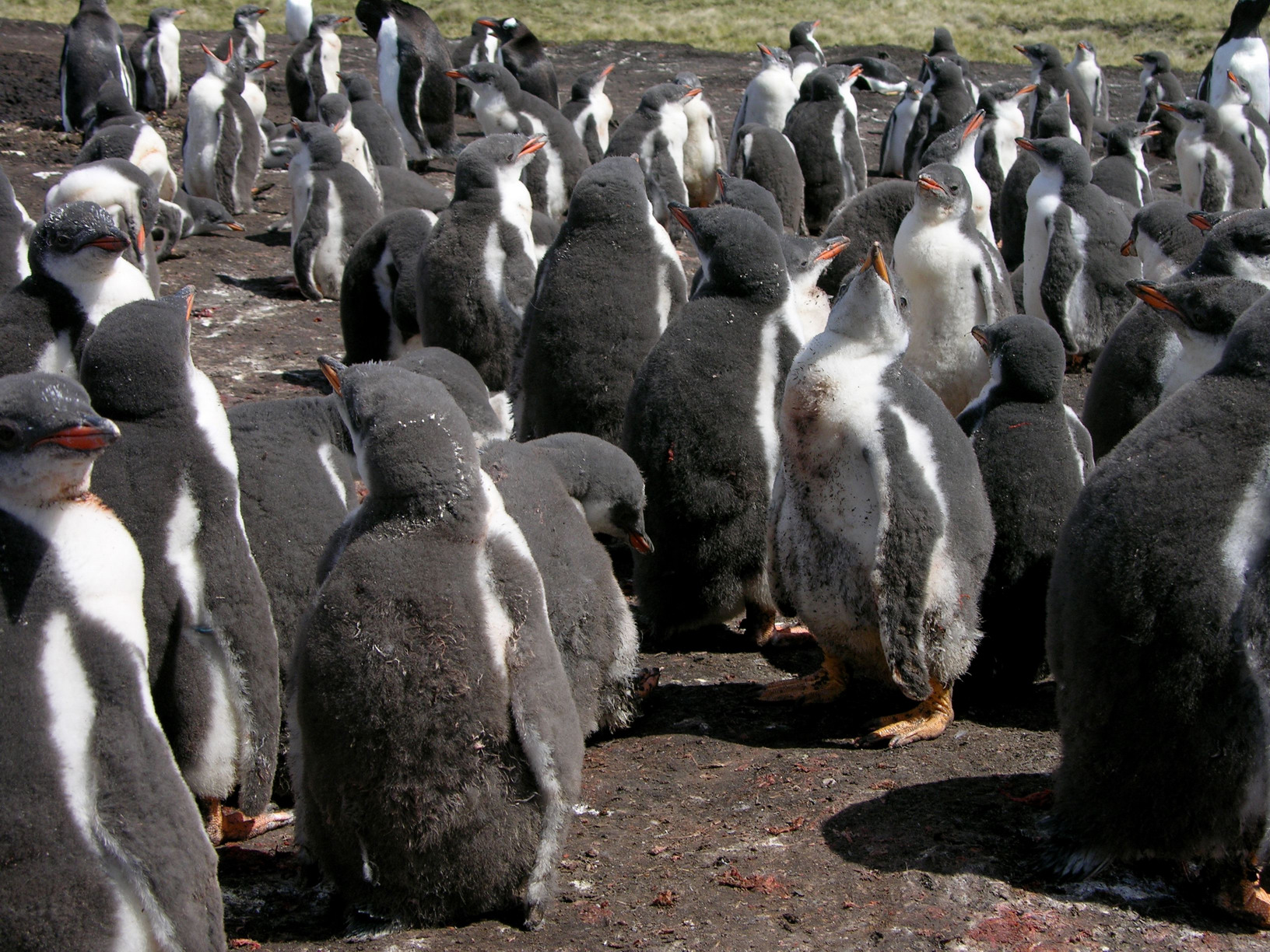
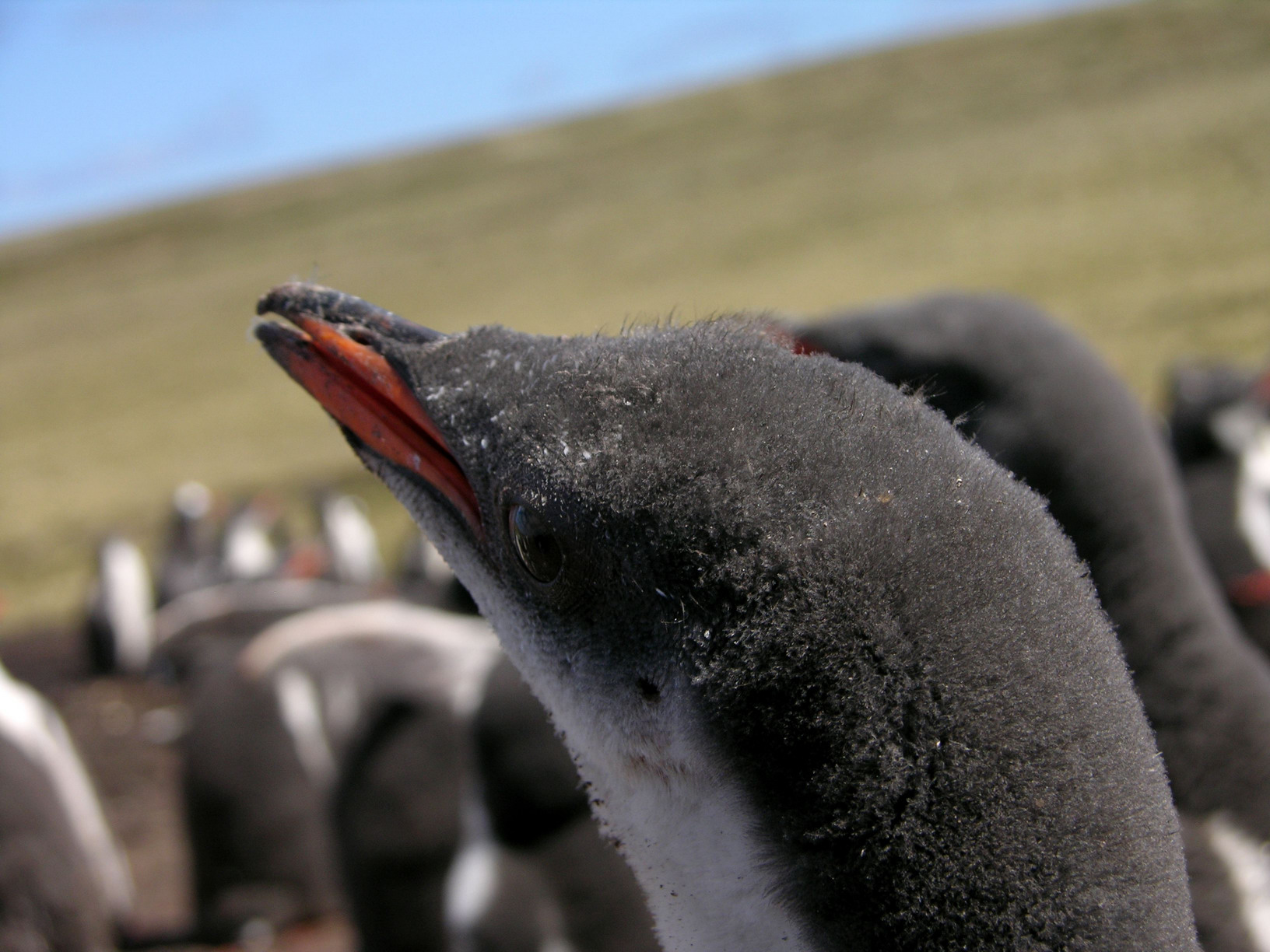
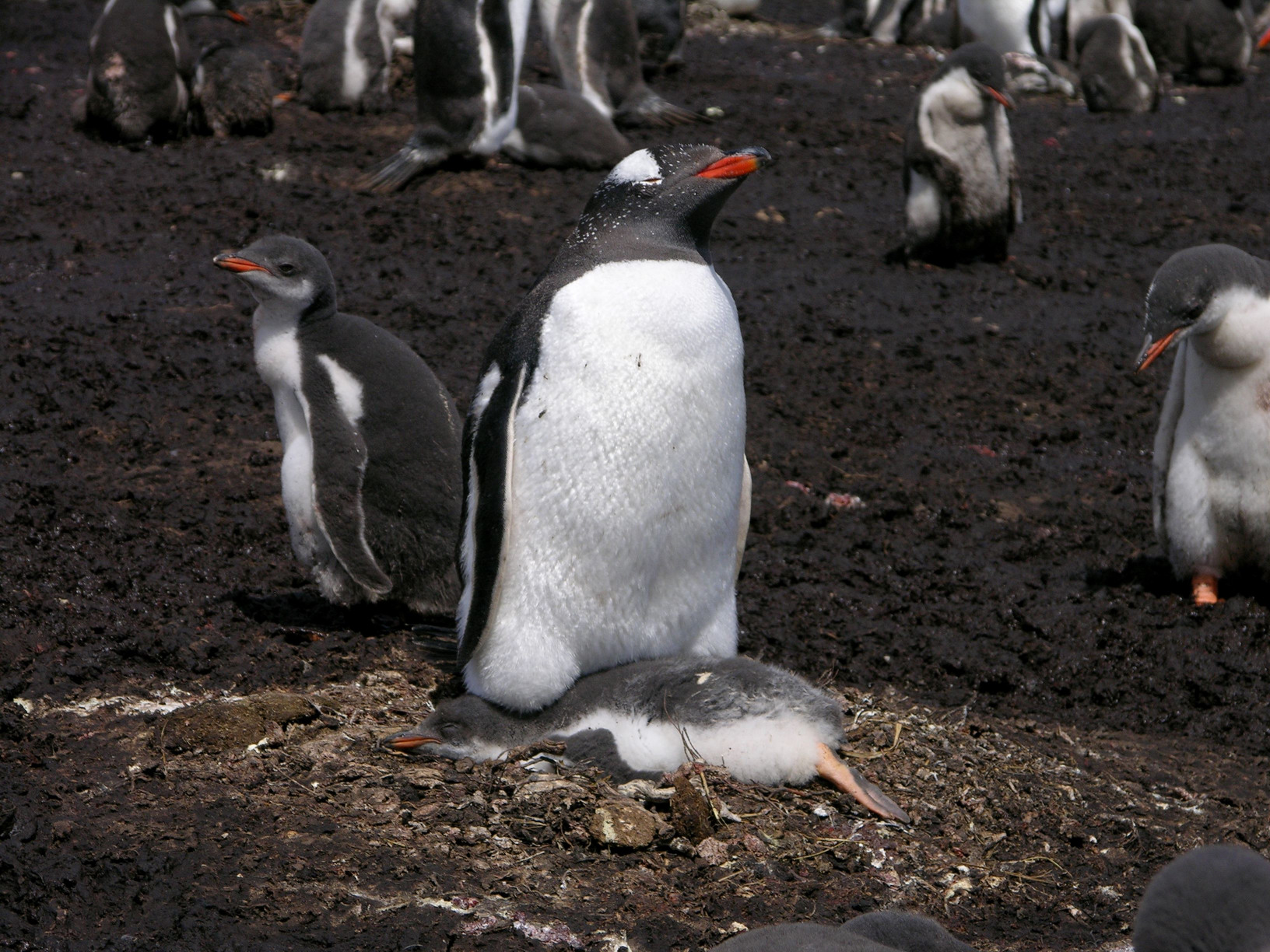
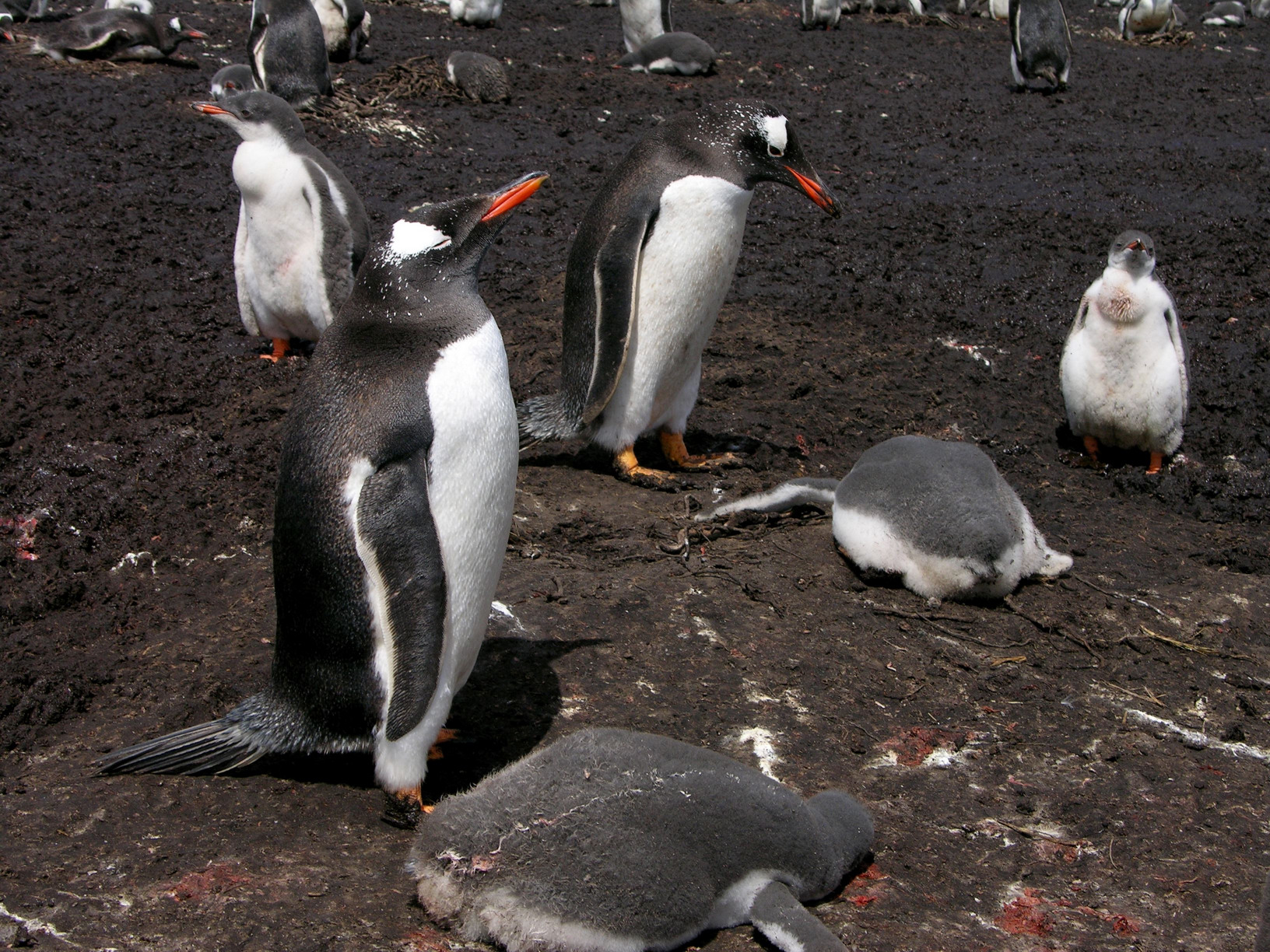
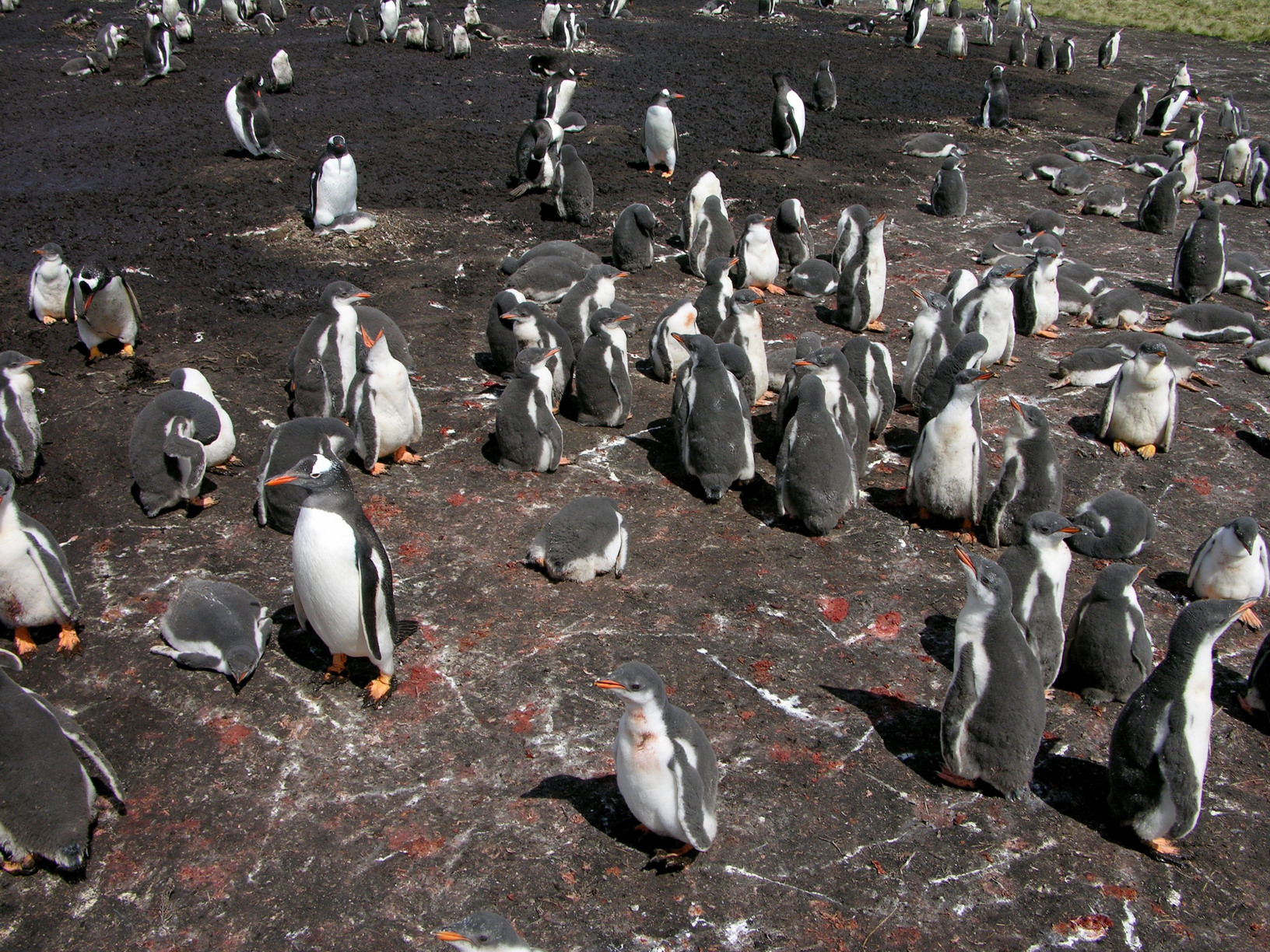
The gentoo chick is asleep most of the time, even when Mum brings some food. She gives it a nudge this way and another that way. It opens its eyes, stretches and goes back to sleep. You can even stroke it.
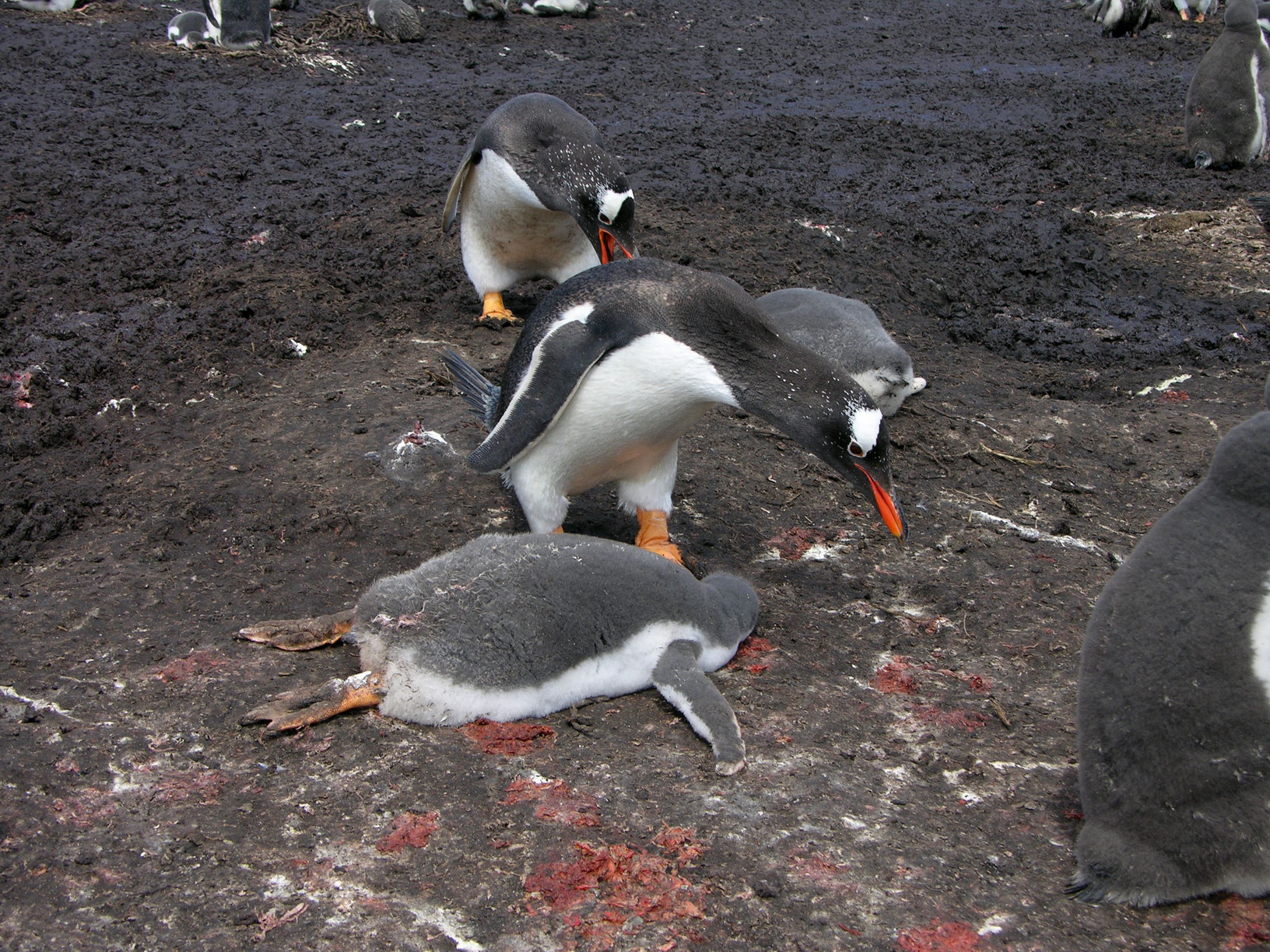
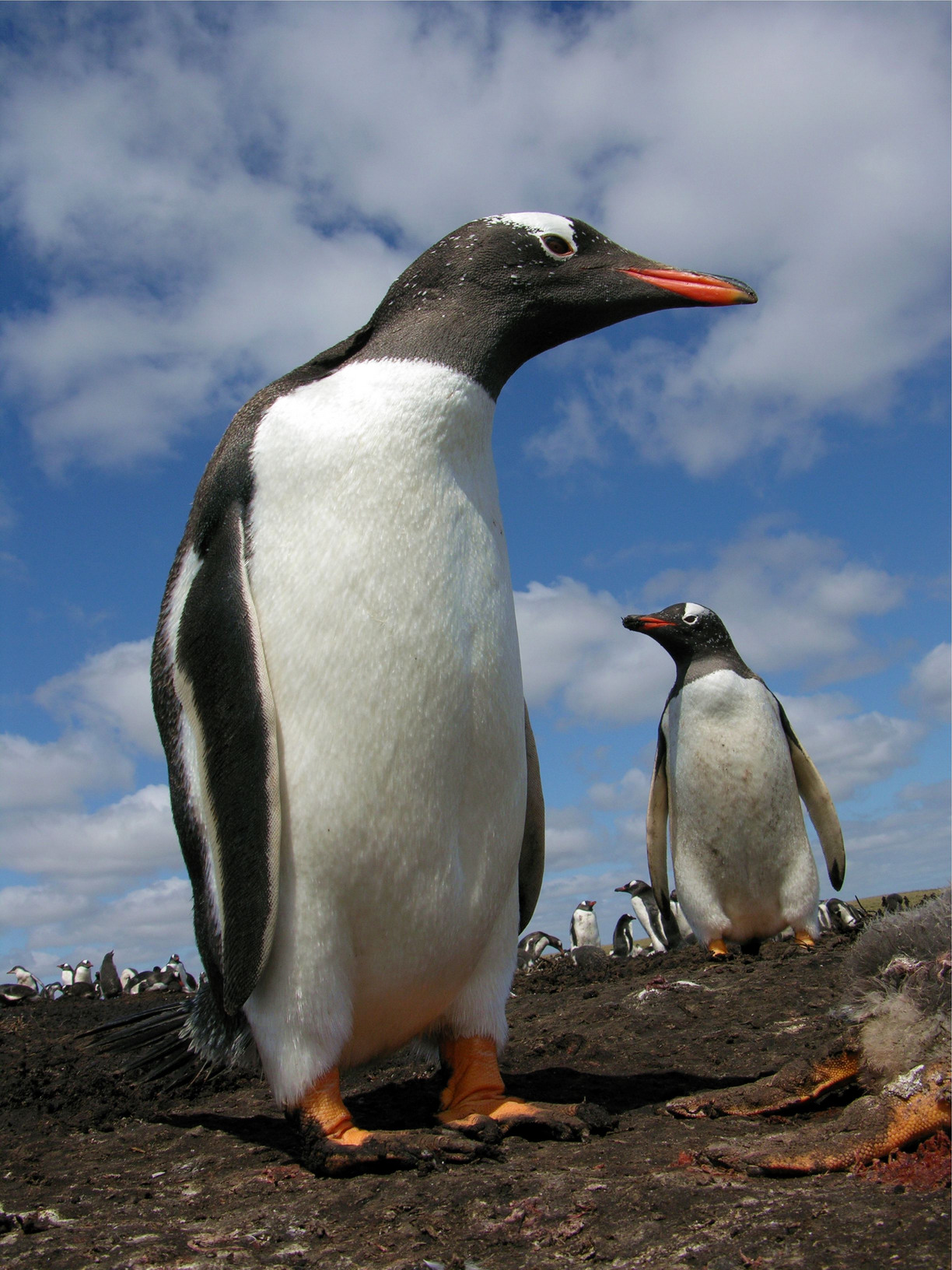
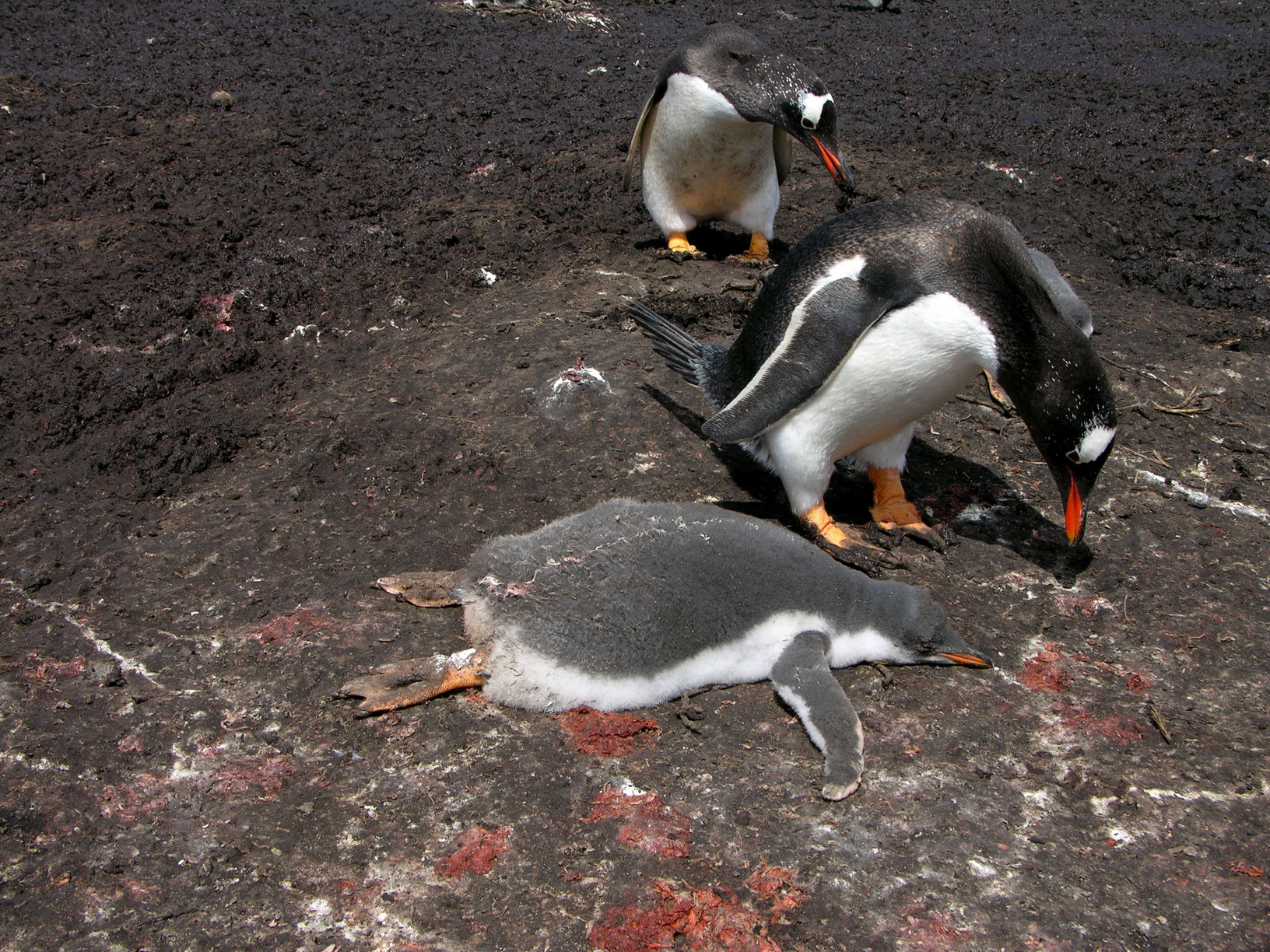
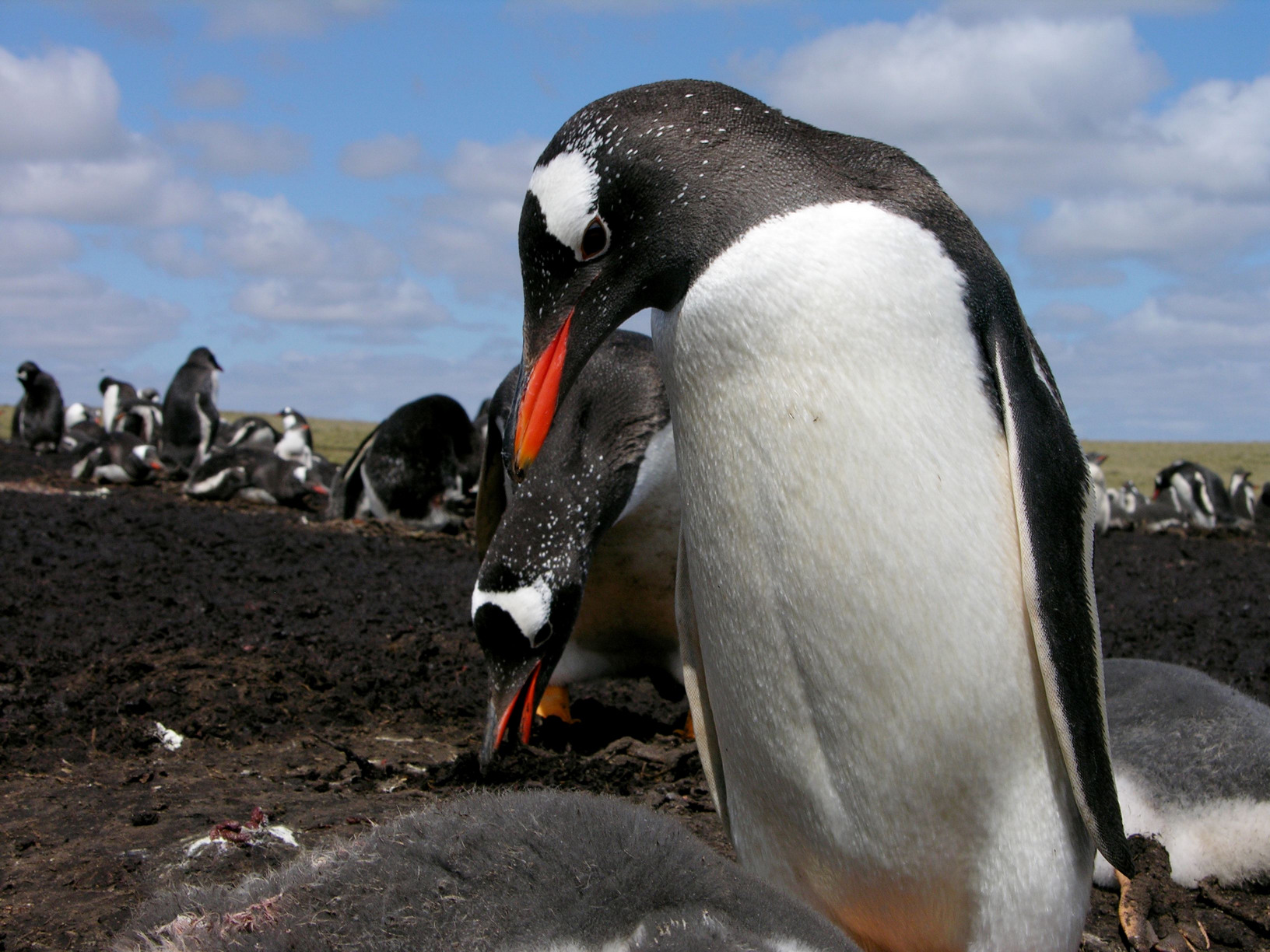
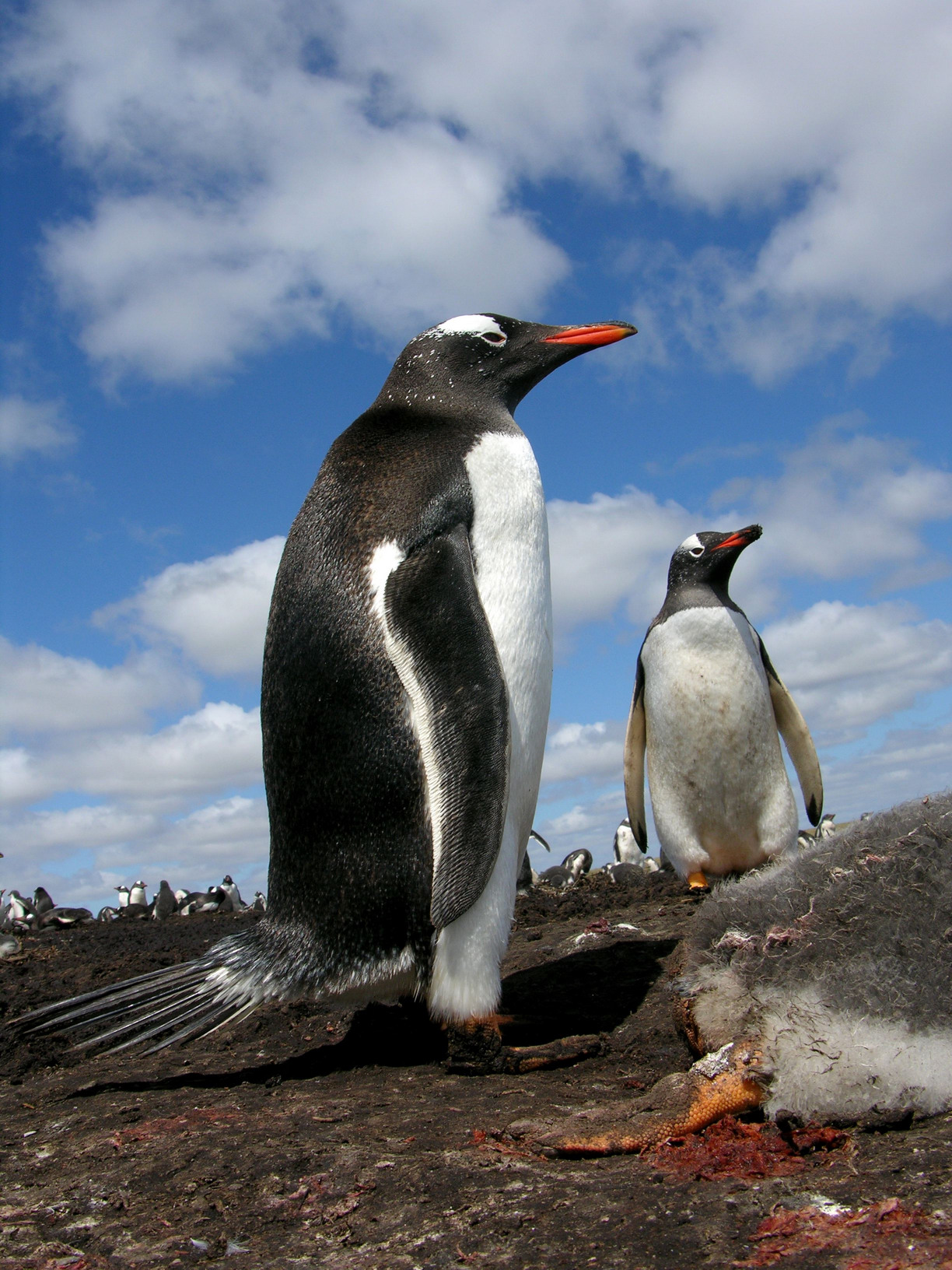
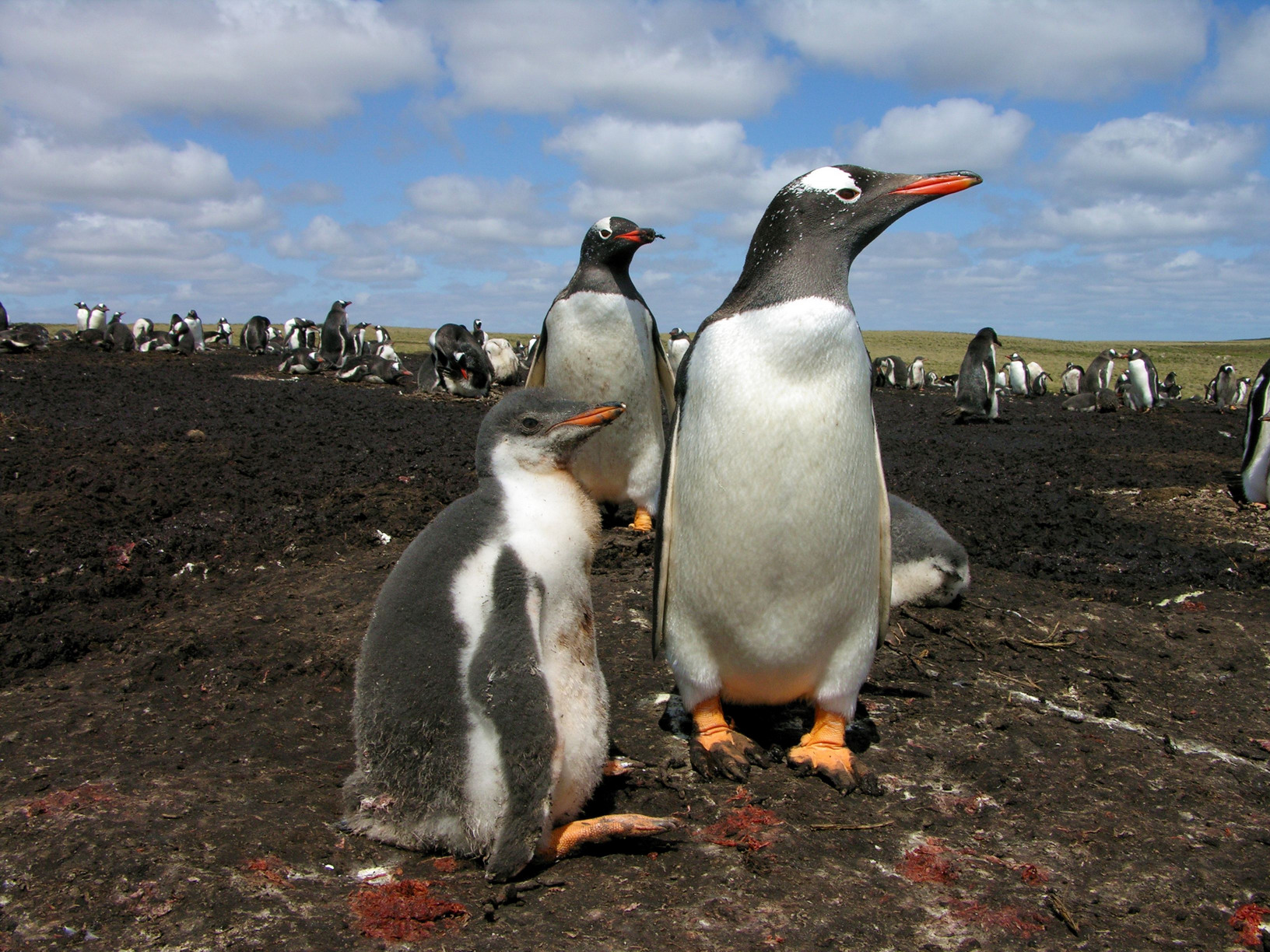
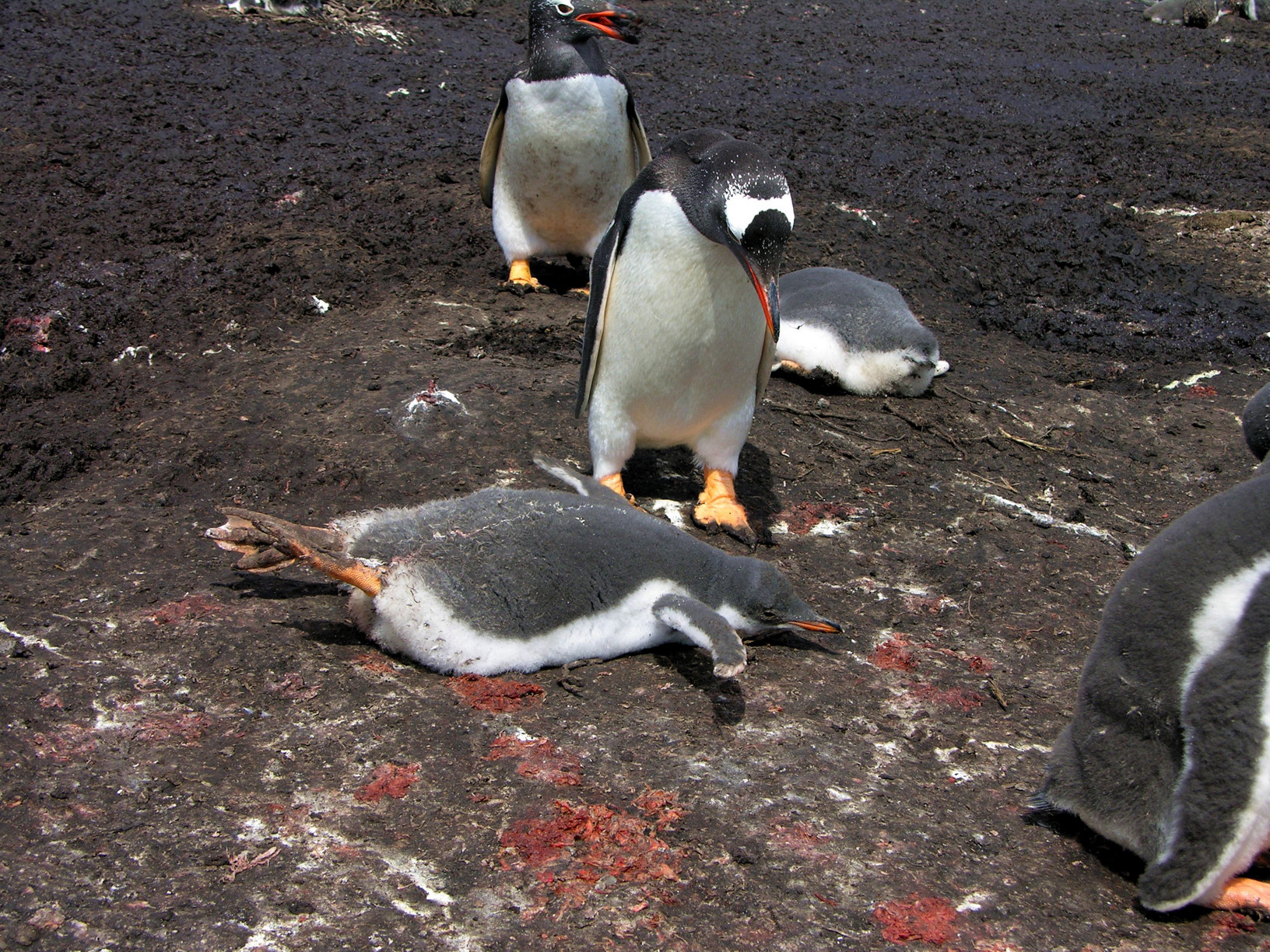
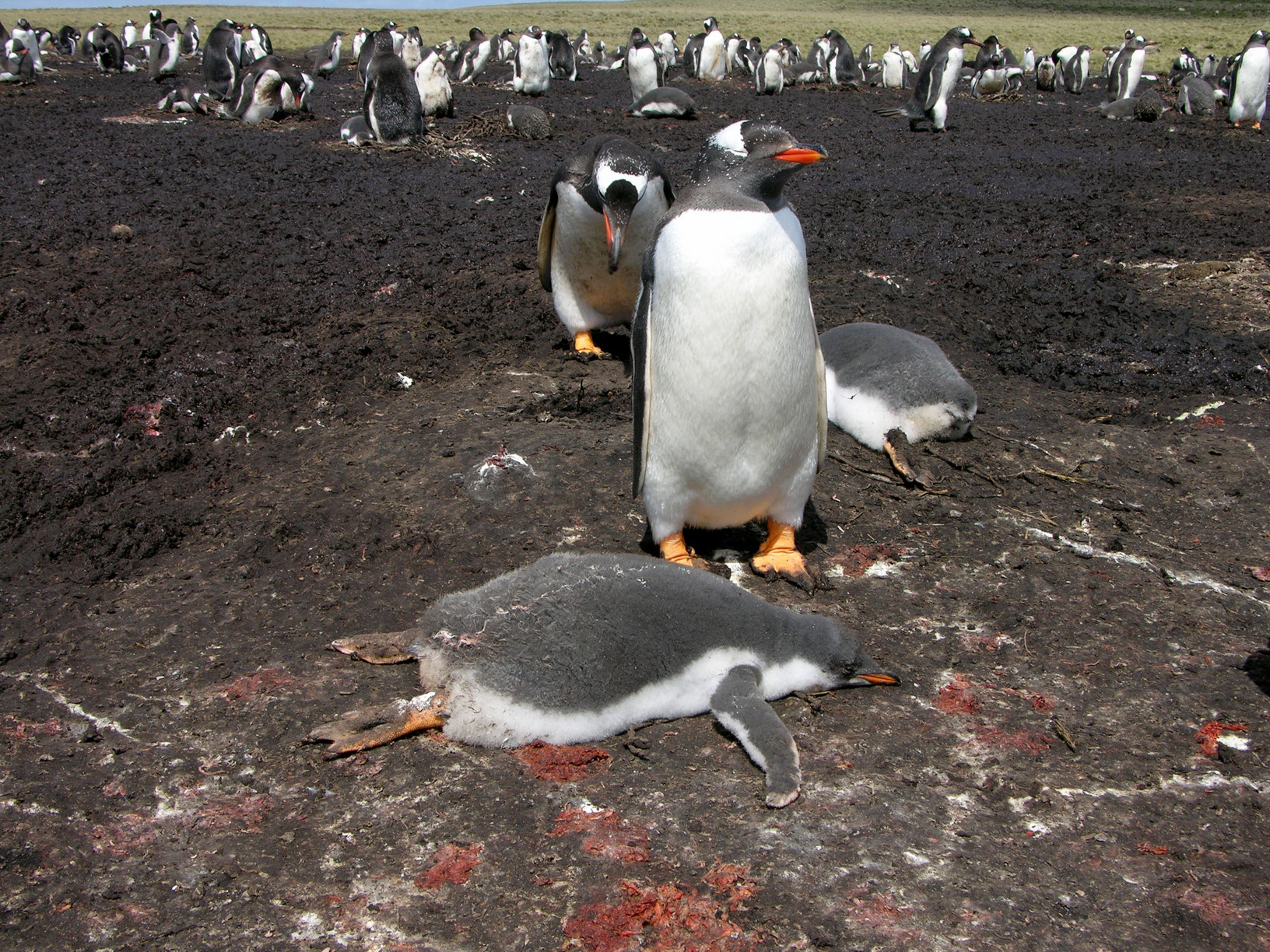
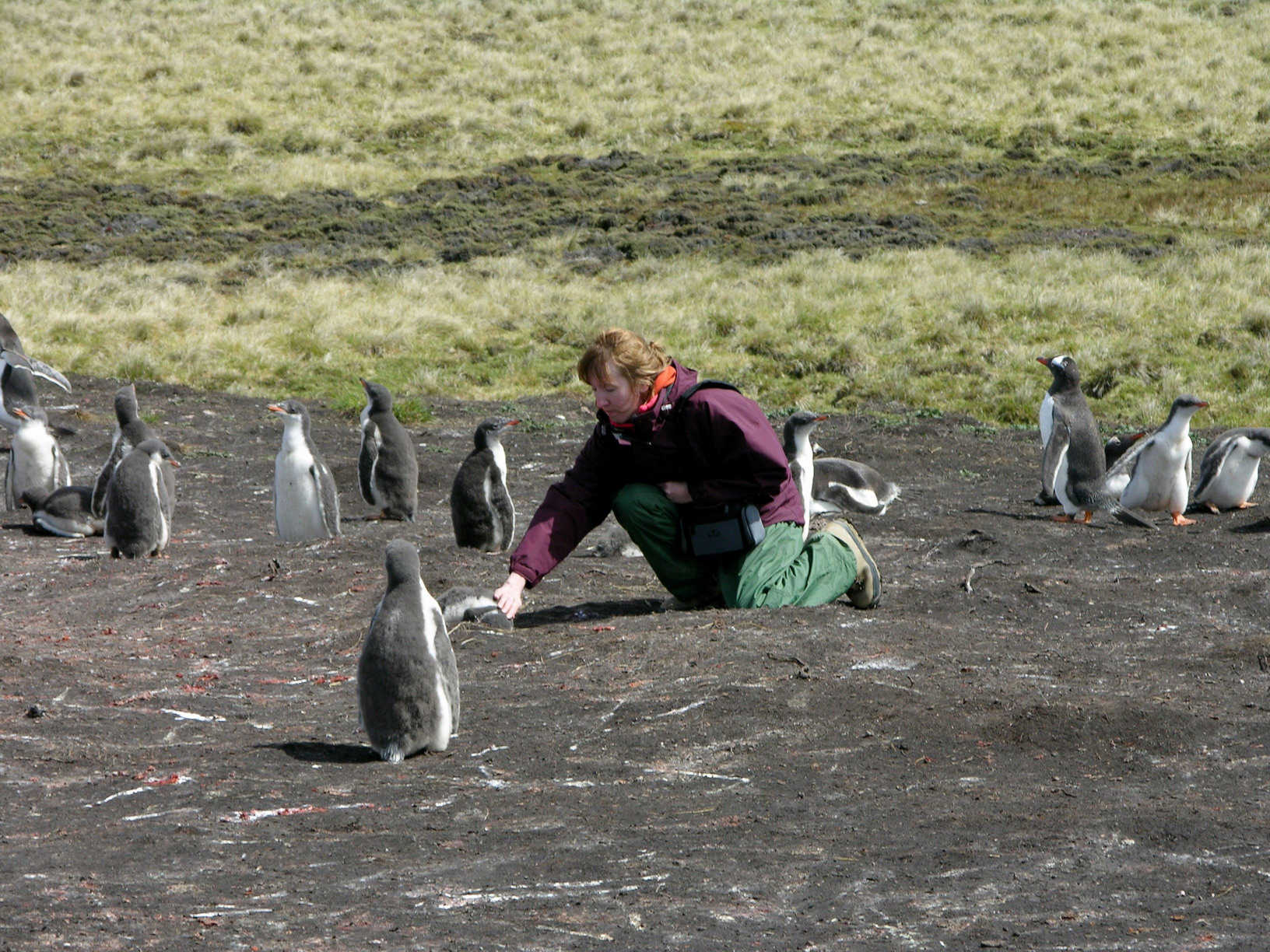
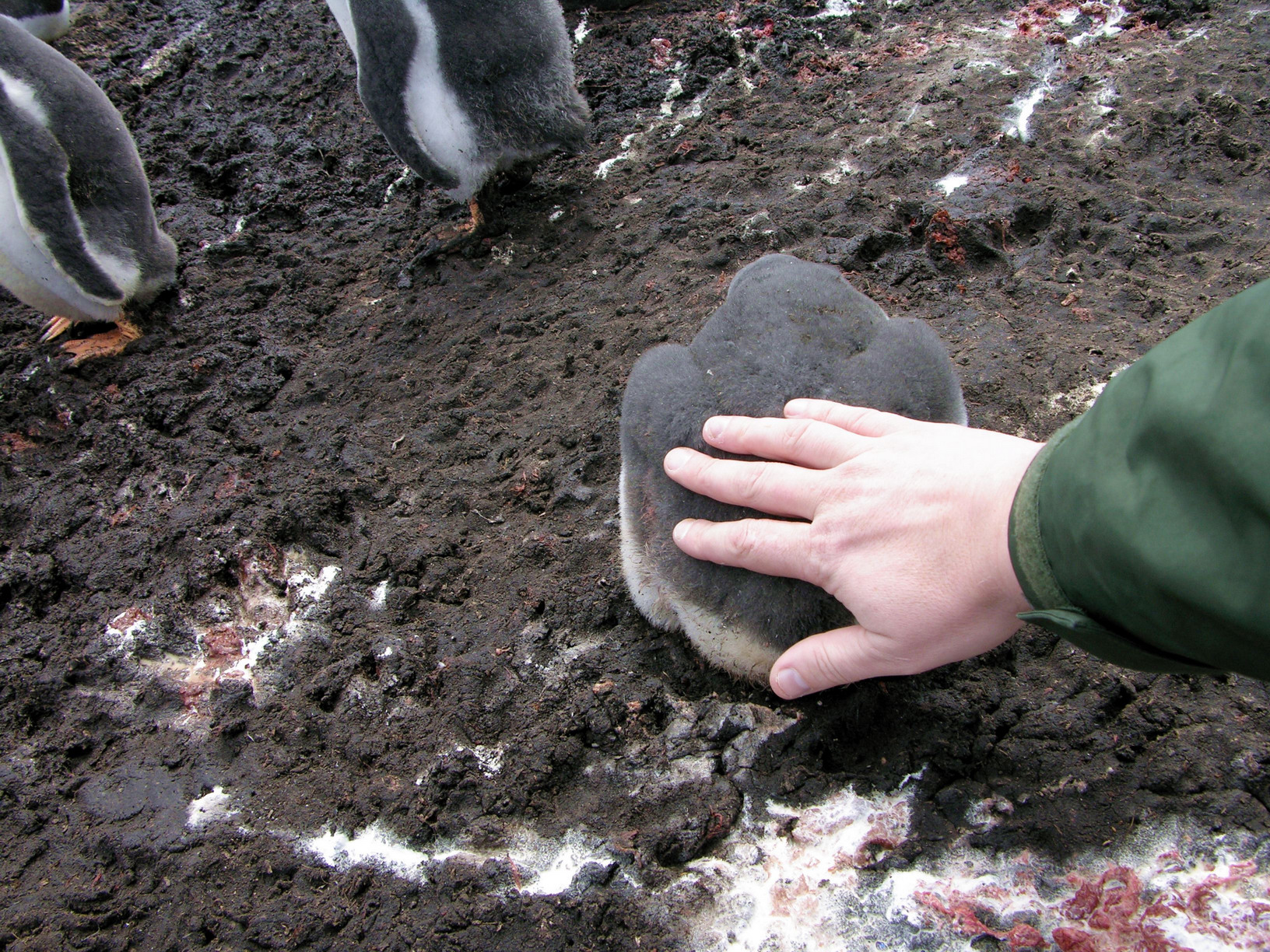
It won't even wake up if you do. You can pick it up too. Playing games like that with adult penguins calls for care. The beak isn't for ornament. It uses it to eat big strong fish, and it can bite your finger to the bone.
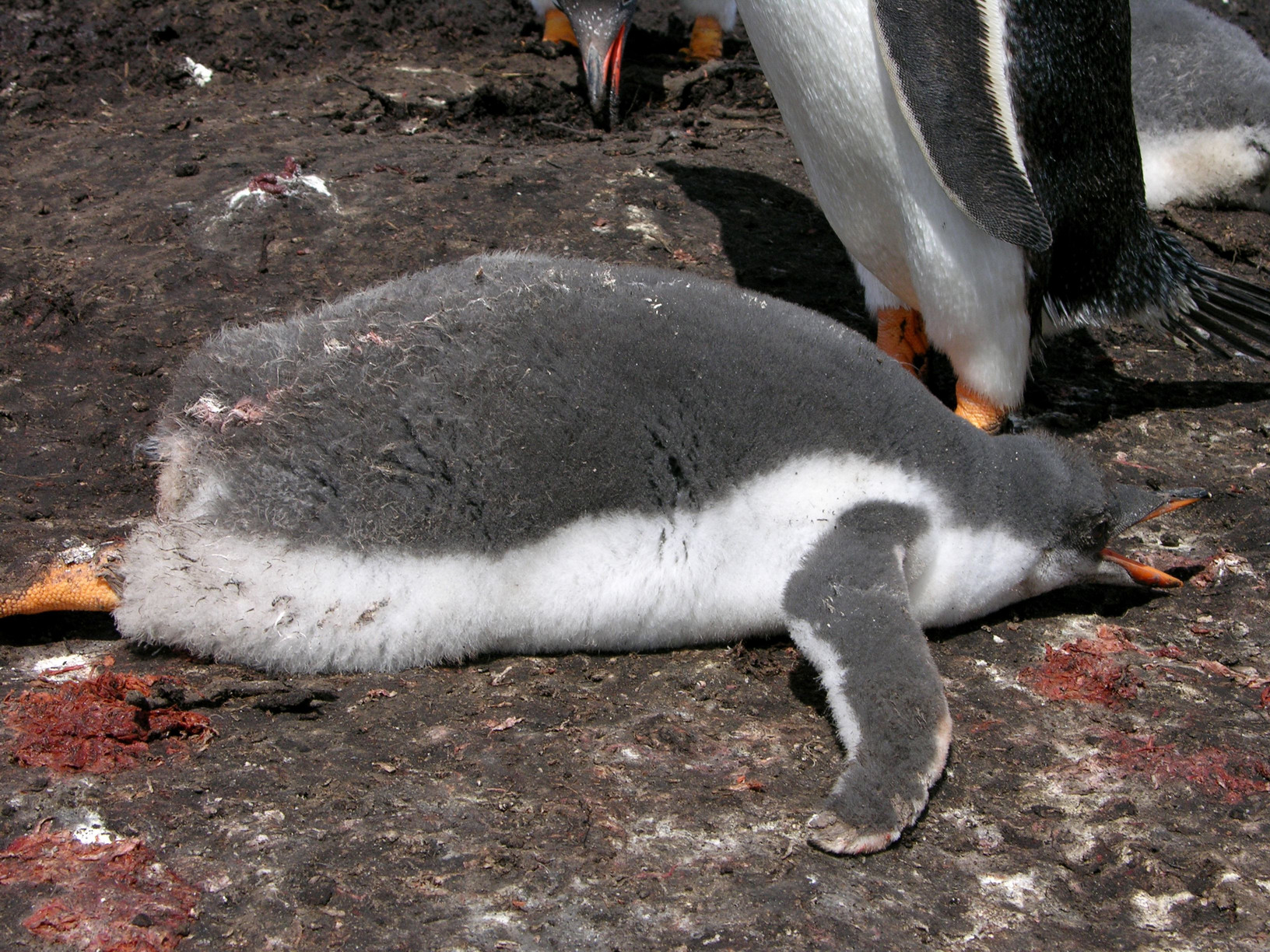
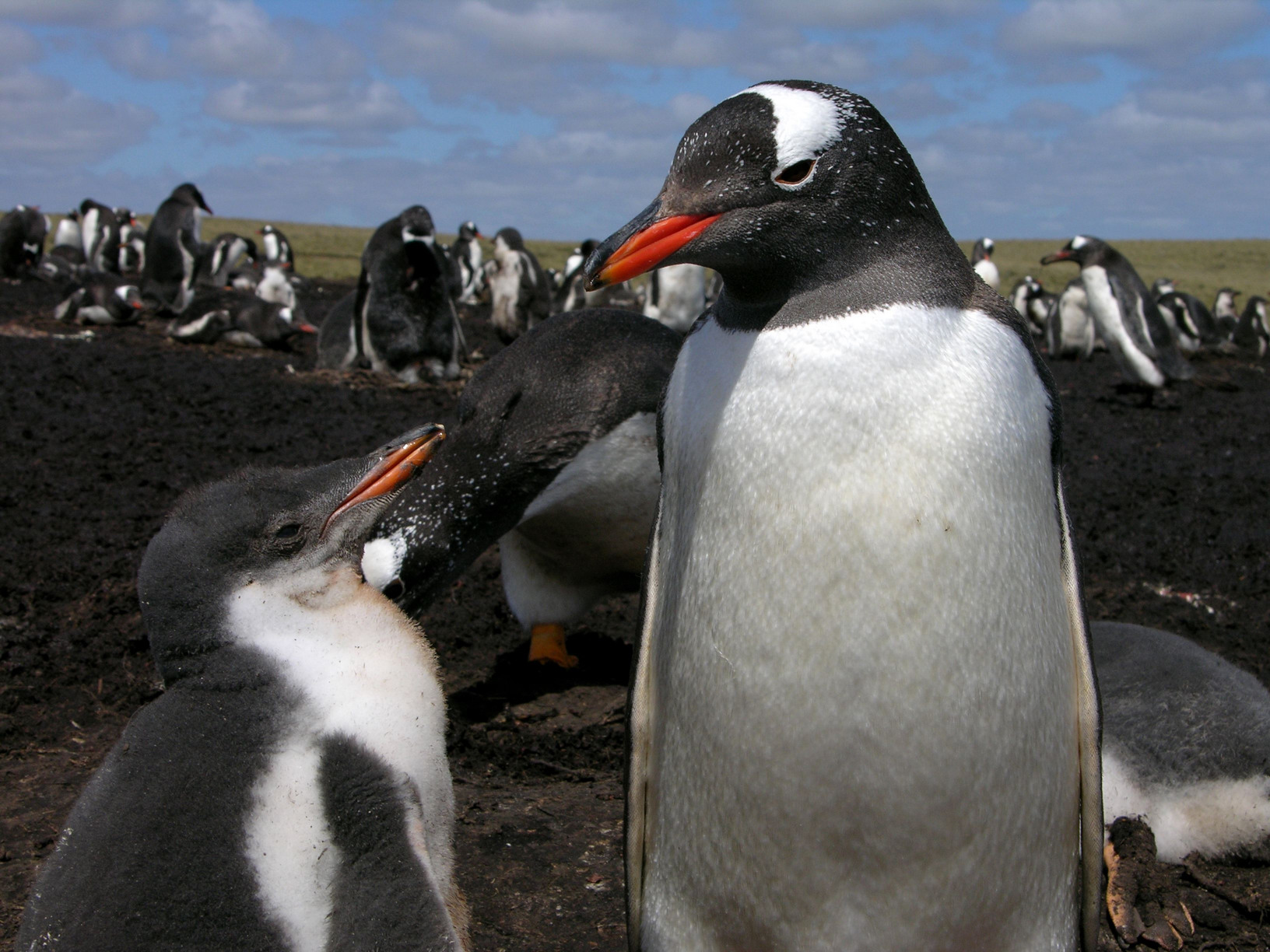
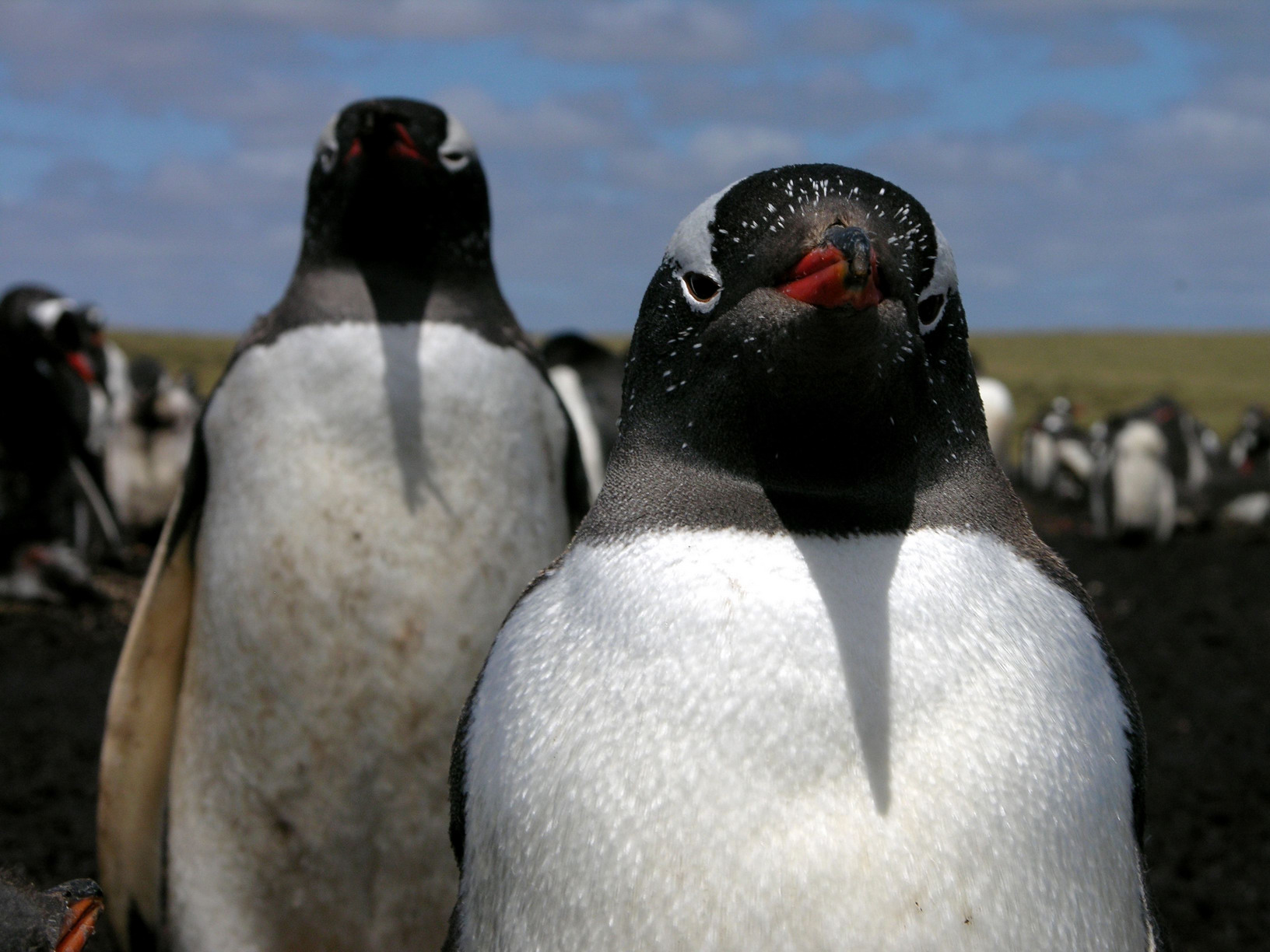
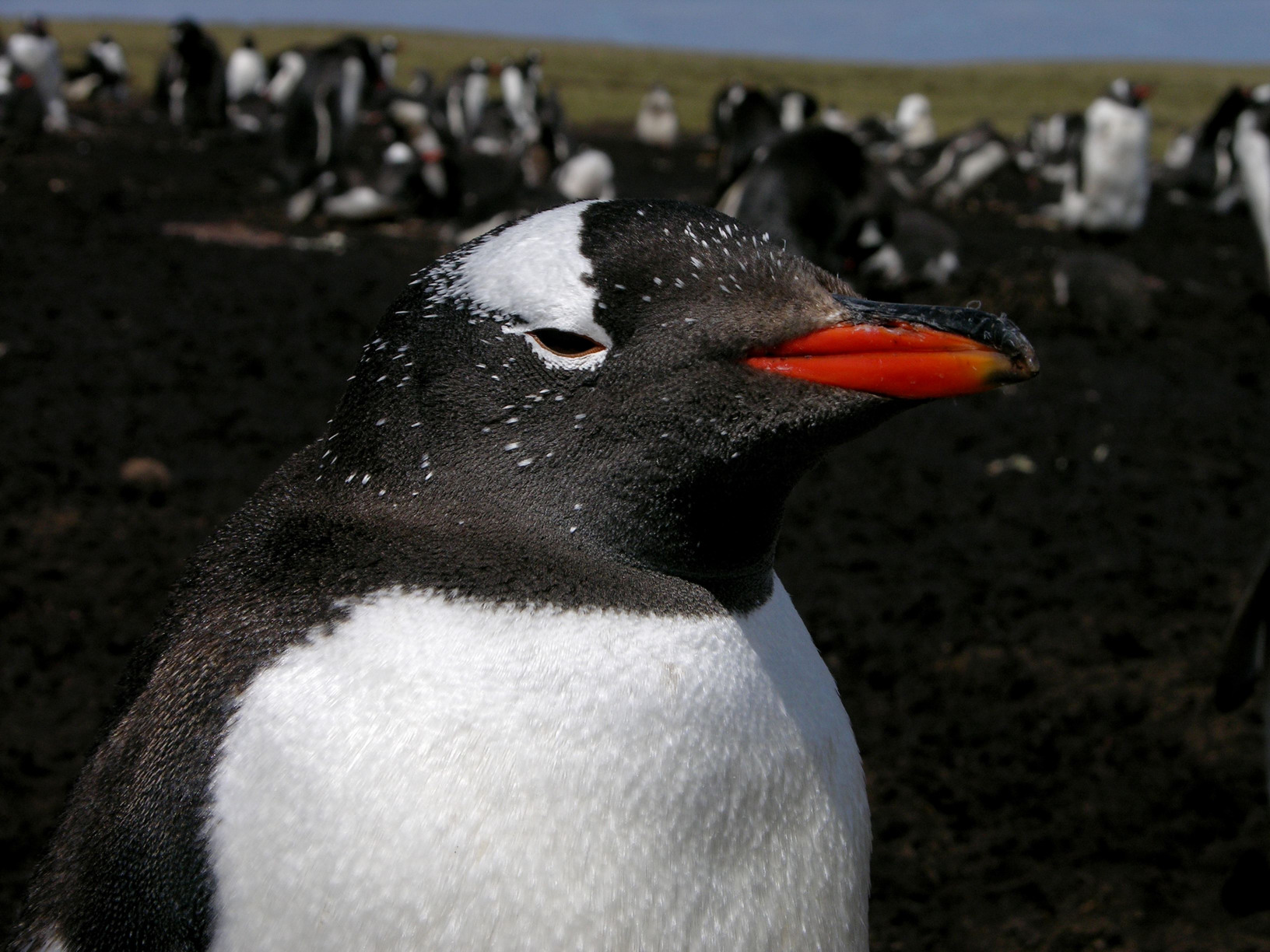
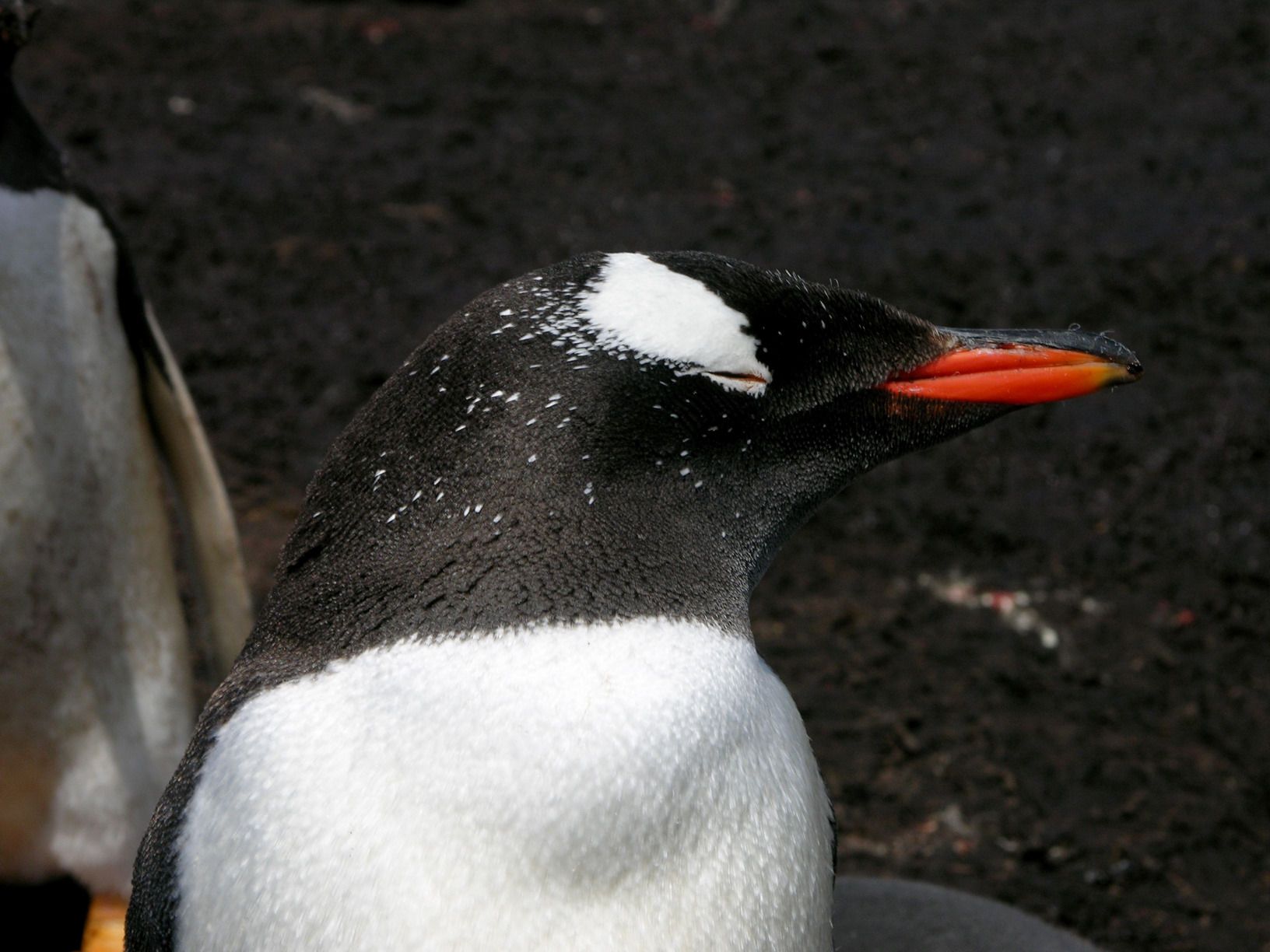
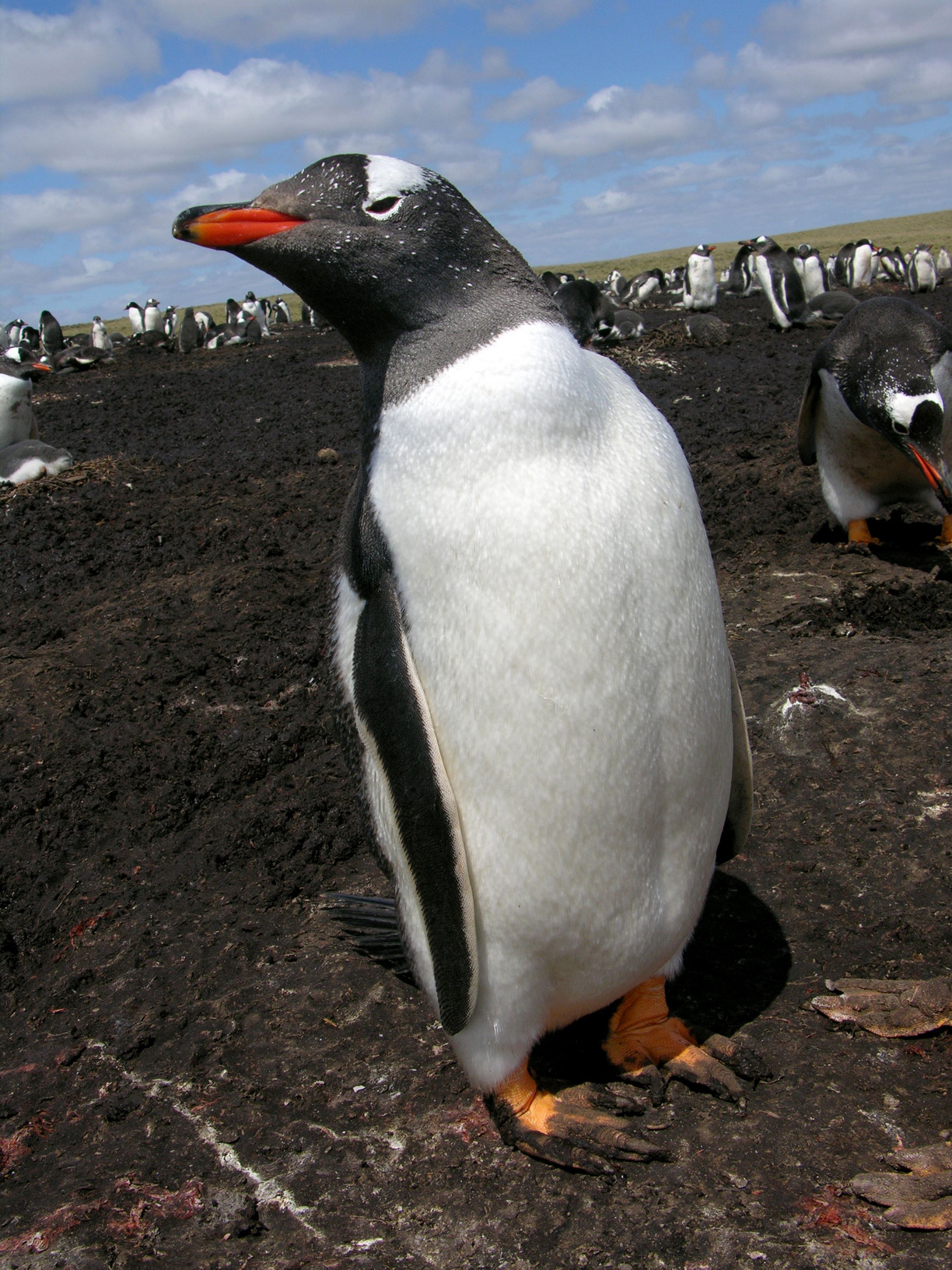
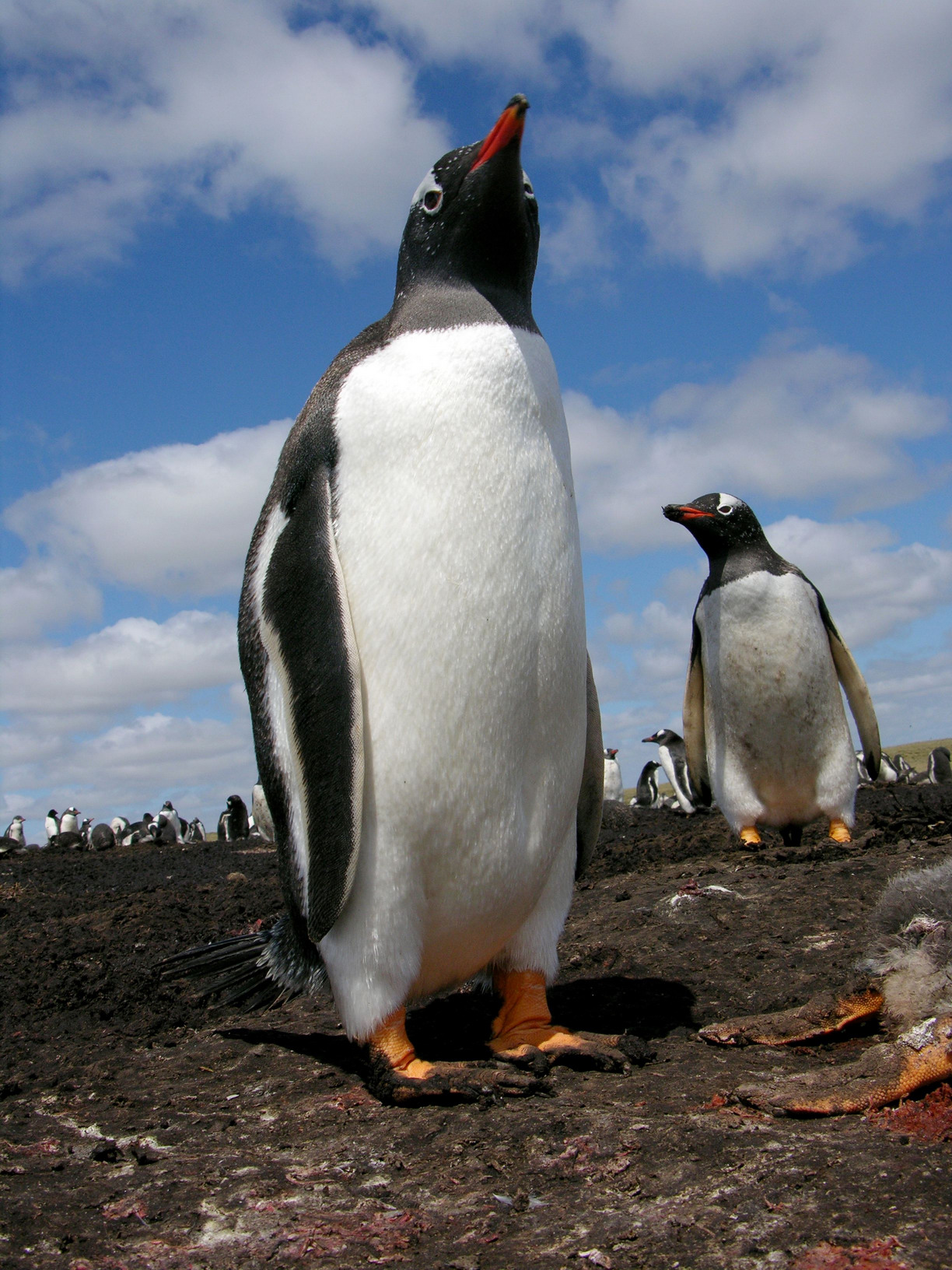
While we were hunting with the camera, the weather improved. The sun came out. That was wonderful and beautiful, of course, but it caused a serious problem for us. We hadn't brought sun cream. Near Antarctica you feel the effects of the hole in the ozone layer and the ultraviolet radiation is comparable to the tropics. We got so badly burnt it took another month for the wounds to heal.
The way back turned out to be fairly simple, but however you look at it, forty-five kilometres takes seven hours. It wasn't until evening that we reached Goose Green, where we went for another walk, this time in the sunshine. We made it back to Darwin just in time for dinner. The boys who took us out laughed. We'd earned our dinner today.


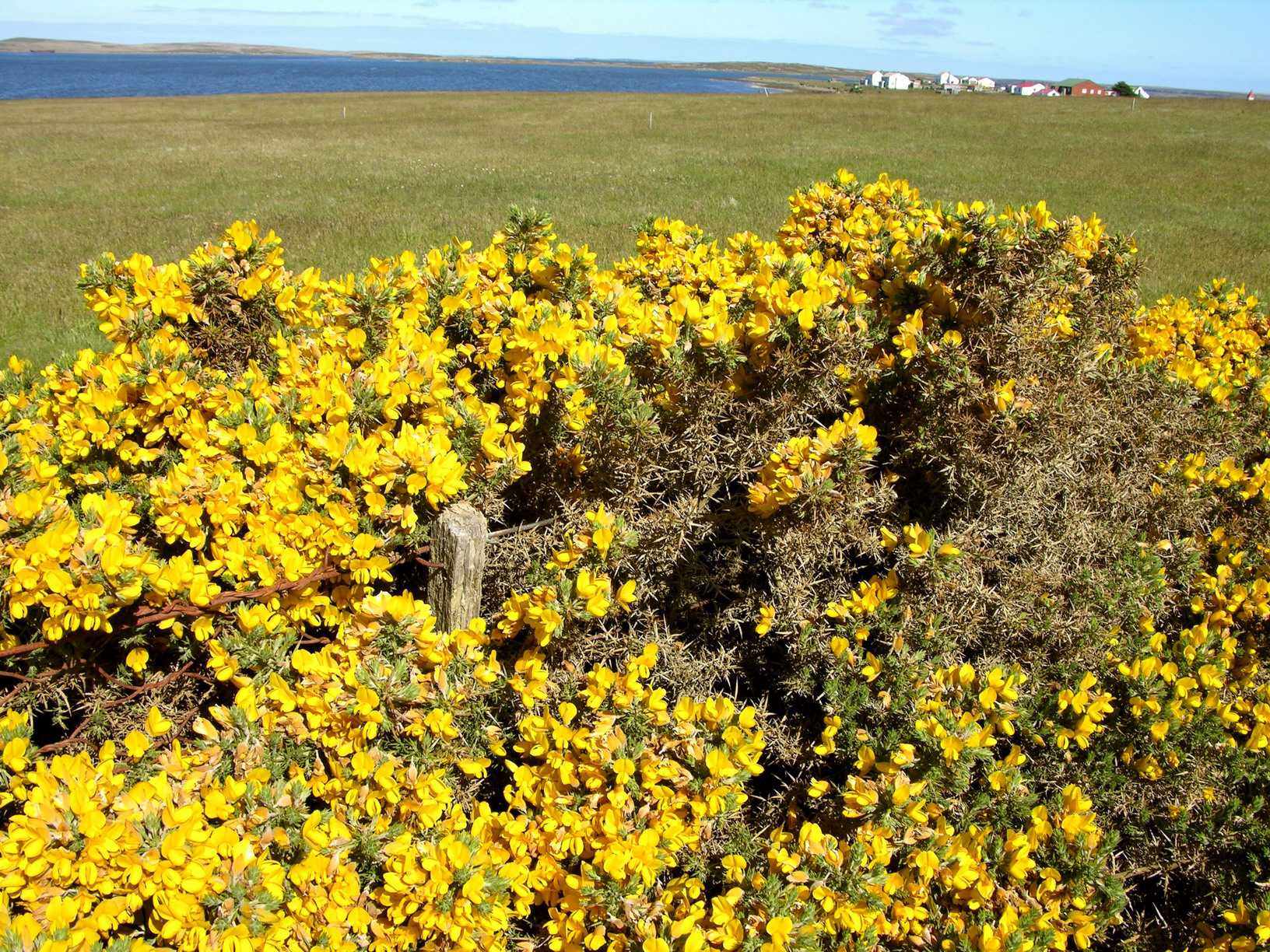


The third night in Darwin was our last. In the morning we had a plane booked to another island, Saunders. Aircraft in the Falklands don't fly to a timetable. To make a booking, you phone the only local airline, the Falkland Islands Government Air Service, FIGAS, at +500-27219 and say who wants to go where and when. On top of that you have to say how much each person weighs and how much luggage they're bringing. Ten kilos is free. You pay for the rest. I didn't have to pay extra for my hundred kilos, perhaps because Tanya's fifty brought us to an average of seventy-five a passenger.

You don't have to confirm the request by paying, giving passport numbers or giving a card number. They take your word for it, but in return only tell you there's a possibility in principle. We reserved our 3 January flight from Chile on 30 December. From Russia only some internet phone operators recognise the country code 500. Rostelecom doesn't know there are such countries. The flight is announced the evening before on Falklands radio at 6:15. They just read out who is going from which island to which and in what order the plane will call. Sometimes they break it up with a joke. “Smith is off to Howard again. He's probably found himself a new girlfriend there.”
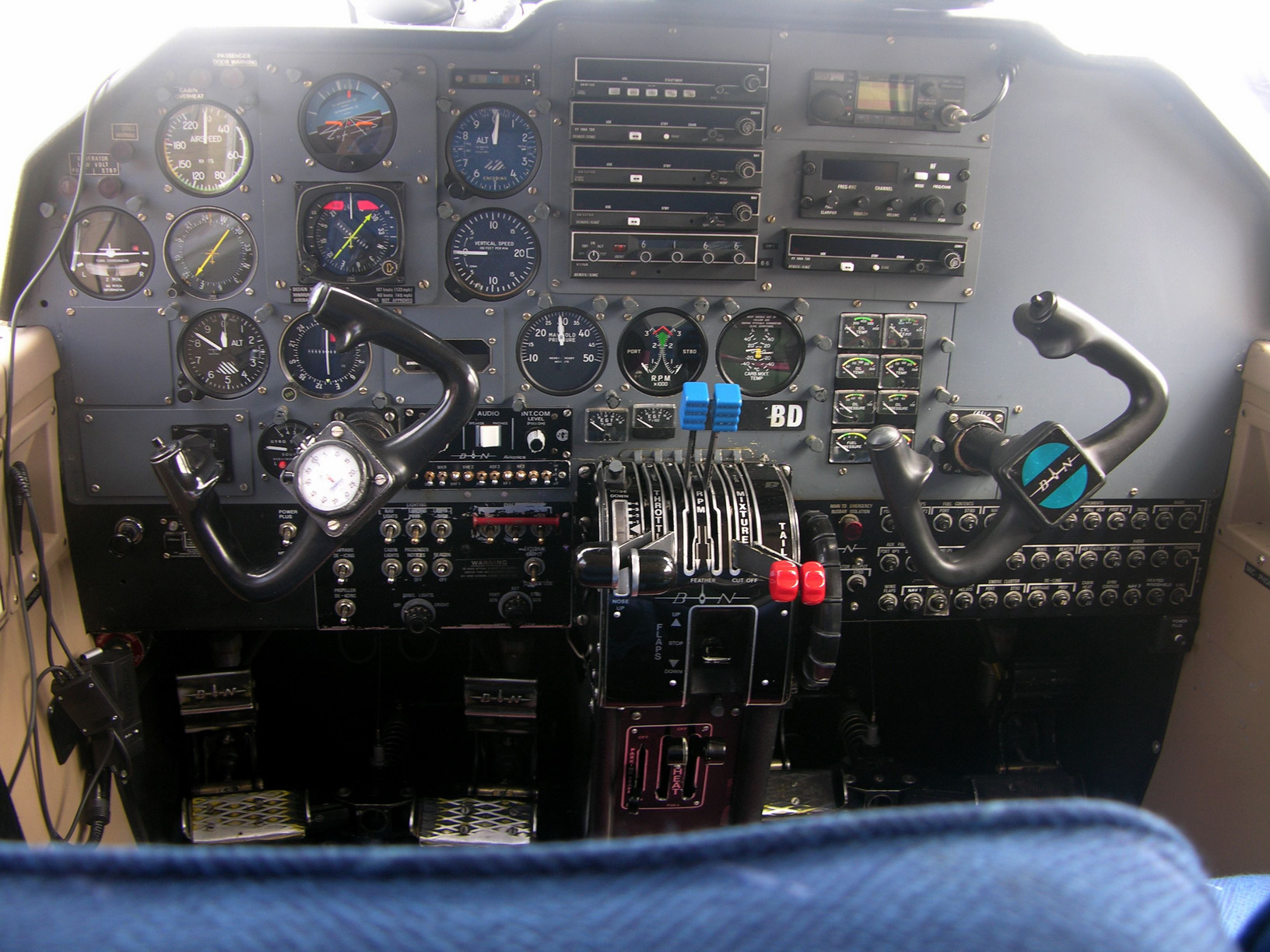
The plane flies in to a grass airstrip. One of the island owners comes to meet it, contacts the plane on the radio just before it arrives and knows its exact arrival time. All passengers can do is wait for someone to come and find them for boarding. Meeting the plane is a complicated job. Come out in a jeep, open the shed where the trailer with the fire-fighting foam system is kept. You're meant to hitch the jeep to the trailer, keep it running during landing and sit with your hands on the wheel. That's when they tie labels with three-letter airport codes to the luggage as well.

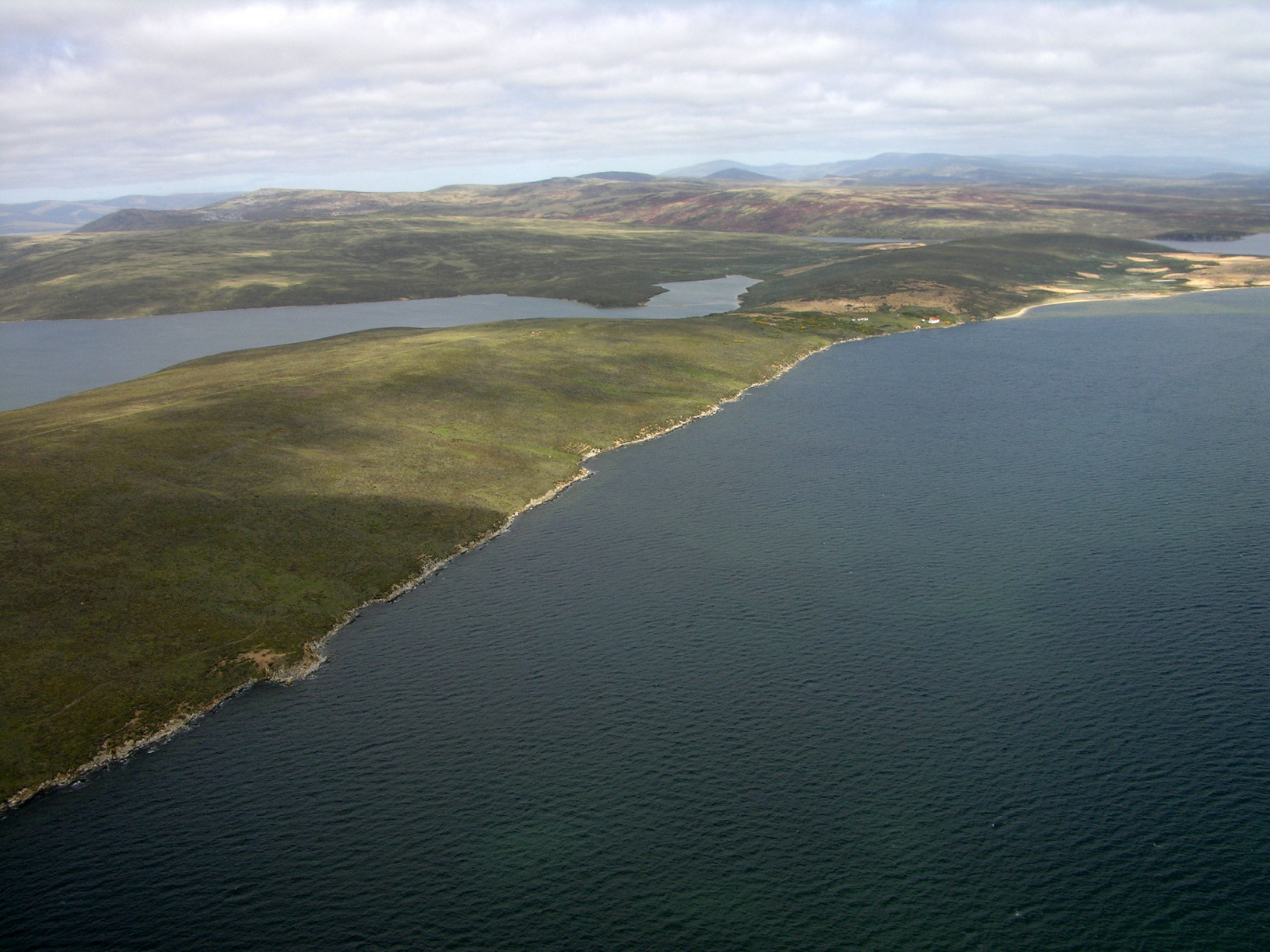
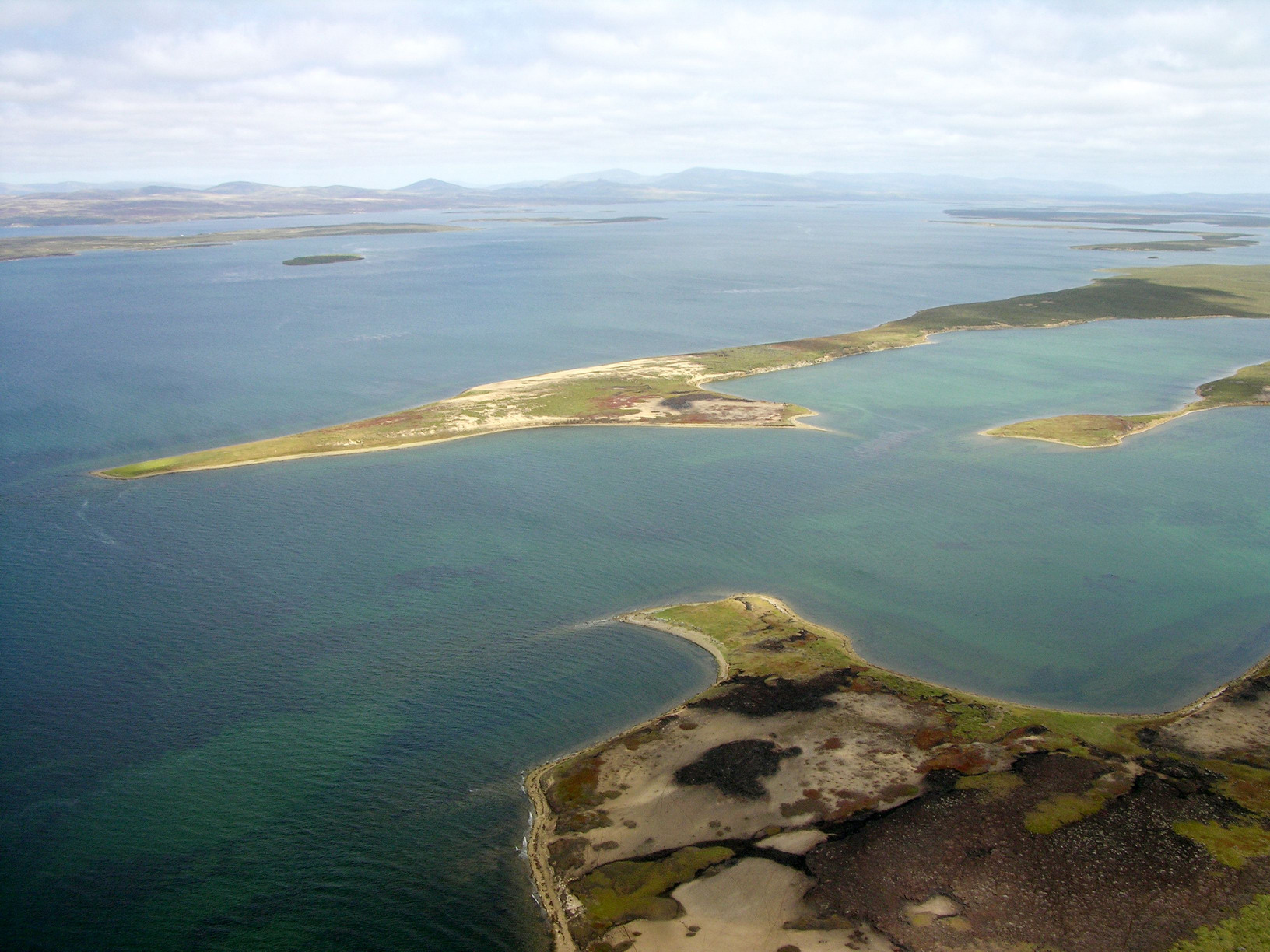
The plane flies in turn from island to island, calling where it has to take somebody on or drop somebody off. When we flew from Darwin to Saunders we made two intermediate stops at Port Howard and Pebble, Pebble Island. After Saunders the plane flew on to New Island. The price depends on distance, not on the route. So it makes sense to book from where you are to where you're going instead of trying to get to Stanley first. Let FIGAS work out the flight that suits it. Even from Sea Lion to New Island with eight landings, including Stanley.
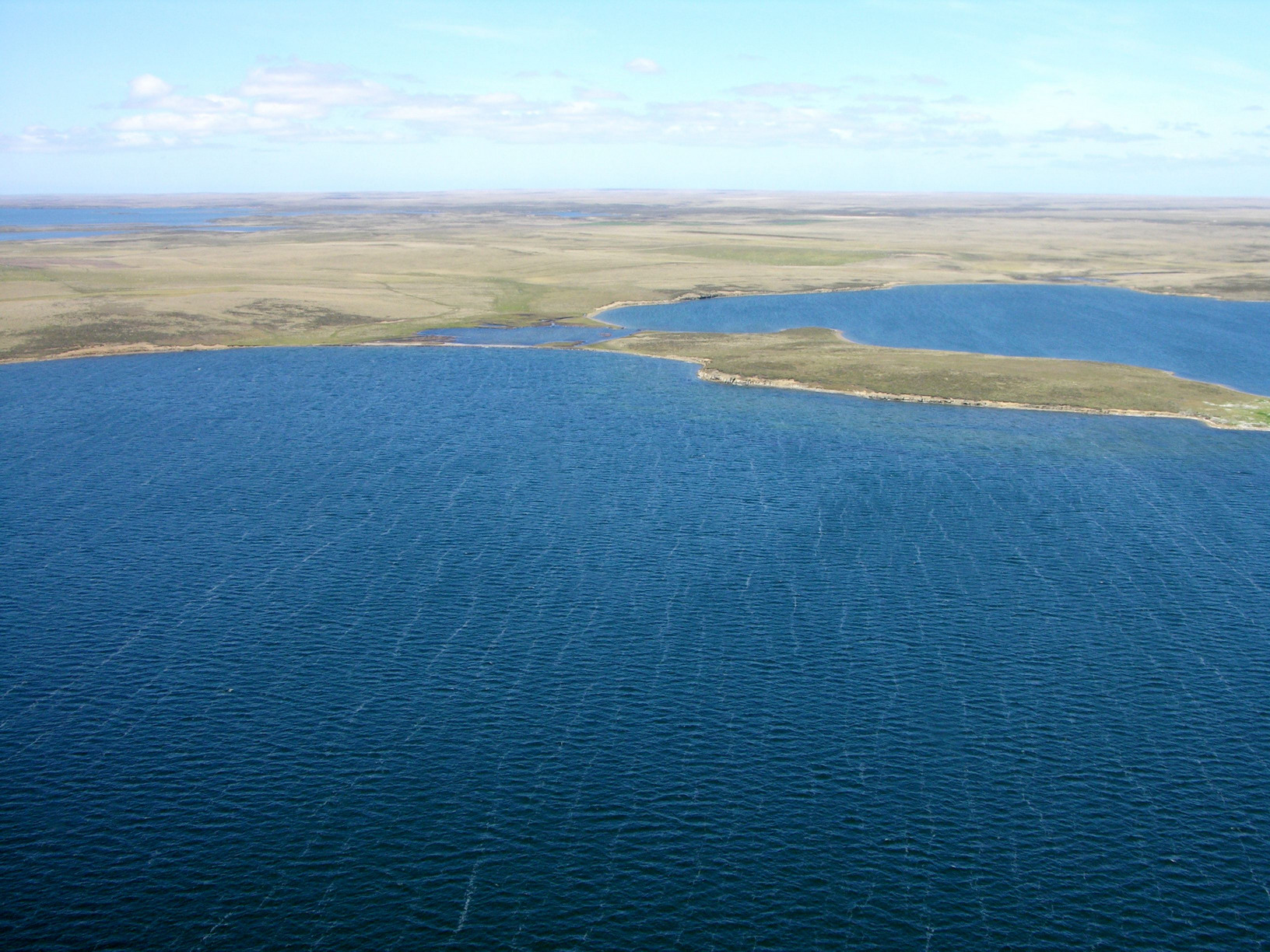
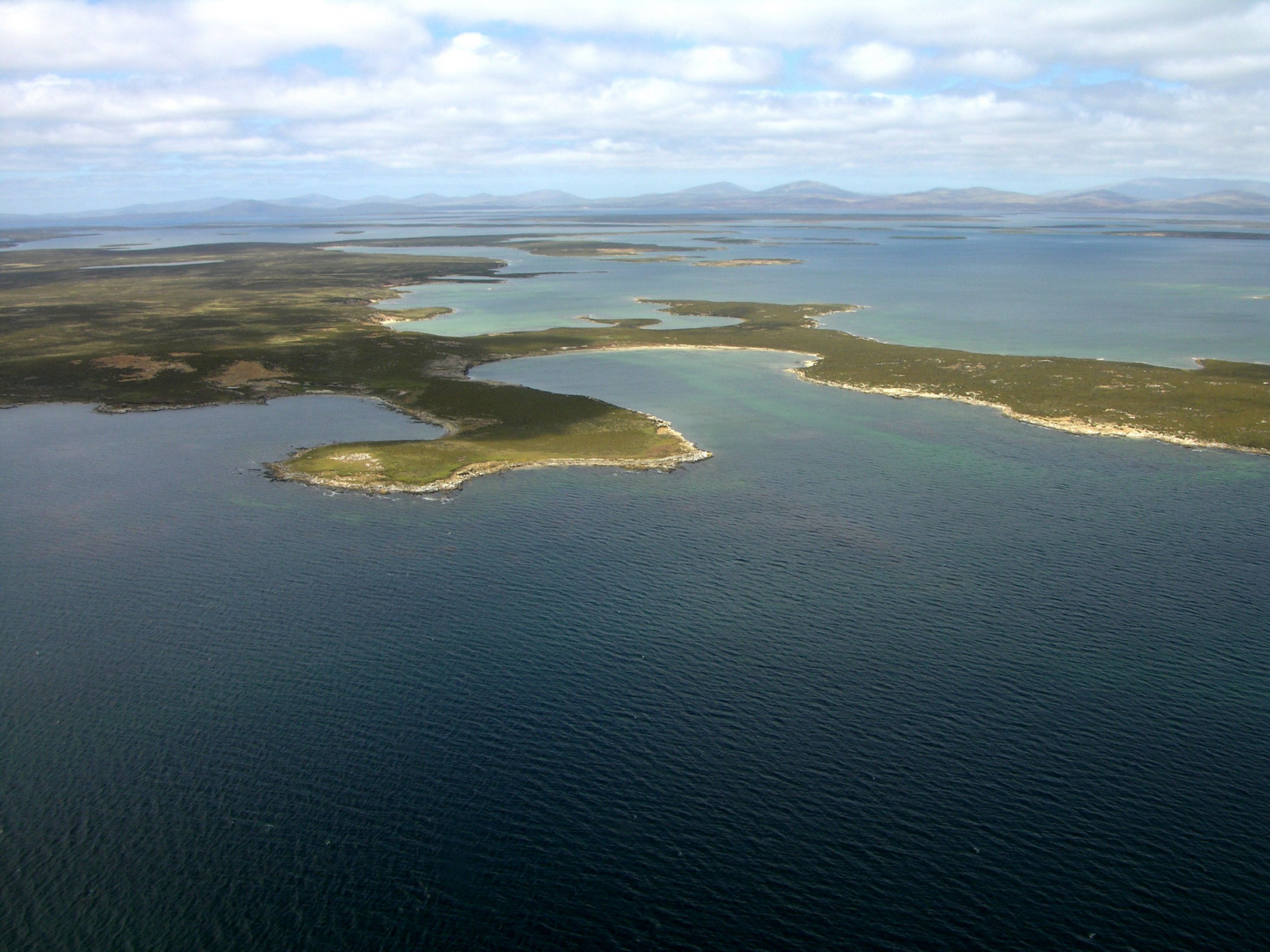
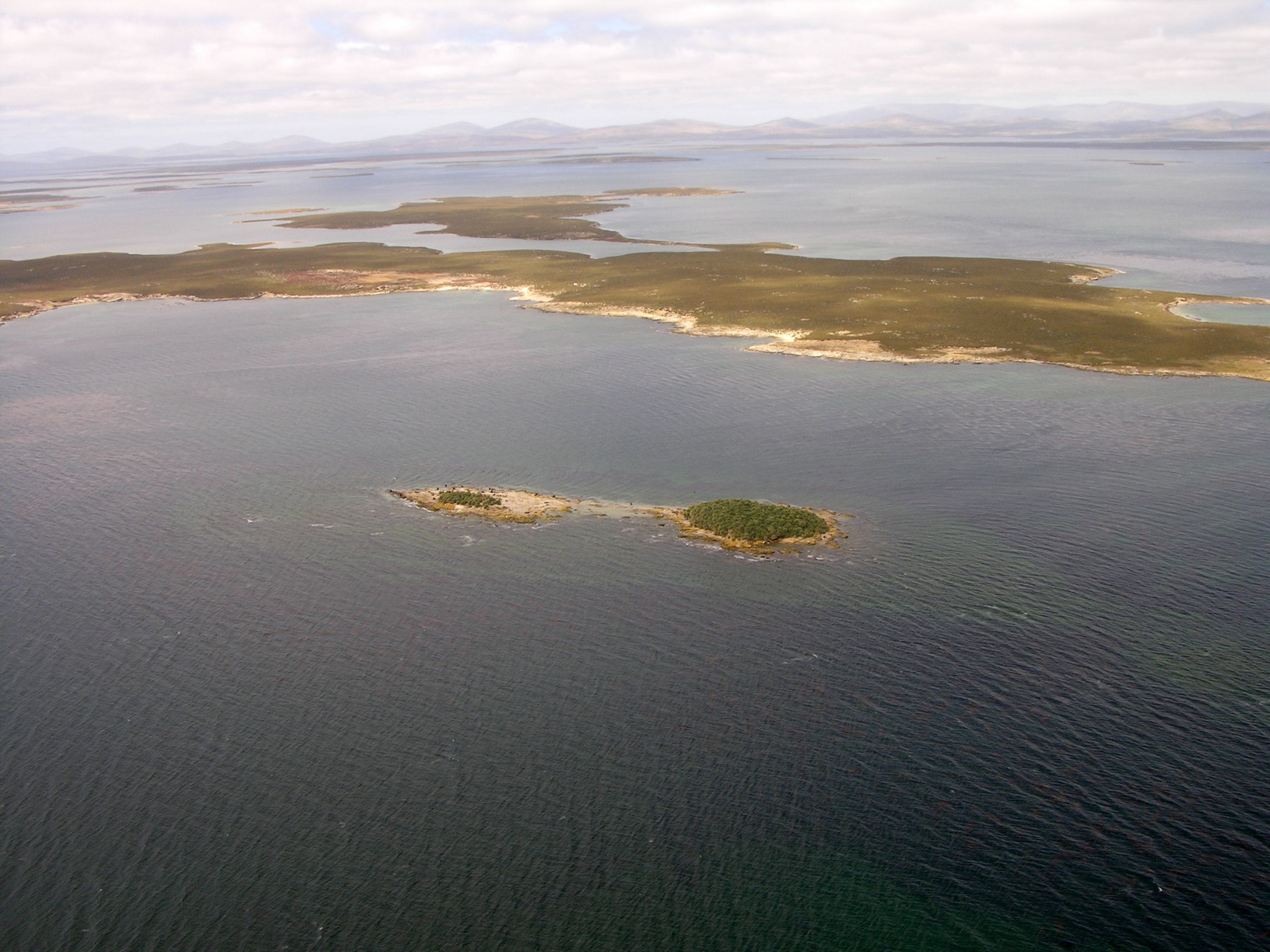
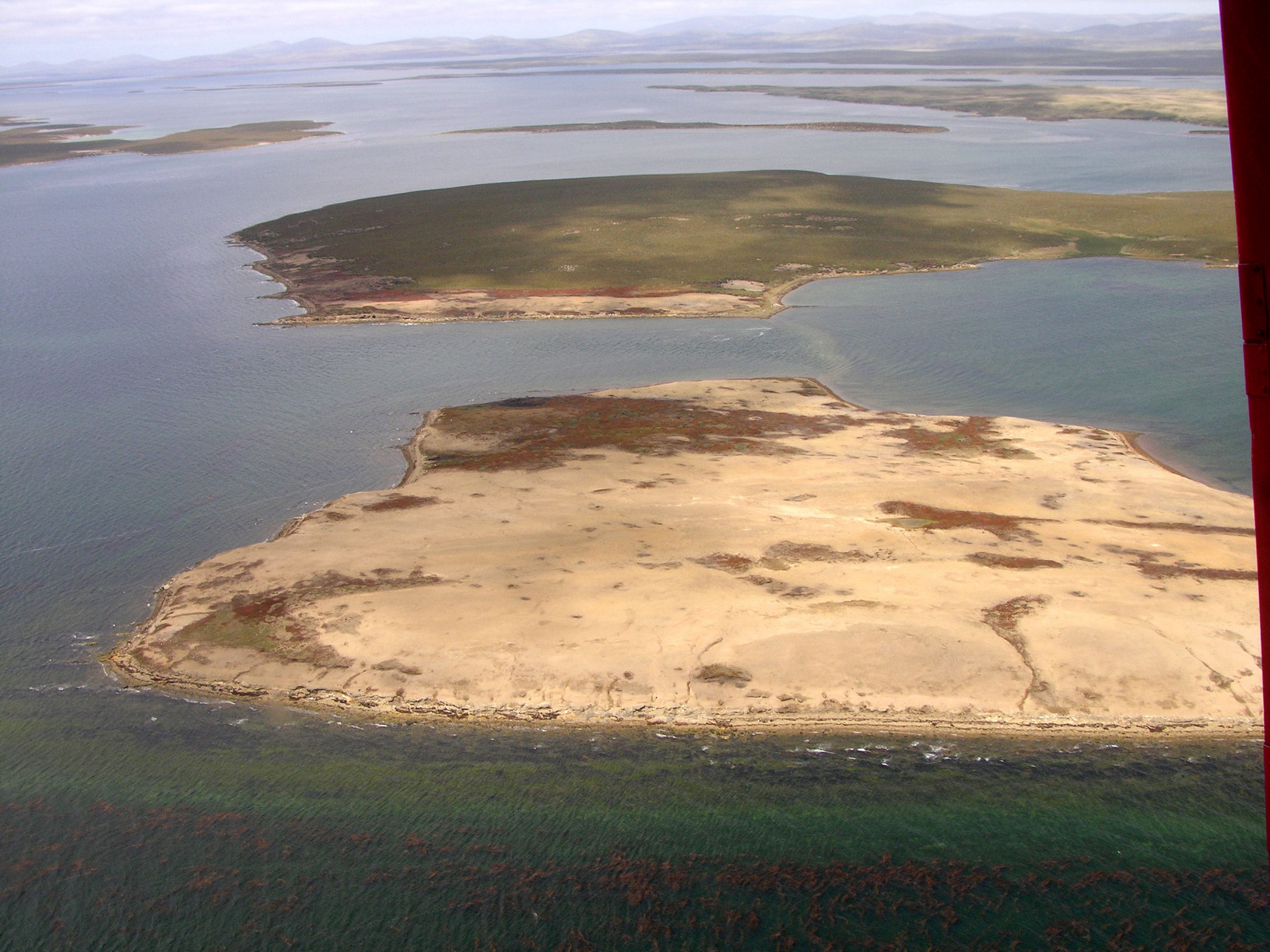
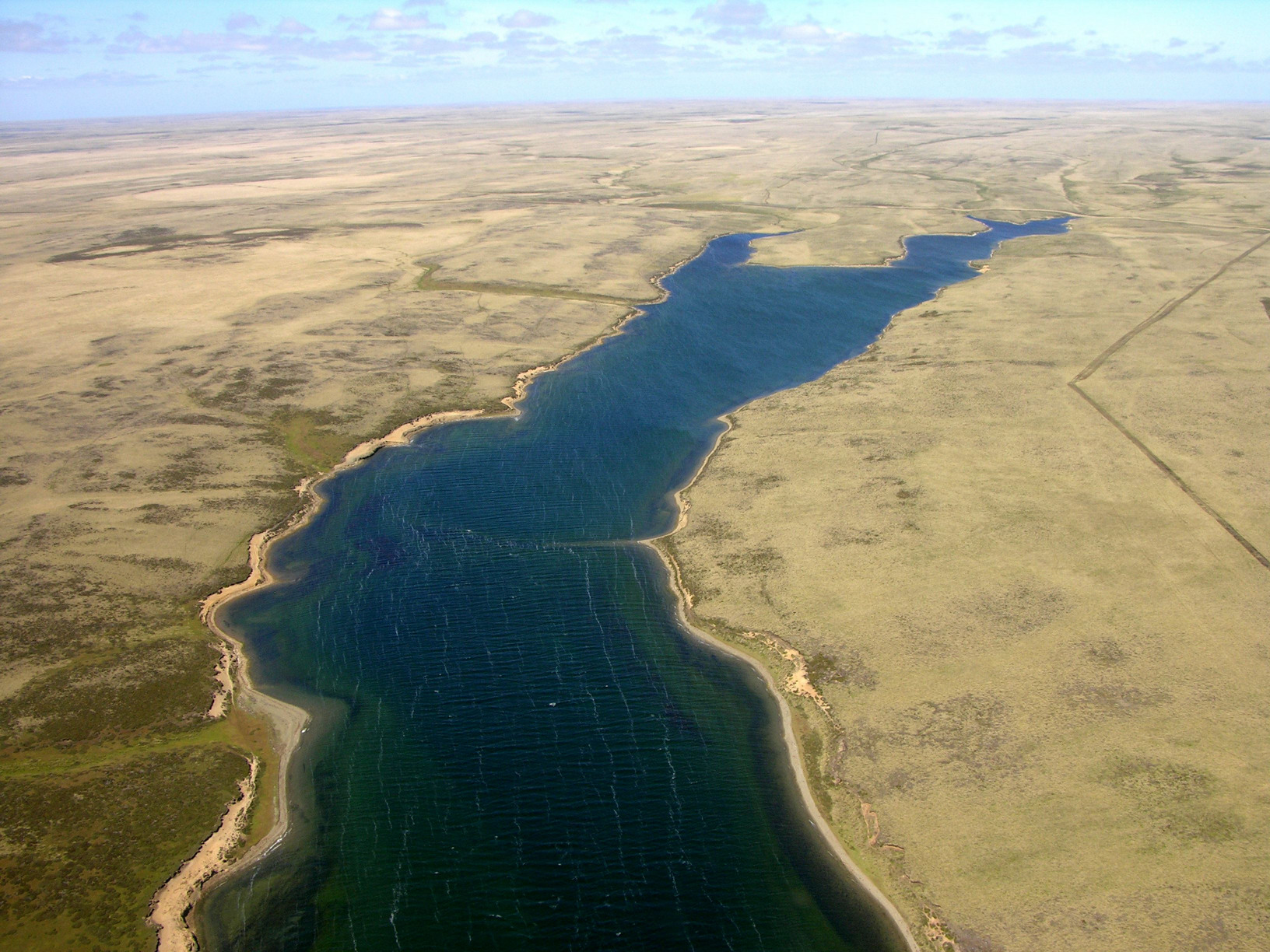
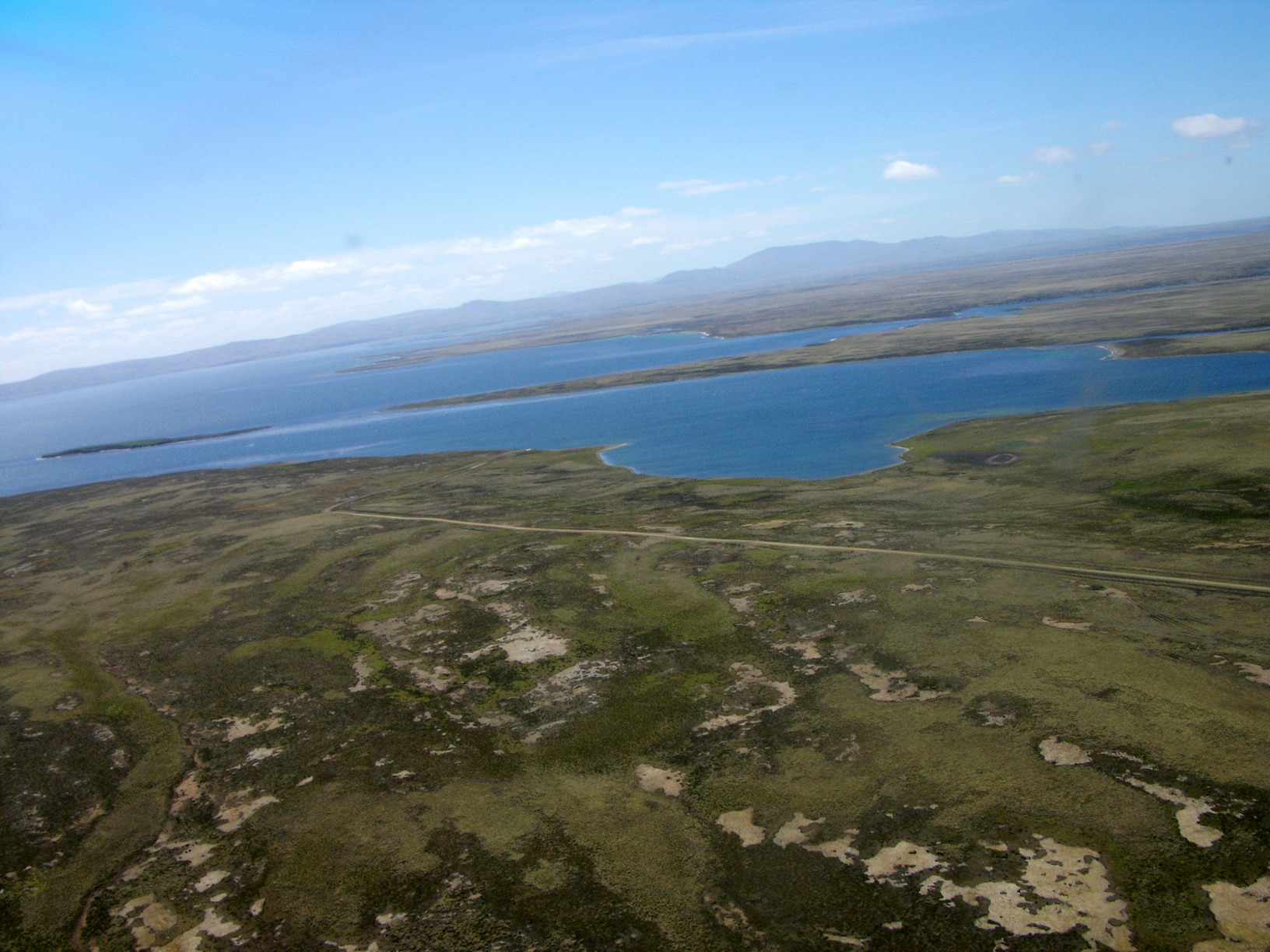
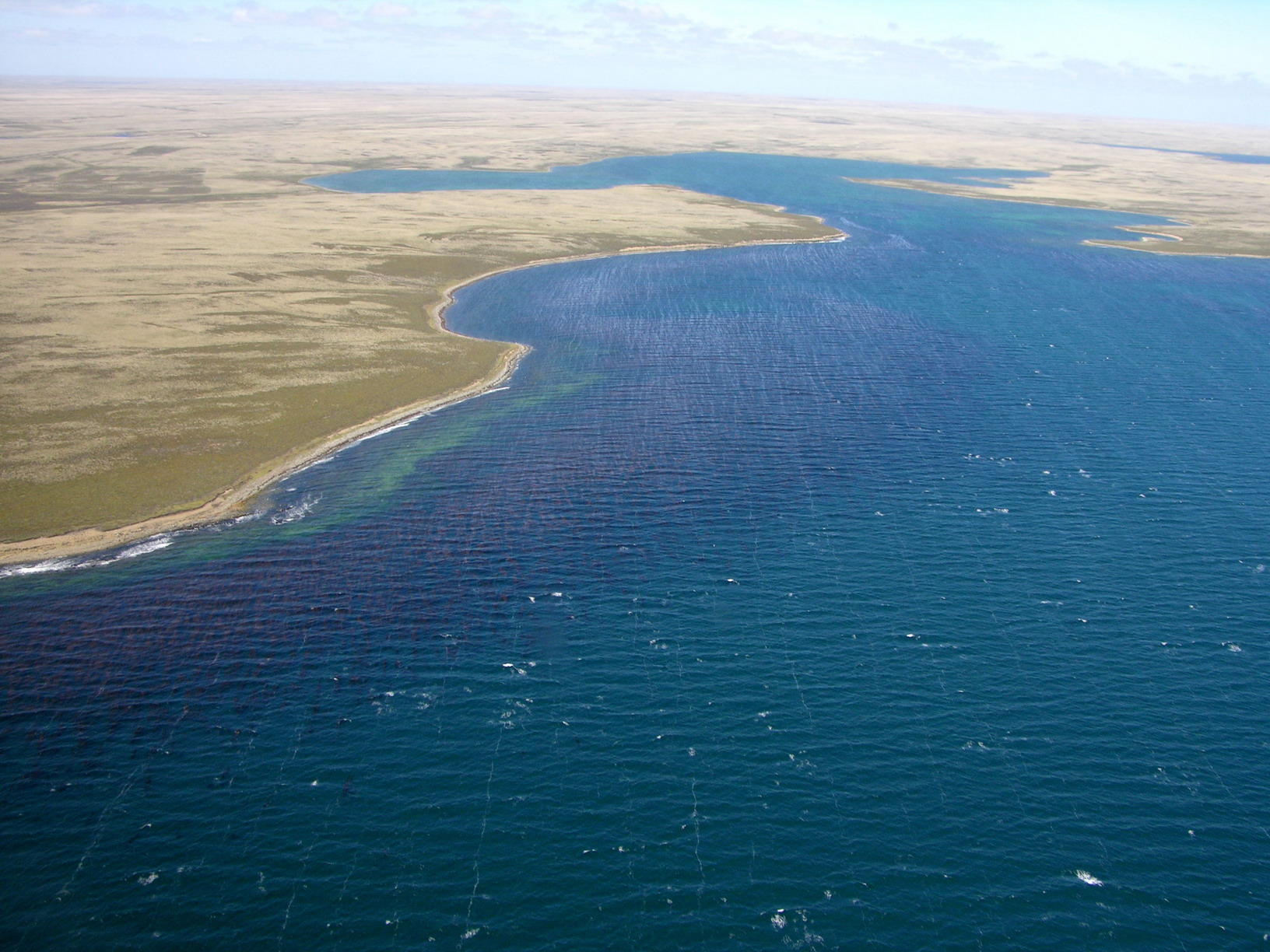
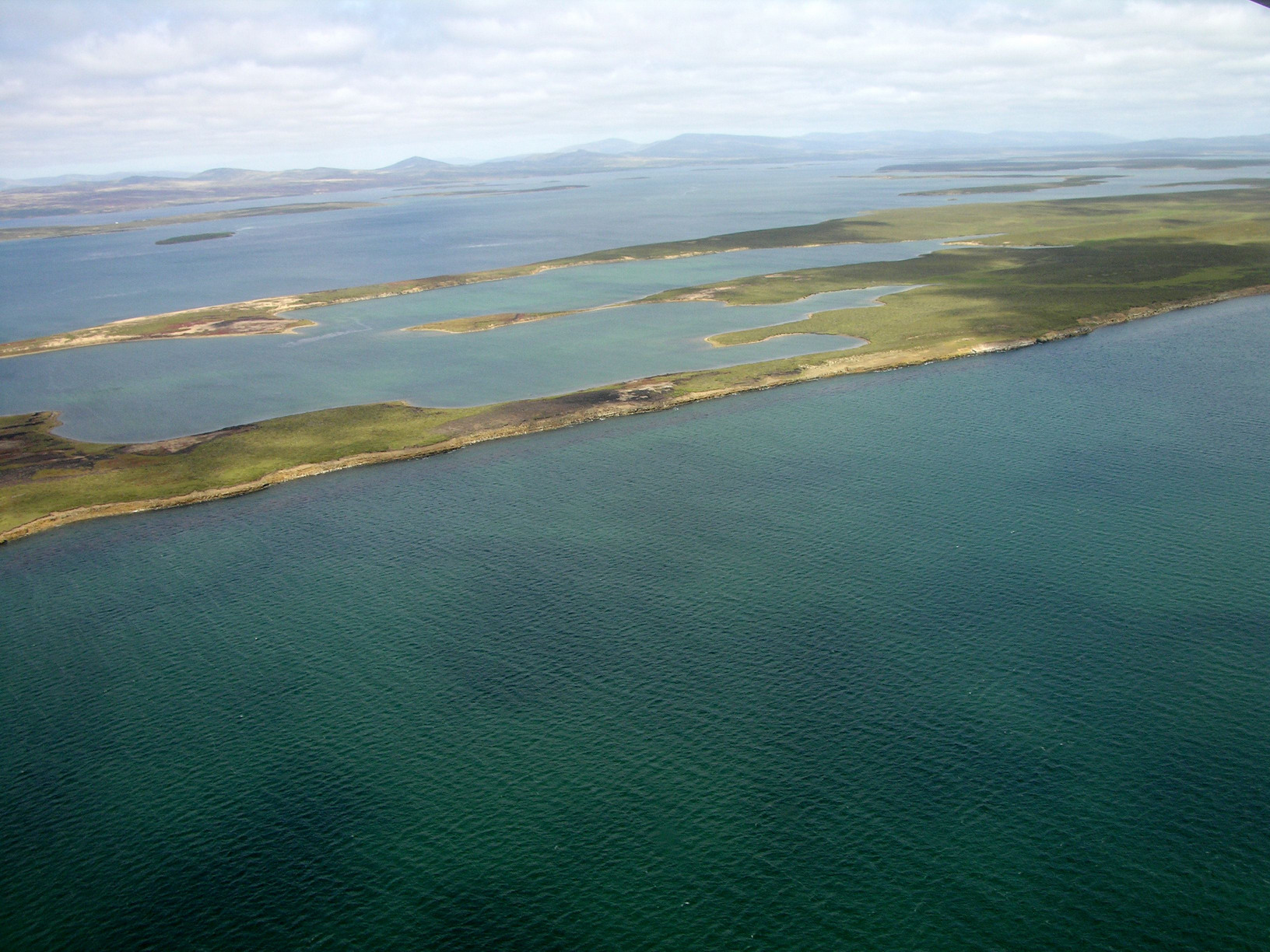
A ticket costs between twenty and a hundred pounds. In principle the pilot could take the money, but that isn't how they do it. “You'll be in Stanley, pay there.” Where could you get off a submarine, after all? Then when you fly into Stanley you have to go and insist they take your money. If you don't come, nobody will bother about you. You can pay by credit card, which suited us very well.
It's convenient that the owner meets the plane, or the lady of the island in our case. You have to see her anyway. The Falklands are a country with a great respect for private property. All land is privately owned, apart from the streets in Stanley and a hundred square metres at Mount Pleasant Airport. You can only walk on it with the owner's permission. Even the seashore and country roads are private. Some owners, by the way, have no intention of giving you that permission. They have no need of strangers there. You'll scare the sheep, break your arms or legs, and they'll be responsible for hauling you out of a ravine. They also say you might start a fire. Nonsense. The Falklands are so wet you're more likely to drown in a puddle than start a fire.
It would be dreadful if it weren't for the fact that some owners earn an income from tourism and are glad of visitors. You can email or even ring them. If they're prepared to take you in, that implies permission to walk around the island. There may be places they ask you not to go, but it's mostly reasonable and doesn't limit your freedom greatly. It's rather harder to get the right to camp where you like. On Sea Lion you can't, but you can on the other, smaller islands. On Saunders you can walk and camp everywhere. The only rule is you mustn't put up your tent in the middle of a penguin colony. A night in a tent is ten pounds per person.
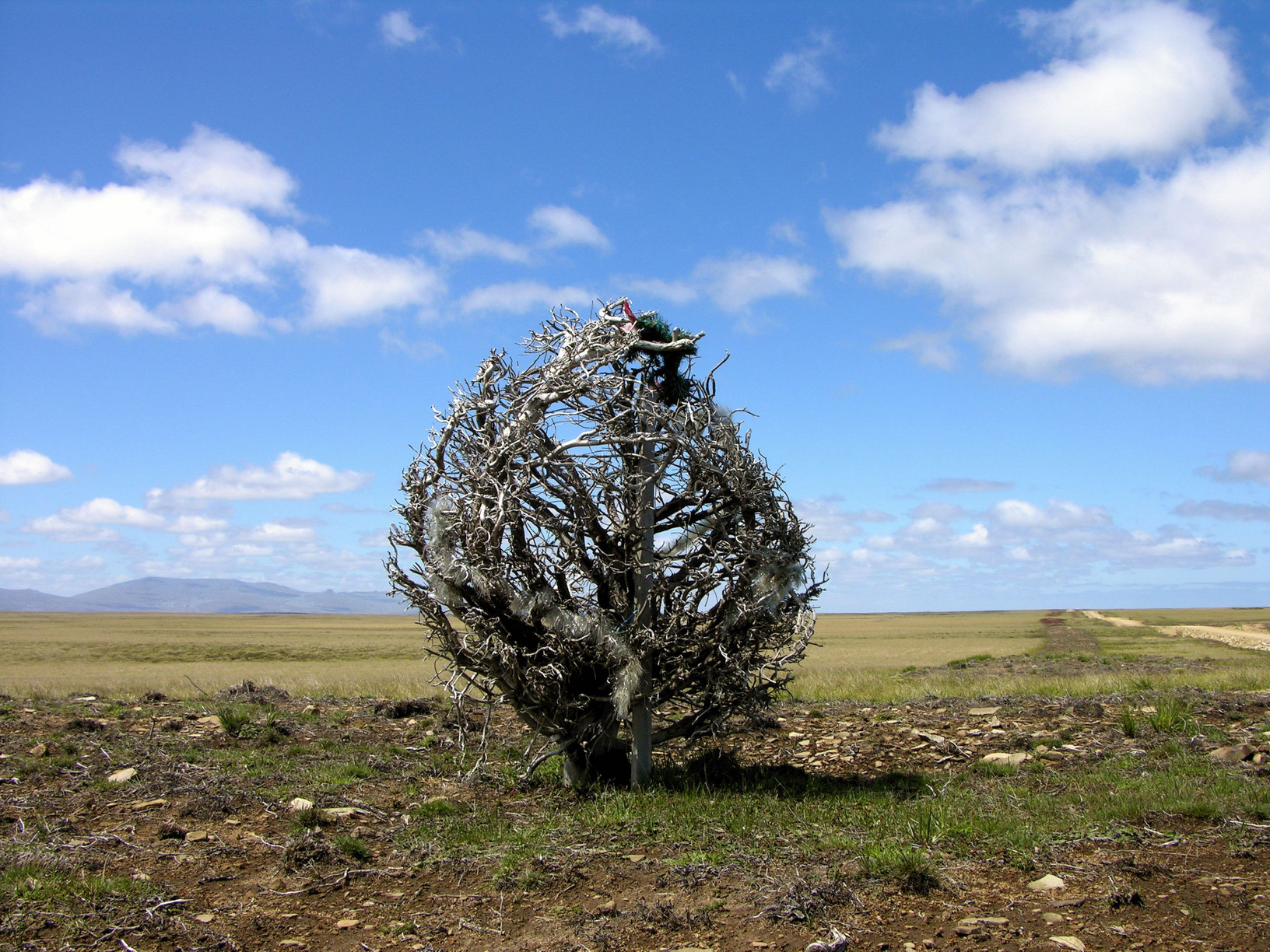
In theory you can light fires, but the problem is there are no trees in the Falklands apart from the ones people went to the trouble of planting. It isn't even the result of human activity. For some unknown reason there was no forest when the islands were discovered.
The question is how to cook. We had Campingaz with us, which we'd lugged through six flights. That solved the actual problem, but we'd still have to explain it to the island's owner. Susan offered us a big gas bottle and a stove. We didn't want to carry it, so we admitted we'd brought gas with us. Susan put on a horrified face, smiled and said, “On the plane?” We confessed. Fortunately the British aren't Germans or Americans. She didn't hand us over to the police, just shook her head.
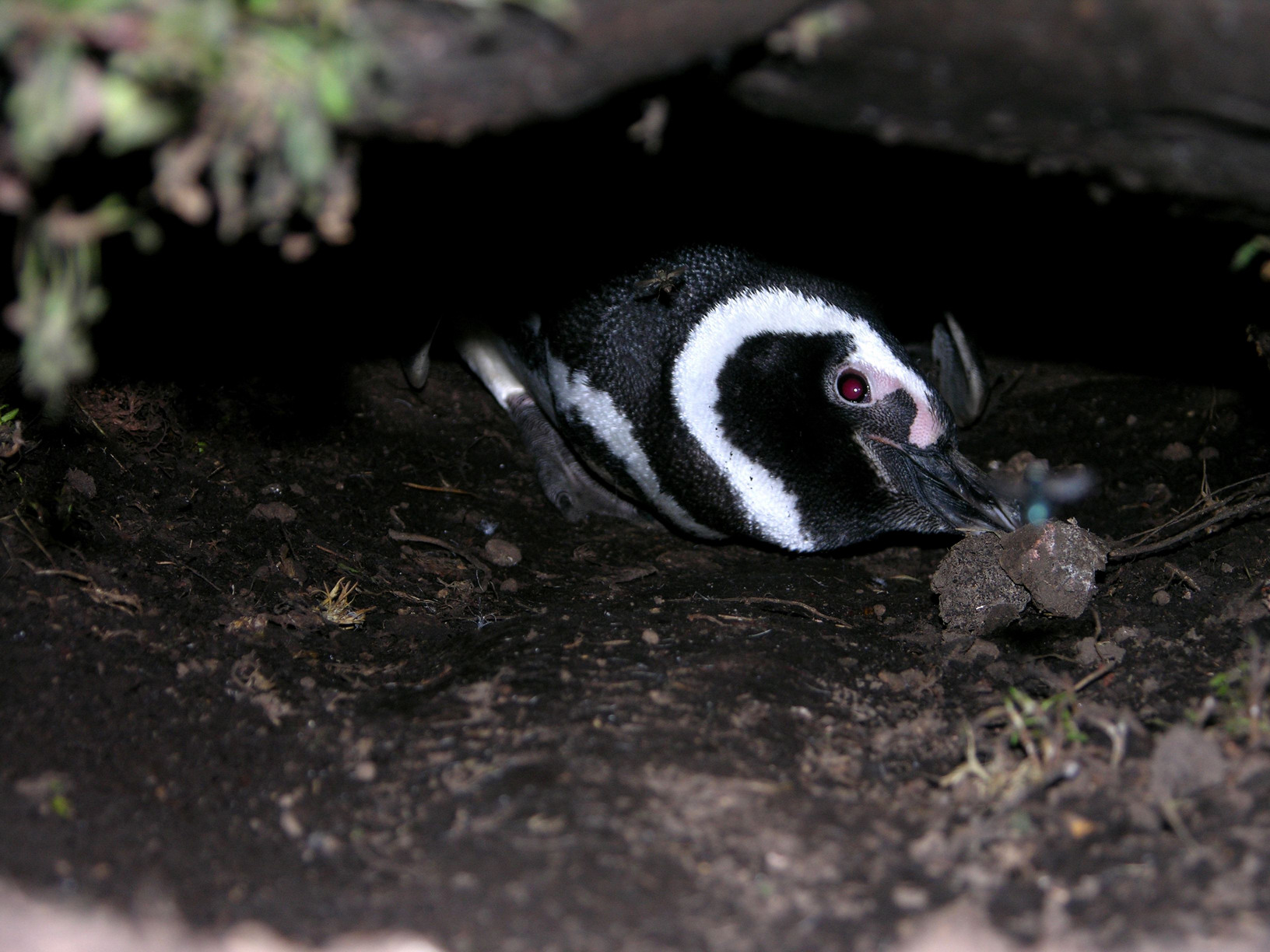
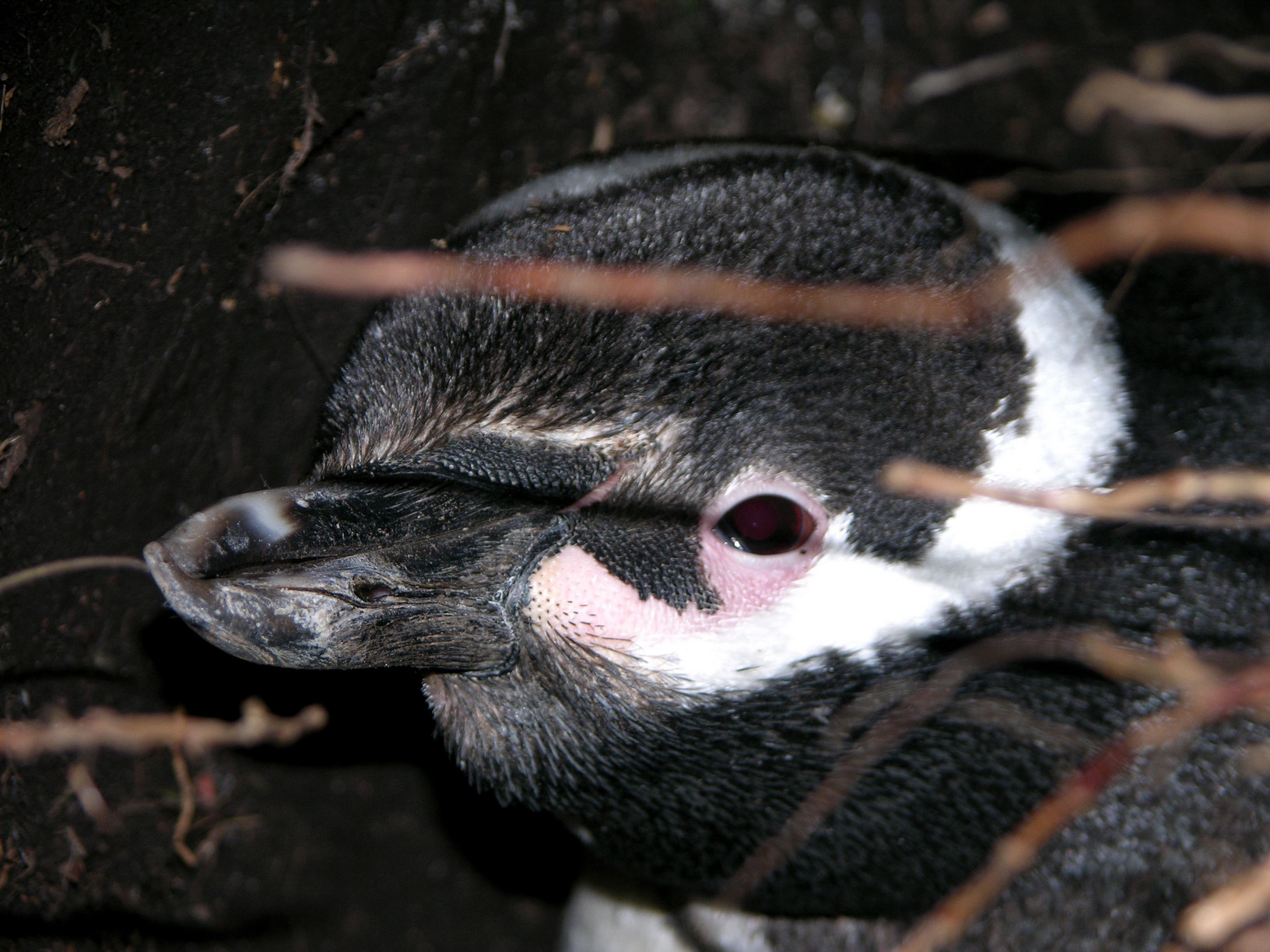
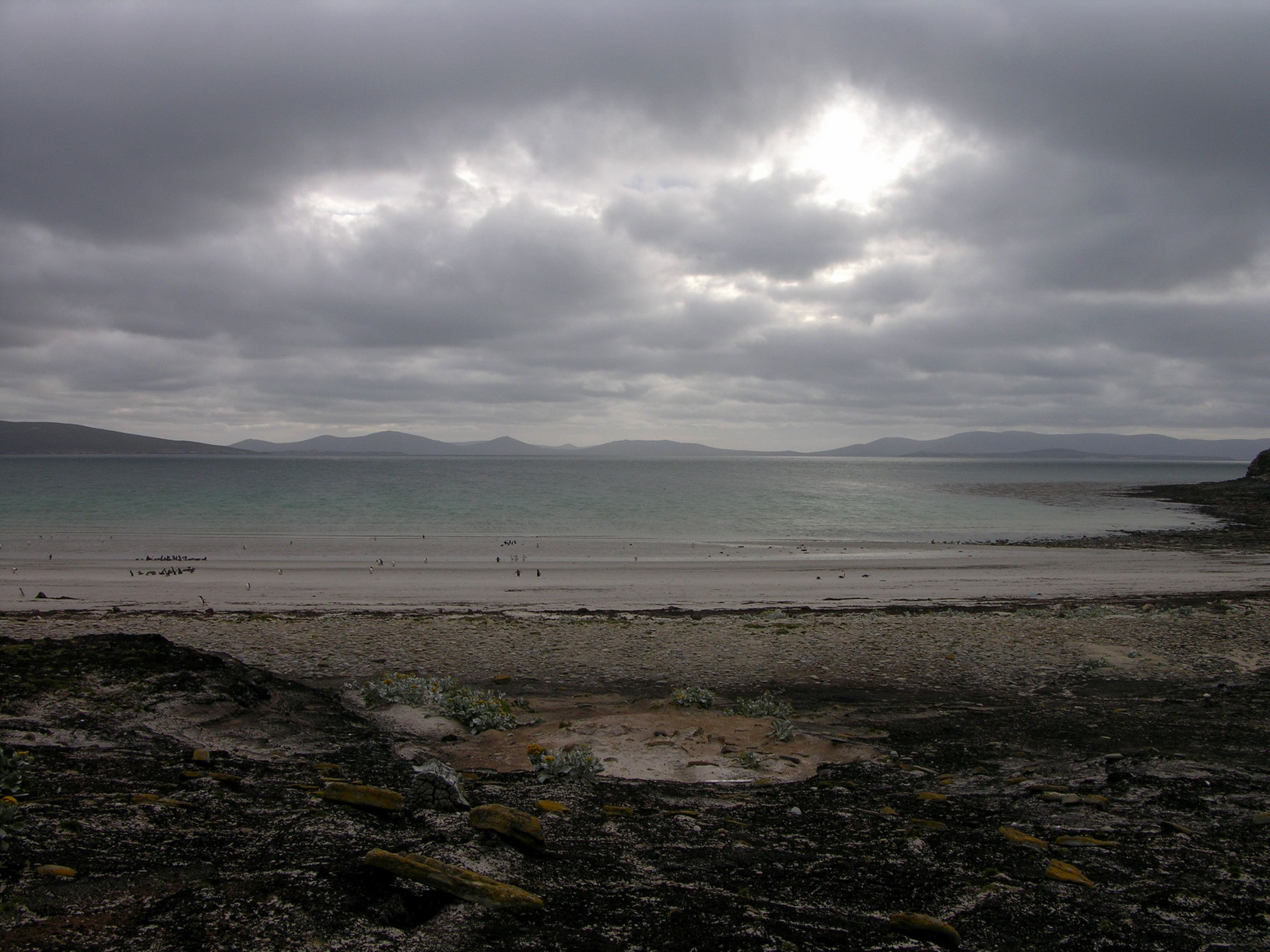
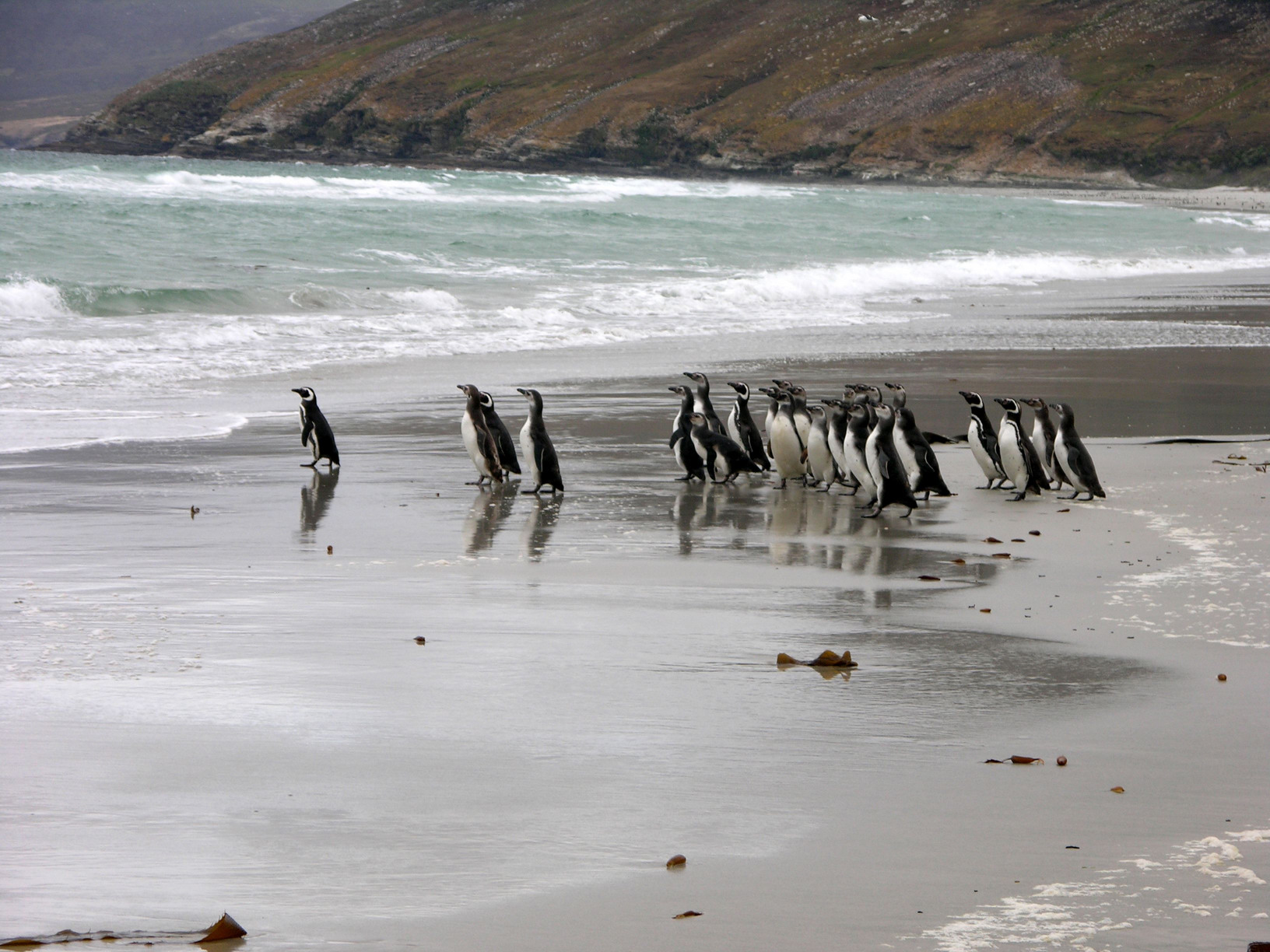
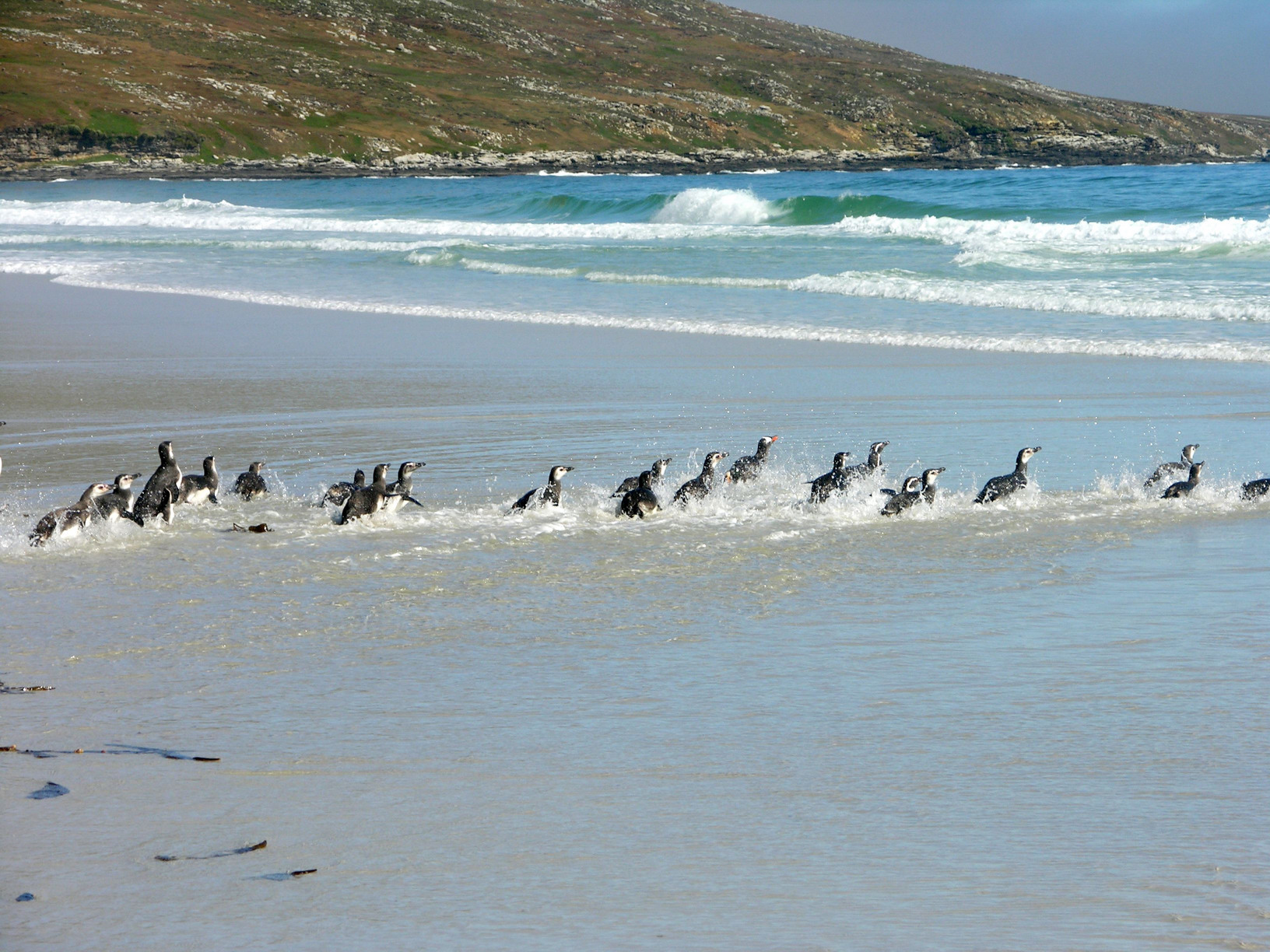
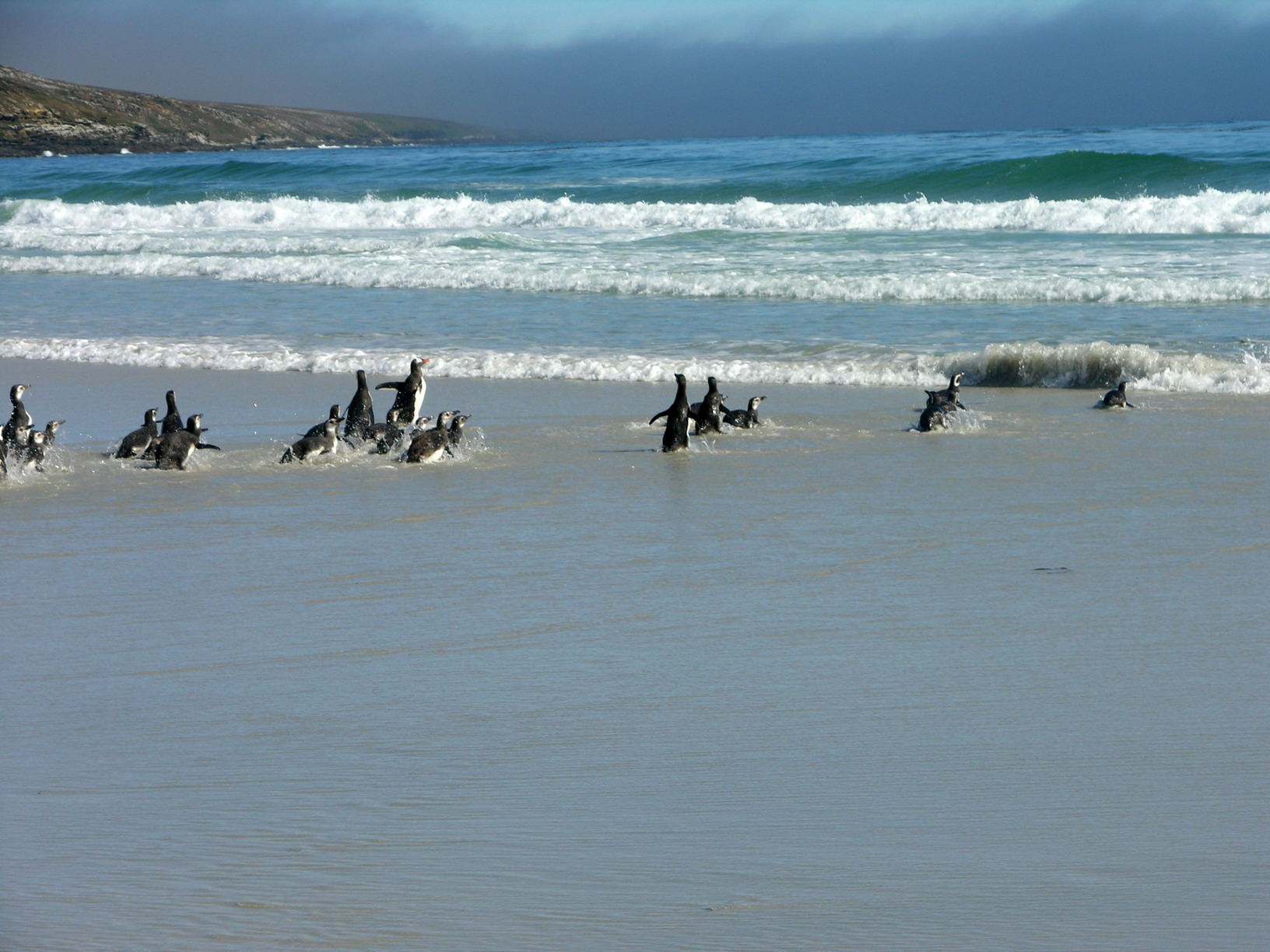
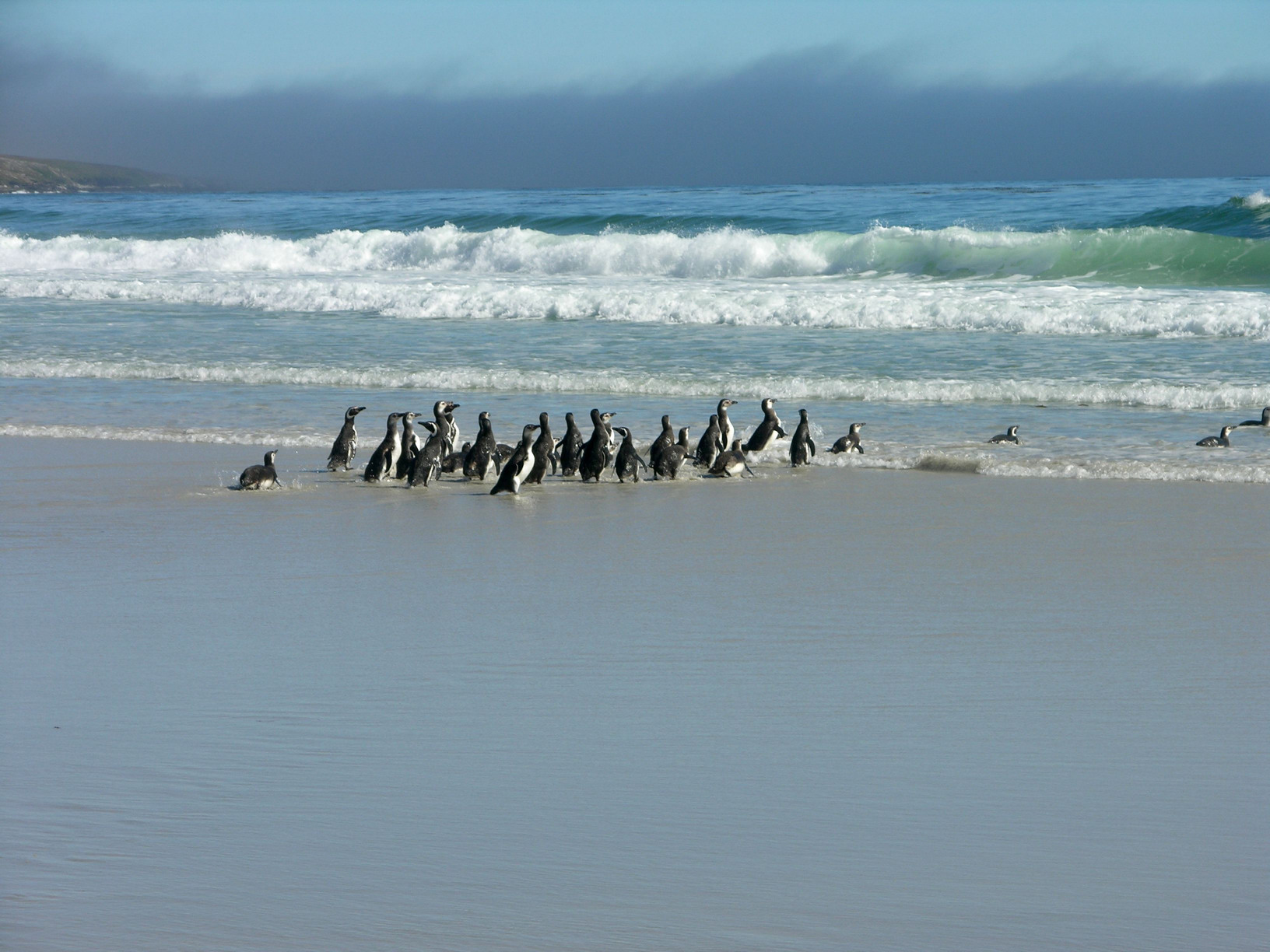
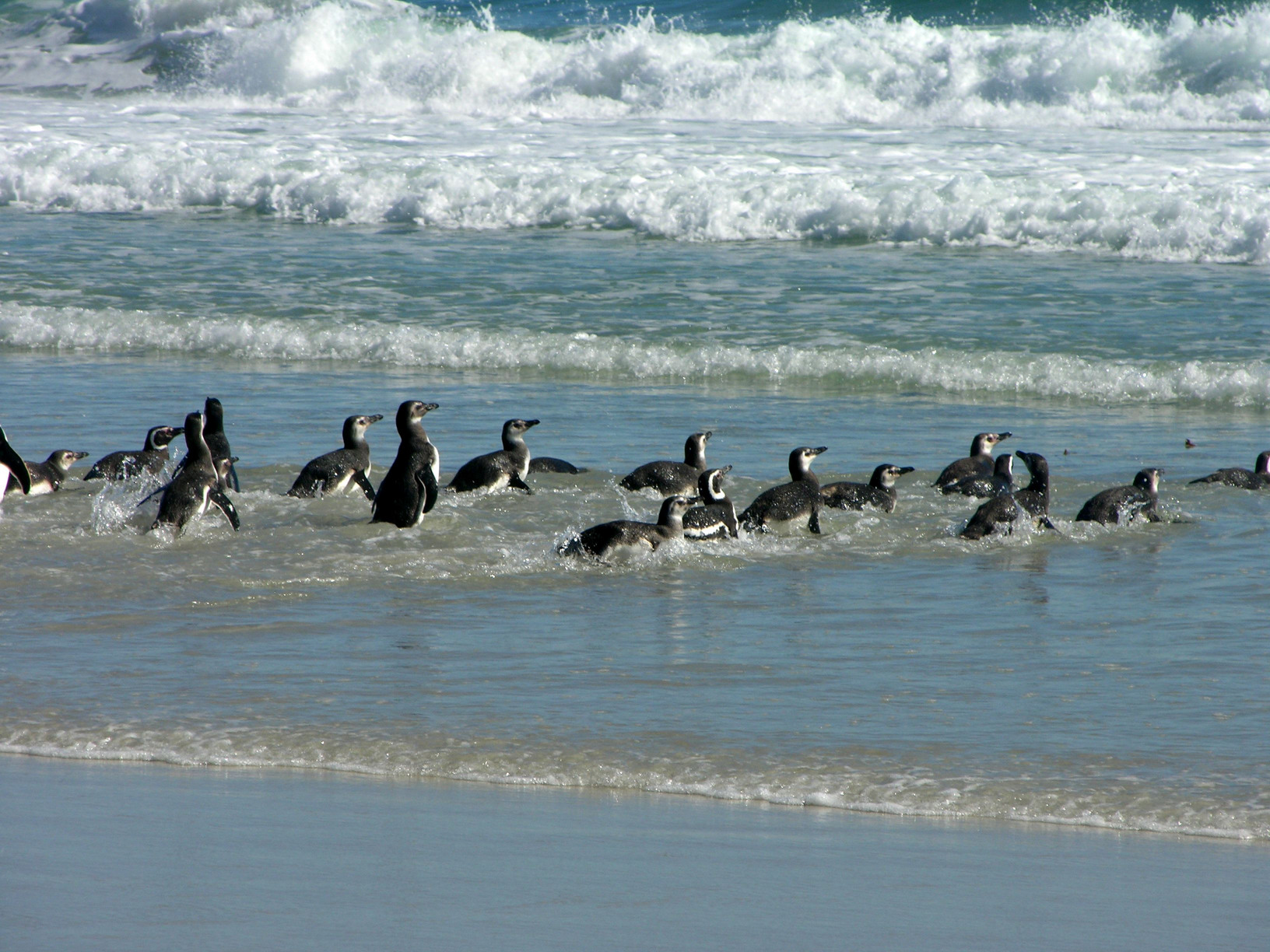
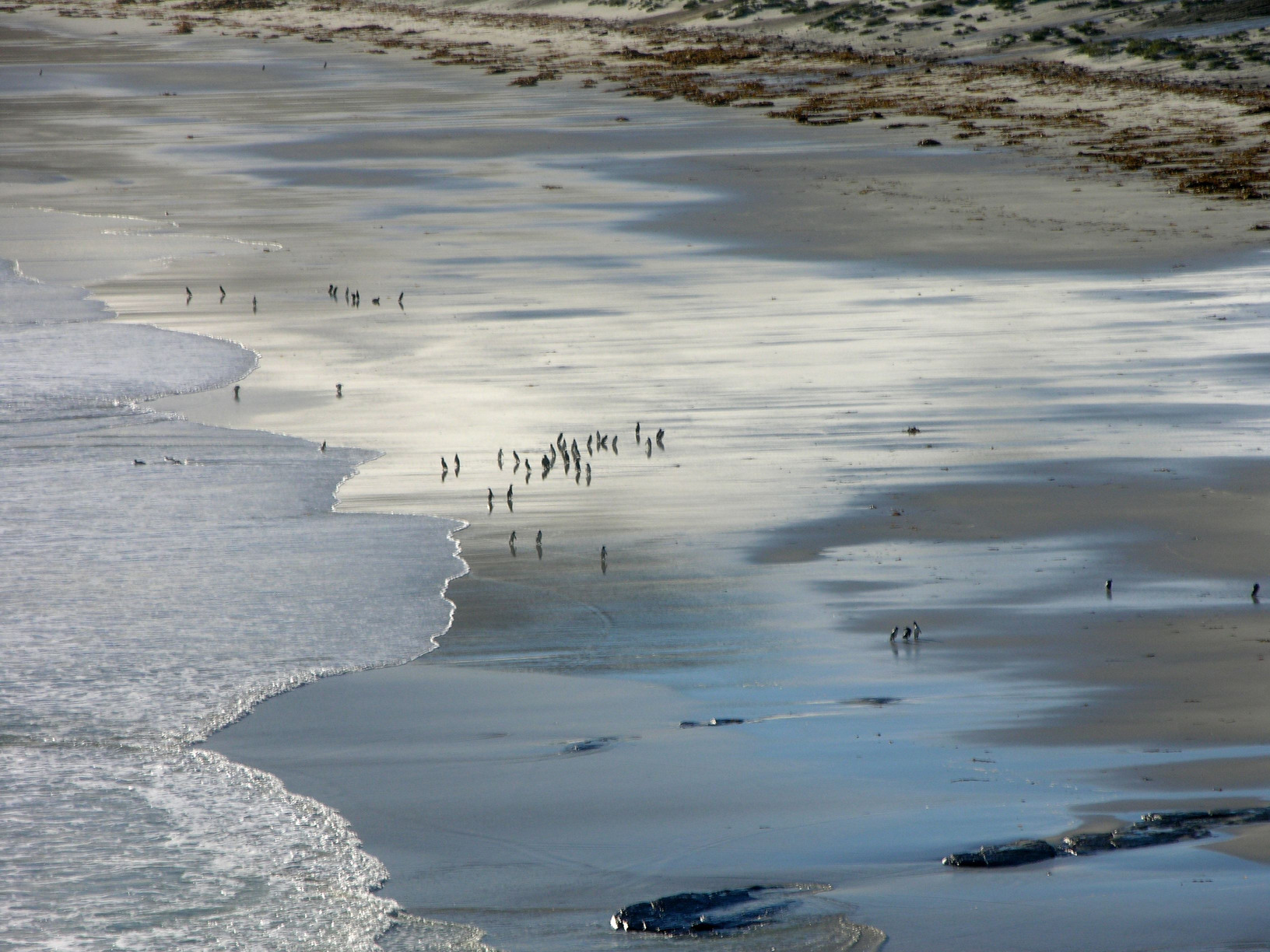
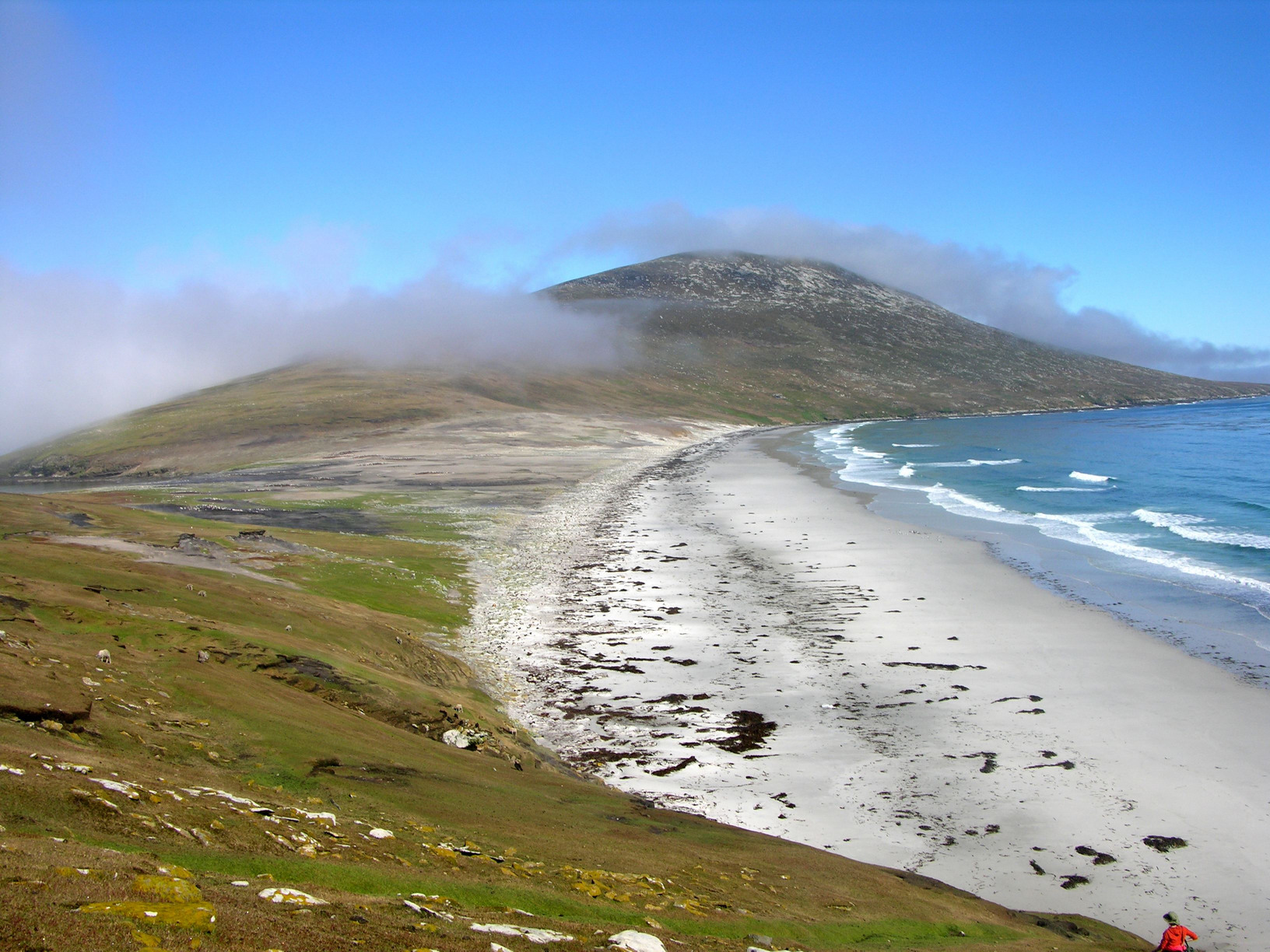
Penguins are everywhere here, especially Magellanics. They live in families in their own burrows, so you can run into them right on the runway. They dig burrows at the edges, and before a plane arrives they have to be chased away so they don't damage the wheels on landing. King penguins, rockhoppers and gentoos are a different matter. They live out at the ends of the island, especially at the western tip. There is a little isthmus there, the Neck (51°18.567′S, 60°14.171′W). It was fifteen kilometres, and Susan was prepared to take us in her jeep in two hours for thirty pounds. We wanted to walk, and she accepted it without a murmur, even though it meant losing a sure payment. The walk took us three hours. After yesterday's fifty-kilometre walk and a bad sunburn, the walking was harder than usual. At the end of the road, when we still had the last kilometre to go, we were coming down from the hills when Susan caught up and gave us a lift after all. She had to pick somebody up.
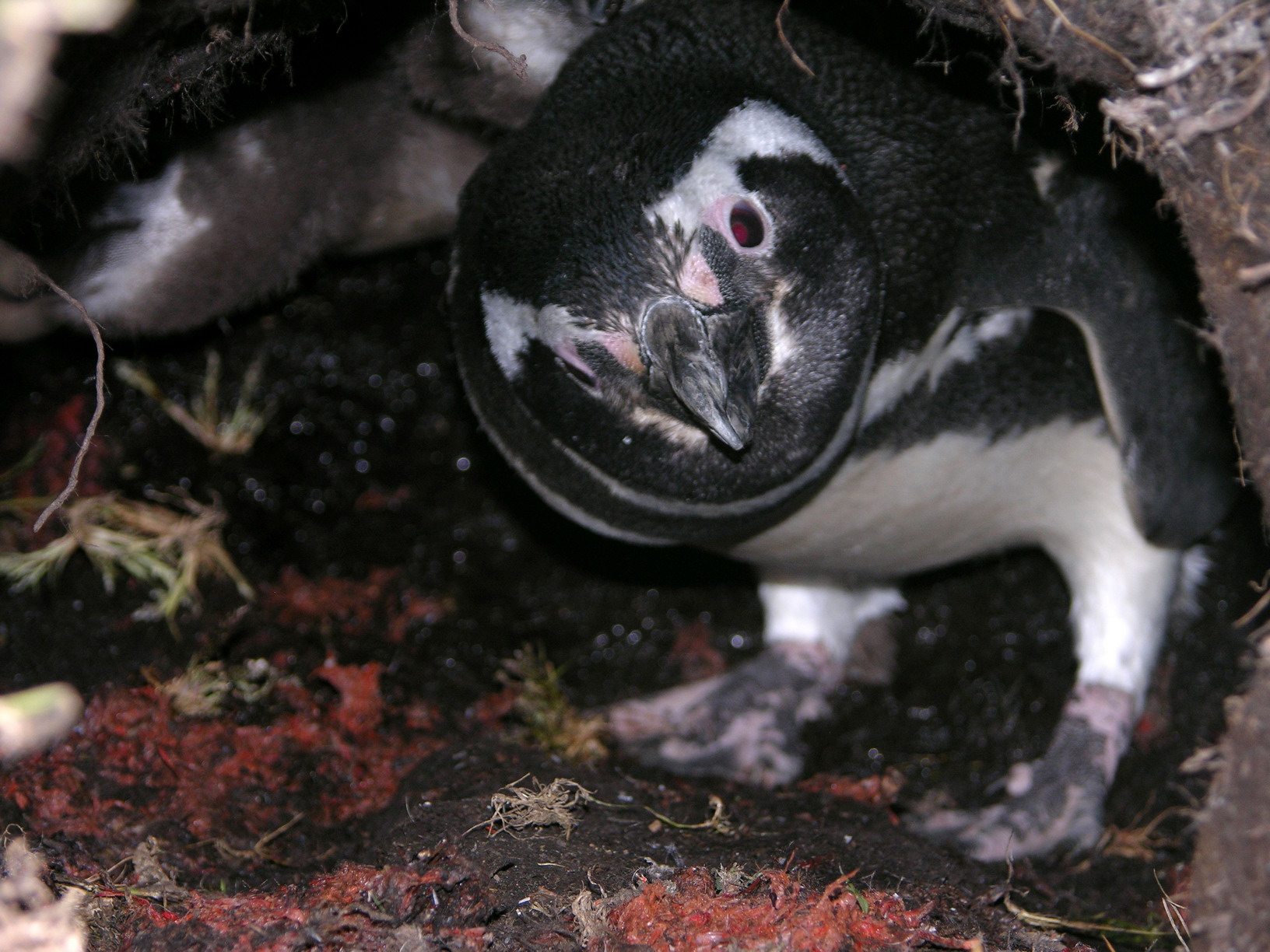
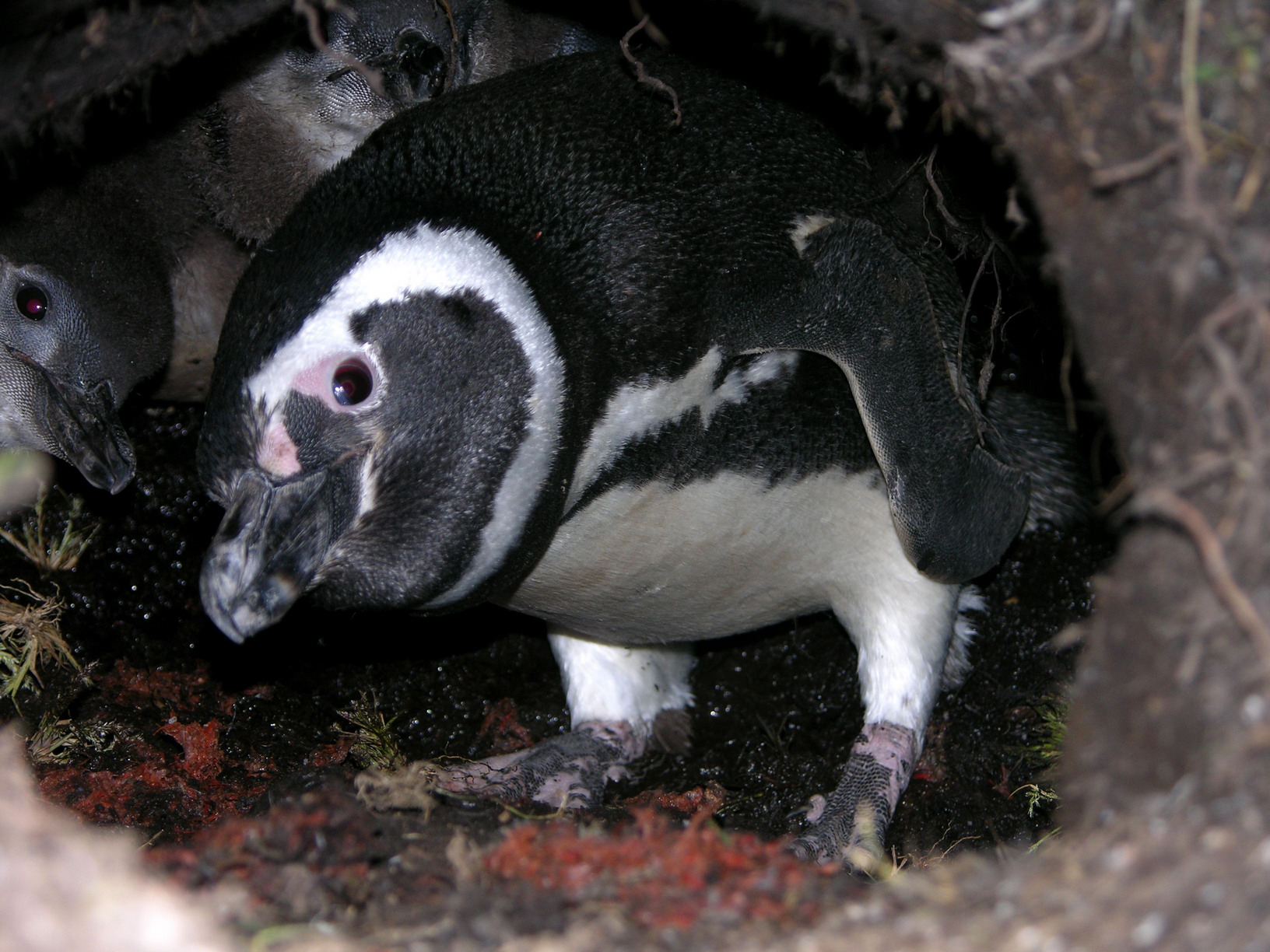
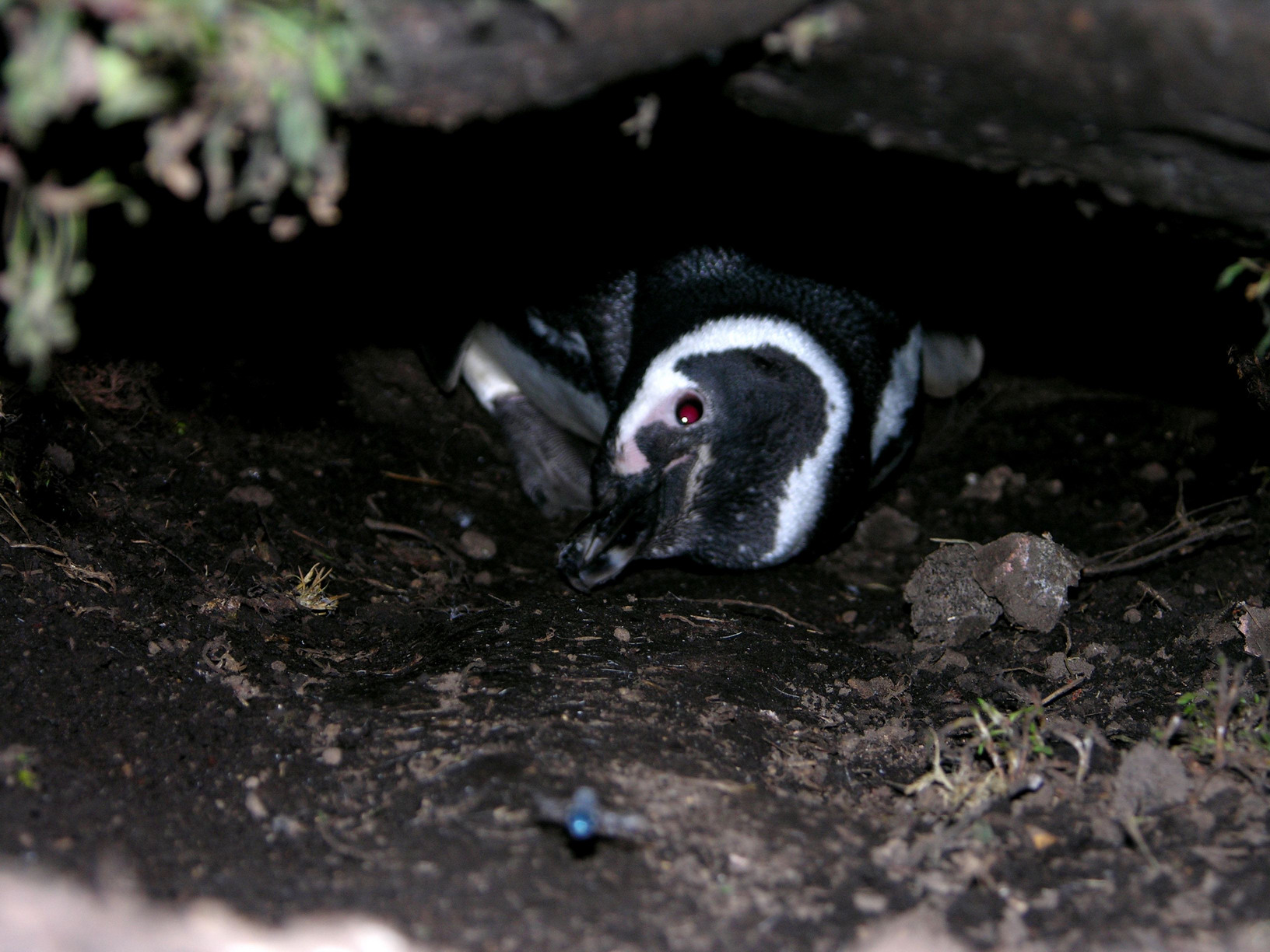
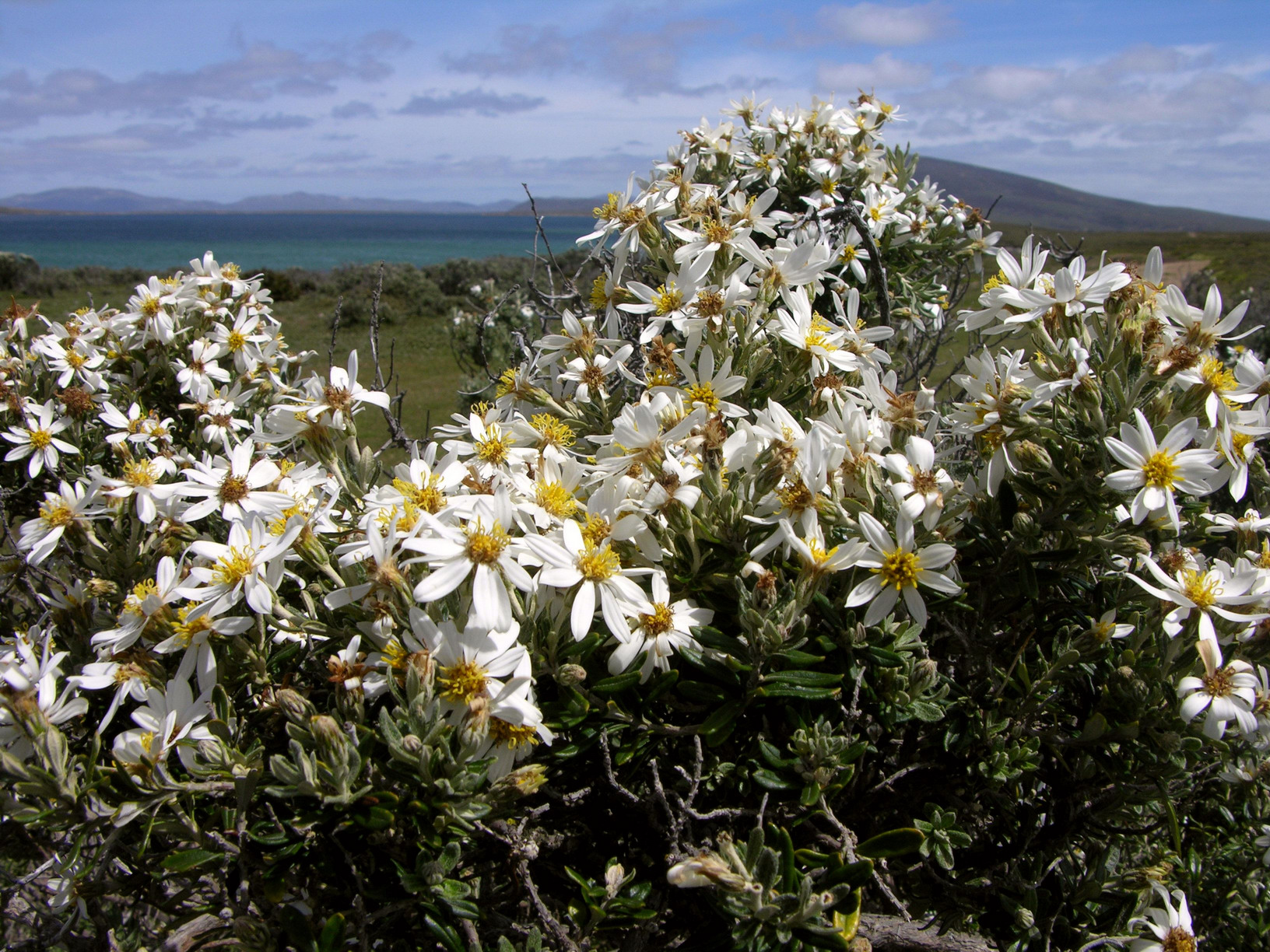
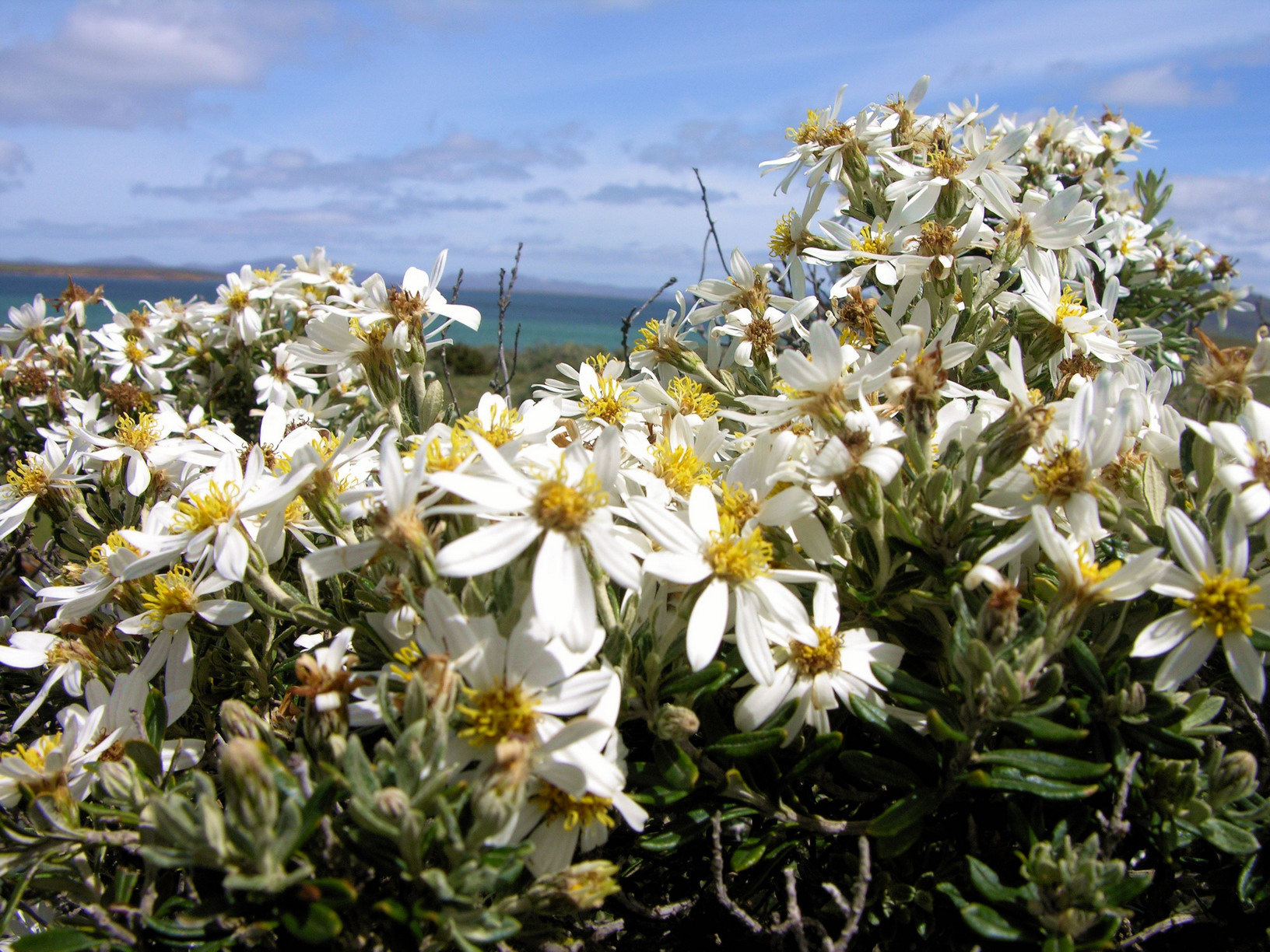
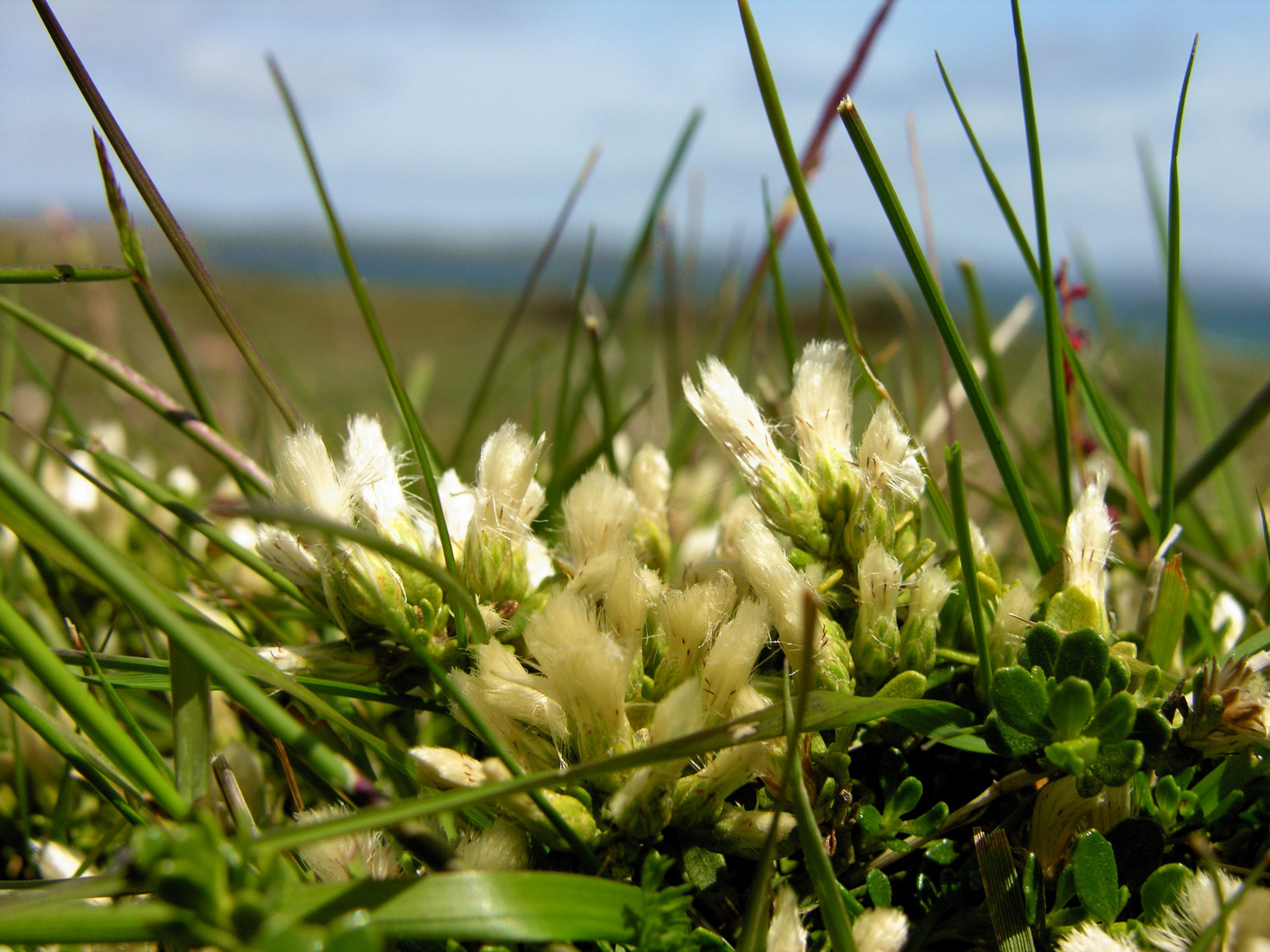
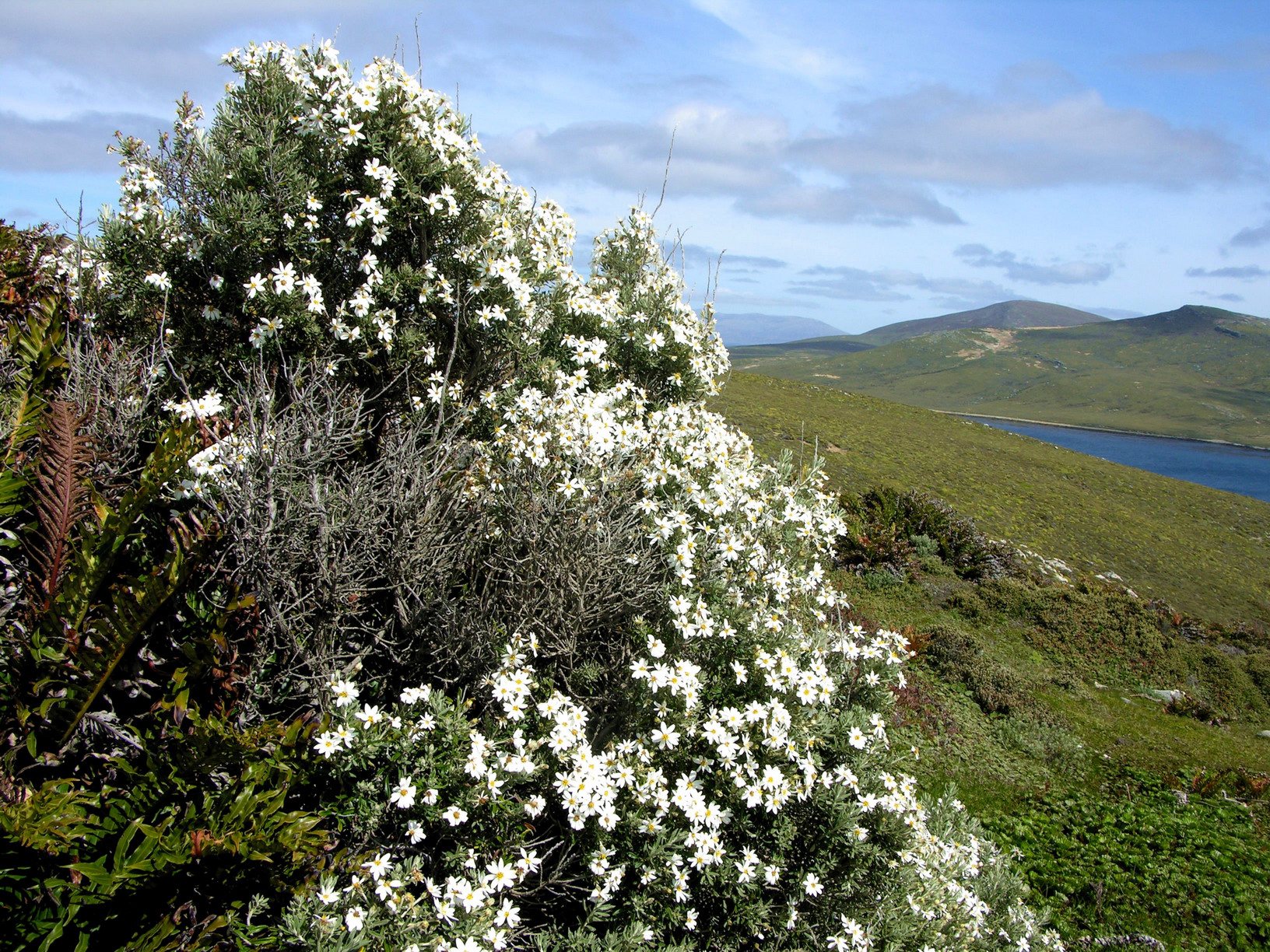
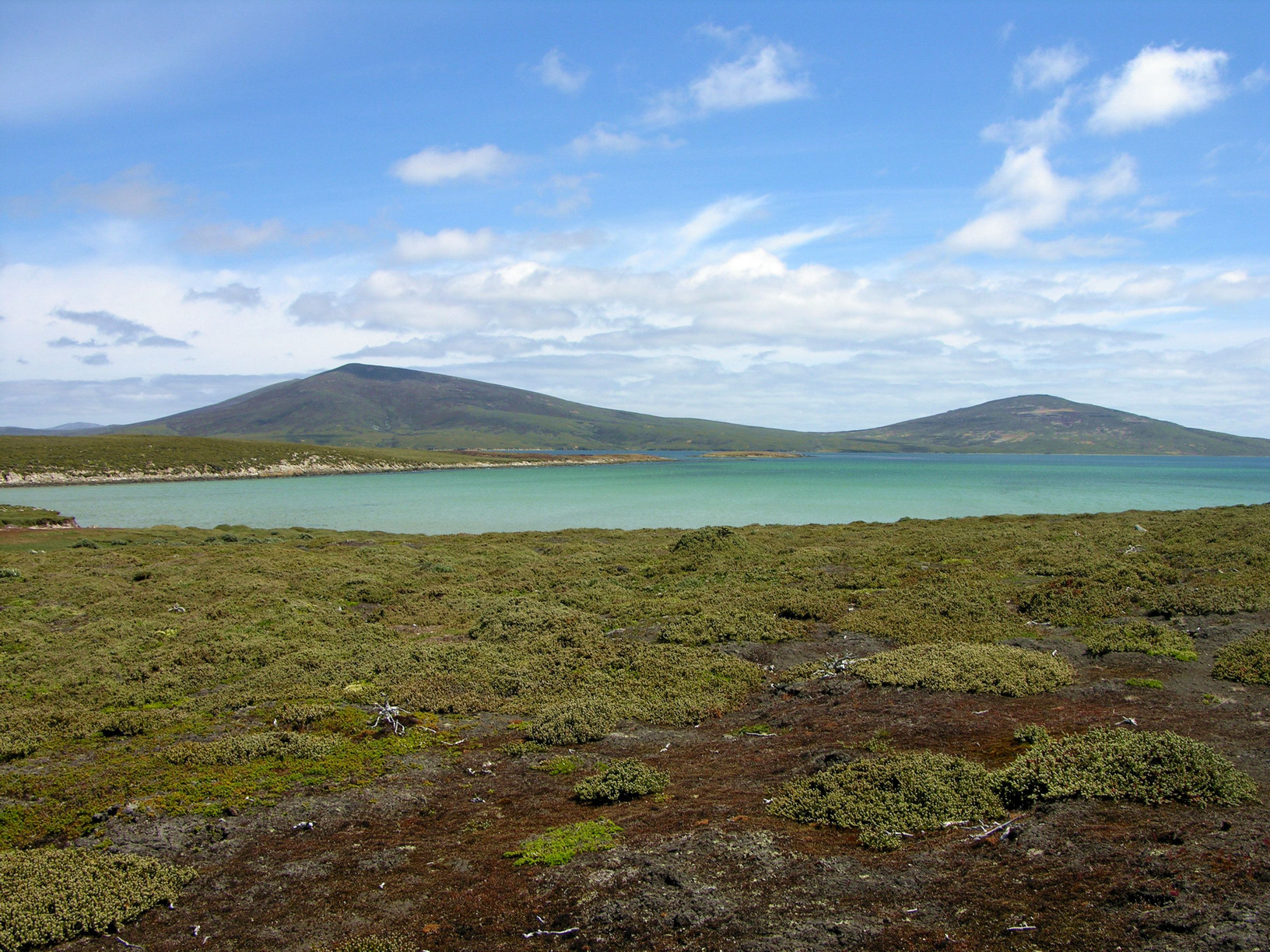
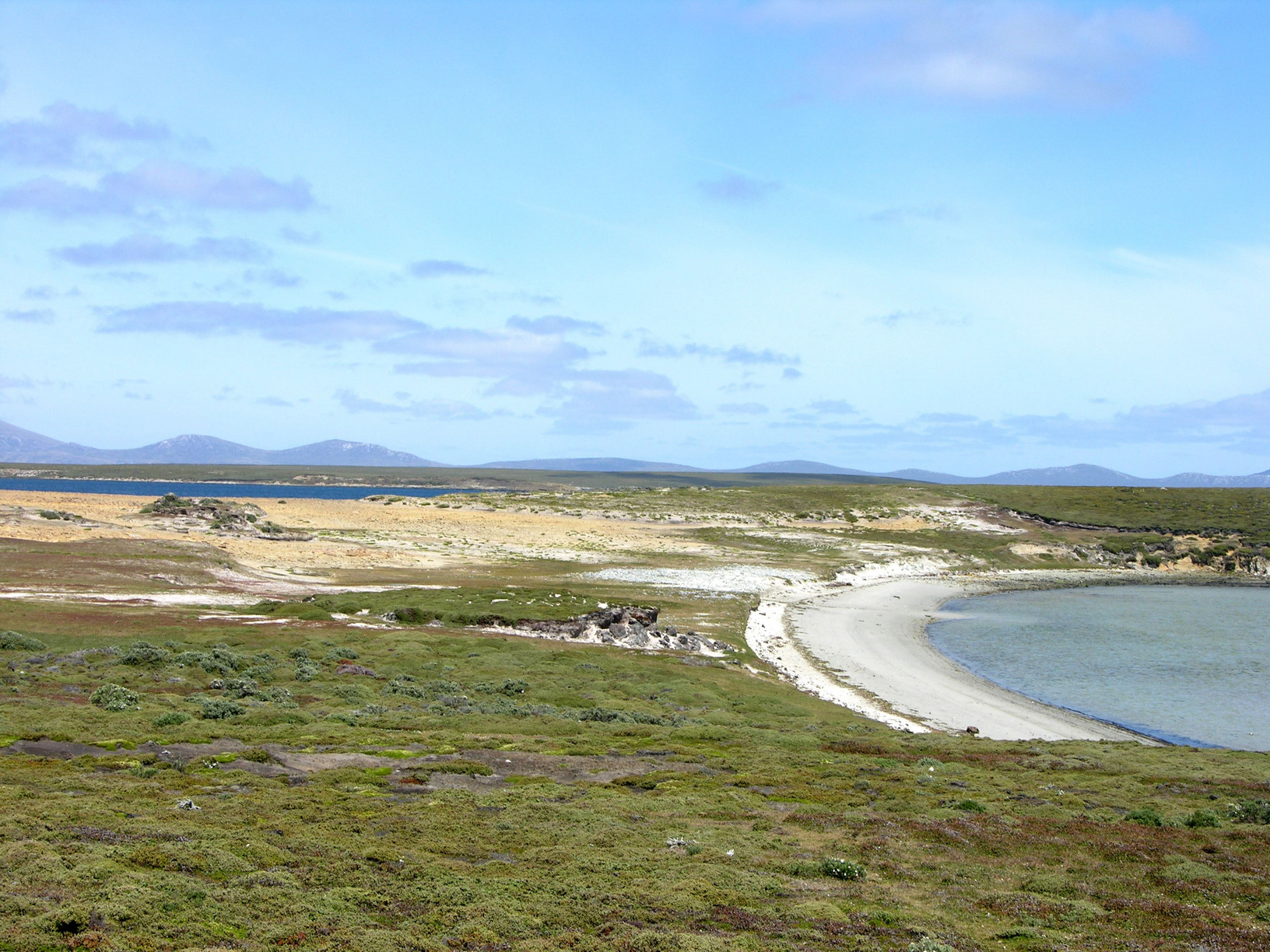
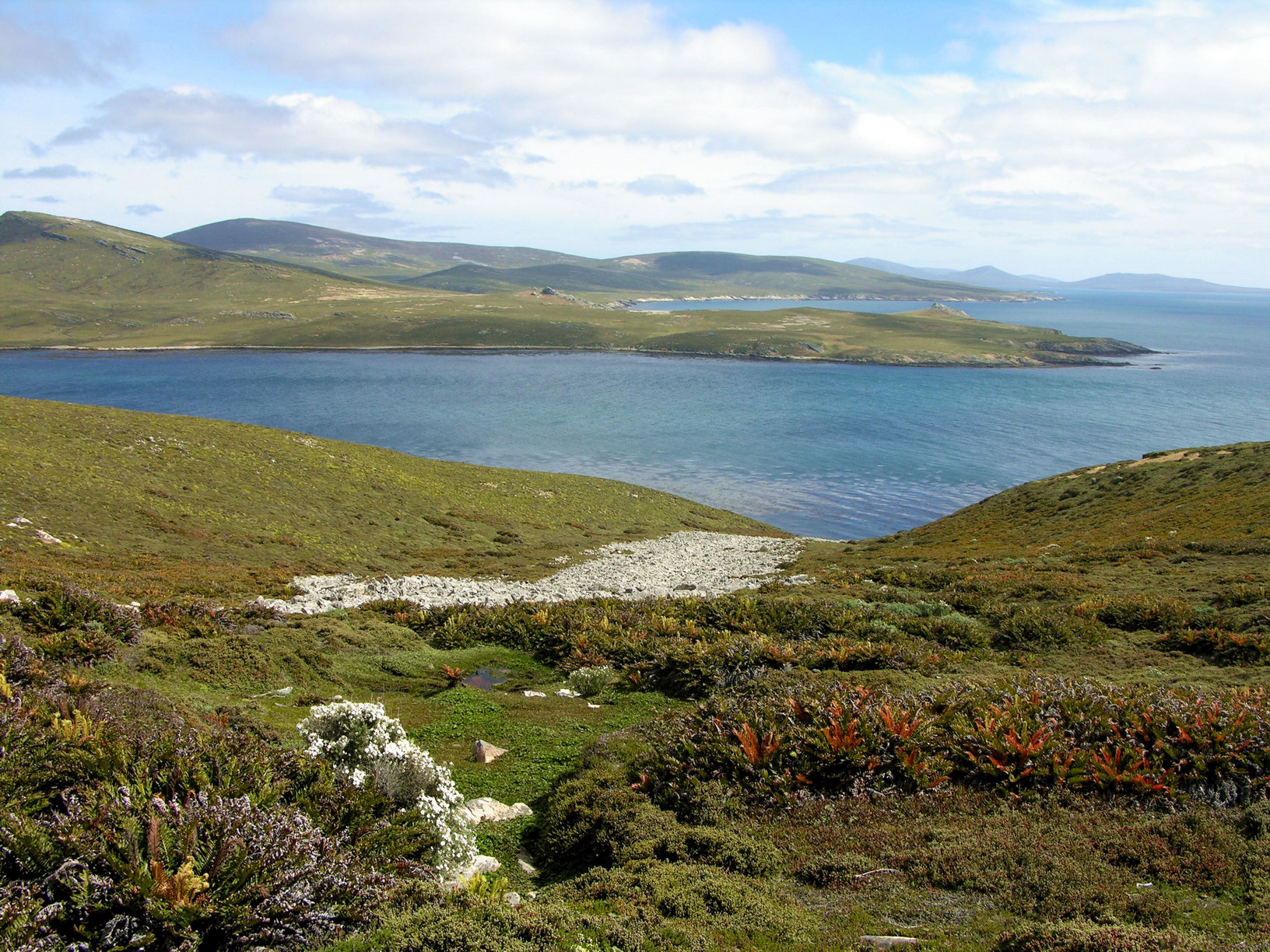
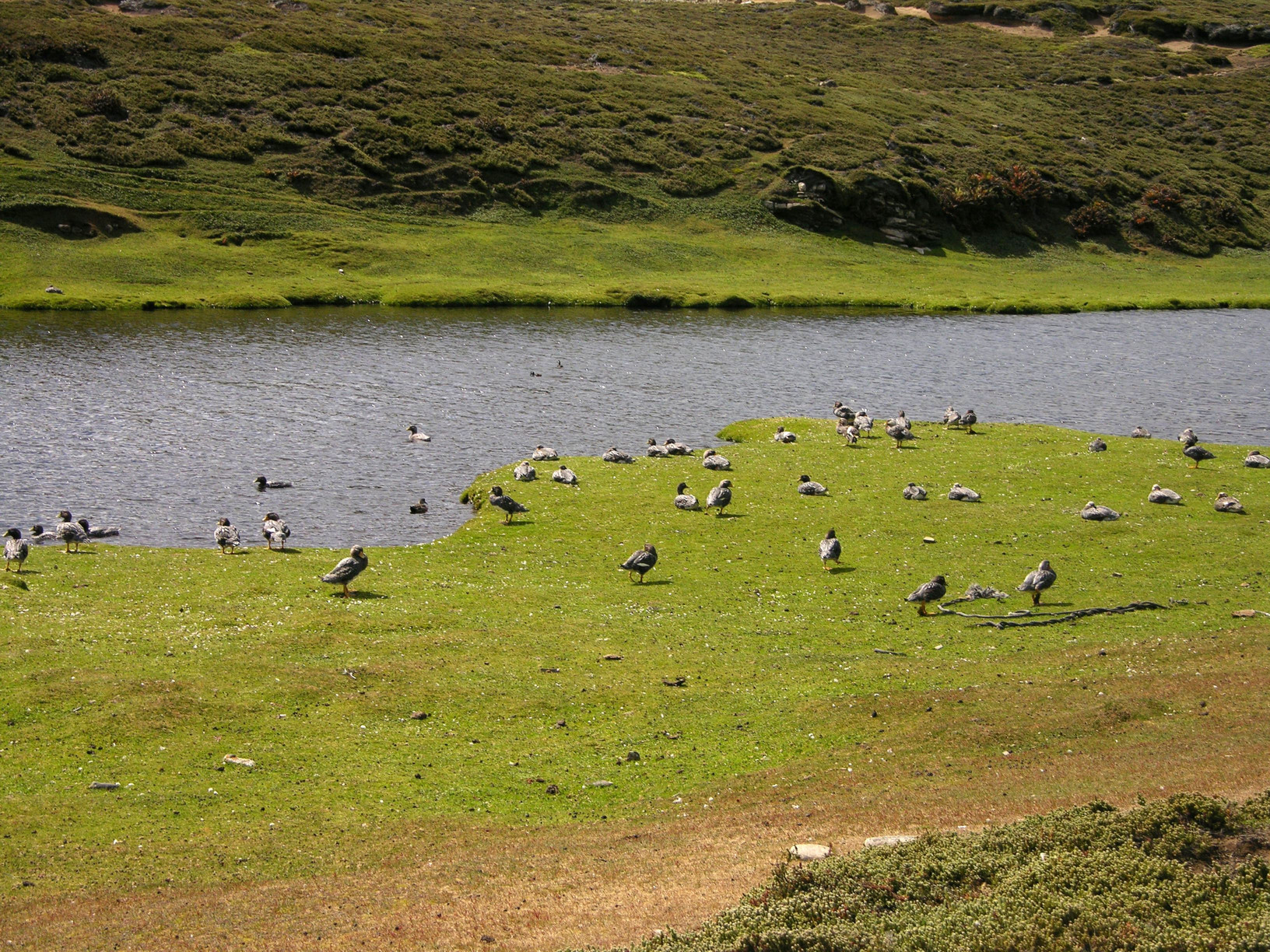
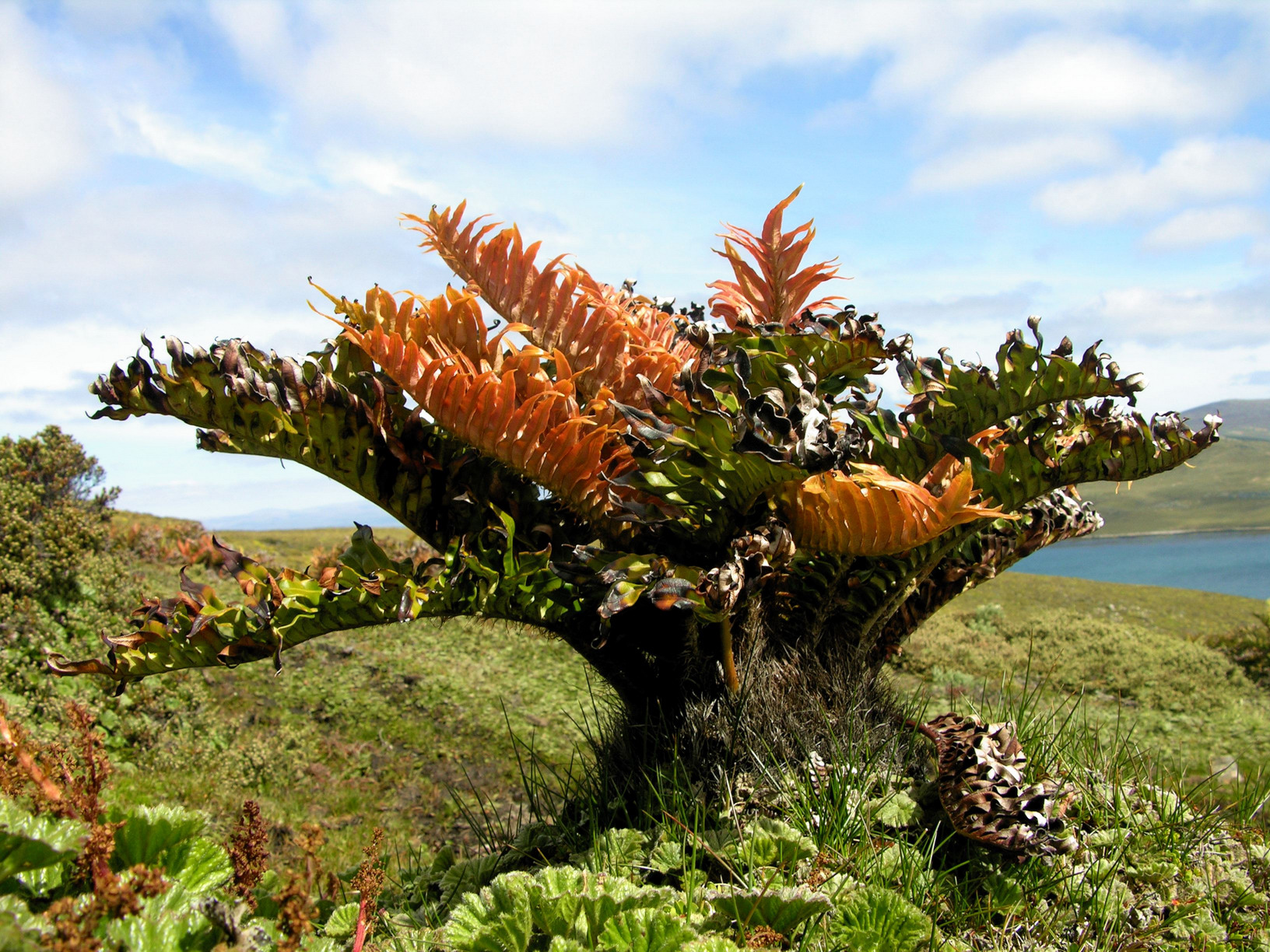
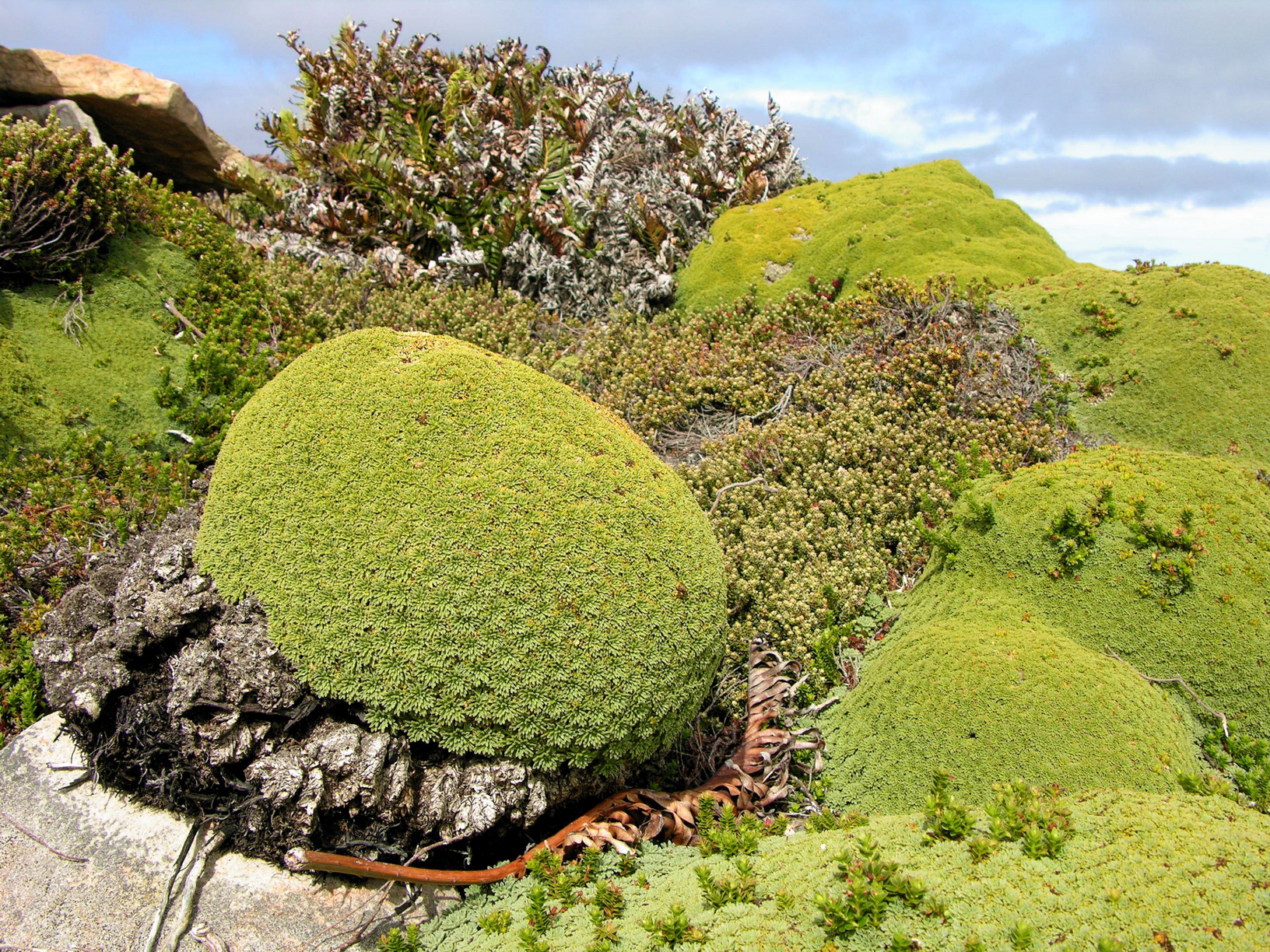
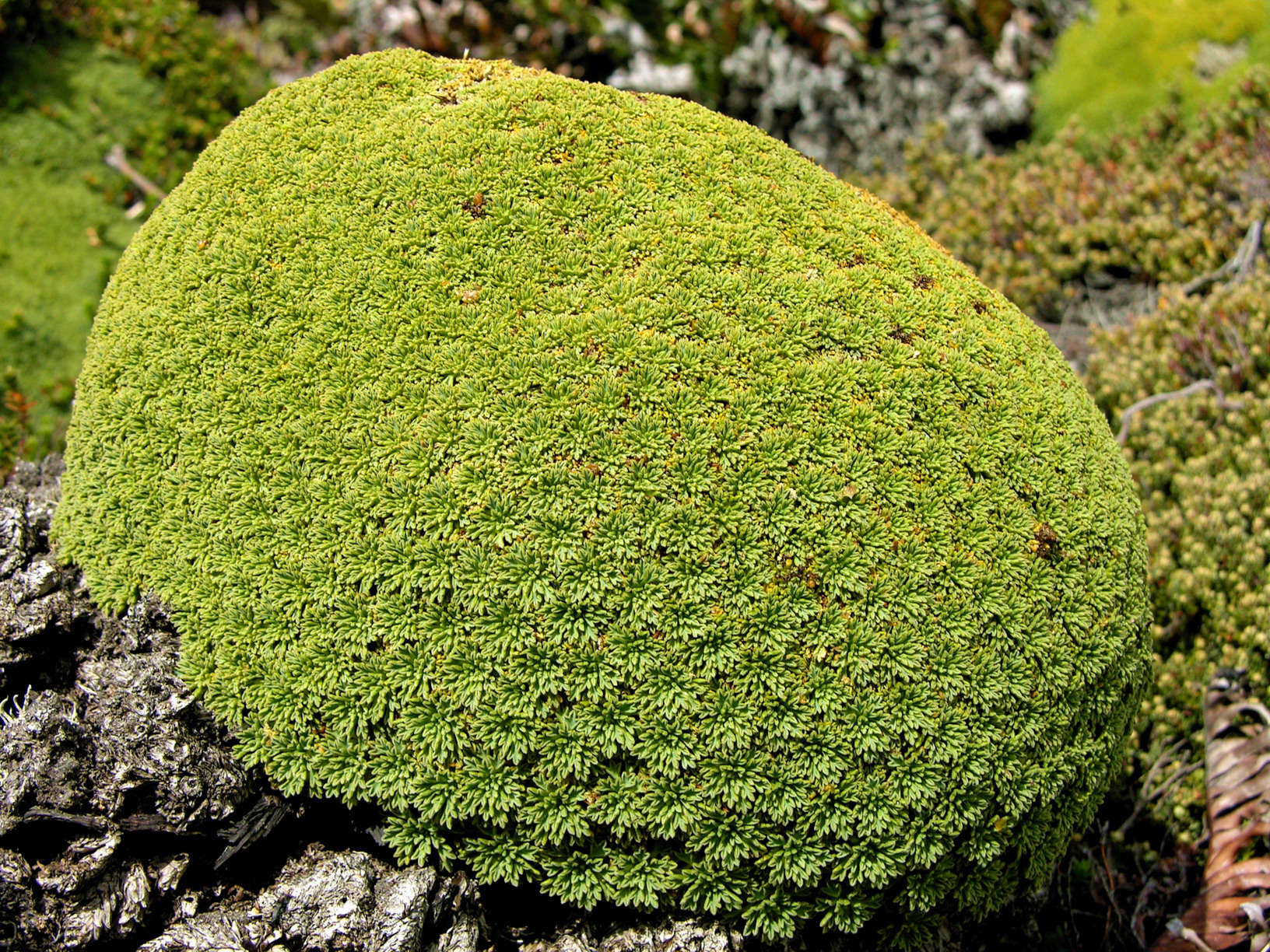
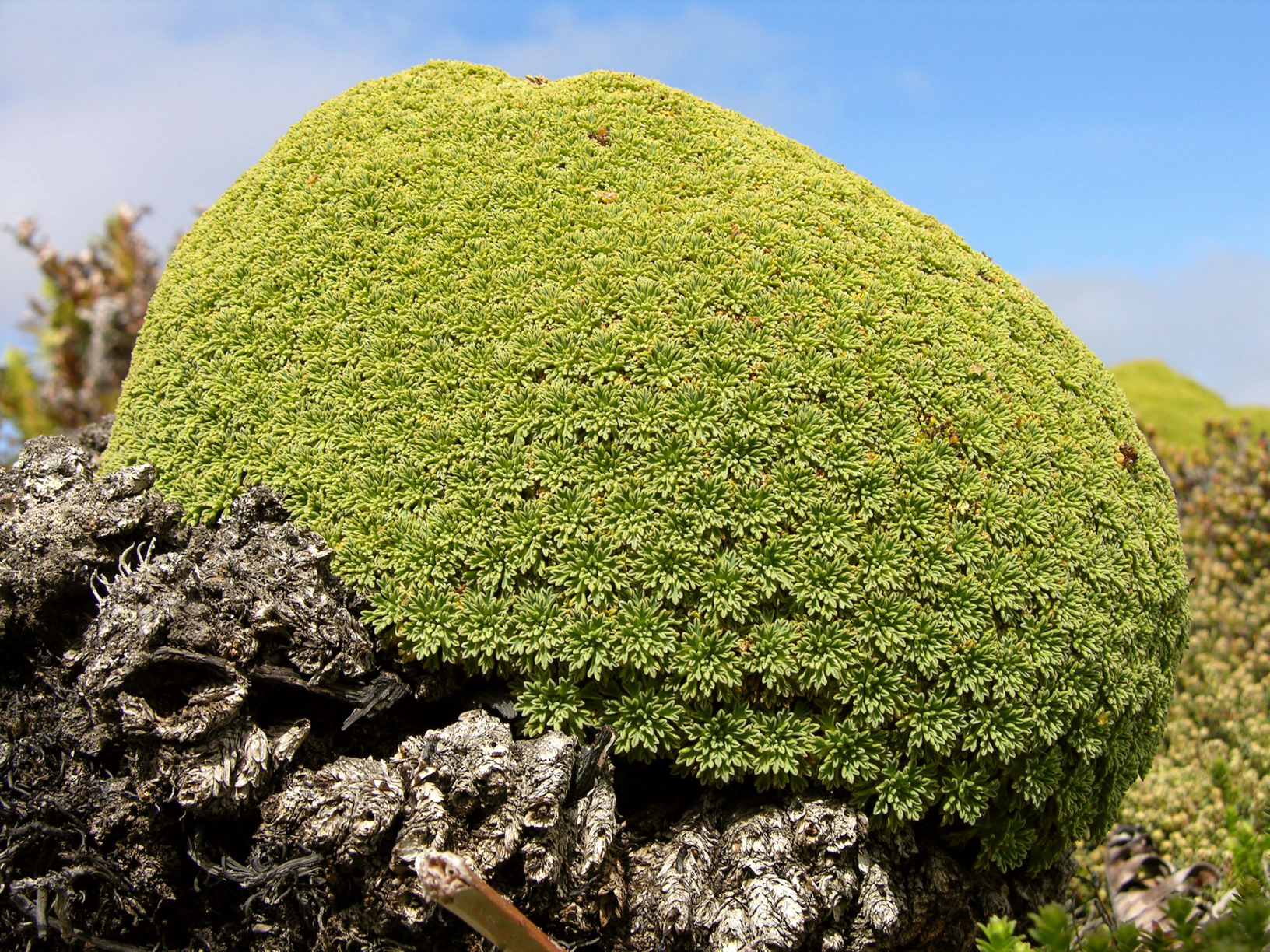
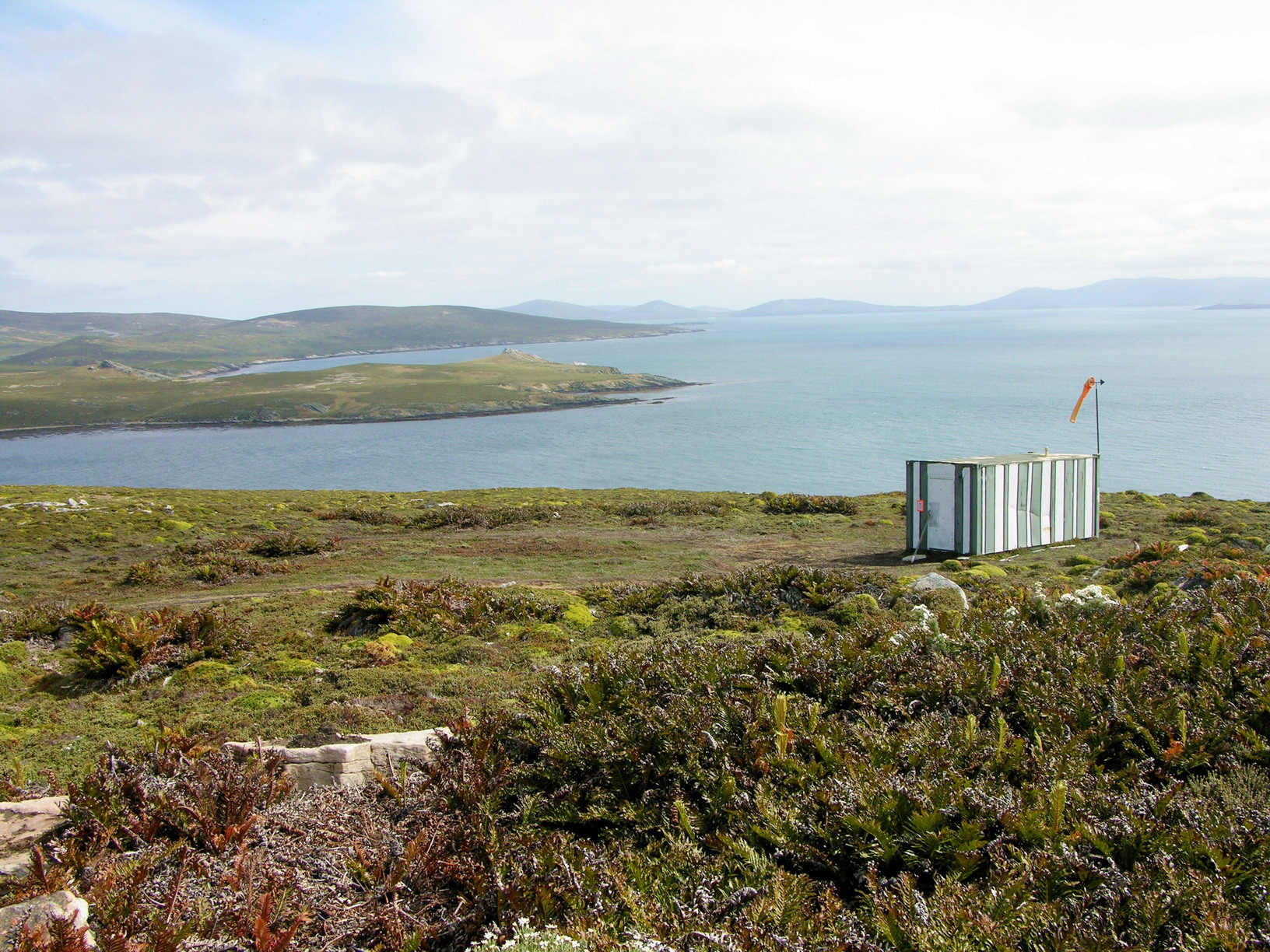
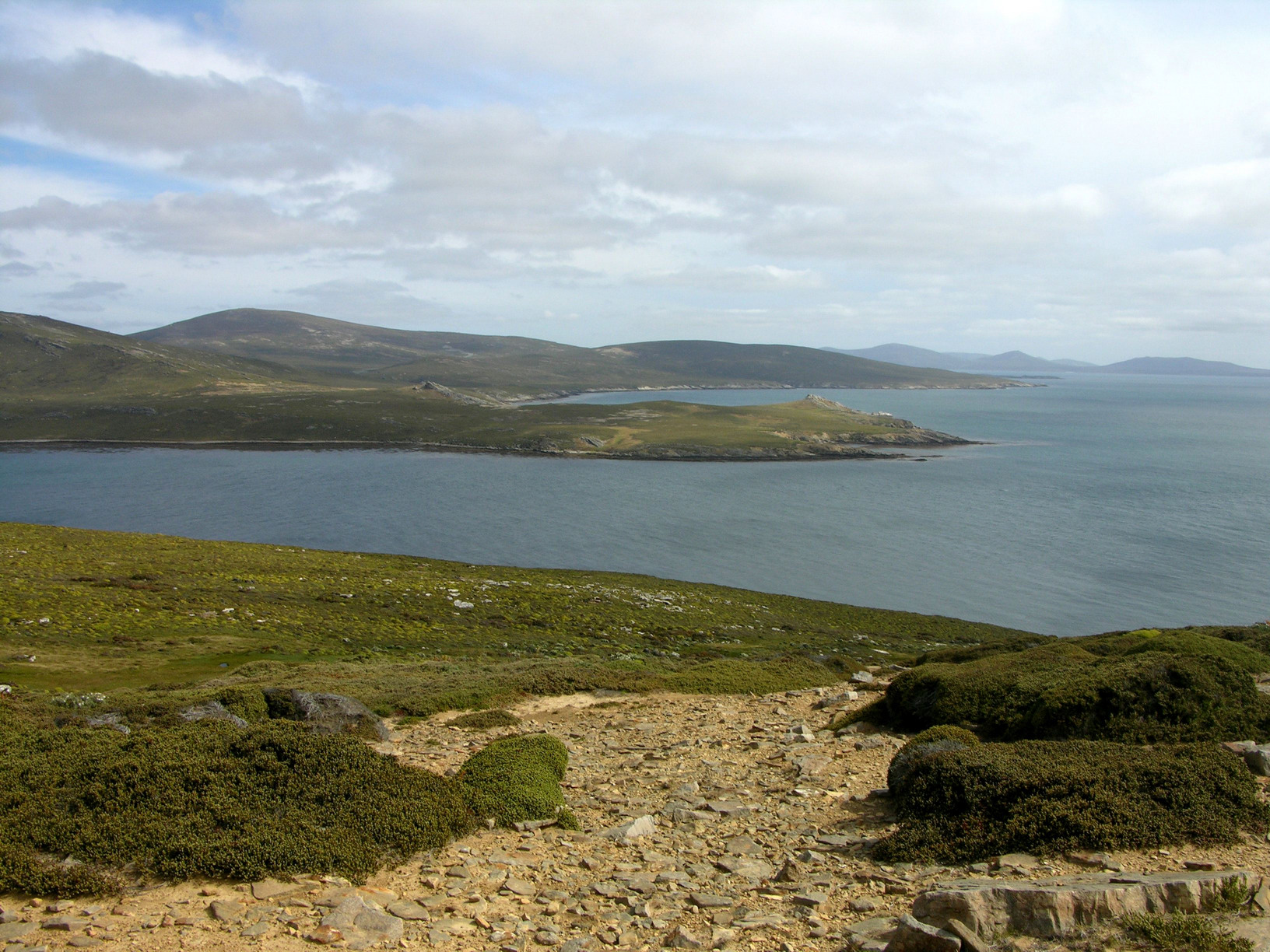
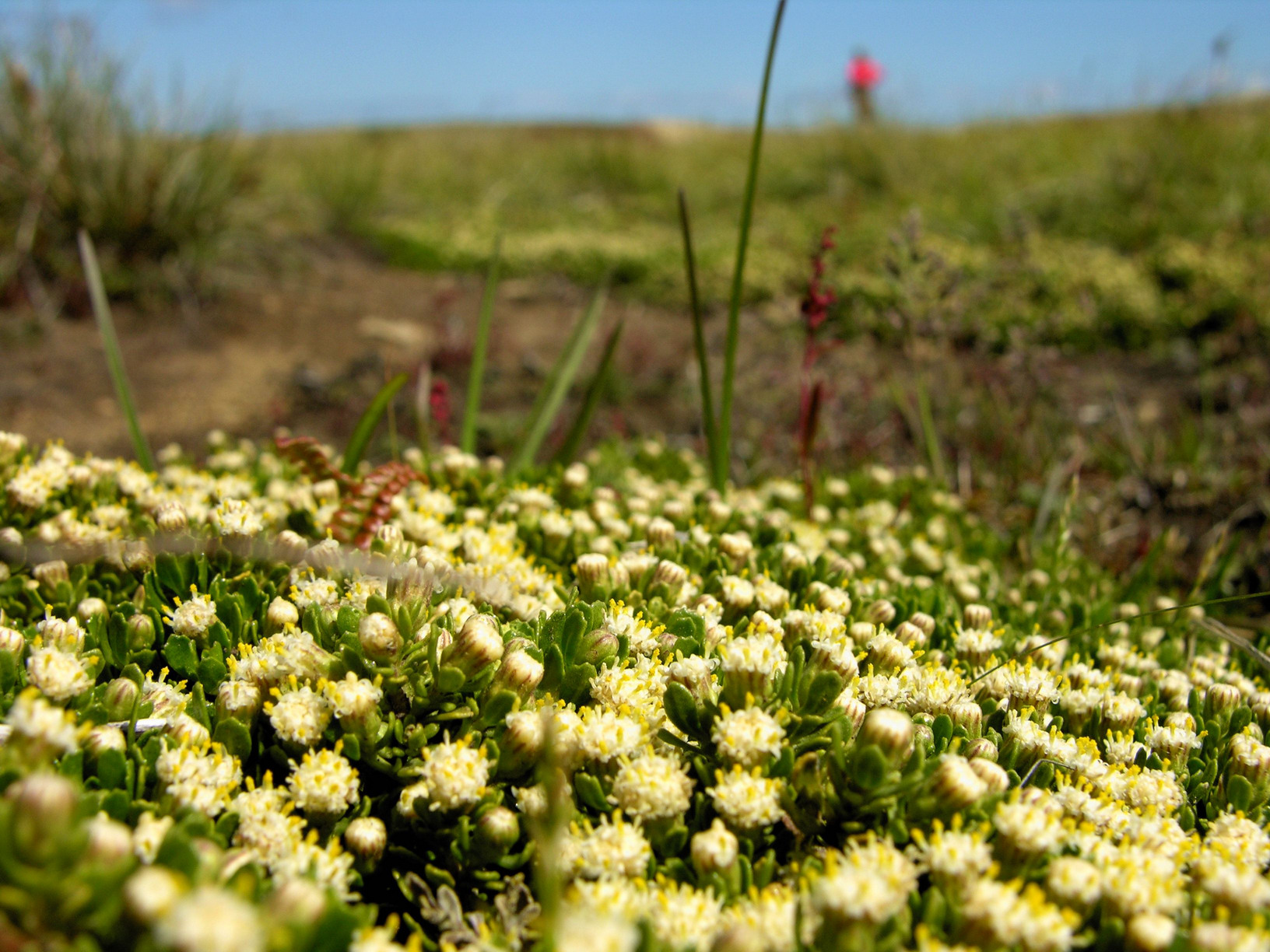
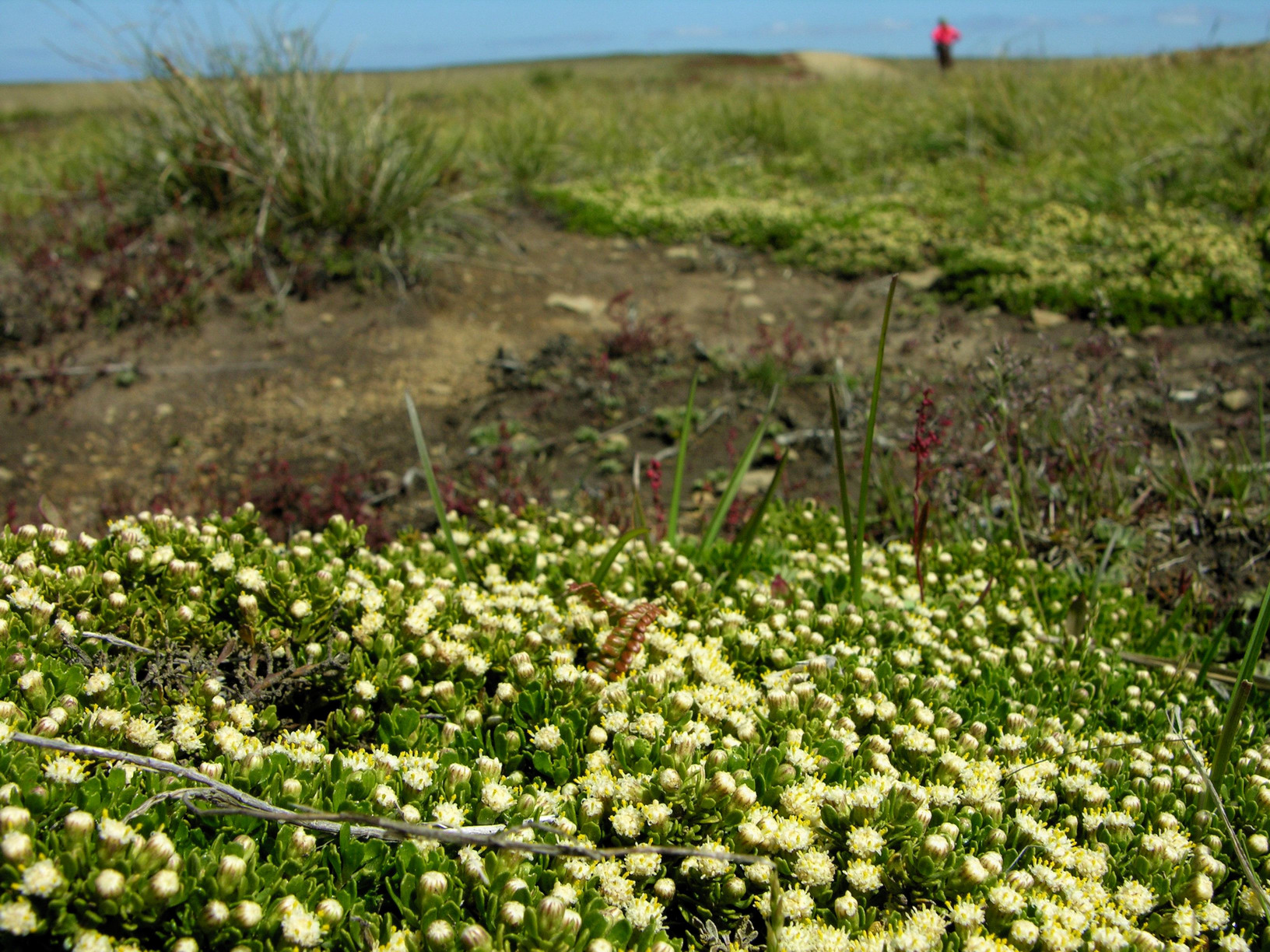
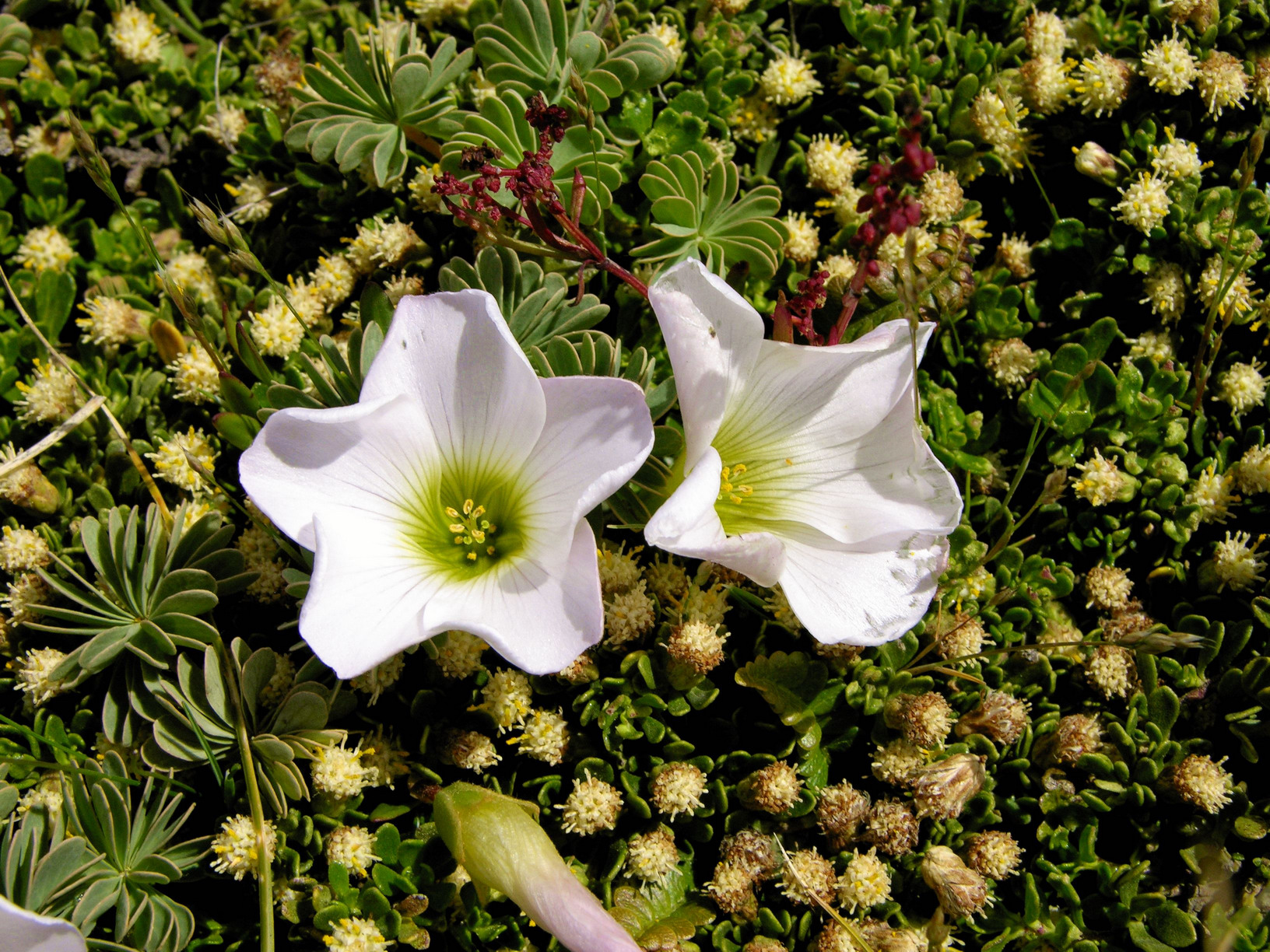
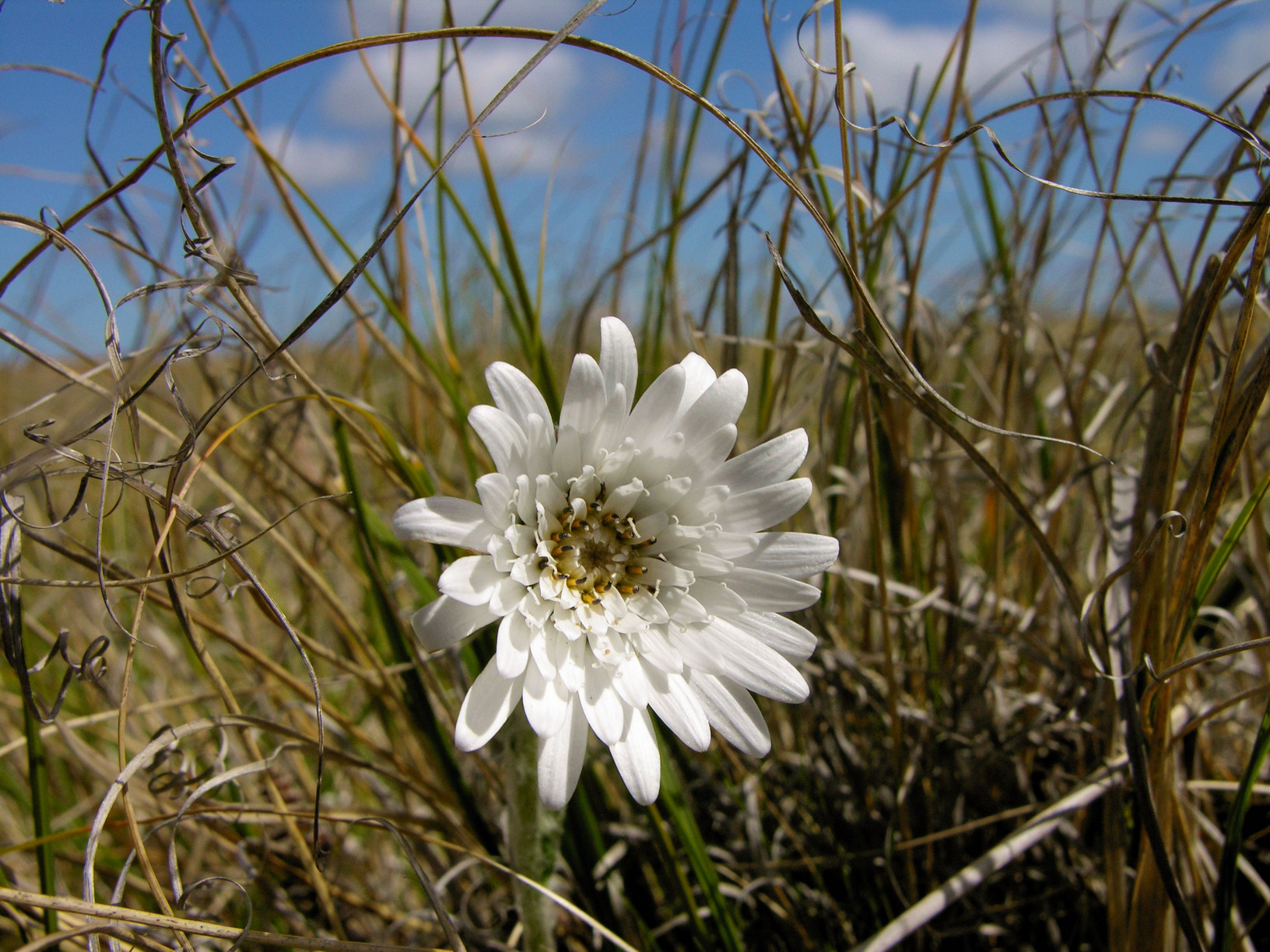
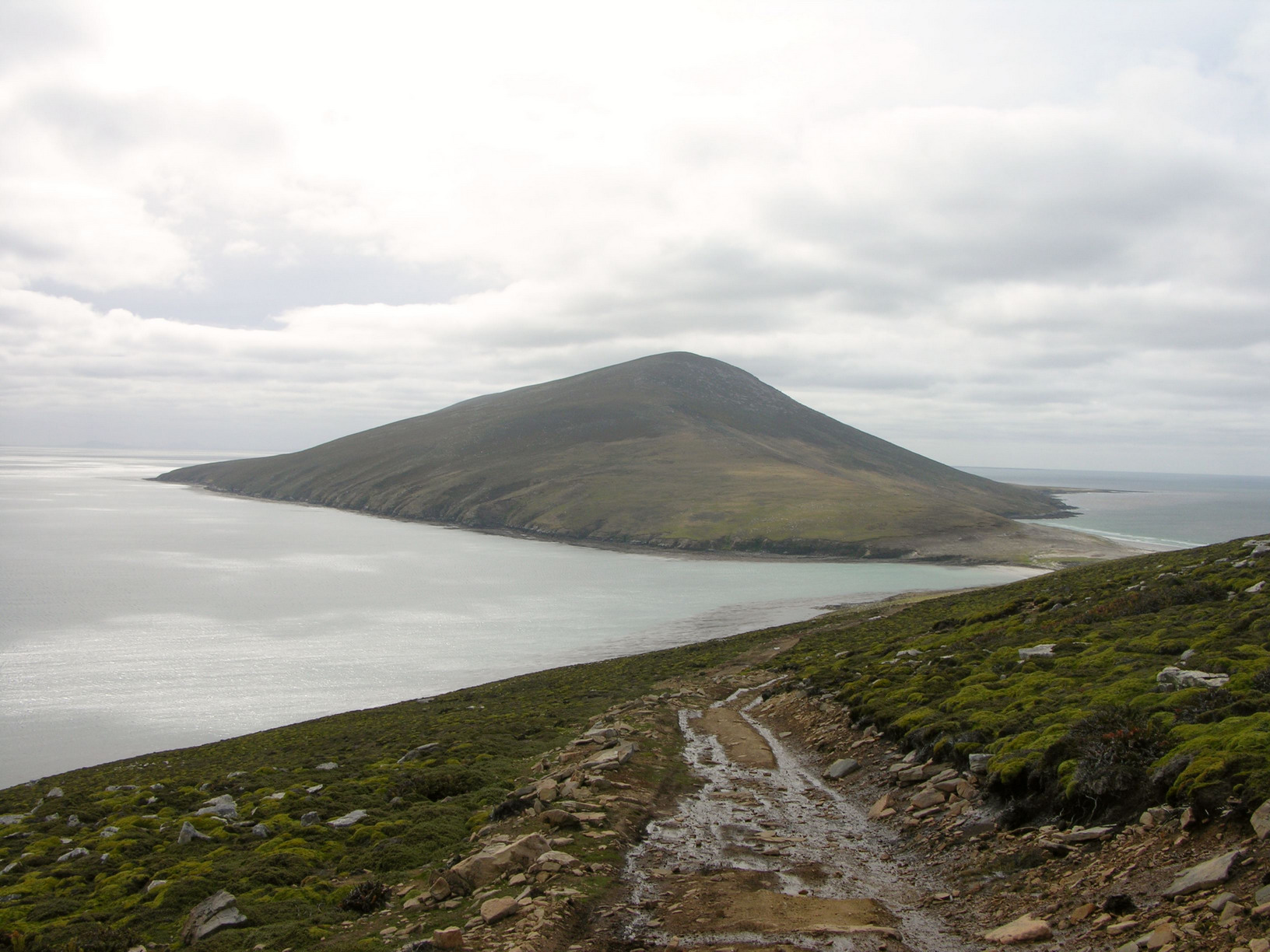
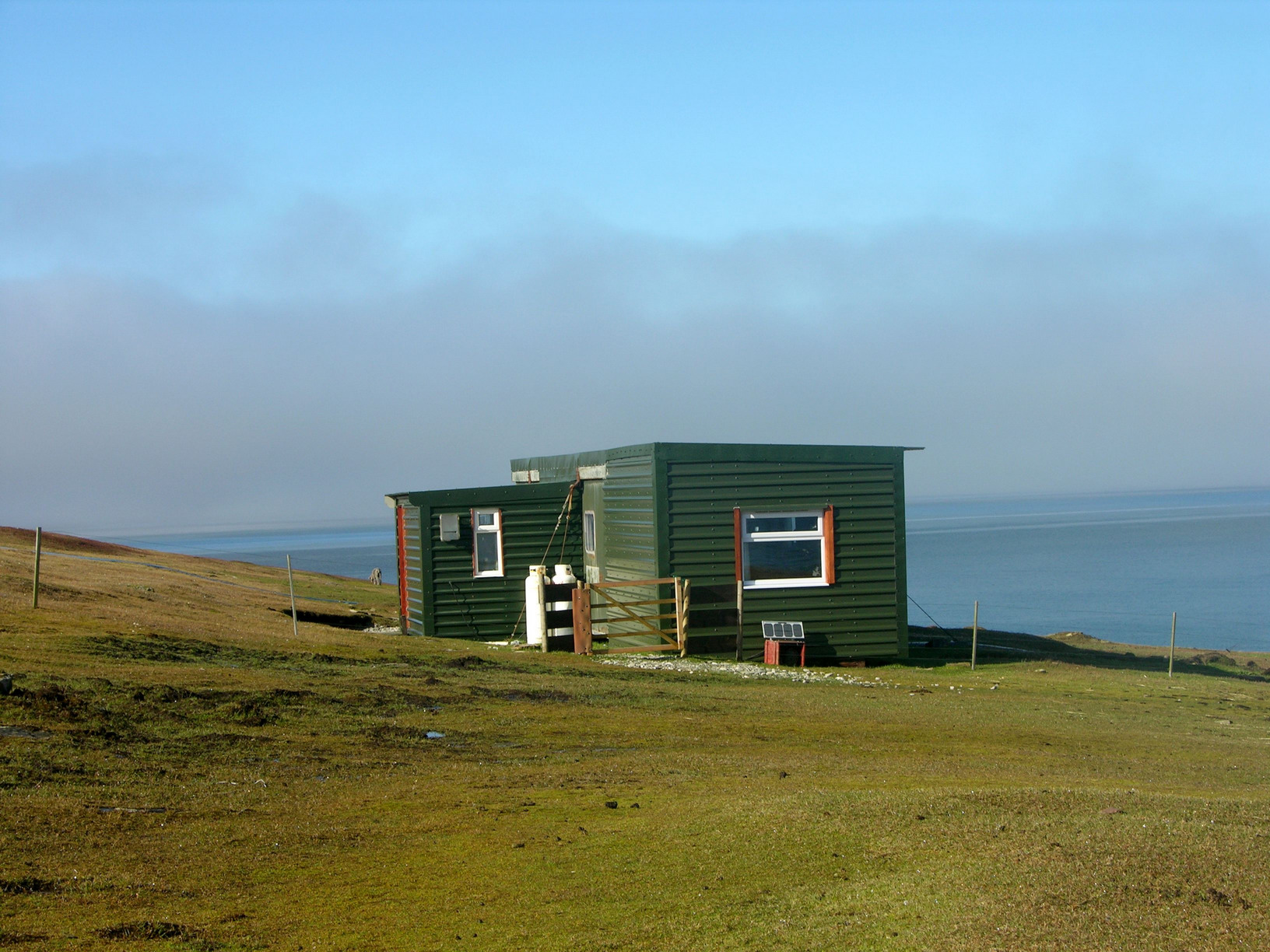
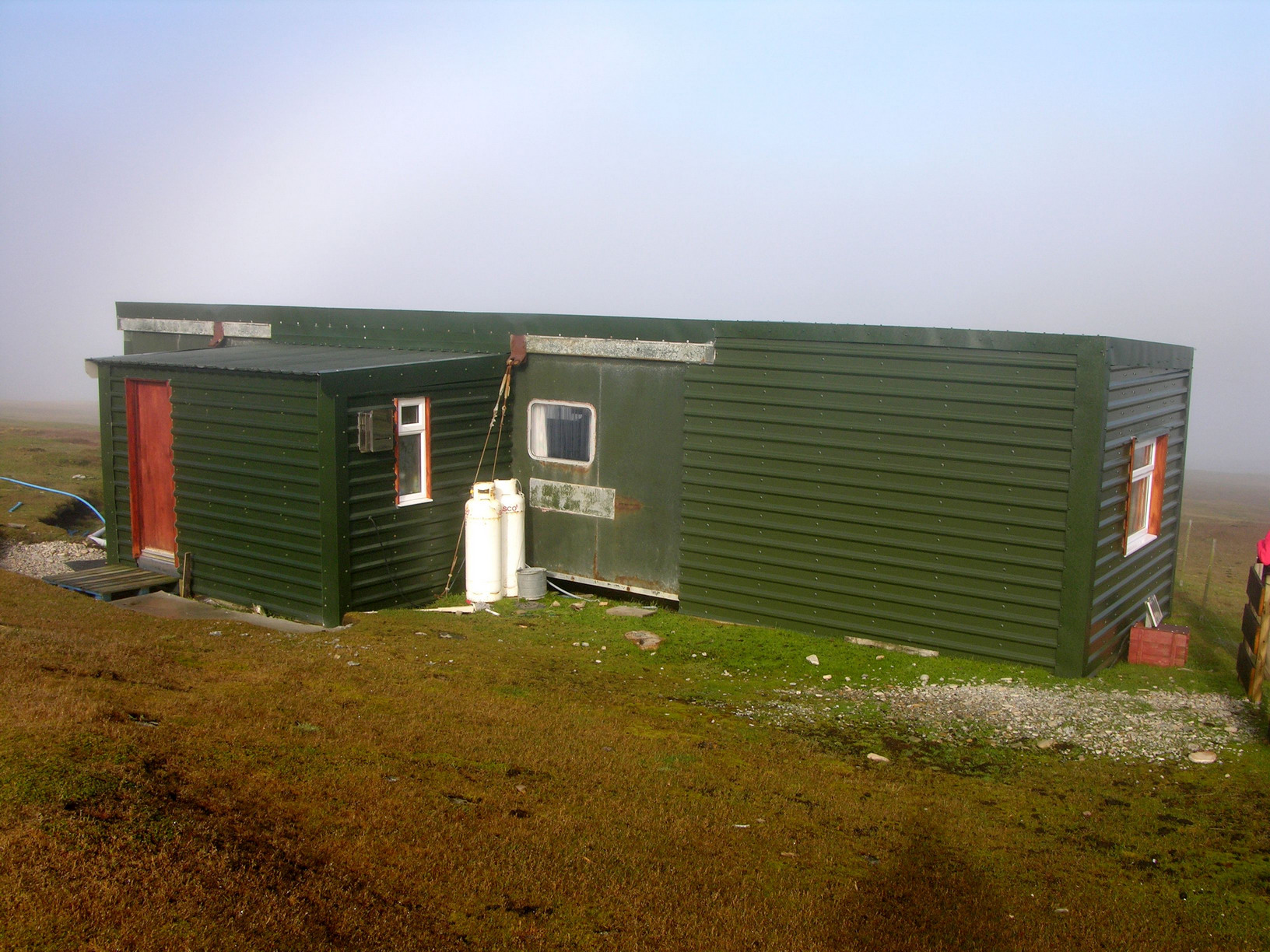
The Swiss Hotel (51°17.995′S, 60°15.089′W, 110 m) was taken, so they suggested camping under the neighbouring rock (51°17.899′S, 60°15.055′W, 22 m). Actually, Susan's rules only prohibit you from camping on the sandy isthmus itself. For guests who aren't quite as adventurous, she has a little cabin, the Portakabin. It sleeps about ten but usually stands empty. There's water, and even electricity from a solar panel. You can get water without staying in the cabin. Very handy, since there's a little seasonal stream by the Swiss Hotel, but it's muddy and fouled by penguins and sheep.
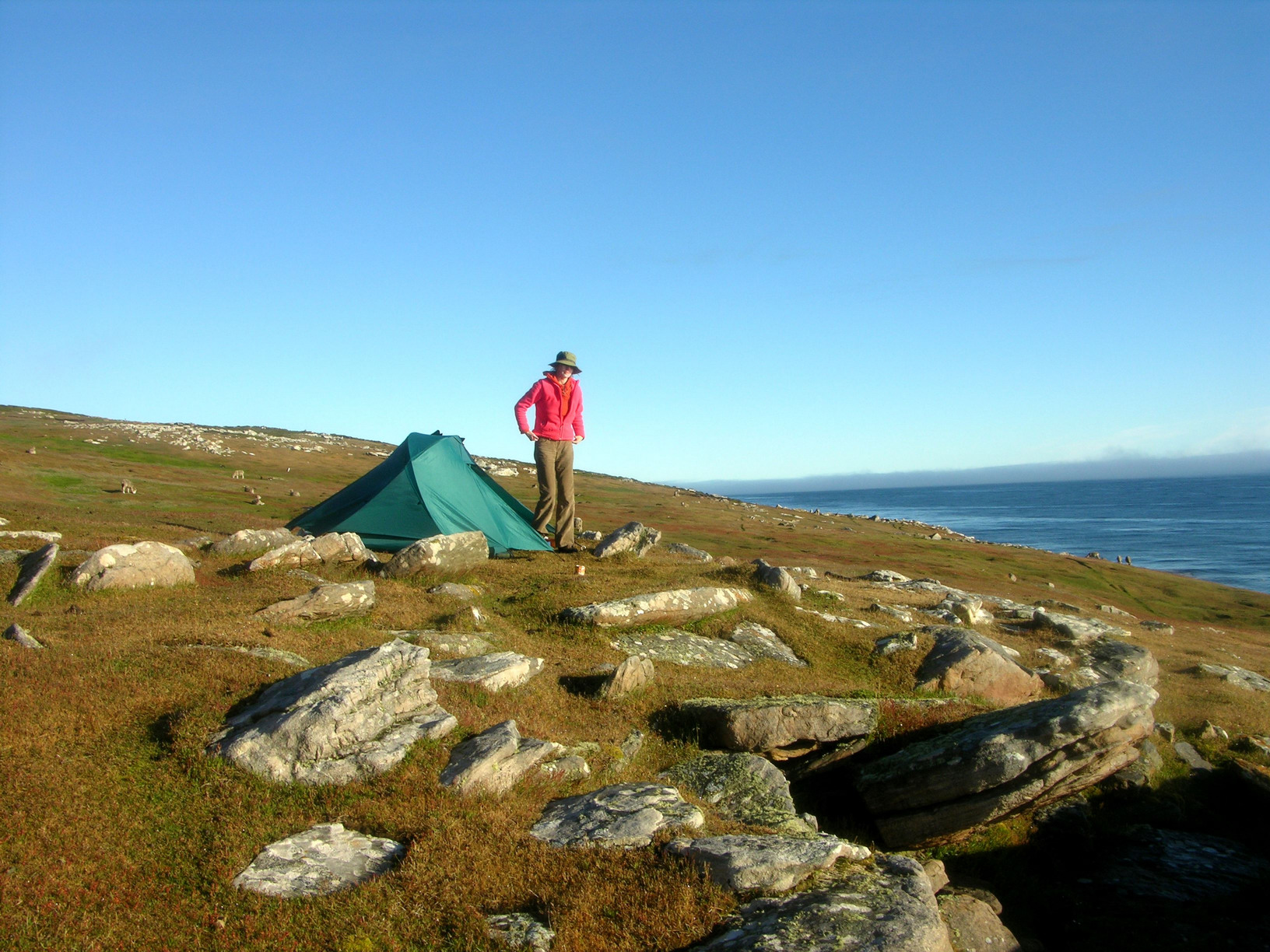
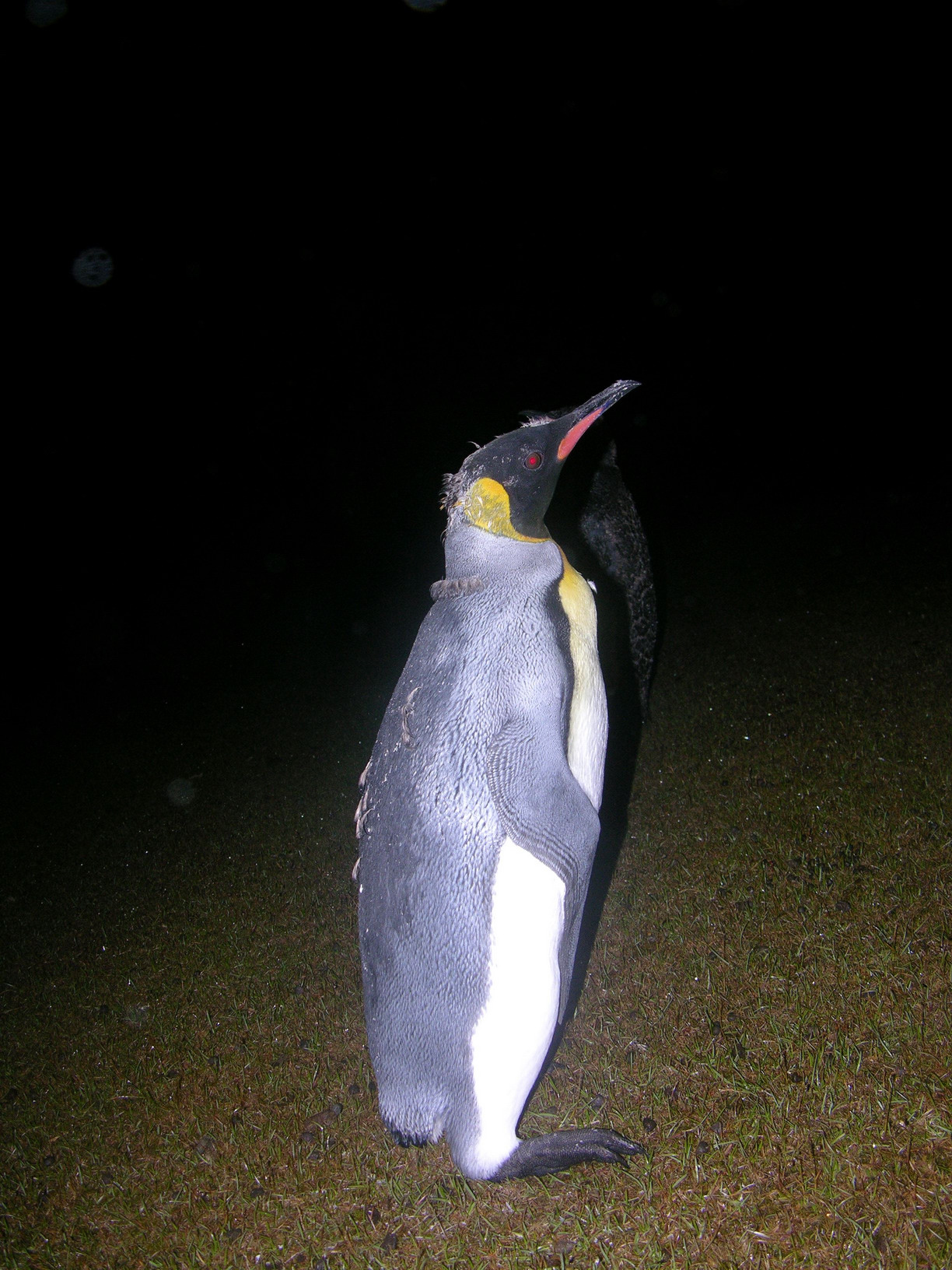
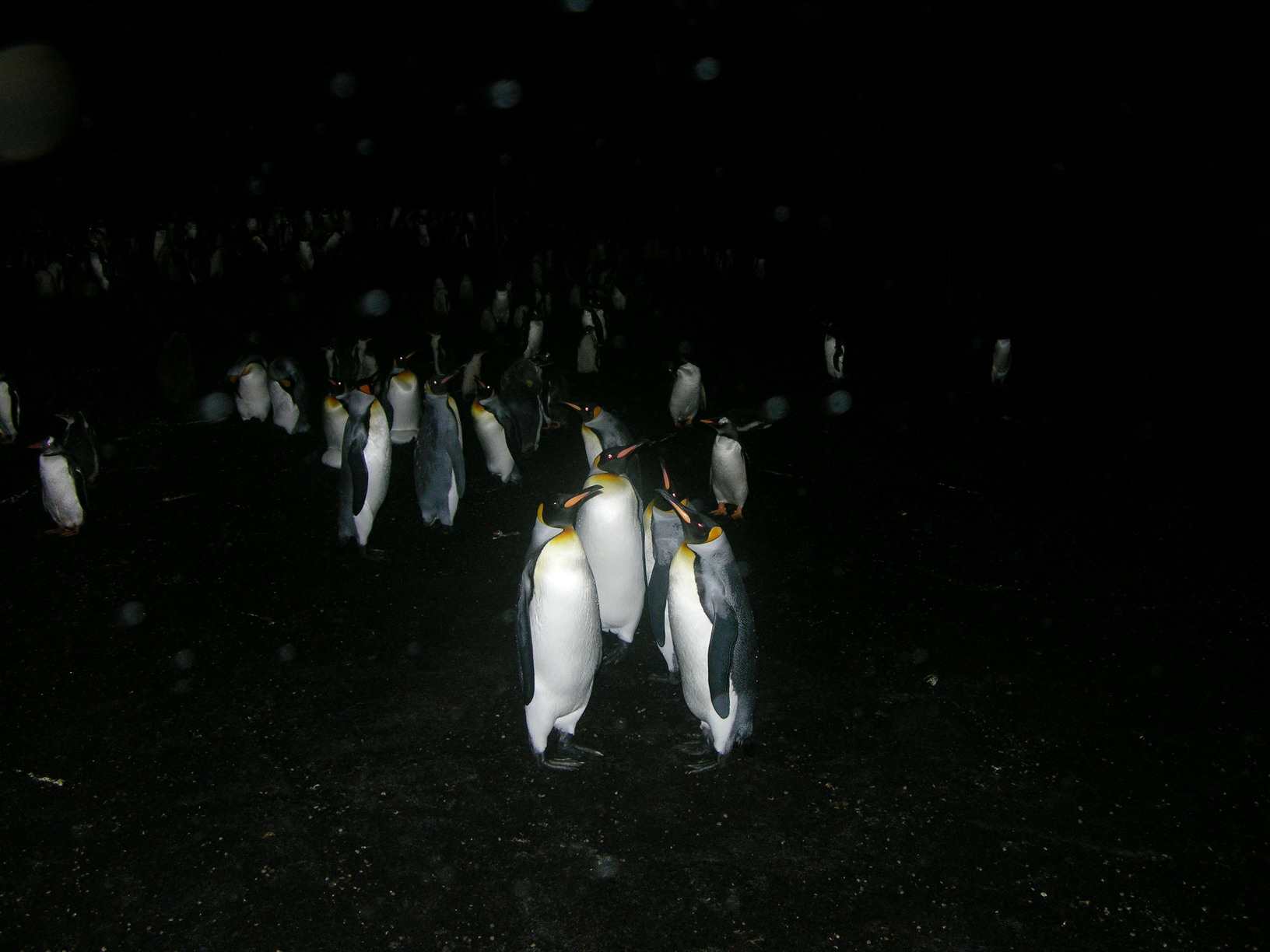
We put up the tent and hurried to the penguins before sunset. On the isthmus itself are many gentoo colonies and one of king penguins. We had seen the gentoos already, so we went straight to the king penguins. Well, what a stately bird. A turkey has nothing on that unruffled bearing. If you don't make any sudden movements, you can get quite close to them. Best to crawl, of course, through the mud. Mud is putting it mildly. It's so fouled by penguins that you have to crawl through knee-deep muck. Penguins can really let fly. The whole apparatus is designed for use deep underwater, under ten atmospheres of pressure. In the open air it resembles a gunshot. In a split second a portion of half-digested fish shoots out in a jet and travels several metres. Too late to dodge. It comes down to luck. If you're hit, you're hit. It smells more like fish than anything else, though, so you can live with it. Research into the defecation mechanism in penguins even earned a 2005 Ig Nobel Prize for the silliest subject in ornithology.
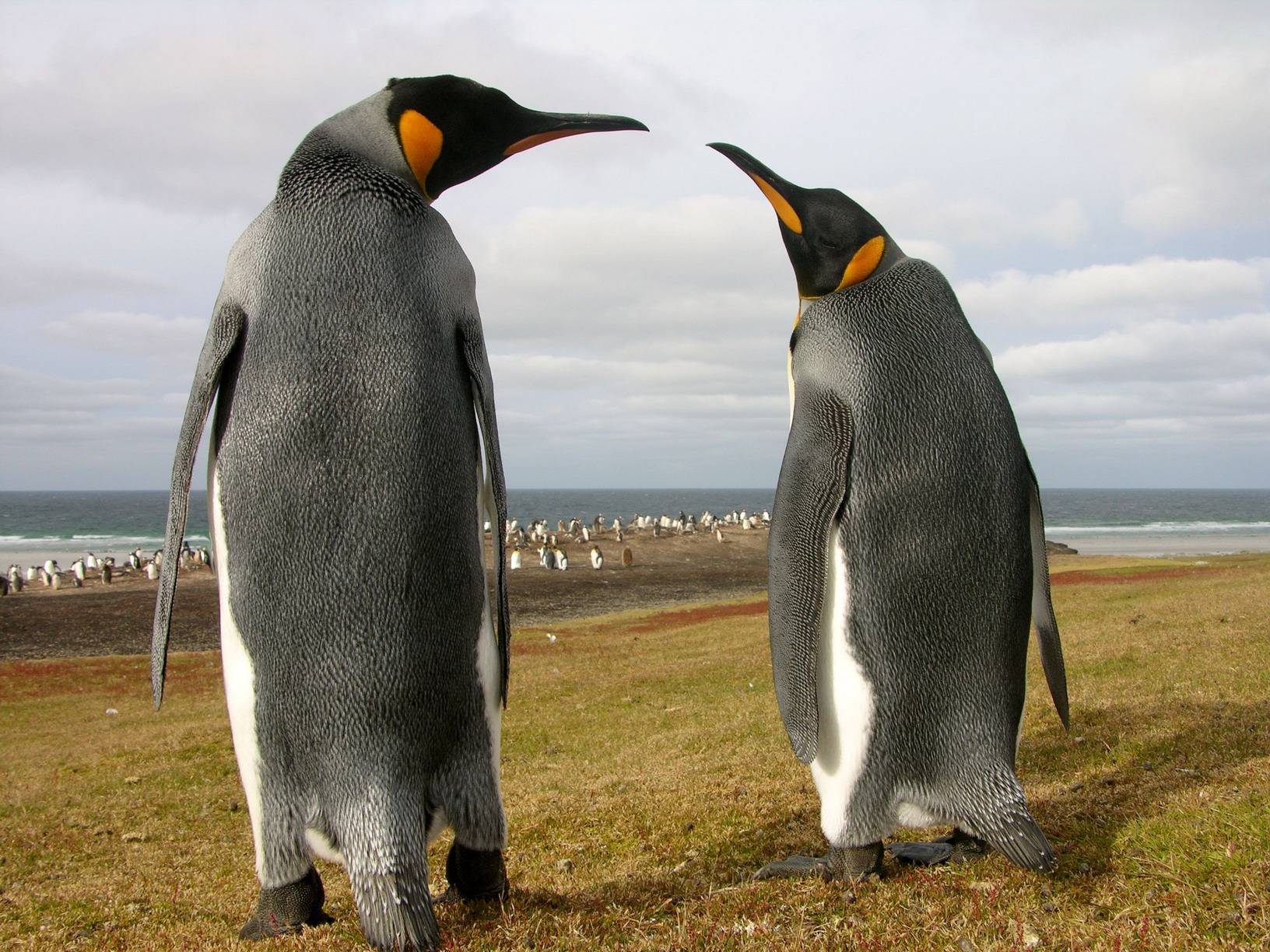
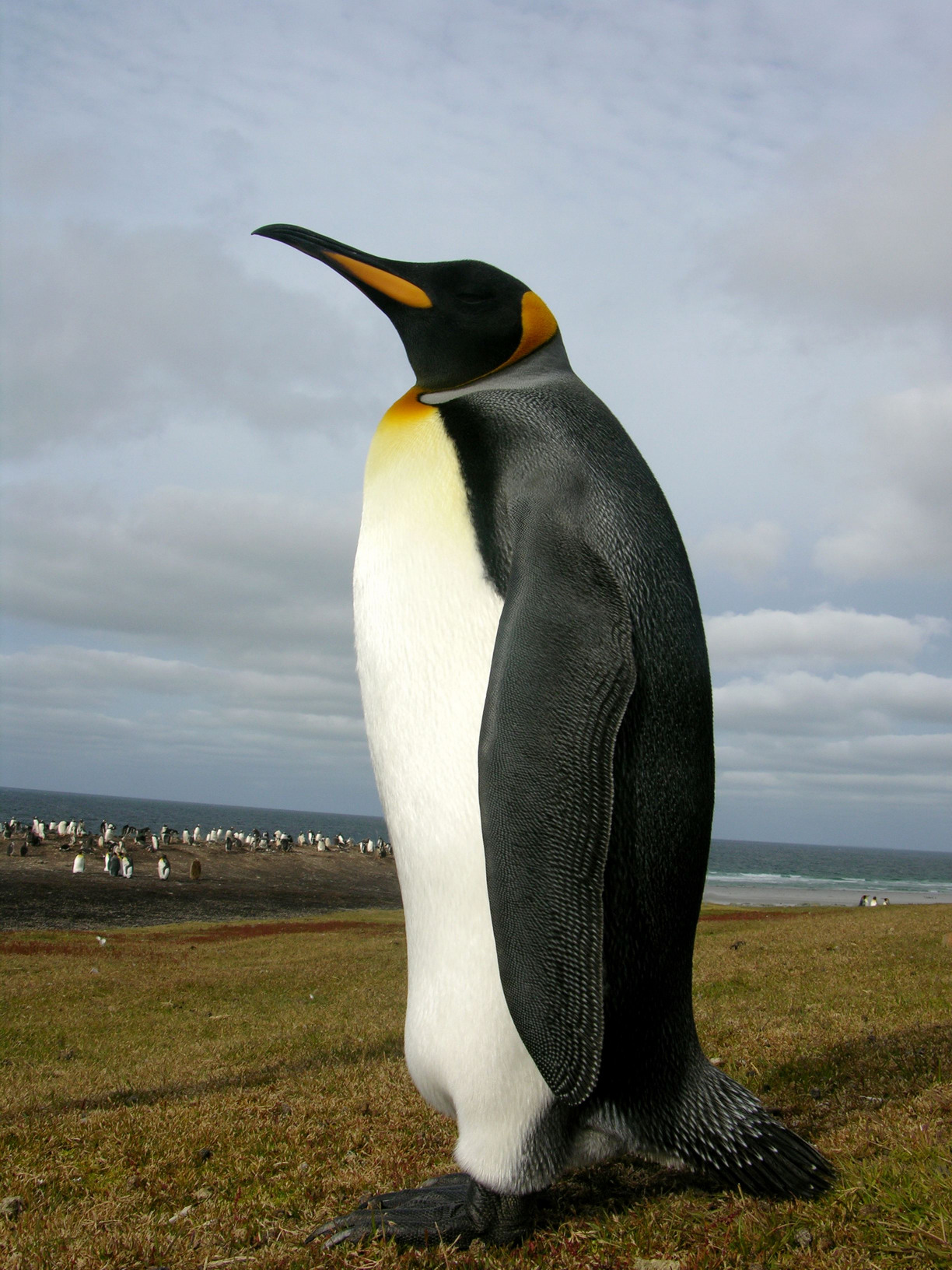
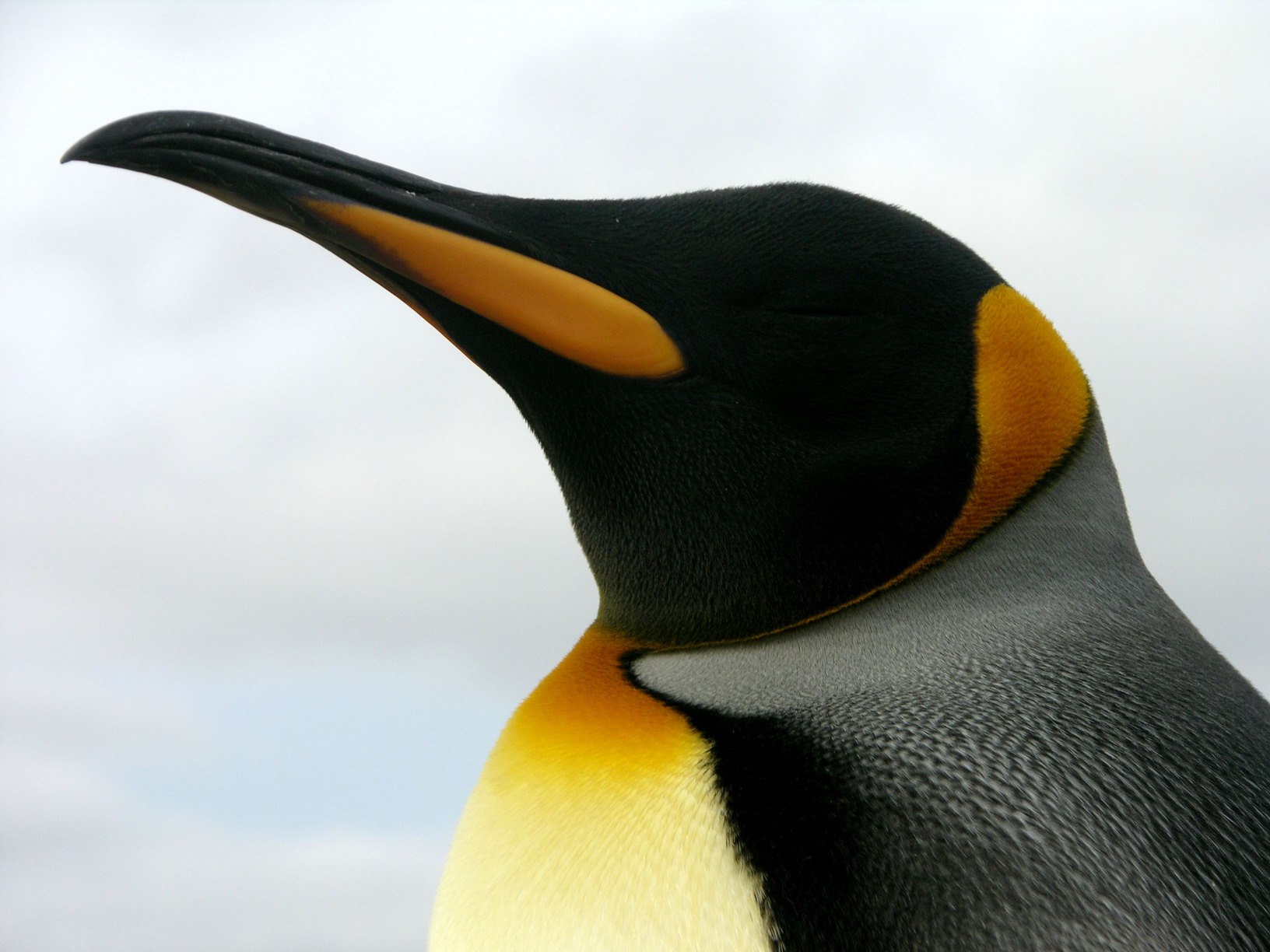
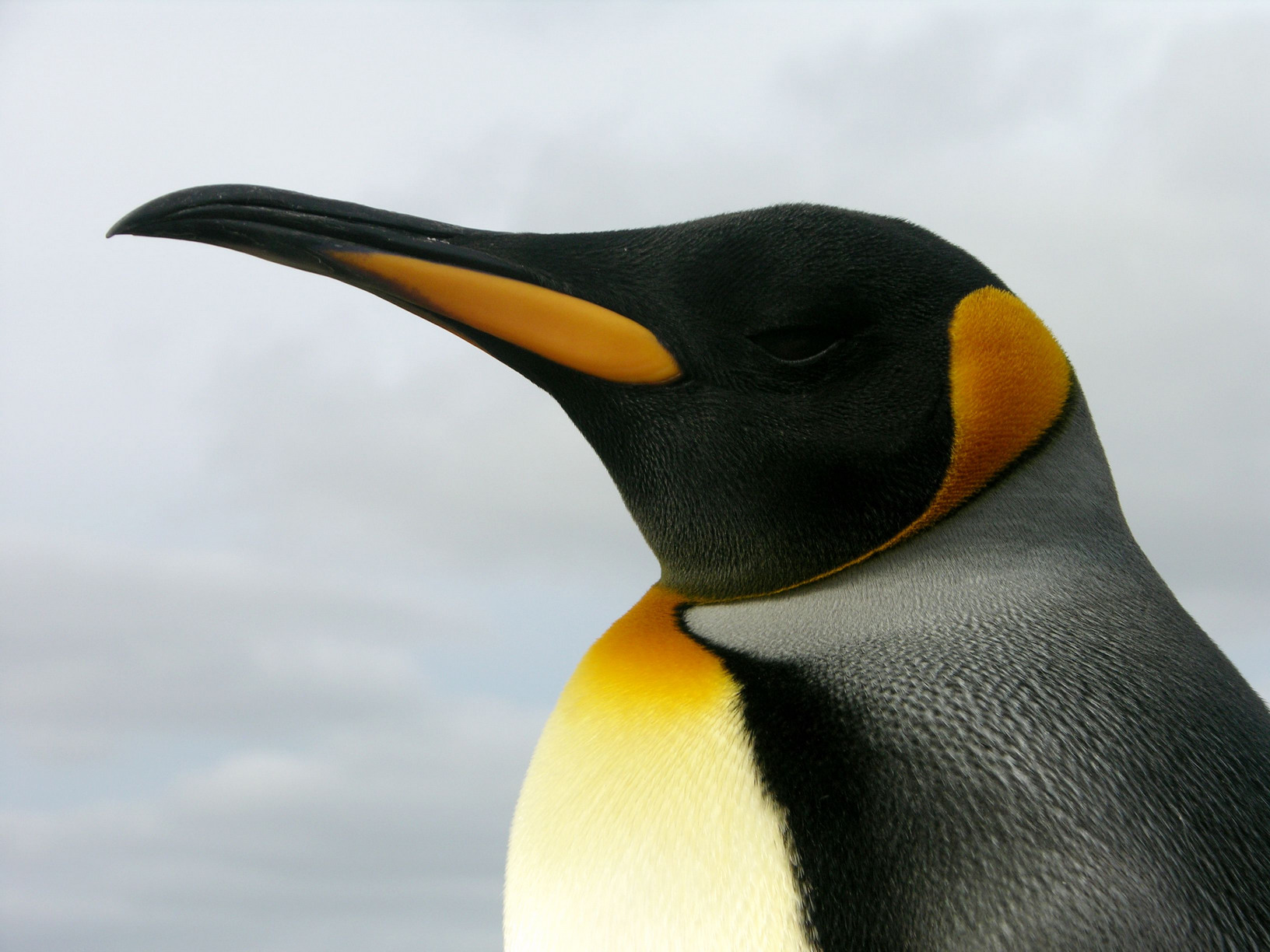
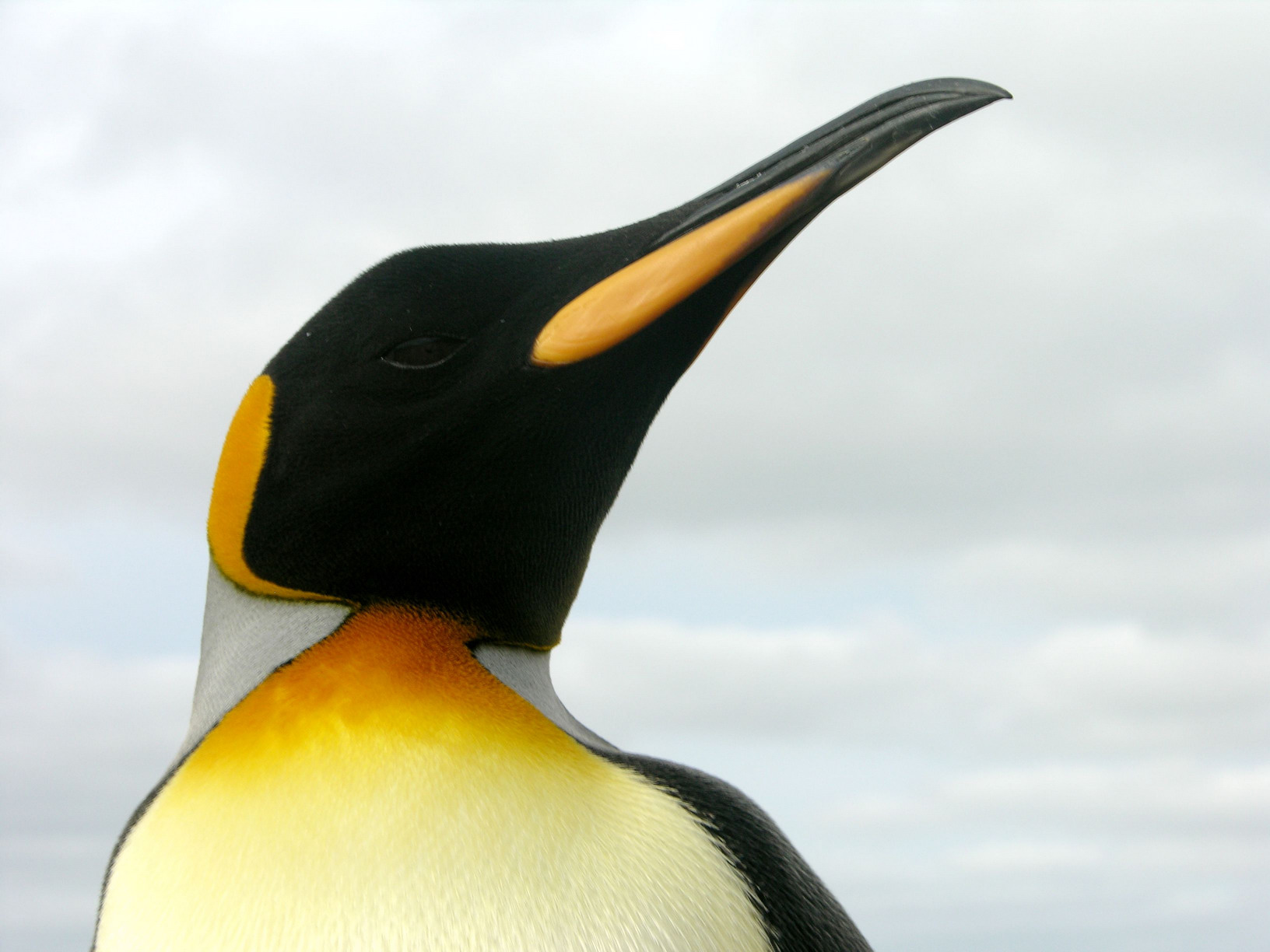
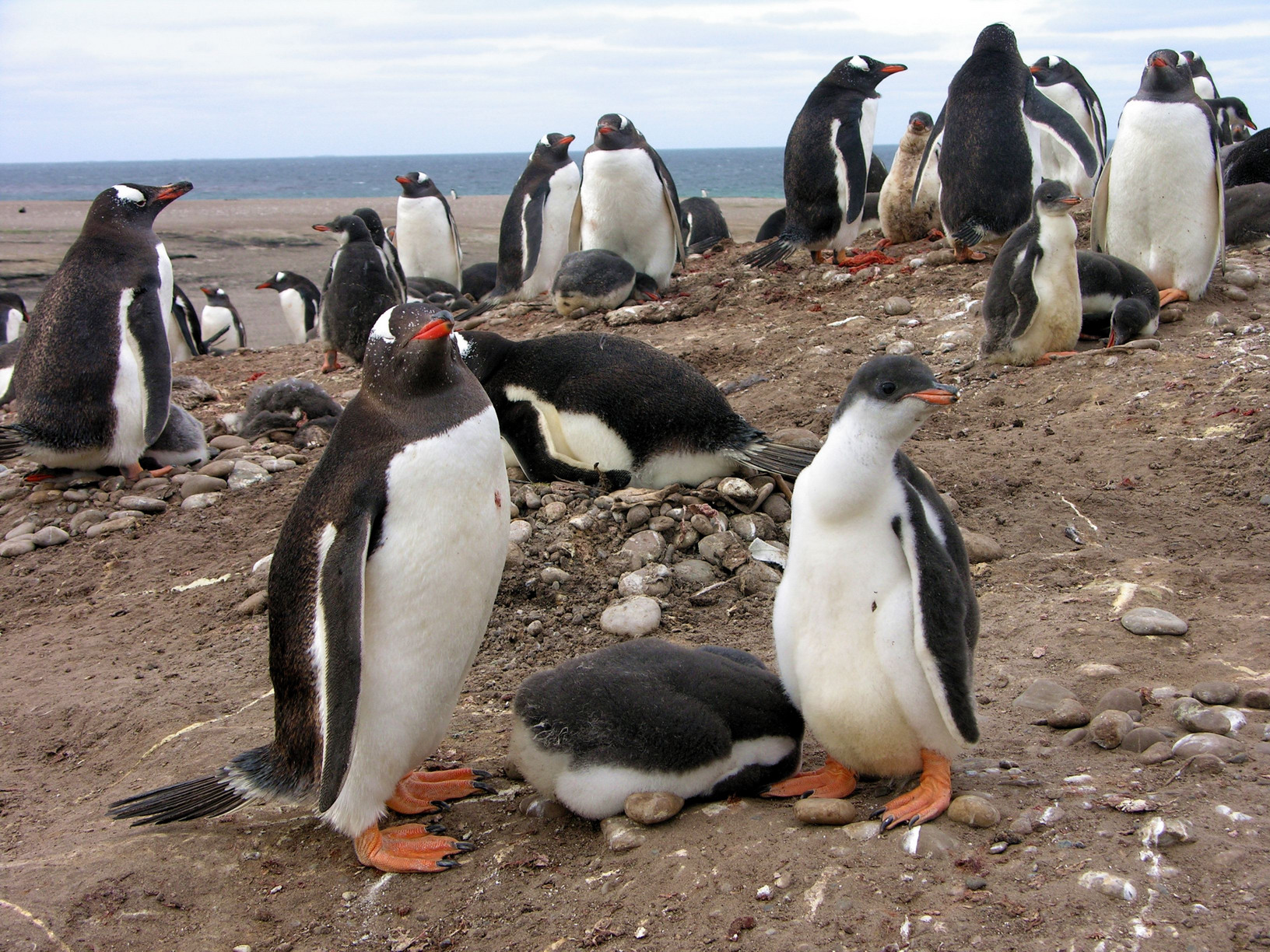
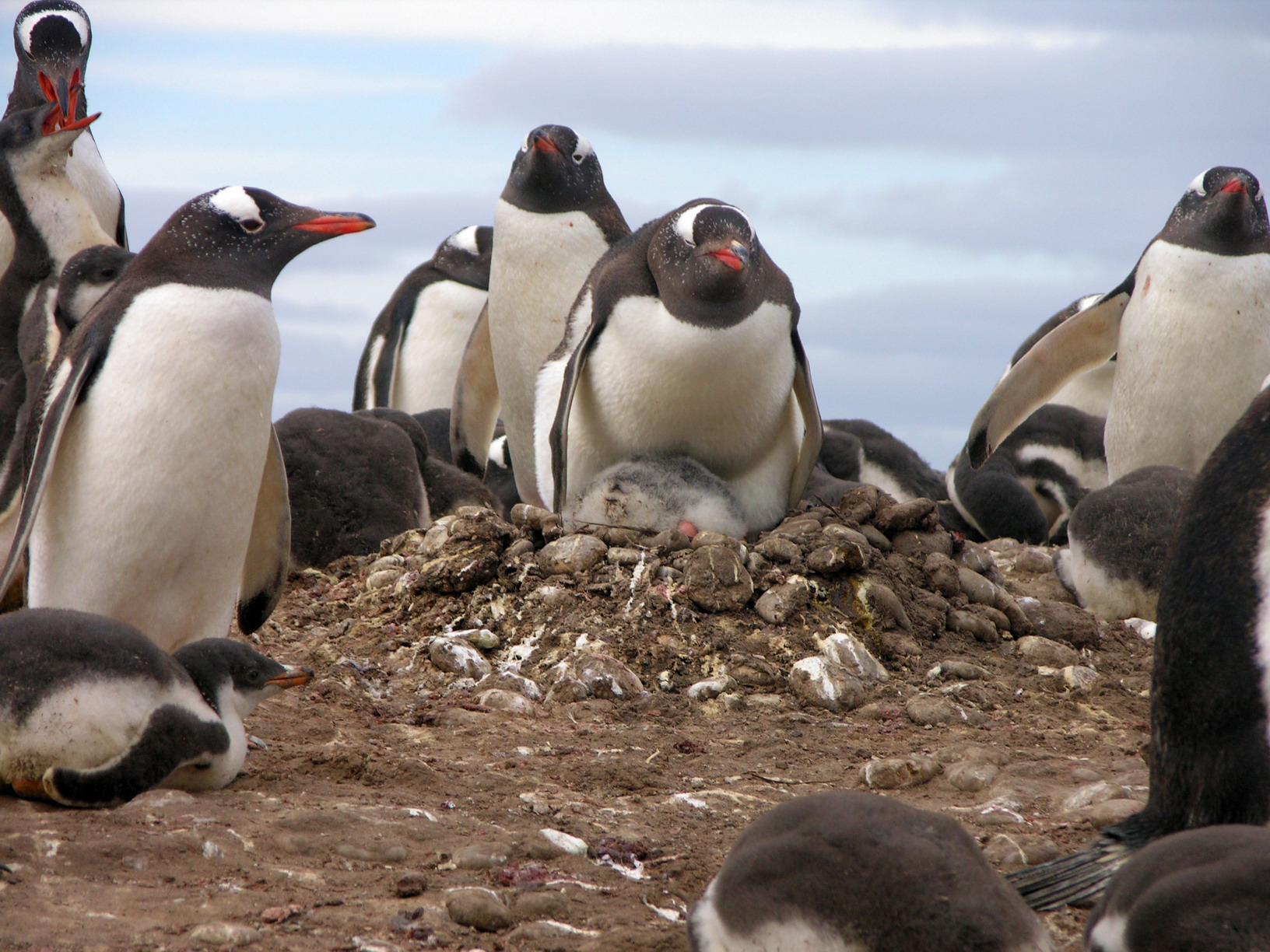
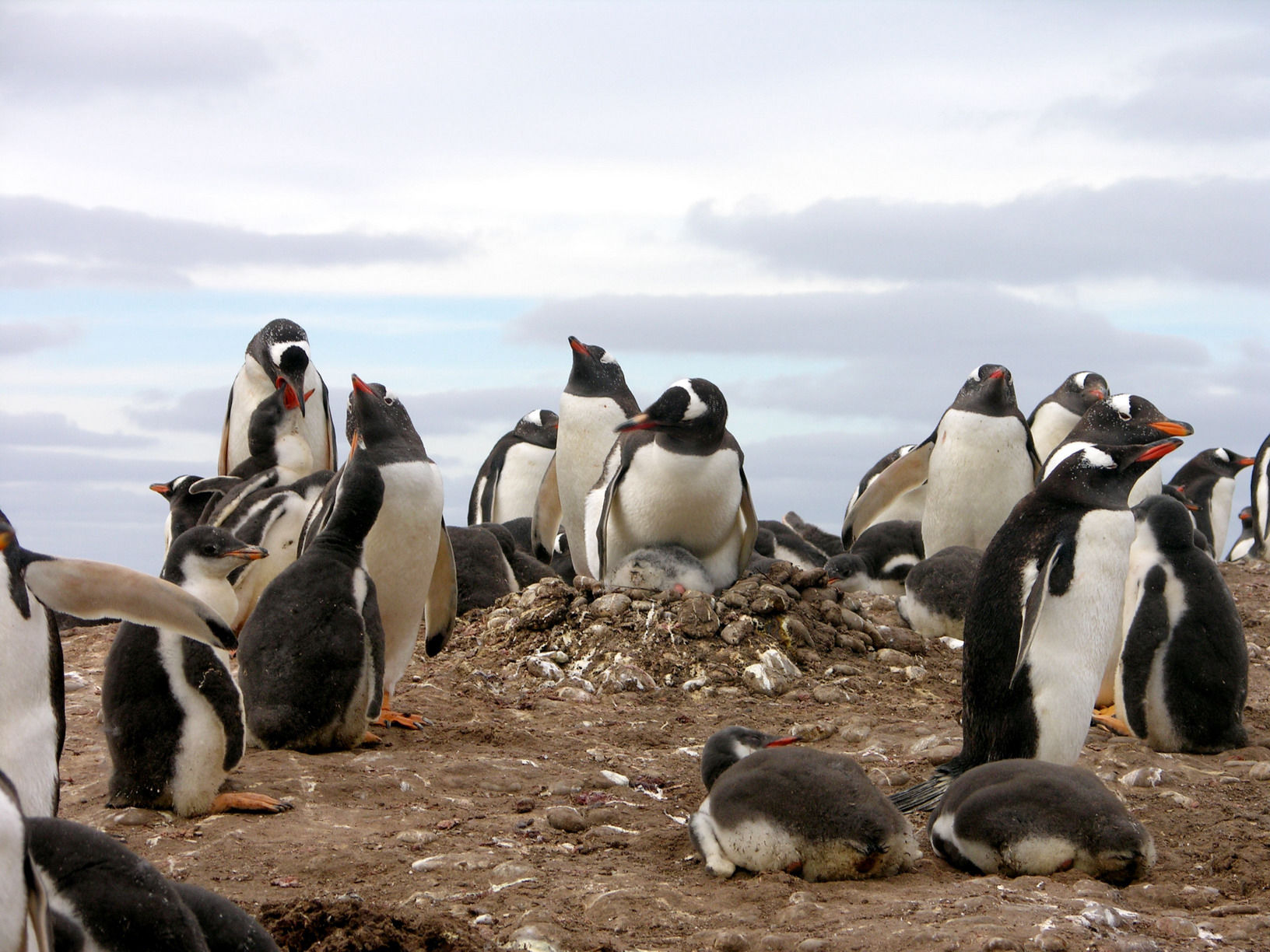
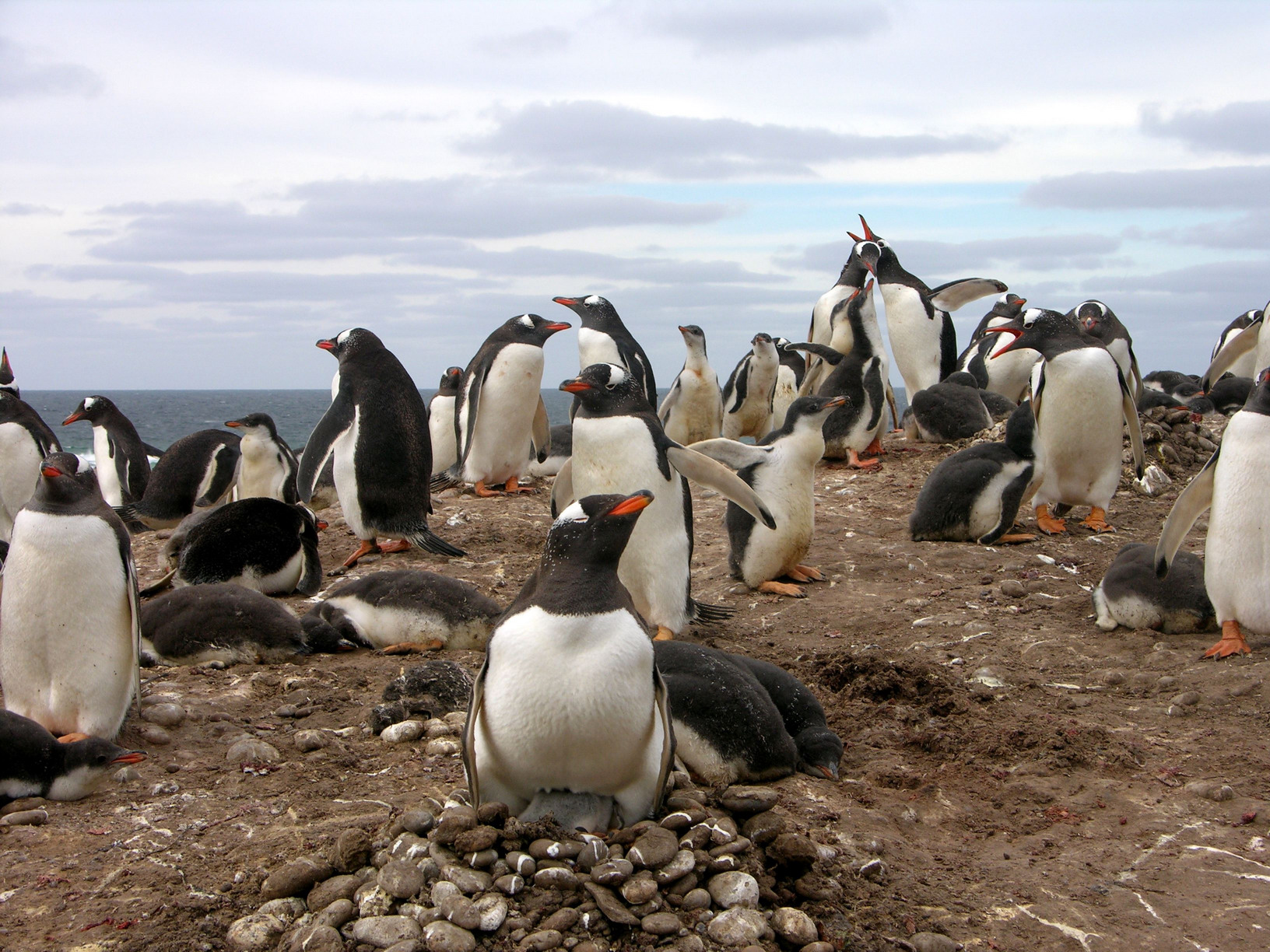
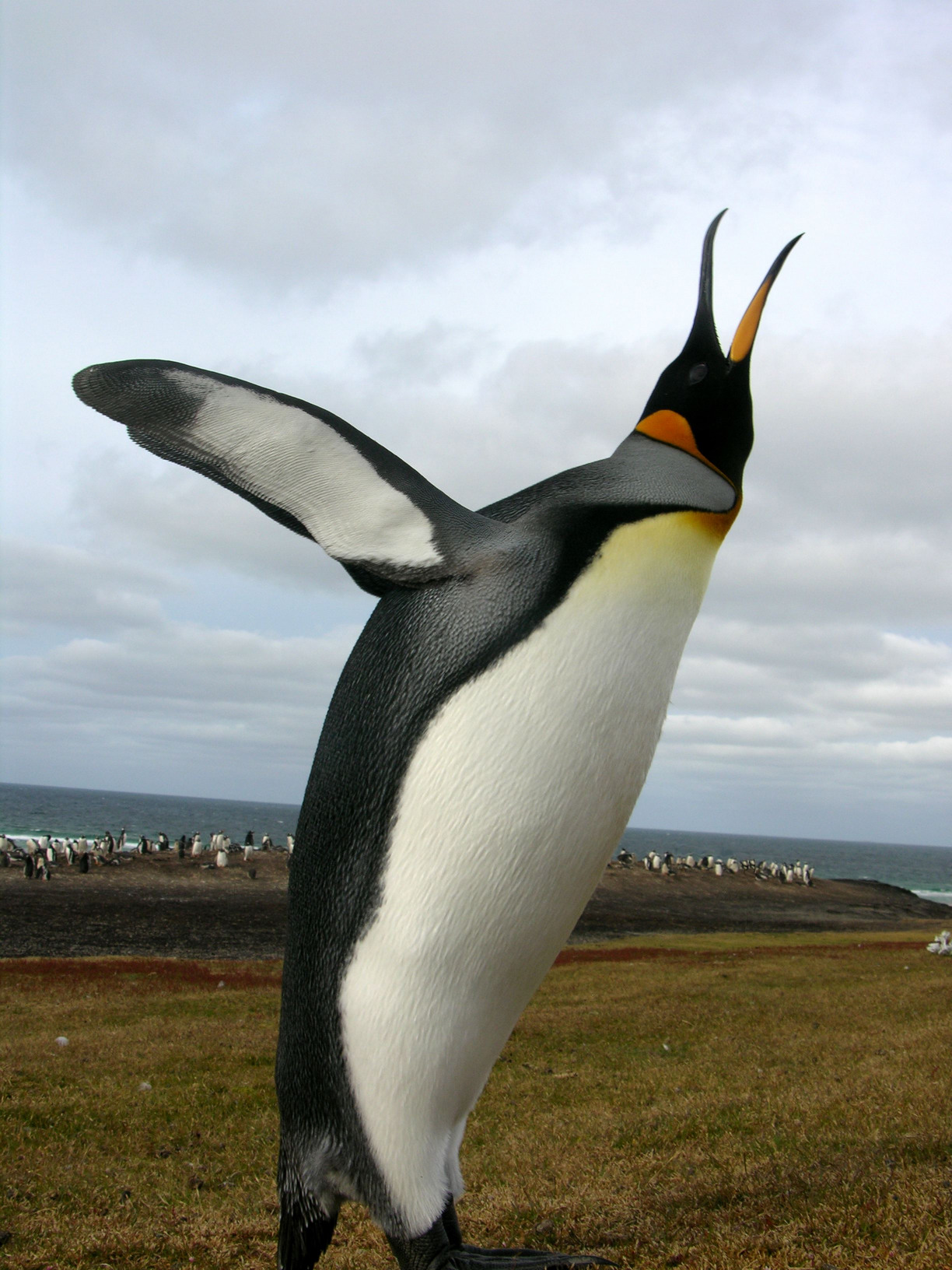
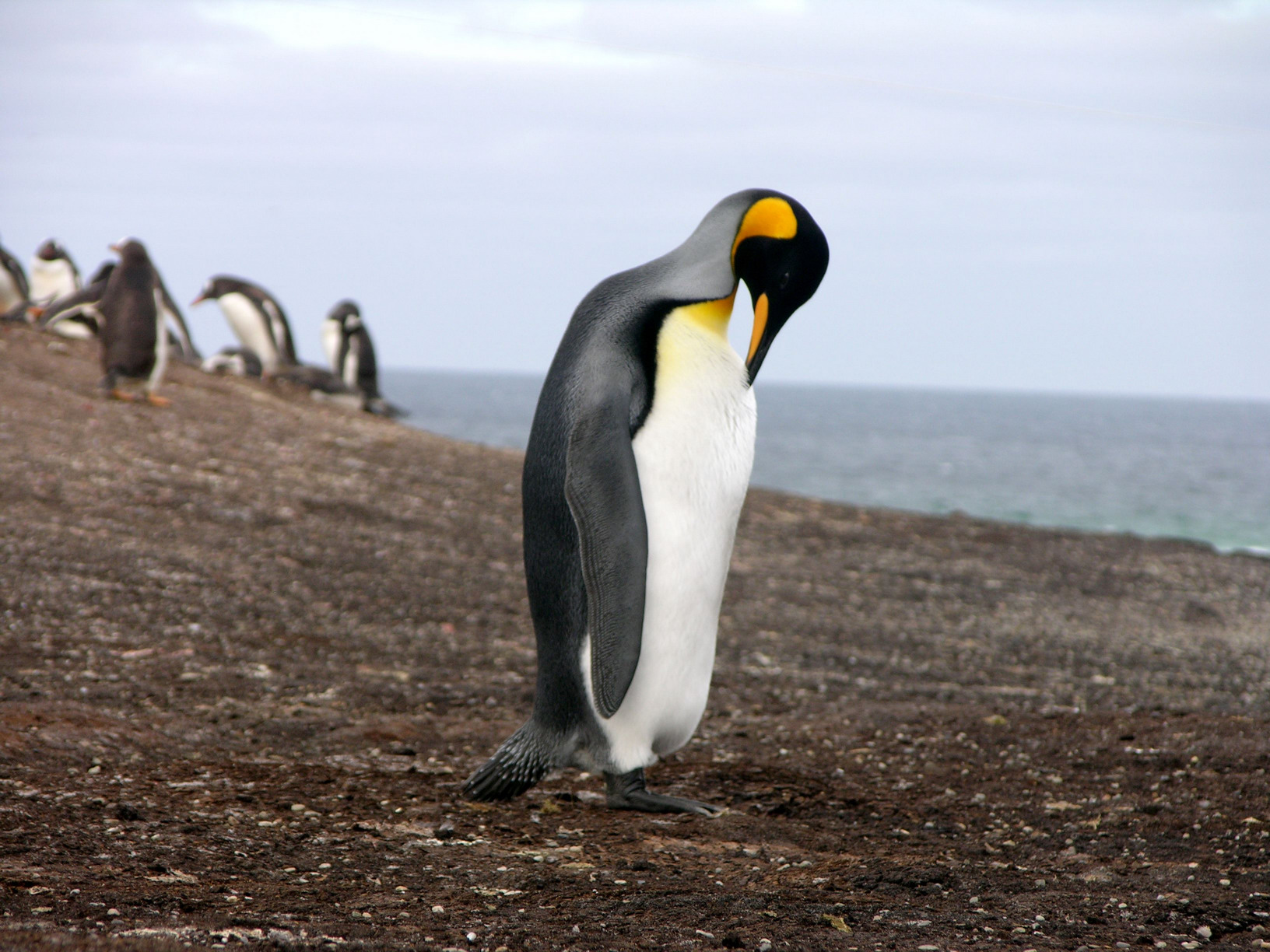
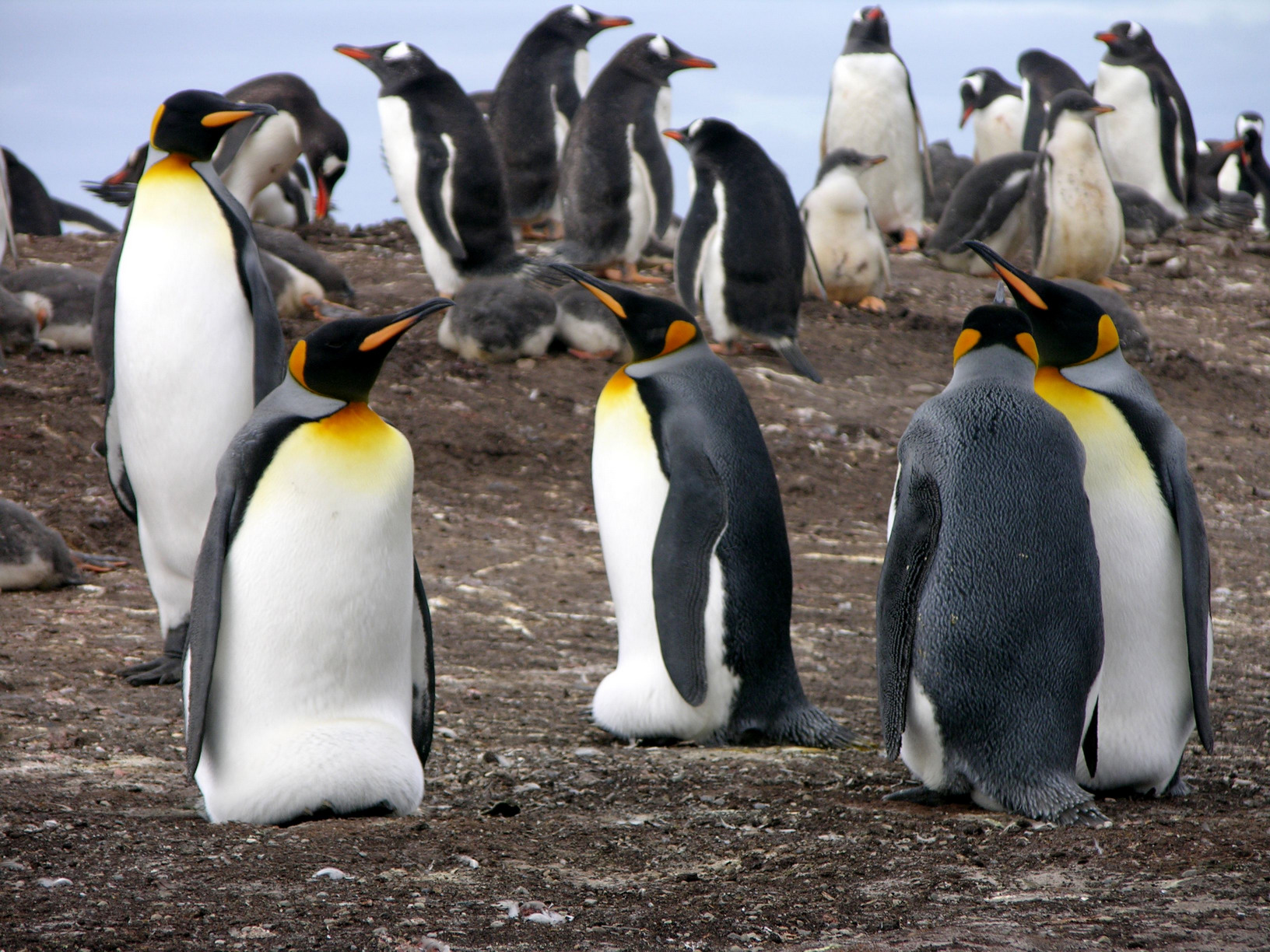
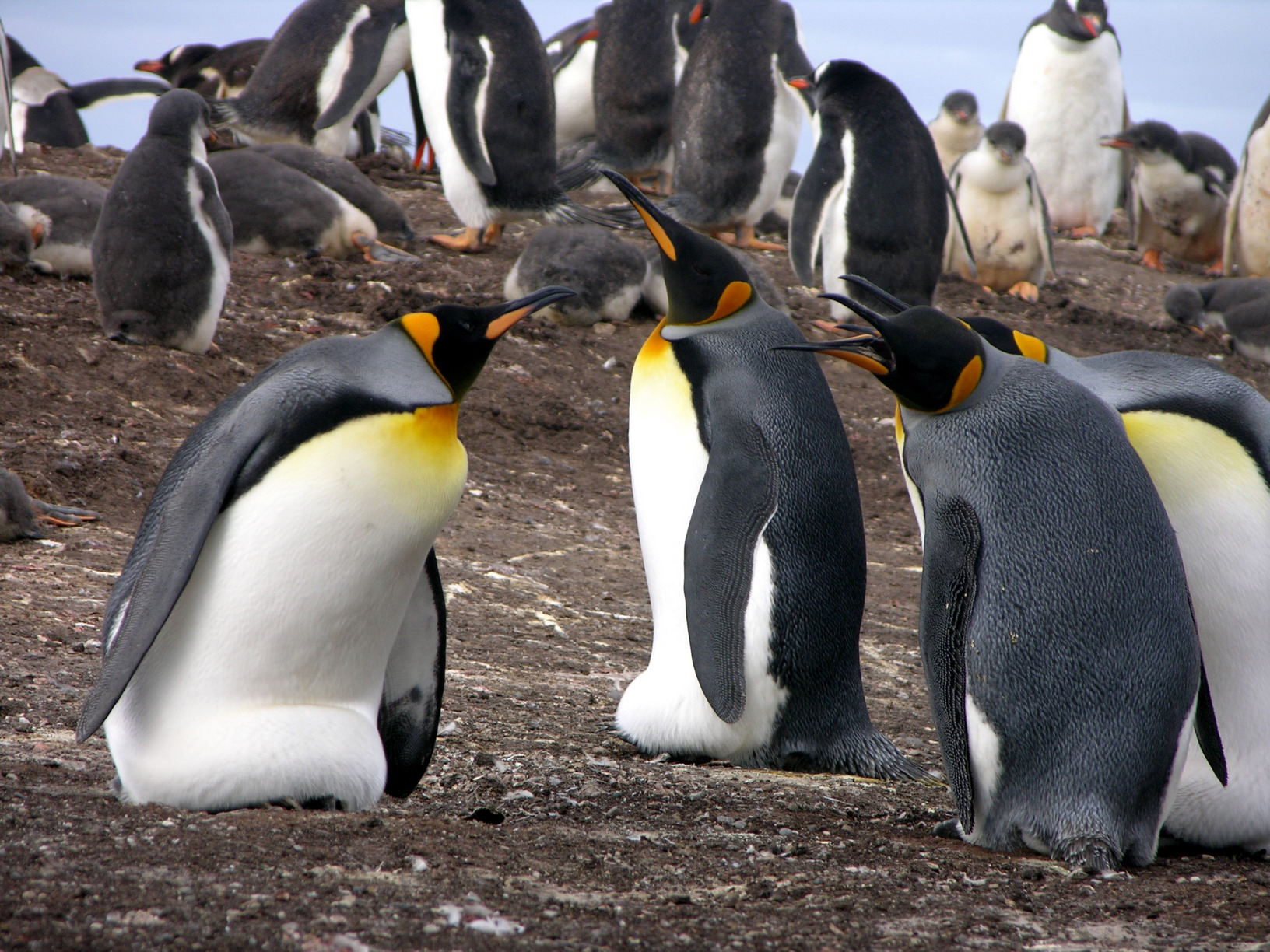
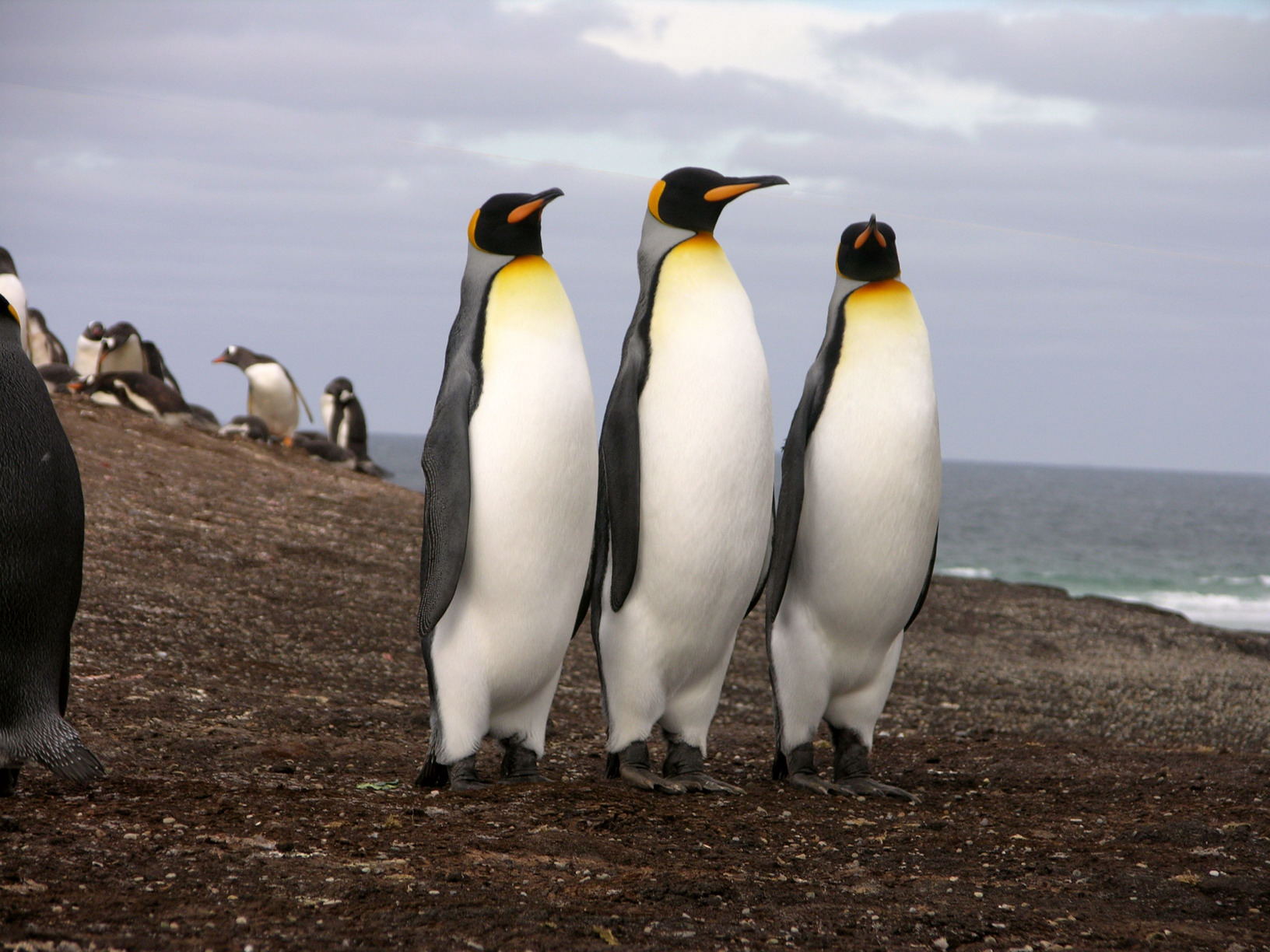
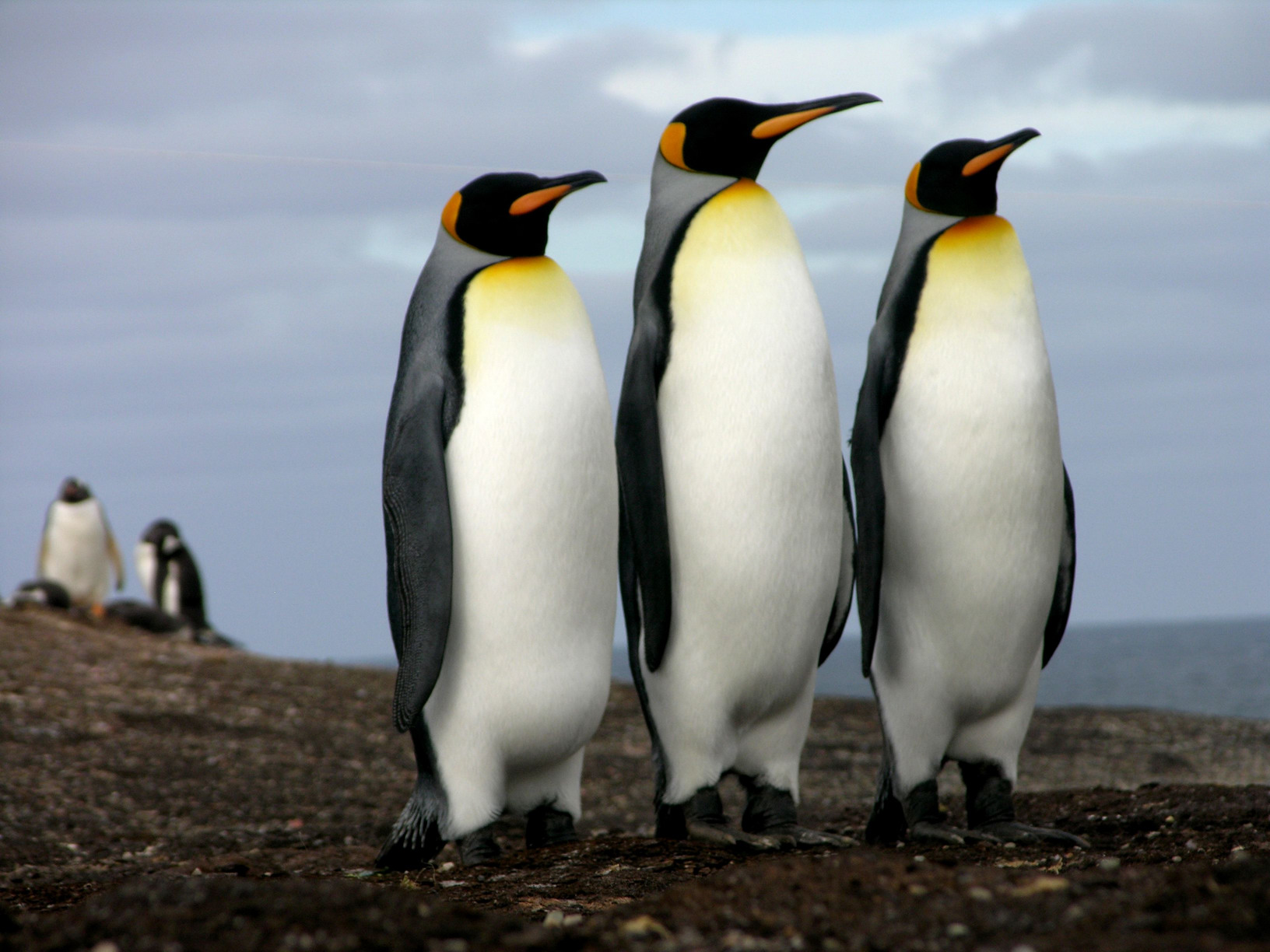
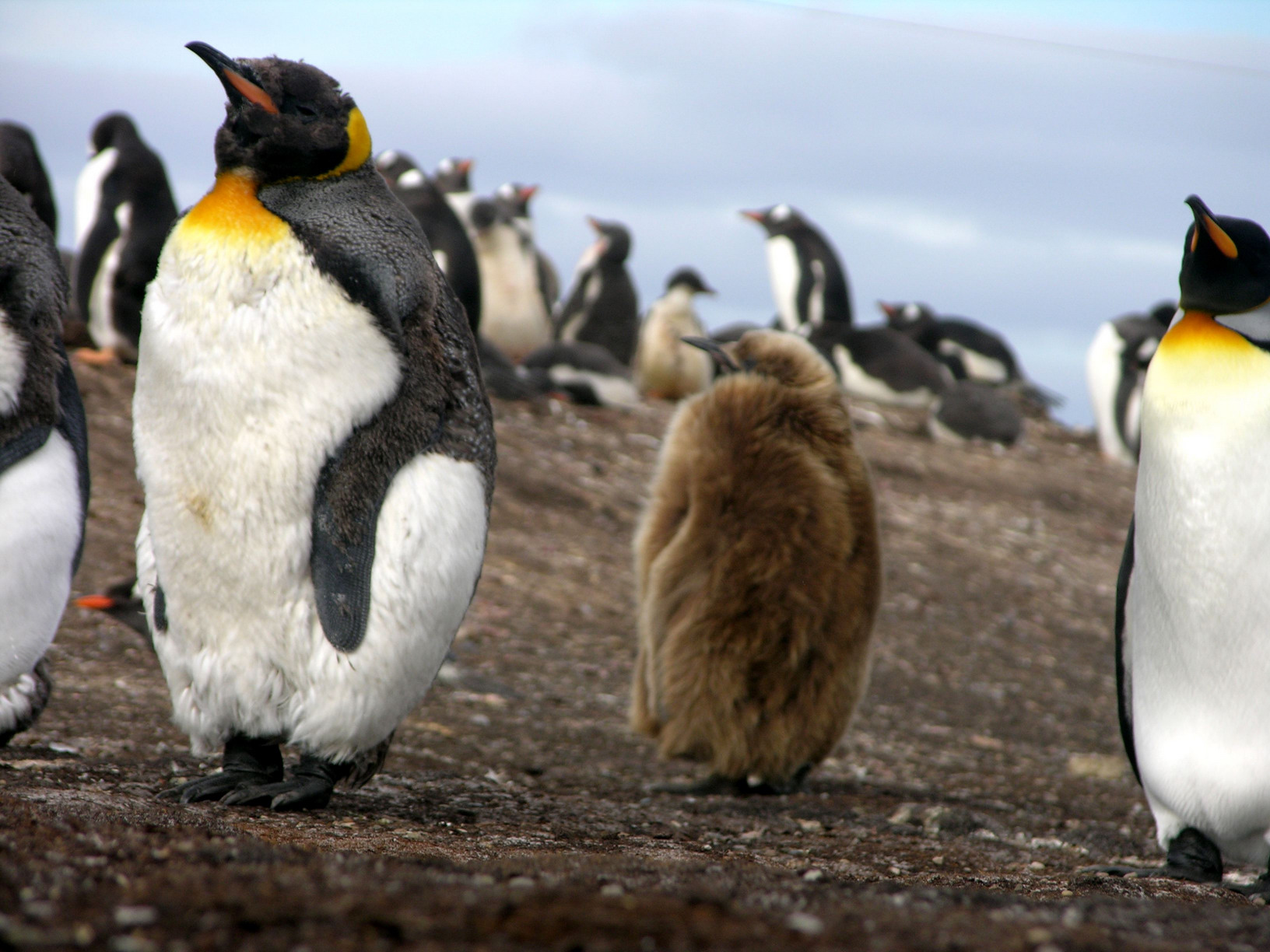
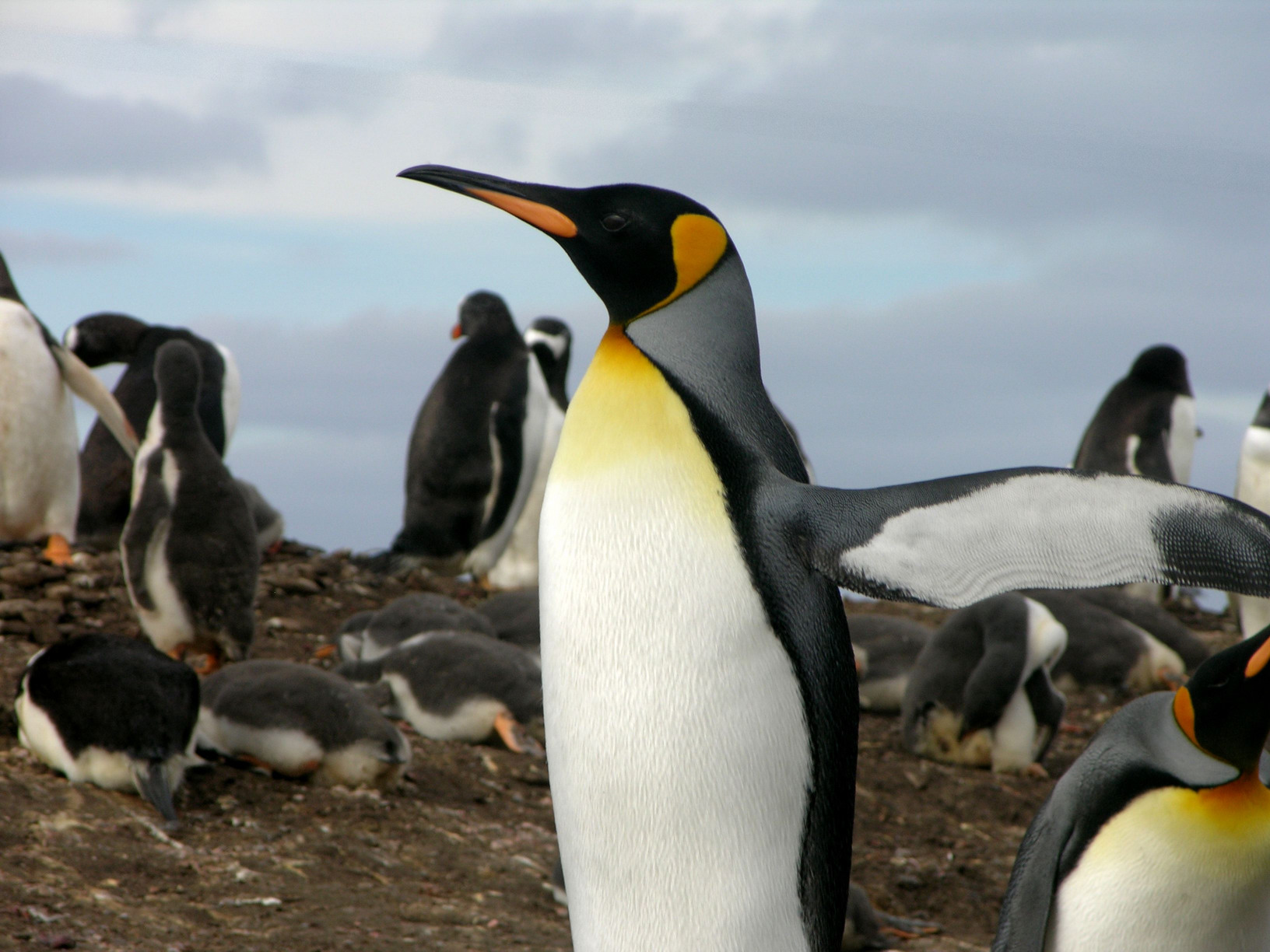
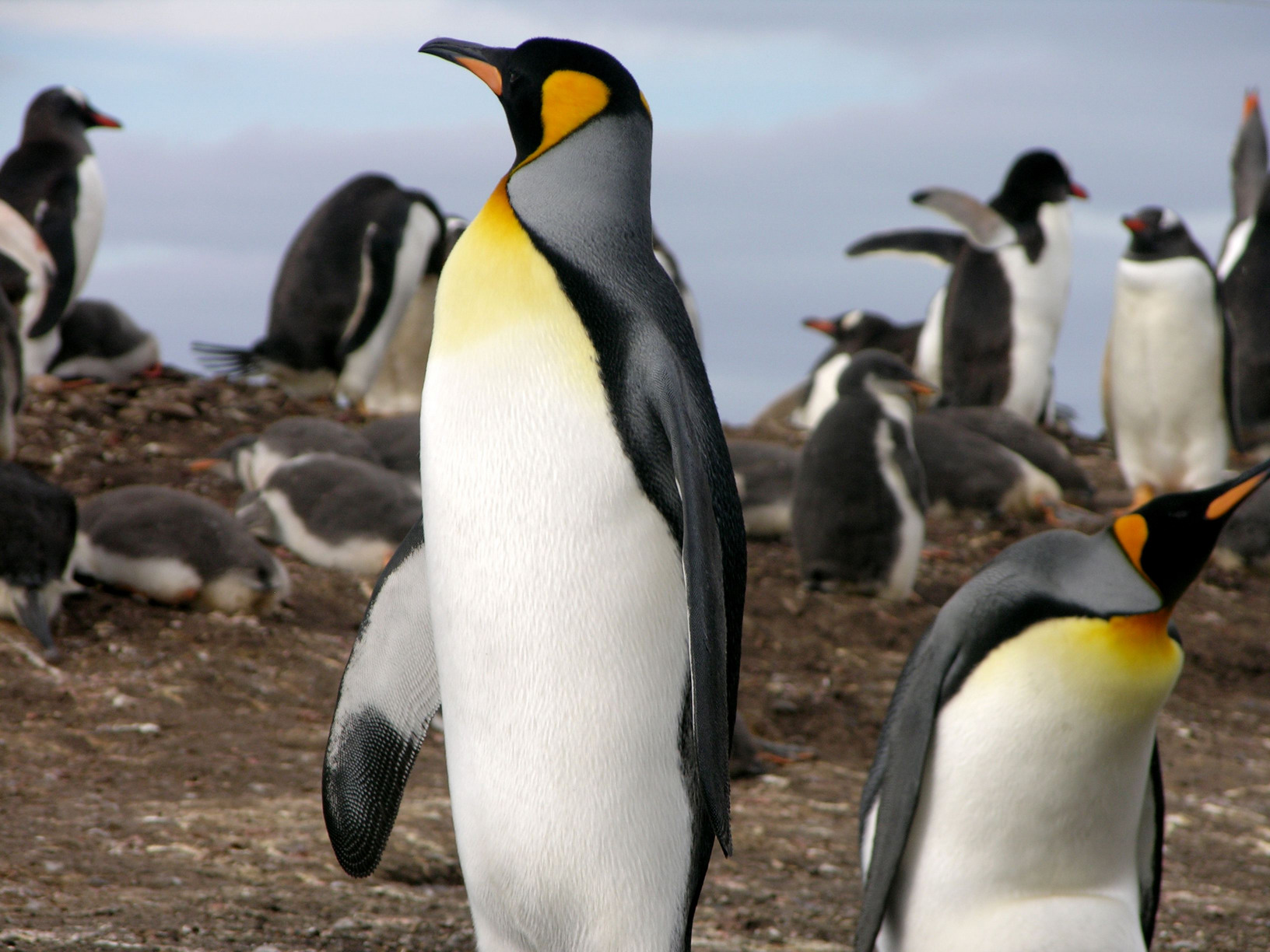
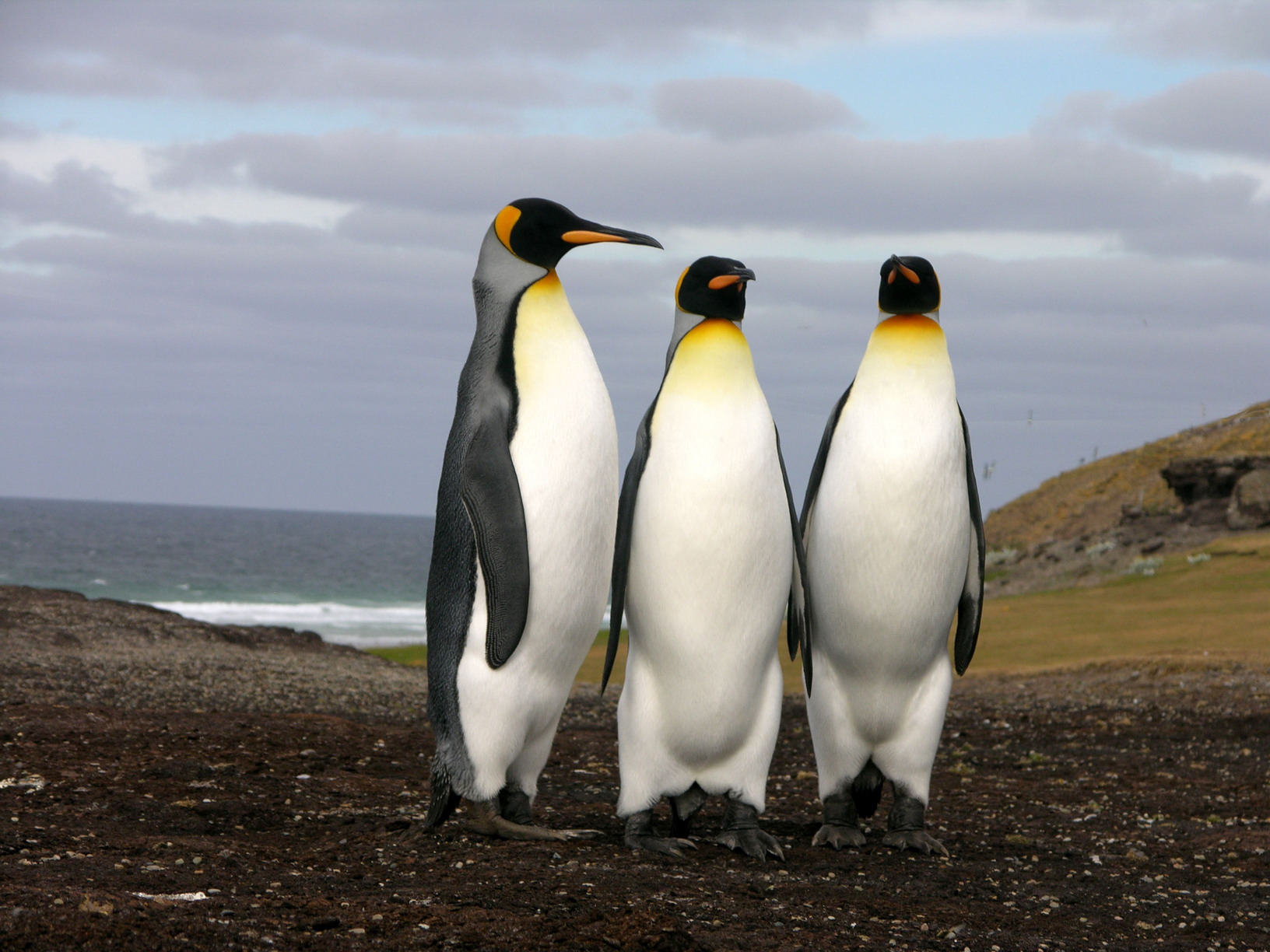
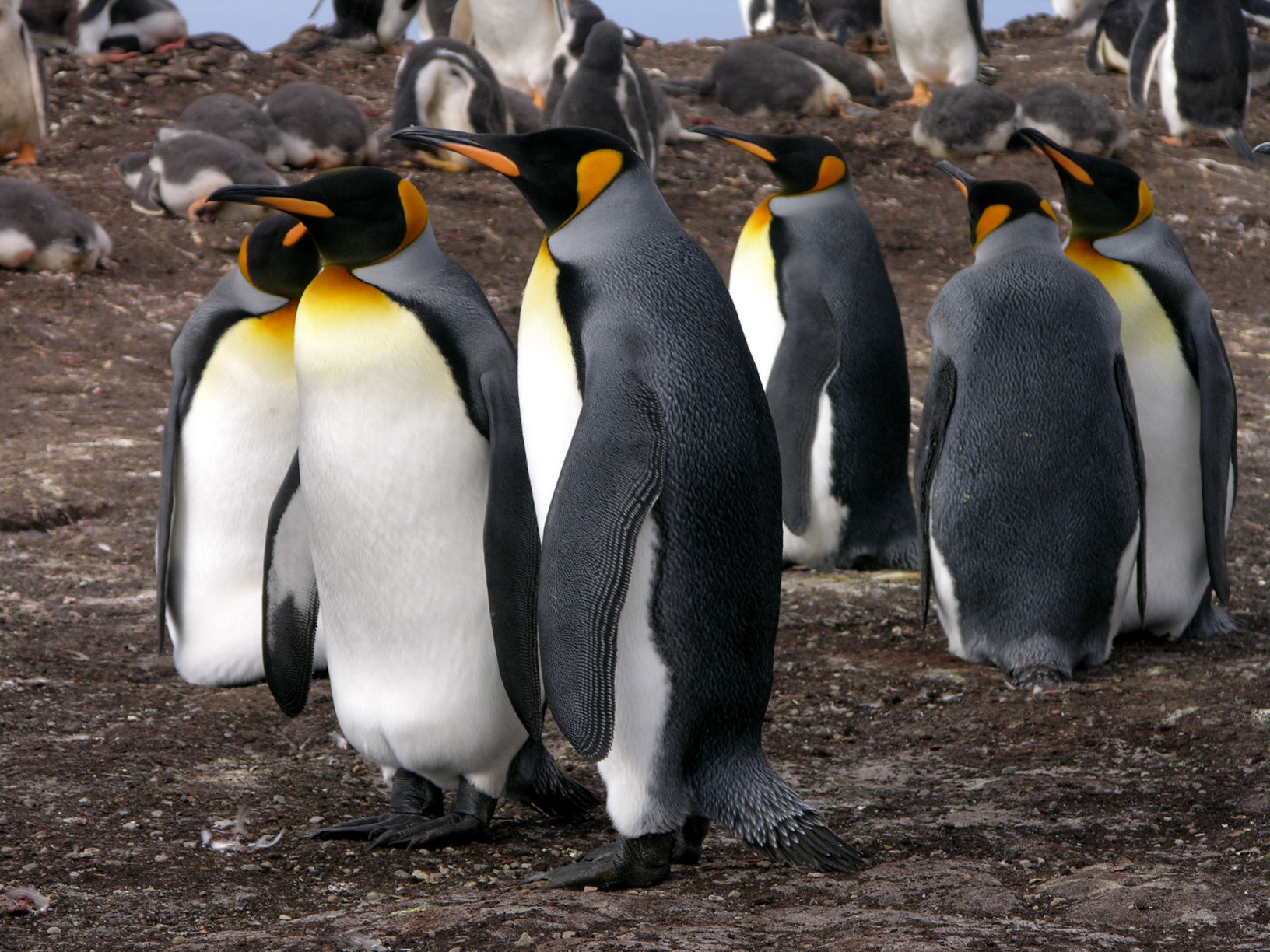
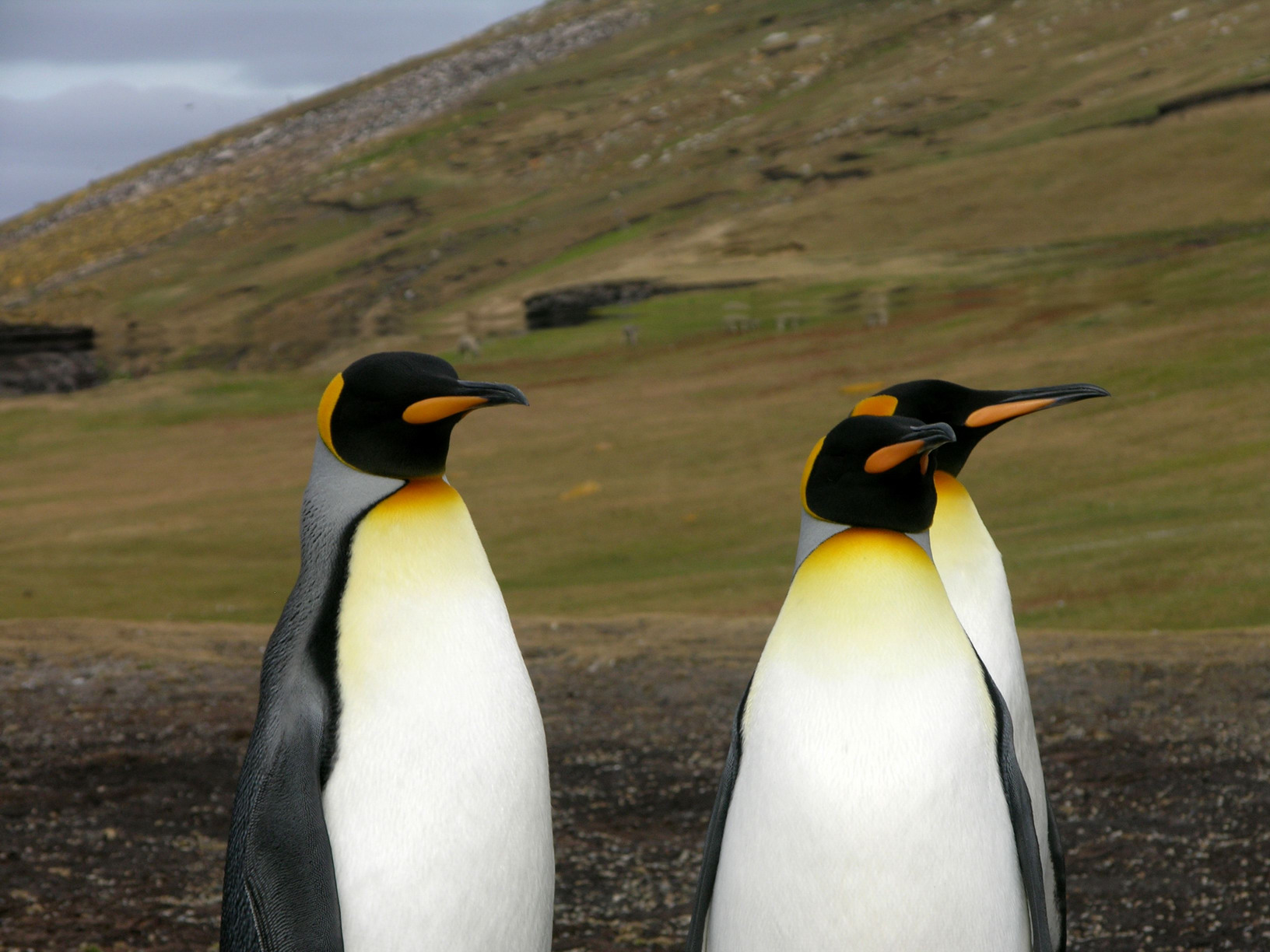
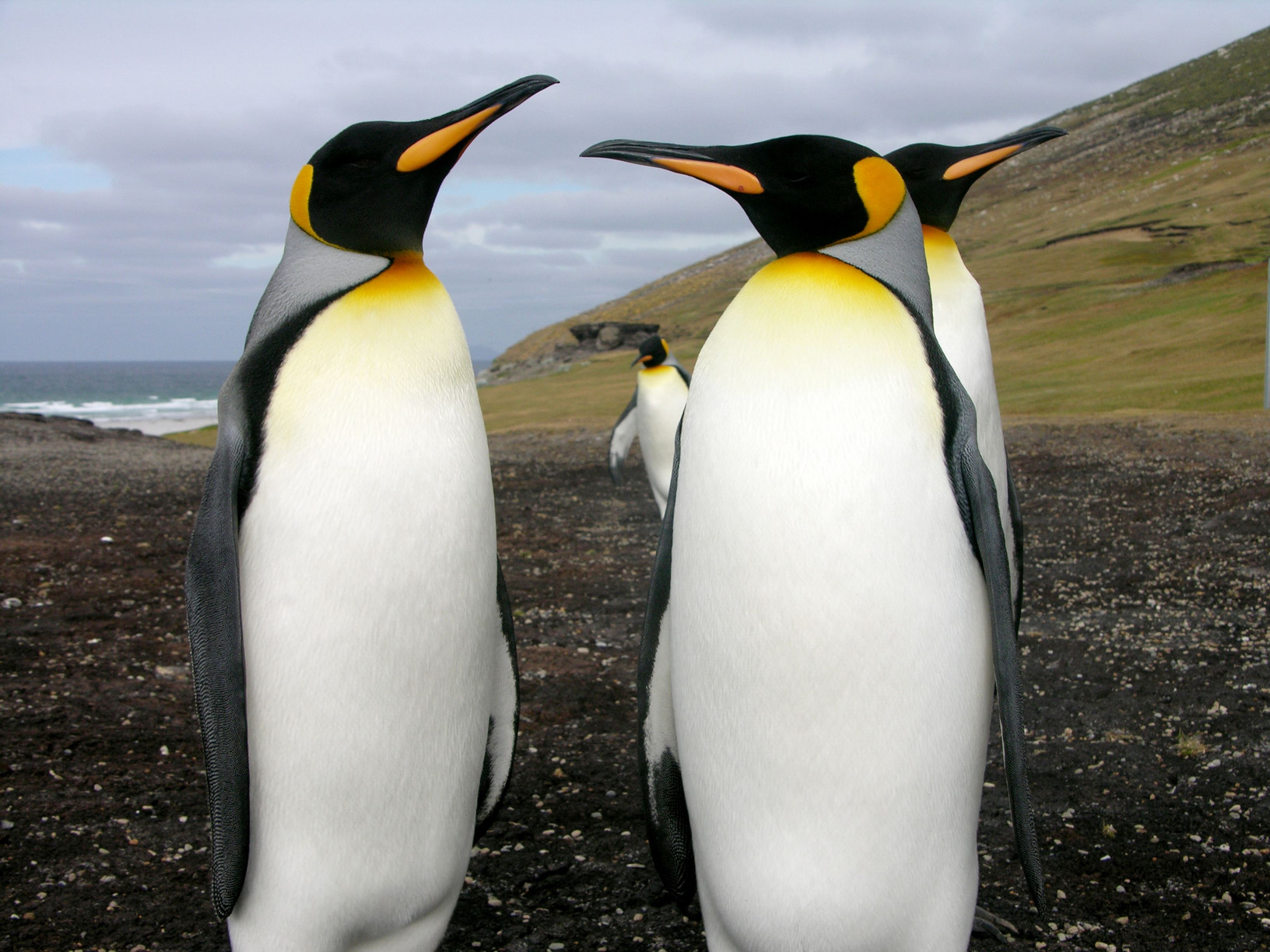
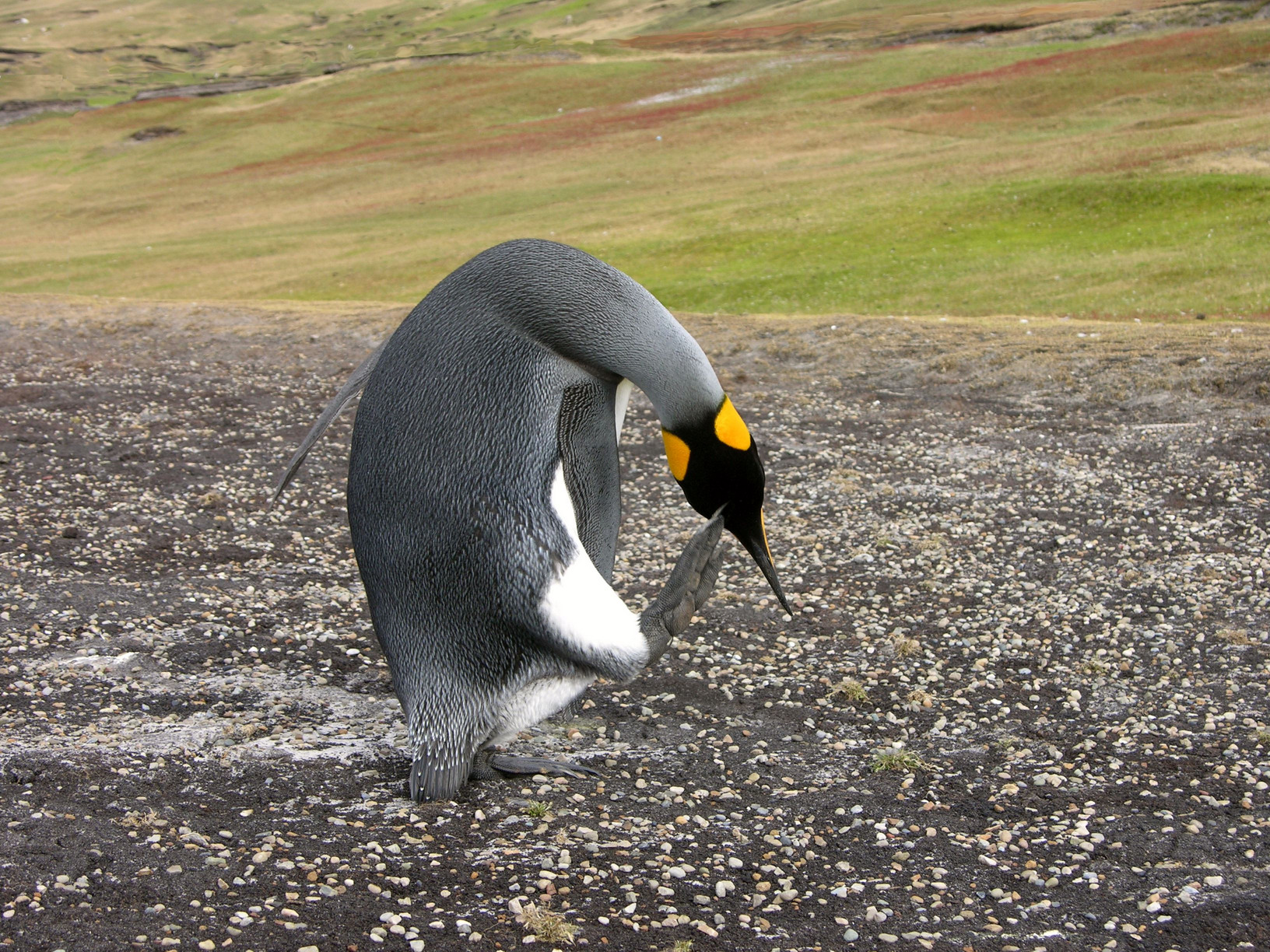
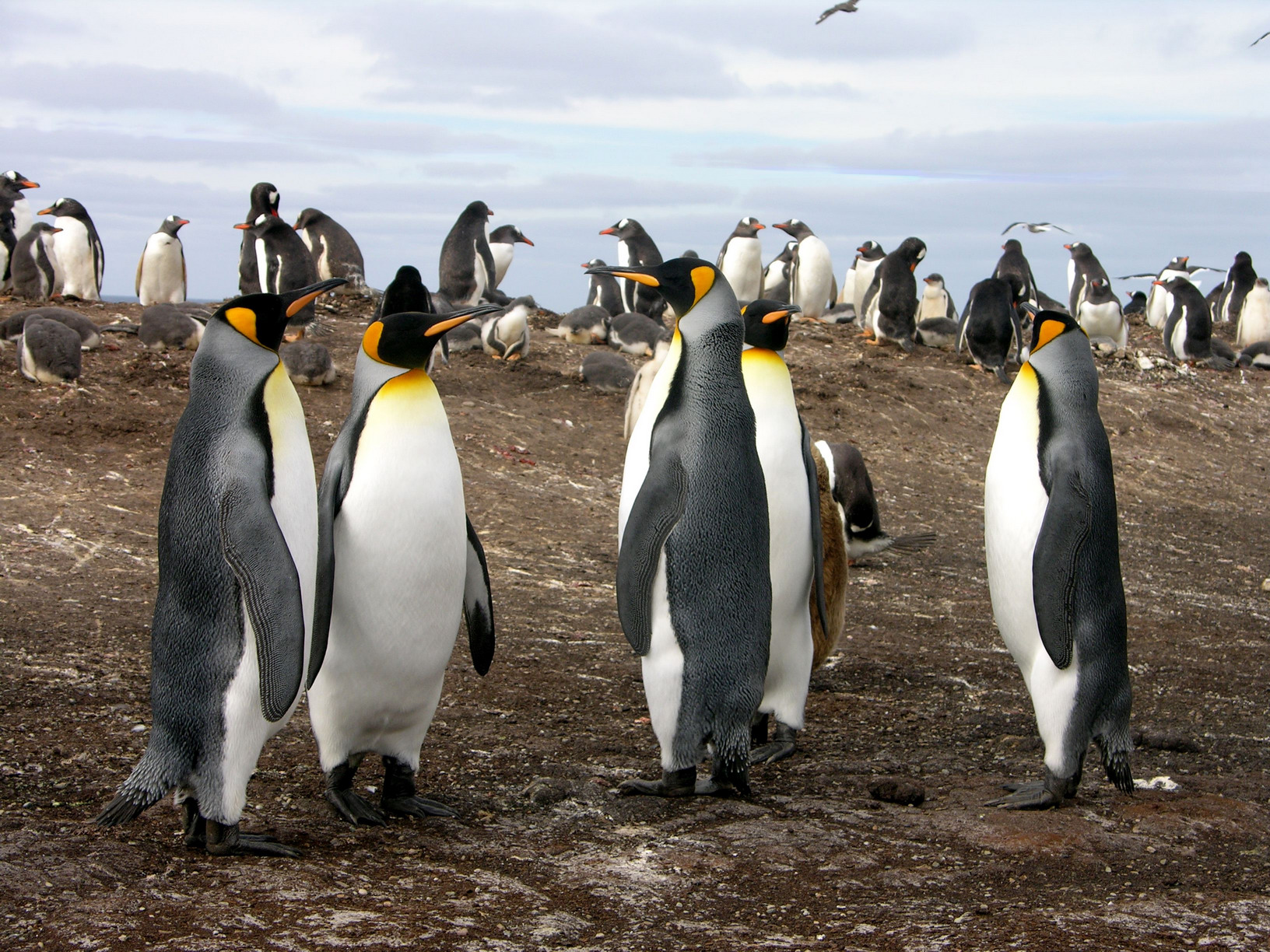
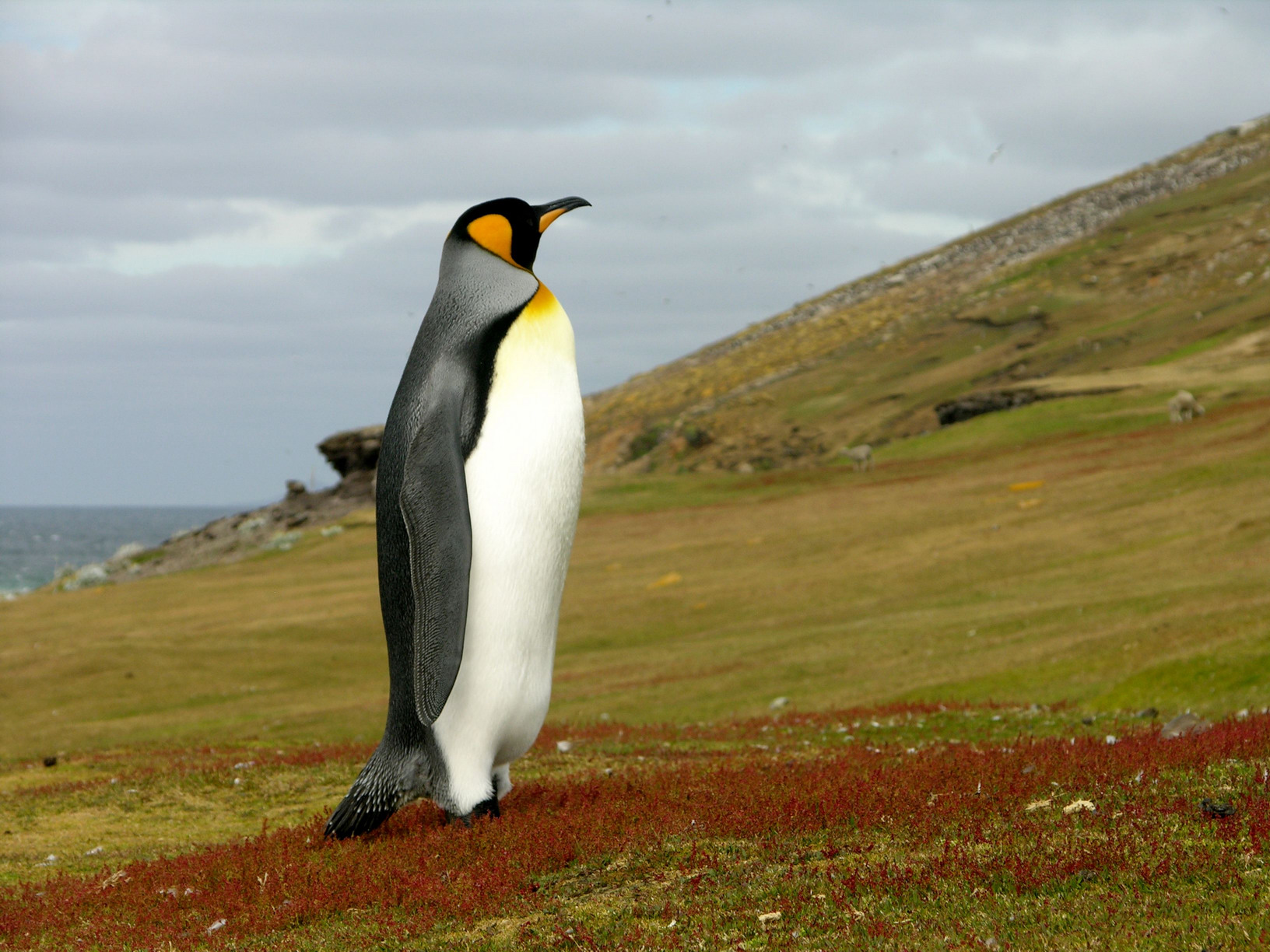
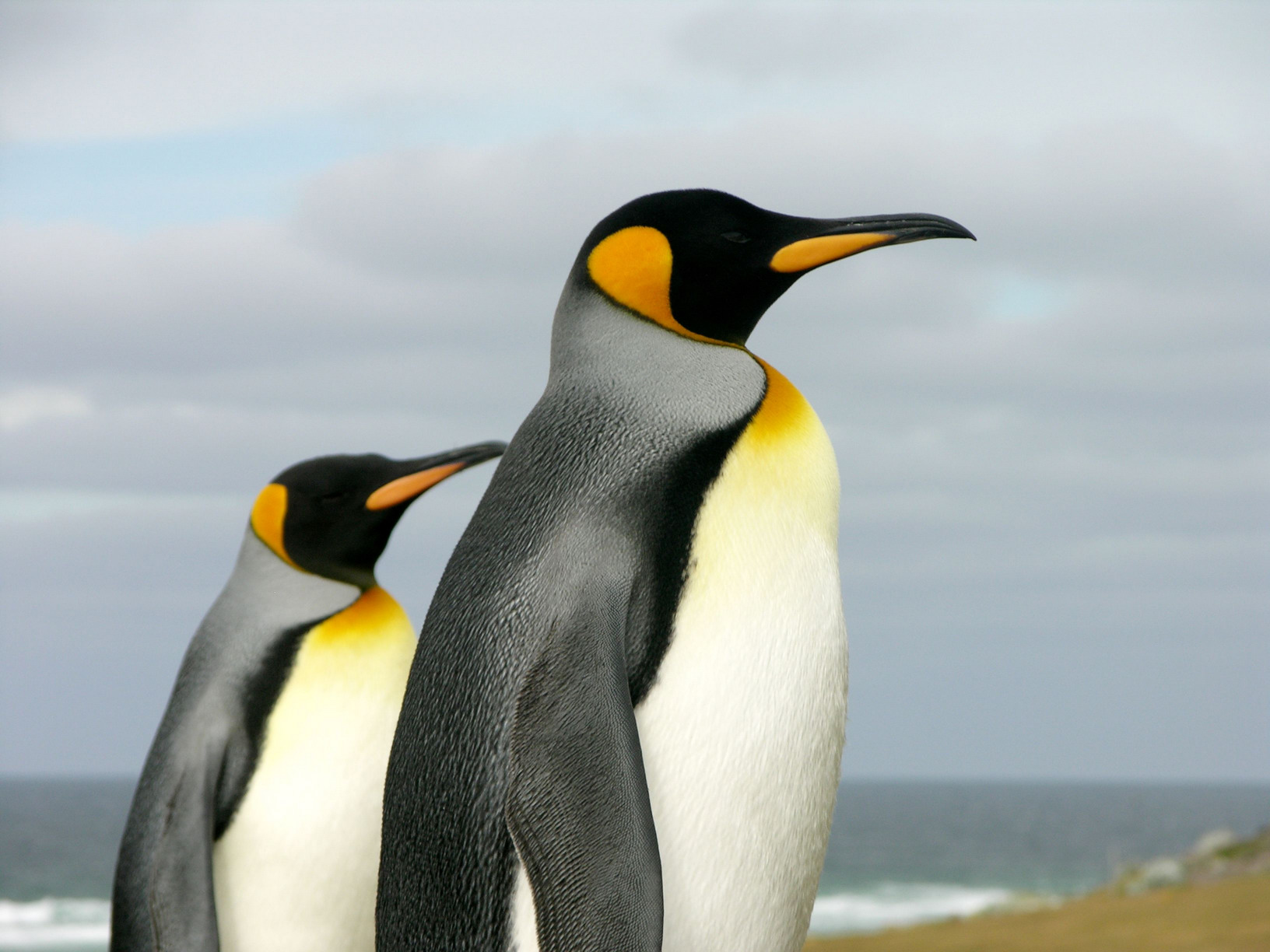
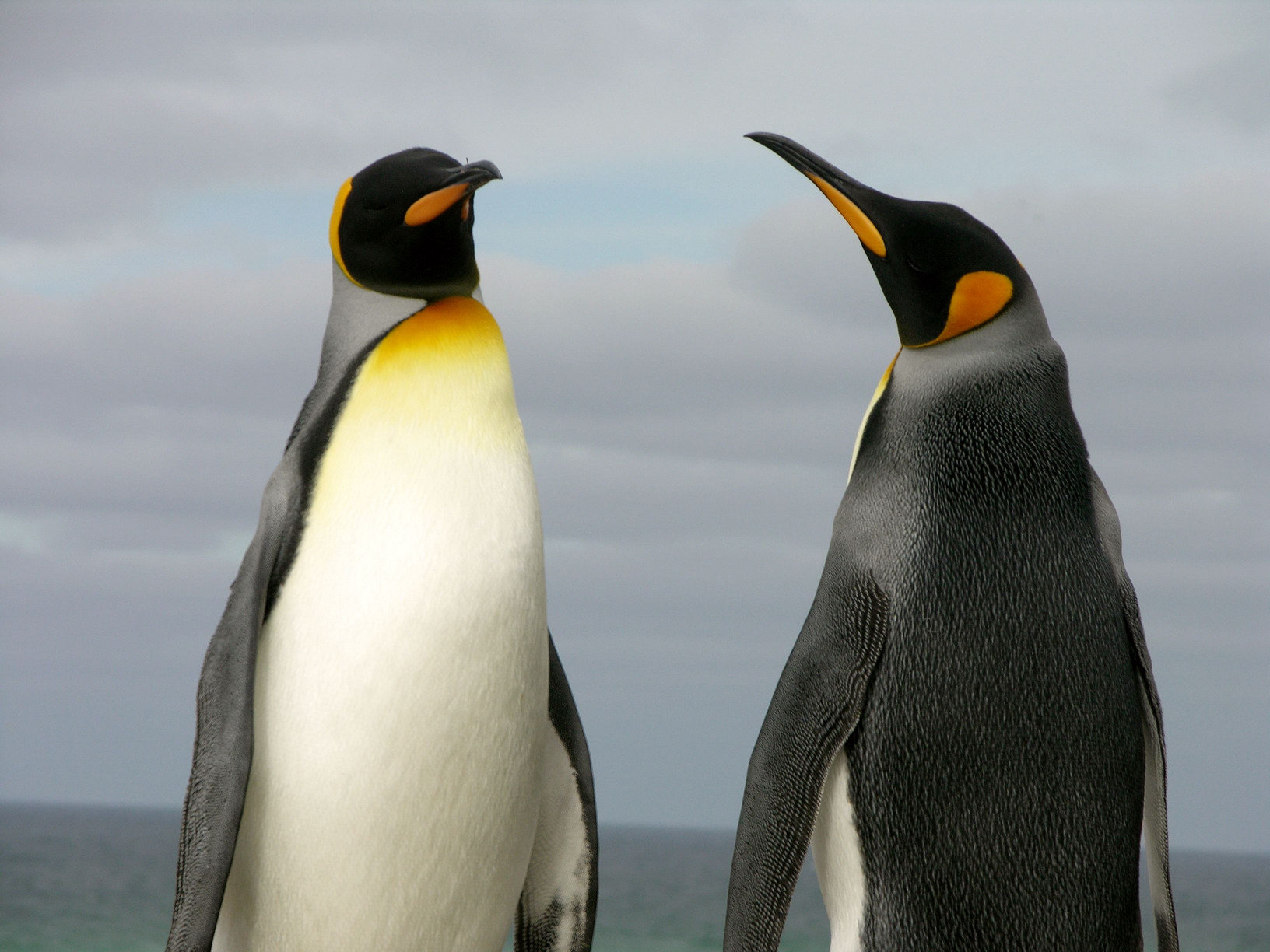
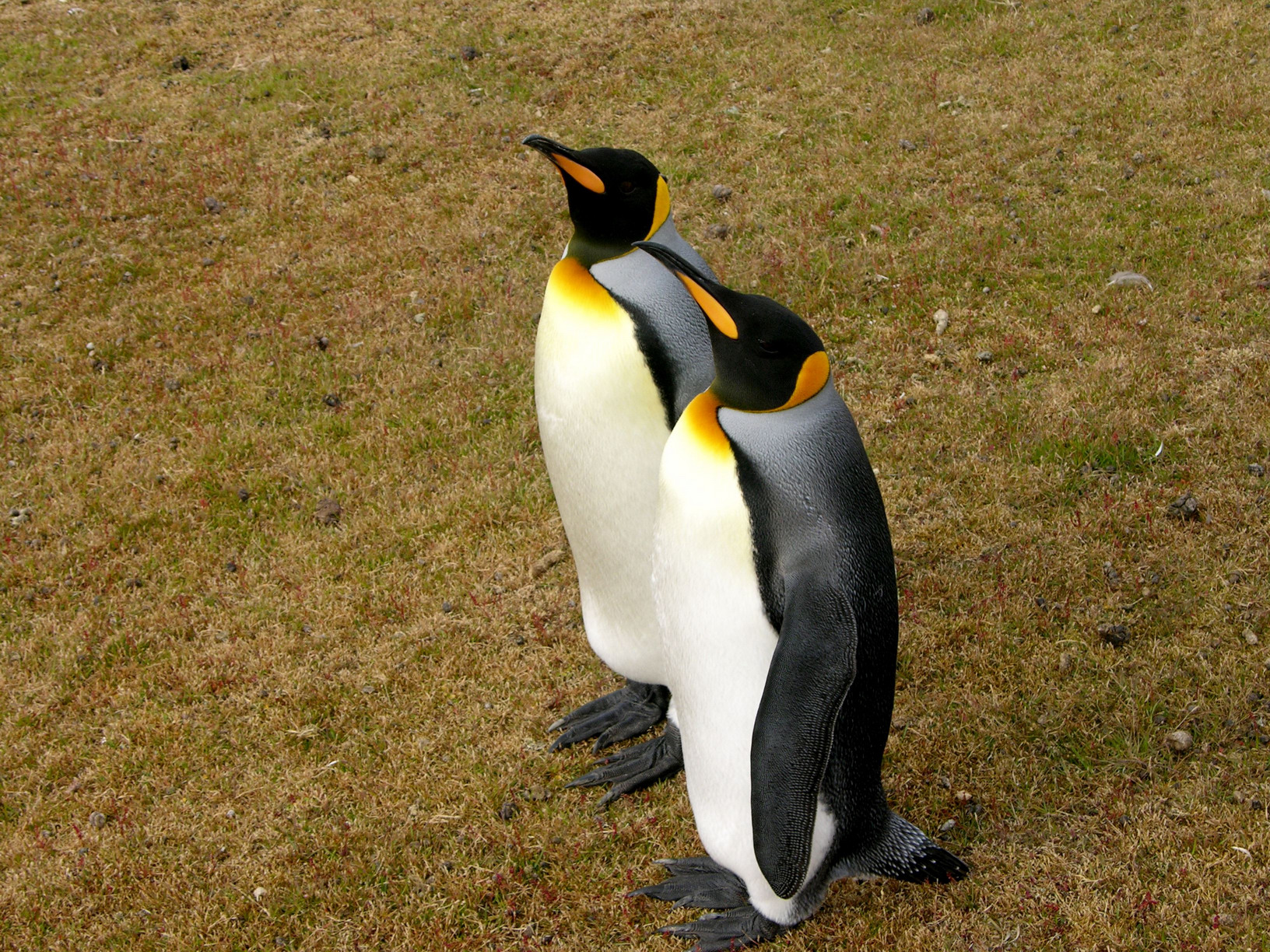
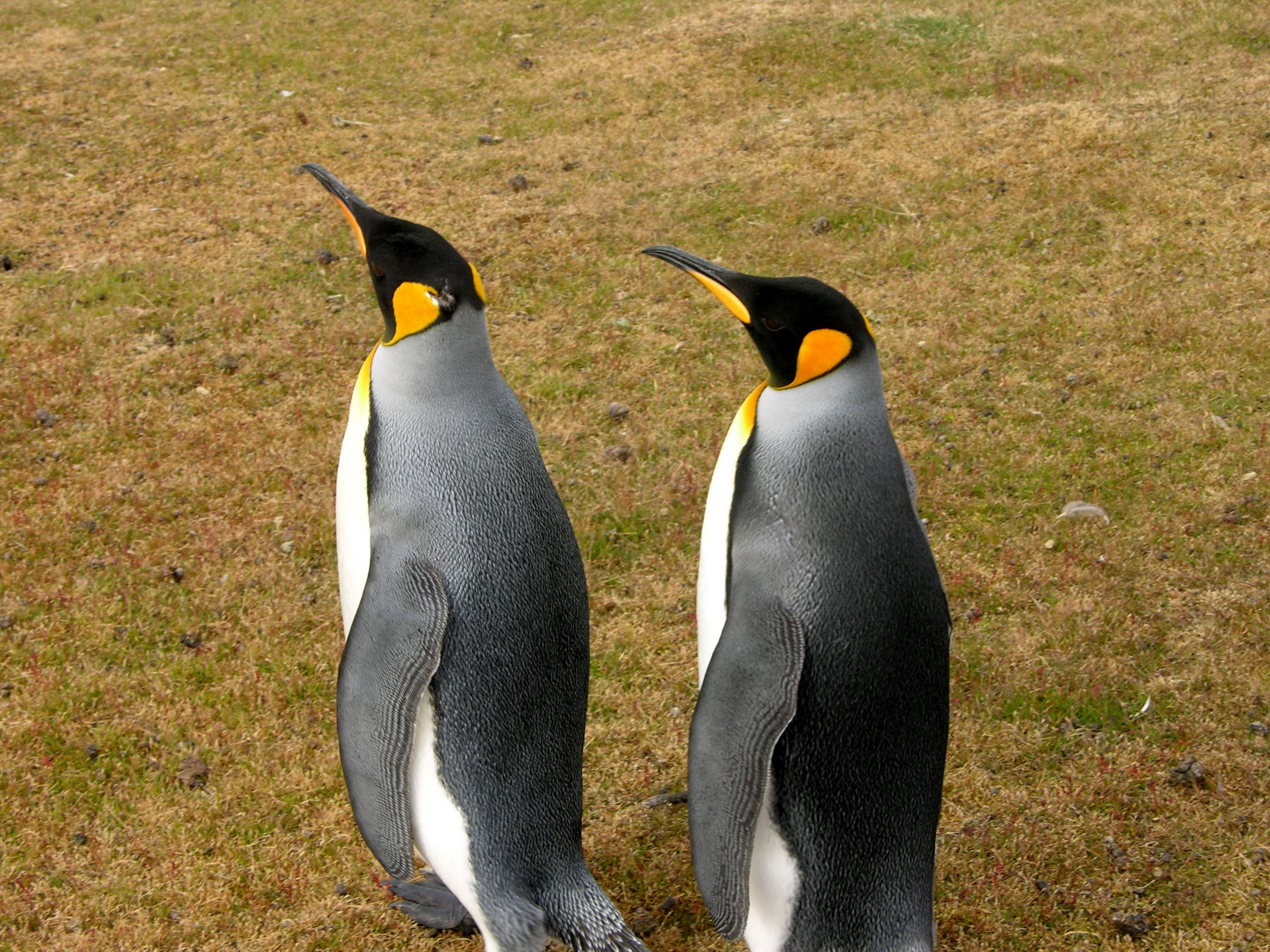
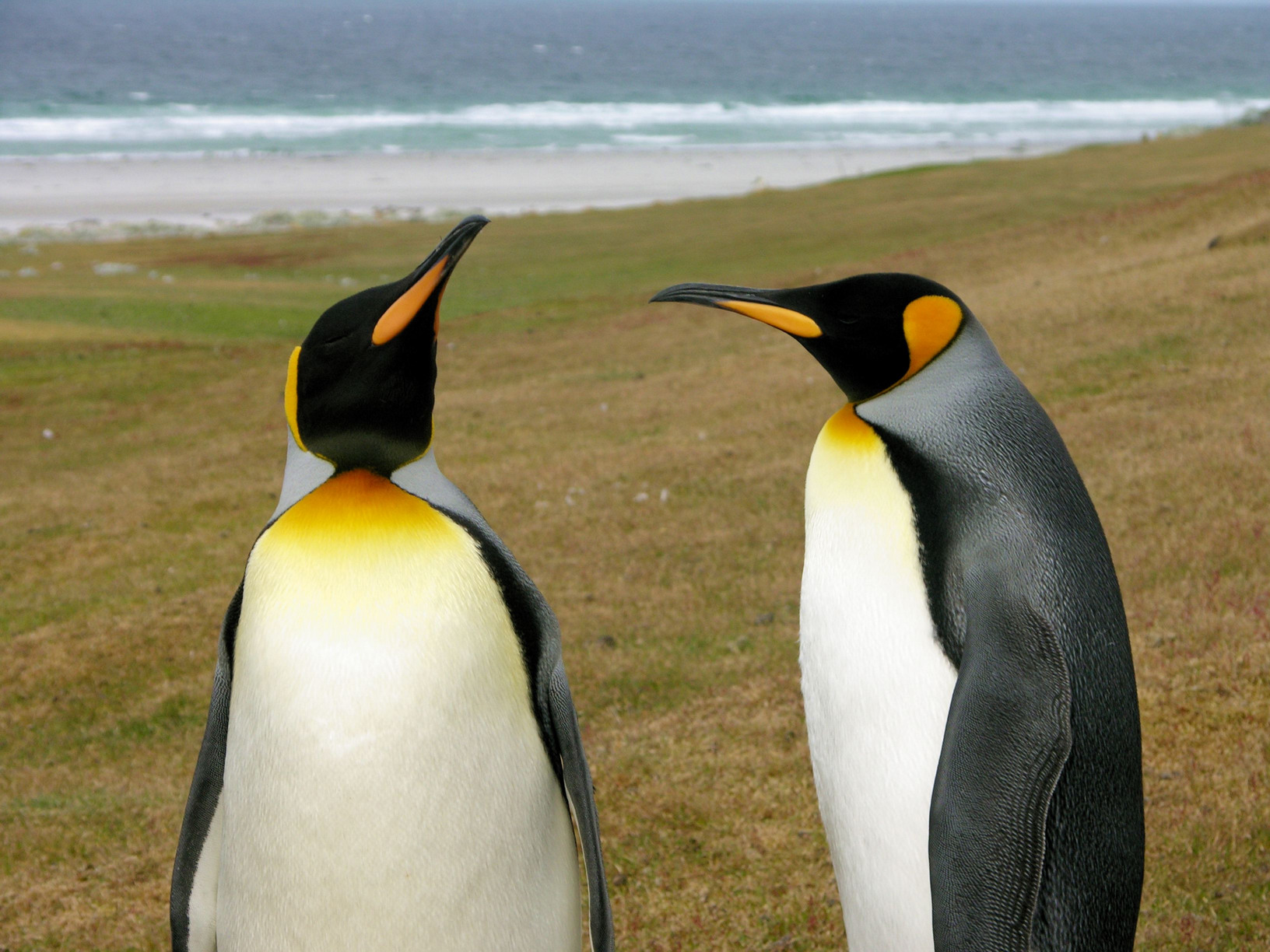
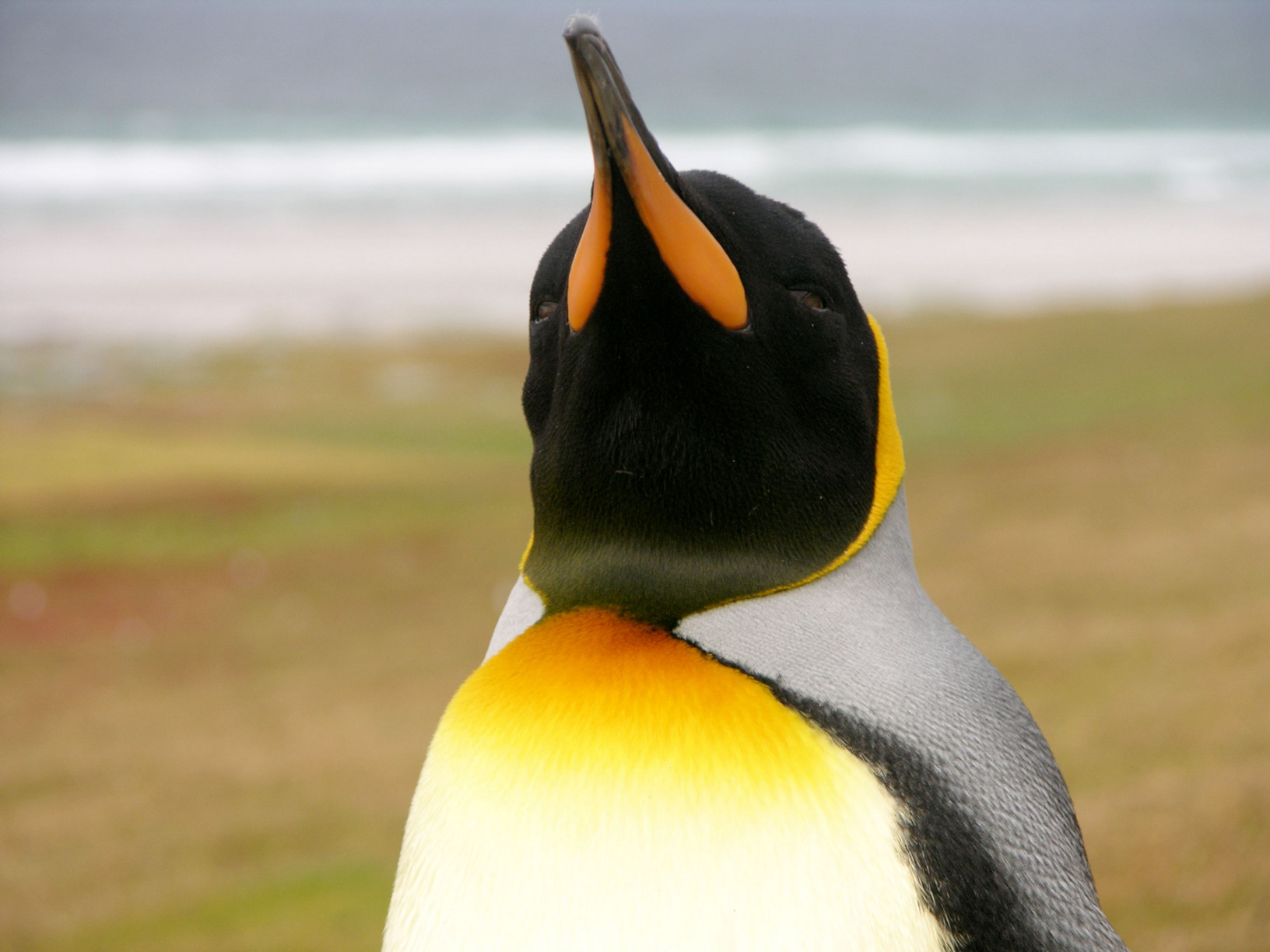
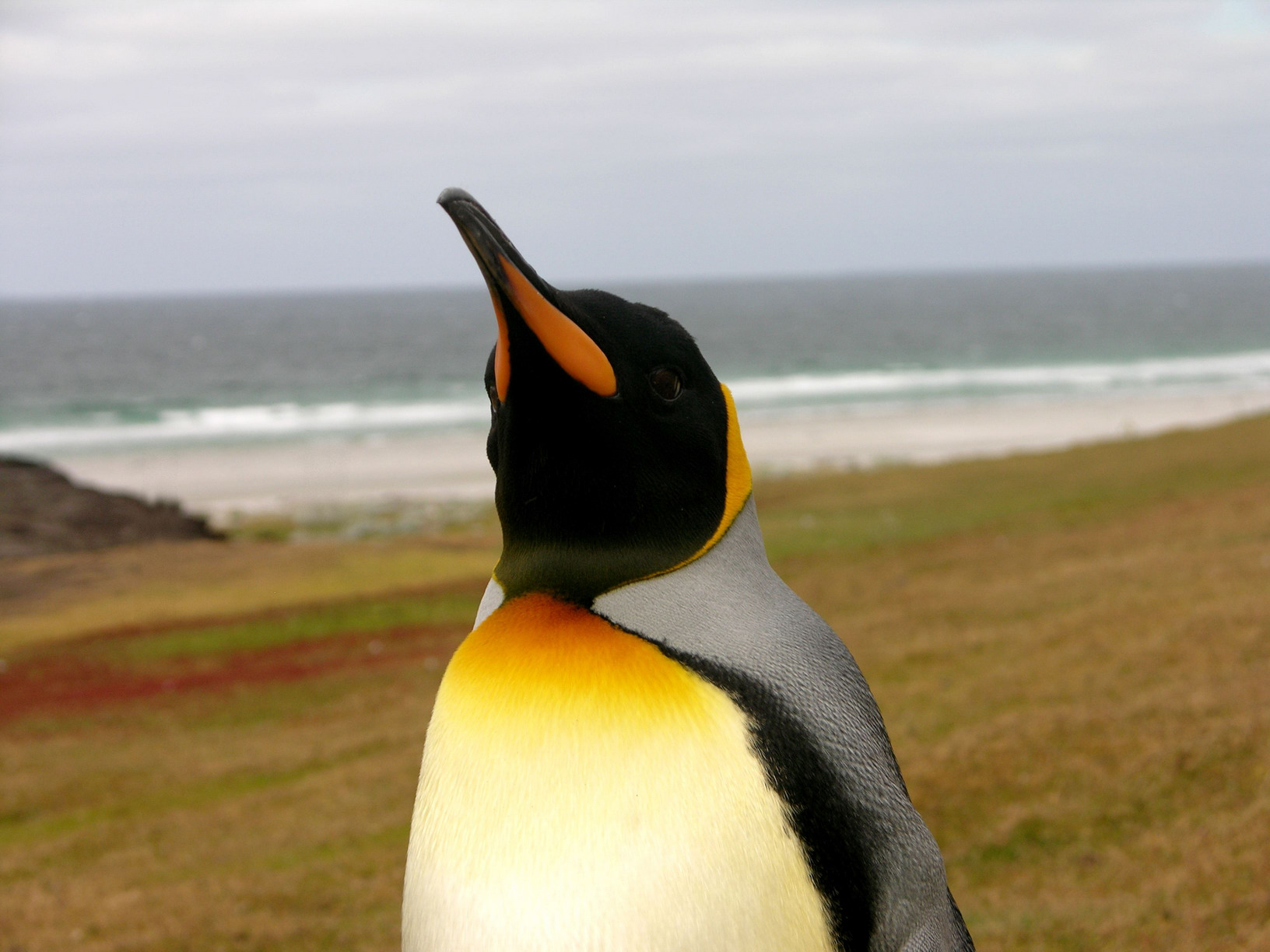
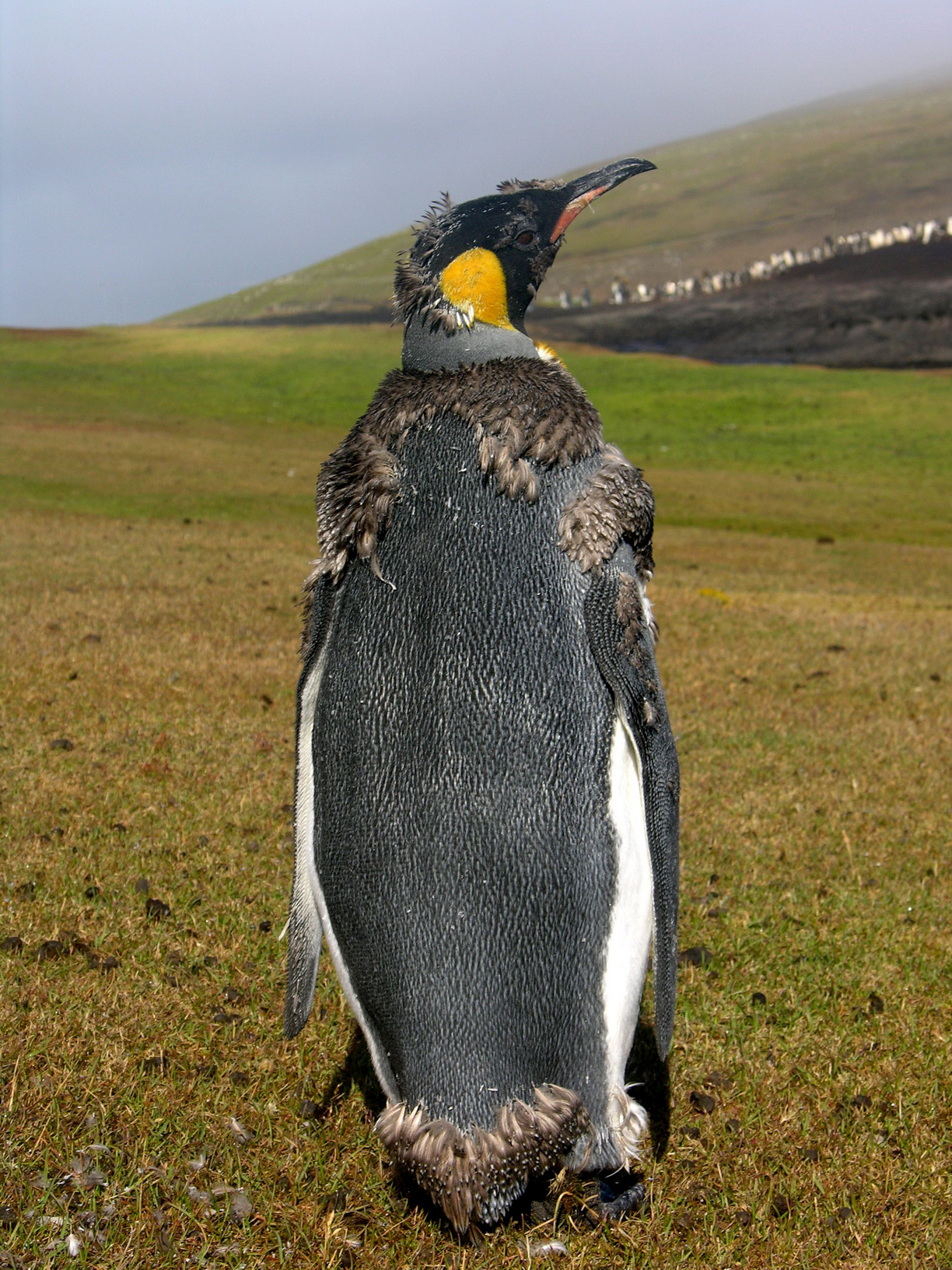
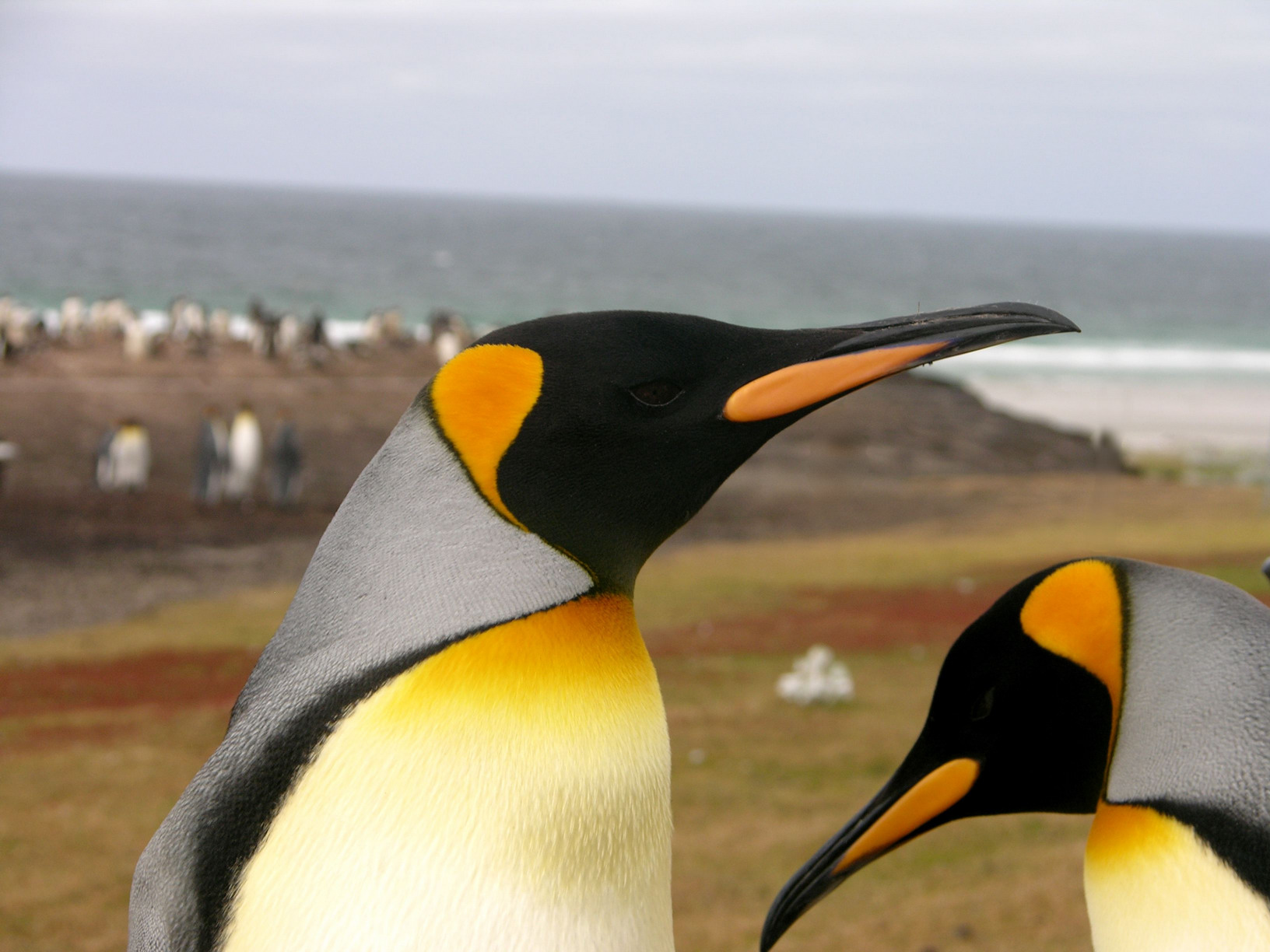
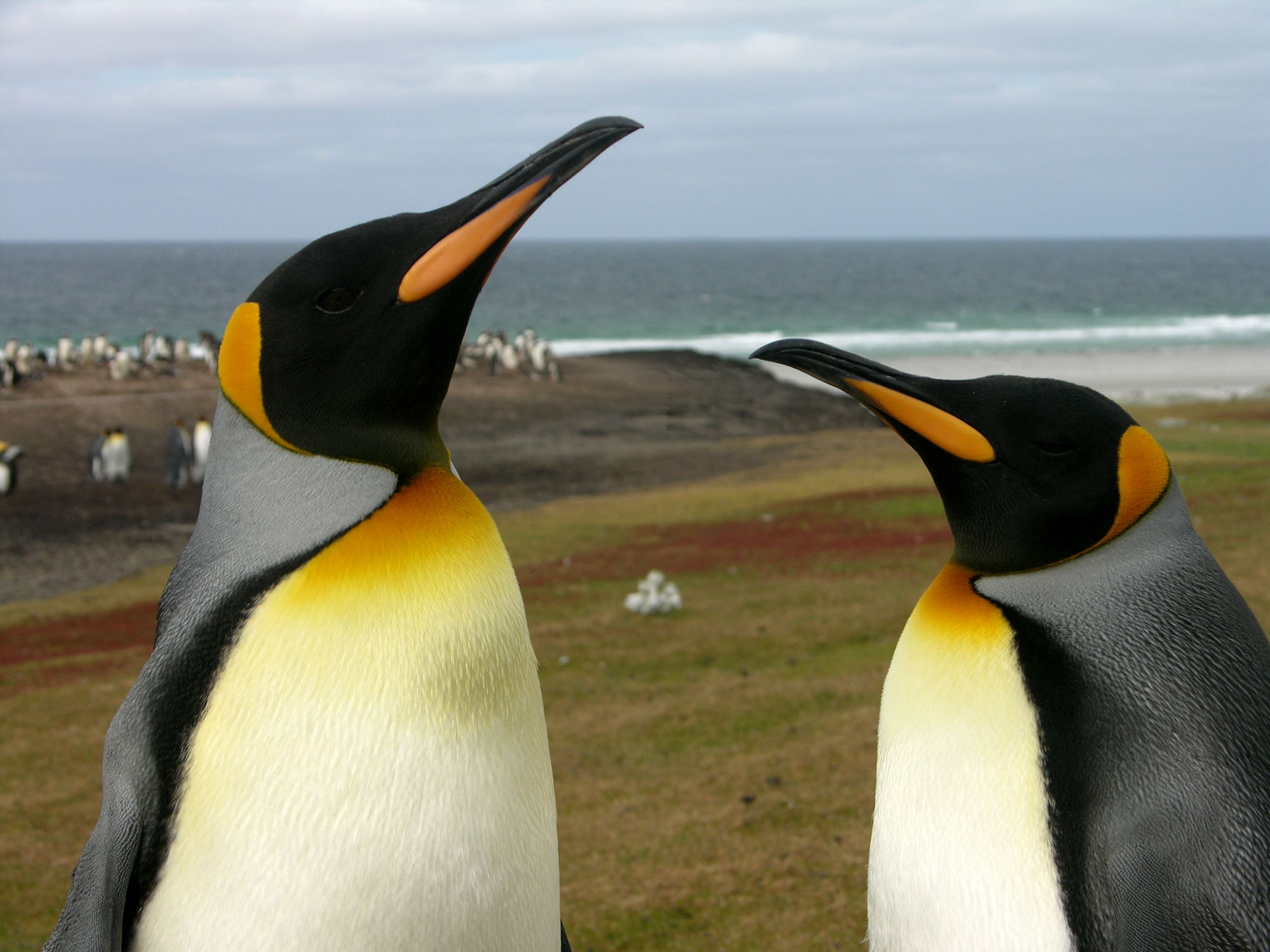
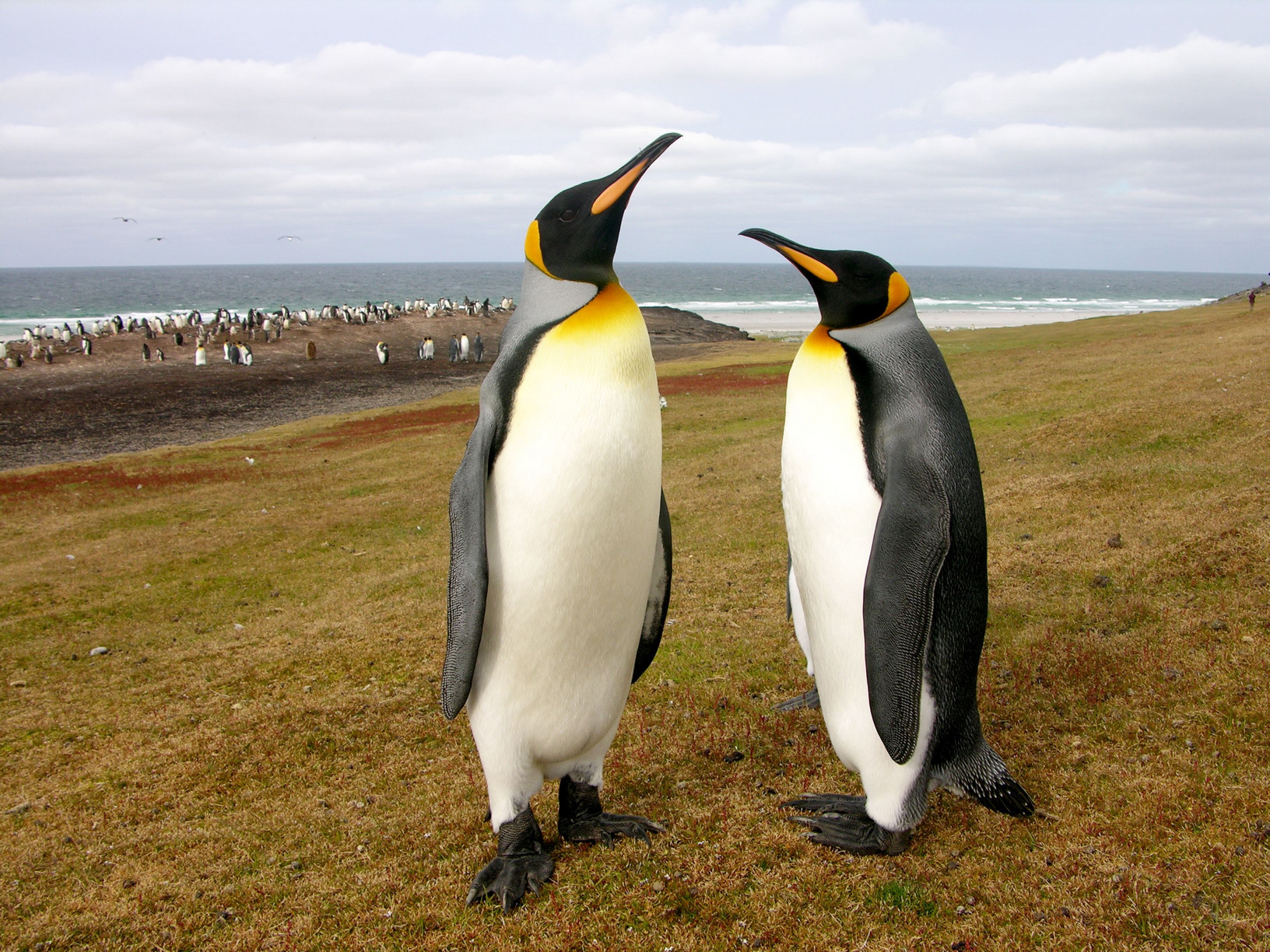
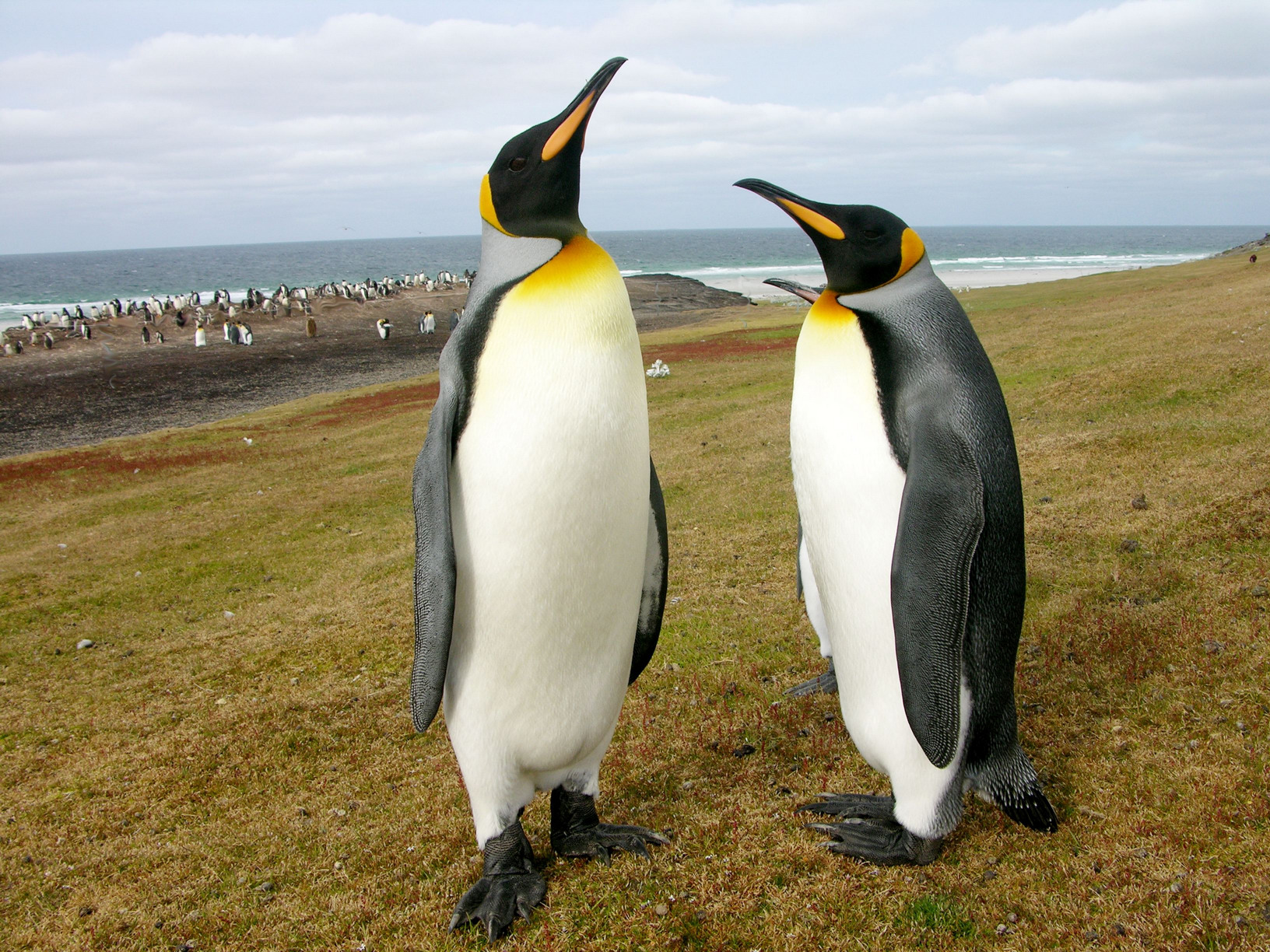
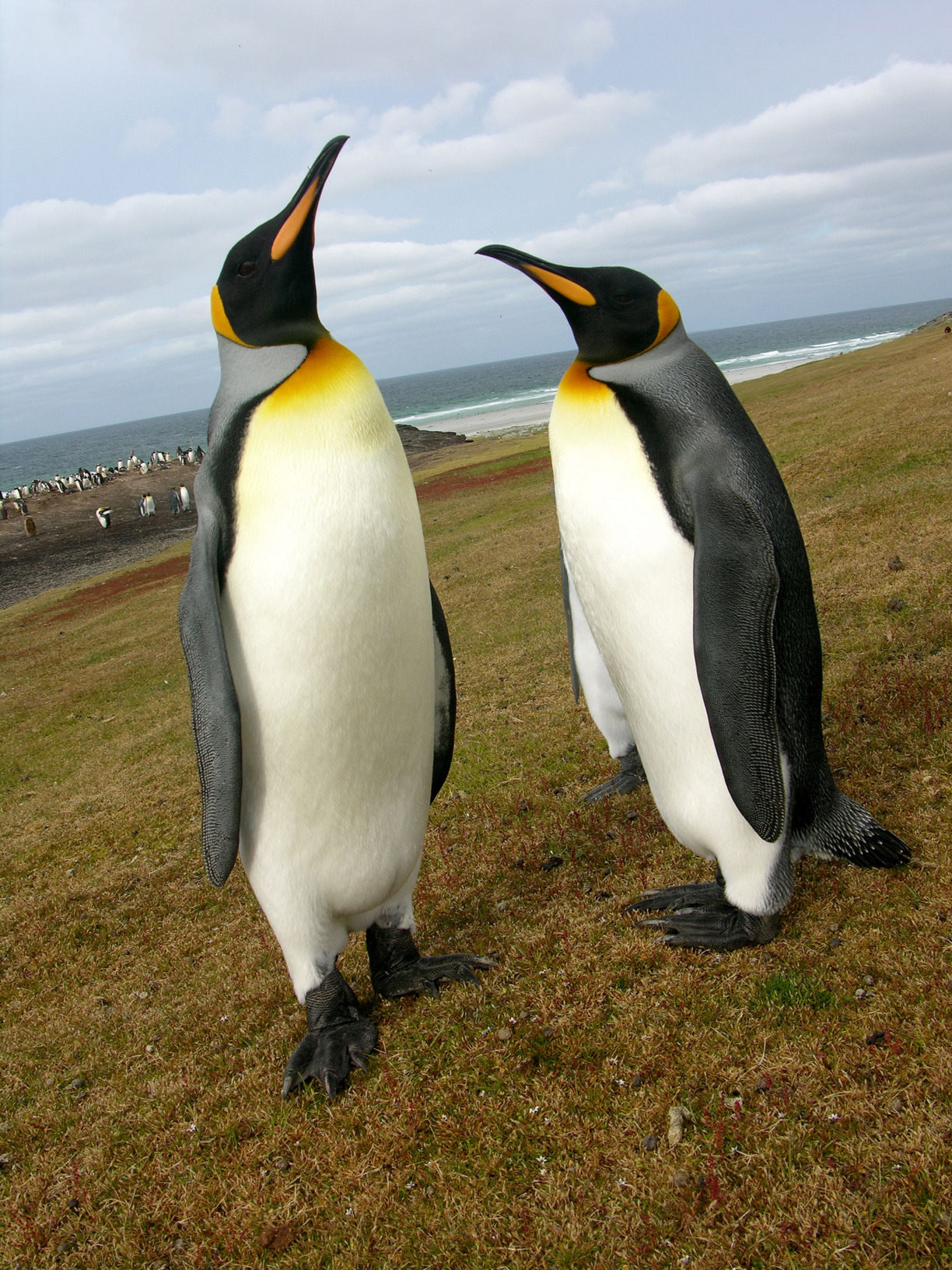
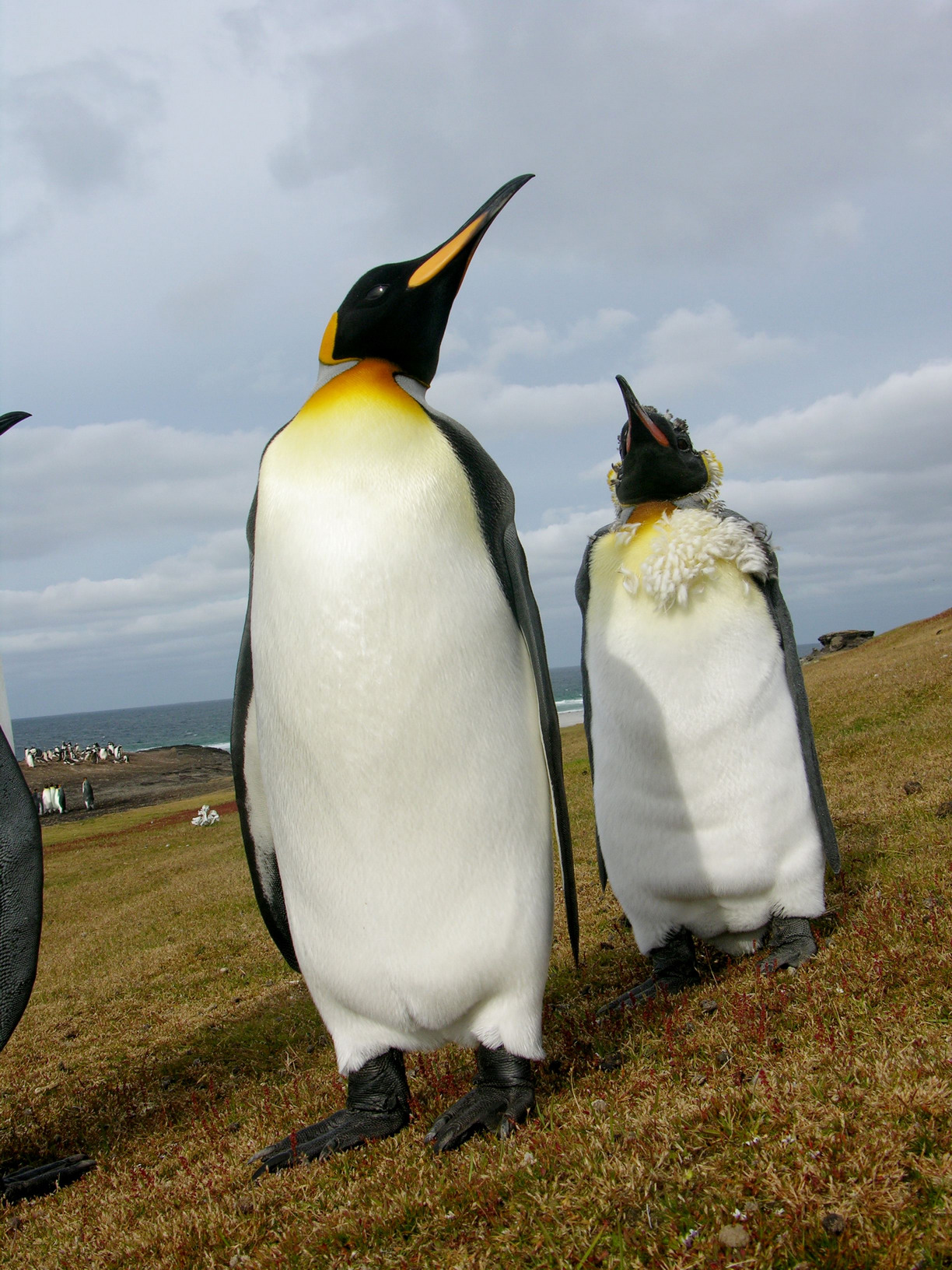
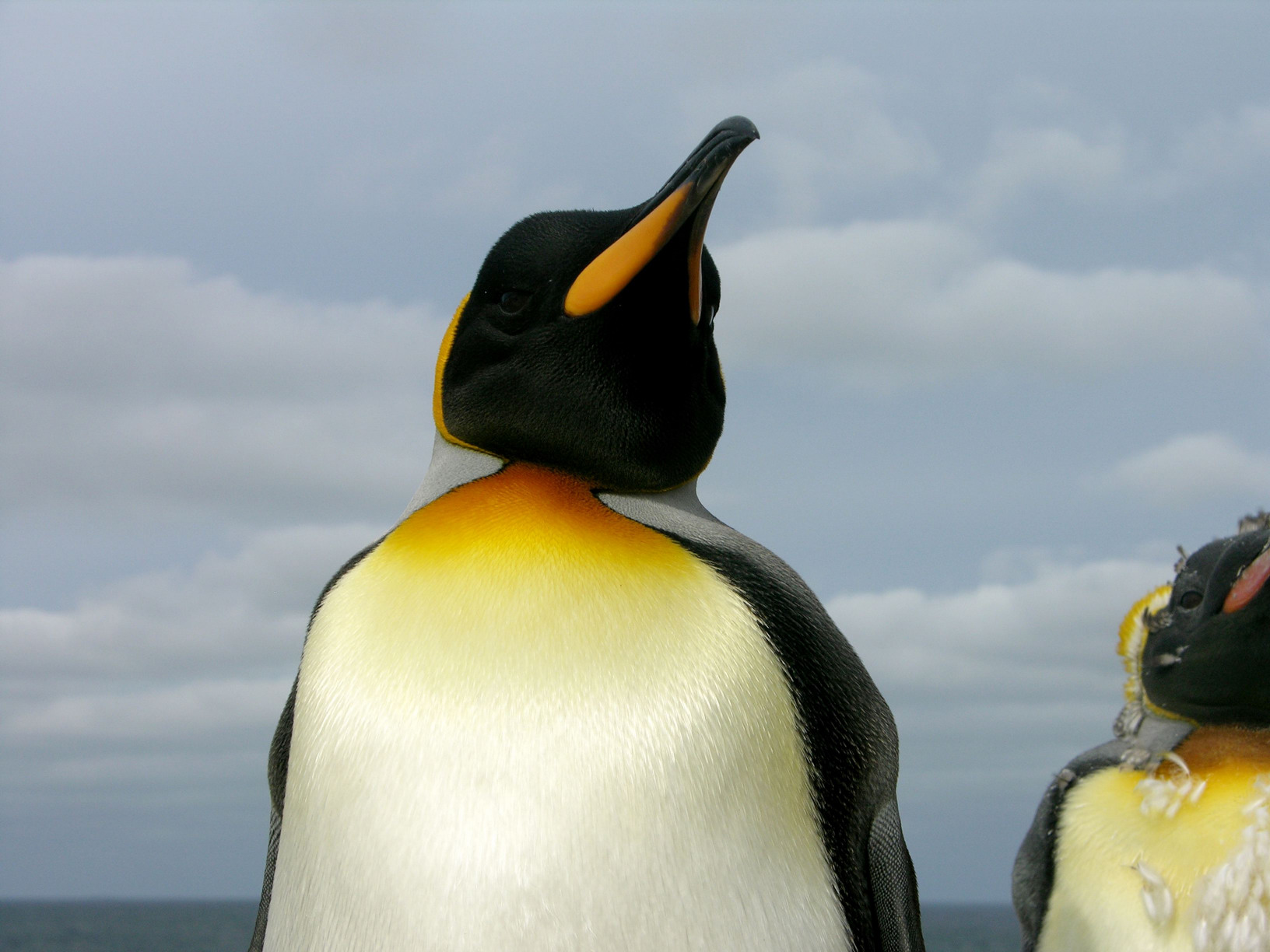
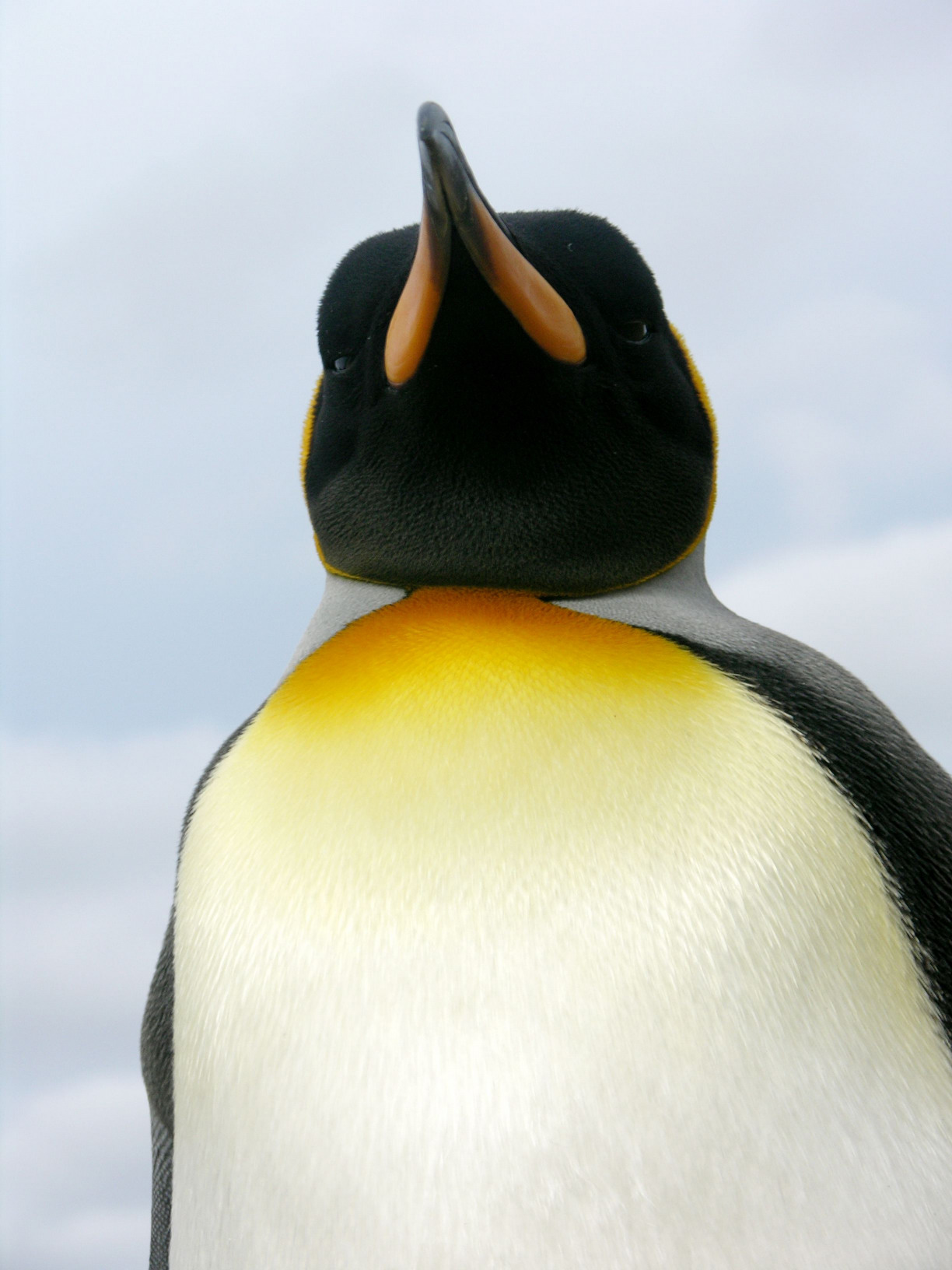
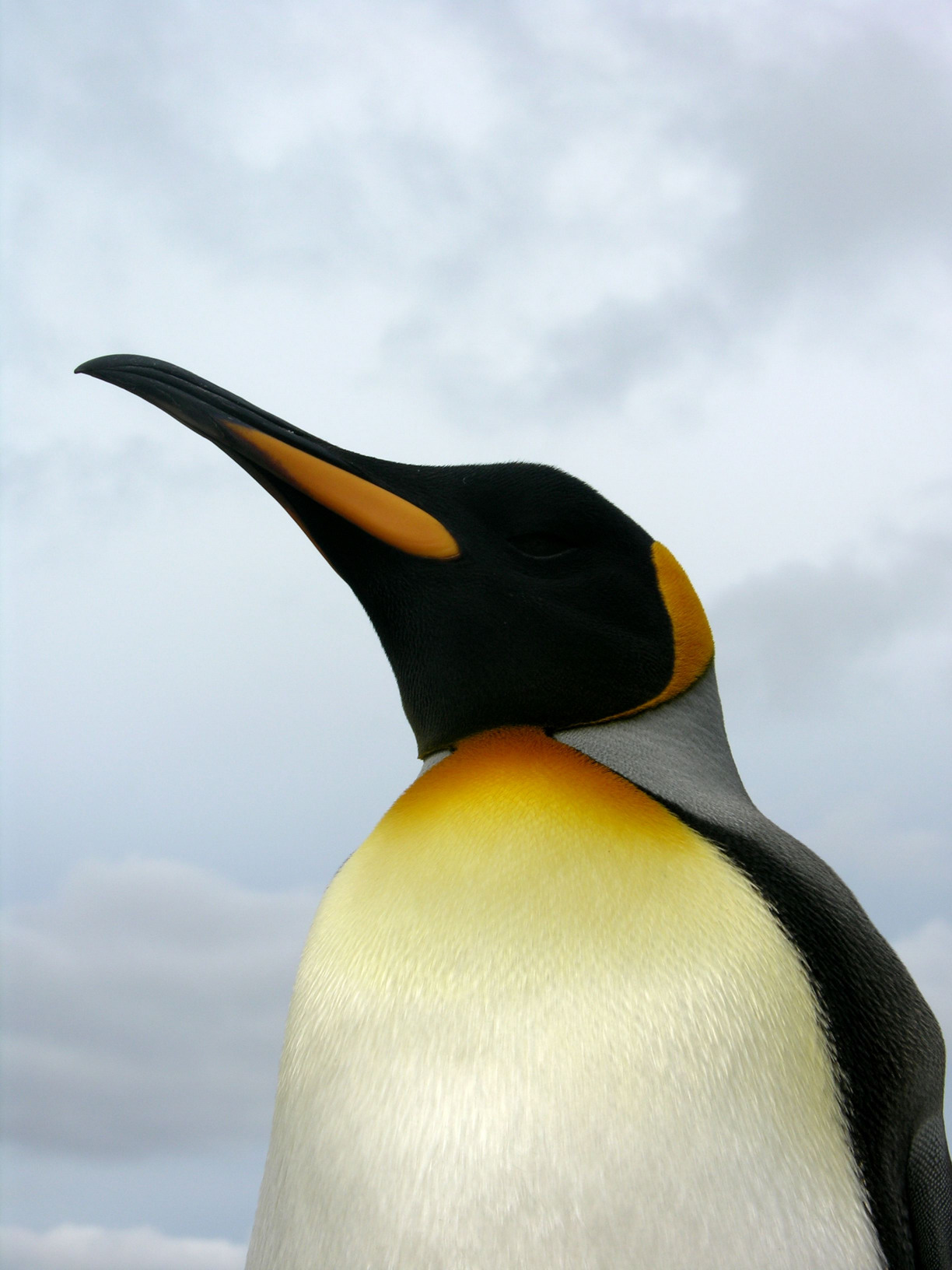
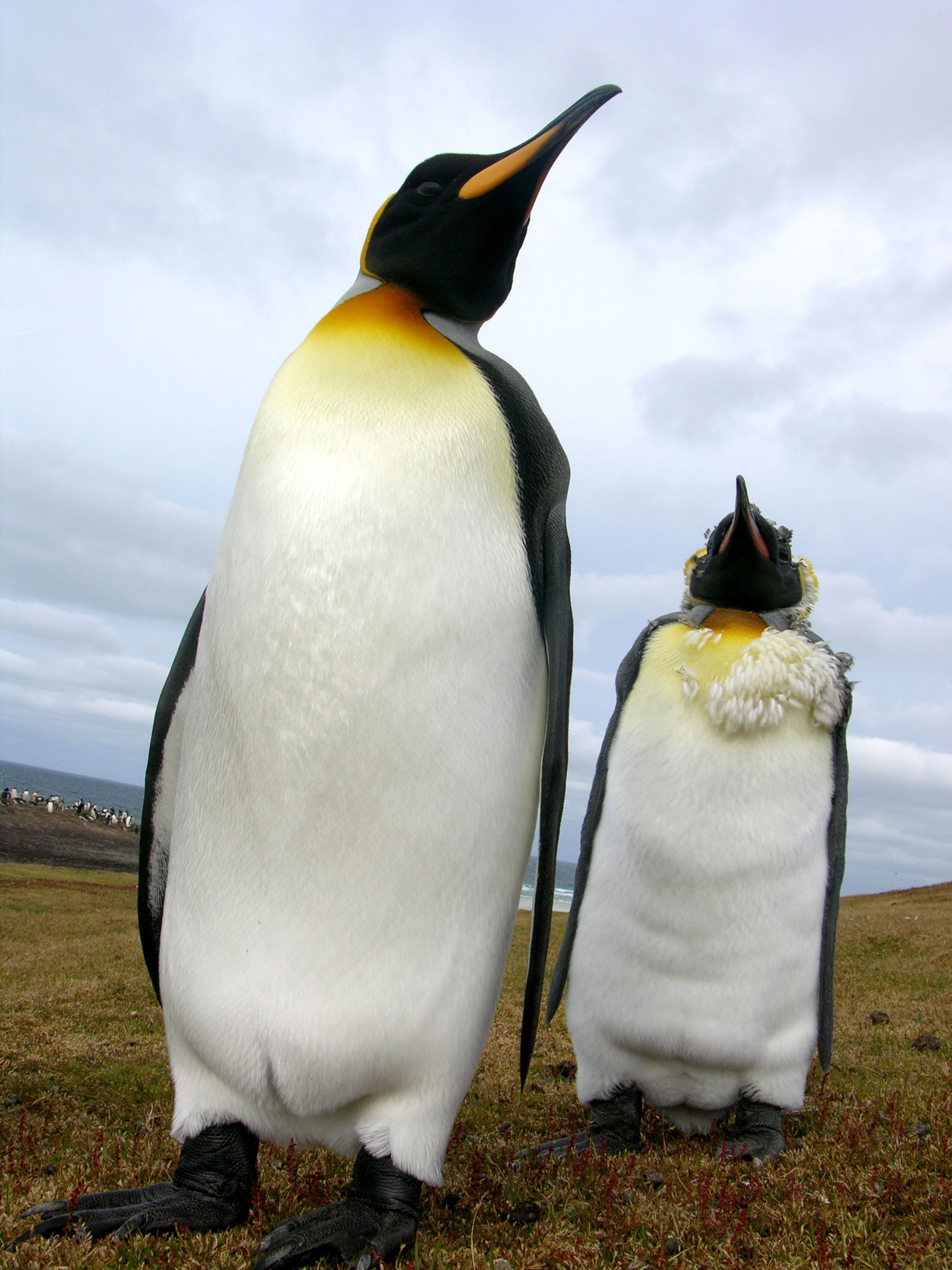
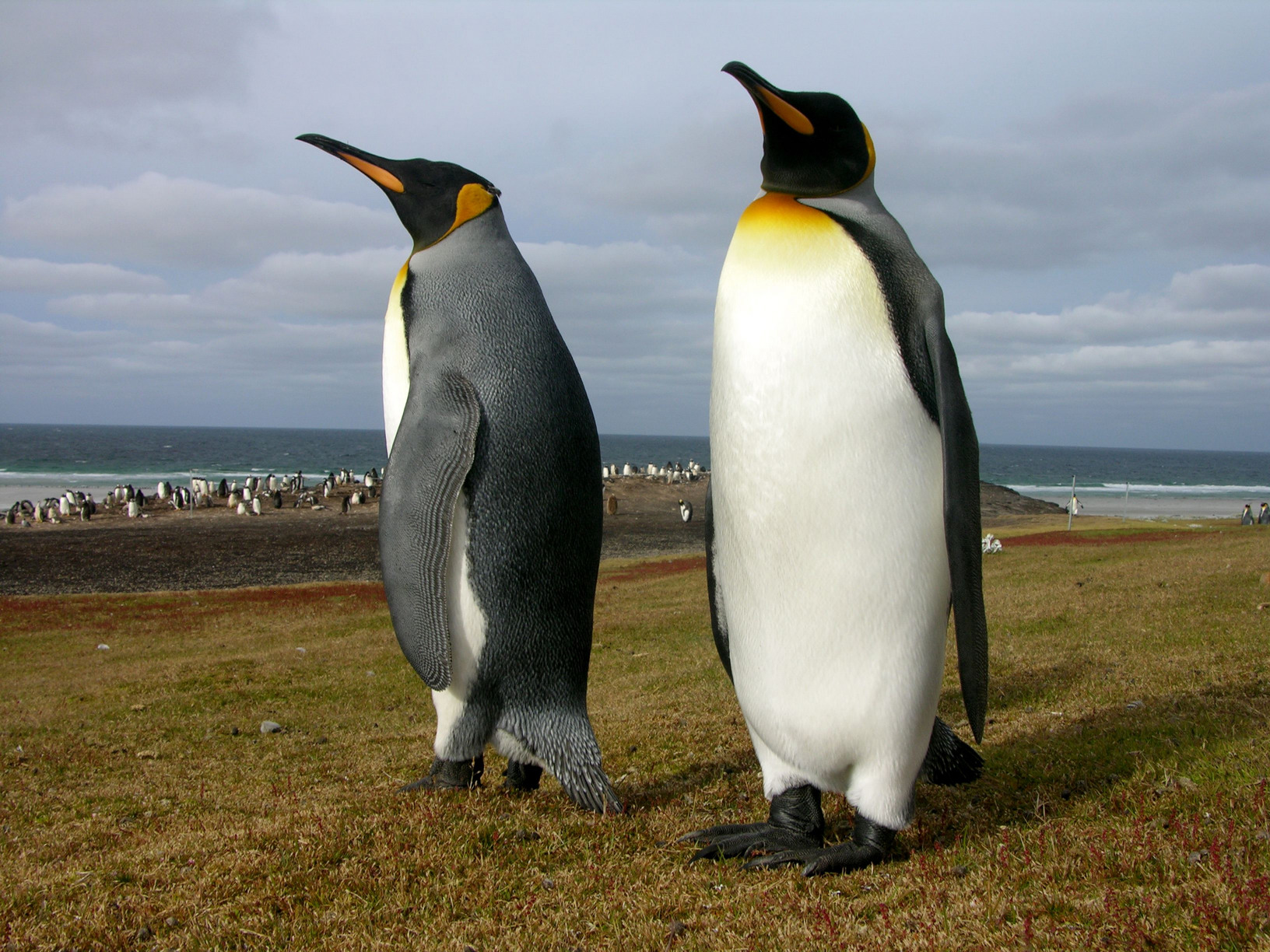
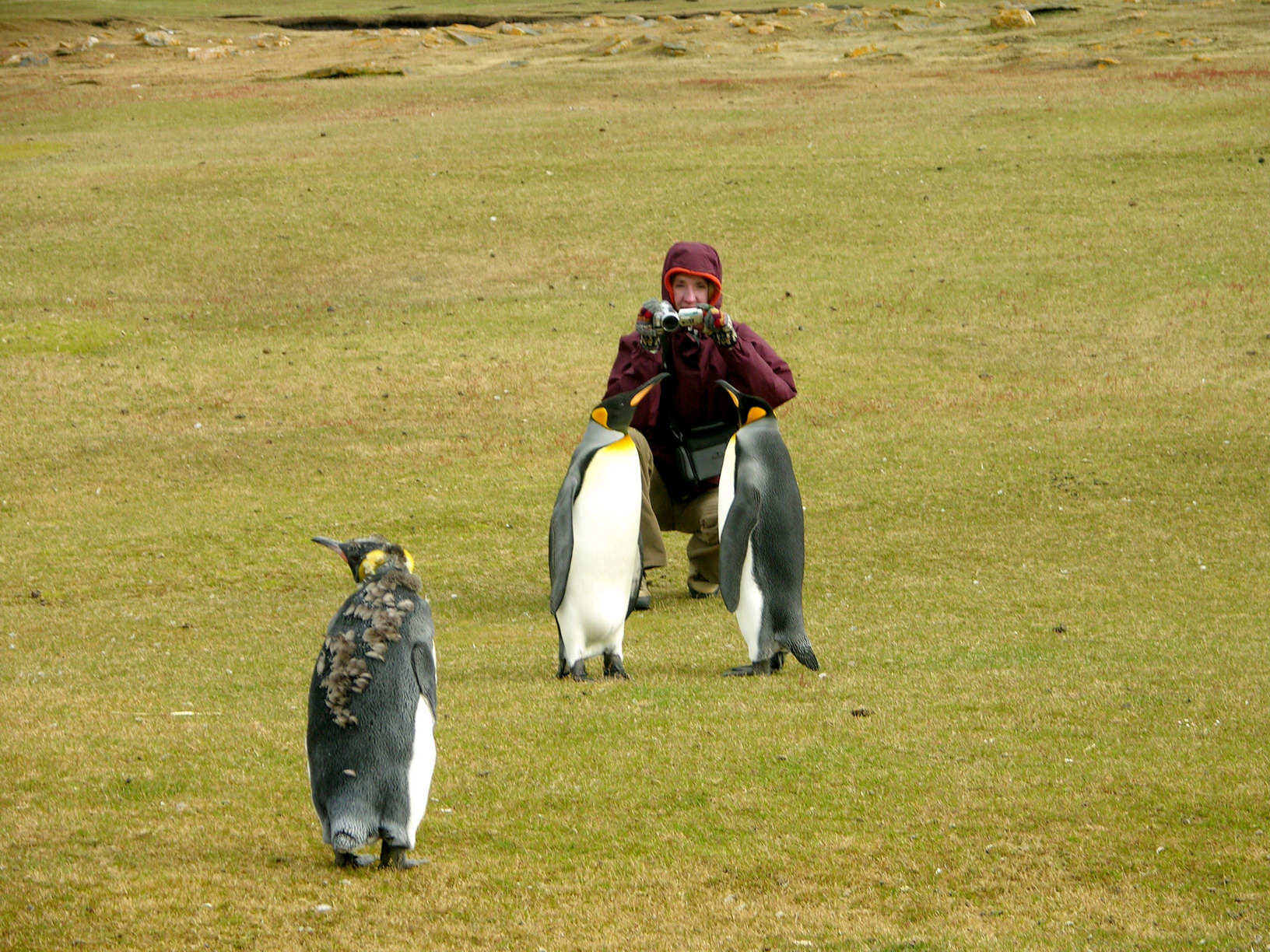
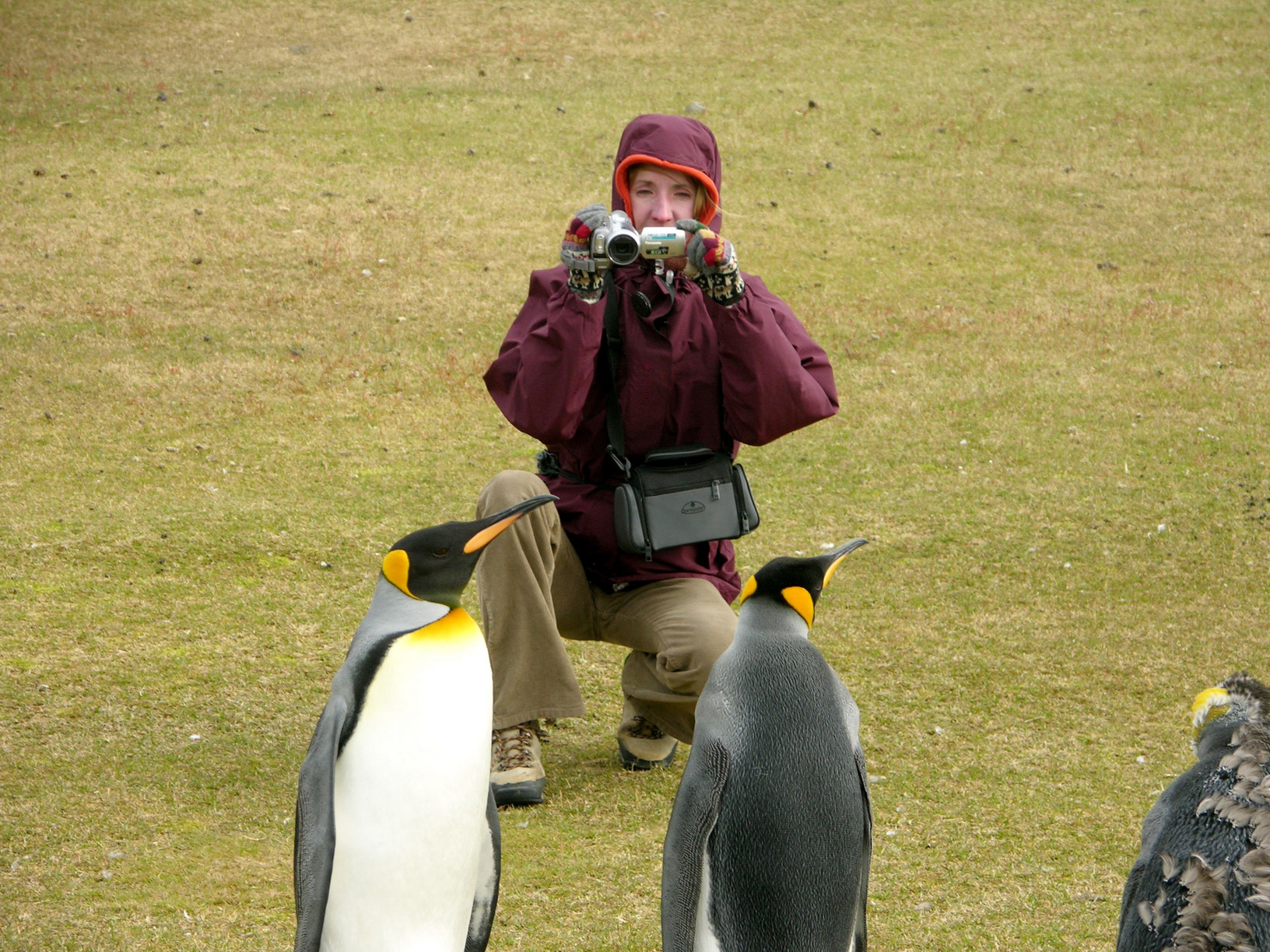
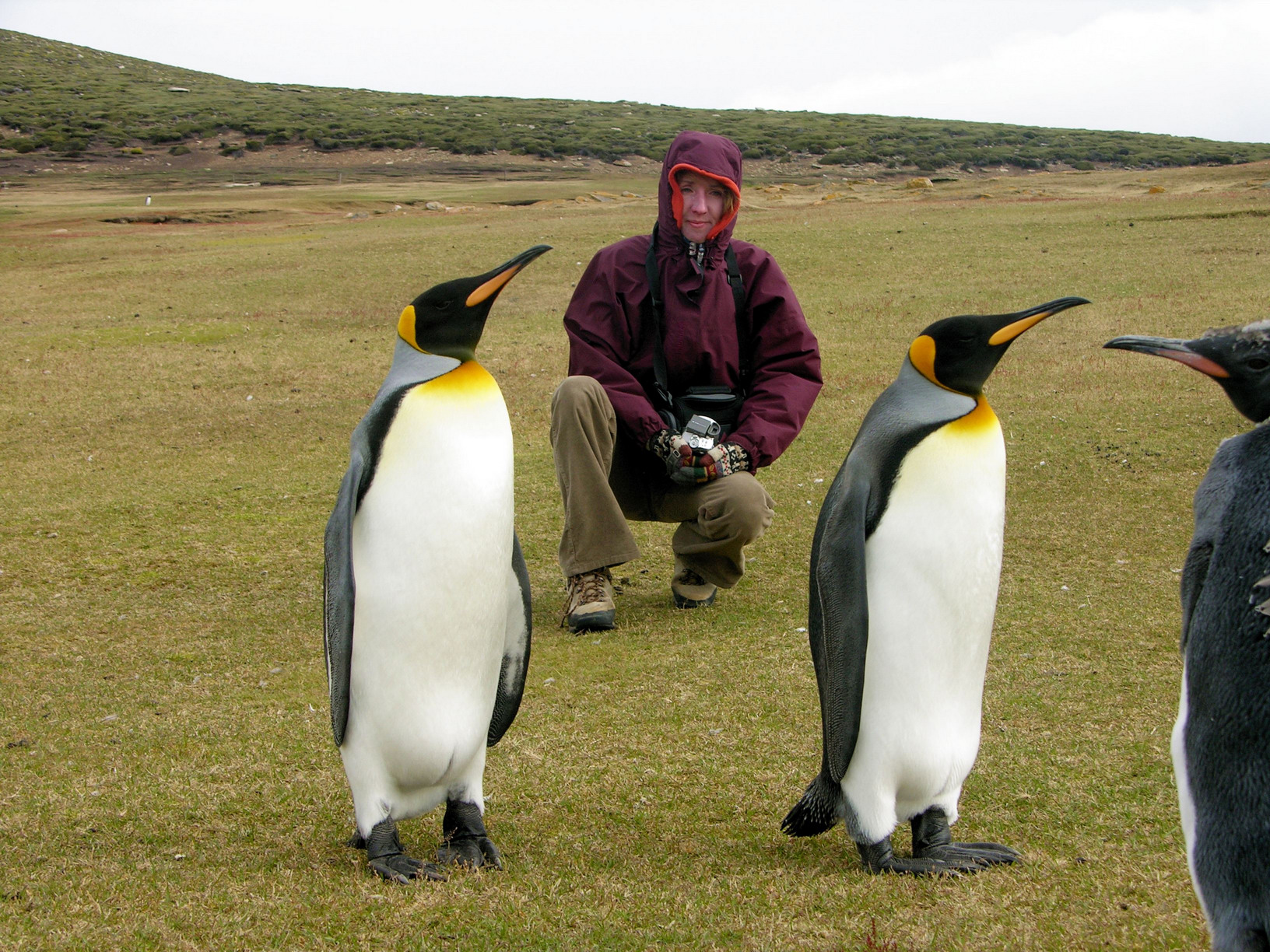
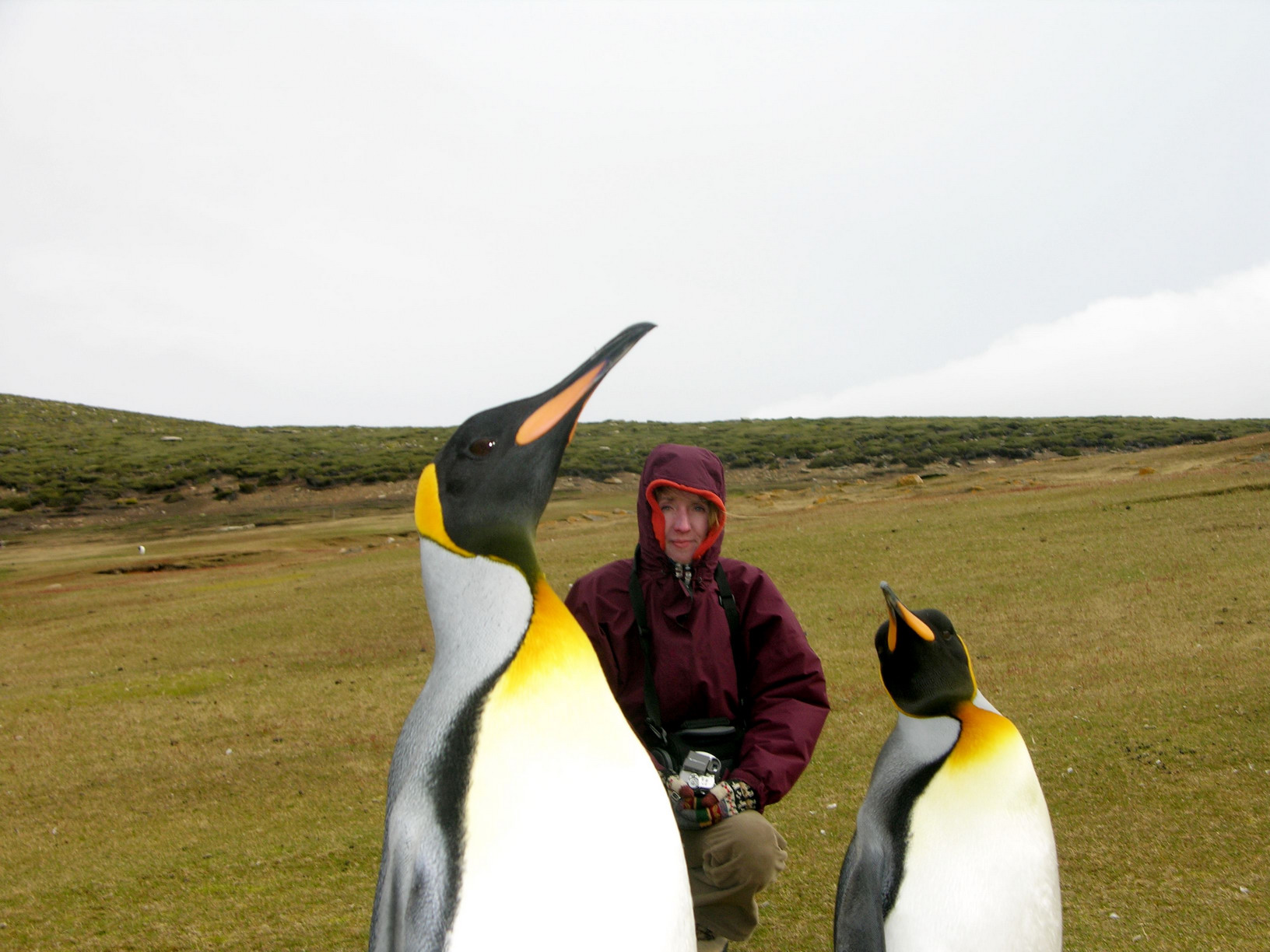
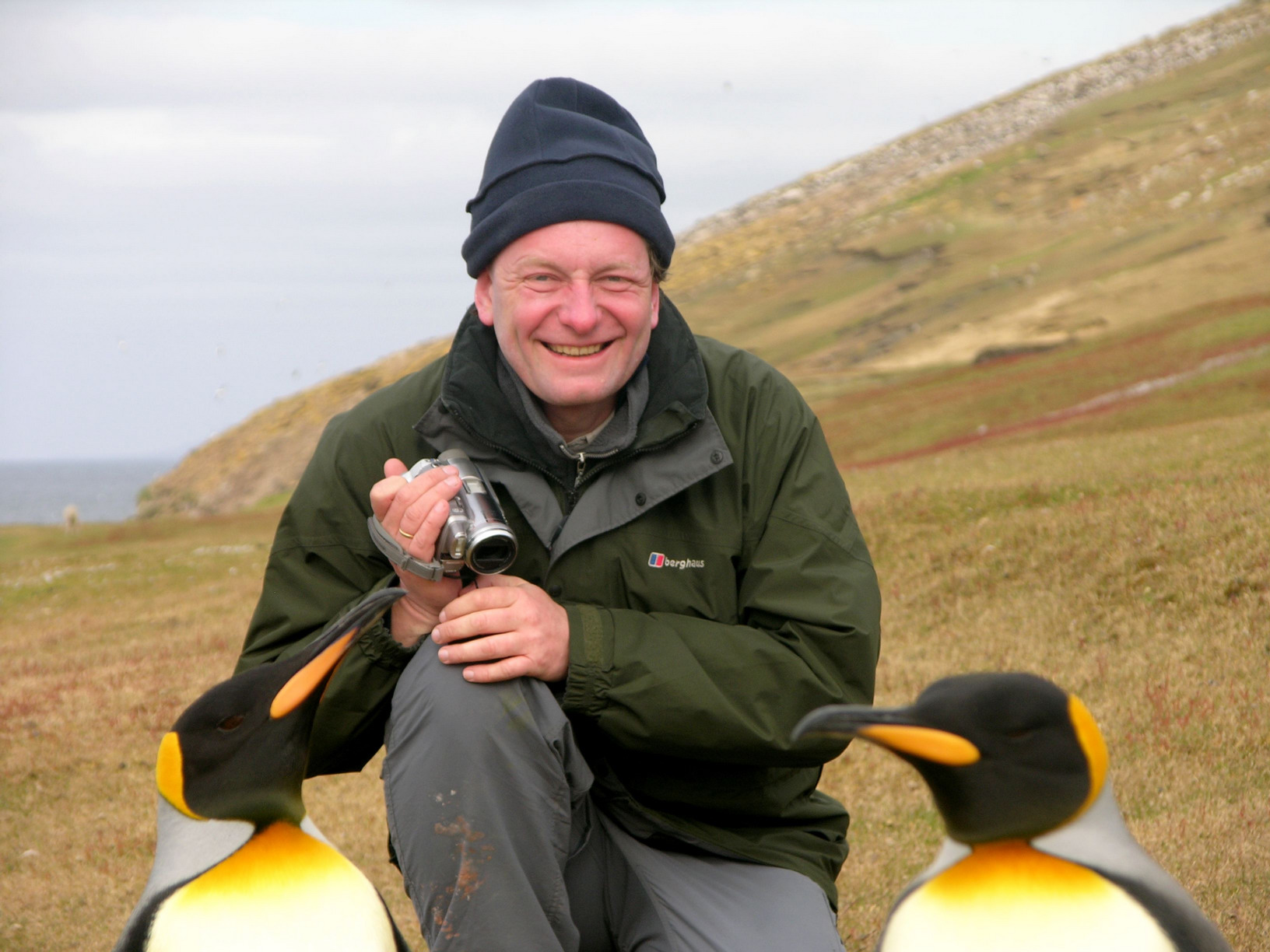
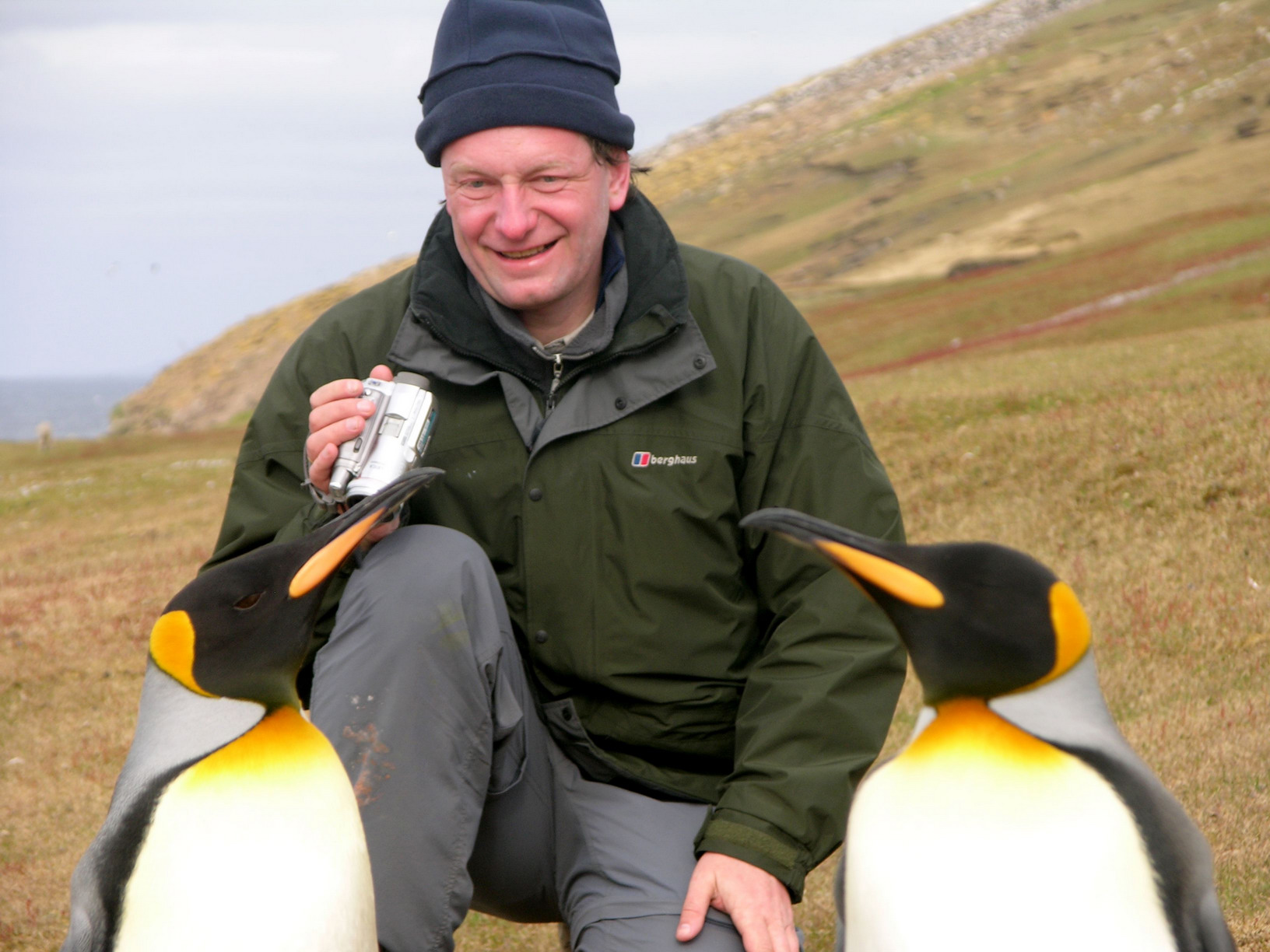
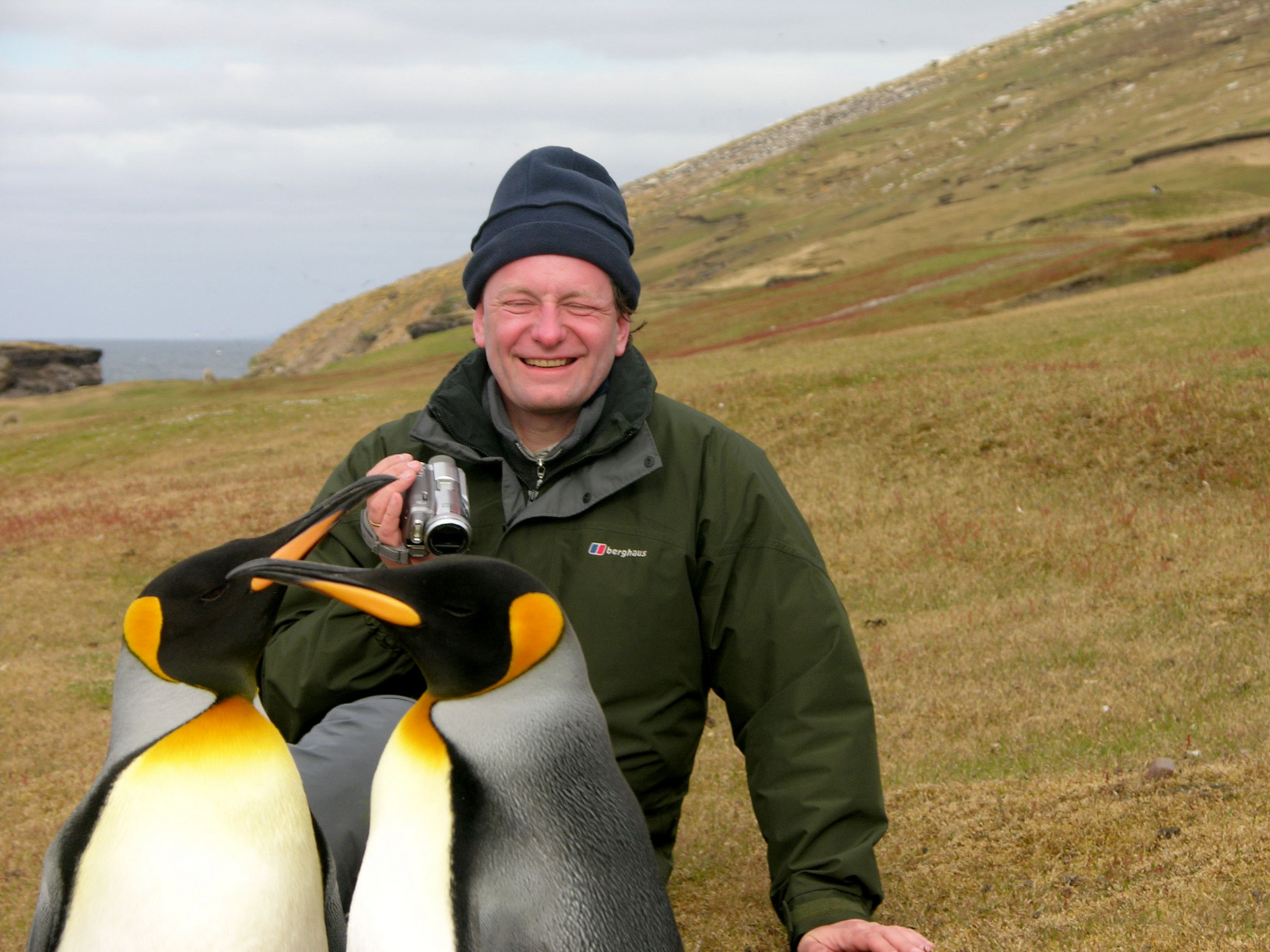
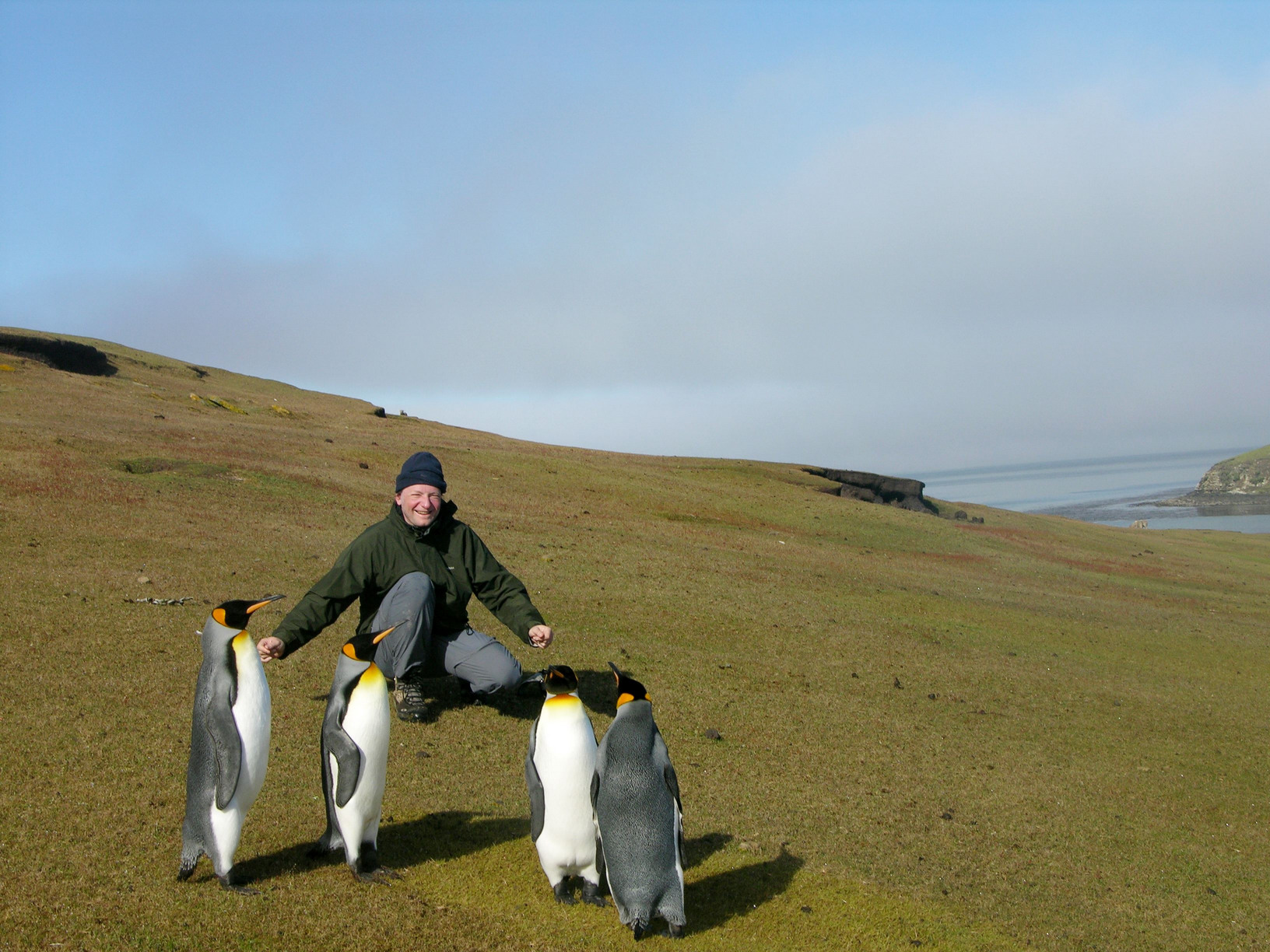
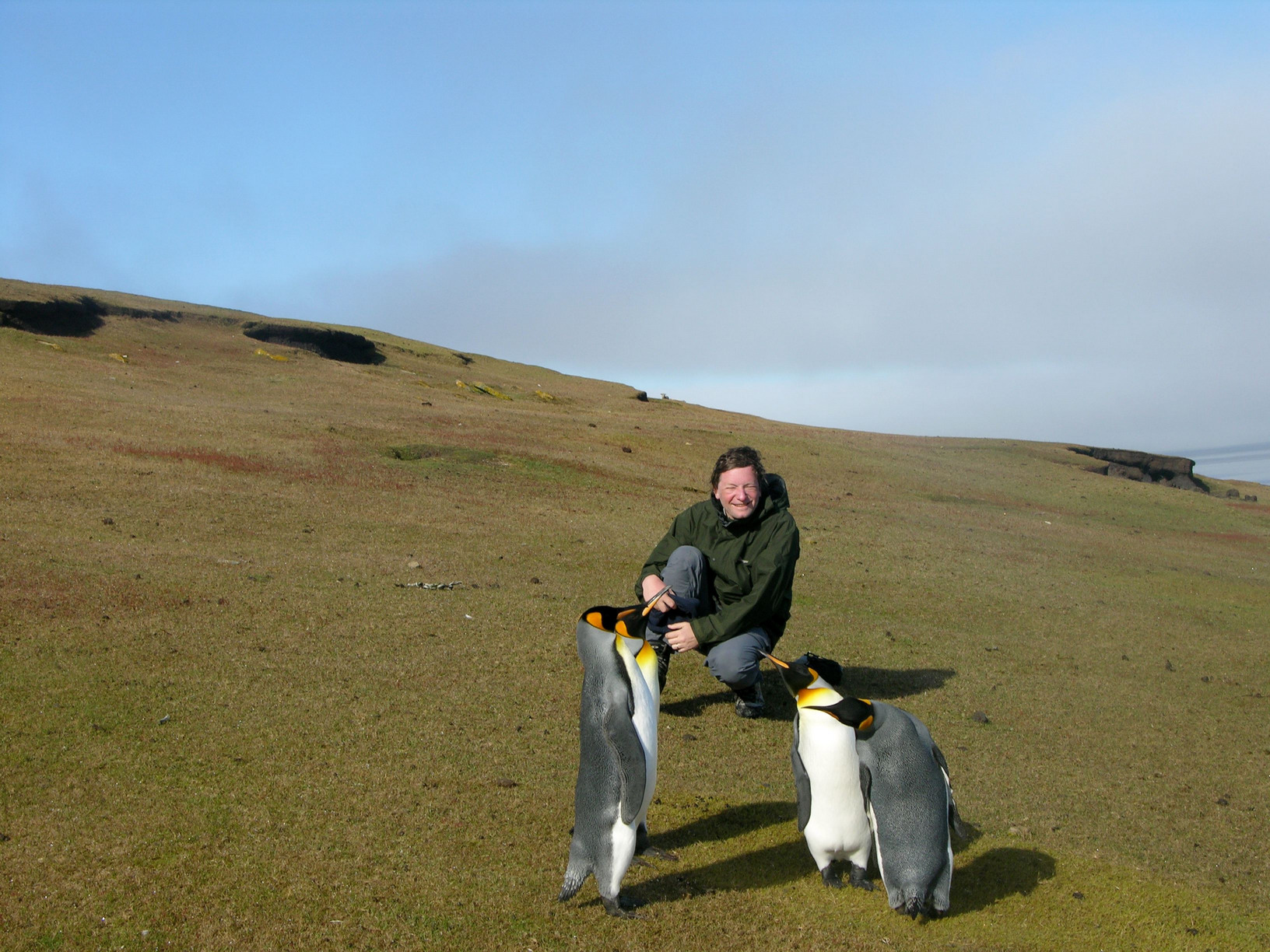
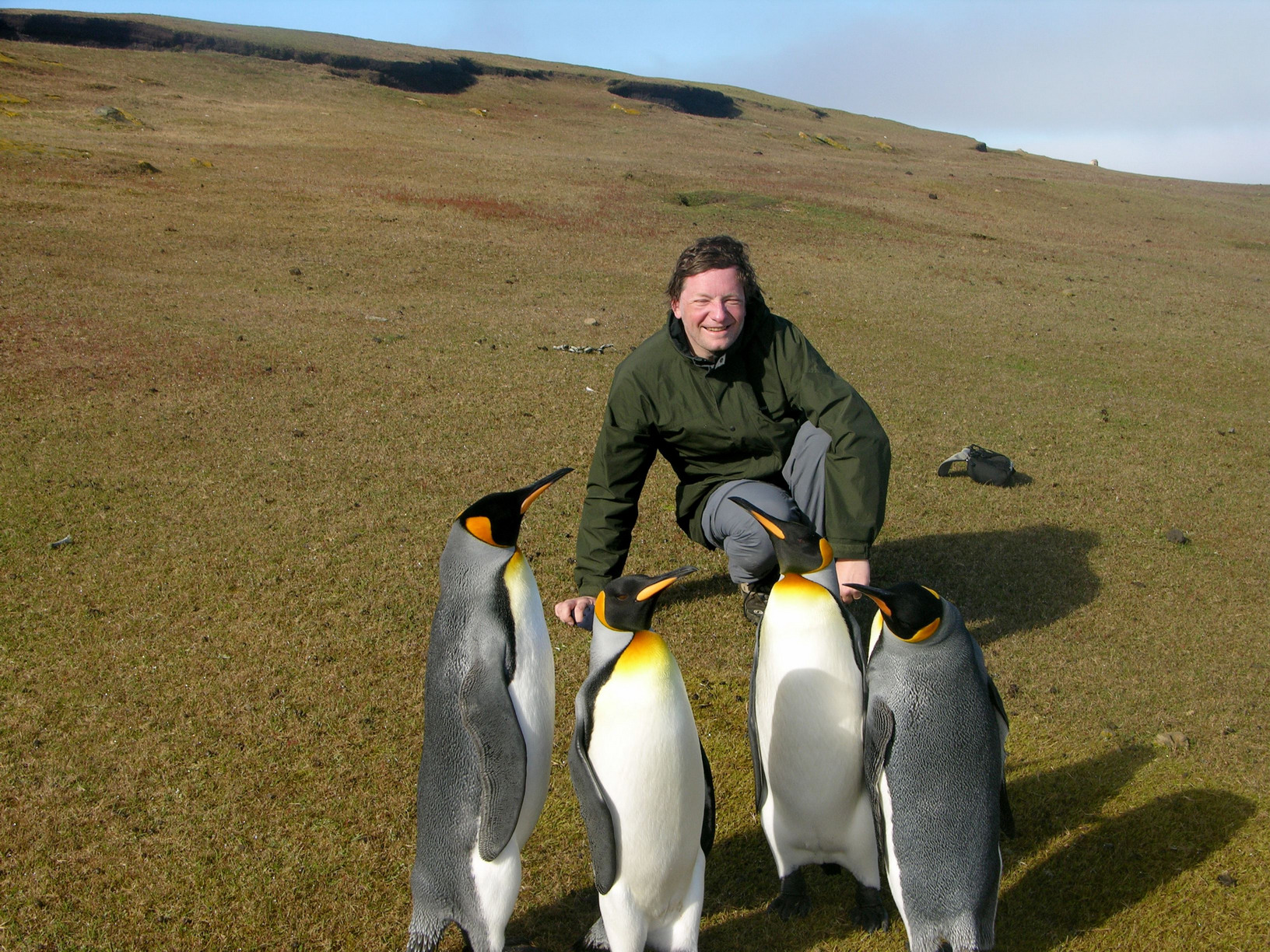
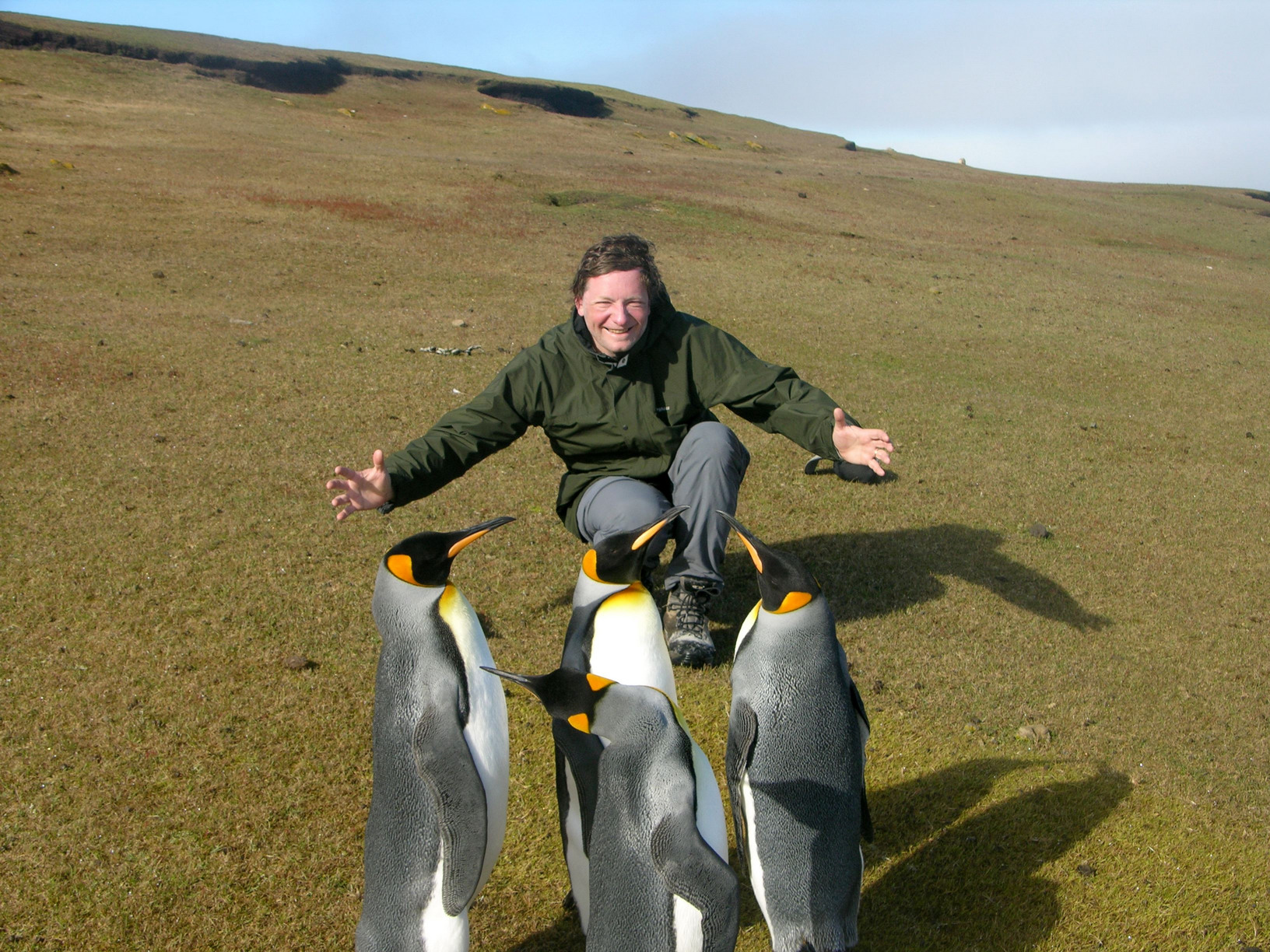
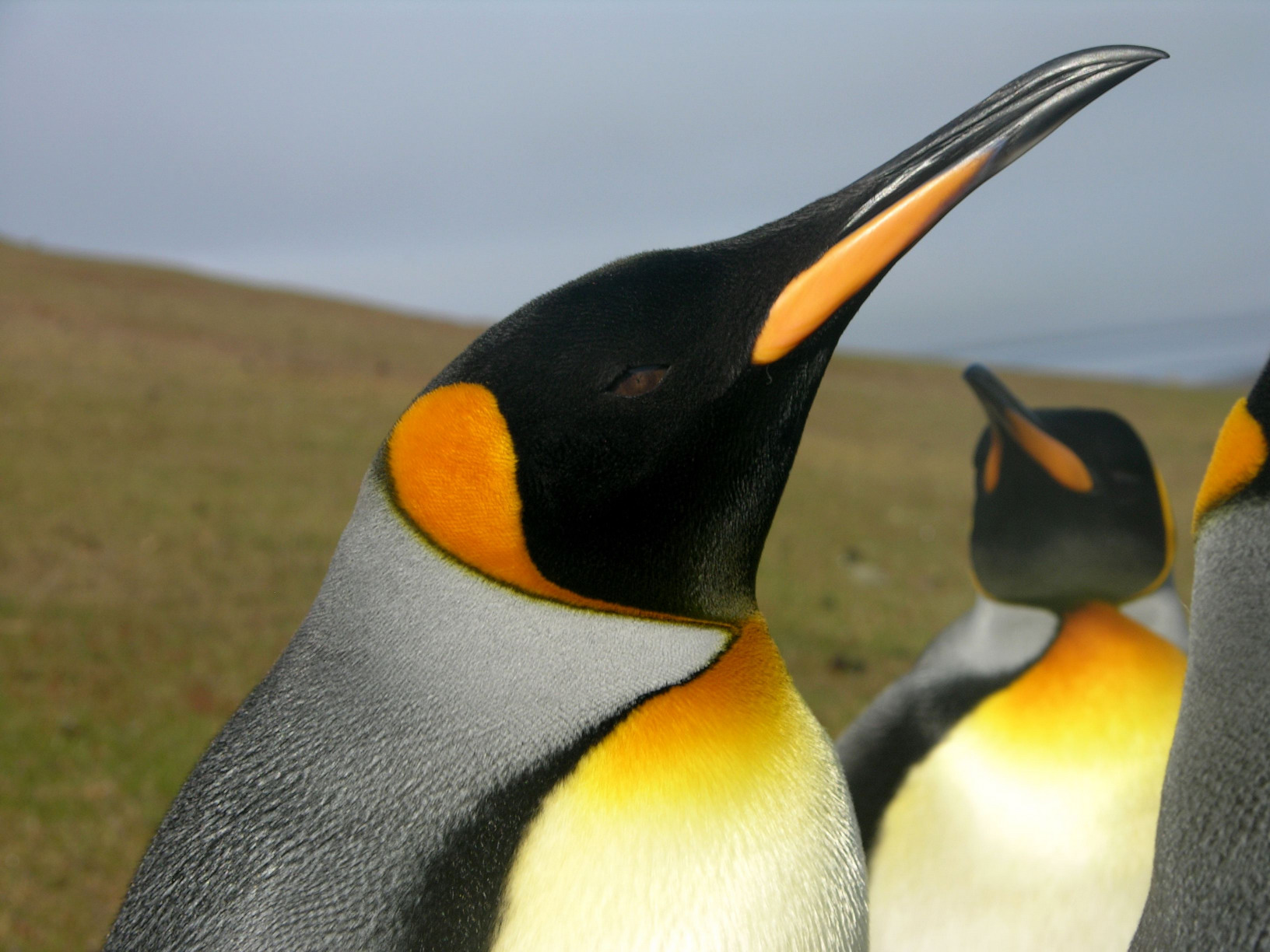
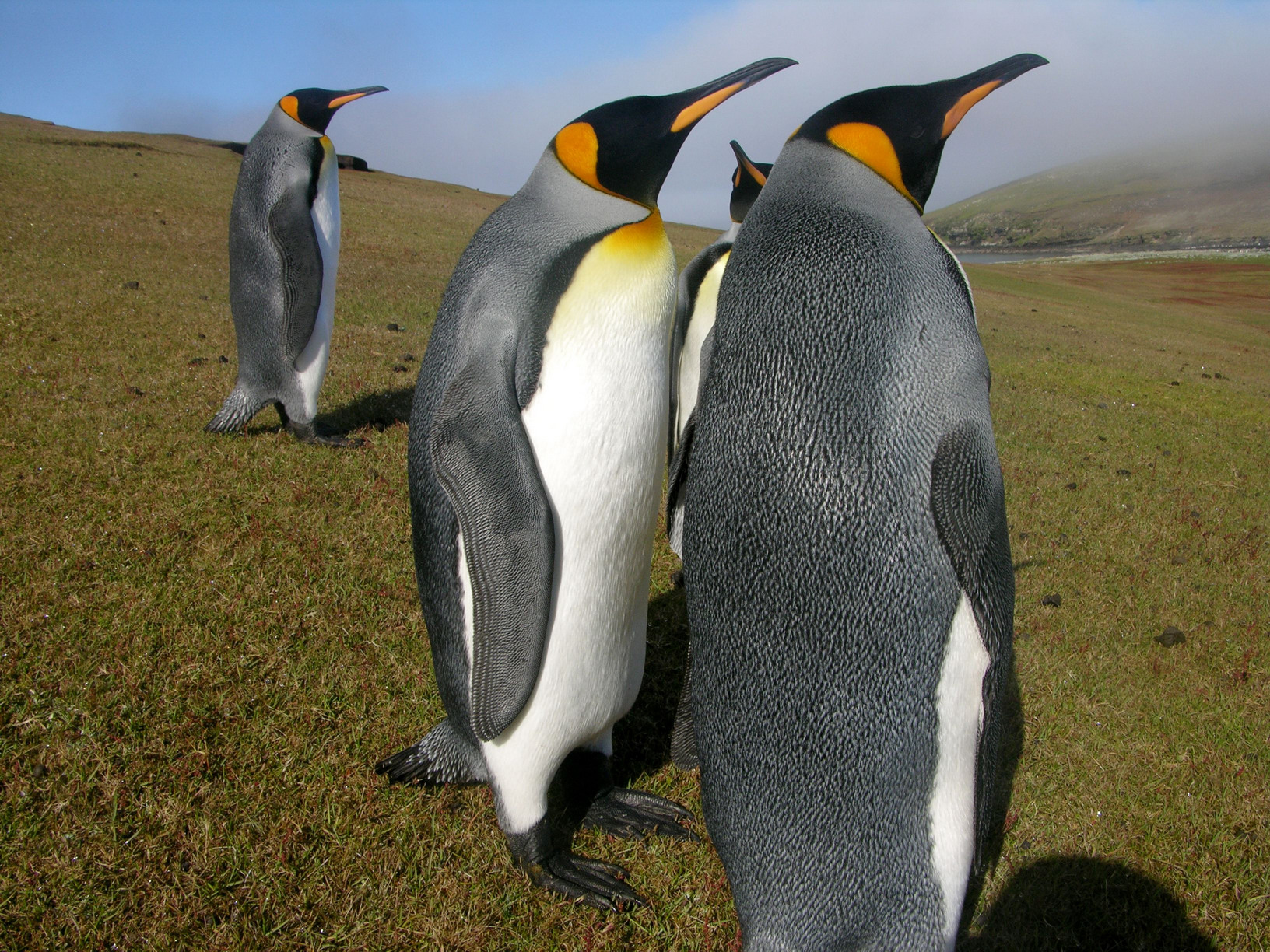
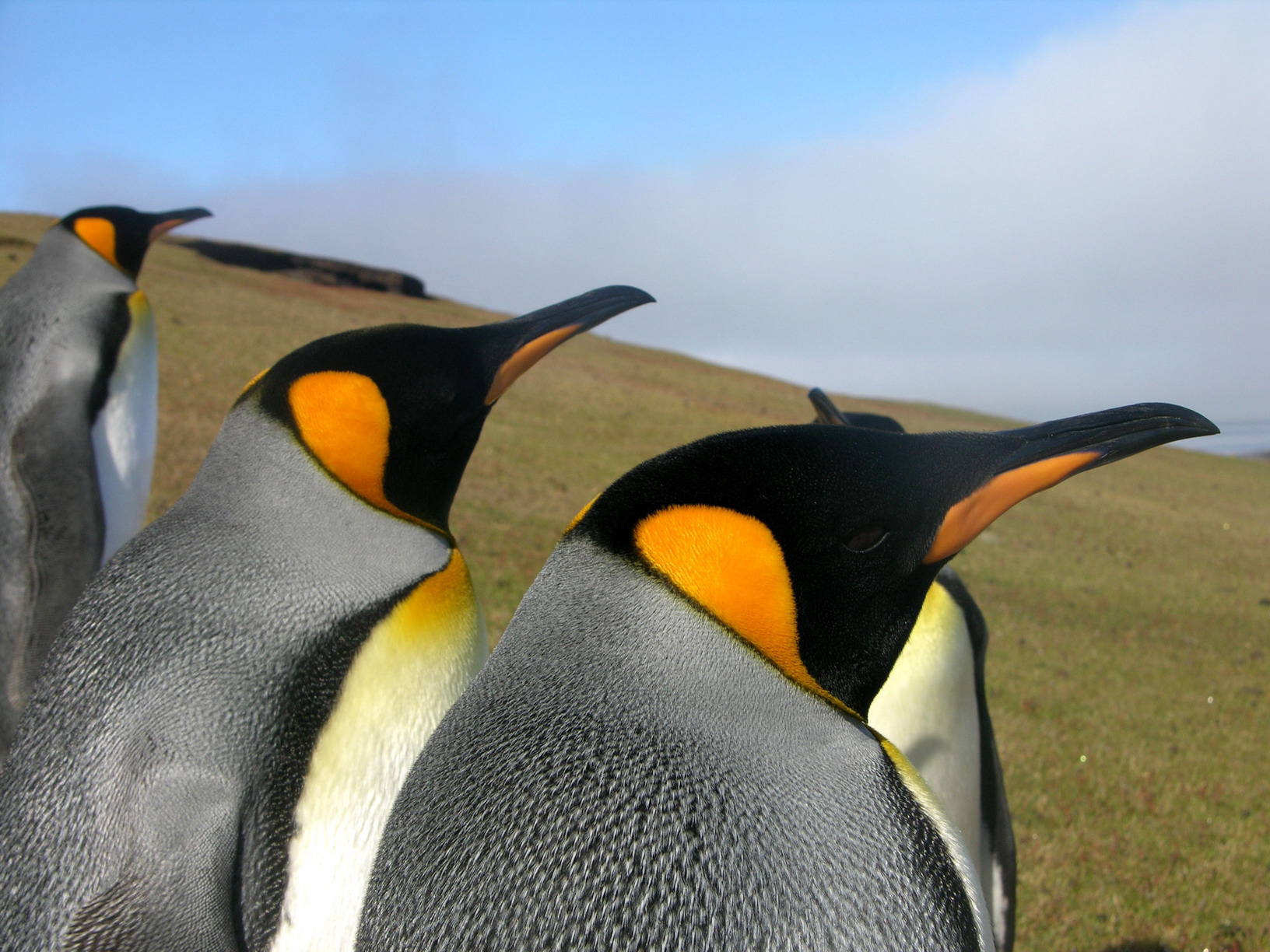
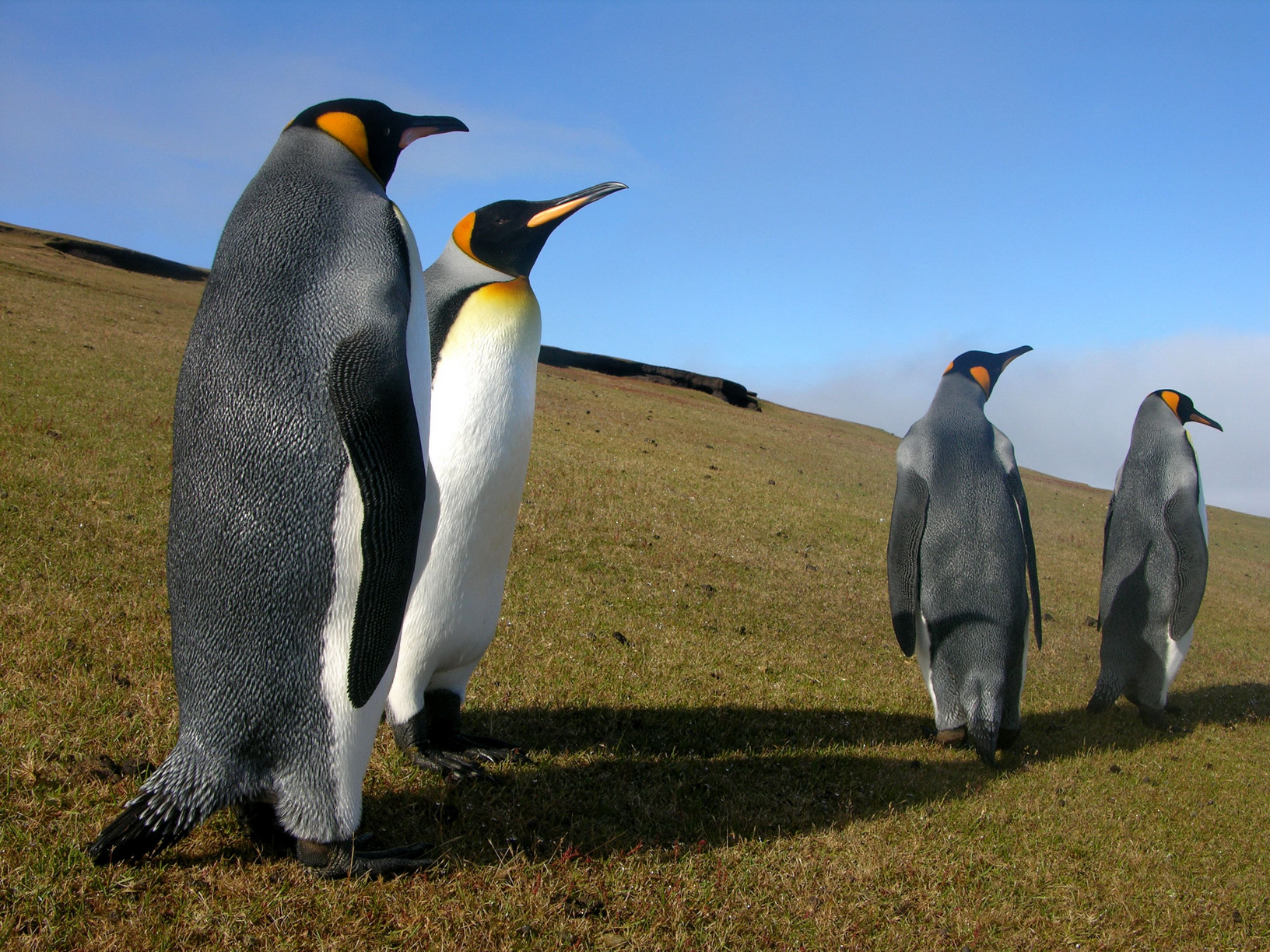
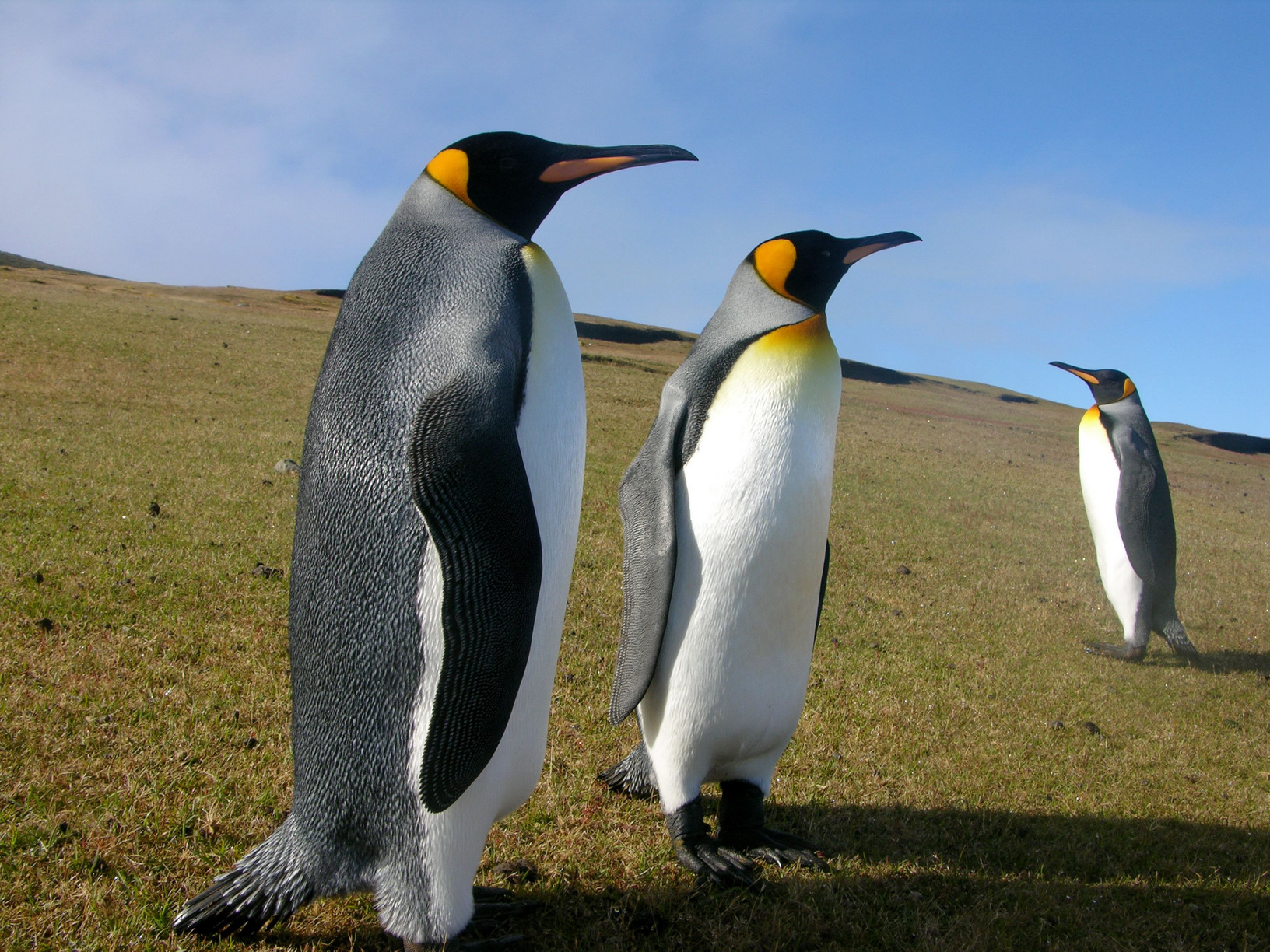
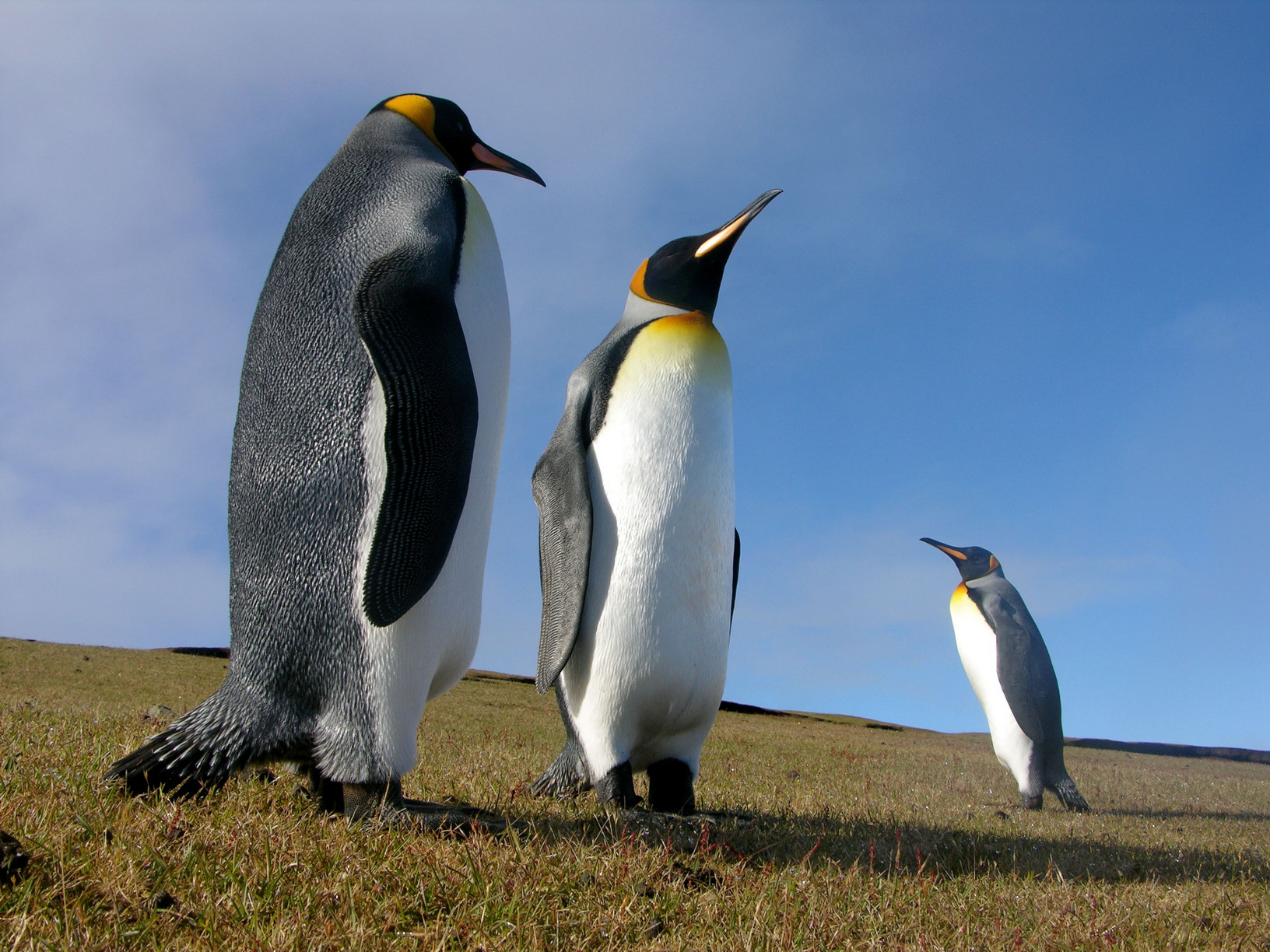
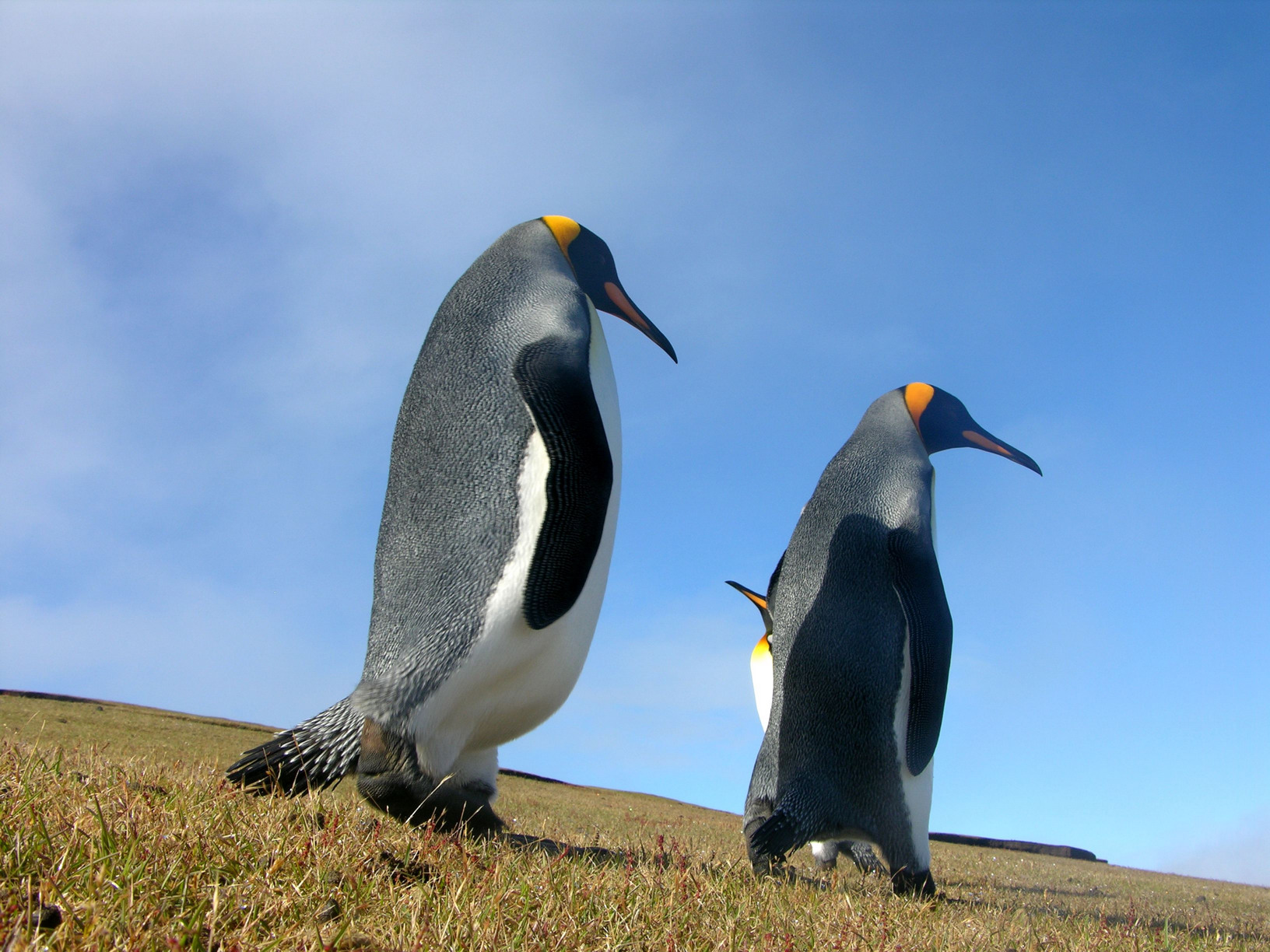
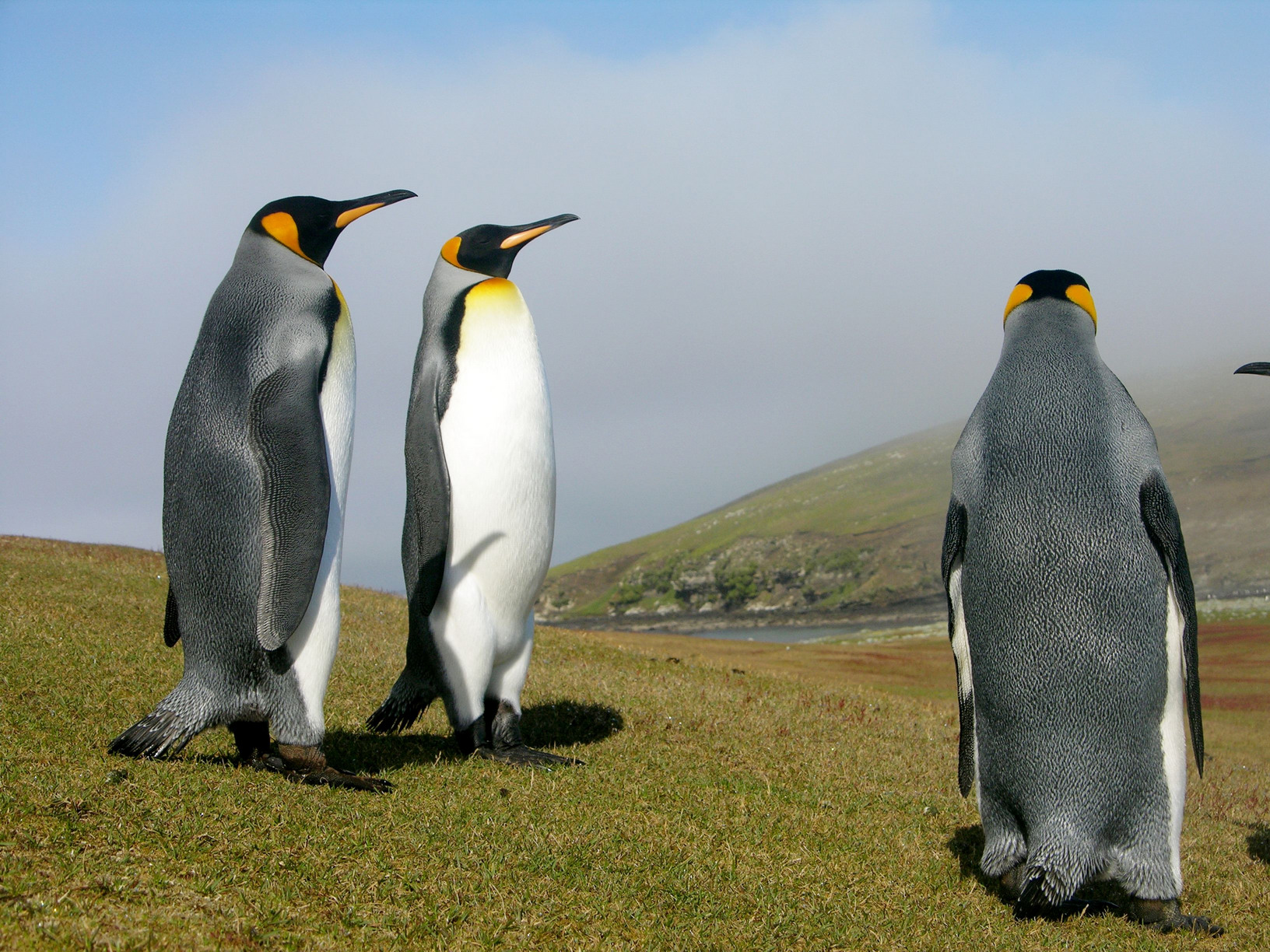
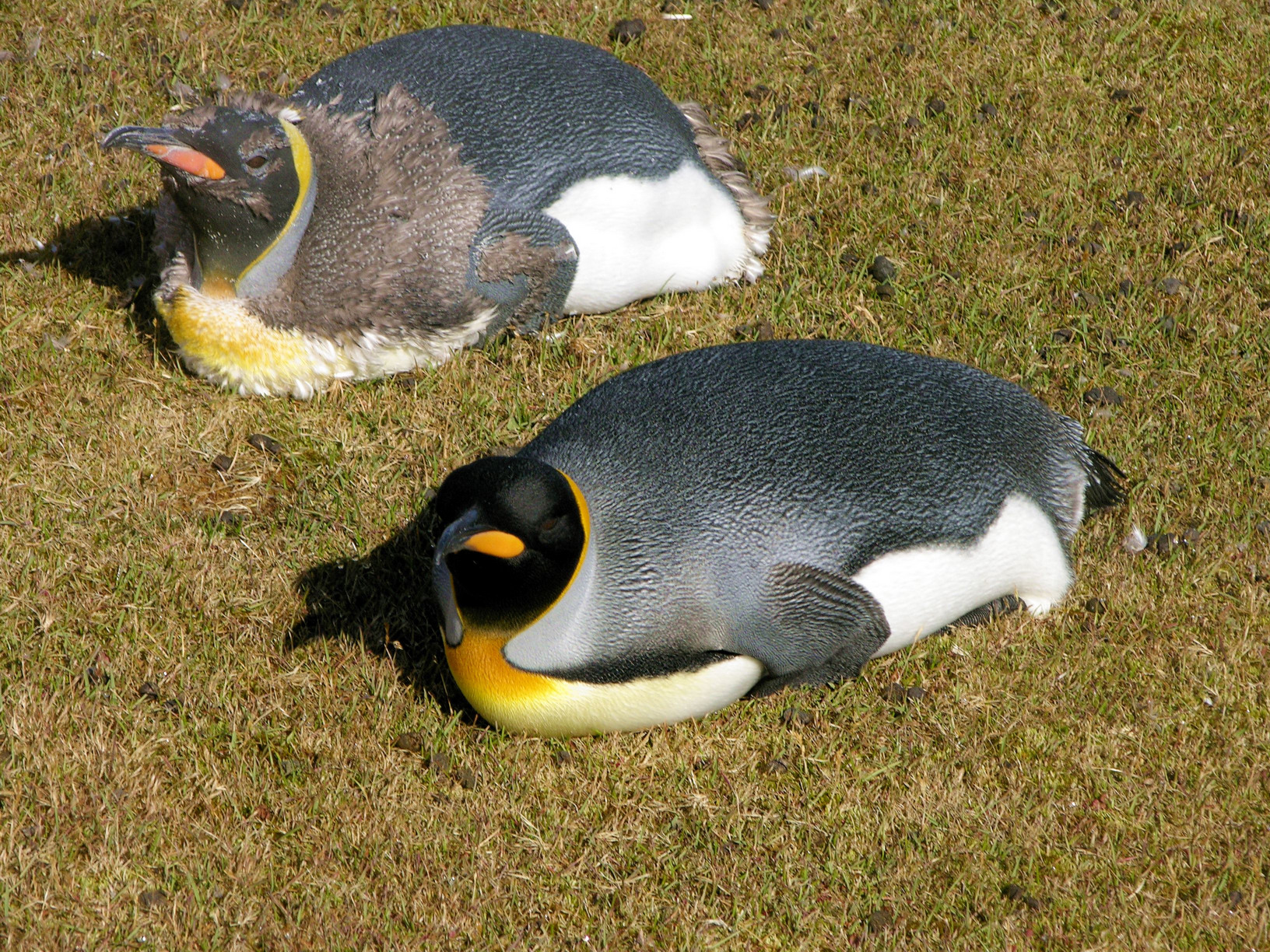
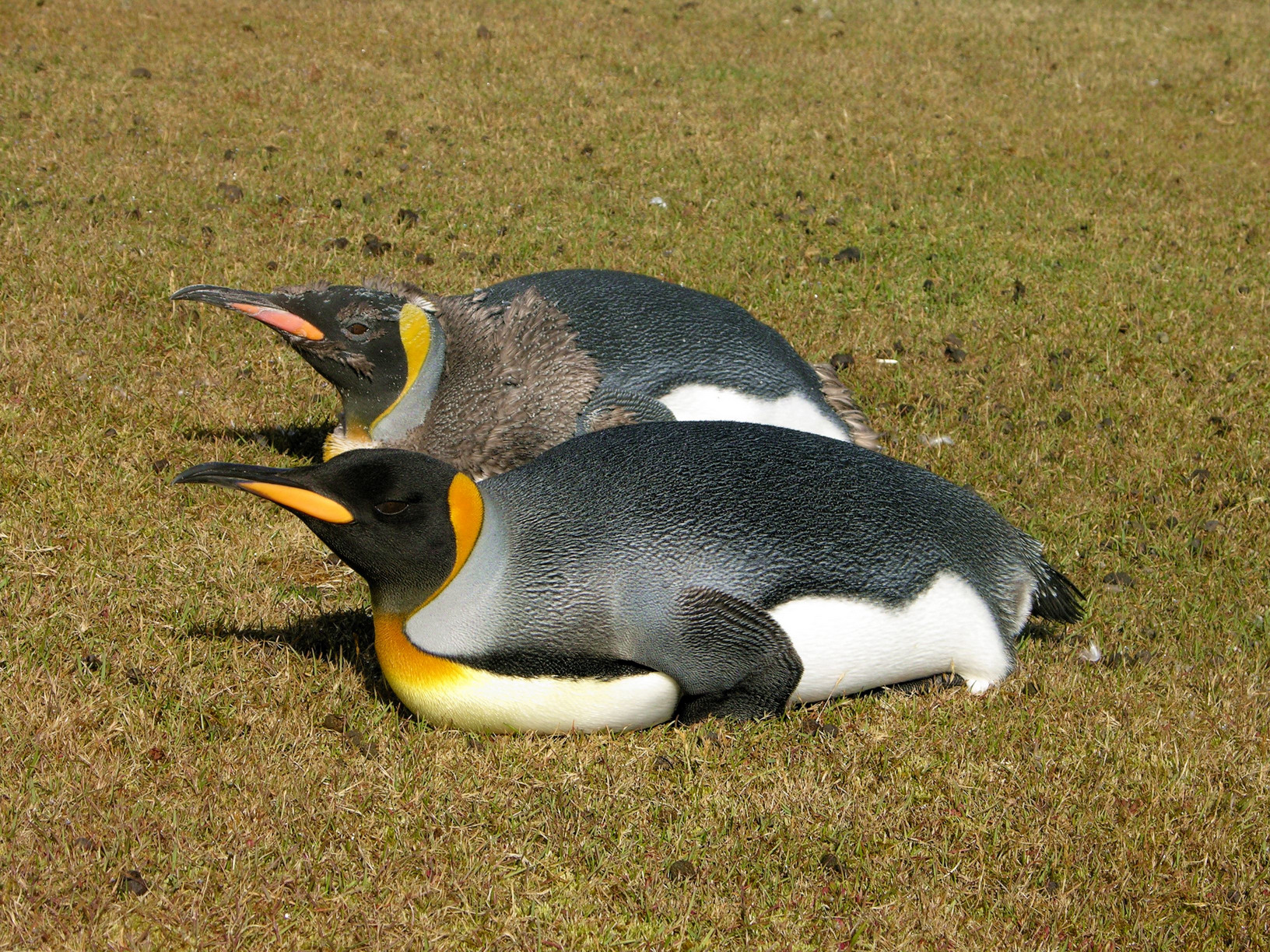
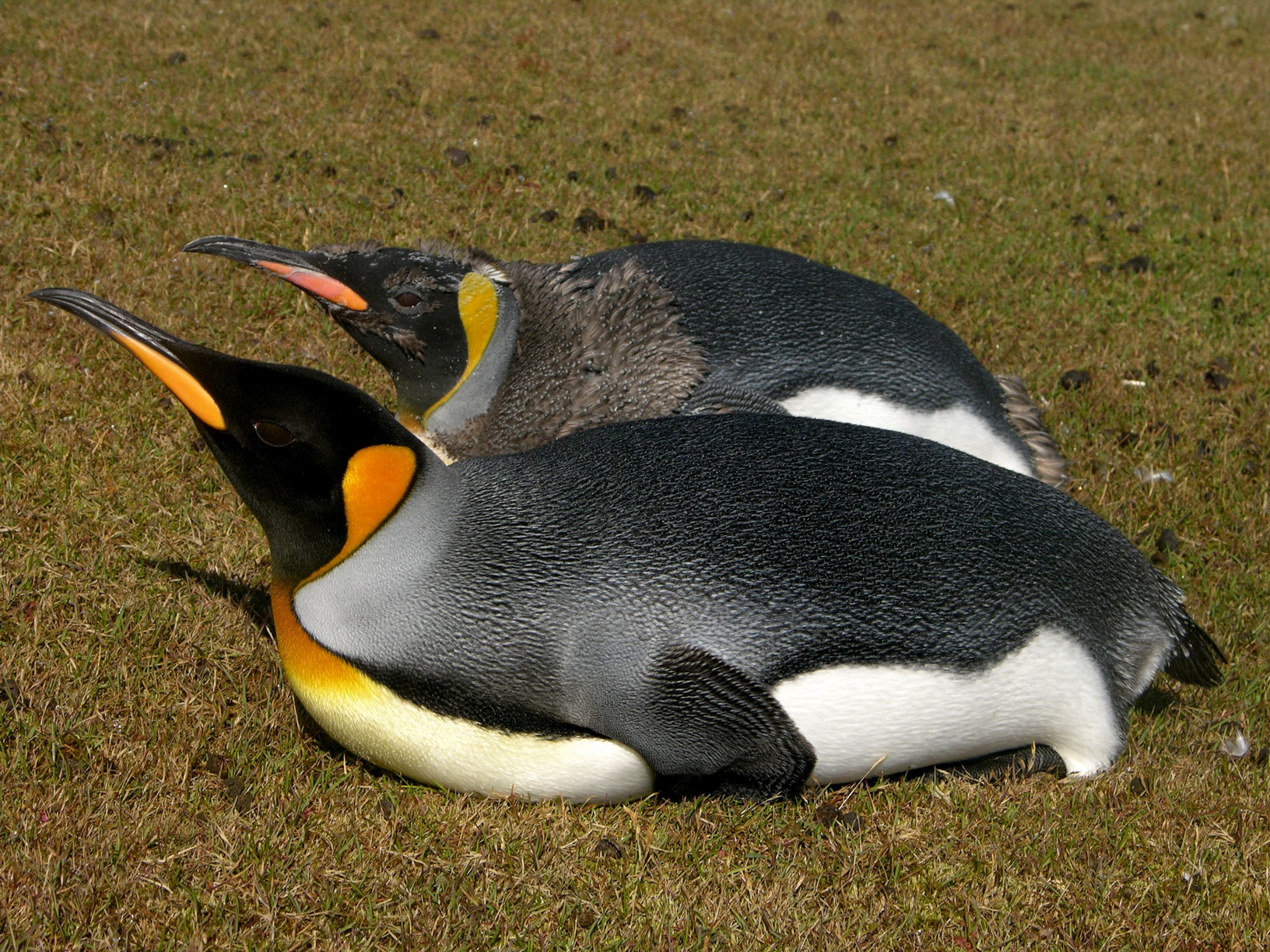
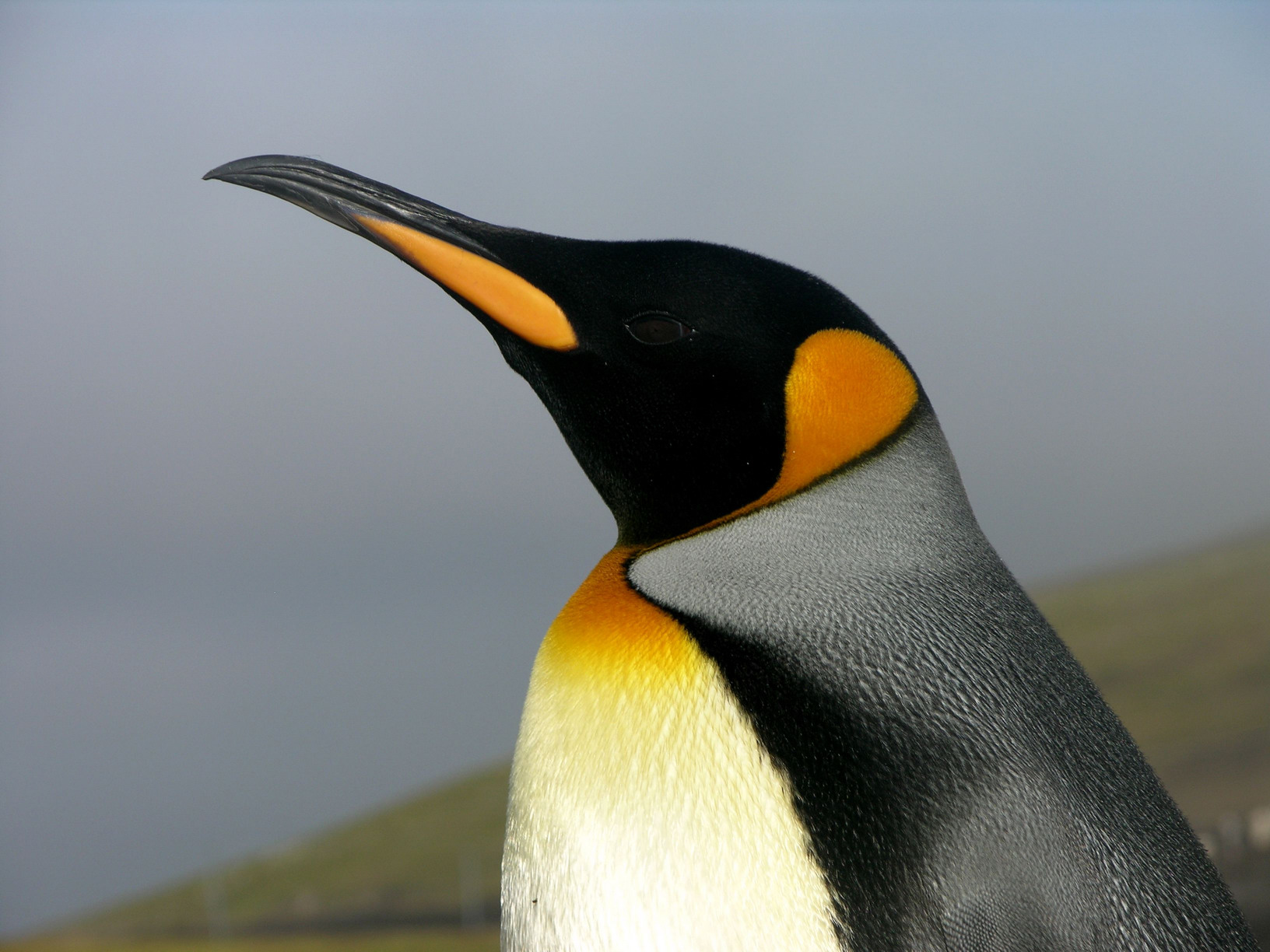
An adult king penguin reaches eighty centimetres tall and weighs twenty-eight kilos. You can't hold one at arm's length and you'd be frightened to clasp it to your chest. If it pecks, you know about it. I'd already failed to dodge a Magellanic once, and had the bites on my hand. All I managed was to stroke it. It felt like the stiffest tail feathers on a hen. The chicks, now, are soft fluffy things.
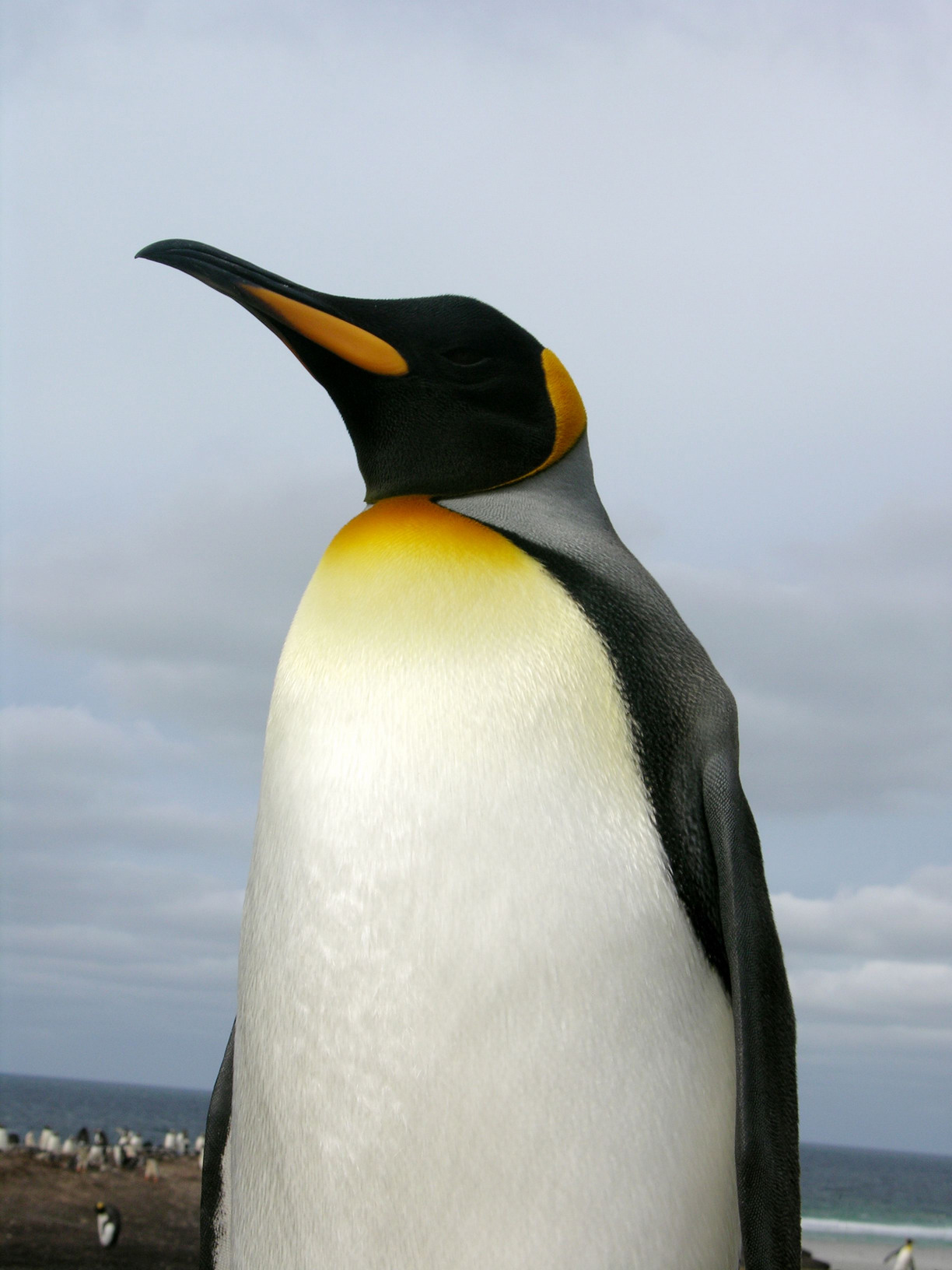
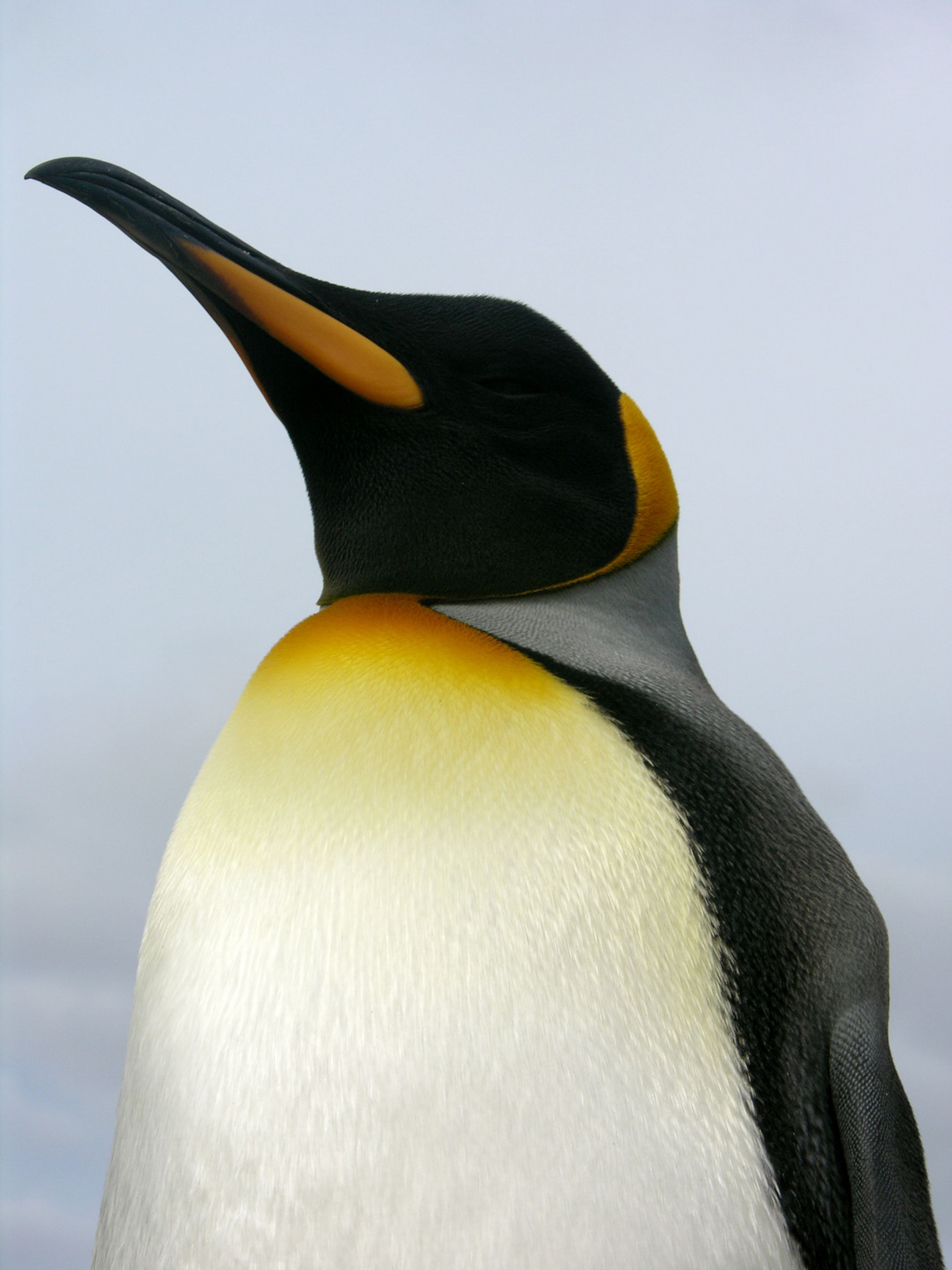
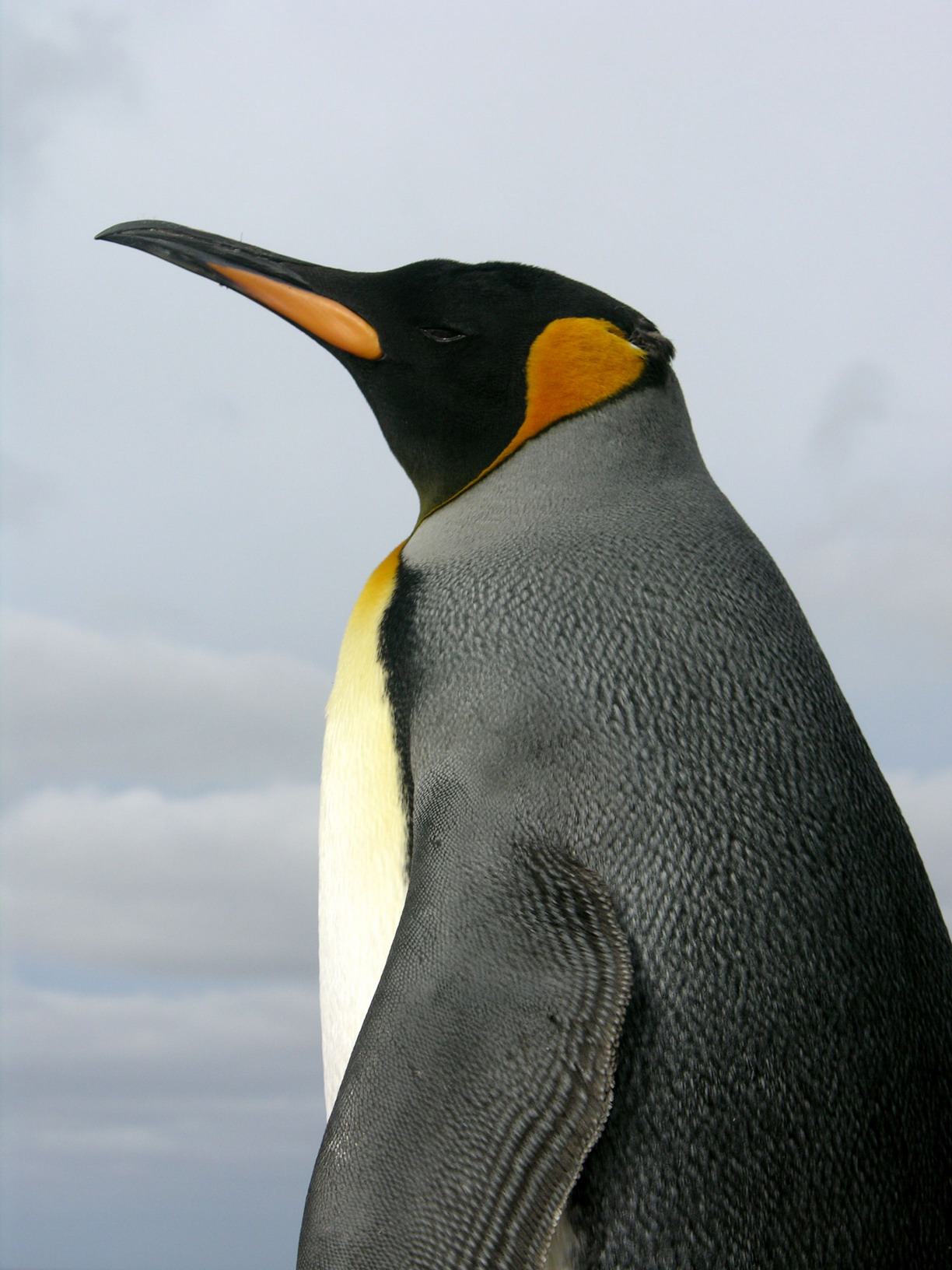
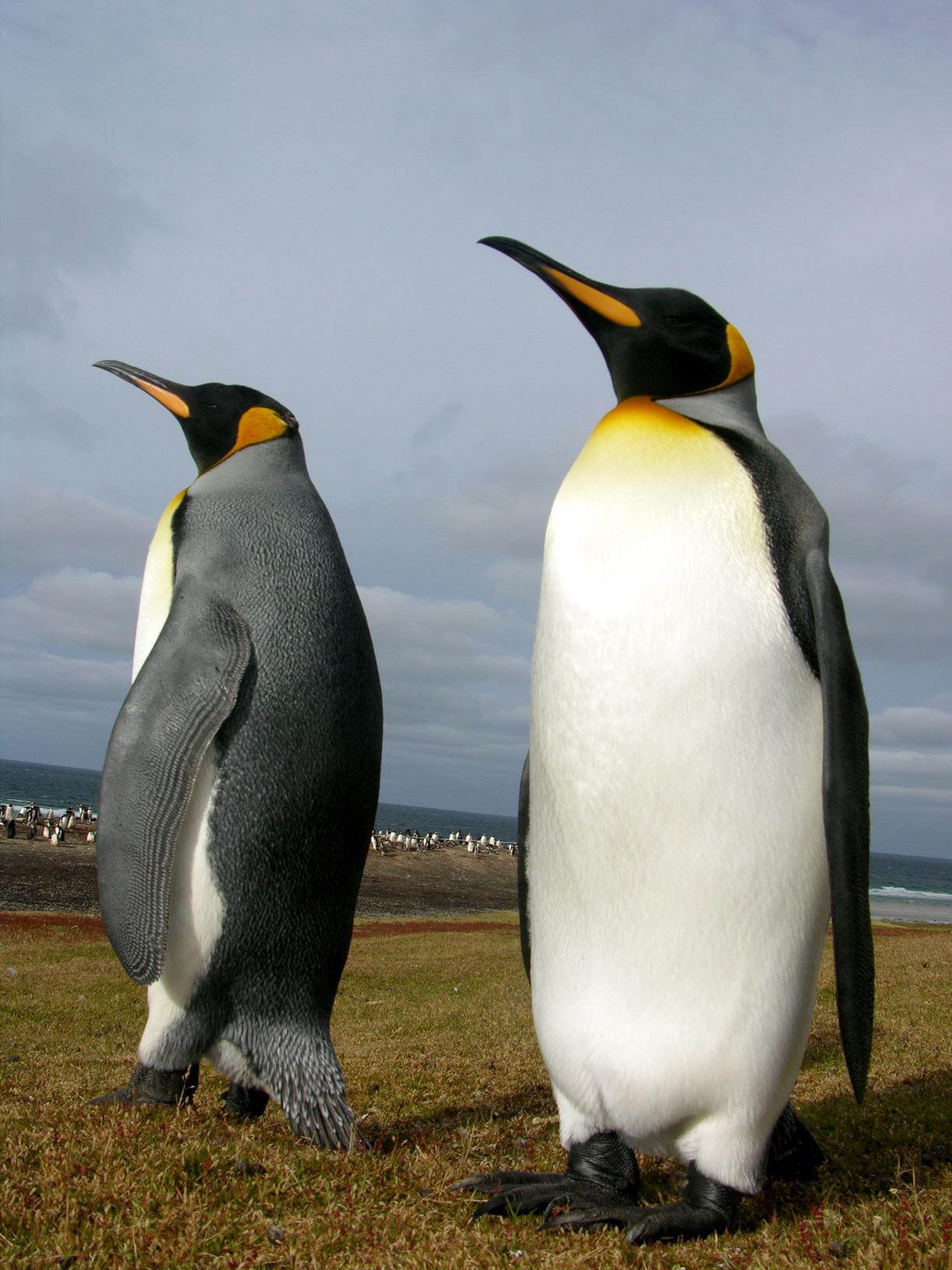
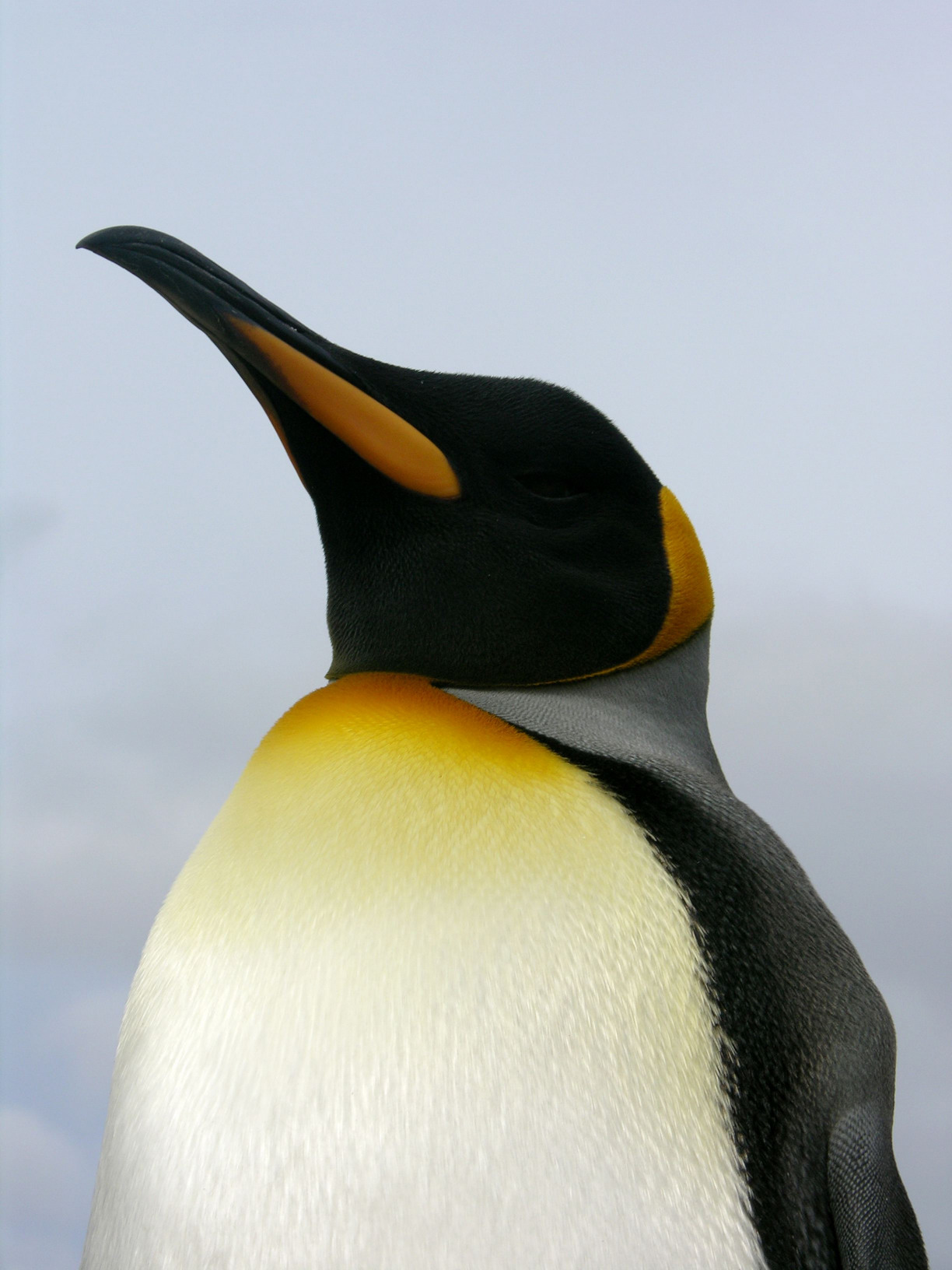
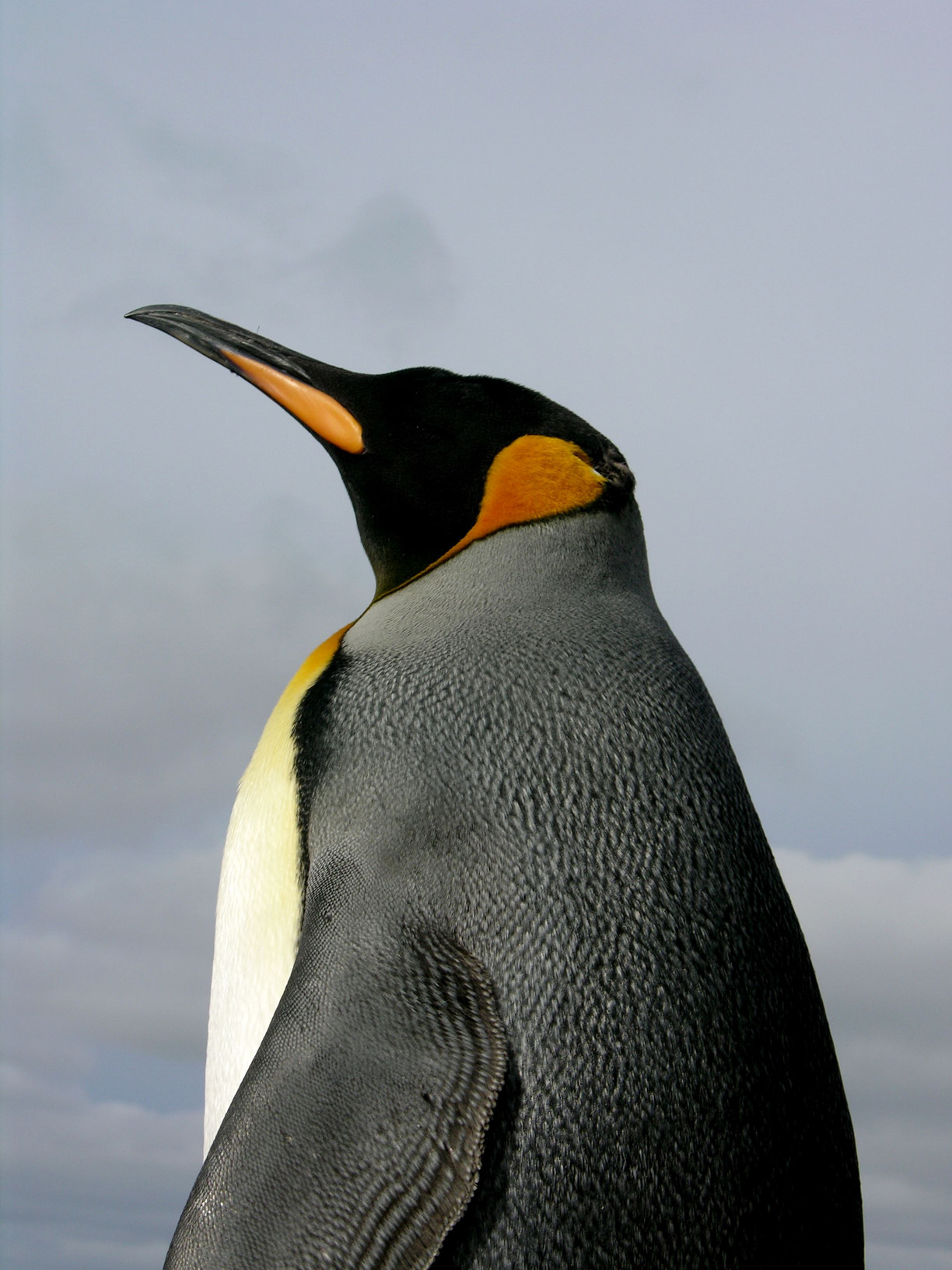
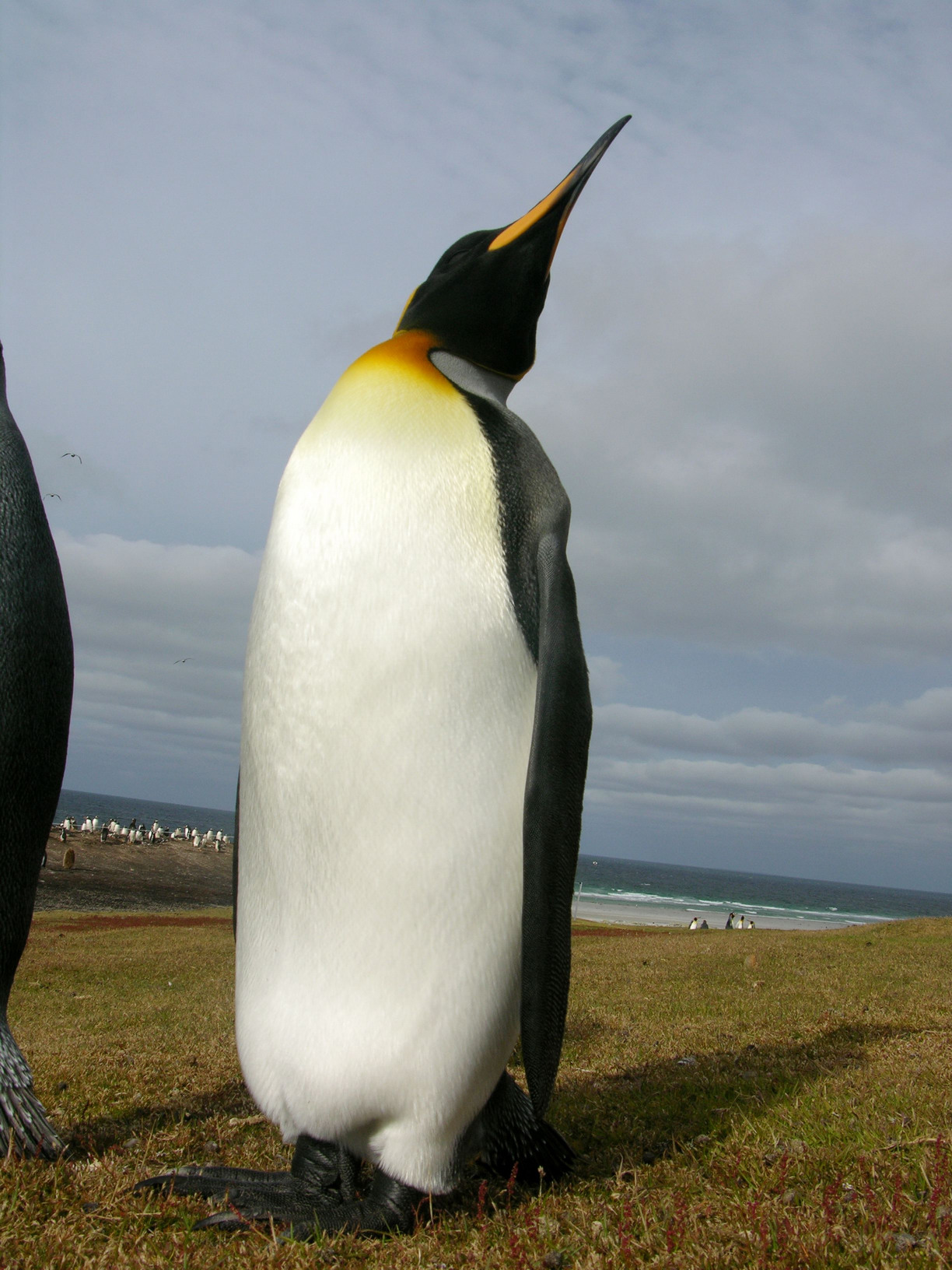
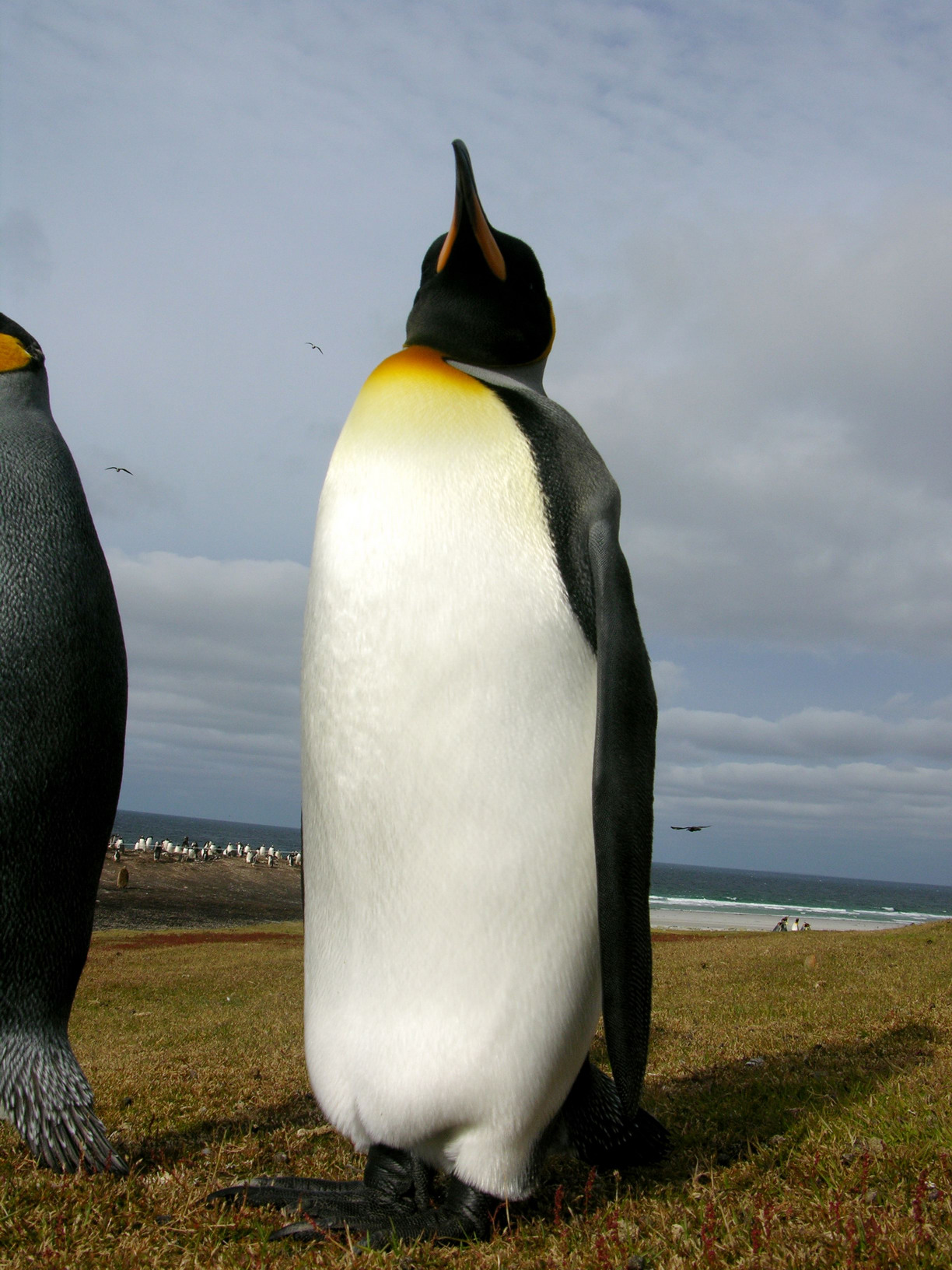
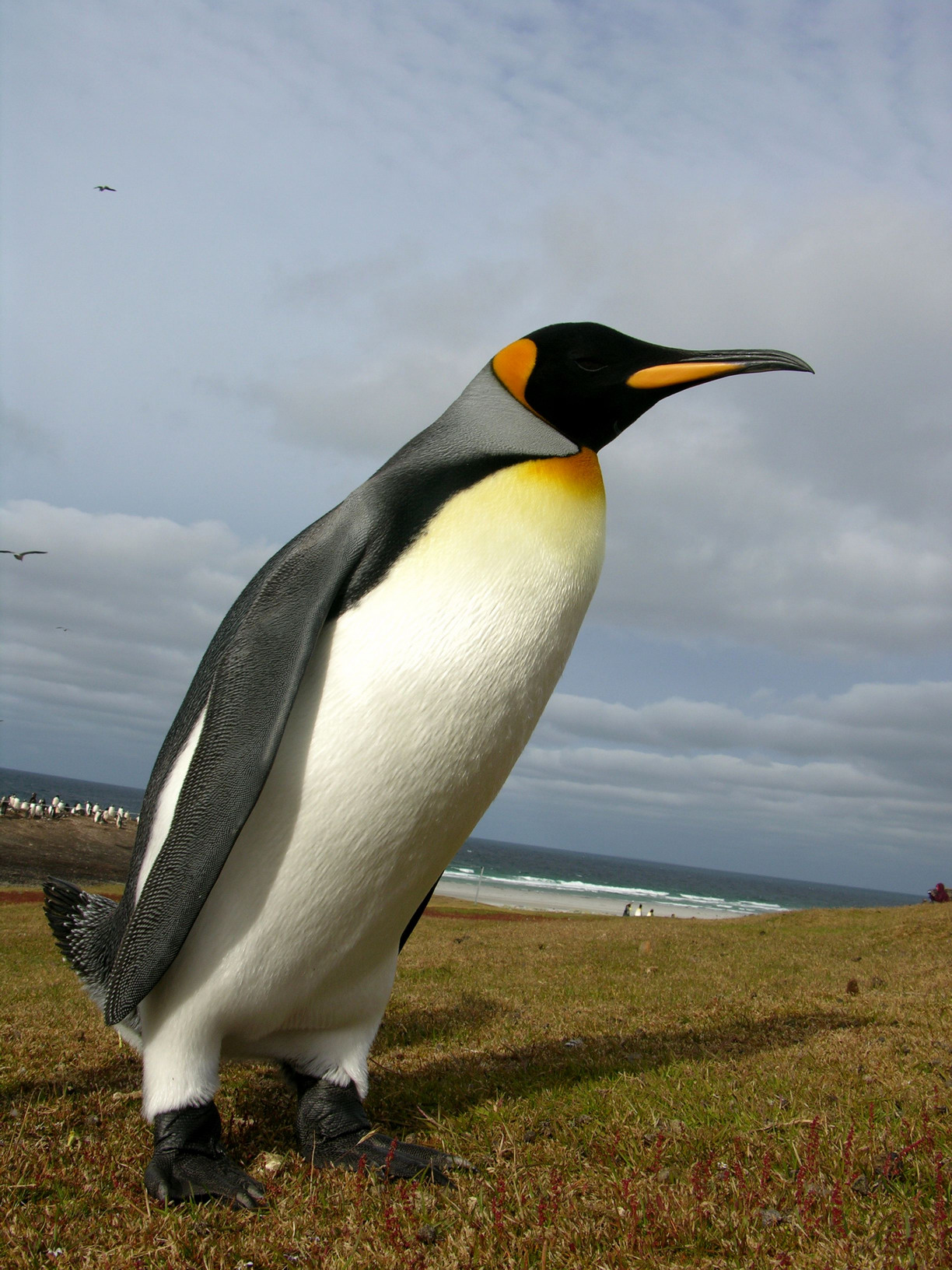
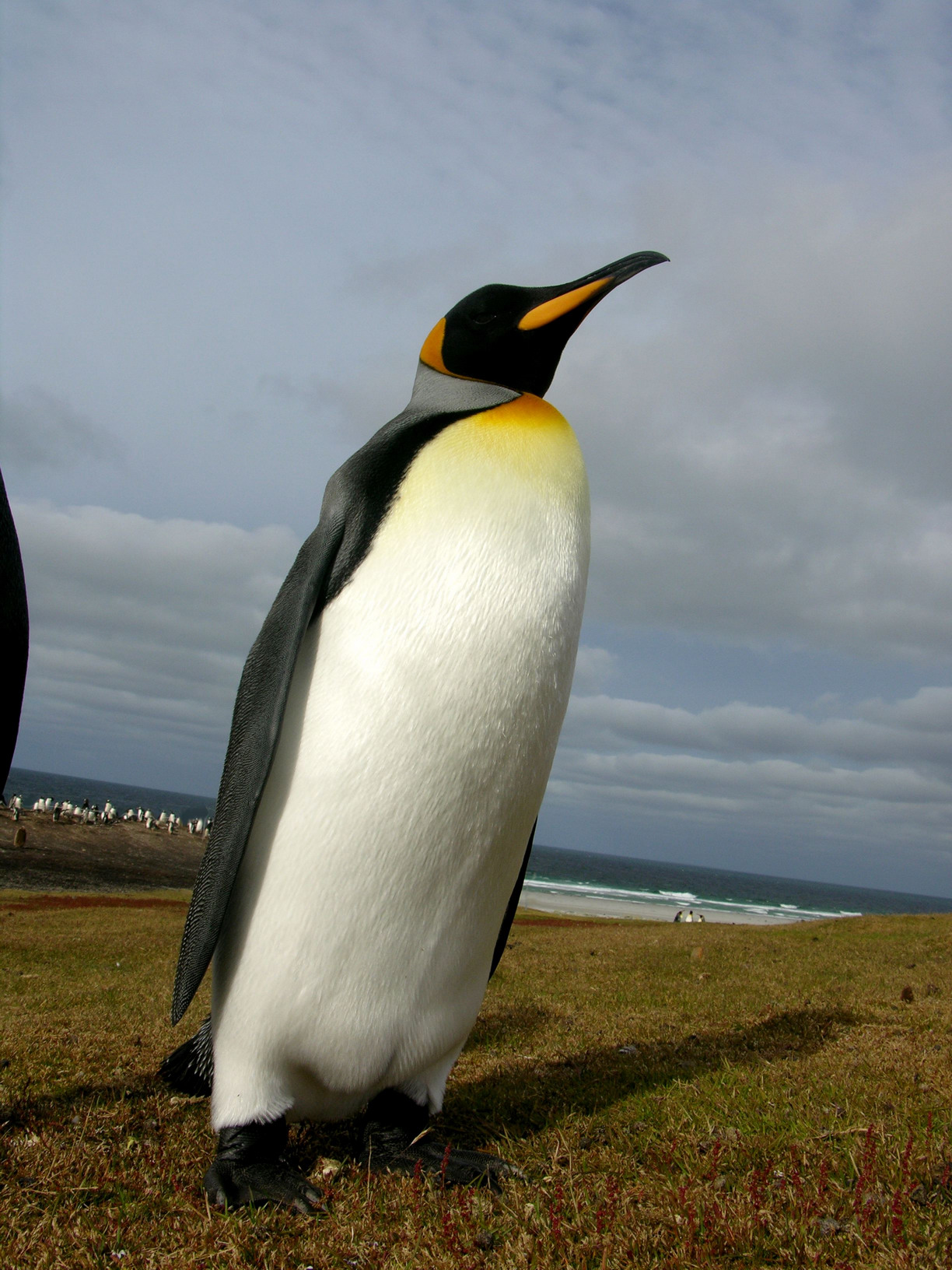
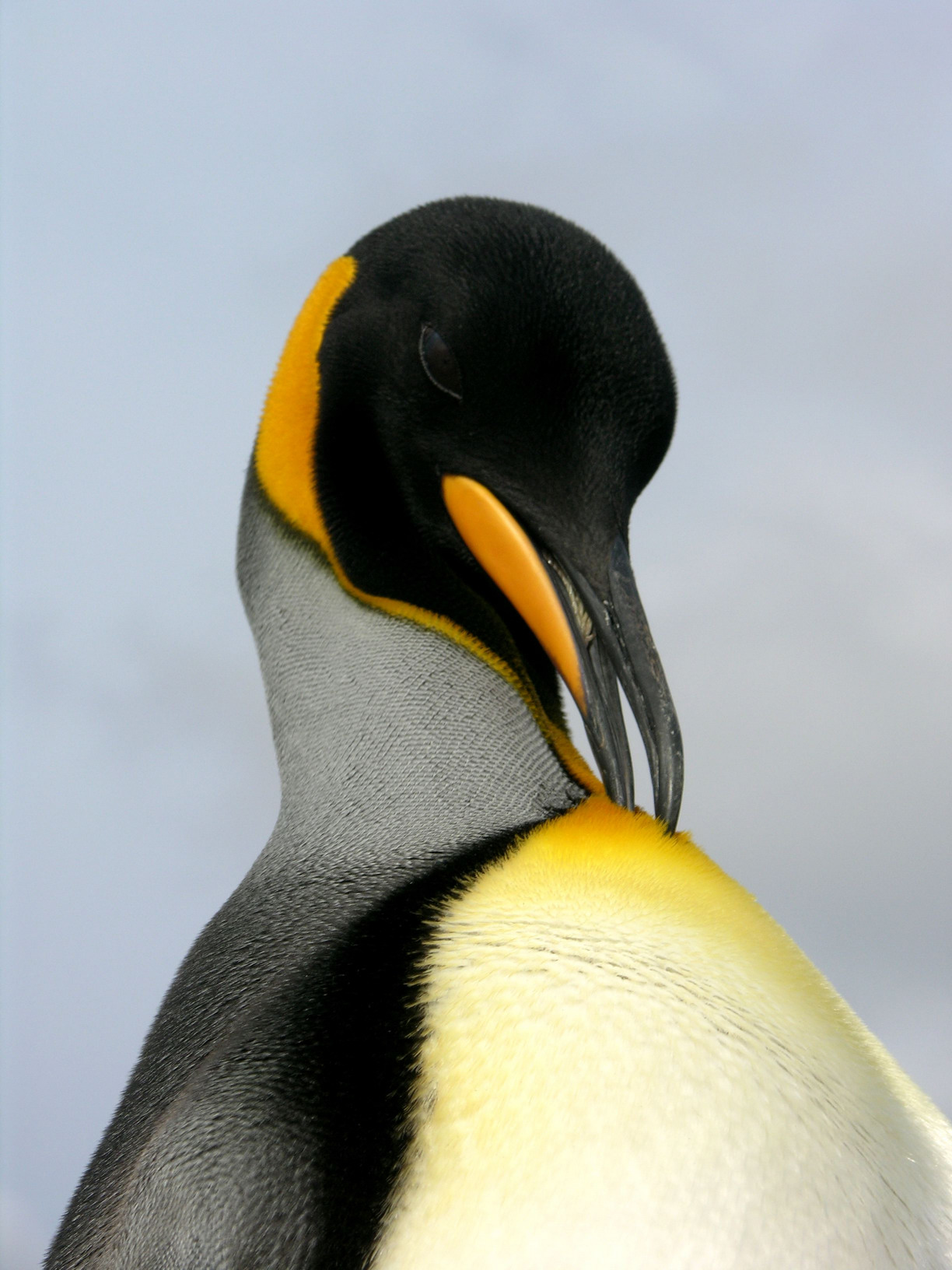
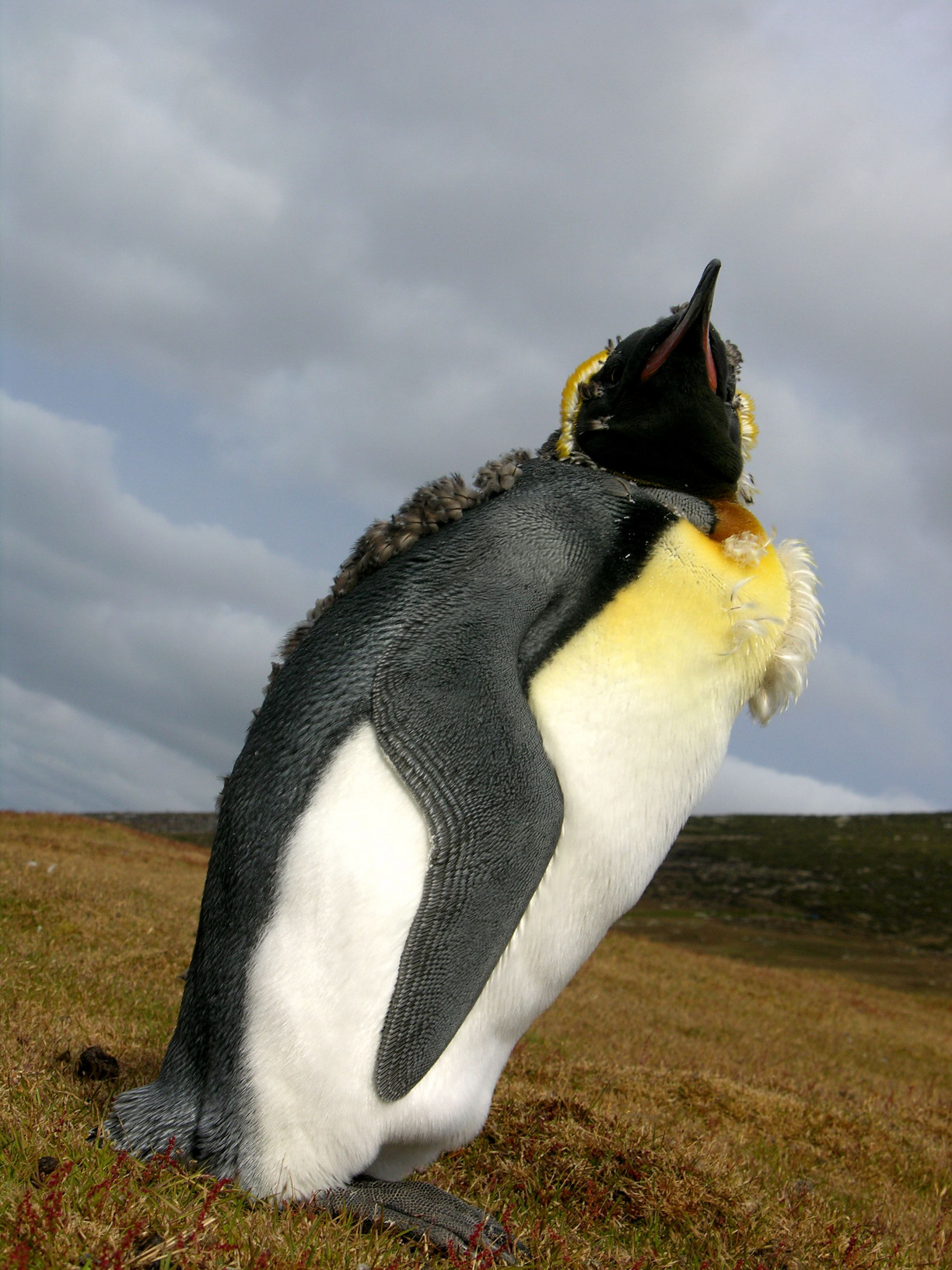
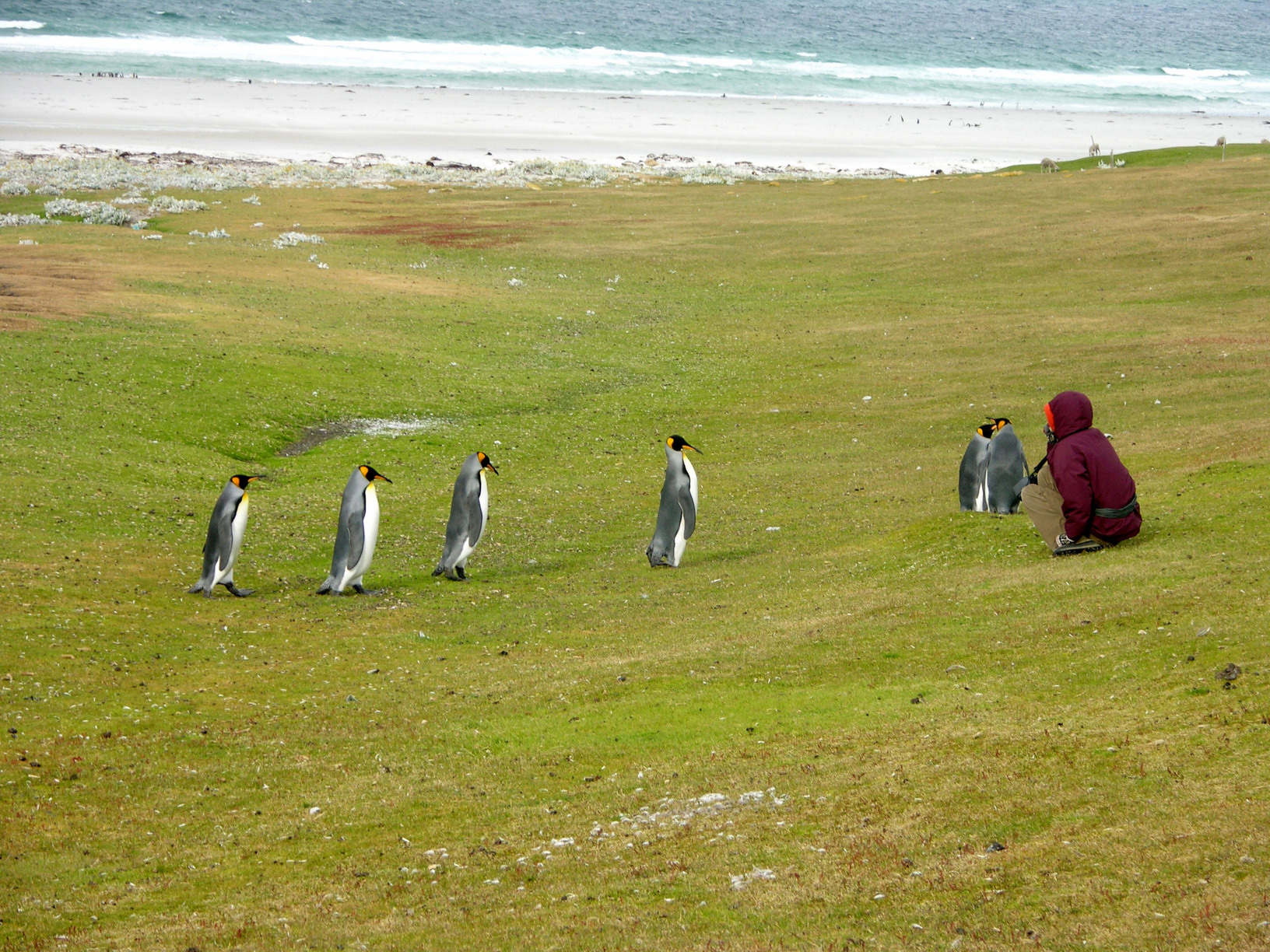
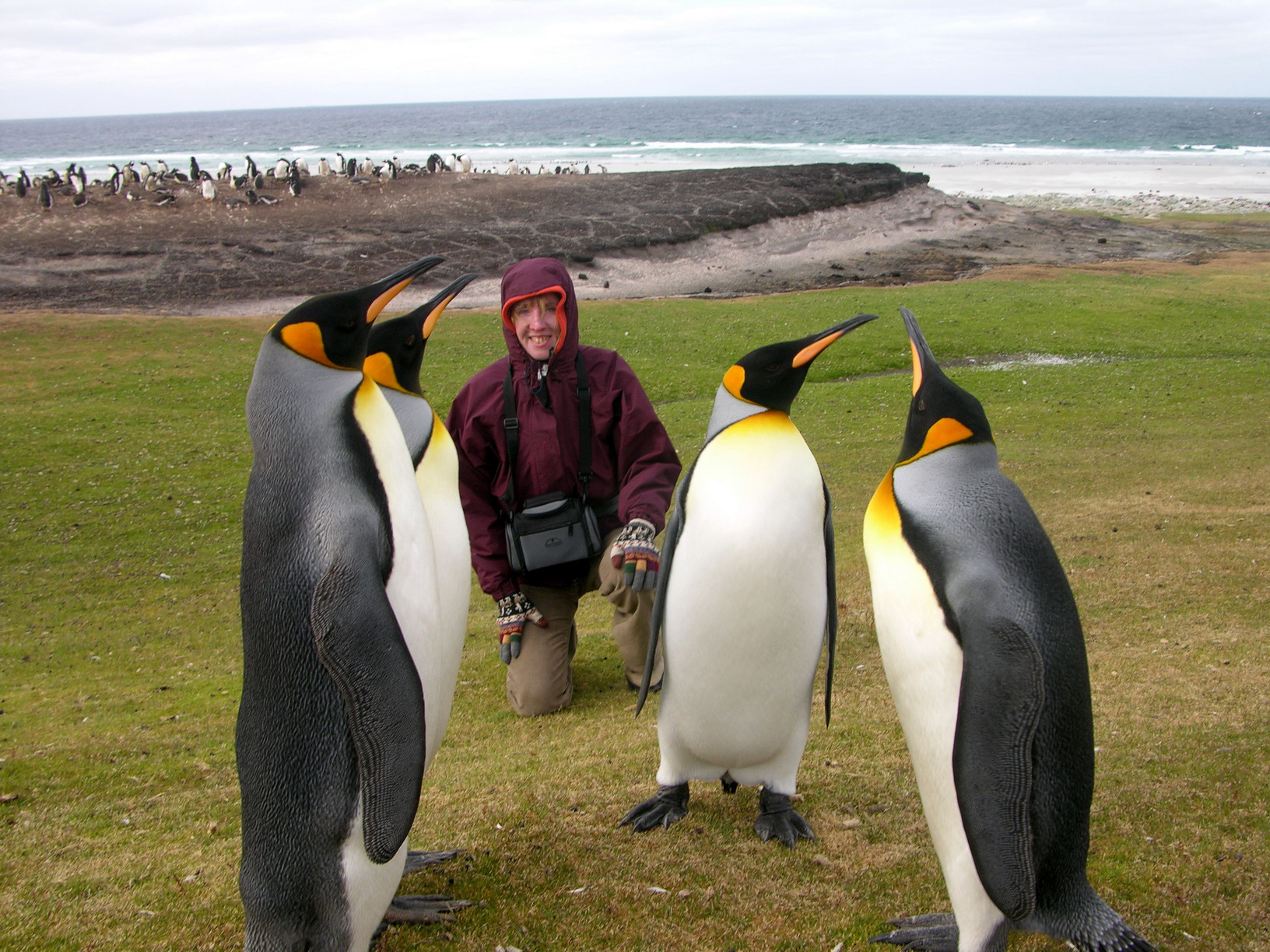
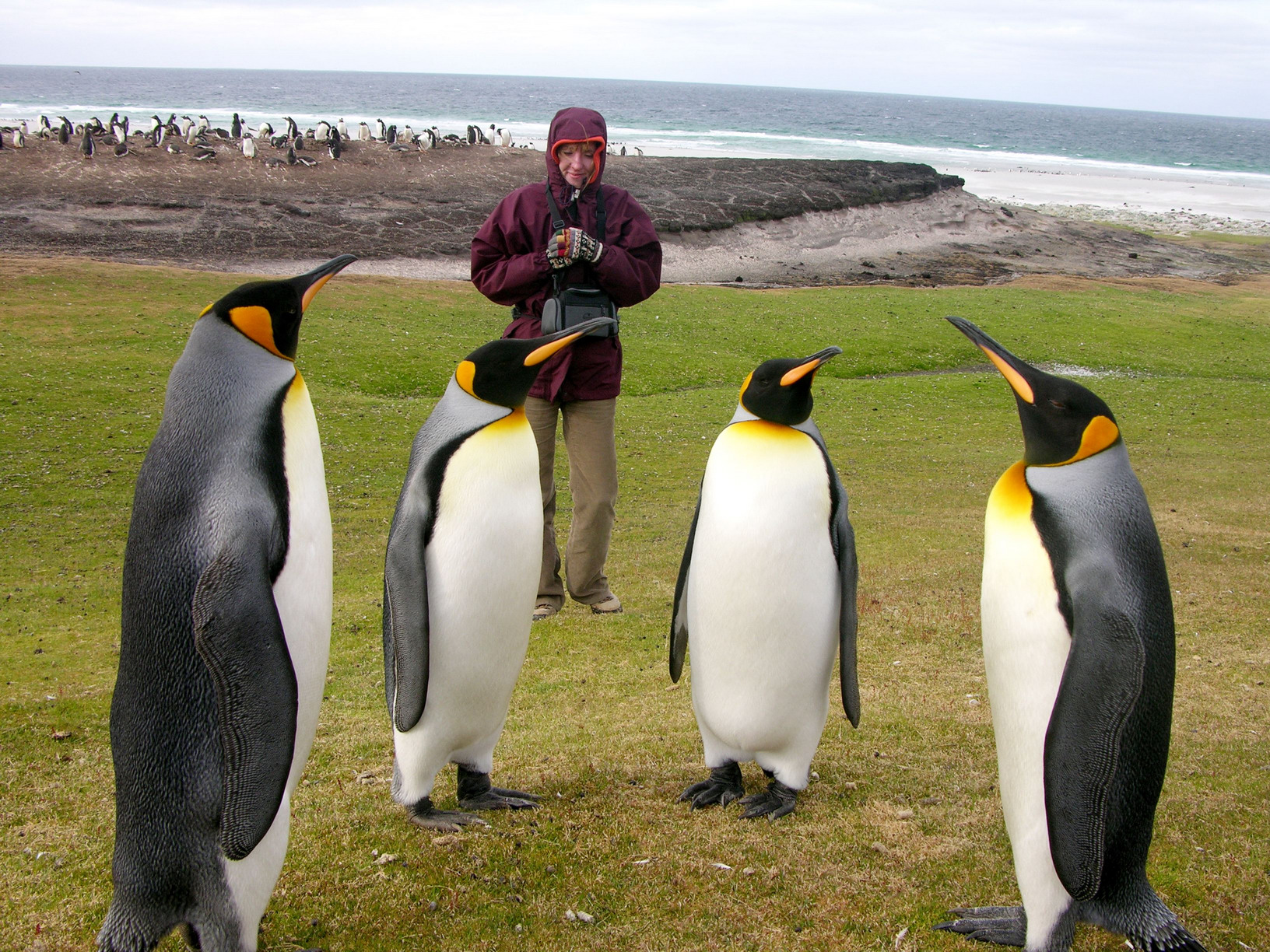
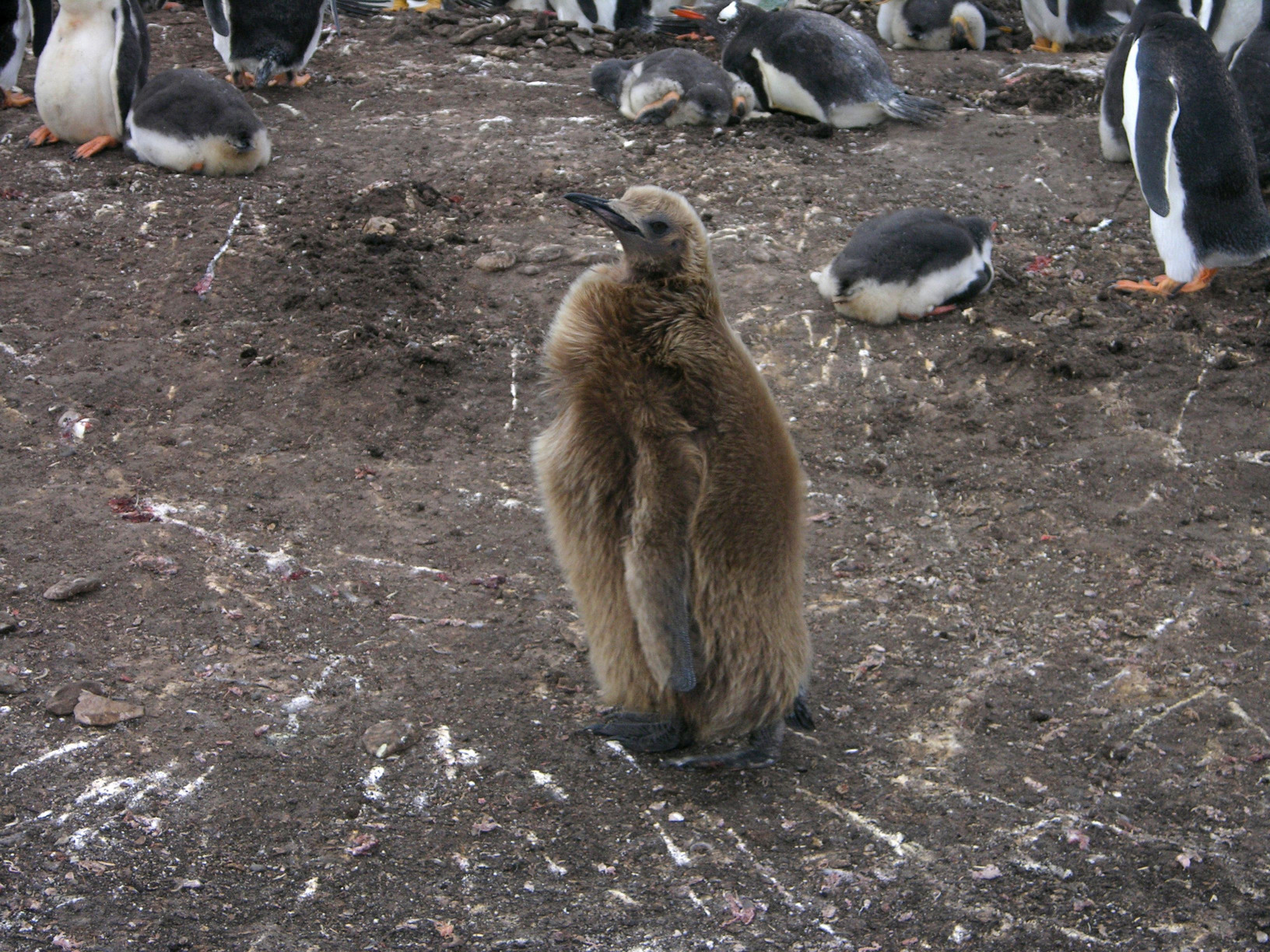
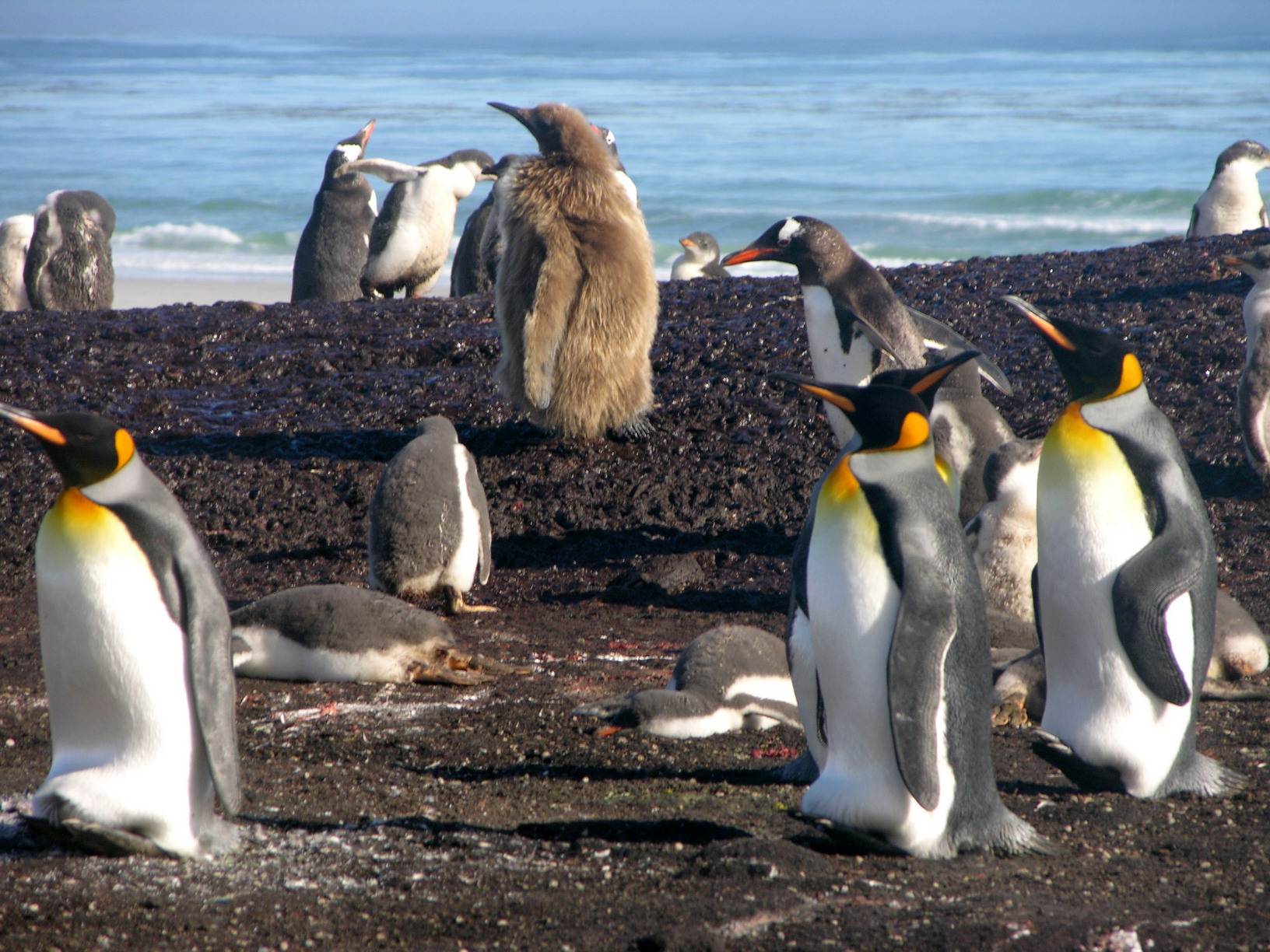
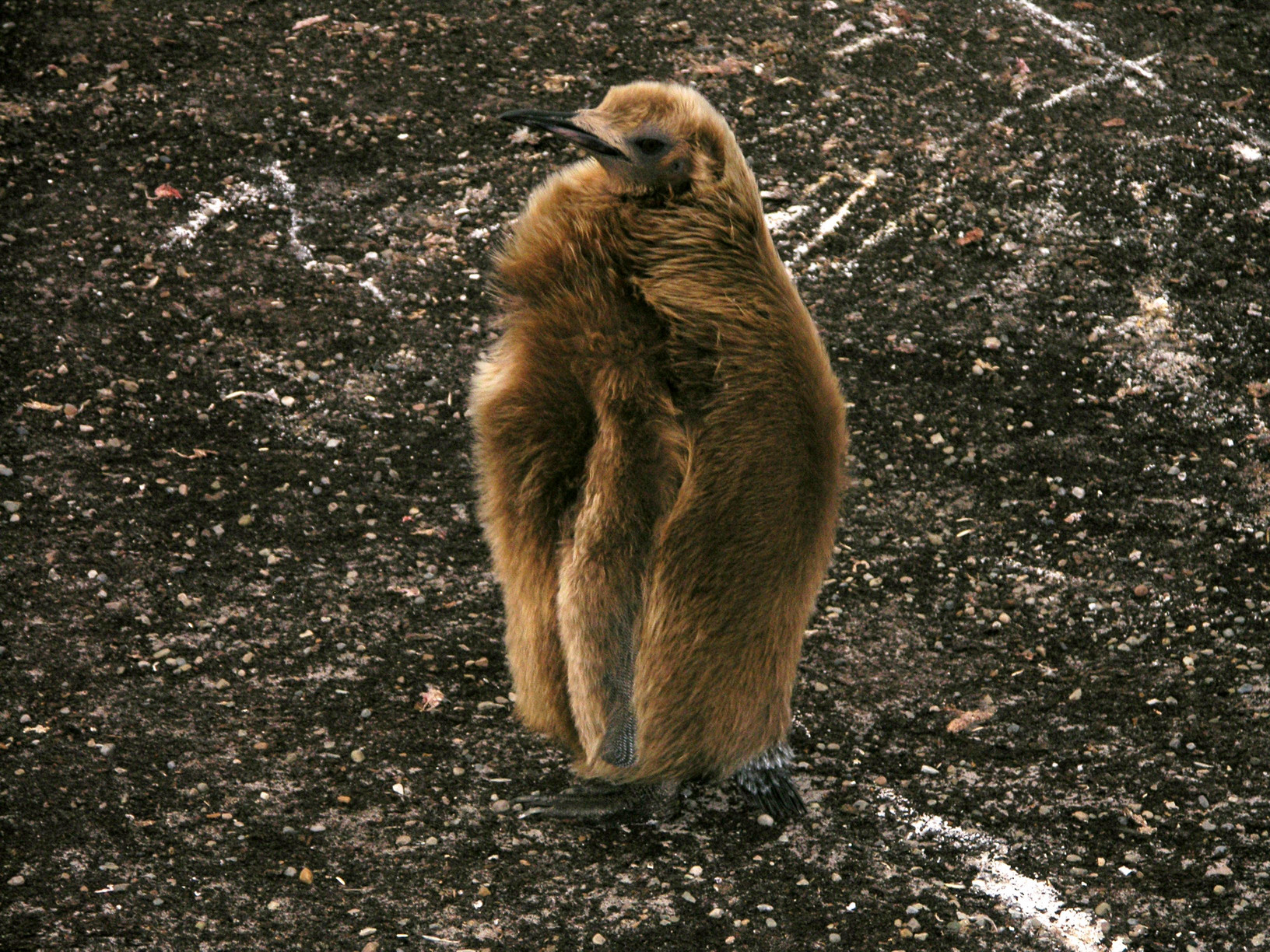
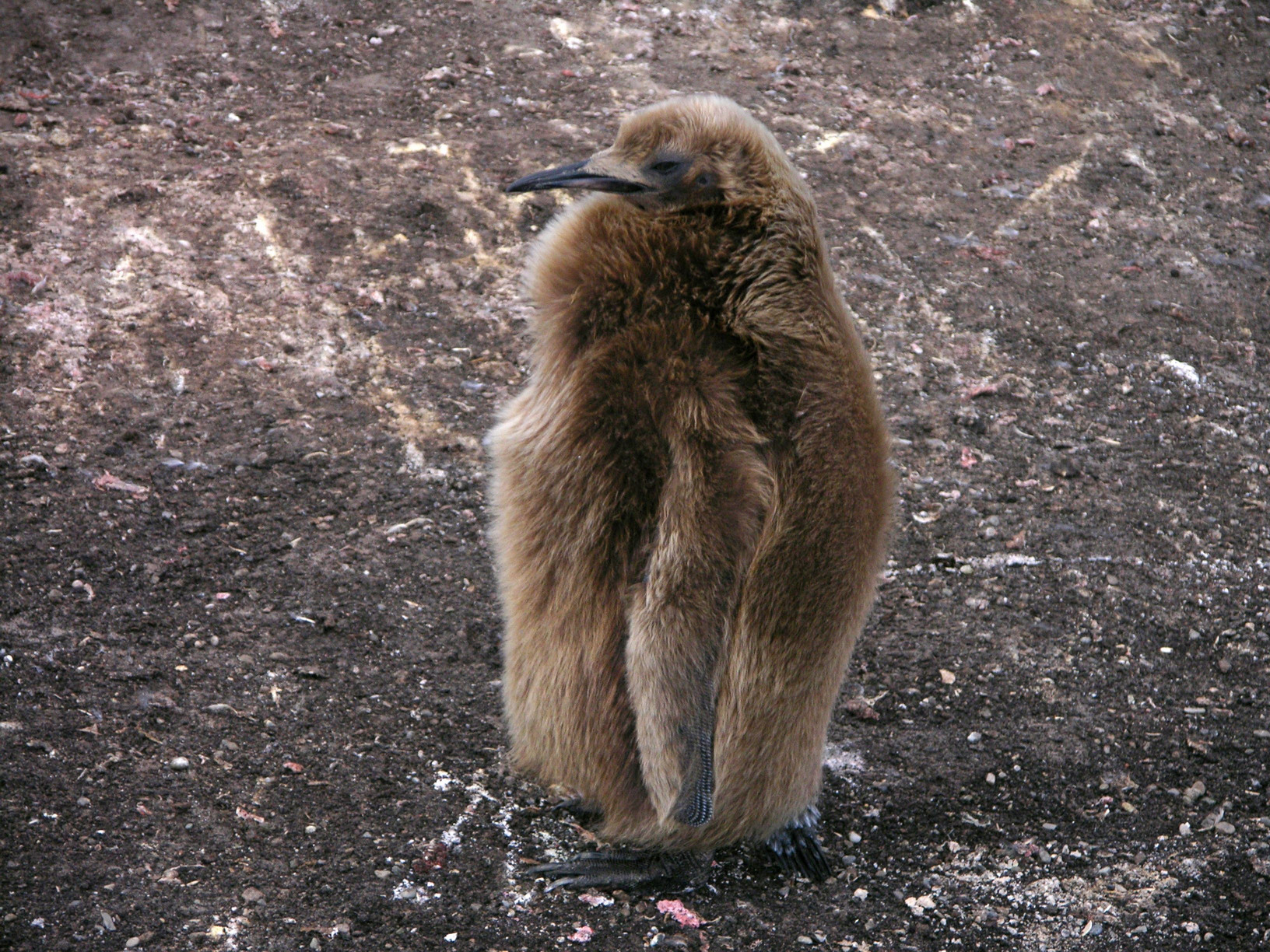
King penguins breed irregularly, so there can be eggs at any time of year. On average, two clutches of one egg in three years. The chick takes a long time to grow and looks nothing like its parents. Ungainly, fluffy and brown. A squeaky voice, almost ultrasonic. Hard to believe that miserable creature will become so handsome. Andersen should have written The Ugly King Penguin Chick.
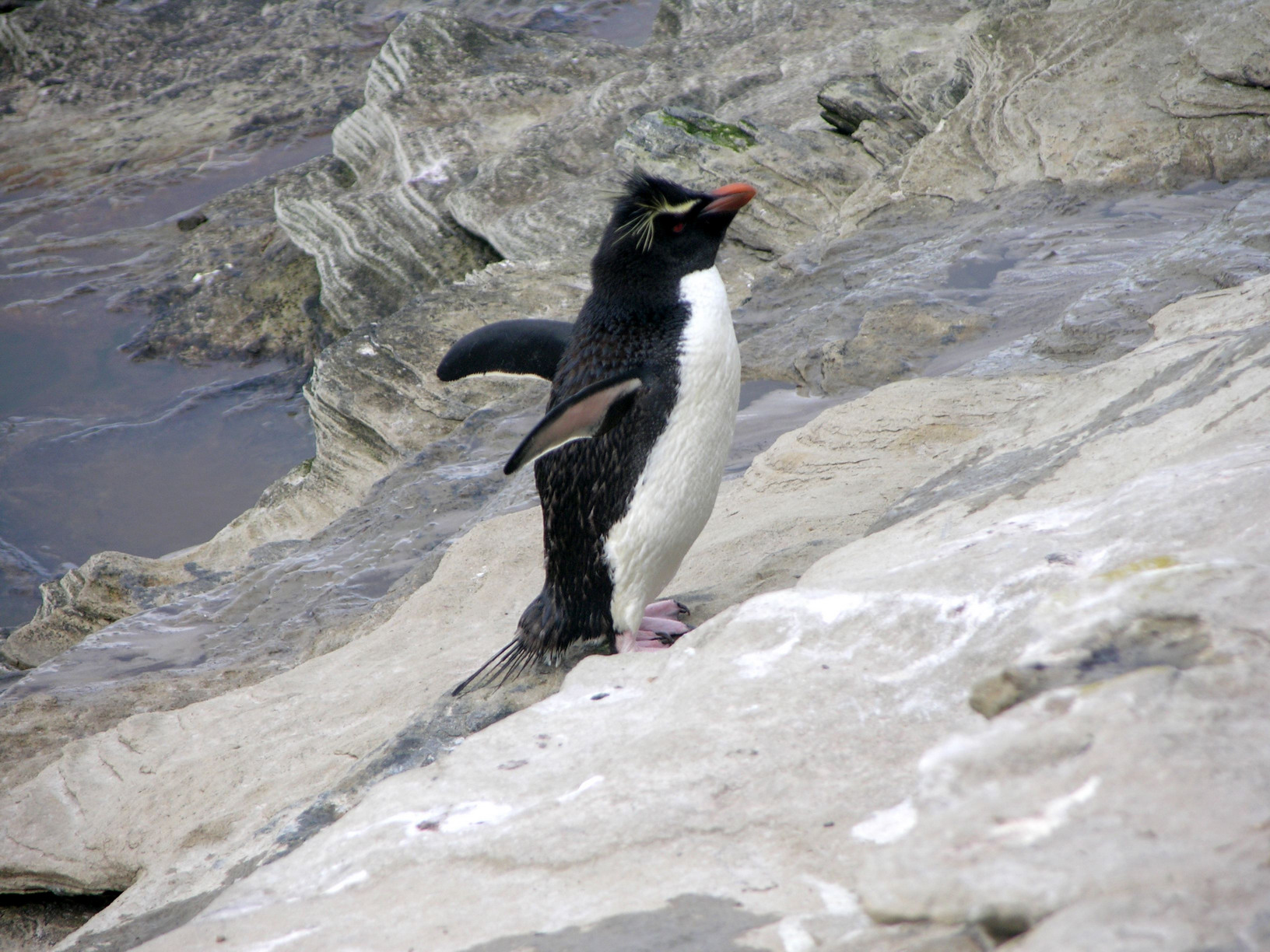
“On the morning of 1 August 1935 a farmer from such-and-such a village left his house, walked to the other end of the island and saw…” That's how the reports of a UFO landing, a yeti or Nessie usually begin. This is how they describe the only appearance of an emperor penguin in the Falklands. That's why some consider the emperor a local species as well. Naturally we didn't see an emperor penguin. But rockhoppers (rockhopper penguins) are everywhere here, 350,000 of them. A small penguin, only about twenty centimetres tall, breeding in colonies on rocky shores. On land it gets about by hopping, scrambling quite nimbly up steep cliffs. A curious little bird. It always looks as though it's laughing. The little yellow feathers on its head make it more charming still. Just like Tanya, with her little yellow wisps sticking out under her hat. I've called her a rockhopper ever since.
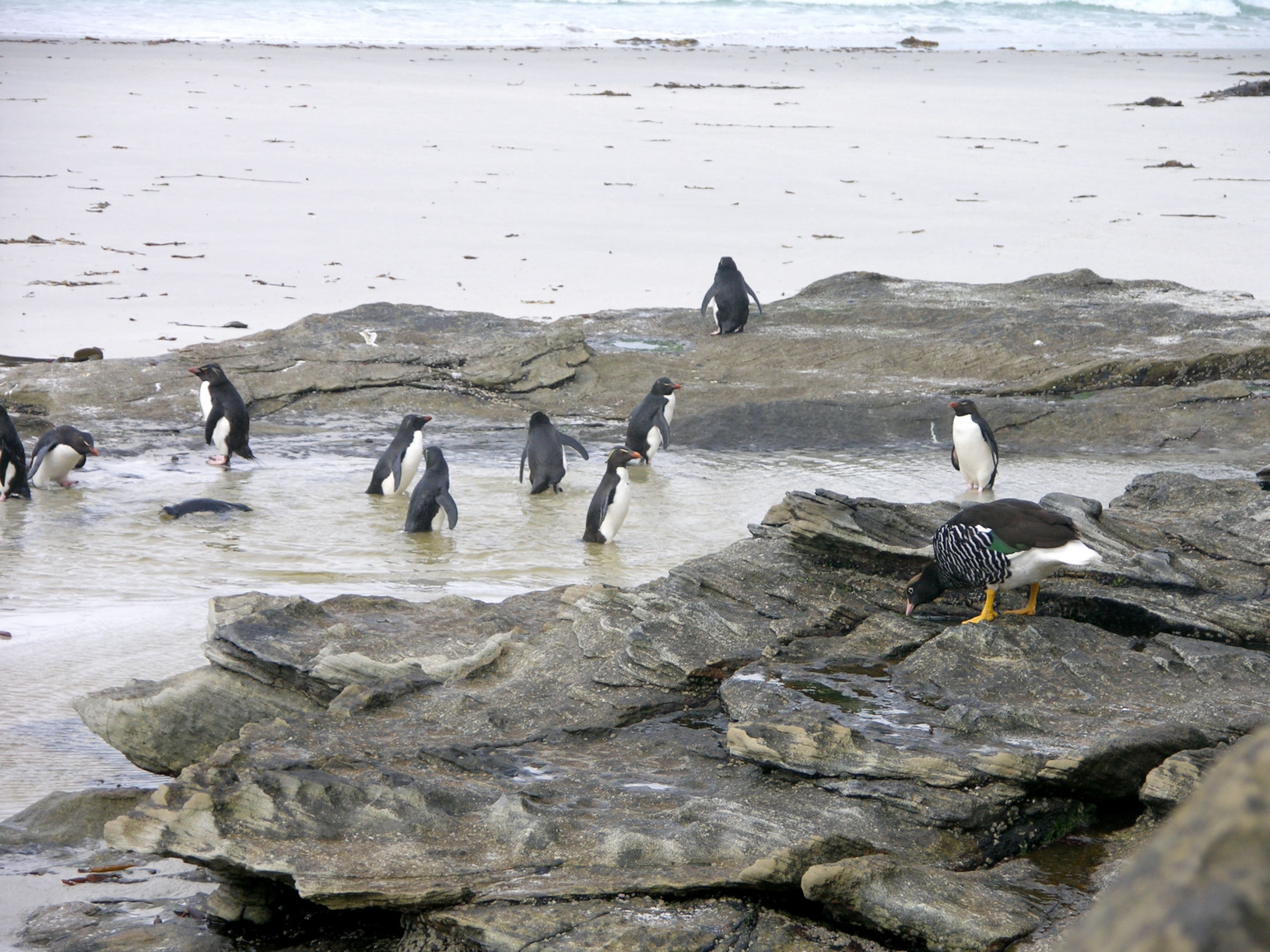
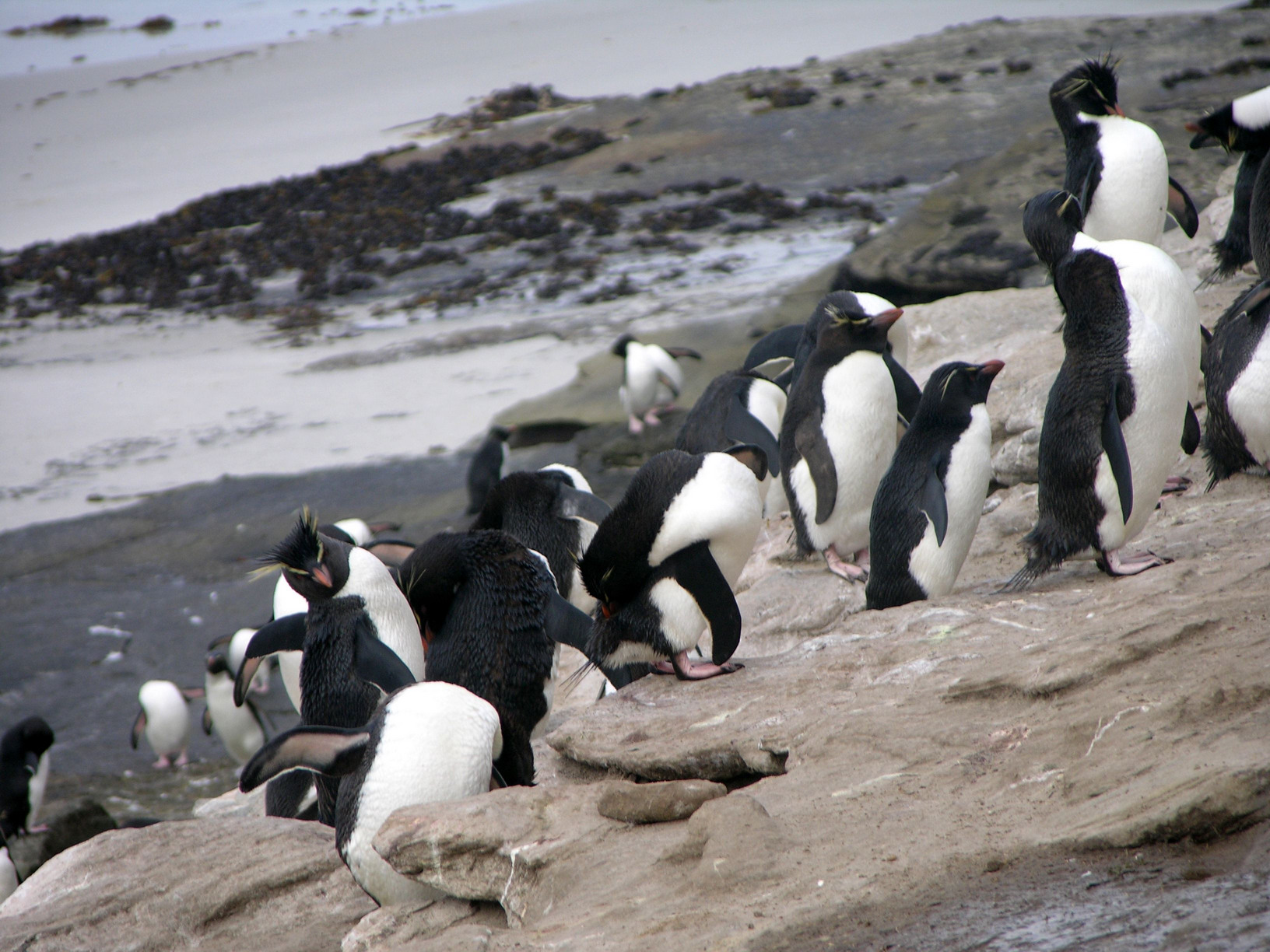
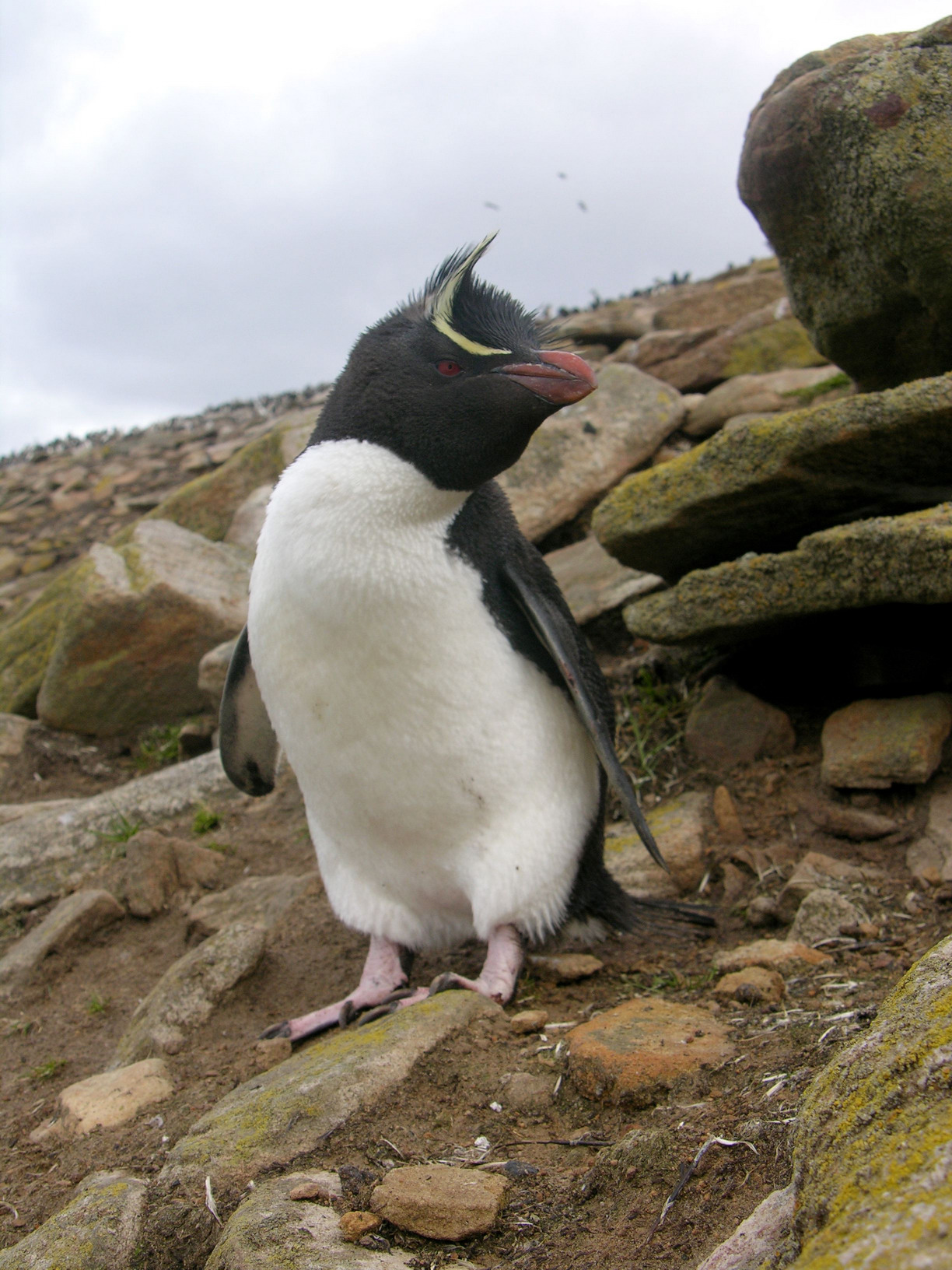
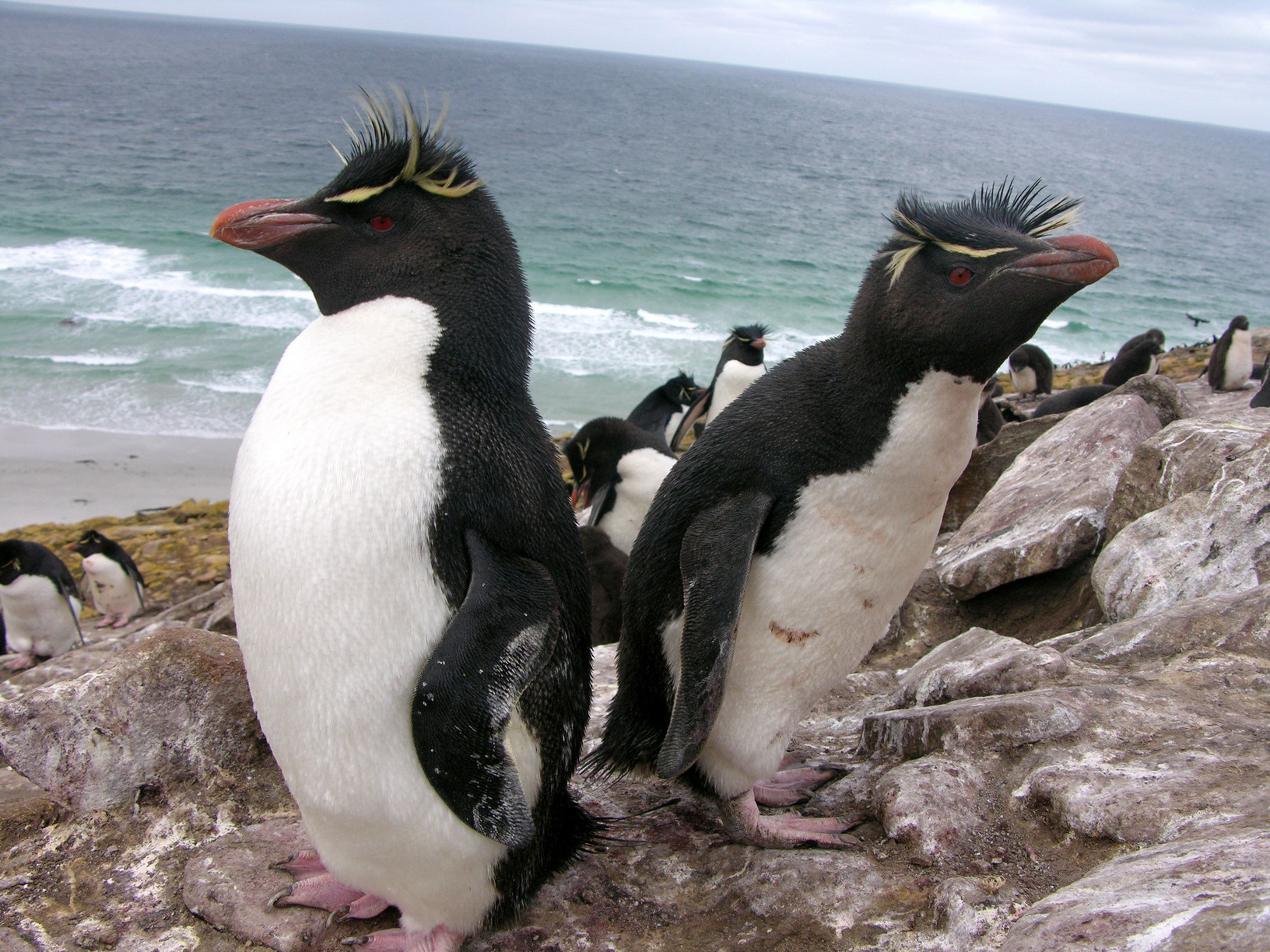
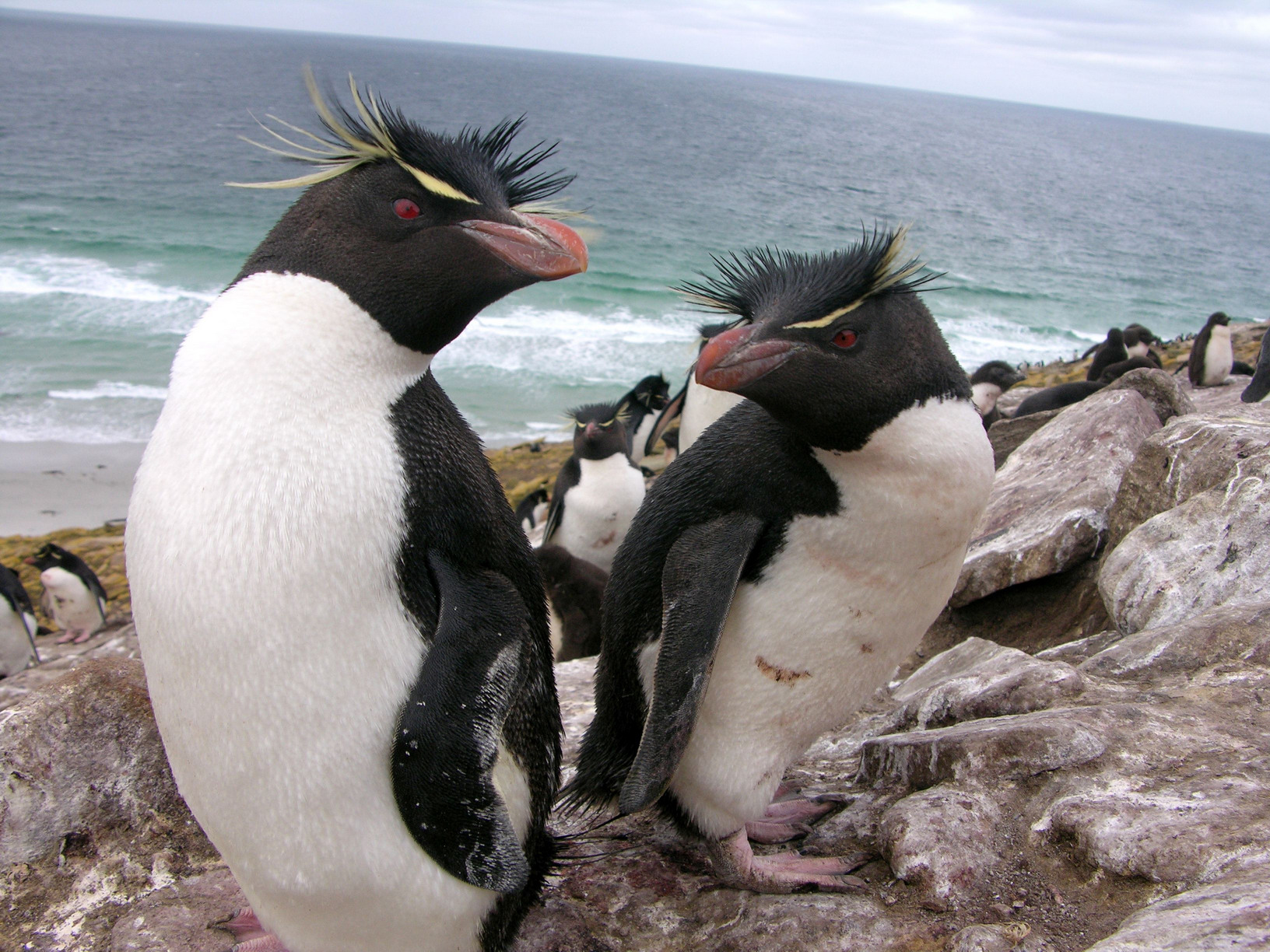
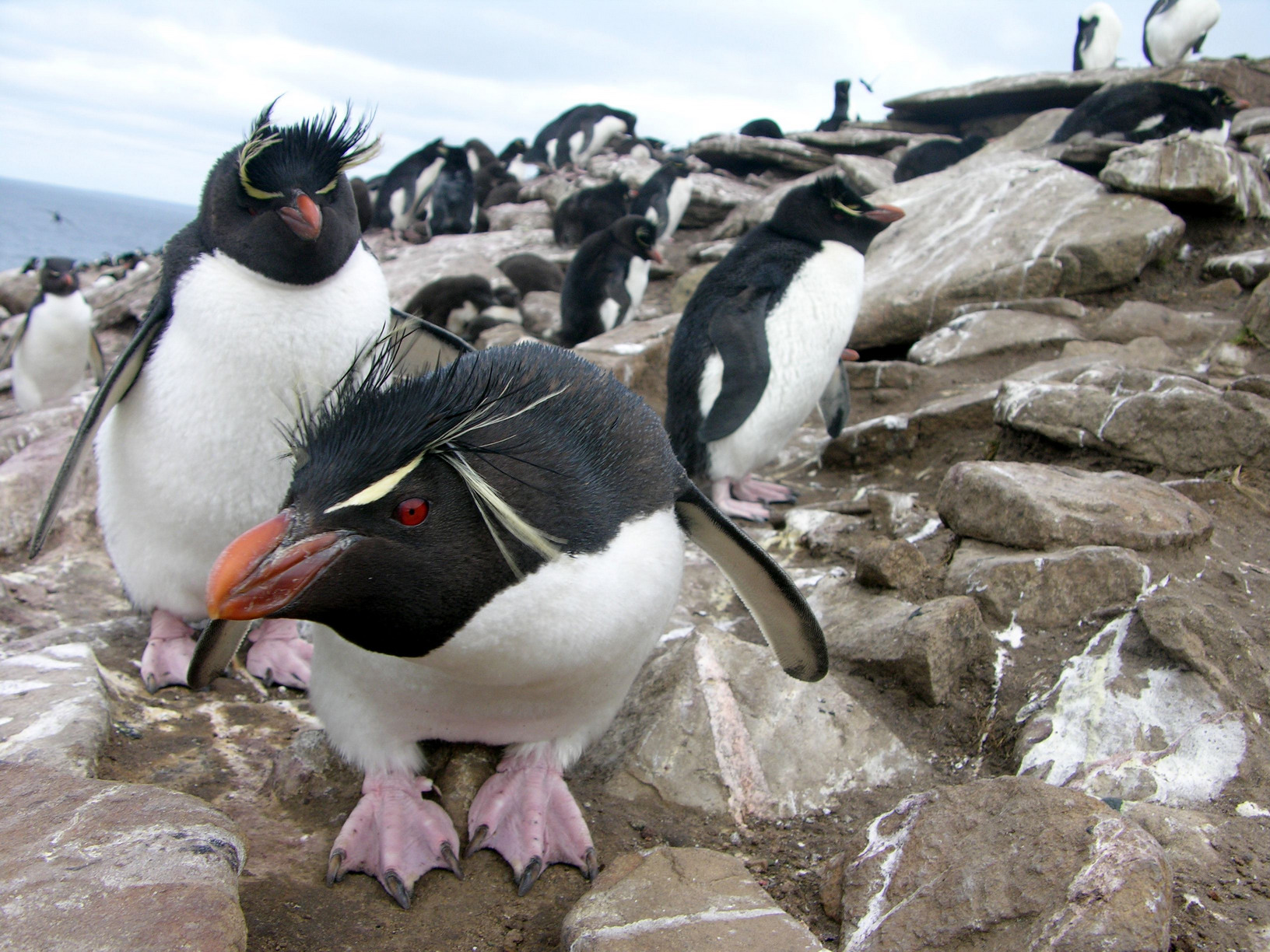
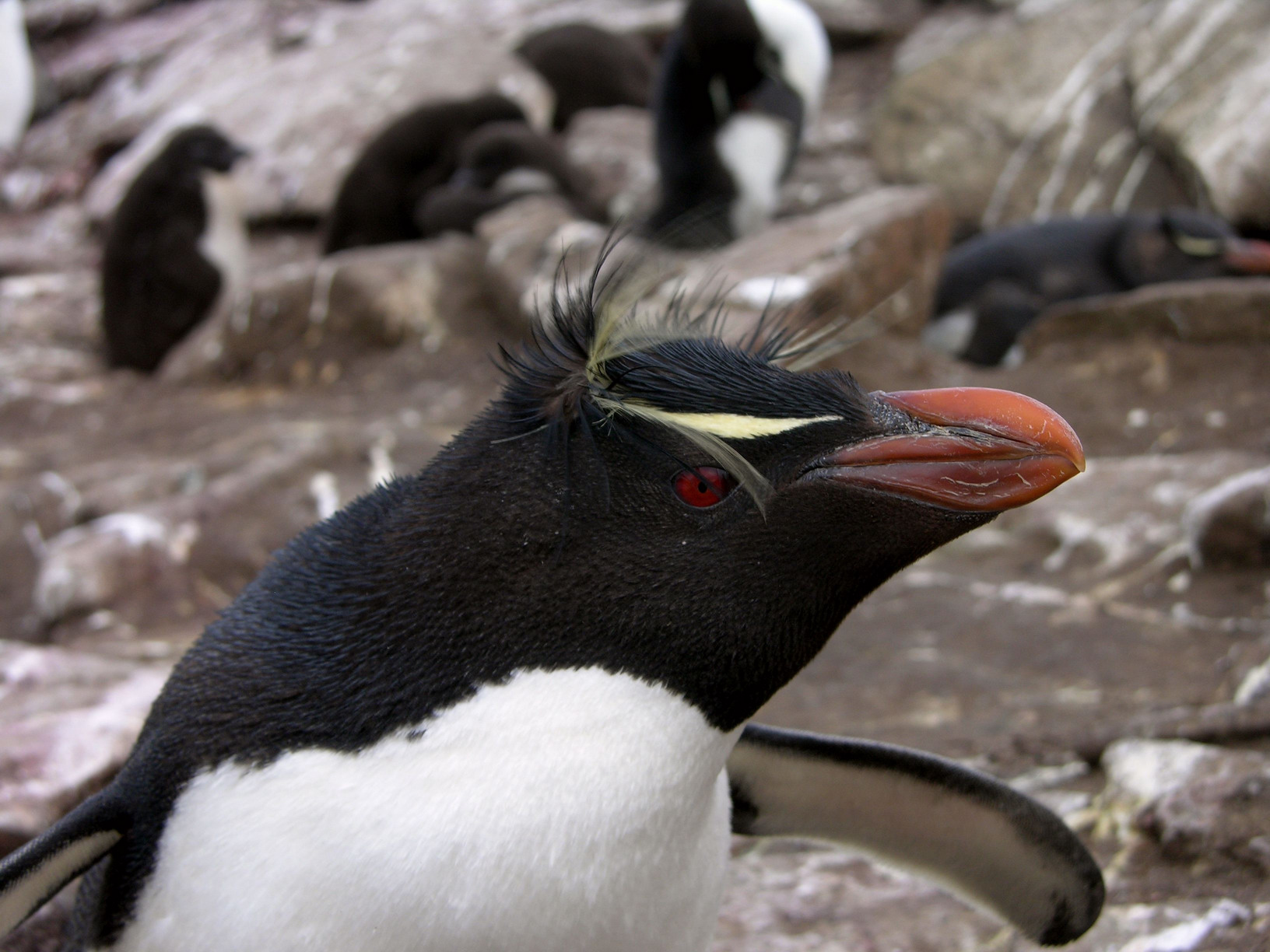
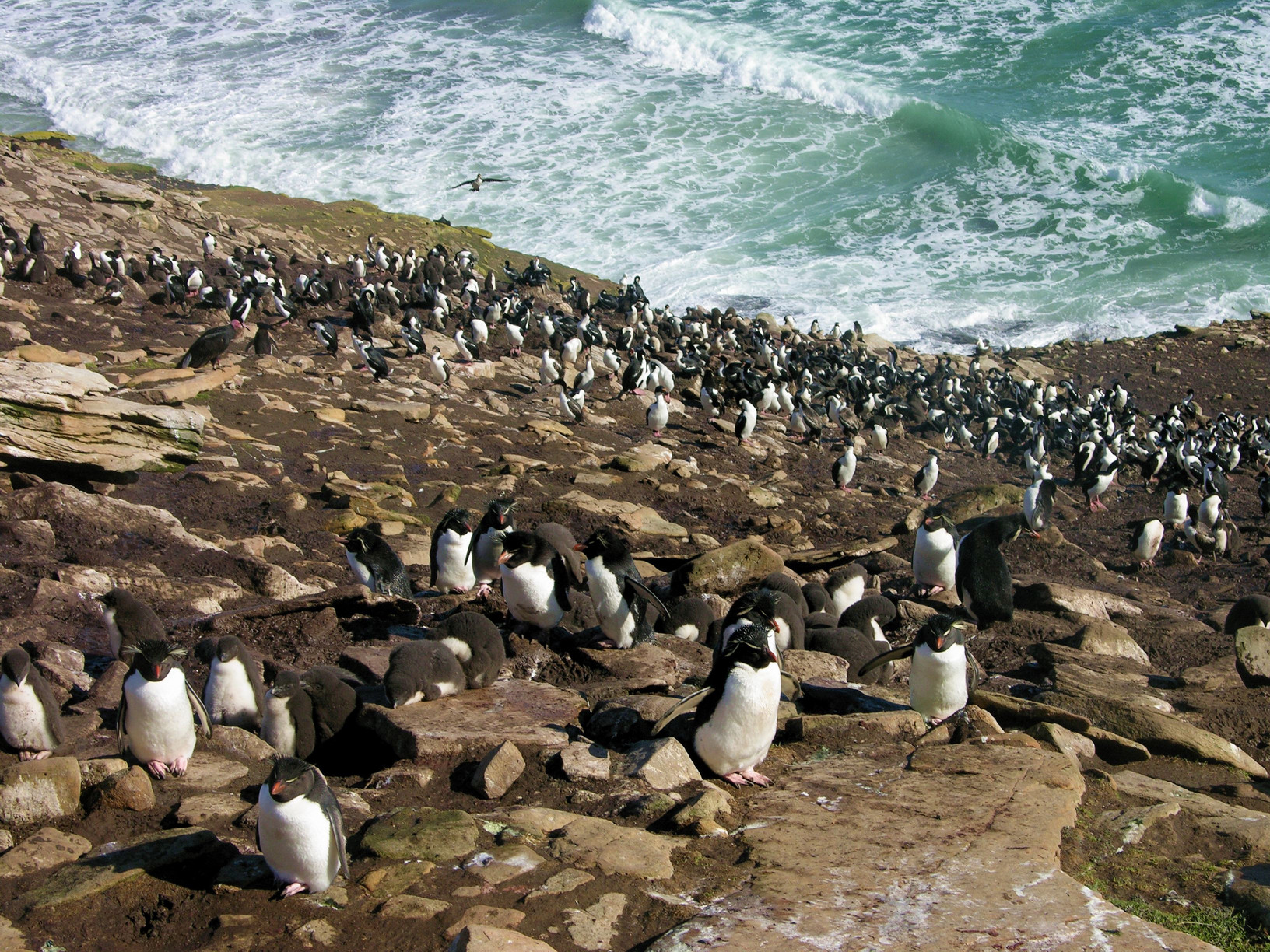
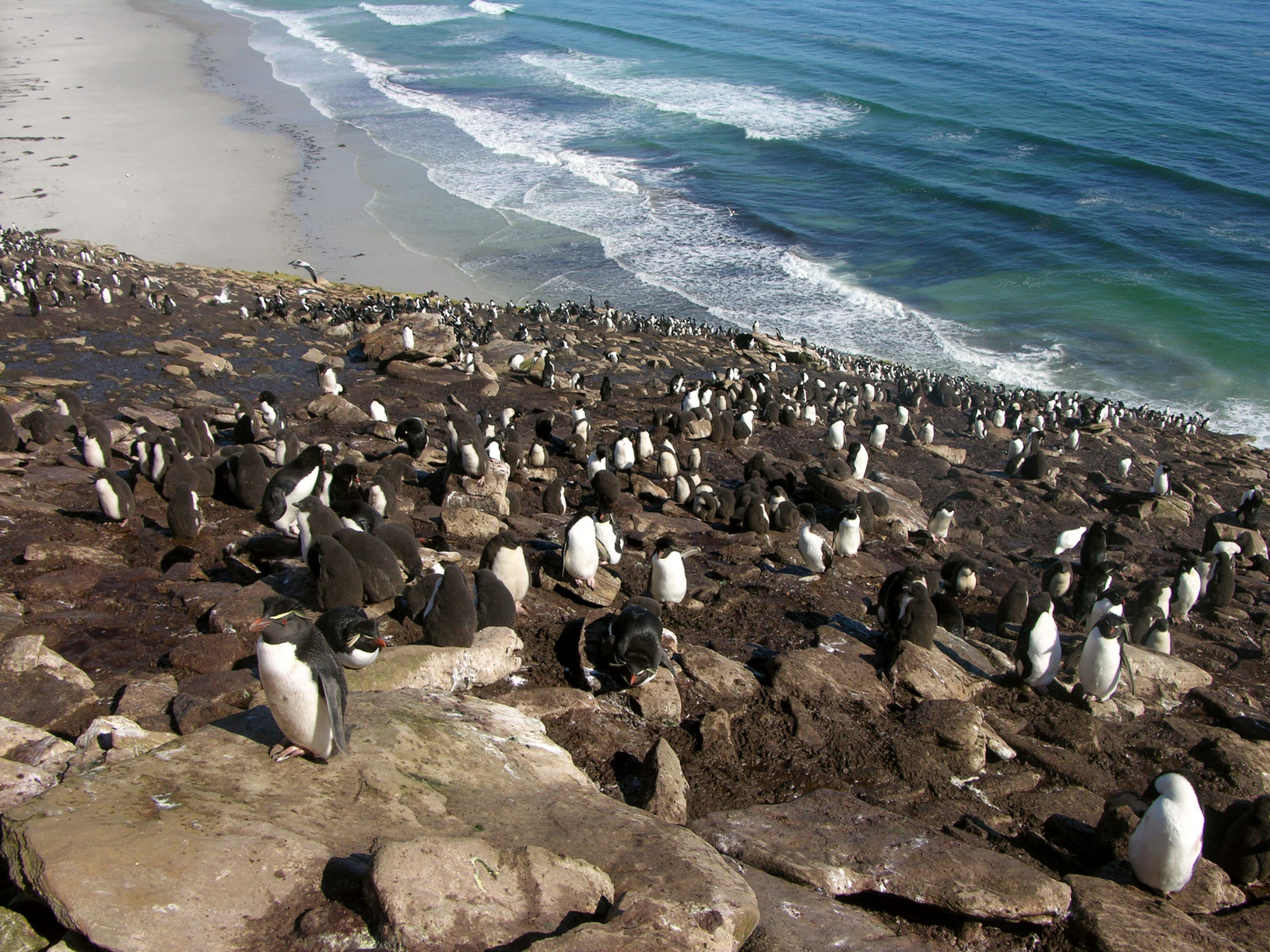
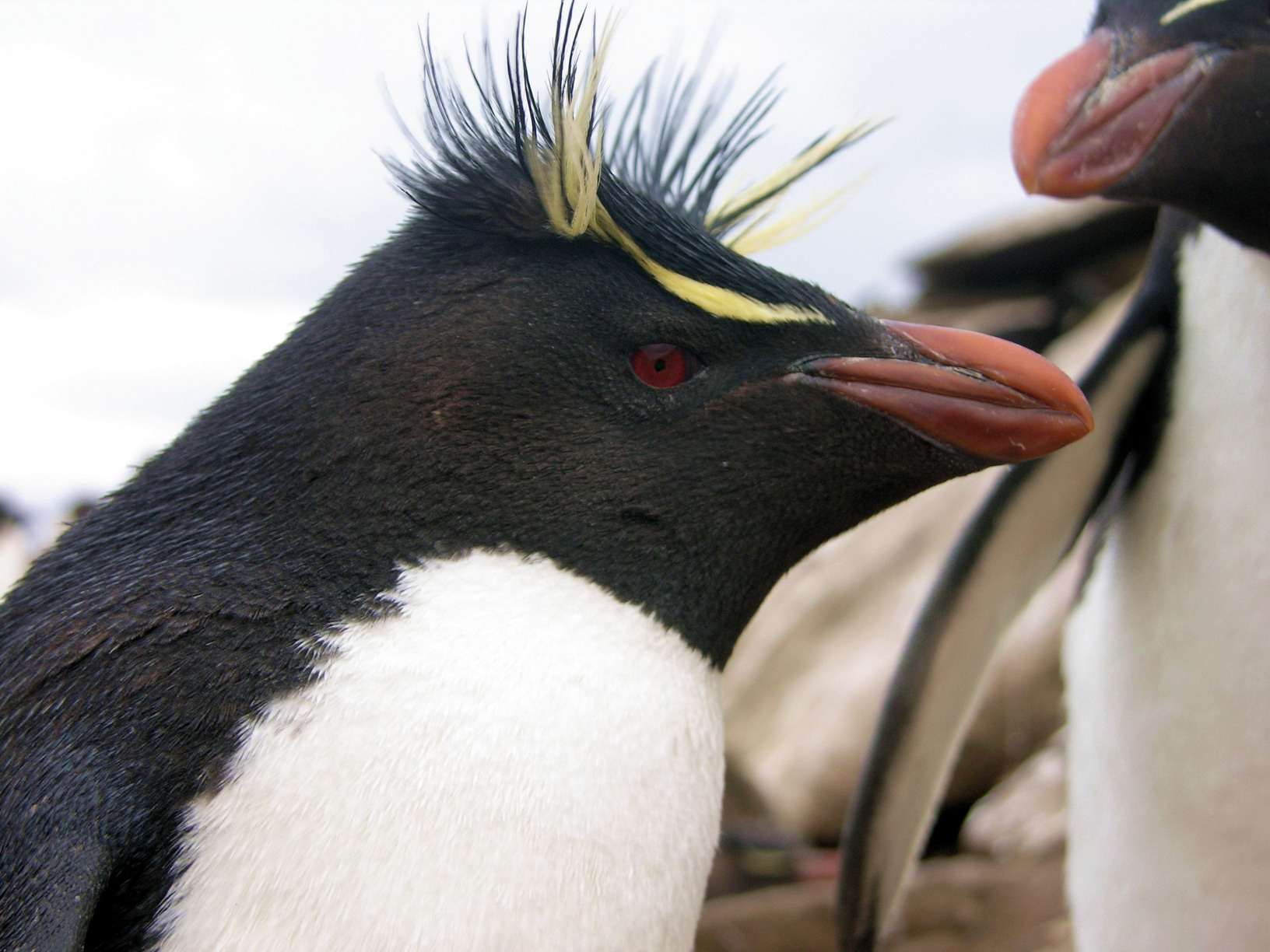
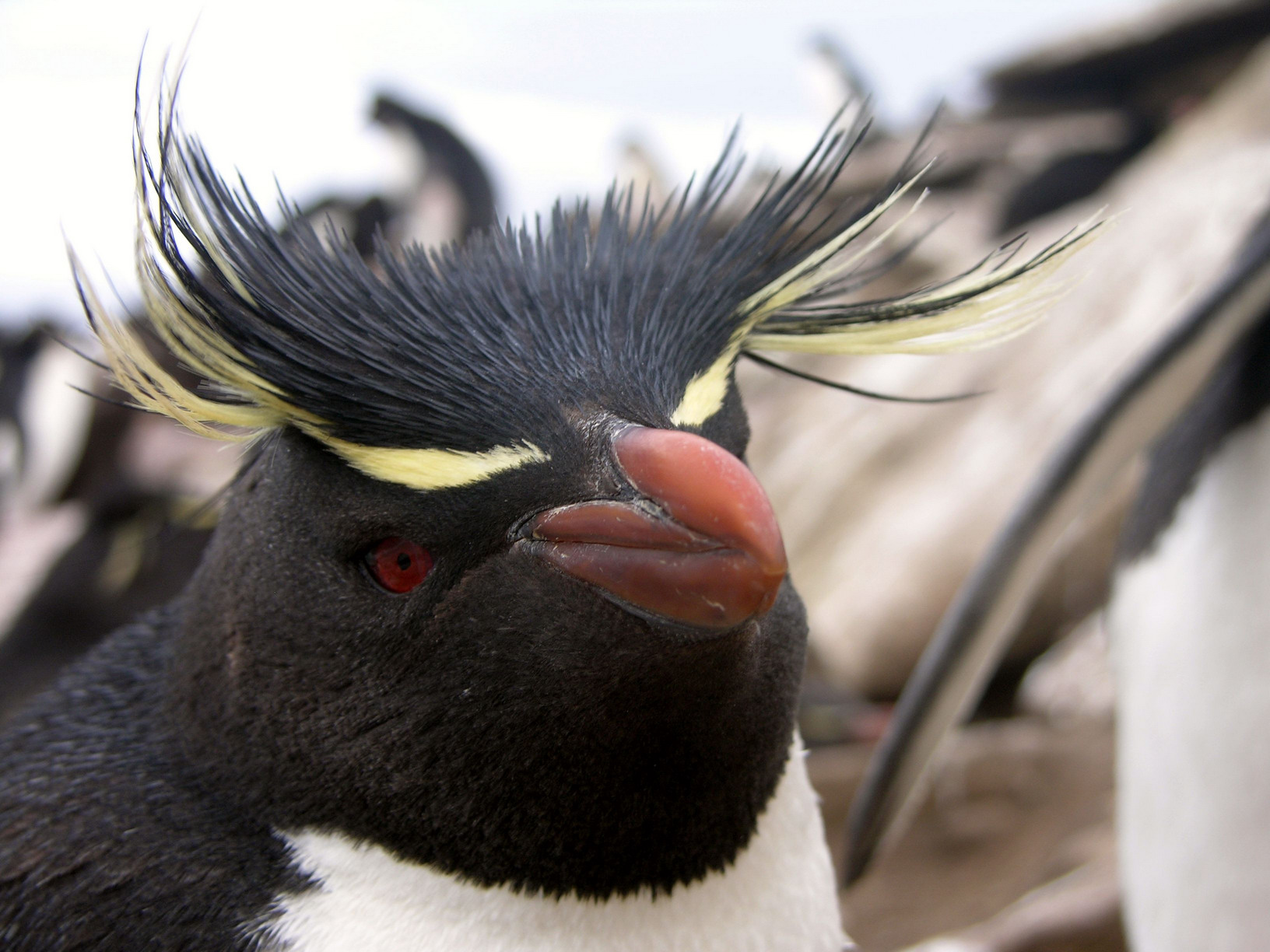
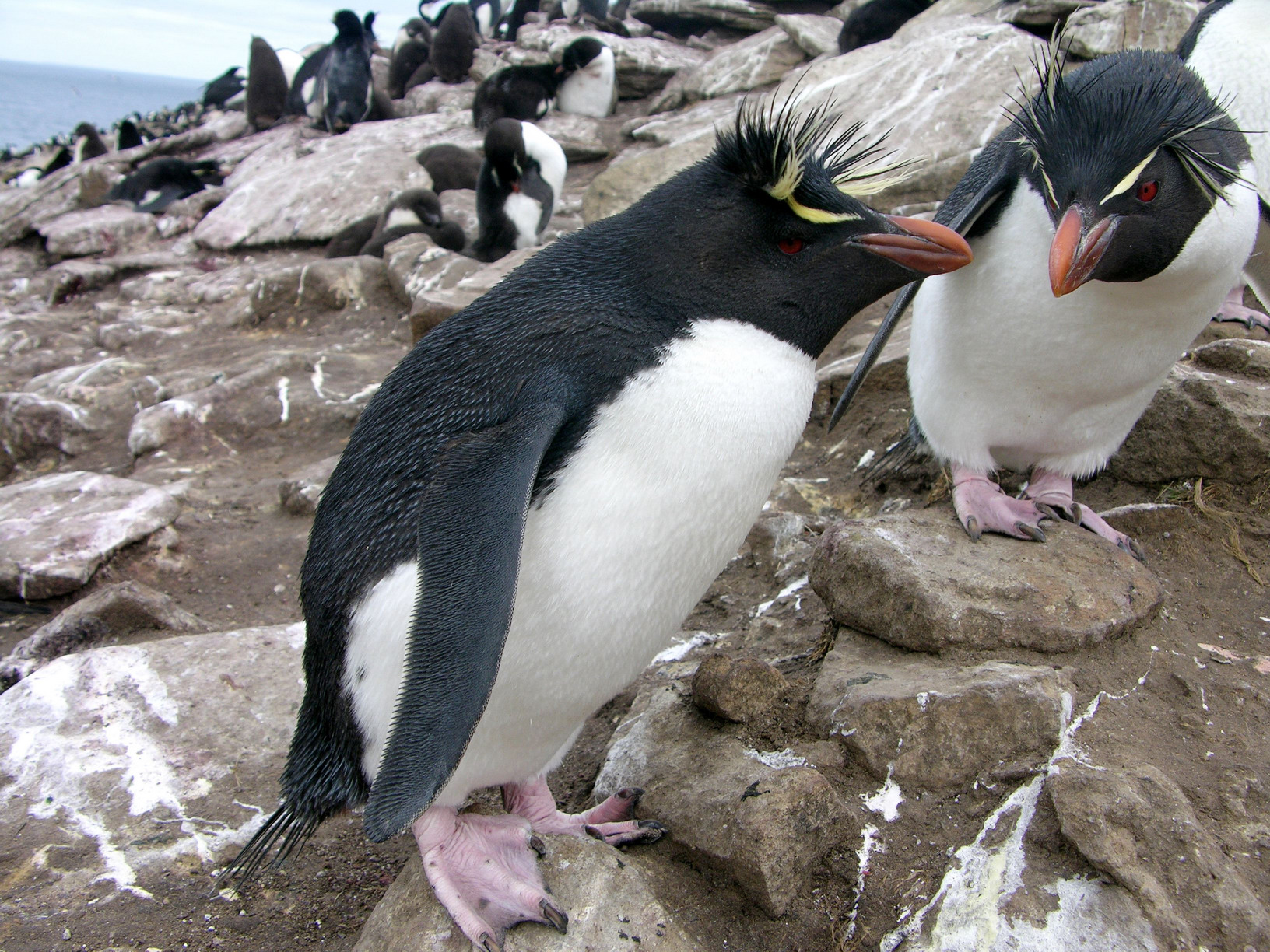
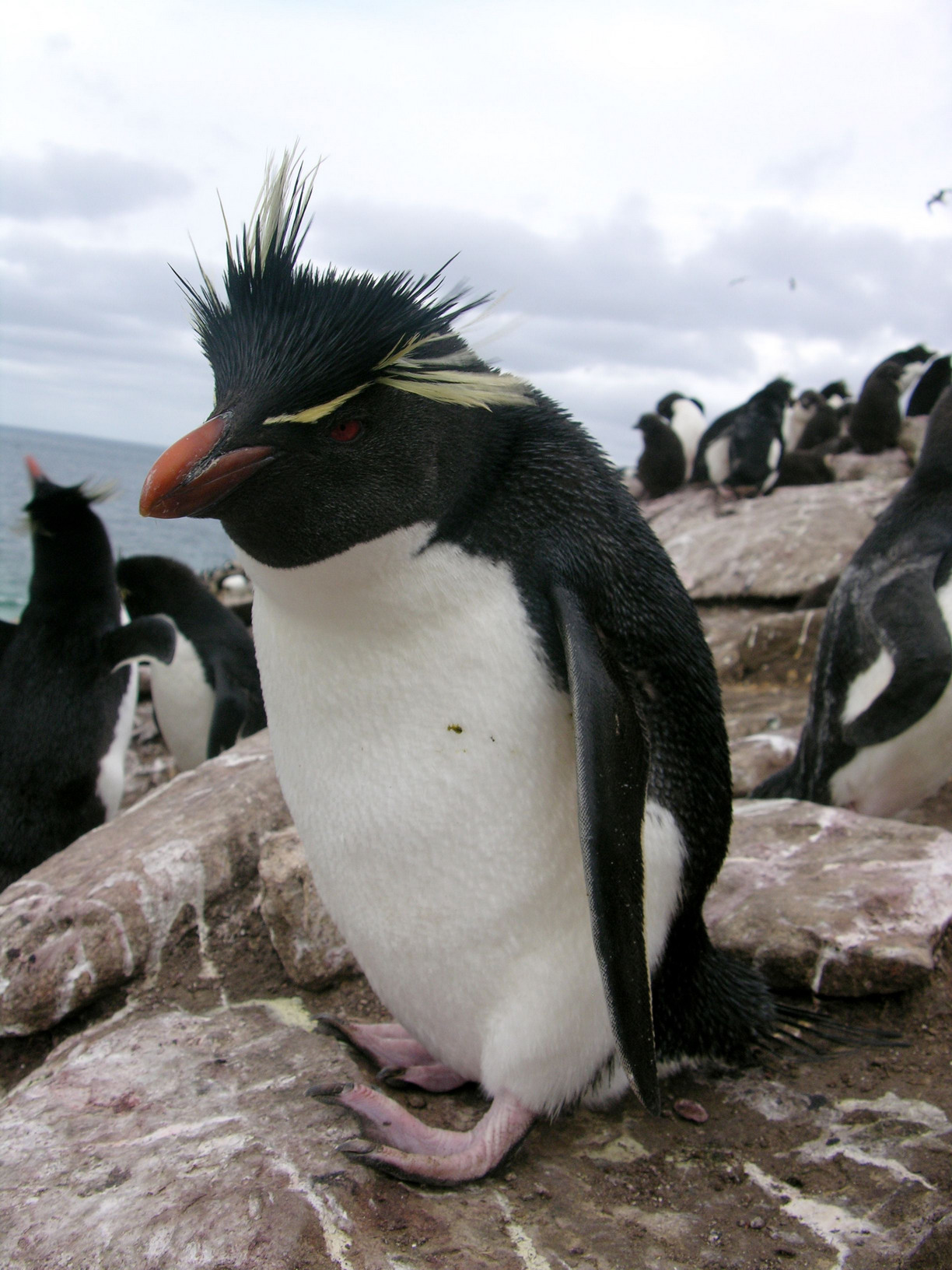
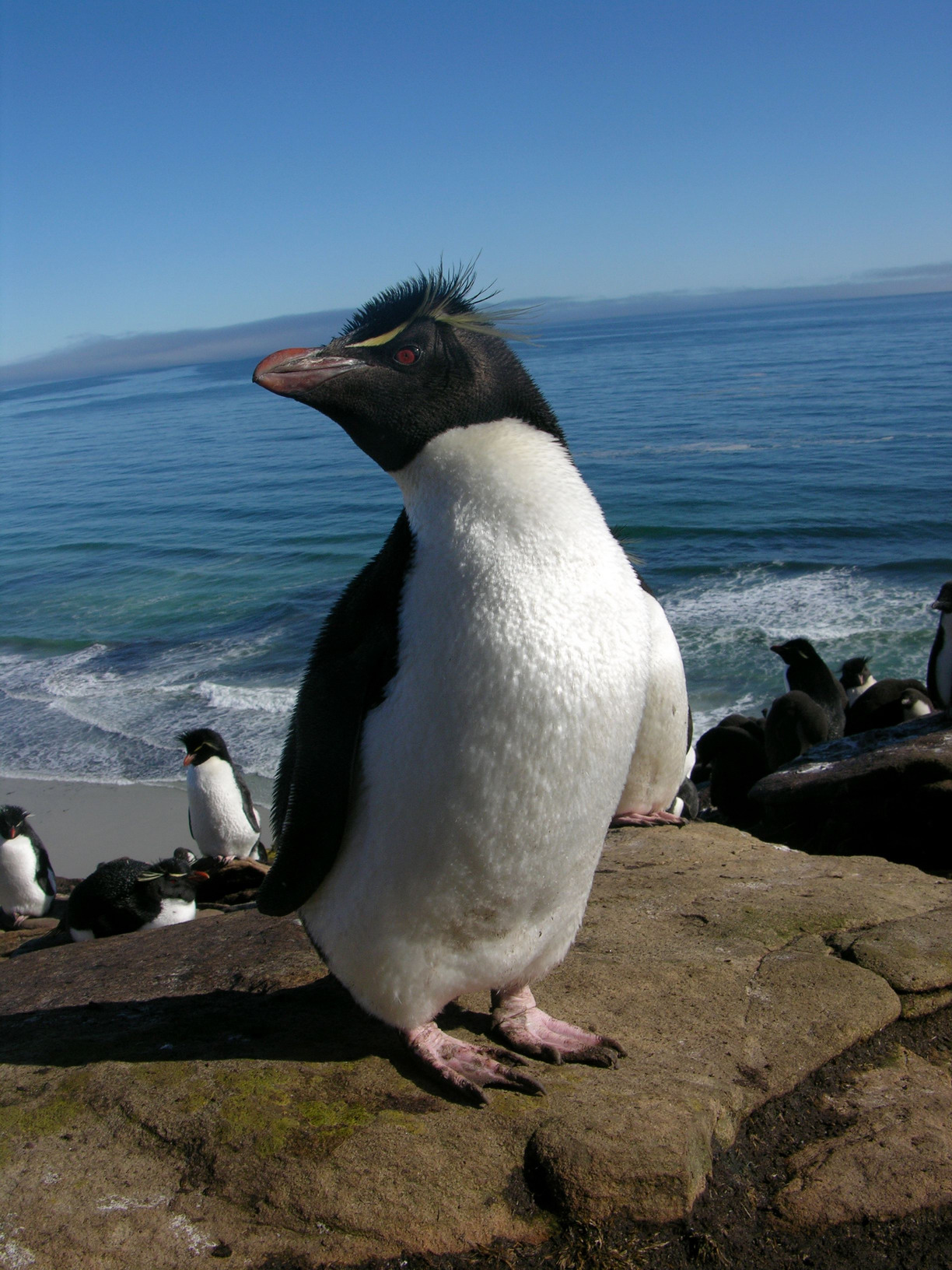
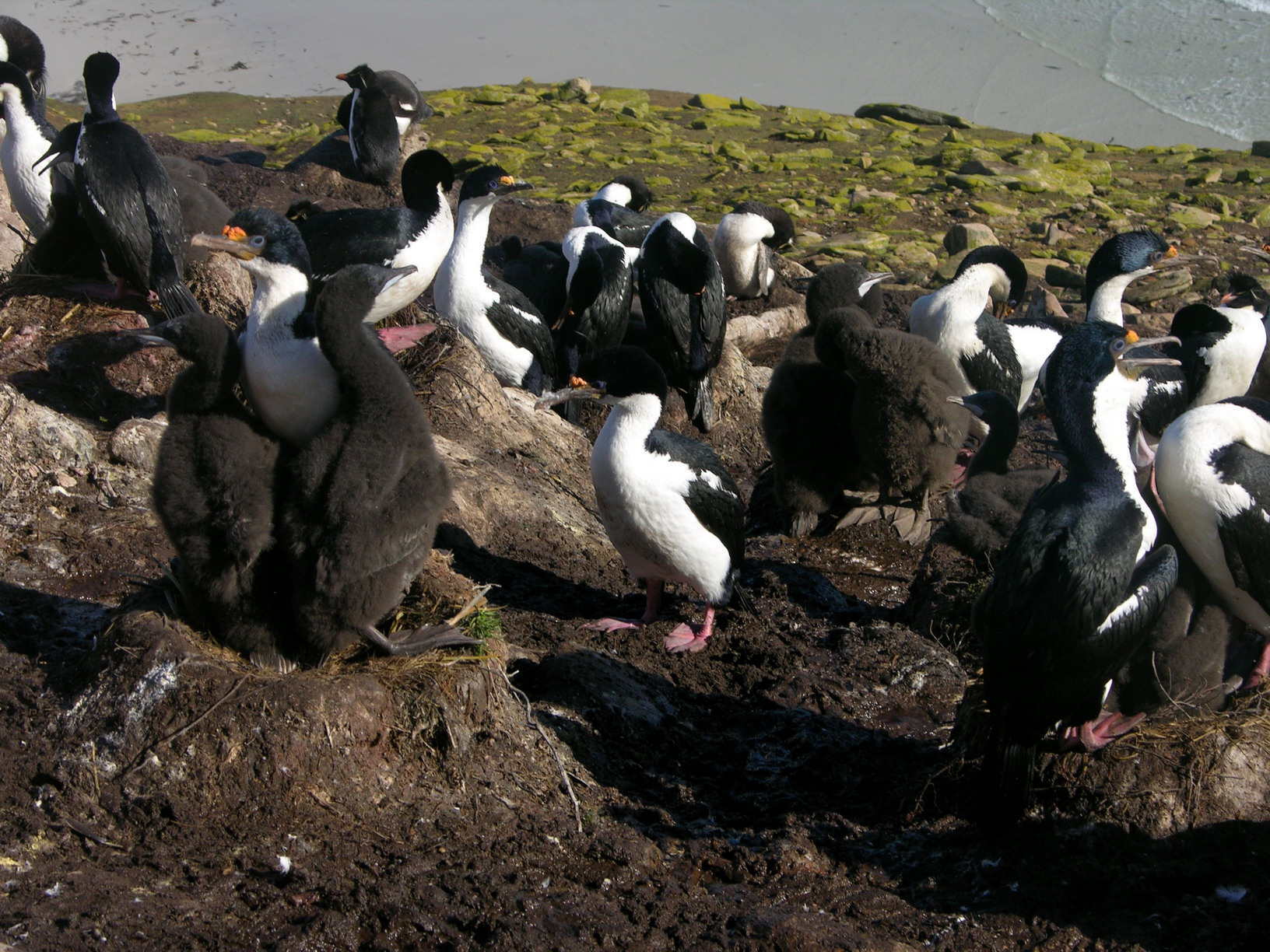
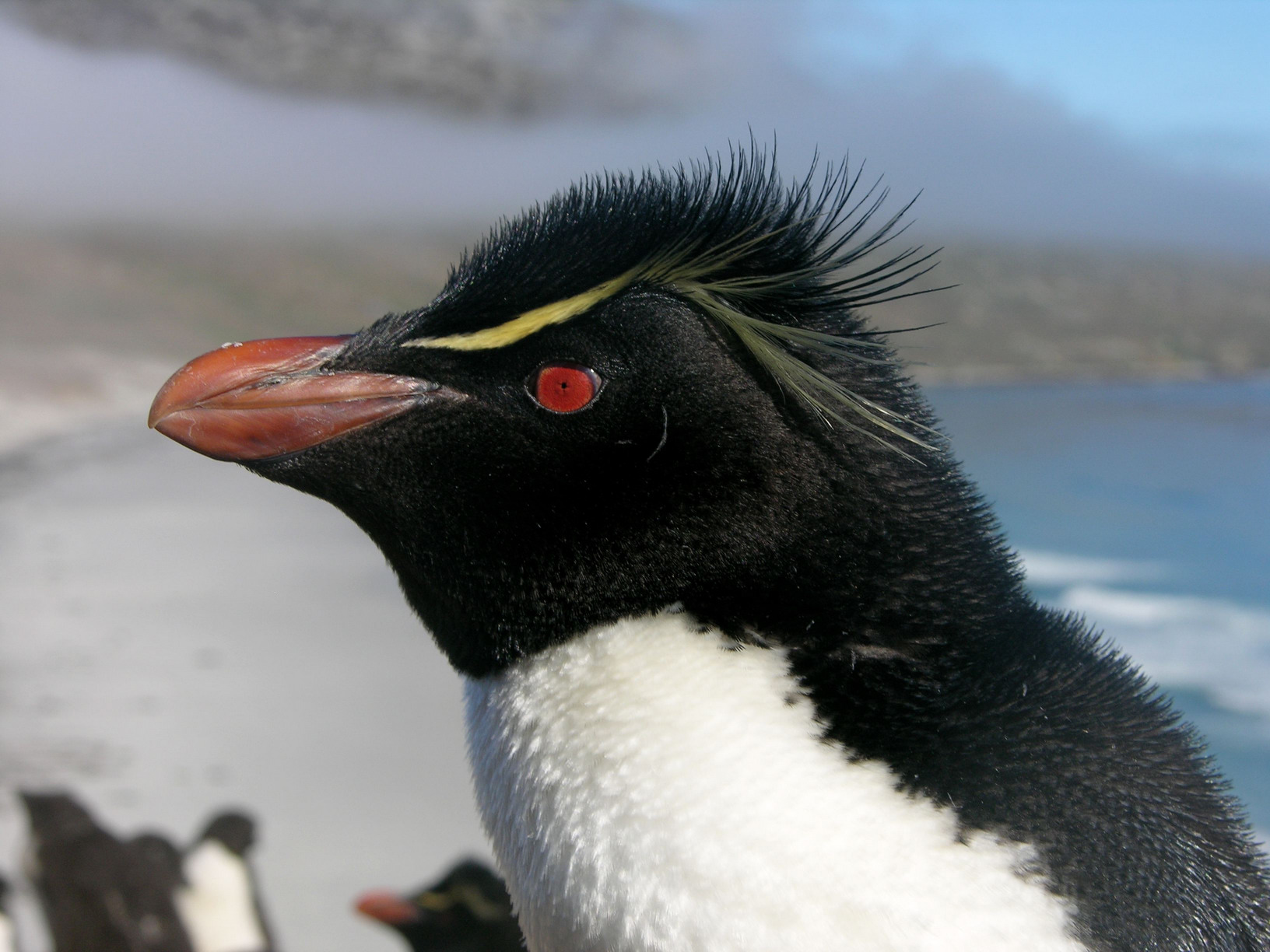
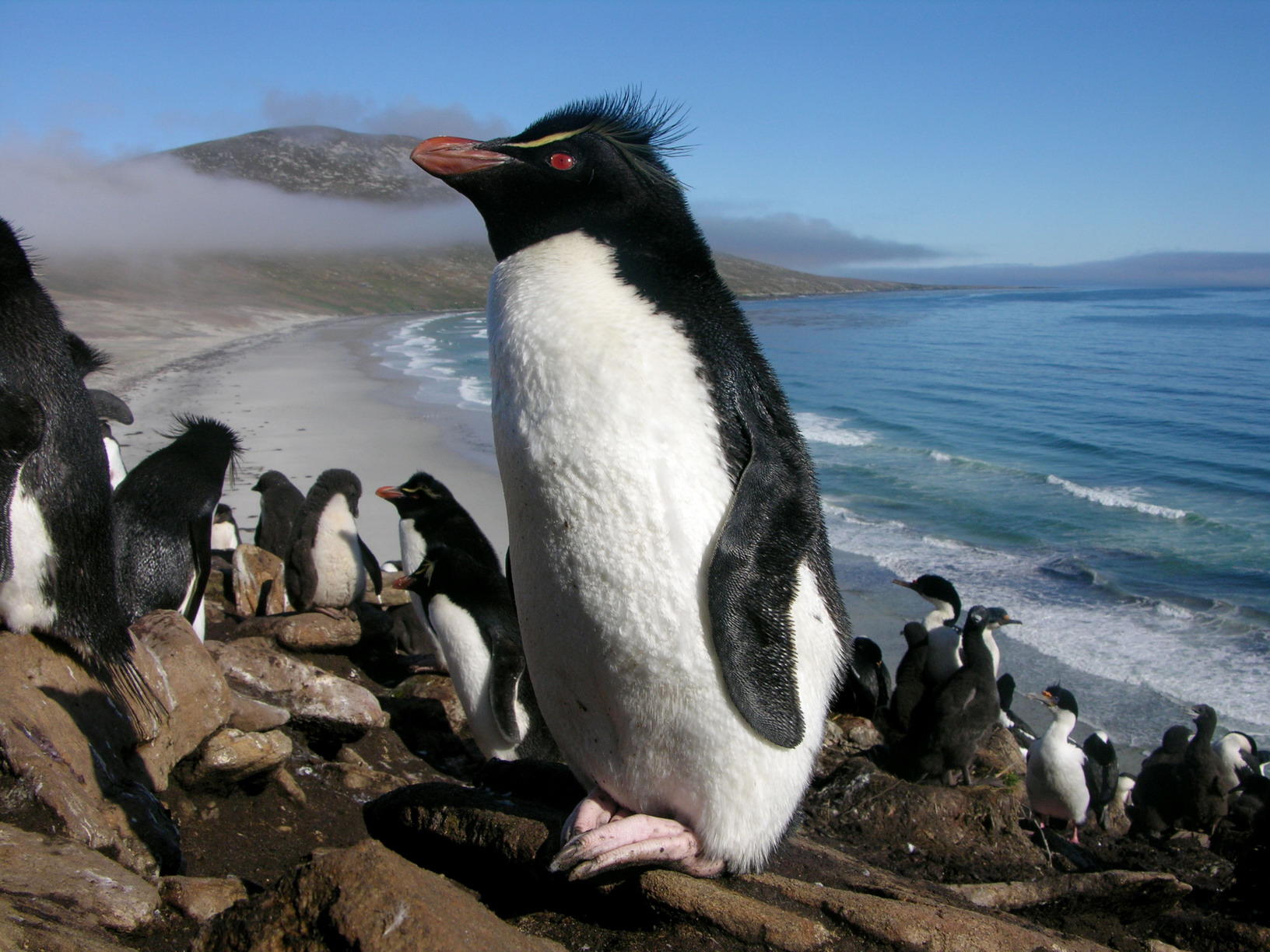
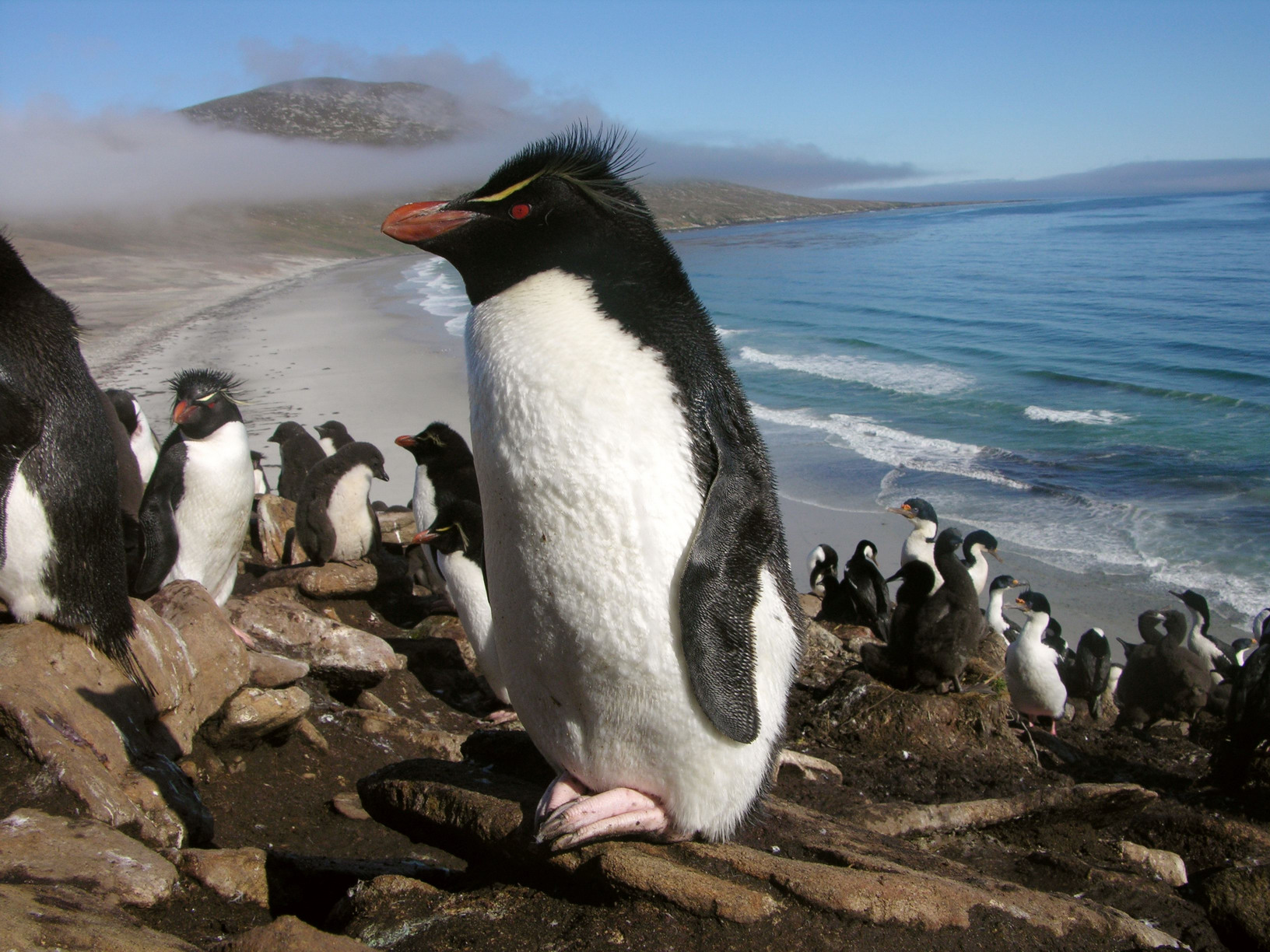
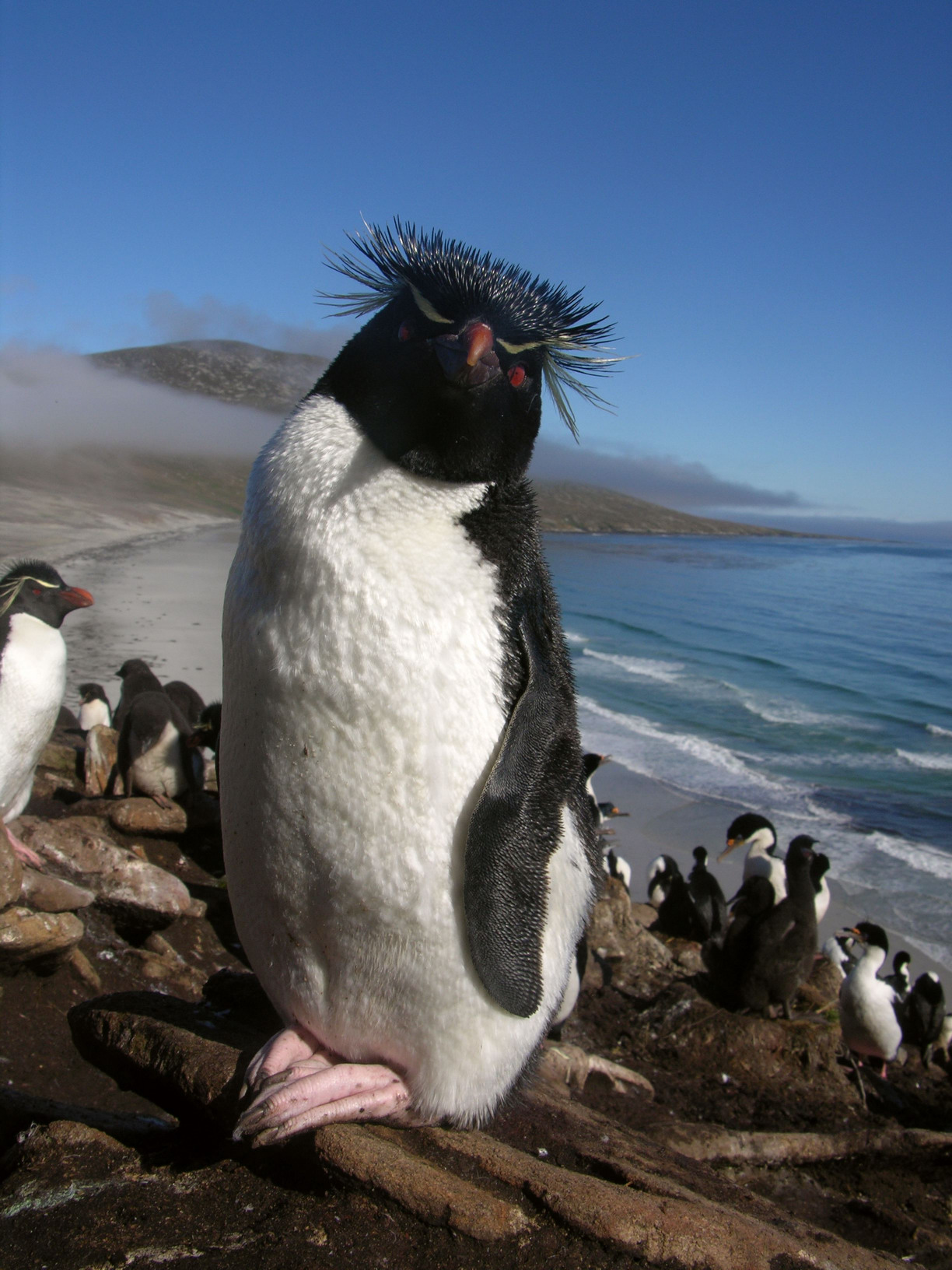
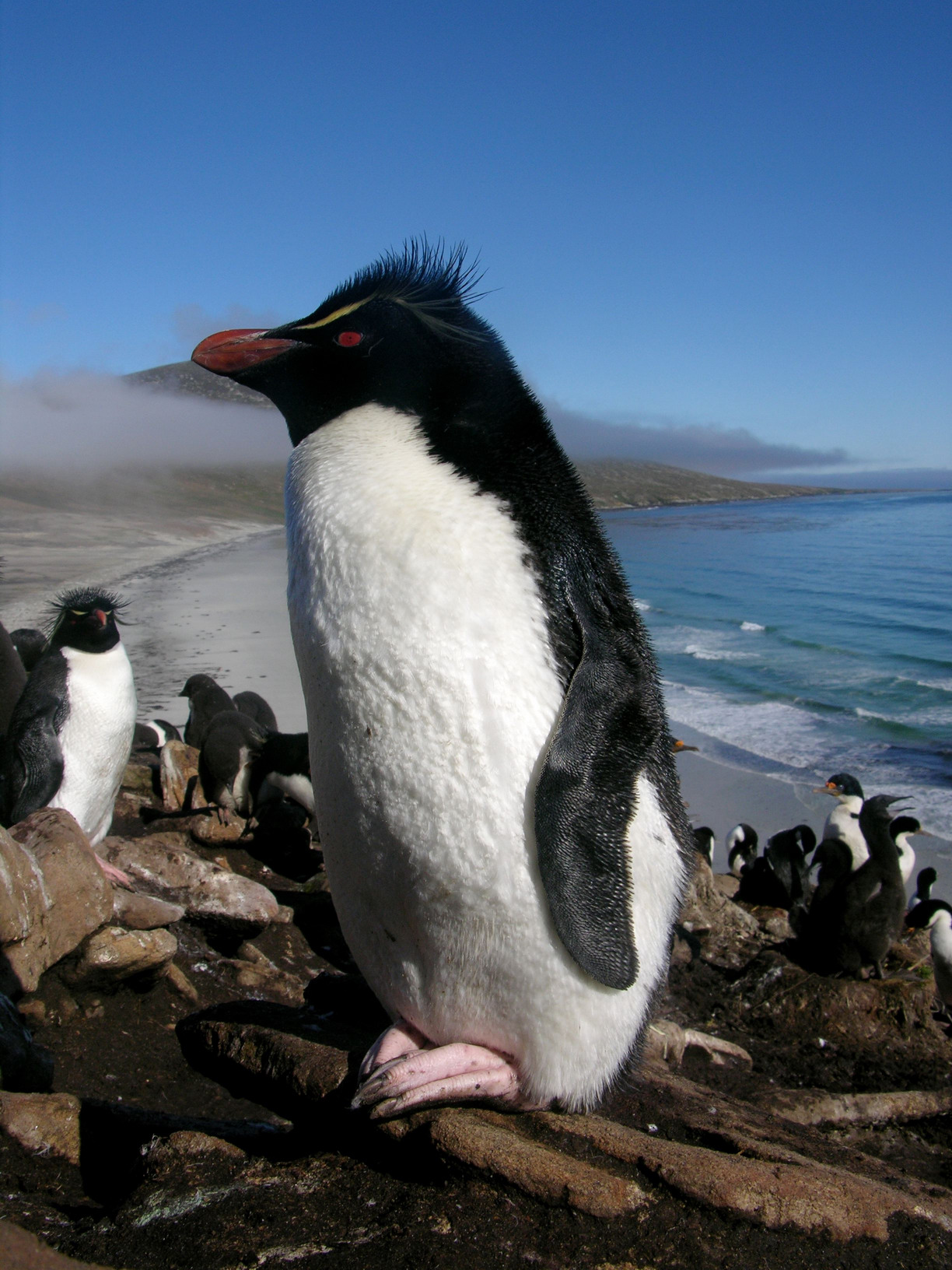
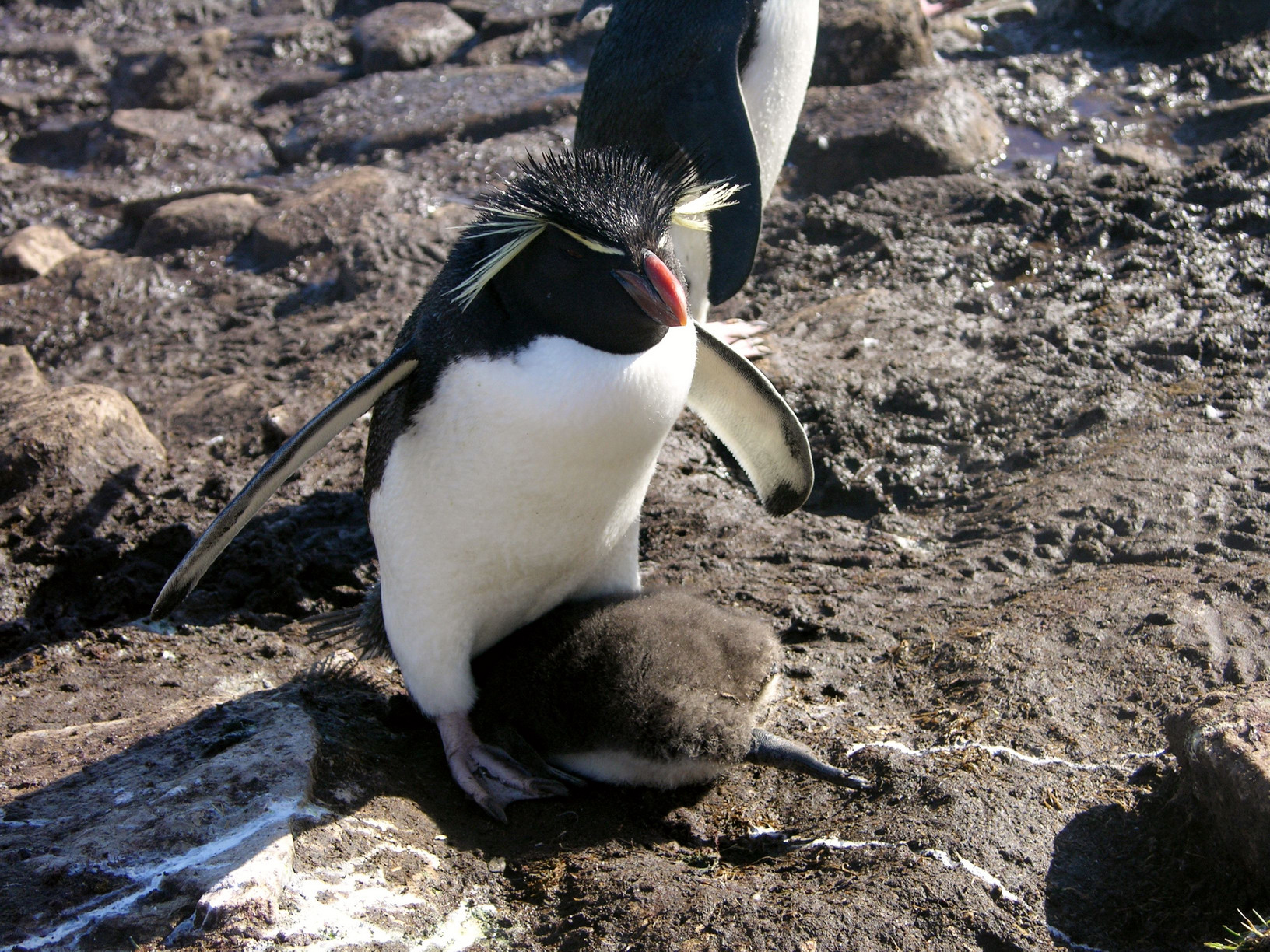
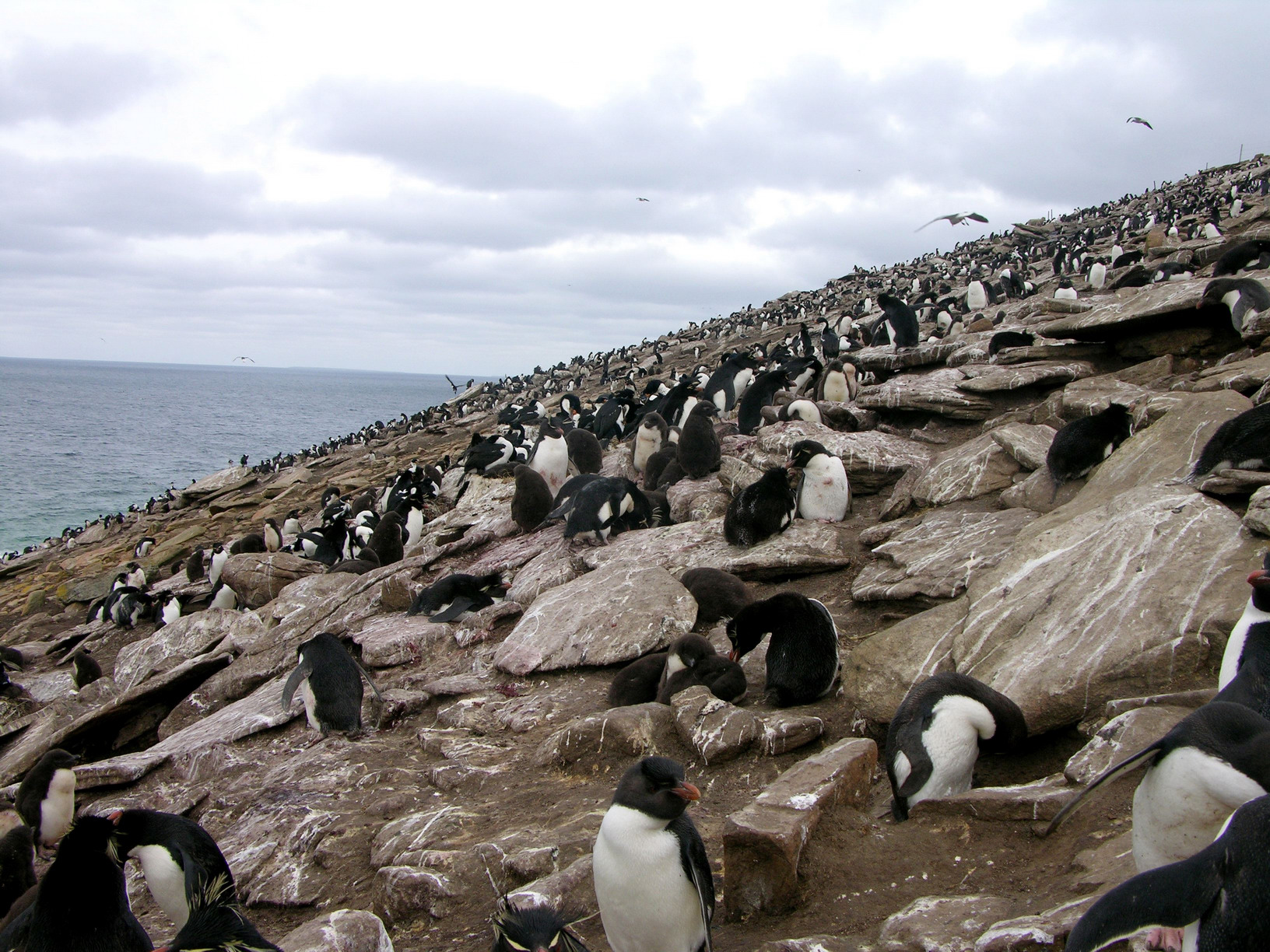
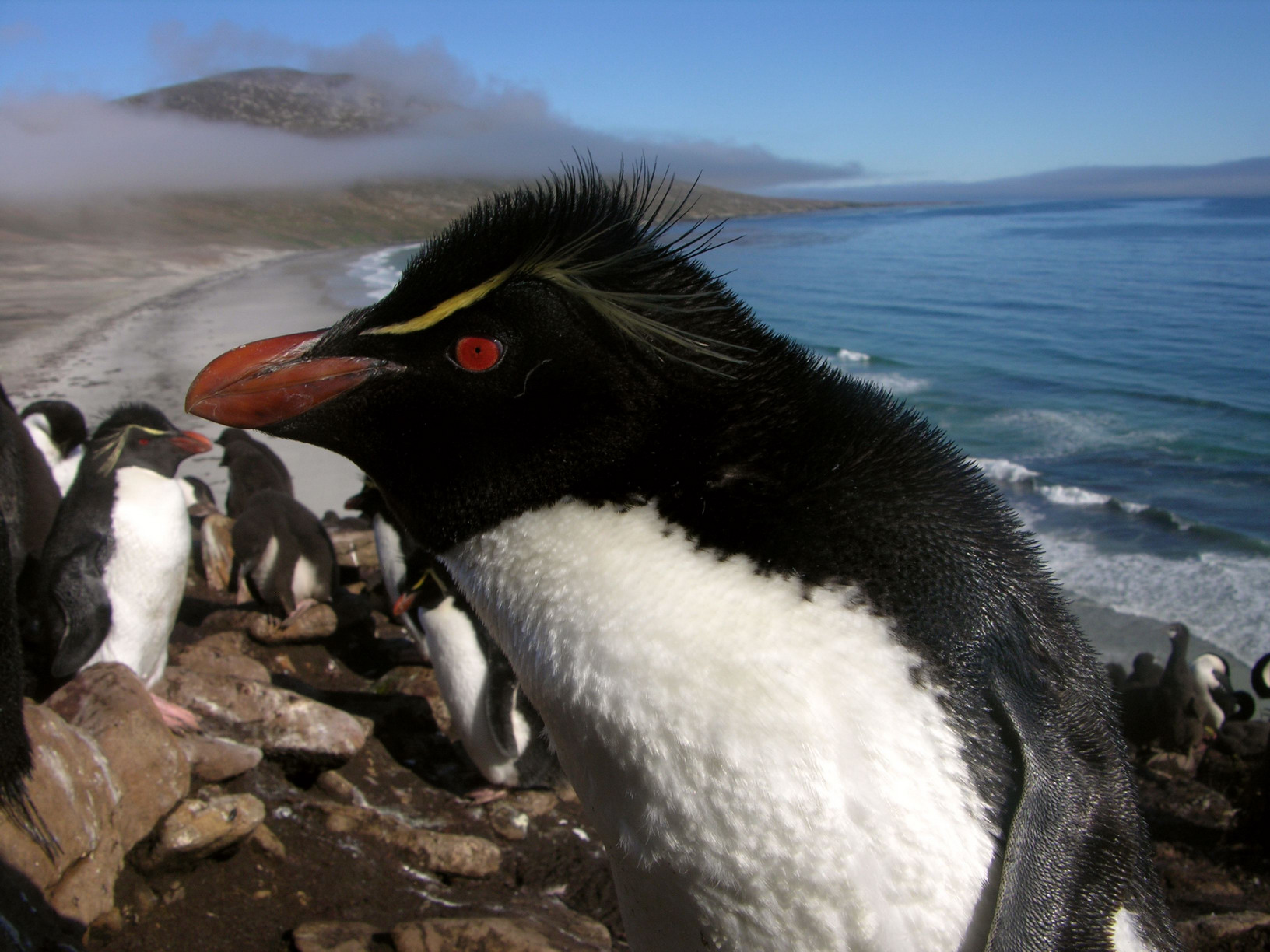
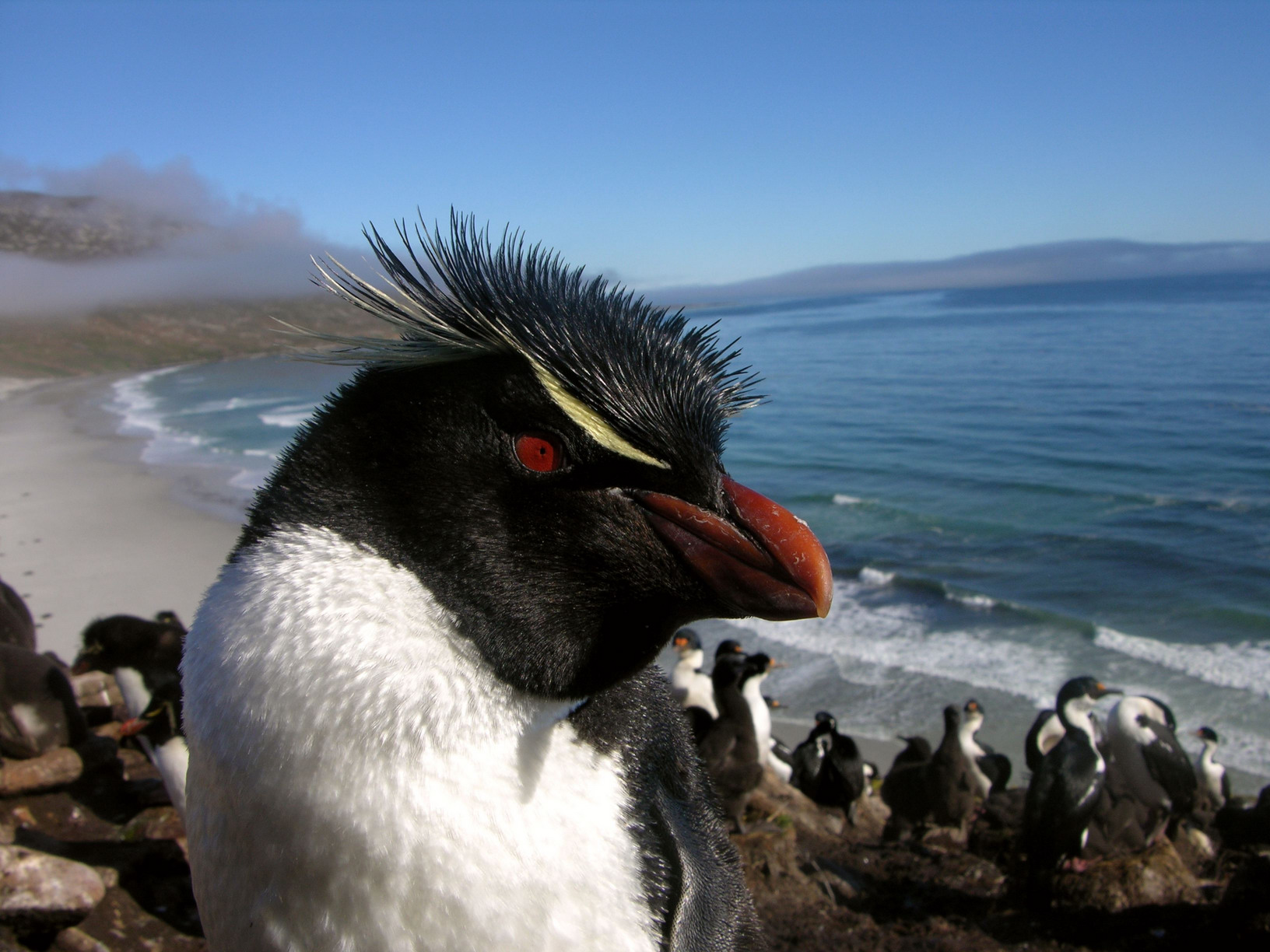
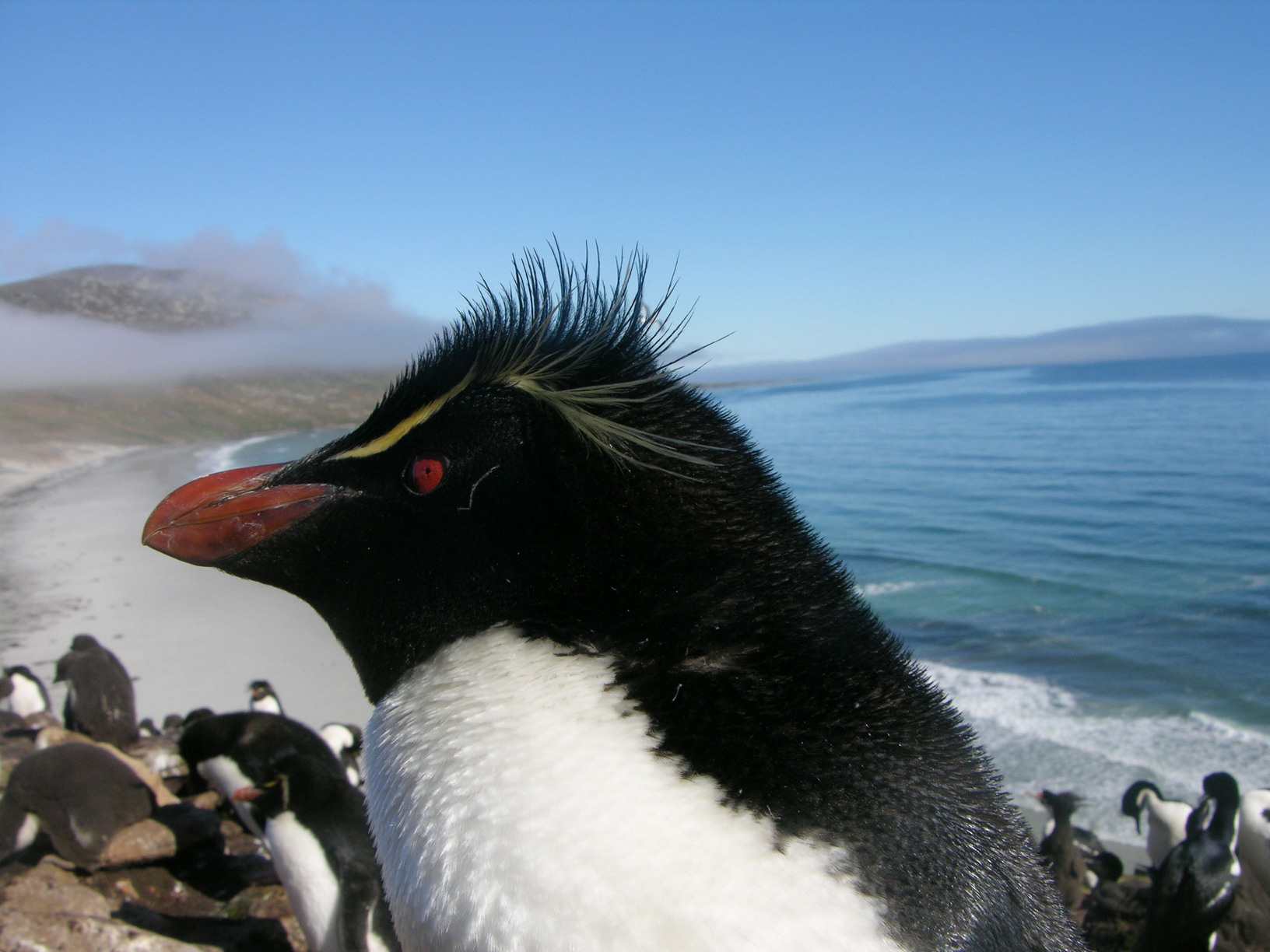
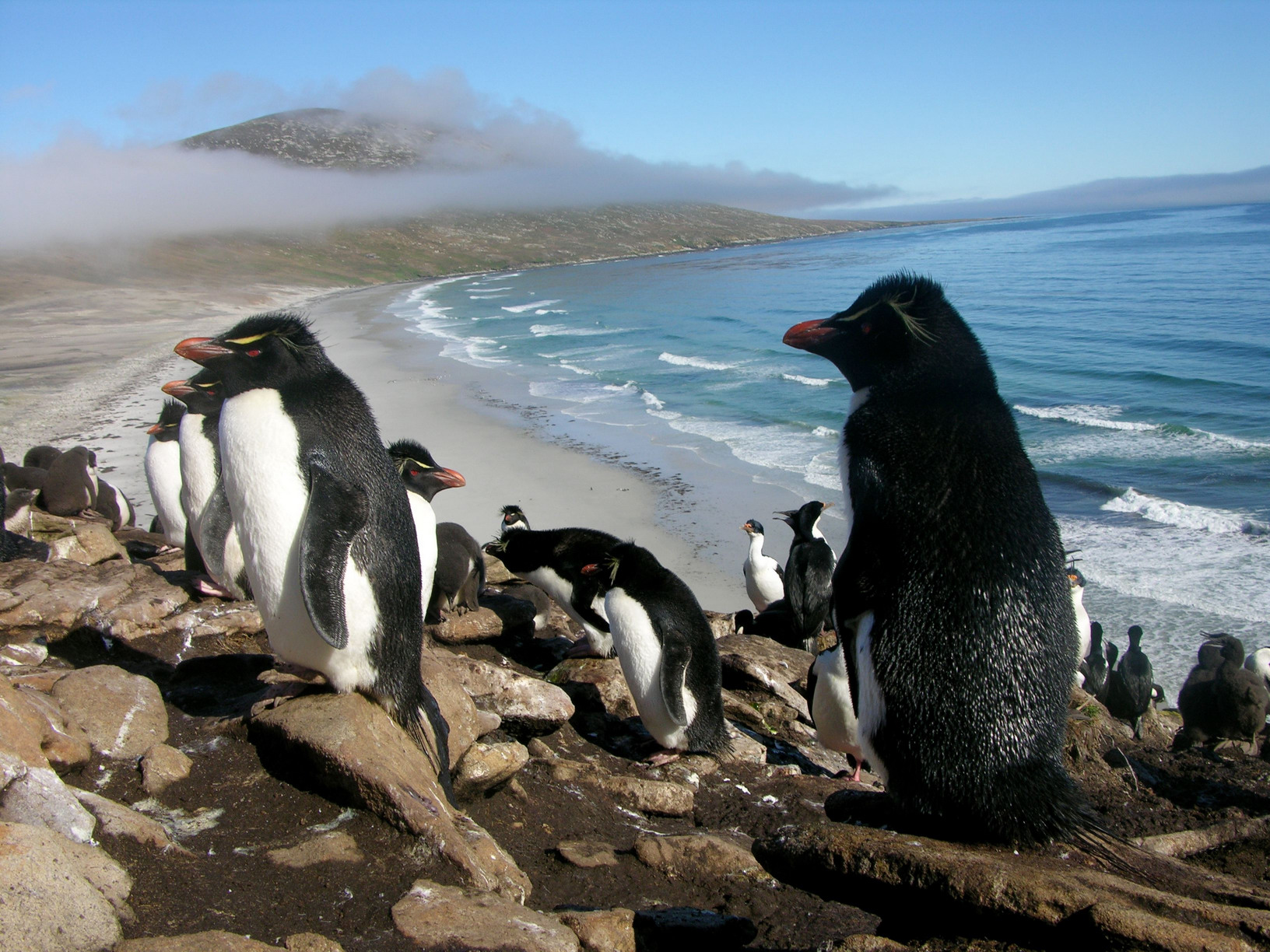
Rockhoppers nest alongside cormorants and macaroni penguins. The latter look like rockhoppers and are very rare in the Falklands, with only fifty breeding pairs.
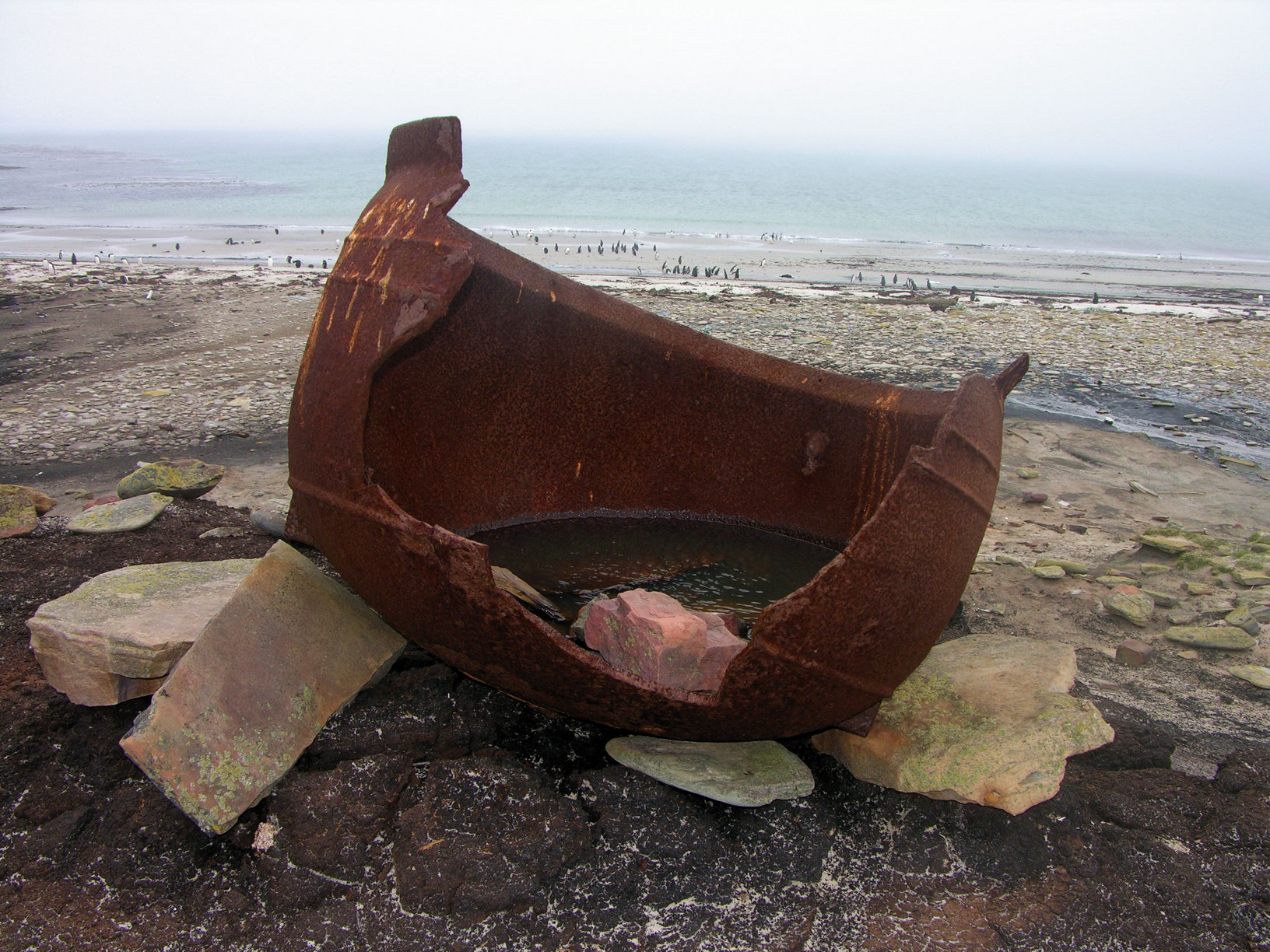
The rockhoppers' fate in the Falklands was appalling. At the start of the nineteenth century there were many millions, and people decided to turn them into oil. Three rockhoppers made a gallon. They produced eighty thousand gallons in a year. In the middle of the Neck there's still an enormous cauldron where they boiled the penguins. Naturally the penguin population fell sharply, though amazingly it didn't fall to zero. Nobody boils them now, of course. Humanity lurched from one extreme to the other. Why not find somewhere in the middle?
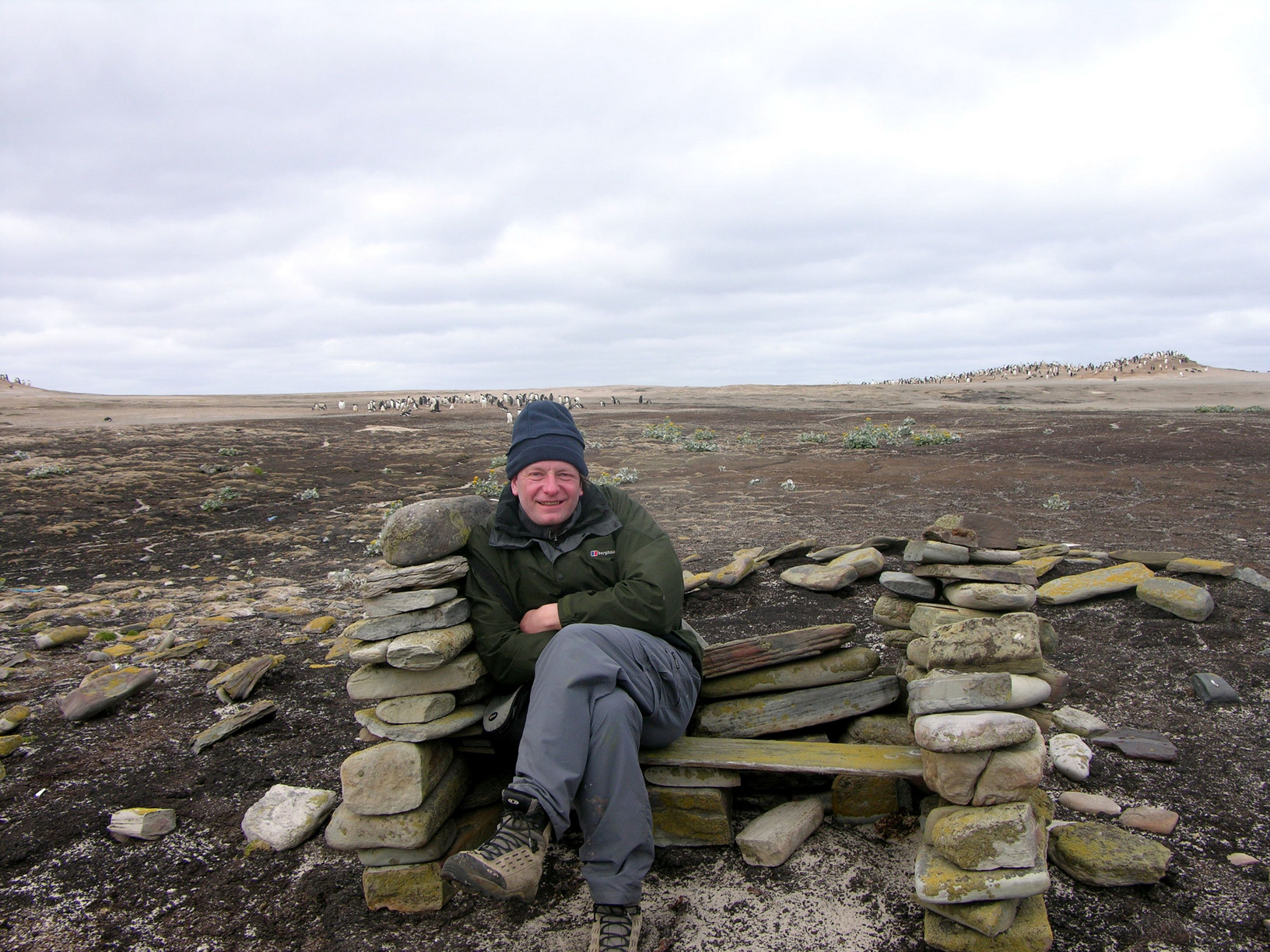
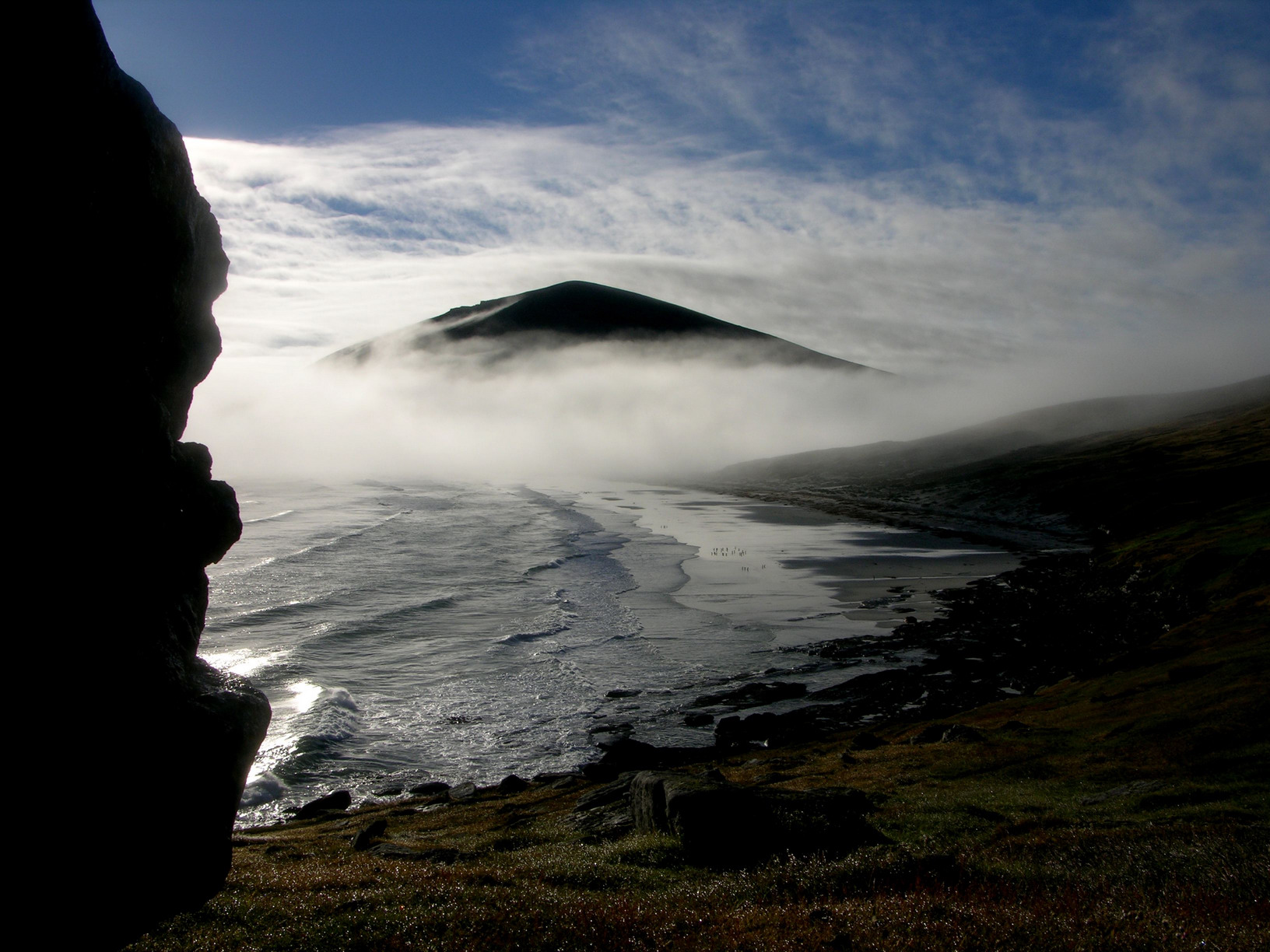
Soon it was dark and we had to go back to the tent. There we cooked a delicious dinner. We still had fresh vegetables from the little shop in Goose Green. Now that's happiness. You've had enough to eat, you're warmly dressed. The sun goes down behind the hill and lights up the clouds. You're on a little island in a distant southern sea with someone you love, watching the first stars emerge in the blue of a white southern night in early January. Here comes the Southern Cross from behind the hill. Orion hangs upside down, low over the sea.
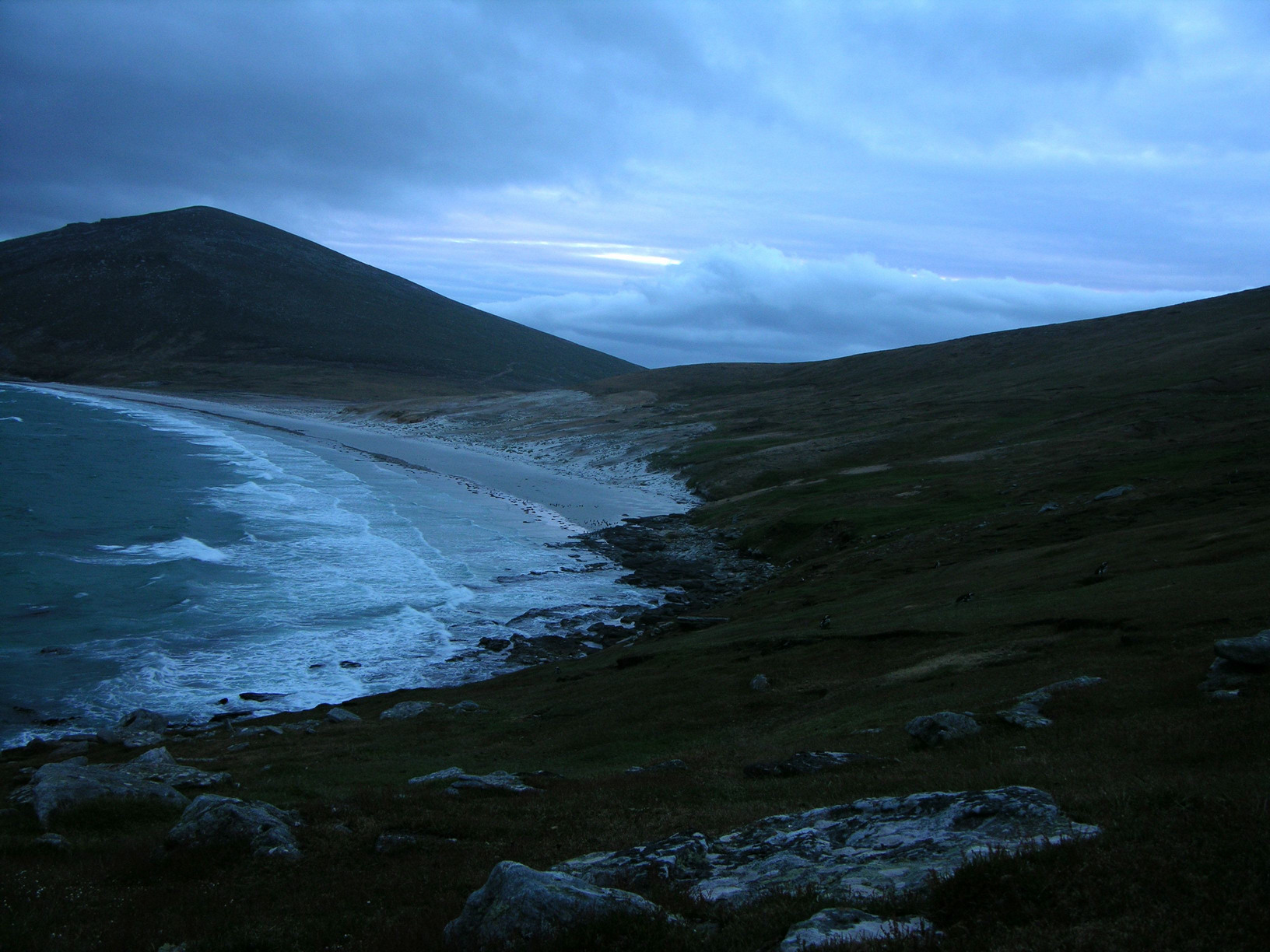
Magellanic penguin burrows are right beside us. The children have been put to bed and now they stand together in pairs and sing their sad evening songs.
Sleepy Tanya went to bed. I still had a bit of energy left and decided to climb Mount Harston, the western summit of Saunders Island, that very evening. By midnight I'd made it to the top, at 433 metres. The wind was blowing a gale and I couldn't stand up in it. I had to hide behind the rocks.
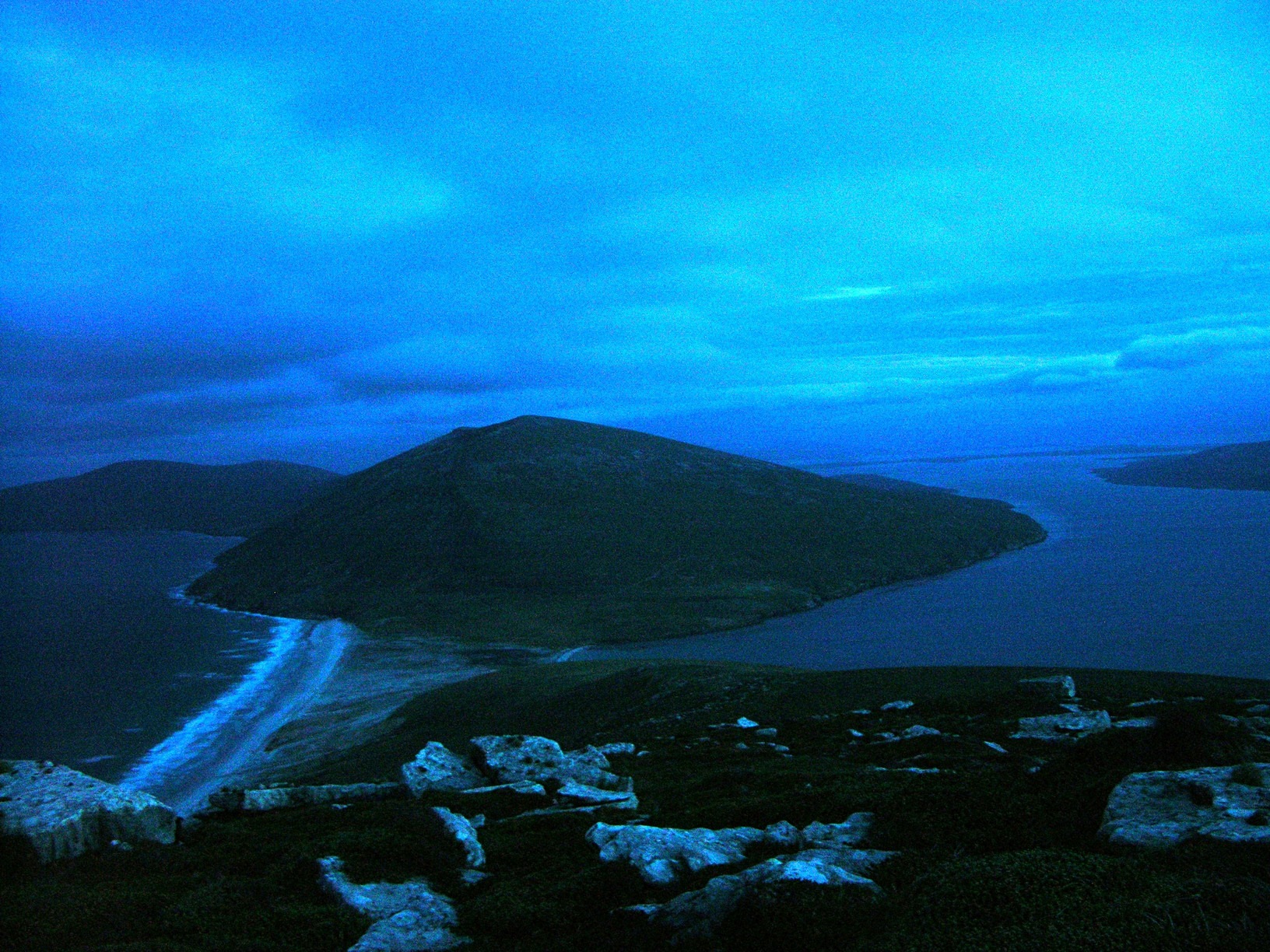
The peaks of the neighbouring islands were all around and the ocean drove waves ahead of it without end. Somewhere far away, in the Byron hills, shone a mysterious light. Only ten years ago I'd climbed in the dark to the top of South Kolovar Island in the White Sea. It felt then like the limit of what was possible, the edge of the world. This time it might really be the edge.
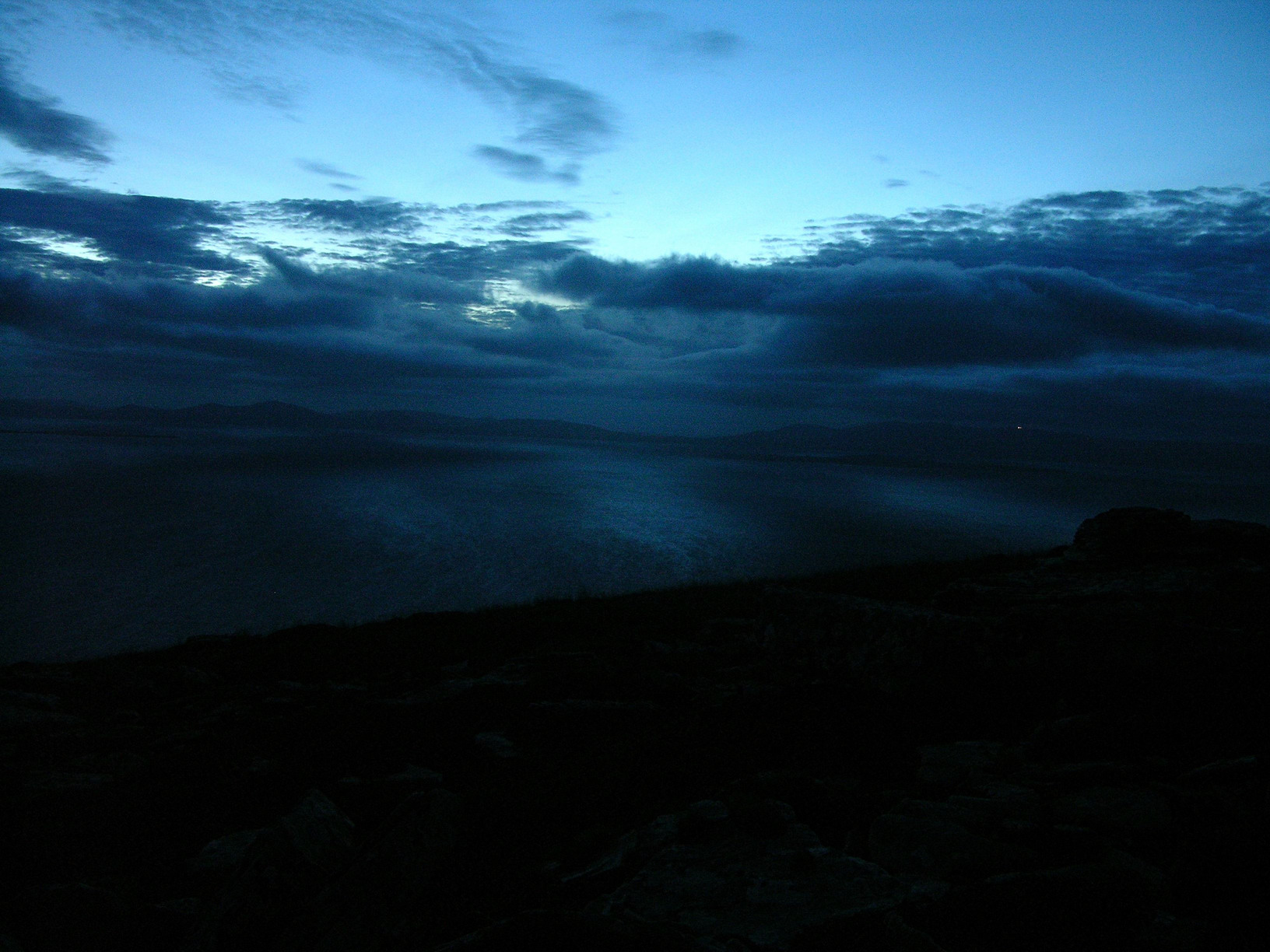
I had to get down over the boulders in almost complete darkness. If I broke my leg, I thought, it would take them a long time to find me.
The wind grew stronger in the night and the rain began. The tent bent under the gusts. Probably thirty metres a second. We were dry, though. We've used the same Hobbit dome for four years now and we're happy with it. We've never got wet in it. The wind folds it down, of course, but it springs back up.
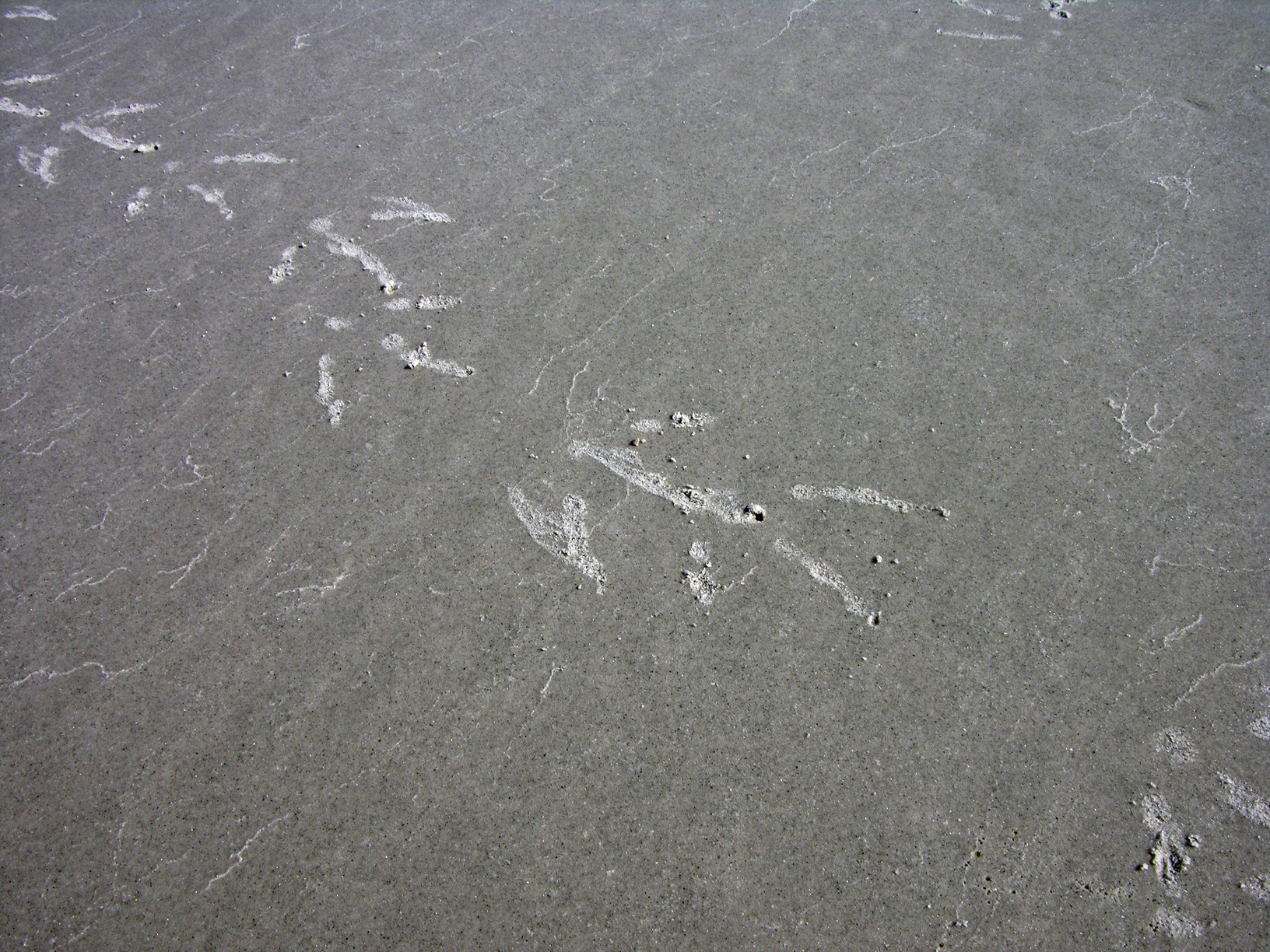
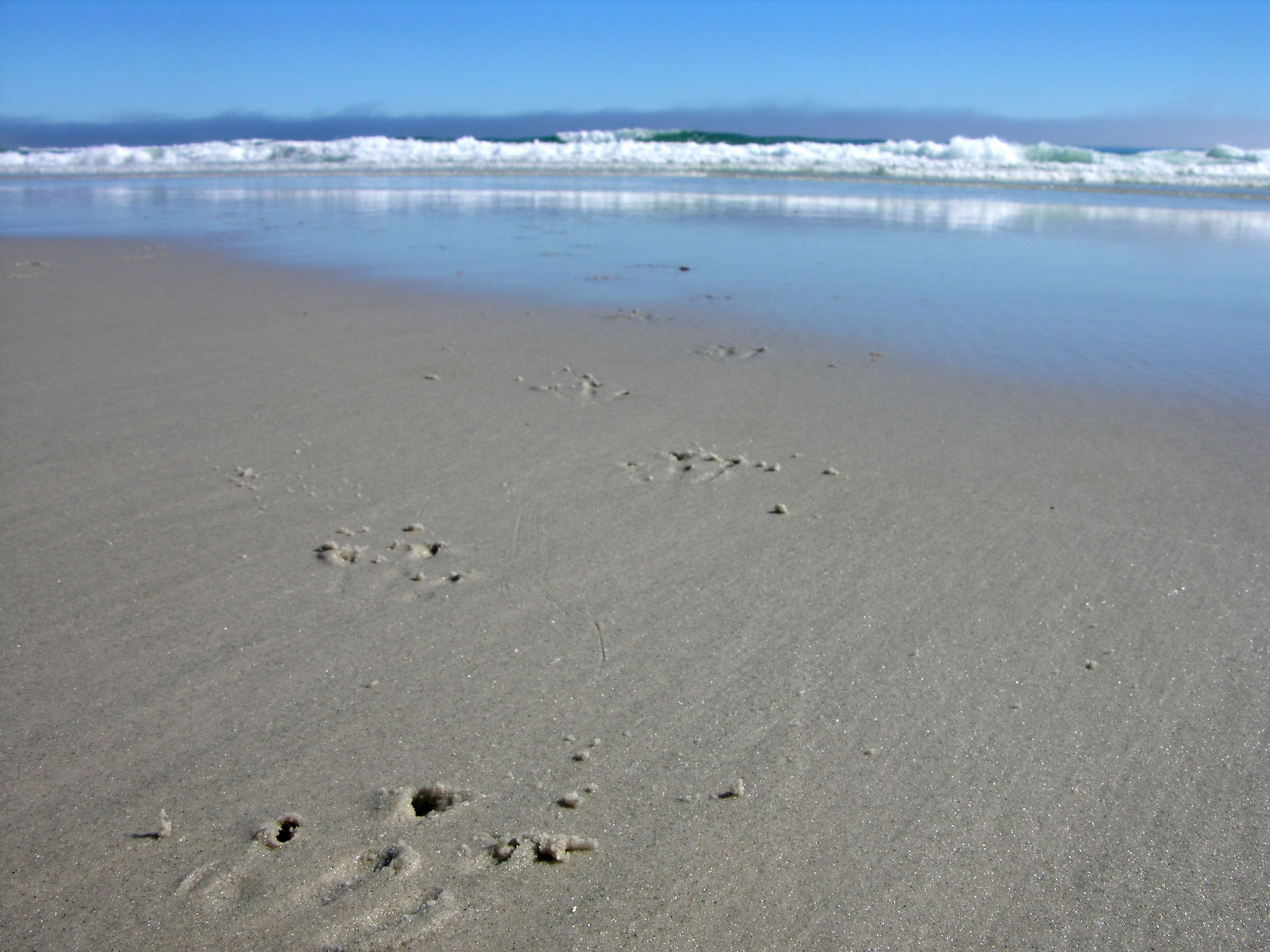
In the morning the rain still hadn't stopped. It poured down in buckets. Even the penguins were miserable and wet and in no mood to sing. There was no going out. We had to cook breakfast and then lunch in the tent, with rainwater. So we spent the whole day half asleep. Only at ten in the evening did the wind ease and the rain turn into a light drizzle. We managed to eat dinner in the open air. After dark I decided to pay the penguins a visit and see how they slept. It turned out not all of them were asleep. Many were still walking about, especially the kings. The ones asleep had tucked their heads under a wing. If startled they run any which way in terror. A penguin doesn't run very fast, by the way. I ran along with them at their pace, with my GPS. It comes to ten or twelve kilometres an hour. That's when it runs on two legs. If it's really scared, though, it tries to run on all fours, slapping its flippers on the sand. It wants to get to the water sooner and imagines it's swimming already. It just slows down, by about two kilometres an hour.
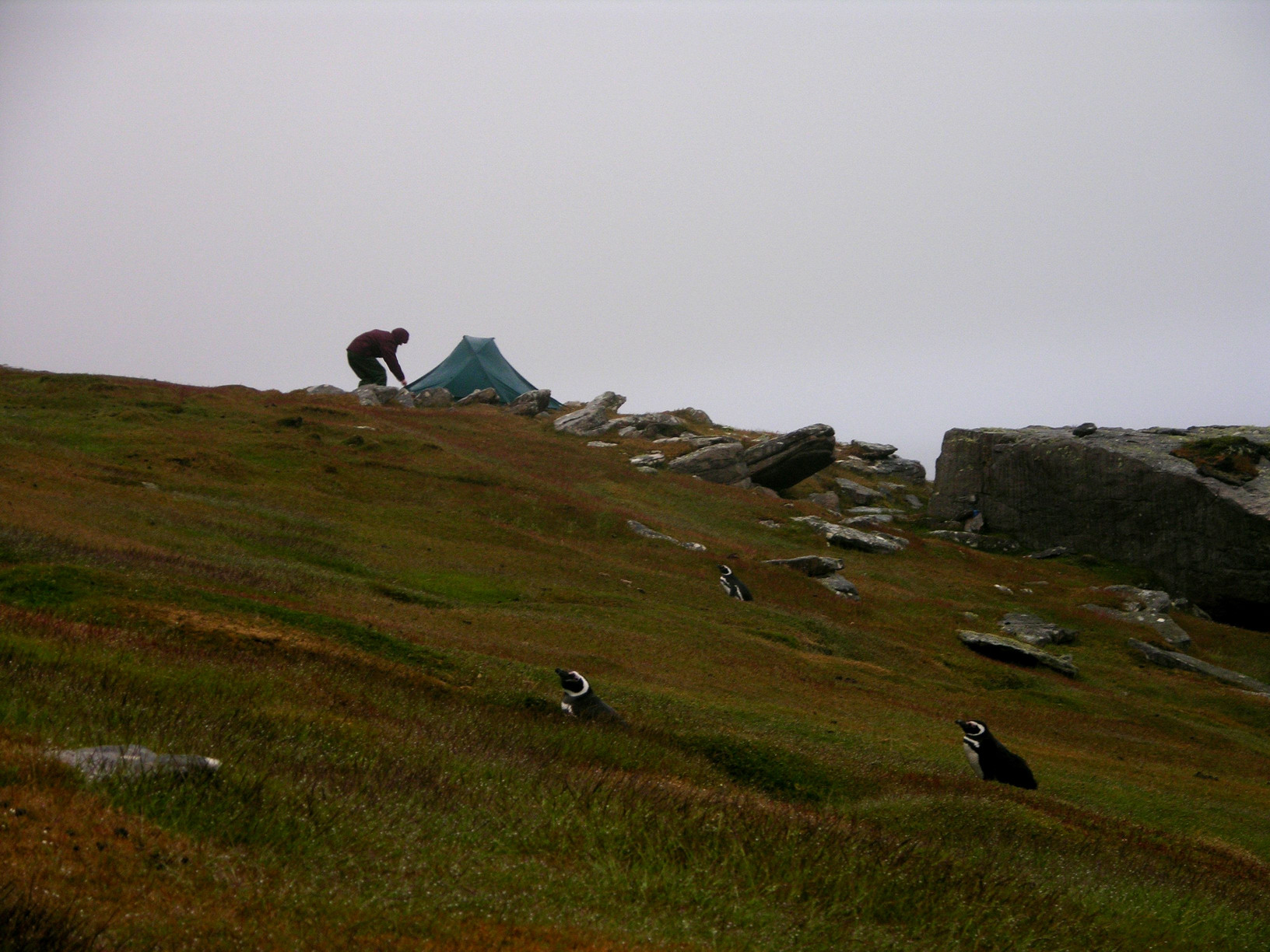
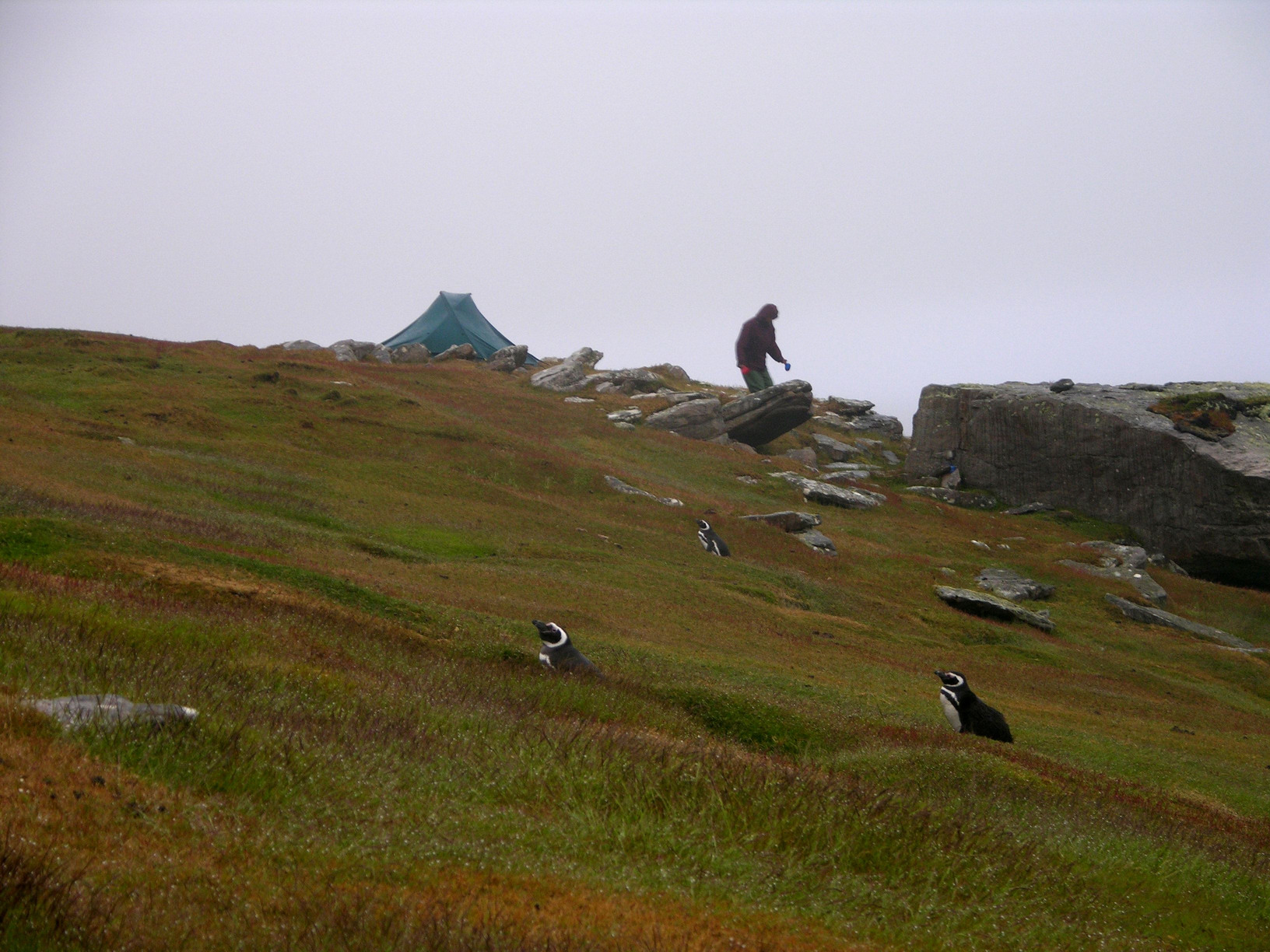
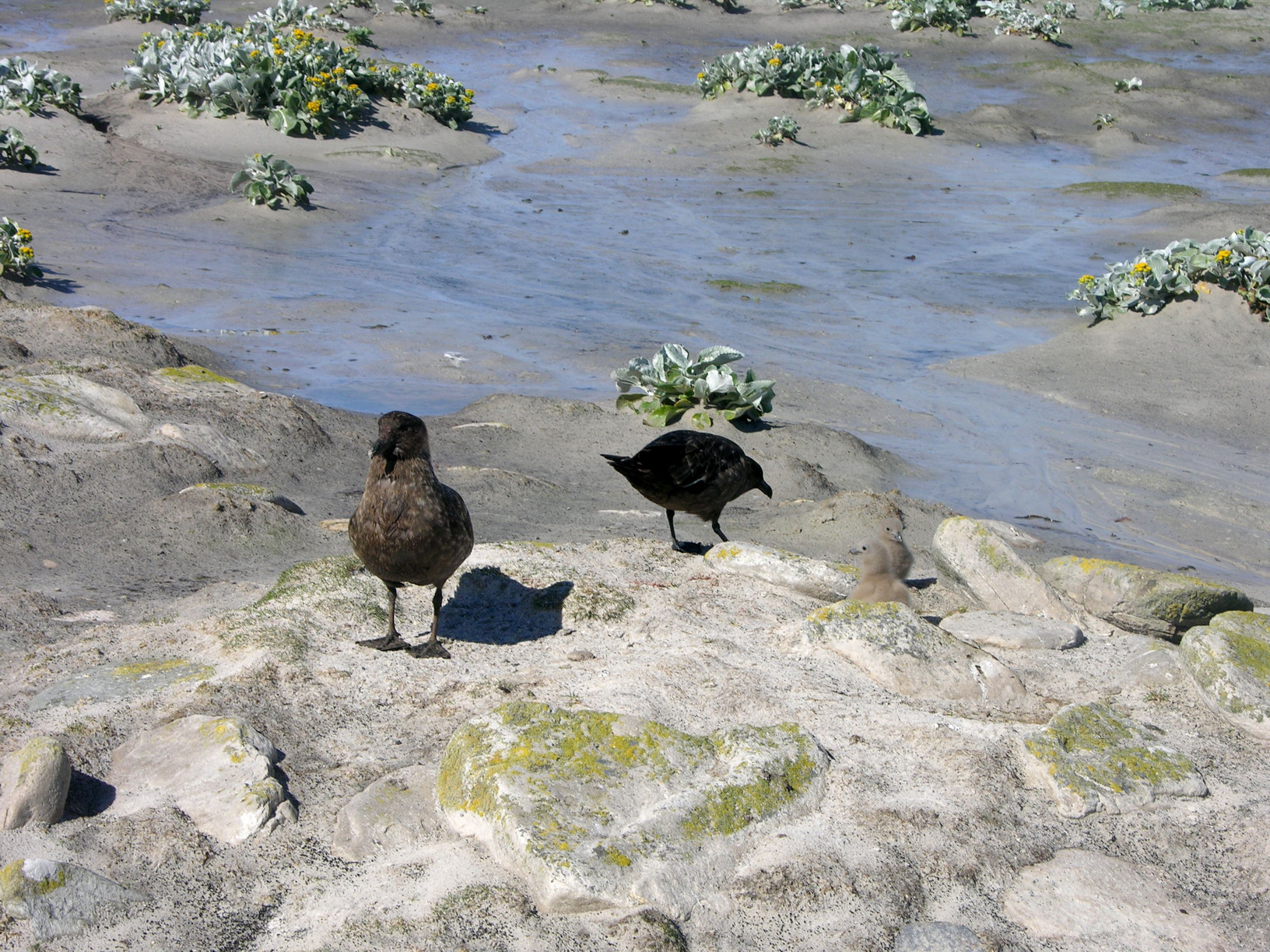
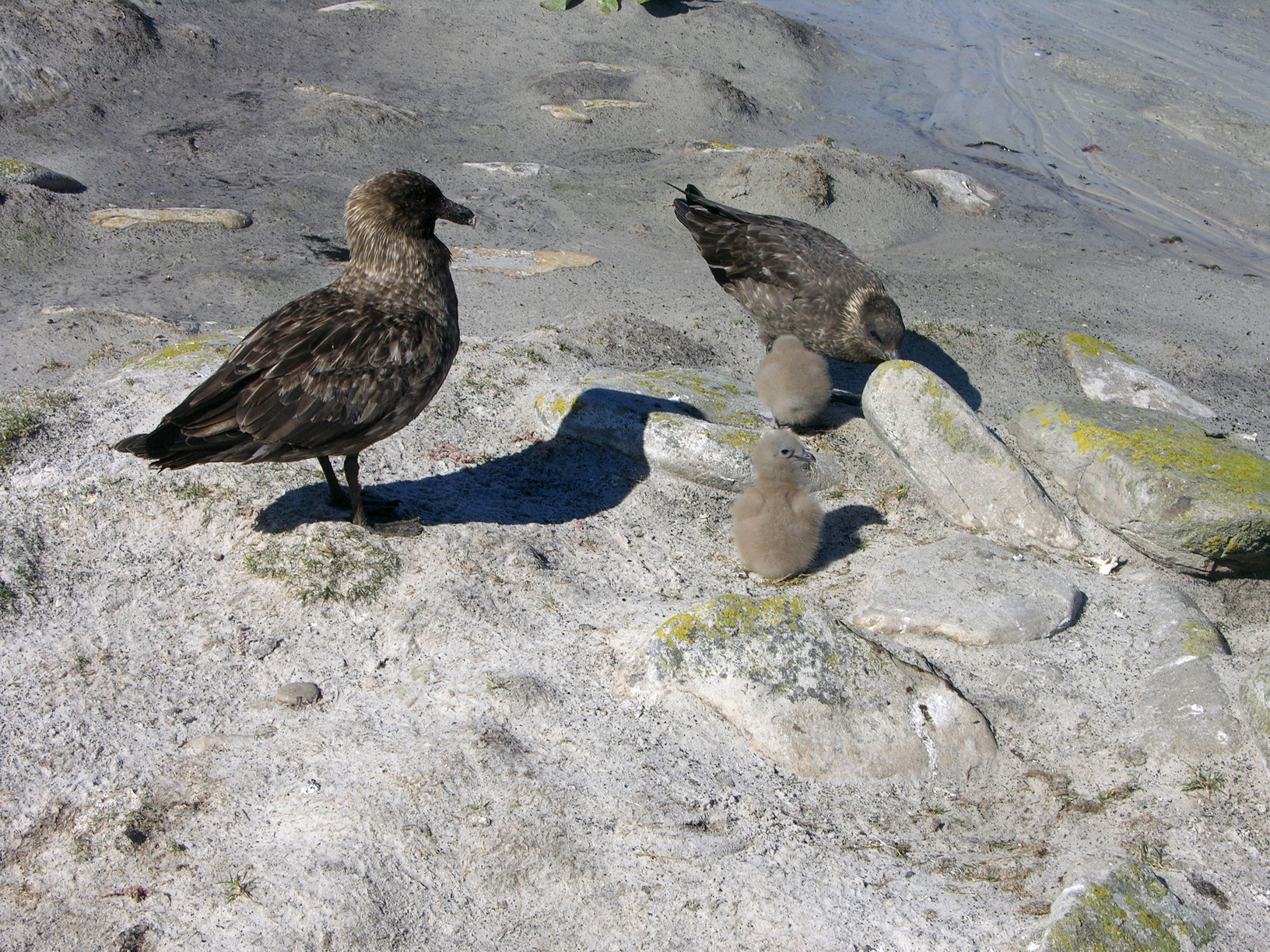
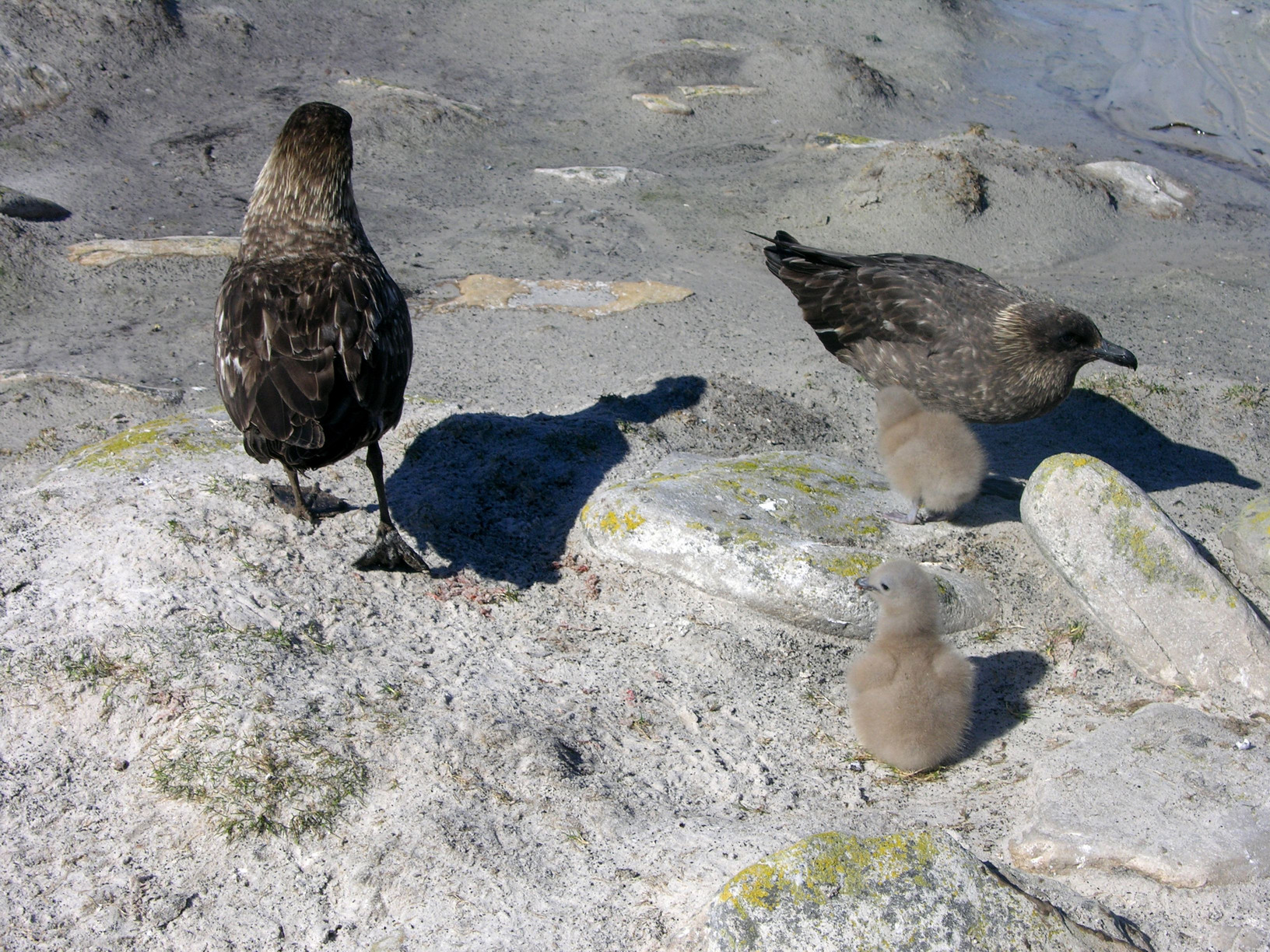
I found a skua nest with two chicks.
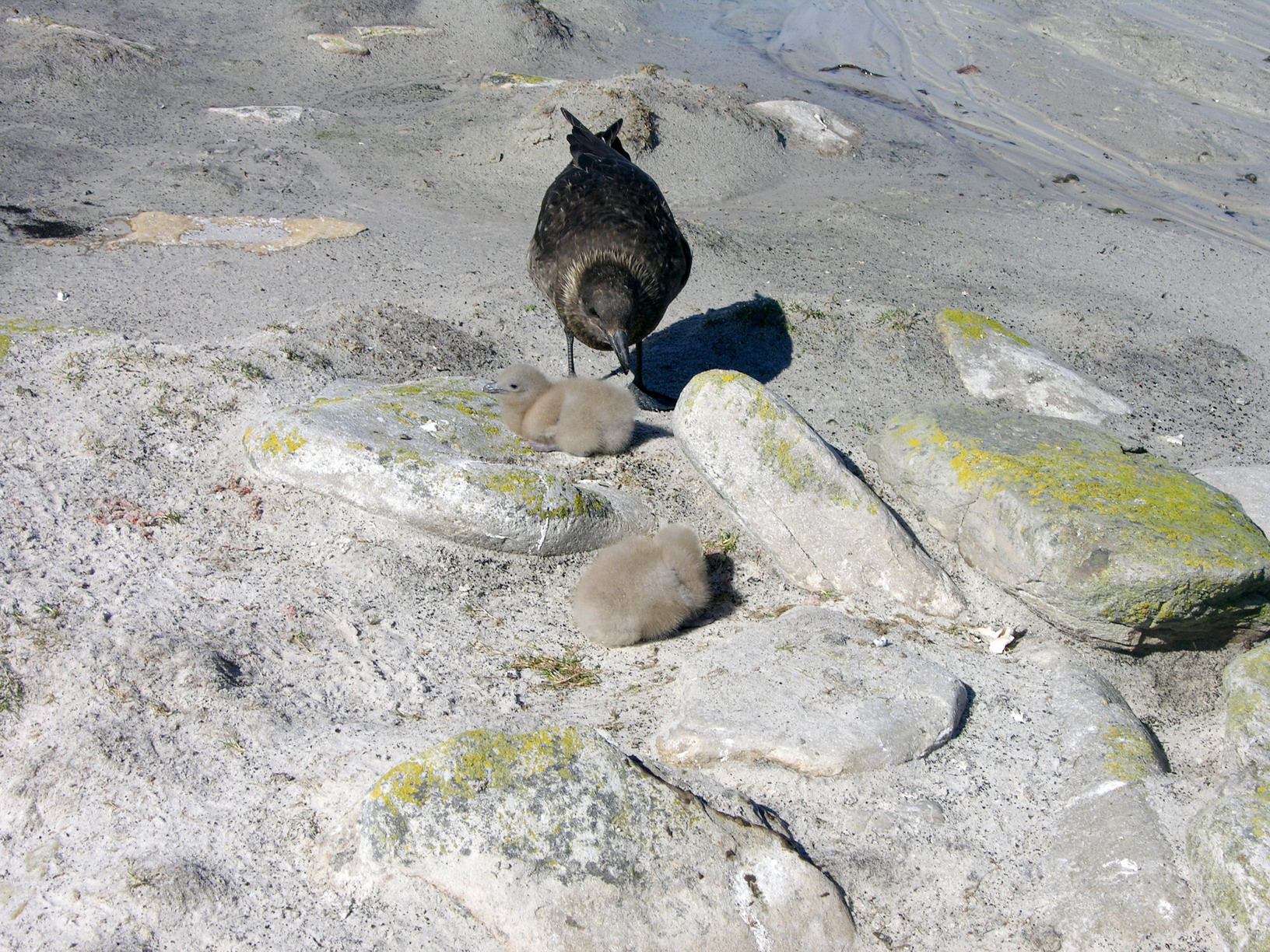
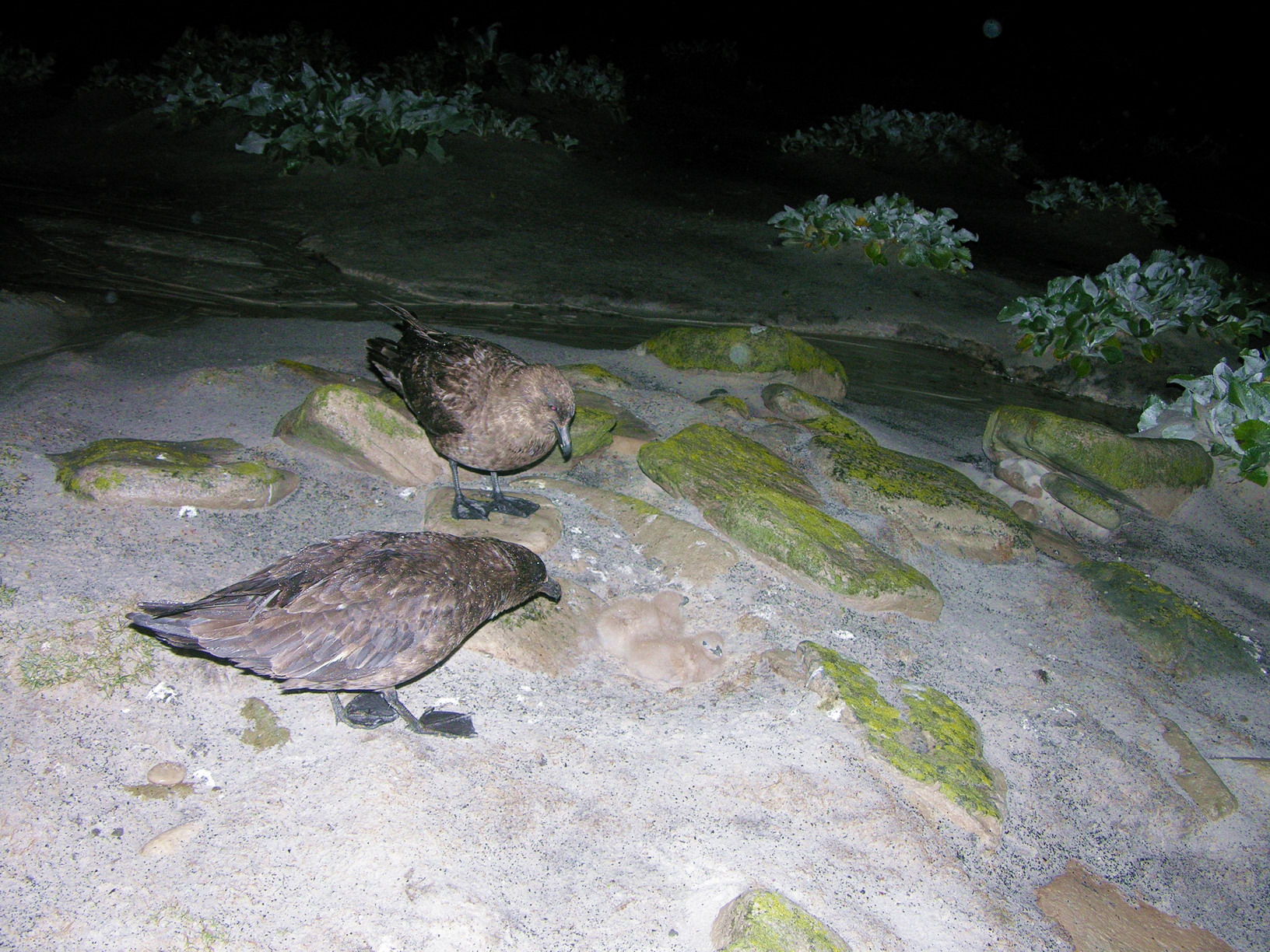
I got back after midnight again. I didn't want to sleep. How much can you sleep? We'd been doing it for twenty-four hours on account of the rain. Besides, the Magellanic penguins were singing. They don't have a penguin-like character at all. The others live in colonies and nest in crowds on the ground. They're infuriatingly stupid, like everything that lives in a herd. The Magellanic is a creature apart. It lives in pairs and nests in spring, in September, in a burrow it digs for itself. In a burrow there are usually two chicks covered in brown down. It loves its family and looks after it with great care.
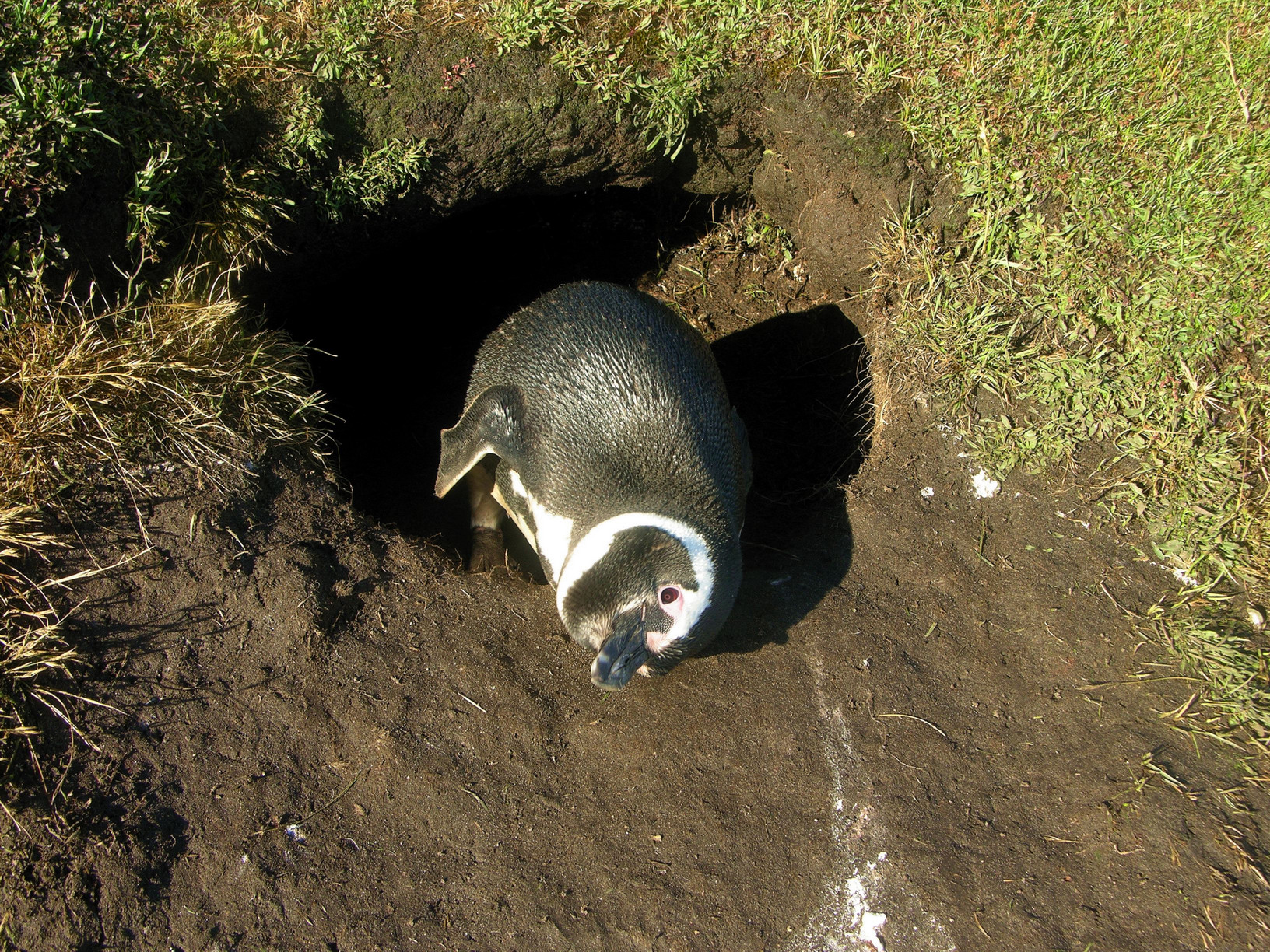
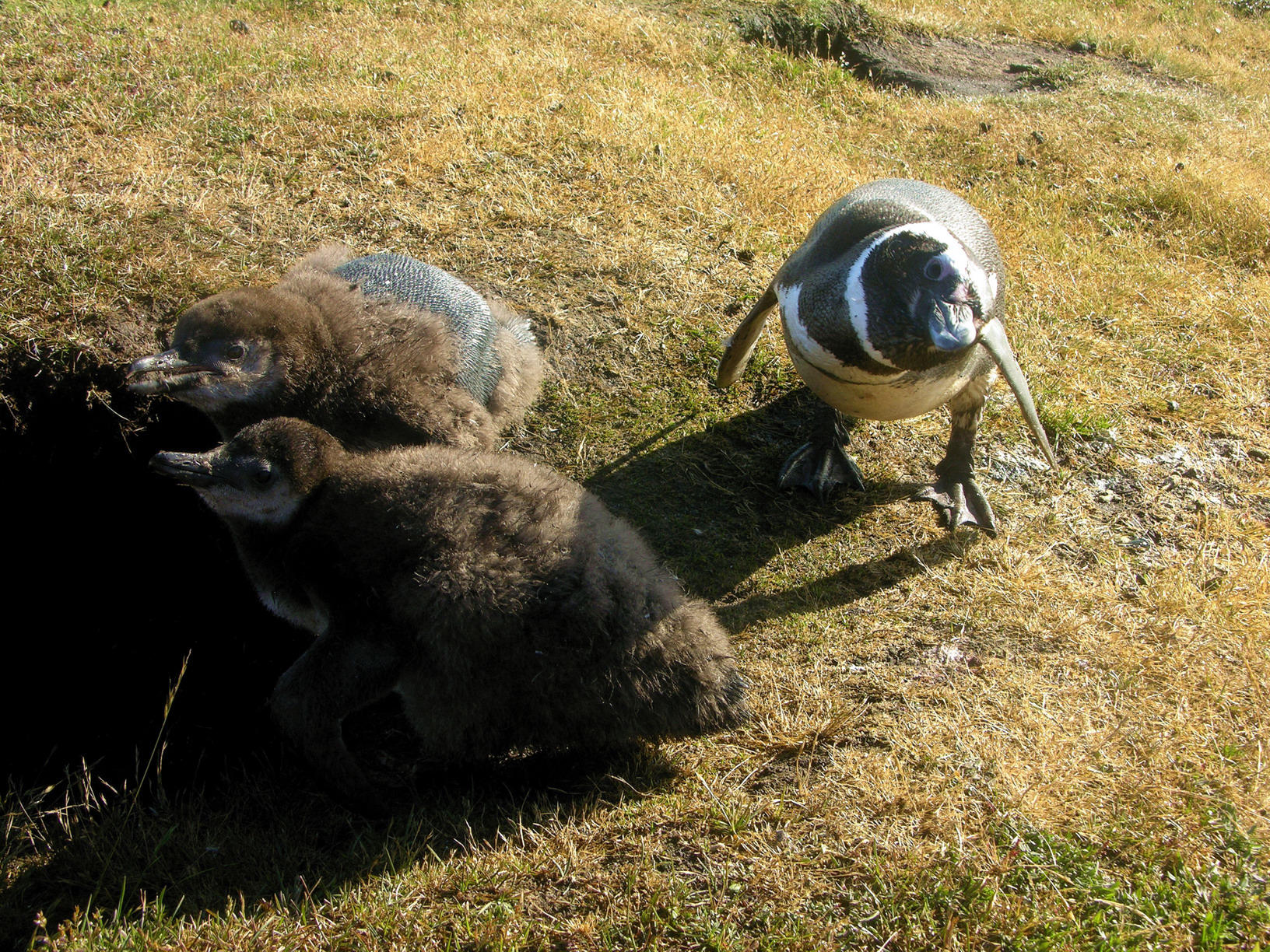
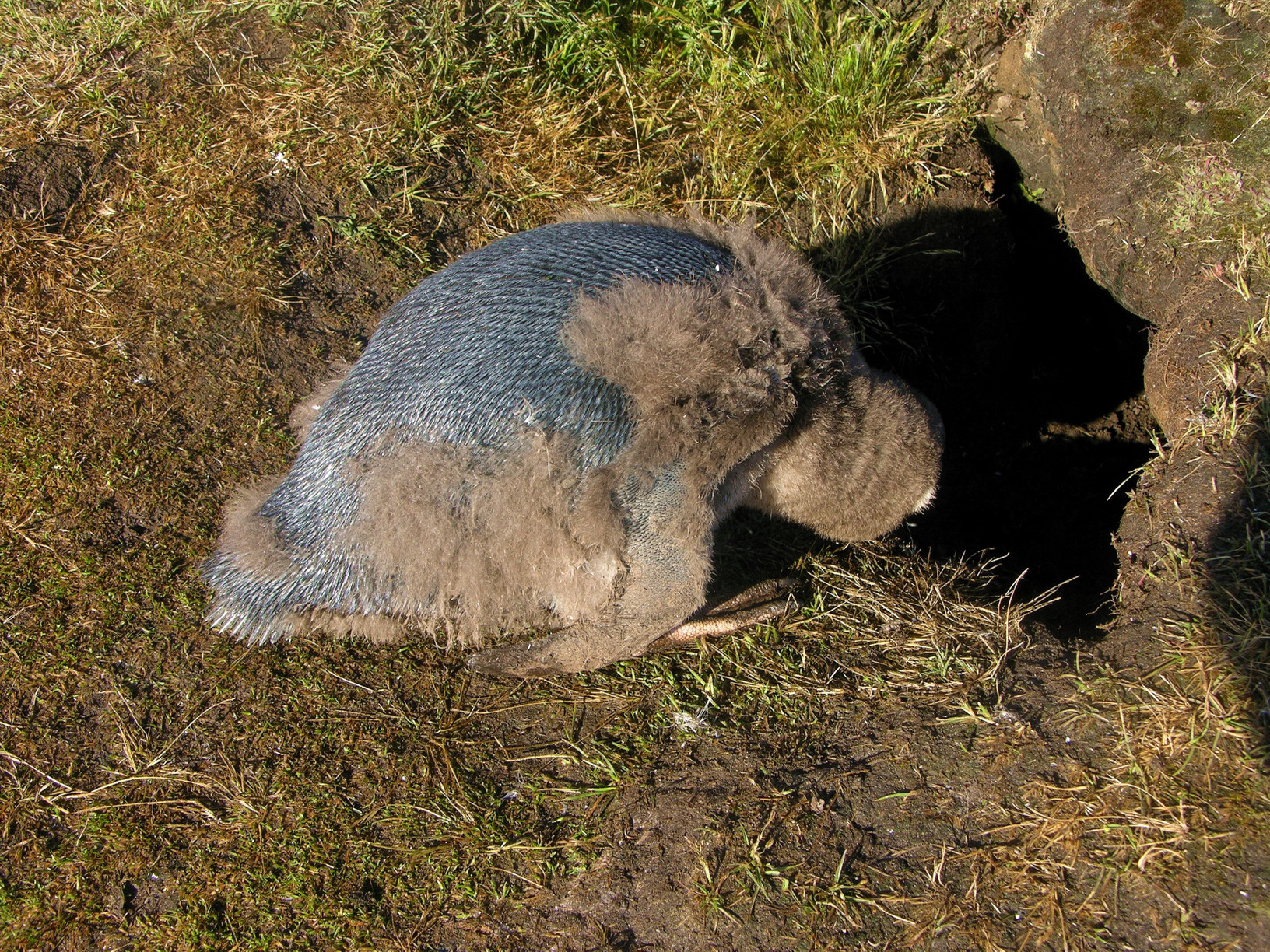
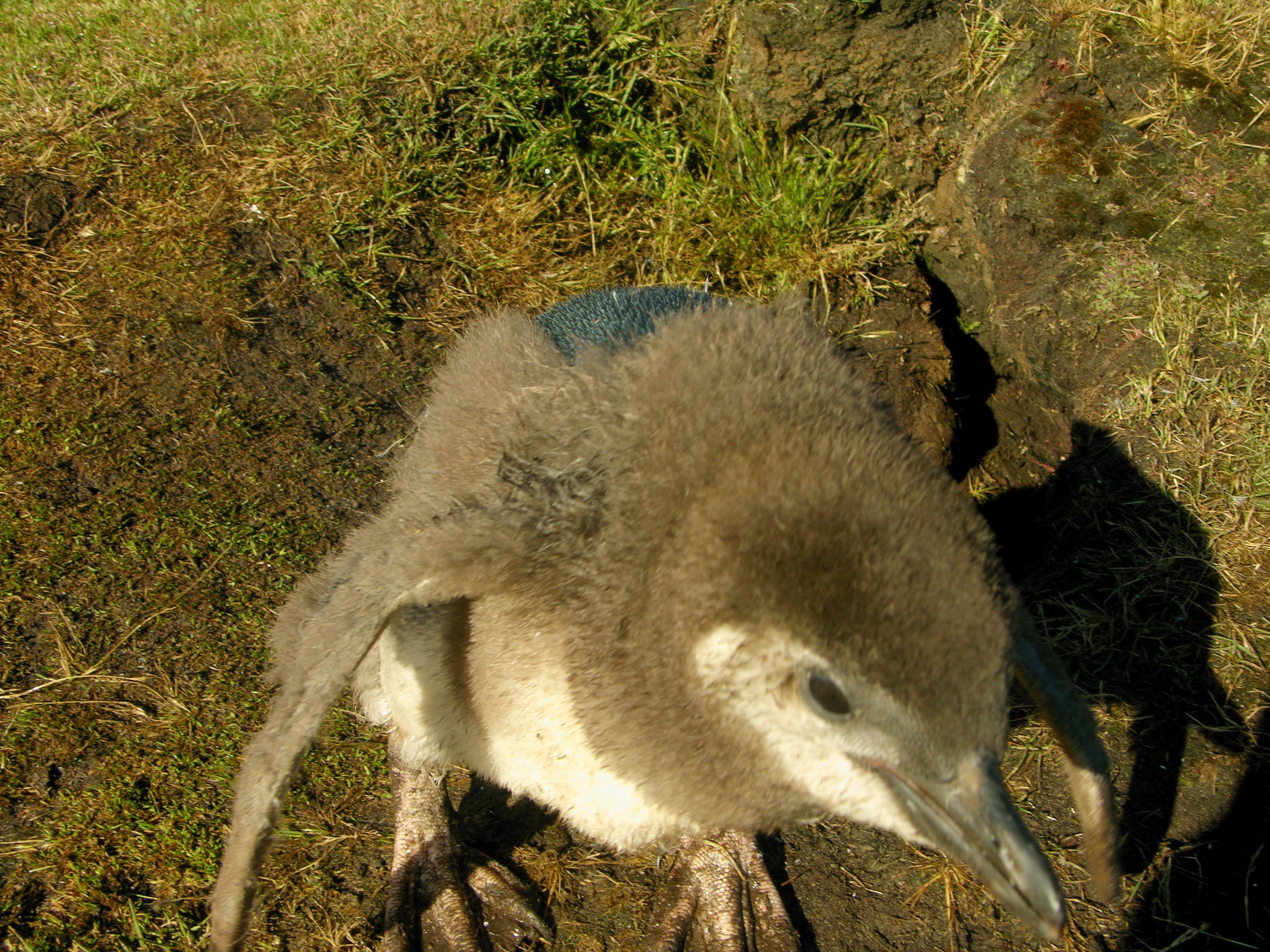
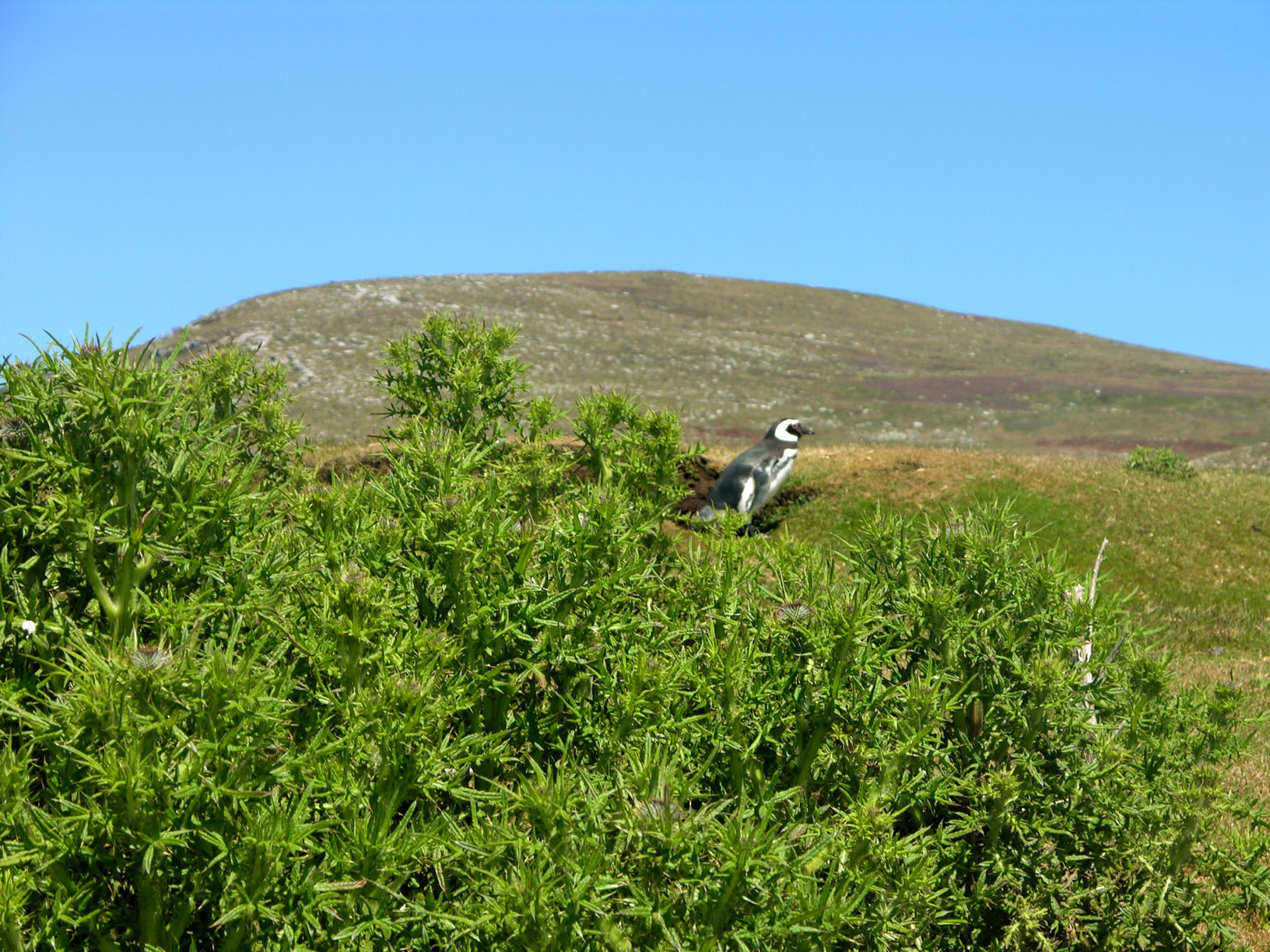
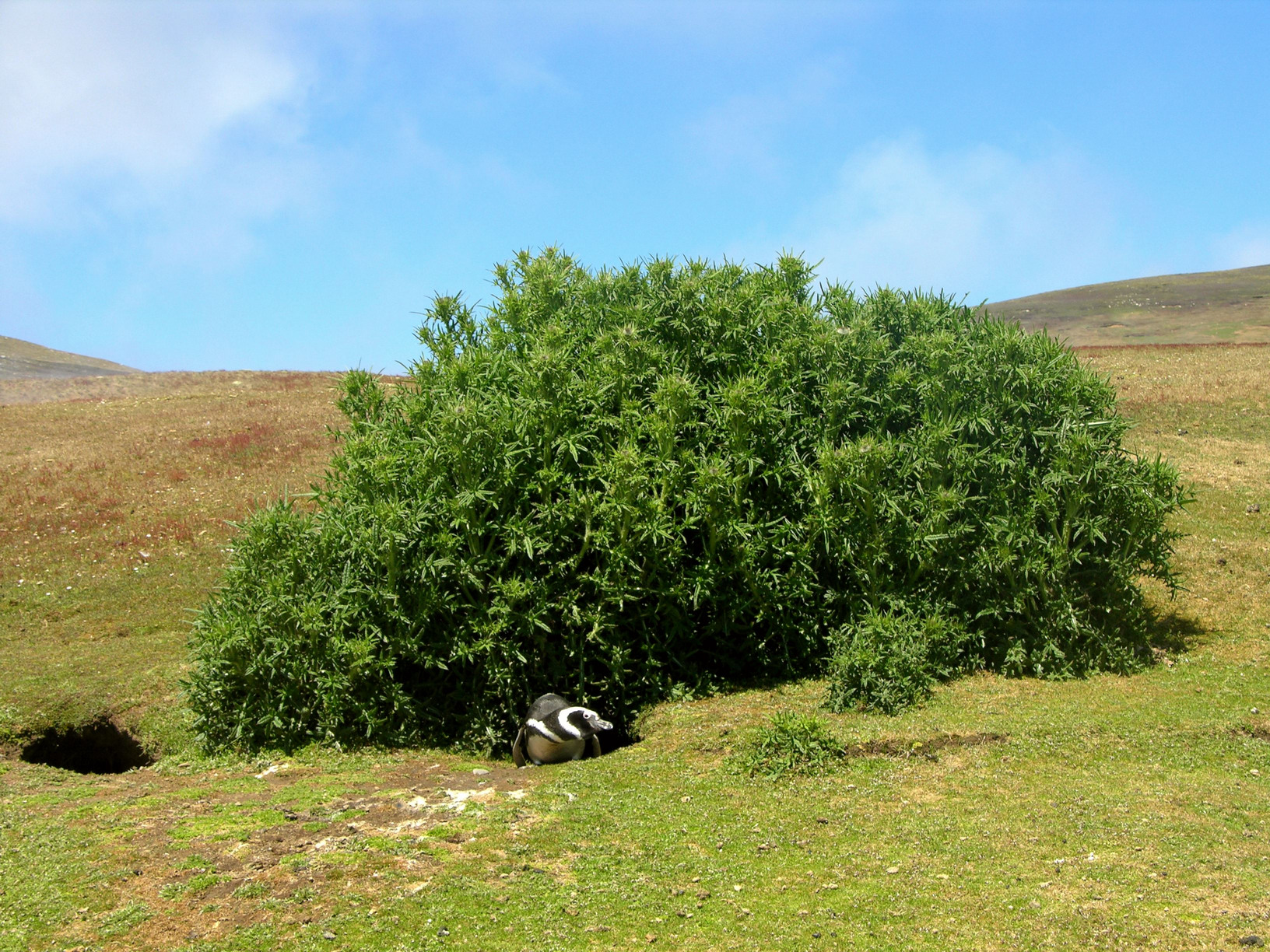
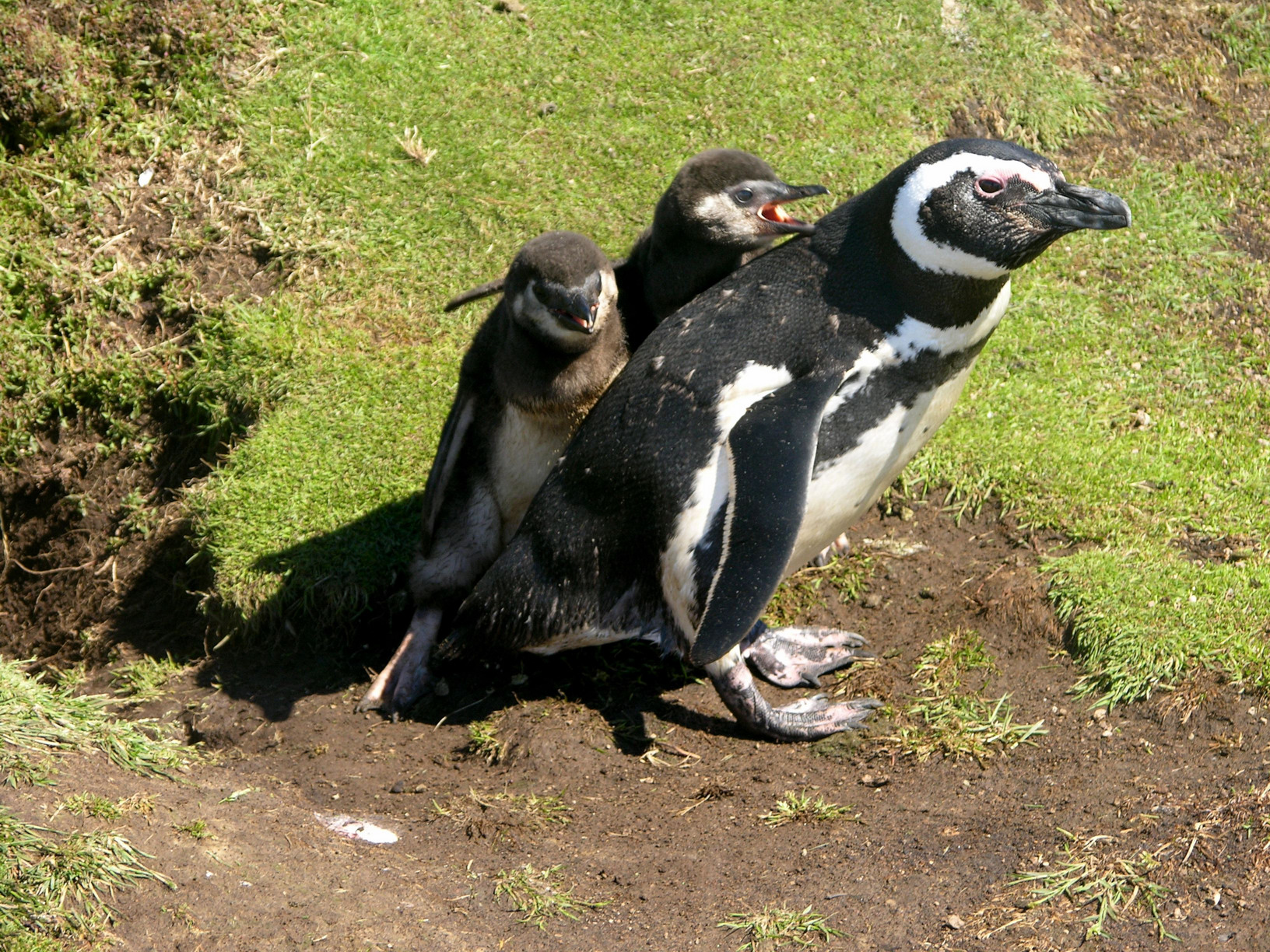
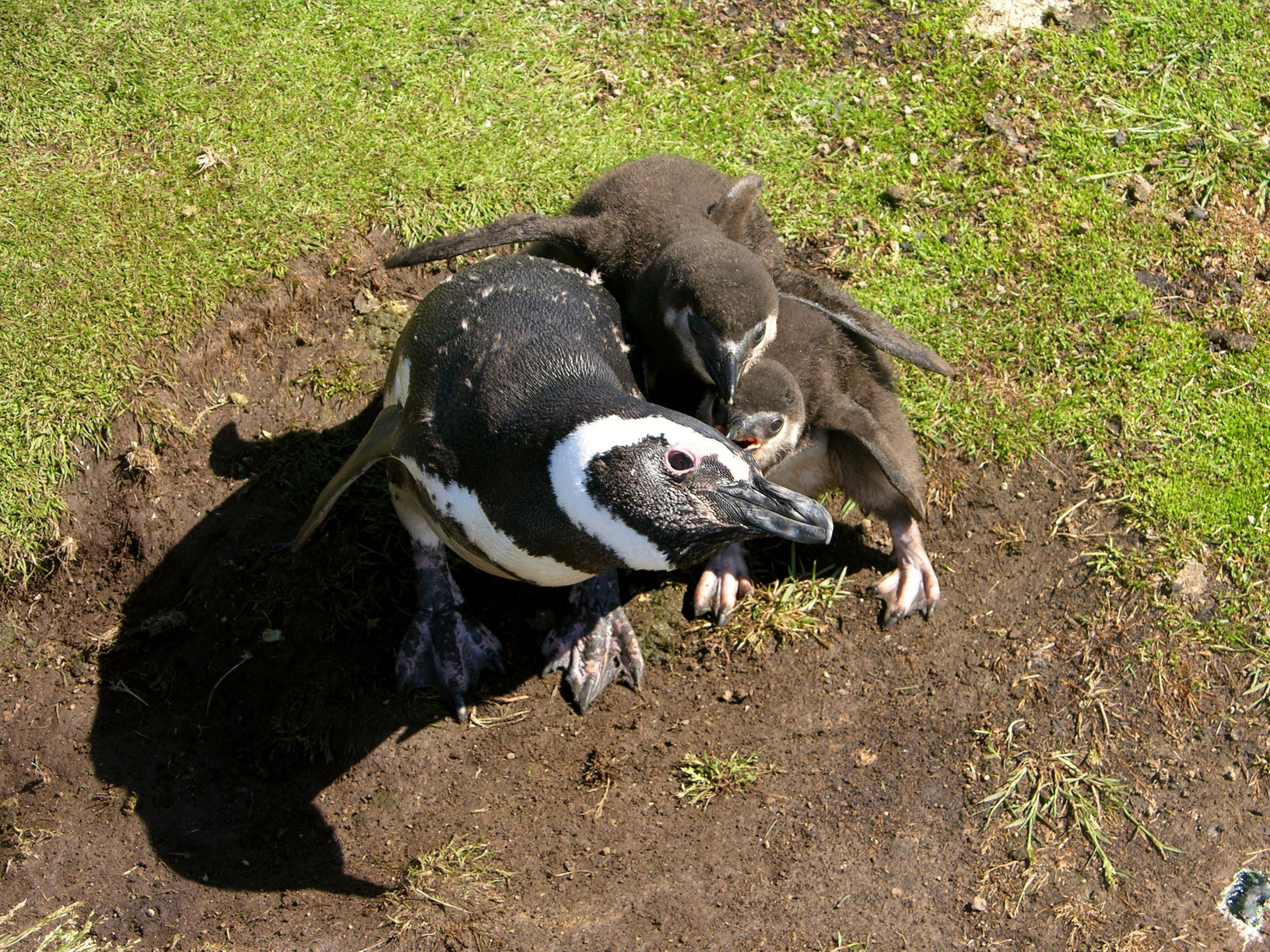
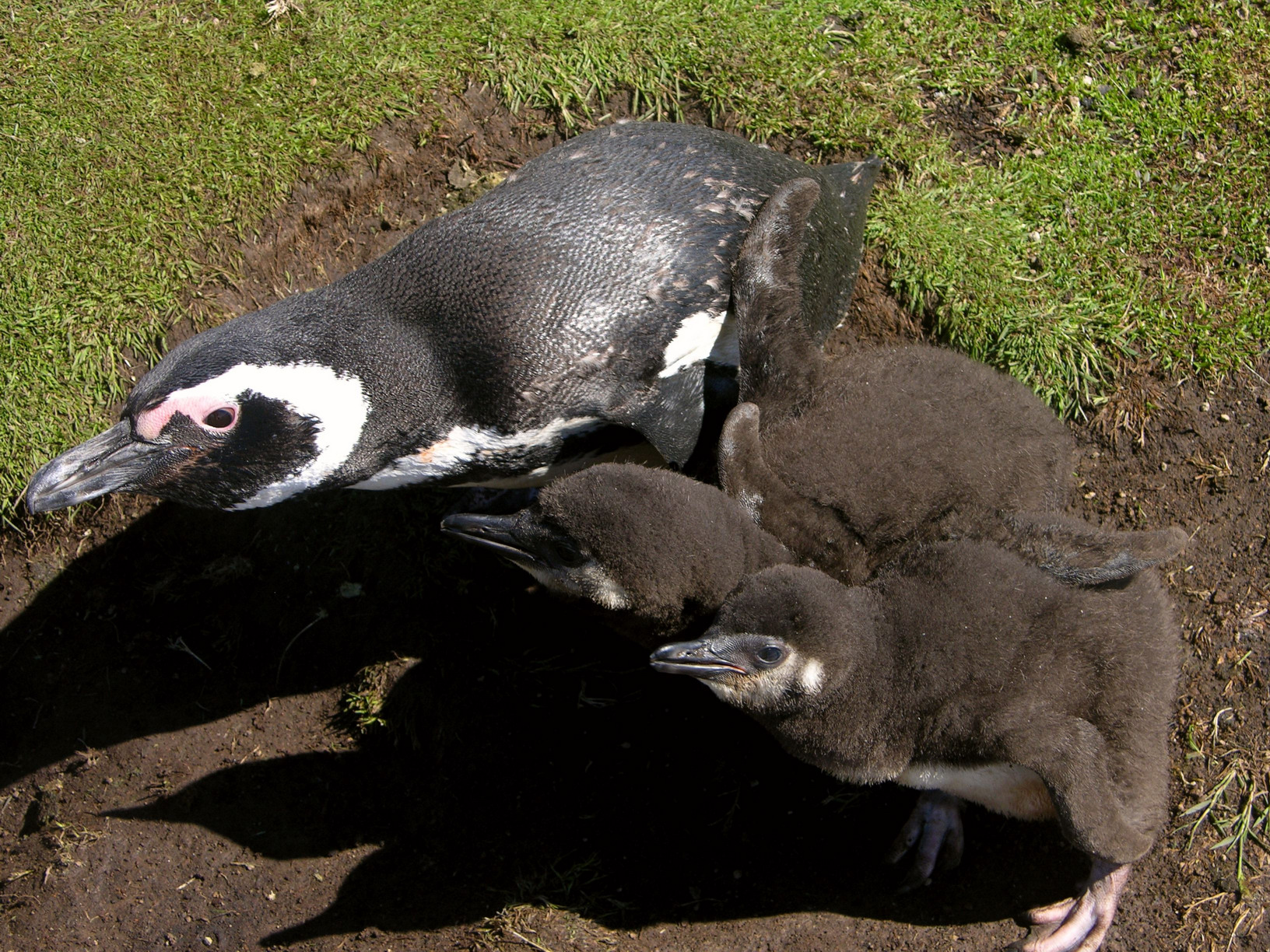
In the morning Father gets ready for the sea. He emerges reluctantly from the burrow, looking downcast. His sleepy partner stands alongside to do her shift, occasionally giving her husband a push with a wing to get him down to the sea. “Time for work, dear, the children need their fish.” She spends the whole day bringing up the children. She drives back underground any that crawl out to get warm, shields them with her body in danger, teaches them to sing. By the afternoon her patience wears thin and the children often get a peck on the head. She looks to sea more often and more sadly, sometimes letting out a piercing, melancholy squawk. But now here comes her beloved out of the waves. Squawk, squawk, squawk! Hooray, cheer and vigour restored. But her husband is in no hurry. He stands on the shore with his friends, discussing the fishing with grumbling croaks. His wife calls more and more impatiently. So he has to waddle over to the nest. Sometimes it's several kilometres from the shore. Here he is, closer and closer. She wants to run out, but the silly children crawl out of the nest. She has to go back. When the longed-for fish in her husband's stomach is quite close, she finally runs over and shoos him into place with a wing. Then the sharing, the noise and the coaxing up of the last little fish from the bottom of the stomach. Every morsel shared. The children brought up and put to bed. Now you can come out and be together, looking at the sea and singing a song.
The evening song is long and complicated. Other penguins don't know how to do it. A shame I didn't record it. I did want to get to sleep, not lie in the muck with a camera. Even Tanya woke up from all the yelling. “Shut up, you wretched hen,” she said. “I'll catch you and make soup out of you.” As if. There were a lot of them and only one Tanya.
In the morning the weather improved at last. Only the mist rising from hills soaked by yesterday's rain occasionally hid the sun in a cloudless dark-blue sky. We had a plane the next day. We'd originally intended to walk to the village and airstrip on our own, but we'd lost a day to rain and had no time left to walk. In the morning we had to walk to the Portakabin and find someone going the other way to get word to Susan to pick us up that evening. Luckily we did find somebody. Now the whole day lay ahead. As well as penguins, Saunders has a lot of other wildlife. On a steep slope to the north-east of the Neck, albatrosses nest. A bird with a three-metre wingspan can peck a lamb to death. Albatrosses nest in pots made of clay on steep cliffs. In January their chicks are still small and their mothers sit on them in the nests. Sometimes they get up and the chick can look out at the world and chirp something. When the mother tires of it, she just sits on it again. The chick still squeaks a bit from the feathers but can't get up to any trouble.
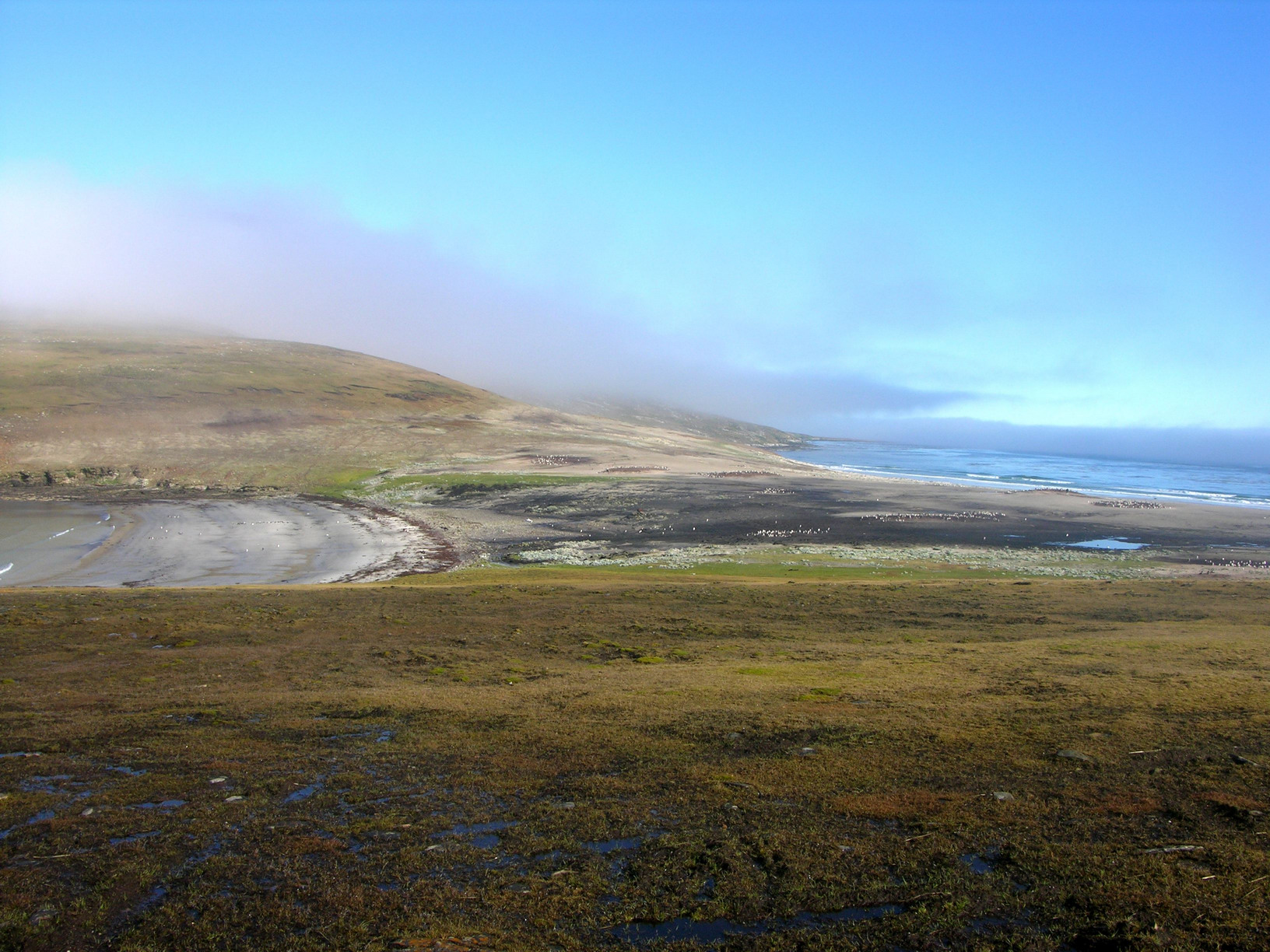
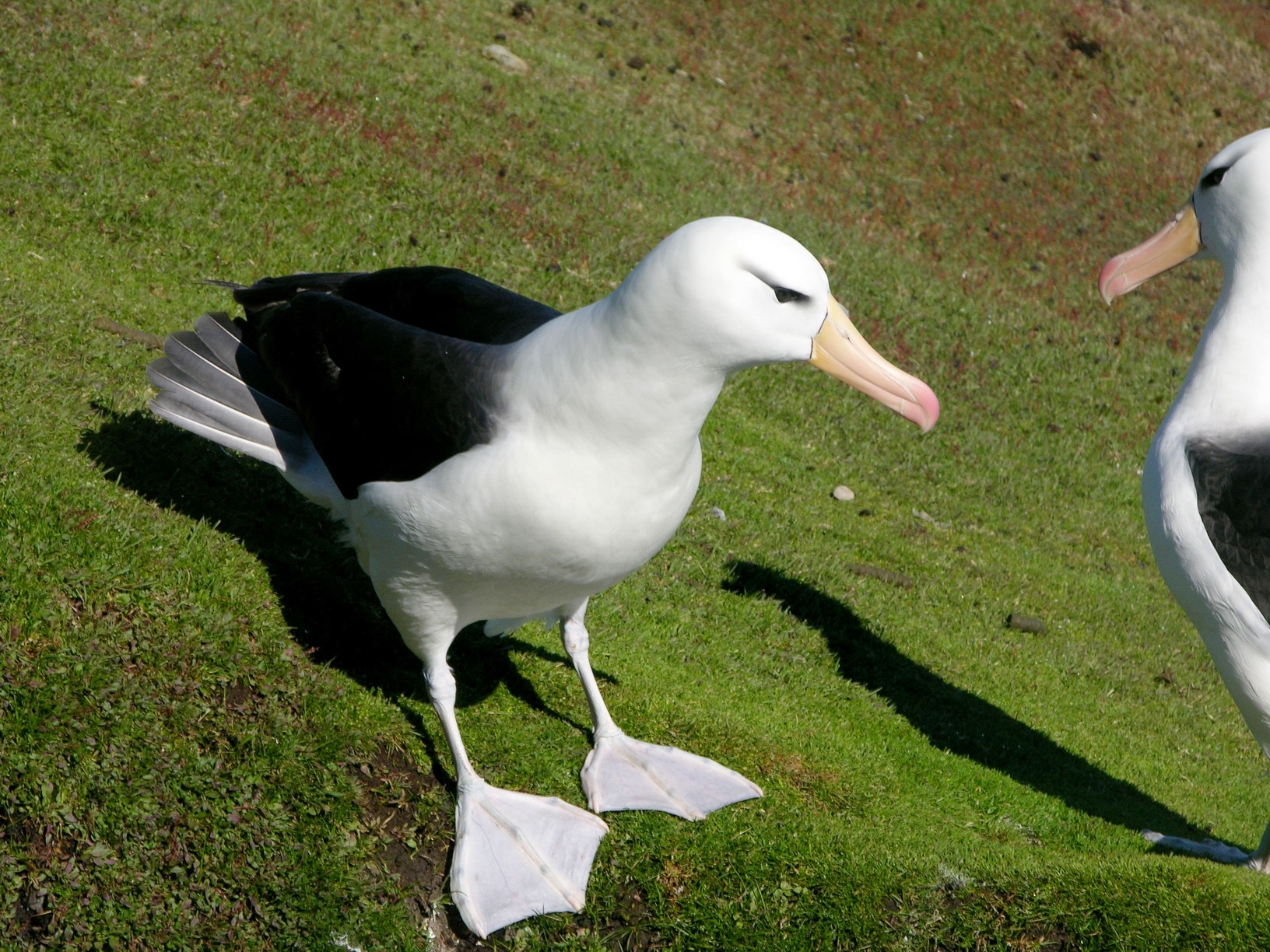
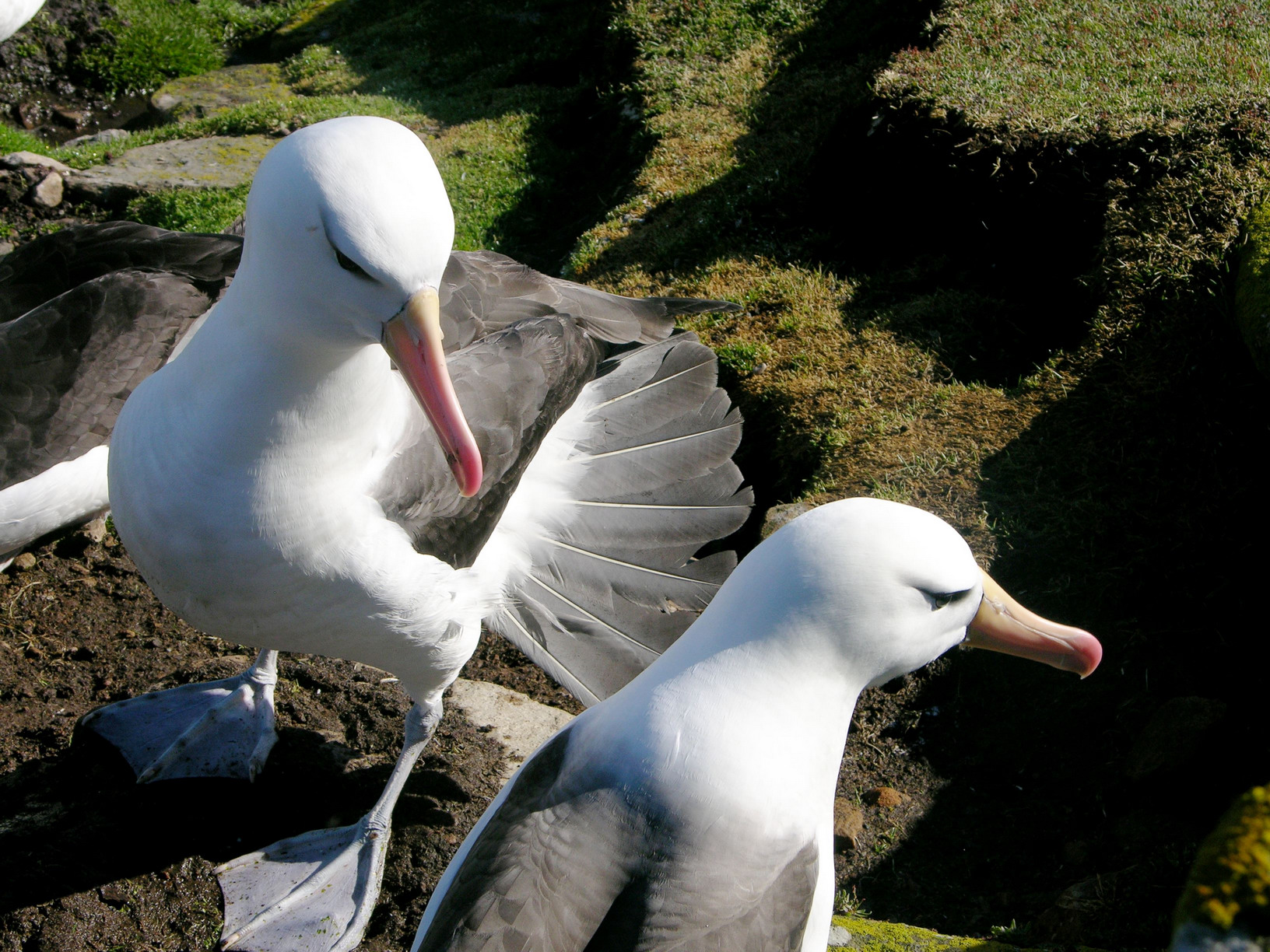
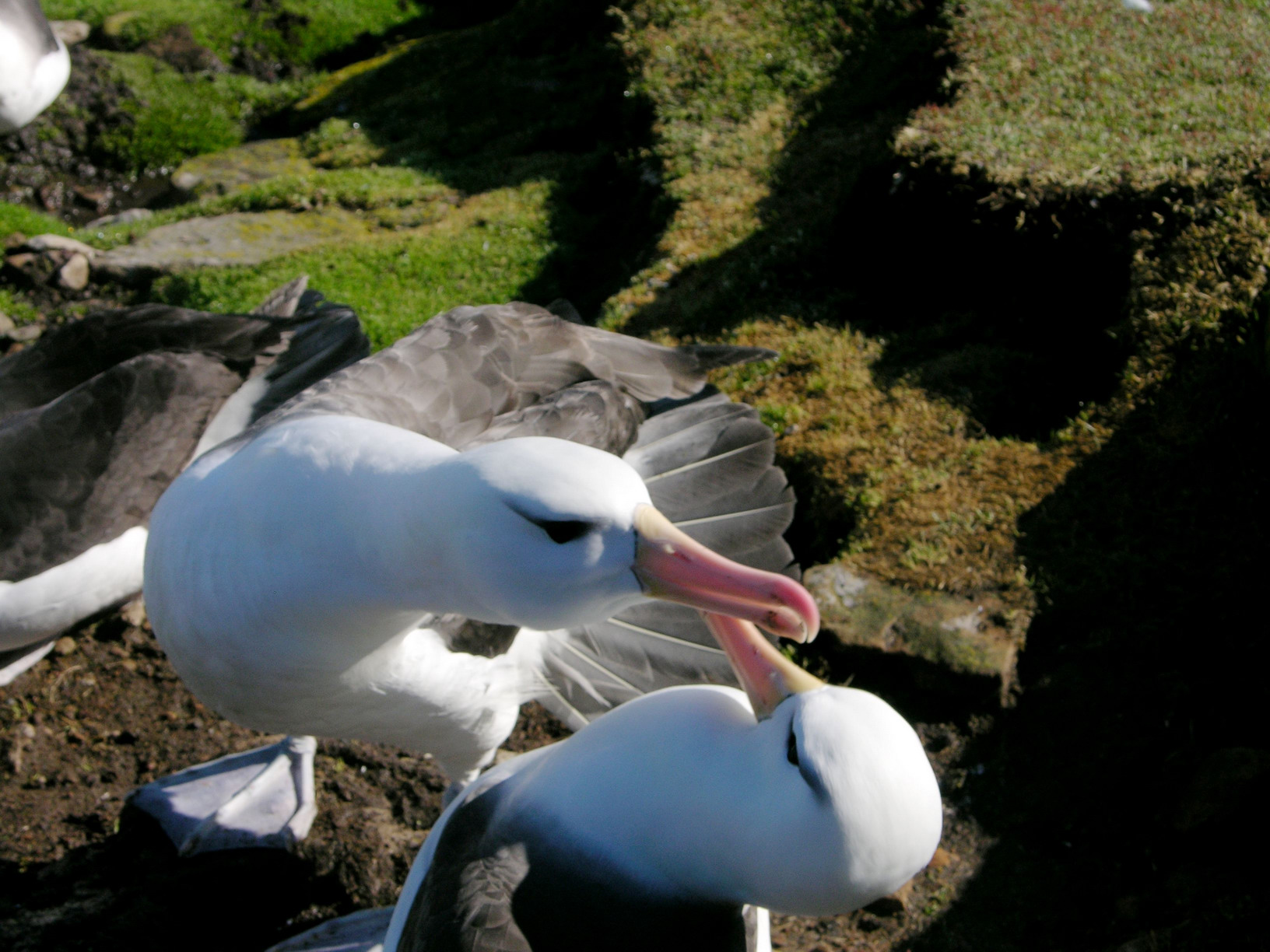
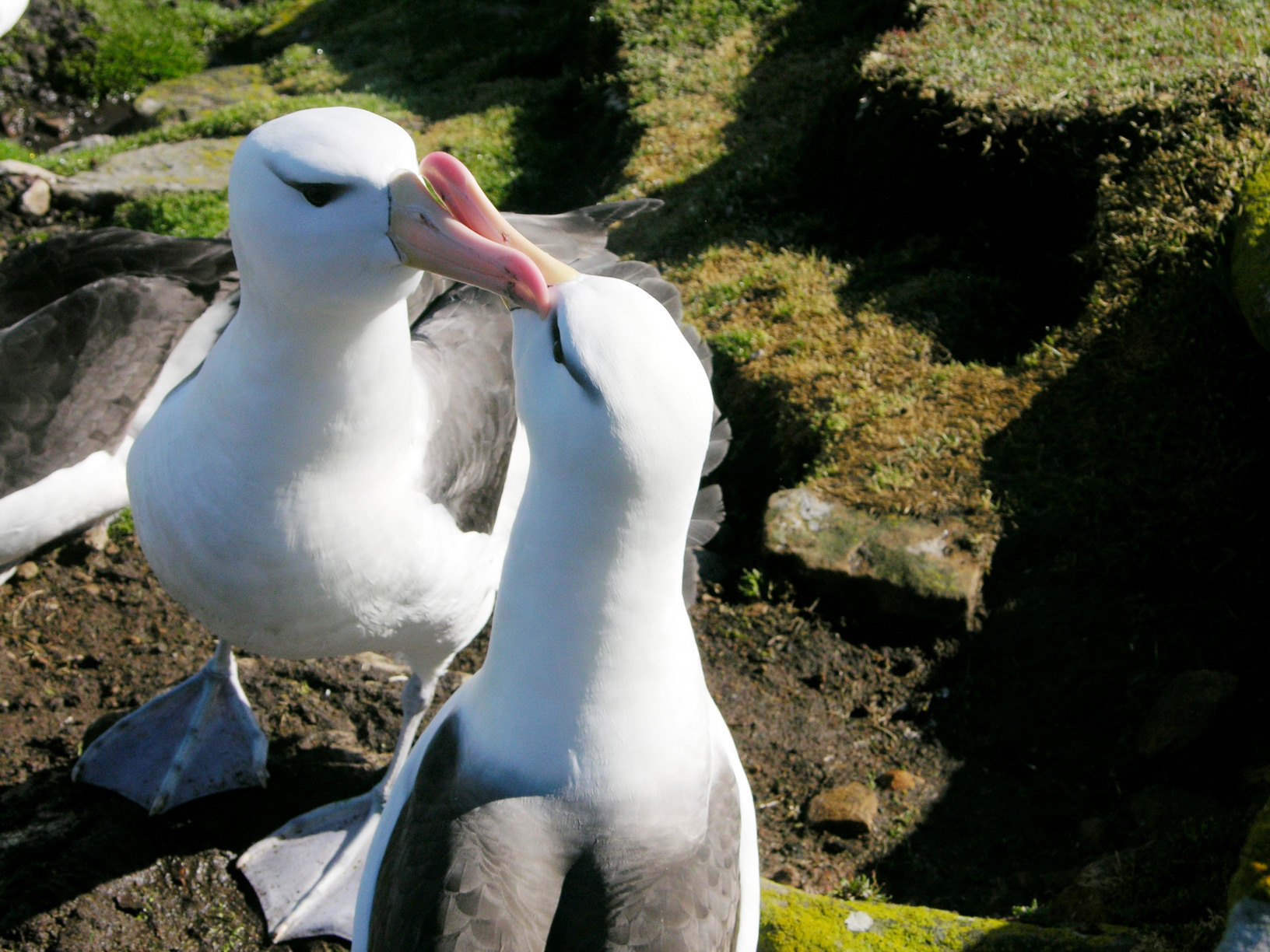
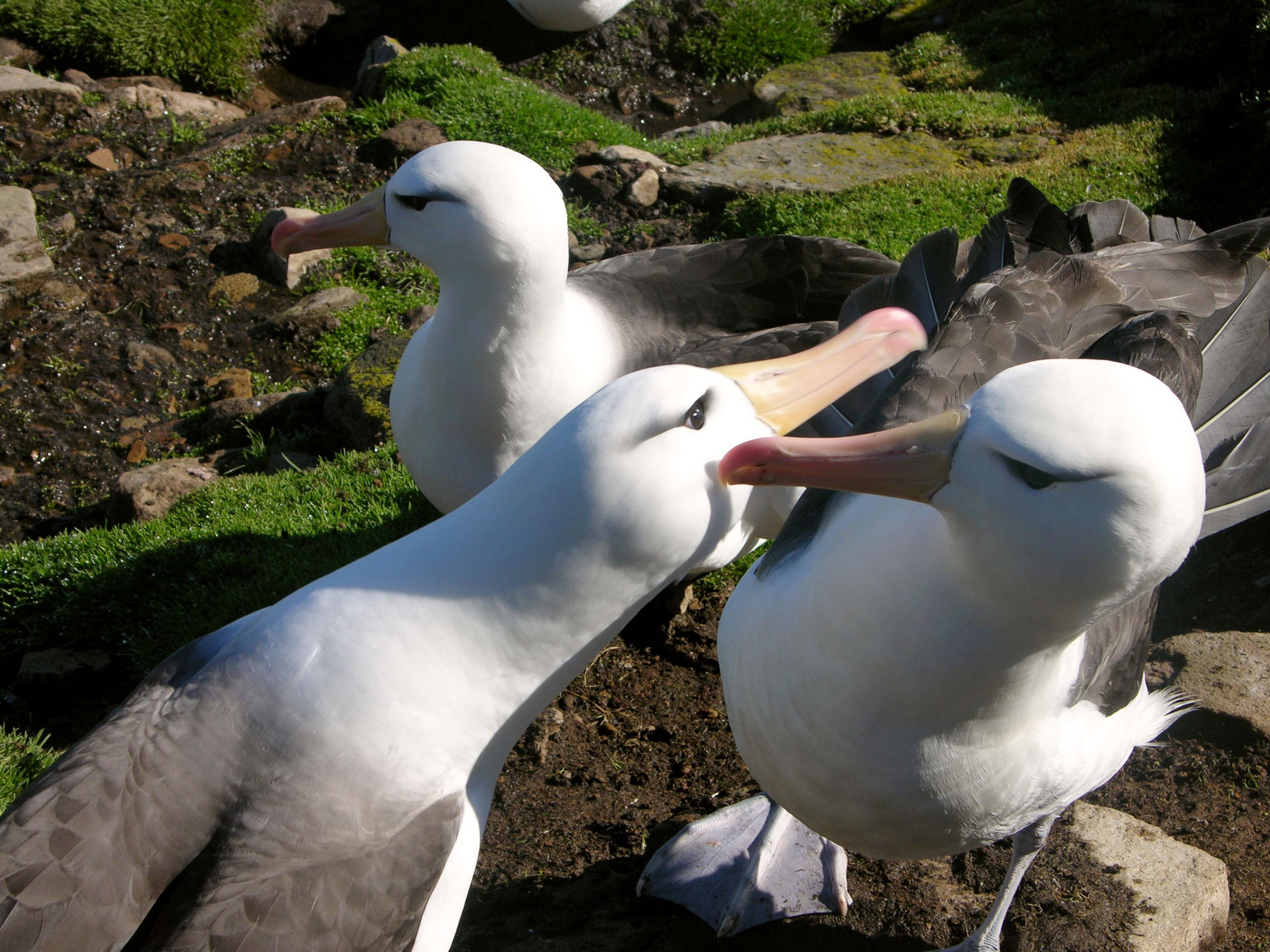
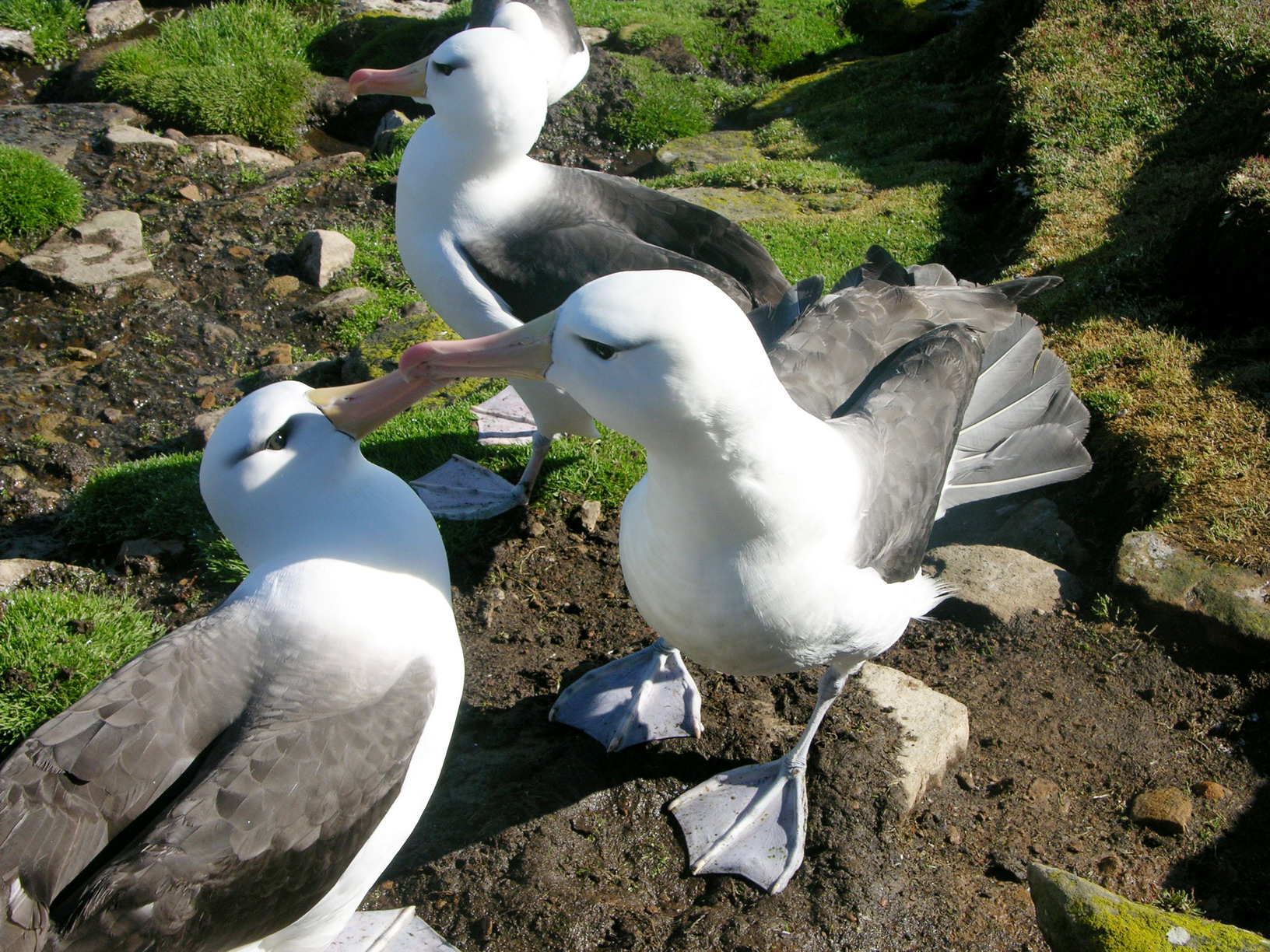
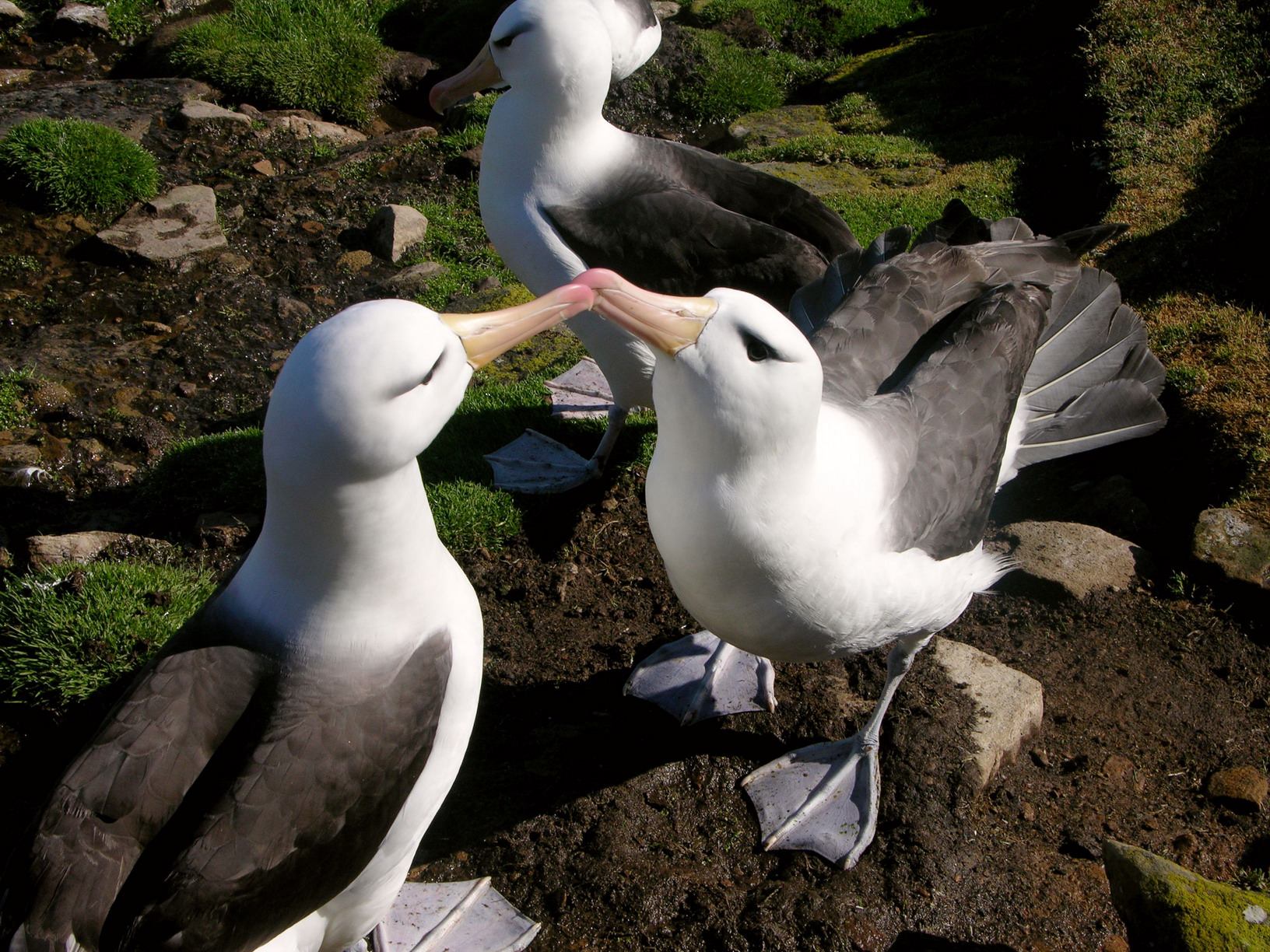
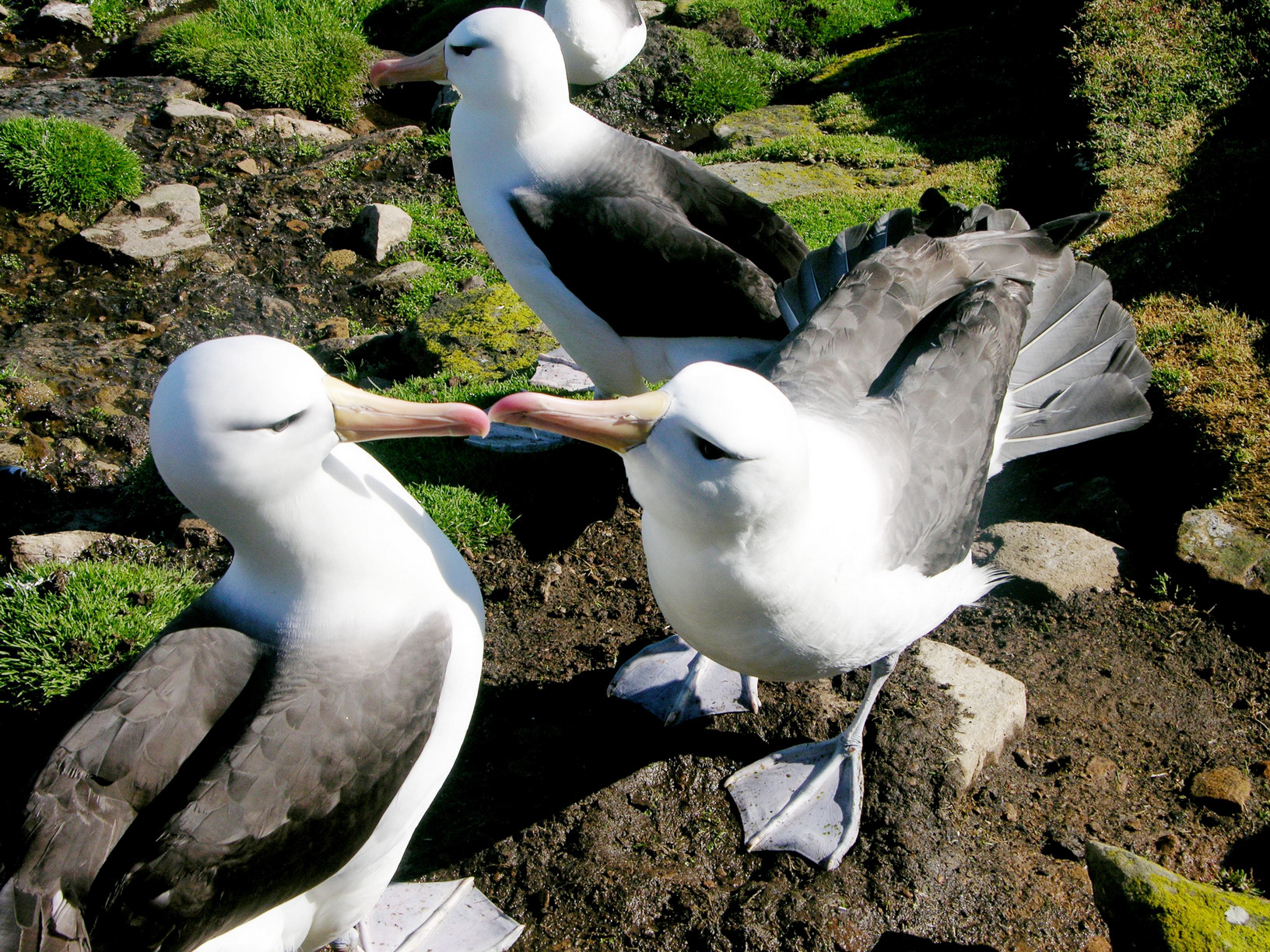
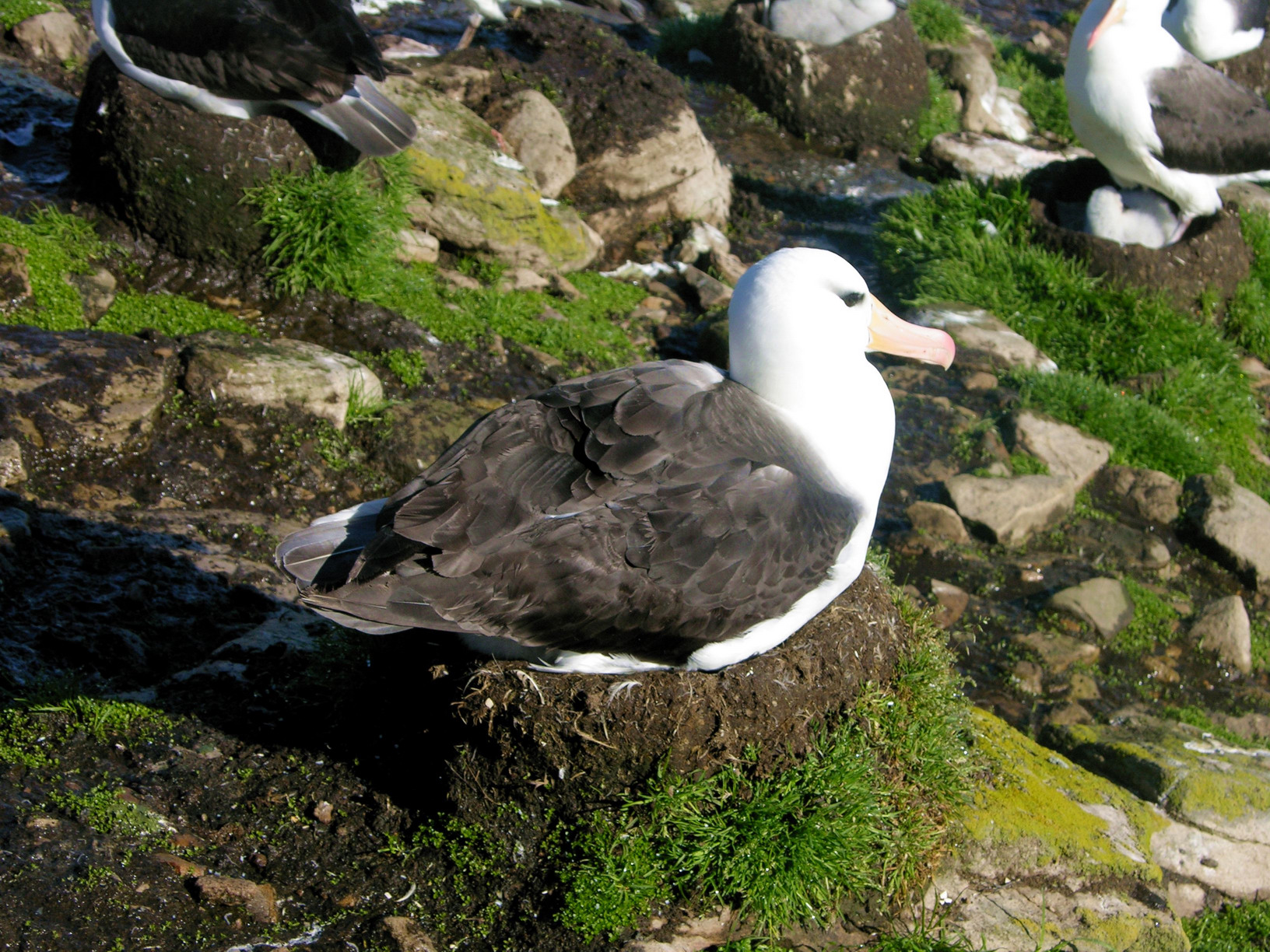
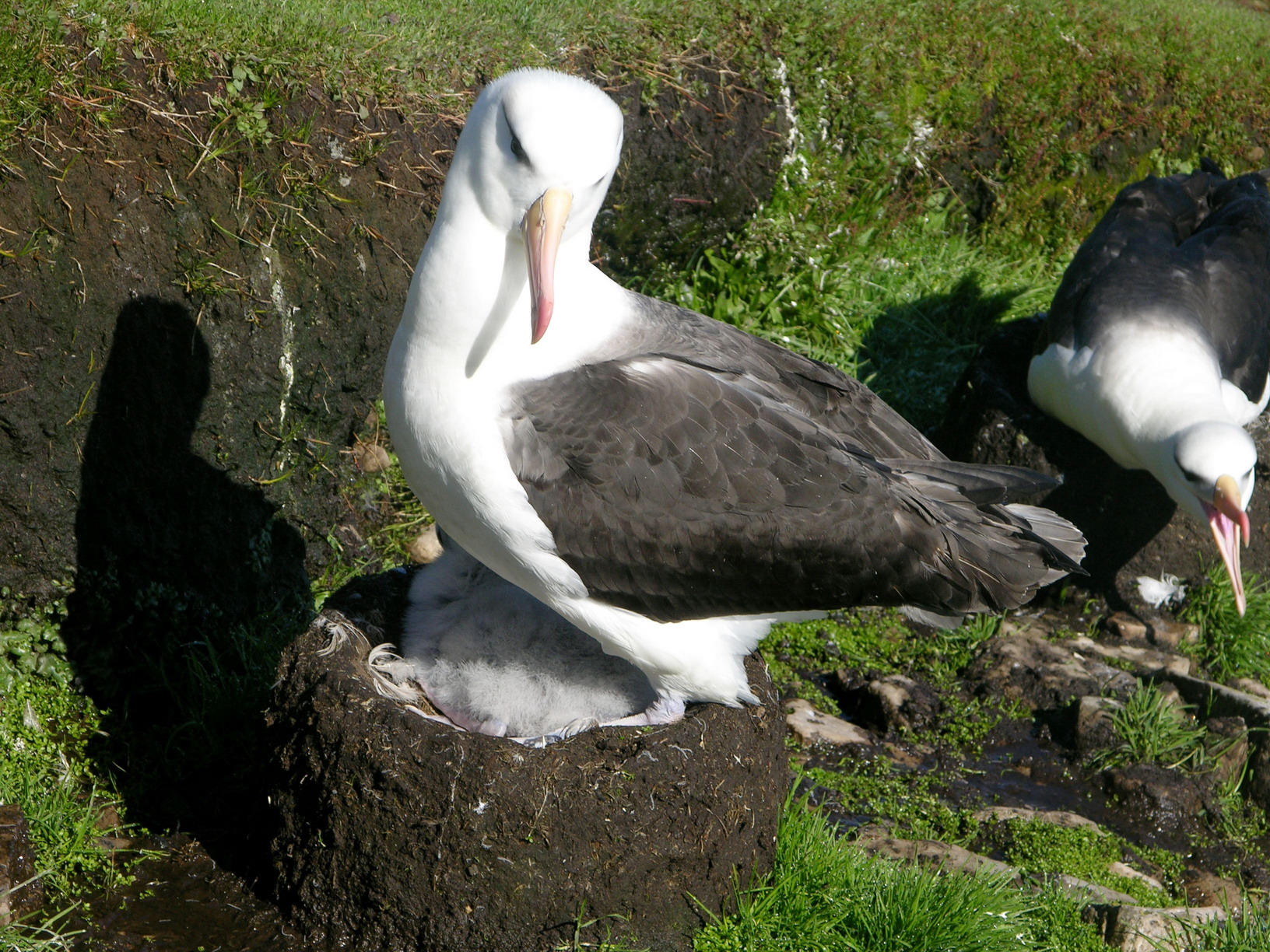
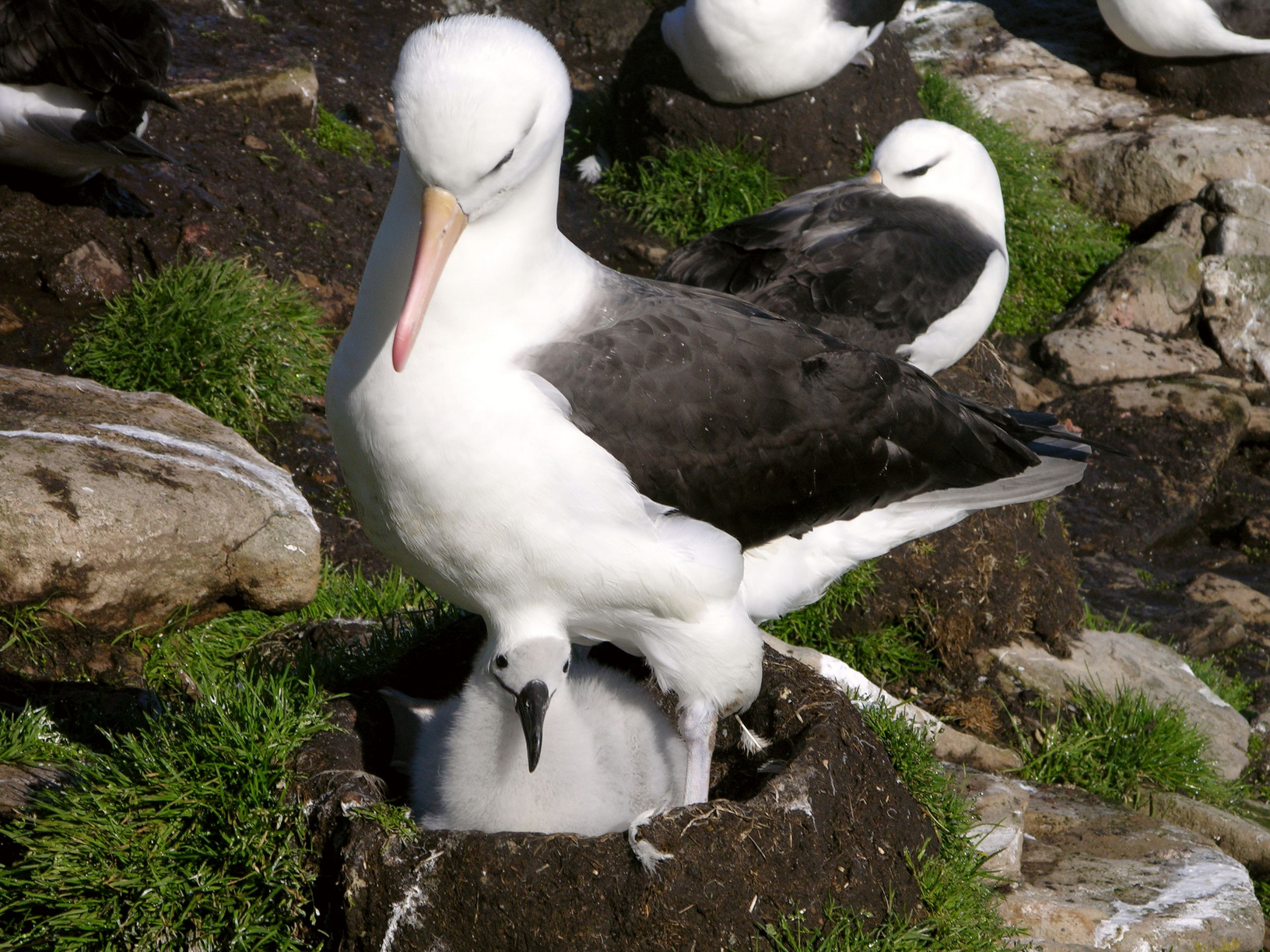
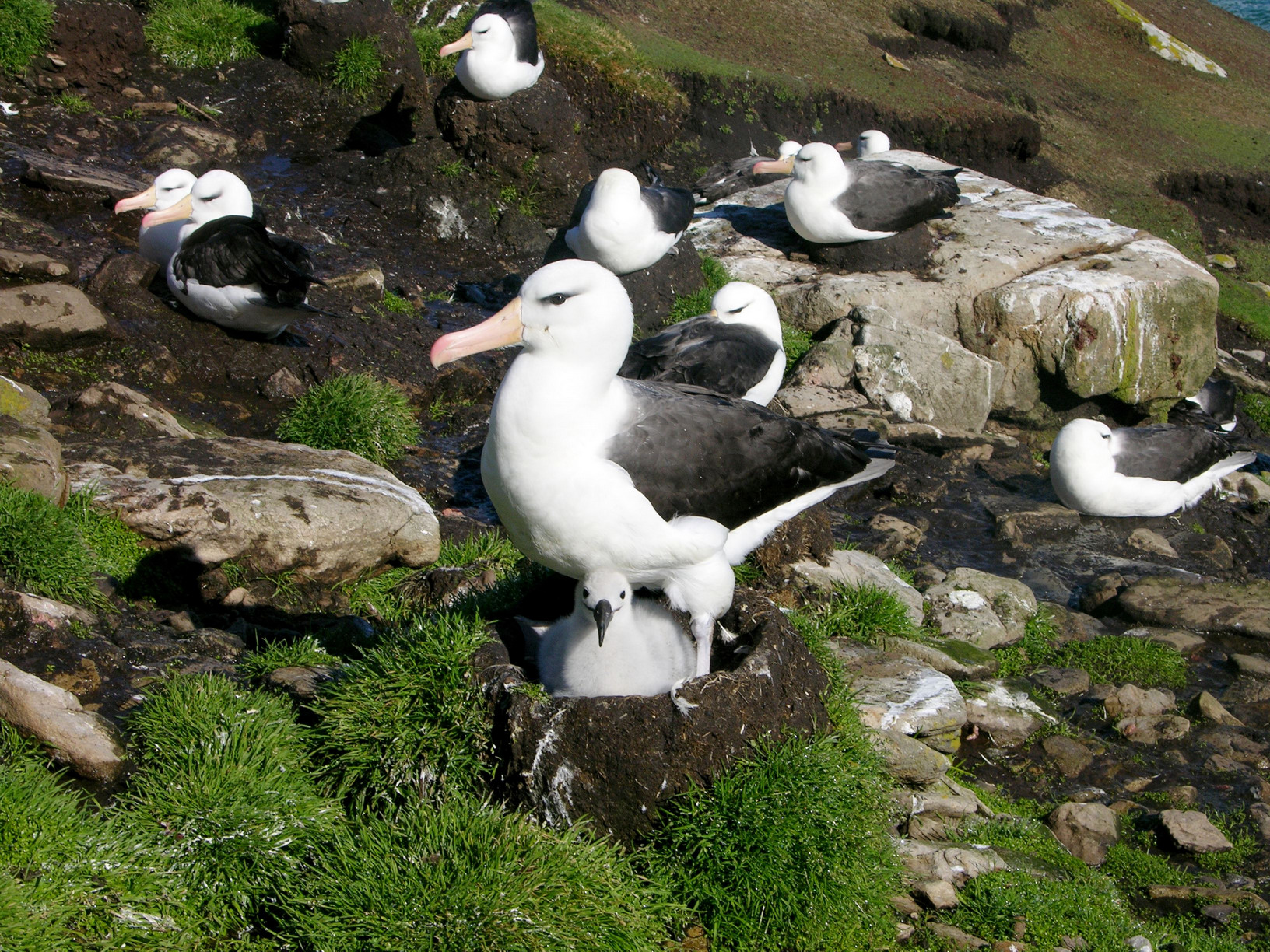
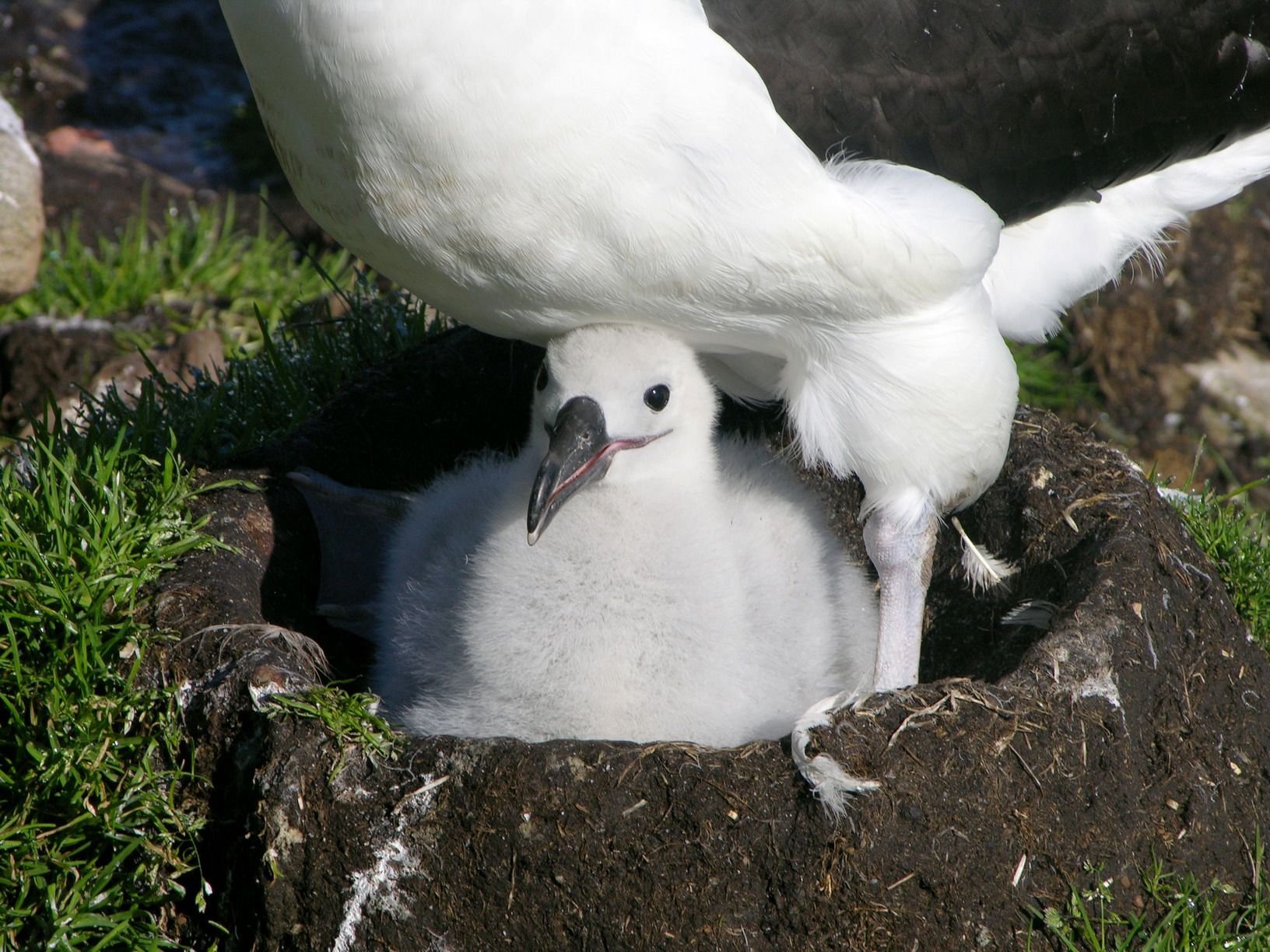
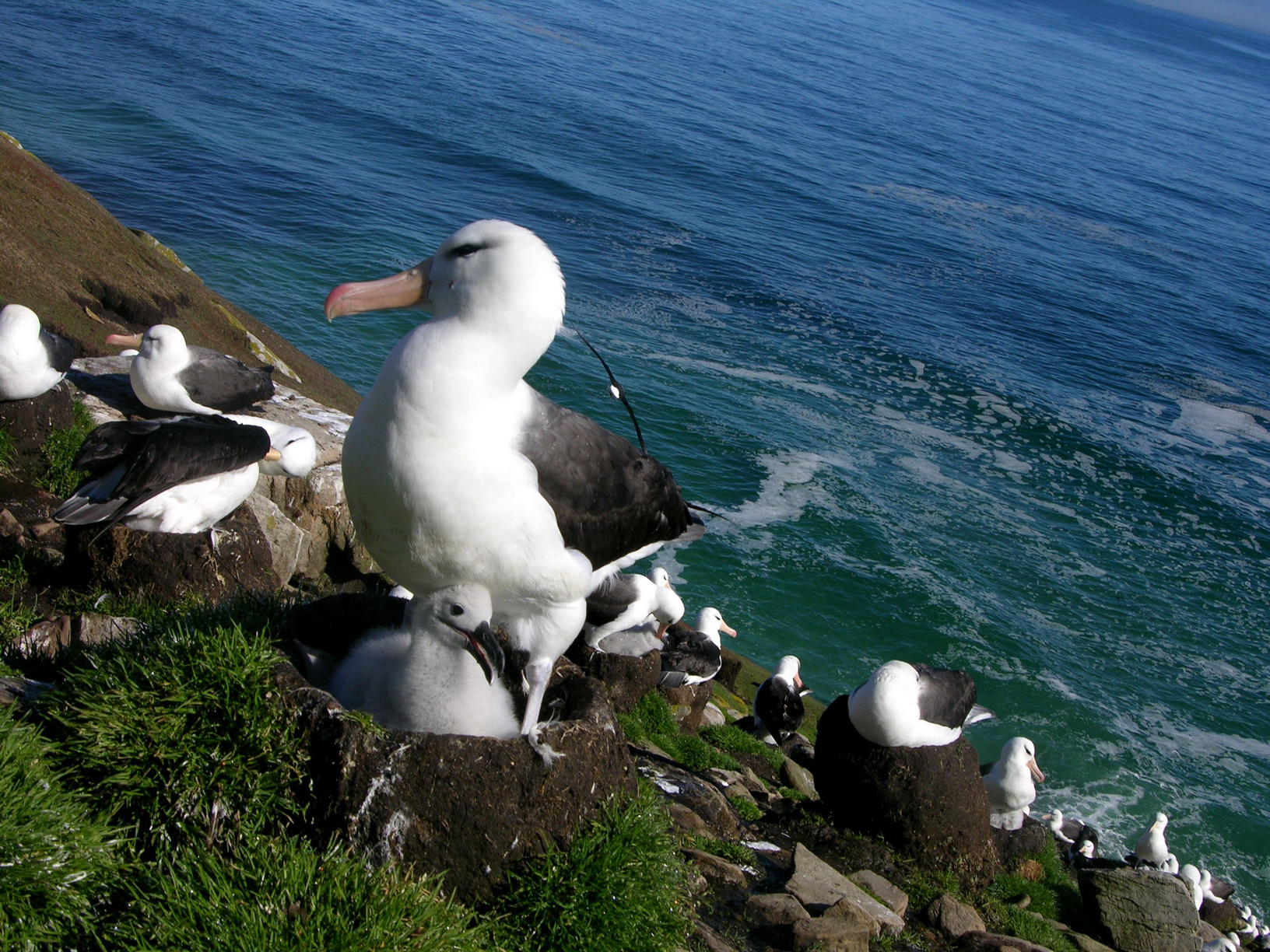
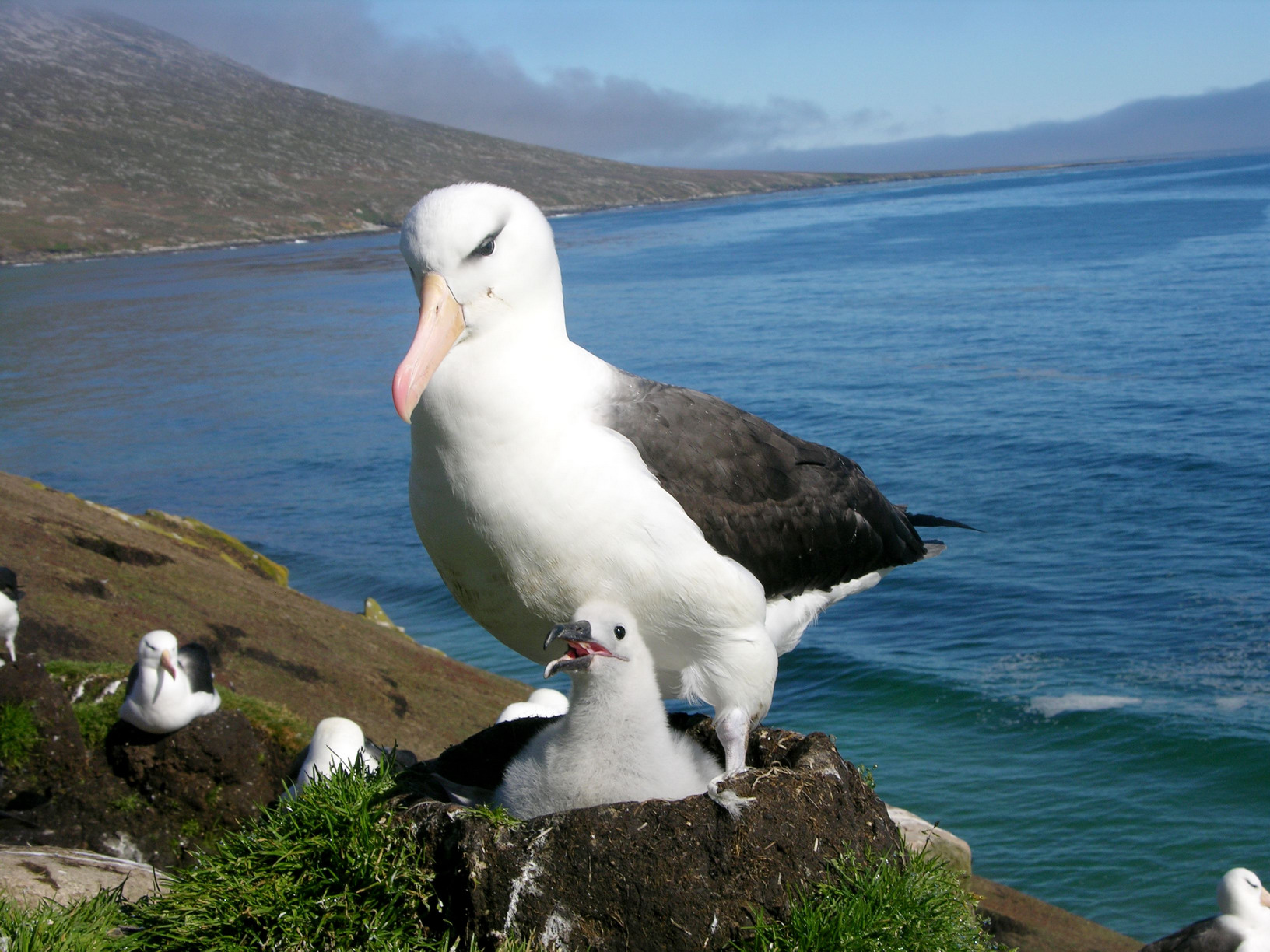
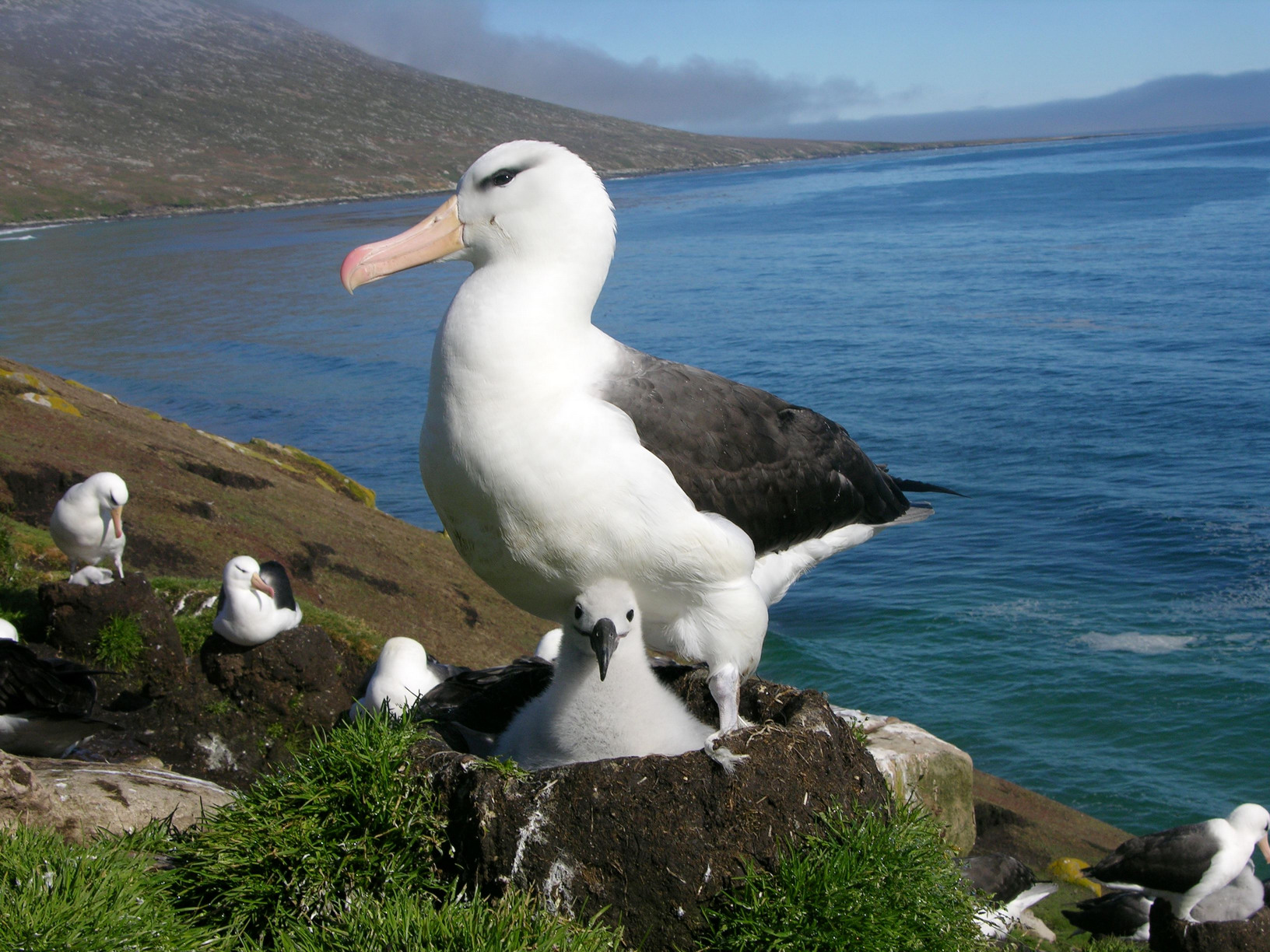
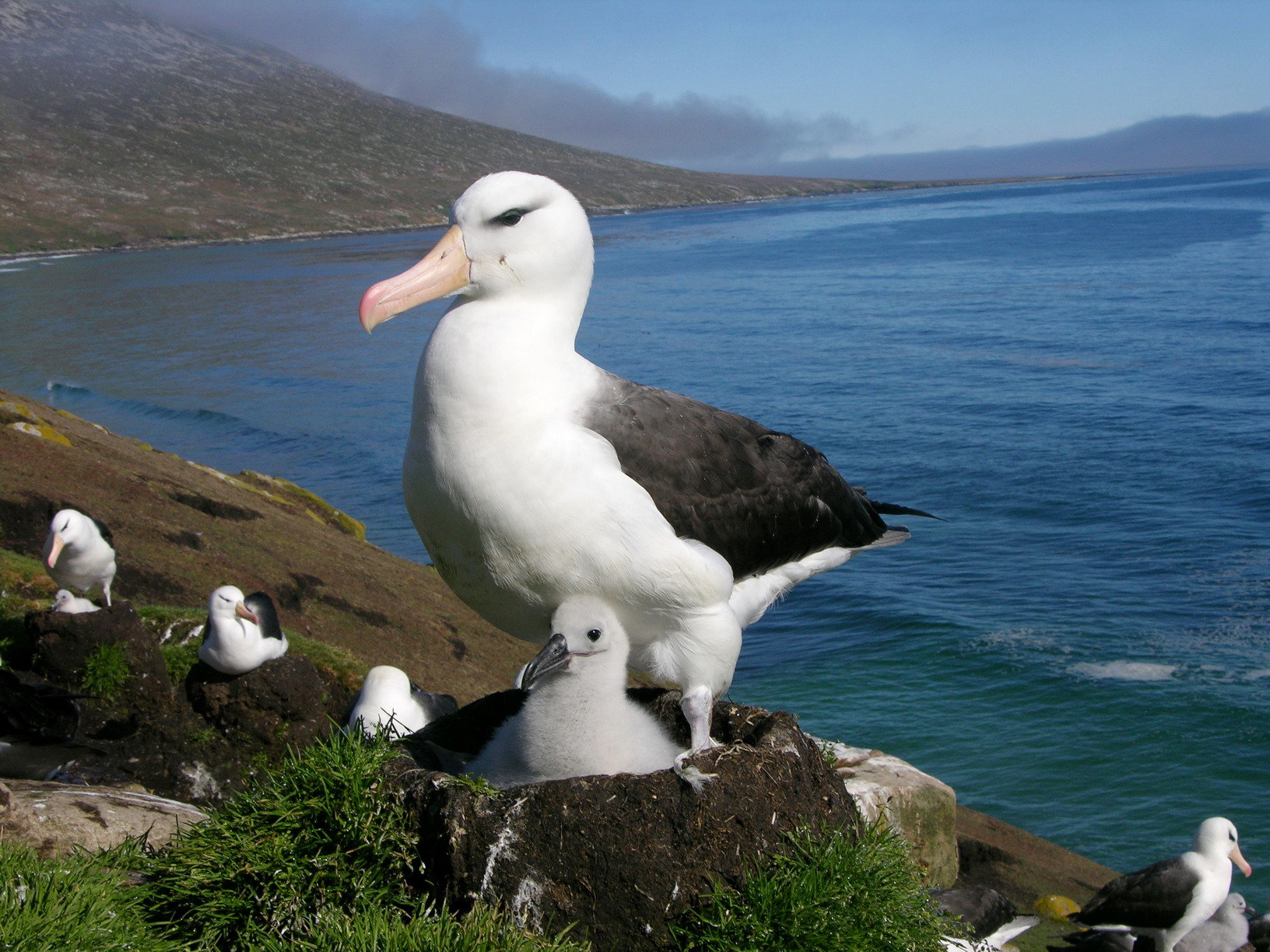
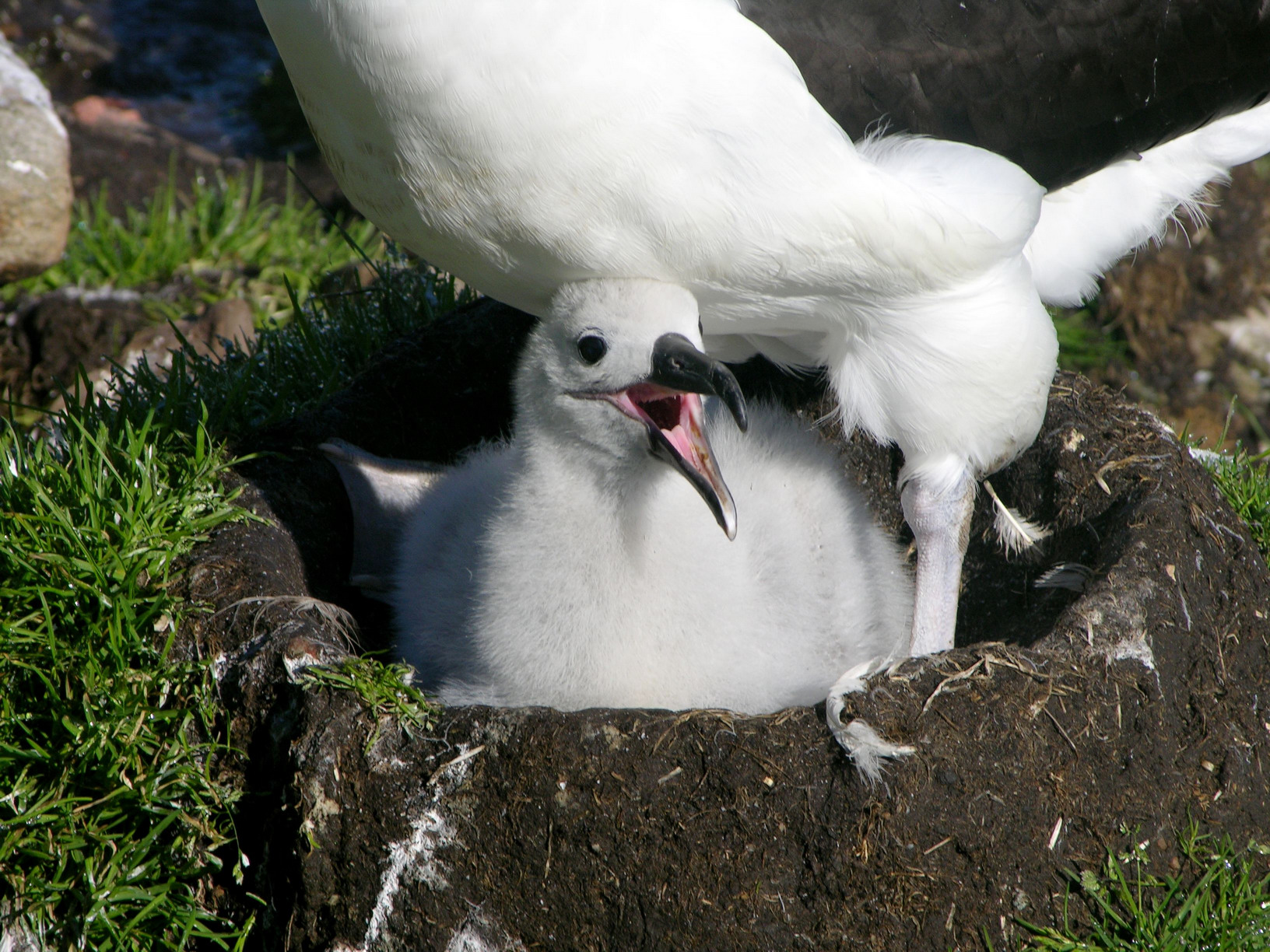
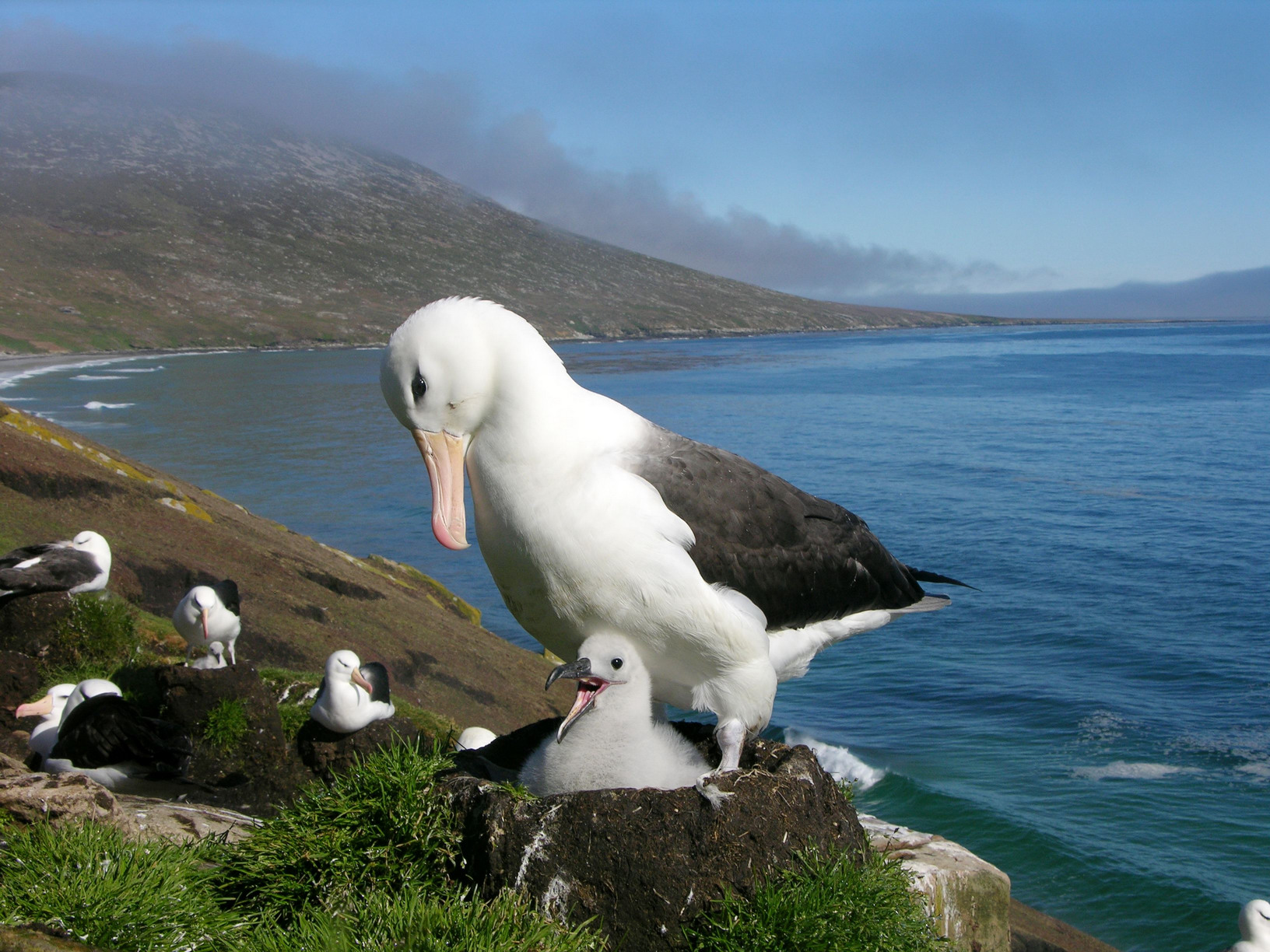
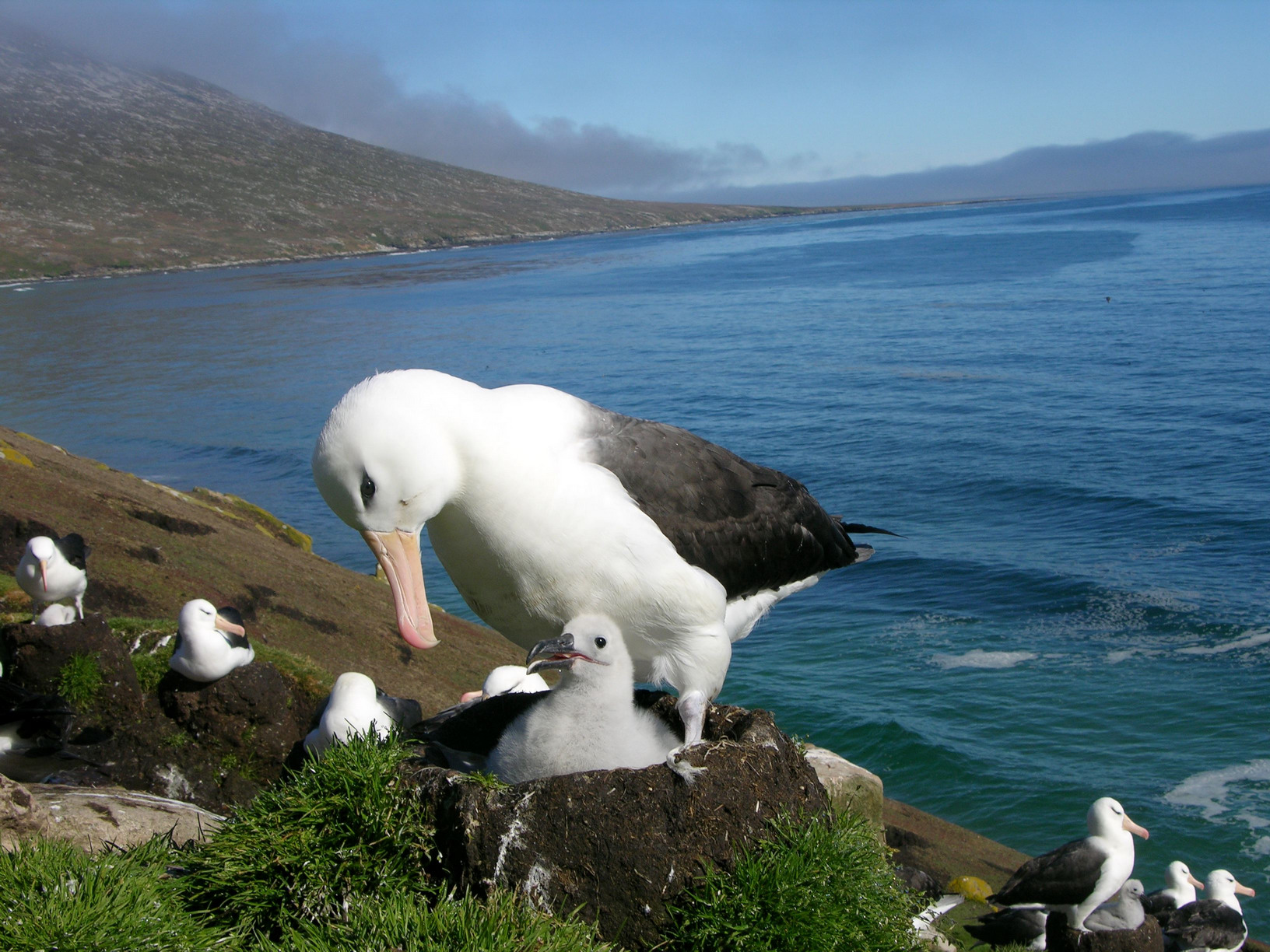
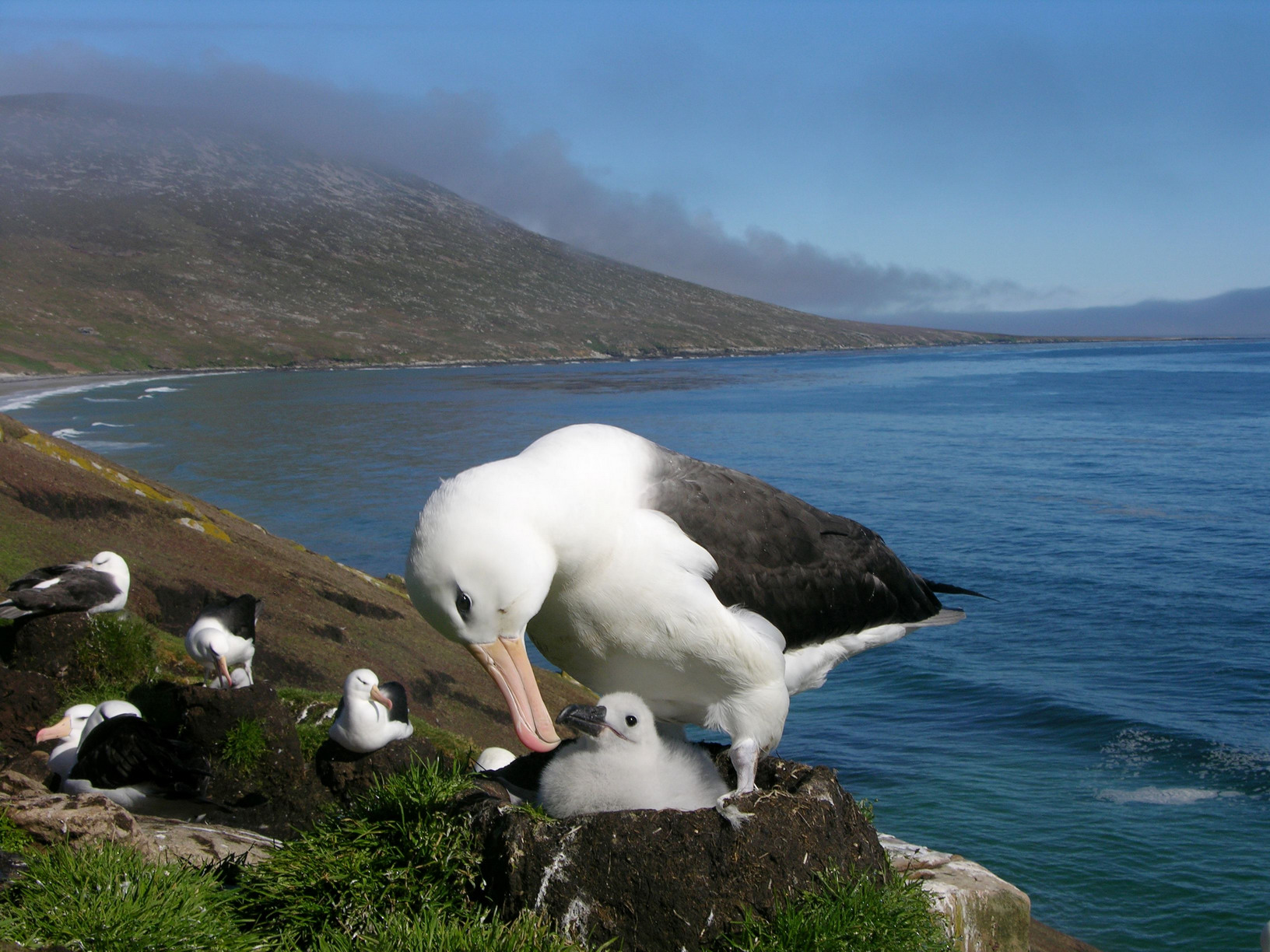
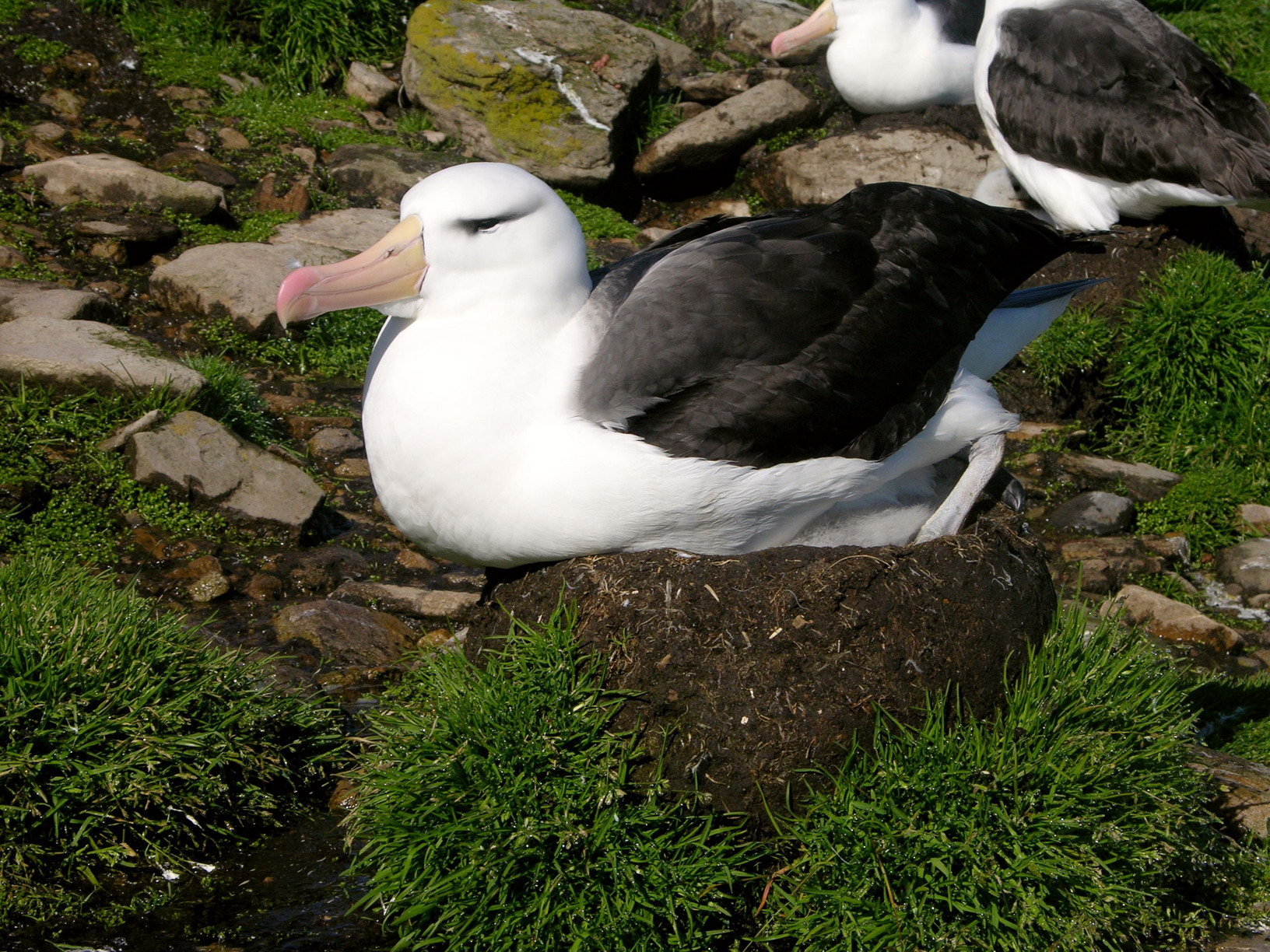
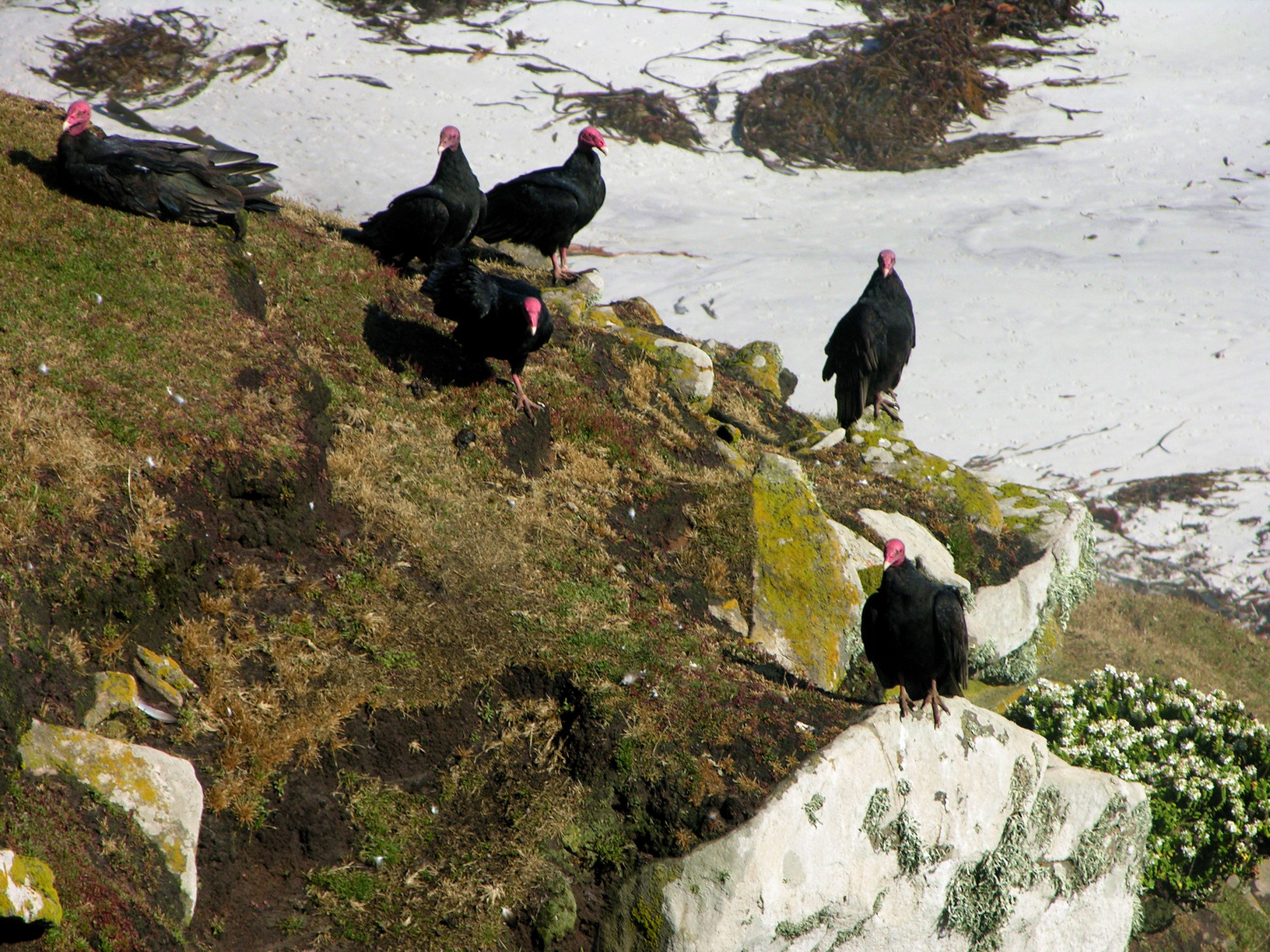
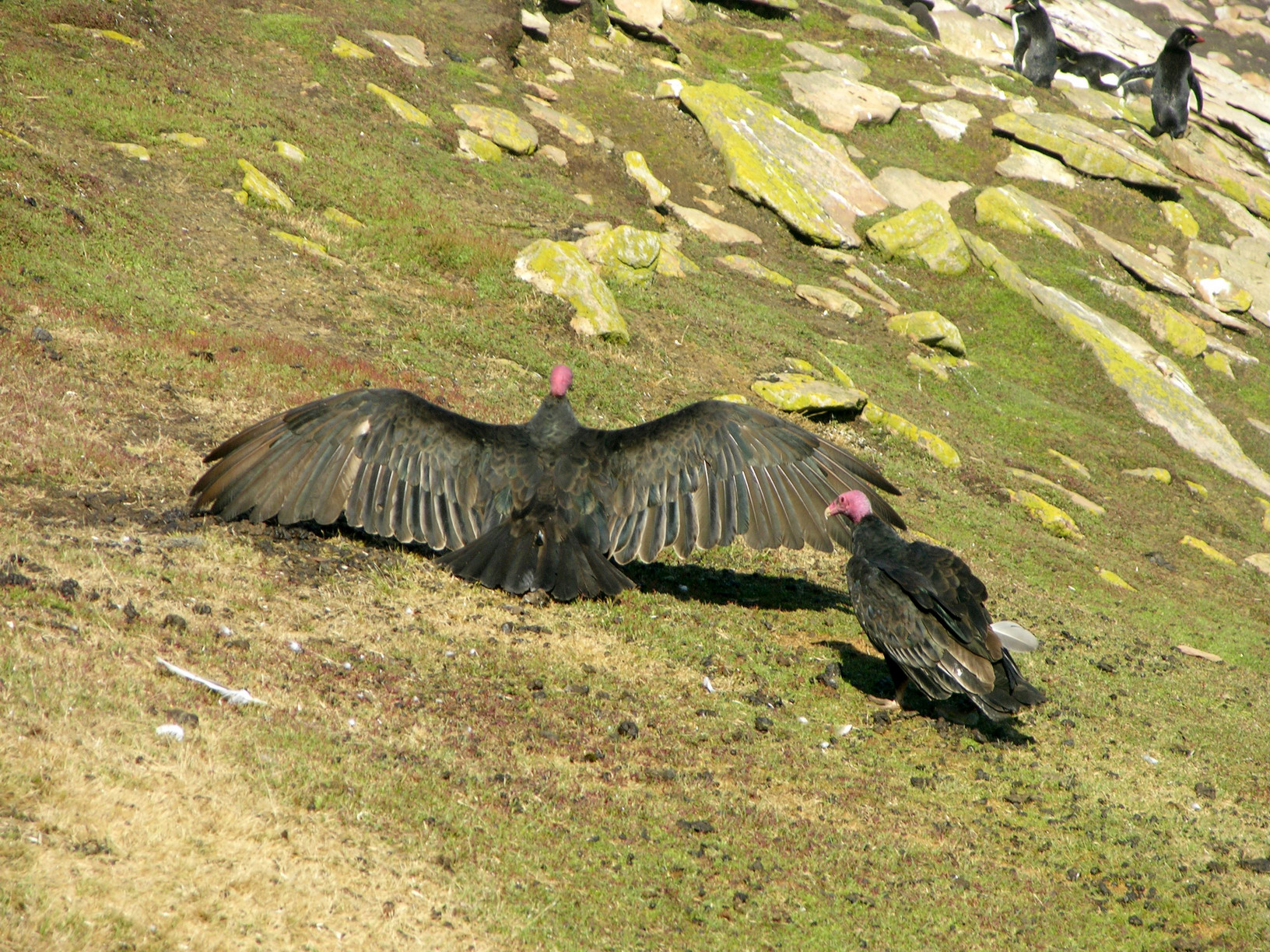
Rockhoppers nest alongside the albatrosses, despite the fact that the latter don't mind eating a chick or an egg. The scavengers, turkey vultures, are there and waiting too. There's plenty to eat for them as well. Little penguins die often. Perhaps their parents didn't come back from the sea, perhaps the chick just died of disease or hunger. There are no shortage of leopard seals around the Falklands, so you always have a chance of ending up in one's jaws.
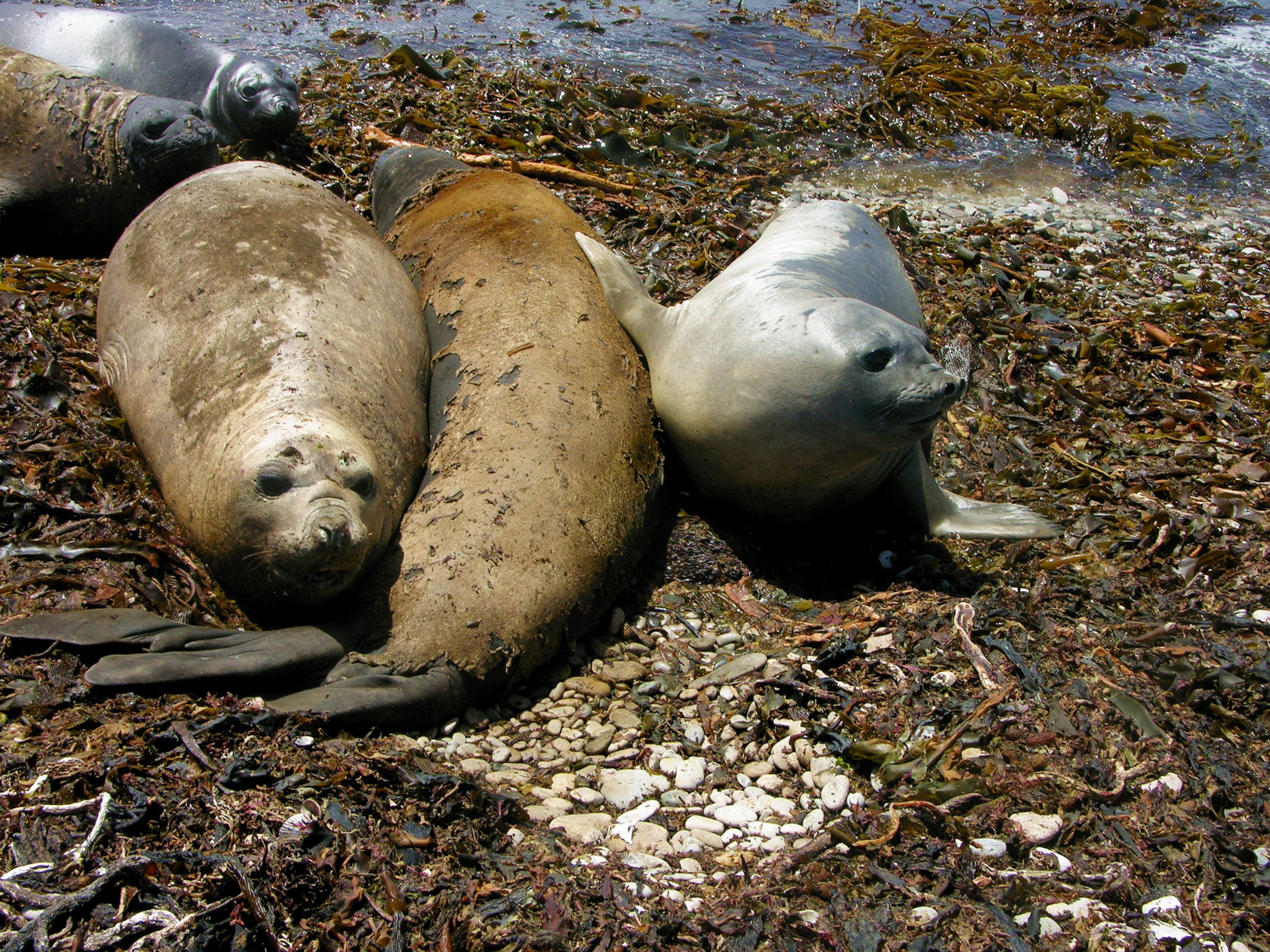
Besides its birds, Saunders has a colony of elephant seals to look at. An adult sea lion weighs 350 kilos. An elephant seal can weigh three and a half tonnes. Unfortunately in January the males are all at sea, out of season. There are females with their young on the beach, and even they are enormous. The rookery is at the island's westernmost point (51°16.236′S, 60°18.852′W). It's several hours to get there on foot. Clumsy as they look, elephant seals can move very quickly on land and can be dangerous to a person, particularly if one of the bulls thinks you have designs on his harem.
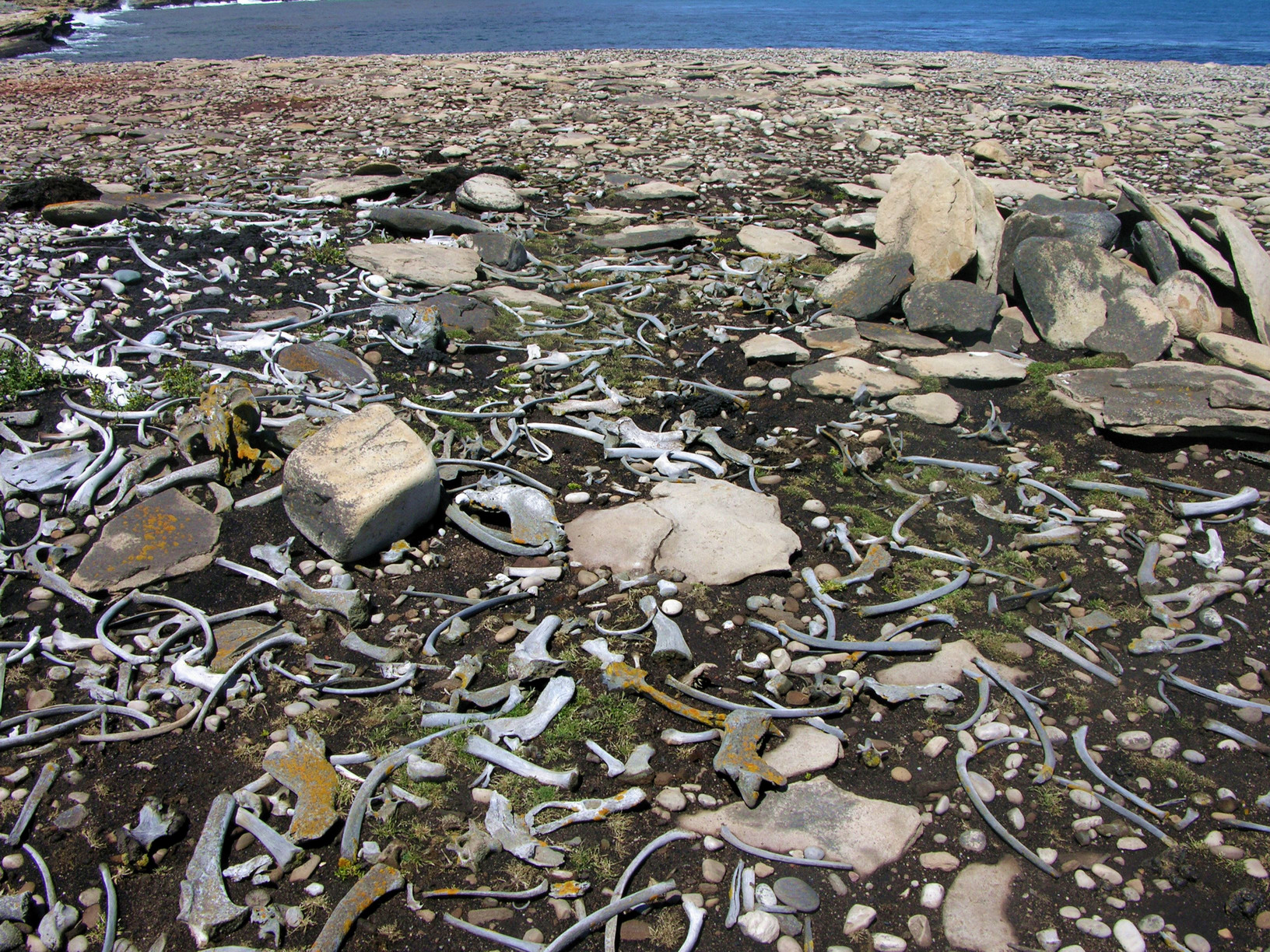
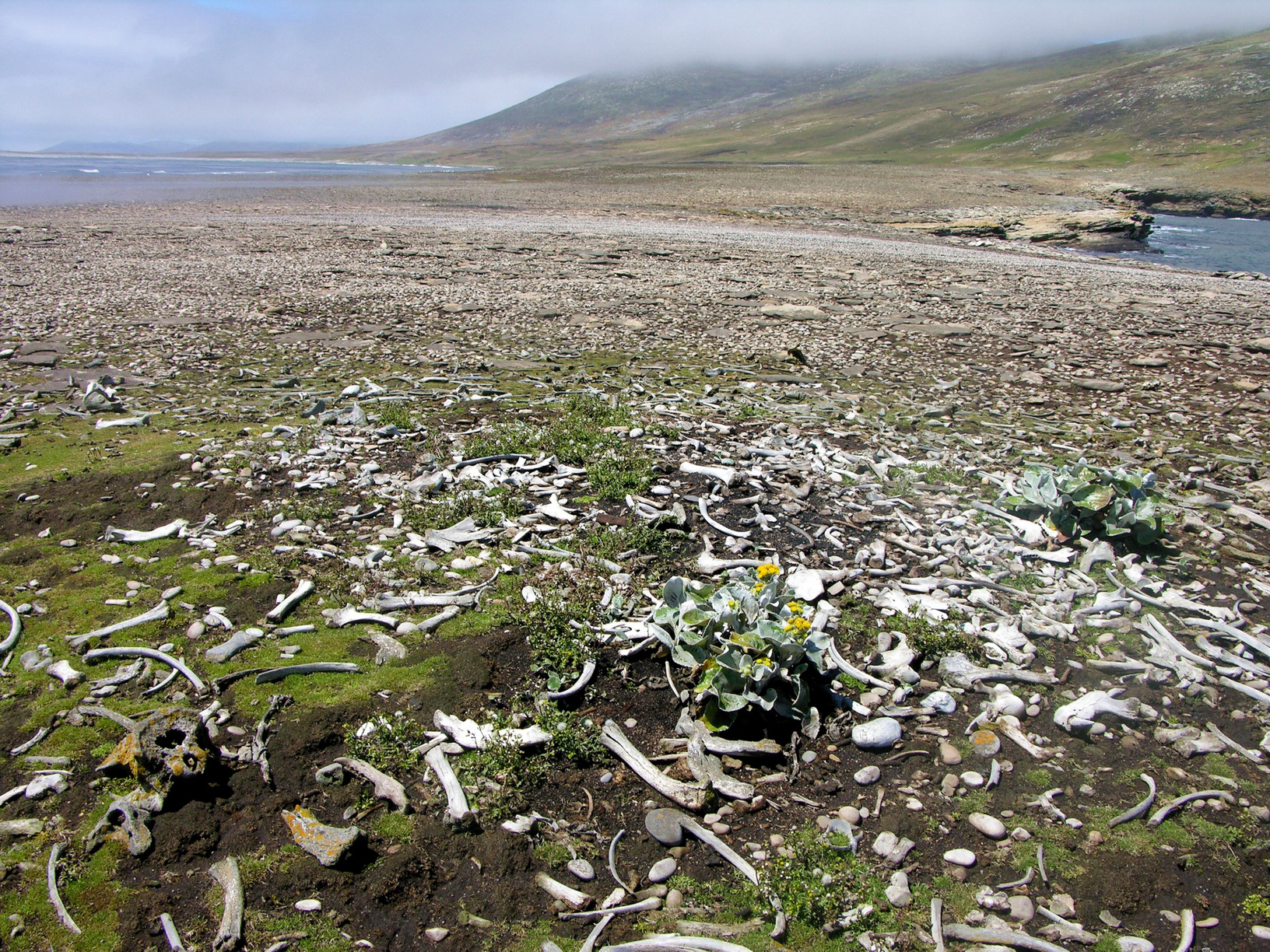
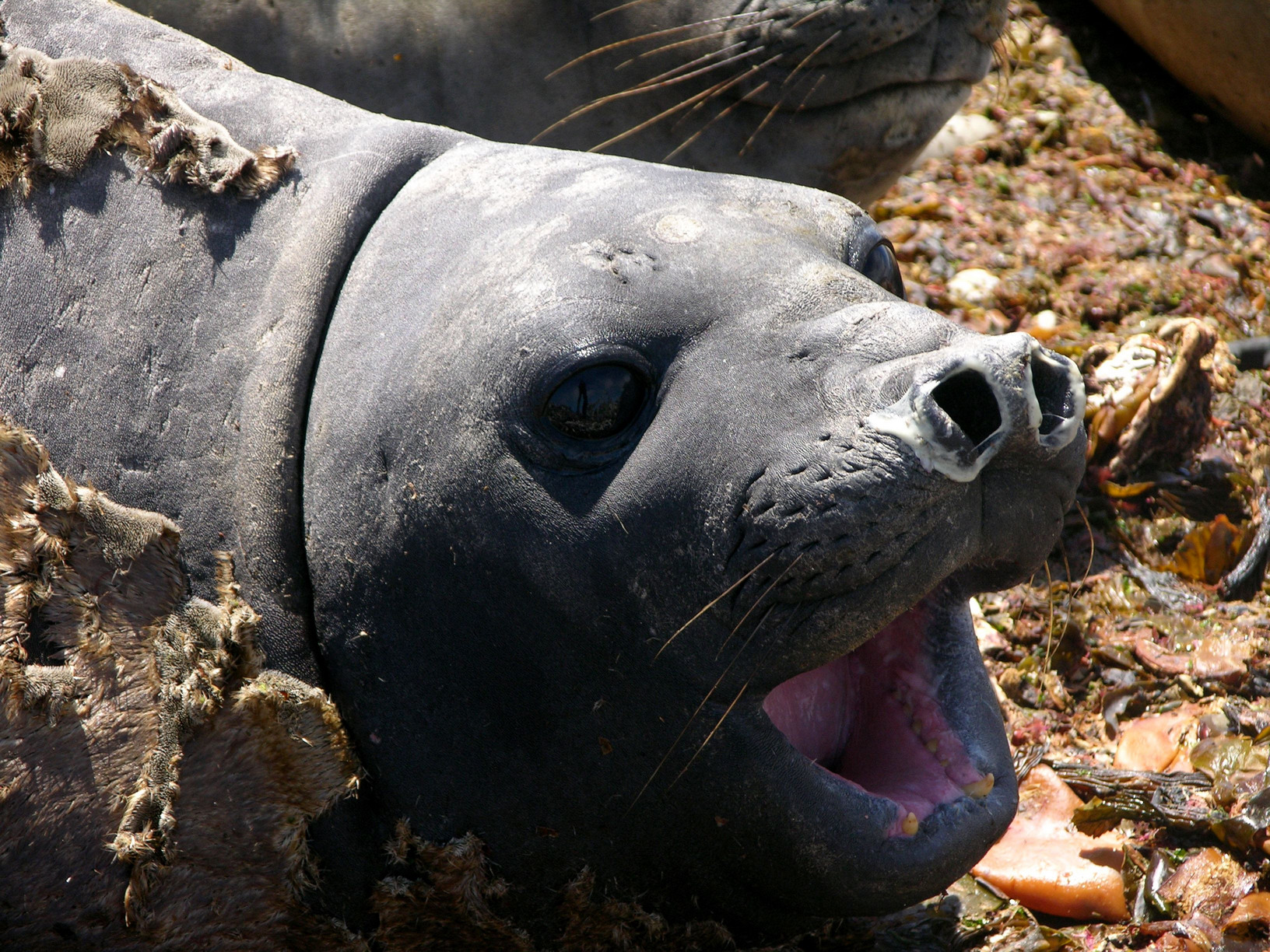
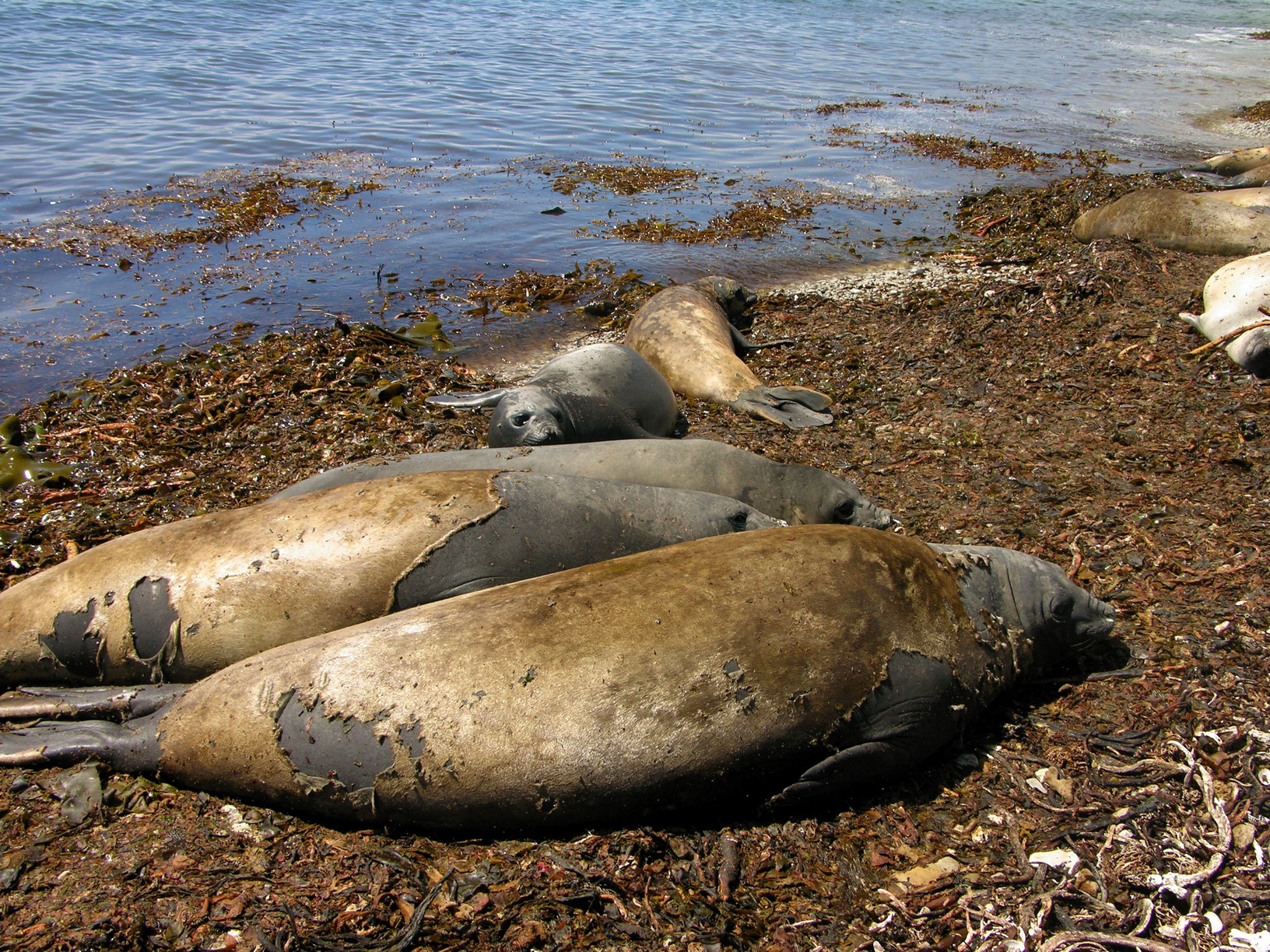
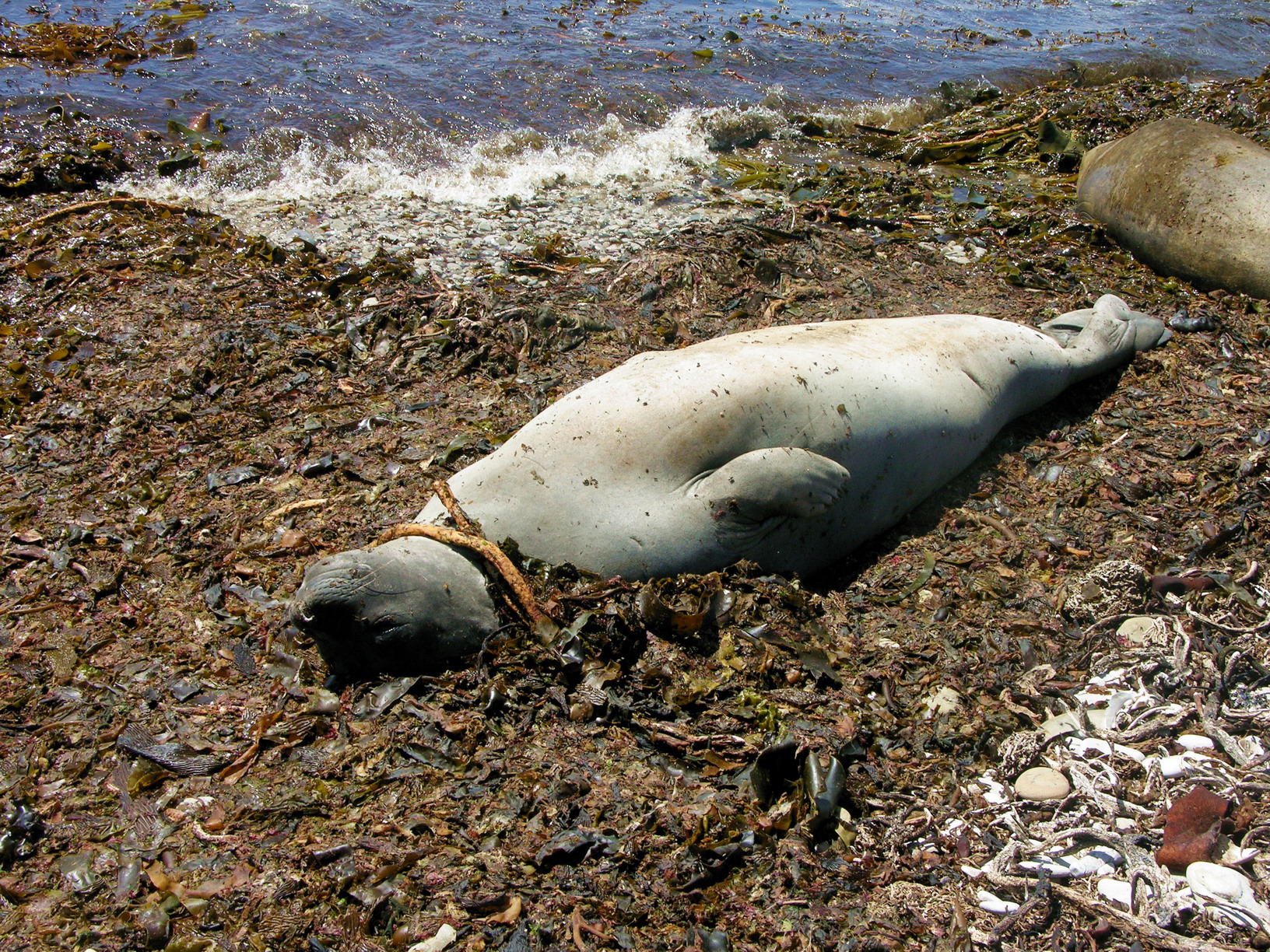
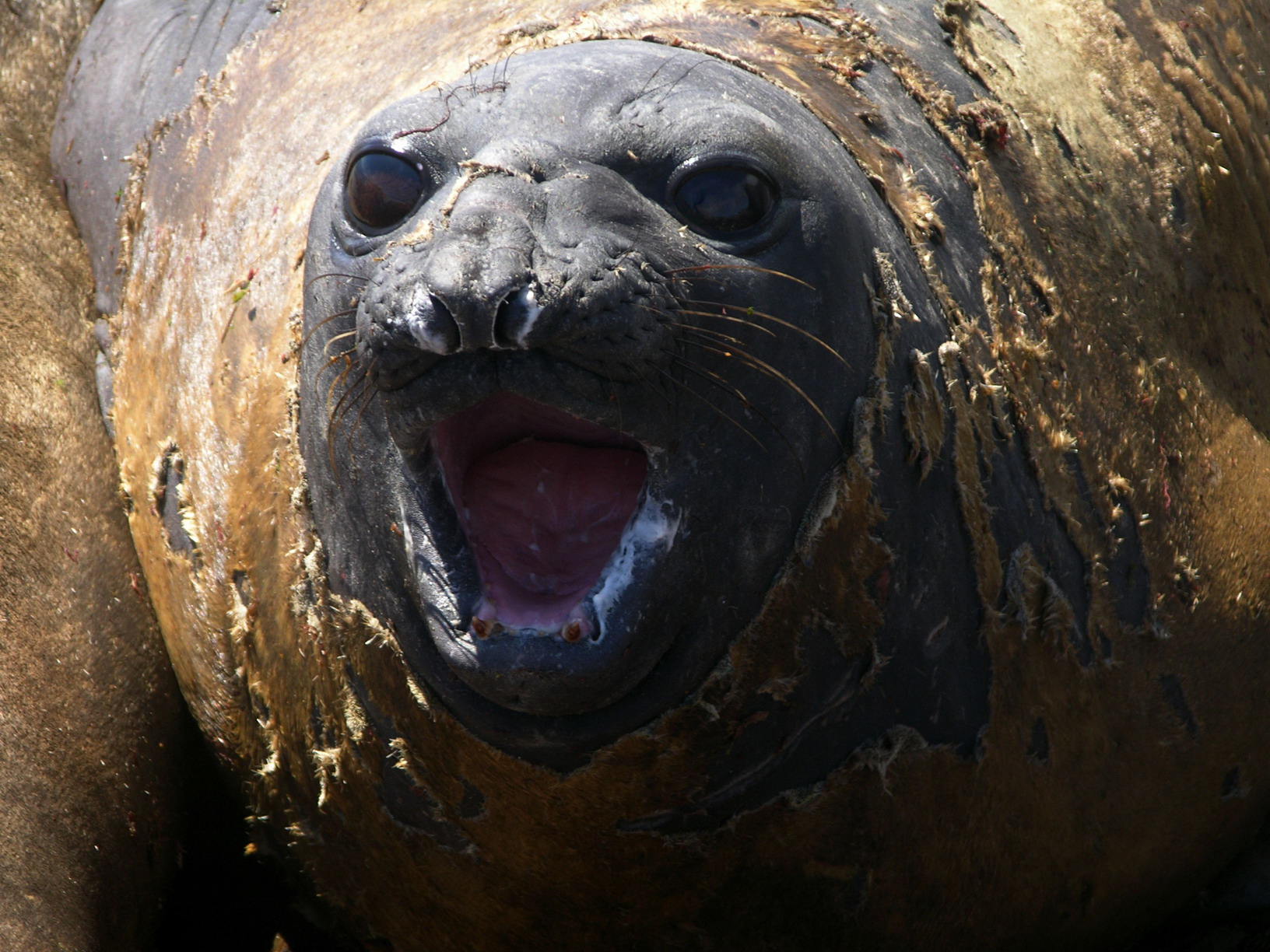
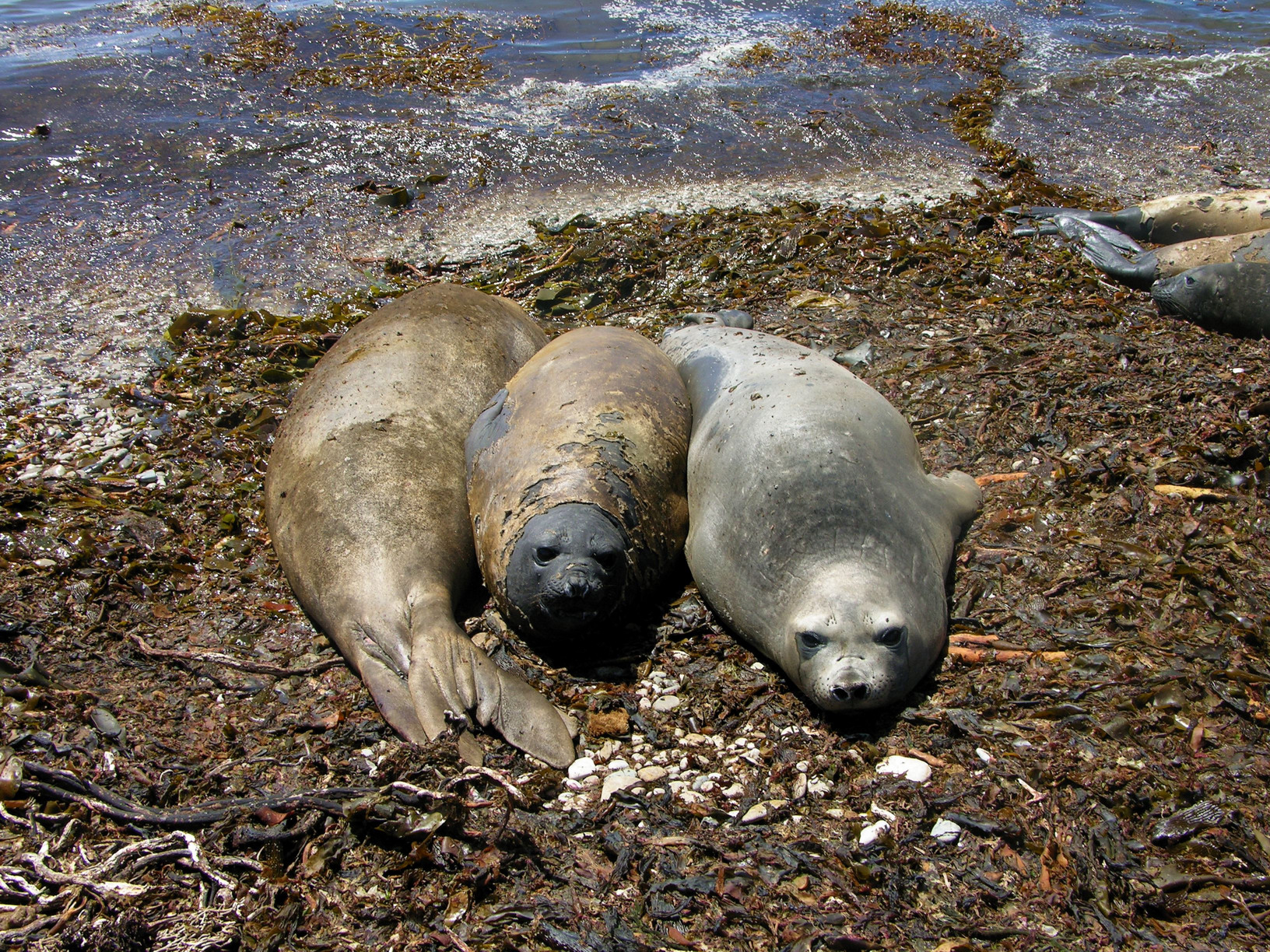
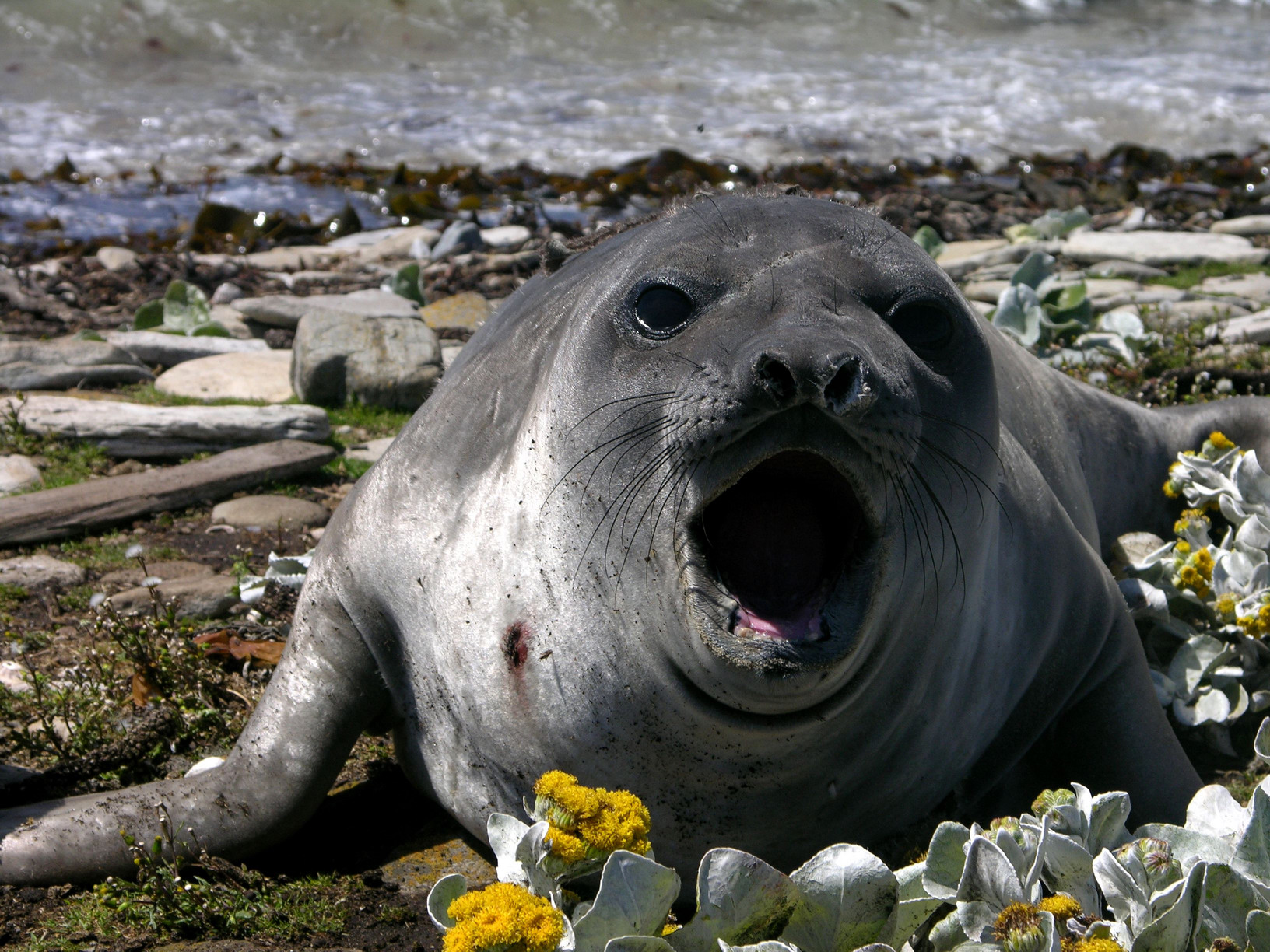
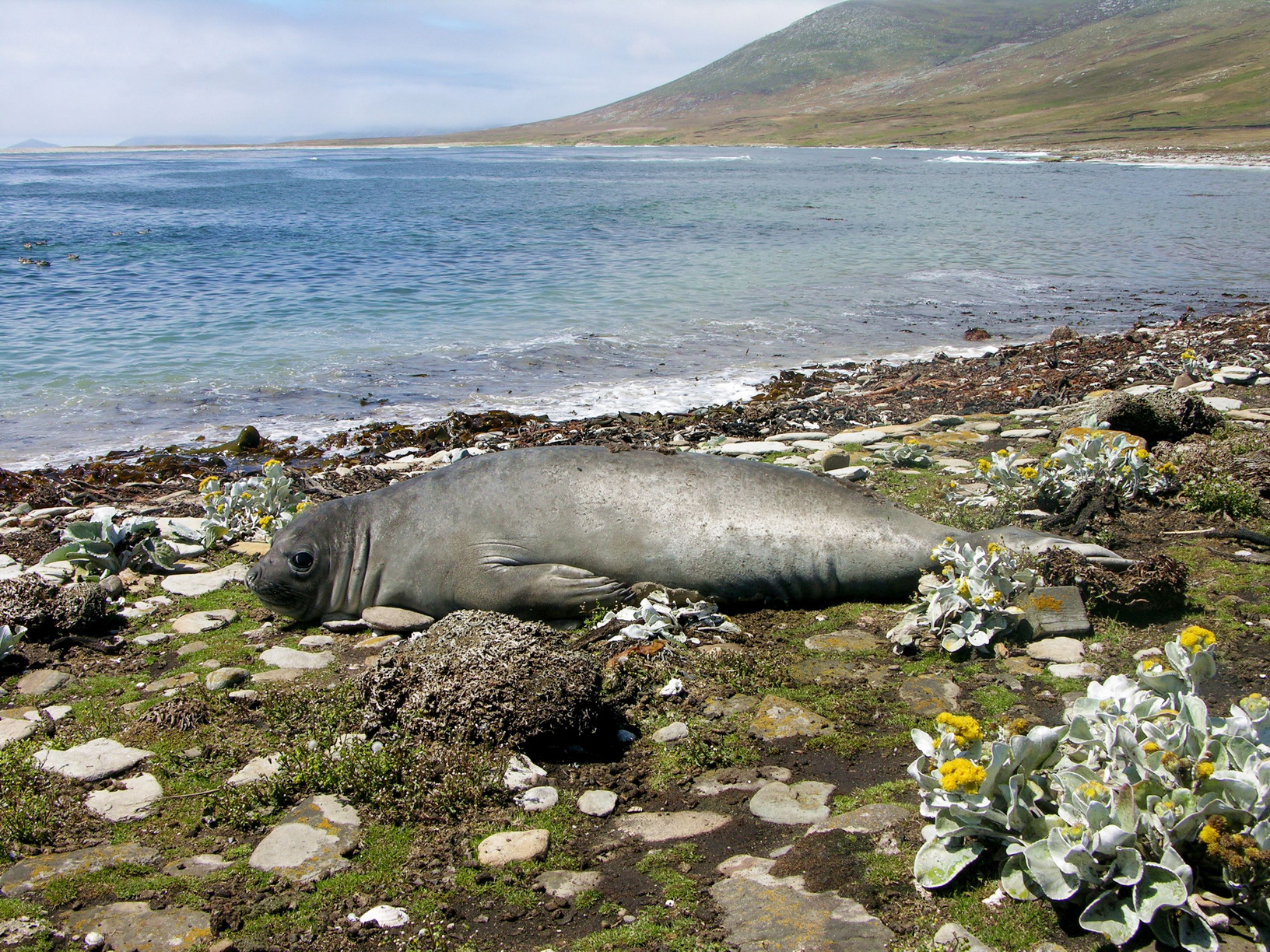
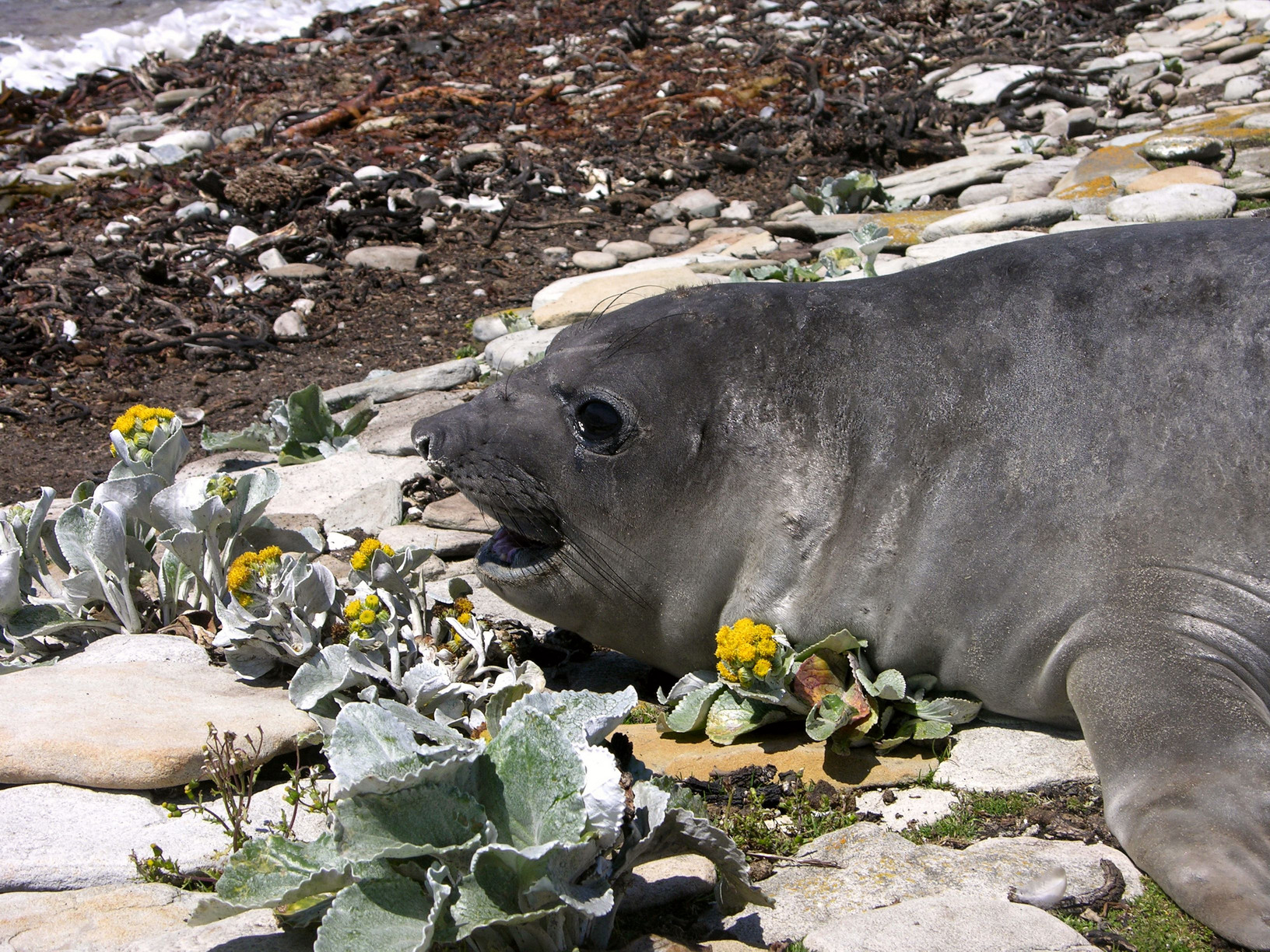
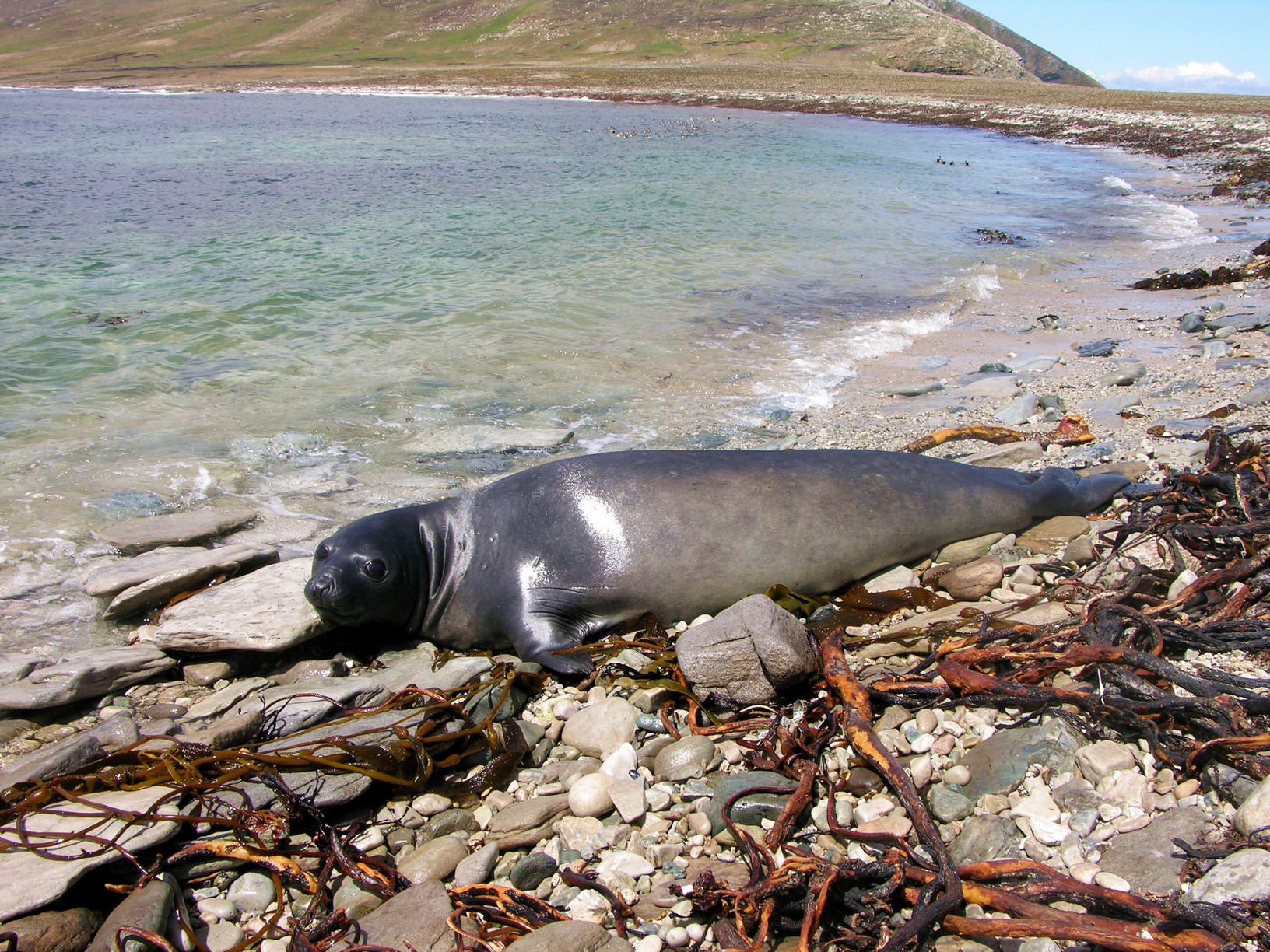
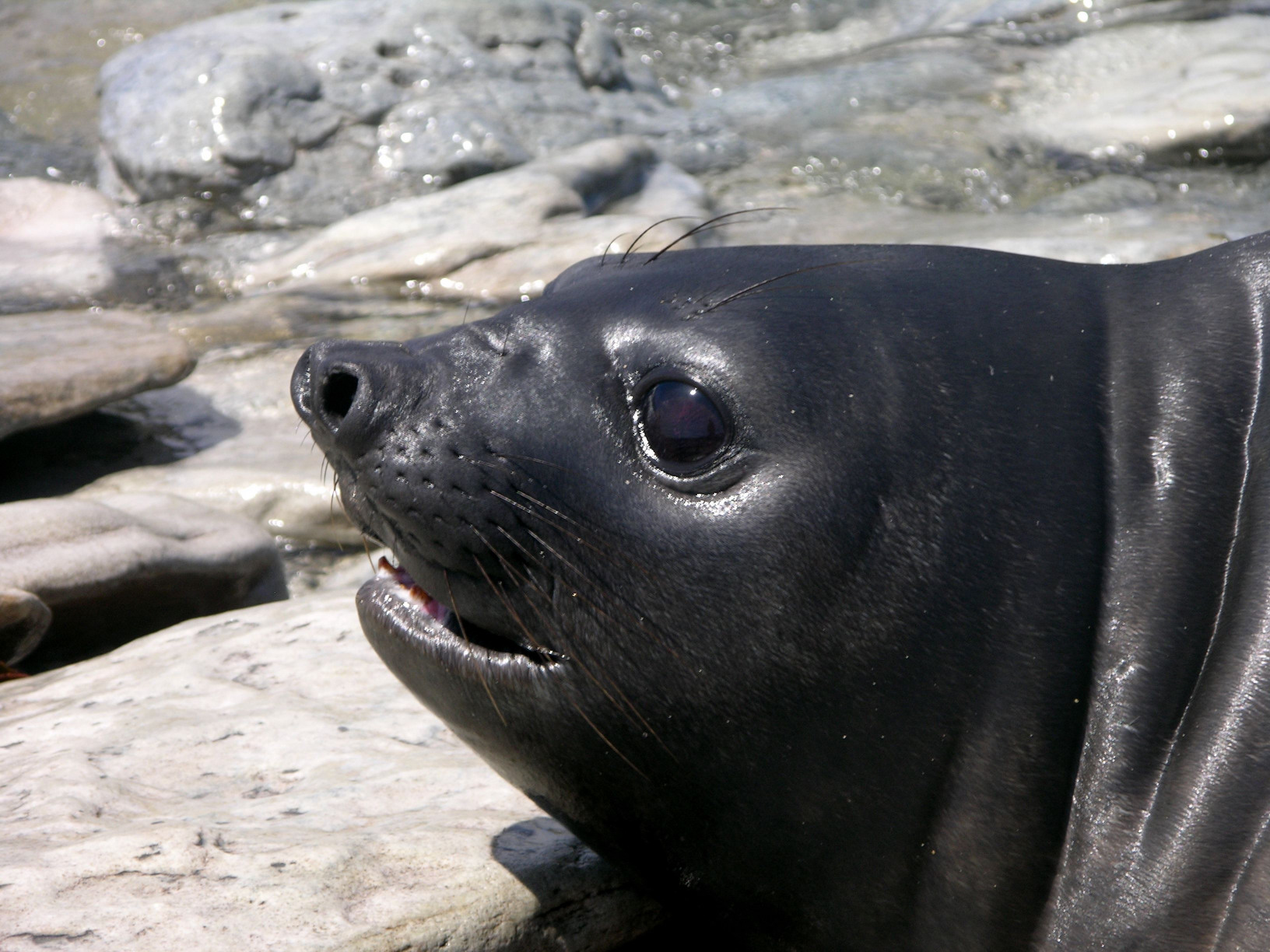
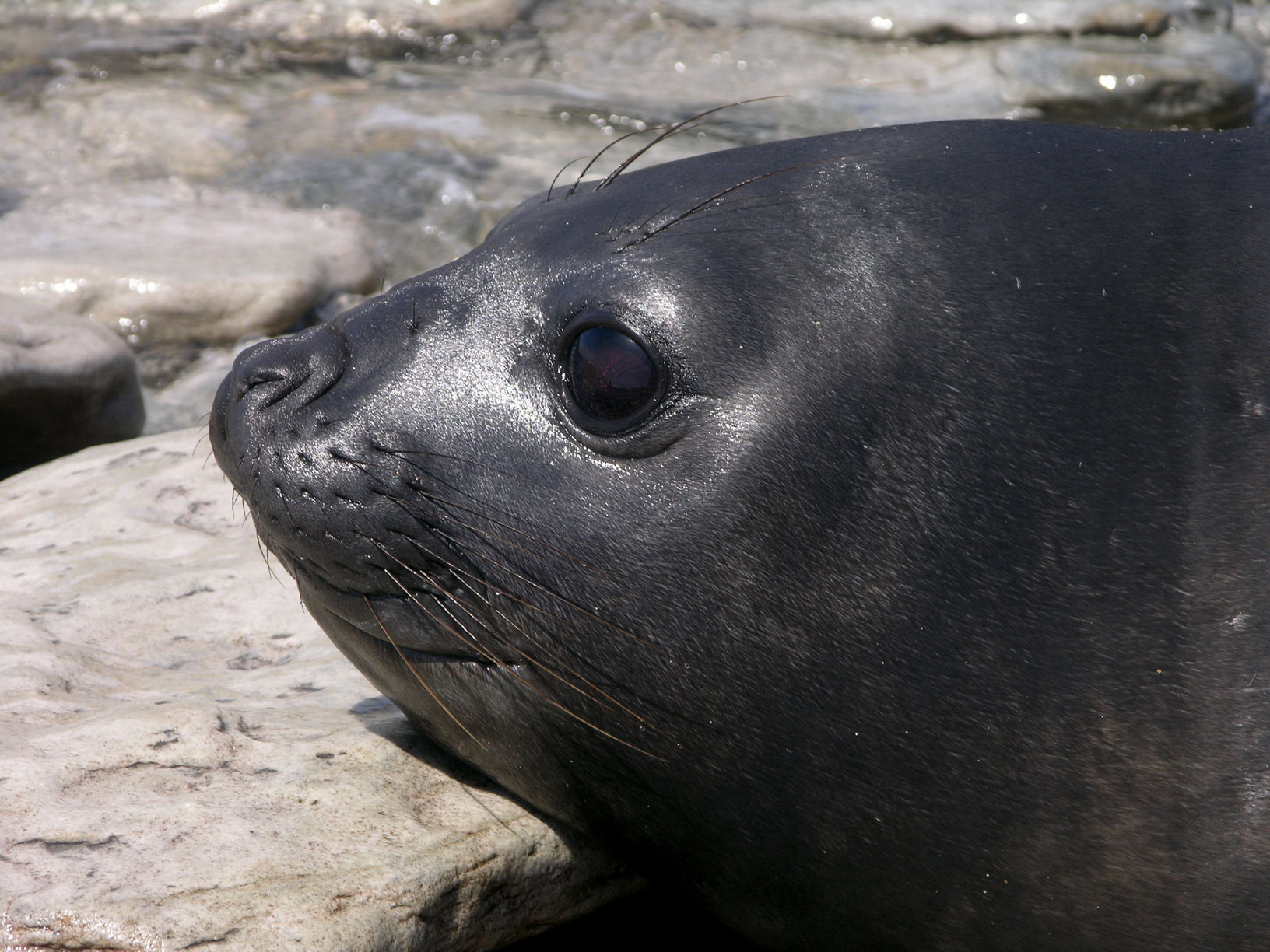
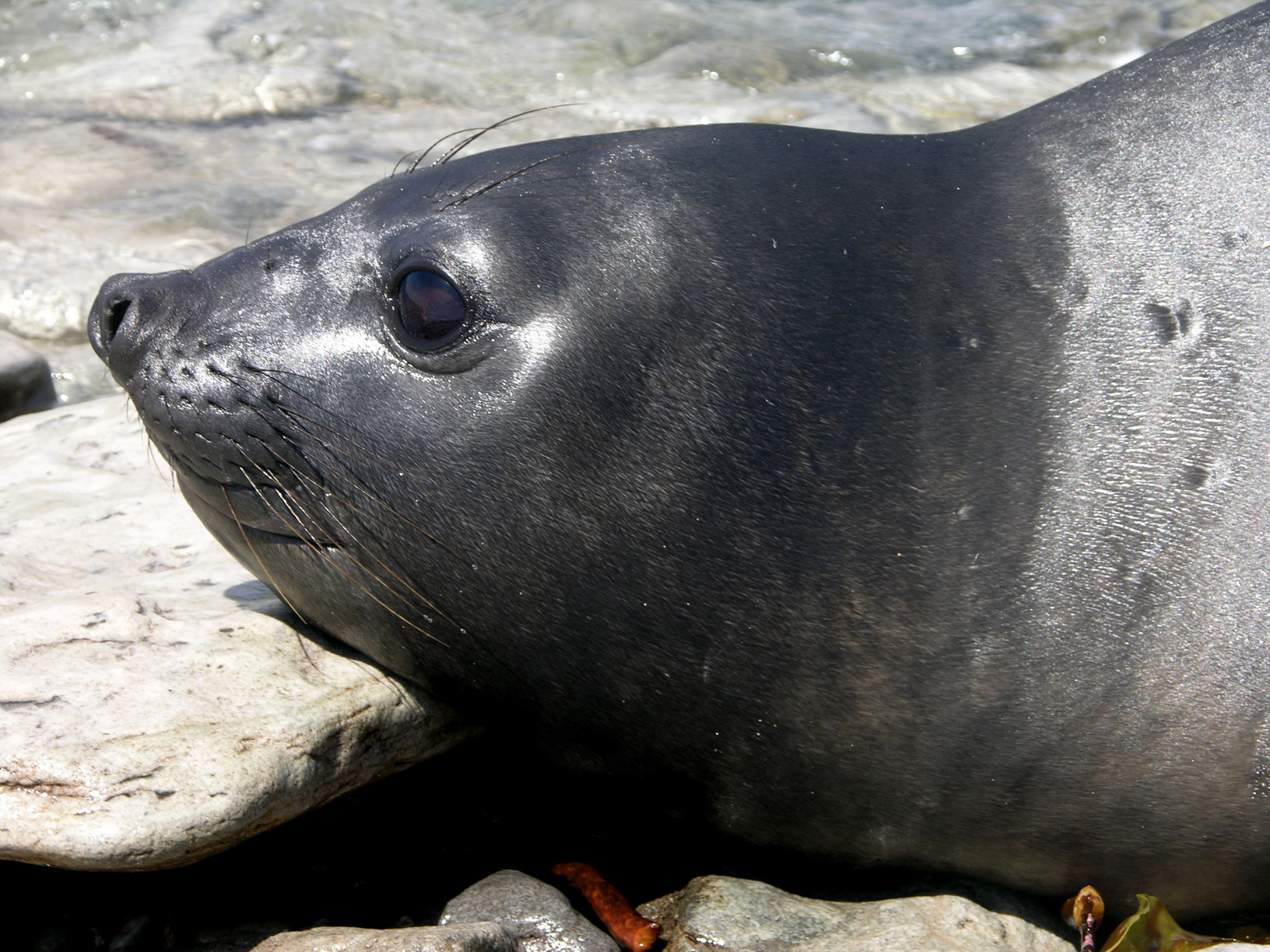
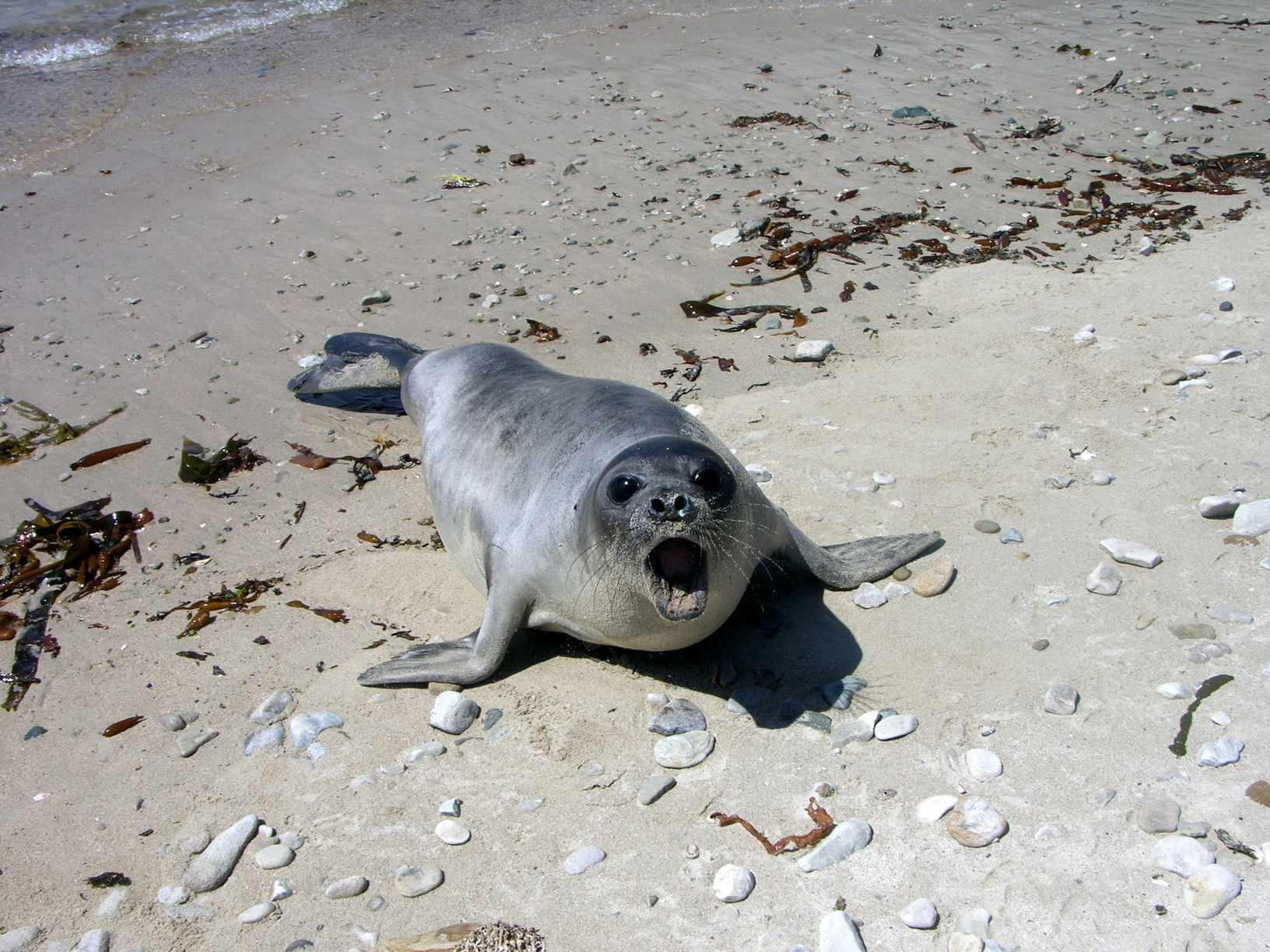
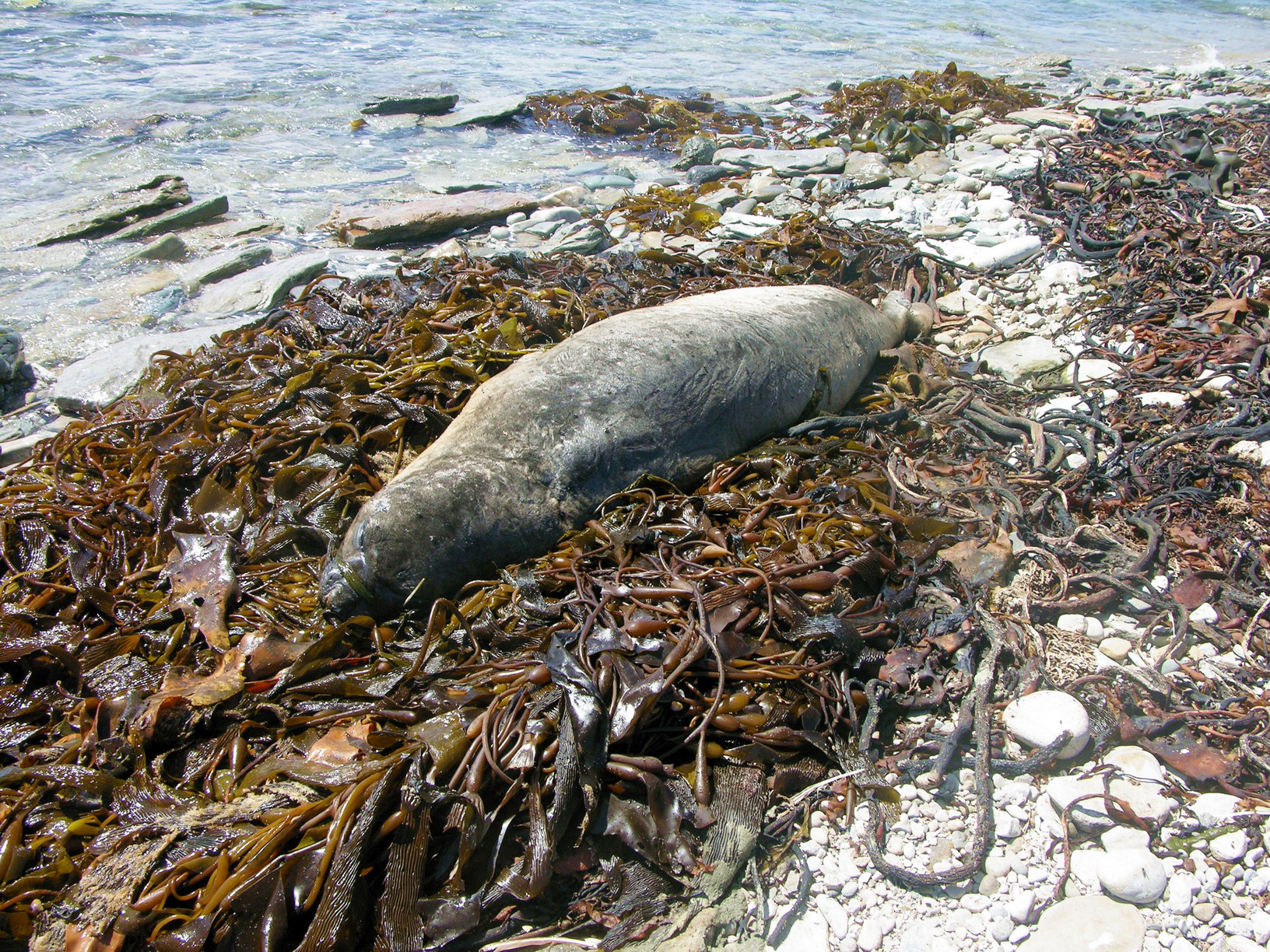
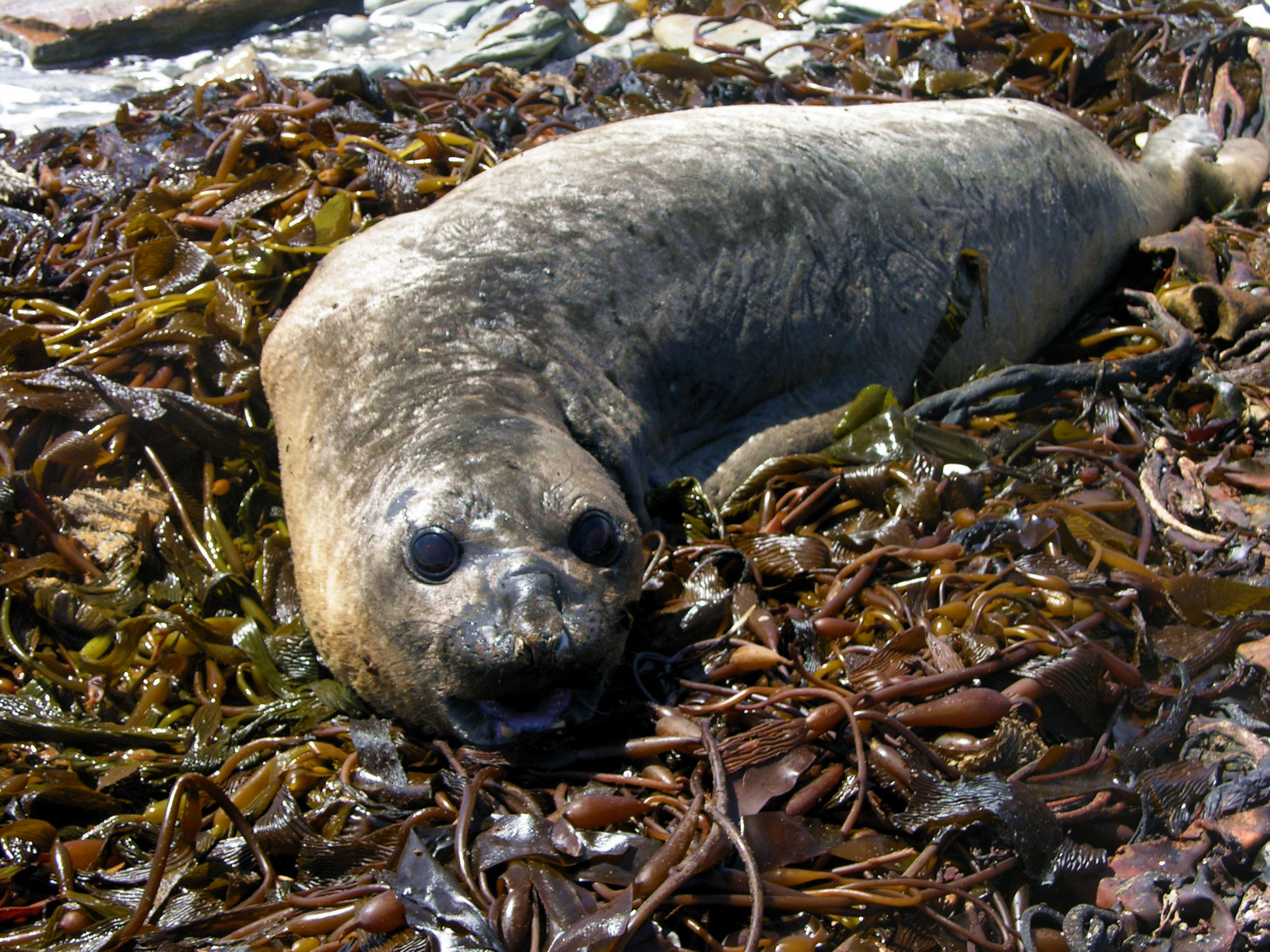
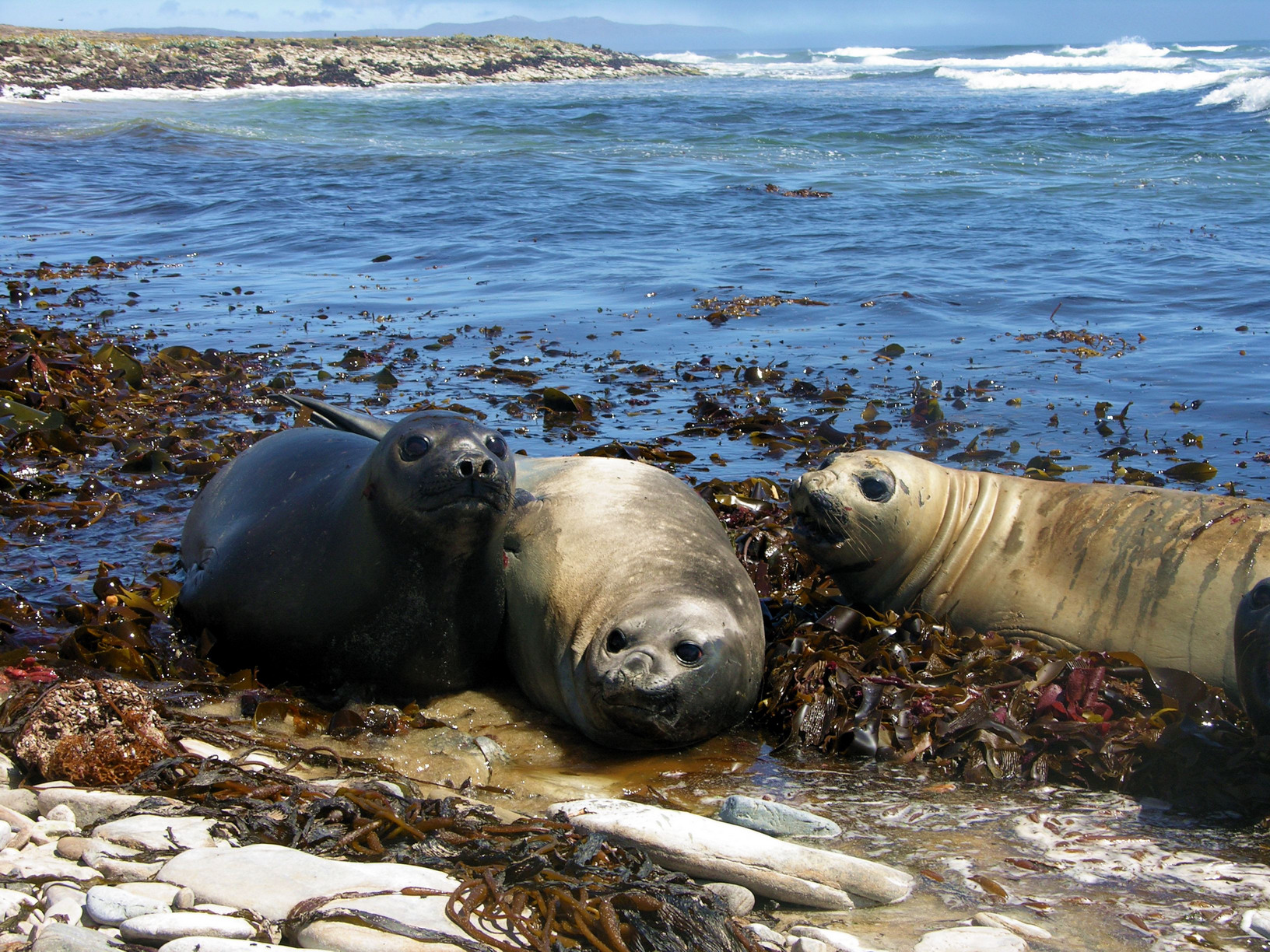
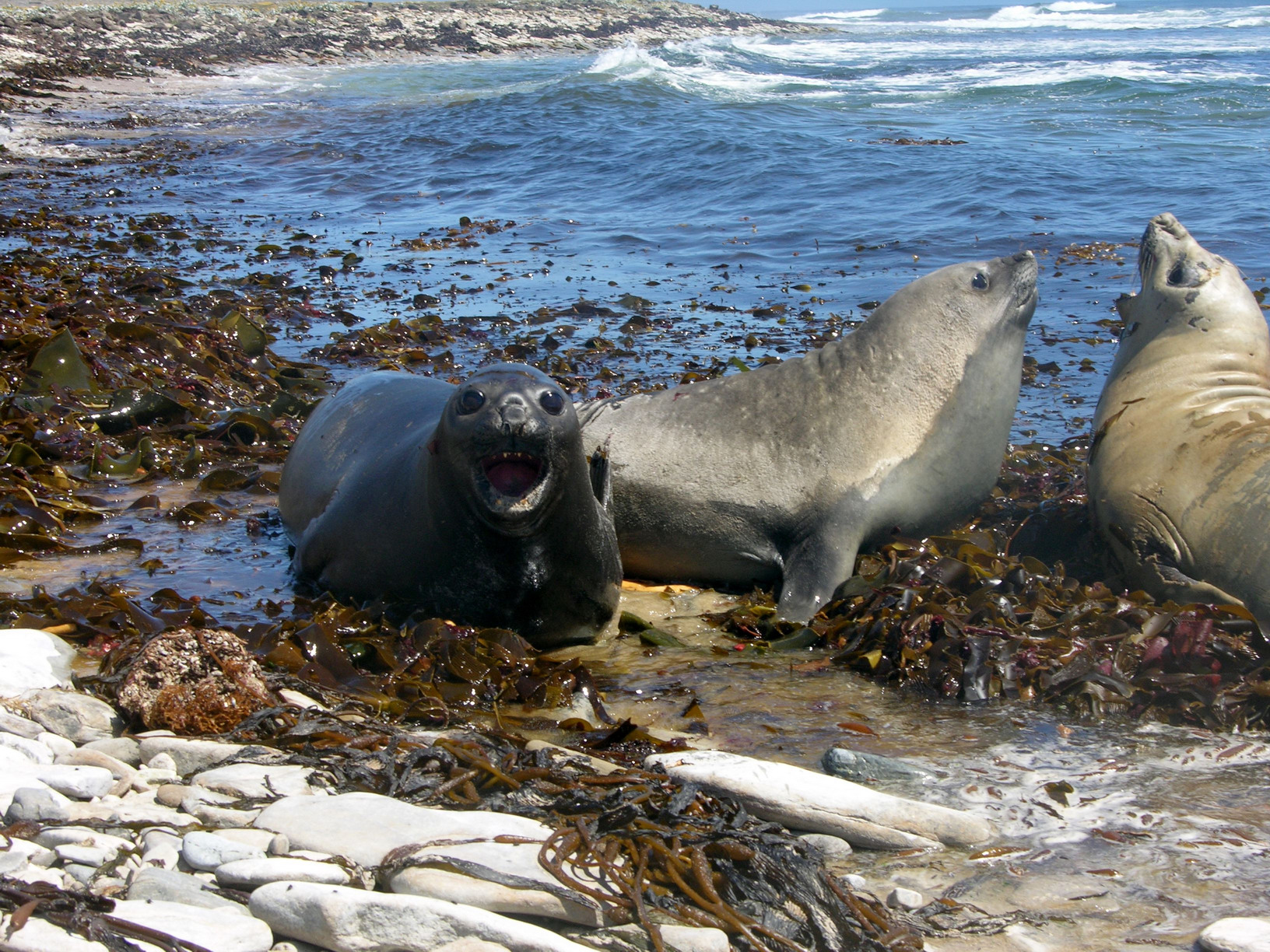
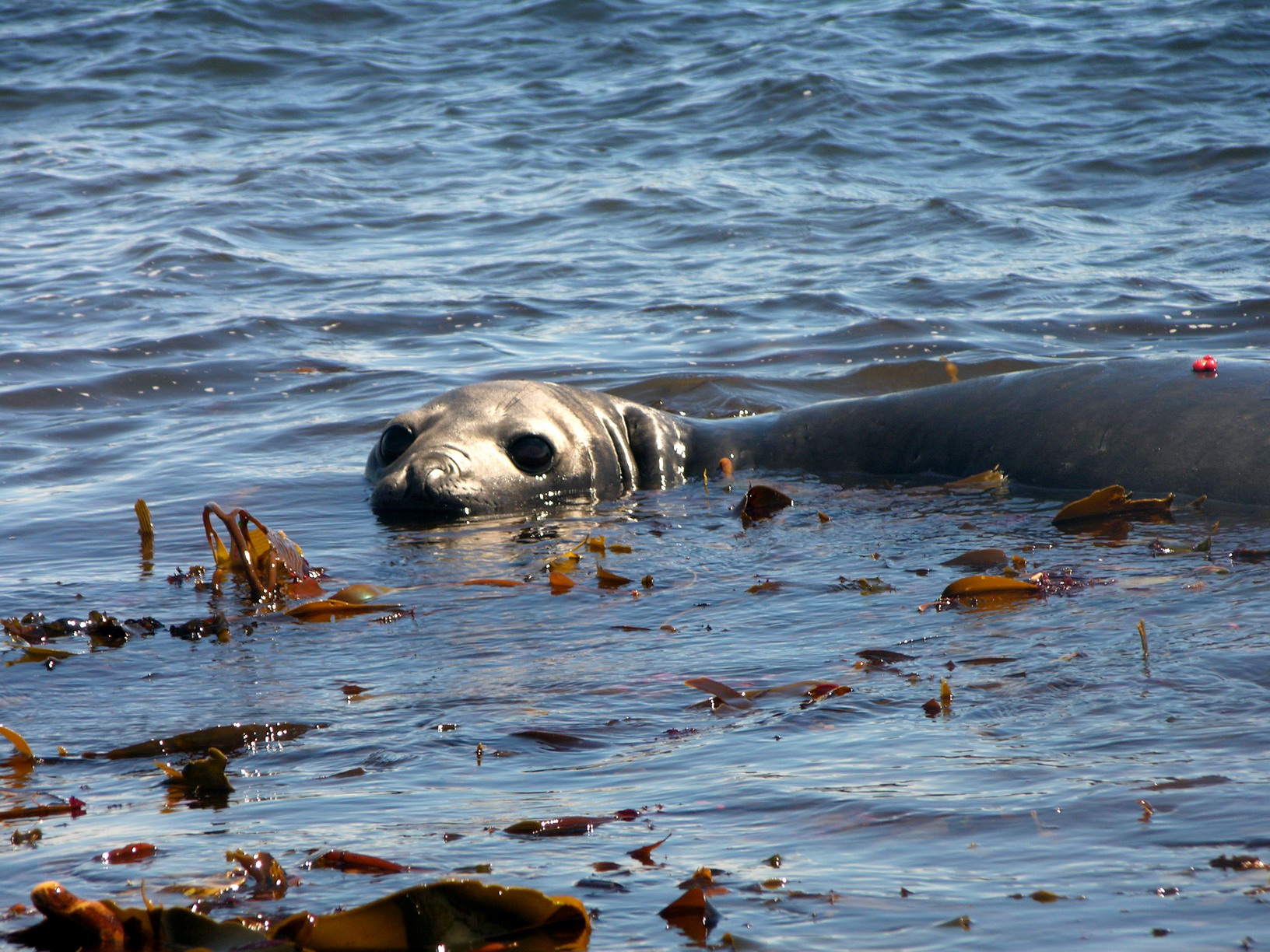
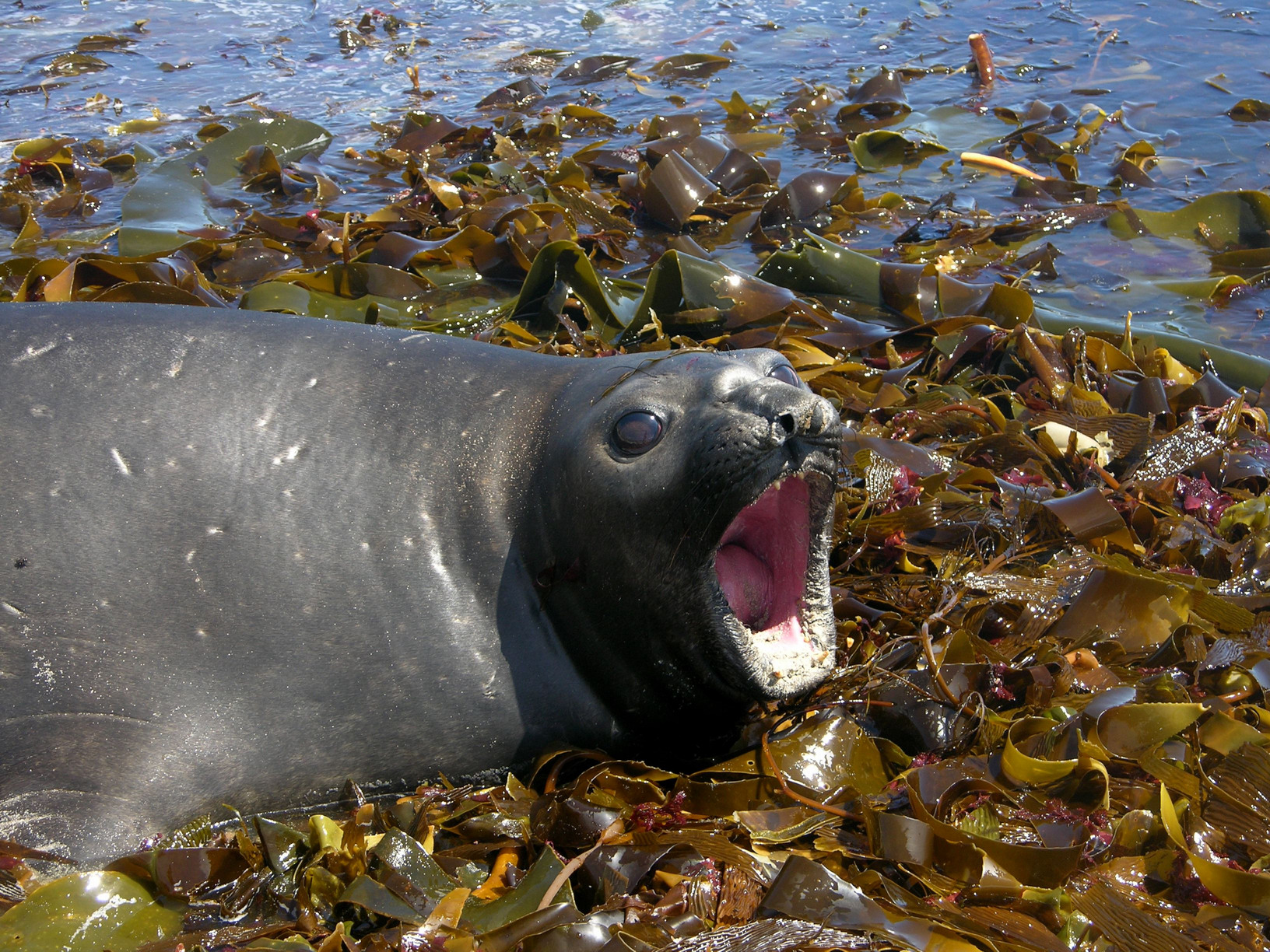
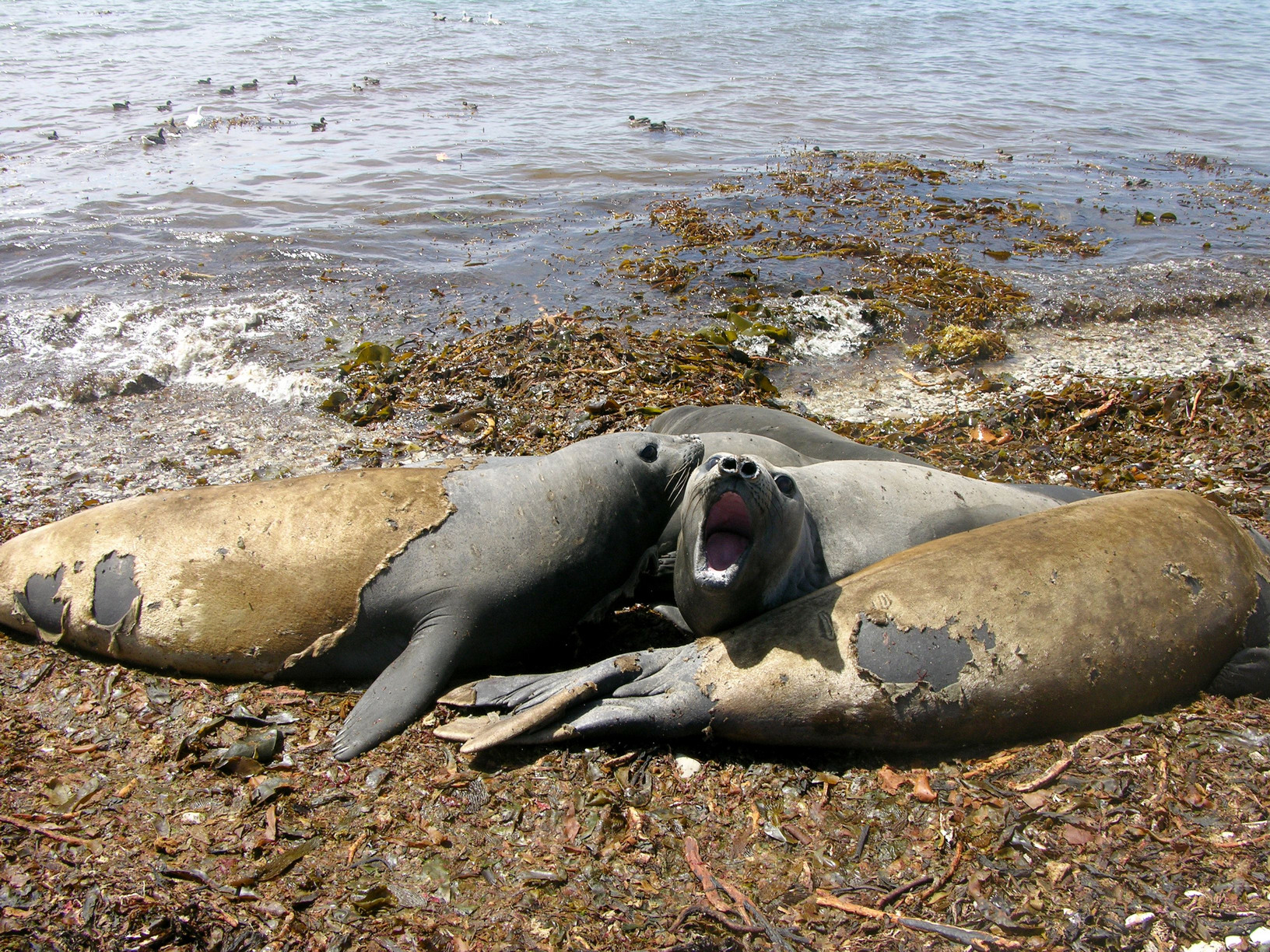
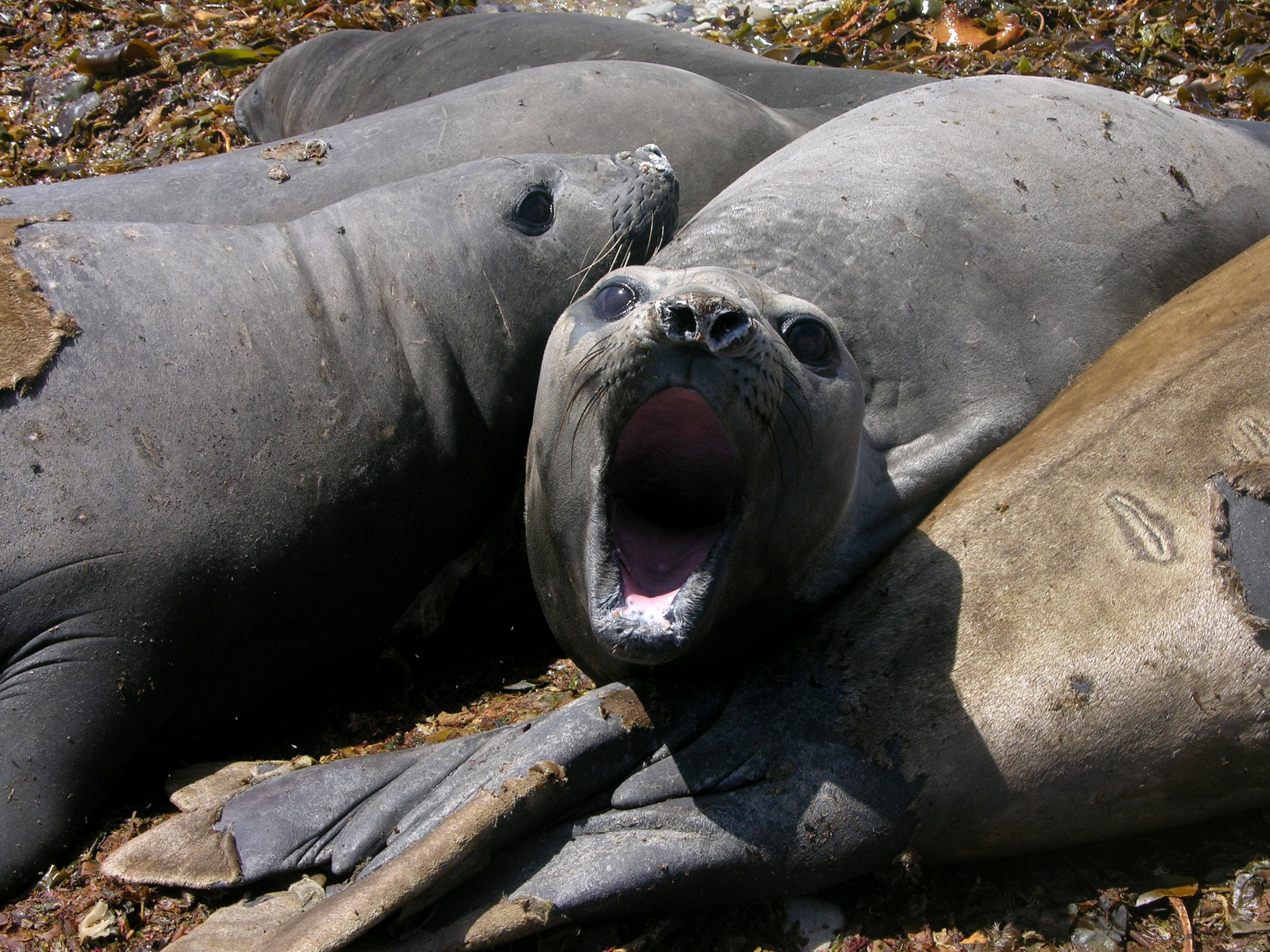
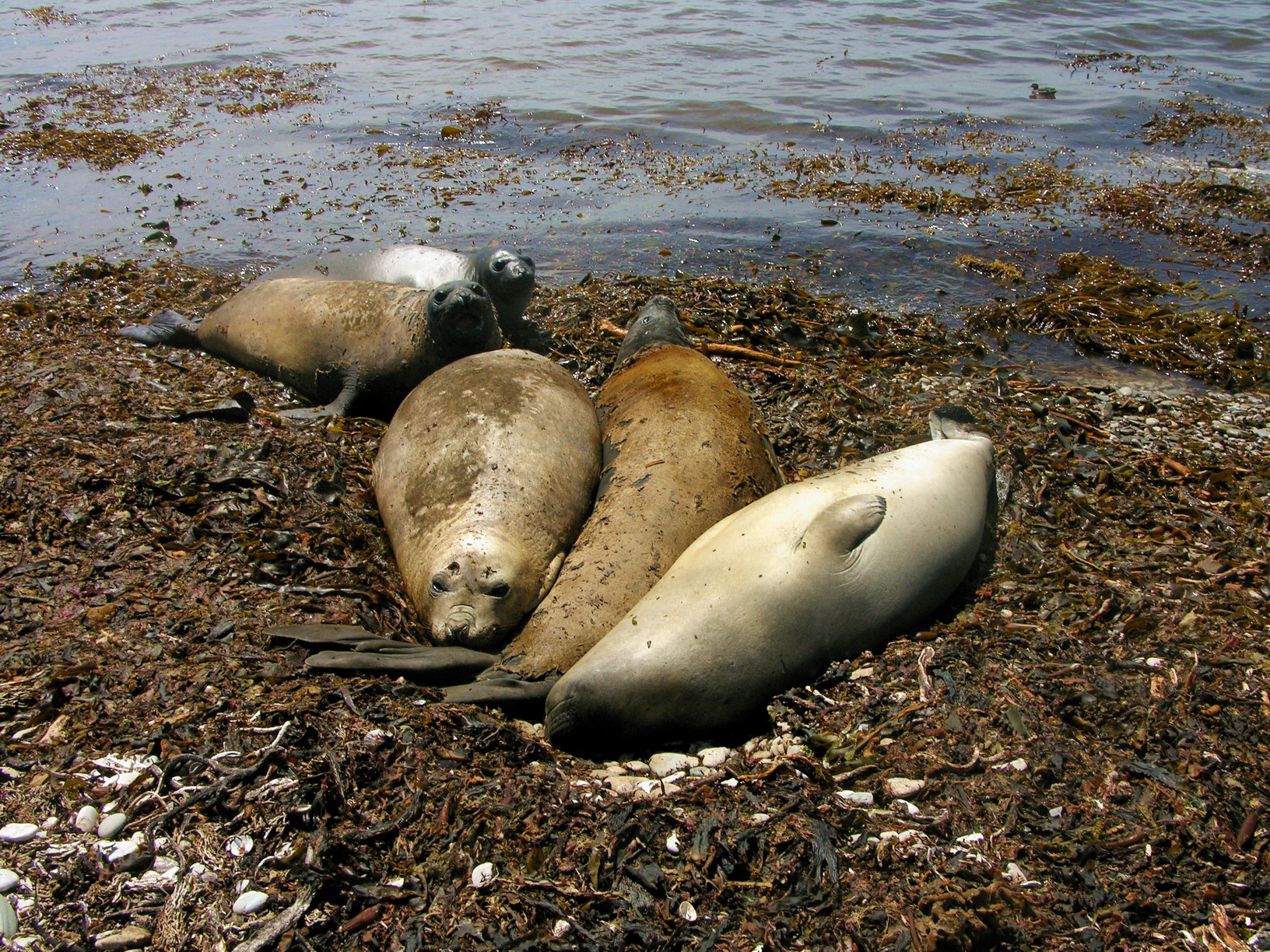
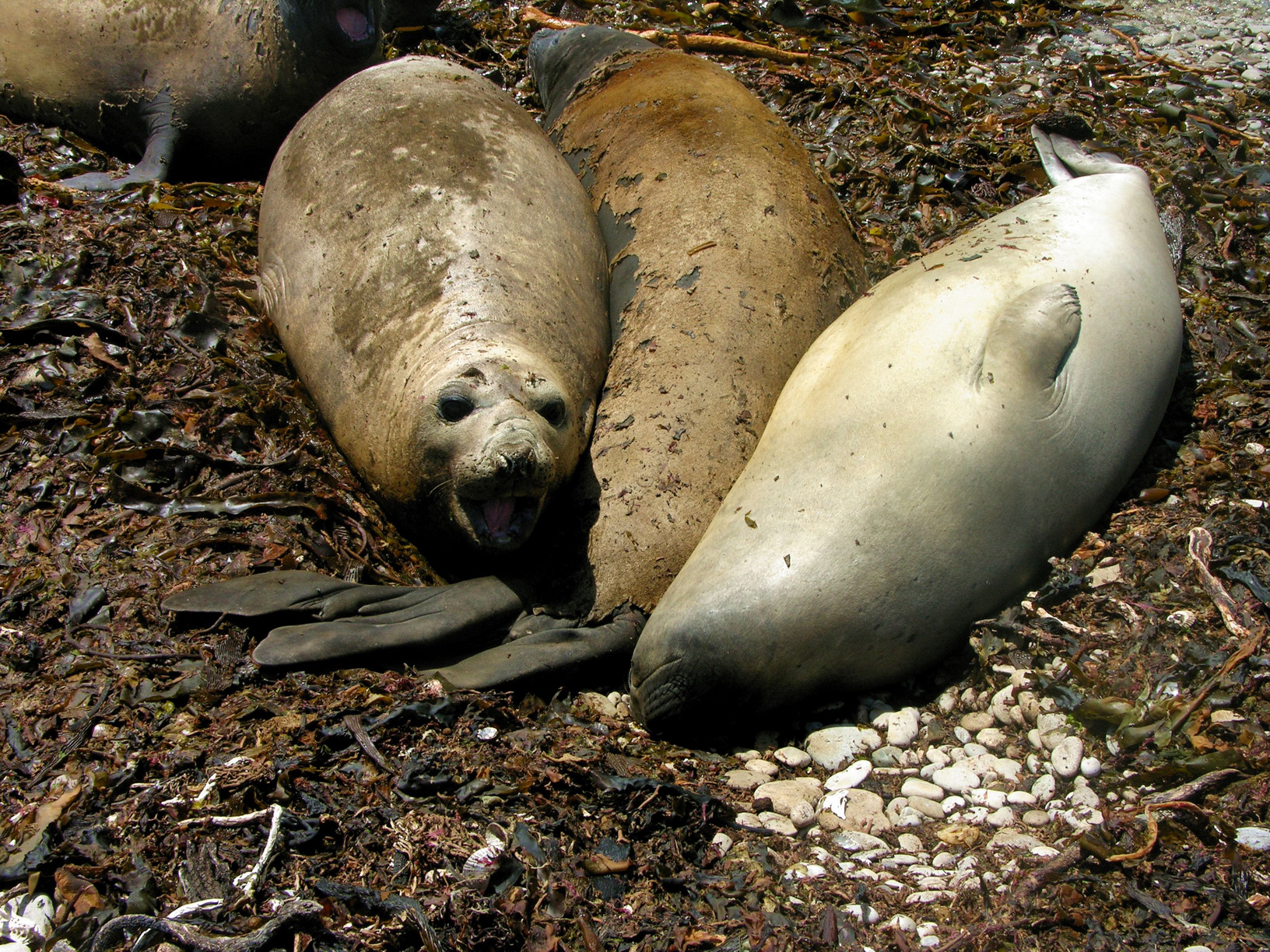
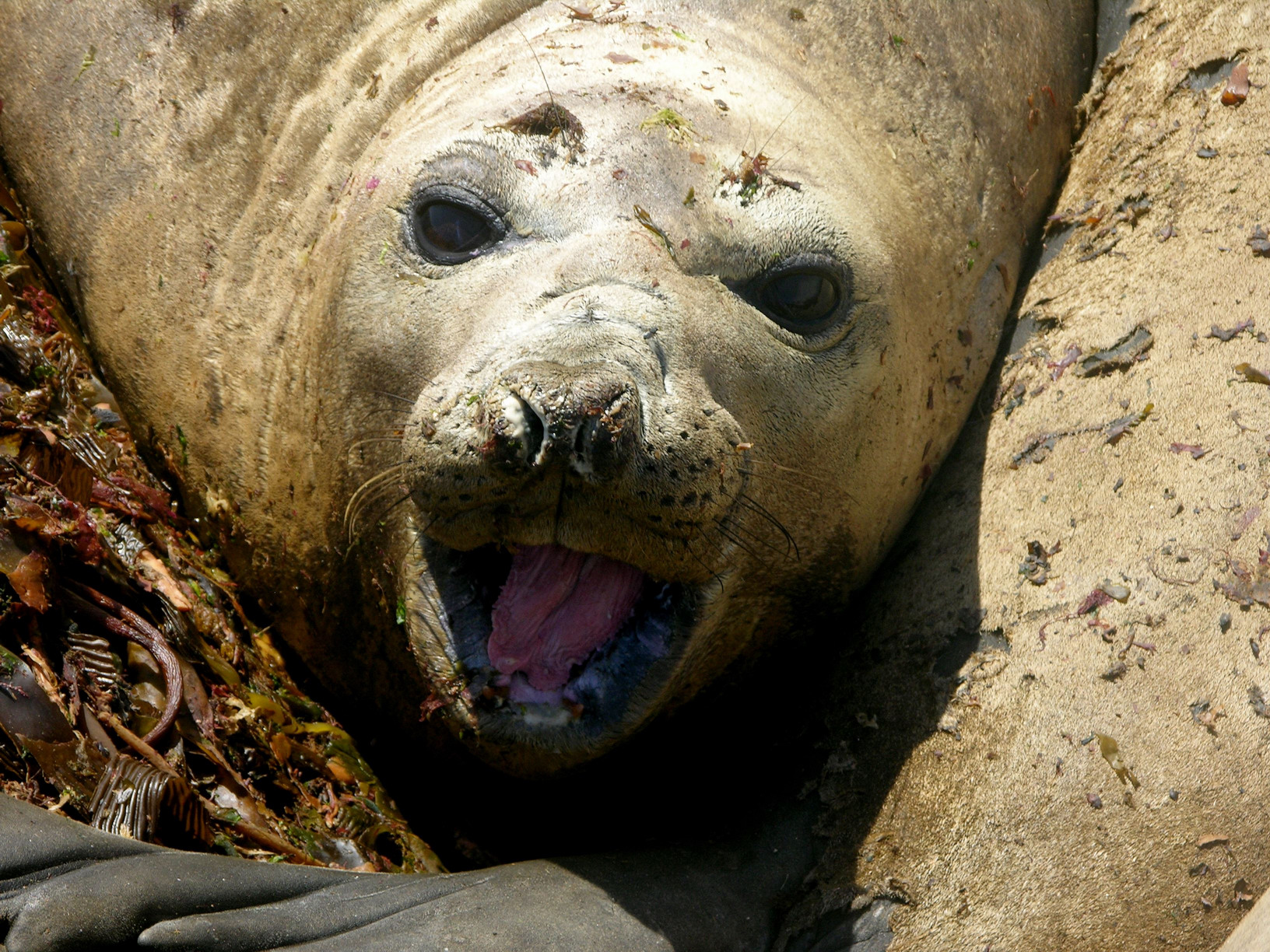
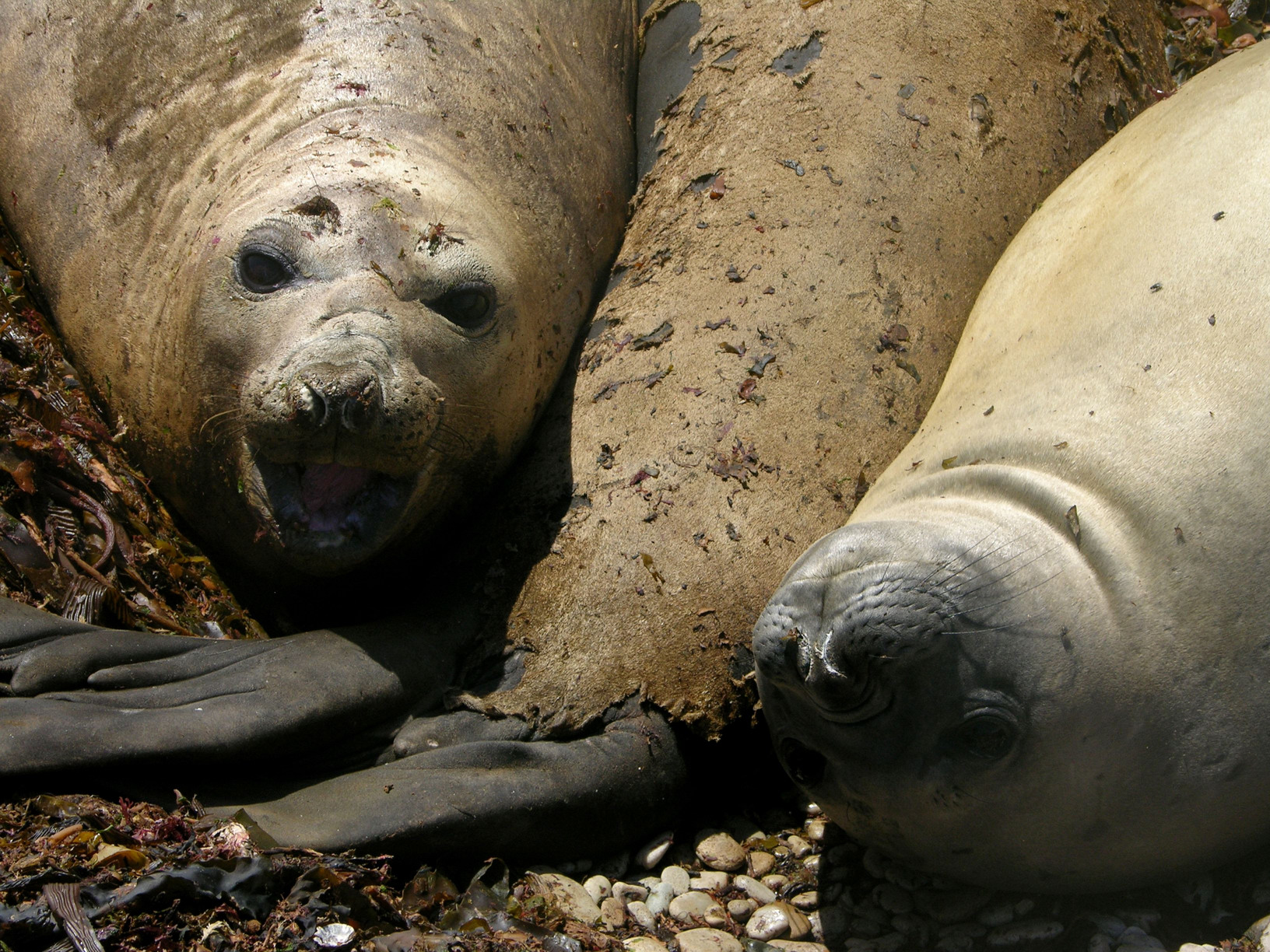
They can, of course, only they're unimaginably lazy. So you can get within a metre. They'll give you a roar for form's sake but won't start running.
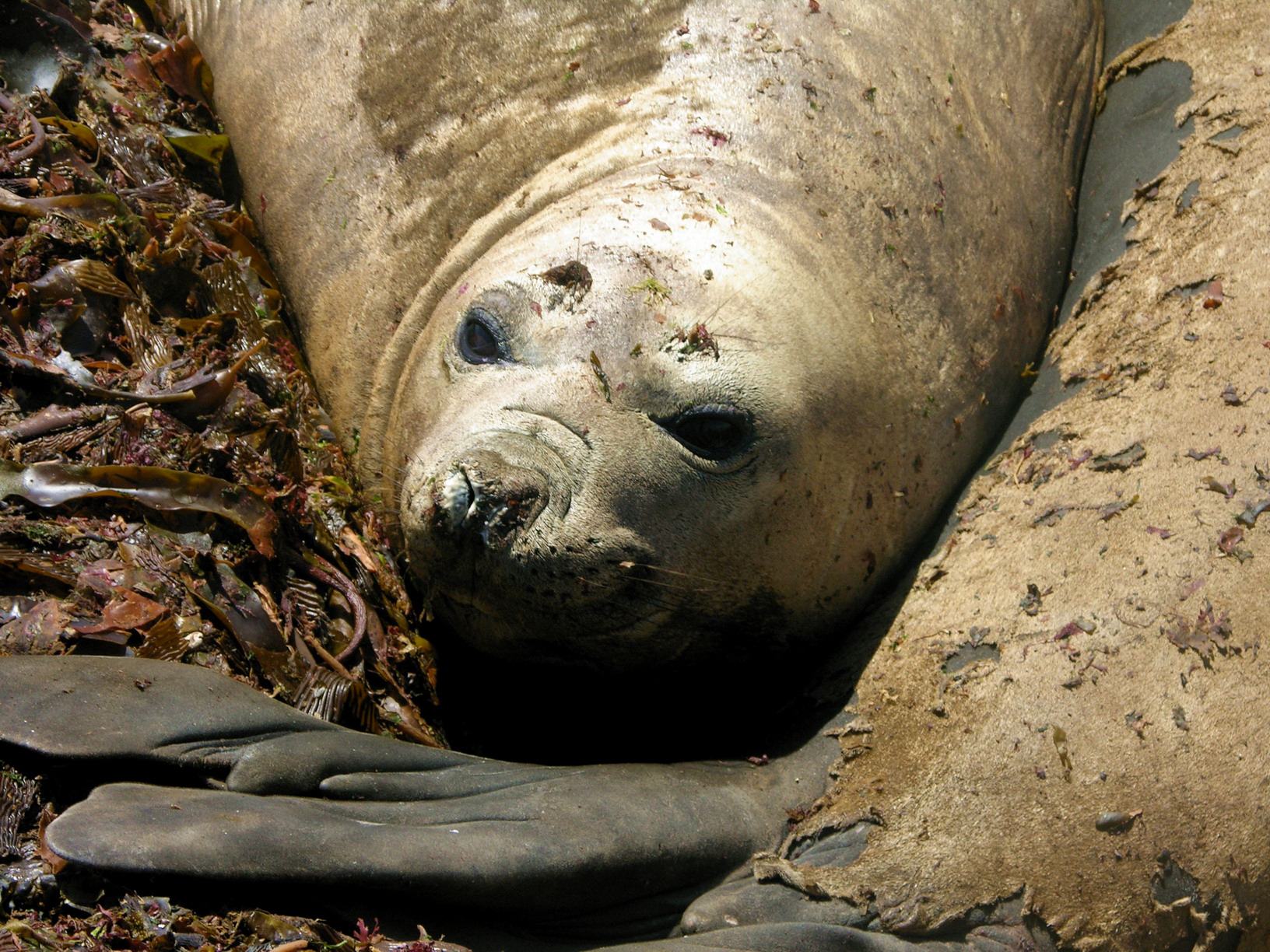
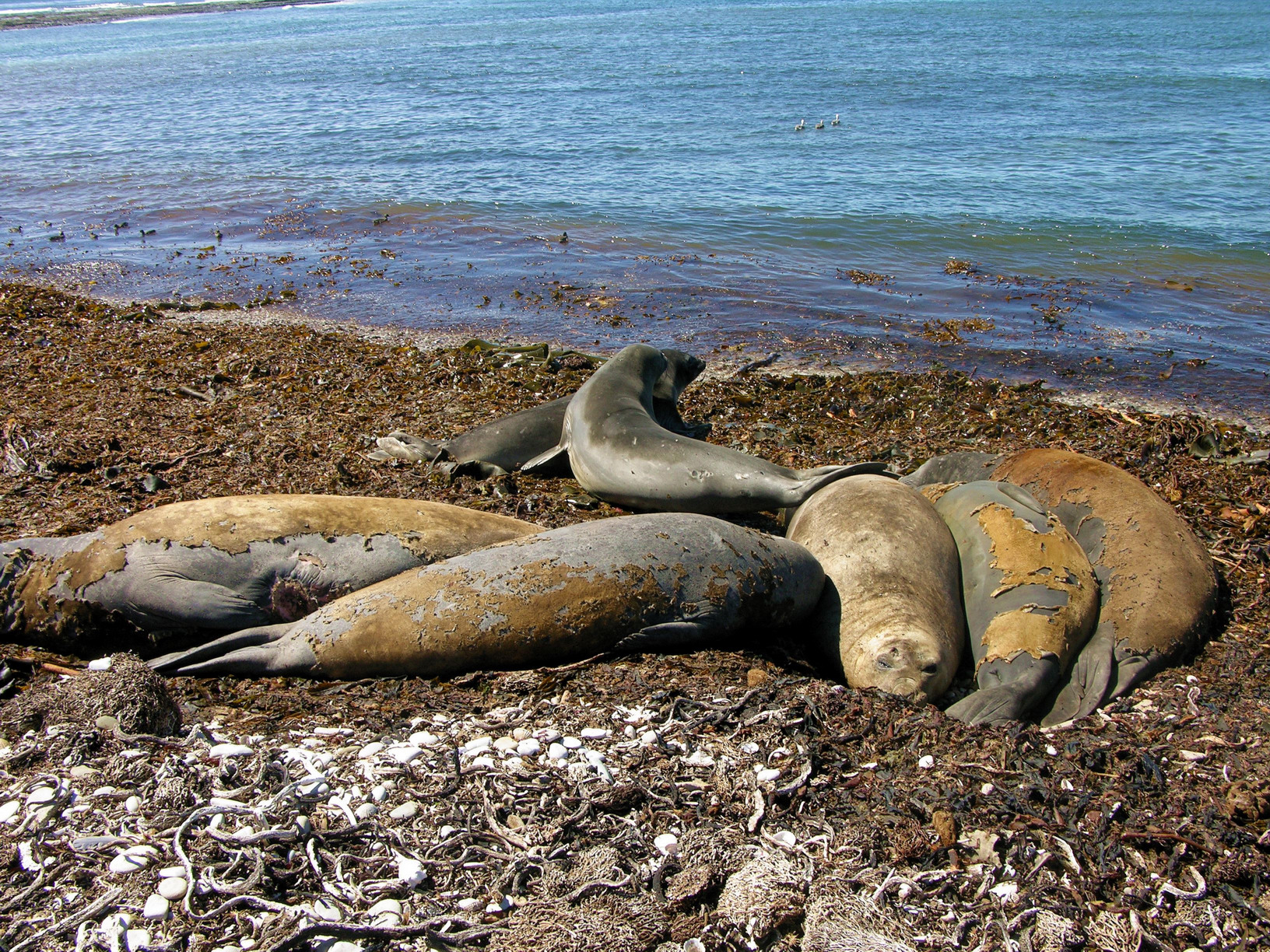
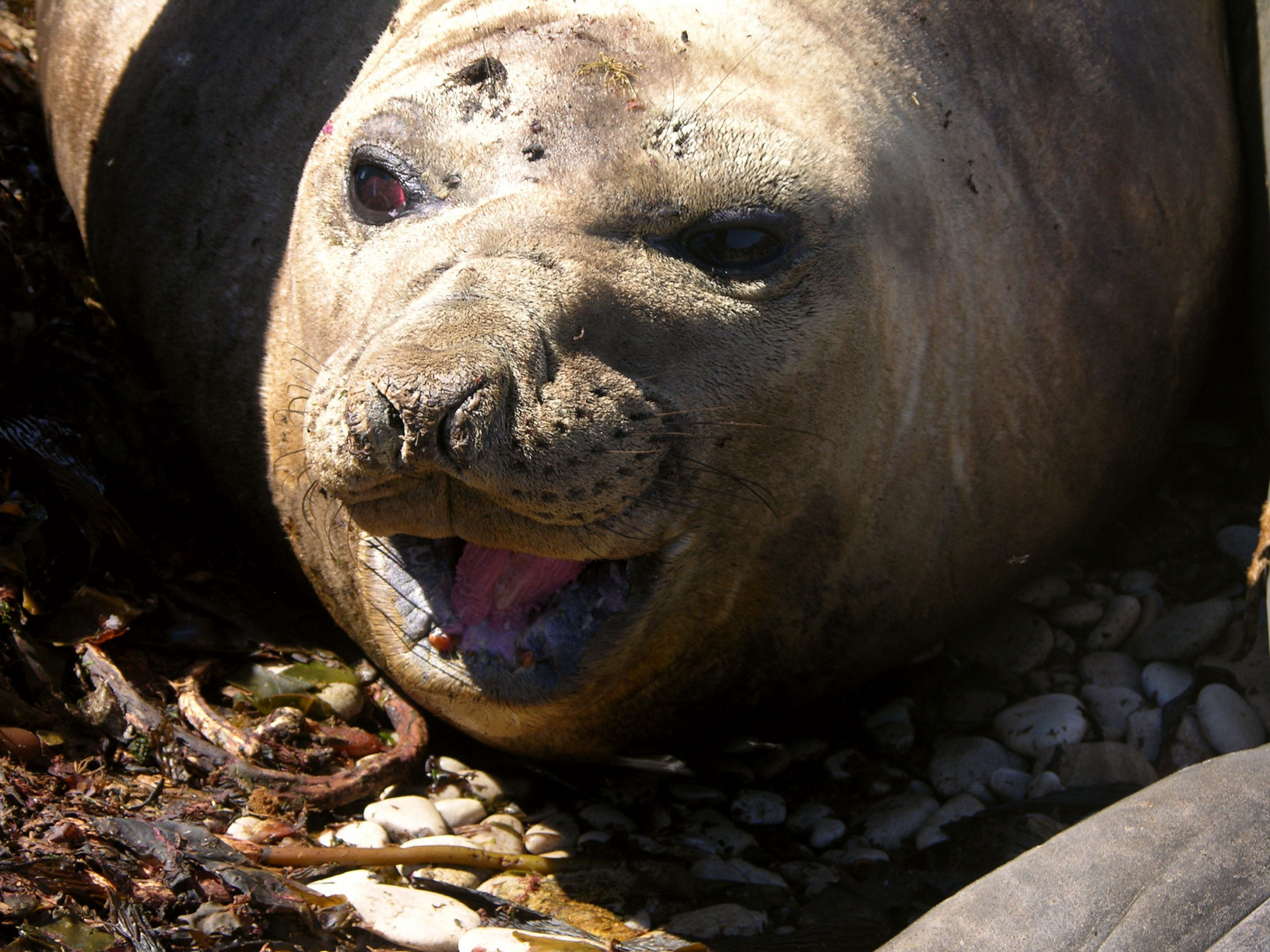
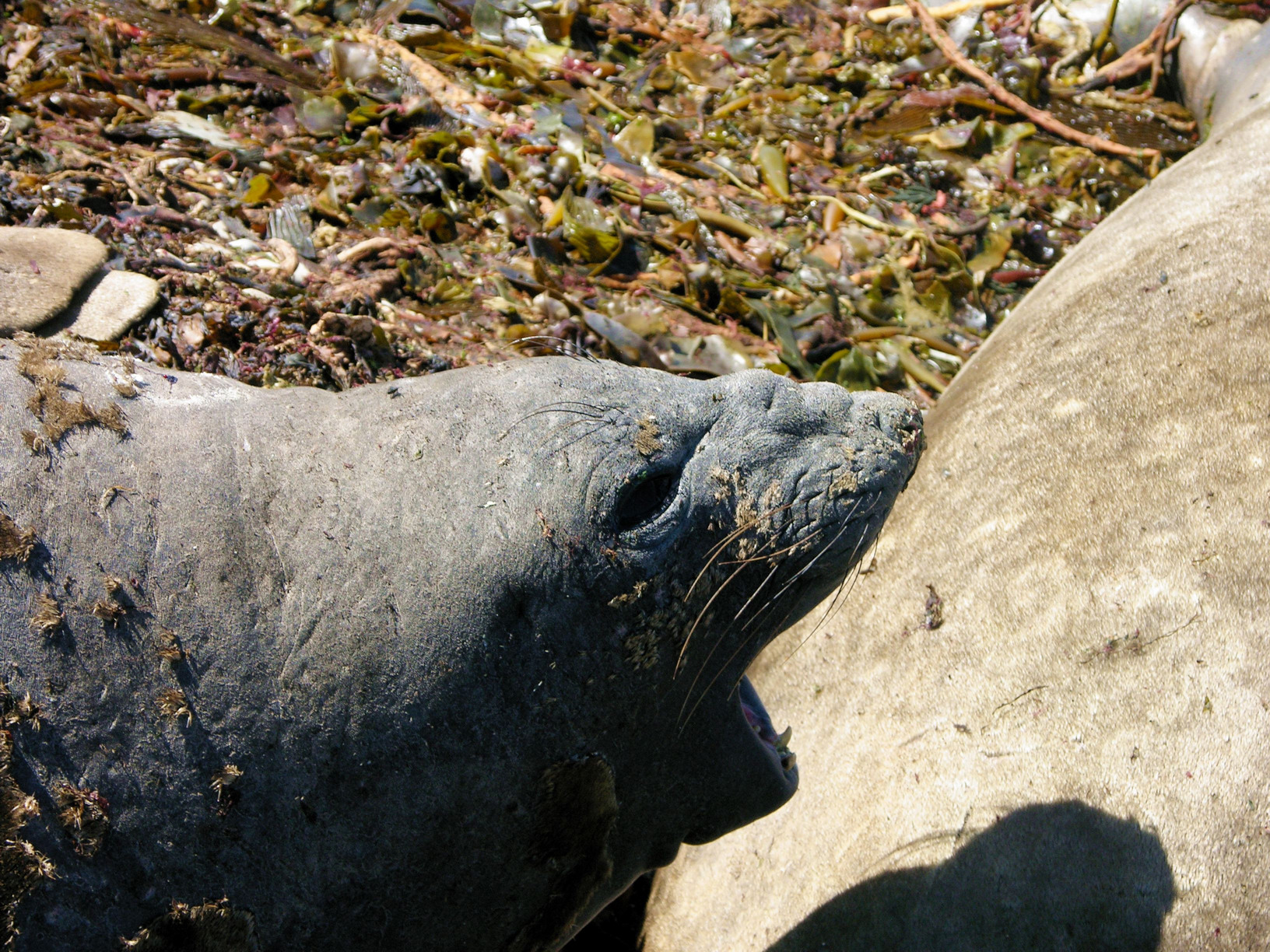
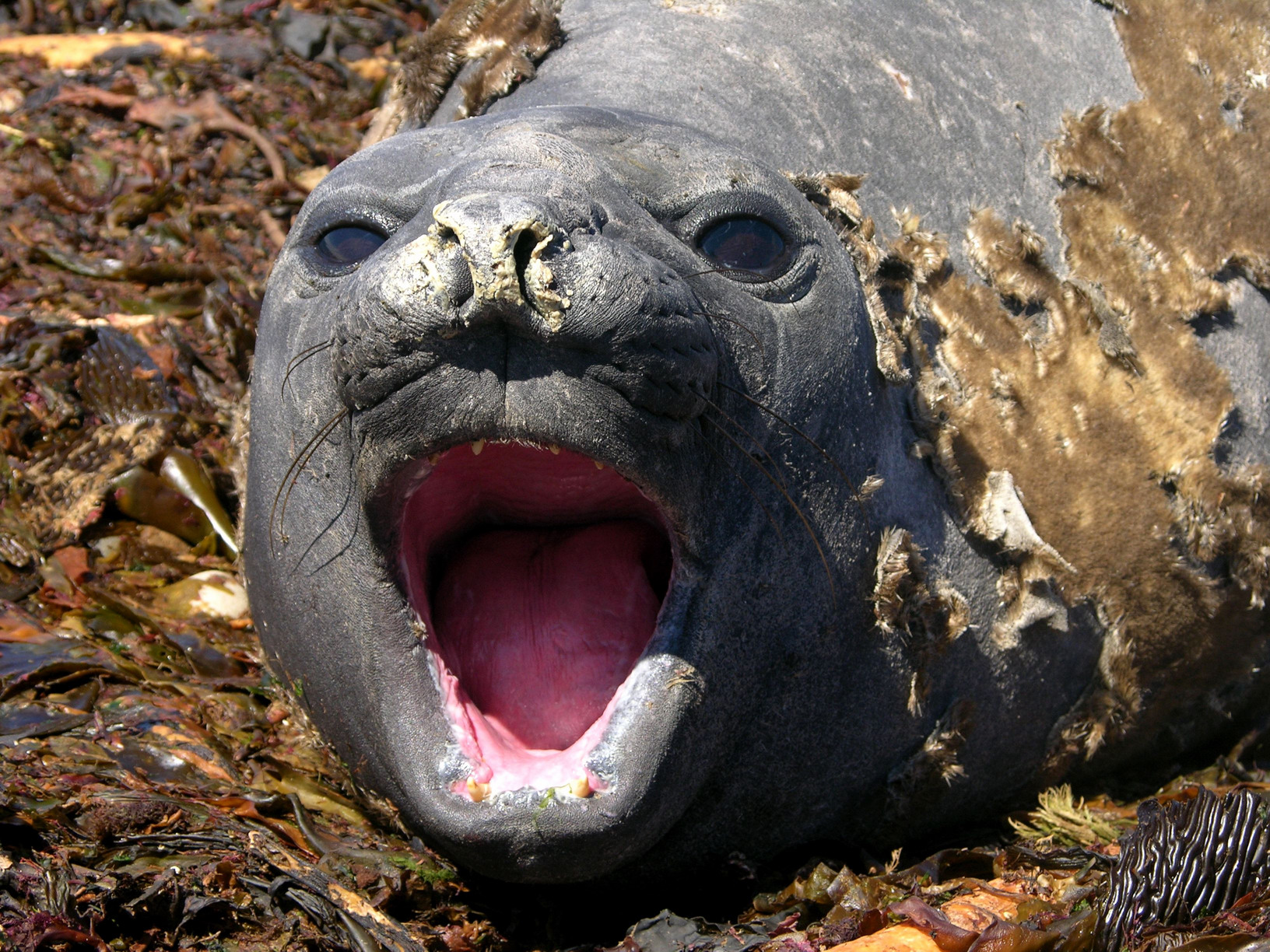
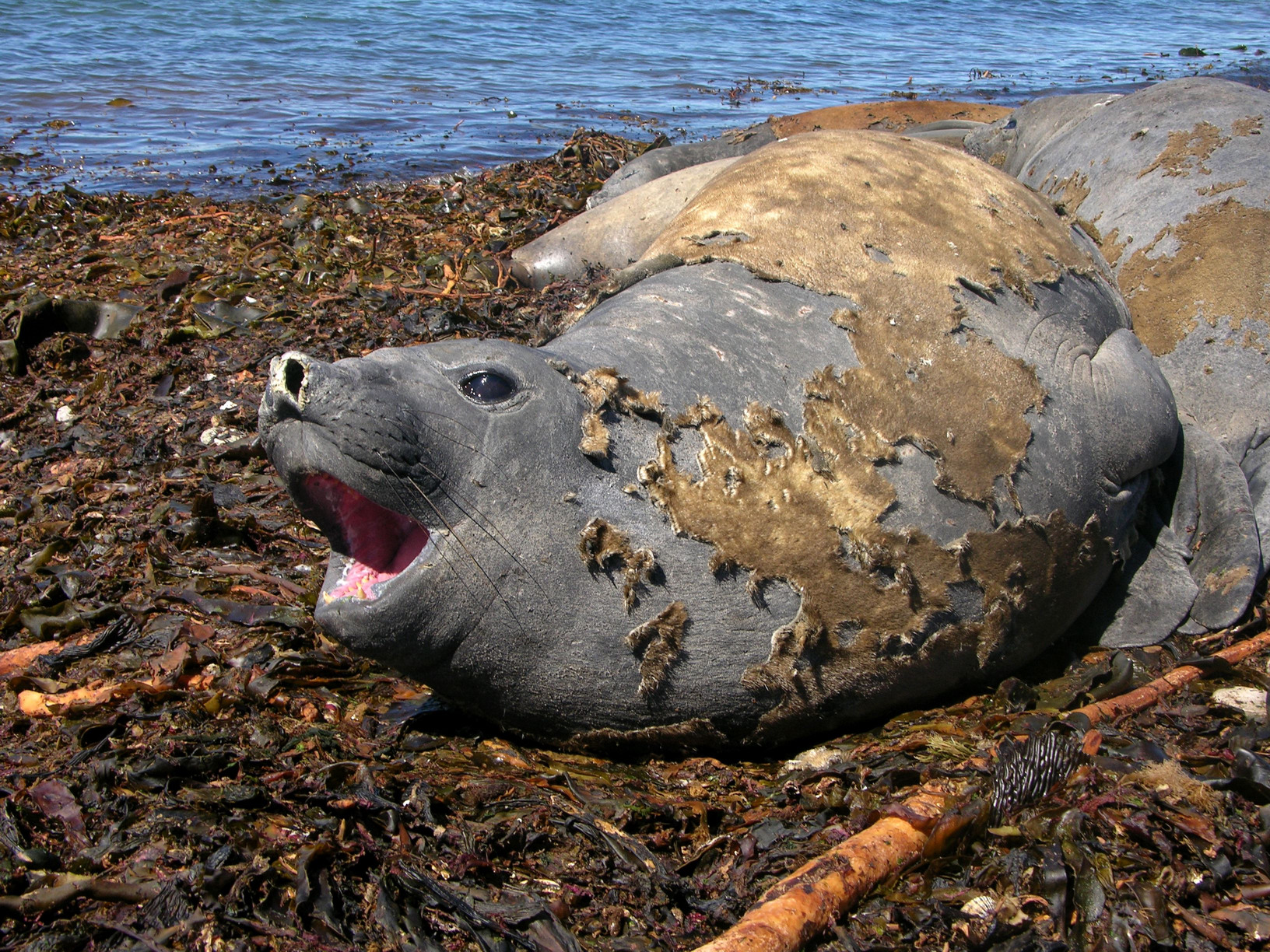
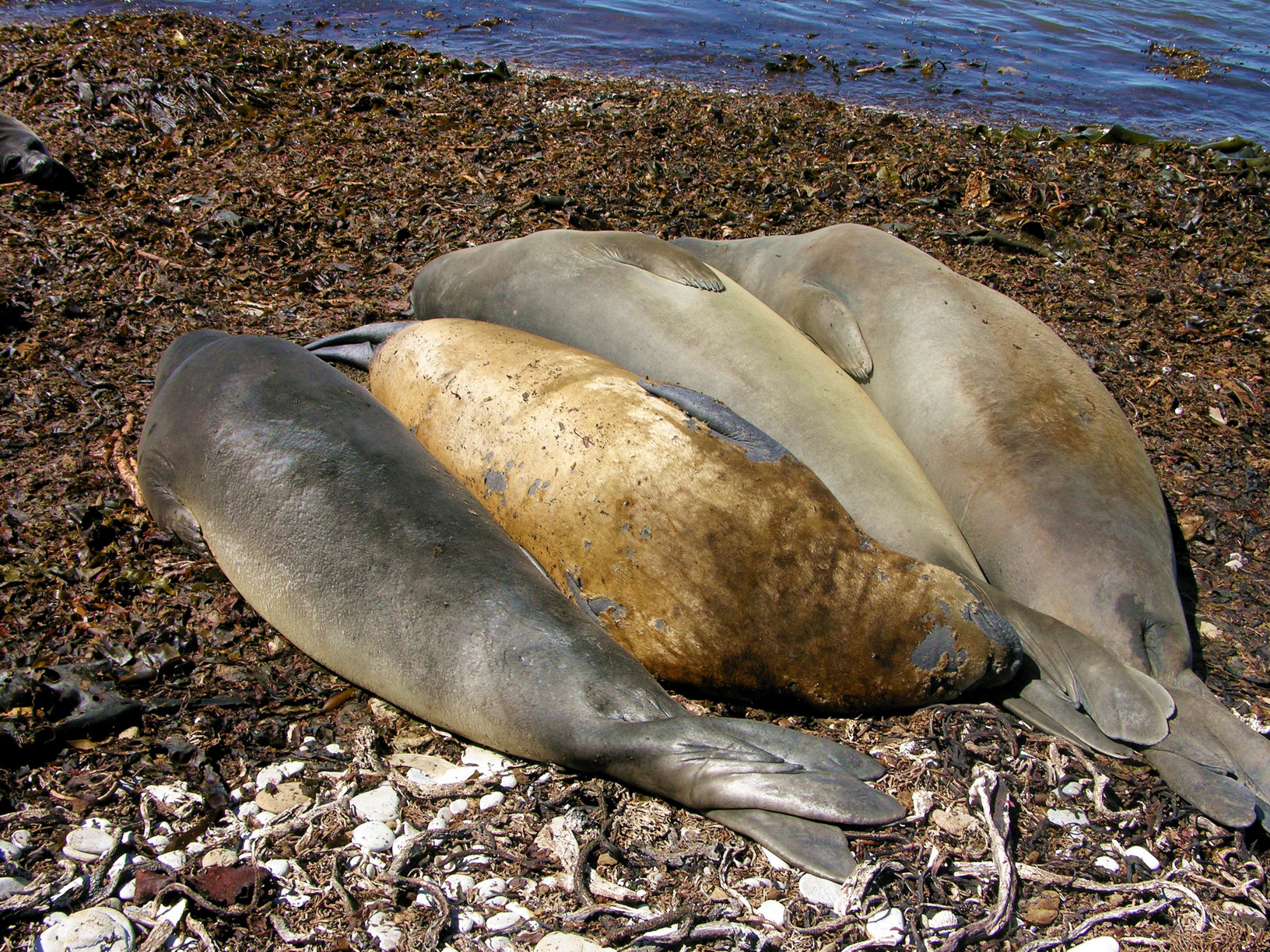
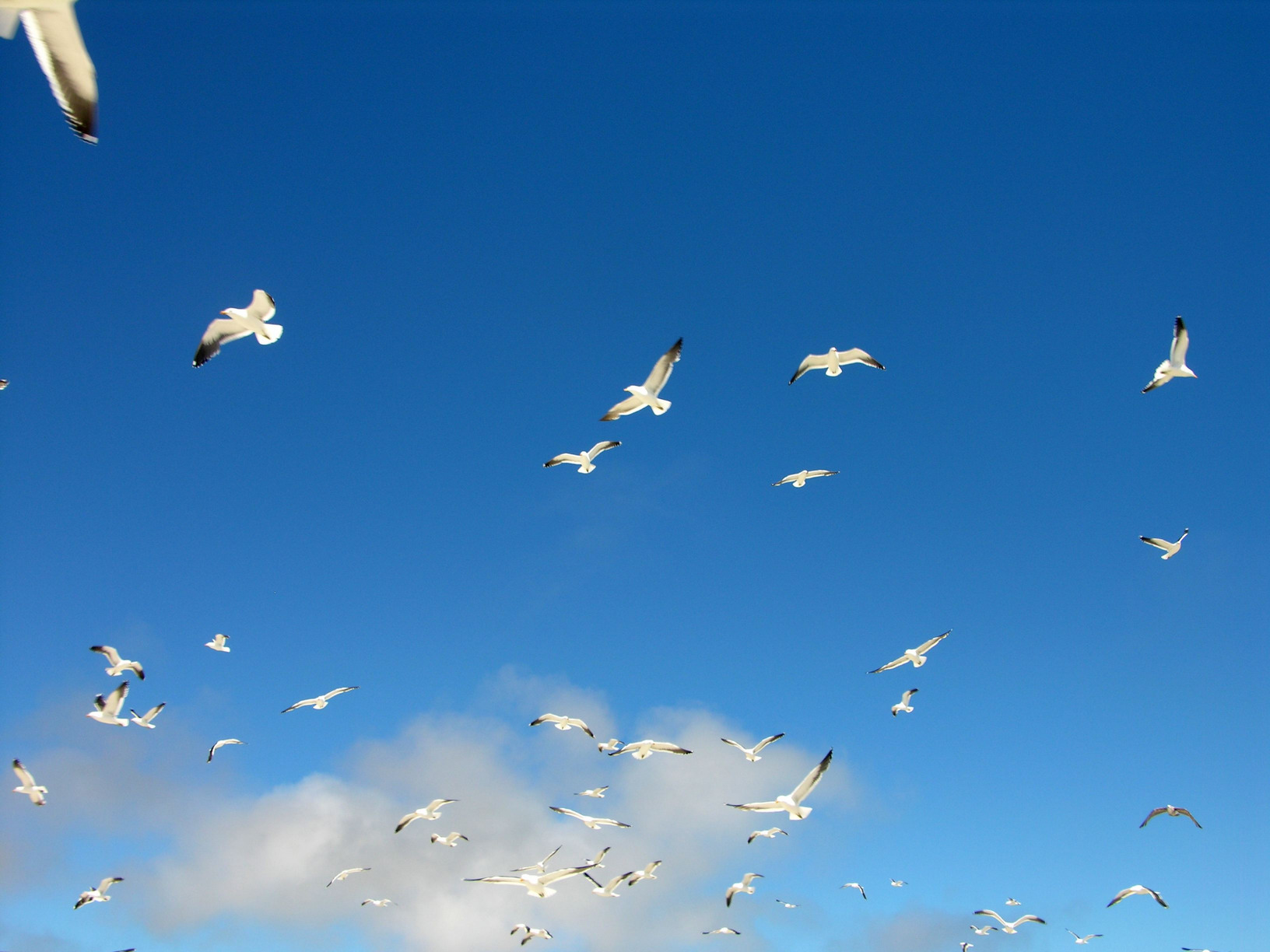
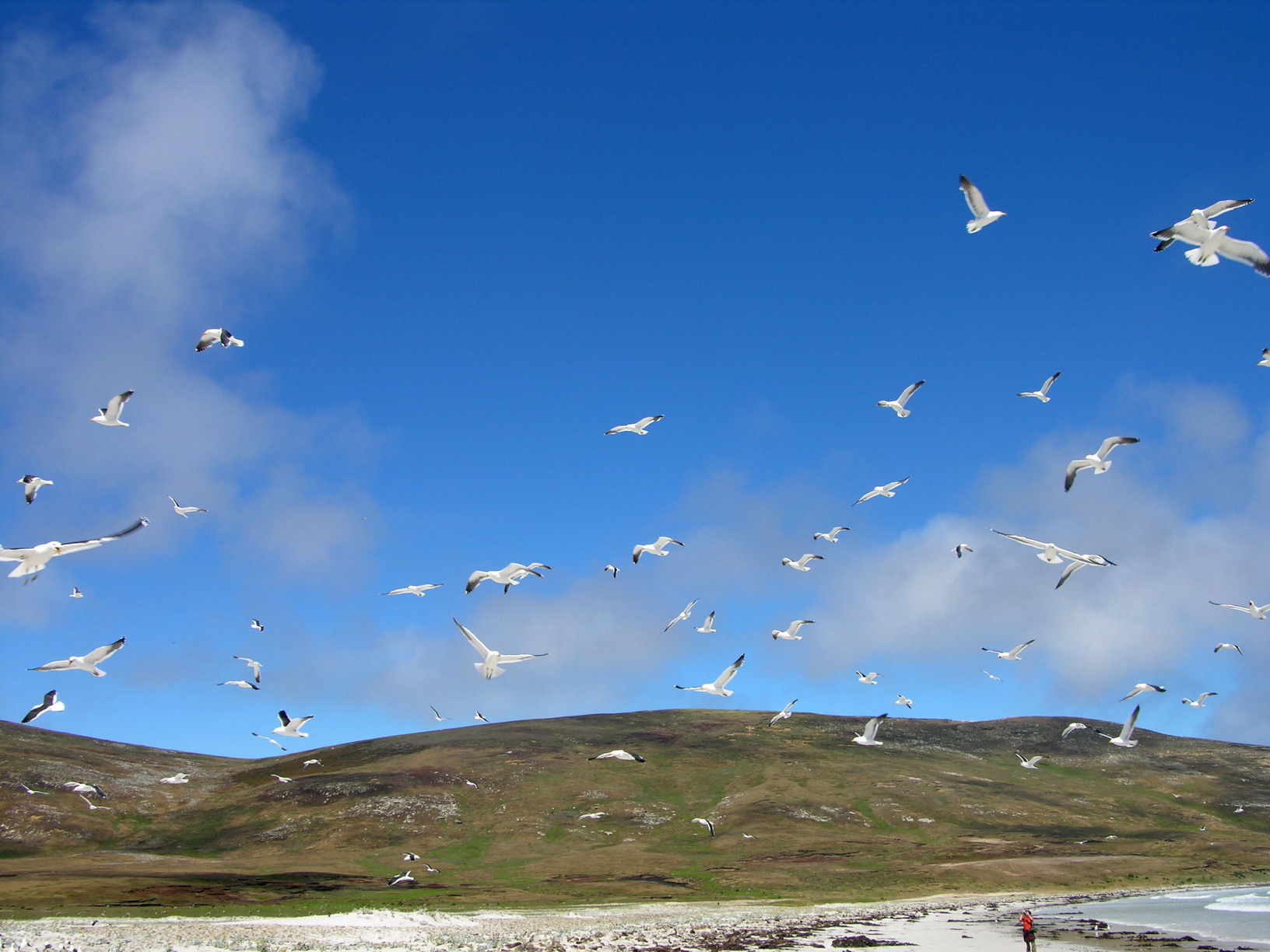
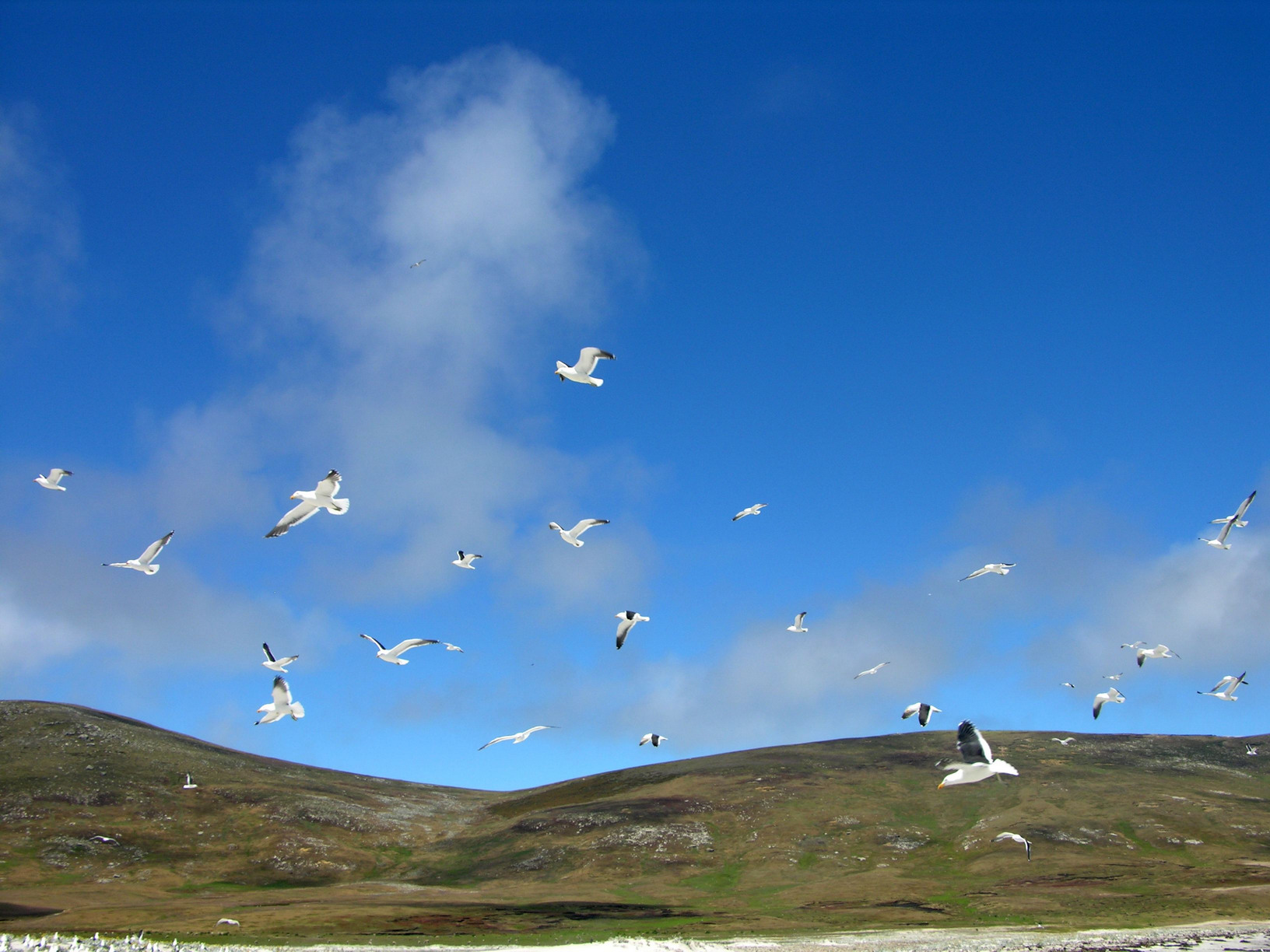
You can get to the elephant seal point along the shore. It's farther, but on the way you come across a colony of Falkland gulls. When a person approaches, they take off in a great mass and dive over your head to scare you. It seems there are enough of them to black out the sky. Looking through the photographs afterwards, you realise it's nothing of the sort and they're not going to peck you in the head either. In person, though, it's a little frightening. In the middle of their colony is a piece of an aeroplane, shot through either by bullets or an anti-aircraft missile.
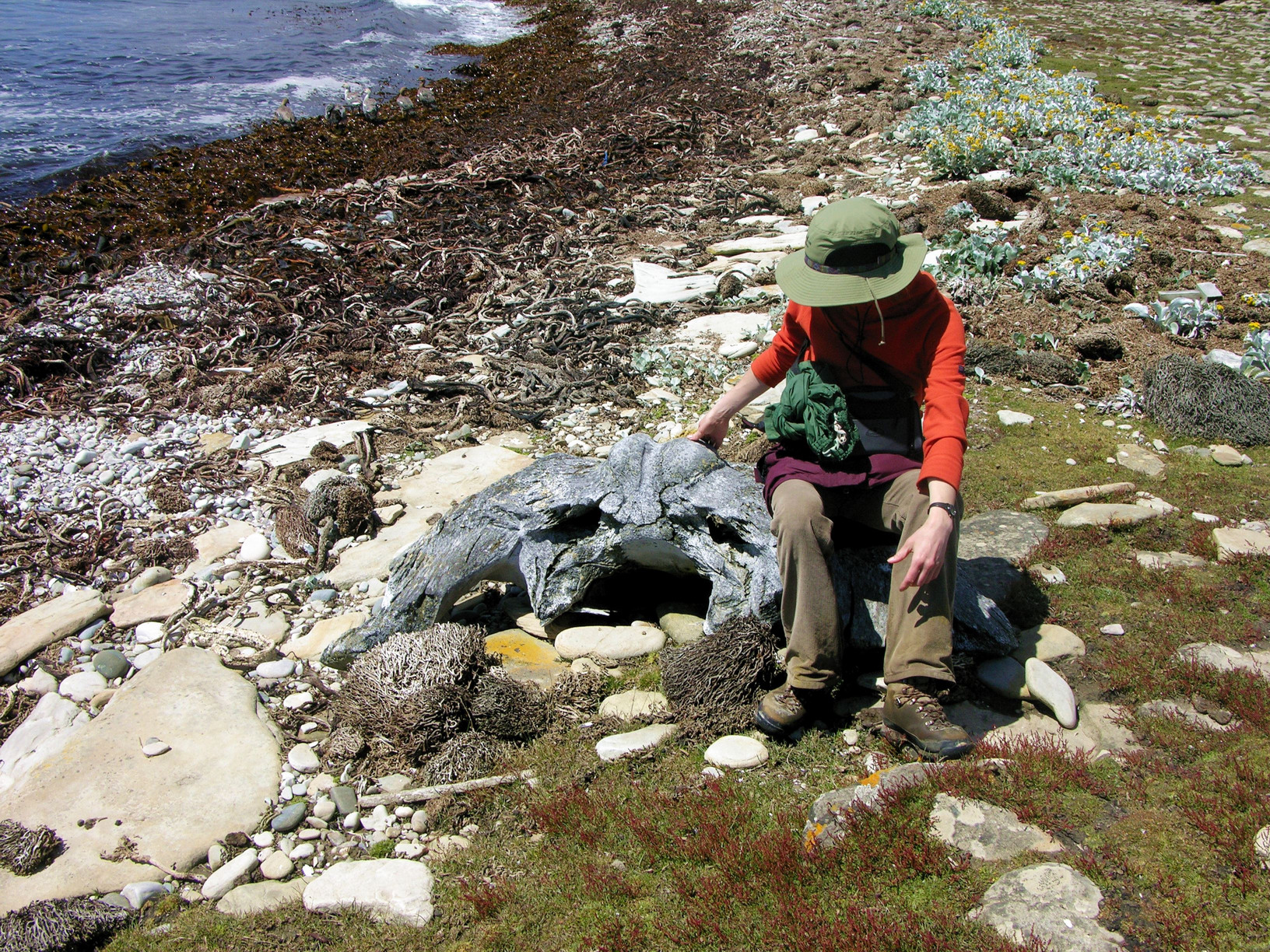
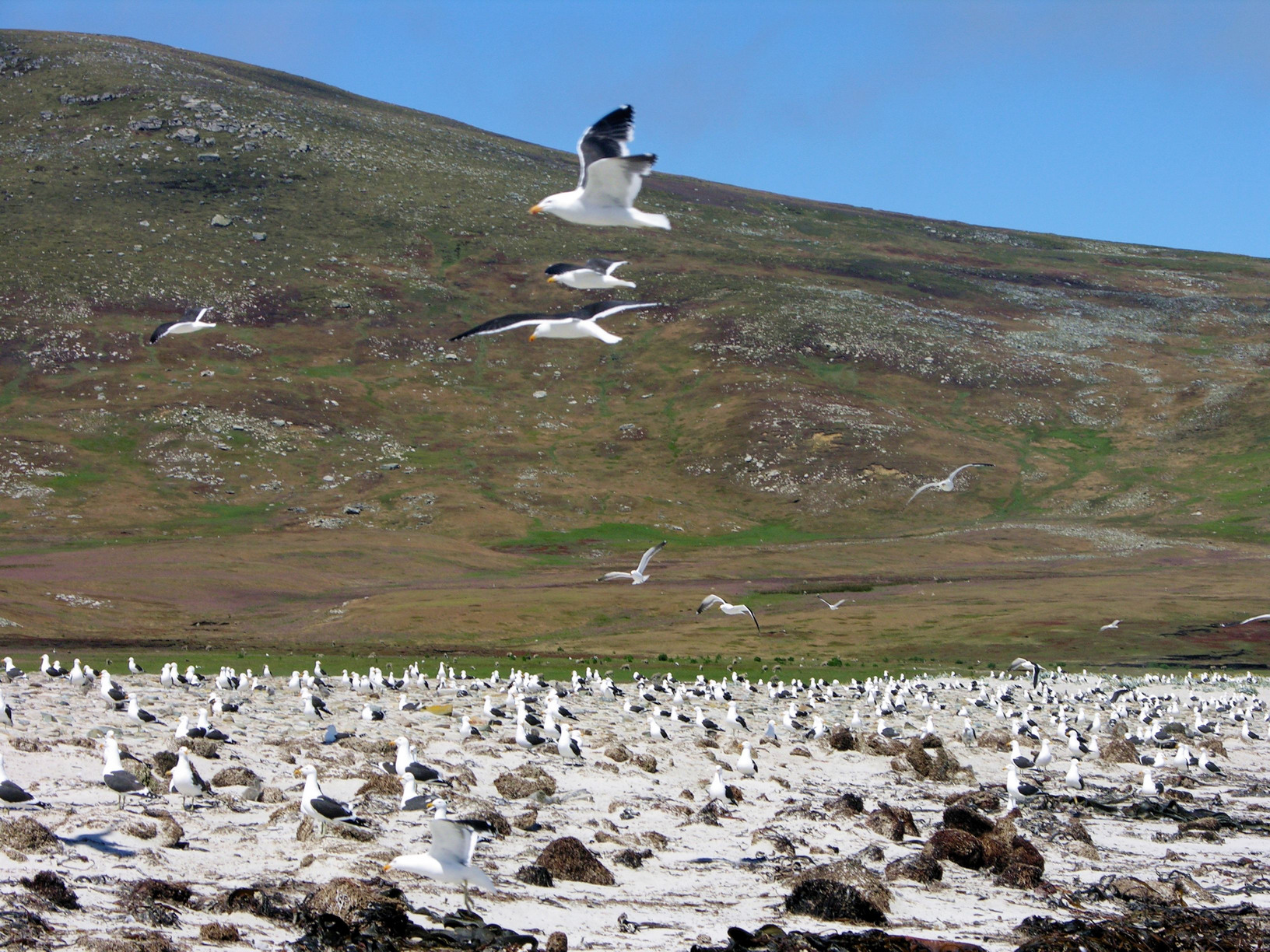
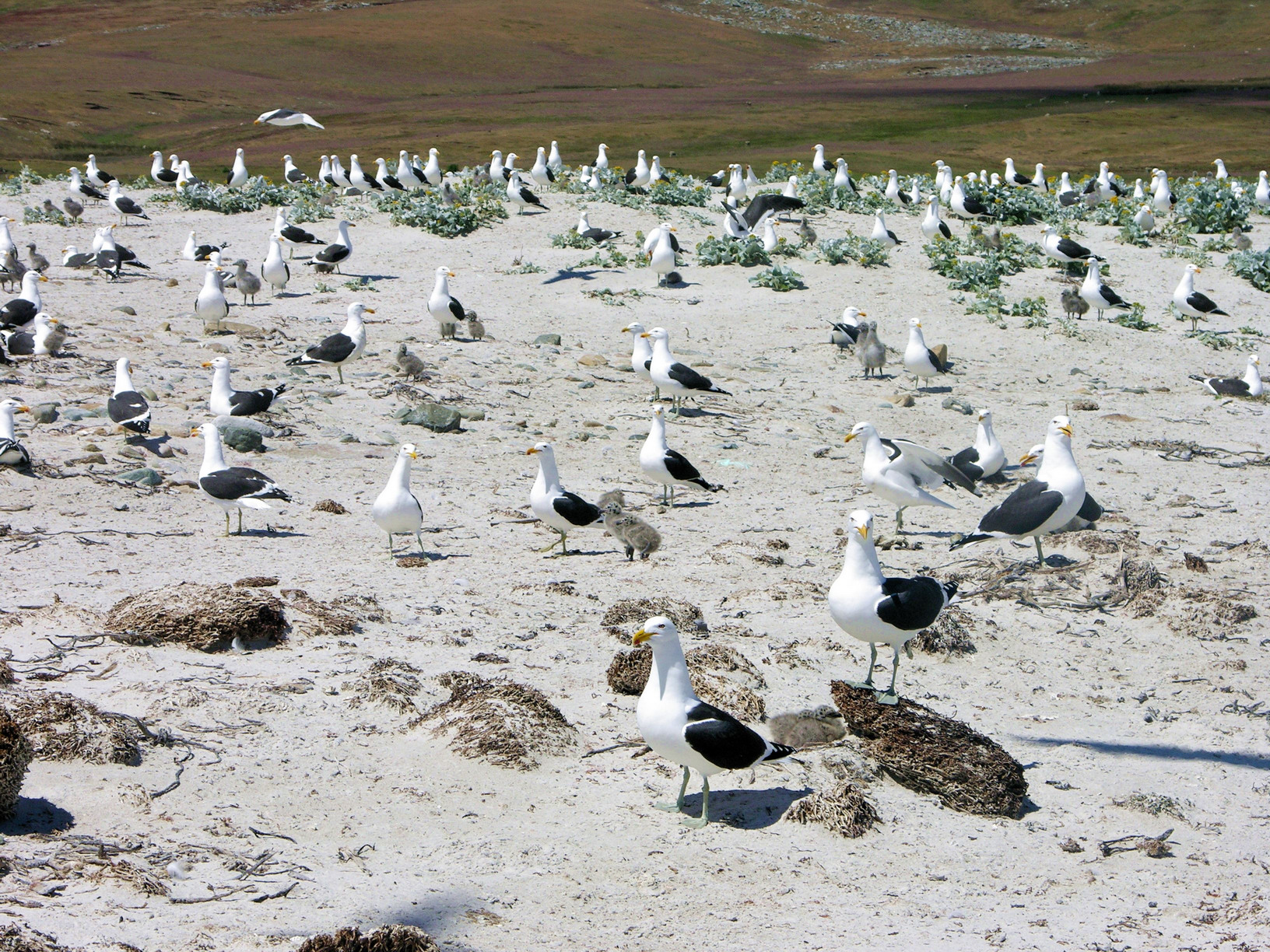
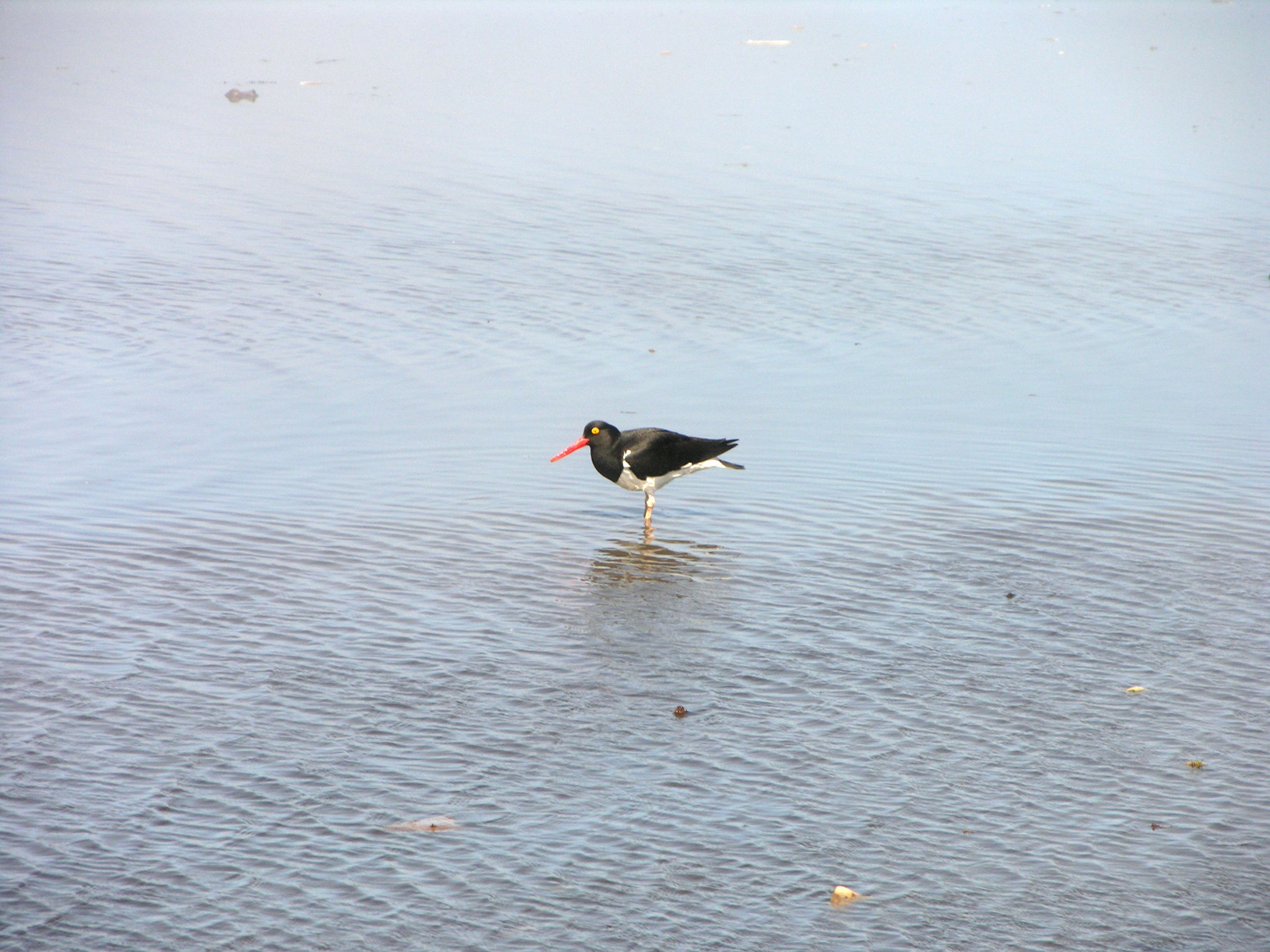
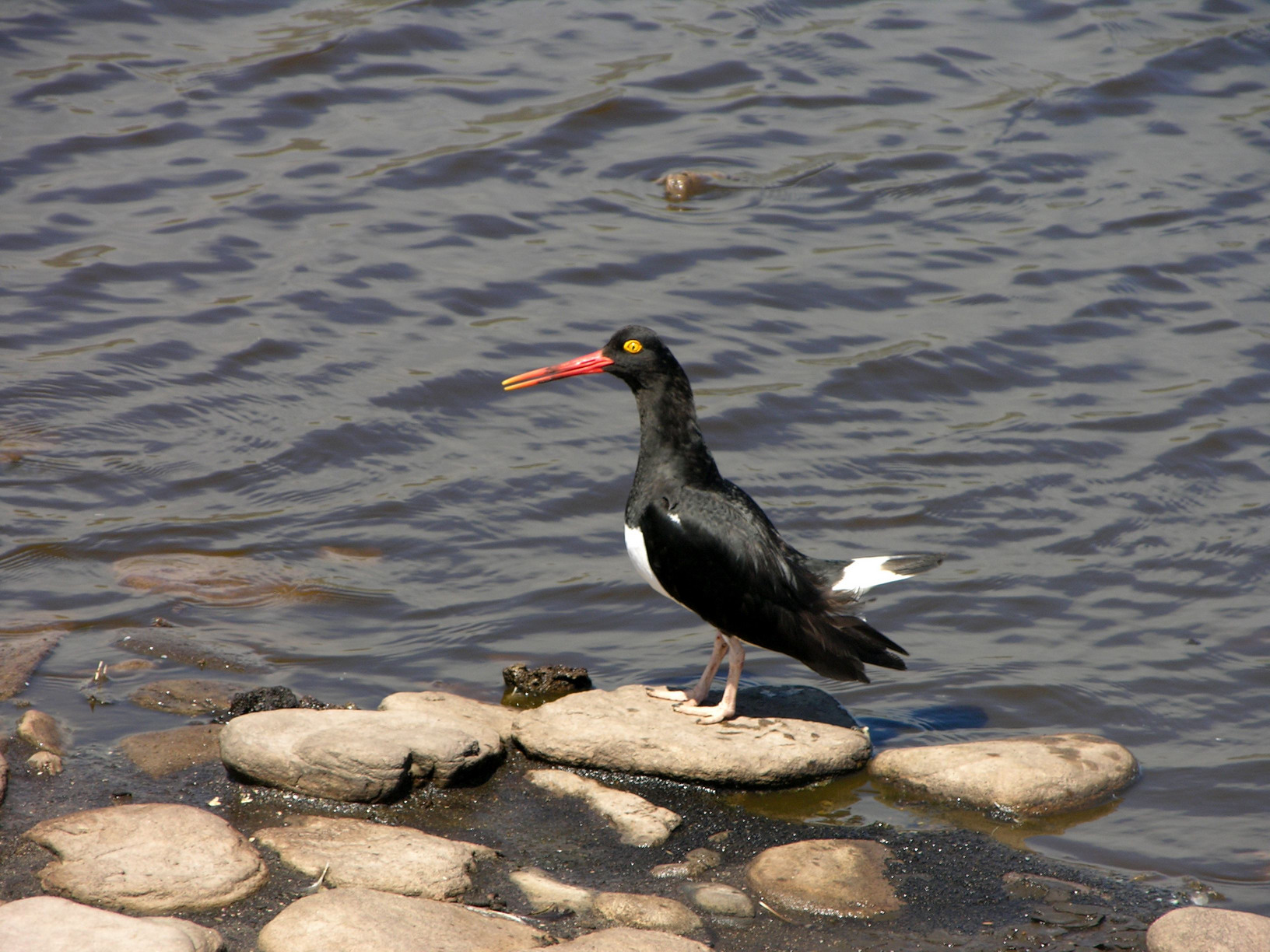
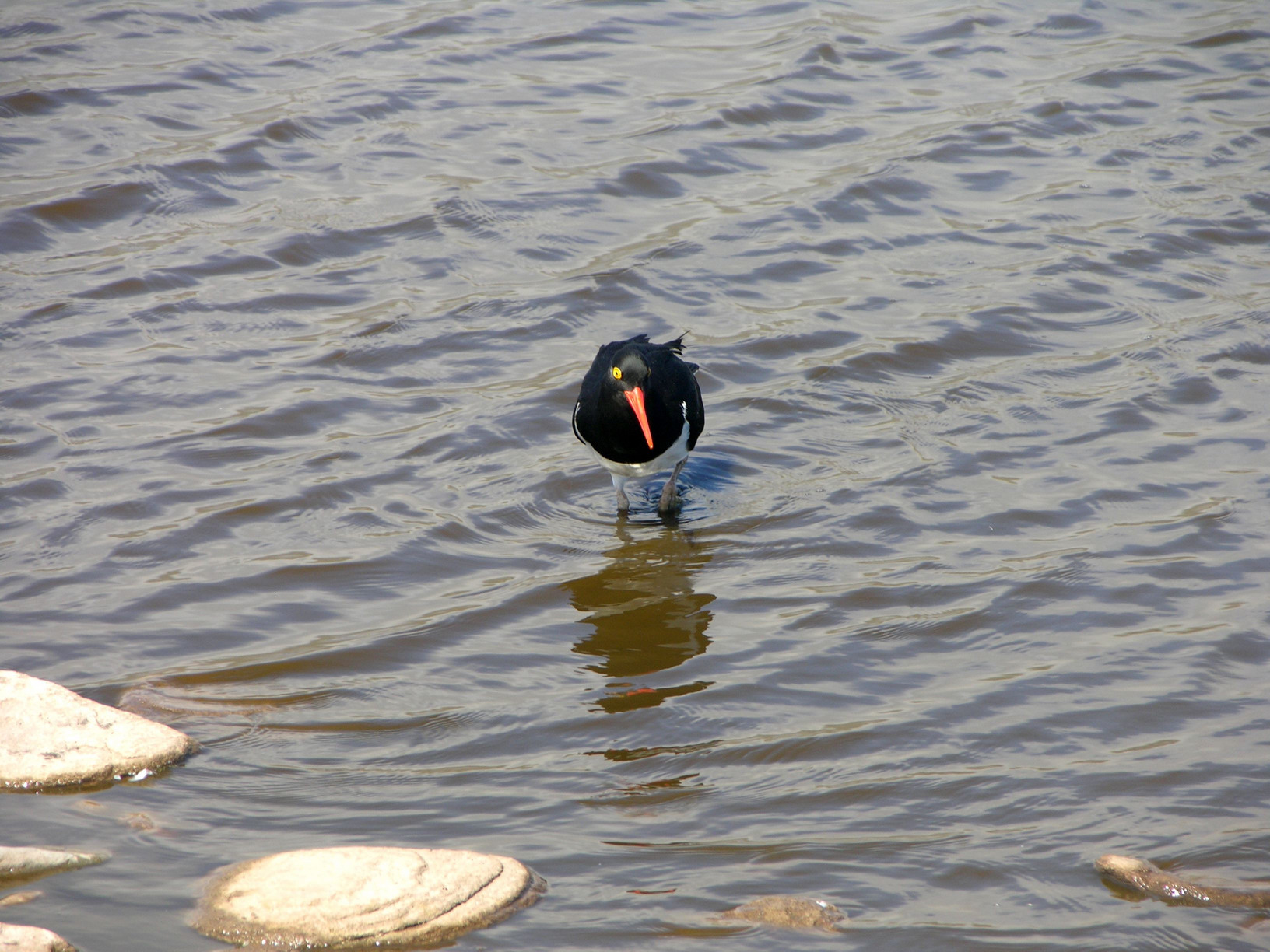
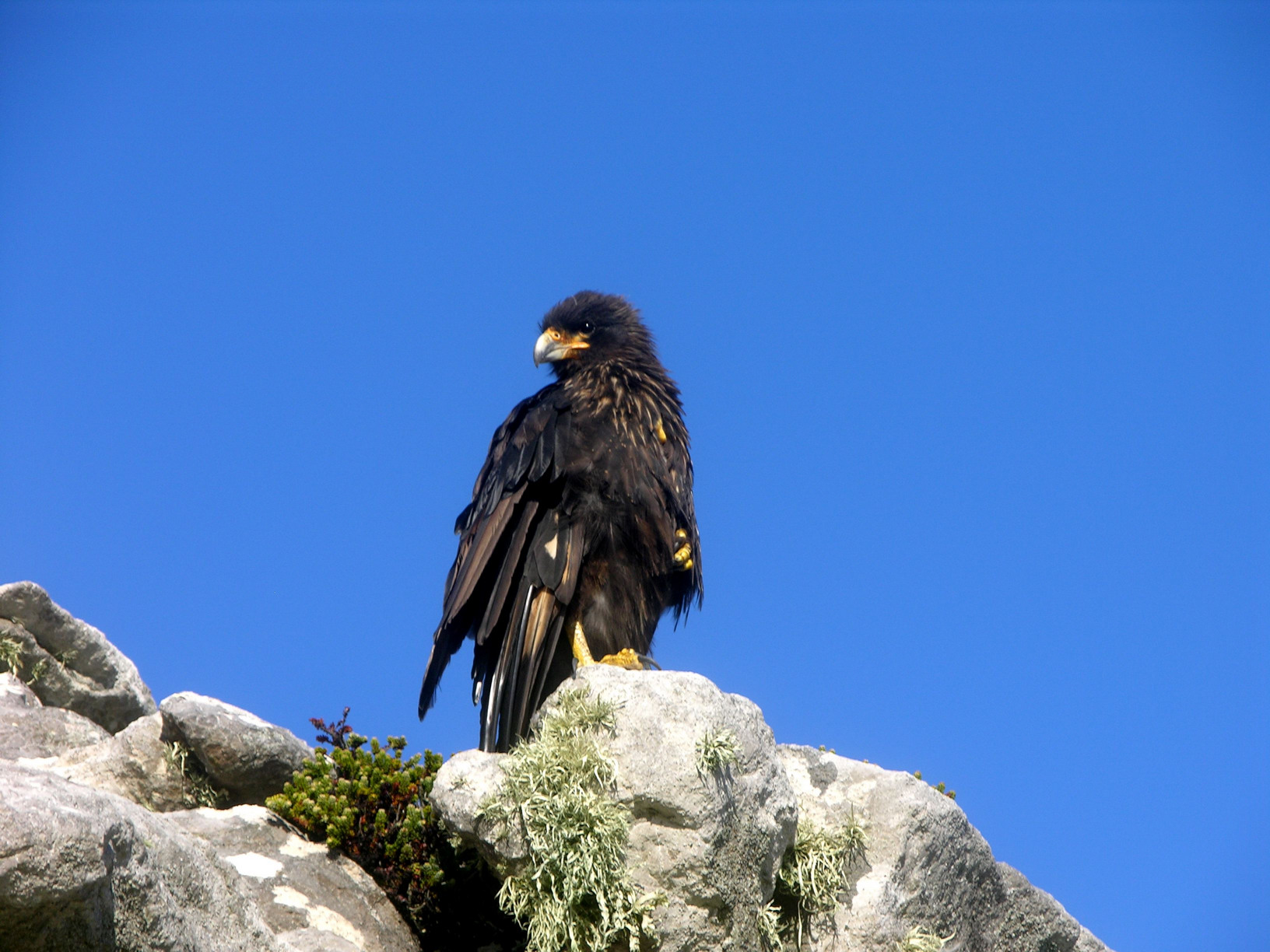
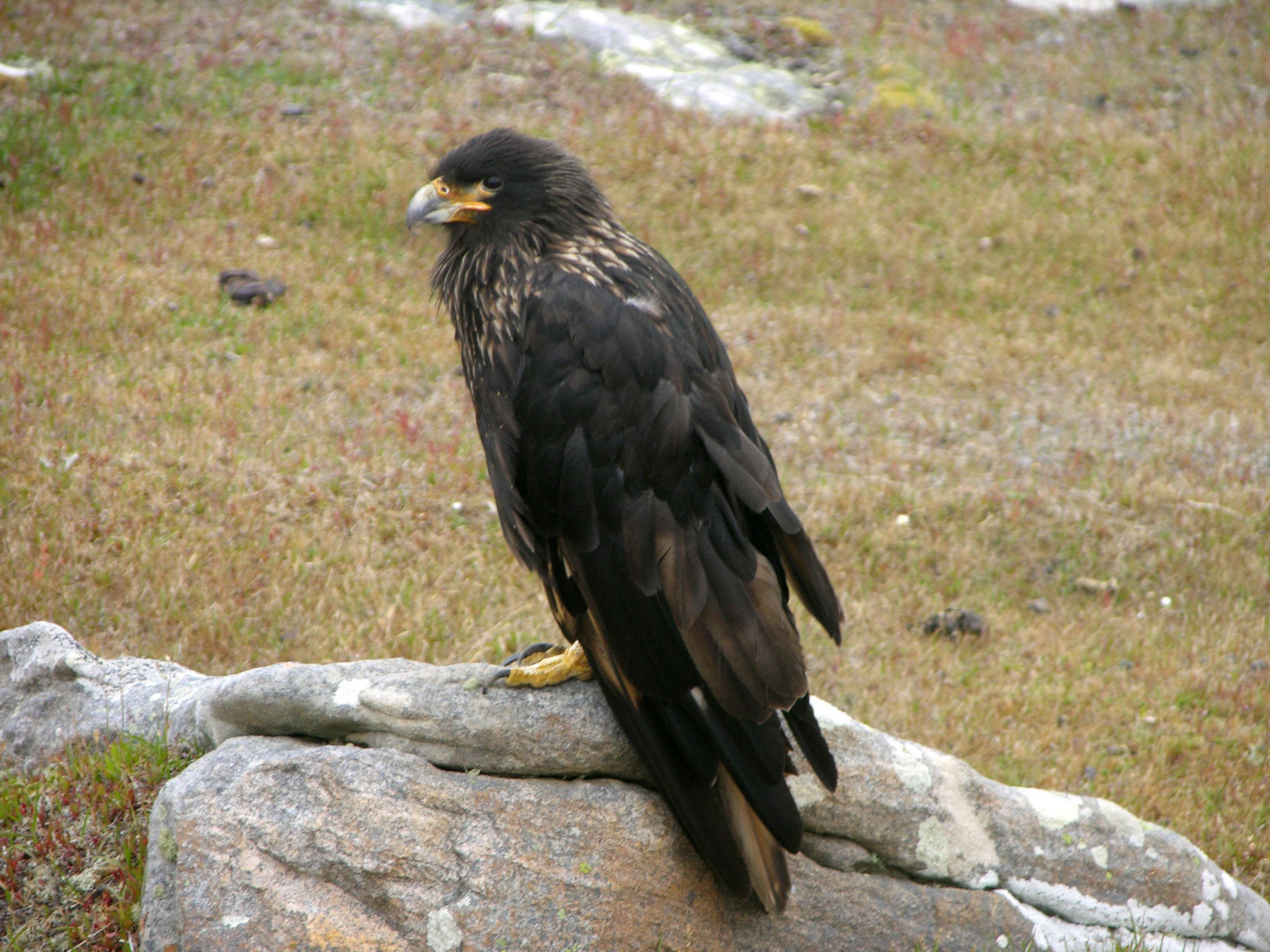
Along the shores there are also lots of Magellanic oystercatchers, birds that catch oysters. A very funny little bird, running around on thin red legs and gazing around in surprise with its neck stretched out. Rather less common is the version with dark plumage, the blackish oystercatcher. There are lots of birds in the Falklands generally. A birdwatcher's find. I won't list everything we saw. I don't keep a logbook of sightings anyway. I'll mention only the local caracara, the striated caracara. Only a thousand of them were left in the world at the time. But it isn't hard to see one. It comes down to your campsite and looks you over, either in hopes of pinching something or waiting for the fresh corpse of a traveller.
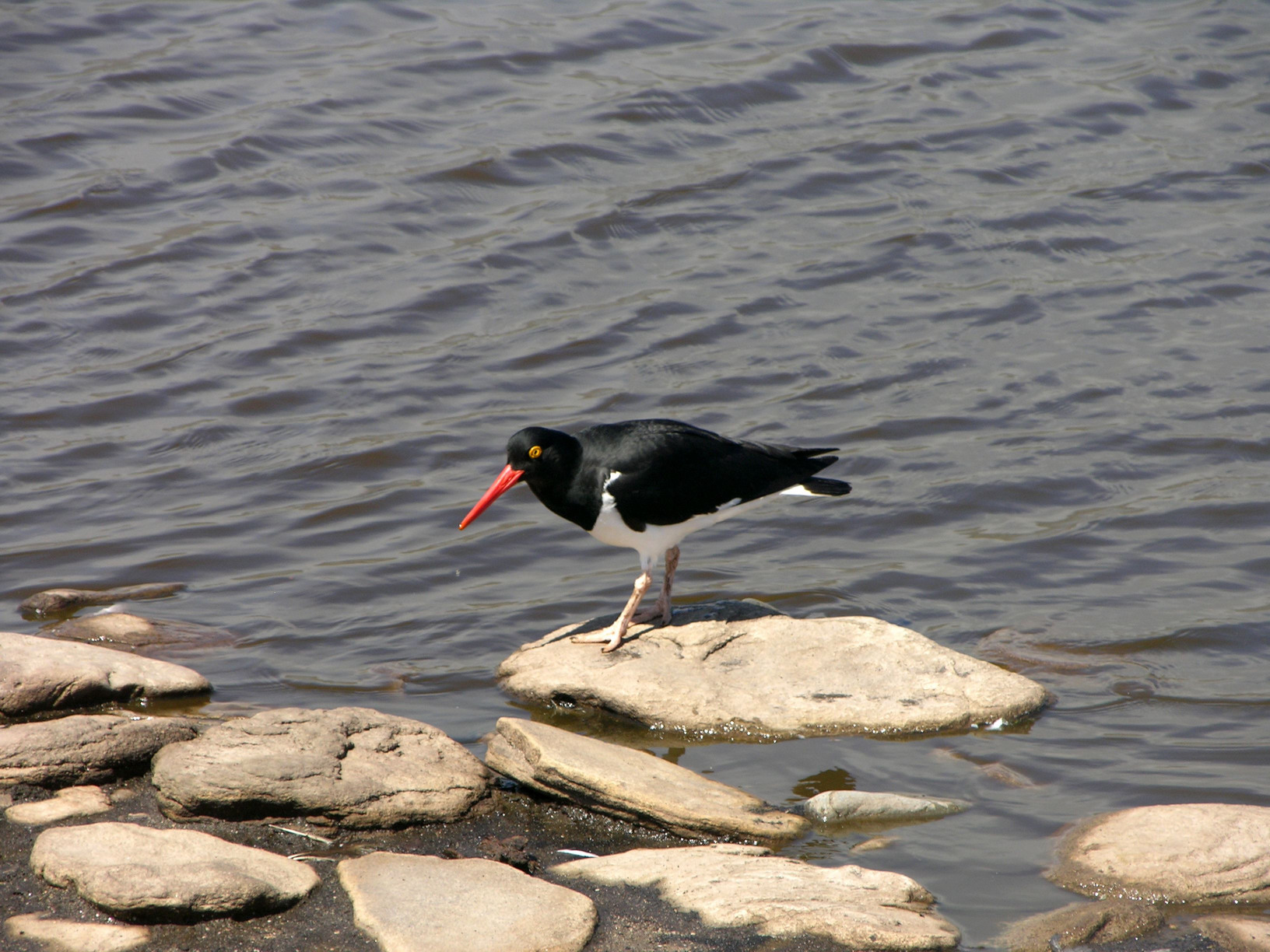
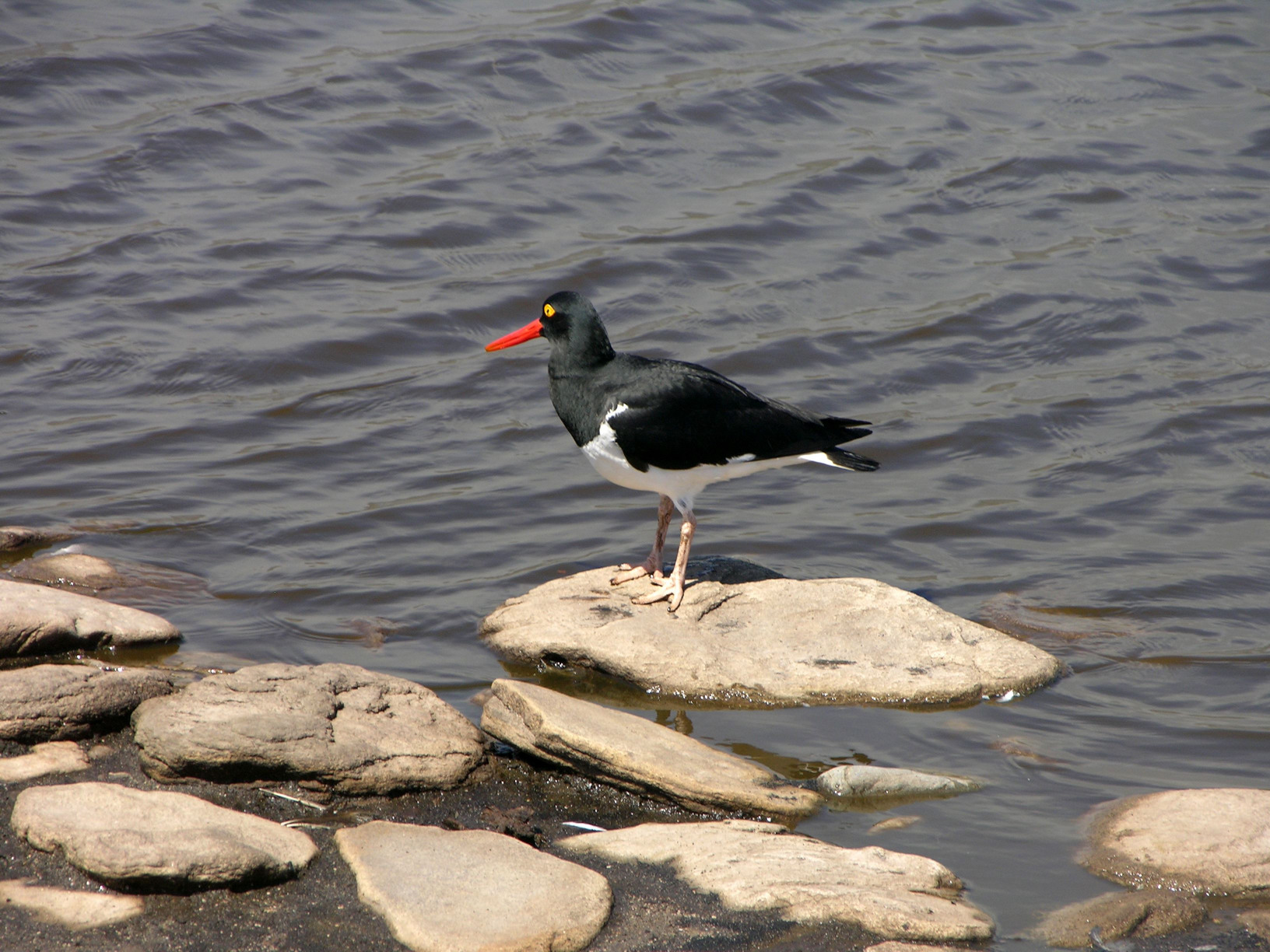
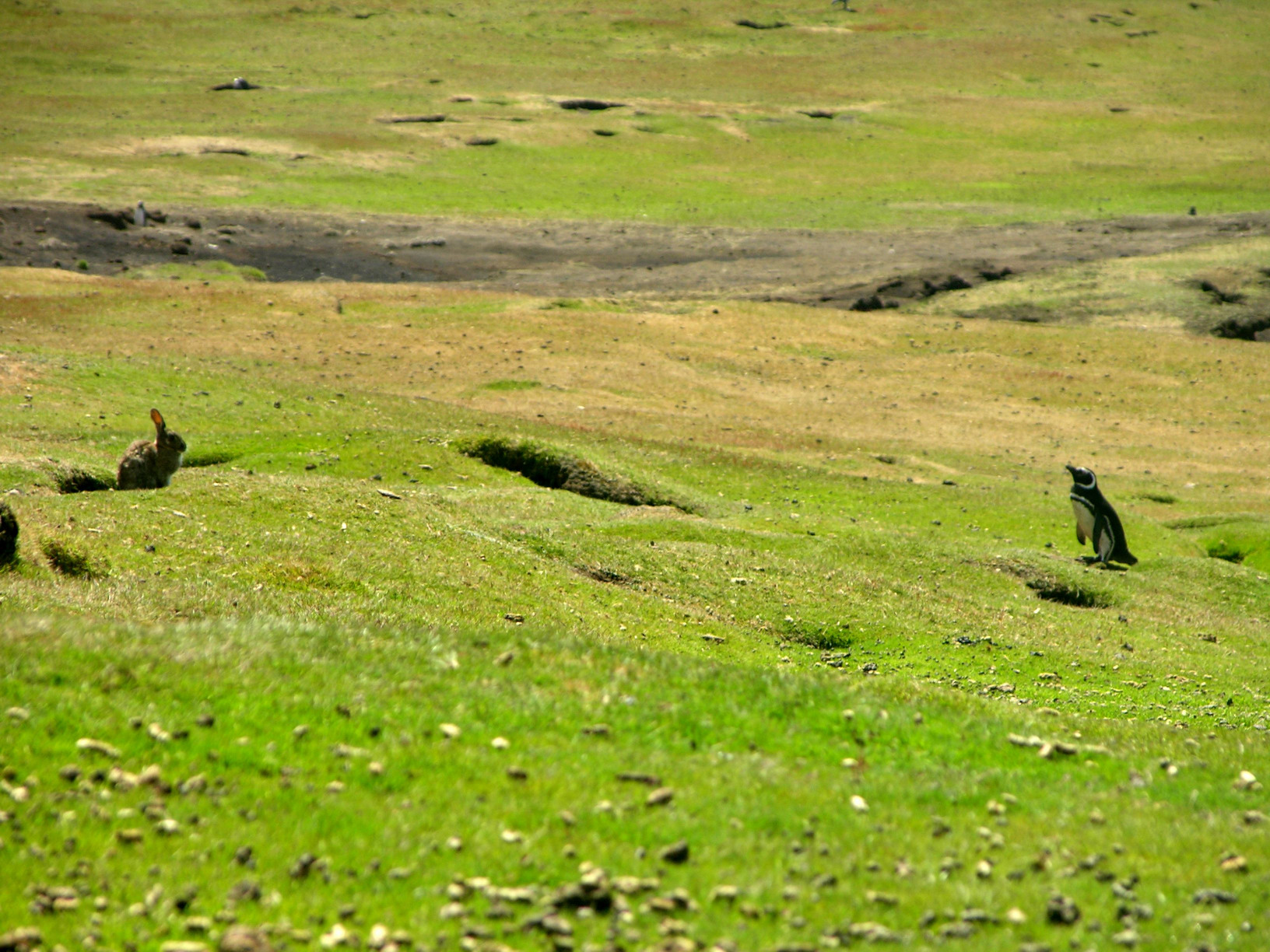
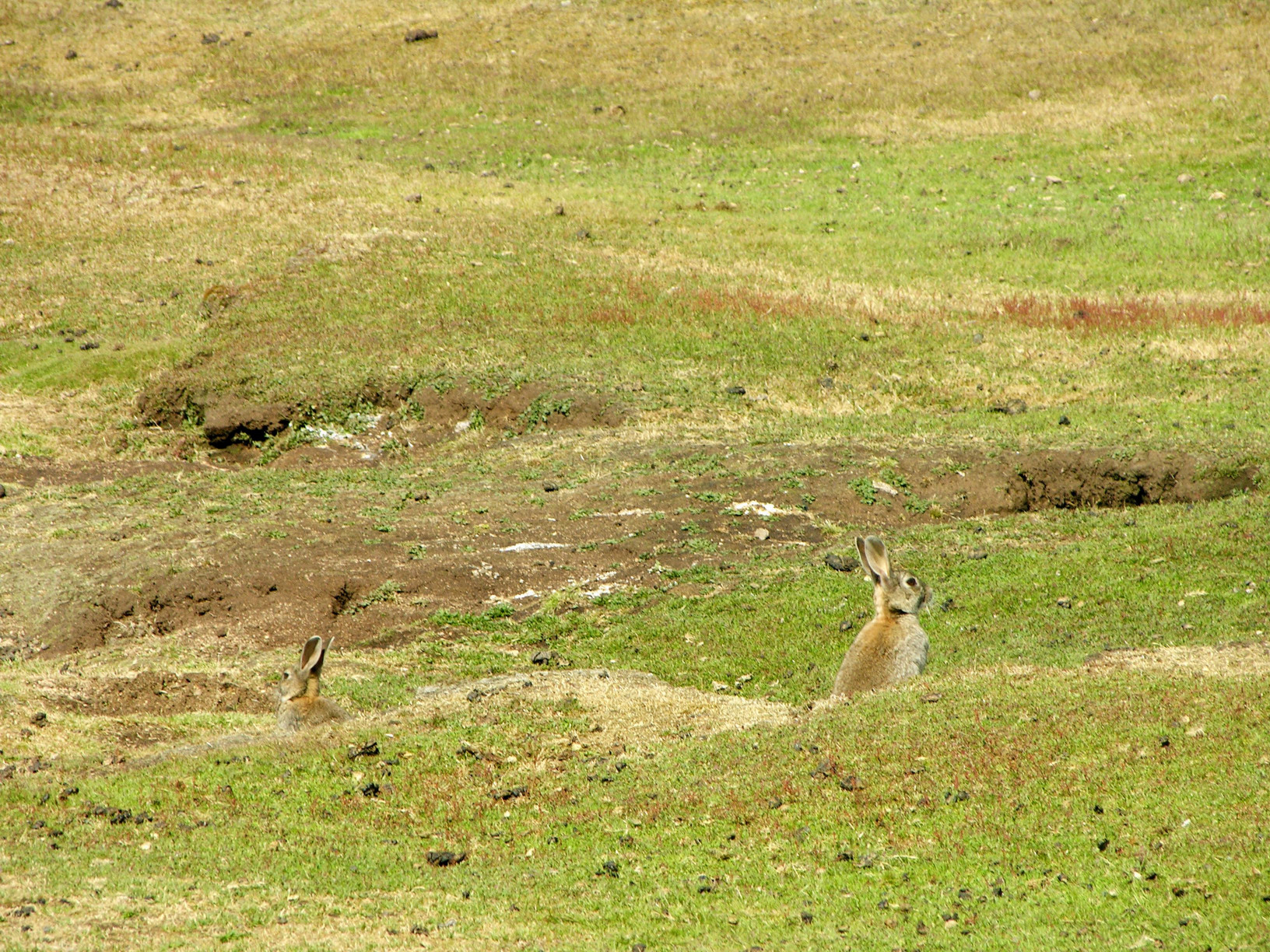
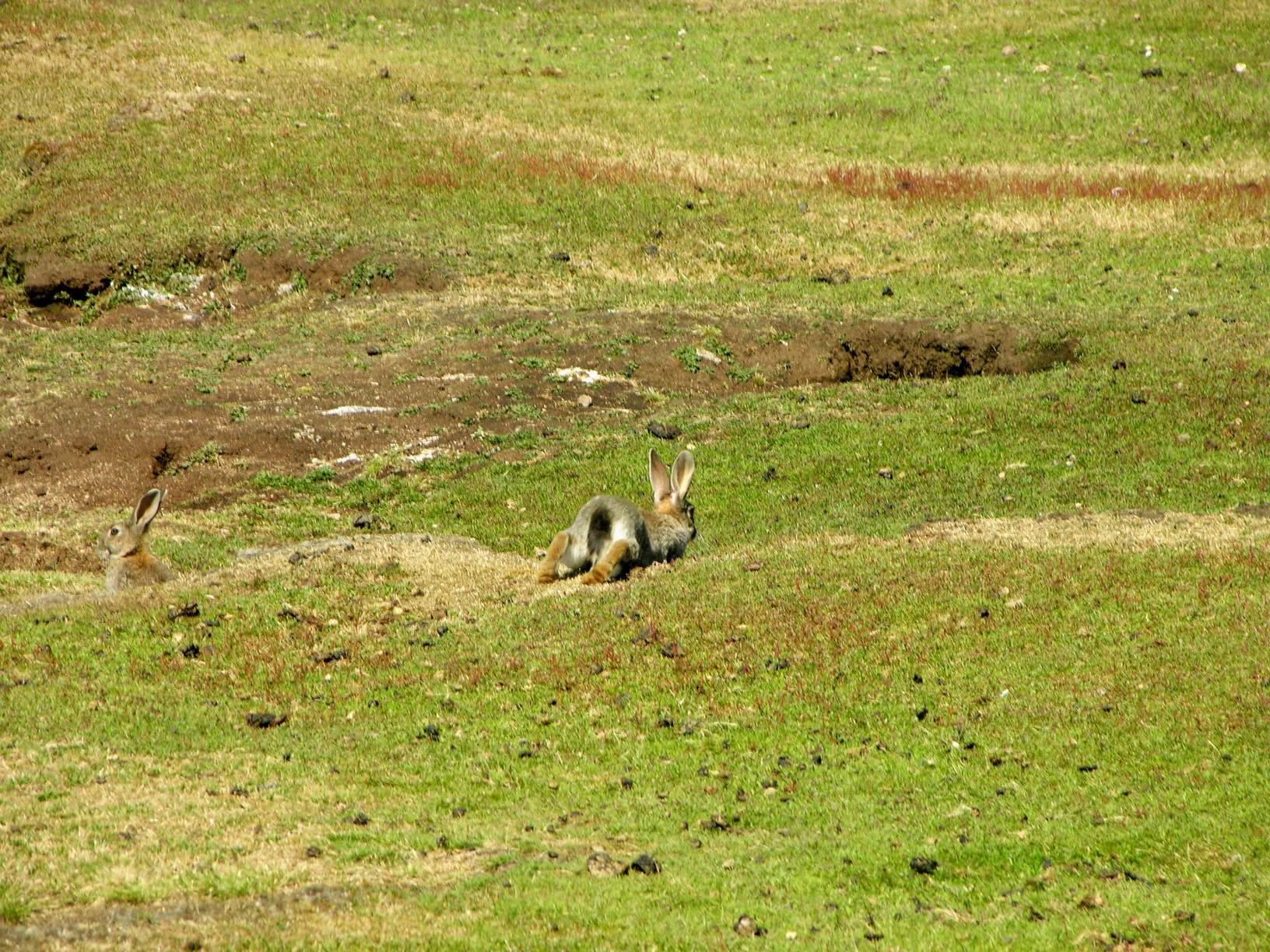
Near the elephant seal rookery we found a little stream, a suitable place for lunch. We've brought a packet of New Zealand hiking rations. A place worthy of it. Rabbits and Magellanic penguins are running about. The latter look distinctly perplexed. The rain yesterday must have been unusually heavy. Some of the Magellanic burrows were flooded. Some had to come out entirely and others had to paddle about in the water. Just the heads of the chicks sticking out of it. Well, they'll have to get used to water.
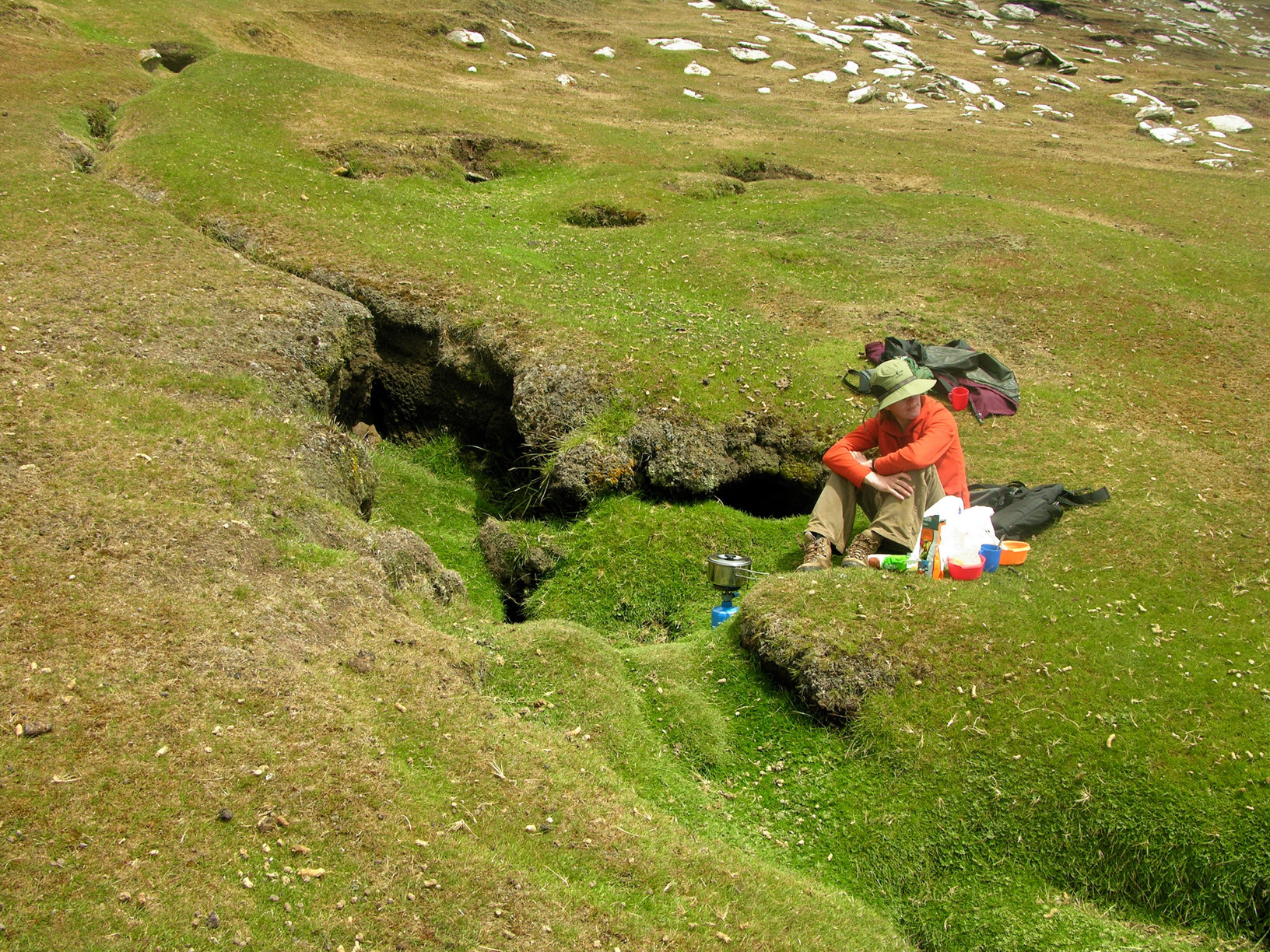
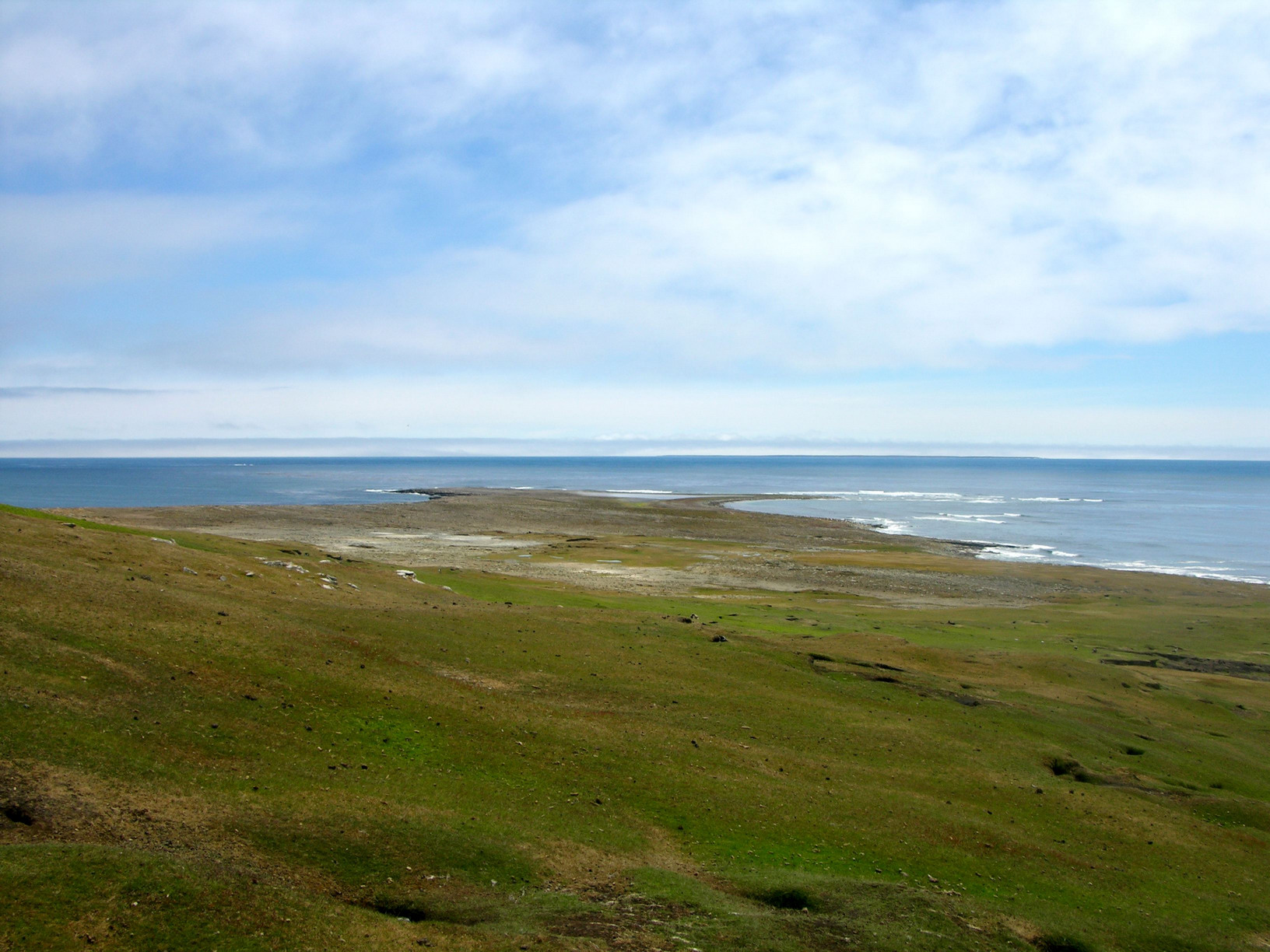
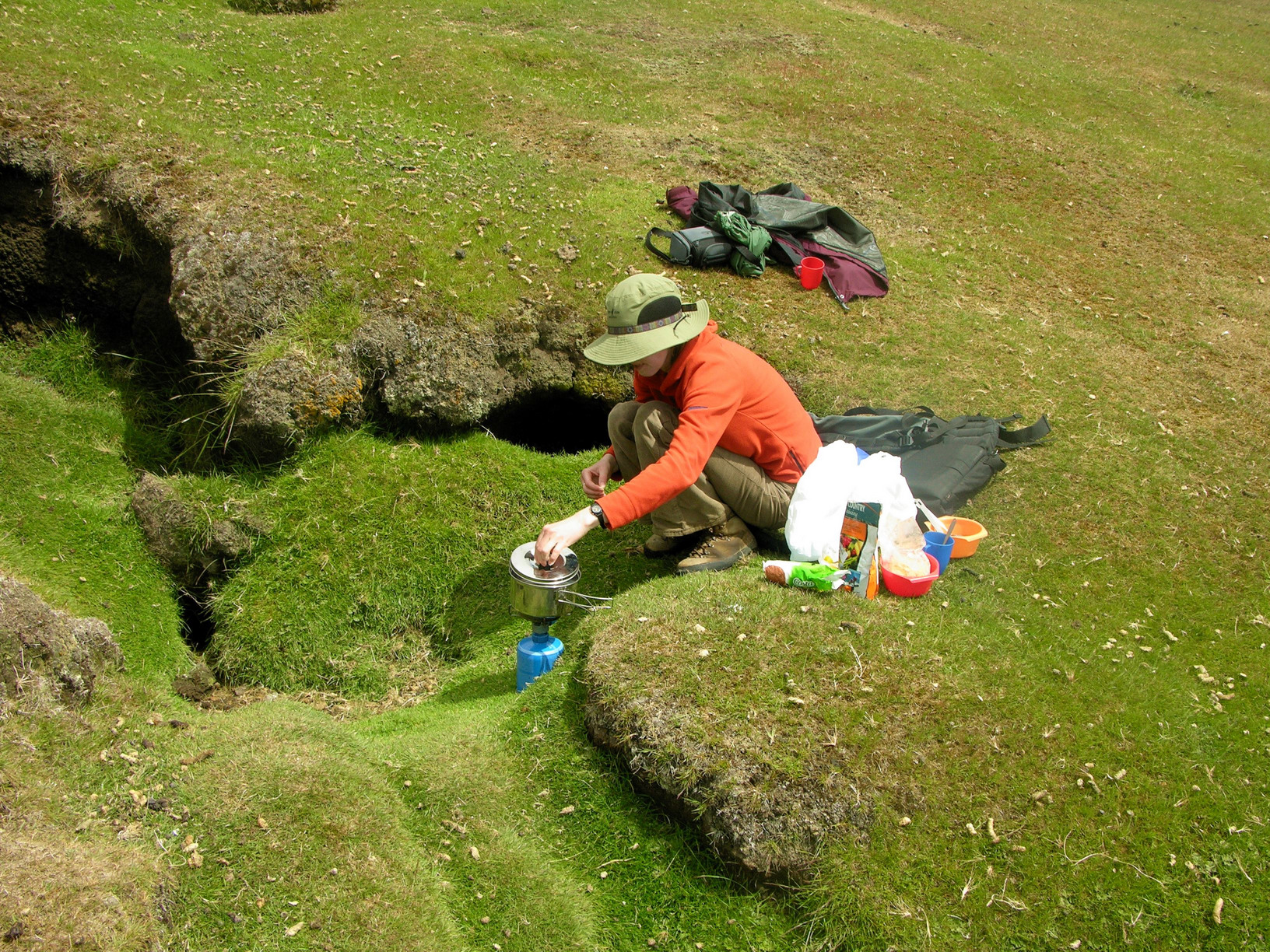
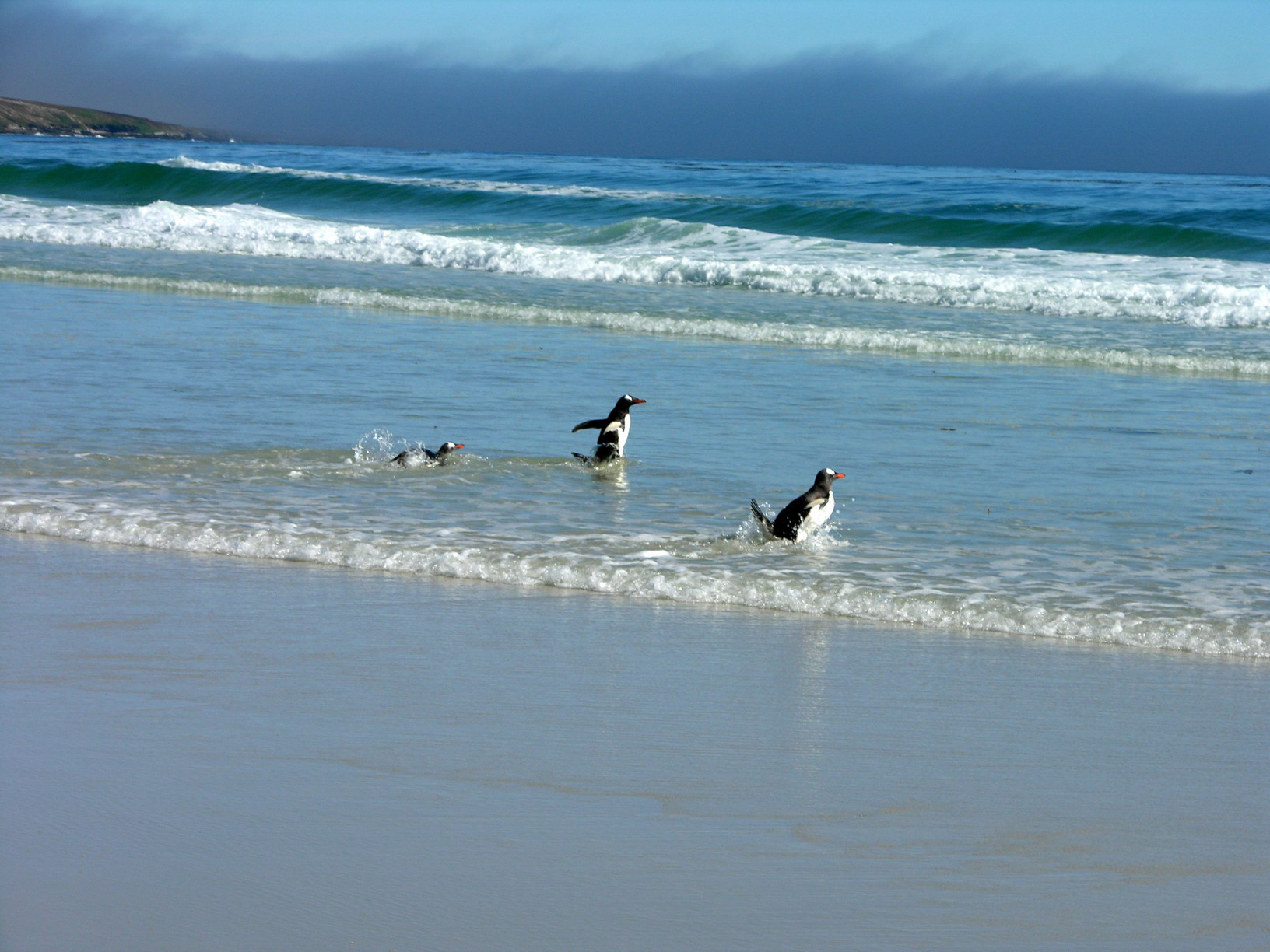
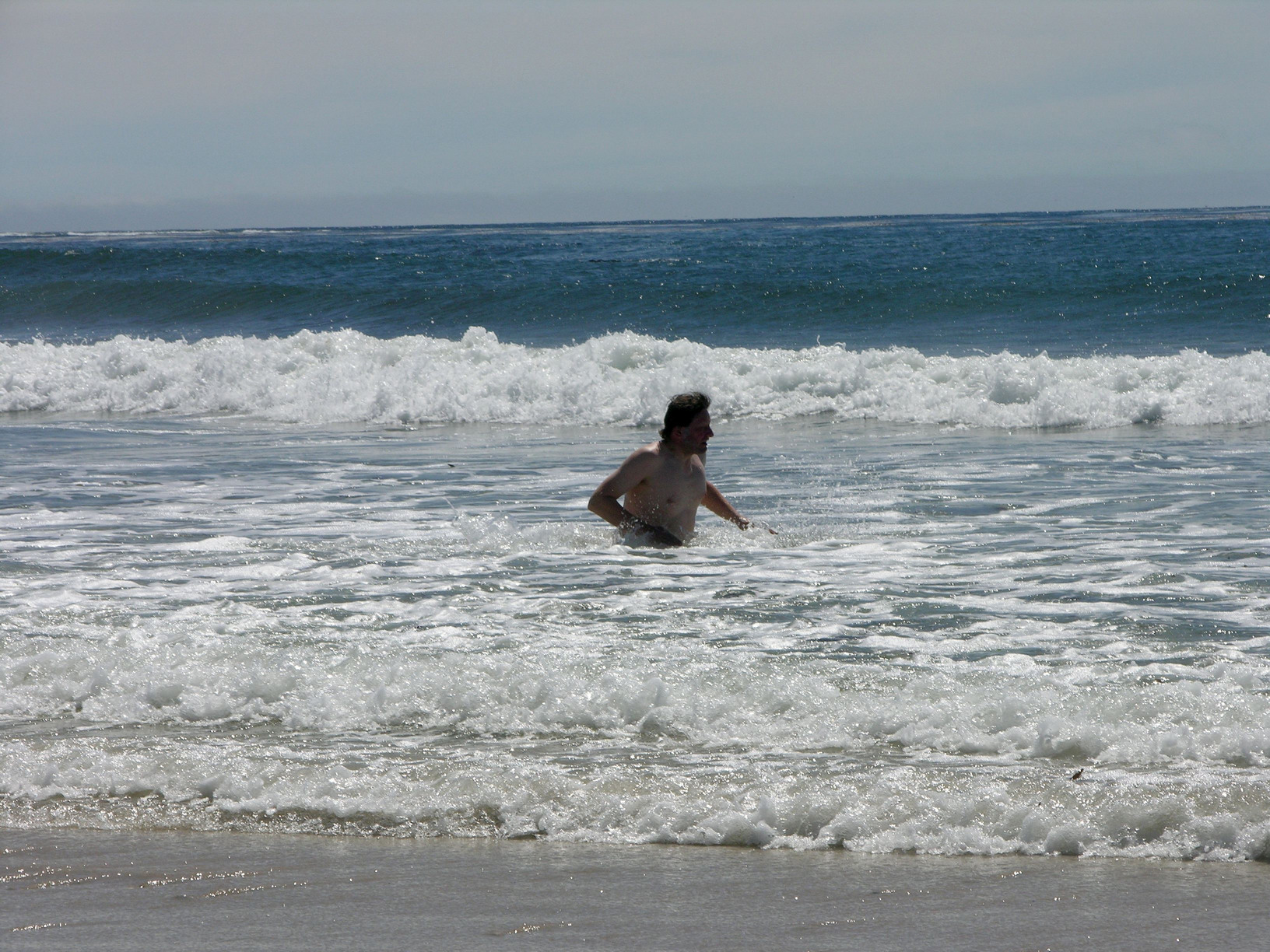
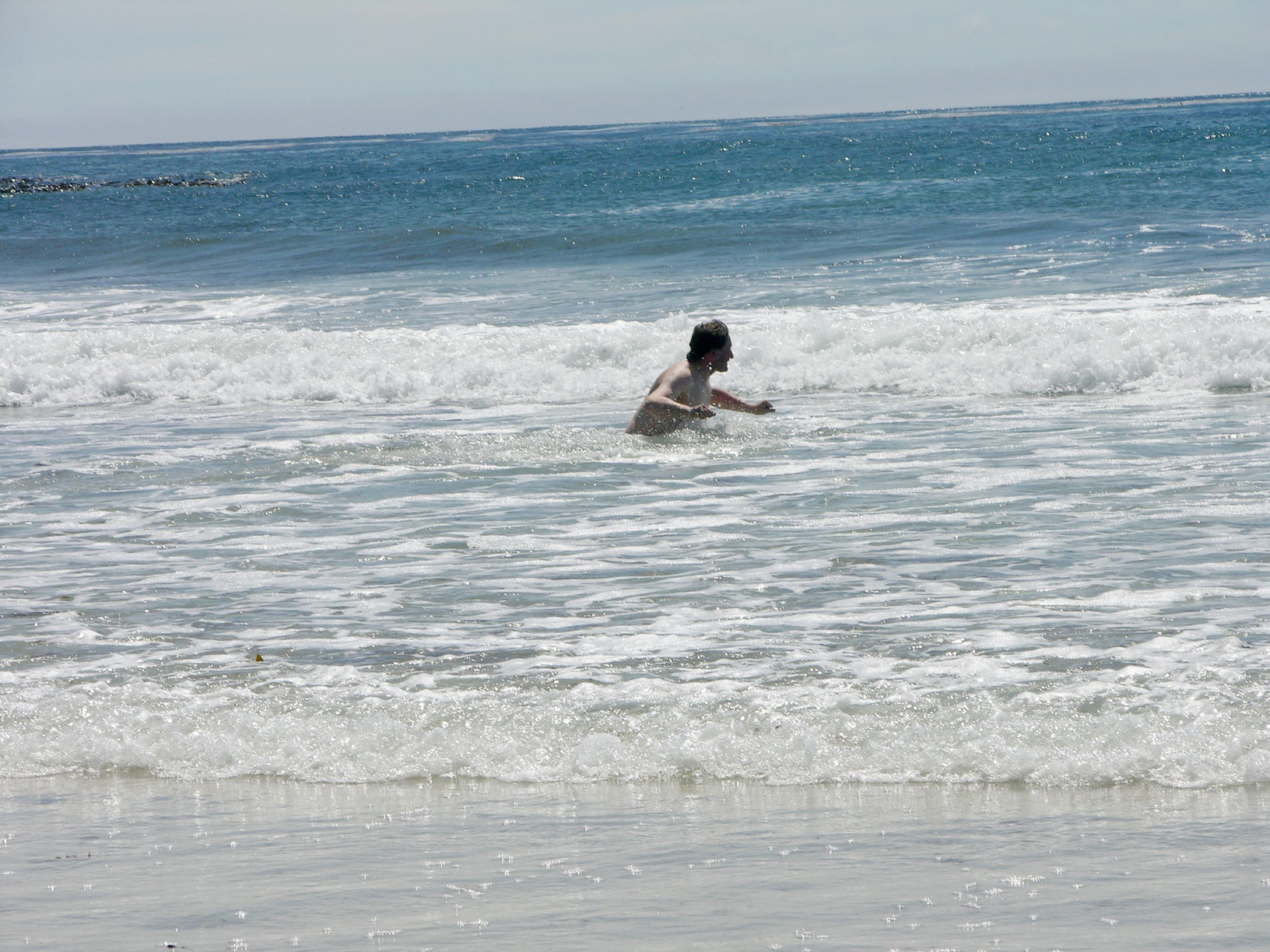
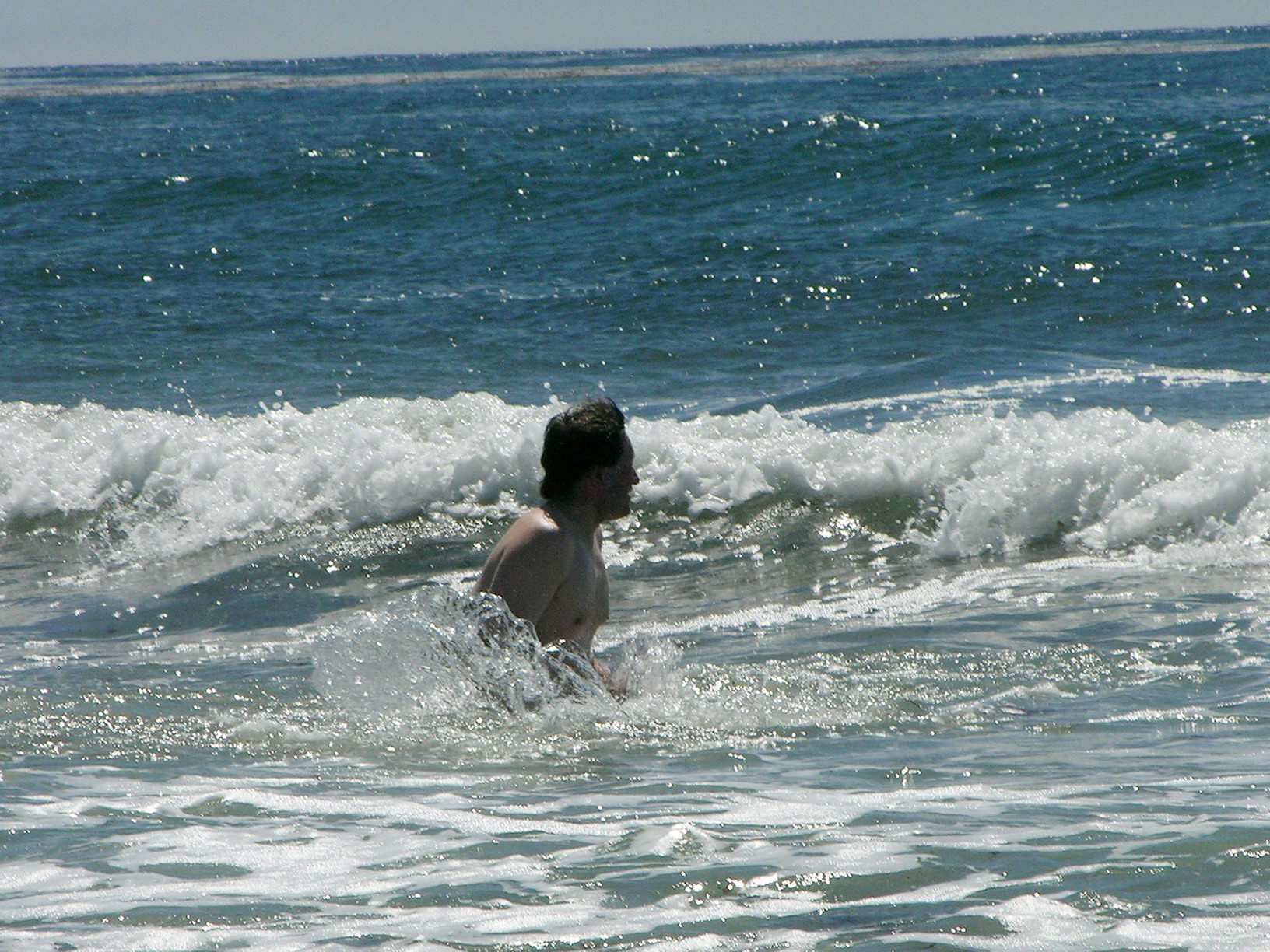
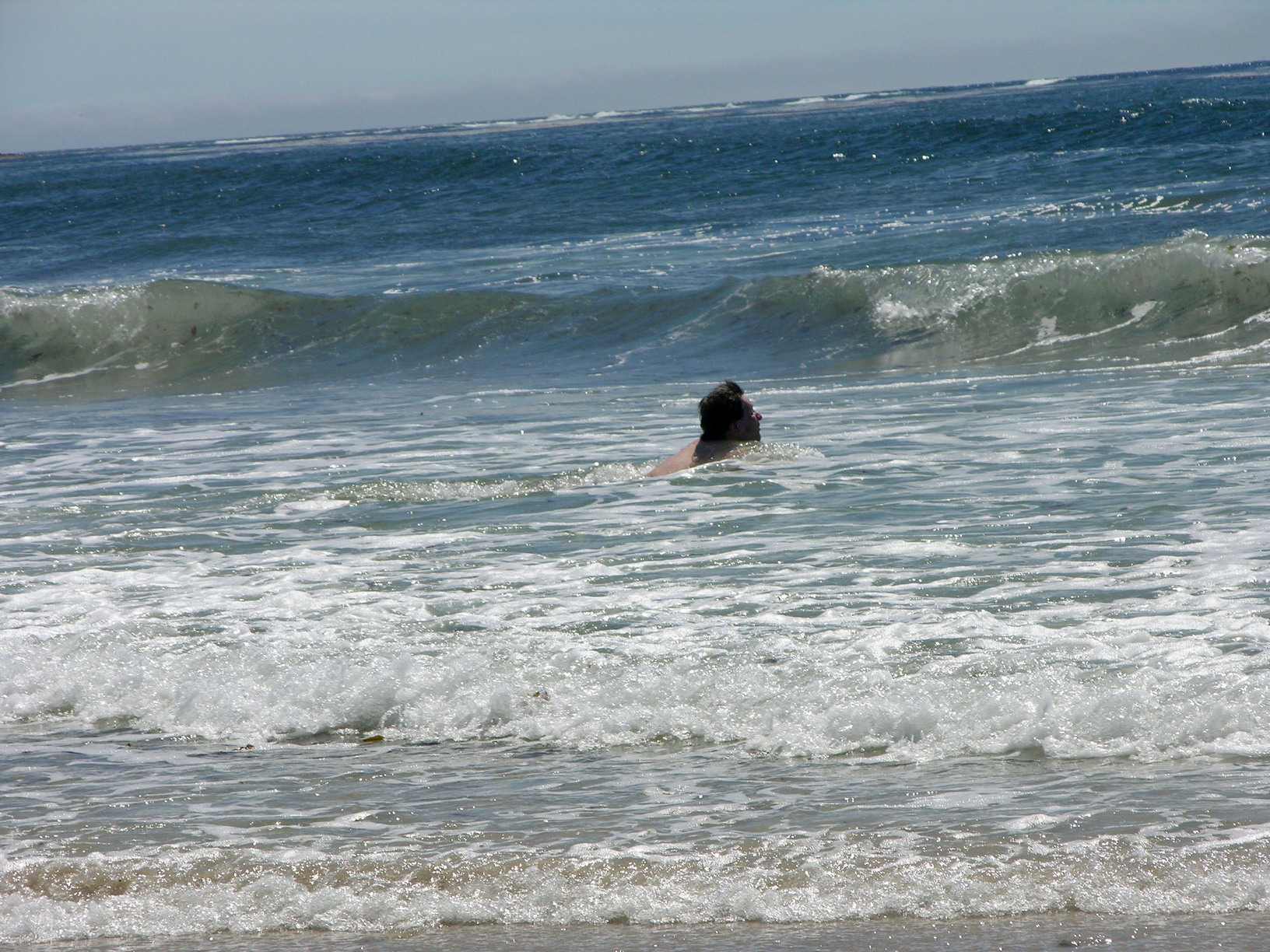
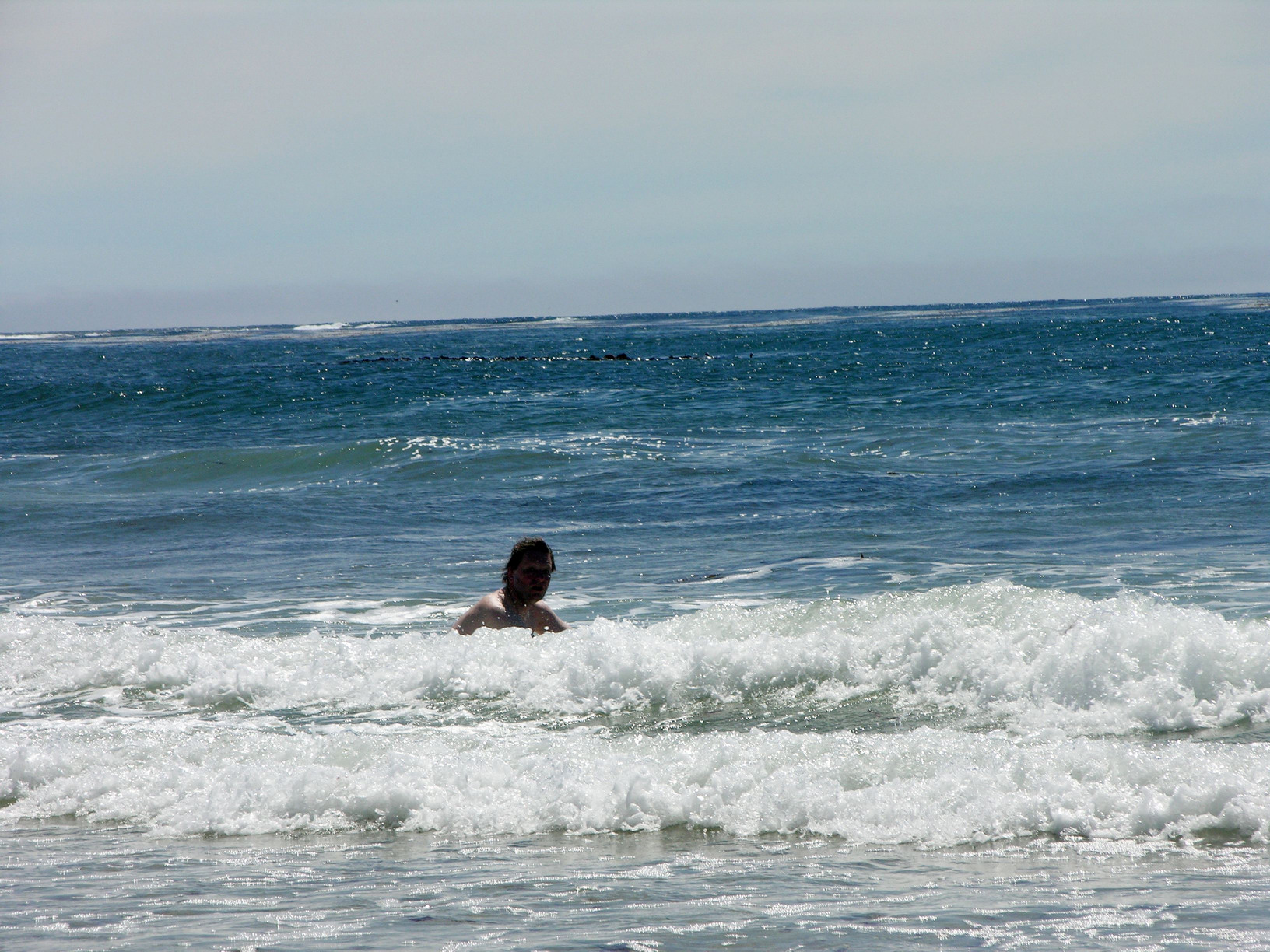
Many years ago I realised I'd only swum in the Black and Baltic seas. Obviously too few, so now I collect the seas I've managed to swim in, or at least wade into up to my waist. The Scotia Sea comes as far as the Falklands, and there was no question of leaving without a swim.
Today is the best day for it. Time to go. It's cold outdoors even if you don't swim, the sort of day for a fleece over a jumper. But it has to be done. I take off my clothes and run into the sea with the astonished penguins scattering in front of me. Cold, of course, but bearable. Sea number twenty-four done. The 2006 swimming season opened in January, in the southern hemisphere, off the shores of Antarctica.
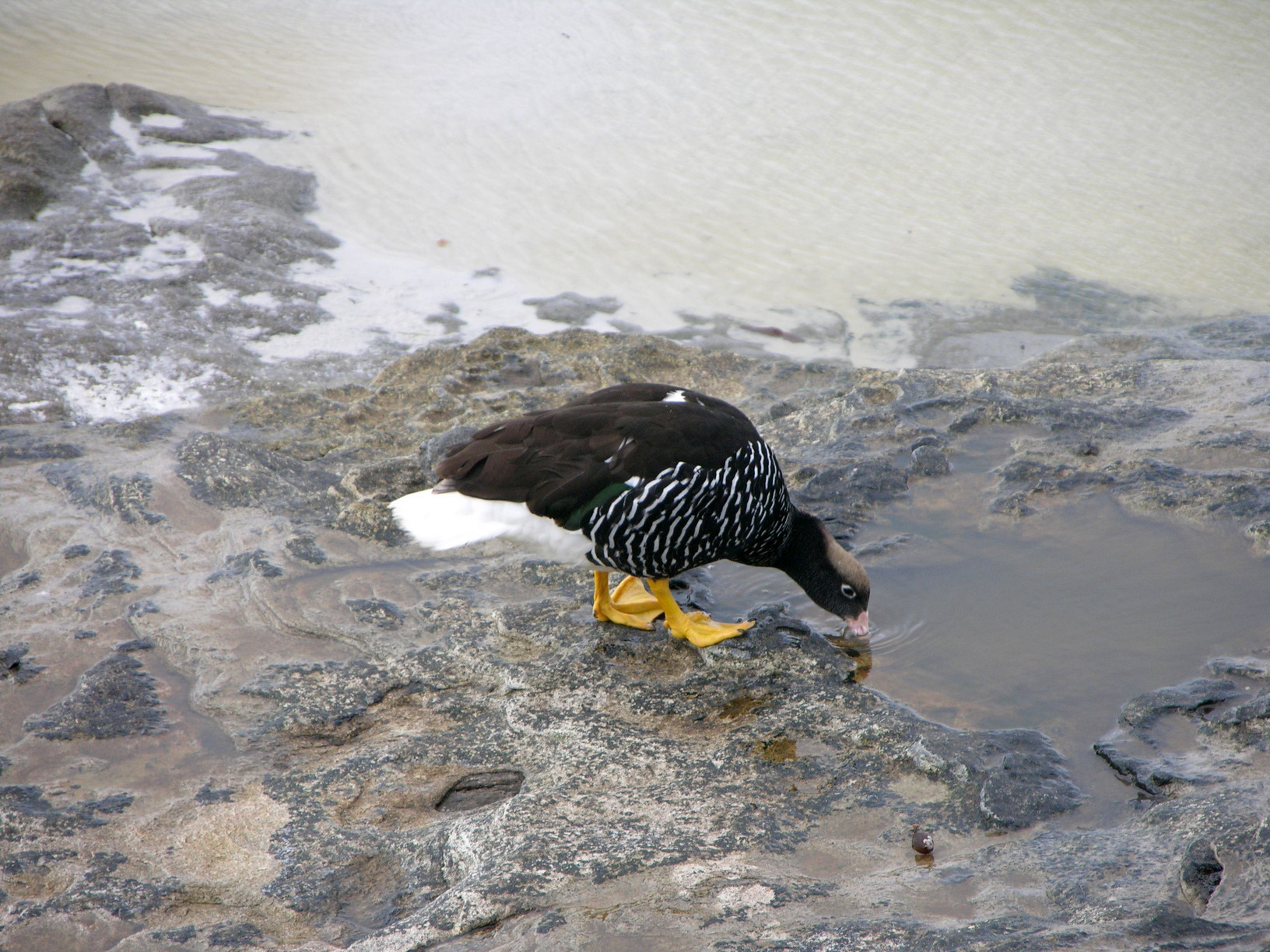
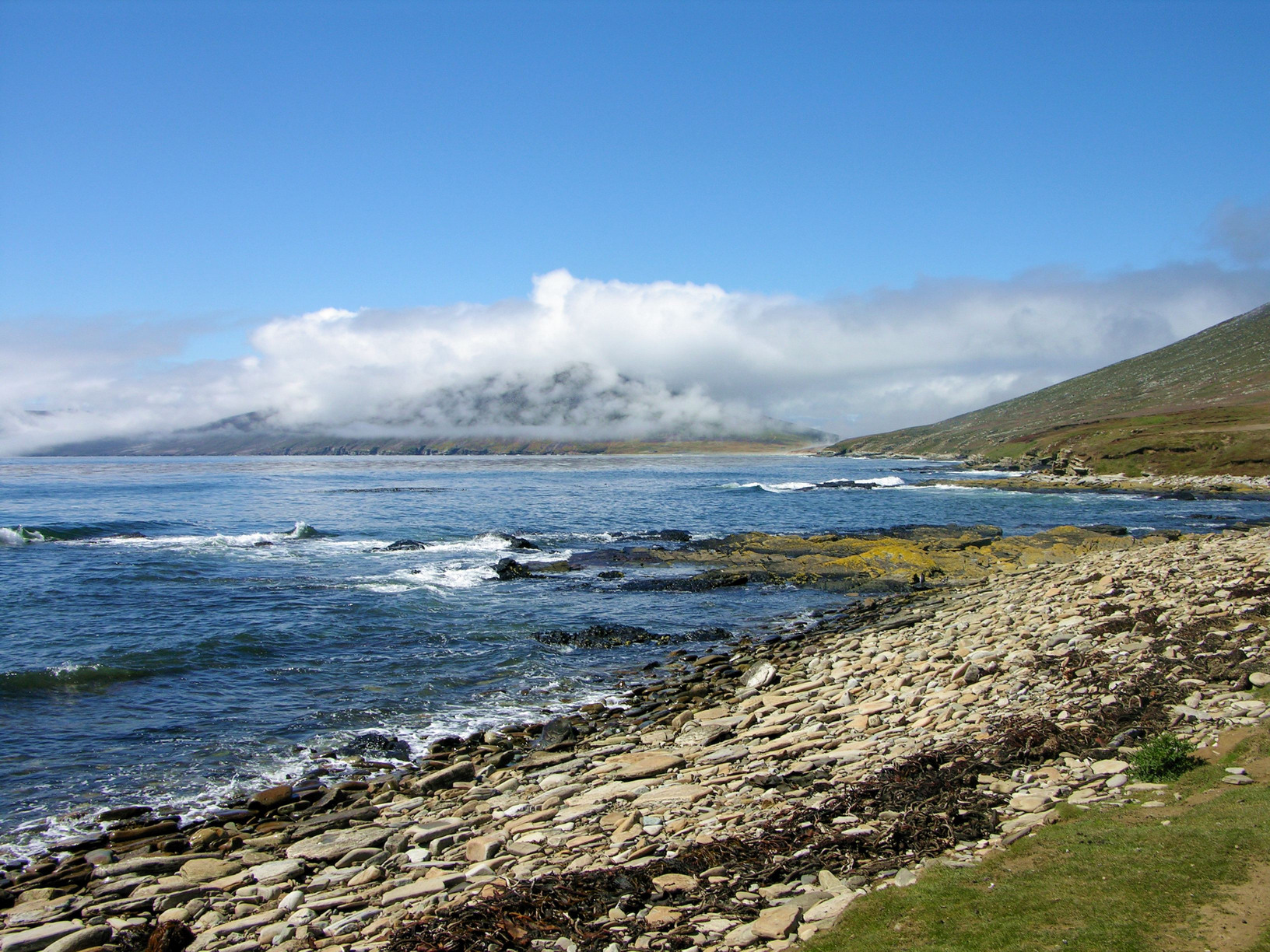
We returned the direct way along the foot of the hills. The country is marshy, with lots of little lakes. The scene is pure paradise. On the green lawn beneath the dark blue sky, sheep, penguins, geese, ducks and hares are all grazing. Nobody is afraid of anybody else and nobody is eating anybody. You sometimes see the endemic Falkland steamer duck.
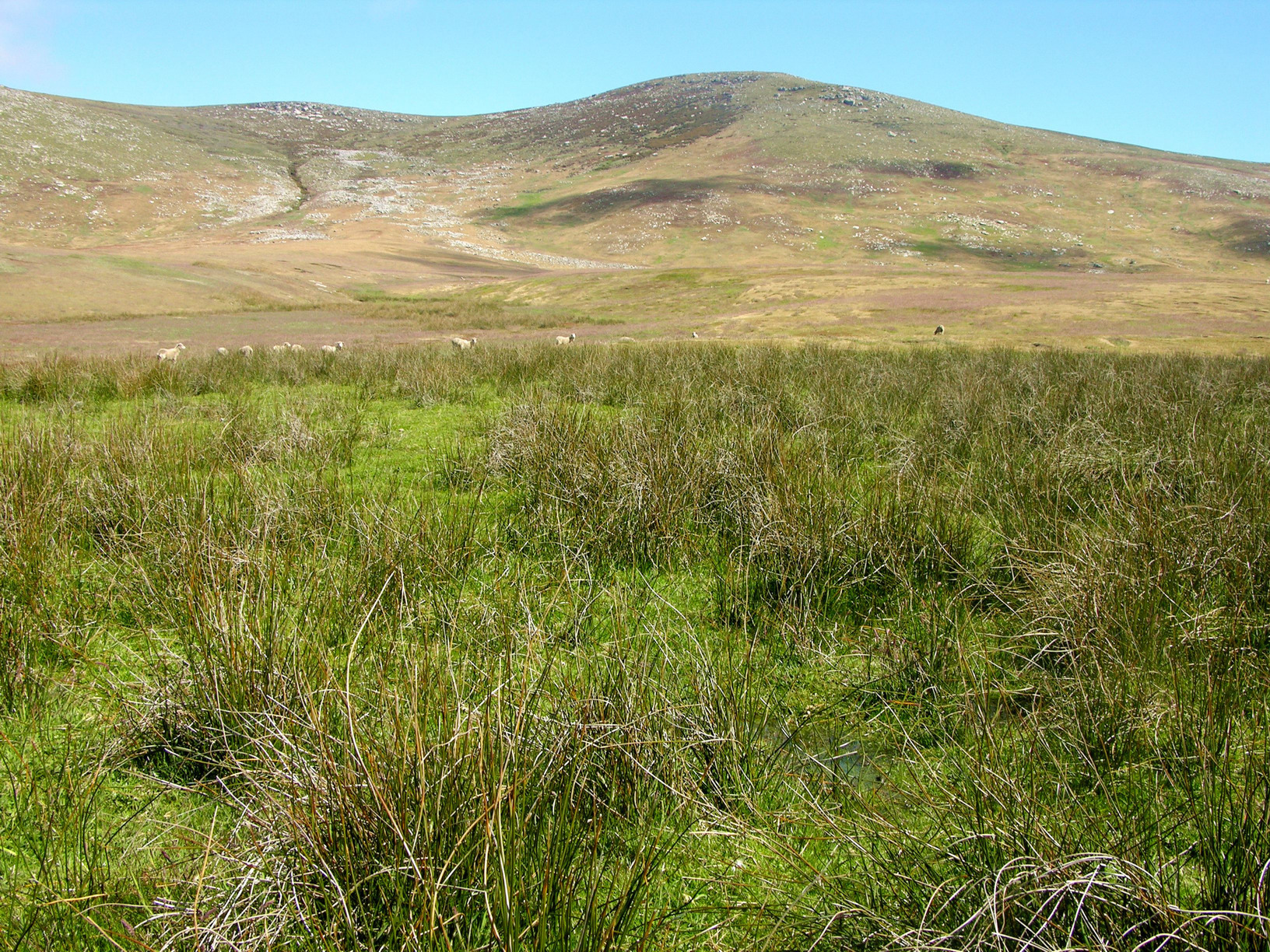
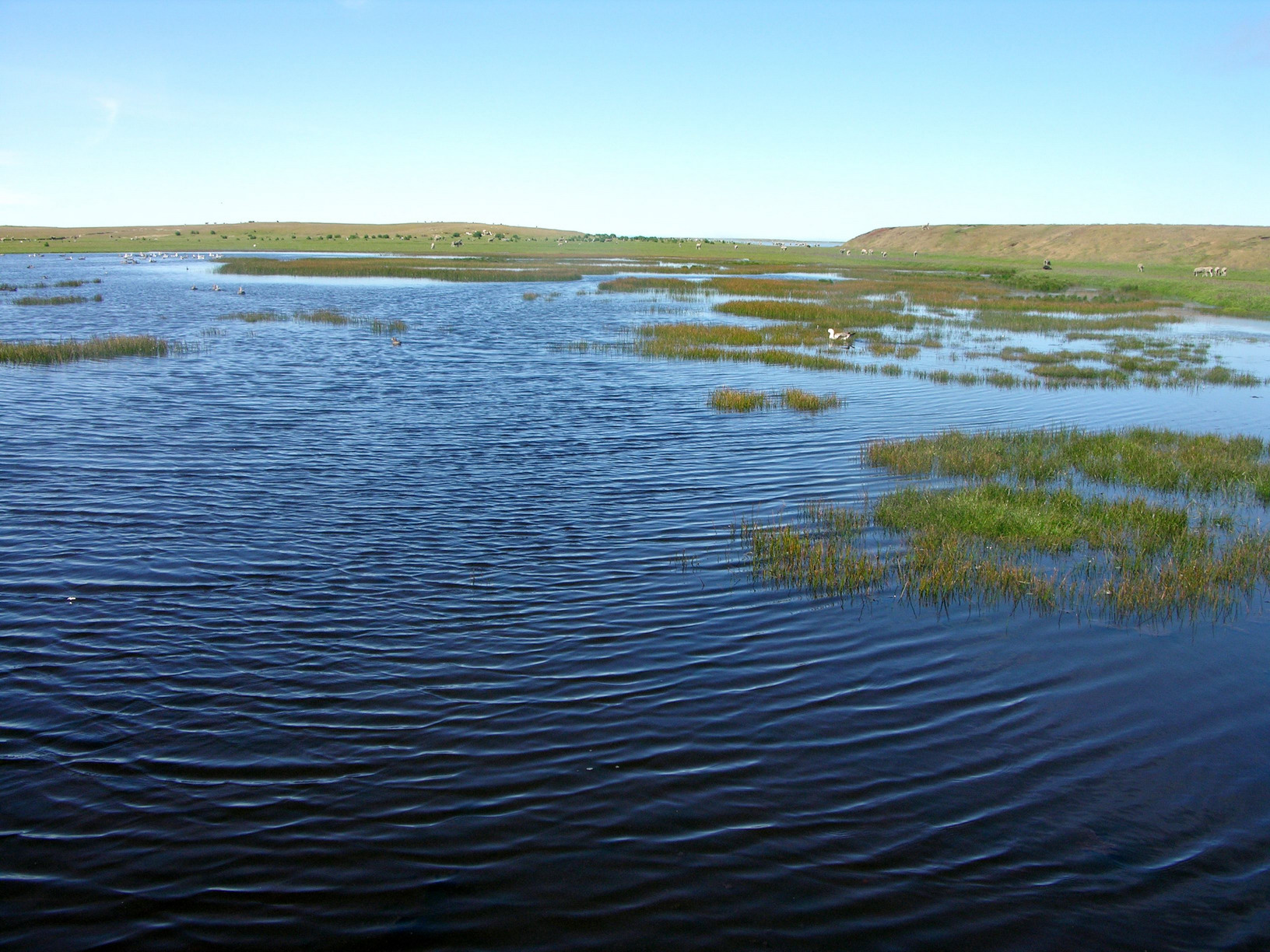
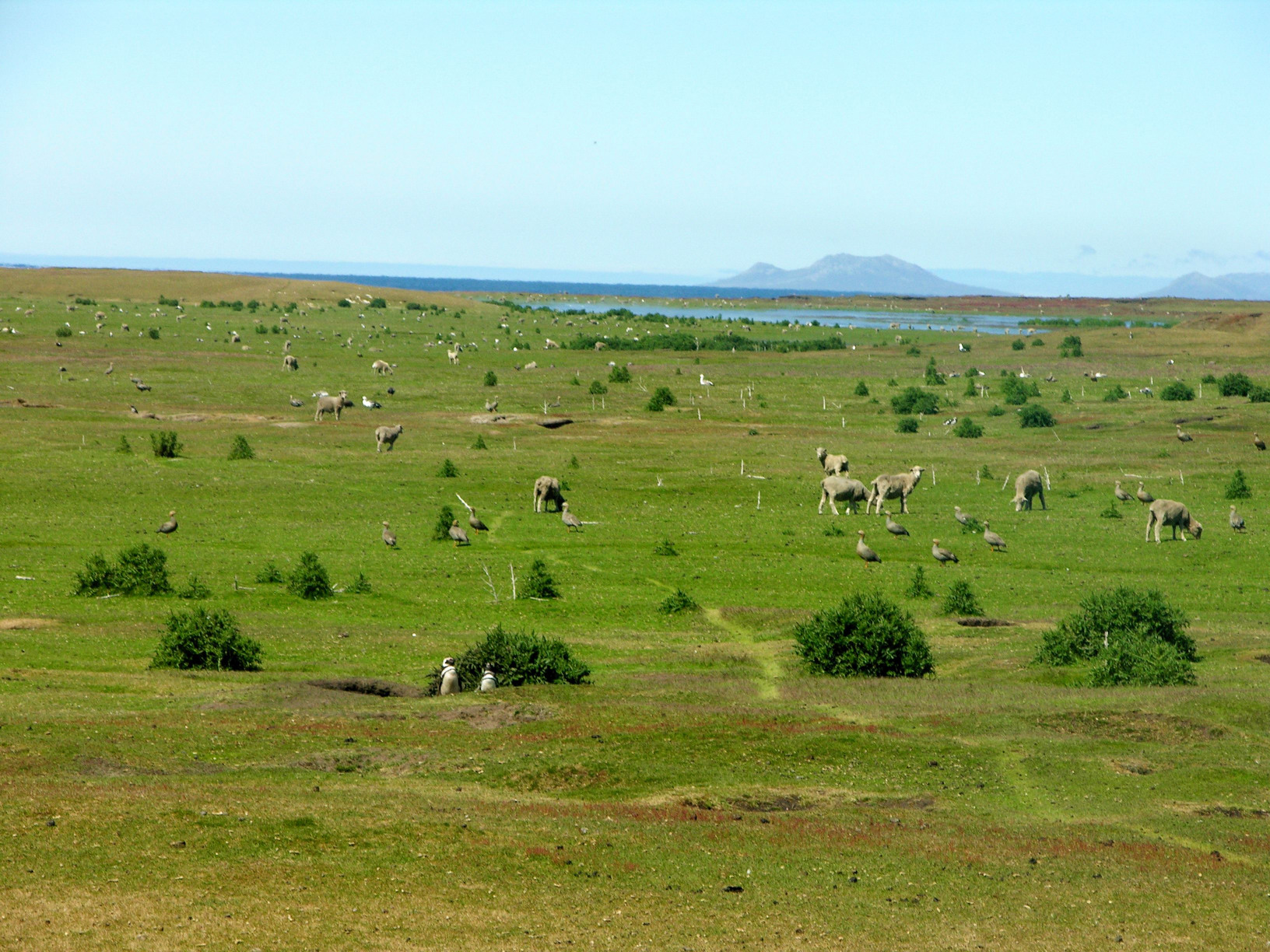
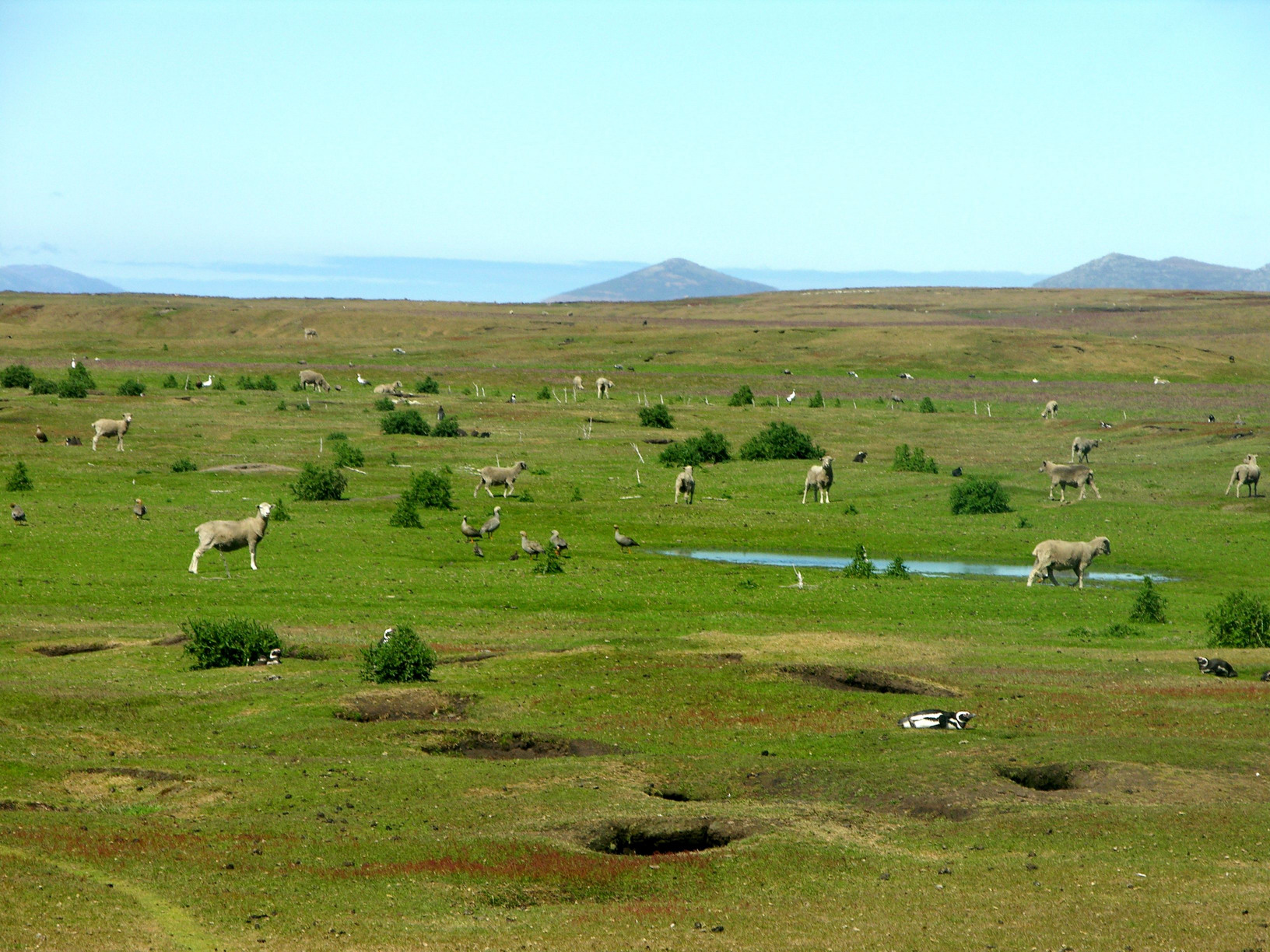
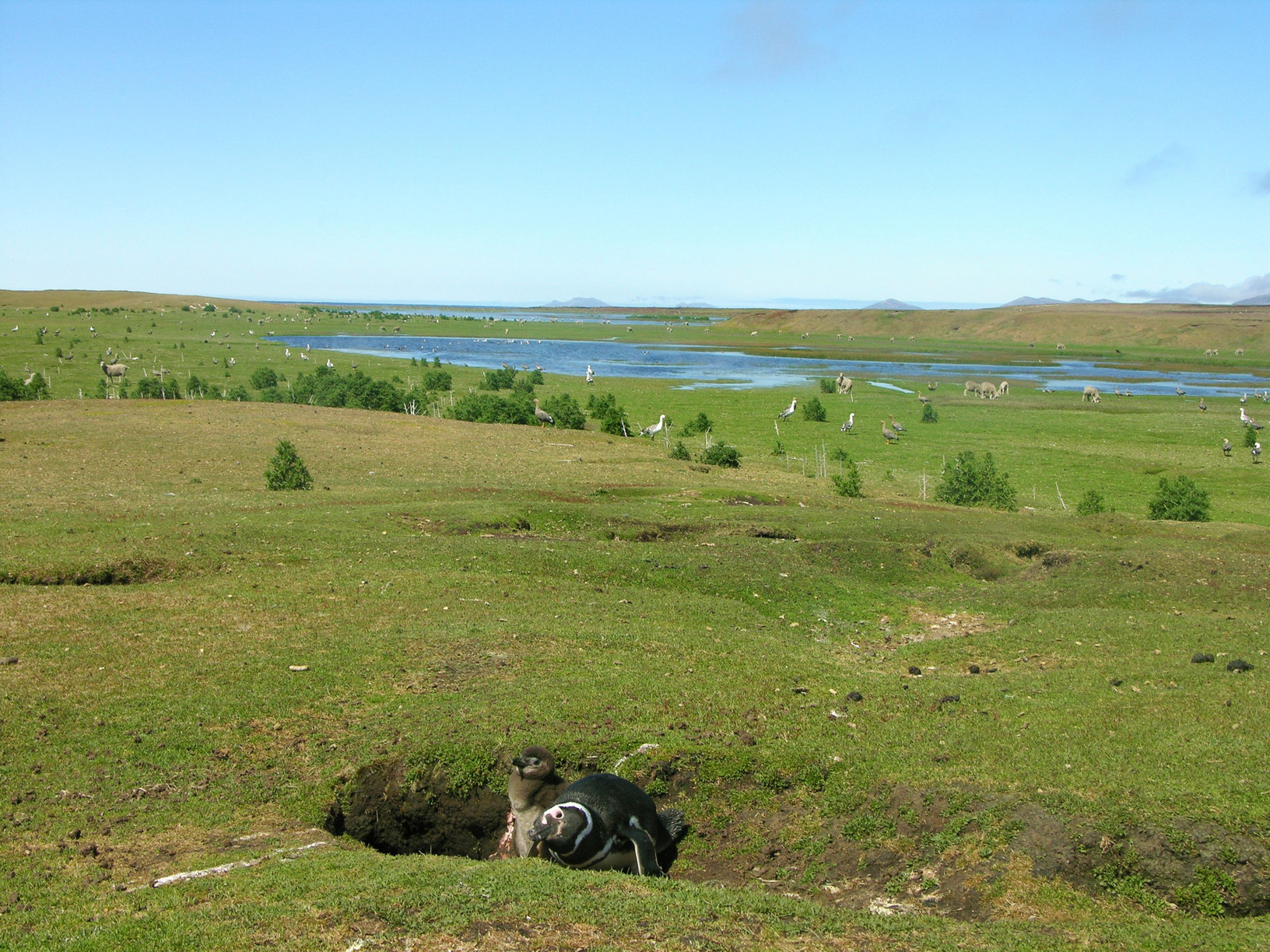
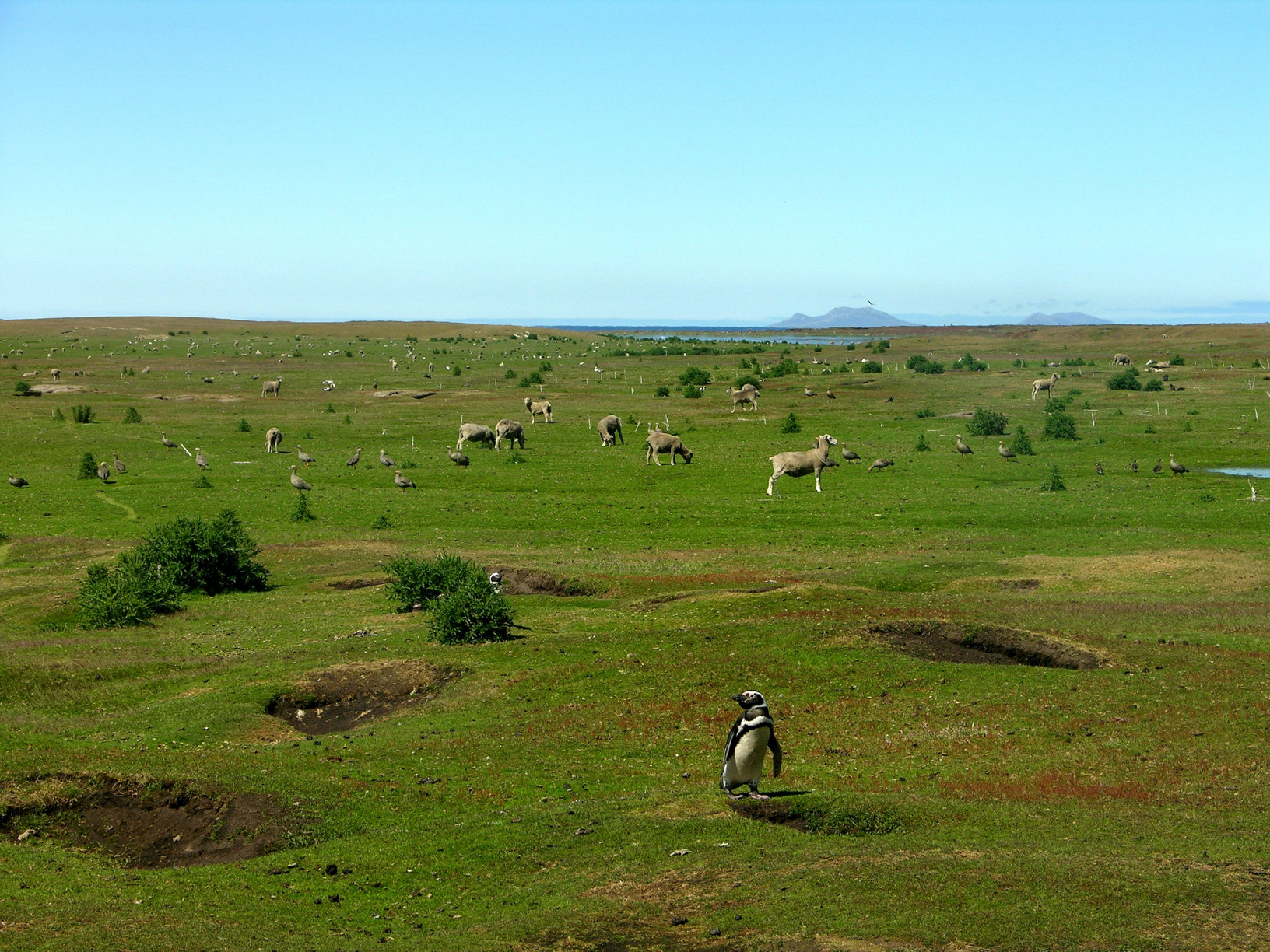
We got back to the tent in the evening, just in time for the jeep we'd booked.
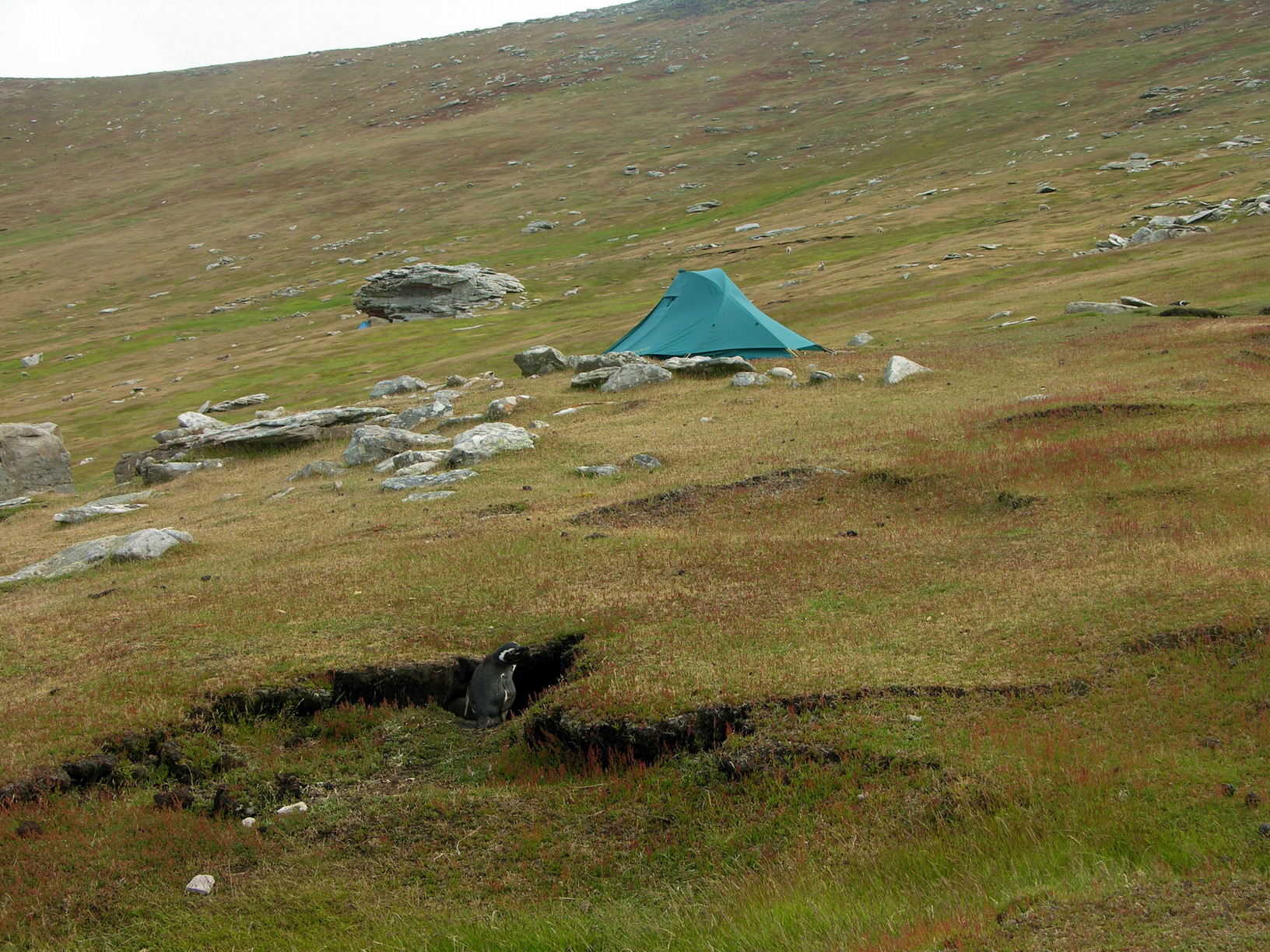
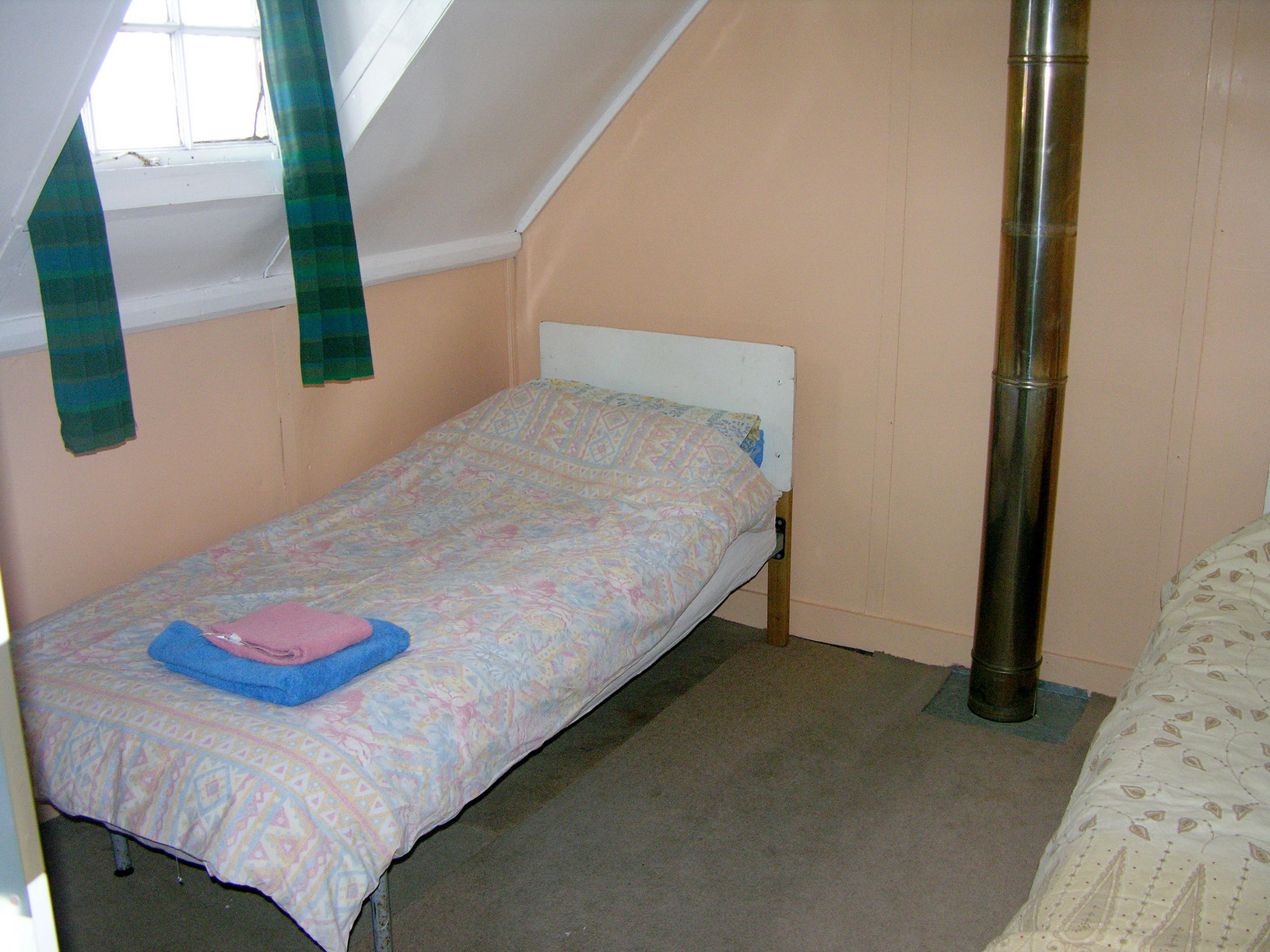
We'd booked our last night on Saunders in Saunders Settlement itself. We had half a cottage (51°21.848′S, 60°05.410′W). The other half wasn't occupied, so you could say we had the whole cottage at our disposal. They charge twenty pounds a person for the night.
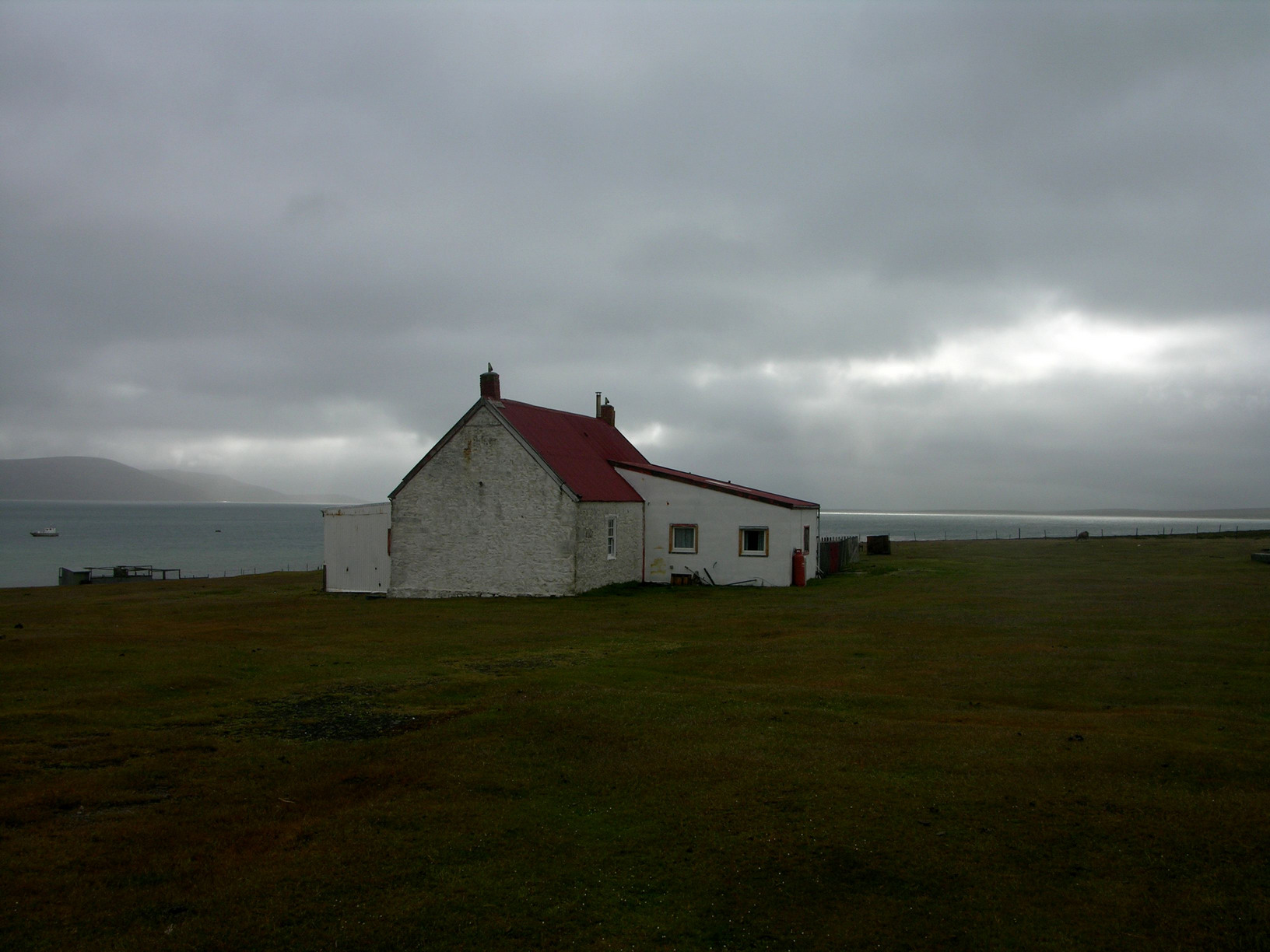
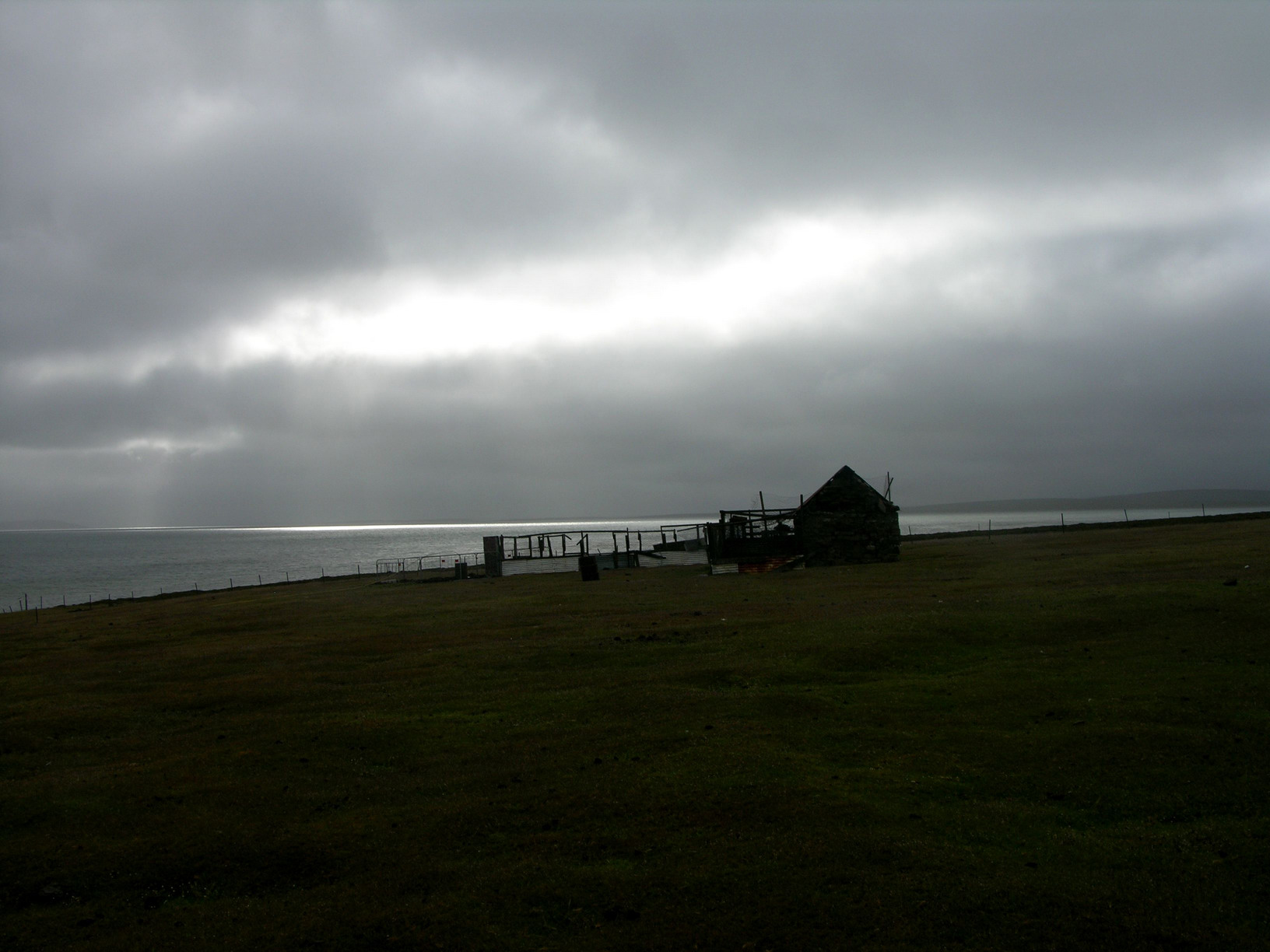
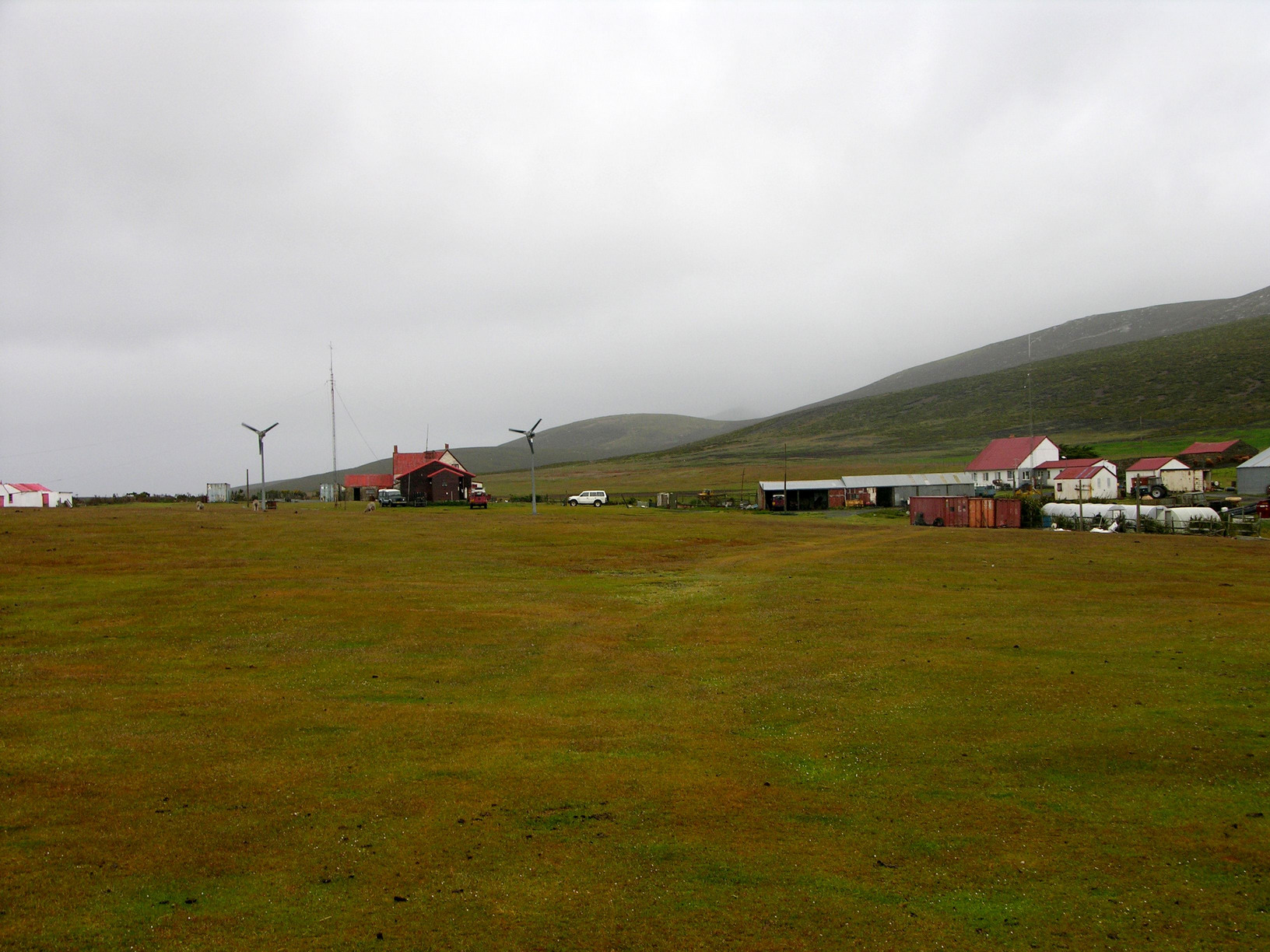
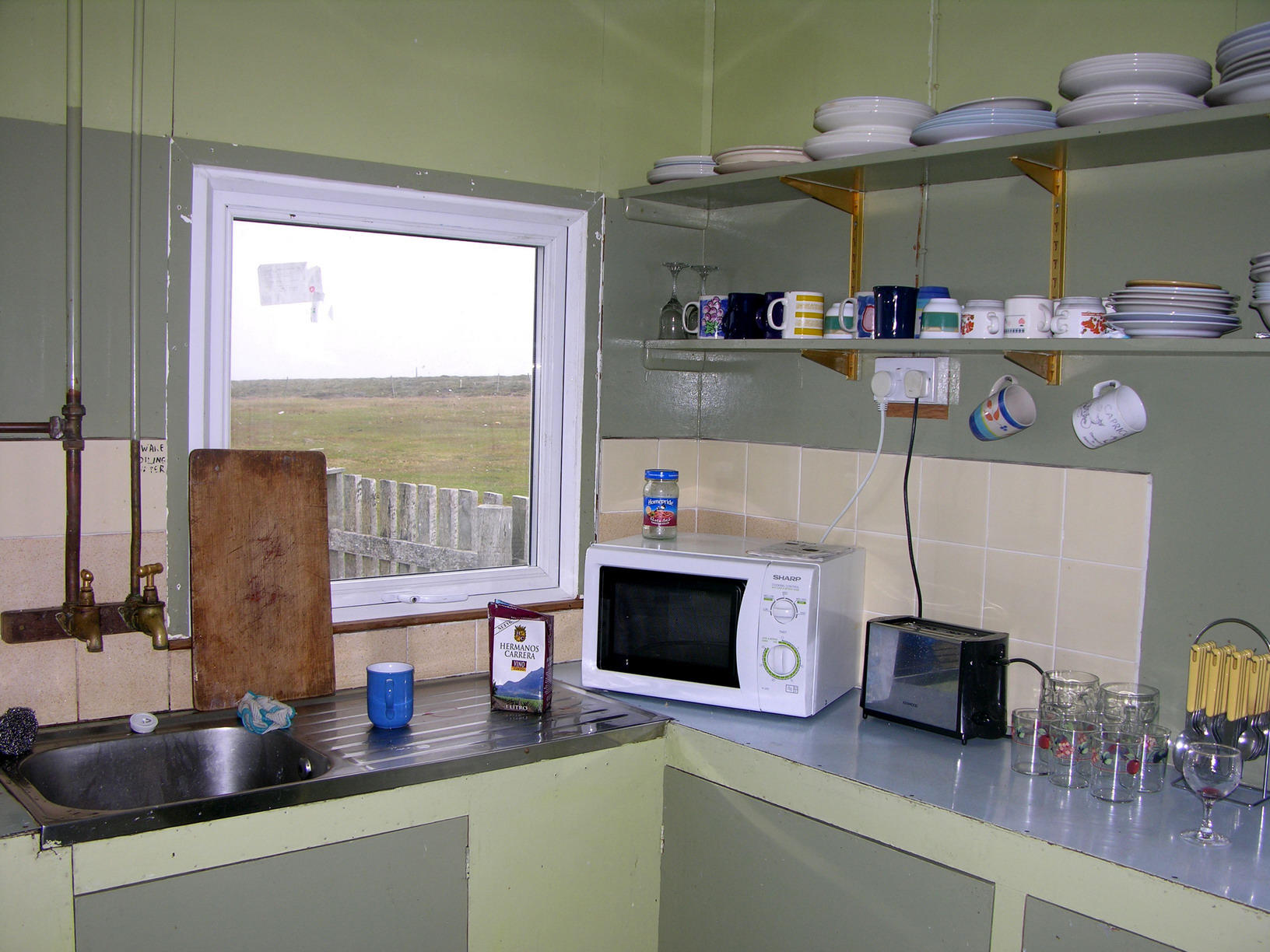
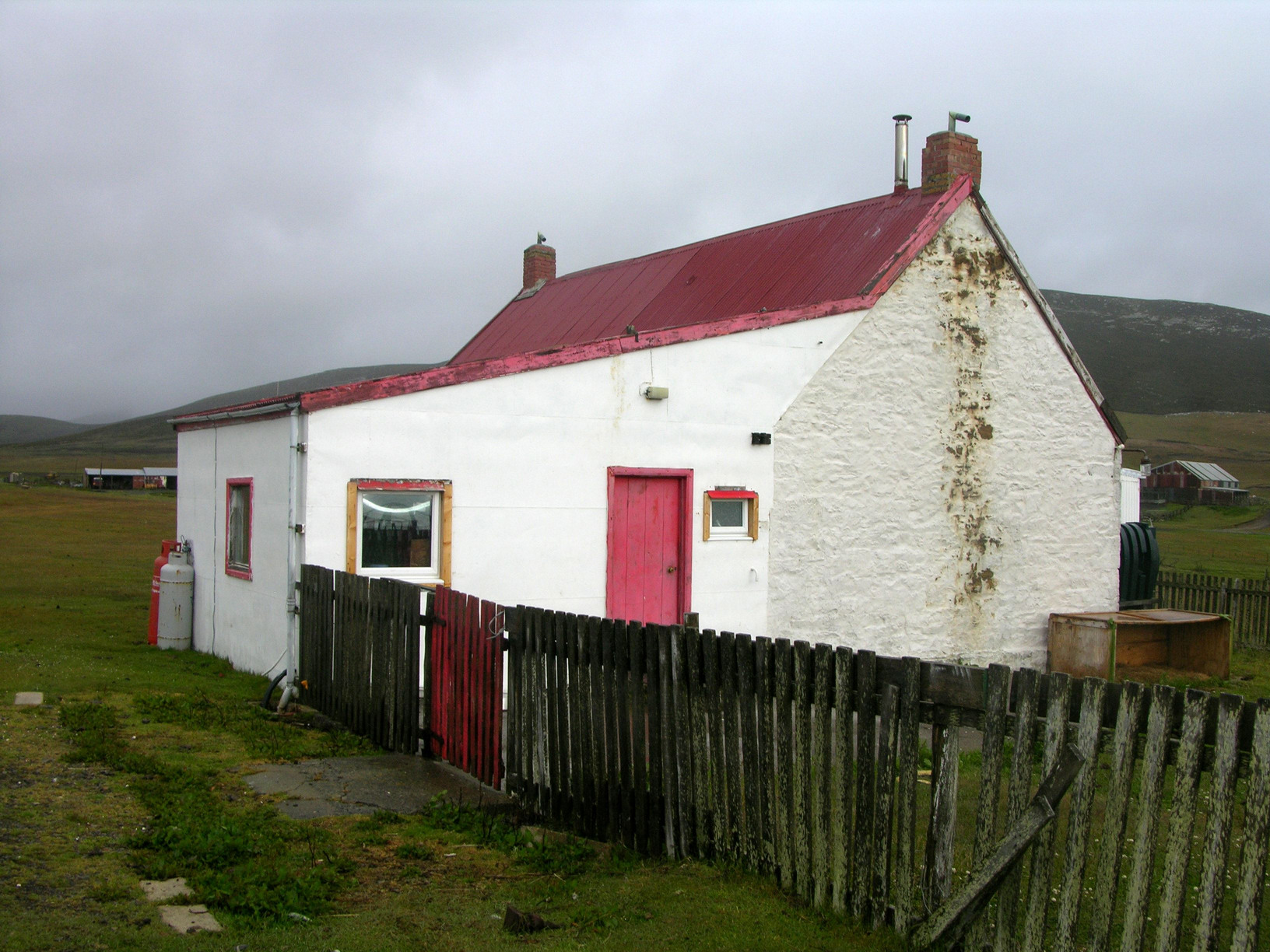
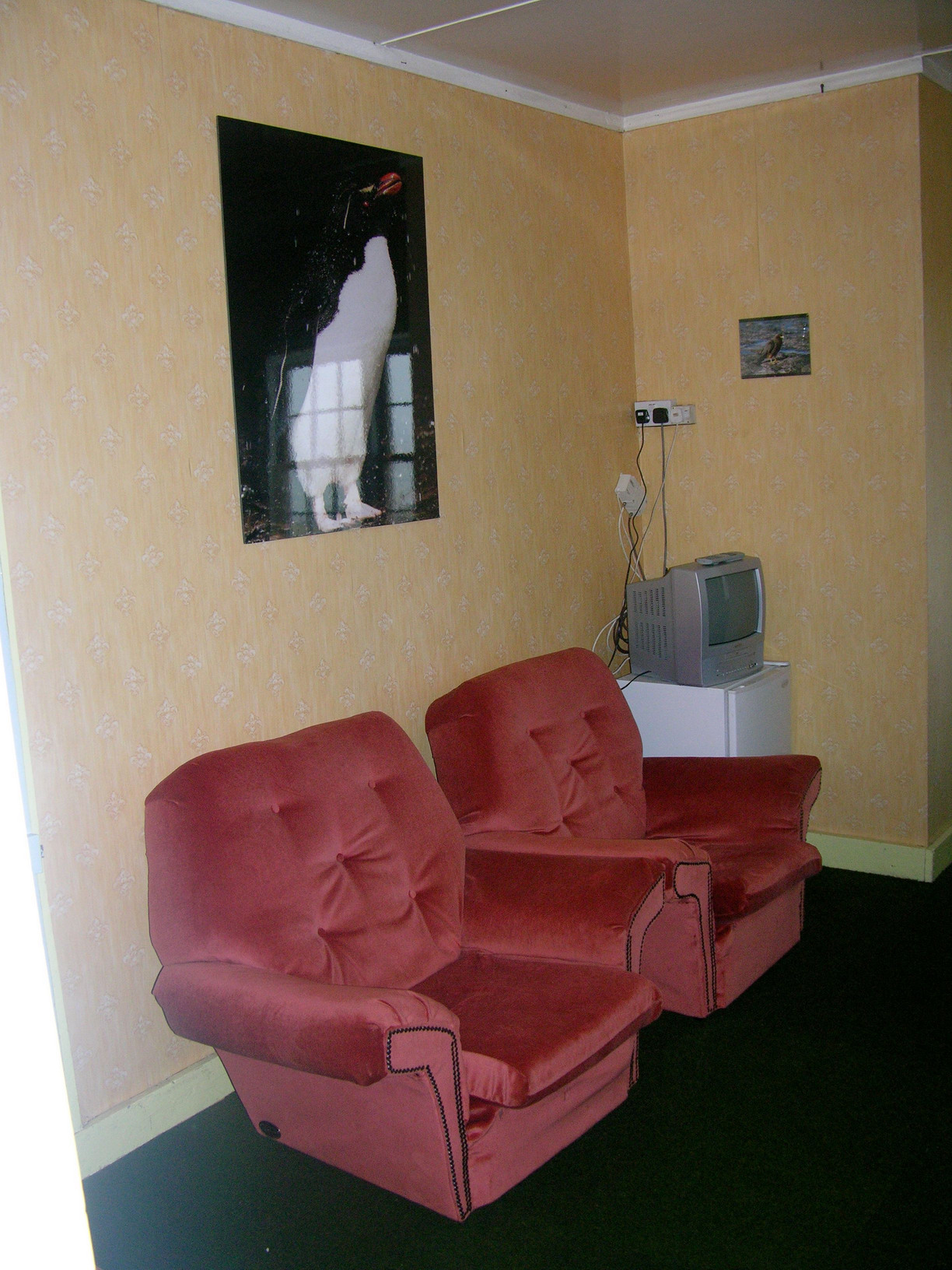
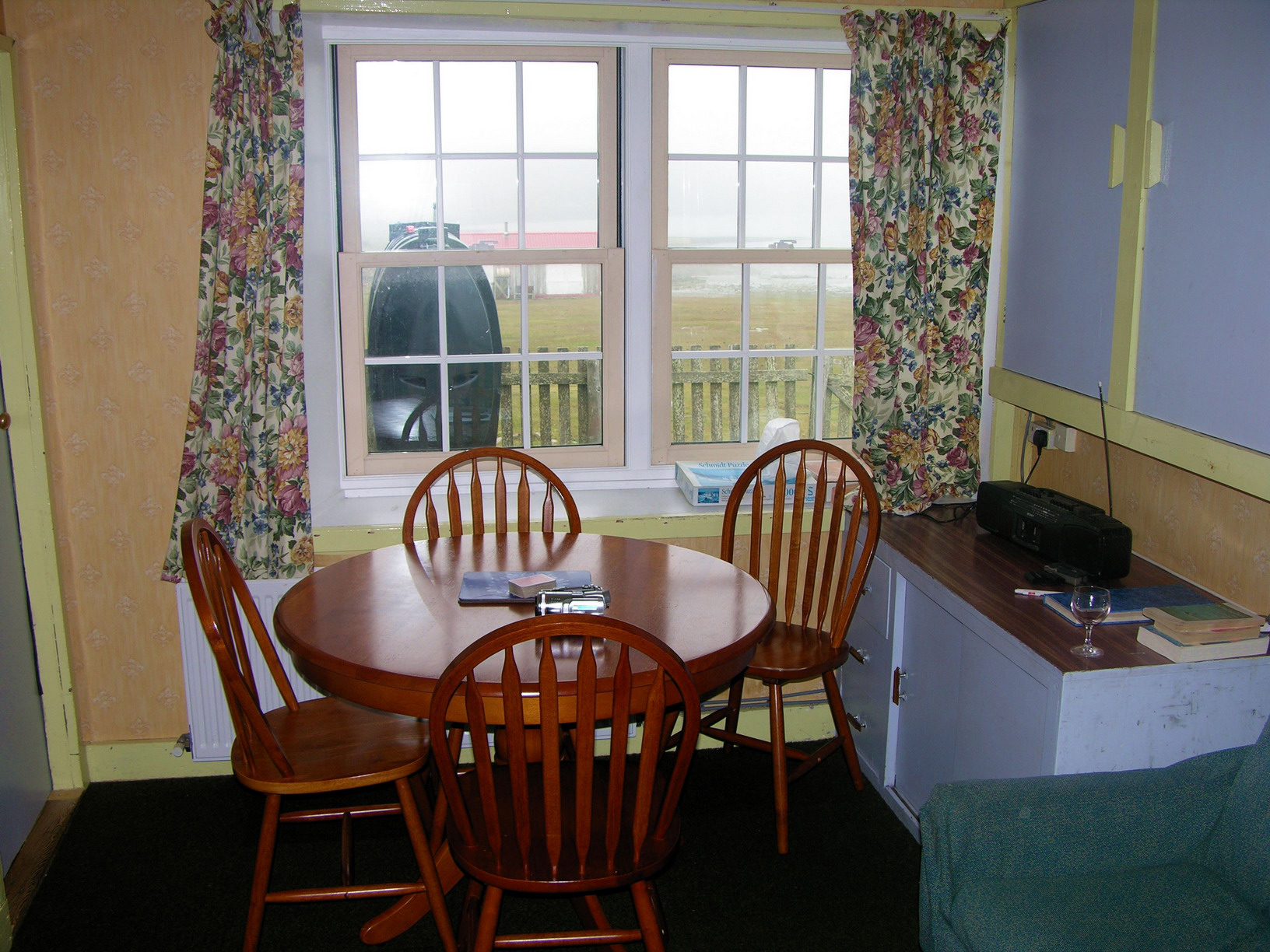
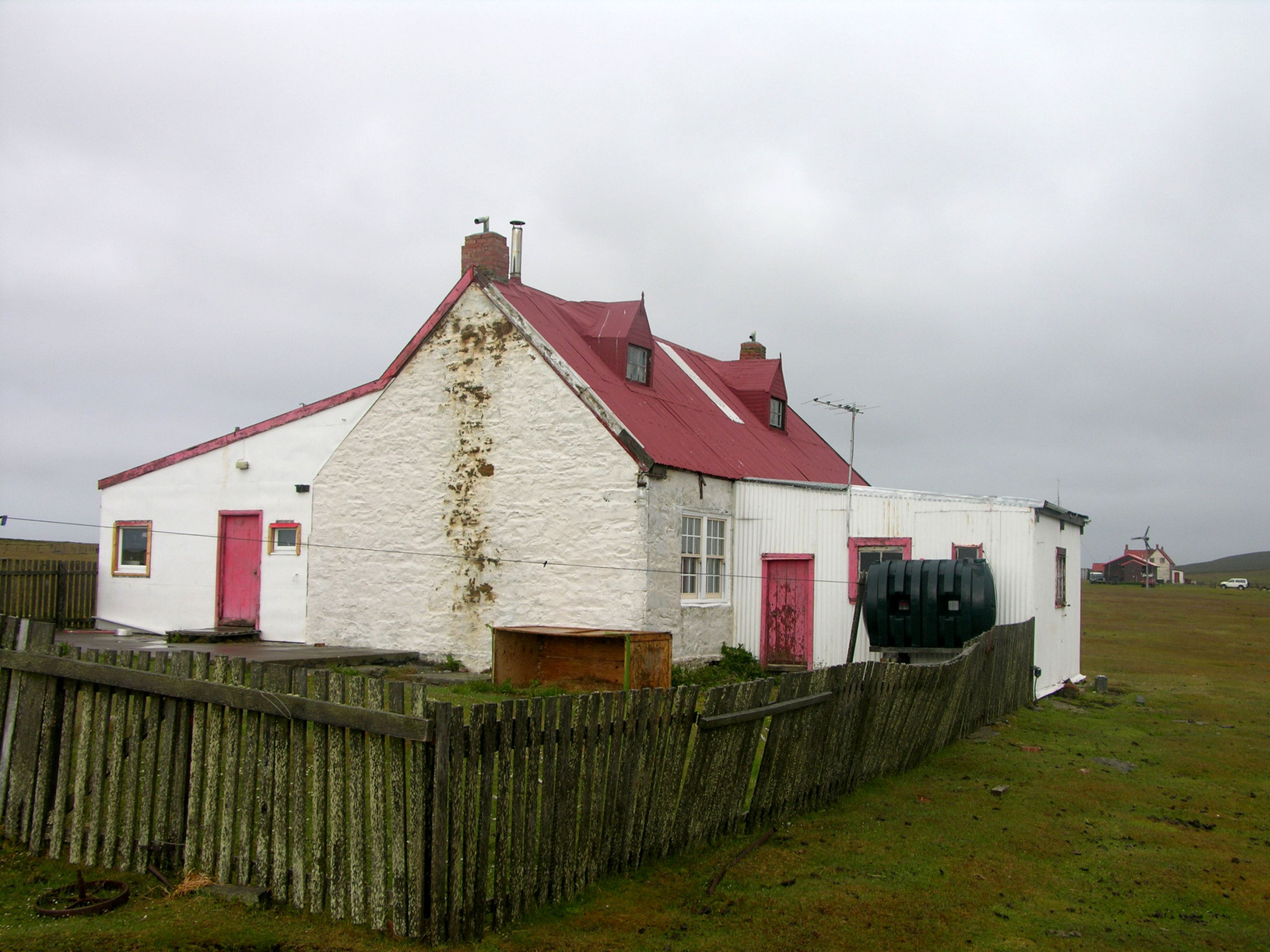
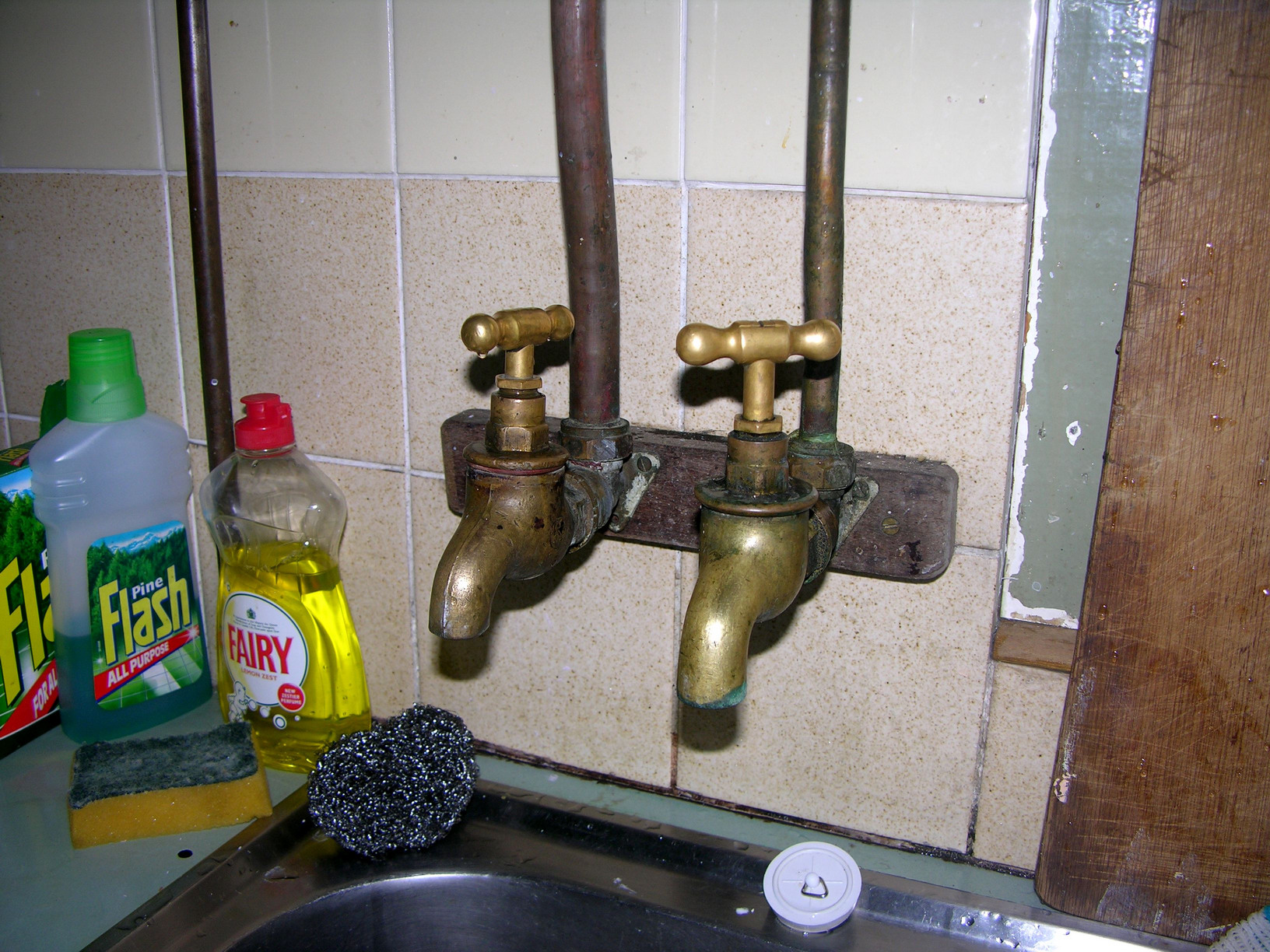
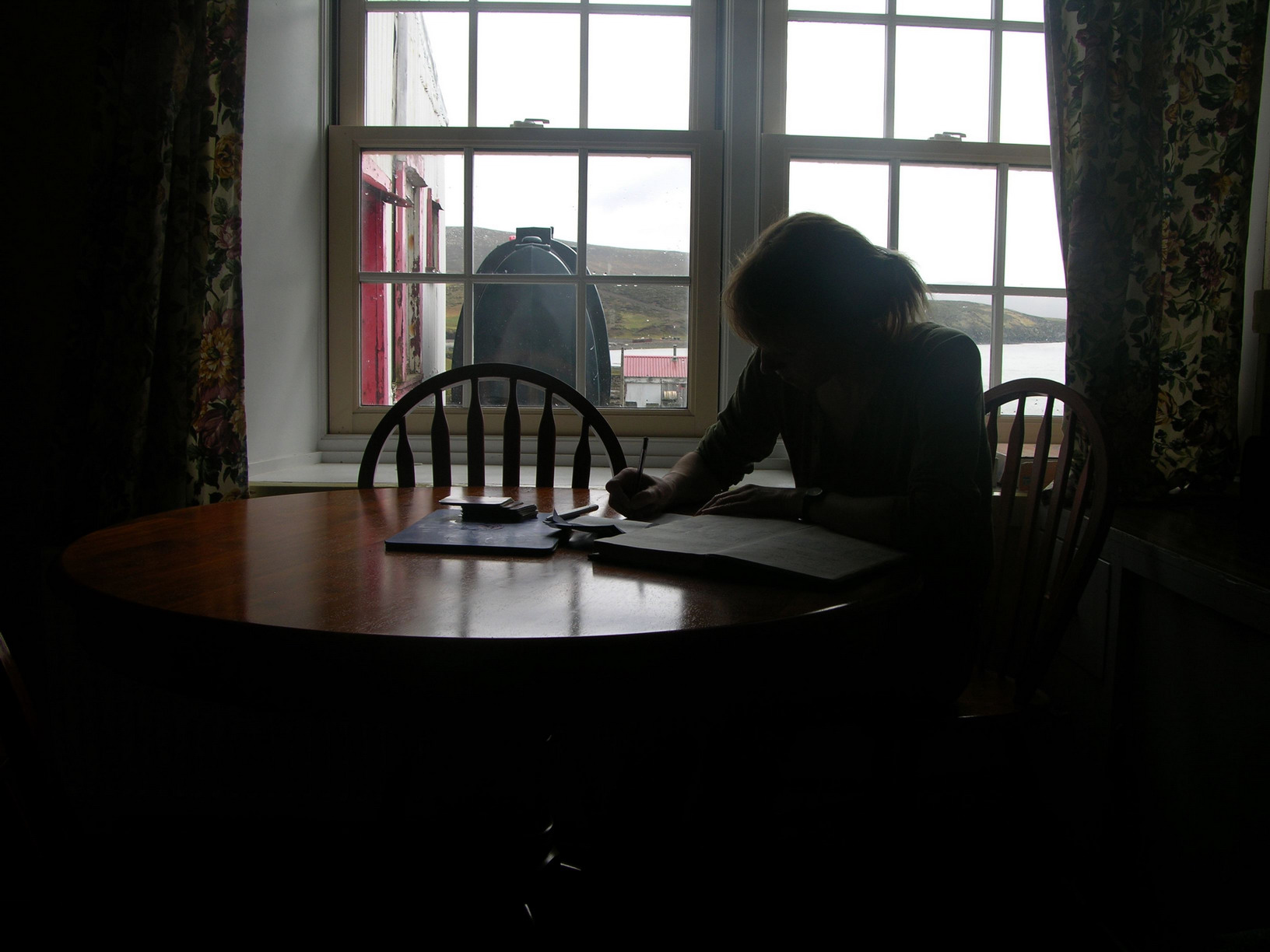
Susan has a little shop with the bare essentials, so you don't have to bring food to the island. We had our own rations, of course, but after just two days we fancied something like sausages. We also asked for milk. Susan told us that was easy and free, and brought us a bucket of it, freshly milked. Just like in the story of Matroskin the cat. And what were we supposed to do with it? It would be a shame to waste it. I made an effort and drank it. Never mind if I felt sick. Now there was so much goodness inside me, from such a good place.
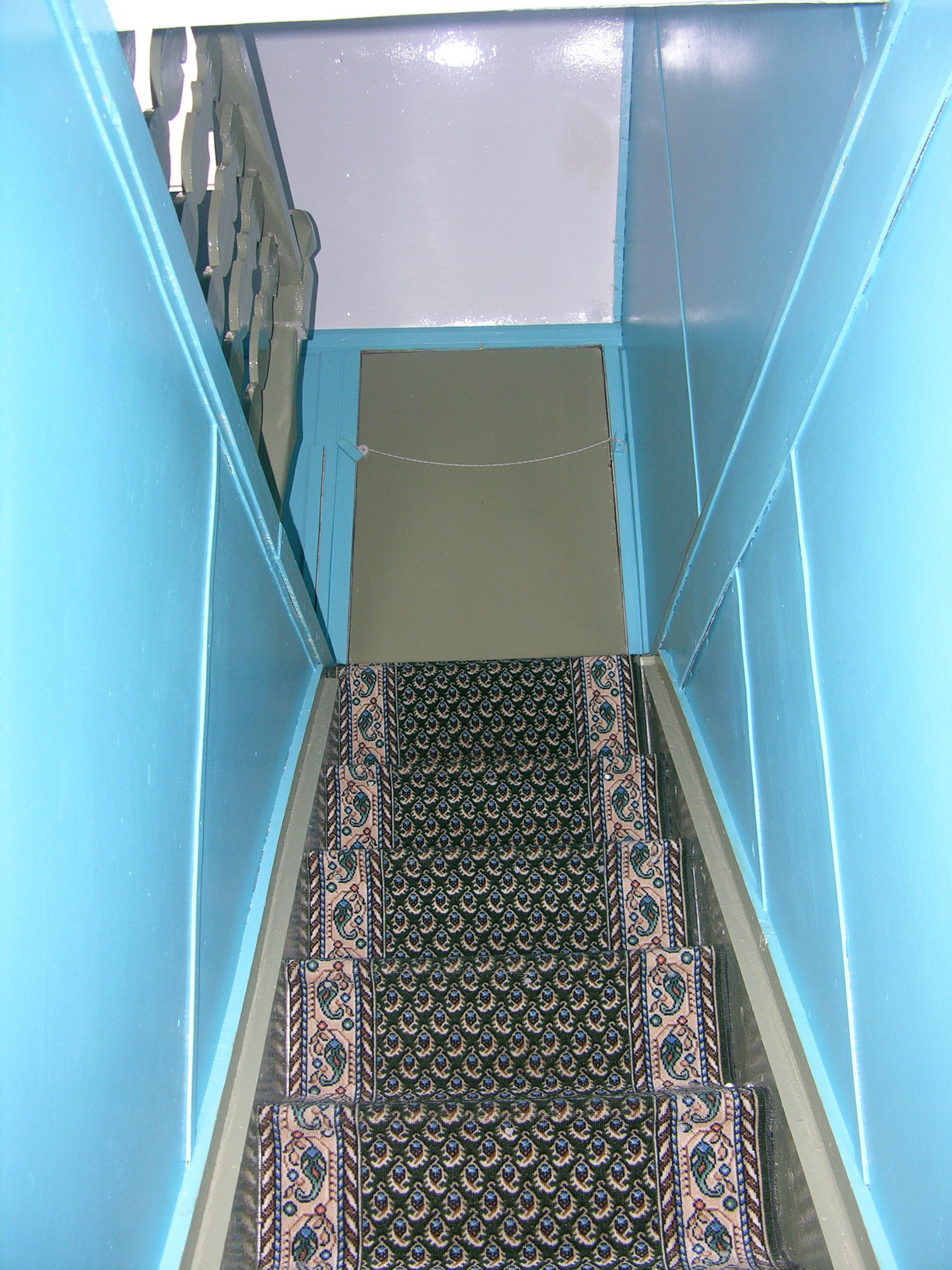
The cottage has two storeys. The bedroom is upstairs and the sitting room downstairs. There's a radio and a television that picks up one local channel. Our names came over the radio on the passenger list for the next day, and for the right direction too. All good, except the weather forecast was dreadful. Fog, rain and a howling wind, particularly in the west, where we were.
The forecast came true in the morning. The plane didn't come, and still didn't come. We waited a long time. We'd almost reconciled ourselves to missing the next day's flight to Chile and staying another week with the penguins. Perhaps that would be a good thing. Perhaps it was fate.
However, the plane came at around noon after all, bringing a photographer from New Island and his numerous tripods. The two of us flew to Stanley without stopping. Fifty minutes in the air.
The capital's airport has a concrete runway and a terminal. You're supposed to collect your luggage in the building, rather than rummage through the plane's luggage hold yourself. All very respectable. You can get a taxi there too, for £4.50. Five kilometres into town, which we didn't fancy walking. We managed to pay for the flight at the counter.
We needed to get into town quickly, to the only bank in the country. It was Friday and the bank closed early, and we had yet to pay for our stay at Darwin. When Bonnie found out we were short of cash, she said there was no problem. “When you get to the capital, pay at the bank. Just say £390 into the account of Bonnie from Darwin, and that will be fine.” To be certain we asked for an invoice anyway. It amounted to a slip of paper with the same sentence: “Pay Bonnie from Darwin £390.”
The Falklands still live in a world where there is no theft, none at all. You can leave a bike or a car and you don't have to lock the doors. If you lose your wallet, it isn't your problem, it's the problem of the people who find it and have to look for the careless owner all over the country. If somebody says they'll pay, it isn't doubted. Business is all done with cheque books. Credit cards are taken by rolling them through a little machine onto paper. You really can live like that! I'm almost afraid to write it. My fellow Russians will read these lines and come over to get a free ride. They'll clean out the local old ladies and the last corner of the world where people live decently will disappear.
We made it to the bank. A great relief. I'd already wondered how I'd pay an invoice like that from abroad. We made it to the post office too, and sent off a pile of postcards and a calendar with Falklands views. For a pound we also bought an issue of the main local paper, Penguin News (newspaper website), and posted it home.
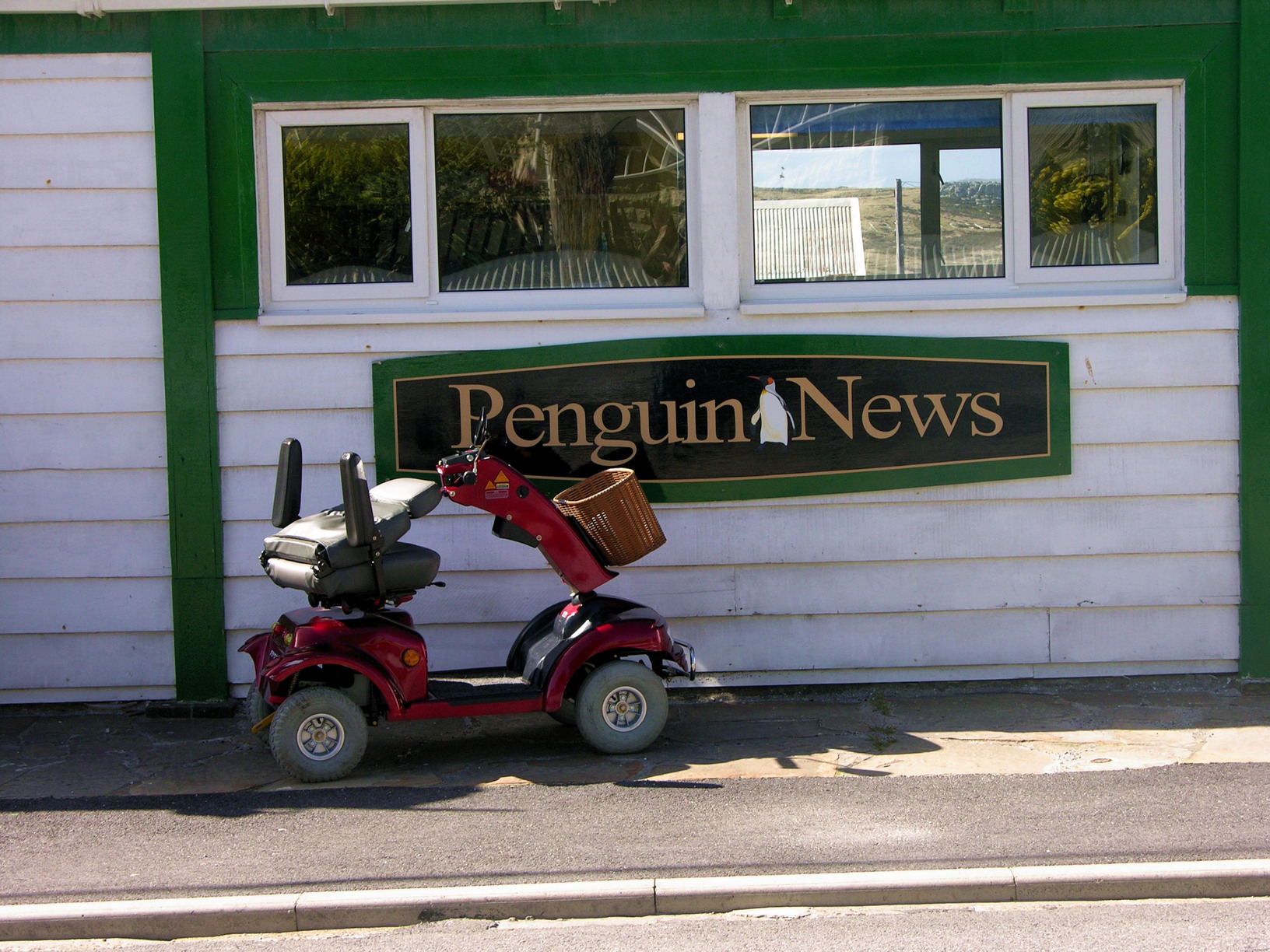
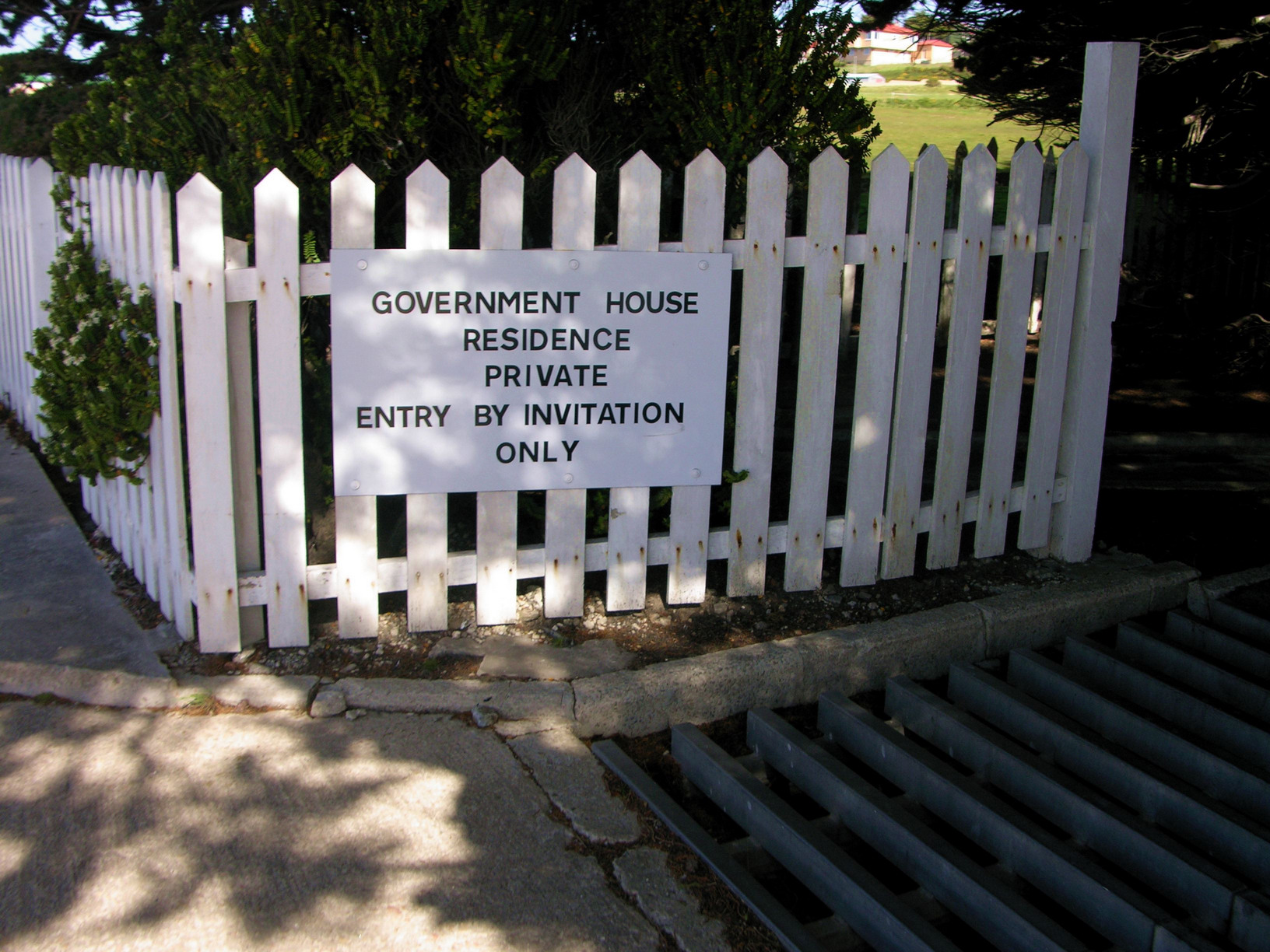
Quite a respectable newspaper. They print the times the cruise ships call. One of the great public debates was about children having mobile phones at school. They said it wasn't right to make calls in class, but a teacher who took a phone away was practically a thief for trespassing on a sacred thing: private property. There probably isn't another country that treats it so tenderly. At home, for example, if you're forbidden to do something they'll cite the state. On the government building of the Falklands the sign reads, “Do not enter without an invitation. Private property.”
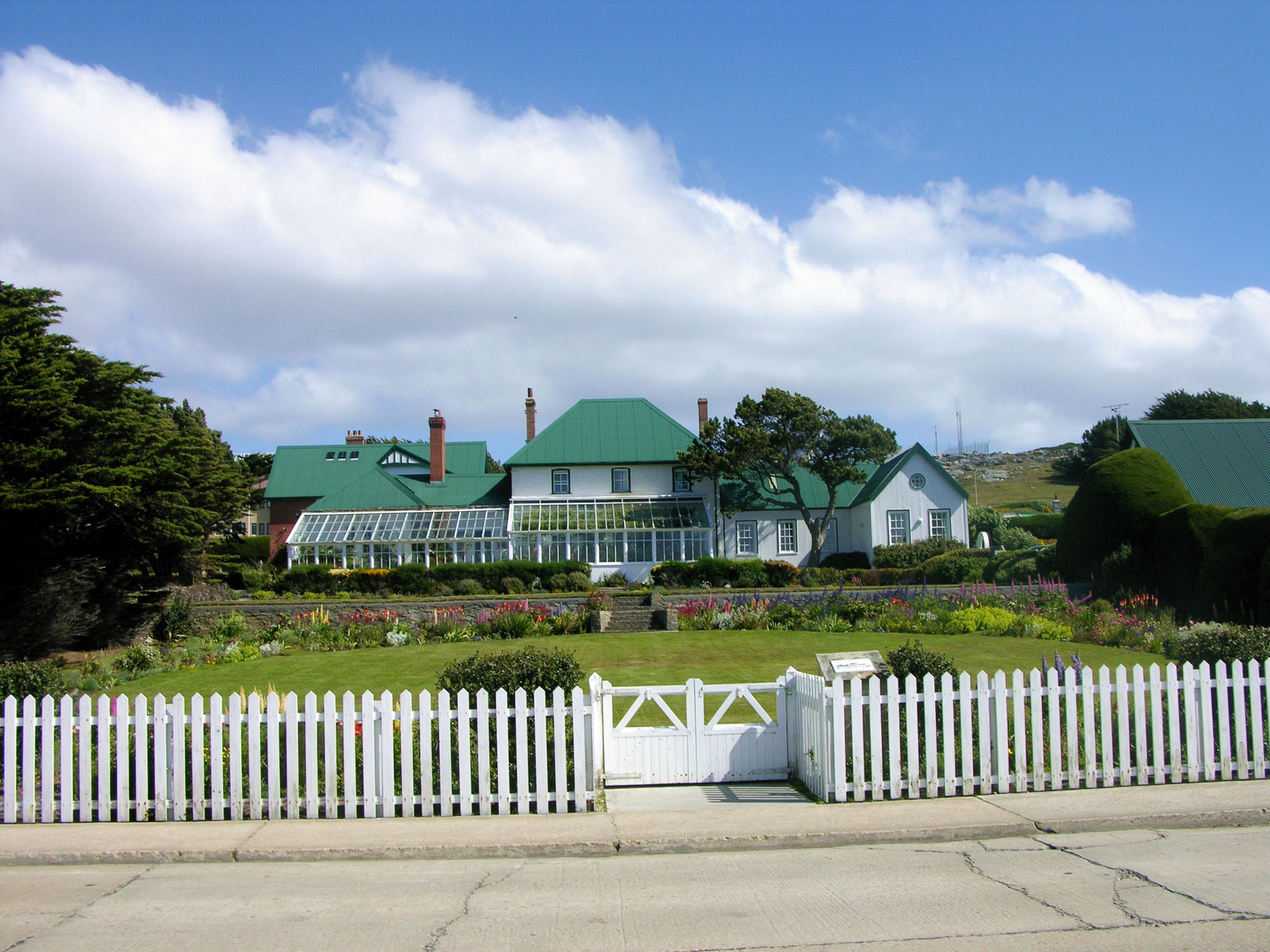
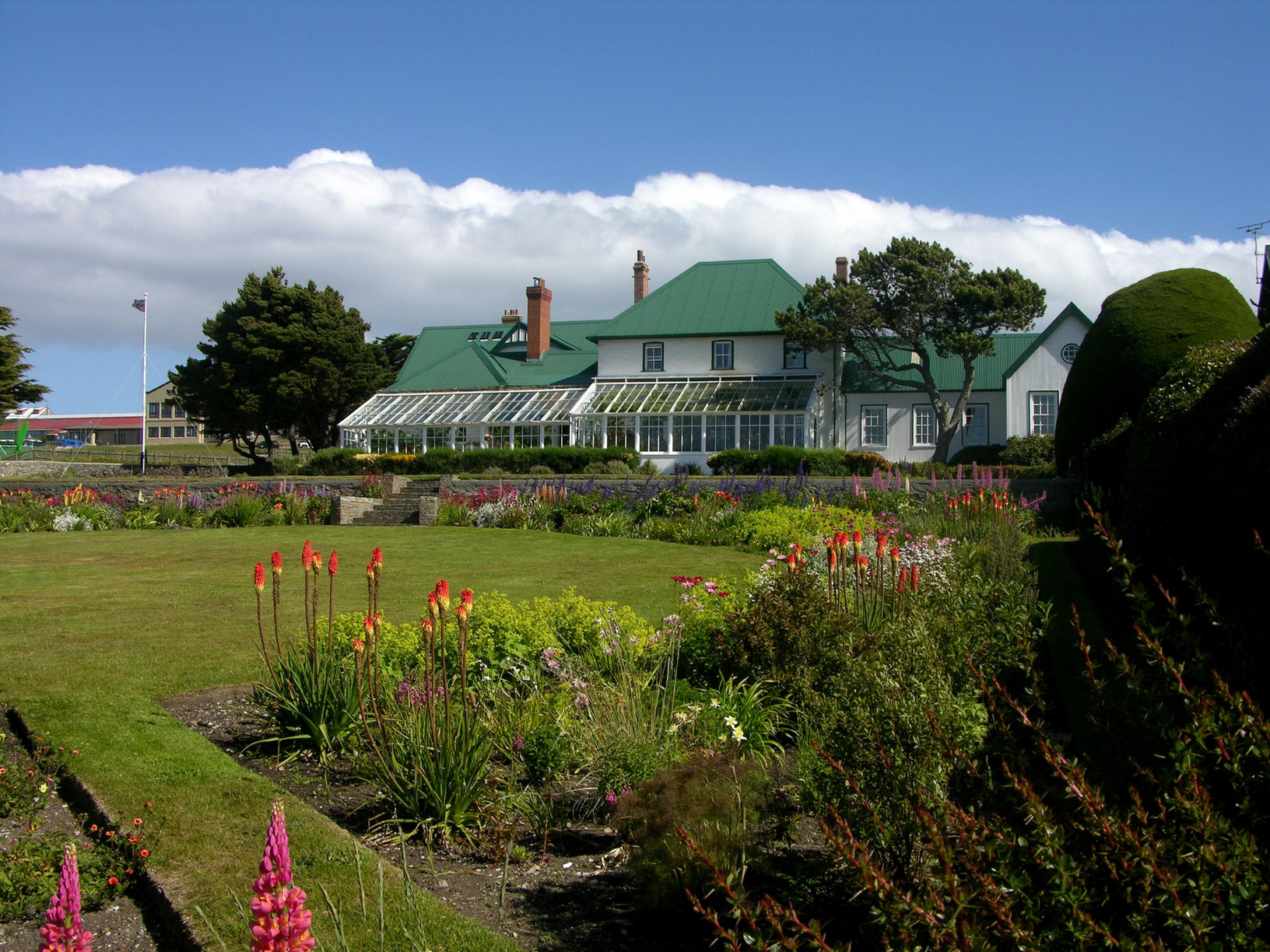
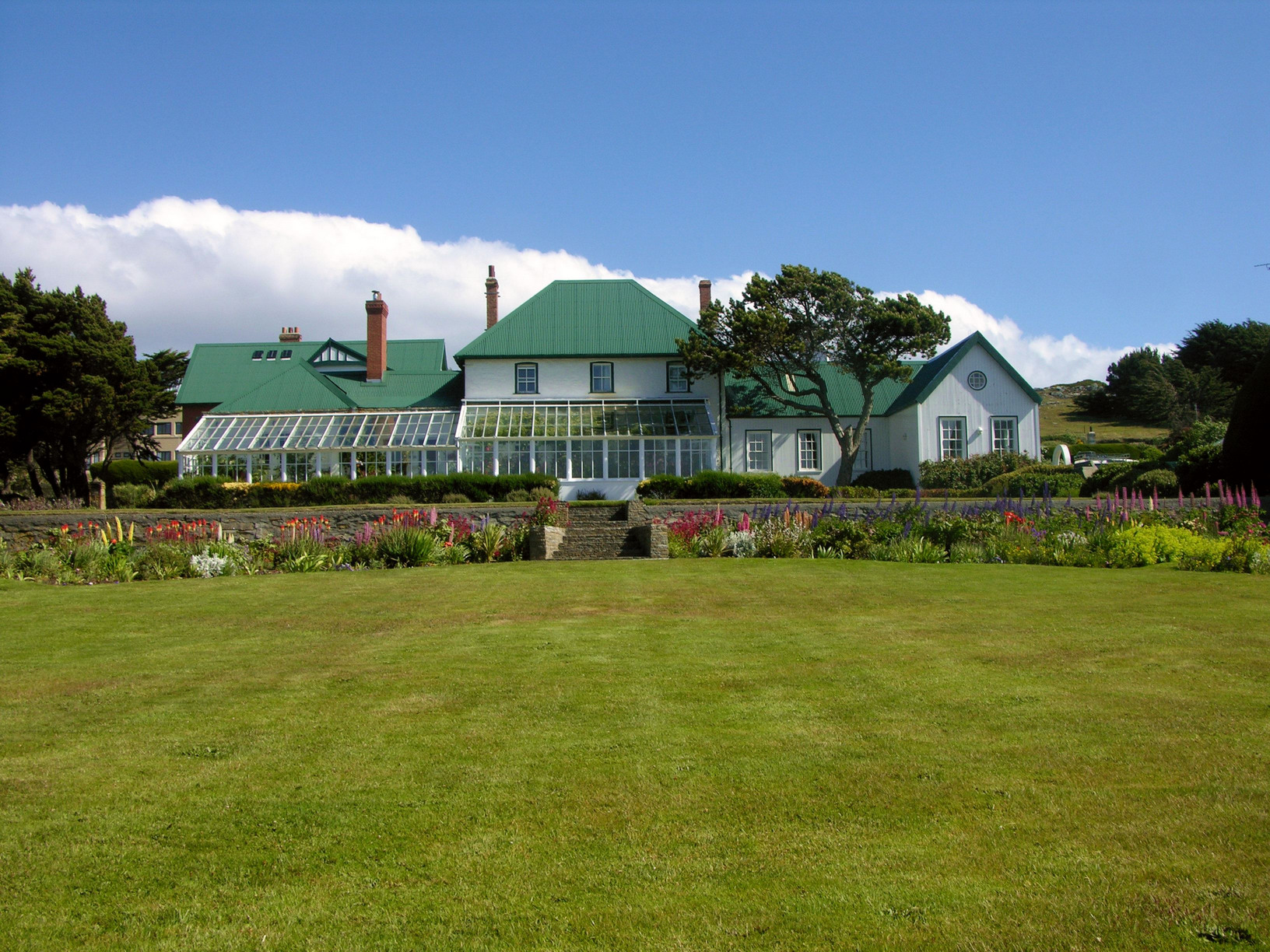
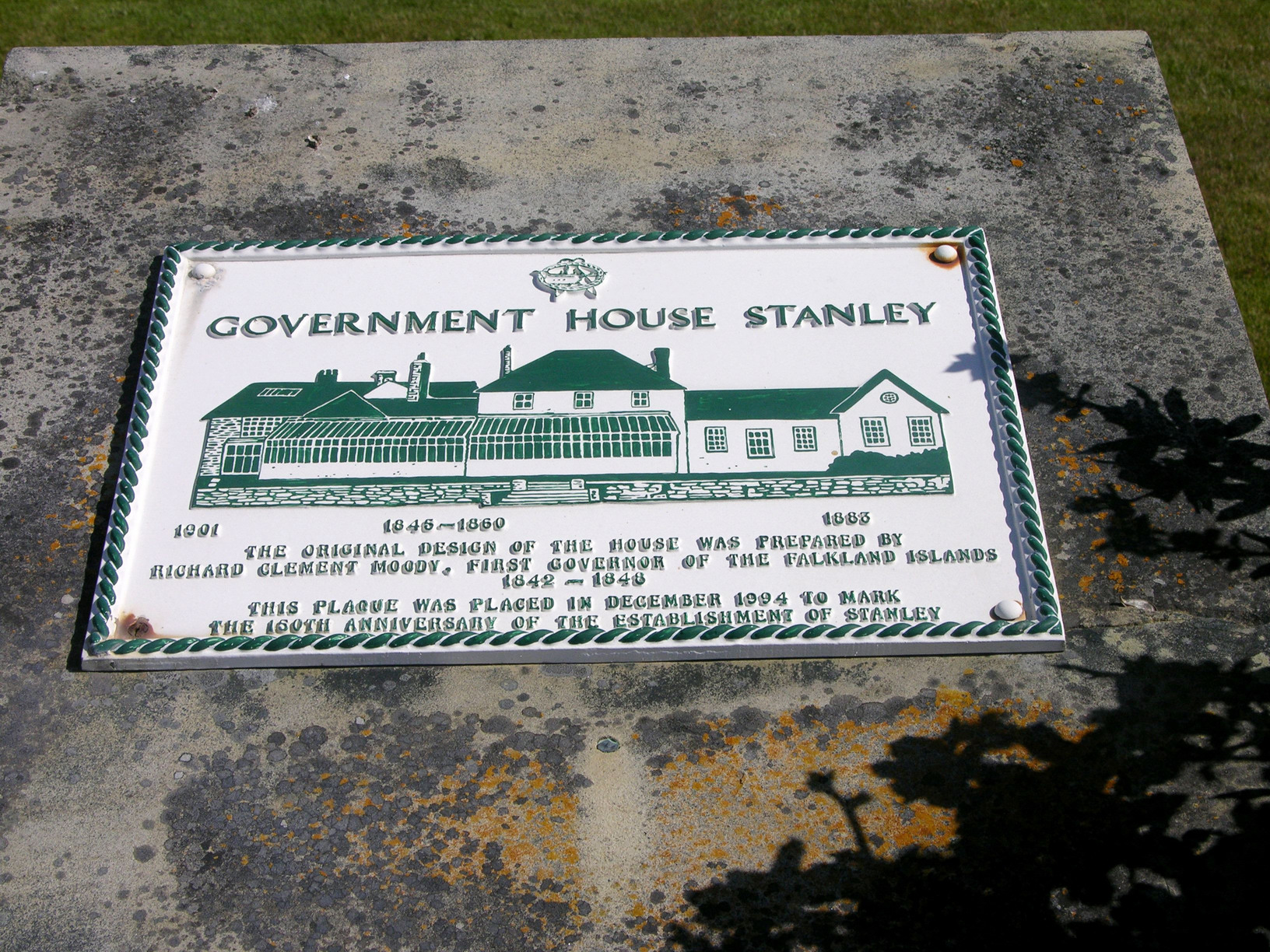
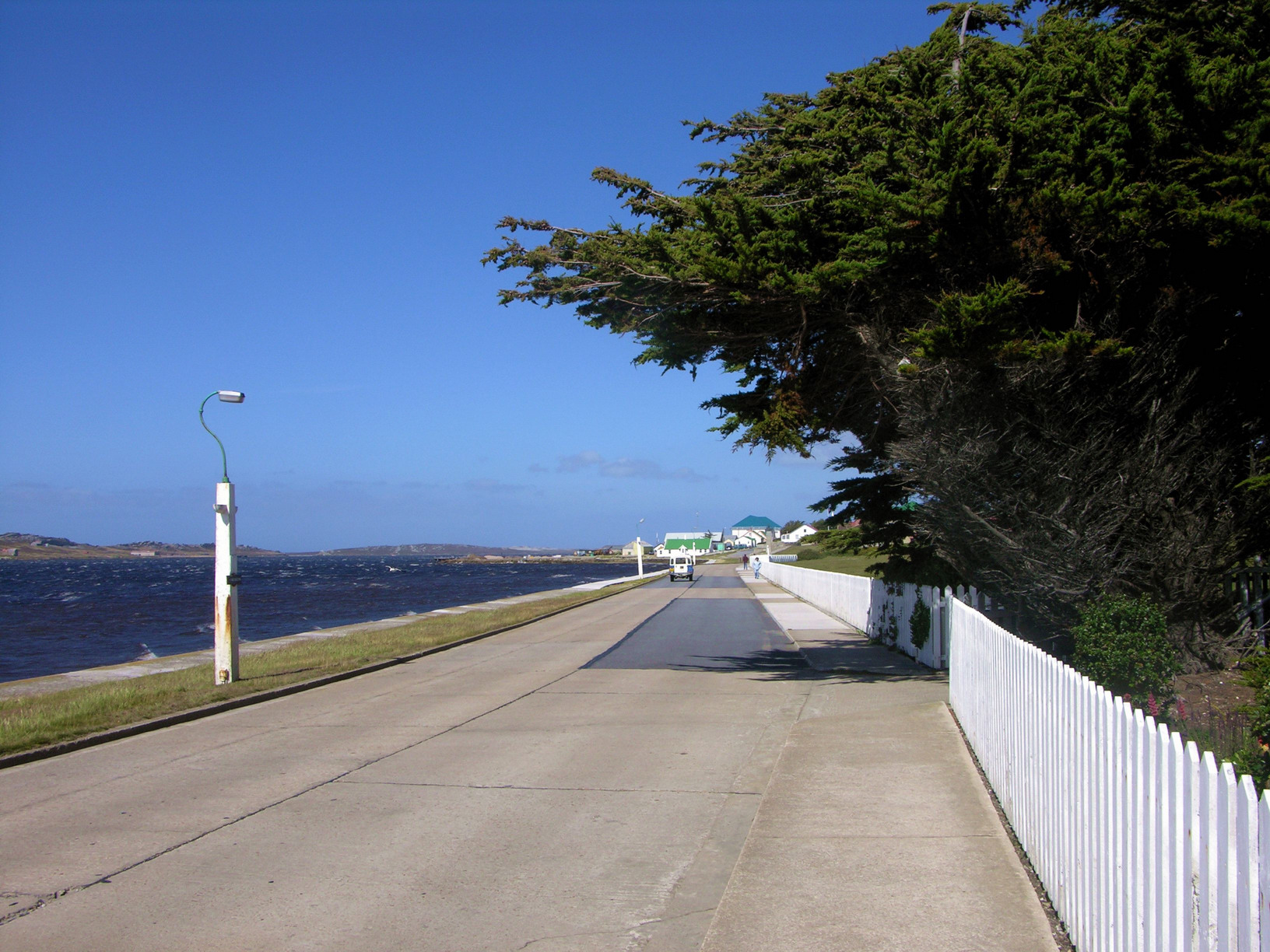
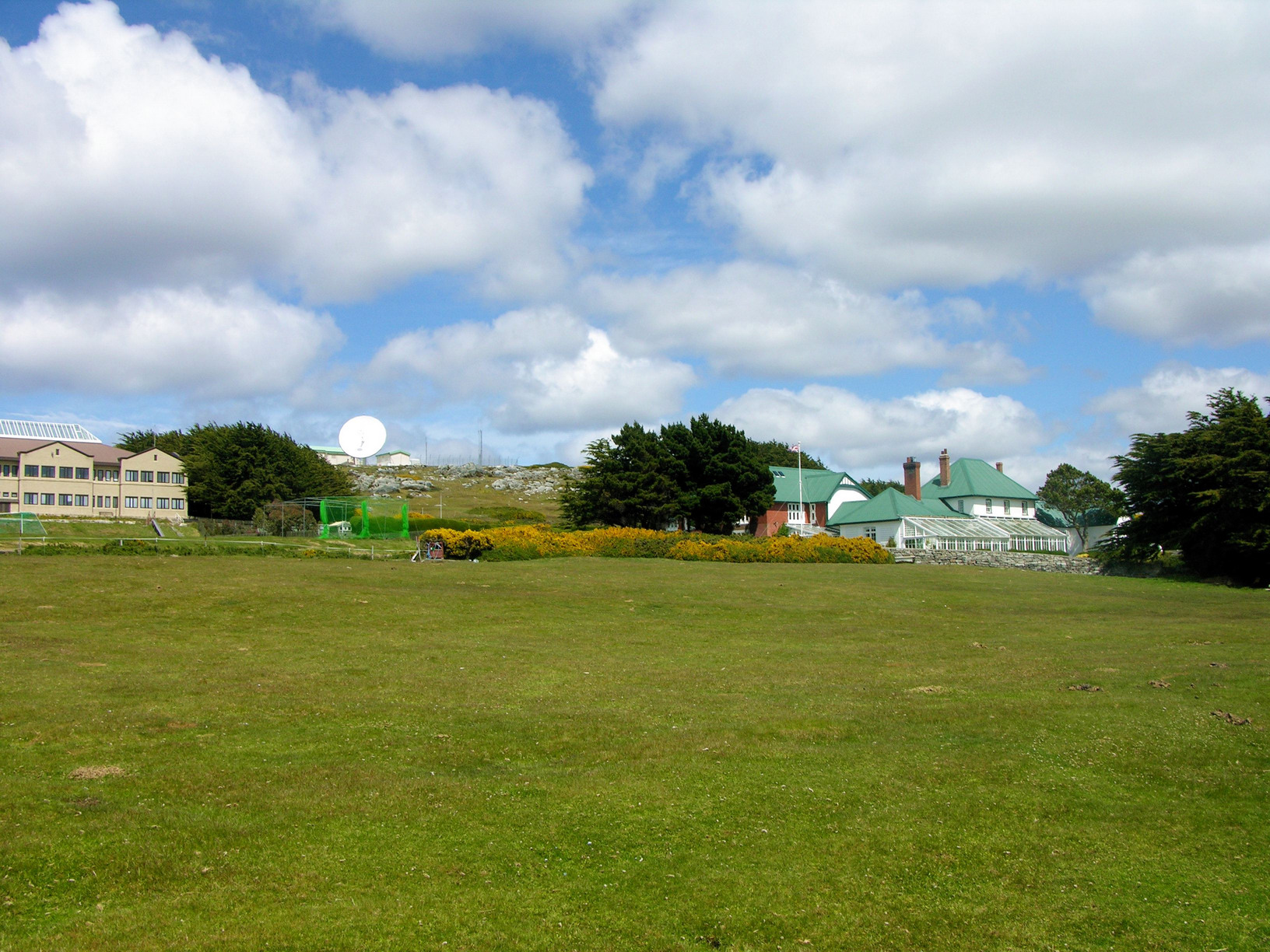
There are two webcams in Stanley (webcam site). Before the trip I'd looked at their pictures for a long time, imagining how I'd find myself on that quay and see what was round the corner of the house. The moment had come. Virtual reality became real at last. I told my family to watch and walked about in front of the camera. They saw me, especially when I stuck my hand out in front of it.
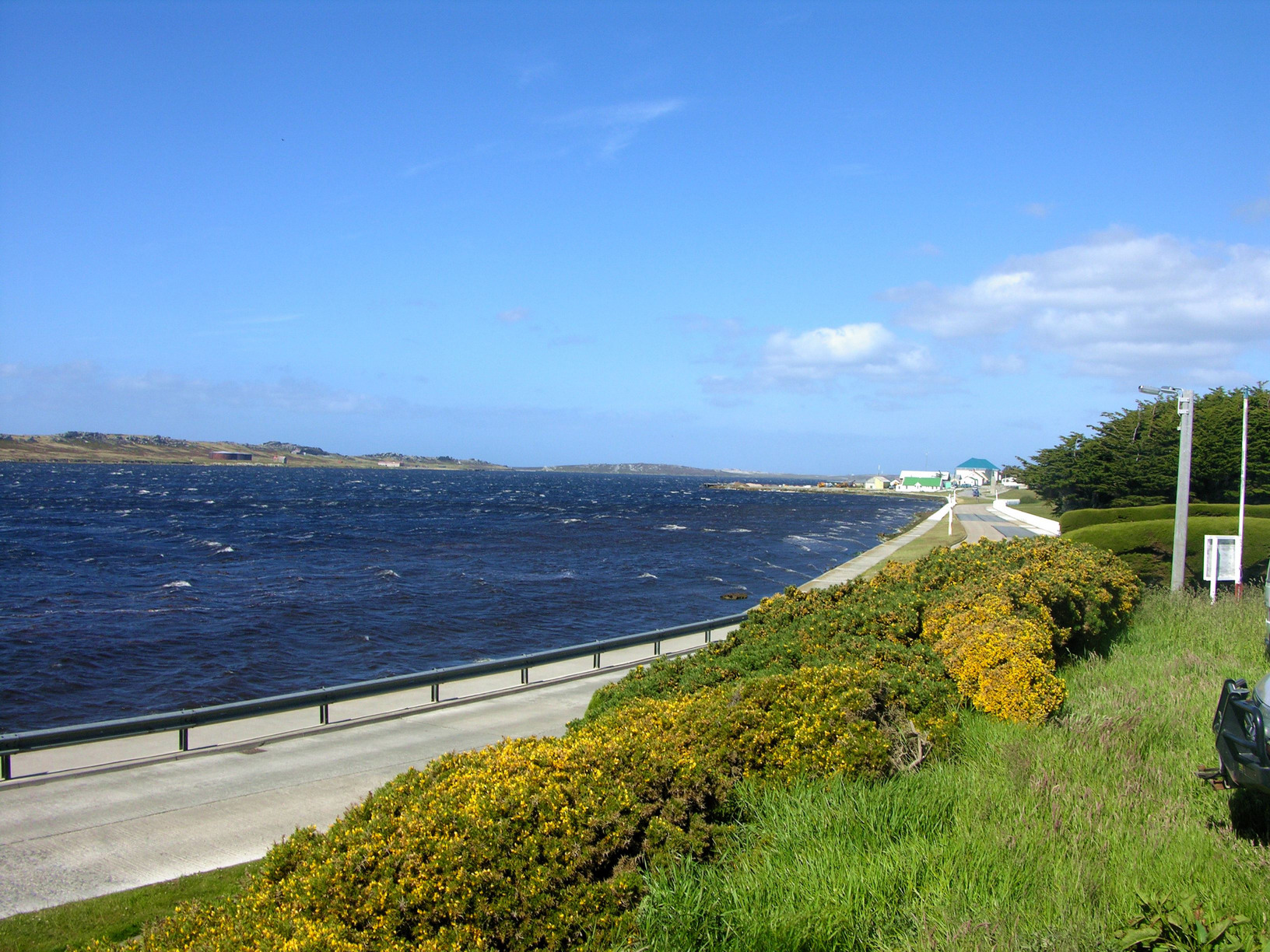
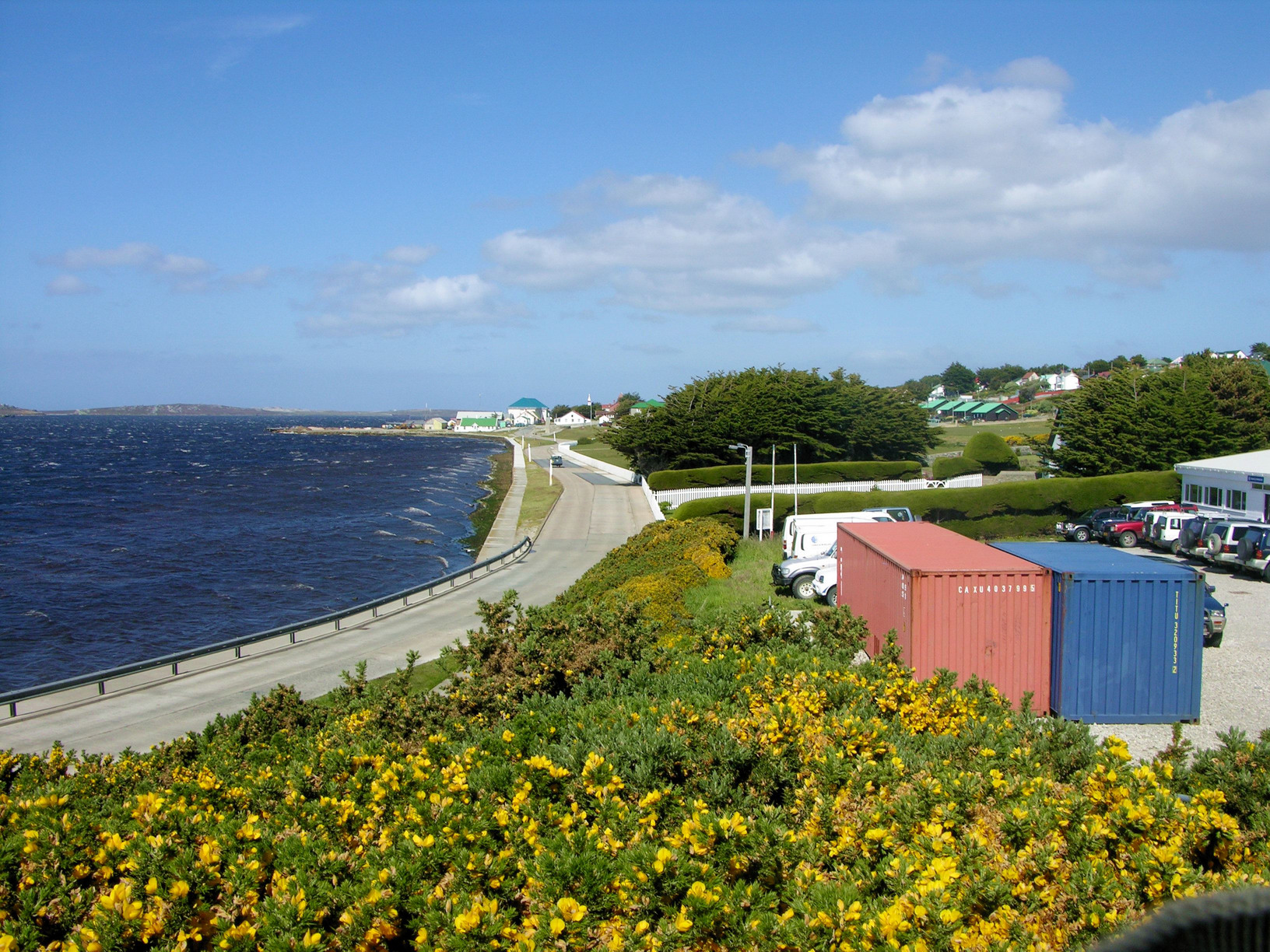
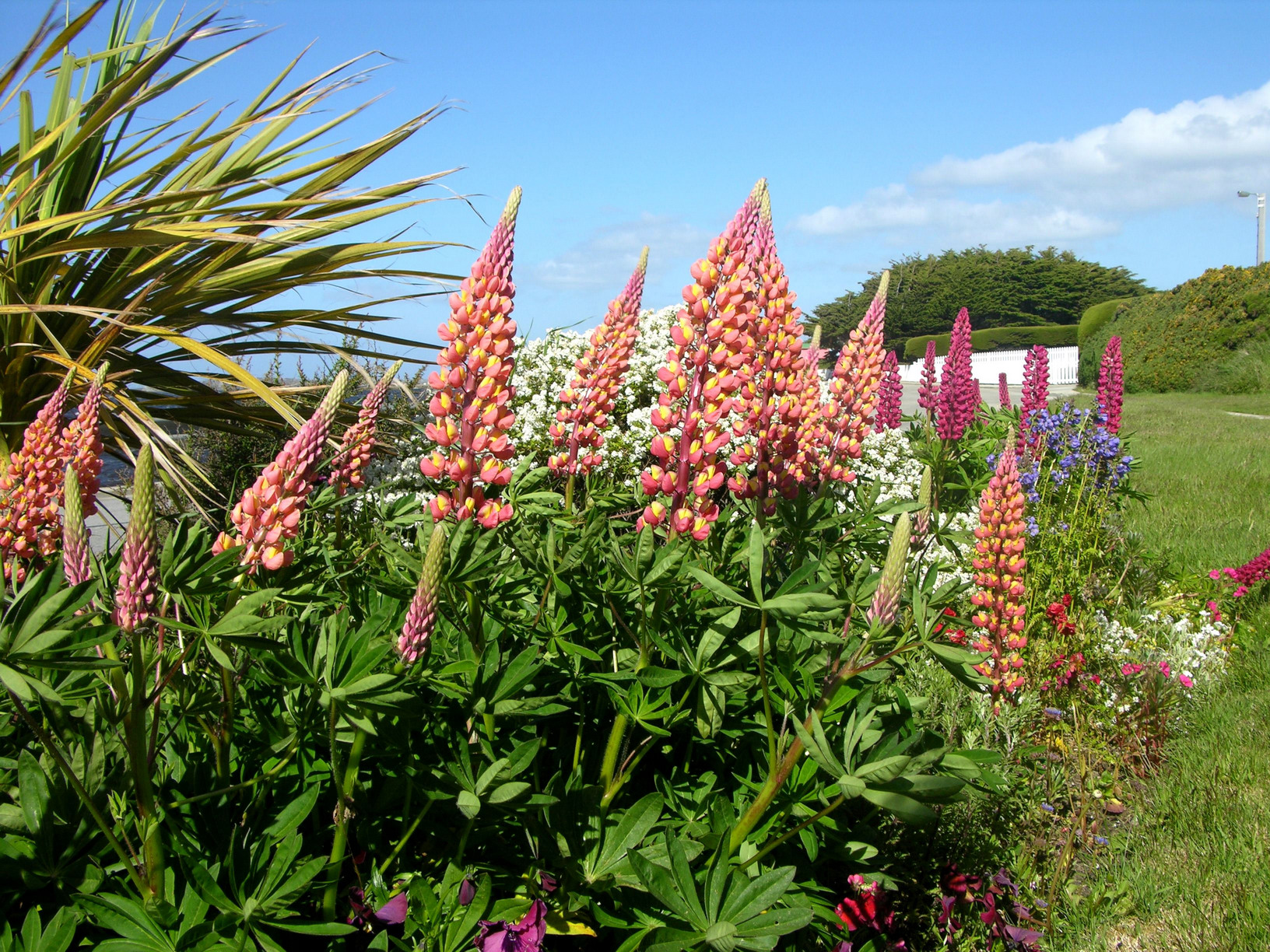
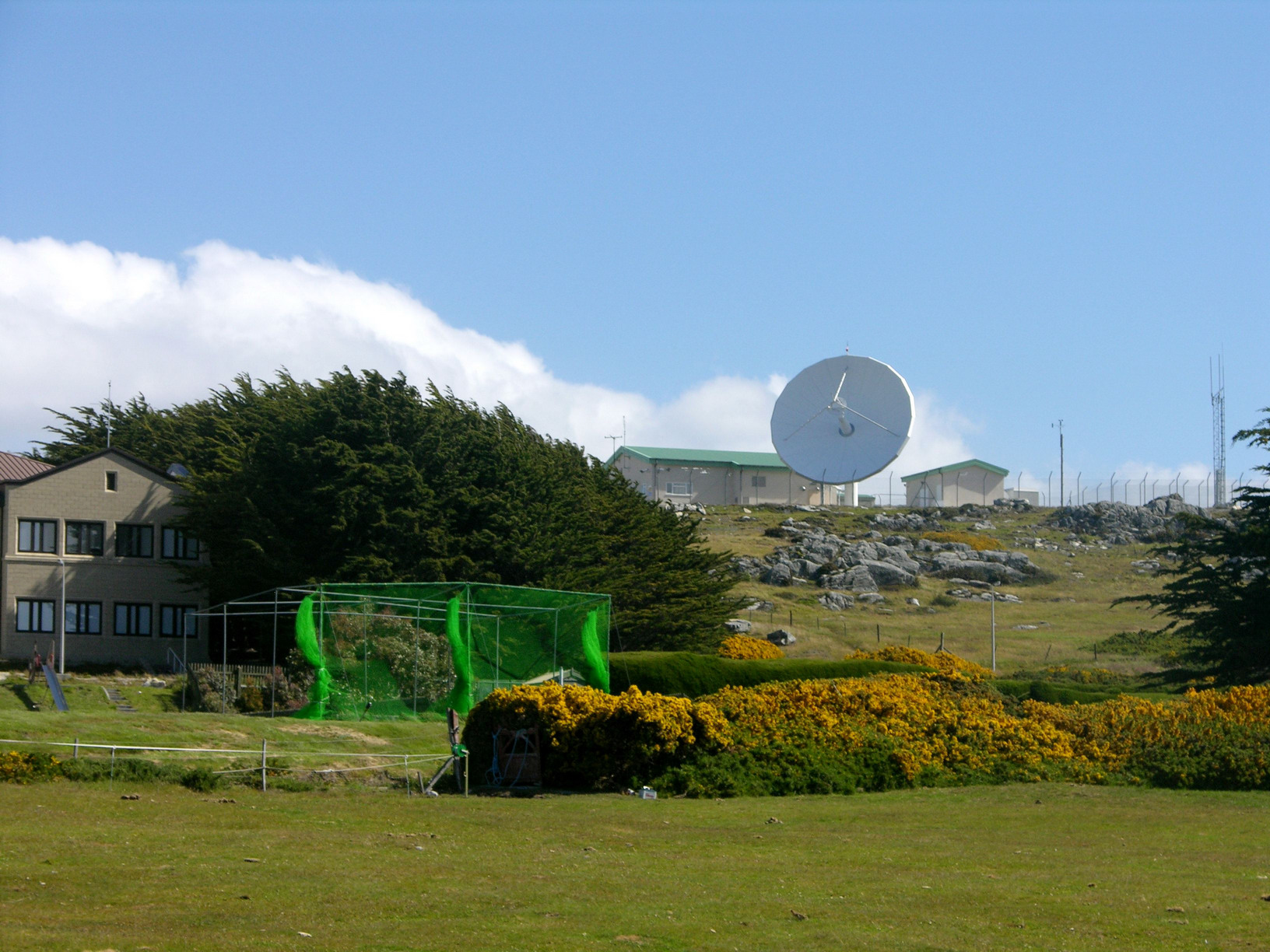

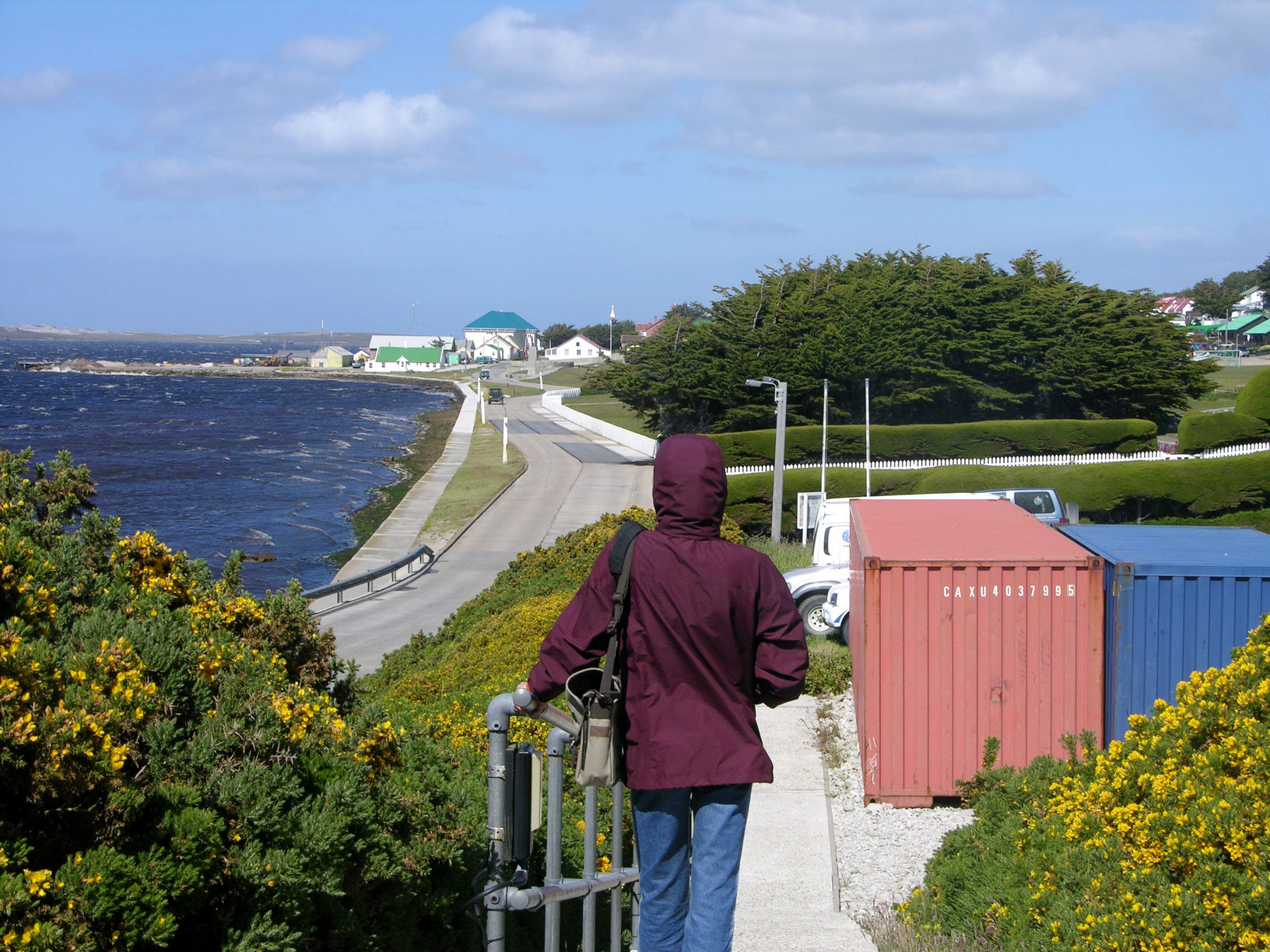
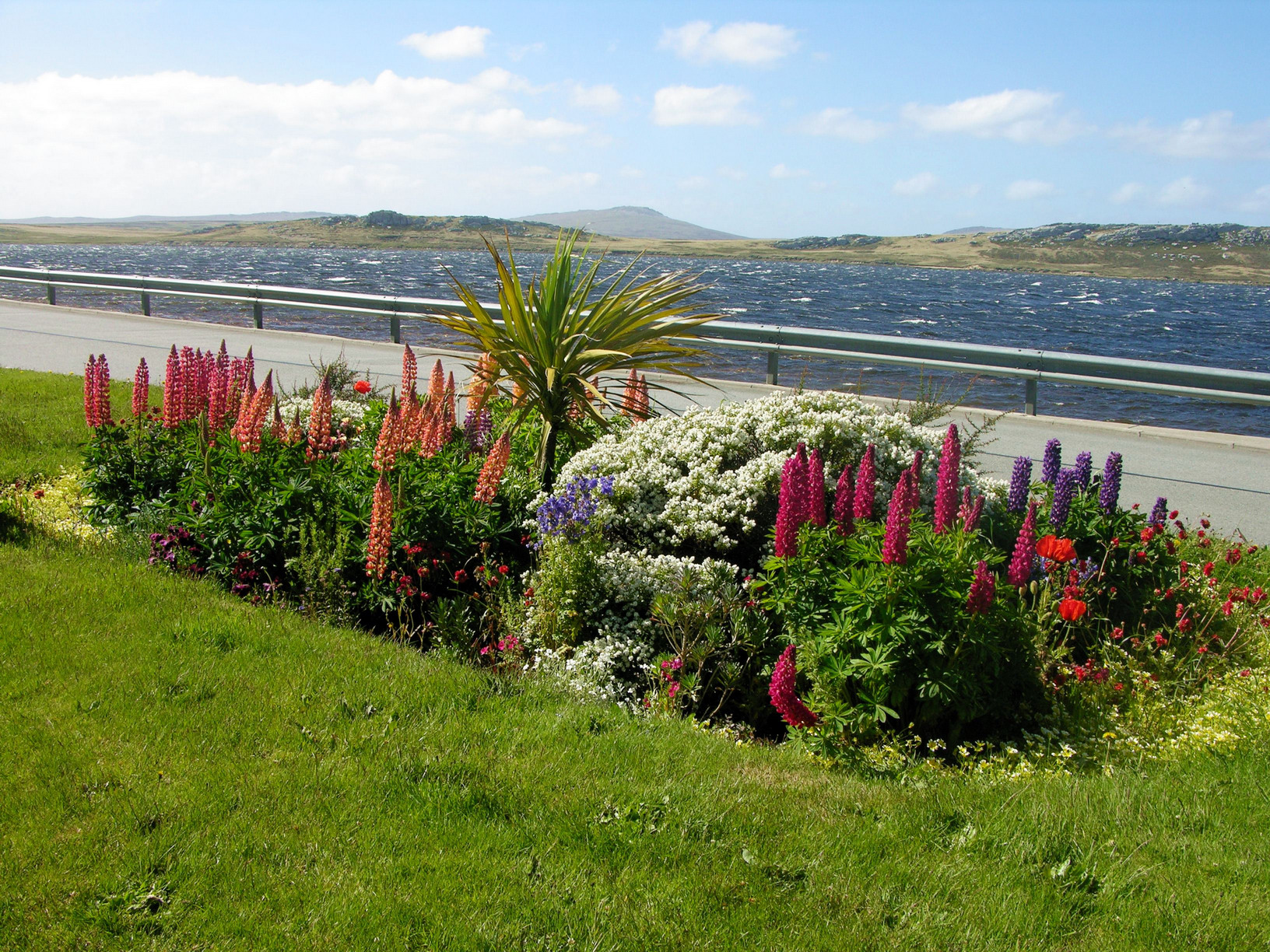
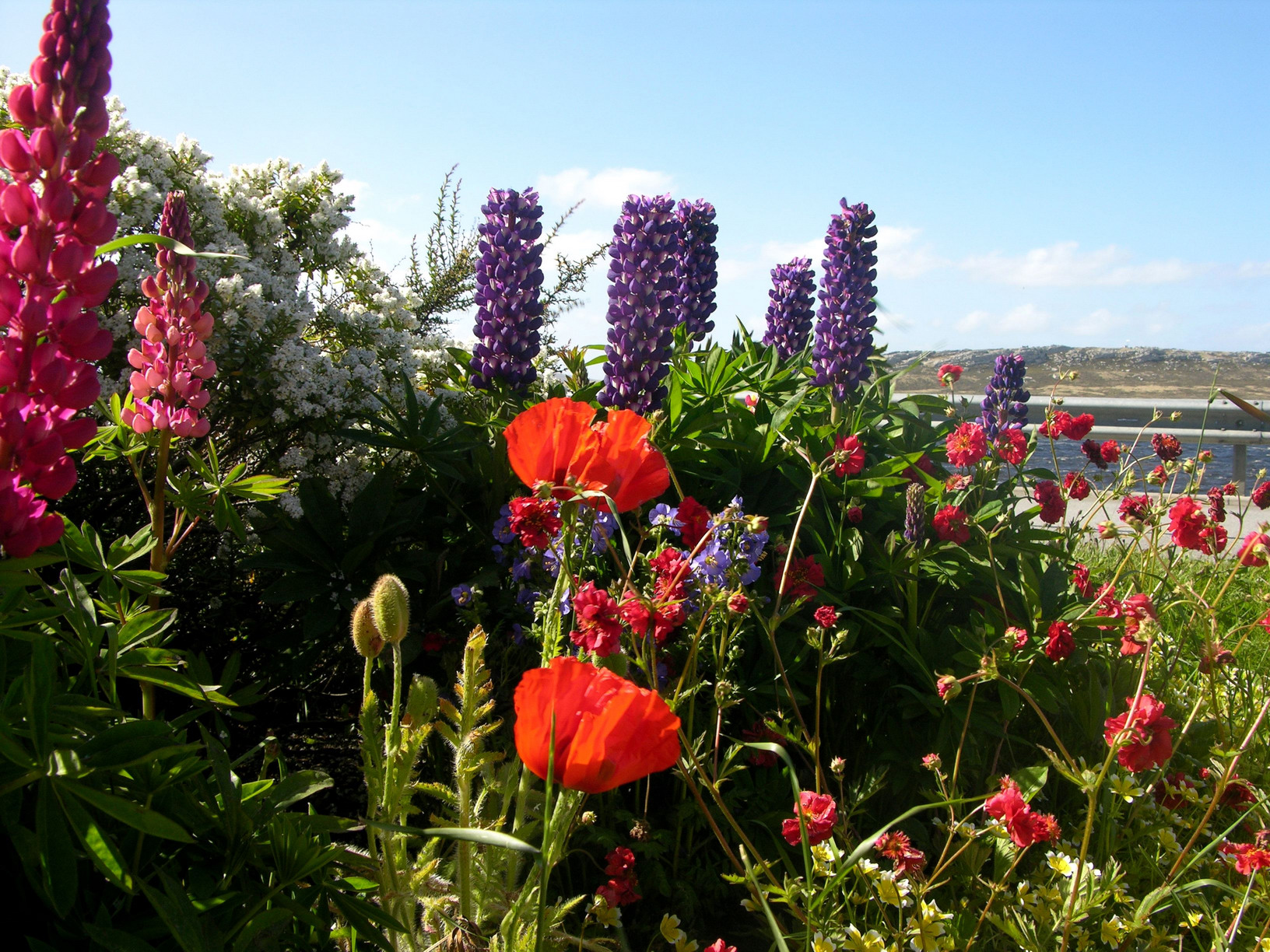
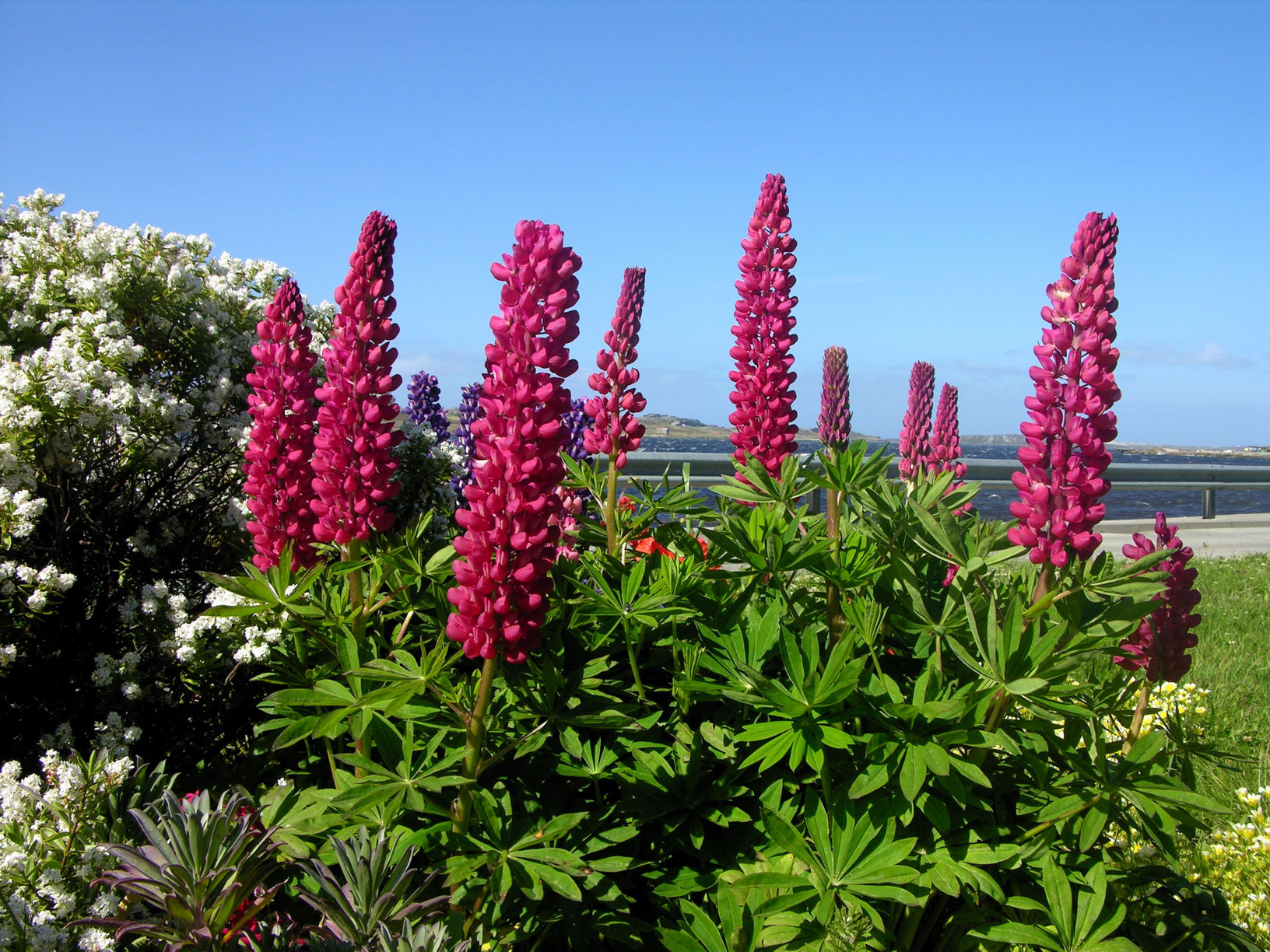
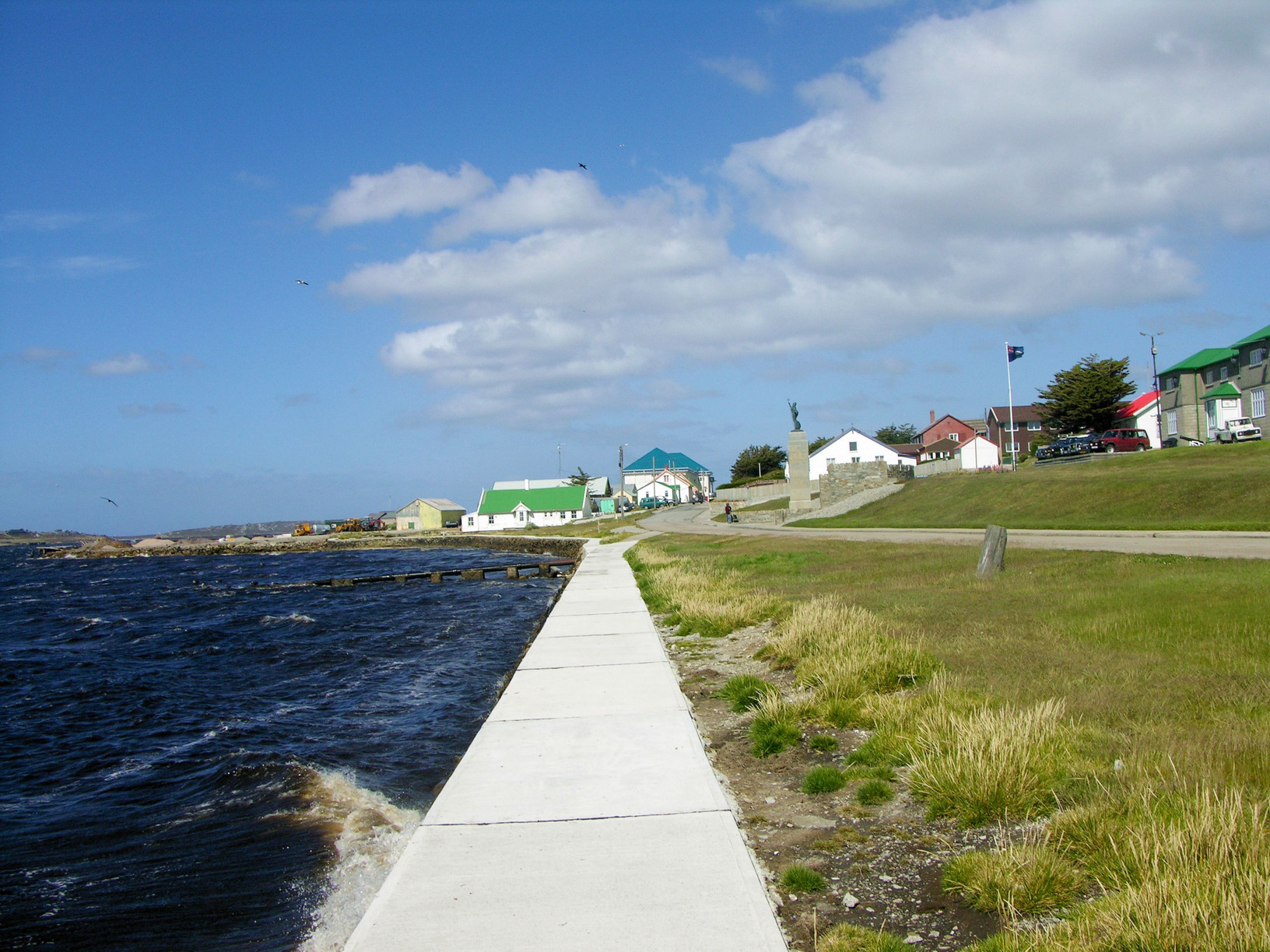
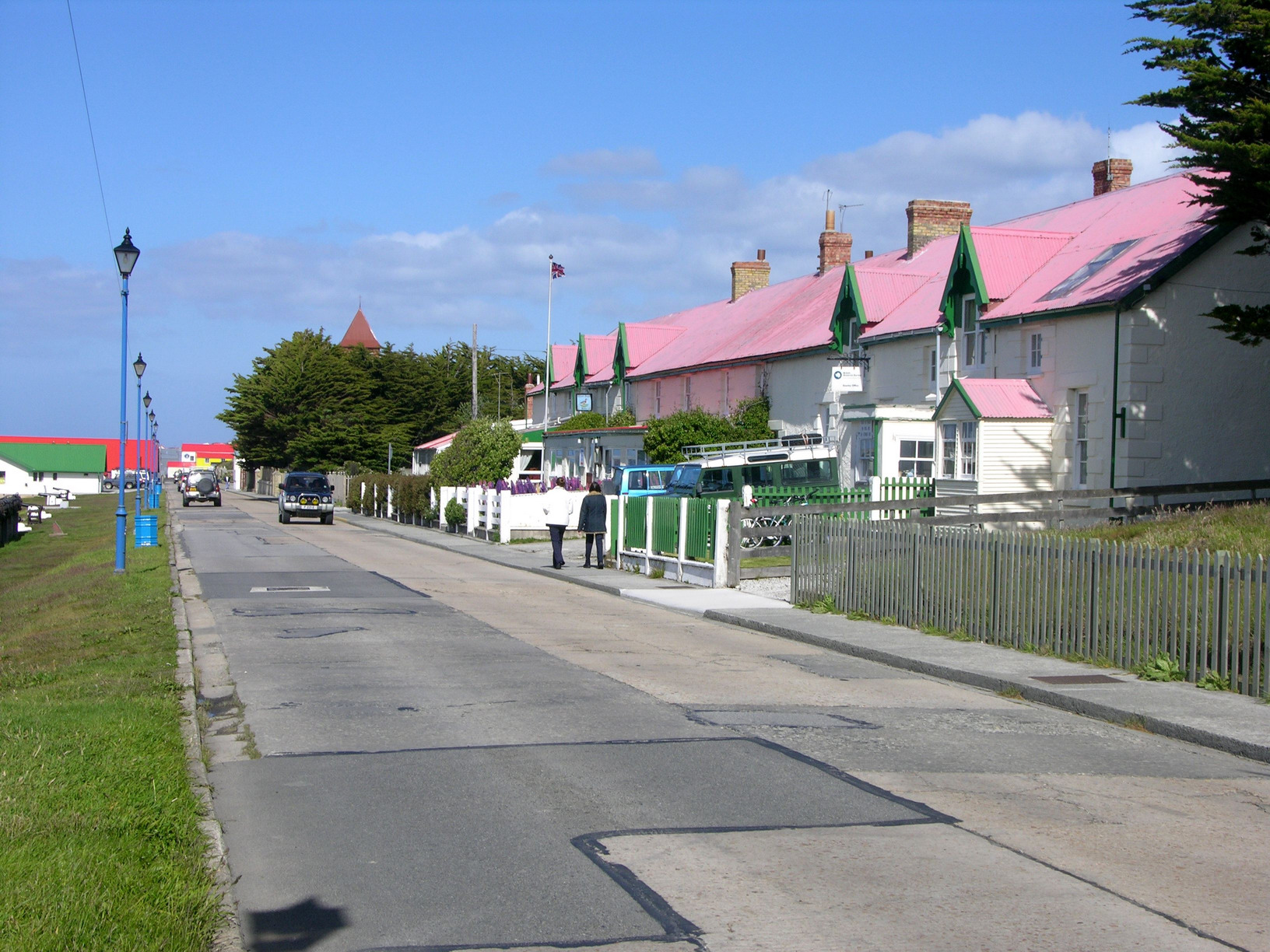
Stanley is very well kept. Only the odd house is abandoned. Falling population hasn't reached the capital yet. A lot of cruise ships stop in town on their way to Antarctica, so there are plenty of tourists. Several hundred people came ashore while we were there, and the town became a noisy human anthill. Then all of them disappear at once and the town goes dead. The souvenir shops, though, carry on doing business. Of the local souvenirs, sheepskins are the ones to get. It's said the climate is perfect for sheep. It's always cold here and the sheep are cold too. All they can do is grow wool. On the other hand, there's practically no snow, so the sheep graze outdoors all year and don't spoil their coats in a cramped stall. Apart from skins they sell slippers, caps and mittens. We bought a sizeable pile of warm things.
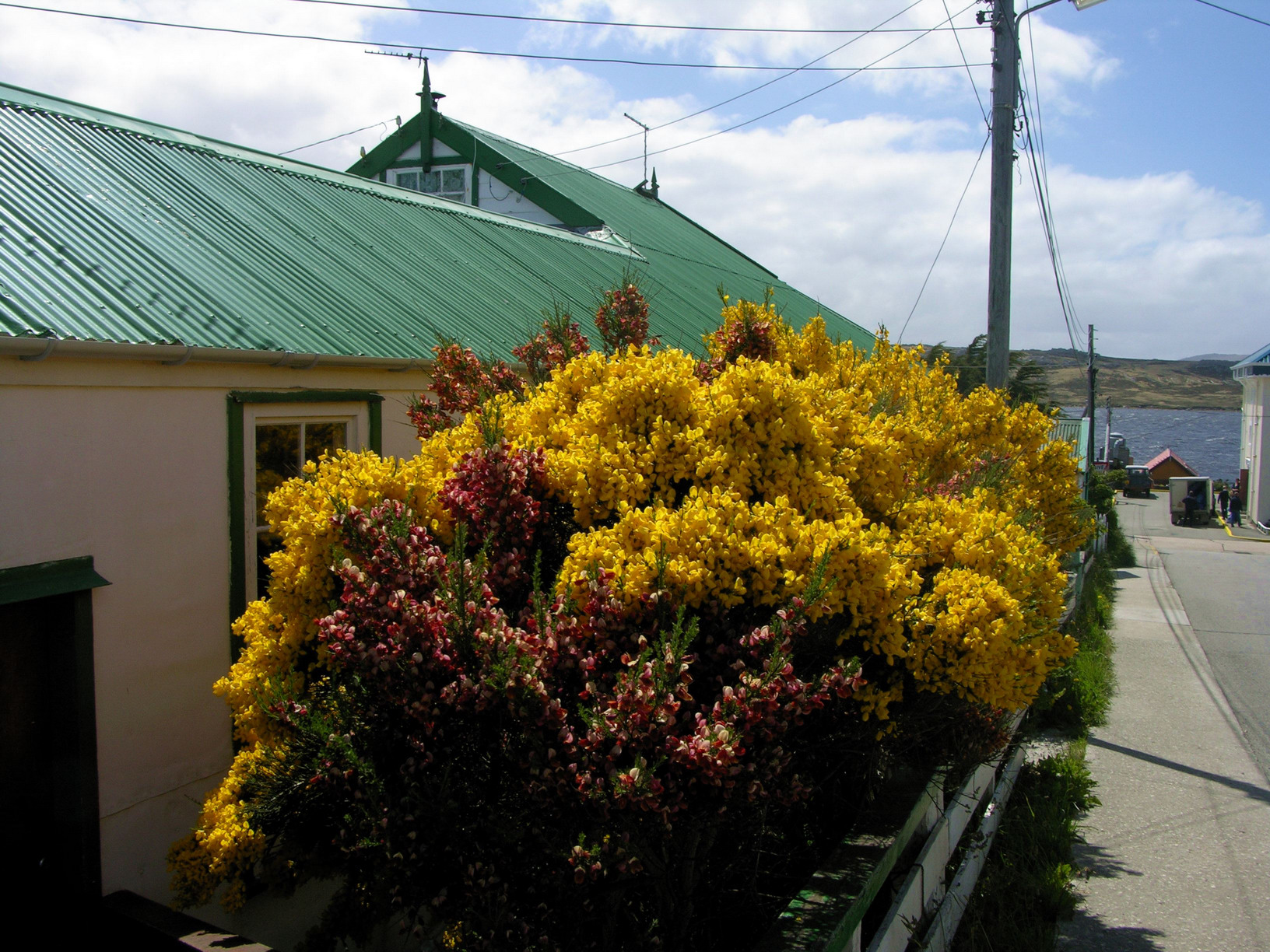
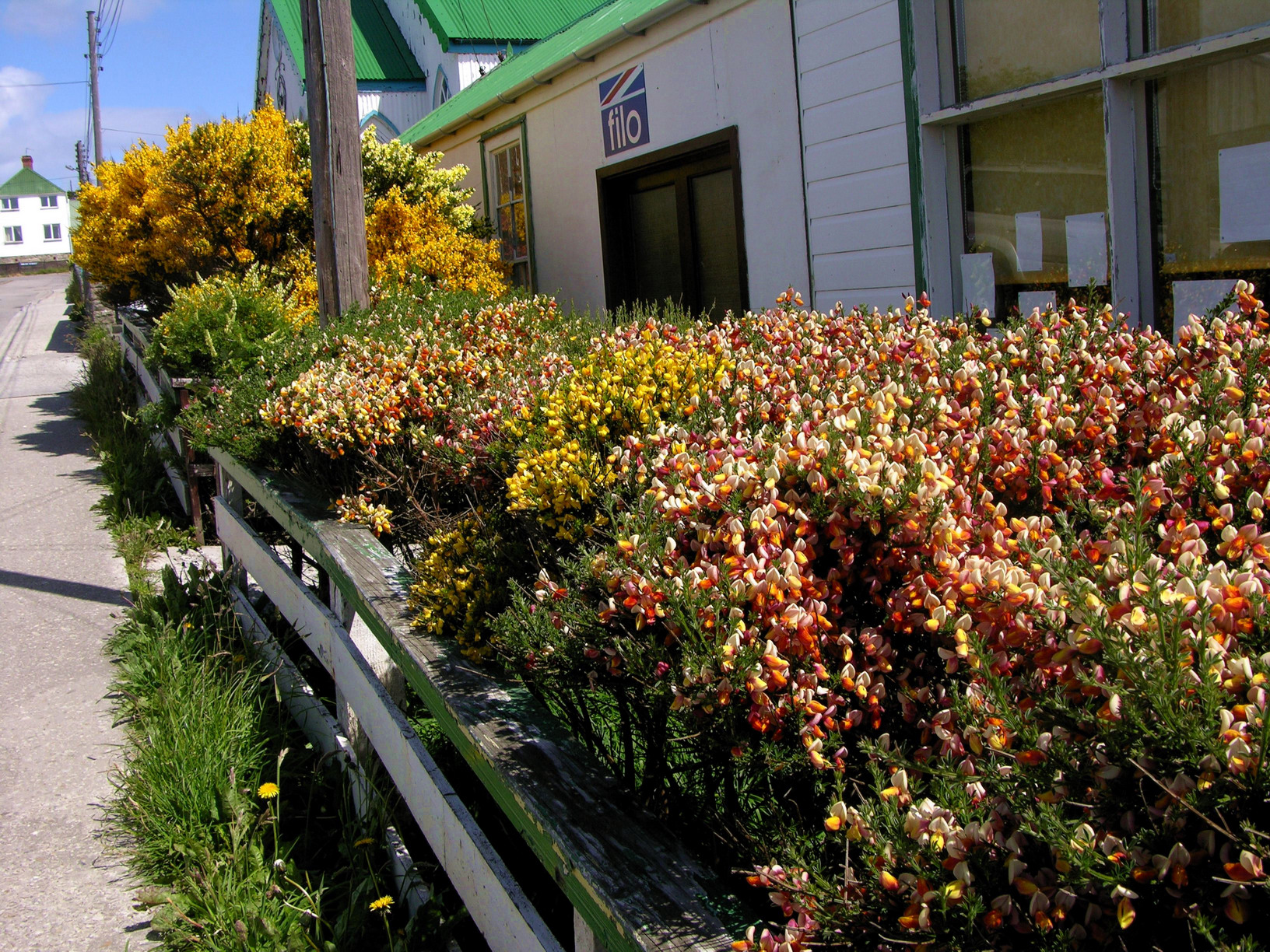
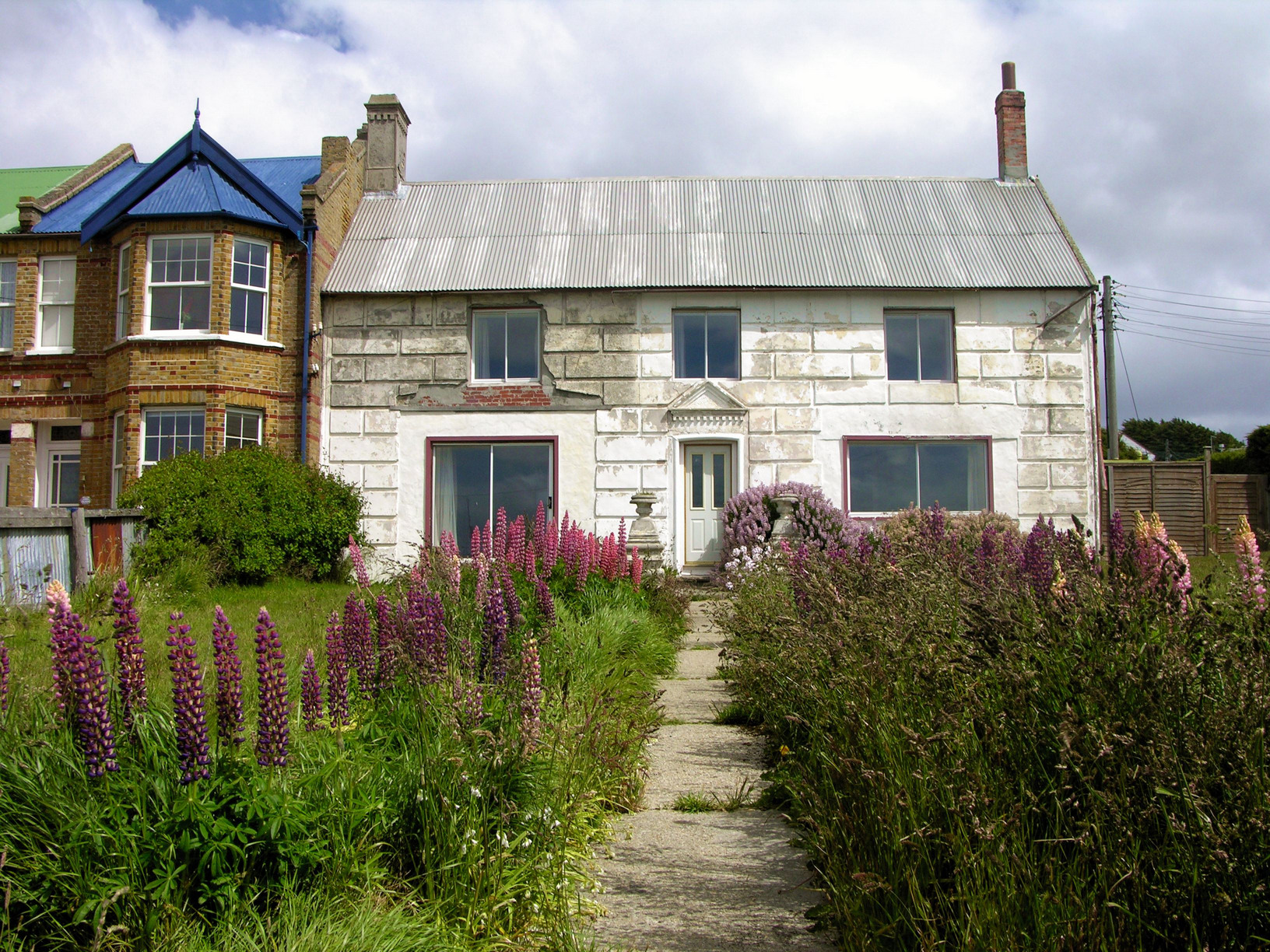
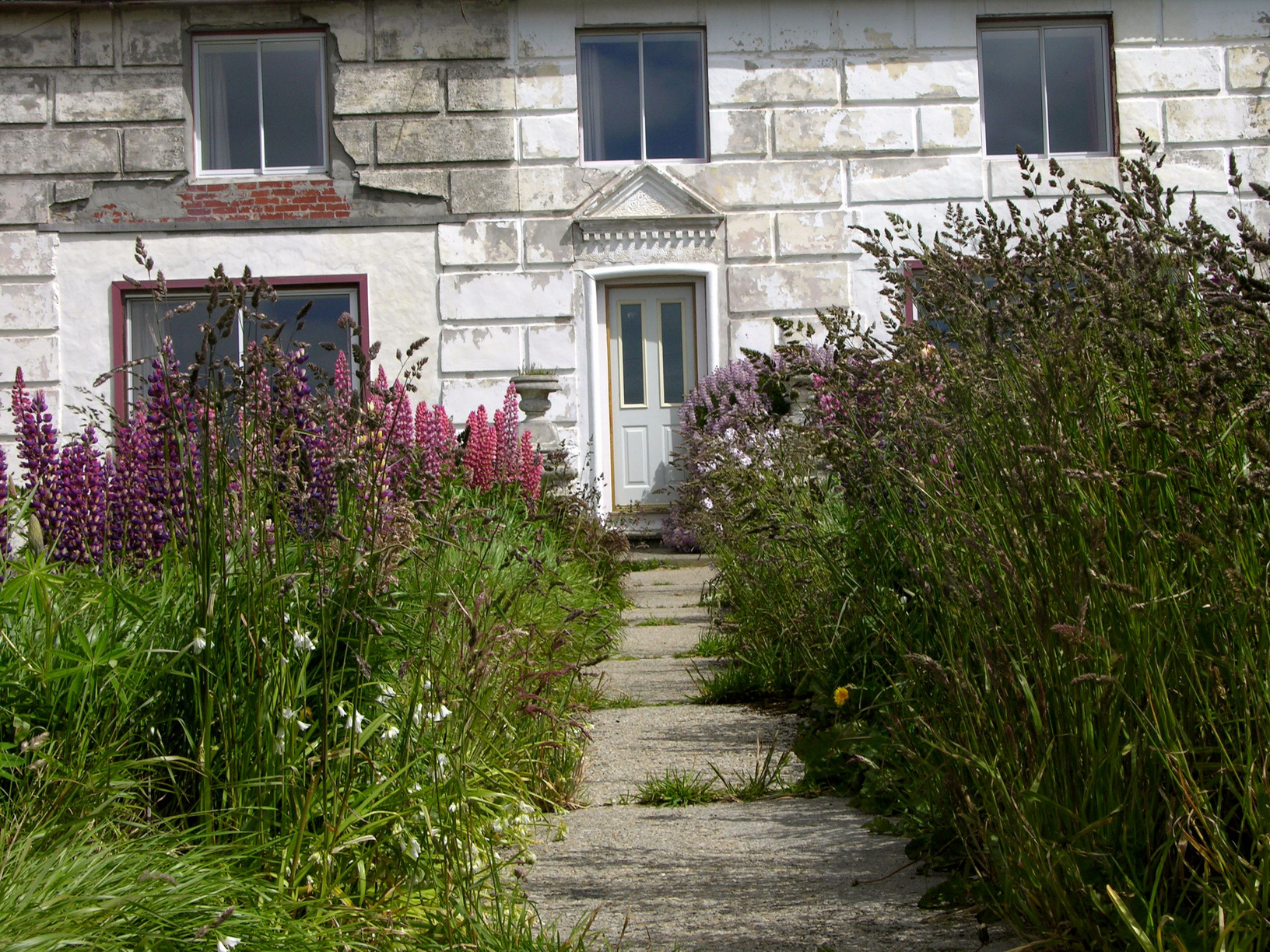
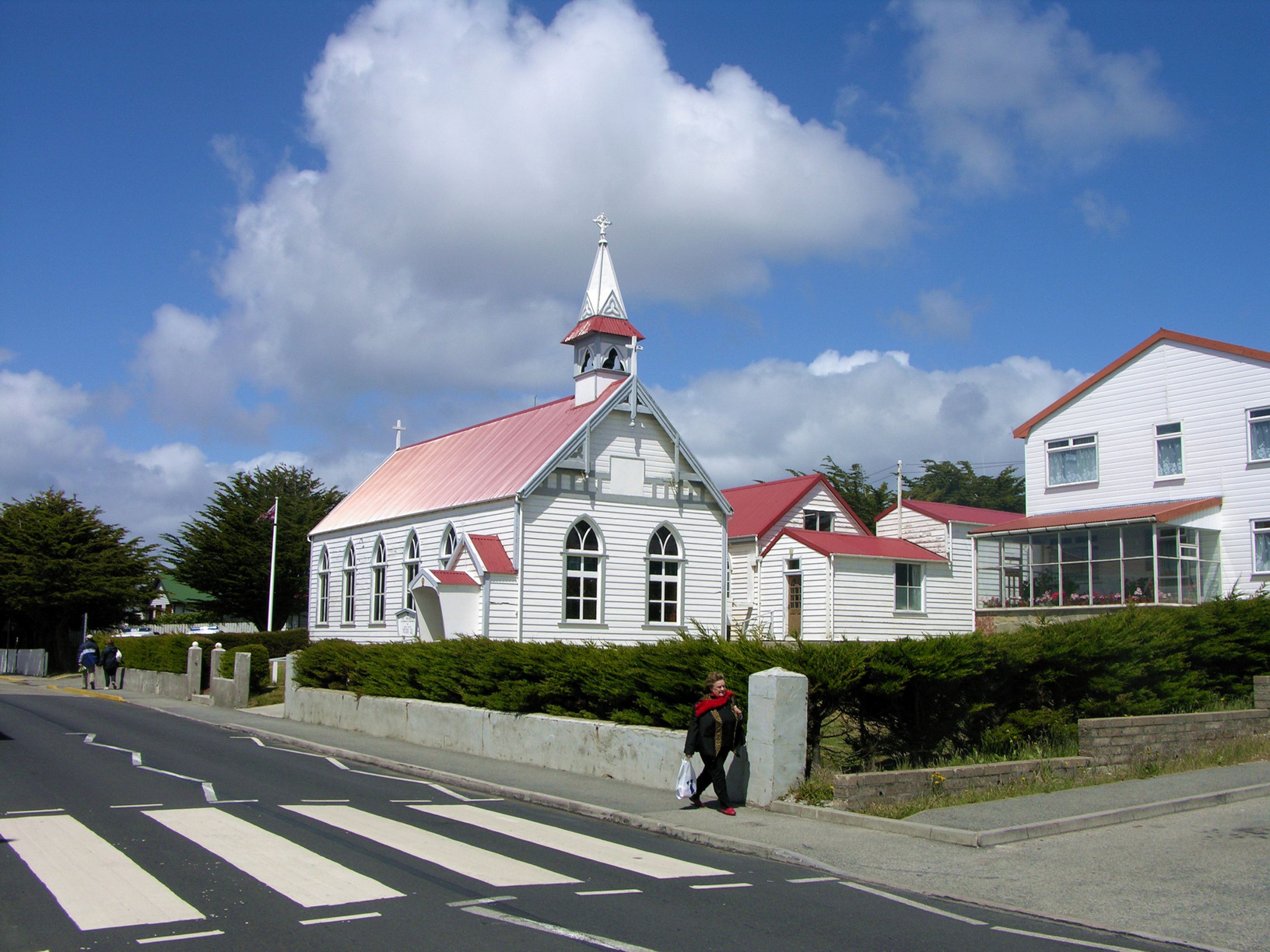
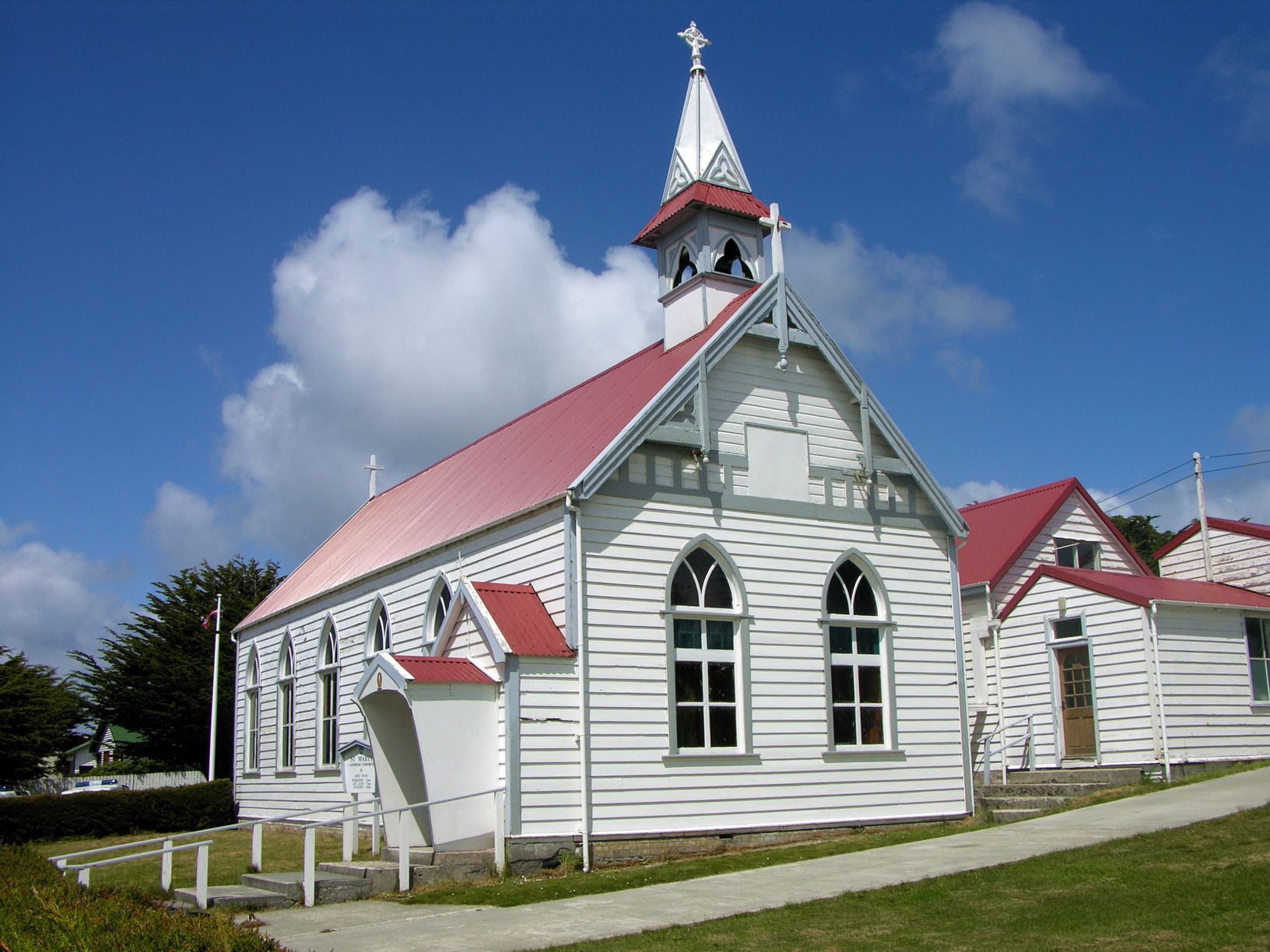
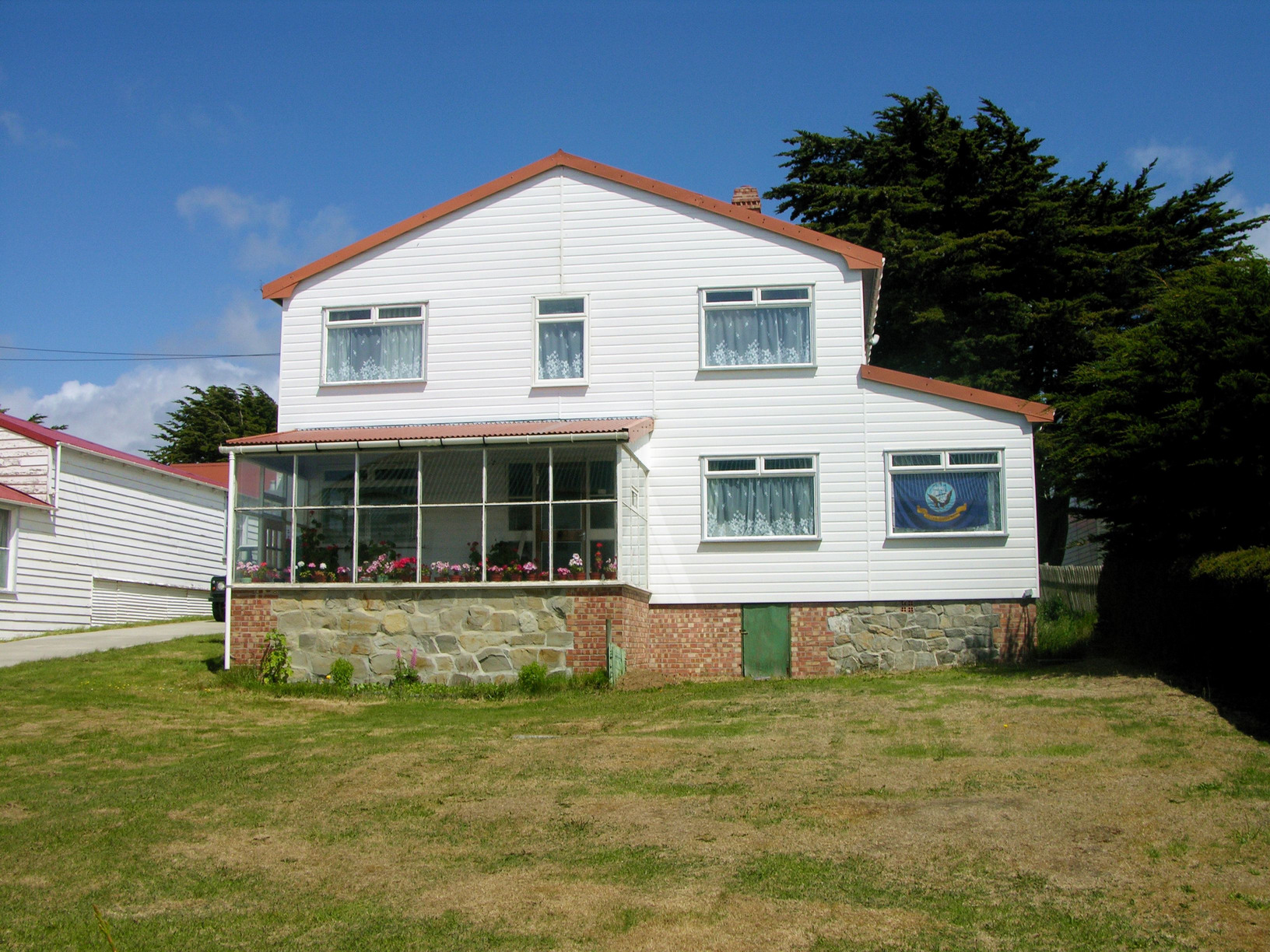
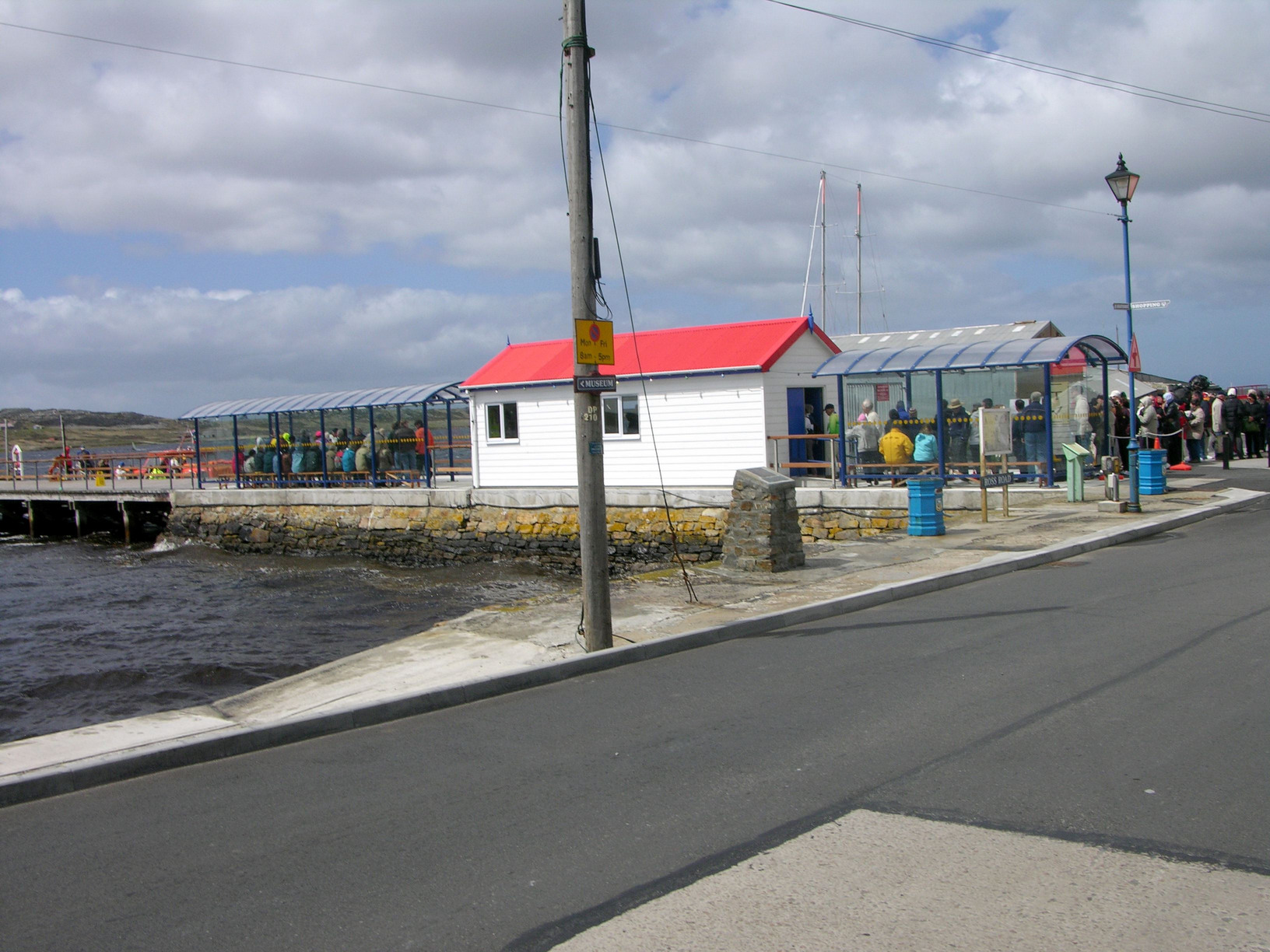
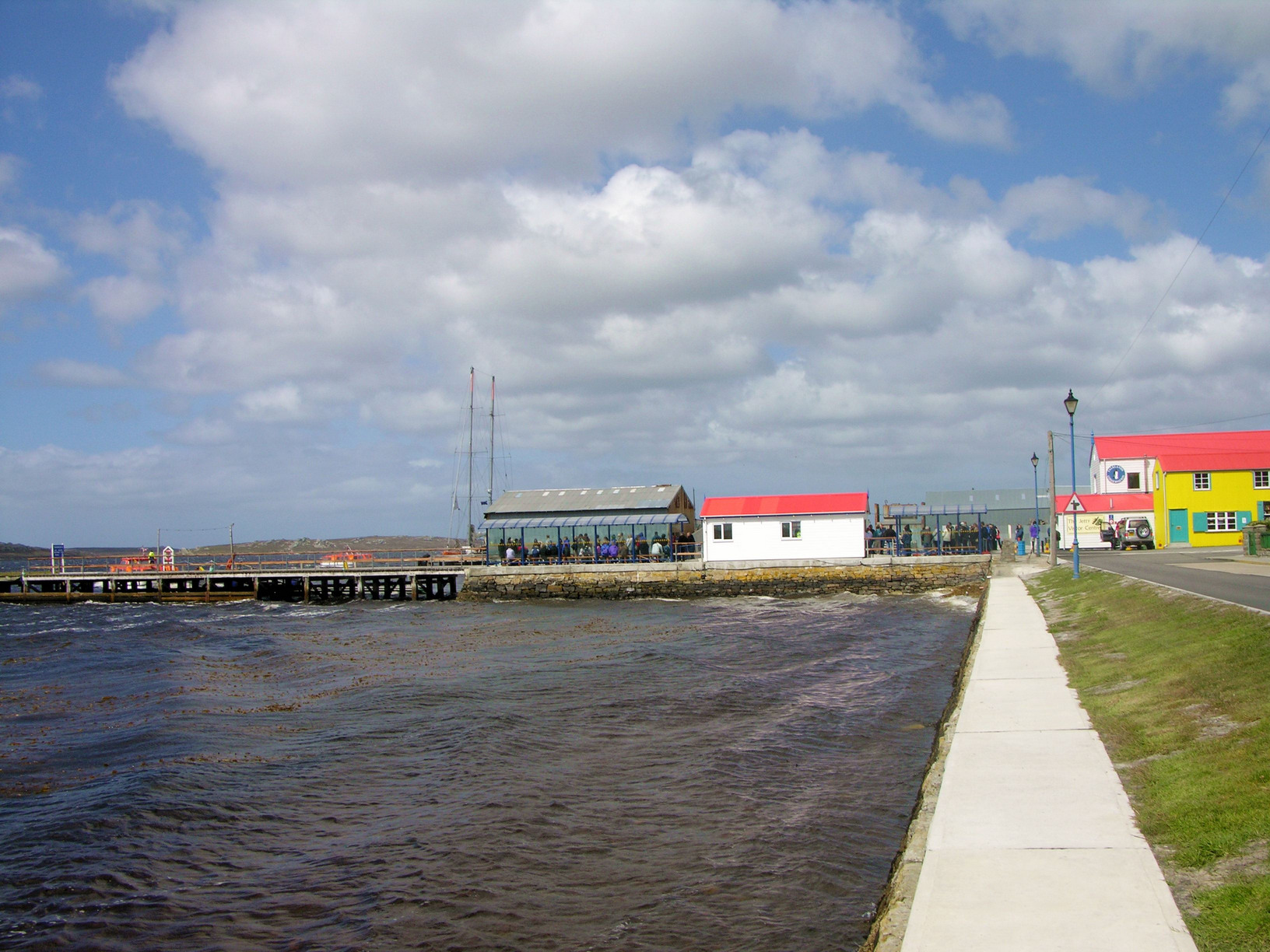
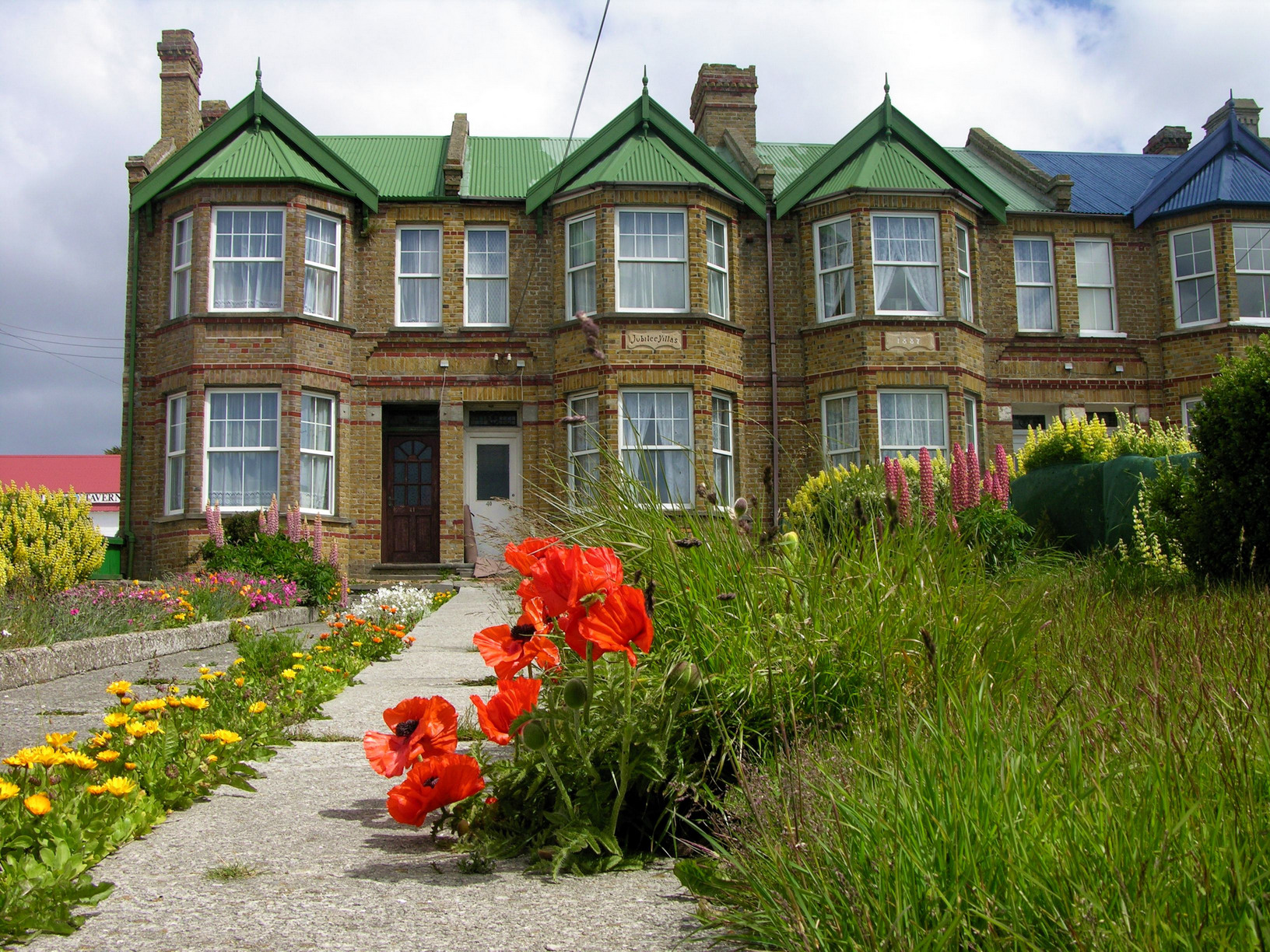
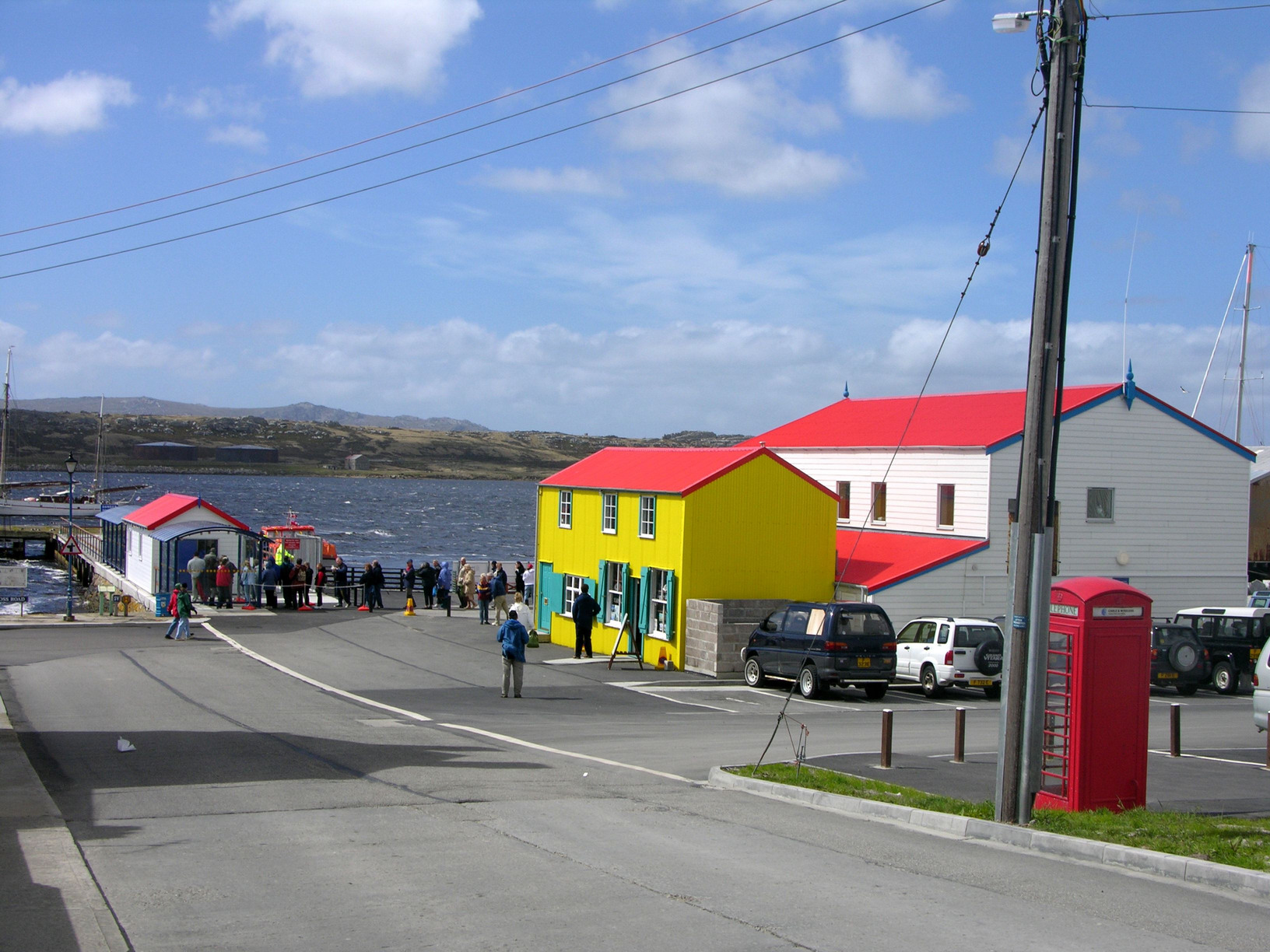
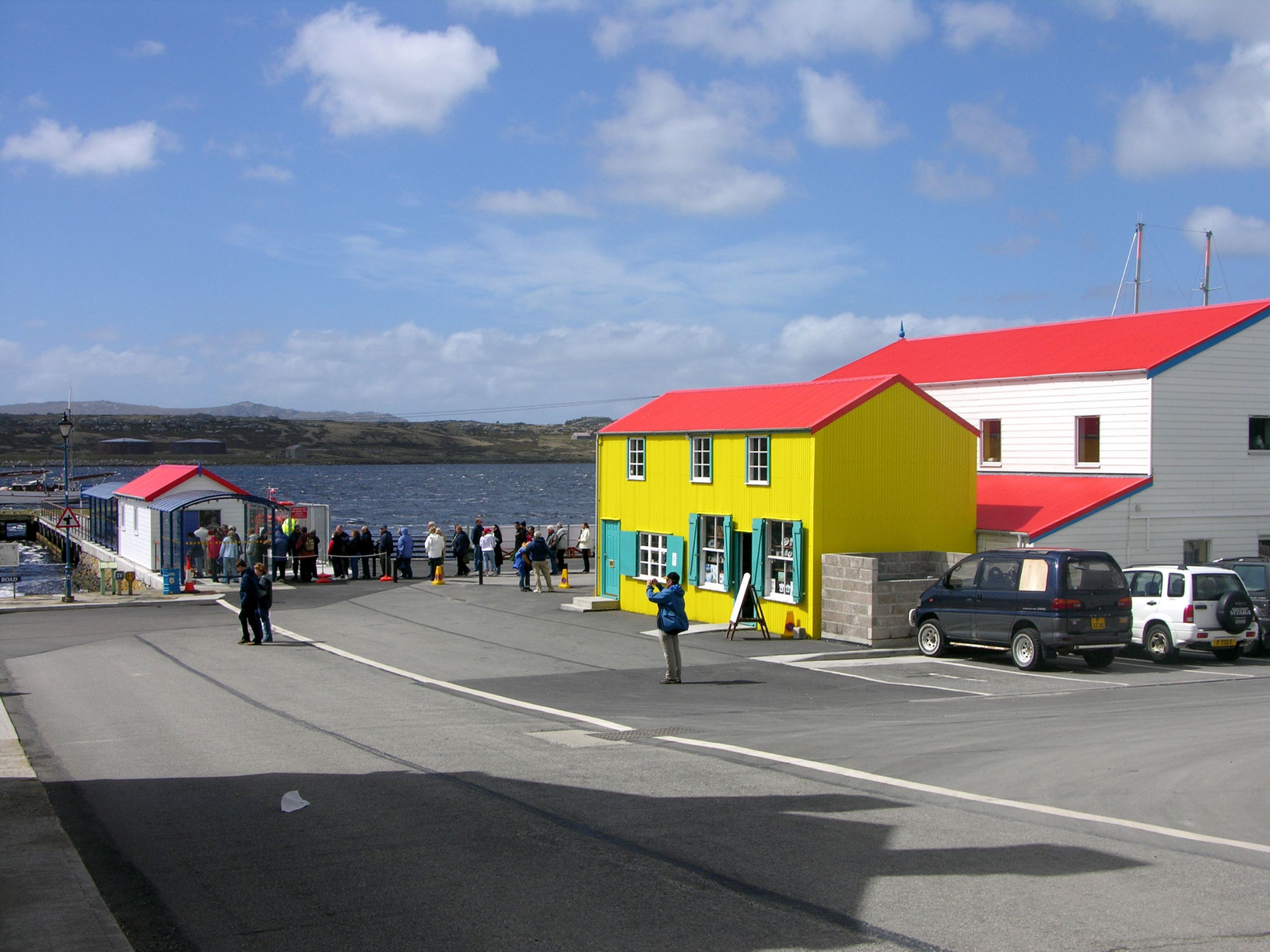
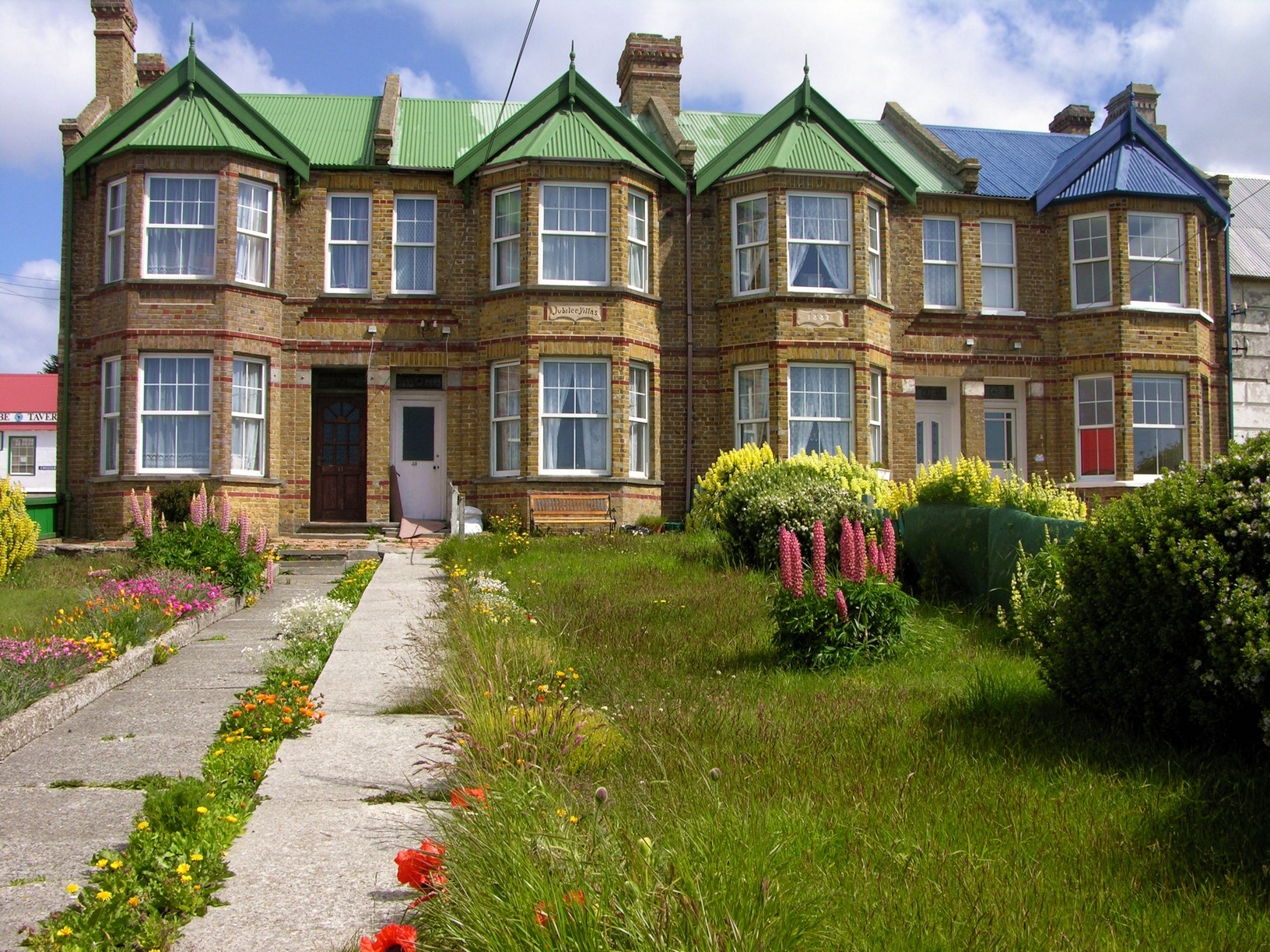
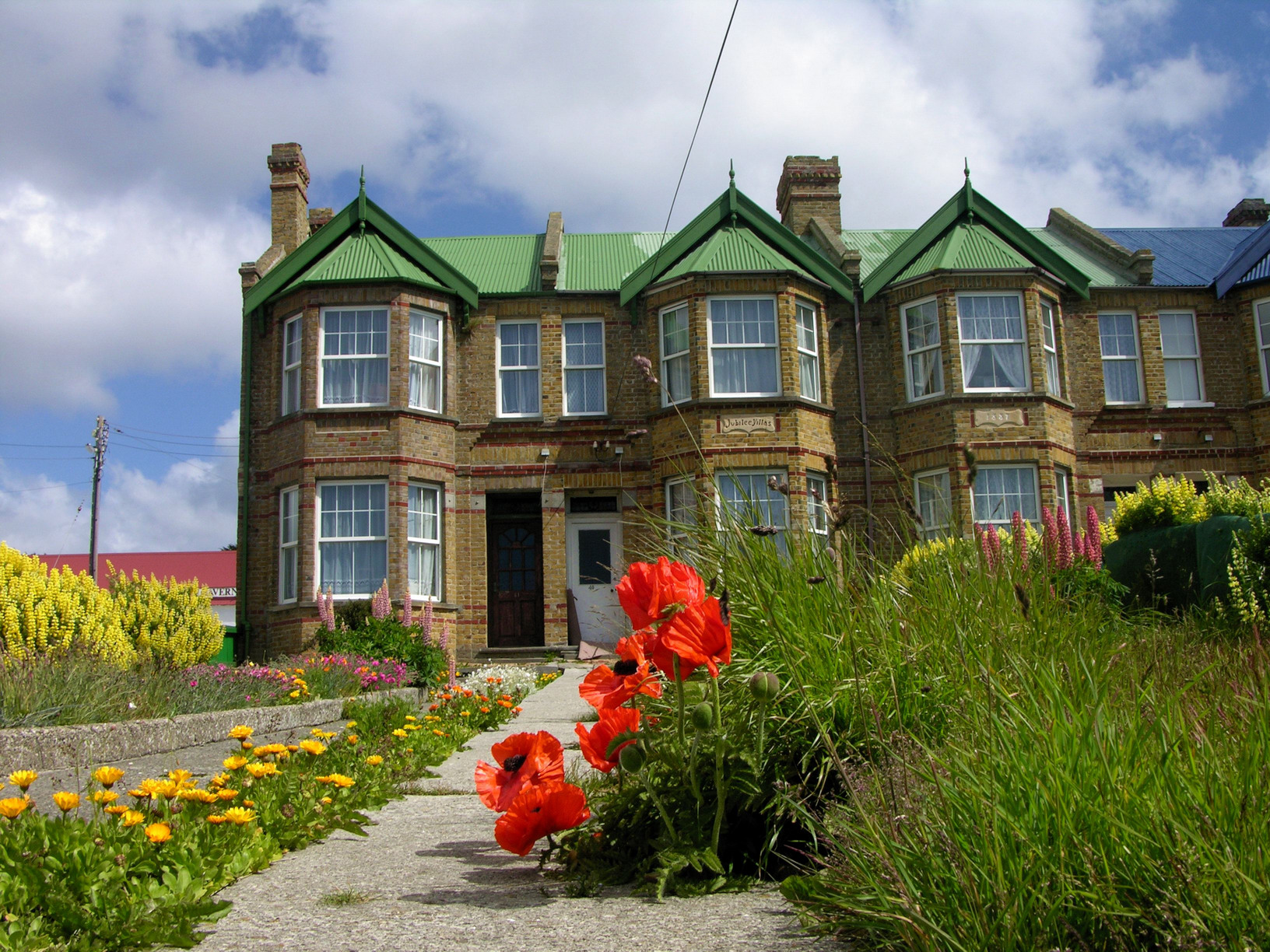
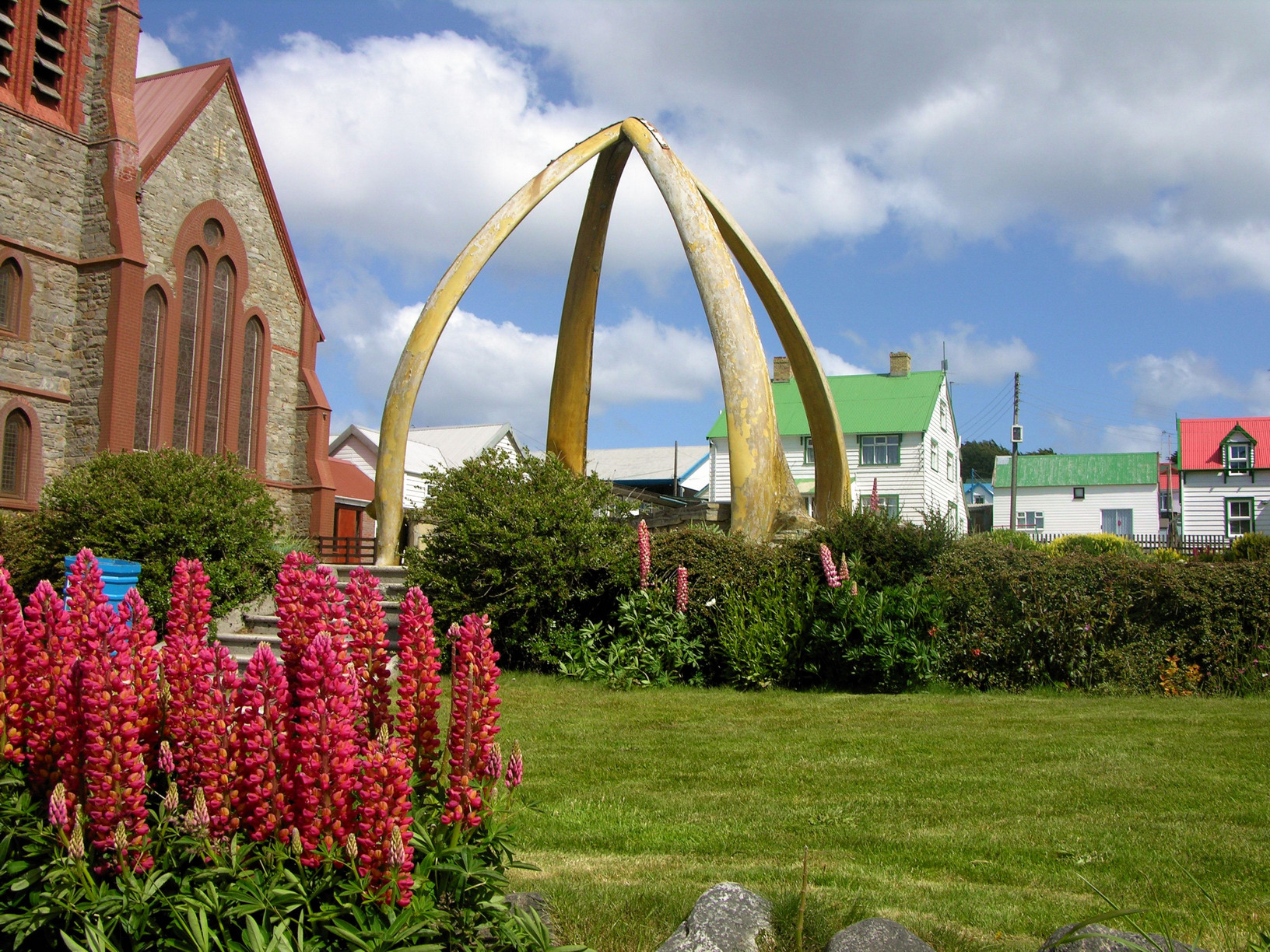
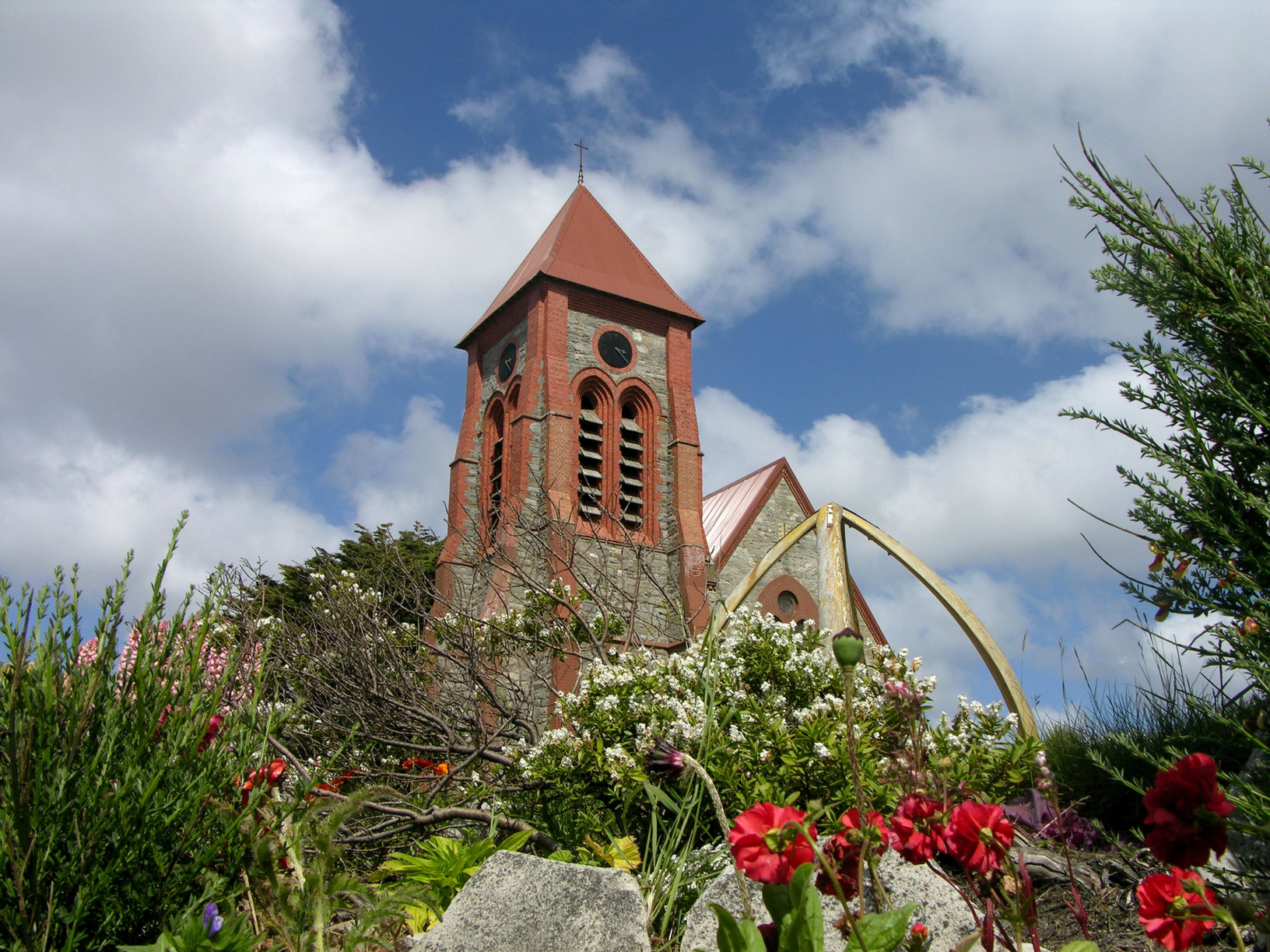
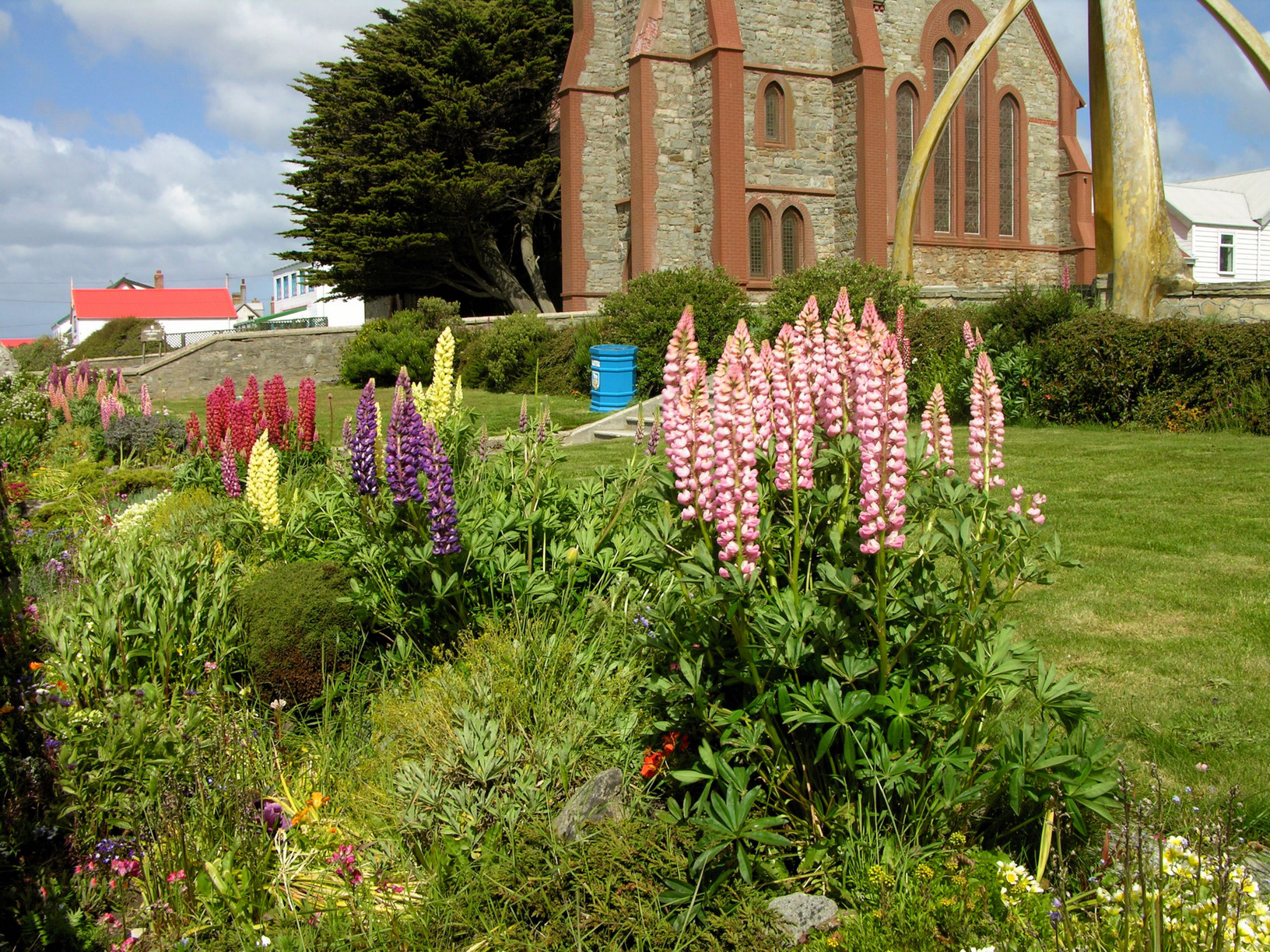
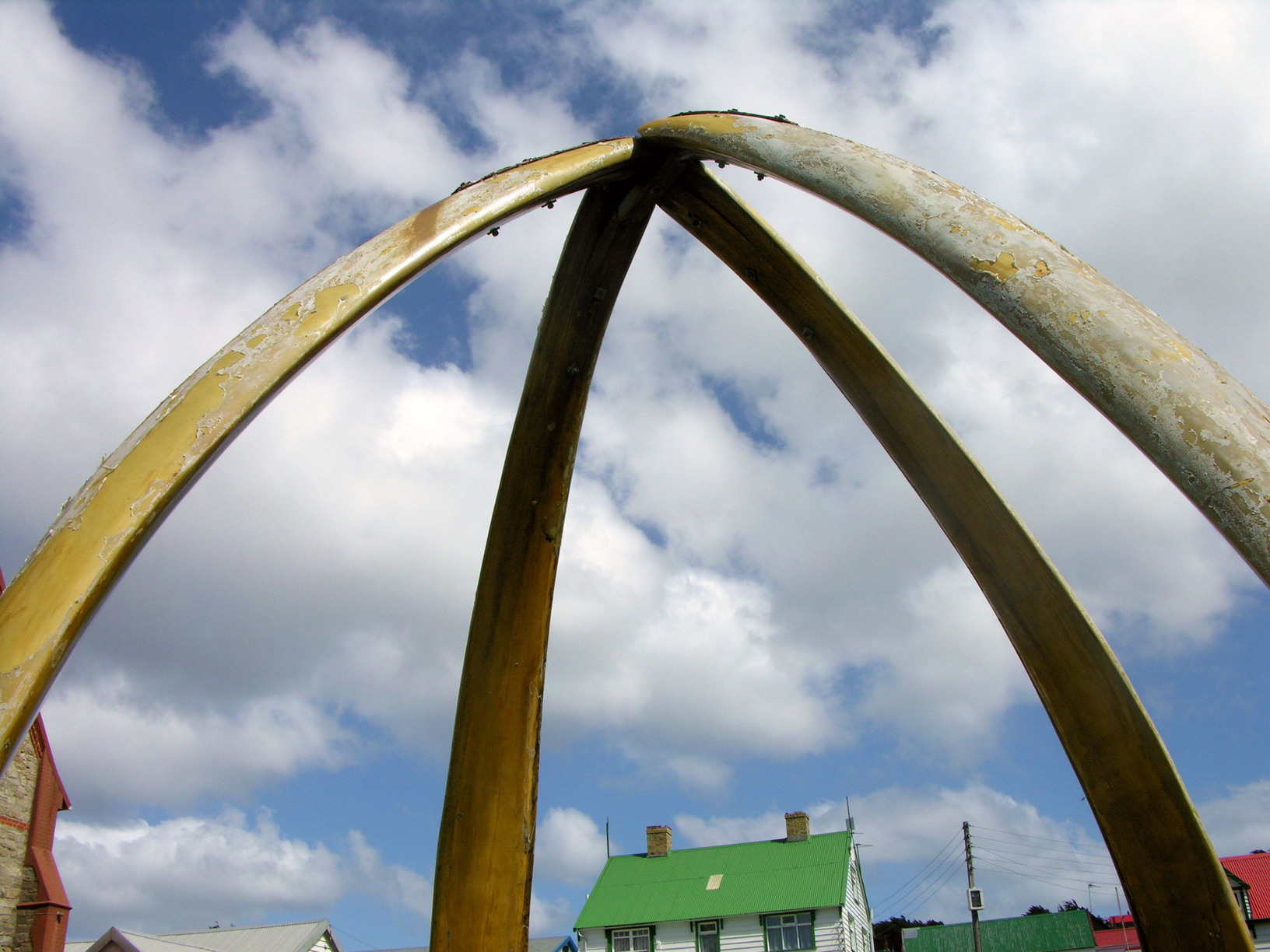
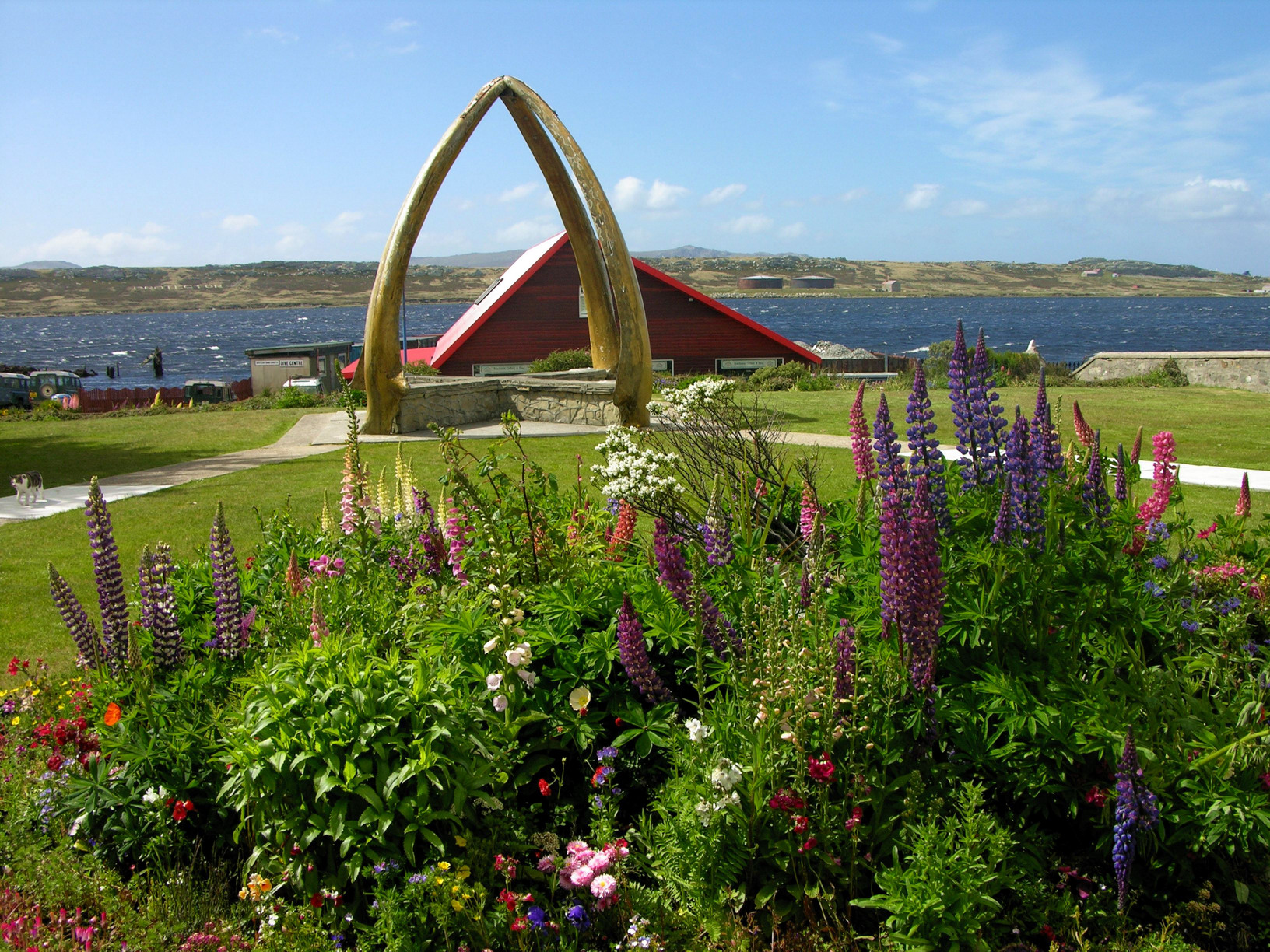
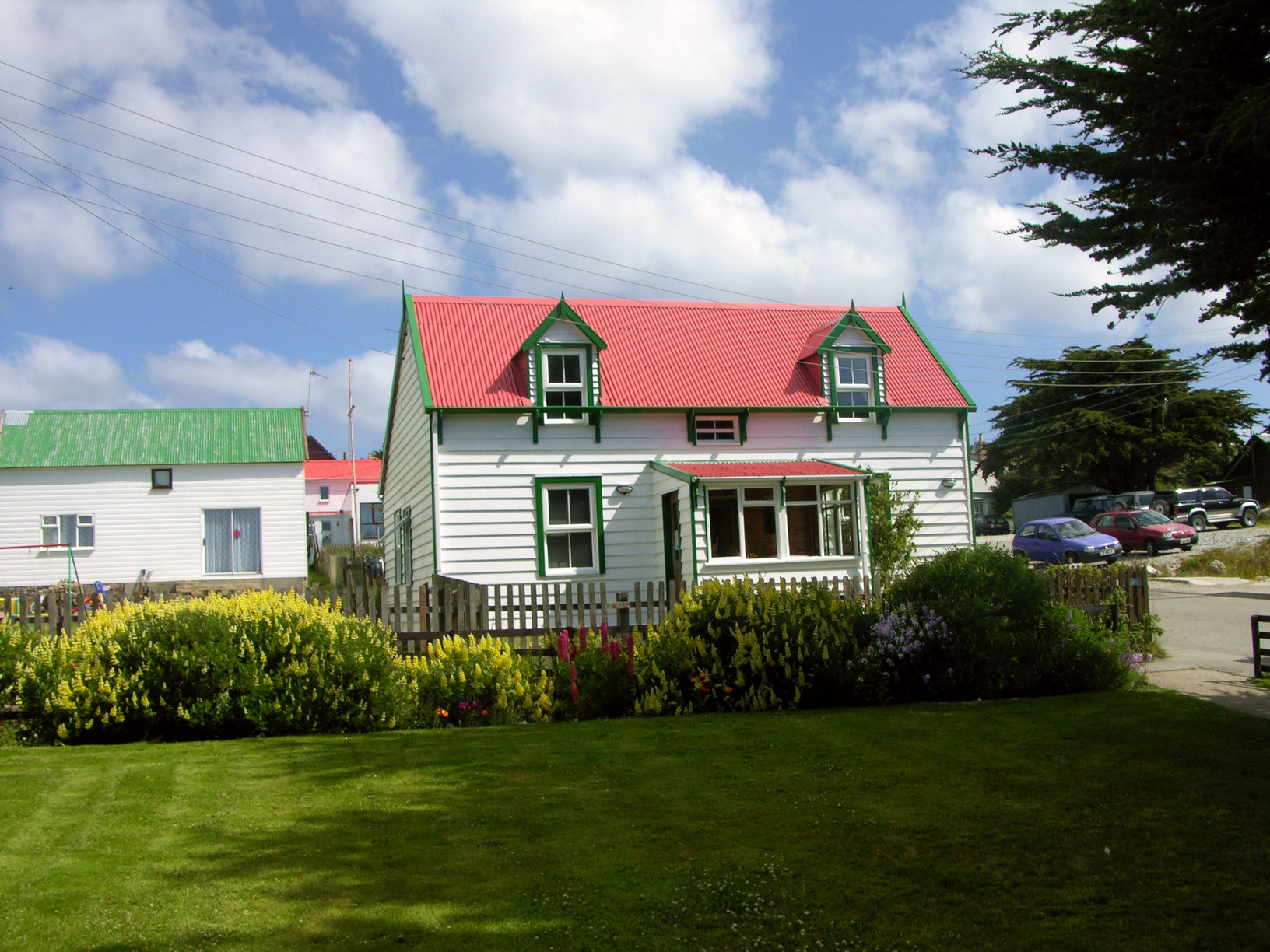
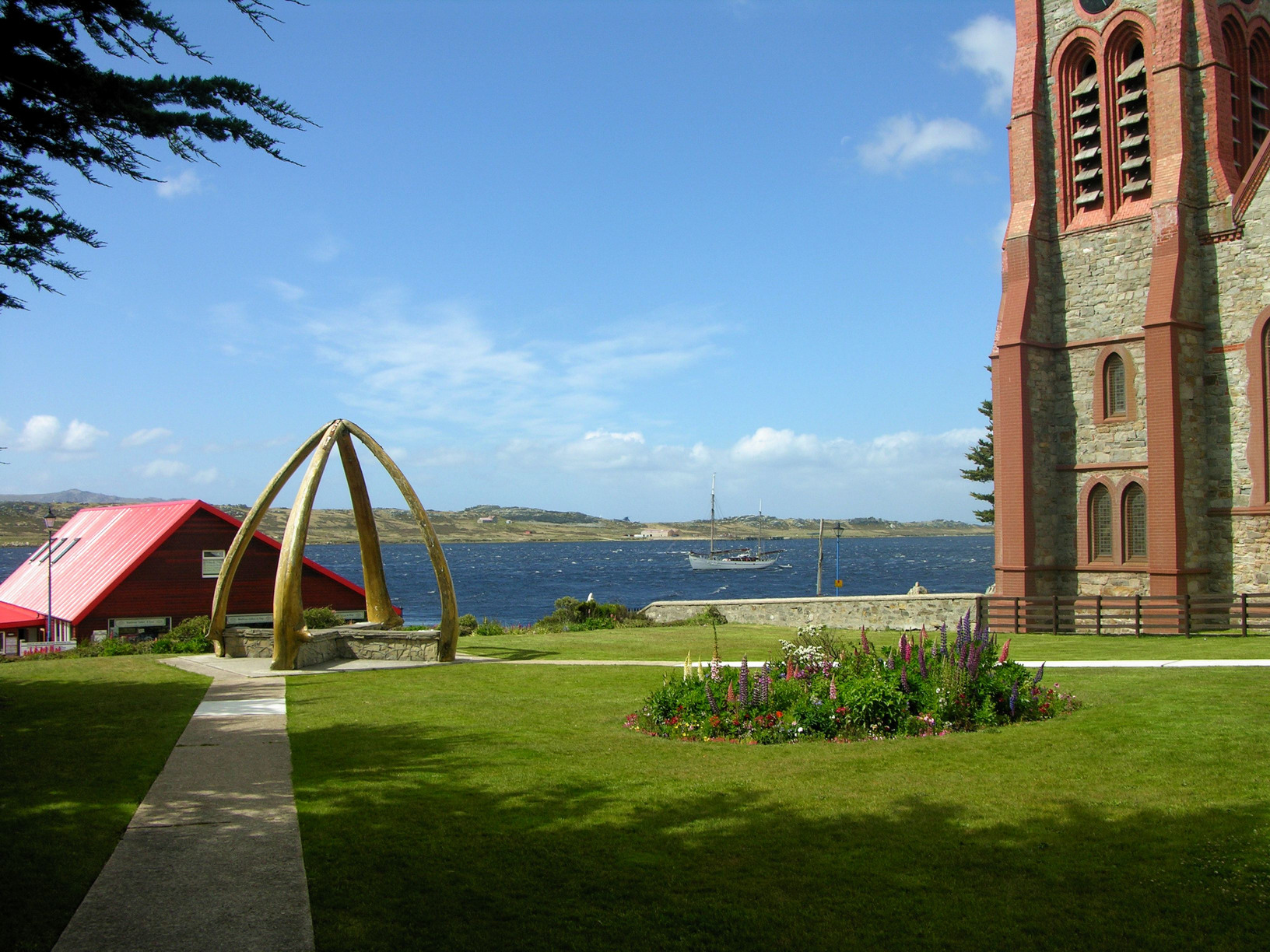
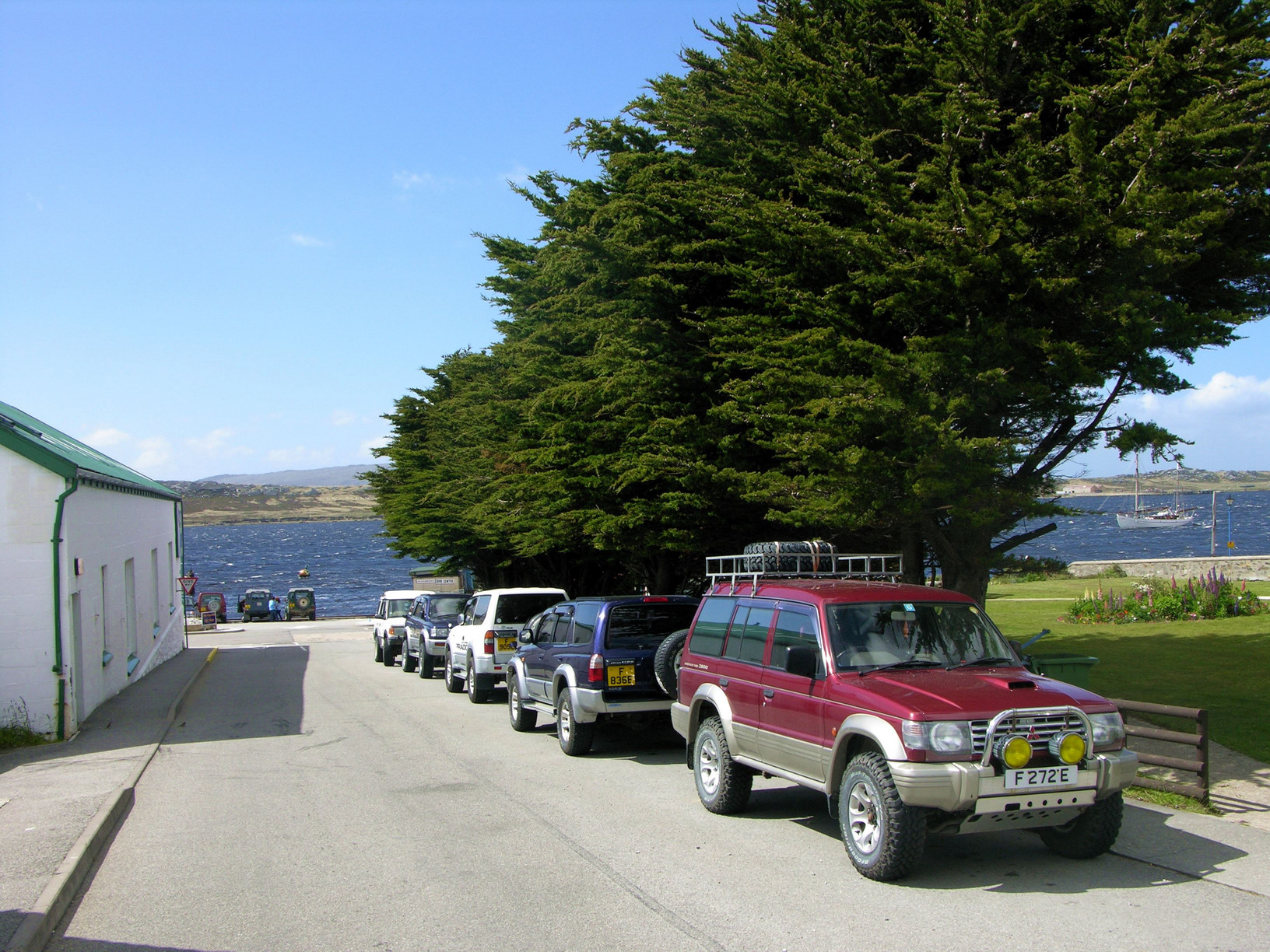
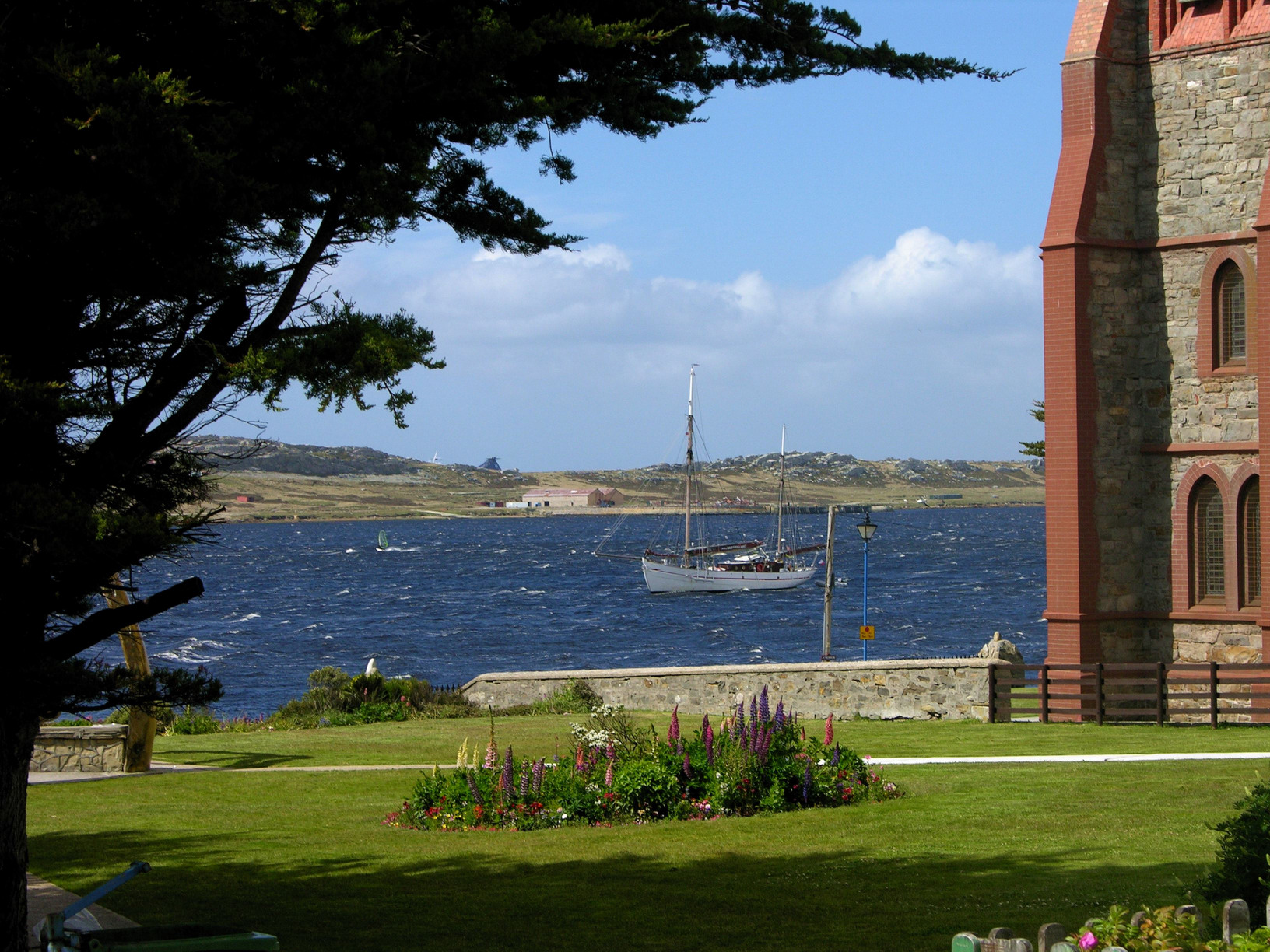
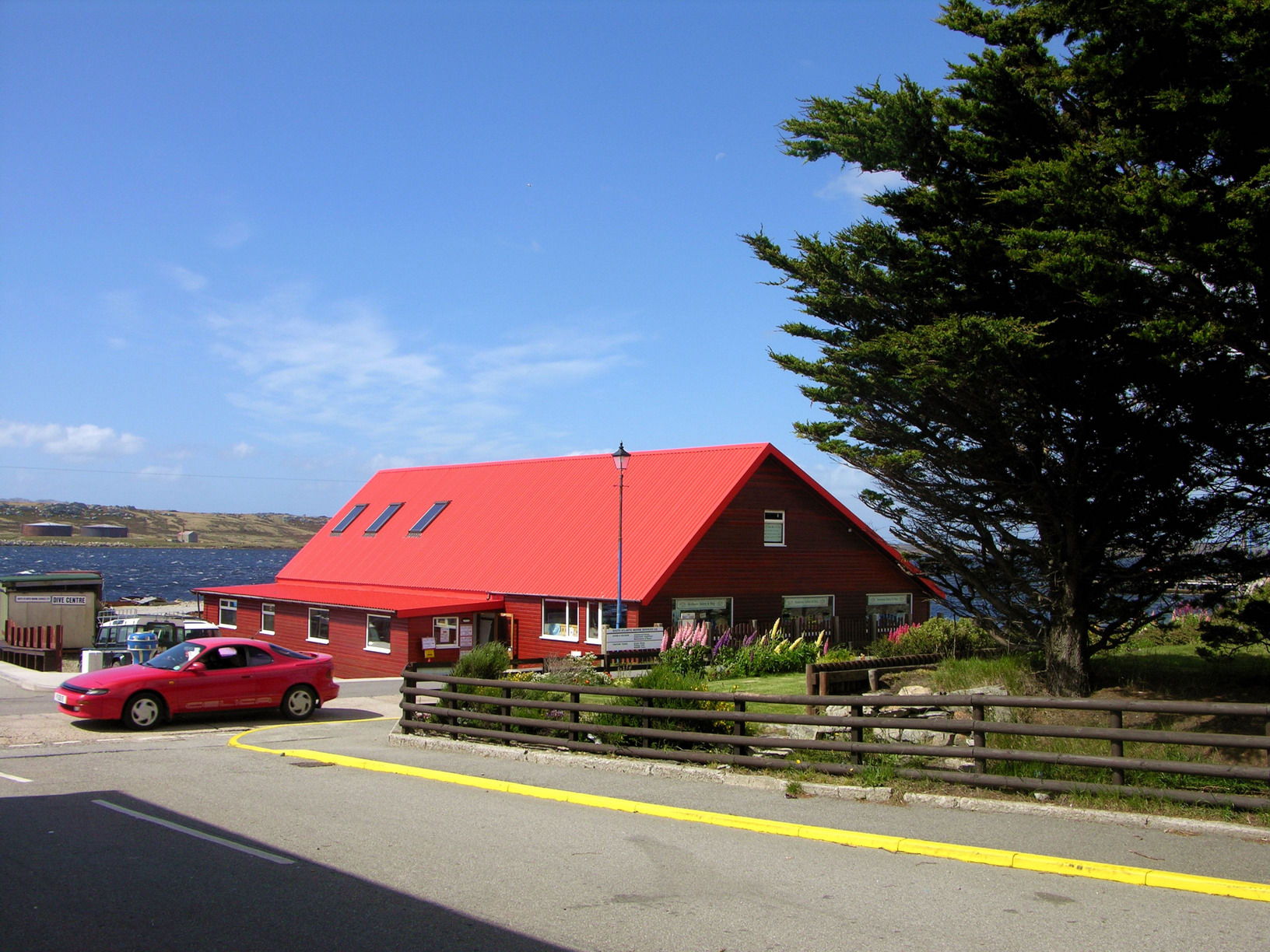
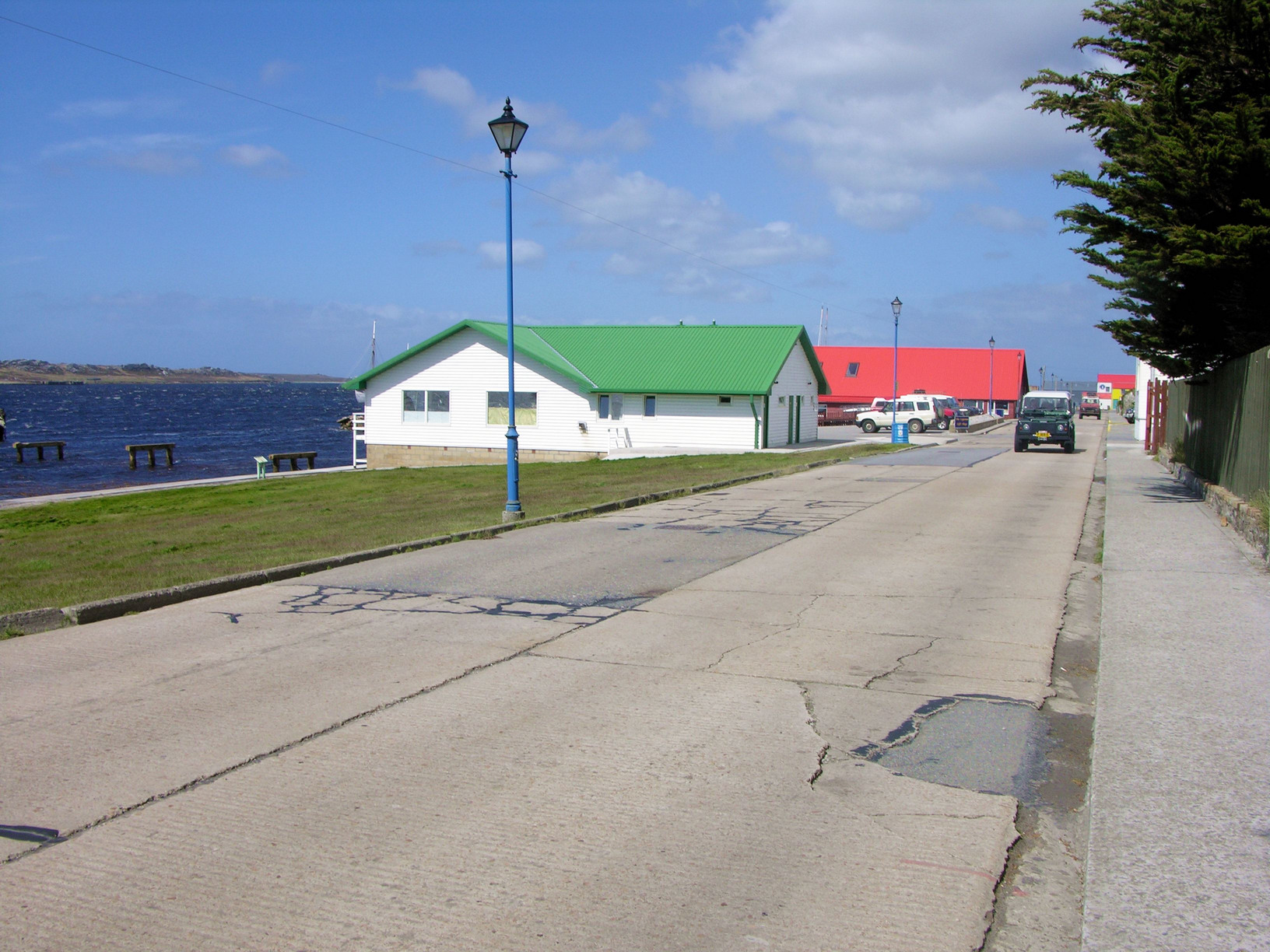
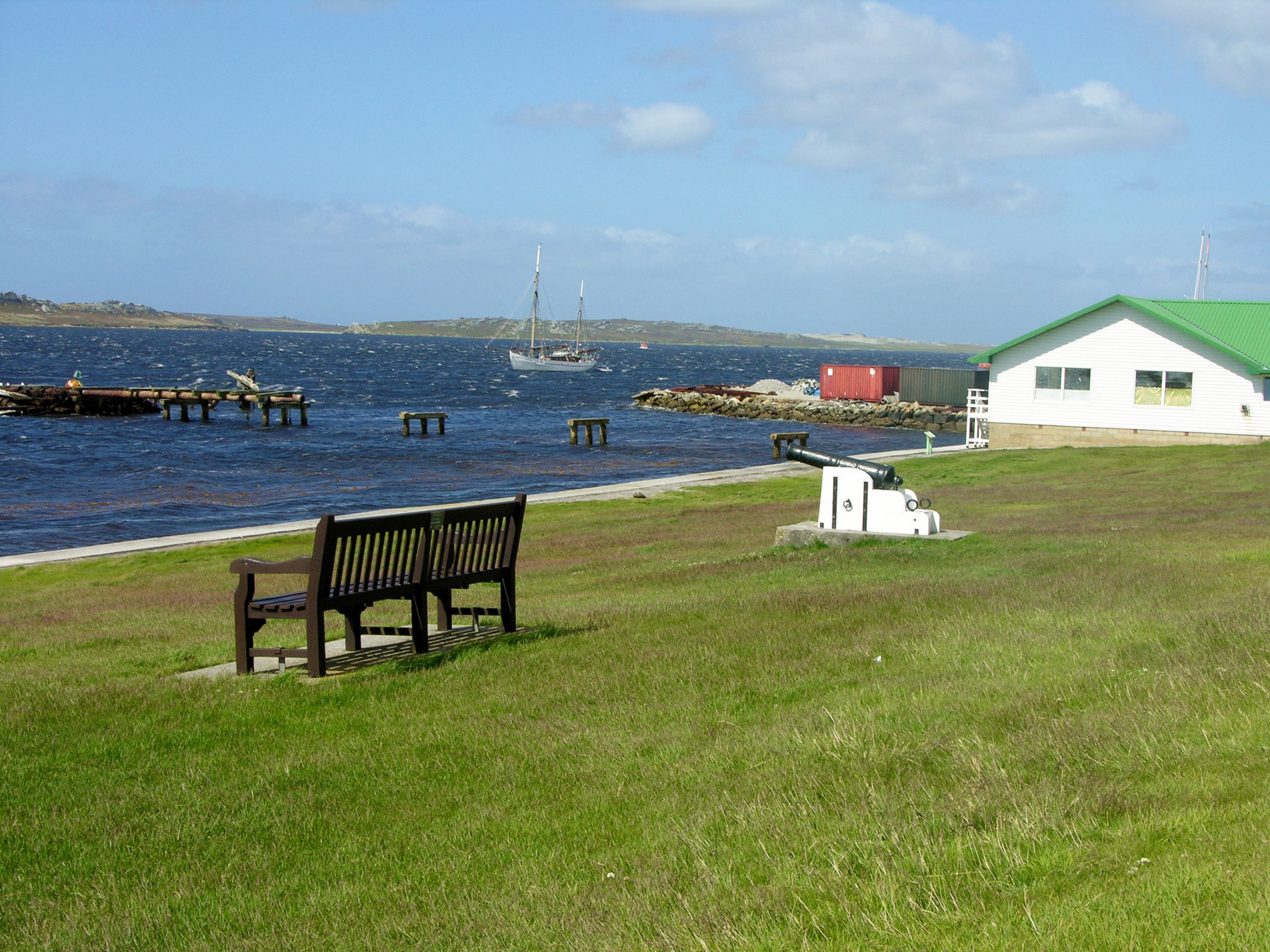
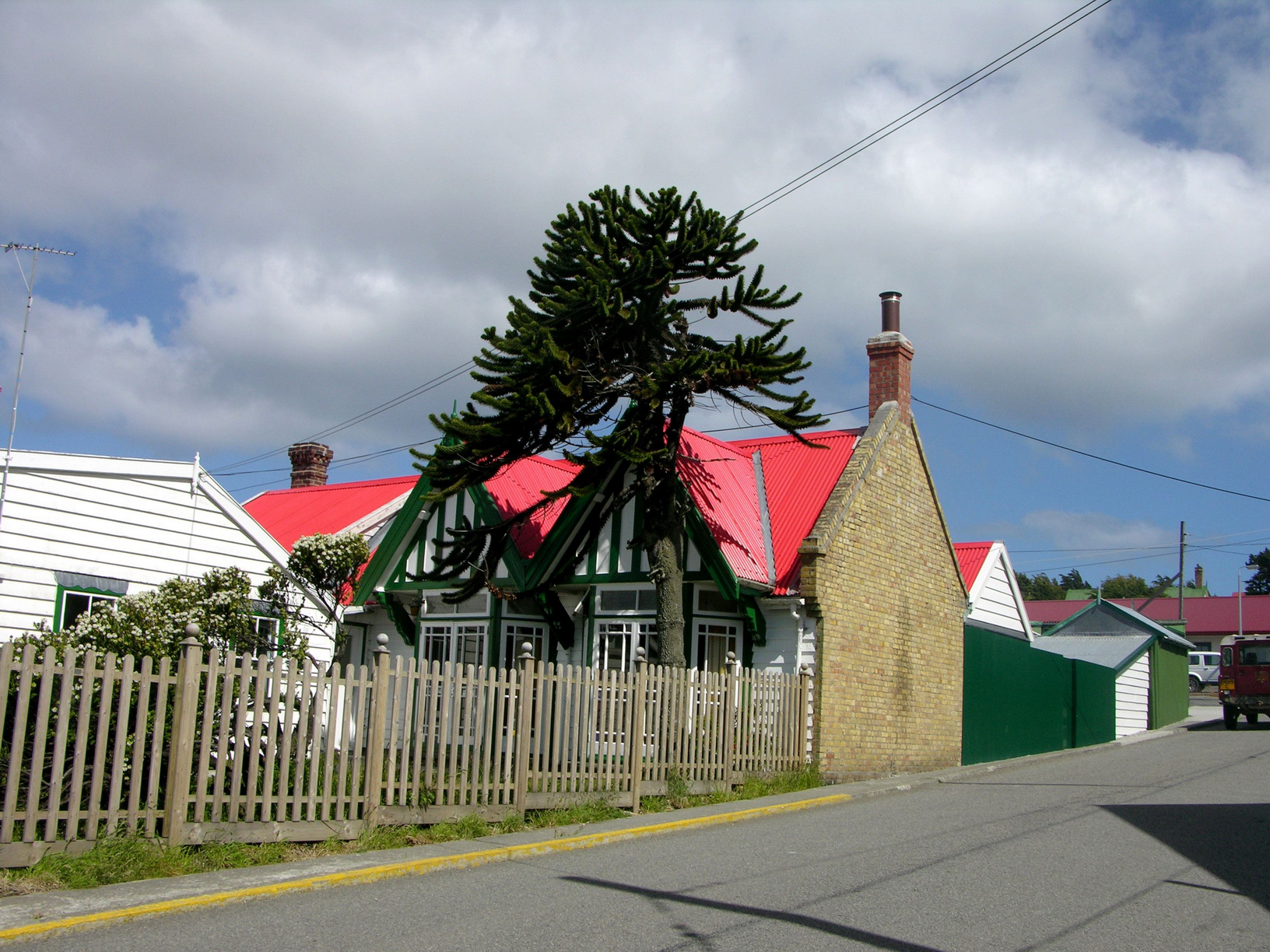
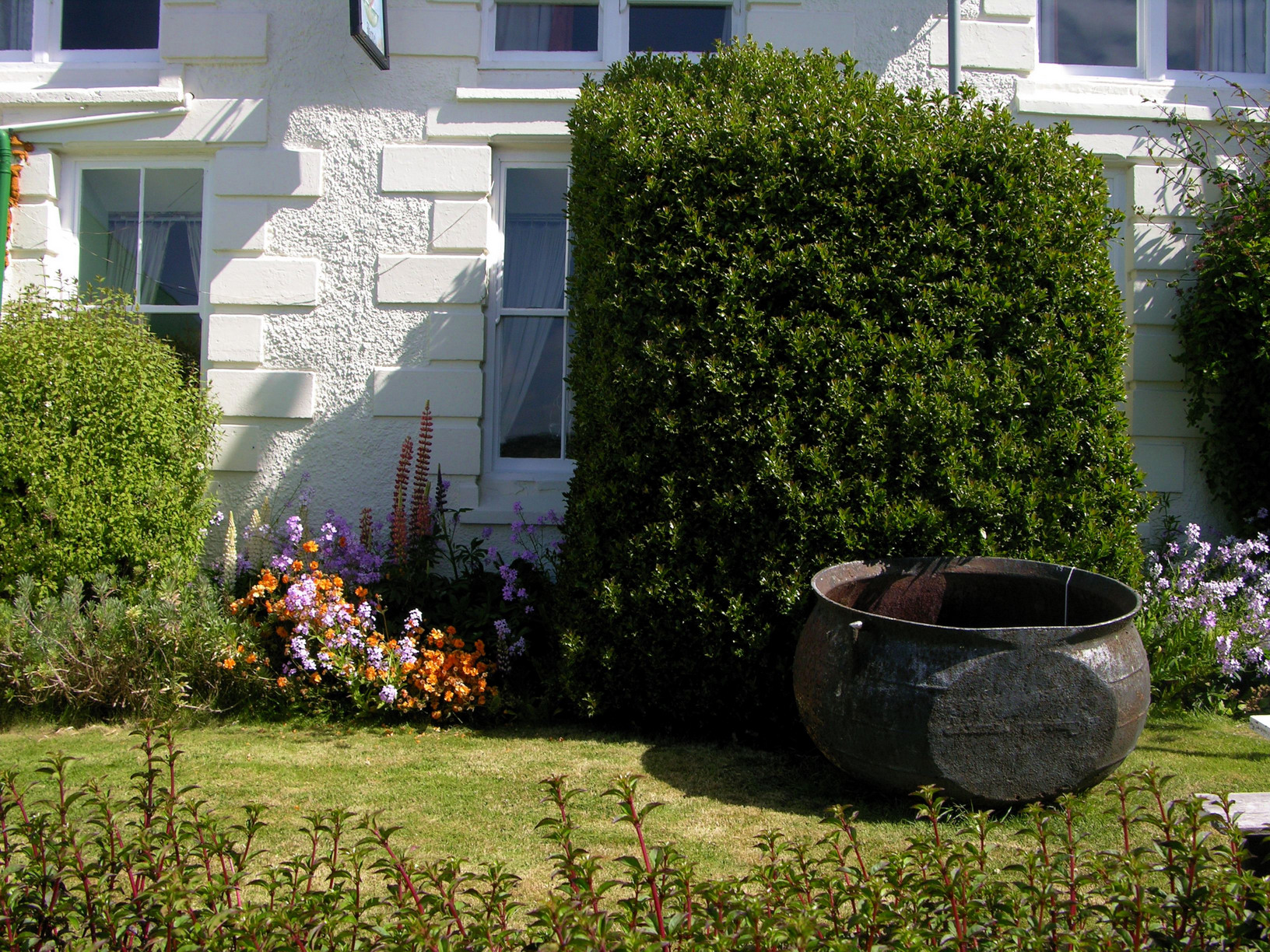
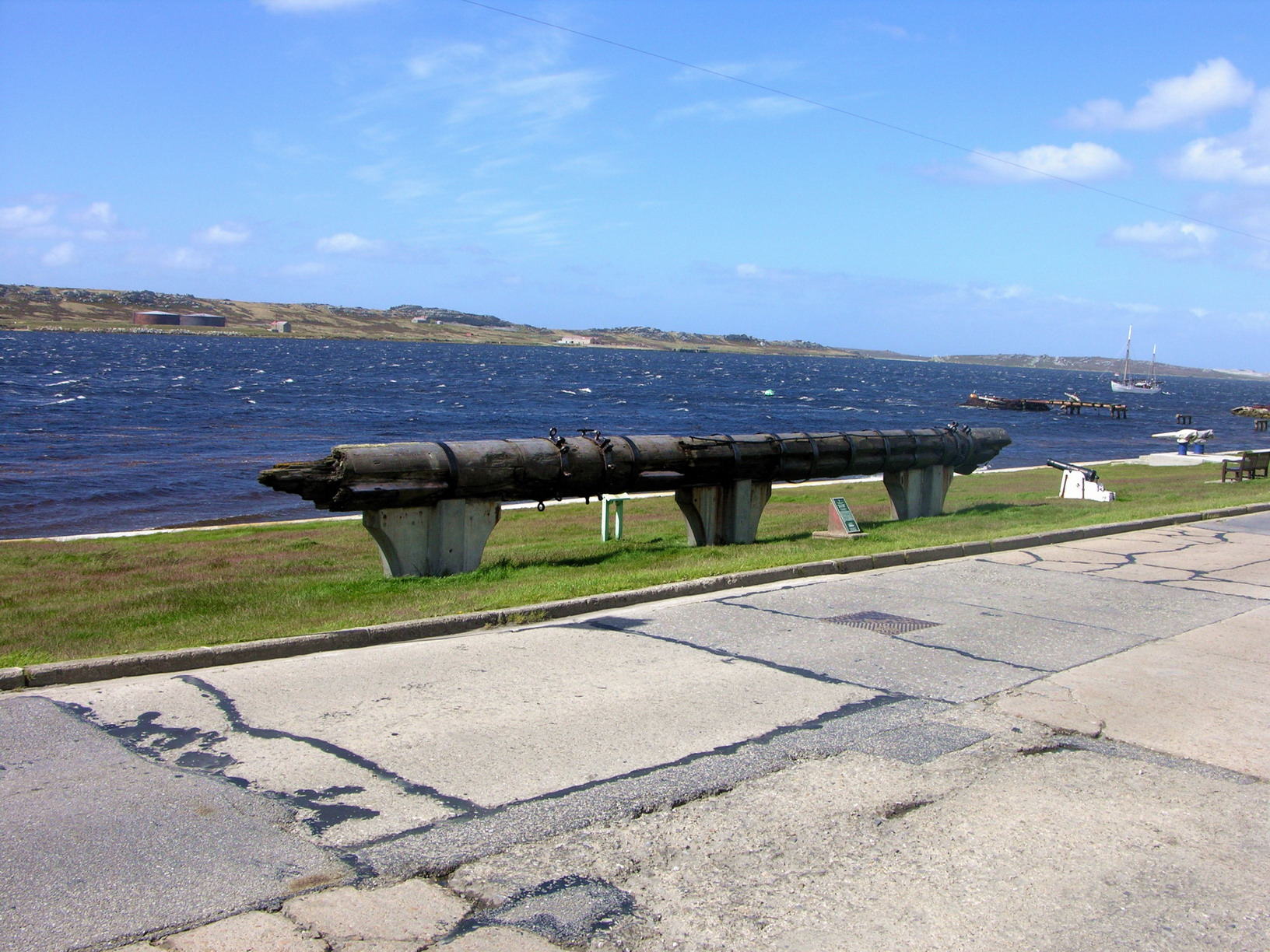
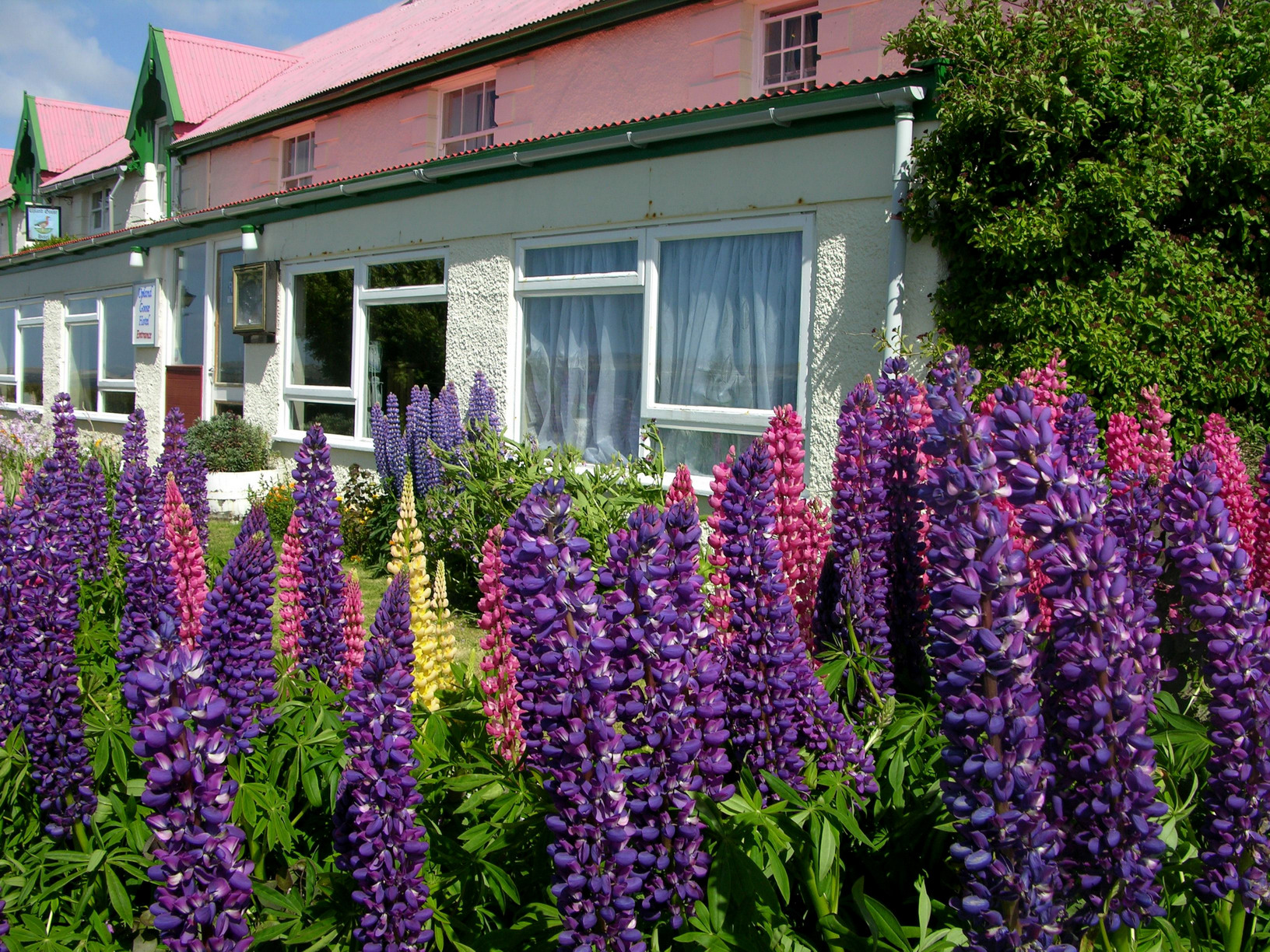
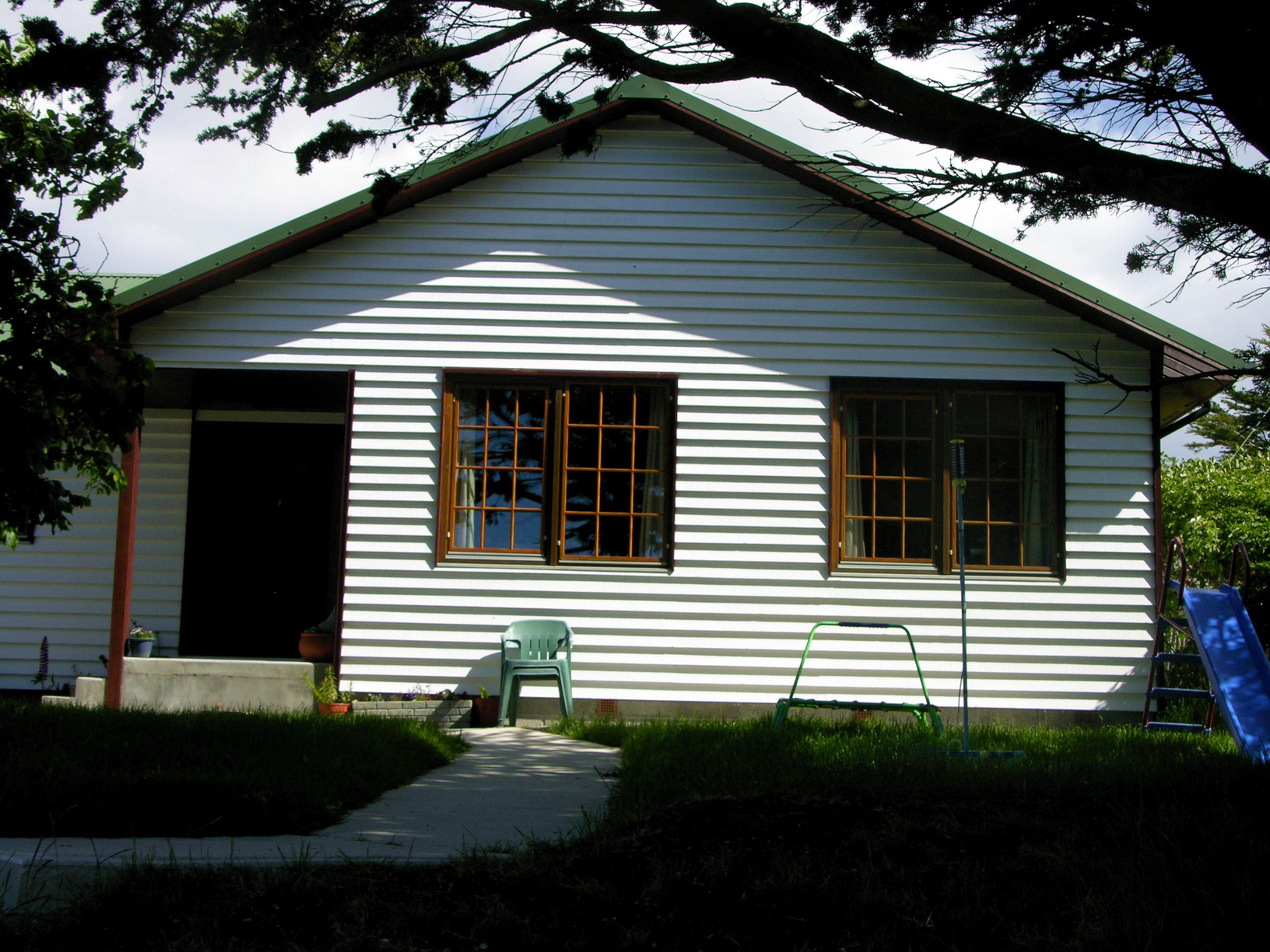
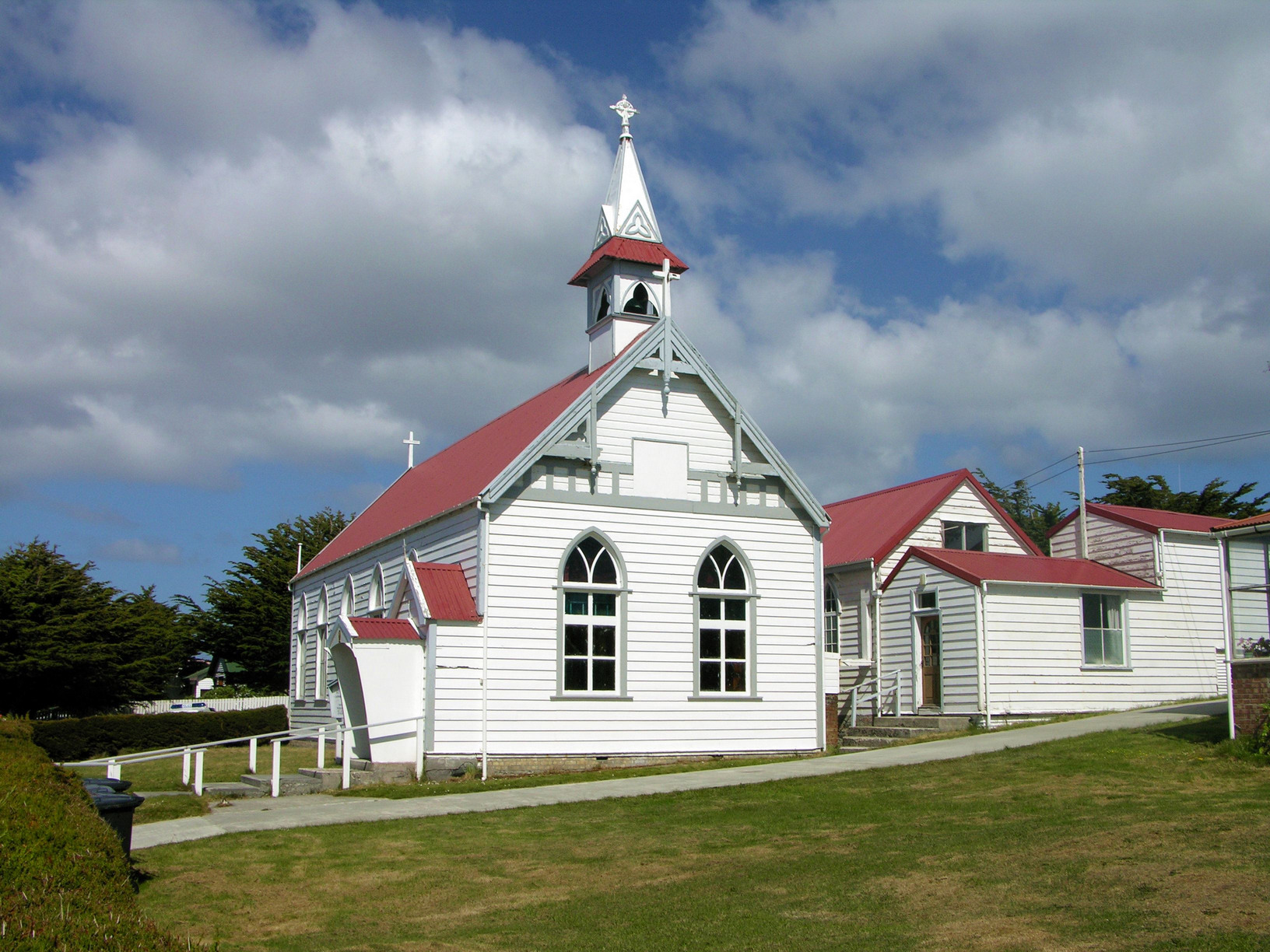
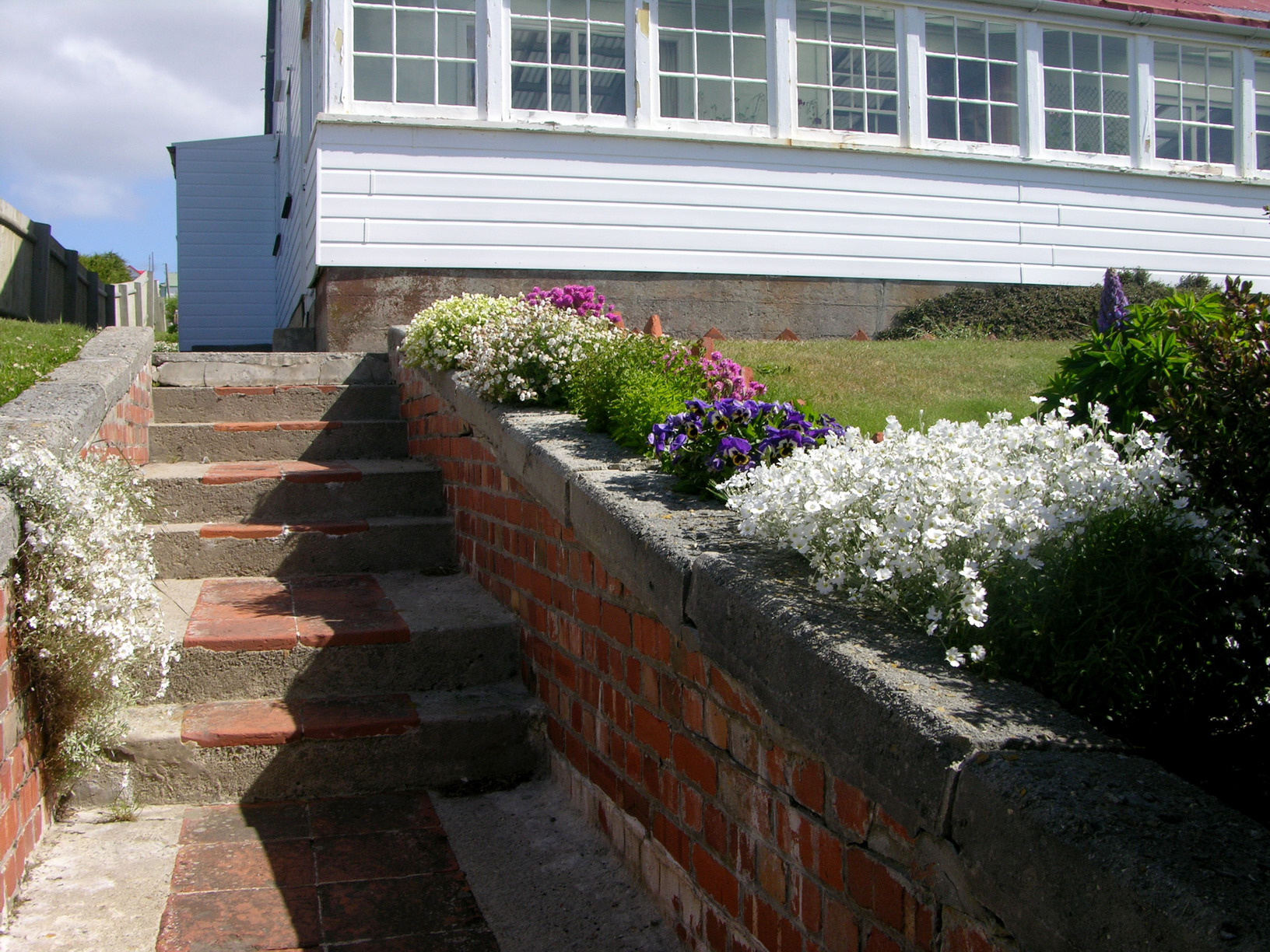
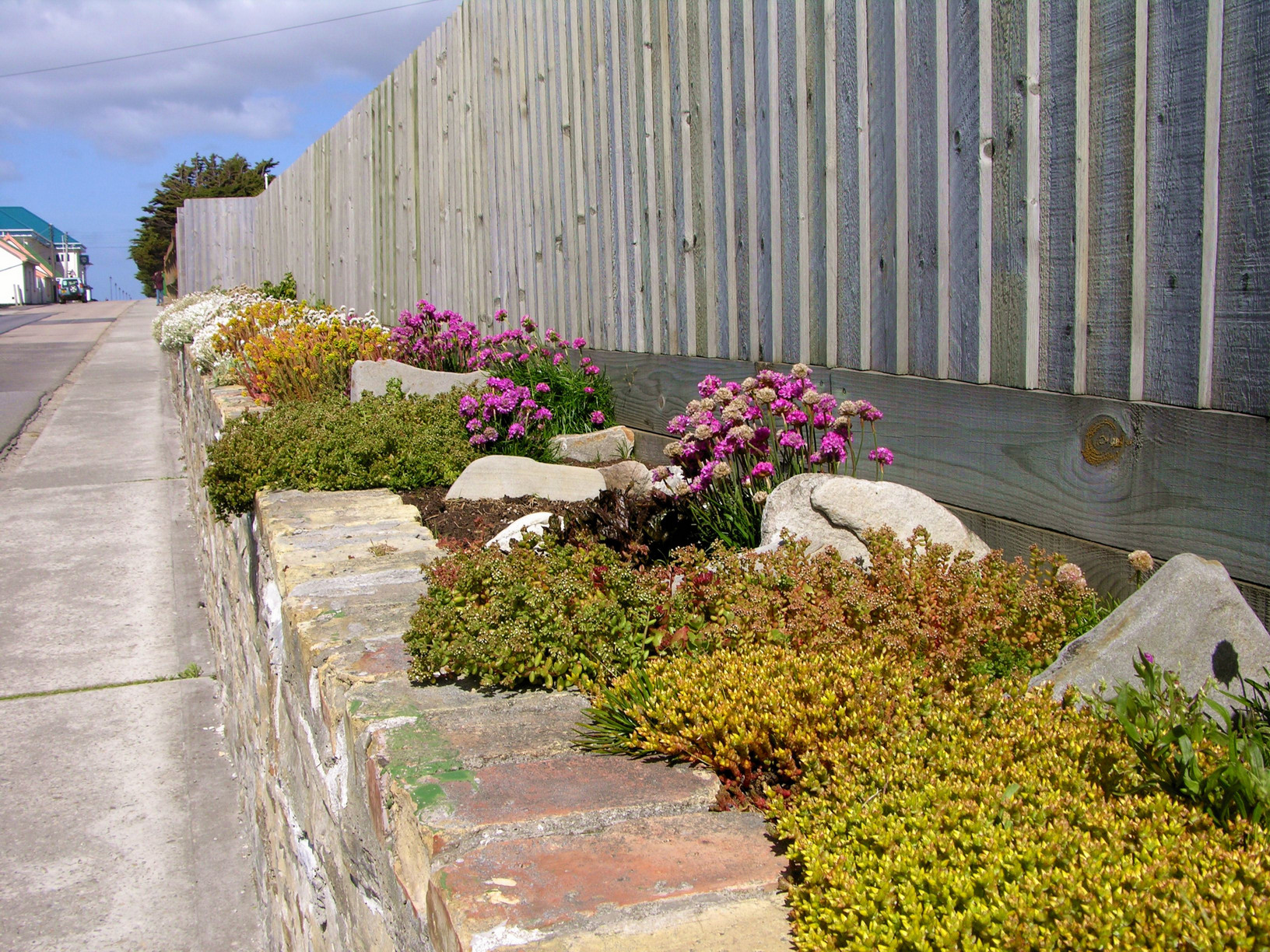
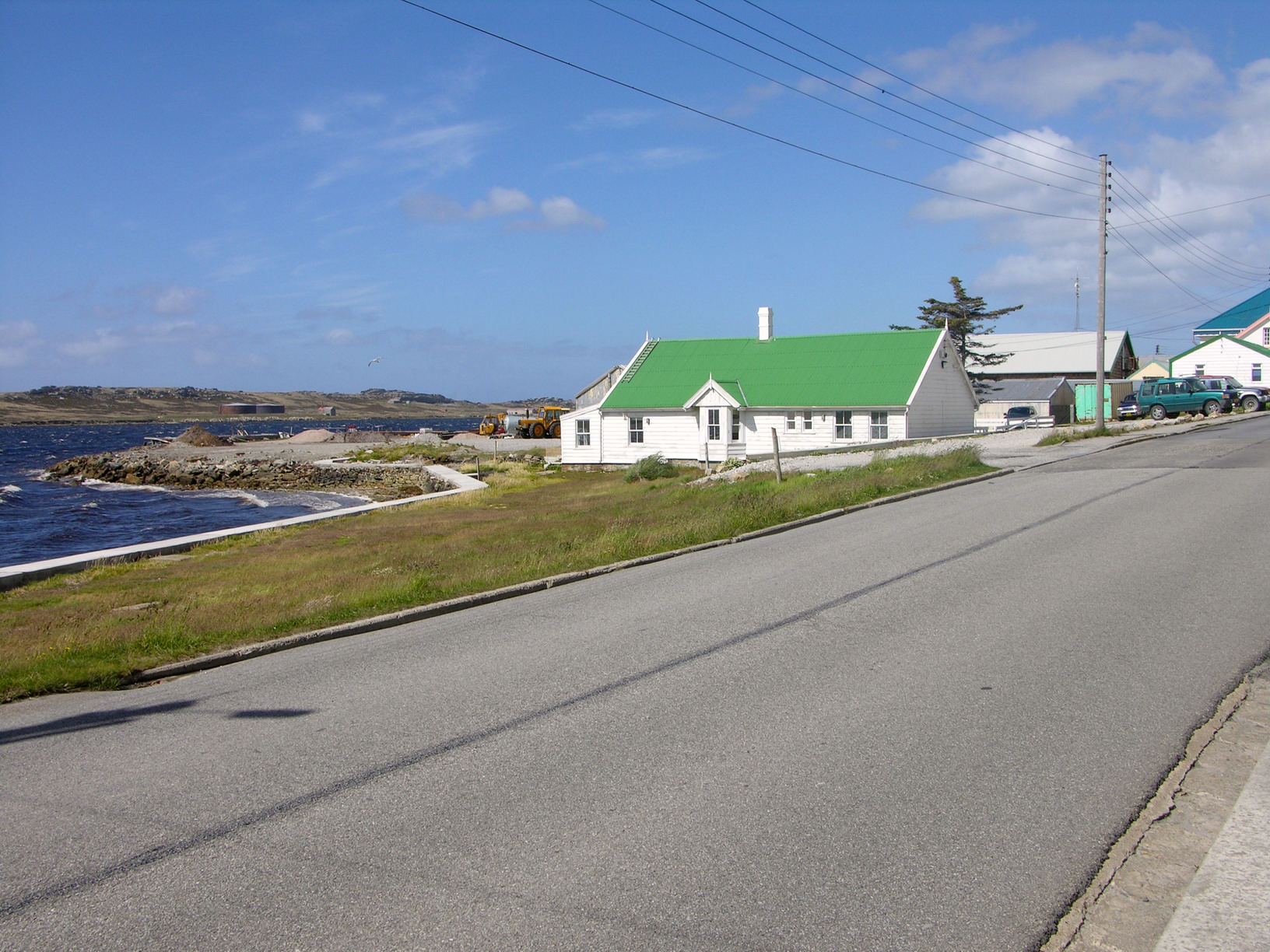
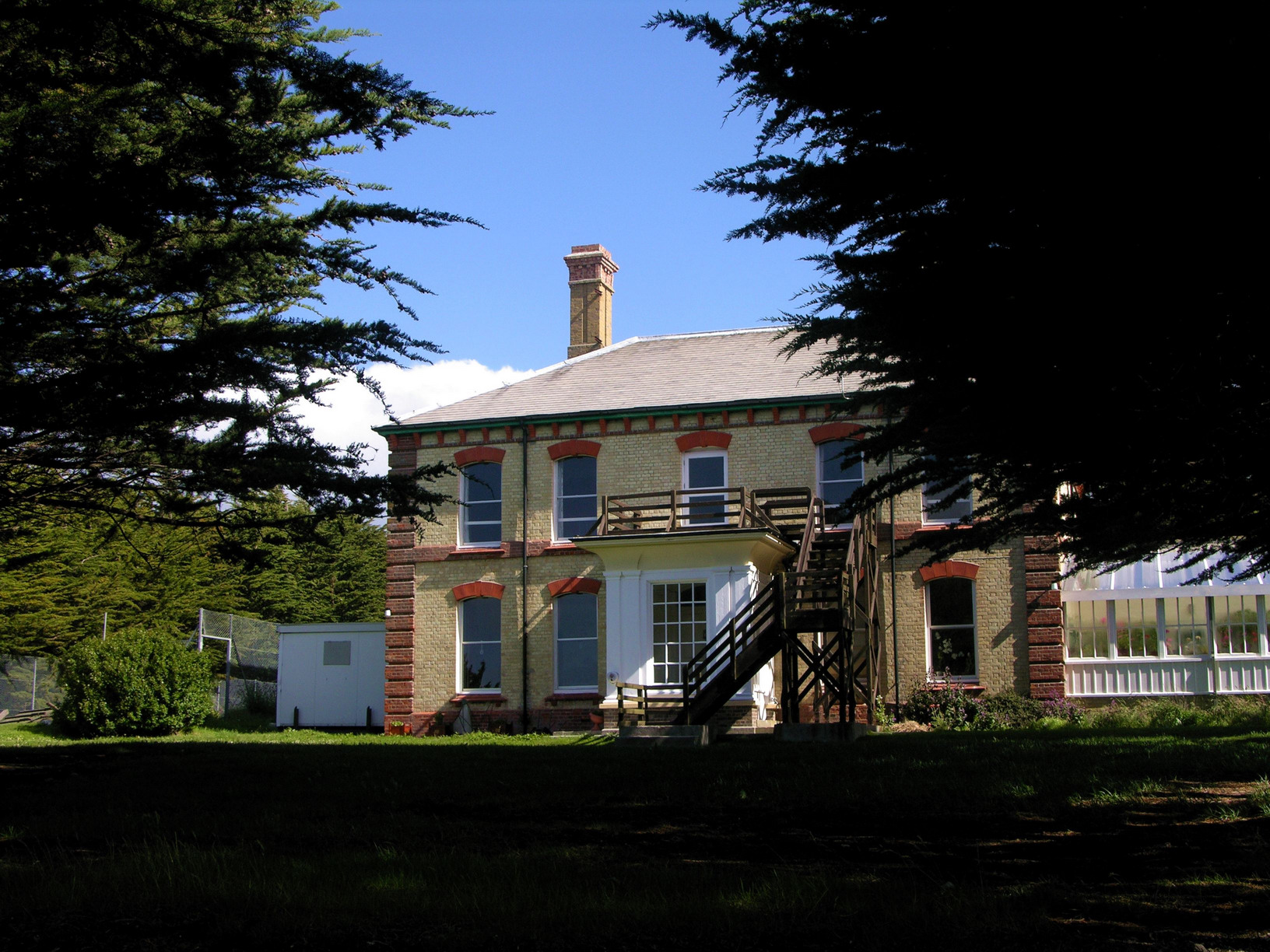
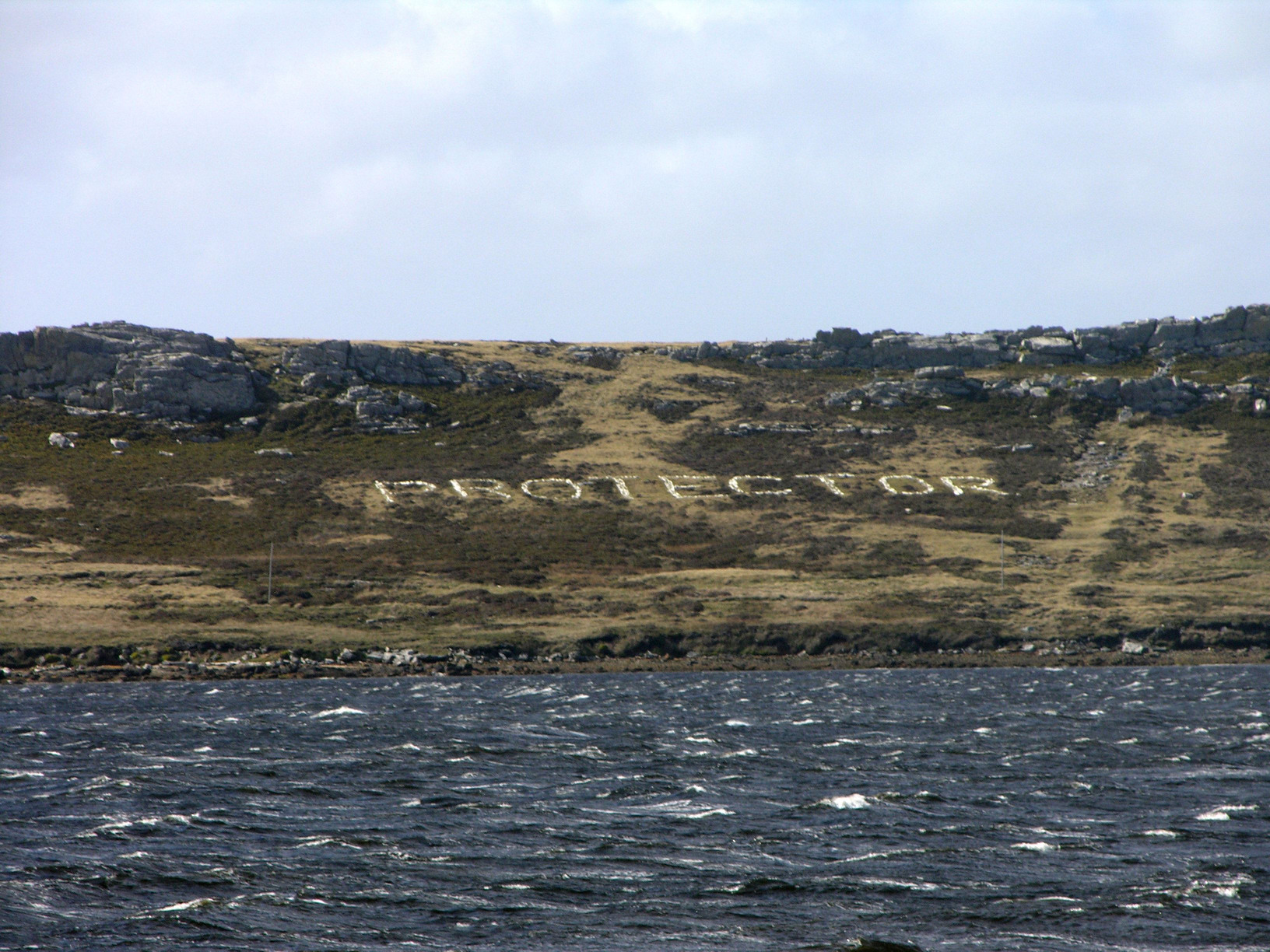
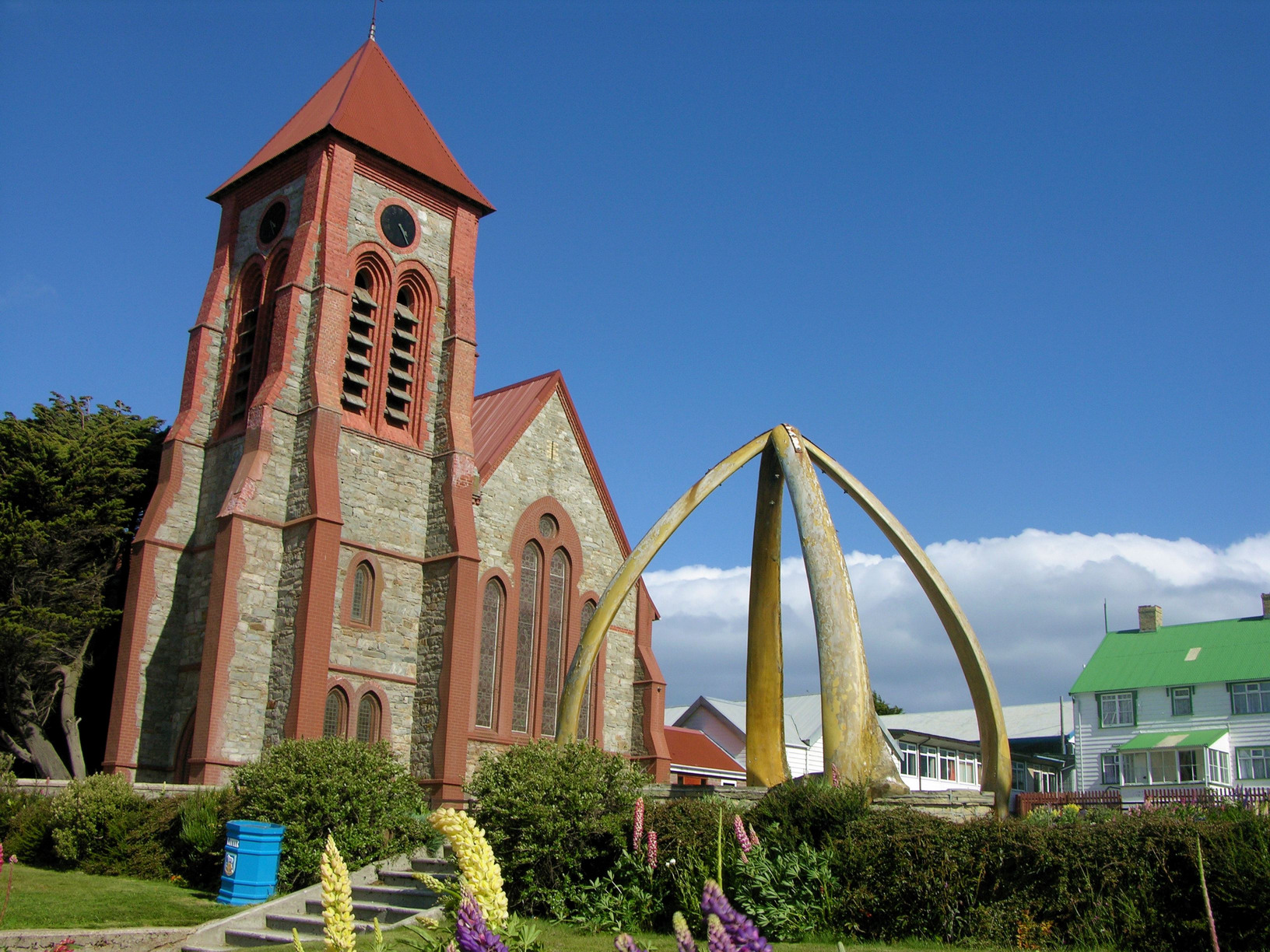
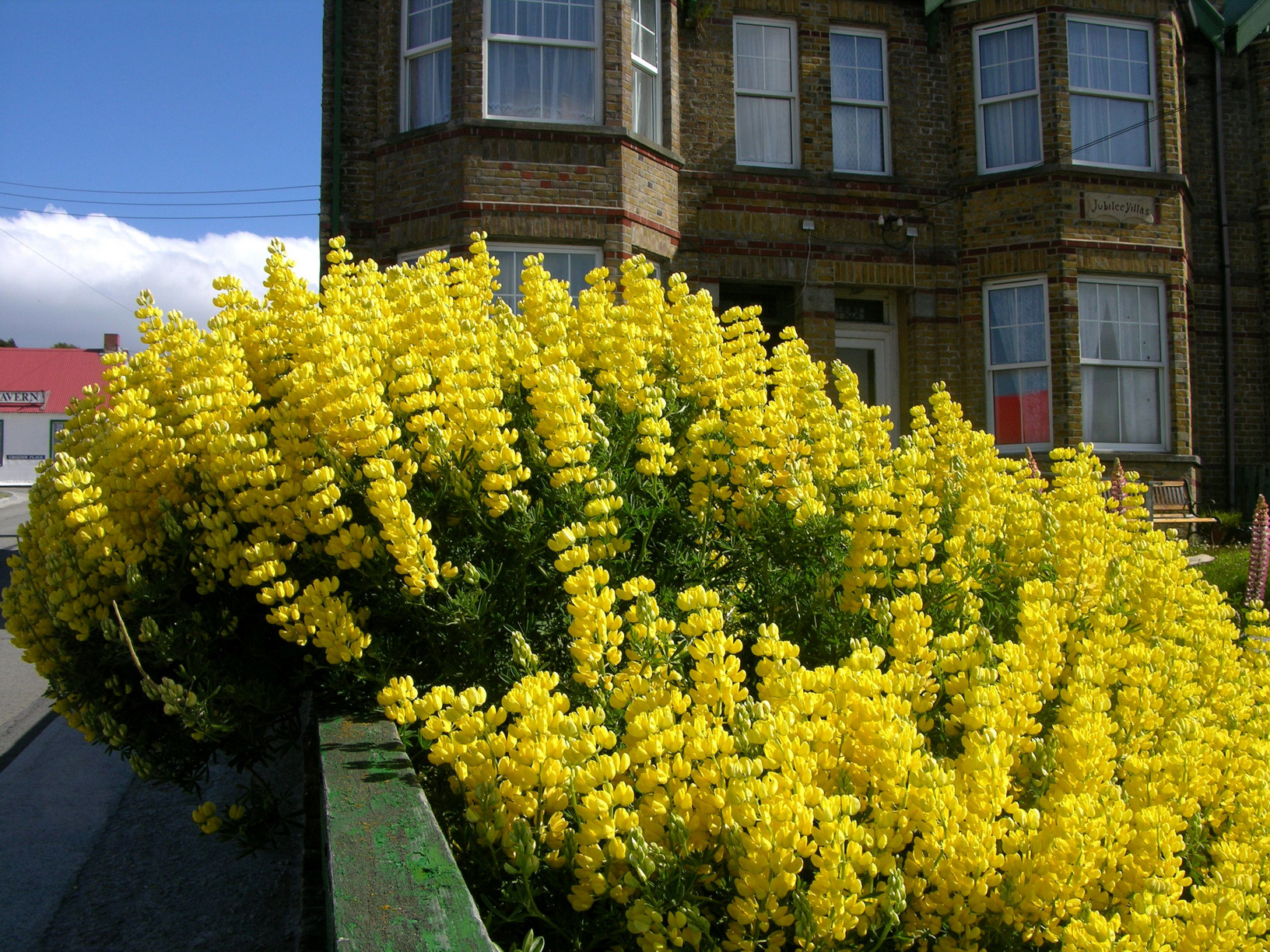
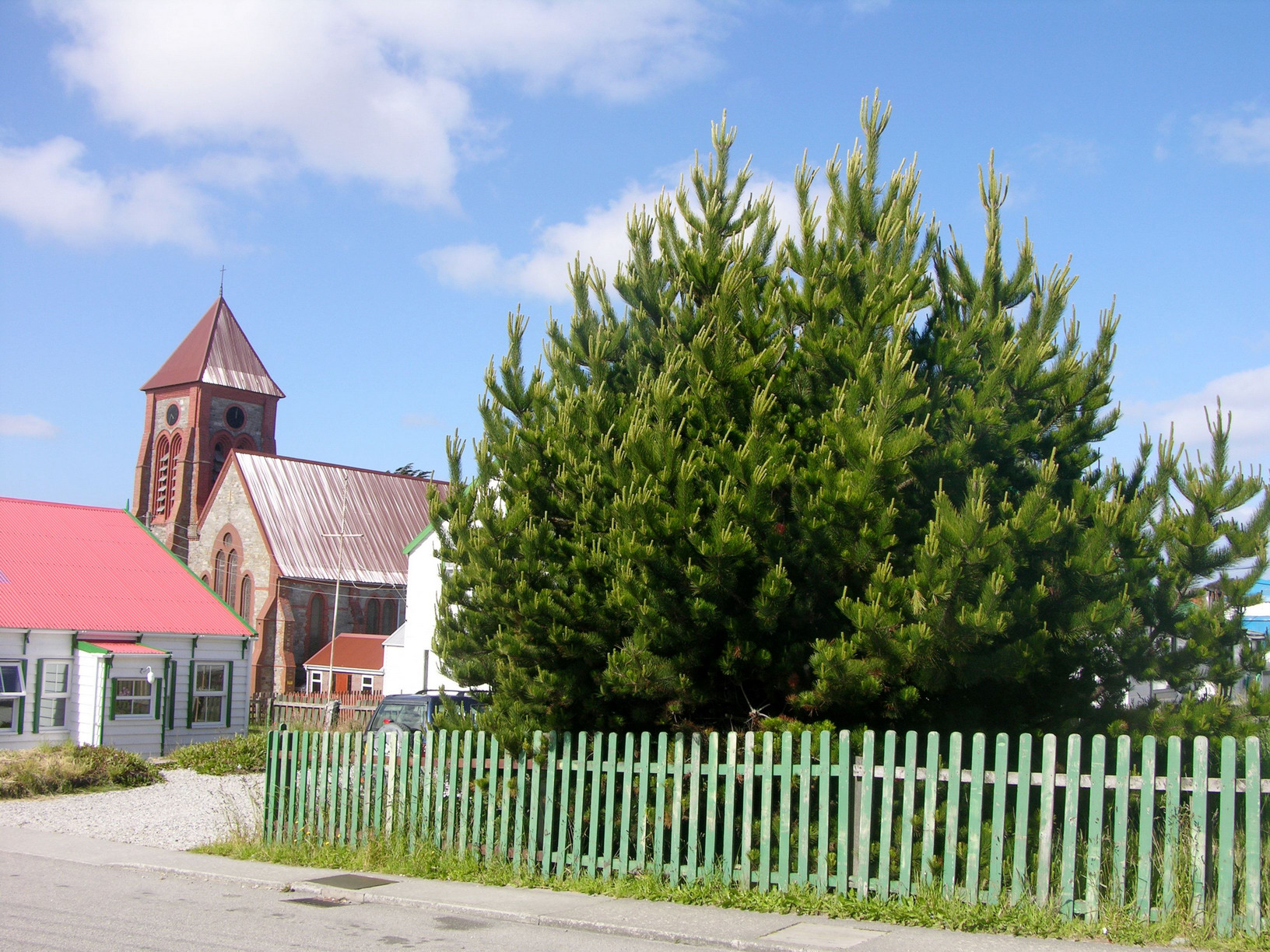
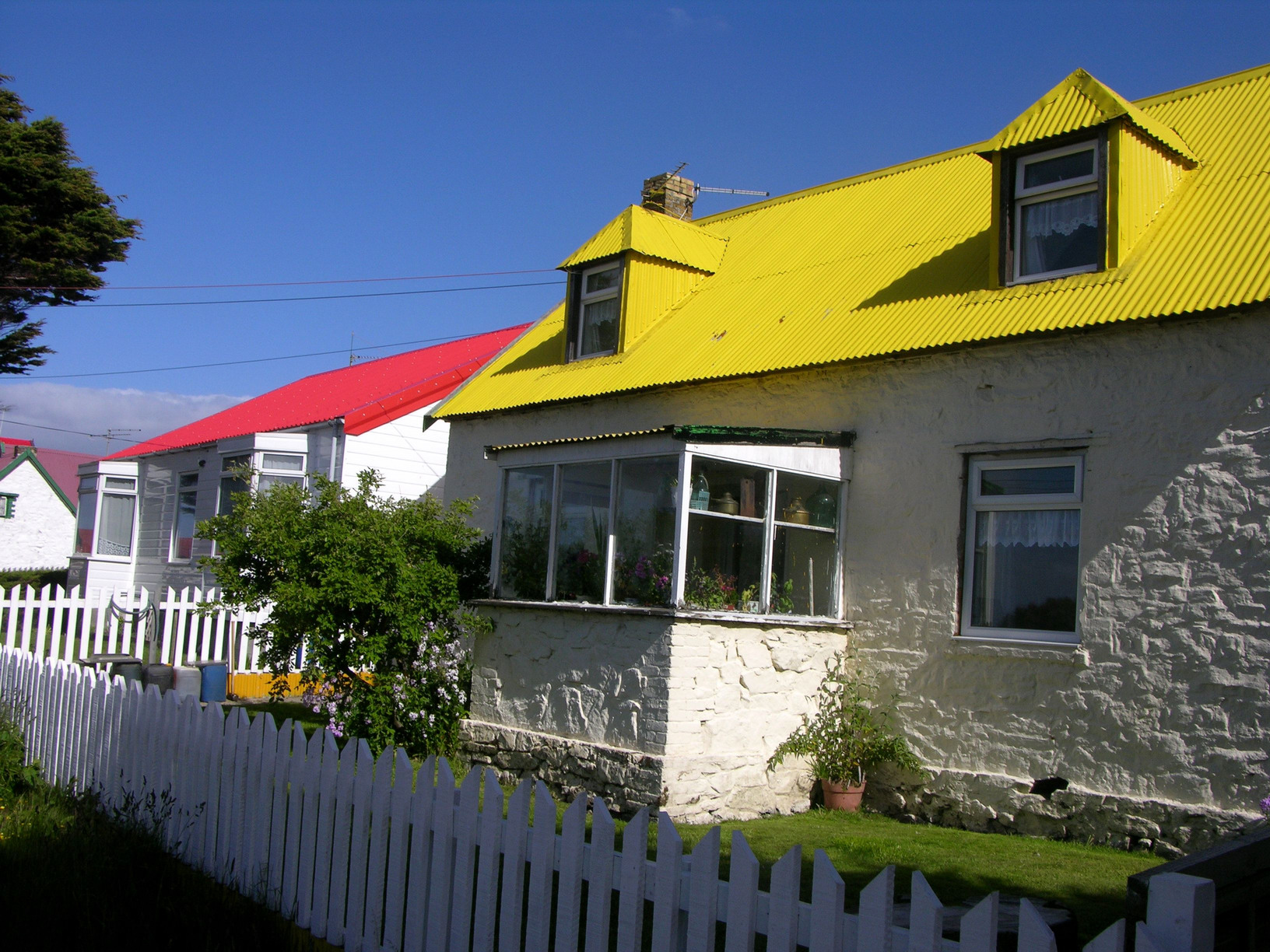
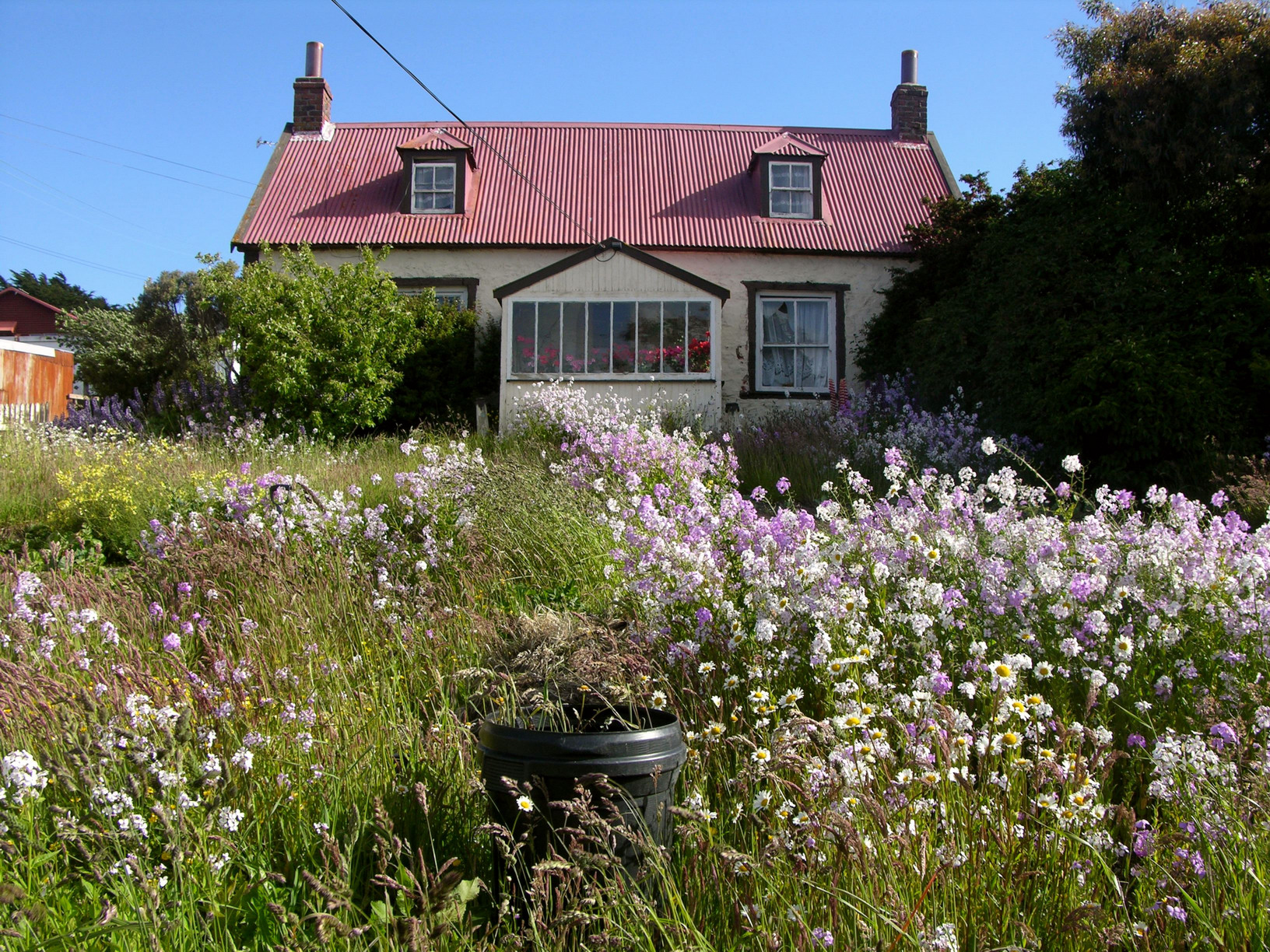
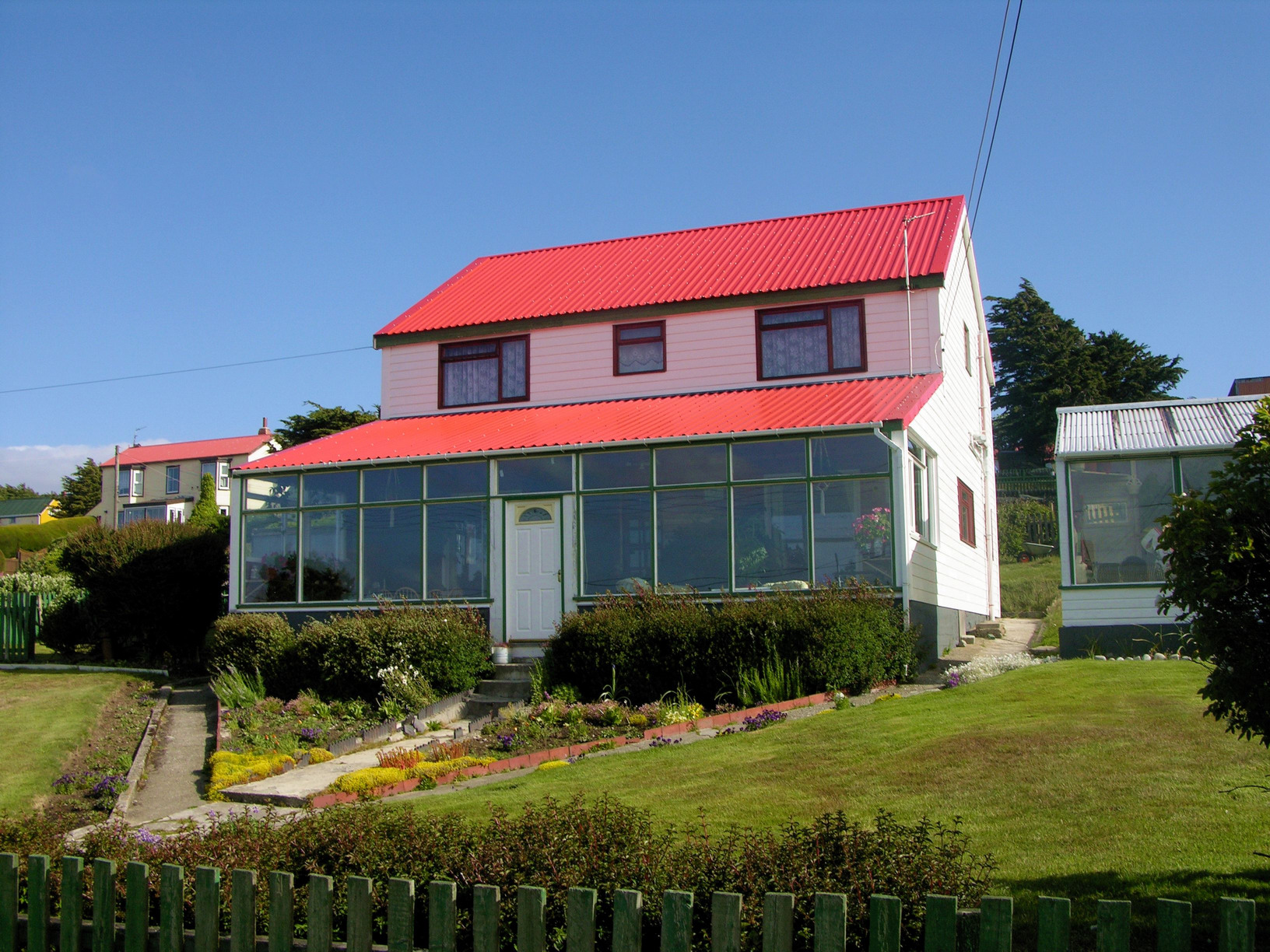
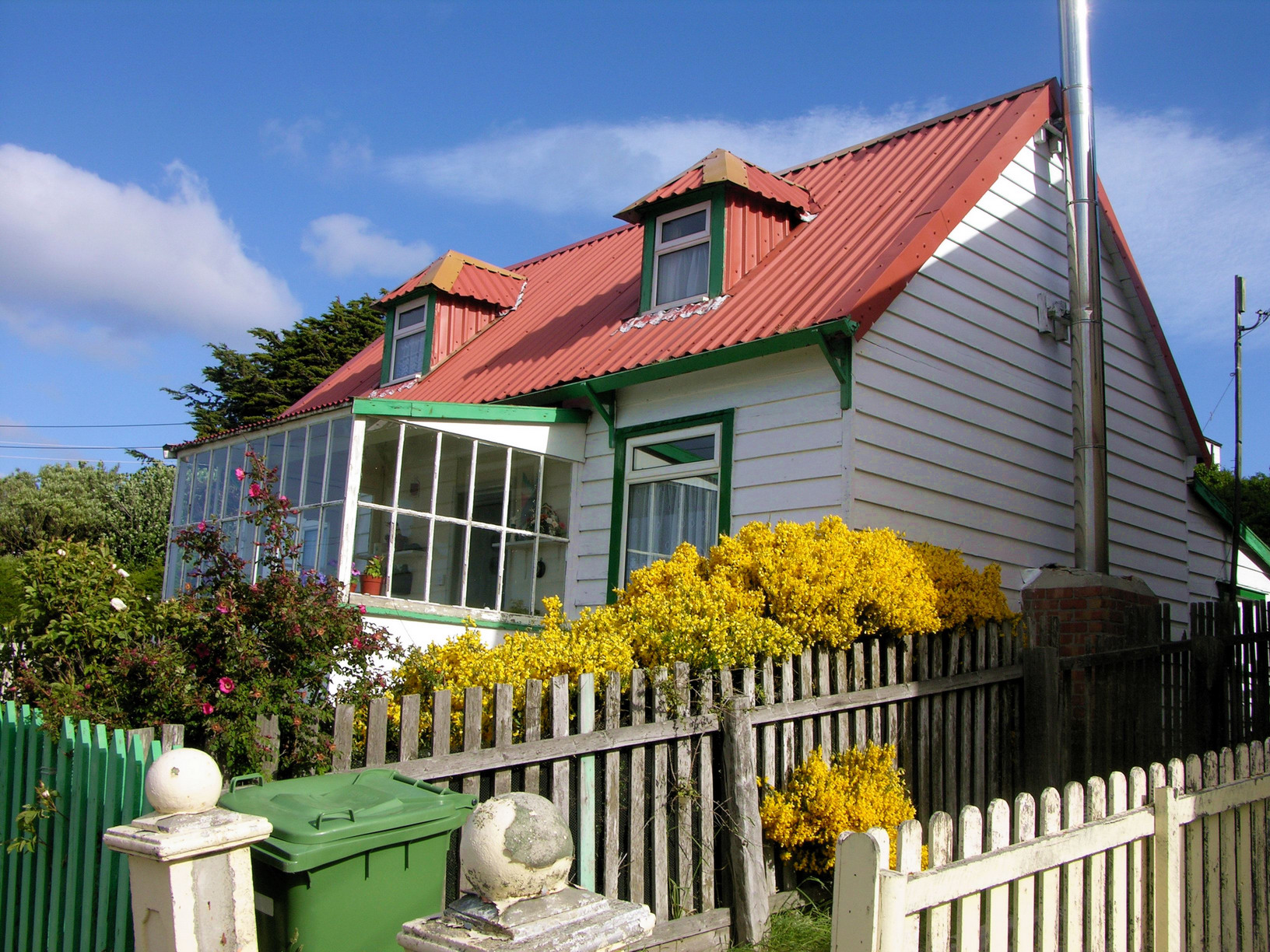
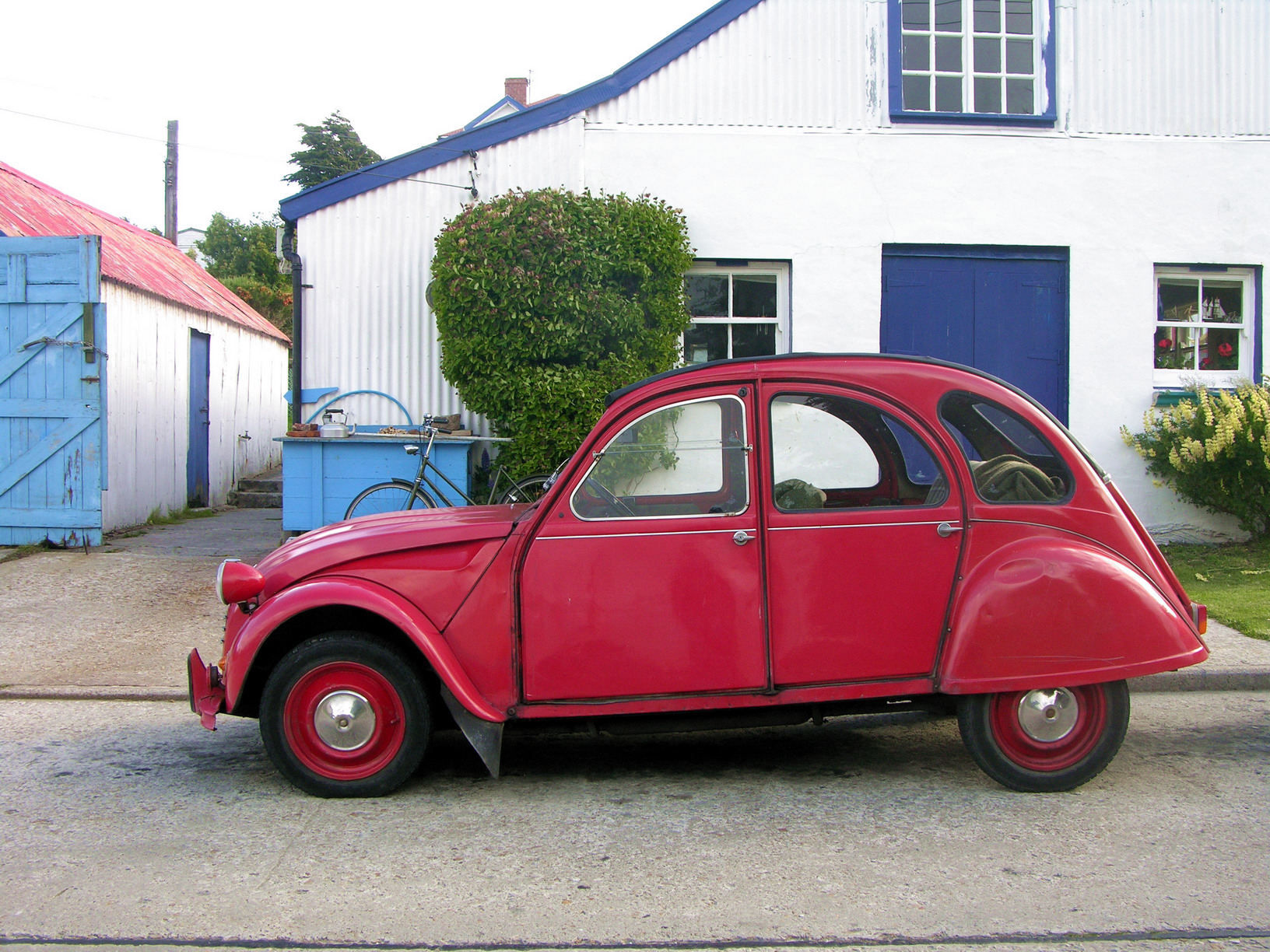
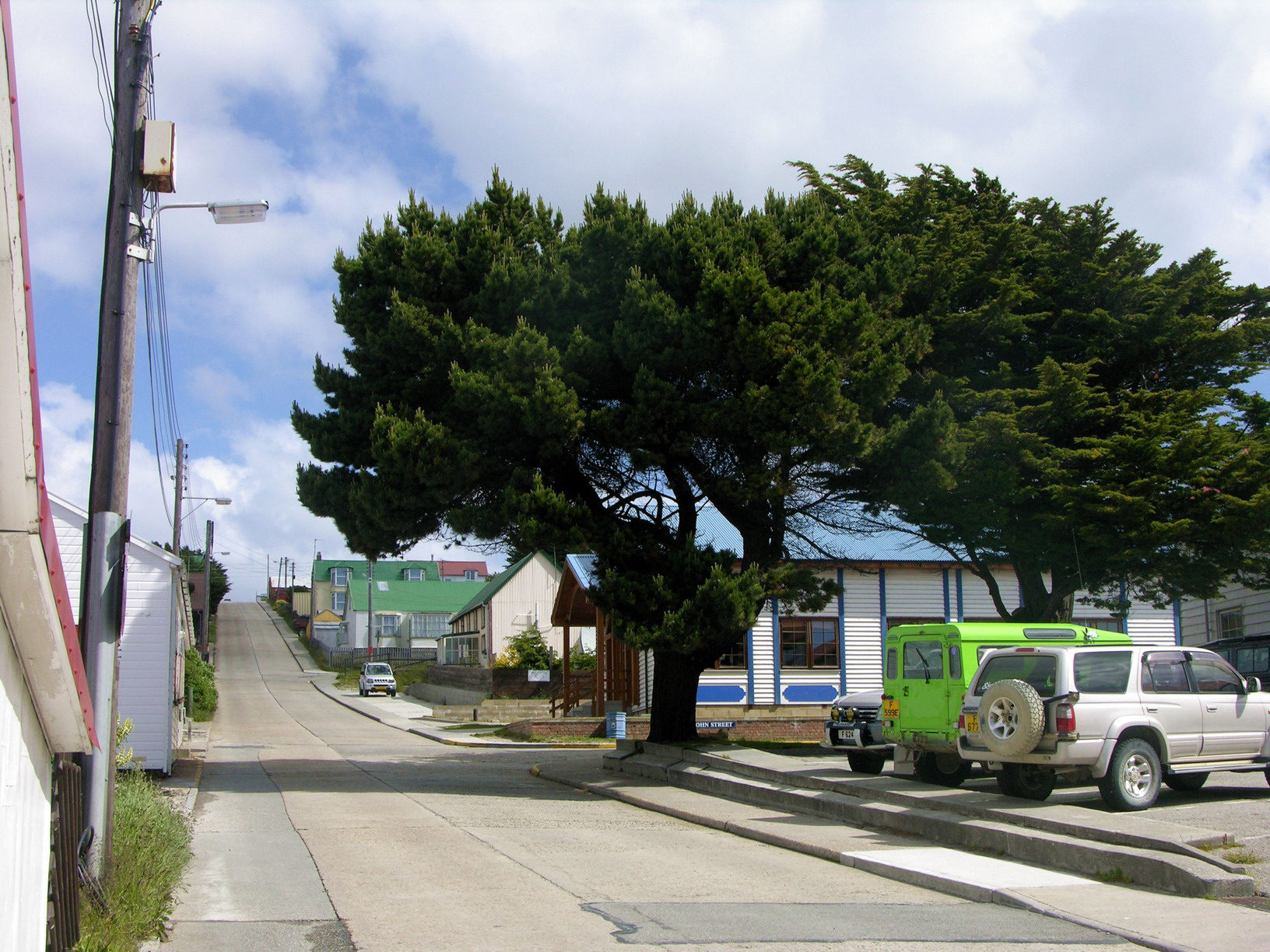
We spent the night at Kay's campsite, Kay McCallum's B&B, the one we'd booked over the internet.
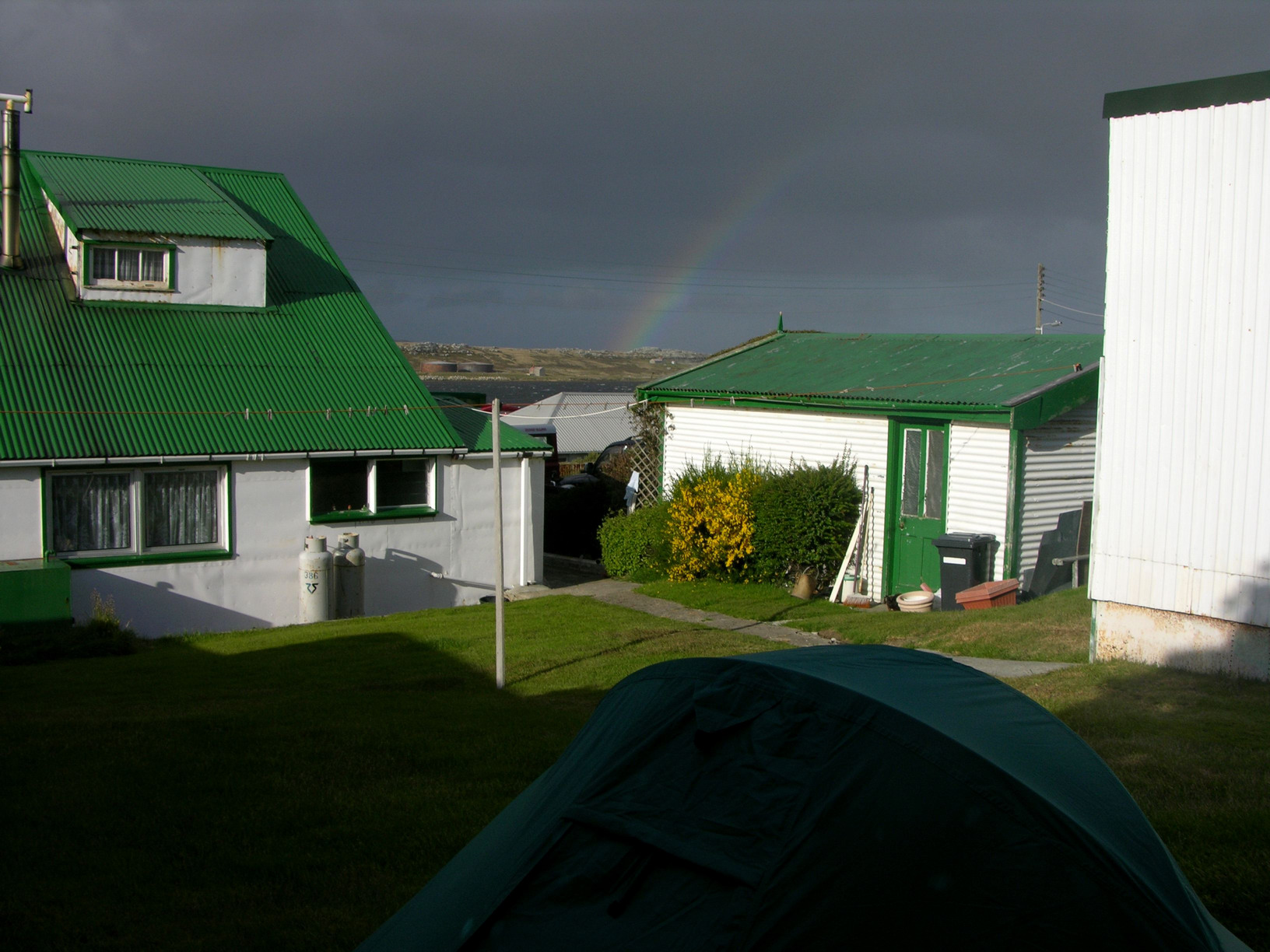
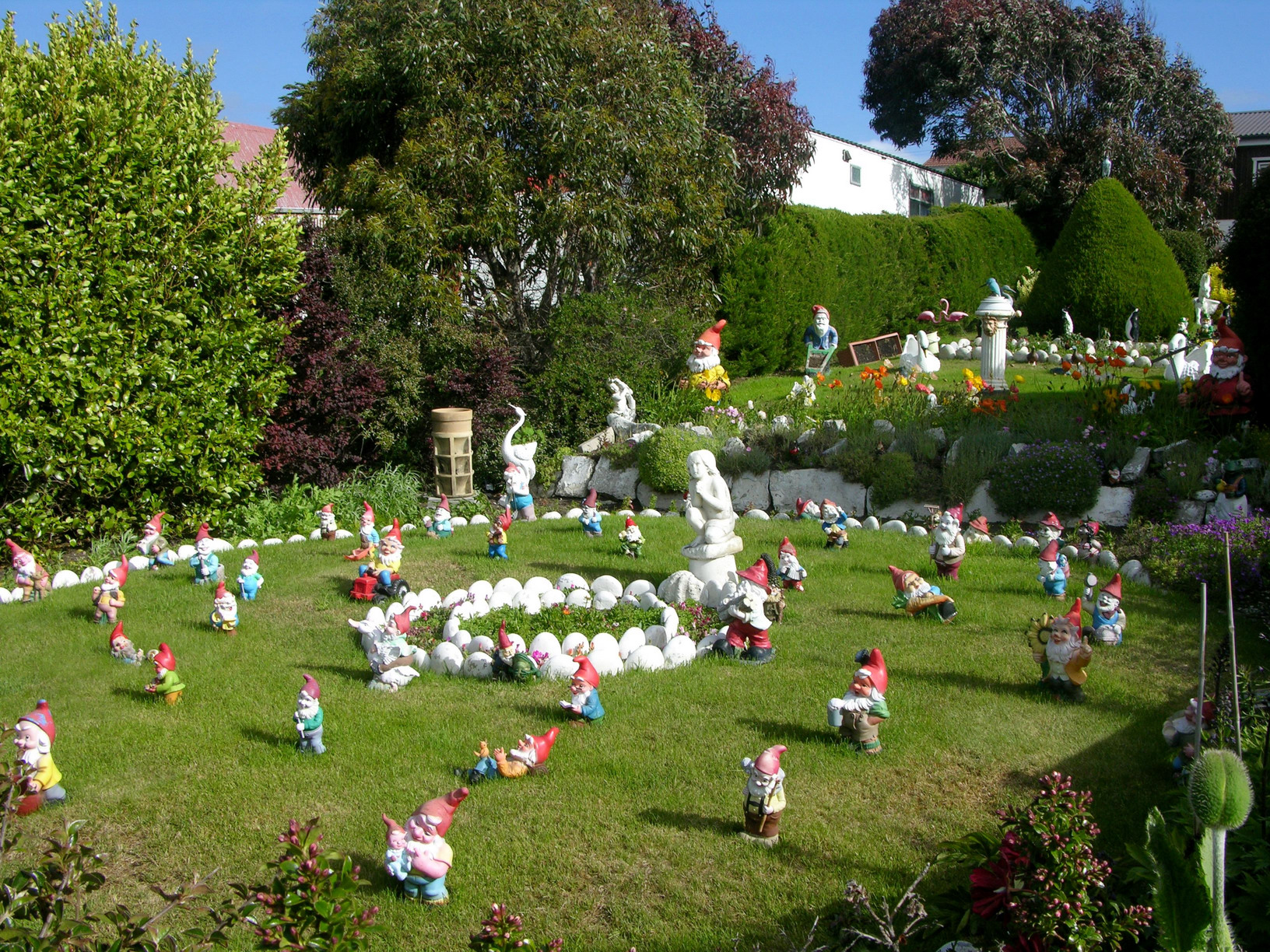
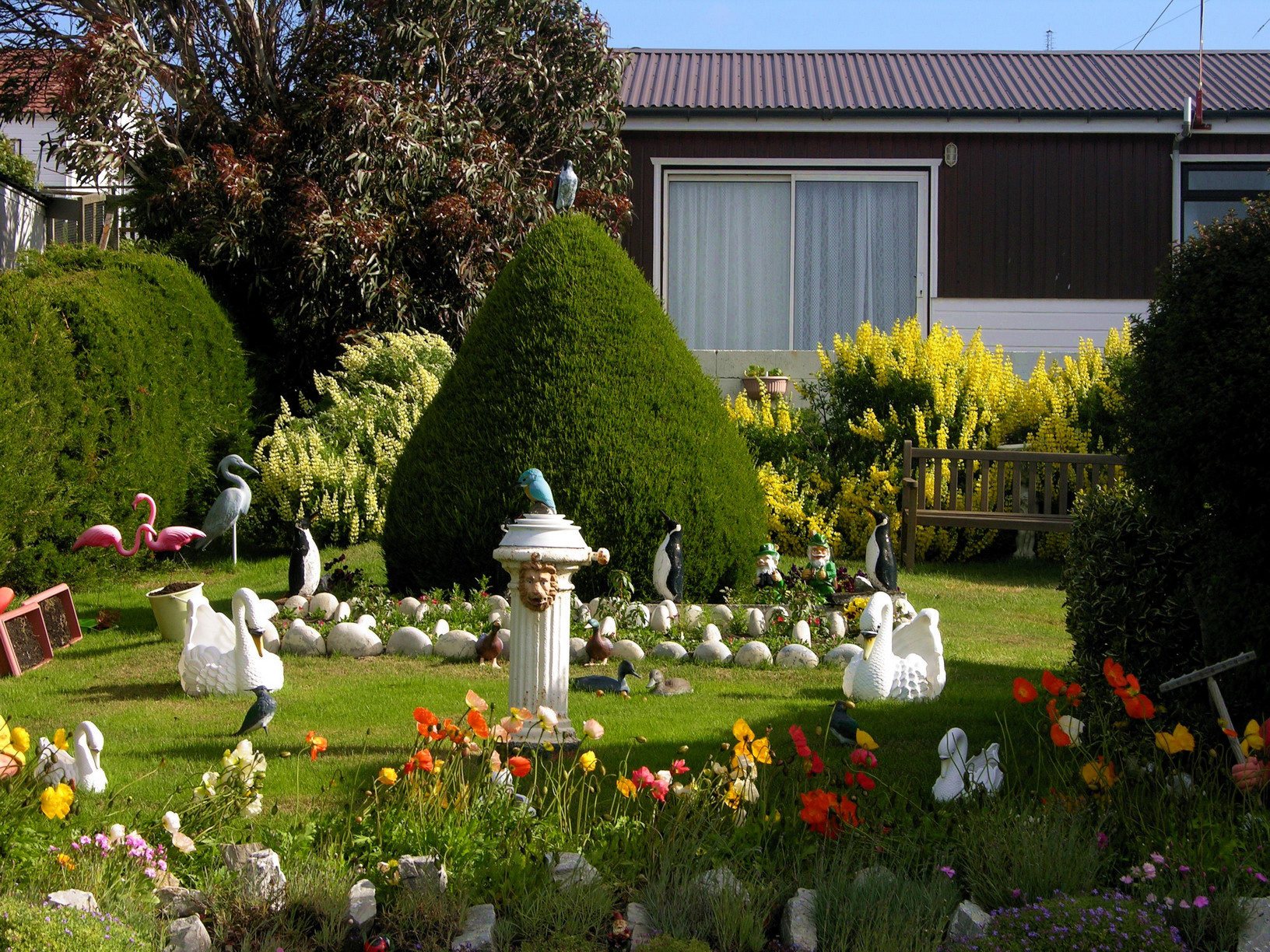
(51°41.597′S, 57°51.834′W, 24 m). At first we'd actually wanted to find a little hotel, since Tanya was a little unwell. Kay worked out who we were, caught us in the street and brought us back to her place. Susan from Saunders had told her about us and described us. It would have been rude to refuse. All right, then, in a tent at the campsite. There was one other couple there apart from us.
Only for dinner did we go to a café. It turned out that wasn't so simple. You could only get a meal if you booked beforehand. The little hotel restaurants wouldn't serve people from outside at all. In just one café on the edge of town, they agreed to feed us without any preliminaries, for twenty-five pounds. Around the bar, besides us, were some local drinkers. Interestingly, they paid by writing cheques too.
Life comes to a standstill at nine in the evening. After that all the cafés shut and there's not a soul in the streets.
Our flight was leaving at 3:25 p.m., so we had to leave town for the airport at twelve. The bus goes around all the hotels, but you have to book it by telephone first.
In the morning there were still a few free hours. We decided to get Tanya looked at. After her sunburn she'd developed a big infected sore on her cheek that wouldn't heal. All the country's medical care was based at the military hospital. At the door they told us a consultation was forty pounds. Dear, of course, but there was no sense in letting an abscess go. A doctor came out into the corridor. Why, it was our neighbour from Darwin. What a small world. On the strength of that acquaintance he saw us for nothing. Prescribed an ointment for fifty pence. It came in a little “On Her Majesty's Service” bag. A little thing, but nice.
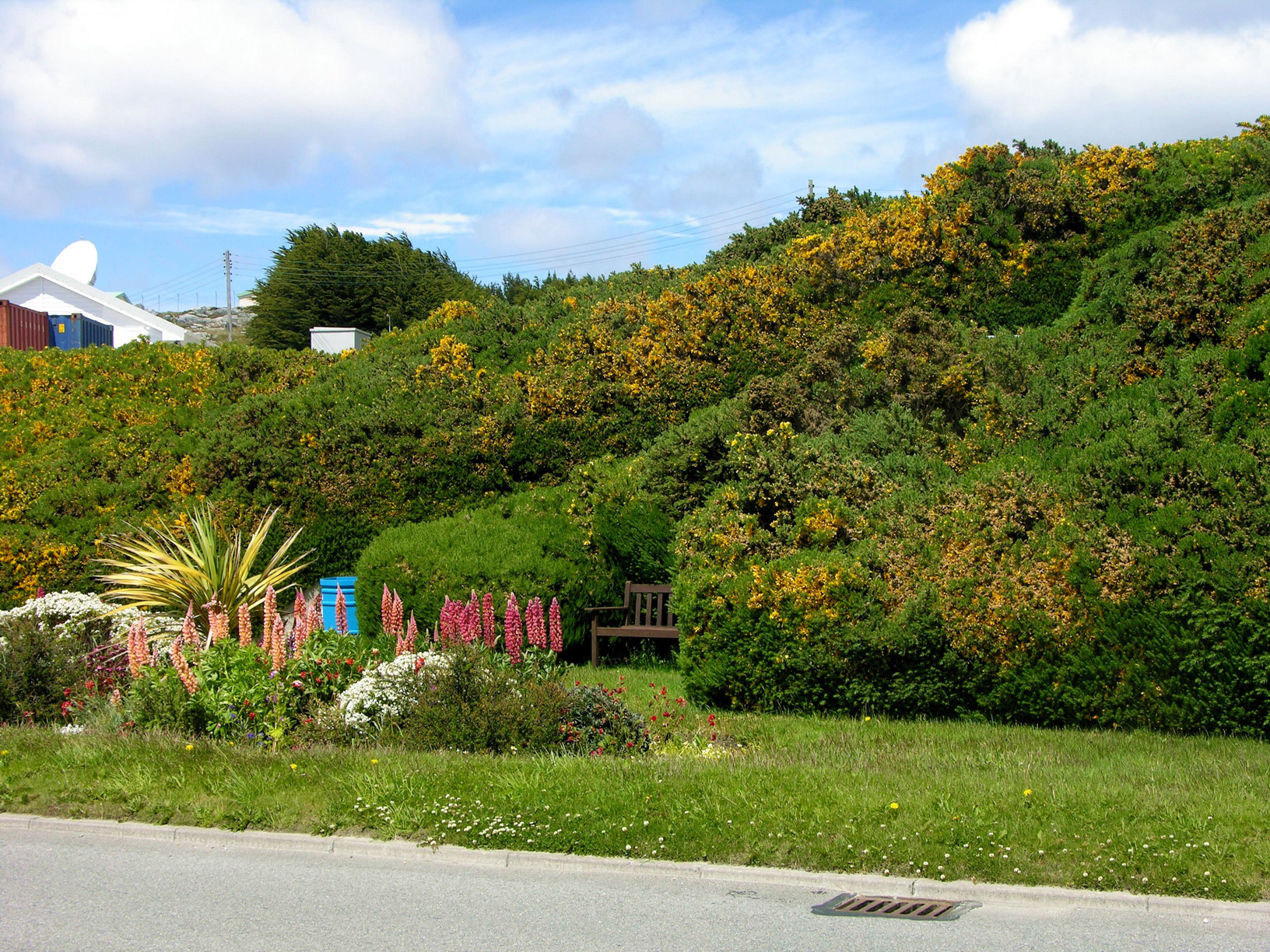
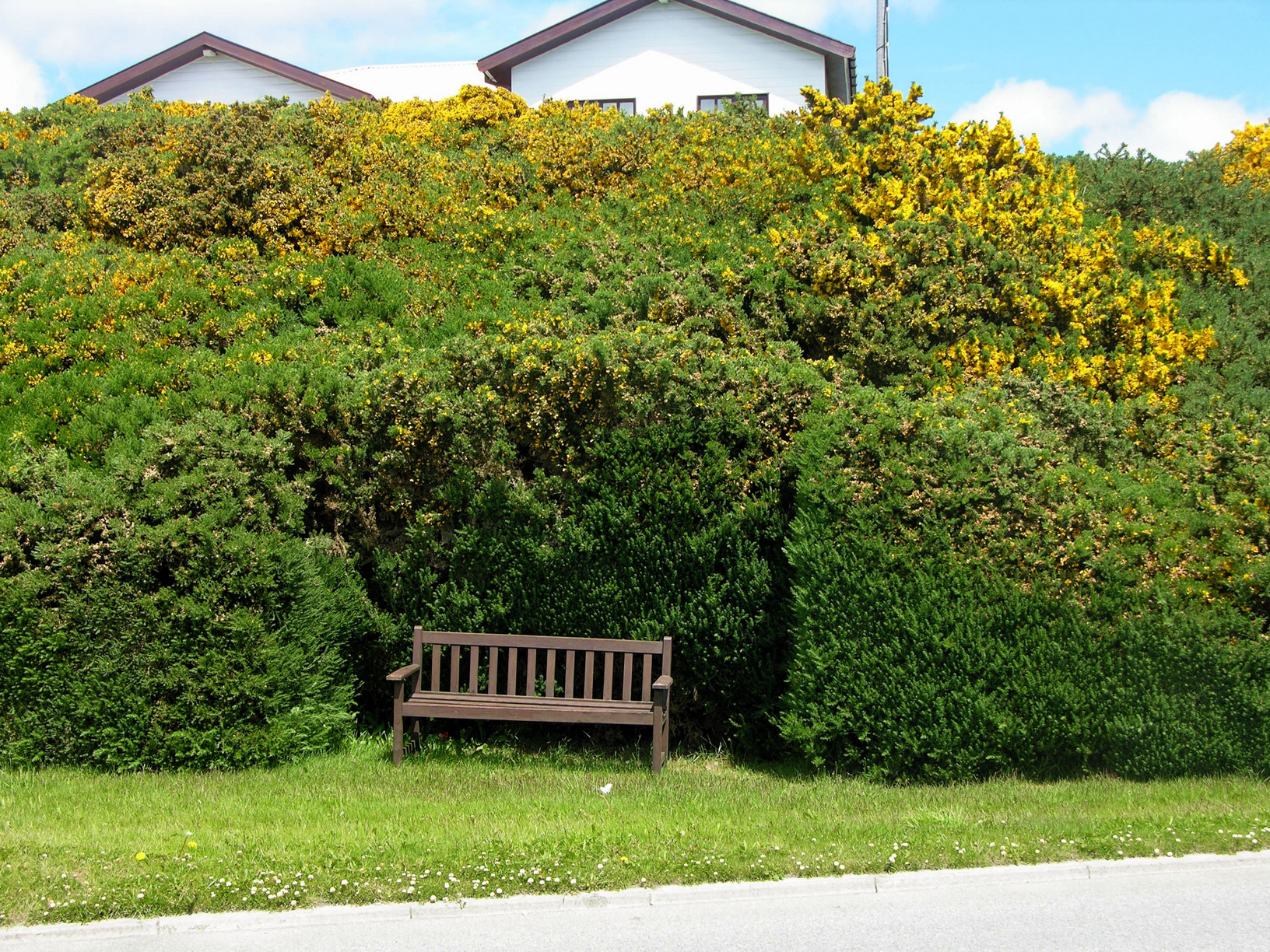
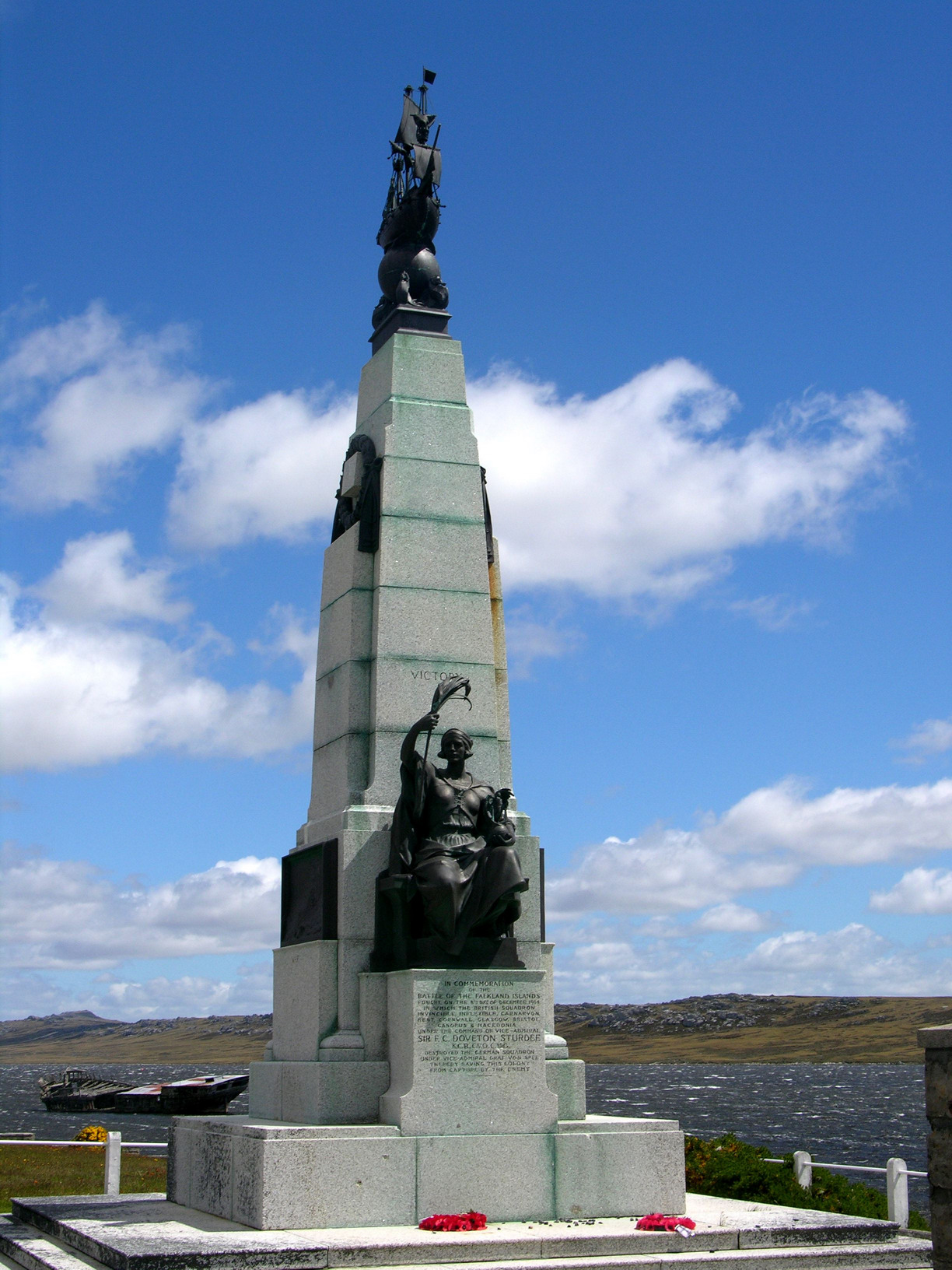
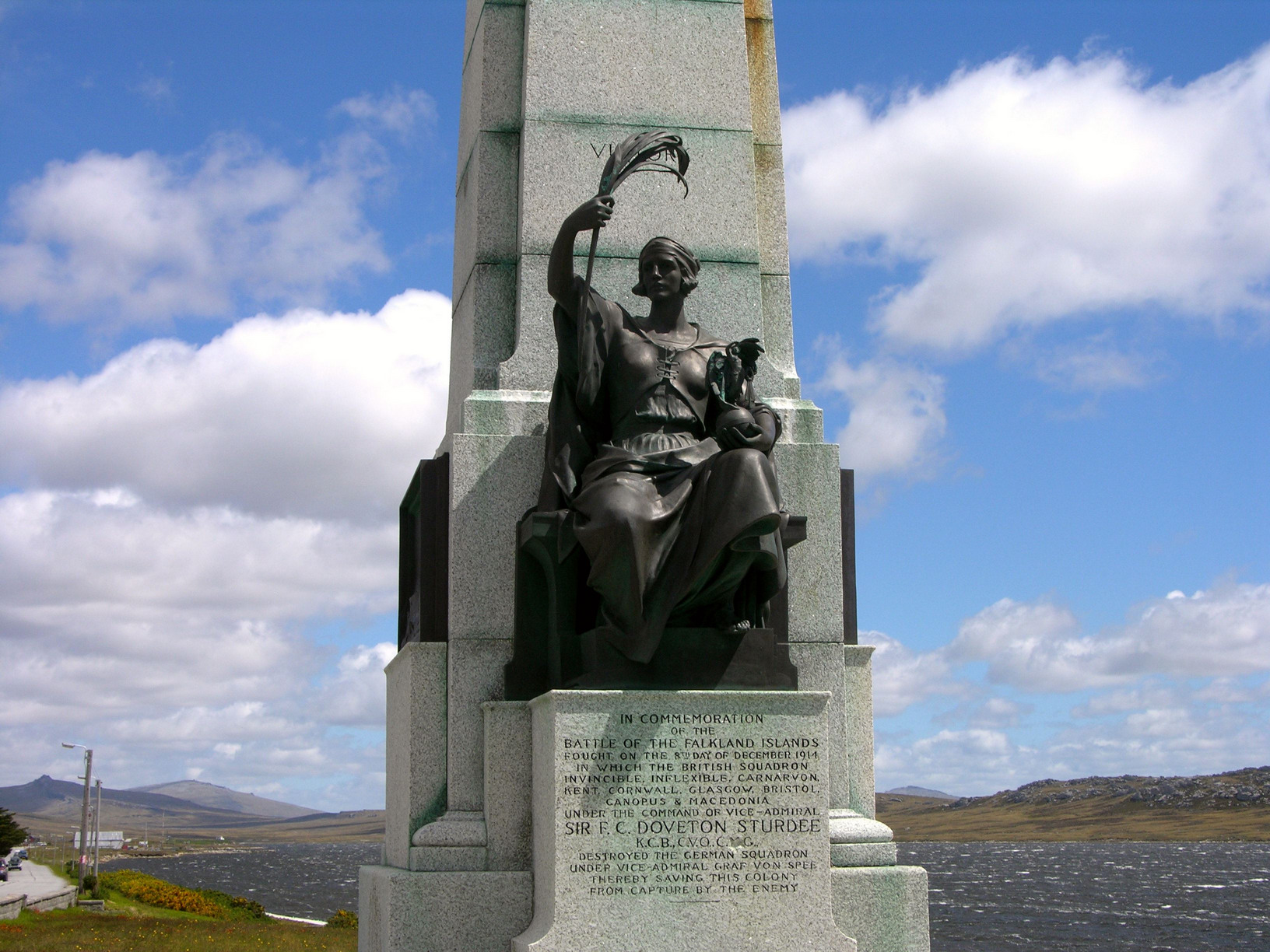
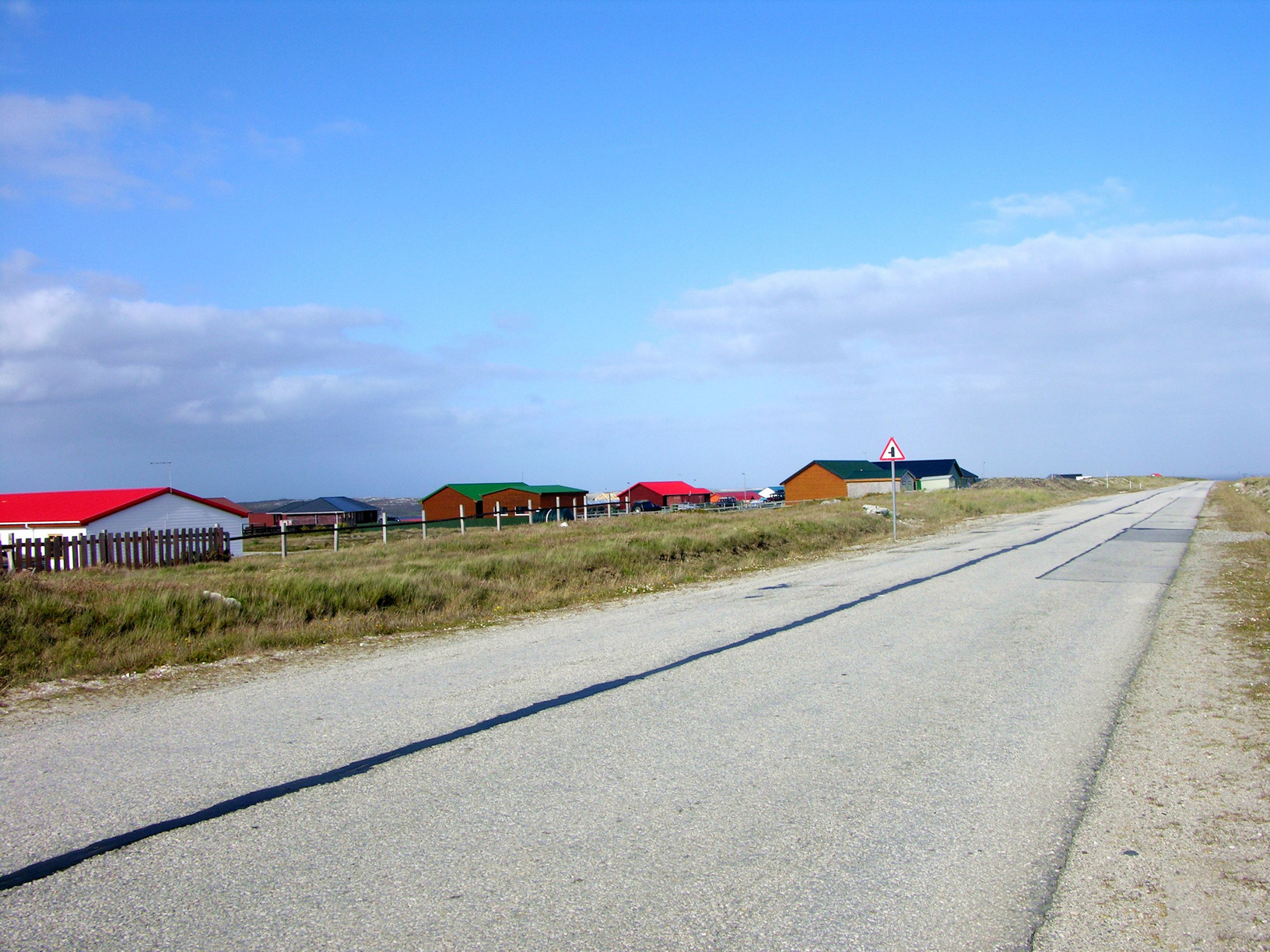
After the hospital I had time to run over to the webcam again and walk some of yesterday's unvisited side streets in Stanley. I almost missed the bus. Ahead was the country's only tarmac road, to Mount Pleasant Airport. A fair stretch beside it had been mined with anti-personnel mines in the war. Clearing them was very difficult. It's a worldwide problem. In wars many countries have turned half their land into a minefield, and now they don't know what to do.
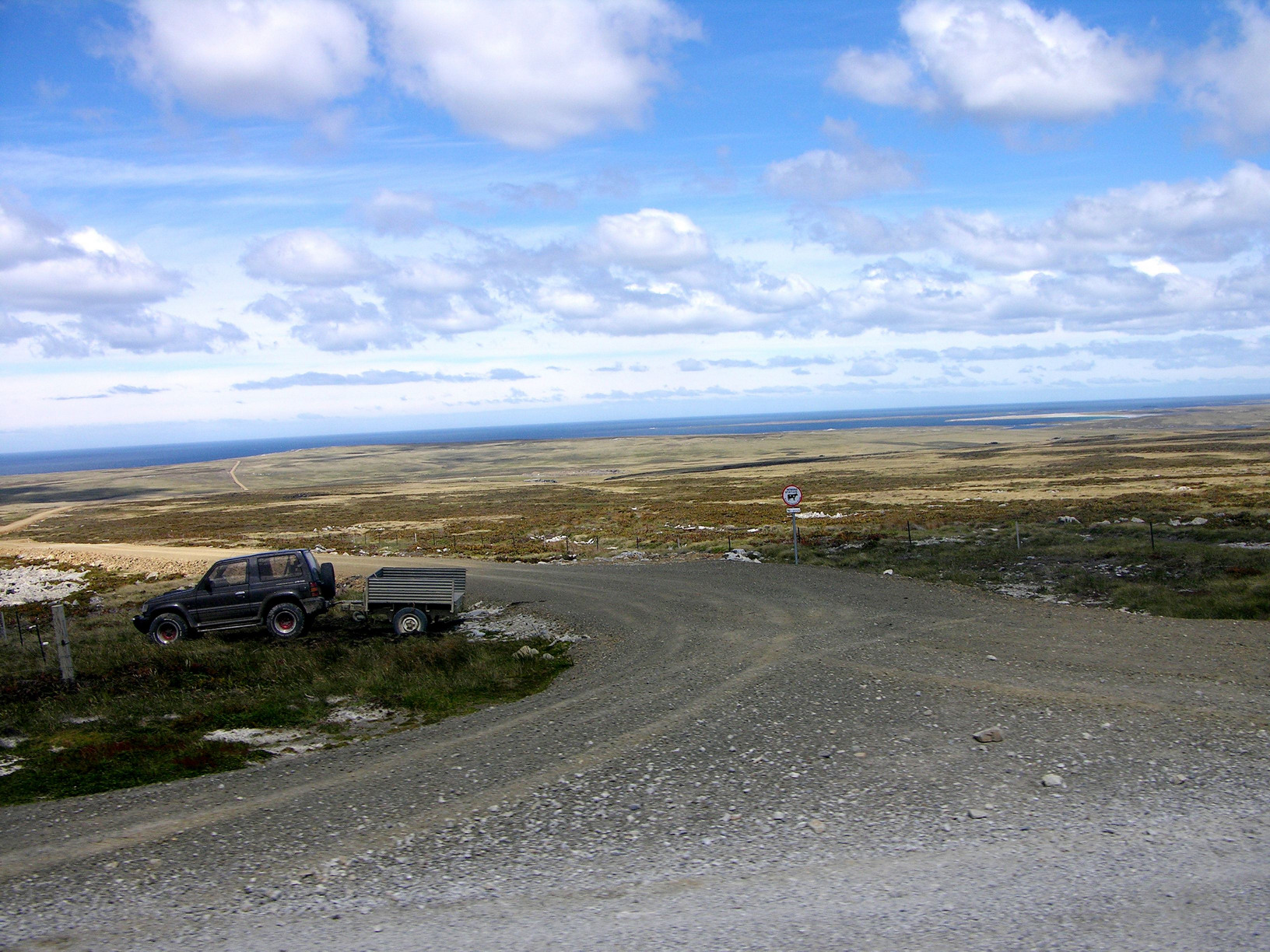
They say they won't give up an inch of their land, and in the end half the country is lost, to all intents and purposes. Worth asking what those fine talkers want: a country of their own, or the right to enjoy power.
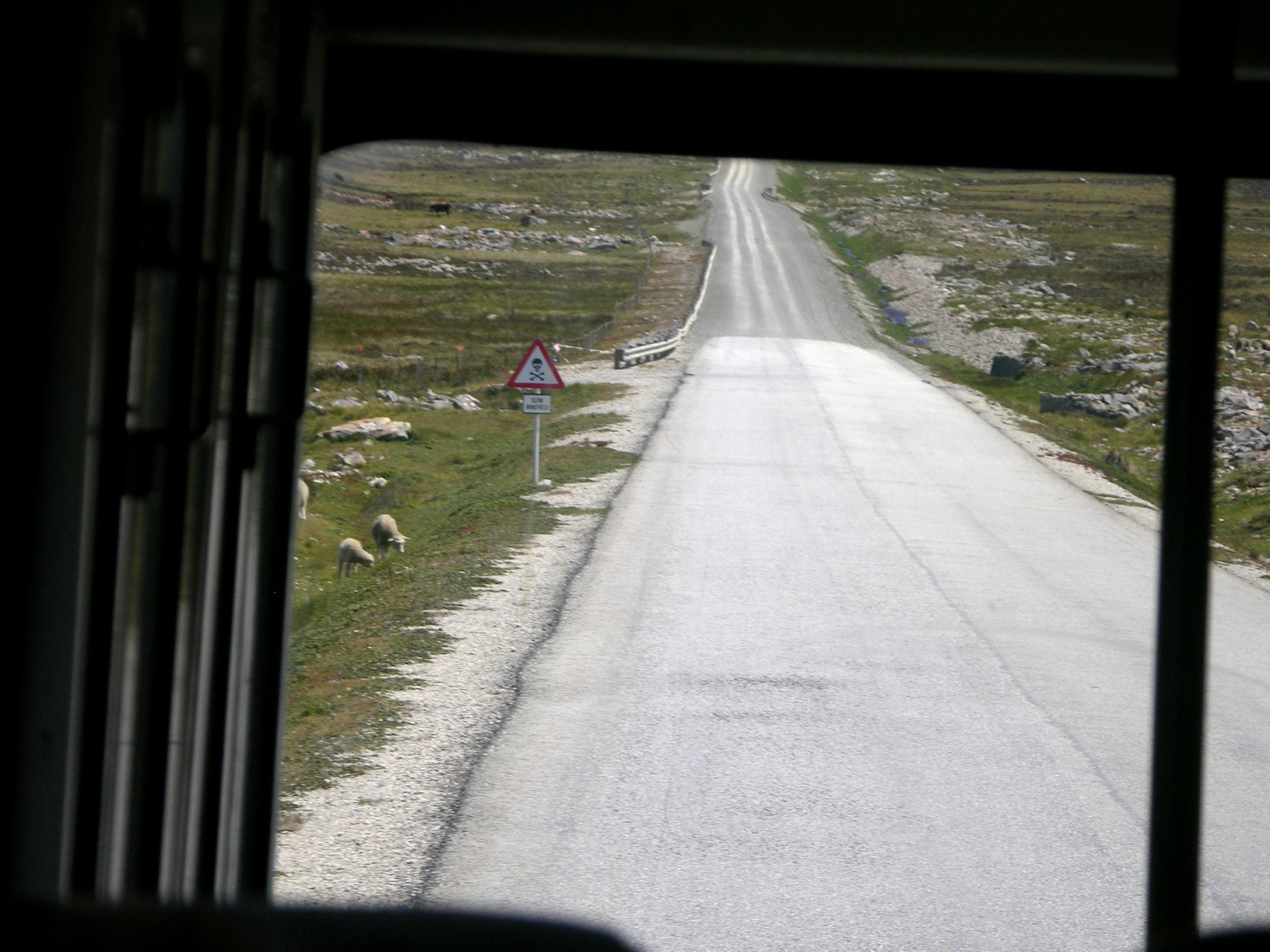
There were plenty of minefields in the Falklands. They were very clearly marked, so there was no risk of walking onto one by mistake. It was forbidden, on top of that. Signs everywhere said walking on a minefield could bring a fine of up to two thousand pounds. On top of everything else, even if you'd lost your legs. The road is another matter. There were skull-and-crossbones signs saying “Slow down: mines”. If you lost control at speed you wouldn't just leave the road and get some bruises. You'd also land in a minefield. It might not make much difference to you, you'd die and that would be that, but the locals would have to get you out.
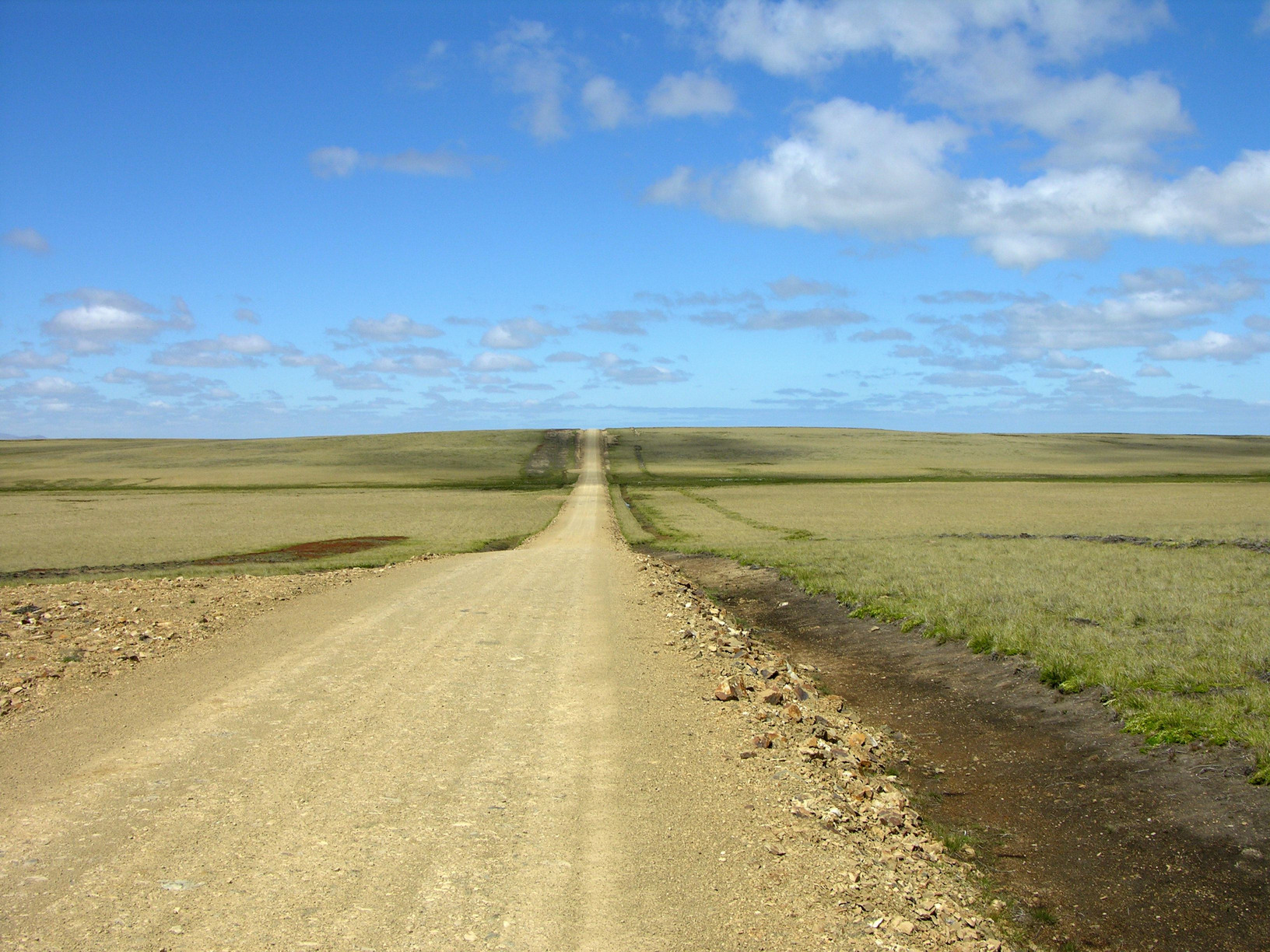
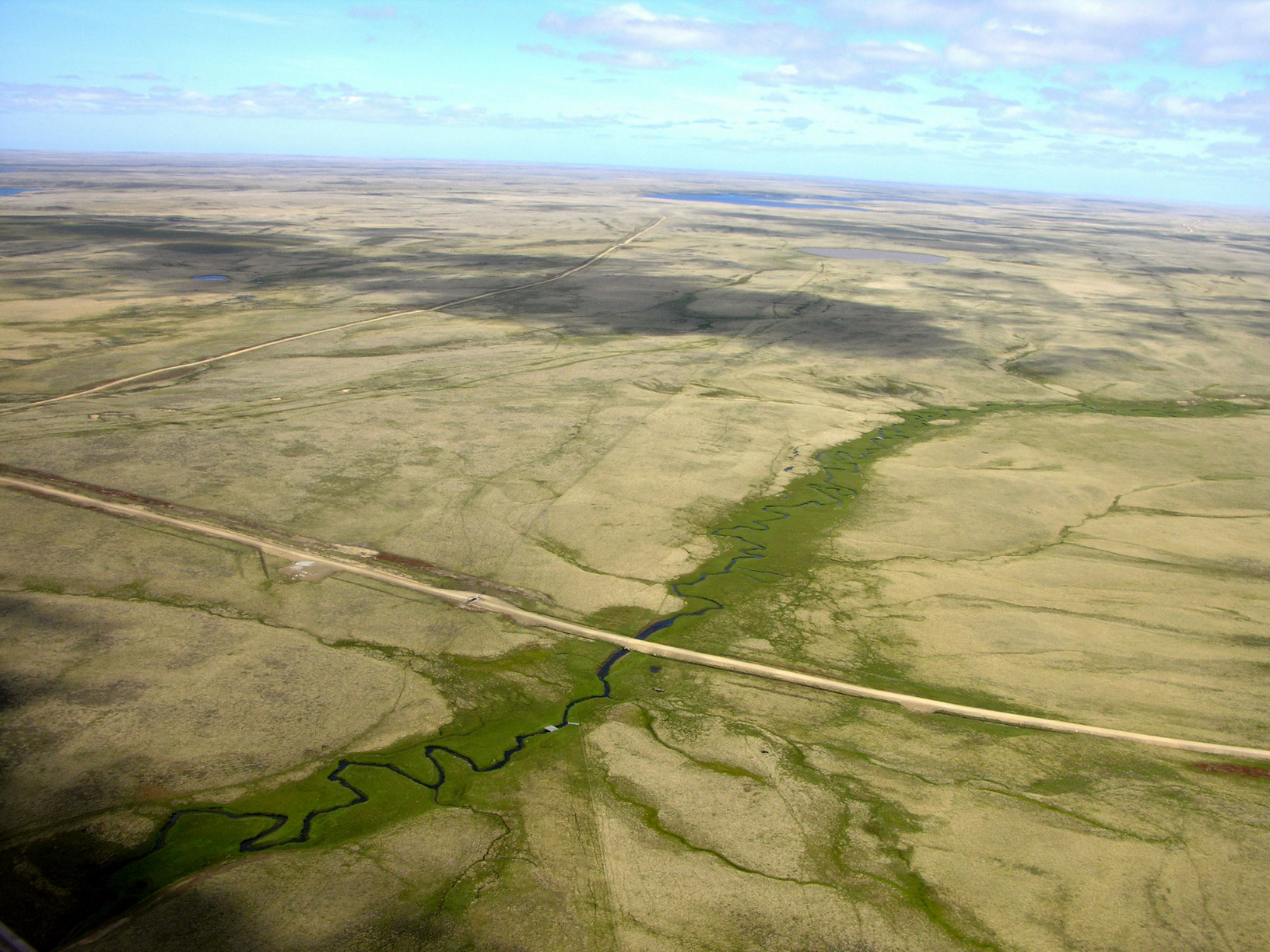
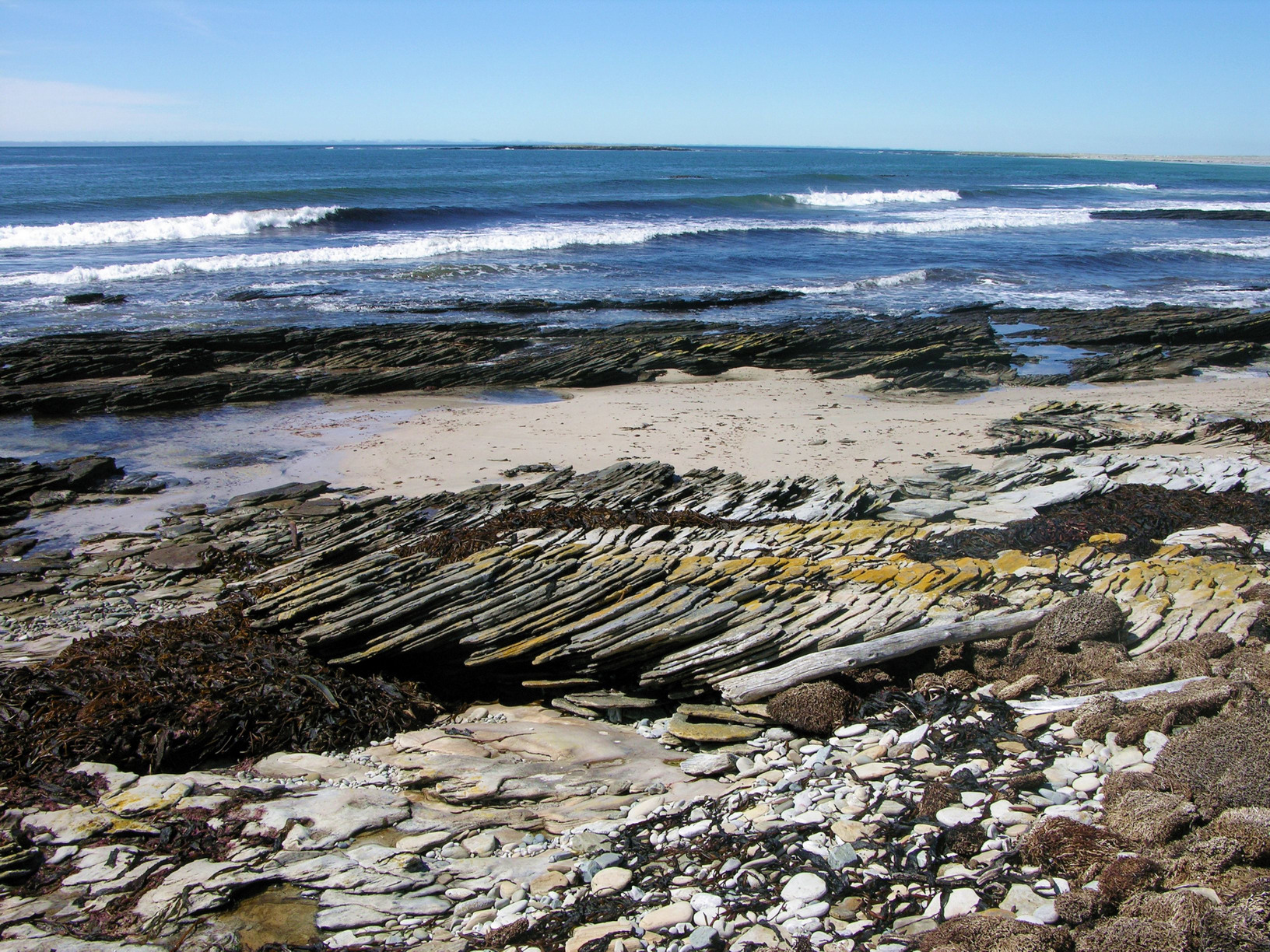
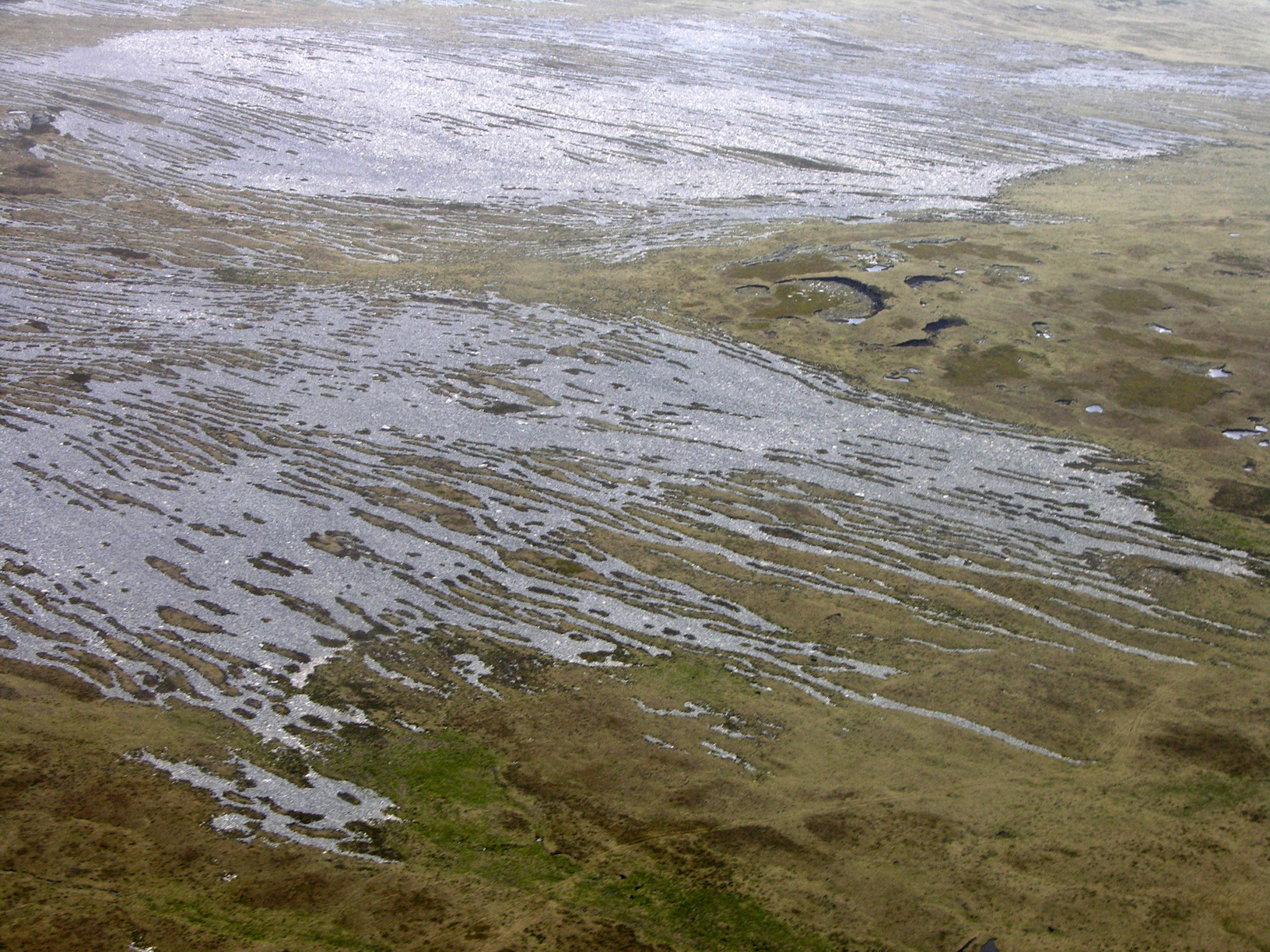
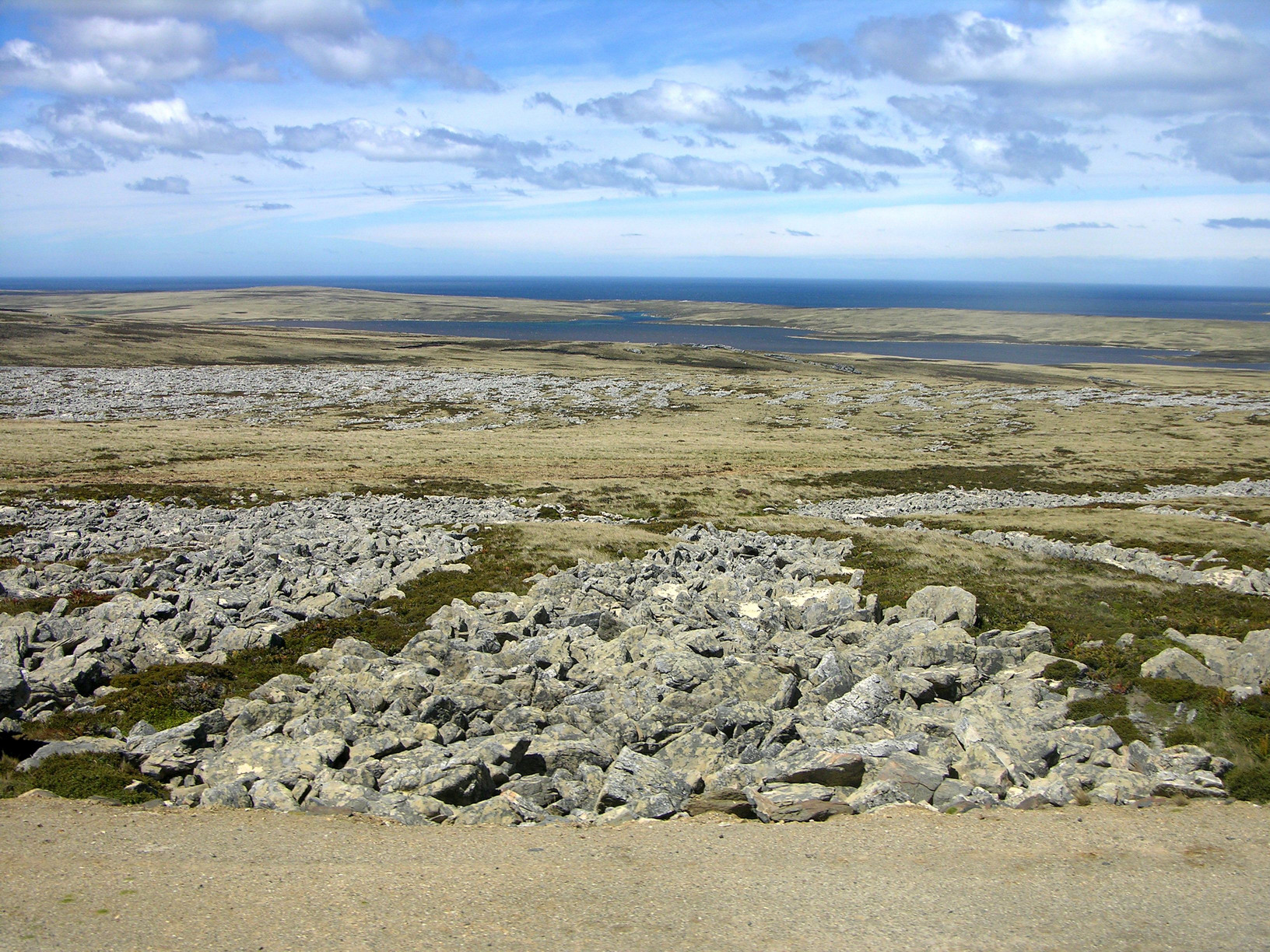
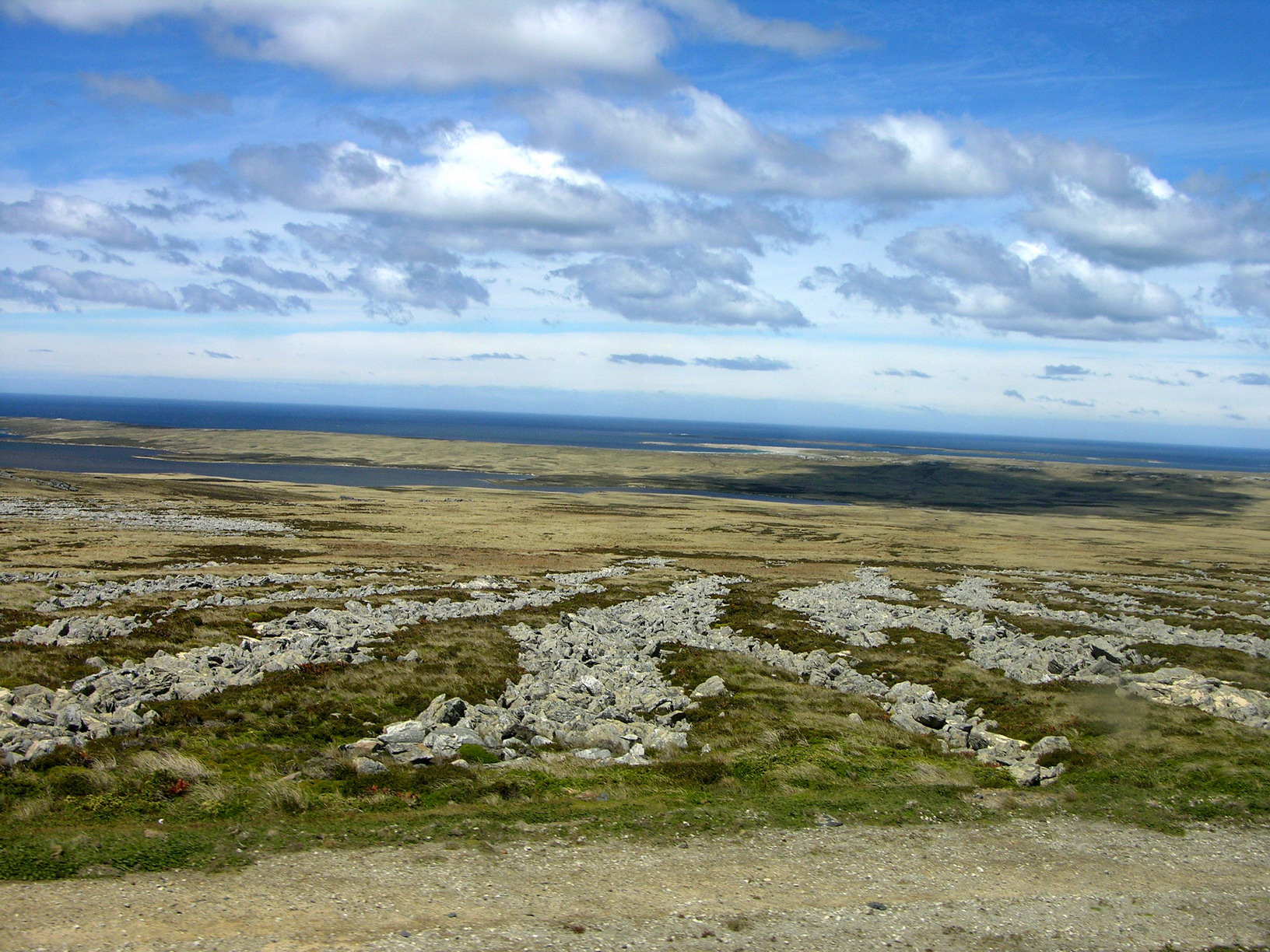
Besides the minefields, you could see the Falklands' famous stone rivers along the road. They're flows of quartzite boulders alternating with patches of scrub. Darwin wrote about them. How they formed wasn't clear, but it clearly wasn't by chance. A good part of East Falkland has this kind of terrain.
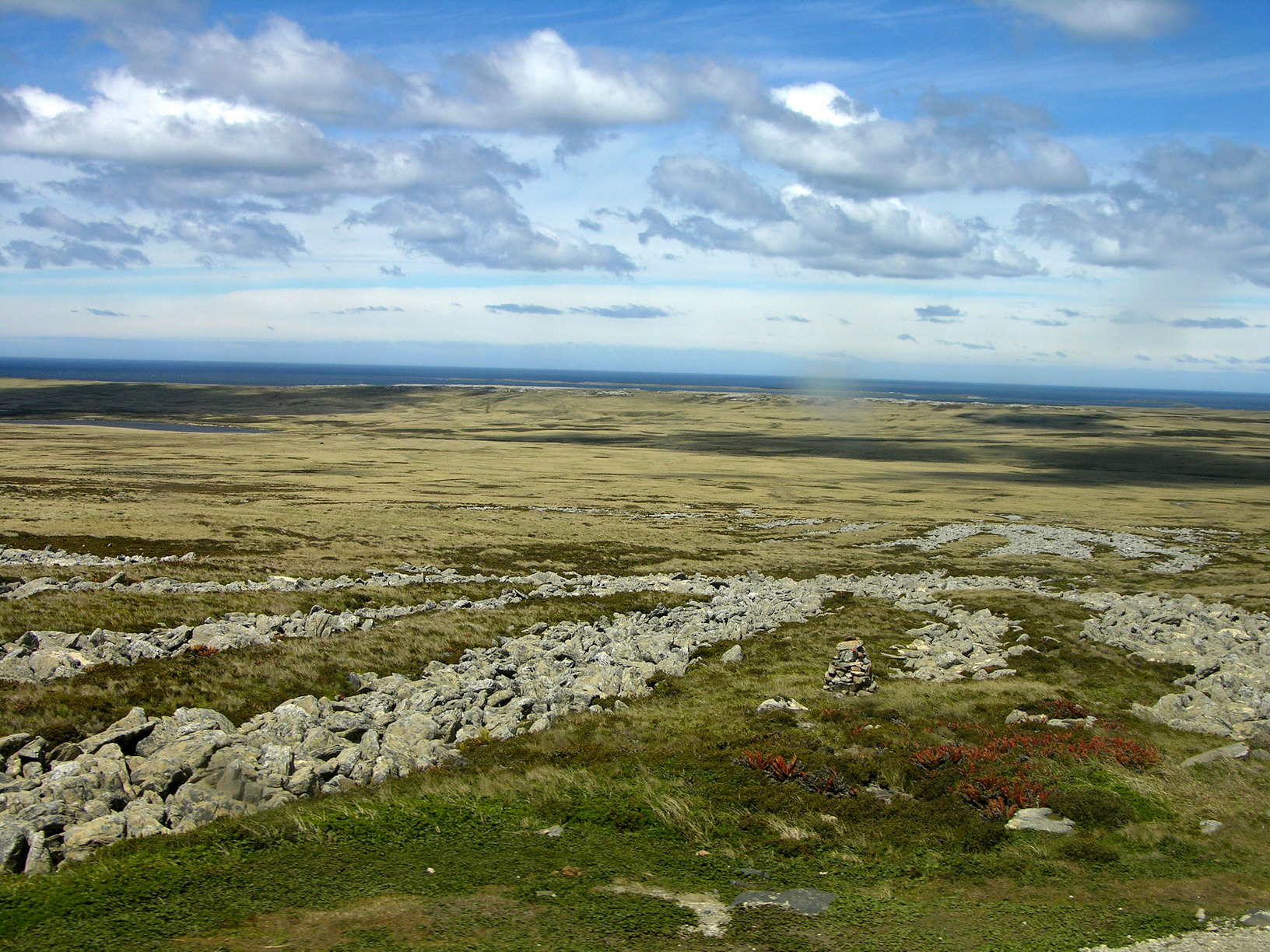
We also saw Boot Hill on the way, the hill where you're supposed to leave your old boots.
At the airport passengers formed a long queue. Surprisingly, customs and security were ferocious. They even took away rechargeable AA batteries. There was a rule against carrying rechargeables in luggage and they duly enforced it. They rummaged in almost everybody's bags. In ours were the remains of the Campingaz, piles of rechargeable batteries from our various devices, not to mention the shell of a penguin egg. Oh, disaster. Had I known, I'd at least have taken out the Campingaz. We were lucky. They didn't rummage through our long, dirty rucksack.
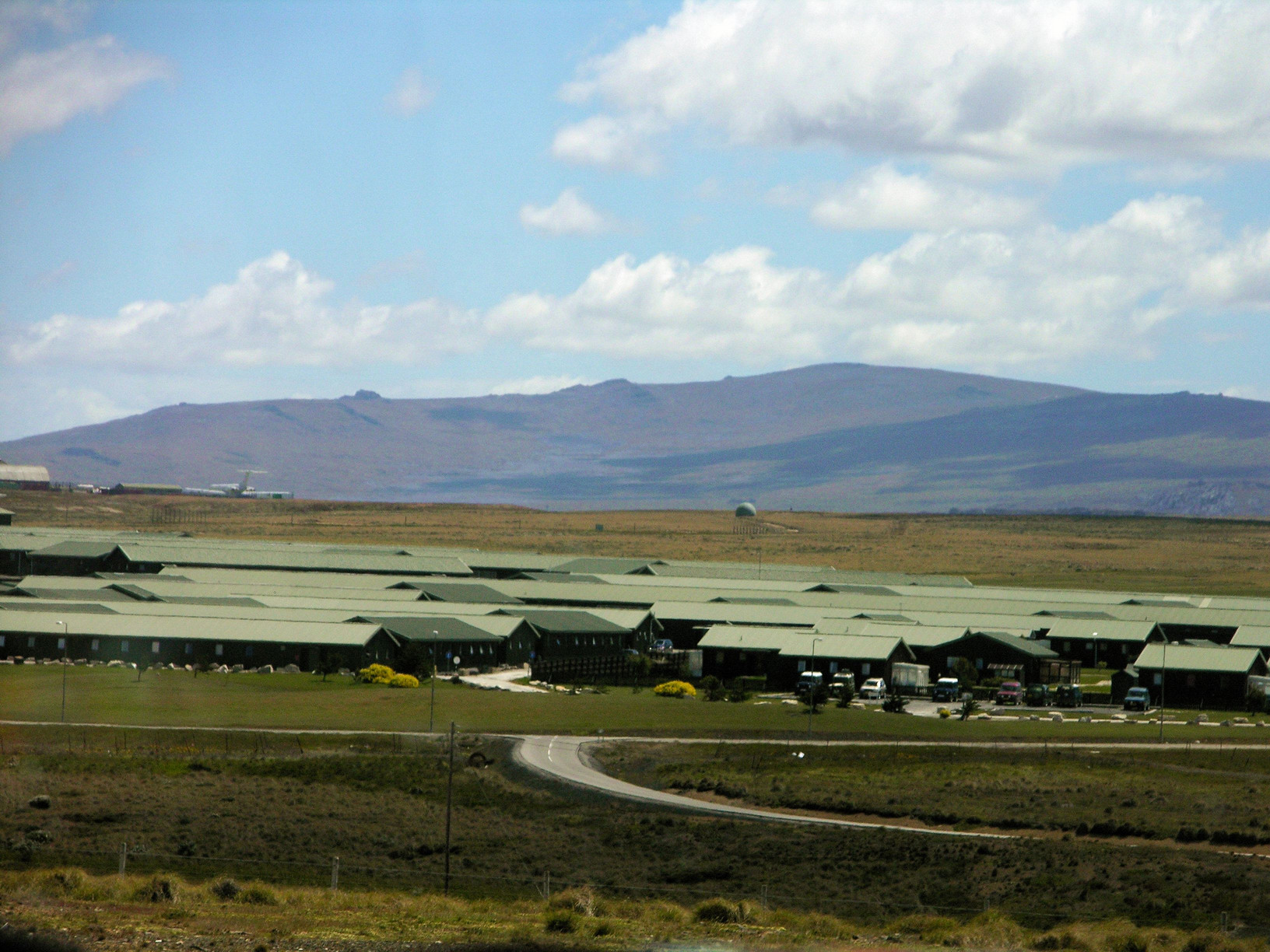
In the departure lounge there's a café and even a payphone where you can use up the last of your coins. At passport control there's also a departure charge of twenty pounds a person. They only take cash.
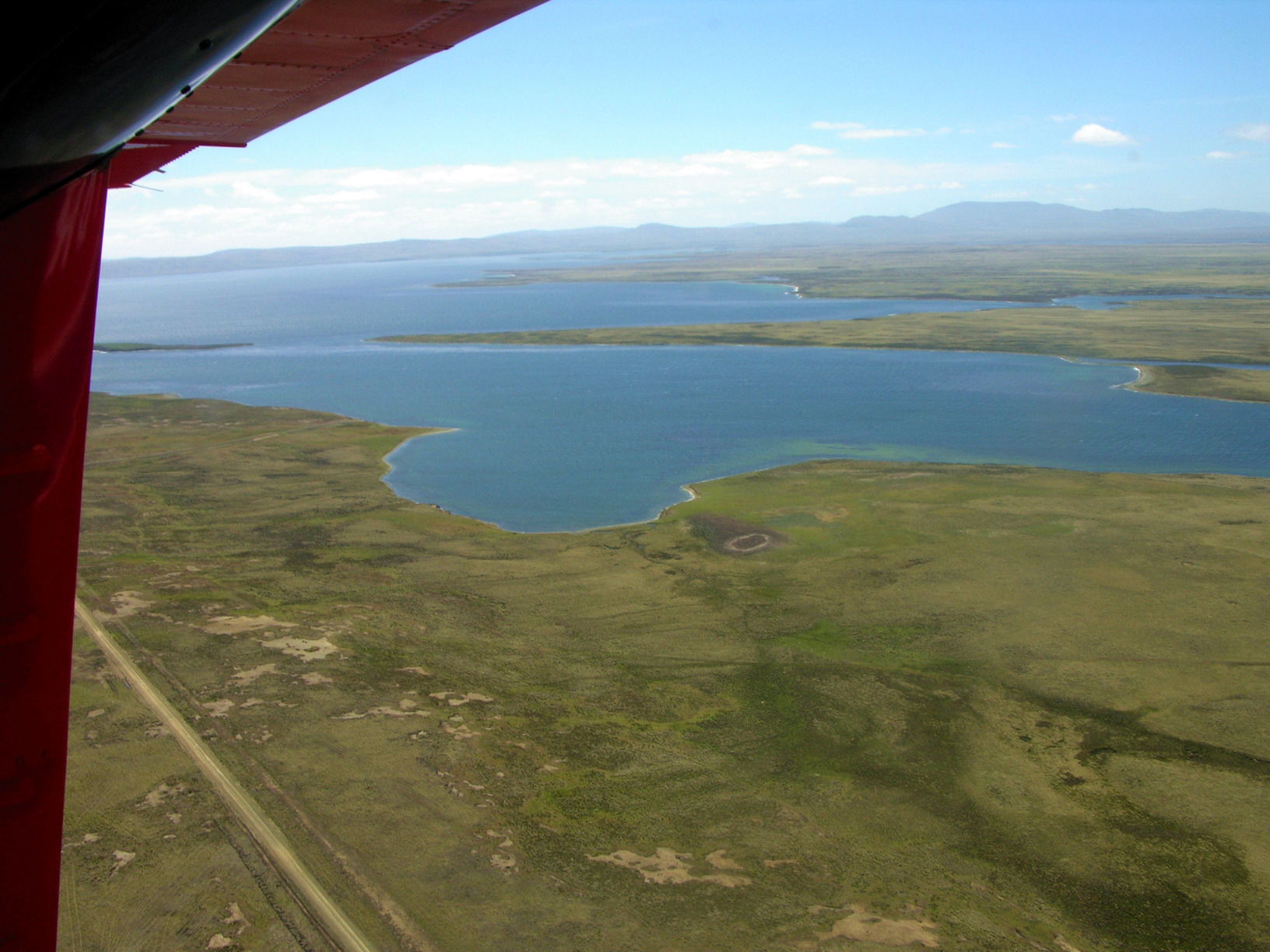
The plane arrived and left on time. It was a sunny day and I photographed the roads and bays from the window for a long while after takeoff. They'd become so familiar. The Falklands are a lovely place. I'm ready to add them to the short list of countries where I'd agree to live.
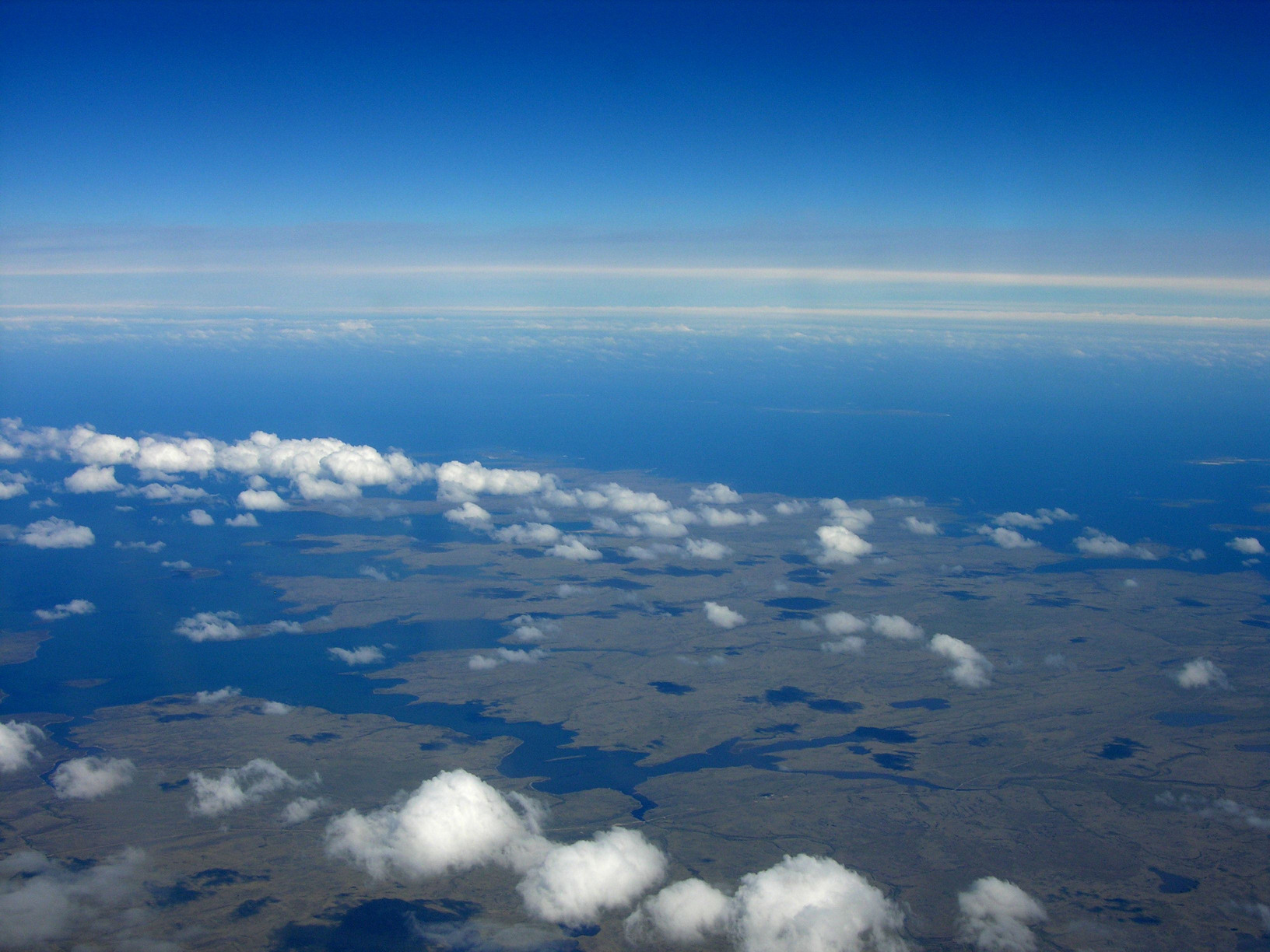
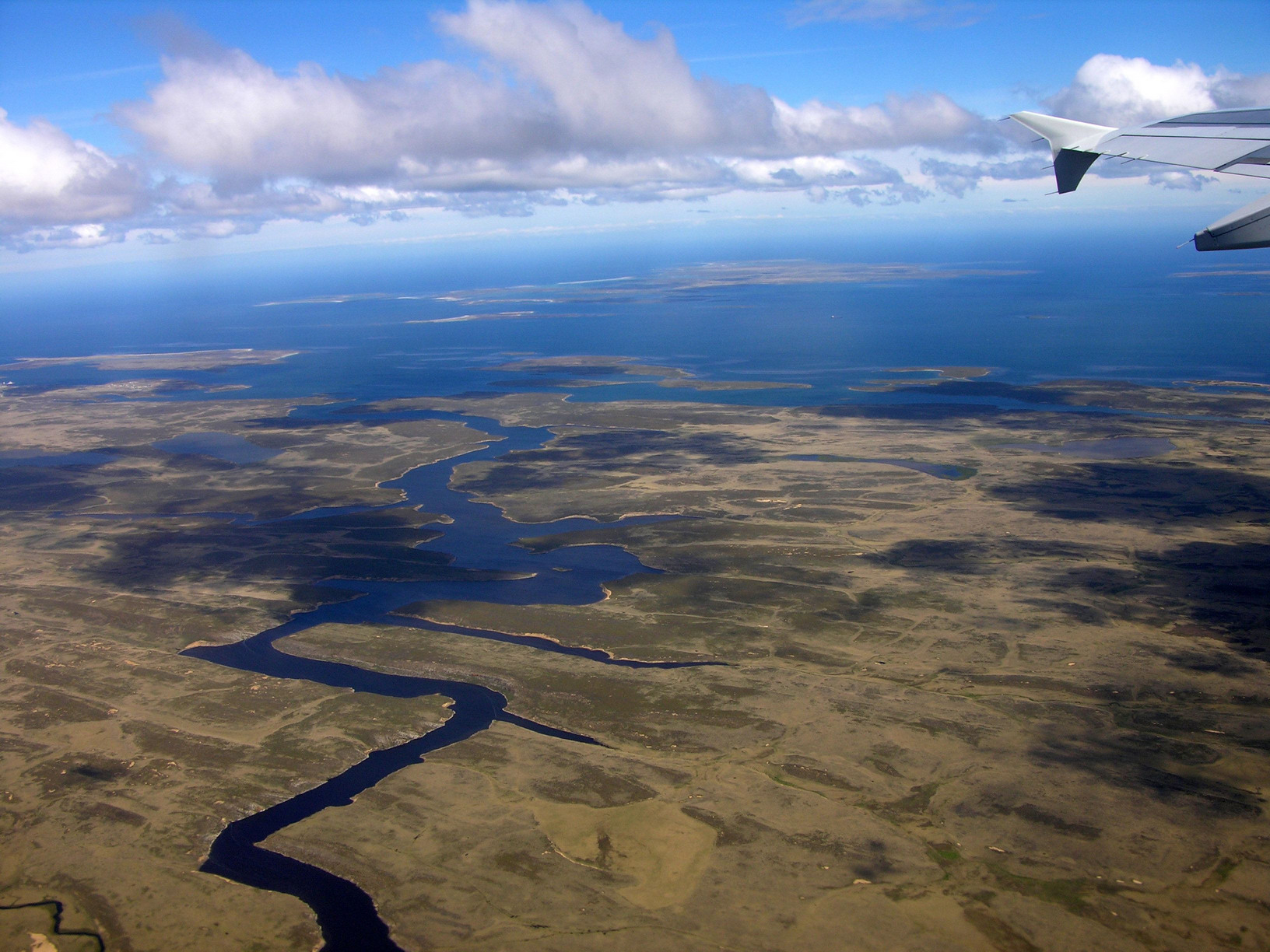
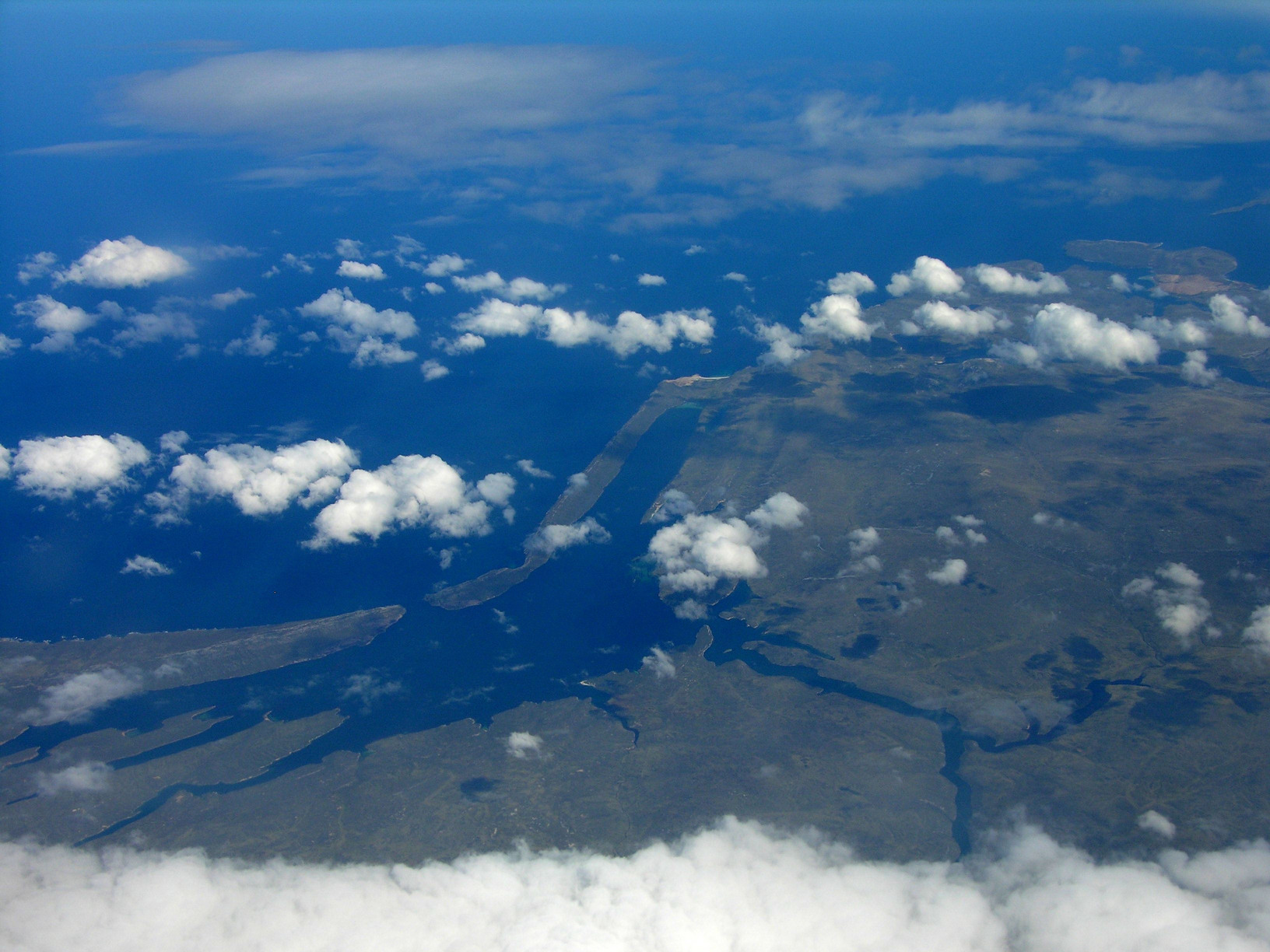
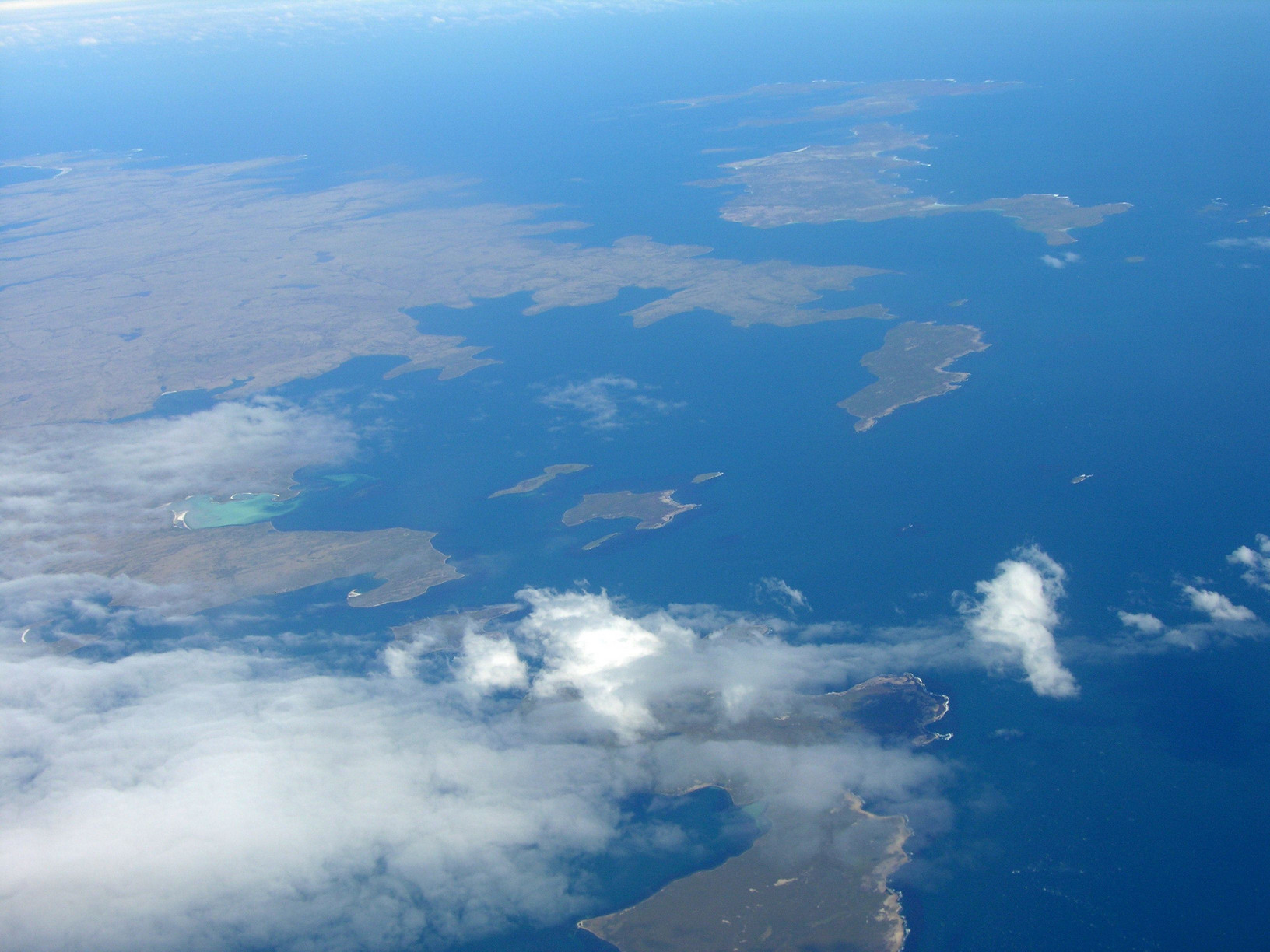
Goodbye, penguin islands. I'll remember you. Goodbye to the last little piece of true old England that has held out against the twenty-first century.
Falklands links