Easter Island
Easter Island
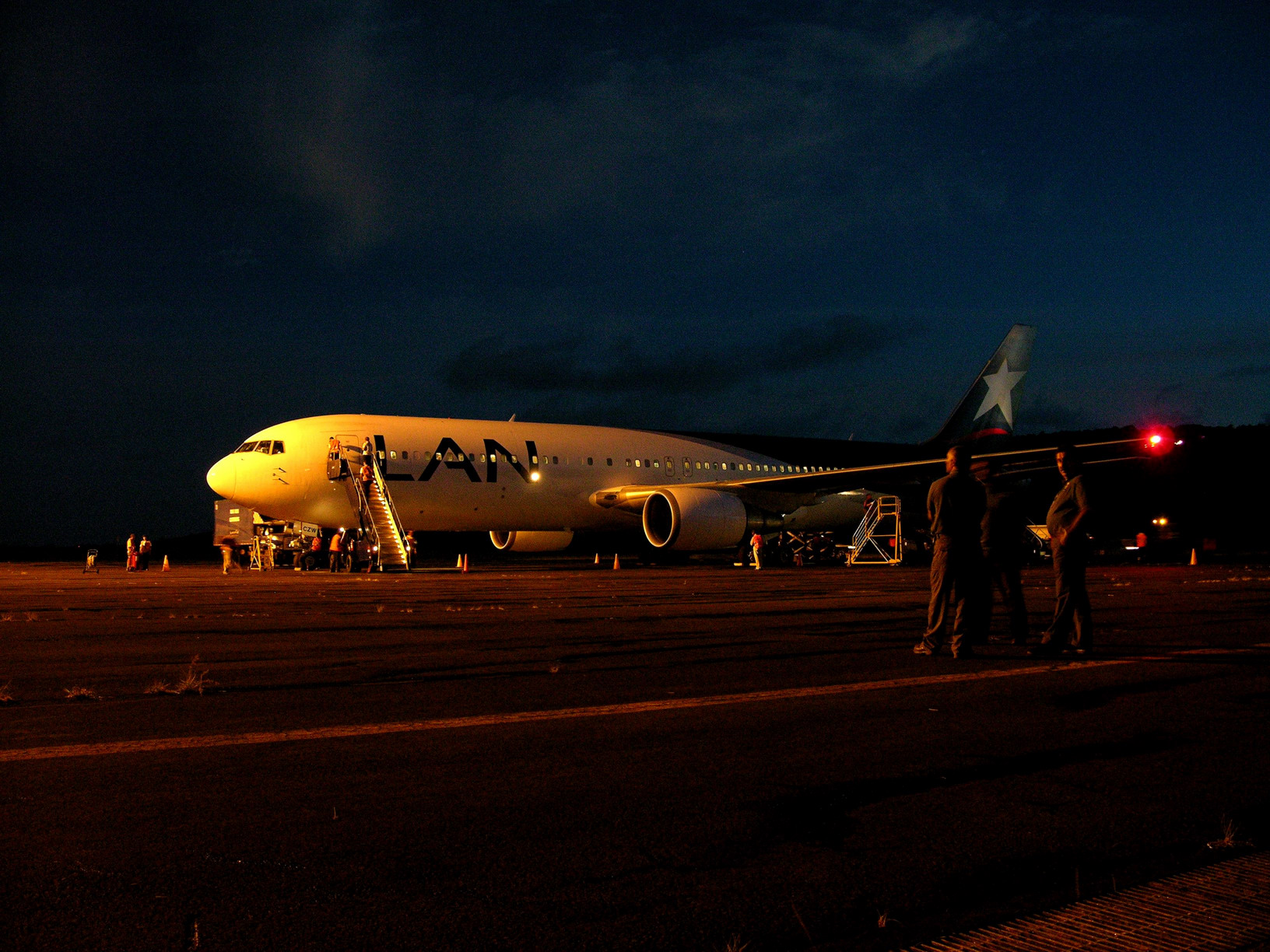
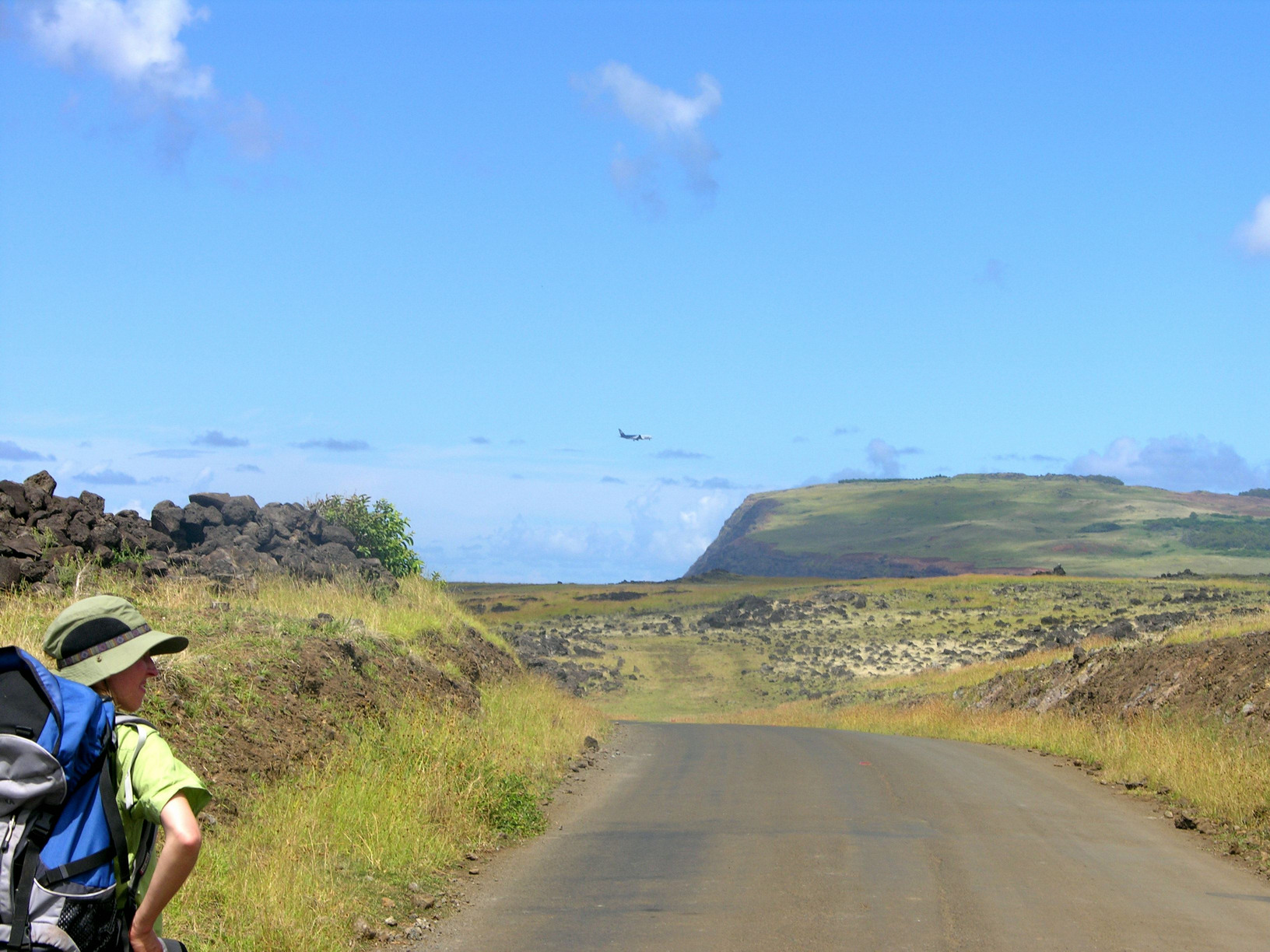
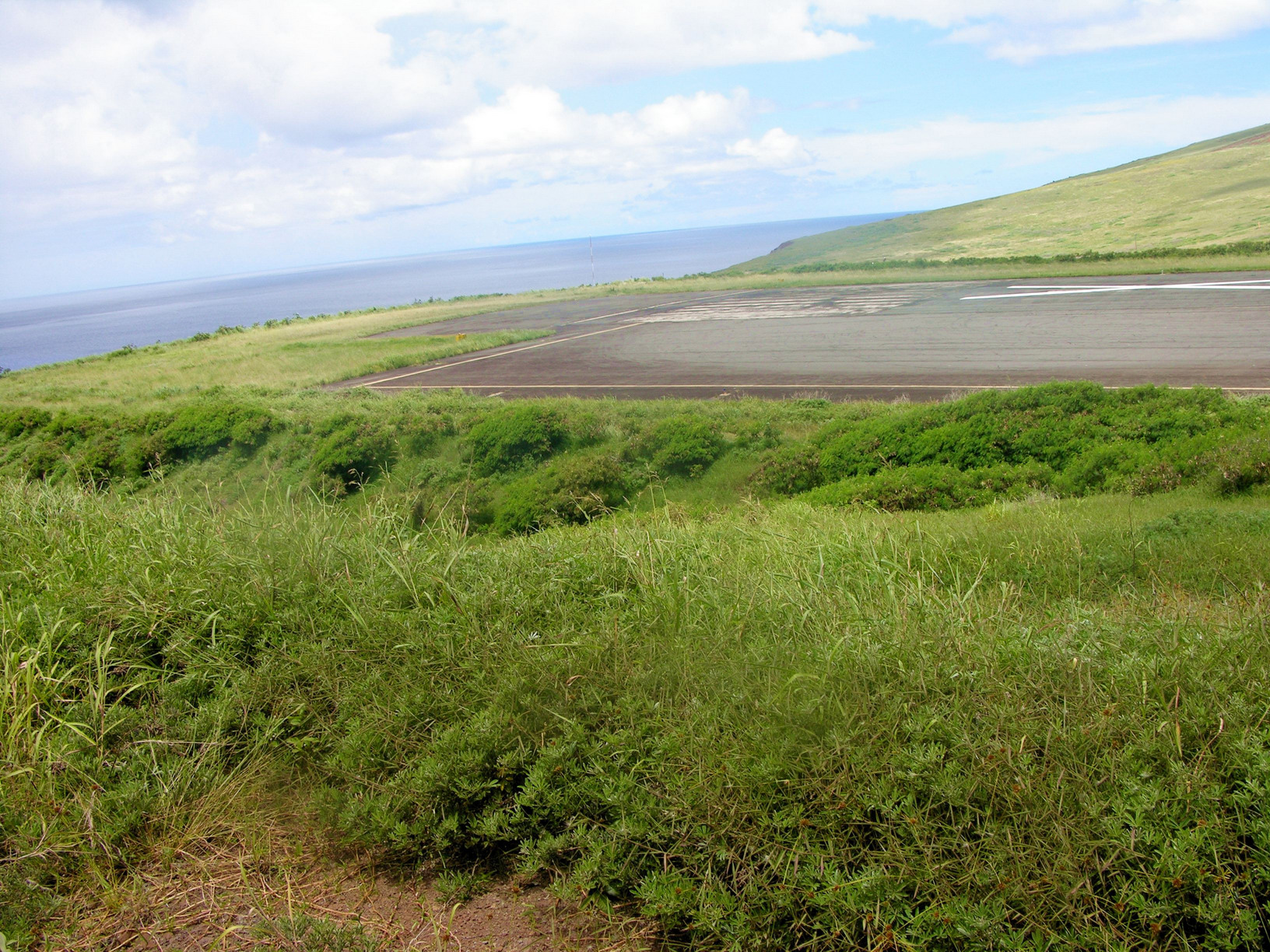
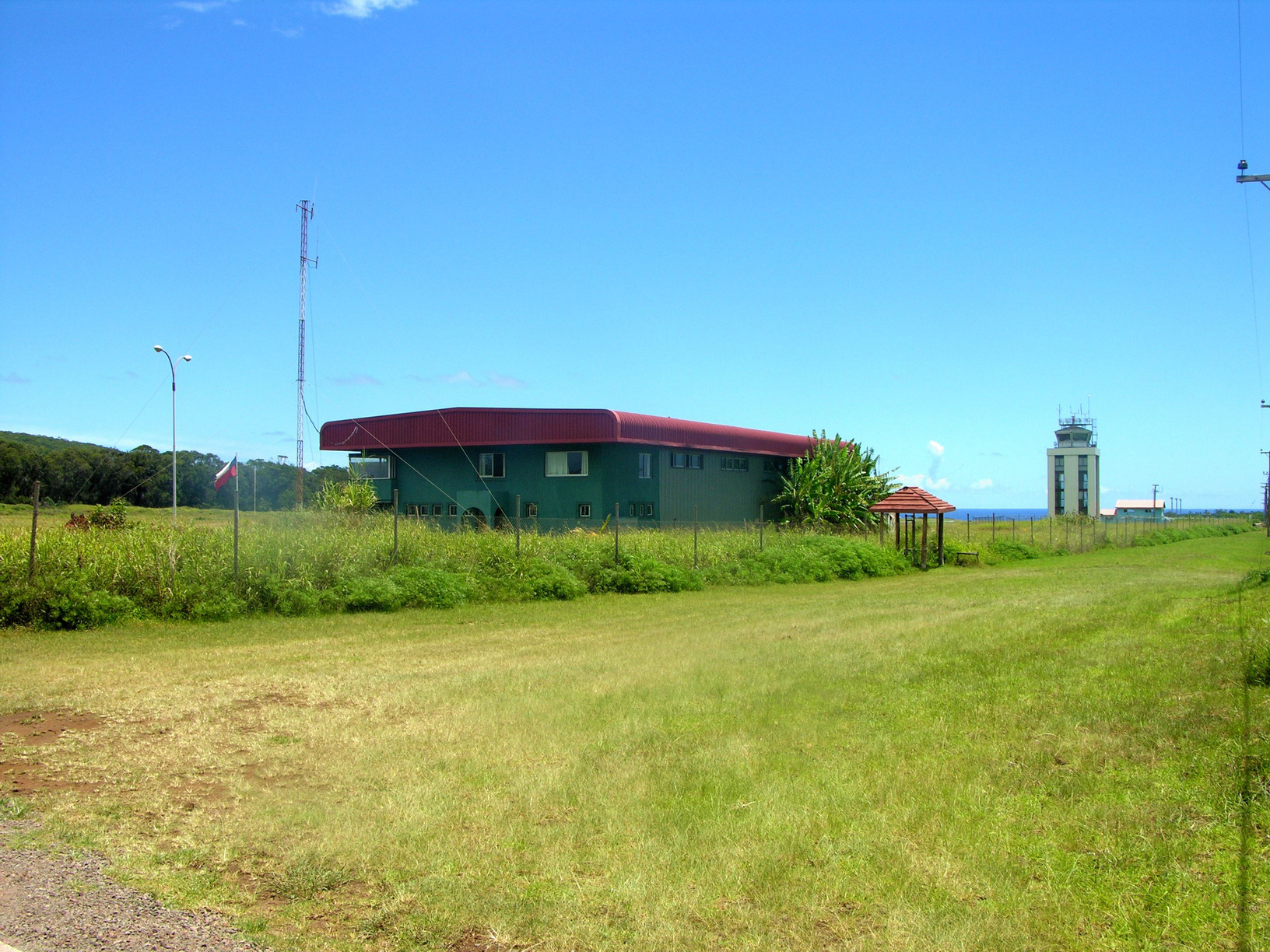
The airport on Easter Island was built long ago and recently upgraded. There are now flights every day. The flight takes five hours and the time difference is two hours. LAN Chile is the only airline that flies to the island, so tickets cost upwards of US$1,000. You could fly across the Atlantic for that, but the price hardly mattered to us. We had one round-the-world ticket for the whole journey.
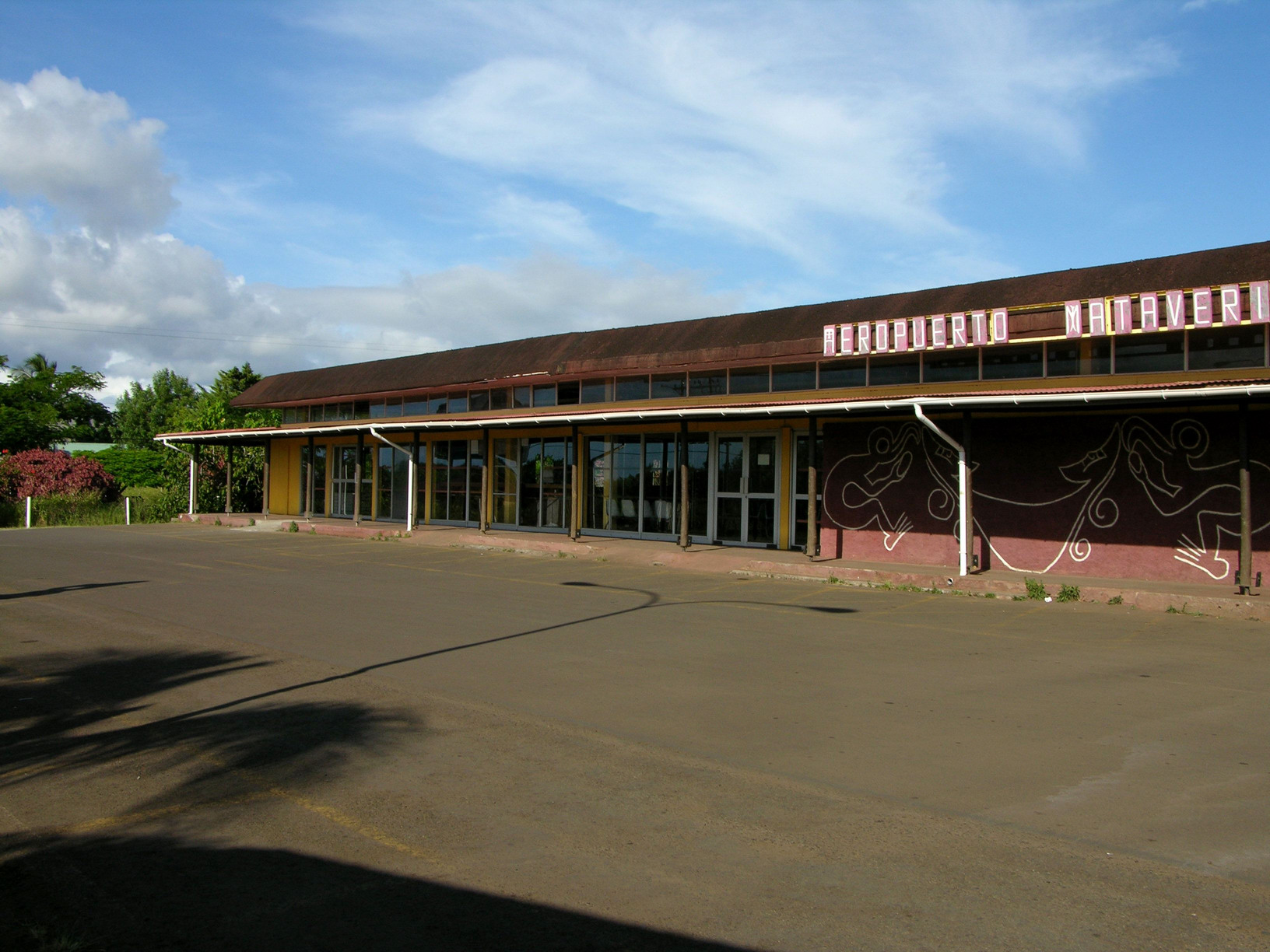
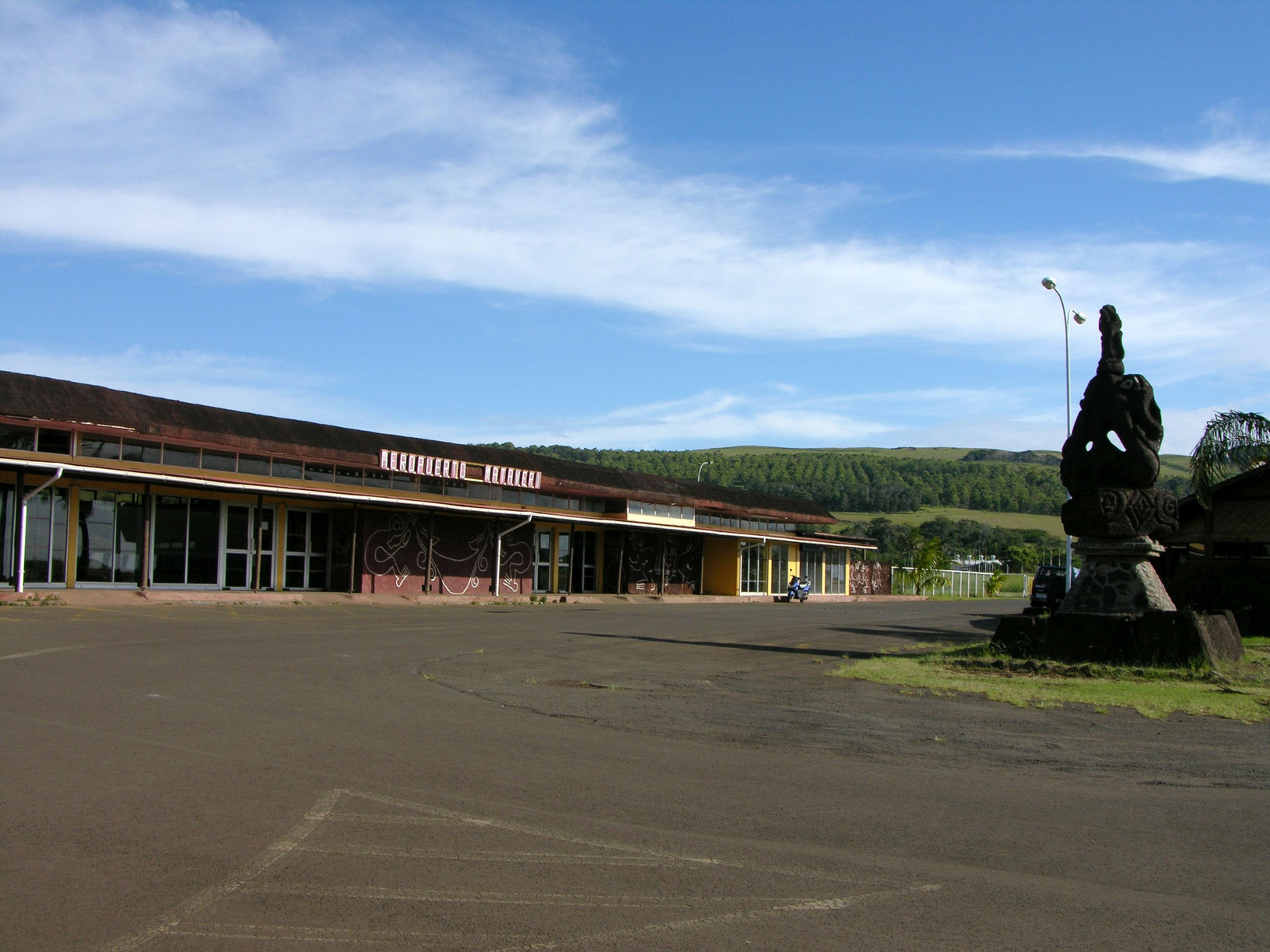
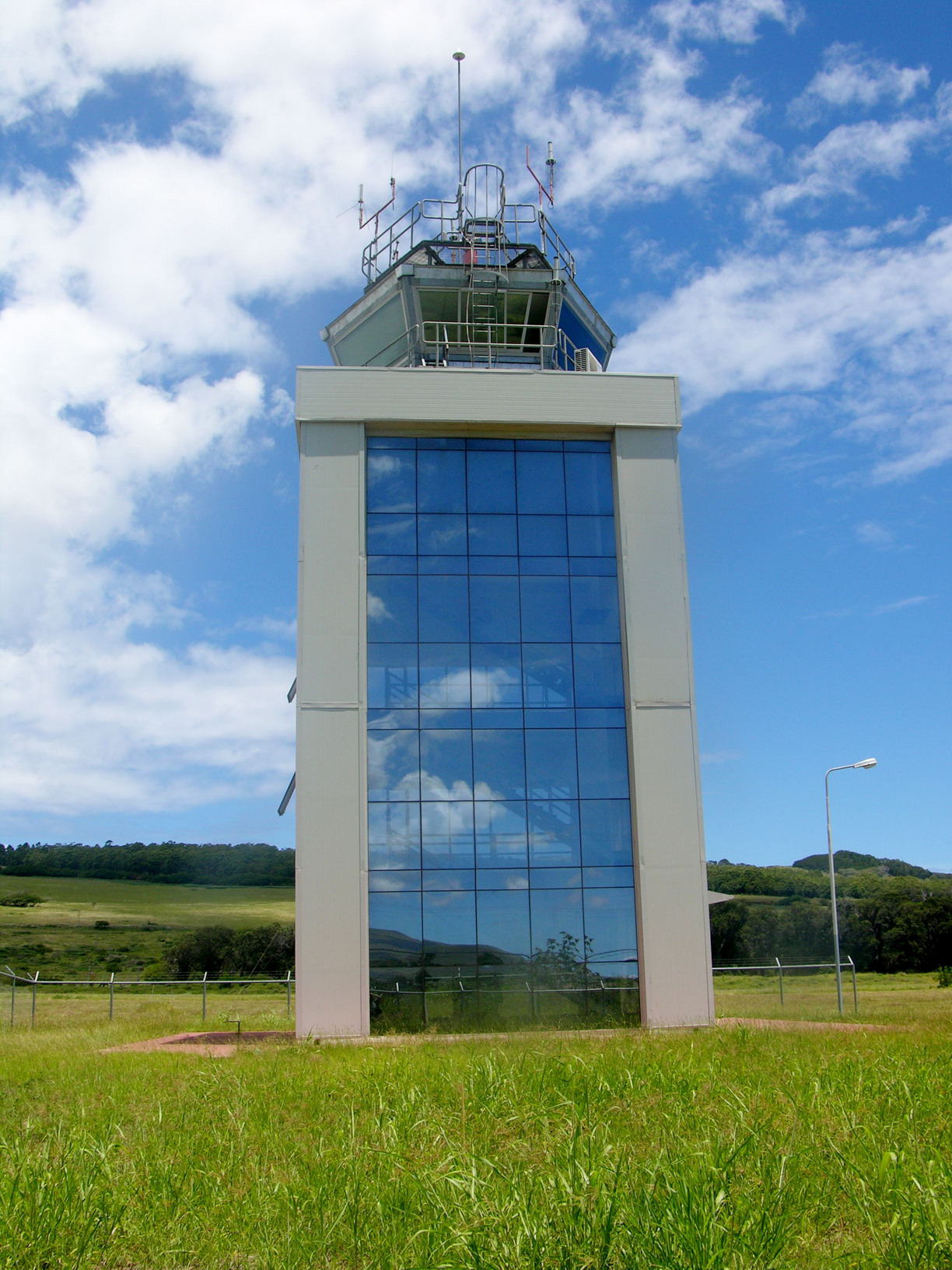
It's a domestic flight, so it leaves from the domestic terminal and there's no customs inspection. They take your luggage without so much as a glance.
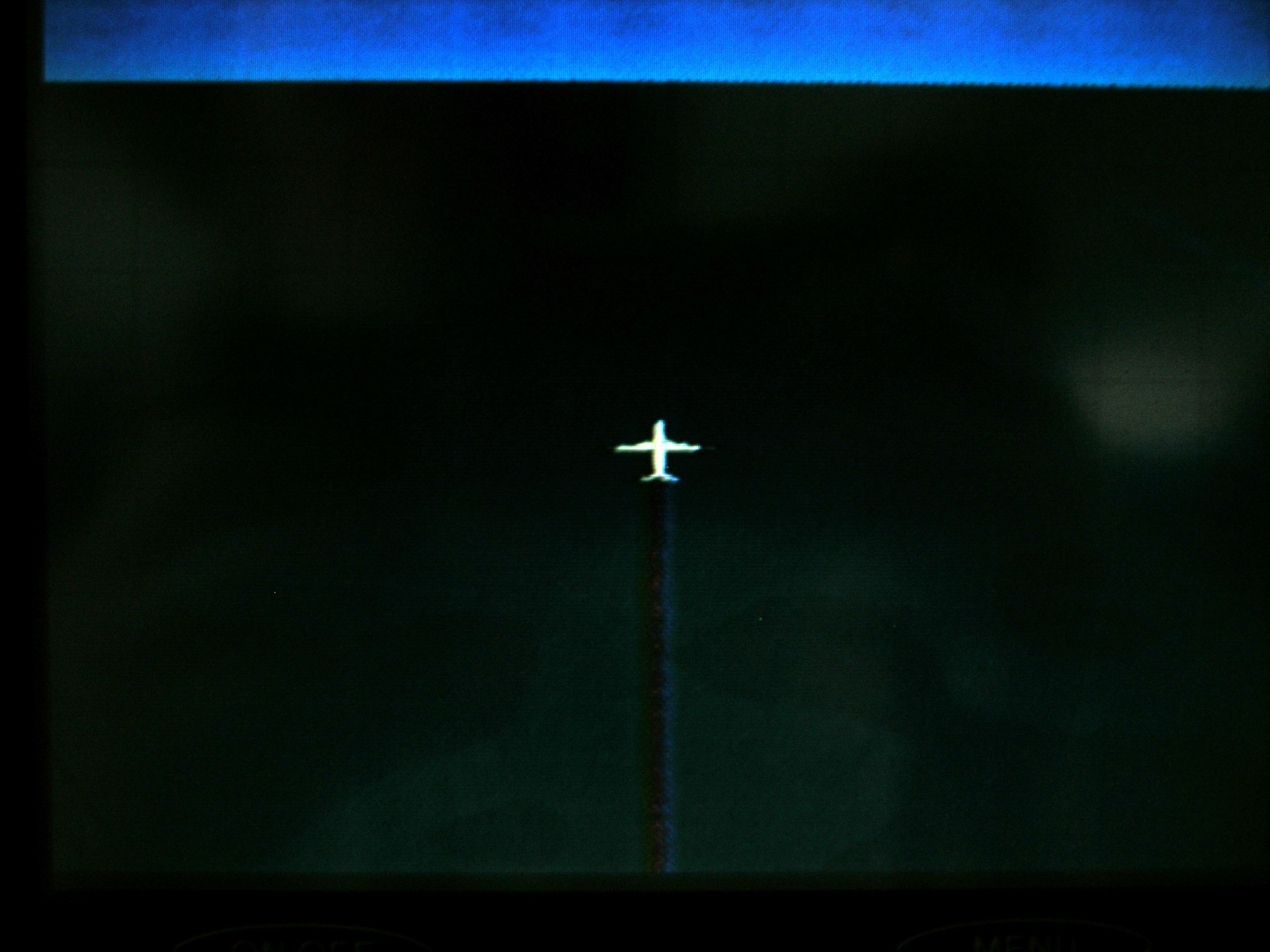
We got seats in the middle of the cabin, which was no great loss. The whole flight is over the ocean. The little point showing the plane on the map recedes farther and farther into the blue. Only at the very end does the lone speck of Easter Island come into view. This is a remarkably isolated spot in the ocean. The nearest inhabited land is Pitcairn, with a population of fifty, 1,900 kilometres away, followed by the Marquesas, 3,200 kilometres away. Closer by, 415 kilometres away, is the uninhabited group of three small volcanic islands, Sala y Gómez. Easter Island is volcanic too. A six-kilometre mountain rises from the seabed, and only its top 500 metres are above sea level. It's actually made up of three volcanoes with numerous smaller craters. There haven't been any eruptions for tens of thousands of years.
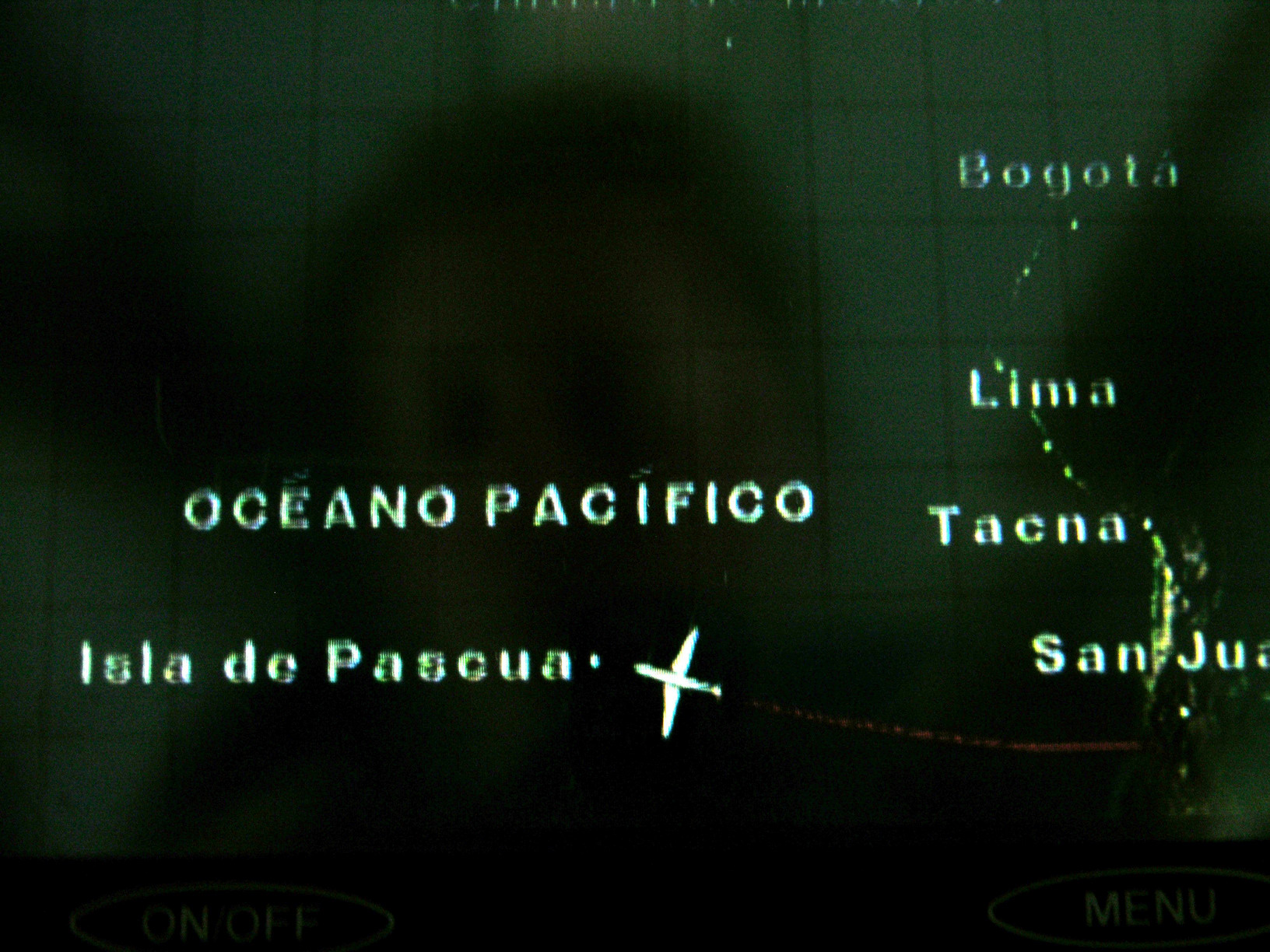
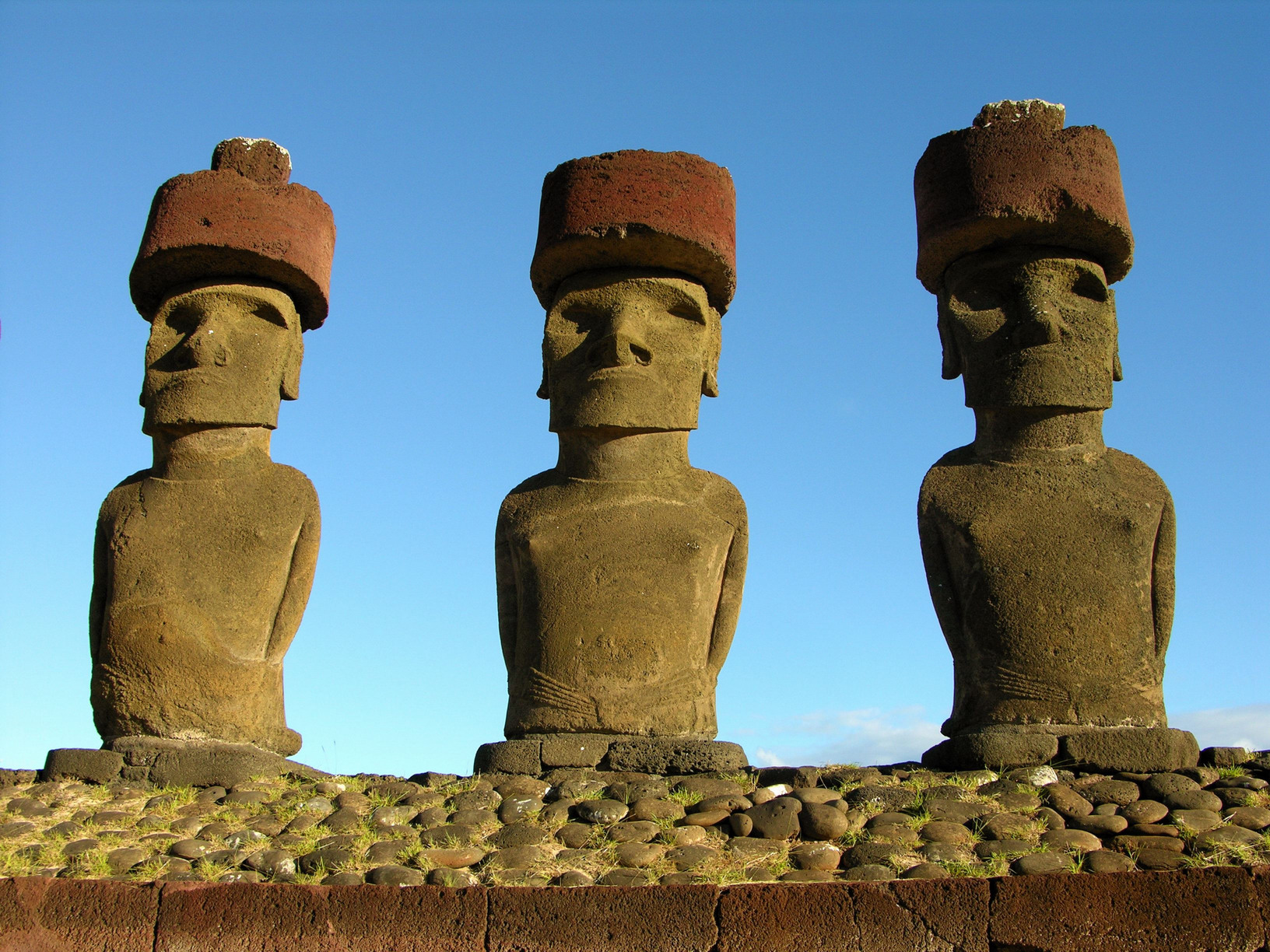
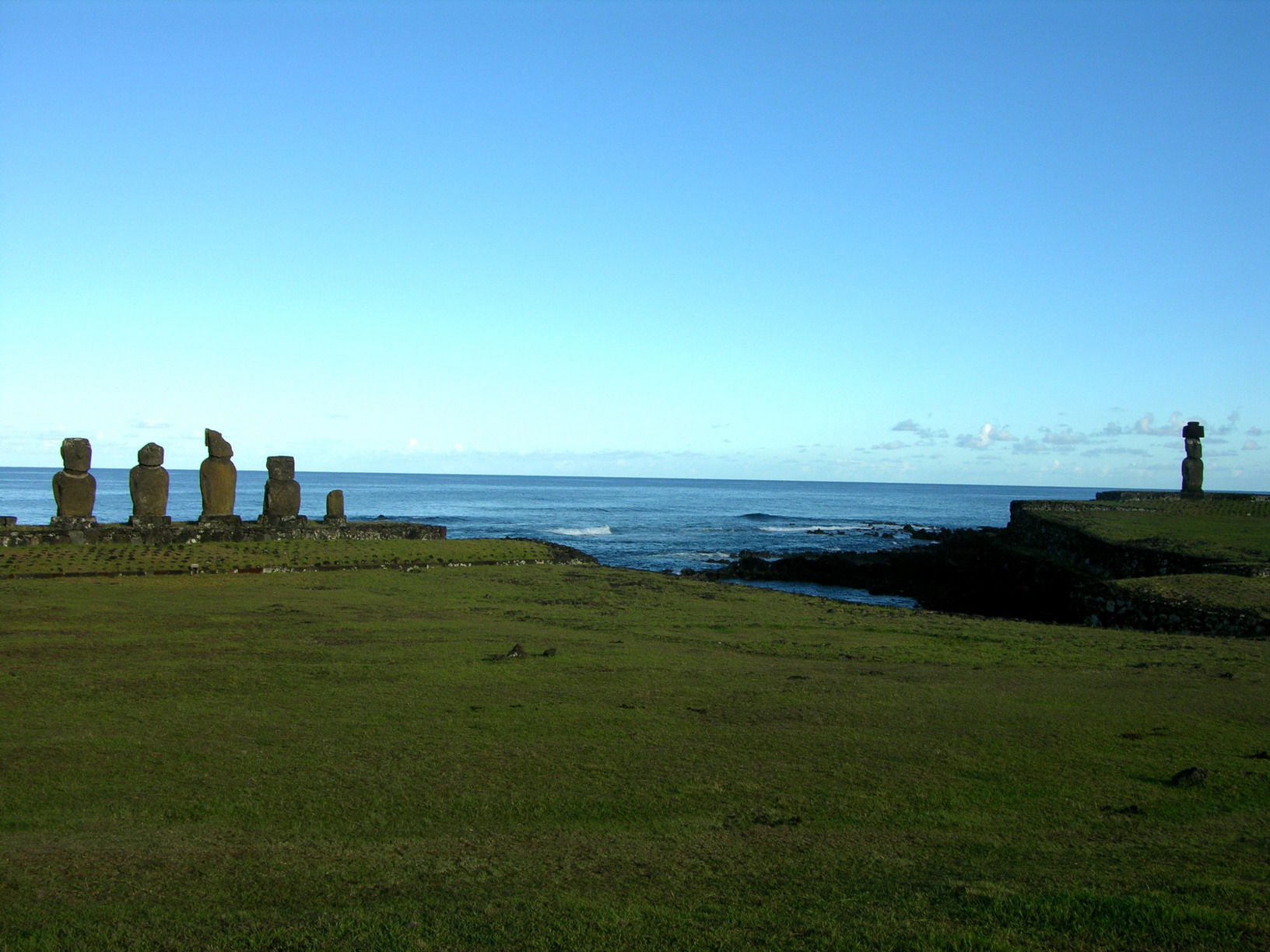
The island's history is tangled. The first Europeans reached it in 1722. The island was flourishing then. Huge stone figures called moai stood on platforms known as ahu along the coast. The hills were covered in gardens and plantations and the islanders were friendly. At its peak the population may have been as high as 15,000. The Europeans arrived on Easter Day, hence Easter Island in English and Isla de Pascua in Spanish. The islanders had no word for Easter, so they called it Rapa Nui, which was said to mean “the navel of the world”. The name is still used. It was even in the address of the island's official website.
By 1774 James Cook found a scene of desolation. The statues lay toppled and a population of fifty was starving. One theory was that the island had first been inhabited by Indigenous people from South America, and that they had erected the famous stone figures. The Peruvian Tiwanaku culture carved figures out of stone too. Today they survive at Tiwanaku, on the shores of Lake Titicaca.
The Polynesians came later, according to that account. They now make up most of the island's population and speak both Spanish and their own language, Rapa Nui, which is close to the other Polynesian languages. The islanders look much like other Polynesians, though we thought they seemed taller and leaner.
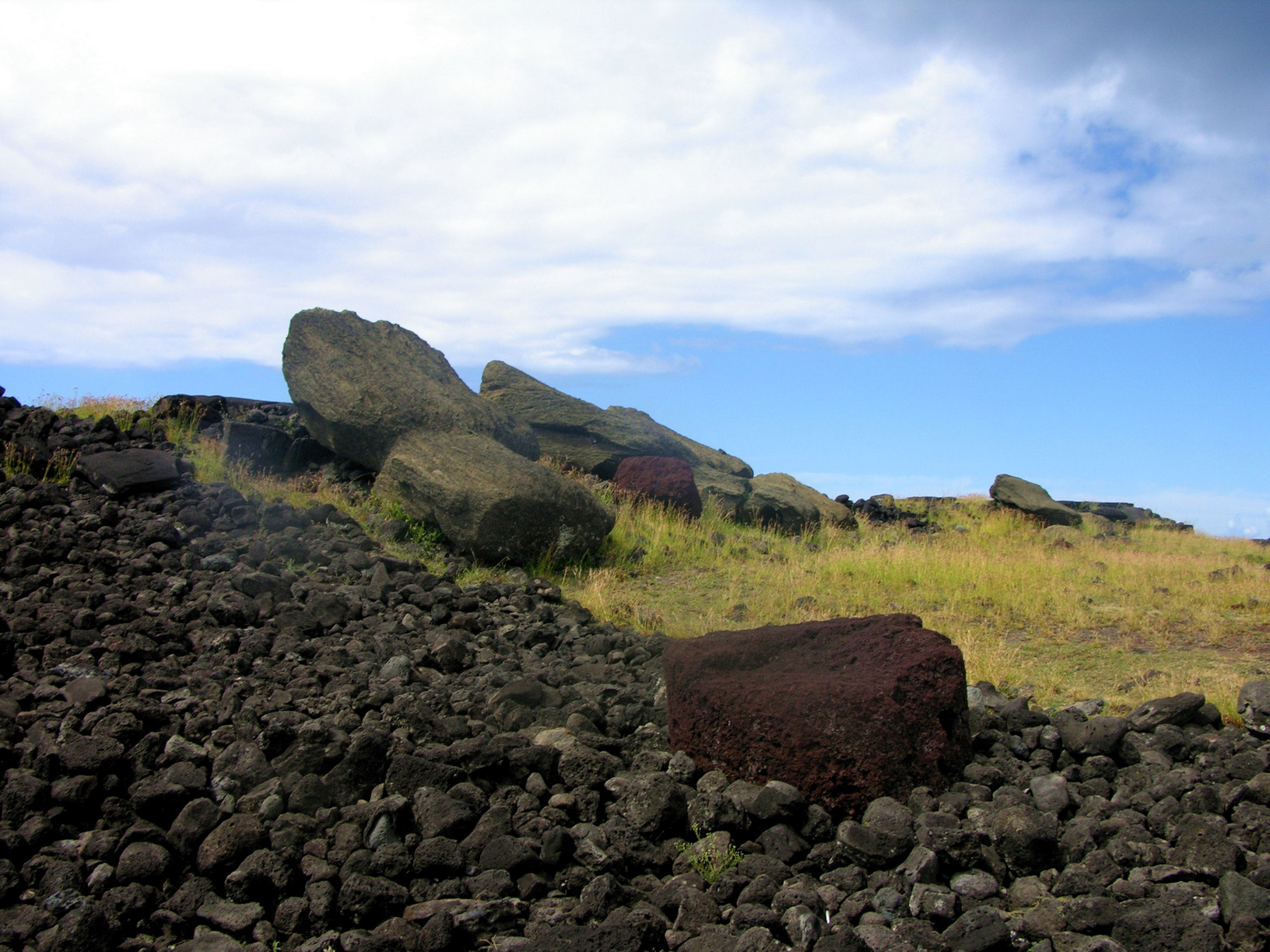
It looks as though the moai were toppled one after another over decades, rather than in a single uprising or takeover. Twenty were still standing in their original positions in 1804.
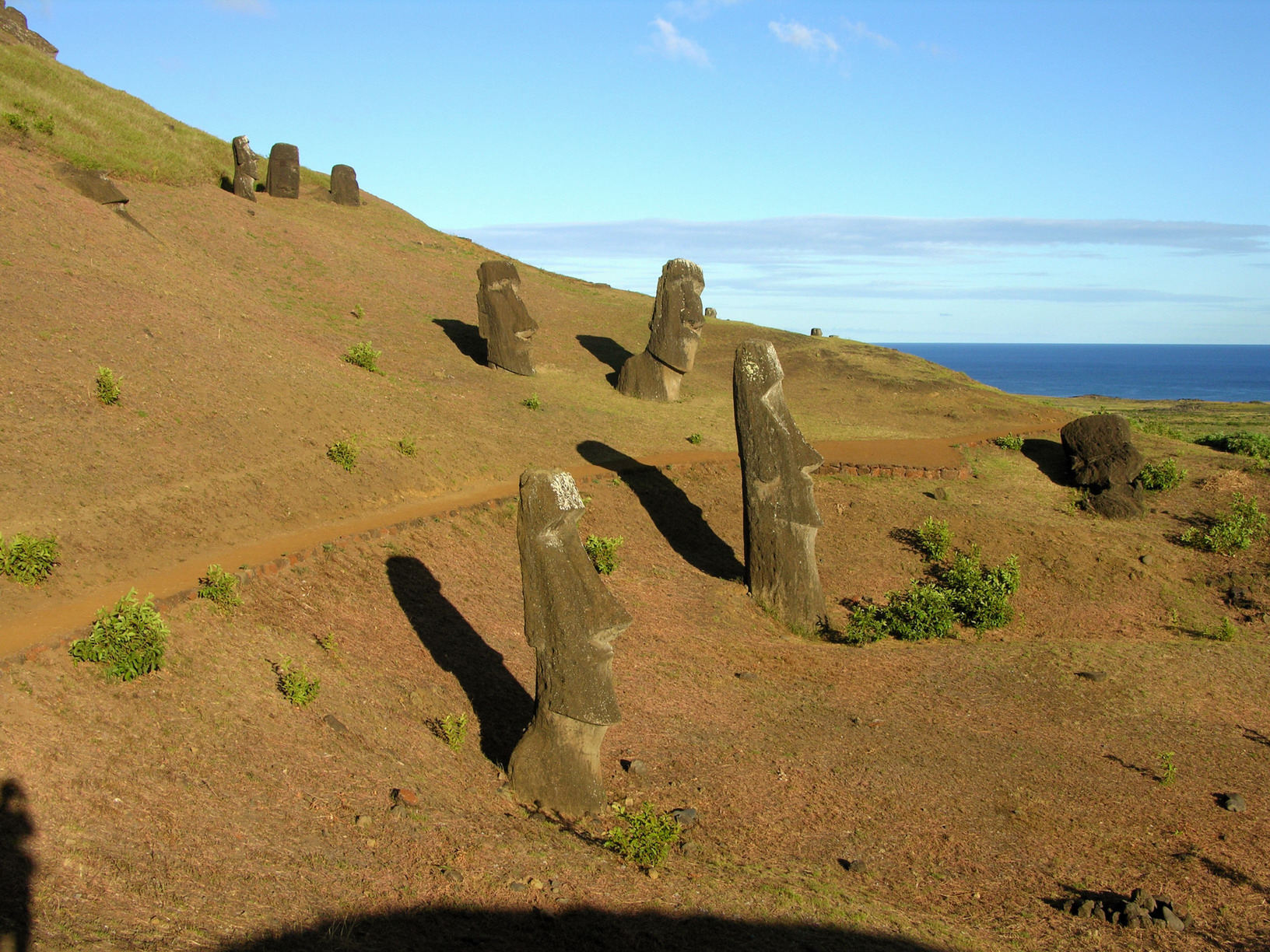
What did they mean? When Cook asked the islanders, he was told the figures marked the graves of ancient kings. The islanders no longer venerated them and did not know who had made them or how. The moai stood in groups along the coast and faced inland. They were quarried from compacted volcanic ash on the slopes of Rano Raraku. The stone is light and easy to work, but making the figures was still quite a job. Thor Heyerdahl hired islanders to have a go at carving a new moai. It turned out to take several years' work for one person, and the men soon went their separate ways when they saw the size of the job.
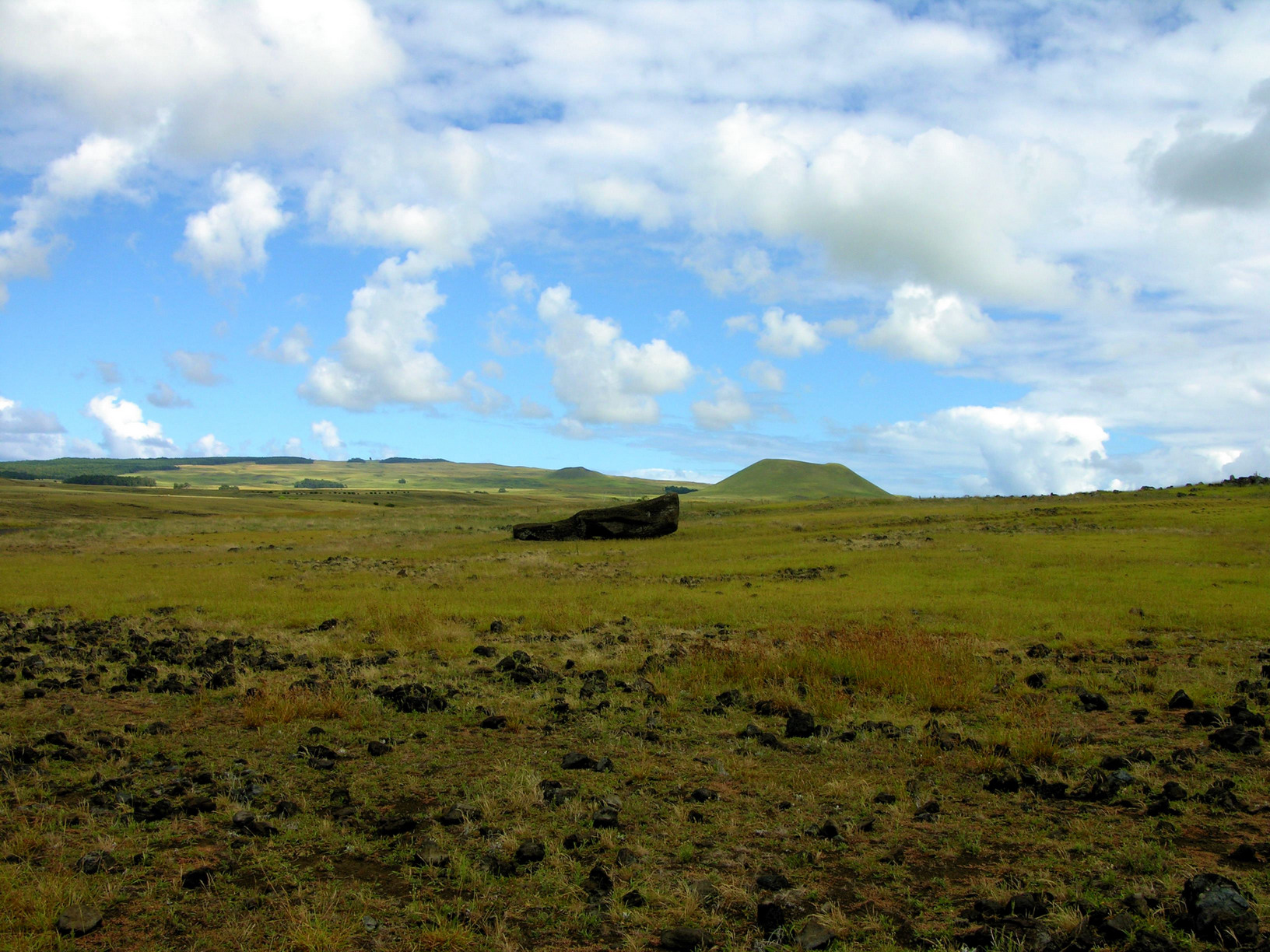
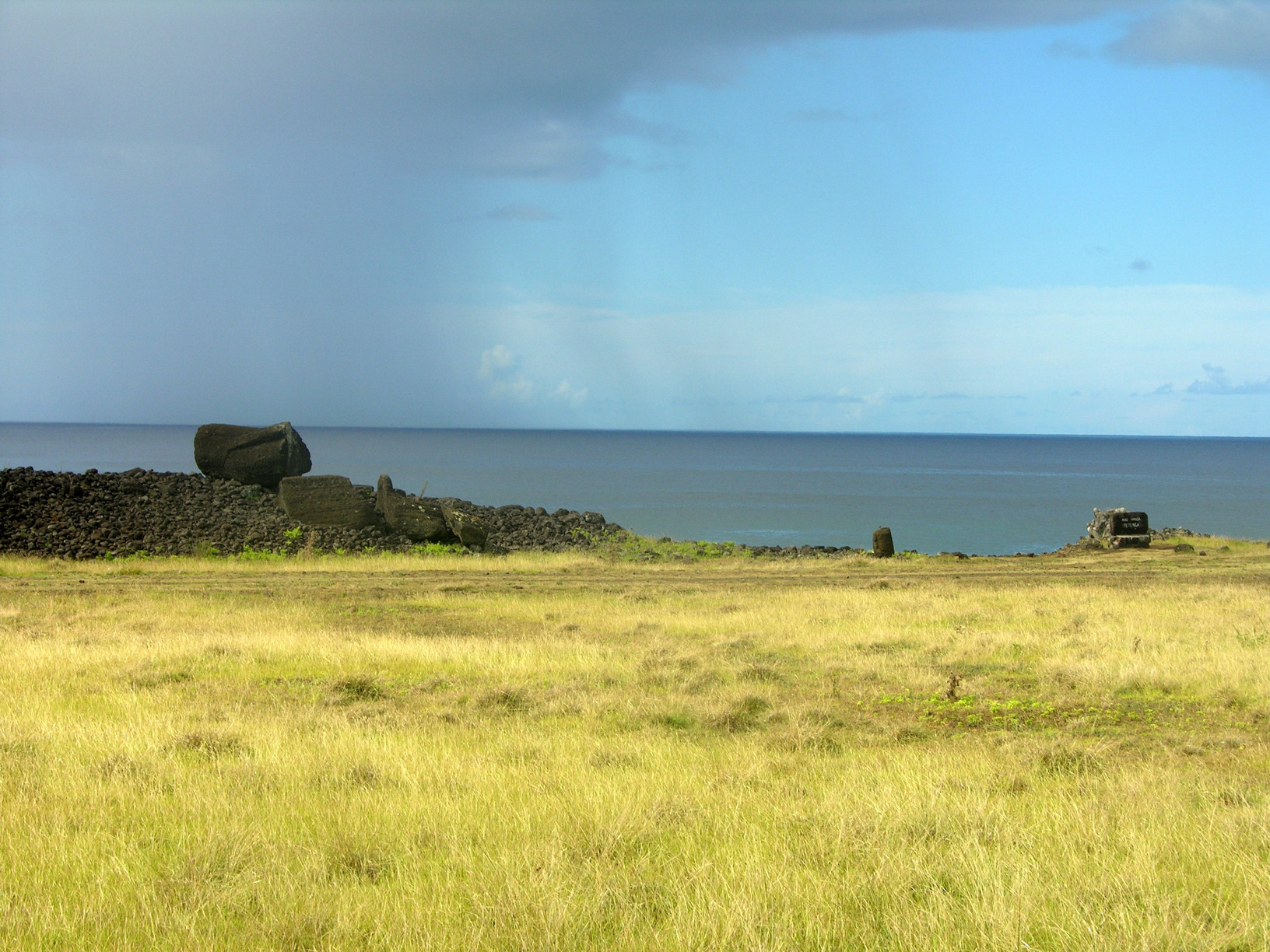
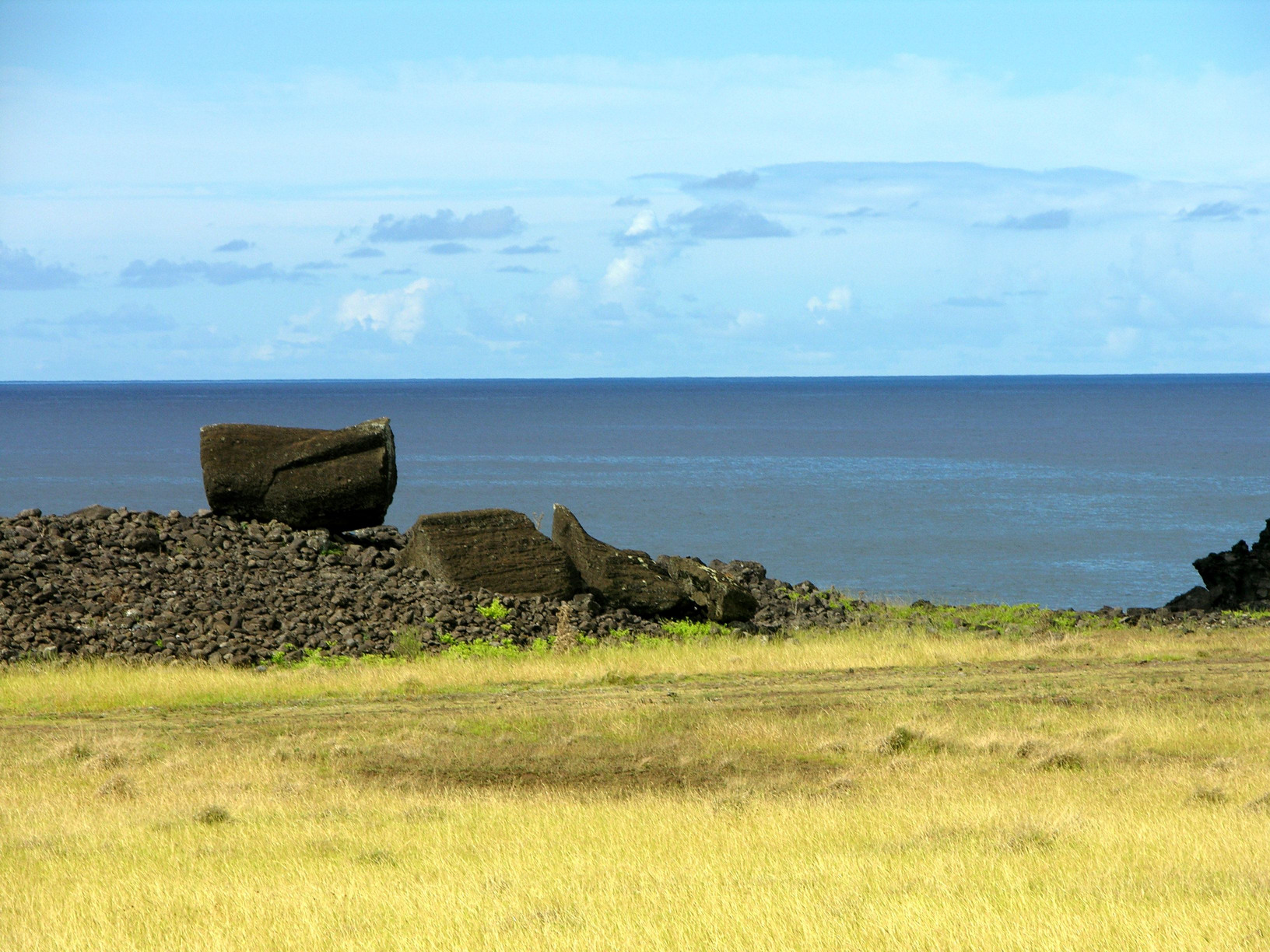
Most likely they were simply grave figures. The bigger the chief, the bigger the statue. The biggest, the moai at Ahu Te Pito Kura, was ten metres tall and now lies cracked on the ground. It weighed thirty tonnes, so moving it must have been quite an enterprise. There are even larger unfinished figures on the rim of the crater, up to twenty-one metres, but they never moved. Perhaps it took so long to carve one that by the time it was finished a new chief had already come to power, exposed his predecessor's crimes and decided there was no longer any need for his monument. By the twentieth century all the moai had been toppled except those still at the quarries on the volcano.
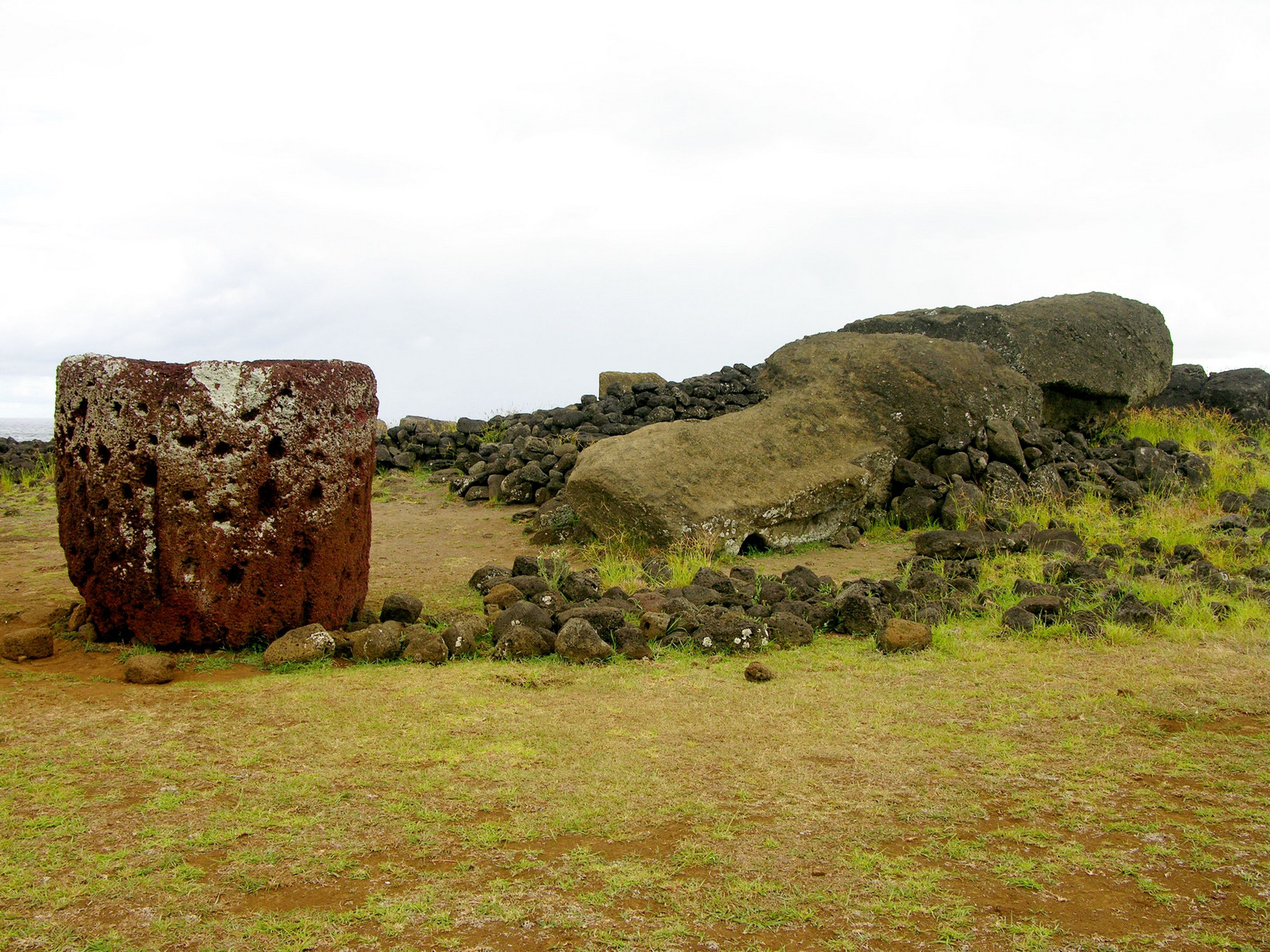
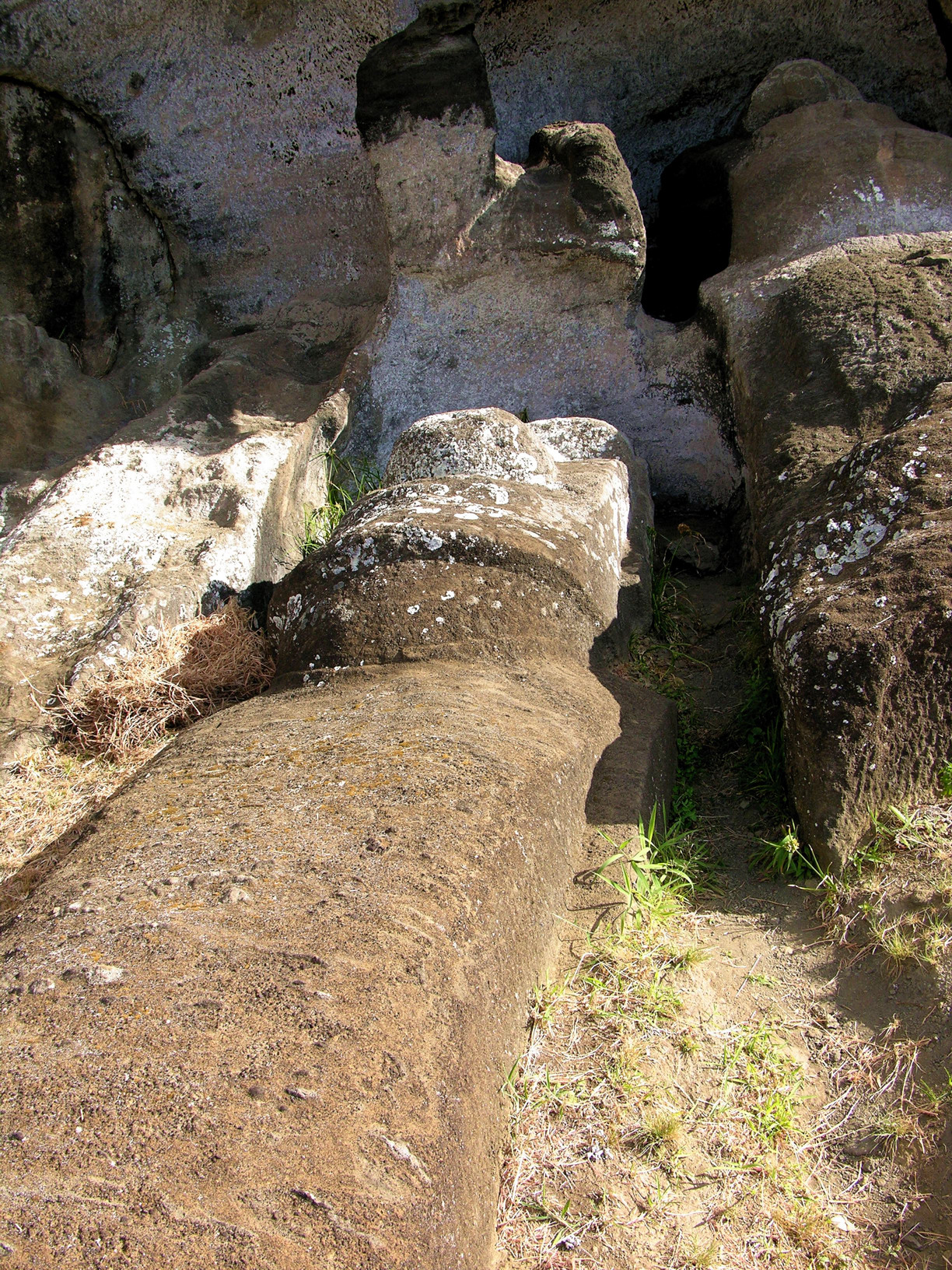
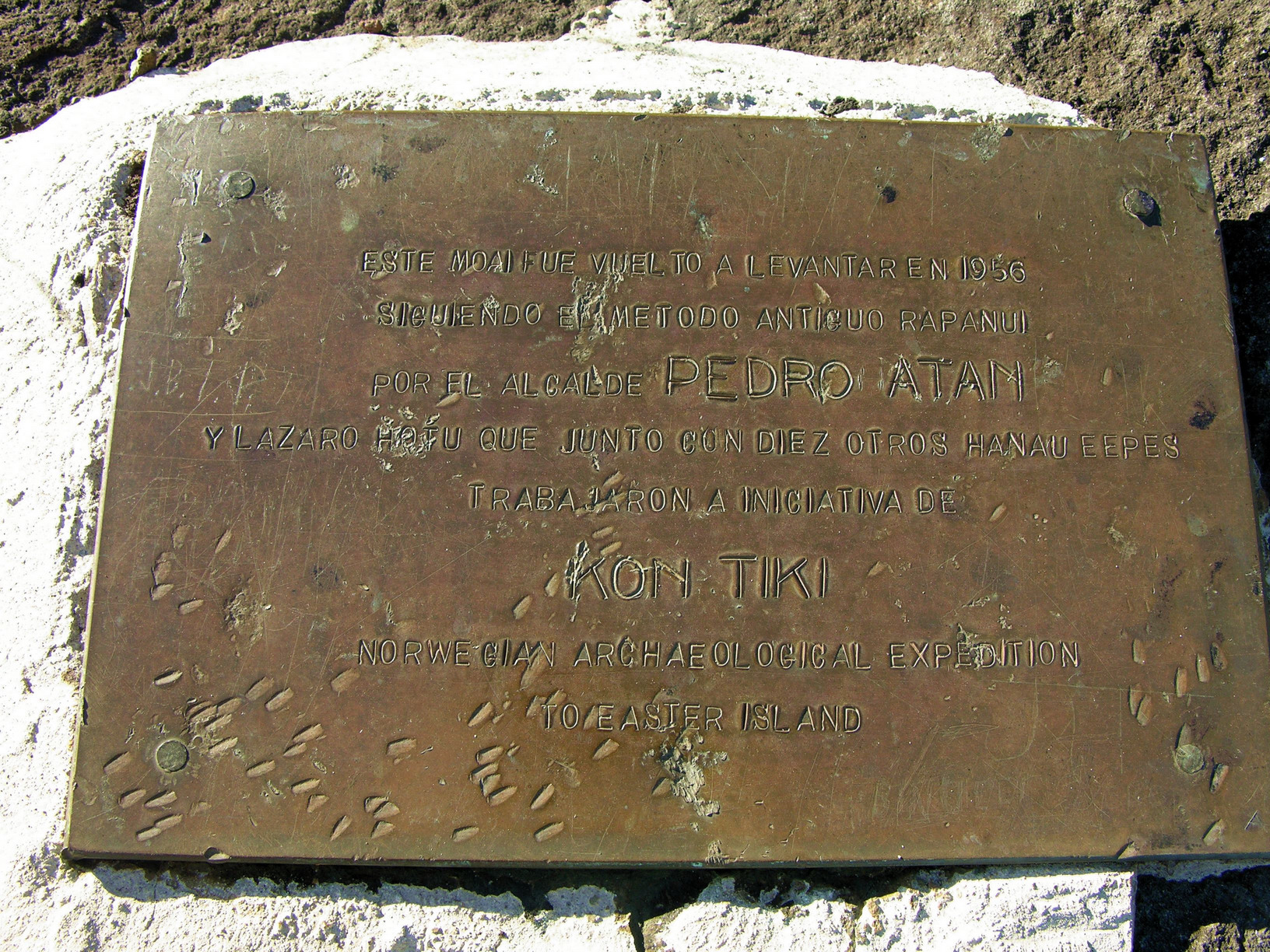
It was Thor Heyerdahl who began lifting them and putting them back up. The sign at Anakena Beach even credits him with doing it. Others followed. The remains of moai scattered across the island were gathered and stood in rows at several sites.
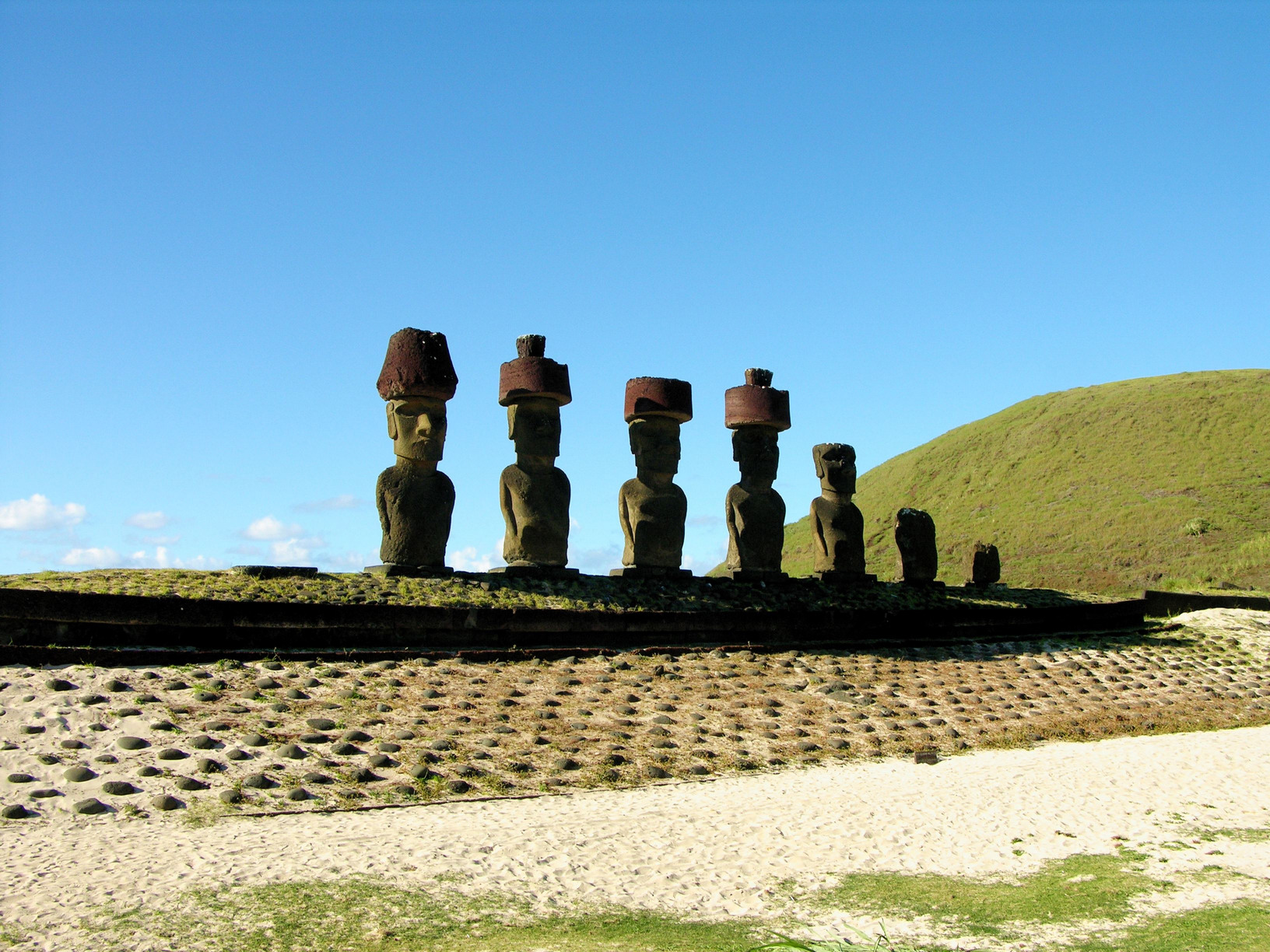
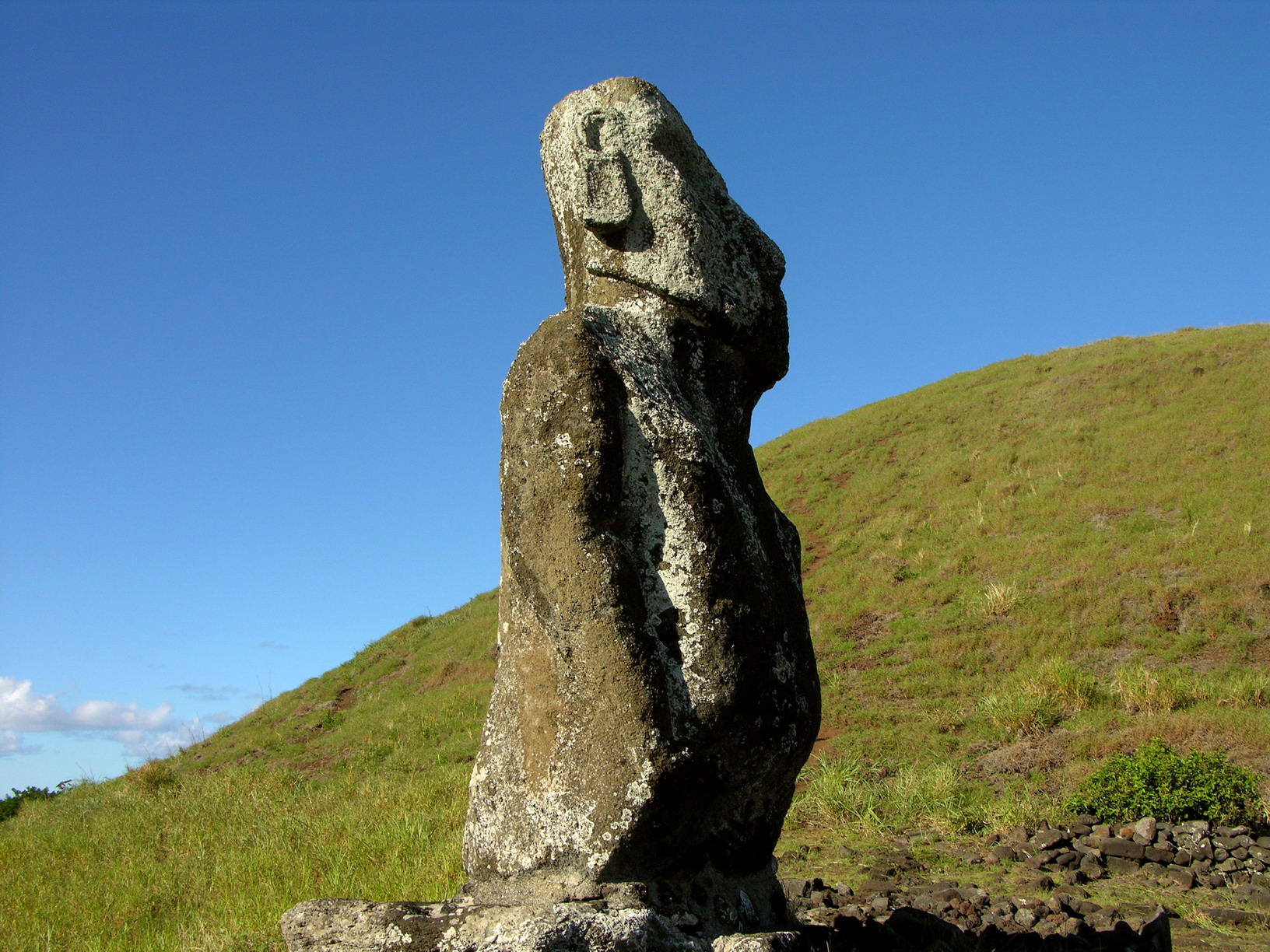
The moai resemble one another. They have strange faces, neither South American nor Polynesian in appearance. There's no reason to assume that statues marking graves were meant to look like the people buried there. They may be stylised figures based on the islanders' idea of their gods. An angel on a Christian grave is no proof that the person buried there had wings.
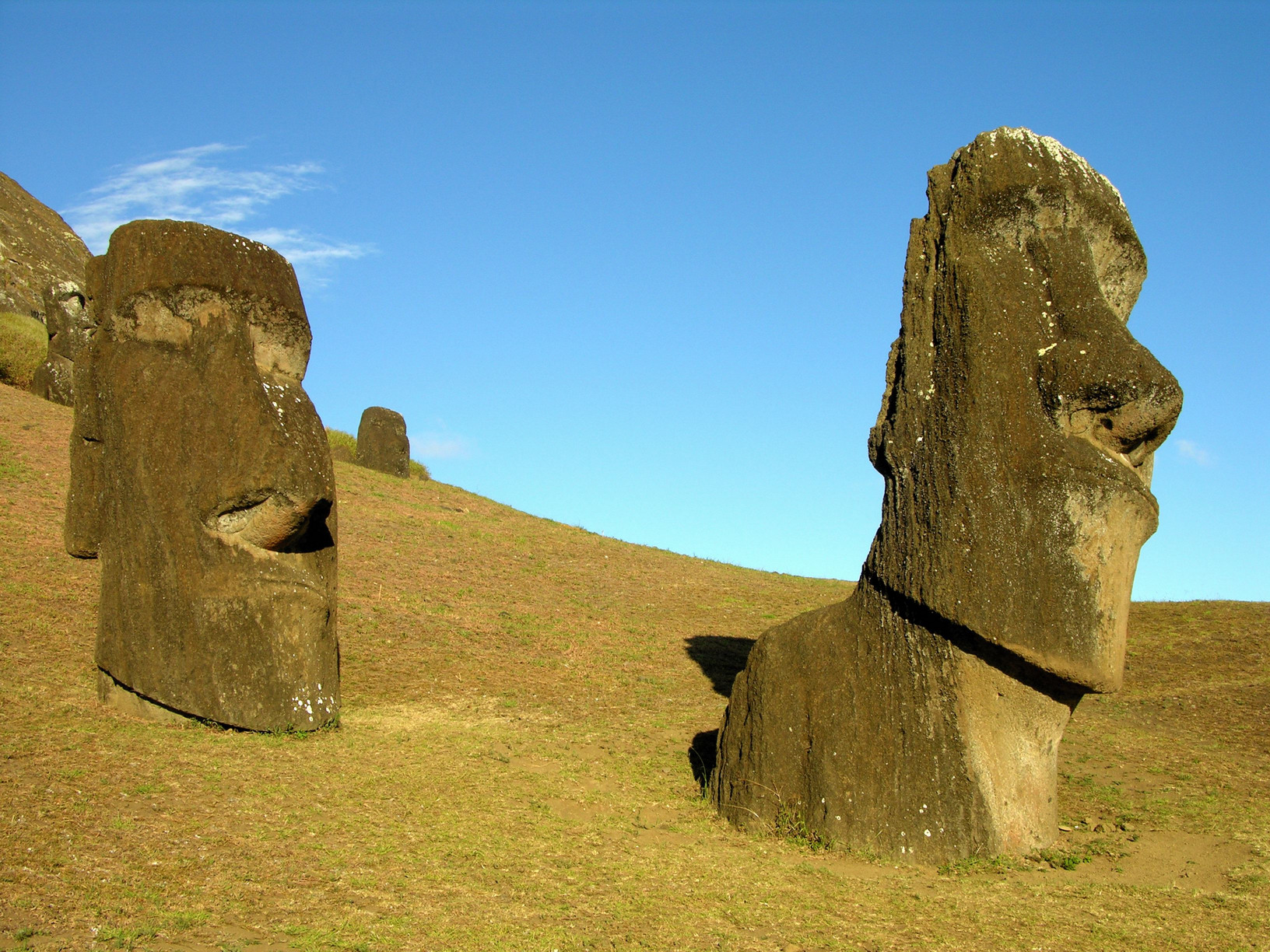
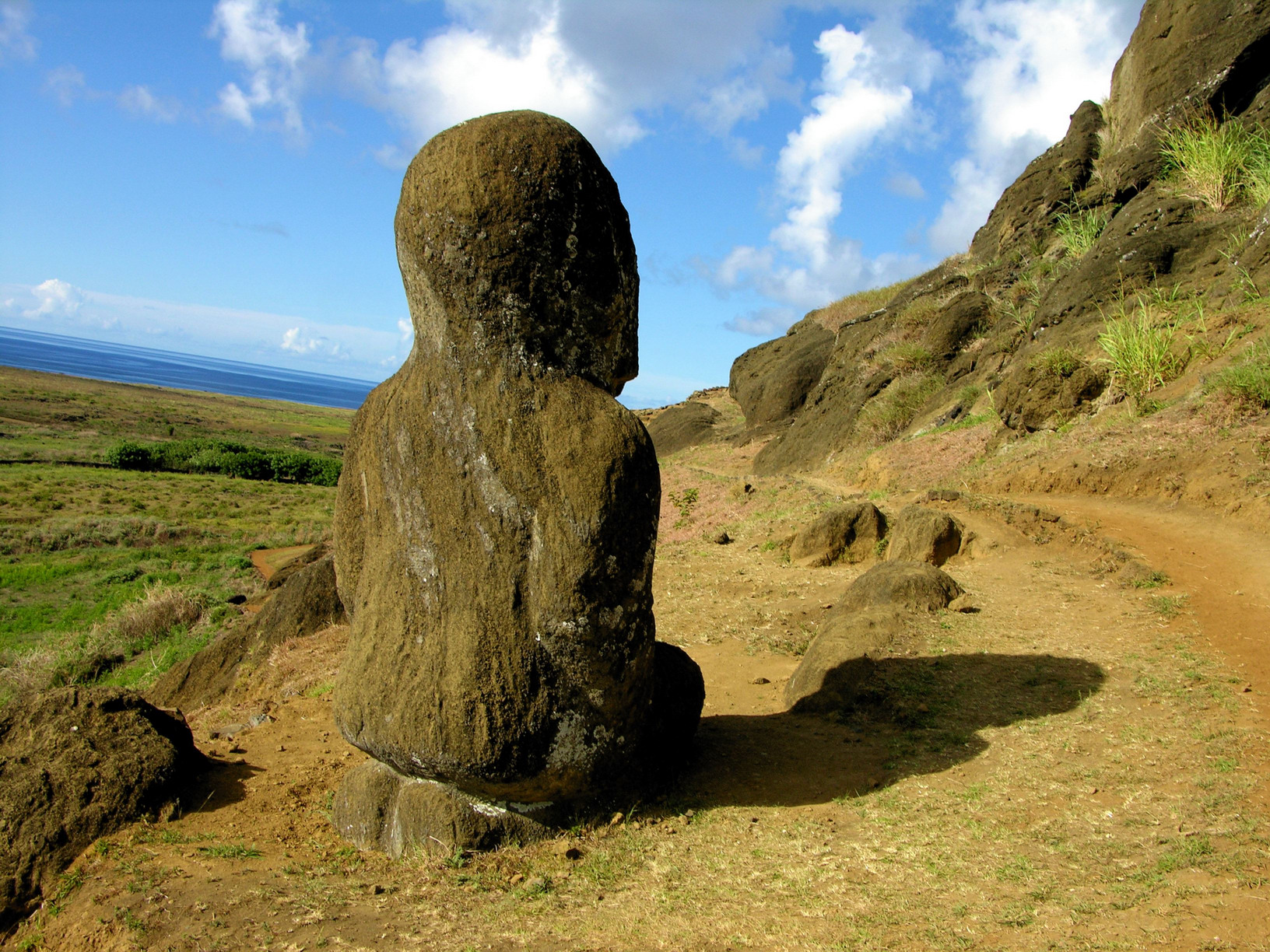
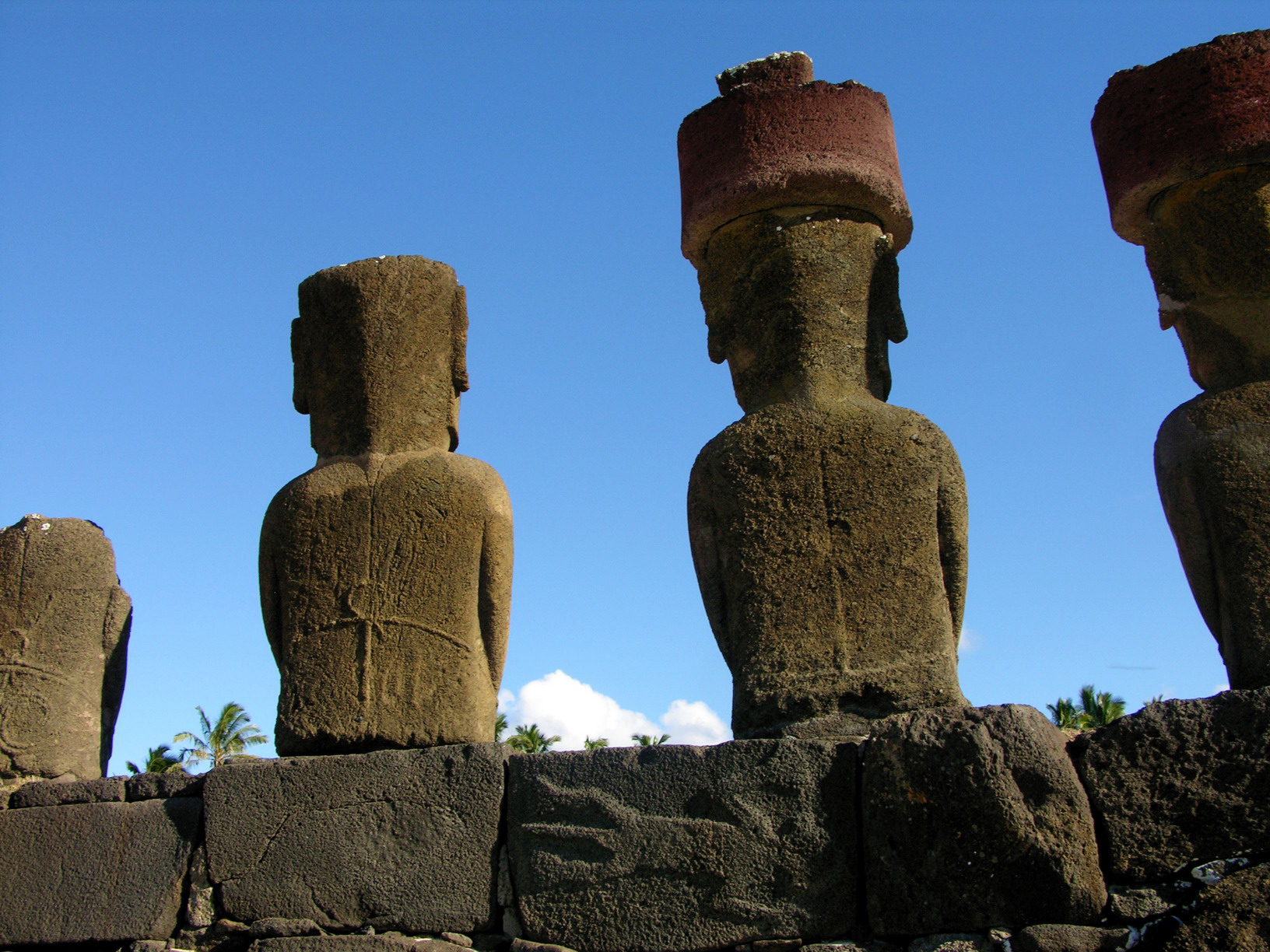
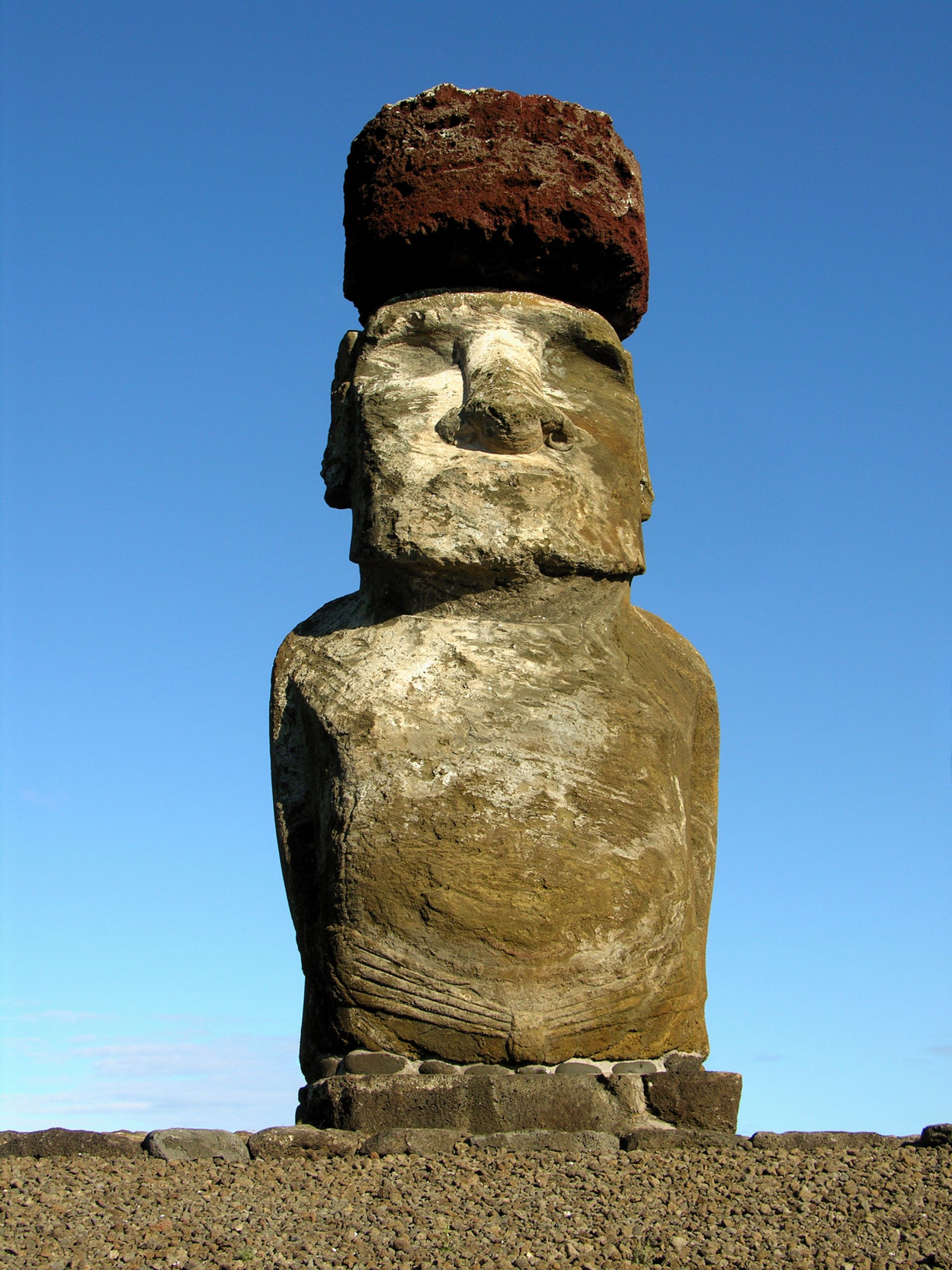
The red volcanic topknots on some of the figures are usually said to represent hair. For some reason the idea that they were crowns for important people never caught on. None of the moai have legs, with one exception. A figure excavated in the volcanic crater was found kneeling, rather like the Buddha. Perhaps it reflects an influence from India, or perhaps someone was simply looking for a new faith.
Researchers keep digging to find out what really happened. For tourists, of course, theories about UFOs and other marvels are far more interesting.
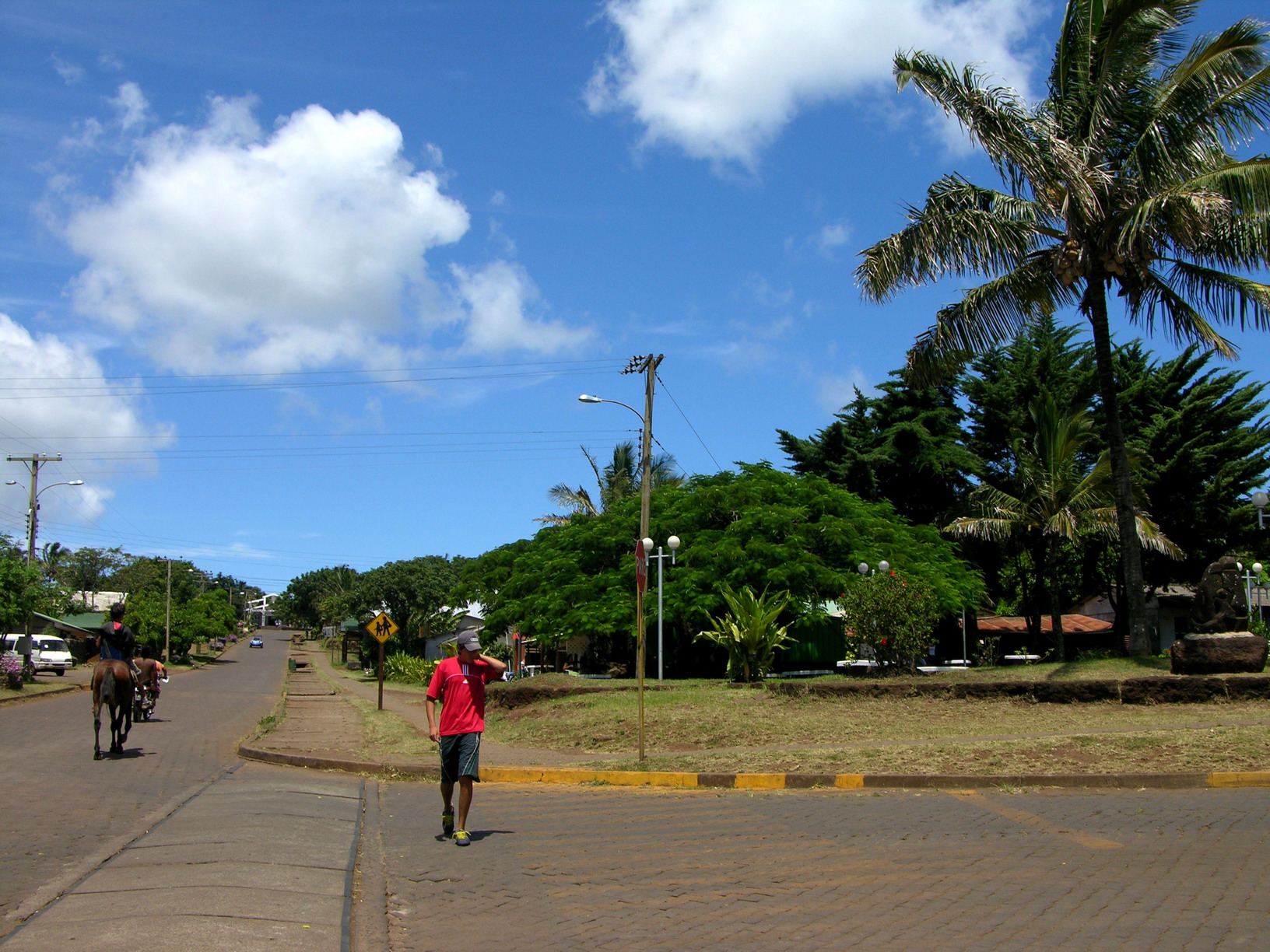
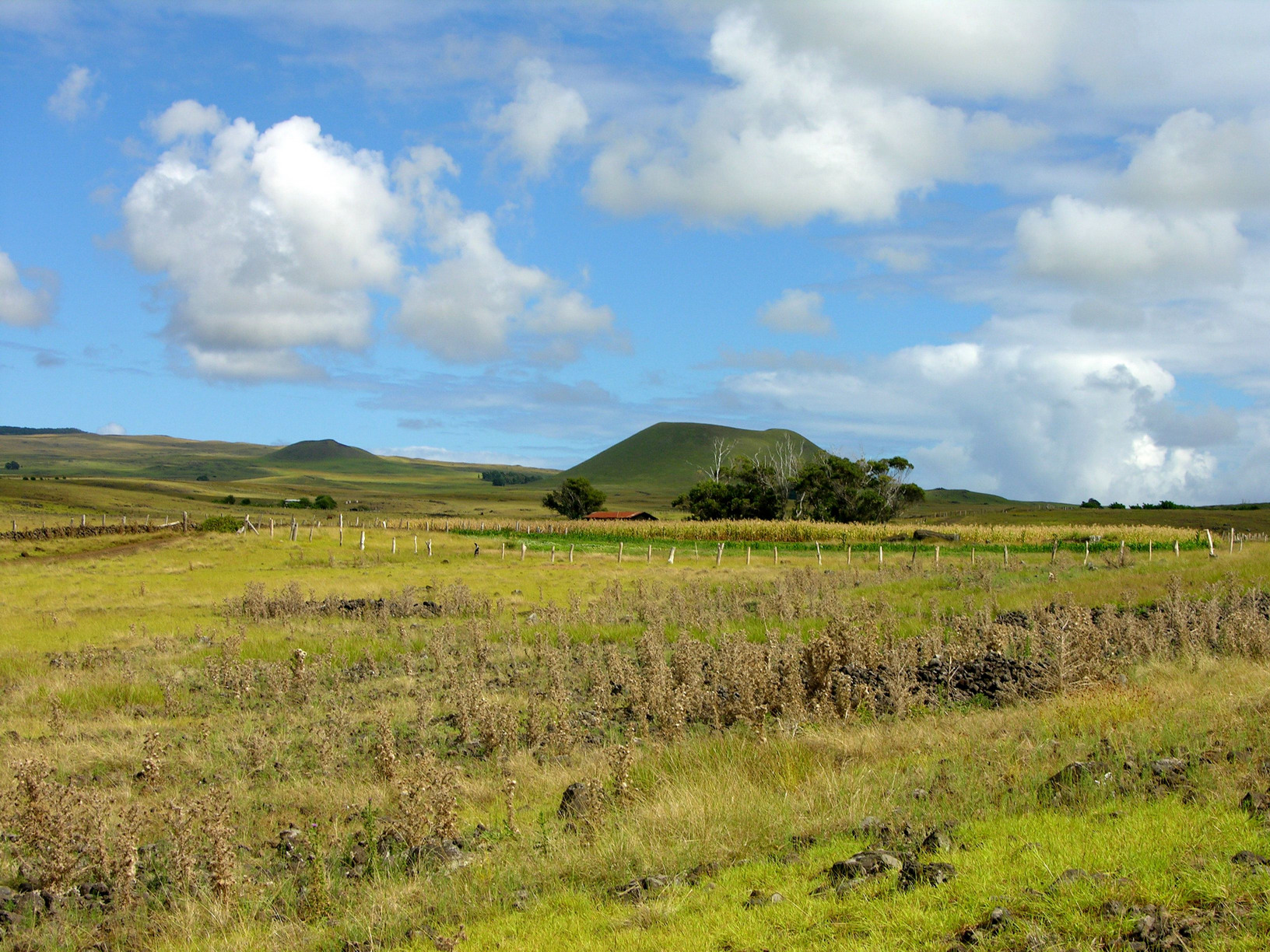
The island isn't large. You can walk around it in three days, about ninety kilometres in all. It isn't so easy in forty-degree heat, which has its advantages. Perhaps one visitor in ten thousand attempts the walk, so just a few kilometres out of Hanga Roa, the capital, the country becomes wild and empty. Almost all the islanders live in town. Elsewhere there are only a few isolated farmhouses.
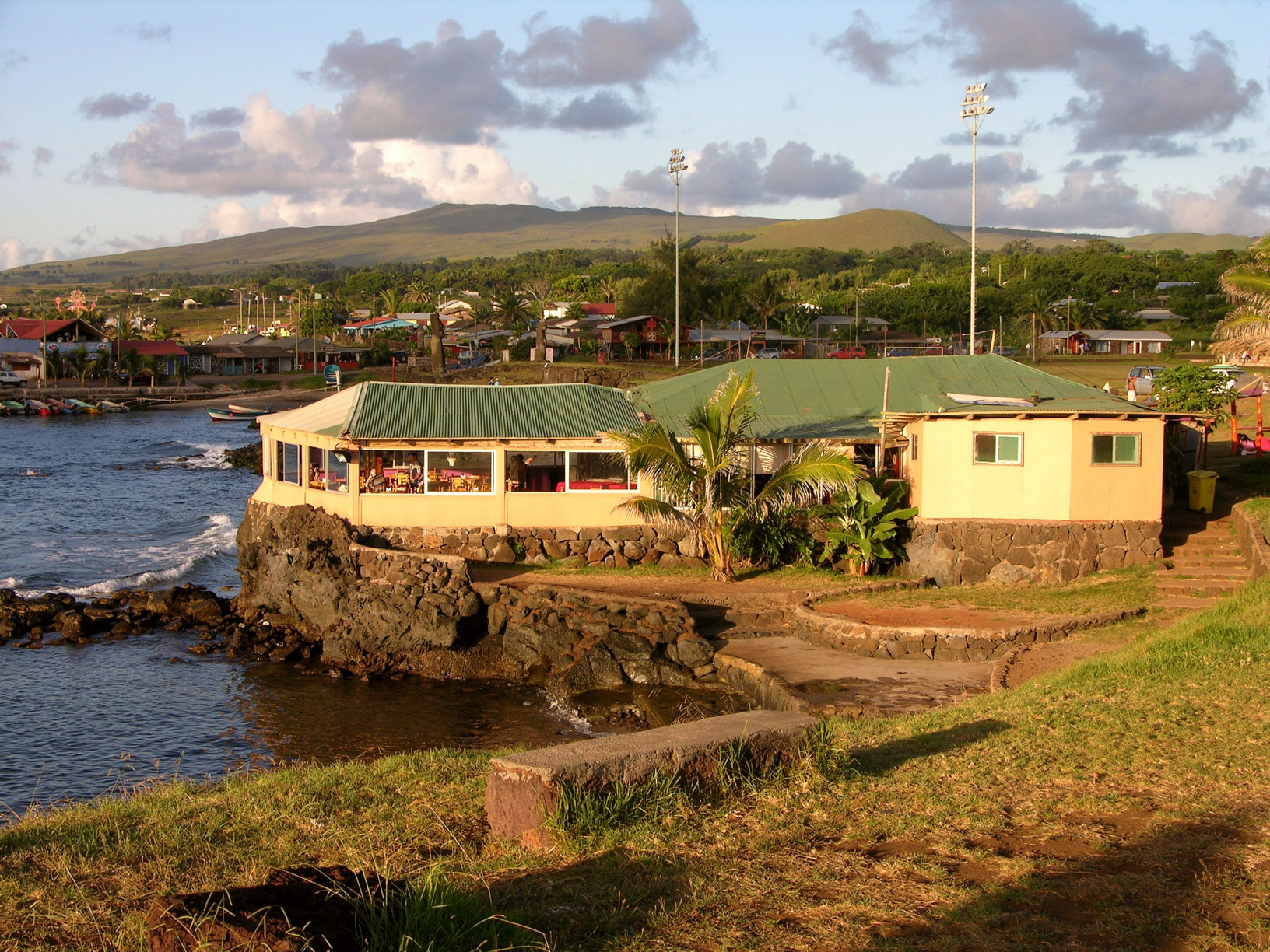
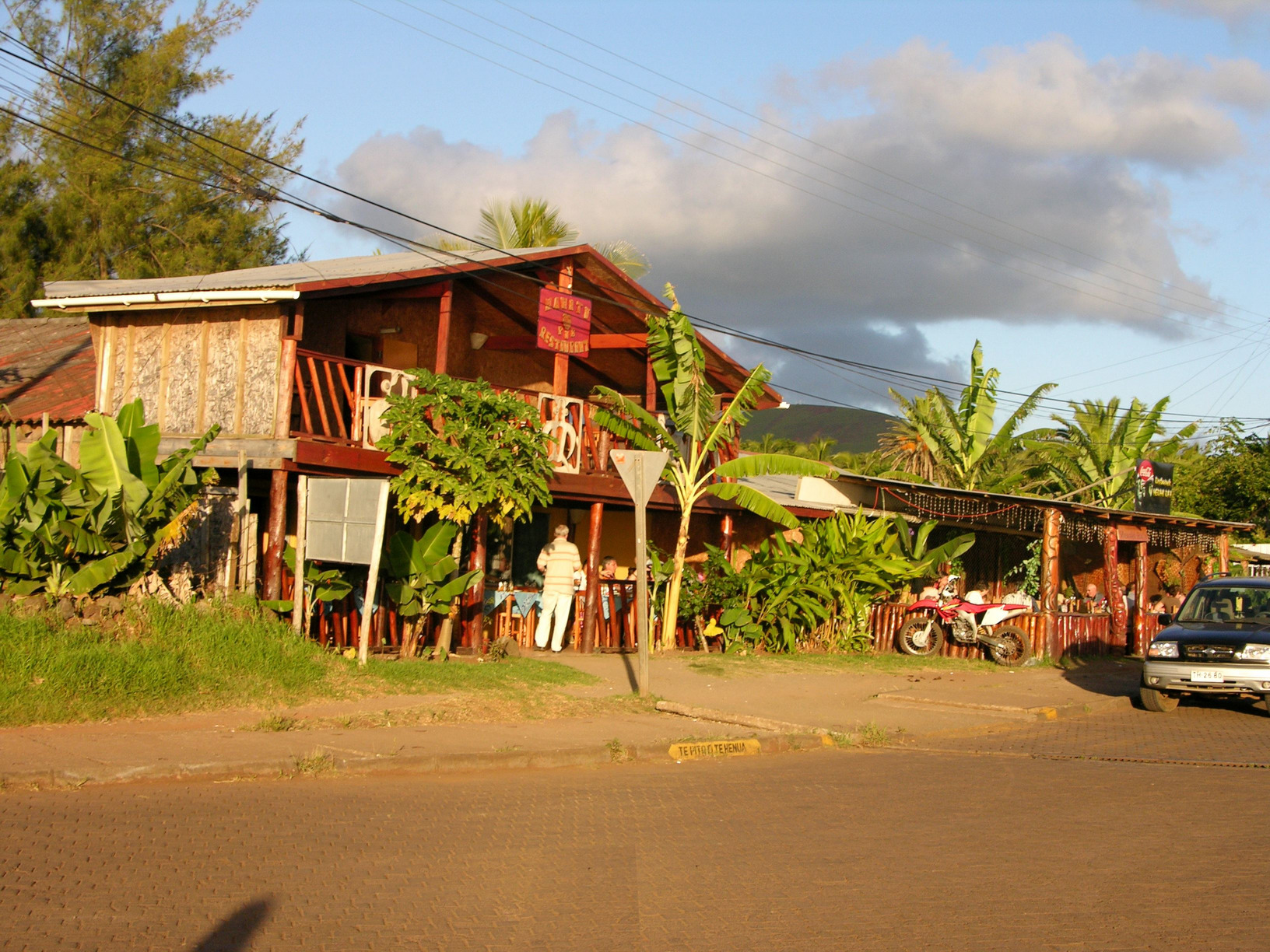
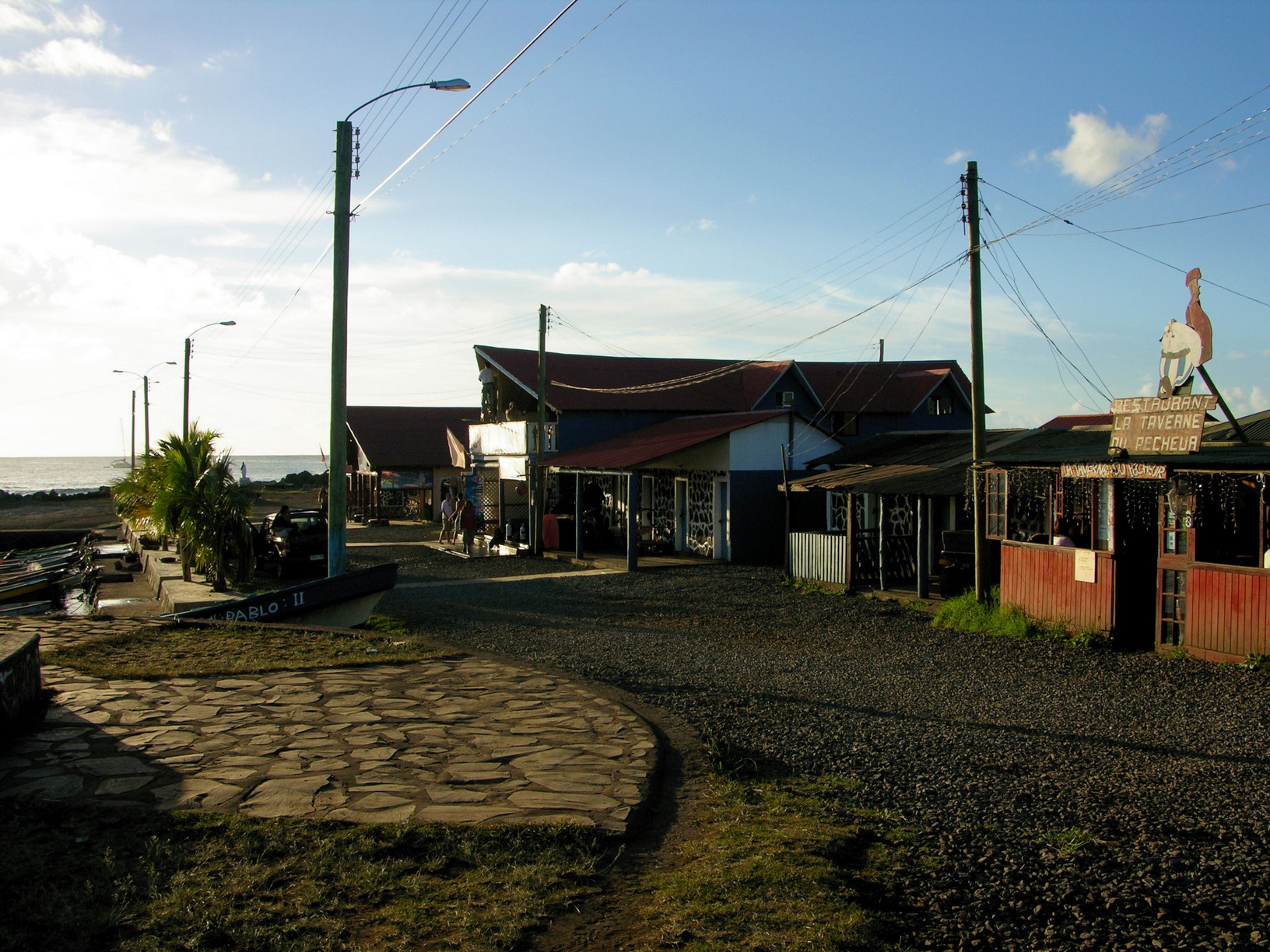
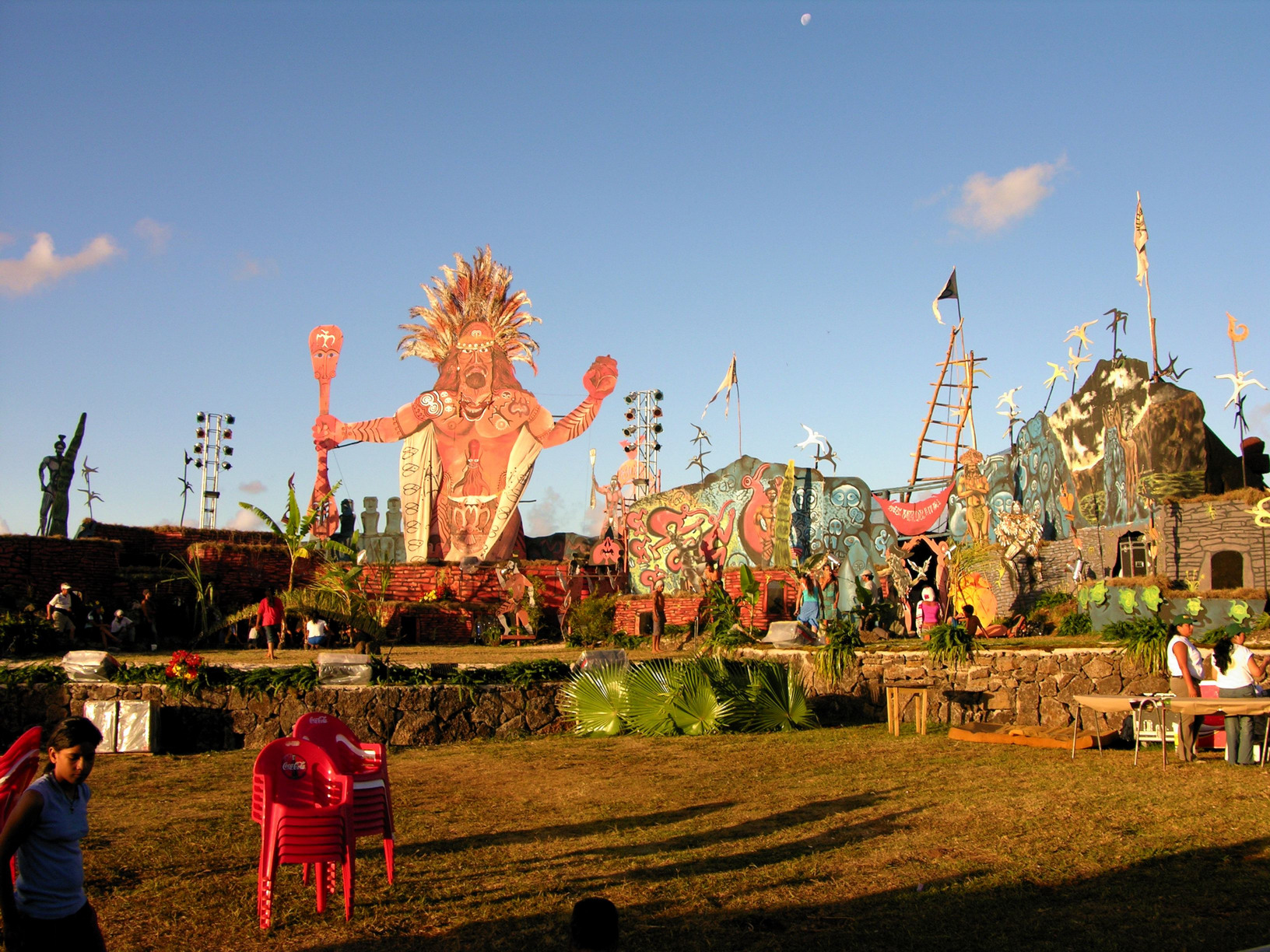
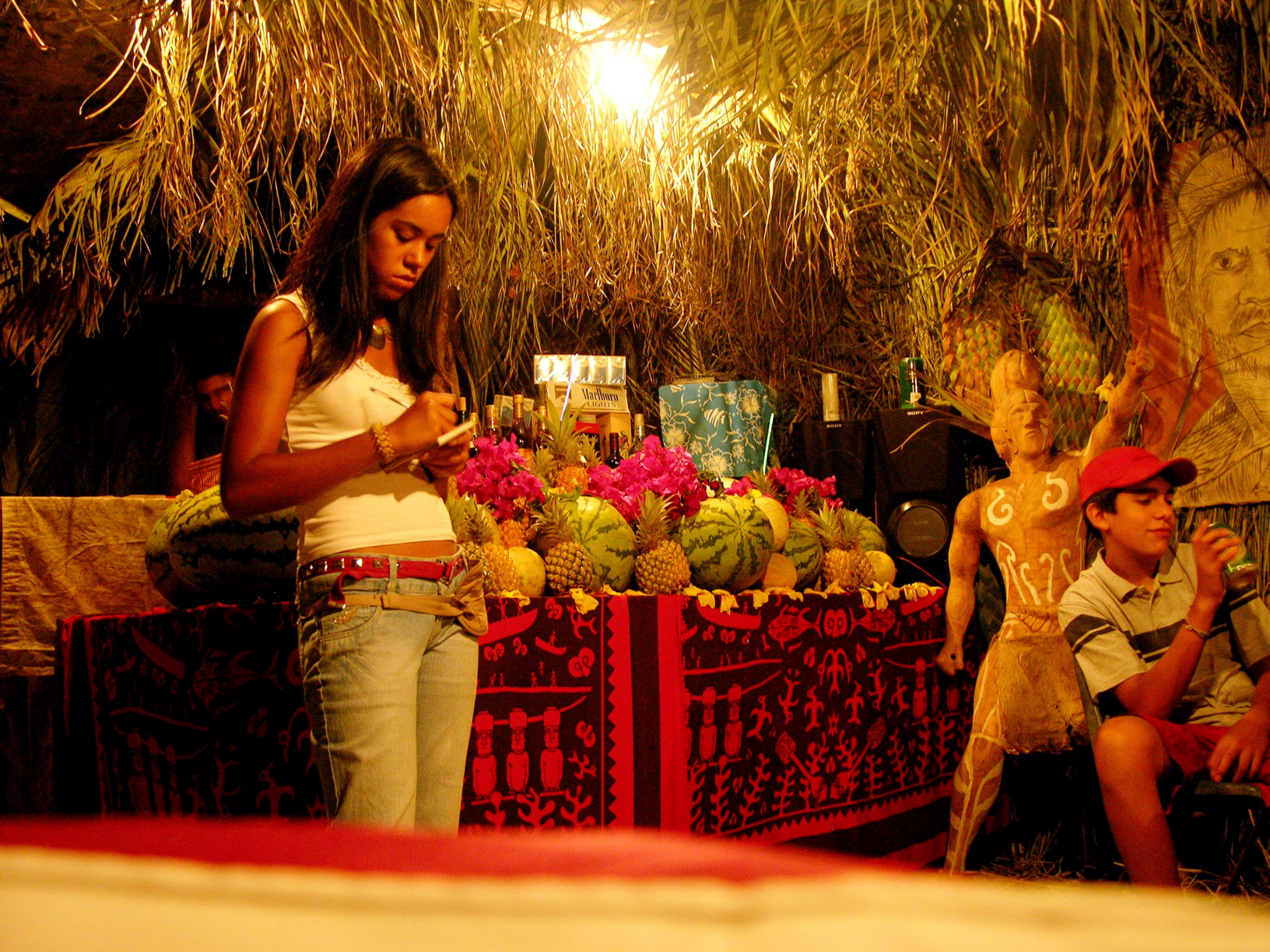
On arriving, we spent our first night at the Ana Rapu hotel by the sea (27°09.038′S, 109°26.117′W). The owner was looking for guests at the airport and we were happy with her price. She threw in a free ride to the hotel. We spent our first evening on the island walking around Hanga Roa, the capital. A local festival was in full swing. On an outdoor stage they acted out scenes from island life: how people carved moai, caught fish and got to know girls. They put it all on with good lighting and sound. Next door, in a reed café, you could eat traditional or modern food. The festival ran all week and many people had come especially for it. One evening was enough for us. Let the folklore people get on with it. We wanted to get outdoors.
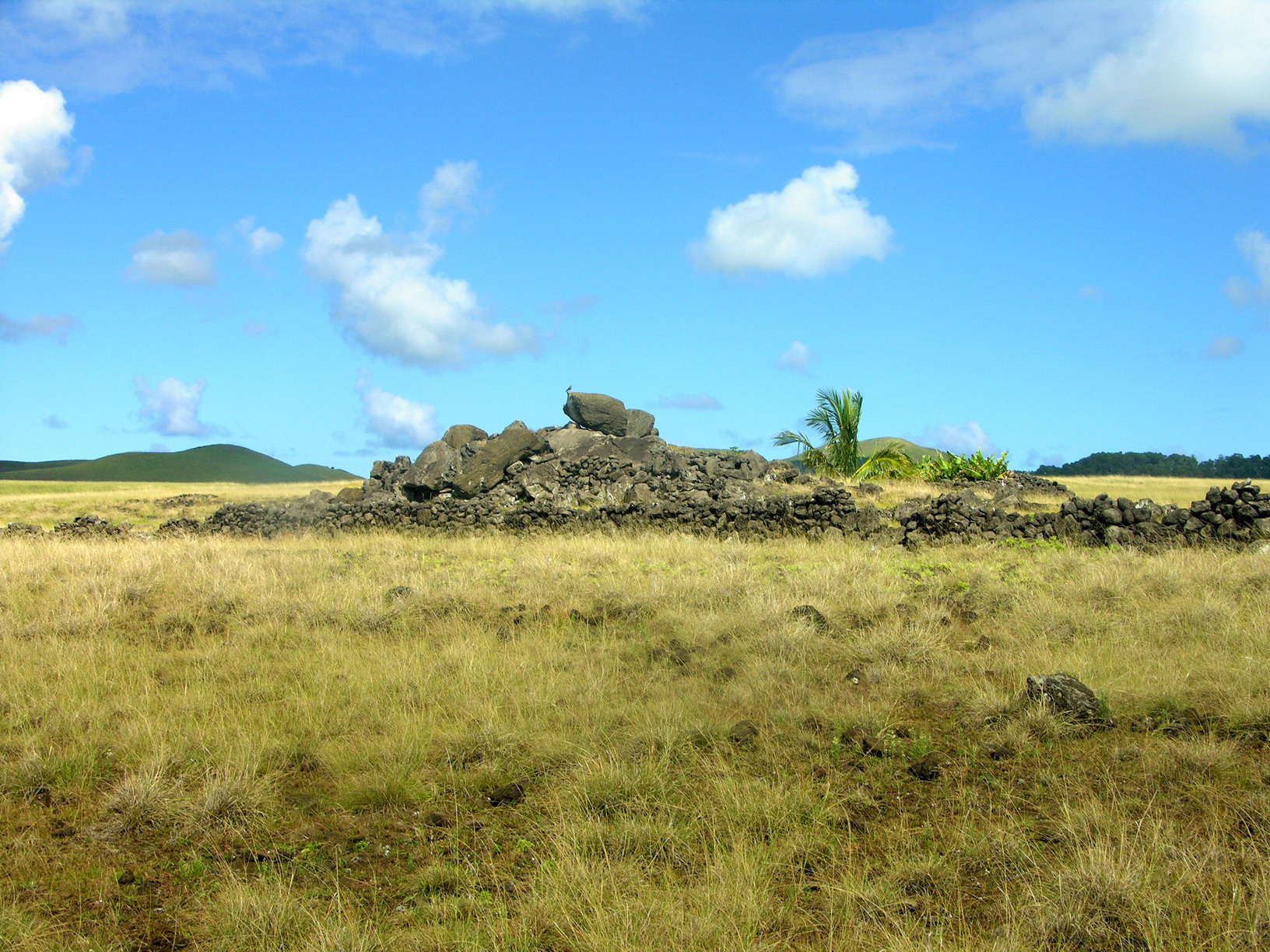
We set out clockwise, heading north from Hanga Roa. There were lots of ahu with moai marked on our map. In reality most were so badly ruined that all we could see was a ridge of stones. As well as the platforms with their famous figures we came across traces of villages. There had once been a substantial population and people had lived all around the coast. Now it was all abandoned and only the foundations remained. The islanders' huts were rather unusual. They cut rectangular blocks out of volcanic tuff, then drilled holes in their sides for a wooden frame that has long since rotted away. The foundation was shaped like a canoe. Their stonework was so good that when we first found foundation blocks lying about here and there, we took them for aerated concrete from the island supermarket. Then we read our book and realised they were the islanders' own handiwork.
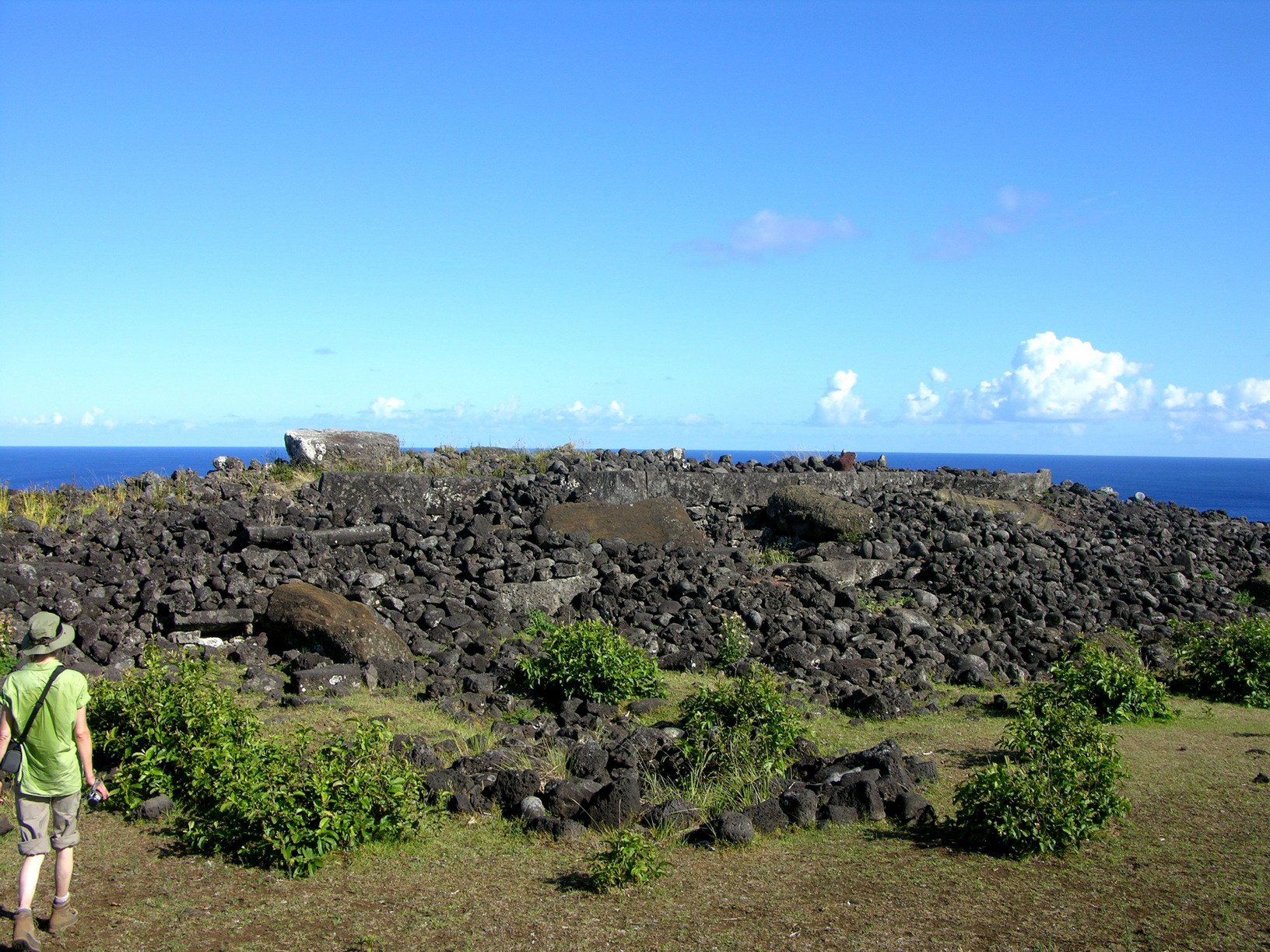
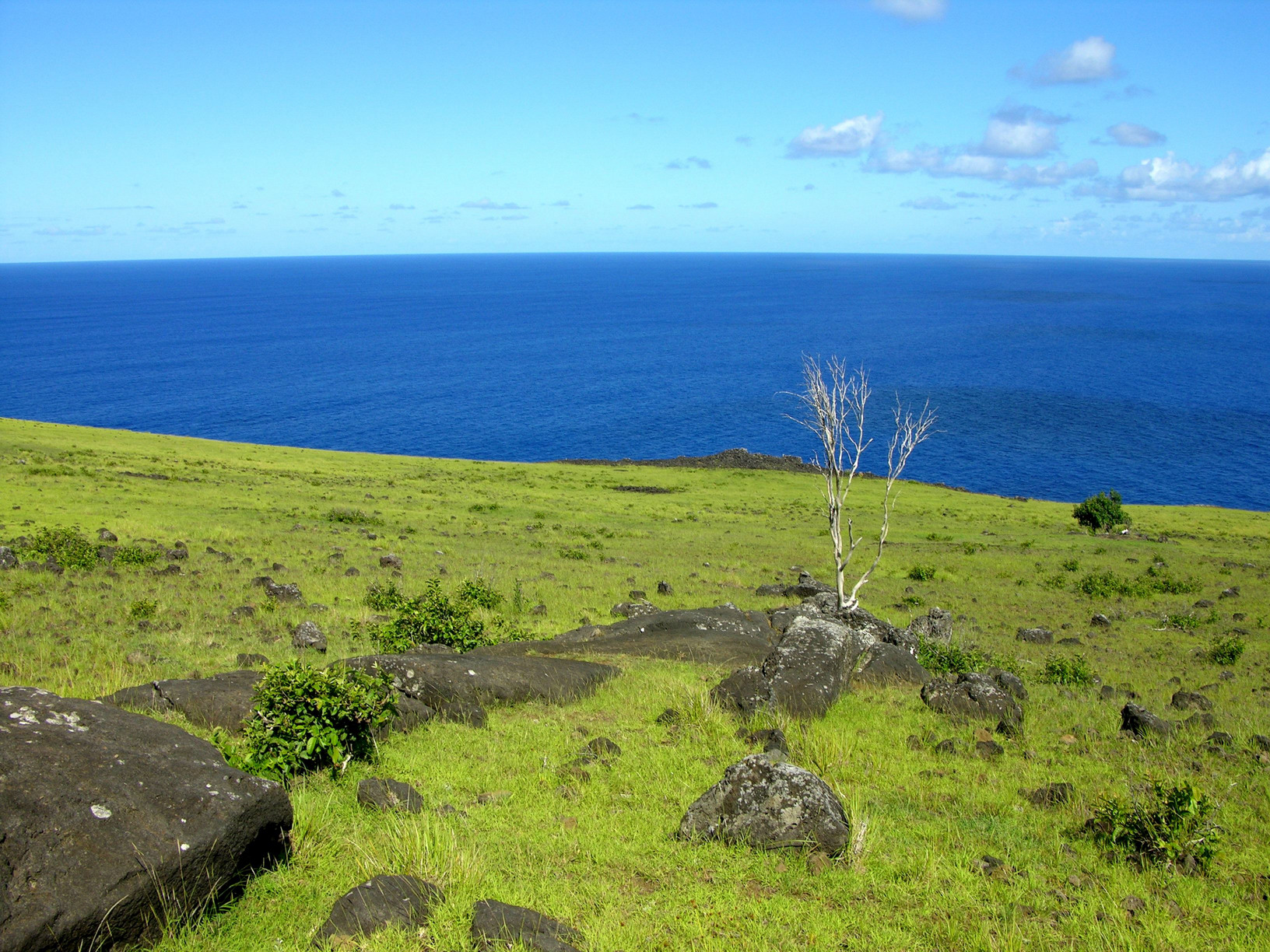
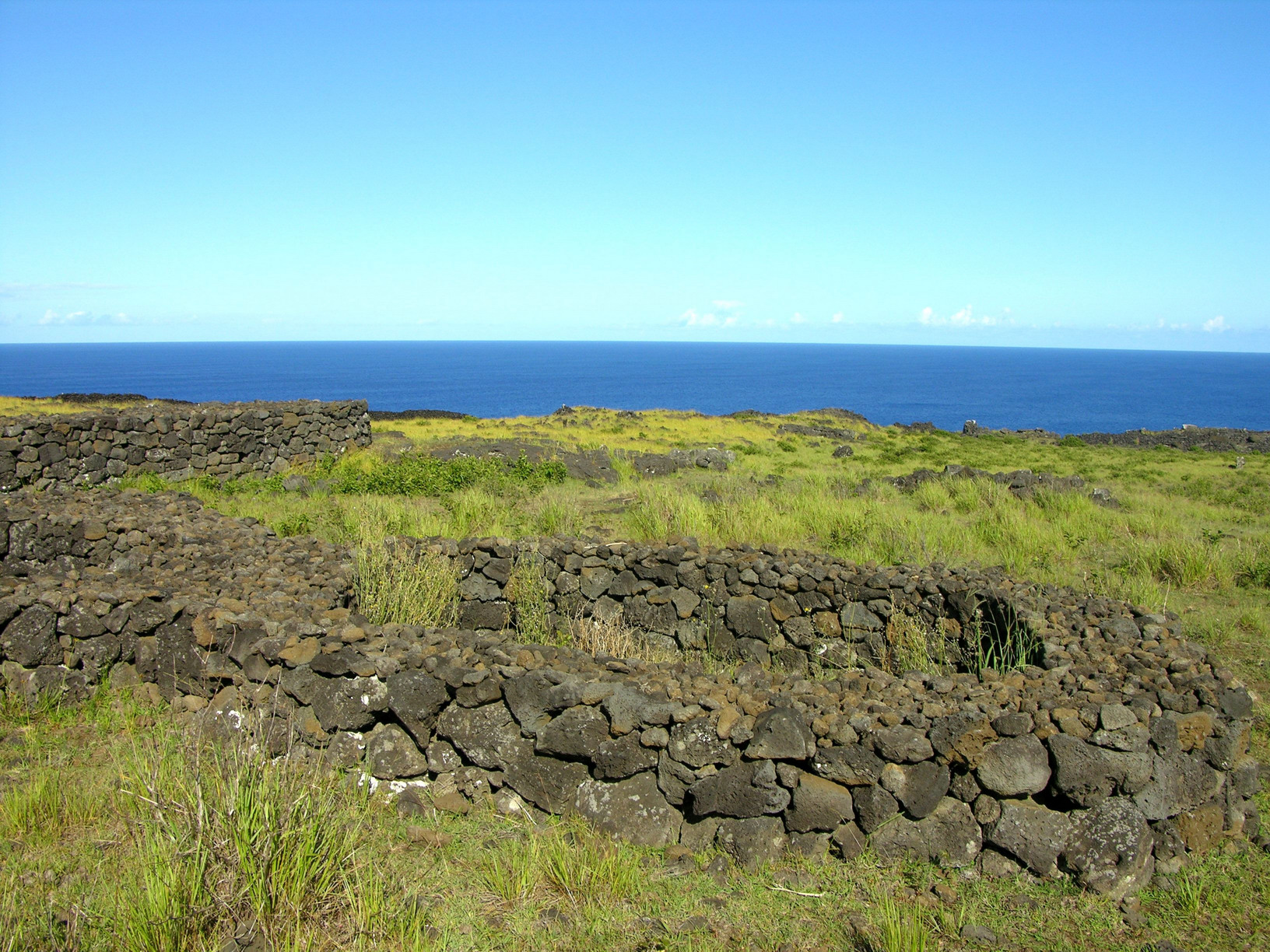
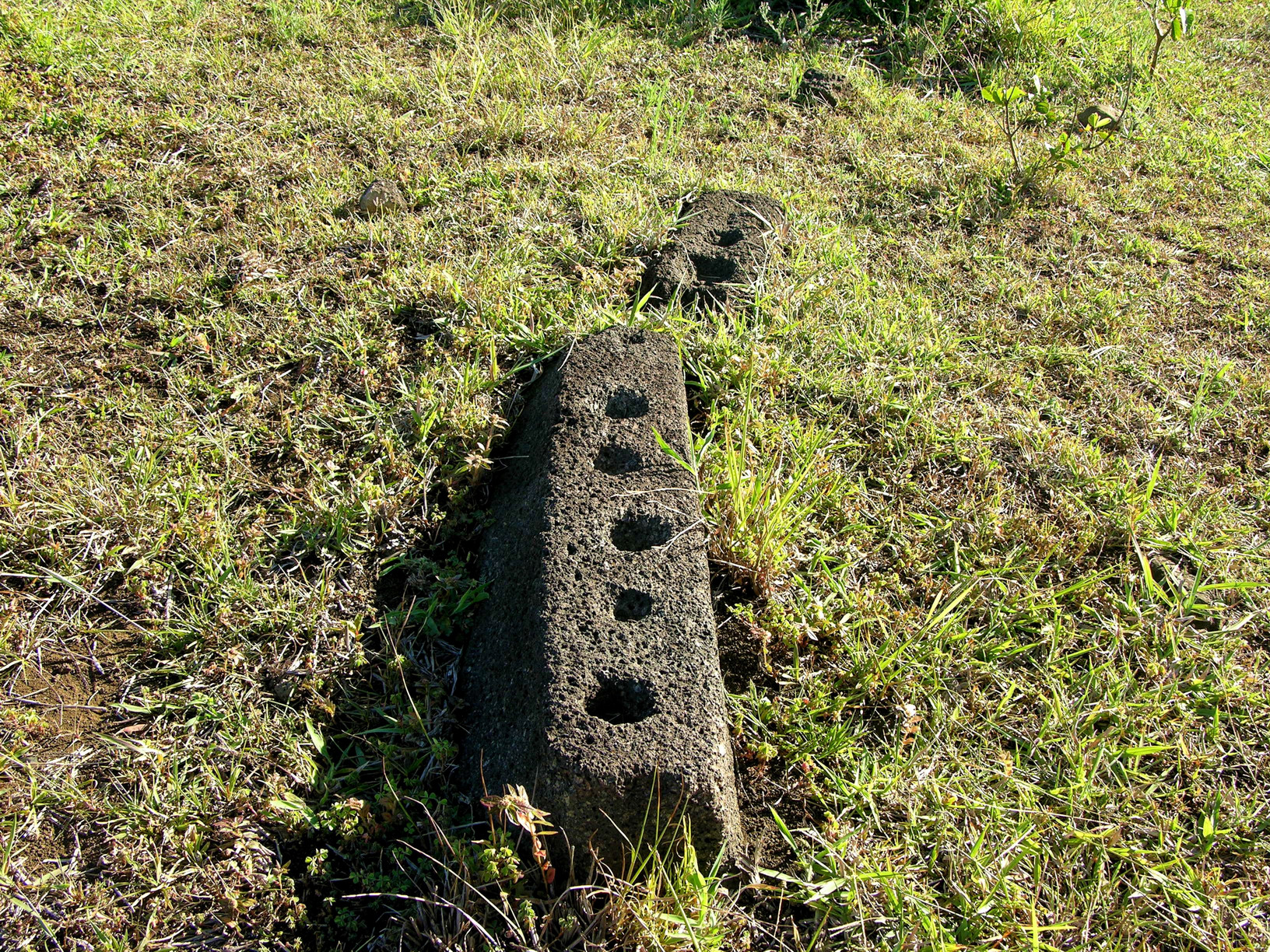
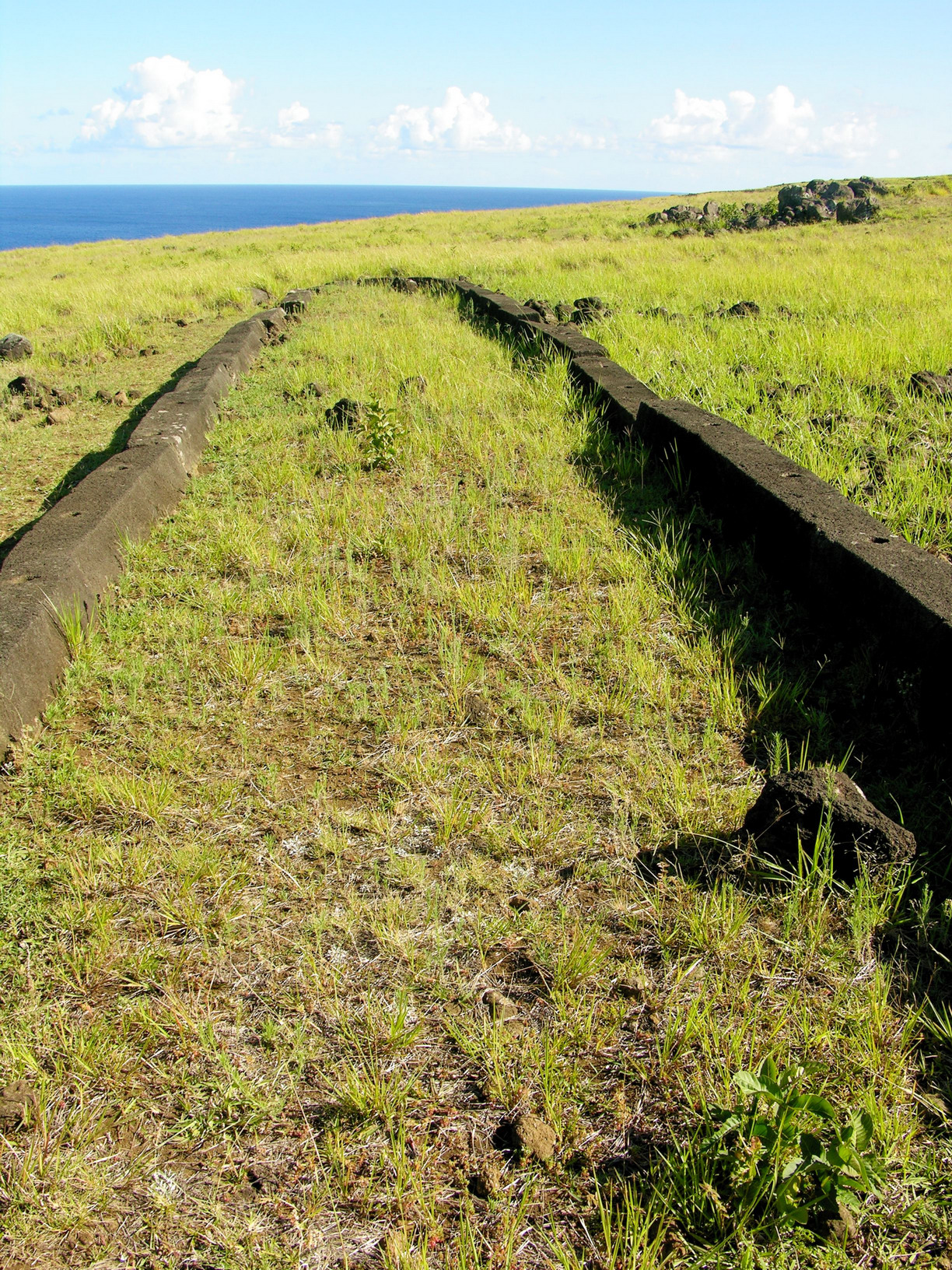
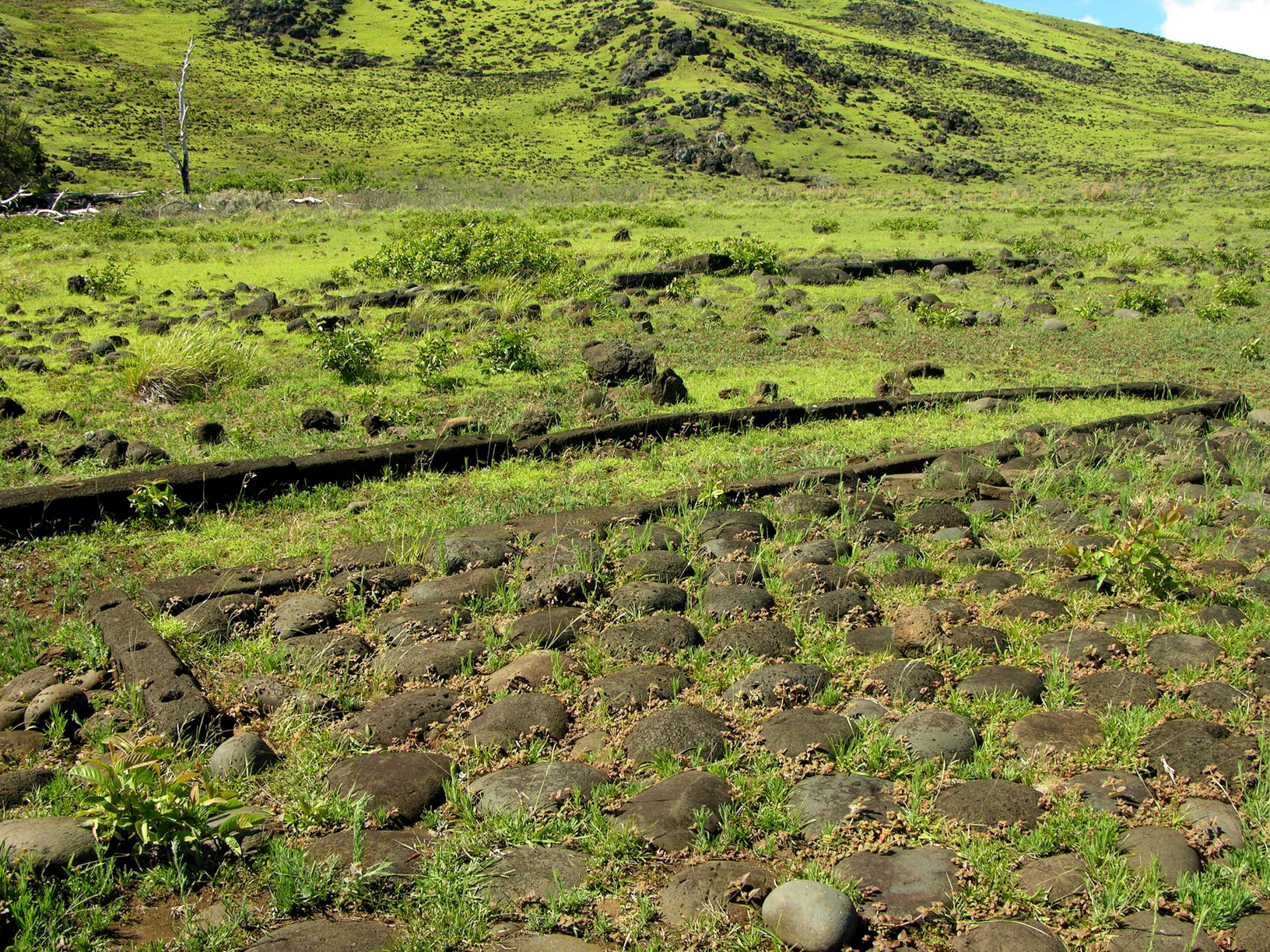
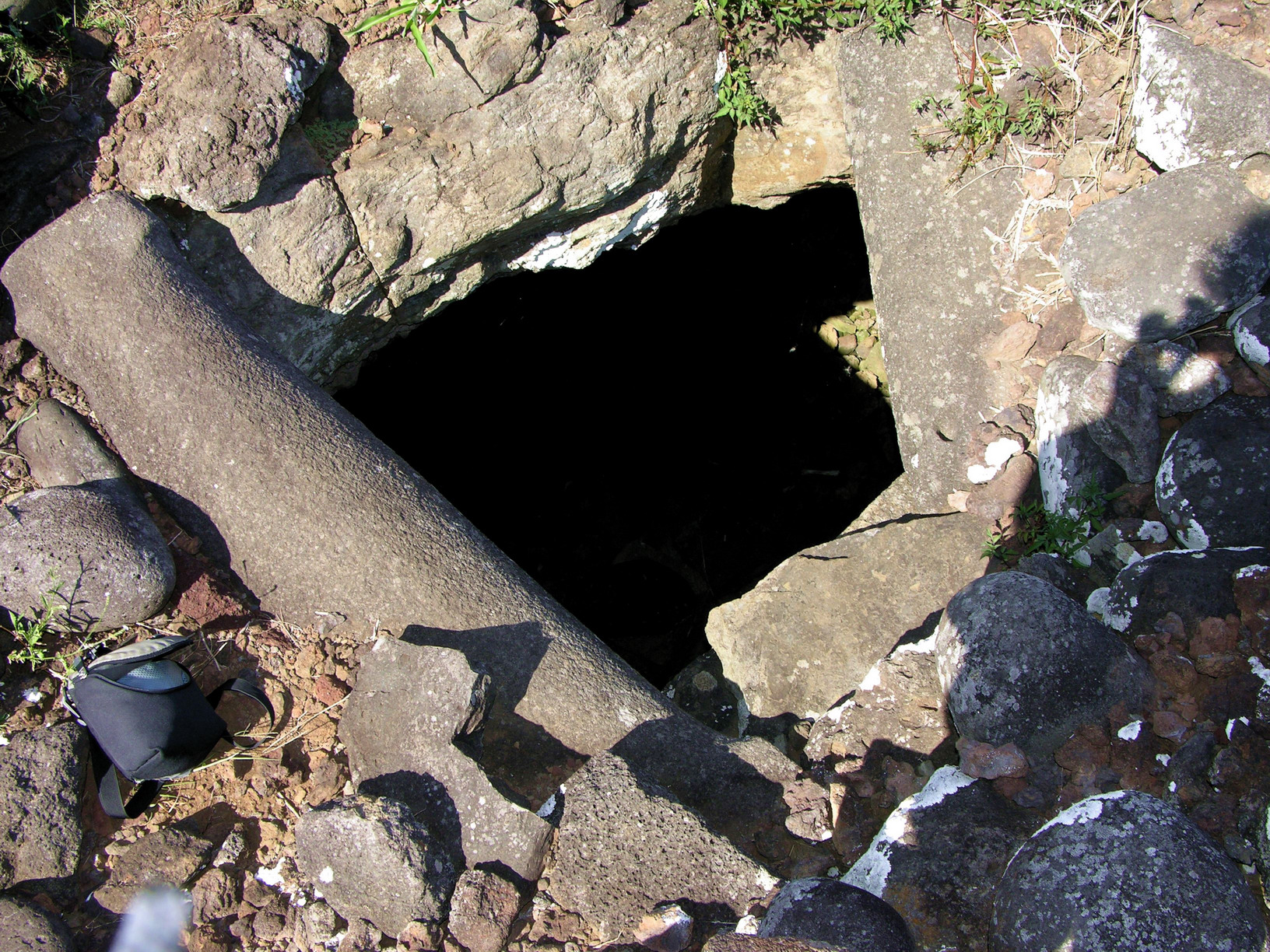
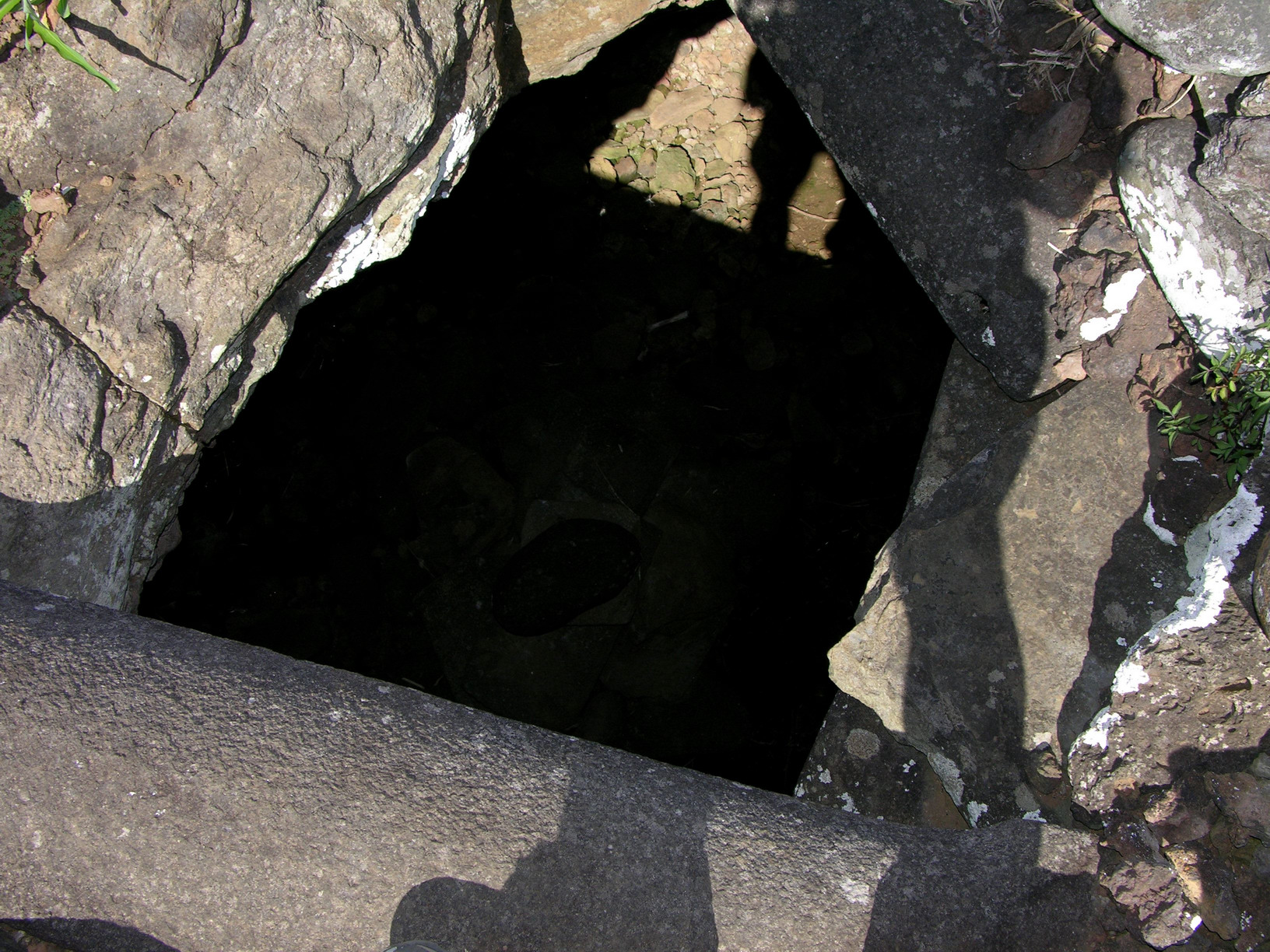
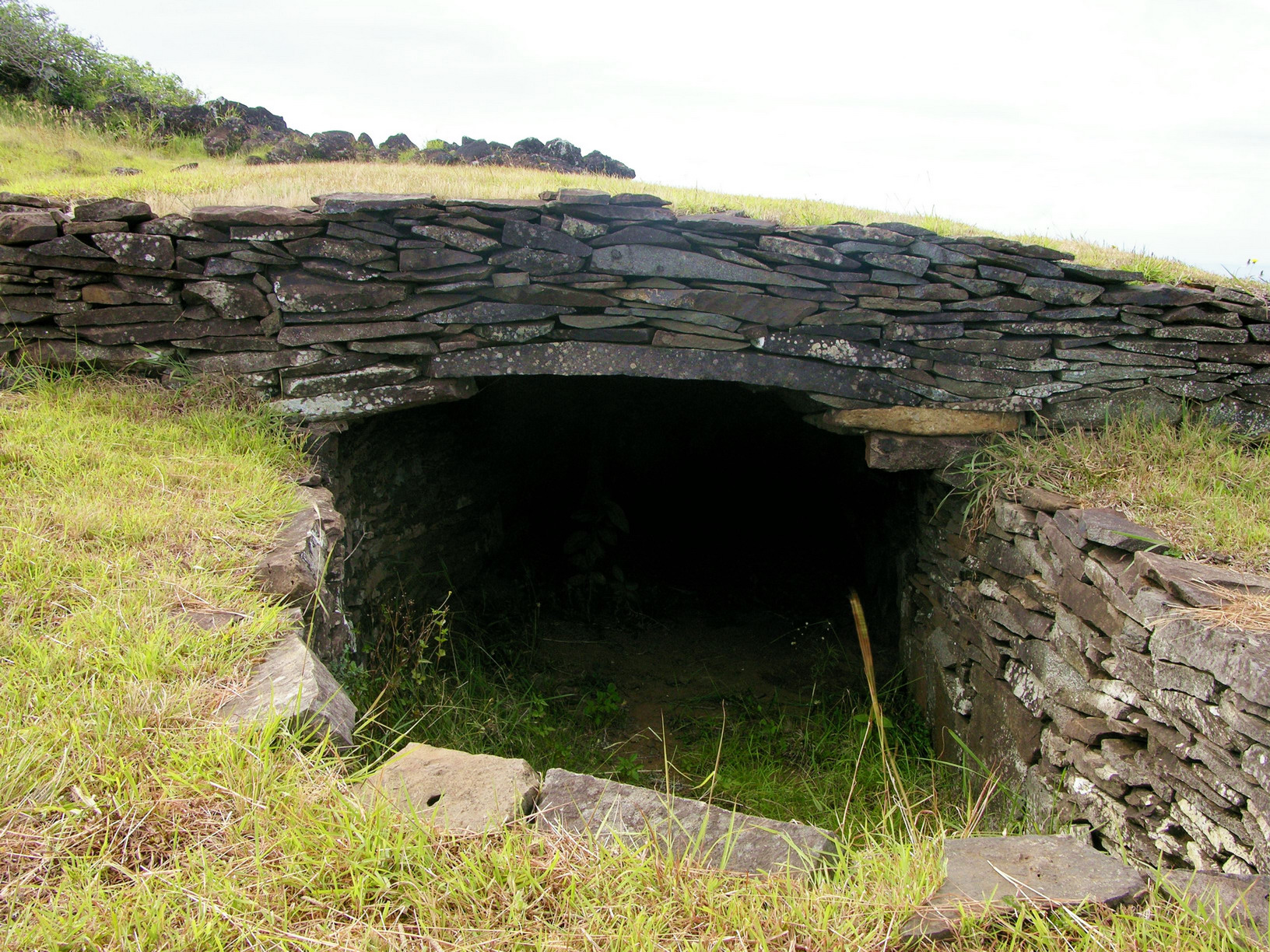
In addition to abandoned houses there are wells and cellars with stone vaults. Seen from ground level they look like an open hatch.
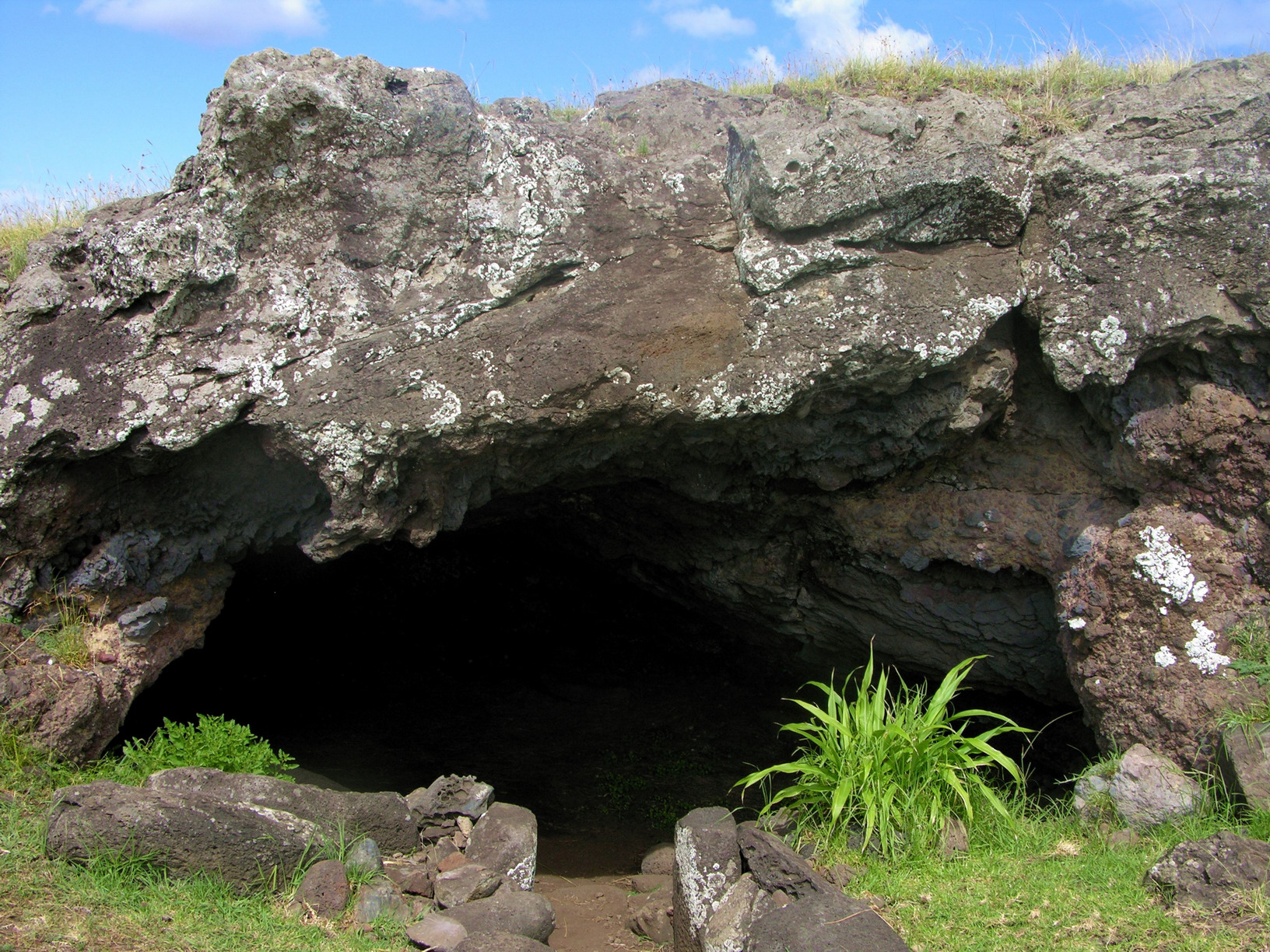
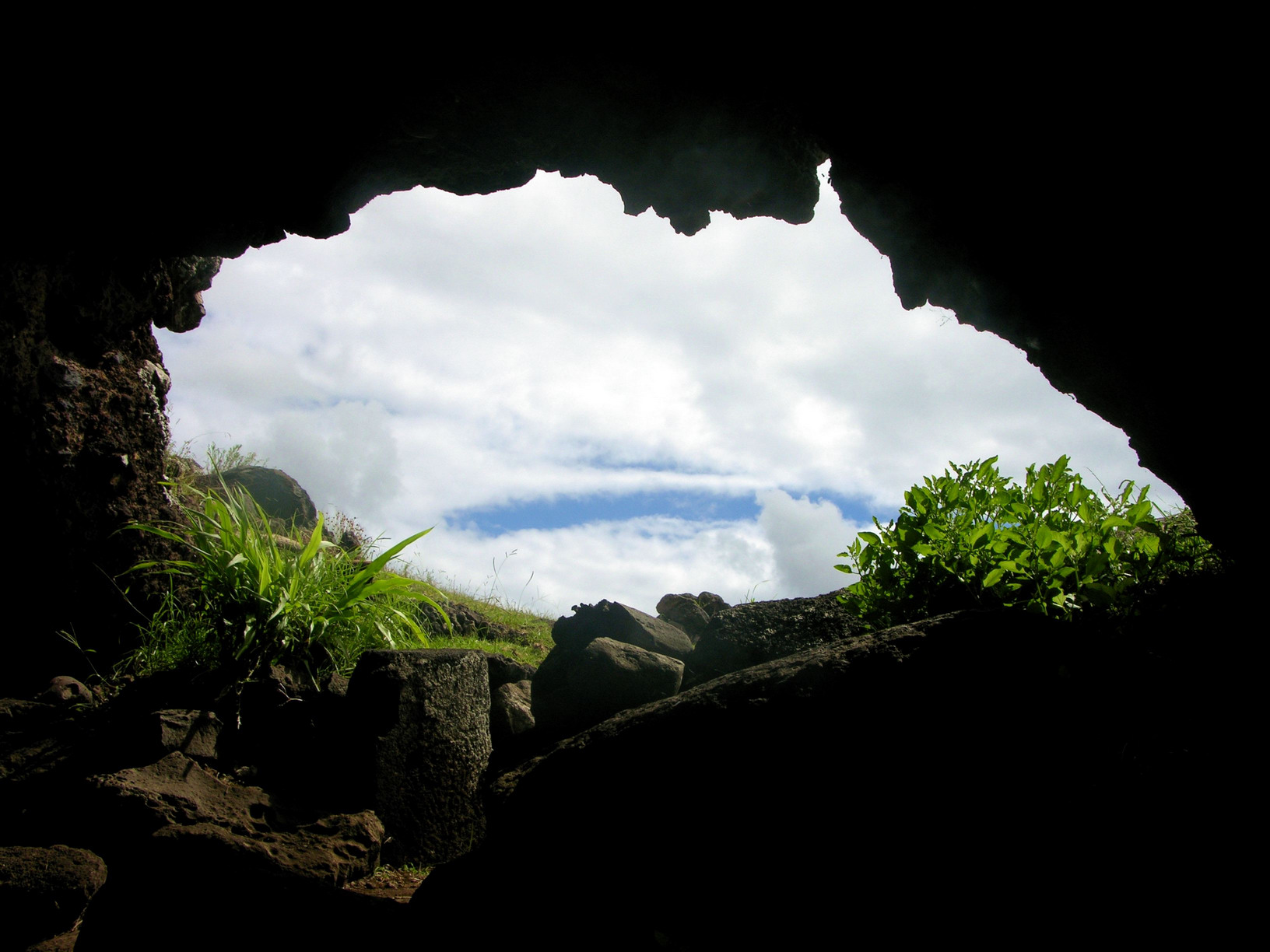
The first few kilometres are on an unpaved road that any car could use. It ends at Ahu Tepeu, where the tour groups come. We met one of them. The guide, a shrill woman with a trained voice, was giving her group a load of nonsense and constantly telling them off: they were standing in the wrong place, looking the wrong way. We got an earful too, apparently for not coming in by the proper path.
How good it was to be on our own together. Let the guide shout. She couldn't catch us. We could take each other's hand and go wherever we pleased. Luckily we still live in a world where there aren't fences, guards and orders everywhere.
The map shows a four-wheel-drive road along the northern end of the island, but on the ground it doesn't exist. Even getting through here by bike would be hard going. You can hire bicycles pretty much anywhere on Easter Island, by the way, at 30,000 pesos a day.
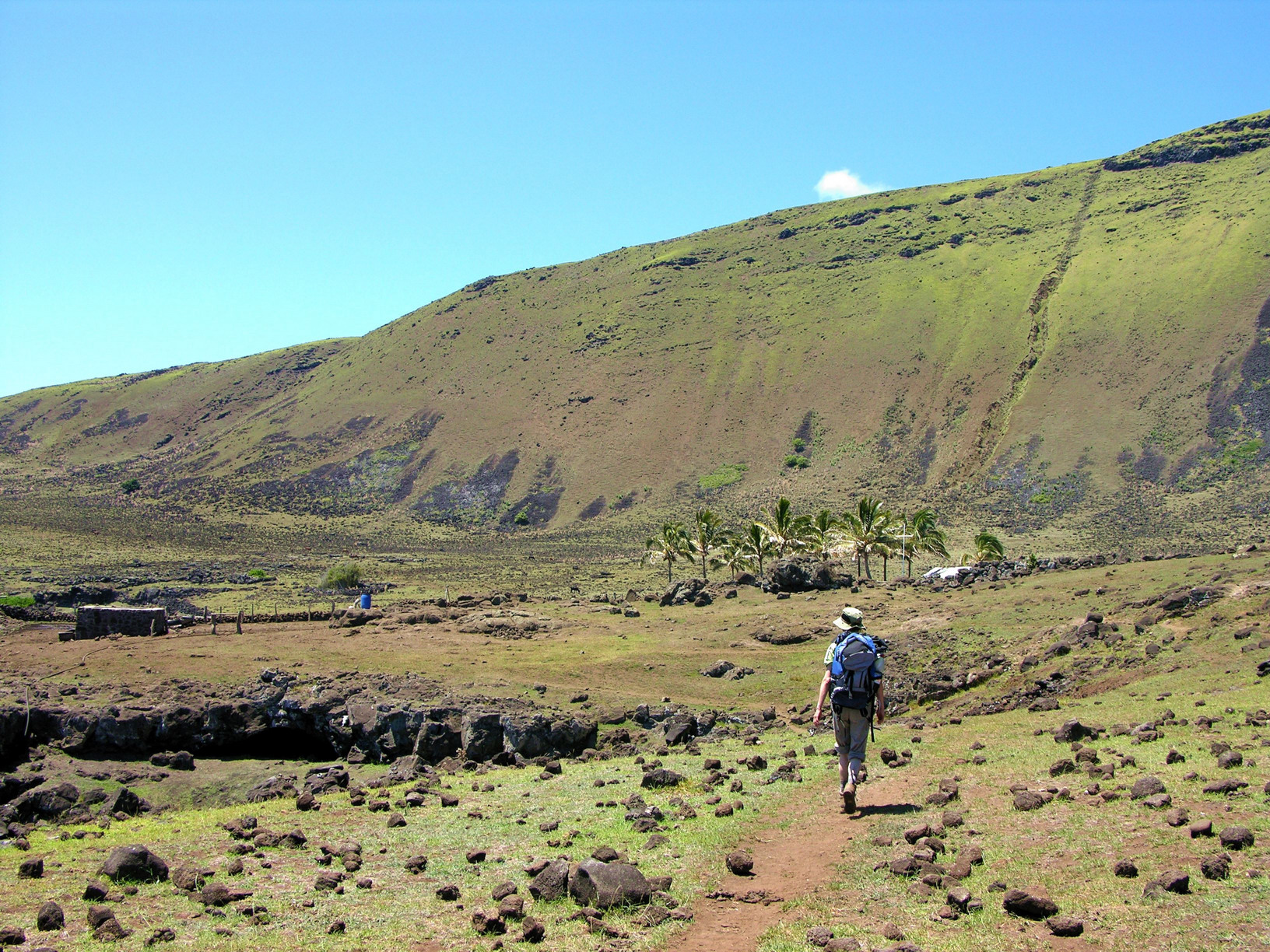
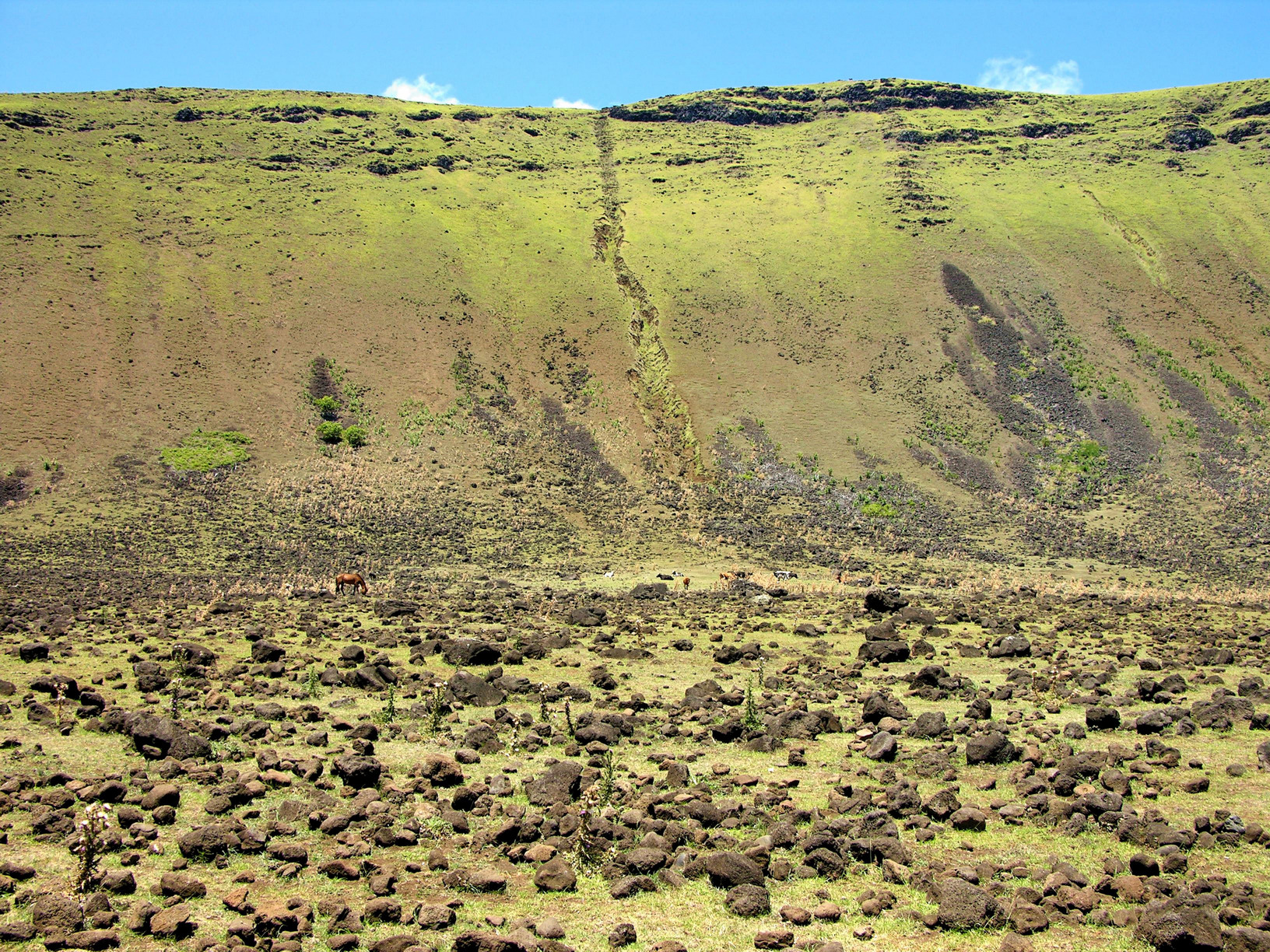
We were walking and didn't care what state the road was in. A bigger problem was that the springs marked on the map were nowhere to be found. At the places indicated there really were dry streambeds, and now and then a banana plant poking out among the roots, a sure sign of water close by. But we couldn't find so much as a puddle. And you can't shift the boulders around a banana plant with your bare hands. It was disheartening. We were almost out of water and the heat was unbearable. Unlike in a desert, it was humid too. Thunderclouds gather towards evening, but in February the sun here is directly overhead.
Near the northern tip of the island a farmer lives in a little stone hut (27°03.339′S, 109°22.403′W). Naturally he had water. There was a trough for the animals. One catch: the water was salty. Not seawater, of course, but it tasted awful. The sheep probably didn't mind, but it wasn't for humans to drink. The farmer may have had another source for drinking water, but the house was shut and there was nobody to ask.
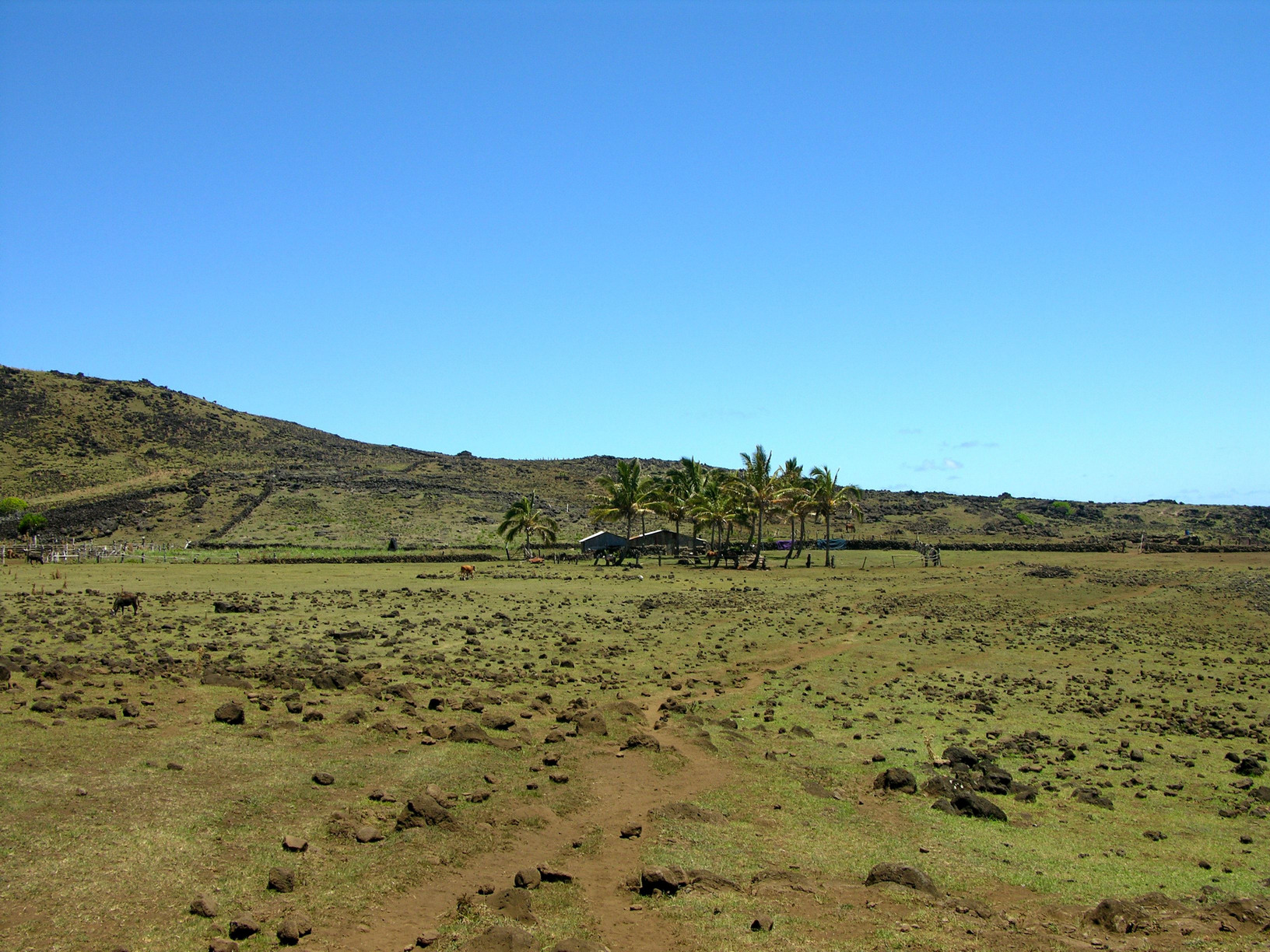
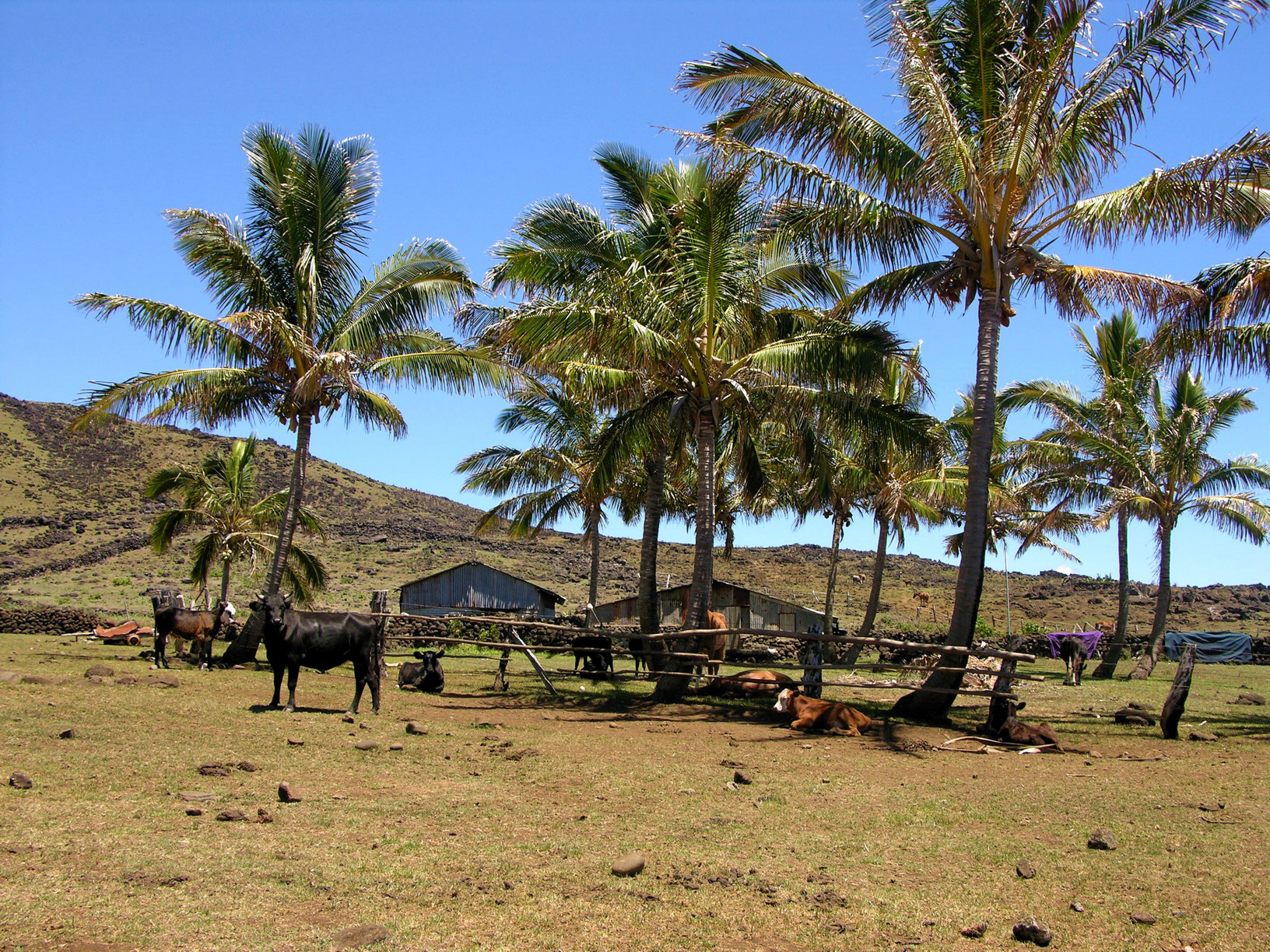
Now we had no water at all. As soon as we saw the source we'd drunk what little we had left to free up the bottles.
We had to fill them with the salty water.
At around two in the afternoon we decided to stop for lunch. You shouldn't try to move around near midday in this climate. You go through too much energy and water. A coconut palm appeared at just the right moment. A coconut palm means nuts, nuts mean water, and a palm also means shade. The wretched thing was high, though. The islanders can shin up a palm as nimbly as monkeys, and they've been practising since they were kids. The upshot was that I couldn't reach the coconuts.
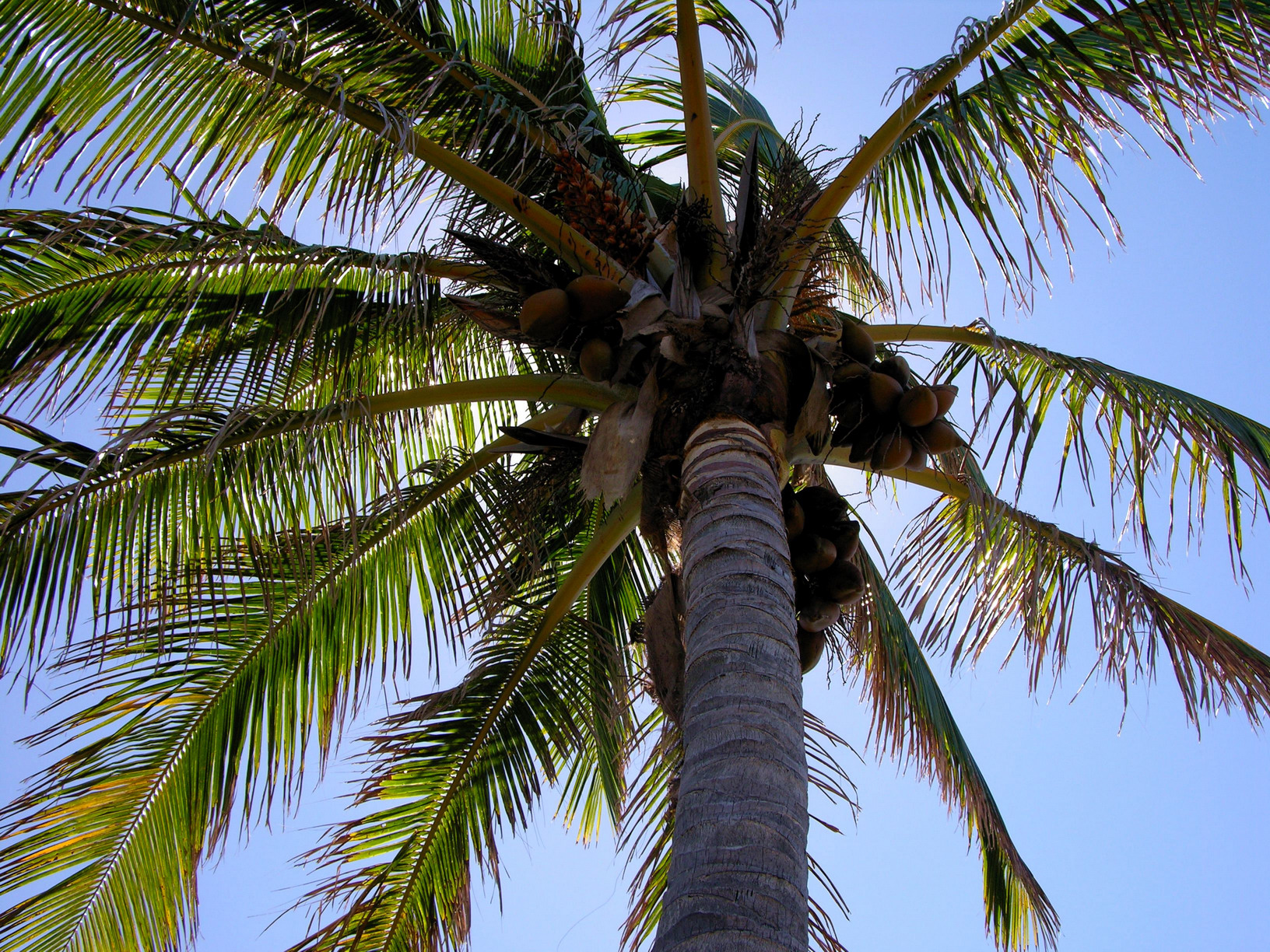
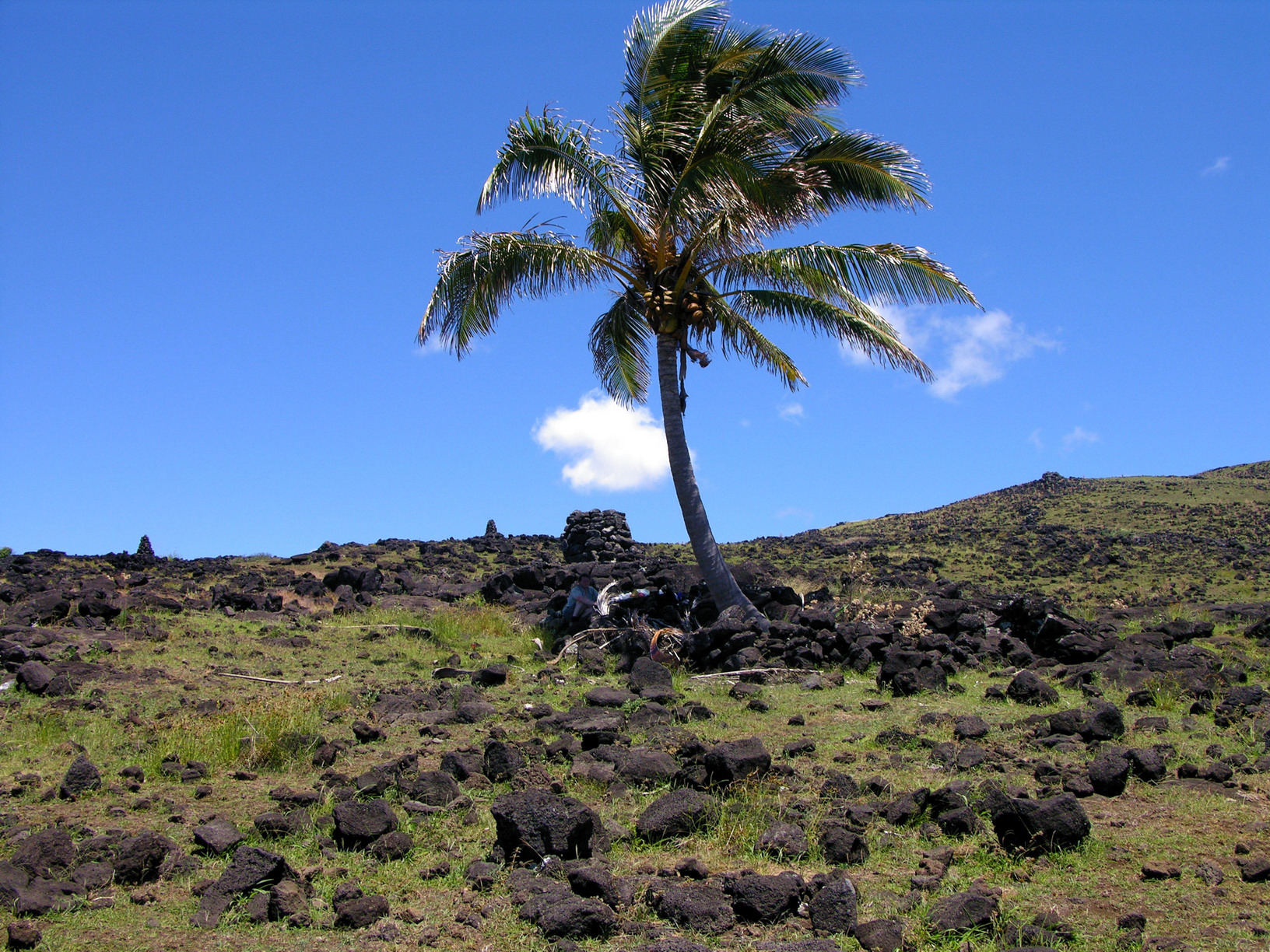
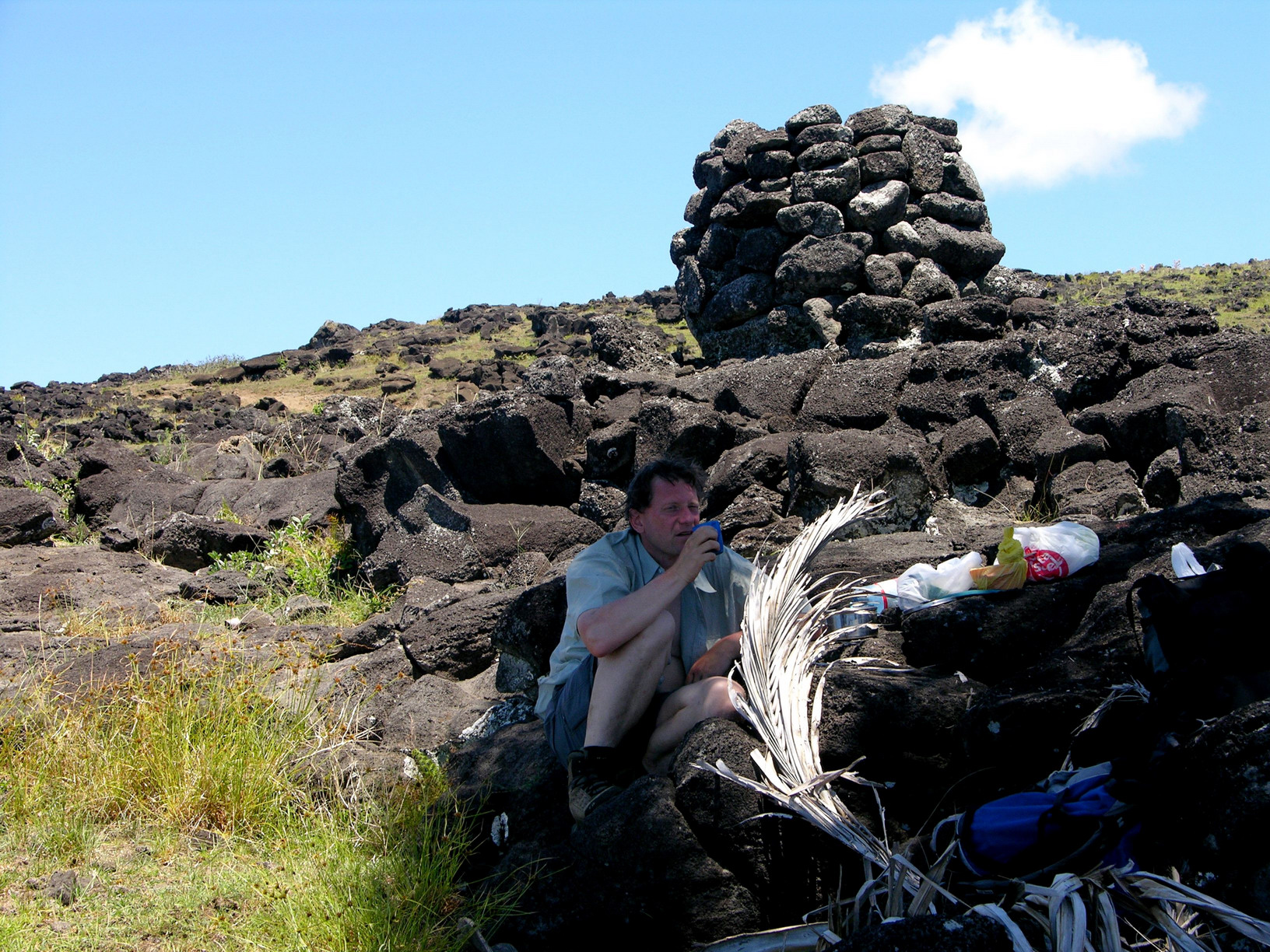
We had to make tea with salty water. It tasted awful. Better to go for a swim and cool off. The shore was rocky. Getting to the sea over sharp lava boulders isn't easy, especially in the daytime. Black lava under a tropical sun heats up to more than a hundred degrees. You can't grab hold of it or sit on a little rock. I had to get undressed after I was already in the water.
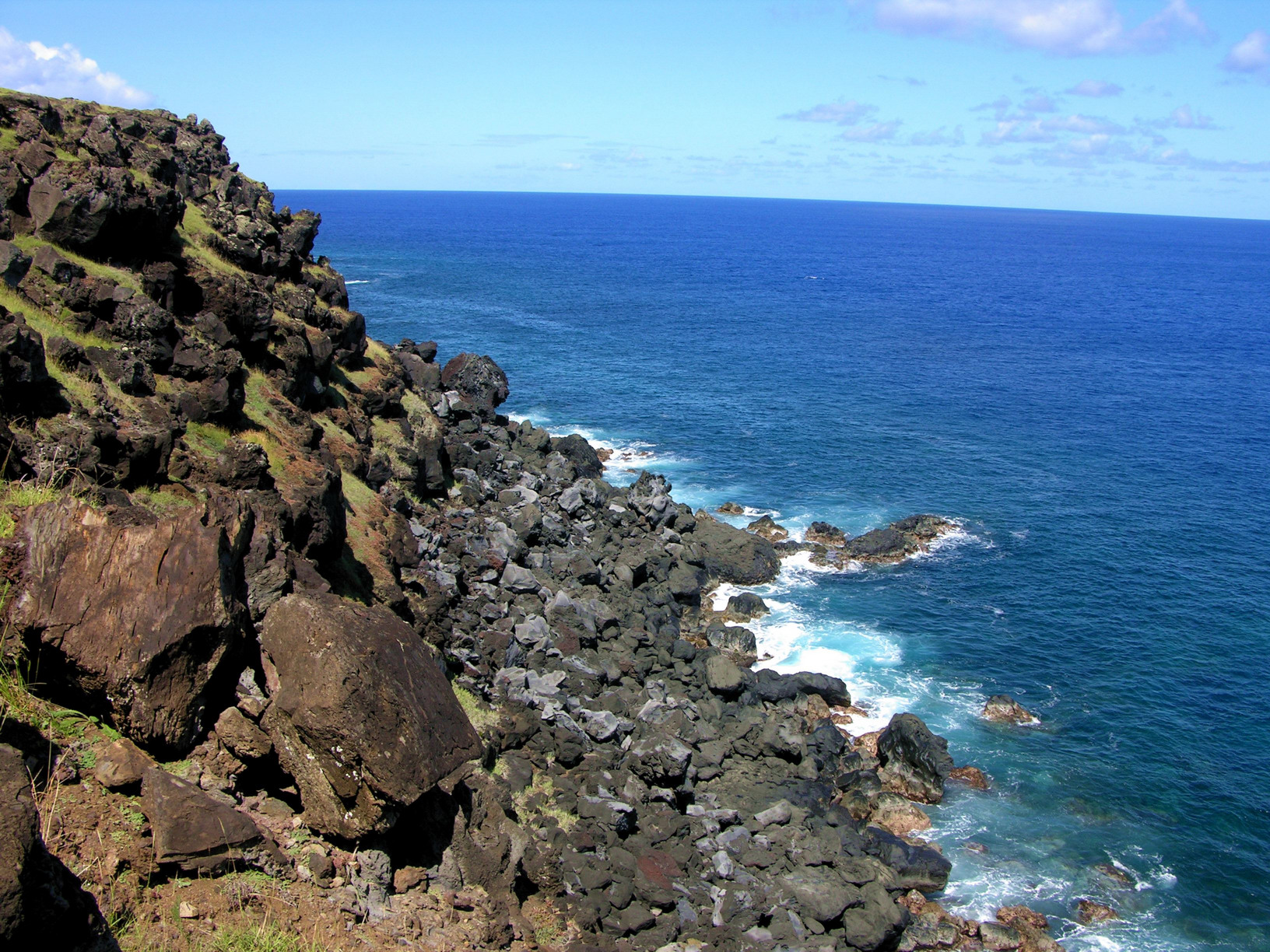
Easter Island is a young volcano and there hasn't been time for a lagoon to form, so the water gets deep straight away. It's warm, close to thirty degrees in summer. There must be sharks, but for some reason they don't eat people here.
A swim in the heat is wonderful, of course. Getting back ashore is like climbing onto a hot stove. By the time I'd climbed a hundred metres back up to our camp under the palm, I might as well never have swum. I was hot all over and sweaty again. Tanya hadn't gone to swim, and she was right. She'd even made us some soup, shchi with local cabbage. Shchi is a much better bet with water like that.
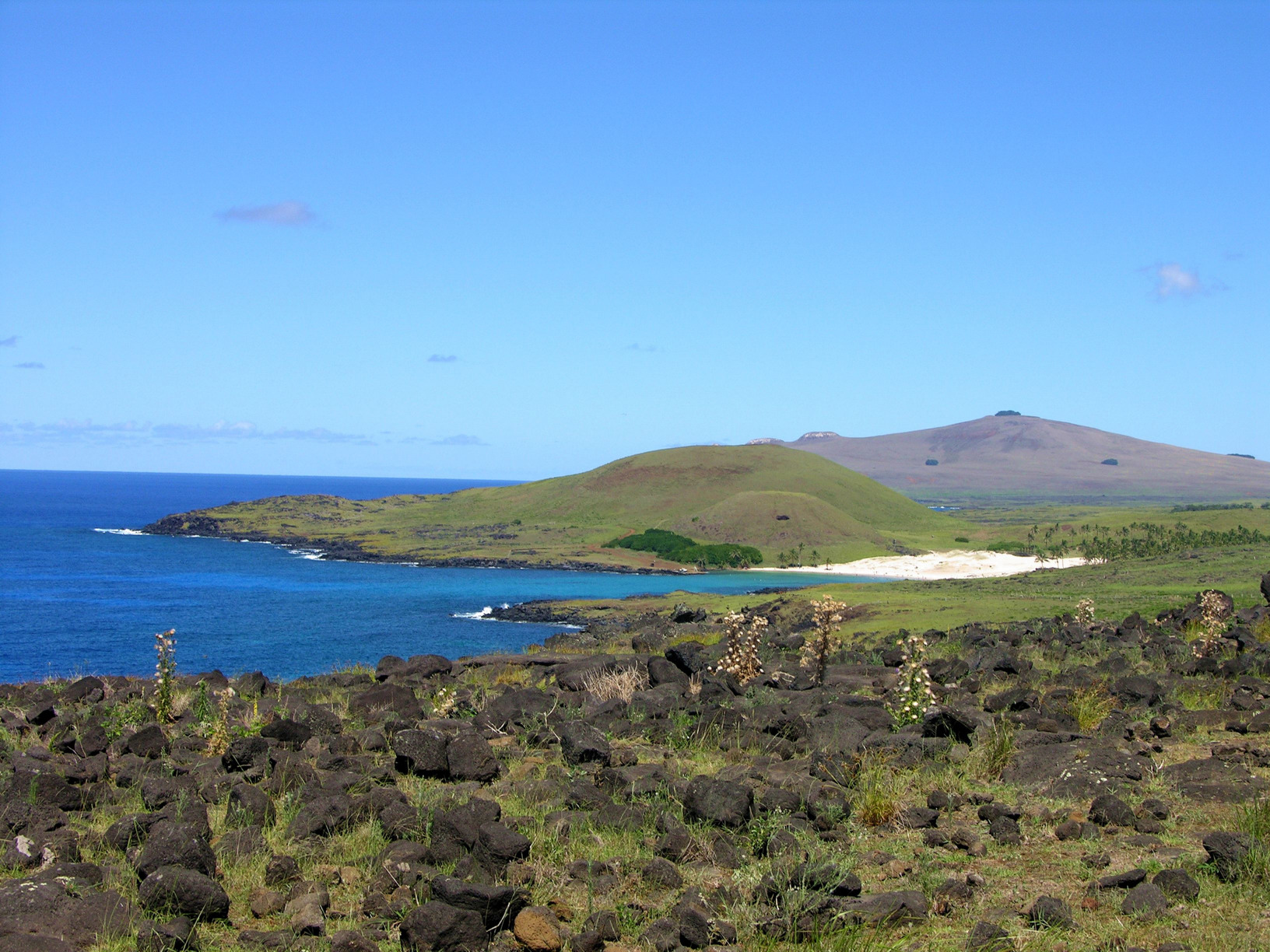
We'd already done twenty-five kilometres, pretty much a full day's walk. There were five to go to Anakena, the only beach on the island. It's very popular and there's even a sealed road to it. Hundreds of people drive out from town every day for a swim. Anakena is an oasis in the desert. Just a little farther and we'd be there. We decided to leave early, even though the heat hadn't let up yet.
Soon there were palm trees beyond a stony headland, like a mirage, and a yellow strip of sand. You could almost believe you'd arrived, but the road wound around hot stones and scorched grass. Thickets of thistles, to be precise.
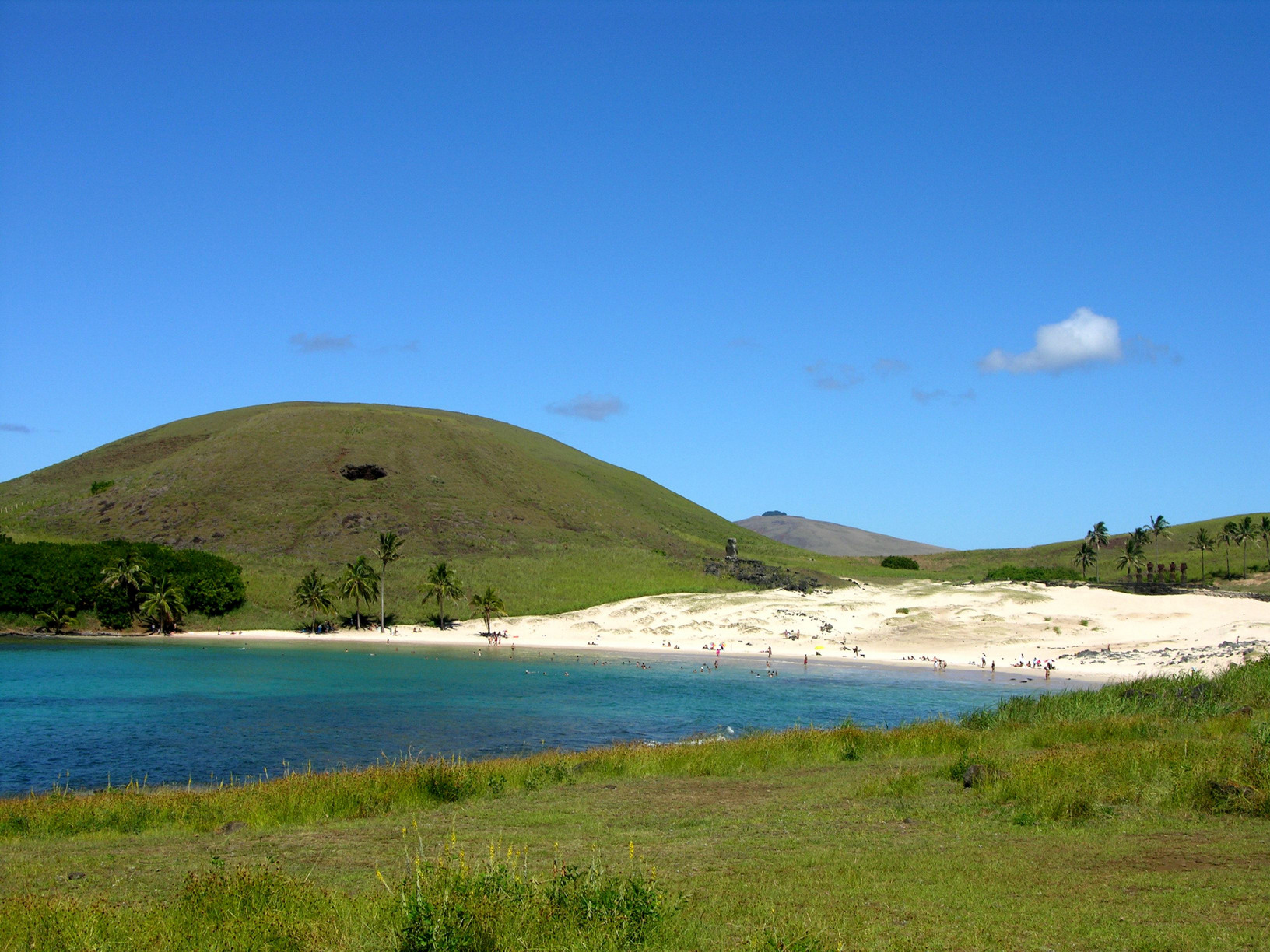
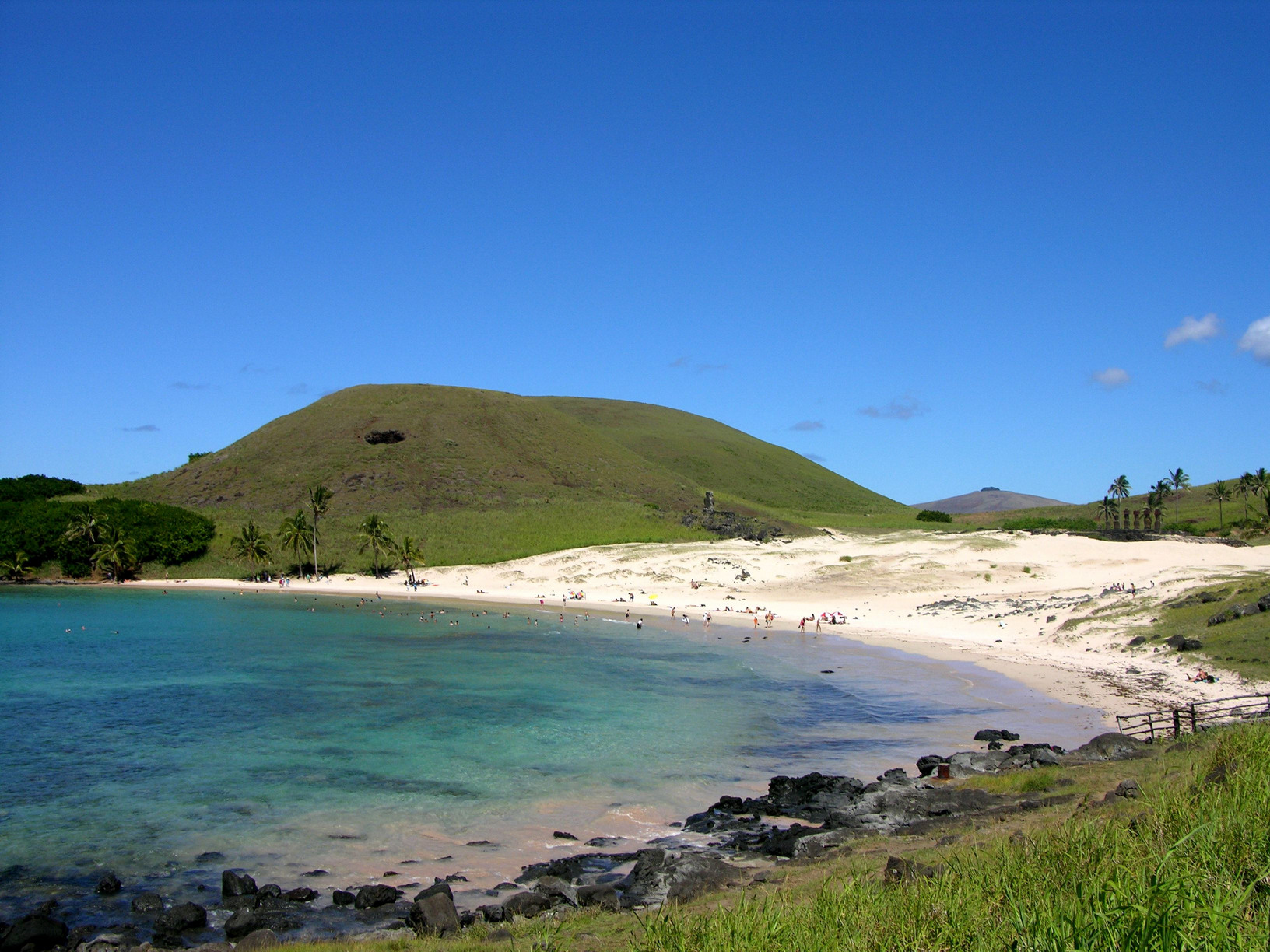
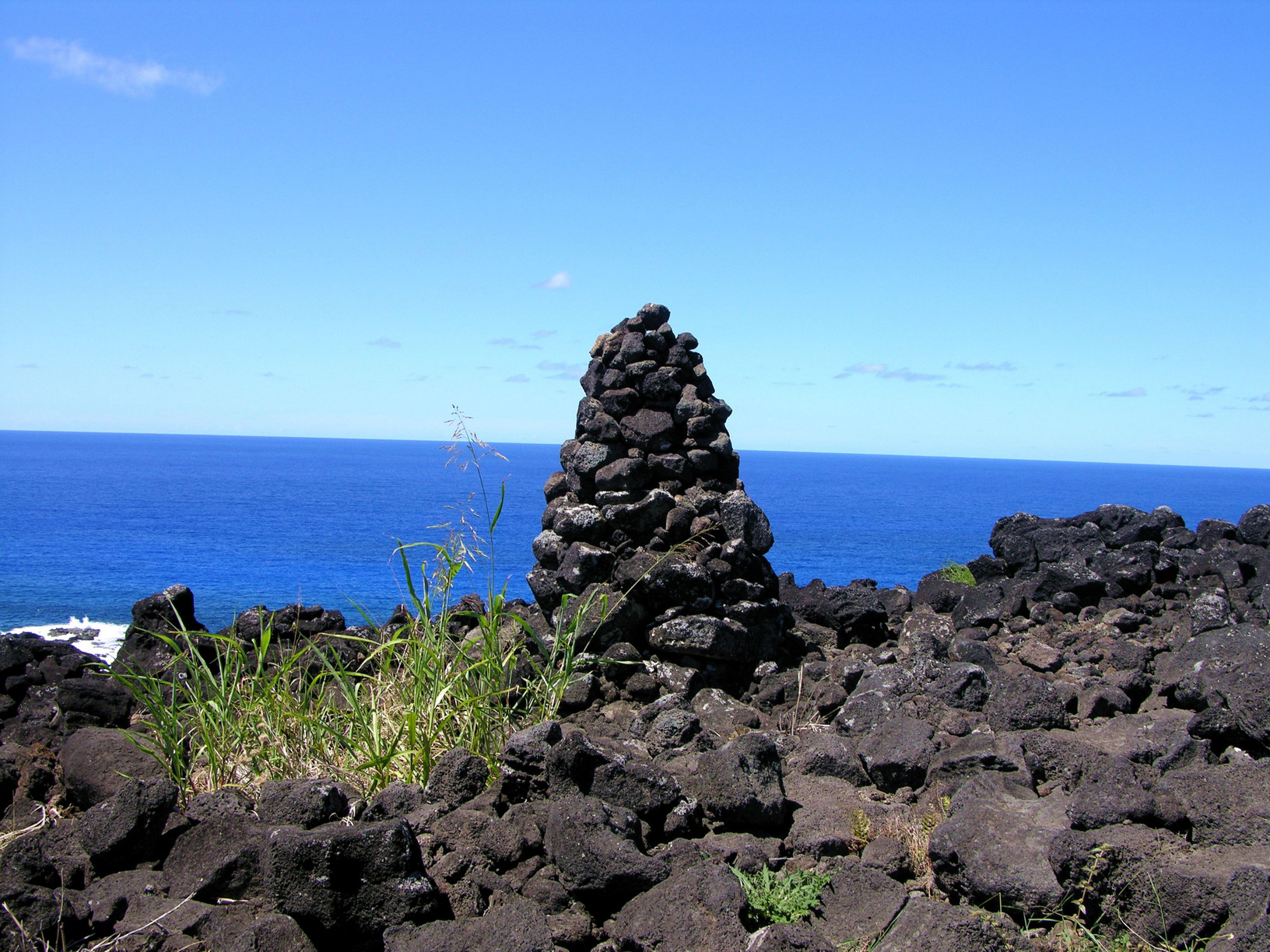
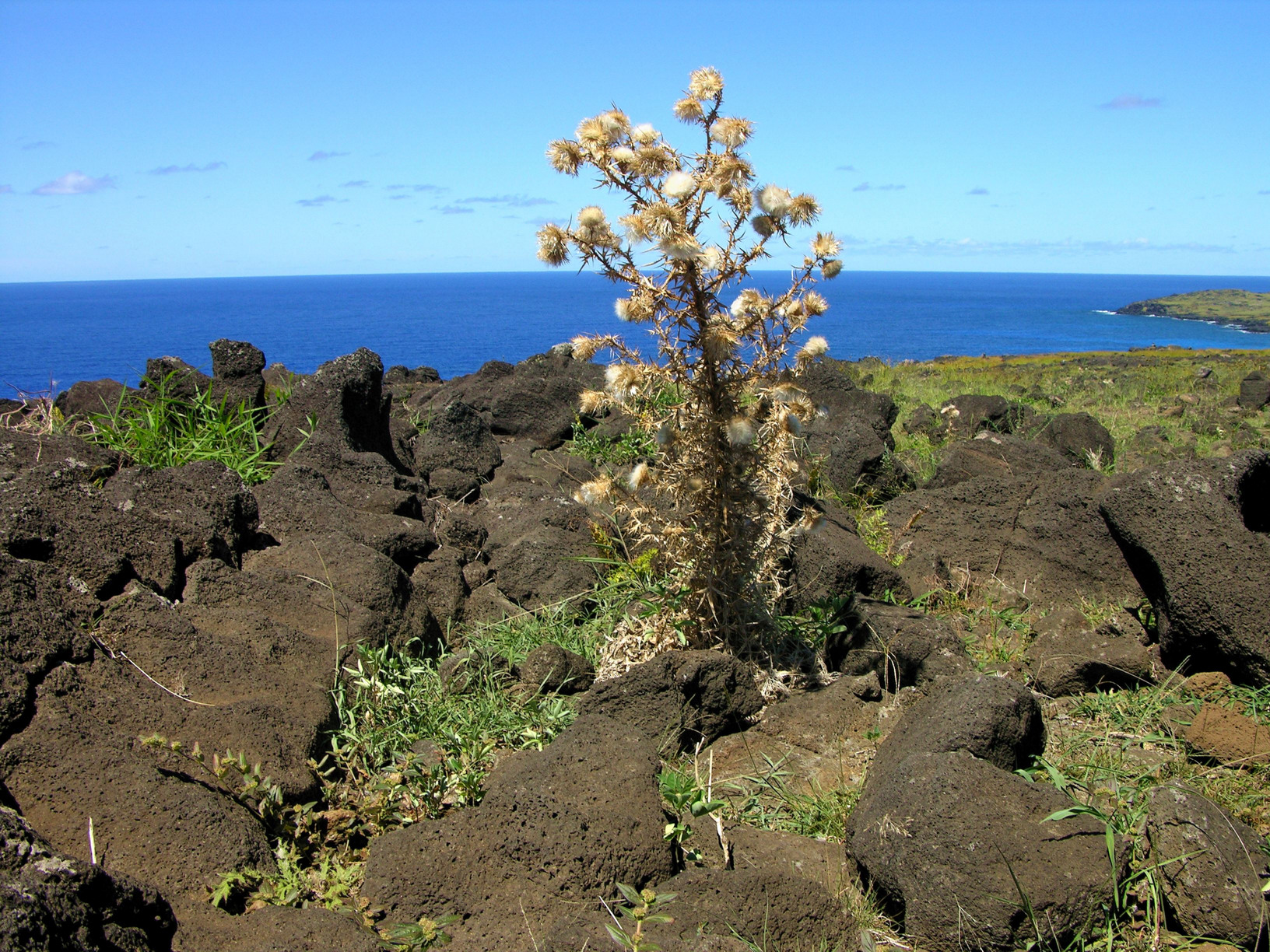
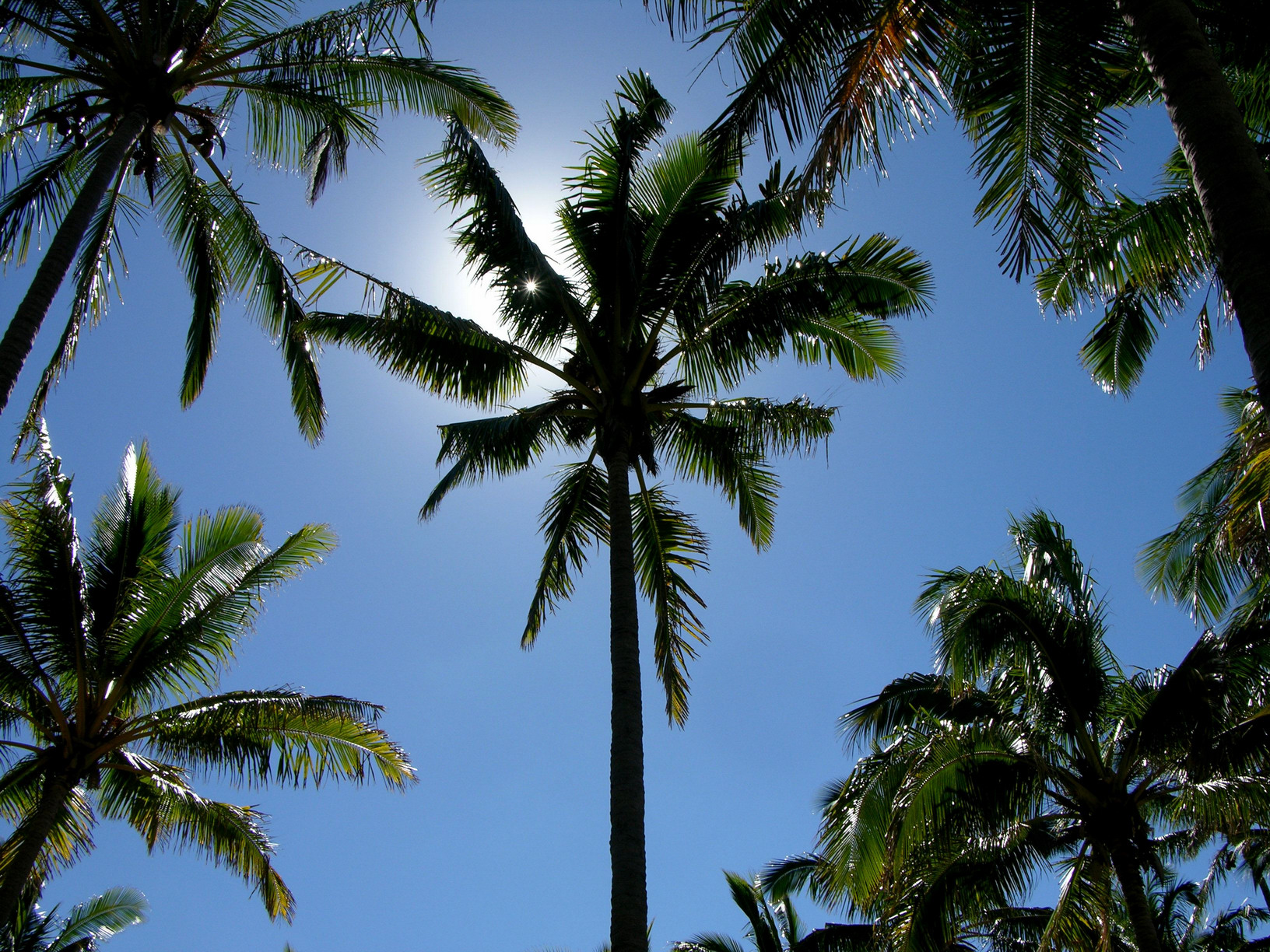
The longer you've been in the desert, the more striking the contrast. The path comes out straight into a coconut grove with a mown lawn. Stalls sell watermelon, juice, water and kebabs. What a fine idea to bring watermelon here. The smallest one weighed ten kilos. We probably wouldn't manage it all. There were tables under the palms. We set up by one, ate watermelon, kept dashing off for a swim and lay in the shade of a palm. Oh, that sea and those palms. It was hard to believe we'd walked thirty kilometres on a scorching track that day.
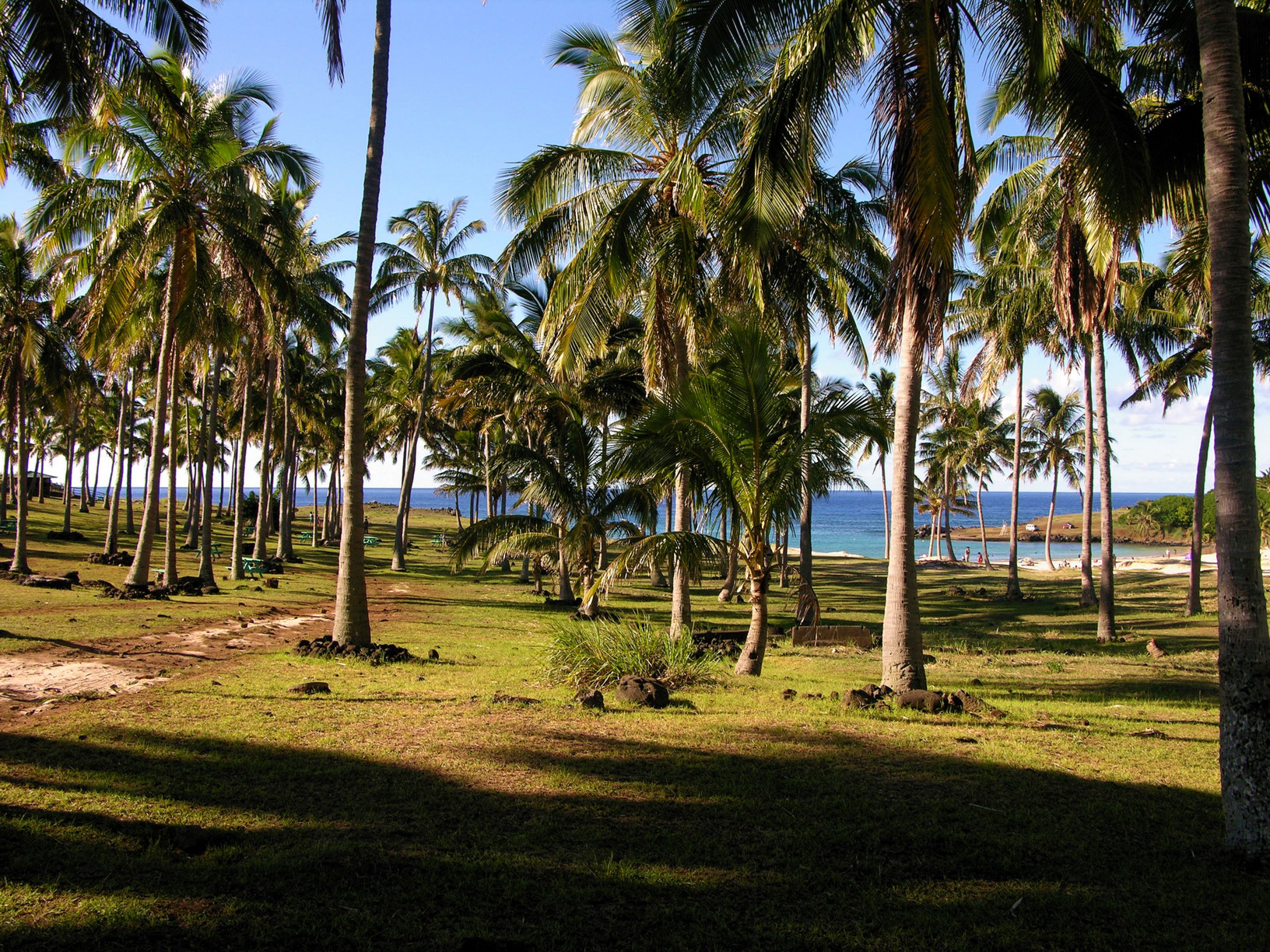
On paper Easter Island is a national park. You can pitch a tent at the designated site at Anakena and you're supposed to pay for it at Orongo. We didn't pay, and of course nobody was planning to check. Chile is a free country in general. There are rules, written by office clerks who've been to Europe, and then there's how life actually works. Even the local travel agency said we could sleep anywhere as long as we didn't tie the tent to an ahu, scratch “Vasya was here” on a moai or get in the farmers' way. The farmers are tolerant and like walkers. It's the people in jeeps who speed across their fields, frighten the sheep and flatten the grass that they don't like.
You can get water for drinking and soup at the toilets. It's brought in from town, by the way. There are no clean natural sources of drinking water here.
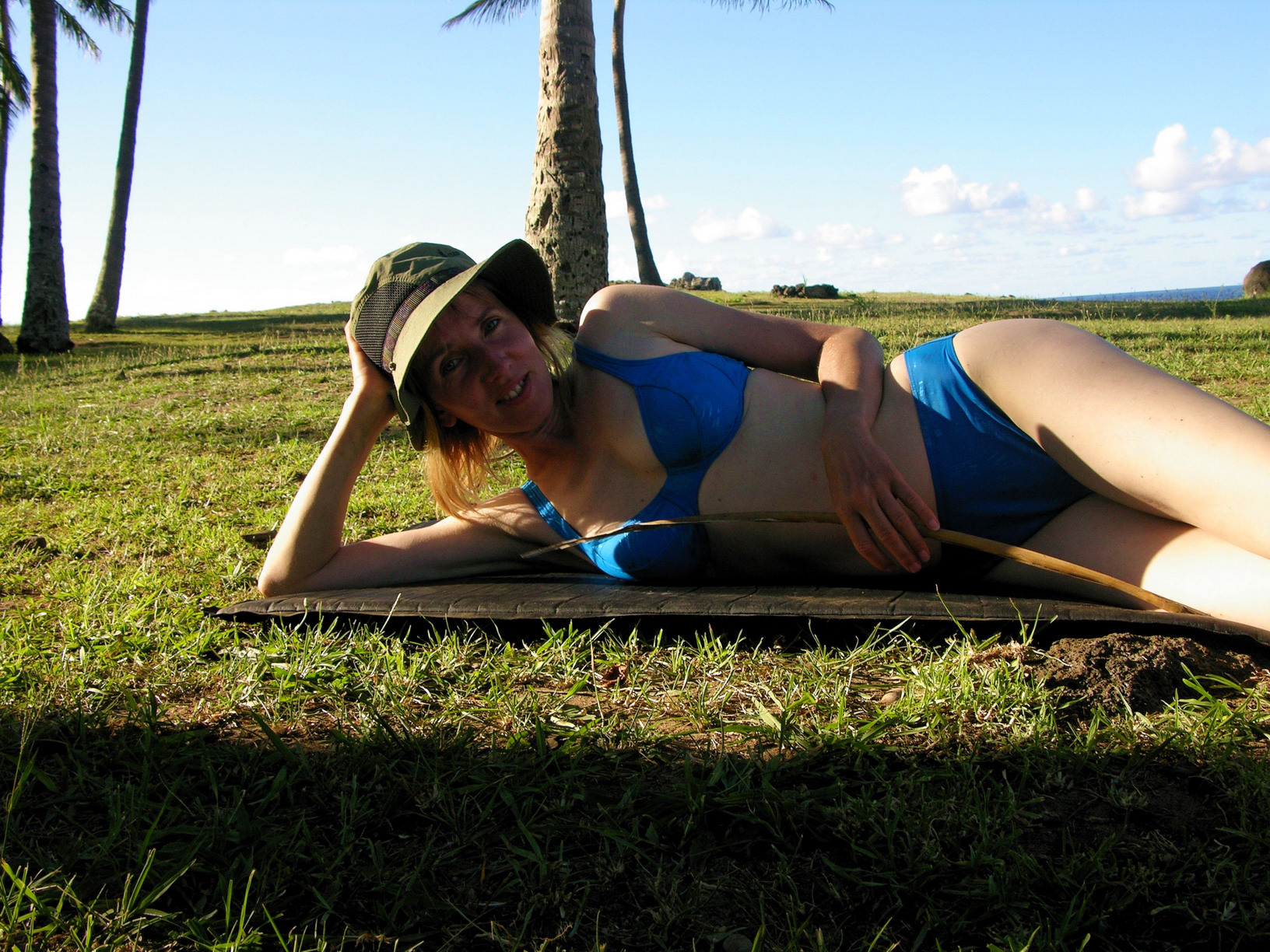
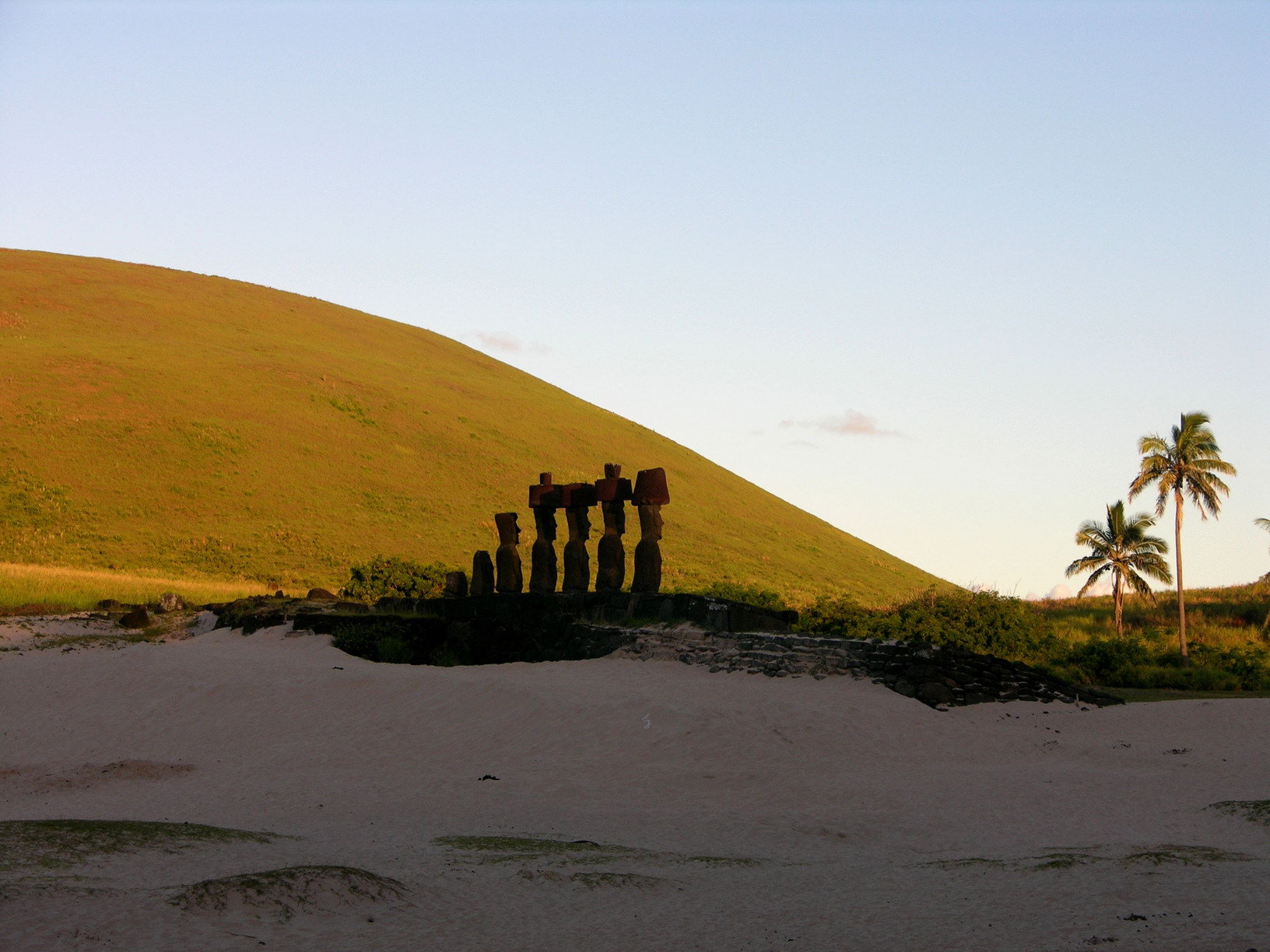
For all that freedom to choose, we stayed the night in the coconut grove. It was just too nice to leave. By sunset the townspeople had gone home and we, just Tanya and I, had a glorious tropical beach to ourselves for sunsets, swims and cuddles. The sun hid behind the volcano, the breeze rocked the palms, and the evening cool took over from the heat. We could even take off our swimsuits and leave them off till morning. Around us there were only the huge moai, lit red by the setting sun, and even they were looking the other way. The beach was all ours. The stars gradually filled the sky, and a full moon rose from the waters of the mighty Pacific.
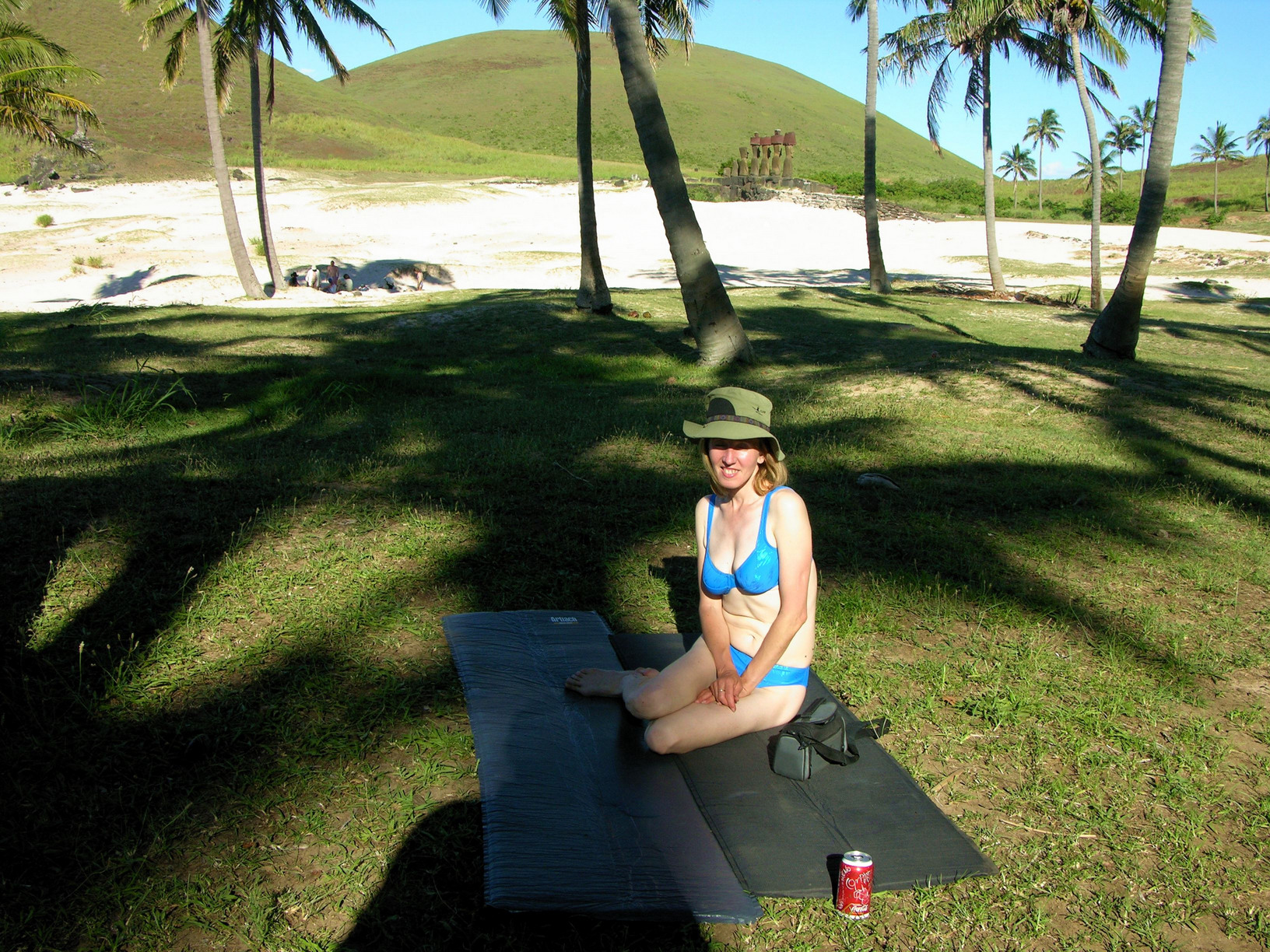
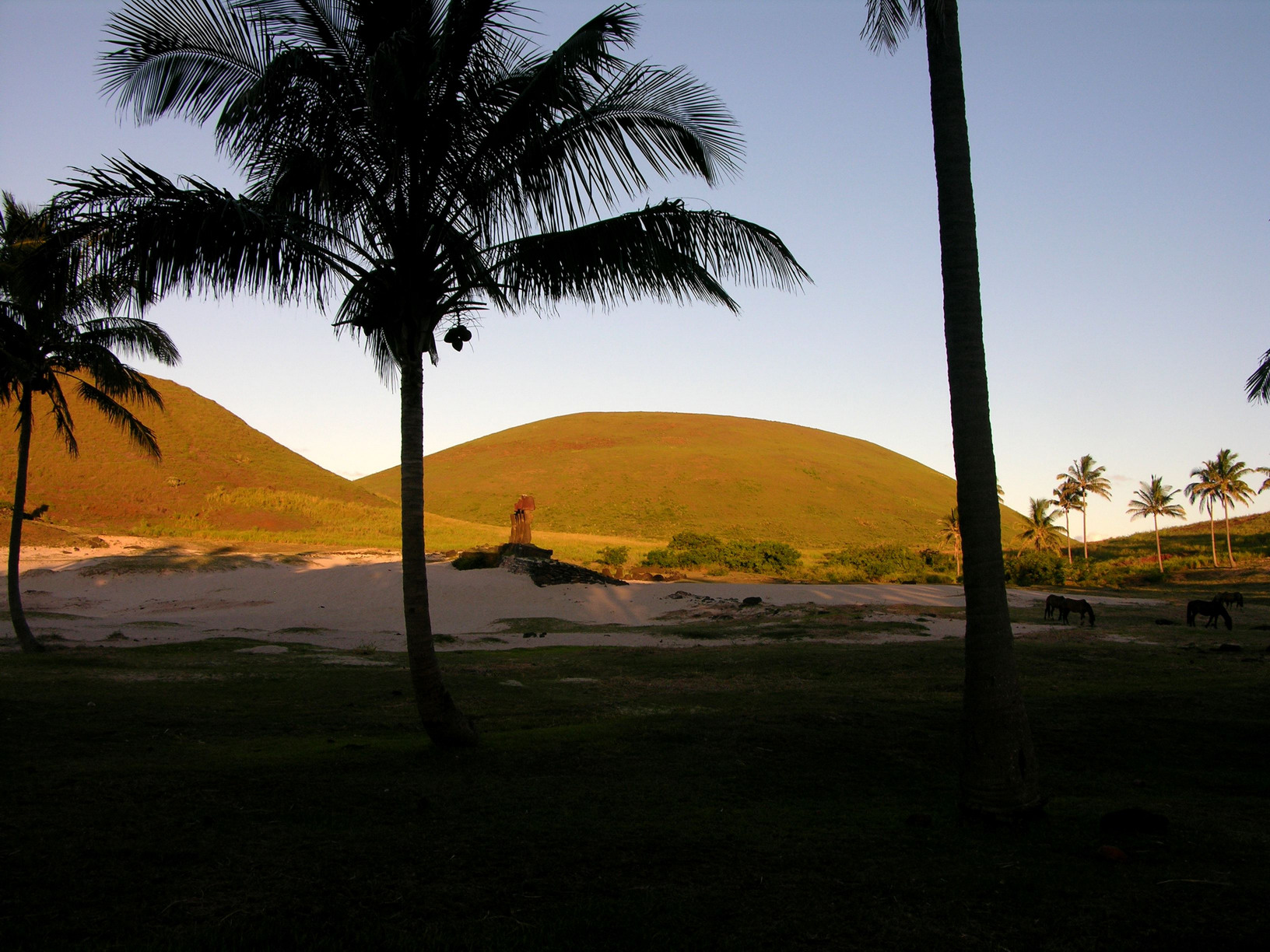
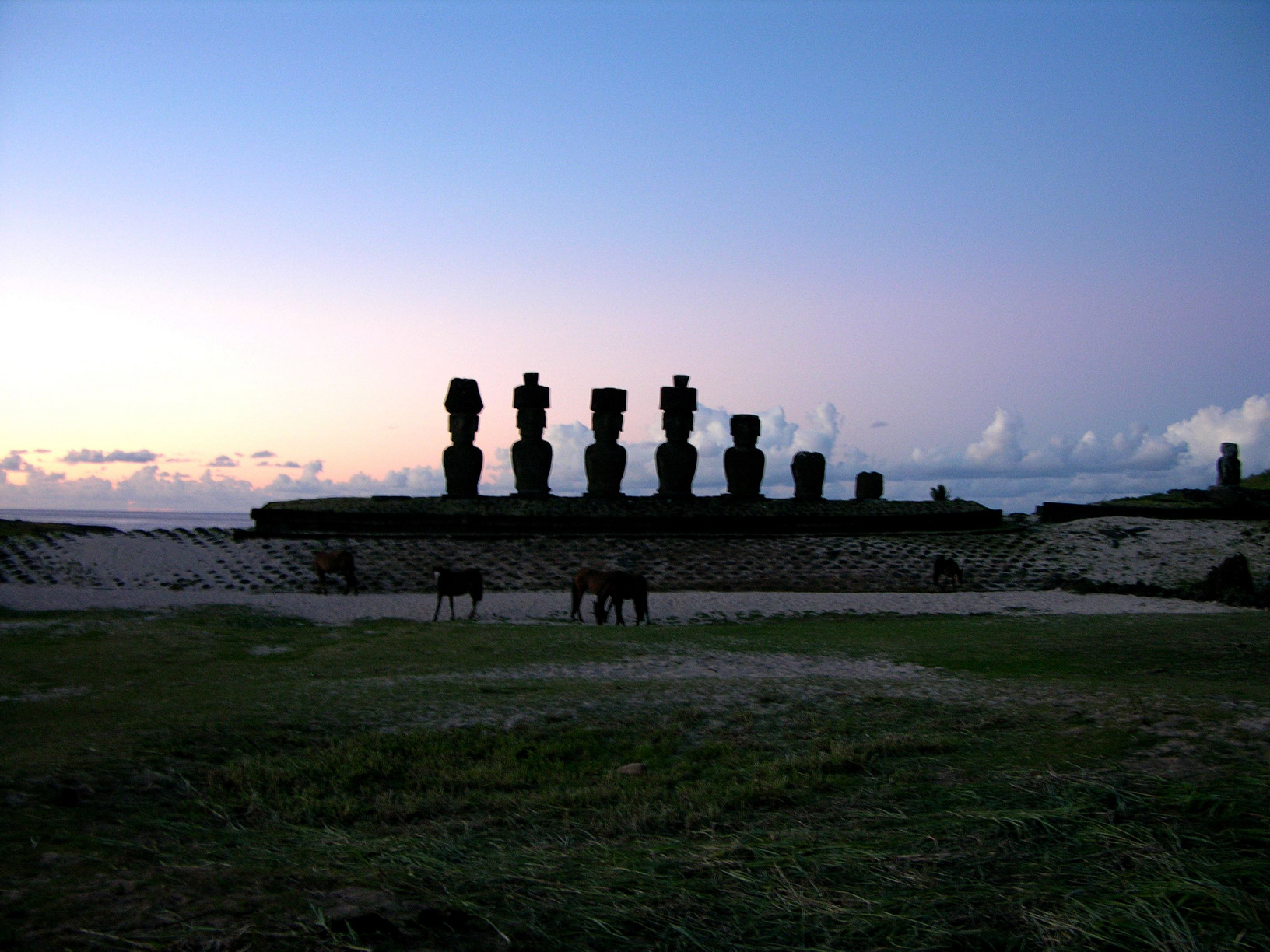
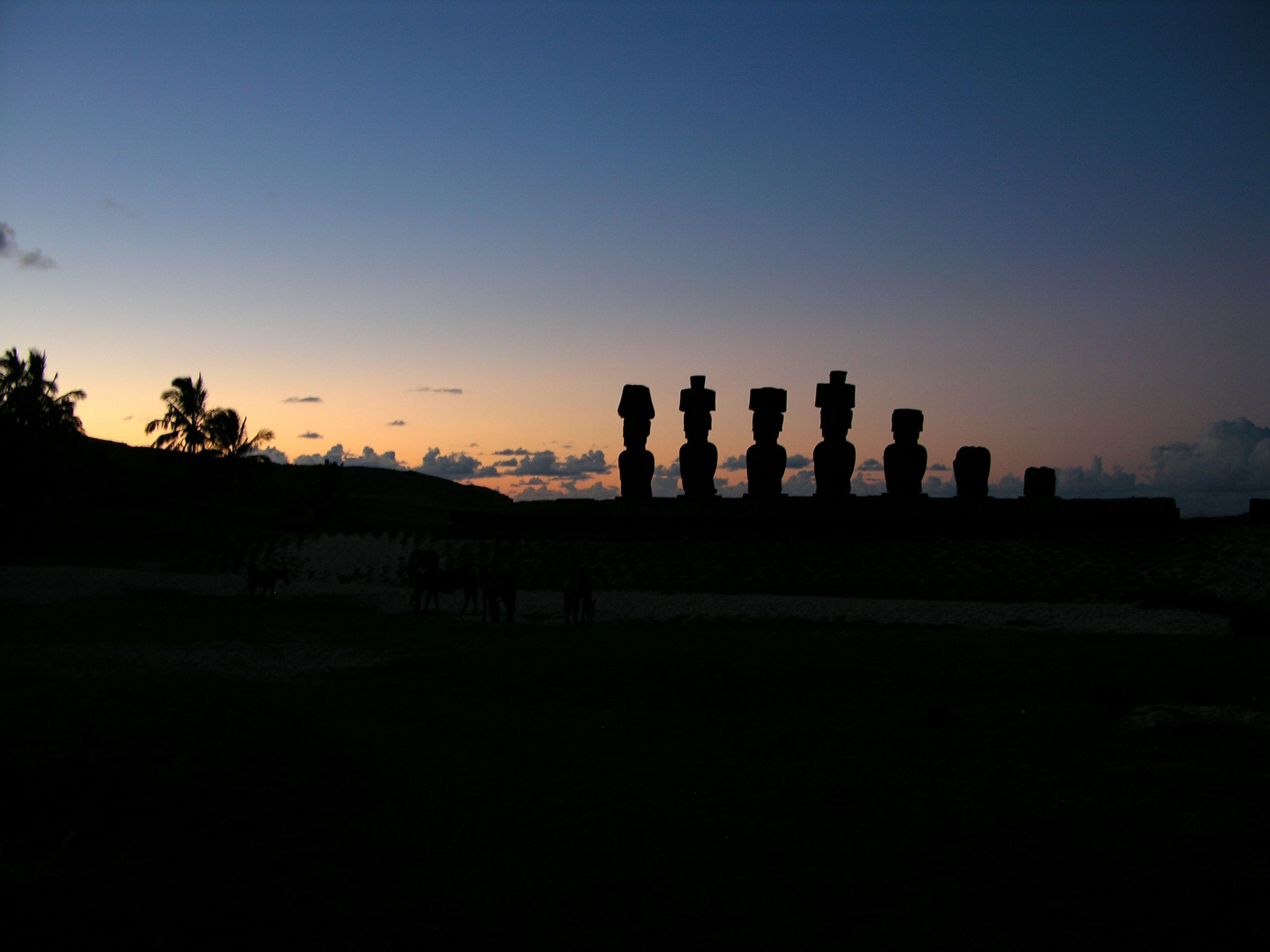
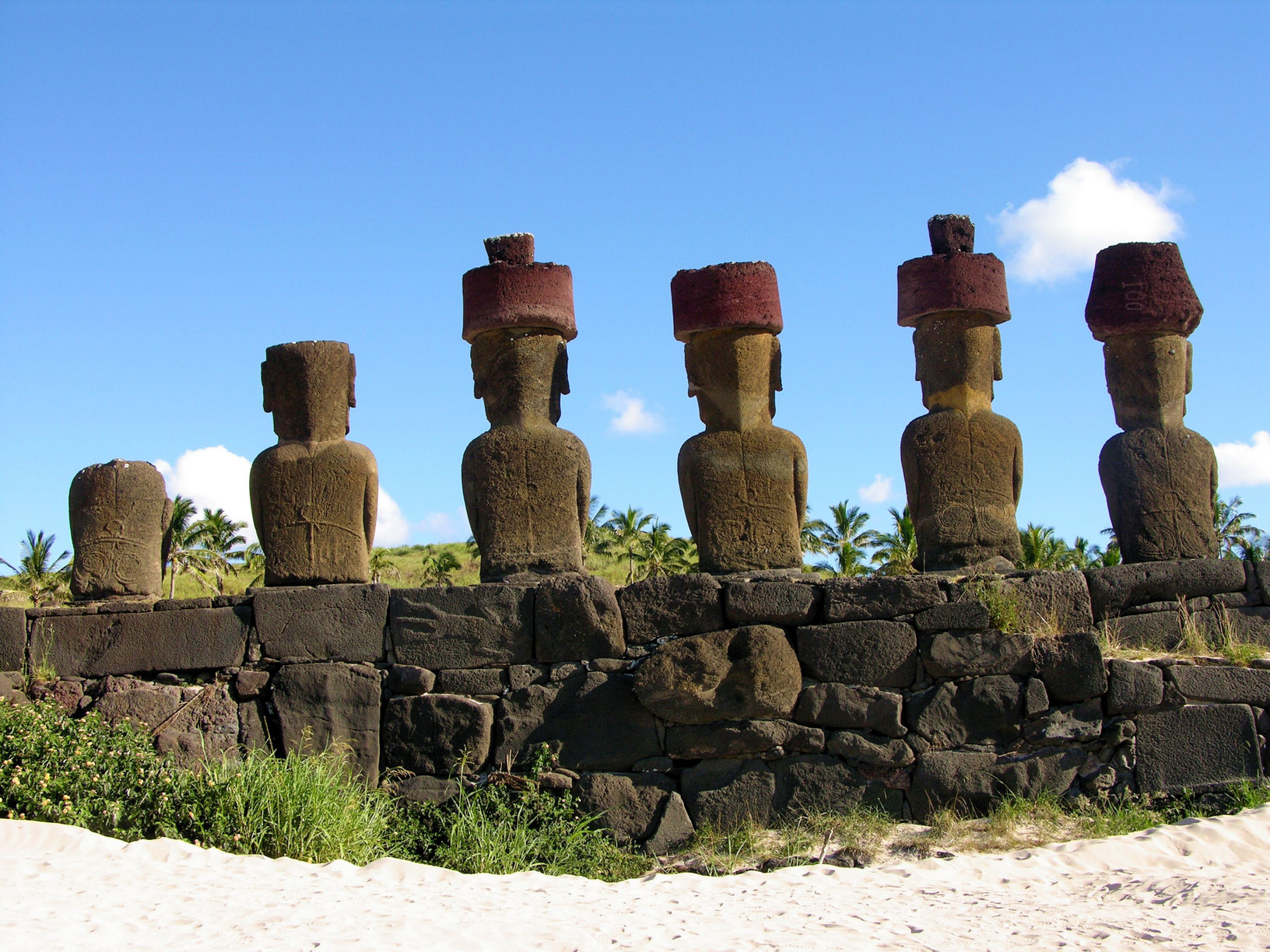
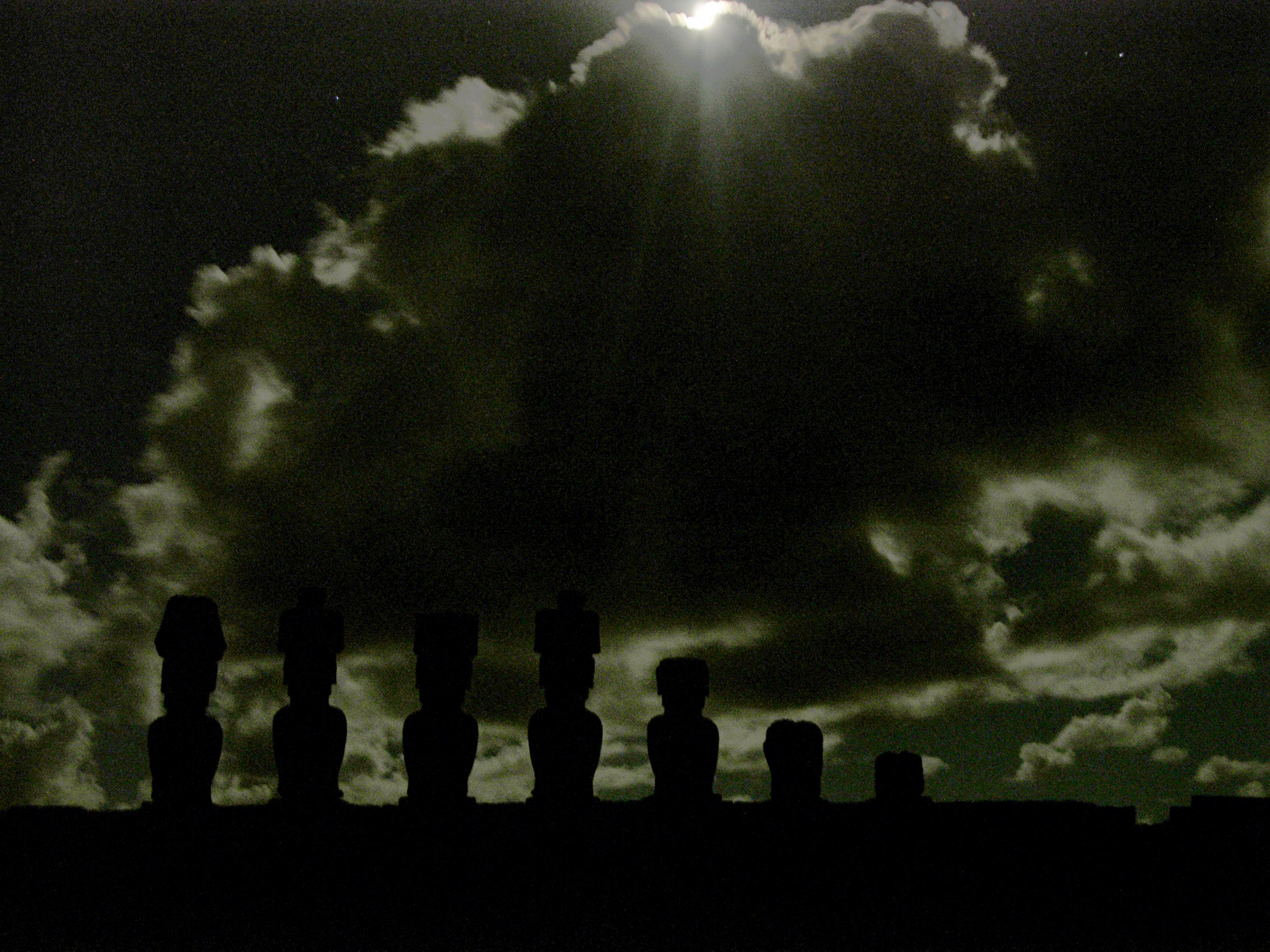
At first we put the tent up in the nearest scrub away from the grove (27°04.482′S, 109°19.307′W), away from falling coconuts and where nobody would find us in the morning. Then disaster struck. A herd of horses came to visit. Easter Island has a lot of horses, more than people, in fact. It's hard to say what they're for. They seem to just graze and ask for nothing. They probably have owners, but the horses don't think about that and roam freely in herds wherever they please.
Tanya and I love horses. We were so happy lying there together we wanted to do something kind for all people, dogs and horses. The world had looked after us, and we ought to share our happiness. We weren't going to finish that watermelon. Let the poor beasts have a treat.
We brought them all the rinds and the half we hadn't finished. The way they smacked their lips! Then they fought over the last rind, kicking each other in the face. Once again I learned how hard it is to make the world happy. We gave the horses something to eat and in the end they all got kicked in the teeth. So there's no point grumbling about the injustice of a world where people die of hunger. Presumably there's a reason. There's no other way.
The rinds were gone, but a horse is a big creature and needs a lot. The whole herd stood around the tent, whinnying and keeping us awake. The boldest began to chew the tent. The wretches. What was I supposed to do? Go out and chase them away? I wanted to sleep, and as soon as I went back into the tent they closed in again. They also trampled everything we'd left outside and, worst of all, the fattest horse peed on our map of Easter Island. All we had now was a pitiful, wet, smelly ball of paper, and two more days to find our way by it.
We had to move camp (27°04.463′S, 109°19.411′W). Horses can move too, of course. Luckily some stayed behind where it still smelled of watermelon, and the rest got distracted by a rubbish heap nearby.
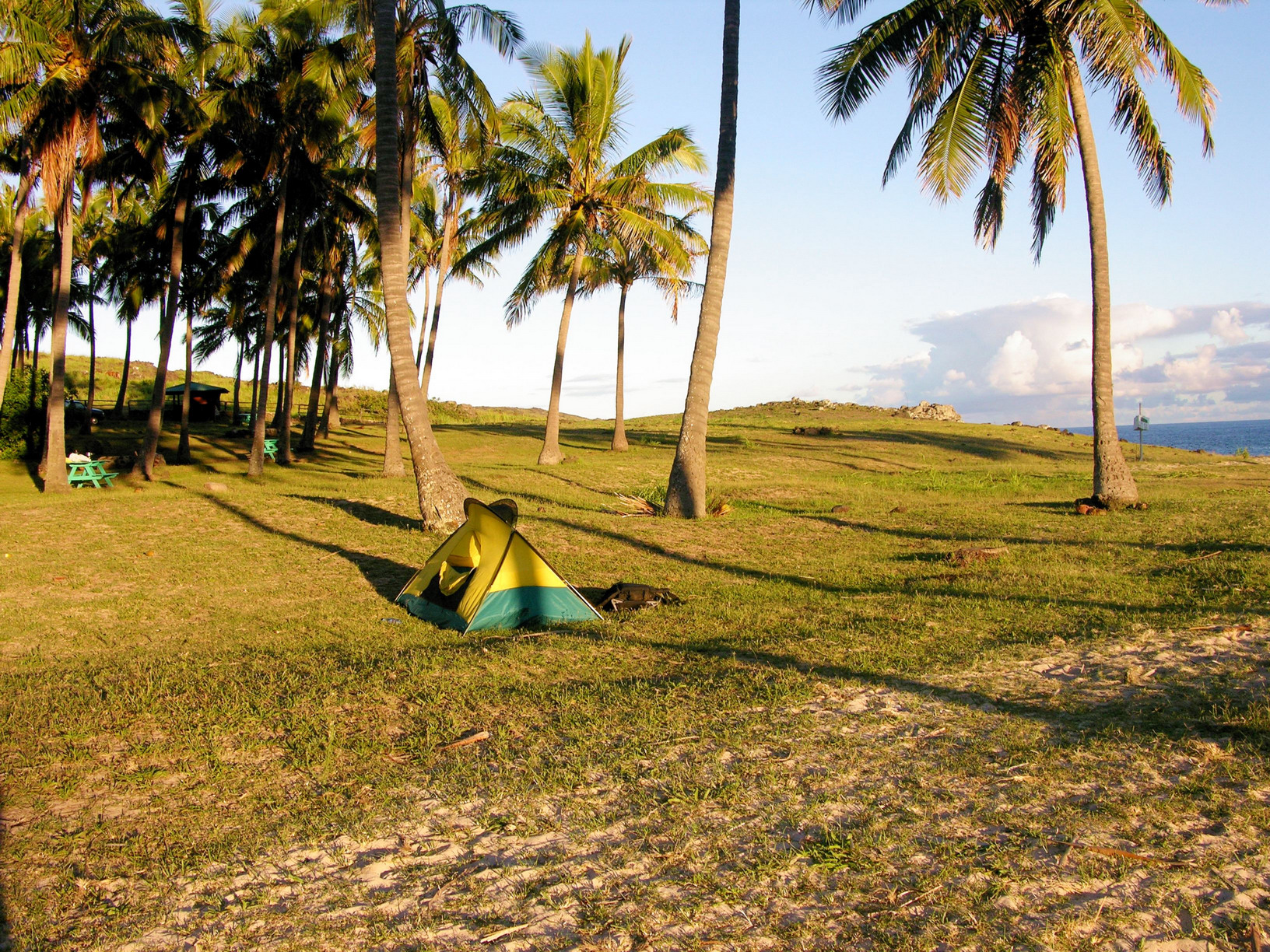
All night we heard hooves and cheerful whinnies. The ground shook and it felt as though some terrible horse might jump onto the tent at any moment. We didn't get much sleep.
The weather turned in the morning. Low, grey clouds blew in off the ocean. We're surrounded by ocean here, so that's always where the bad weather comes from. At least it wasn't hot. That suited us very well. Today's plan was a three-hundred-metre climb up Maunga Pu A Katiki on the eastern side of the island. We still had ten kilometres to the foot of it. We'd be doing the climbing in the heat.
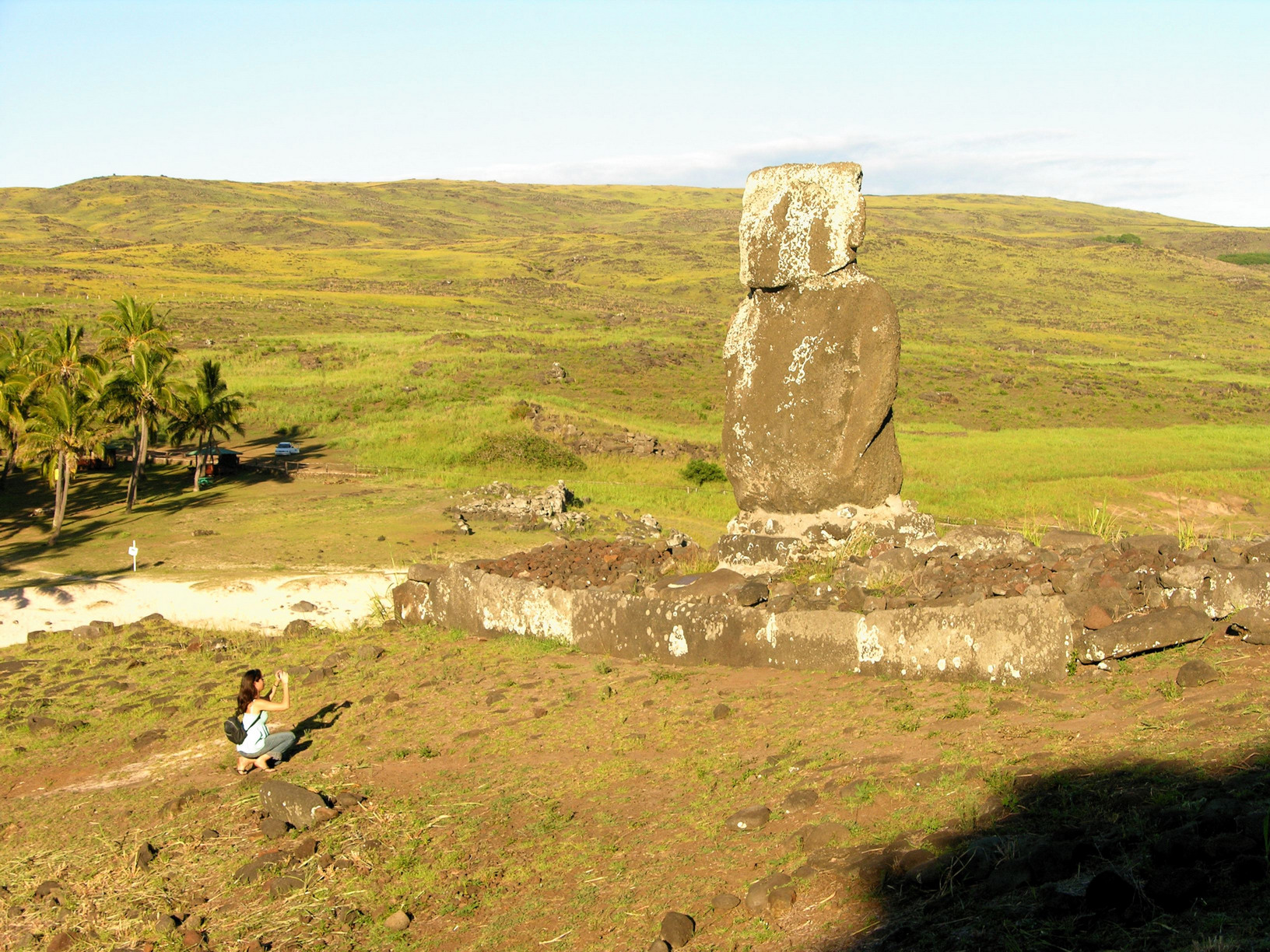
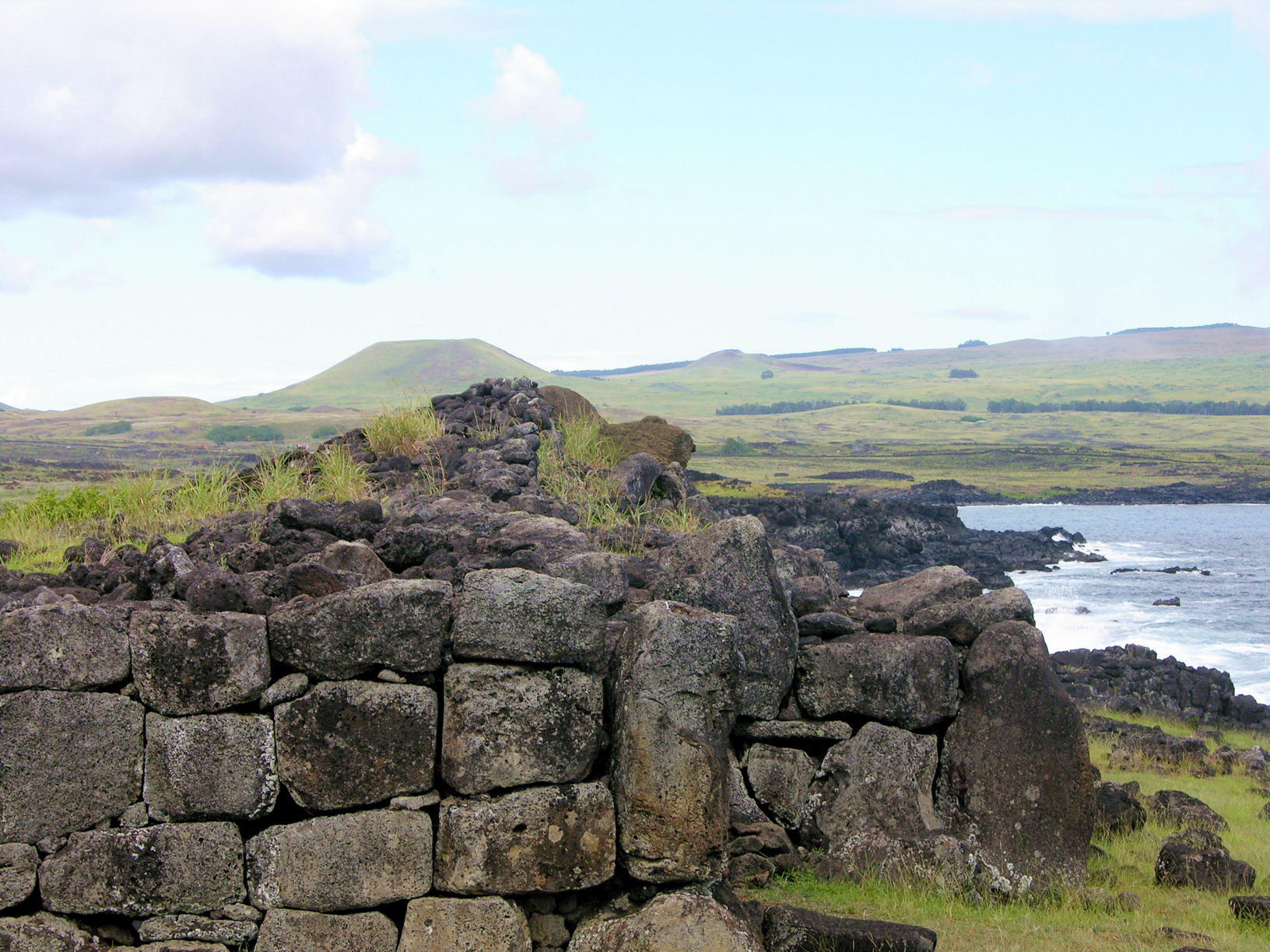
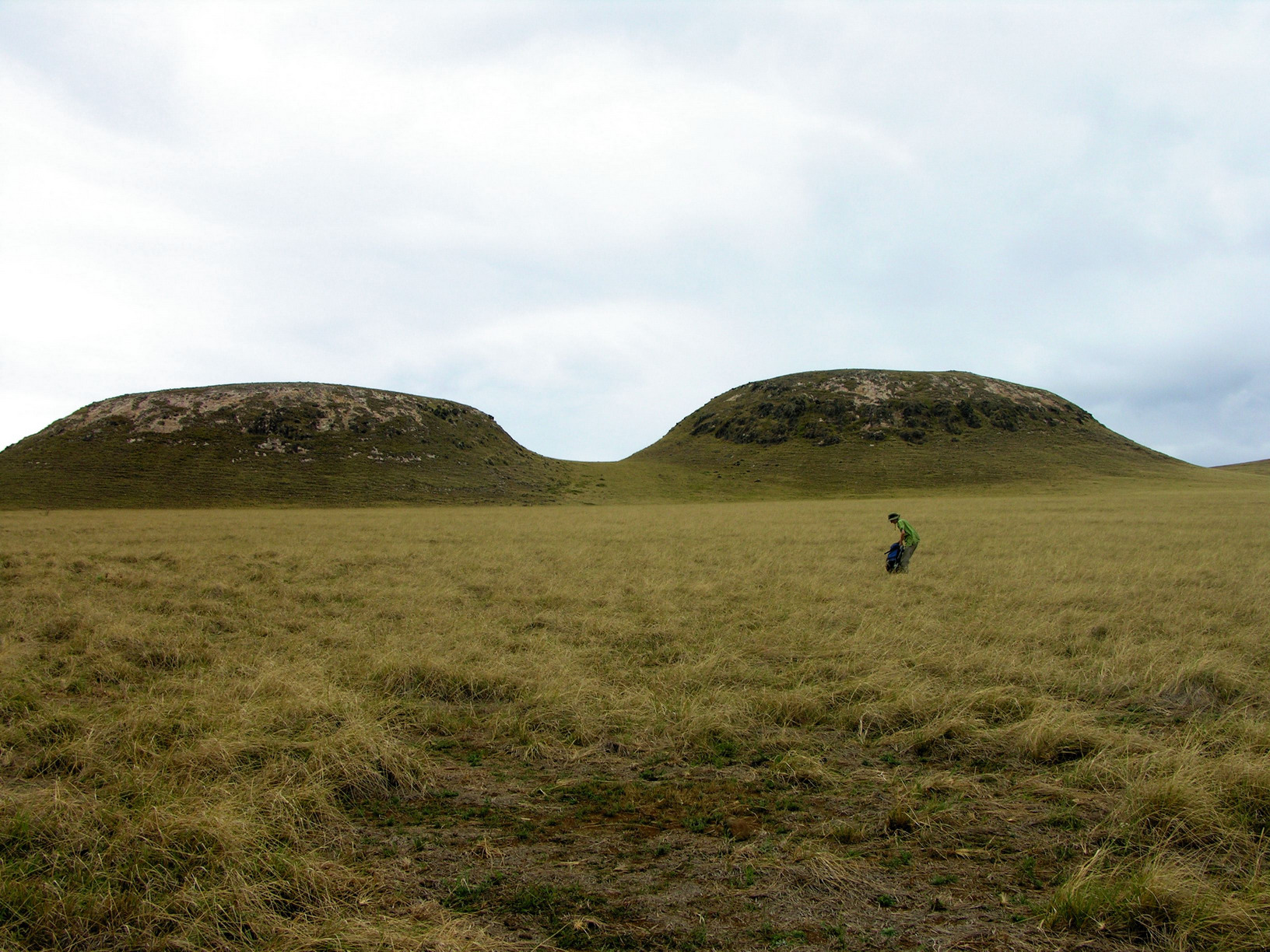
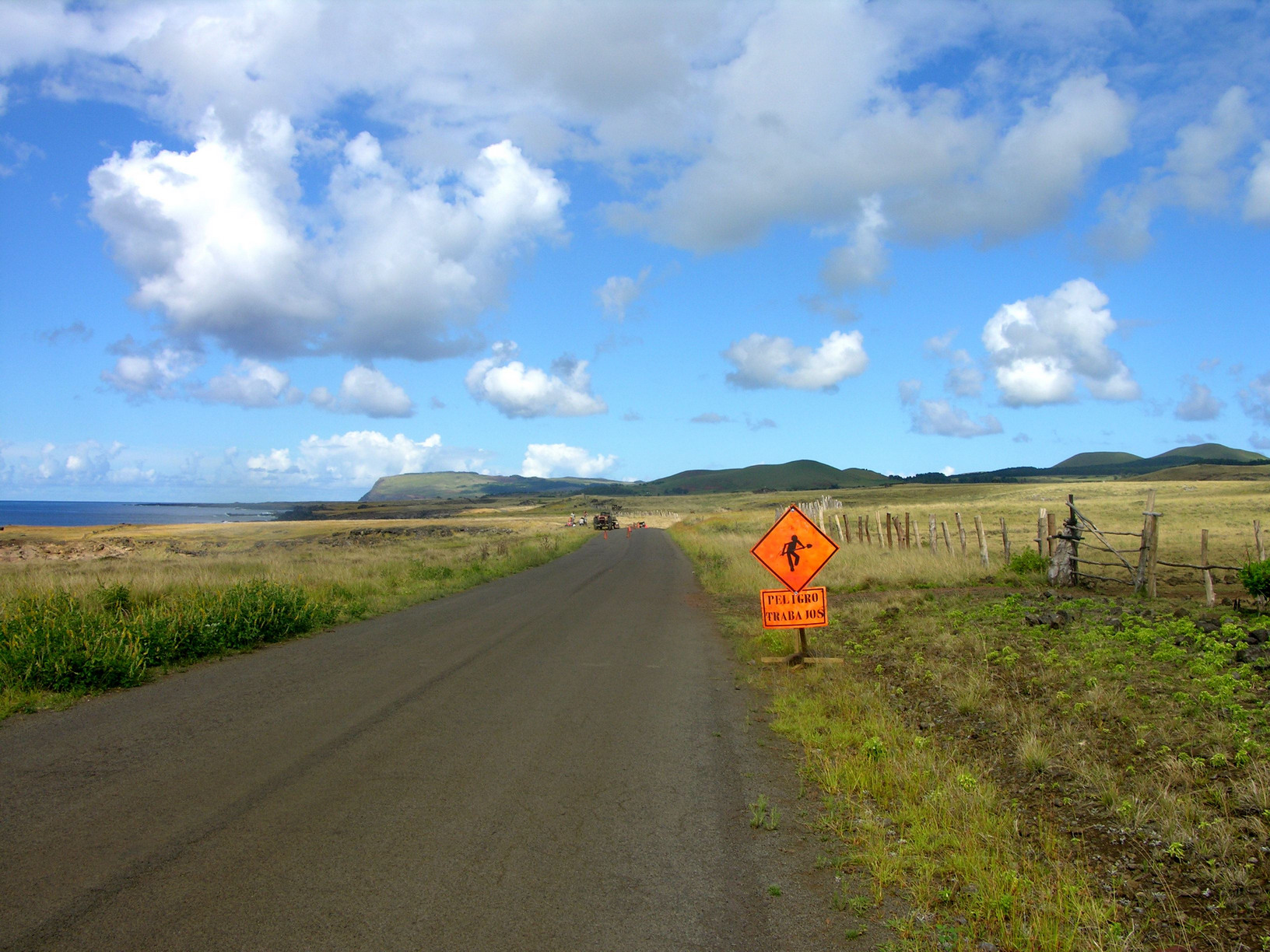
East of the beach, a good unsealed road runs to the foot of the volcano. They'd started sealing it a bit at a time.
Not far from camp, beside the sea, lies the fallen moai, the largest one at Ahu Te Pito Kura. There's a little village farther on.
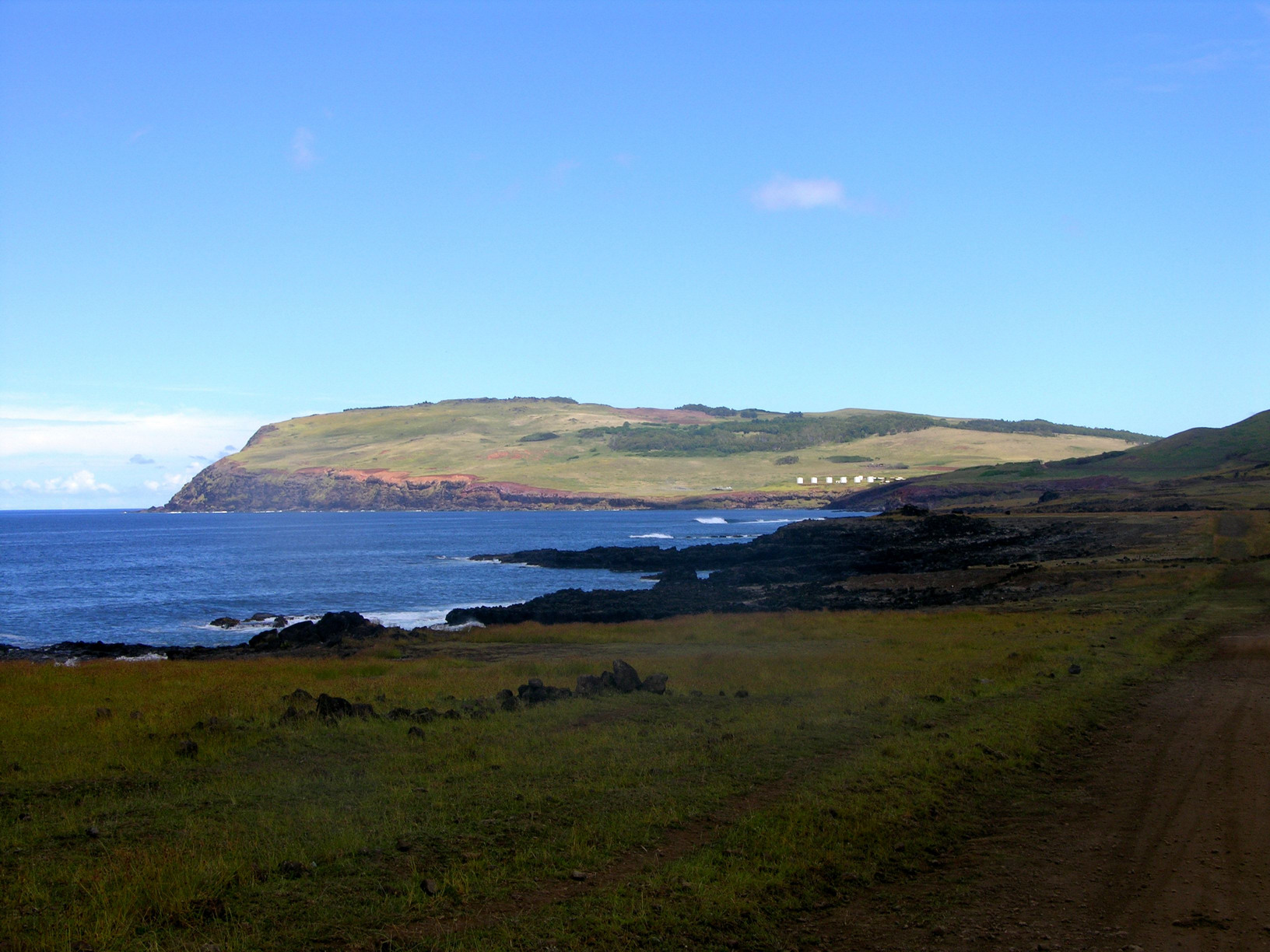
The road up Maunga Pu A Katiki gains height gradually in a big loop. A track even reaches the highest crater, but we were going on foot along the shore and climbing over one barbed-wire fence after another. It wasn't just sheep grazing here. There were herds of rather formidable young bulls, frolicking and butting heads. Poor Tanya curled up into a ball with fright. She can face lions, but cows scare her like dogs. Never mind. We crept up along the edge by a drop, where a bull would break its legs, and slowly gained height. There are three more craters north of the main summit. The ocean has eaten away half of Maunga Parehe, the northernmost one. The coast is sheer here, with a two-hundred-metre drop from the crater rim to the water. Exactly half the crater has gone, leaving a cross-section of a volcano to look at. All you have to do is find a ledge dangling over the abyss to see it from.
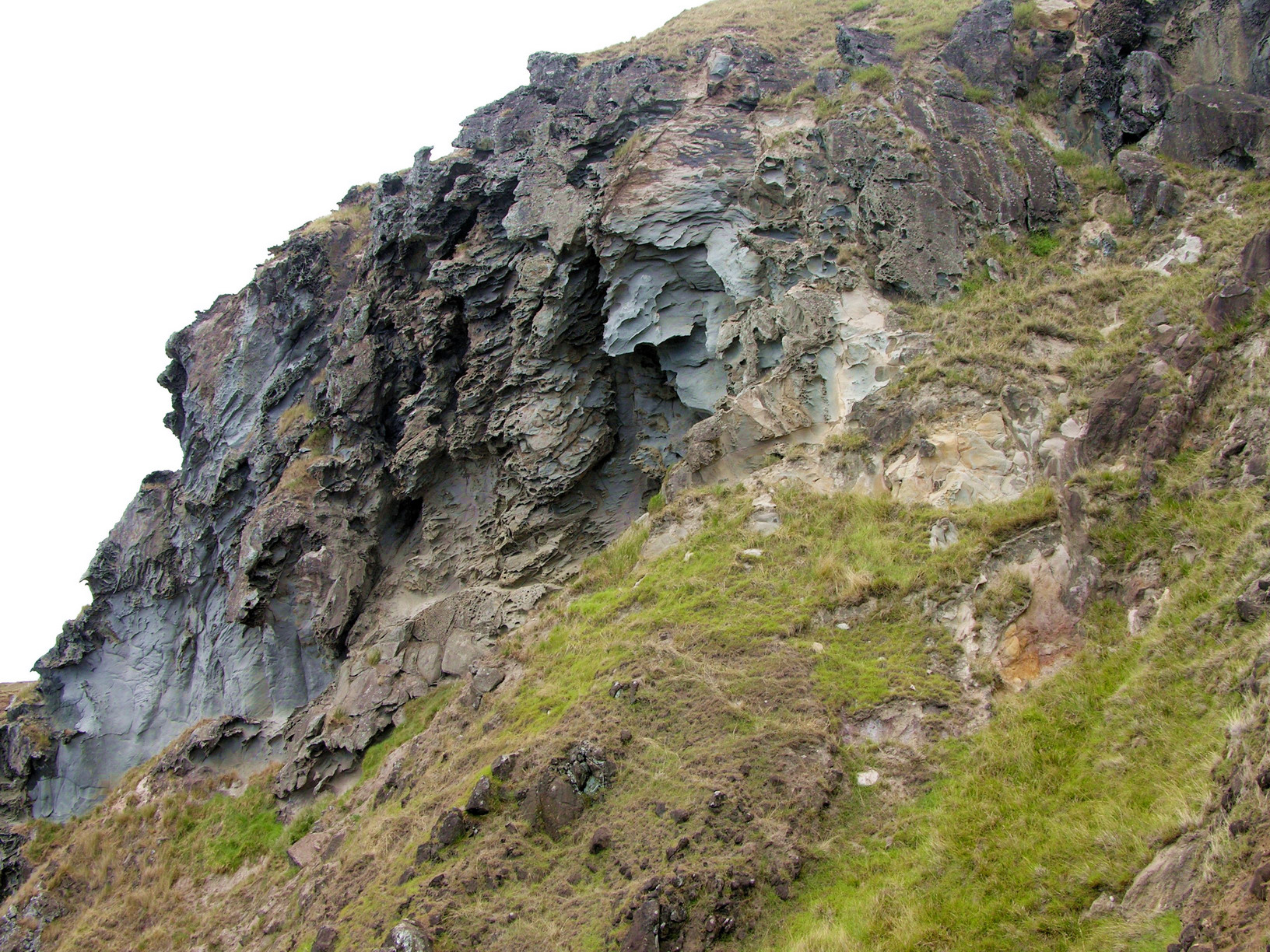

We saw mountain goats as well as the volcano. A small herd was grazing on a sheer slope. Where did they come from? Were they wild? Feral? It's hard to imagine anyone milking them up there, or catching one for meat. You'd need a helicopter.
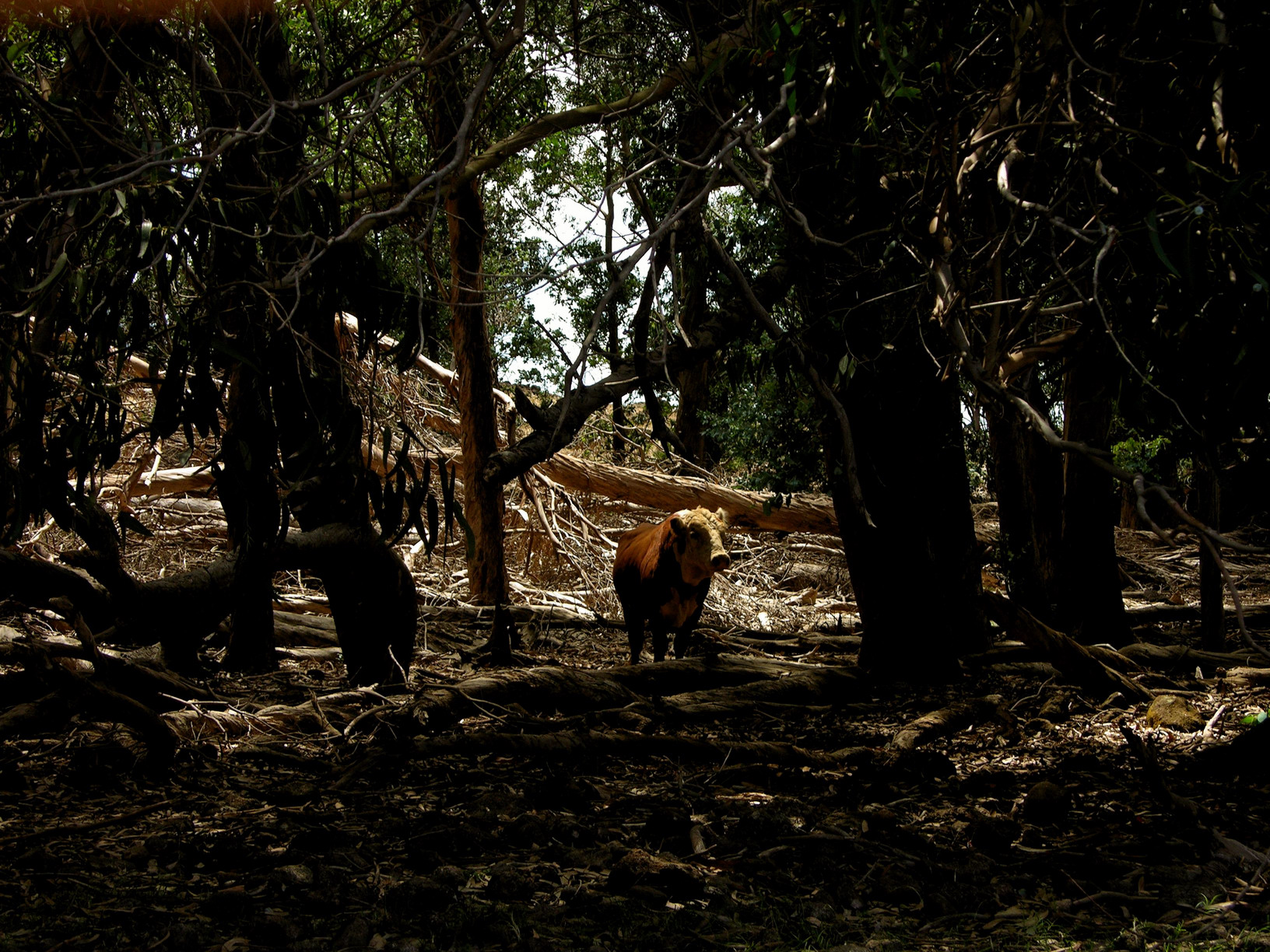
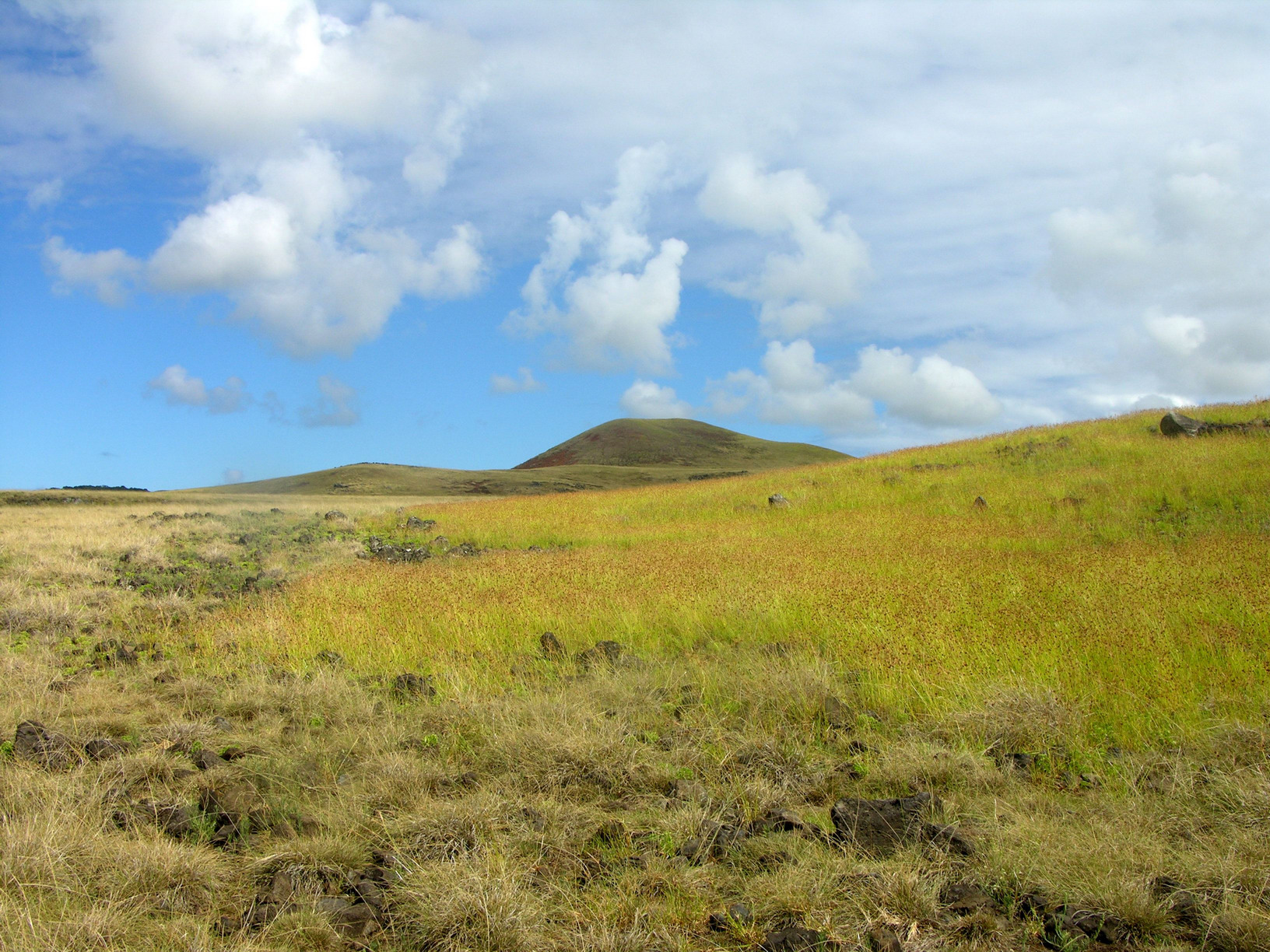
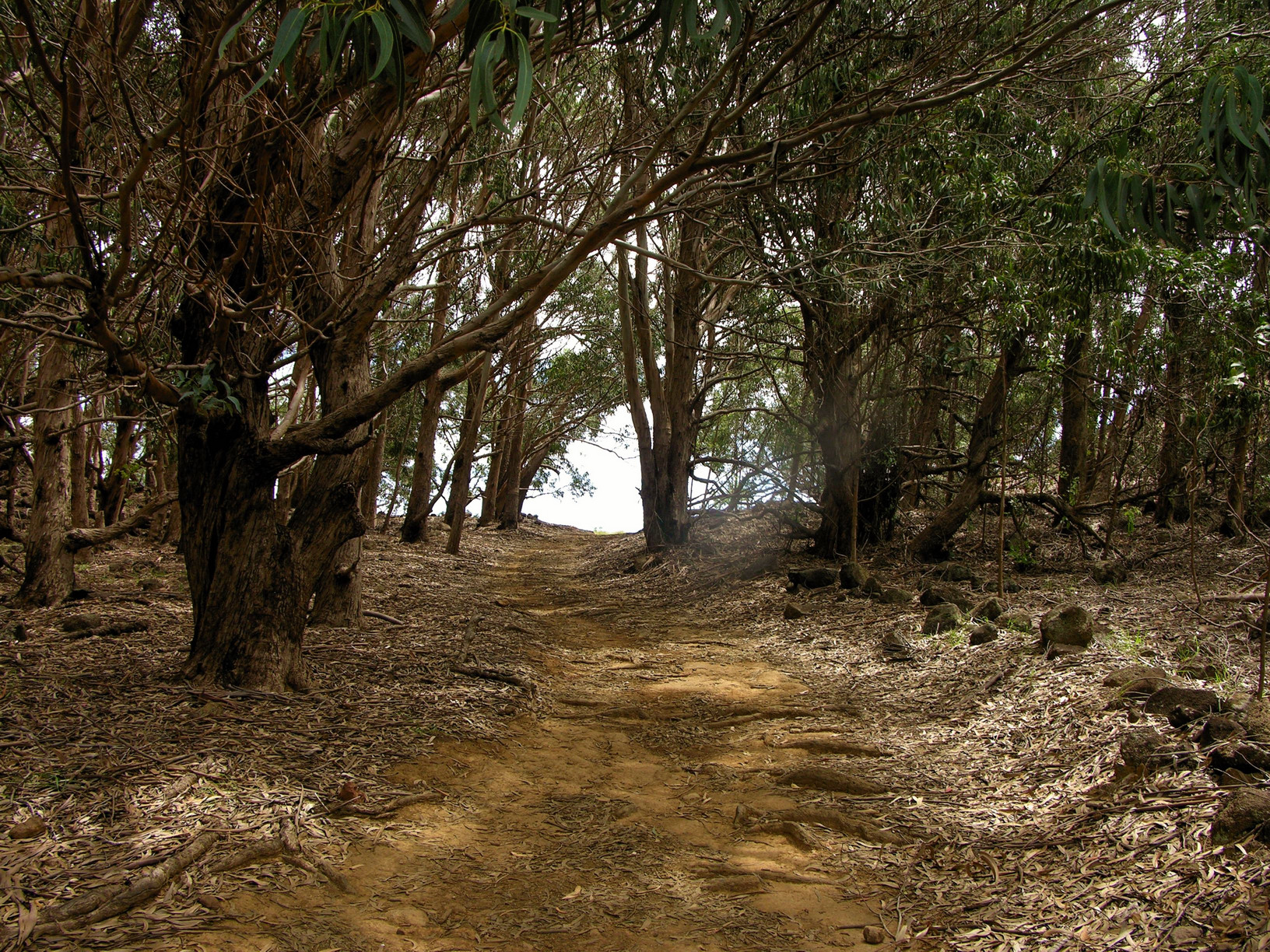
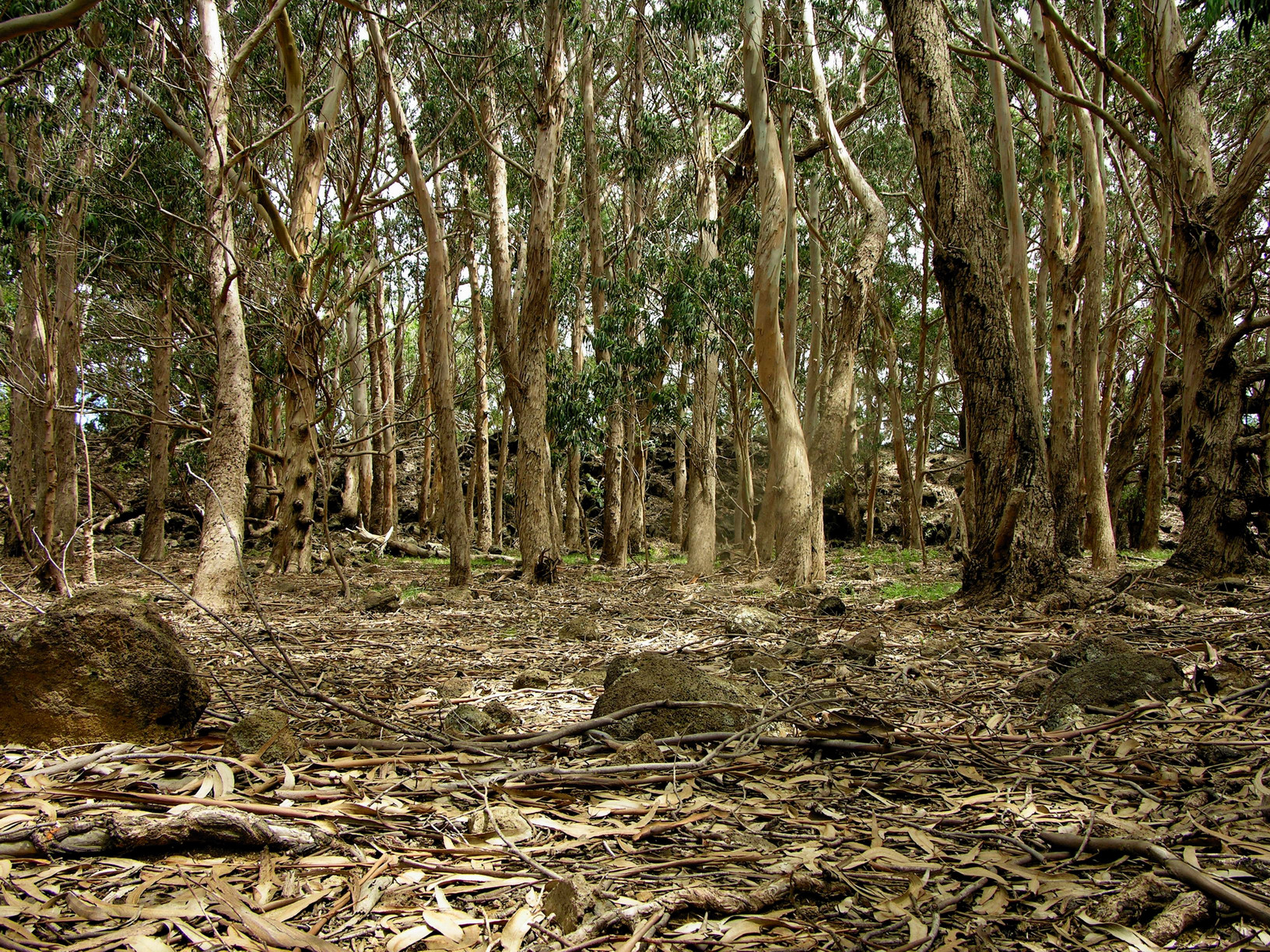
The next two craters, Maunga Tea-Tea and Maunga Vai-Heva, have flat, rounded tops covered in grass. For years I'd looked at the Easter Island map and dreamed of climbing them. The reality was a disappointment. On the other hand, the highest crater, Maunga Pukatikei, was magnificent. There's no volcanic activity there, just as elsewhere on Easter Island, but the crater has survived, though erosion has worn it down. An old eucalyptus forest grows inside. This sort of patch of forest is usually occupied by cows, which like the shade too, but here on the summit there was only a lone bull grazing. A climb of three hundred metres must be too much for the average cow. There's no water, and I don't suppose any milkmaid cares to climb up there either.
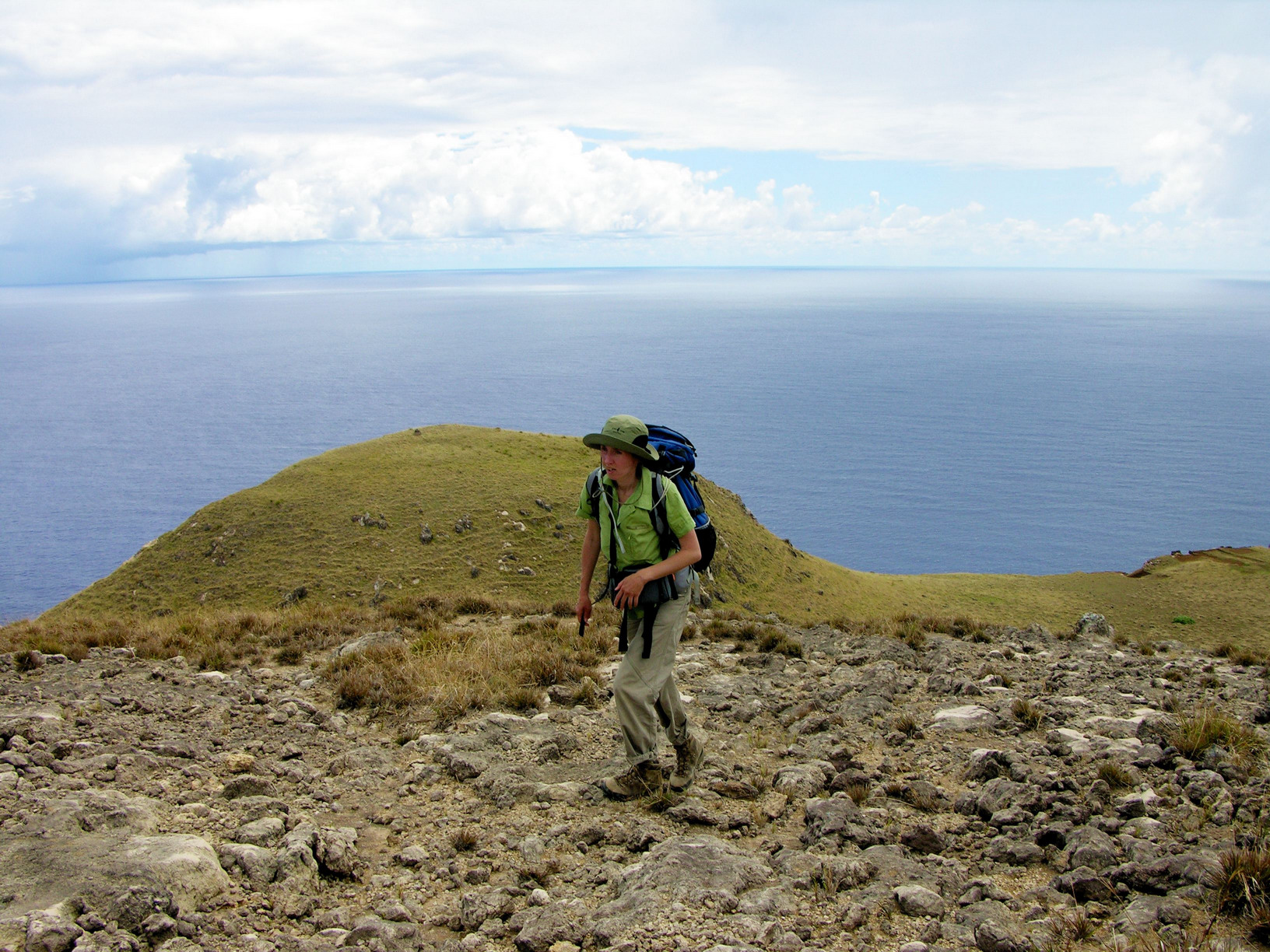
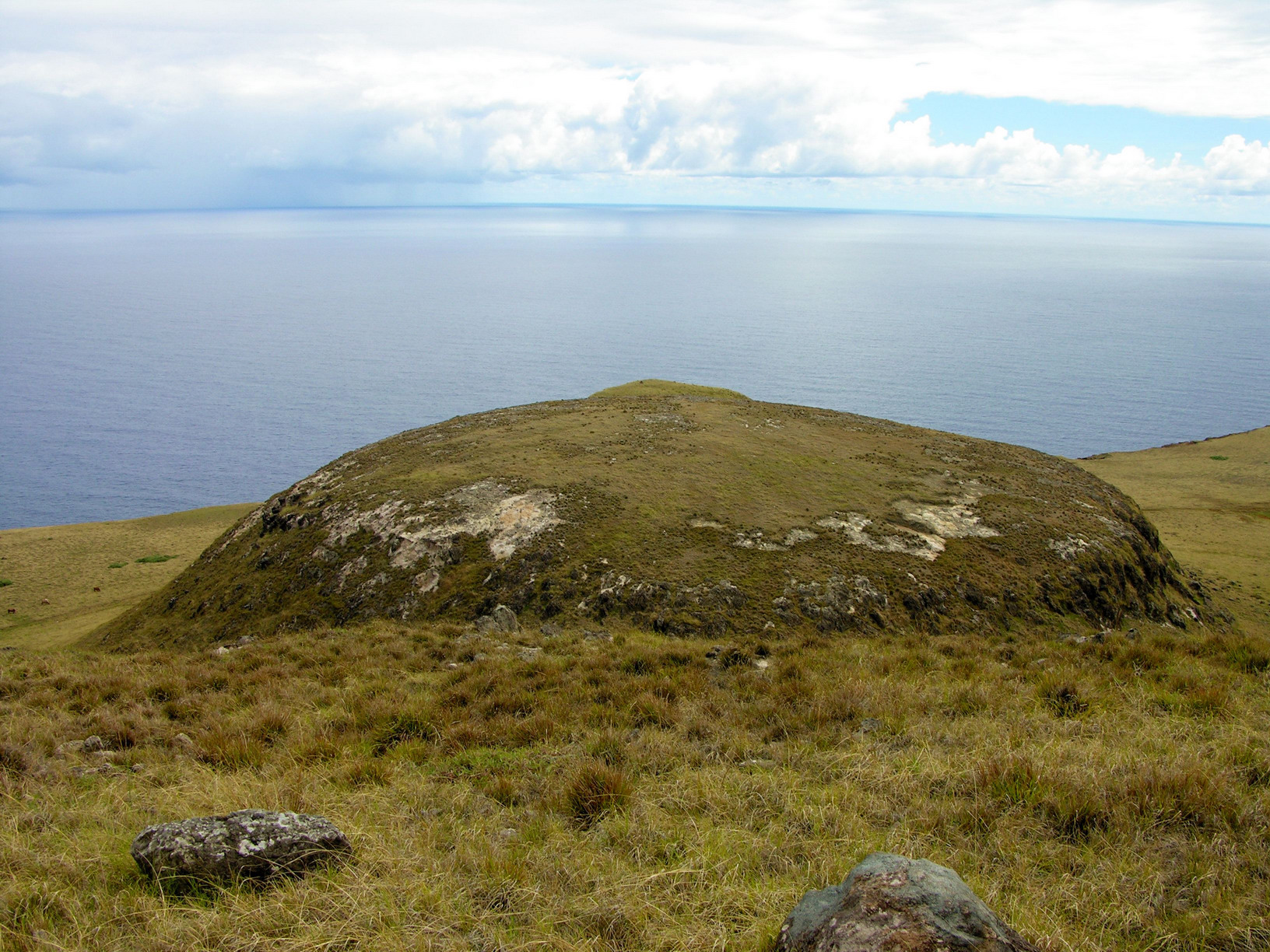
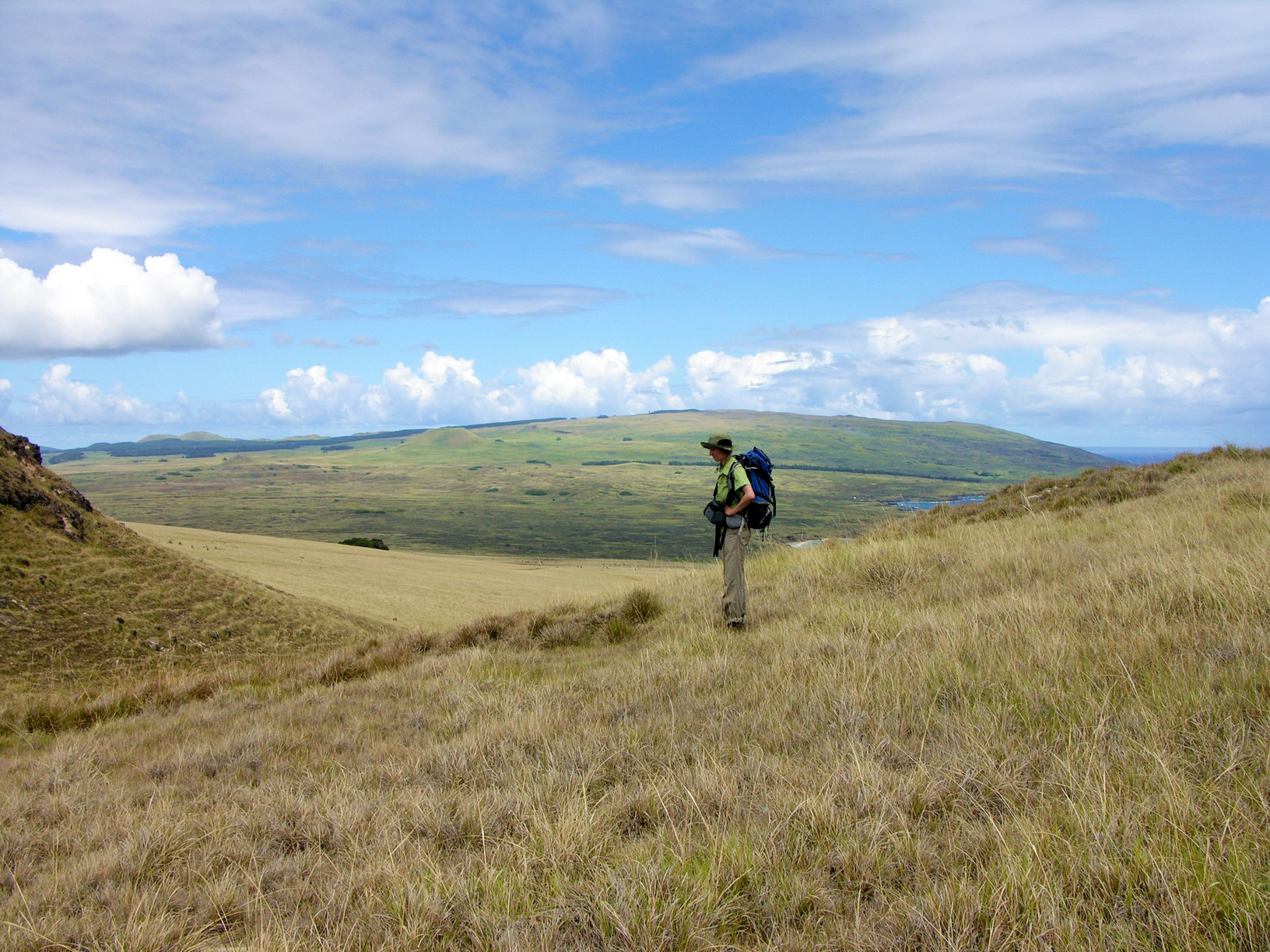
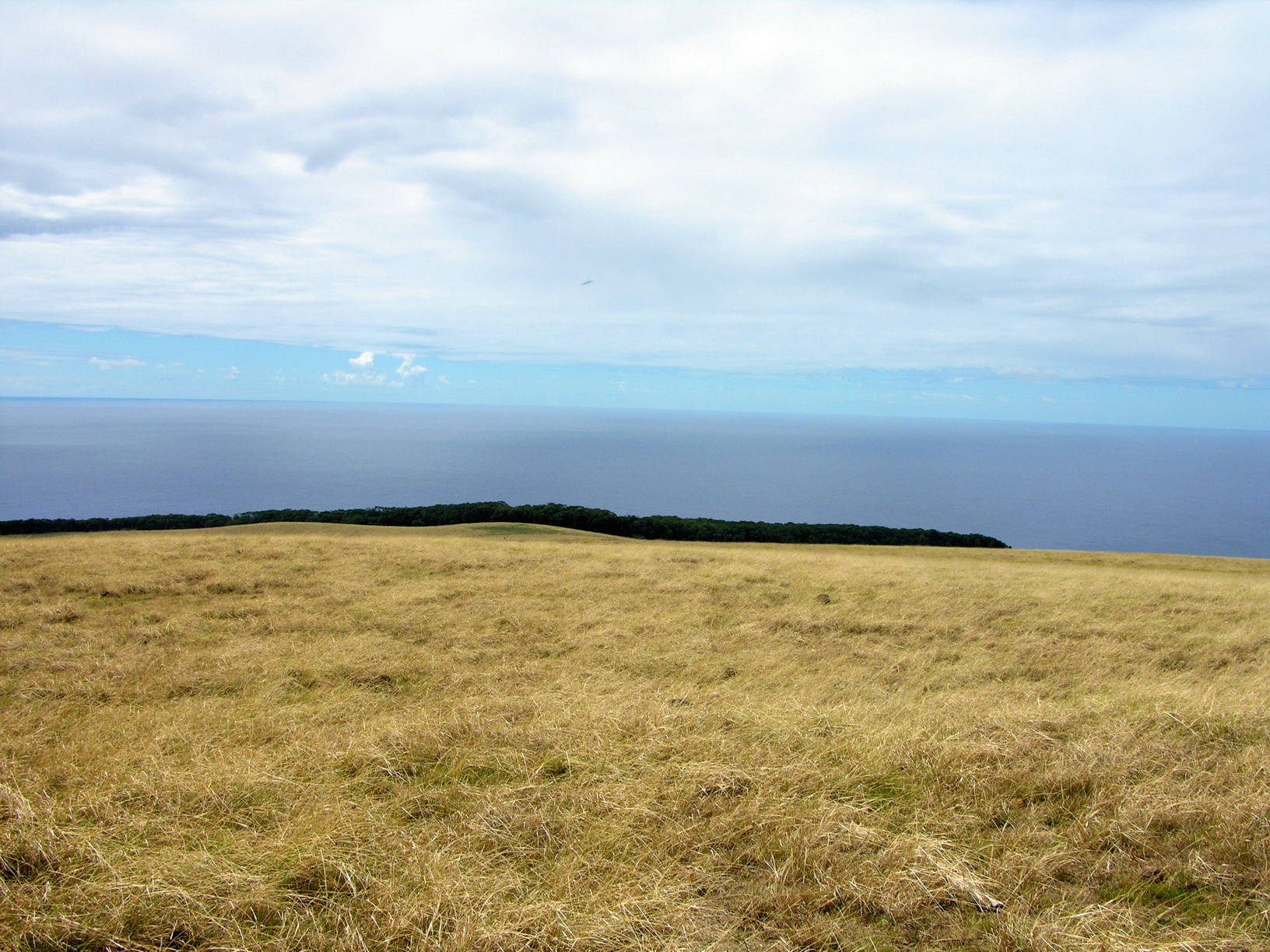
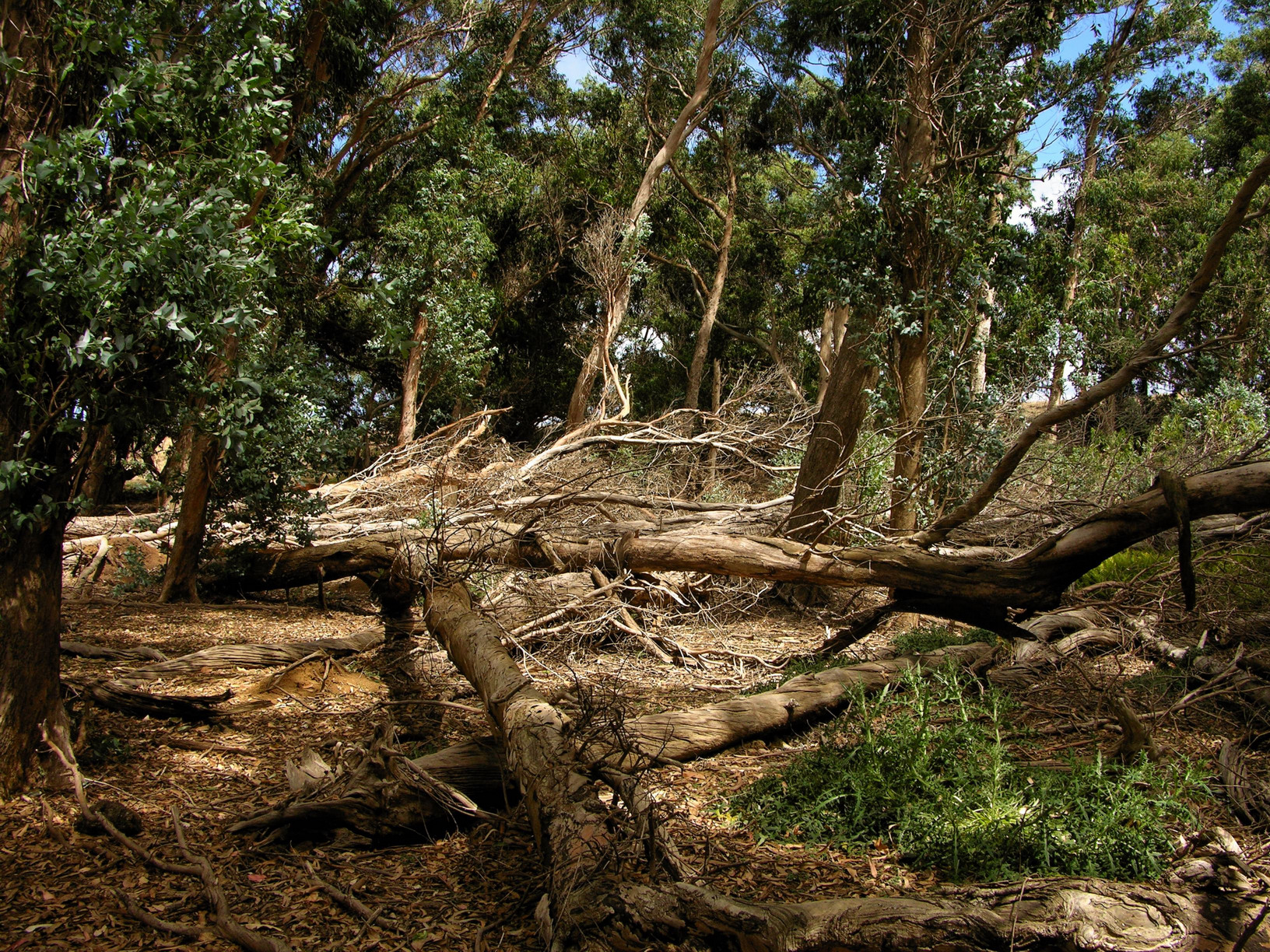
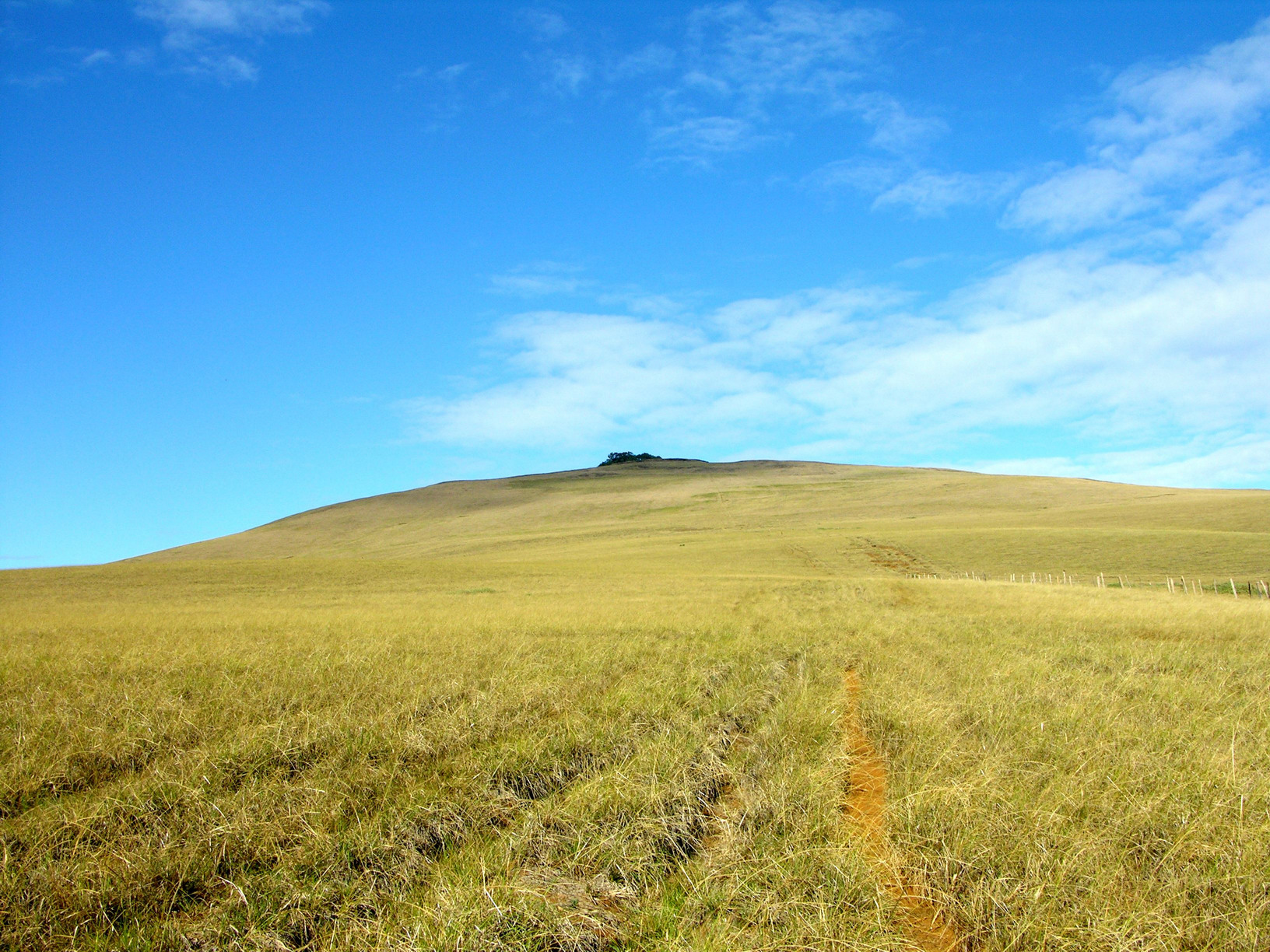
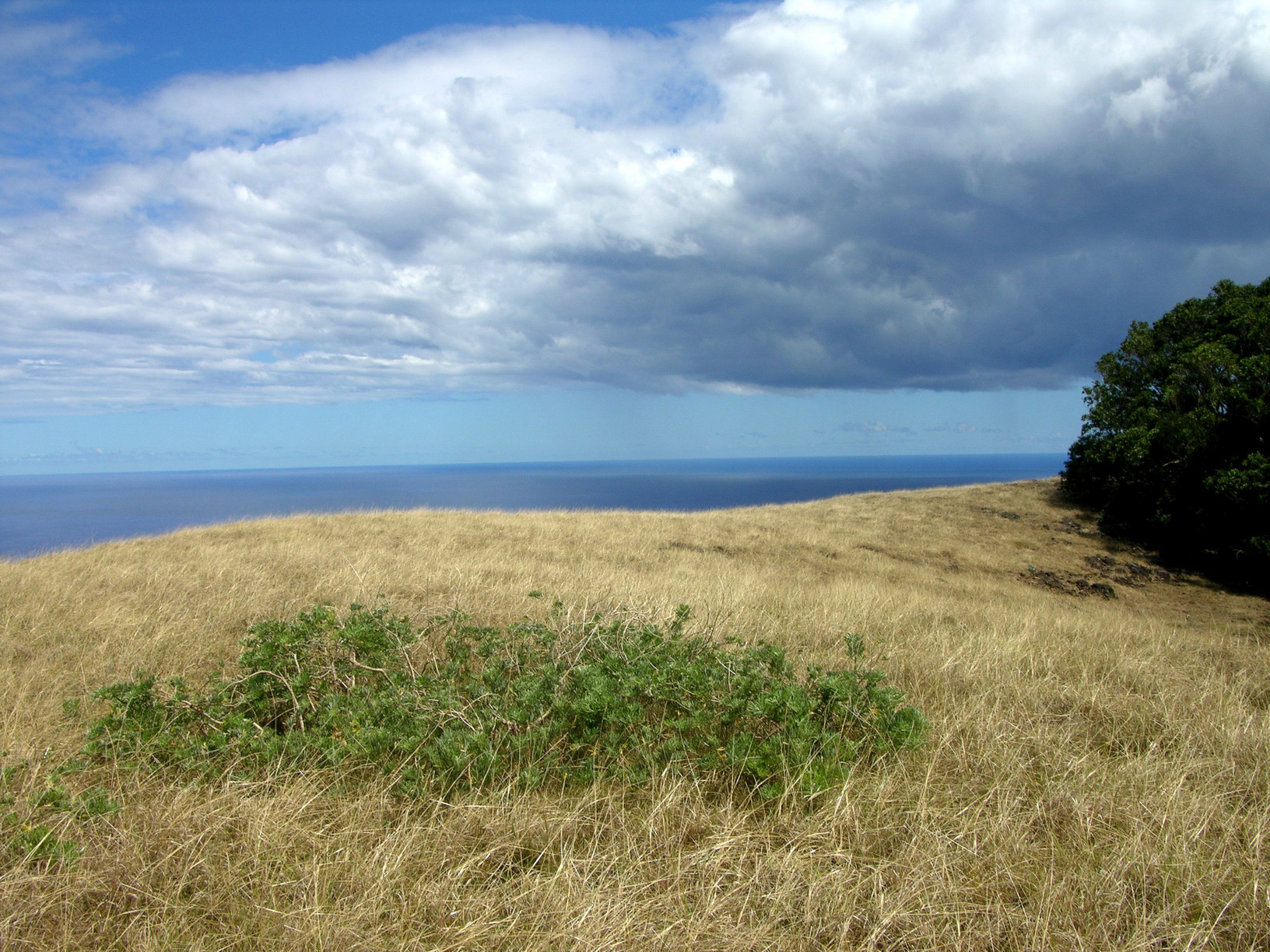
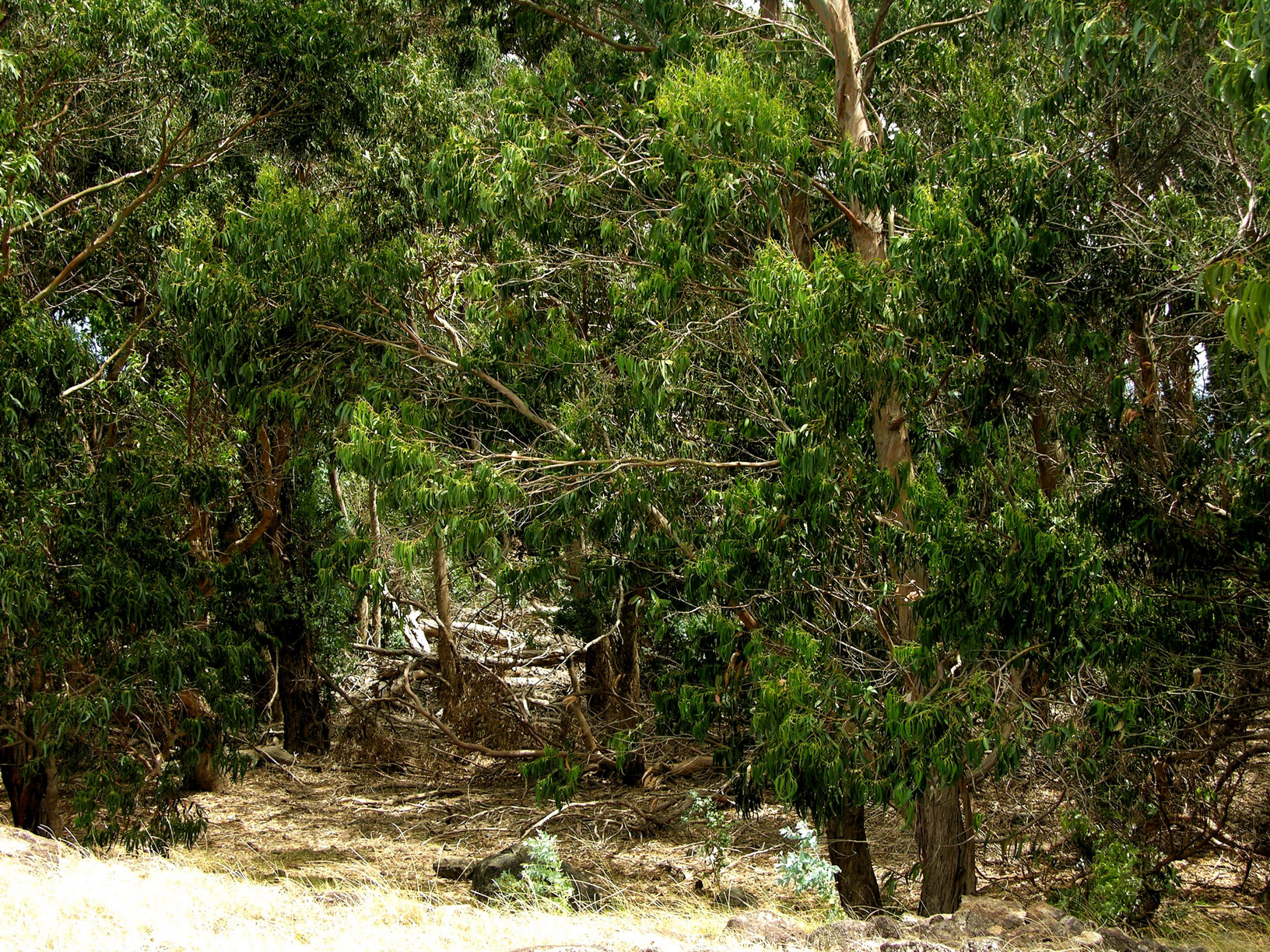
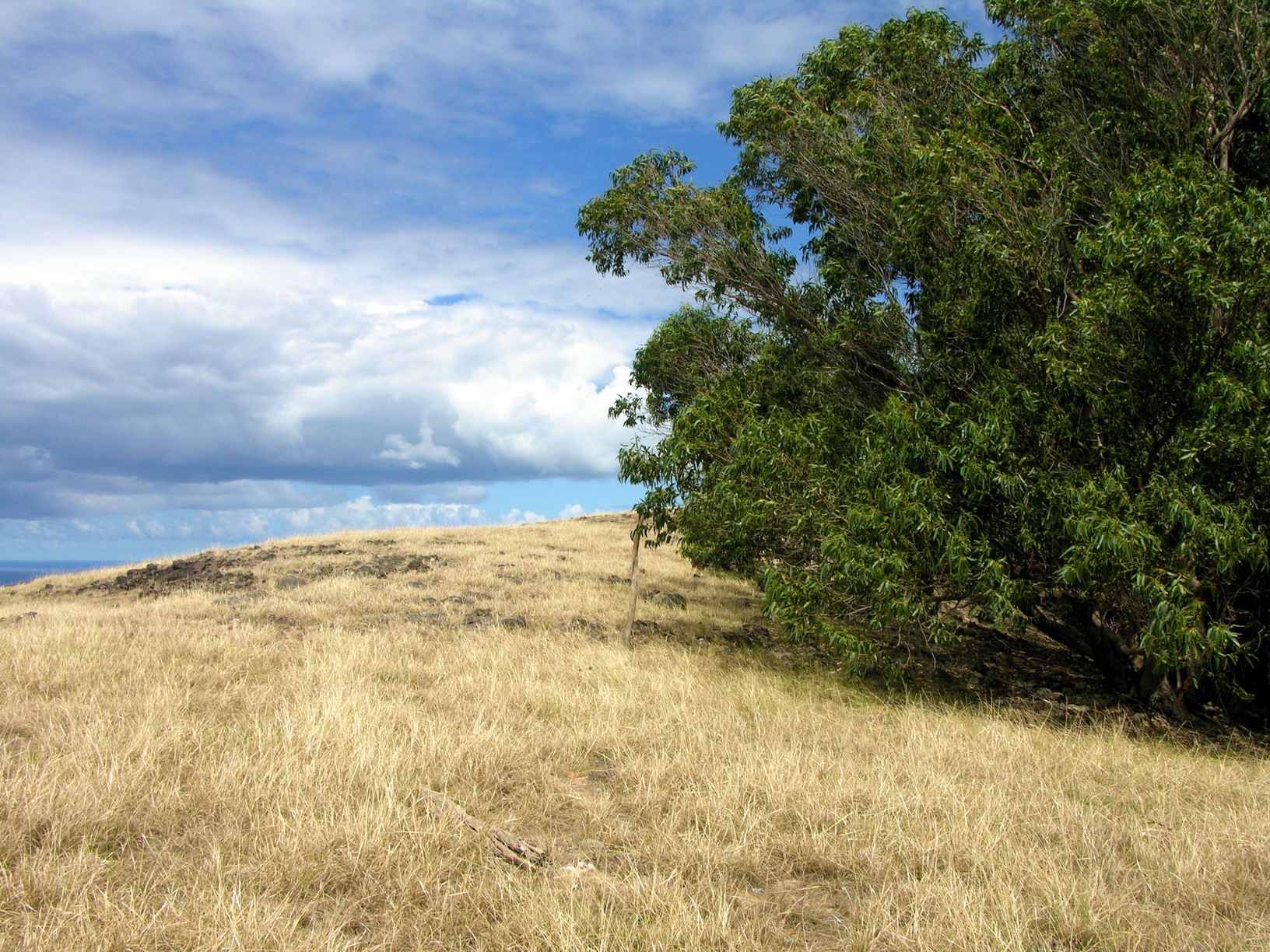
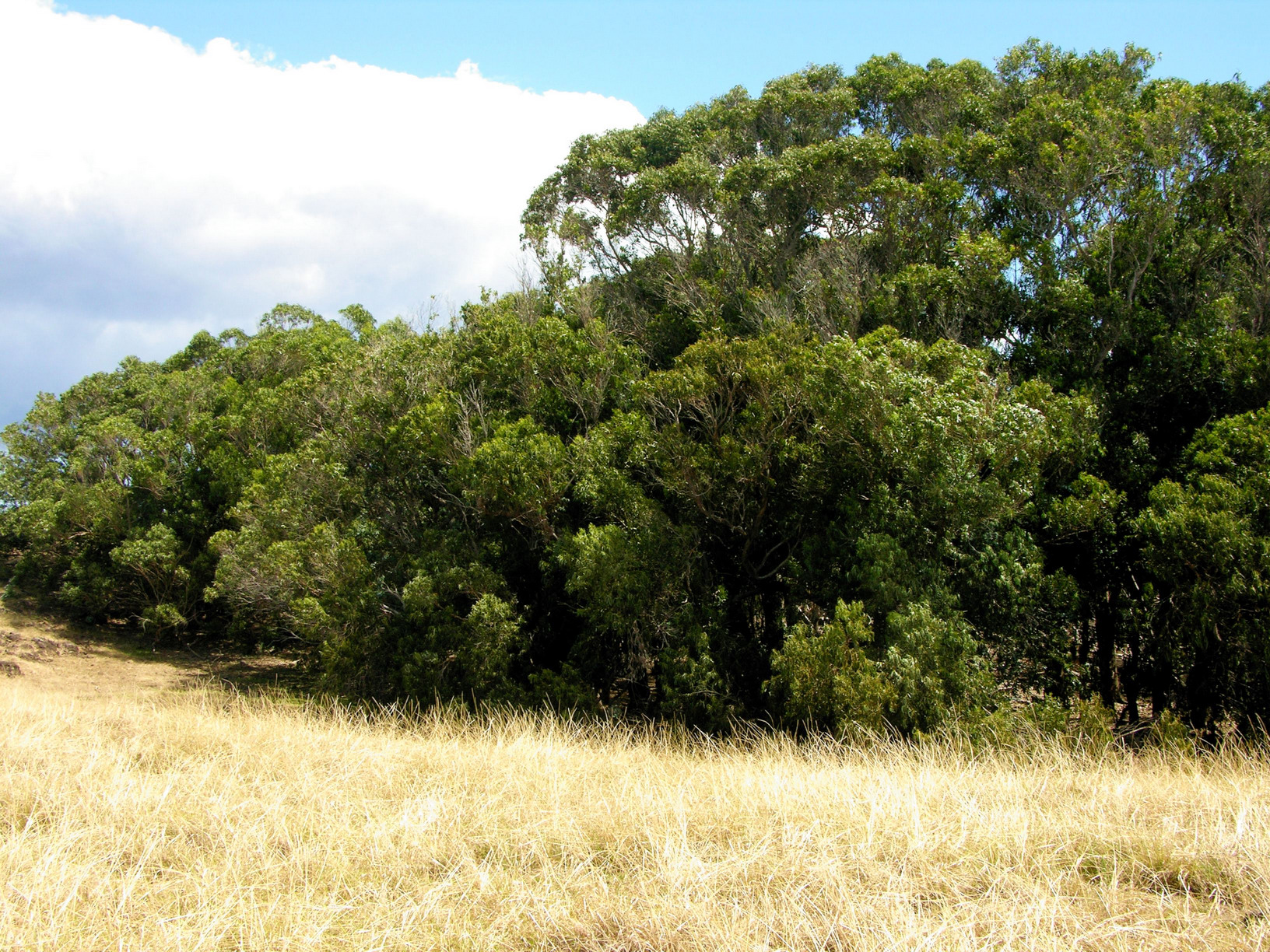
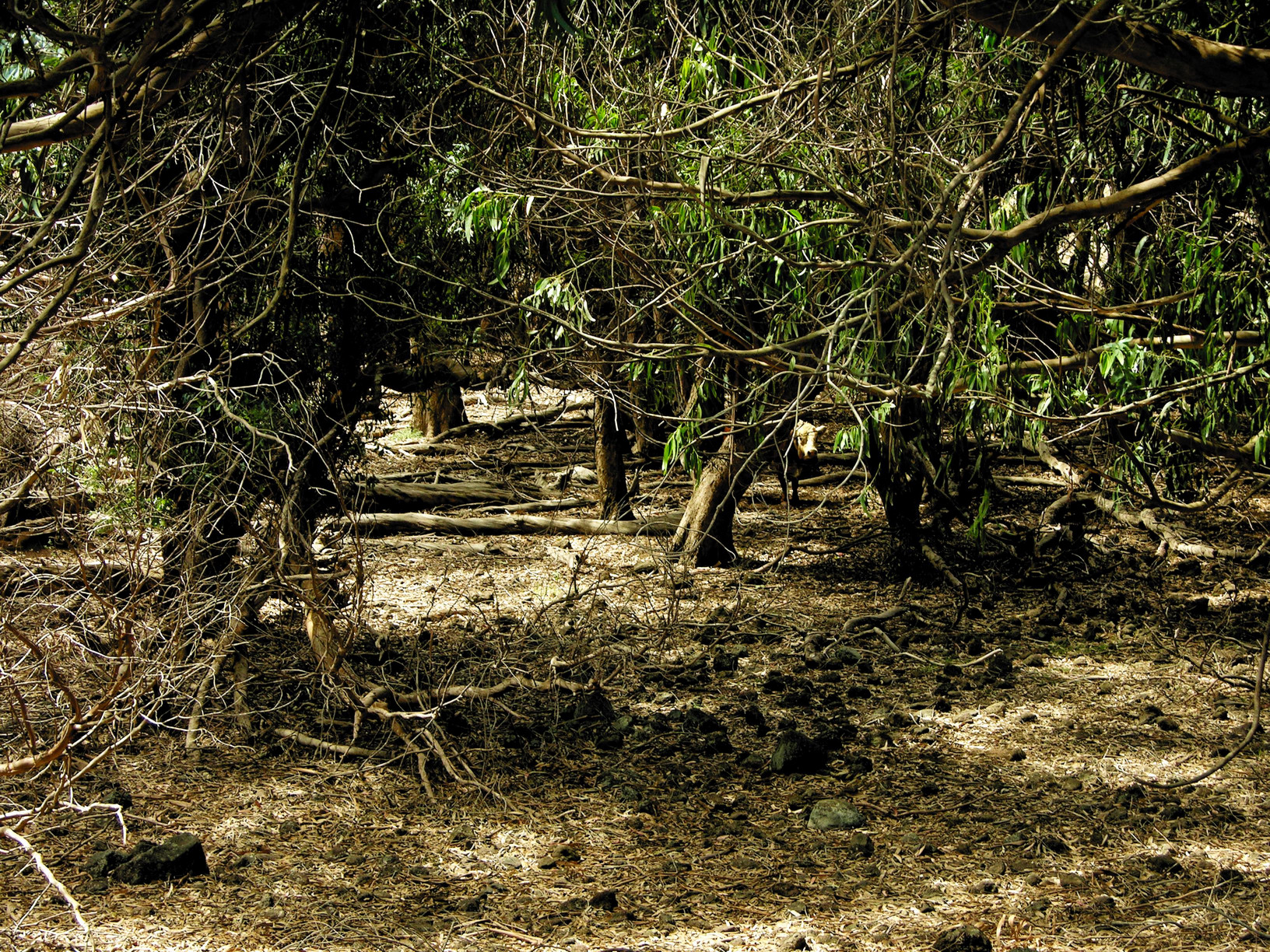
By then the midday heat had arrived and the sun had chased off the morning clouds. We spread our mats in the shade and settled in till evening (27°06.293′S, 109°15.303′W, 372 m). Remembering how short of water we'd been the day before, we'd brought plenty this time. Time to drink it, and make soup and tea. On the summit we had a breeze as well as shade. Tanya and I curled up and dozed to make up for the sleepless night. These were our last days out in the open. Next would come cities and hotels, and in just ten days we'd be back in icy Saint Petersburg. It was thirty below that year. Ten days is a long time, of course, but we already had one foot out the door. Work would separate us and we'd see one another tired, worried and grumpy. But for now we were here. It was one of those rare days when it was neither too hot nor too cold, even without clothes. The wind stirred the old eucalyptus trees. There was ocean for thousands of kilometres around us. We were on our own together. You want to remember our whole topsy-turvy life. It was all like a dream. Here we were, dozing on Easter Island. This was the place Senkevich used to talk about in the seventies. We were here. This was our life. Business, the Soviet years, planes, telescopes, selling things in the freezing cold at the market, the rallies of the nineties, meeting Tanya on a bog in 1990. It all ran together in one bright jumble. It was frightening to go back home. But for now we could snuggle up. For now all was well, we were healthy and the world was ours. We could drink cup after cup of tea as long as we had water, and we even had plenty of sugar.
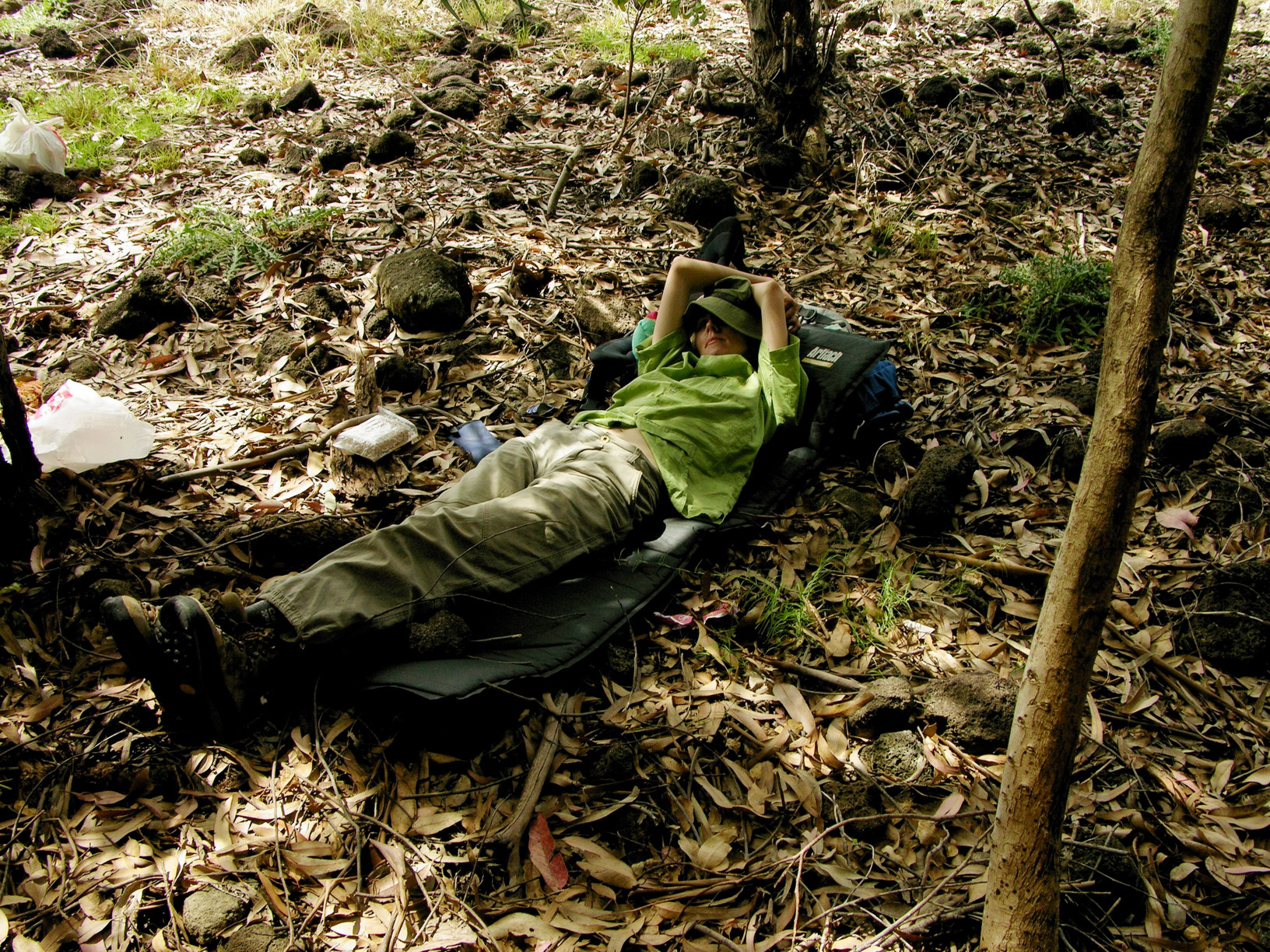
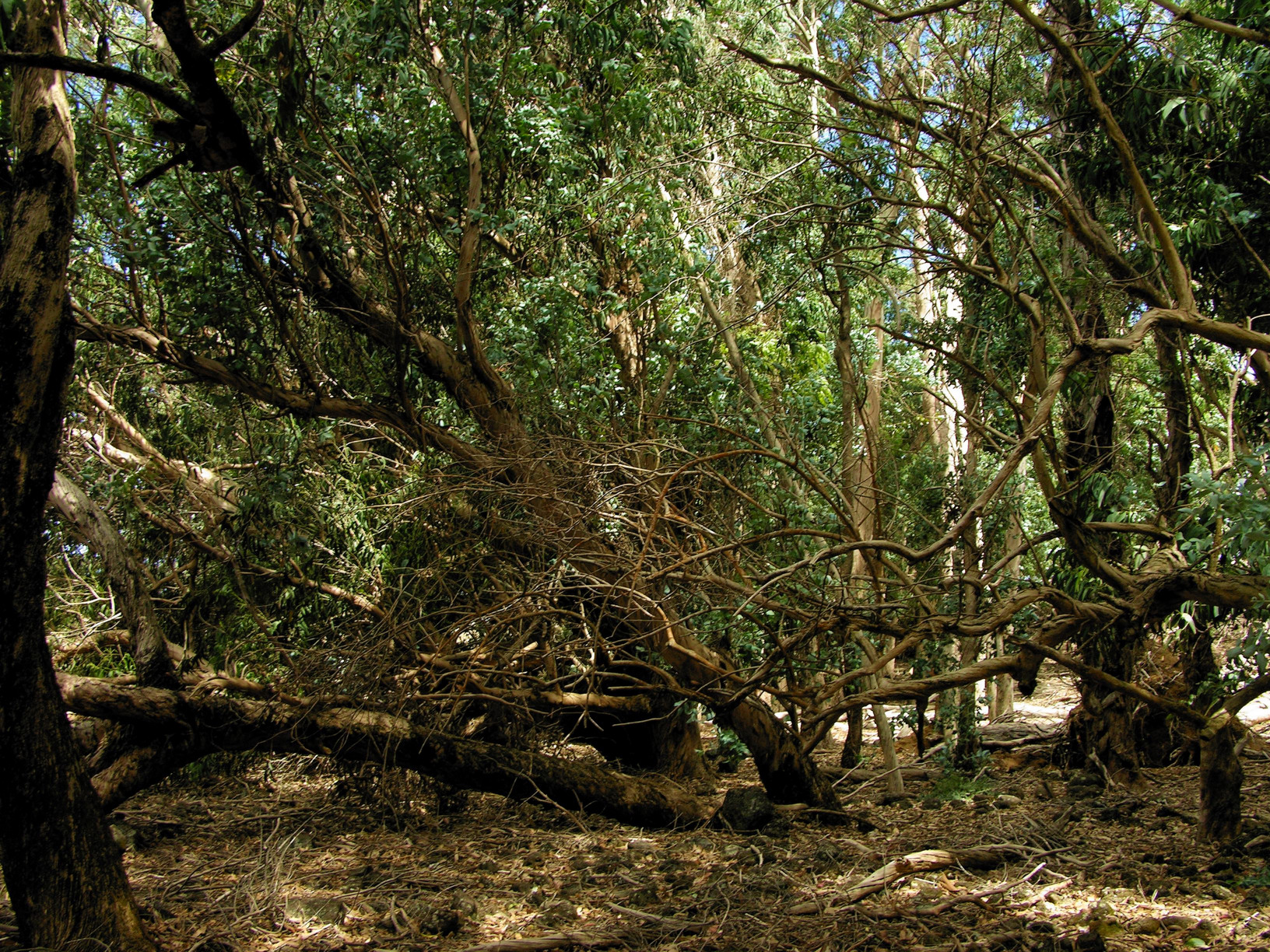
We thought of sleeping on the summit. It was a little paradise. I'll remember that day to the end of my life. But it would mean a very long walk the next day. Time to go down.
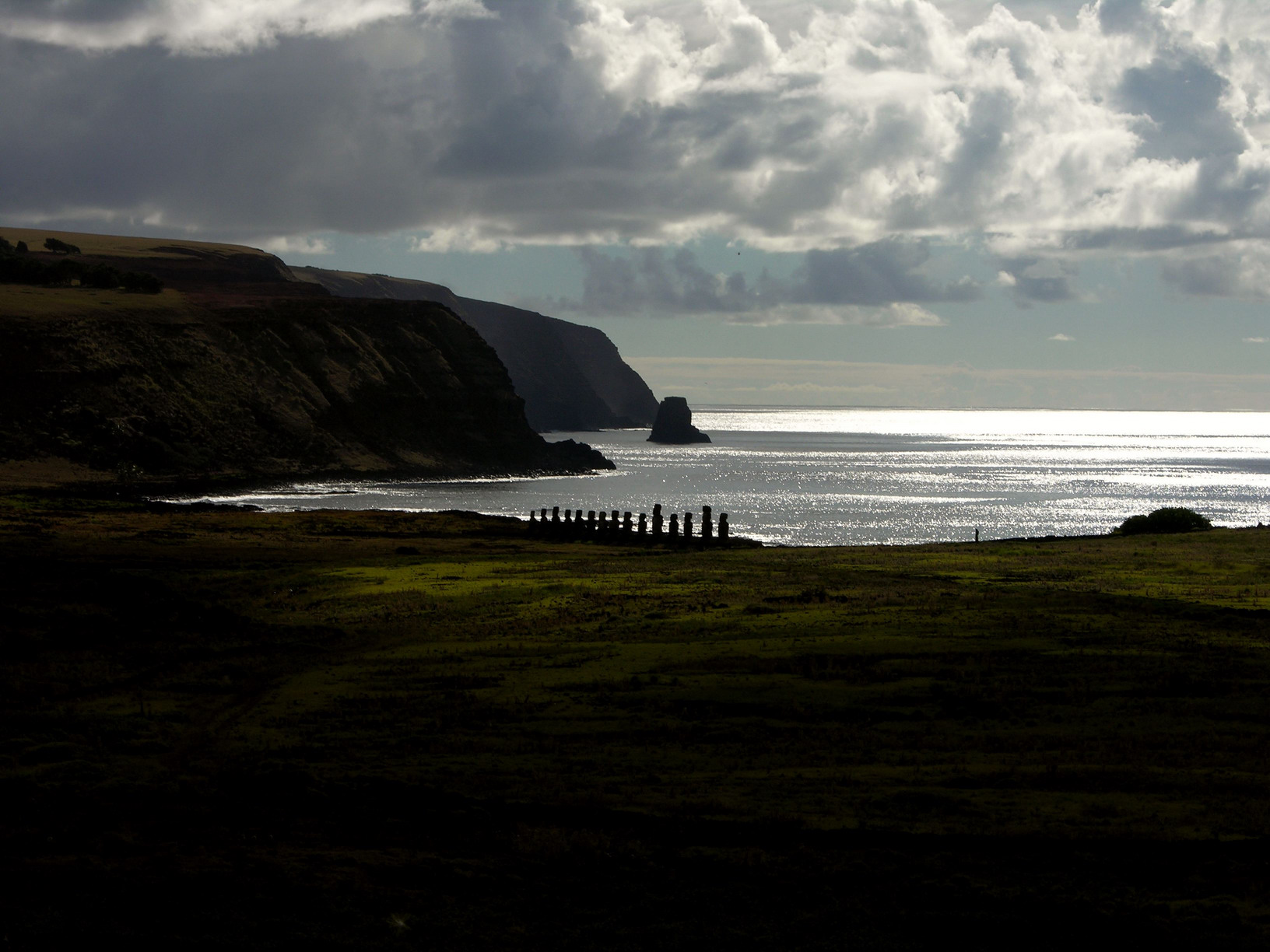
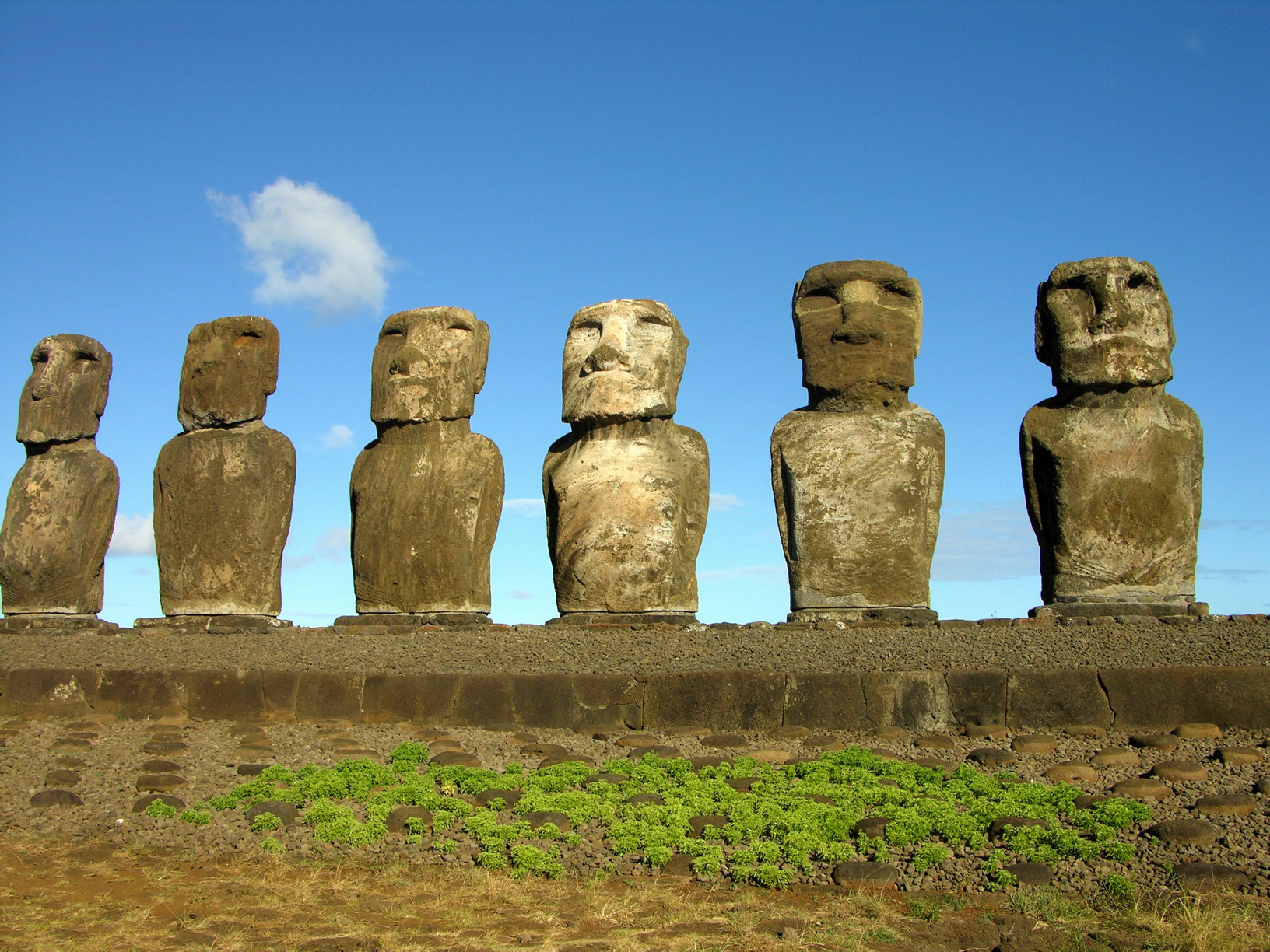
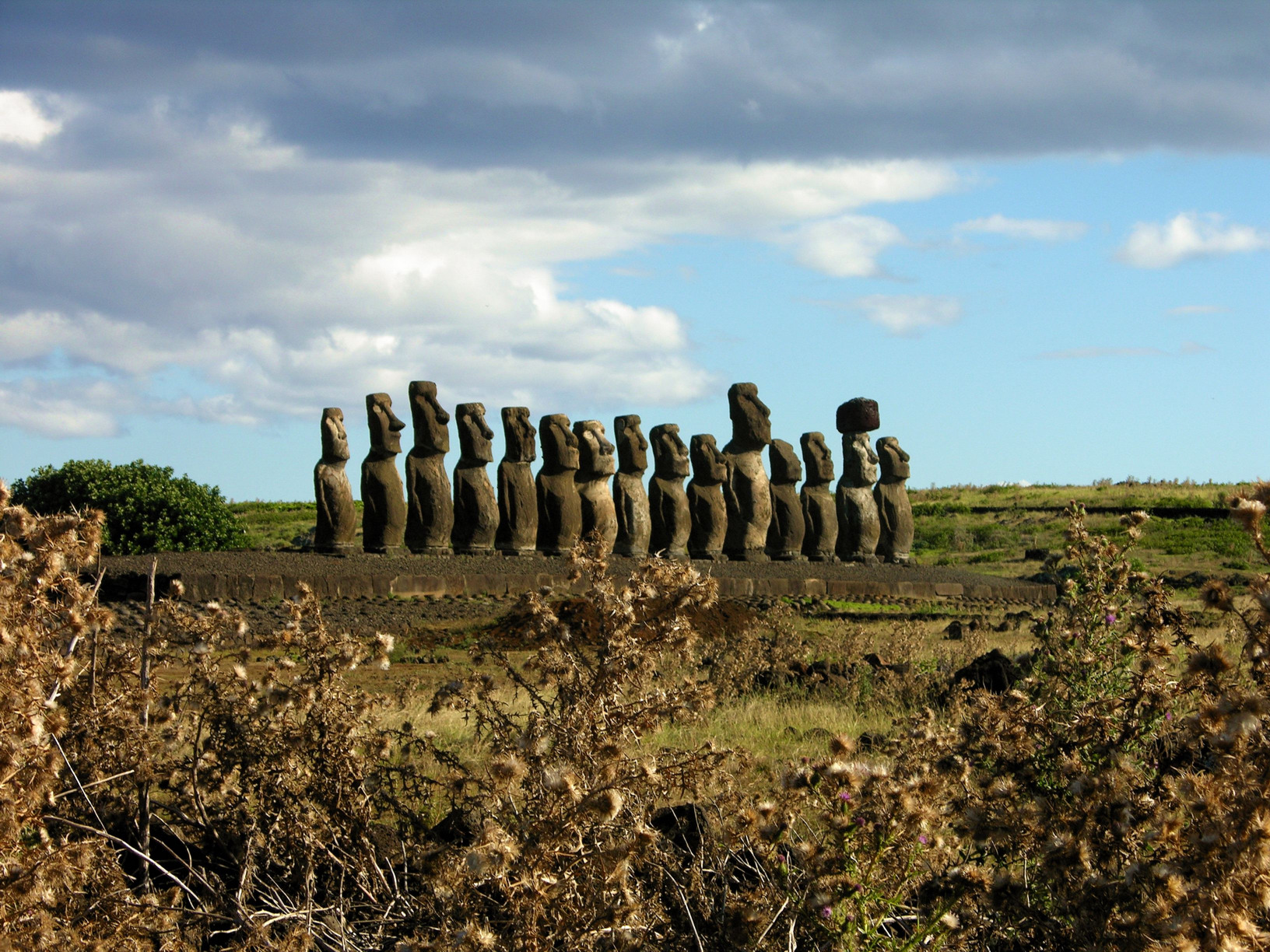
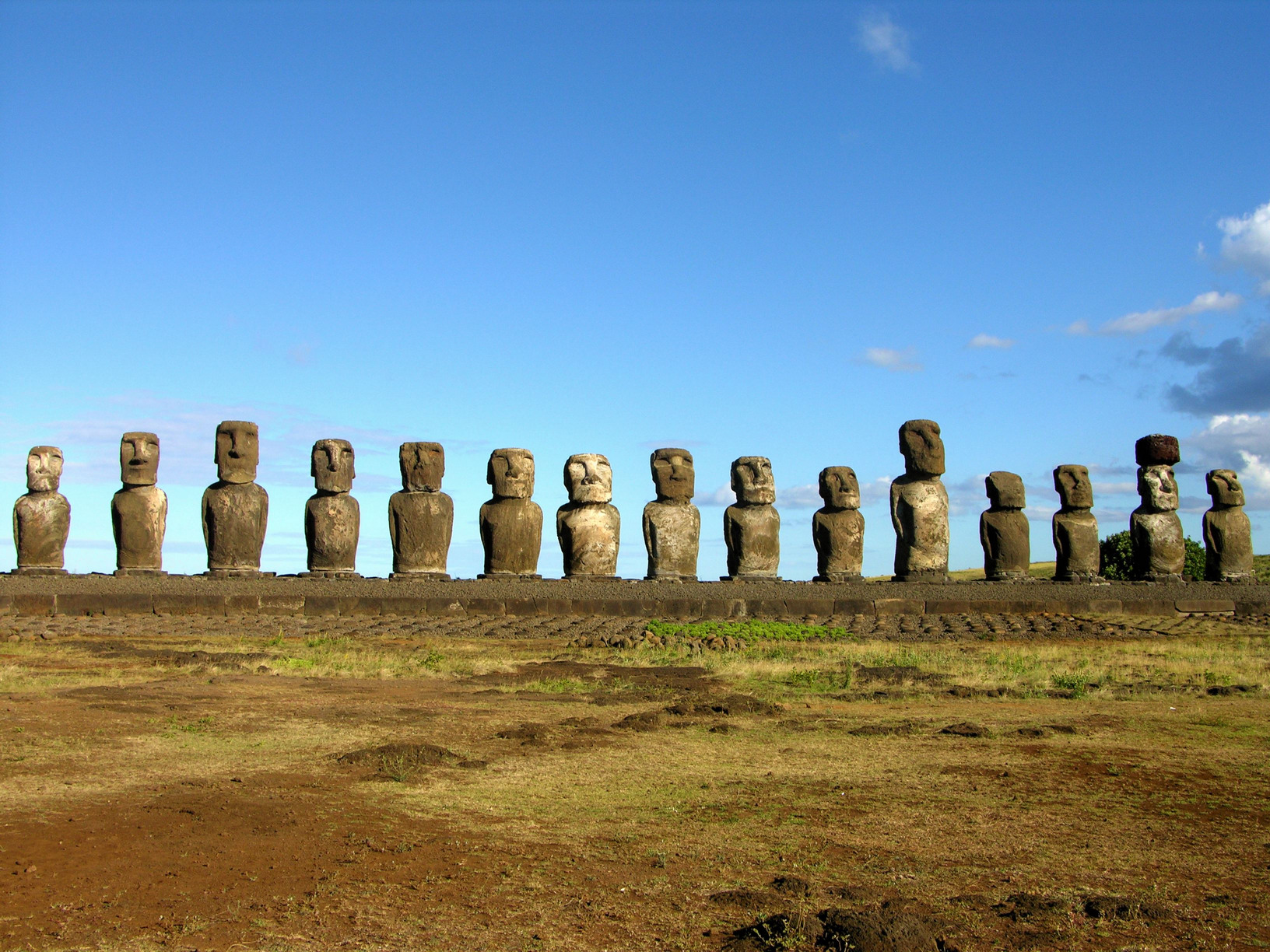
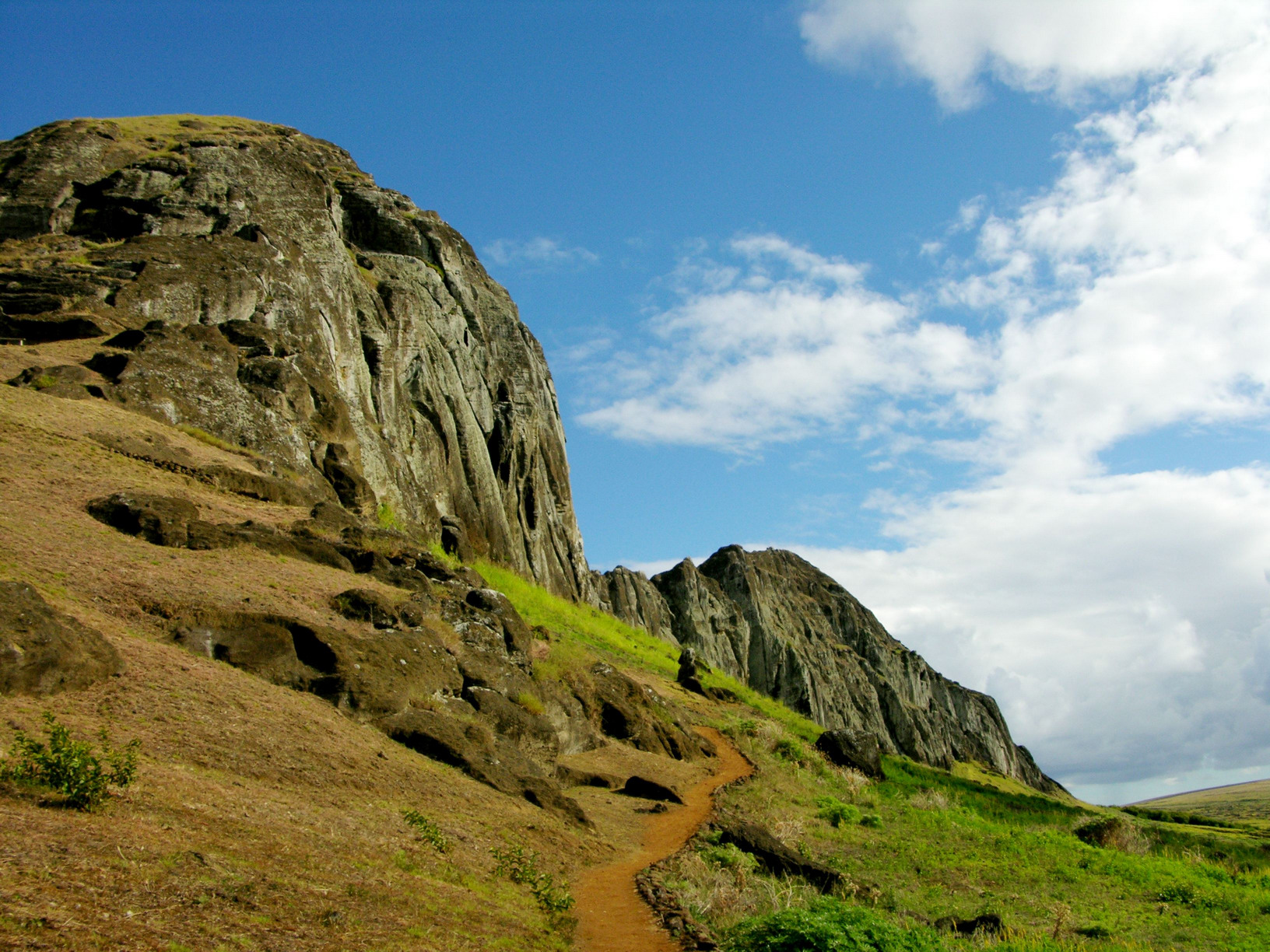
Walking down isn't like scrambling up, even in the heat. At the foot of the volcano is a farmer's cottage. There's water there, though we didn't need it today. Lower still, where the coast road swings inland to cut across the volcanic headland beneath the volcano, fifteen moai stand on a single platform at Tongariki. They were put up recently. There's room still available on the platform, and in time they'll probably bring many more stone people here. The restoration crew is right next door. Just to see how it goes, they're making a new moai themselves. We stopped in to ask for water and they cheerfully filled all our containers. A traveller on foot is a rarity and people are always pleased to meet one and help. People in air-conditioned buses are outsiders. Even we look at them as if they were Martians. A scruffy couple with backpacks, on the other hand, is one of their own. Chileans in general are kind and happy. I recall a study comparing how happy people were in different countries. Money evidently didn't have much to do with it. People in rich countries fight for prosperity until they're close to a breakdown, and often kill themselves. People who are hungry are in no position to be happy either. Chile, though, came first. And someone who is happy is glad to do a good turn and help a traveller. They offered us food, a ride to Hanga Roa and a bed in their quarters. We thanked them but wanted to go on to the crater of Rano Raraku. There is a large freshwater lake there. We wanted to sleep on its shore. It was on the slopes of this volcano that all the island's moai were made. There are many of them here to this day. Some stand finished, while others have only partly been cut from the rock. In effect it's a monument workshop for stonemasons. The smaller or unclaimed monuments stand as if on display for sale. The large ones, apparently, they couldn't lift. Some big shot ordered the grandest monument for his father's grave, then found he couldn't carry it off. He hadn't the strength. The biggest giants still lie on the ground. And you couldn't take a huge statue away intact anyway. Its mass grows as the cube of its size, while its cross-section grows as the square. The stone is soft, and a moai more than ten metres tall breaks apart when you try to lift it.
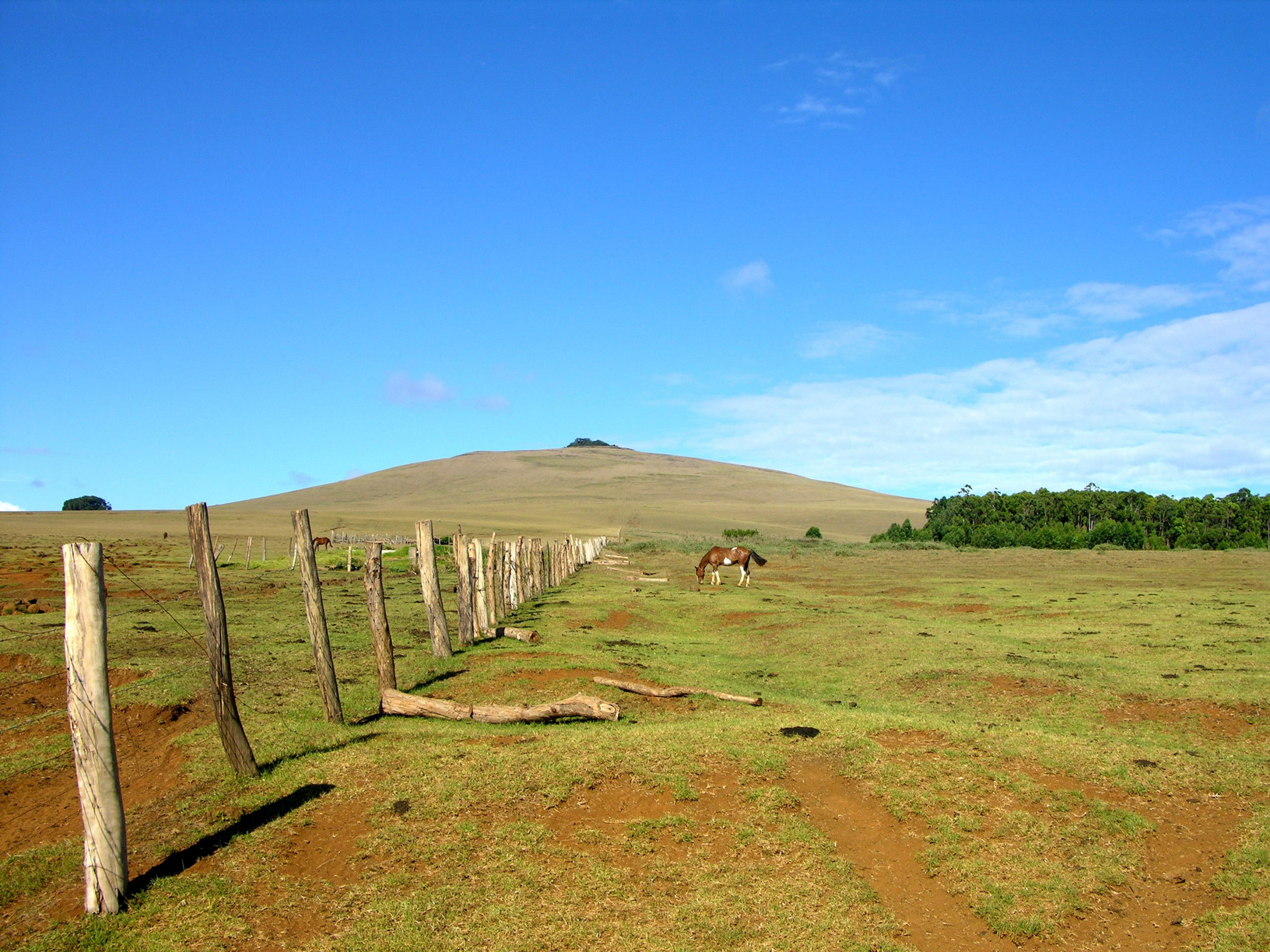
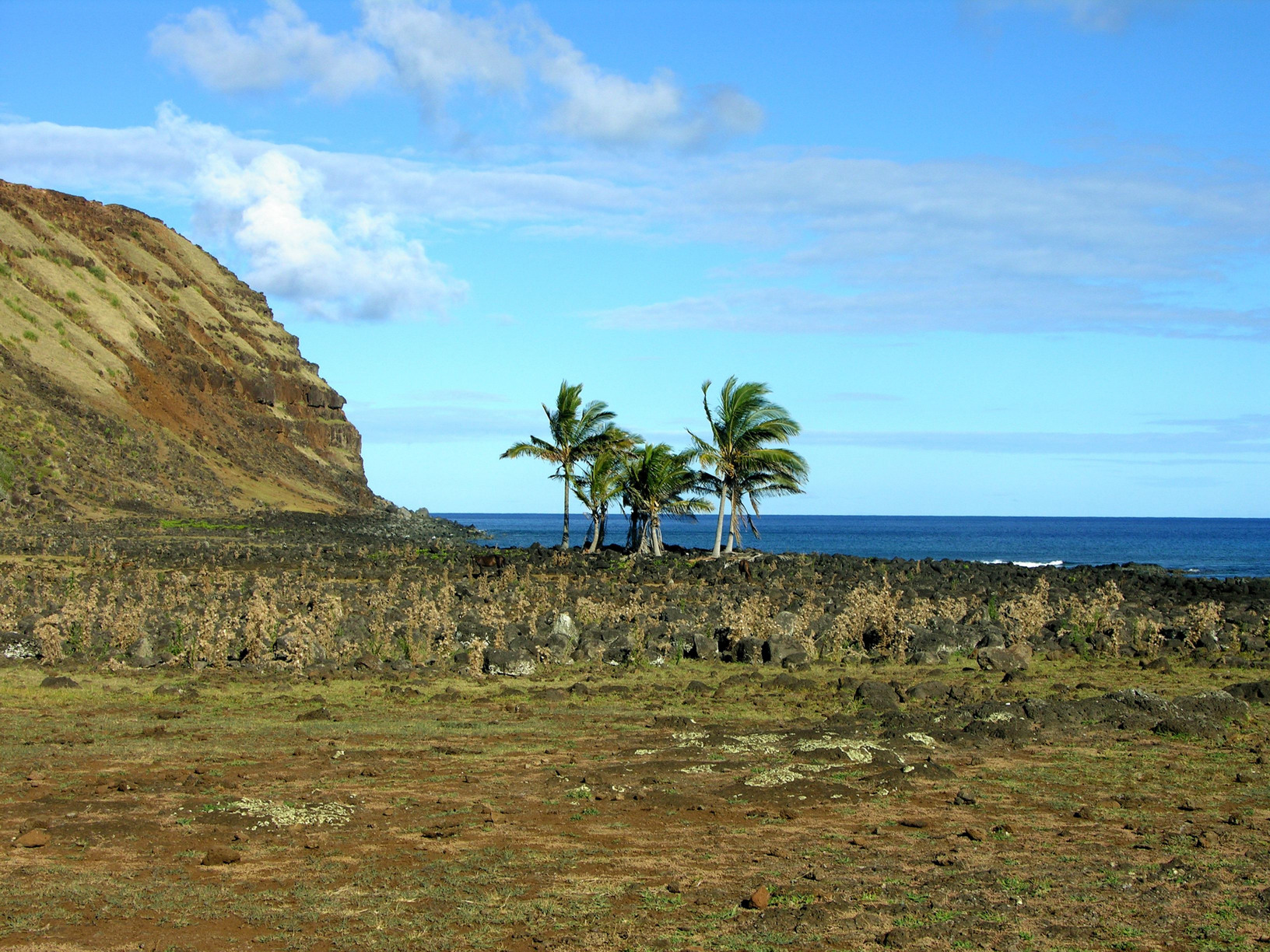
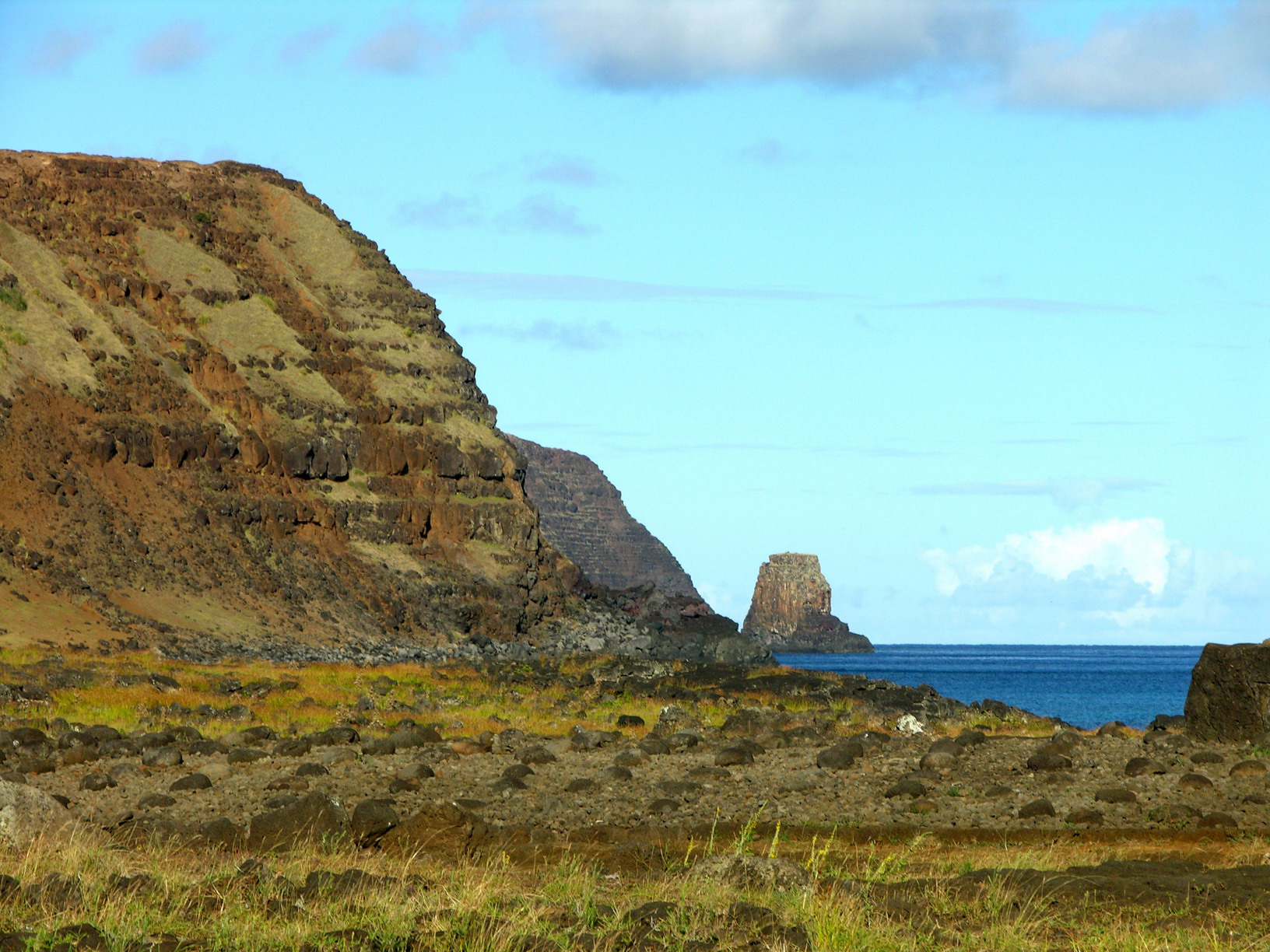
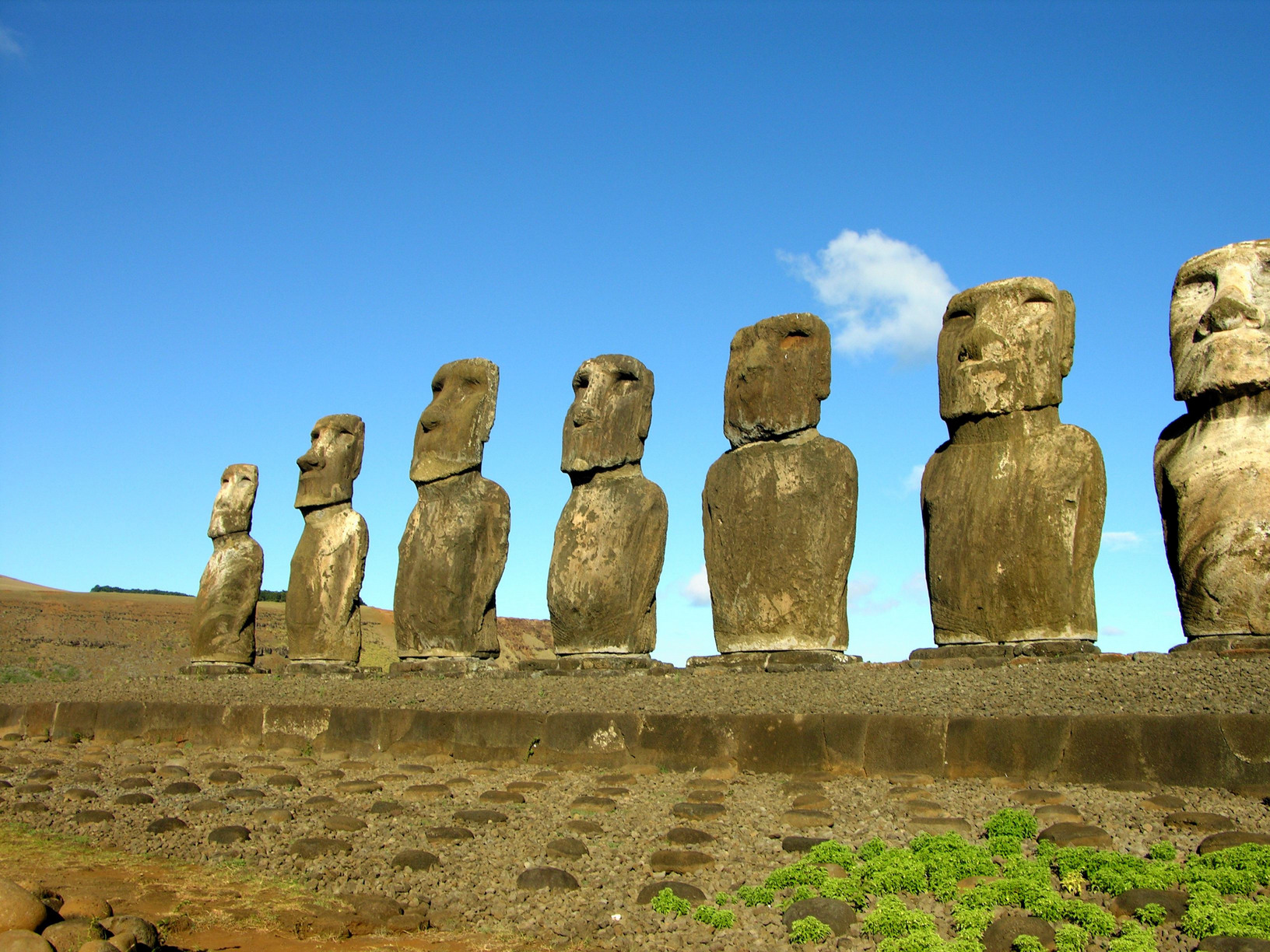
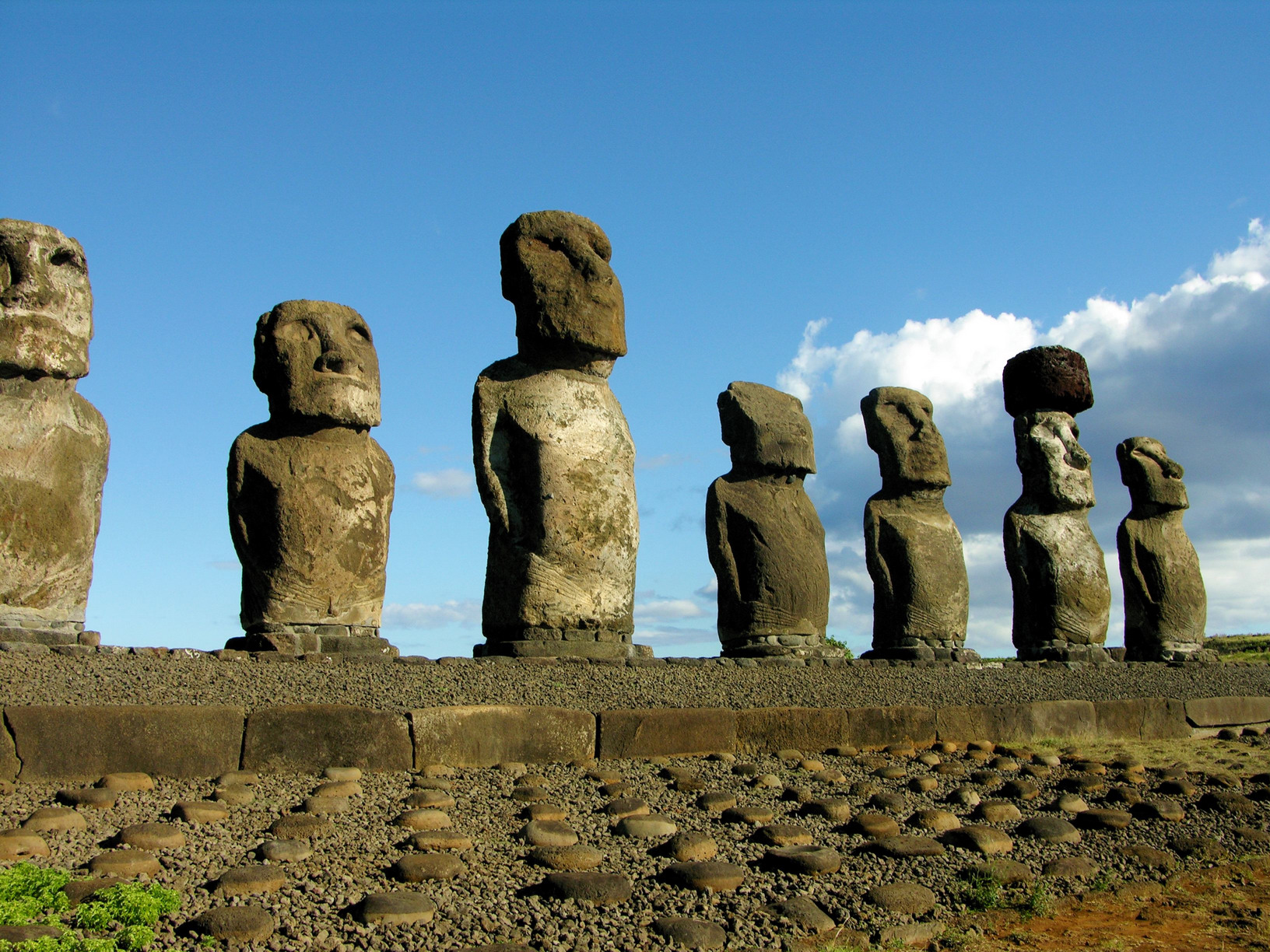
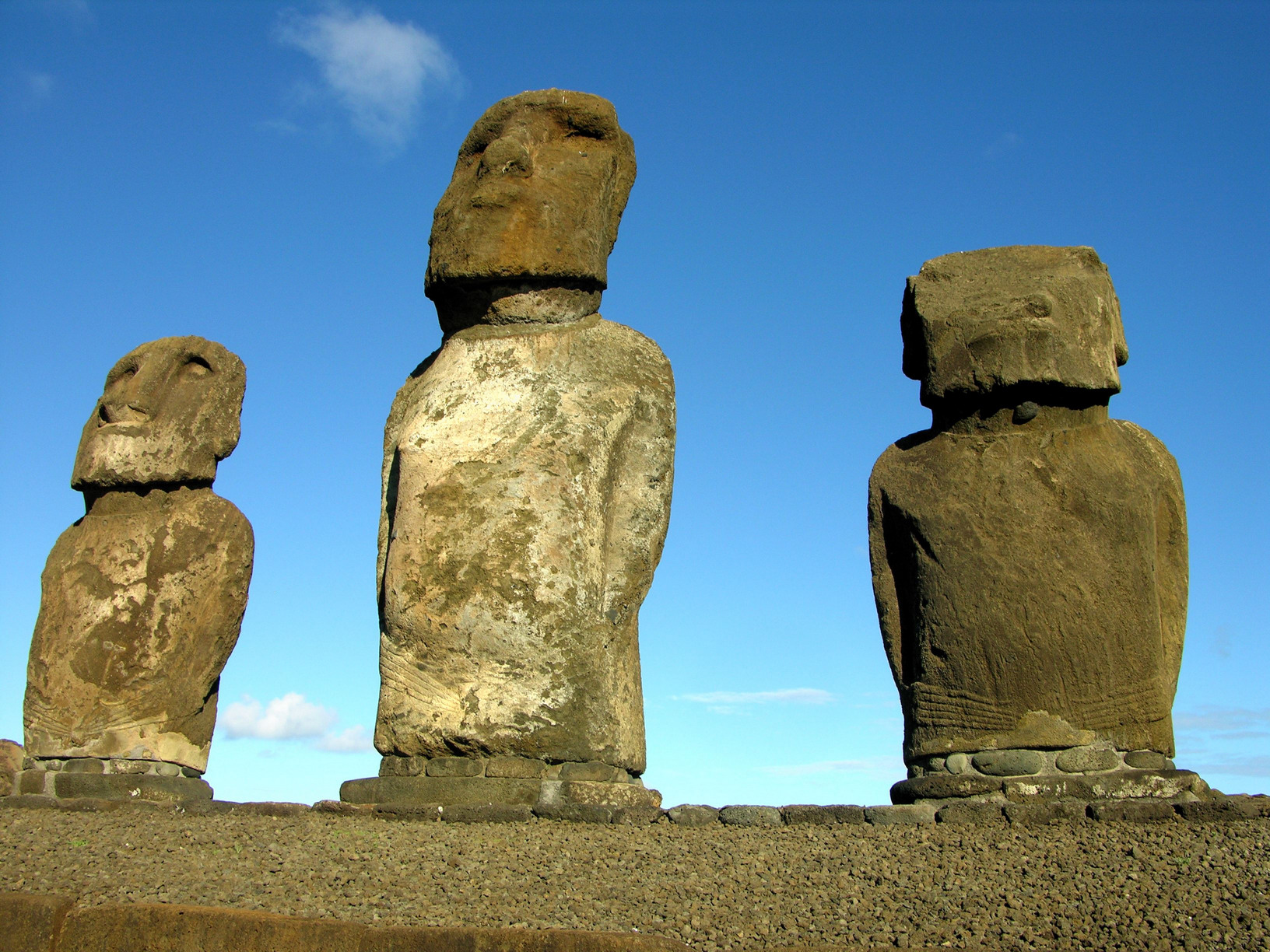
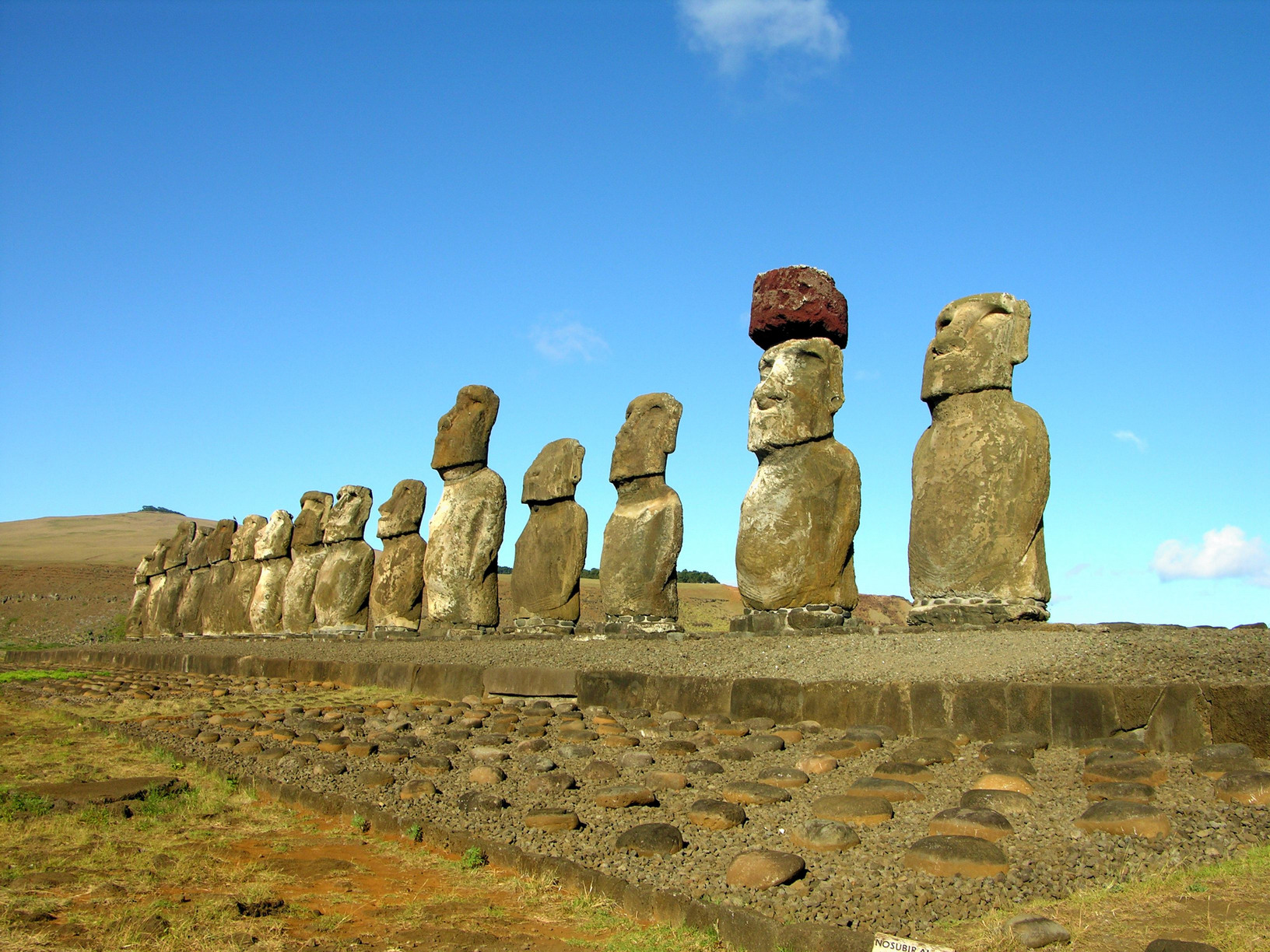
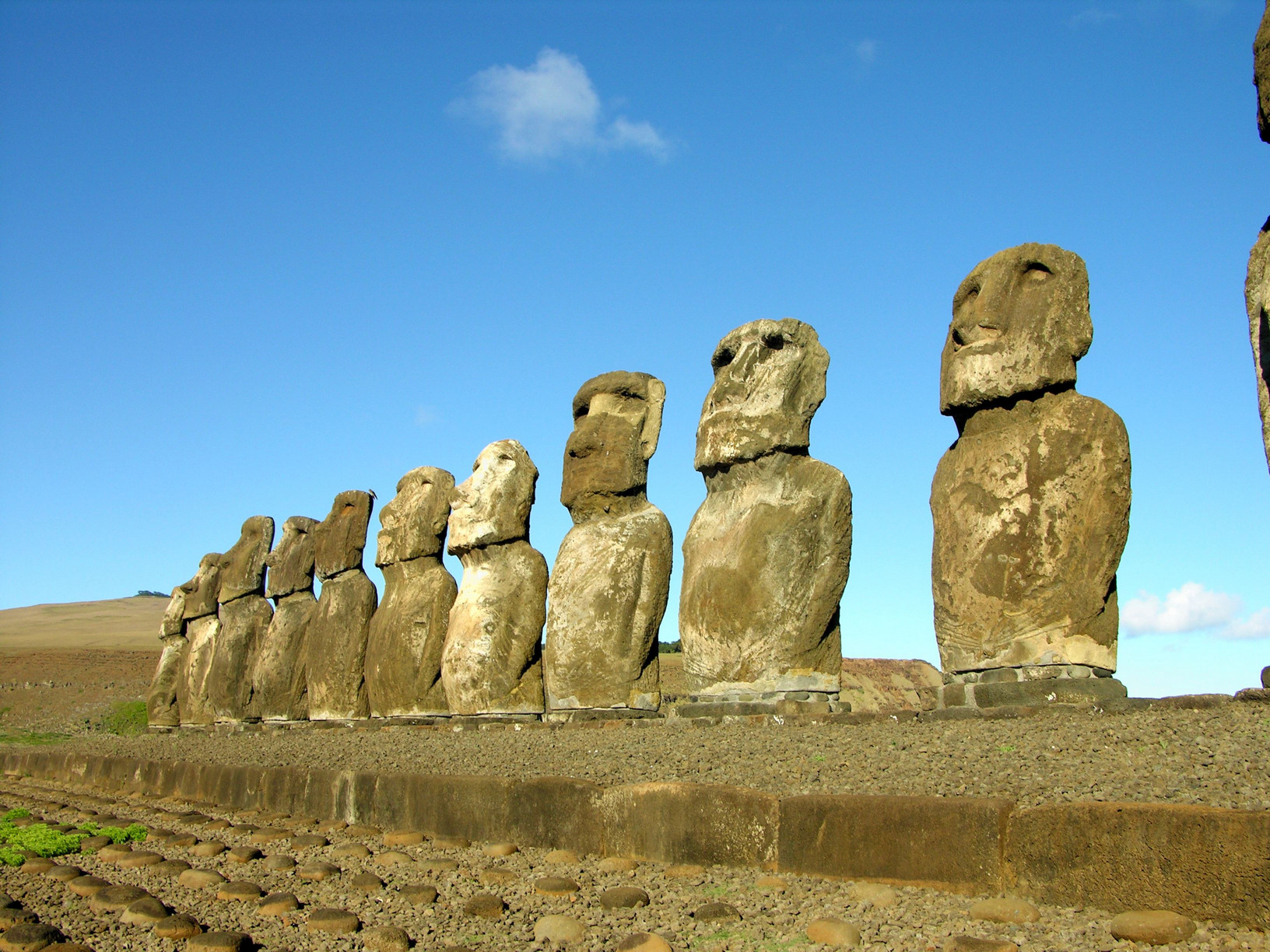
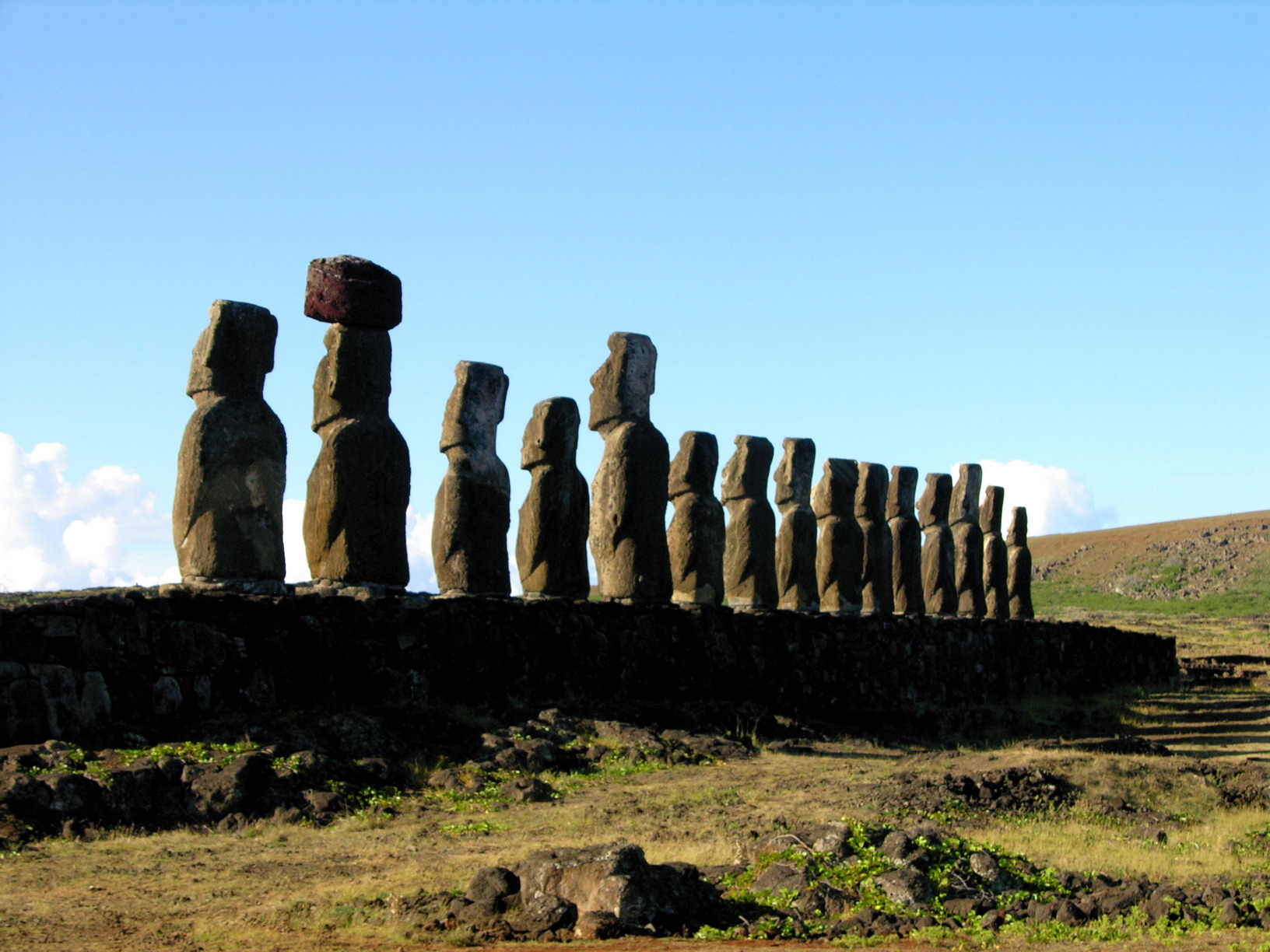
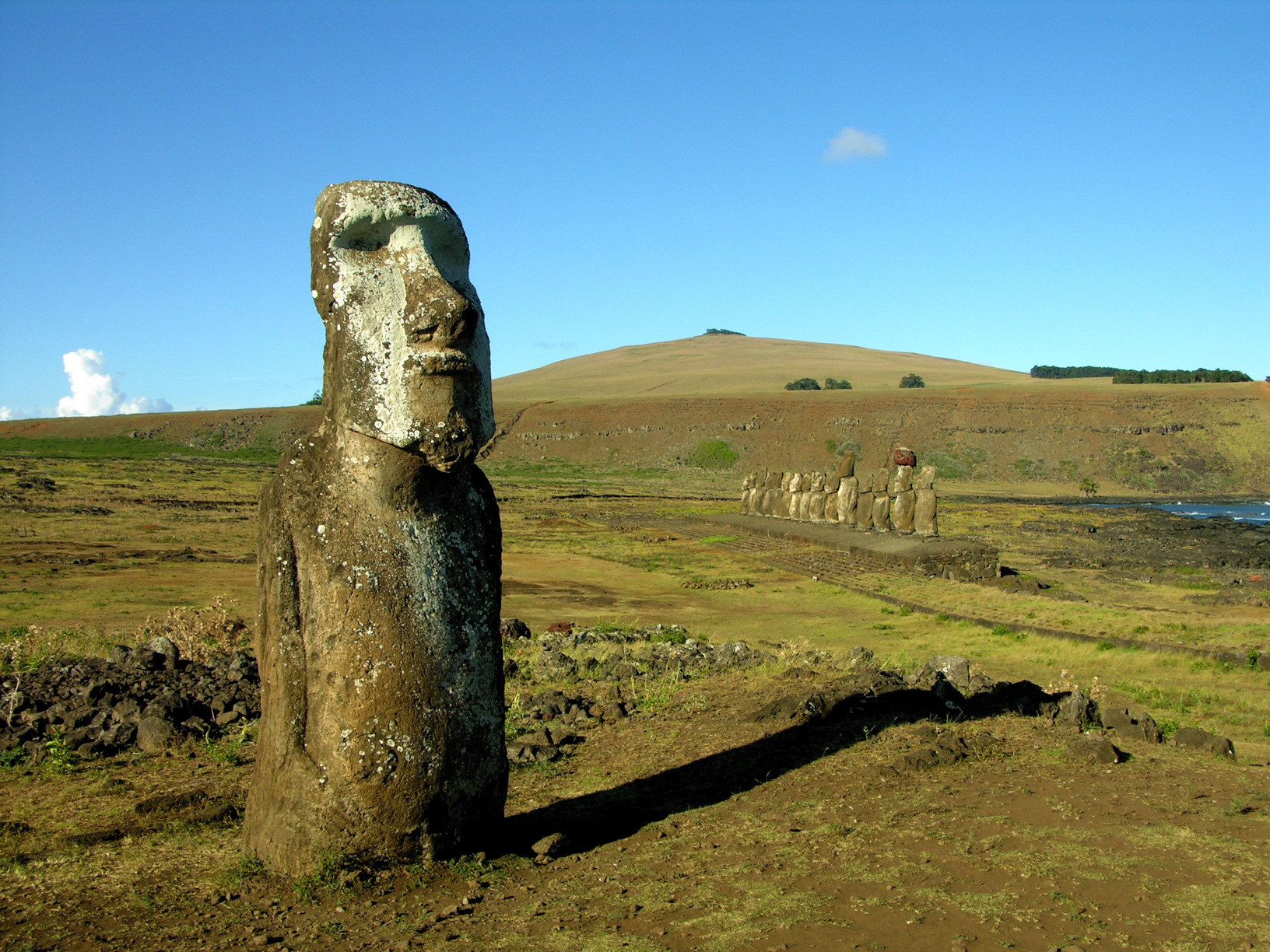
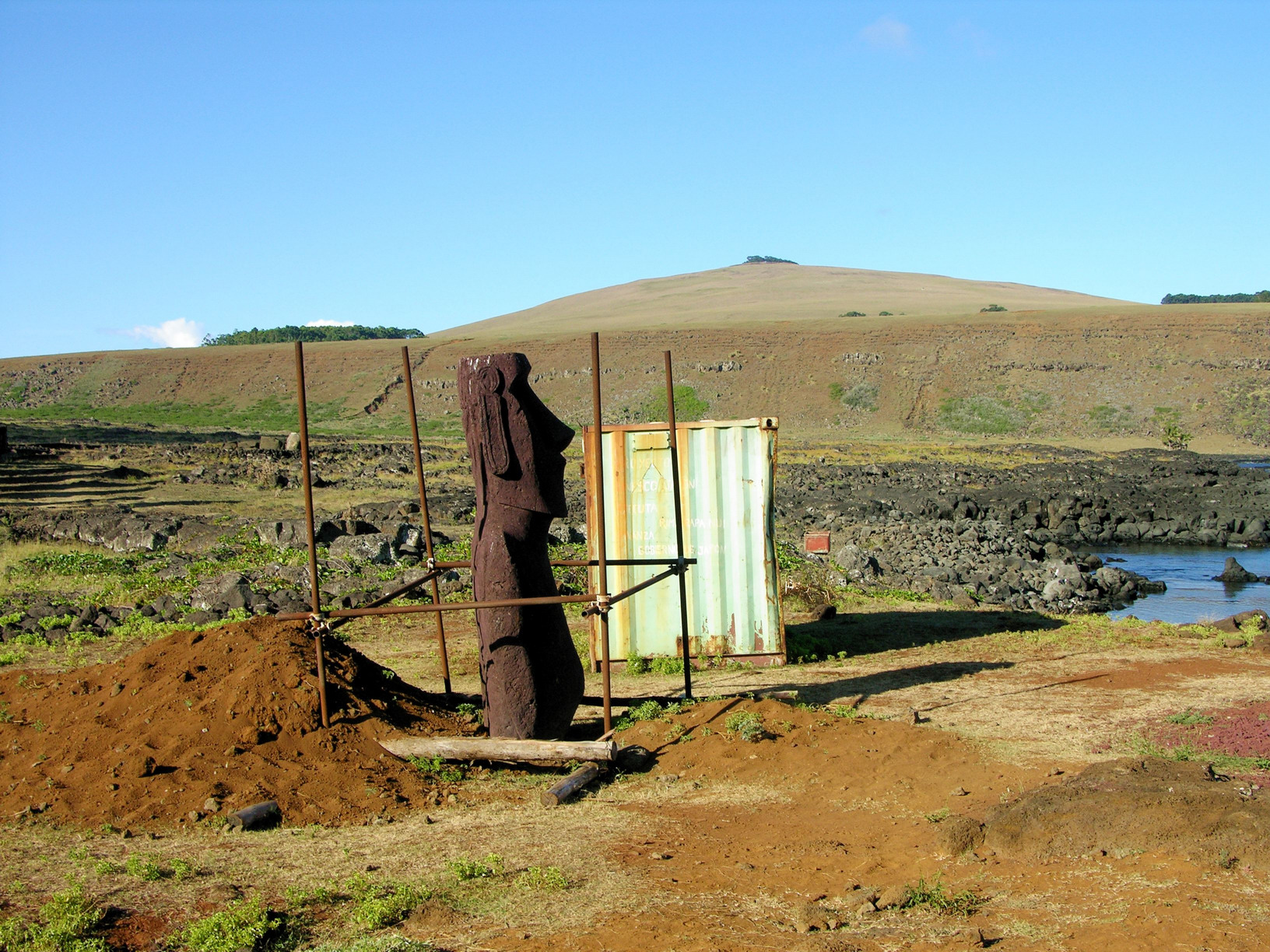
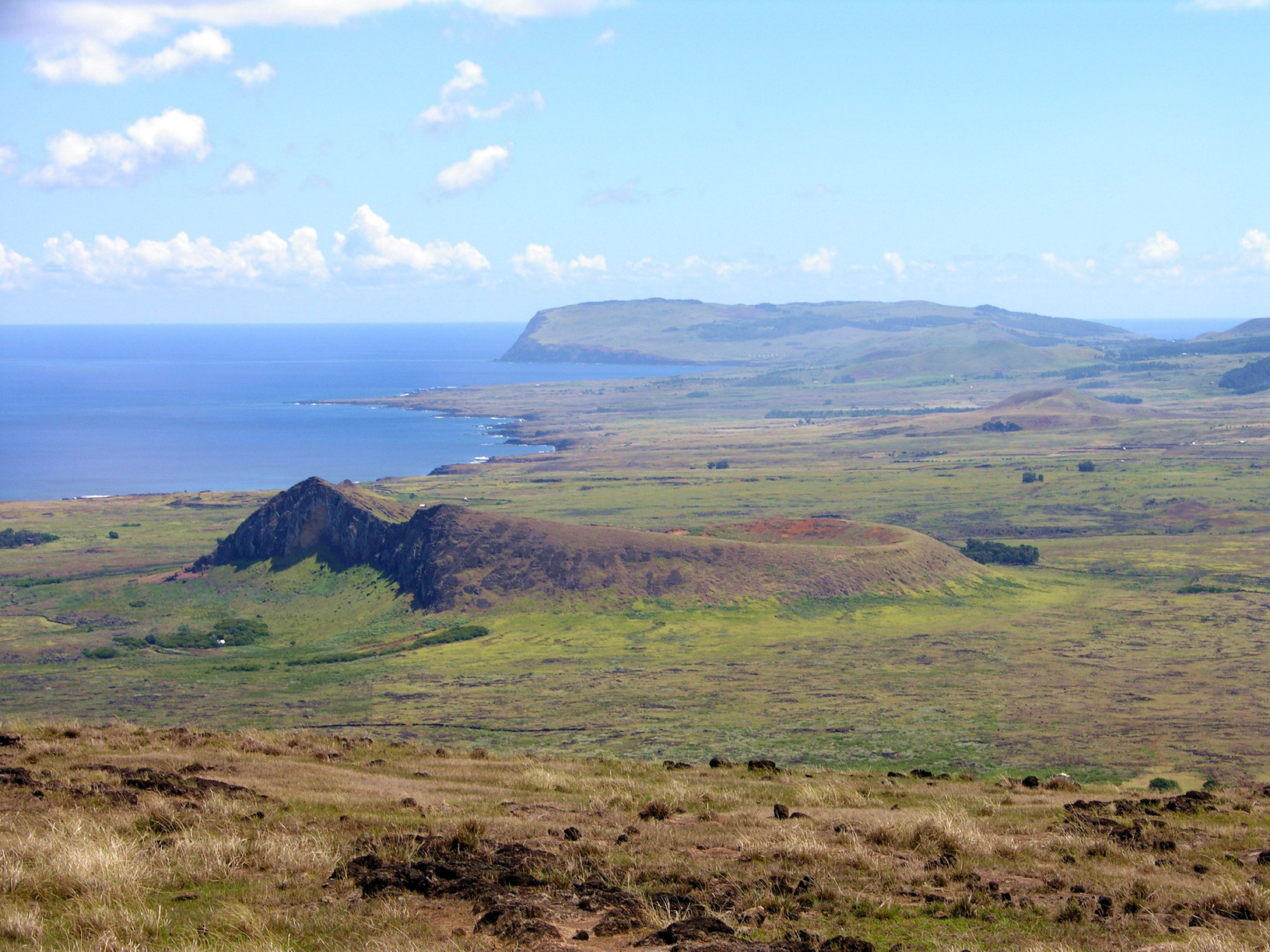
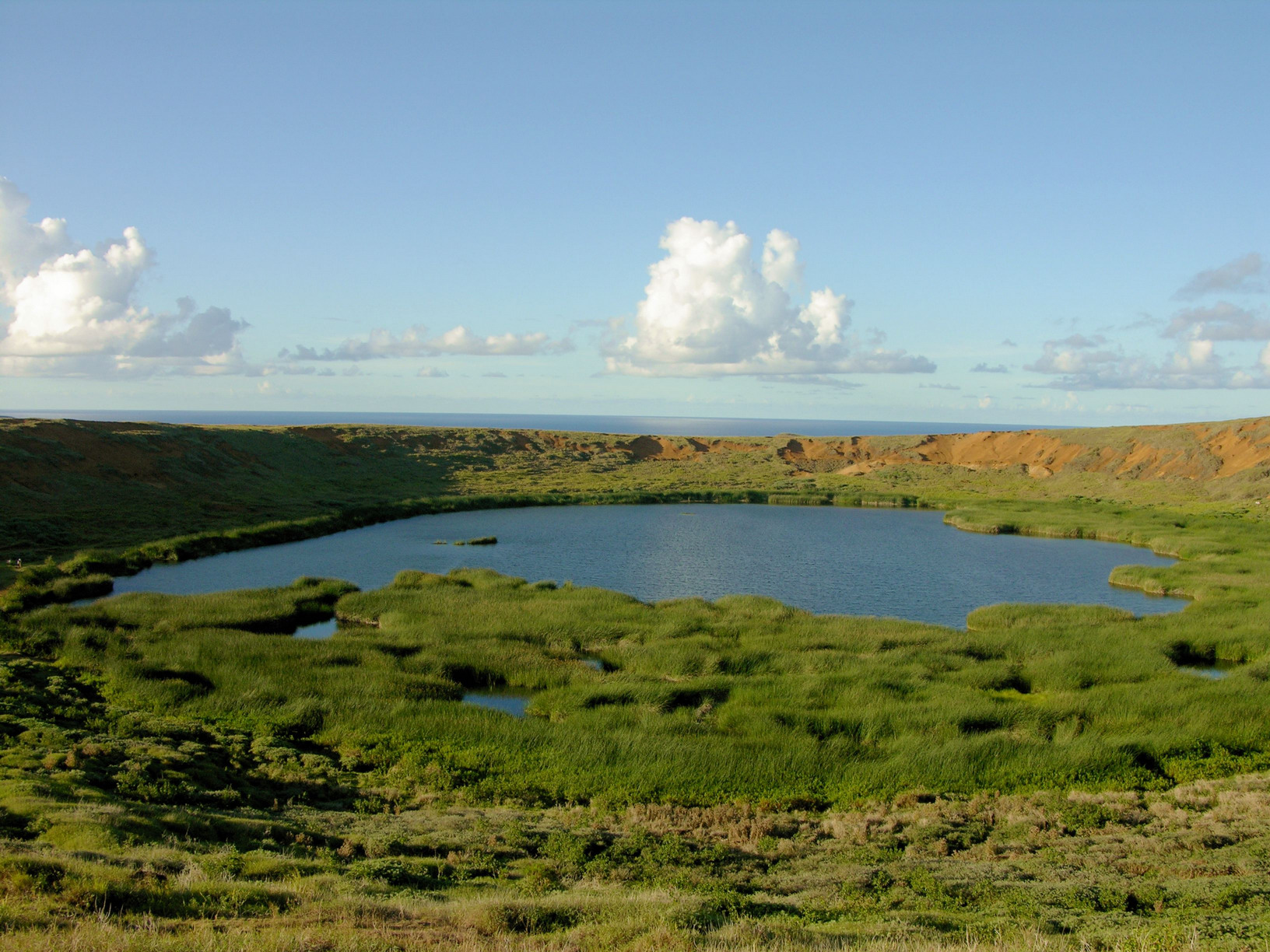
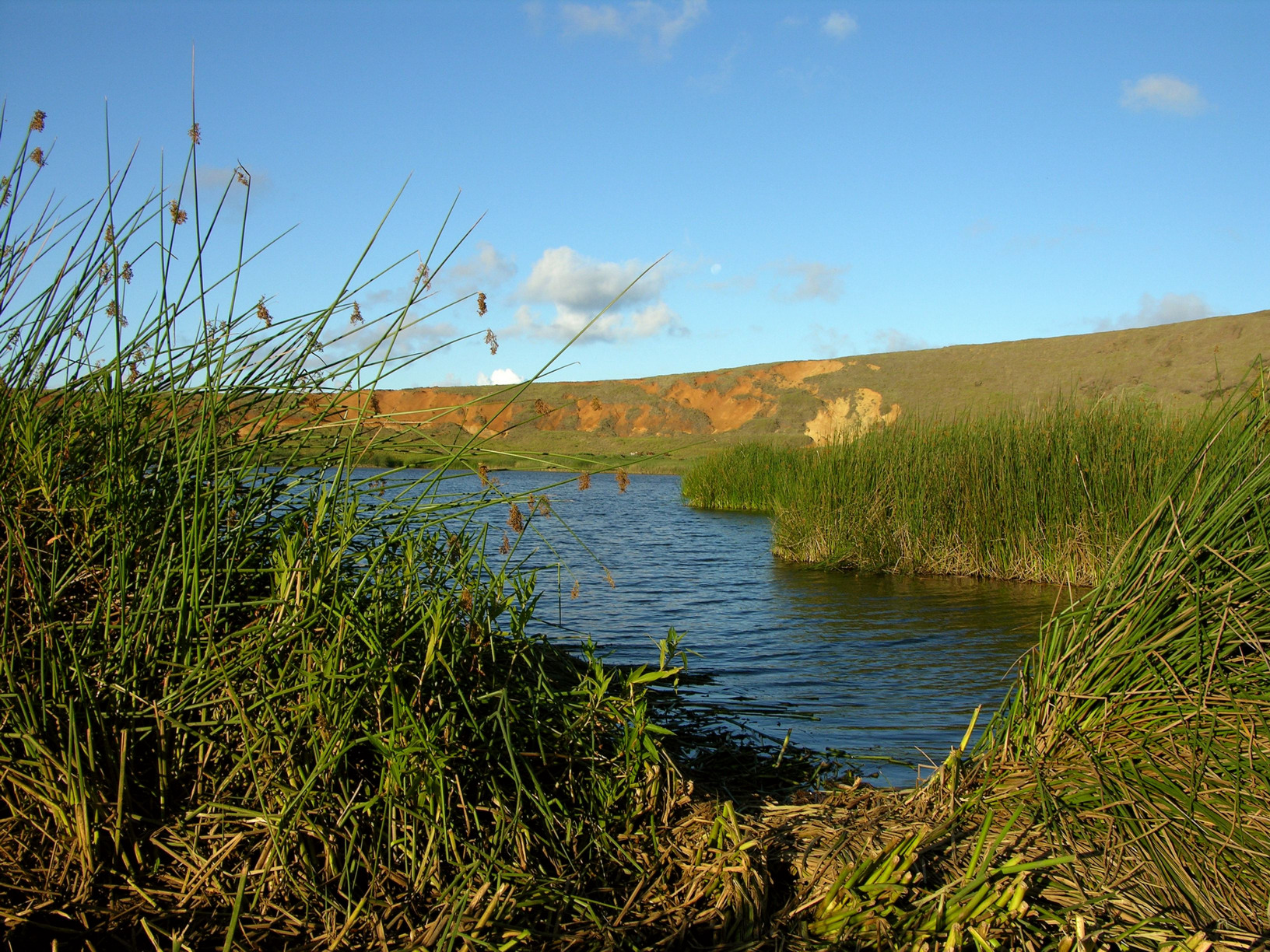
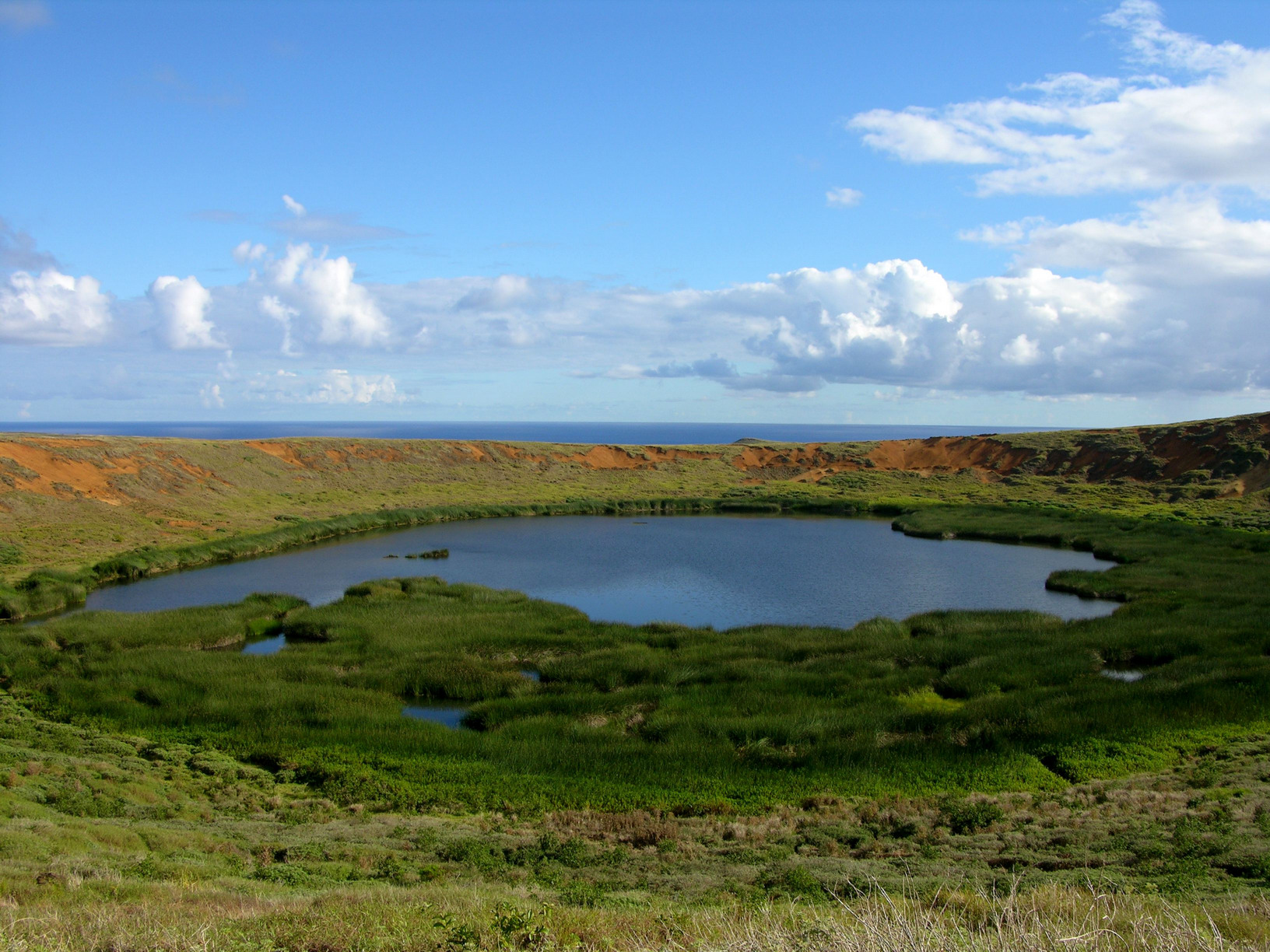
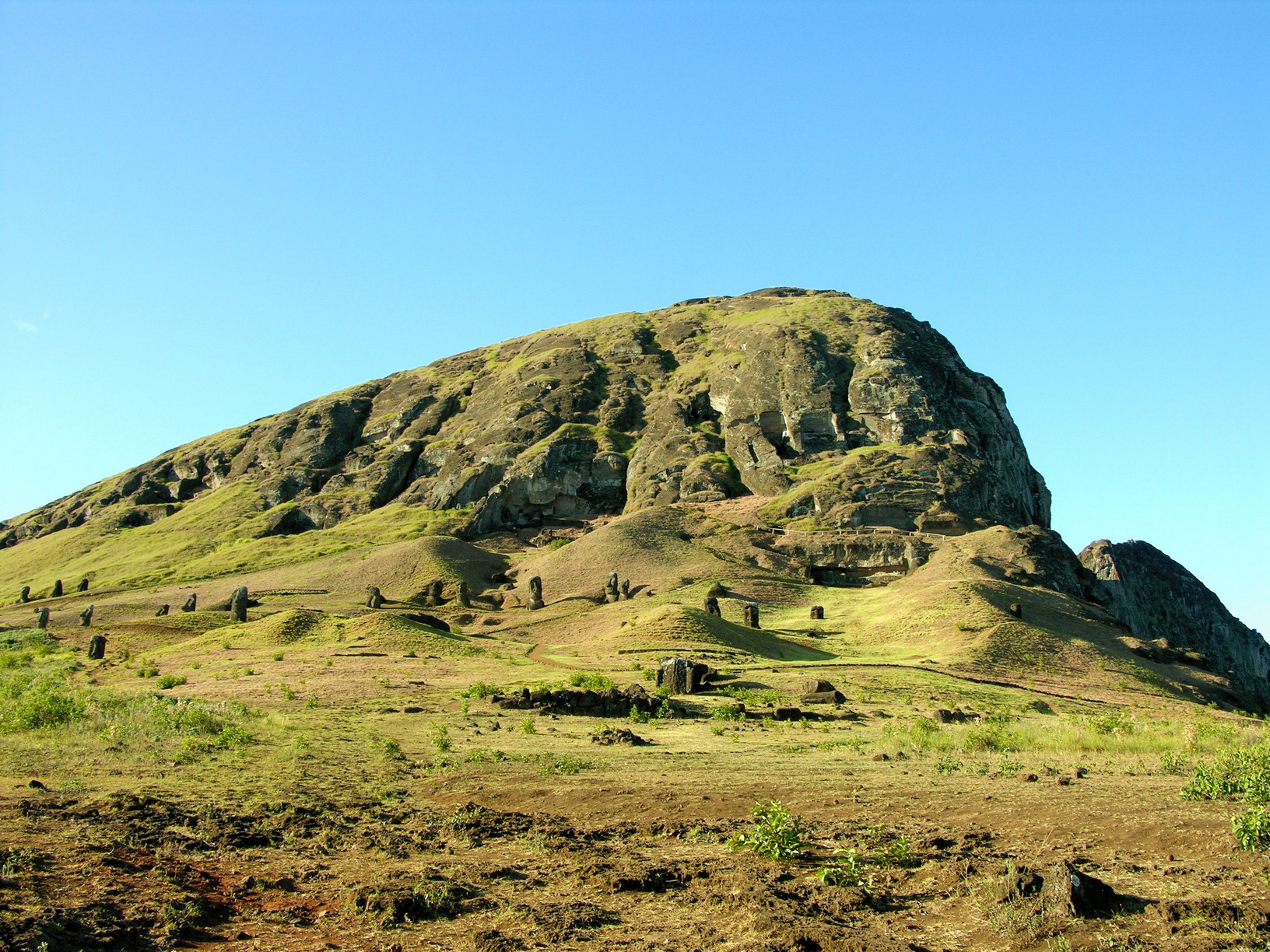
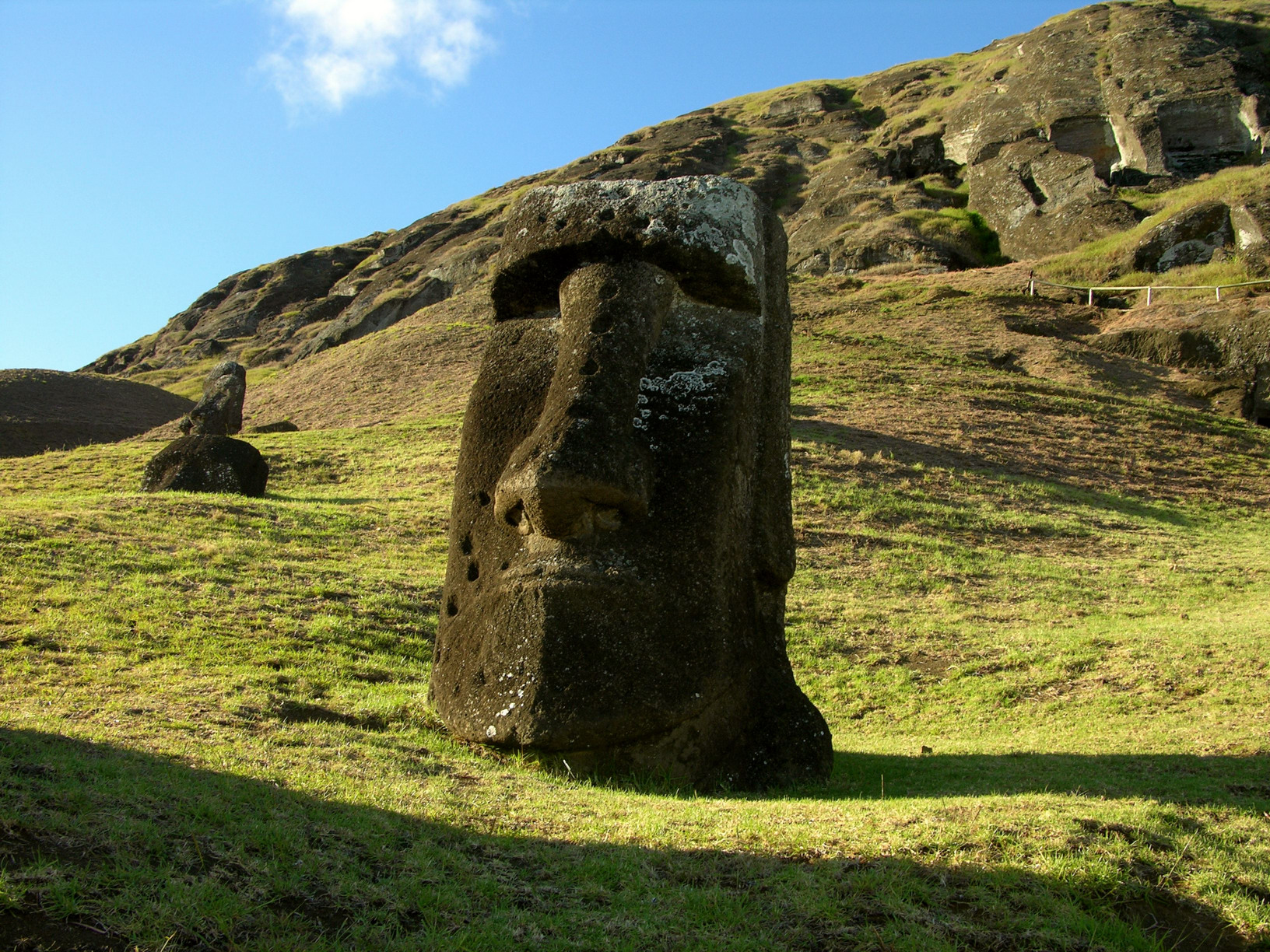
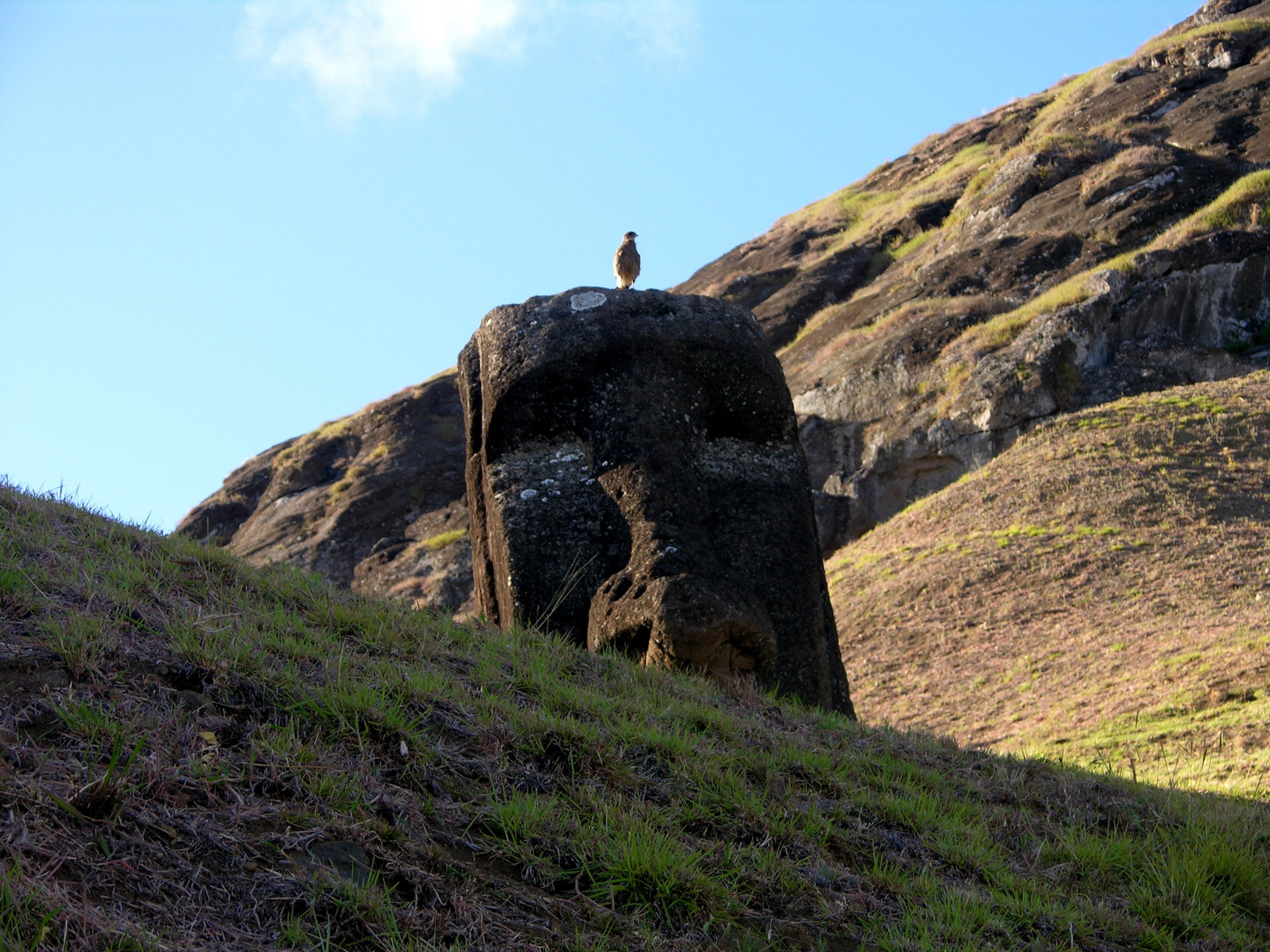
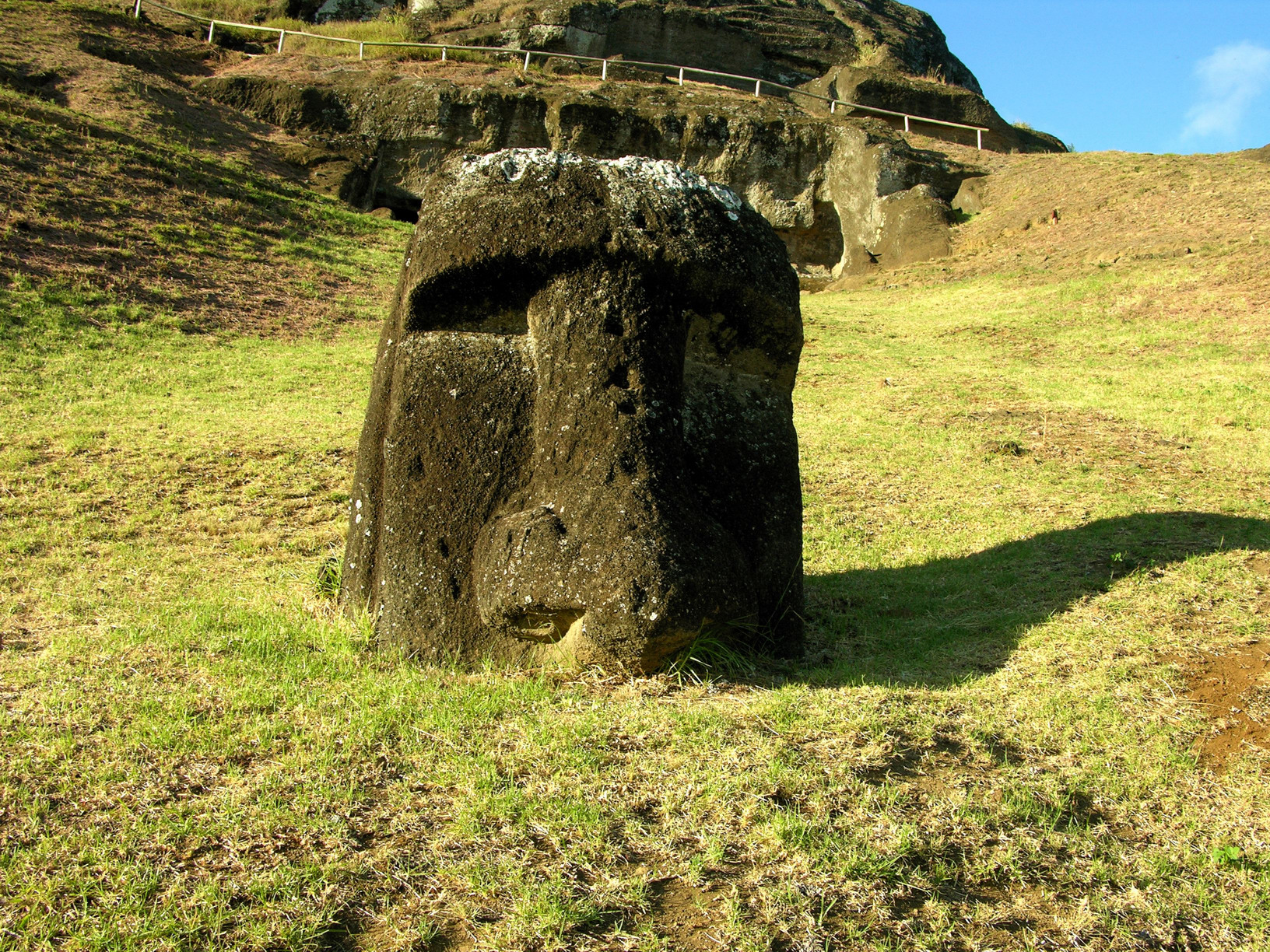
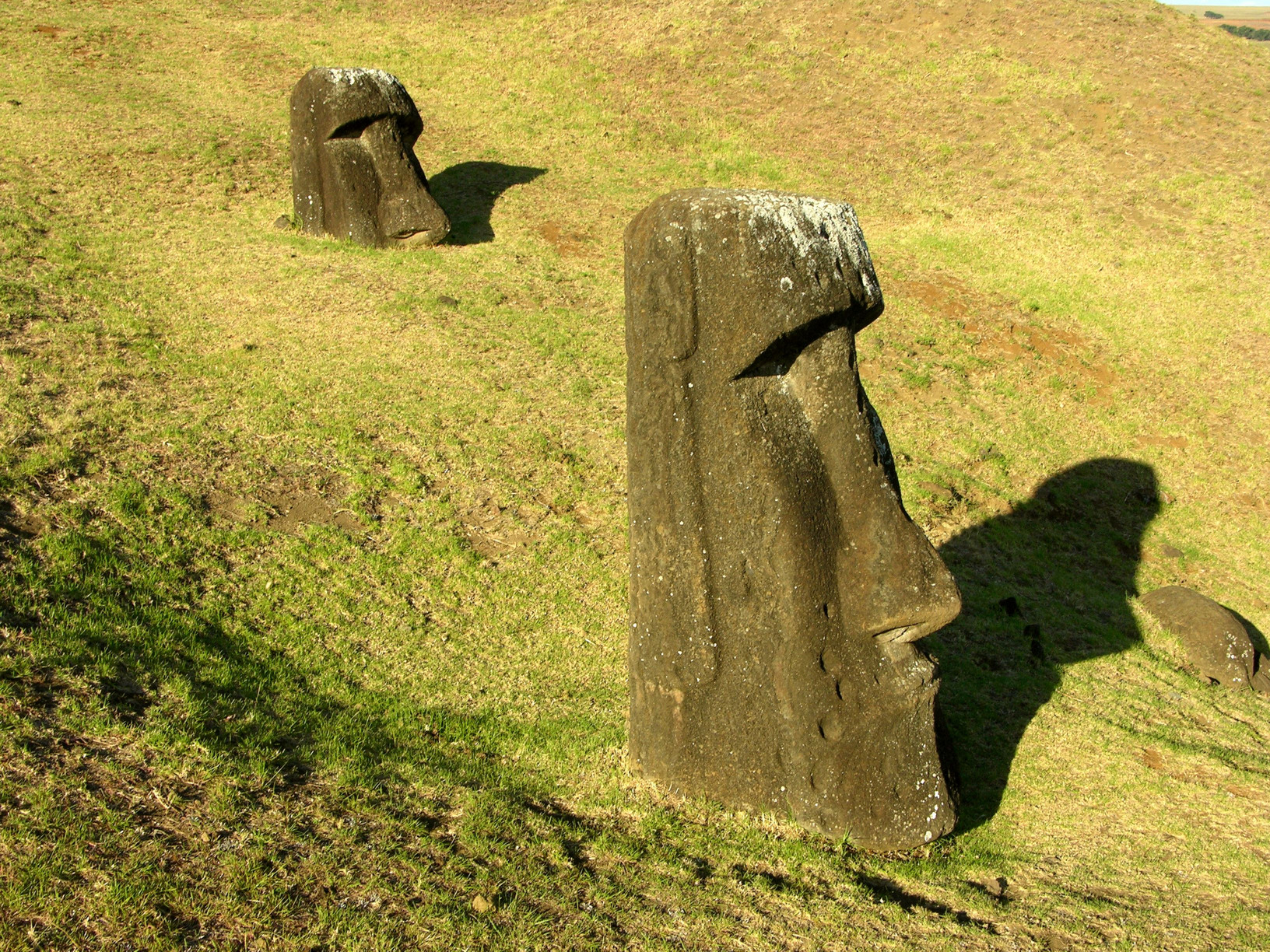
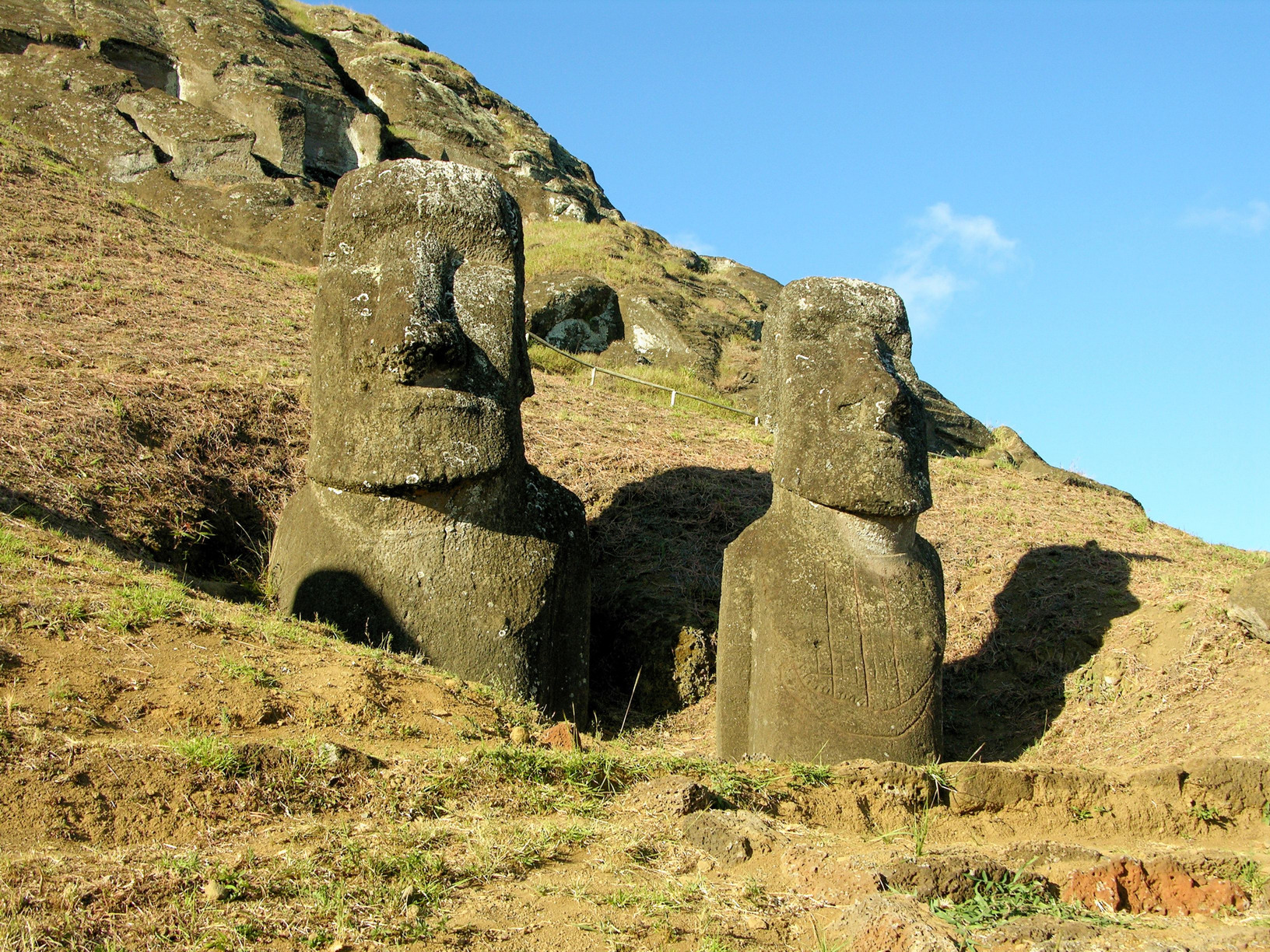
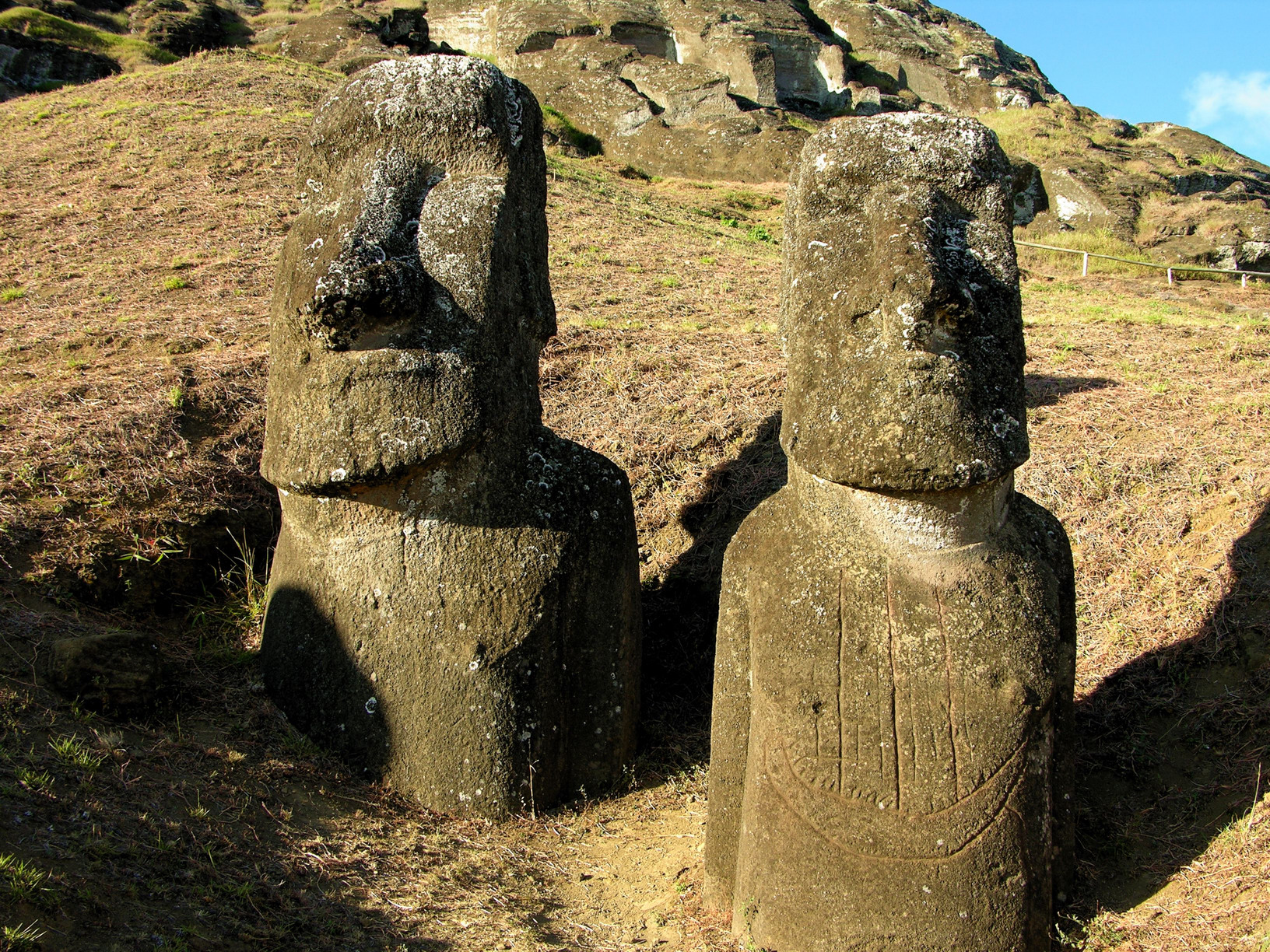
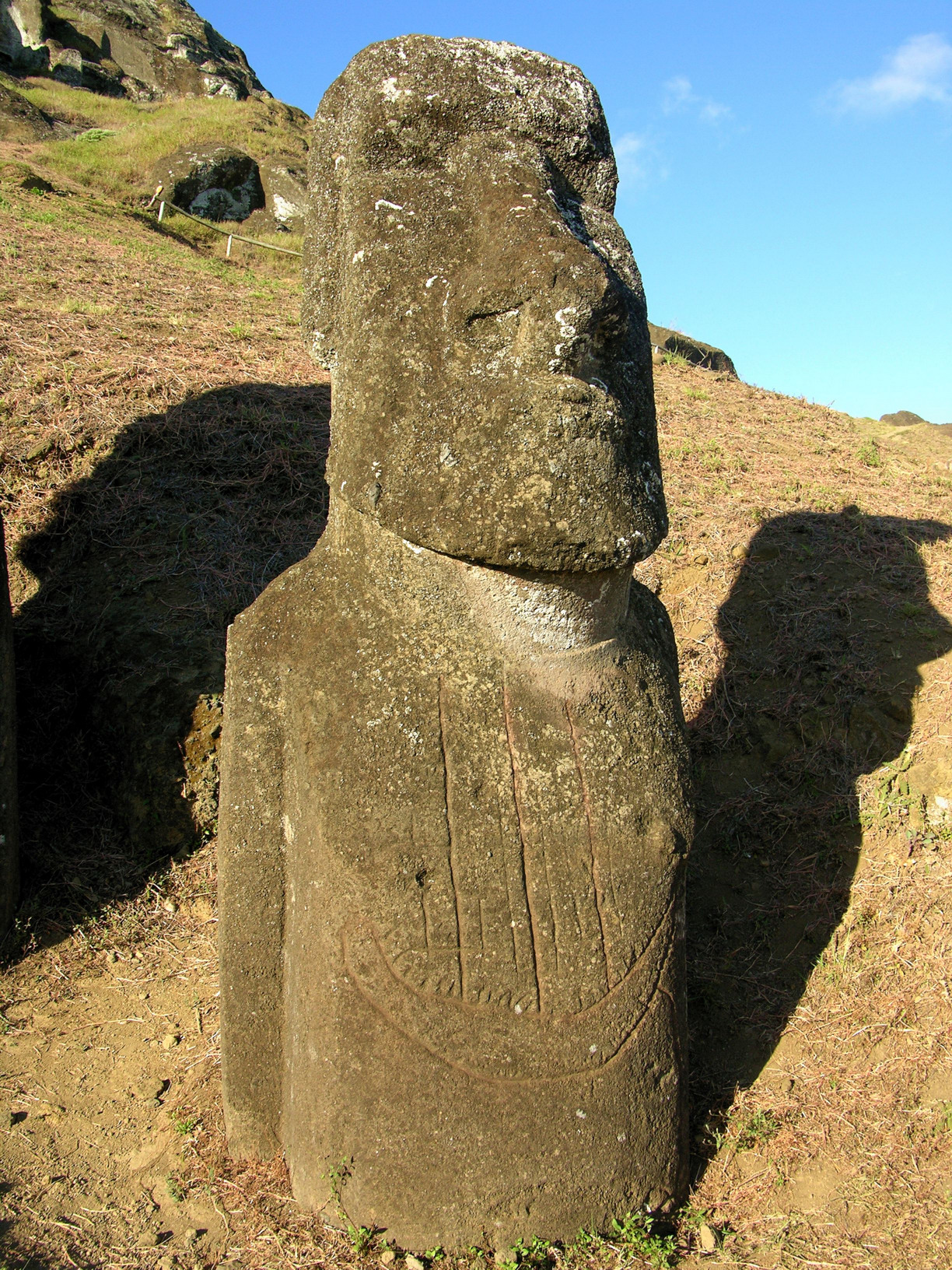
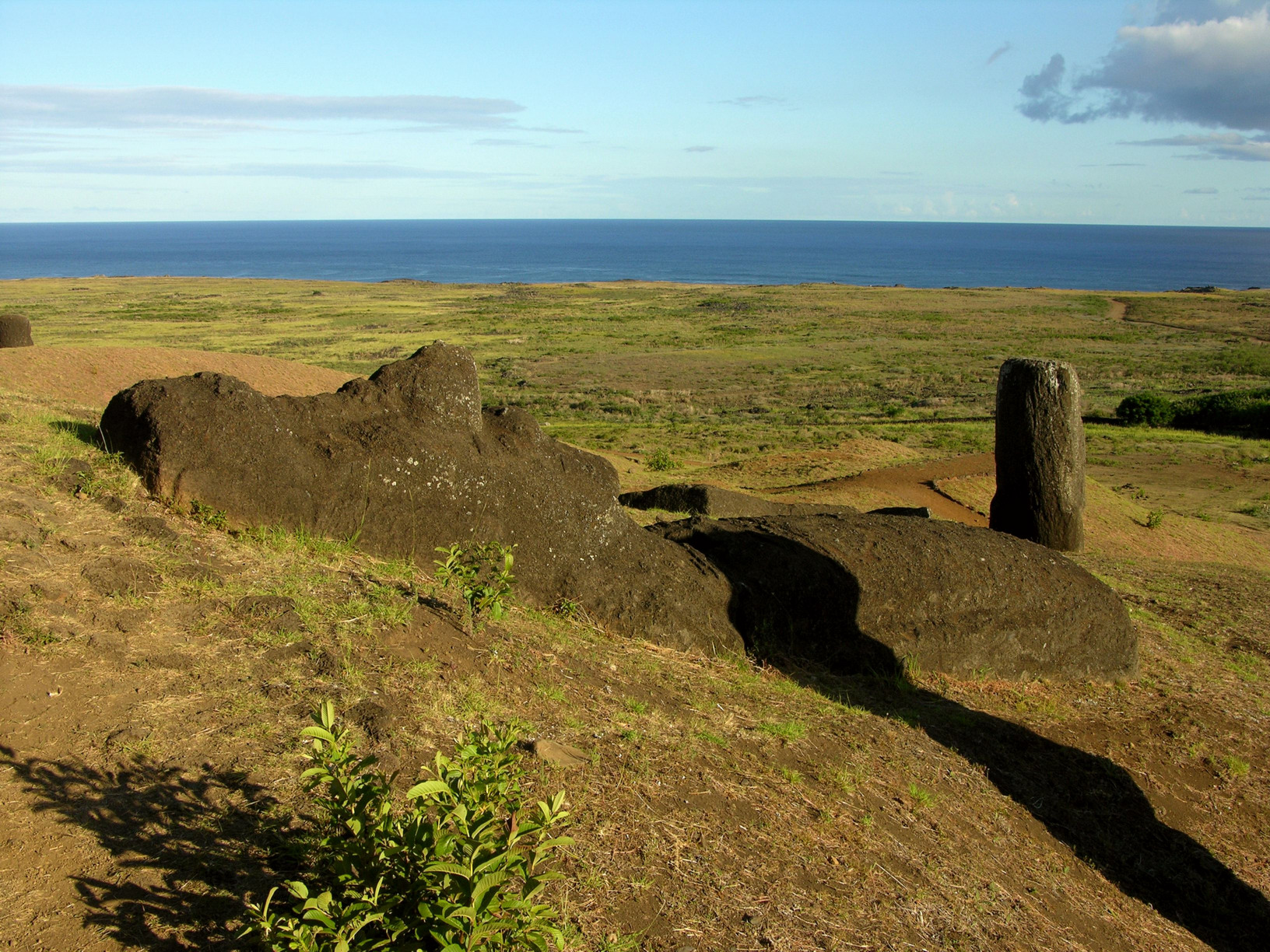
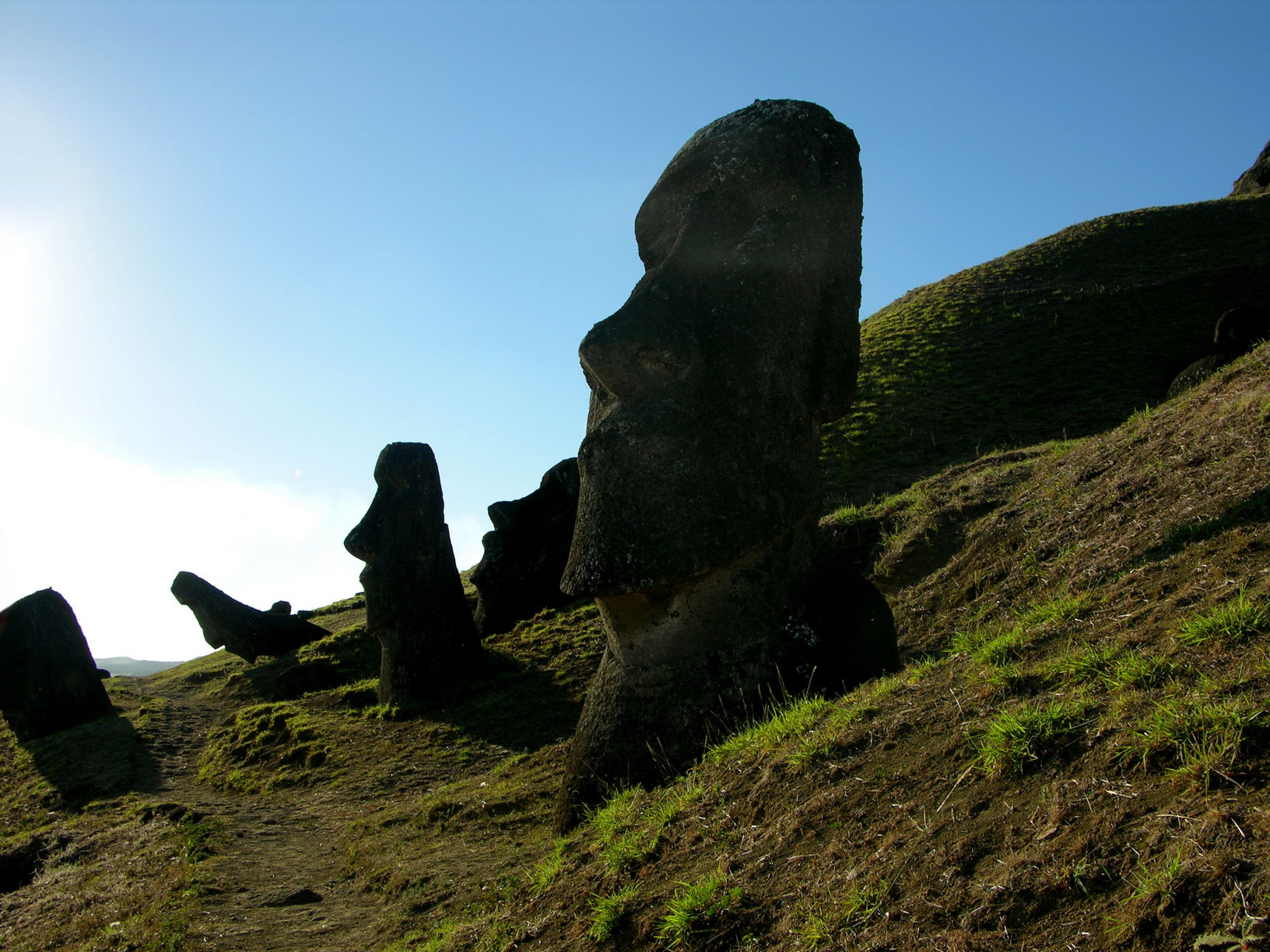
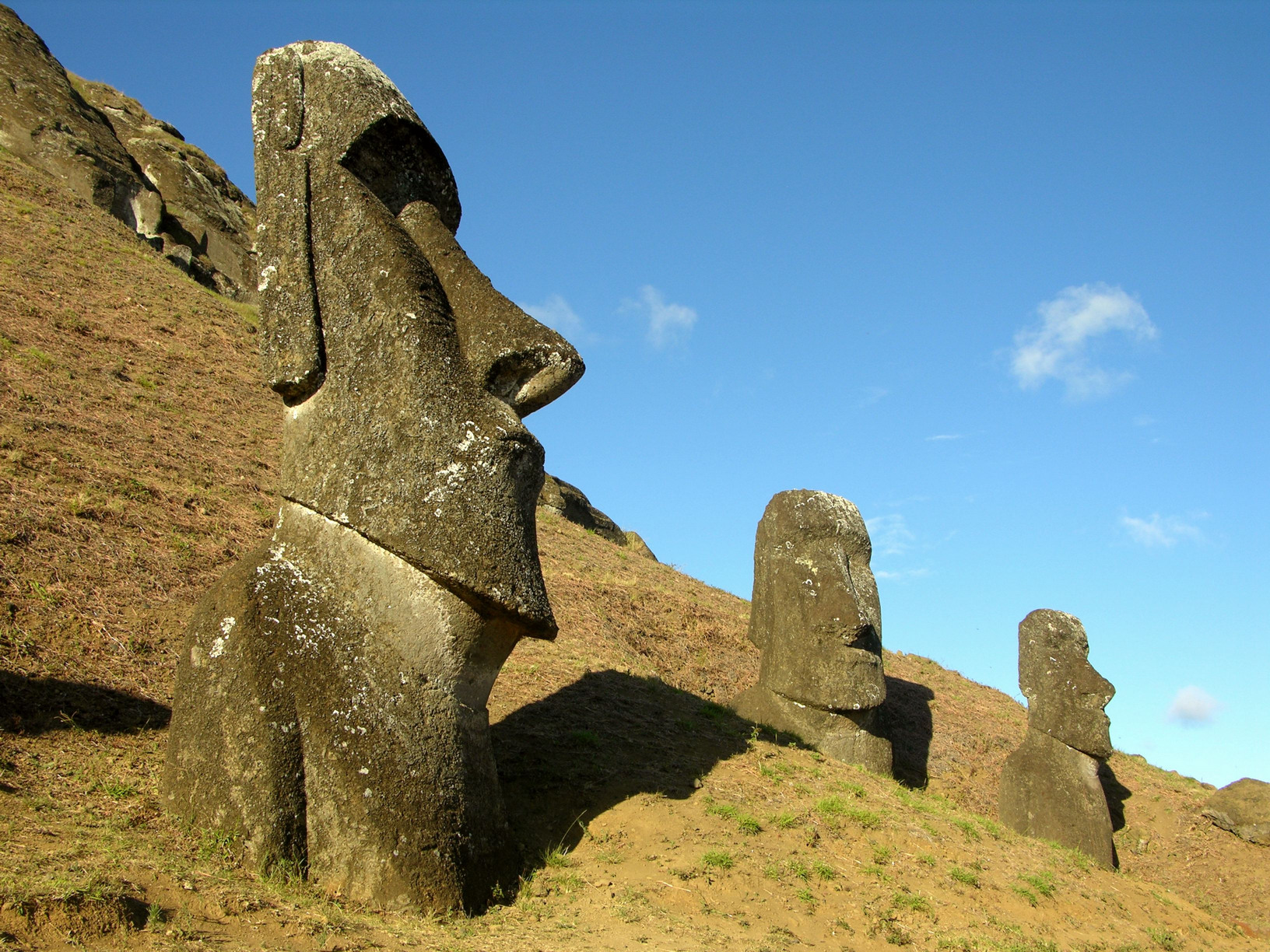
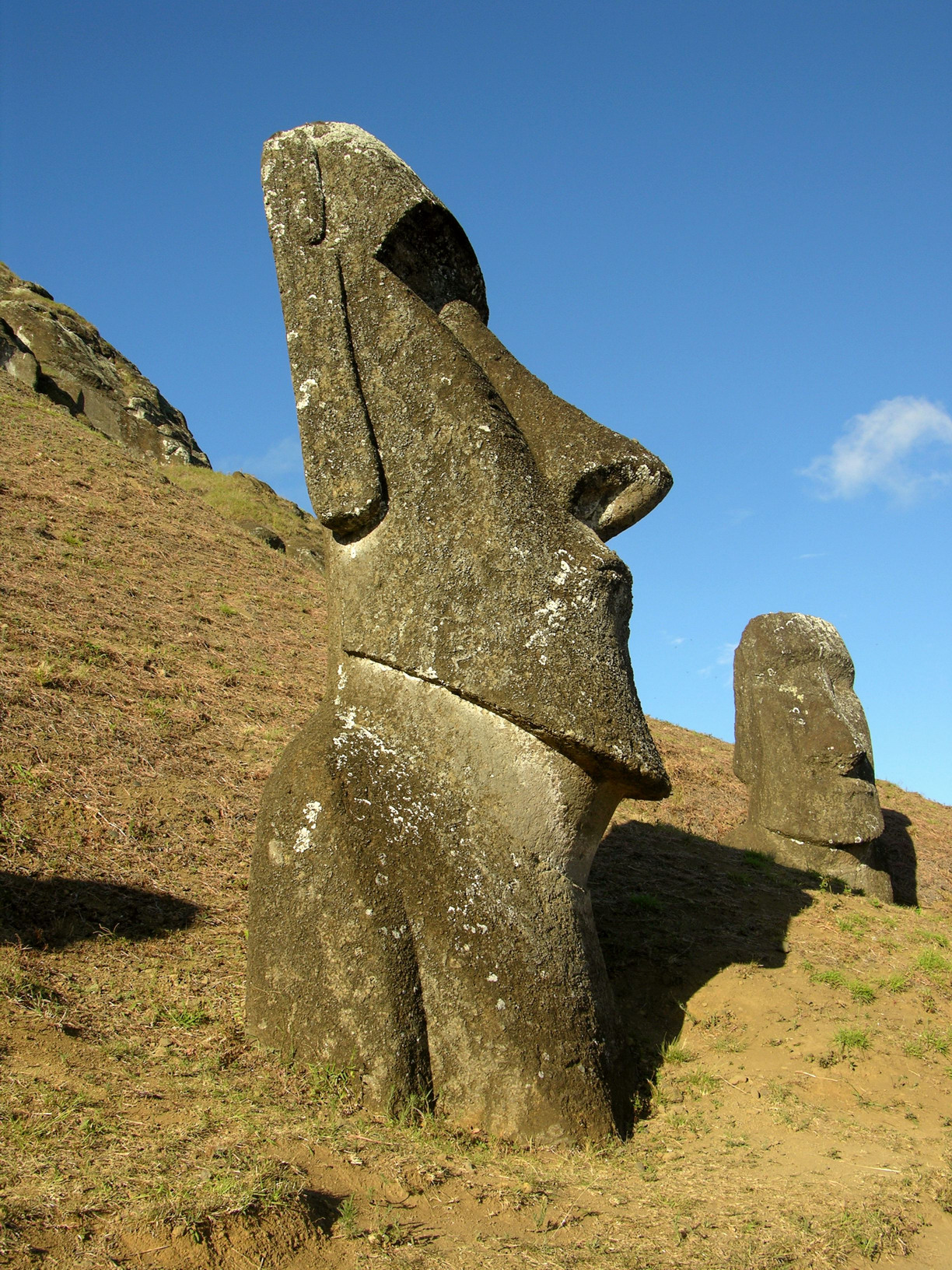
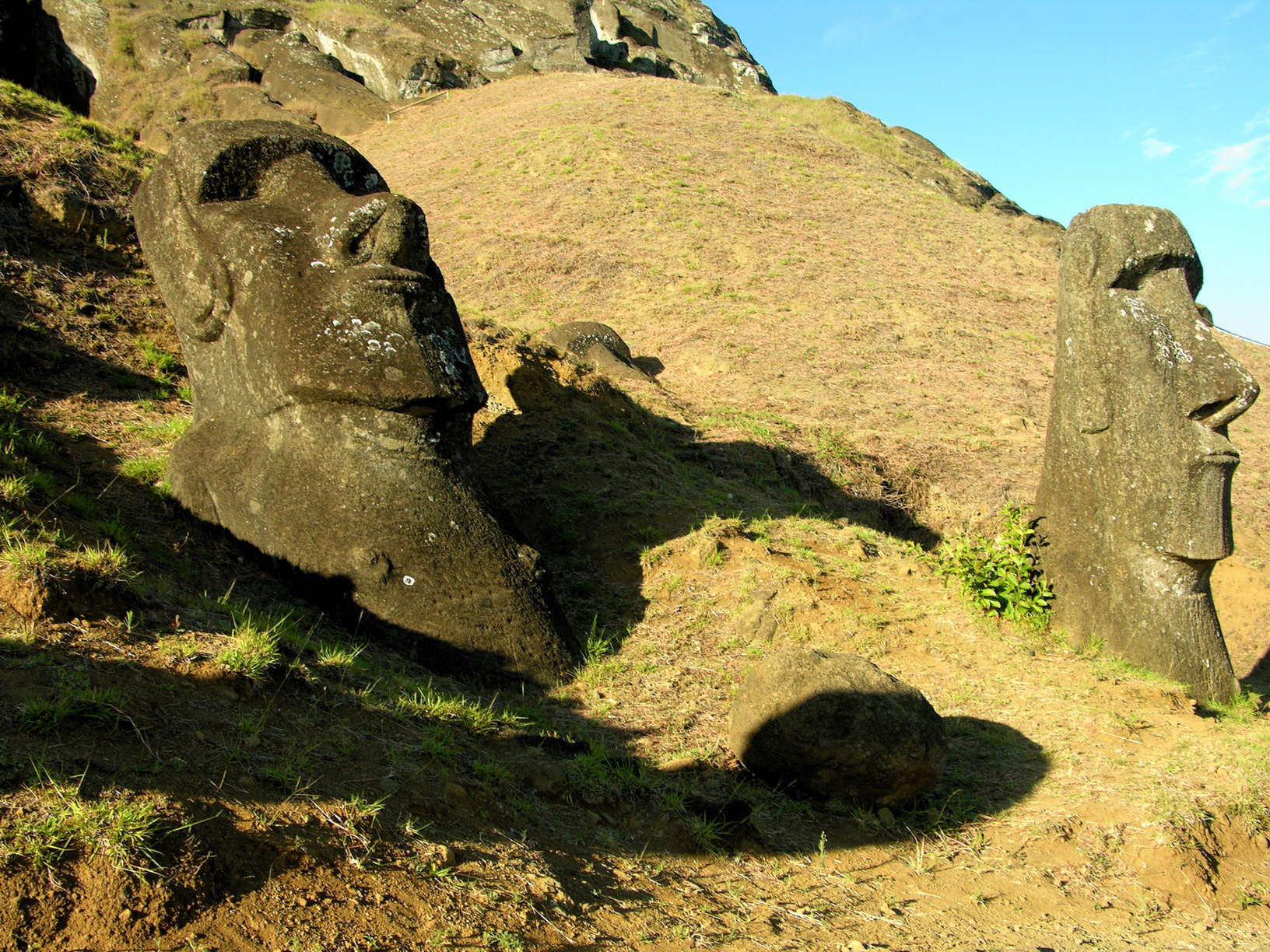
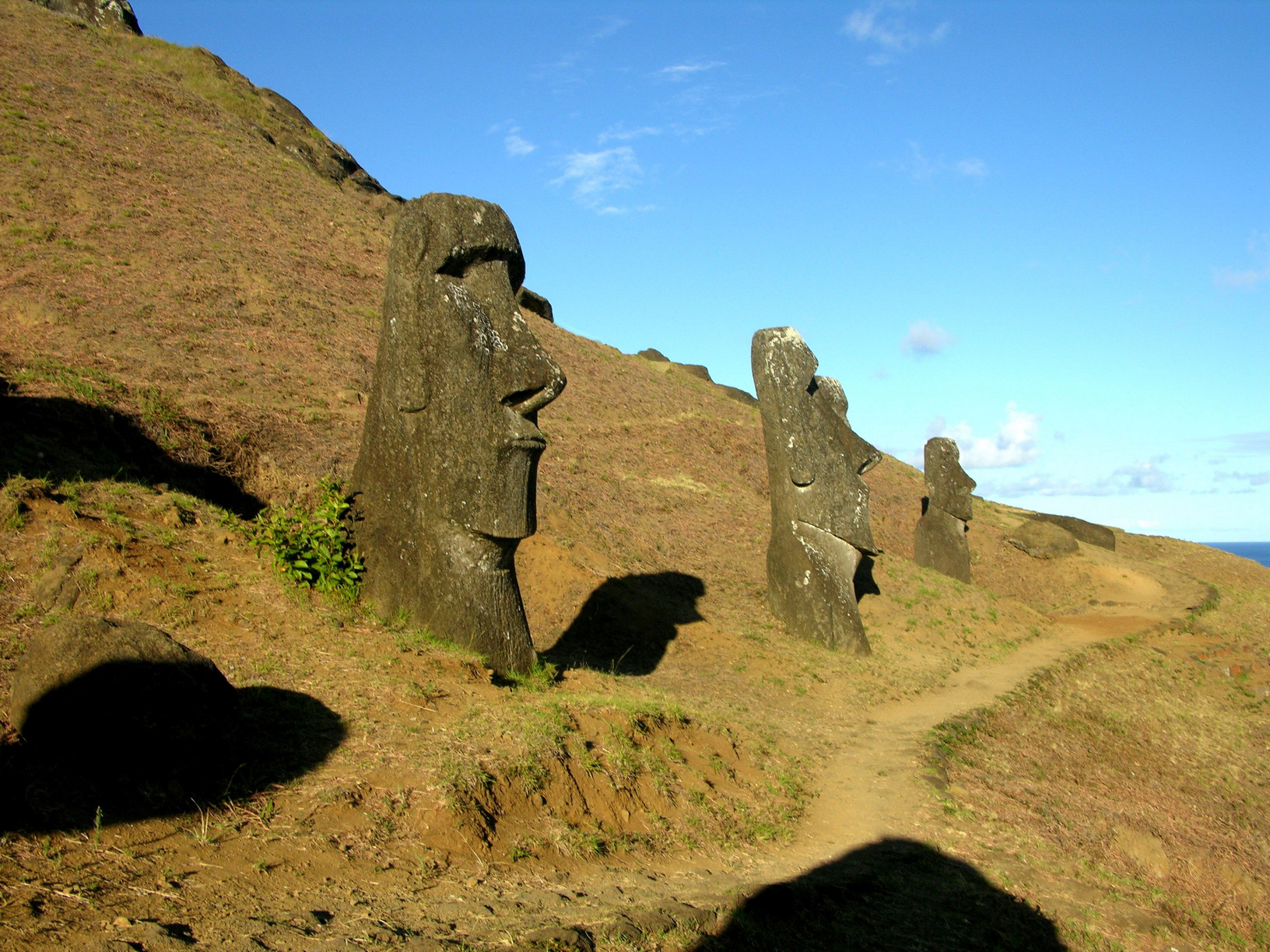
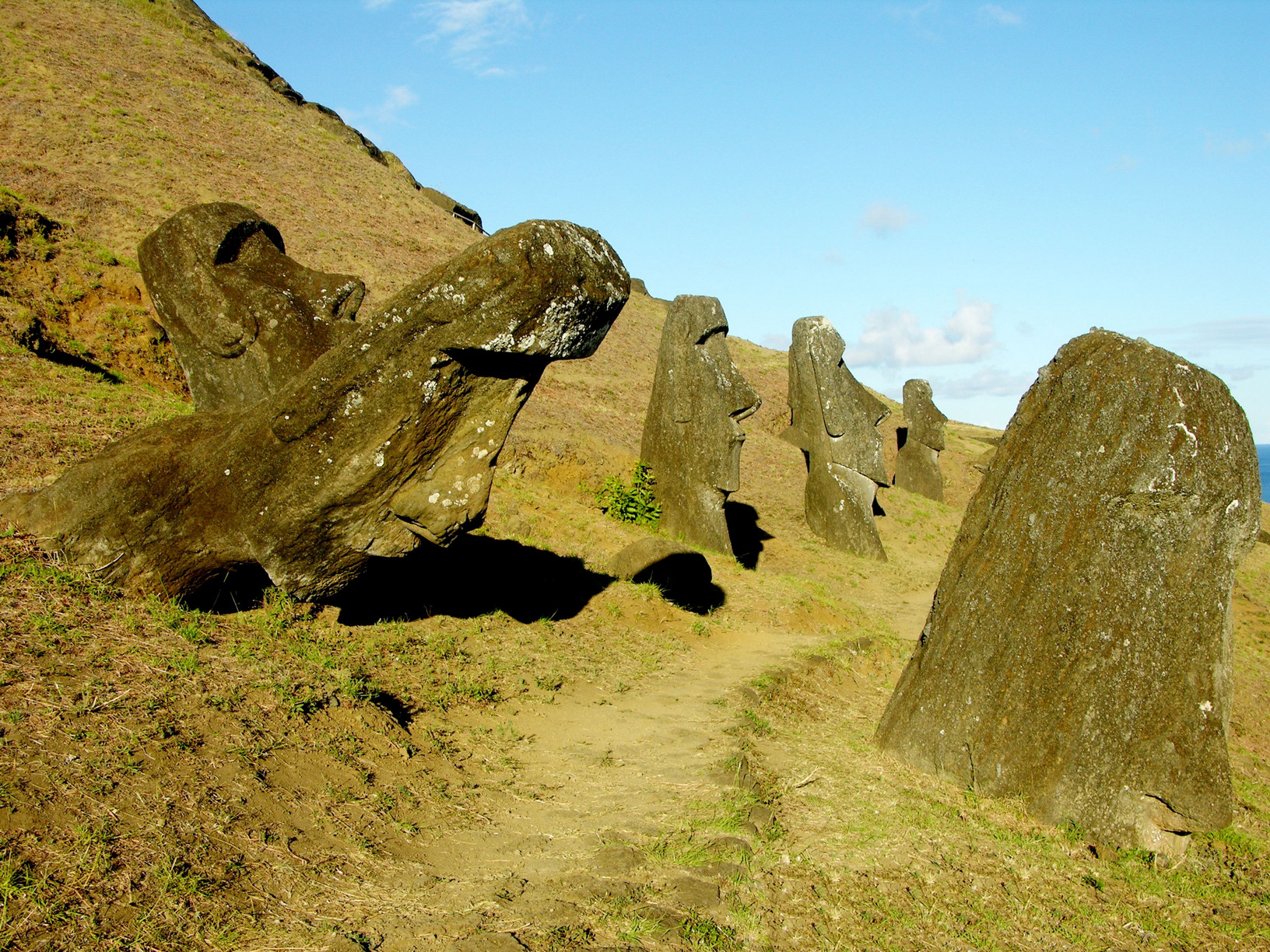
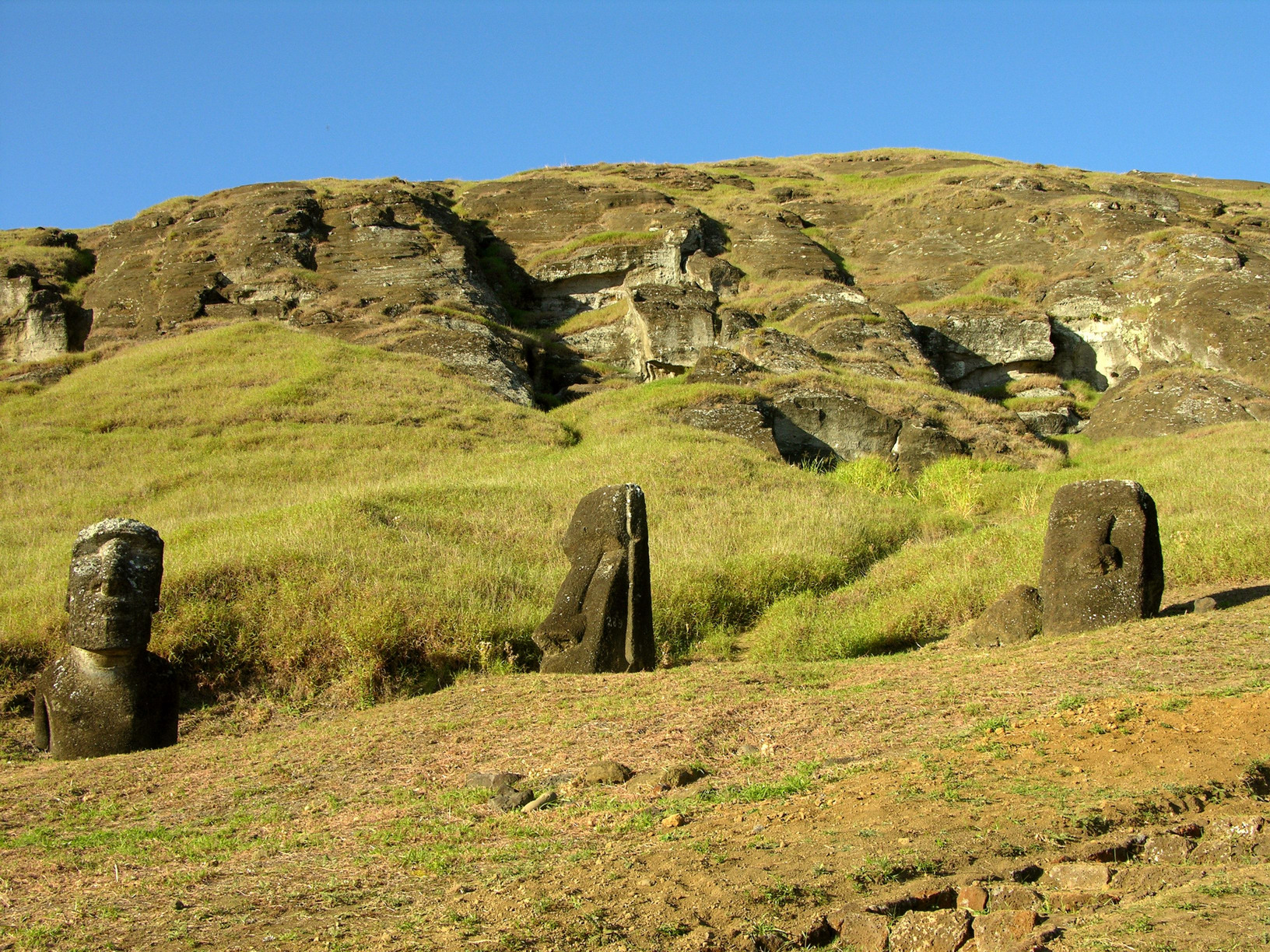
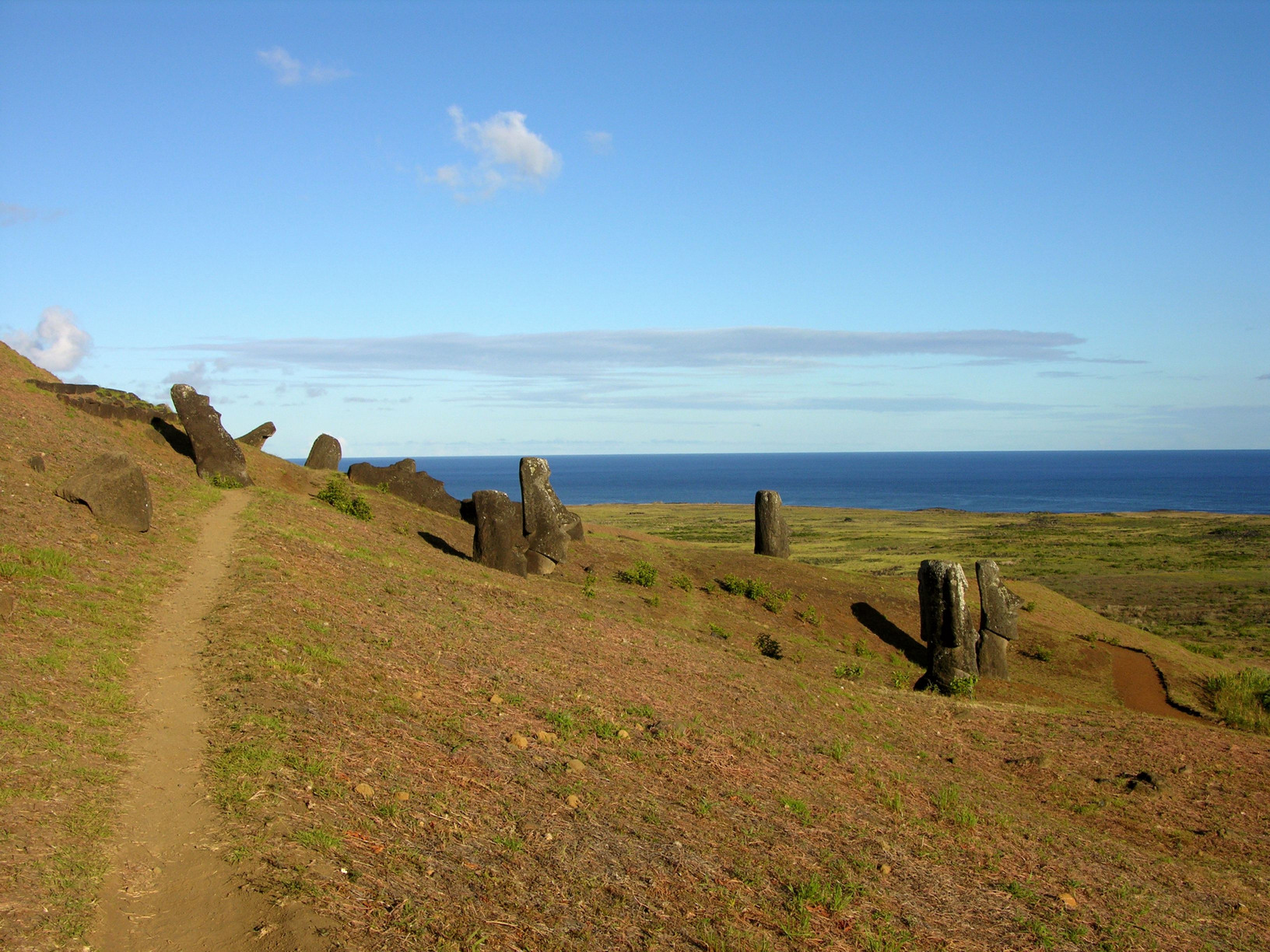
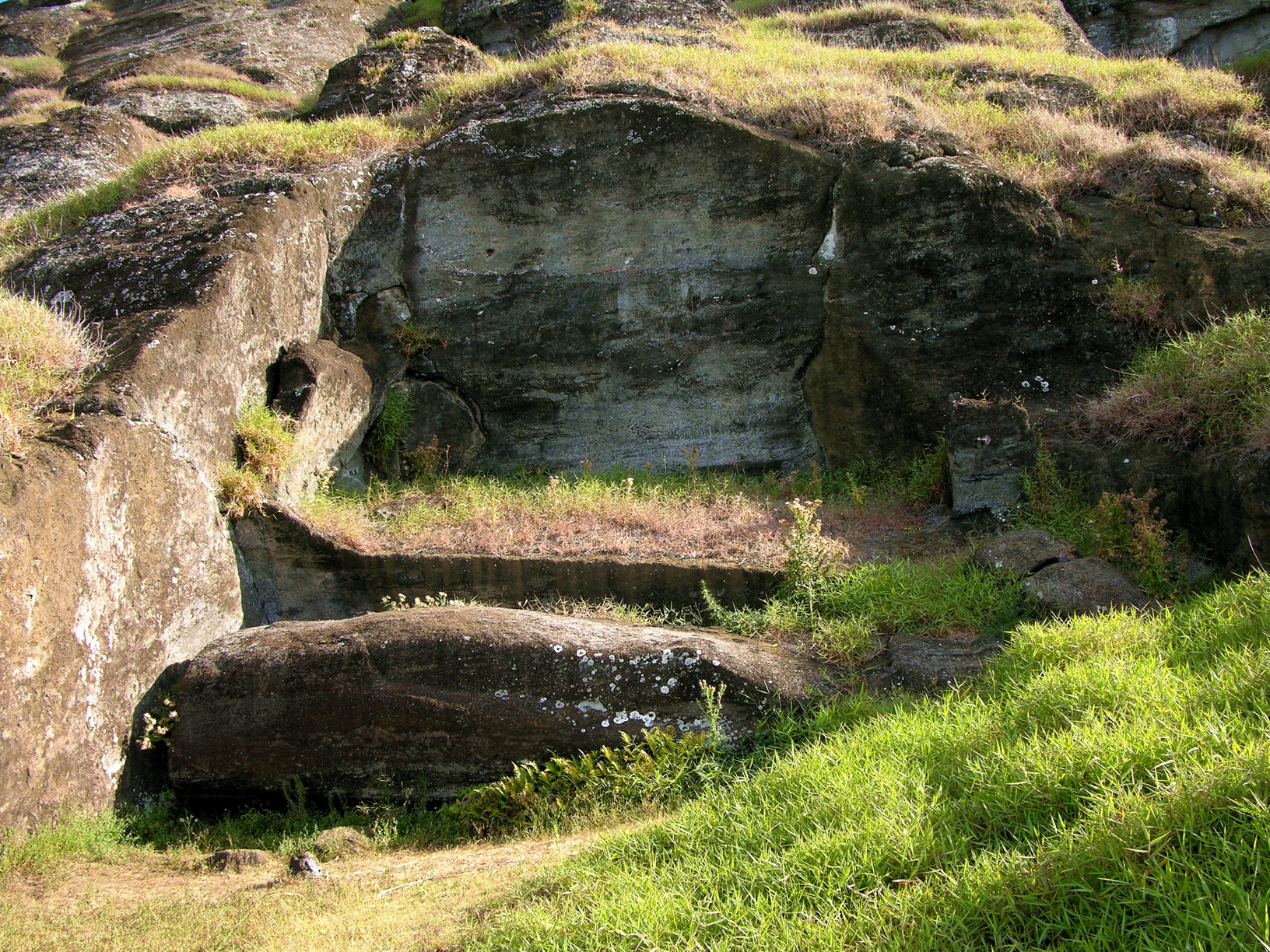
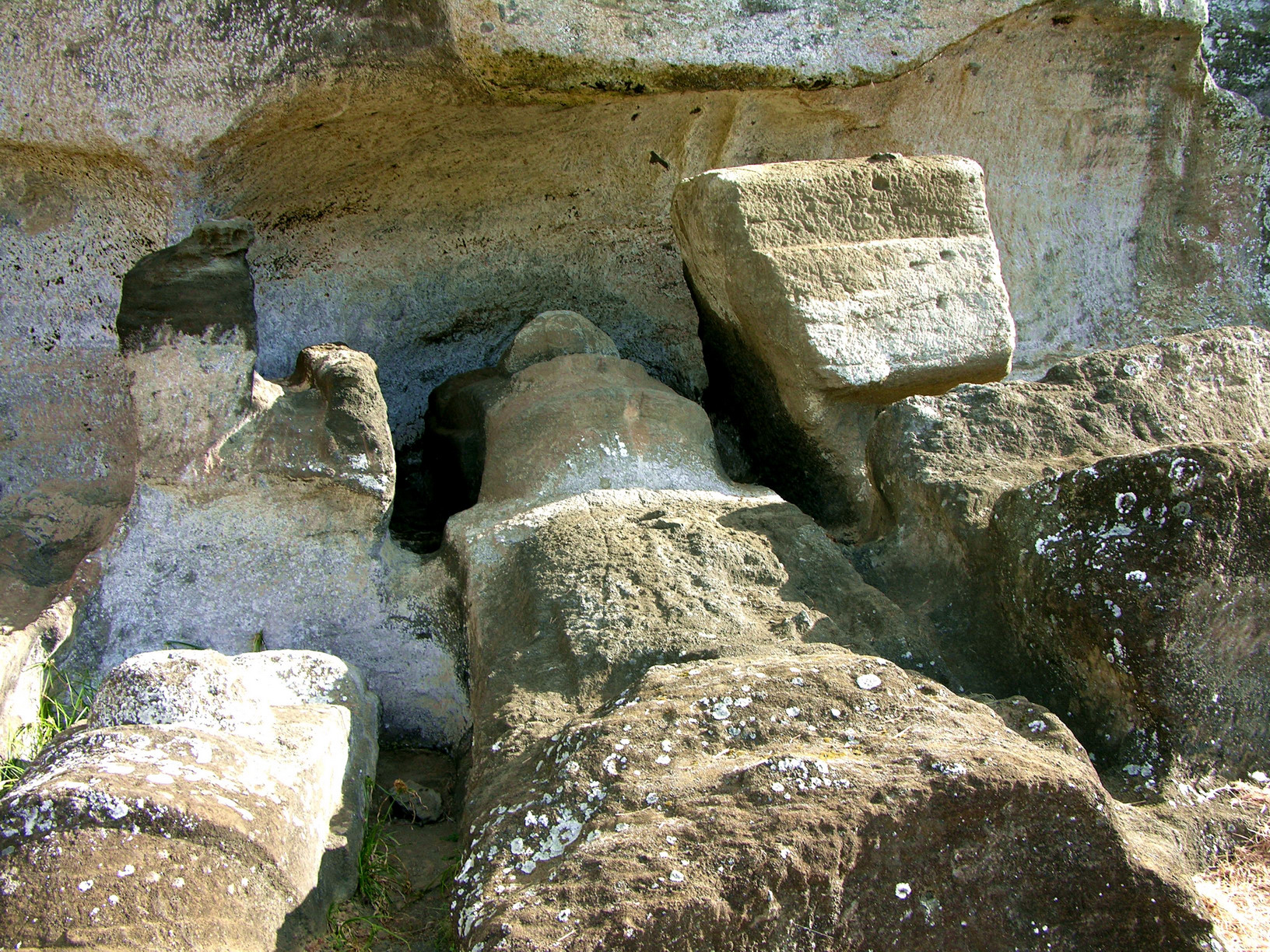
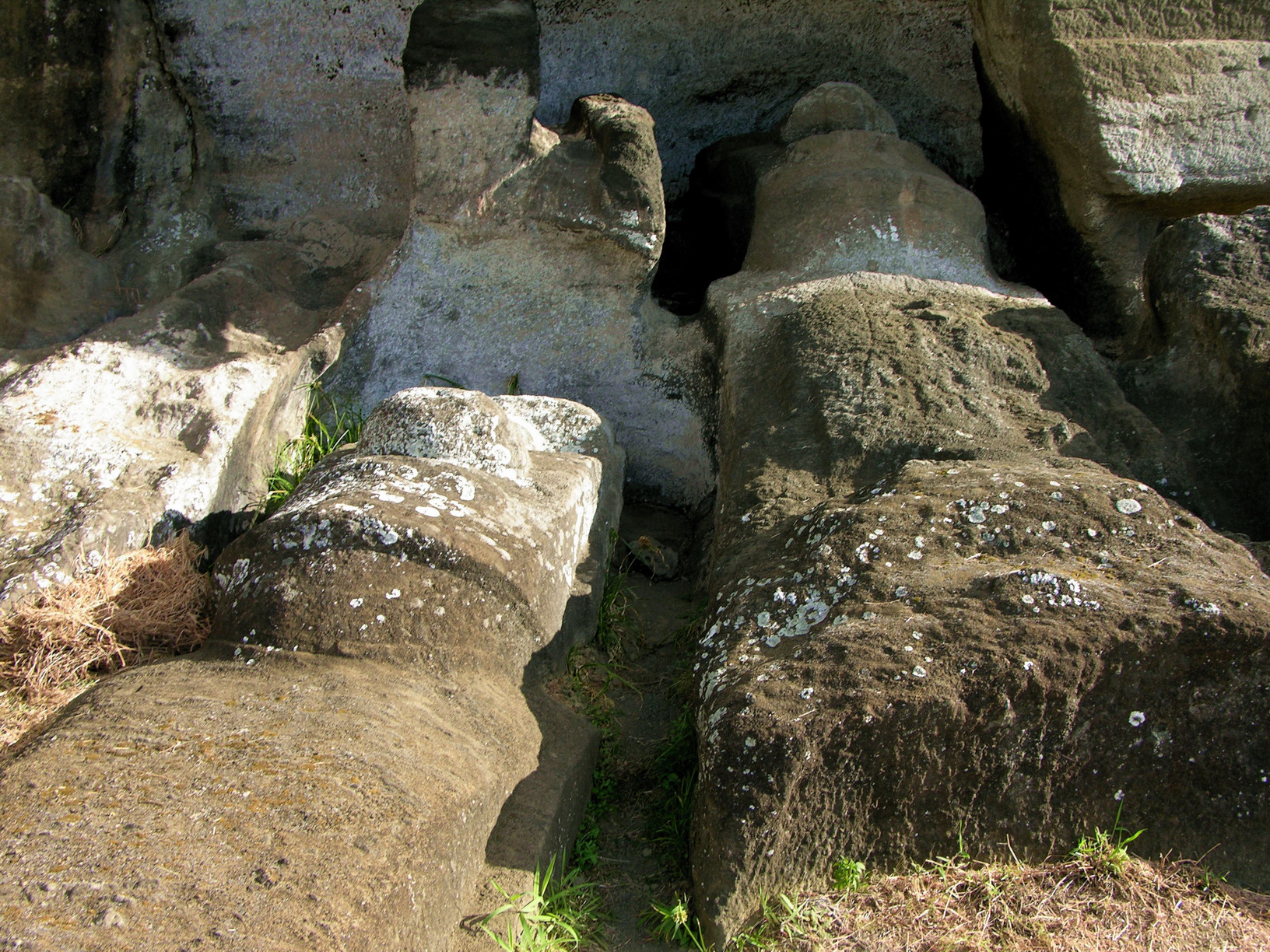
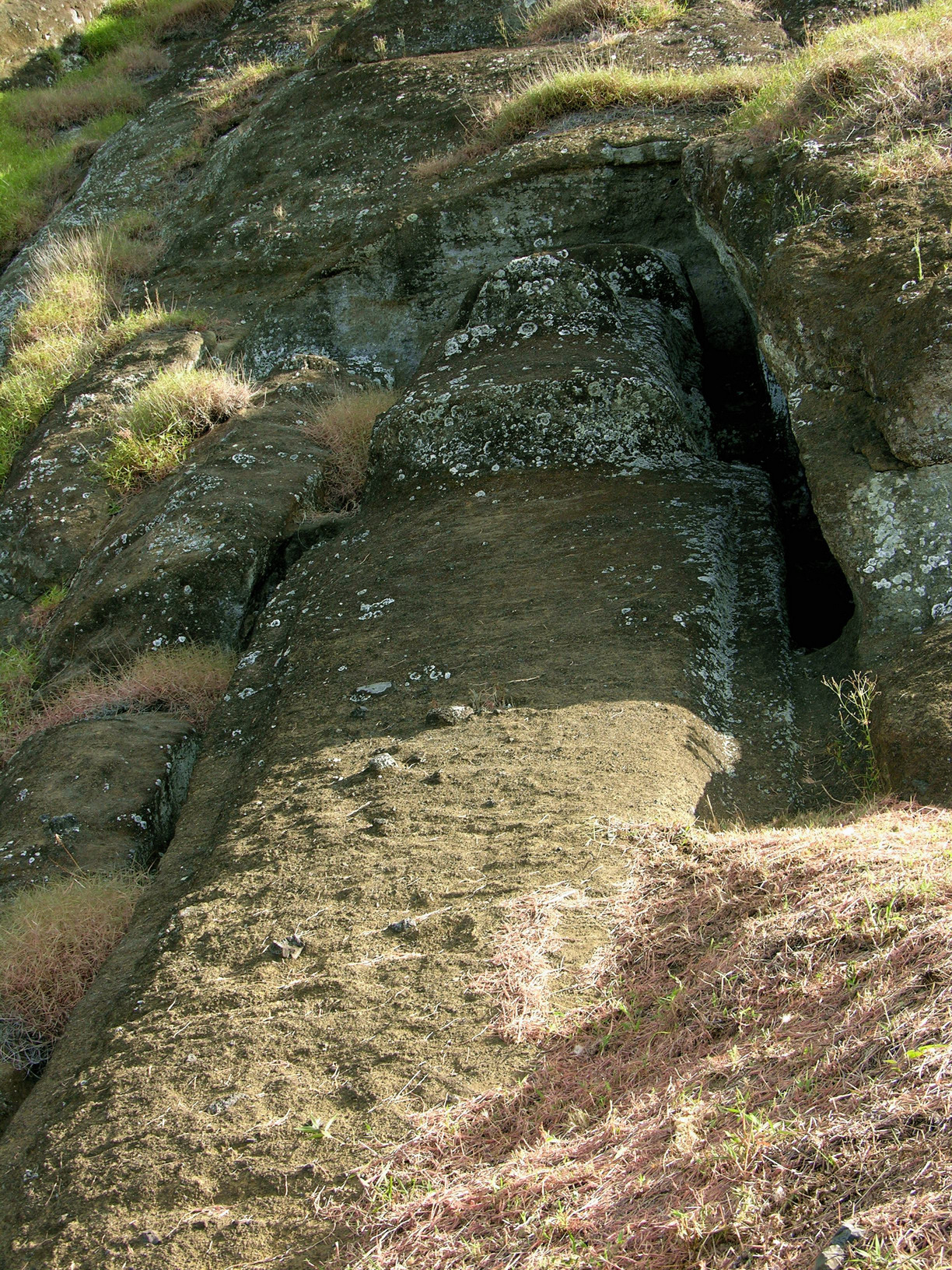
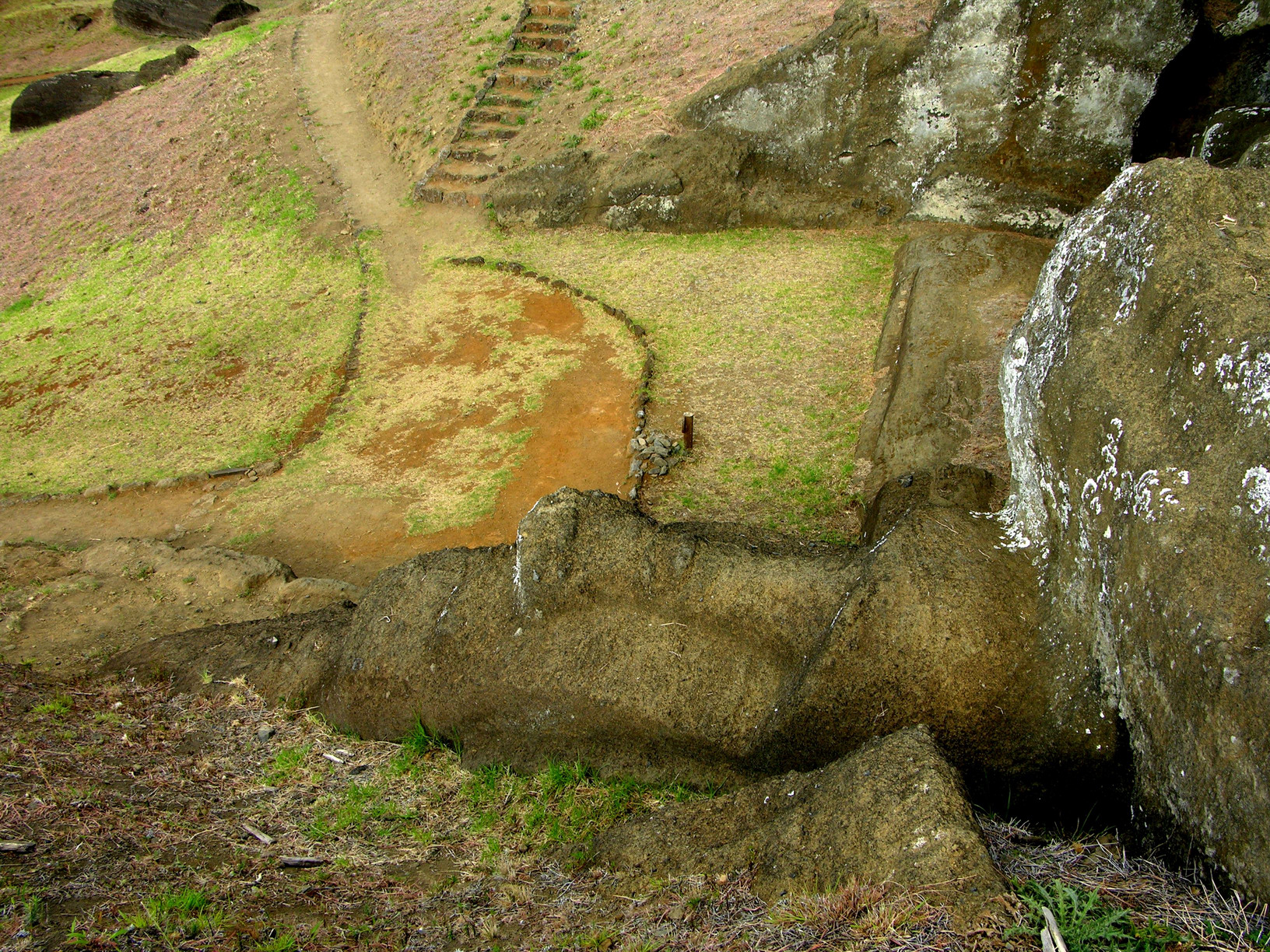
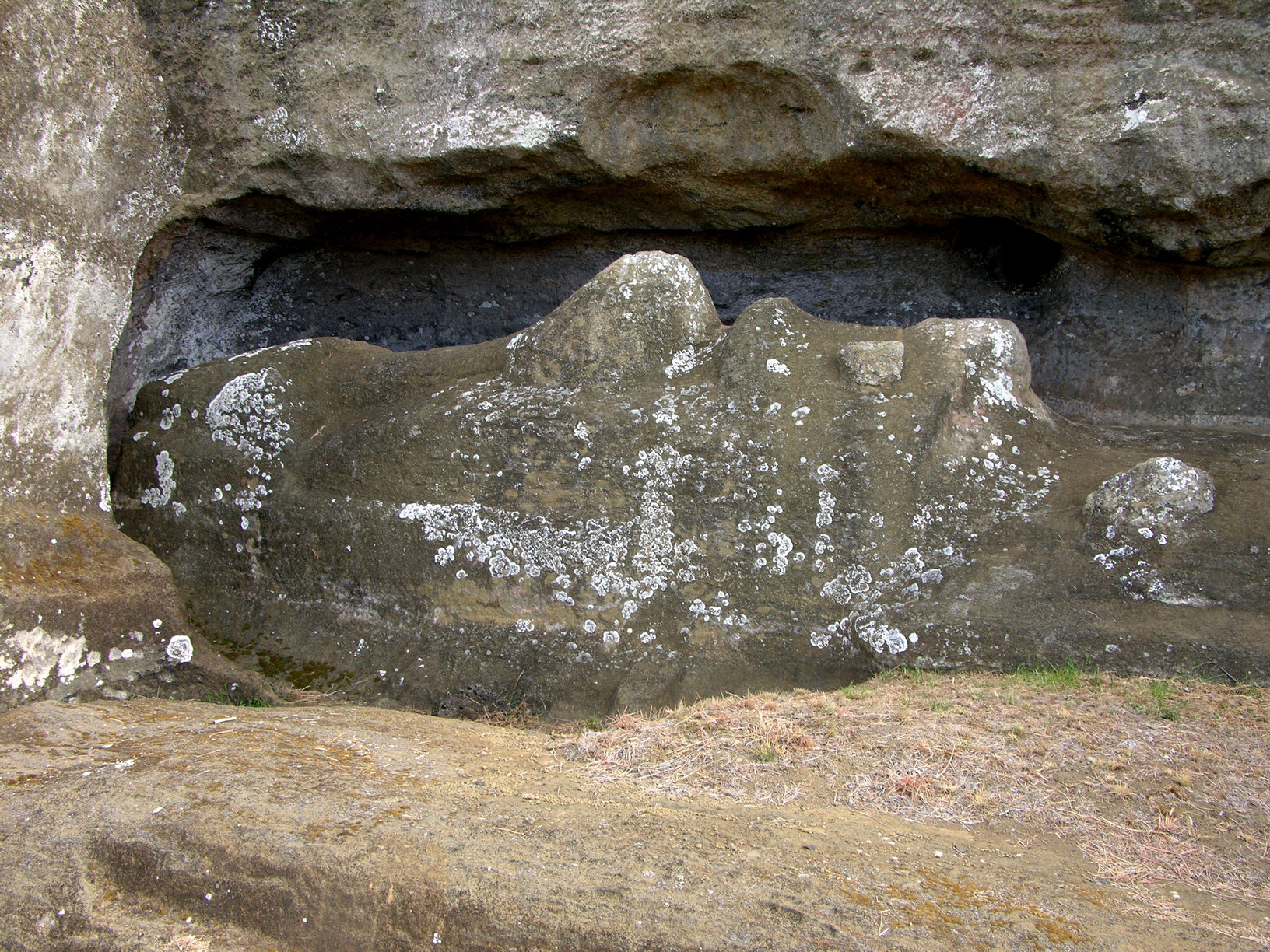
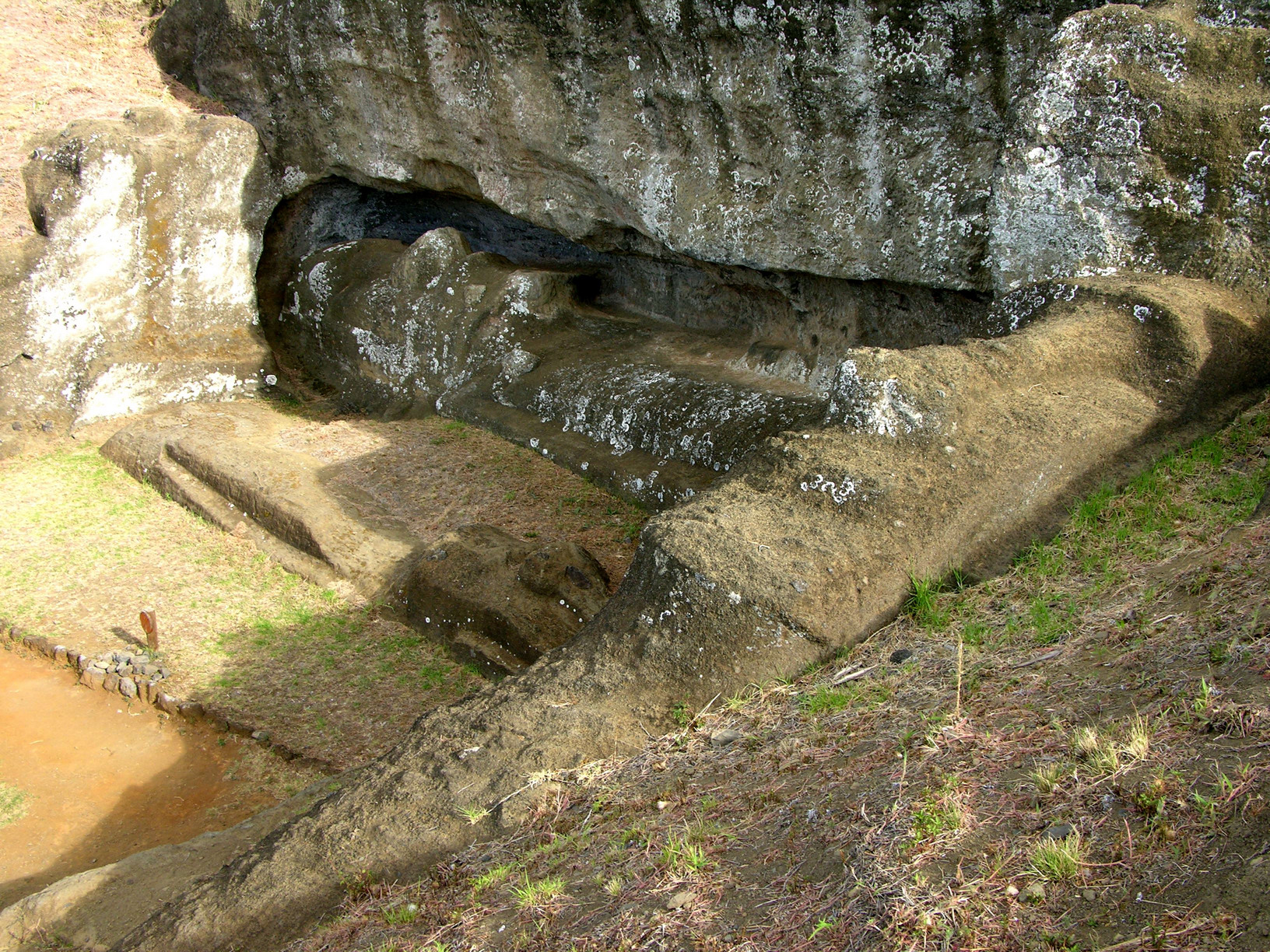
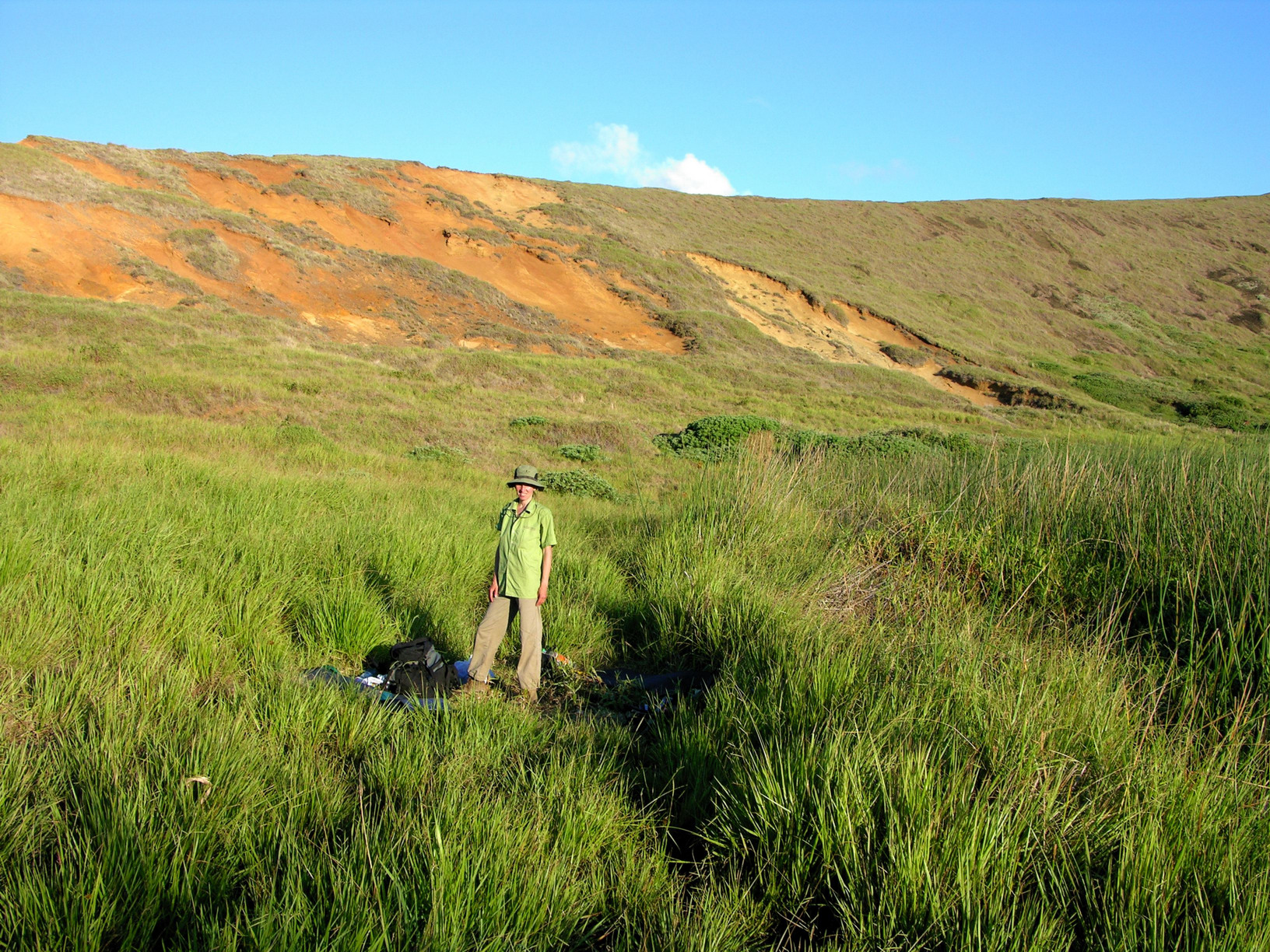
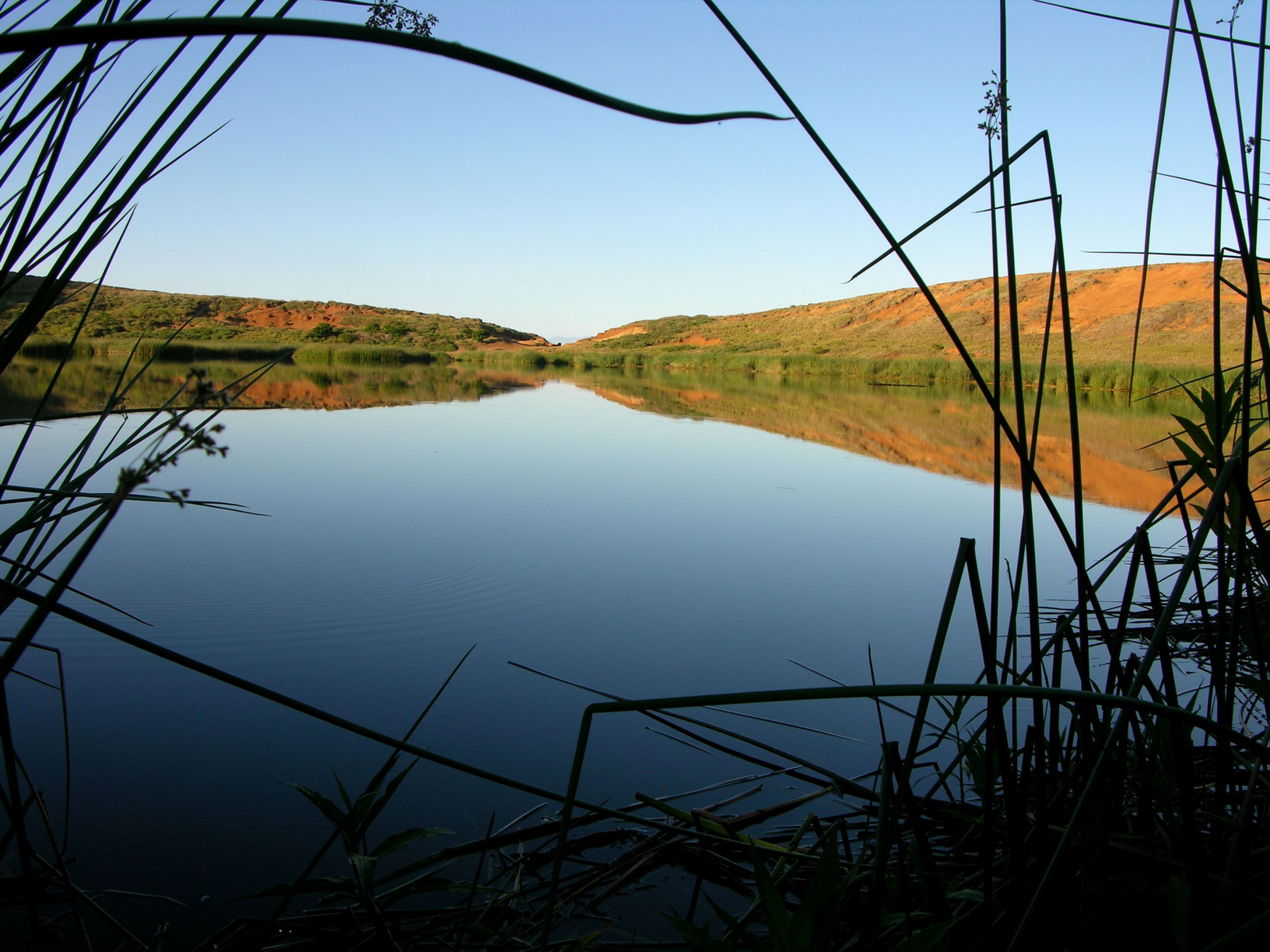
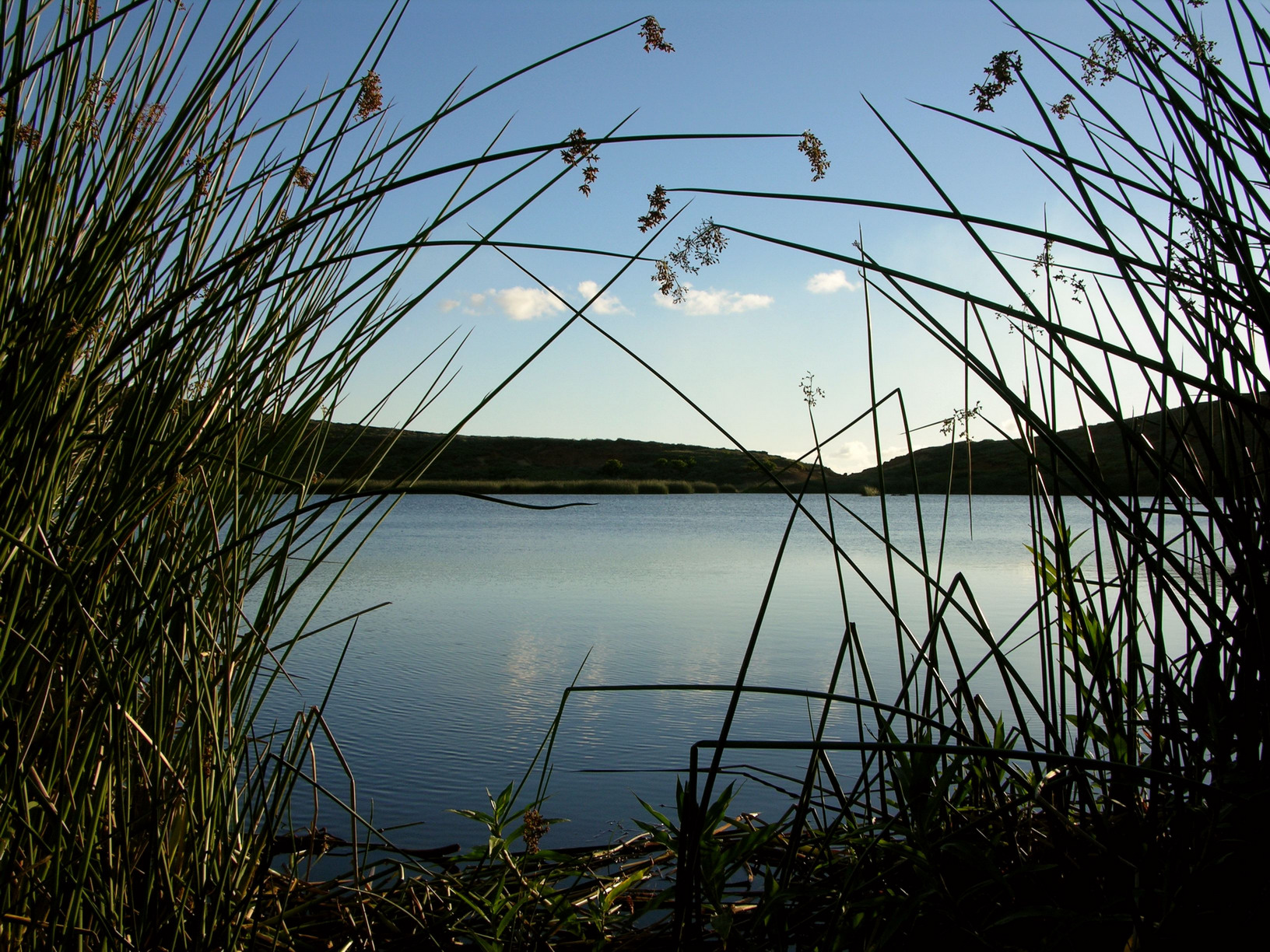
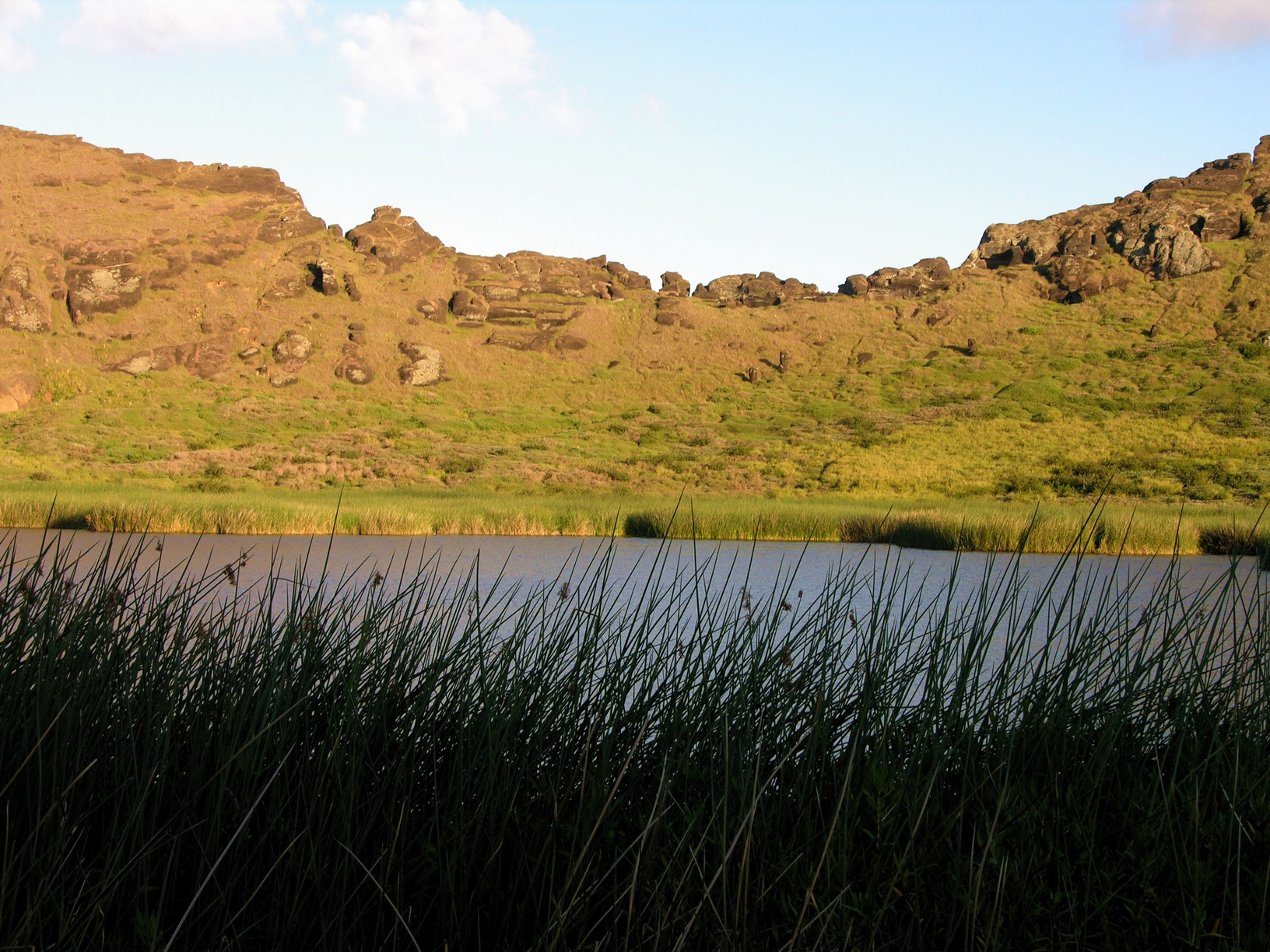
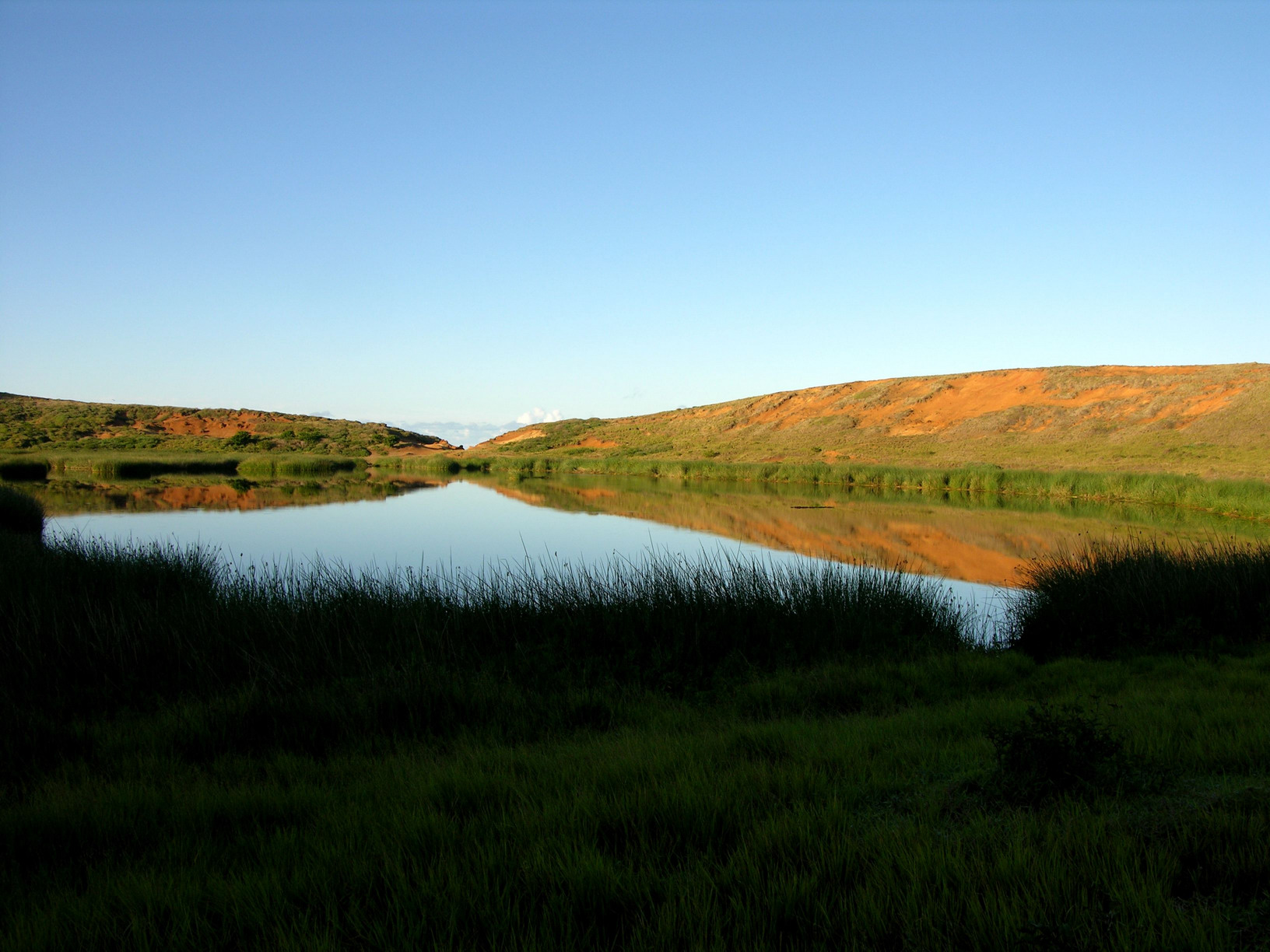
The crater is a specially protected part of the national park that covers the whole island. There's a proper campsite for organised groups on a dusty patch at the foot of the volcano. As for us, we put up the tent on the northern shore, by the water, among tall reeds, away from the marked paths (27°07.227′S, 109°17.277′W, 80 m). You couldn't see us here from twenty metres away. Only the park dog sniffed us out and came begging. We had to feed her too or she might turn us in. Her actual job was to chase horses away so they wouldn't trample the grass or the fallen moai. She was probably supposed to chase people with tents too, but we bribed her. I wonder whether the law of any country takes exception to bribing a dog on duty with a sausage.
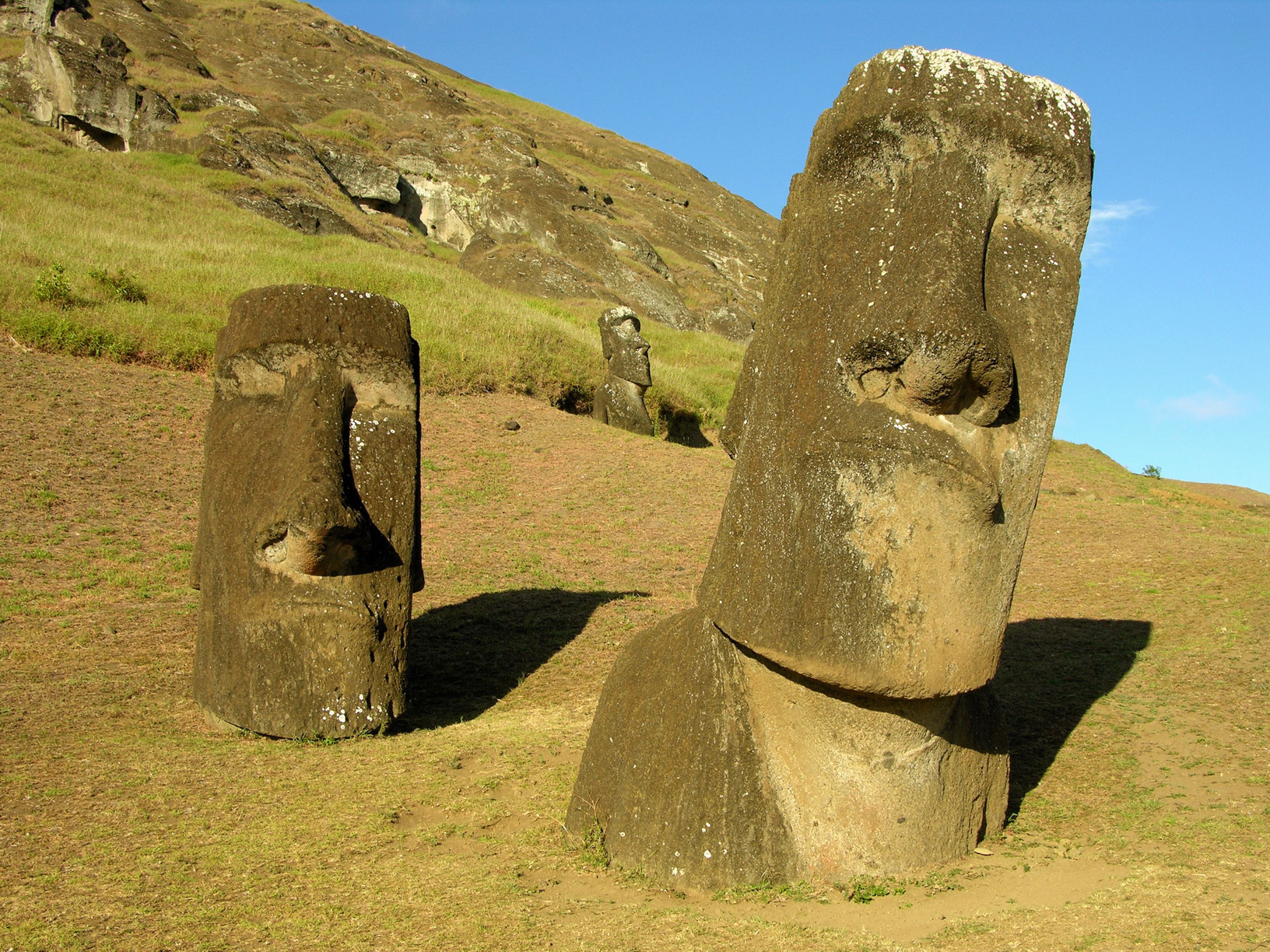
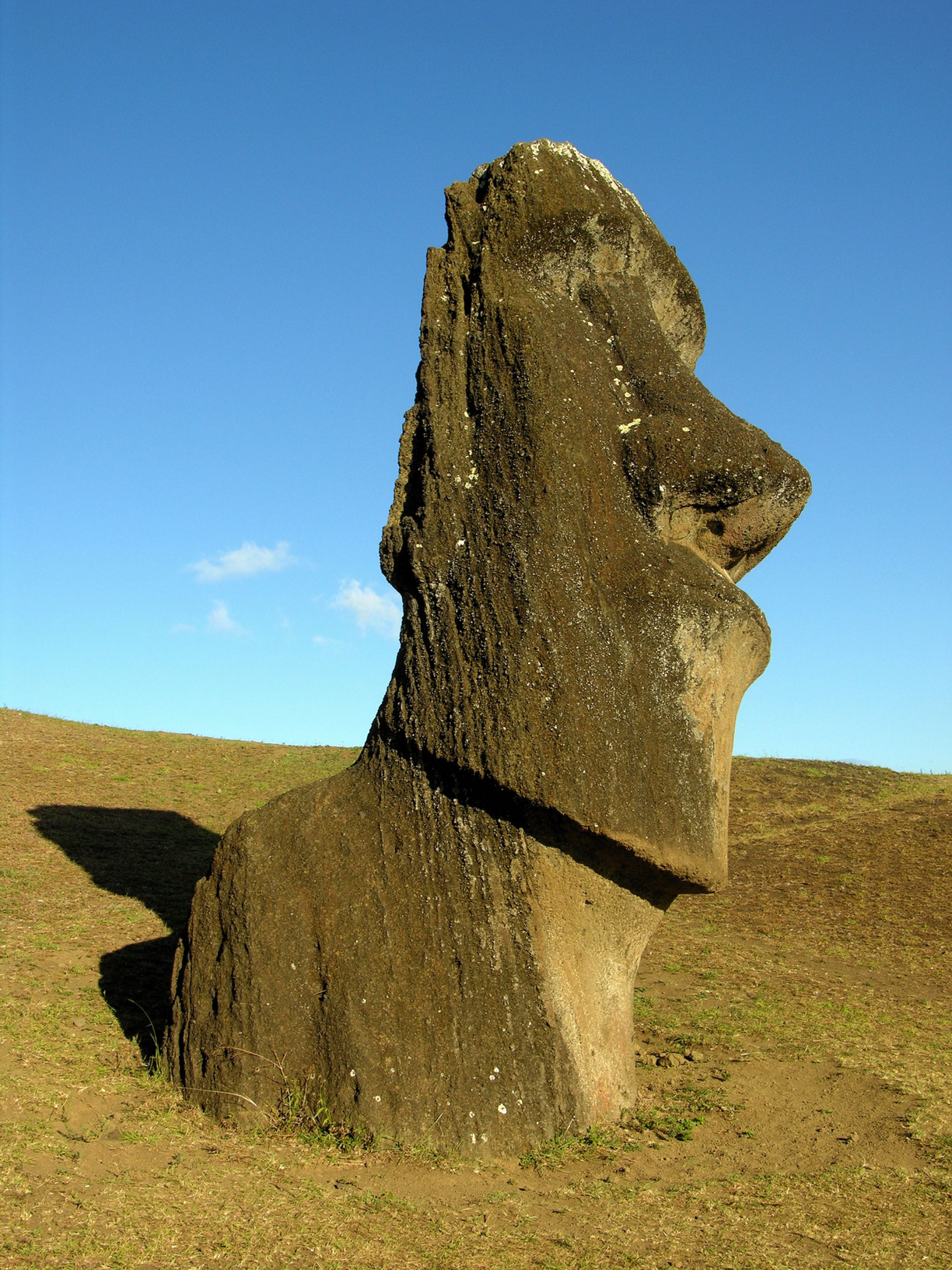
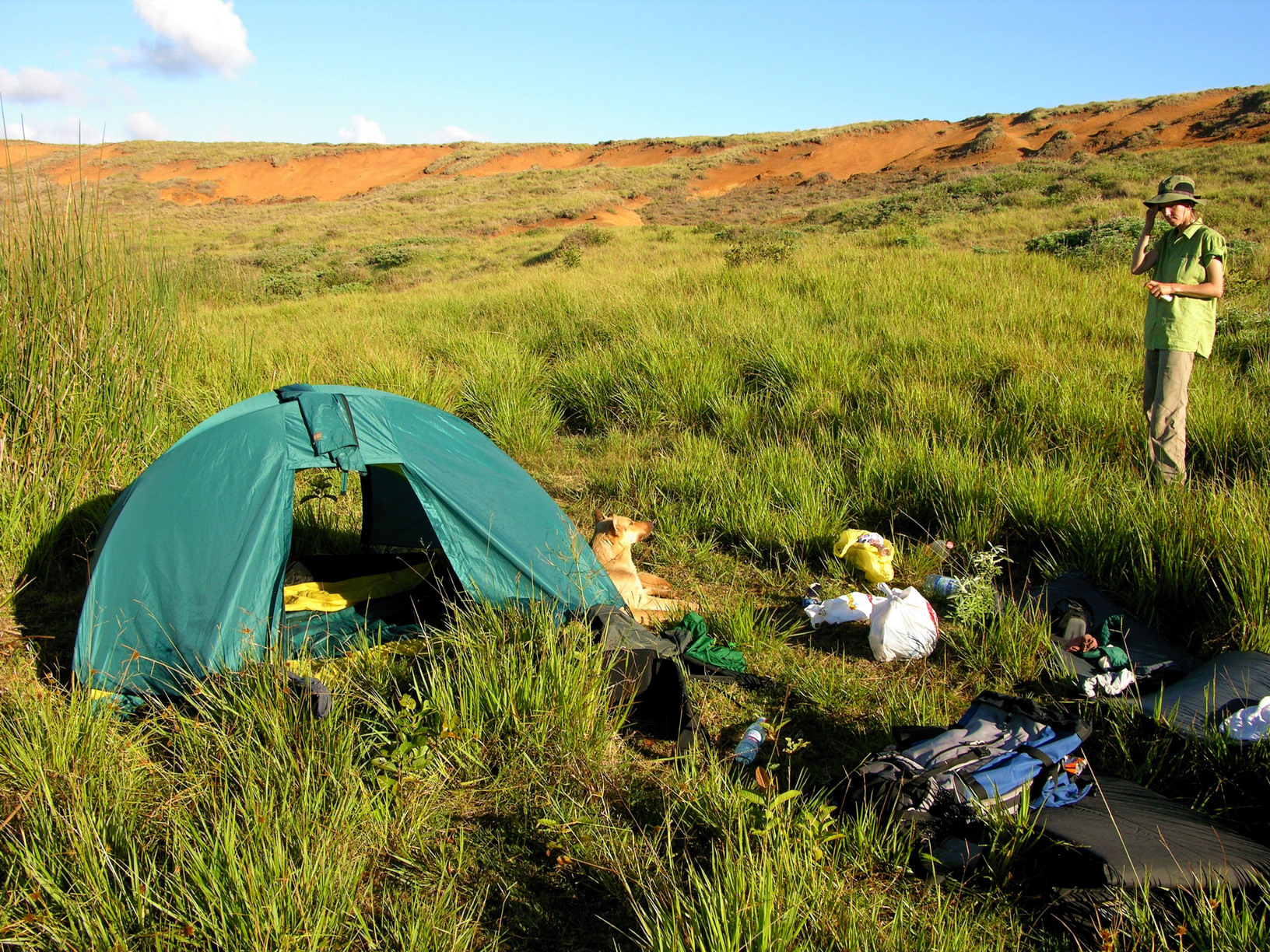
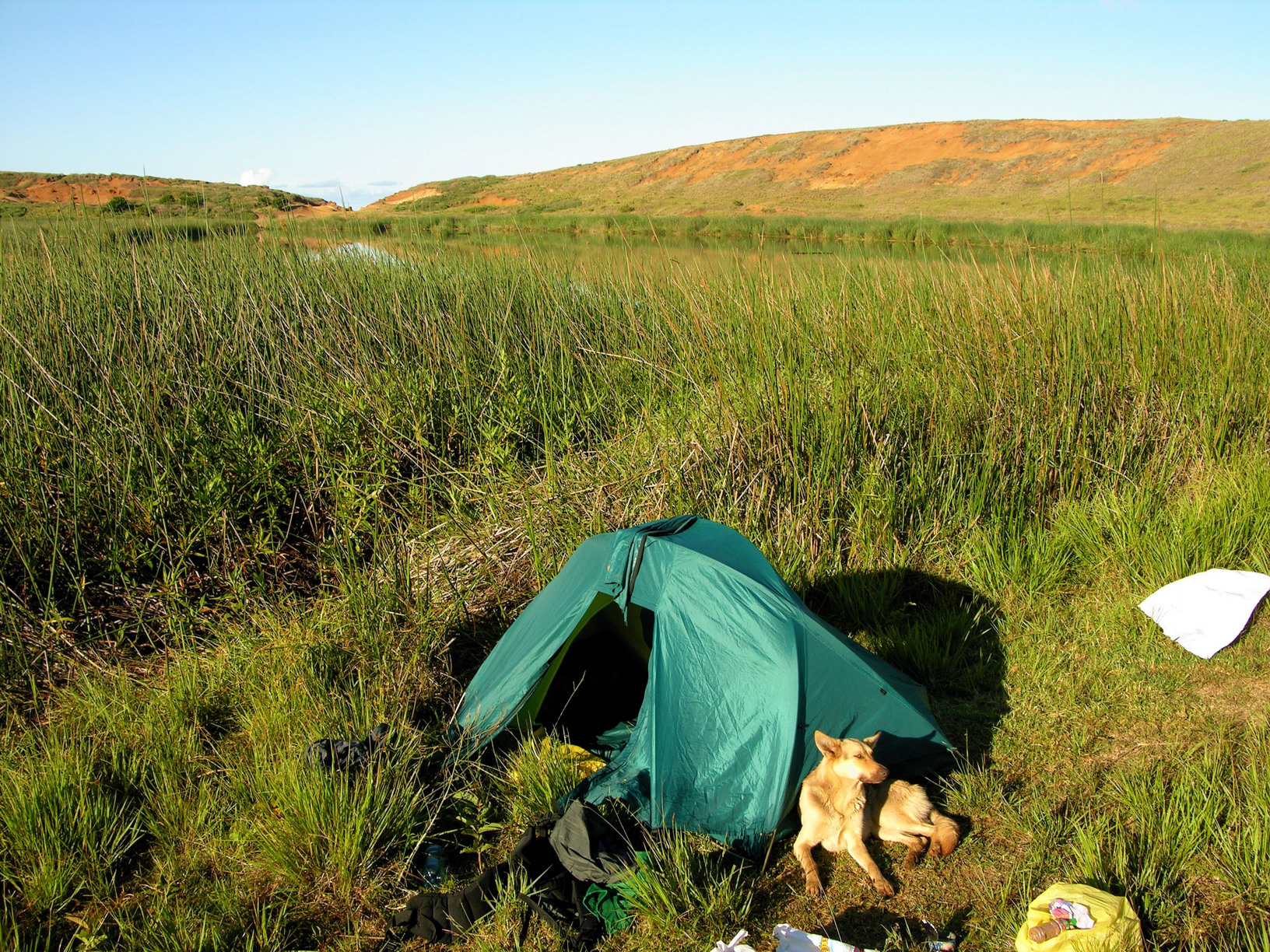
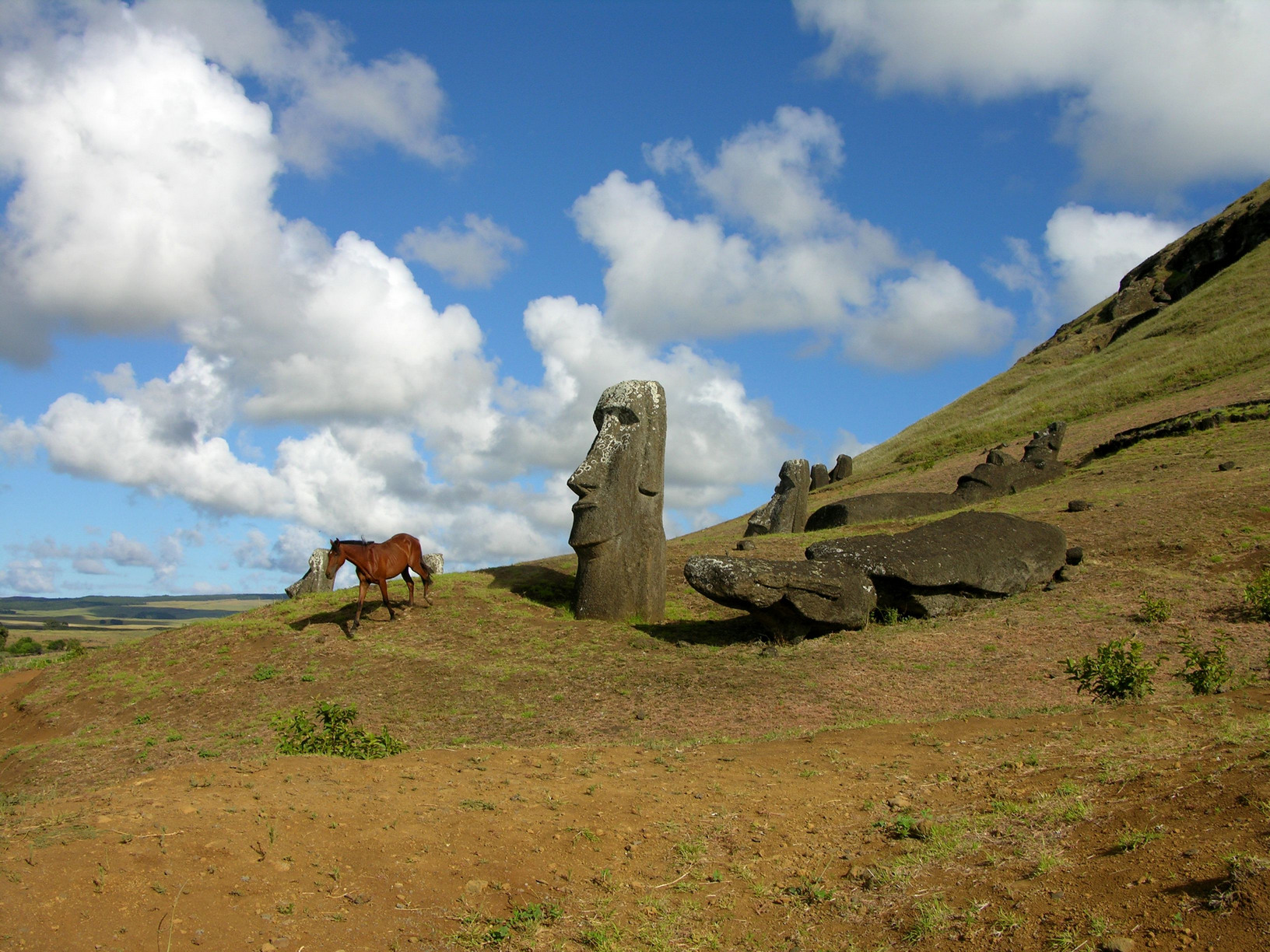
The dogs on Easter Island are surprisingly clever. When the grazing animals have to be penned in for the night, the dogs are sent out to find their allotted sheep and horses, circle them and drive them home. The shepherd doesn't even have to leave the house.
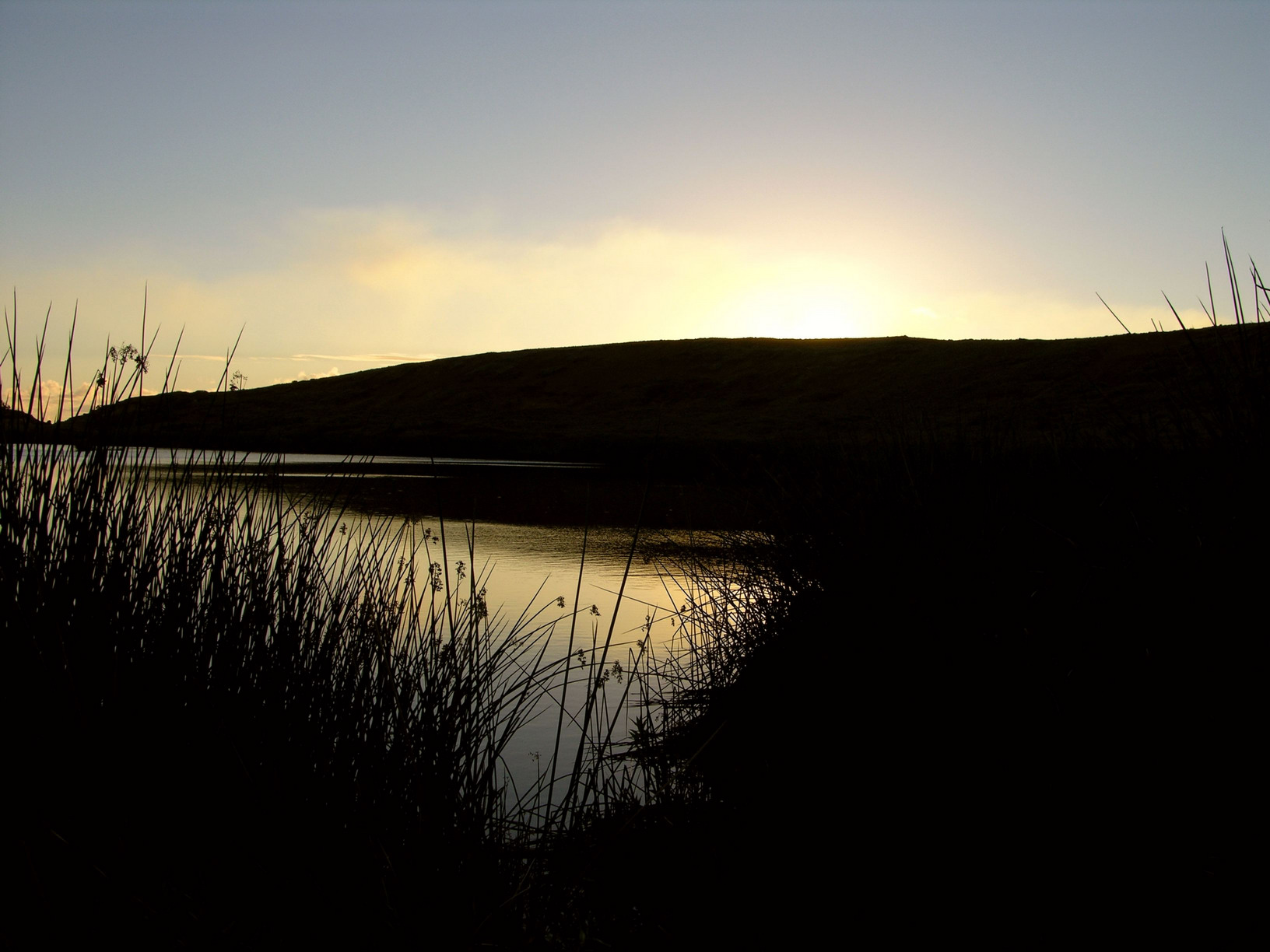
It was a splendid night to camp. We had a whole lake of water, and could even go swimming. The only hitch was getting into the water. The marshy shore was thick with reeds. You have to push through the bog, sinking up to your knees, but then how lovely it is to swim in warm fresh water. There are plenty of fish, though, and they're obviously carnivores, perhaps relatives of the piranha. They try to bite, but God forgot to give them teeth. Their mouths aren't wide enough to get hold of me, either. It would be like trying to bite an elephant.
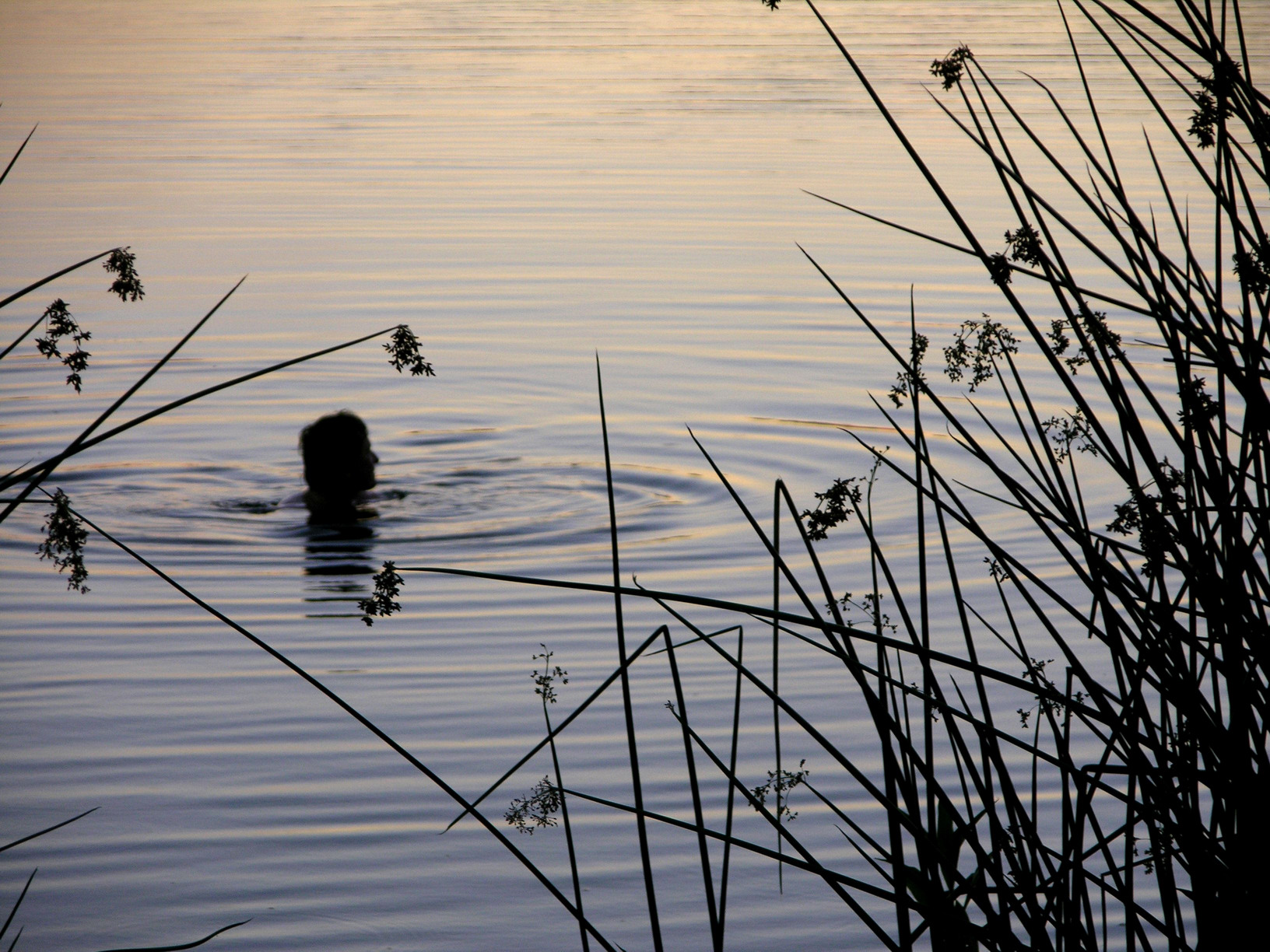
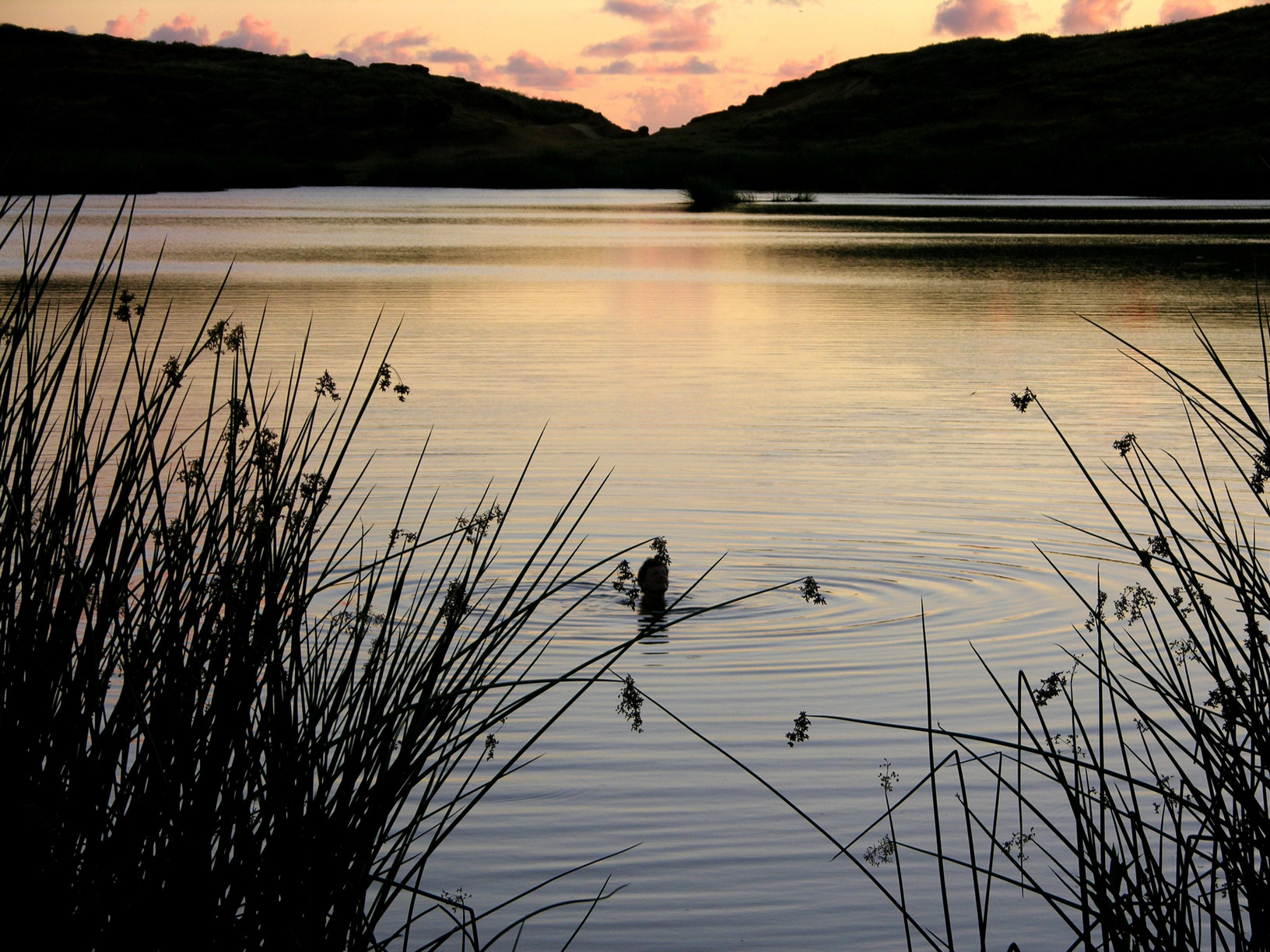
They can only nip the odd part that sticks out. All right for Tanya. I almost wished I'd put my trunks on.
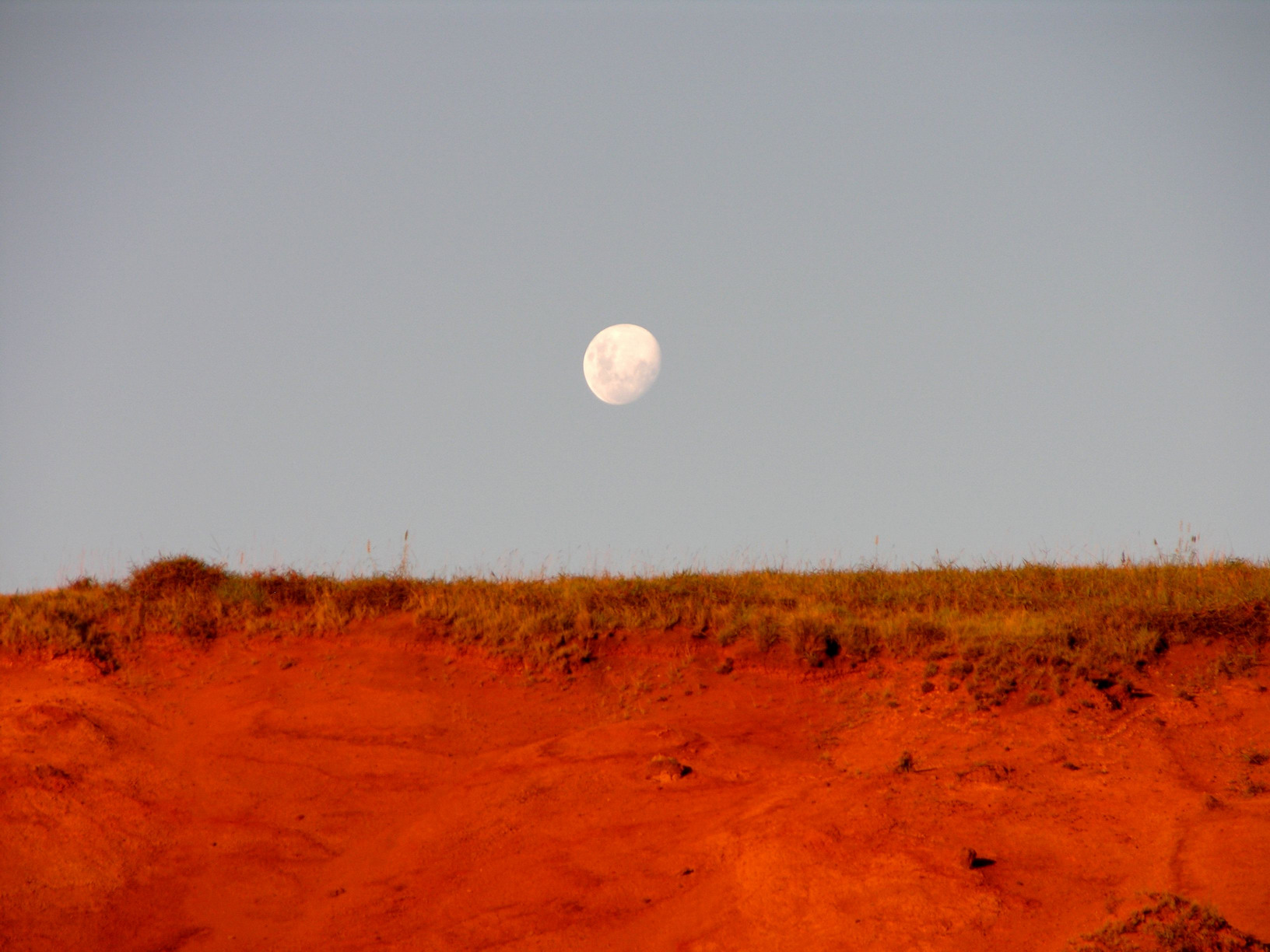
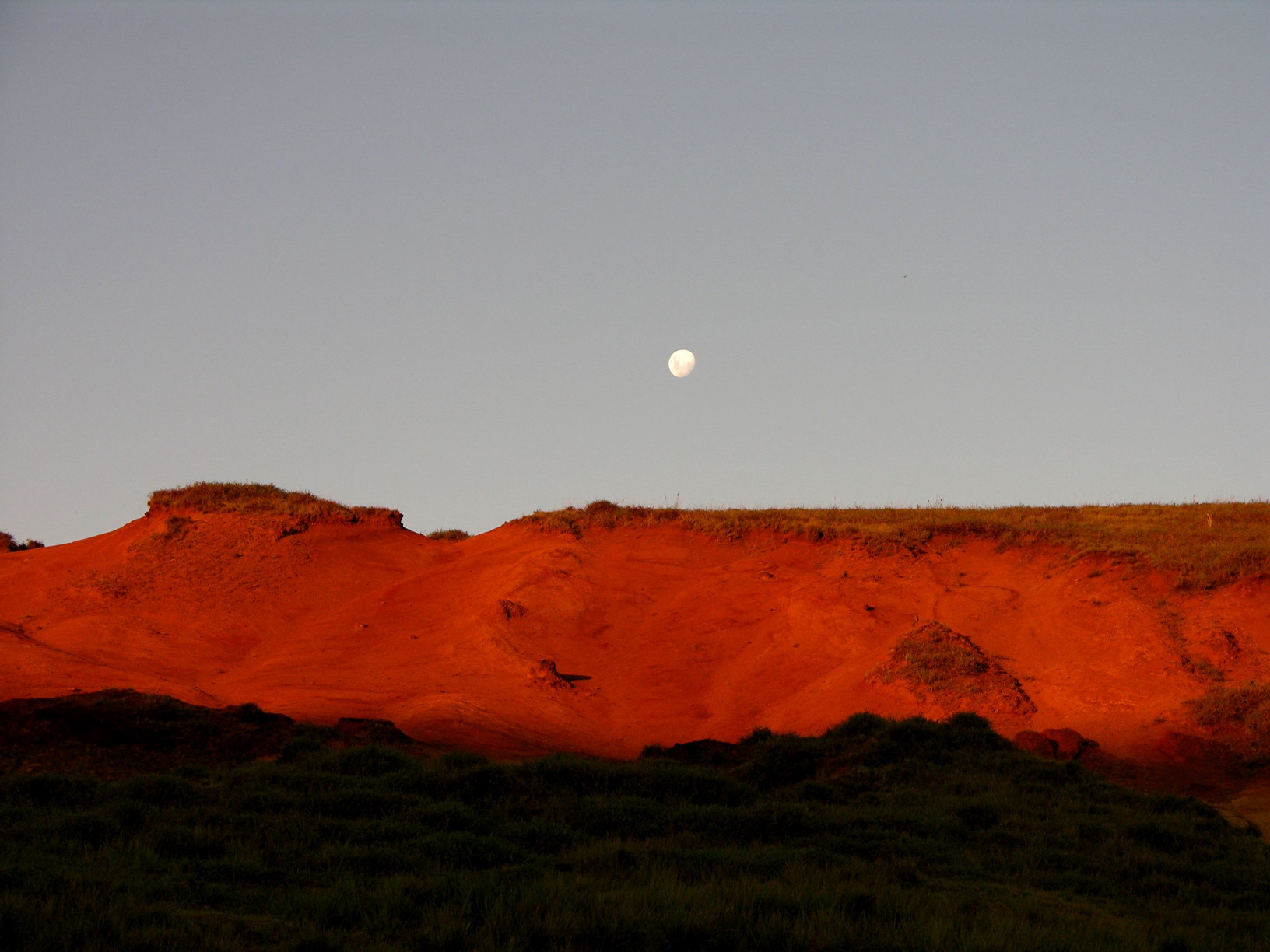
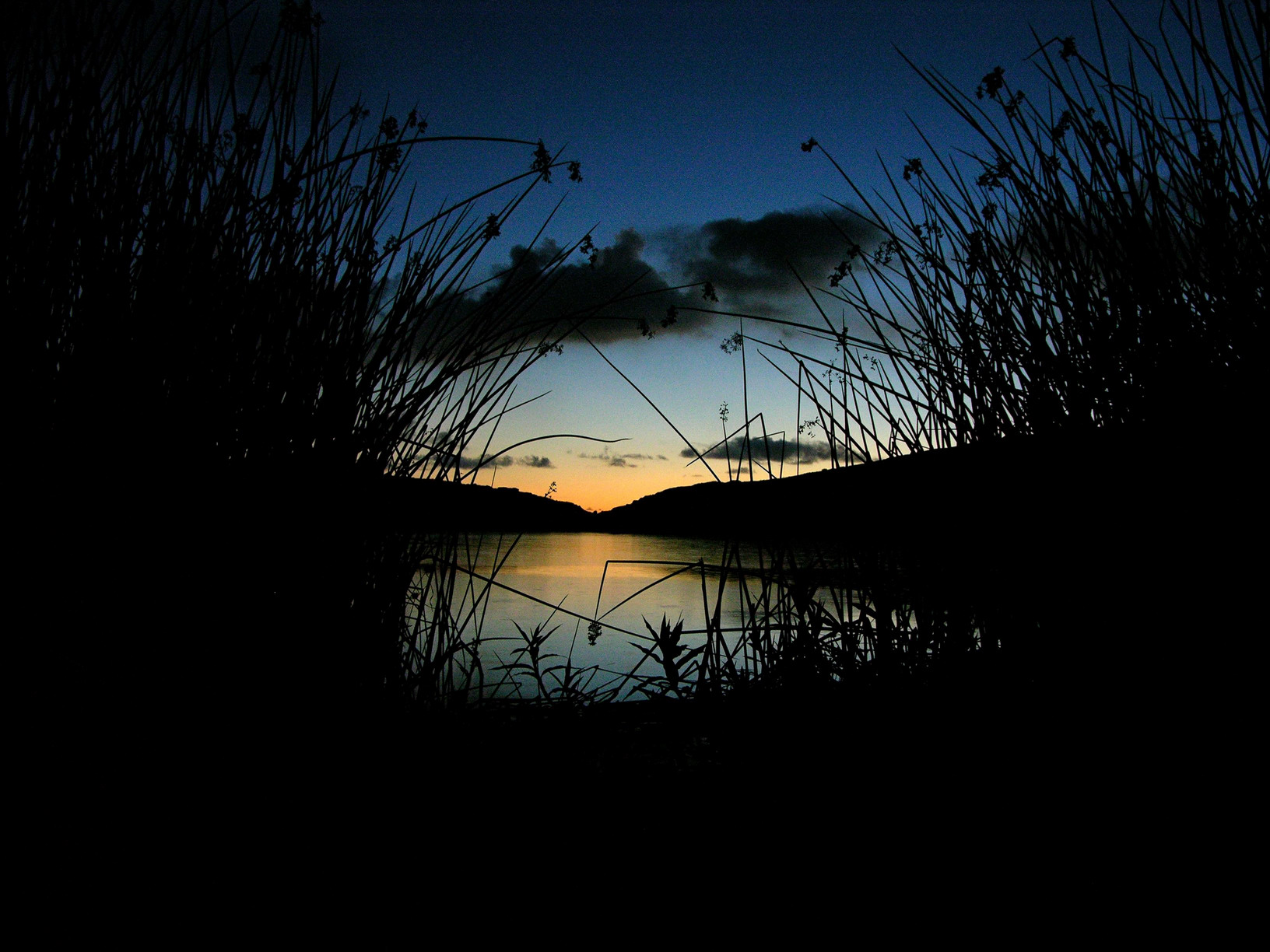
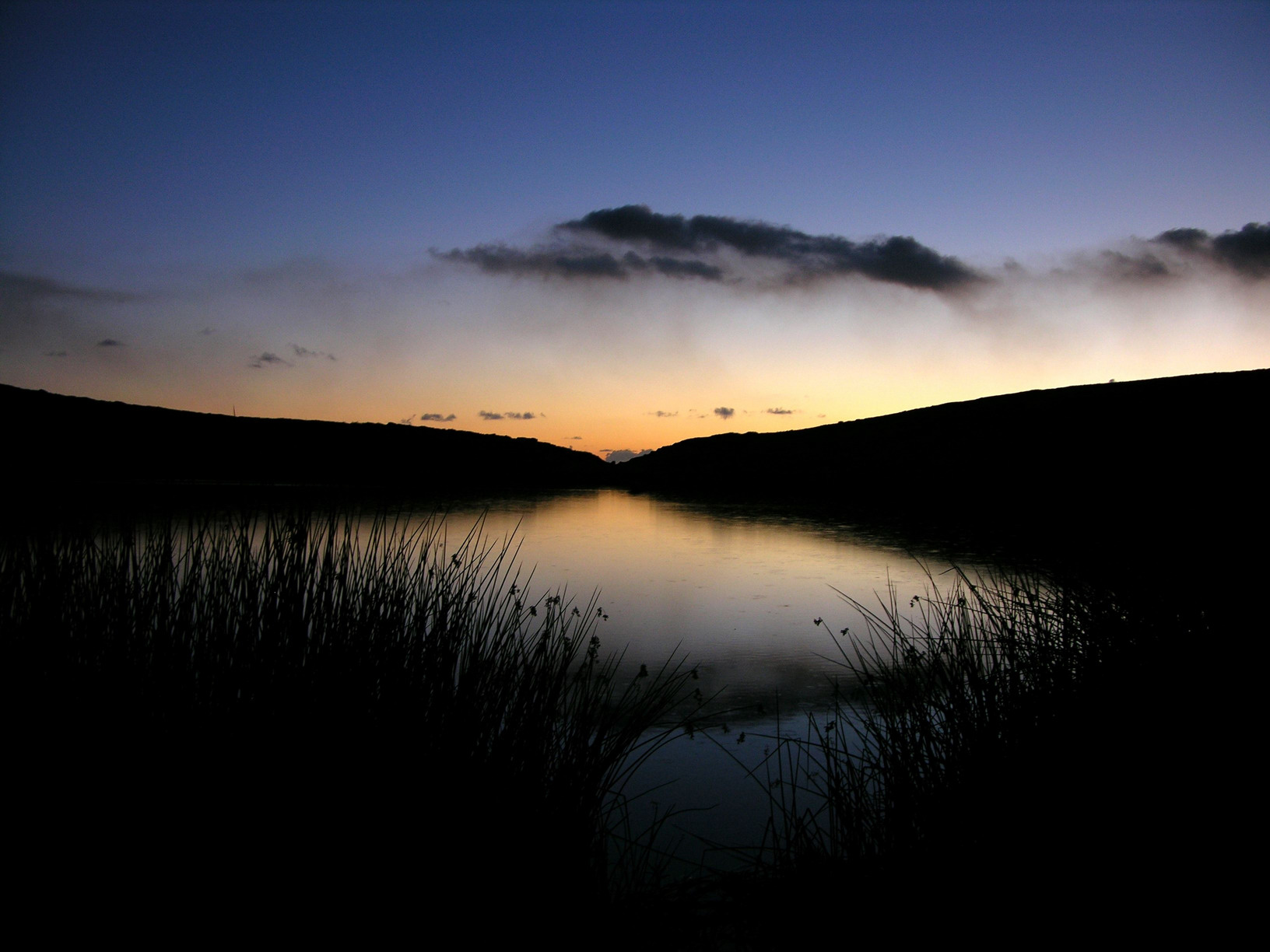
Meanwhile the moon rose above the red lava rim of the crater. The blood-red sunset and its reflection in the lake gradually melted into dark blue and the first stars. This was our last night in the tent. Where would we pitch it next? I put a few reed stems in the peg bag. It would be lovely to find them later.
For the moment we could make our last soup and our last cocoa and eat whatever was left in the bottom of the pack. We wouldn't need it again. Oh, what a sunset, what a night. I'd have liked to sit and talk with Tanya till morning, but we didn't have the energy any more. We wanted to sleep.
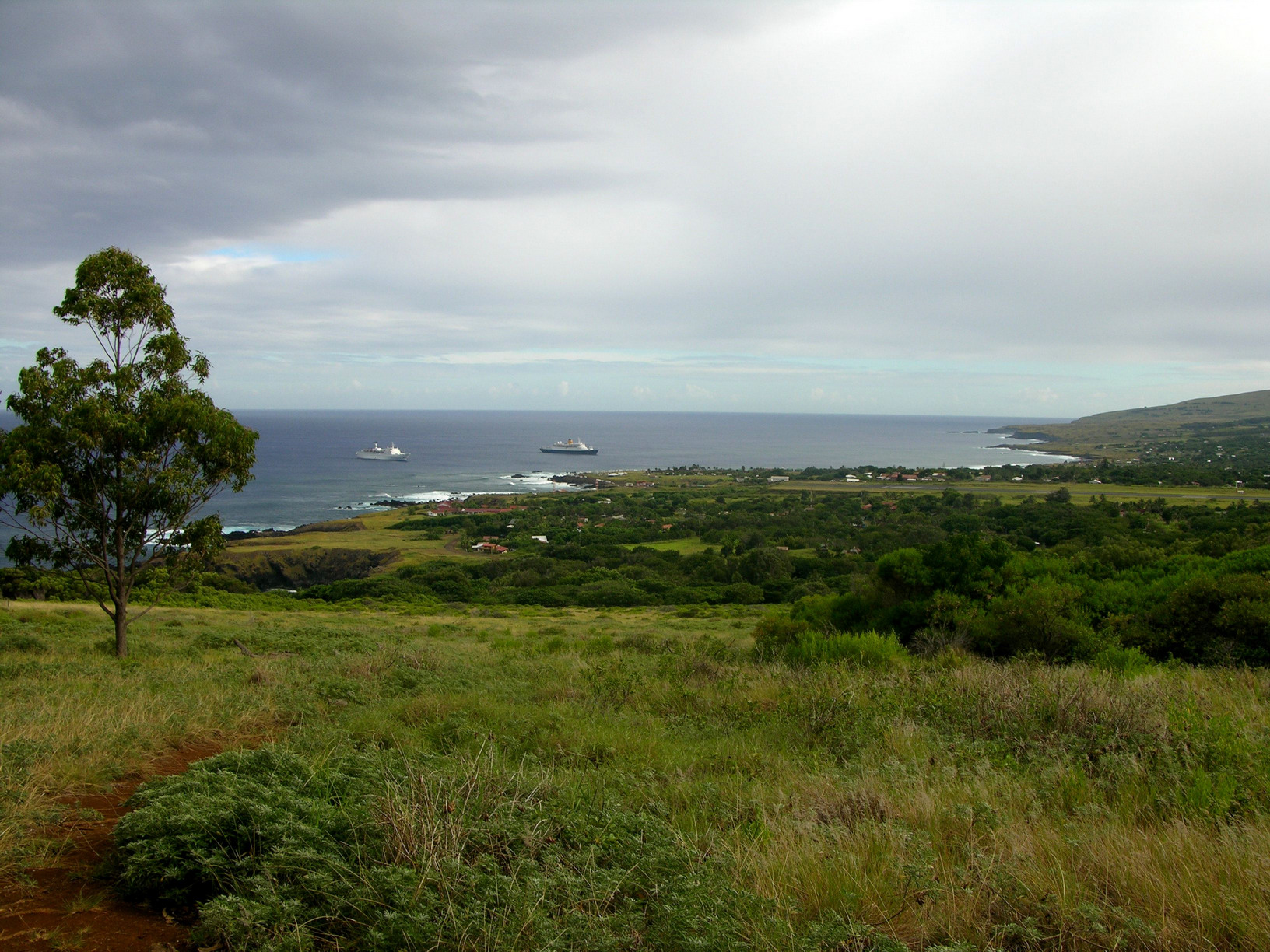
We slept to our hearts' content, packed quickly and set off. It was a long way, and walking in the heat wouldn't be easy. The walk was indeed tiring. We found the last few kilometres particularly hard, even within the town of Hanga Roa. Why did the hotel where we'd left our things have to be so far away, on the opposite side of town? Never mind. At least cafés started appearing along the road. We ate ice cream, drank juice, had a bite to eat and felt better. We sent everyone text messages. Easter Island has mobile reception, but only in Hanga Roa. The town is cut off from the eastern part of the island by the hills, so the signal disappears a few kilometres out of town.
A disappointment awaited us at the hotel. There were no rooms, and no rooms next door either. We could have put up the tent, of course, but we wanted a shower and had to sort out all our bags before the long trip ahead. It took a long time to look for a hotel. There wasn't a vacancy anywhere. It turned out, though, that locals were happy to rent out their own little houses. It was unofficial, of course, without a till or the taxes that went with it. Worse, their licensed neighbours were keen to report them, so there were no signs saying “house for rent”. You won't get a recommendation at the hotels, but you can come to an arrangement with ordinary people.
“You need somewhere to sleep? And who are you? Where are you from? What's your name? Oh, how happy I am to invite you into my home. You're my friend! I can invite a friend to stay for a day or two. Here's a little room with a shower.” “And how much?” “Well, you can't put a price on friendship, but 20,000 pesos a day would make me very happy.”
And that's how we ended up staying with the lady (27°09.358′S, 109°25.578′W). It was a hotel, in effect. There were even business cards on the table for Hostal Rapanuituki (tel. +56-32-551327).
We washed and changed, then handed over all our clothes to be washed. Even the warm things we wouldn't be wearing. Why carry dirt around when laundry was cheap here?
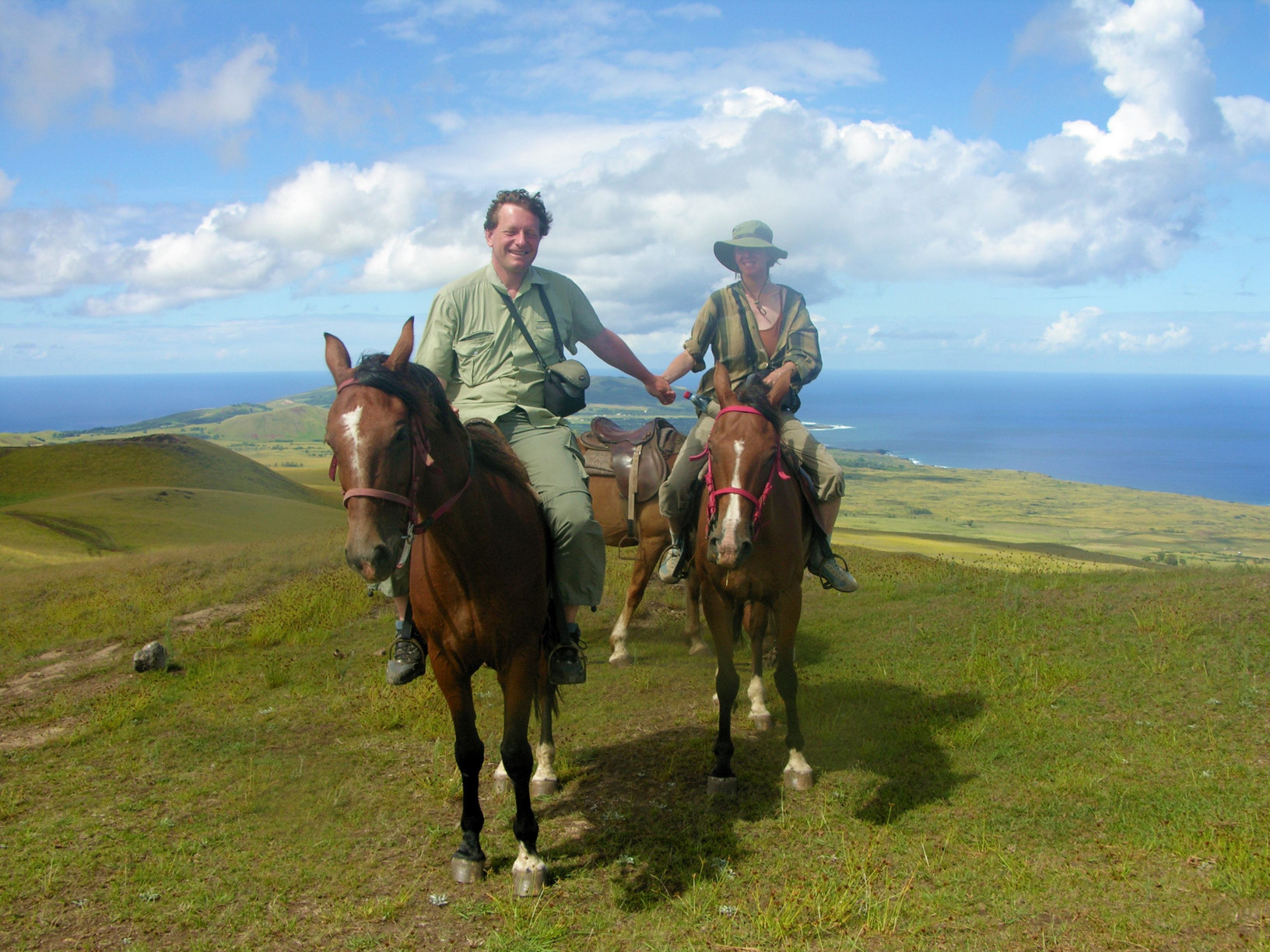
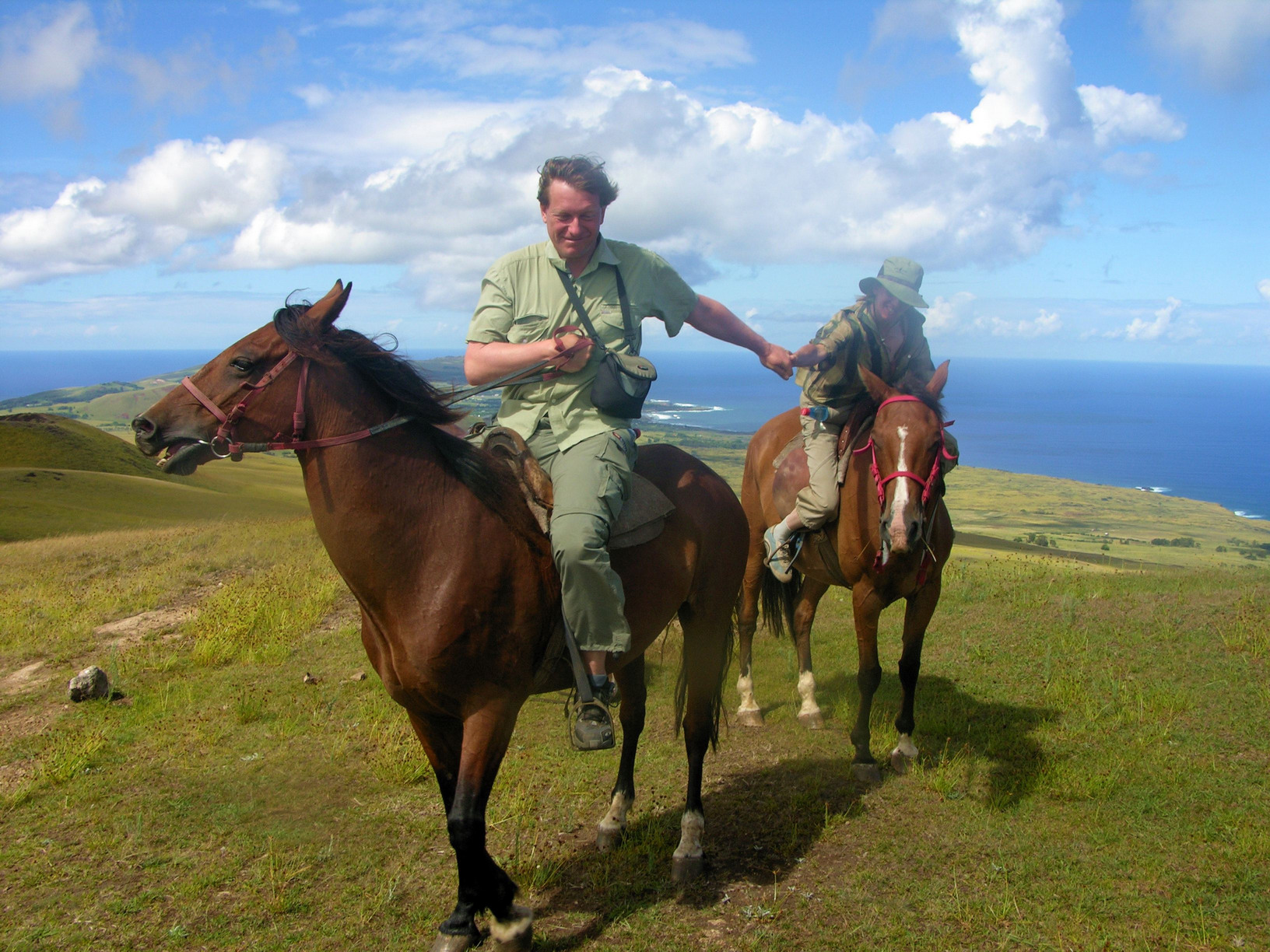
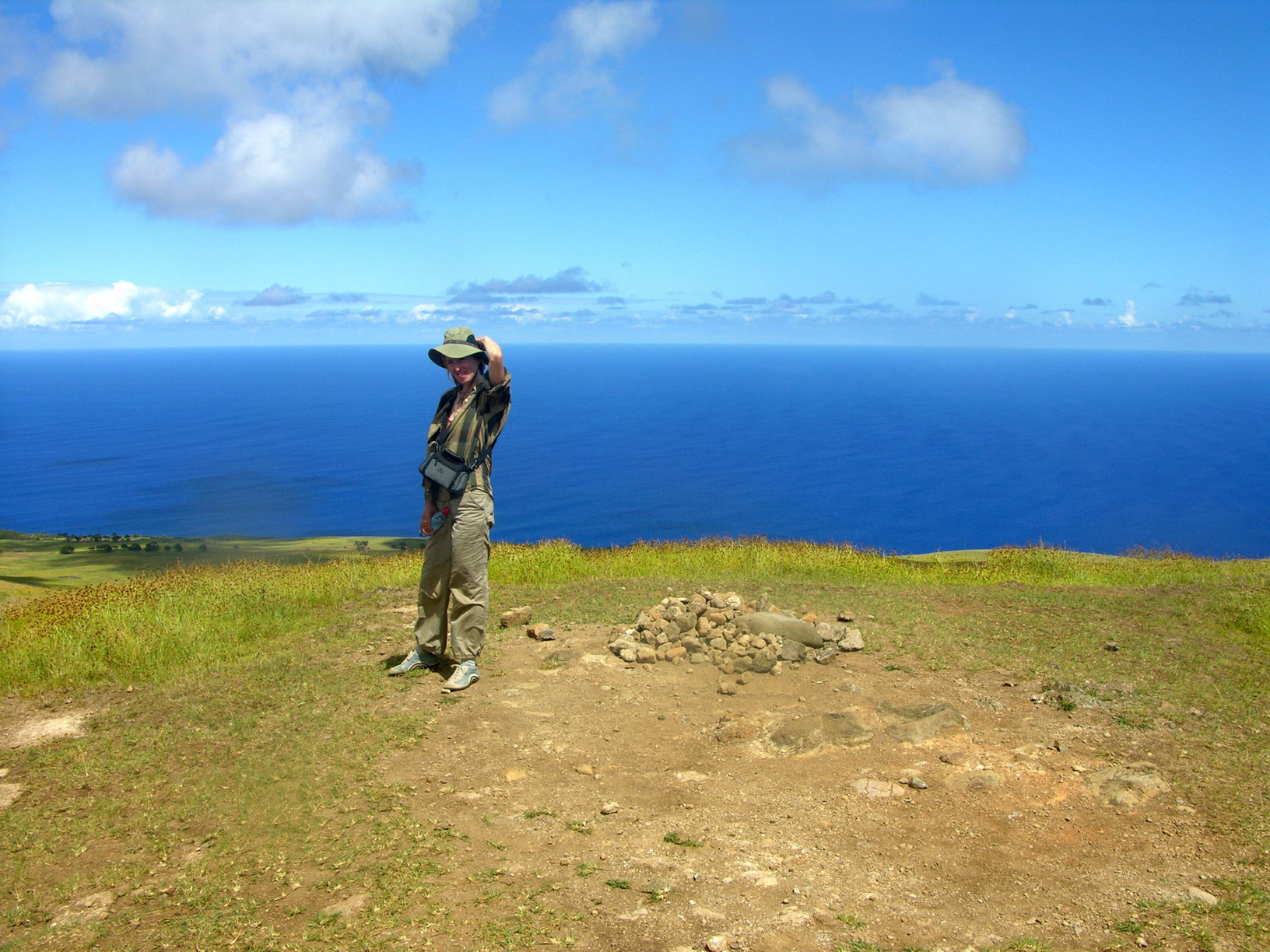
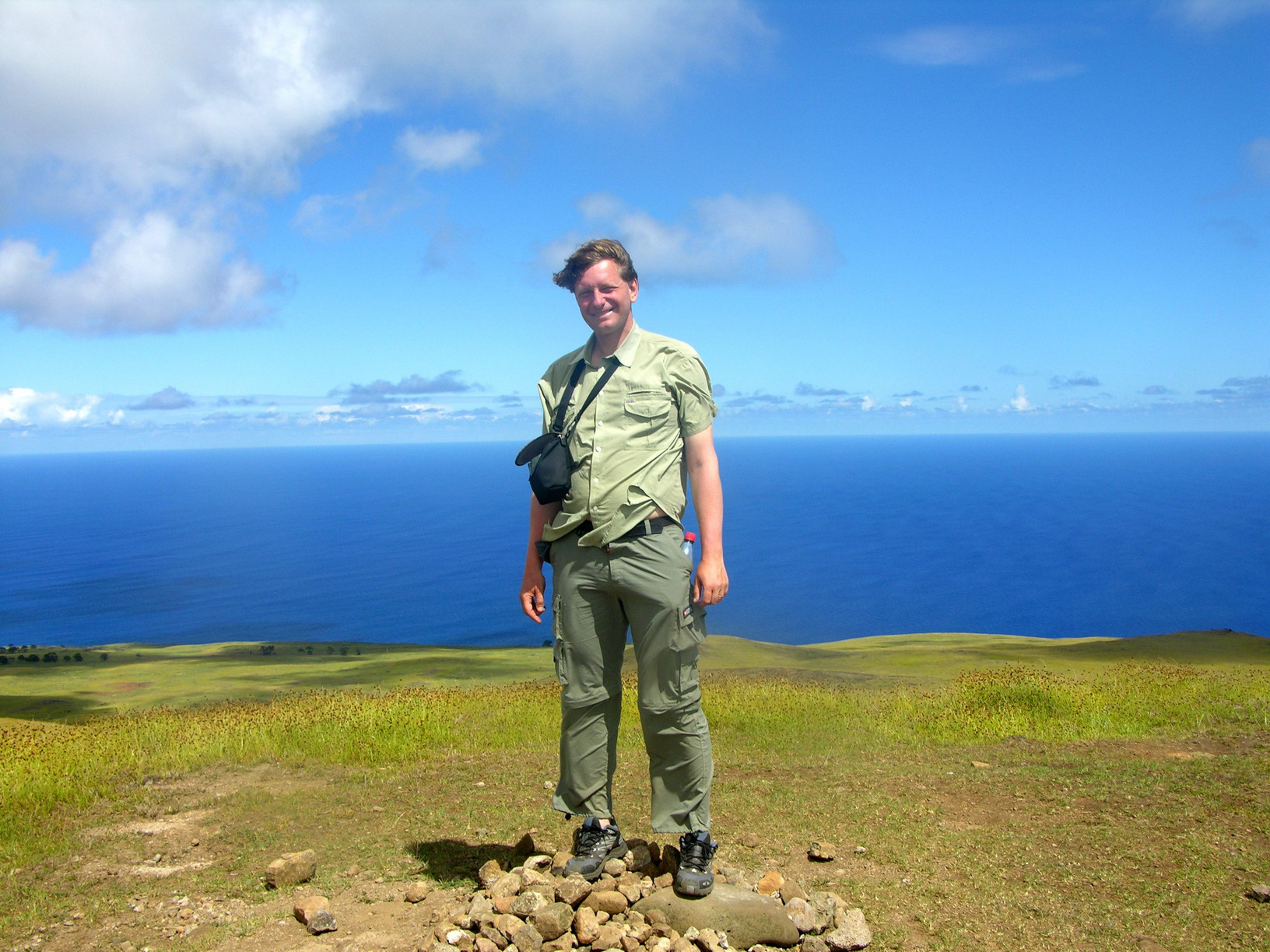
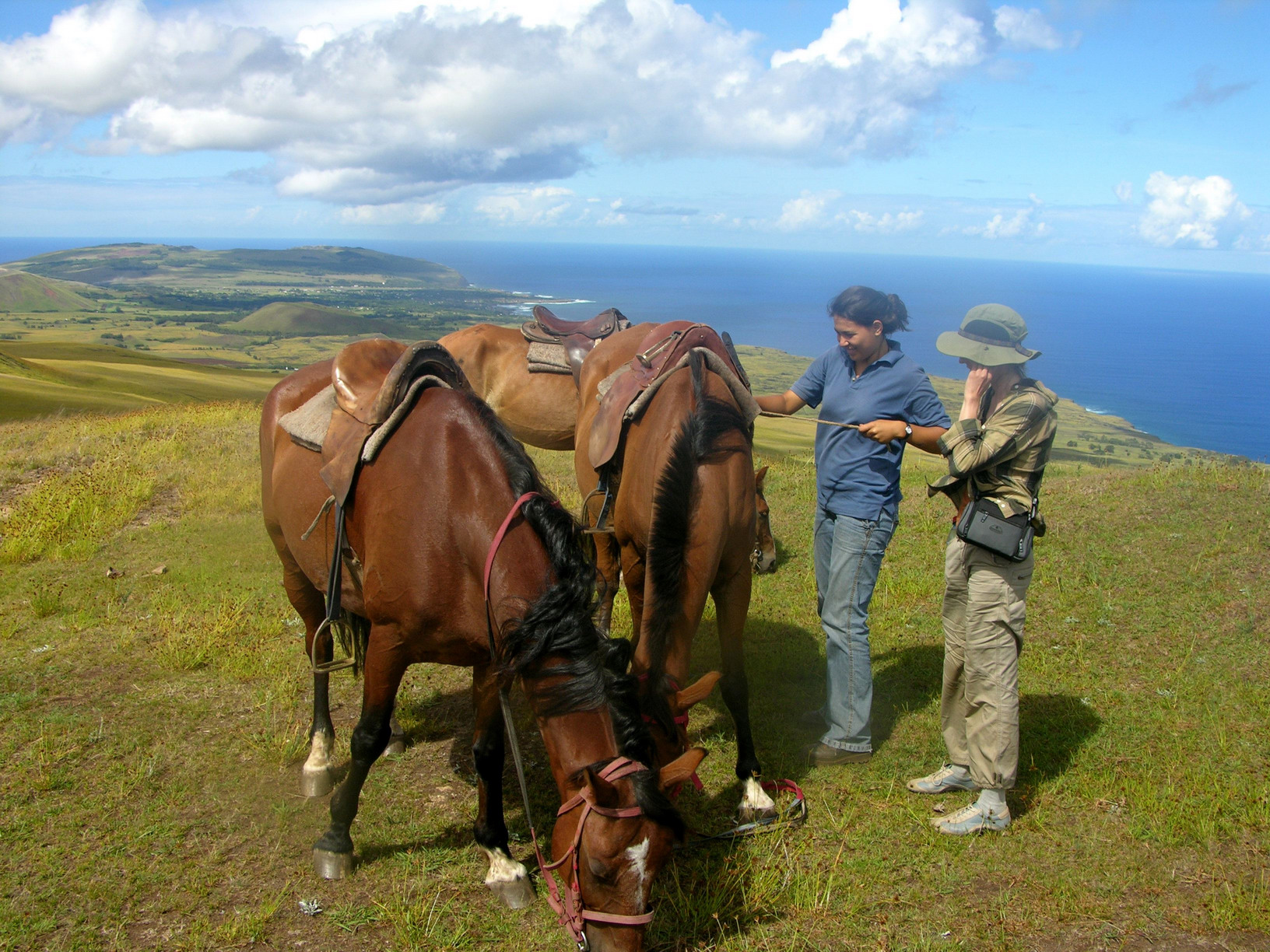
We'd booked horses for the next day. We hadn't been to the highest point on the island yet, the volcano Maunga Terevaka. It's five hundred metres high. We could walk, of course, but why, when we could go on horseback? Let the horse do the work. Hiring horses for two, with a guide, cost 90,000 pesos. There aren't many people who want to go riding either. Most tourists would rather take the bus.
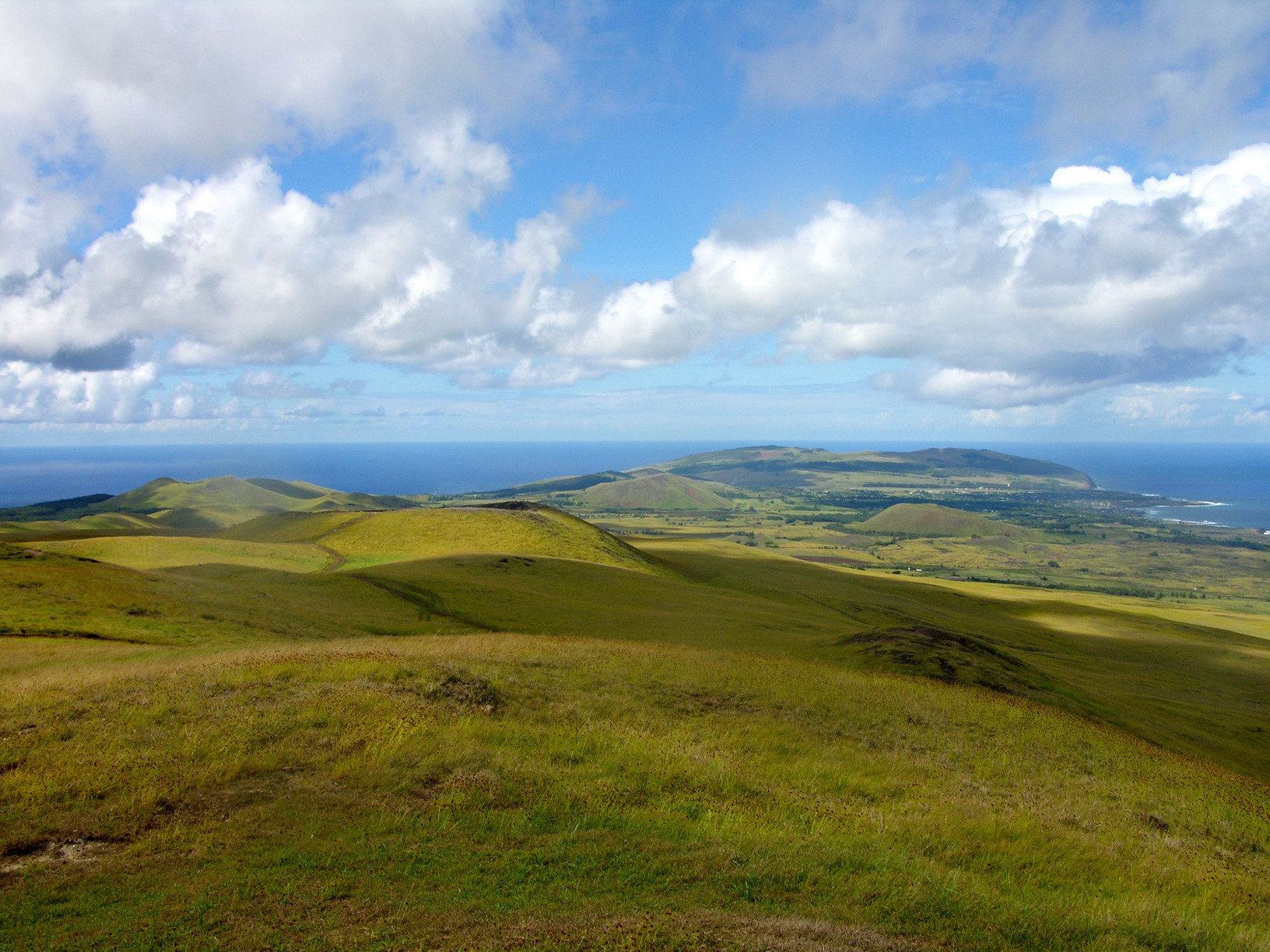
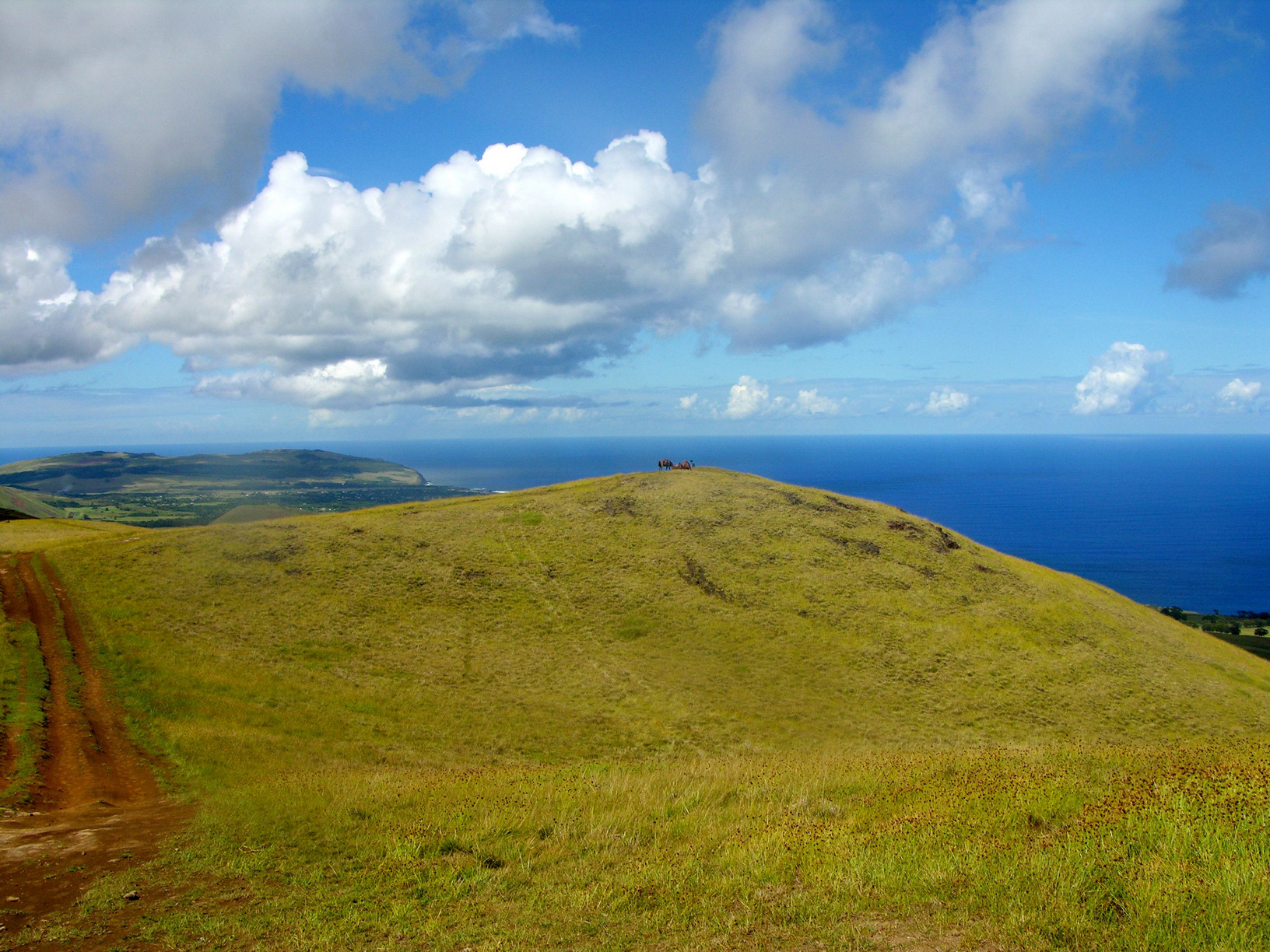
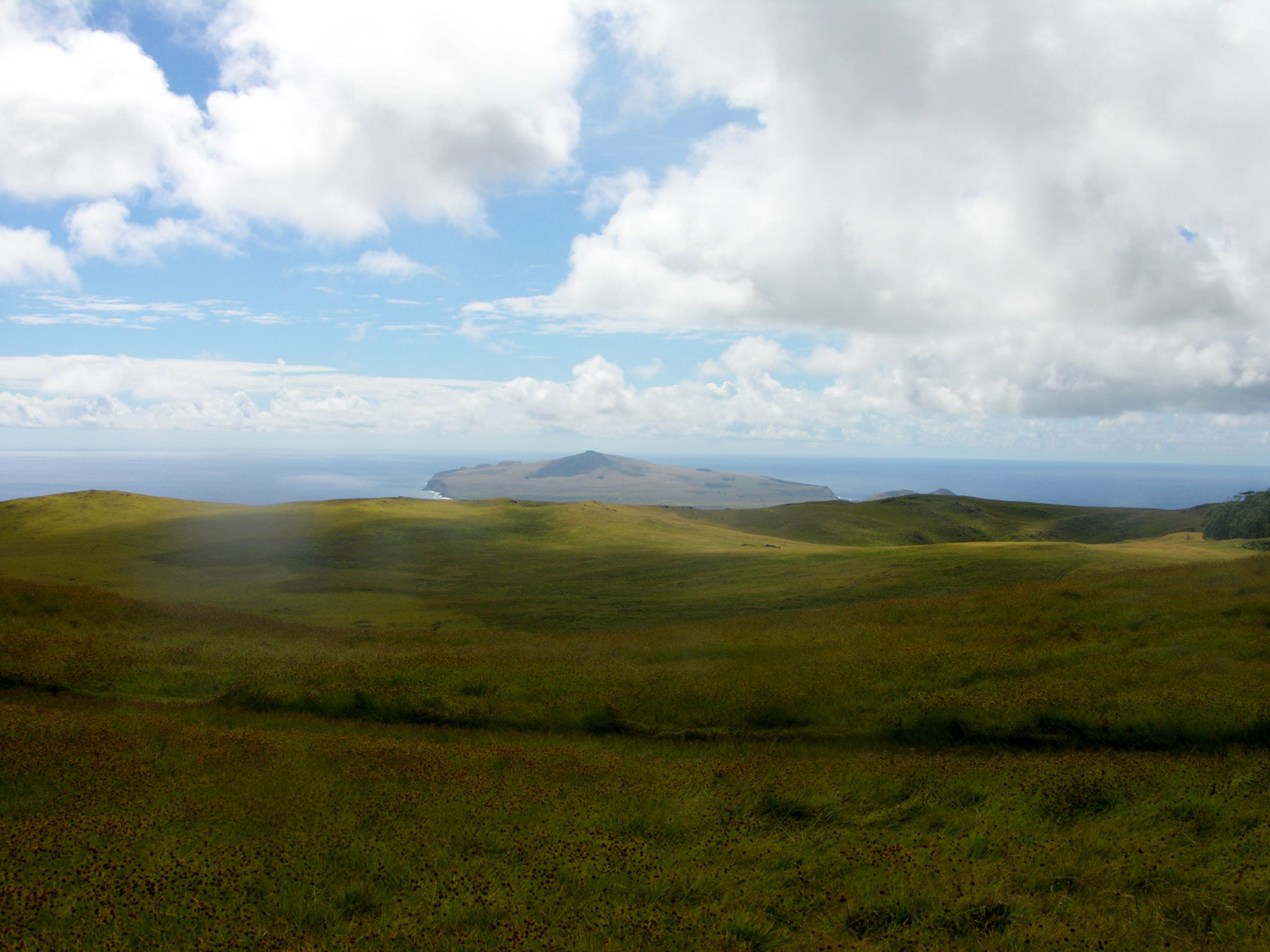
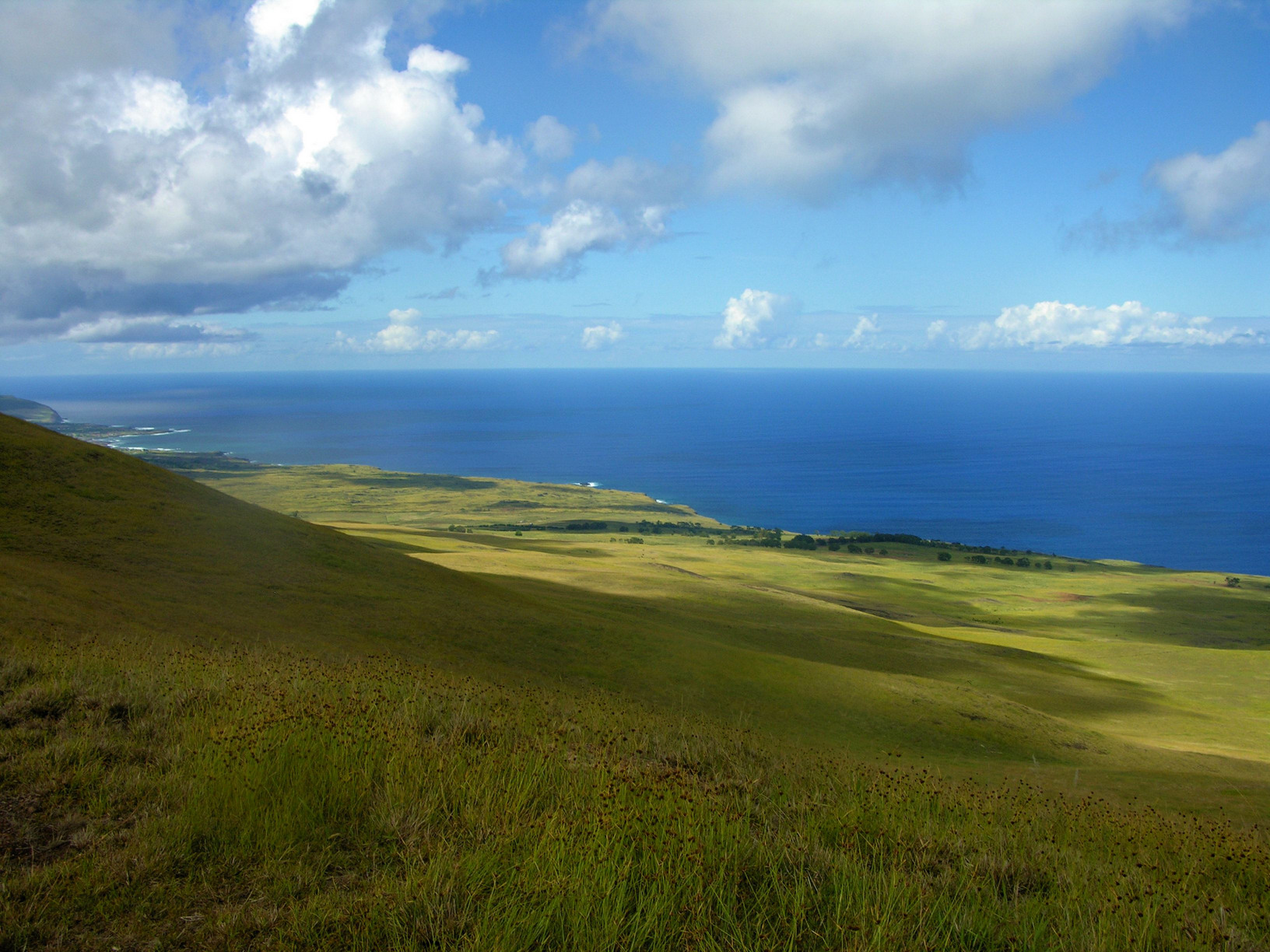
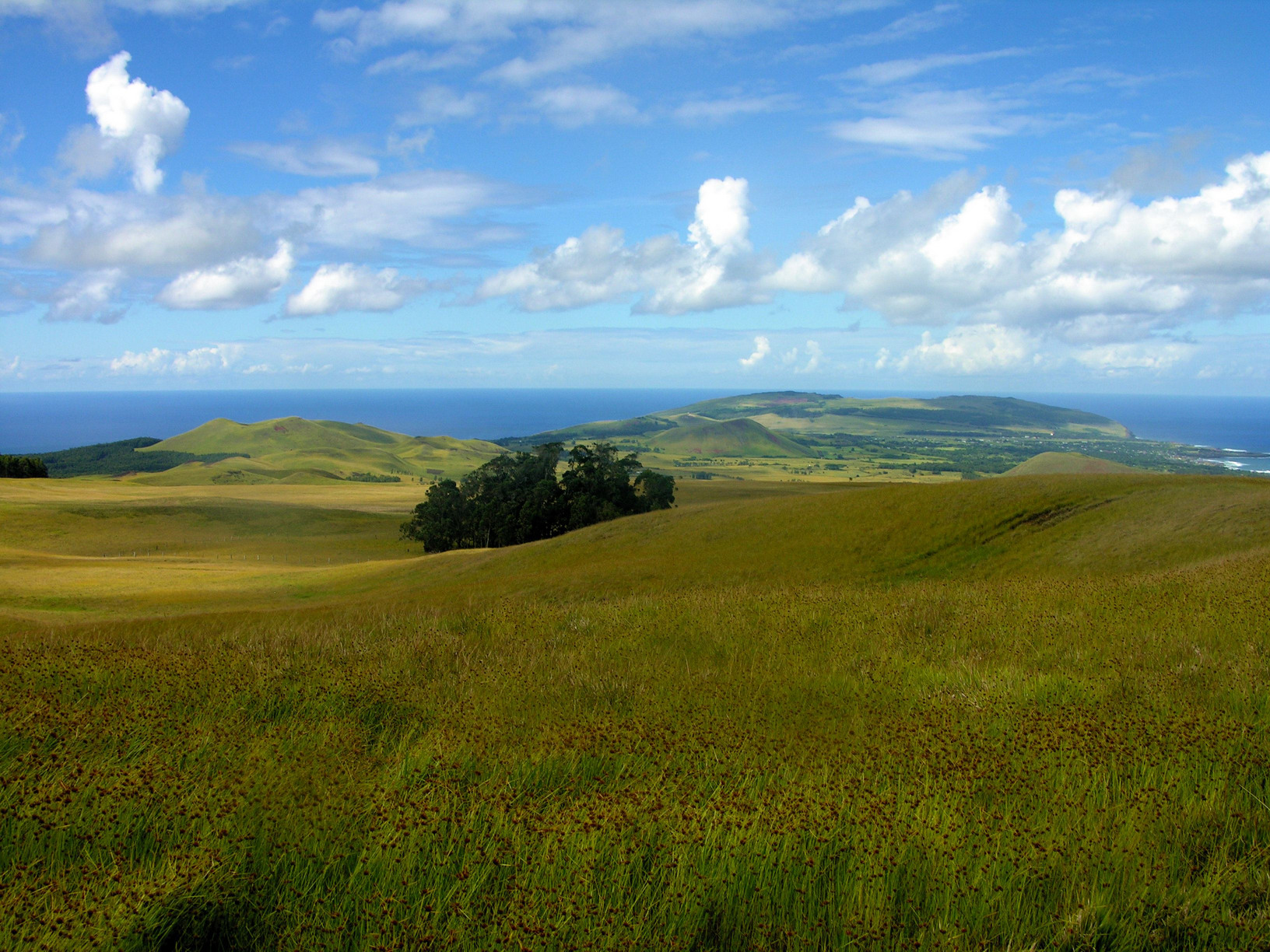
The ride to the top took three hours. The horses were a bit dim but docile. They went at a walk. They didn't seem to understand commands all that well. Besides, I can never remember how to say “trot” in Spanish. “Gallop” is a different matter. It's an international word. Only the horse couldn't be bothered to gallop uphill. It was hot enough already. Tropical horses never cease to surprise me. On the climb the horse gets so hot you can't keep a hand on it, and yet it's alive and keeps going. Back home they'd long ago have said it was overheating, that I'd ridden it into the ground and that they weren't letting me torment the poor animal any more.
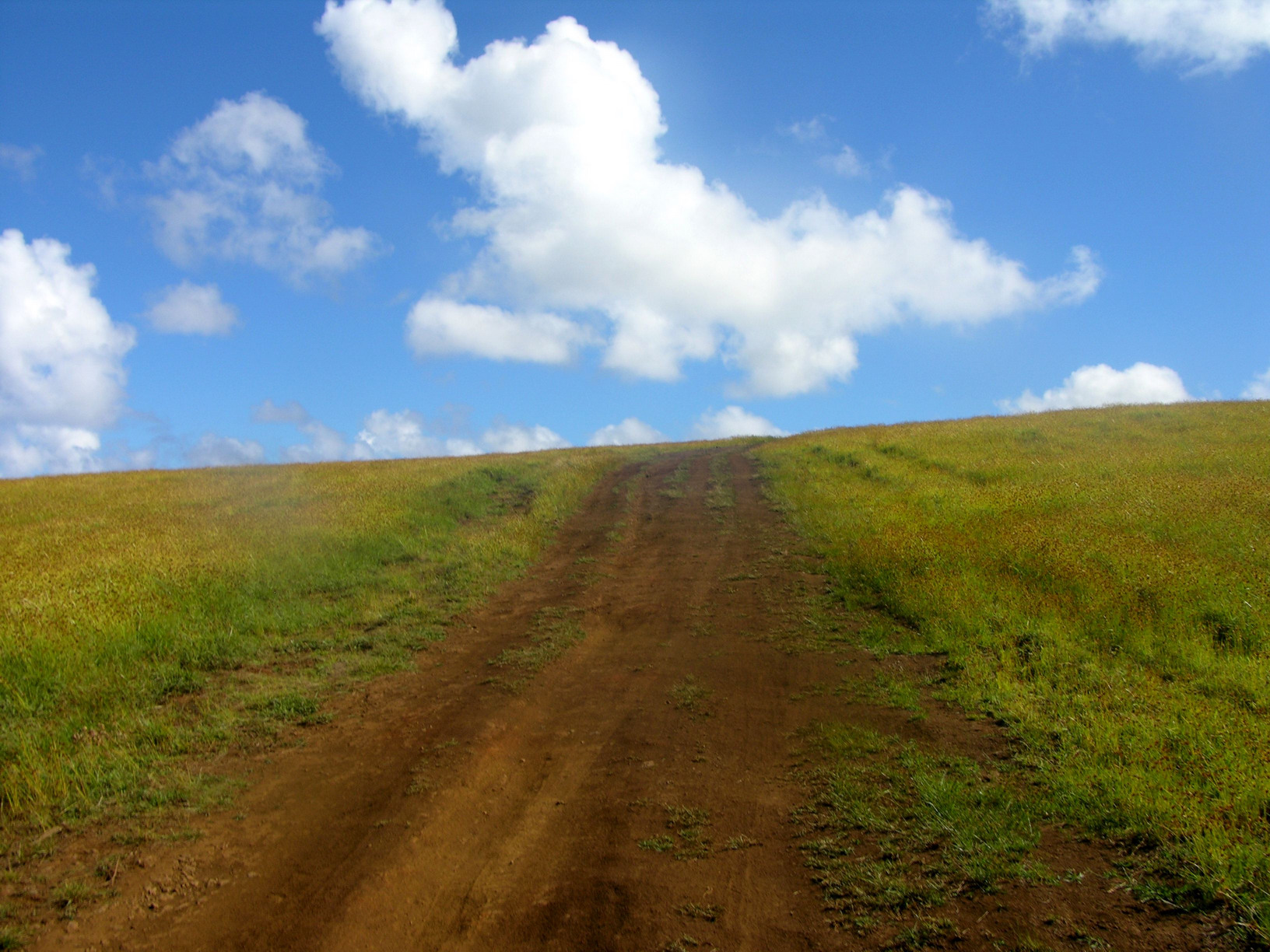
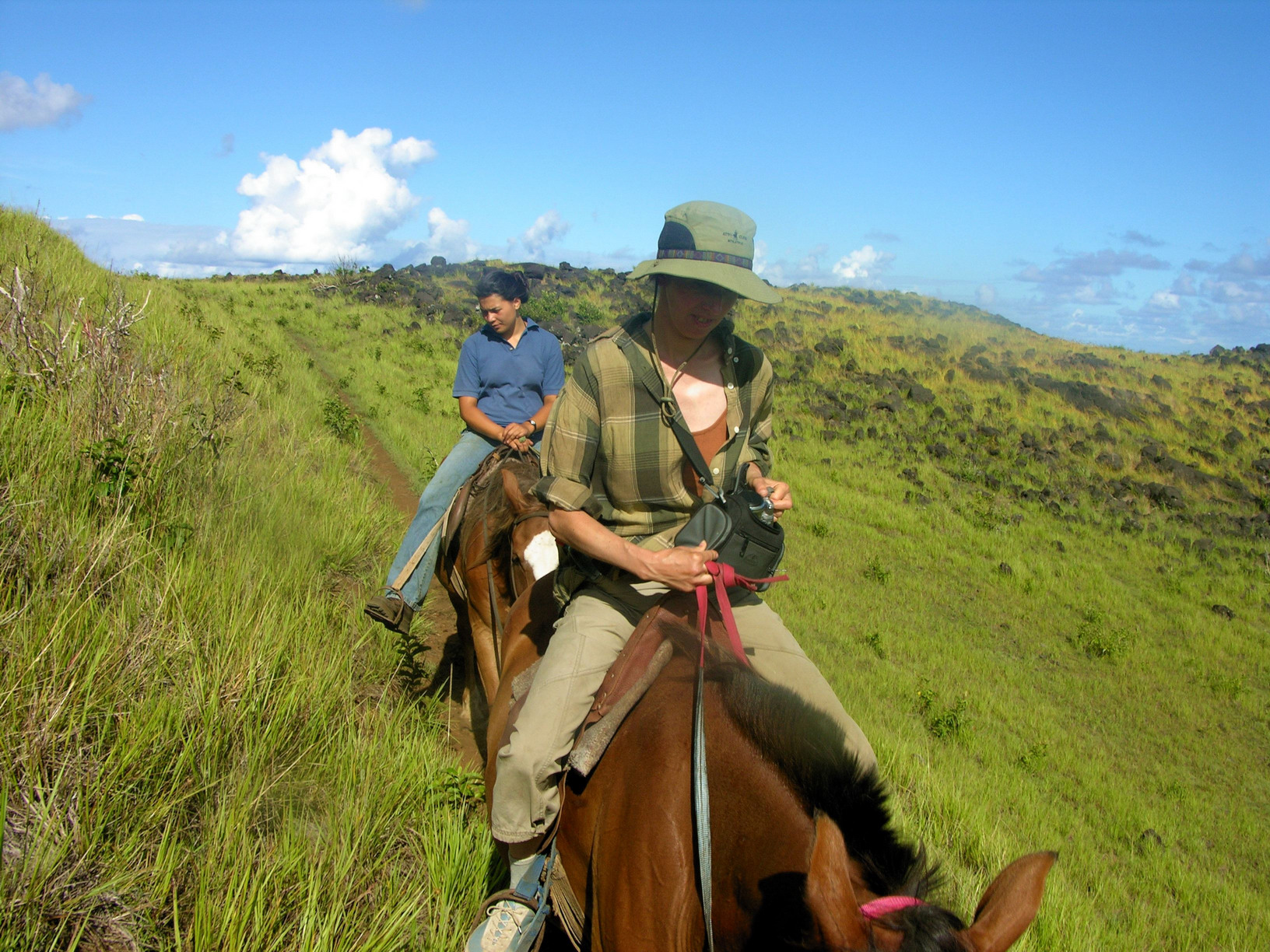
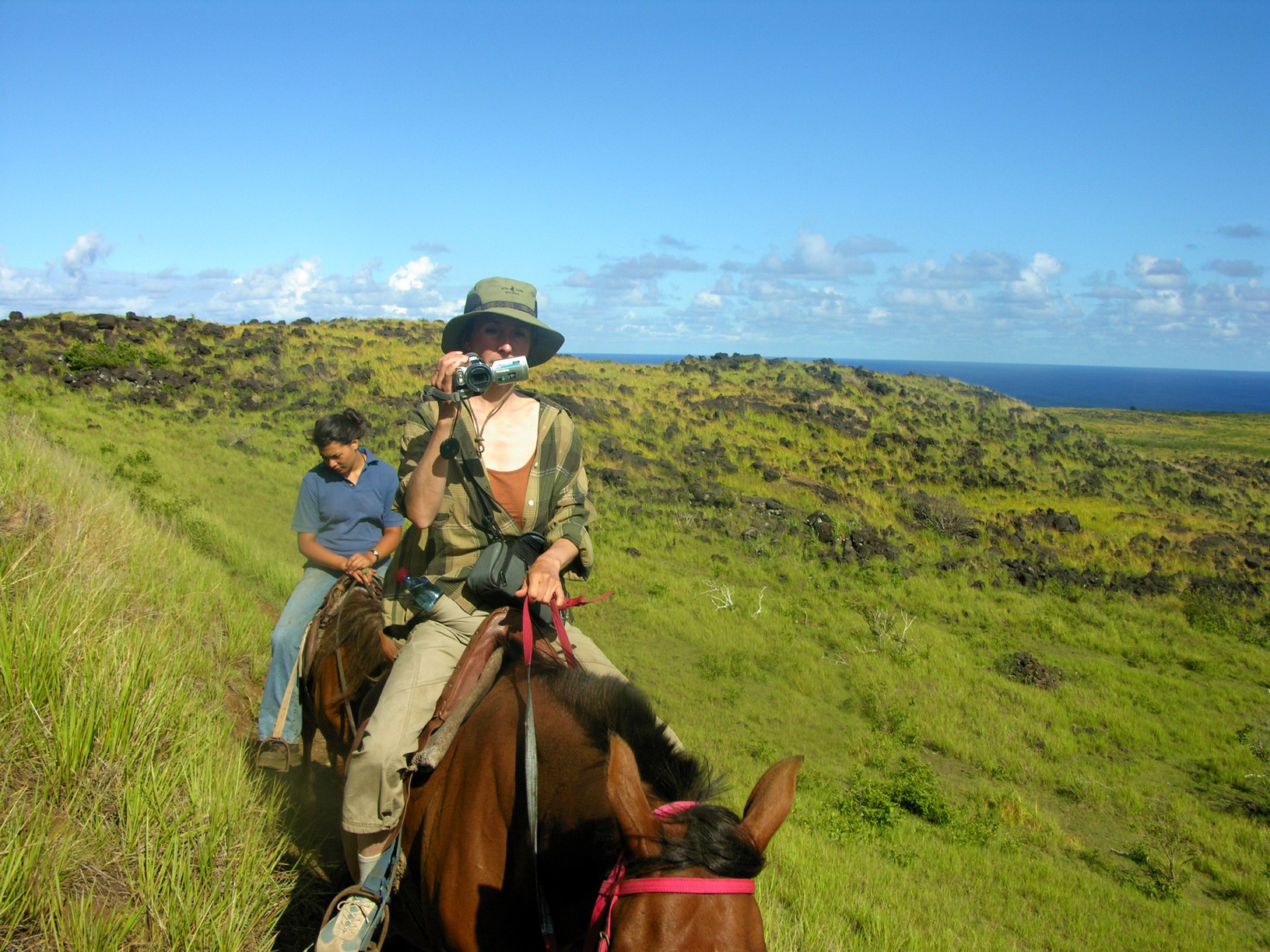
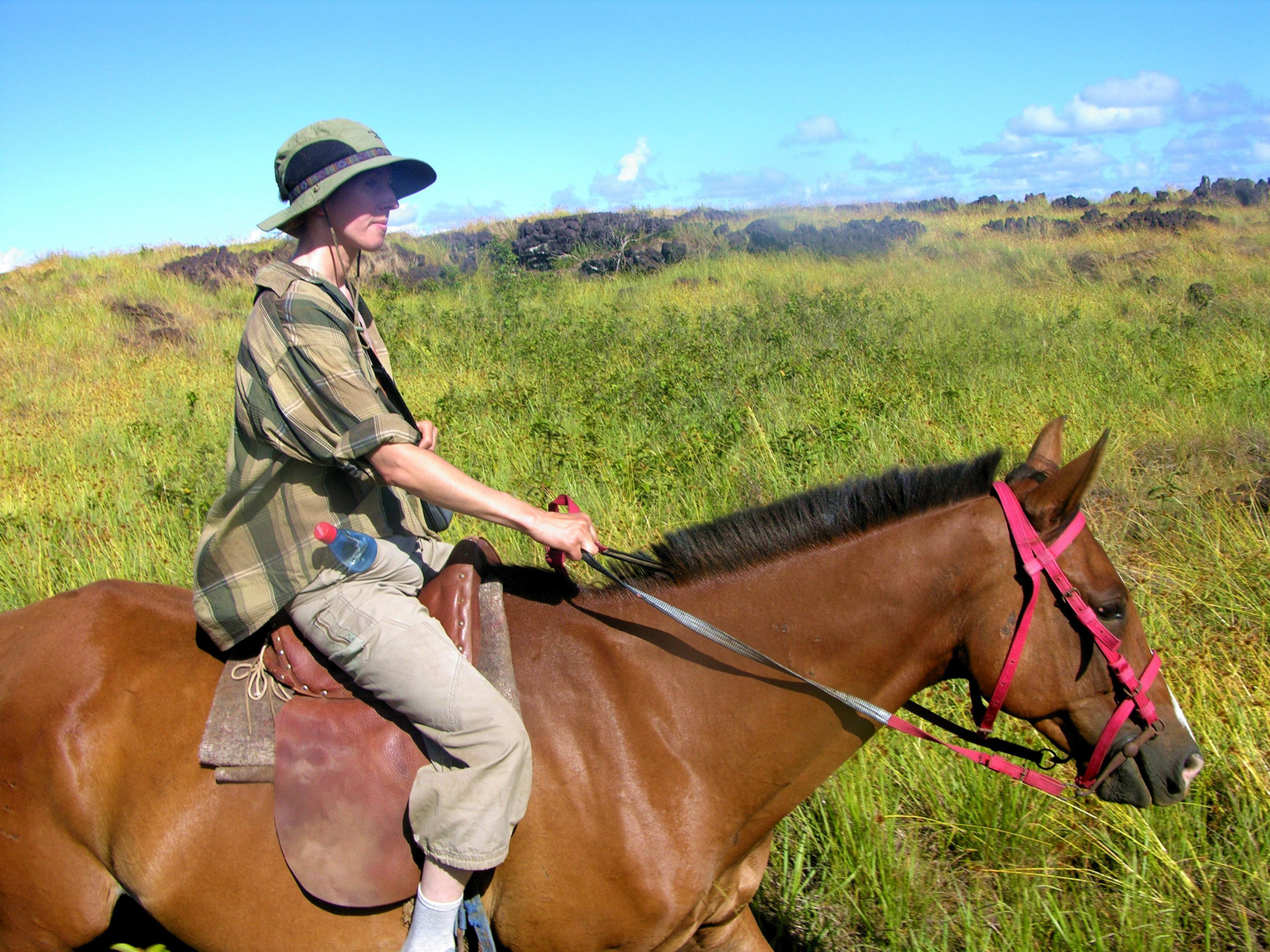
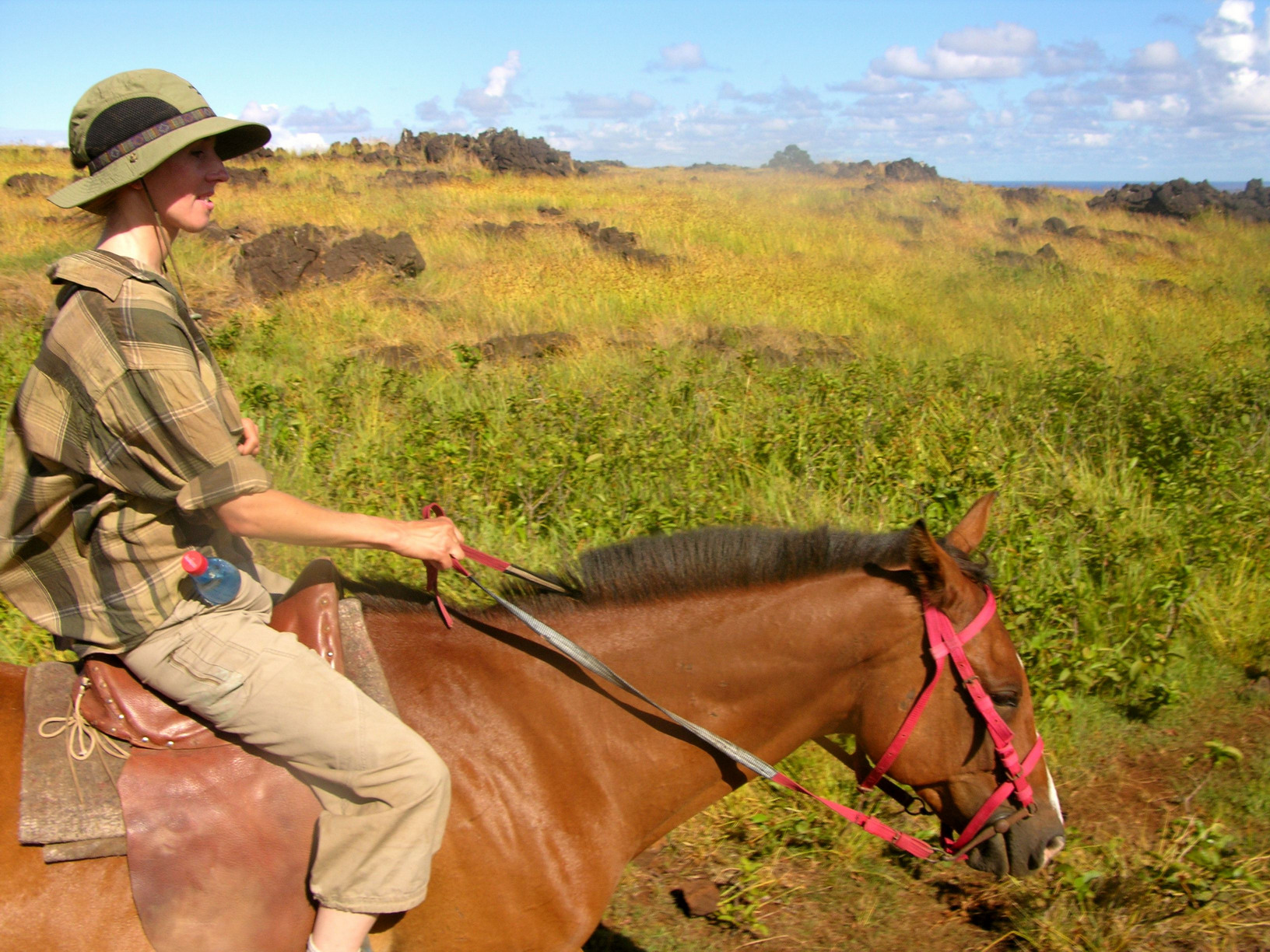
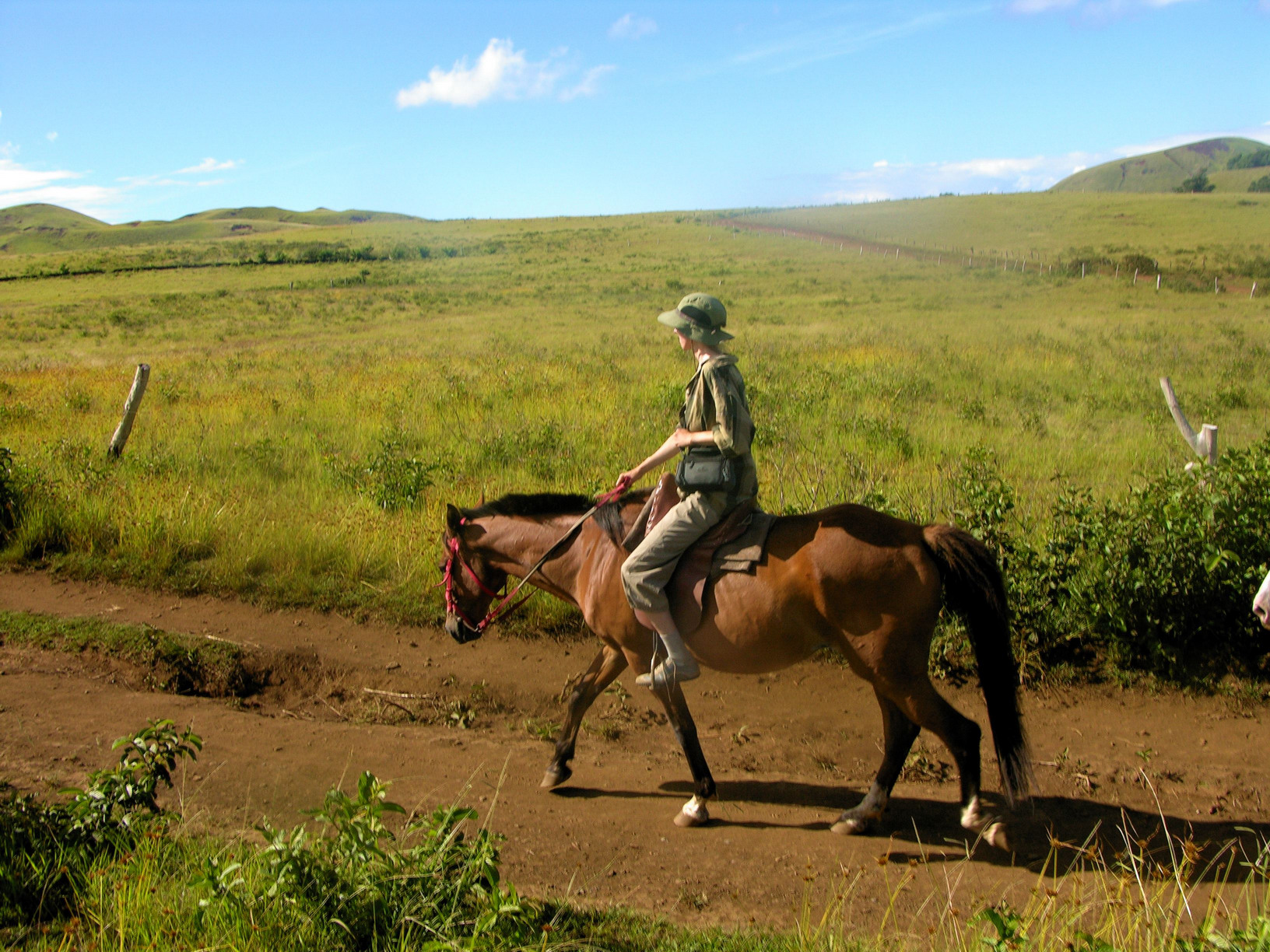
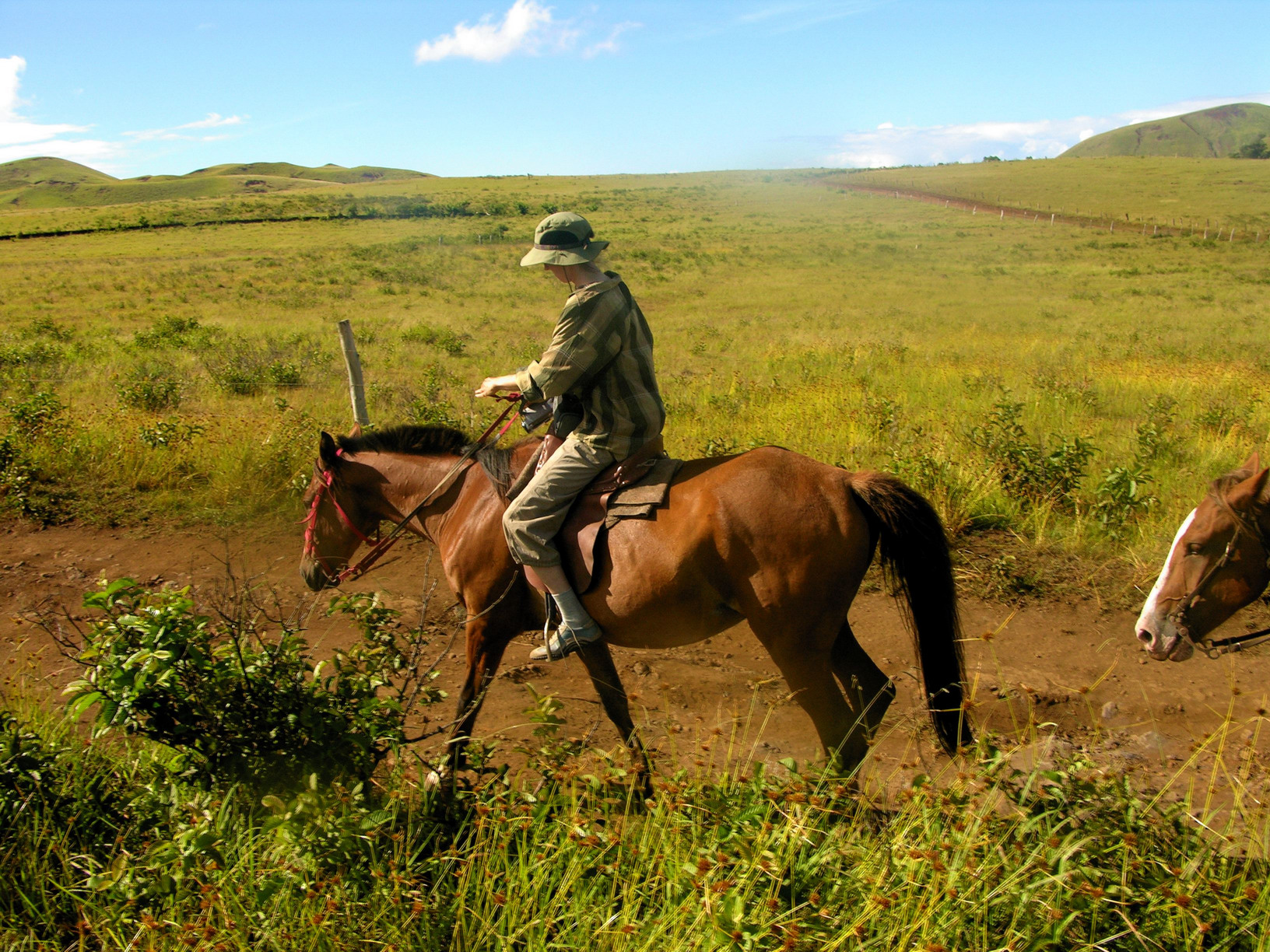
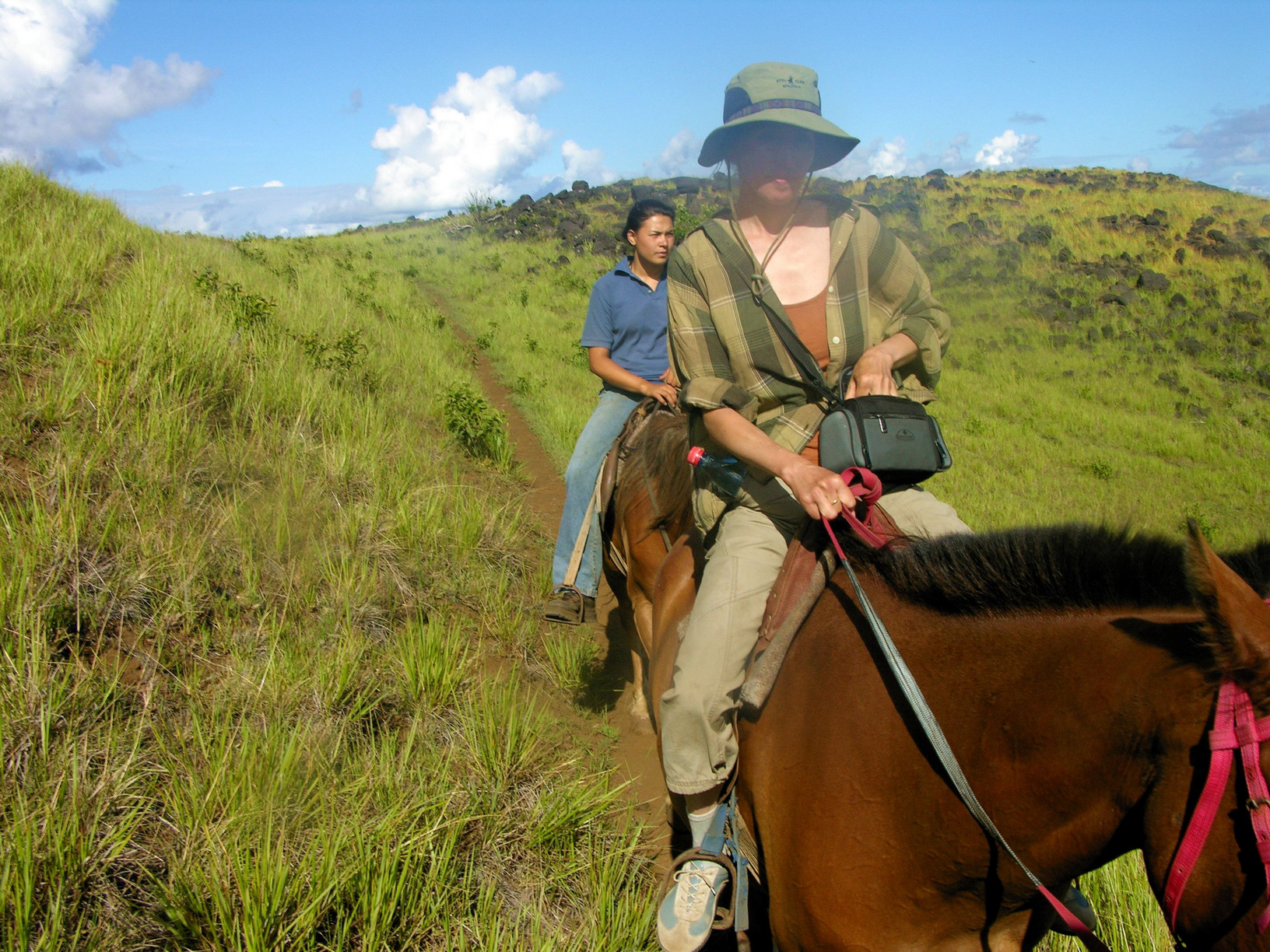
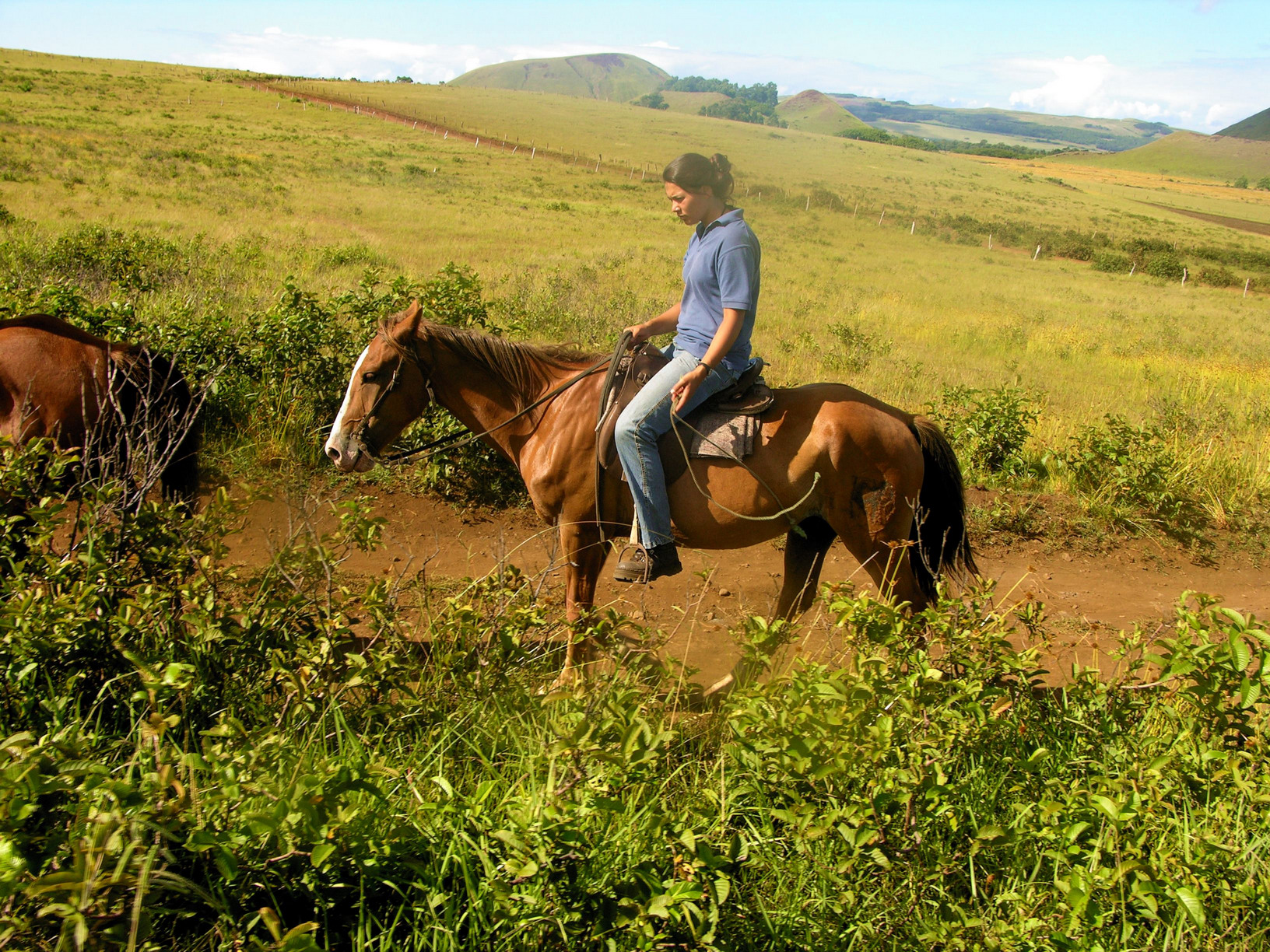
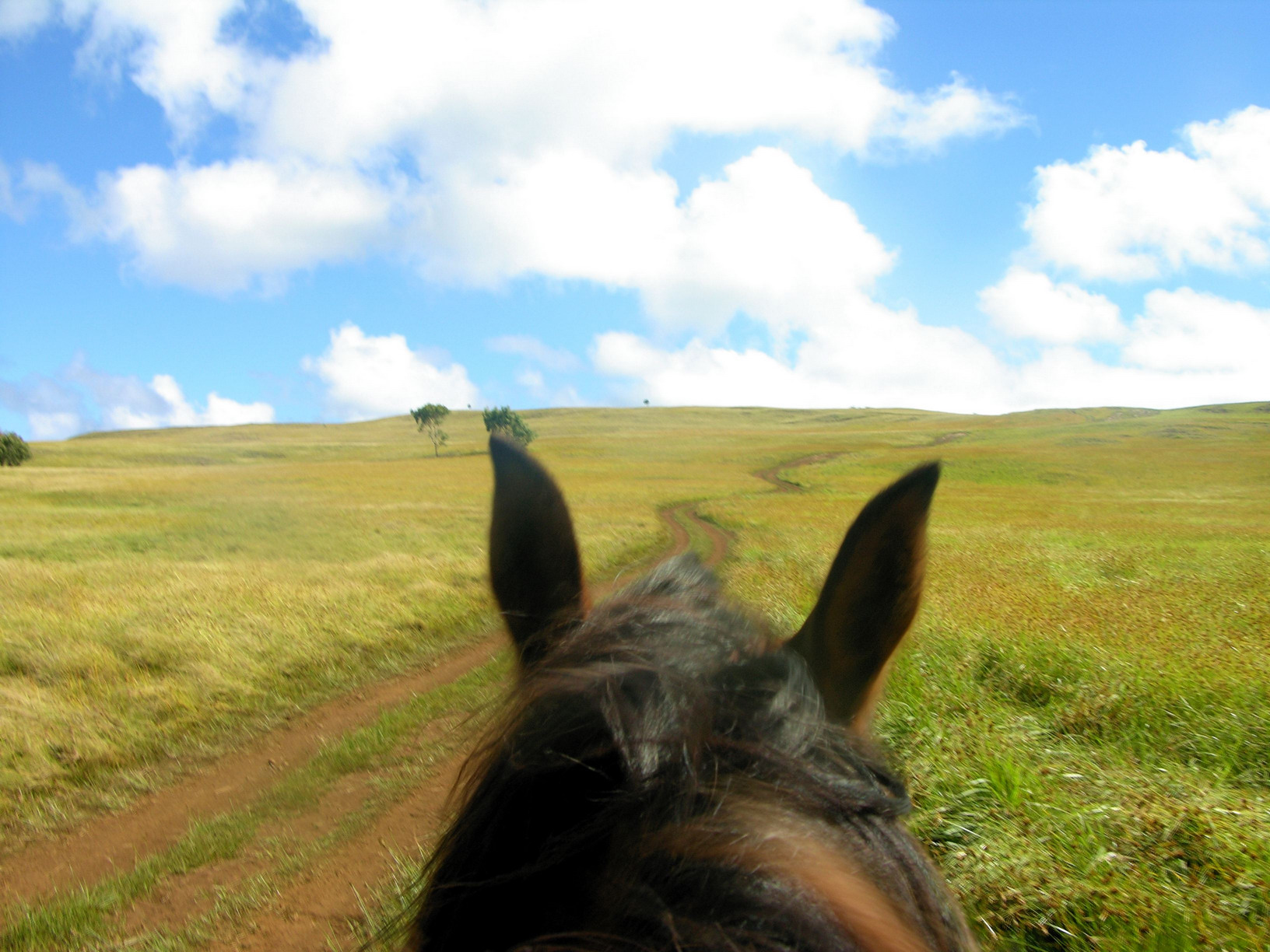
At the summit (27°05.174′S, 109°22.829′W, the reading in the diary was 80 m), there's a stop scheduled for half an hour. You can go for a walk on foot.
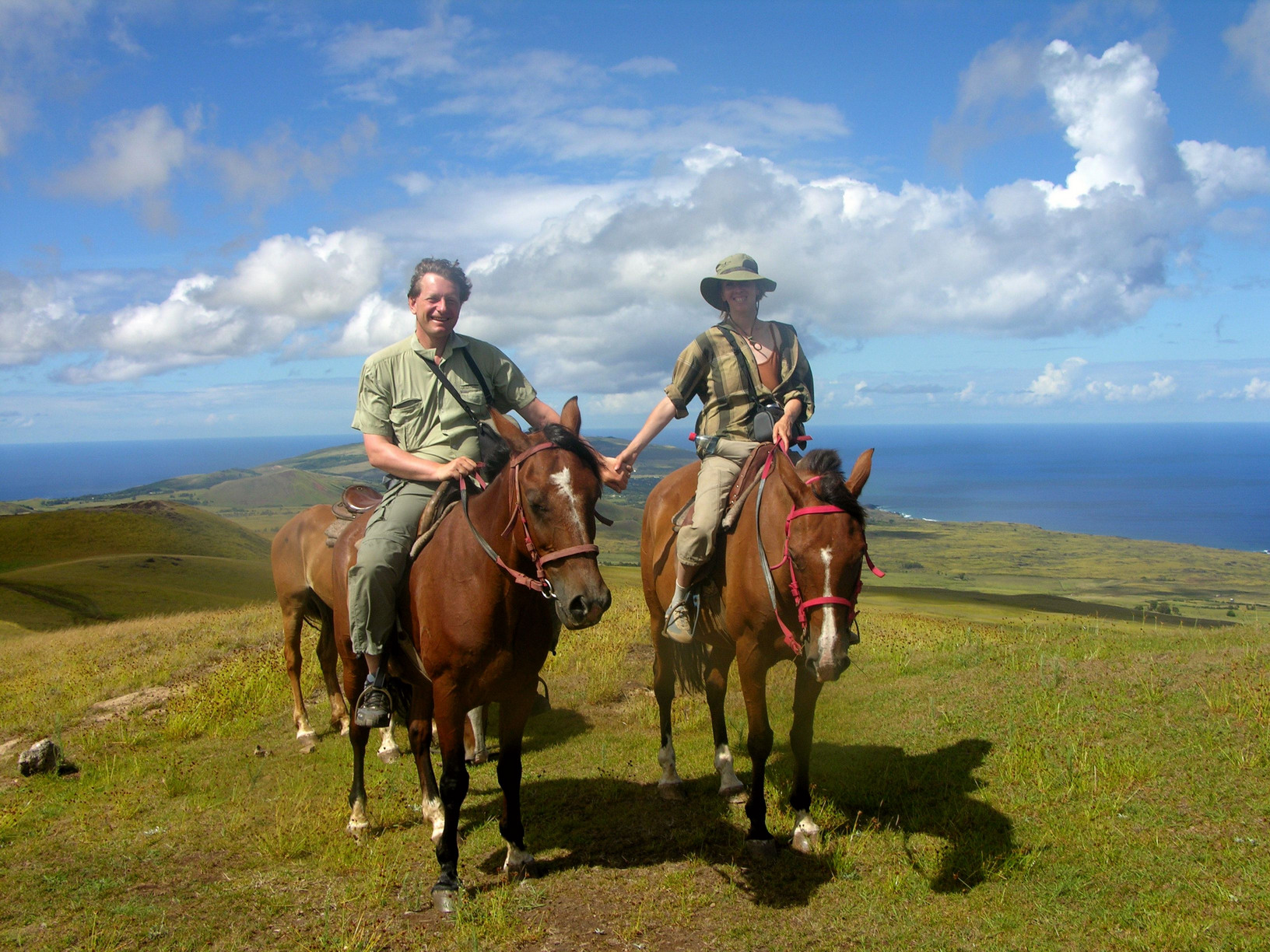
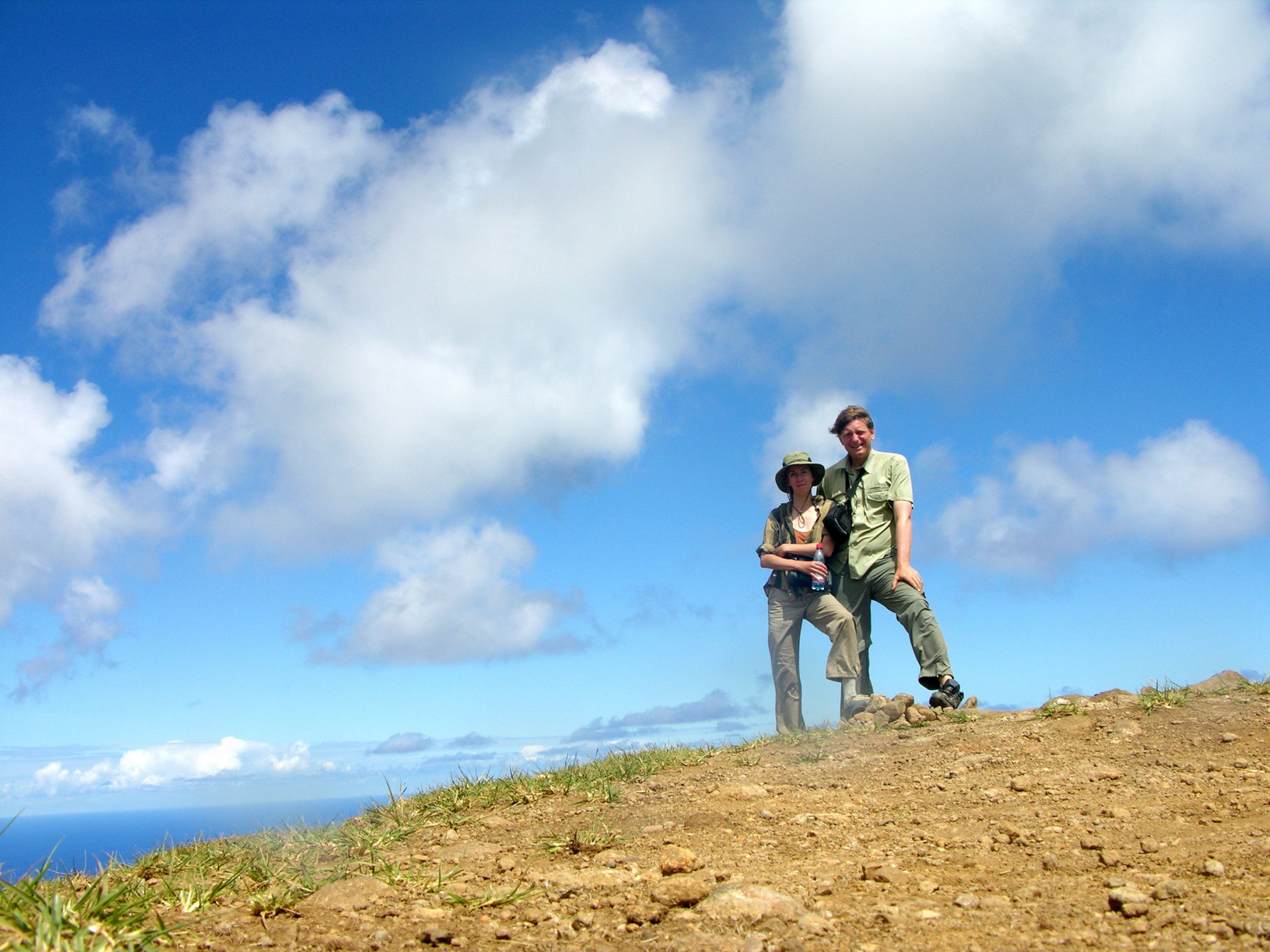
Then it was three more hours back. The horses didn't seem to care whether they were going uphill or down.
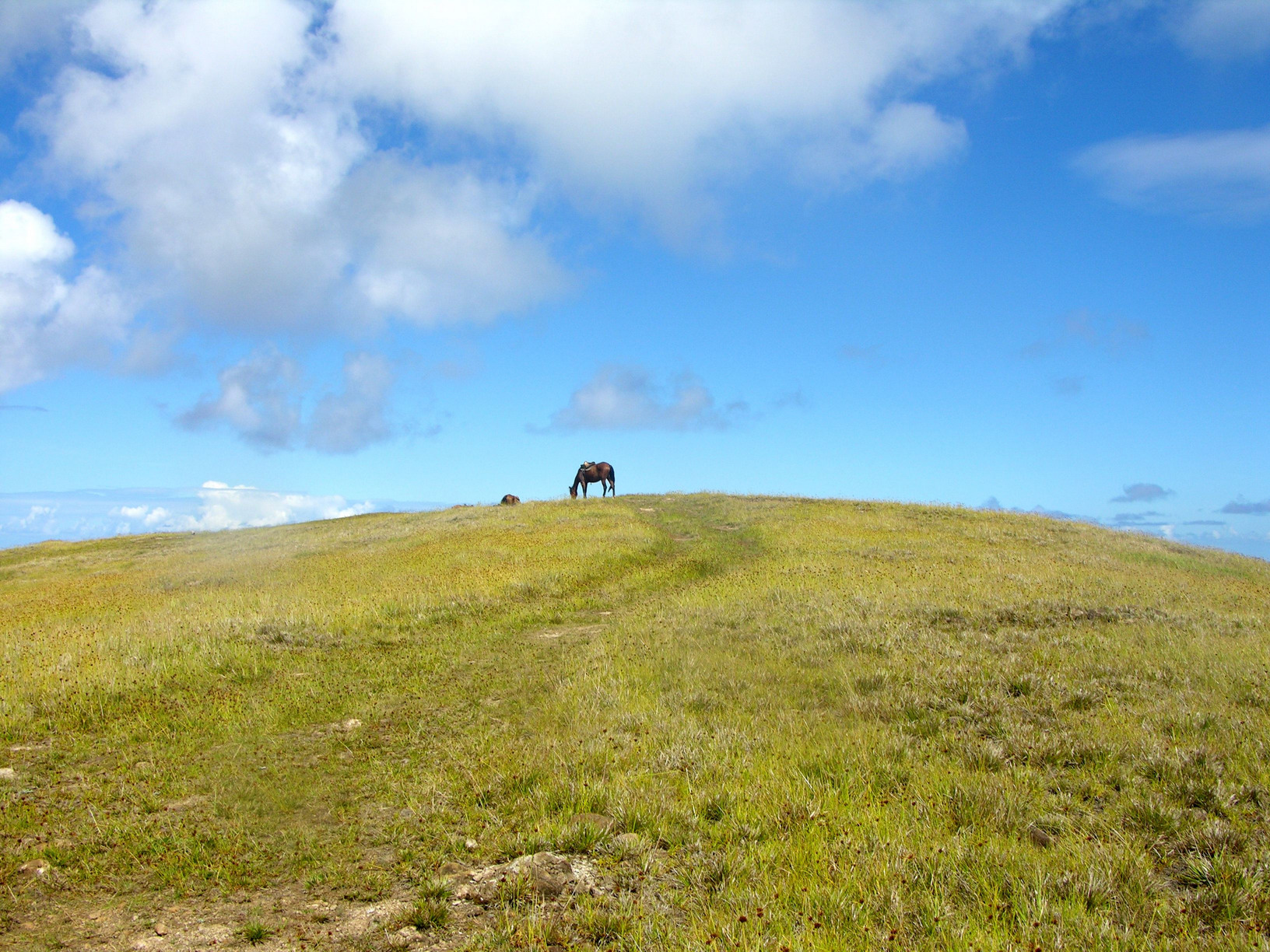
A horse really is a wonderful thing. We ought to hire them more often.
In the evening there was still plenty of time for a stroll around town and for buying souvenirs. Of course, from Easter Island you have to bring home a stone man. I wanted a big one, but it was Saturday and half the shops were shut. So was the bank, and for some reason the cash machine wouldn't take Visa cards. I used to think that was impossible, but for some reason they like Mastercard in Chile, and some machines take no other cards. The only cash machine on Easter Island was one of those. We had to look for a stone man we could pay for by credit card. We found a ten-kilo one. How on earth were we going to get it on the plane? And on top of our already monstrous bags. Never mind. If they charge us for it, we'll throw it out.
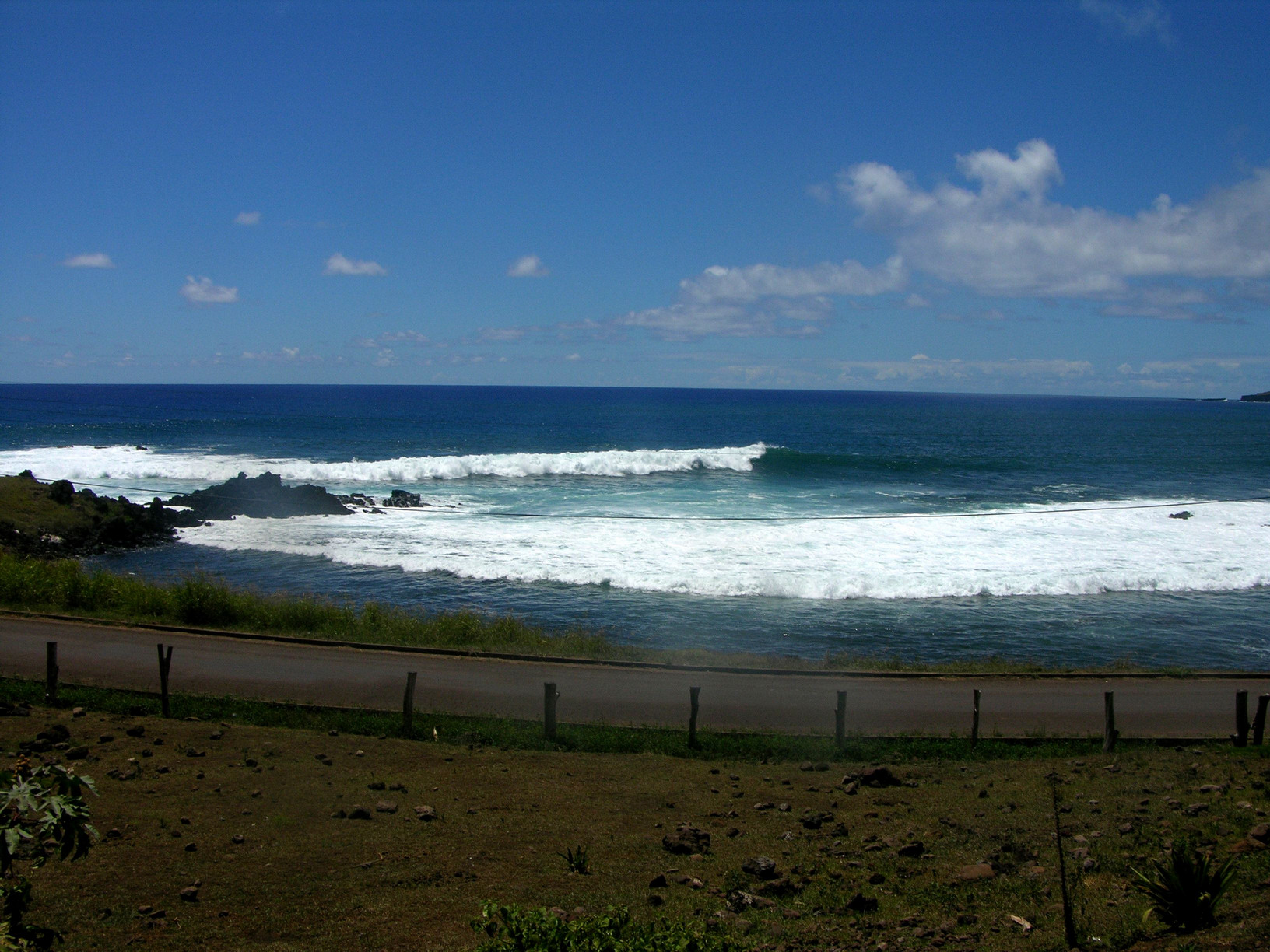
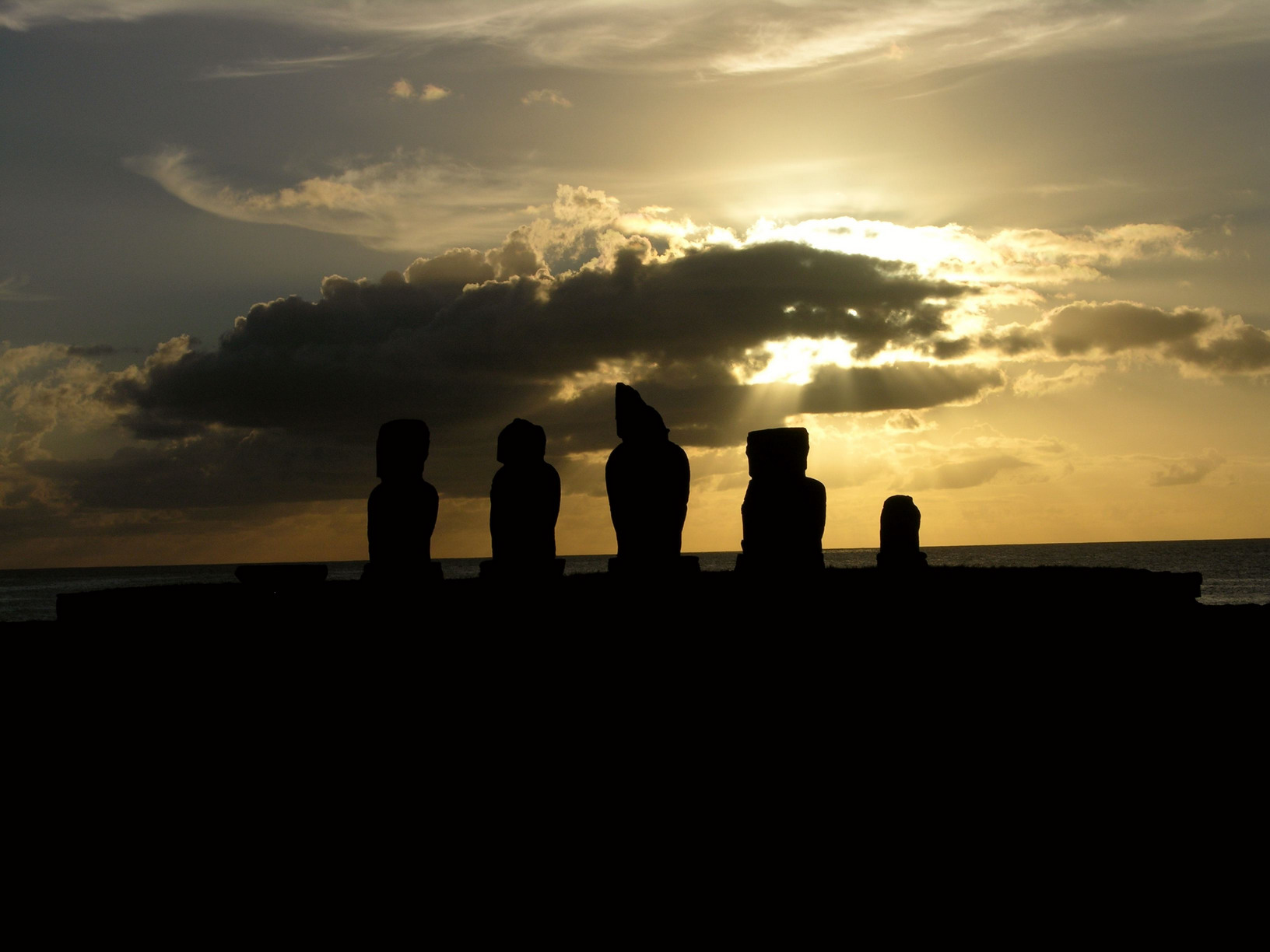
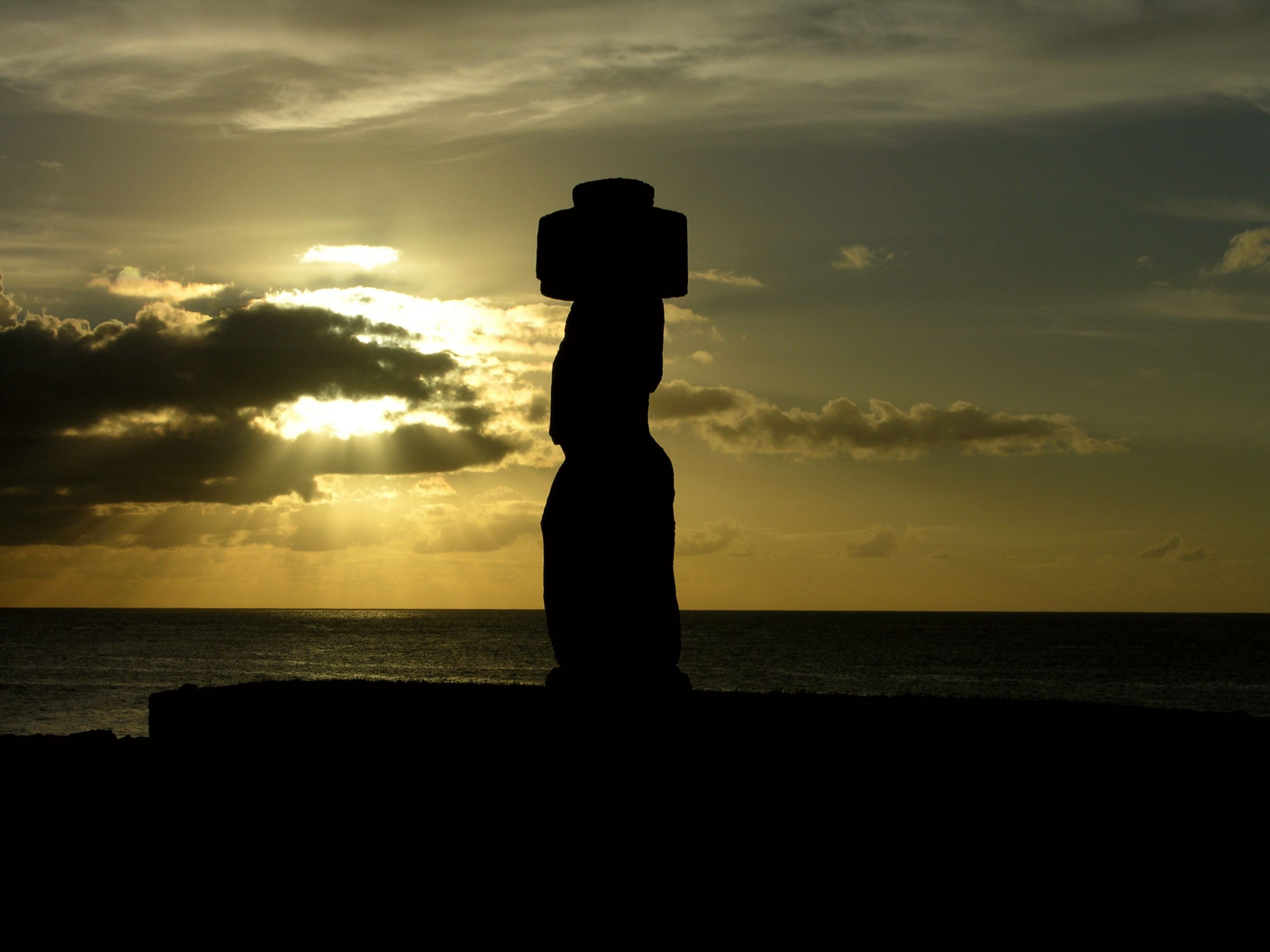
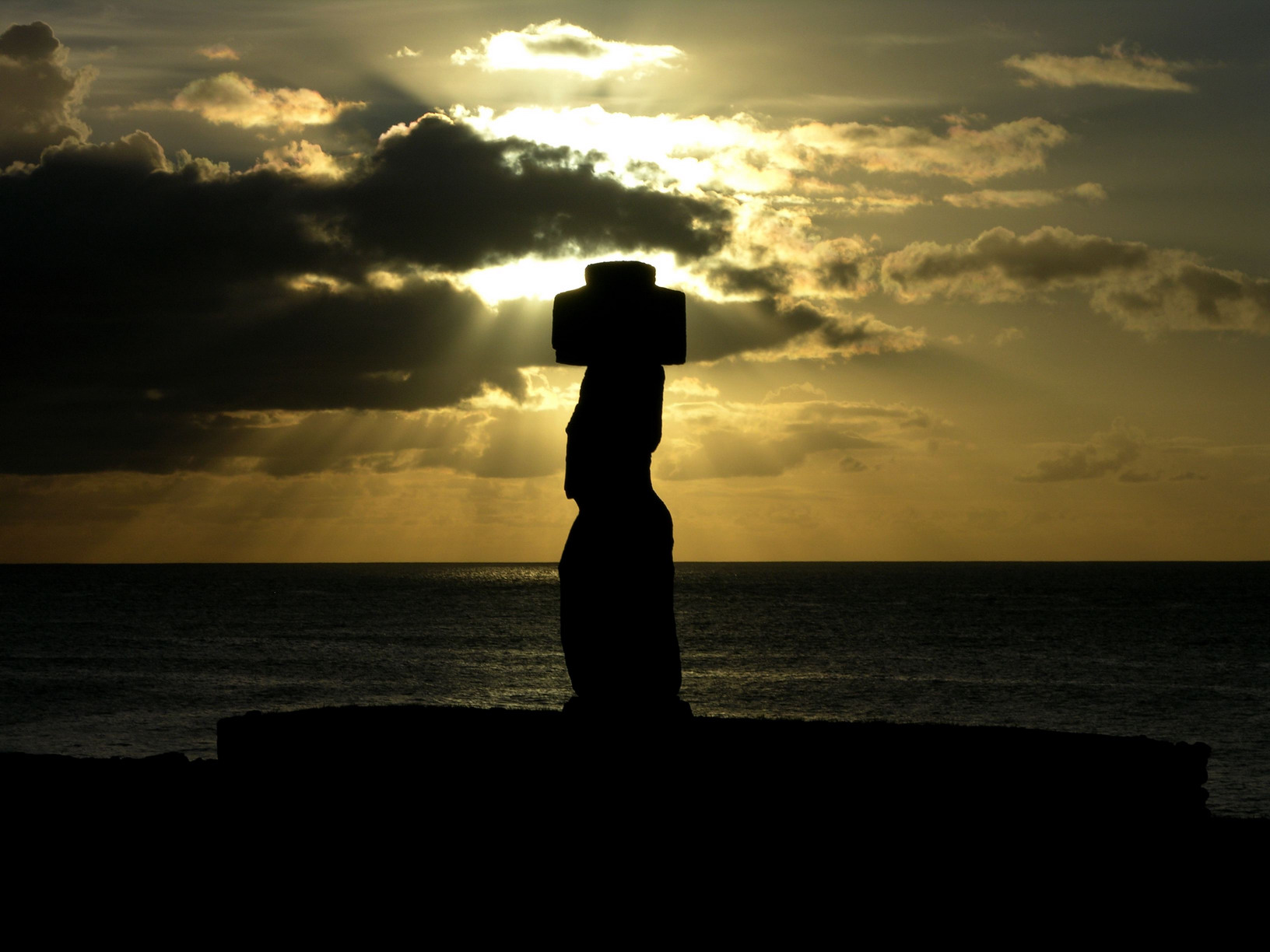
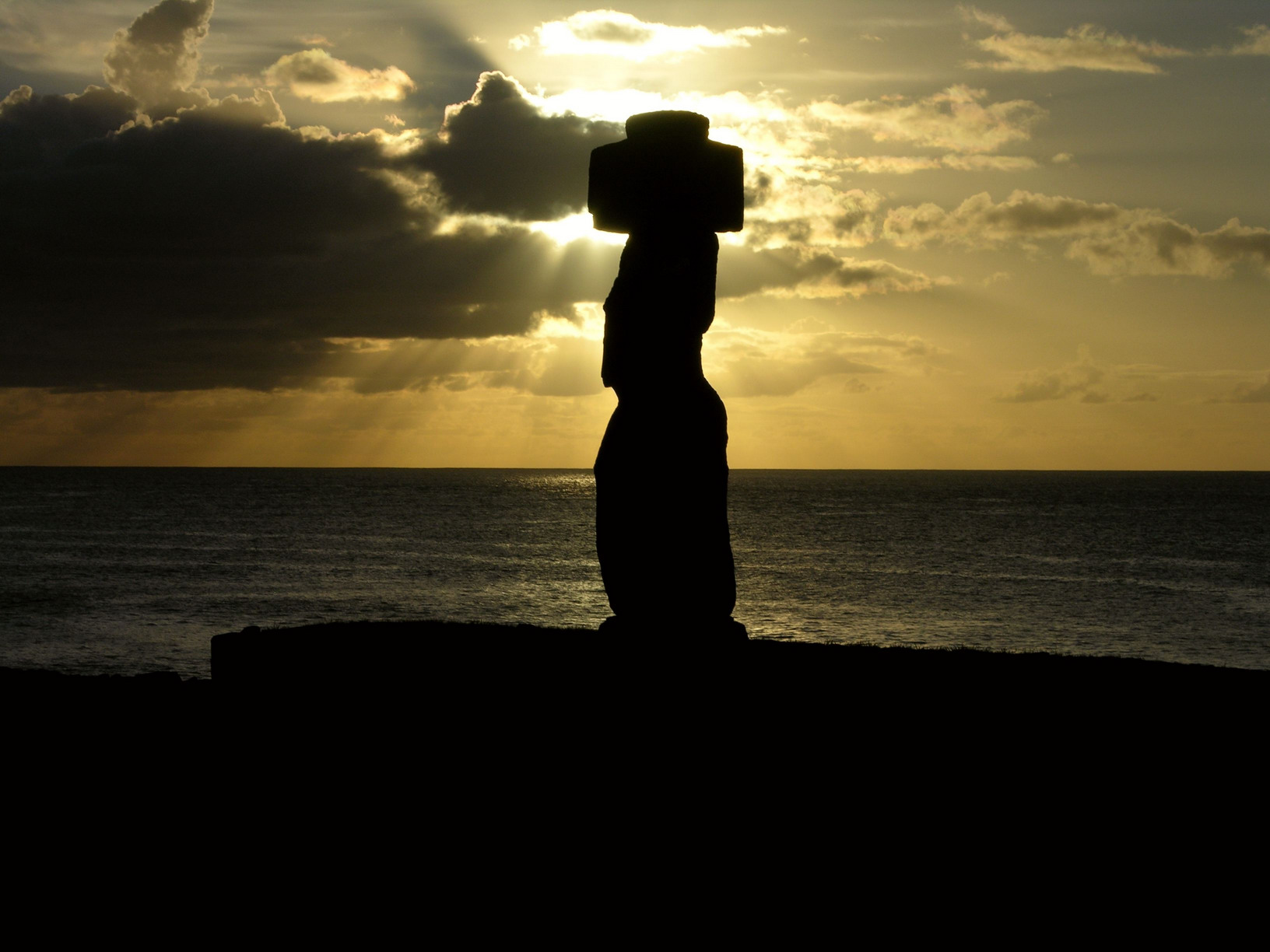
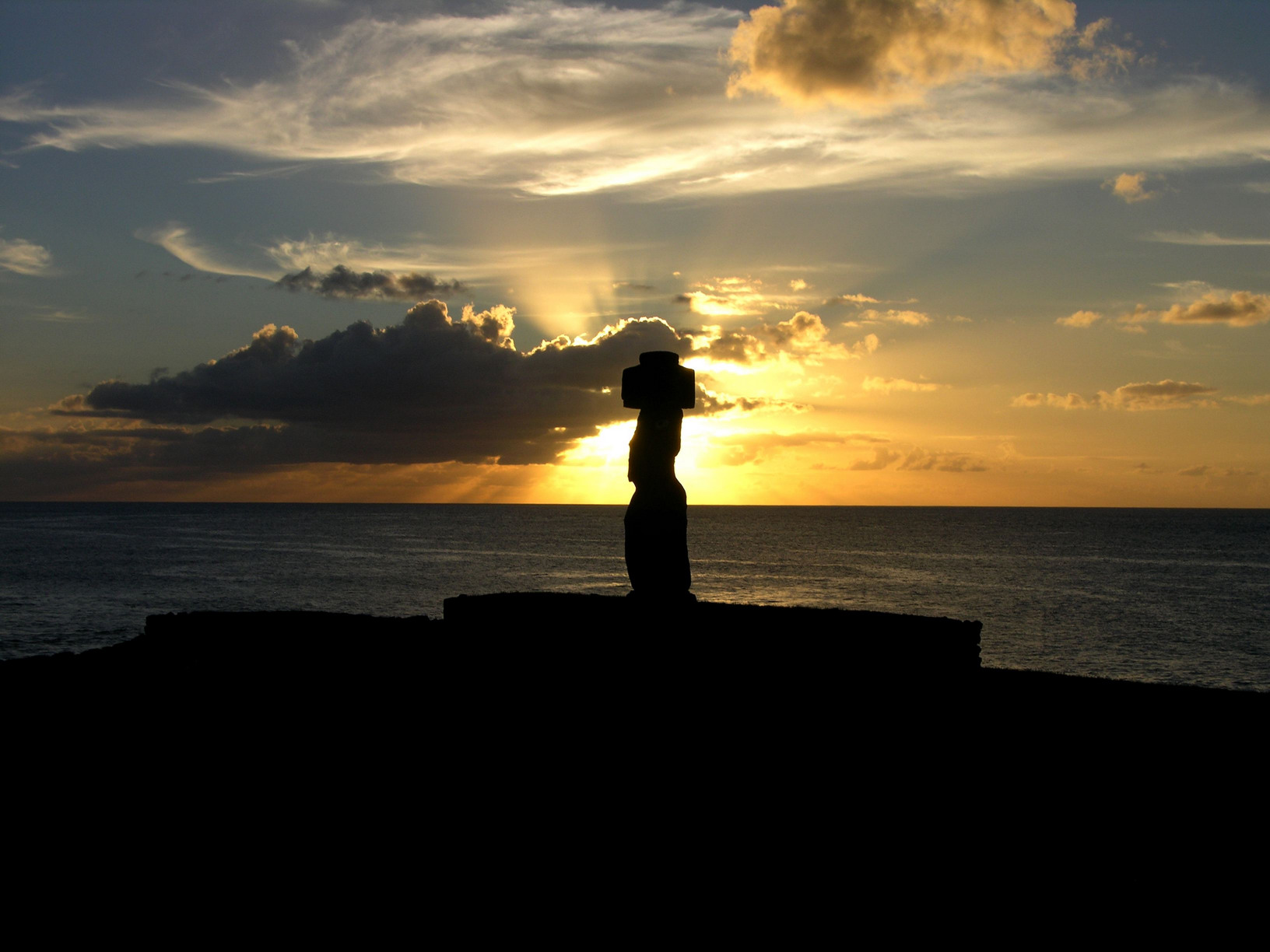
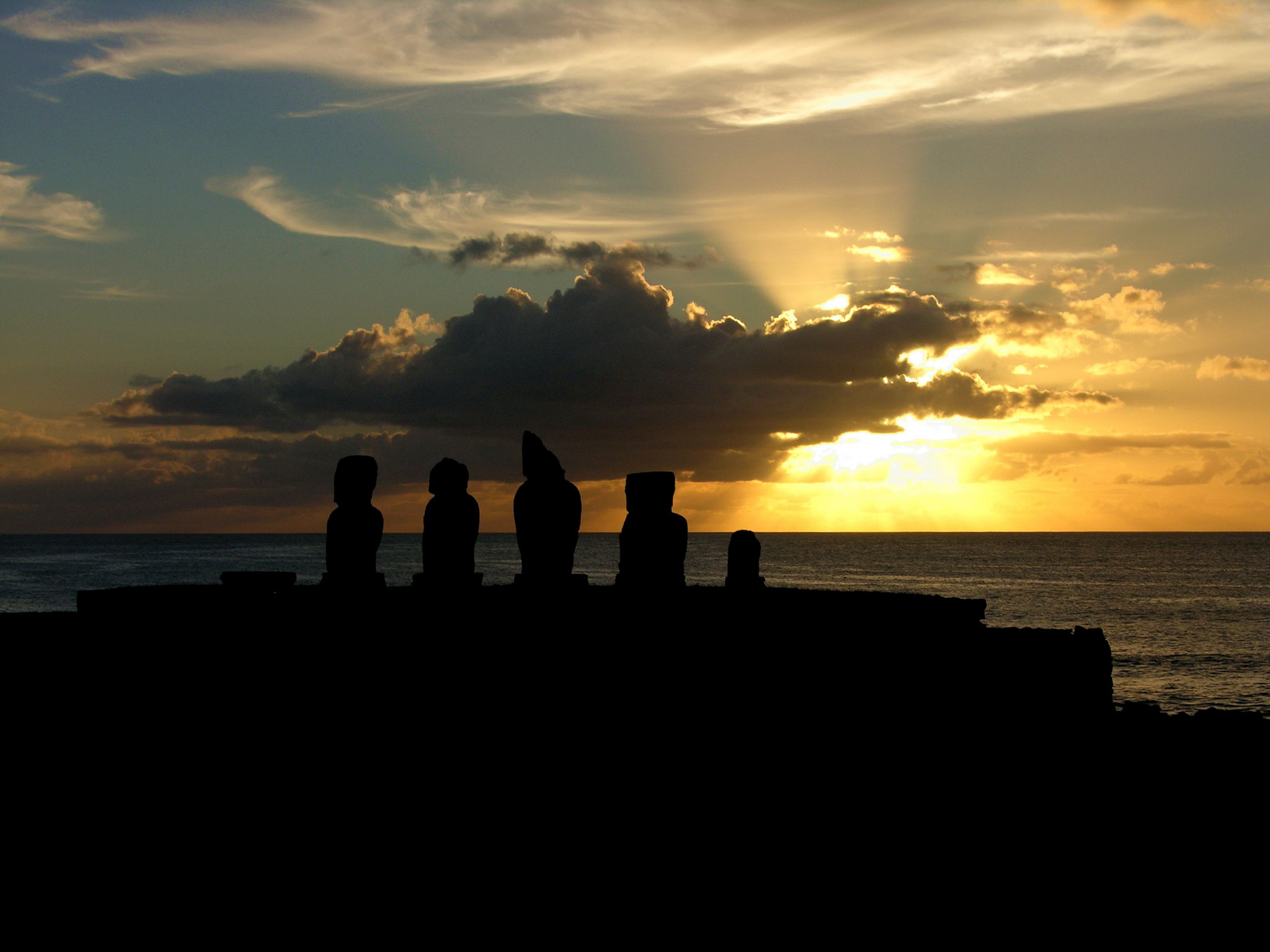
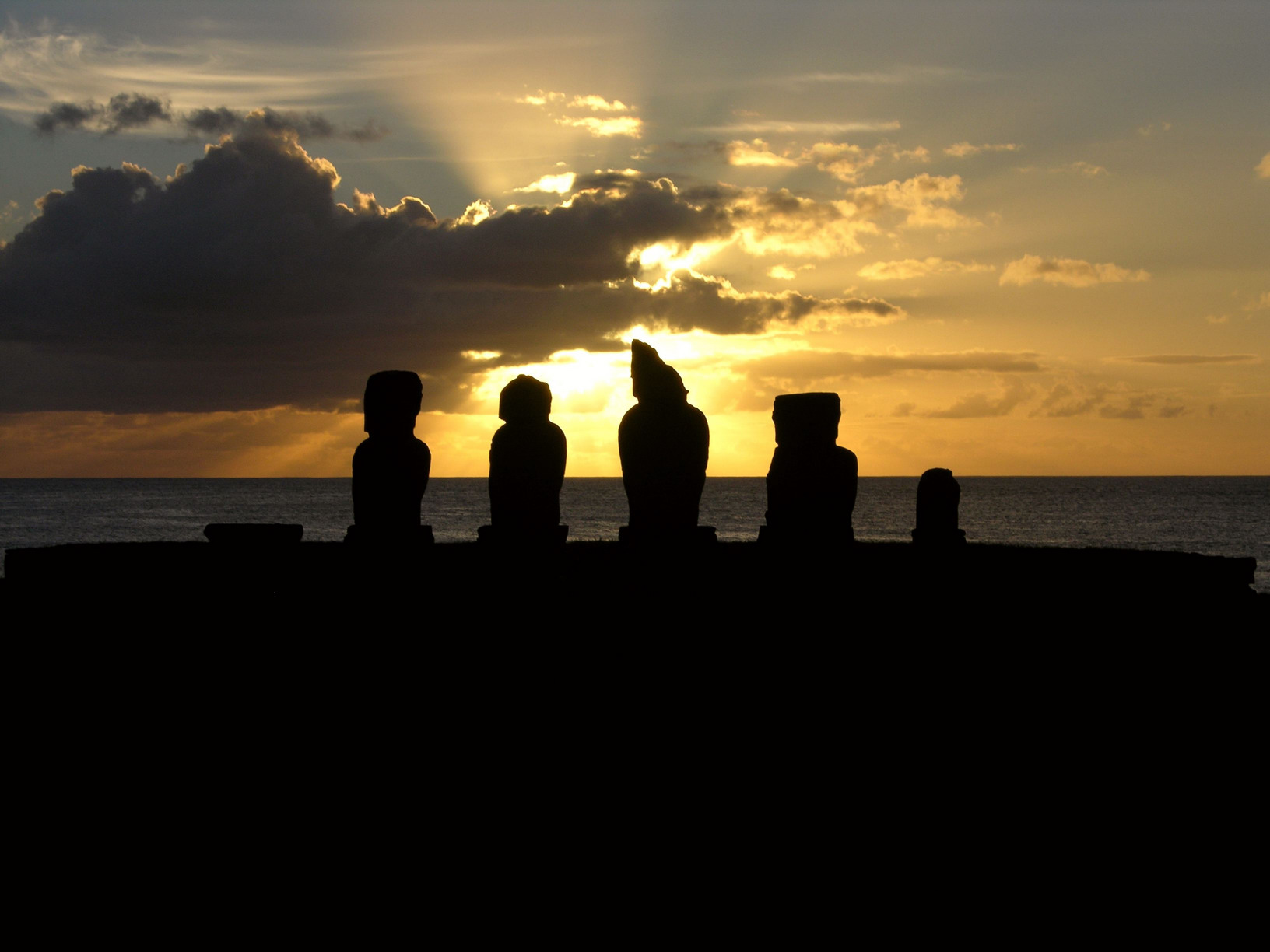
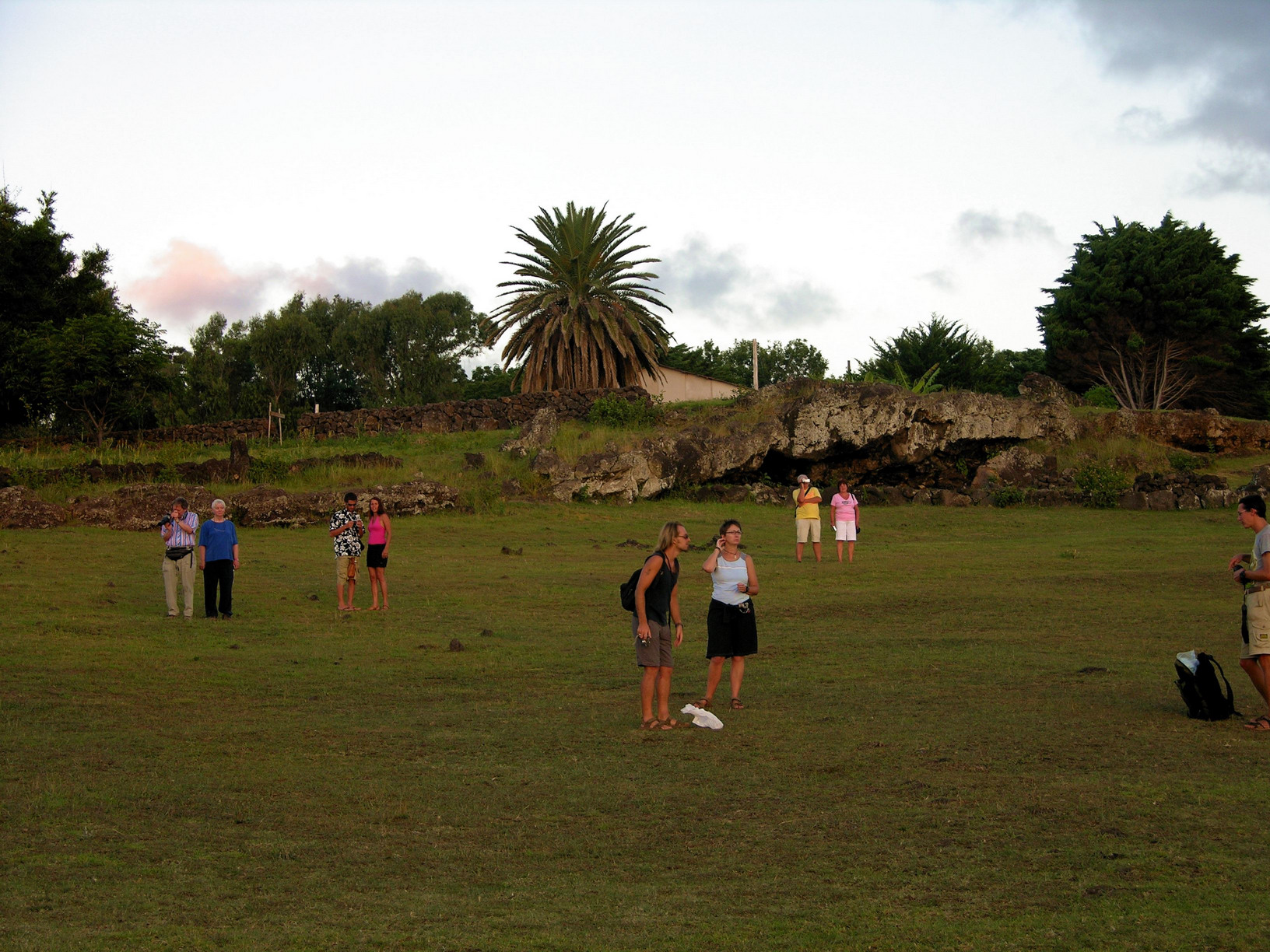
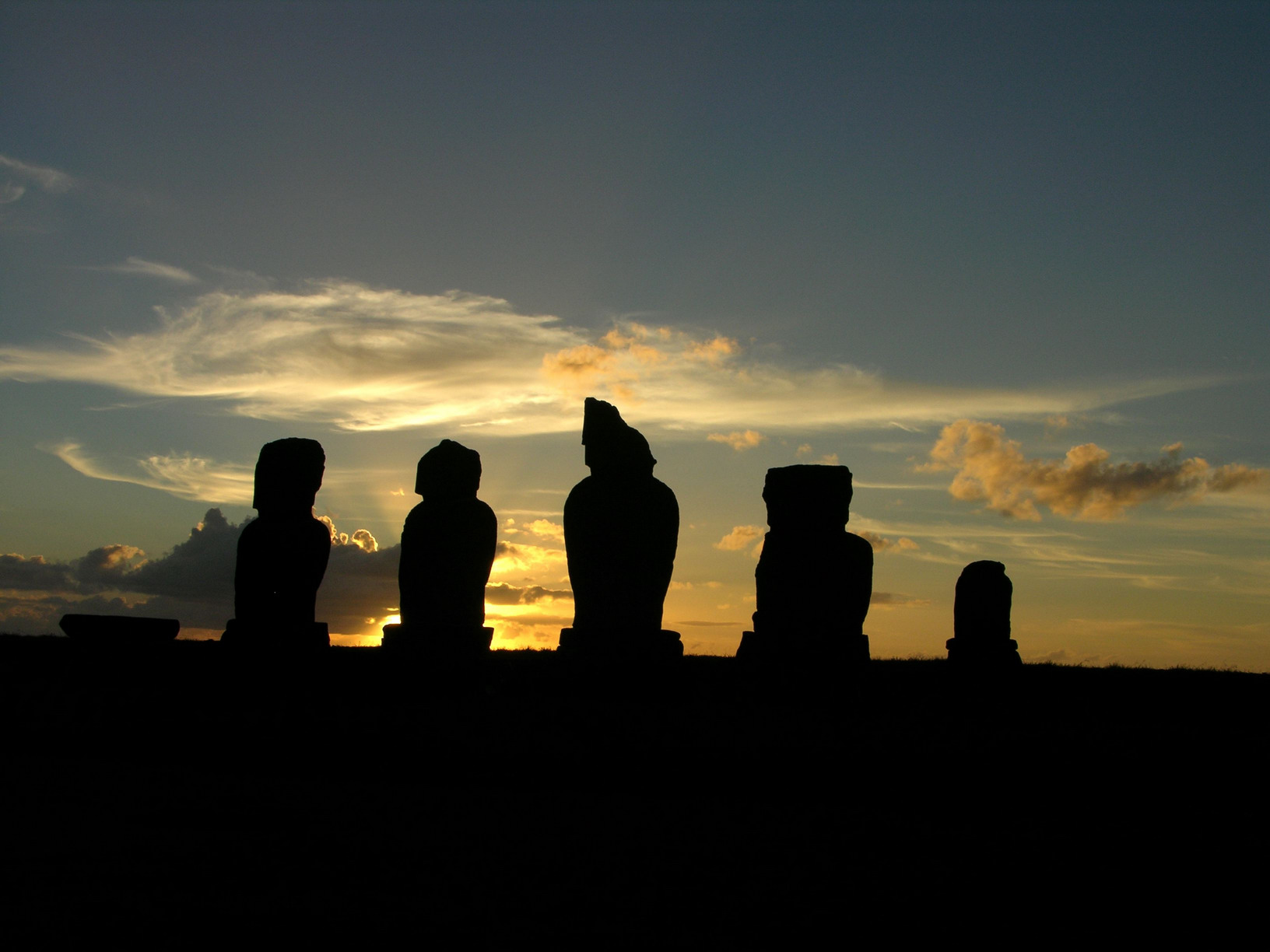
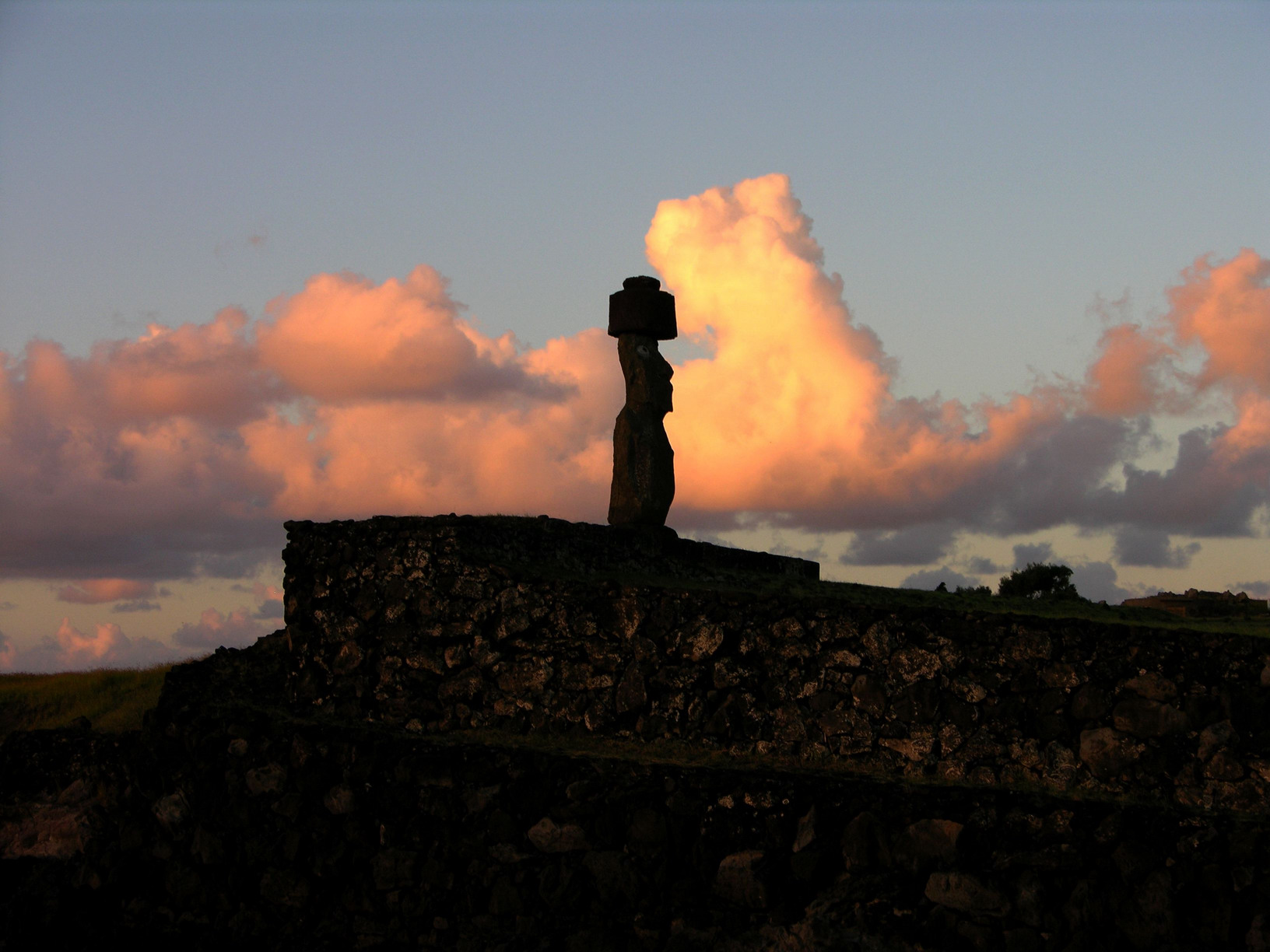
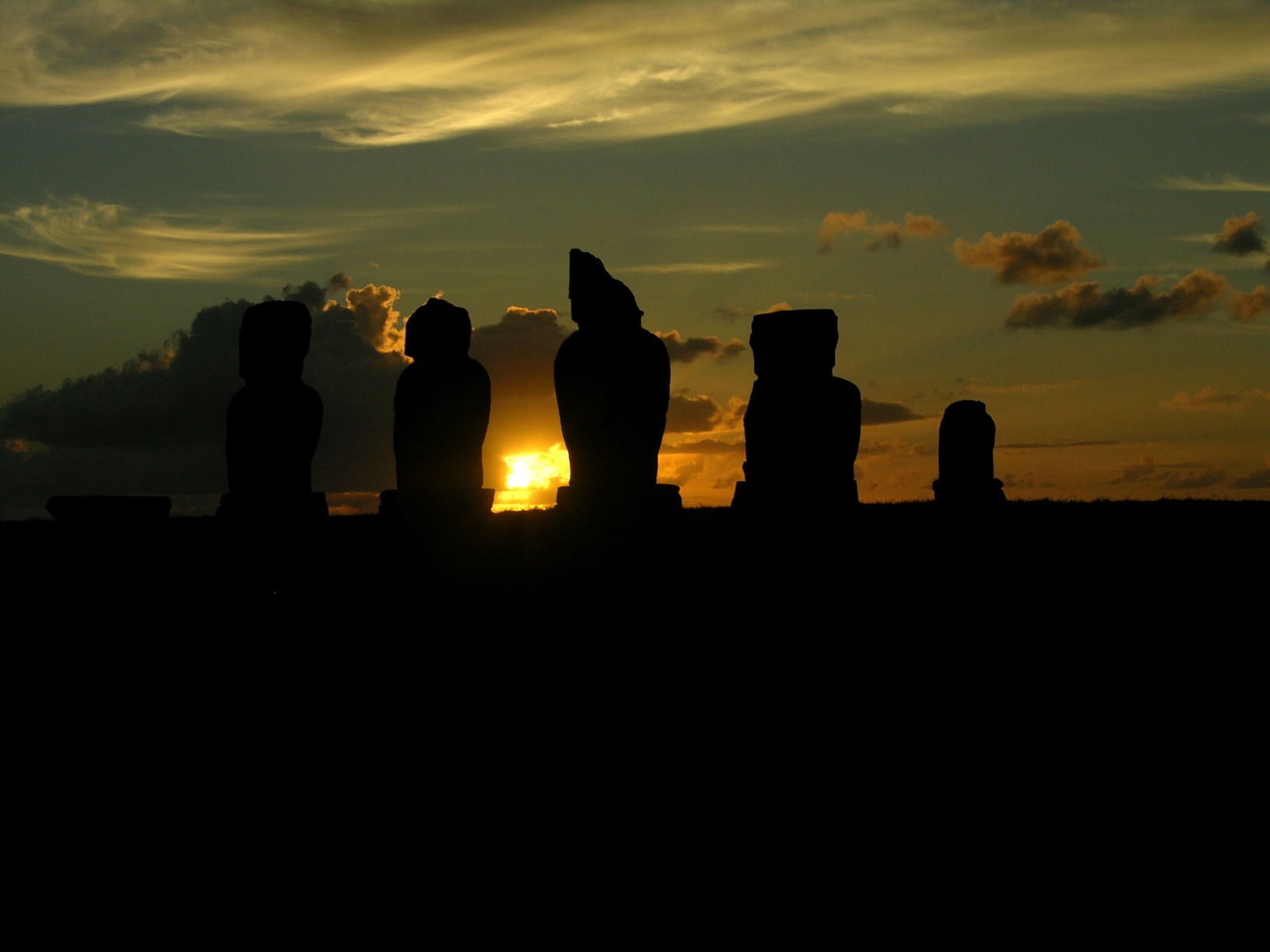
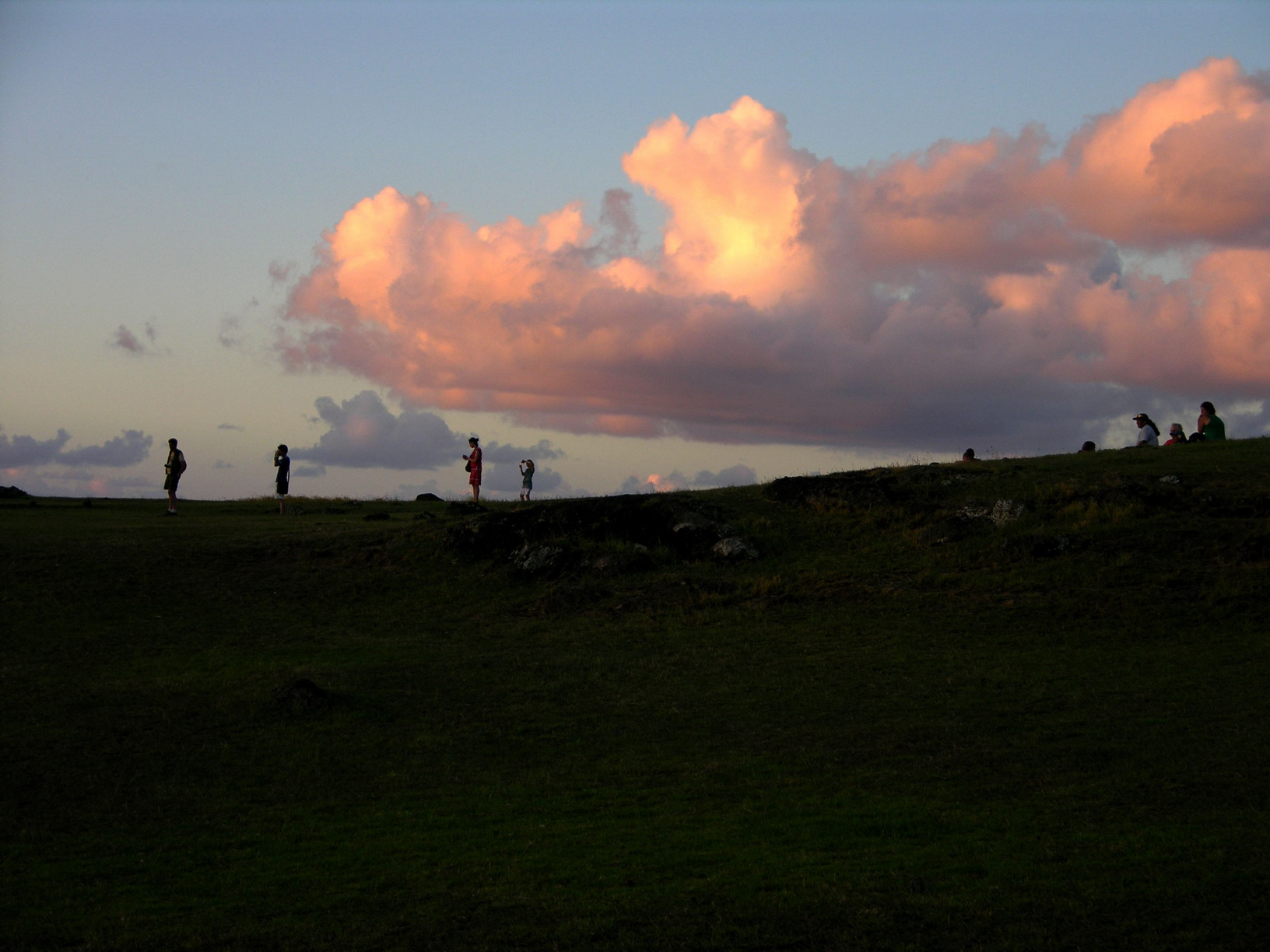
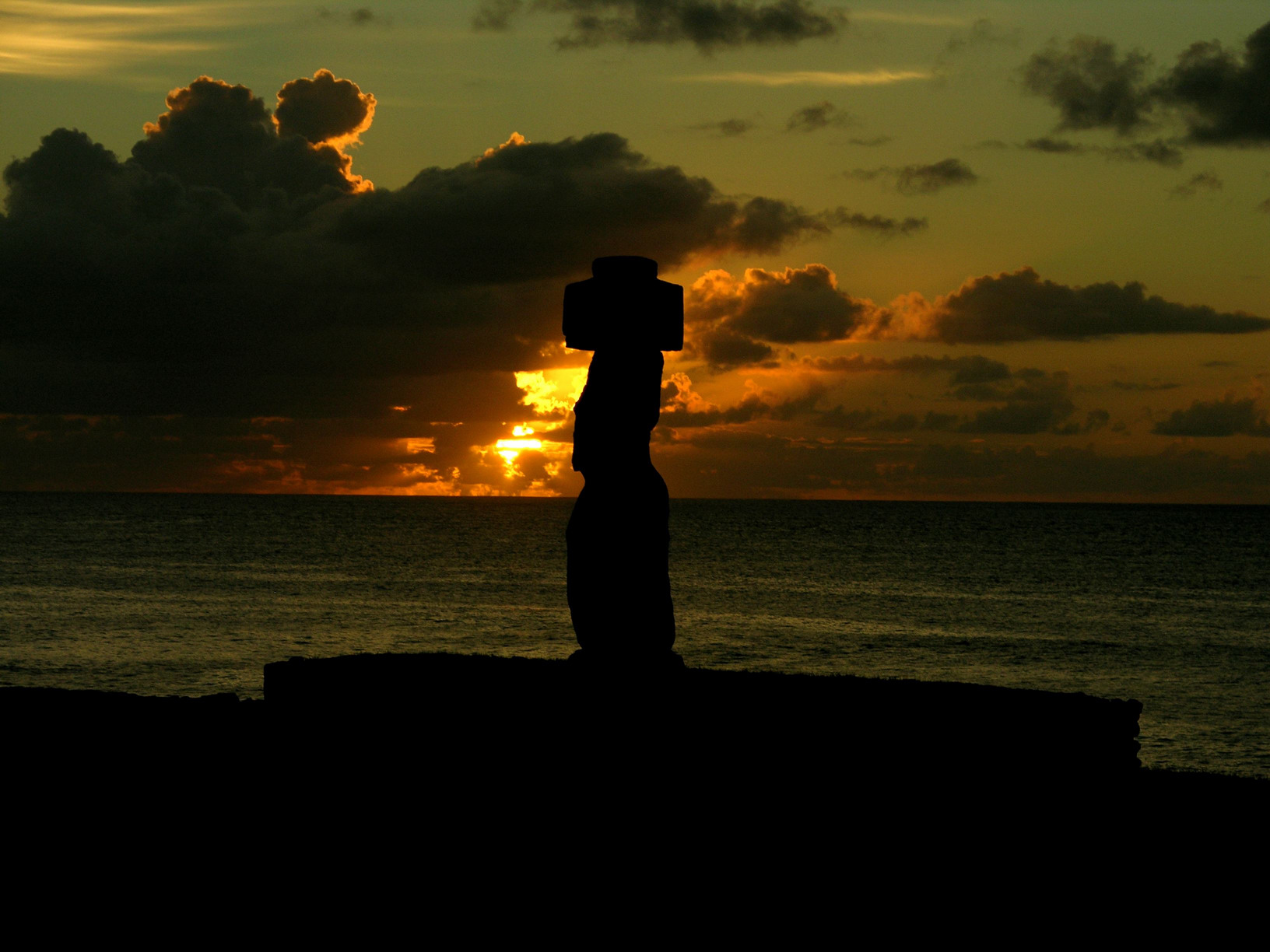
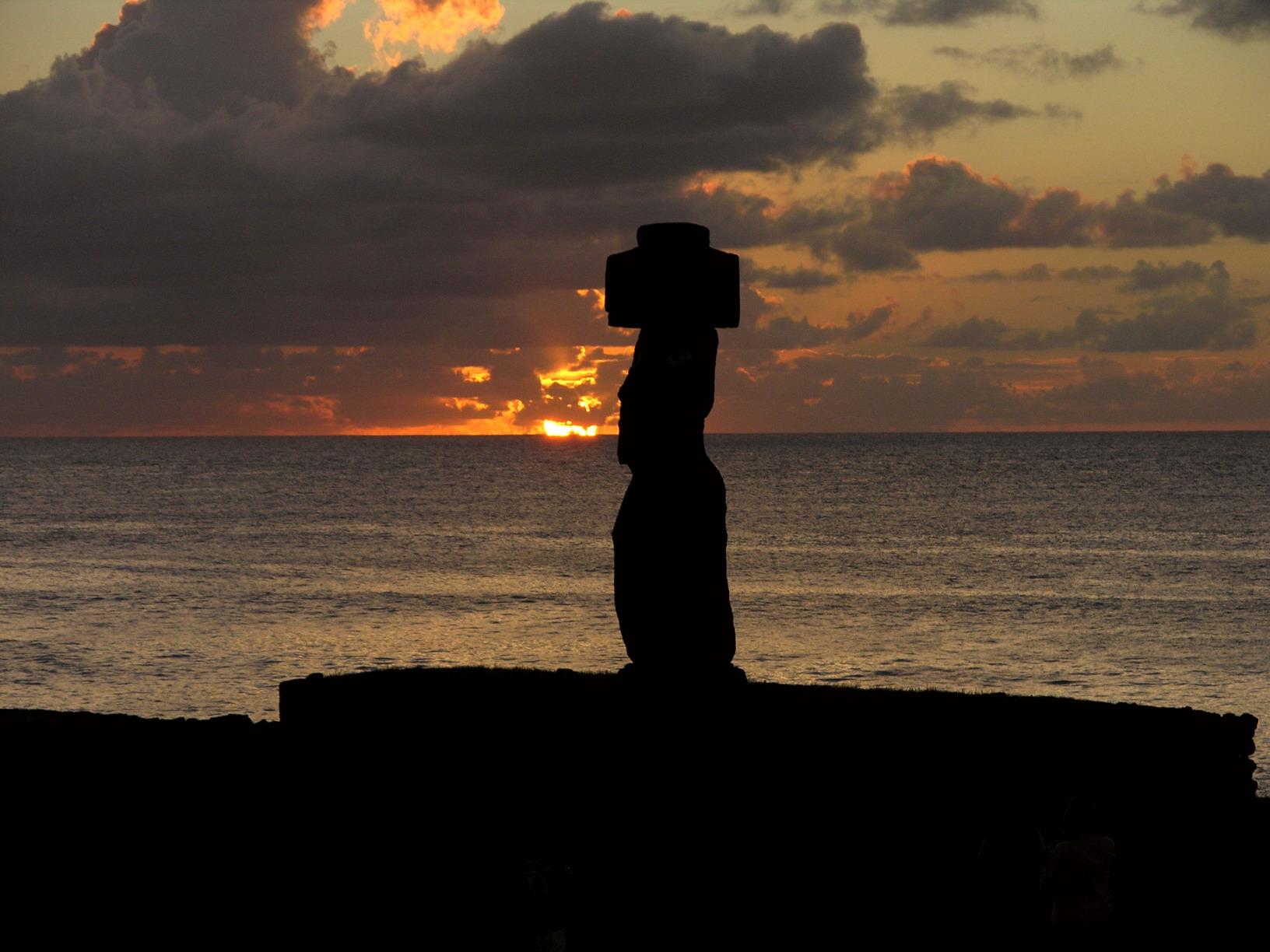
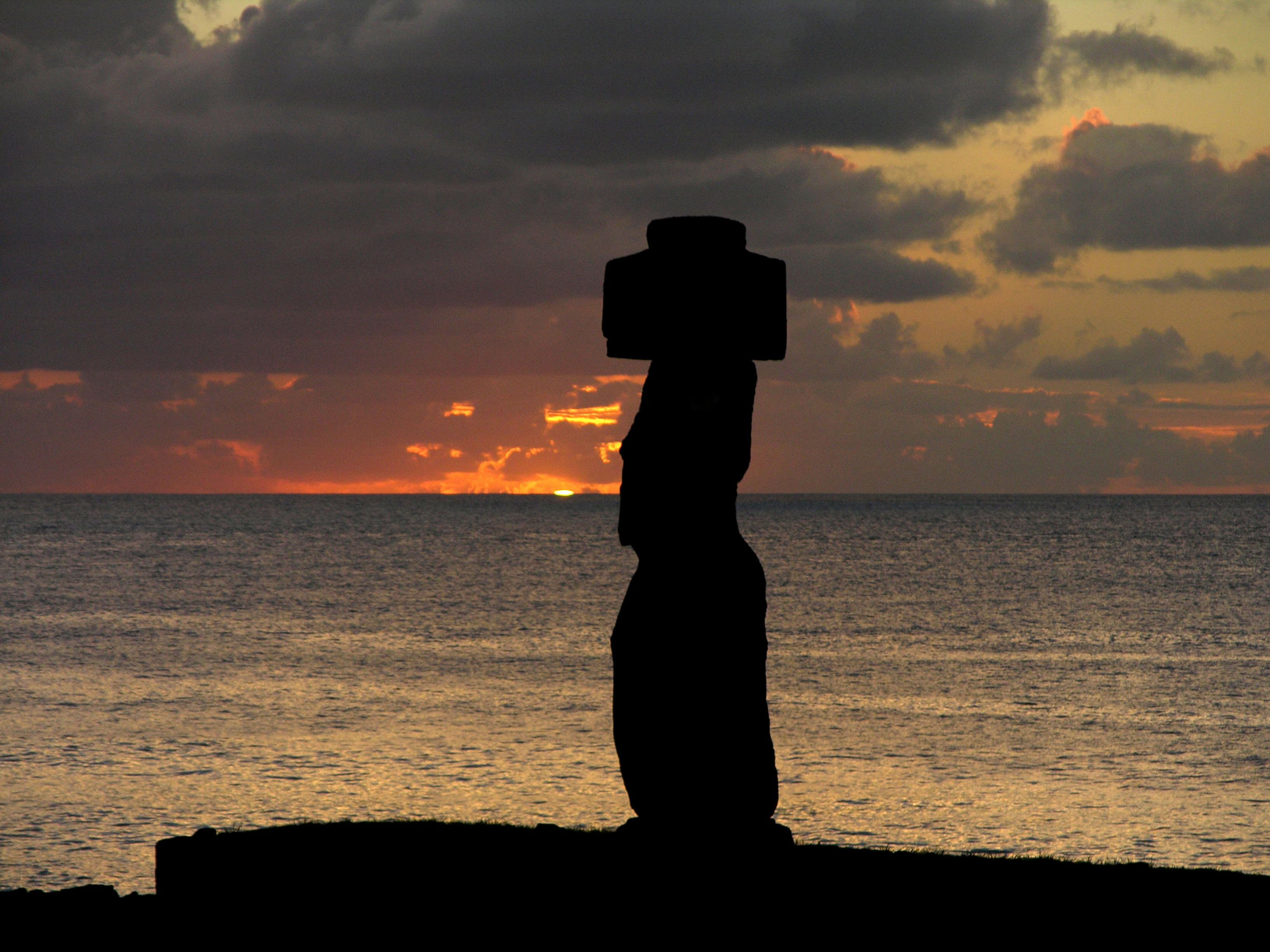
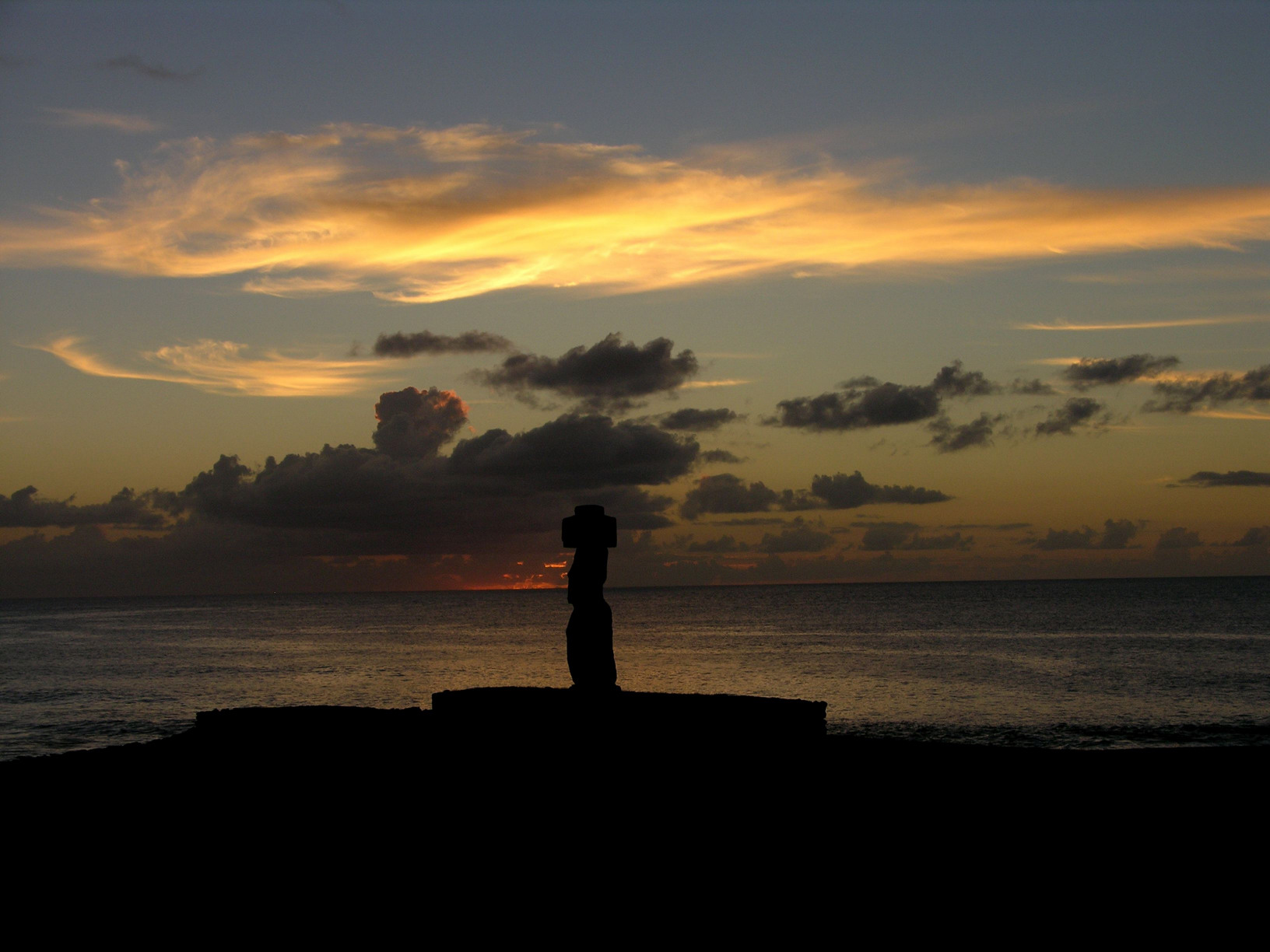
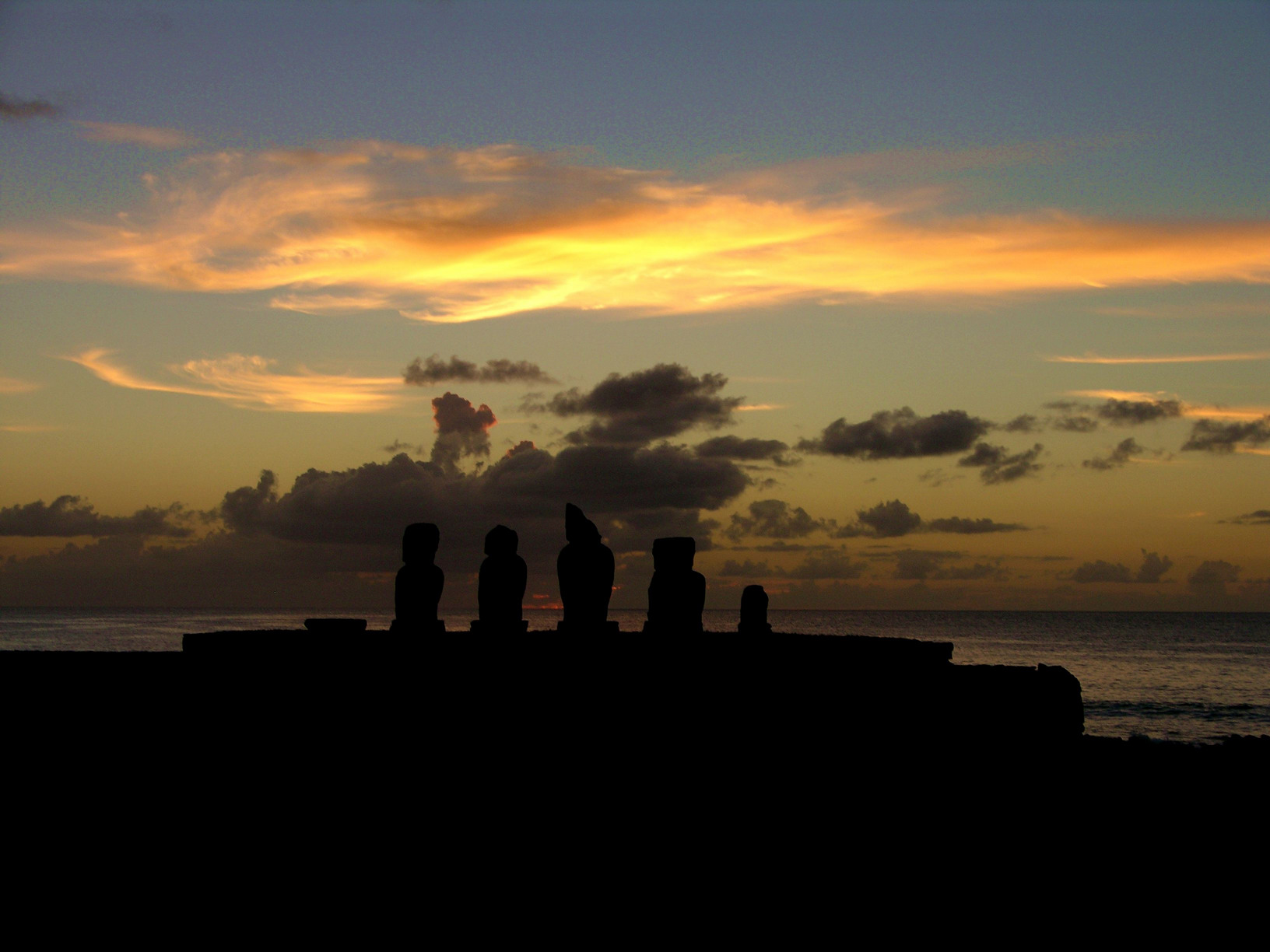
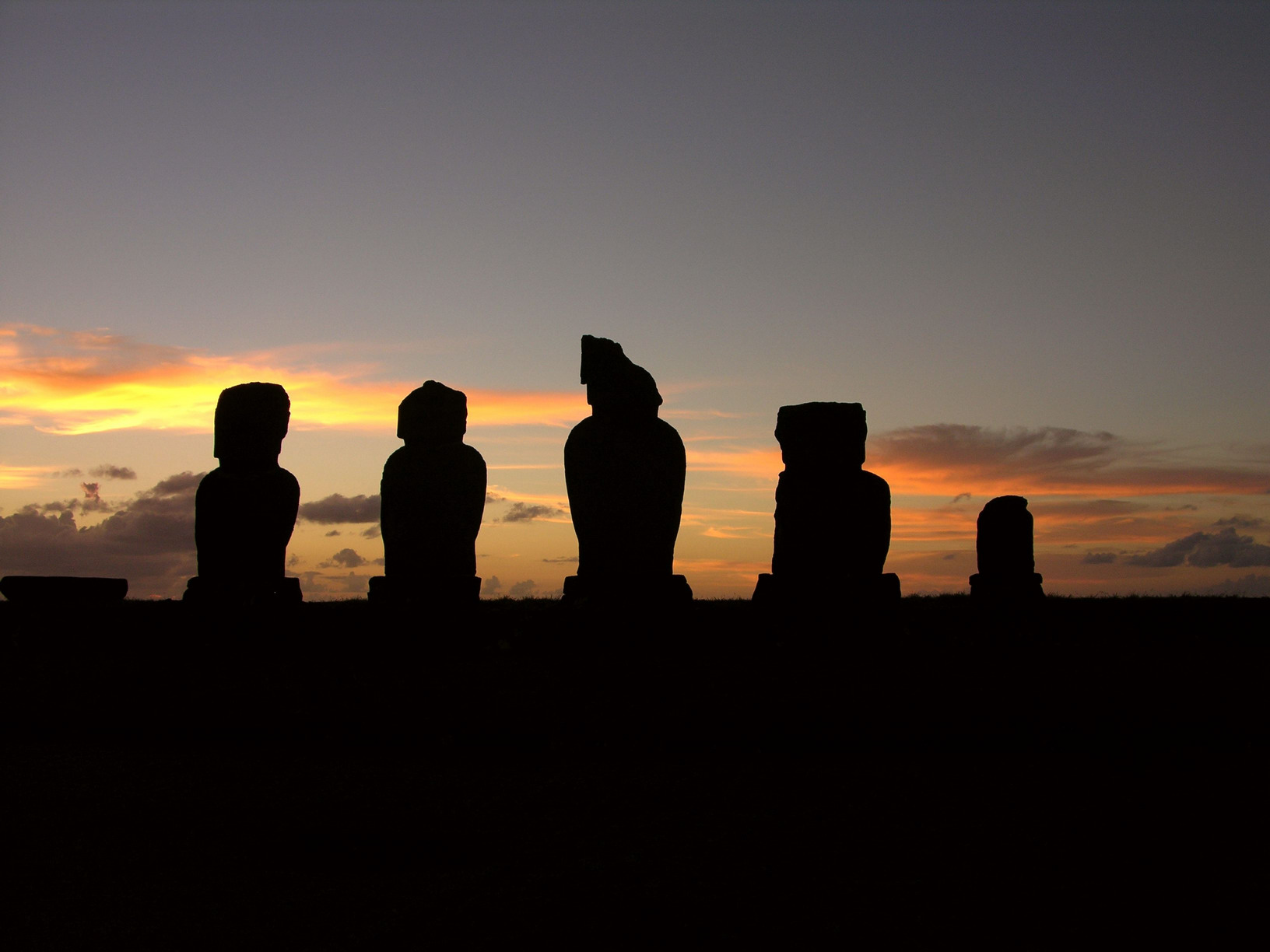
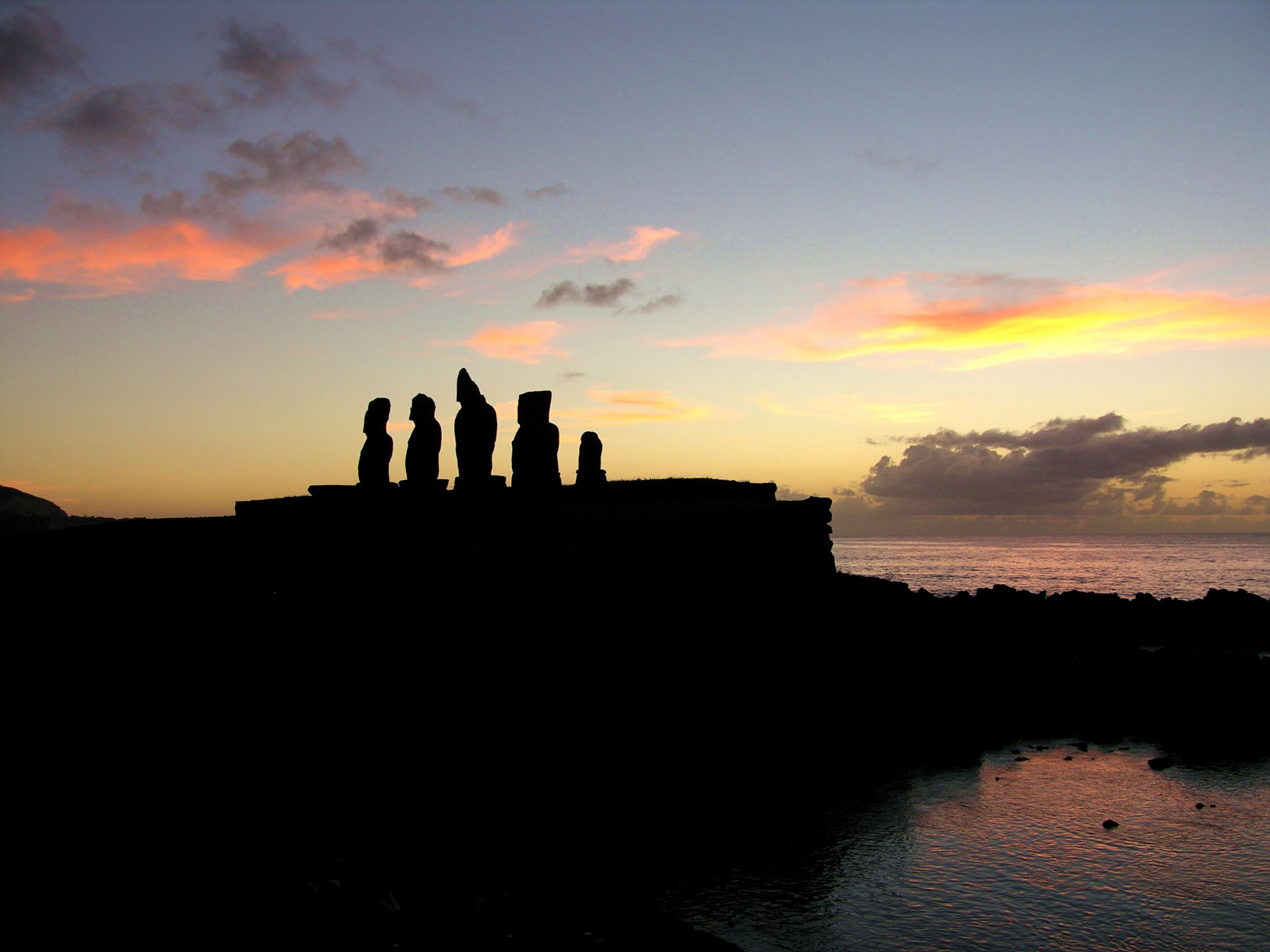
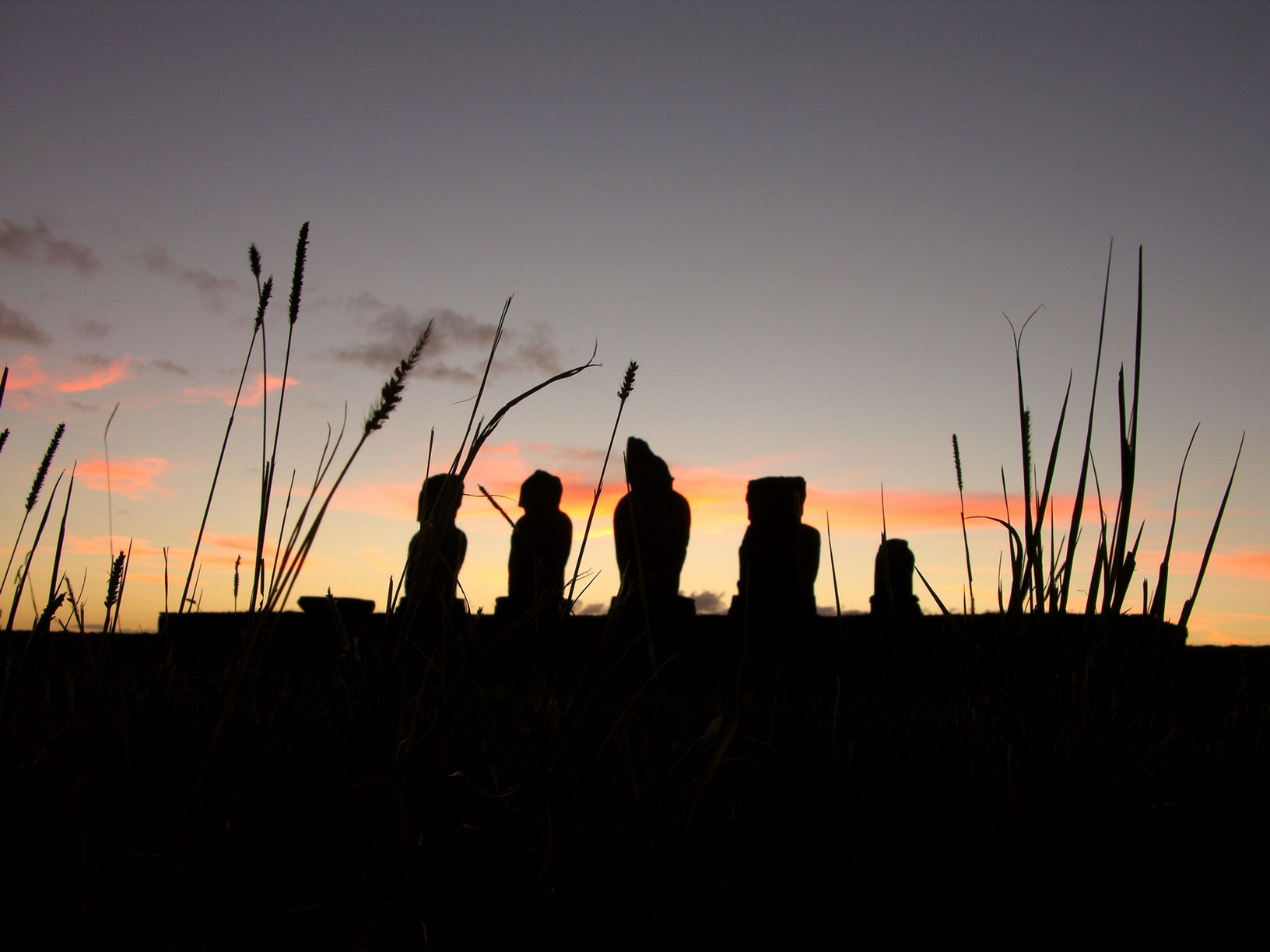
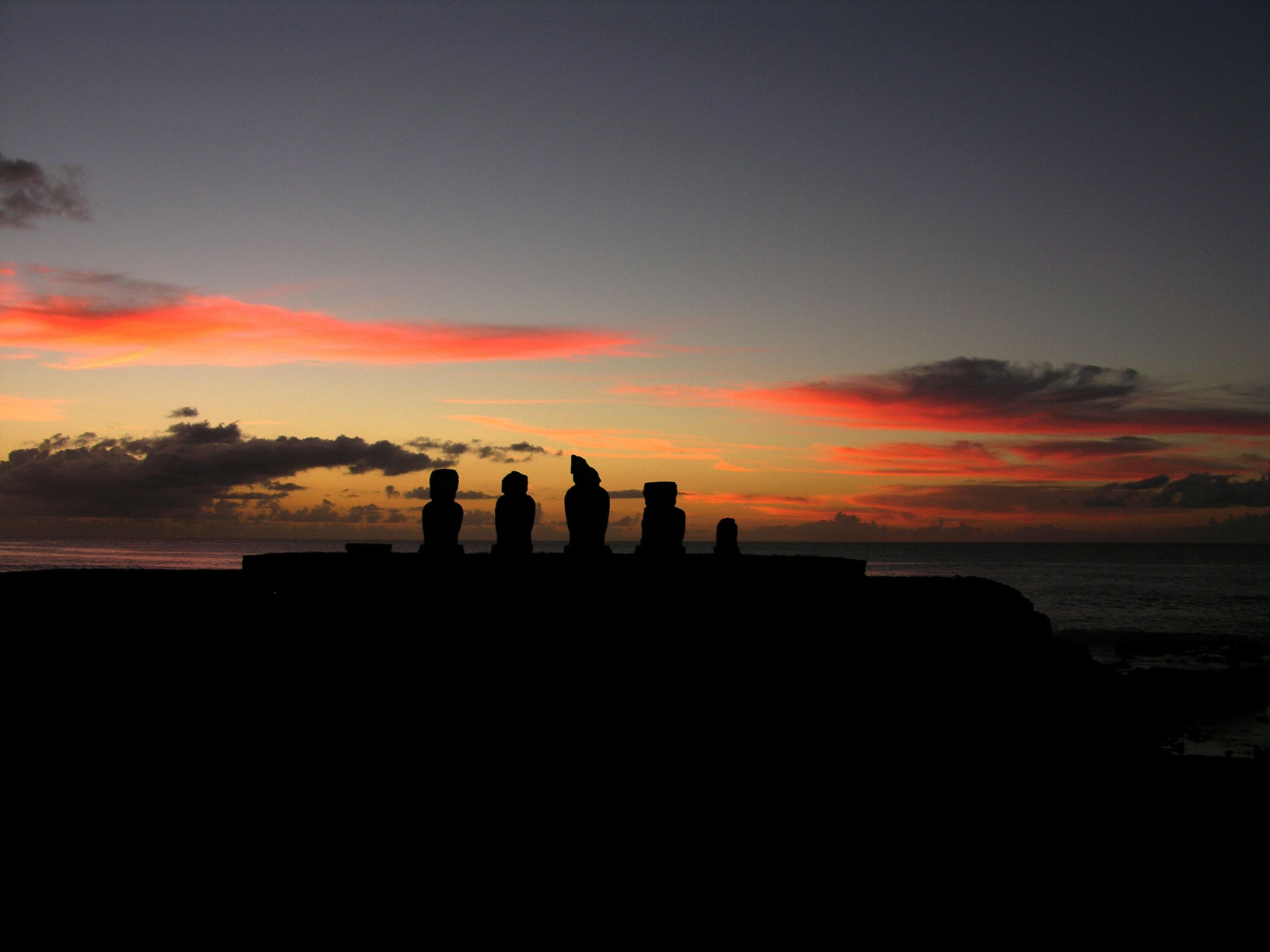
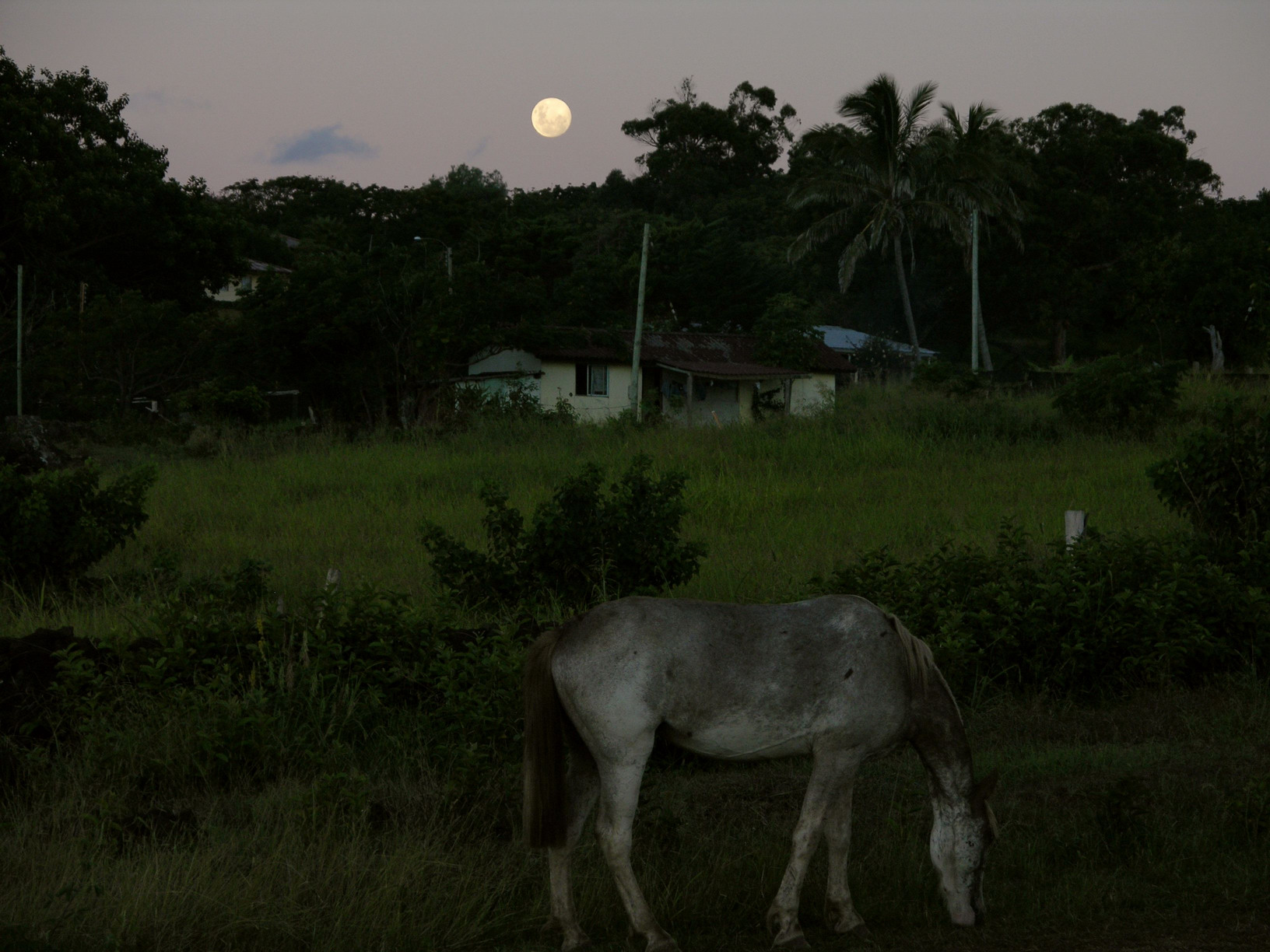
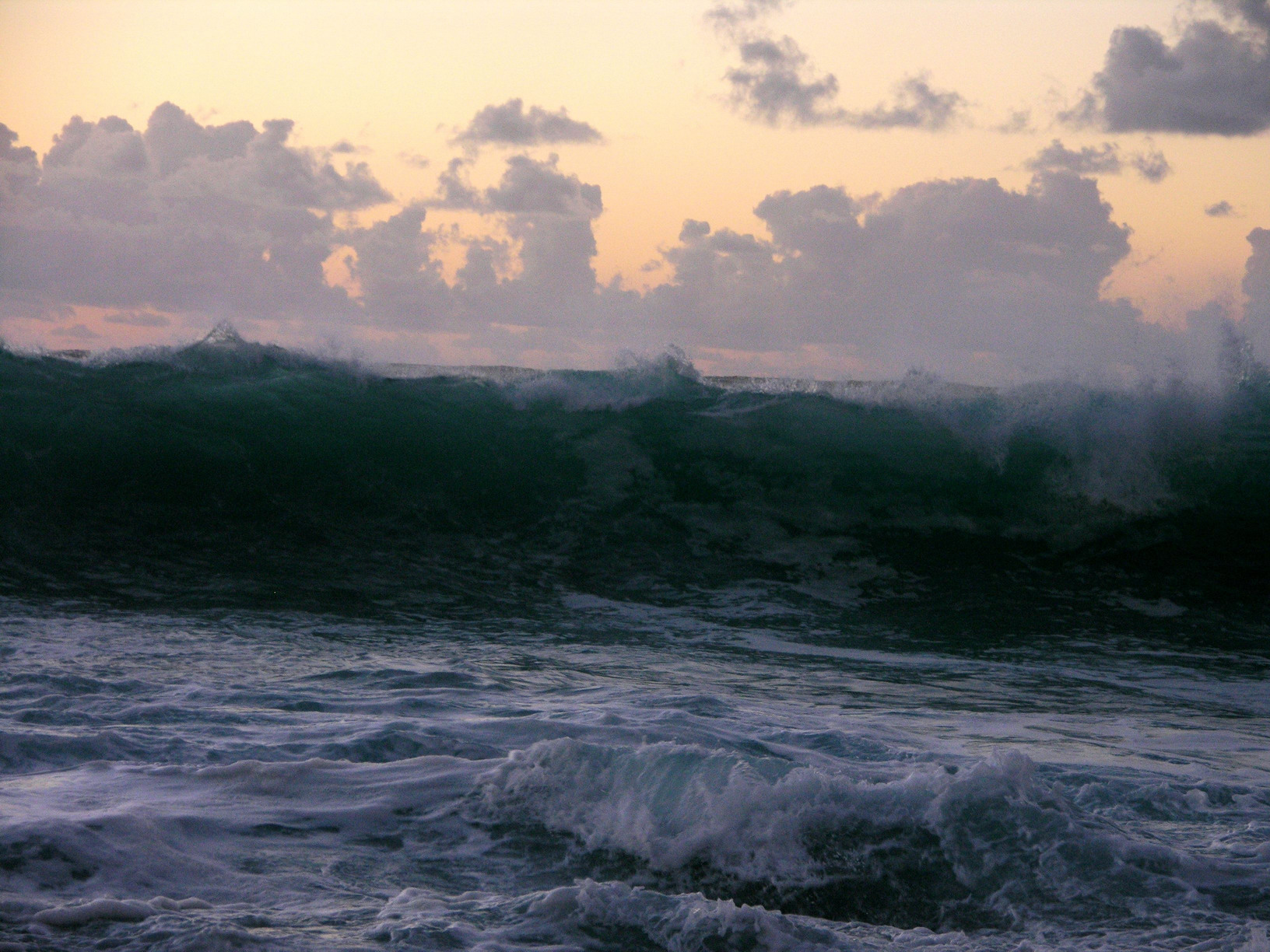
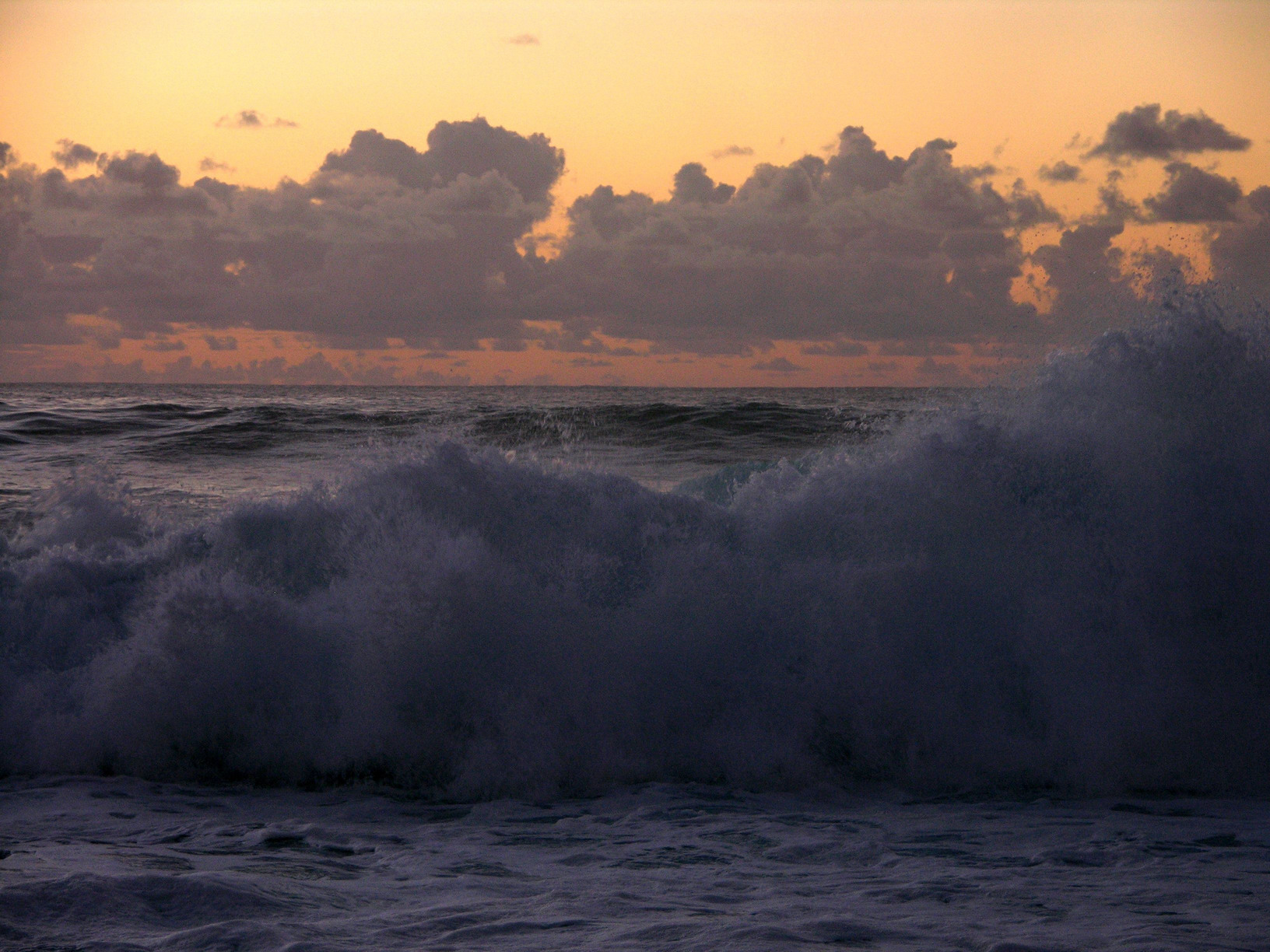
We watched the sunset beside the moai at Ahu Tahai, north of town. Here, as evening falls, people start pouring in until you can barely get through the crowd. The scene really is quite worth all that. All around, under the moon, horses are grazing. A storm was blowing at sea. Great waves many metres high broke against the rocks and filled the coves with a fog of spray. Tomorrow we had a plane to catch. We'd see the sunset at the airport.
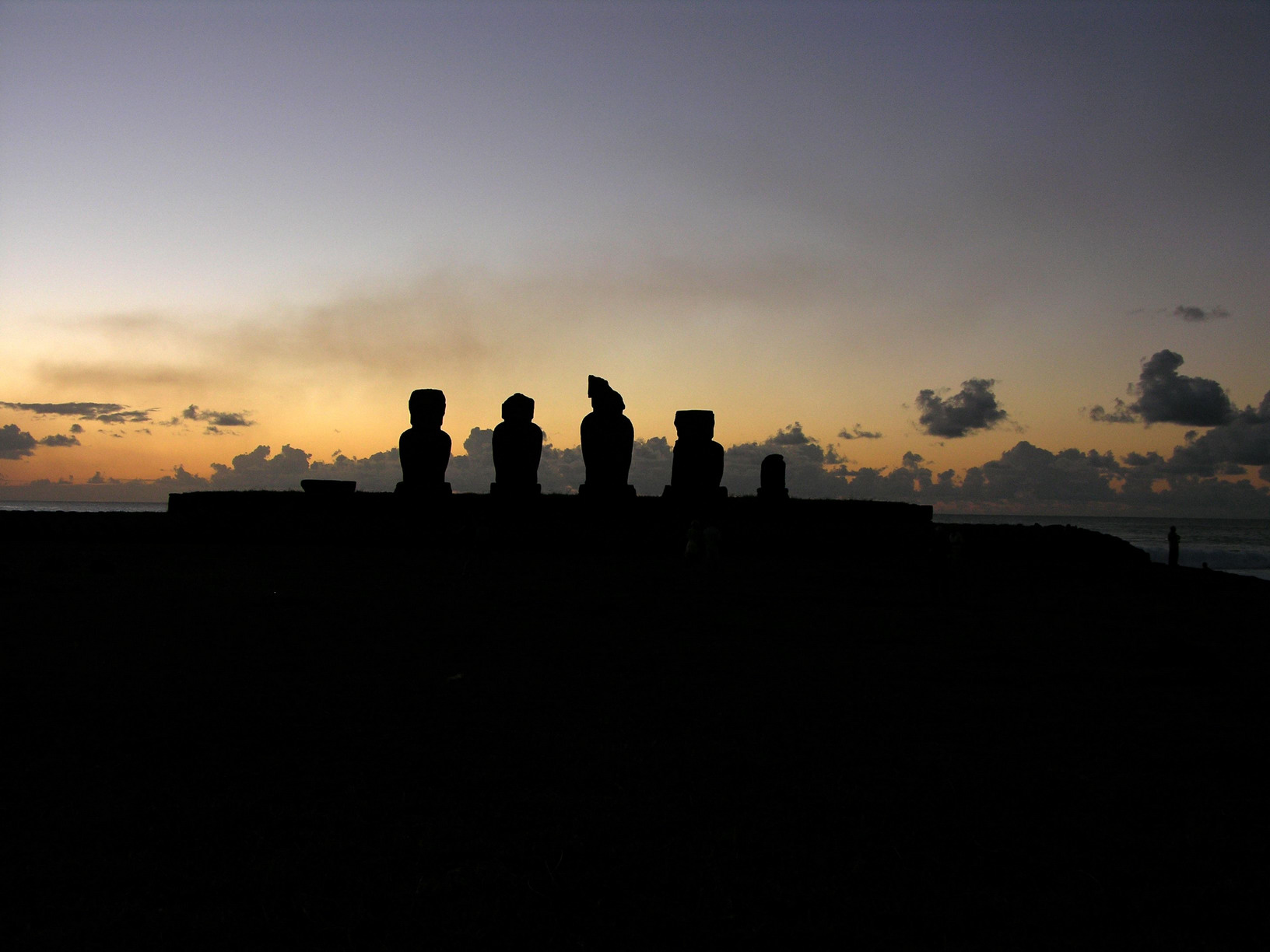
We'd saved Orongo for the last day. It's on the southwestern volcano on the island. The remains of a ritual complex from the time of the Birdman were found there. This local cult arose long after the moai and ahu, and was still practised when the Europeans came.
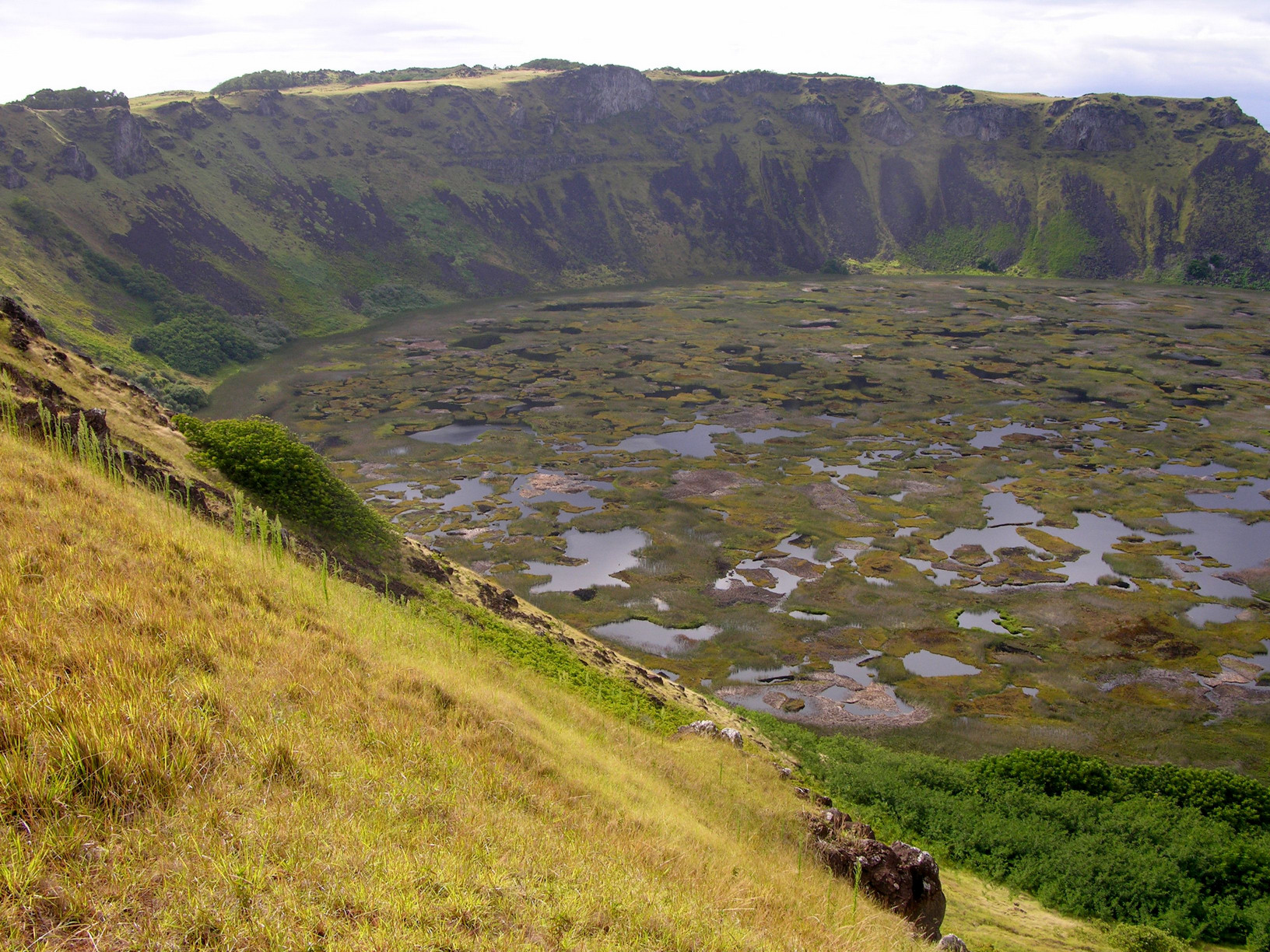
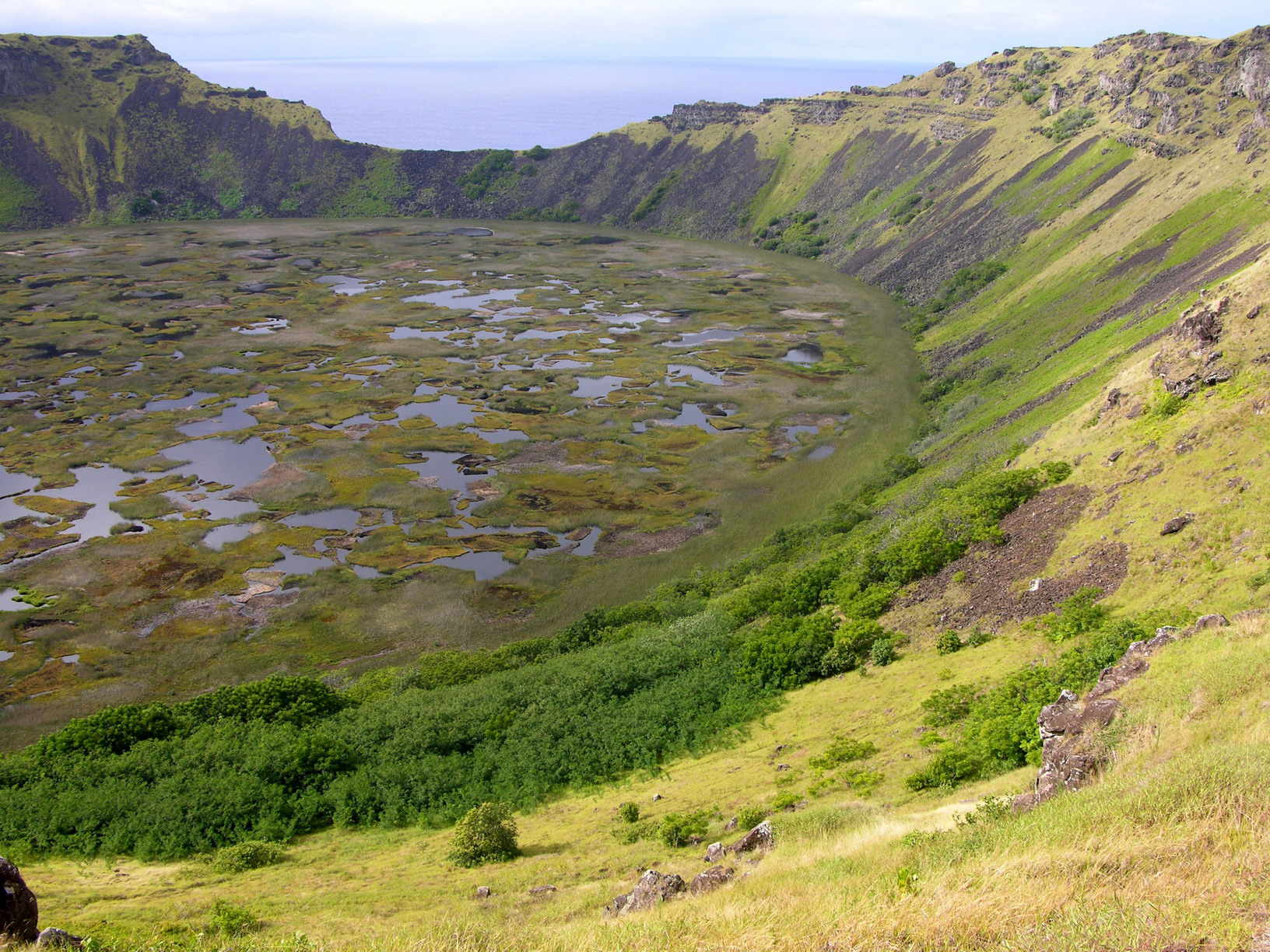
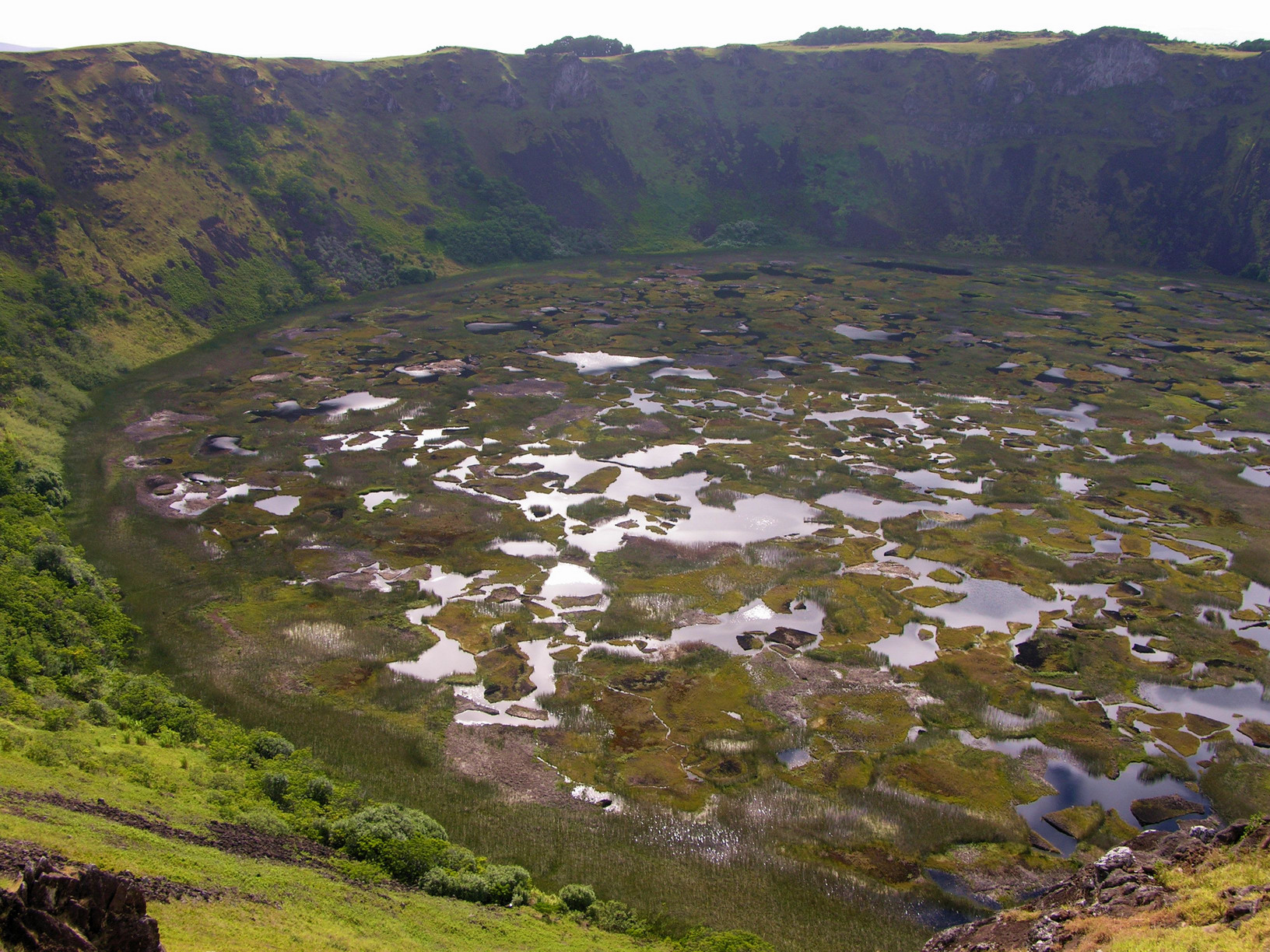
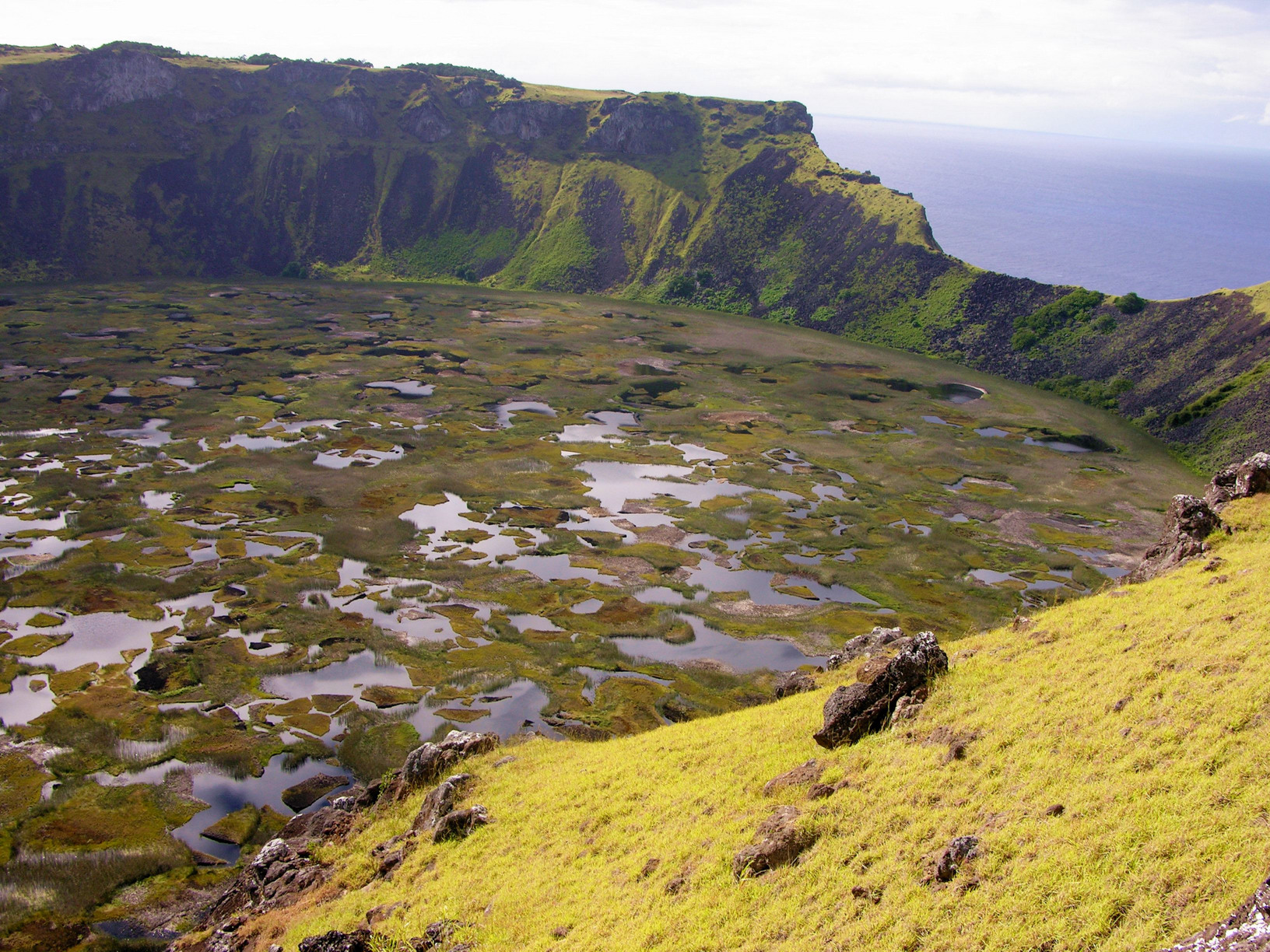
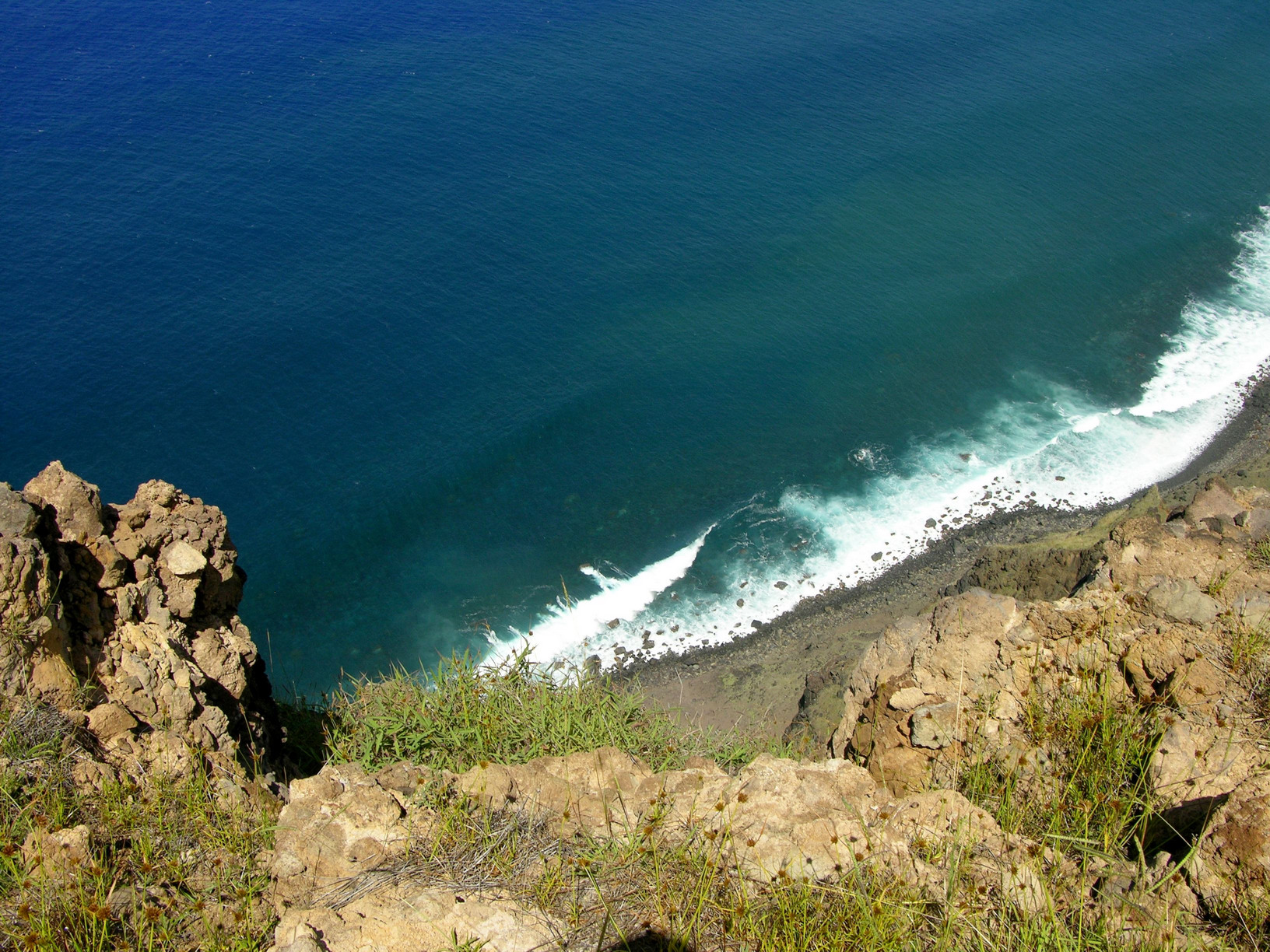
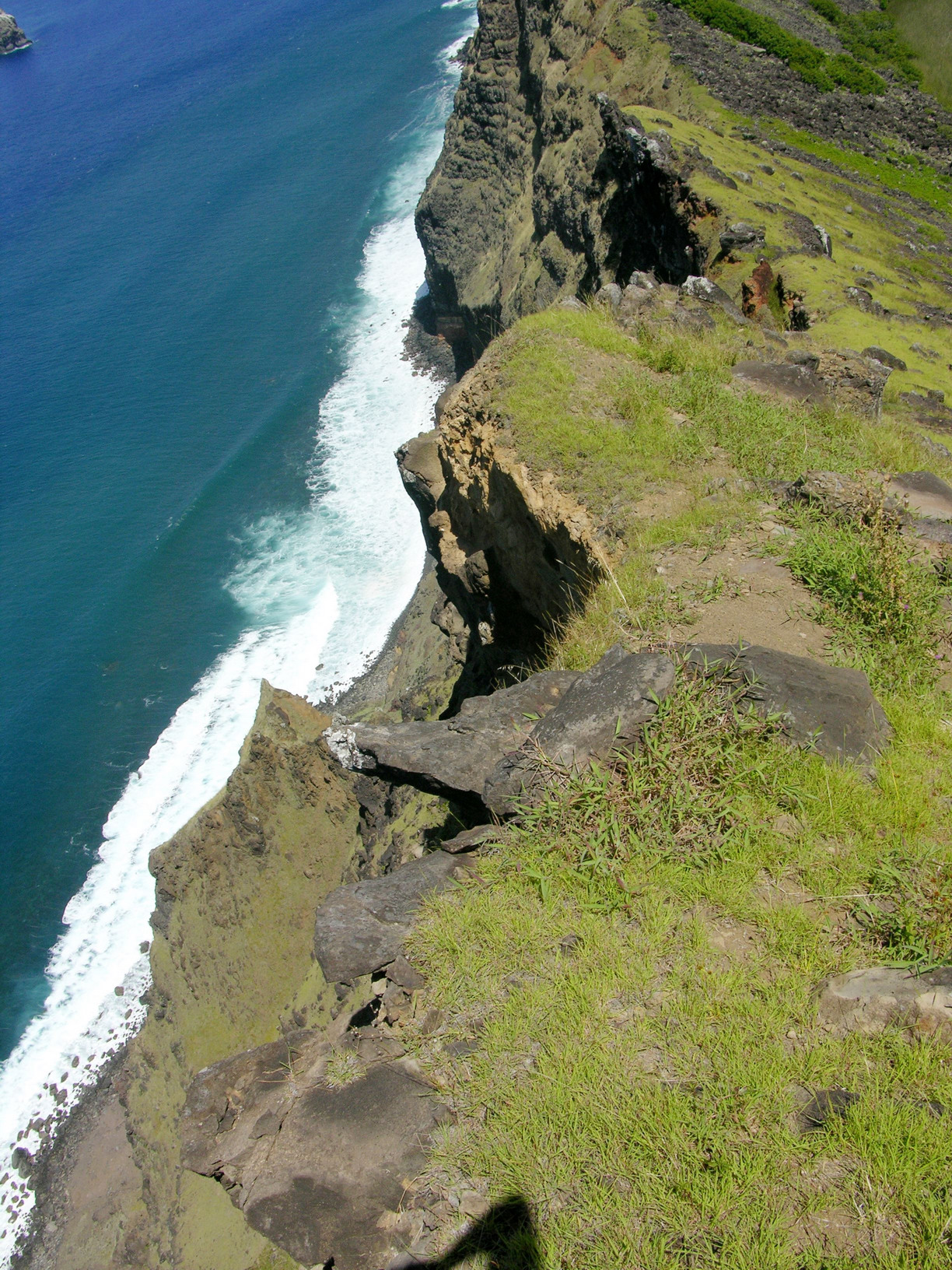
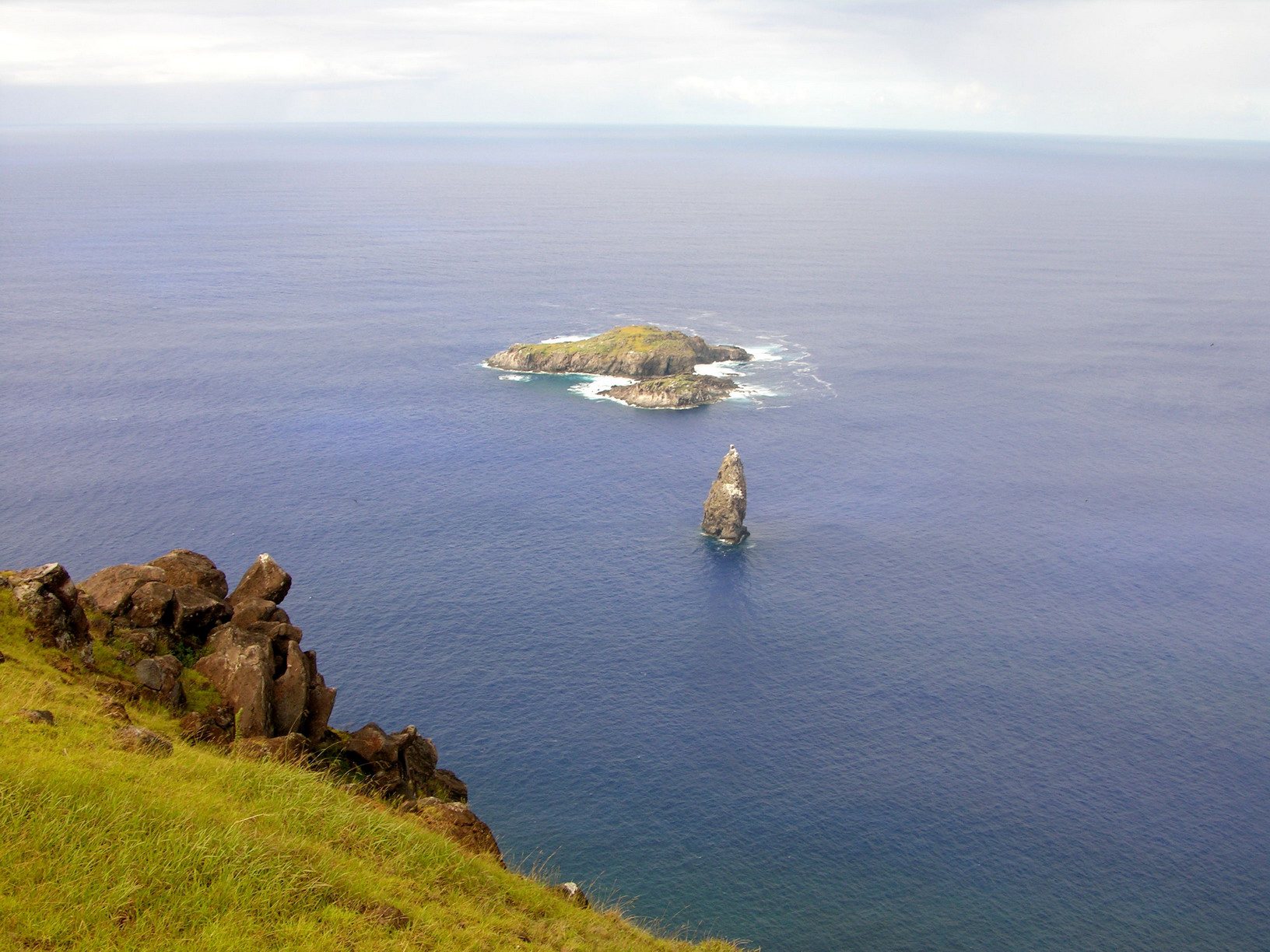
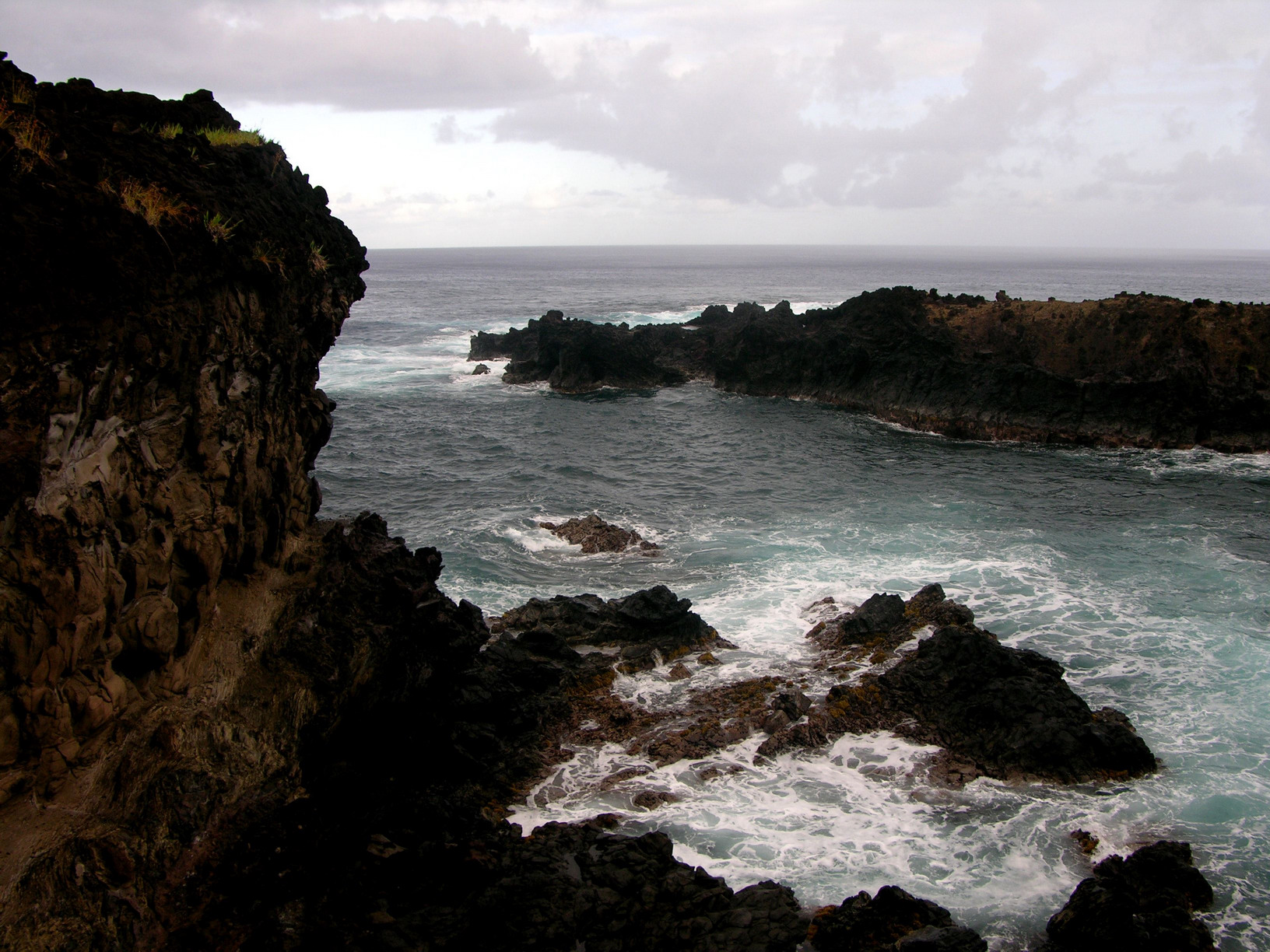
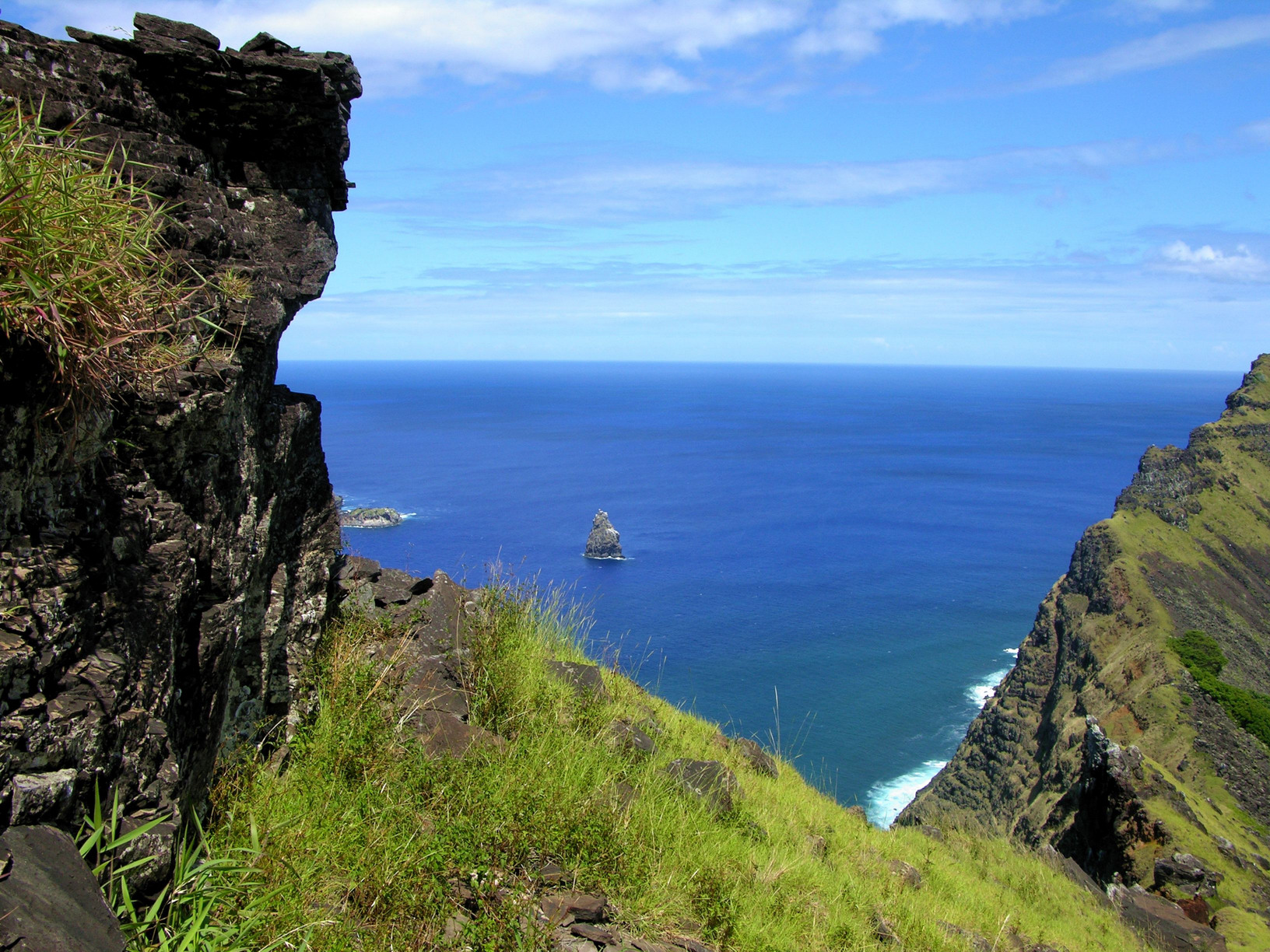
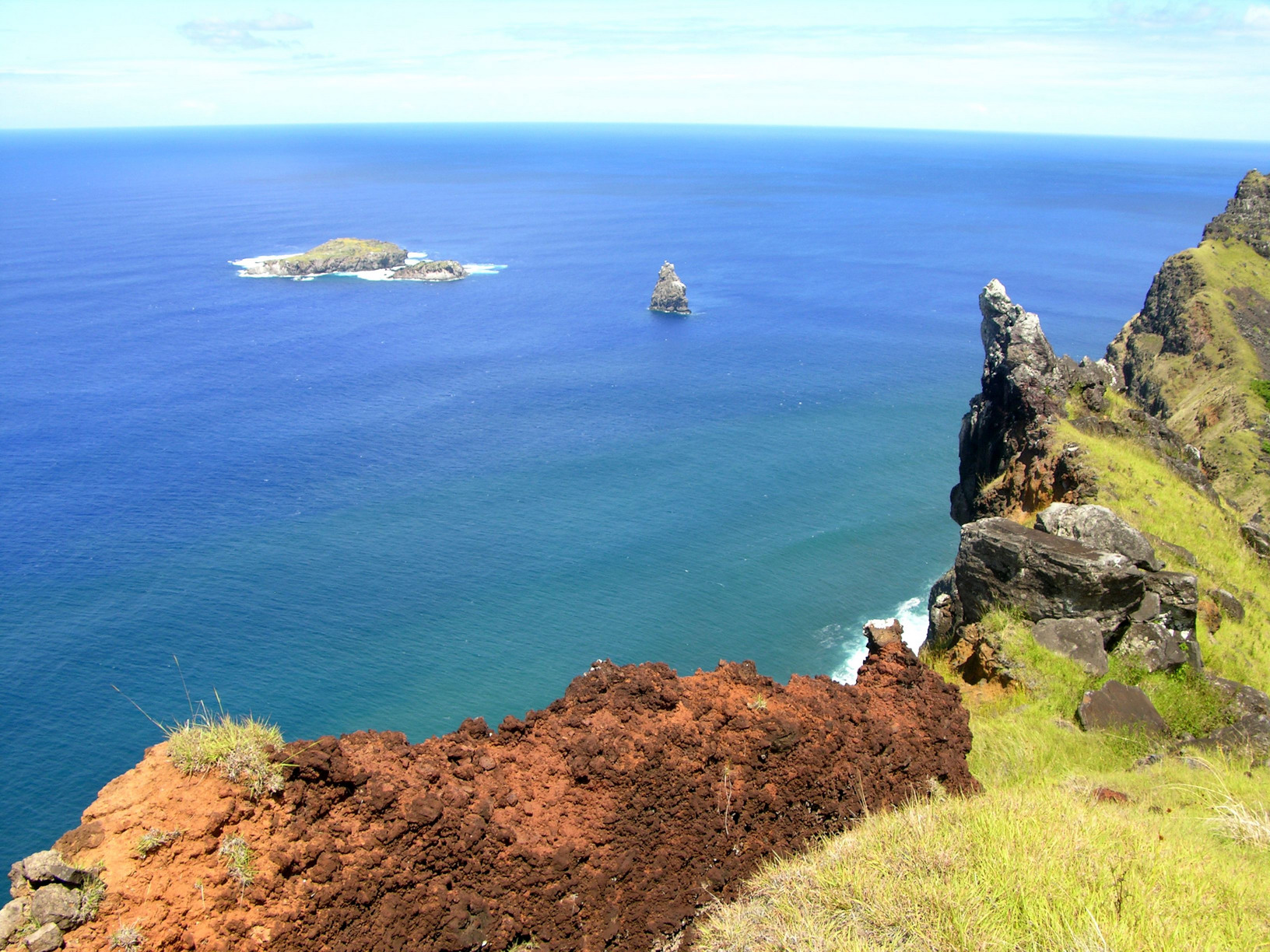
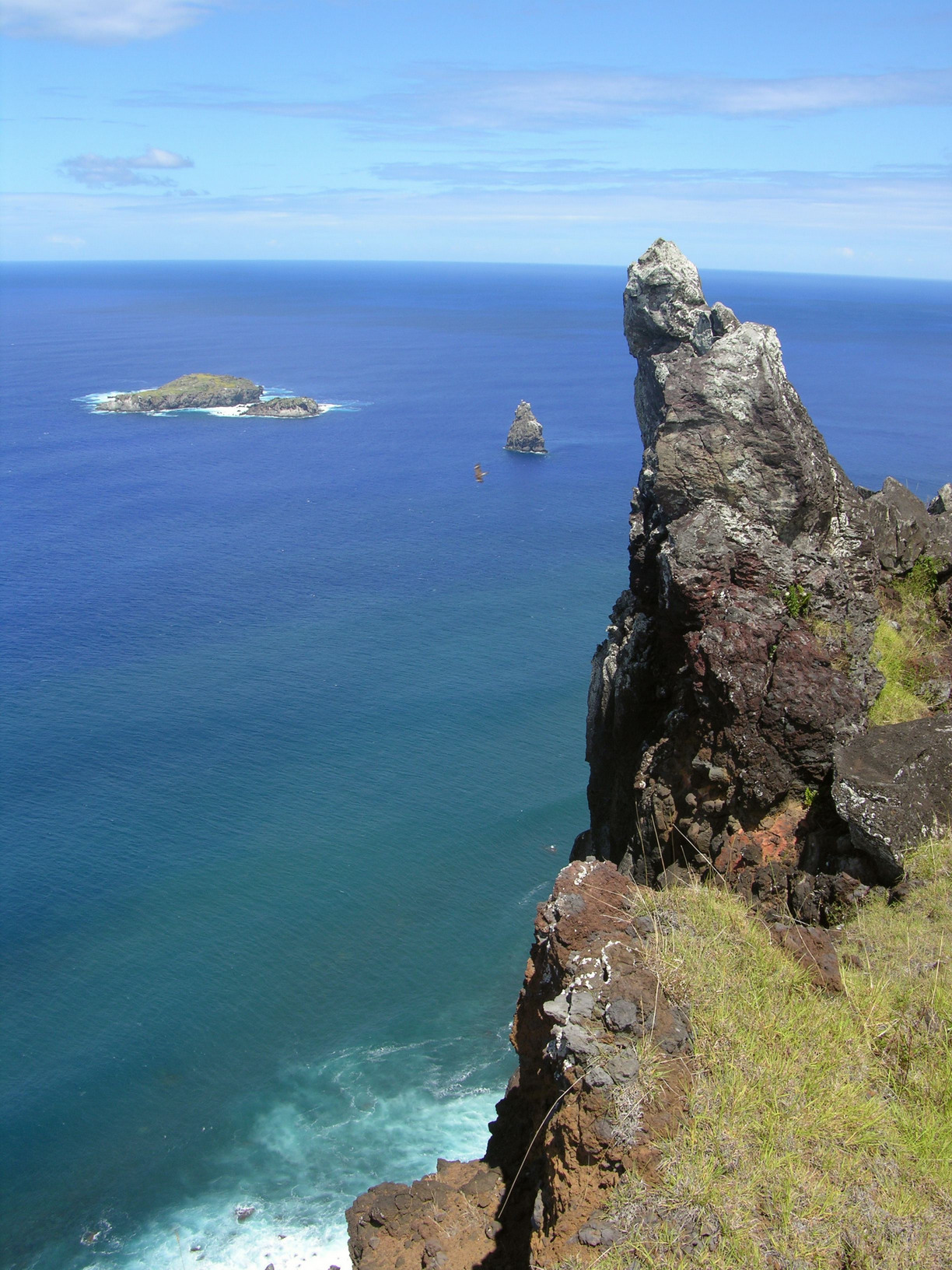
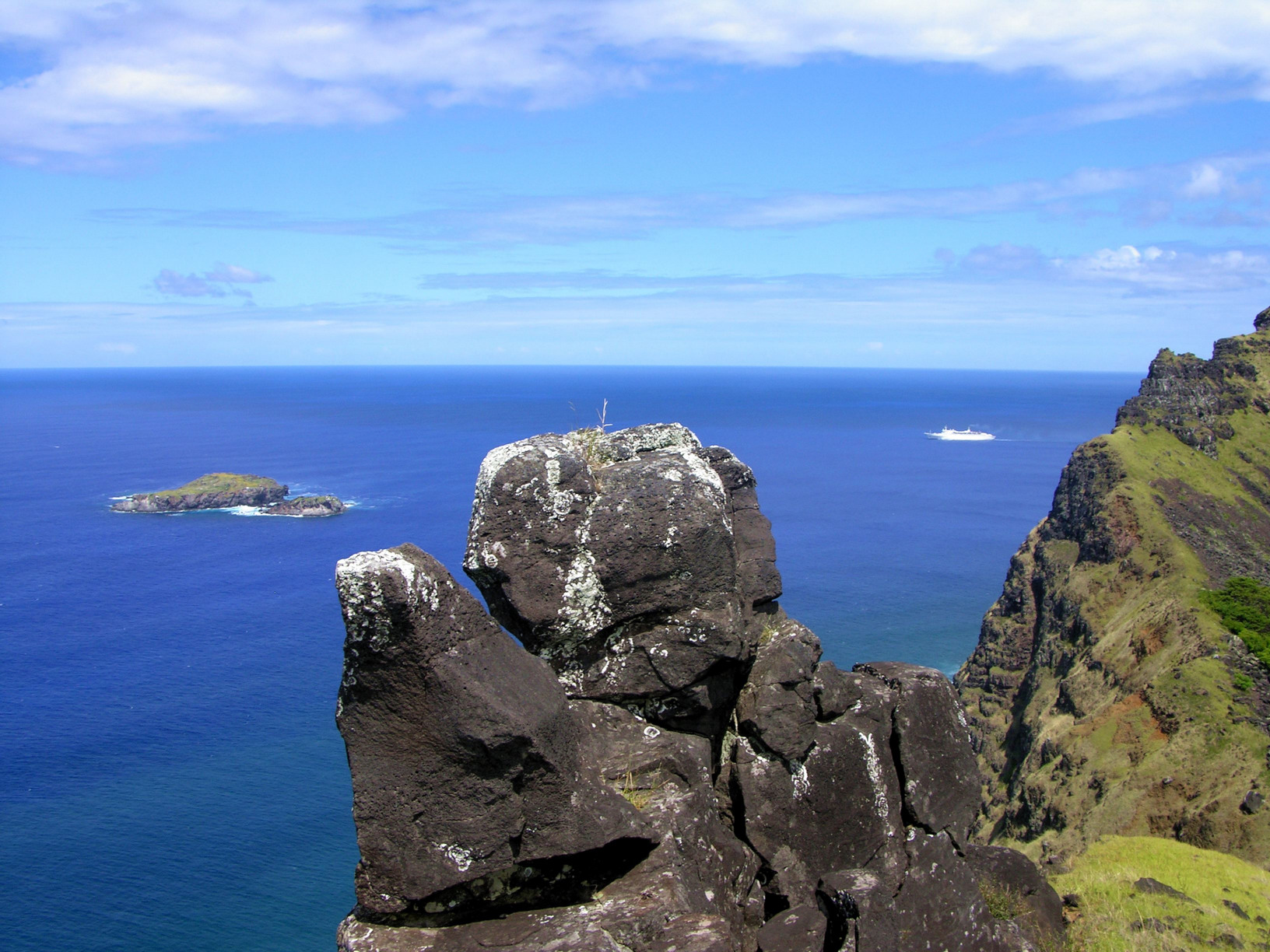
Once a year, young men would climb down the cliff as part of the ritual. I can confirm that the cliff is some cliff. I could get down it, but it would be a struggle, and they had to climb barefoot over sharp lava rock. Next they had to swim the strait to the rocky island of Motu Nui and wait there without food or water for the local sooty tern (Sterna fuscata) to lay an egg. They had to be the first to grab an egg, tie it to their head, swim back and climb up the mountain.
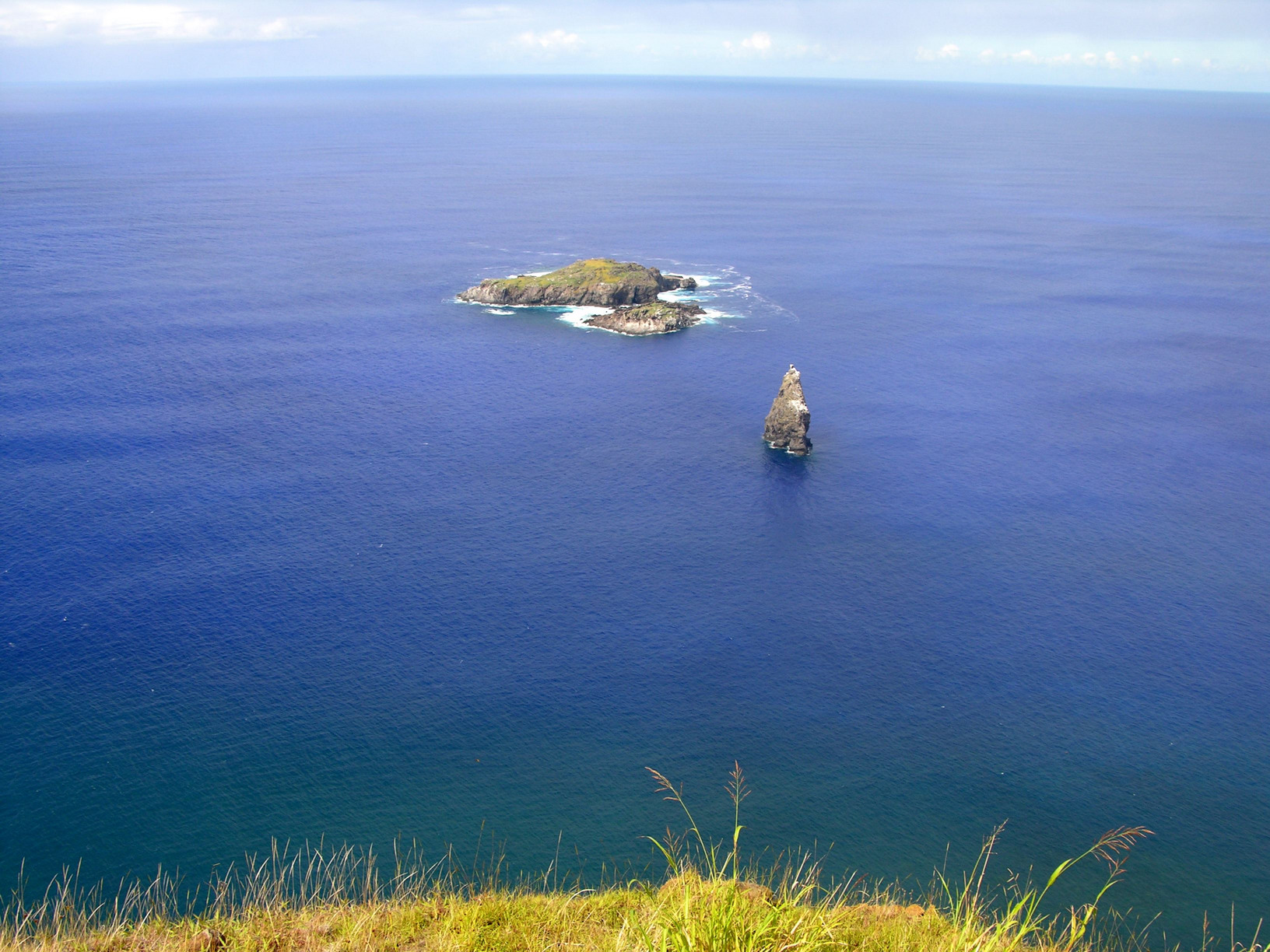
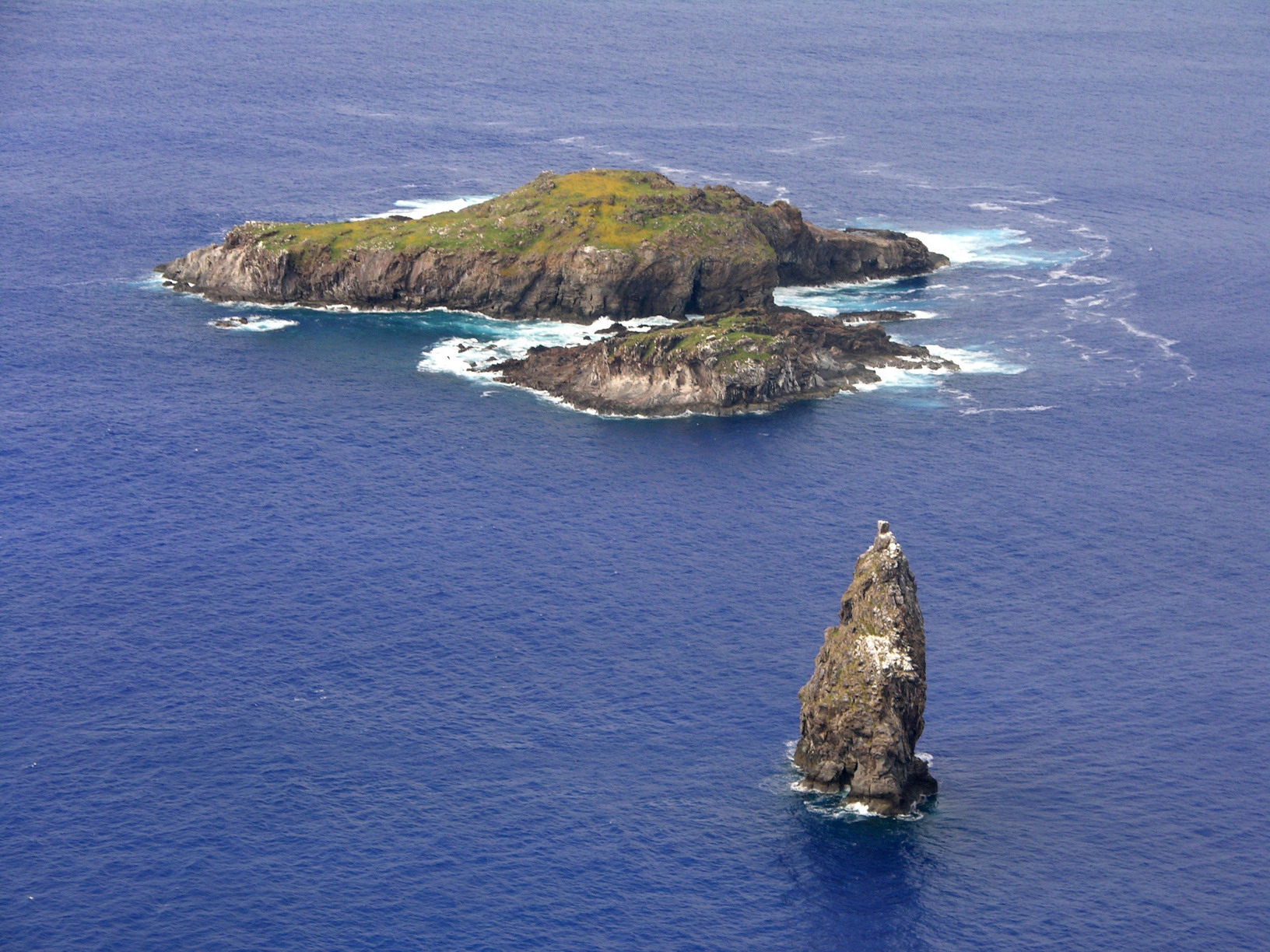
The winner got the title of Birdman, great honour and seven virgins. The following year they had another swim and the title passed to another egg carrier. Presumably the seven virgins passed to him too, though the books don't say.
A special complex was built for the ritual, with low stonebuilt houses and stones carved with elaborate petroglyphs. At other times nobody lived here. The inscriptions are in the Rongorongo script.
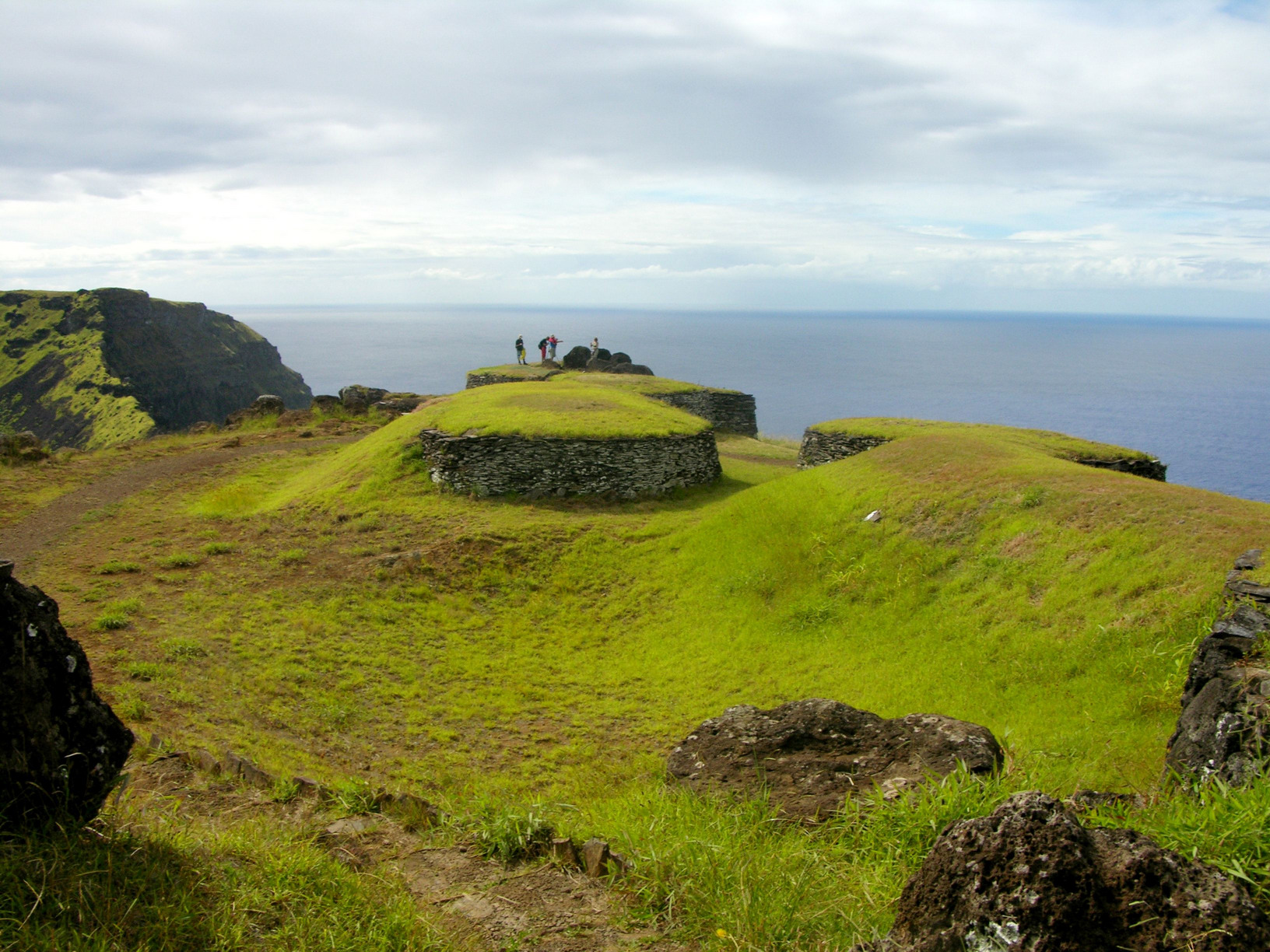
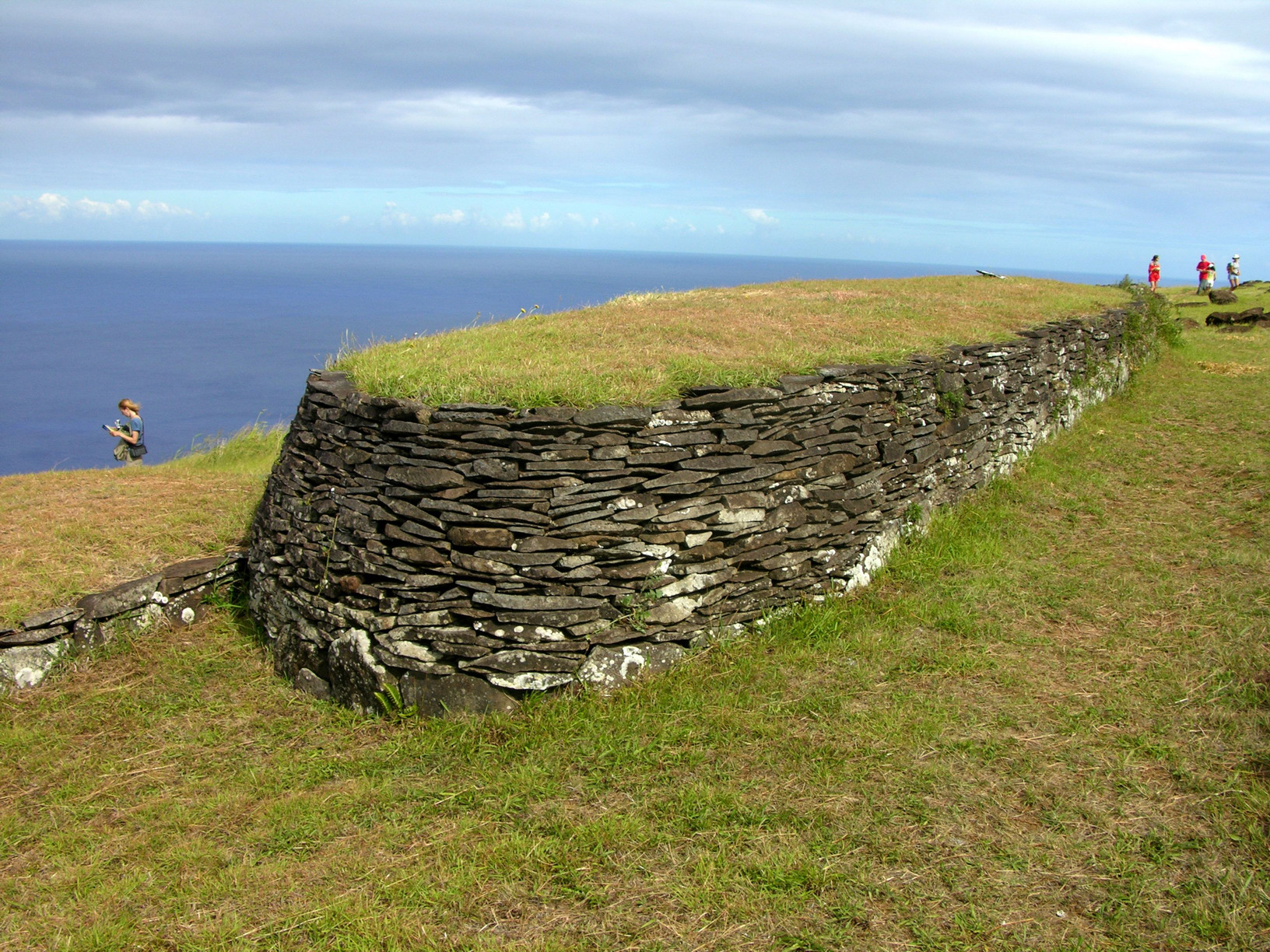
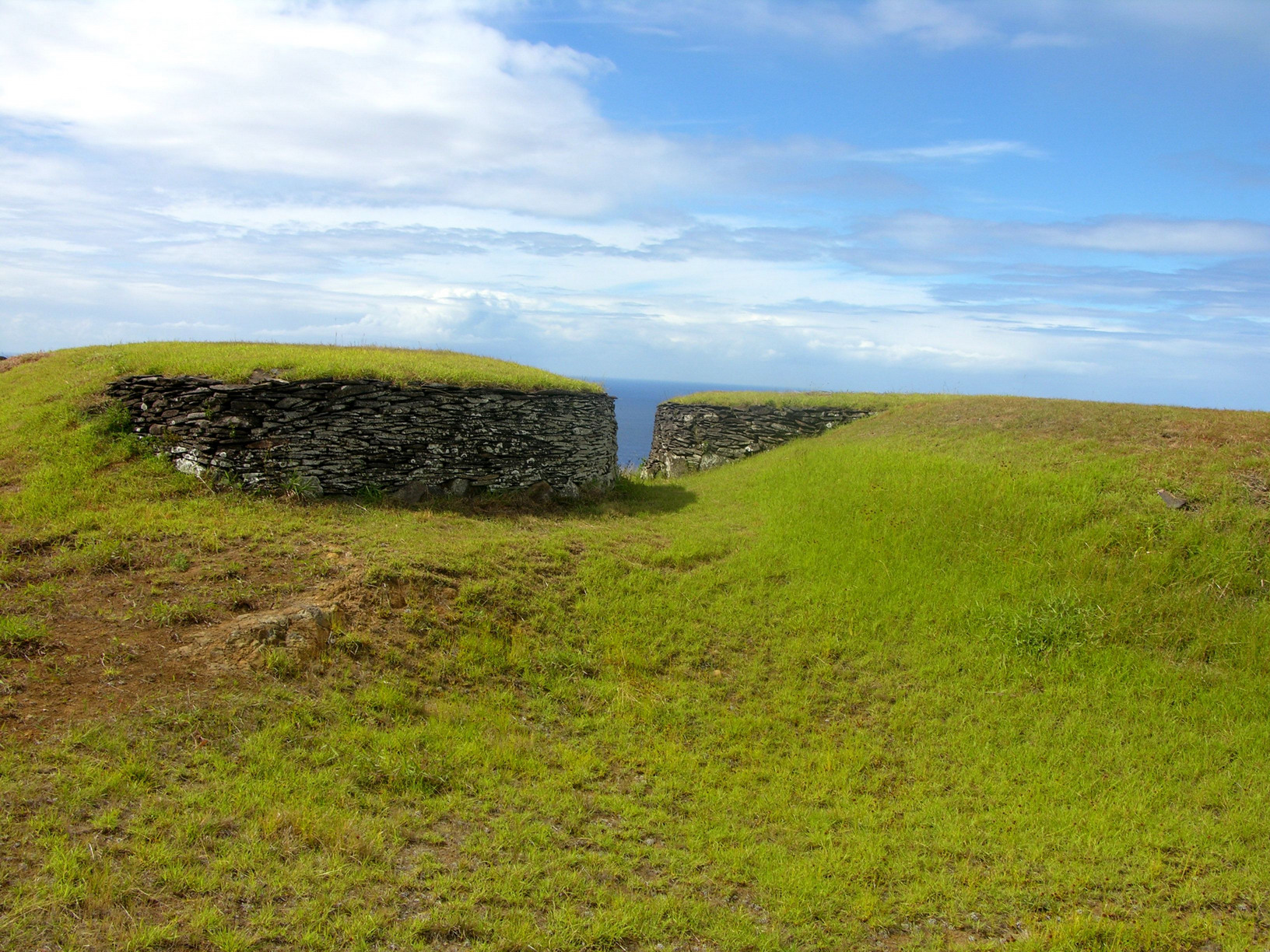
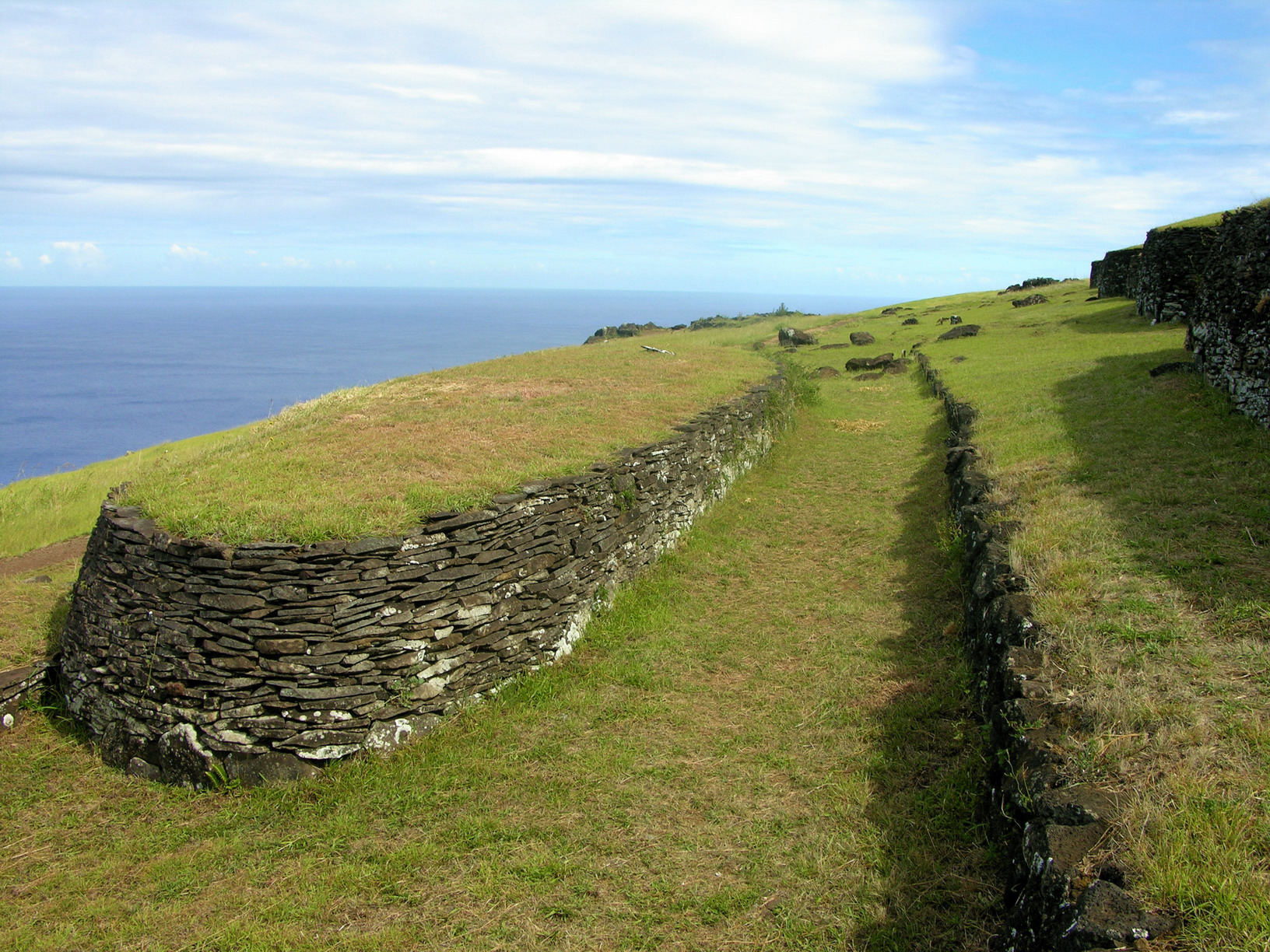
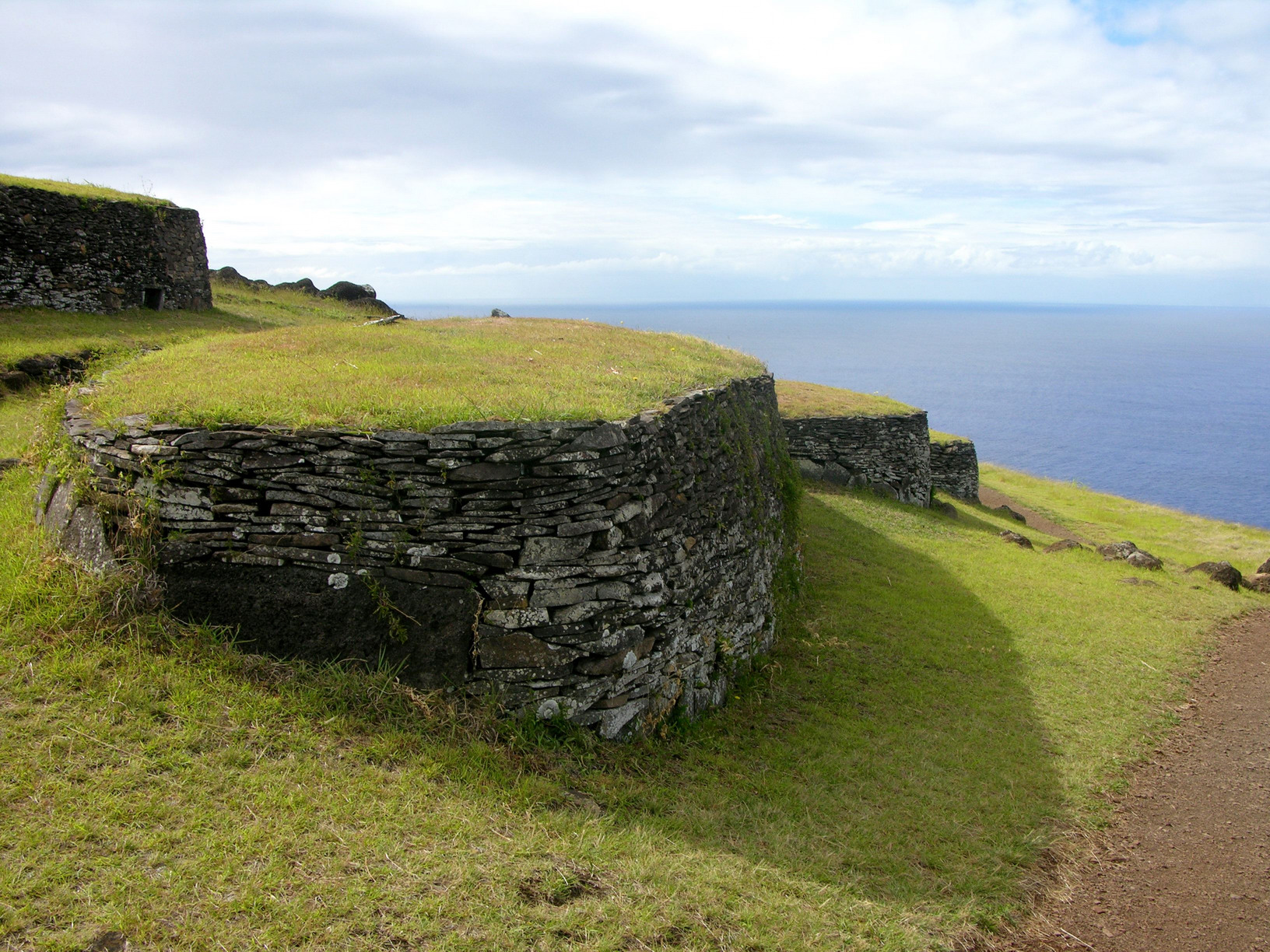
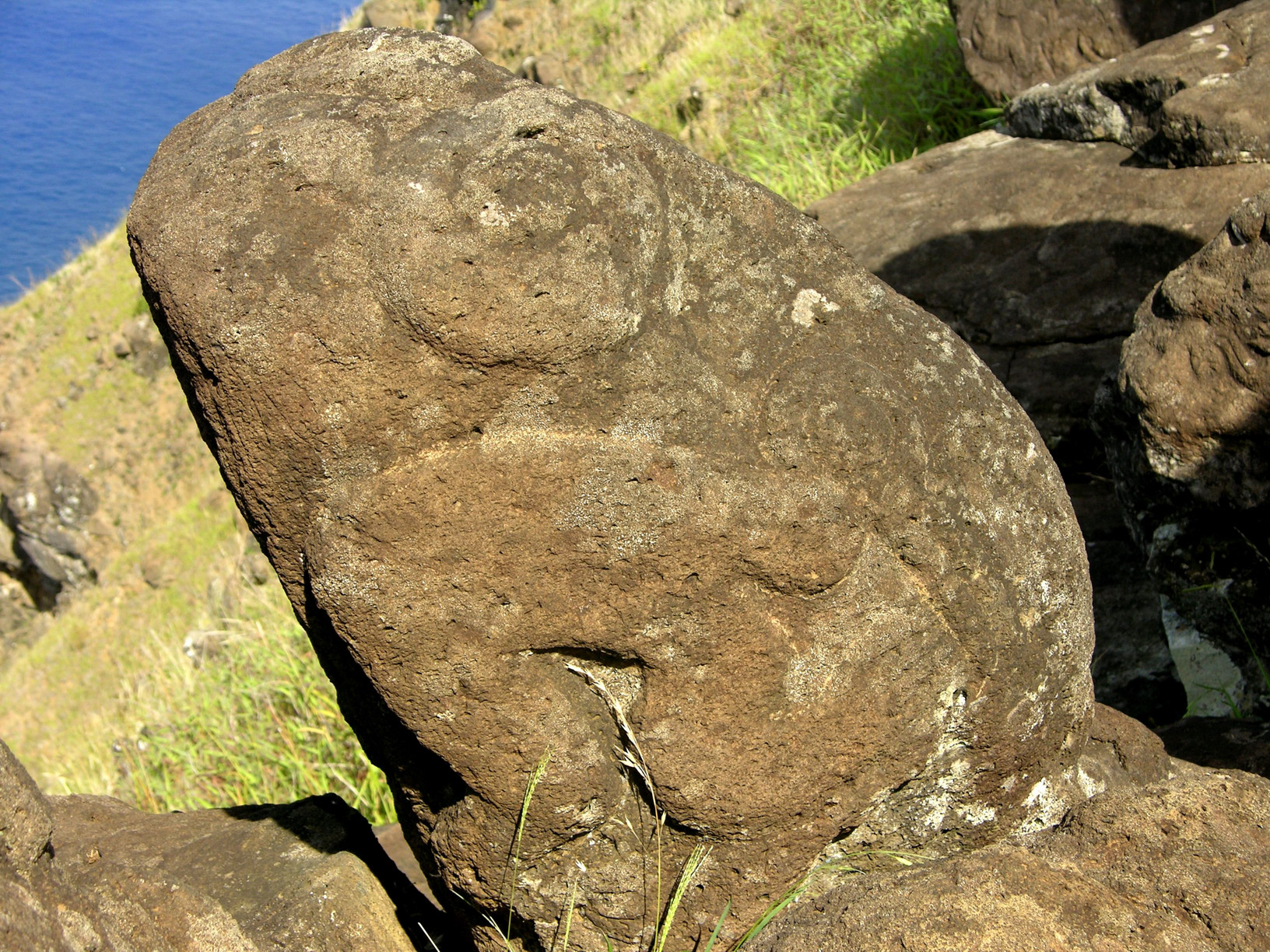
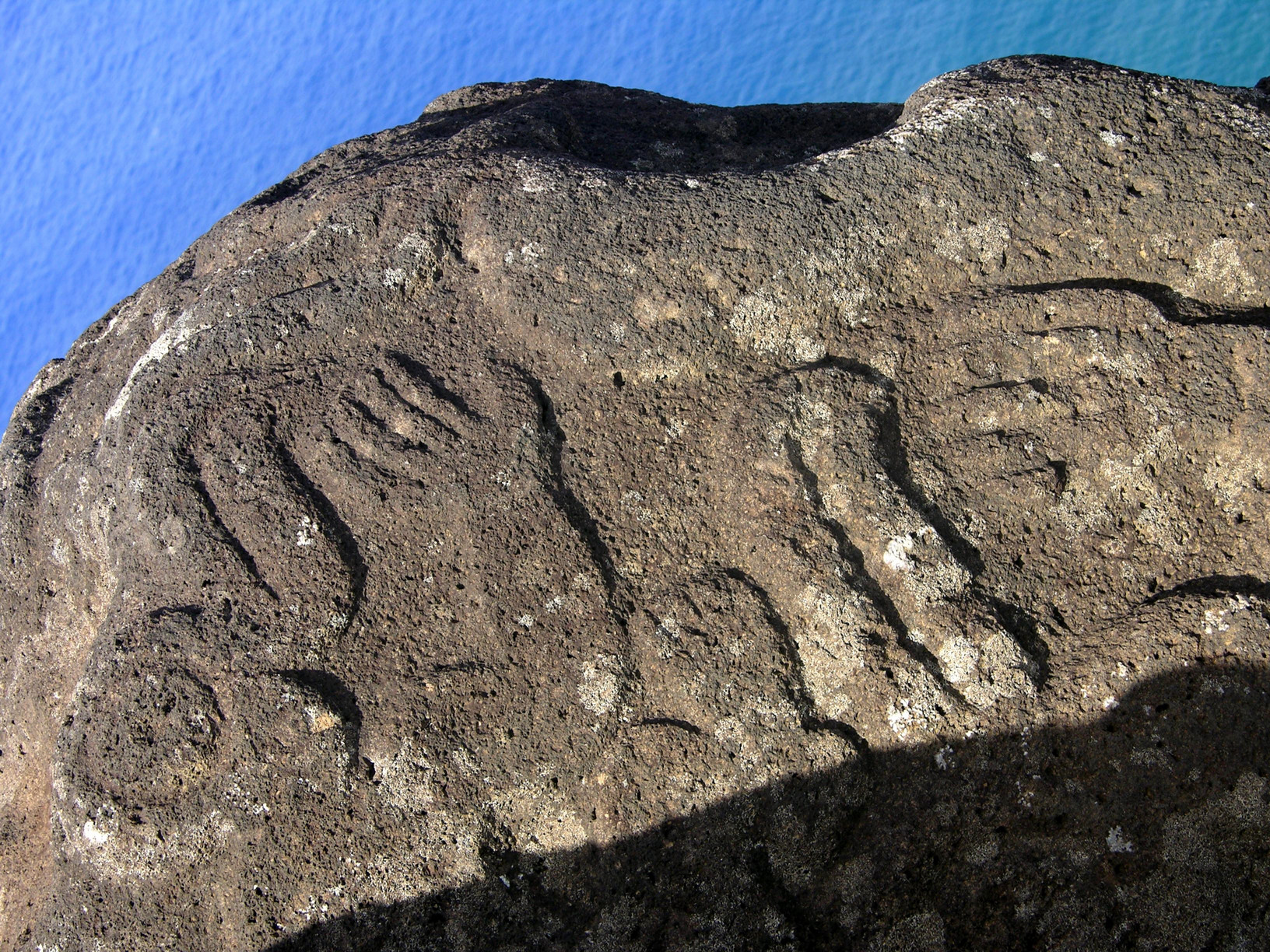
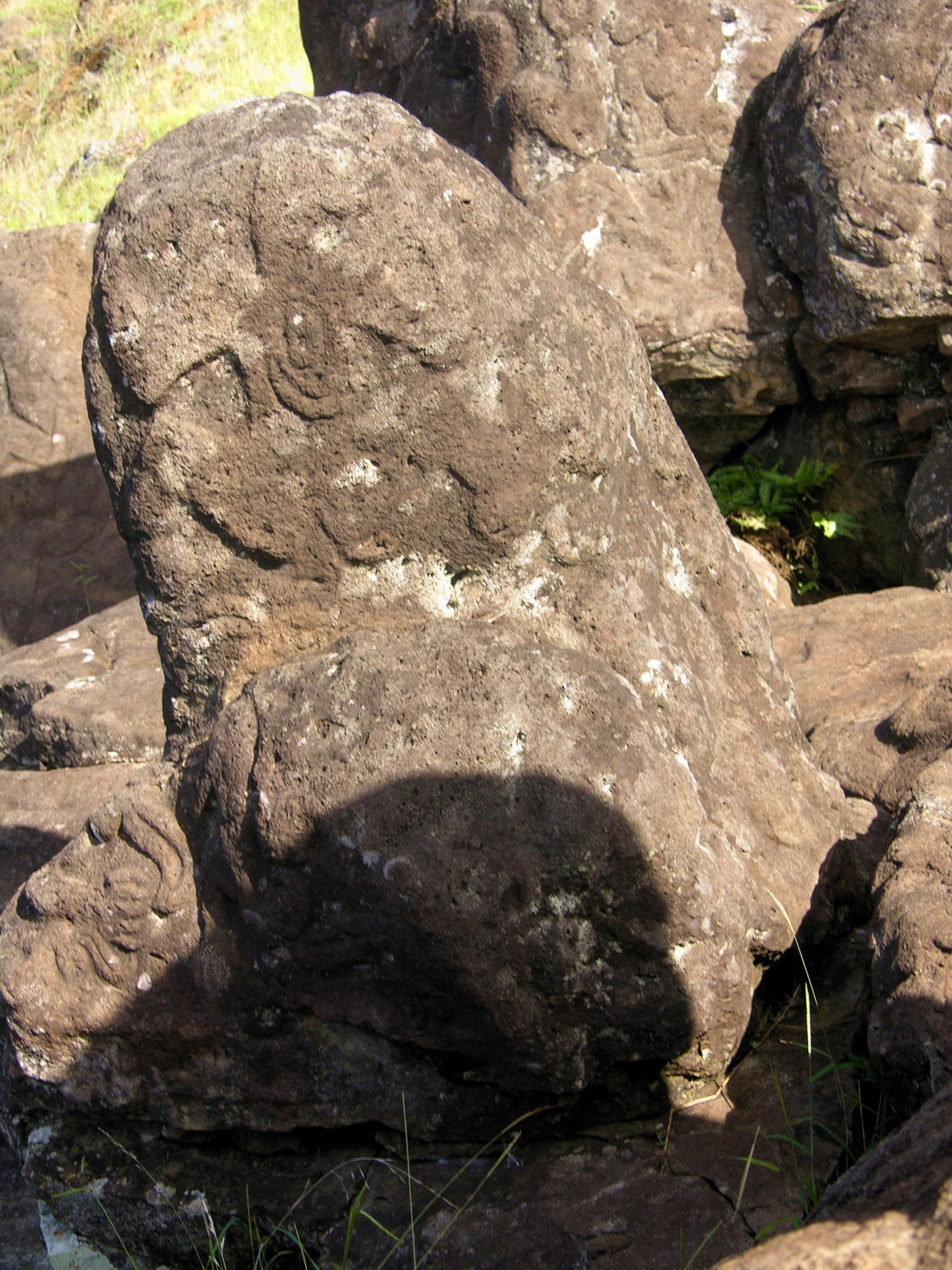
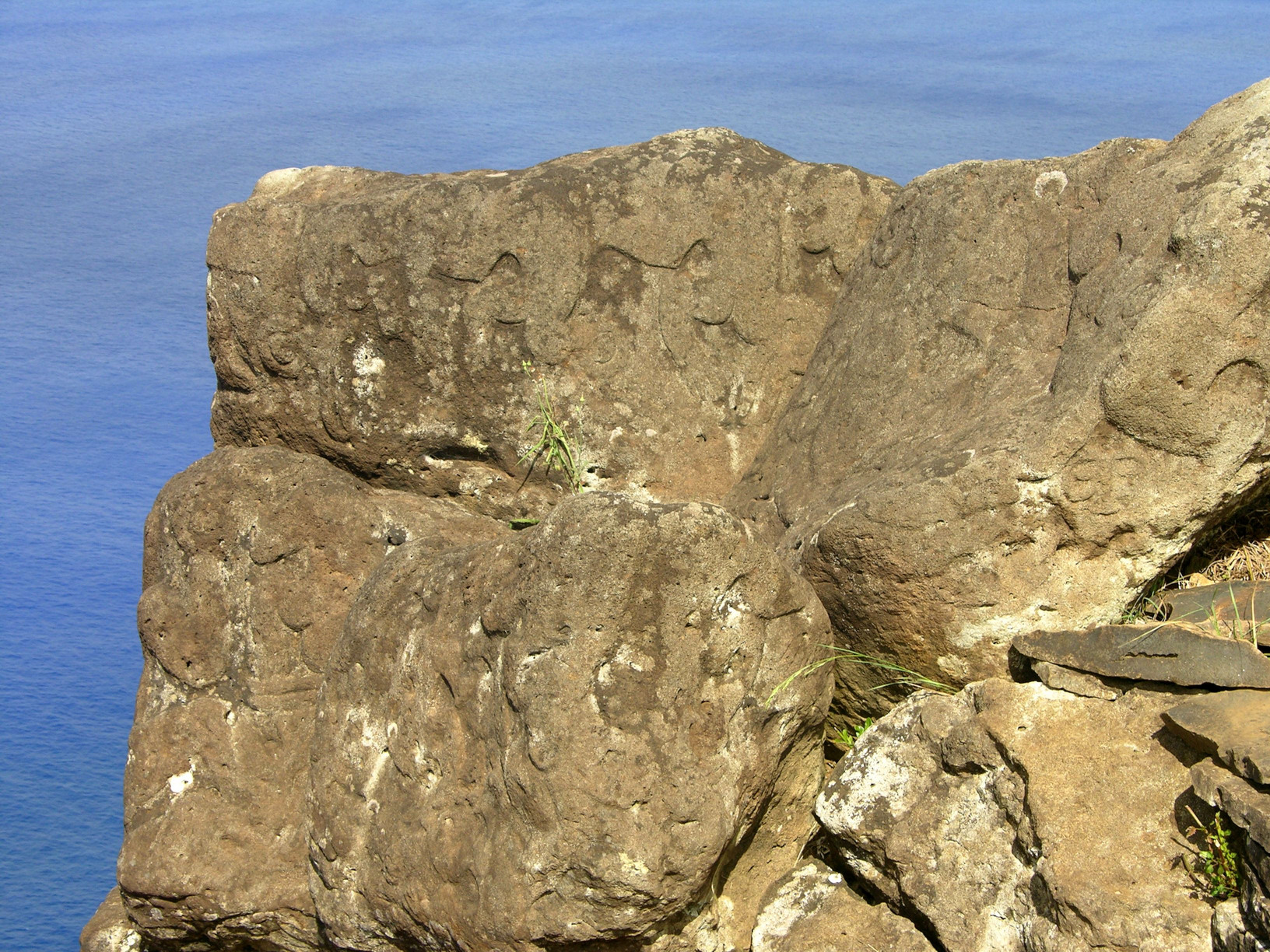
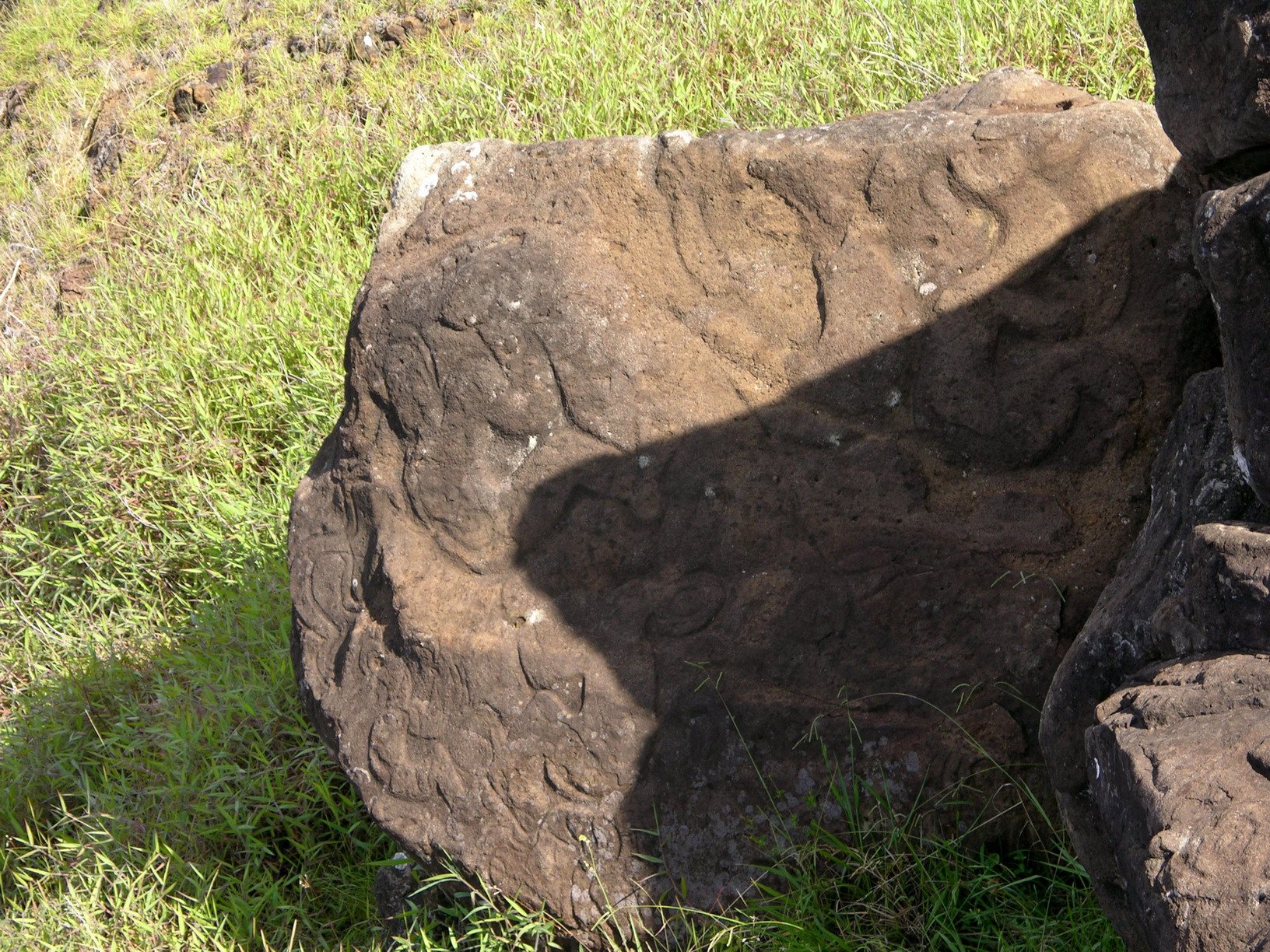
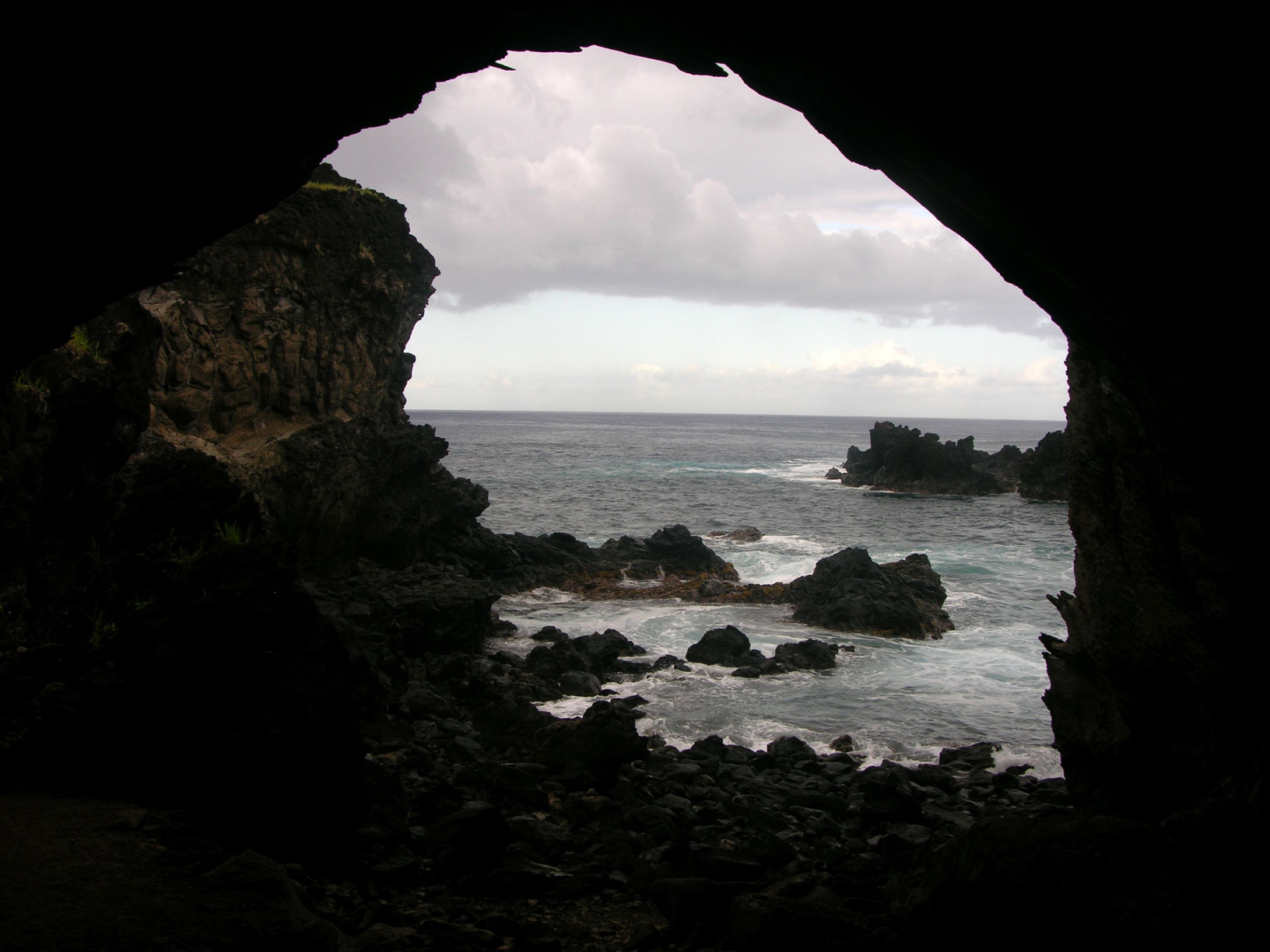
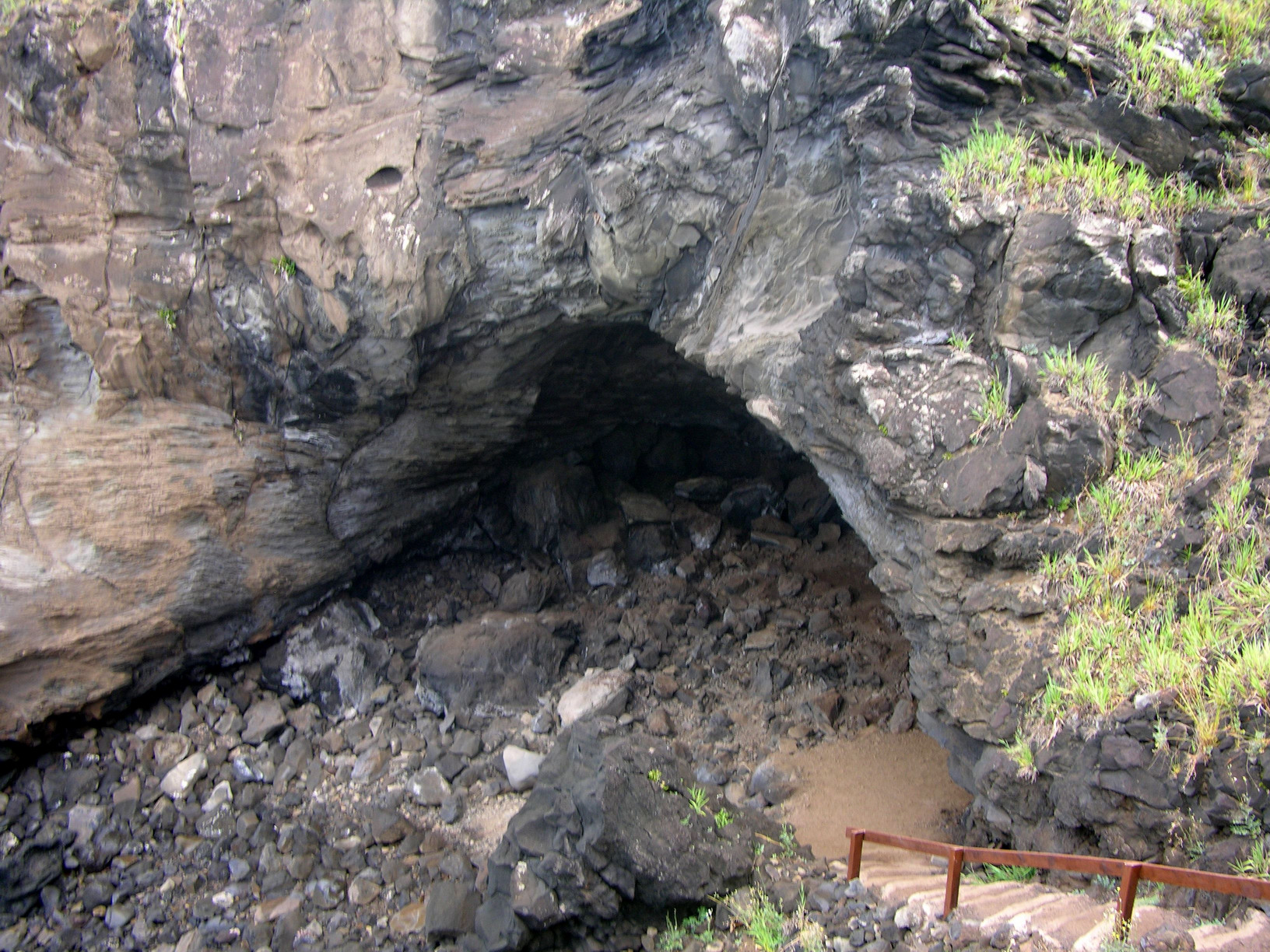
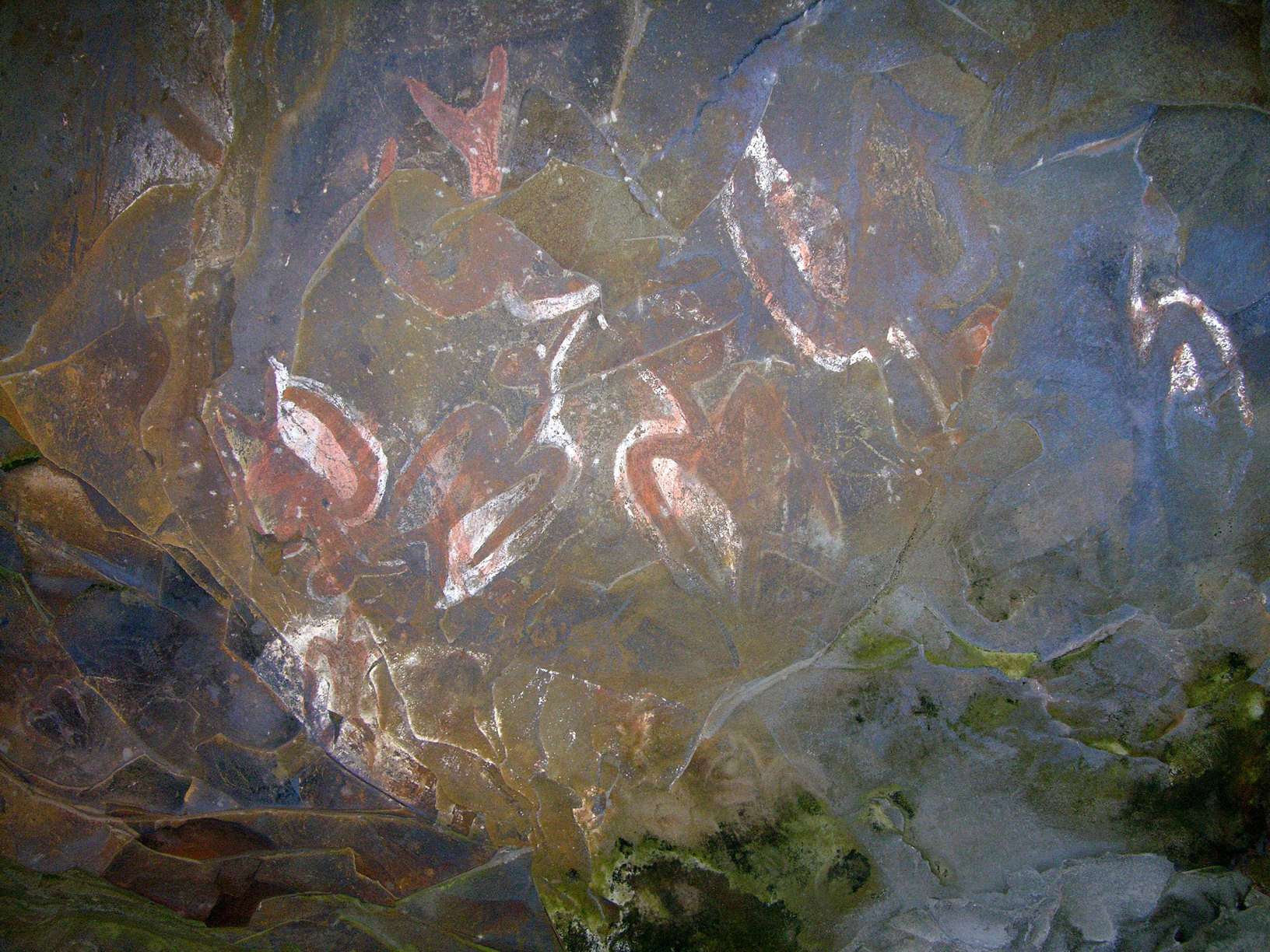
It's a museum now, and there's an admission charge. You can get a taxi from Hanga Roa, but we walked, of course. On the way, on the southern outskirts of Hanga Roa, there's a cave on the shore with rock art, and at the foot of the volcano there's something like a botanical garden with the crops the islanders used to grow. Agriculture was well developed on the island. To improve yields, the islanders planted crops inside circular stone enclosures. The botanical garden is free, but the Orongo museum costs 10,000 pesos. In theory it's also where you're supposed to pay for walking and camping on the island, at 10,000 pesos per person per day. Anyone unwilling to pay to go into the museum can, of course, imagine themselves a Birdman and climb in from the cliff side after following the crater rim around the other way. I checked. It doesn't take any particular climbing skill. Tanya and I paid, though. The museum needs something to live on.
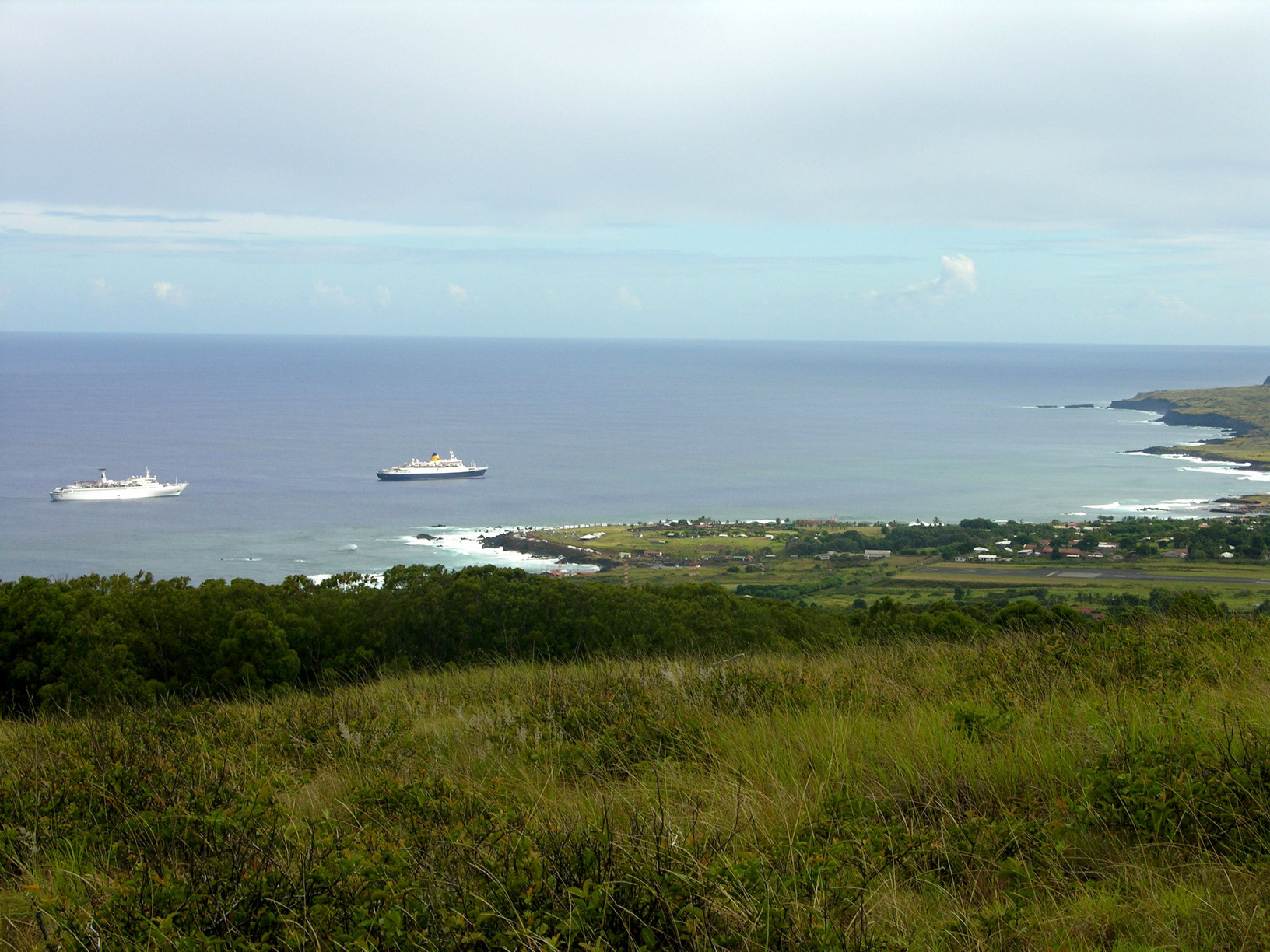
At the rim of the crater we met some Poles. They recognised our Russian and we had a lovely chat. I've always respected the Poles for their independence and their refusal to put up with Russian tyranny. It was they, in fact, who started breaking up the Soviet empire and showed that socialism was a dead end. It's thanks to the Poles that we were travelling around the world. For that we owe them our thanks.
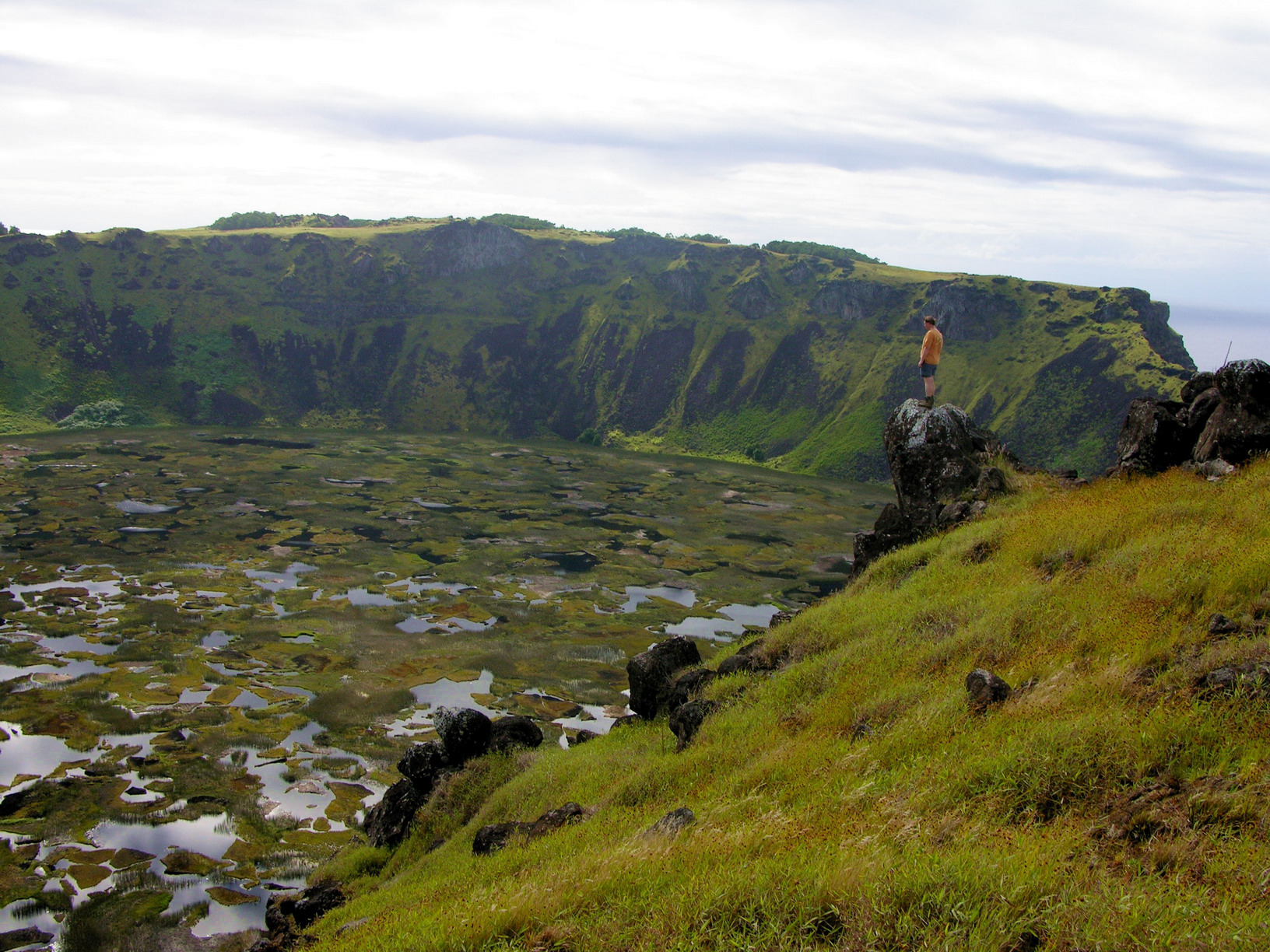
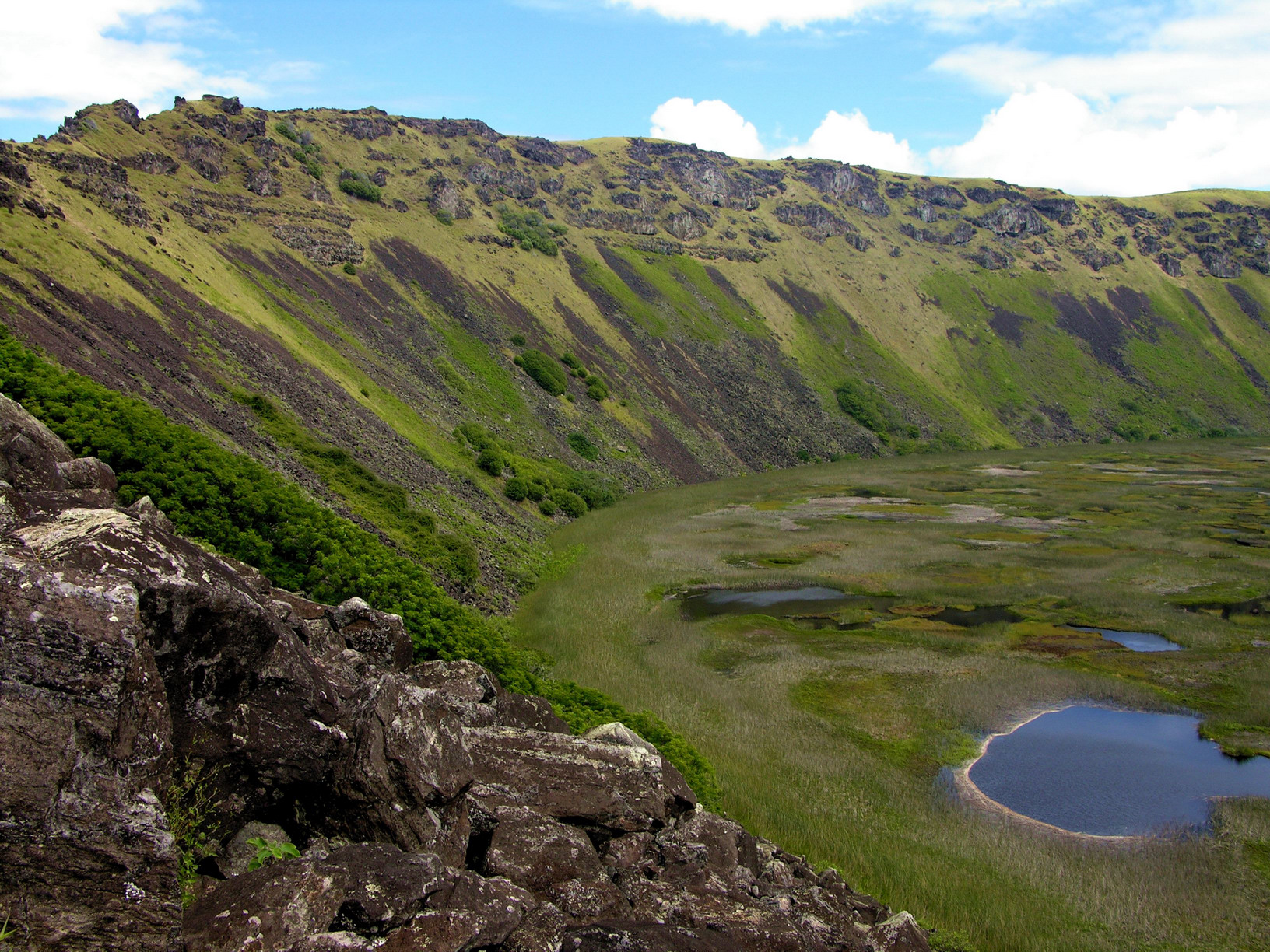
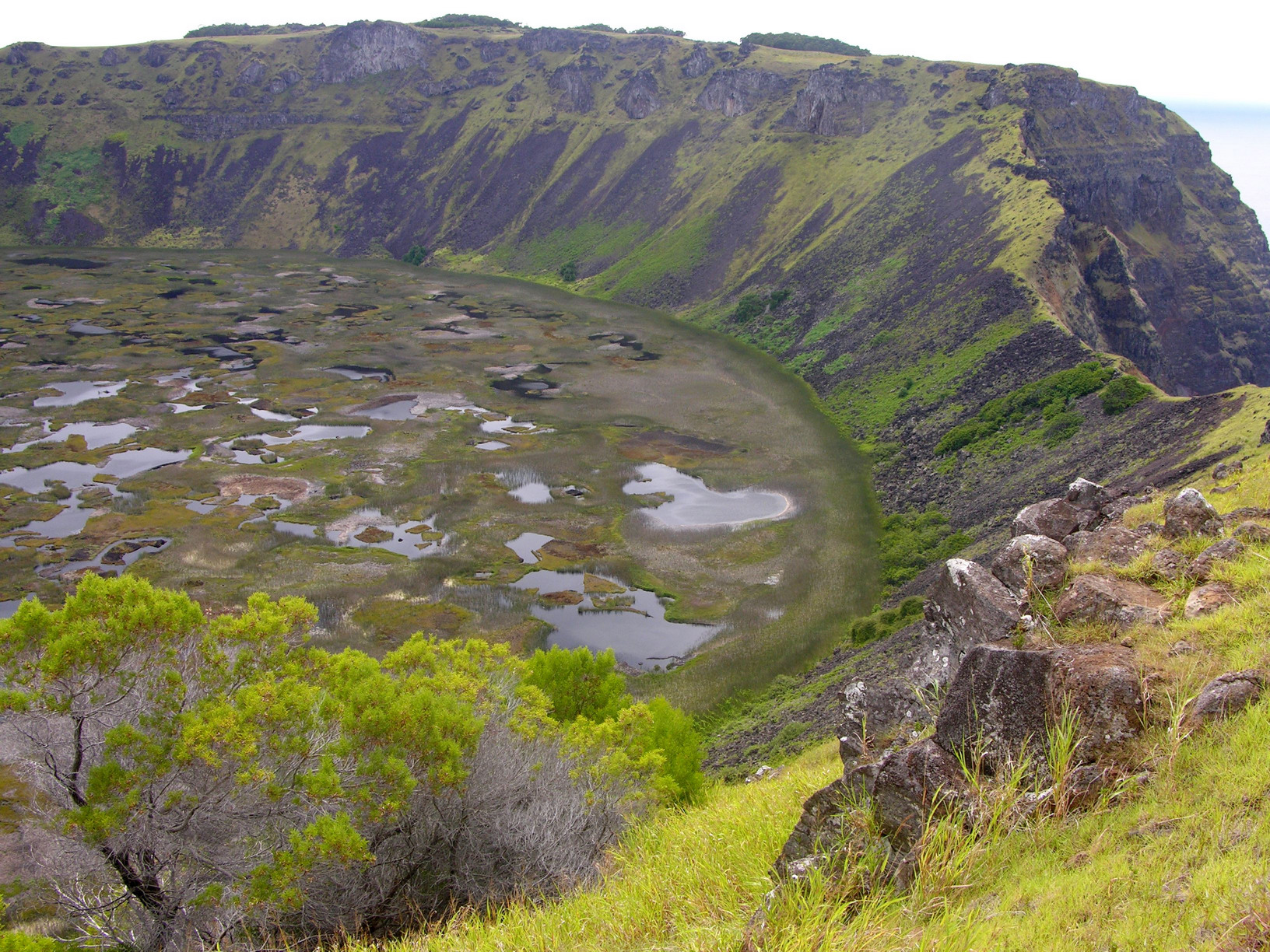
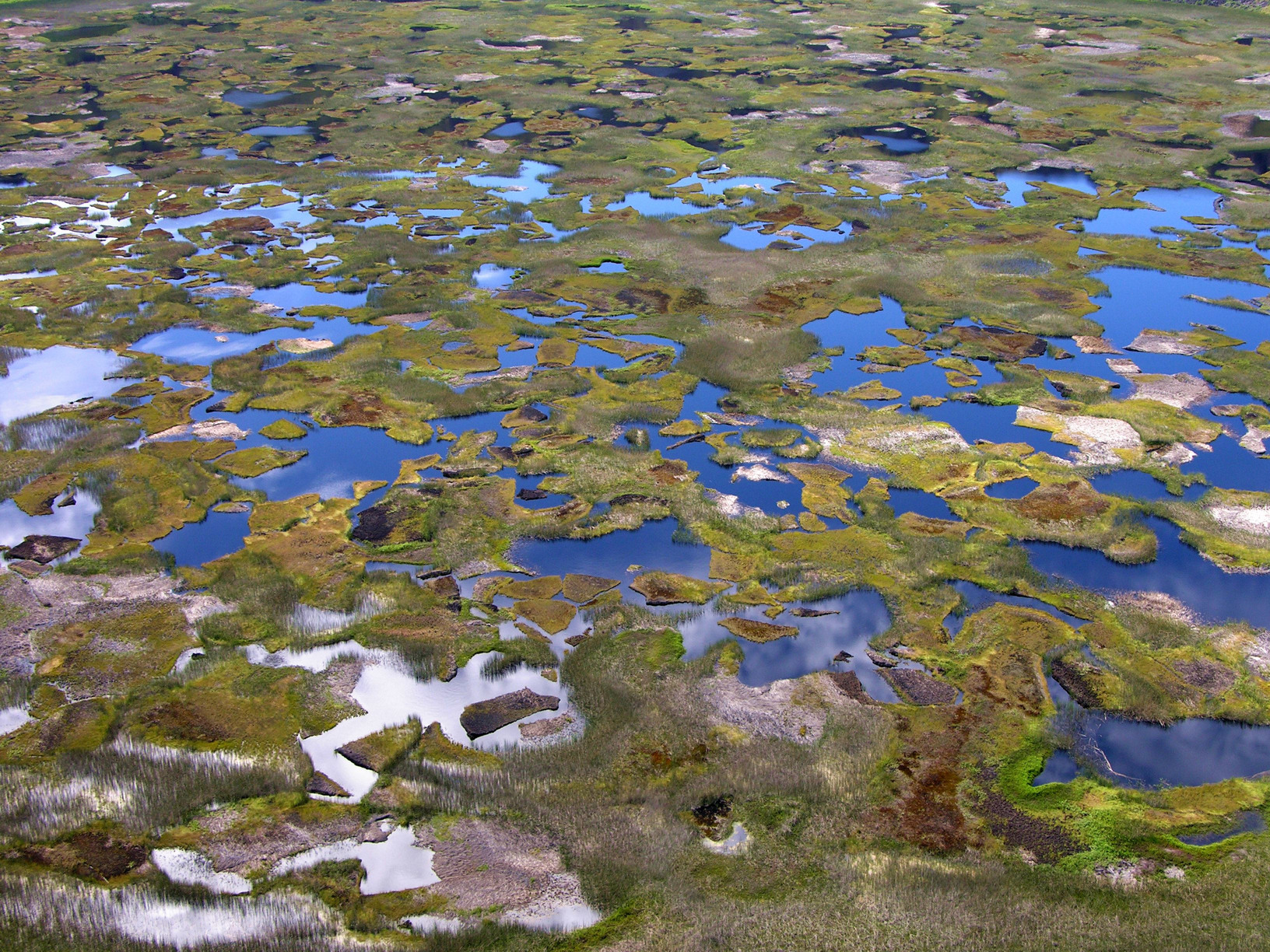
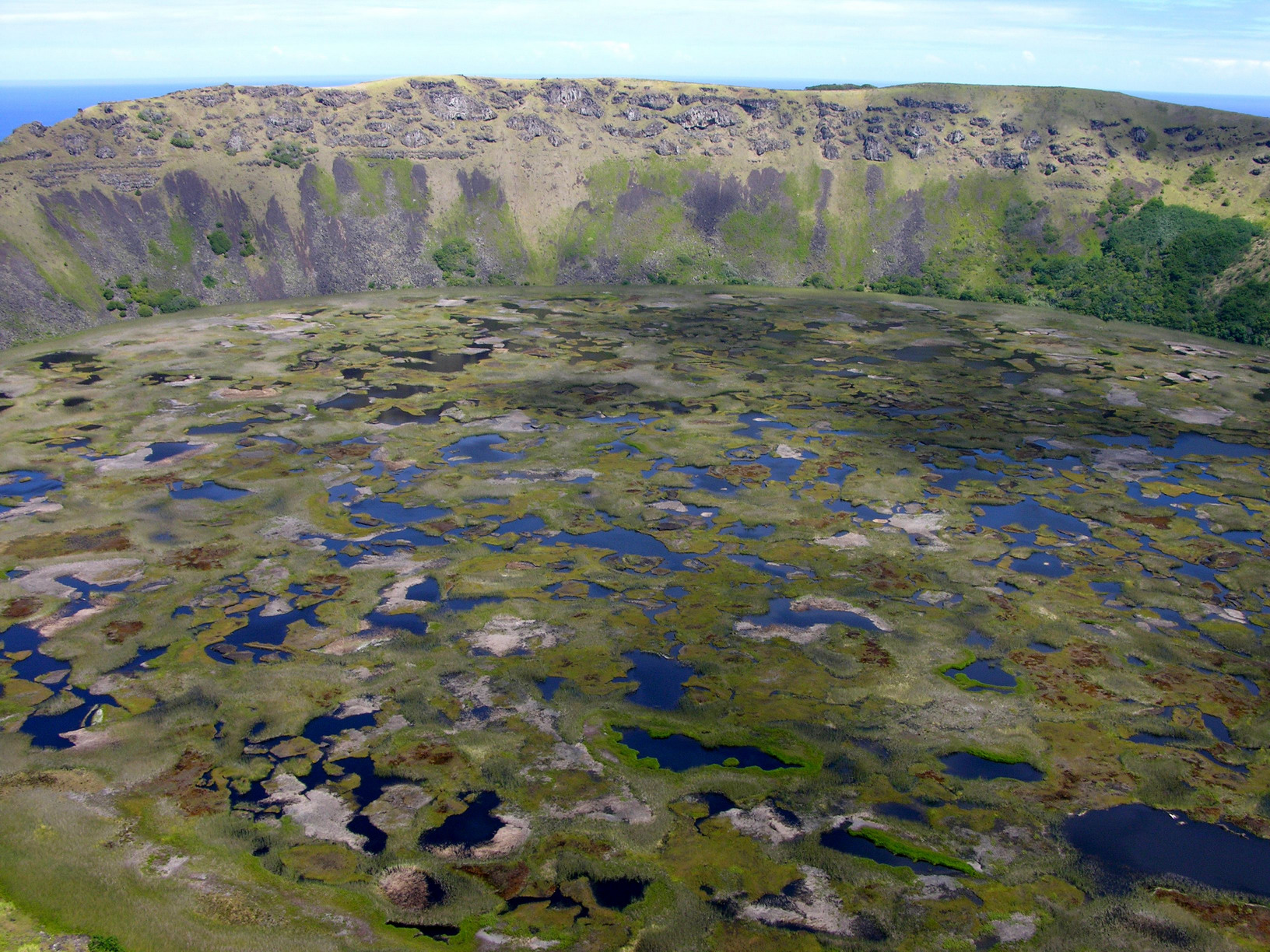
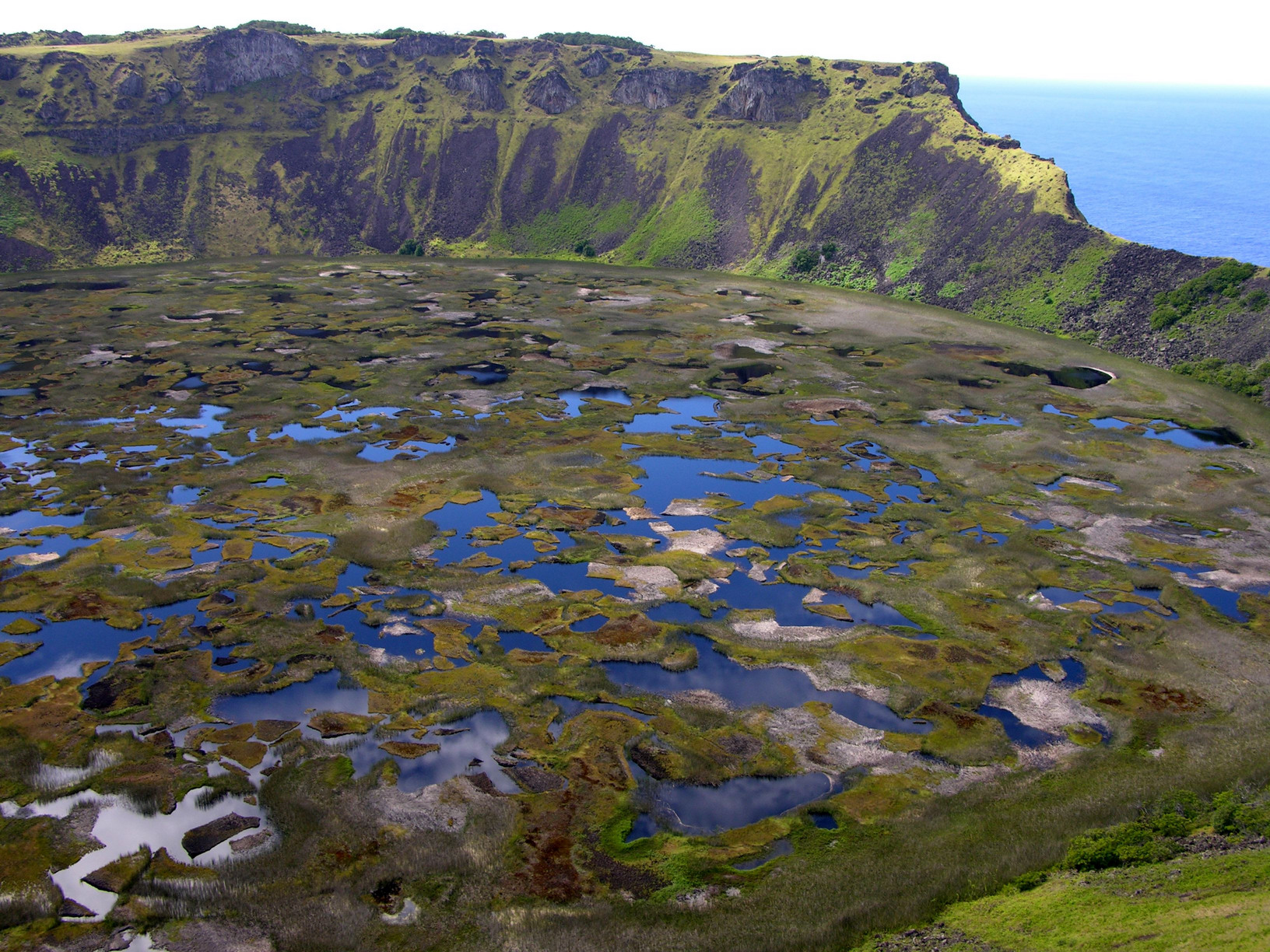
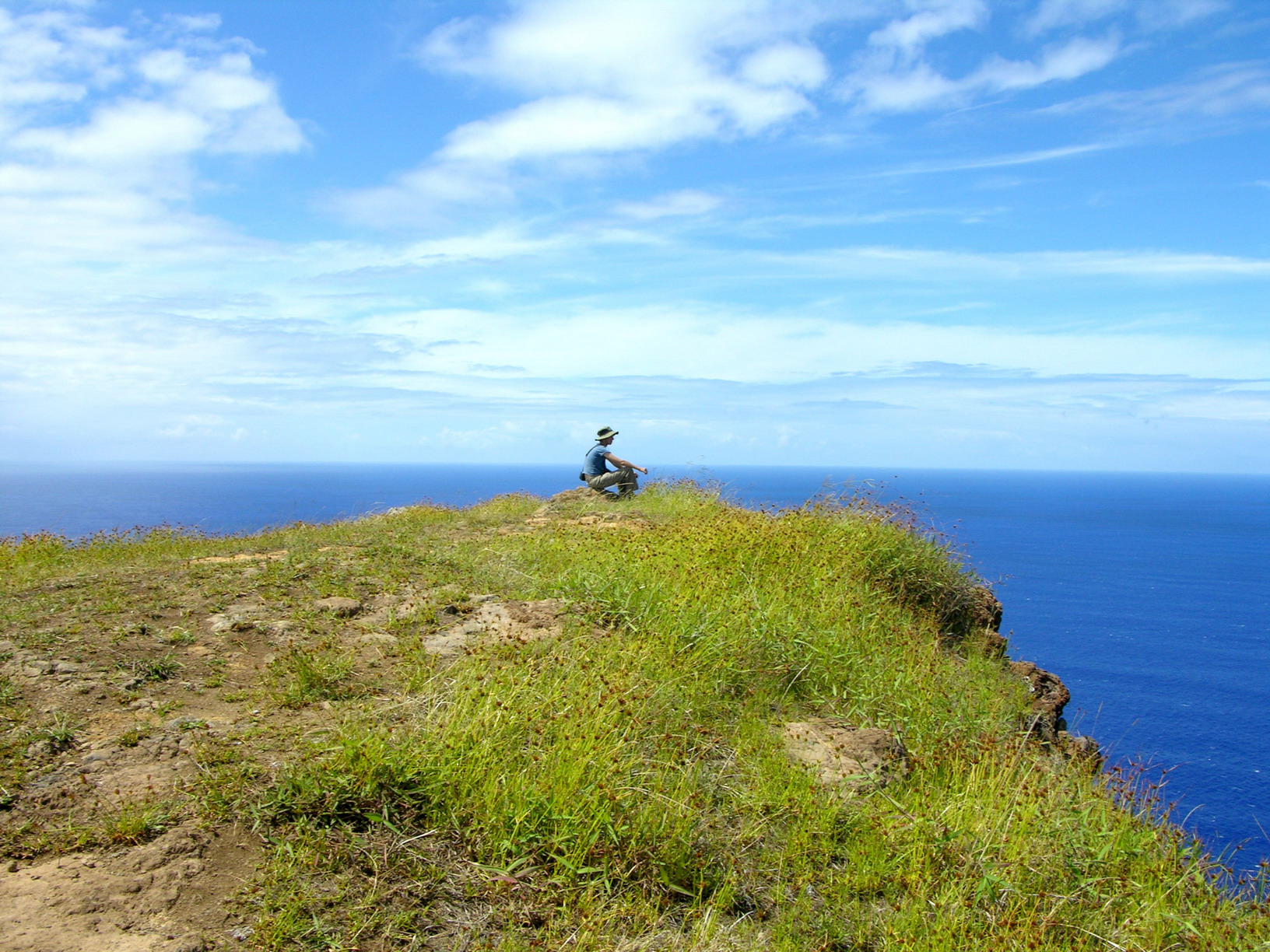
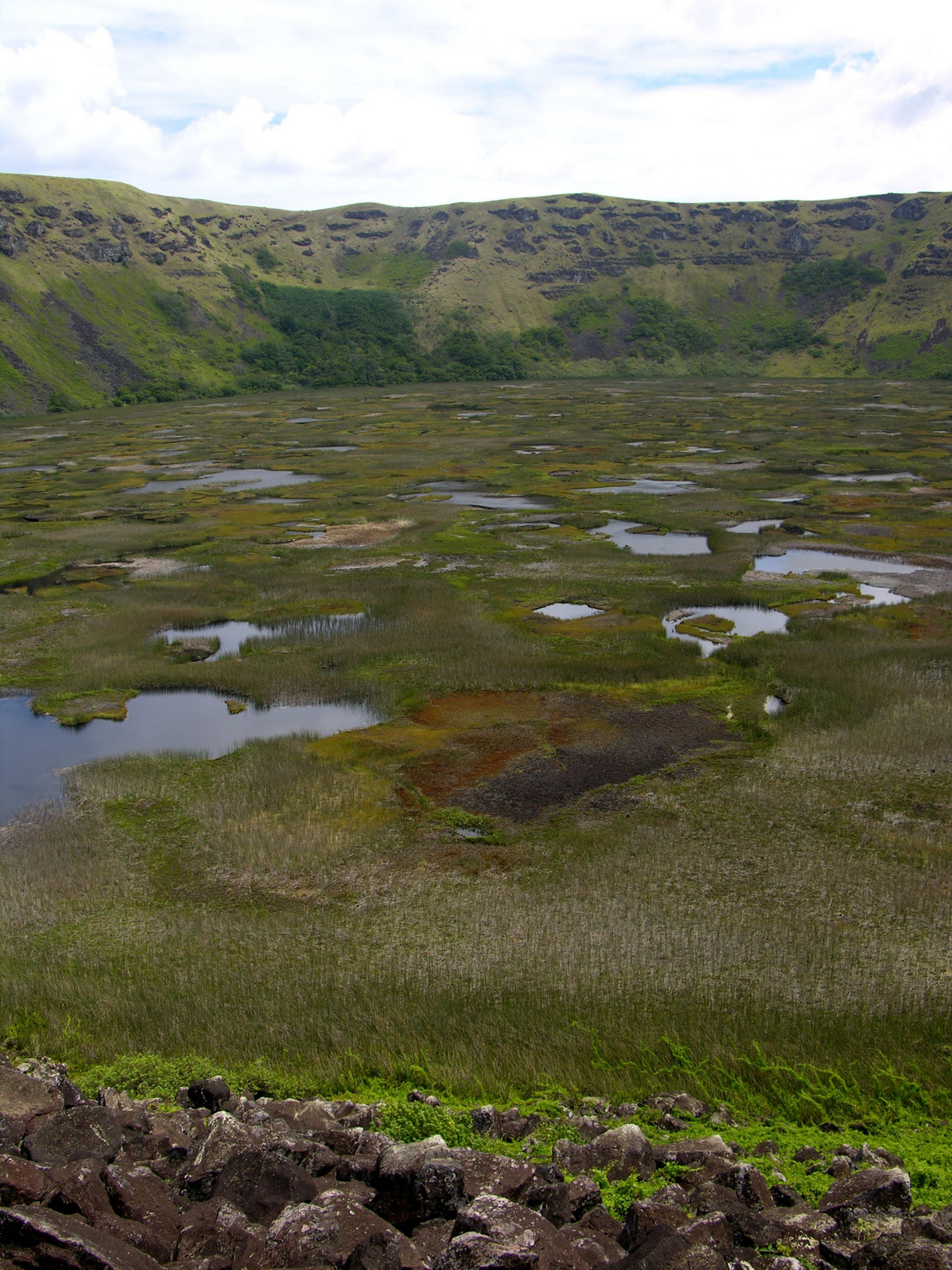
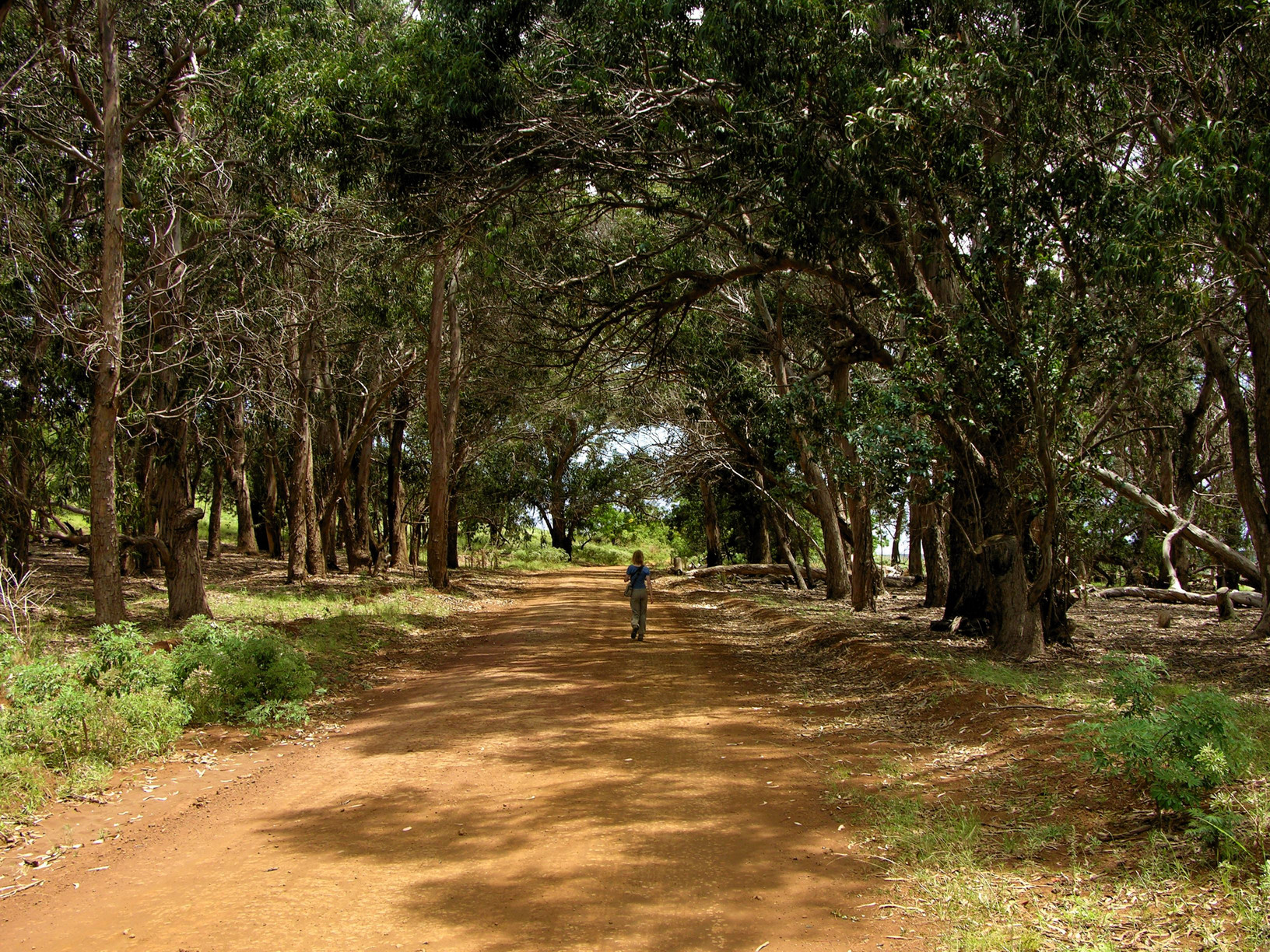
After the museum we walked around the crater rim. The view was staggering. On one side was the whole island. On the other was the ocean and the island of the Birdman. Below us was a marshy lake at the bottom of the crater. Part of the crater on the seaward side has eroded and is considered impassable. Tanya thought better of it, but I ran over and back before the museum and also went down to the bottom of the crater. The rocks were easy to get across. The one drawback was a two-hundred-metre climb twice over in humid heat with no wind. Down among the rocks in the crater there was only the vapour rising from the bog and not a breath of air. Camping there wouldn't work, by the way. The huge boulders go straight into the bog, and you can see the whole floor of the crater from the museum office. There are good campsites east of the crater in the eucalyptus forest. You can even get to them in a hire car.
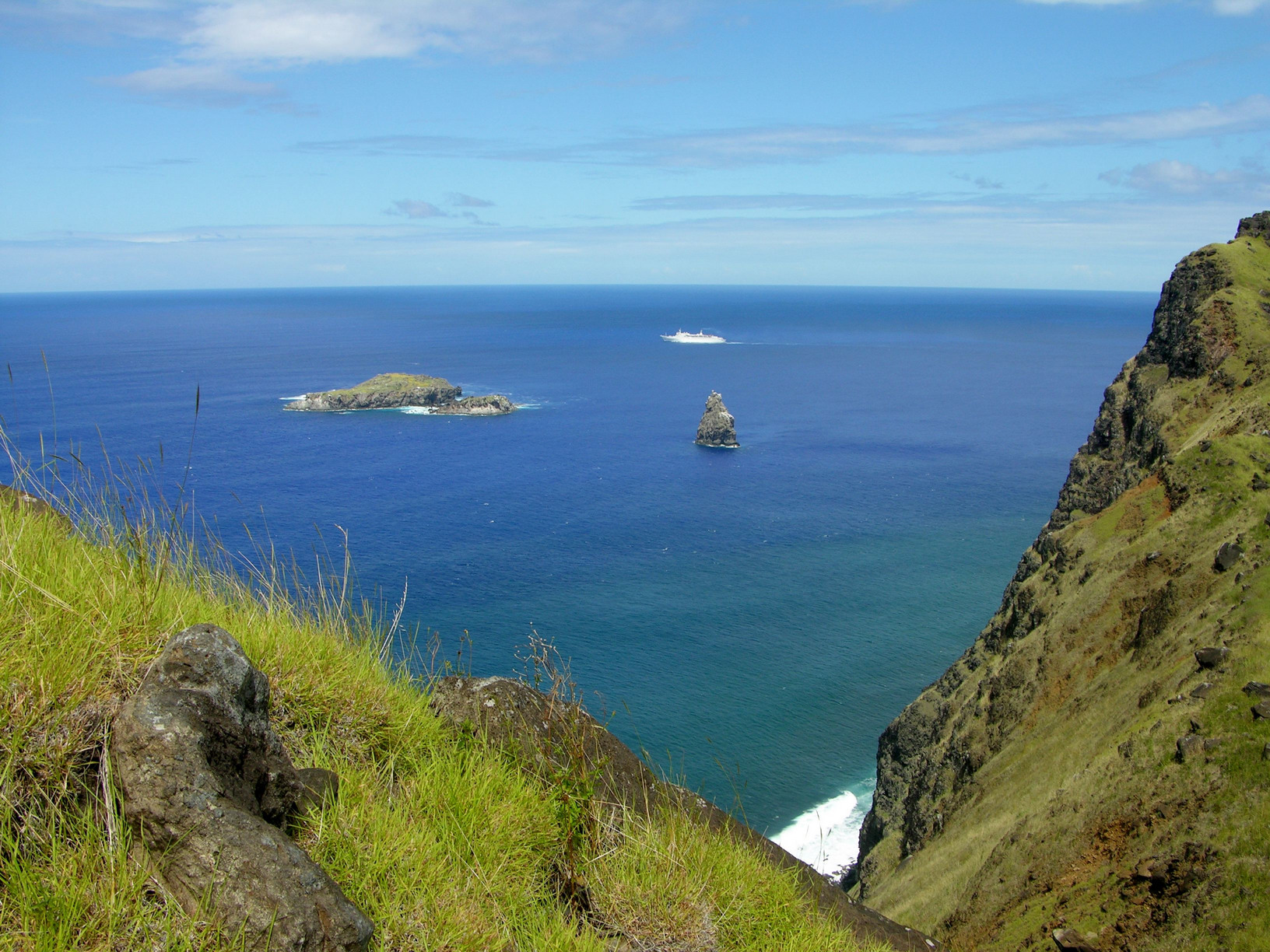
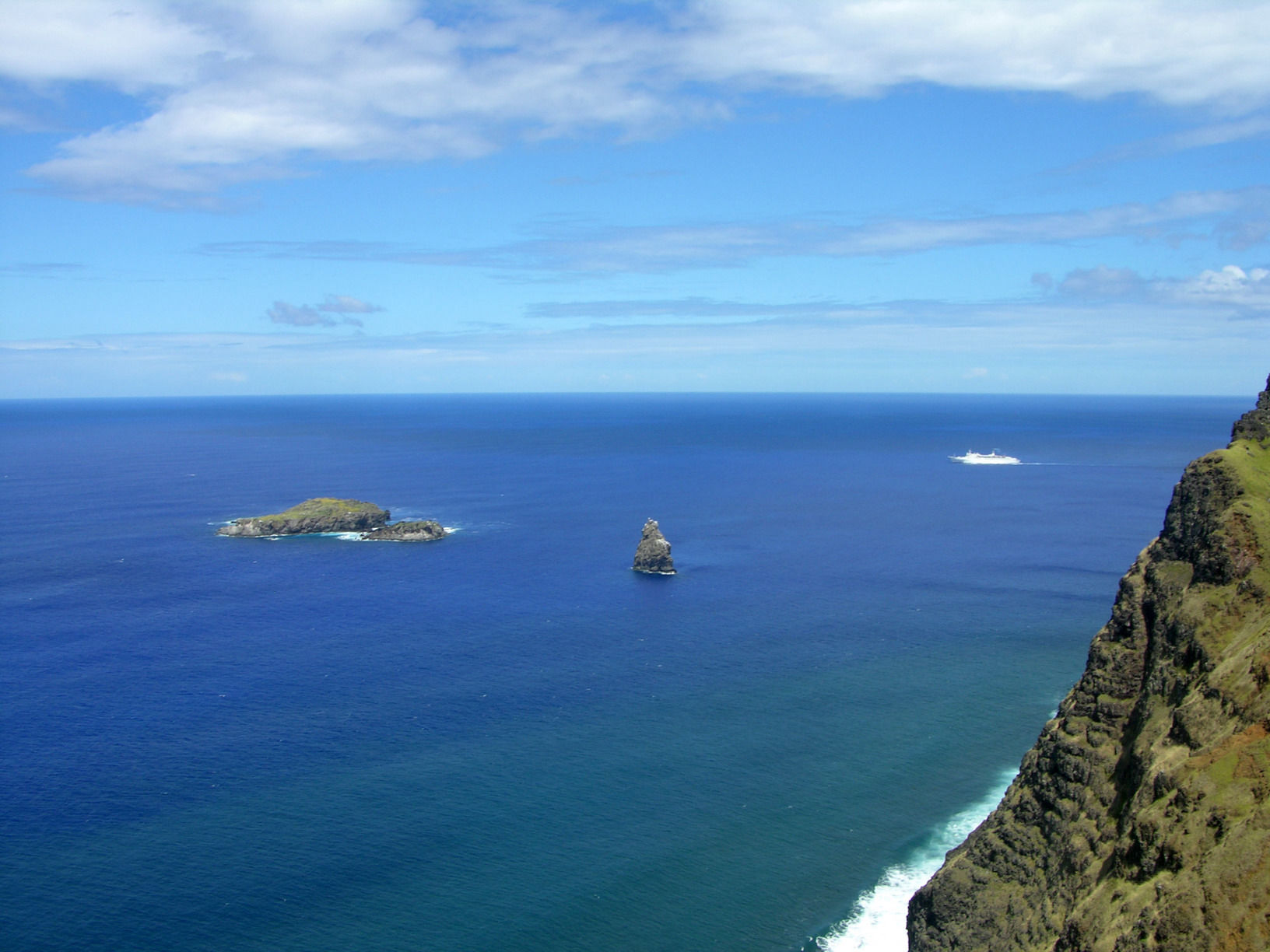
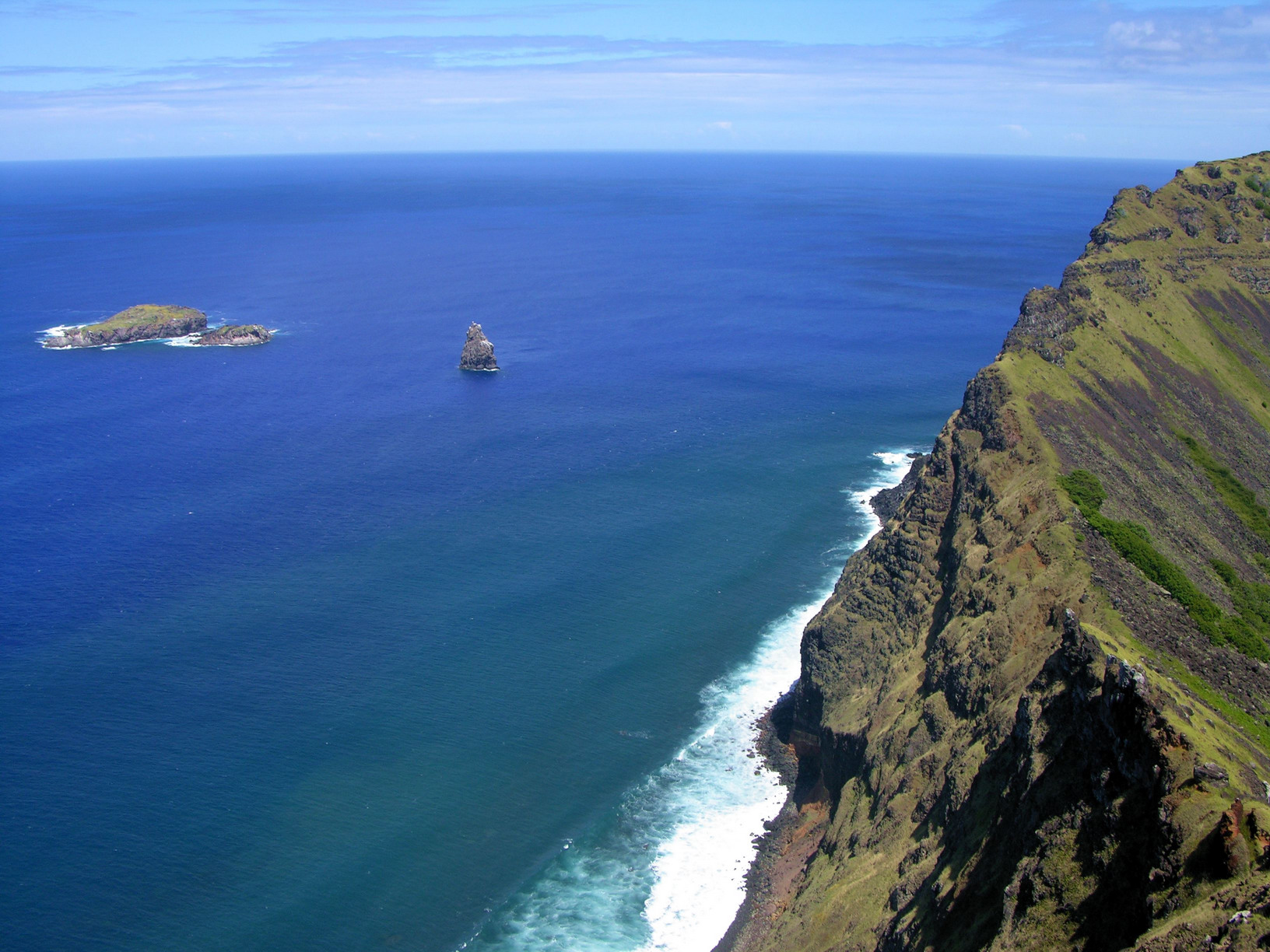
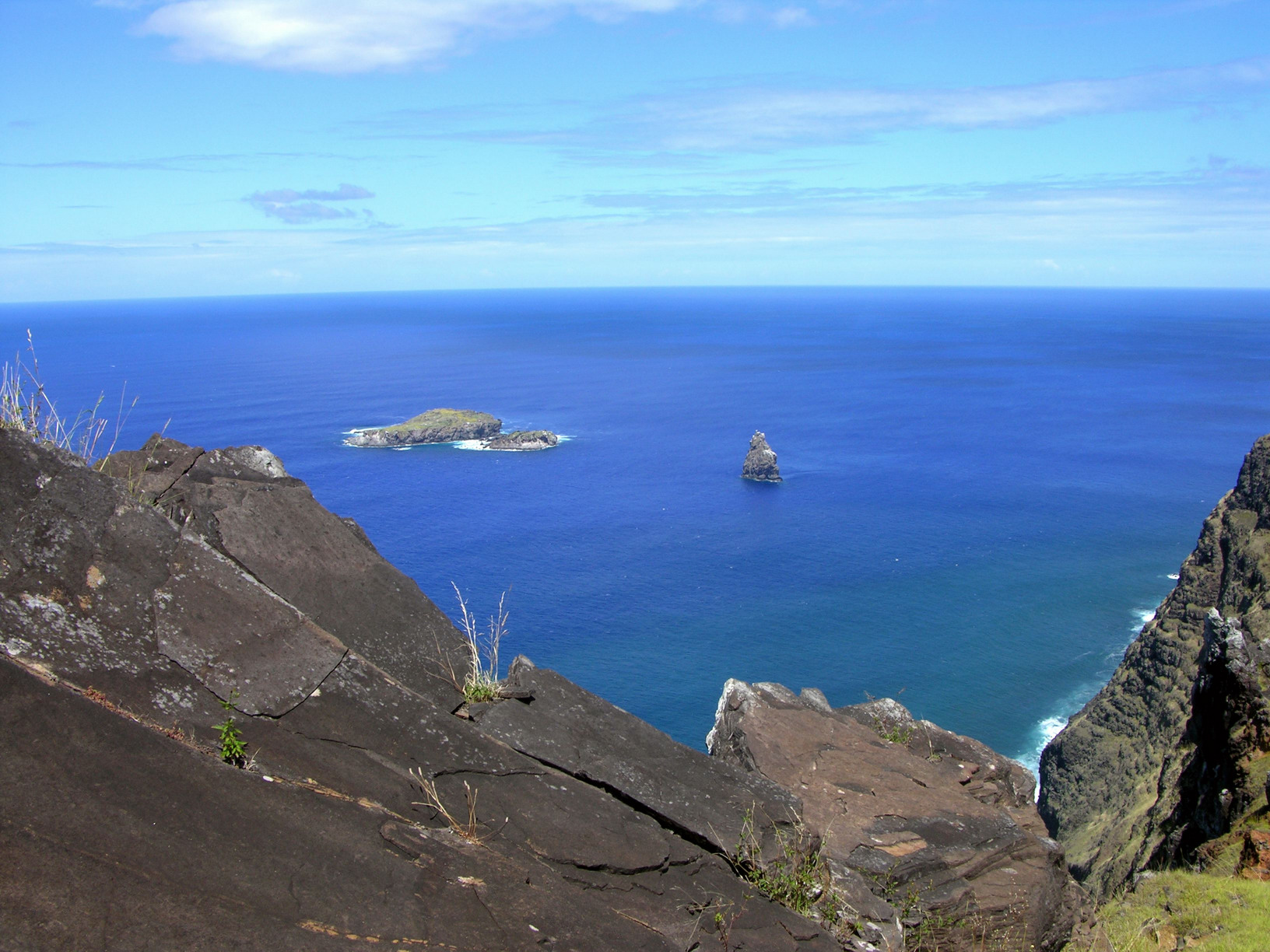
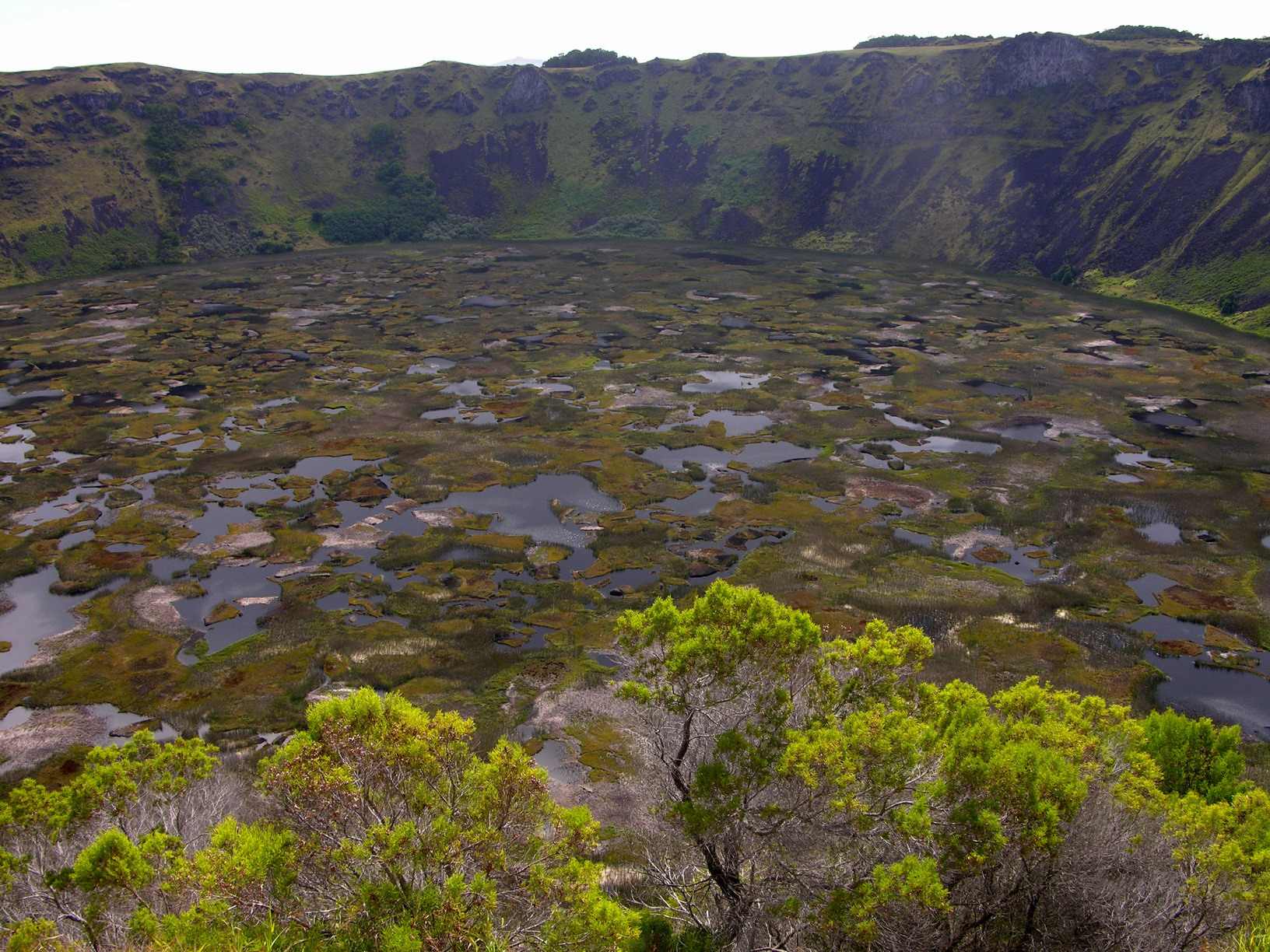
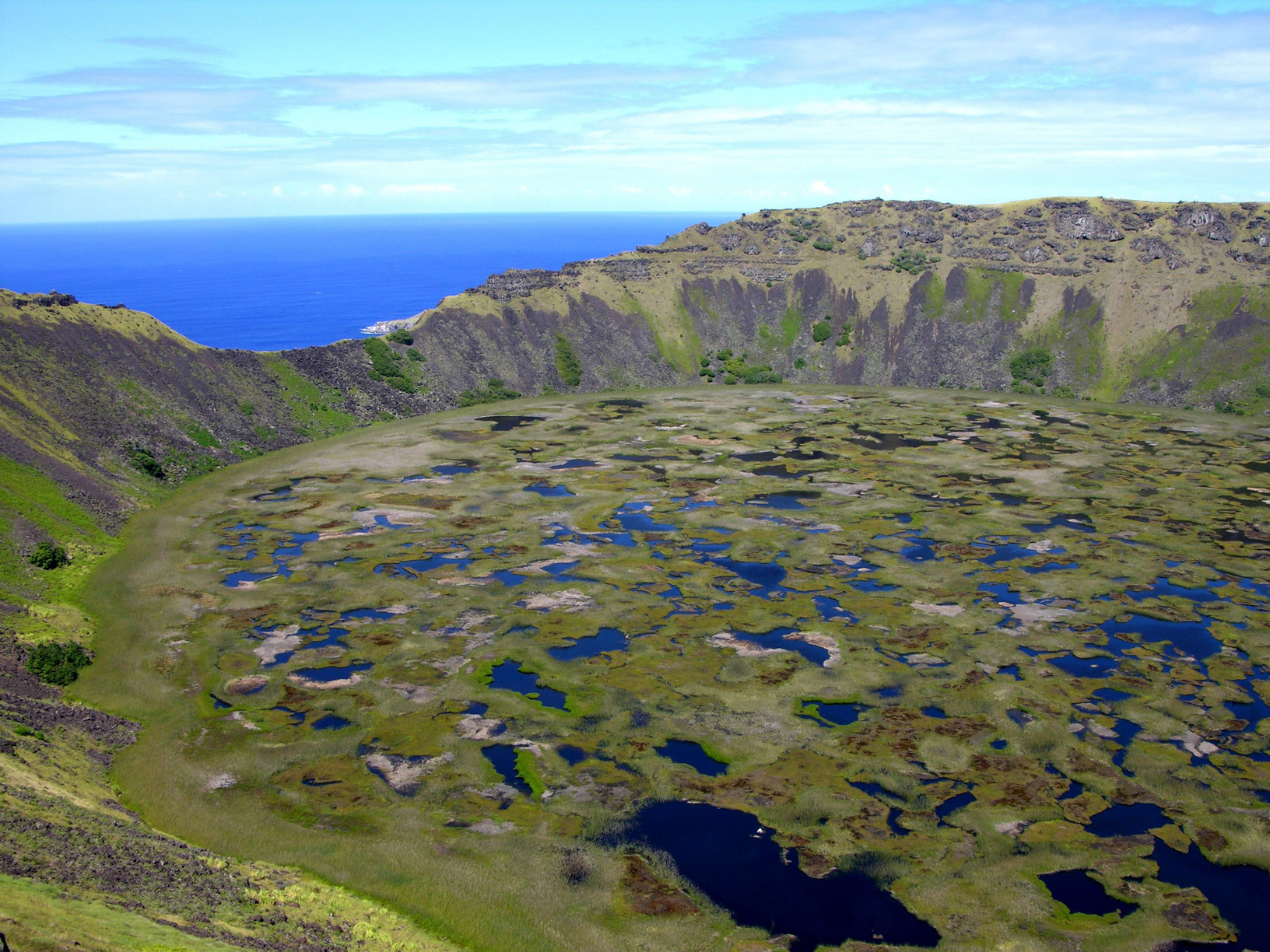
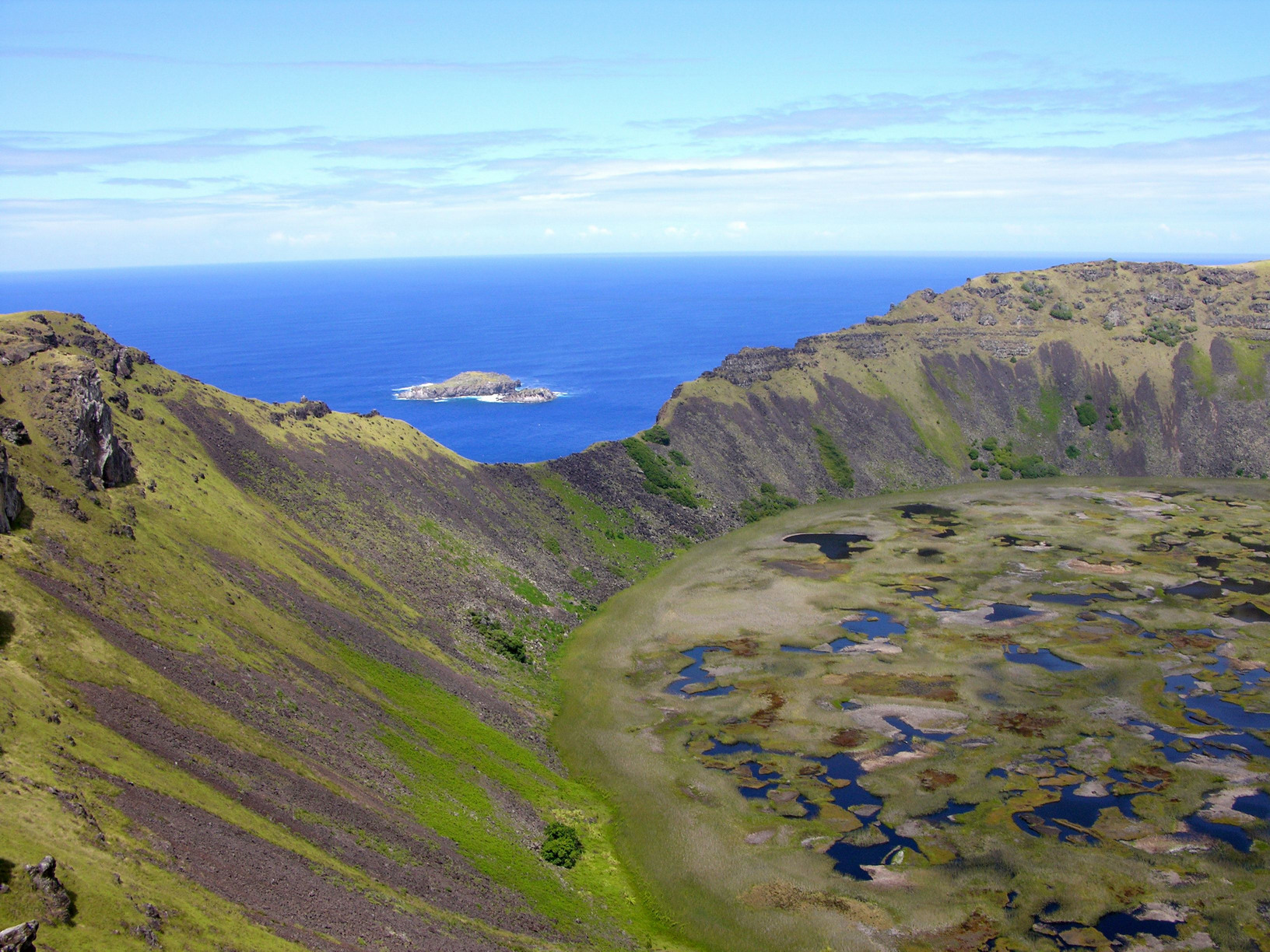
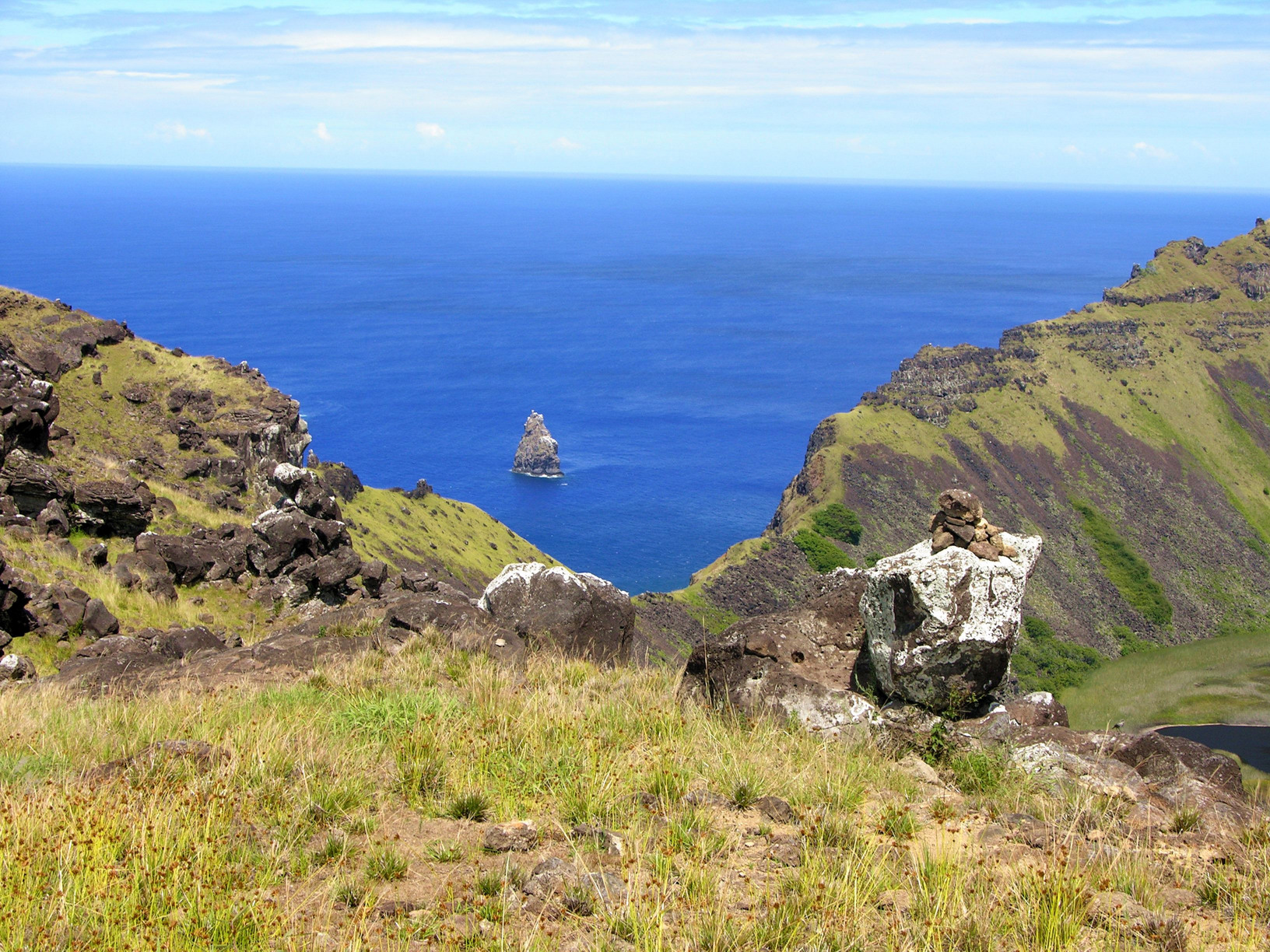
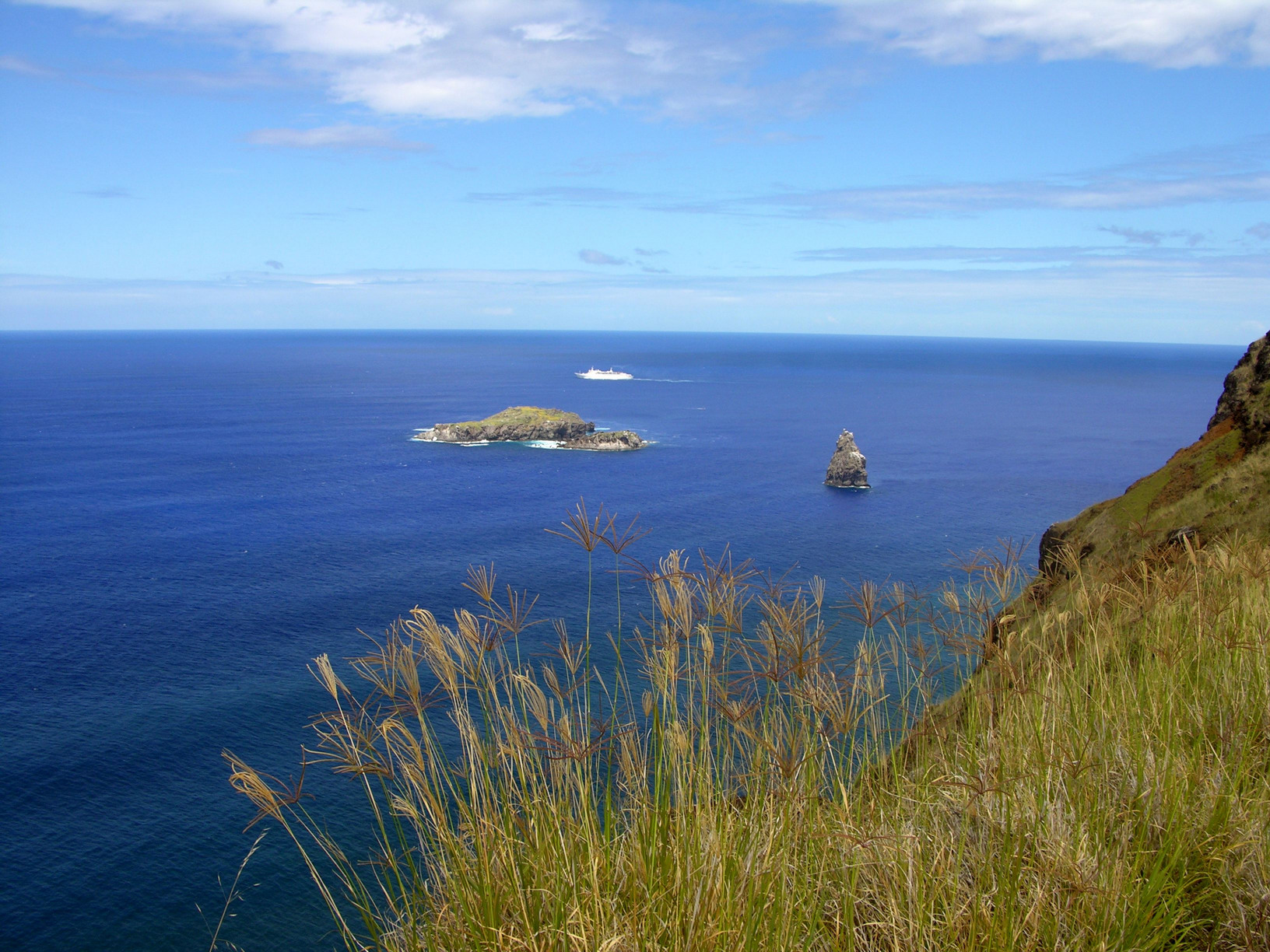
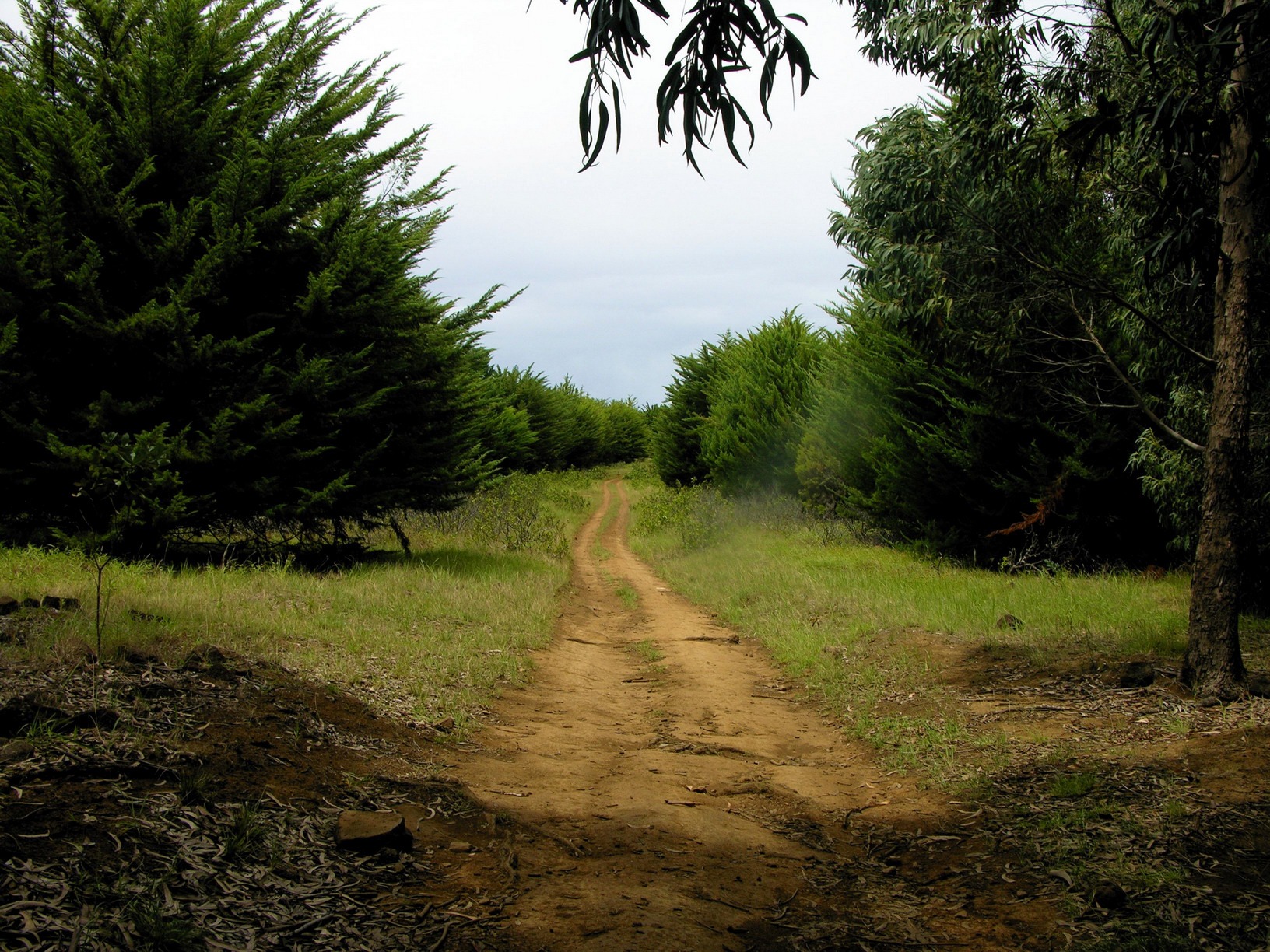
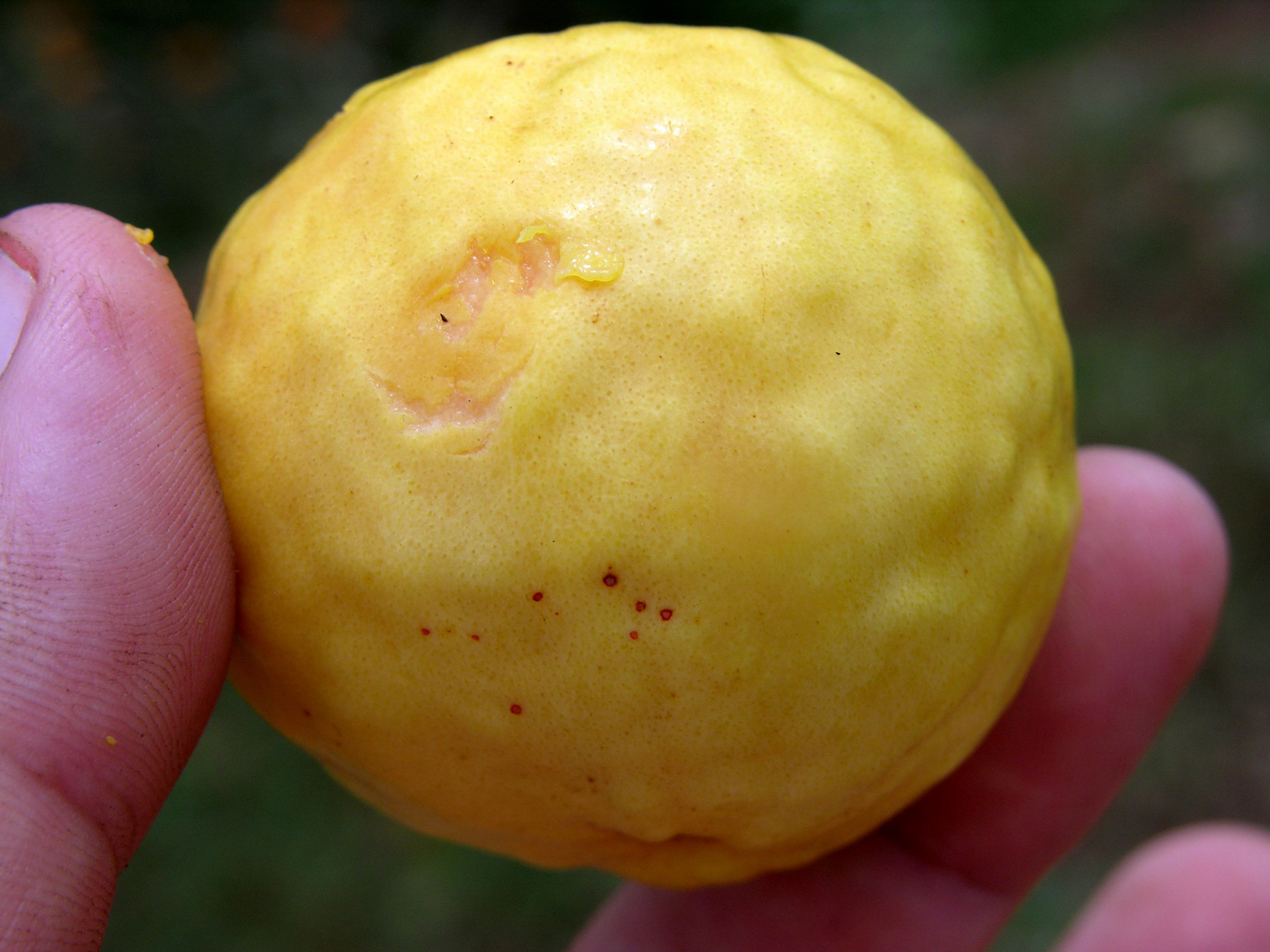
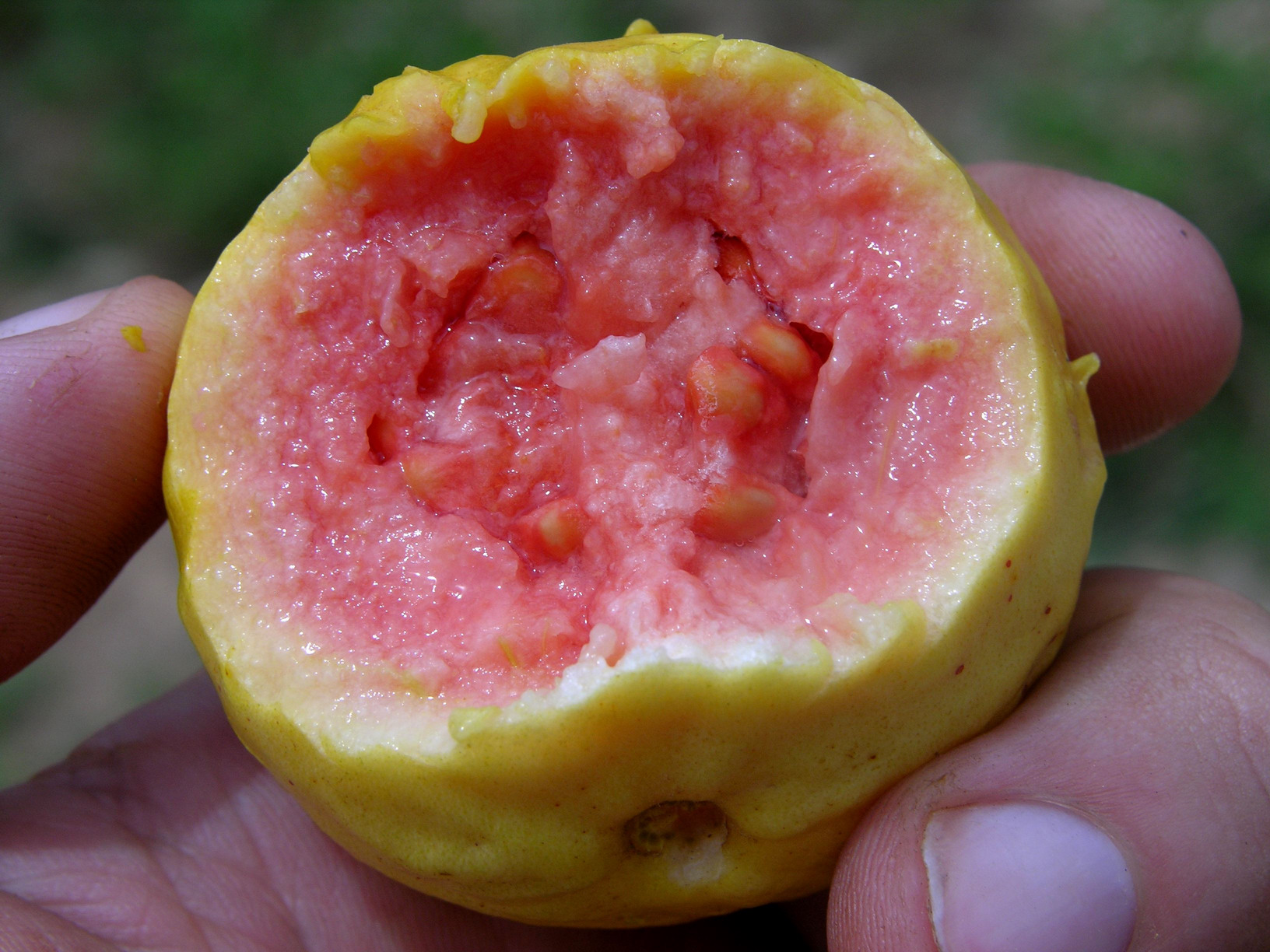
We took our time going back along the many little tracks. Wild guava bushes lined the paths everywhere. The fruit had just ripened. We ate and ate. It was delicious, though I did wonder how my body would react to three kilos of unwashed guava. My body turned out to be resilient, or perhaps the guava was good for me.
On a Sunday evening everything in Hanga Roa is shut, even the post office and most restaurants. Good thing we'd bought stamps and postcards ahead of time. We sent everyone greetings from Easter Island. We did find a restaurant in the end. All that was left was to pack and get everything to the airport, which was a five-minute walk from our hotel. Our bundles were monstrous. It was frightening to think how much they weighed, and what excess baggage would cost for 35,000 kilometres. Anticipating an awful bill, we decided to save on a taxi. I ran to the airport and made off with a trolley. We loaded it up, and Tanya and I set off on our last walk across Easter Island. They let us off the excess baggage. There was a line at baggage check-in but no queue at the first-class counter. I asked whether we could go there and they said we could. For people of substance they didn't even have scales. So we got away with it that time. Our stone man went in the backpack wrapped in all our warm rags and sleeping bags. We weren't going straight home, though. We were off to Tahiti. Just five hours in the air over the ocean. All that was left was one last pisco sour. Who knows where we'd find another one.
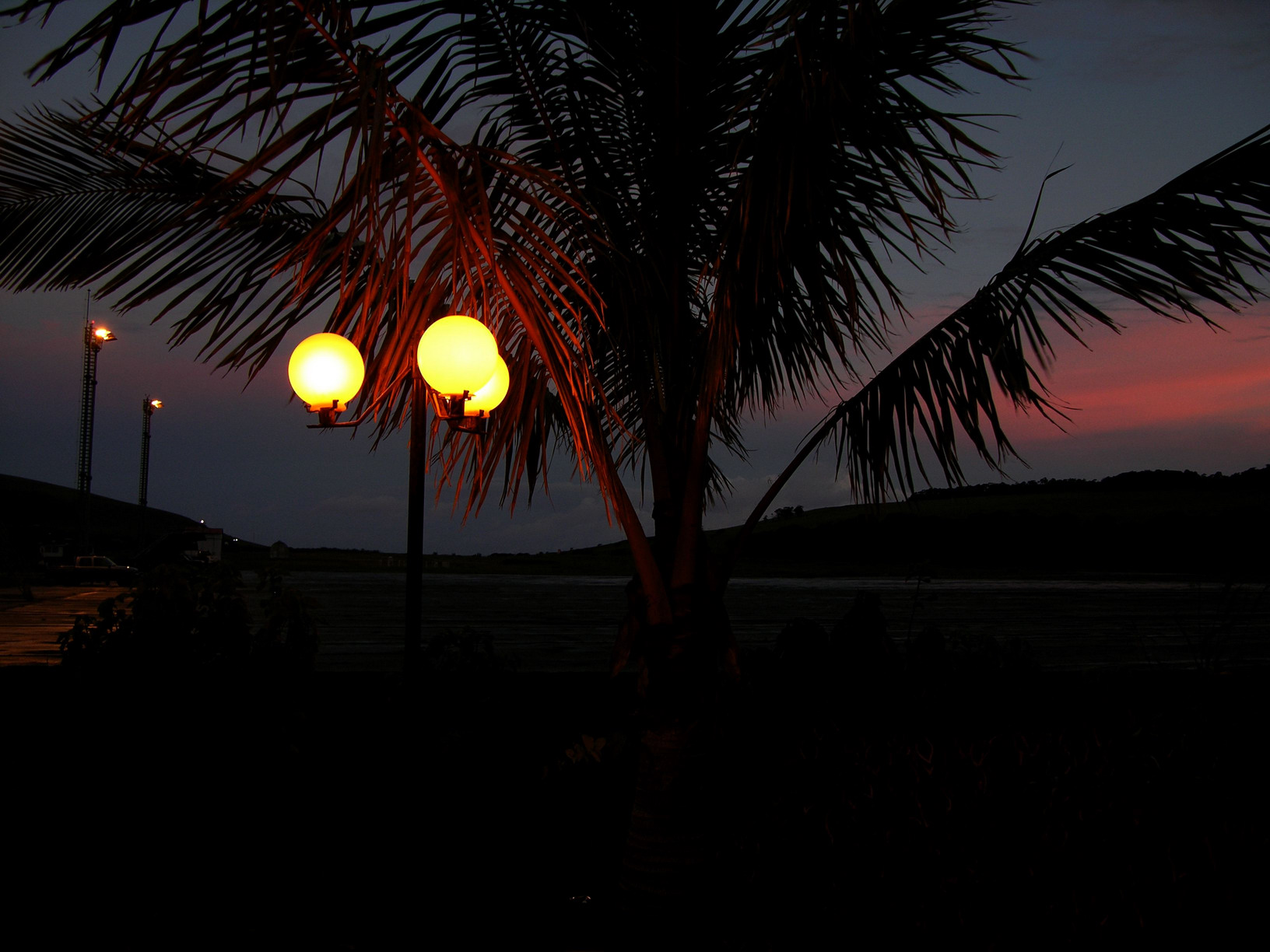
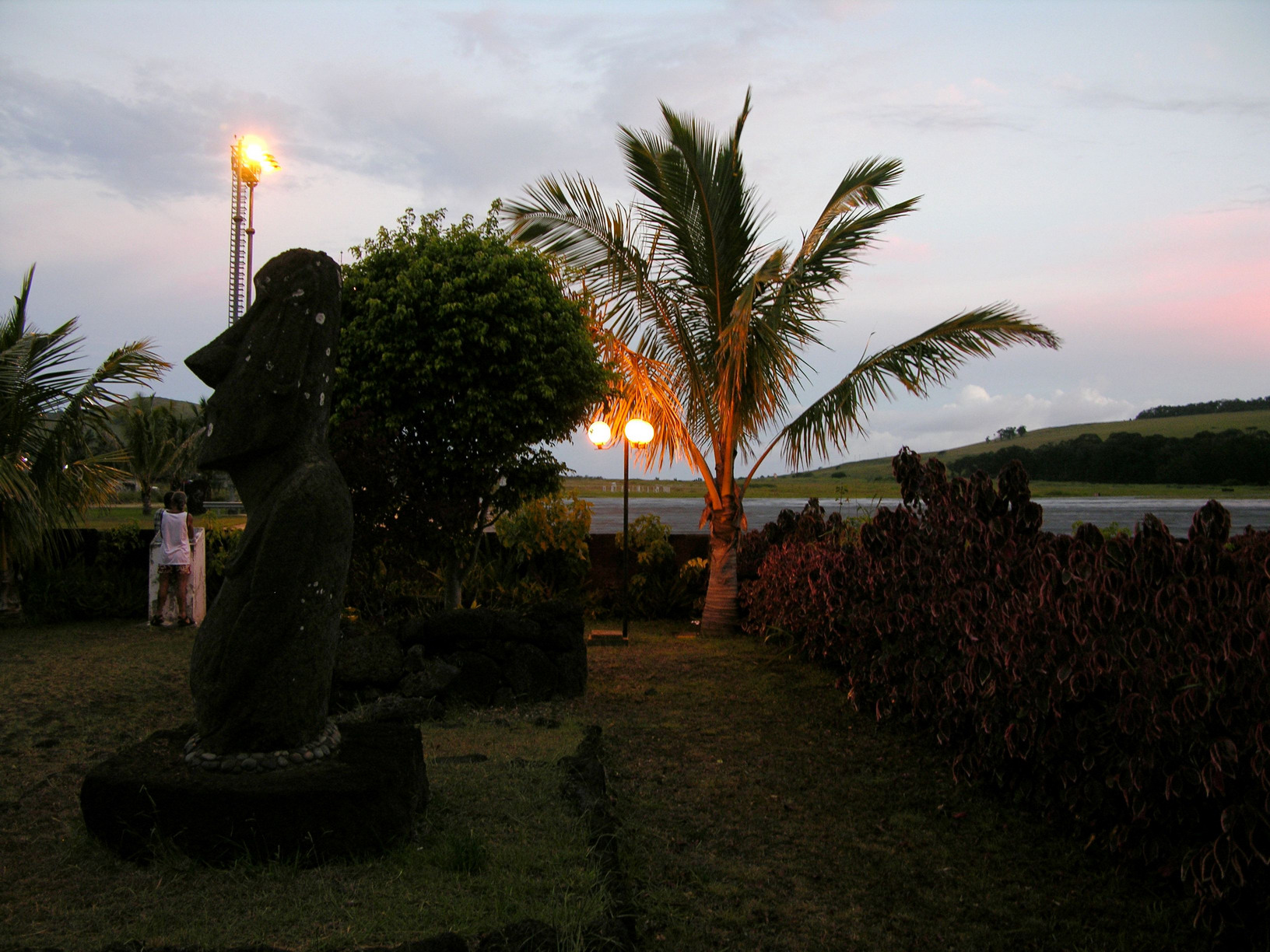
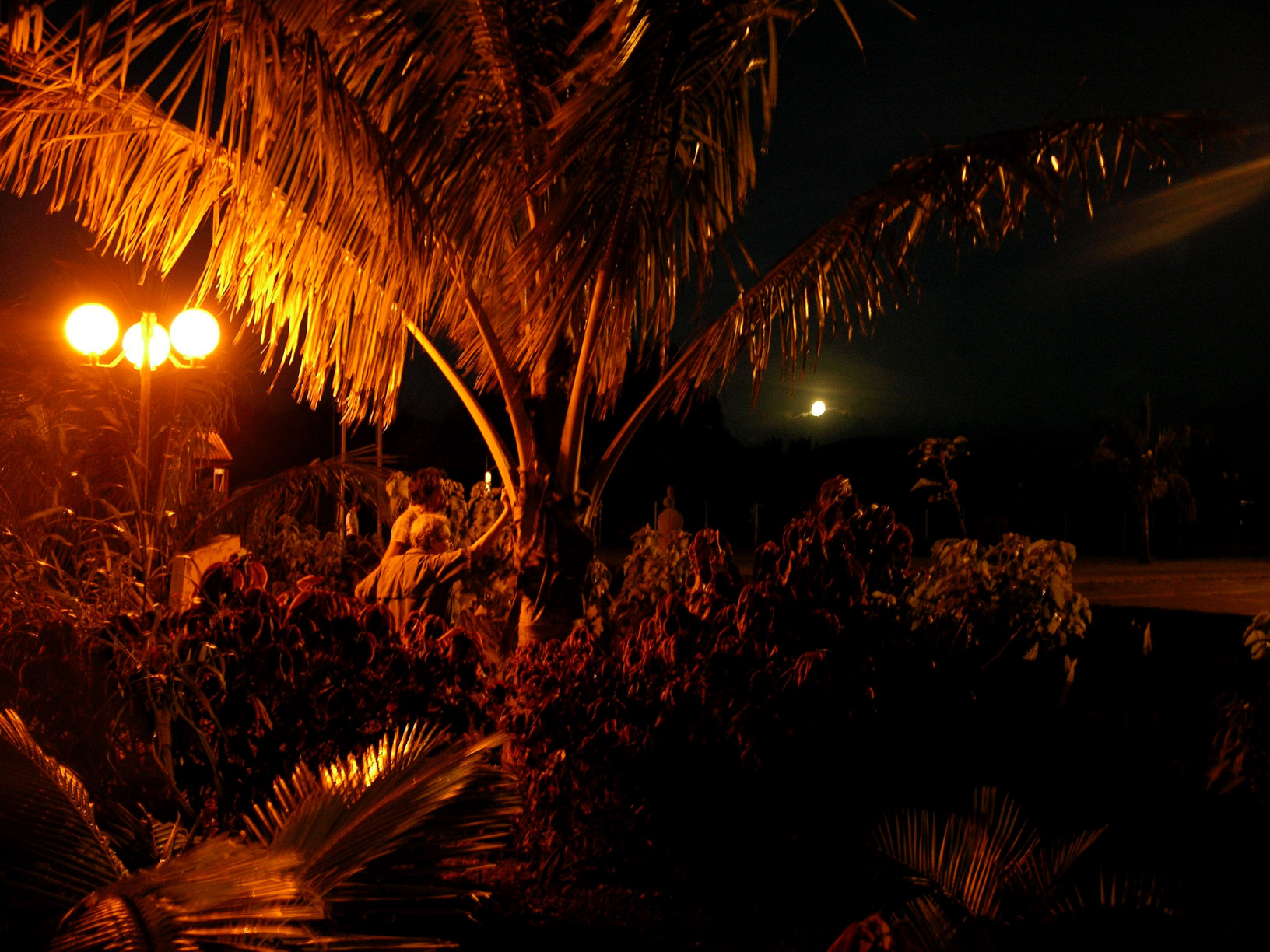
The plane was a little late and landed after dark. We waited to board in an open-air holding area, out in the fresh air at the edge of the runway among the palms. The Poles we'd met at Orongo were on our flight too. How nice for them to be able to travel without visas now.
We were leaving Chile. Forty-five days earlier we'd first set foot there. In that time it had all come to feel like home. It's a lovely, agreeable country. If someone in Russia asked me where to emigrate, I'd recommend Chile. Educated people are needed here, the rules aren't as hostile as in wealthier countries, and getting citizenship is relatively straightforward. The locals won't look down on you. To them a Russian is simply a European. It's wonderful just to travel around Chile, of course. We'll come back. There is still a lot worth seeing. It's a pity that getting a Chilean visa is difficult and expensive. That's something the Russian Foreign Ministry could work on instead of stirring things up in the Middle East. Ah well, one can dream.