Trip report
Time flies. Somehow Tanya and Denis hadn't been abroad for five years. Abroad from New Zealand, that is. All our journeys around the world were a distant memory. I still had the odd few days in a far-off country in transit, but as a family we'd been exploring only our adopted home.
You can't stay in one country forever, though. It was time to start getting out again, somewhere close to begin with. Fiji was just four hours away. New Zealanders tend to fly there in July, in the depths of winter. It is considered a sign of affluence and respectable behaviour, rather like a holiday in Turkey for Russia's middle class. So in the cold winter of 2012 we set off to warm ourselves at a tropical resort.
Most New Zealanders take an all-inclusive package, which sounded deadly dull to us. We bought tickets, booked a hire car and decided to see what happened from there.
There was a direct Air Fiji flight from Christchurch, but going via Auckland was more convenient. We could leave on Saturday morning instead of losing a day waiting for the direct service. A big Boeing 747 flew from Auckland. We could have flown a New Zealand airline, but we already knew those and fancied a change.
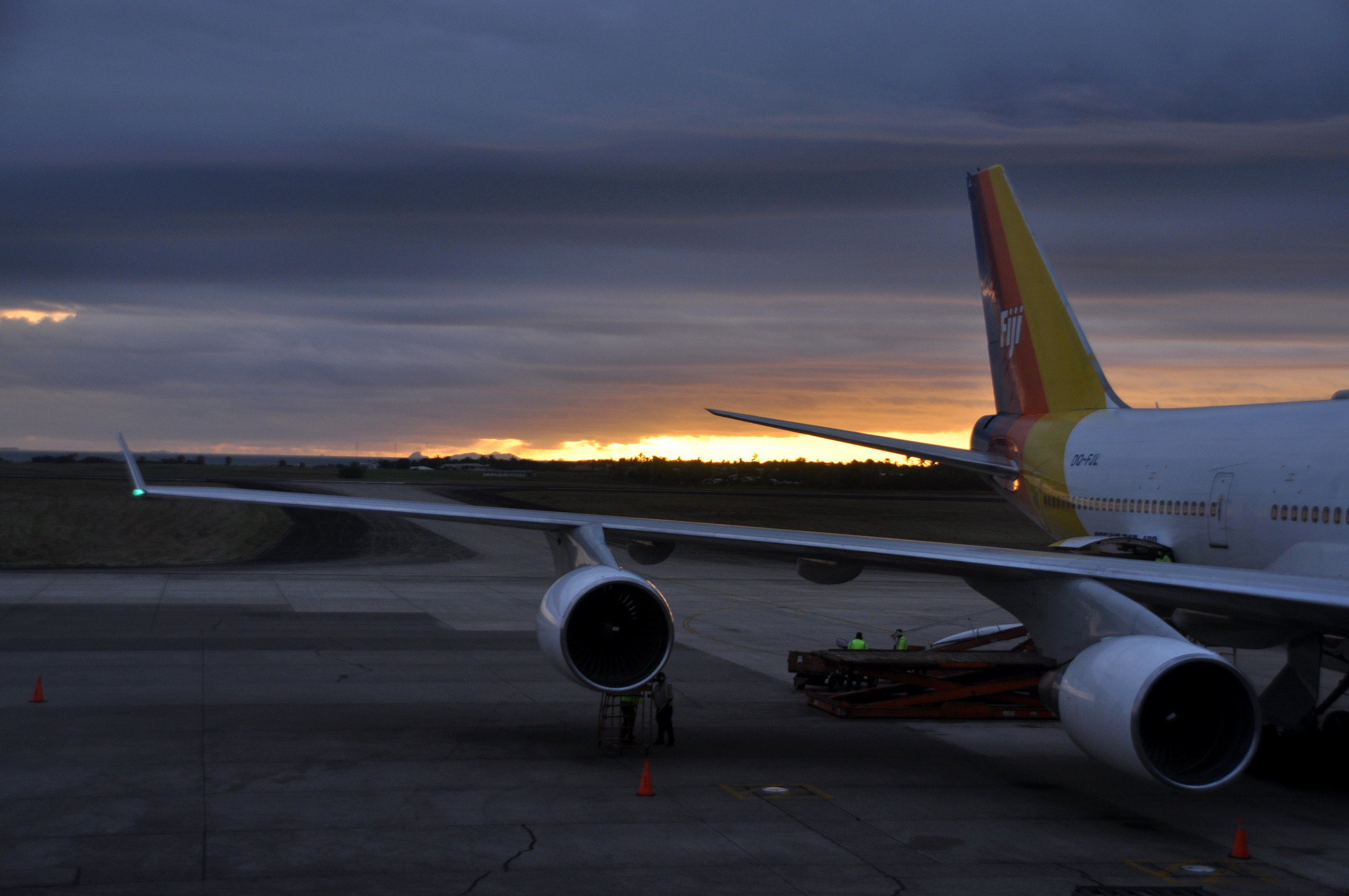
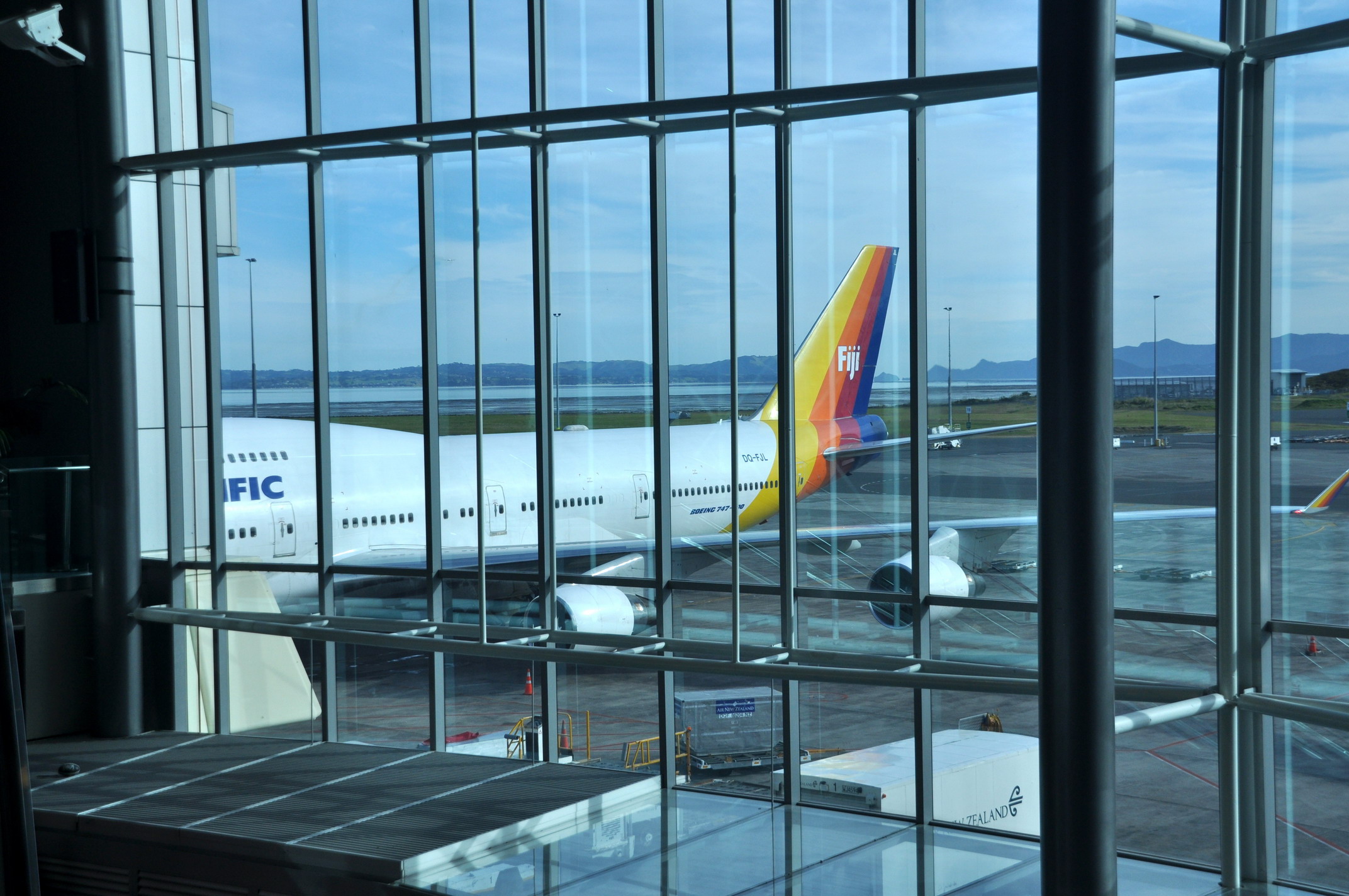
Arrival in Nadi
We landed at Nadi at nightfall. Fiji is only about a thousand kilometres from the equator, but even there you could feel it was winter. It wasn't so hot and it got dark early, but it was the dry season.
There was a long queue at passport control and nothing happened quickly. Russian citizens didn't need visas at the time. We weren't asked a single question at the desk. Customs showed no interest in the arrivals, although in theory you had to declare food, sports gear and a great deal more, as in New Zealand.
Car hire was well established. The main international companies were at the airport. We chose Budget, then got a local SIM and withdrew some cash. I was glad we'd done that at the airport. Cash machines were few and far between, card payments weren't common, and some machines would not take foreign cards. The Fijian dollar was worth about half a US dollar.
English was spoken everywhere. Fijian was also an official language, and there was a Fijian variety of Hindi. Printed road maps were available. I didn't see a good topographic map. Google Maps was fairly useful, and even Garmin had a decent map. Traffic drove on the left, fairly heavily and aggressively. Road markings weren't great.
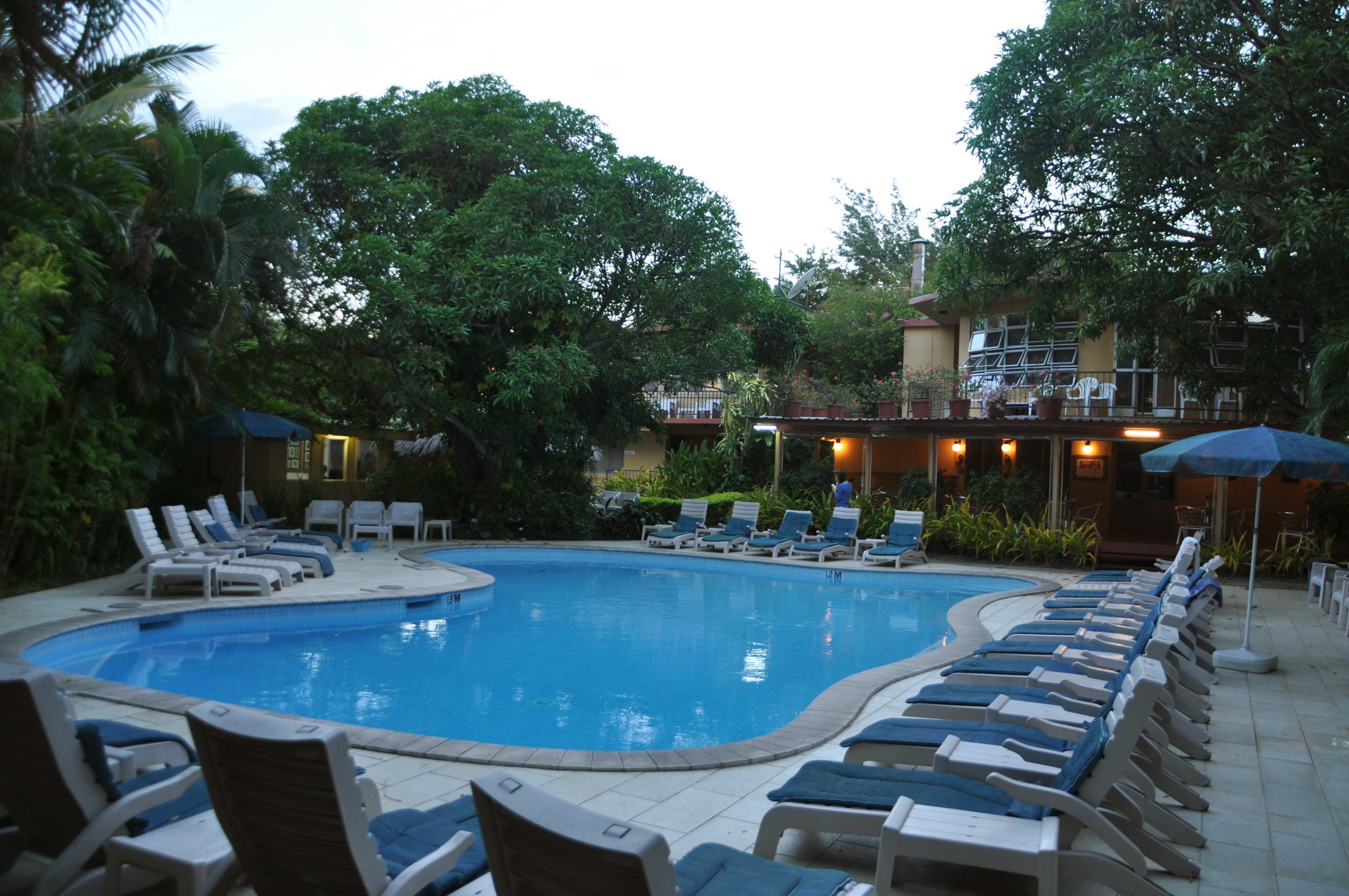
We'd booked a hotel for the first night. It usually pays to have somewhere to get your bearings in the first few hours. A long search for a bed is the last thing you need. The Tanoa Skylodge Hotel in Nadi (17°45.705′S, 177°27.838′E) was standard fare: a maze of paths to bungalows in tropical greenery, a communal block and a big swimming pool.
We dropped our things in the room and went to dinner. There was live music, sleepy service, small portions and an enormous bill. None of that dampened our spirits. We were free. After a bottle or two of wine, well fed and tipsy, we sat by the pool, gazed at the stars and pondered the meaning of life.
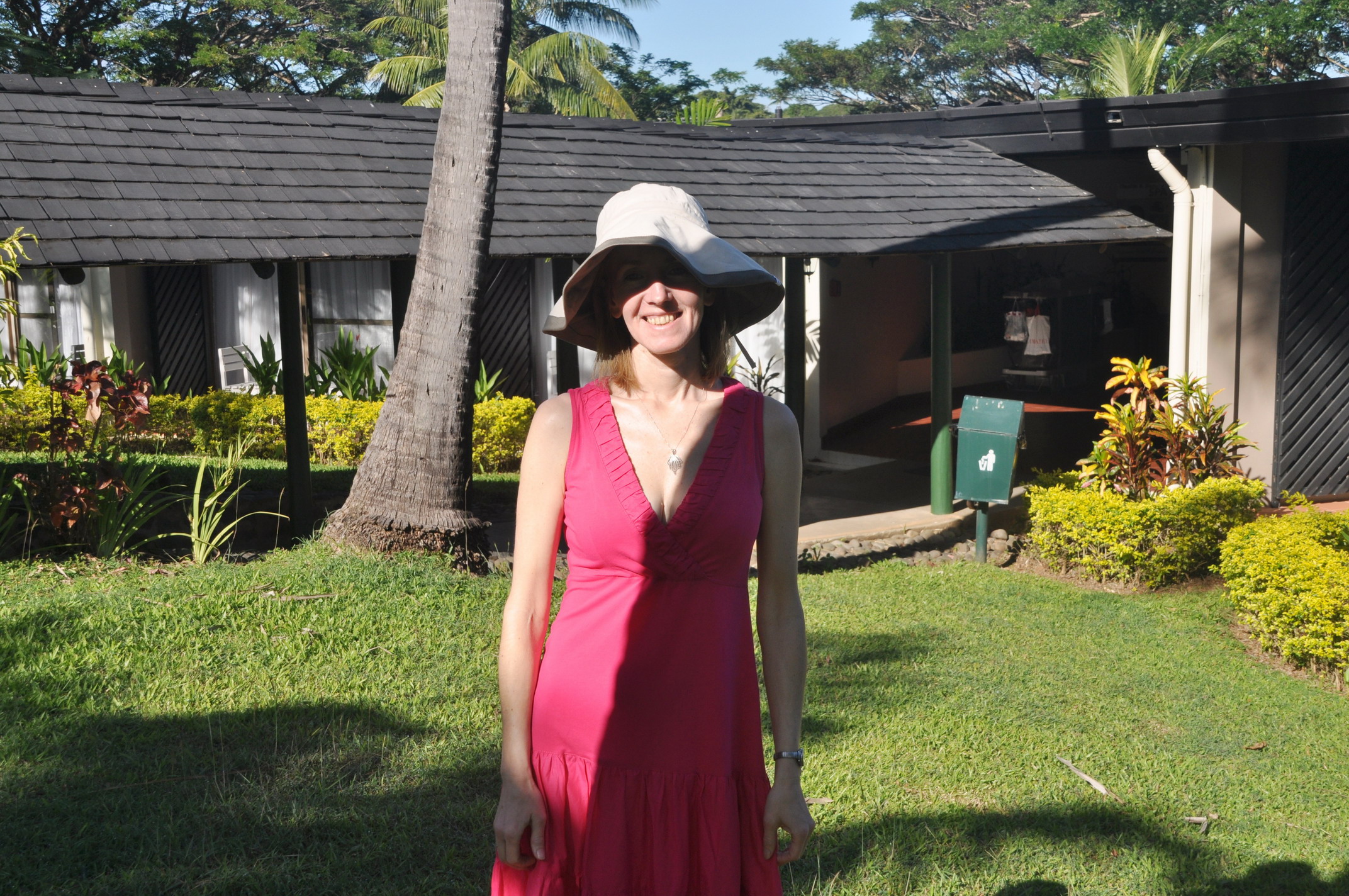
The sun came out in the morning. Tanya put on a red dress and a hat that hadn't seen use in ages. Tropical birds chirped around us. The resort felt a little cramped and noisy, but we were about to drive wherever we pleased. A big, storybook world lay ahead, with a name that set the heart racing: Fiji.
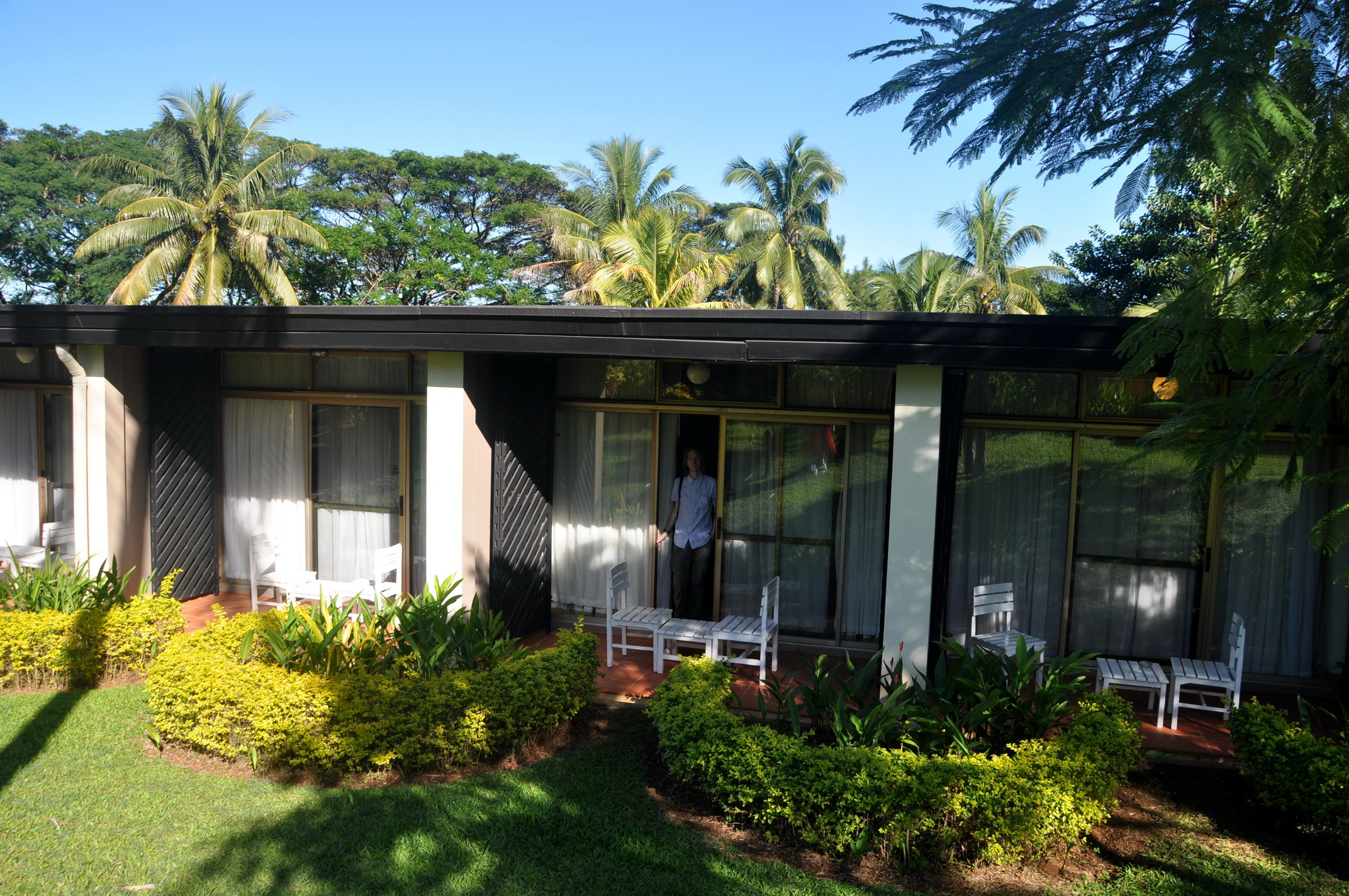
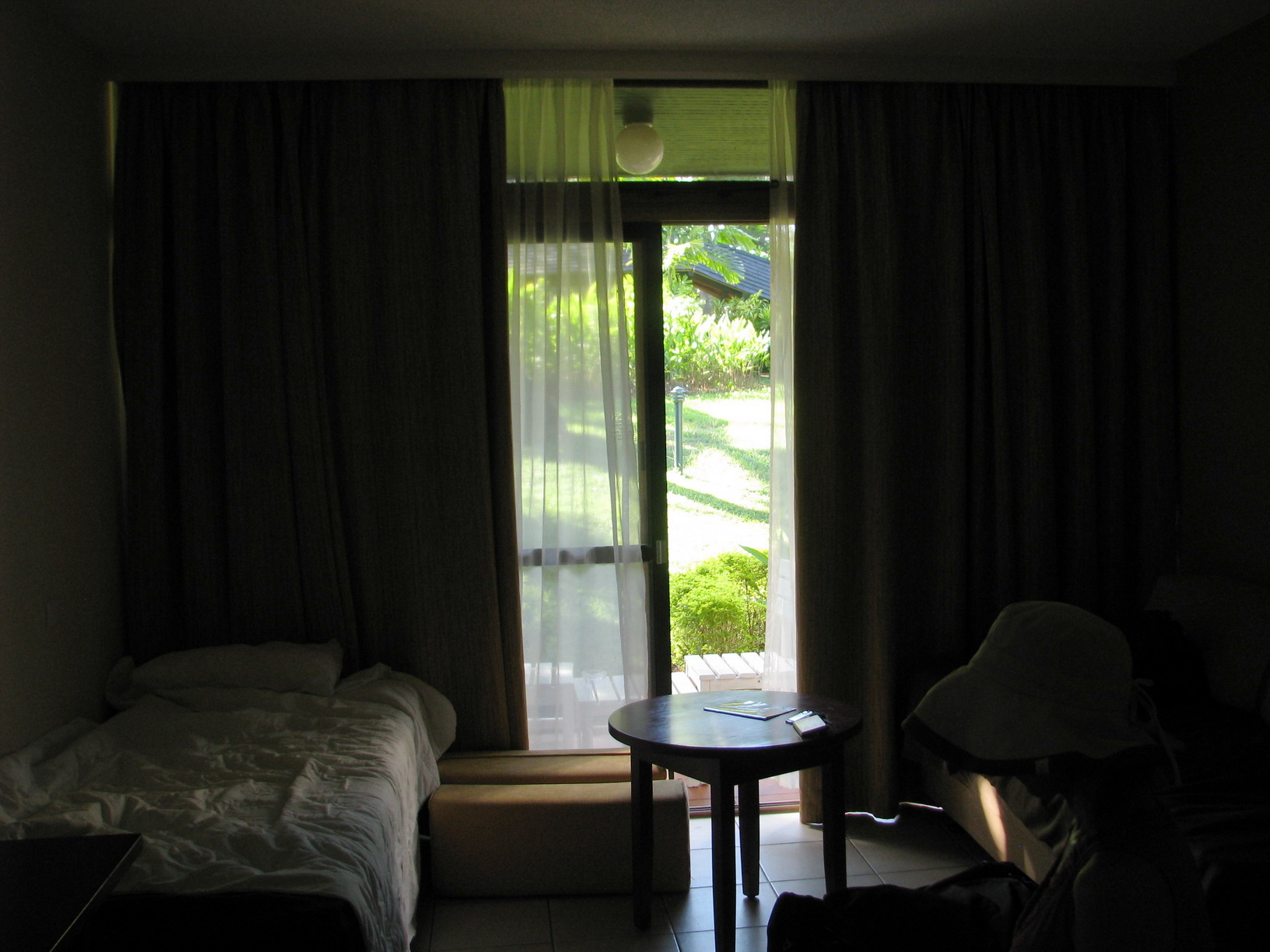
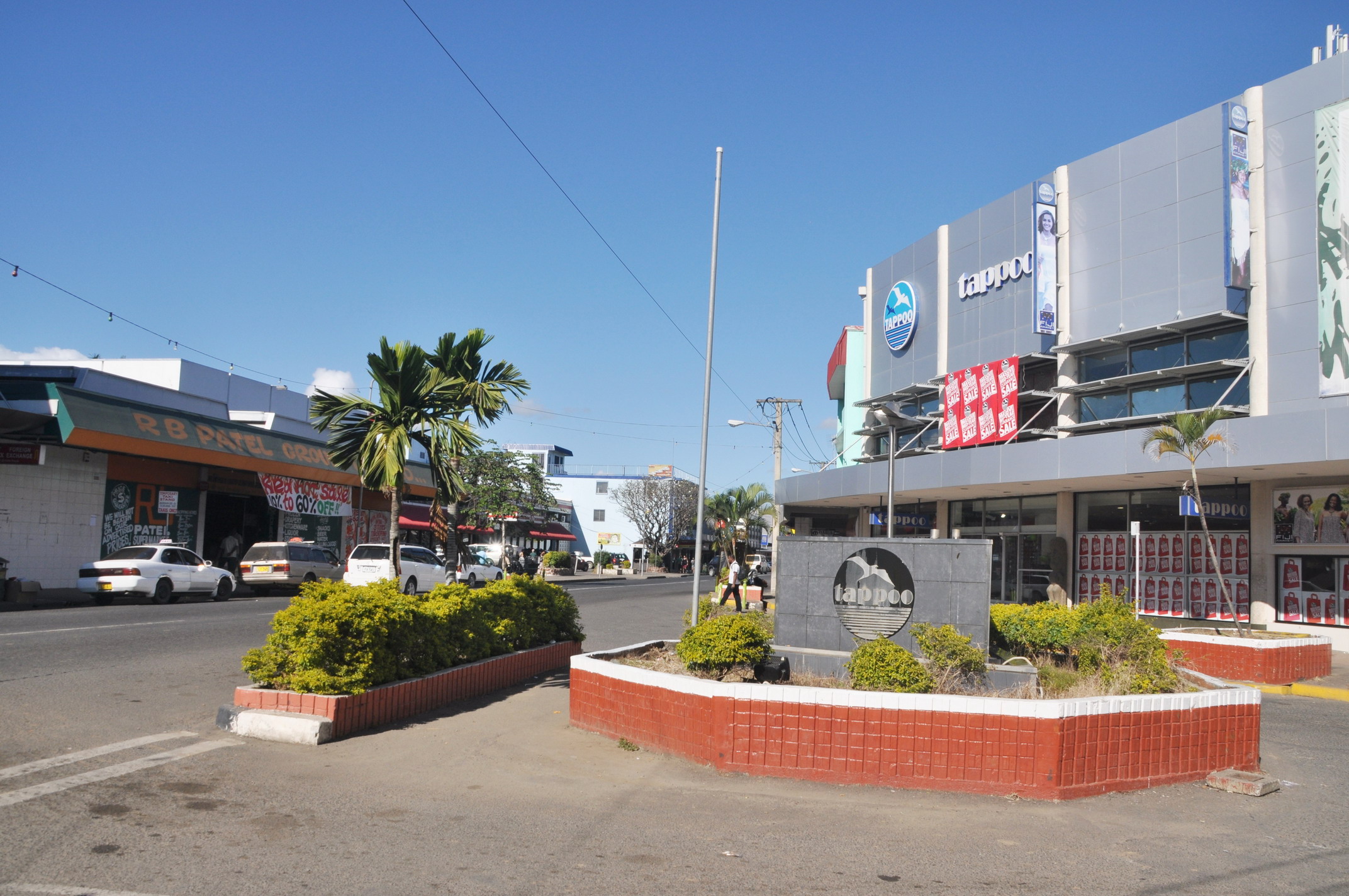
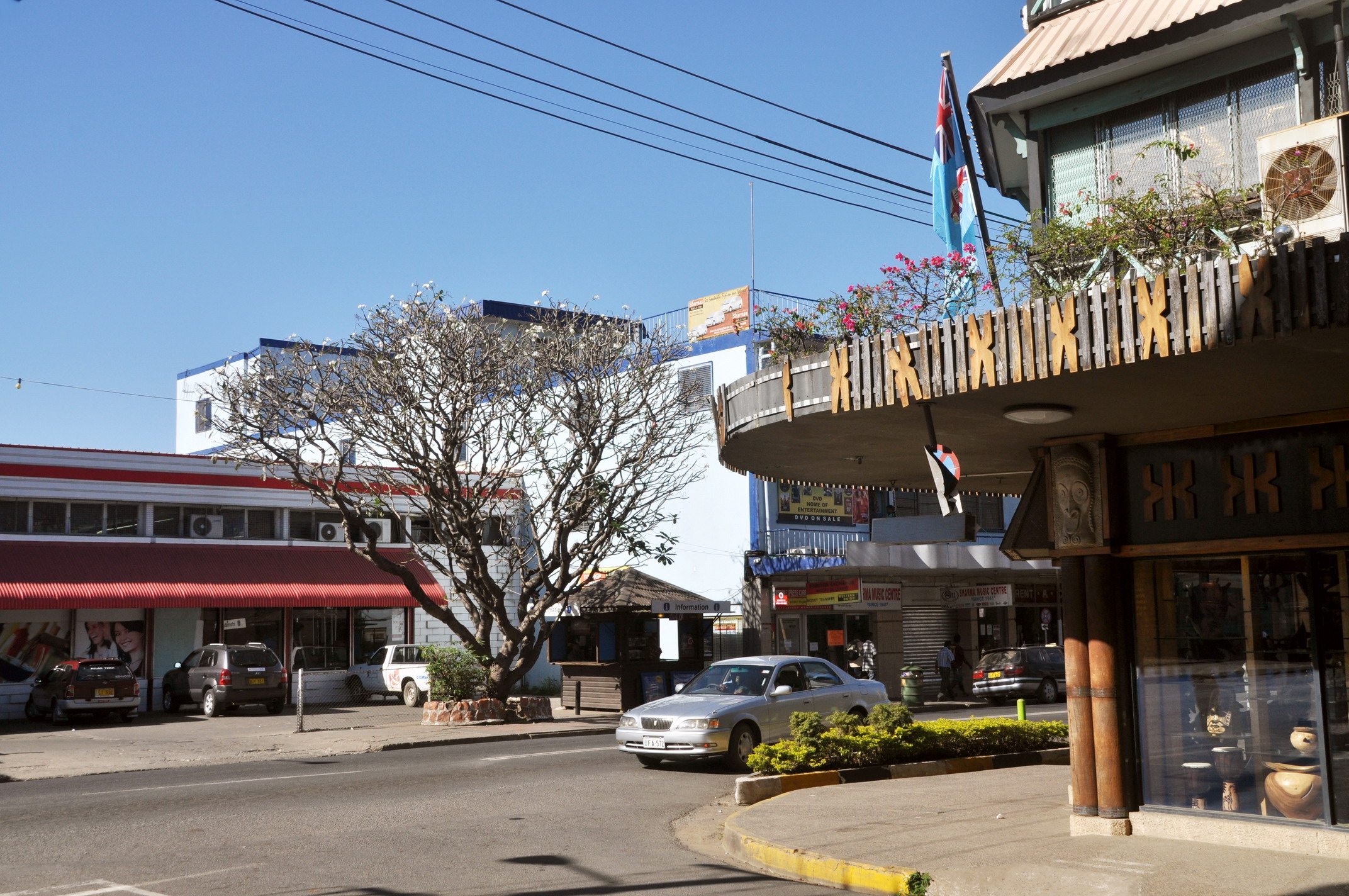
We began in Nadi, the town next to the country's main airport. The airport in Suva, the capital, was smaller, and Nadi got the main international flights. The town itself had one main street, with hotels scattered over ten kilometres from the centre. We needed a map, colonial hats and Panama hats, food and water for the car and some local cash.
The main, and perhaps only, sight in Nadi is the Sri Siva Subramaniya Swami Temple, a Hindu place of worship. It's lovely, particularly at sunset.
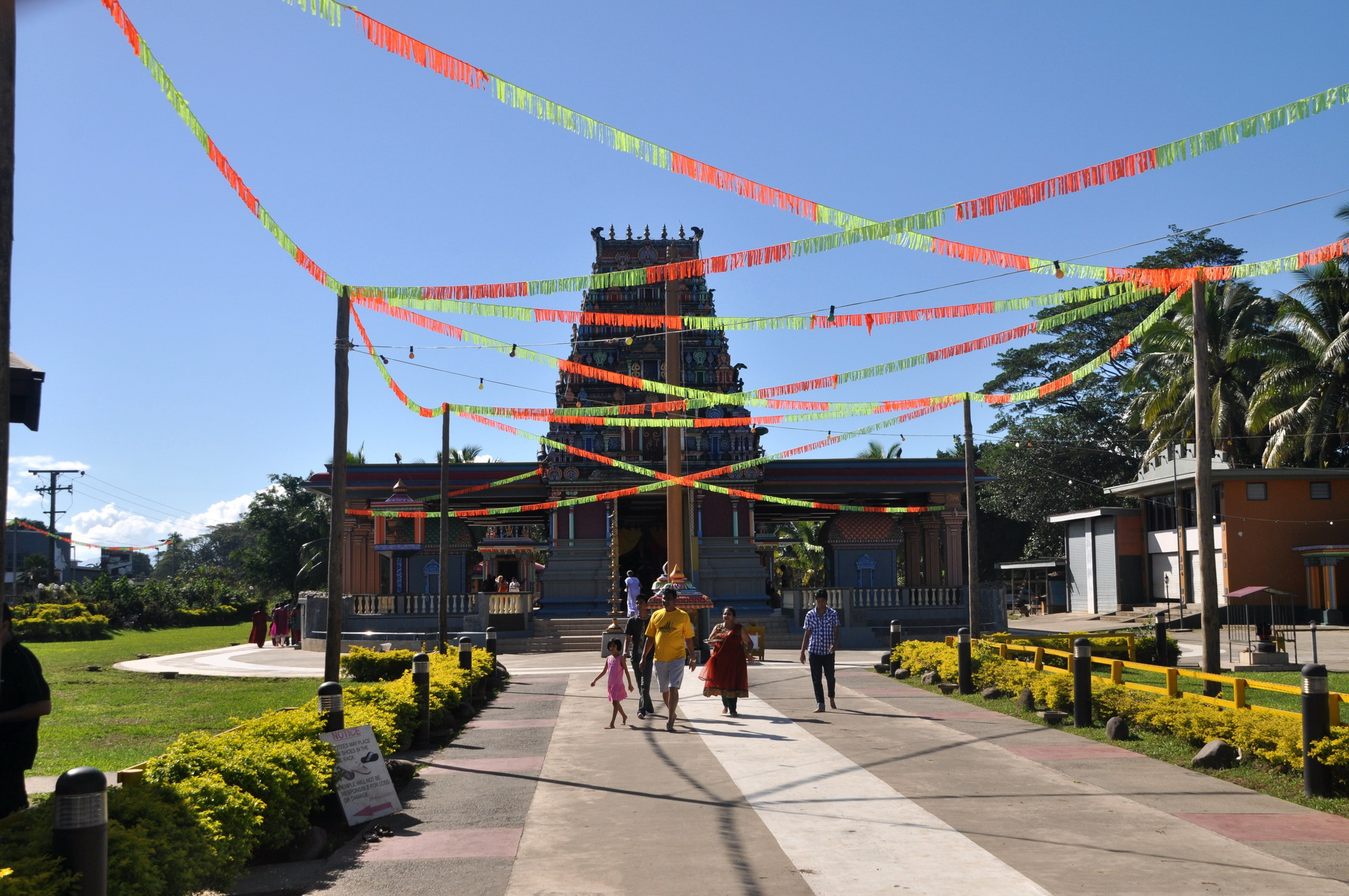
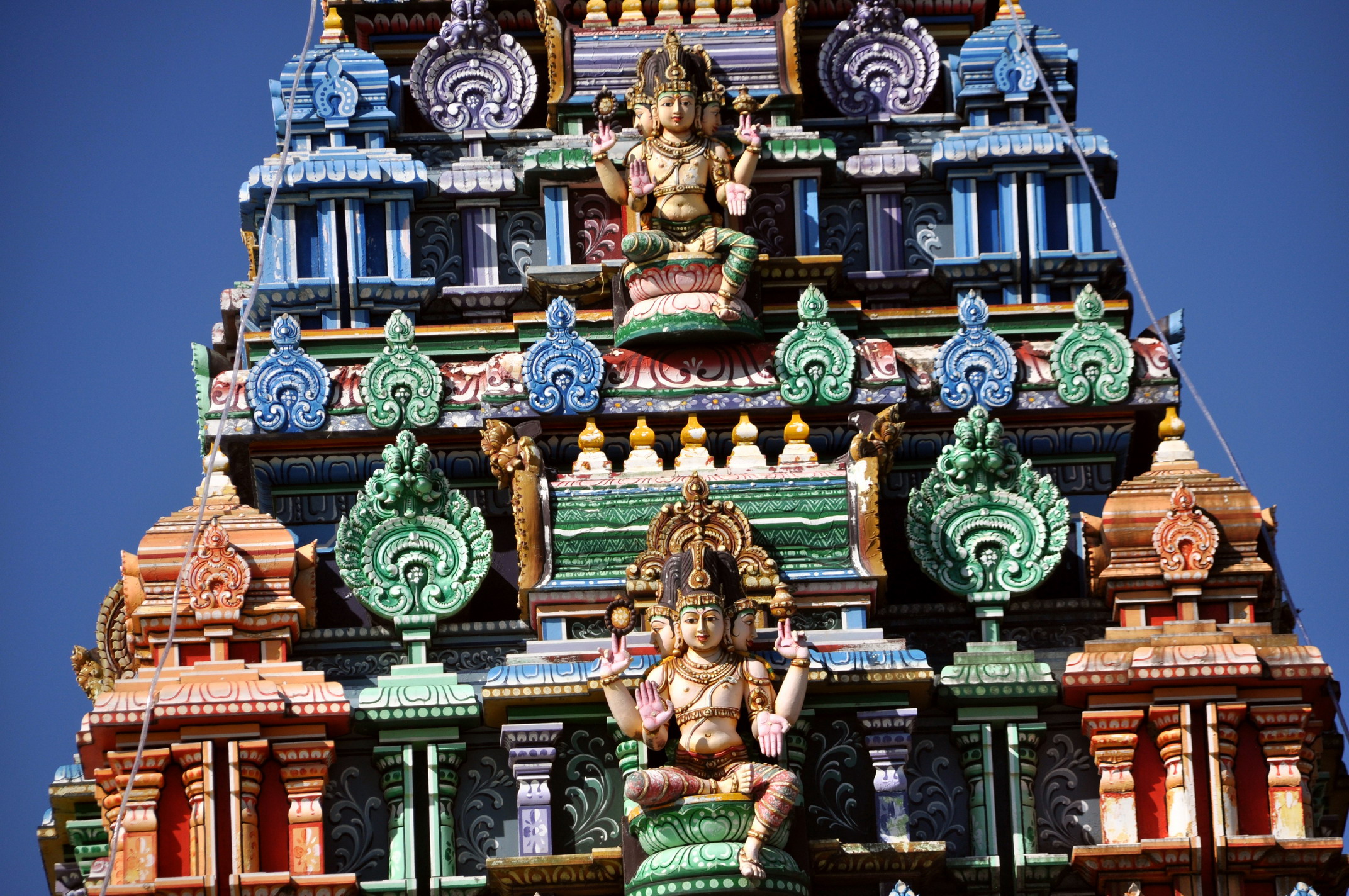
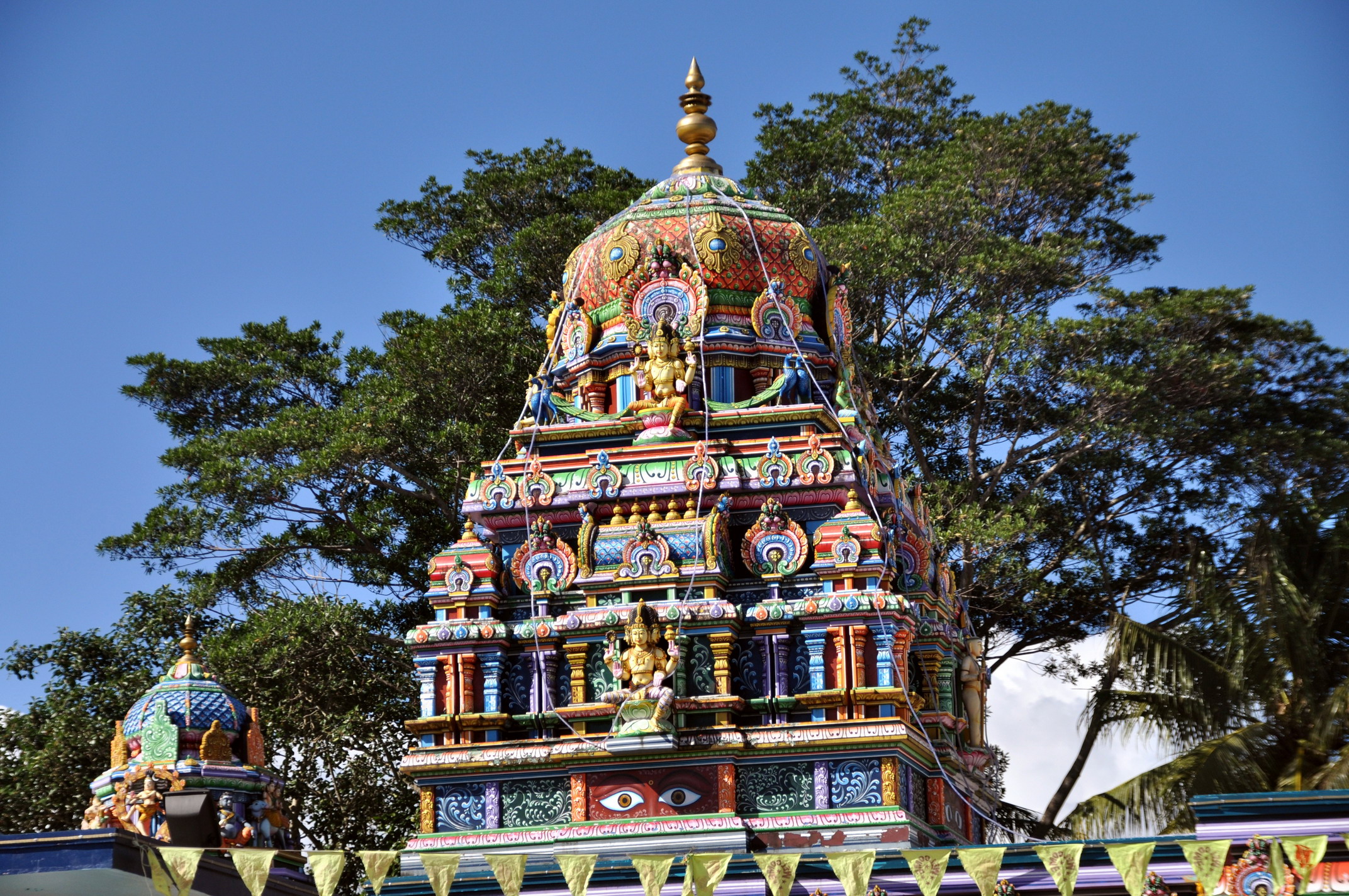
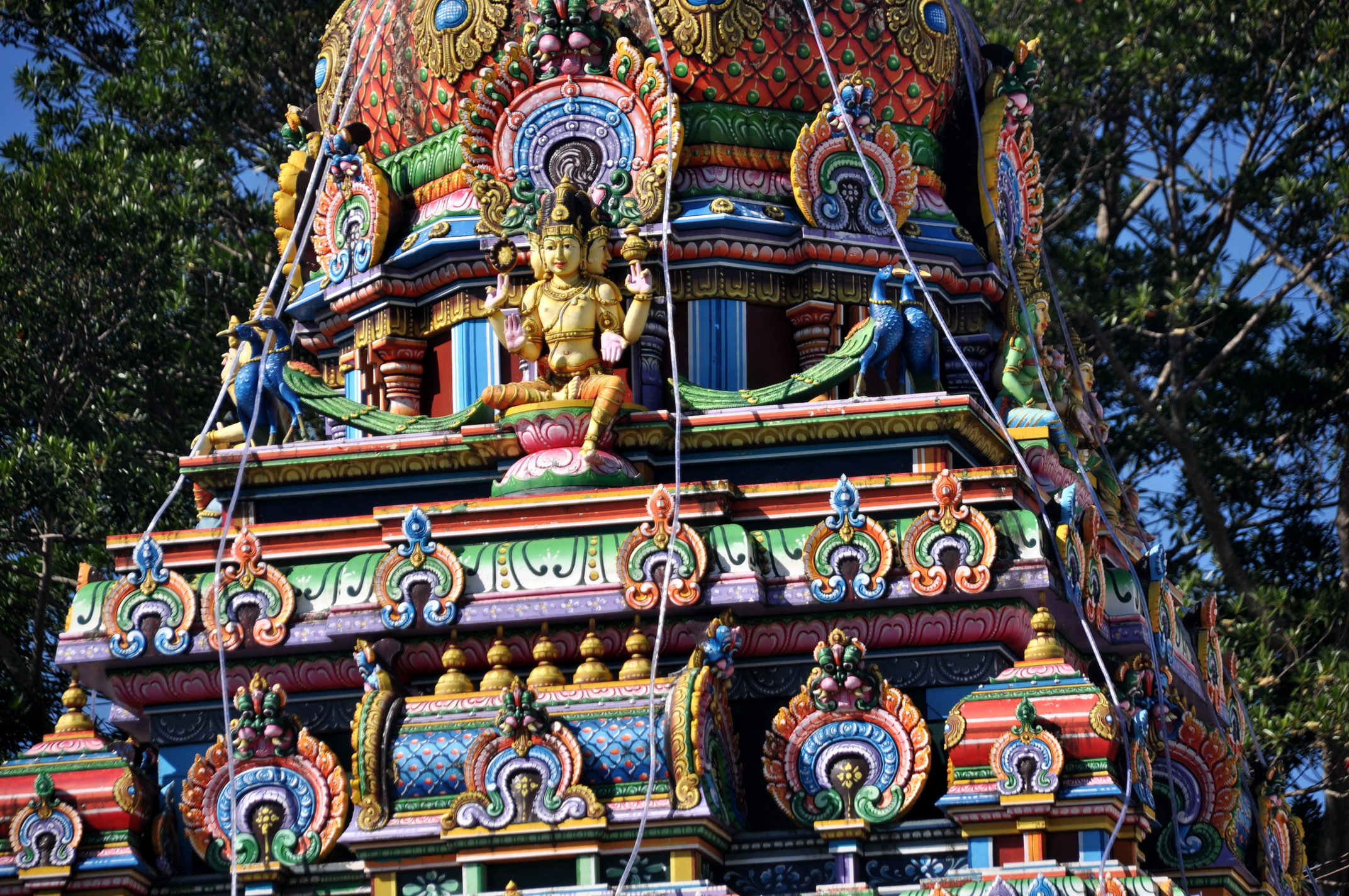
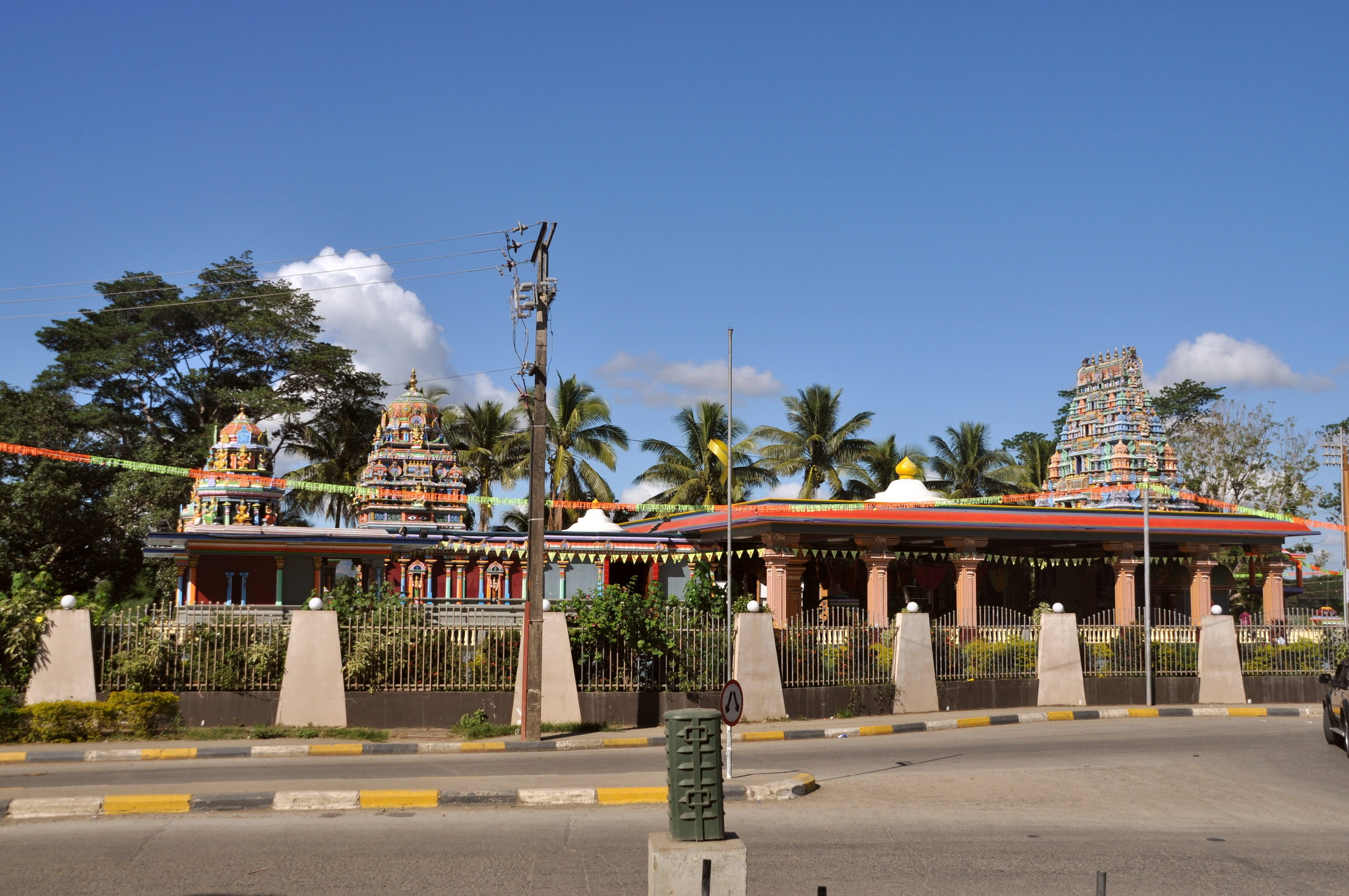
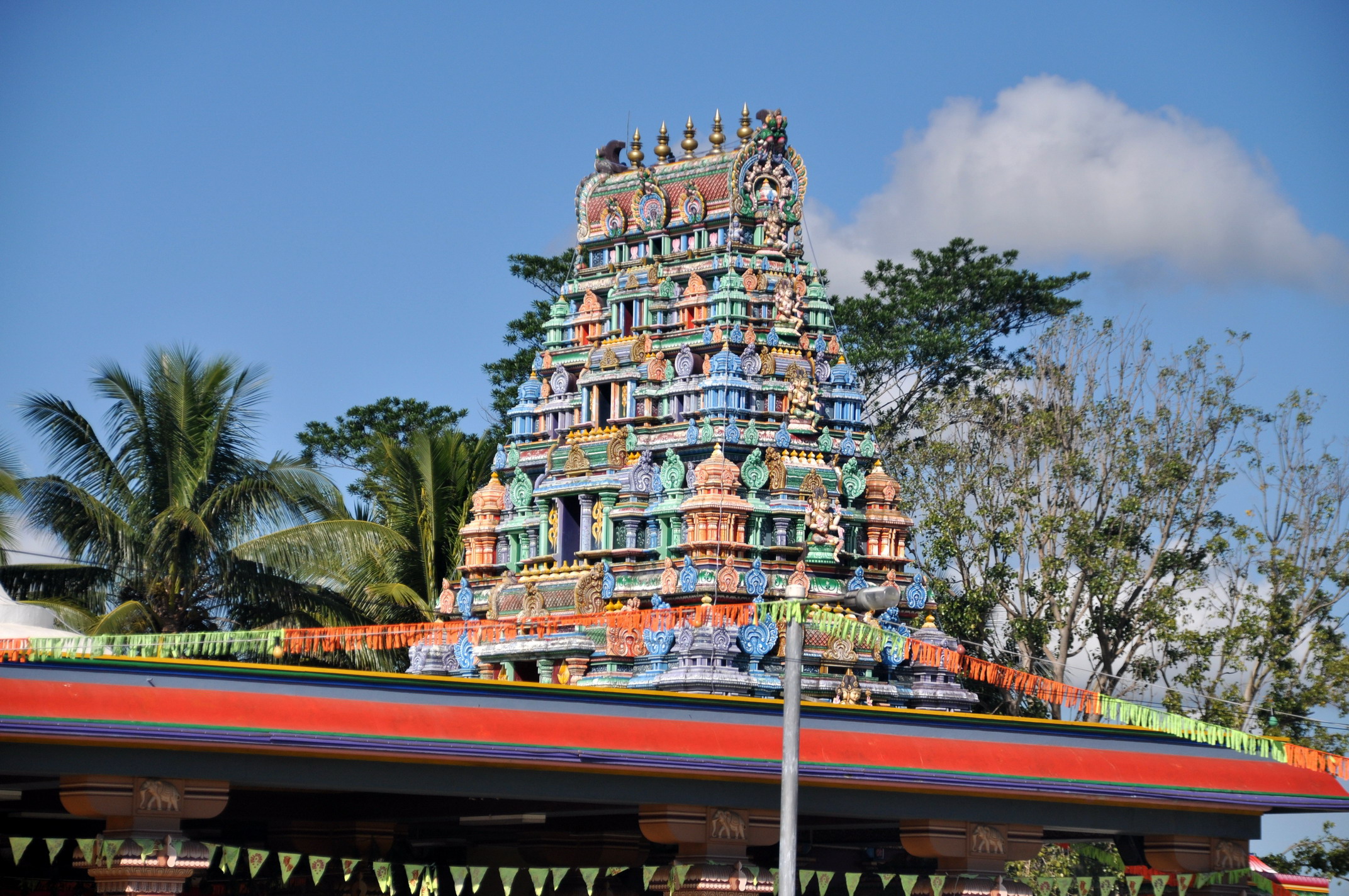
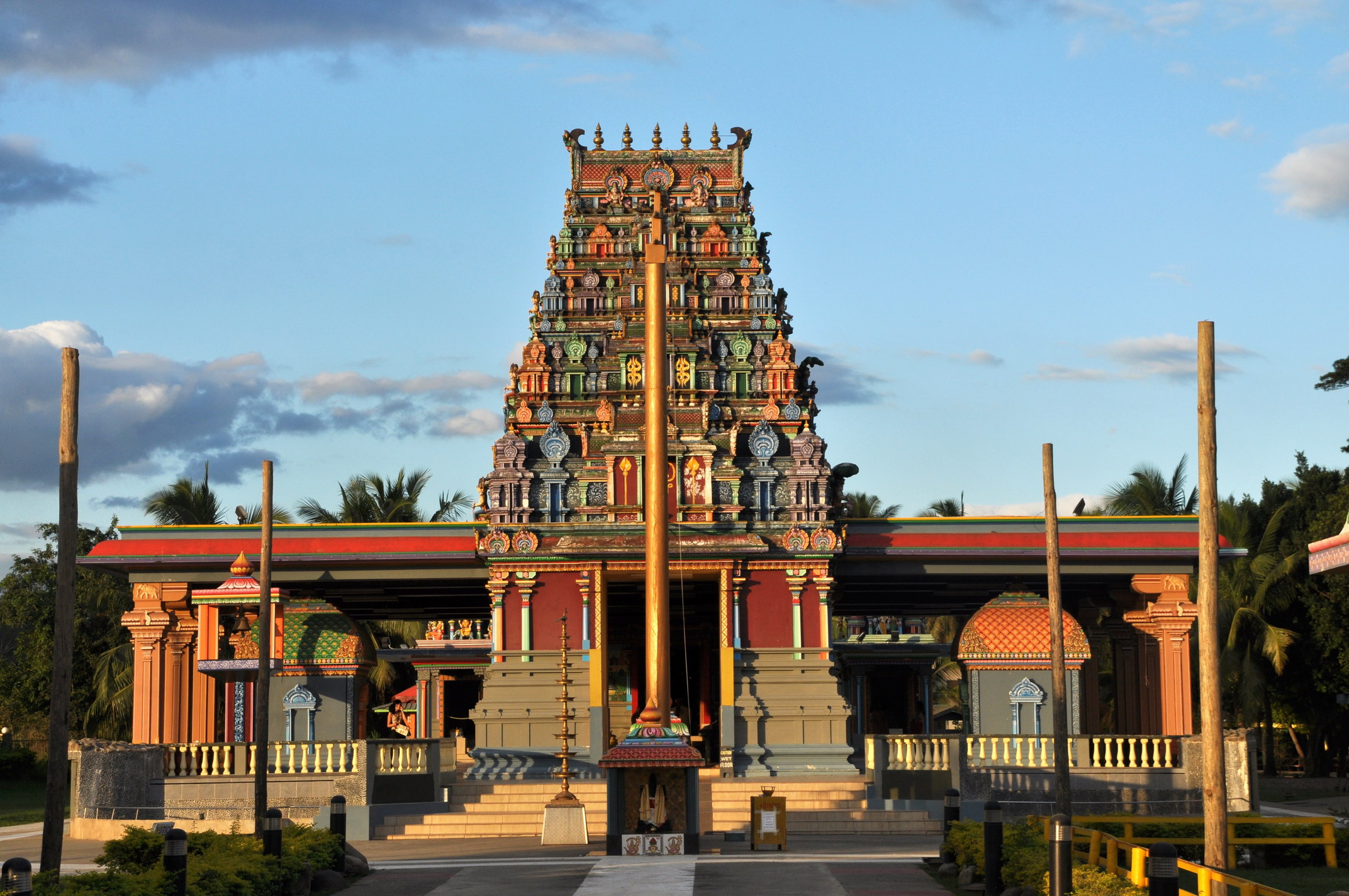
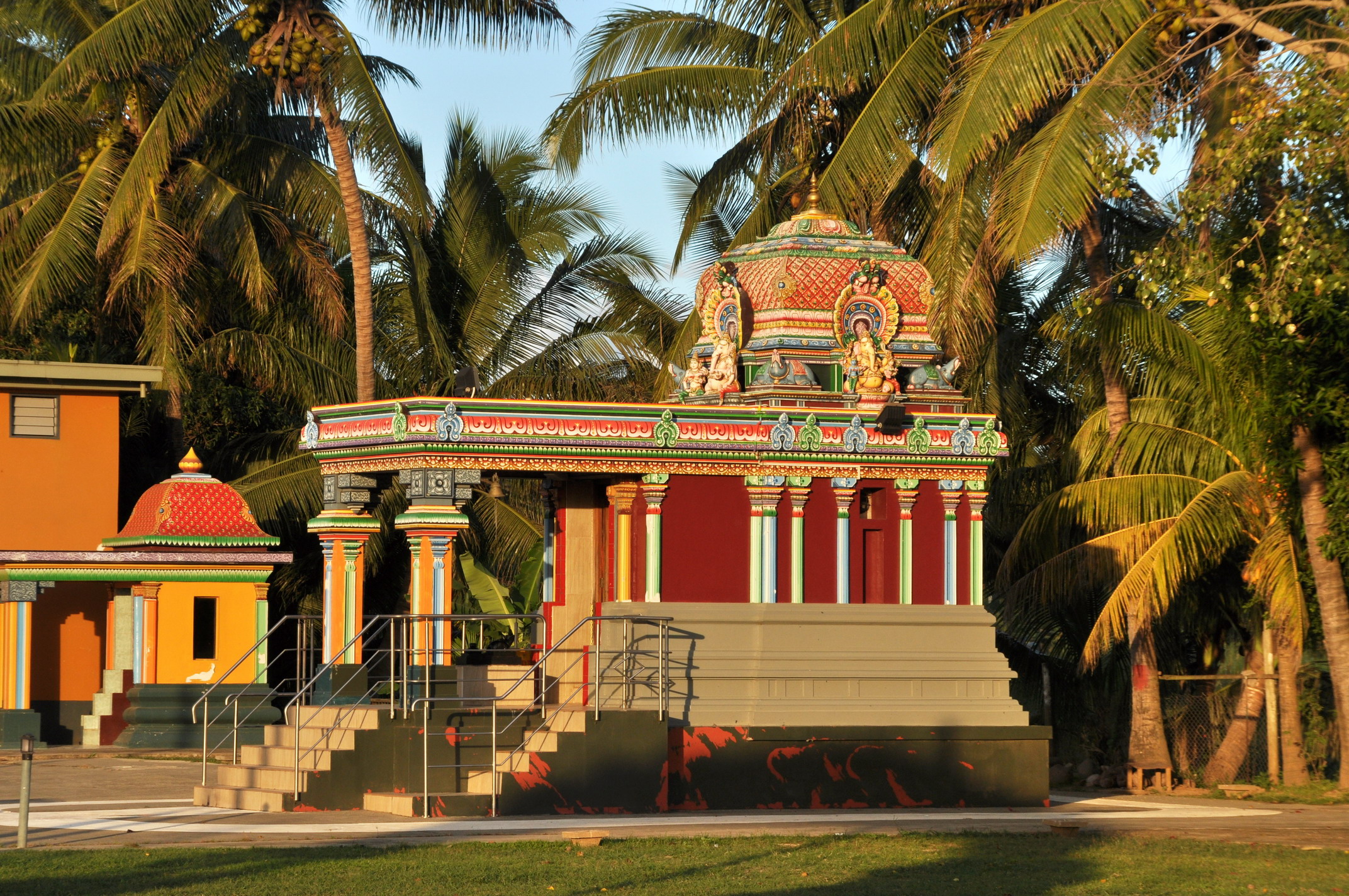
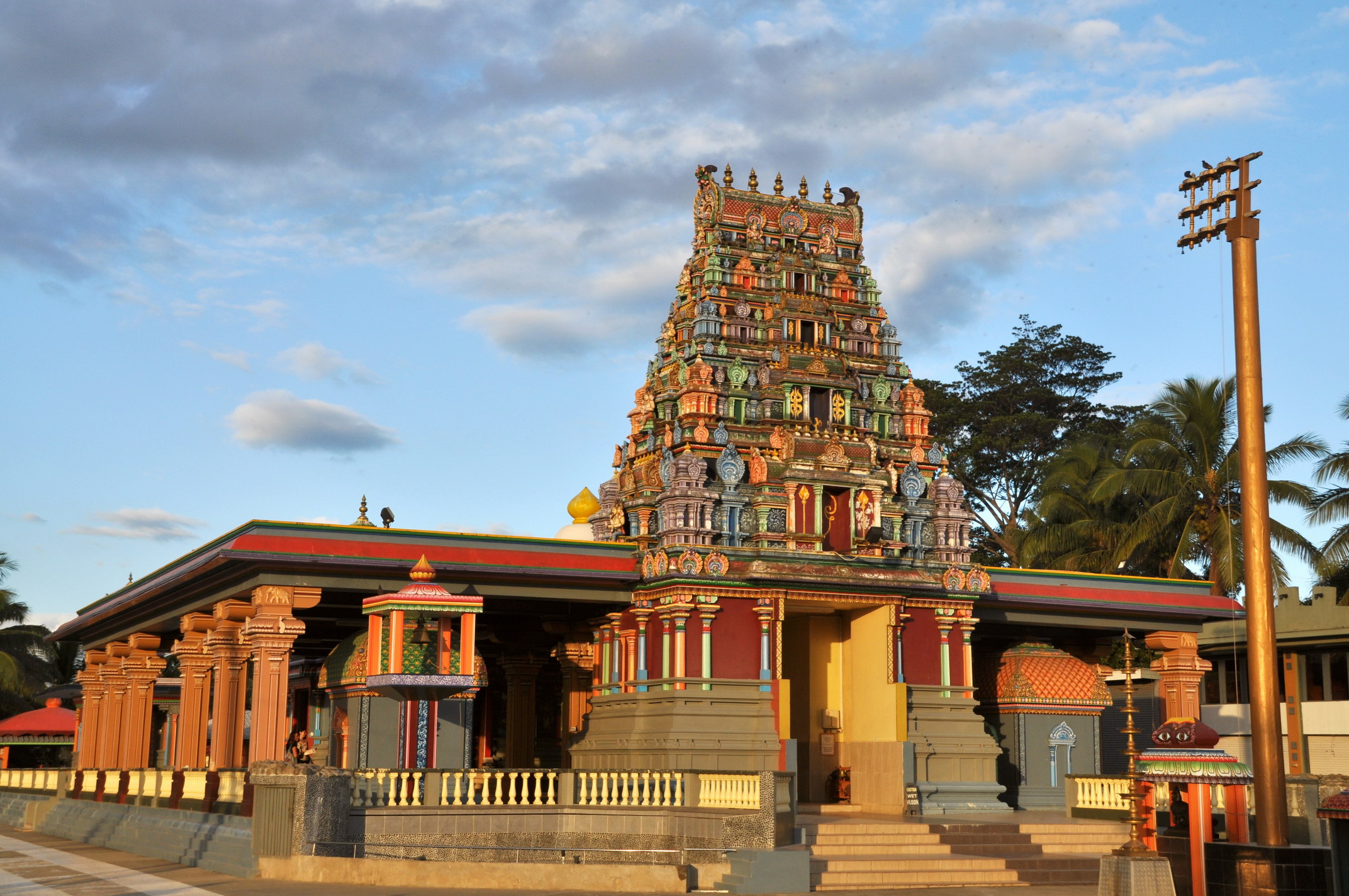
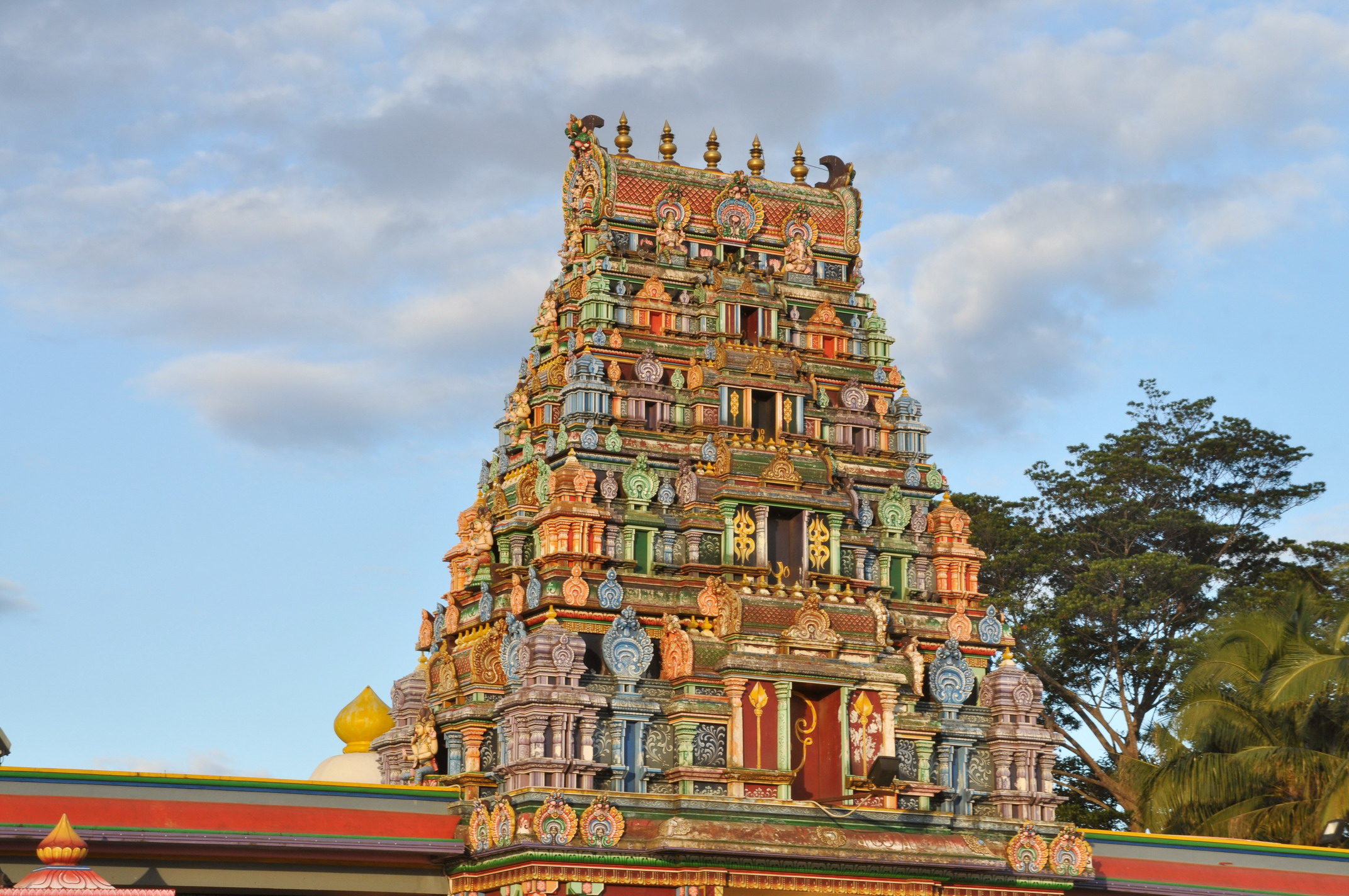
The first impression was that we'd arrived in India. Before the trip we'd had no time to read up on what to expect. We had listened to the New Zealand neighbours, who said there was sea and there were palm trees. We imagined a simpler version of Tahiti or the Cook Islands: Europeans everywhere among Polynesian islanders, with tiare garlands and banjos. The history here was different. Workers had been brought from India to cut sugar cane. They had survived and settled across the islands, and made up a large part of the population by the time of our trip. As I saw it then, power lay with the indigenous Fijian establishment, while Indo-Fijians, who worked and traded and produced much of the country's wealth, wanted a say in their own future. Discrimination had led to repeated coups, unrest, dictatorships and arrests.
I understood that the tribal chiefs' council chose the president, and the military usually appointed the prime minister after the latest coup. Indigenous leaders had maintained control over the Indo-Fijian community for the time being. In 1987 Fiji removed the British Queen as head of state when it became a republic, although she was still recognised locally as paramount chief. The Queen never took up that title. Her face was still on the money we used.
All these political upheavals complicated Fiji's relations with the outside world. New Zealand and other countries condemned discrimination, the absence of democracy and other abuses, at times imposing sanctions or trying to stop the tourist flow. For better or worse, things carried on. The coups and unrest didn't spoil white people's holidays. Governments couldn't tell private airlines where to fly and where they mustn't. It wasn't surprising, really, since tourists lived in resorts and hardly noticed life outside them. We travelled differently, and it looked as though our relaxing getaway would turn into a rather more adventurous trip.
Across Viti Levu to the ferry
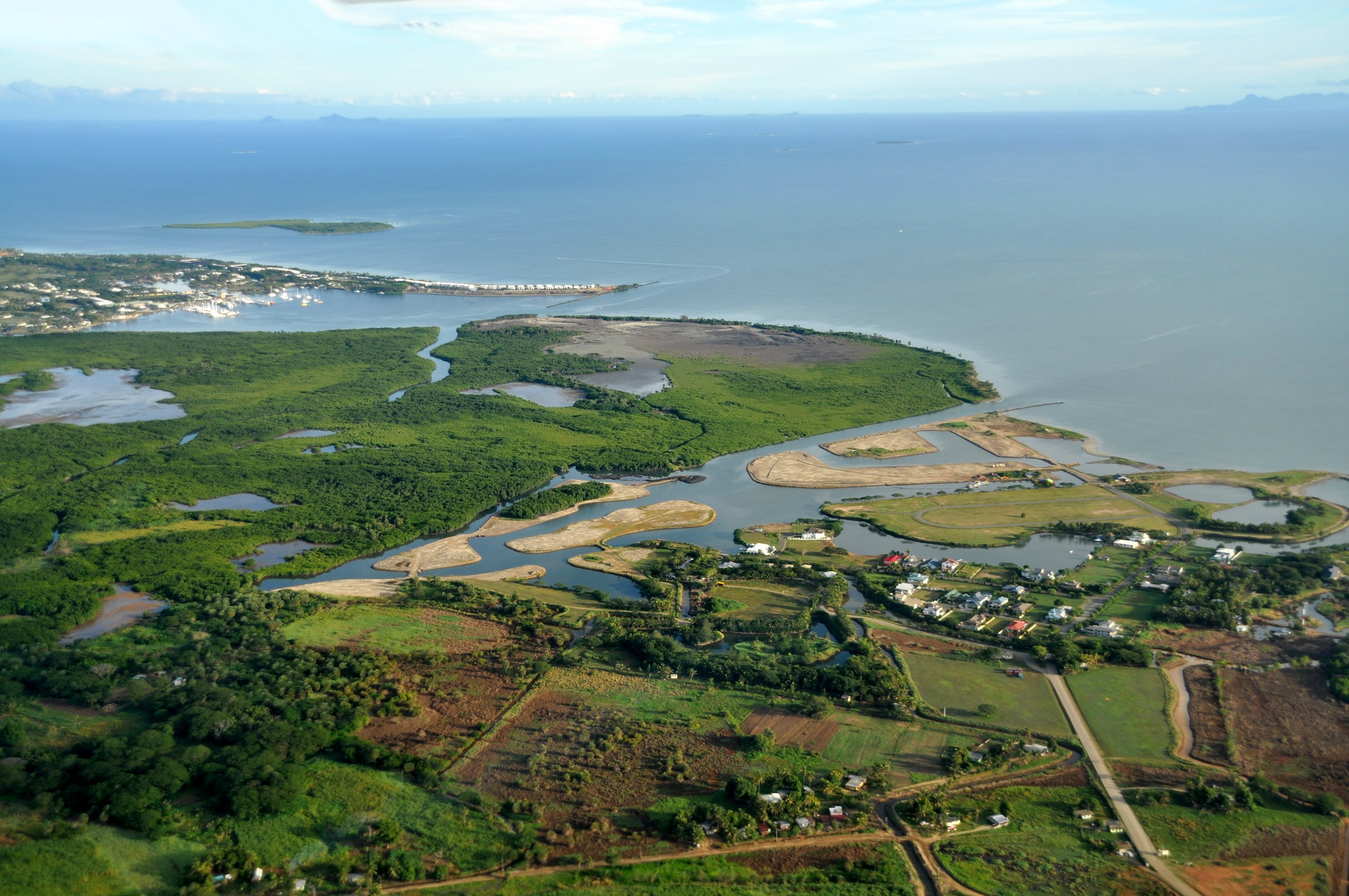
Fiji consists of many islands. Its two principal islands are Viti Levu and Vanua Levu, among the biggest in this part of the Pacific. The country takes its name from Viti, the name of the main island. Tongans pronounced it ‘Fisi’, and Cook wrote down what he heard as ‘Fiji’, which became ‘Fidzhi’ in Russian.
Fiji's population was close to a million. It was a regional power in the Pacific, with industry of its own and the main airline in the region. Viti Levu has a perimeter of about a thousand kilometres and covers 10,000 square kilometres, so there is a fair amount of driving. You can follow the long coastal road right round the island or go into the interior, where there are trails up the mountains. But even an island that big wasn't enough for us. We wanted to get to the others, and decided to start there because tickets and timetables might be awkward.
We started in the port towns in the north. Lonely Planet showed numerous ferry routes. It was hard to tell from a distance, even with the internet, whether any of them actually ran.
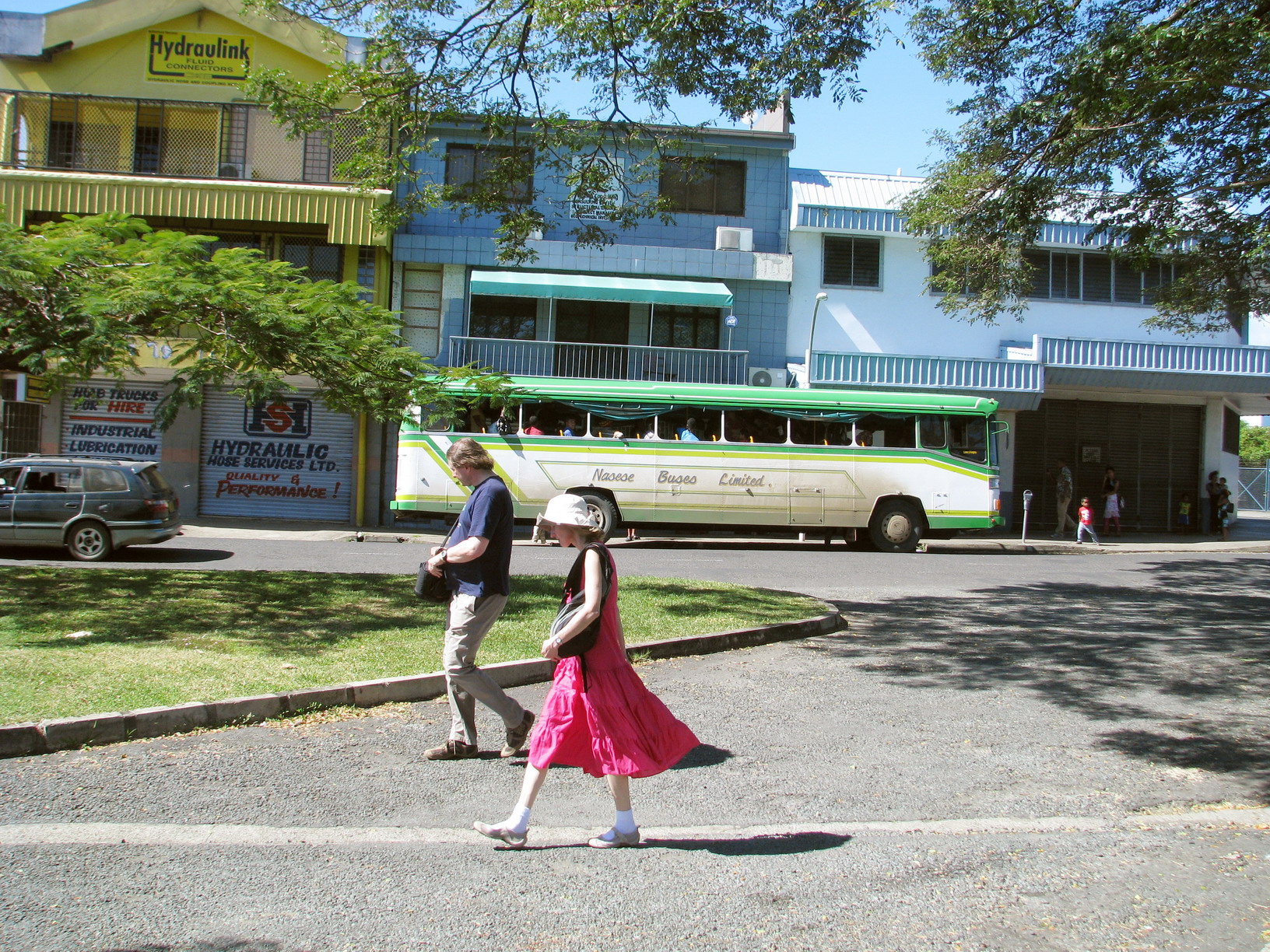
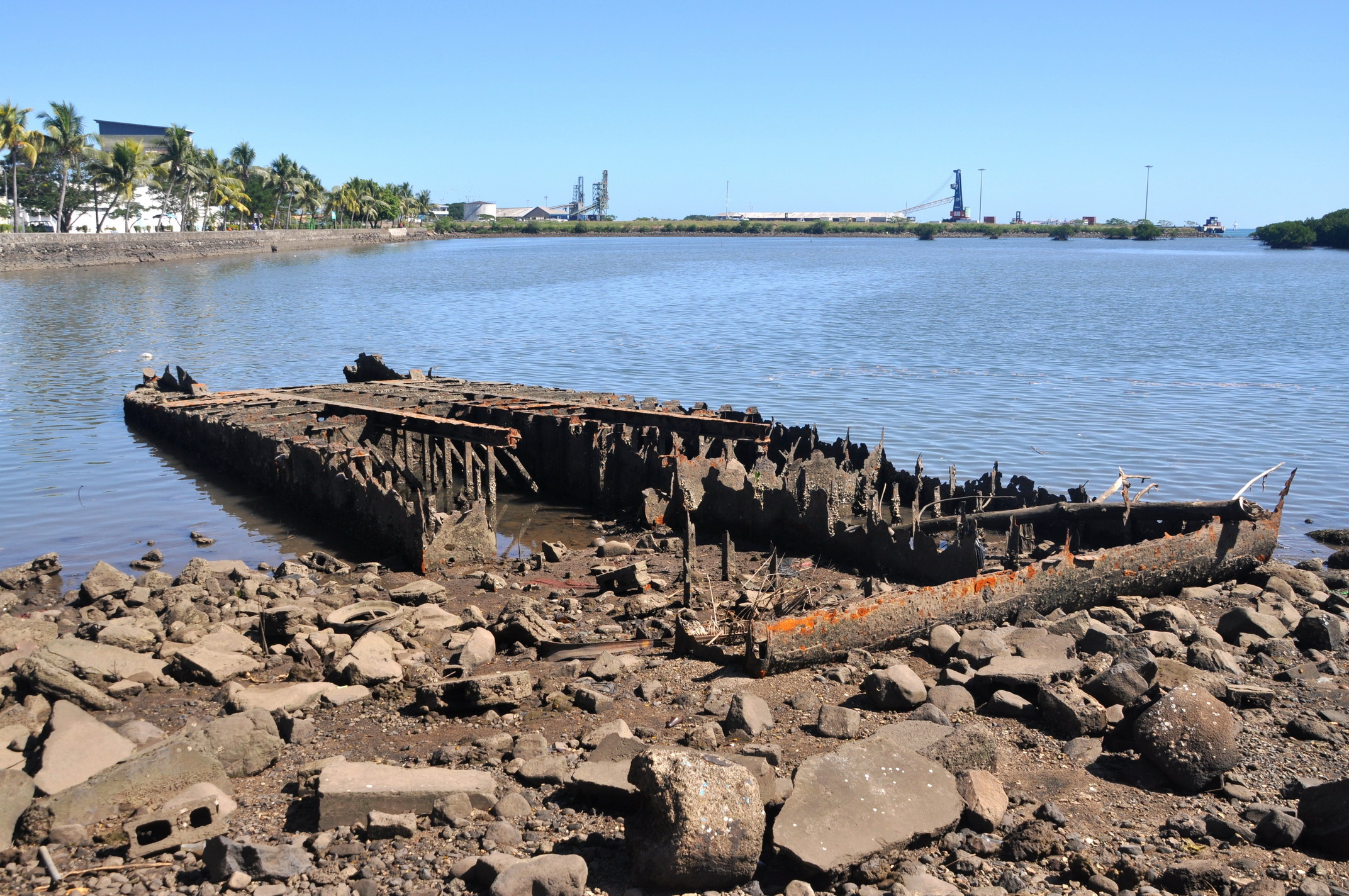
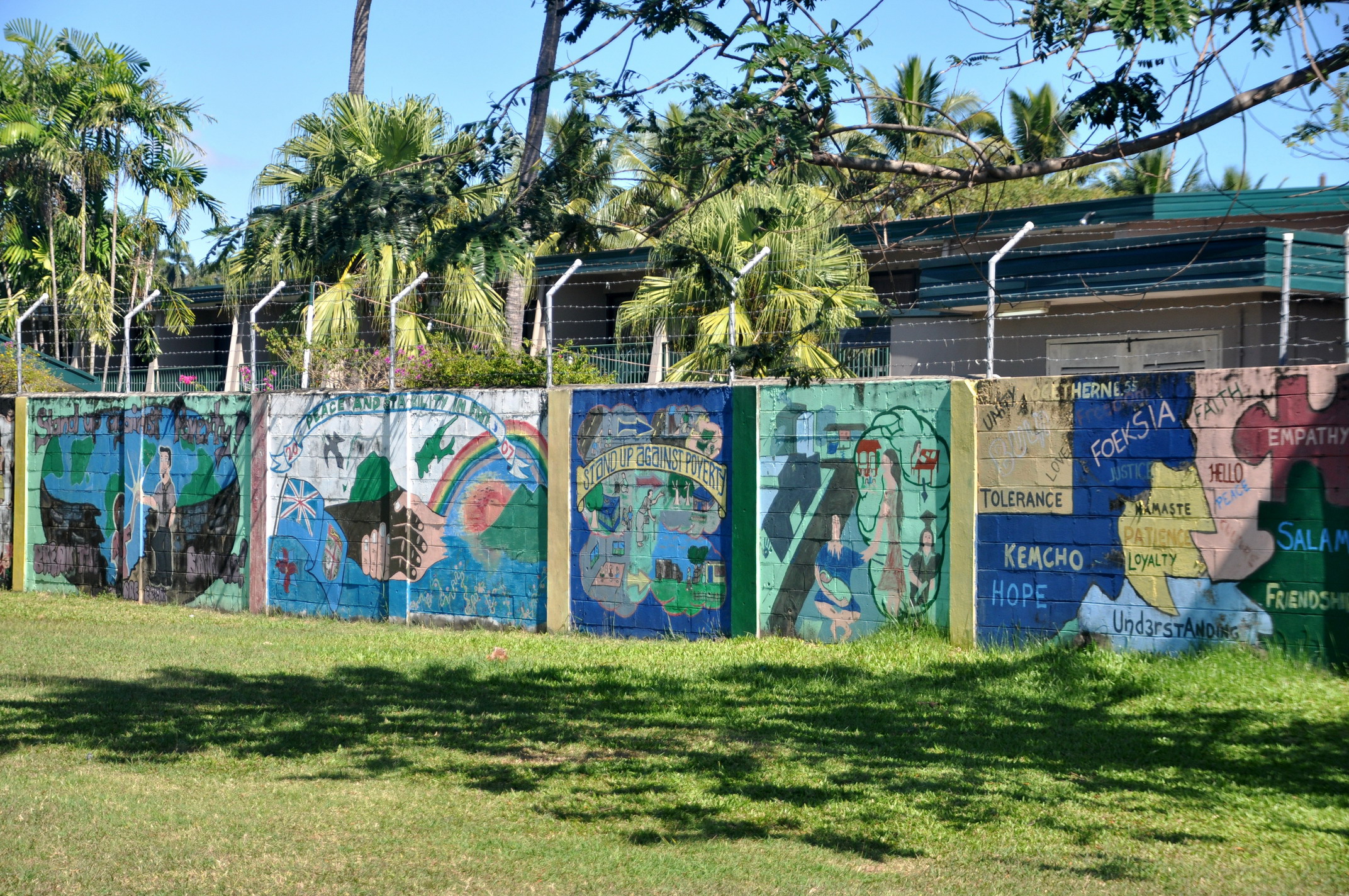
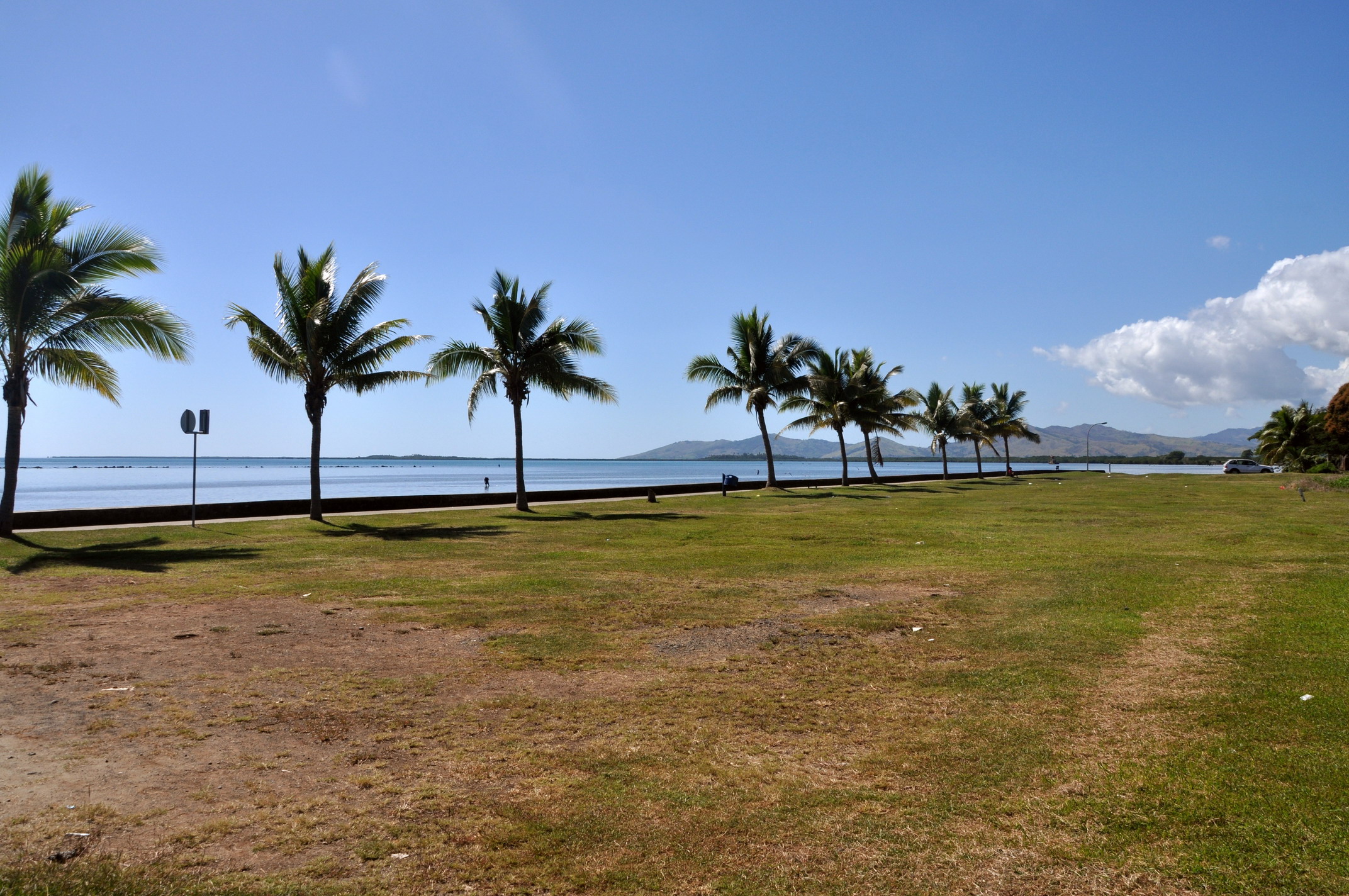
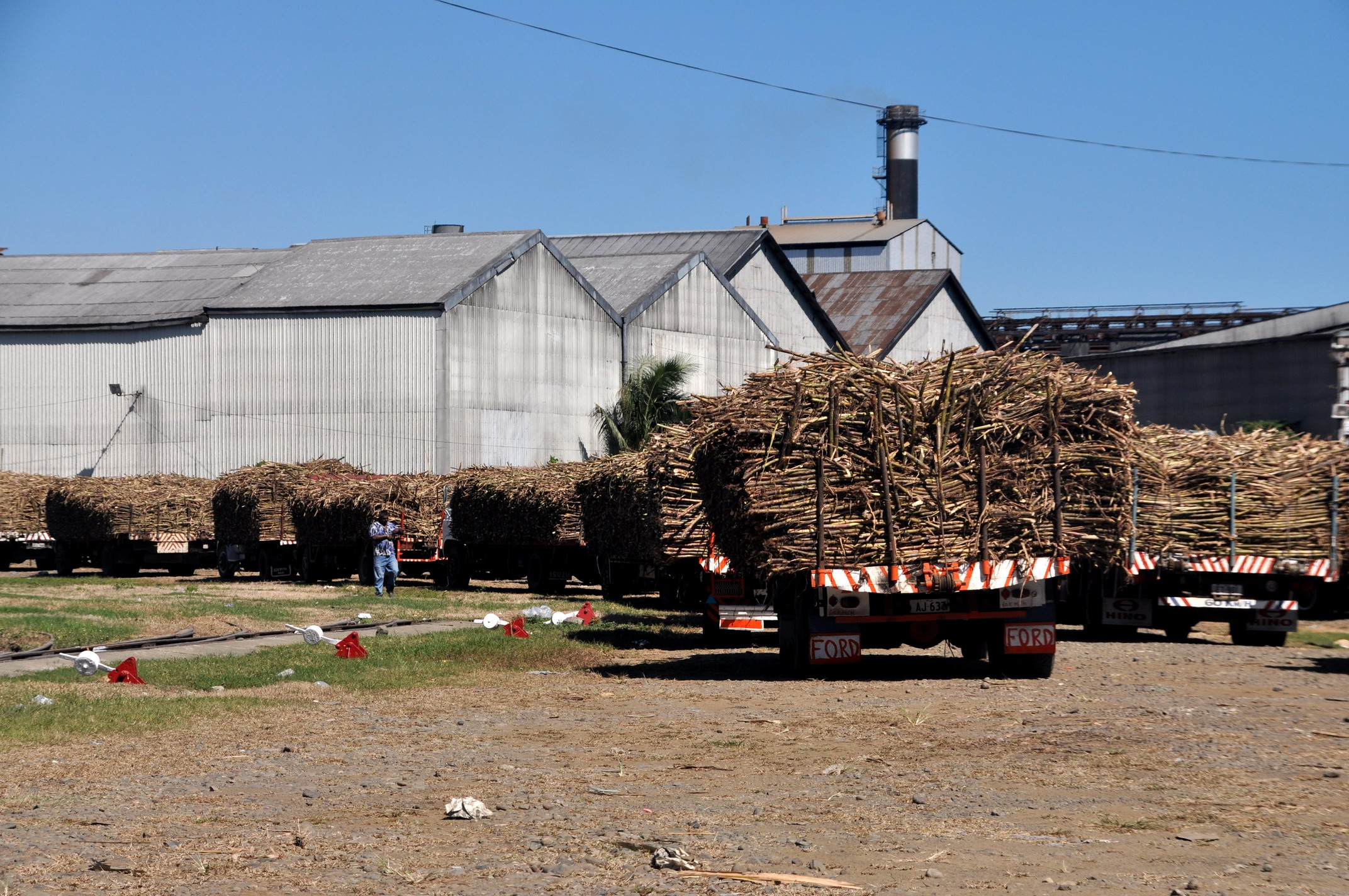
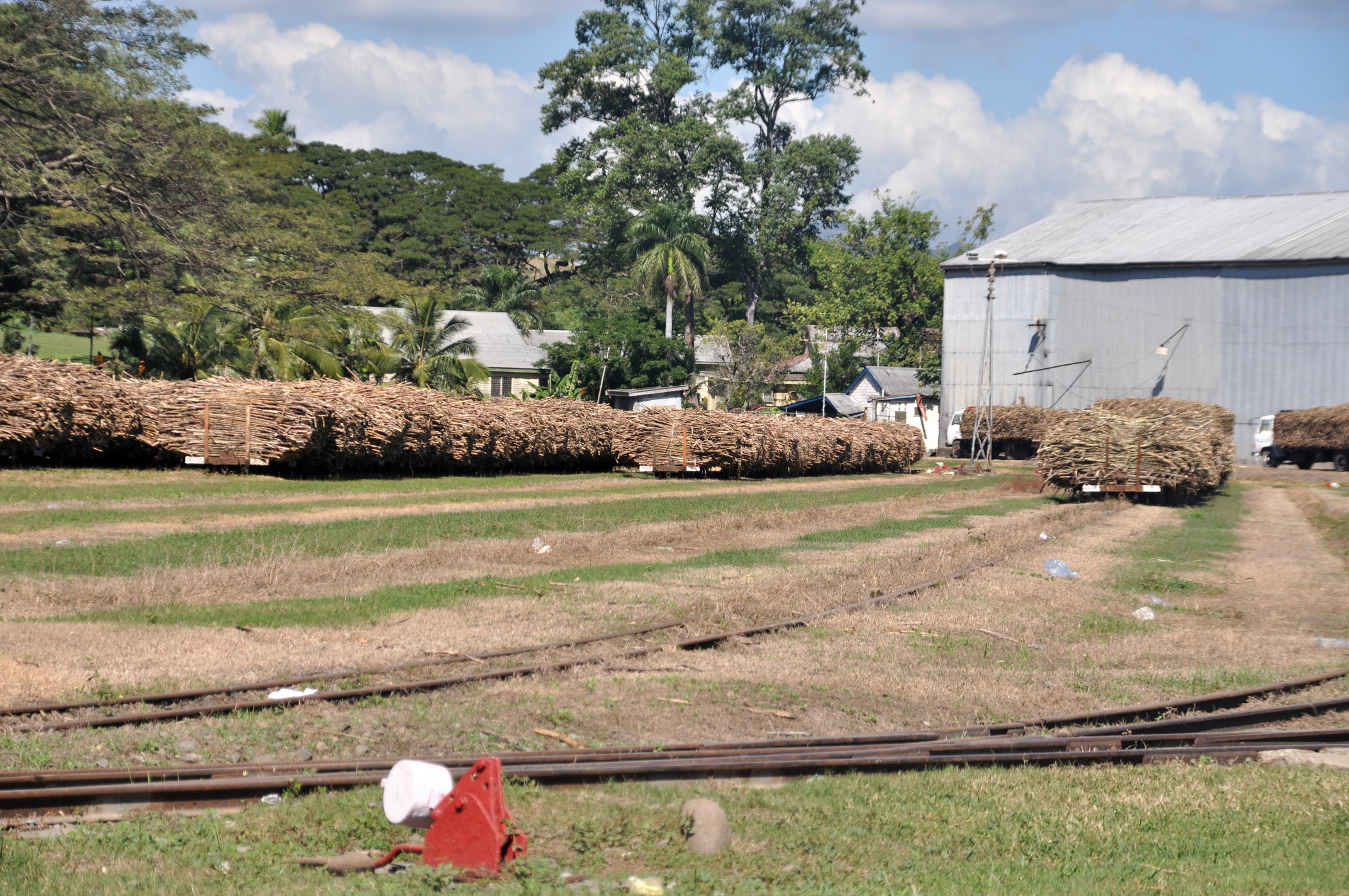
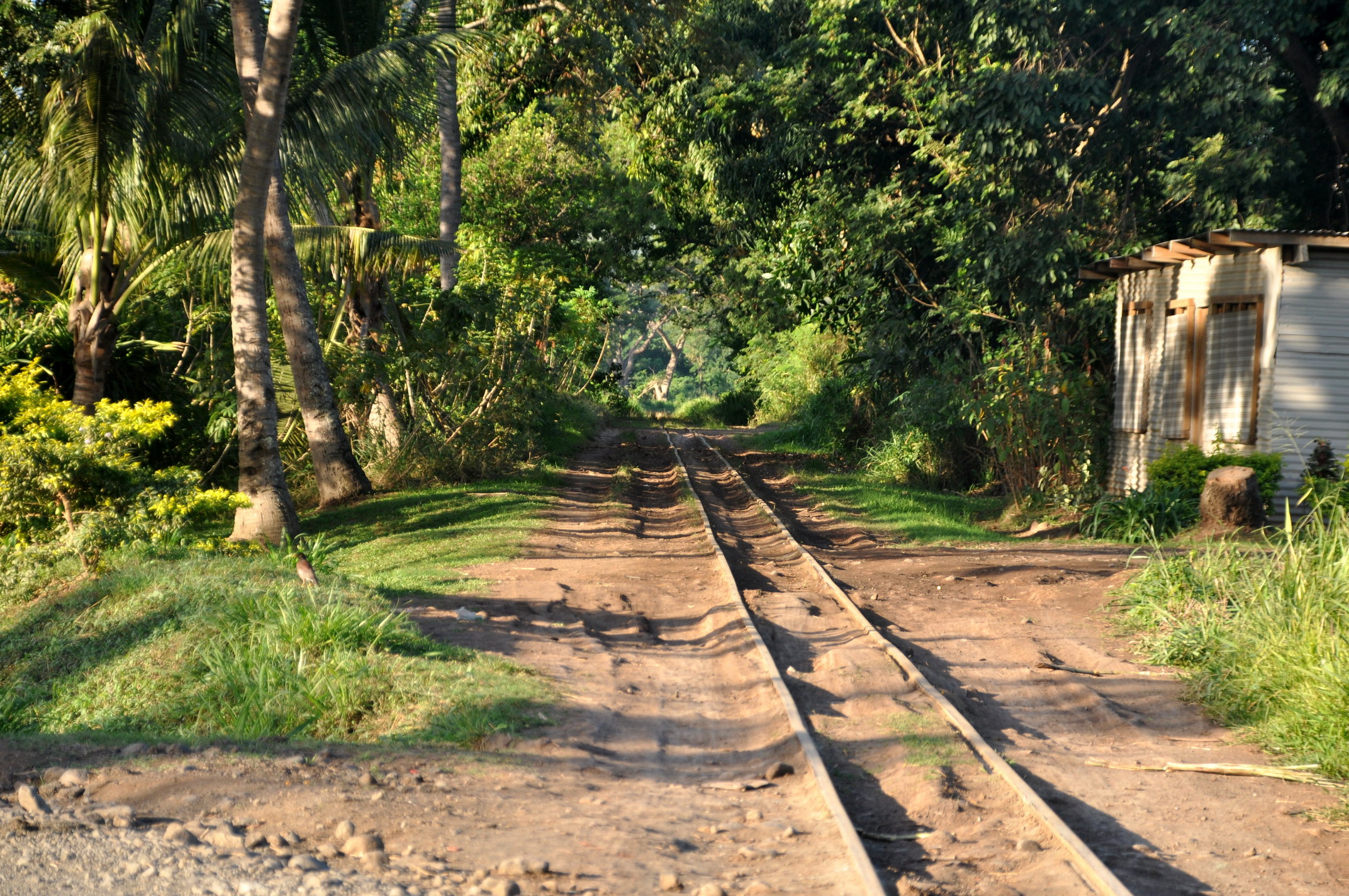
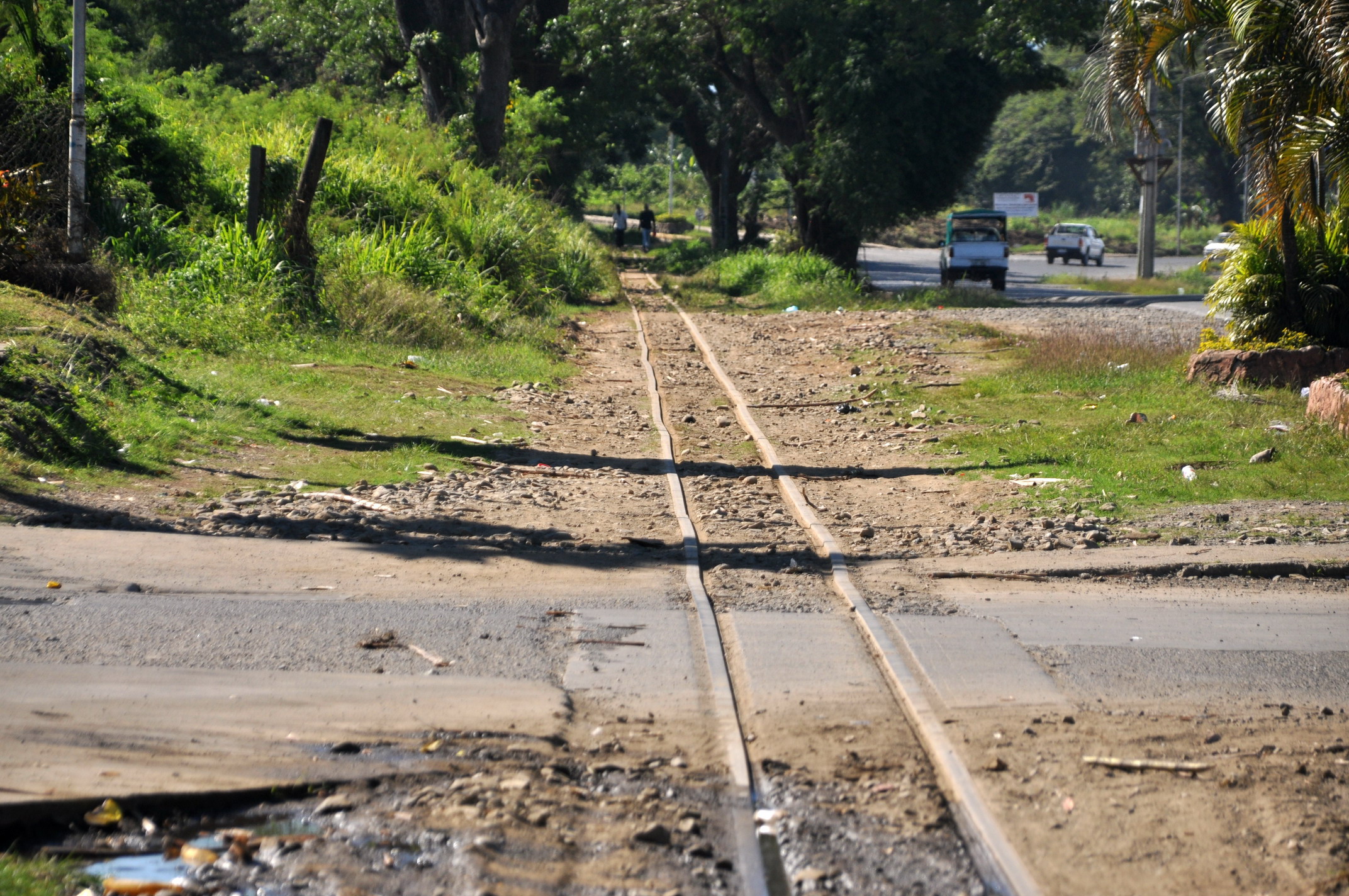
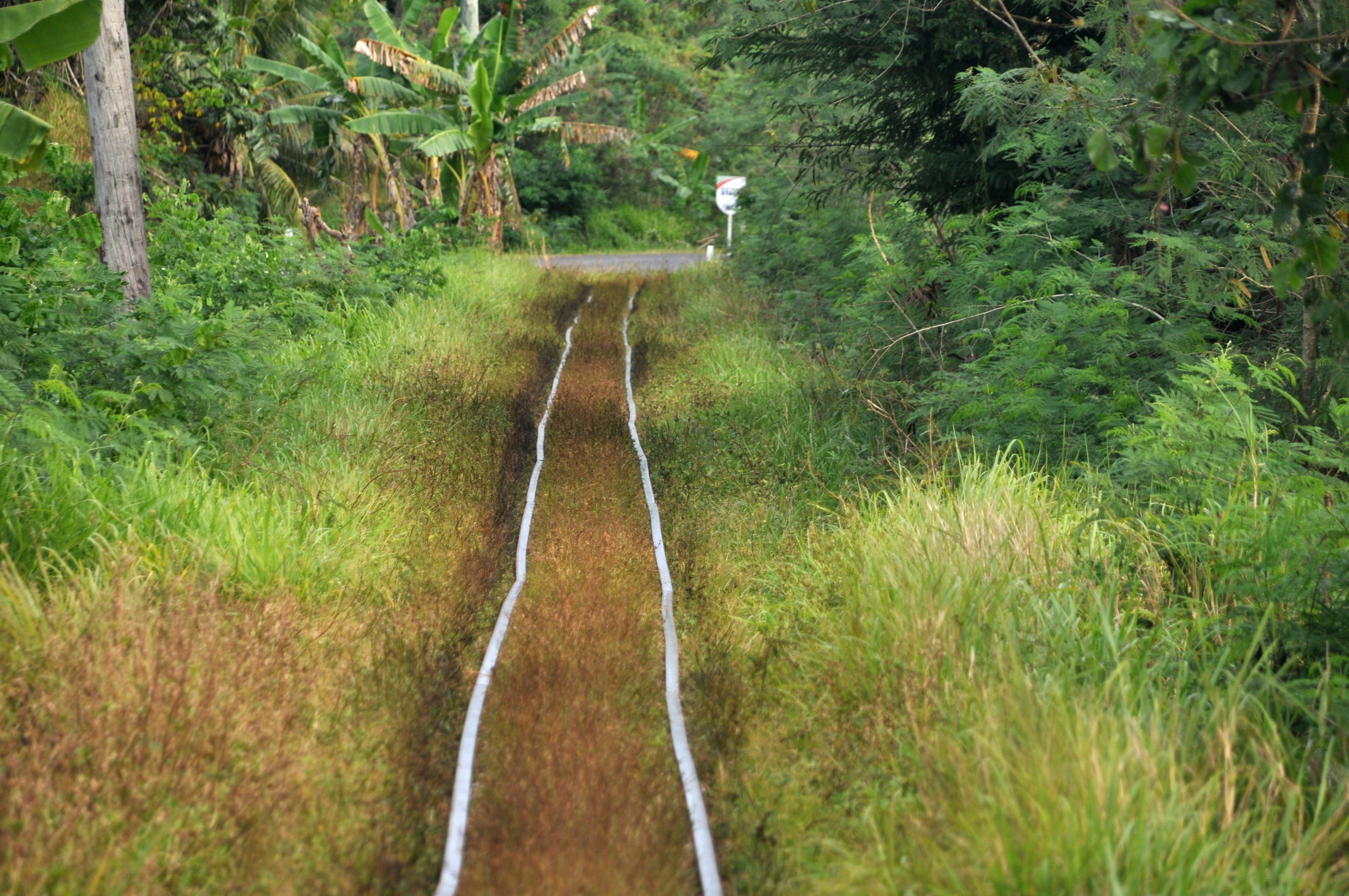
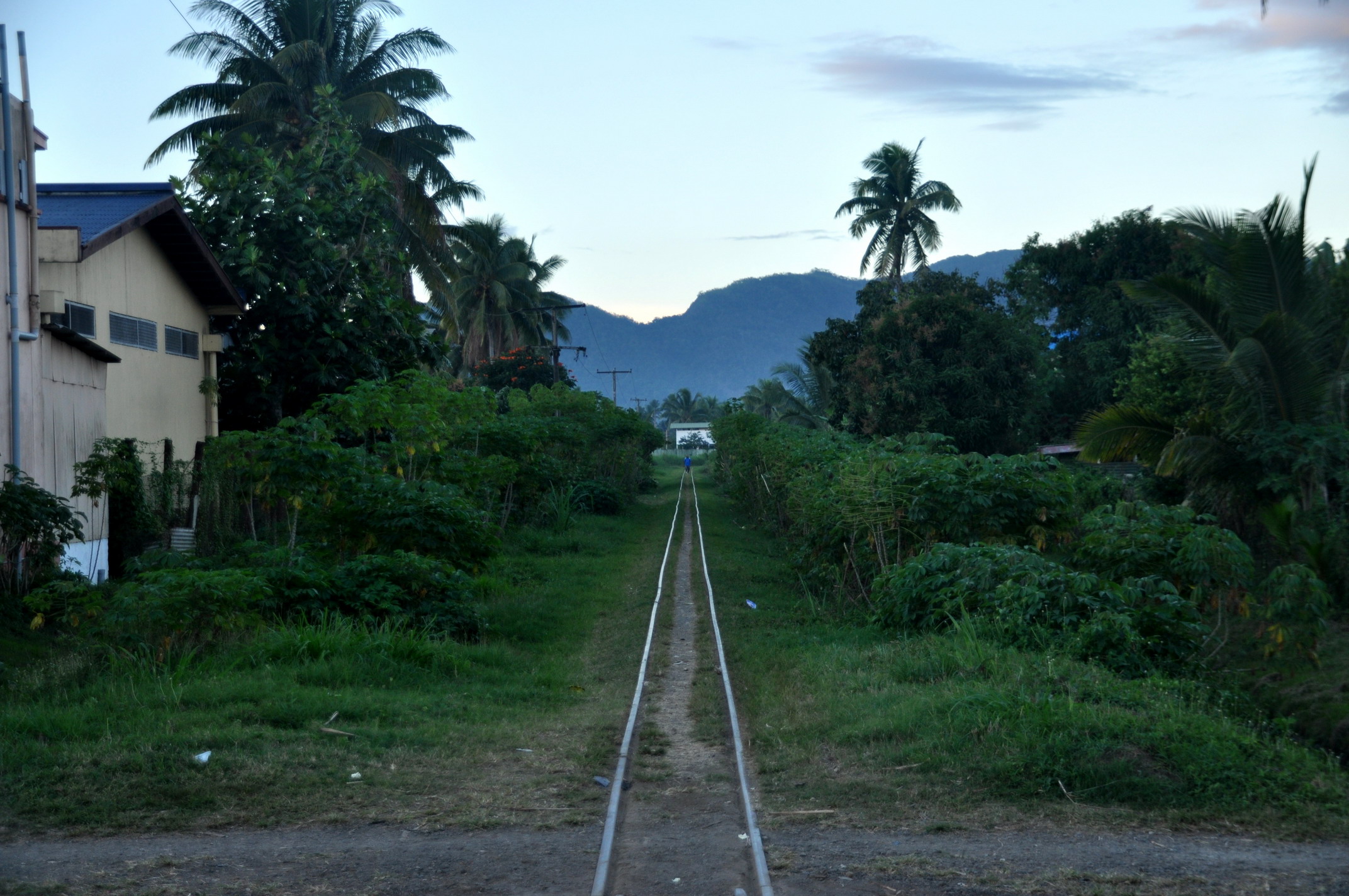
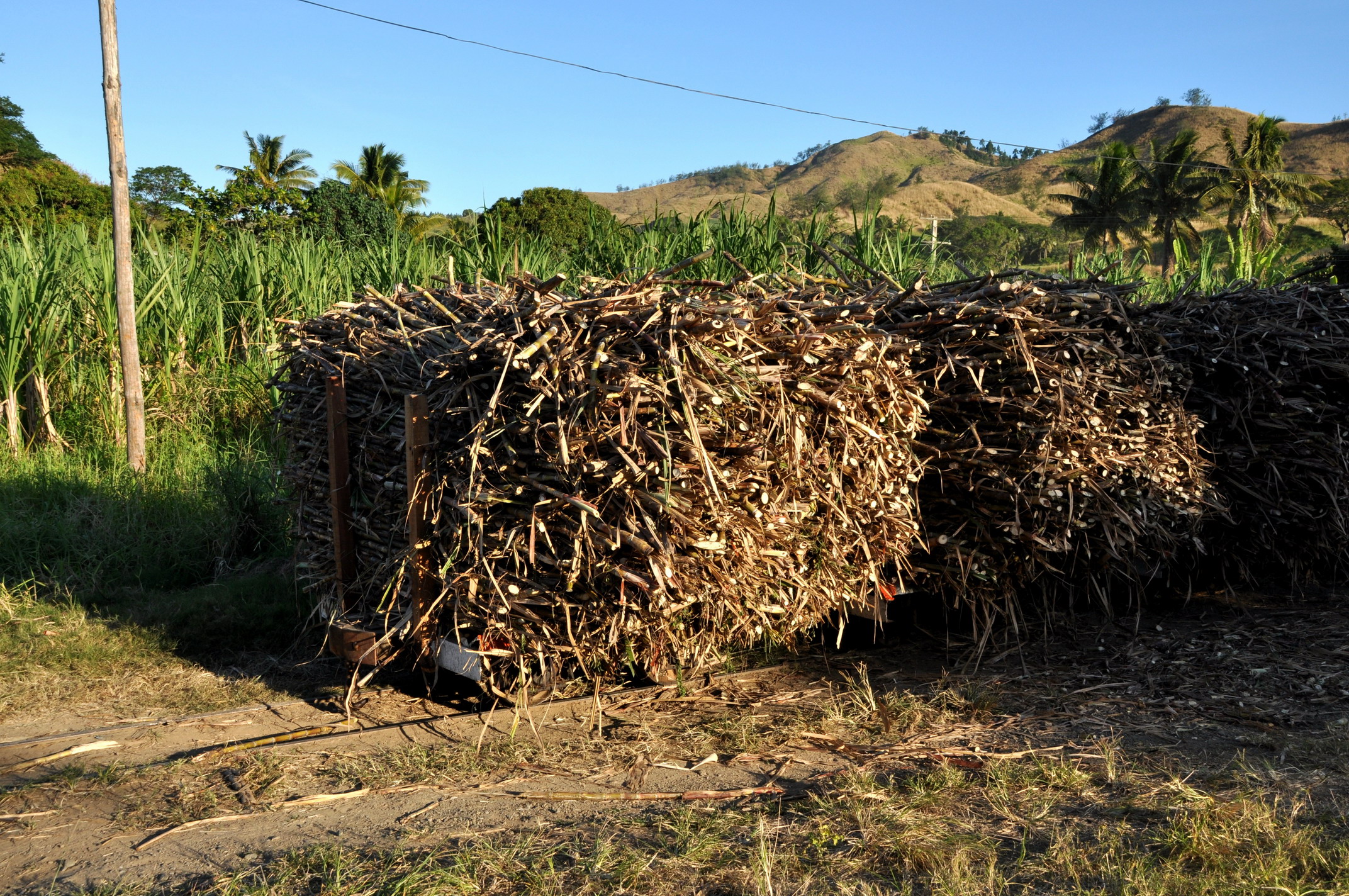
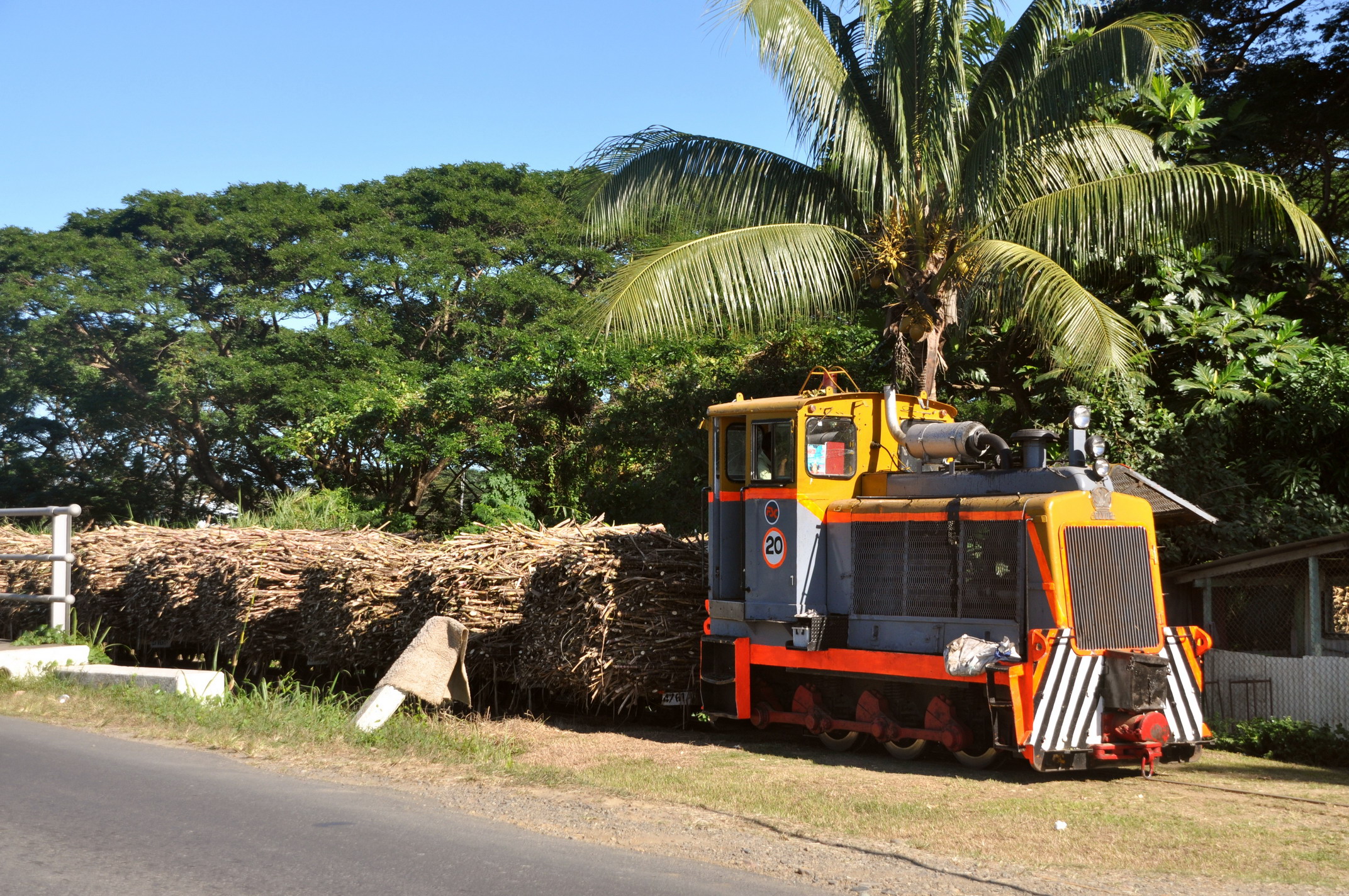
Our first stop after Nadi was the town of Lautoka, a large industrial centre with a port and a big mill processing sugar cane. Sugar was the mainstay of the local economy, and the plantations were everywhere. To bring in the cut stalks there was even a sprawling network of narrow-gauge railway lines, with colourful little trains running along them. They were a pleasure to watch, and I'd put them among the main local sights.
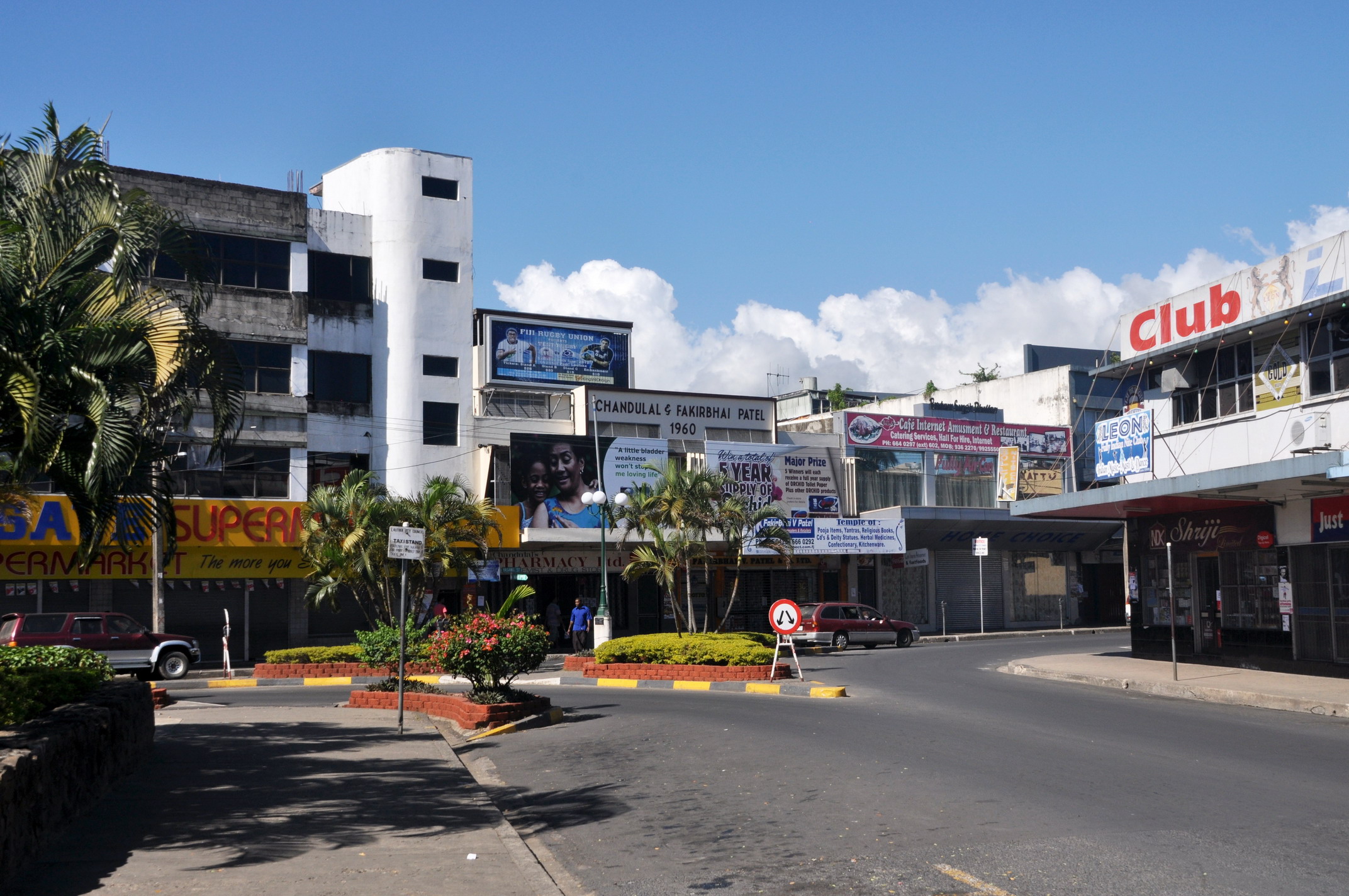
By evening we'd managed to reach the very northernmost point of Viti Levu. We needed a place to spend the night and tried the first resort, Wananavu Beach Resort (17°19.222′S, 178°12.260′E). There were rooms available, but everything was very expensive. It would have taken a long time to find anything cheaper or better in northern Viti Levu. The main hotels and beaches were on the south coast. We stayed there in spite of the cost.
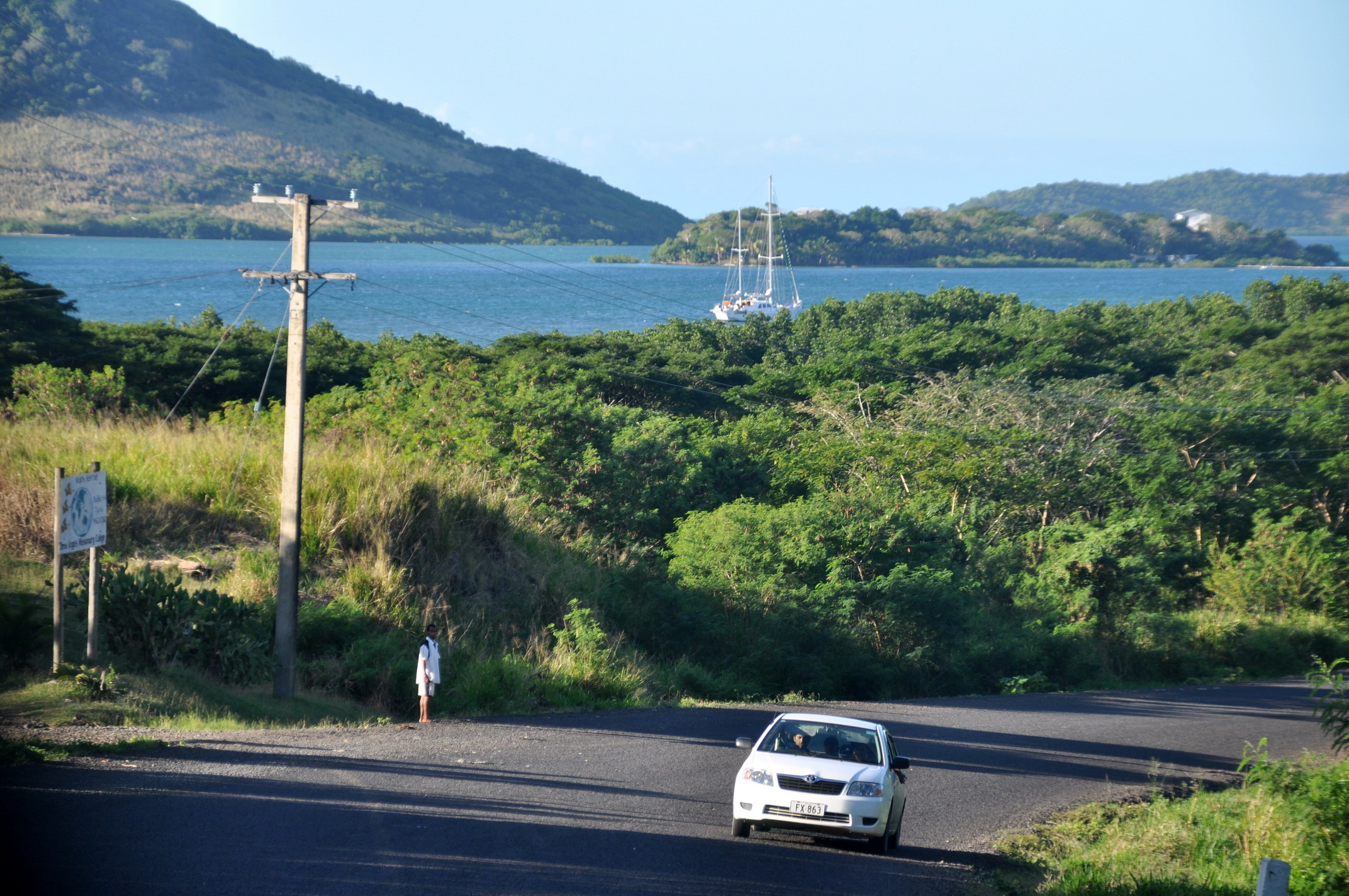
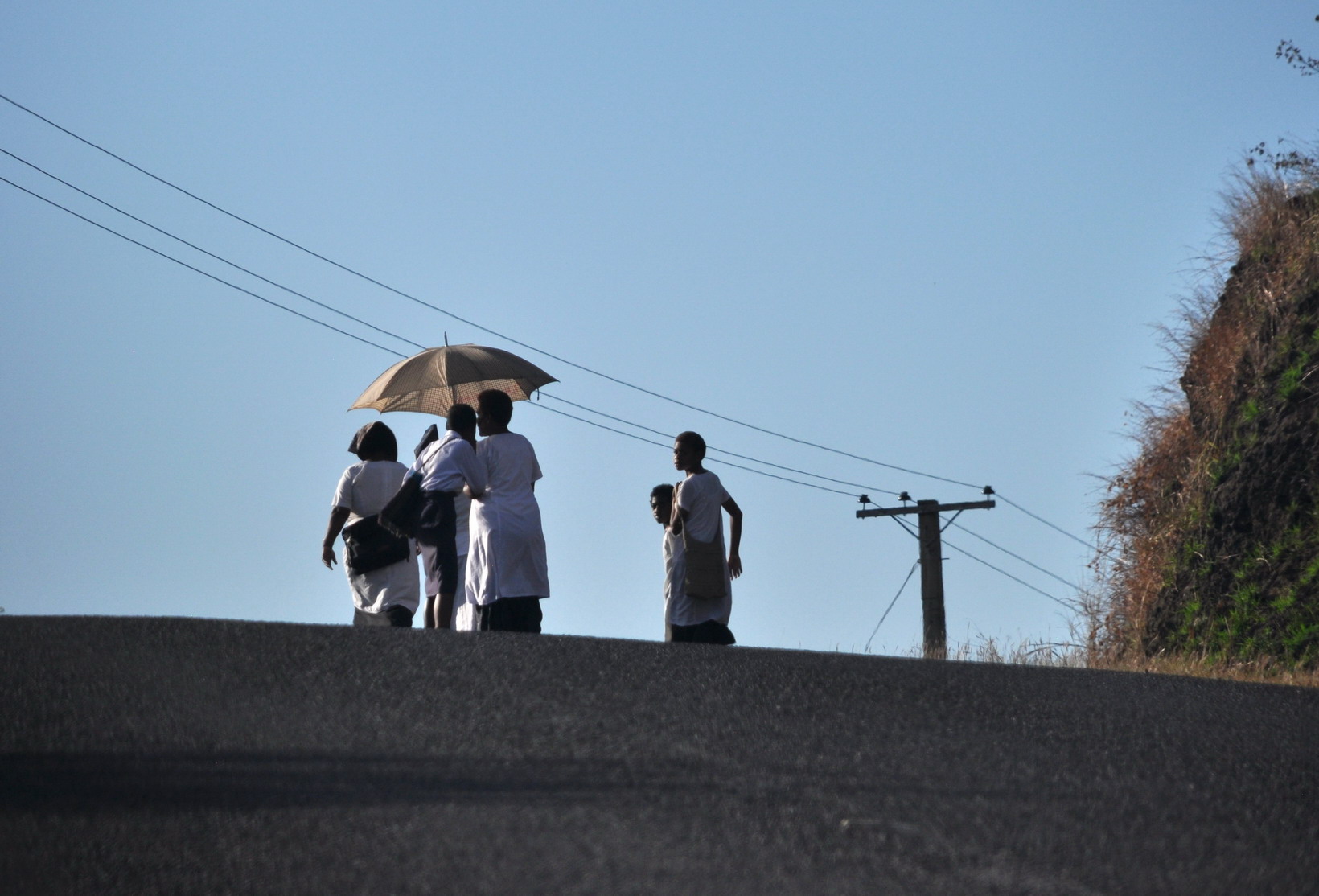
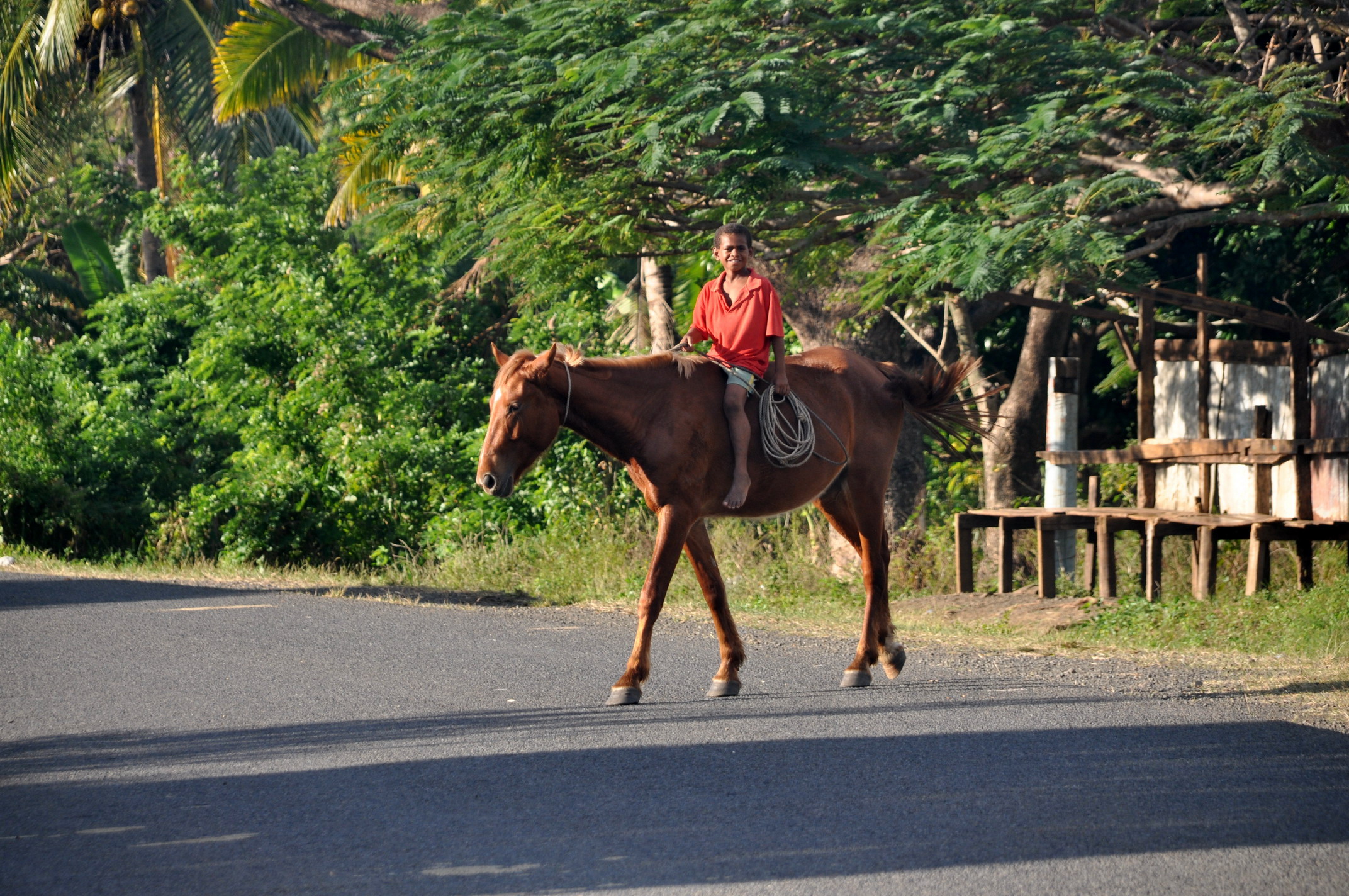
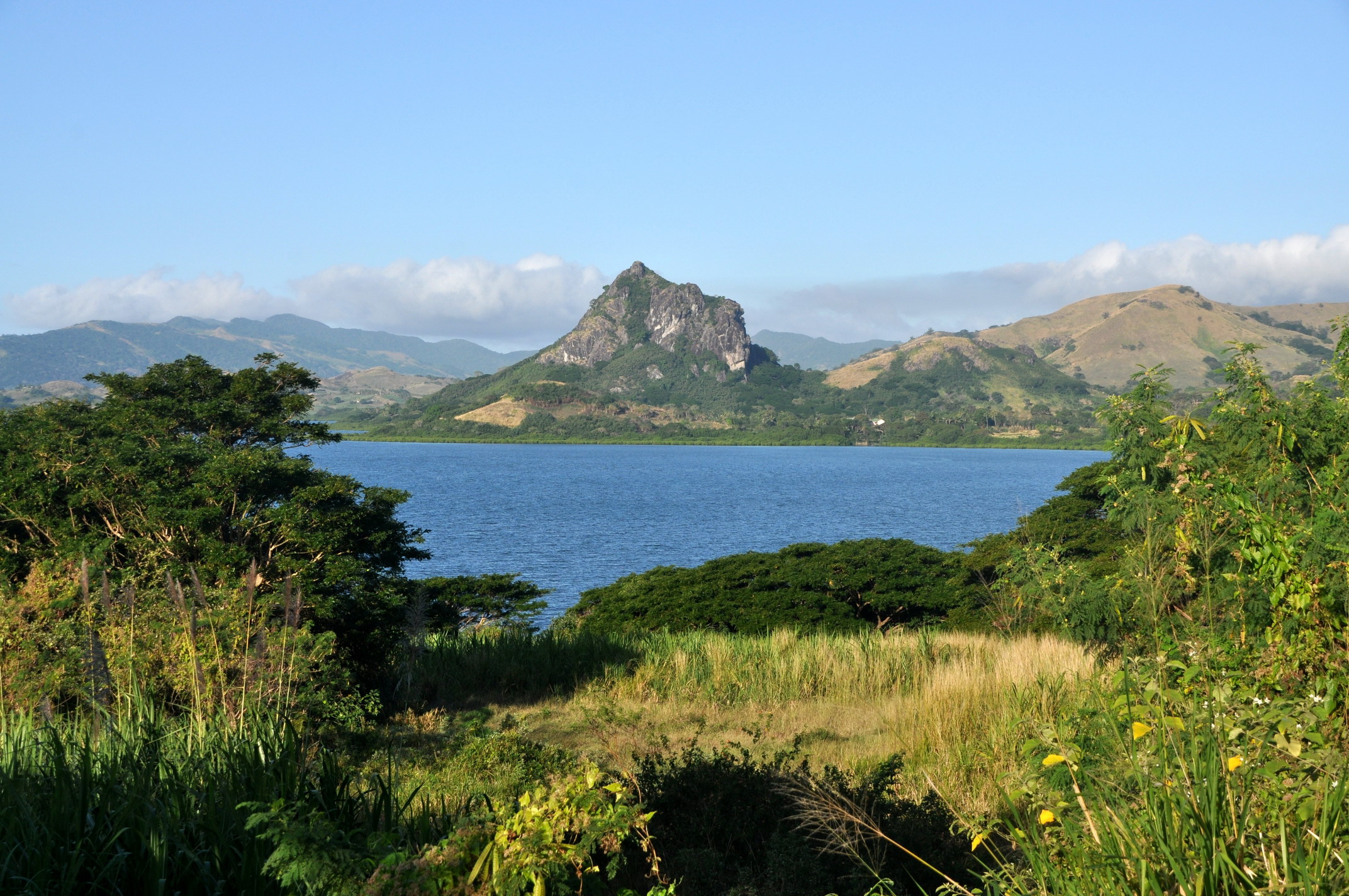
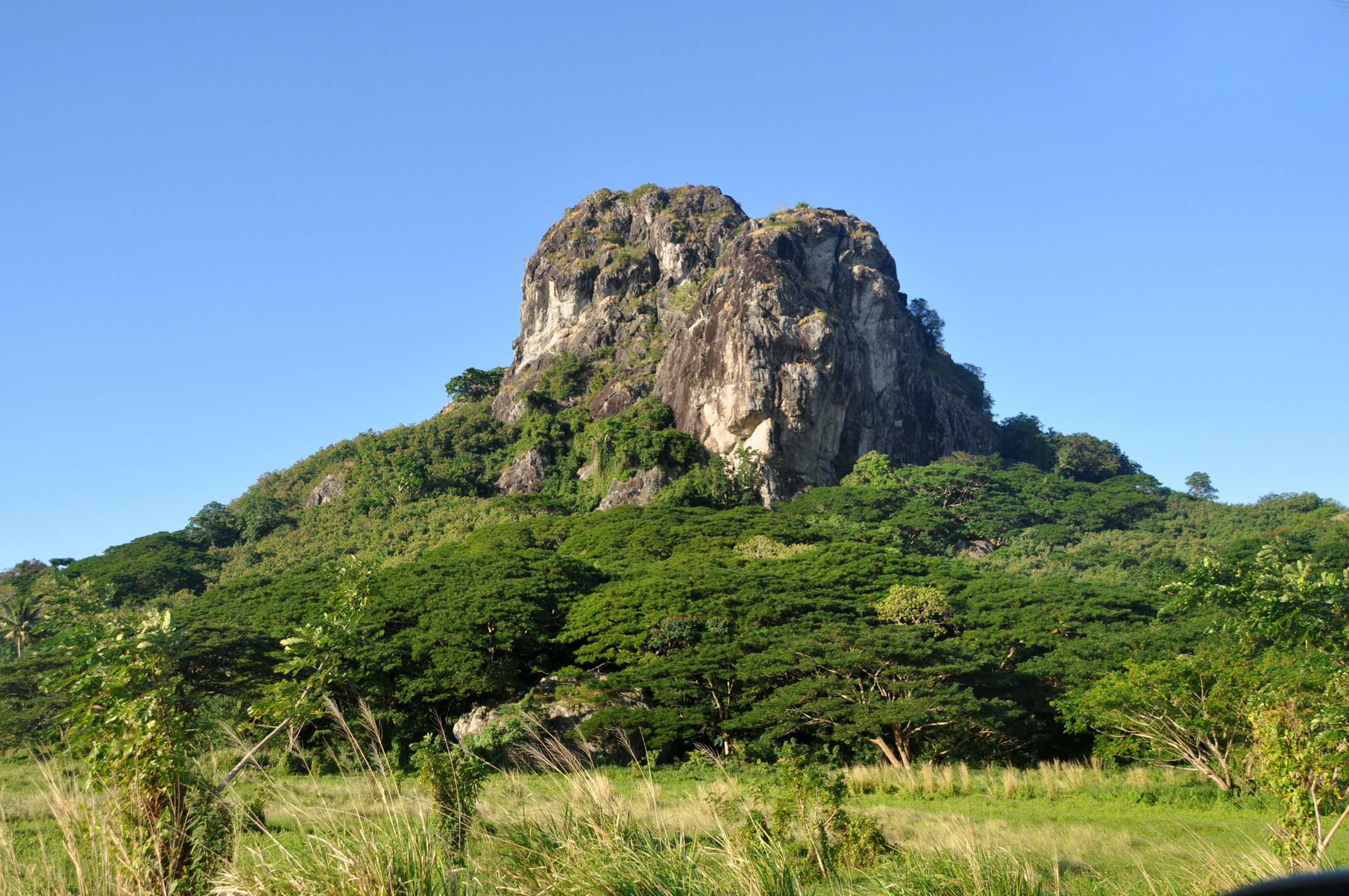
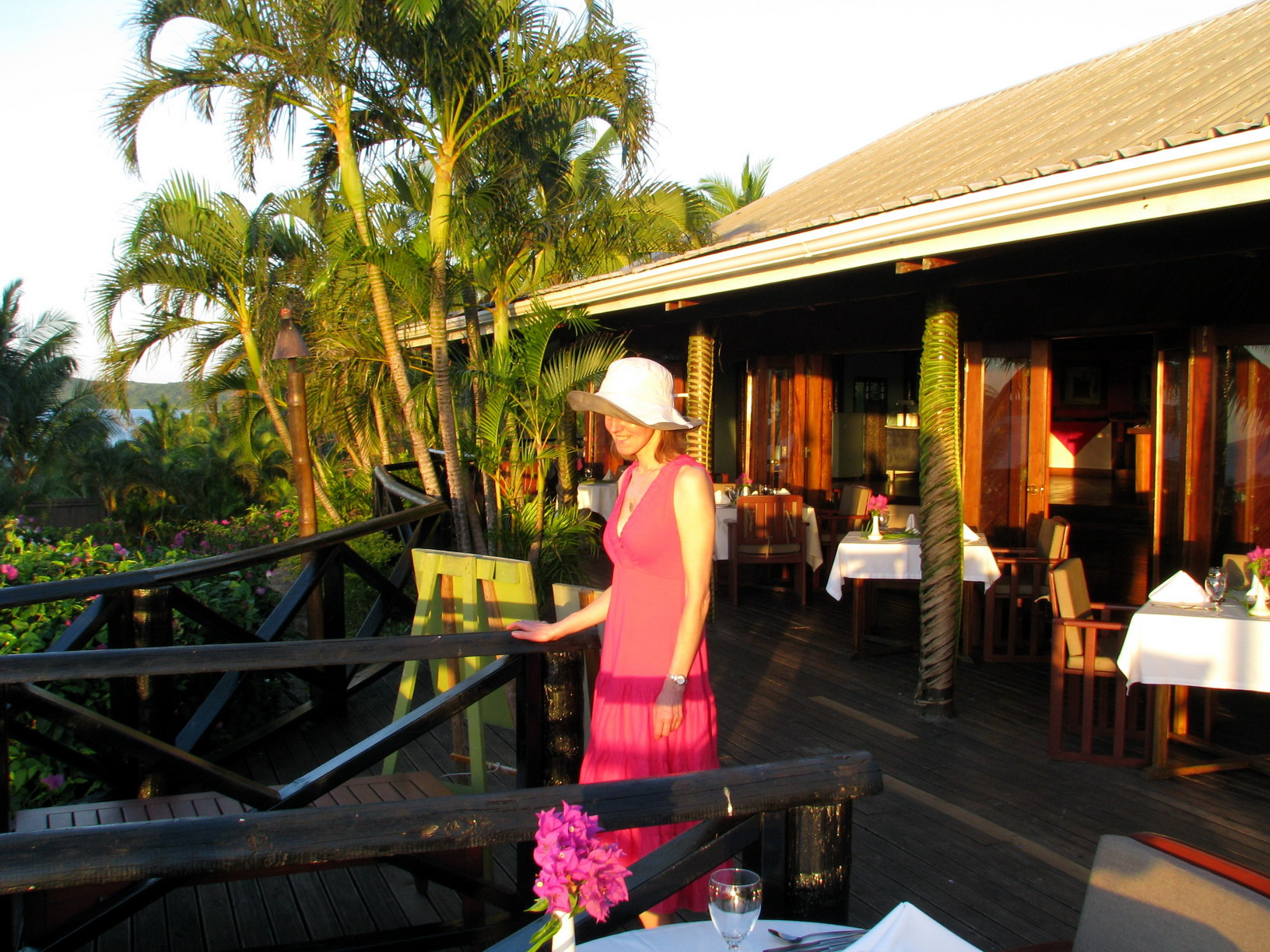
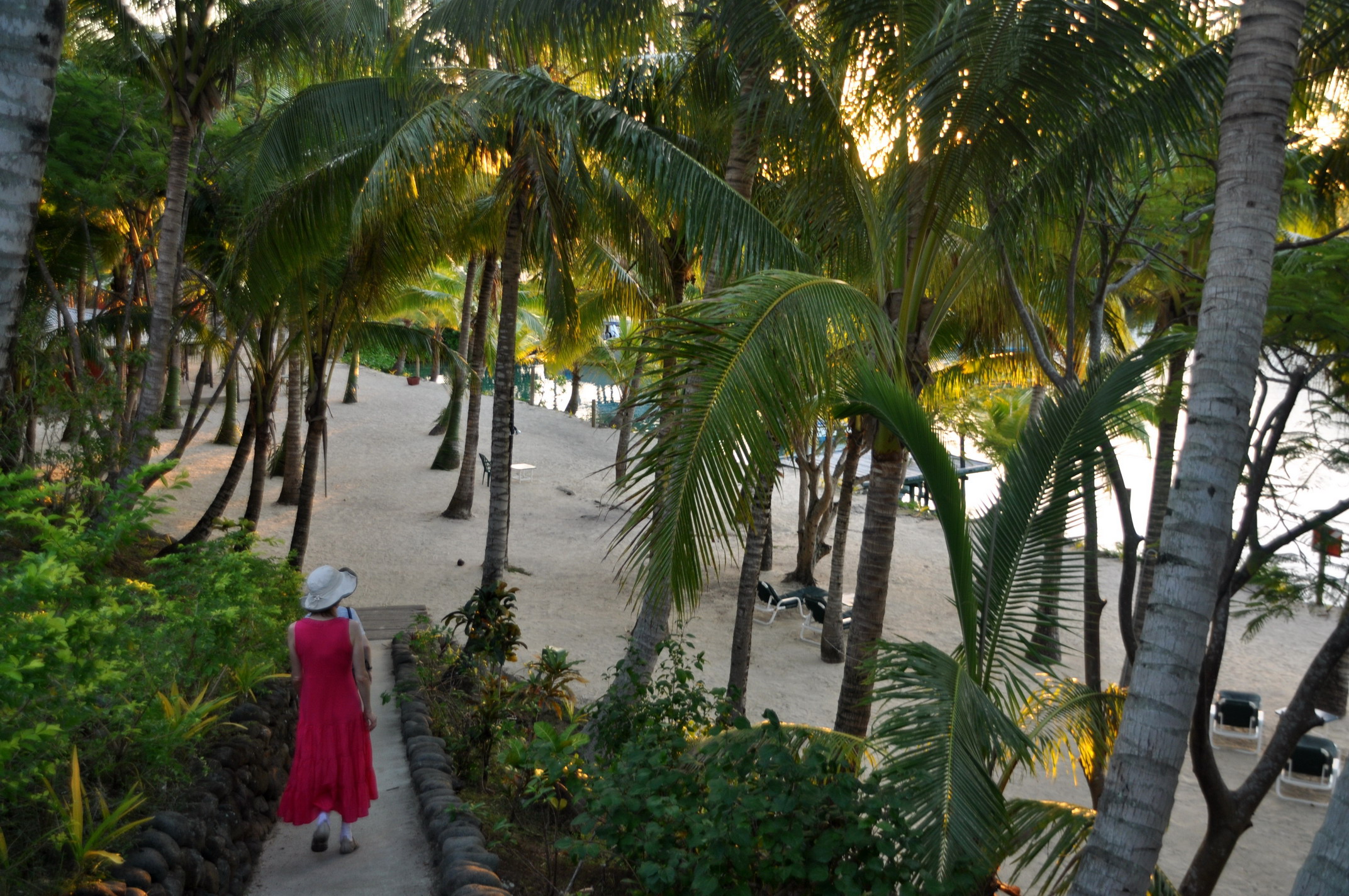
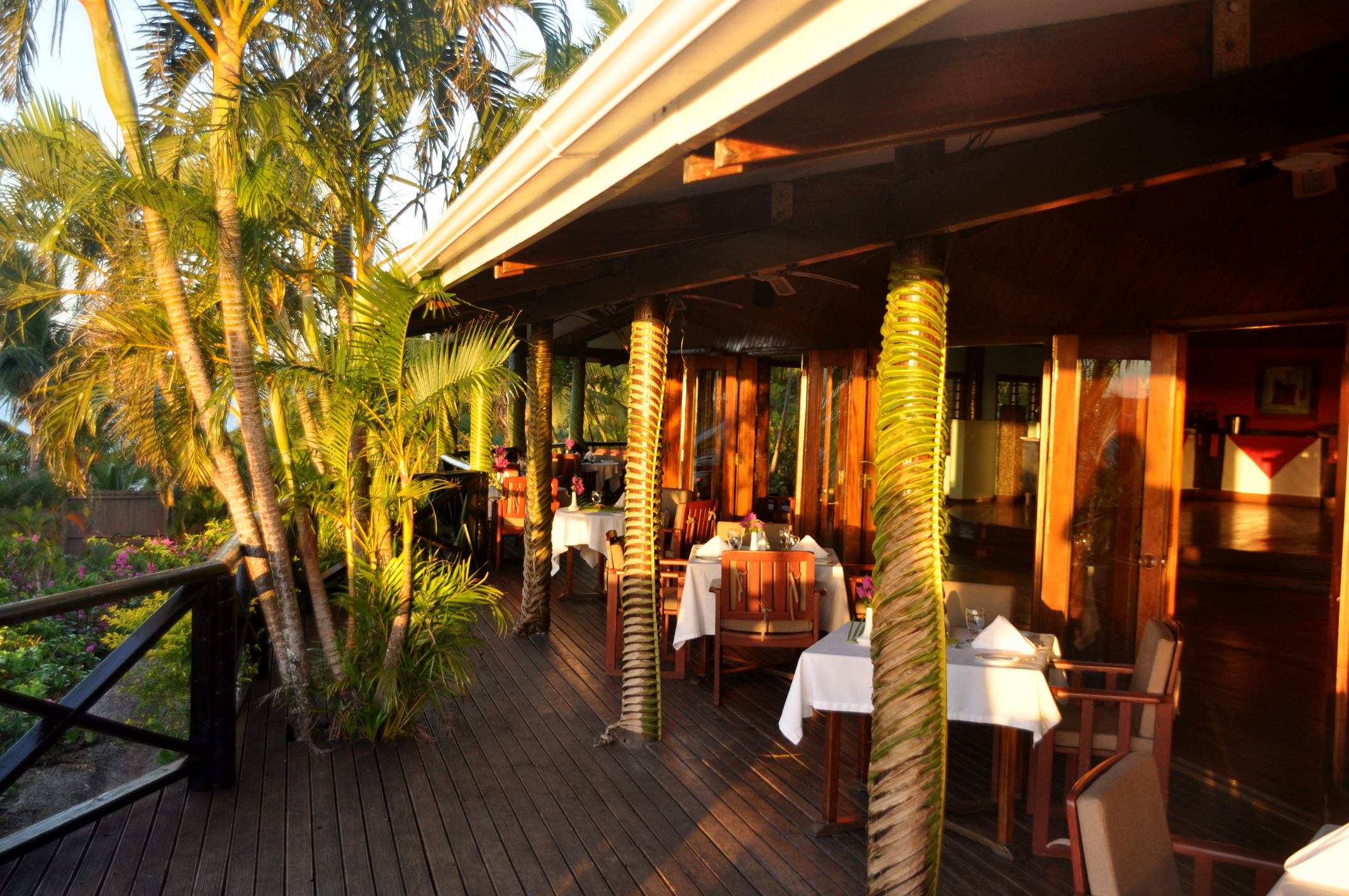
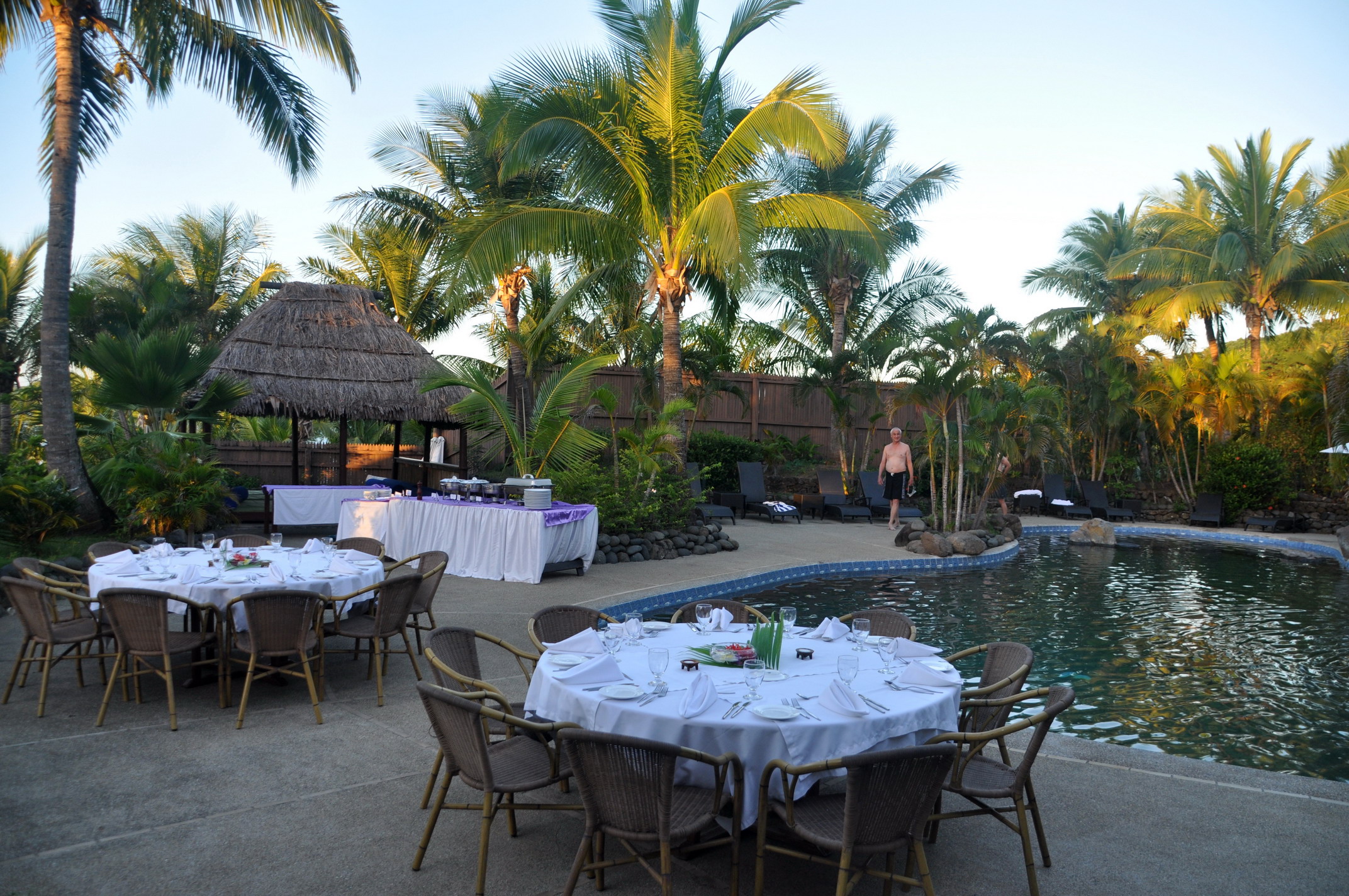
We had a lovely little bungalow of our own. There were no beaches here and the shore was fringed with coral, but steps from a jetty led into the water. We drank some wine and went to watch the sunset and have a swim.
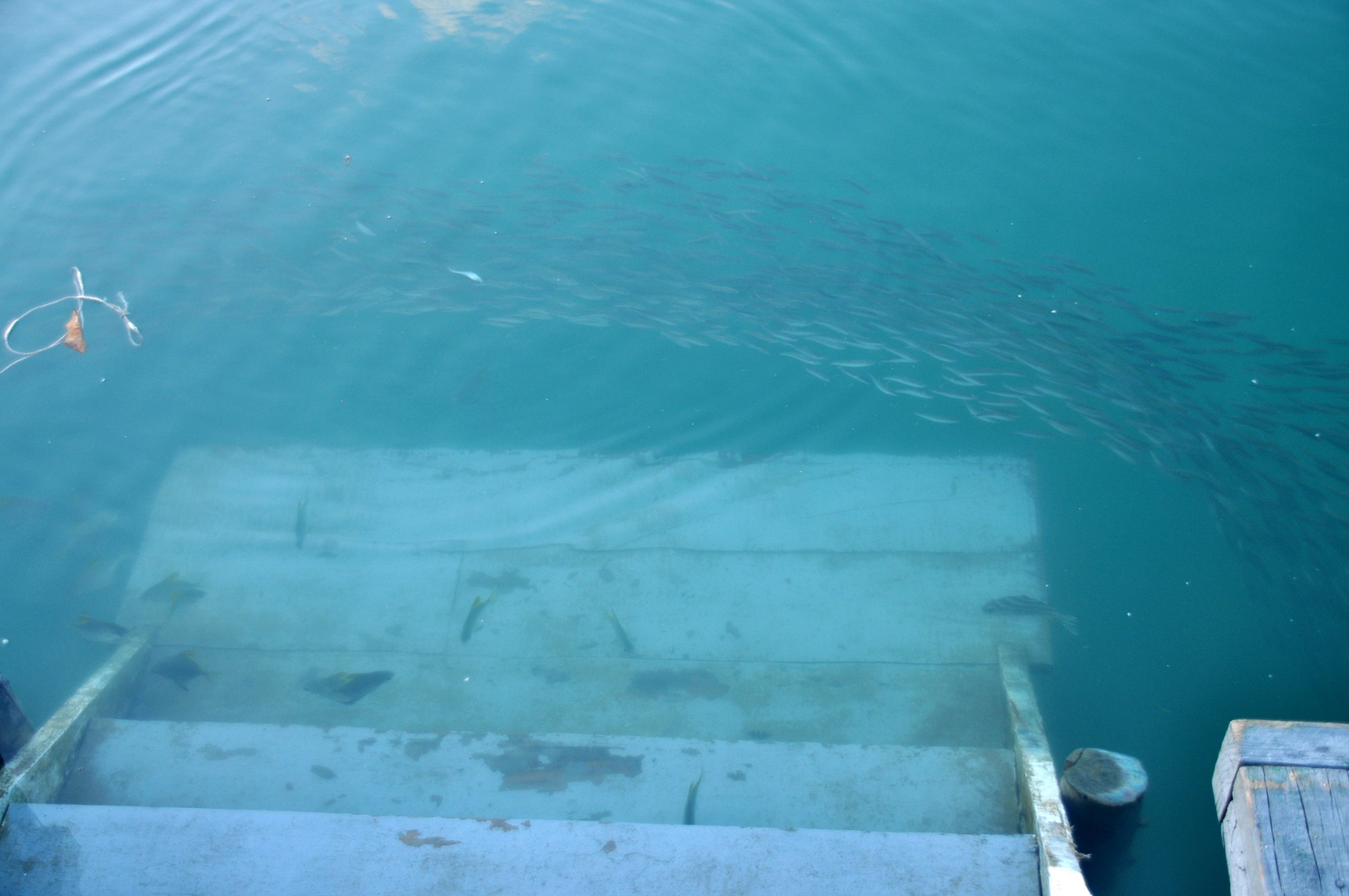
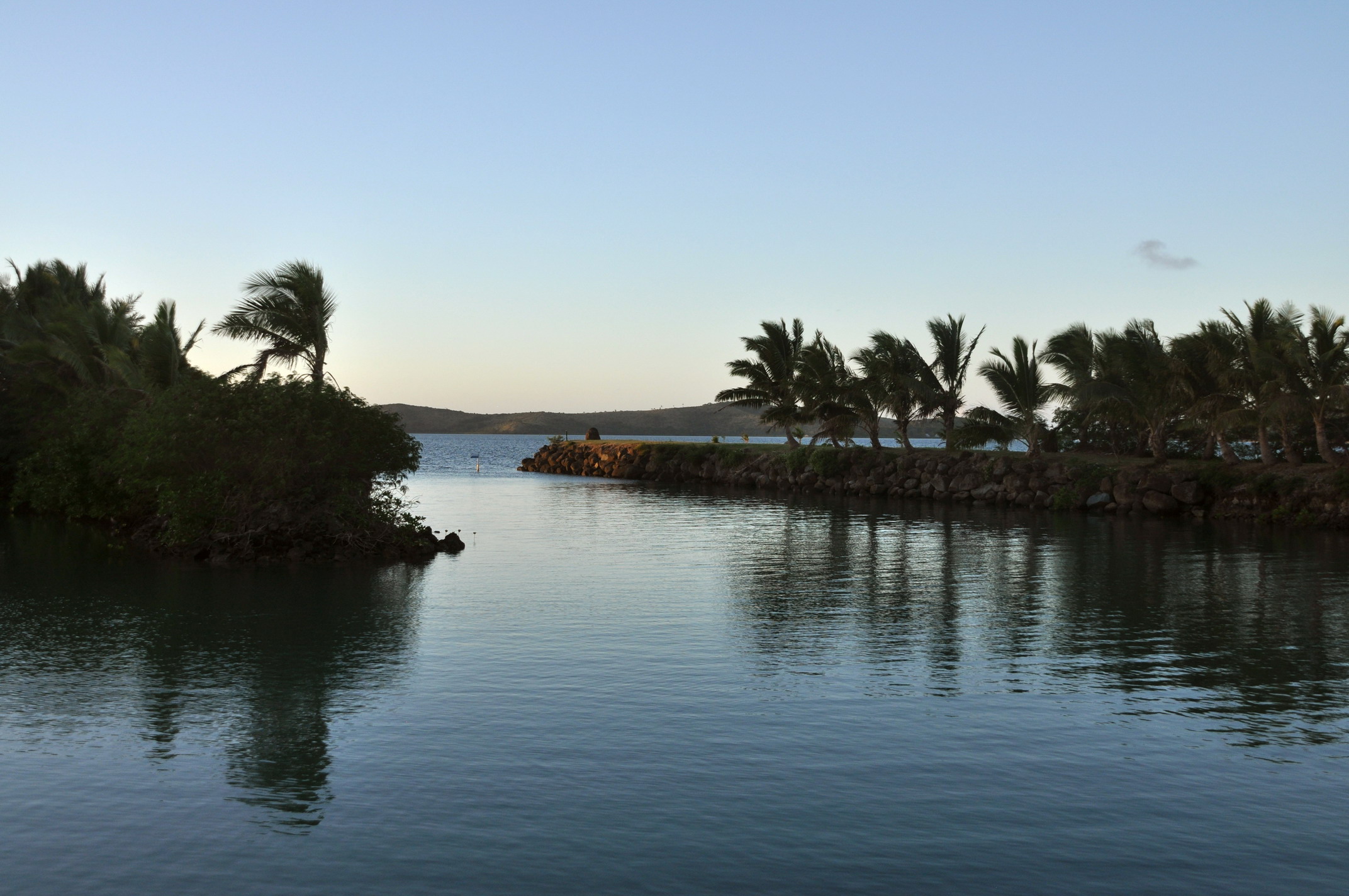
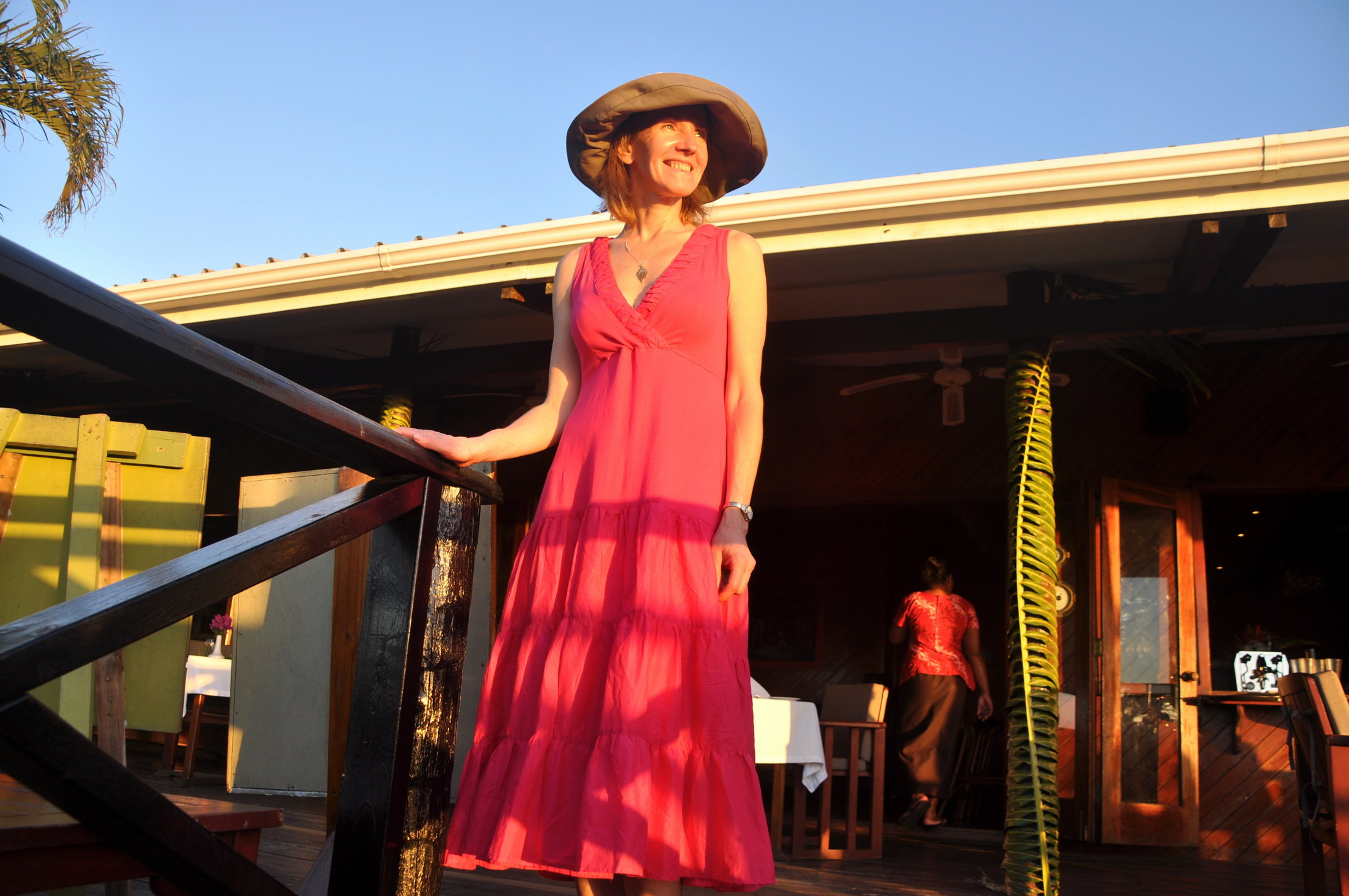
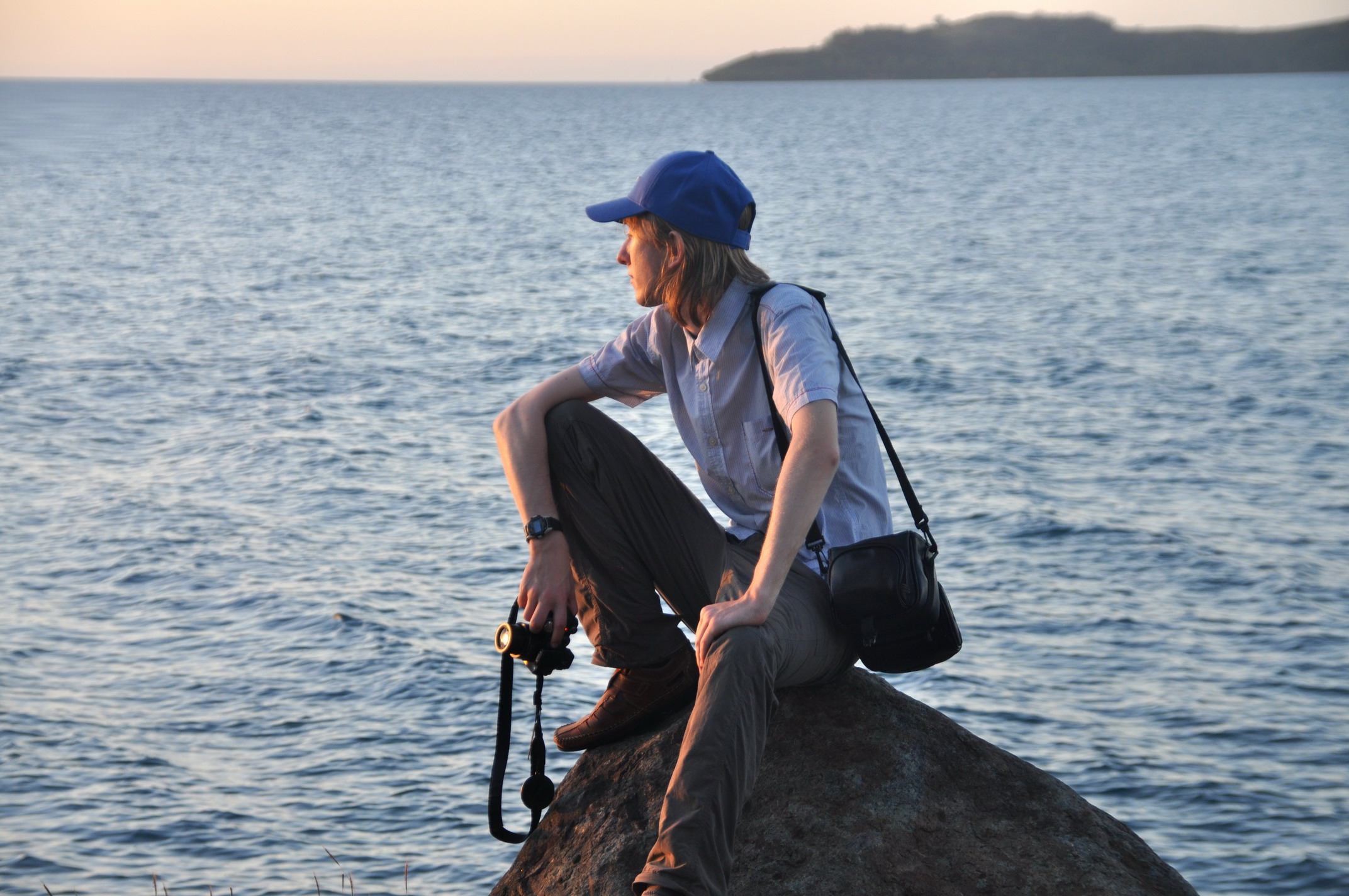
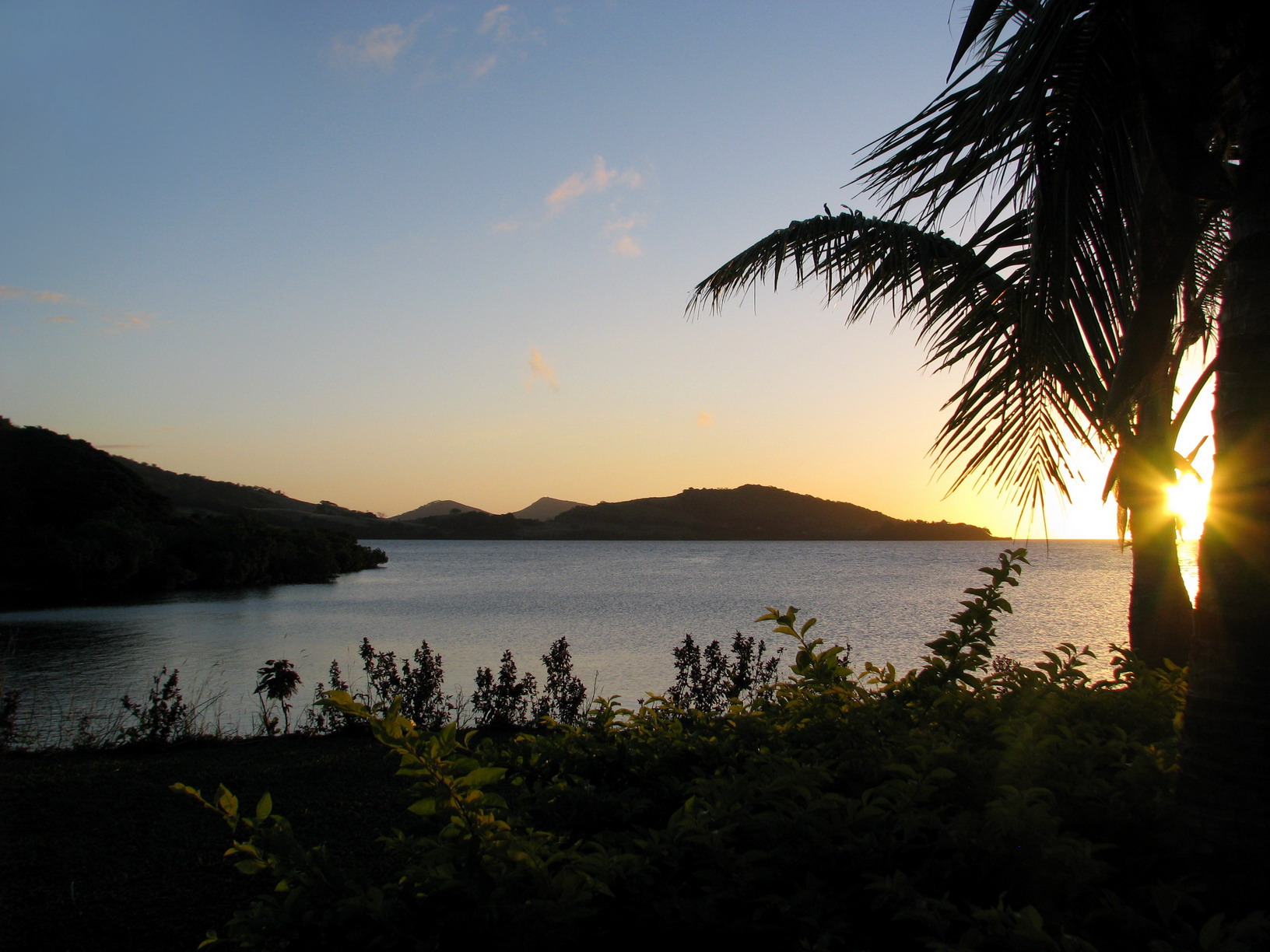
We had dinner at the resort restaurant. The prices were punishing, the wait long, the portions small and the food dull. Dinner for three came to nearly two hundred dollars. In a café for locals you could eat your fill for a tenth of that.
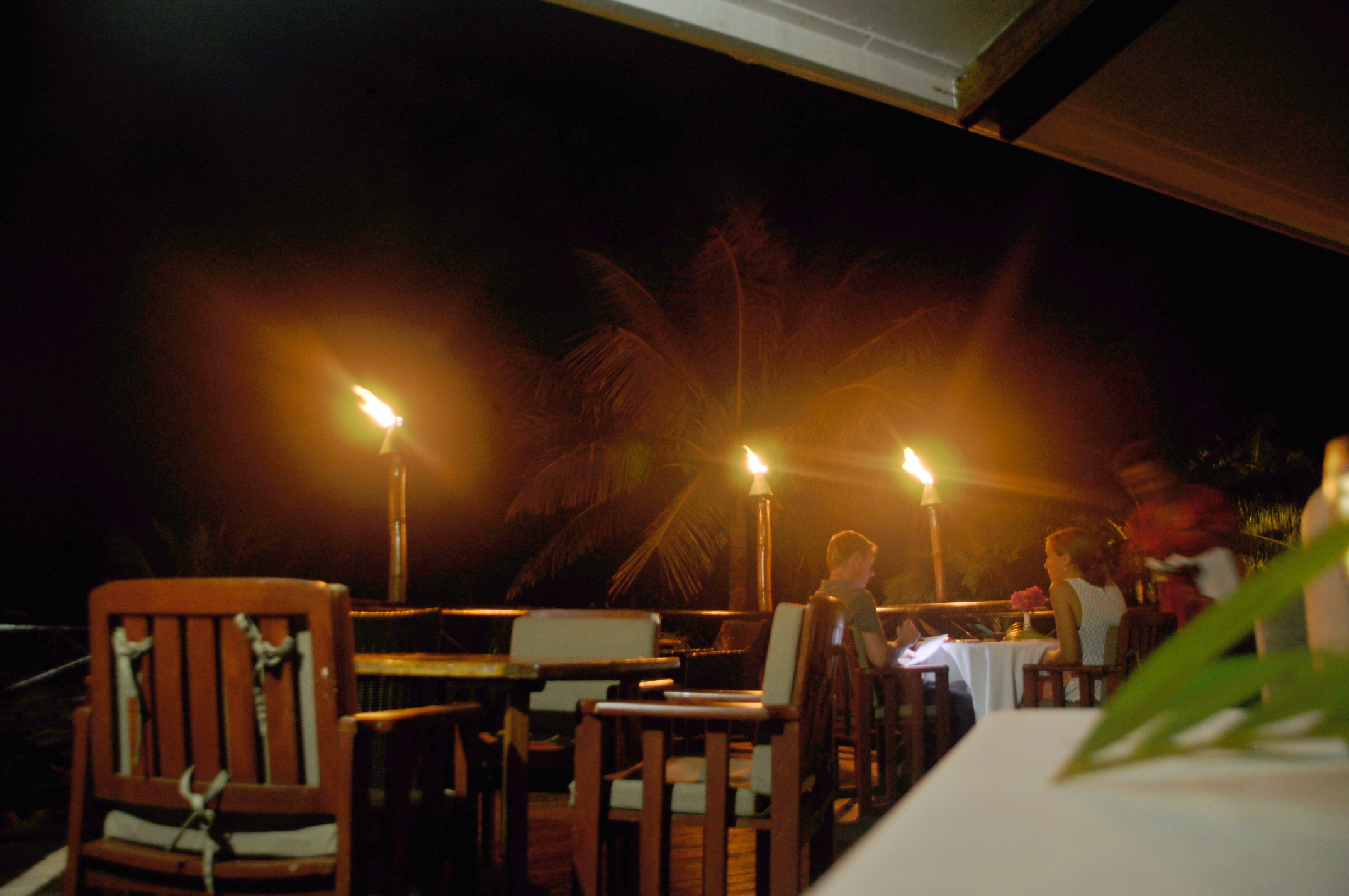
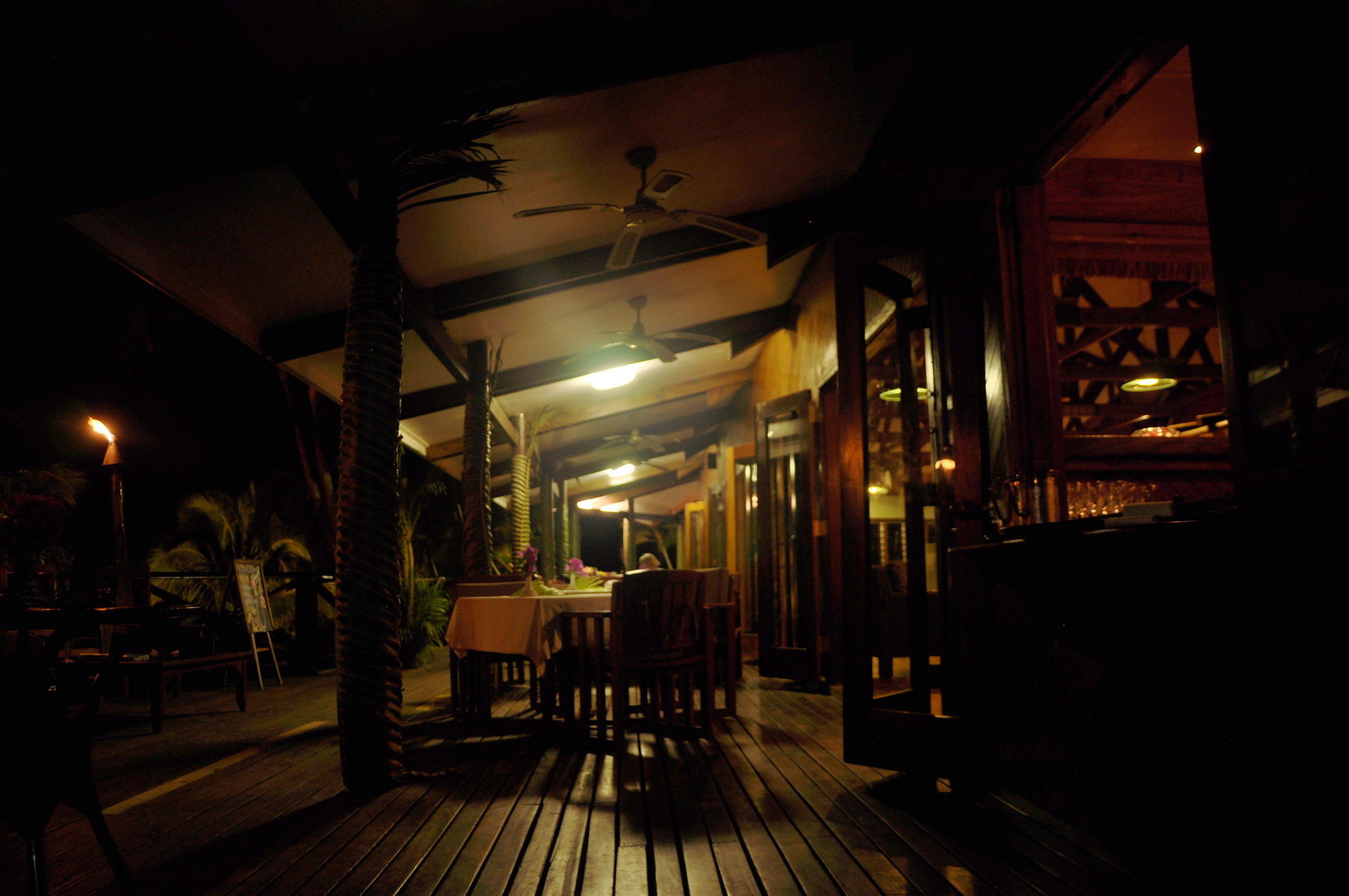
Breakfast really finished us off. The menu listed every part of a fry-up separately: tomatoes, eggs, bacon, a roll. Perhaps they hadn't dared put down the total. We didn't quite grasp it and assumed that the fry-up came normally and those were optional extras. Tanya ordered an extra tomato. An hour later a tiny ten-dollar tomato arrived on a vast plate, without the rest of the breakfast. We promised ourselves we'd never stay anywhere so touristy again.
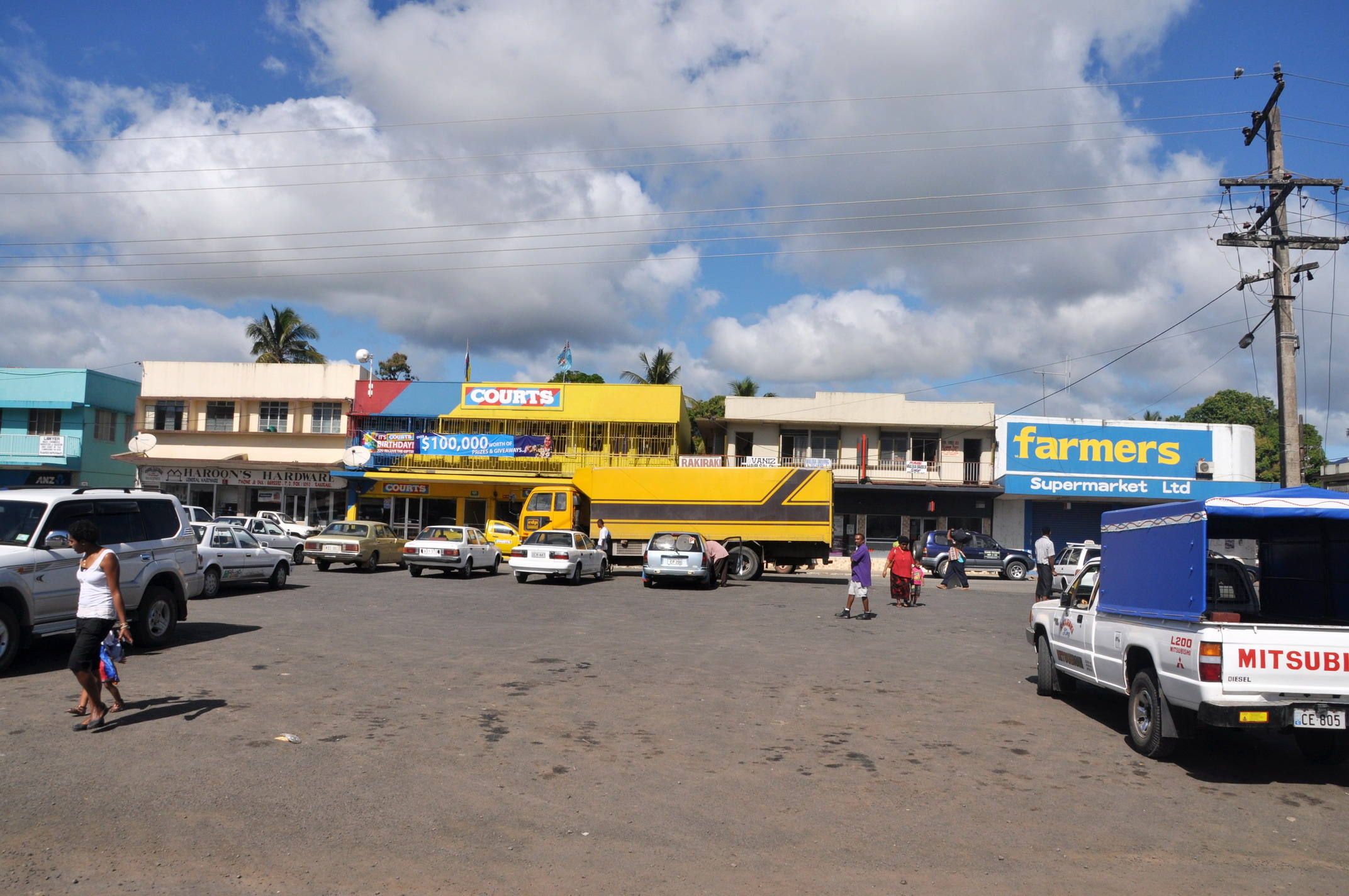
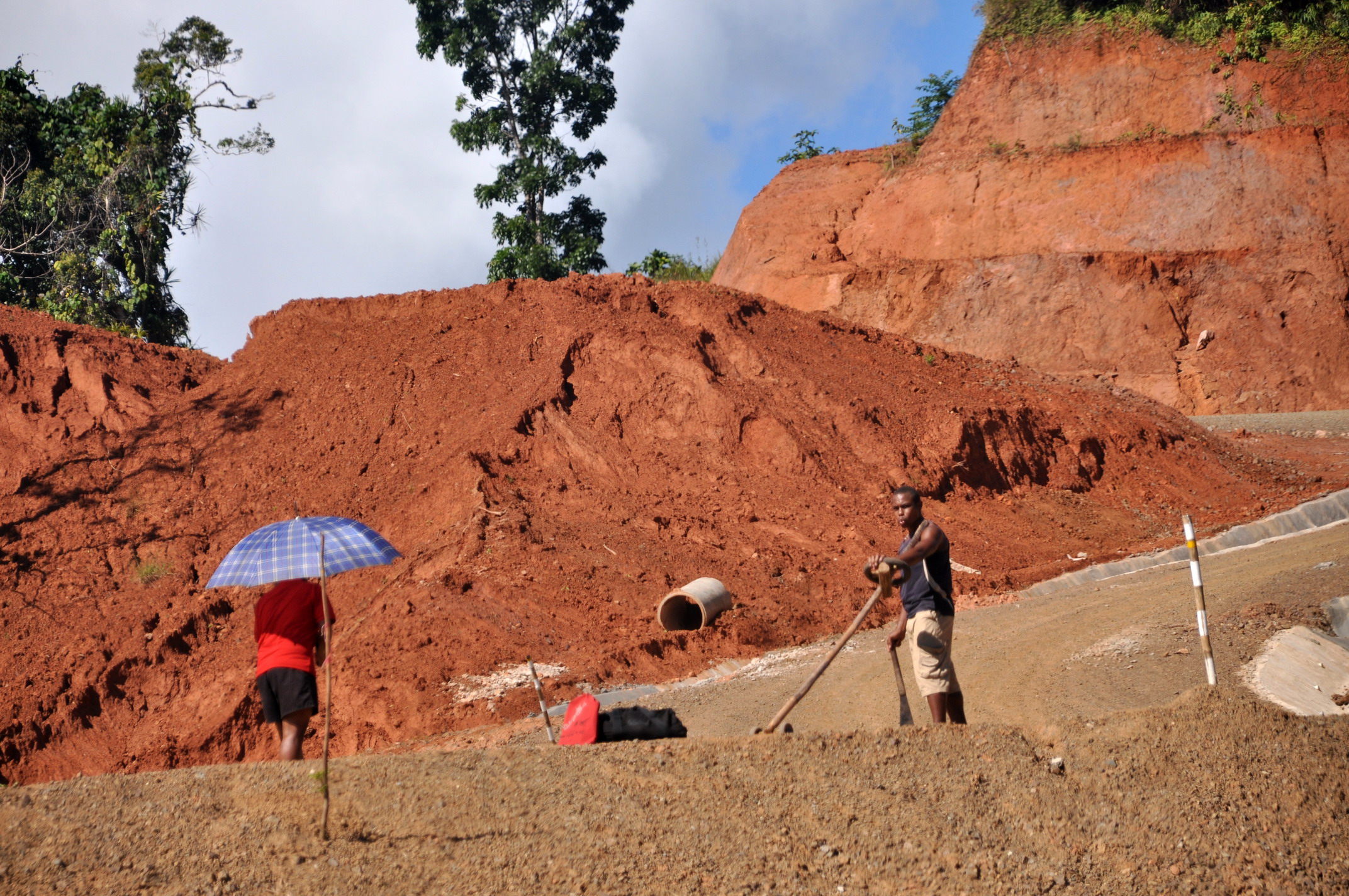
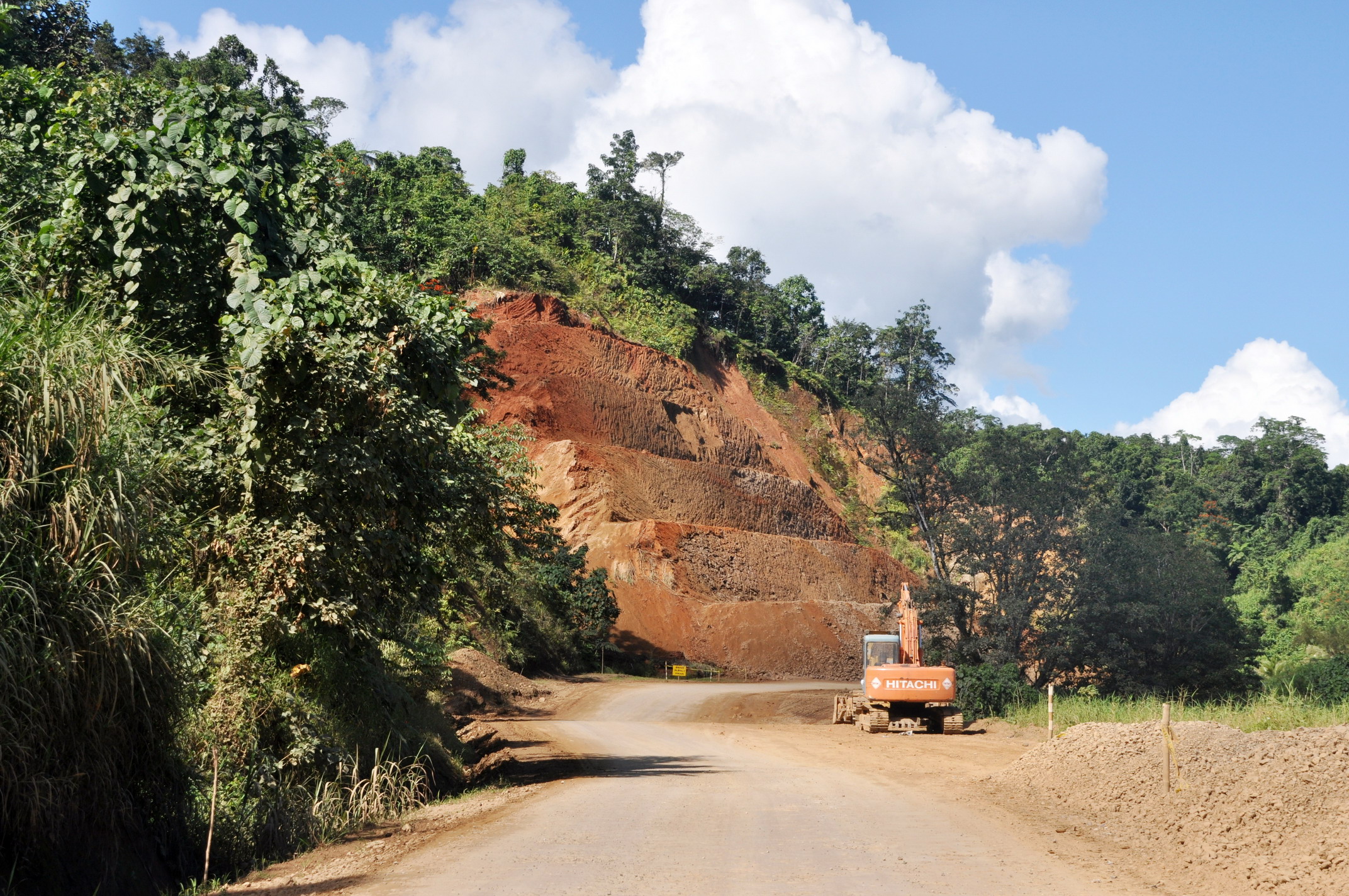
By morning we'd escaped the clutches of organised service and reached the nearest town, Rakiraki, with all sorts of good things sold at street stalls. We washed away the aftertaste of that ten-dollar tomato. The drive to the capital took nearly half the day. It was a long way to begin with, and there were roadworks everywhere. The road ran well away from the sea through country with few settlements.
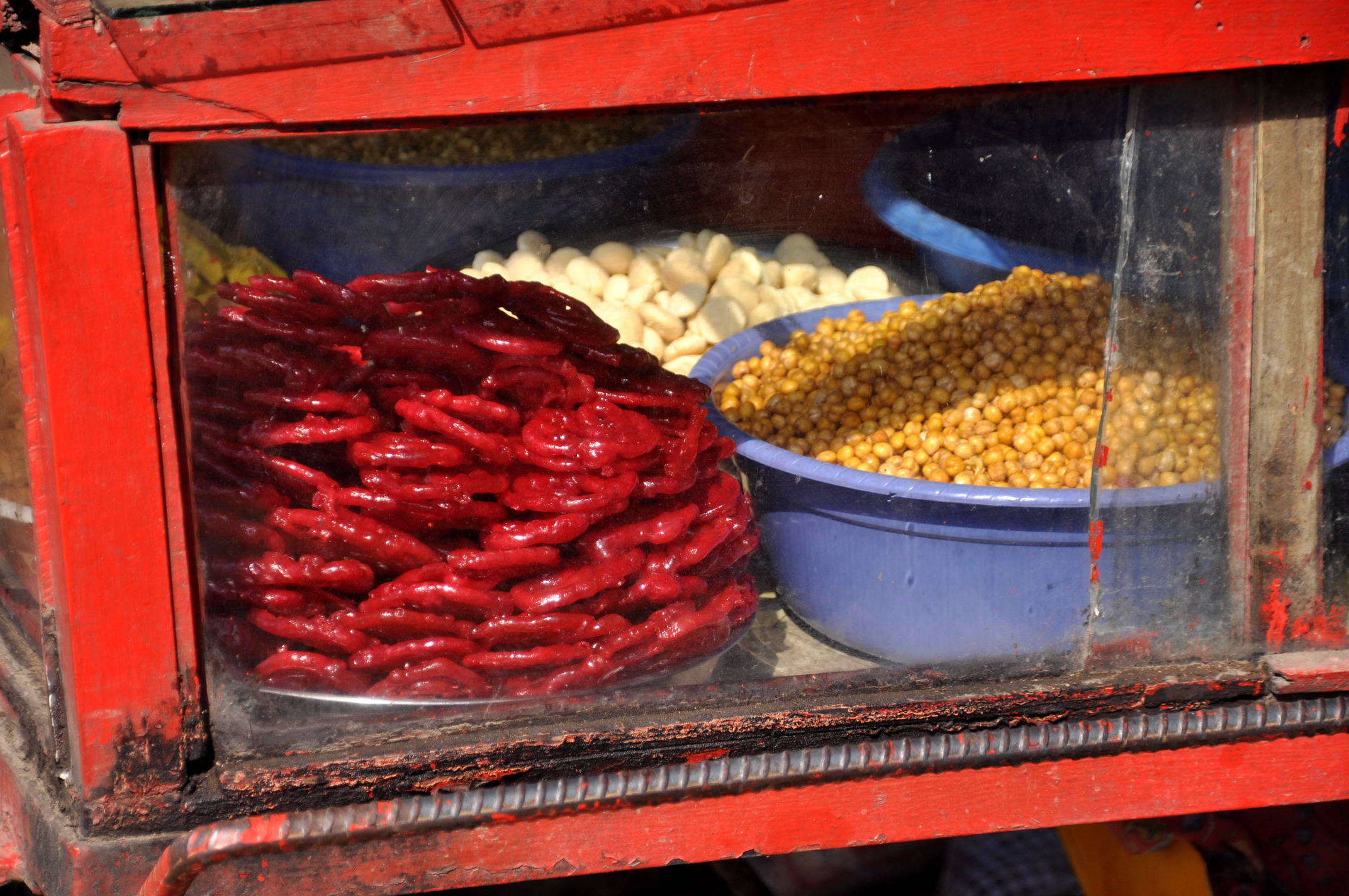
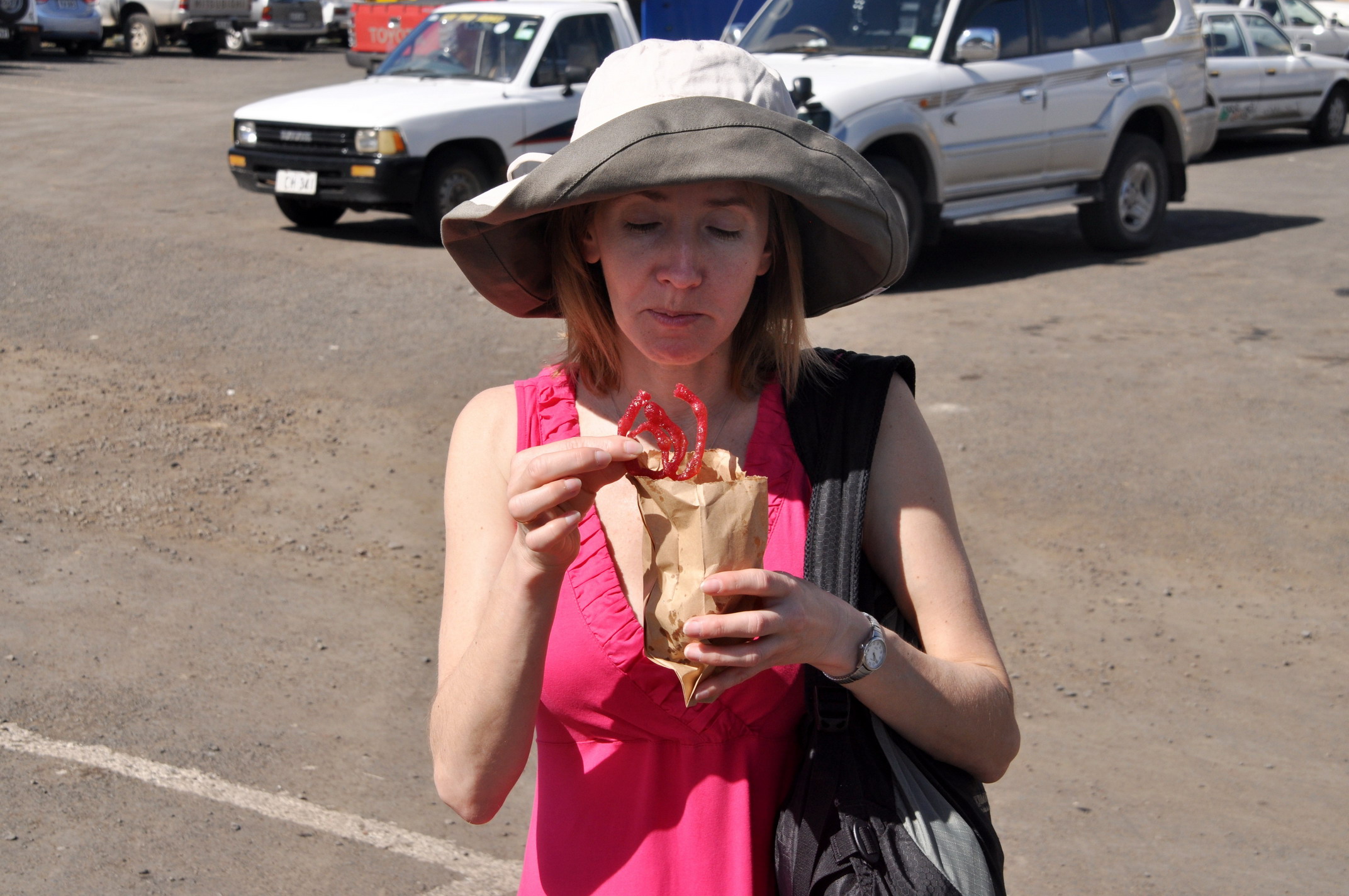
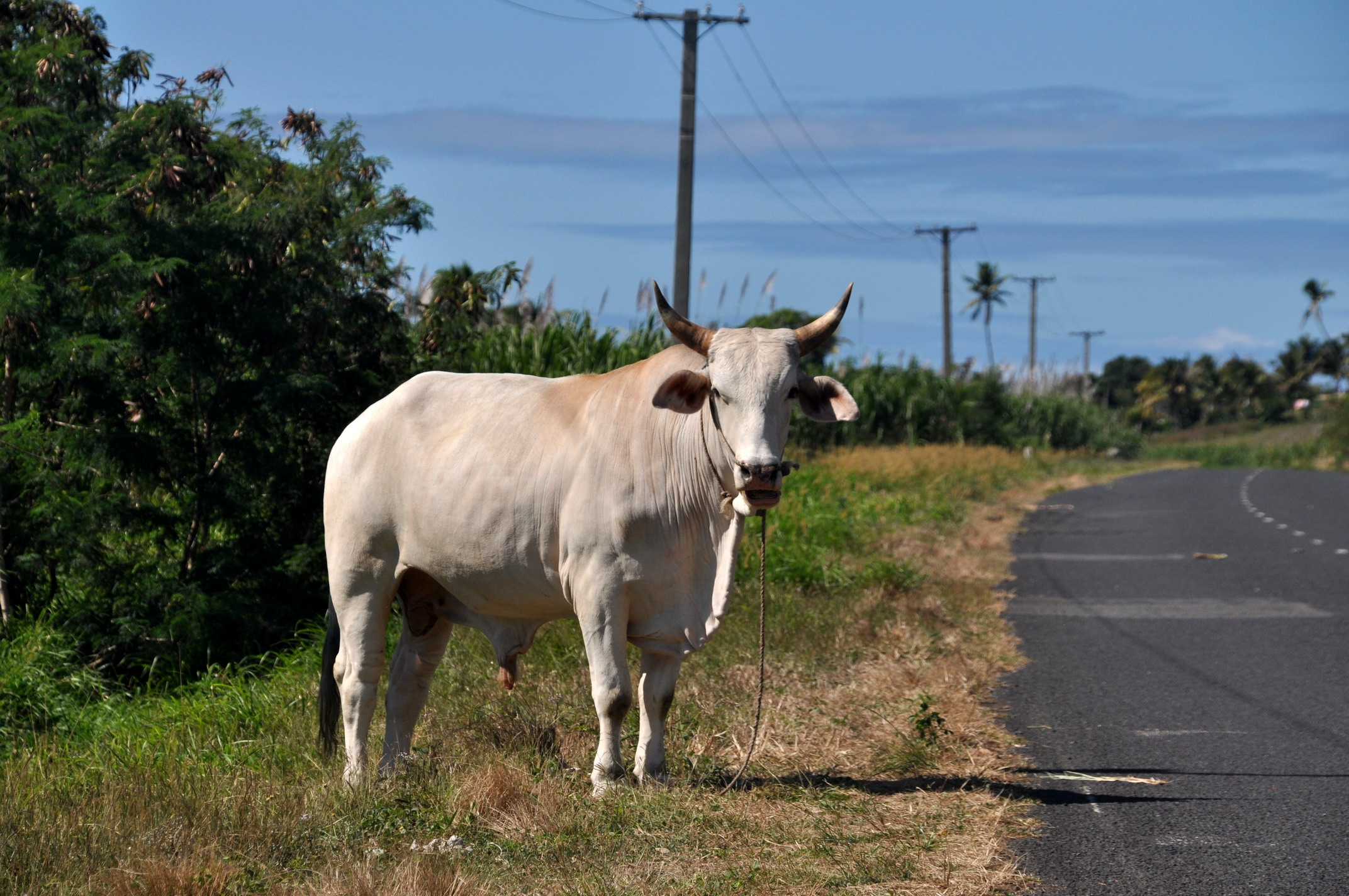
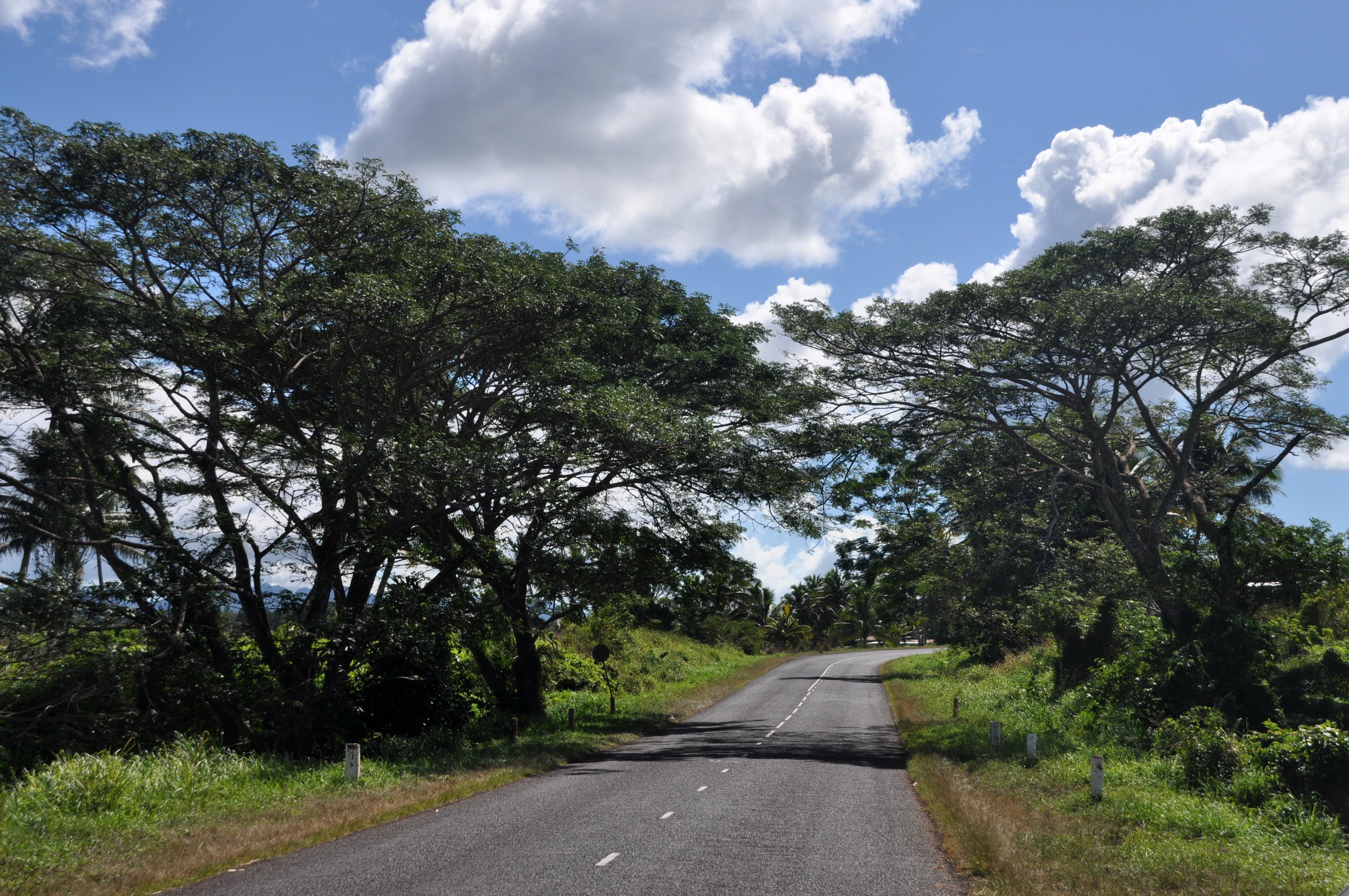
The capital, Suva, turned out to be a fairly large city, with tall multi-storey buildings in the centre and the inevitable traffic jam on the way in. It took about an hour to get through the sprawling suburbs and find somewhere to park downtown.
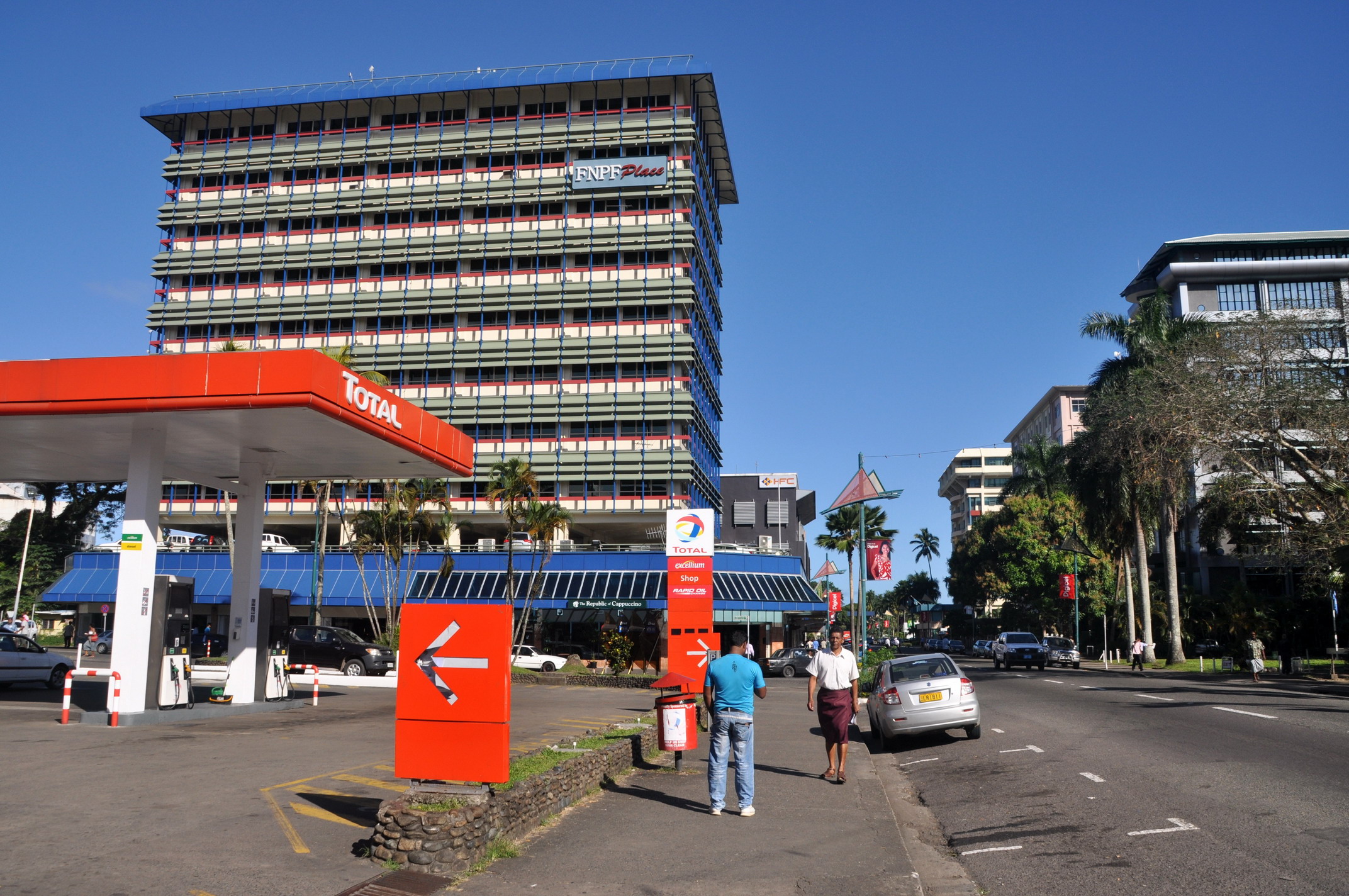
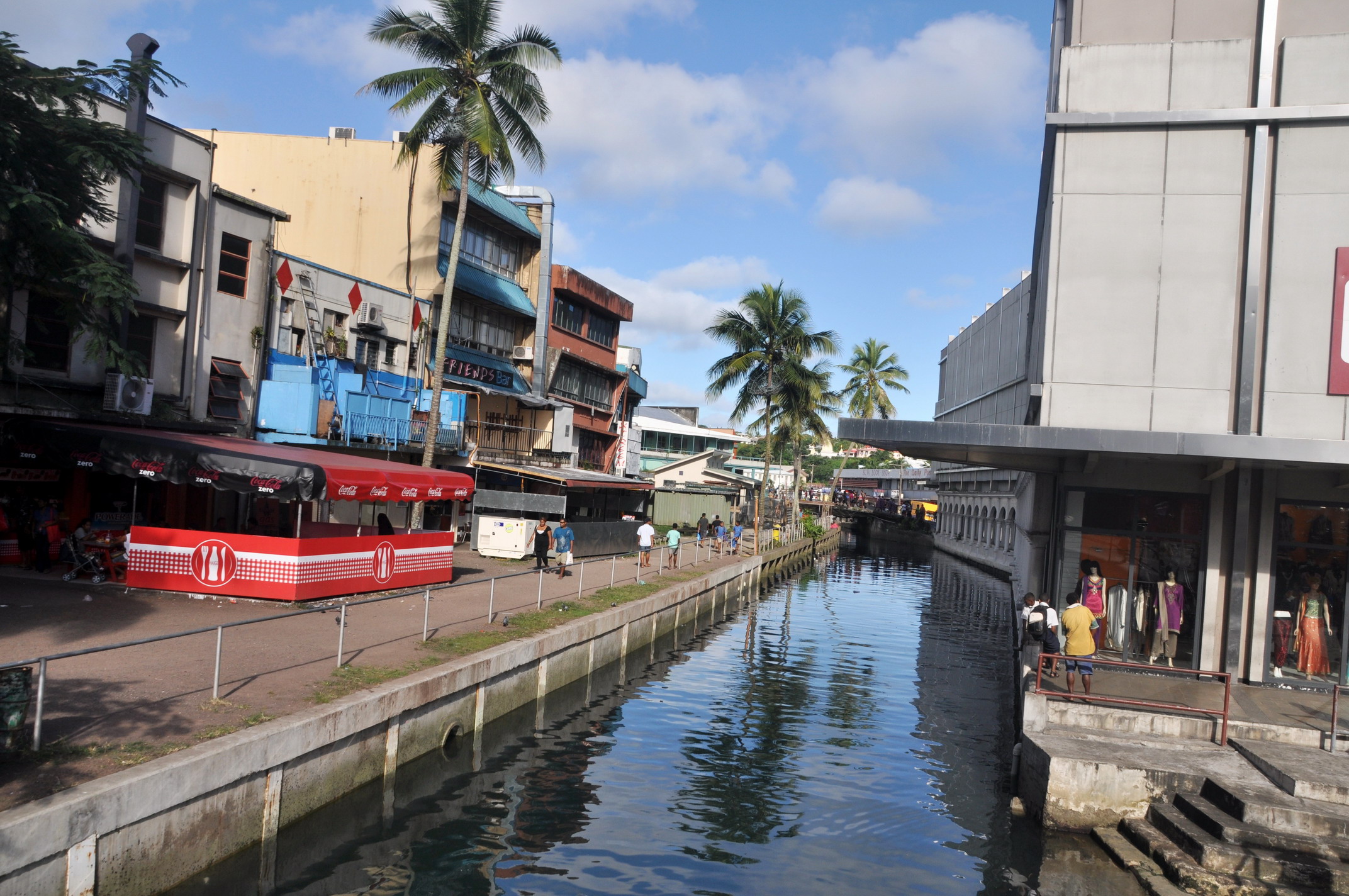
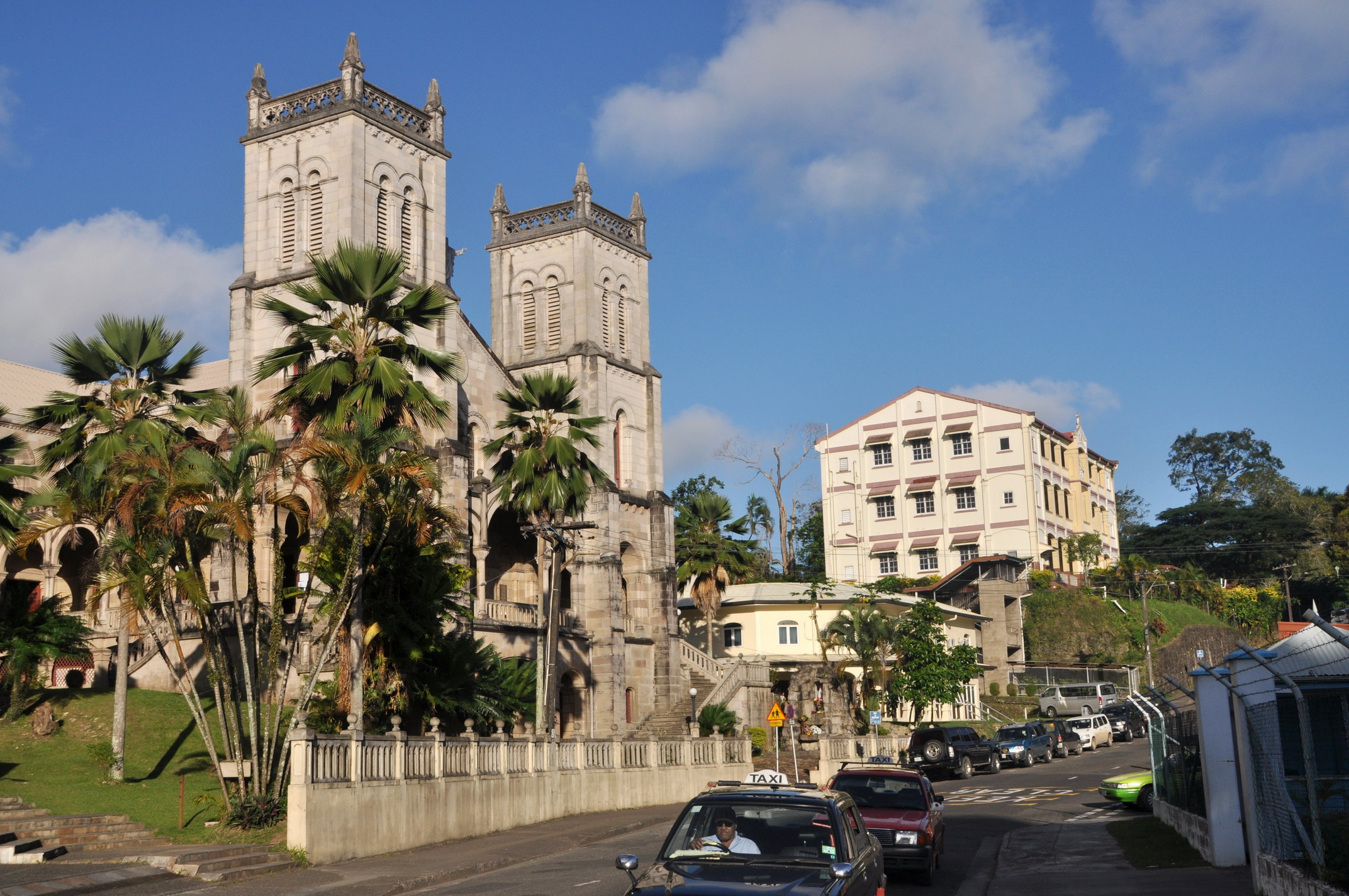
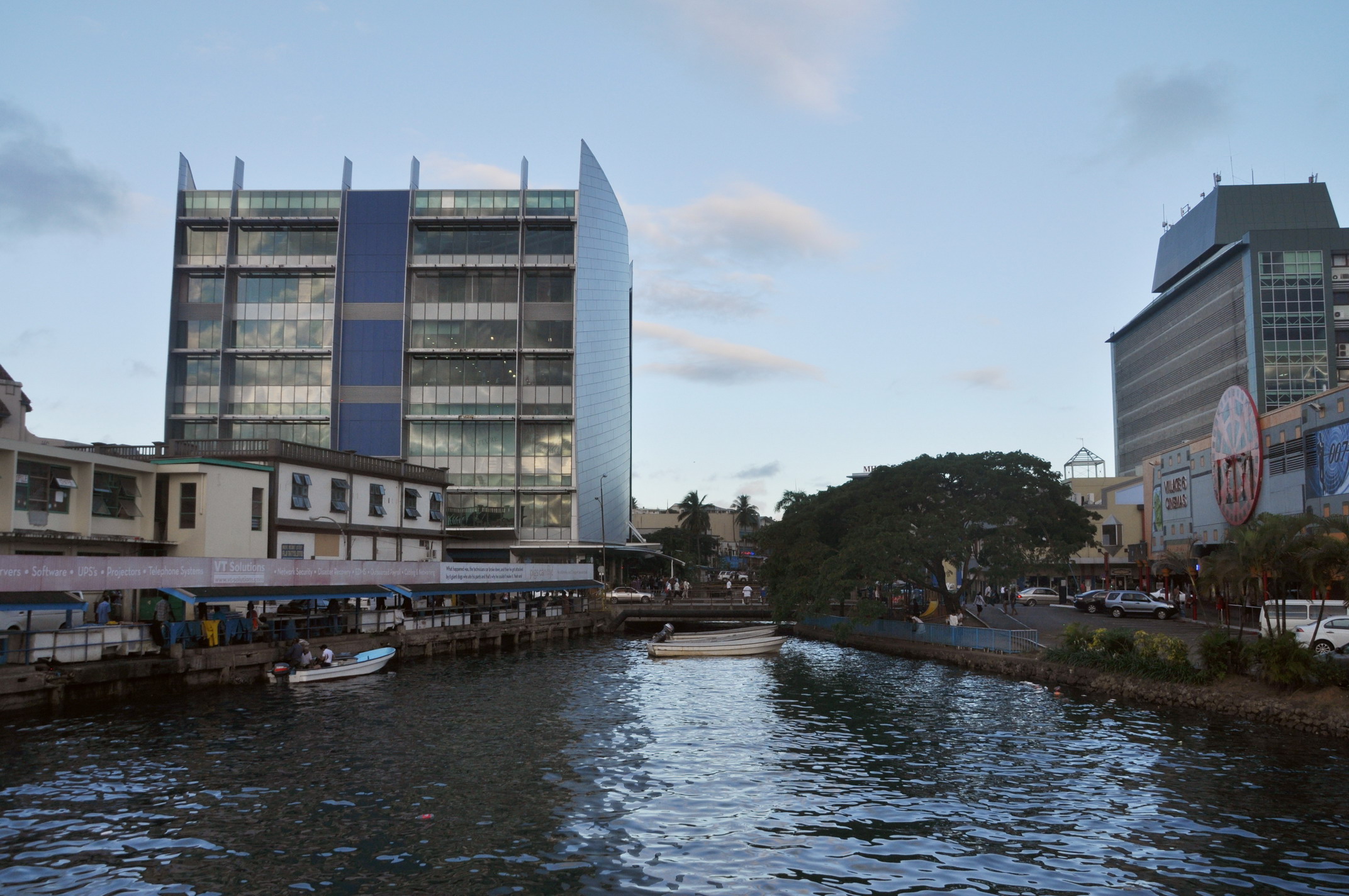
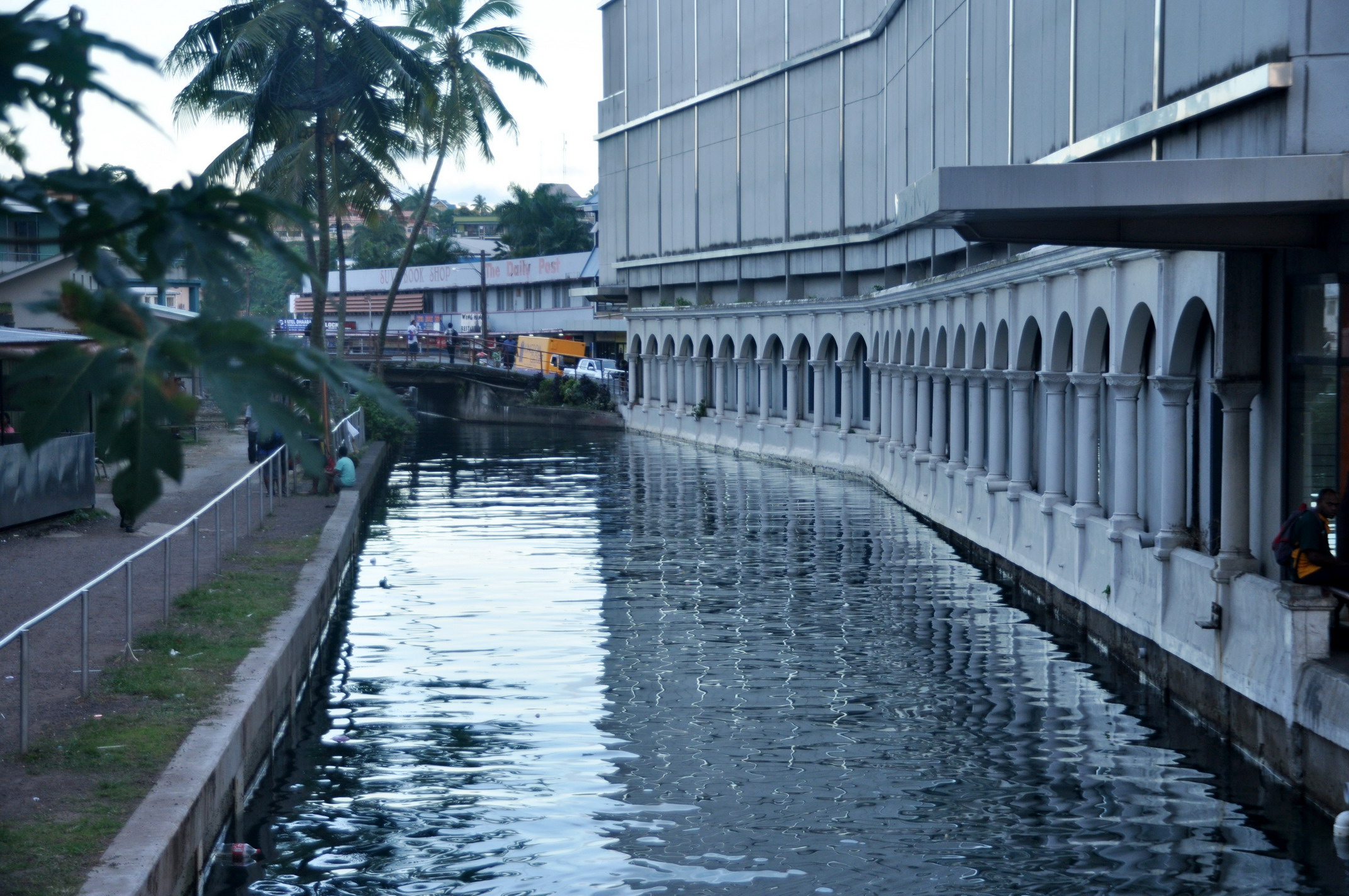
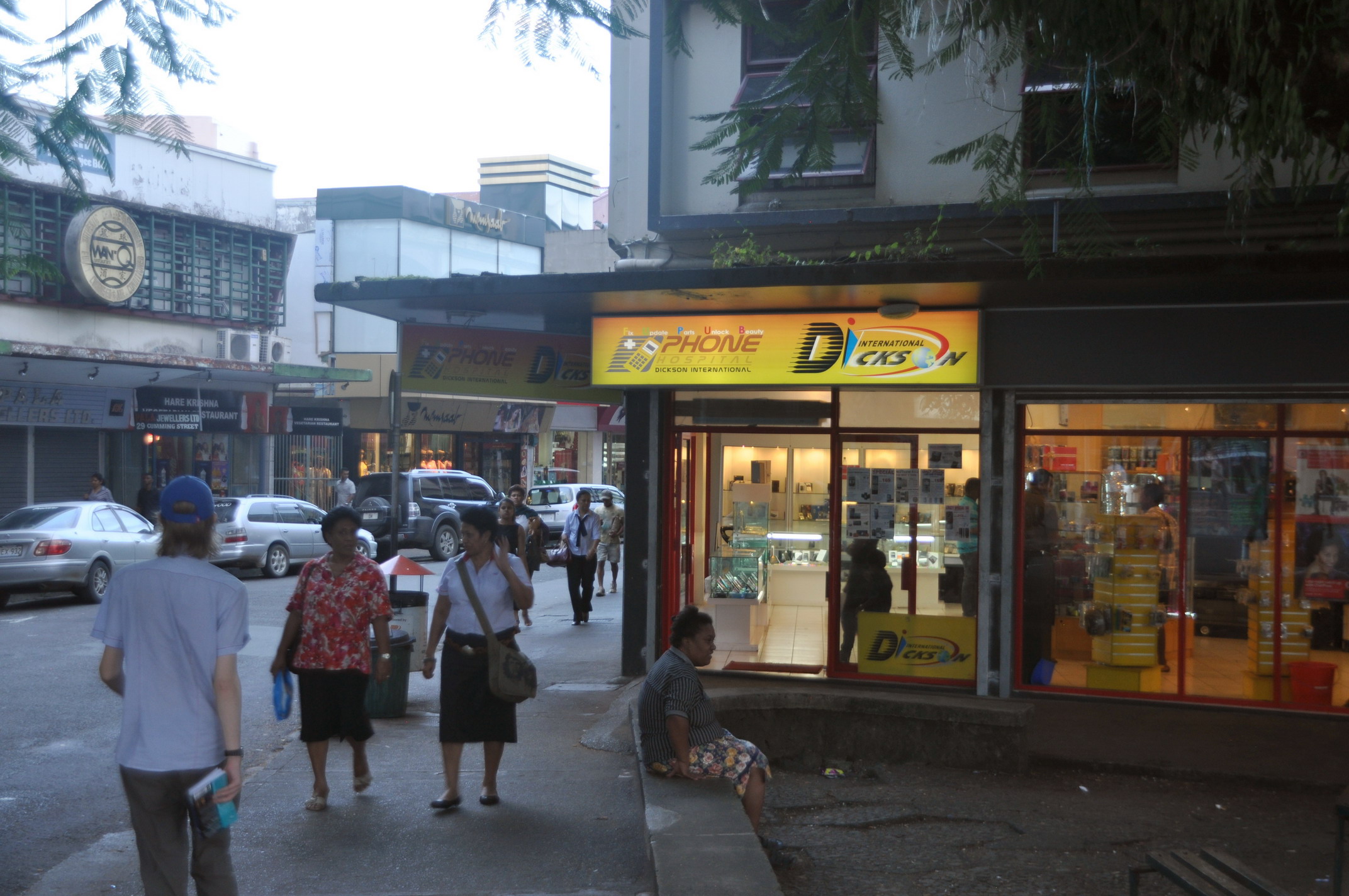
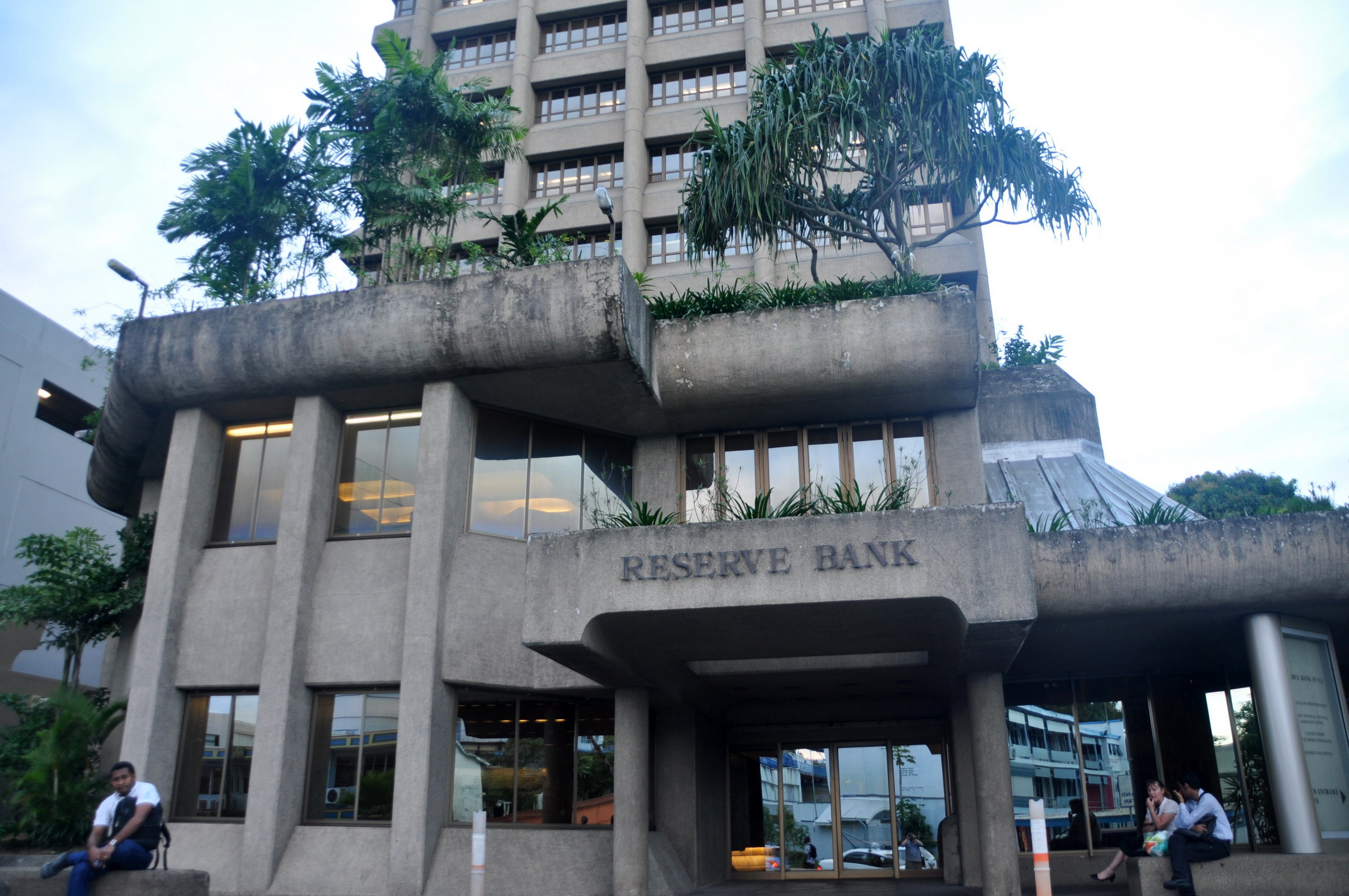
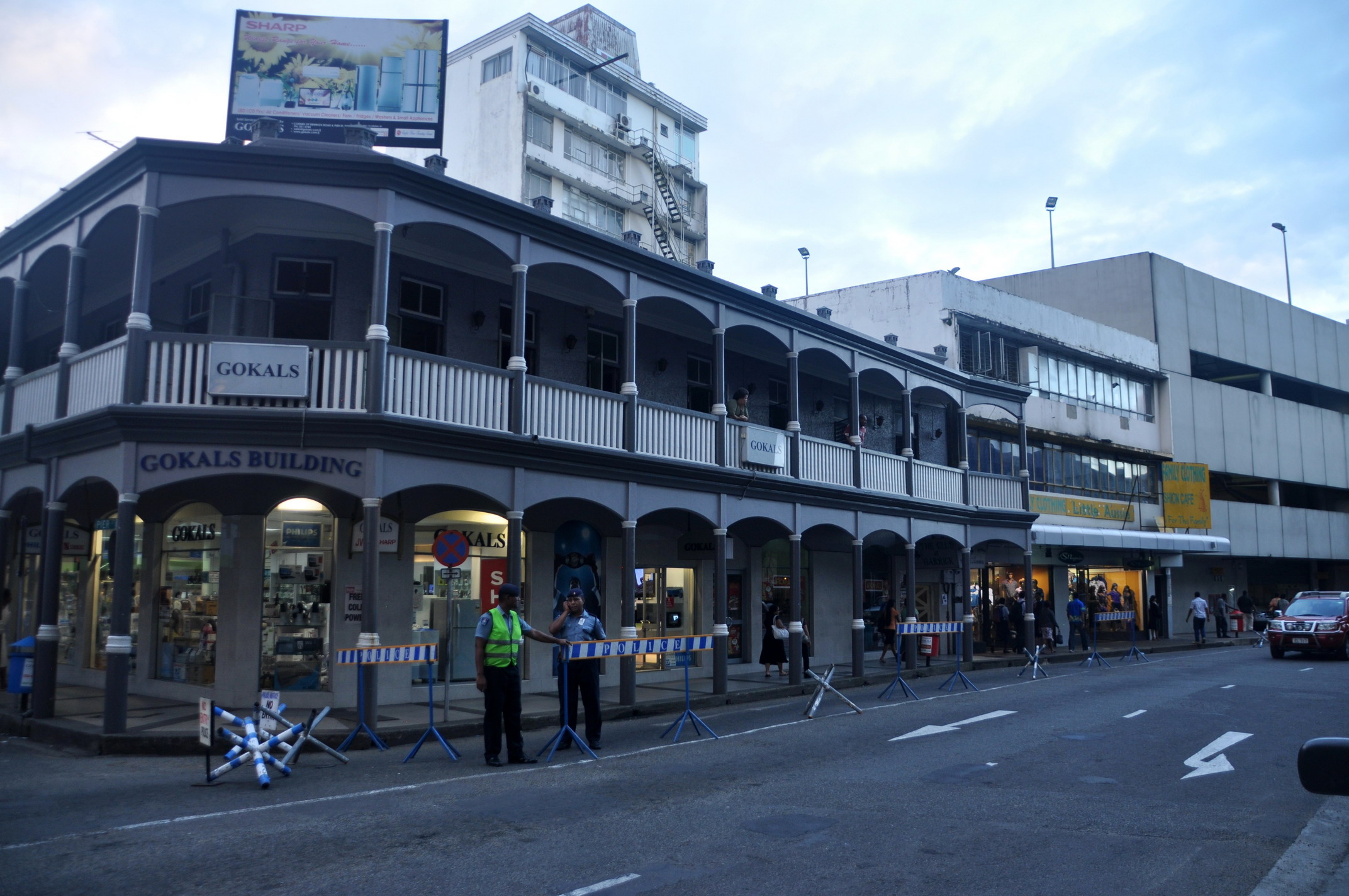

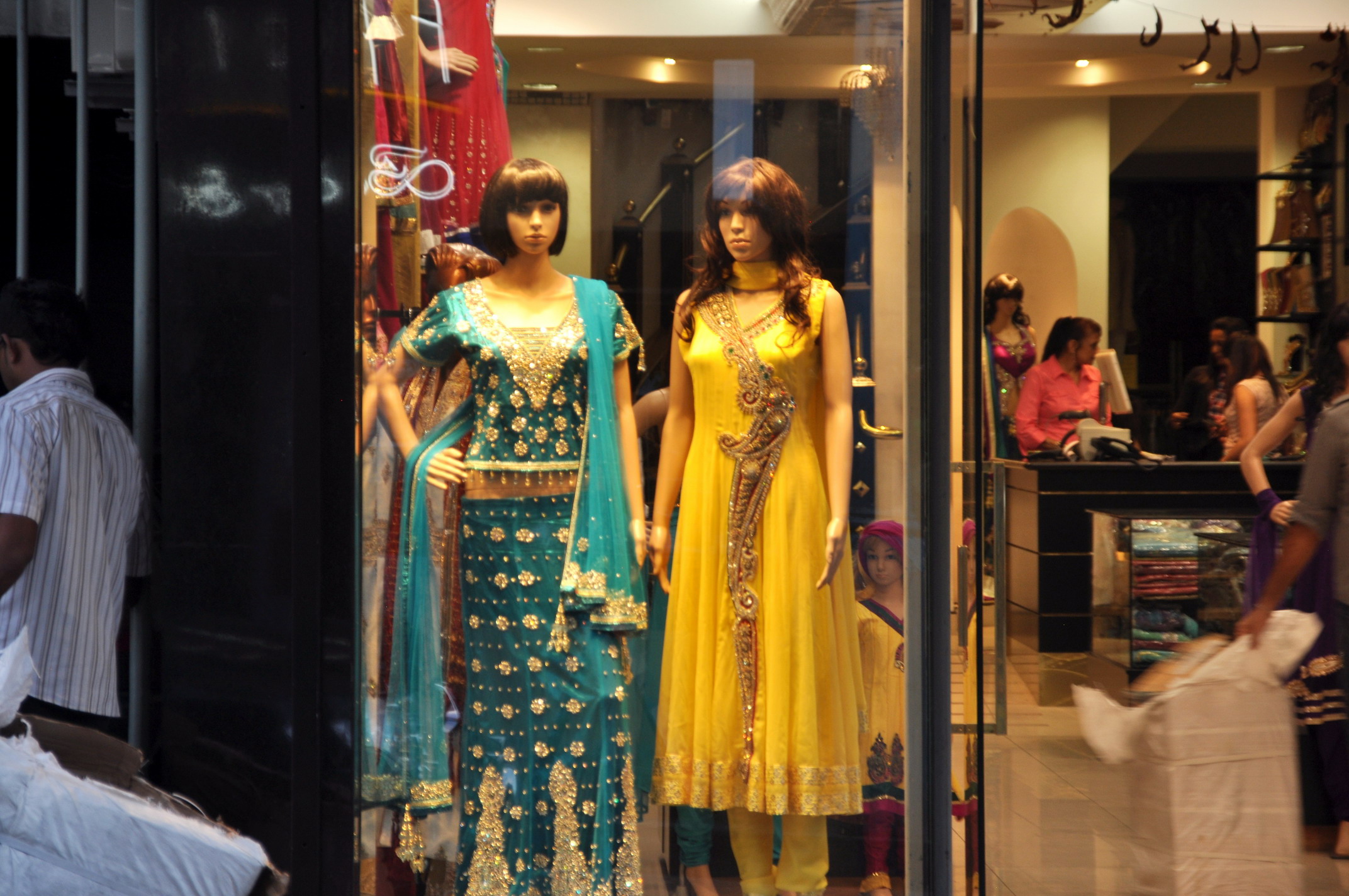
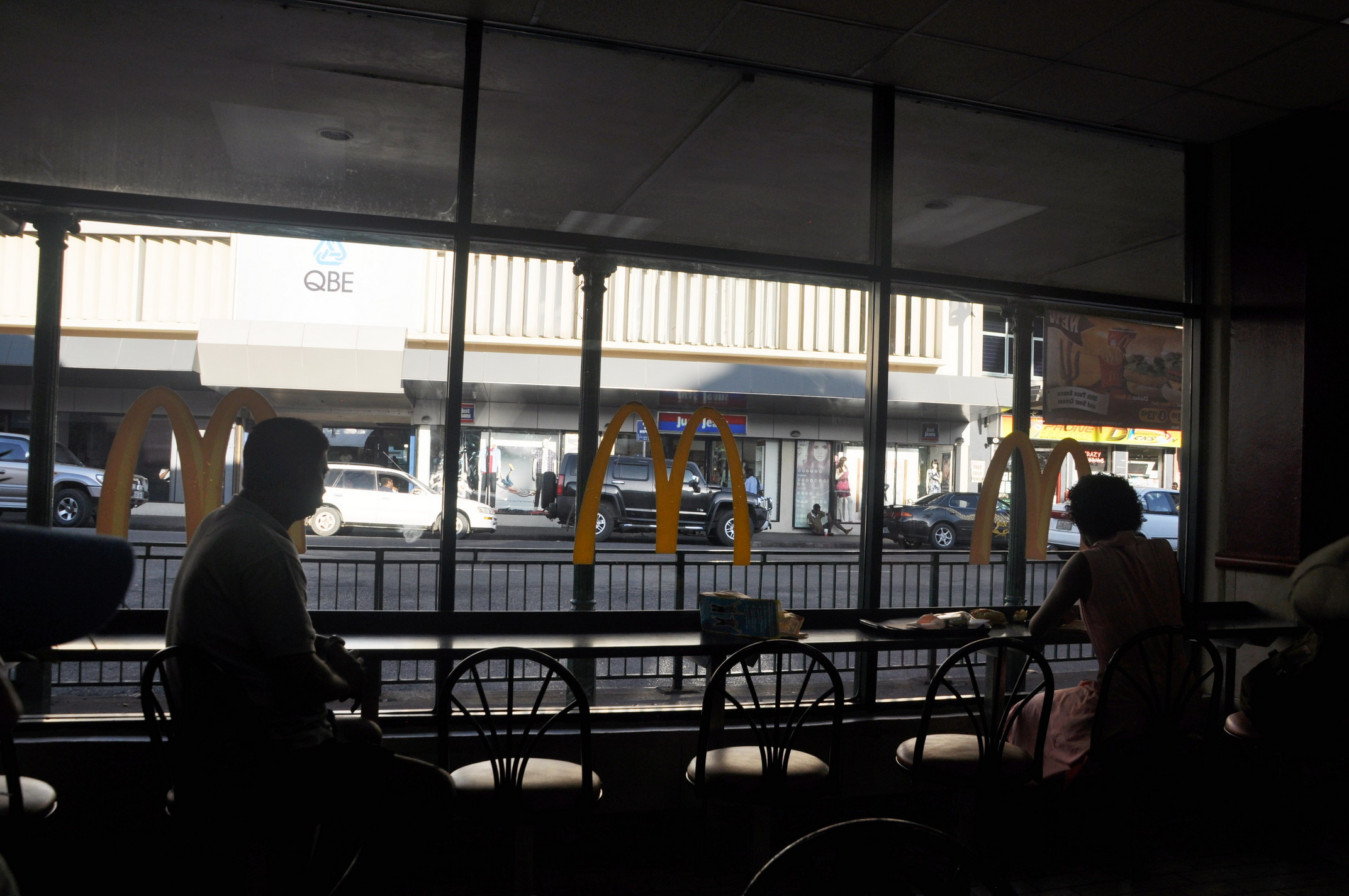
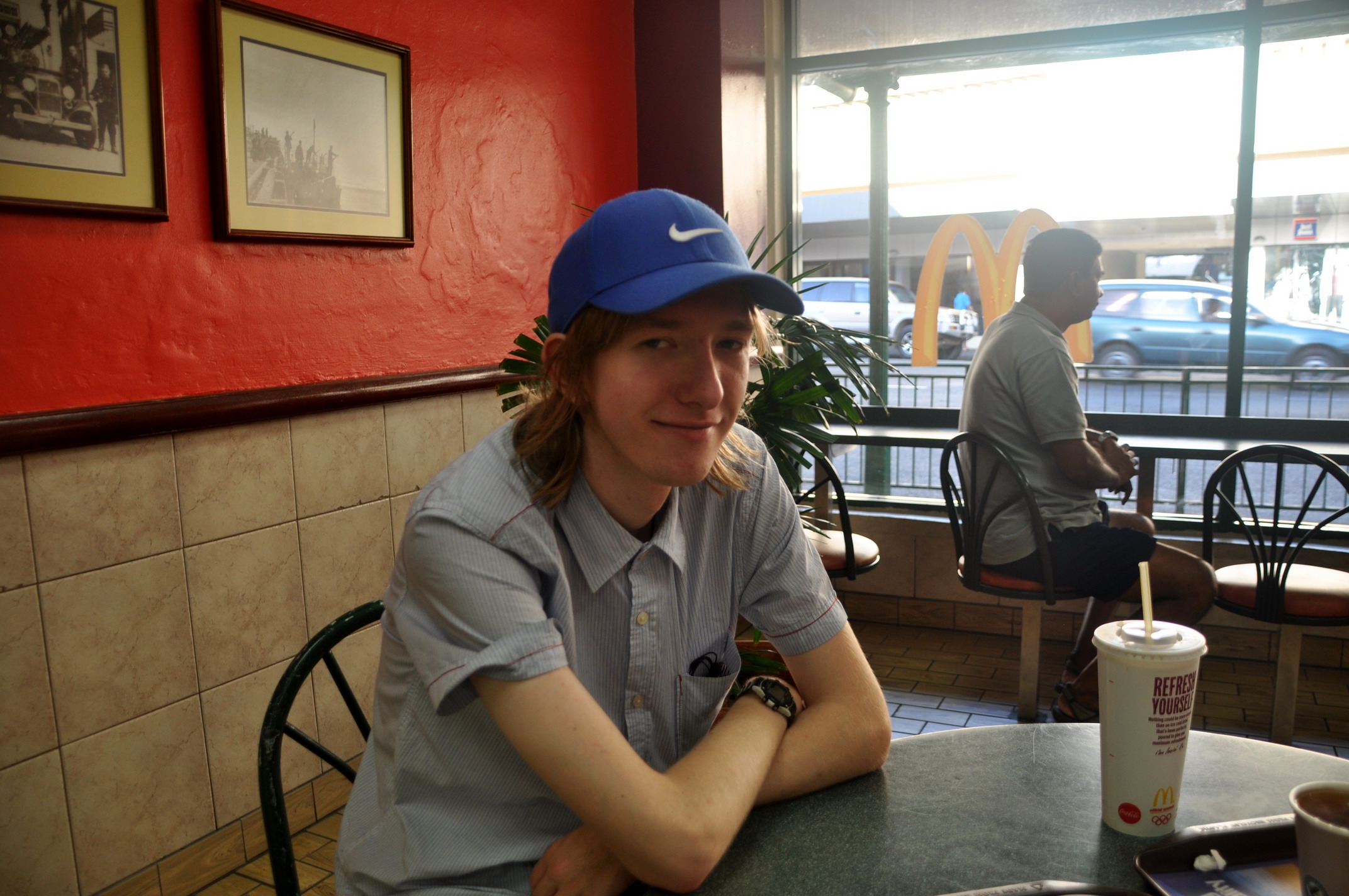
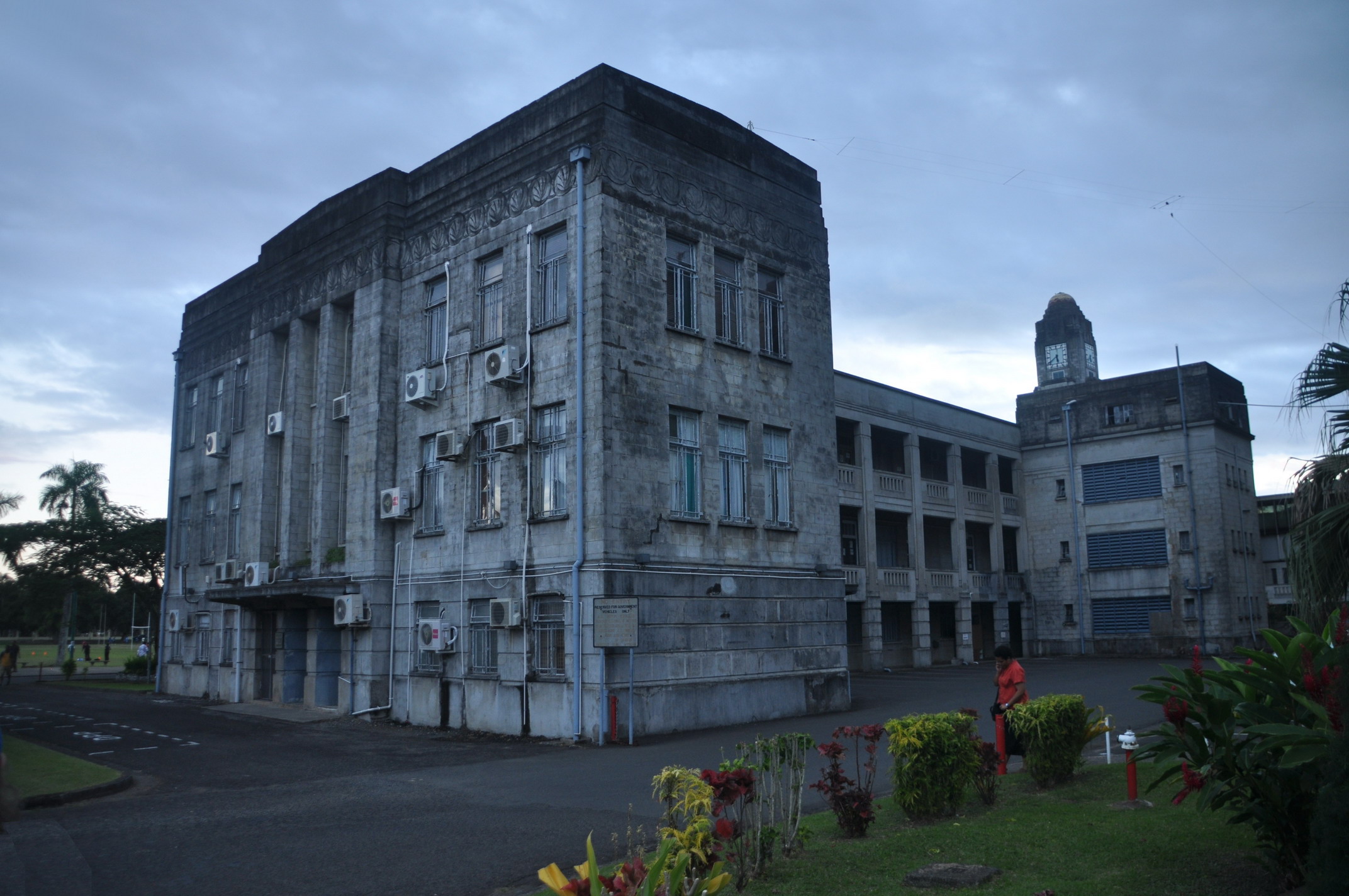
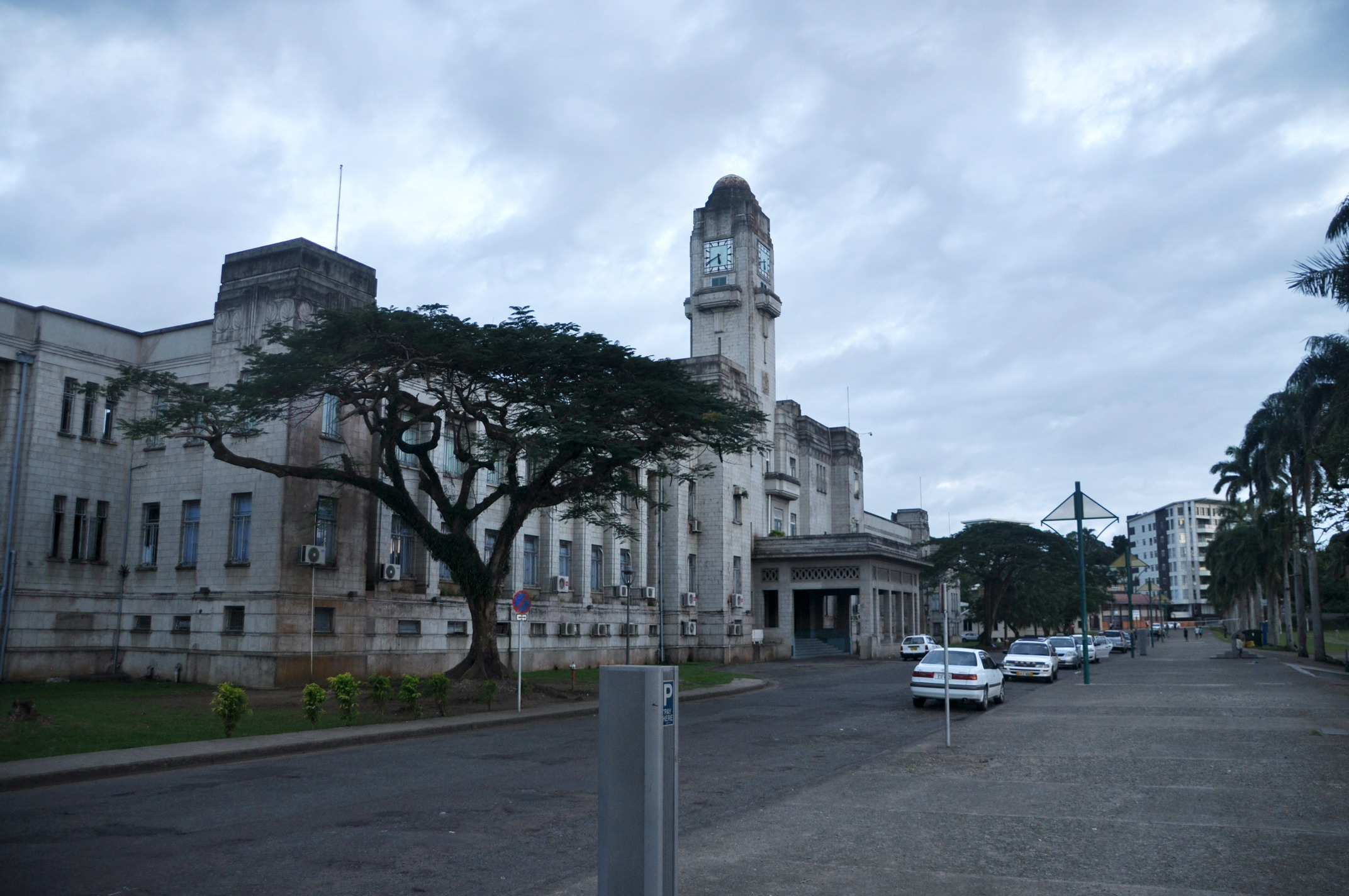
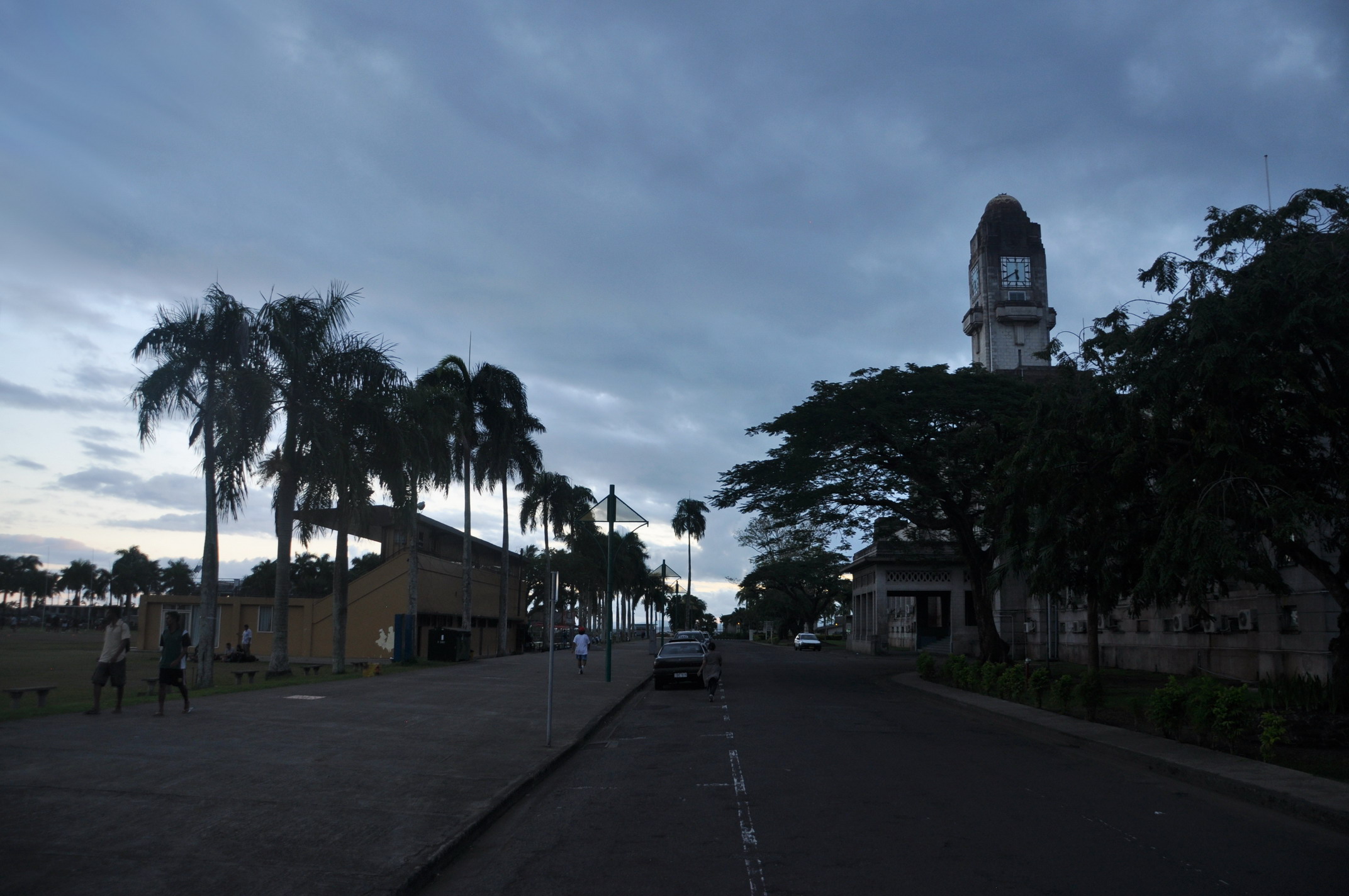
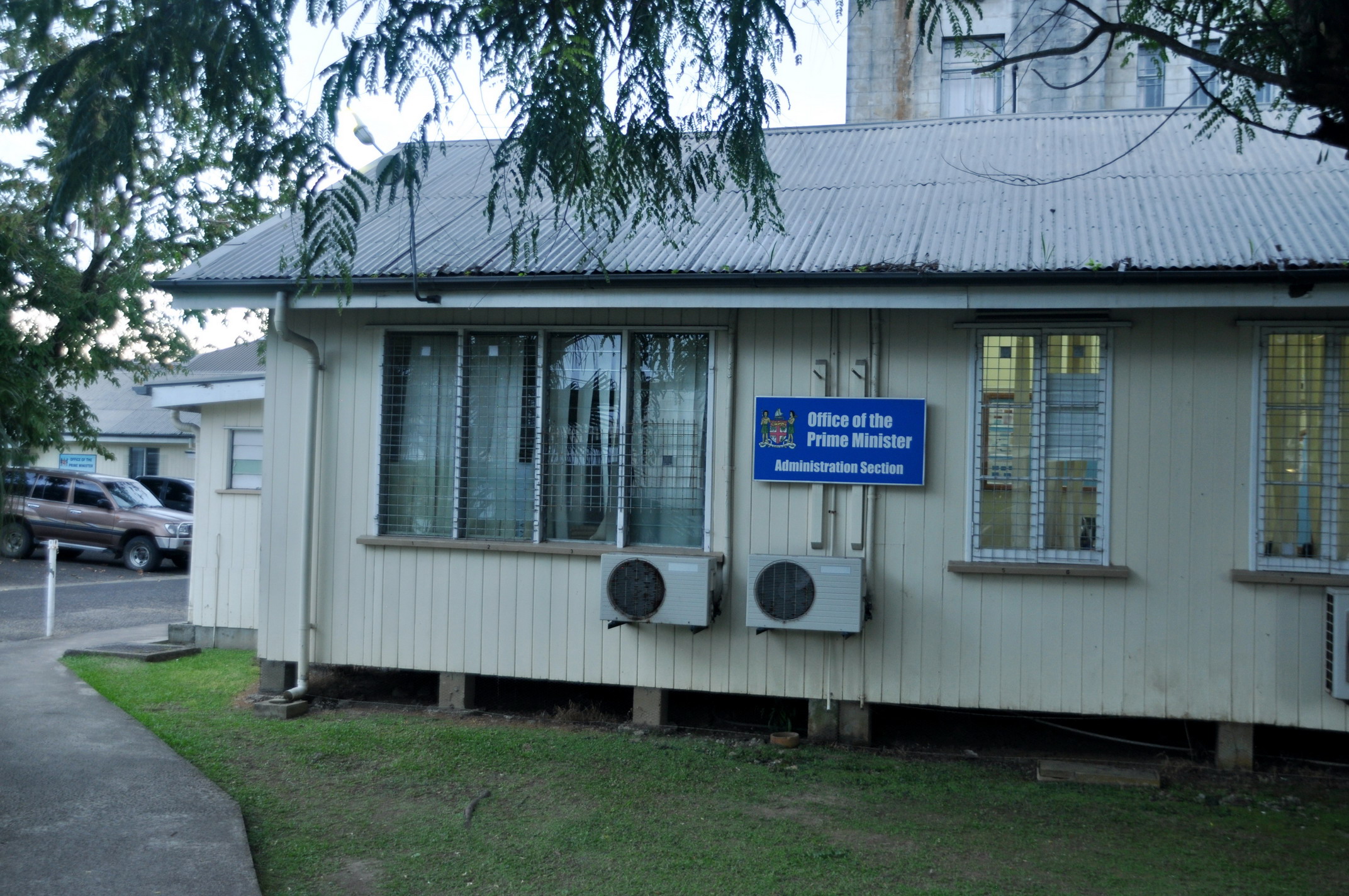
Suva was the only place in the country where you could buy much apart from food and everyday necessities. It was where we found postage stamps and Fiji postcards. There was even a McDonald's in the centre. Fiji's government occupied a large, gloomy, grey building. Beside it stood a collection of sheds, with signs such as ‘Prime Minister's Office’.
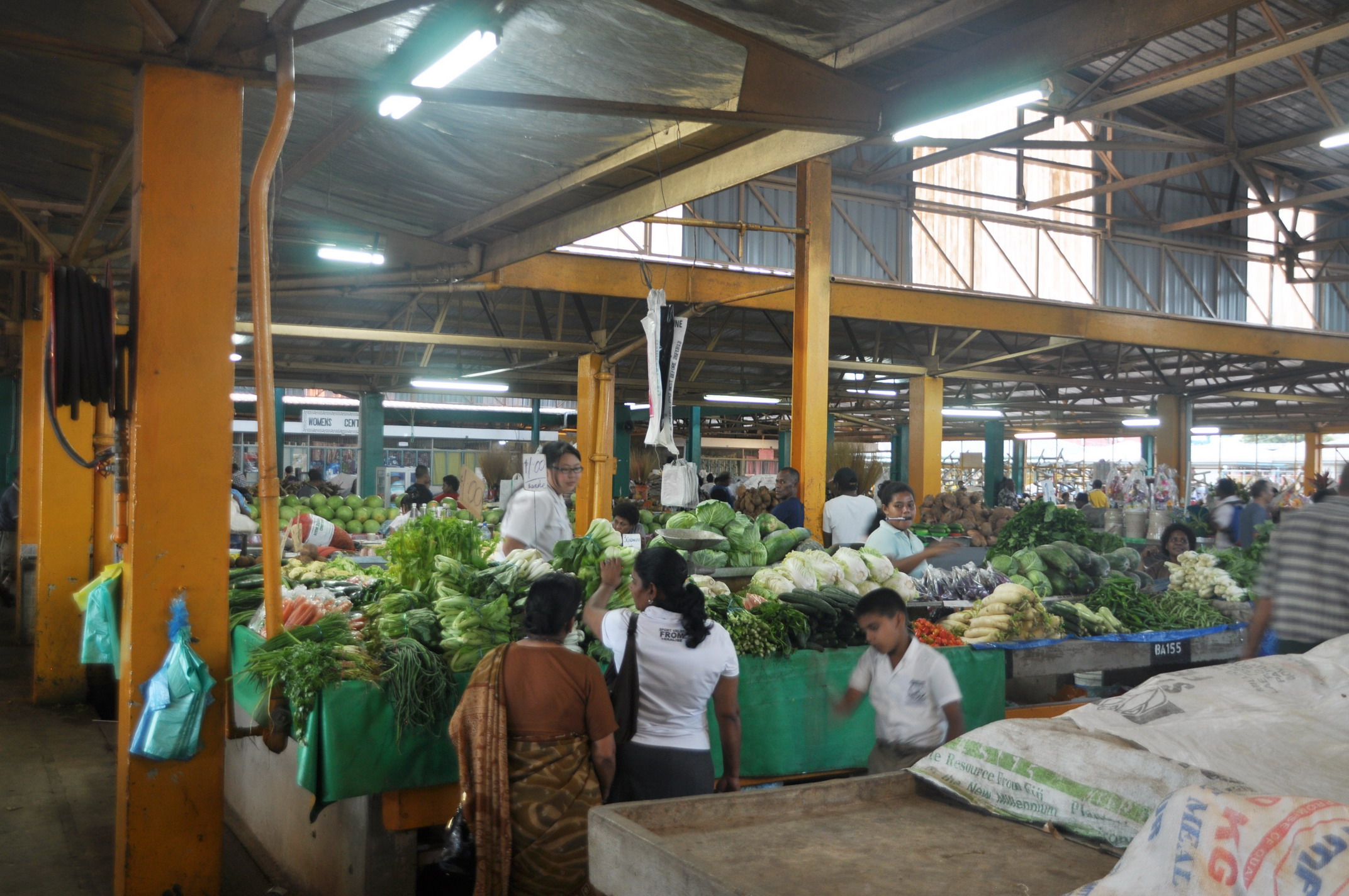
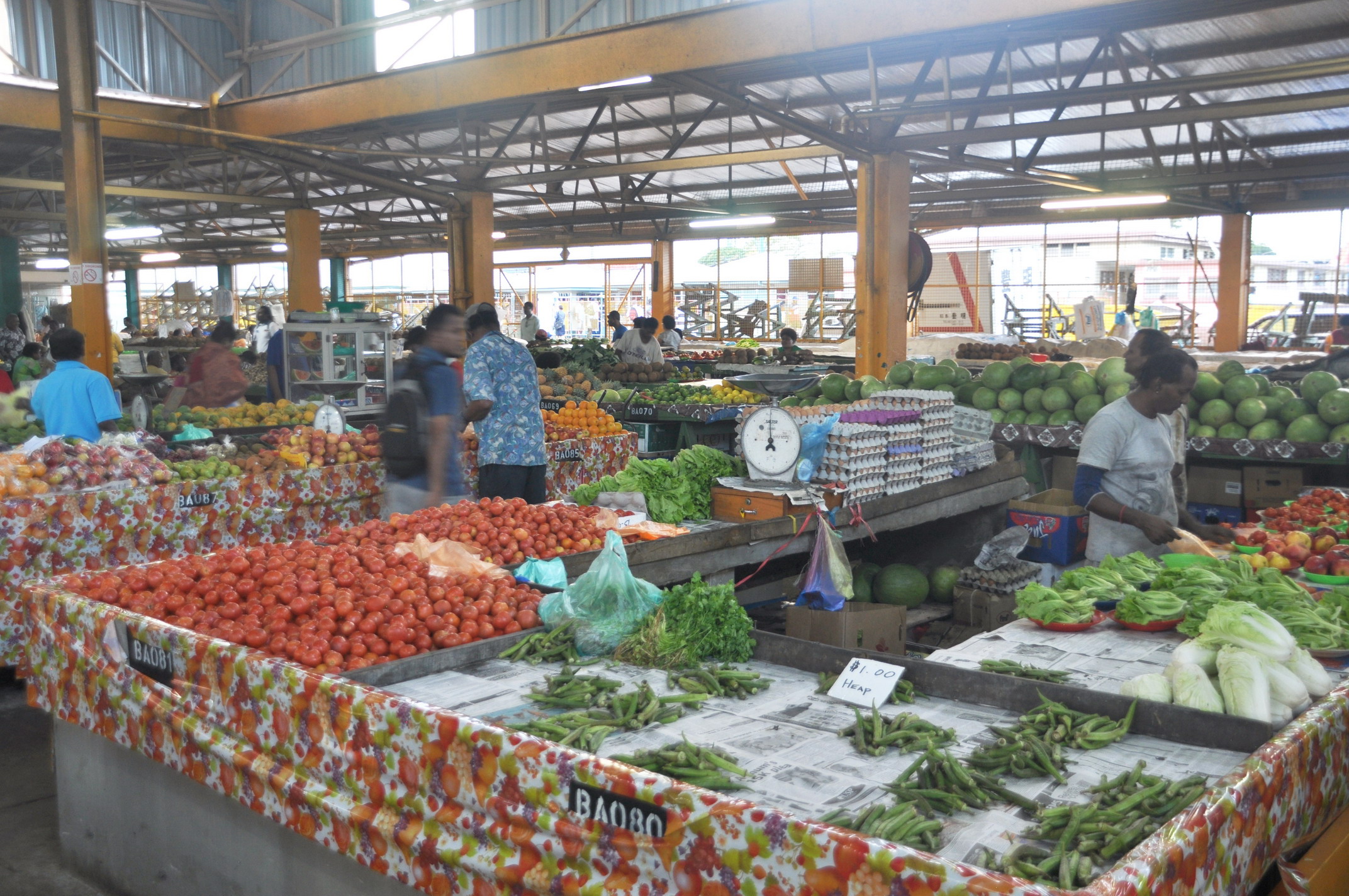
Our main task was to work out how to get the ferry to Vanua Levu. After some searching, we found a company with two departures a day from Natovi Landing. The morning ferry left at sunrise. We needed somewhere near the wharf, forty kilometres from central Suva, and thought of the airport, since it was well out of town and in the right direction. Airports often have lots of hotels, but this was a mostly domestic airport and there were no obvious hotels or tourist information counters.
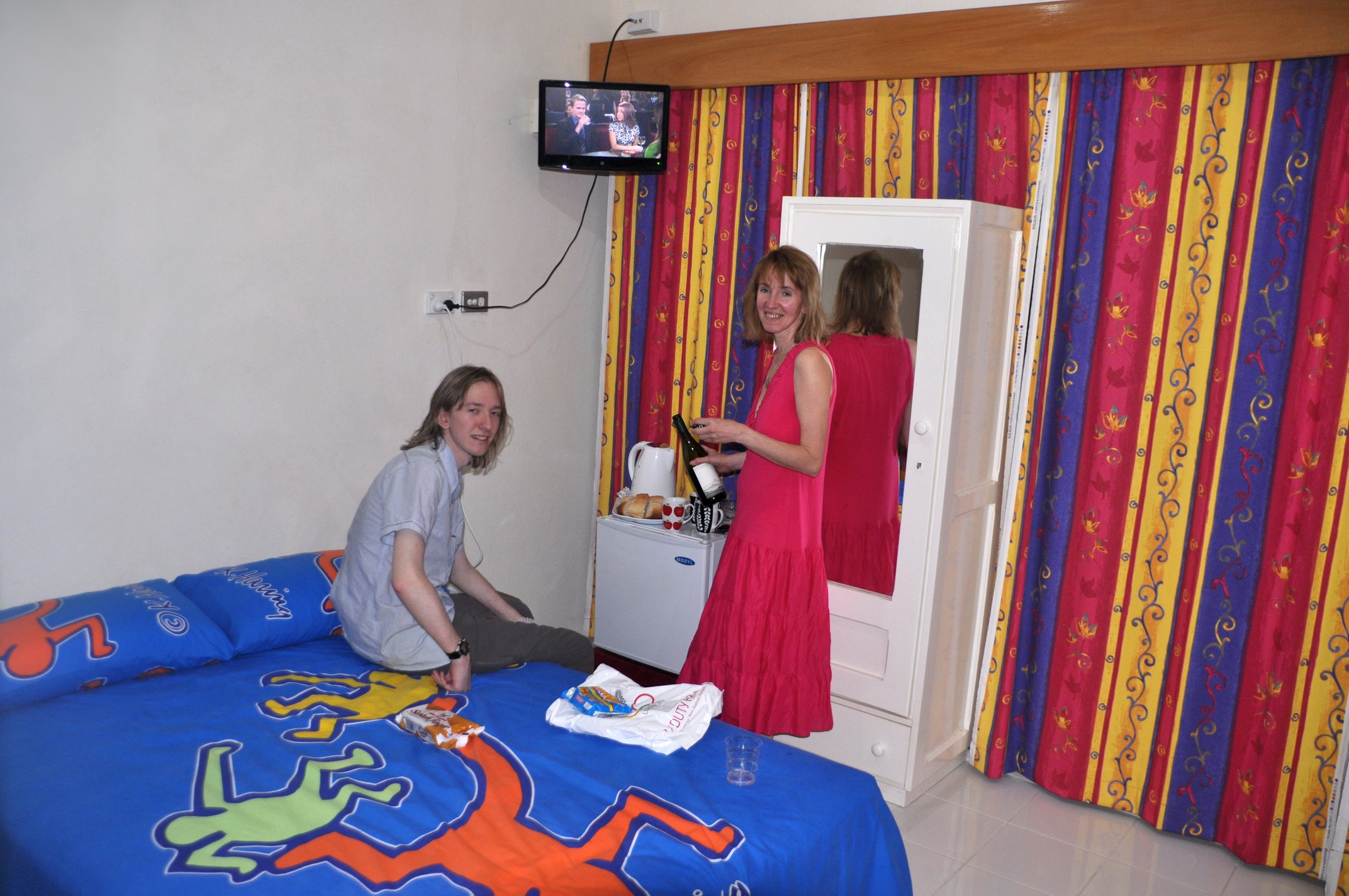
We were about to give up when we met a police officer. He brightened up and drove us to a little unmarked hotel, the Nausori Roseland Inn (18°02.333′S, 178°33.323′E). He admitted it had no licence. To get a licence, the owners had to pay, including paying him, and he was doing what he could to see that they had something to pay with. The room was small and had everything we needed, a warm shower and a comfortable bed. It cost a fifth of the previous night's bill.
Vanua Levu
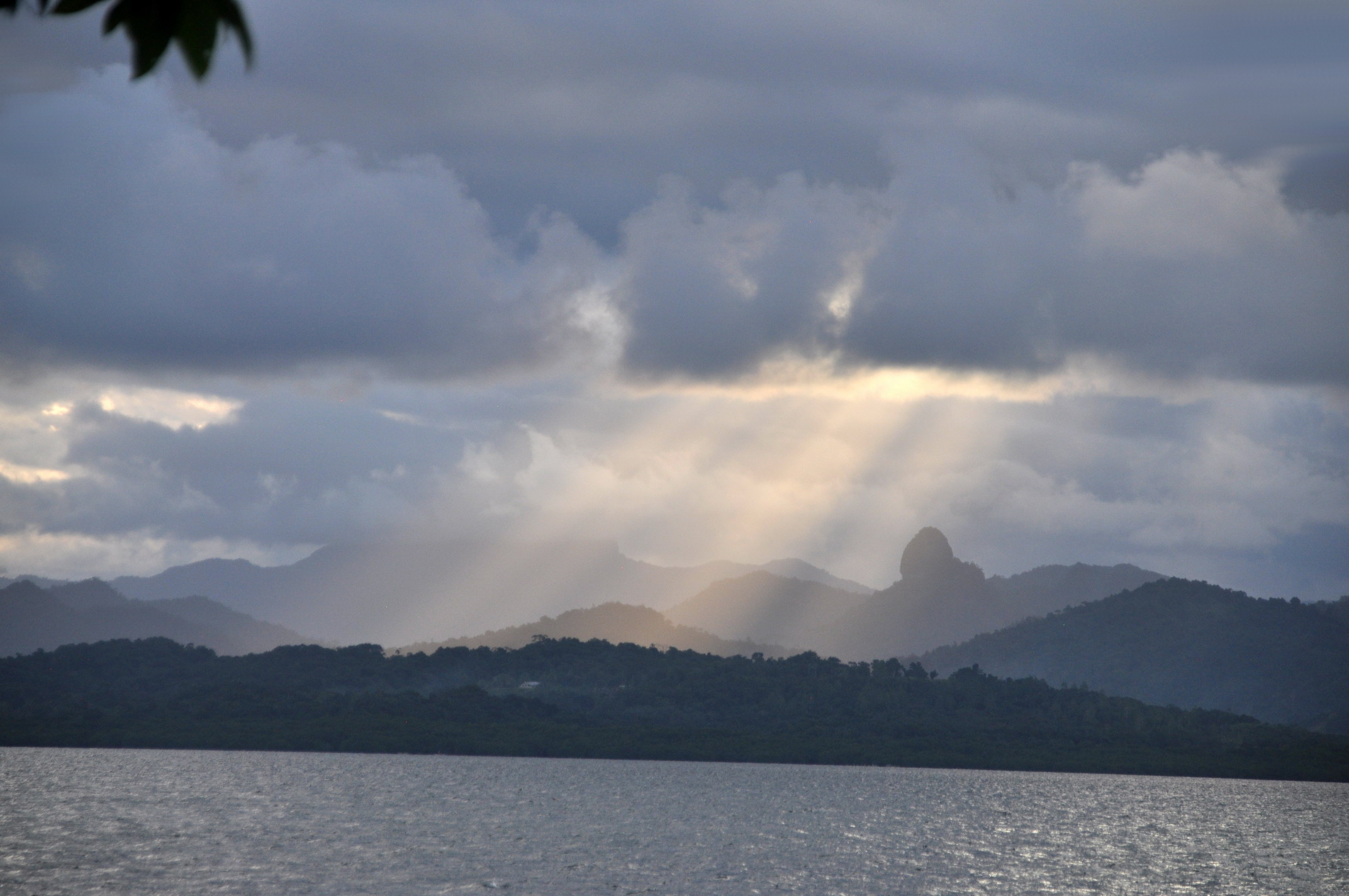
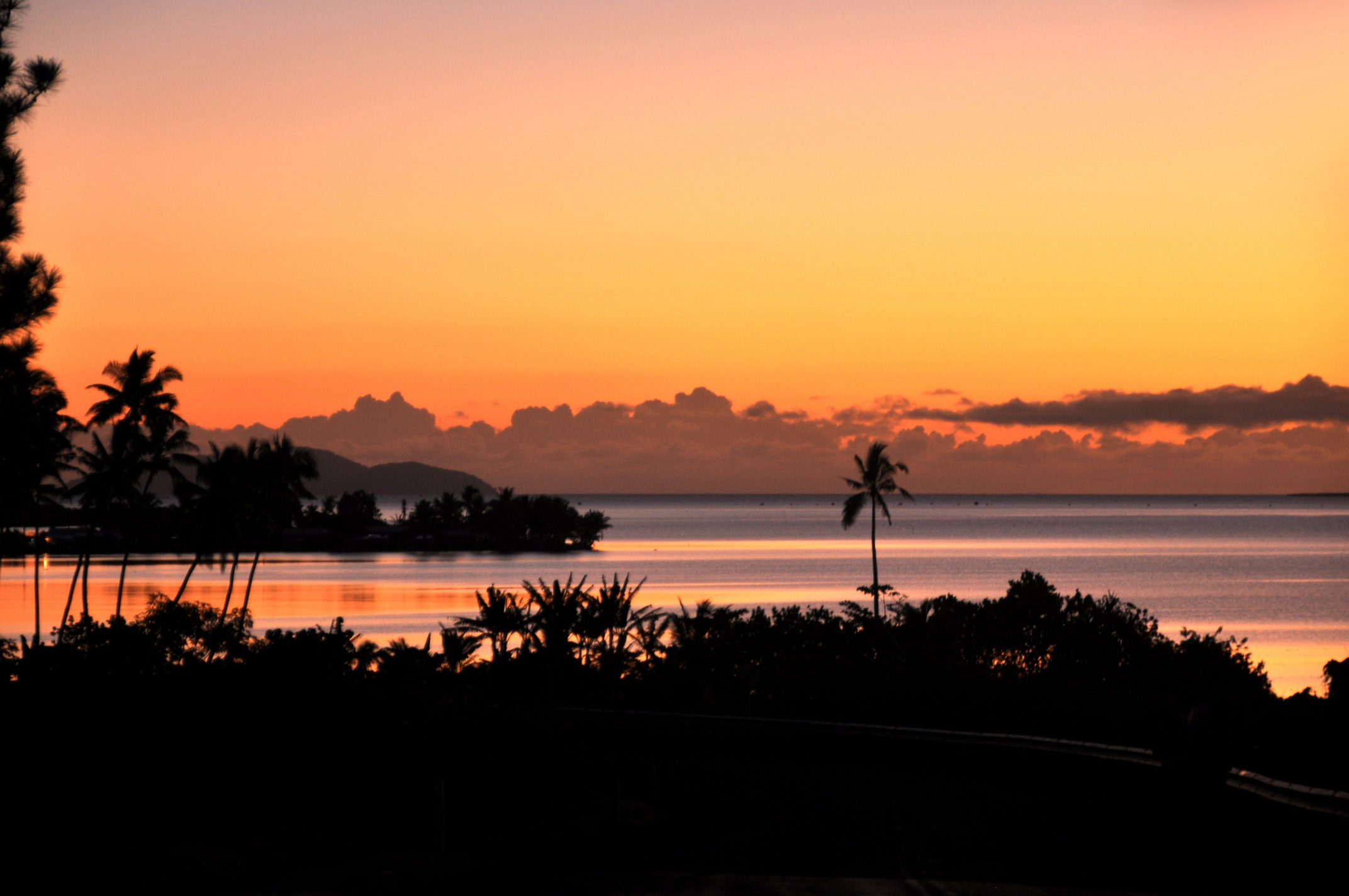
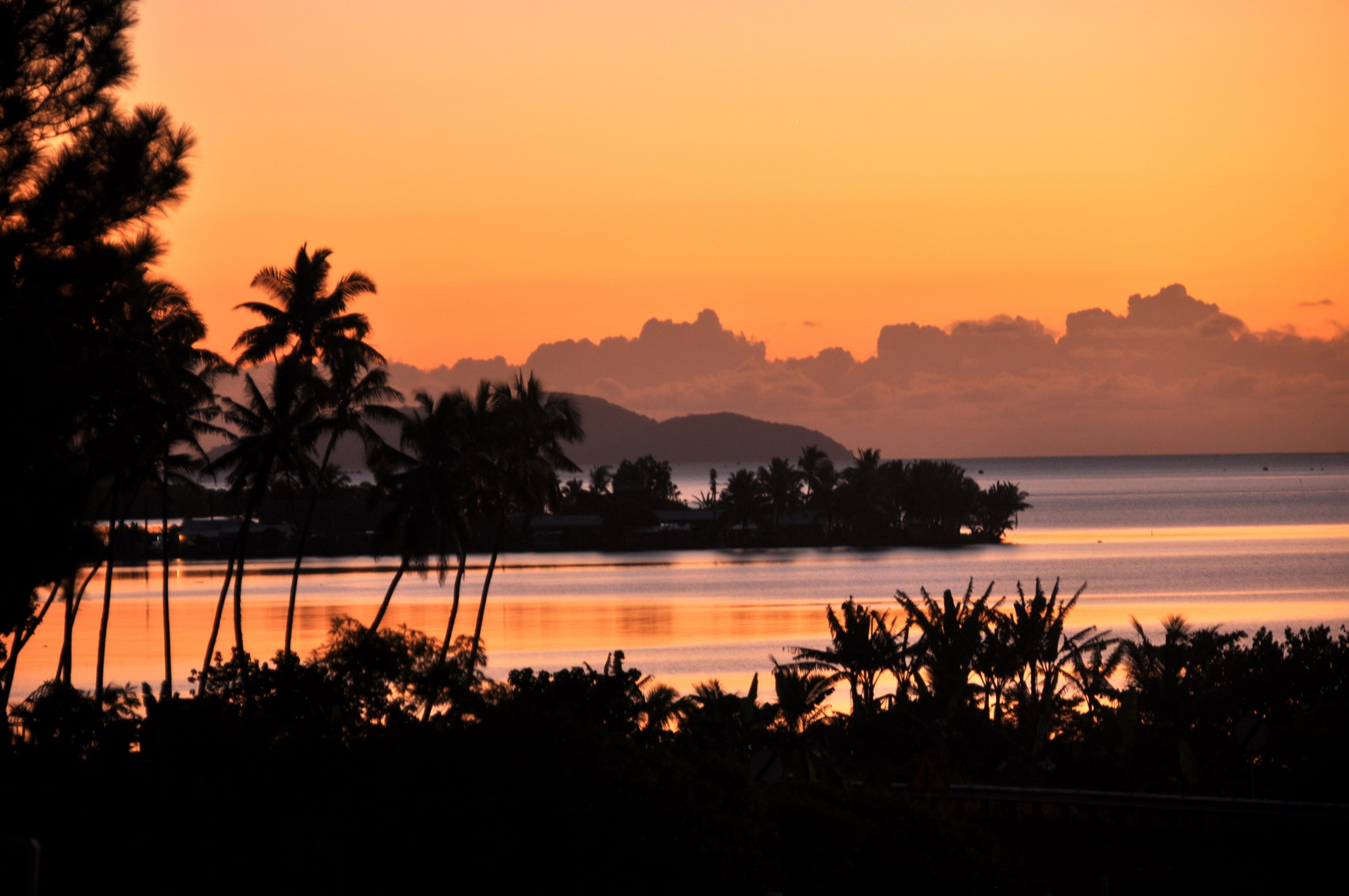
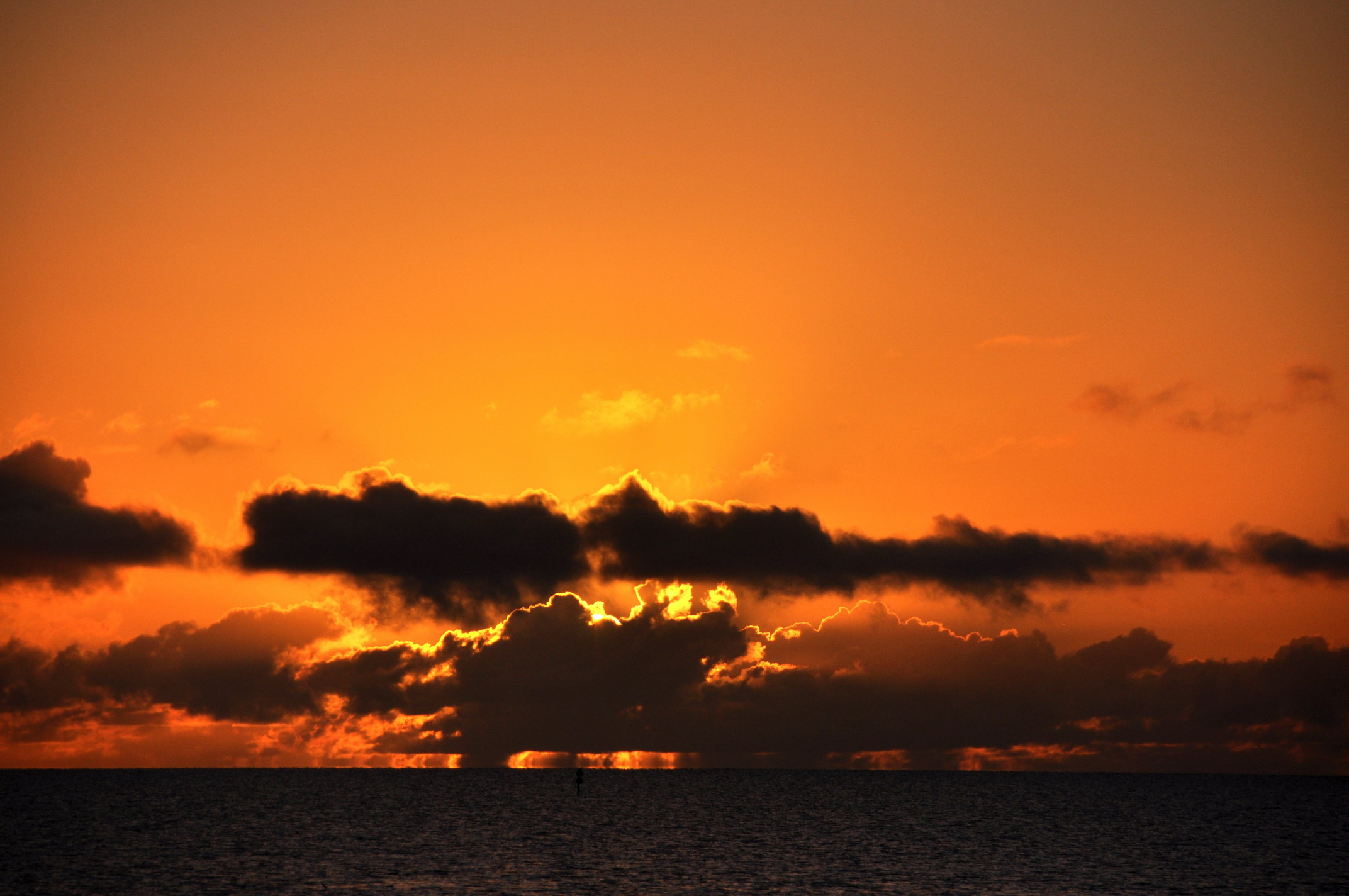
We drove to the ferry early. The sunrise was uncommonly beautiful. The ferry left from a lonely wharf without any signs or directions (17°40.511′S, 178°35.194′E). There were no shops or cafés nearby, or anything else.
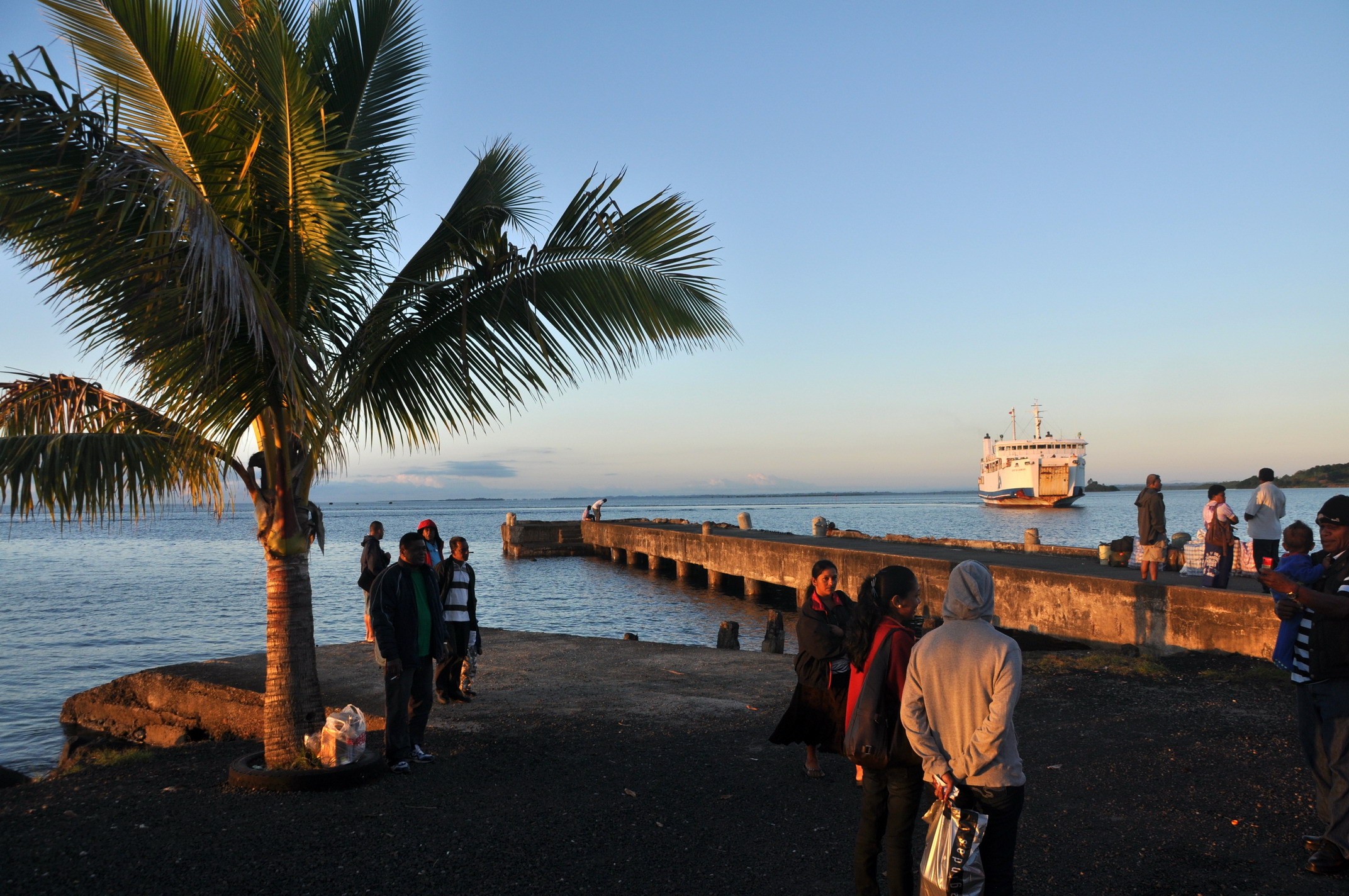
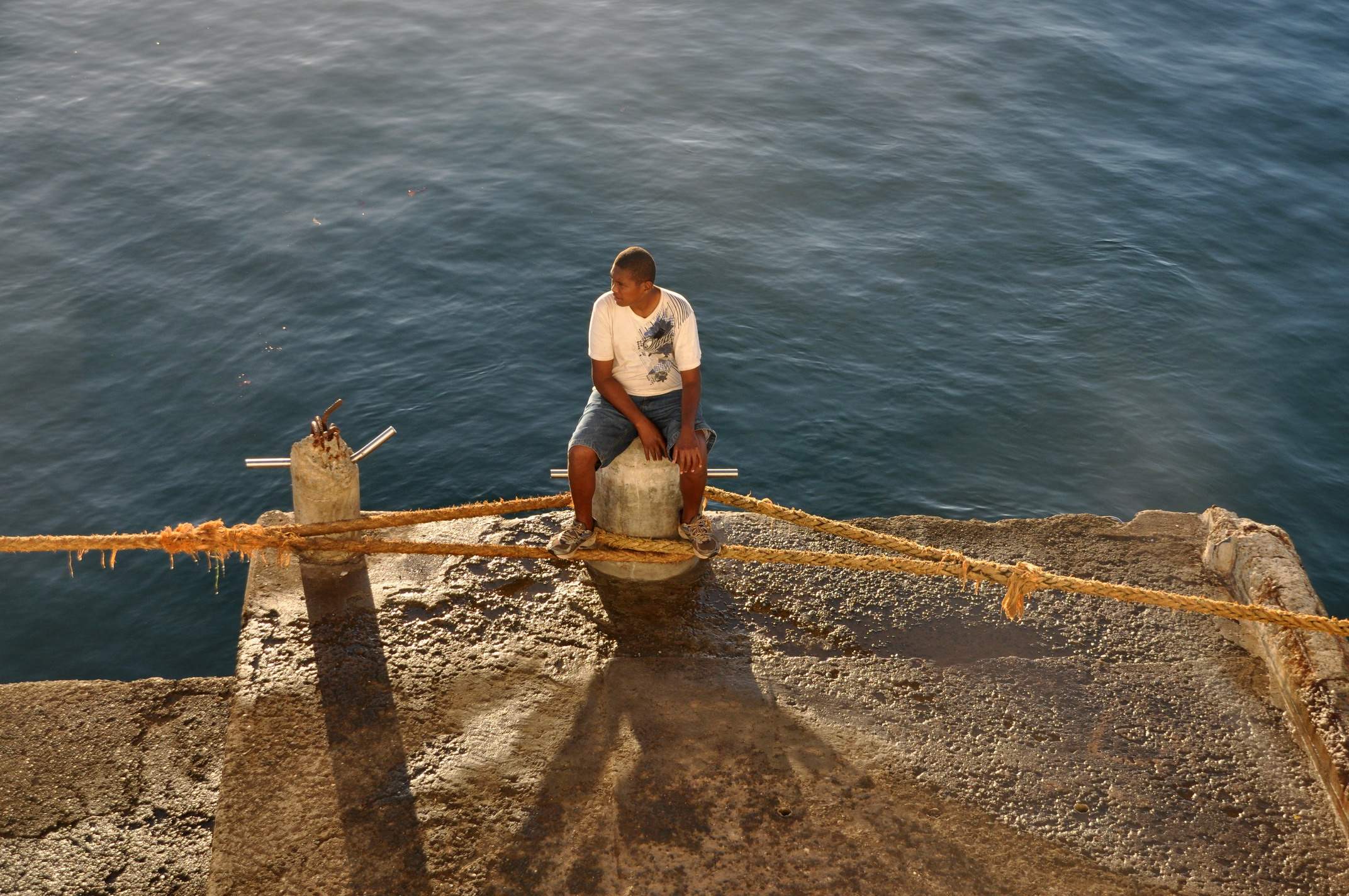
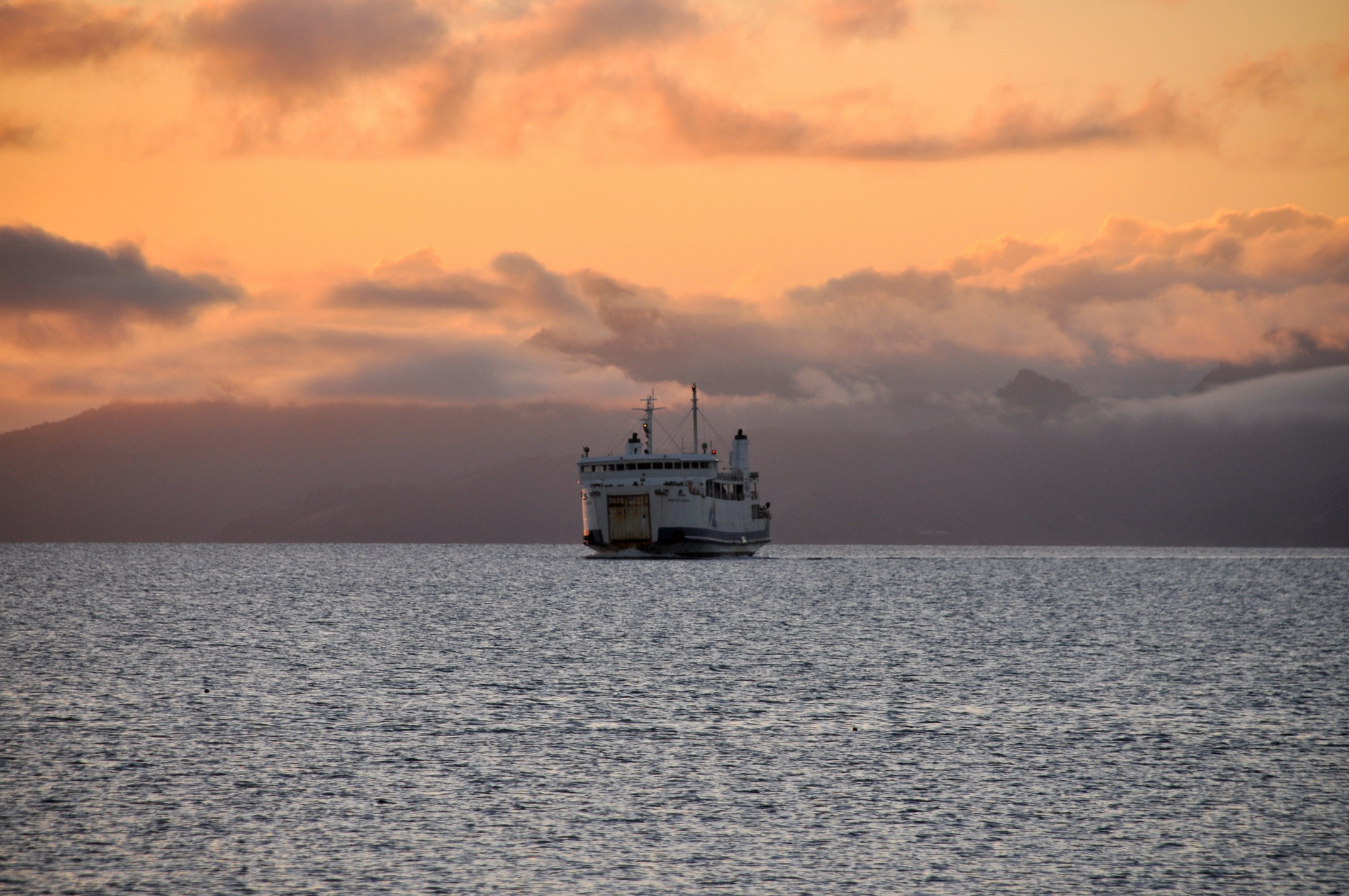
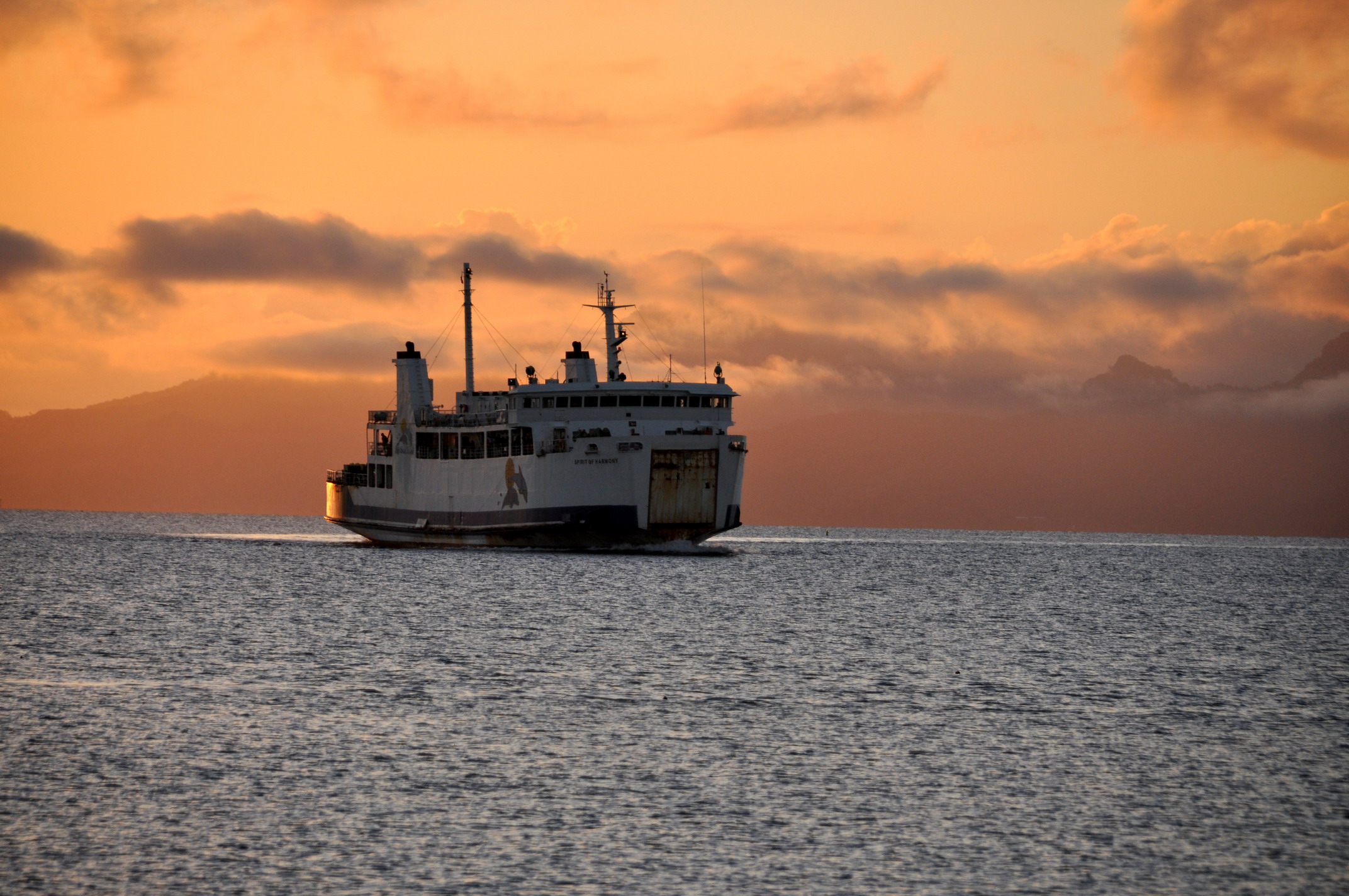
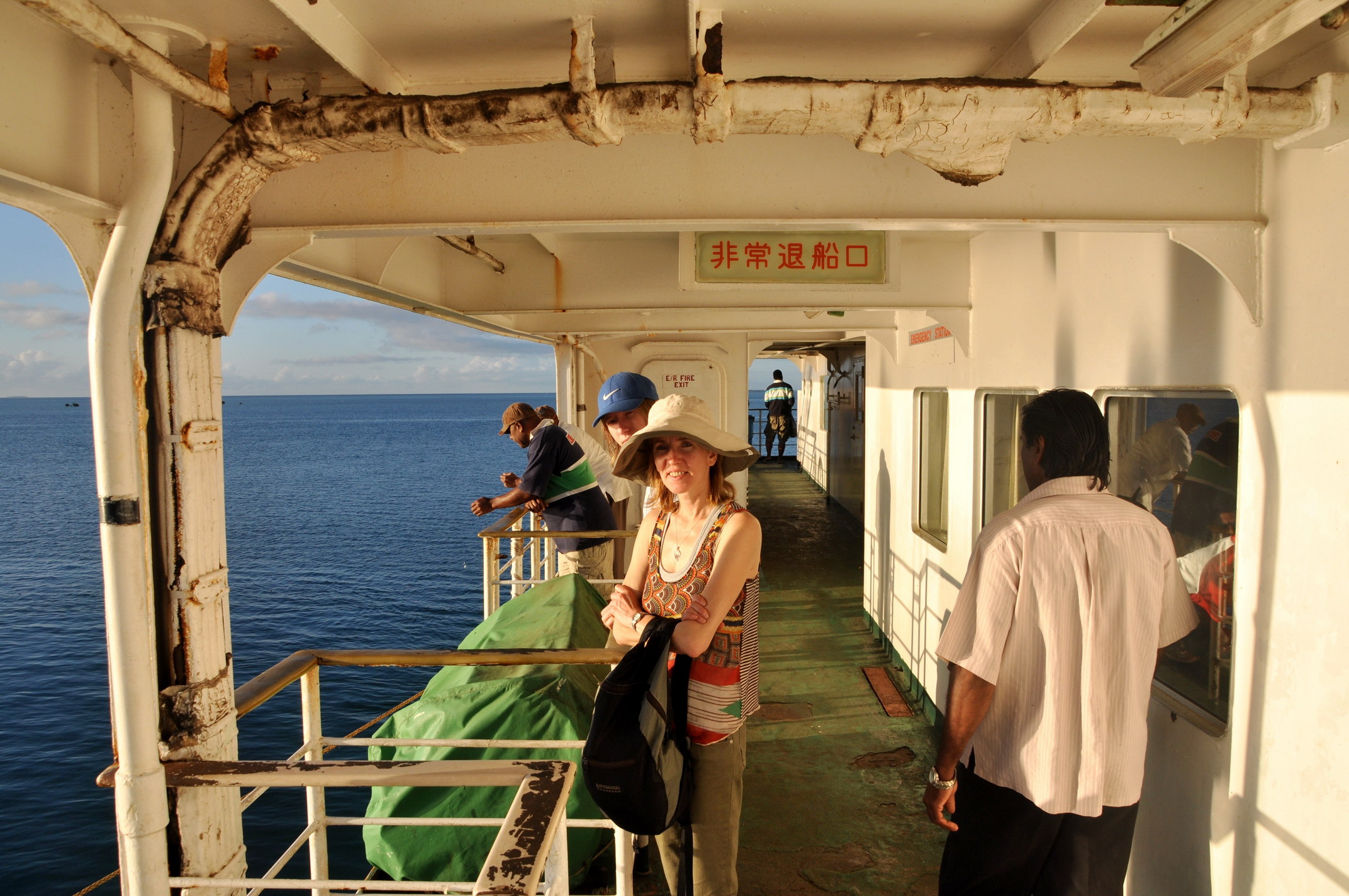
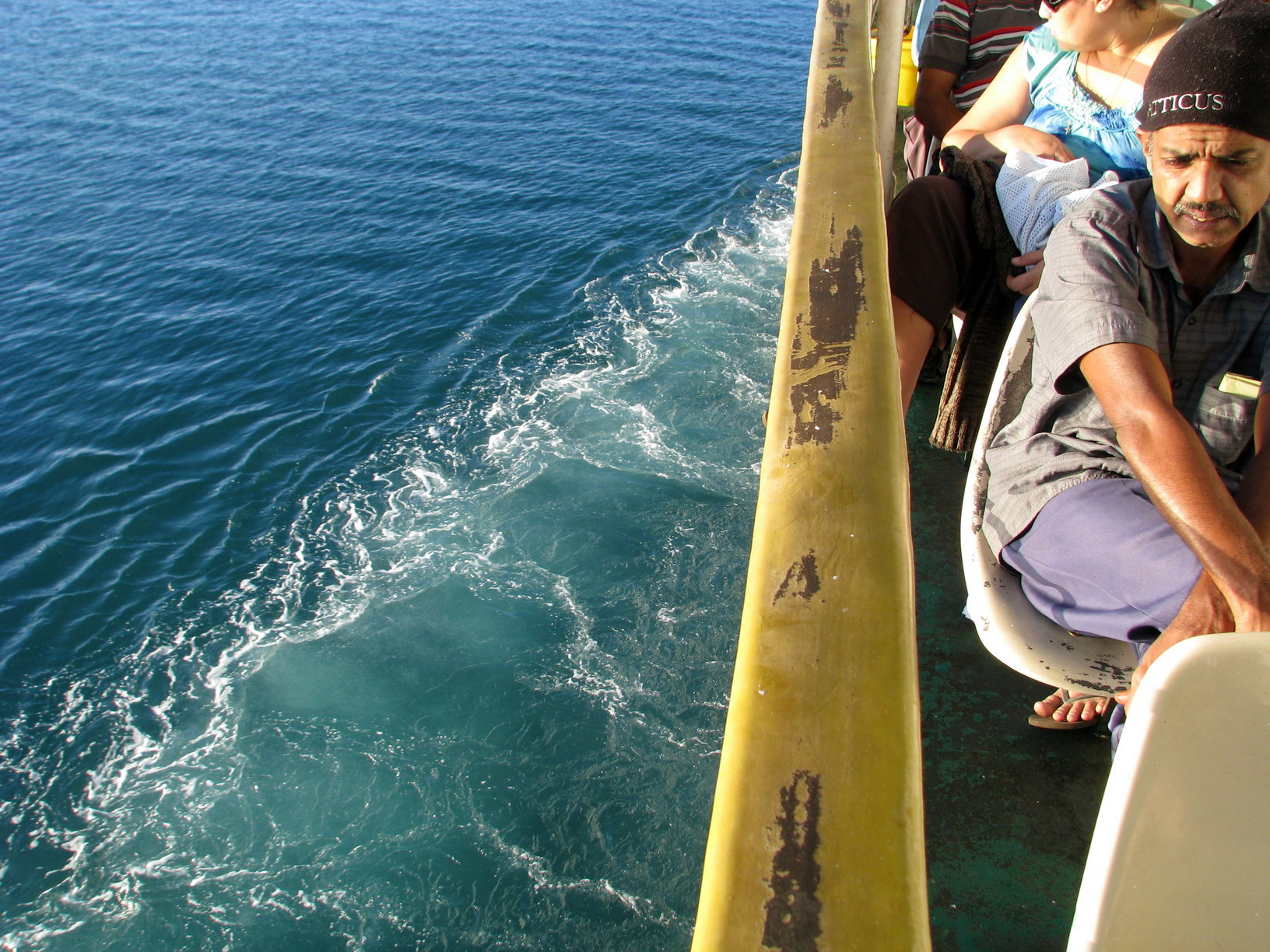
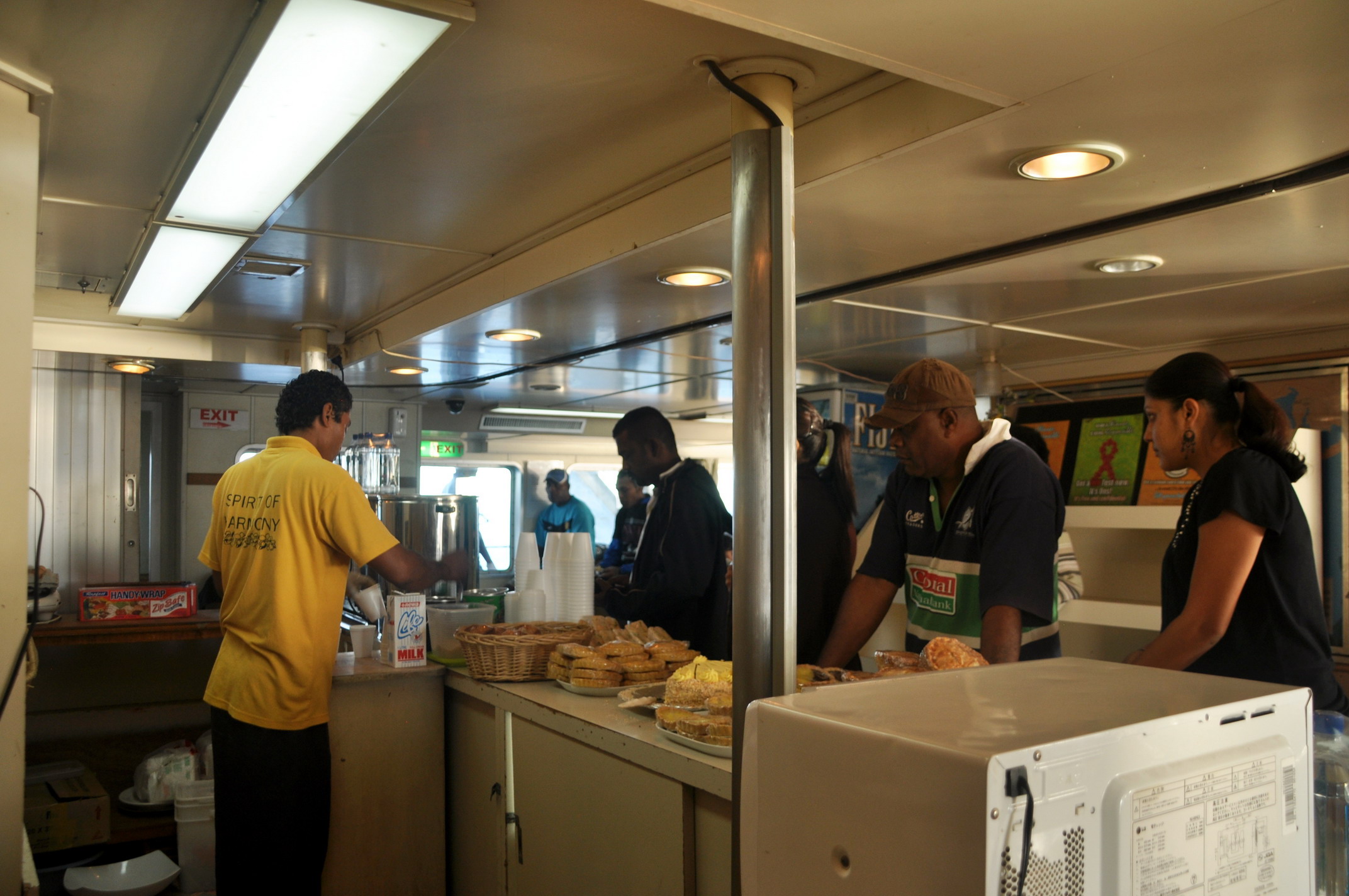
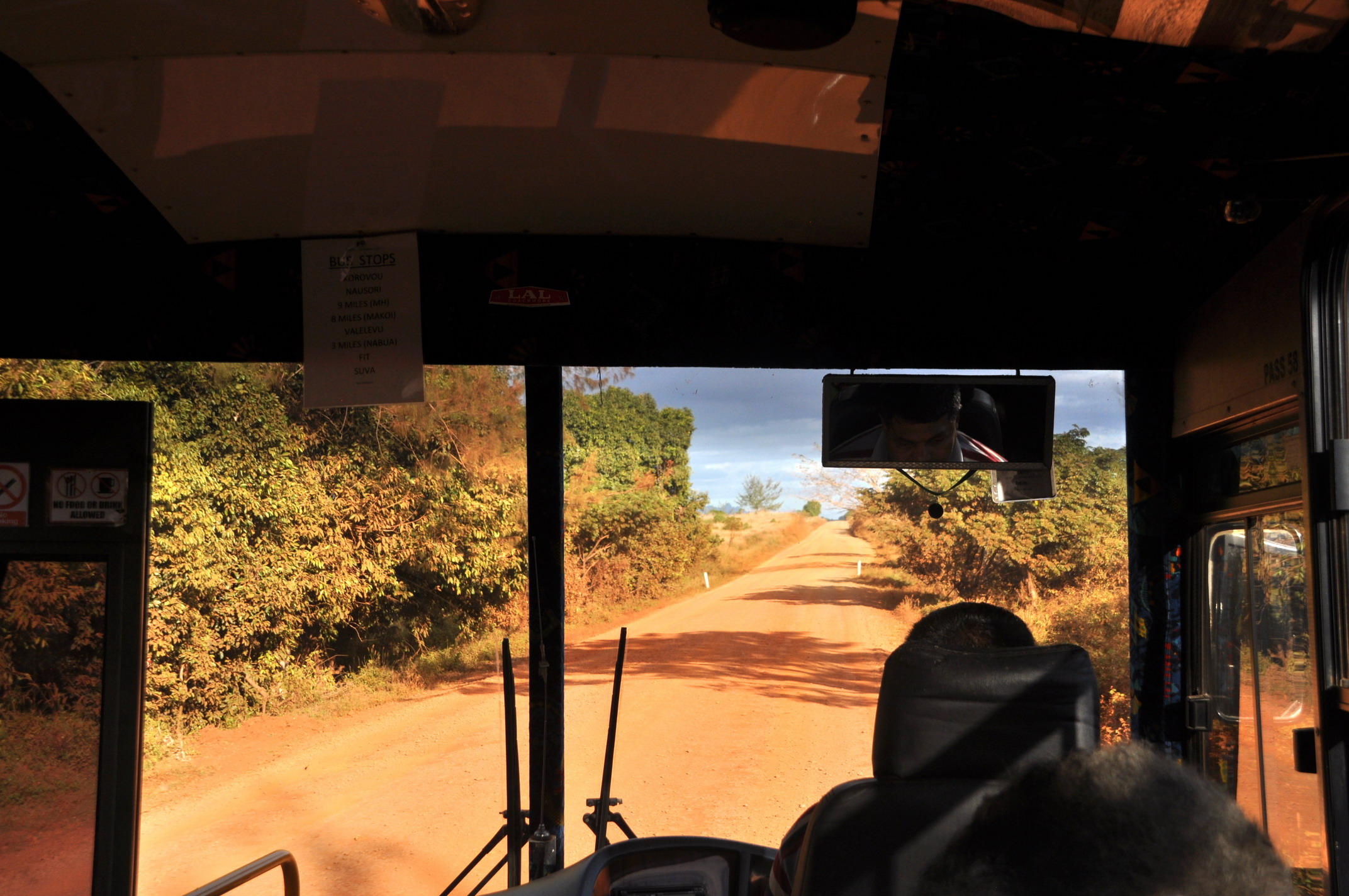
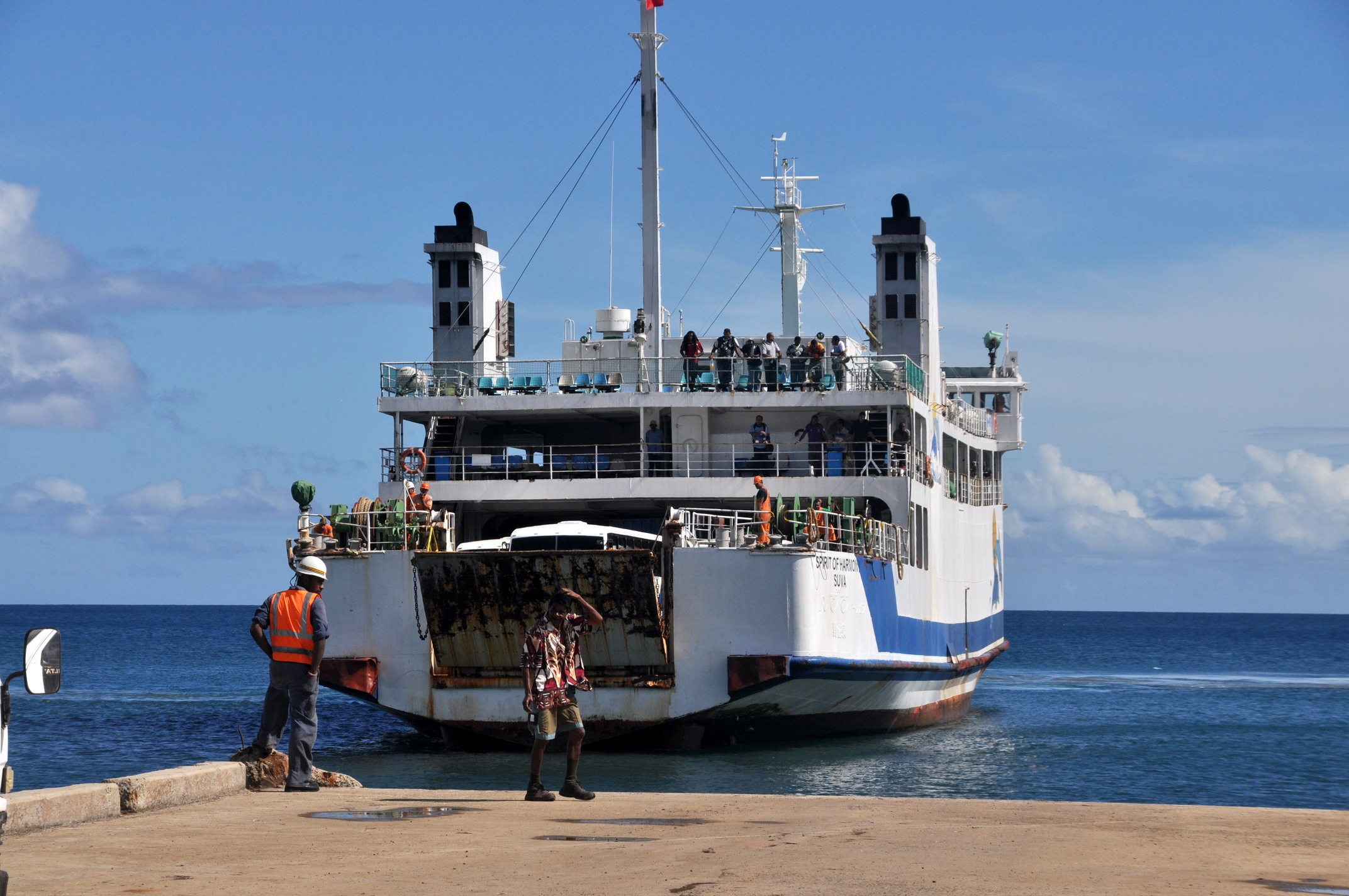
The ferry arrived from some other island. It was an old Chinese boat, pensioned off after years of service in China. It had been given a bit of paint, but no one had even changed the Chinese signs. The crossing took about five hours. On the other side, the wharf (16°59.681′S, 178°41.201′E) served the more settled town of Nabouwalu. There was somewhere to get breakfast. The ferry sold only coffee and rolls.
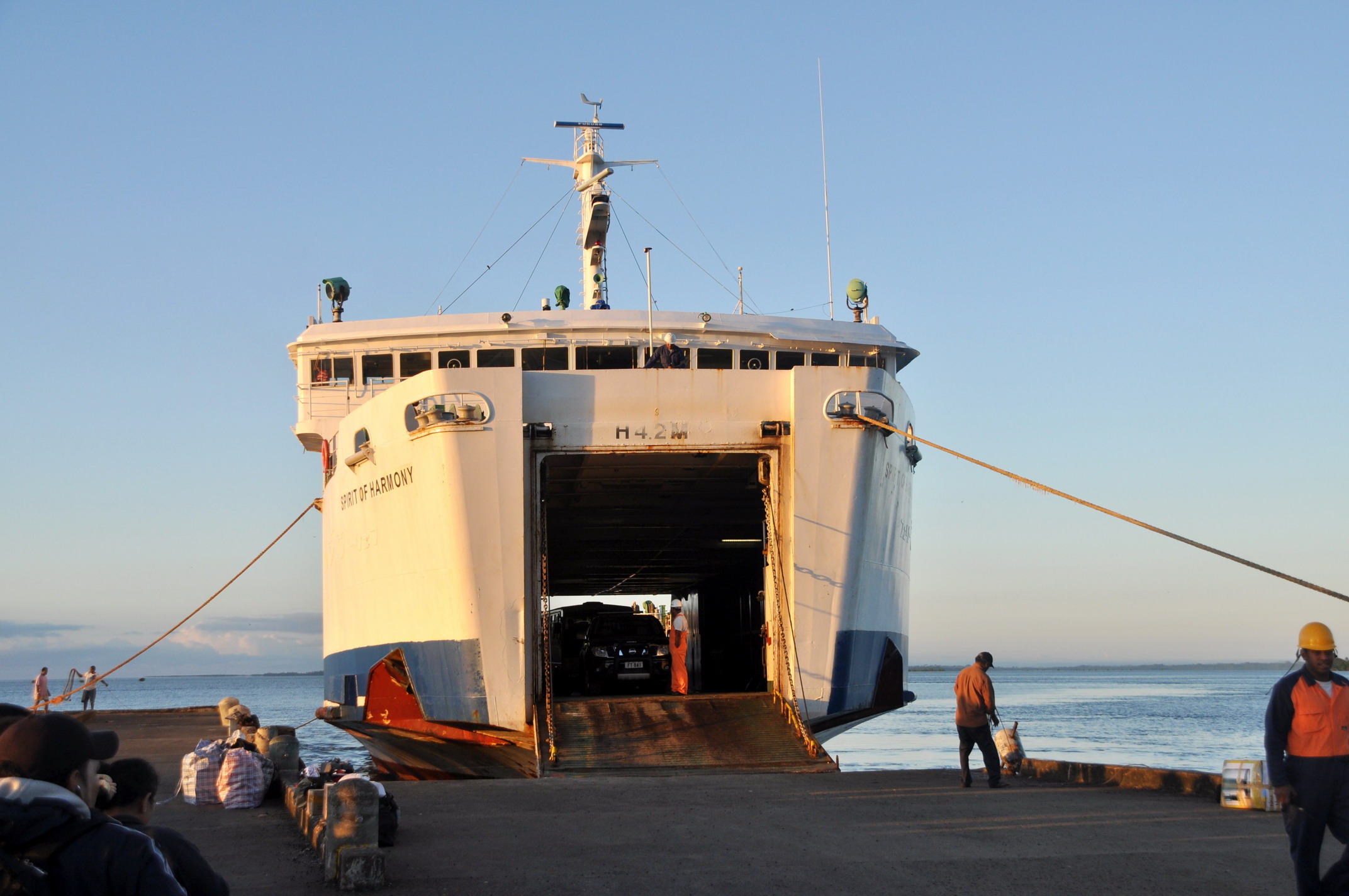
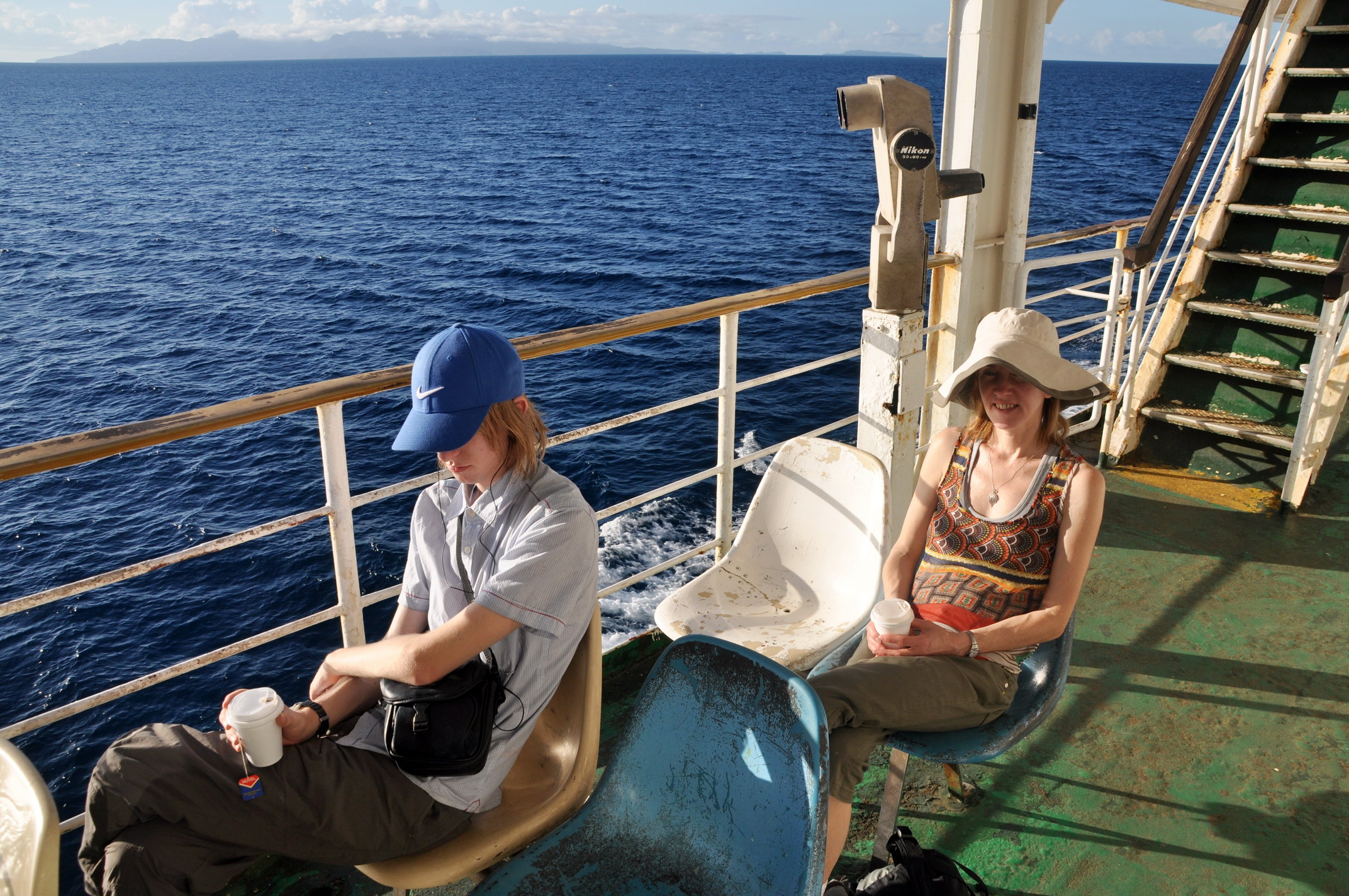
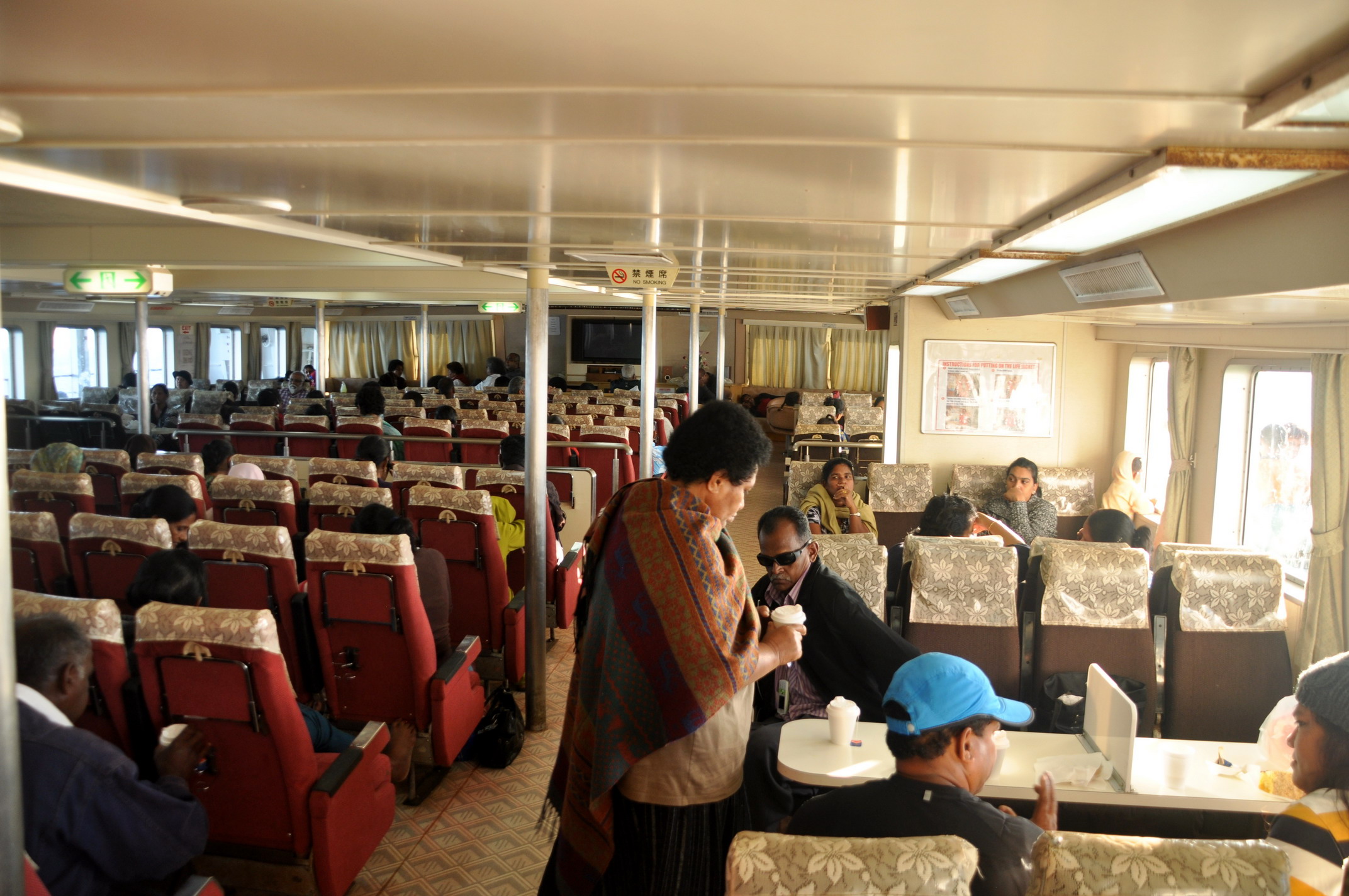
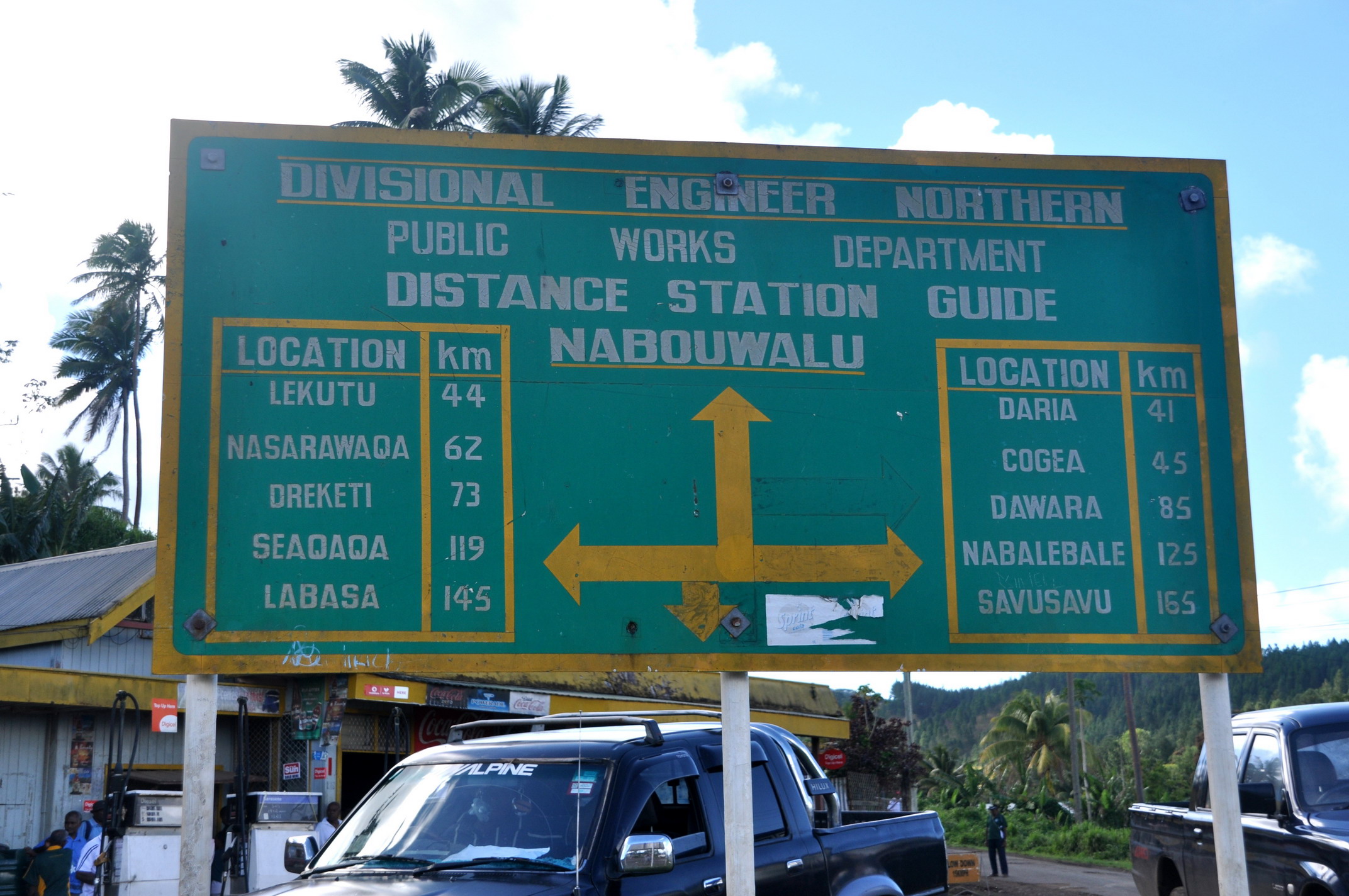
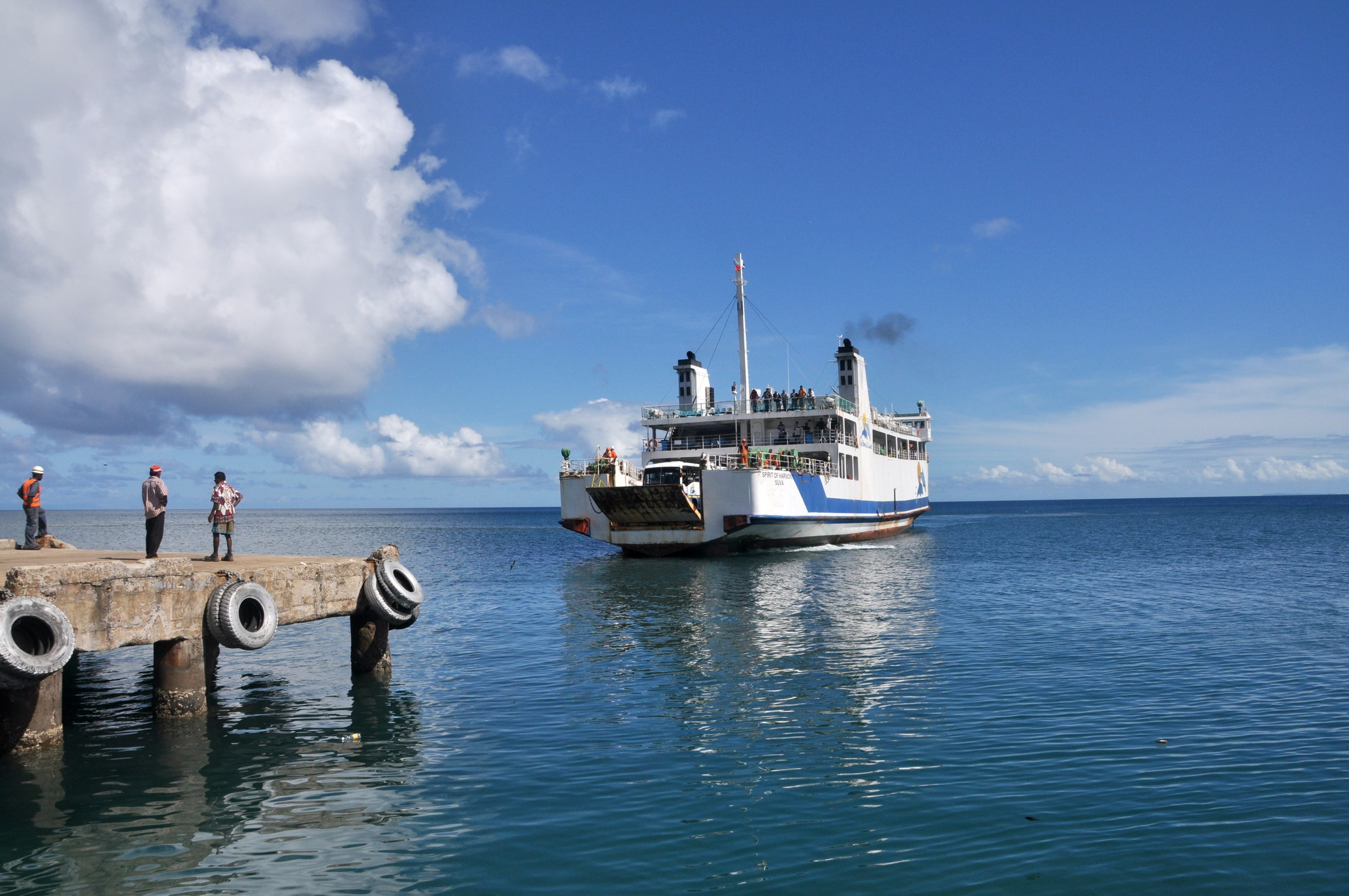
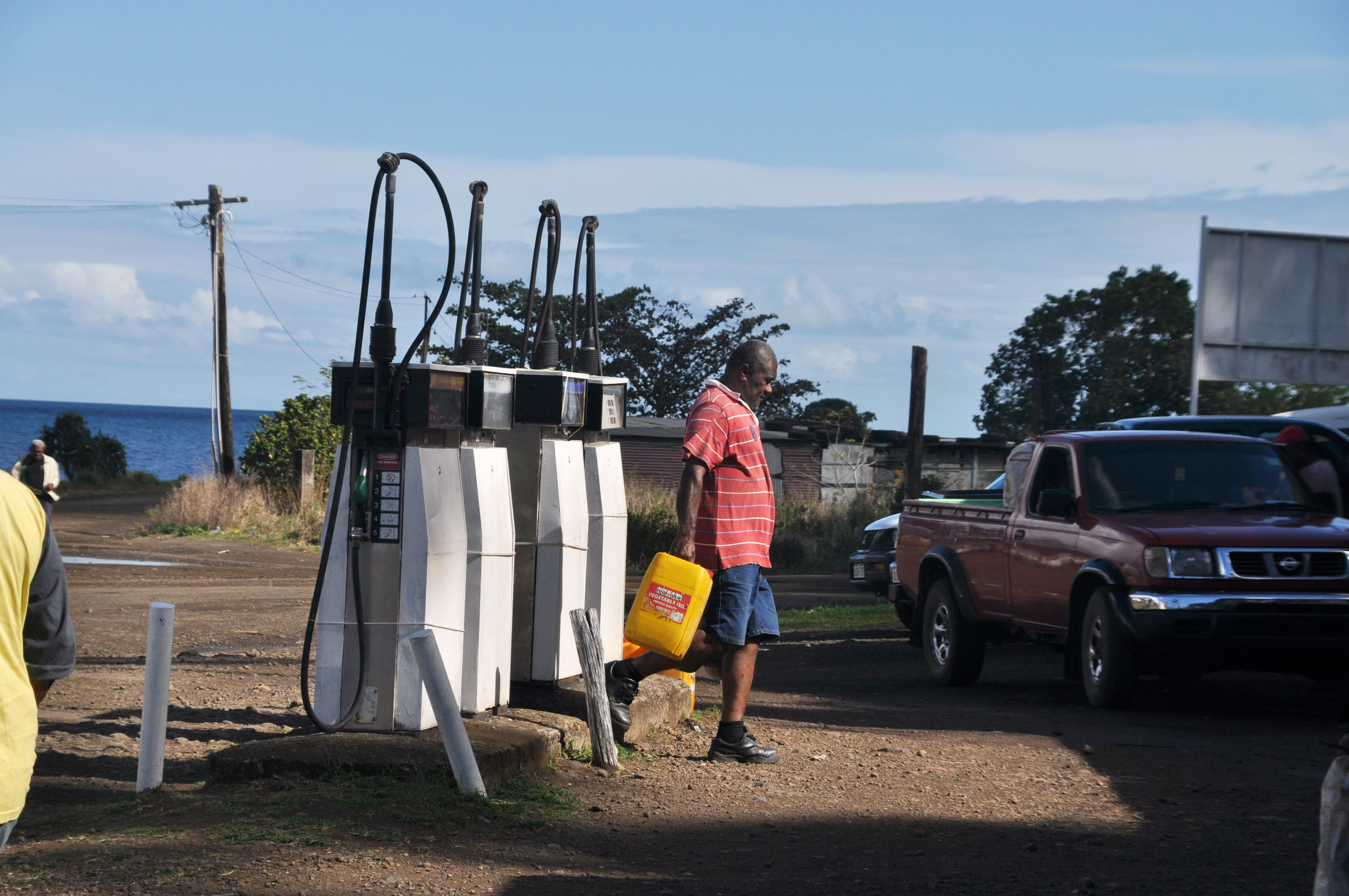
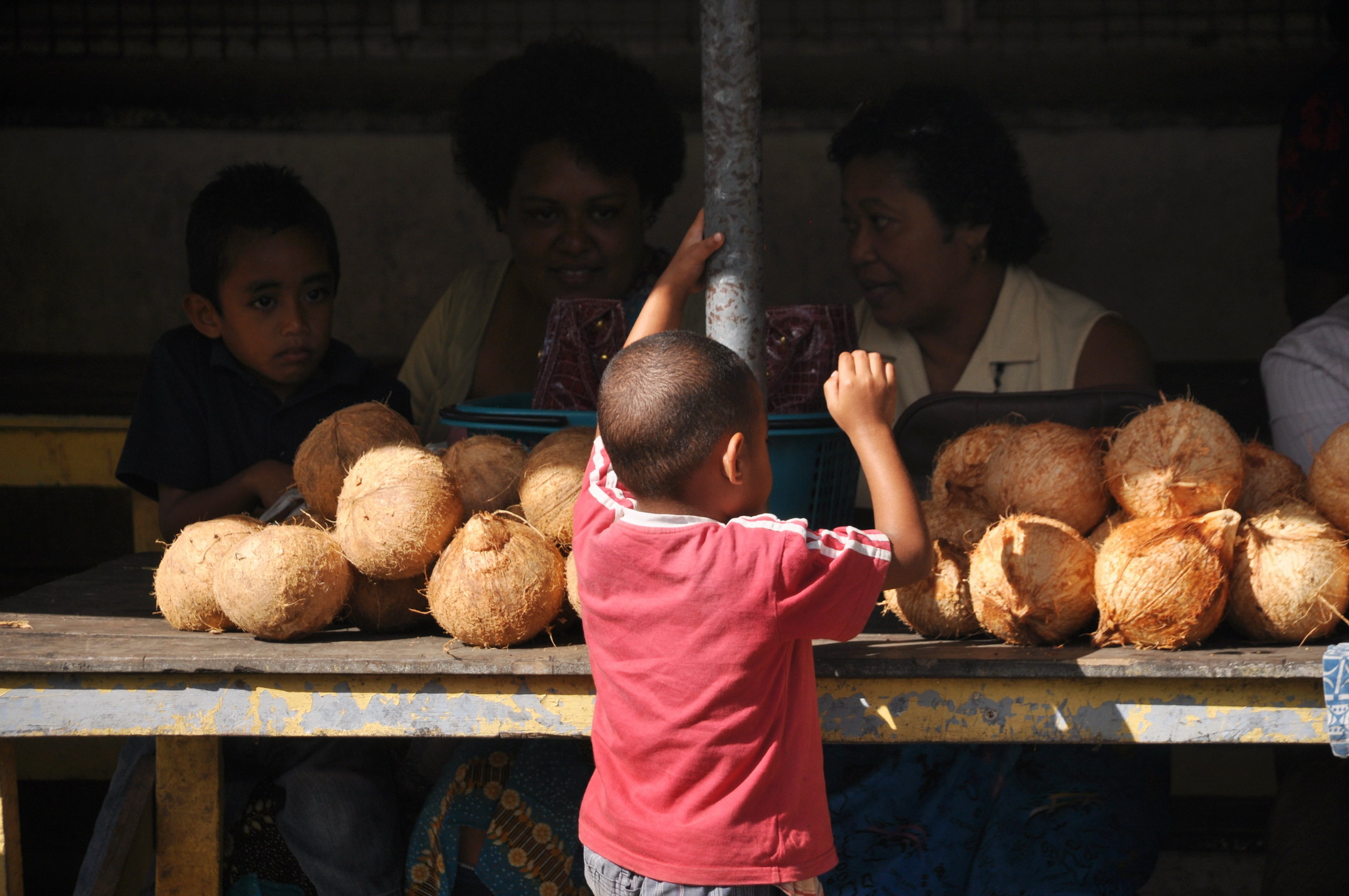
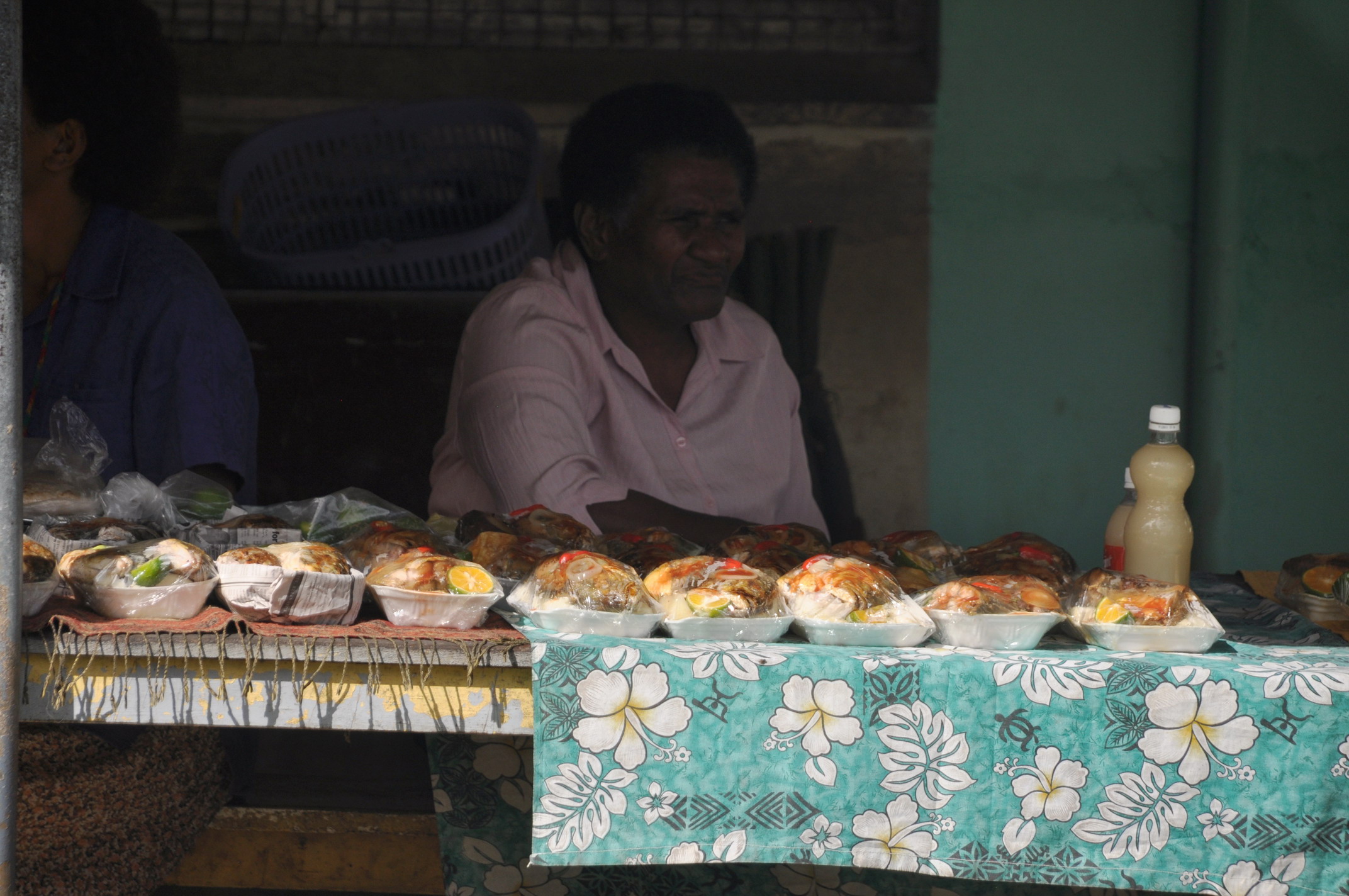
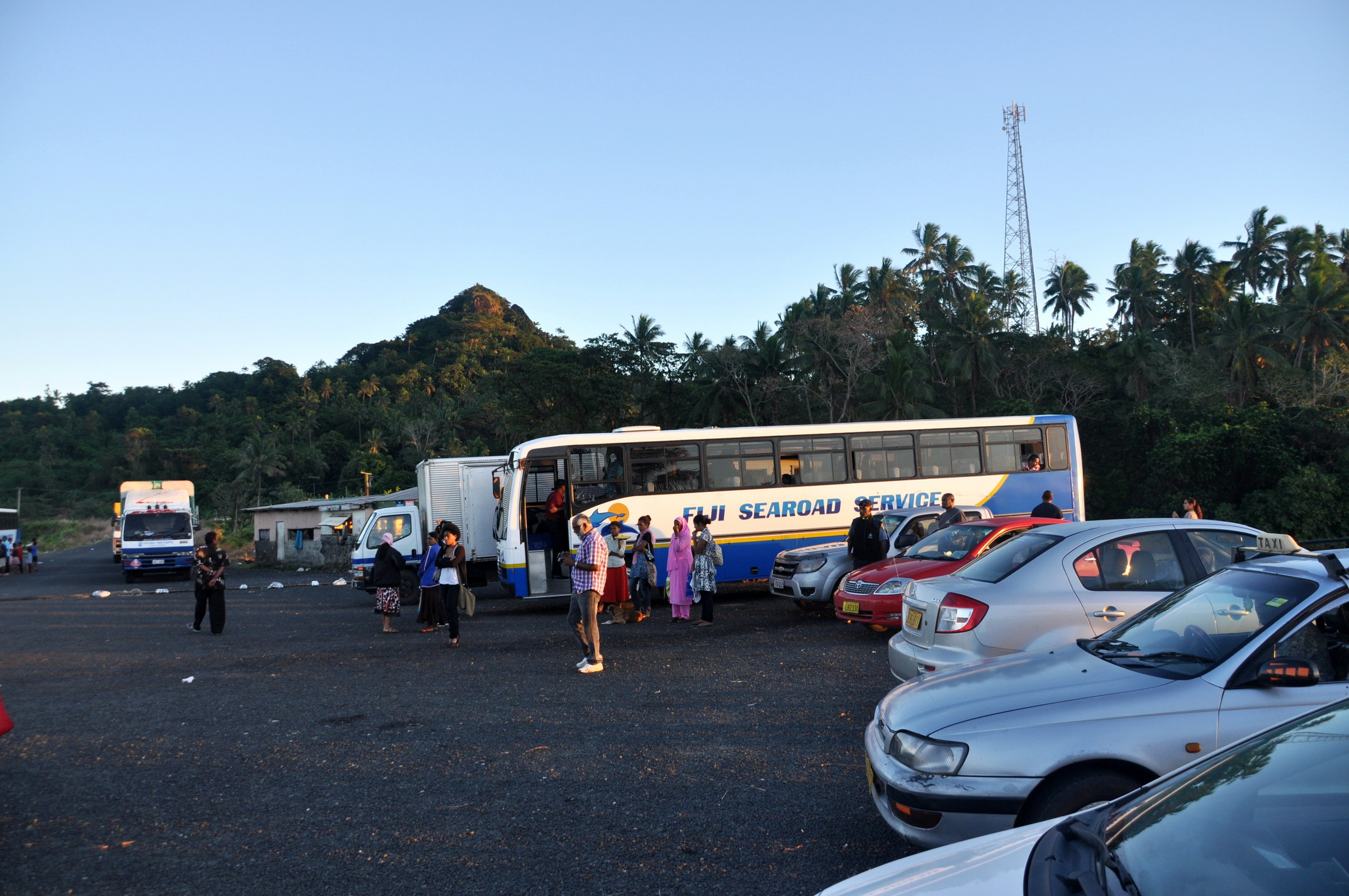
Passengers without cars were taken from Suva to the ferry by bus and on to Labasa by bus on the other side. Those going to other towns on Vanua Levu had to change at a bus station located roughly halfway from the wharf to Labasa.
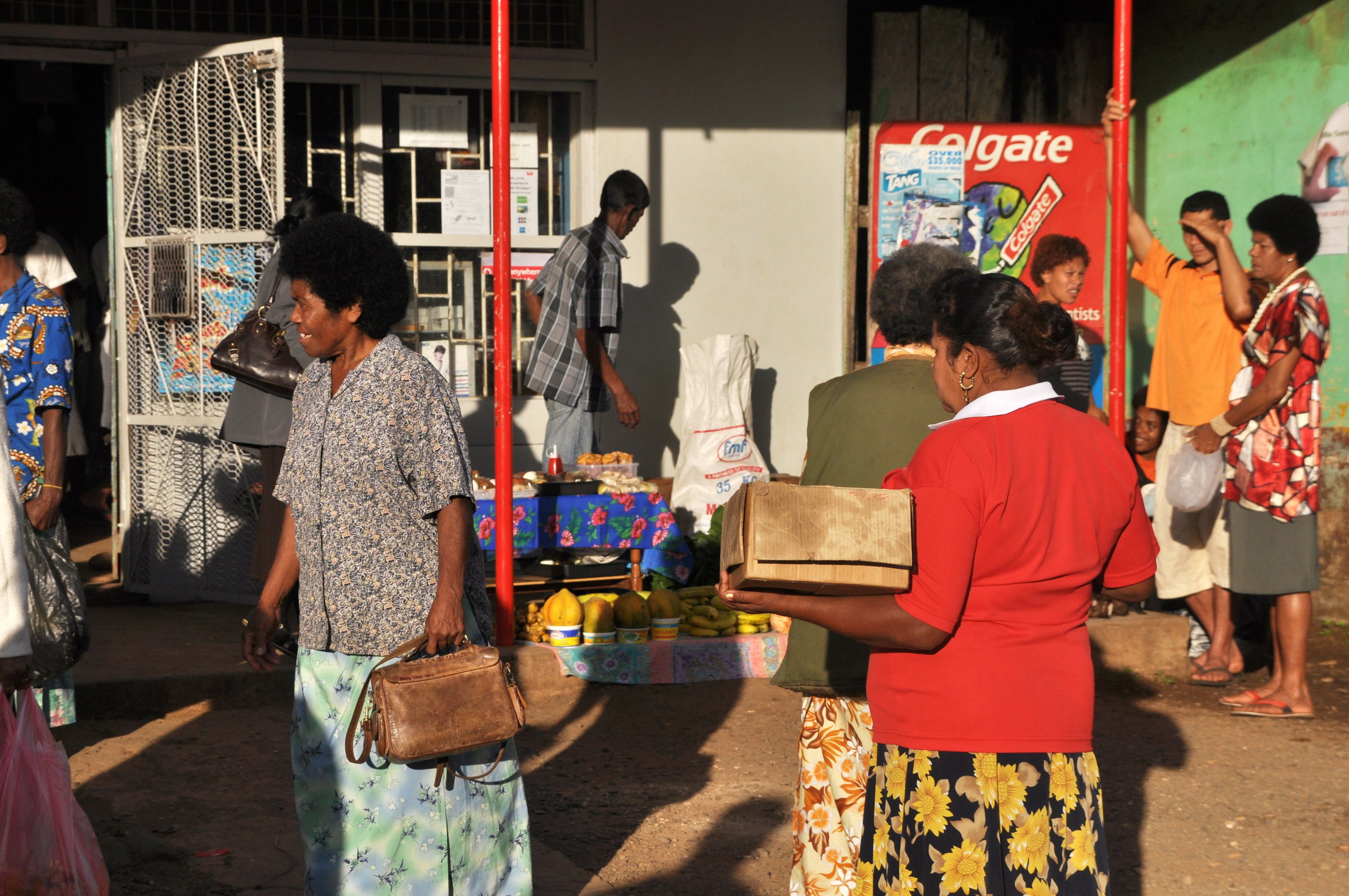
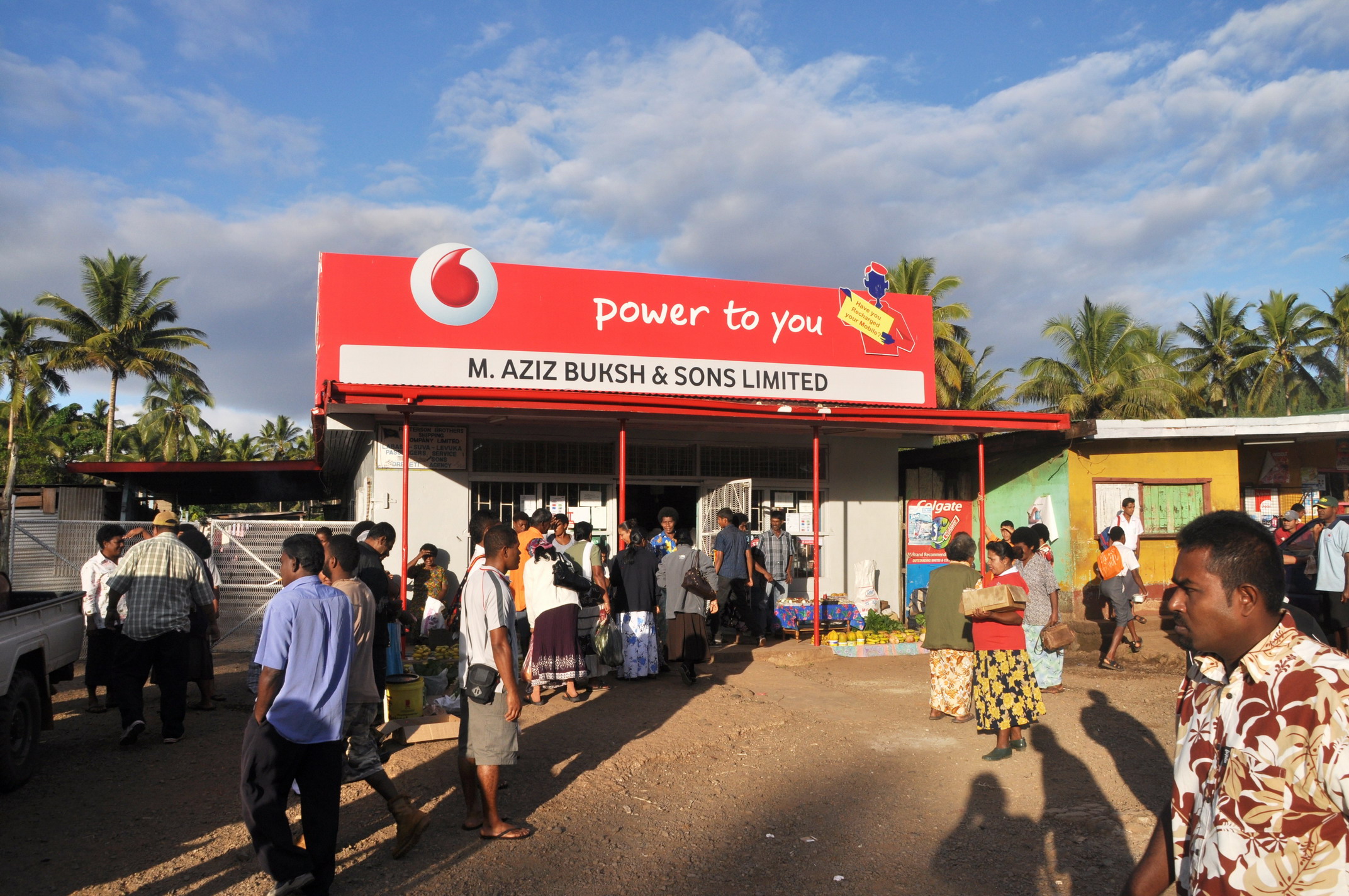
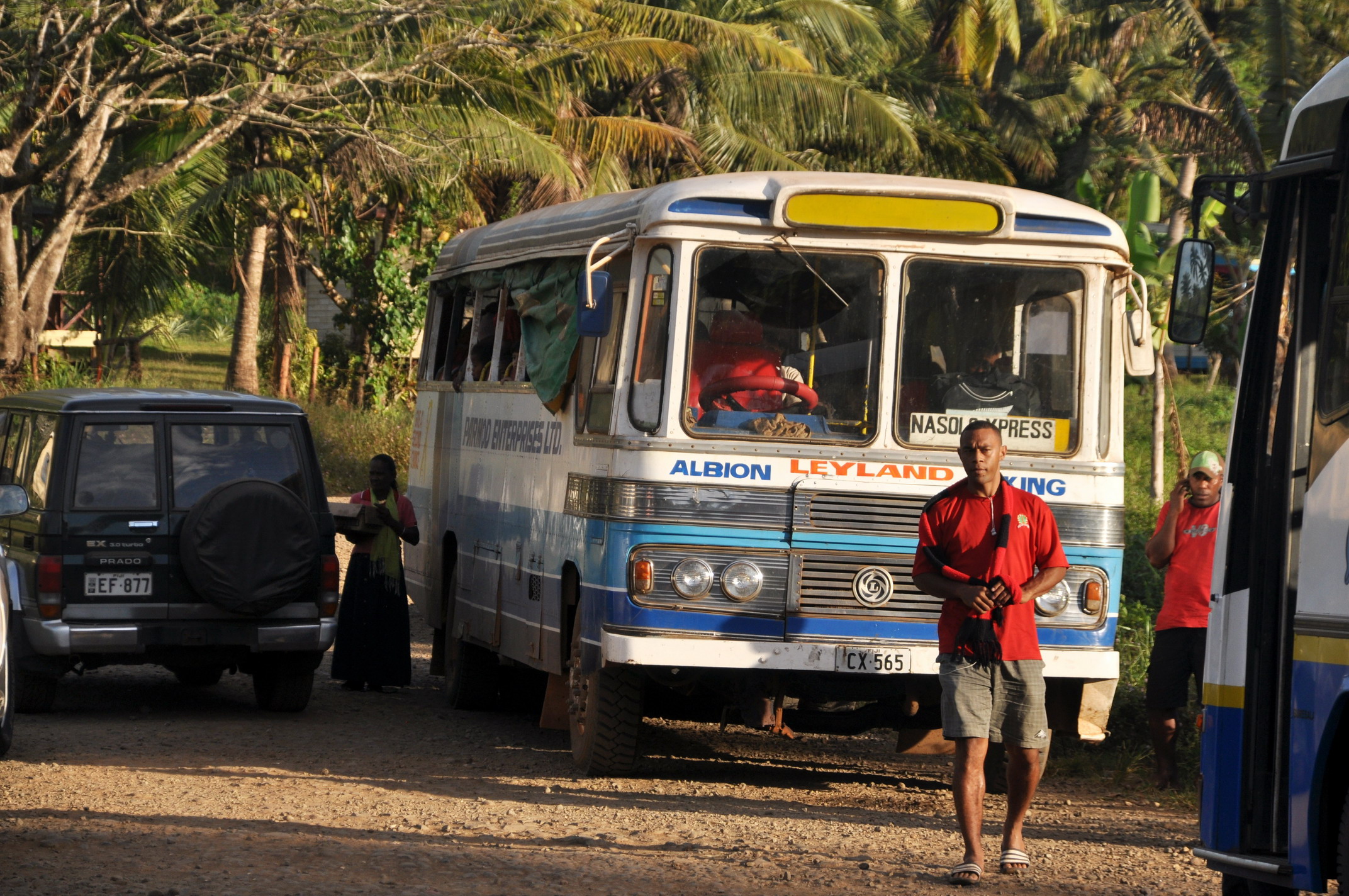
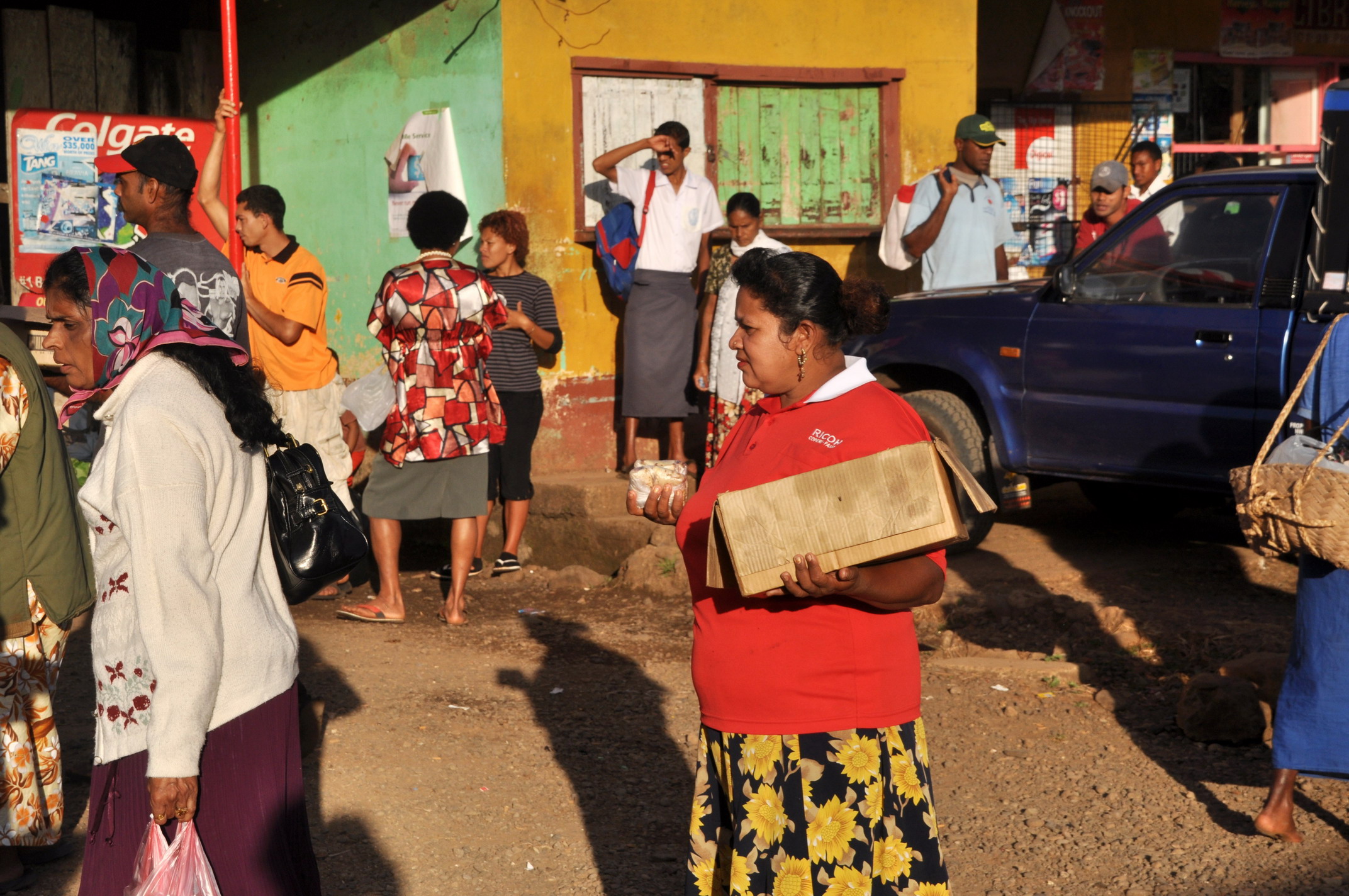
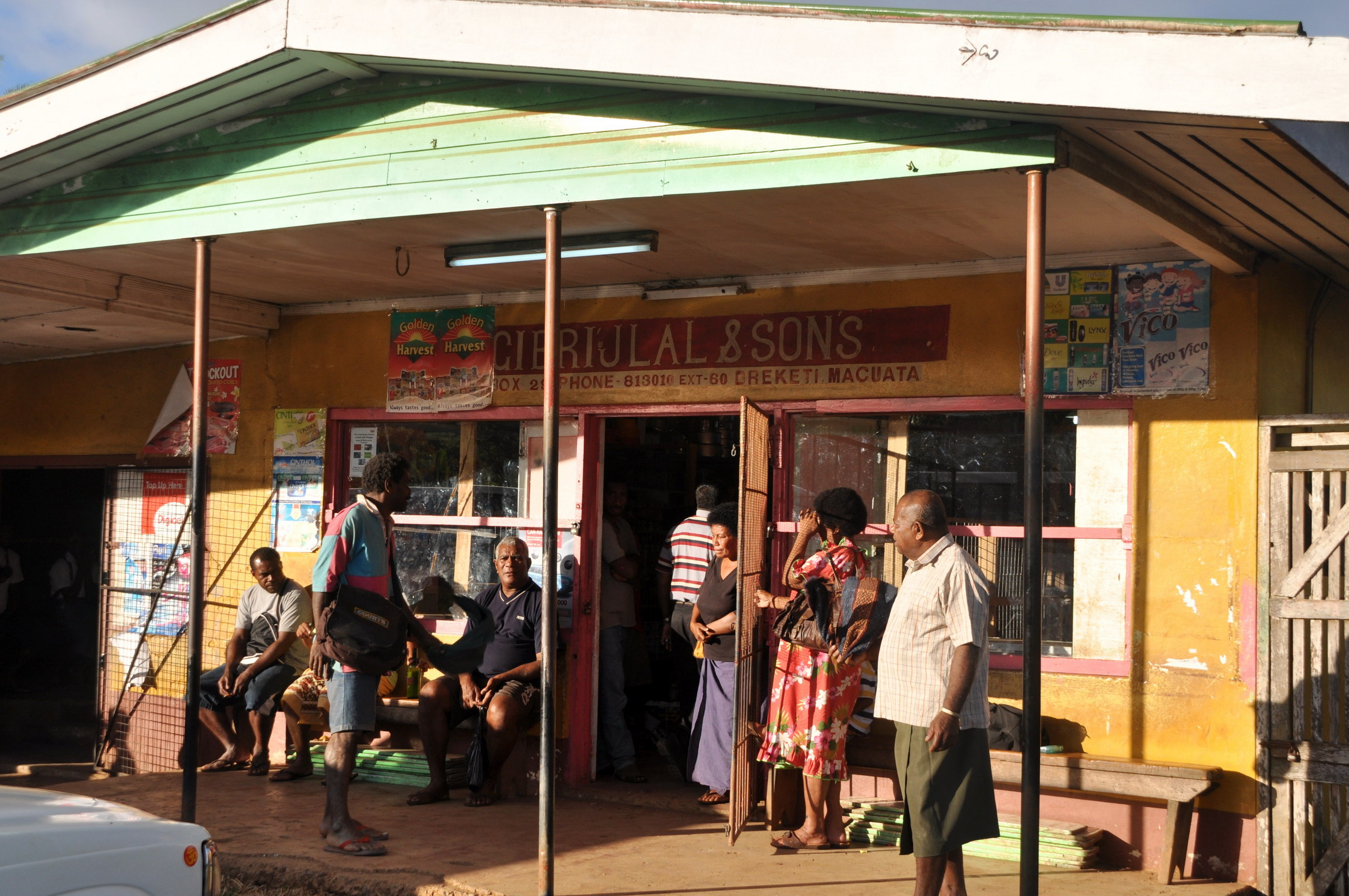
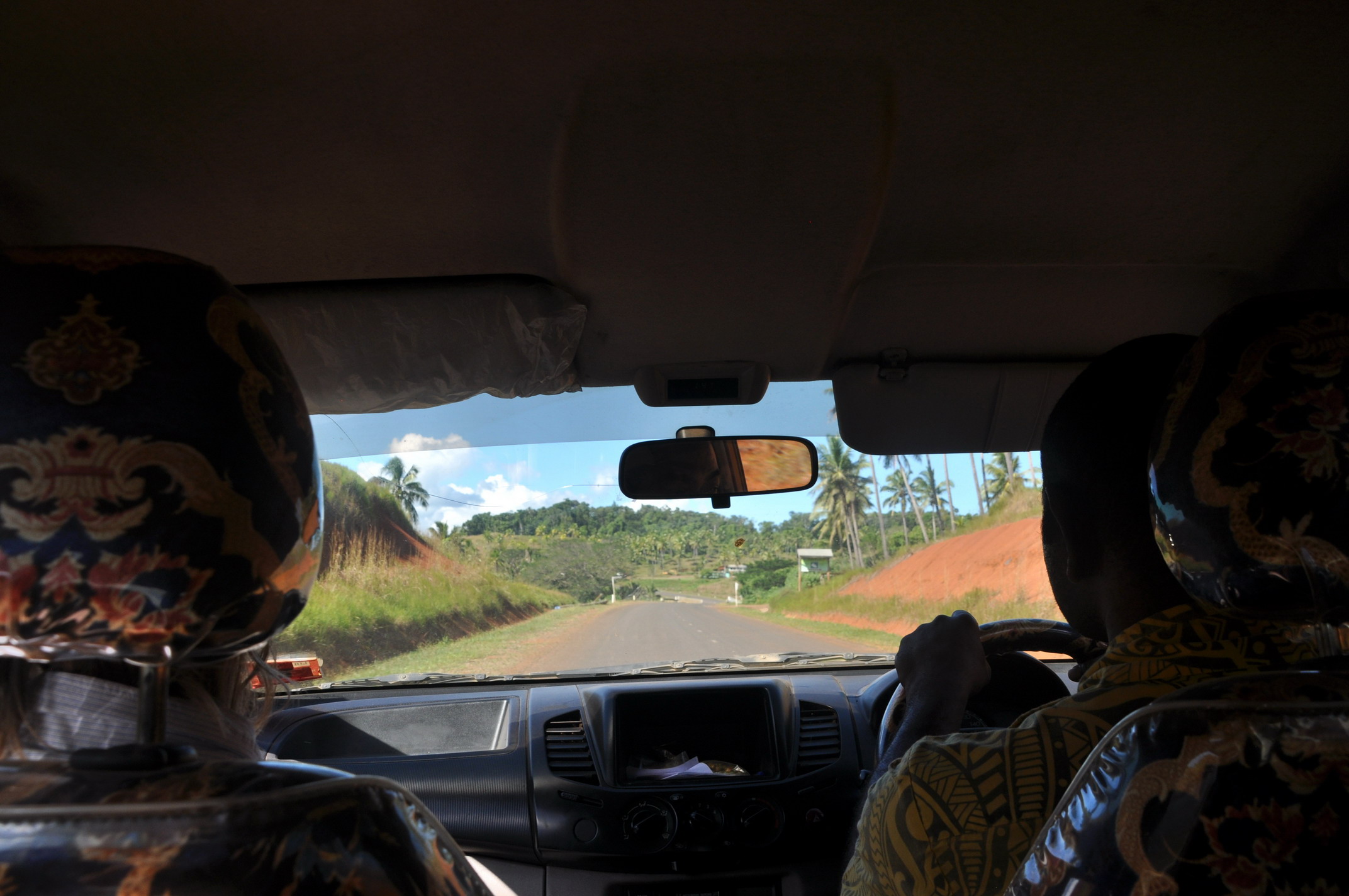
We had a car, but the road was unsealed, plainly no place for our little vehicle. Stones kept knocking its underside. It desperately needed more ground clearance. I did my best to drive slowly. Our chances of reaching Savusavu in good time were fading, and we would have to change all our plans.
We'd planned to take another ferry that day, to Taveuni, but we could see that by the time we got anywhere it might leave from, it would be dark. Then things got worse. Another rock knocked a hole in the sump. The oil drained out, and we came to a stop.
A car can give you some of the finest moments in life, sitting comfortably and going wherever you please. It can give you some of the worst when it breaks down. Here we were in a foreign country, with a car that wasn't ours, in the heat and dust, with no water. Luckily we had a satellite phone and got through to the rental company. Their indignation knew no bounds. Coming to fetch us on another island was a nightmare, they said. A tow truck would be tied up for days and they'd have to pay for the ferry. It turned out that the agreement didn't allow us to take the car to another island, so it would all be at our expense.
We abandoned the car, hoisted our enormous bags and started hitchhiking. We were picked up at once. A daredevil in a Land Cruiser bounced over the ruts at tremendous speed and dropped us in Labasa within the hour. Labasa was a large, largely Indo-Fijian town with almost no foreigners. We found the Centrpoint Hotel (16°25.753′S, 179°22.552′E), a decent and fairly inexpensive place.
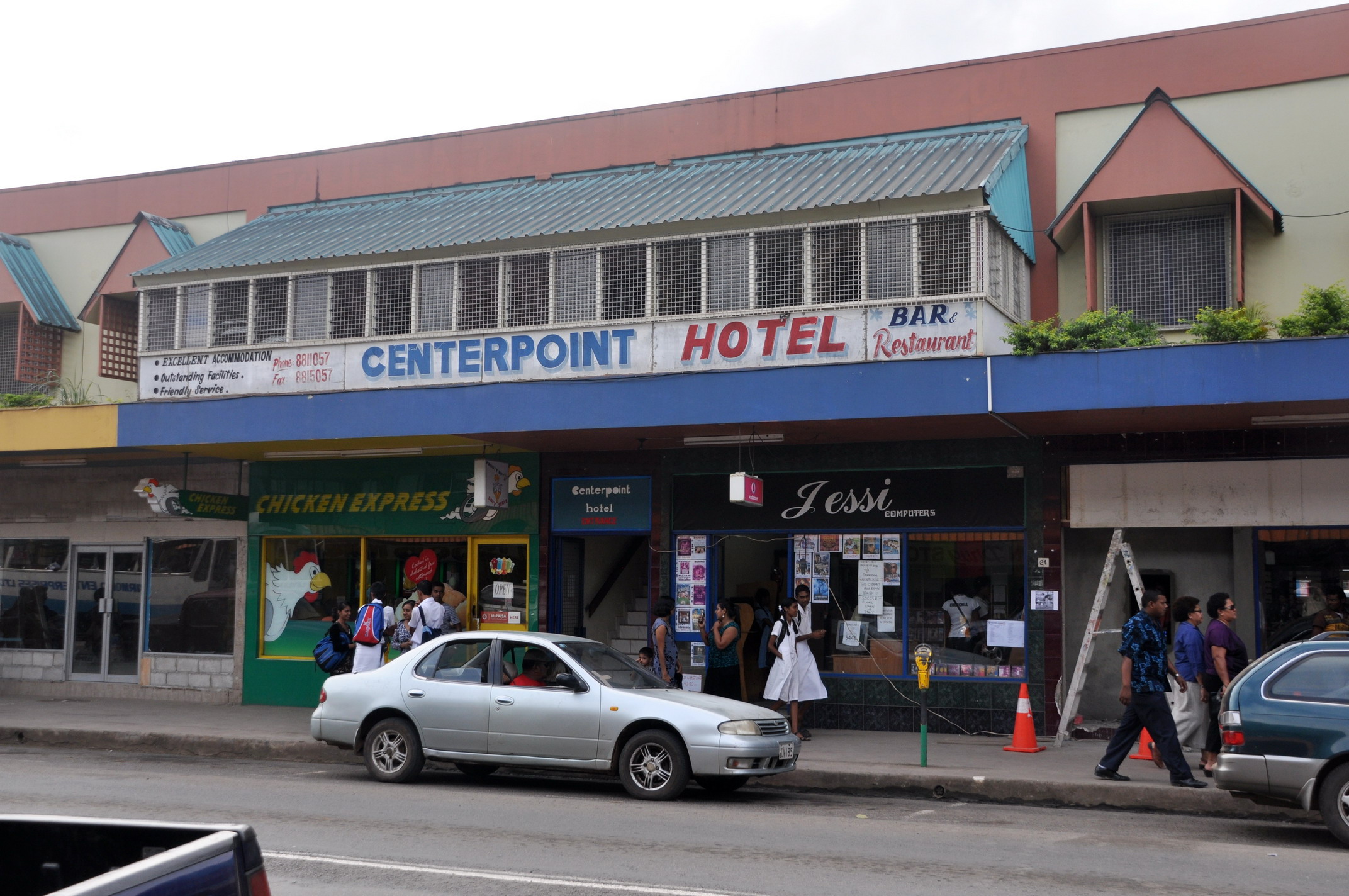
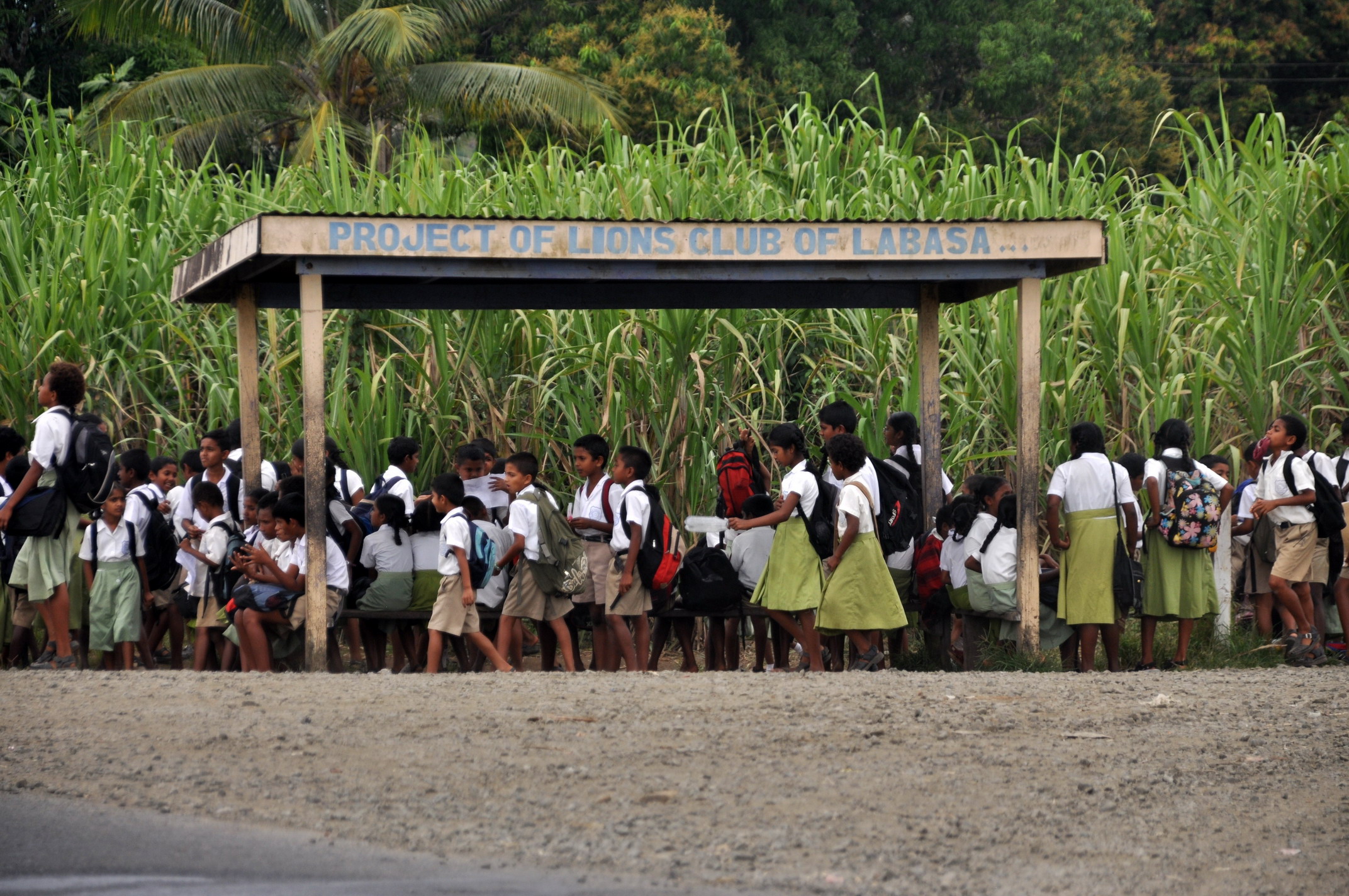
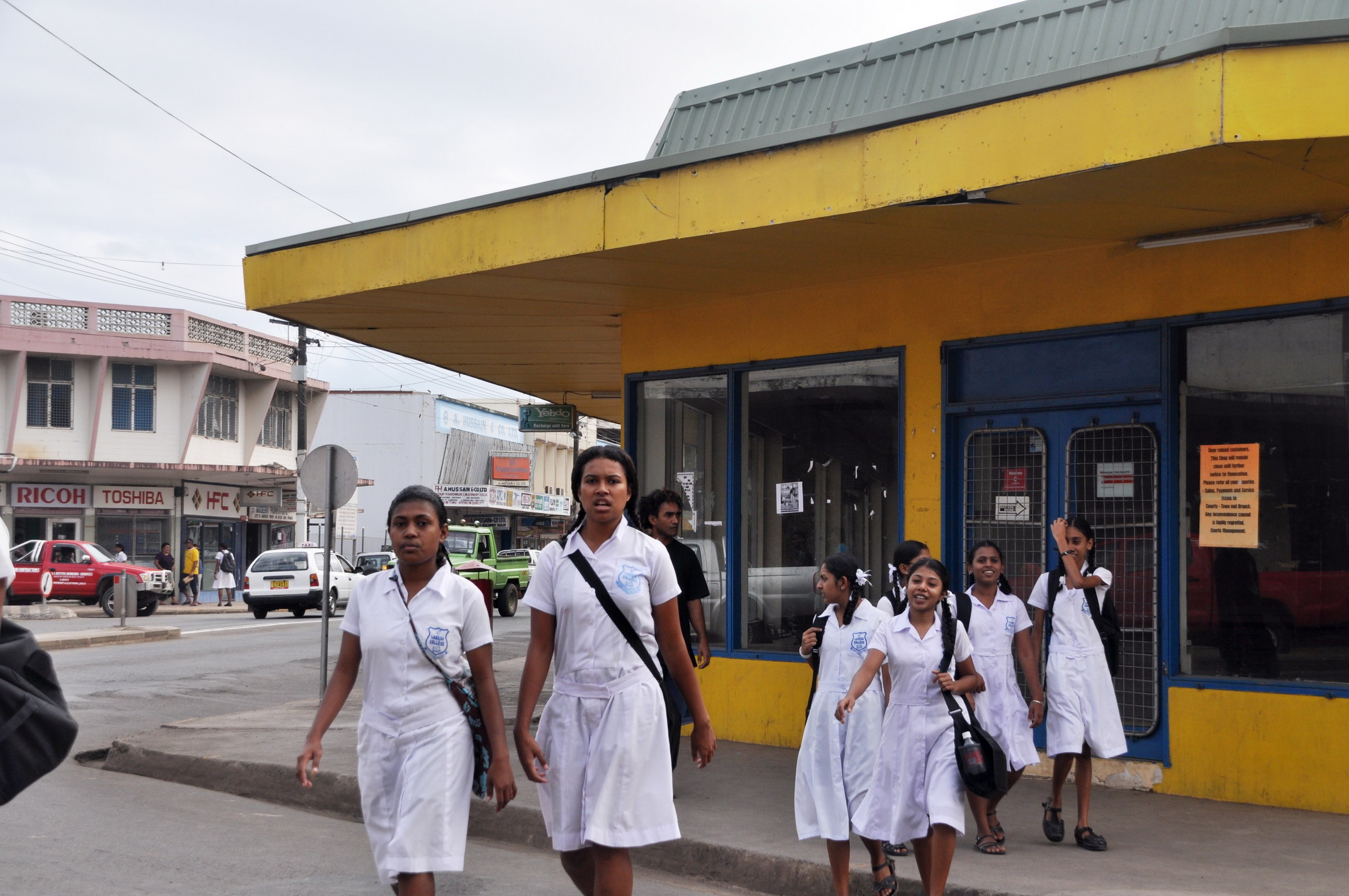
We went in search of food and anything interesting. Labasa had 24,000 inhabitants, and unlike in a New Zealand town that size, the streets teemed with people. Everybody was hurrying somewhere. The footpaths and the roadway were packed, and there were traffic jams everywhere.
Fortunately Budget had an office on the island. We took a Suzuki Jimny for two days, a car that could handle the local potholes. So we had wheels again. Only one thought hung over us: what would all this cost? They'd already taken a thousand dollars for transportation.
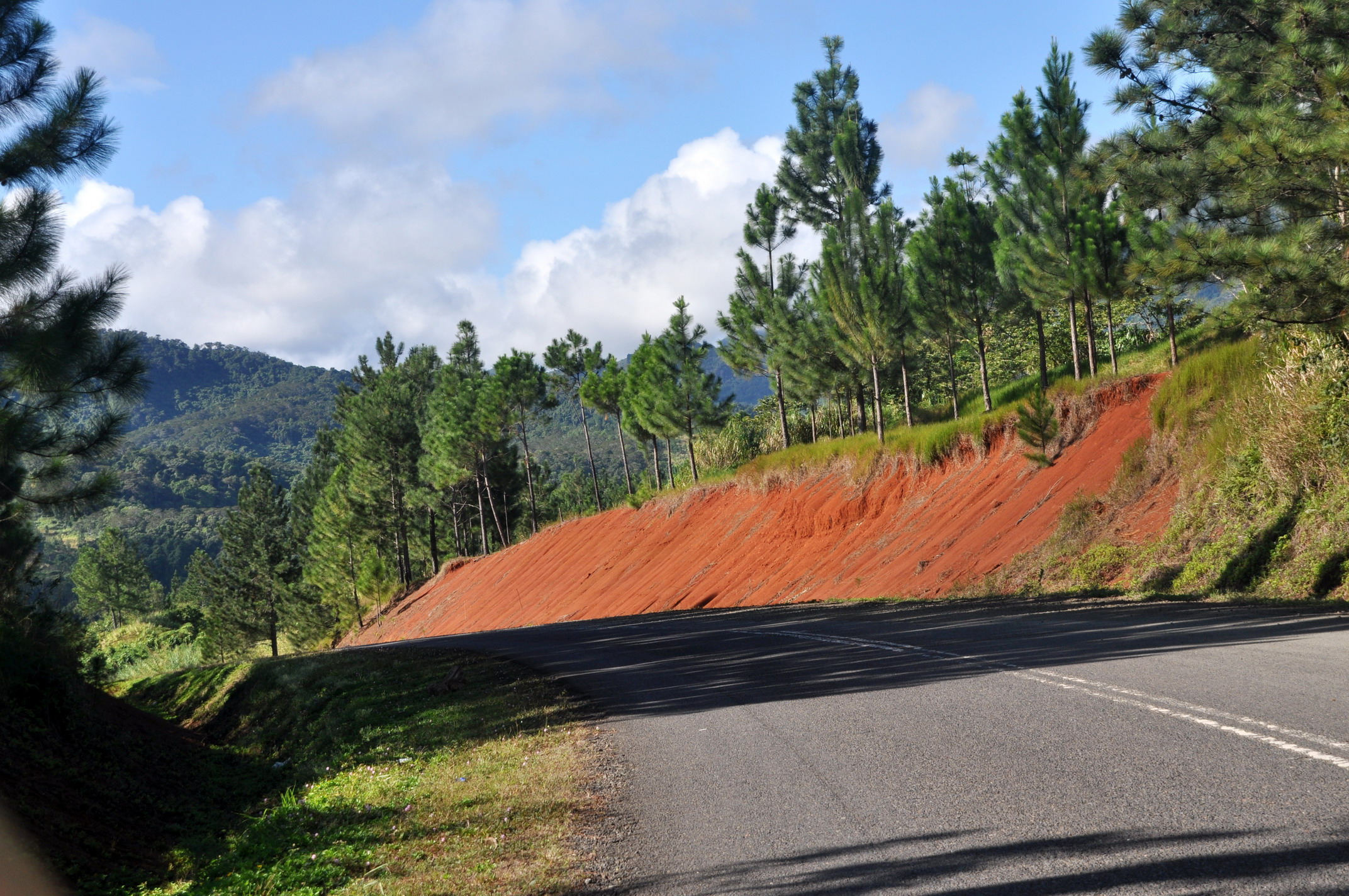
In the morning we started with the drive to Savusavu. It's a port for yachts and generally a popular tourist destination. The roads were paved and driving was a pleasure. The road goes over a pass. In Savusavu you could get a meal, spend the night and fill up. They even had hot springs of their own, not the kind you could bathe in, just a bit of beach washed in boiling water. In that heat, it was just as well.
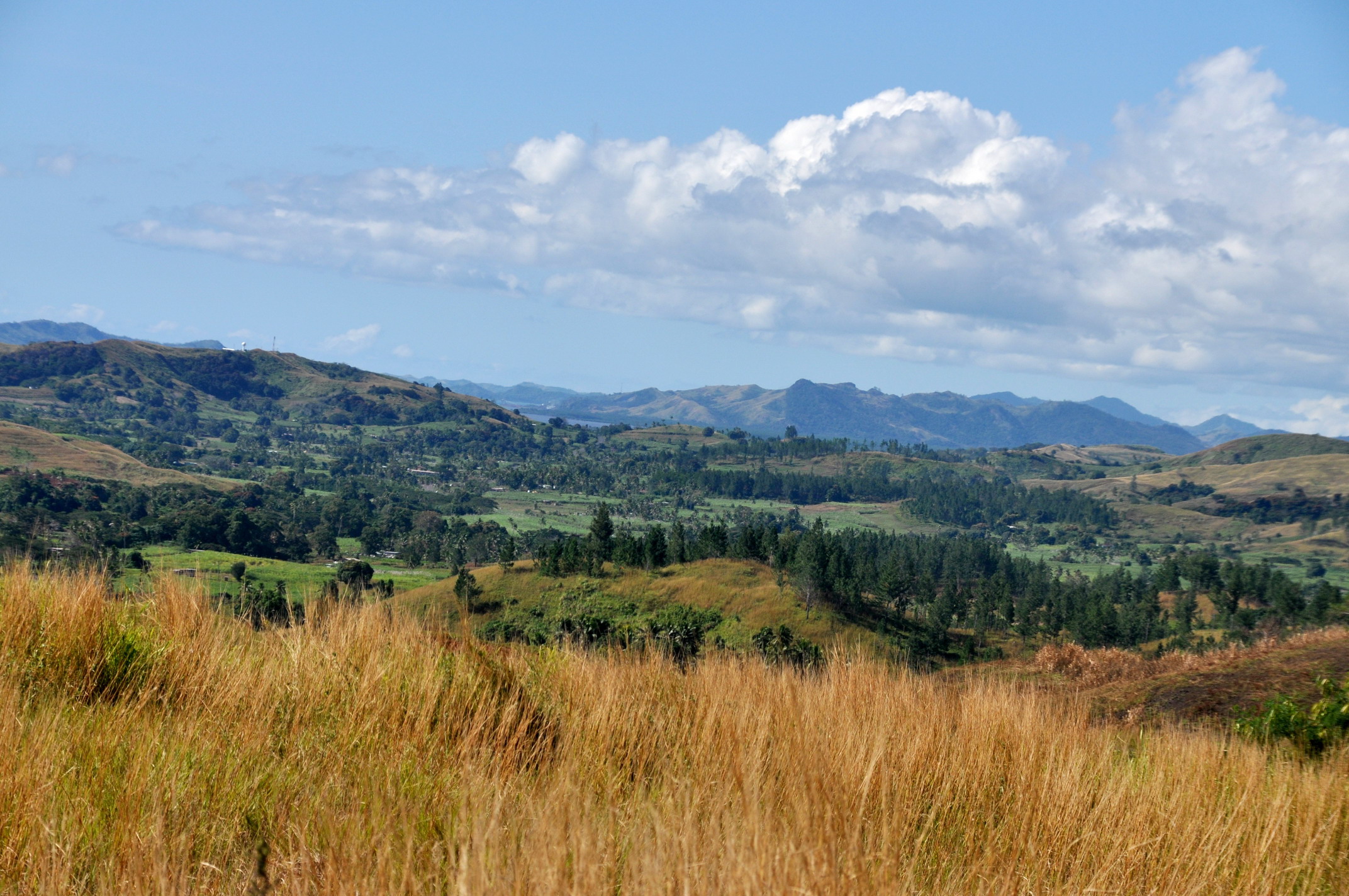
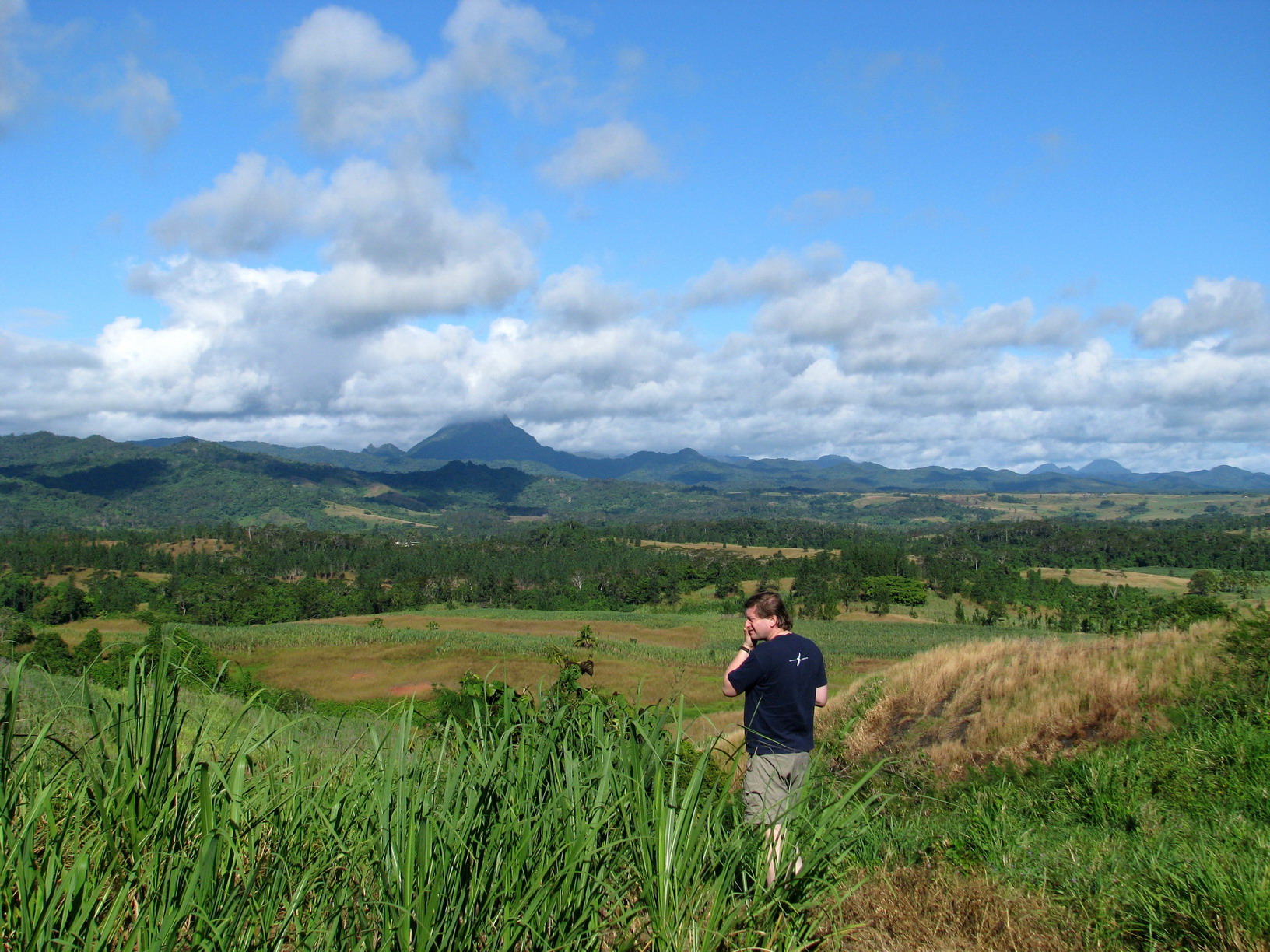
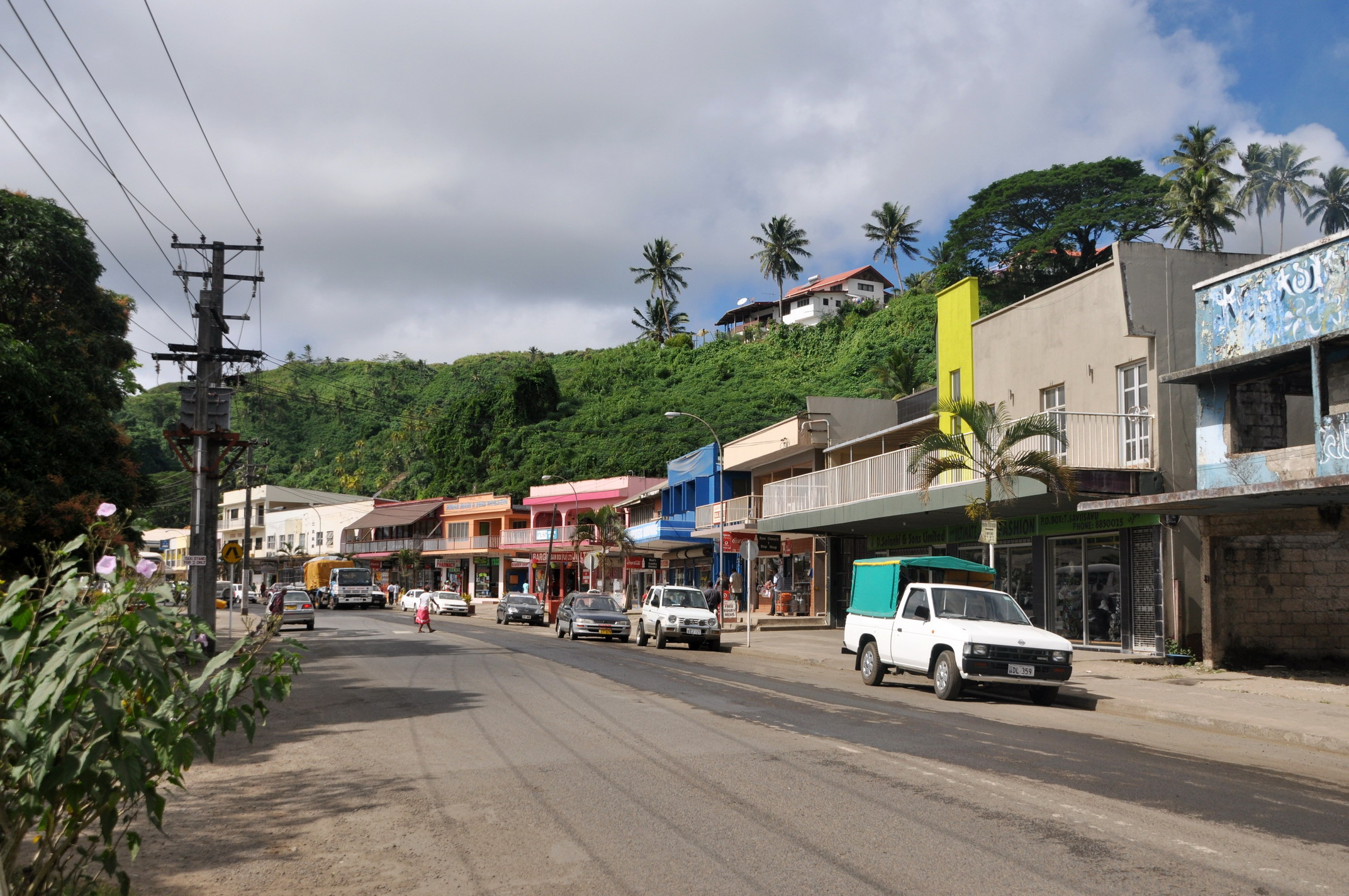
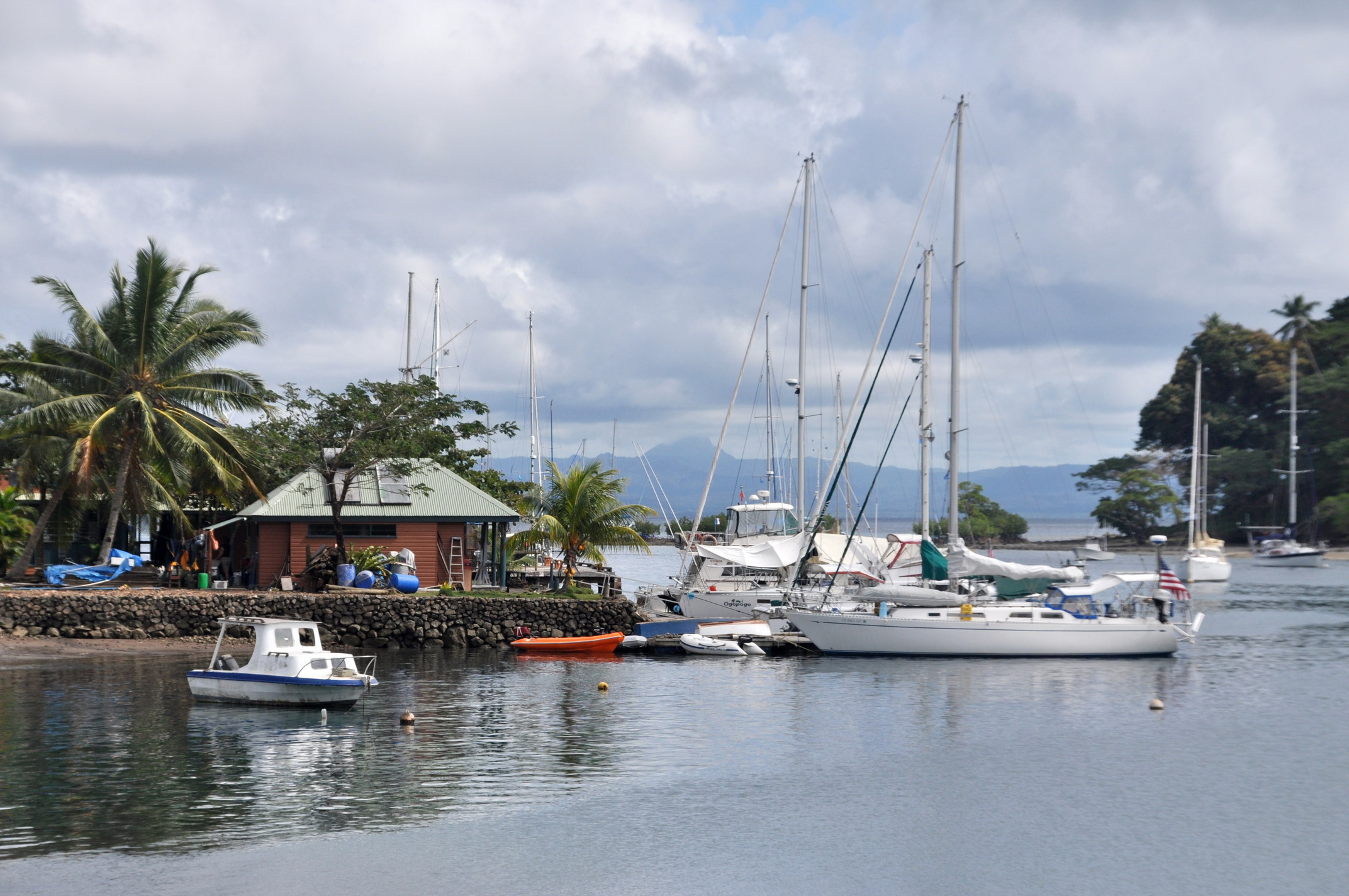
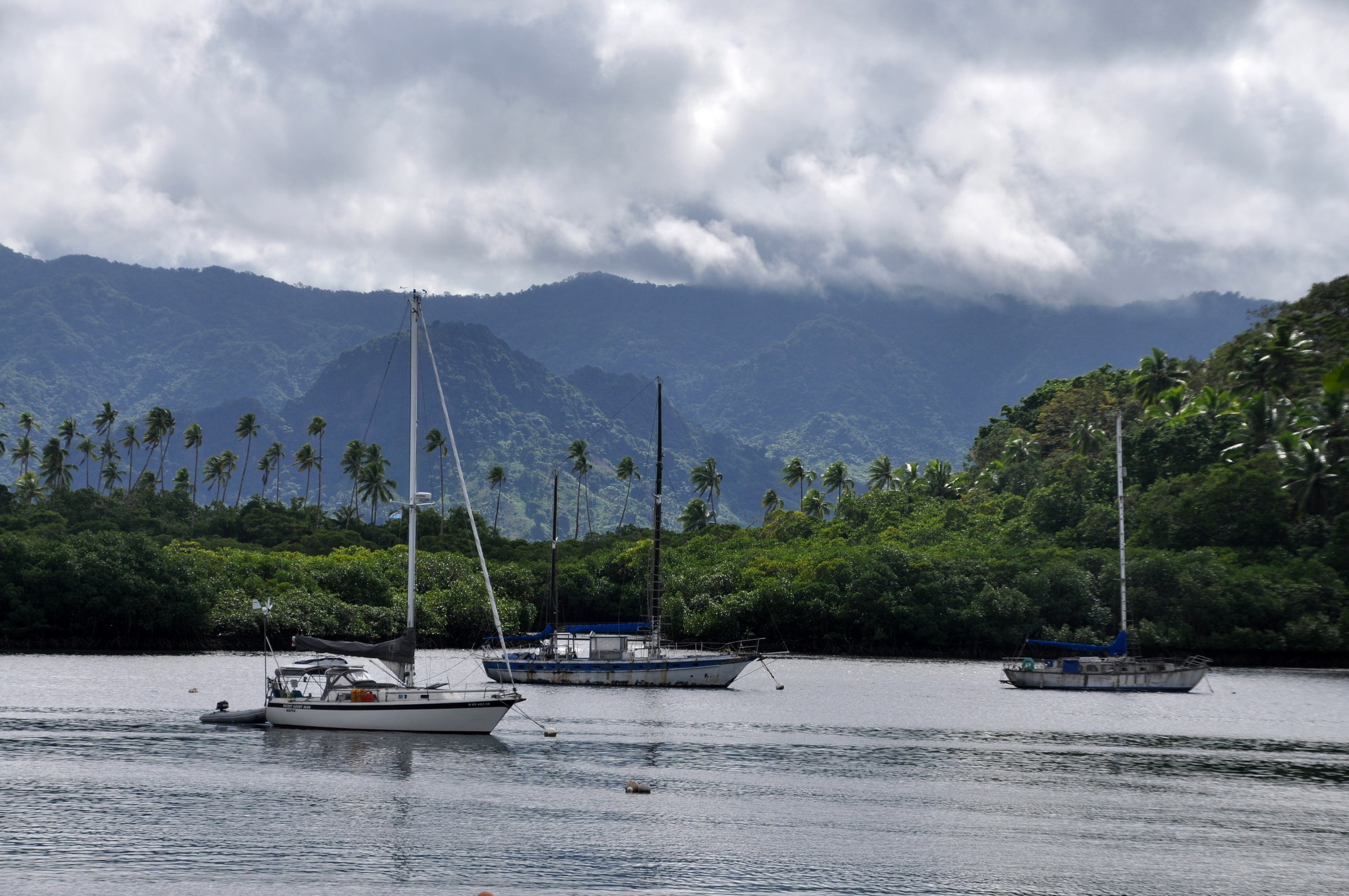
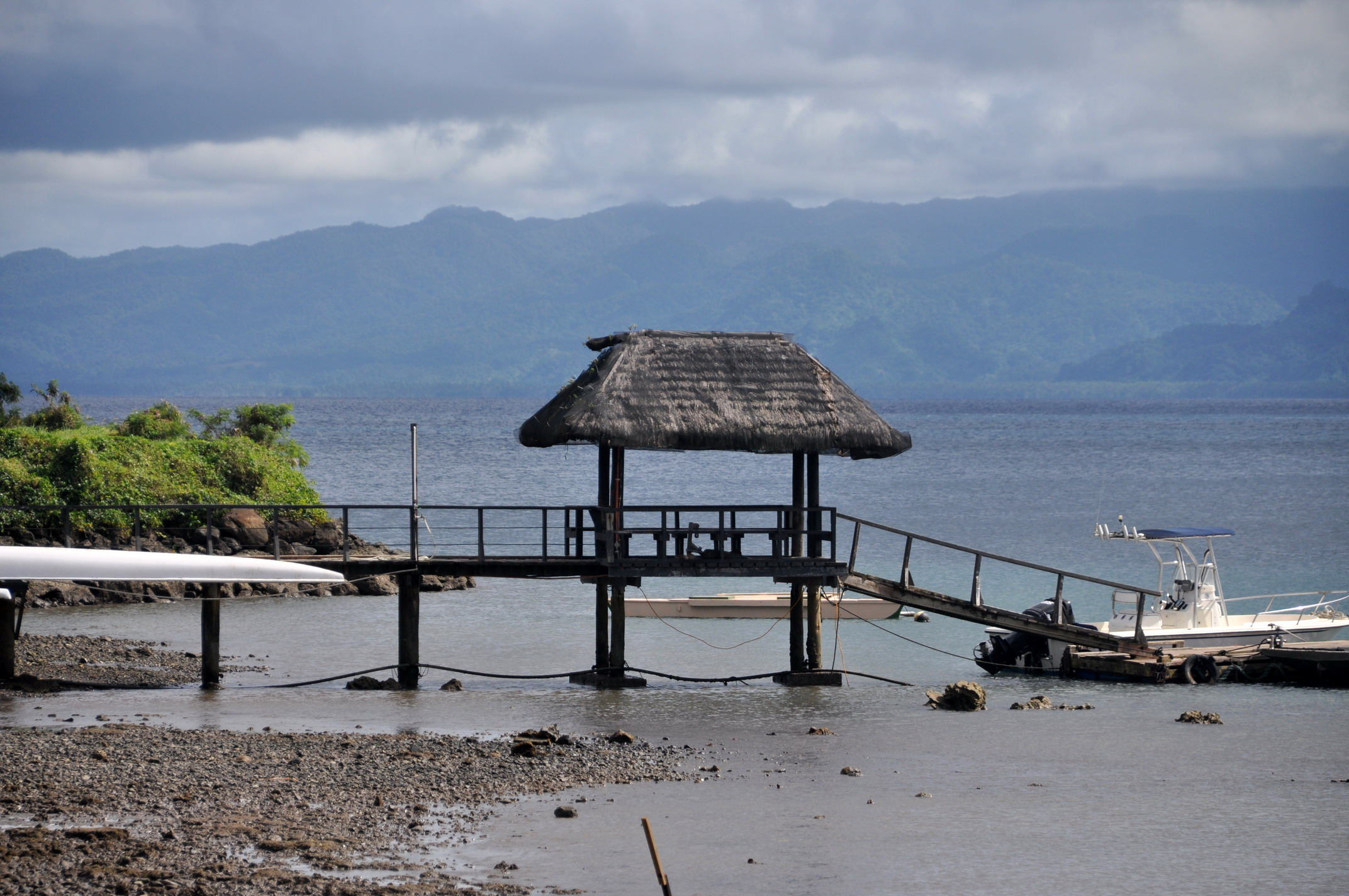
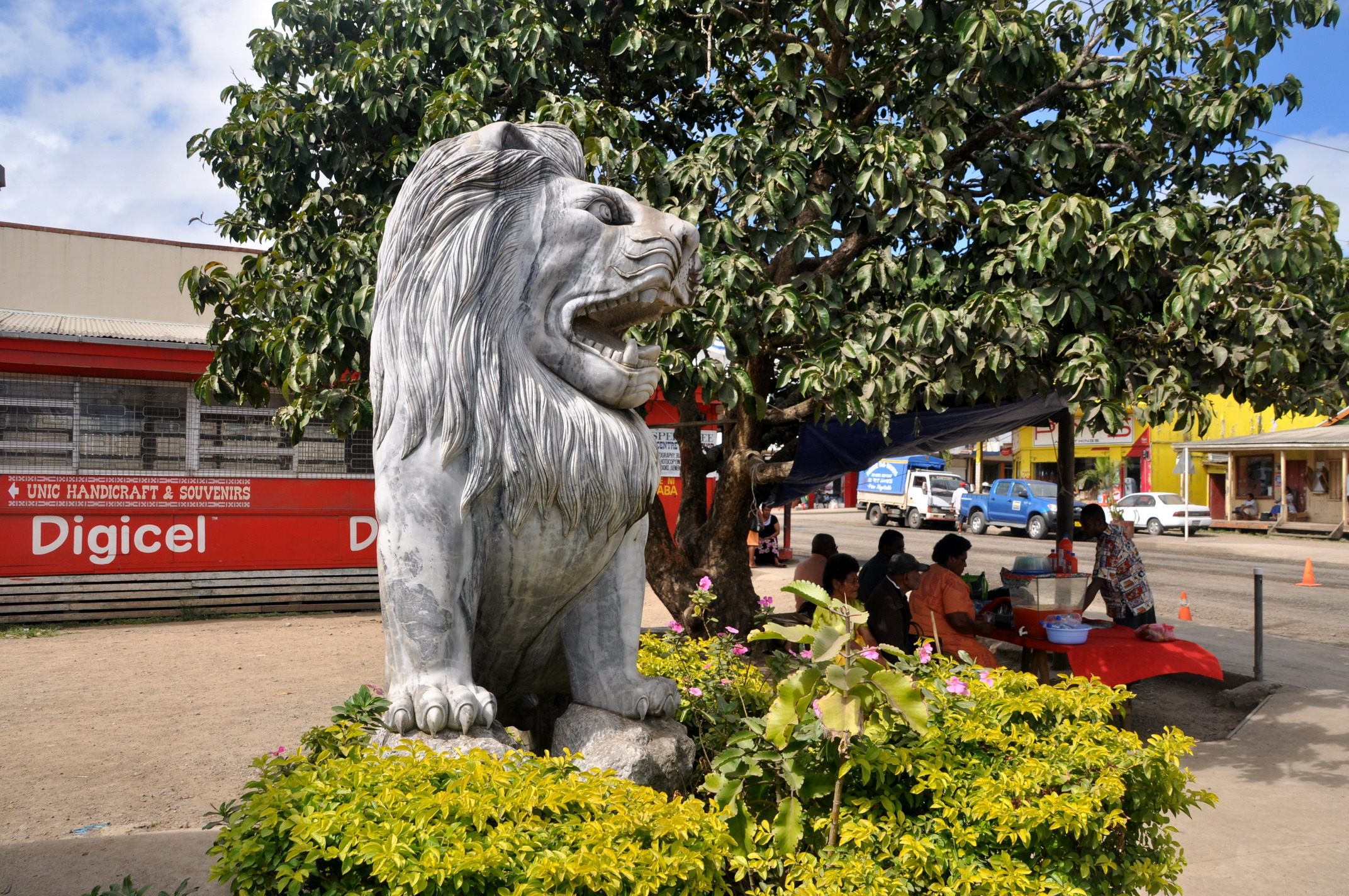
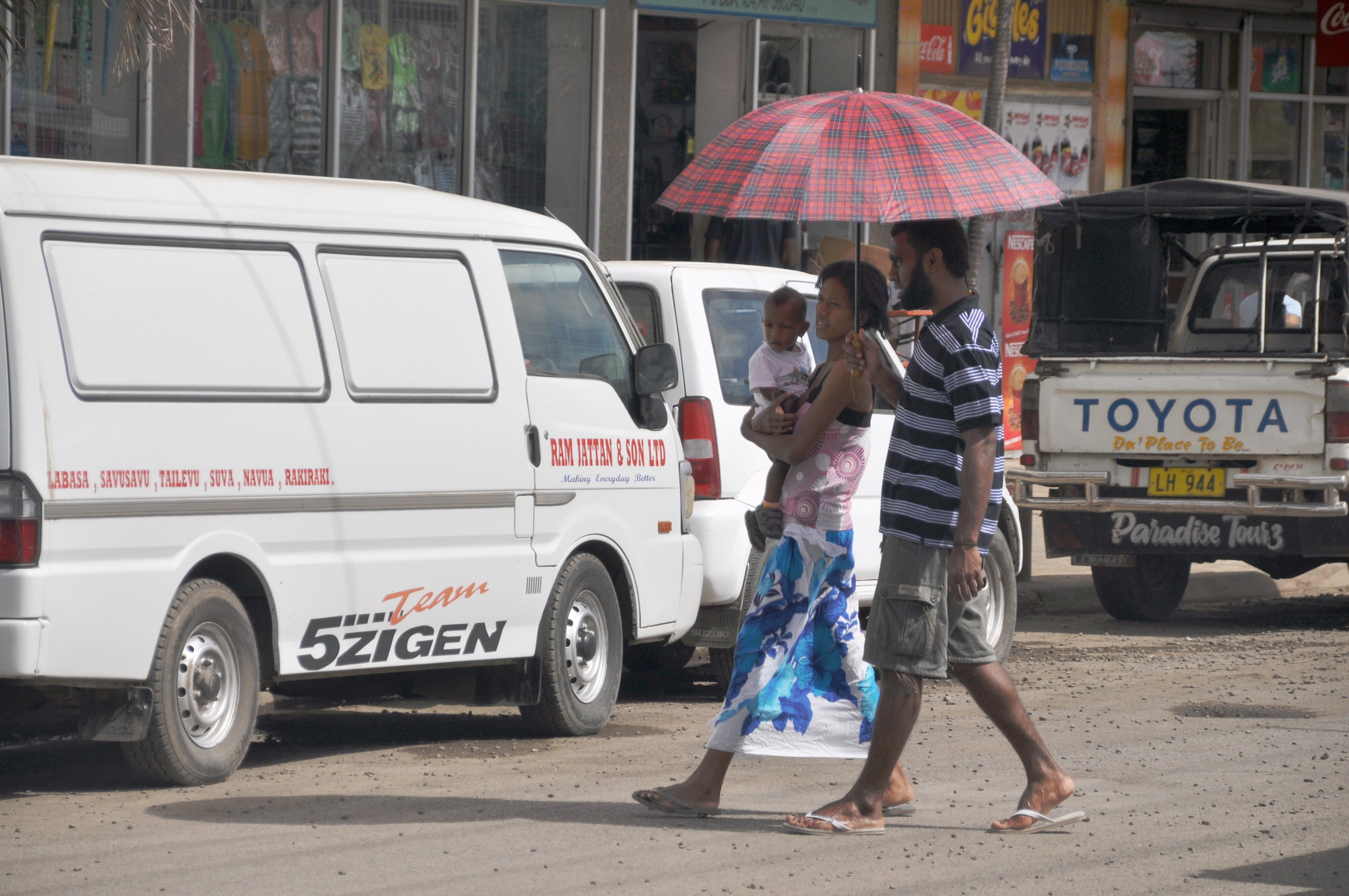
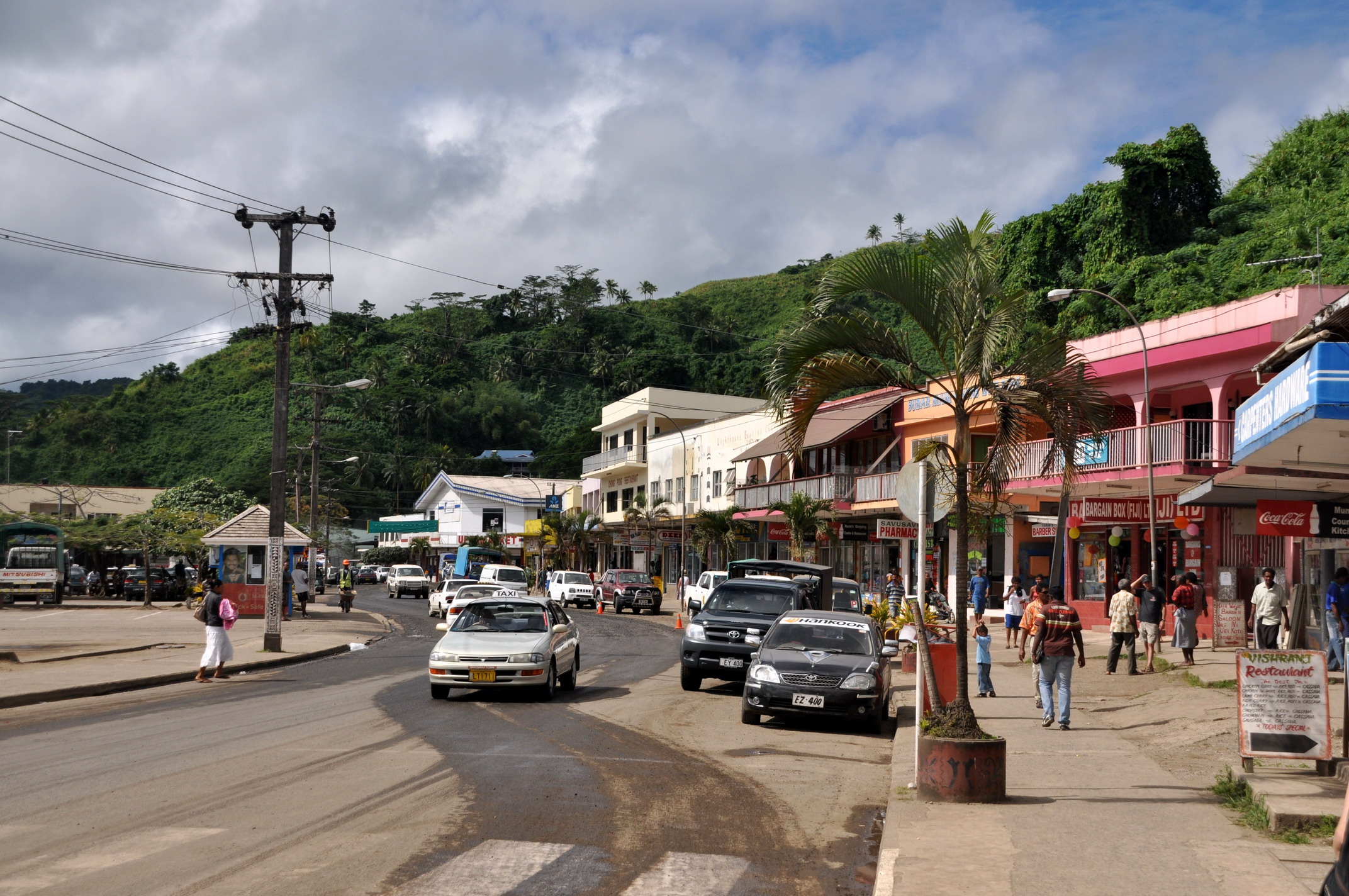
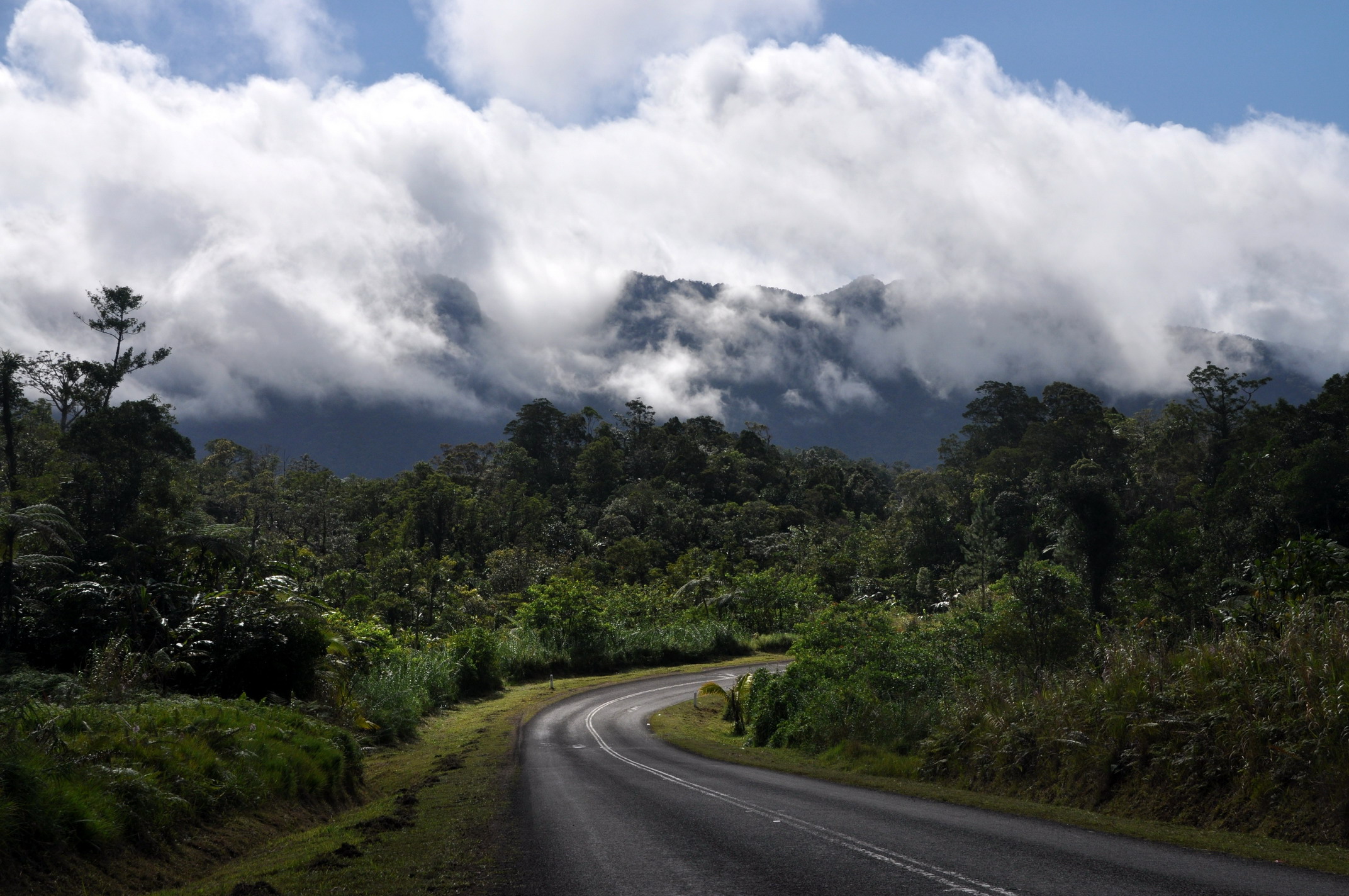
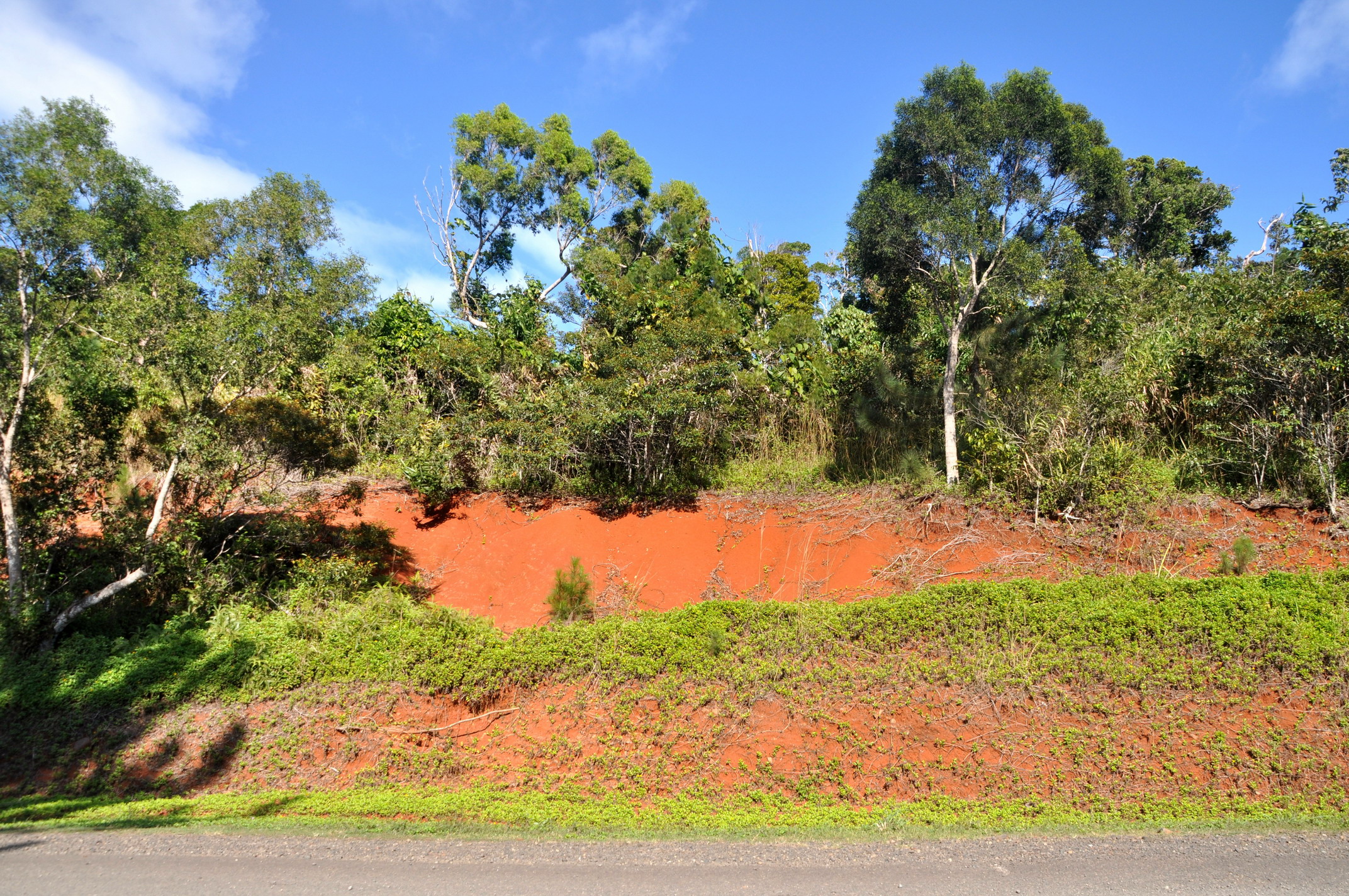
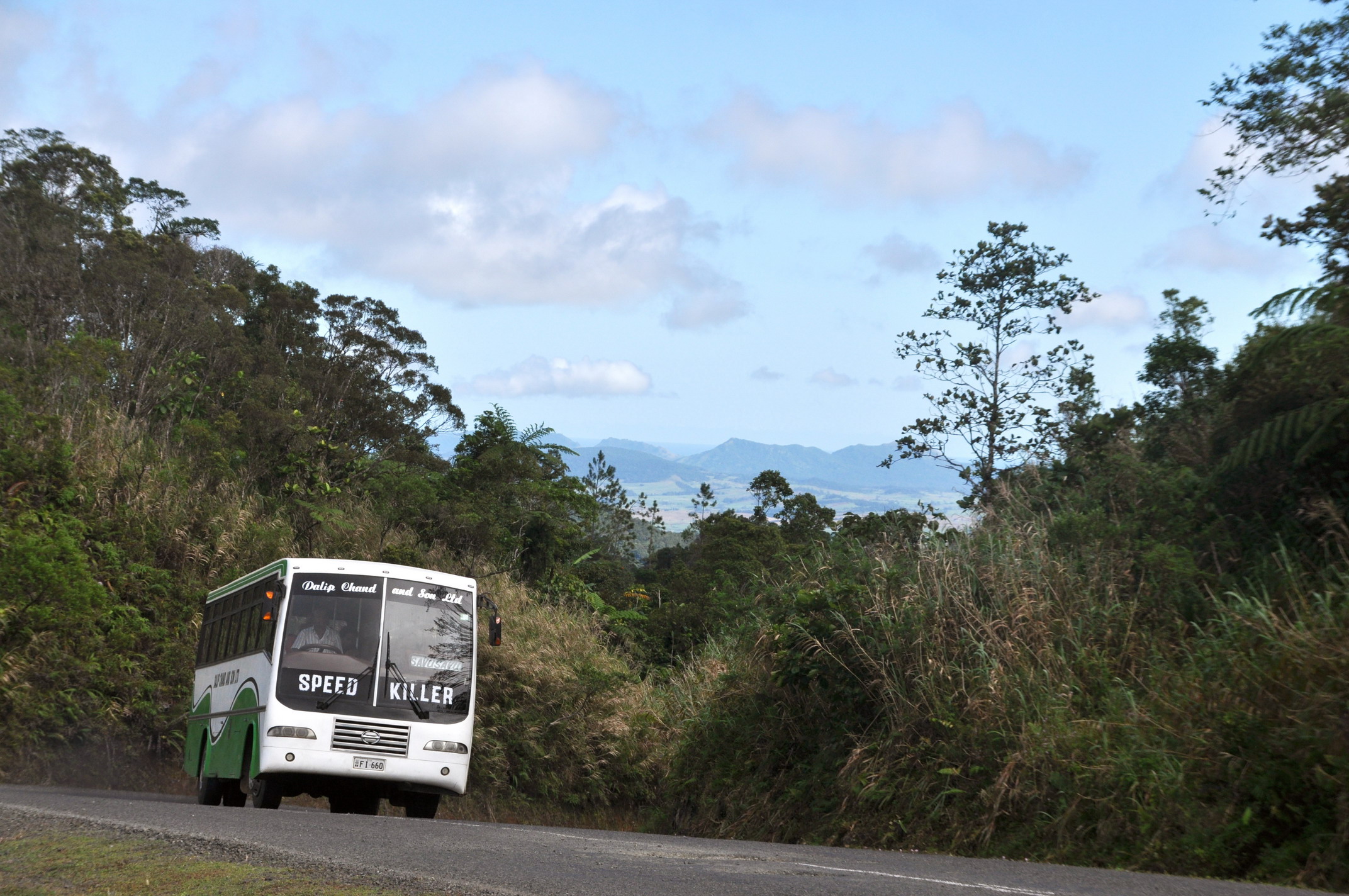
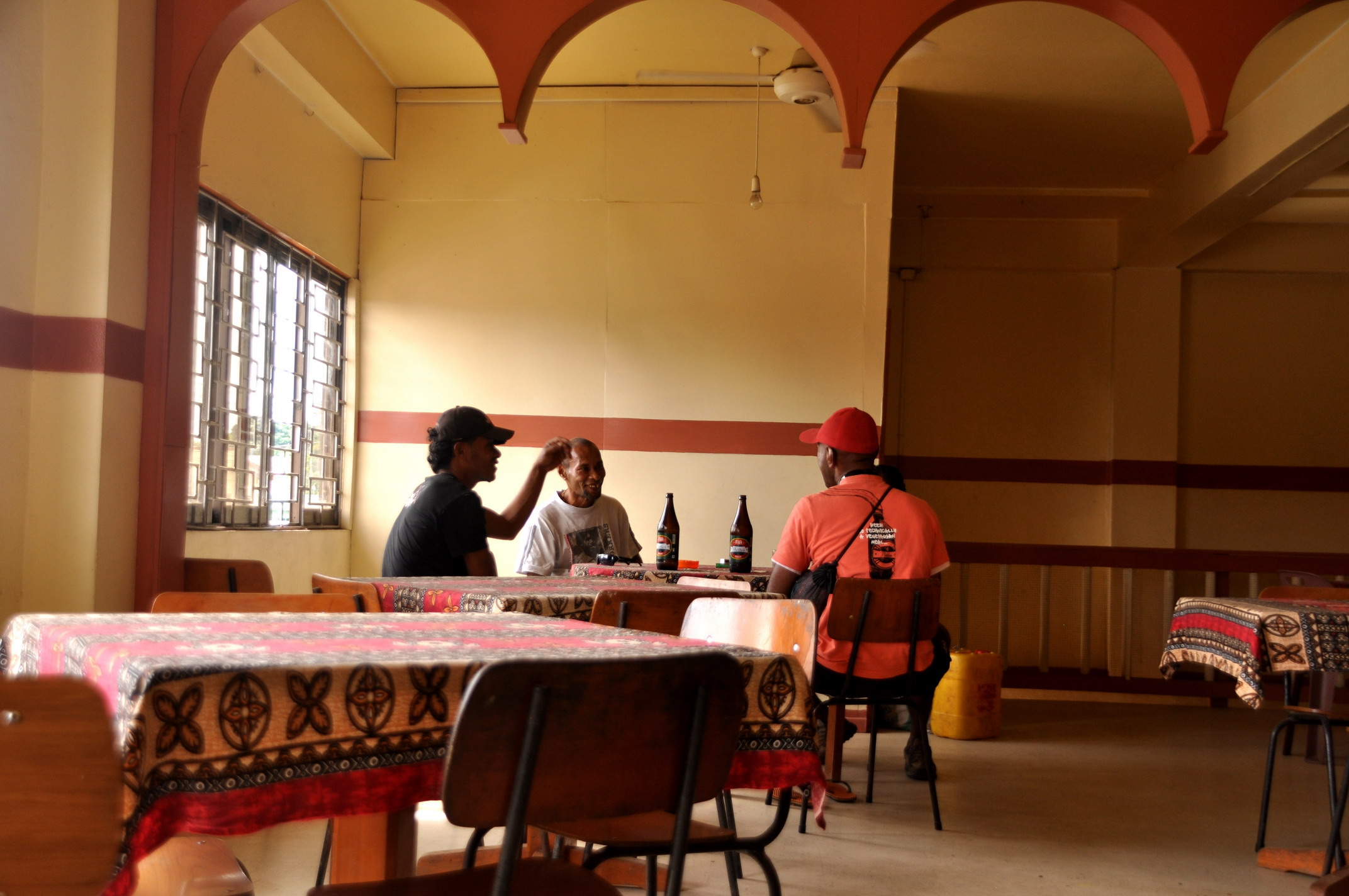
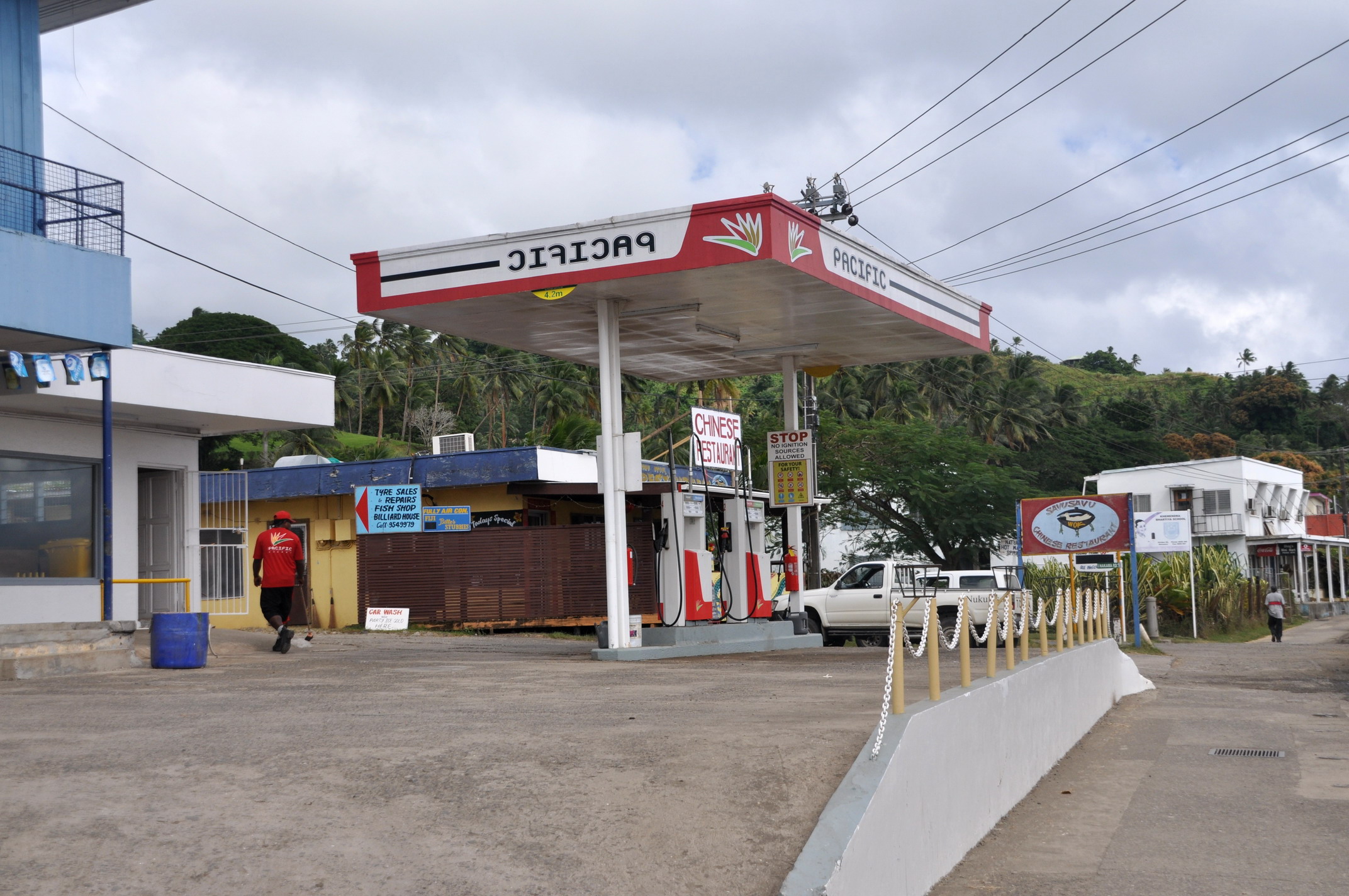
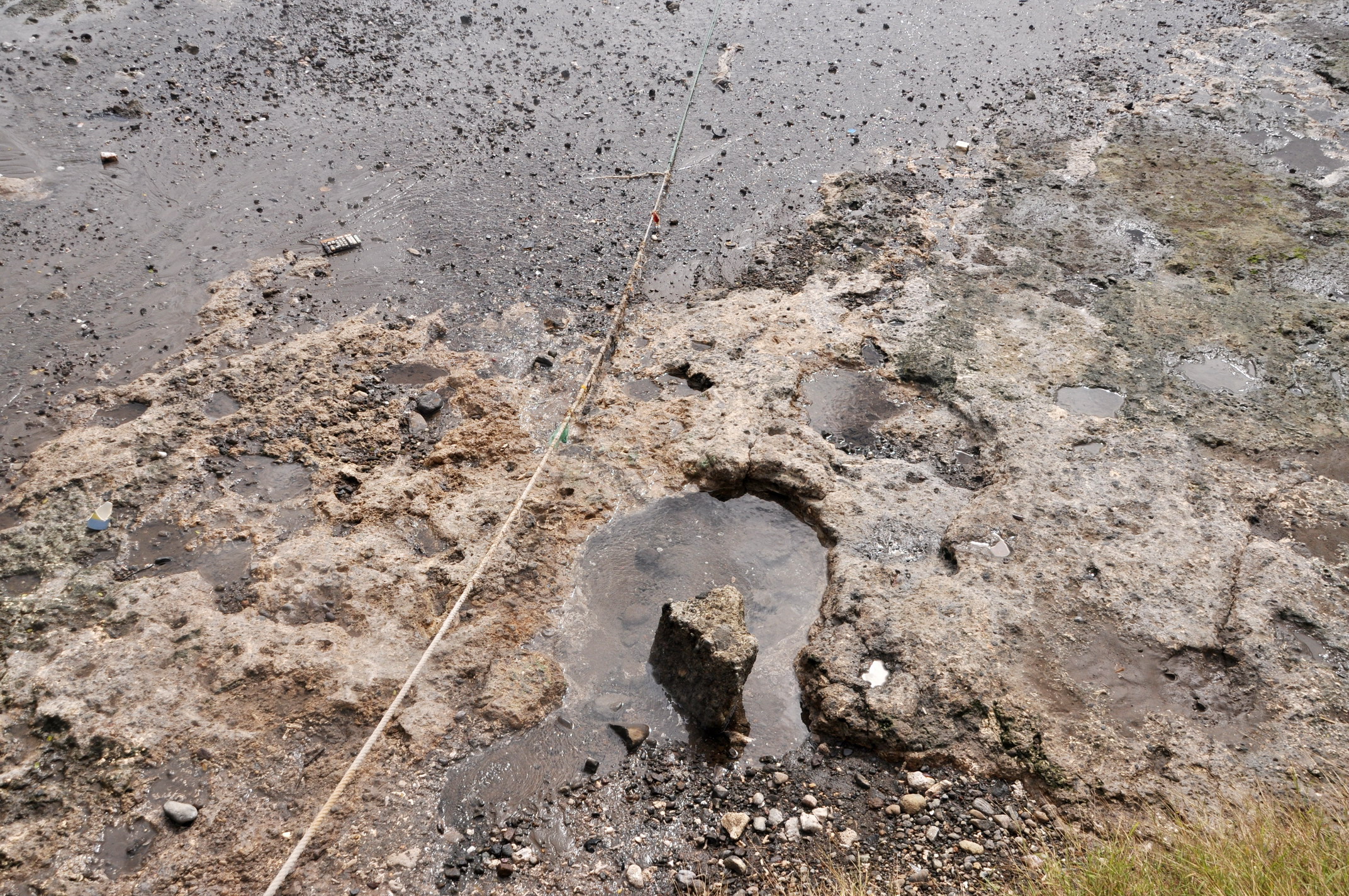
We still hoped to find a ferry to Taveuni, but the service from Savusavu didn't run daily and we couldn't make it fit our timetable. We thought of hiring a boat, but nobody seemed in a hurry to help and there was no suitable craft. Still looking, we drove to Natuvu (16°40.482′S, 179°49.348′E). Here at Natuvu Creek stood a Christian mission. We might have been able to spend the night there, but there wasn't a soul in sight.
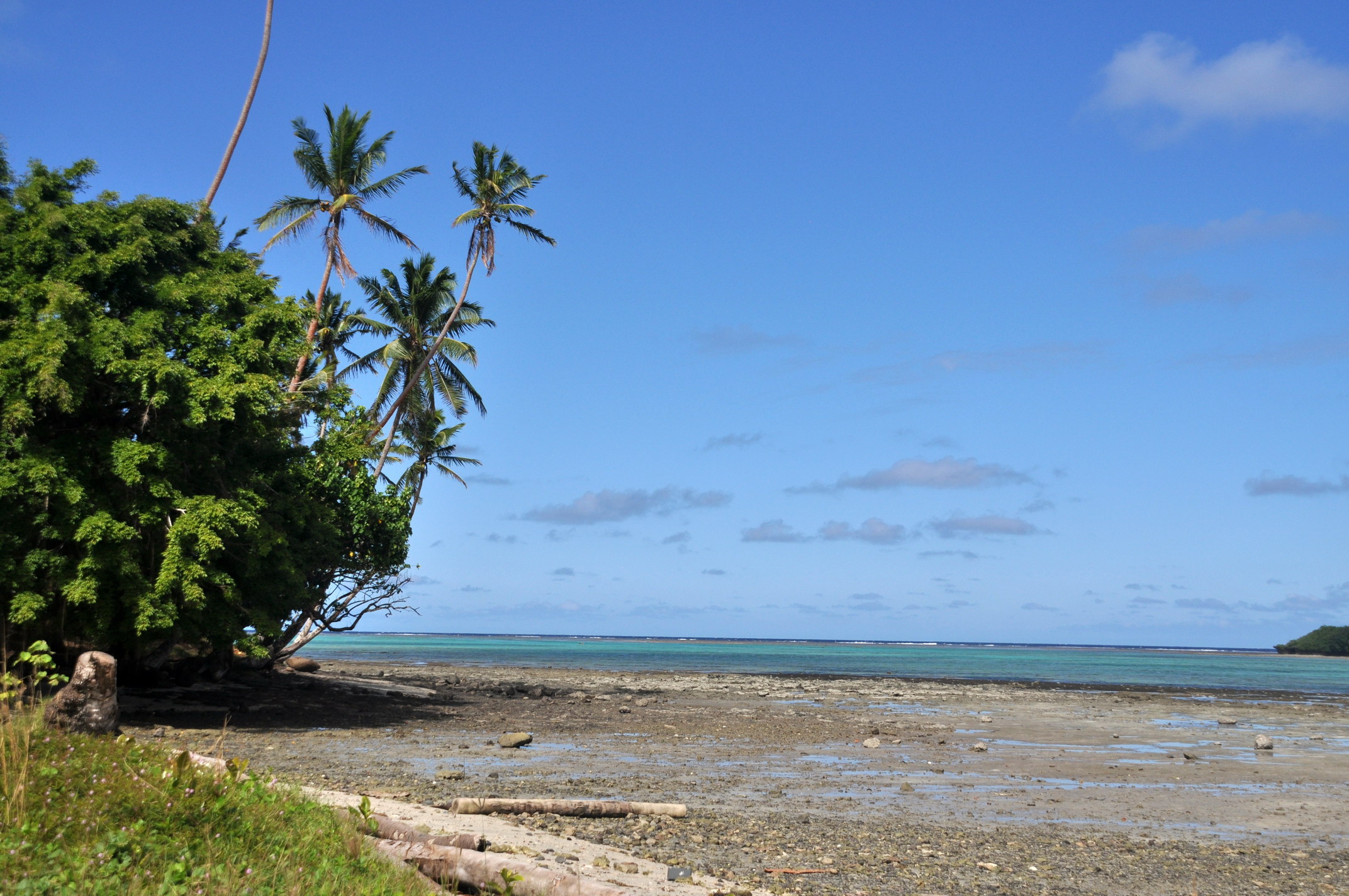
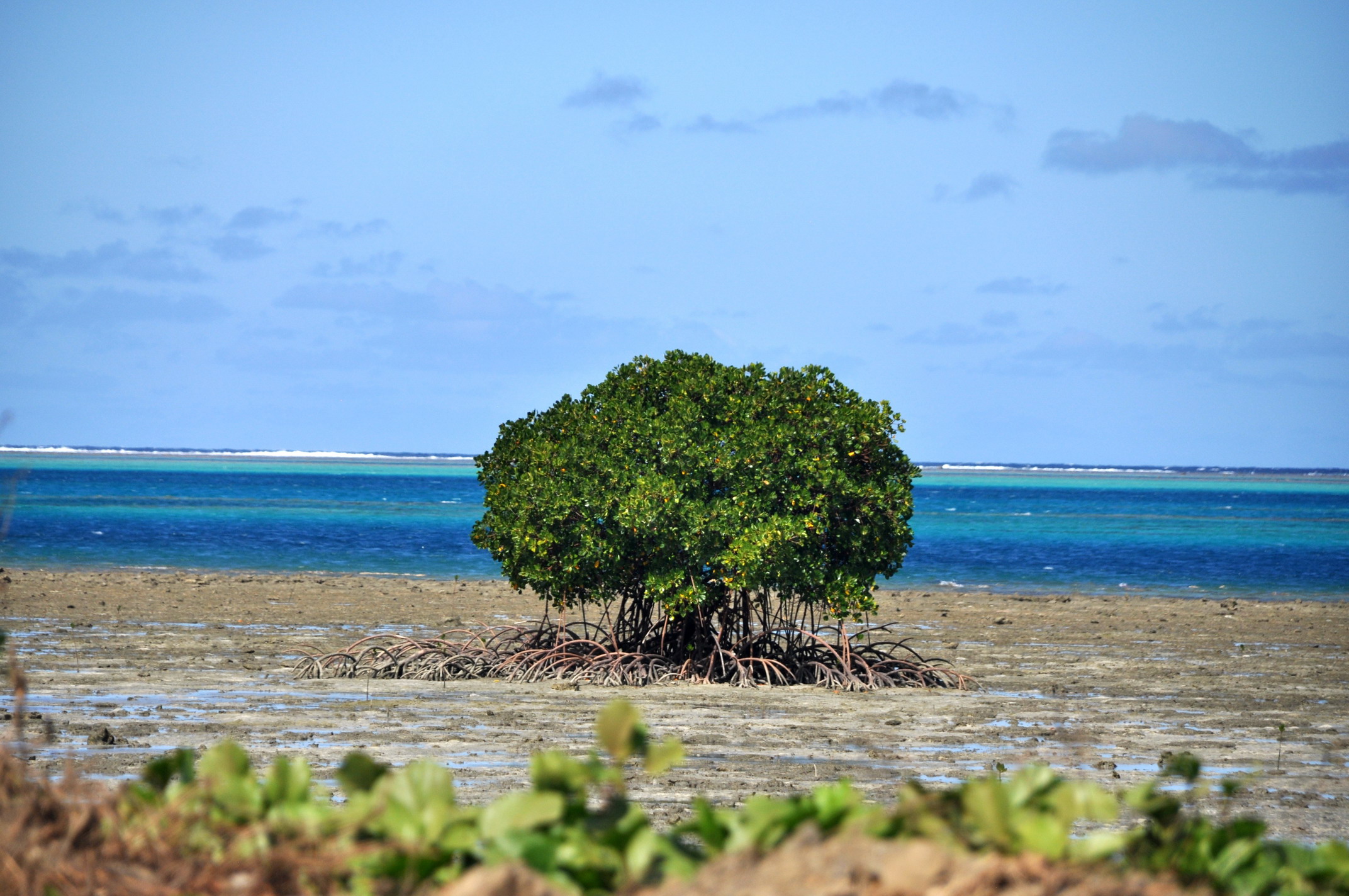
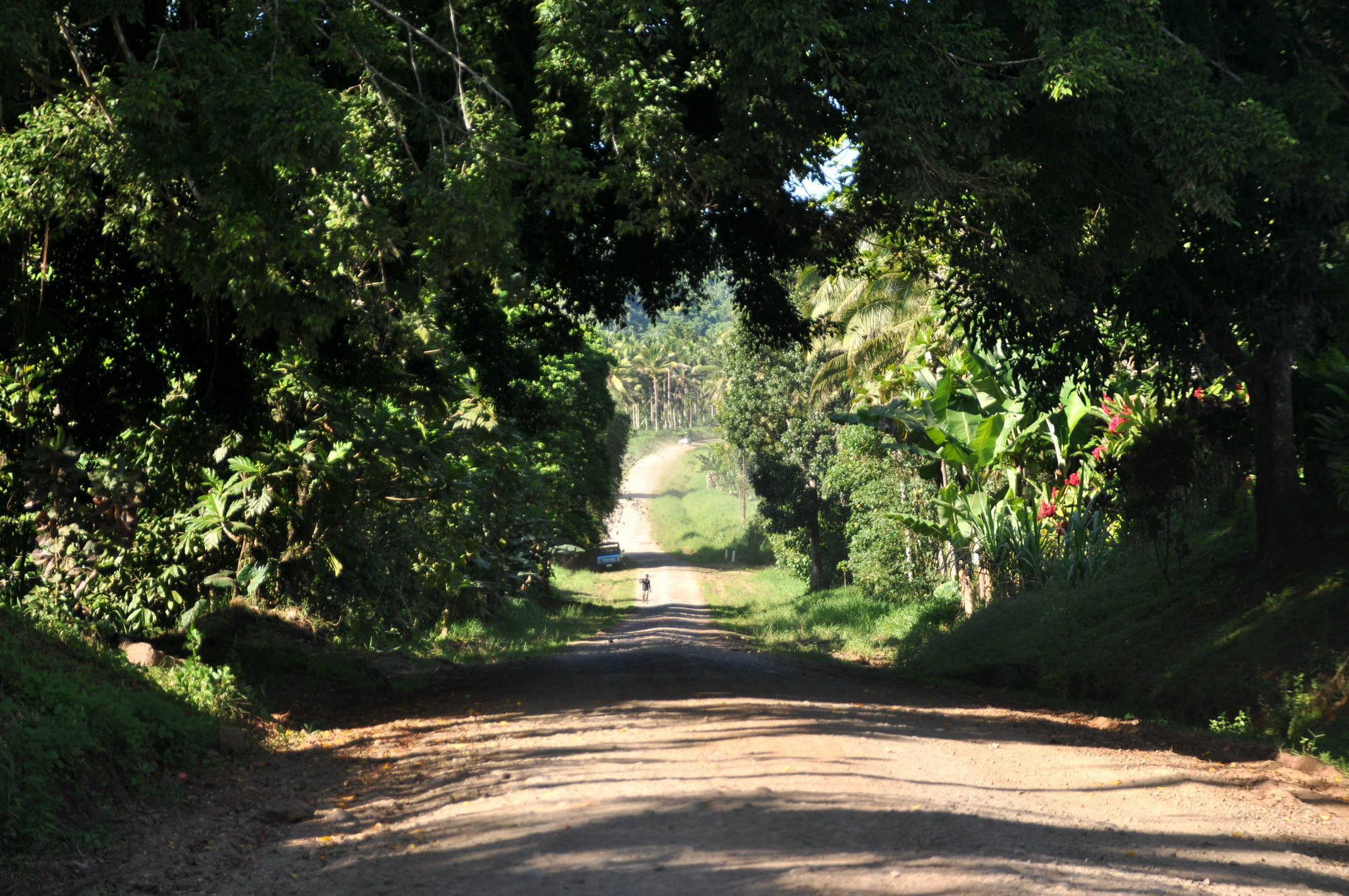
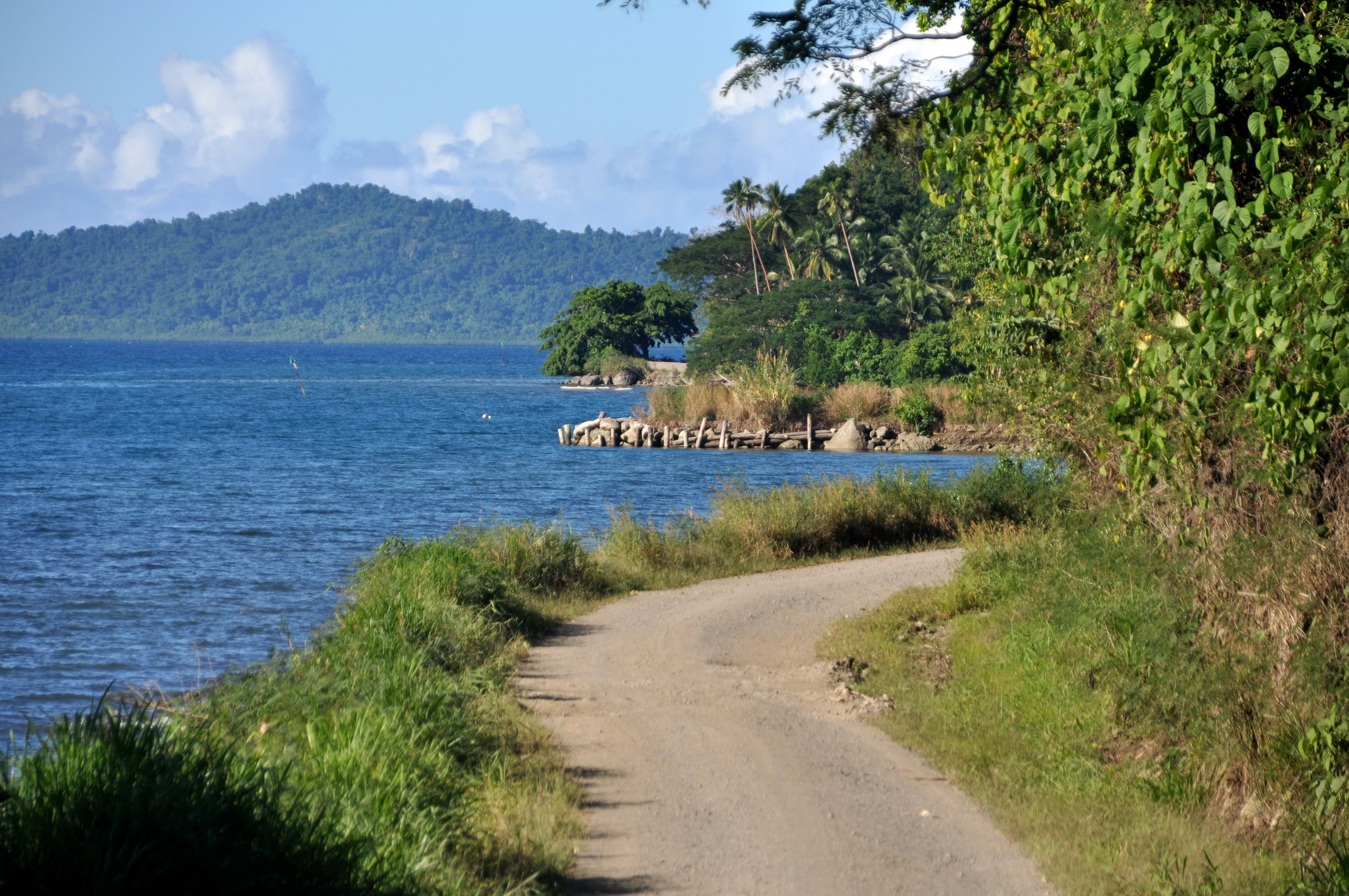
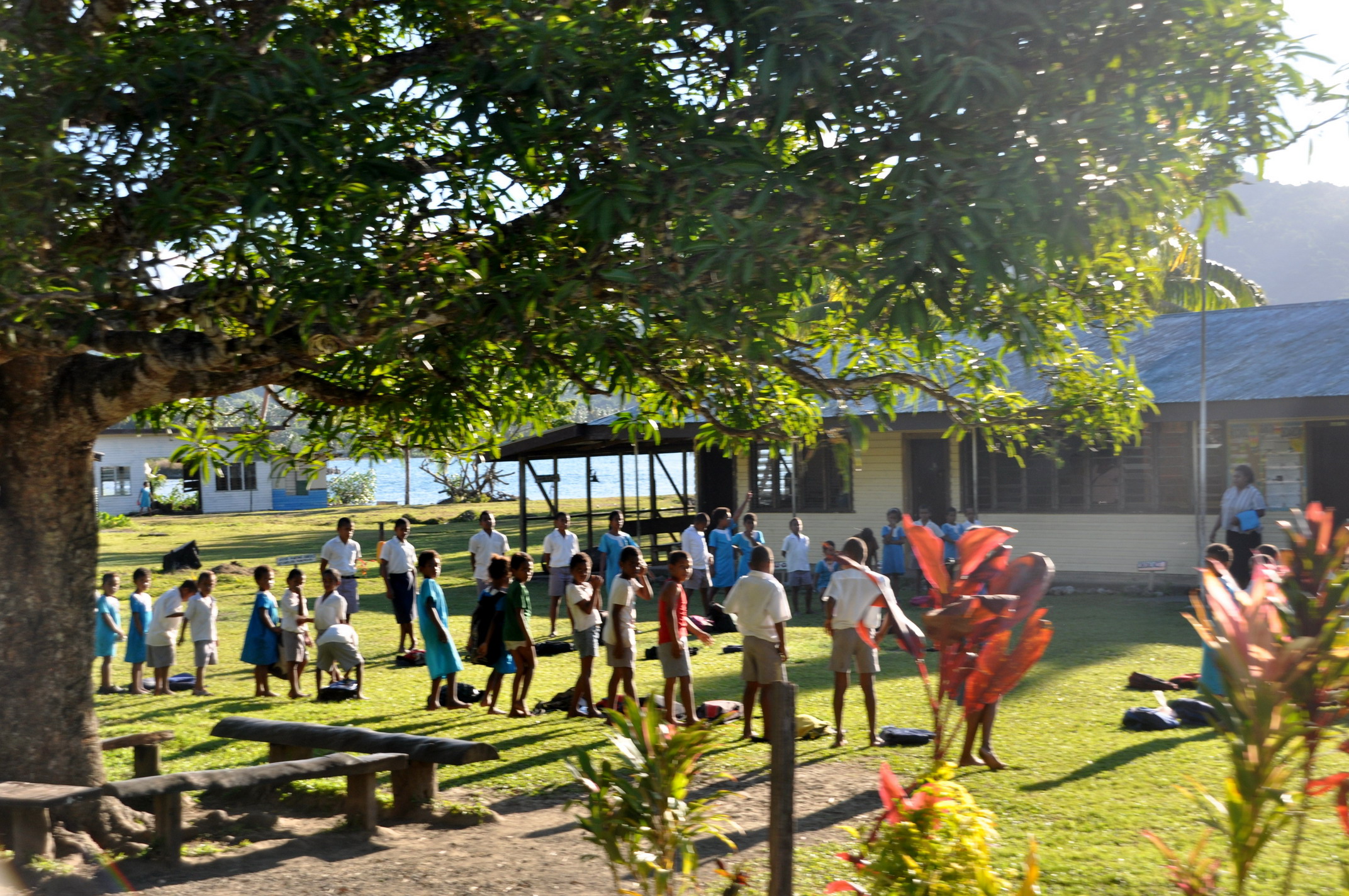
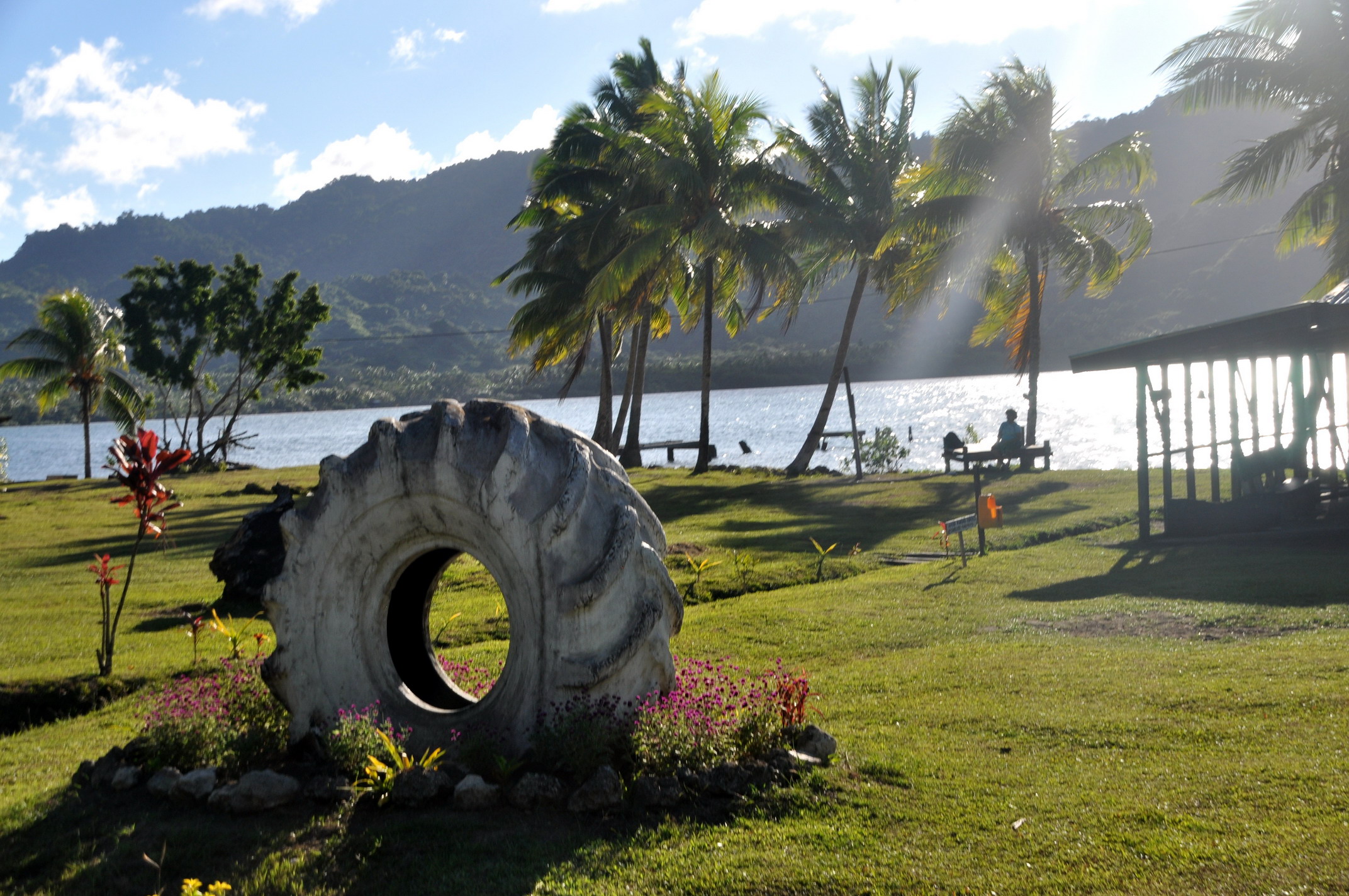
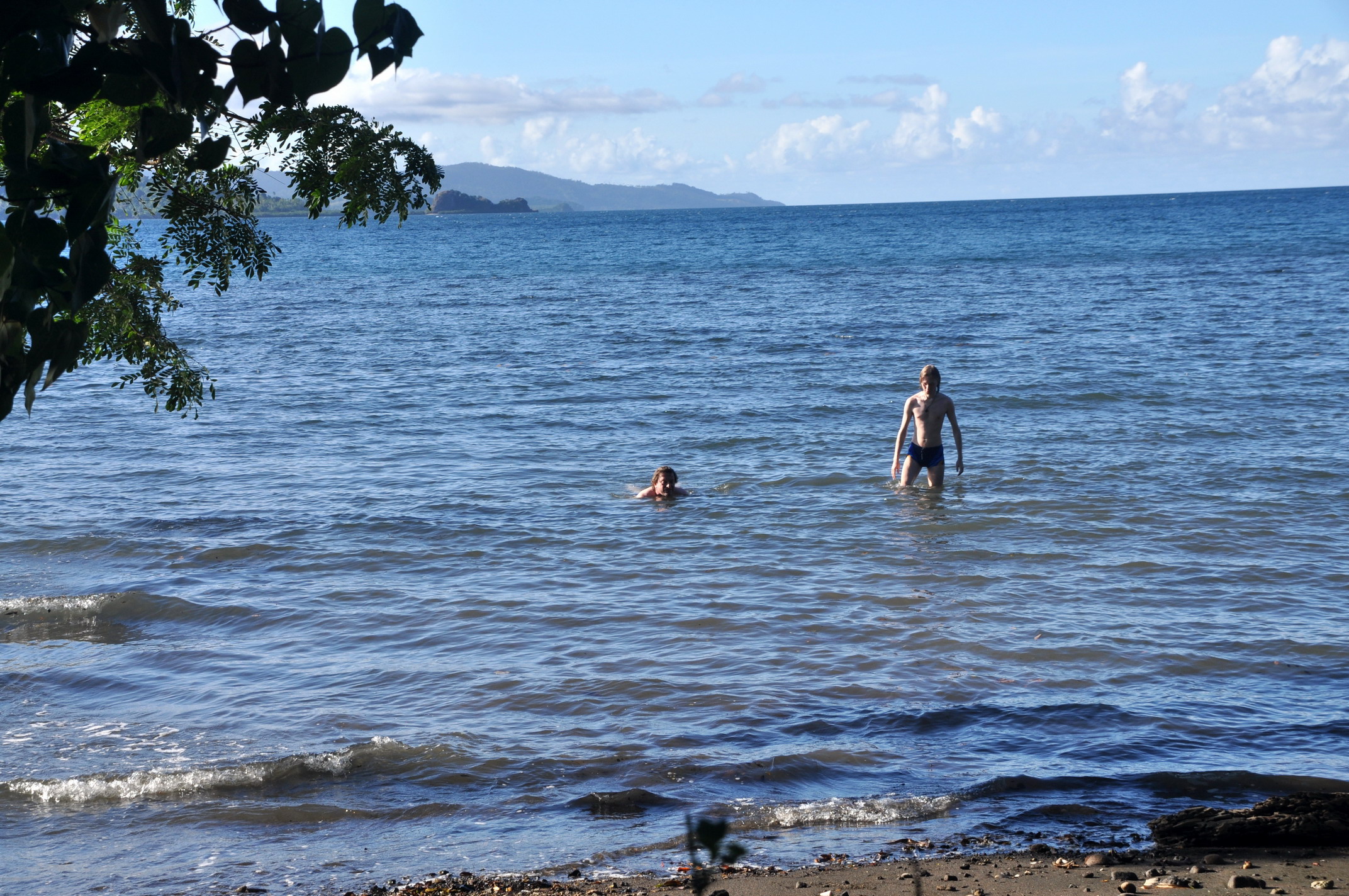
We were on Pacific islands and hadn't swum for two days. We just couldn't find anywhere. There were very few beaches. Mangroves covered much of the coast, and the volcanic seabed was covered in coral. To get in, you needed shoes, and the deep water was a long way out. We discovered this all over again when we tried to swim at Natuvu.
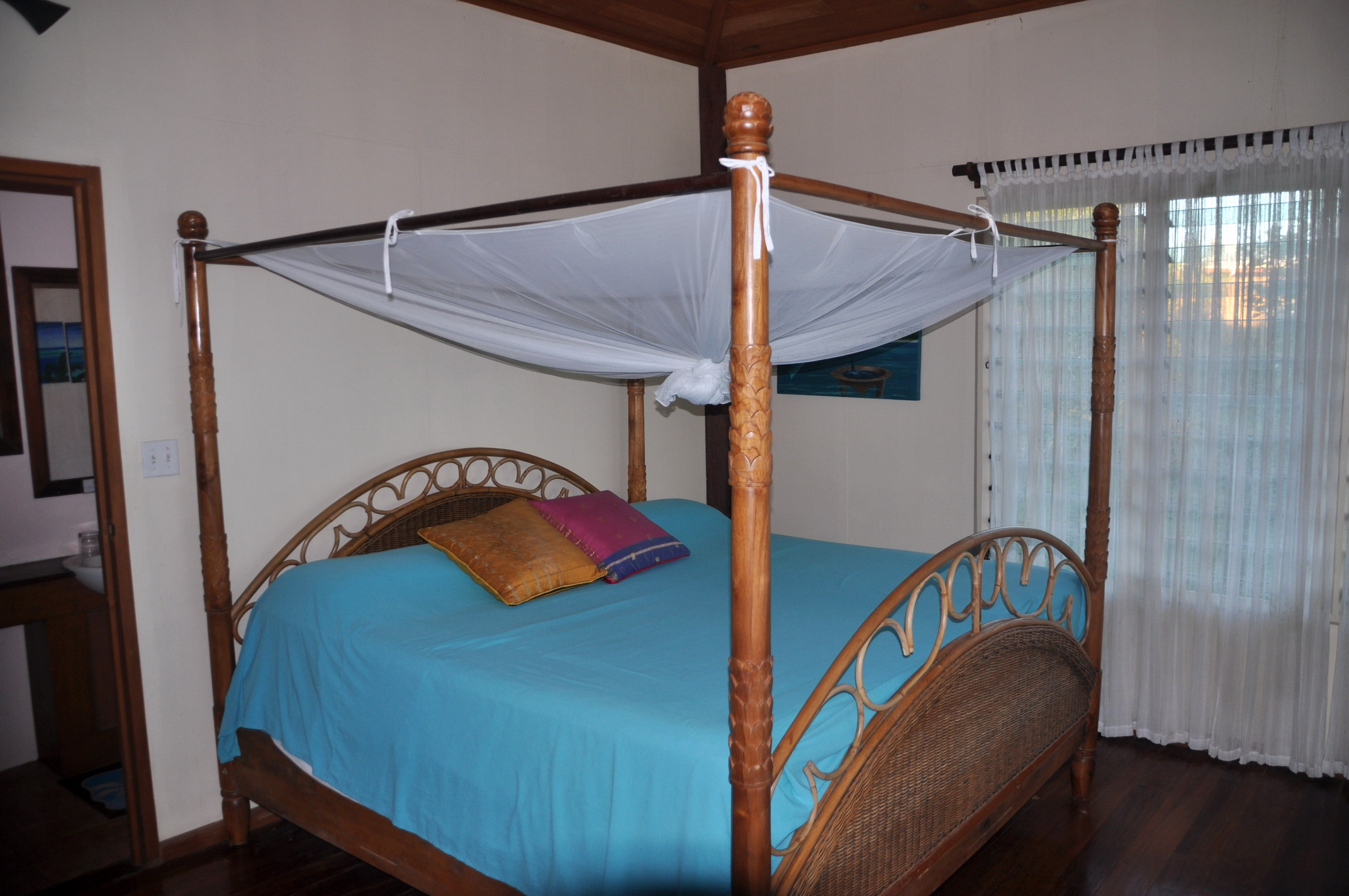
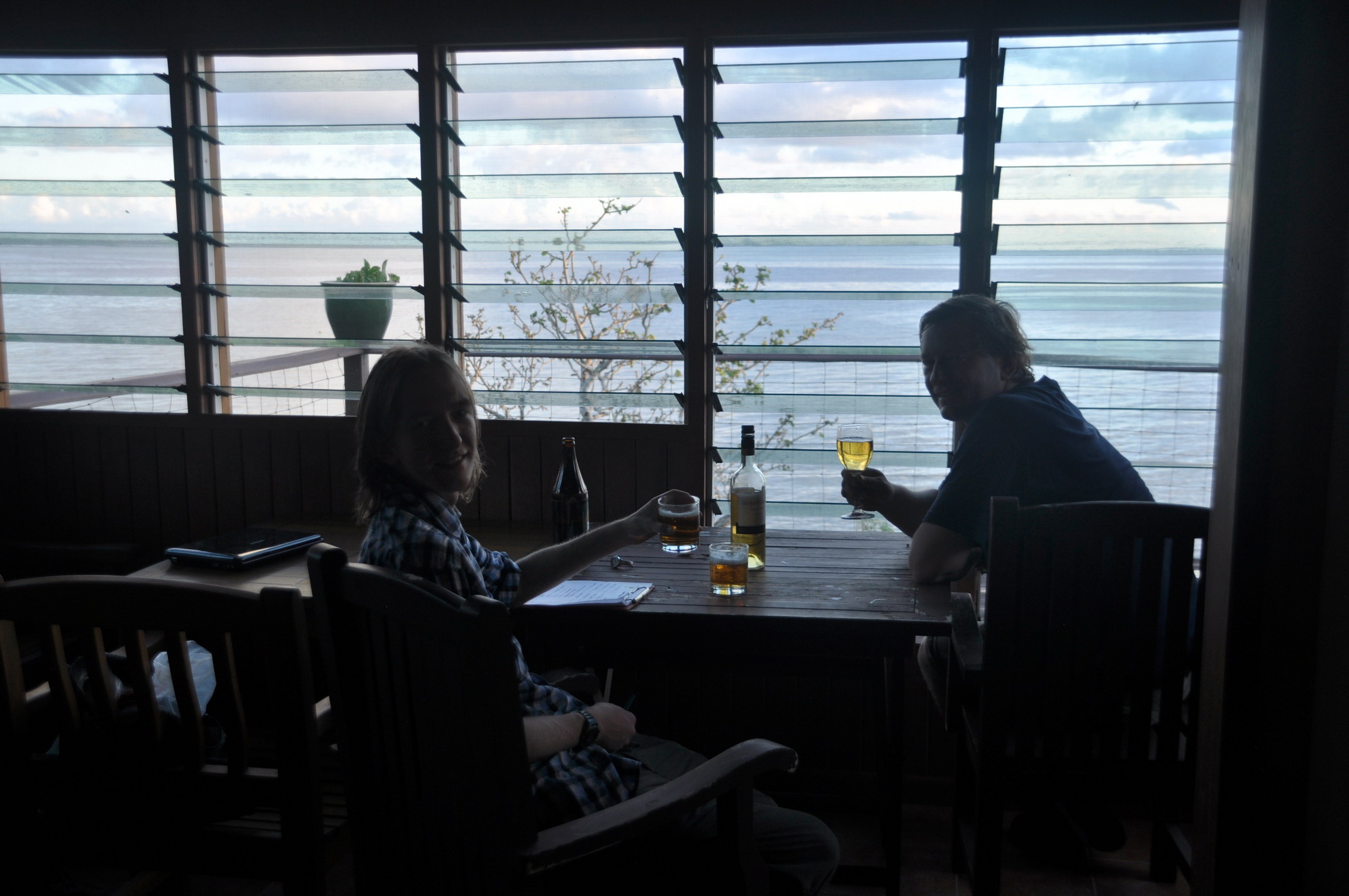
For the night we found a place at Hannibal's Resort (16°43.820′S, 179°44.391′E). We were the only guests. As I understood it, the place had no licence to take guests either. The rules were one thing. In practice, if you paid cash, they weren't a problem. The name sounded rather suspicious, perhaps why we were the only guests. We had a lovely little bungalow overlooking the ocean and a separate building with a kitchen. You could buy food too. We came away with a big fat frozen chicken.
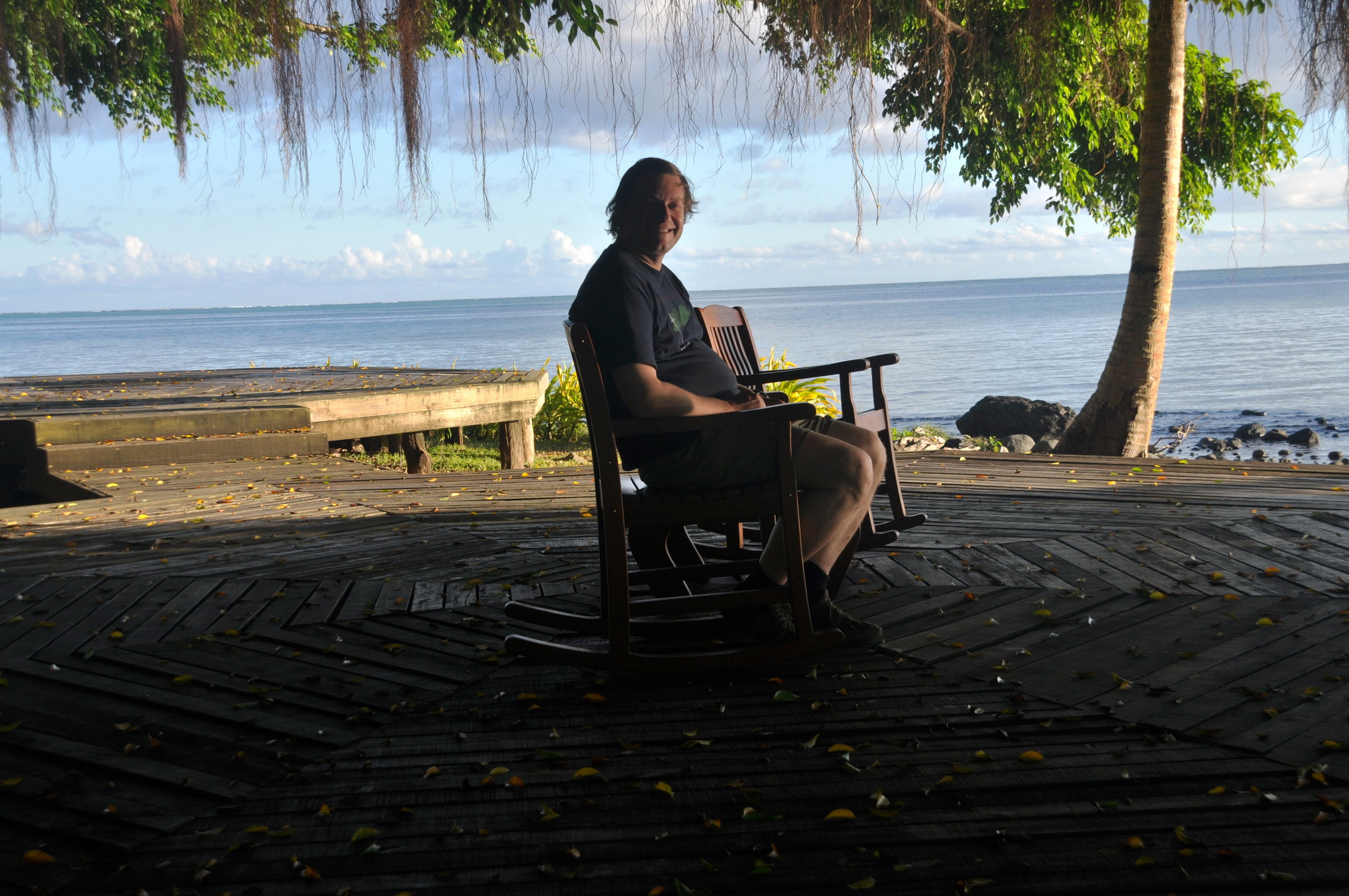
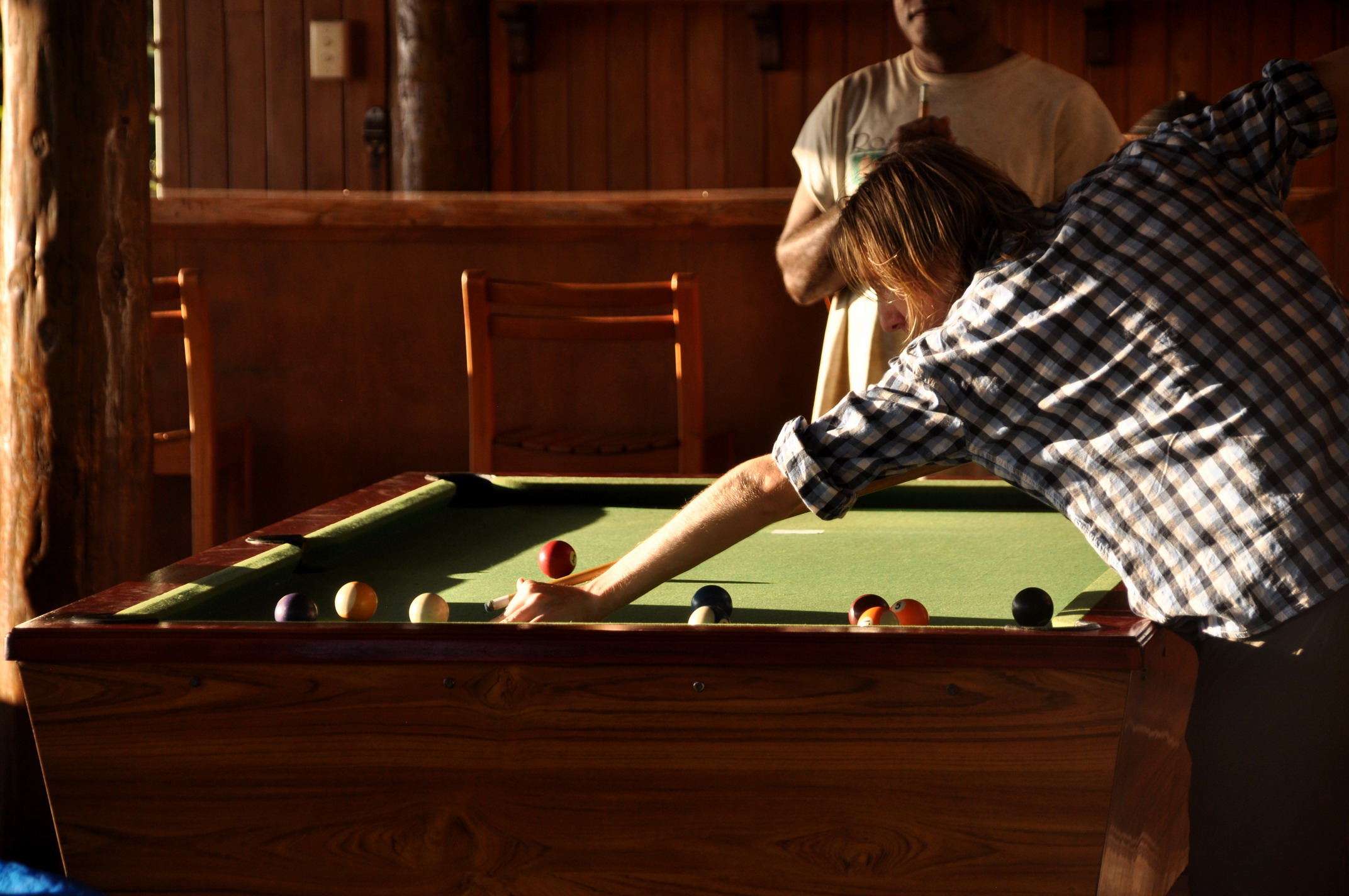
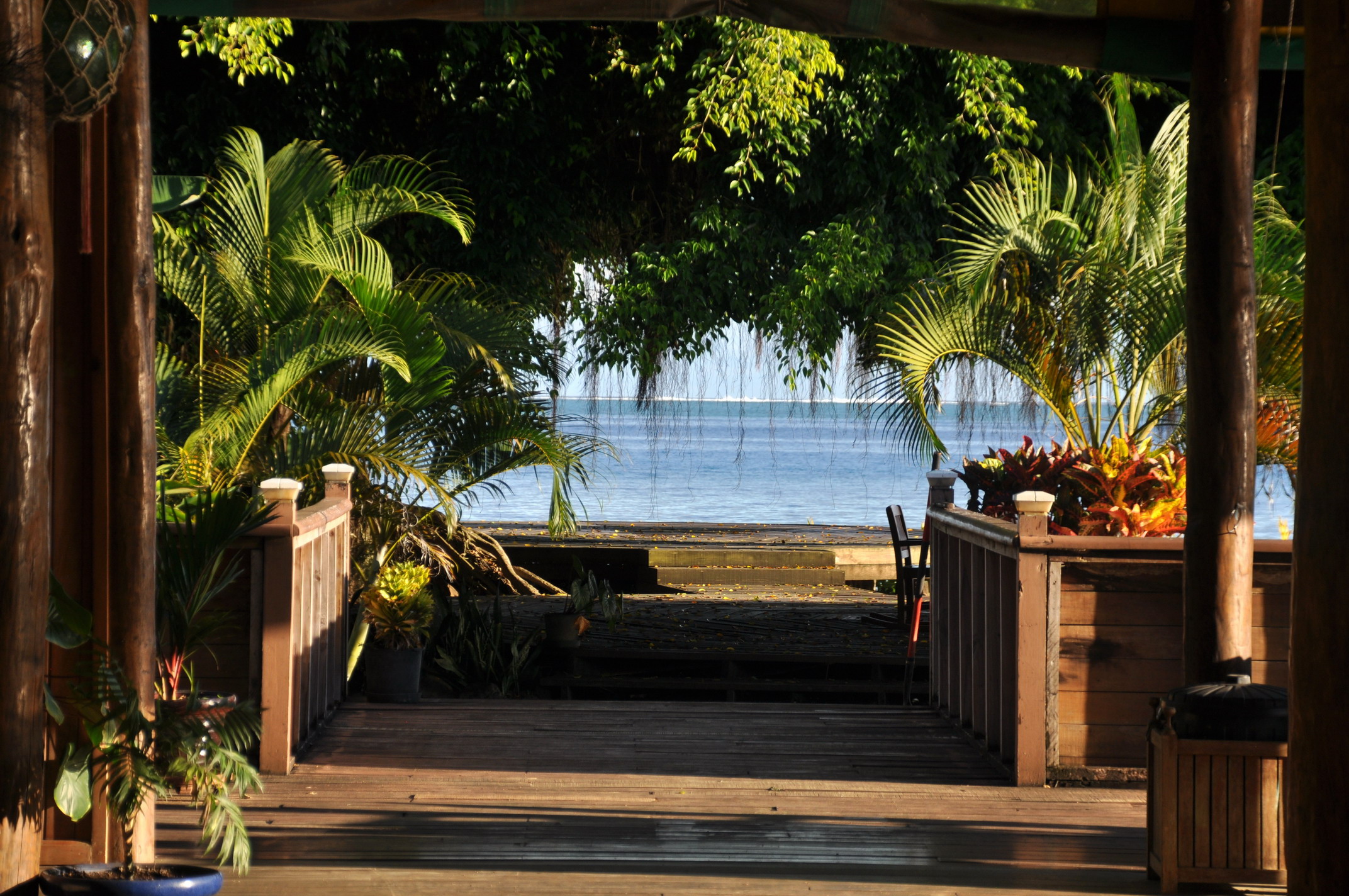
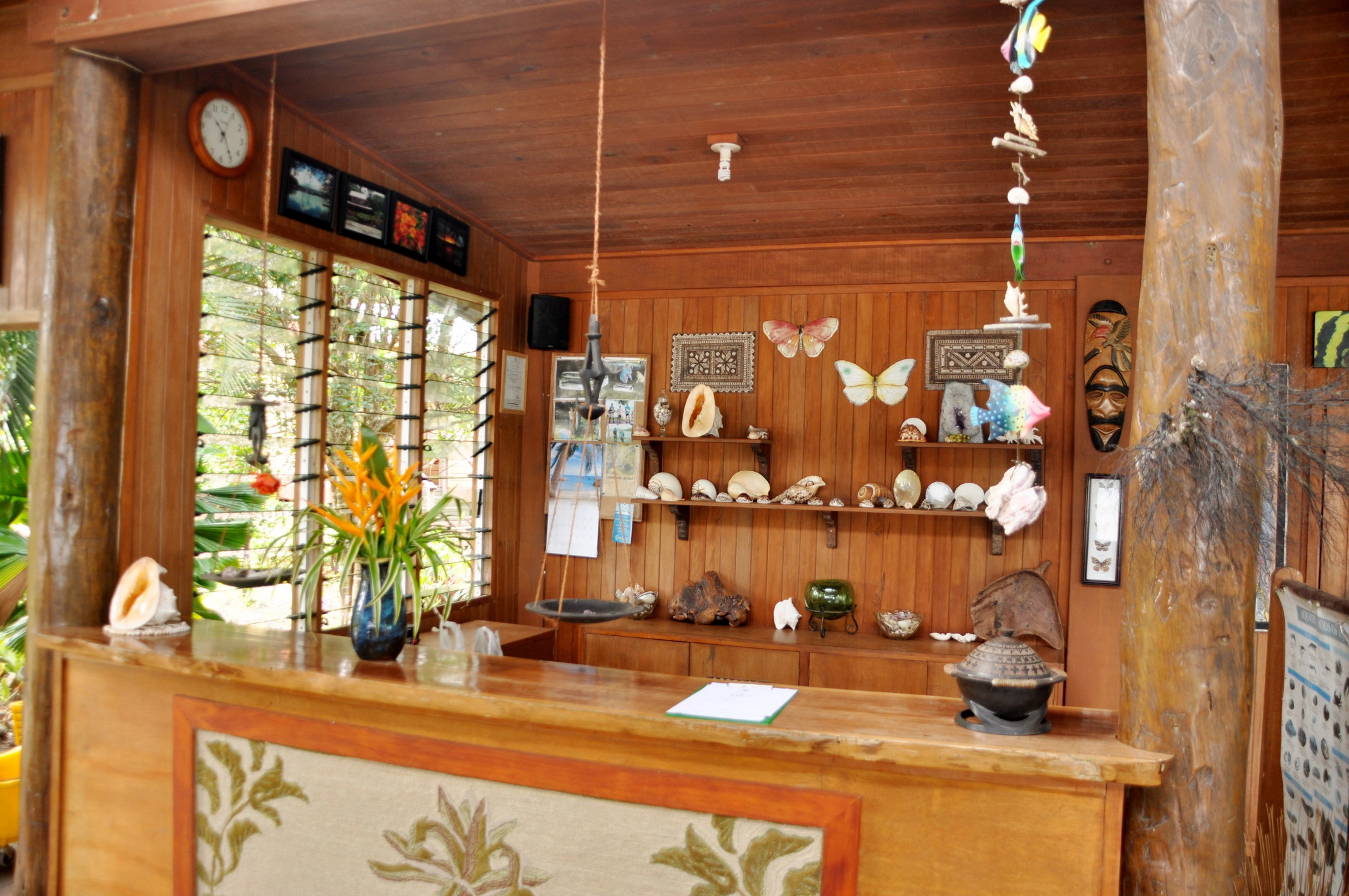
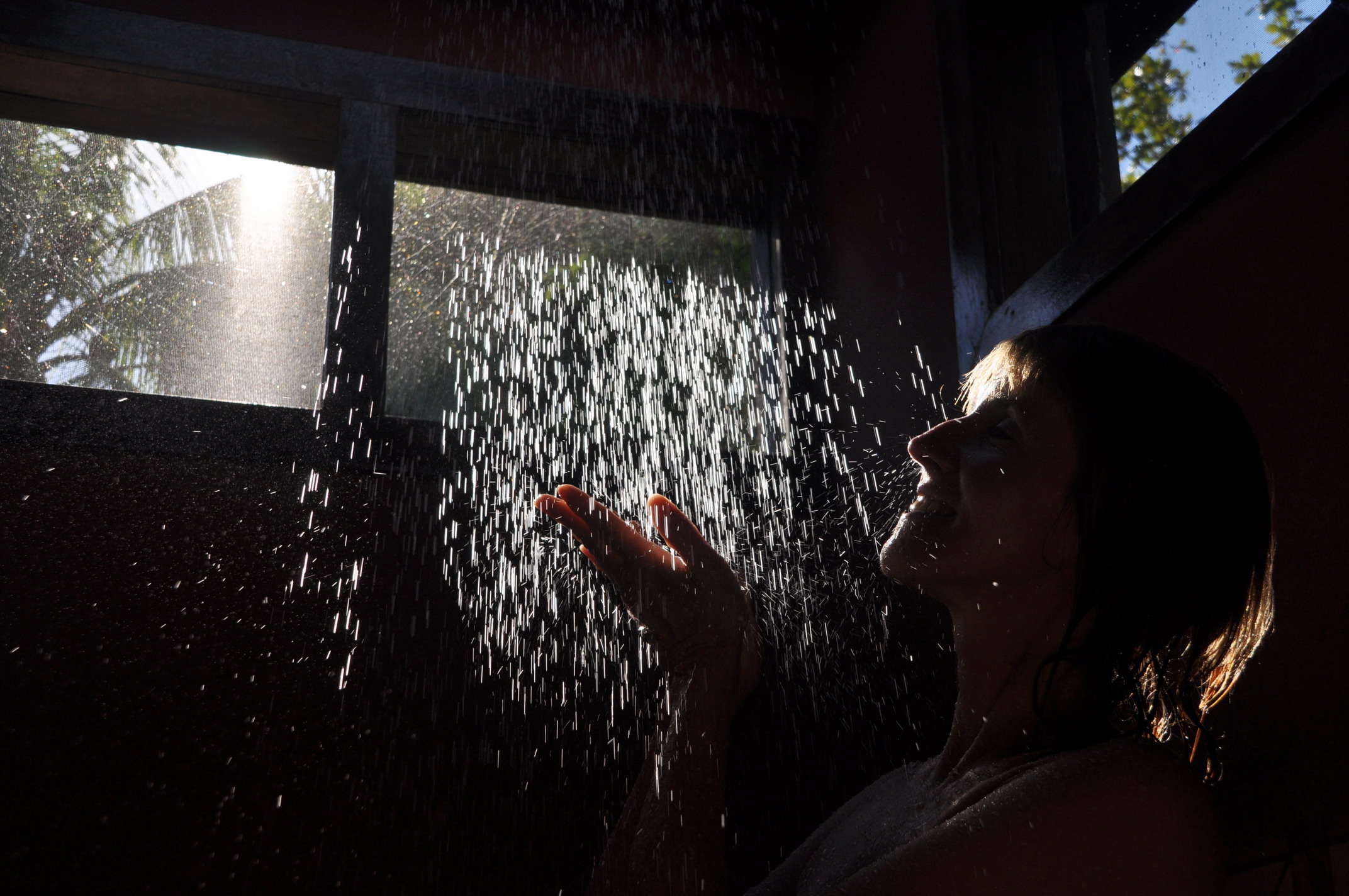
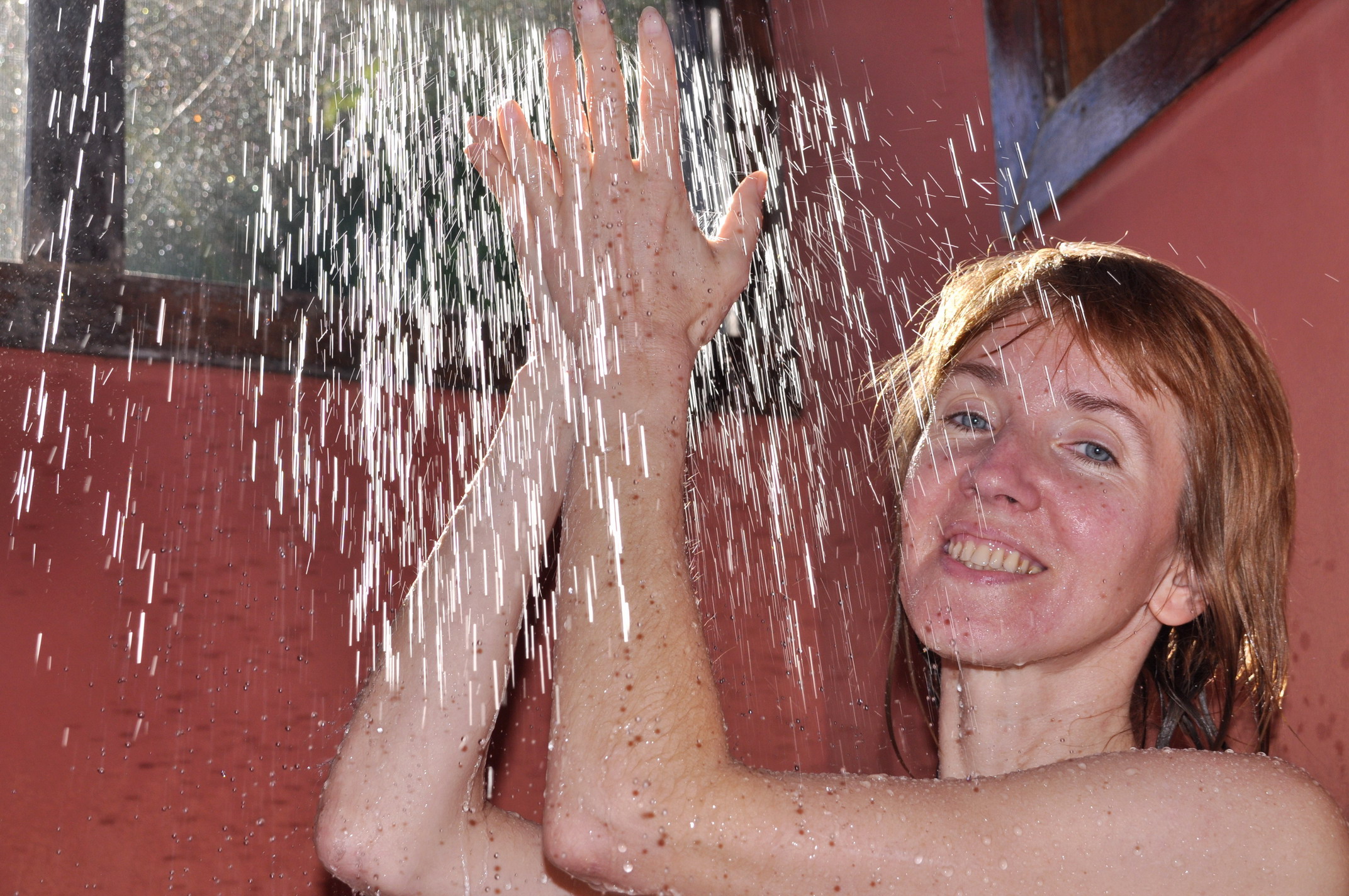
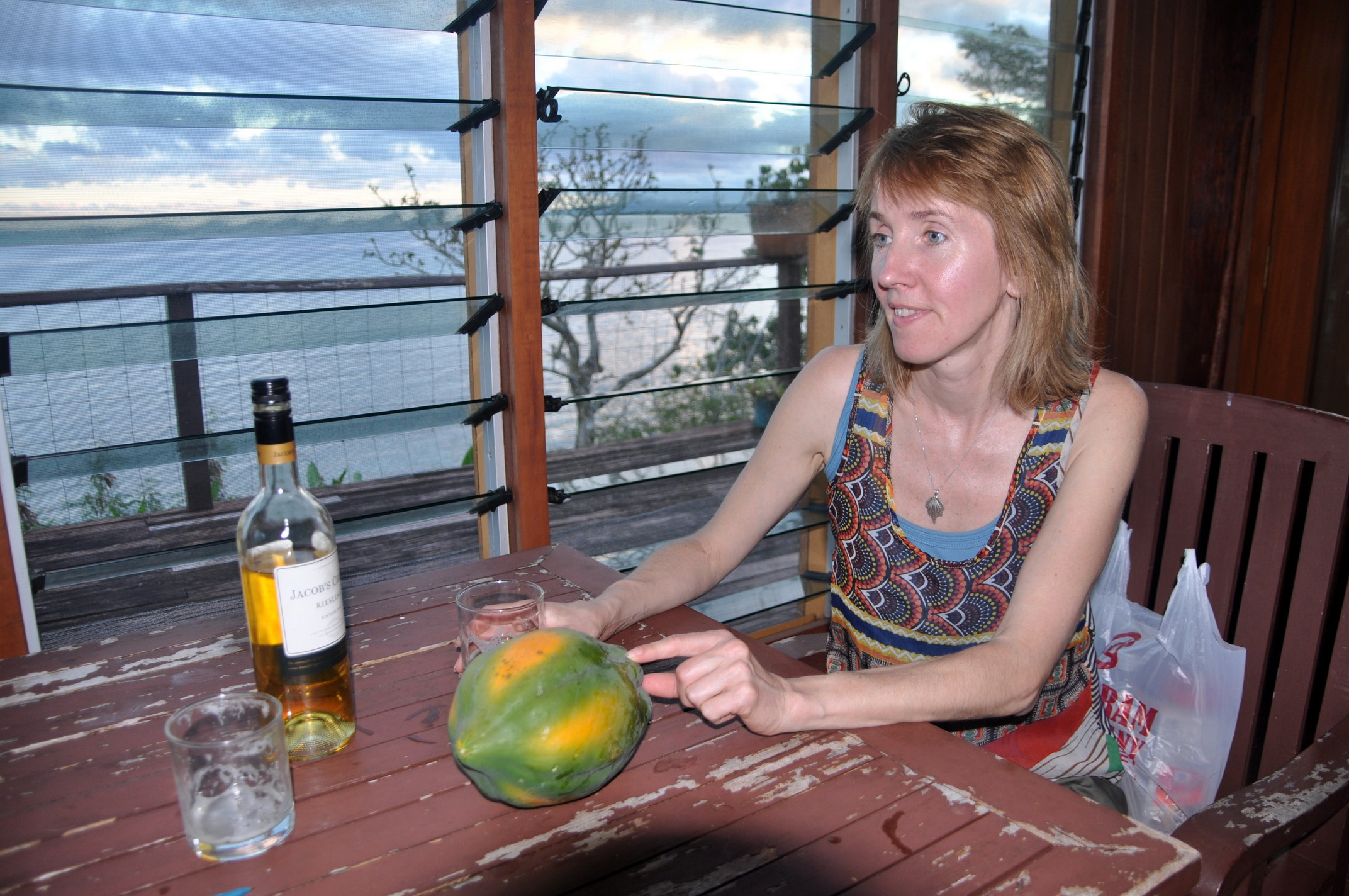
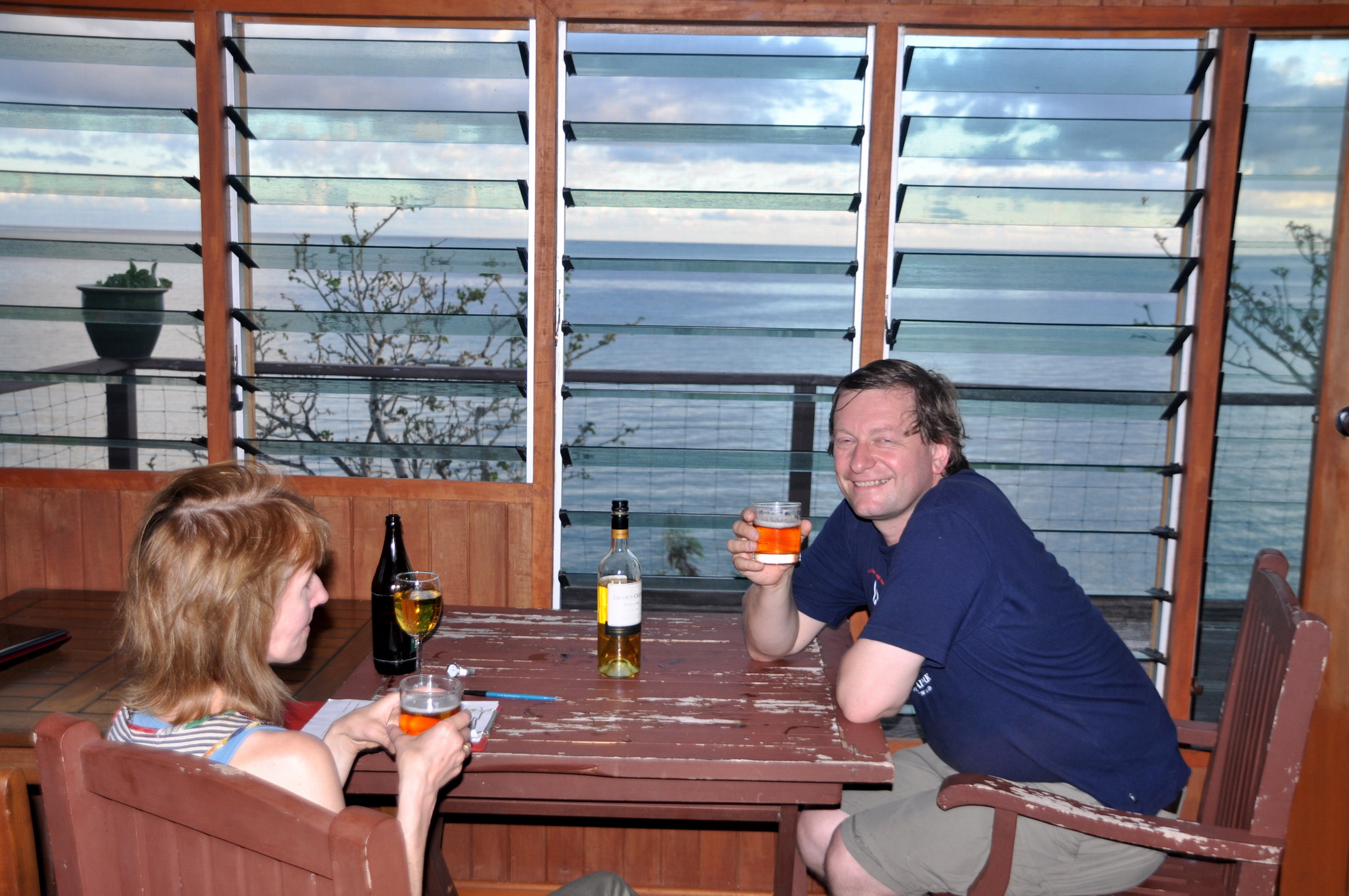
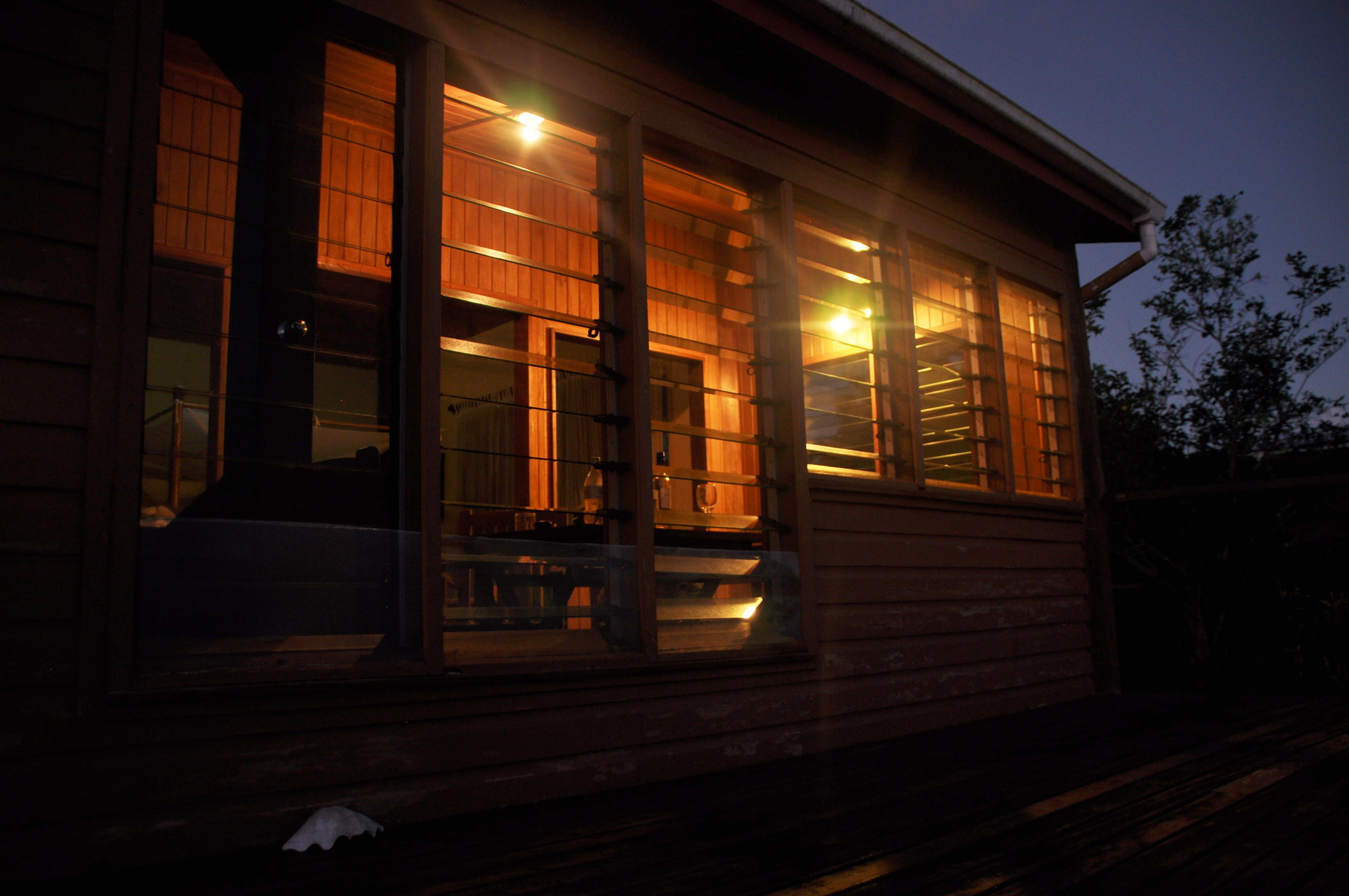
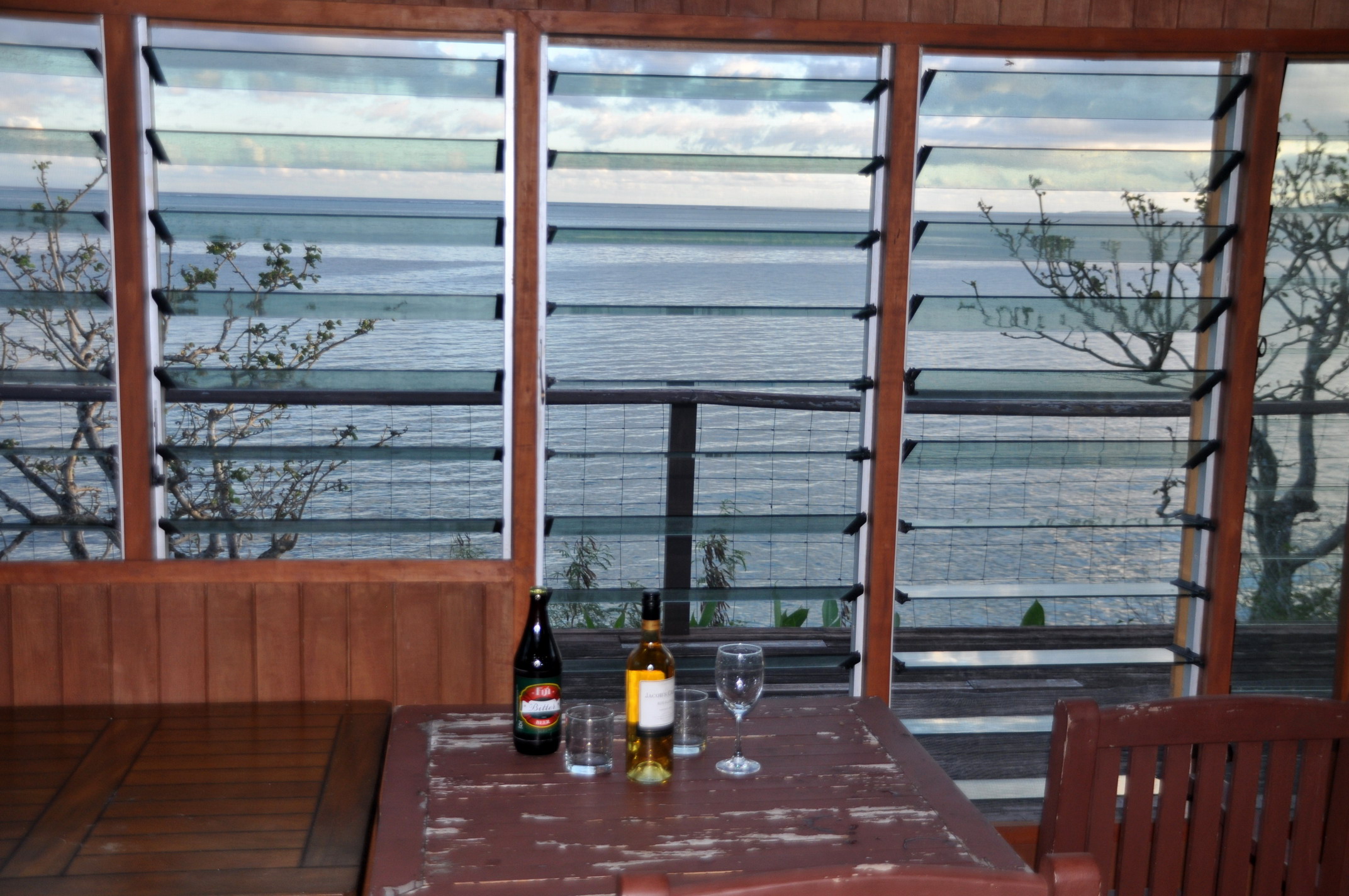
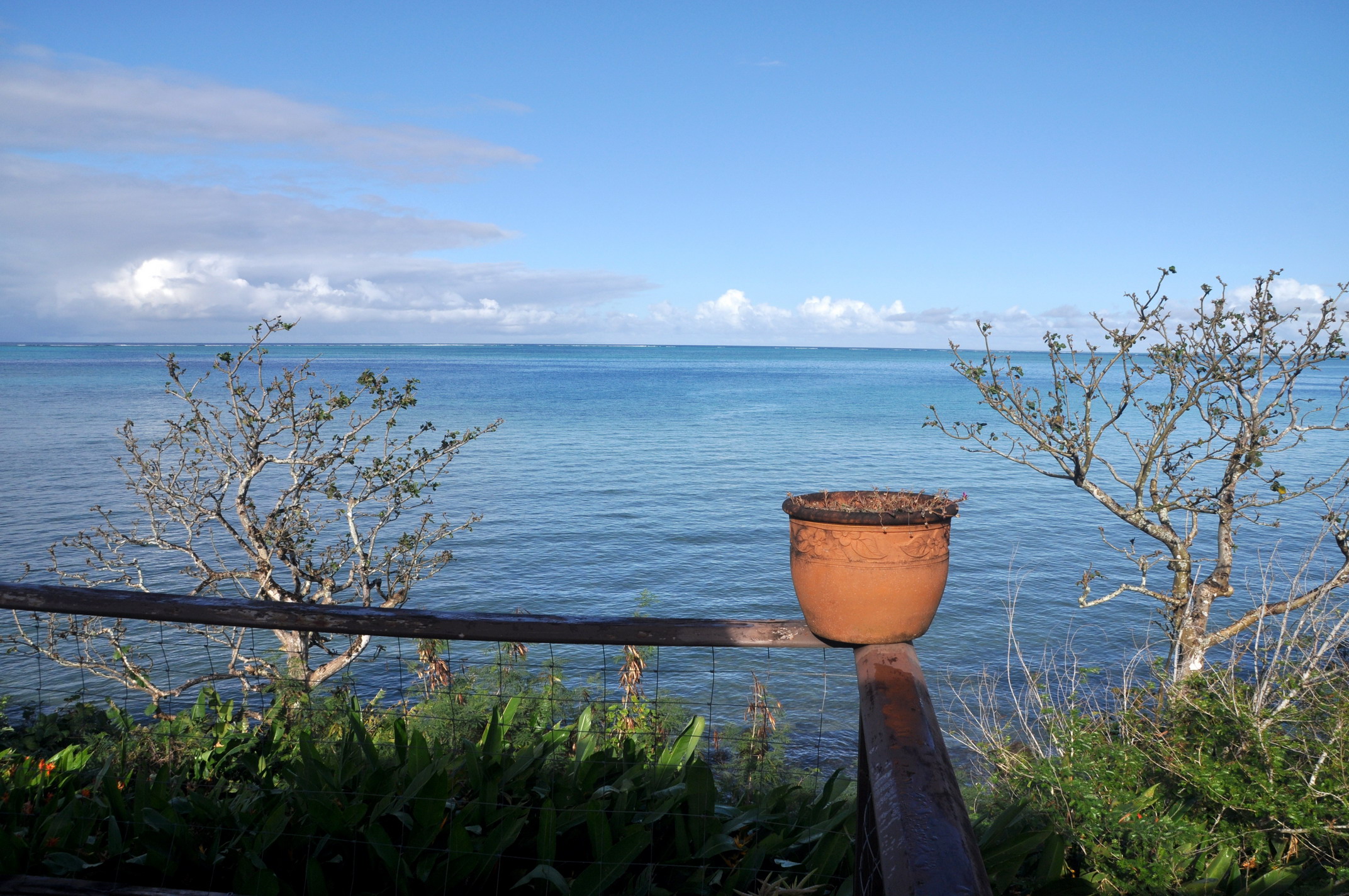
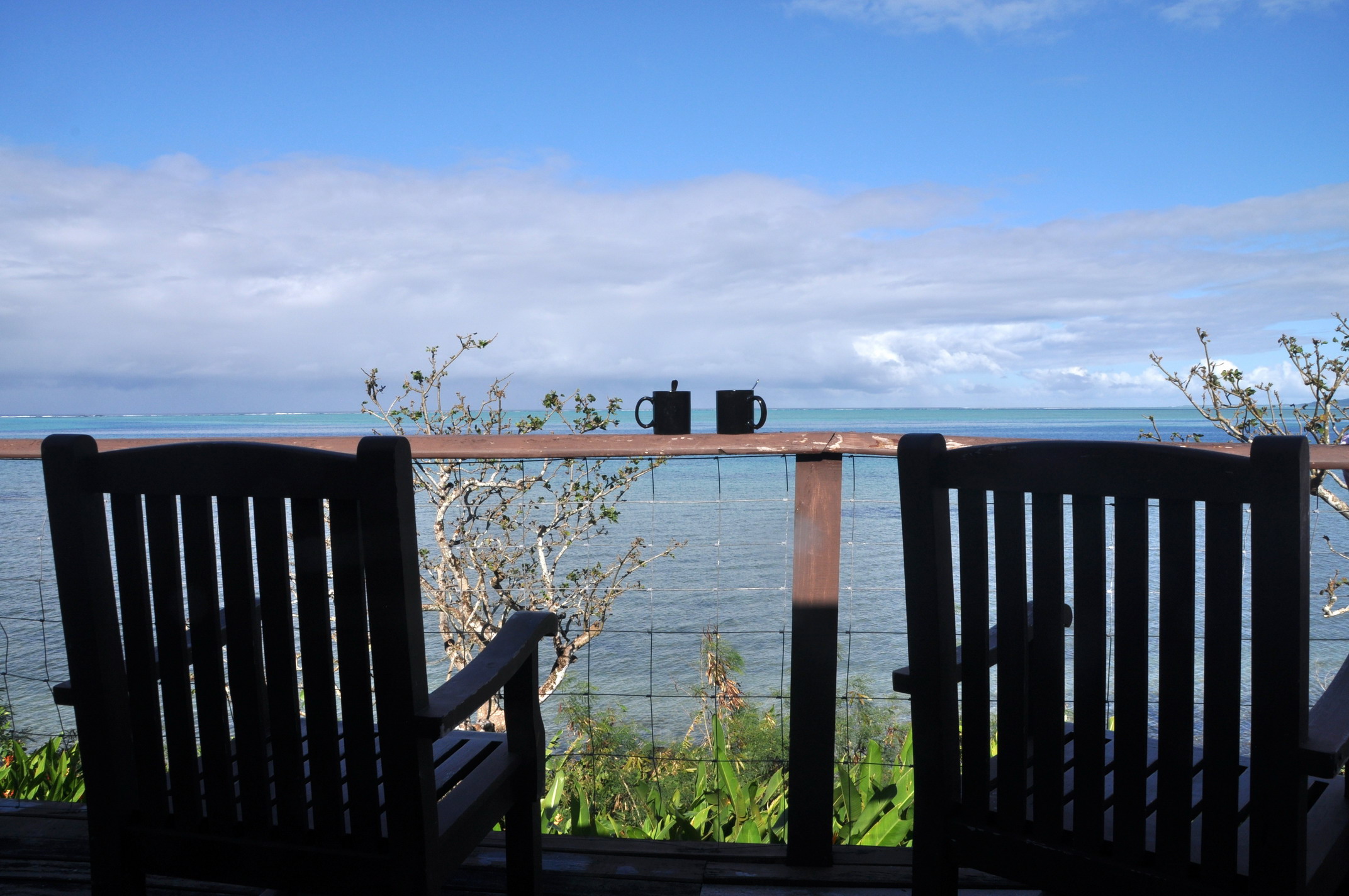
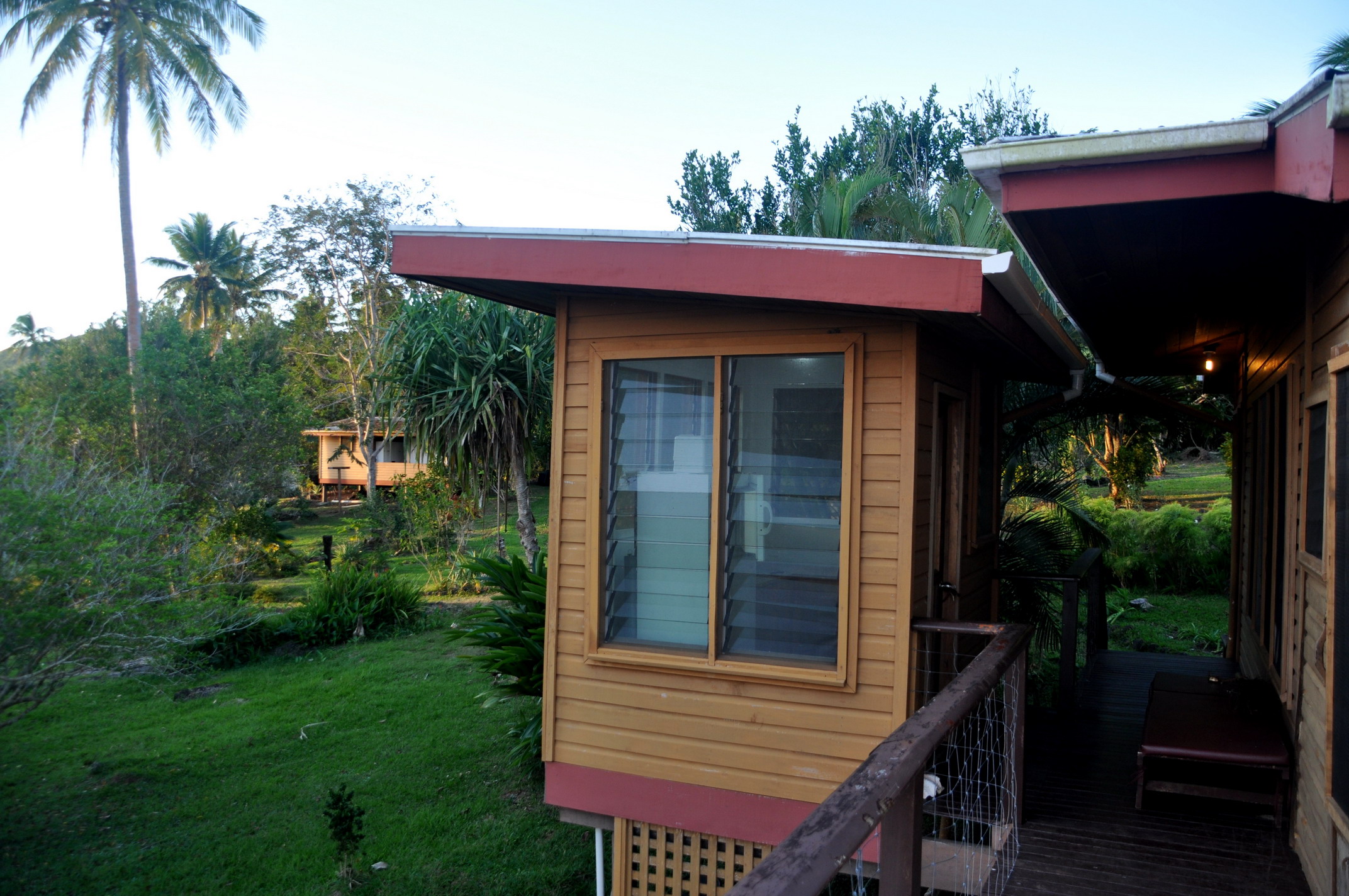
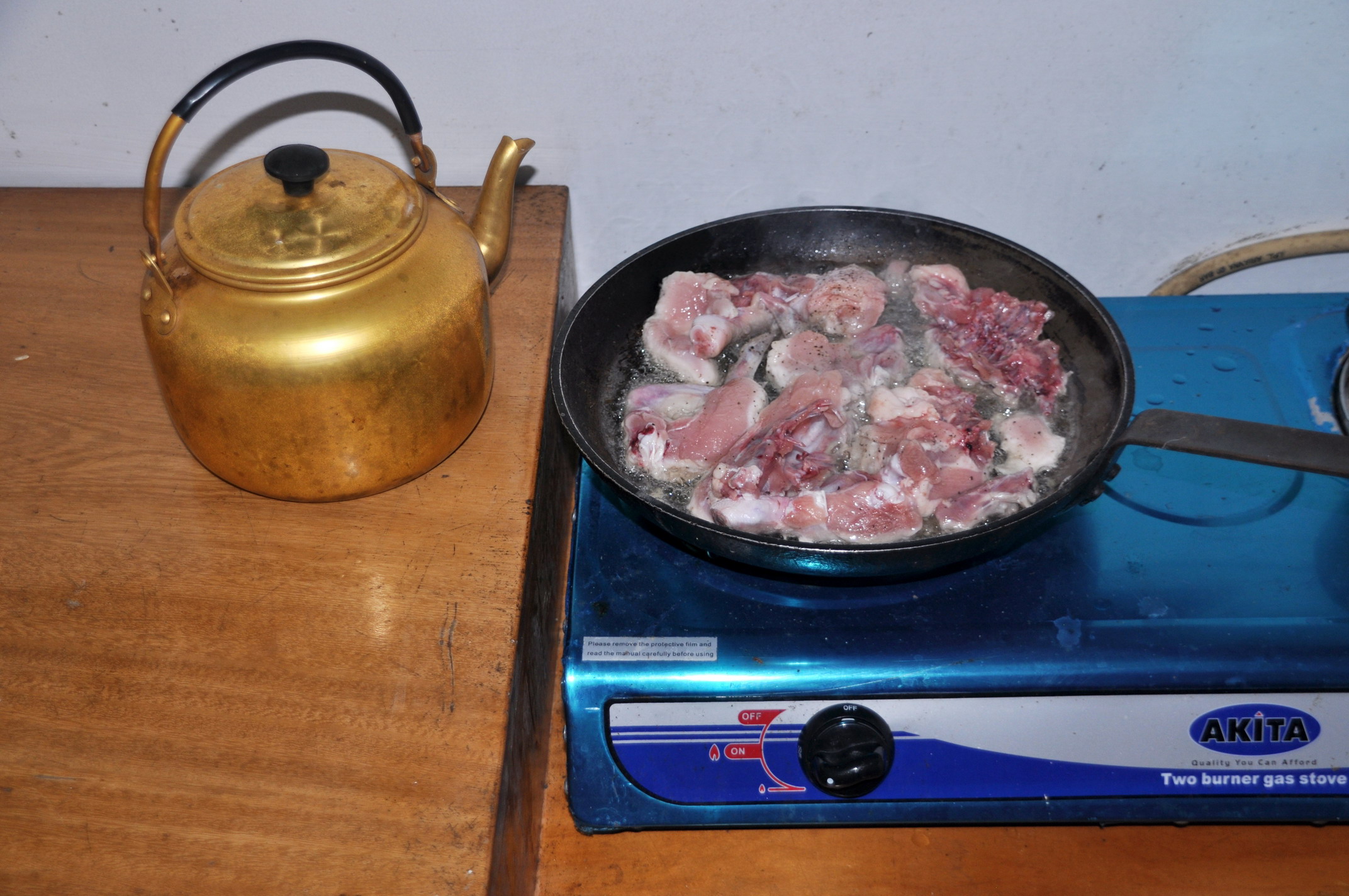
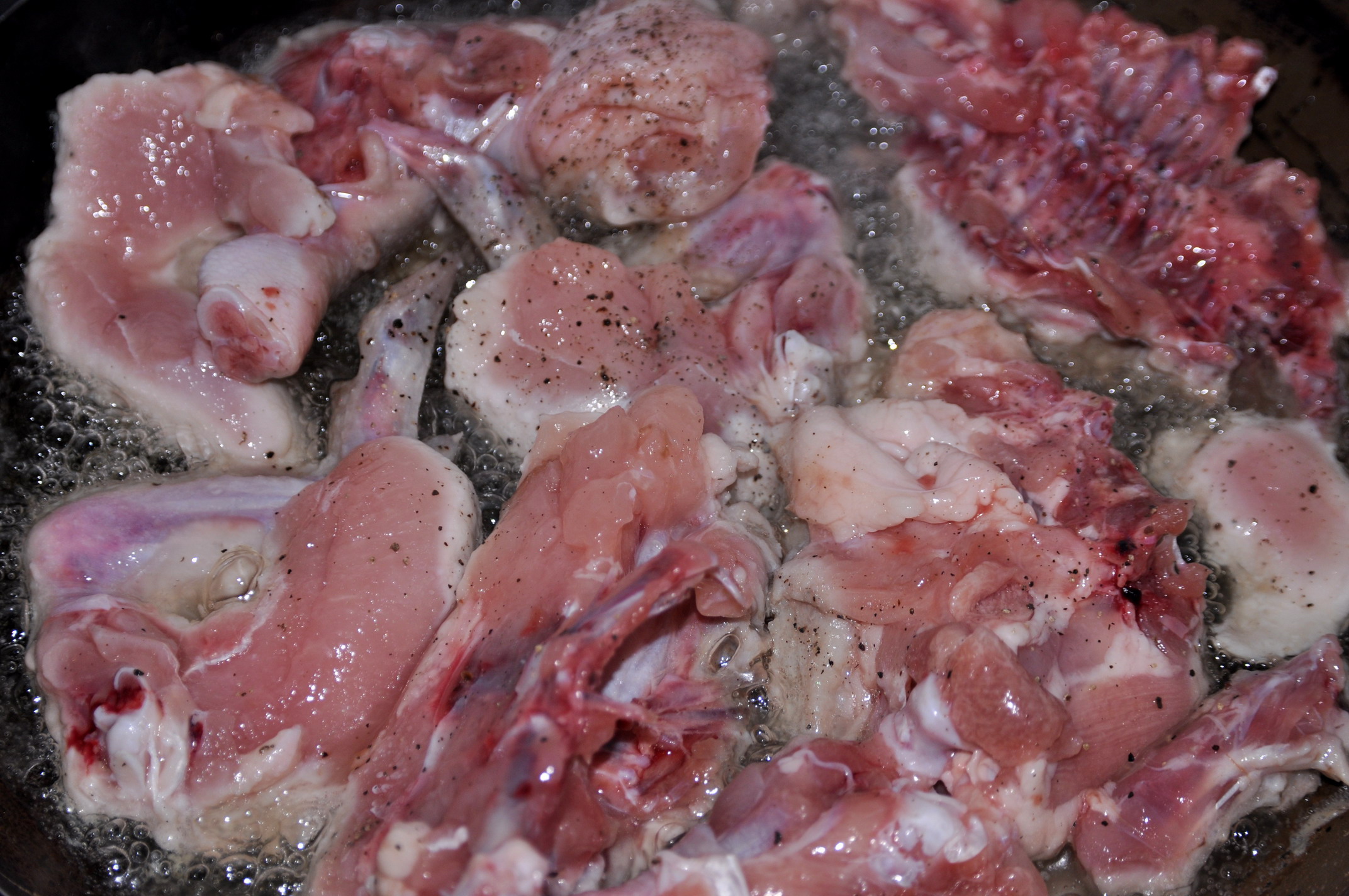
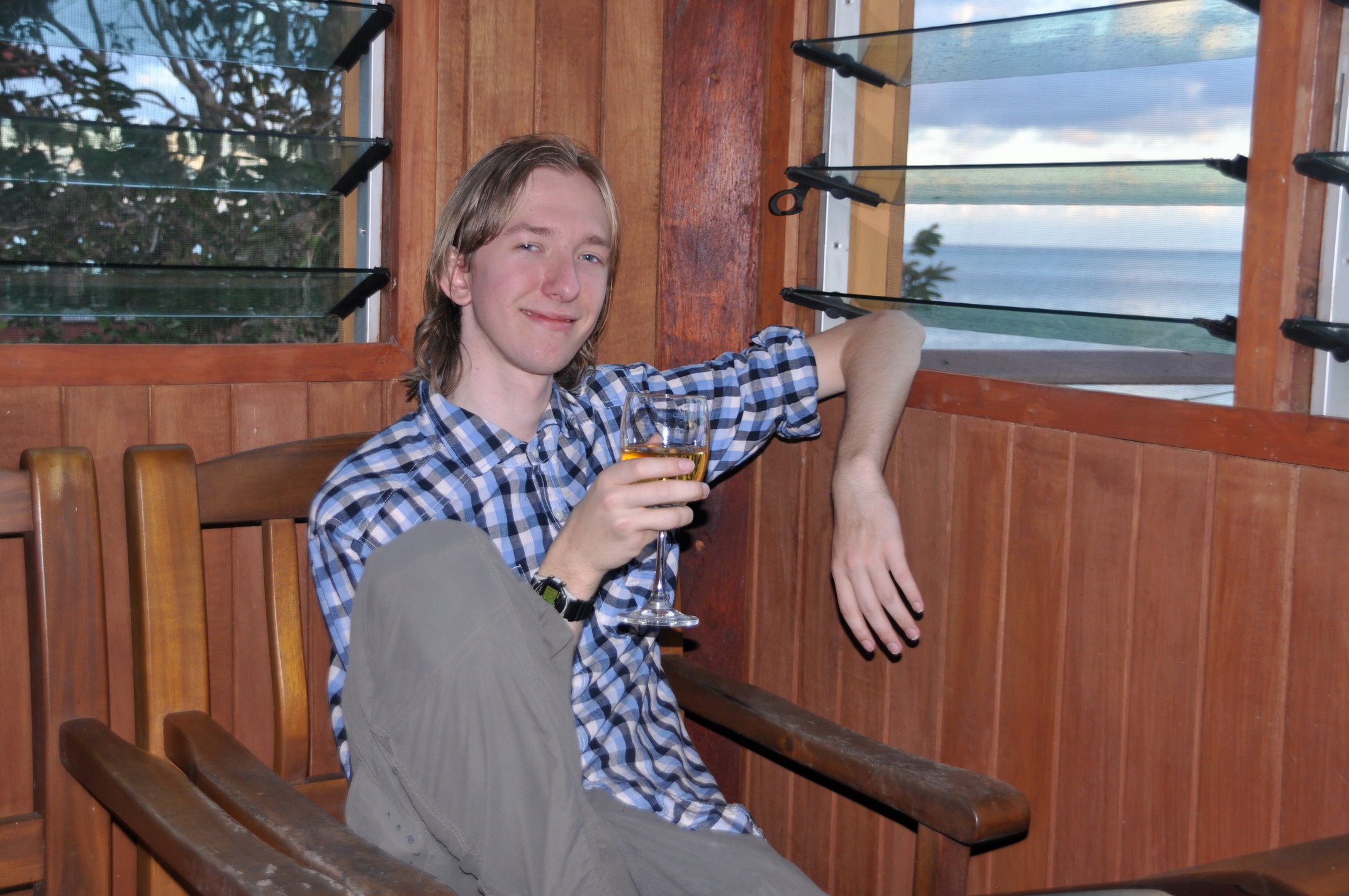
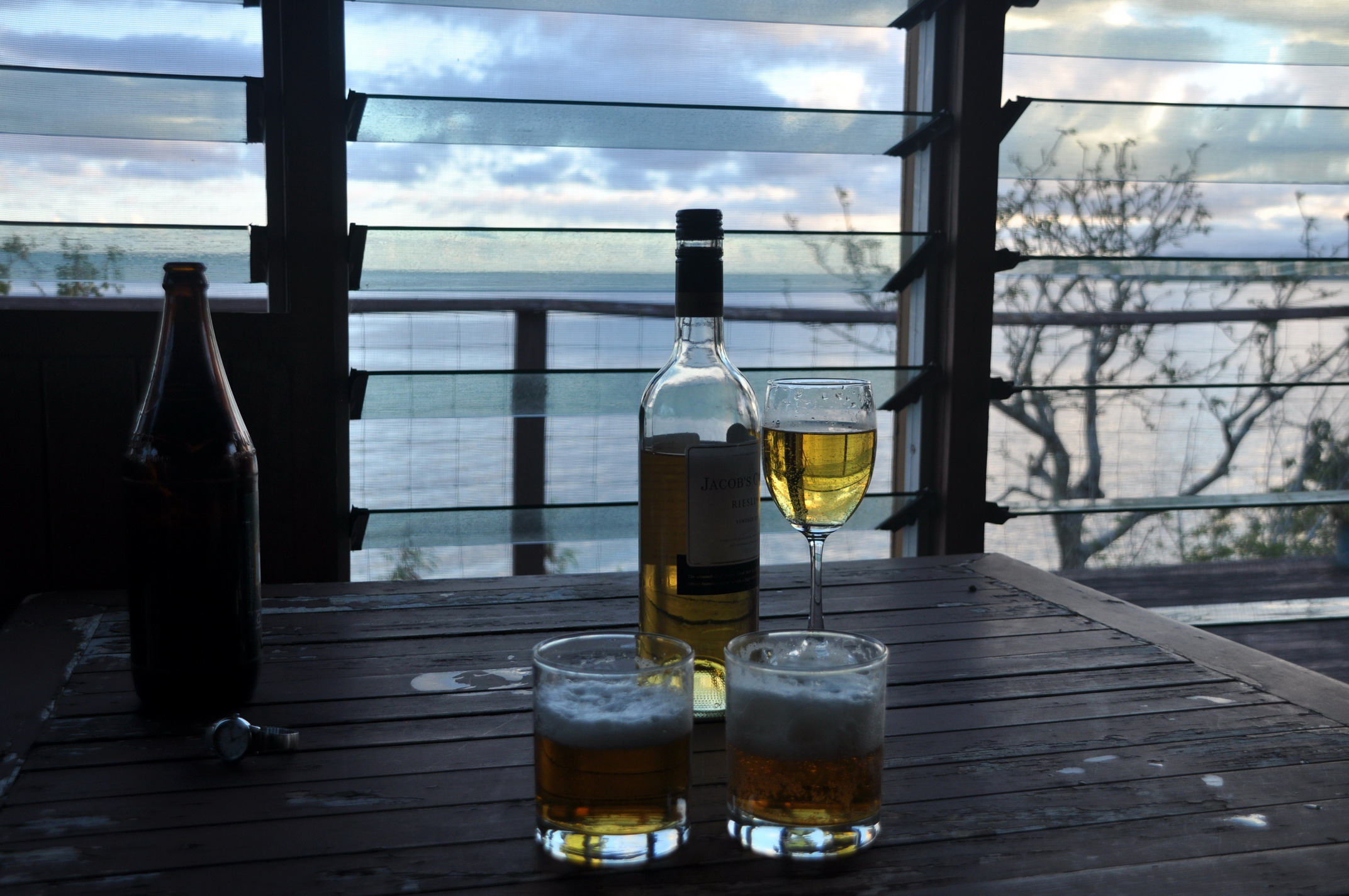
It was a splendid evening. We went swimming several times, though once again the spot wasn't ideal. Sitting on the balcony watching the sunset and sharing a New Zealand bottle of wine, on the other hand, was really lovely. It was the best overnight stop on the trip.
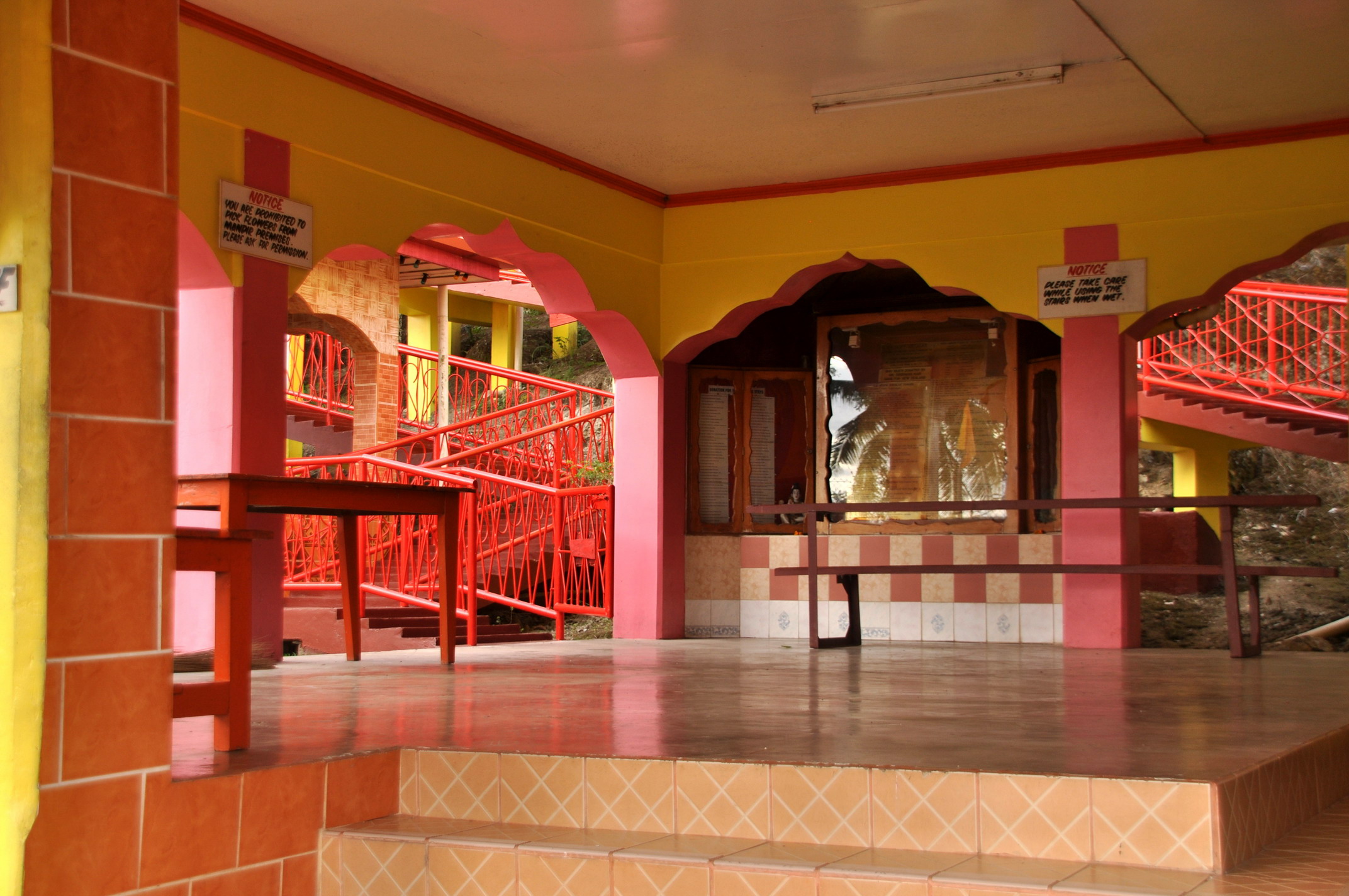
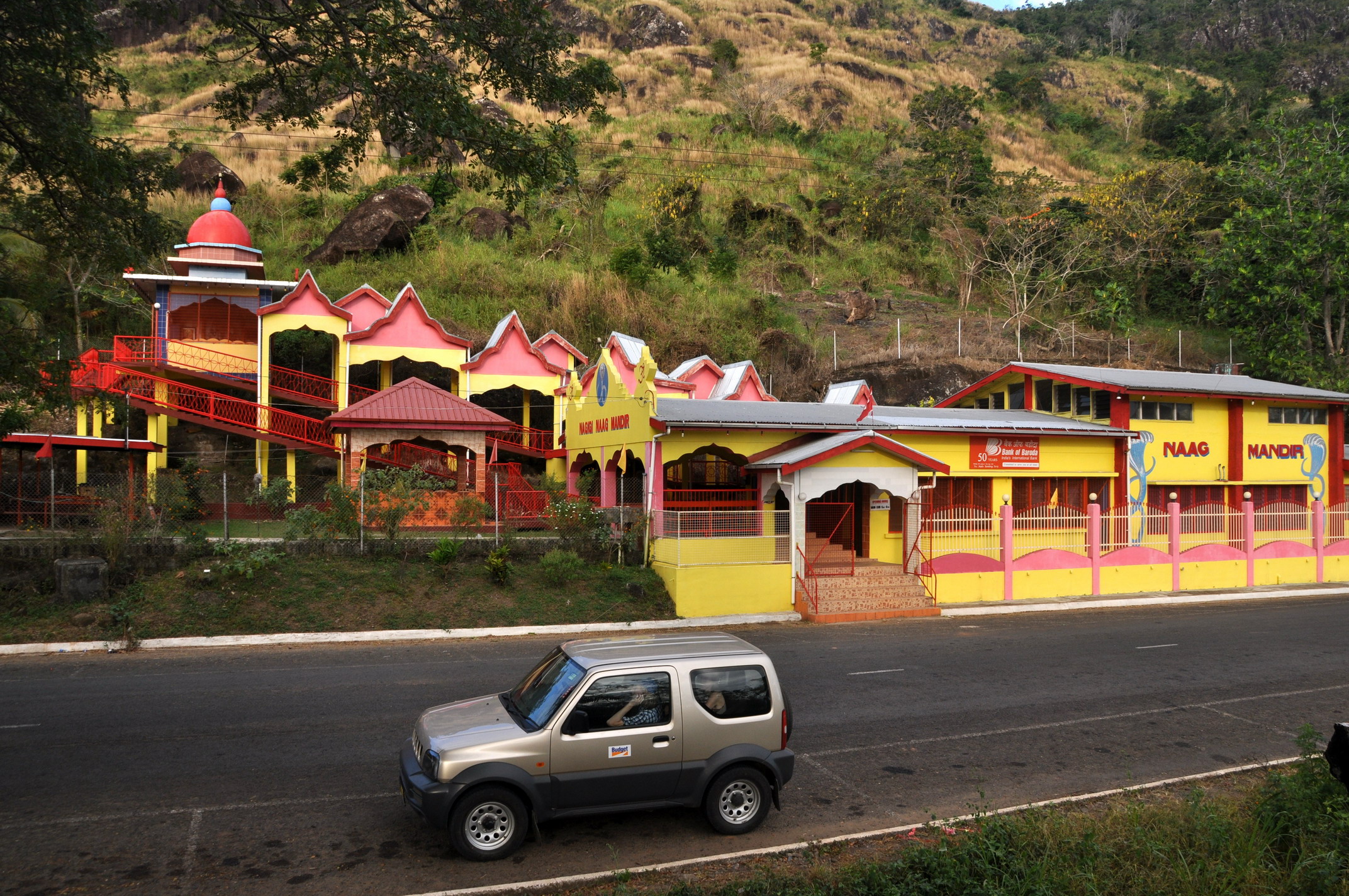
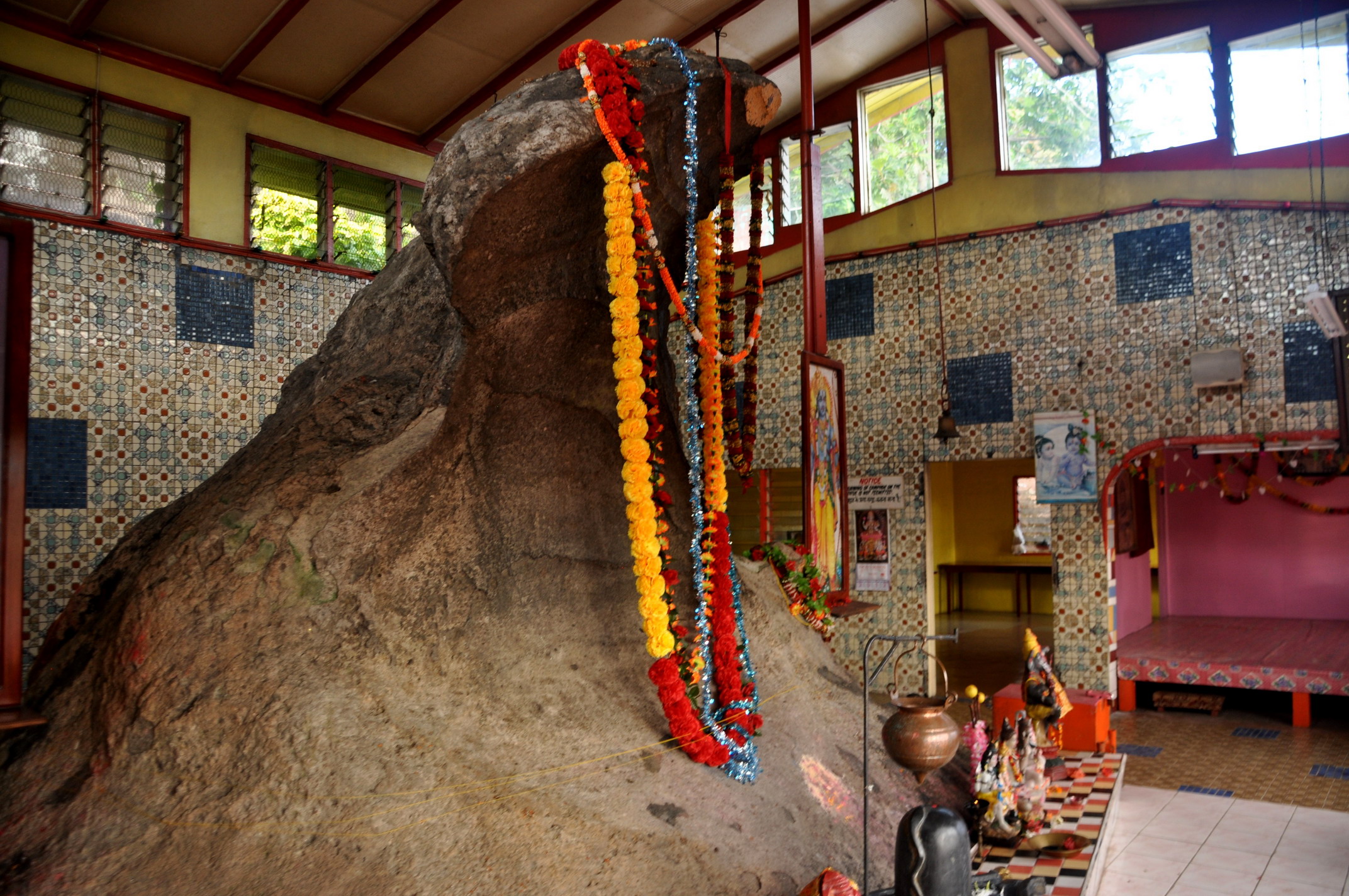
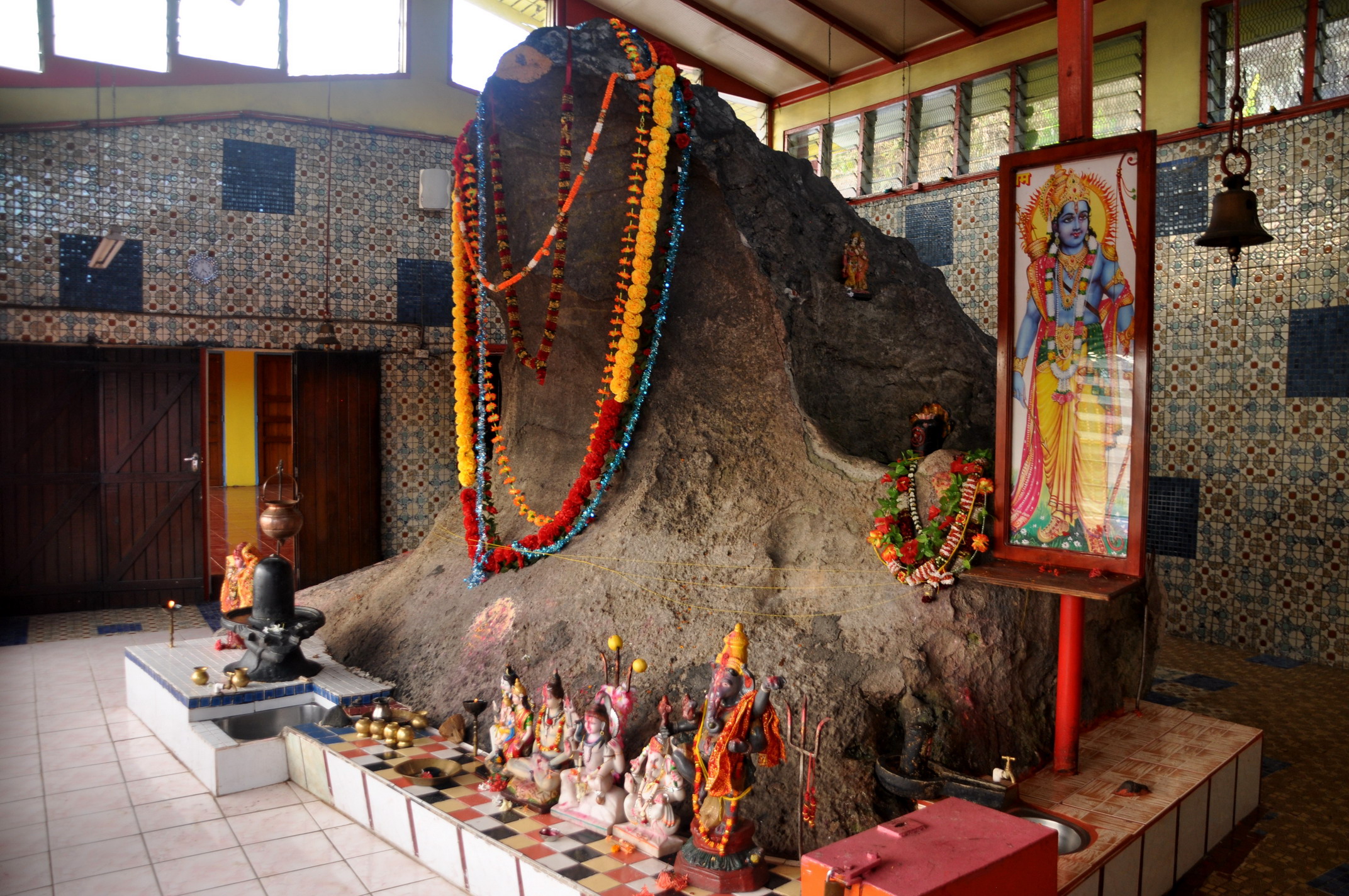
In the morning we had another swim, then drove back to Labasa to return the car before the Budget office closed. Before that we managed to go and see the Hindu cobra temple, Naag Mandir (16°21.870′S, 179°24.536′E). Its main attraction is a rock that looks to some people like a cobra. The gaze of a stone cobra, as you would expect, cures everything from a troubled soul to diarrhoea, especially infertility.
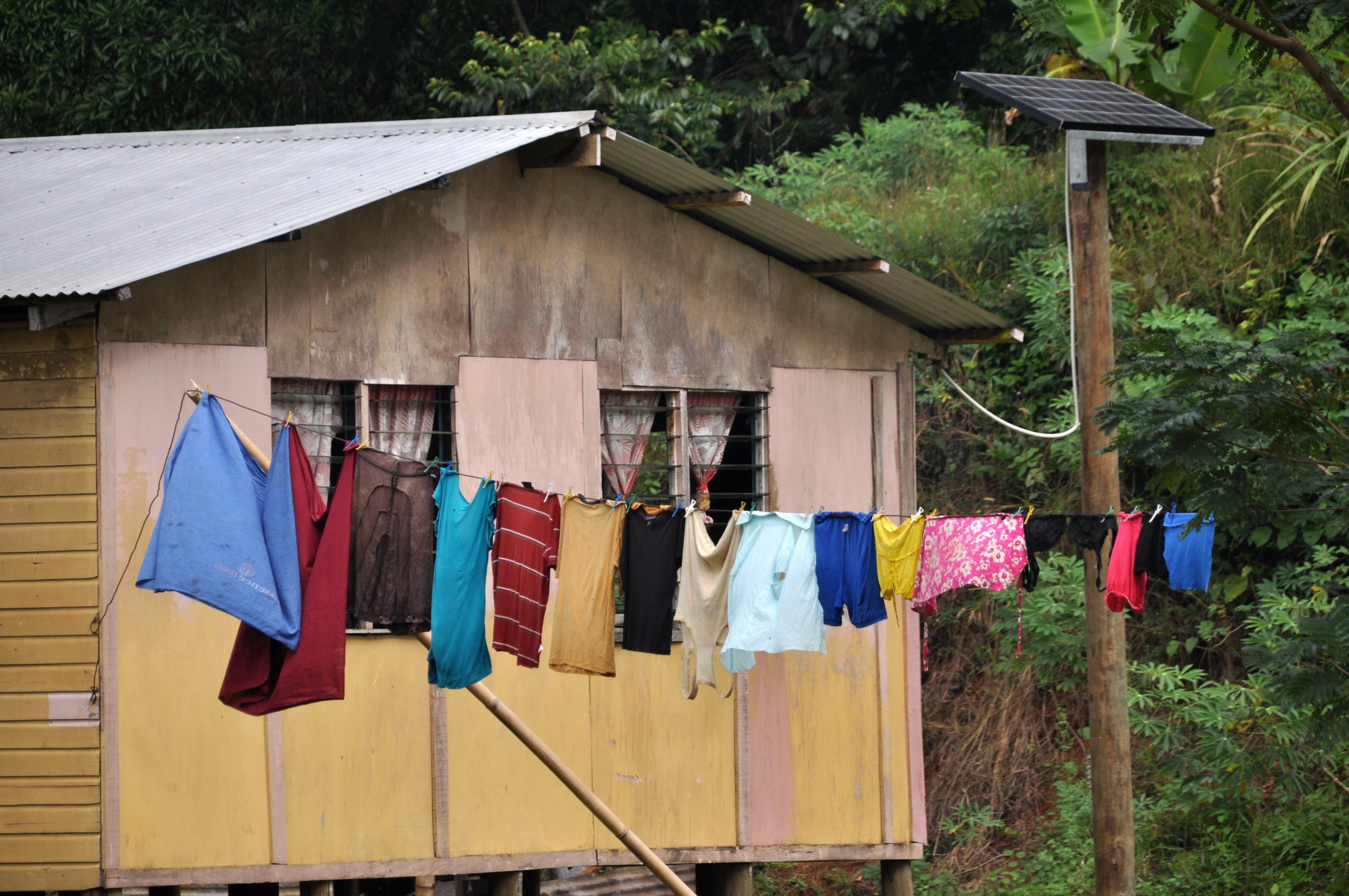
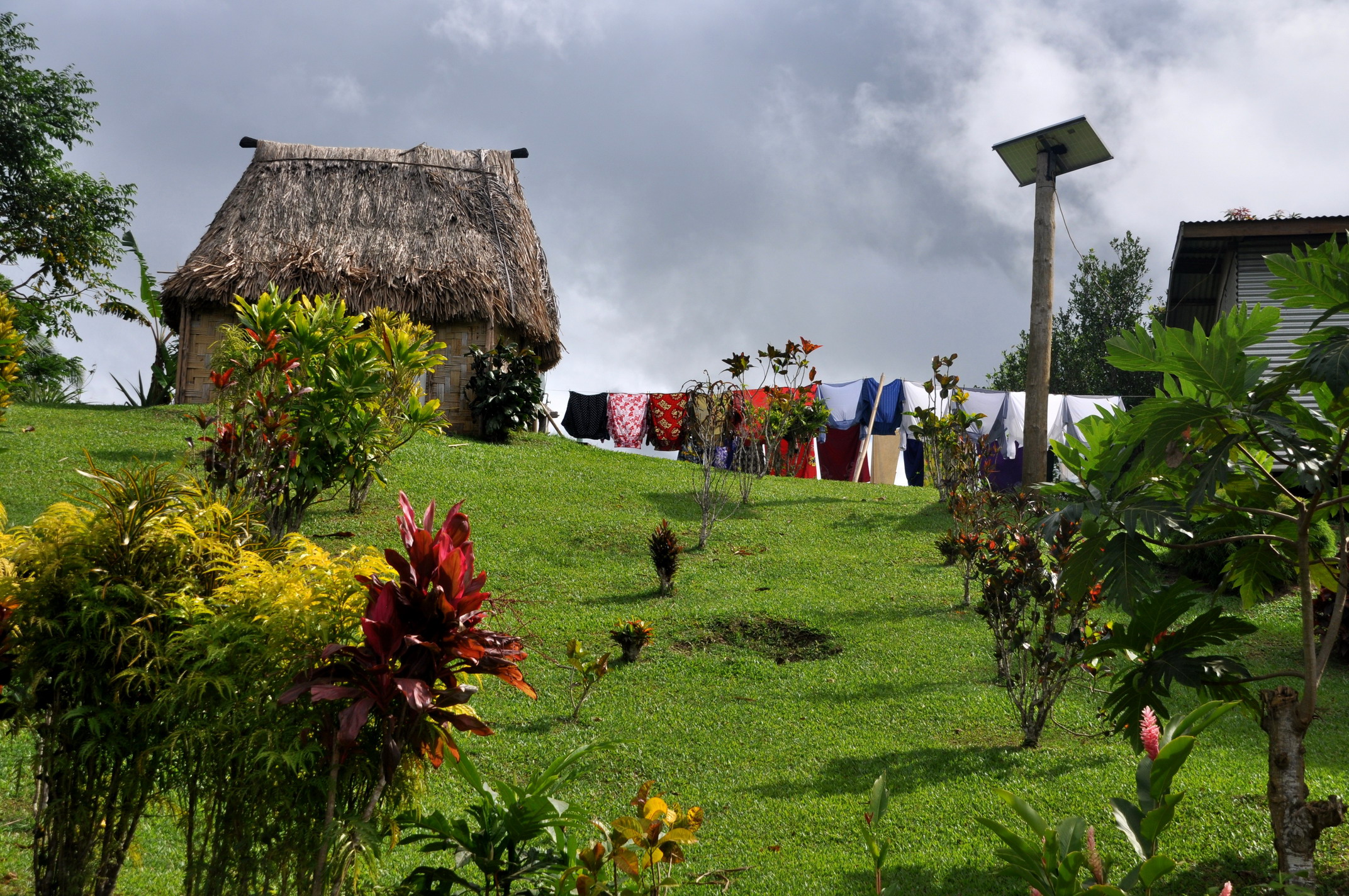
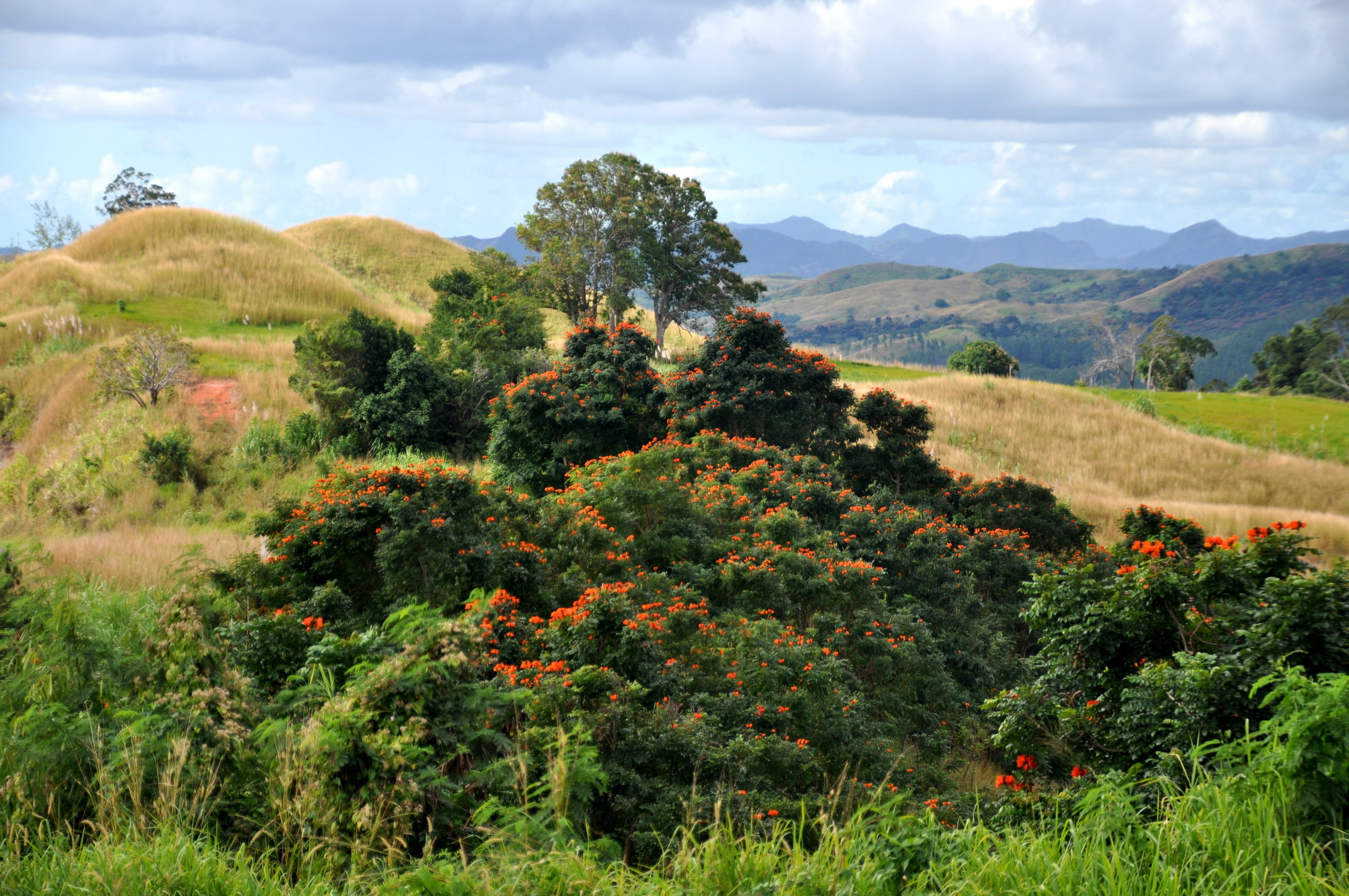
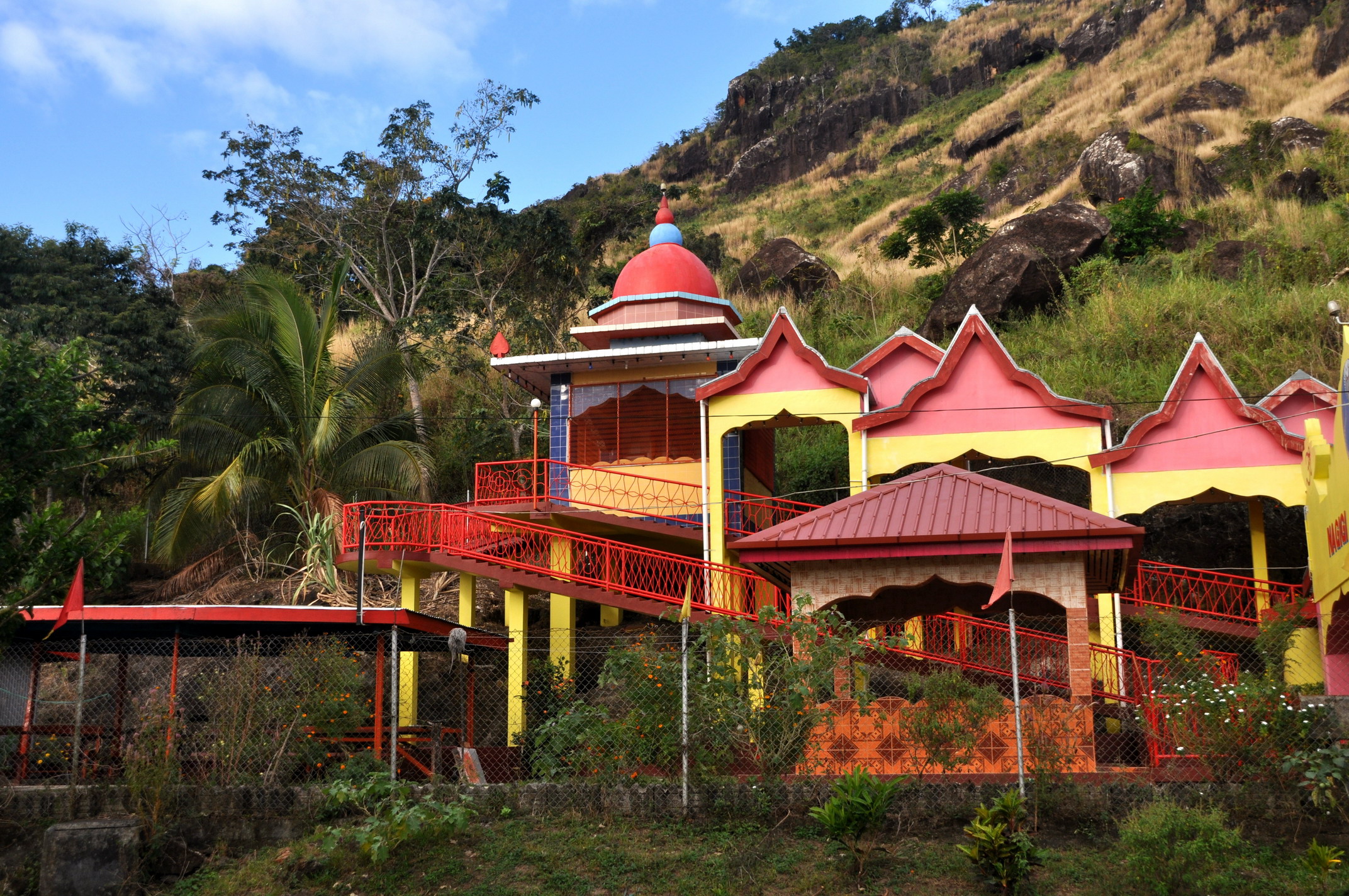
We returned to the Centrpoint Hotel for the night. Everywhere else was full. Handing back the car came with a further two-thousand-dollar bill for wrecking the previous one. Money got even tighter when Citibank, seeing unexpected payments from an unfamiliar country, blocked our card. Luckily we had New Zealand credit cards.
A village near Labasa
Left without a car, we decided to visit a village associated with Fiji's old cannibal traditions. It was about five kilometres, an easy enough walk in theory.
As I said, Fiji's communities include people of Indian descent and indigenous Fijians, the iTaukei. The Indo-Fijians we met worked, traded and lived in towns, with a way of life that seemed much like Europe's once you allowed for poverty. I wouldn't describe them as especially warm, since hard work and poverty can leave people guarded and calculating, but by and large they felt familiar. I'd read a far more forbidding account of the indigenous people in earlier times, as isolated communities that practised cannibalism and wanted little to do with Europeans. Oceania wasn't all like that. Tahiti, for instance, was supposed to have been much more peaceful. Fiji, I'd heard, had been a champion in the most carnivorous sense of loving one's neighbour.
I'd understood that people here had been converted to Christianity in theory about a hundred years earlier. Polytheists could take conversion in their stride: twenty gods or twenty-one, what did it matter? An extra god might help and certainly wouldn't hurt. People hadn't rushed to give up old gods and celebrations, though they had to abandon the most sacred ritual, cannibalism.
Communities lived apart in their own villages. An outsider wasn't meant to enter without the elder's permission. Nobody was likely to kill and eat you nowadays. They were accustomed to tourists who didn't understand, but the welcome might be cold and, I had heard, someone might rob you after dark. We planned to ask at the entrance if we could go in and speak to the elder. I found that, alongside older customs, some strictly Christian attitudes had taken hold. Church on Sunday was expected. In Tonga, working on a Sunday could even be a criminal offence. Fiji was more relaxed at weekends, although shopping and finding food could be awkward. Short skirts, shorts, street kisses and other displays of sexuality or free thinking were also frowned upon.
As we walked towards the village, a police car stopped. The Indo-Fijian officer, grinning from ear to ear, said the area wasn't safe. He offered to drive us into the village and deliver us into the elder's hands. He gave us his personal number and said to call if anything went wrong, and even if nothing did, to let him know when we were safely back at our hotel.
The elder turned out to be quite a decent fellow and happily showed us round the place where his grandfather had practised cannibalism. He told us it had been a ritual in honour of a god. Here was the stone associated with beheading (16°26.719′S, 179°22.264′E), still marked with channels. Over there were other stones and a table and board for different parts of the rite. Everything, it seemed, had a meaning. Those really were the days, the story seemed to say. I sensed pride in his ancestors, his community and the deep roots of a culture still untouched by Europe. Naturally our own clan was the best. Not like those neighbours, who cut lengthways, whereas we did it properly, across.
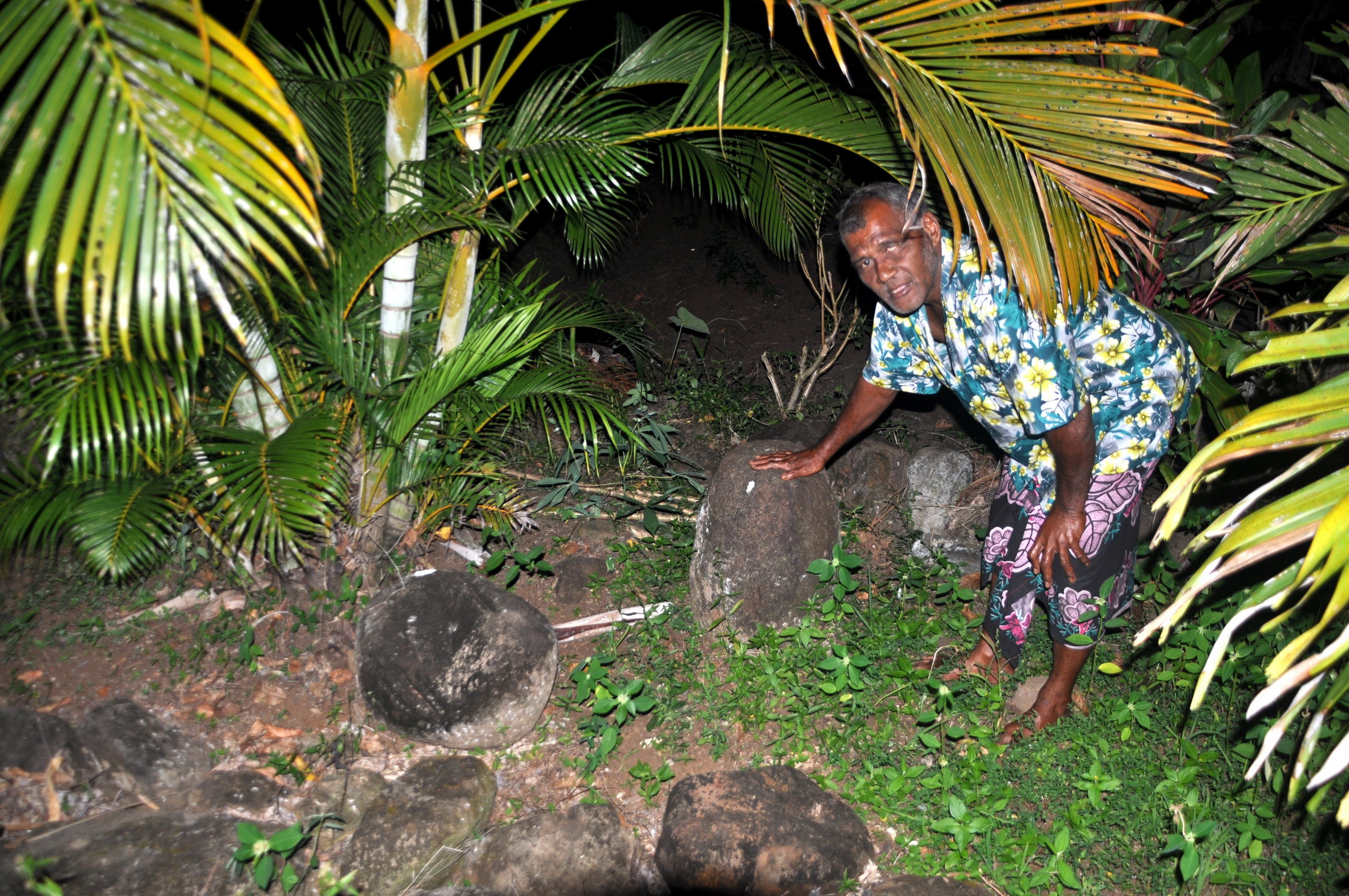
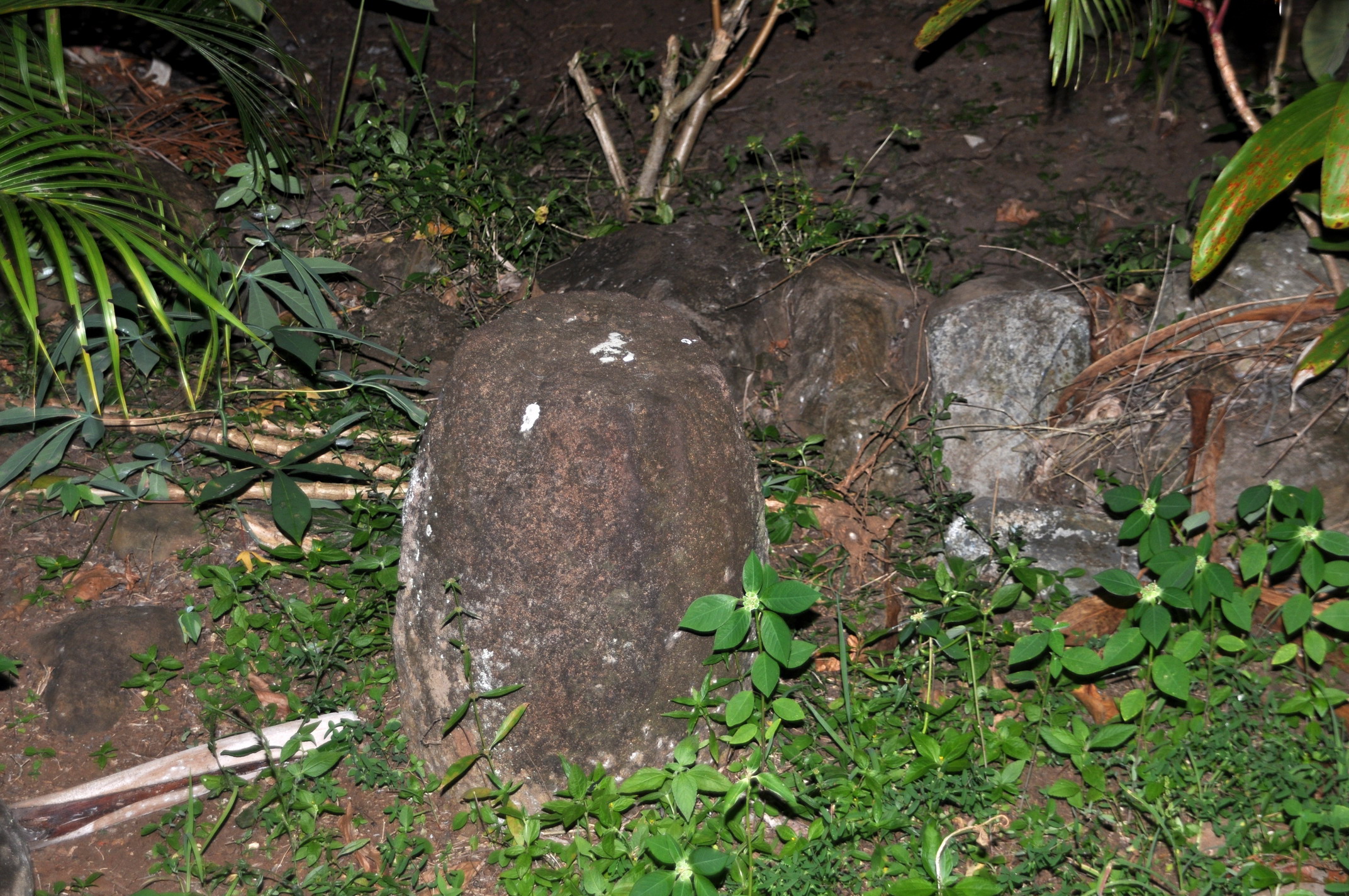
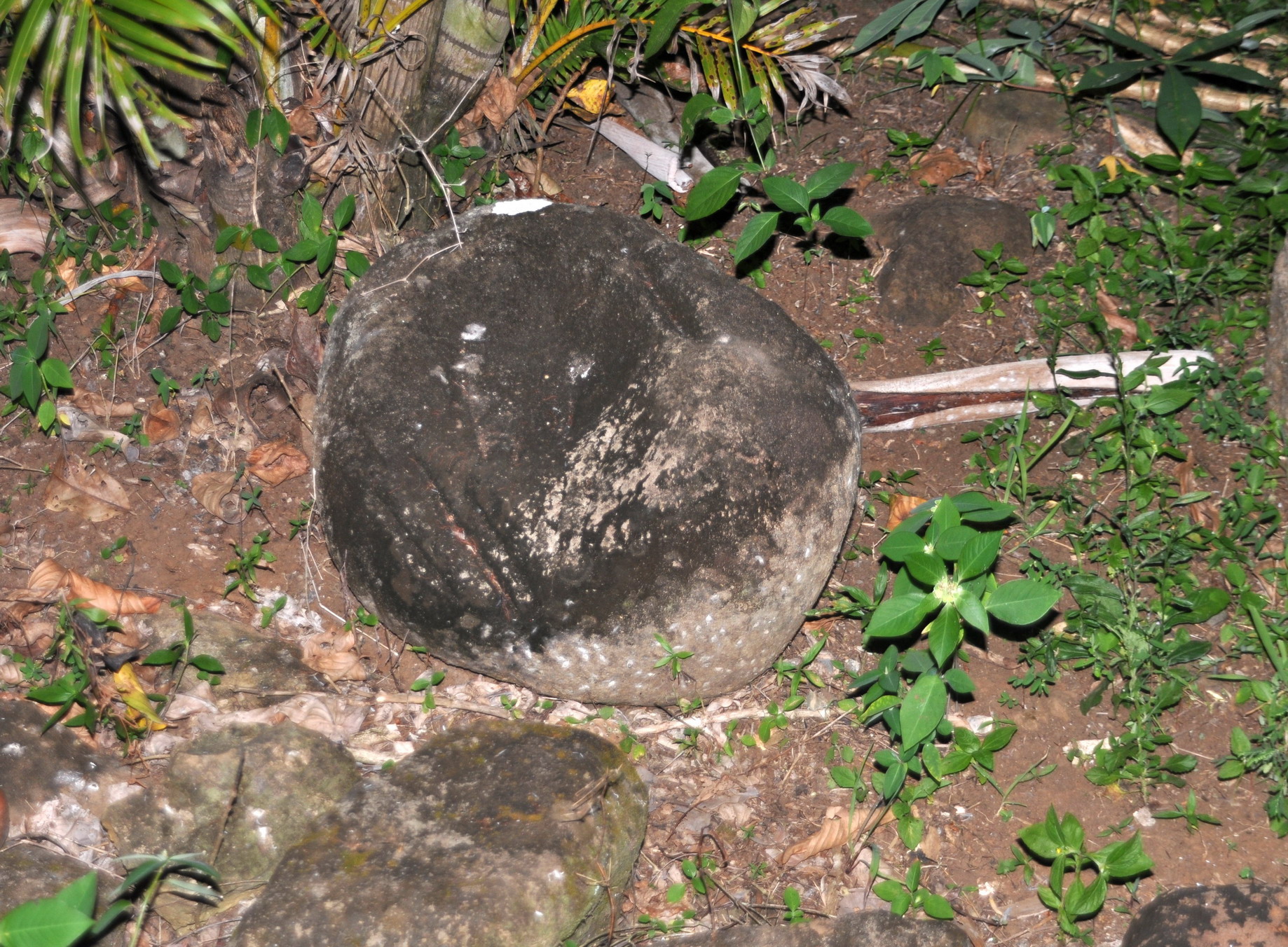
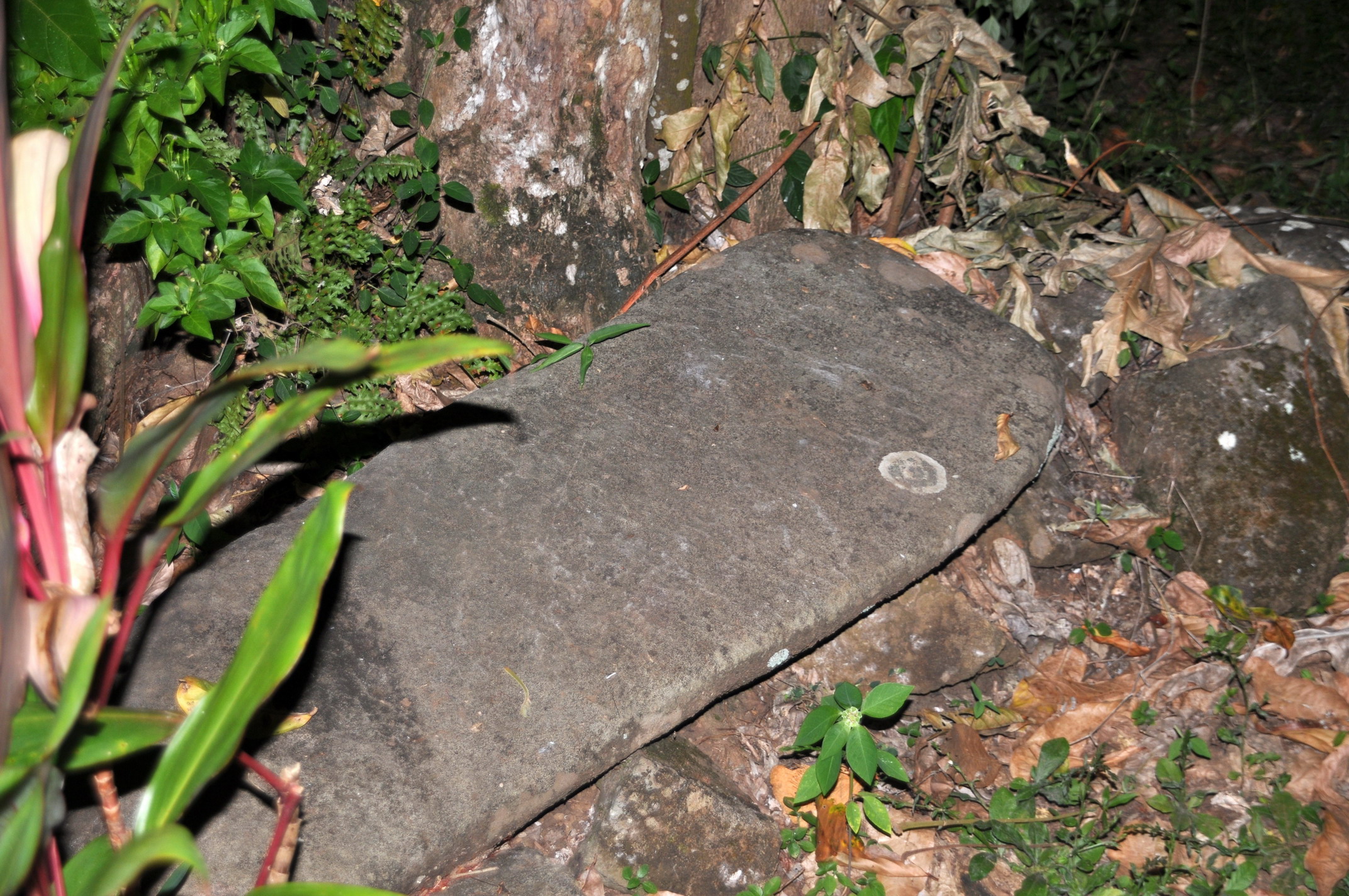
According to the story, the brain was reserved for the chief and was eaten with a special fork. Copies were now sold in souvenir shops. I bought some and later gave them in Russia to people who like to eat your brains by going on and on about something.
Villages often hadn't got on with one another. That made sense: neighbours were chiefly the people they'd eaten. Although people called themselves Christians and prayed devoutly on Sundays, they did so in churches of different denominations, which didn't help. Each Pacific country had a dozen different and sometimes quite unusual Christian communities, some local and others shared with neighbouring islands.
We were expected to pay the elder for the tour. No sum was named. We were to decide for ourselves what his priceless culture and its survival were worth. The officer had told us twenty dollars would do. The chief plainly wasn't pleased, but didn't say so openly.
We walked back in the dark without encountering robbers or cannibals, though the long hot walk had taken a toll on Tanya. Wanting to hurry away from the supposed cannibals, she'd overheated and seemed to have something like sunstroke. She felt sick all night, ran a fever, was dizzy and couldn't stand. The timing couldn't have been worse. We were so far from home. Our flight was the day after and we still had a bus, a ferry and another bus to catch. Transport in Fiji wasn't straightforward, and at the last minute there were rarely tickets available.
The next day was difficult. First came several hours on a bus to the ferry. Just before the crossing at Nabouwalu, Tanya passed out, and I took her to the hospital there. They saw her straight away, gave her a couple of injections and brought her round. The hospital was quite good and everything was free, better than I'd have expected in a smaller New Zealand town. We even caught the ferry.
Back on Viti Levu
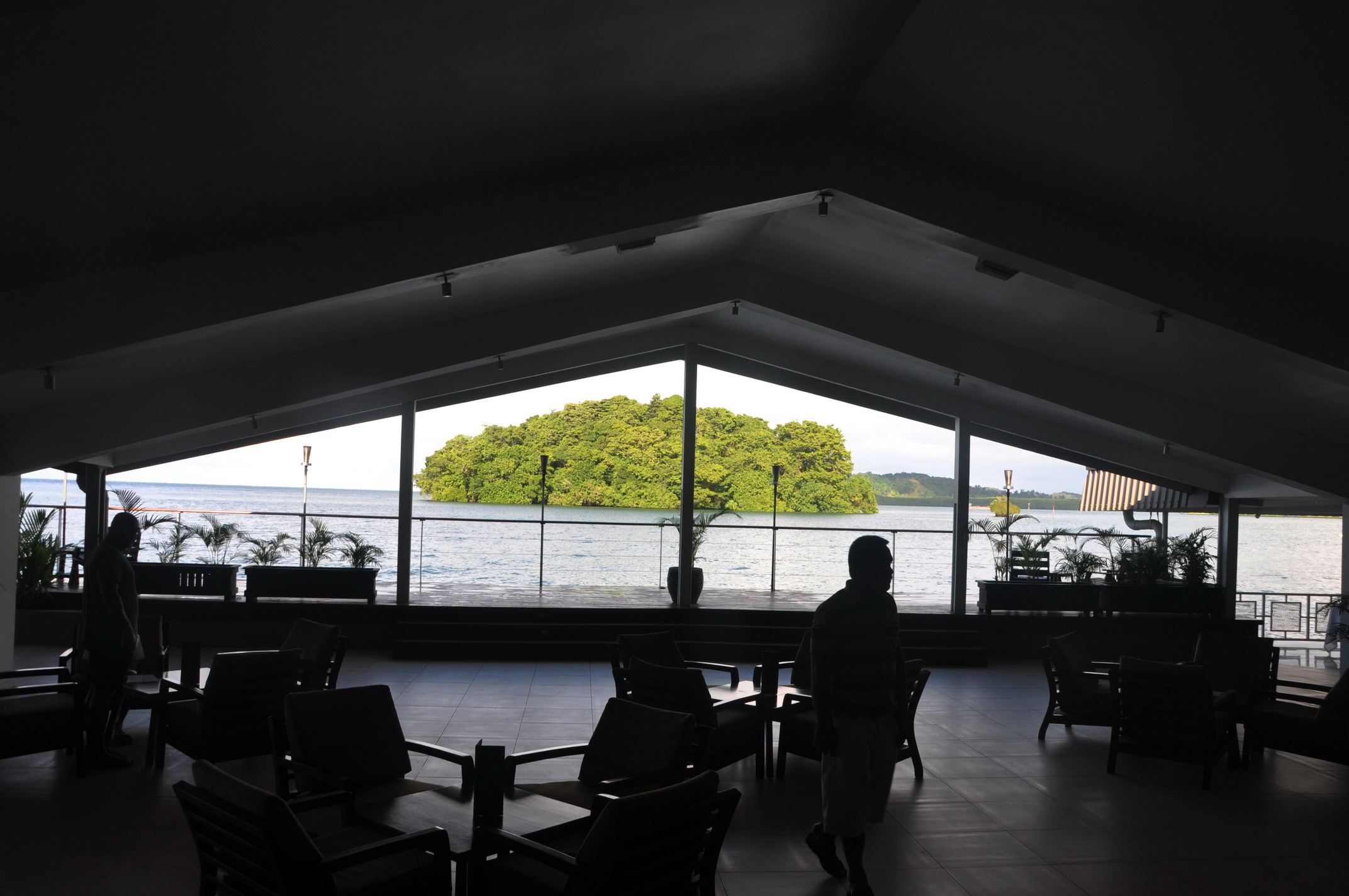
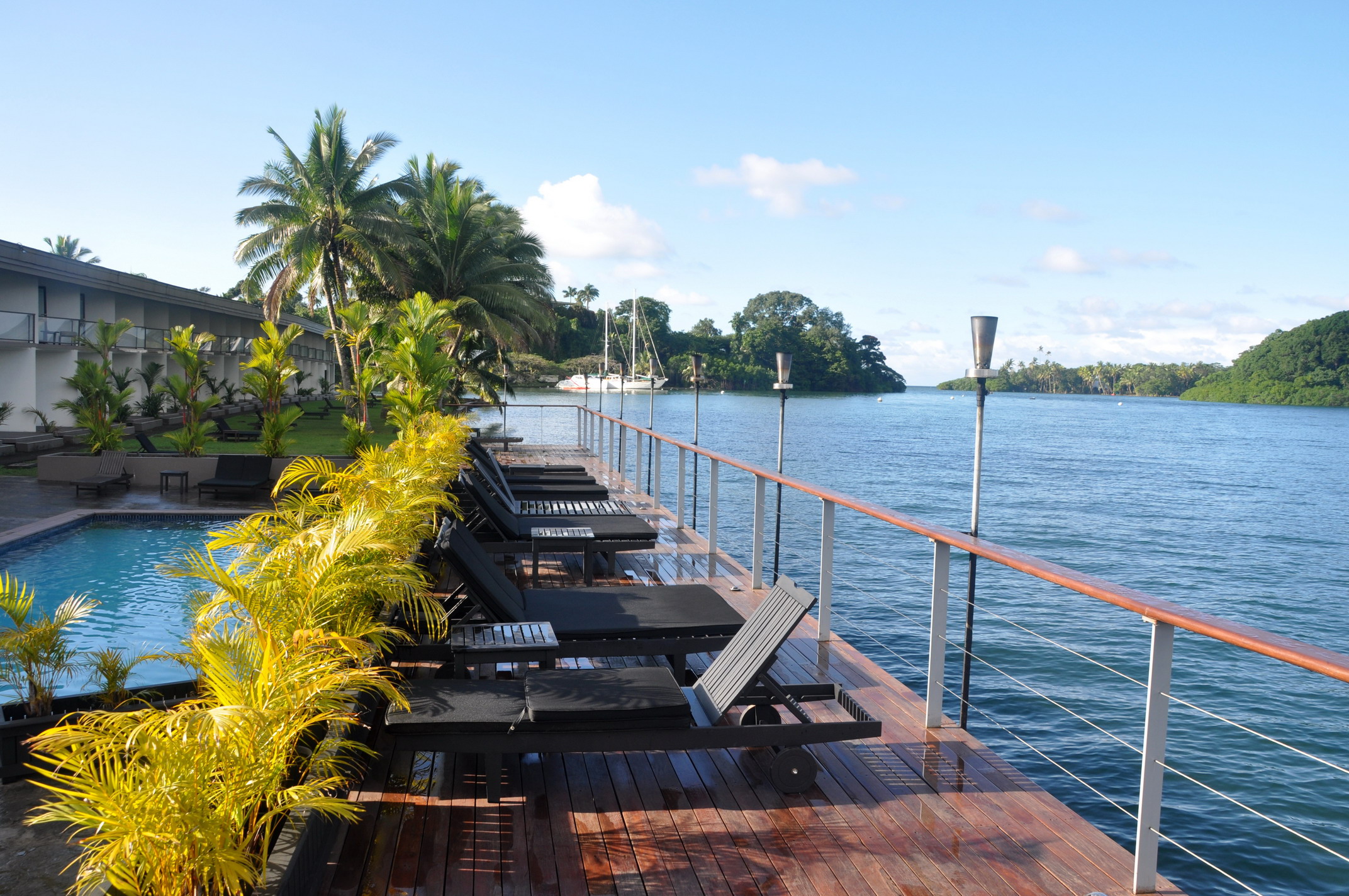
We reached Suva by bus and took a taxi to the airport, where a car was waiting for us. The worst was over. We stayed that night in a good hotel by the sea near Suva, the Novotel (18°06.464′S, 178°23.755′E). It had proper air conditioning and Tanya could cool down and recover. By the following day she felt somewhat better. She preferred to stay in the car, but was no longer fainting.
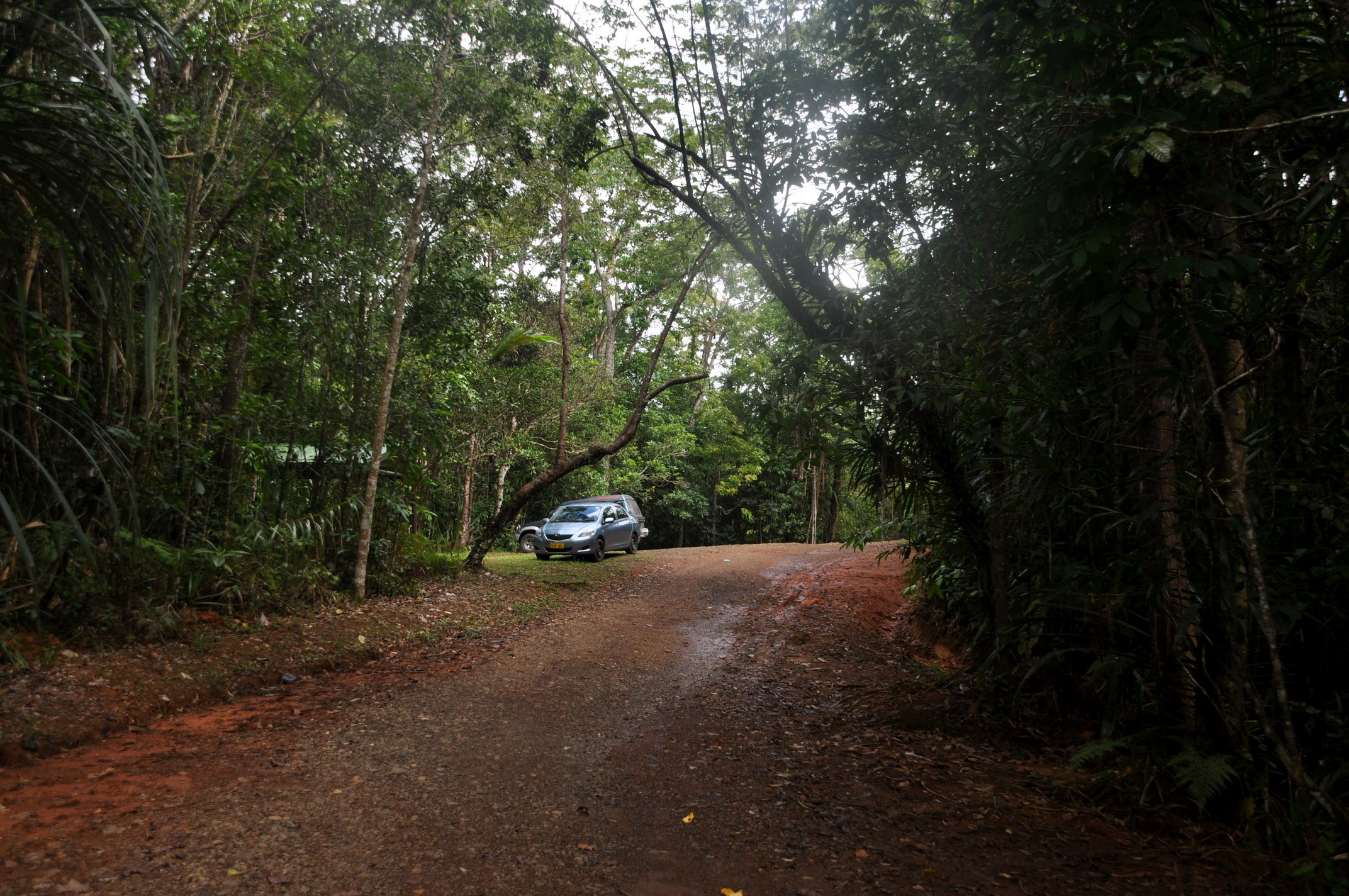
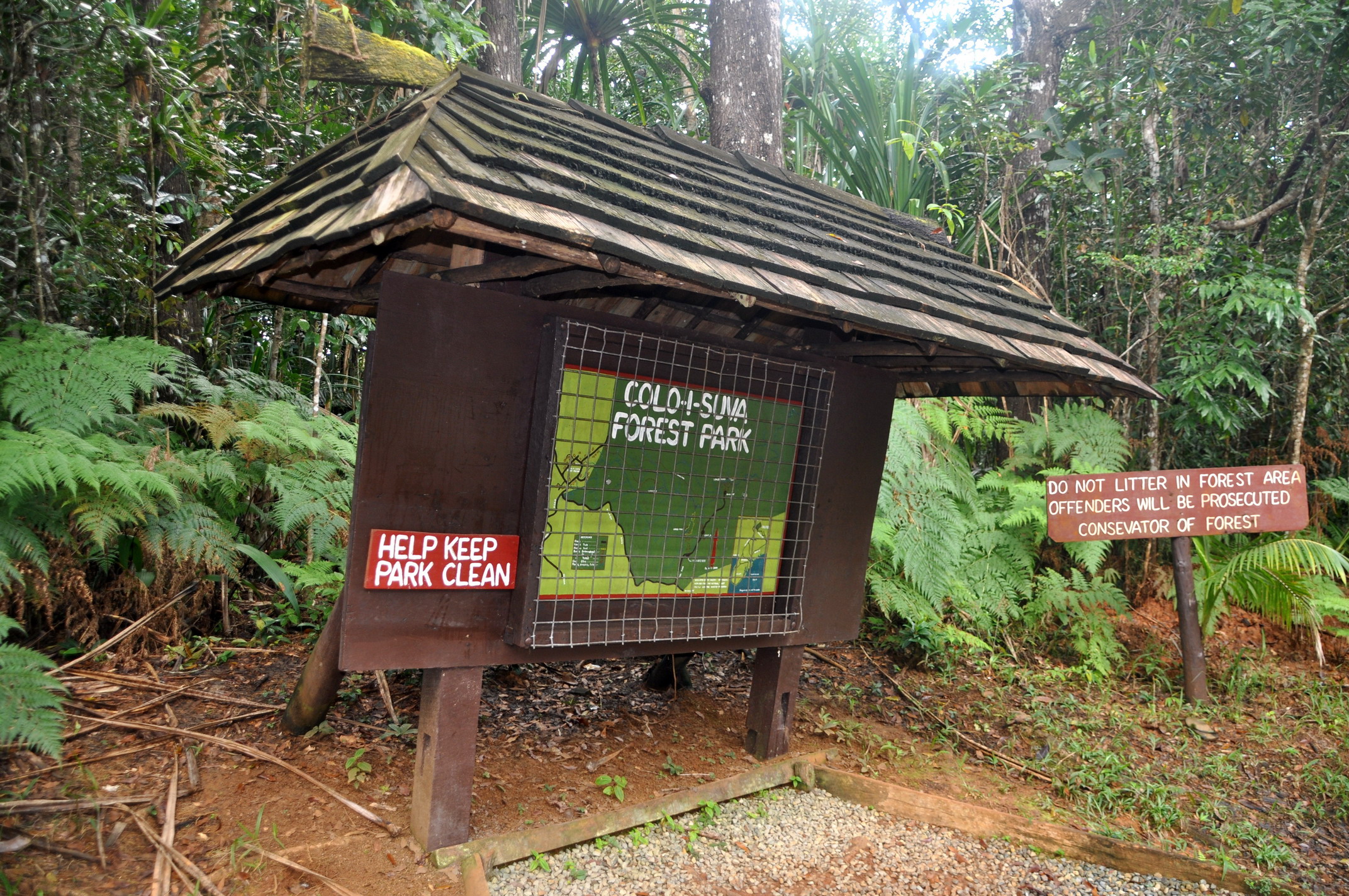
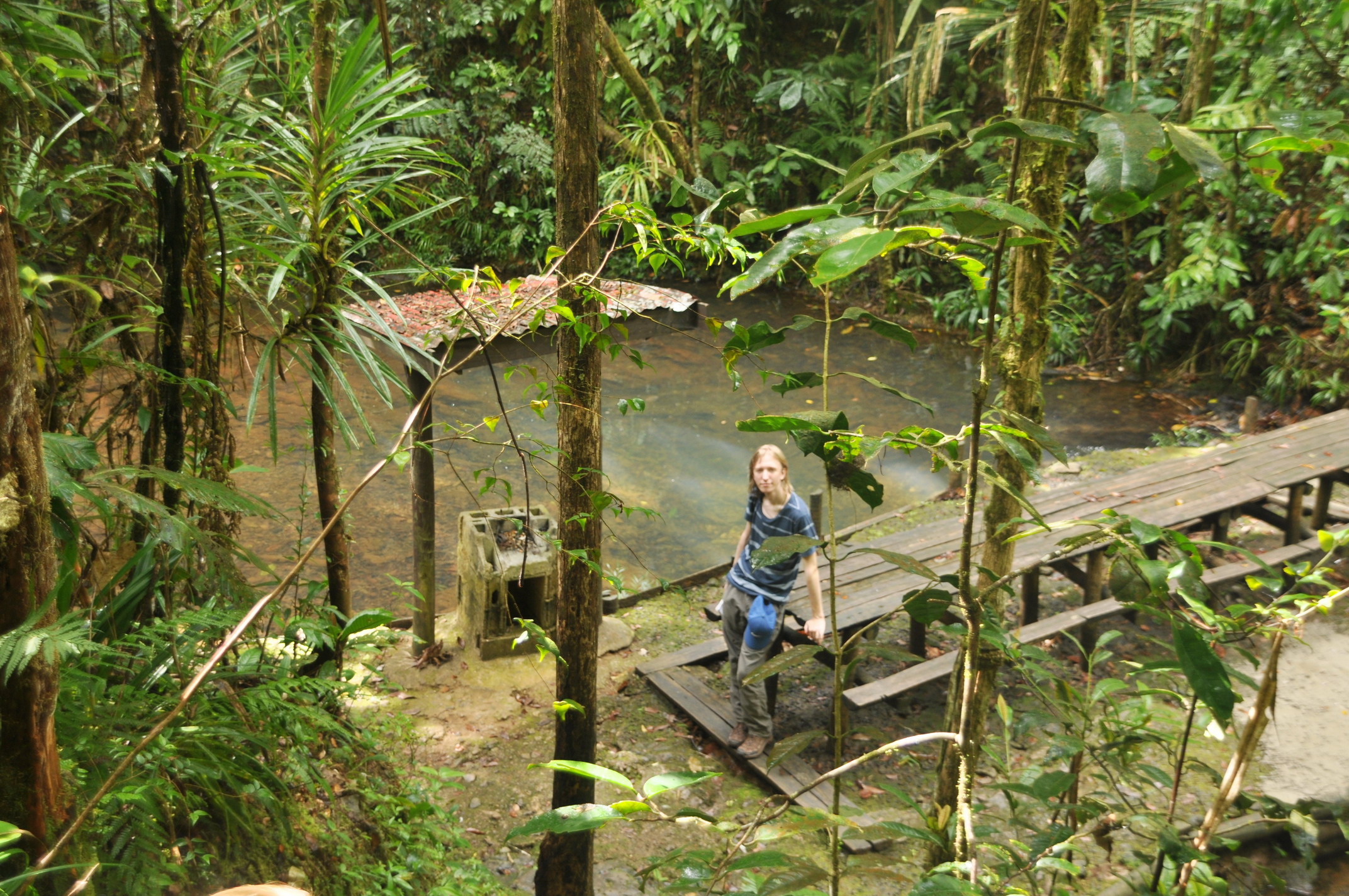
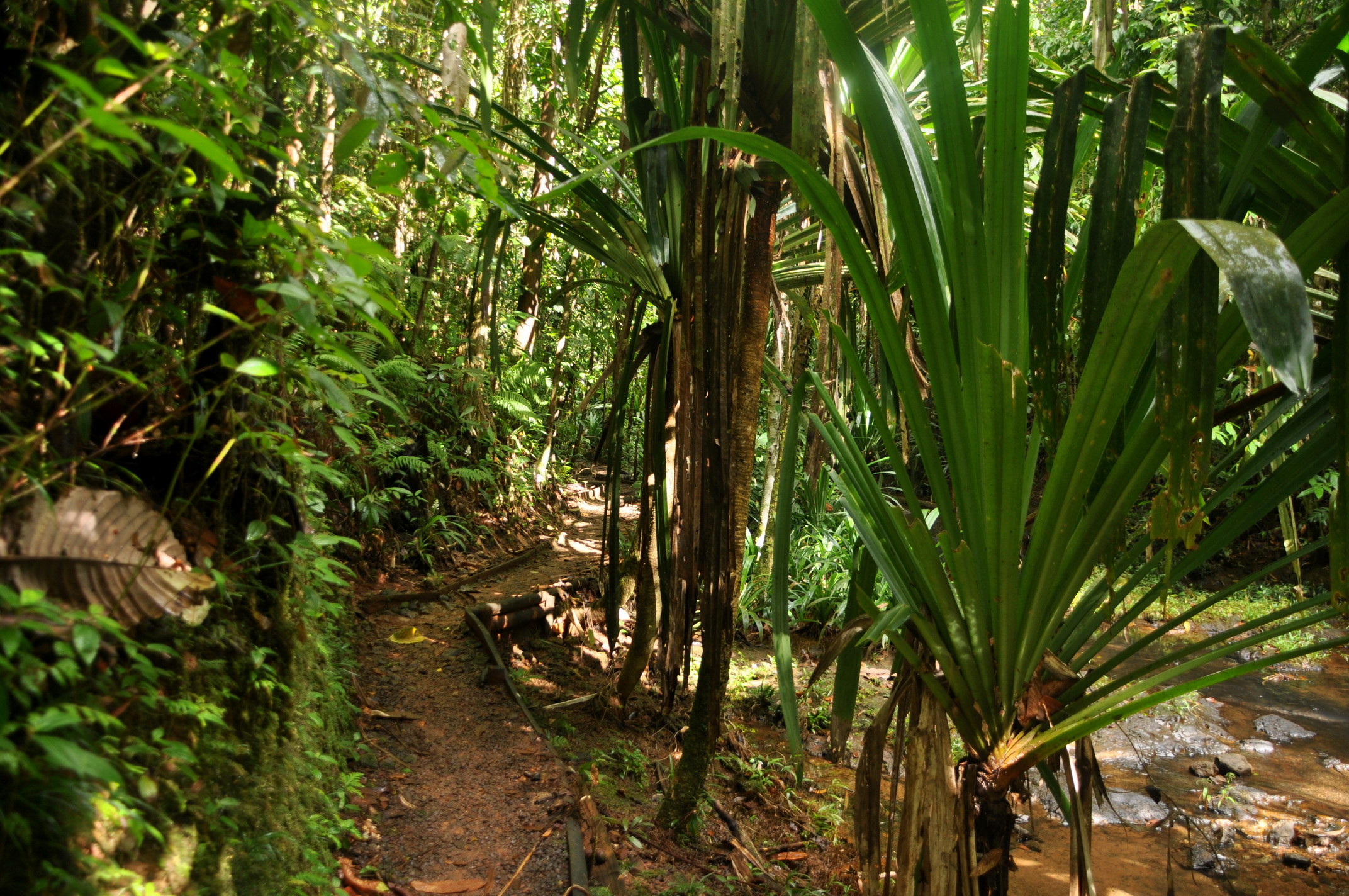
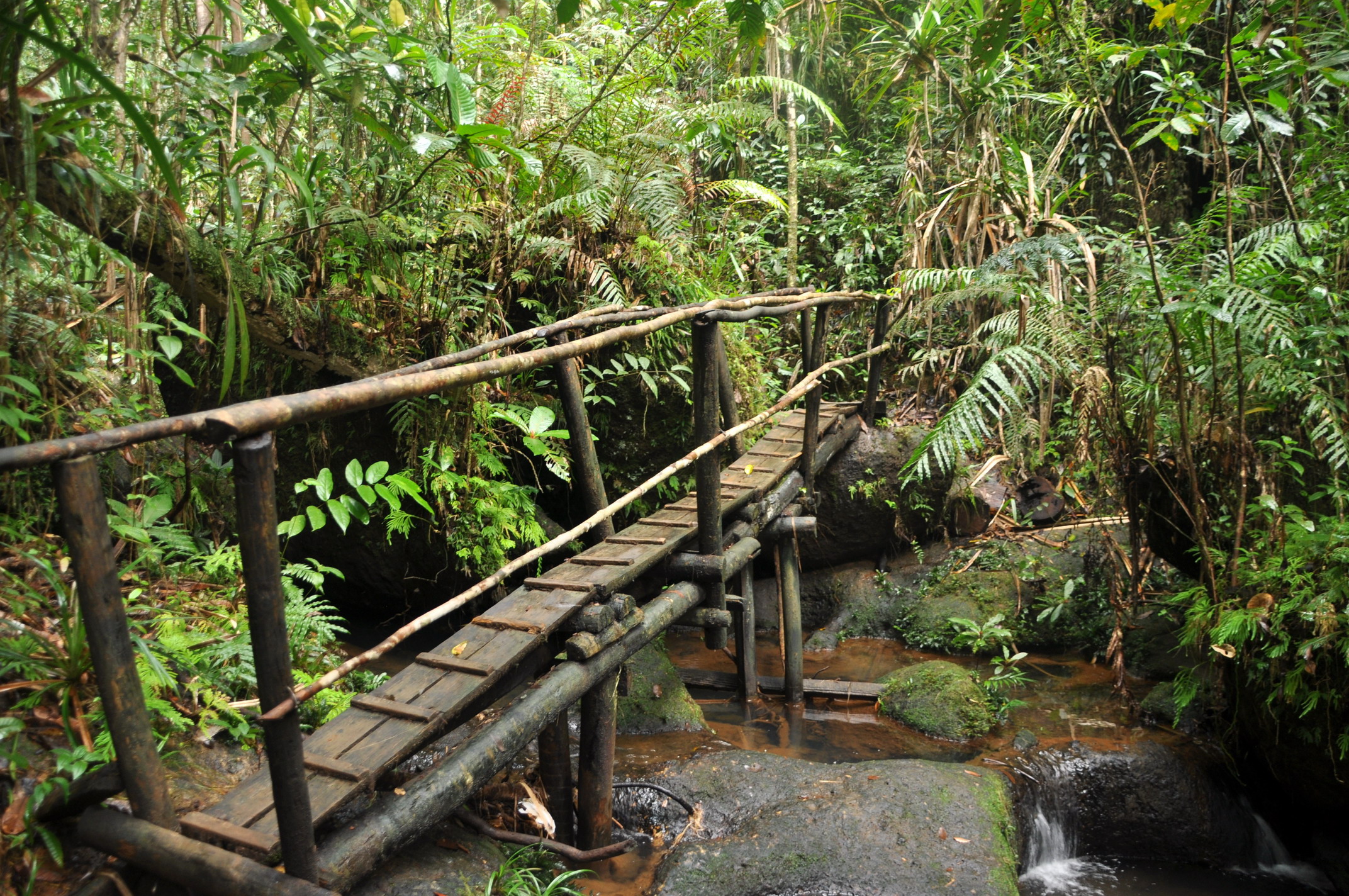
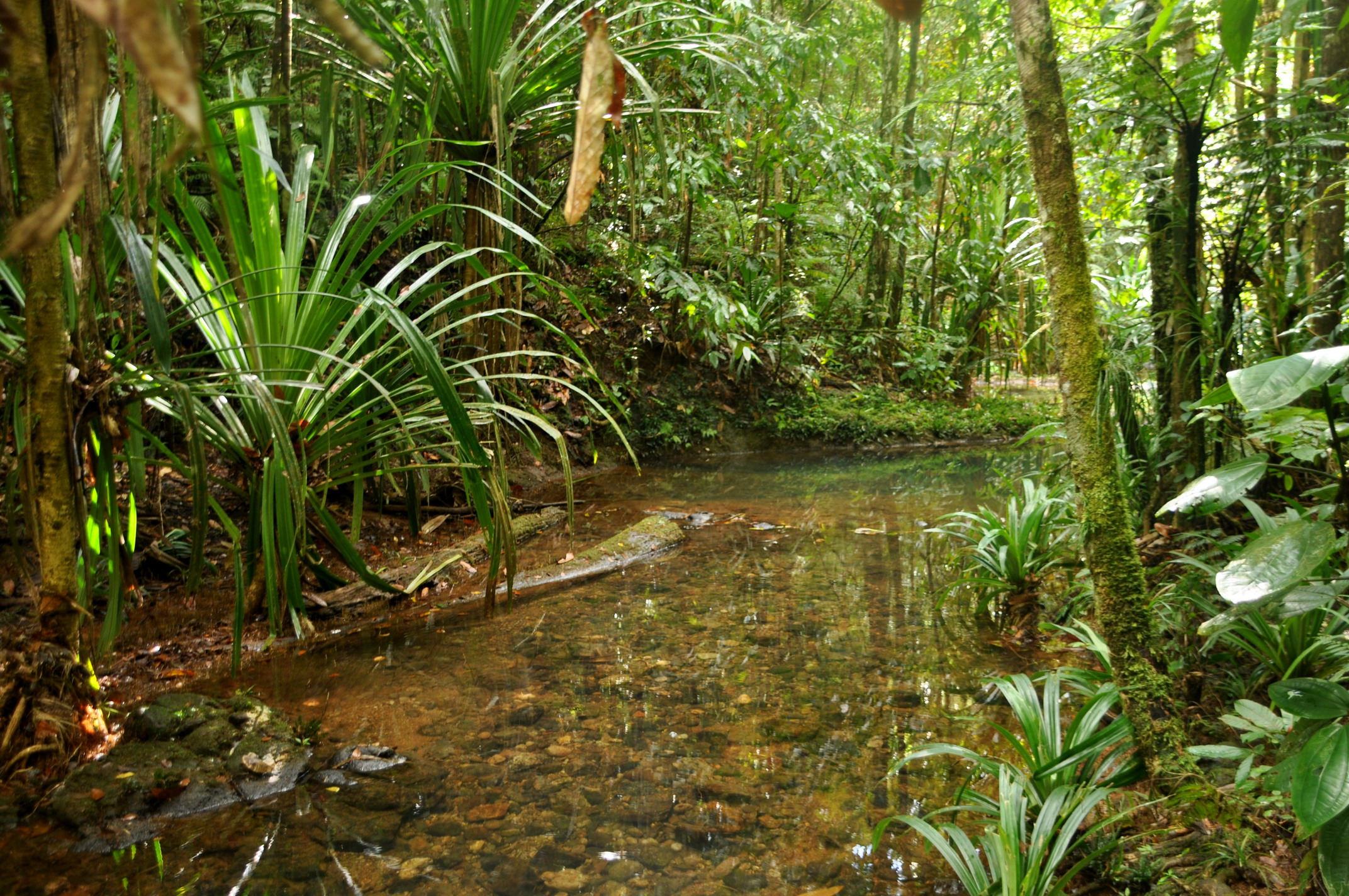
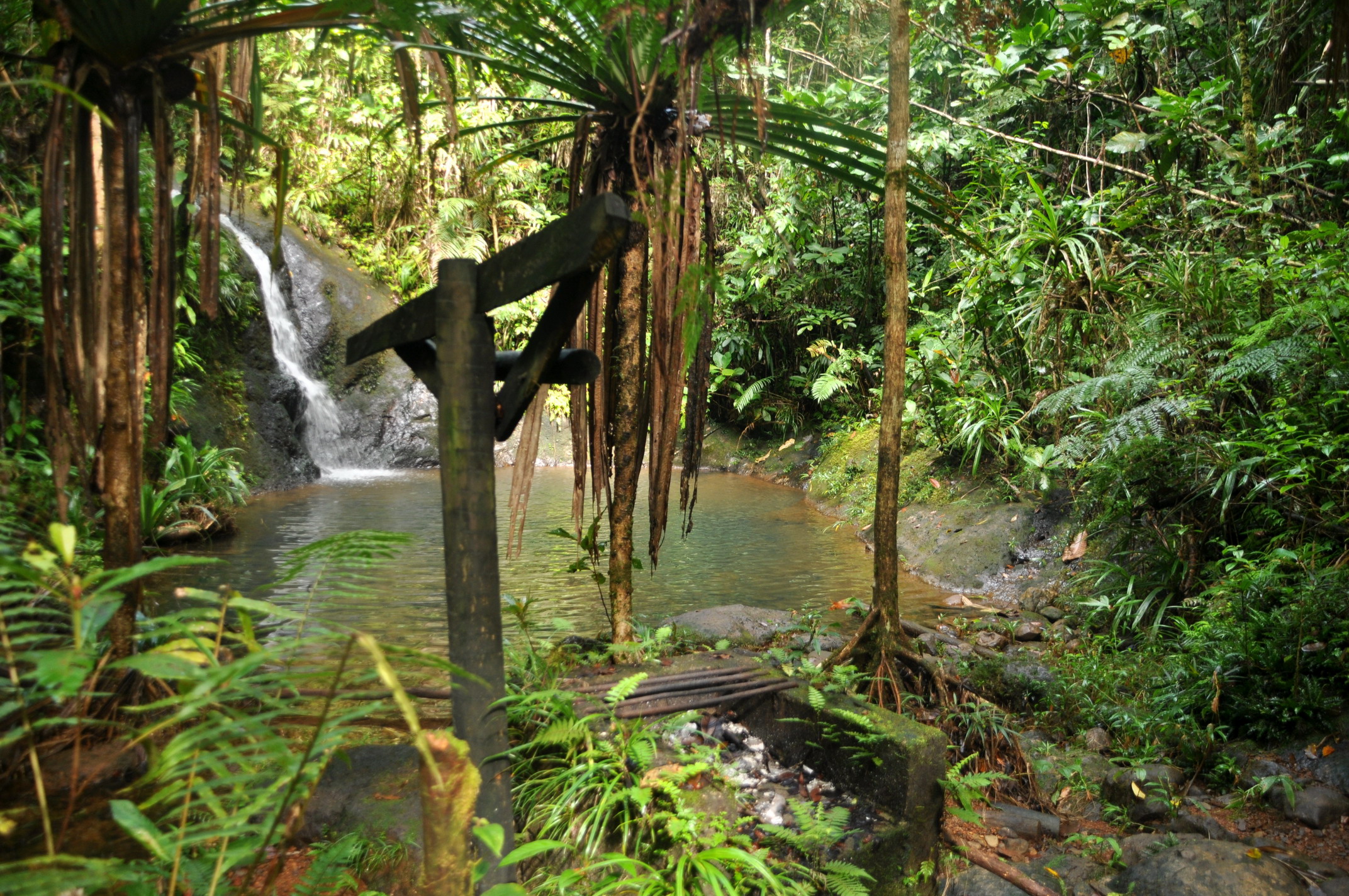
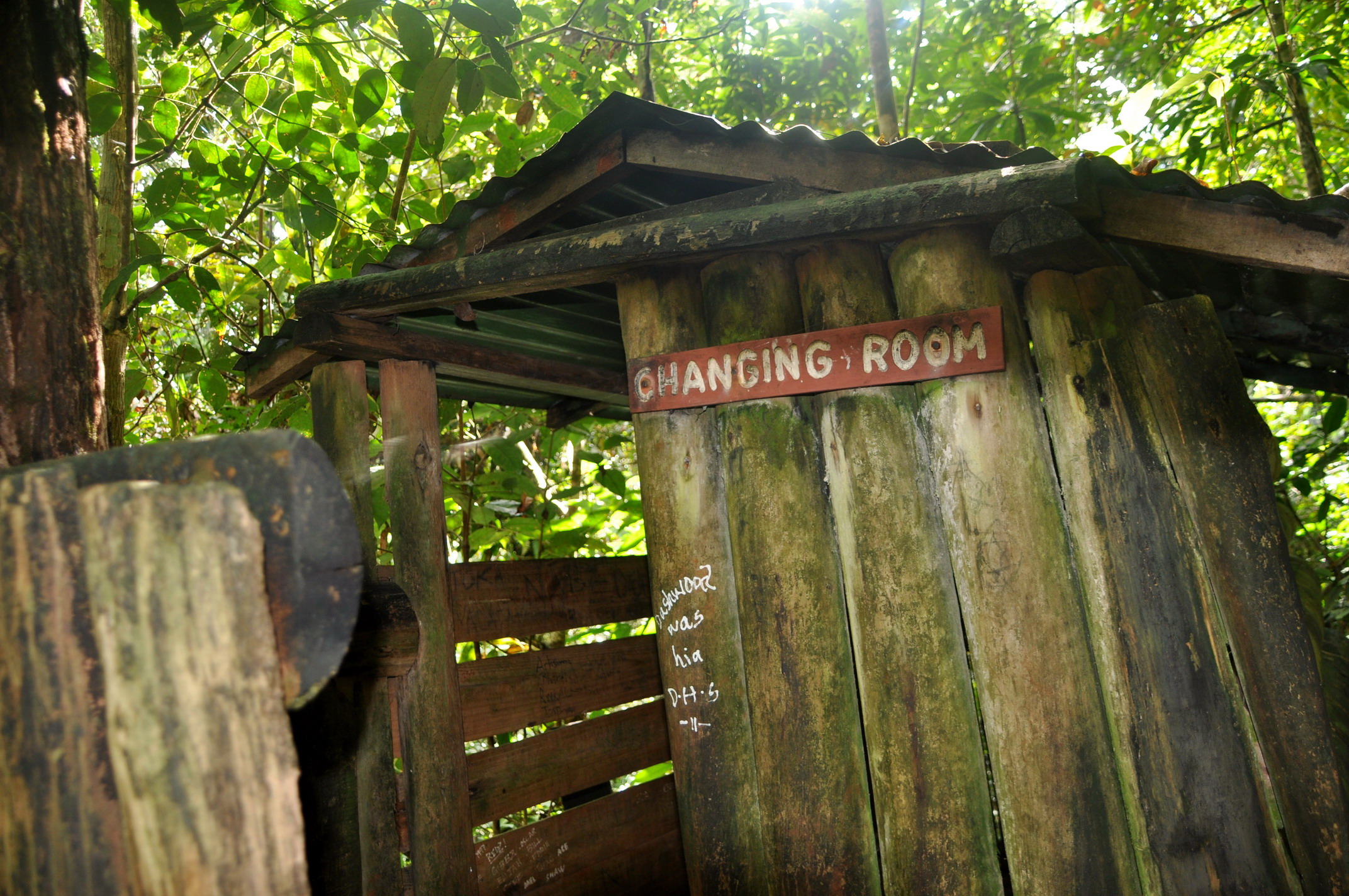
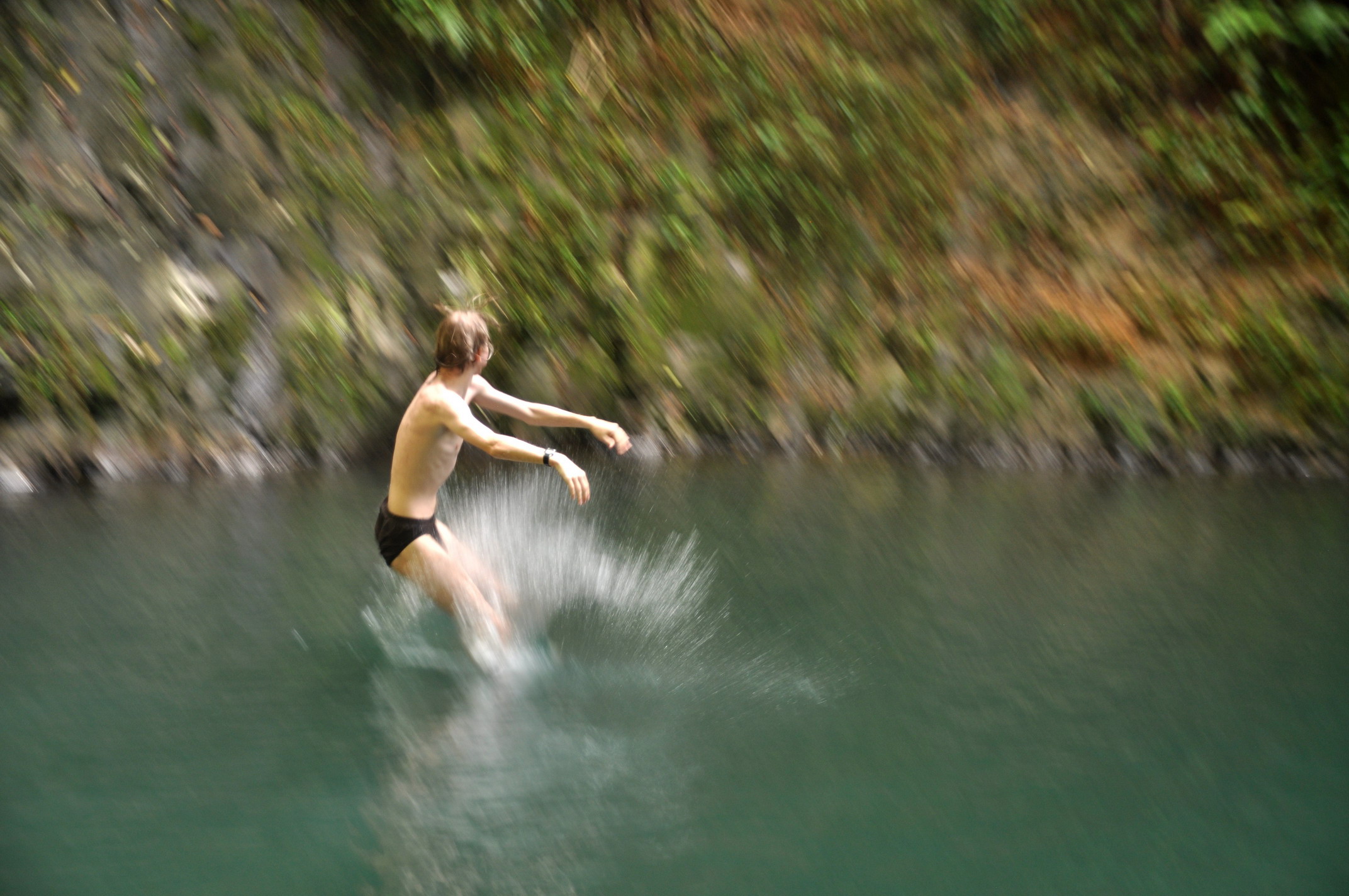
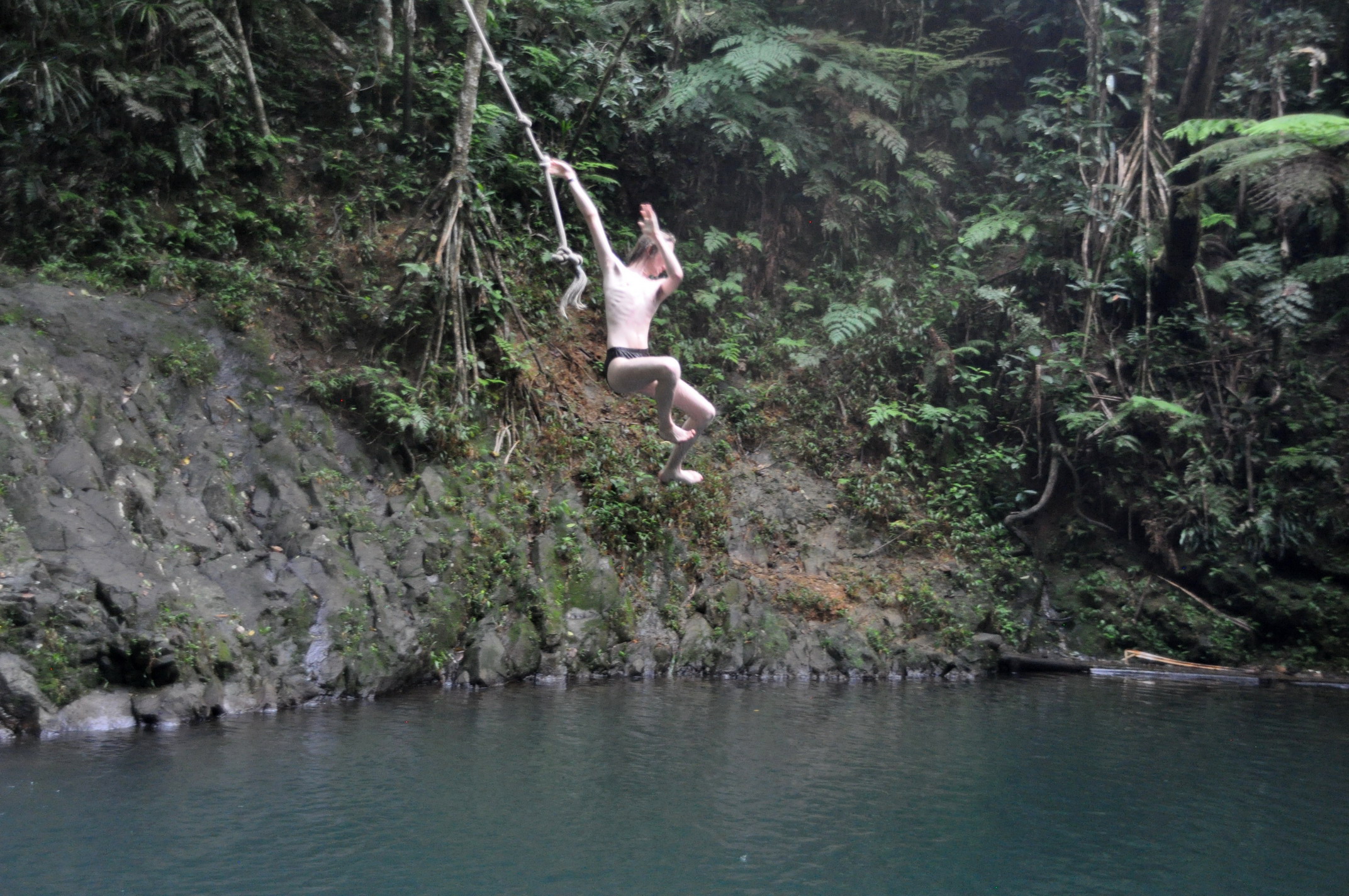
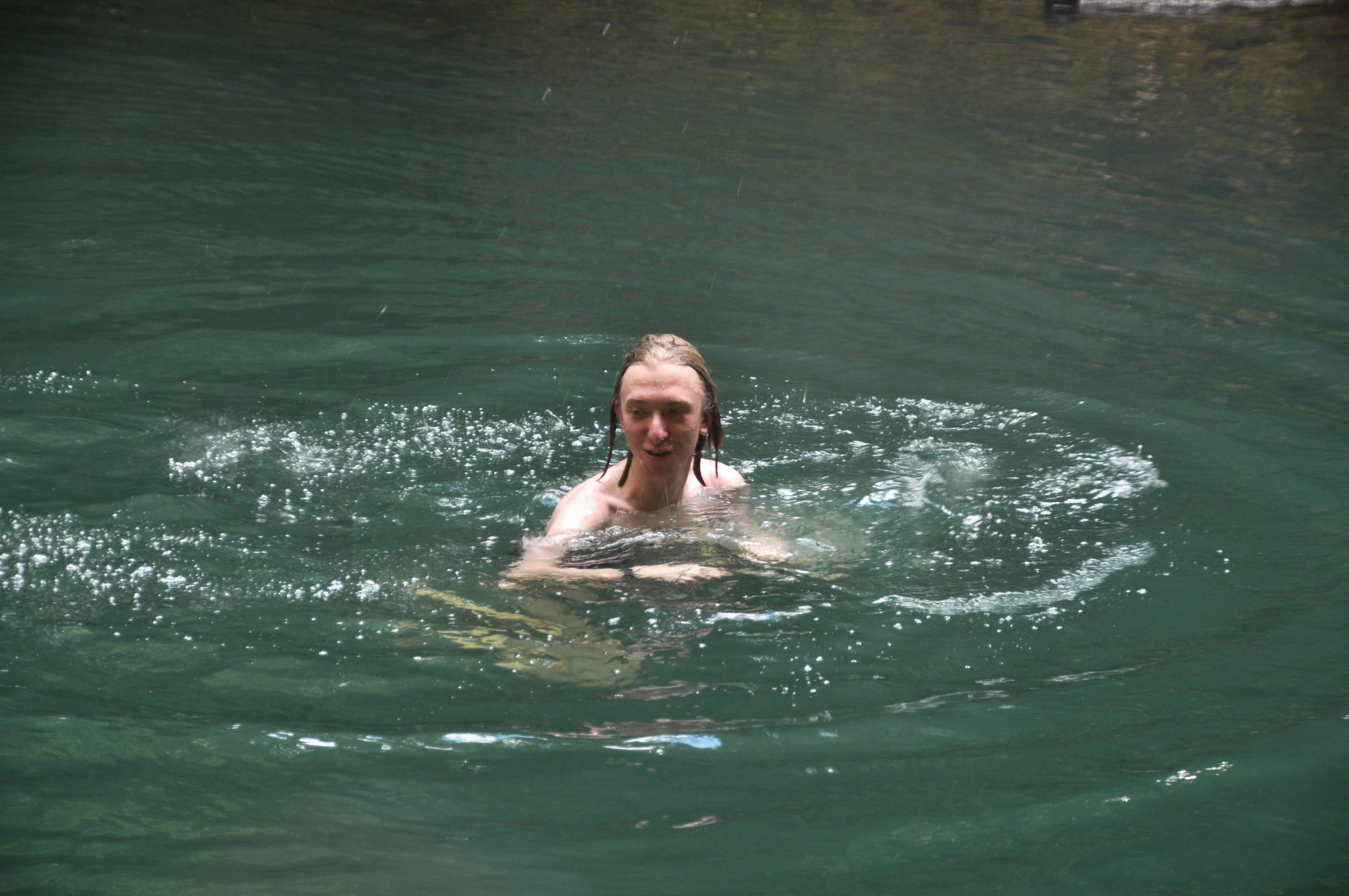
We began by visiting Colo-i-Suva Forest Park (18°03.790′S, 178°28.217′E). Here you could walk along paths through the tropical forest and swim in its pools. The park was well kept and uncrowded. The forest was tropical, though oceanic volcanic islands are relatively poor in species. These islands were only some forty million years old and had never been joined to the mainland. Not every plant and animal can cross an ocean to begin life in a new place. The best part for Denis and me, we decided, was the rope swing, from which you could drop into the pool.
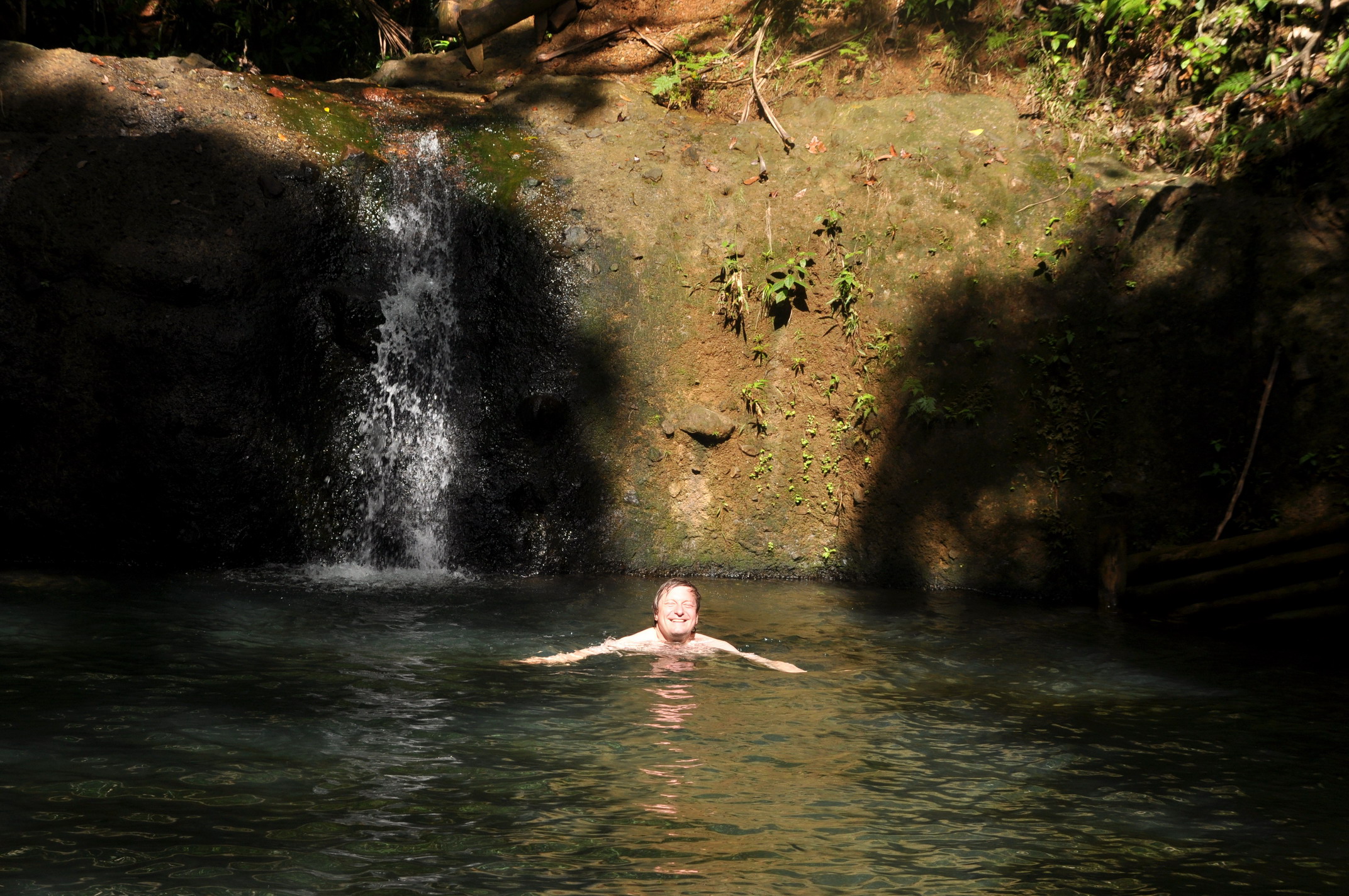
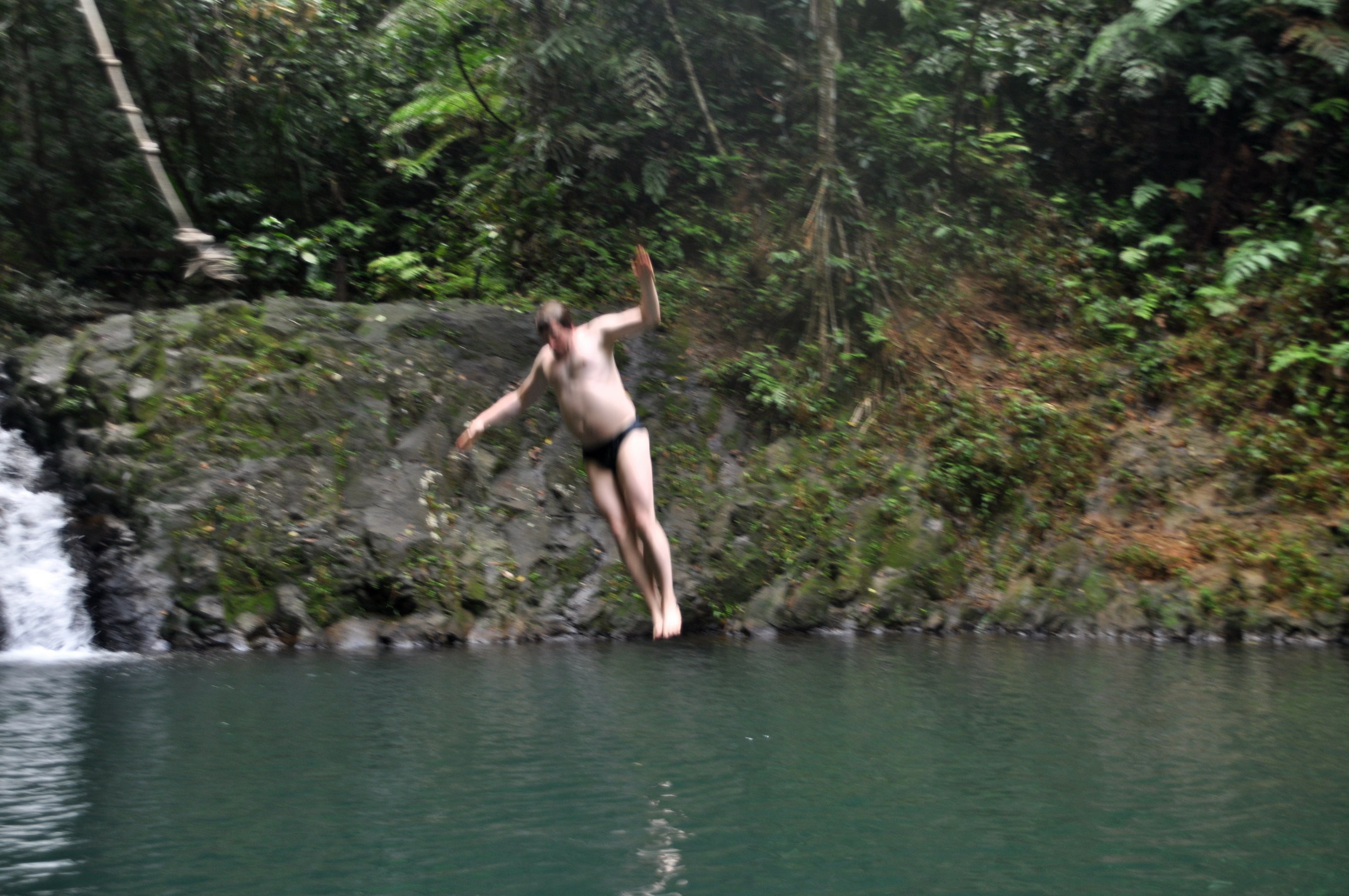
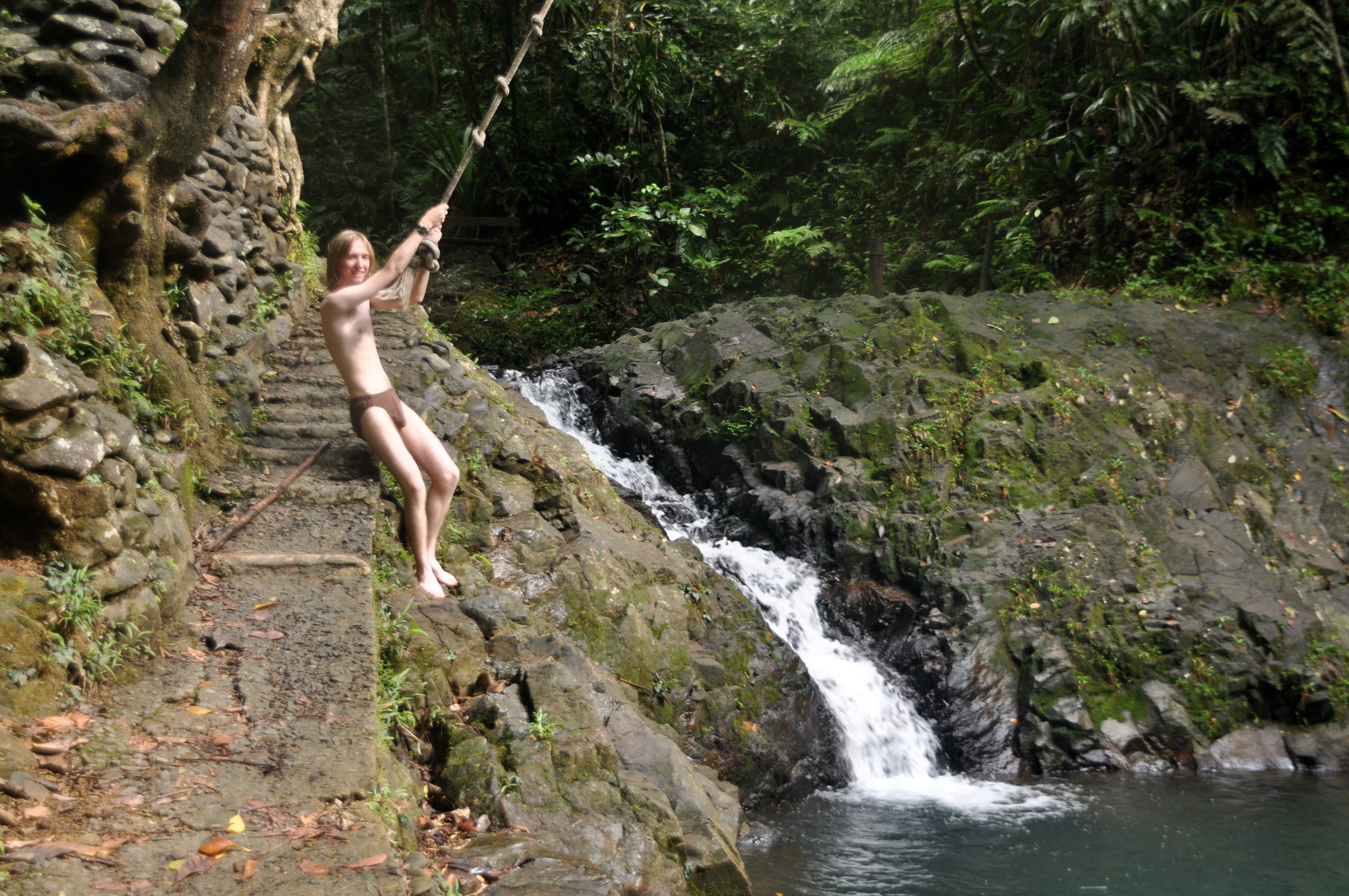
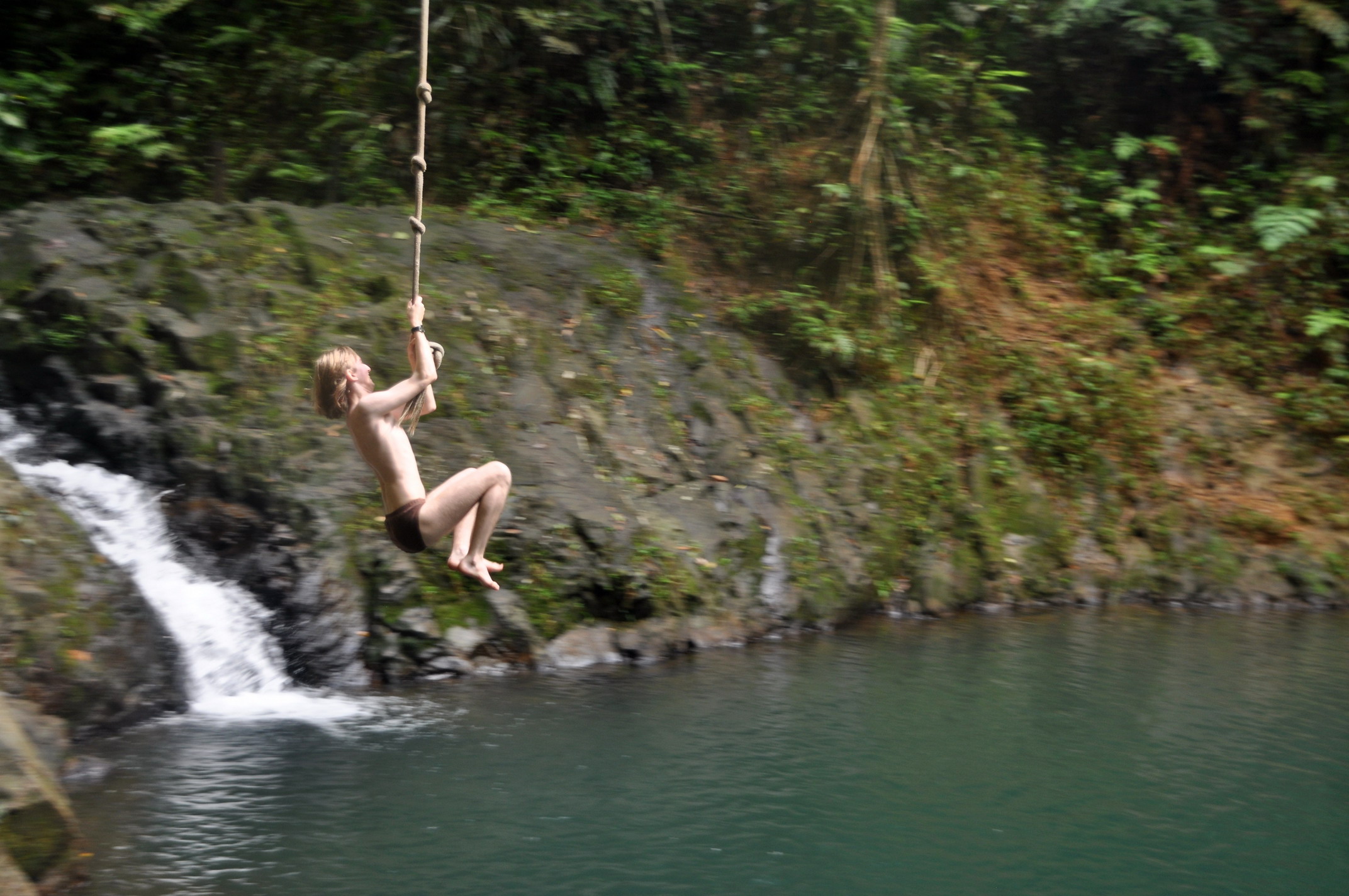
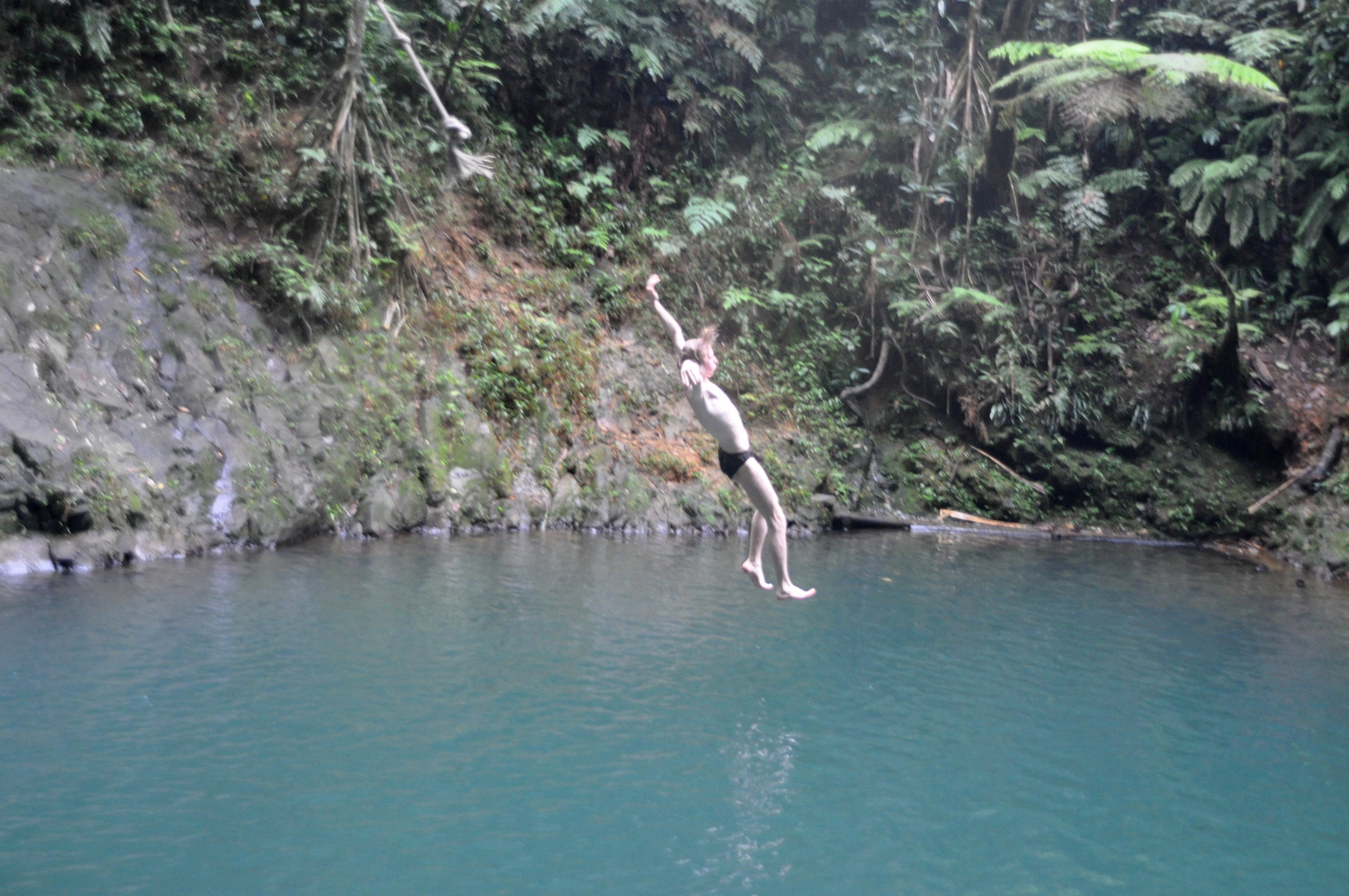
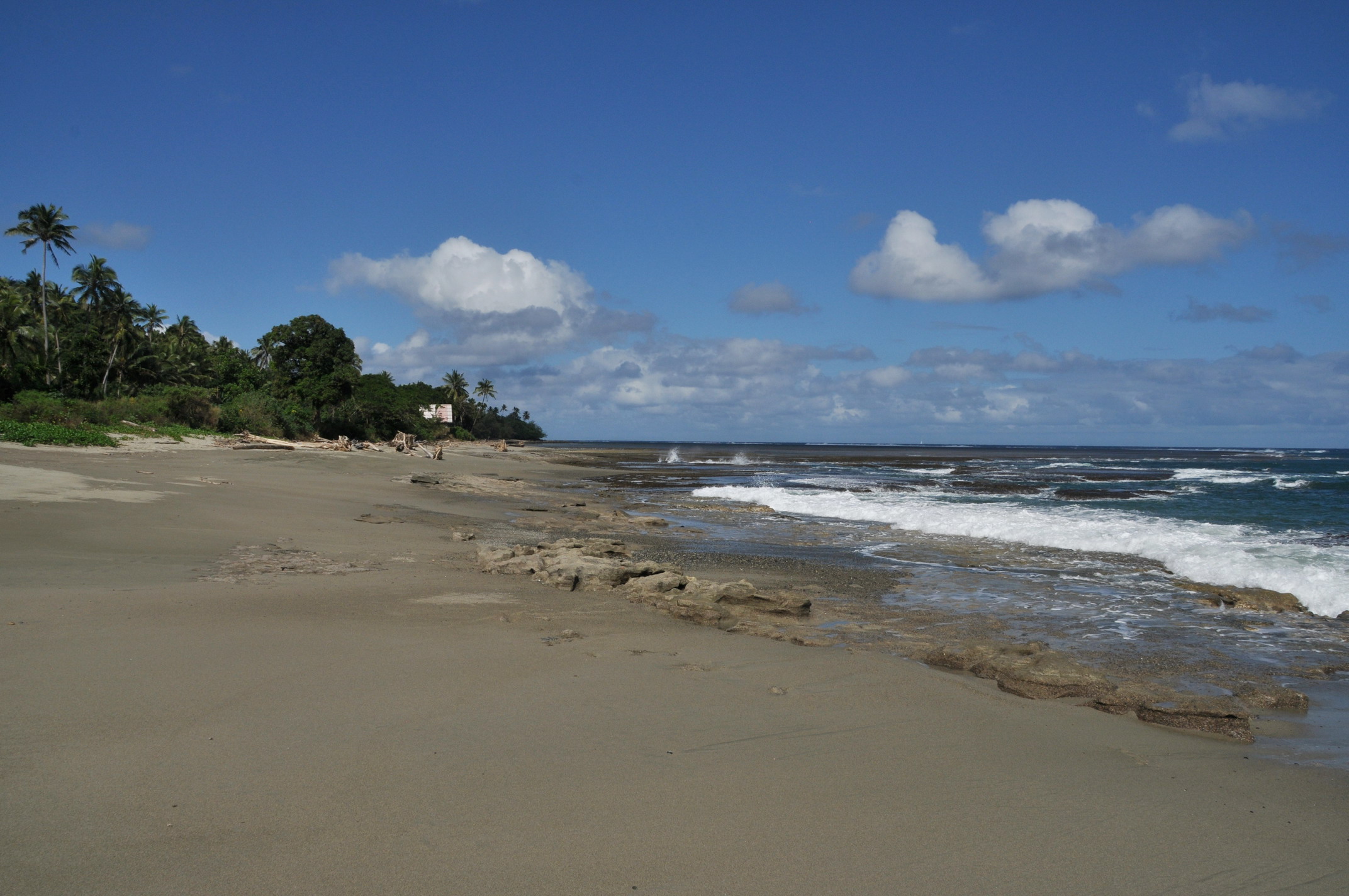
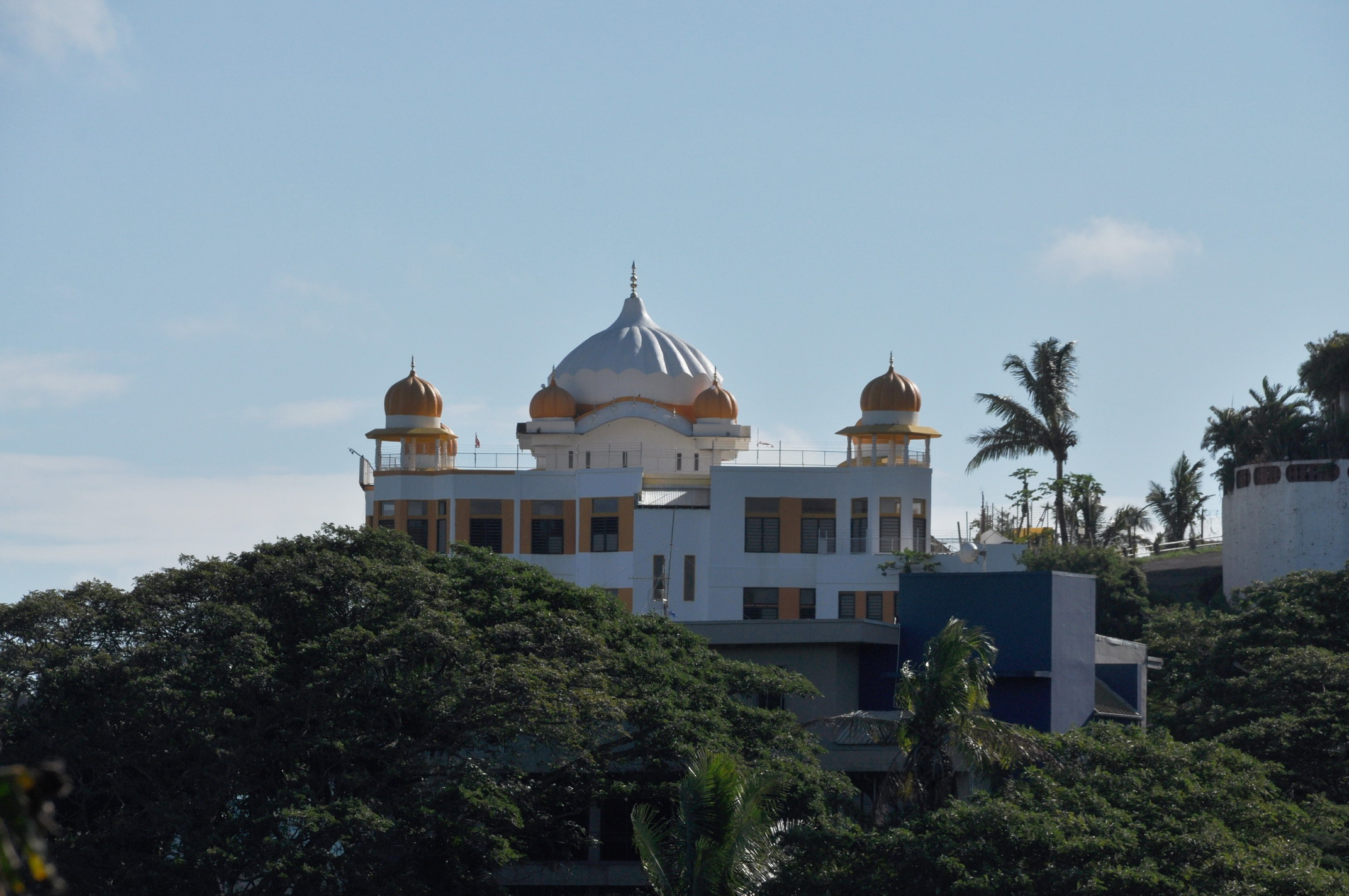
We drove on along the south coast of Viti Levu towards Nadi. It was a long road along the sea, though there were few good places to swim. Most of the beaches were behind resort fences. This, close to the airport, was where package tourists were kept. There were few sights or viewpoints. In Sigatoka there was a handsome temple.
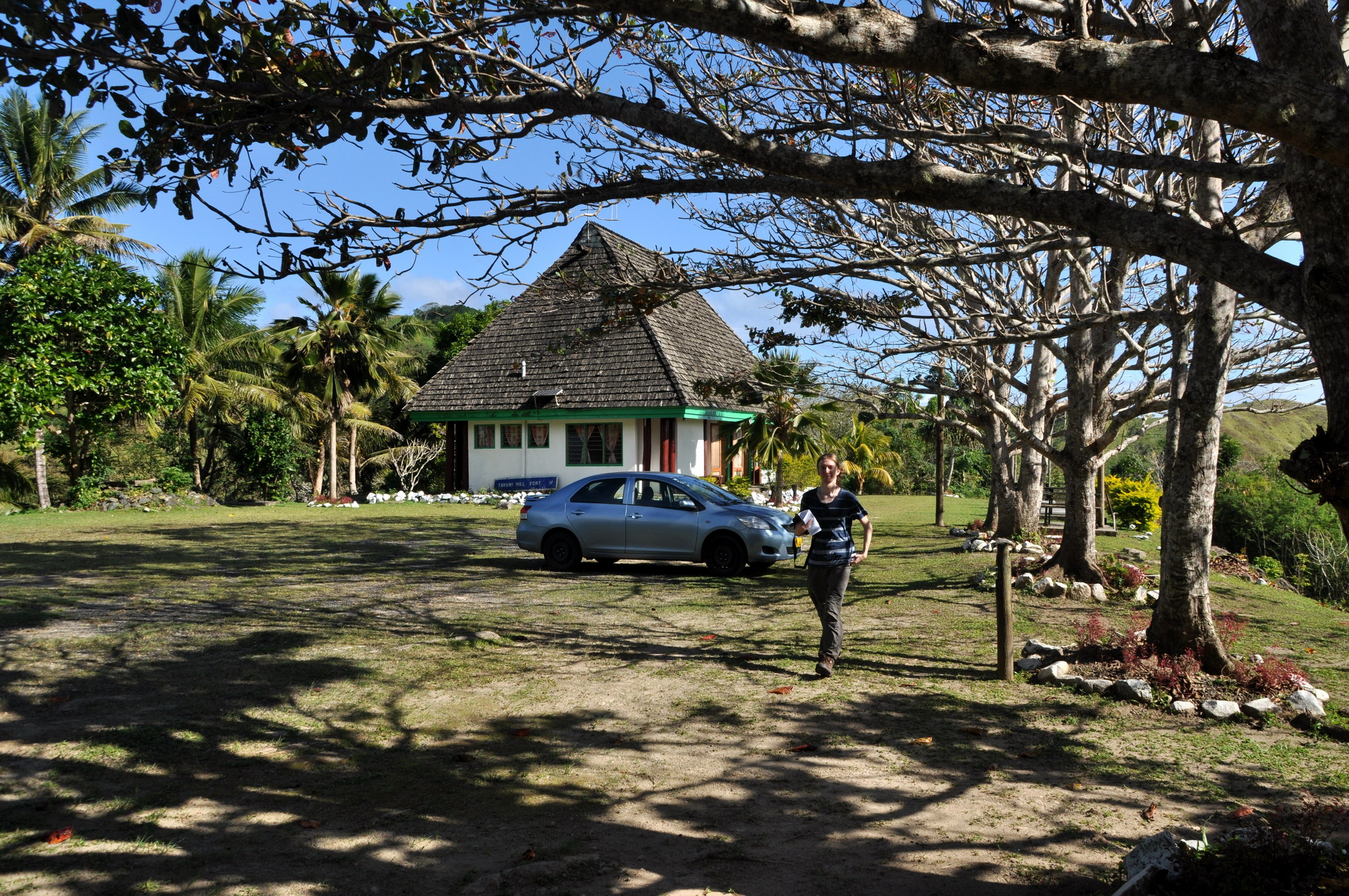
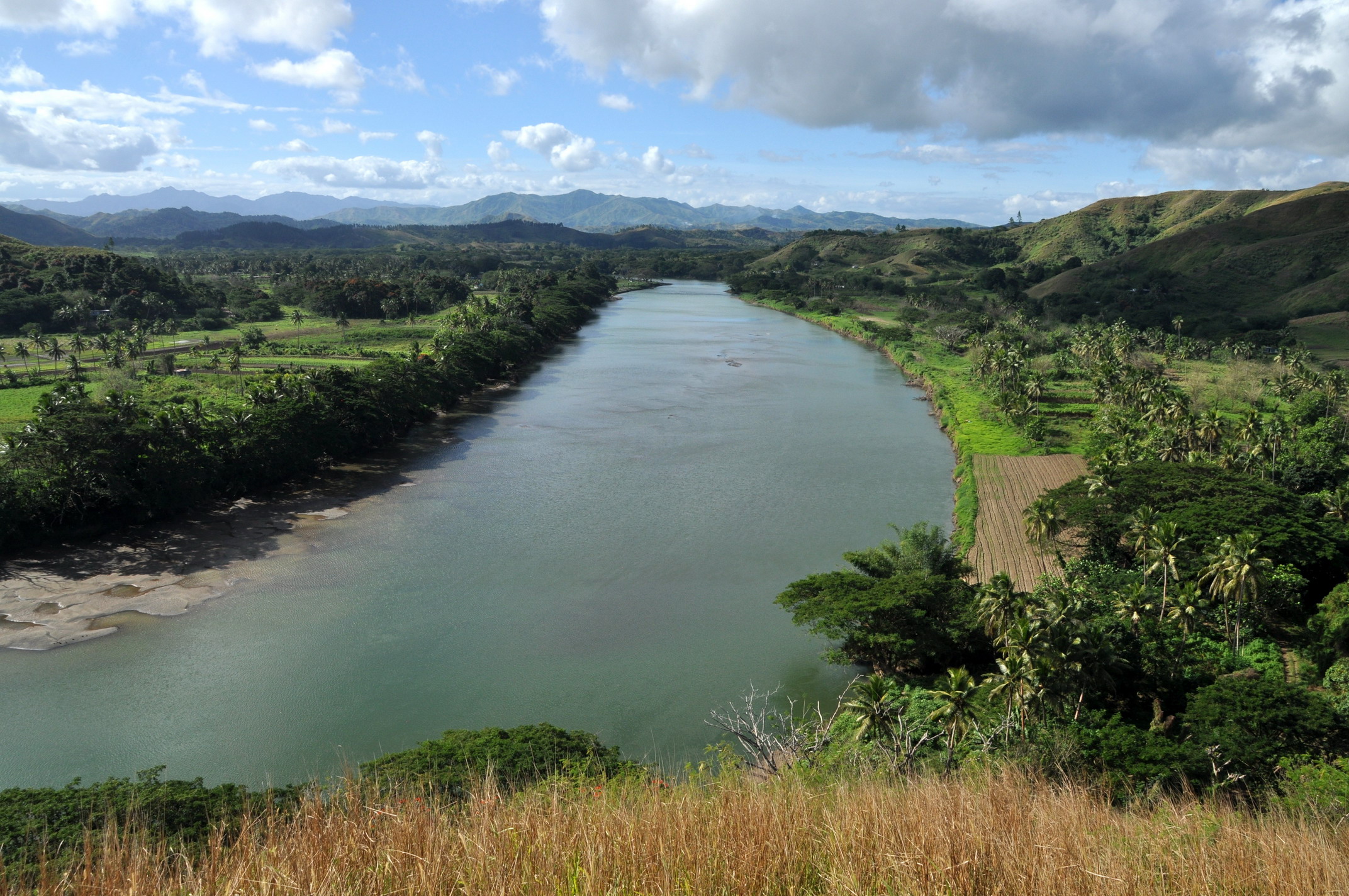
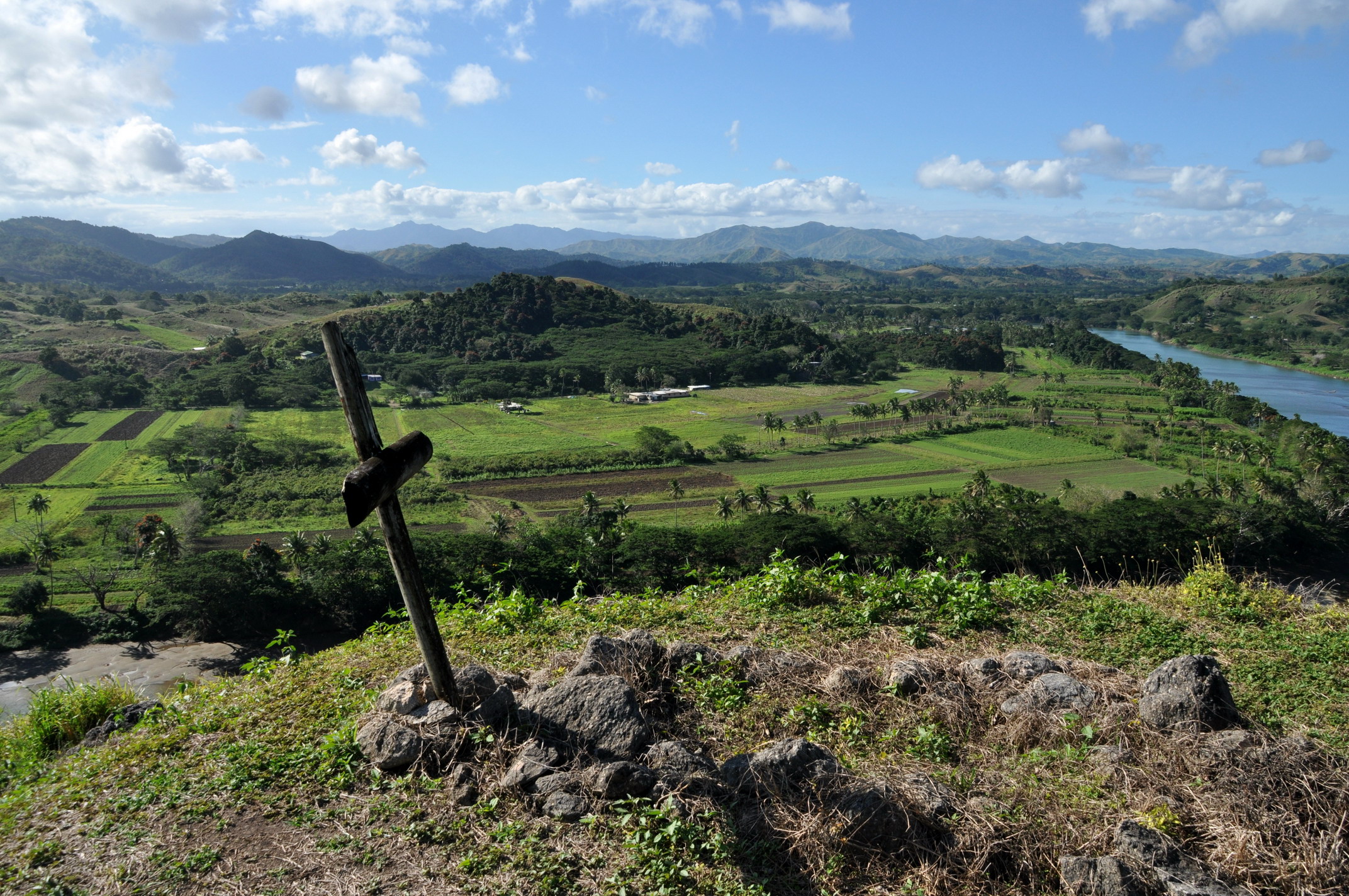
Outside Sigatoka we stopped at Tavuni Hill Fort, the site of a former village (18°07.800′S, 177°32.440′E). Since it was a former village, no chief had to accompany us. There were more stones associated with the legends of cannibalism, and upright stone phalluses.
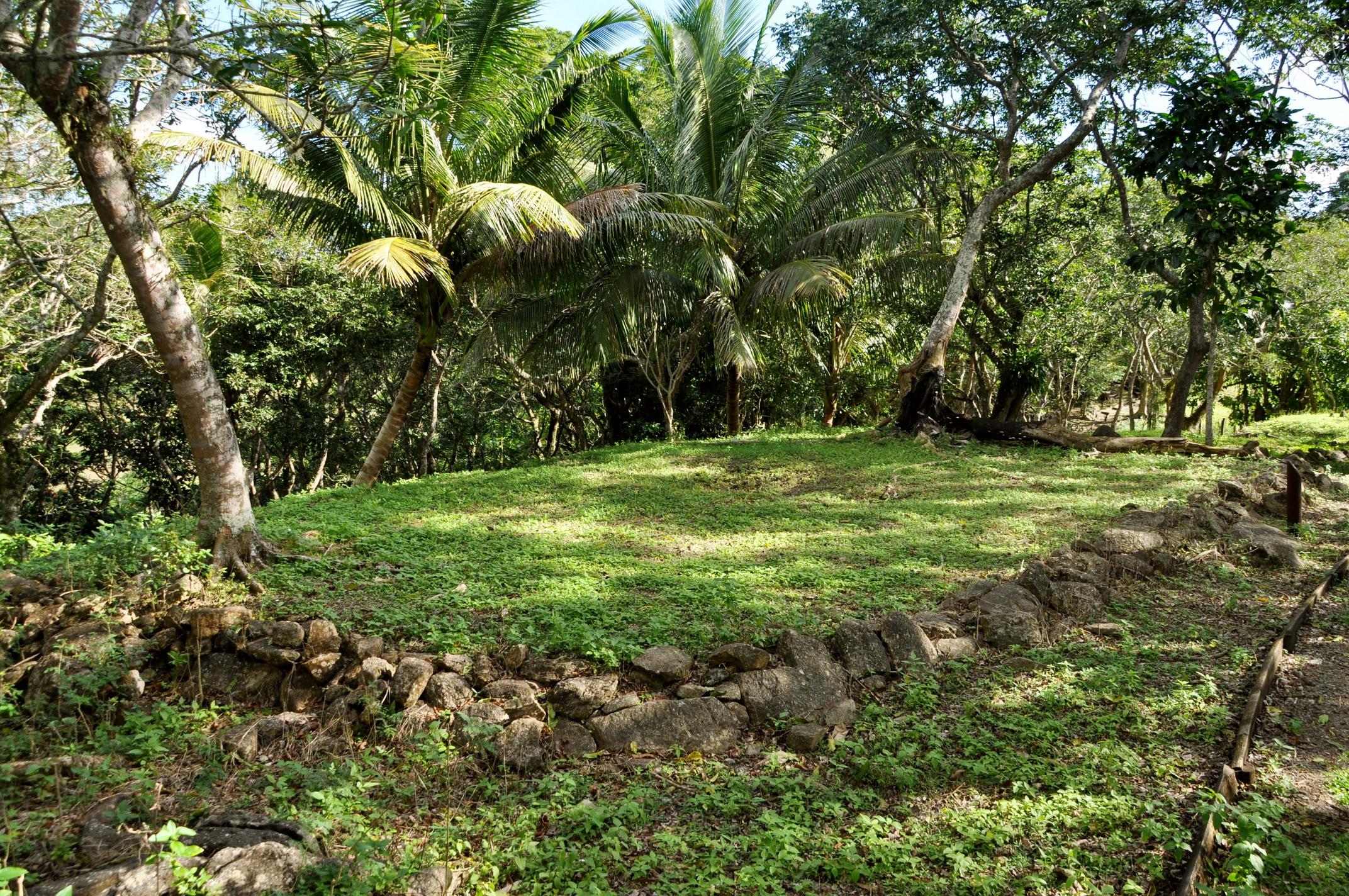
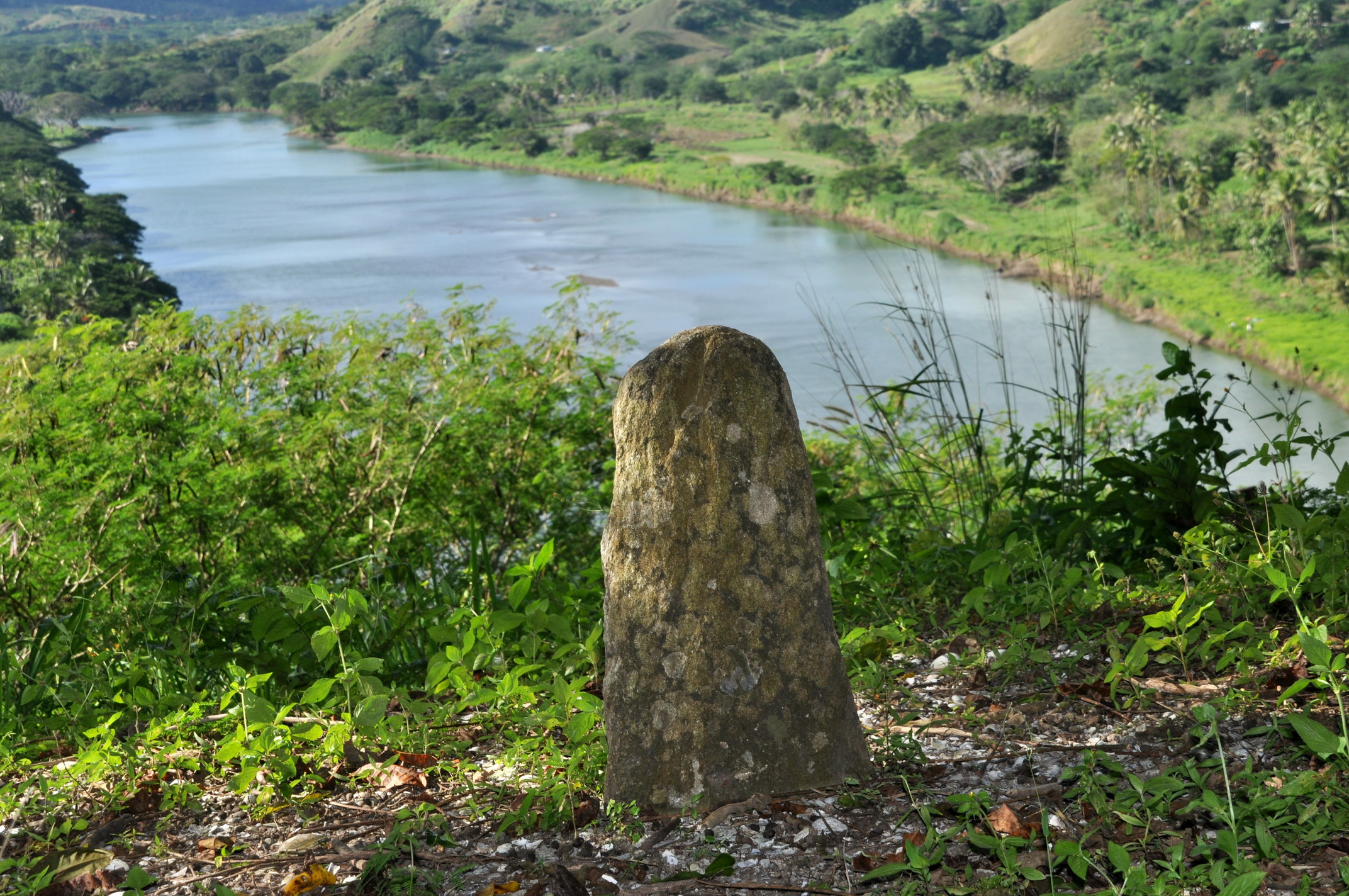
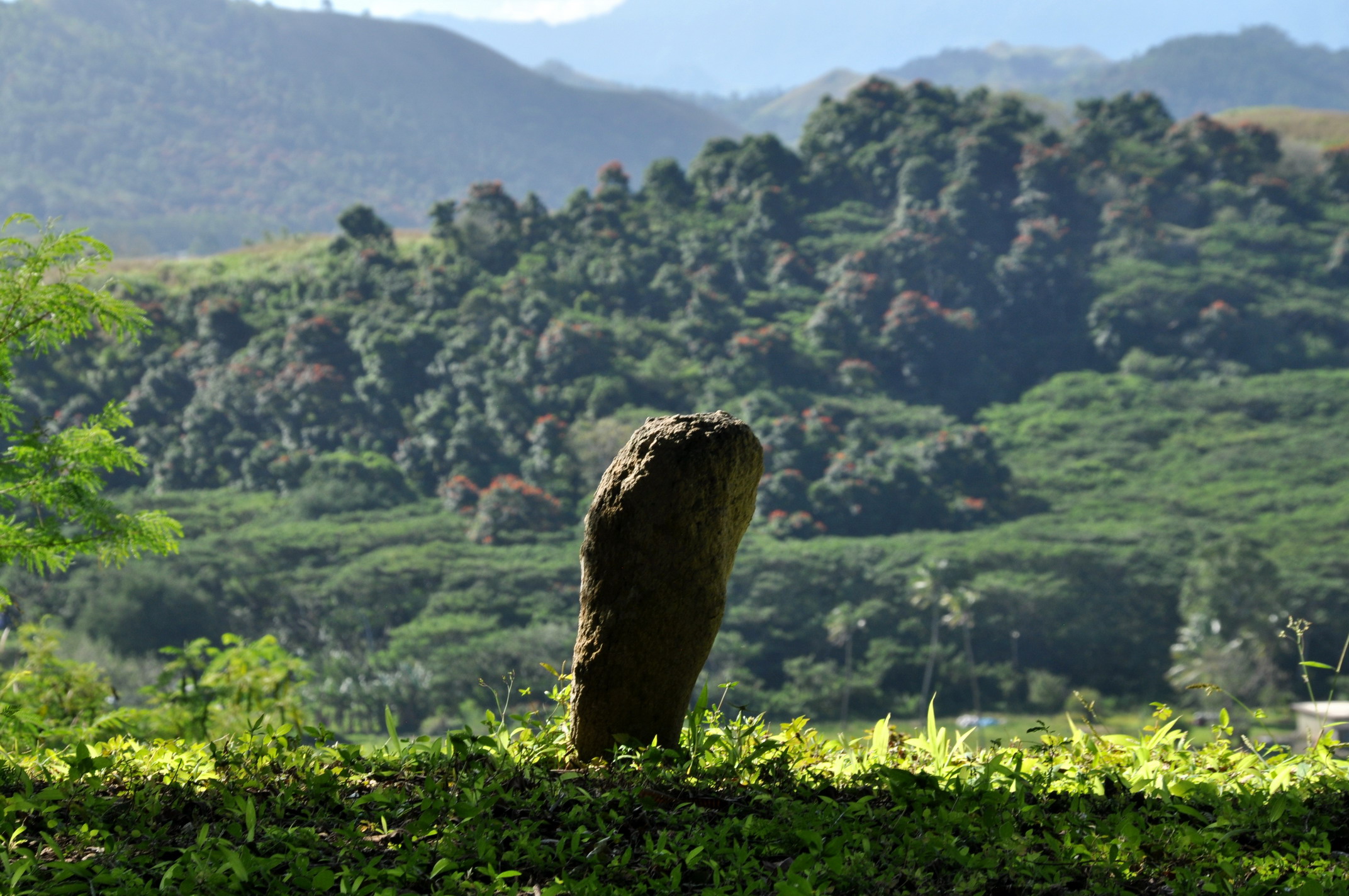
Here we heard another tradition. An old chief was to be buried under his successor's house and the grave had to be guarded. Only the successor had any right over the body. If somebody else dug it up and ate it, there might be disputes about who the true chief was and trouble would follow. The story presented this as time-honoured wisdom. This wasn't the US Library of Congress.
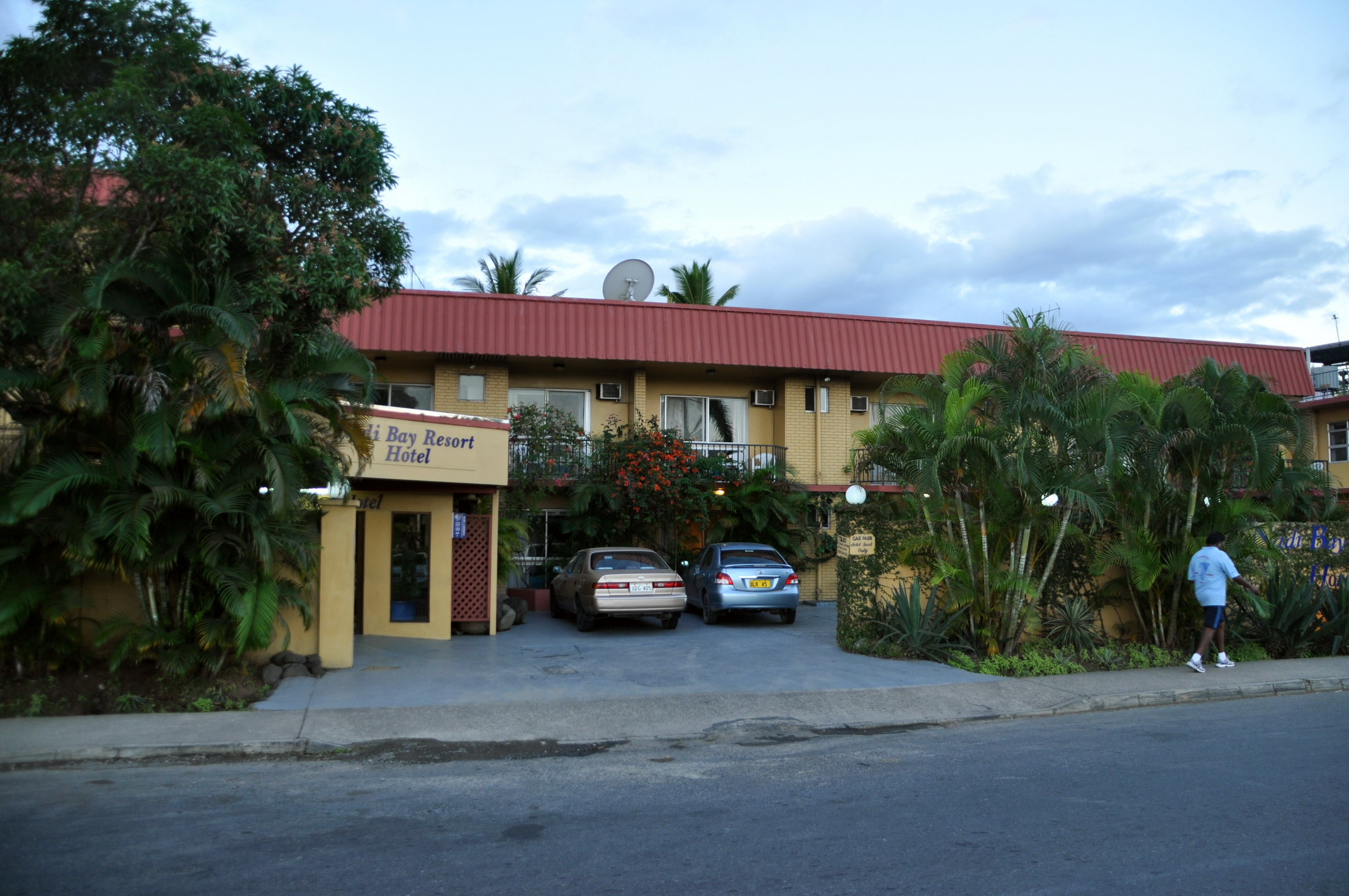
That evening we stayed in Nadi, at the Bay Resort Hotel (17°46.759′S, 177°25.623′E). Tanya hadn't fully recovered and stayed in the hotel while Denis and I went for a swim. Nadi has a splendid public beach (17°46.202′S, 177°25.191′E), perhaps the best in Fiji. There are many more on Taveuni, the island we couldn't get to, but those belong to the next story. We swam after dark and watched the stars. Even the Big Dipper was visible. In New Zealand it stays below the horizon.
We took an early direct flight to Christchurch. Four hours later we were back in the cold New Zealand winter. New Zealand customs, or rather the Ministry of Agriculture and Forestry, took some of our brain-eating forks. They must have needed them for work.
Fiji isn't the easiest country for independent travellers. You do, however, get to see how people live, beyond the performers dressed up for tourists. To simply lie on a beach somewhere inexpensive, I'd choose Samoa, Niue or the Cook Islands. That is another world. For a package holiday, though, Fiji offered fairly good value. The political situation had improved by the end of our visit. It seemed unlikely the next few years would bring an upheaval that you had to rush to beat.