Cook Islands
Cook Islands 2003
Nobody Ate Cook Here
Say anything about this little country and somebody immediately thinks of Vysotsky's song and the great English navigator. When I took out health insurance, the agent asked me straight out, ‘Won't they eat you there?’ Well, if we're going by the song, Cook was eaten on what is now US territory. Anybody worried about cannibalism should therefore be wary of visiting that particular country, and the Hawaiian Islands especially.
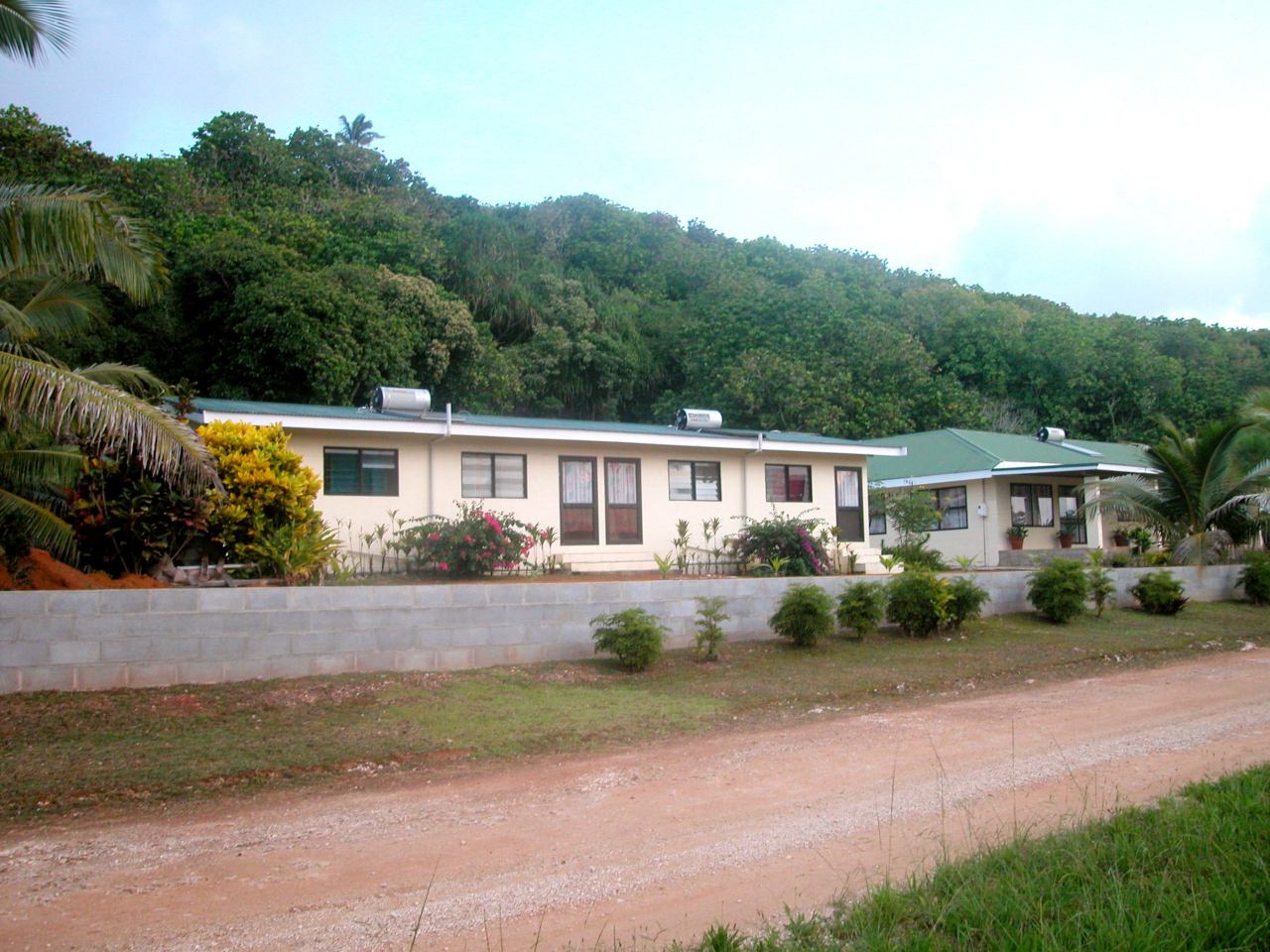
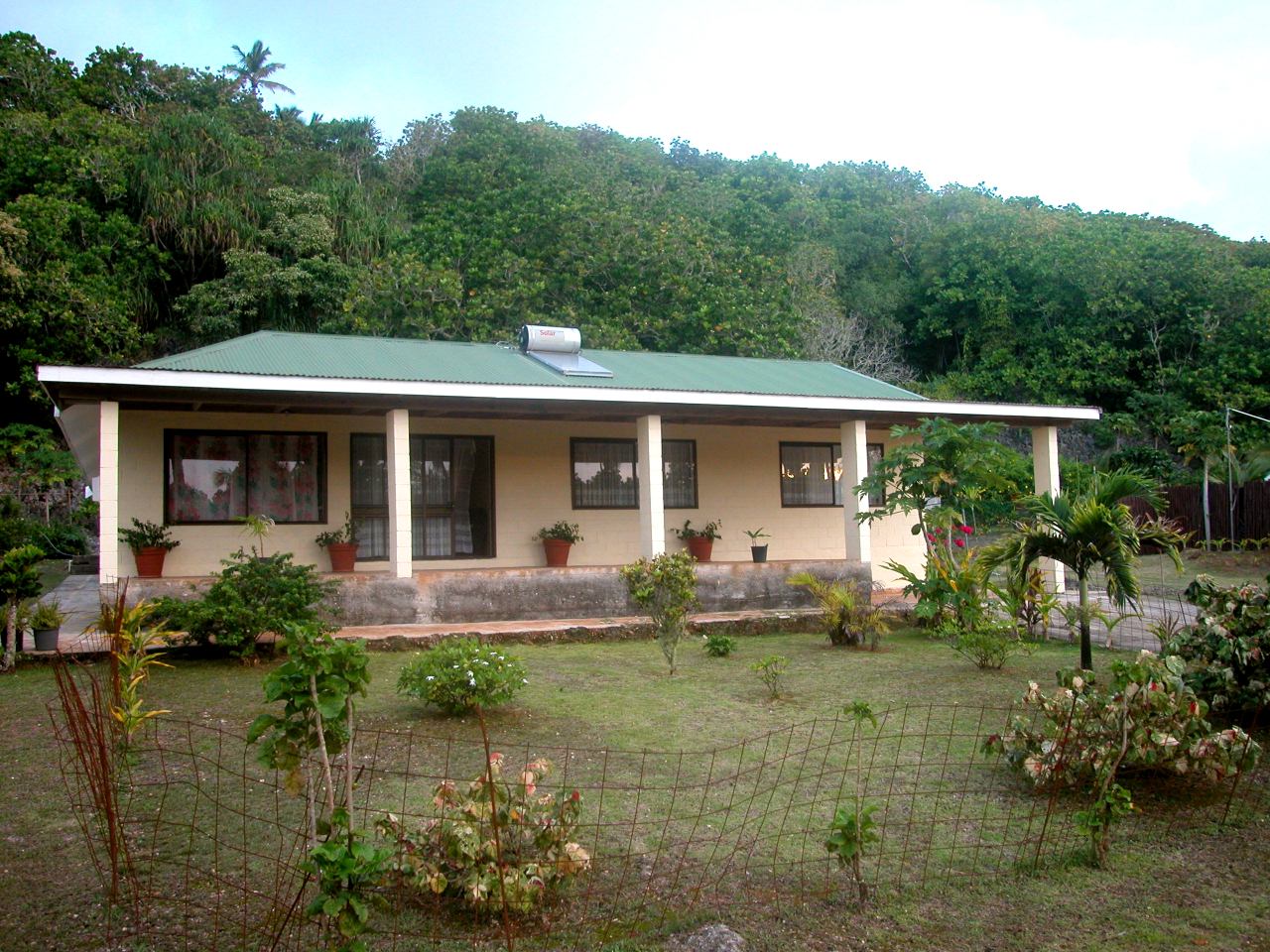
The Cook Islands lie a little south-west of French Tahiti but historically belonged to the British Empire. The result is two very different countries: exuberant, merry French Polynesia and the restrained, tidy Cook Islands. Everything here brings to mind the mother country on the other side of the Earth, down to the English breakfast and the two separate taps on the basin. The tourists are mostly English-speaking too. This is probably the most resort-like patch of the former empire. For all the smirks you get when you mention the country, it has to be said that it's a very civilised place. The living standard approaches Europe's. No one has worn a loincloth for a very long time. The houses are modern and there are lots of cars. The islanders can settle and work in Australia and New Zealand, but have a government of their own. The country has been outside New Zealand since 1965 but still depends on it in many ways. New Zealand's official documents call it ‘self-governing’. Fourteen thousand people live here. Most live on the main island, Rarotonga, where the capital, Avarua, is. The official language is the local form of Māori, Rarotongan, but in practice everybody speaks English. Ethnically, ninety per cent of the people are Polynesian.
The only international airport is a few kilometres west of Avarua. The short runway fits onto a small piece of flat land. Rarotonga is a young volcanic island. The volcano is extinct but a lagoon hasn't really begun to form. Sharp remnants of the crater, still free of erosion, occupy the whole centre of the island.
You can reach the islands from the United States, Tahiti and Auckland in New Zealand. Air New Zealand flies there, and Aloha Airlines comes in from Hawaii. A Boeing 767 goes from Auckland almost every day.
We flew from Auckland. After four and a half hours the plane came in to land. The wheels had just touched the ground when the plane rose into the air again. The captain cheerfully told us a sudden gust had prevented him from landing and he'd try the other way round. The second attempt ended the same way. This time he merely remarked that there was still plenty of fuel. We'd get down somehow. Third time lucky.
The runway turned out to be narrow and short. It's a wonder that a machine of that size can land on it, especially at night. We got off the plane at half past midnight. We'd crossed the International Date Line in the air, so we were back at the beginning of the same day. In the end 27 January 2003 lasted forty-seven hours for us.
You don't need a visa to visit the Cook Islands. When you arrive, they stamp your passport and give you thirty days. The only requirements are a return ticket and accommodation booked in advance. In practice, a stern woman on the way out of customs asks, ‘Where are you staying?’ Answer confidently and she'll point you on your way. If you give the name of one of the best hotels, a representative will materialise immediately. If you don't have a booking after all, it may become apparent right there in front of her. Mention somewhere unremarkable and you're left to find the bus out of the way somewhere, if indeed that's what you intend to do. Unlike on Tonga, you can always pitch a tent out in the jungle on the Cook Islands. The interior of each island is virtually undeveloped. It's harder to find a place on the beach, especially on the island with the capital. Wild camping isn't officially forbidden but nobody does it, and there are no formal campgrounds either. You can find a suitable hotel online at CookPages, the Cook Islands site or Pacific Island Travel.
The plane gets in at night. Unless a hotel owner is at the airport looking for guests, you'll have trouble finding a bed. It's better to book a suitable place ahead. We'd done so over the Internet with Backpackers International (annabill@backpackers.co.ck), but couldn't find their bus. It hadn't come that day, they told us. We waited a little and got into a rival bus. To salve our consciences, we asked to stop at Backpackers International in case the people there were expecting us, staying up and cursing. Nobody at reception, lights out everywhere. No, nobody was expecting us here either. Never mind, we didn't need it any more. Later we learnt we'd mixed them up with Rarotonga Backpackers, whose people really had come to meet us and sent an angry email saying we'd let them down. At the airport exit somebody had sent us the wrong way and tidied up the name of the place at the same time.
The man with the bus was from the Maiana Guesthouse and was happy to put us up at his hostel (21°15.998′S, 159°46.157′W). We even had a private room. The shower and toilet were in the corridor, as you'd expect. An excellent kitchen. They give you a key to your own little cupboard to store your food. Suited us fine. It cost NZ$45 for the night and the ride from the airport.
We paid up in the morning and headed for the capital. The island has a thirty-five-kilometre ring road. The buses are known by the direction they take, Clockwise and Counter-Clockwise. If you start along the road on foot, it's not long before somebody pulls over and offers you a lift, for nothing. We were picked up before we'd even reached the nearest stop.
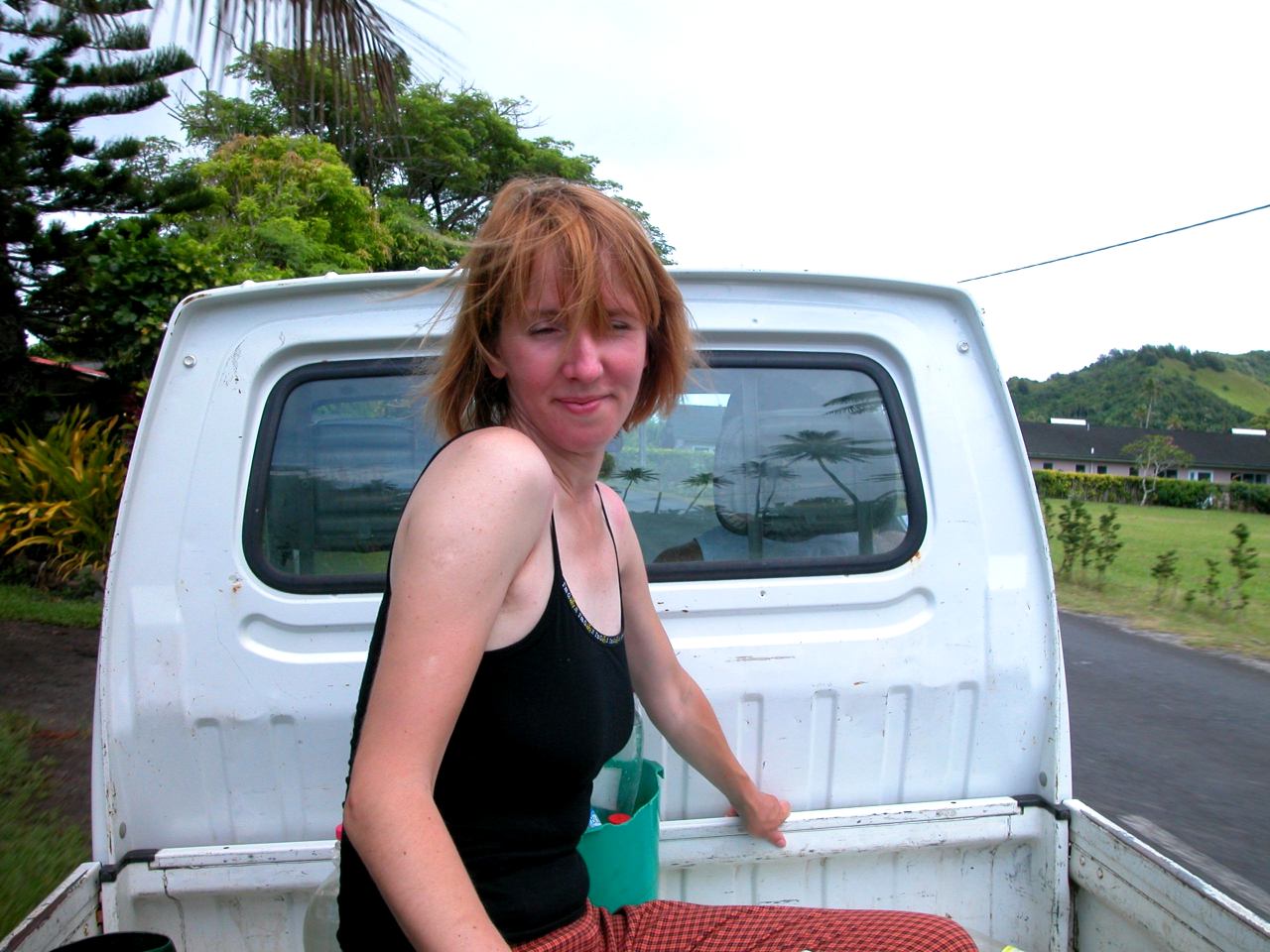
To begin with, we bought tickets at the airport for the neighbouring islands. After looking at the timetable, we picked Aitutaki and Mangaia. The Aitutaki flight wasn't for another ten hours, just enough time for a walk round the capital.
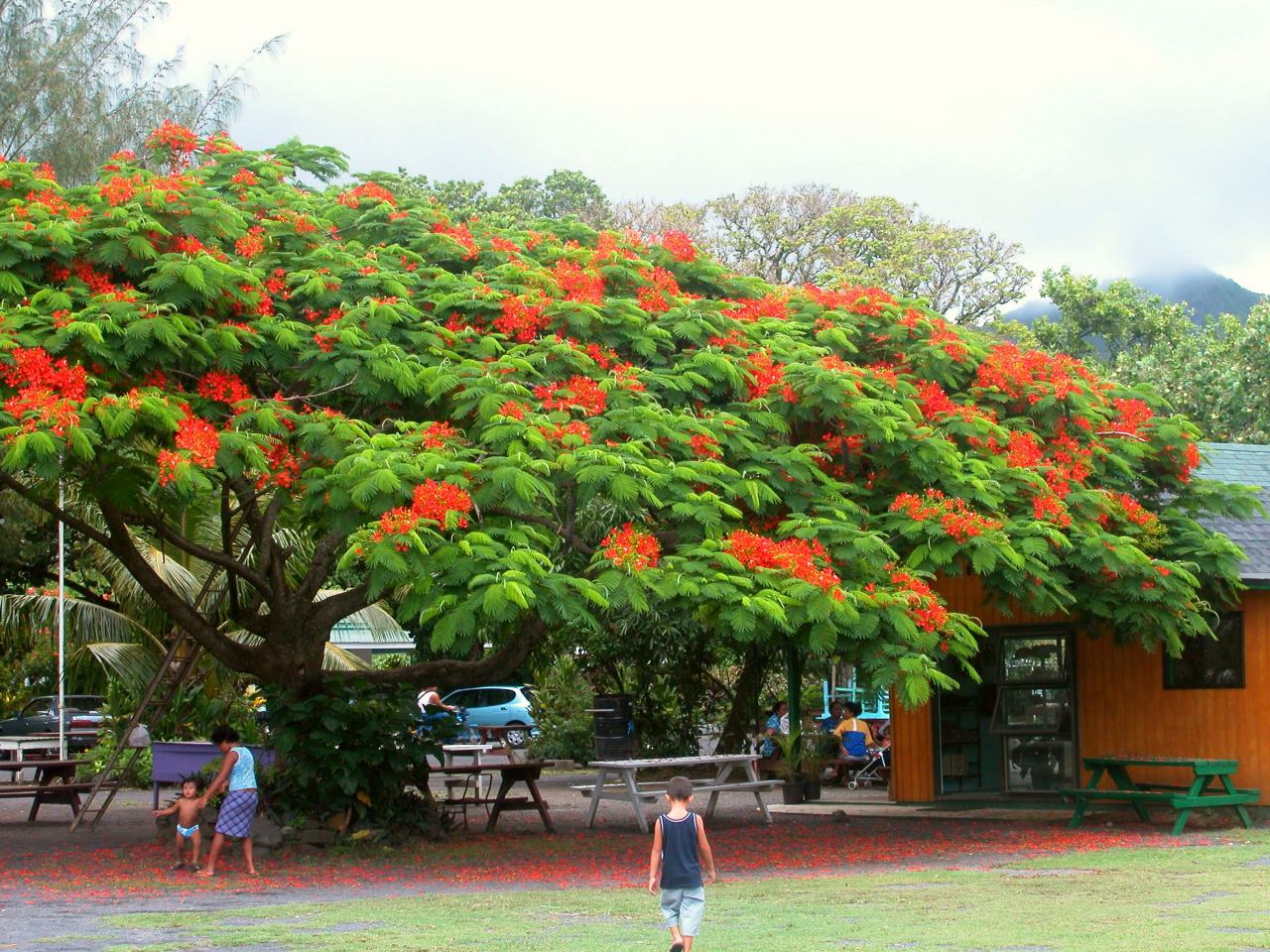
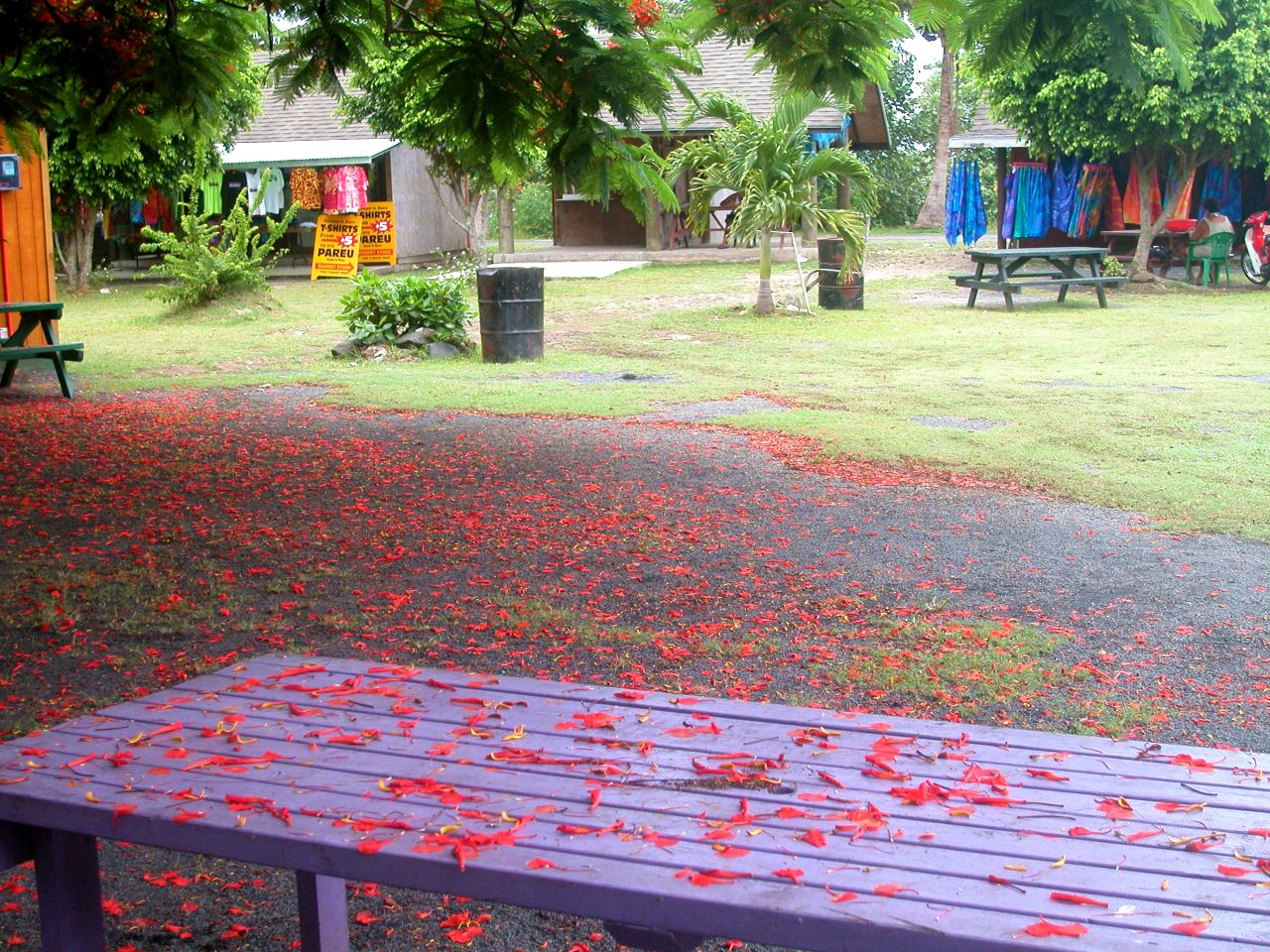
You can leave your belongings in a locker. Go into the part of the airport where they control air traffic and pay two dollars for six hours. They give you a little key to a locker right outside.
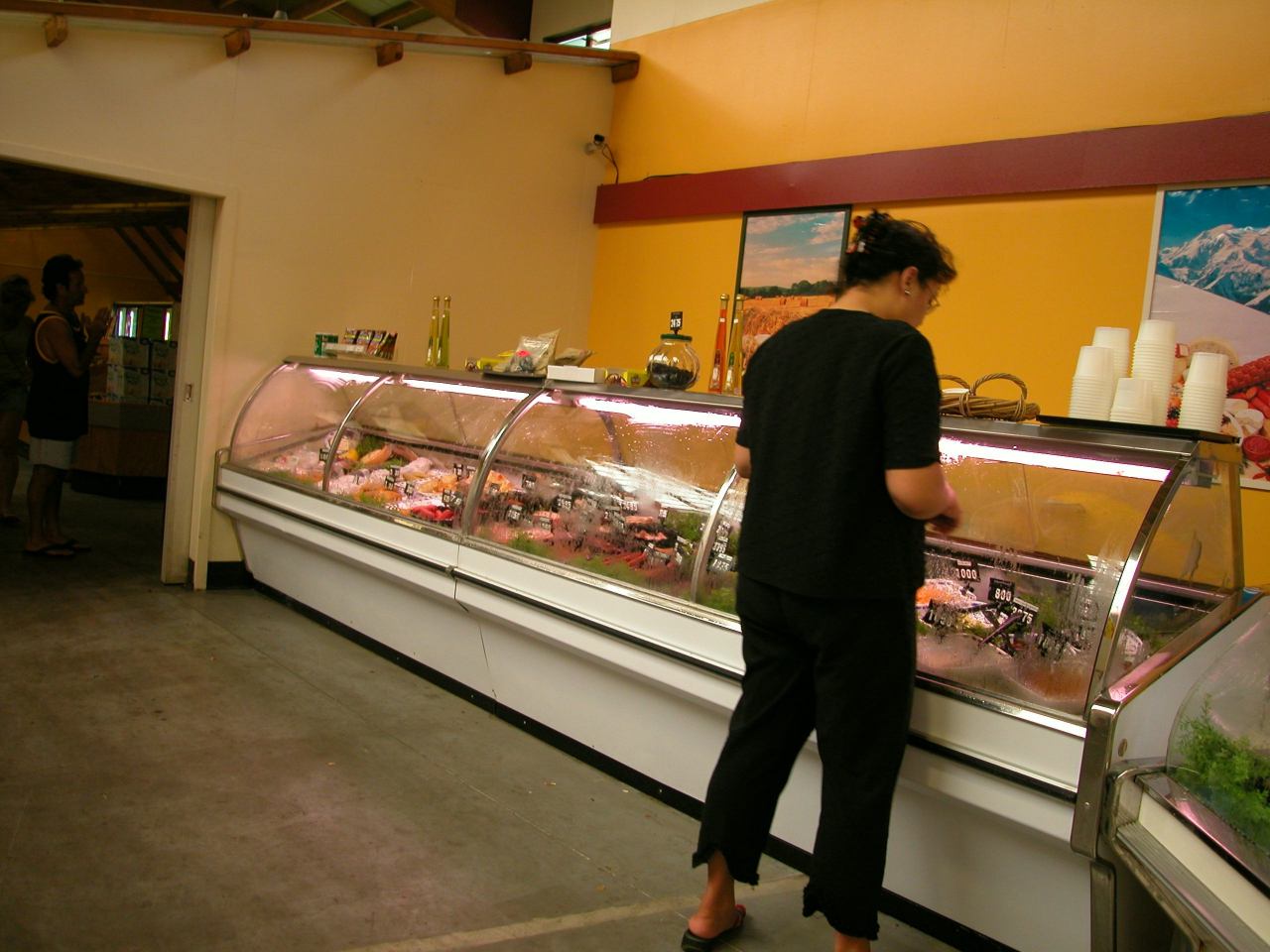
It's around half an hour on foot to the centre of town. All around is civilisation: supermarkets, fashionable shops. You can pay with a credit card just about everywhere, and there are several cash machines. This only goes for the island with the capital. There are no cash machines on the small islands. Theoretically a bank will let you draw out money with a card, though in practice it's far from certain. A sign saying a hotel takes cards may mean they'll drive you to a shop on the other side of the island when you try to pay. If it's open you can pay there, then drive back to the hotel. Not much use if you're late for a flight, so it's best to get cash in the capital. The currency is the New Zealand dollar. The islands had their own once, then gave it up. Now the coins and notes lie in shop windows as souvenirs and we couldn't even buy them. On display, but not for sale. I particularly liked the coin shaped like an equilateral triangle.
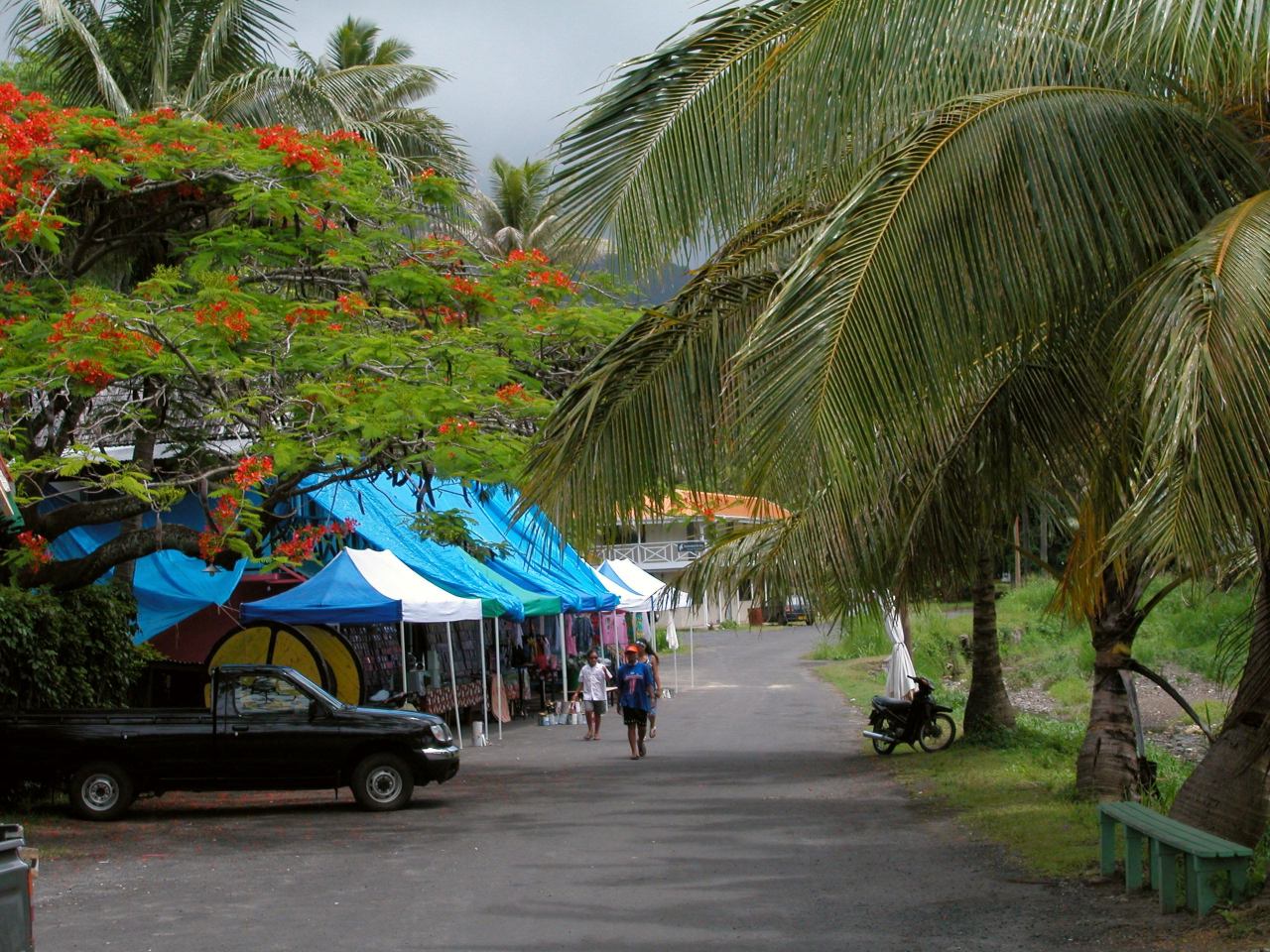
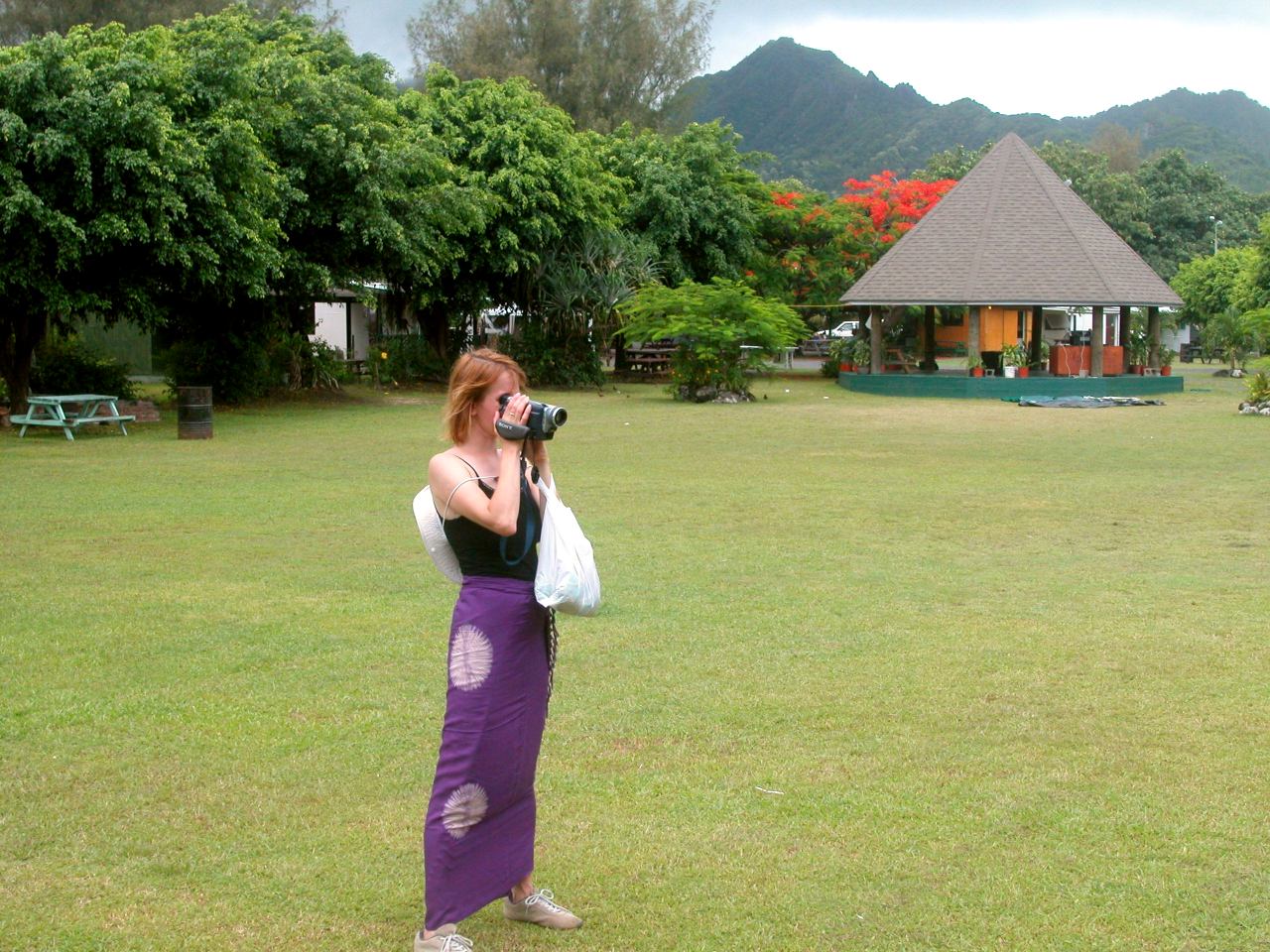
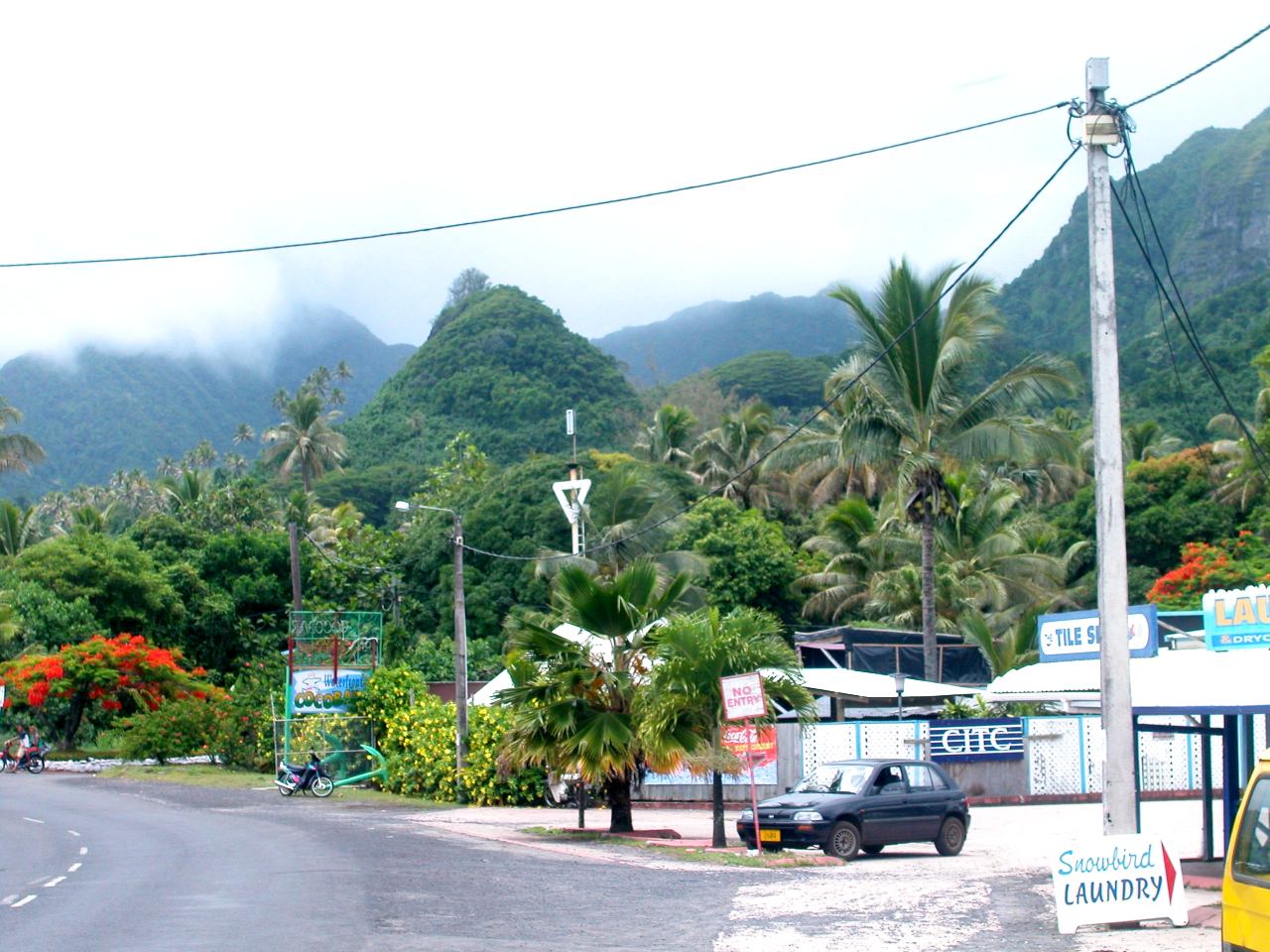
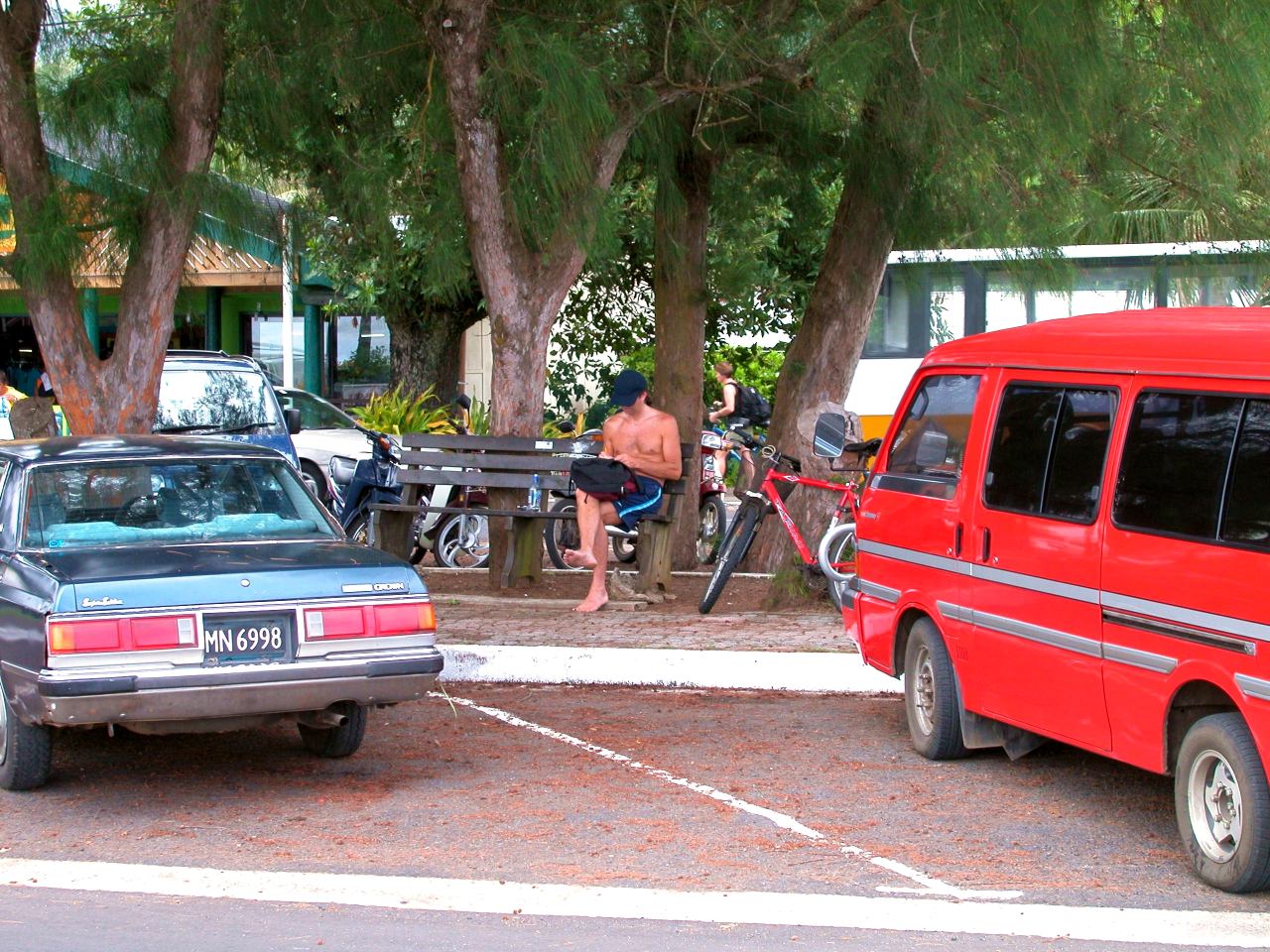
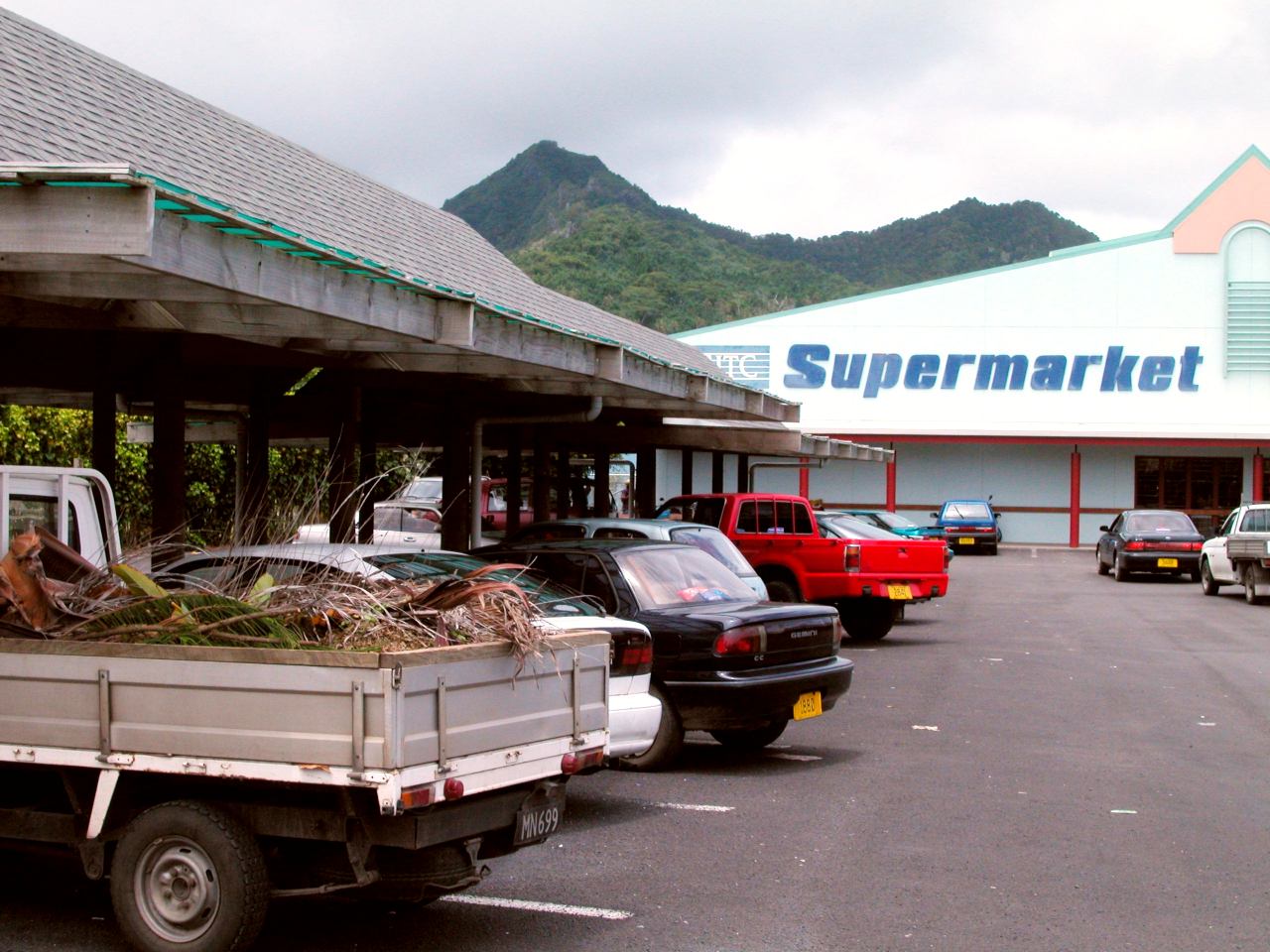
Another local souvenir is black pearls. They're at least half the price of those in Tahiti, and the quality is just as good. The most expensive shops in the country are precisely the ones that sell black pearls. A pearl usually costs between twenty and a hundred US dollars.
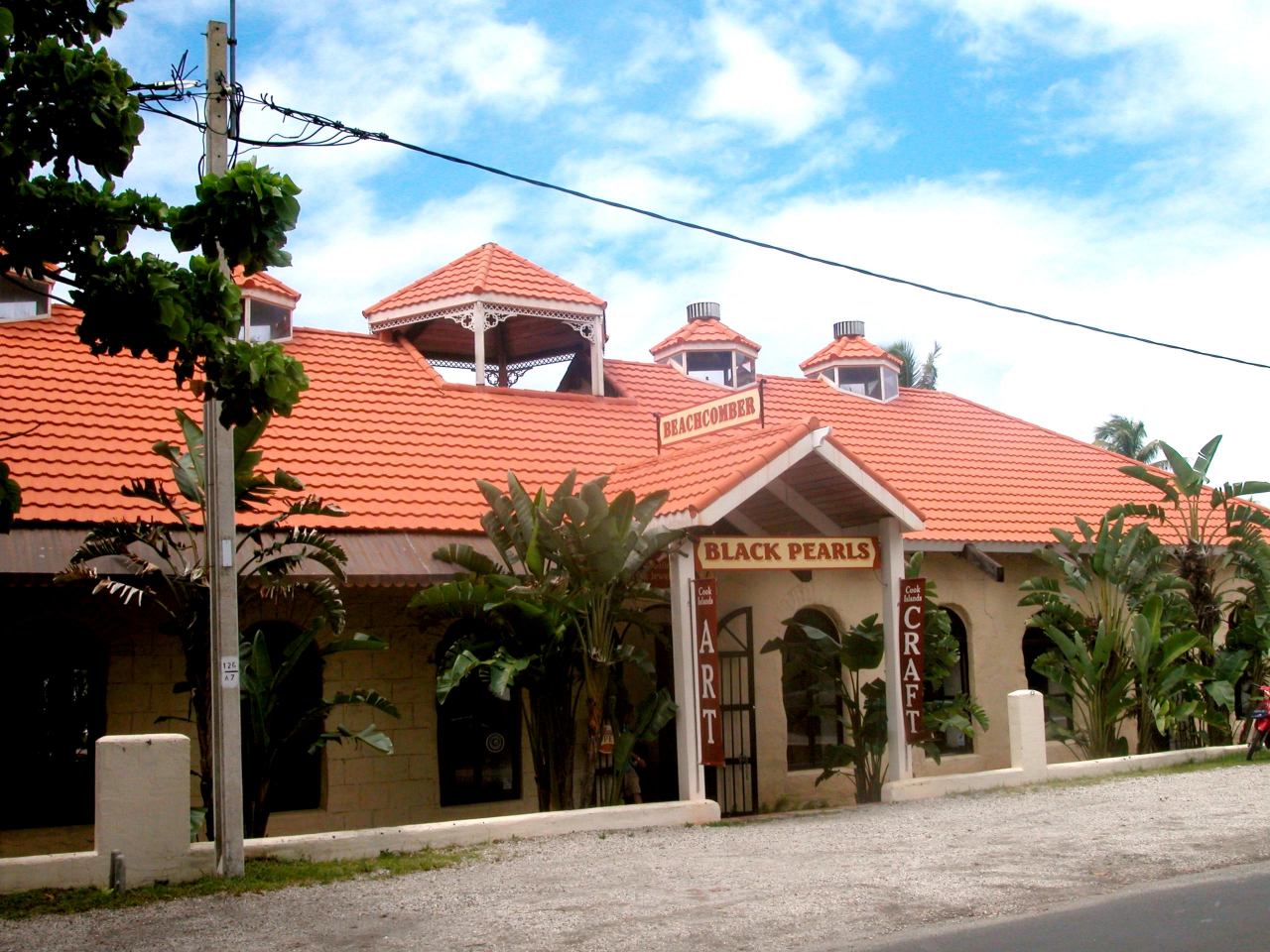
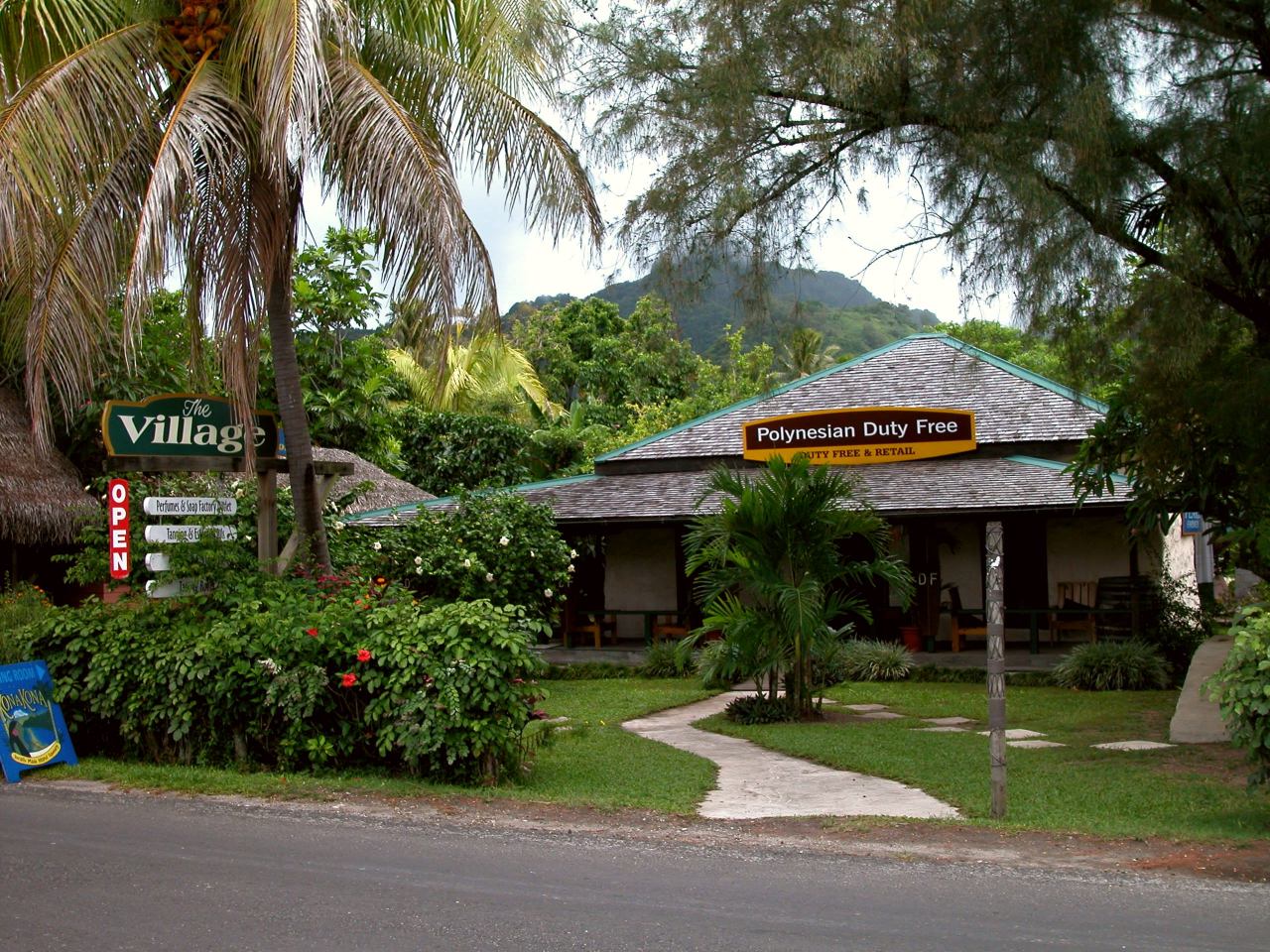
Apart from the pearls, there are a lot of modern fakes on vaguely Papuan themes. The shops stock roughly what you'd get in a little European town. There are hardly any locally made goods to be seen. It's all imported, mainly from Asia and Australia, and food from New Zealand. The prices sometimes catch you unawares. We took four tomatoes, for instance, and the woman at the till warned us they were NZ$8. Locals can't afford that. Cabbages are expensive too. We bought Tanya a watch. My trainers had fallen to pieces, so I bought new ones. People here turned out to have small feet and nobody imports size forty-five. In the whole country there was one pair of Nikes in my size. I've worn nothing else since.
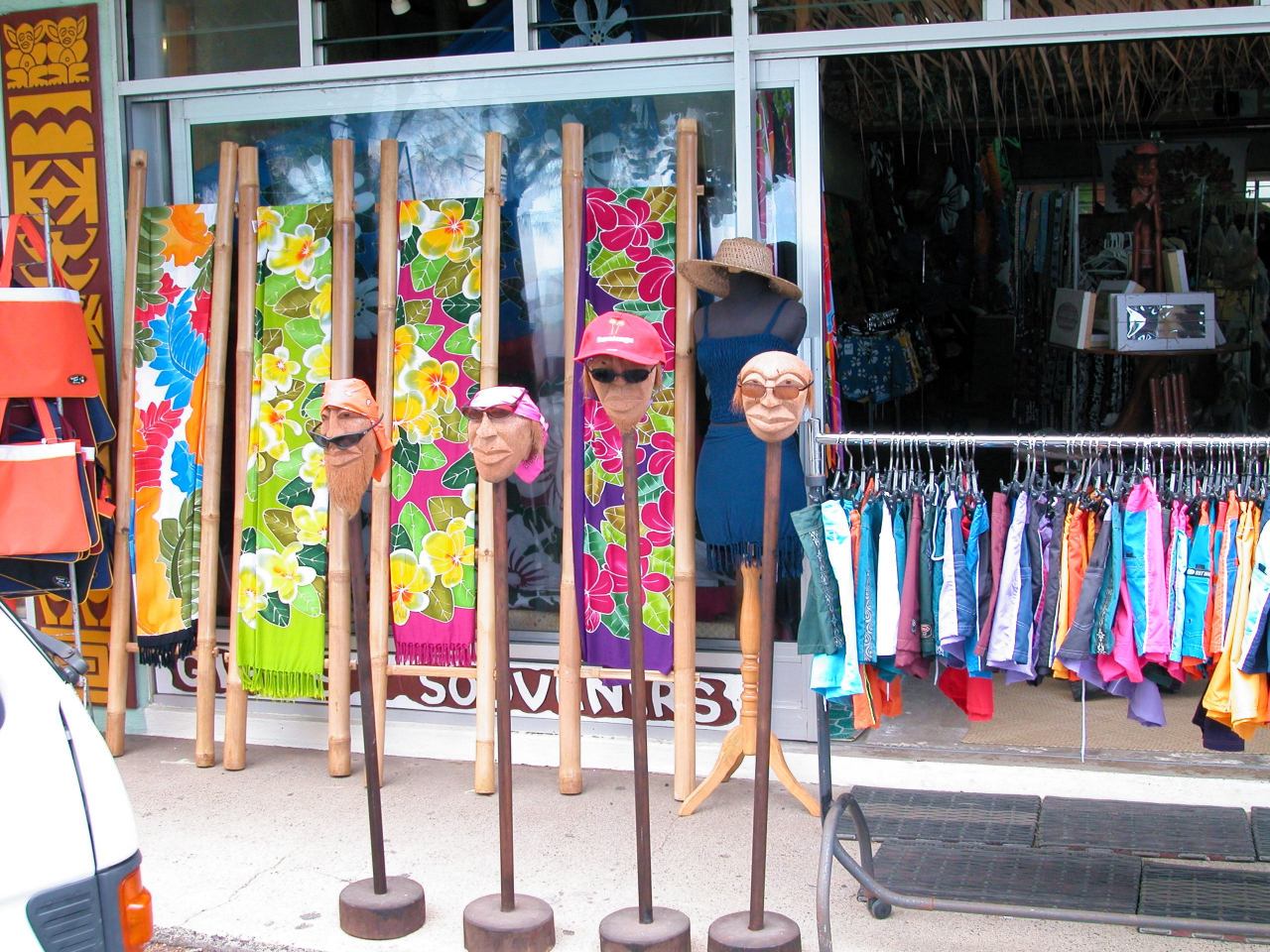
There's practically no theft, and you can walk round the shops without concern.
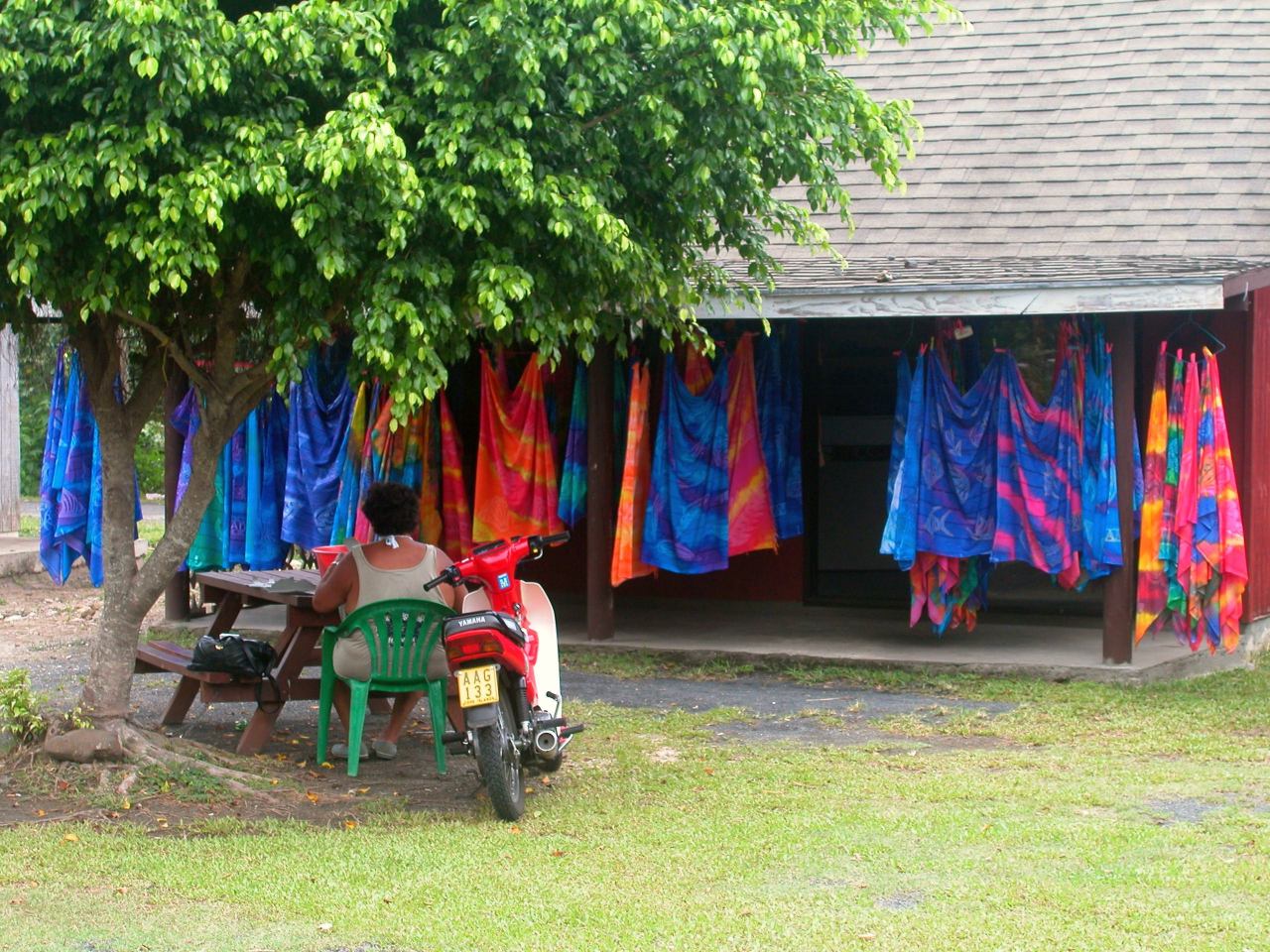
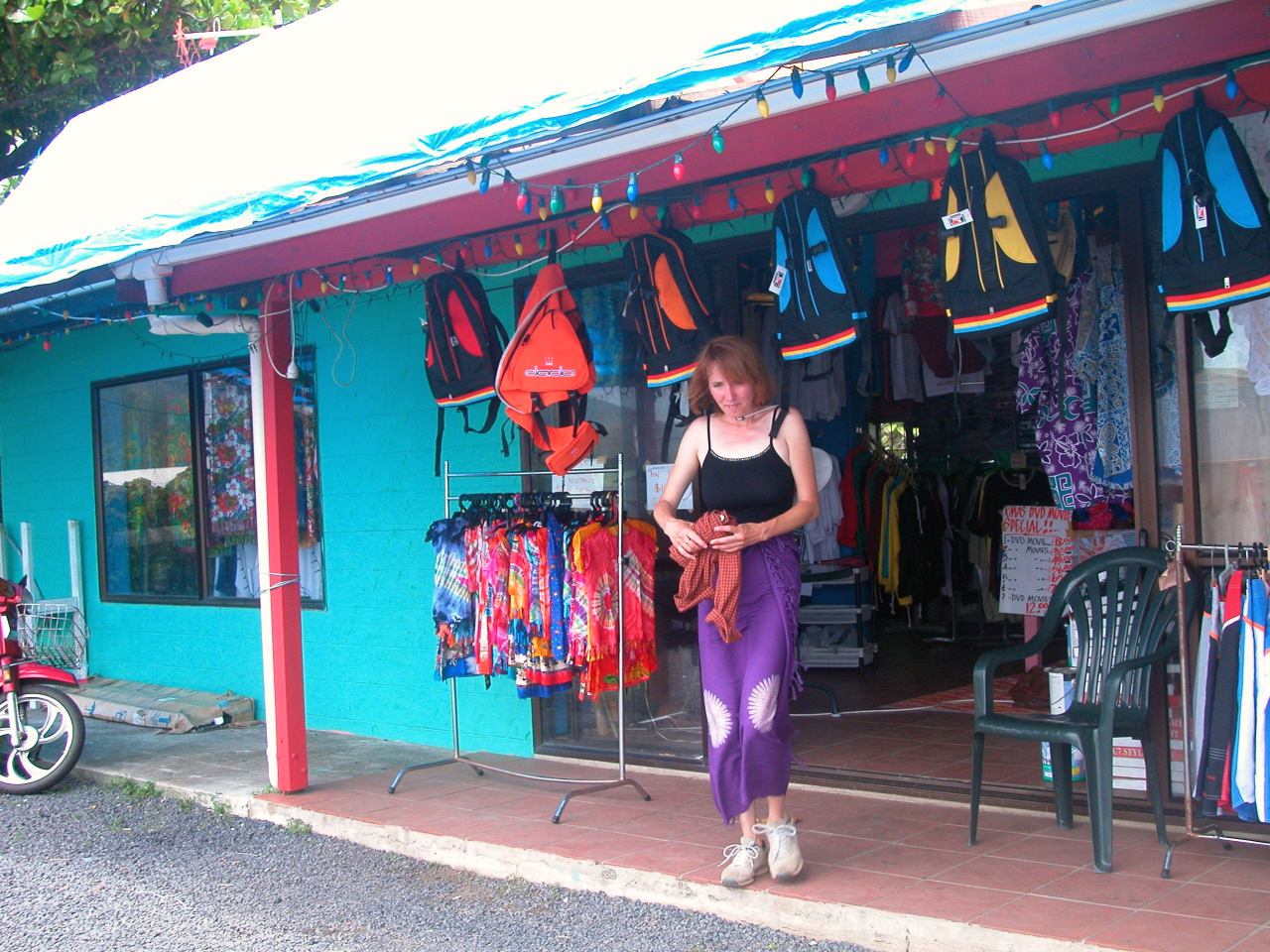
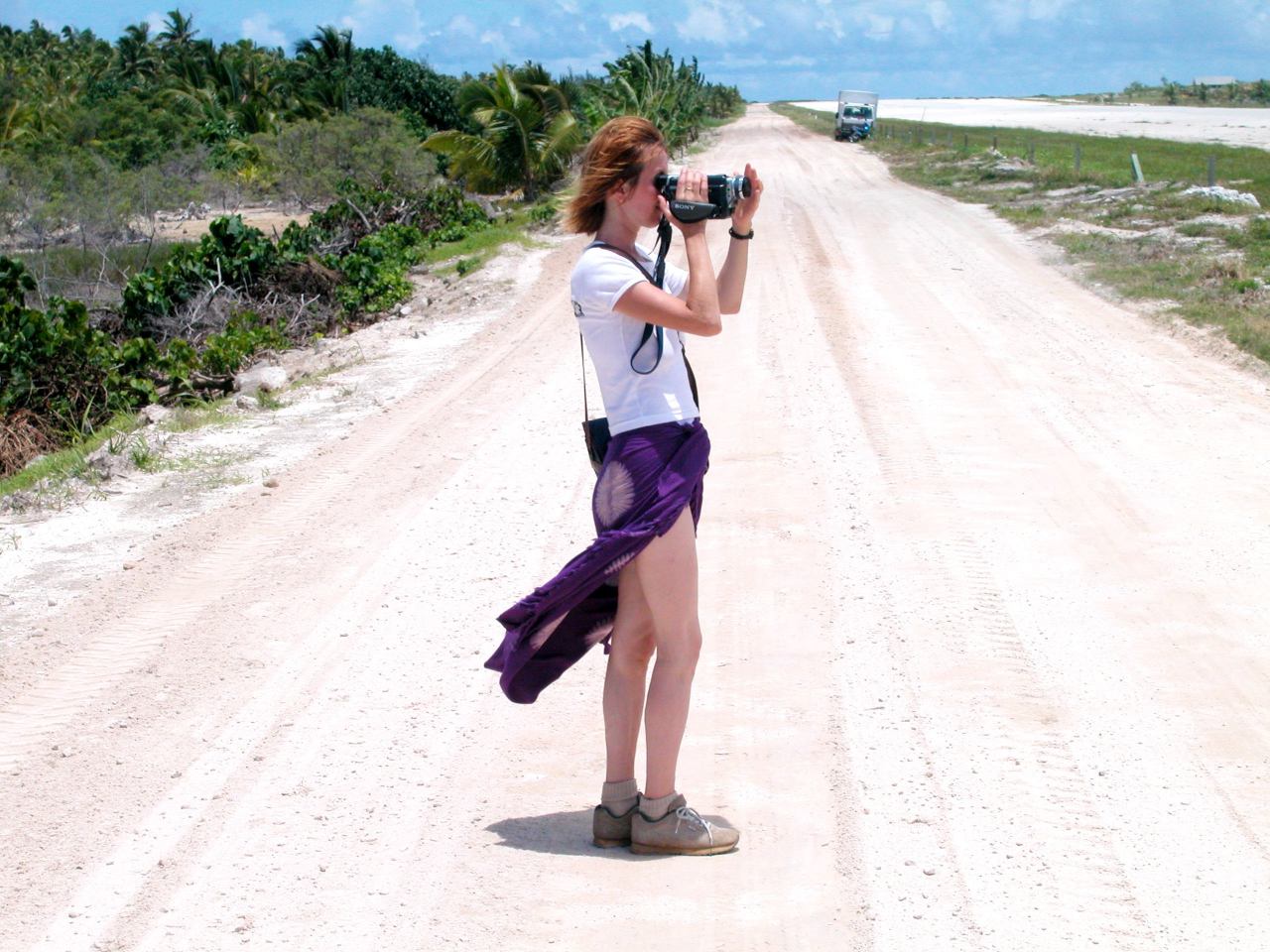
The tourist season is in the local winter, from May to October. Summer is hotter and wetter, though not so much as in most tropical countries. In February it's usually around thirty degrees with a hundred per cent humidity. In those conditions your clothes stay wet all the time. You have to wear as little as possible. The local thing to wear is a pareu, a piece of cloth you wrap around yourself like a towel at the beach. Tanya gave in to the heat and bought a couple in the first shop we came to.
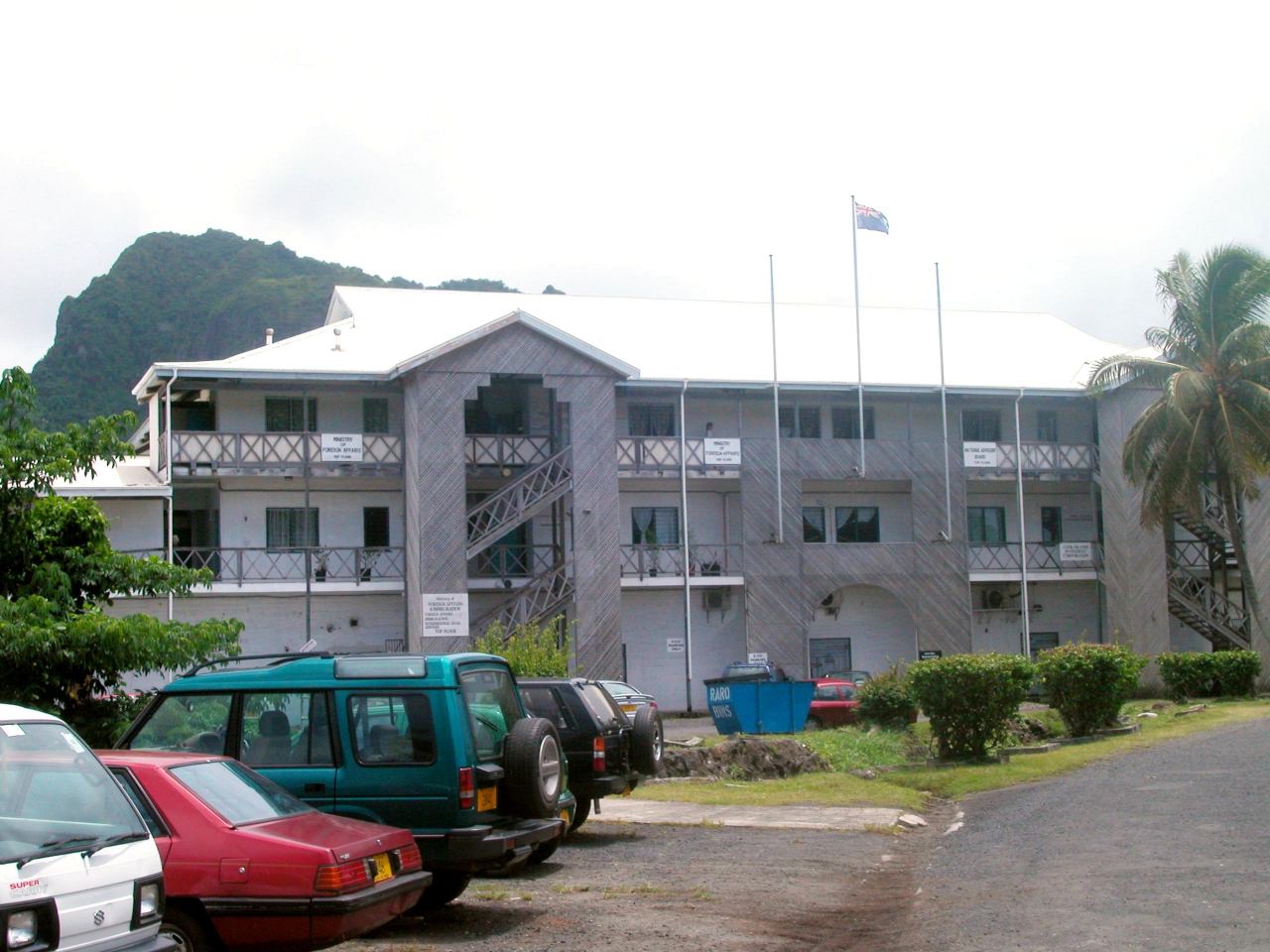
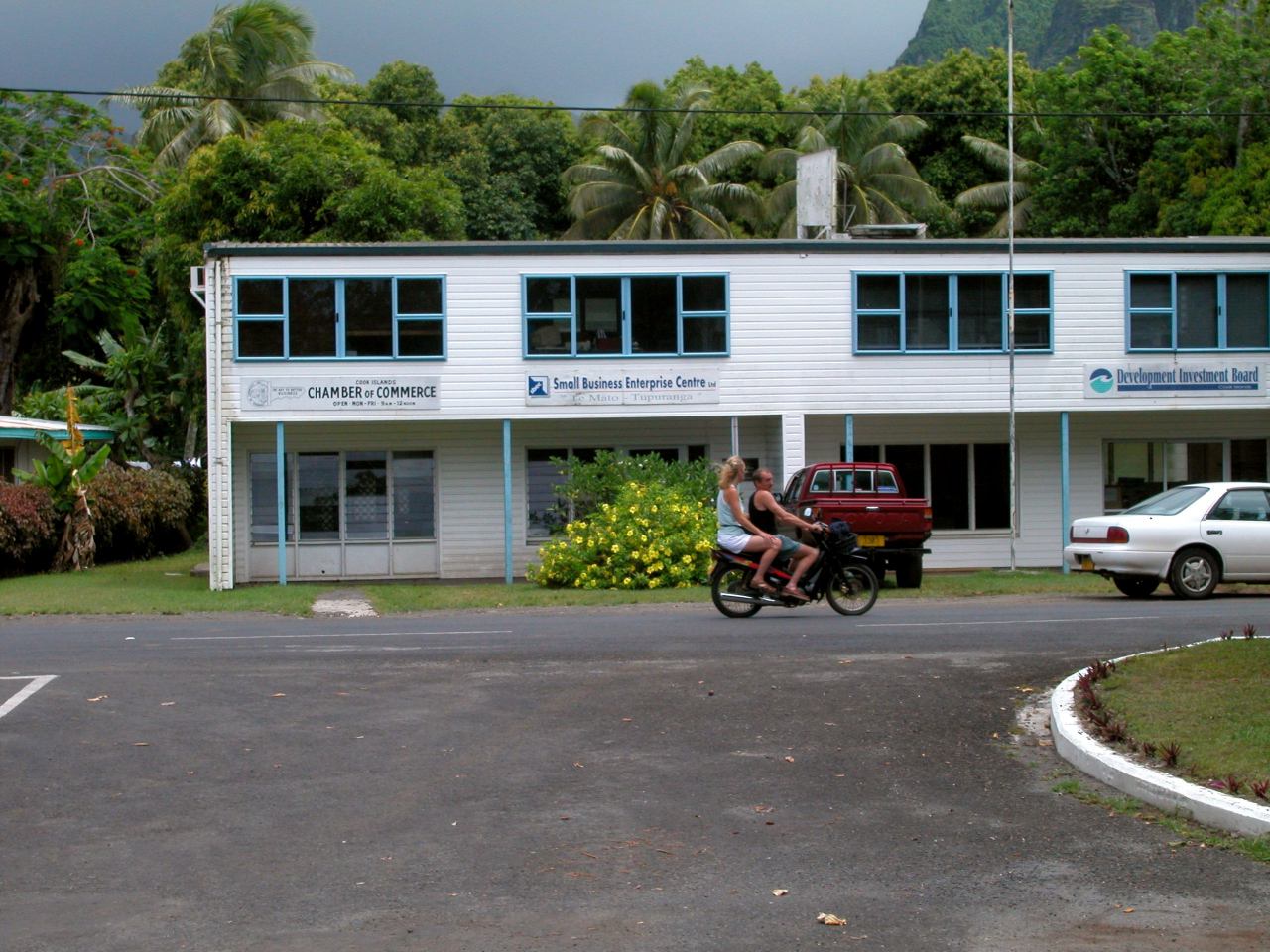
The government fits in a small wooden building. Signs on the doors give the ministries' names. My favourite was ‘Ministry of Tourism, Sports and Women’. Where were the feminists? Had women become a sport, or had they tipped everything left over into the same heap? The Chamber of Commerce and the small business commission got a hut of their own. It must be nice to live in a country like this. You can count all the officials. There aren't enough of them to make life miserable for the rest of the population.
One company, Telecom Cook Islands, runs the islands' mobile service, the KokaNet network, on the AMPS standard. There are no GSM operators, so none of our handsets worked. You can call from a hotel, sometimes even without going through an operator. A minute to Russia cost NZ$9. There's a post office on each island. A letter to Russia costs NZ$1.50 and takes more than a month.
Island time is thirteen hours behind Moscow in winter.
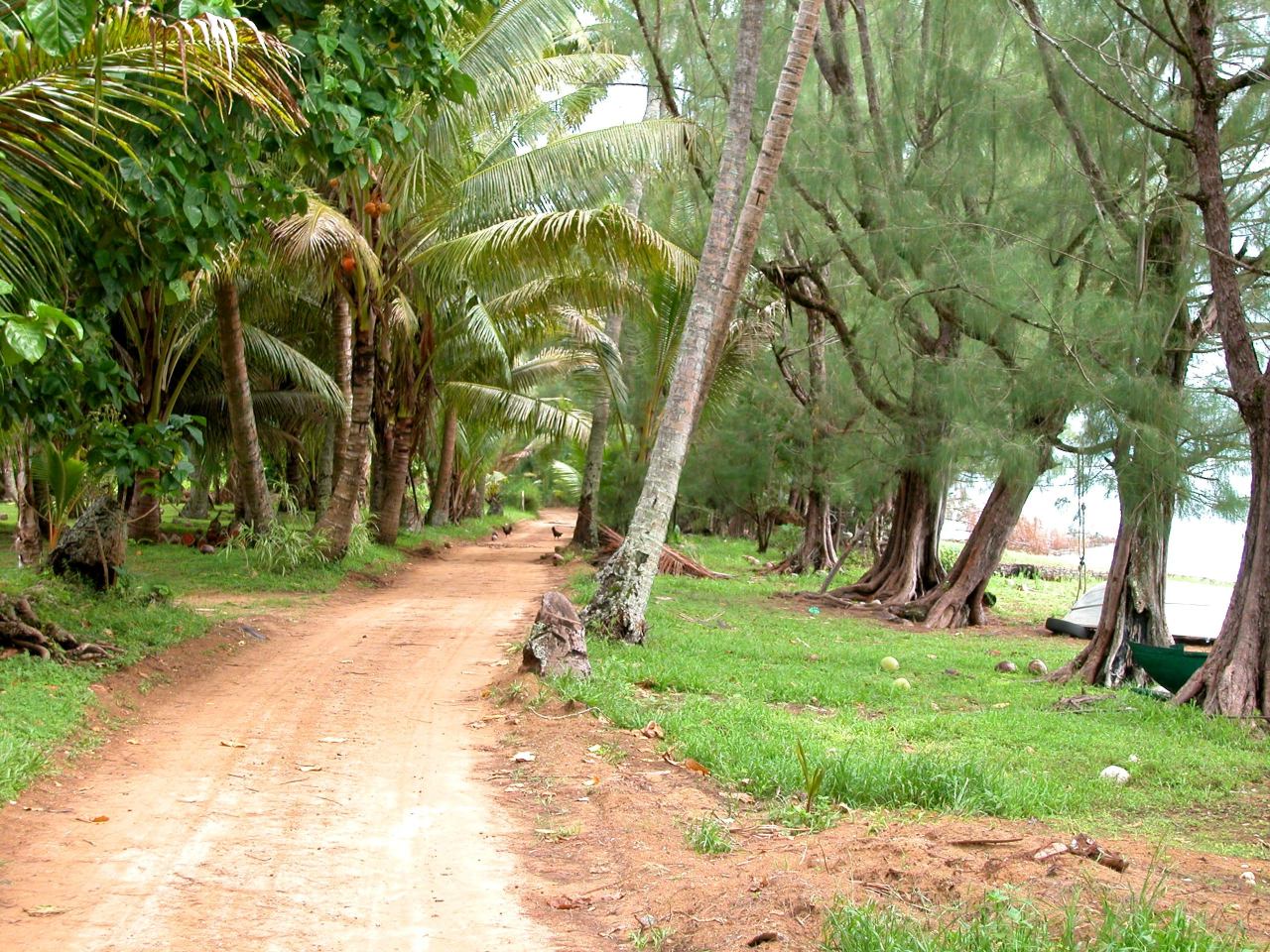
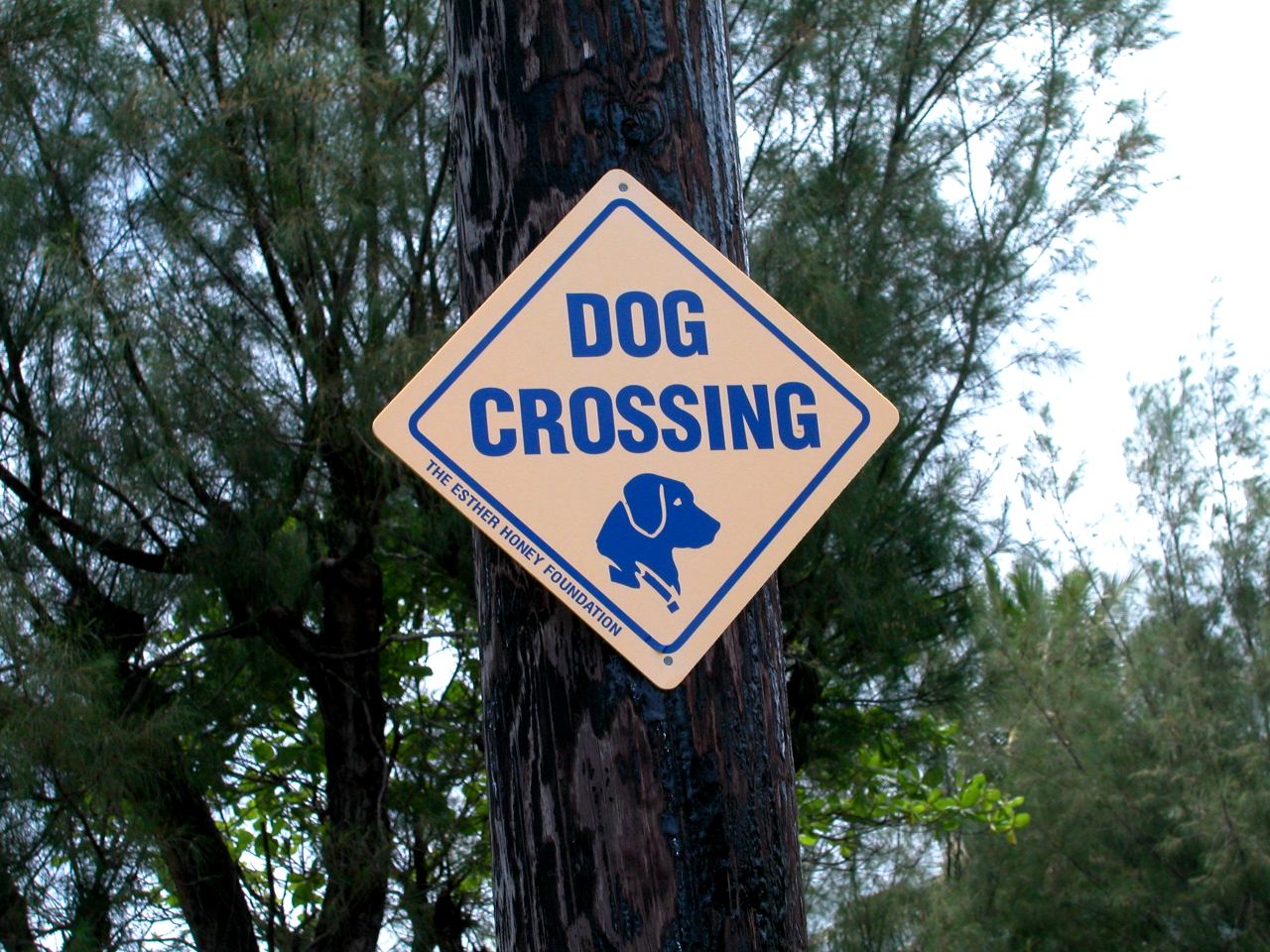
The roads are quite decent, though on the small islands most roads are unsealed. Well-kept signs everywhere. One local peculiarity is ‘Watch out for dogs’. There aren't many dogs, incidentally, and they aren't aggressive. The sign is to protect them from reckless drivers. Petrol is a little more expensive than in New Zealand, NZ$1.05 to 1.20 for a litre of Super. Traffic keeps left. The limits and signs are from New Zealand too. Drivers observe the rules less carefully than in New Zealand. Eighty kilometres an hour through a village is perfectly normal by local standards.
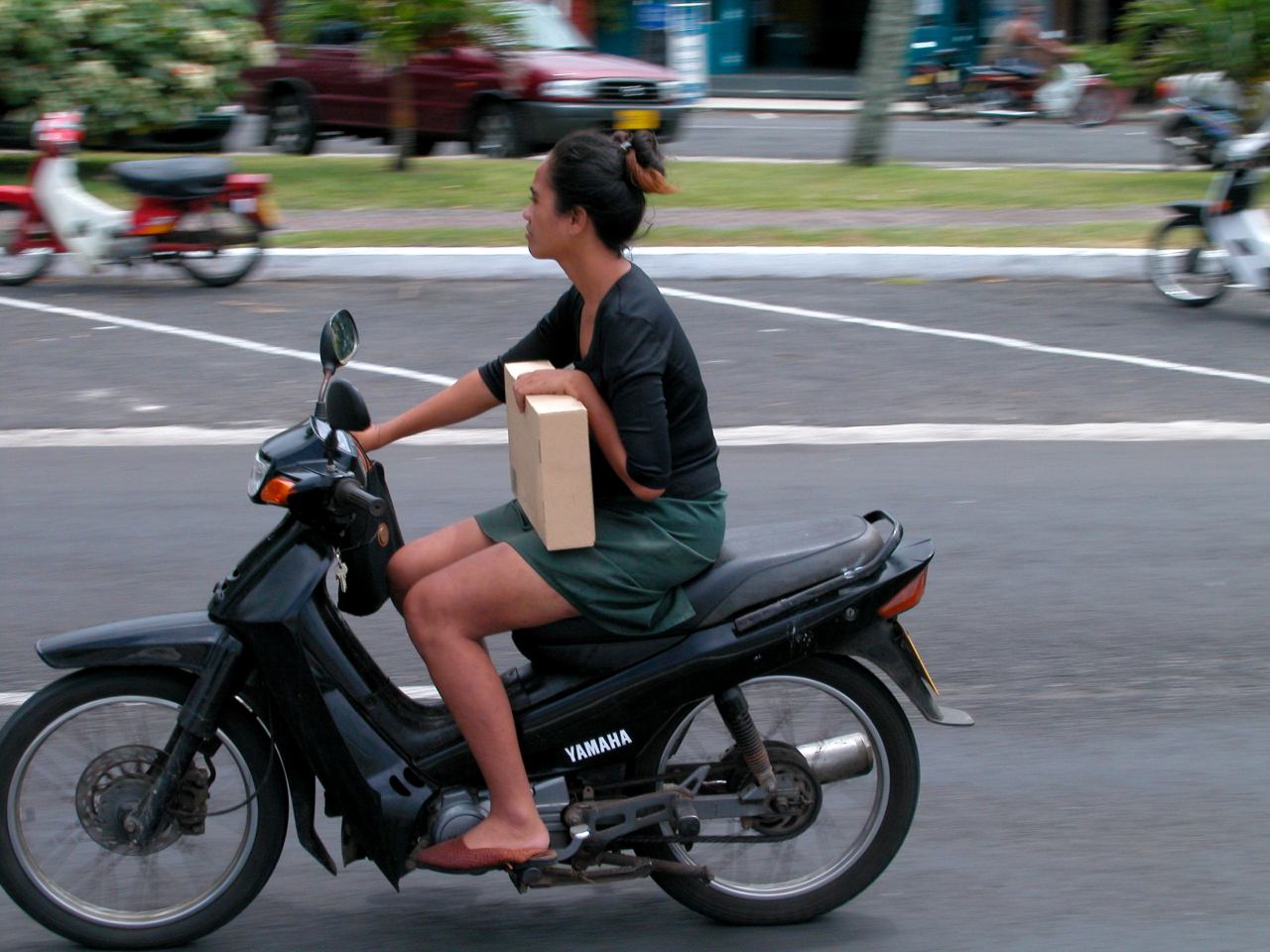
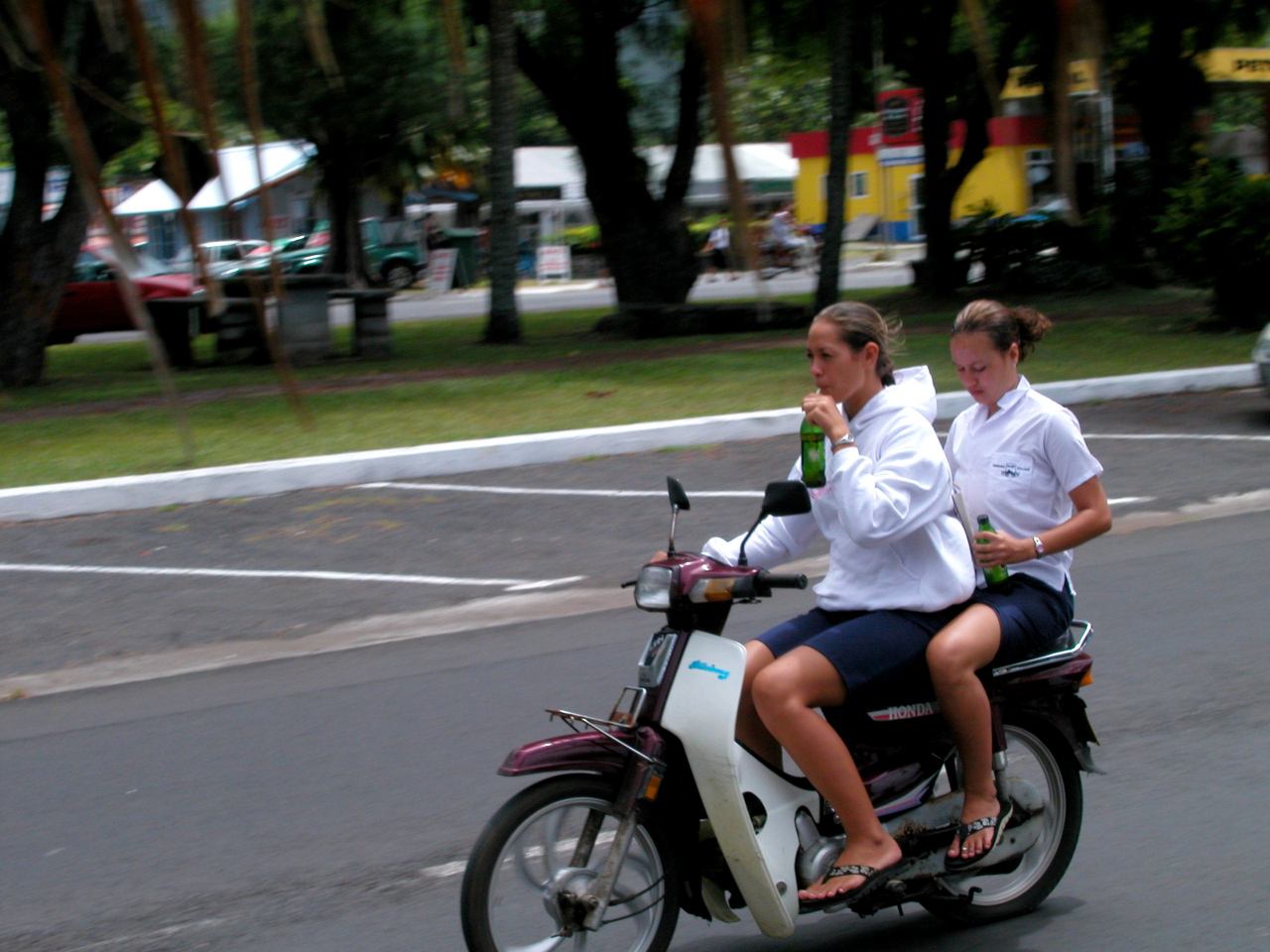
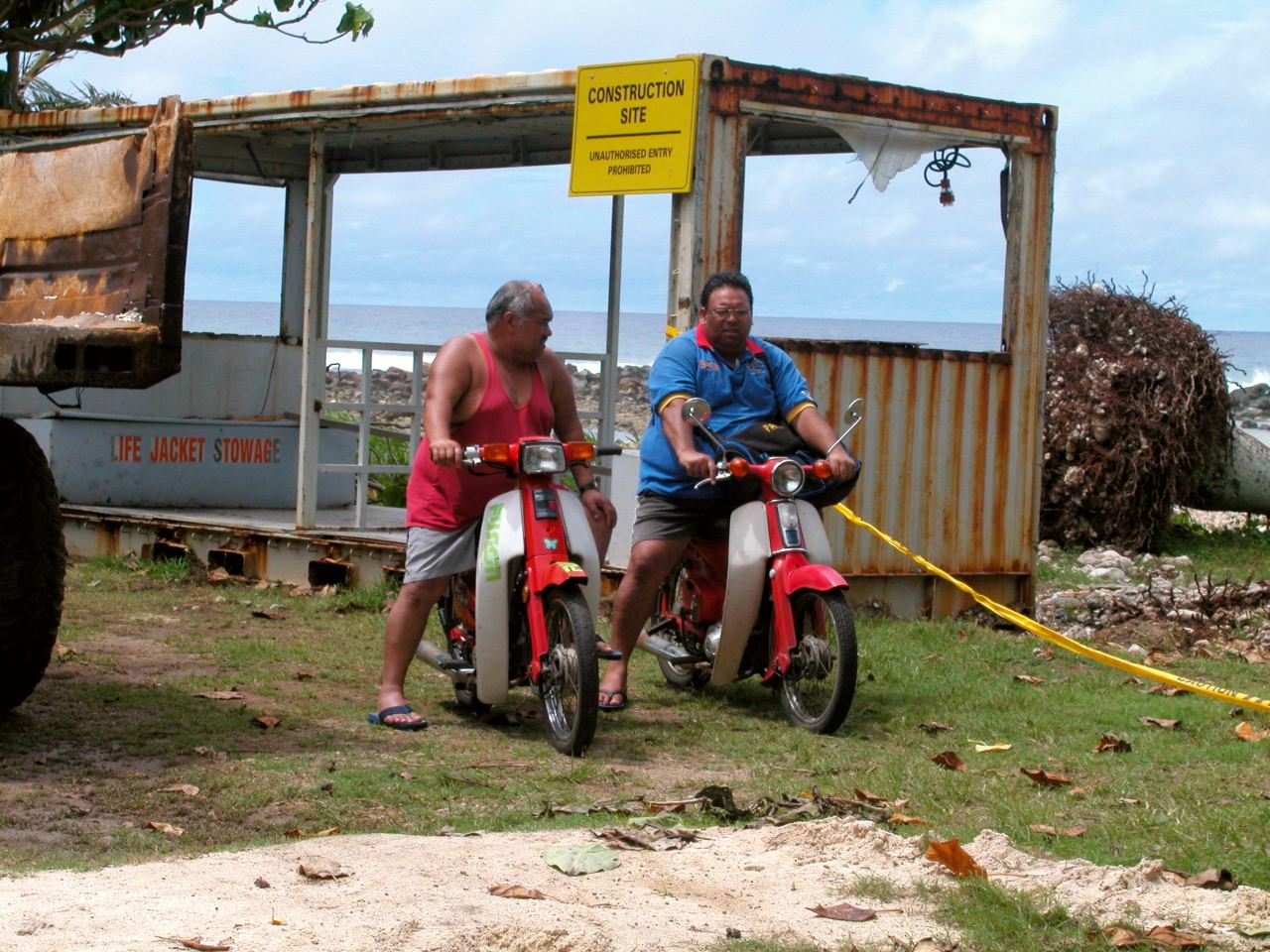
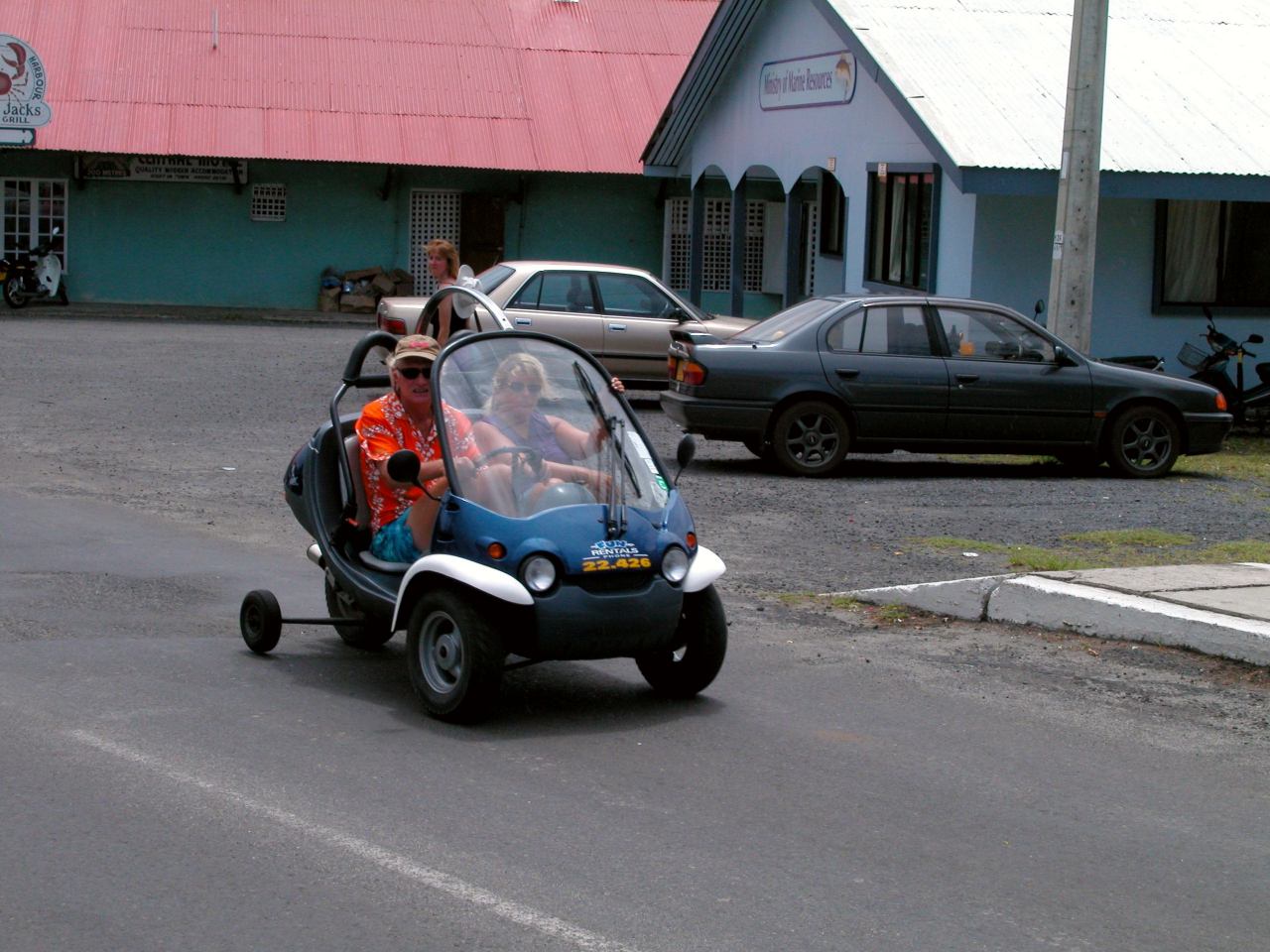
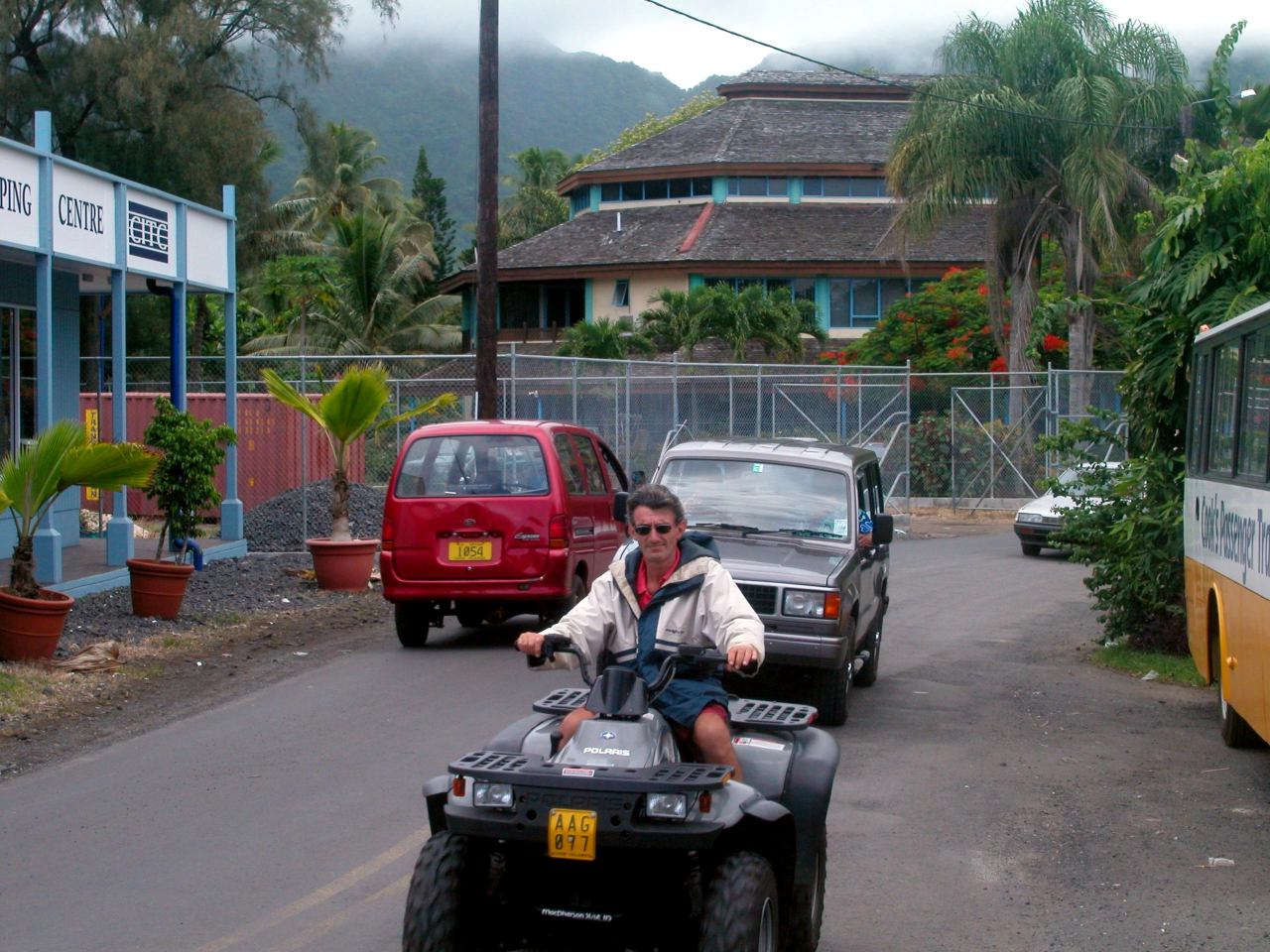
We didn't rent a car because we meant to visit a number of islands and would have had to get a new car on each. Prices are much like New Zealand's, around NZ$40 to 80. As well as ordinary cars, you can hire all sorts of mechanical marvels, with or without an engine. A bicycle is NZ$30 a day. They rent every kind of moped to people with an ordinary car licence, with no more than the question ‘Do you know how to ride a motorbike?’ Here you need a licence to operate anything with a motor. The police see to it strictly. On Mangaia, for instance, there are two policemen and one doctor. People ride without a licence all the same and are terrified of being caught.
Towards evening we flew to Aitutaki atoll, a scaled-down local version of Tahiti's Bora Bora. It's supposed to be the country's principal resort. All the inter-island flights are operated by Air Rarotonga. Popular Aitutaki gets a Saab 340. The flight takes about an hour.
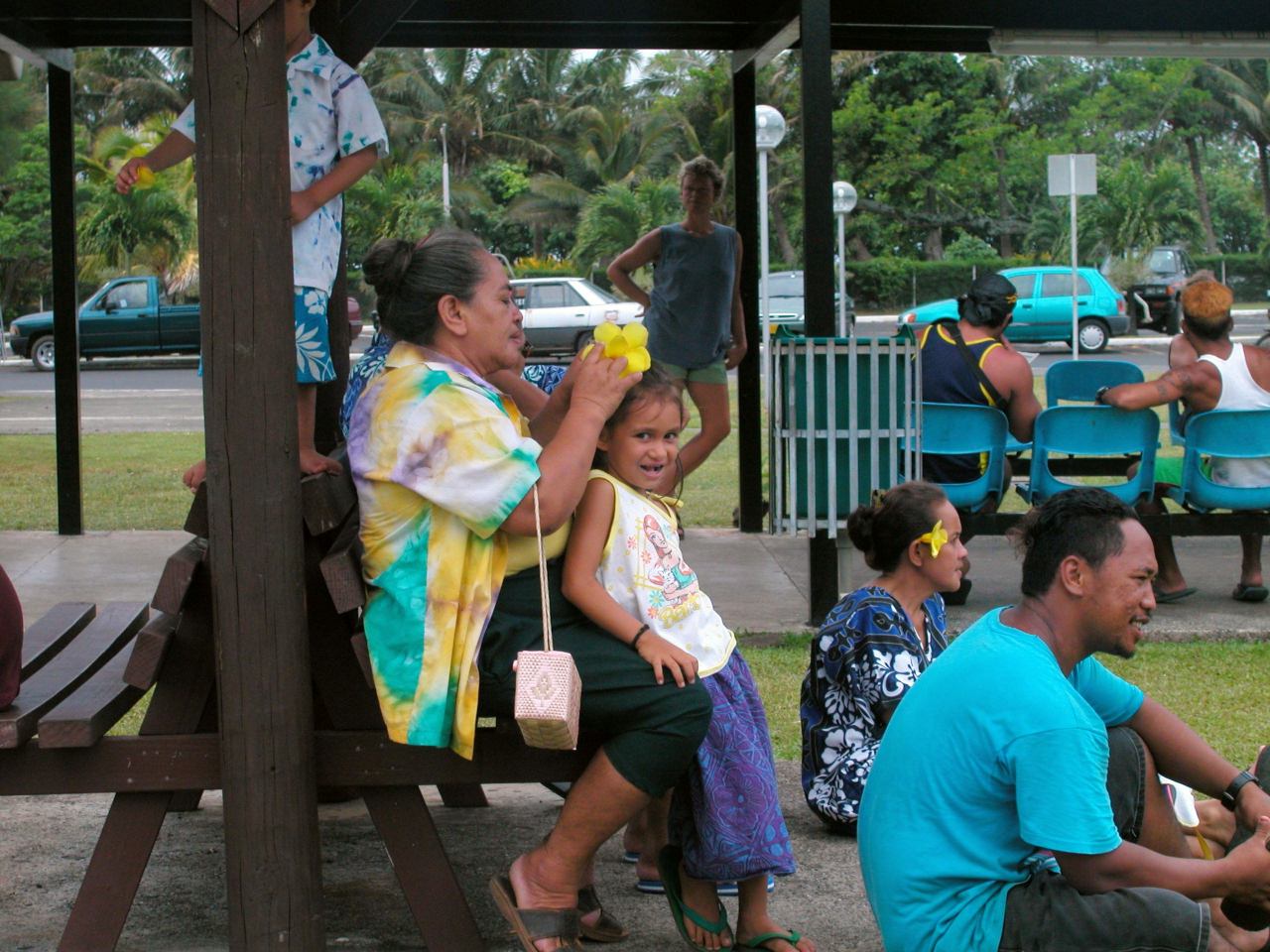
The airport is a little hut with a palm roof. They unload the luggage onto trolleys as they ought to, but don't take it anywhere. Everybody collects their belongings right by the plane. No security screening is provided. Terrorism hadn't reached this corner of paradise.
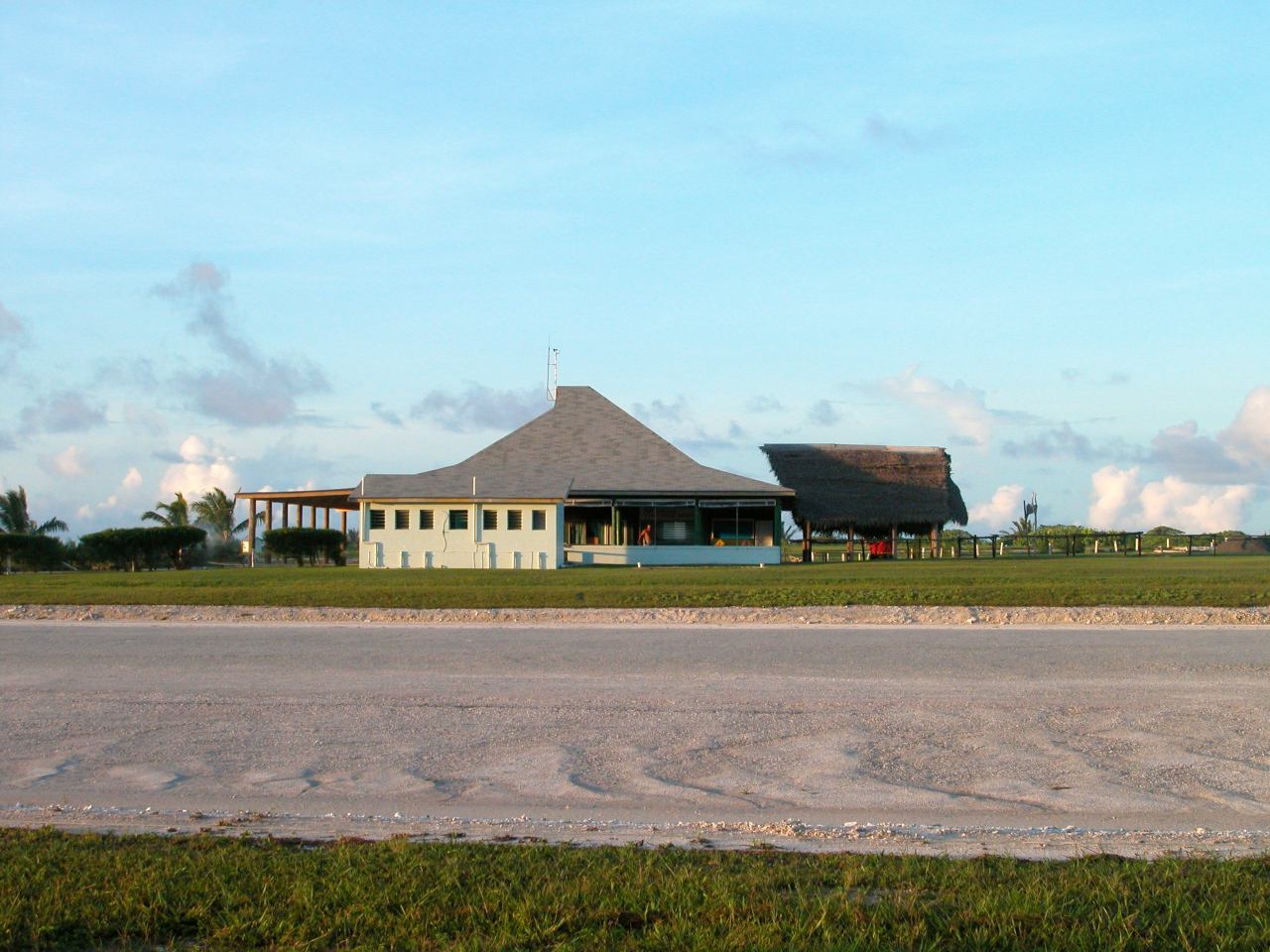
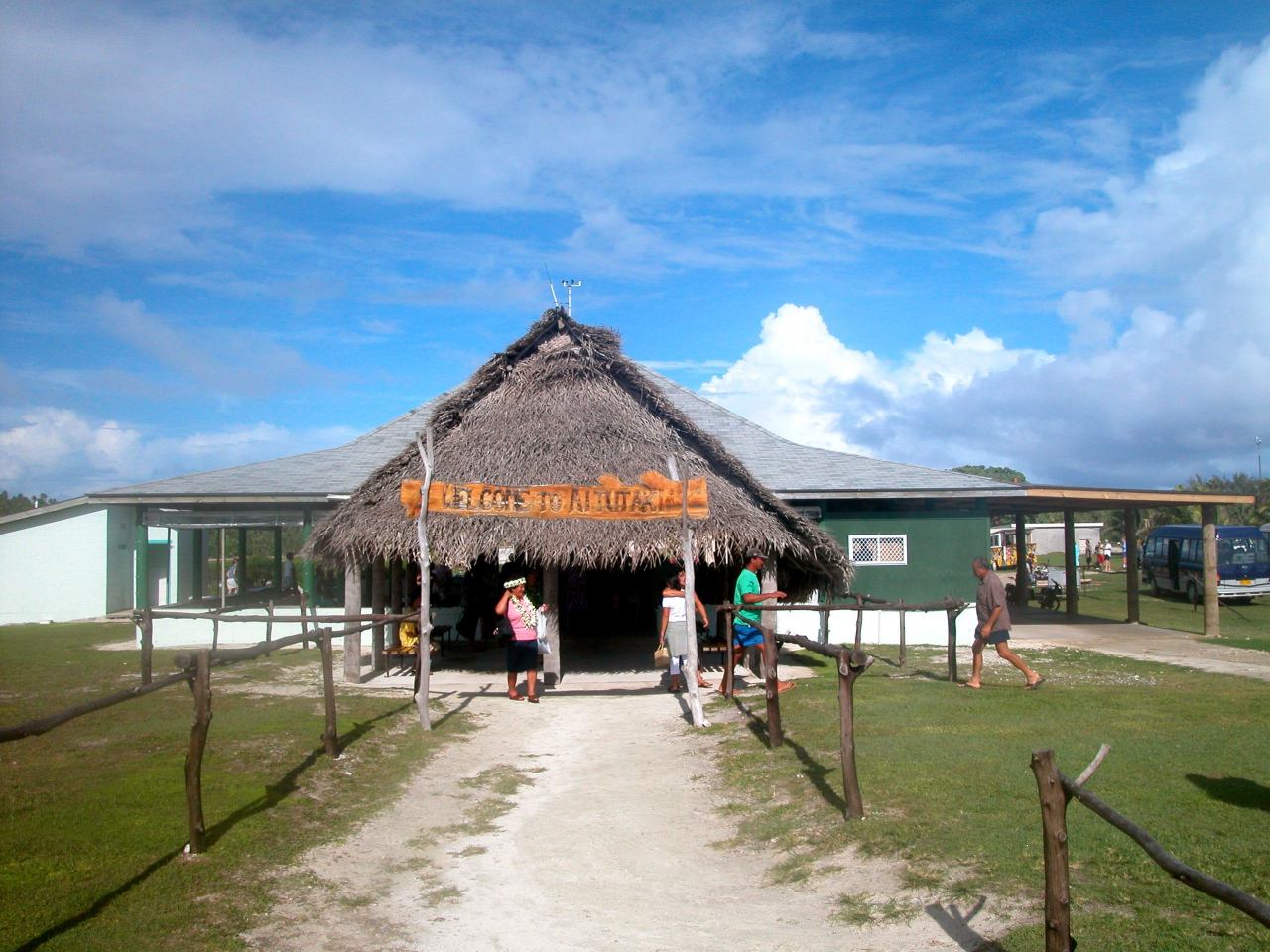
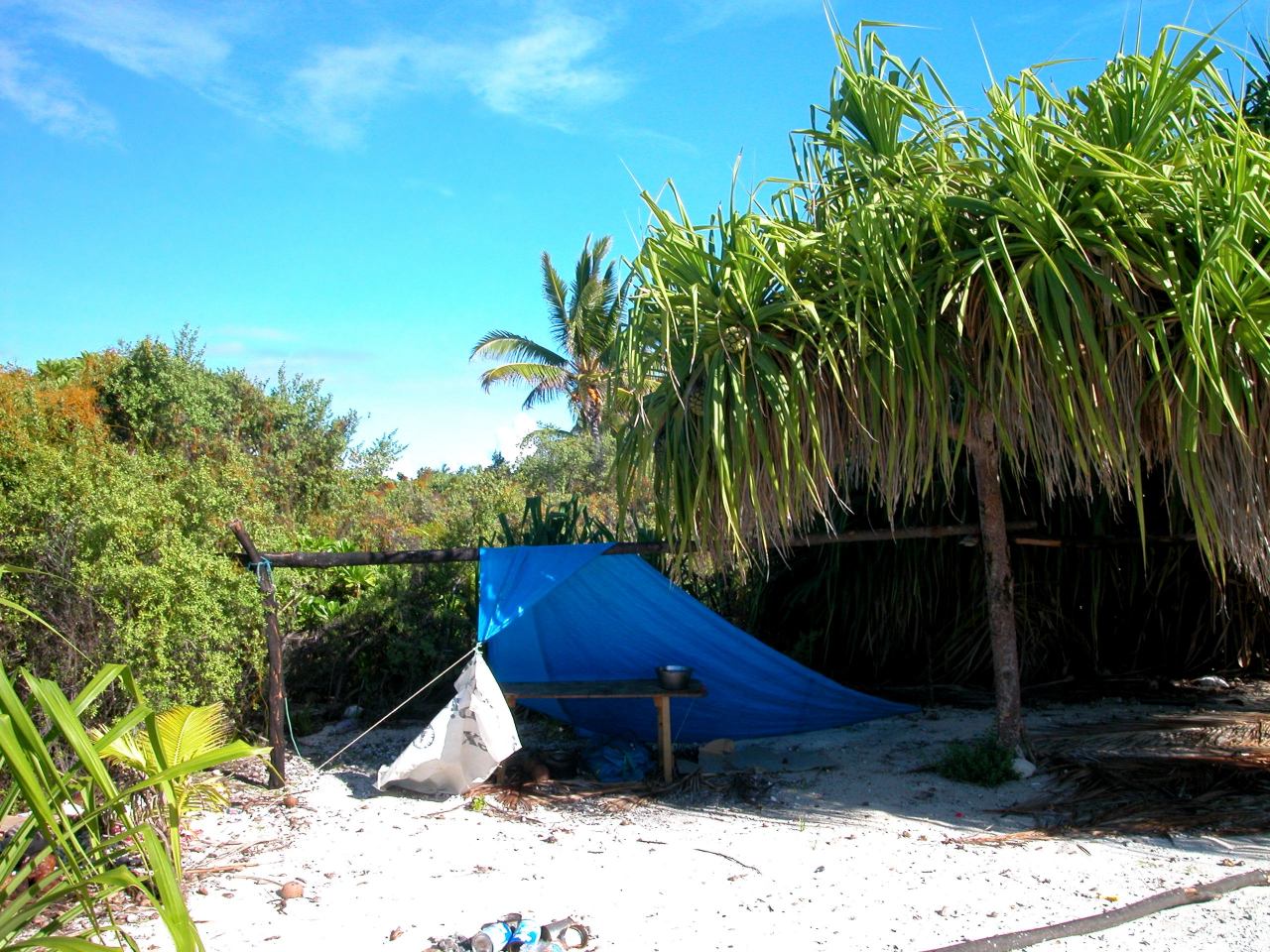
The most impatient hotel owners recruit guests right at the airport, shouting their hotels' names over each other. The visitors nobody picks up take the public bus to the village. Only the expensive hotels can afford to come out to the airport every day, we figured, so we resisted them and took the bus to look for a place ourselves. We got as far as the centre of Arutanga, the island's main village, and went on foot to find somewhere suitable. To our surprise, everywhere was full. And this was the lowest point of the season. You'd have to book in June. The only vacancies we found were at the Aitutaki Pacific Resort, the most expensive hotel. They charge NZ$710 a night, a bit rich for us. We kept on looking. Many of the hotels were obviously shut, or their owners had gone home. Our appearance went against their logic. If nobody had arrived on the bus, there was no reason to expect anyone after that. So it began to get dark and we hadn't found a hotel. Of course we could have gone looking for the absent owners in the village, but we had a tent and the coast north of Arutanga was deserted and overgrown with bushes. We agreed to camp wild.
We pitched the tent (18°49.719′S, 159°46.651′W). Lovely, a view of the southern sea in the evening right out of the window. All fine, except I was thirsty and we had almost no water. I had to go hunting. There ought to be coconuts growing round here. As luck would have it, the nearest palms were all tall and I had to climb a long way. It all felt quite unreal. Night on a little atoll in the Pacific. A storm was gathering, with flashes of lightning over the ocean. Over in the other half of the sky you could still see the Southern Cross. I'm sitting in a palm tree, trying to tear off a coconut. And it's the same me who used to pull collective-farm potatoes out of the mud with frozen fingers and march in formation at military camp. Well, I'm here now, and the people who forced me to do all that can turn over in their graves.
Ten coconuts or so are quite enough for two people to get their fill of water. Having quenched our thirst, we got into the tent. Time to sleep. The long forty-seven-hour day was coming to an end, and here we were going to bed for the third time that day. The date line is a funny thing, after all. It was still 27 January. We'd seen it in on Tonga, slept, flown to New Zealand, wandered around the airport, flown to the Cook Islands, slept on Rarotonga, and then flown here. And the day hadn't changed once.
A tropical downpour descended on us in the night. Surprisingly, it didn't cool things down. The tent was still hot and stuffy. At least we could open a window. There are mosquitoes on Aitutaki, but they don't carry malaria or dengue, we were told.
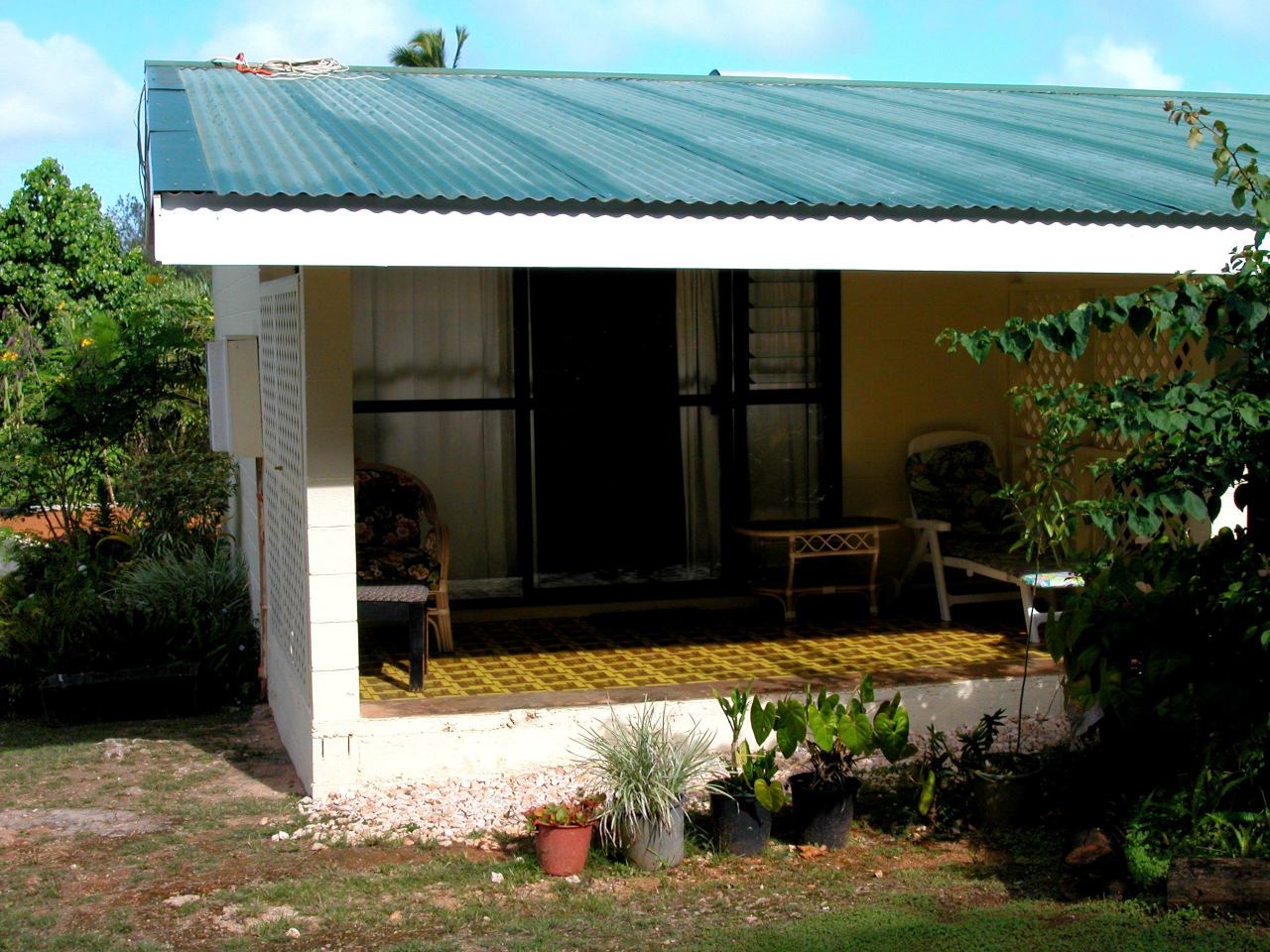
In the morning we packed and set off to find somewhere to stay. At the nearest hotel we found a bungalow with a little balcony and a view of the sea (18°50.180′S, 159°46.959′W). We'd stay two days at NZ$220 a night. It looked like a hut made of palm branches from outside, but that was just camouflage. The actual building was made of welded aluminium sections and completely sealed. There was a shower, fridge and television. One local channel, Cook Islands Television. The only thing missing was air conditioning. Instead there was a fan turning under the ceiling.
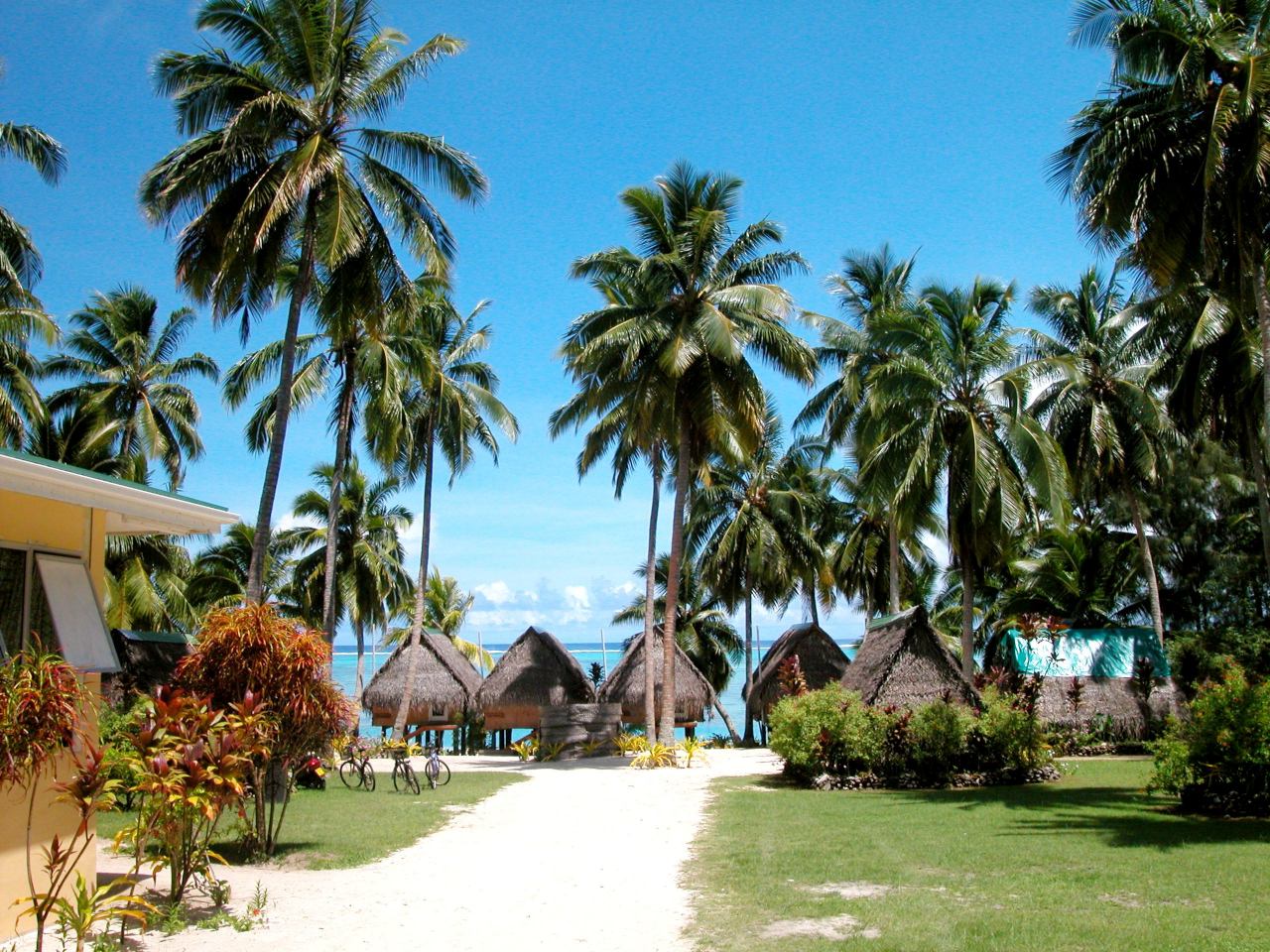
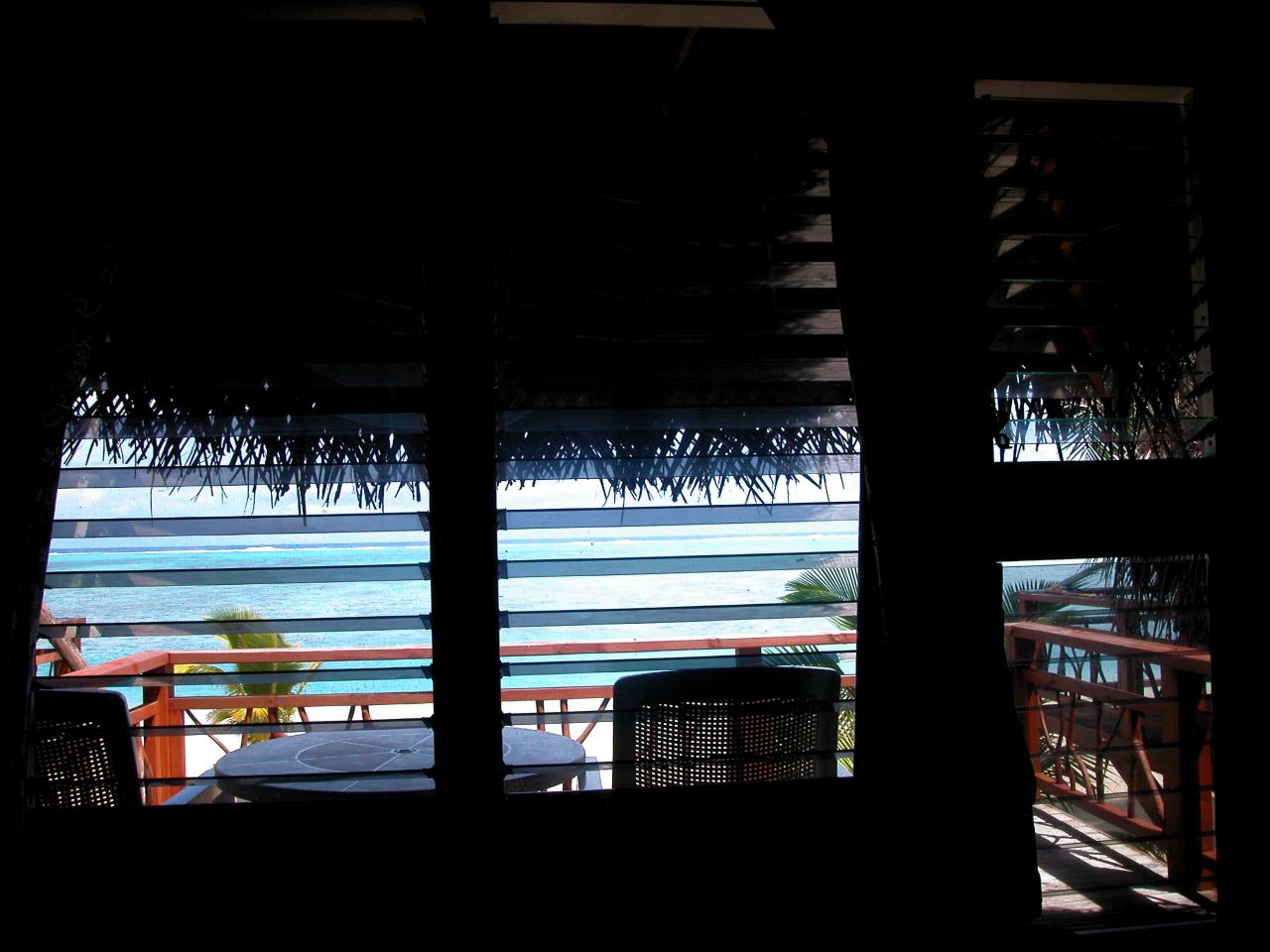
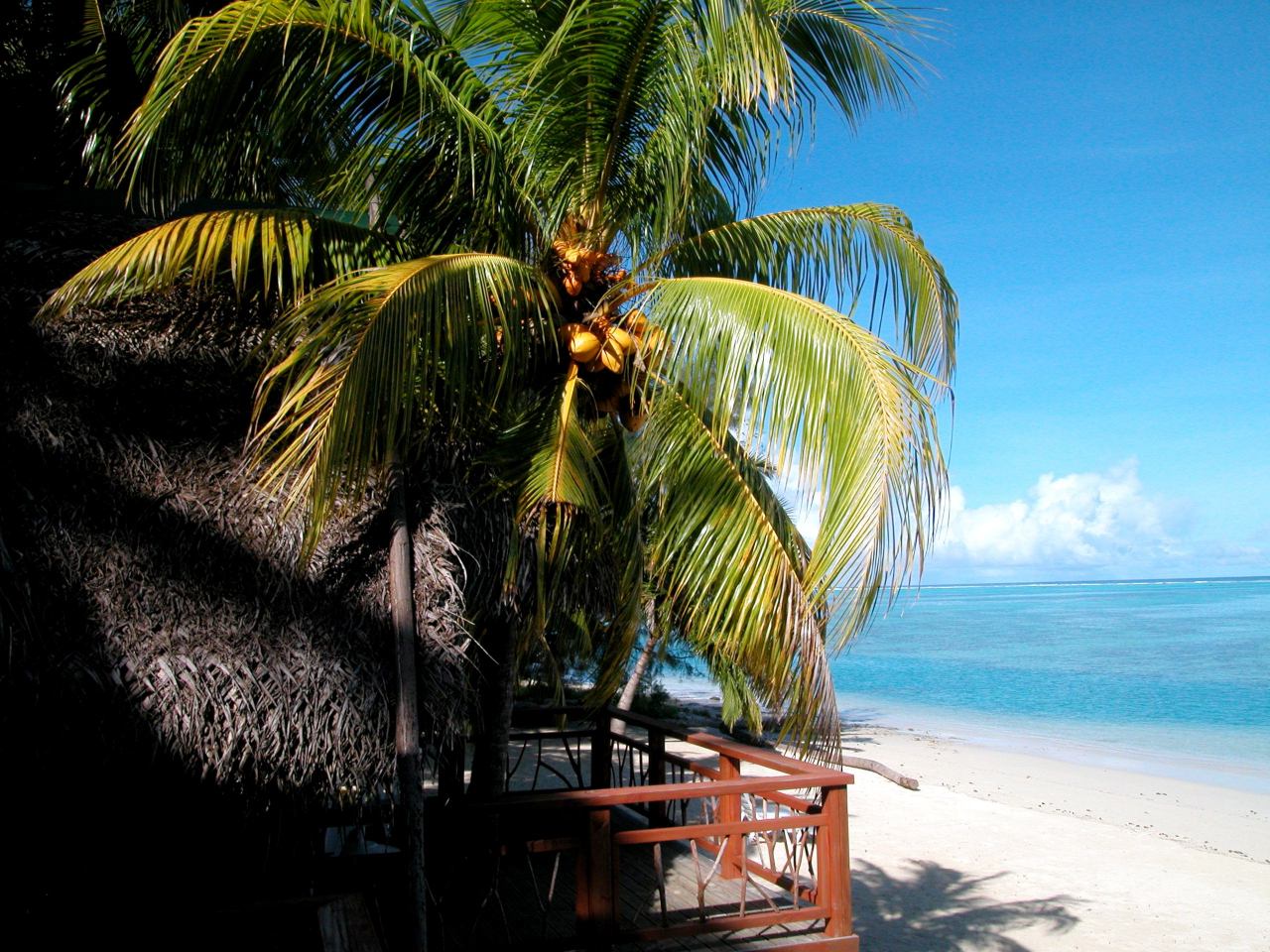
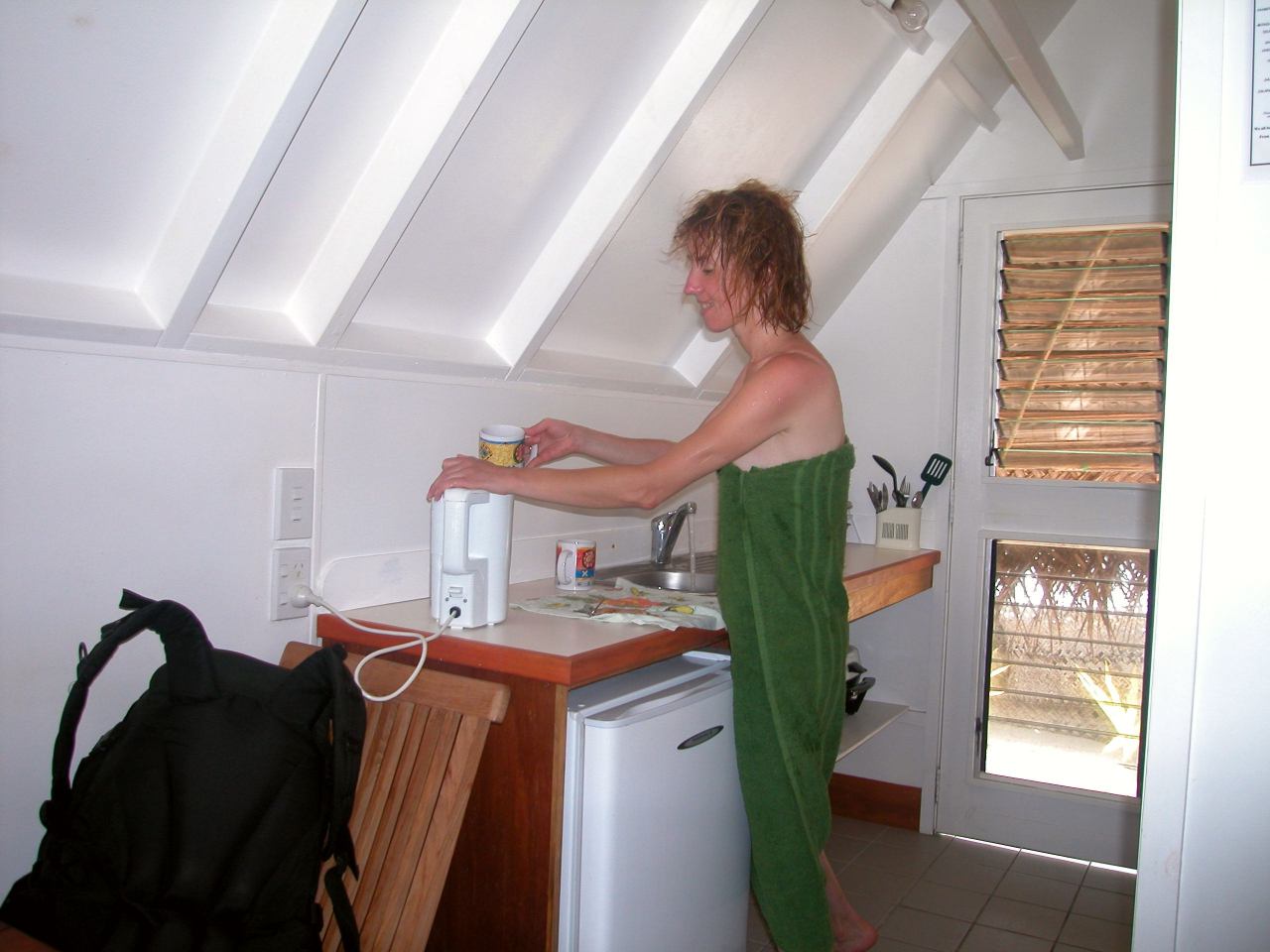
The first thing we did was get into the shower, then we spent a long time sprawling on the sofa. It felt as if we'd do that for ever, but in under two hours curiosity got the better of us. We went out to walk around the island along the ring road.
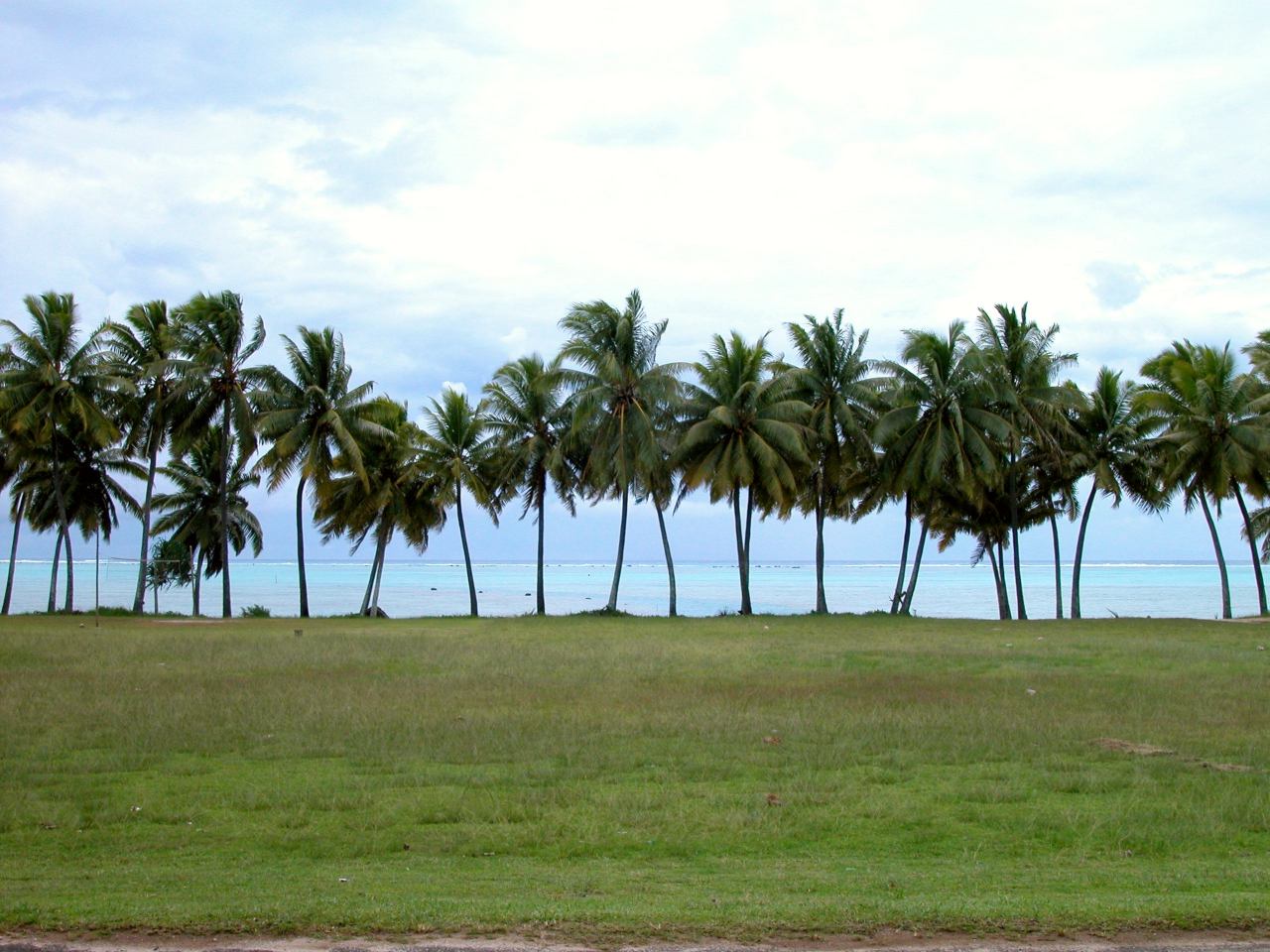
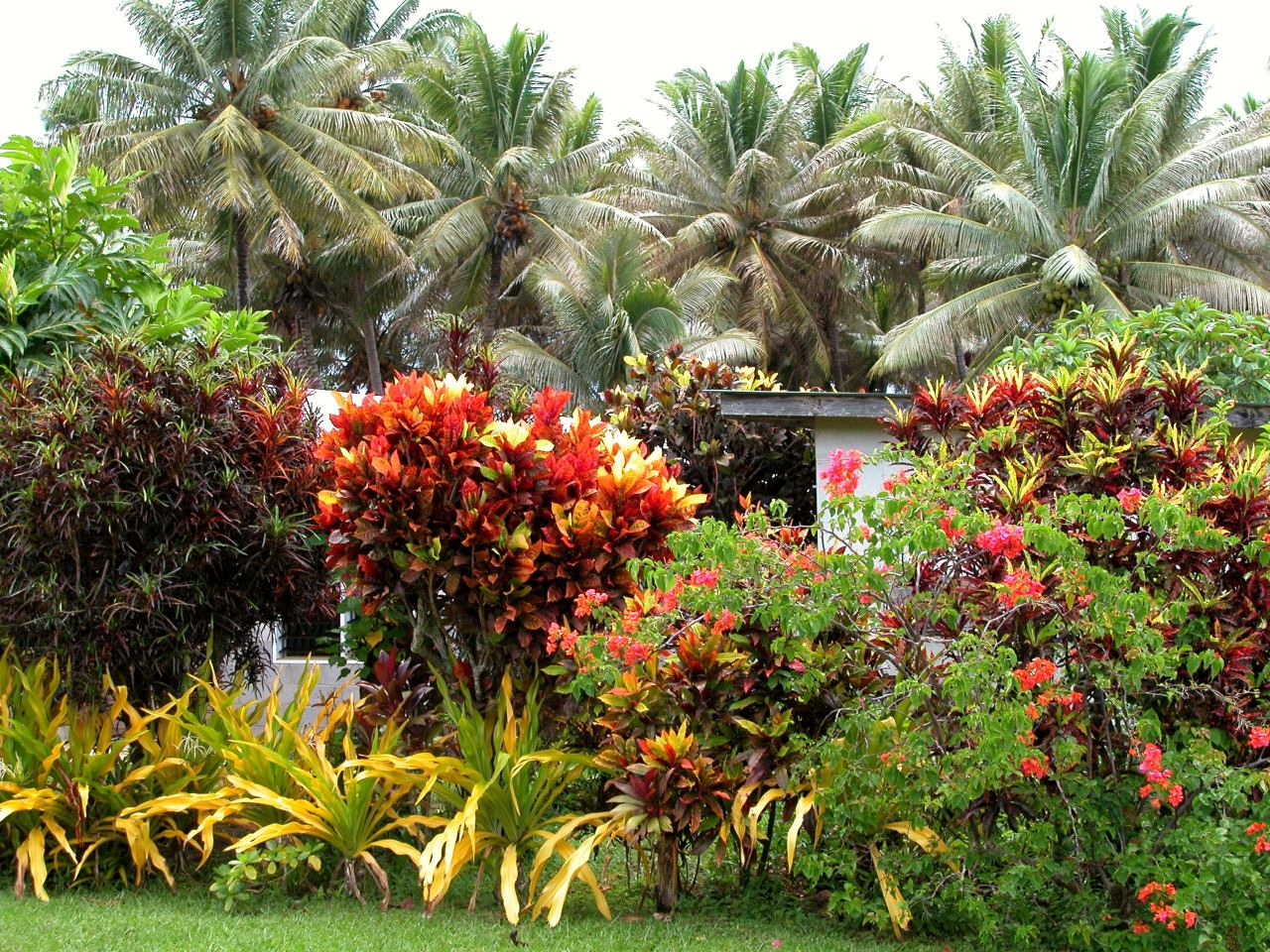
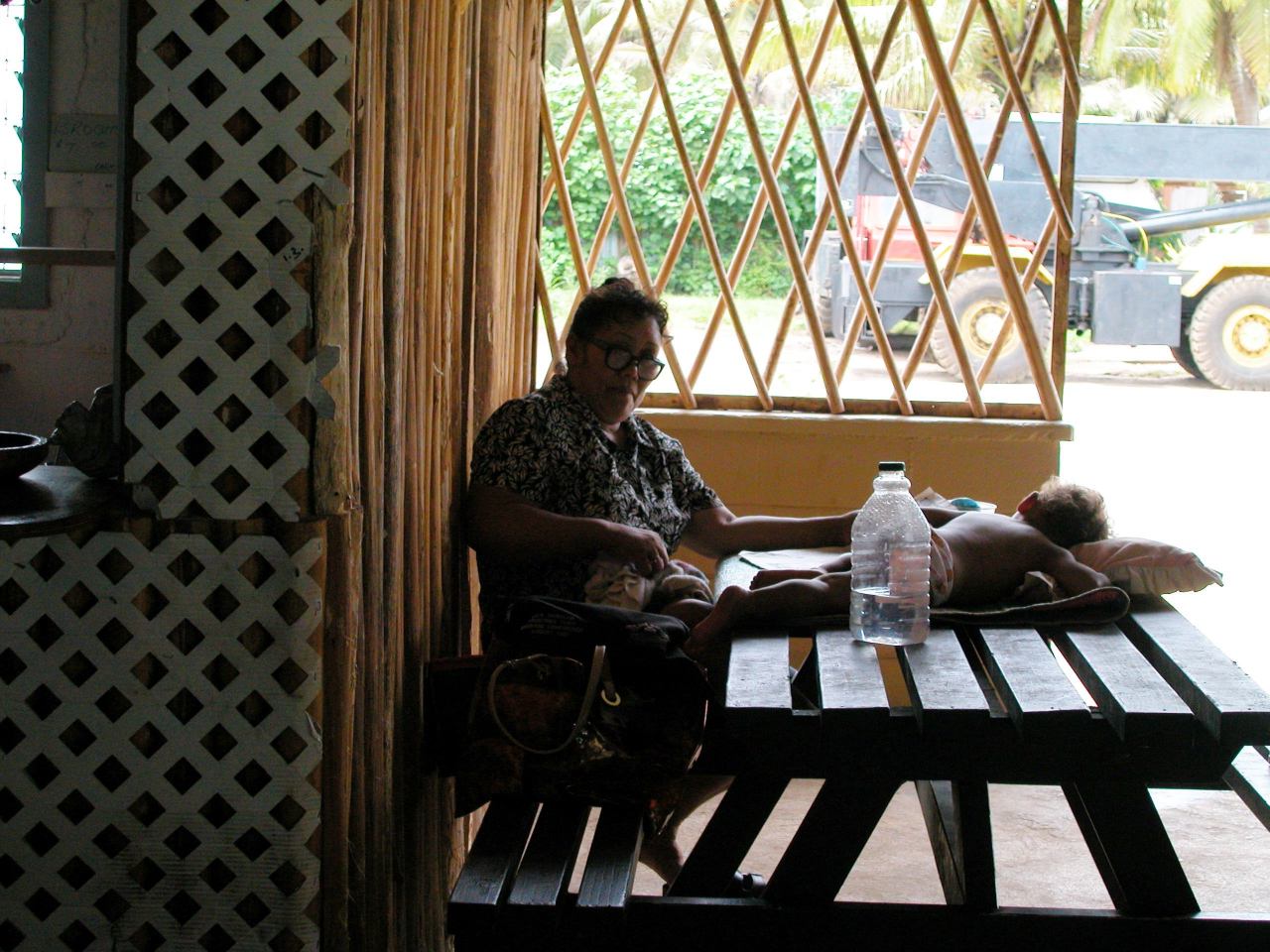
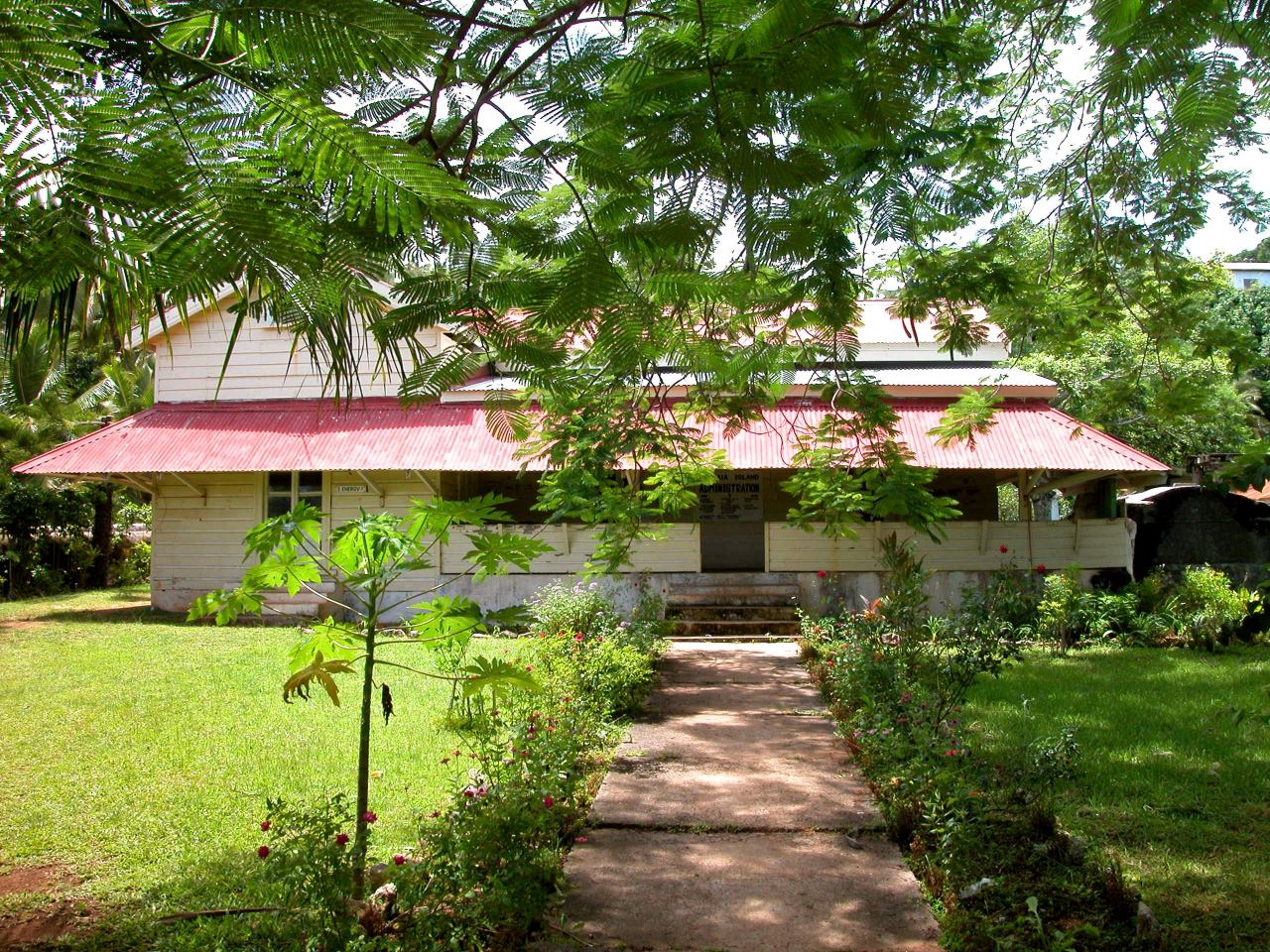
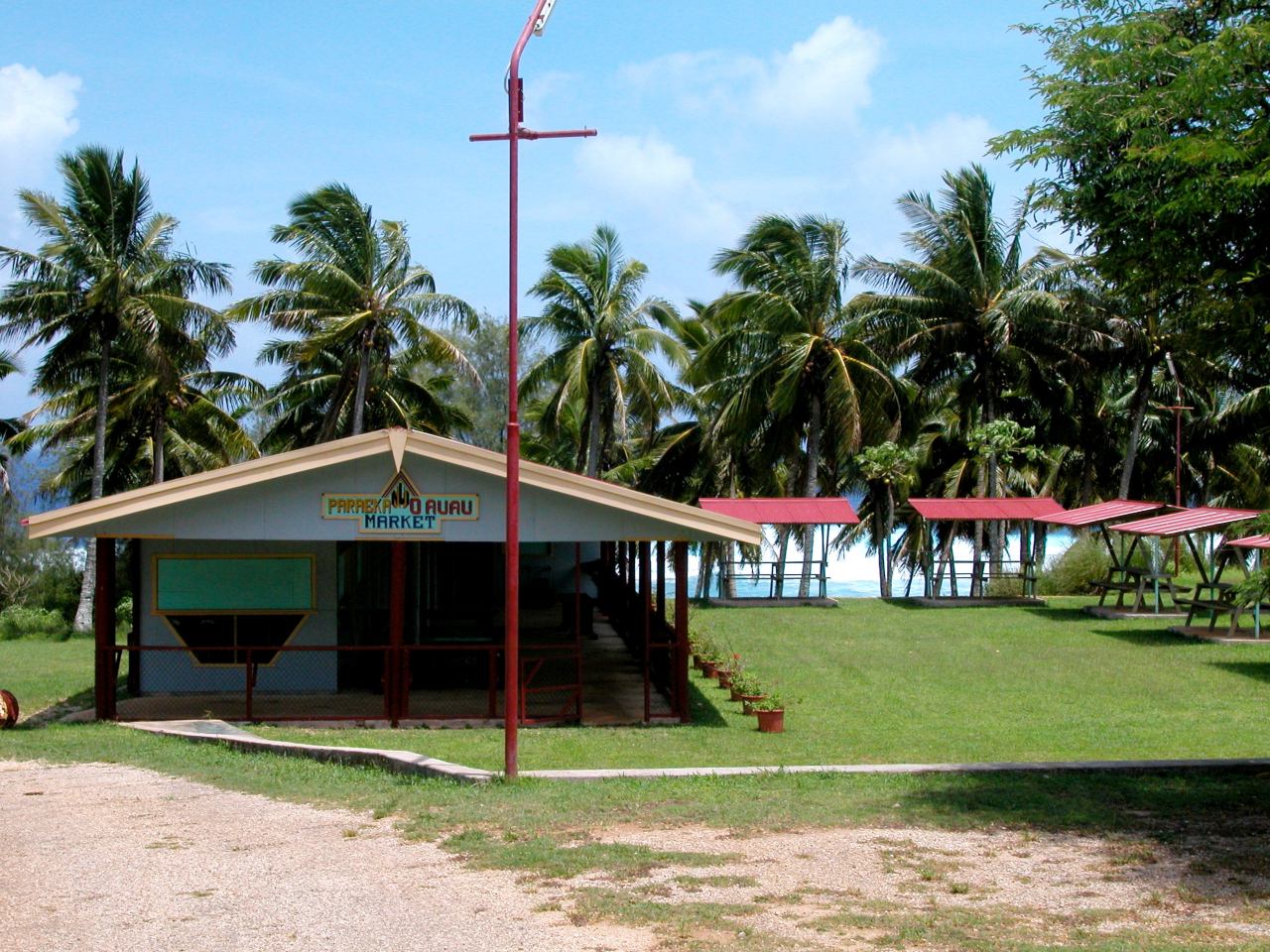
Near the island's capital the road looks quite decent. Narrow, of course, but sealed. The main square doubles as a market. No vendors, stalls empty. Music like Hawaiian music poured out of a loudspeaker. The market administration and the island administration got along perfectly well together in a single room. There was an ‘OPEN’ sign, but nobody in charge was there. A woman and child were waiting wearily by the door. They looked as if they'd been waiting a long time.
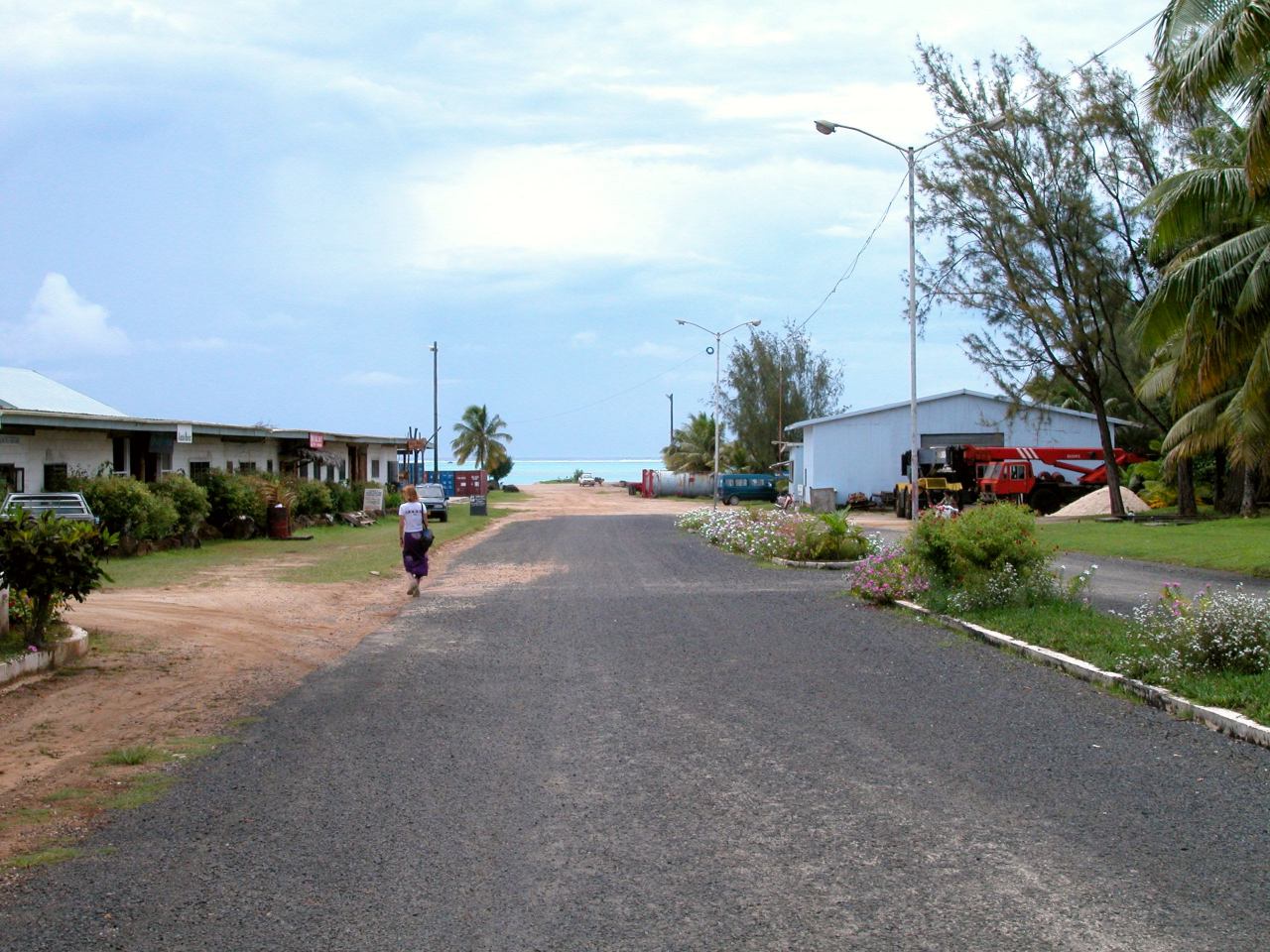
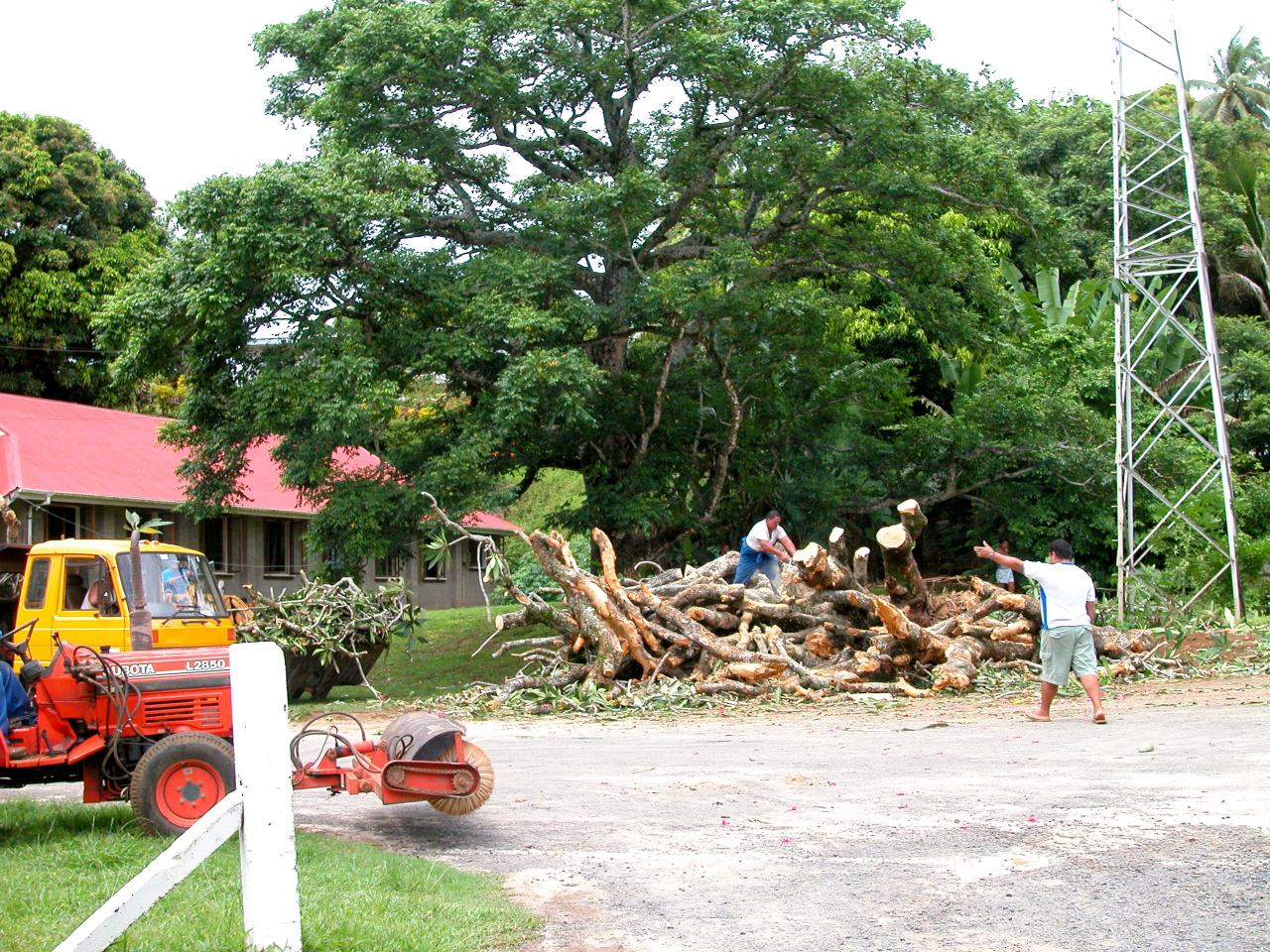
The tarmac ends with the last houses. Beyond that, the ring road is two worn ruts among the coconut palms. It looks as if there isn't traffic here every day. At the southern end is a little village called New Jerusalem, settled by people of the Free Church. You can probably enter freely, but we didn't venture in.
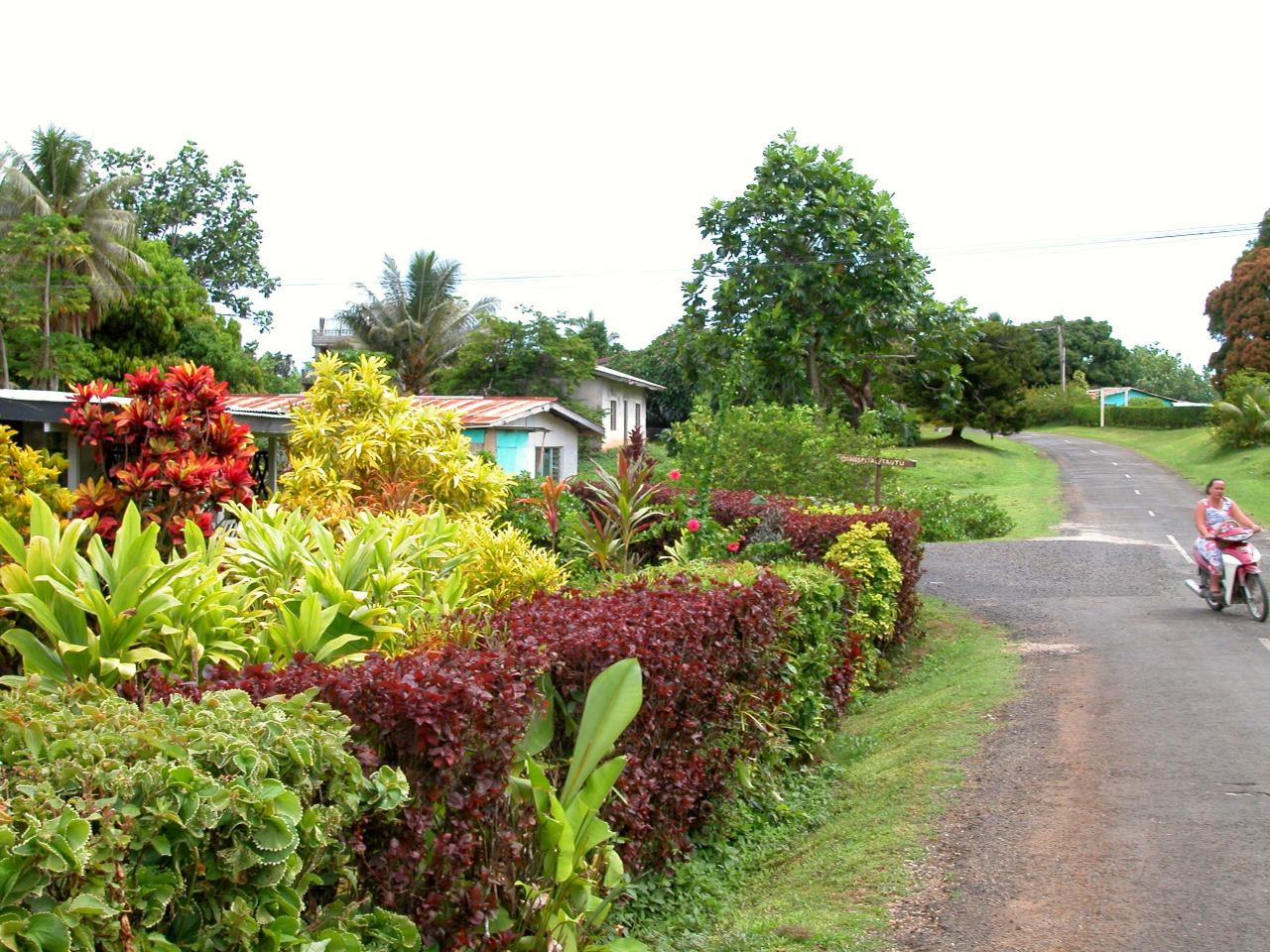
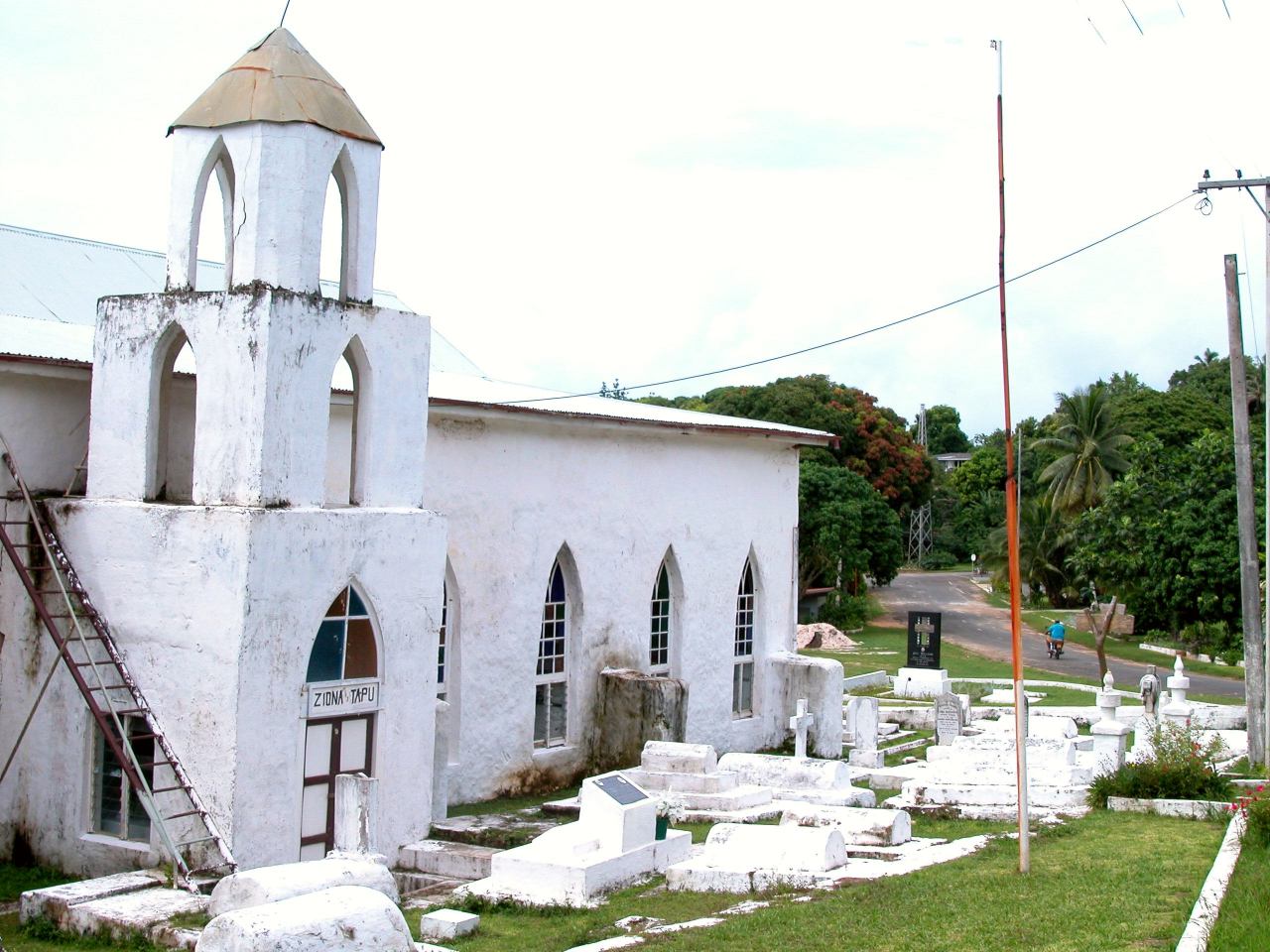
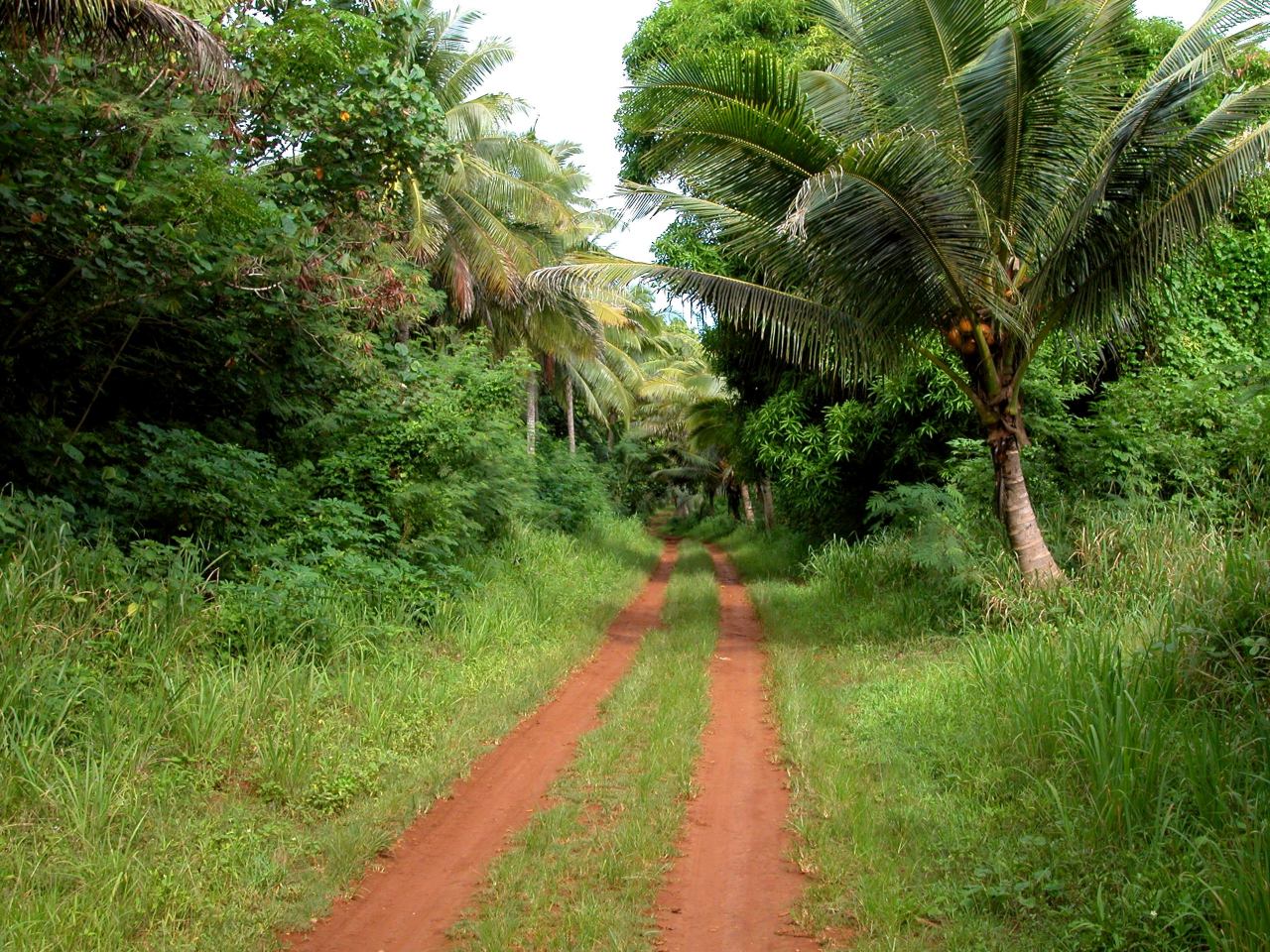
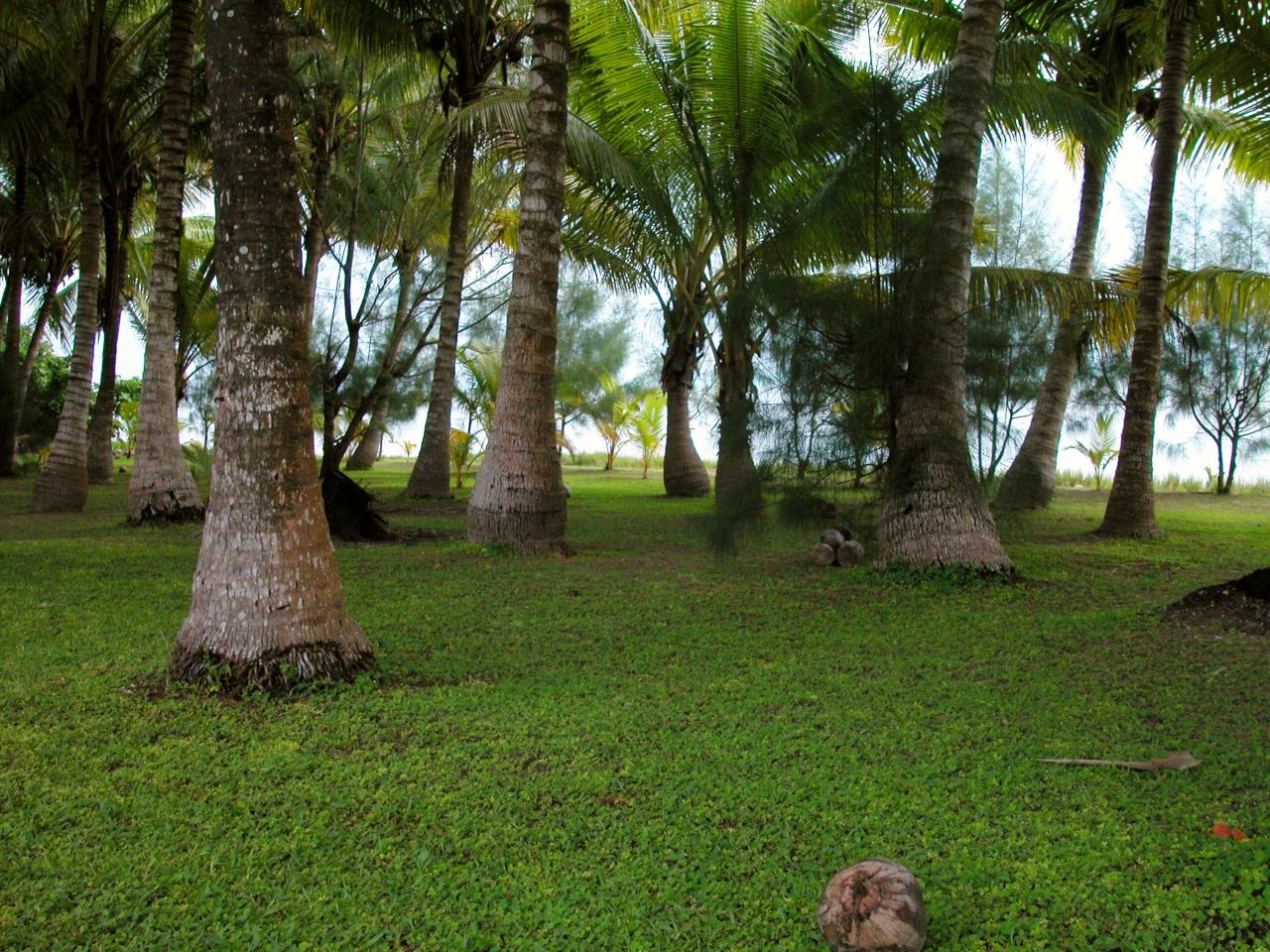
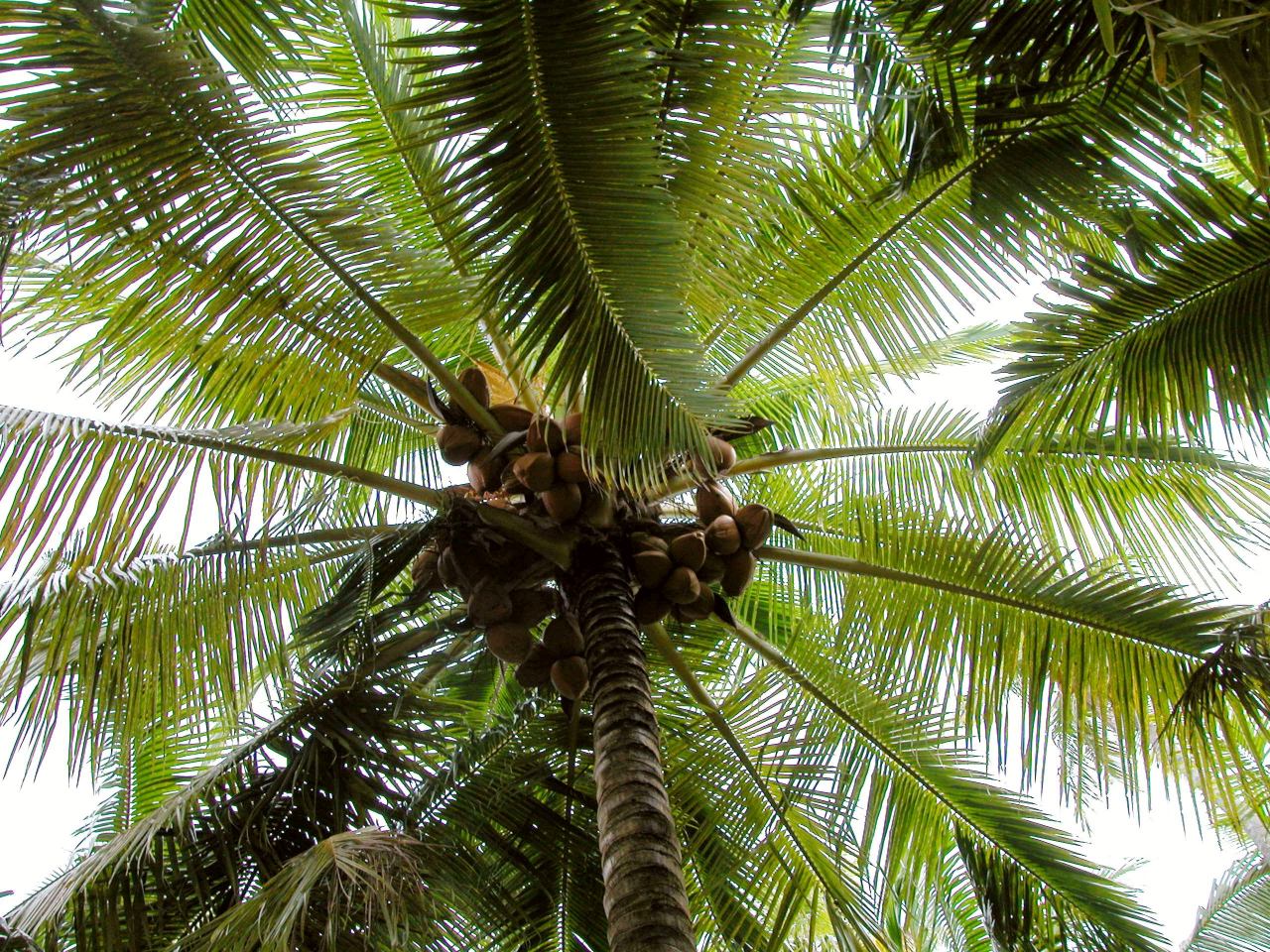
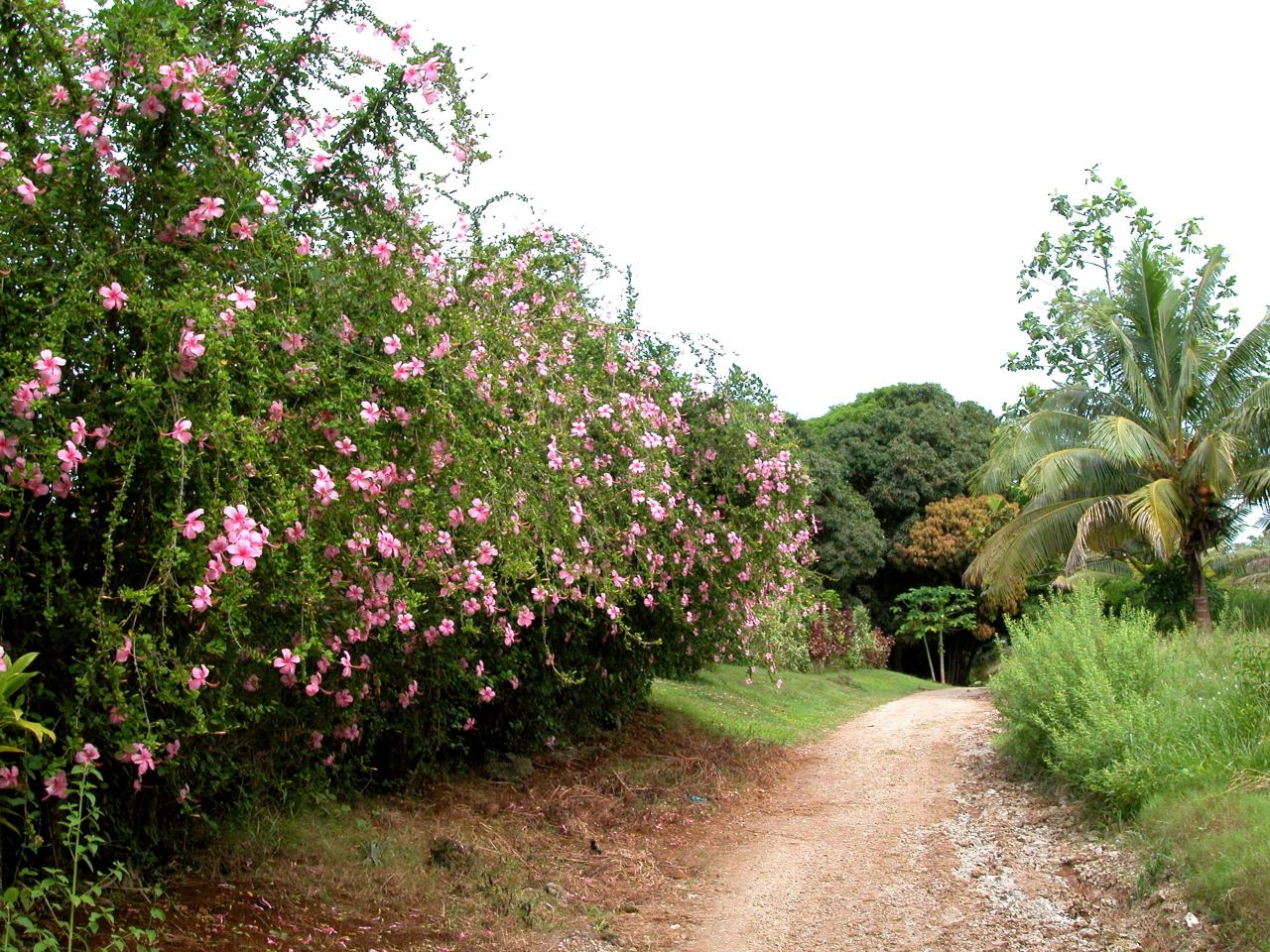
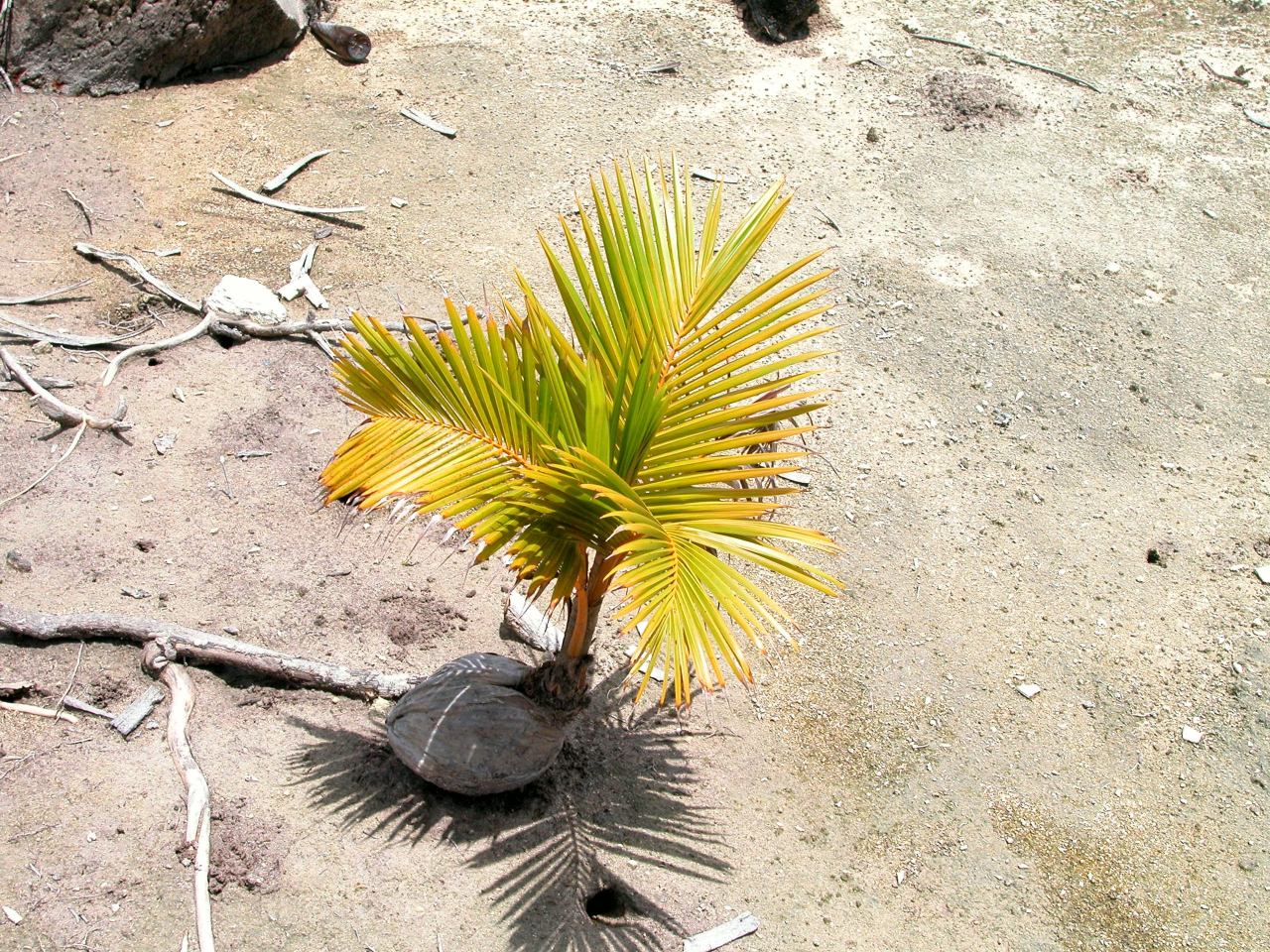
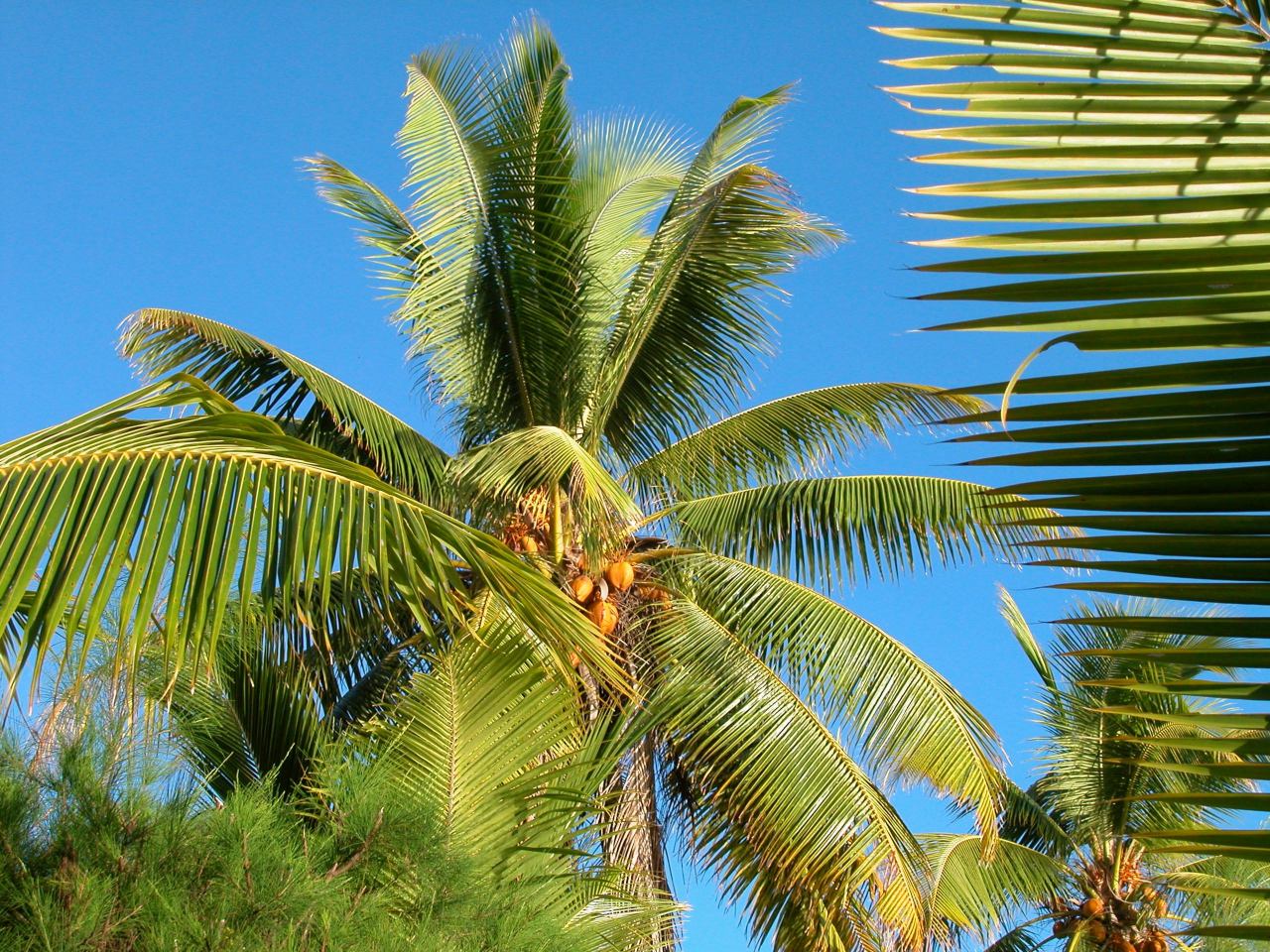
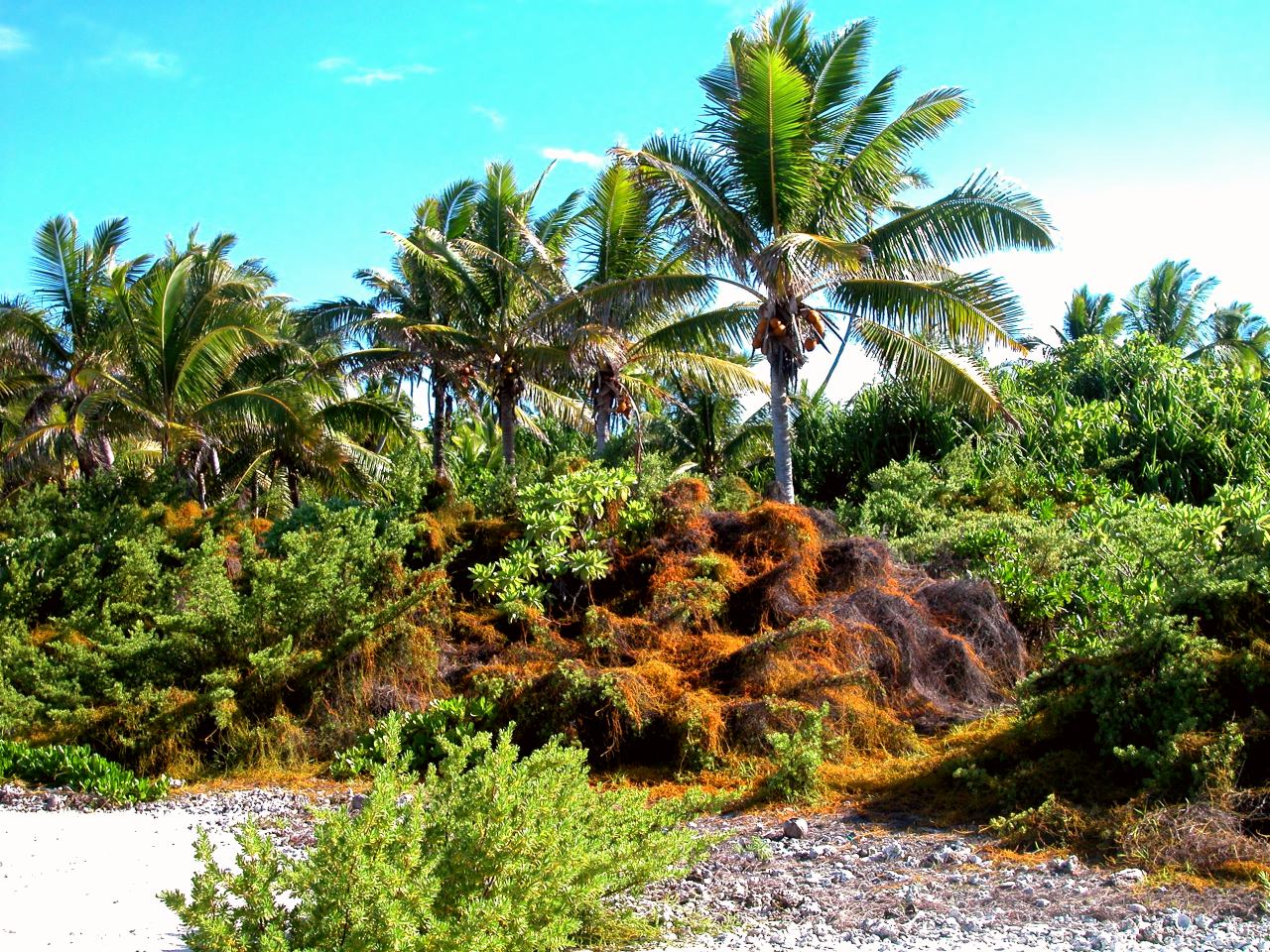
It was hot out, but water was no problem. We didn't even have to carry any. Lots of coconuts grew along the road. Most were high up, but if you walked a few hundred metres you always found a shorter tree, or a decent freshly fallen nut on the ground. You have to choose one that's still completely green, or the water inside may be off.
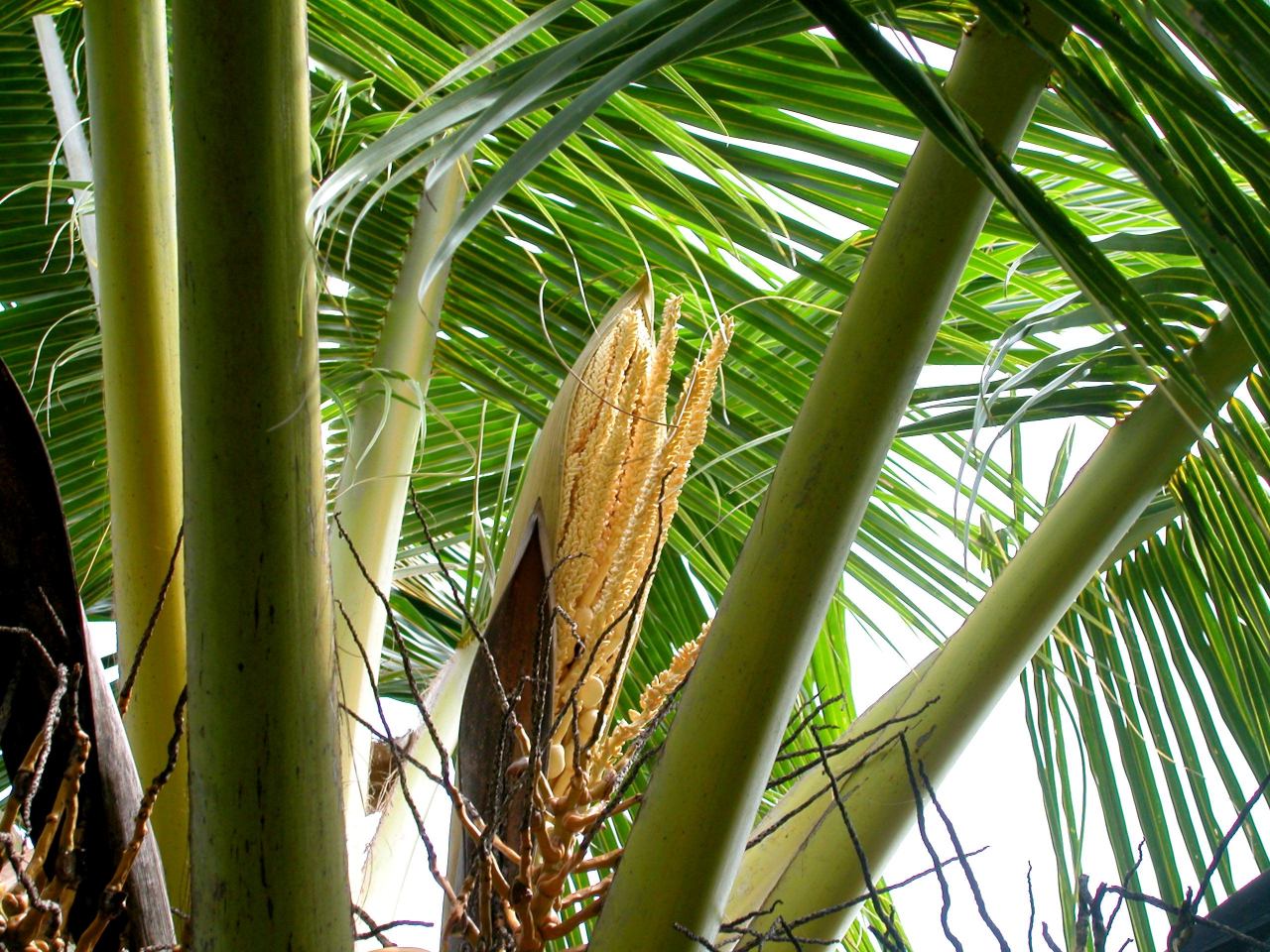
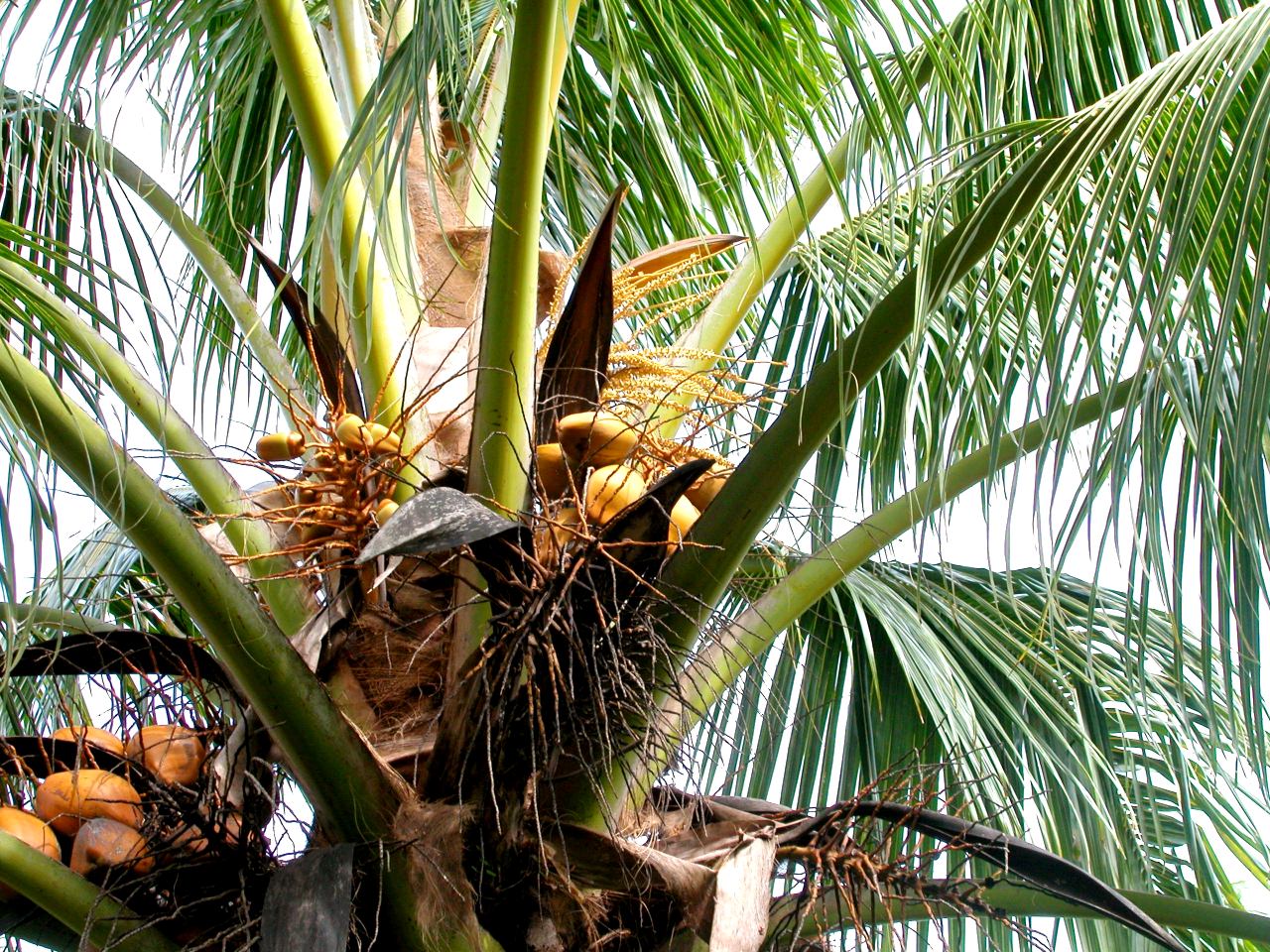
The nut you buy in our shops is only the kernel. When it grows on the palm, there's a tough layer of husk several centimetres thick around that kernel. A good knife is needed to get at the water, but my favourite little knife had been pinched on Tonga. We had to do it in a thoroughly primitive way. Put the nut on a stone, then drop a heavy rock on it. Overdo it and you're left with a pancake. But there are plenty of nuts and it's no great loss. At some attempt a tiny stream starts to run out. All you have to do is catch it with your mouth. A coconut half-ripe has around half a litre of nearly pure water in it. It has a taste of its own, of course, but it's quite different from coconut milk. Speaking of milk, if you see an old woman at the roadside with a jar of white liquid and a sign saying ‘Milk’, you can be sure it comes from coconuts. It's very tasty. A litre costs a few New Zealand dollars.
Halfway round the ring road we arrived at Vaipae, the island's second largest village. At the entrance a banyan of astonishing size stood in the way. A banyan is an ingenious tree. It can grow larger than a baobab, but it's built quite differently. First a slender little trunk grows a few metres high and acquires a broad crown, from which little roots hang down. When they reach the ground, they become new trunks, and it goes on like that until some physical obstacle stops the whole business. Nothing can grow inside a banyan. The roots hang so close together it's hard to squeeze between them. Nobody really needs to do so. Let the tree grow. For hundreds of years the locals went around it. Then came the Second World War. The Americans arrived to defend the Cook Islands and the accompanying Japanese never turned up. They decided to give the soldiers something useful to do and ordered them to straighten the road. They cut a tunnel in the banyan. It's an extraordinary sight. I'd never seen anything like it anywhere, yet oddly enough the banyan wasn't listed as an attraction. We had to find out its story from the local people, which went like this. As we walked through the village a man rushed out of his house and invited us in. They put a wreath of flowers on each of us and fed us breadfruit and pineapple. The man himself works in New Zealand, but takes his holidays visiting his sister back home. He saw a tourist and decided to do a good deed, give us something to eat and show us a good time.
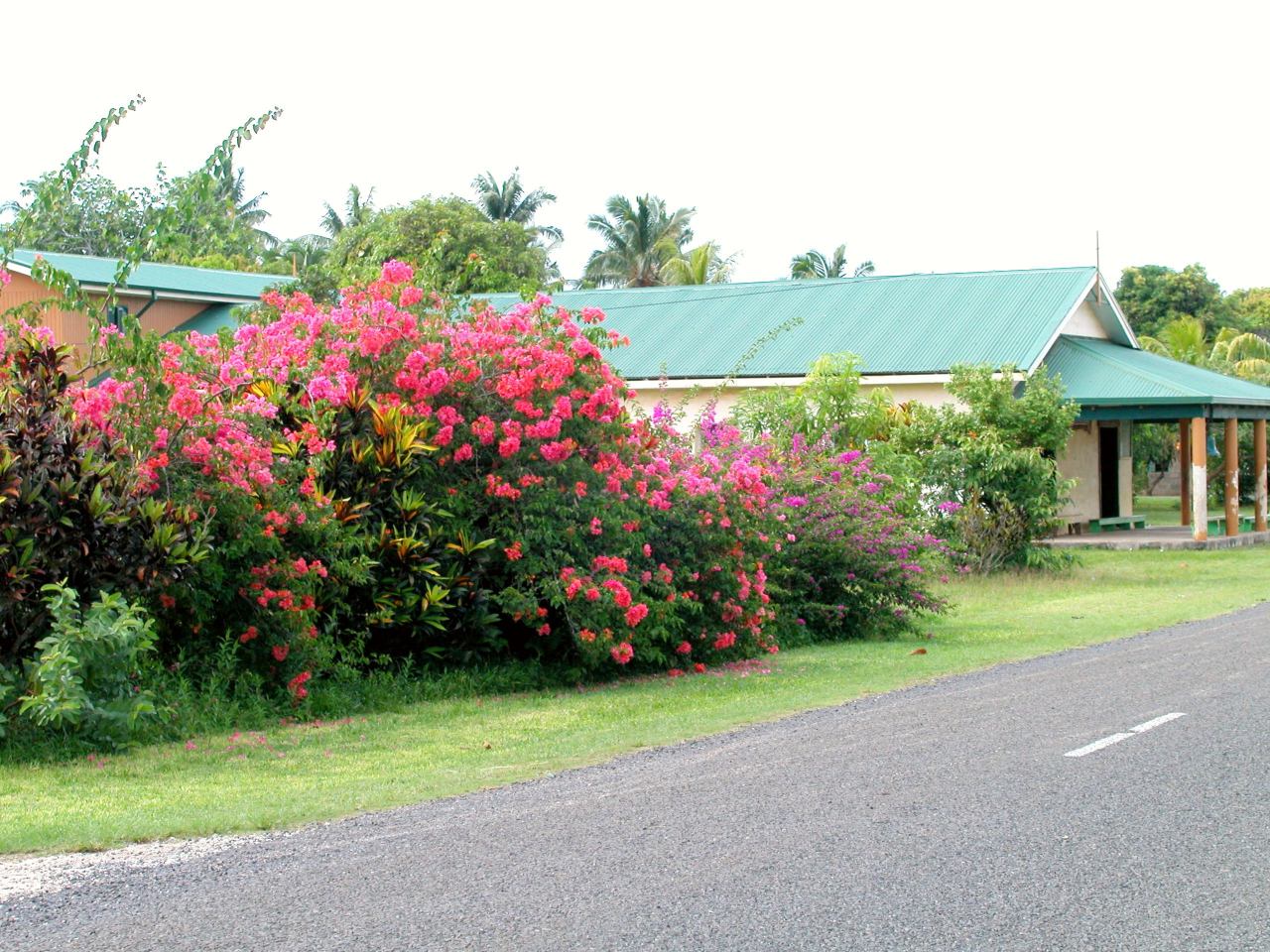
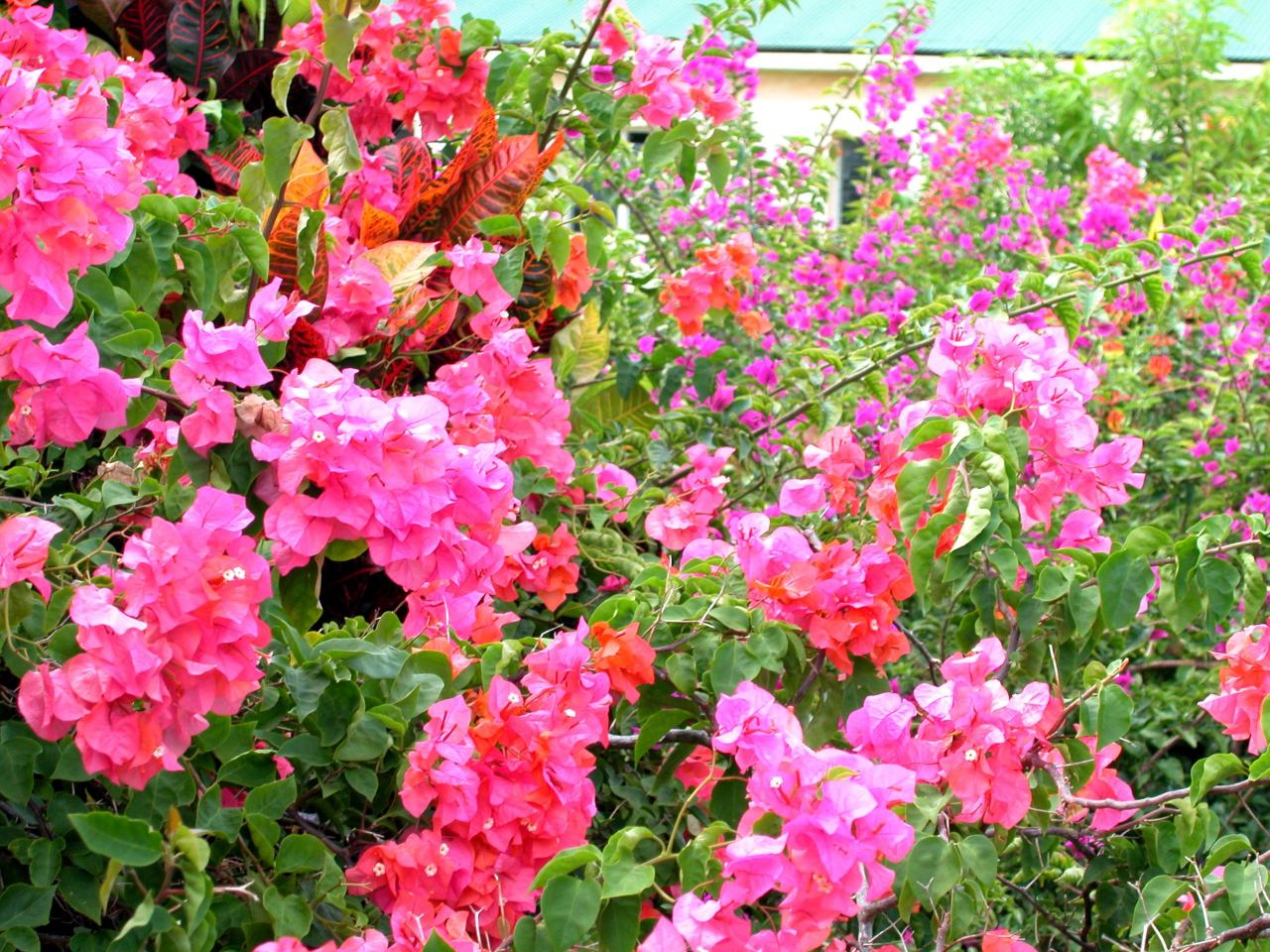
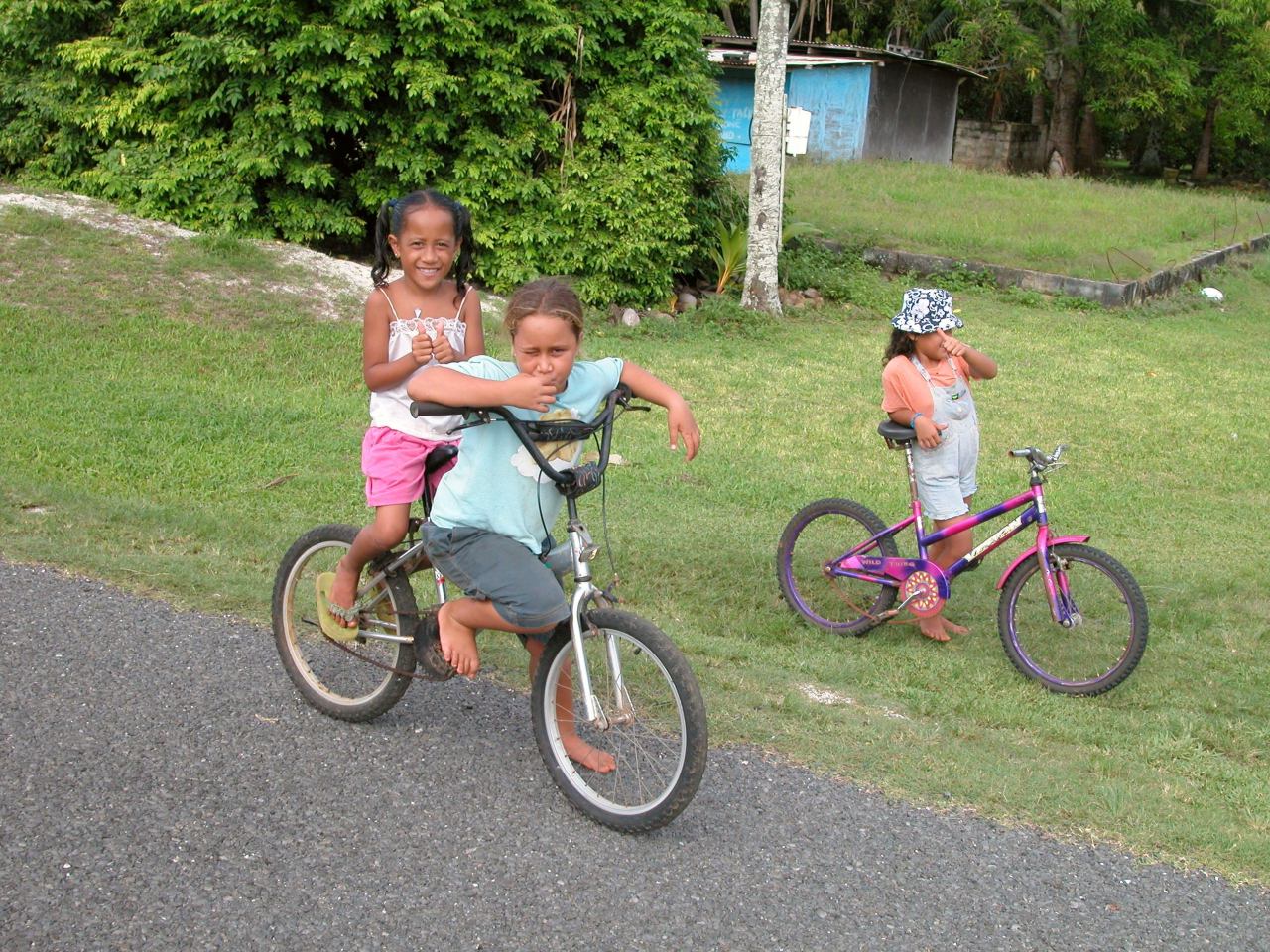
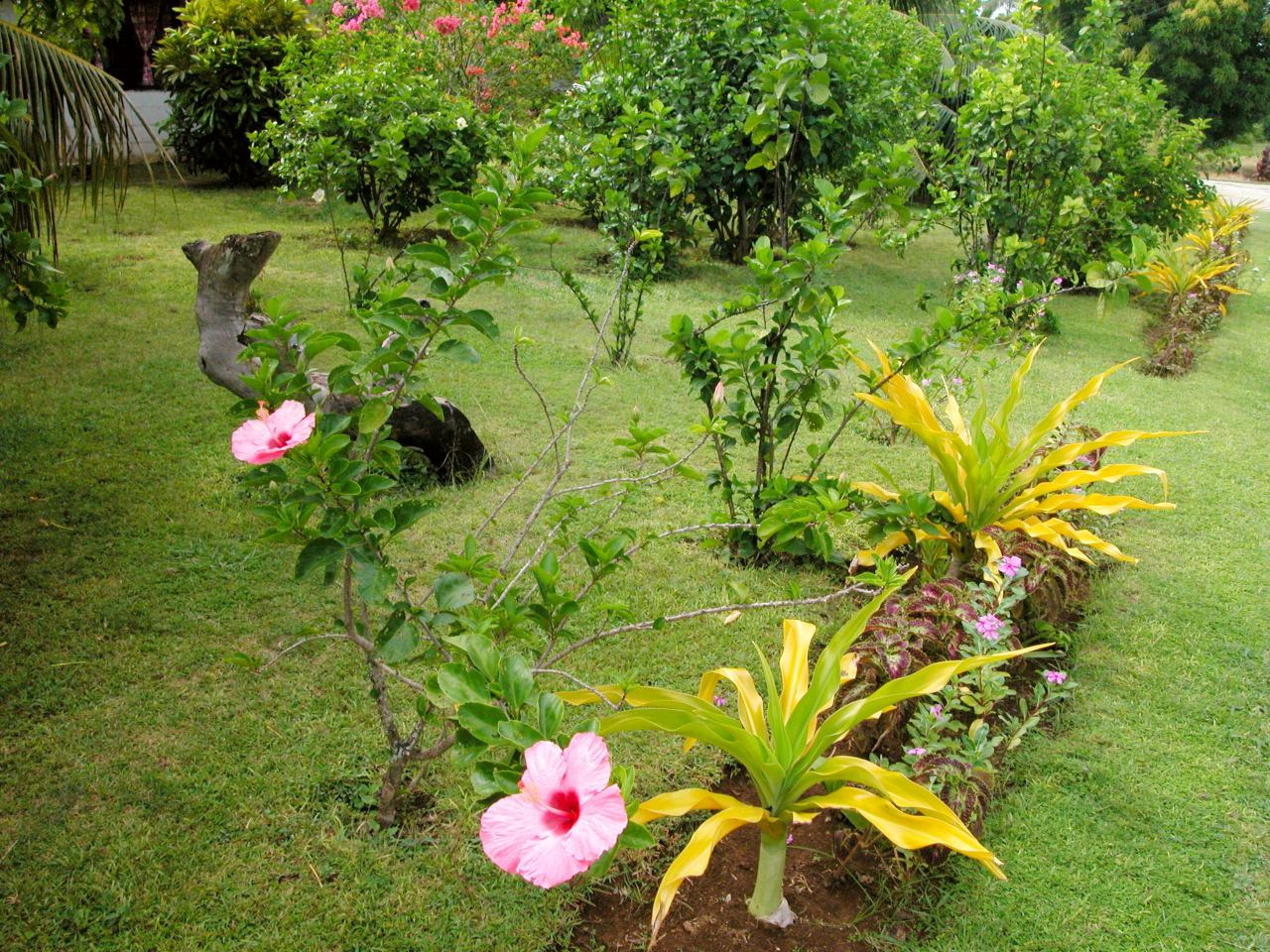
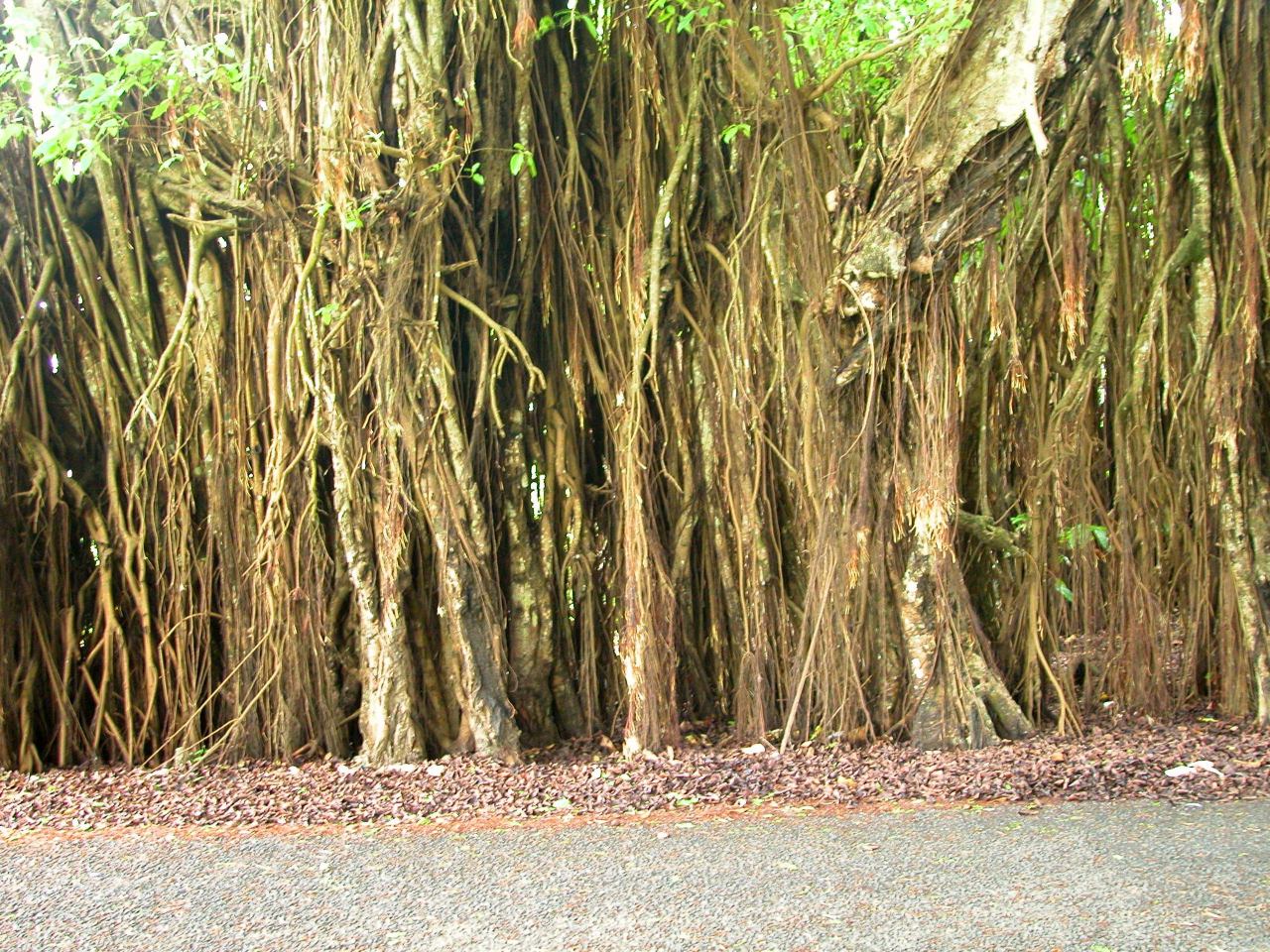
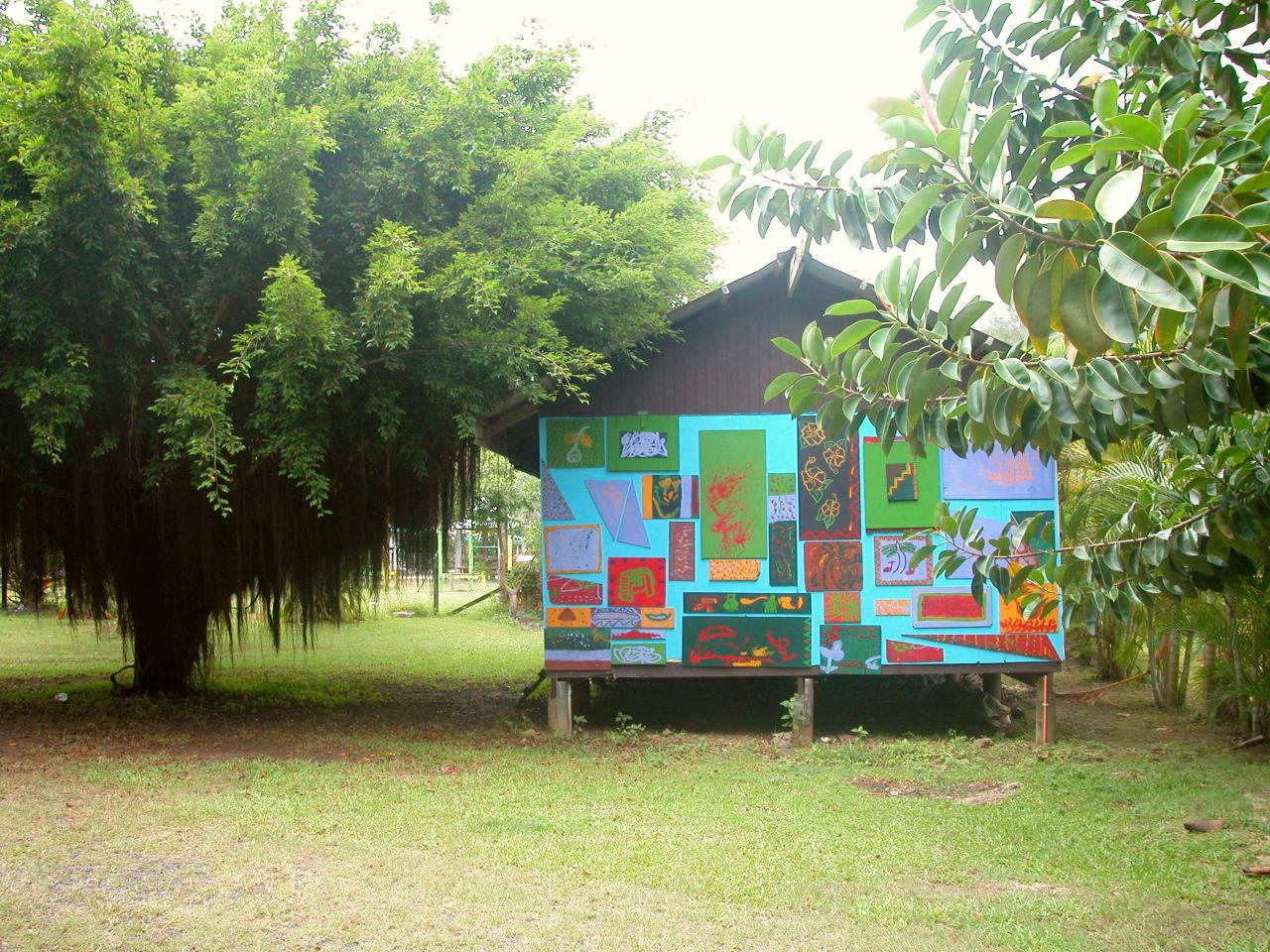
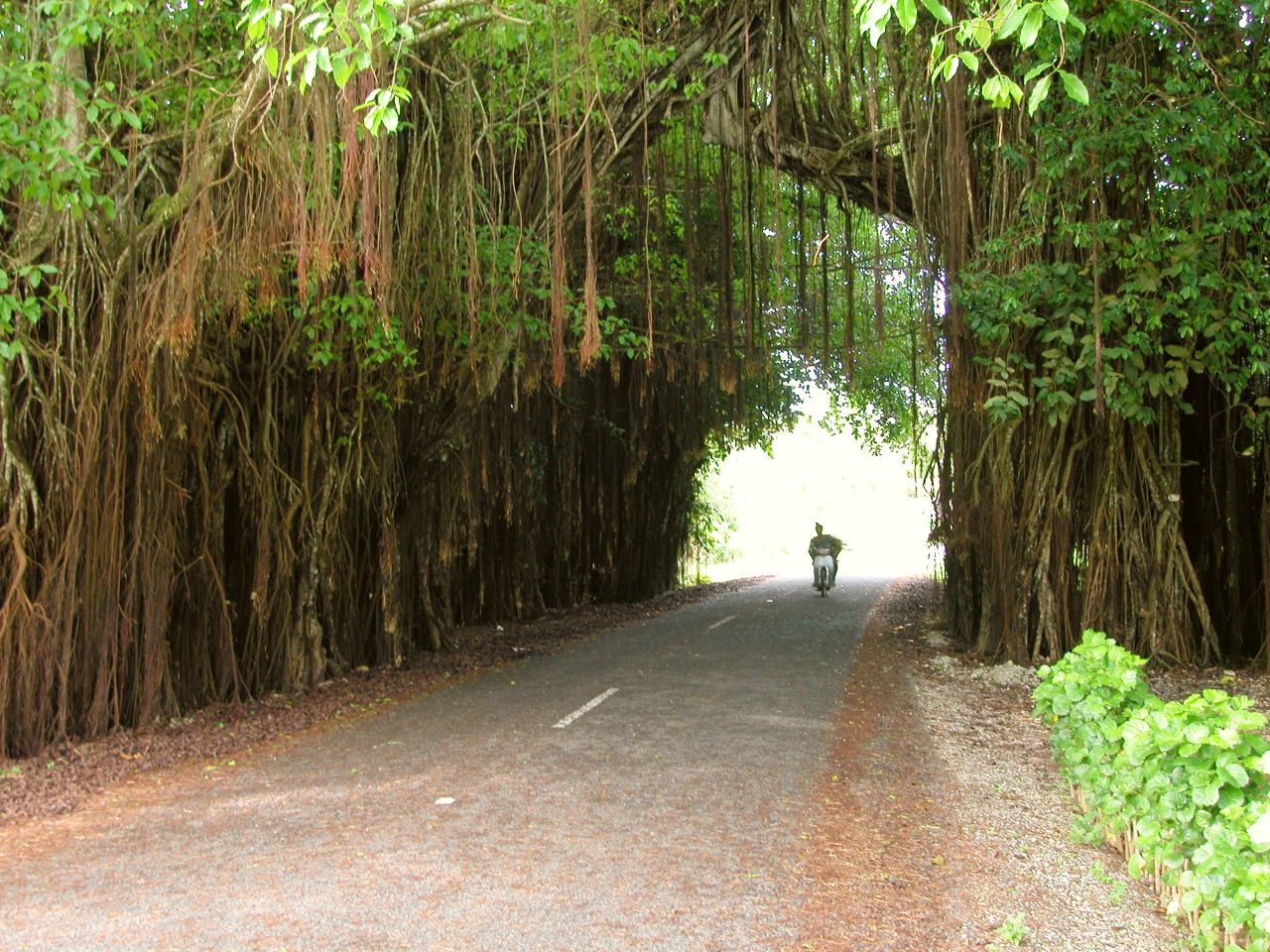
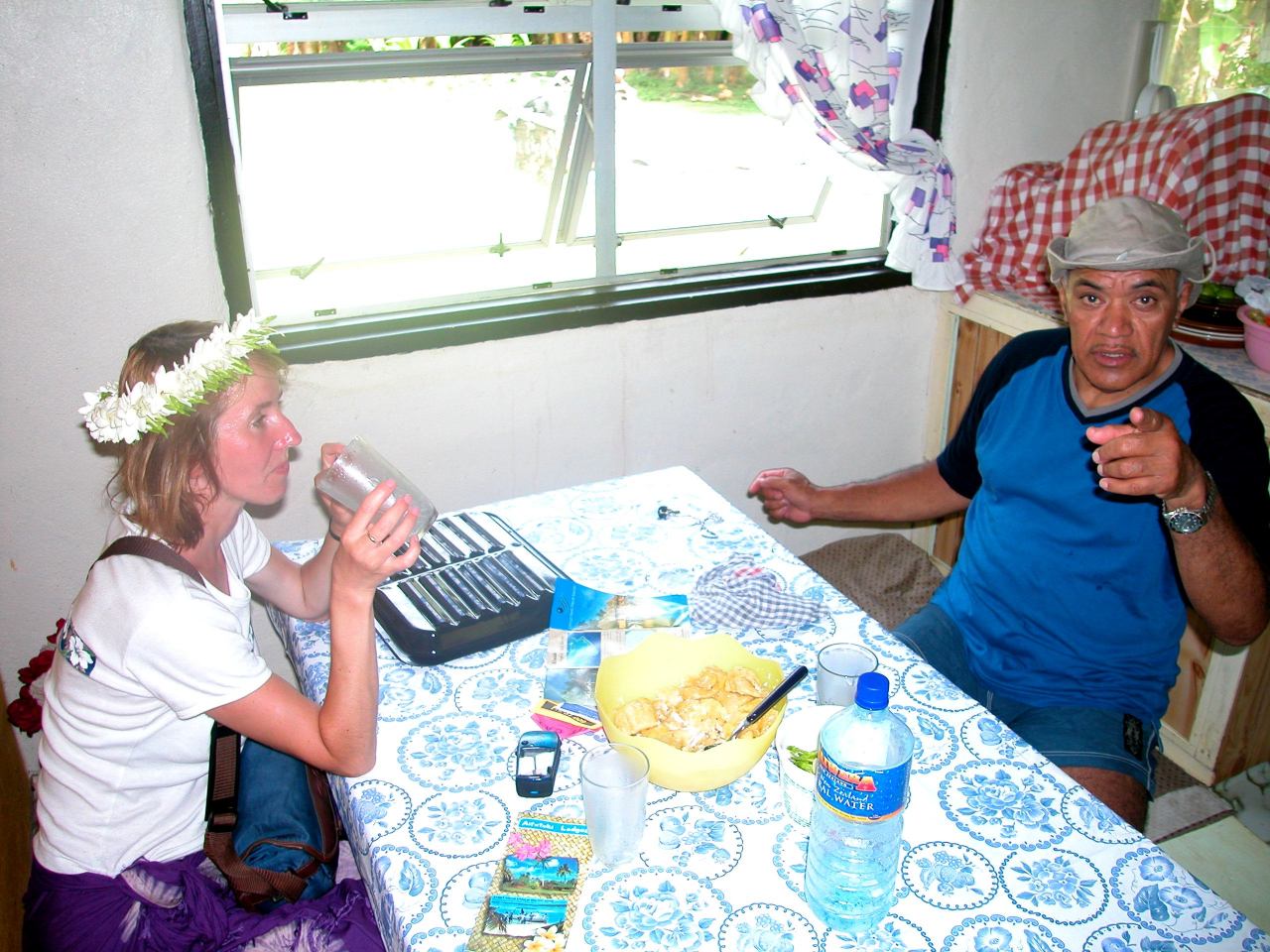
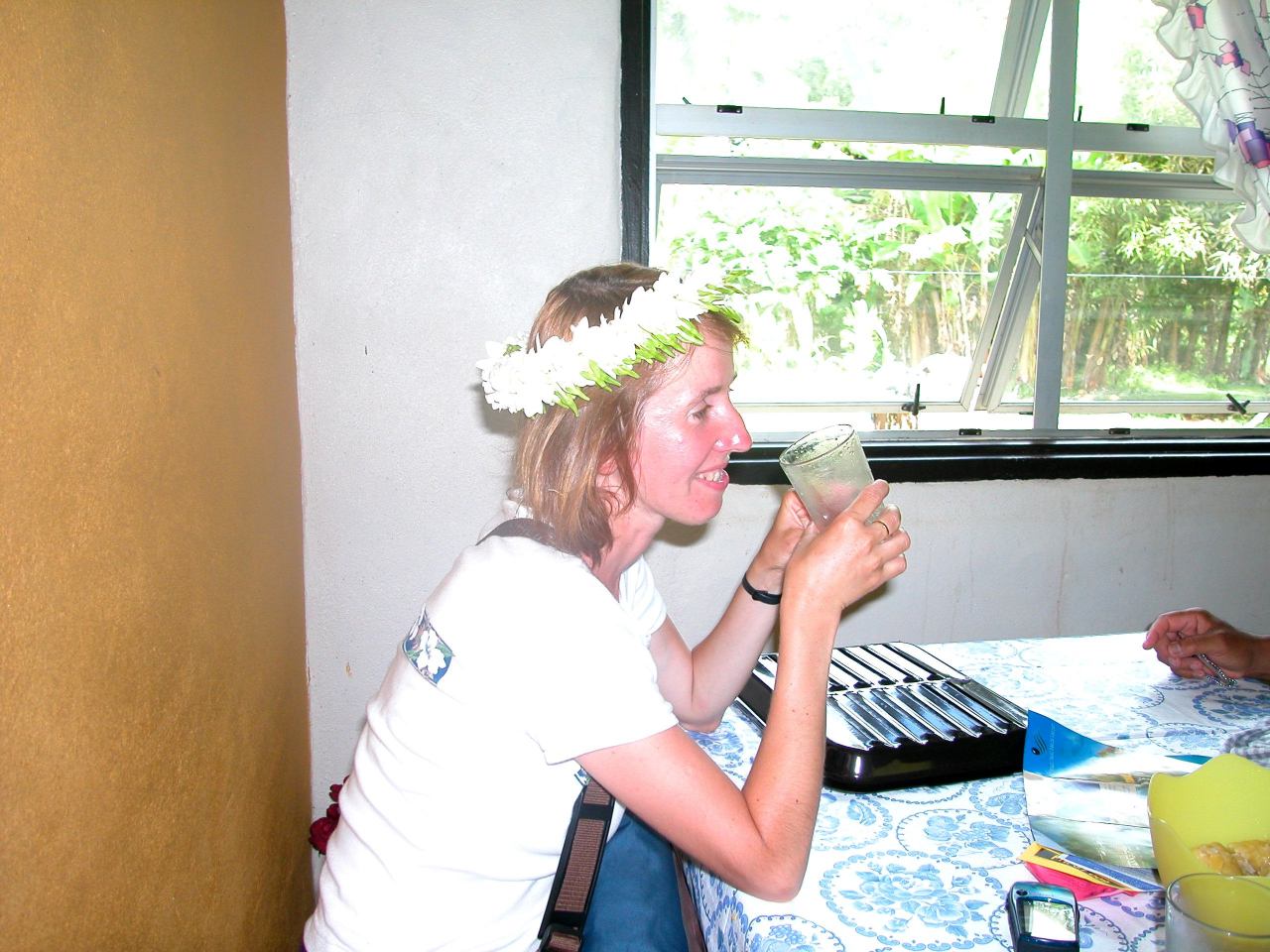
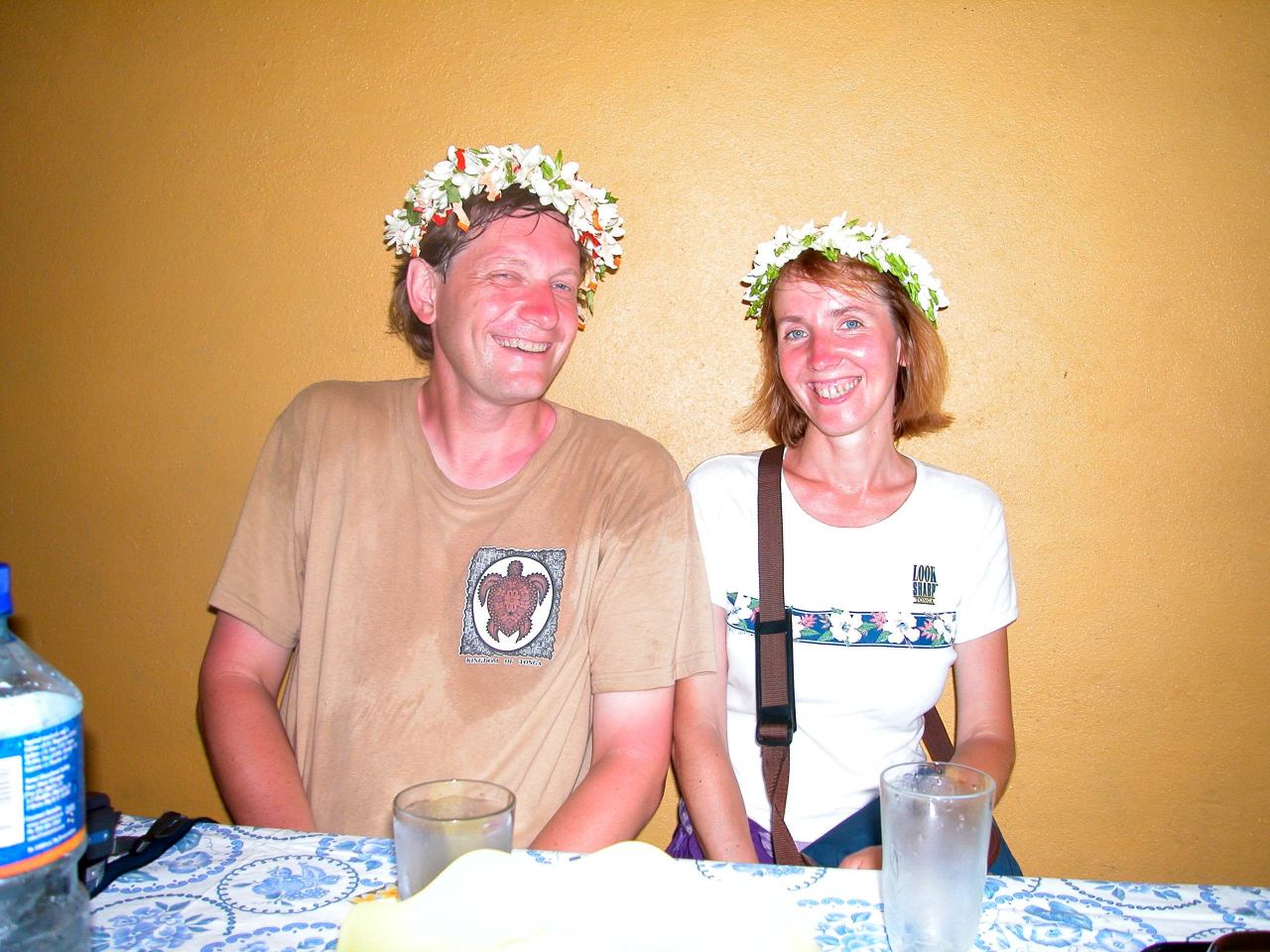
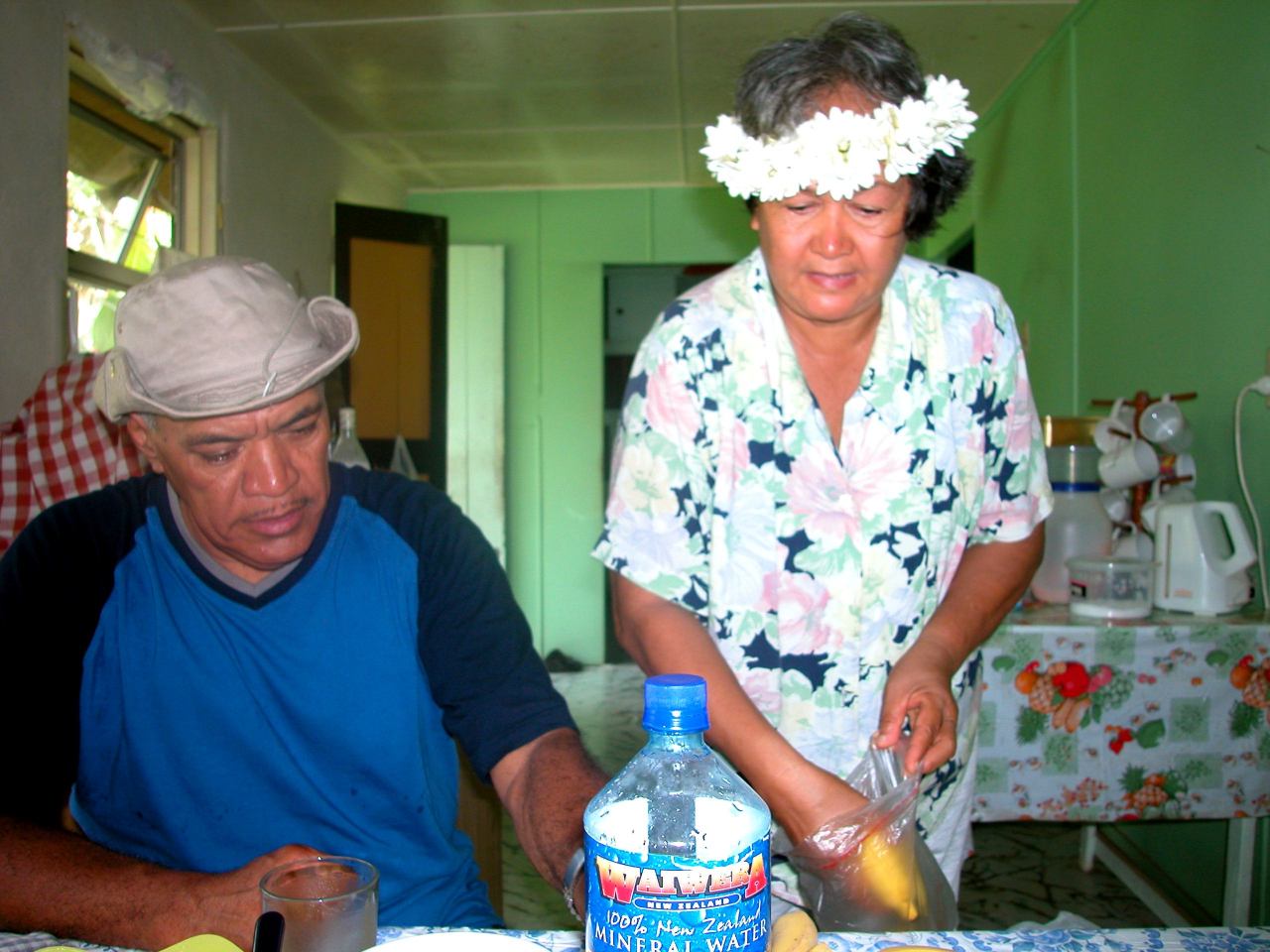
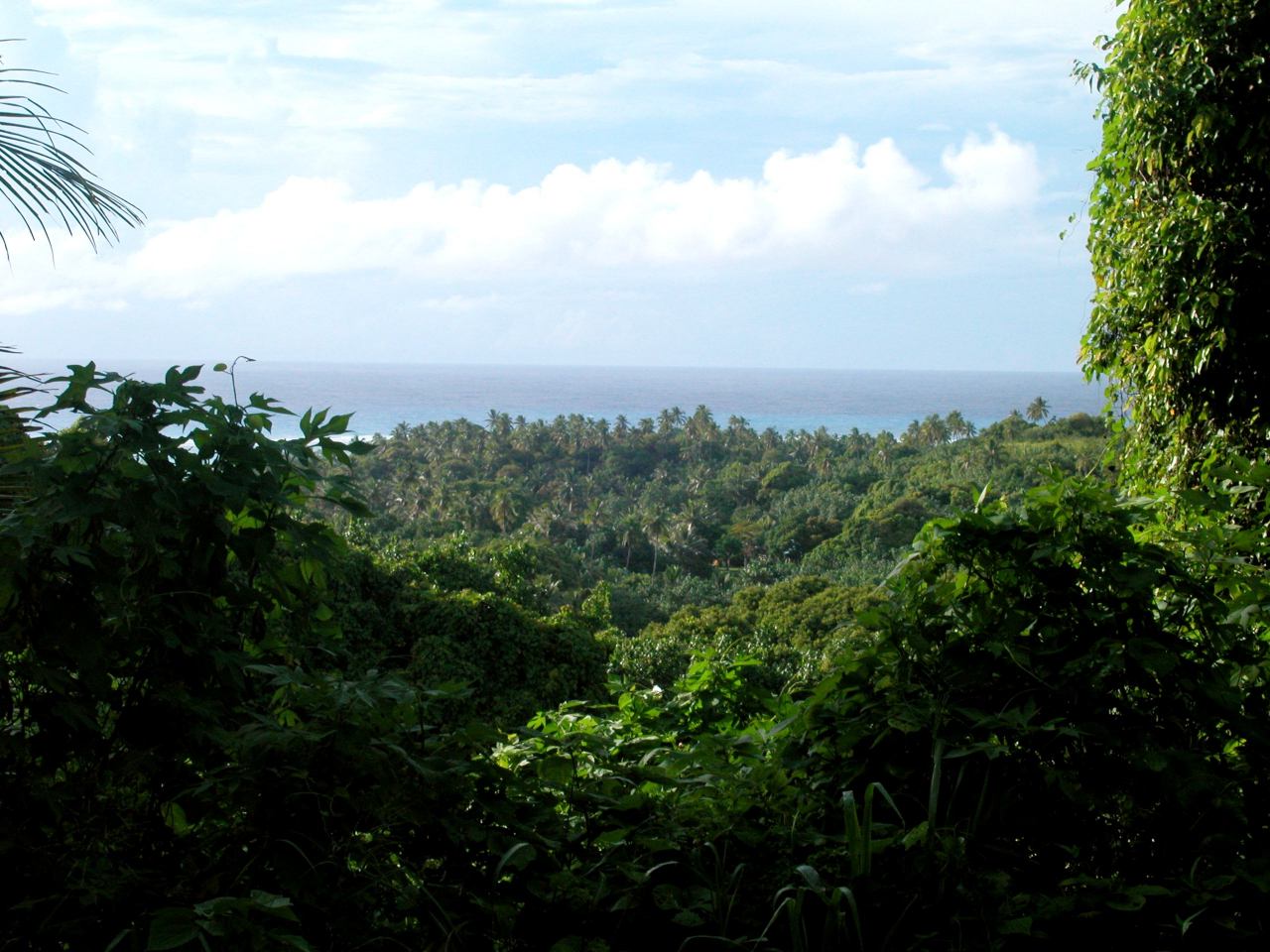
Tanya and I are serious people, but after that we reverted to childhood. Right, now we were walking about in wreaths, with a flower behind each ear, smiling at the people we met and the dogs. People gave us bananas, coconuts and pineapples. Merry Pacific music played all around. The dogs, by the way, don't even know how to bark here. In this paradise, all they can do is lick you. The sun began to sink, and a rainbow rose over the mountains. In the wet season it drizzles often but not hard. Unlike the rain up north, it doesn't get in the way of living. It's actually rather nice, cooler and less sticky.
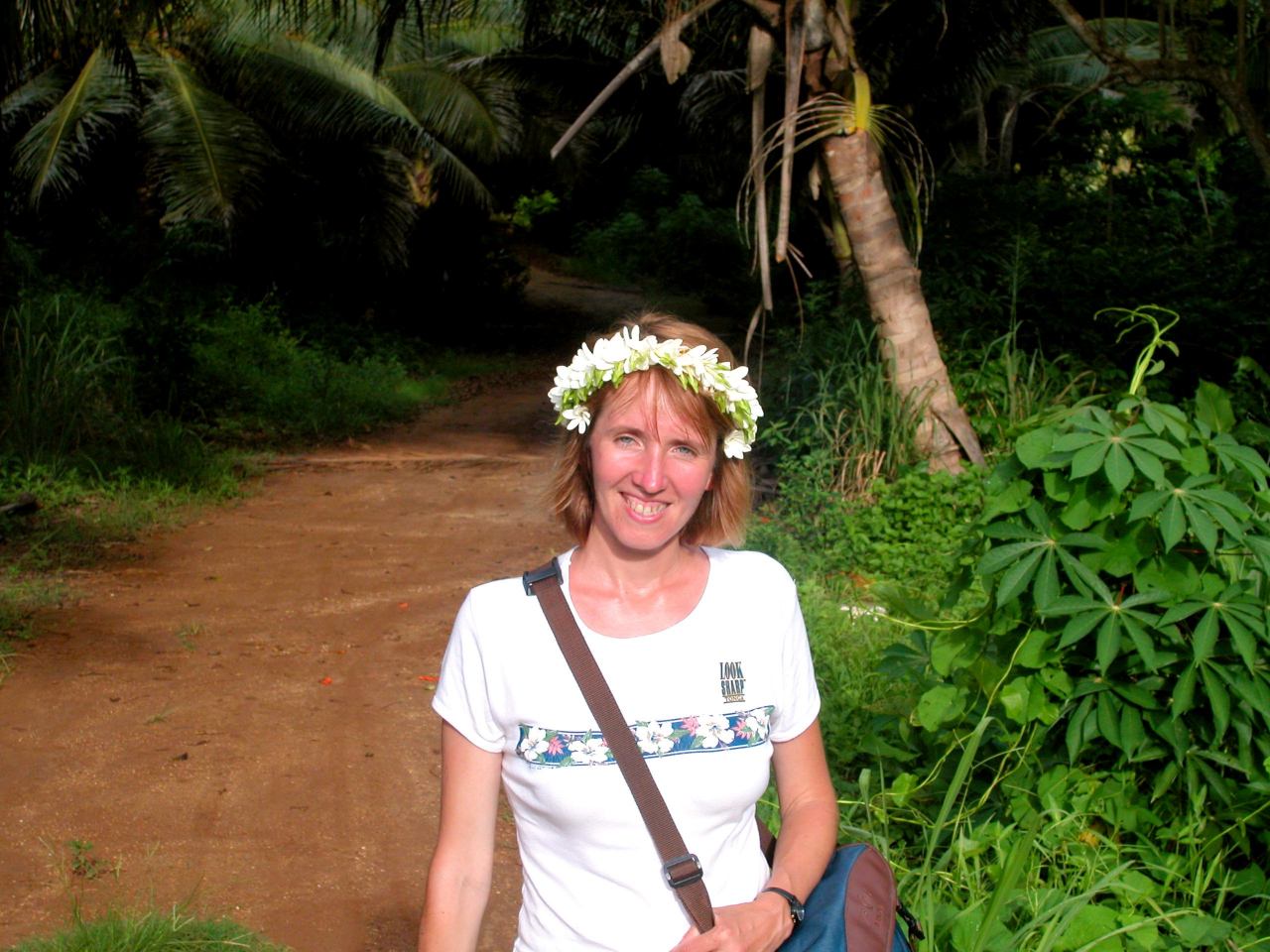
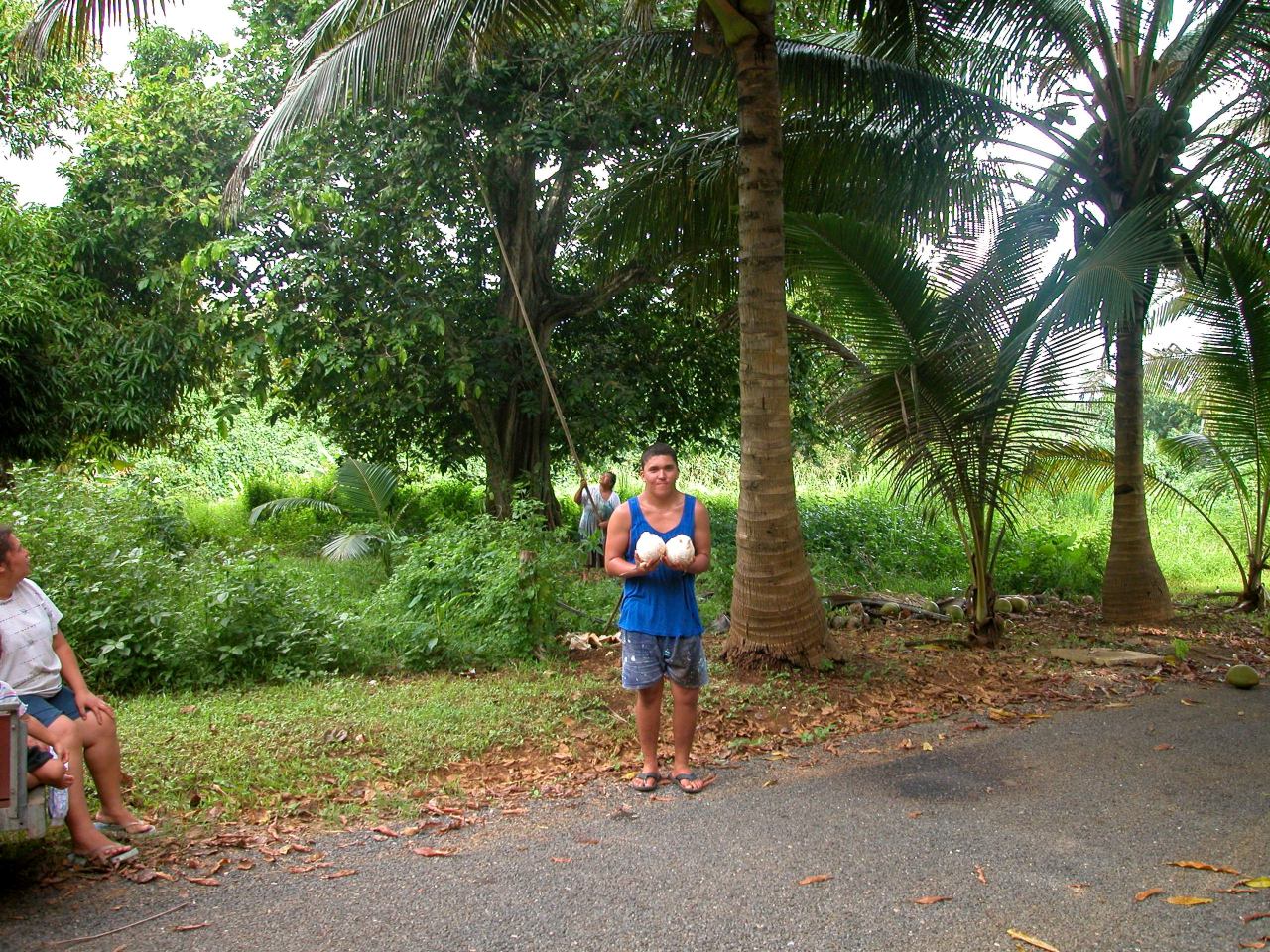
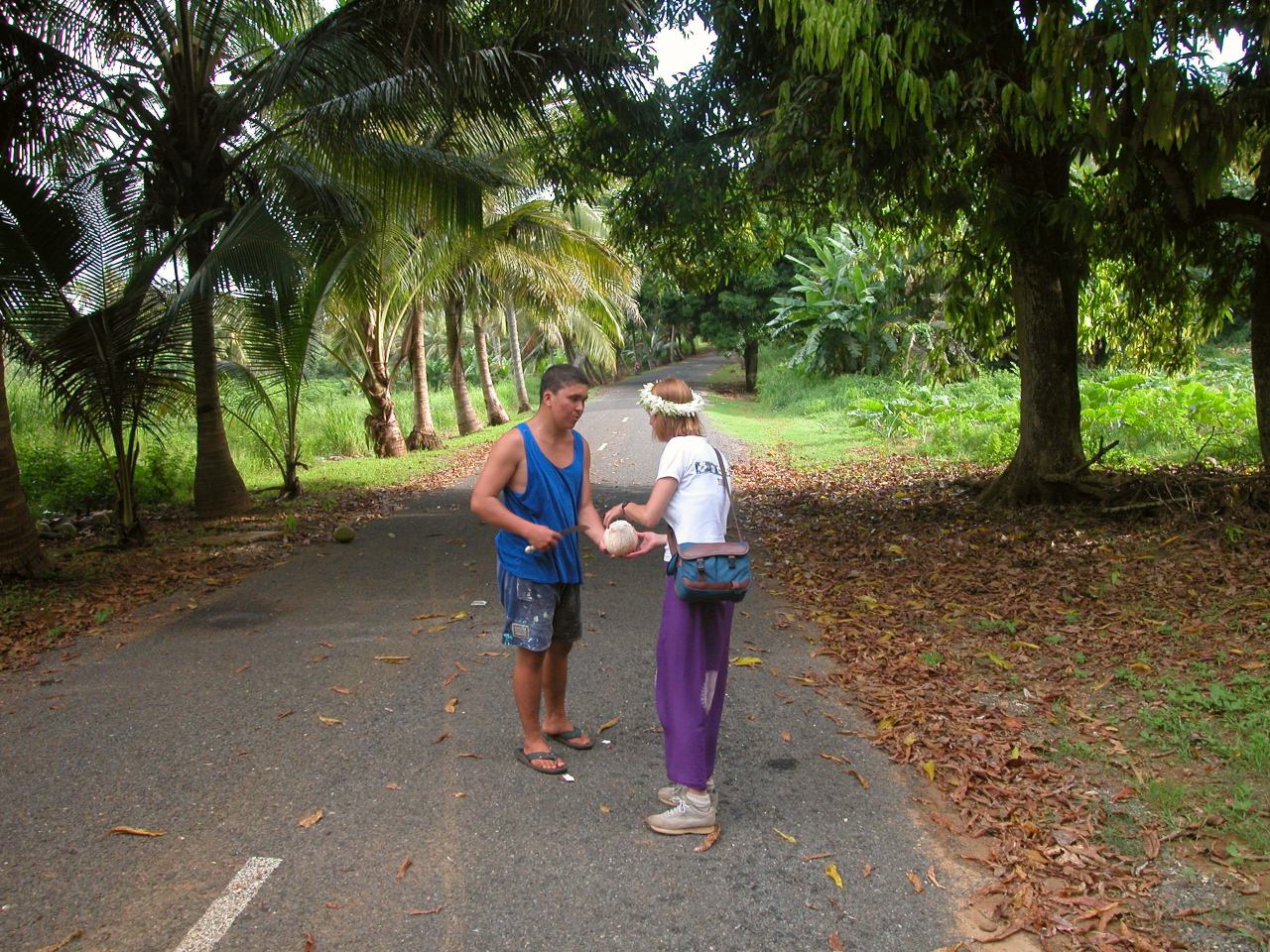
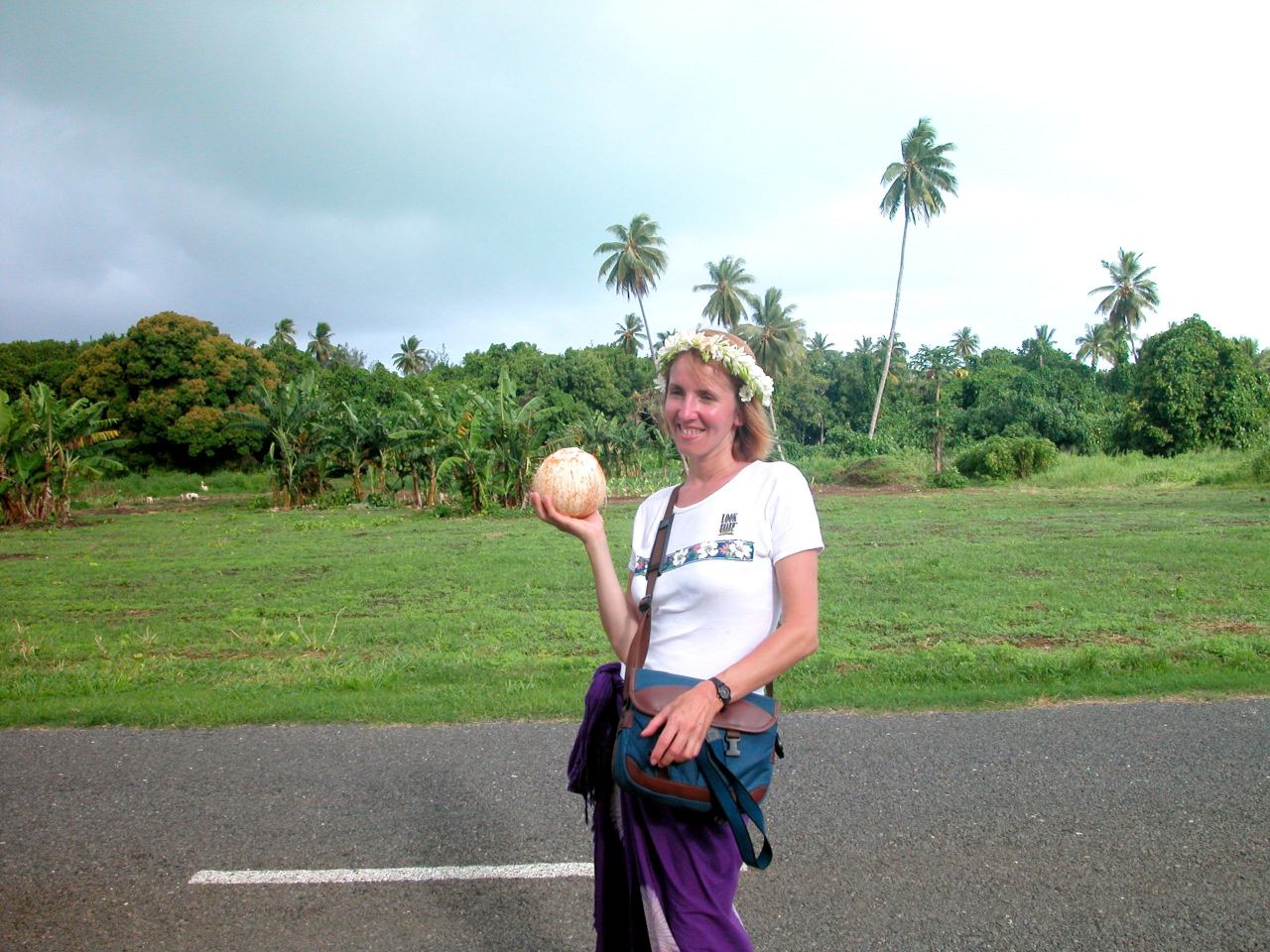
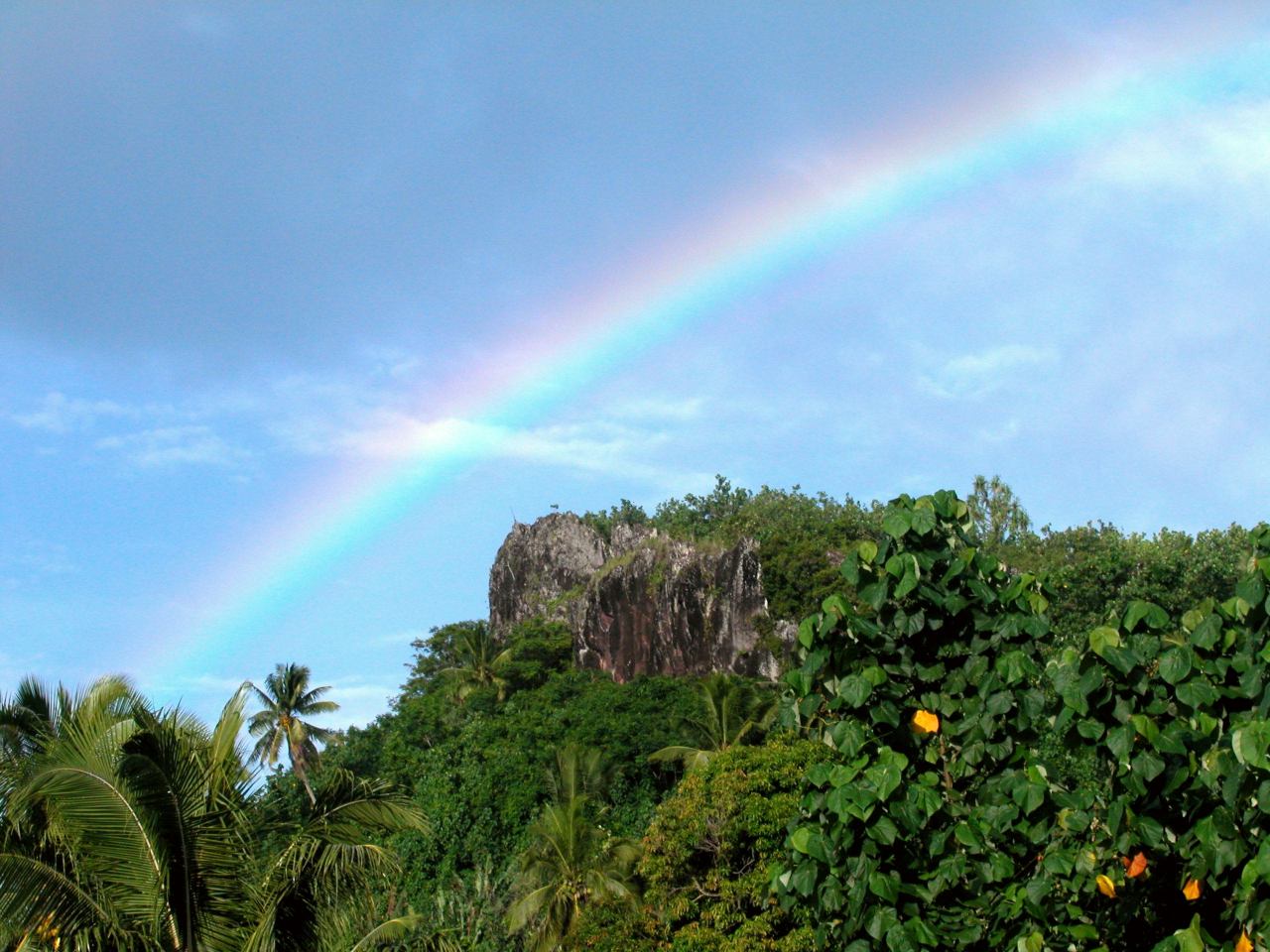
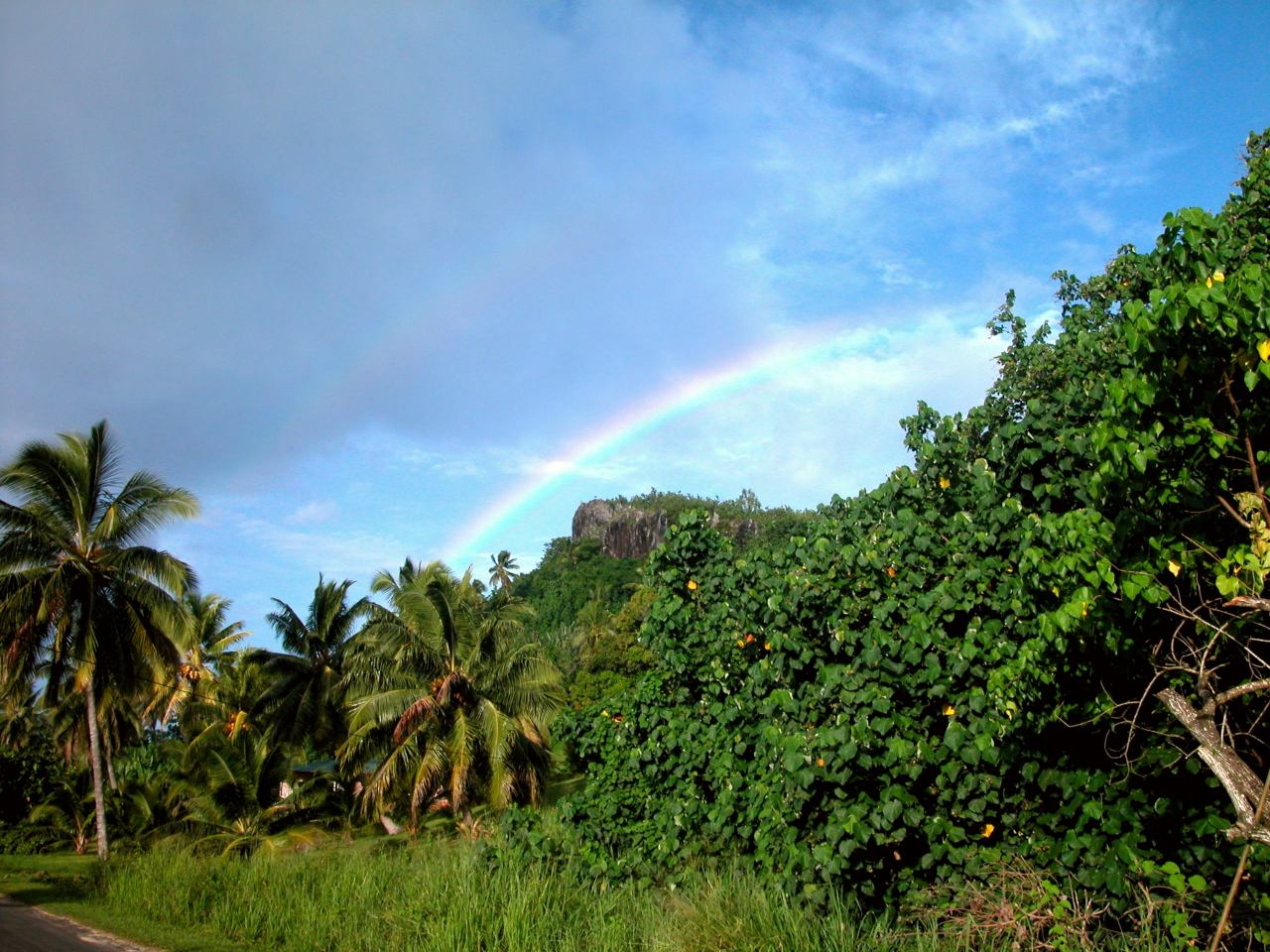
We didn't make it all the way round the island. We came back by a shorter road through the middle. In a little shop we got a bottle of wine and some other things to eat, and even paid by credit card. A regular miracle.
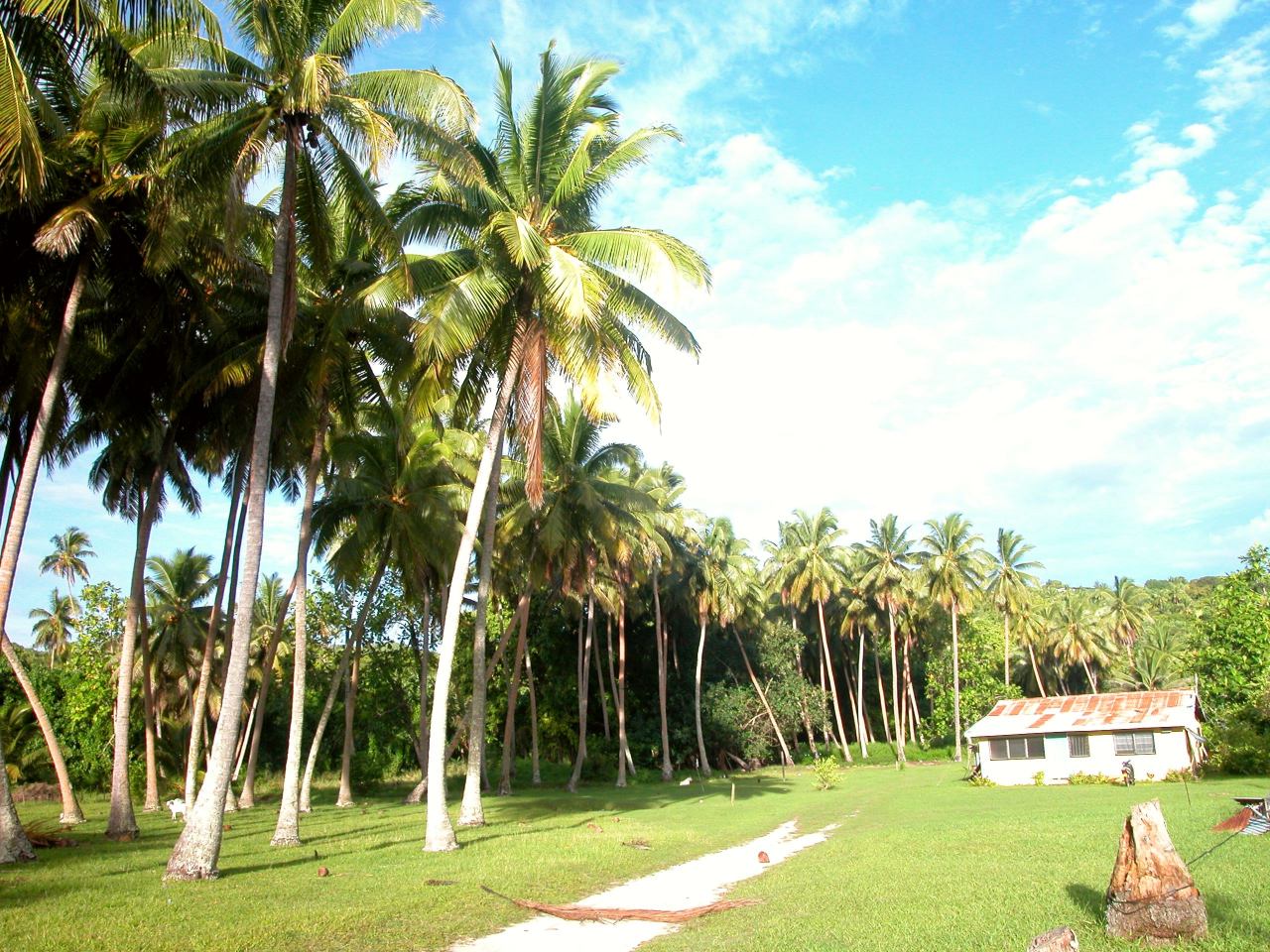
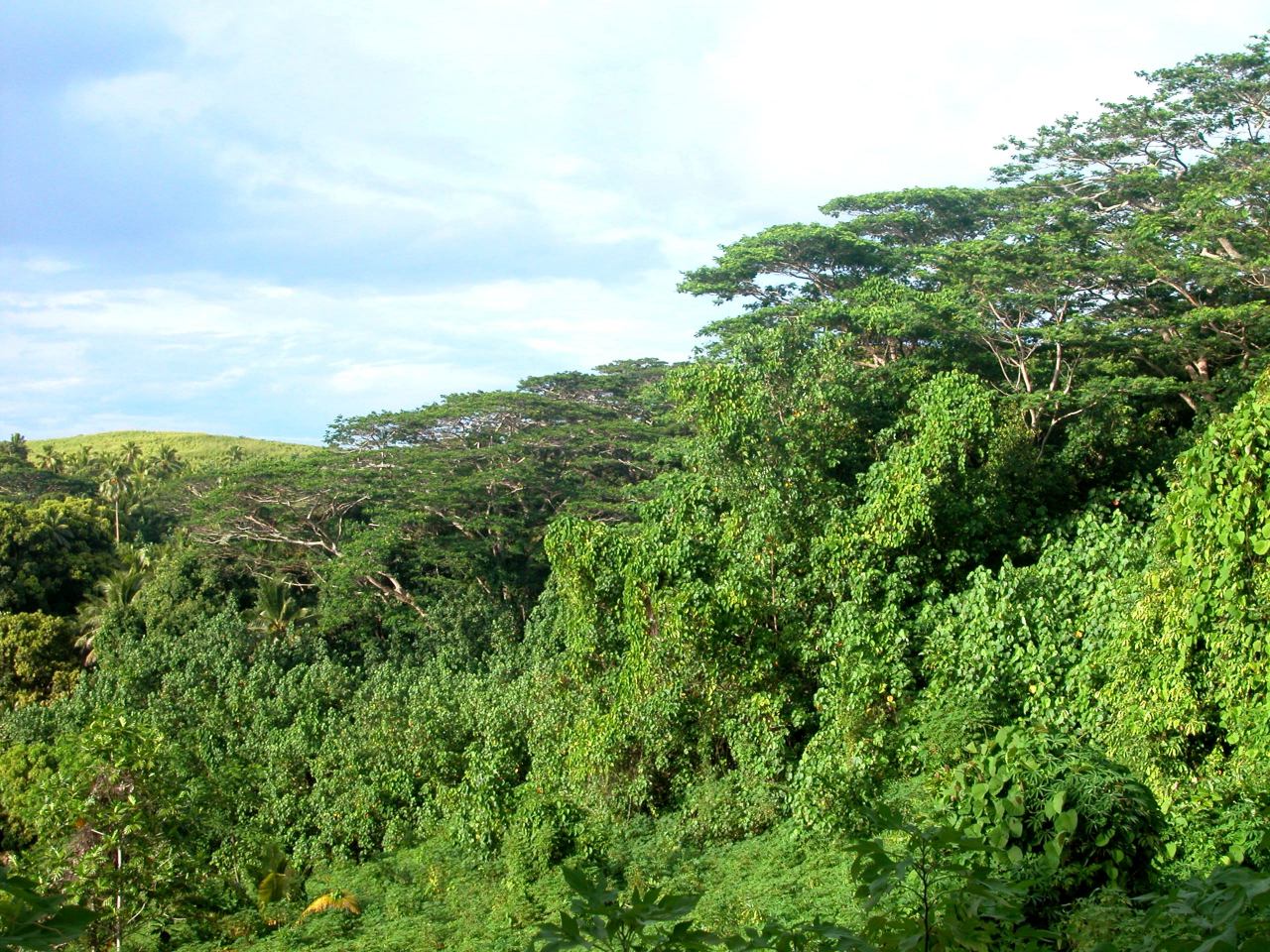
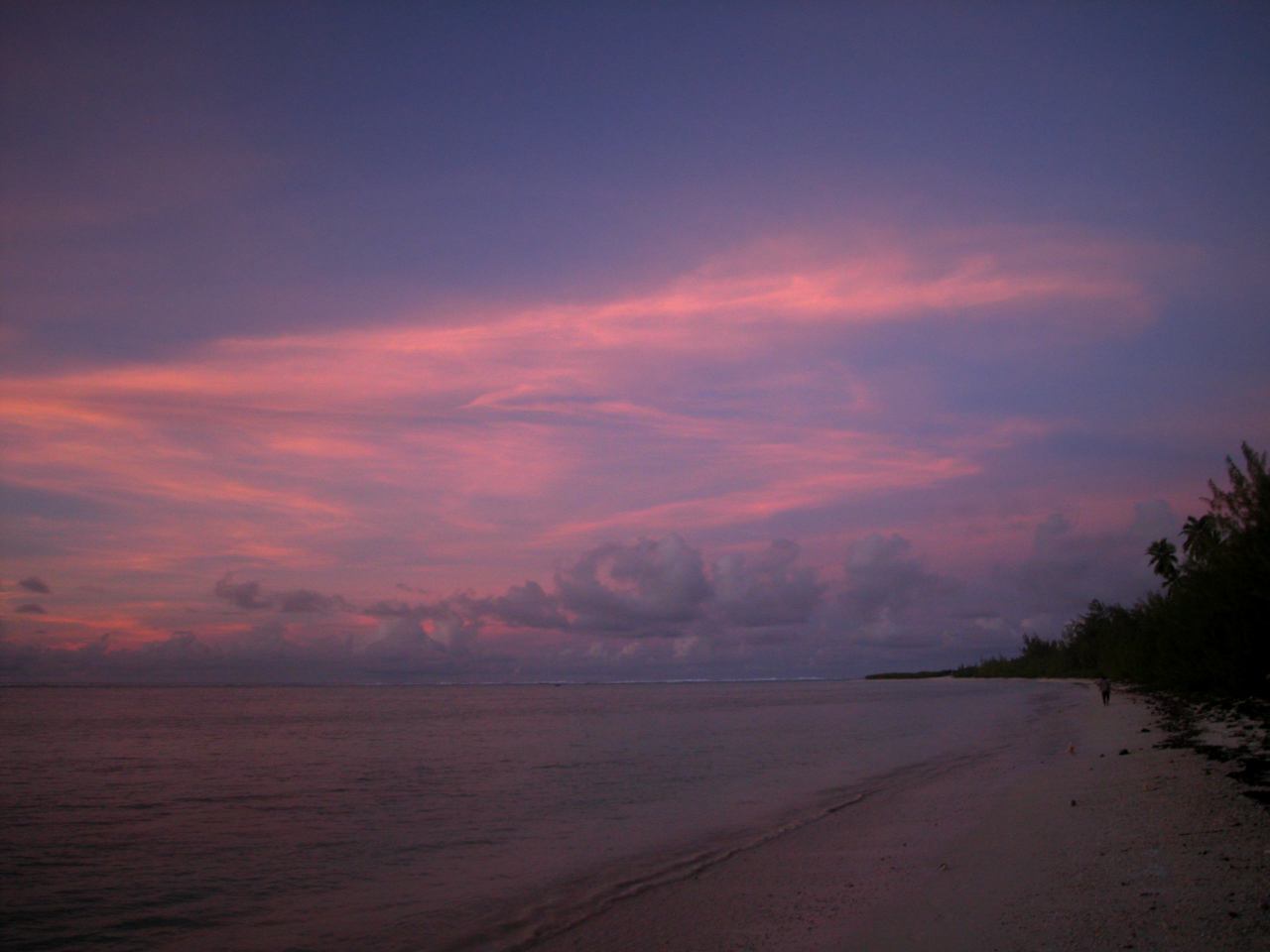
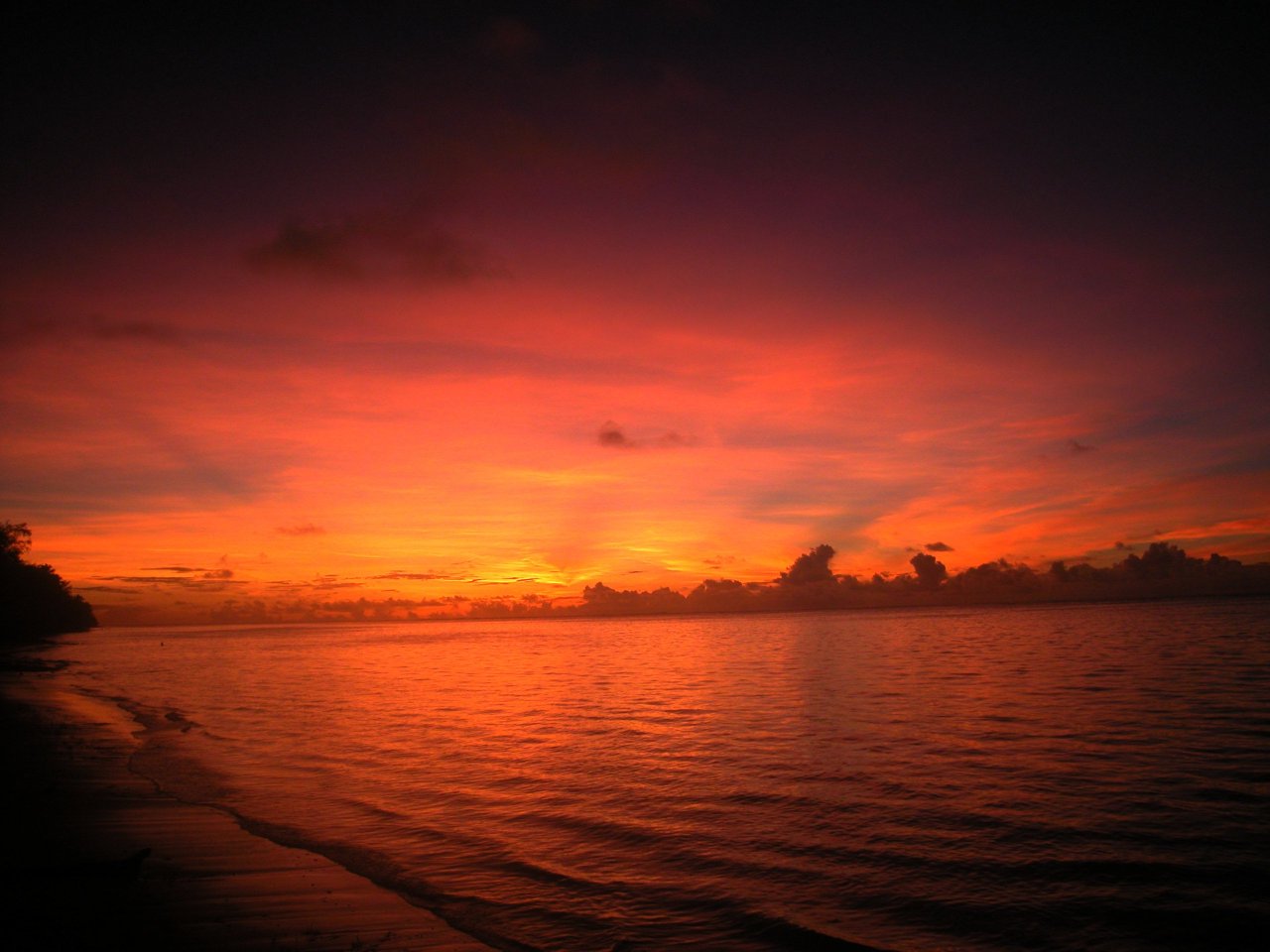
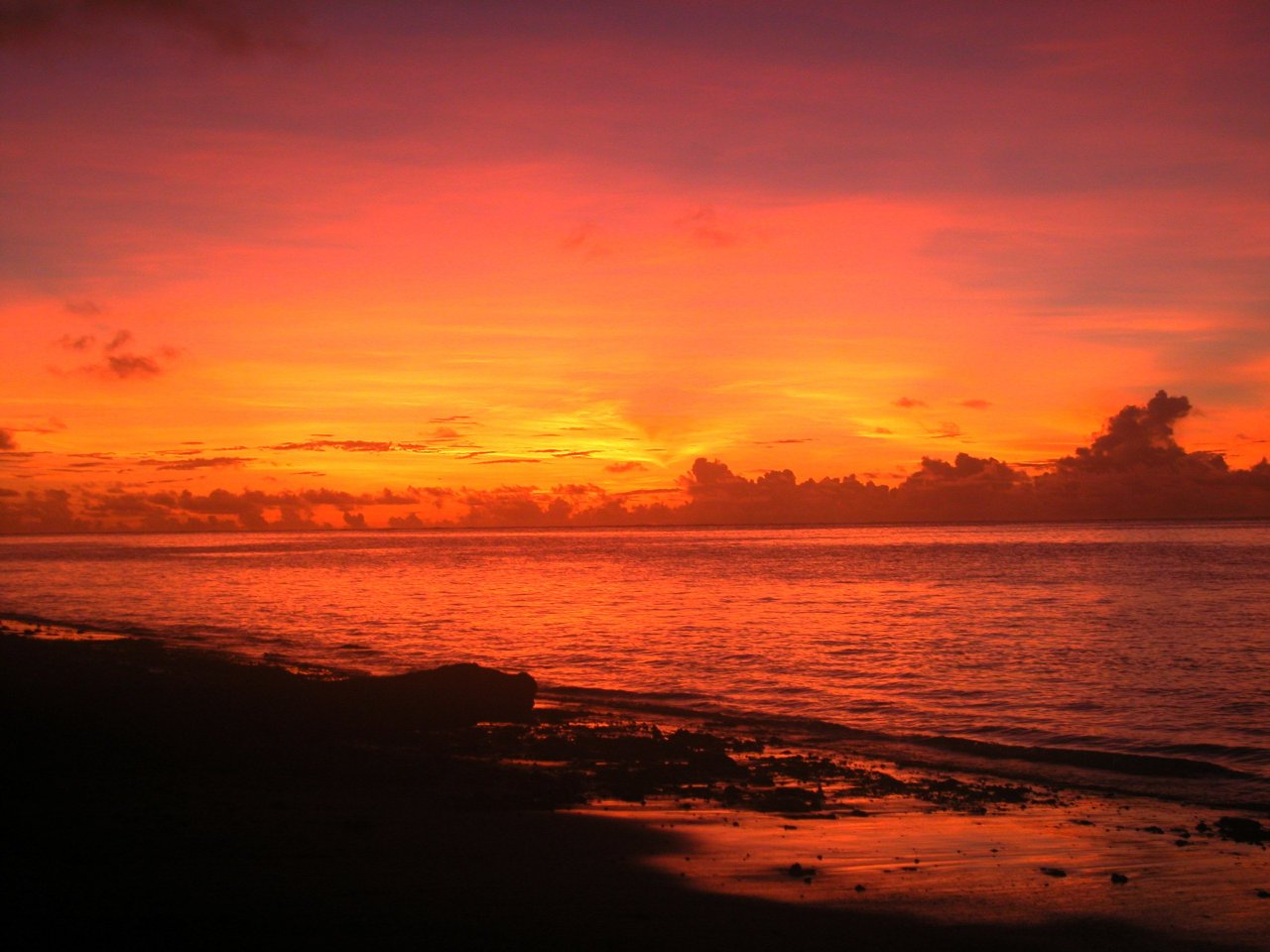
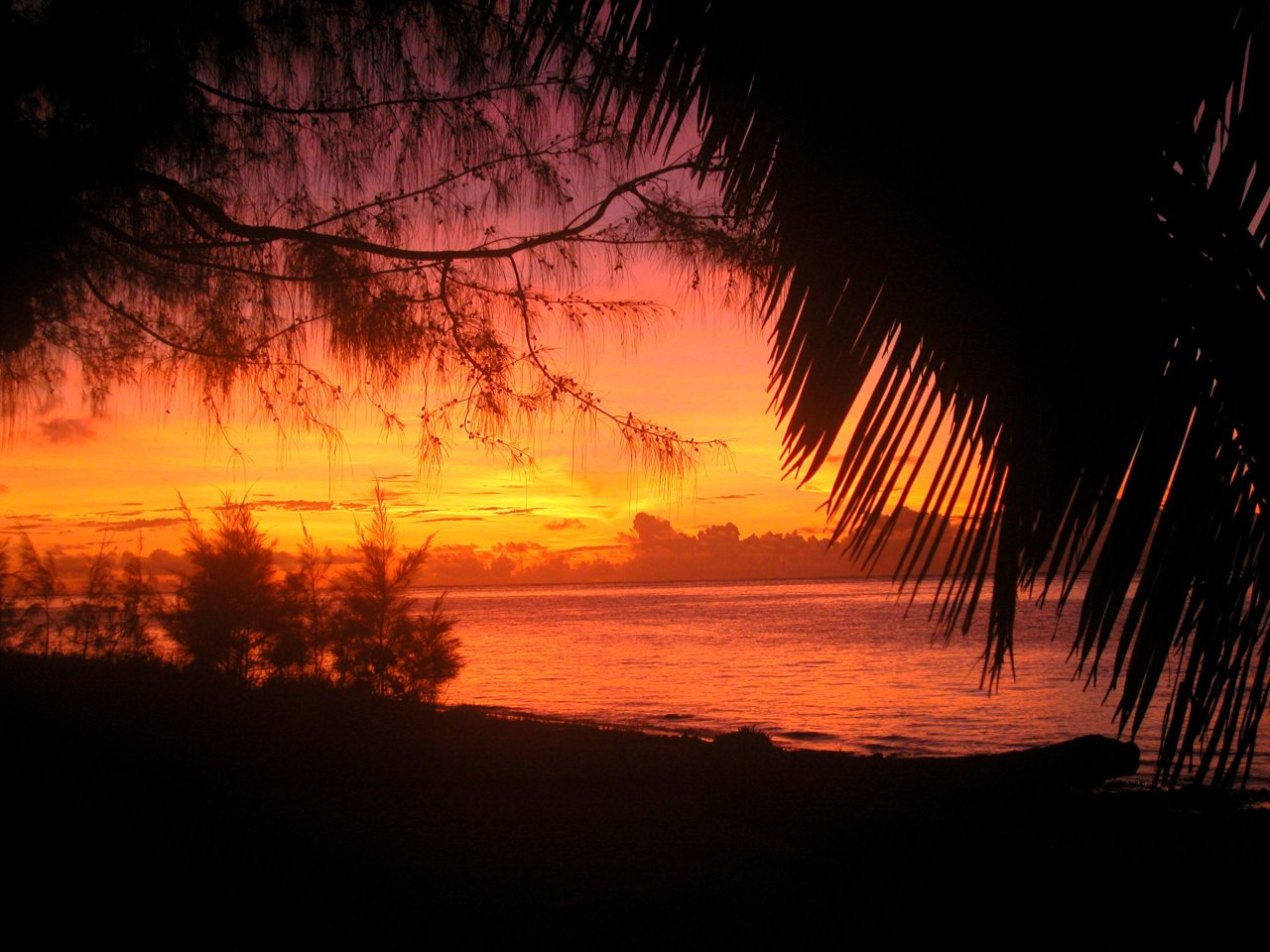
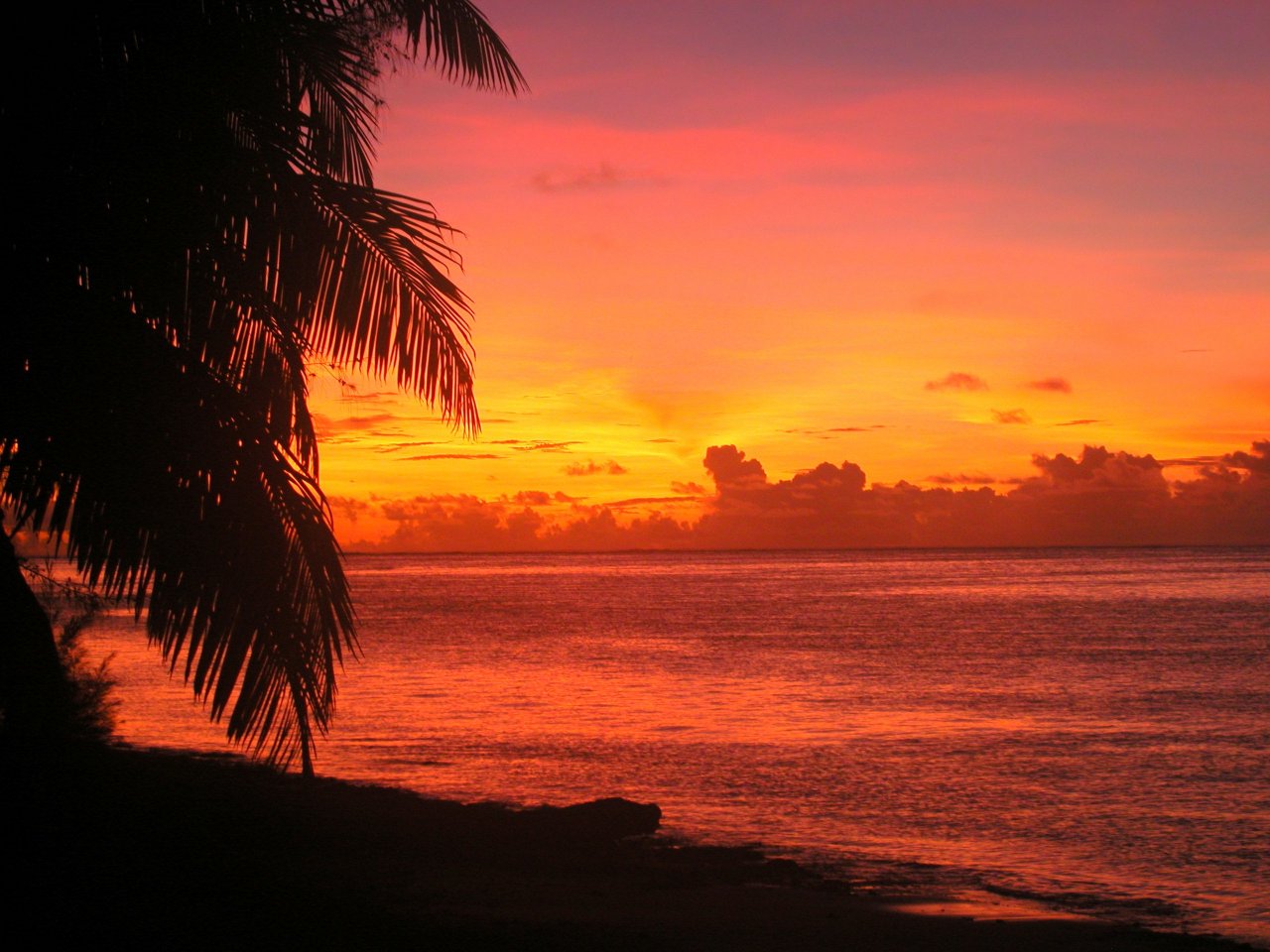
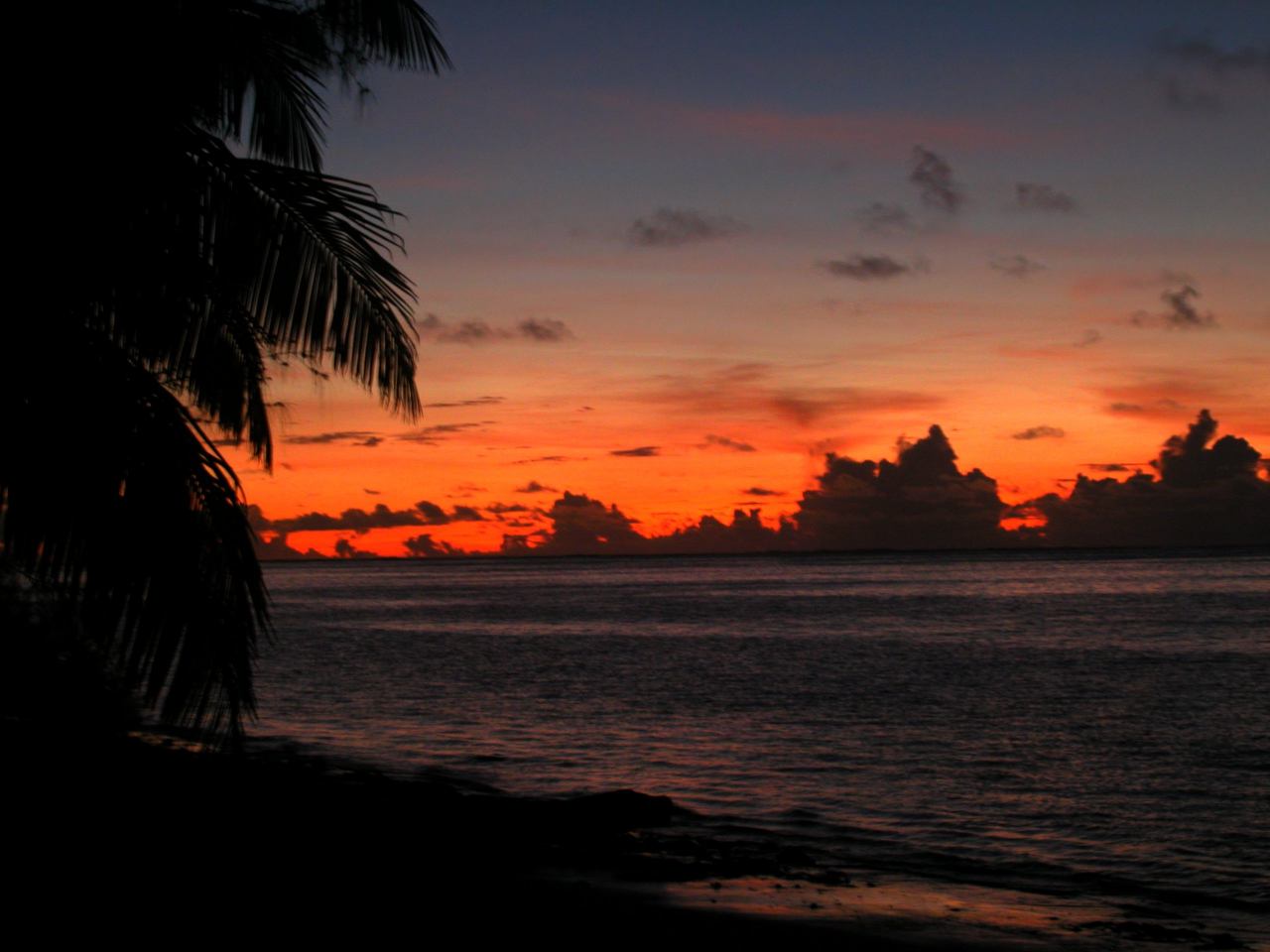
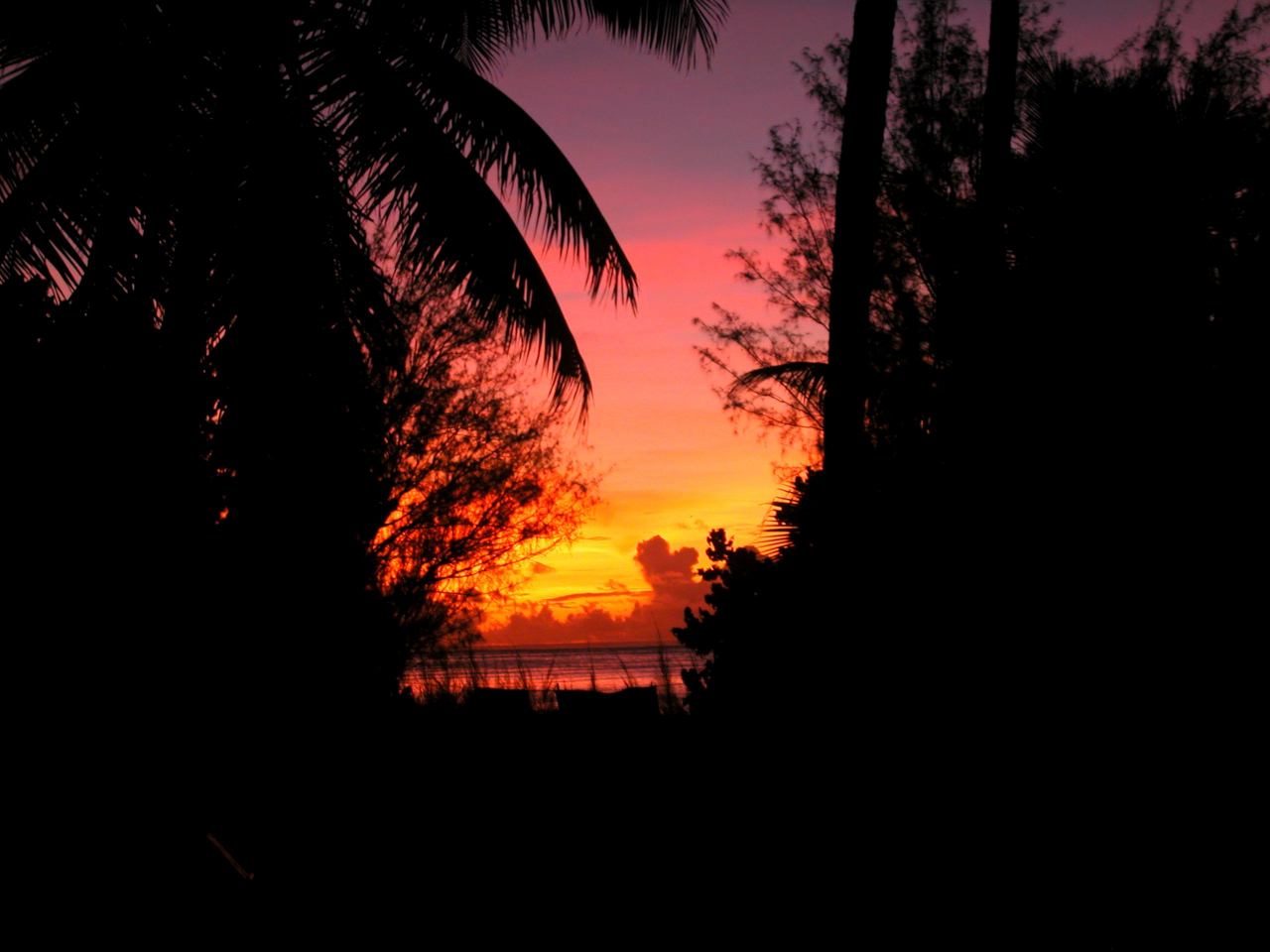
As we came up to our house, the sun began to set into the ocean. I'd never seen sunsets as beautiful as on the Pacific islands. At the appointed hour the whole crowd crawls out of its huts and takes up its positions in deck chairs to watch how the sunset will be staged that evening.
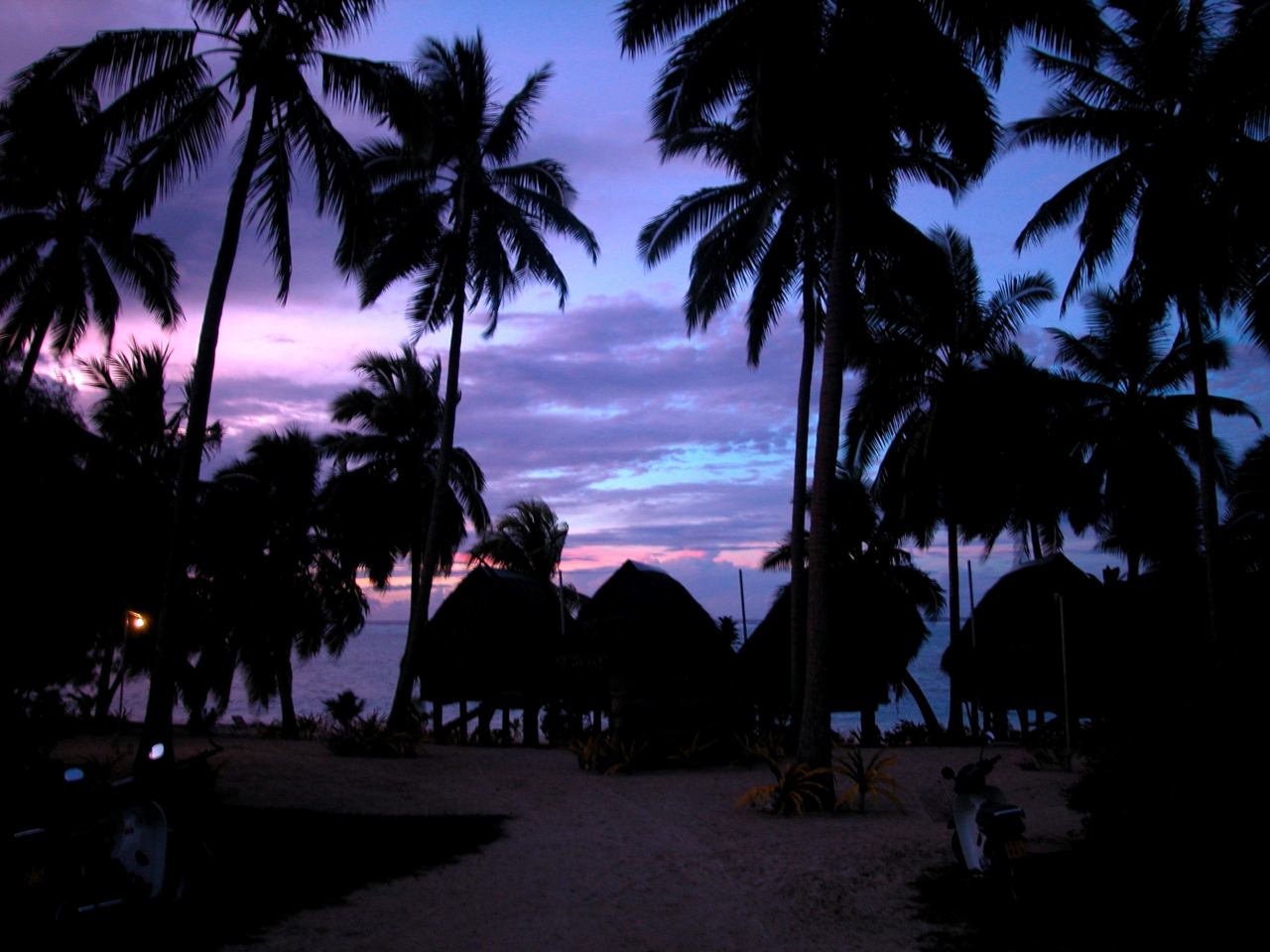
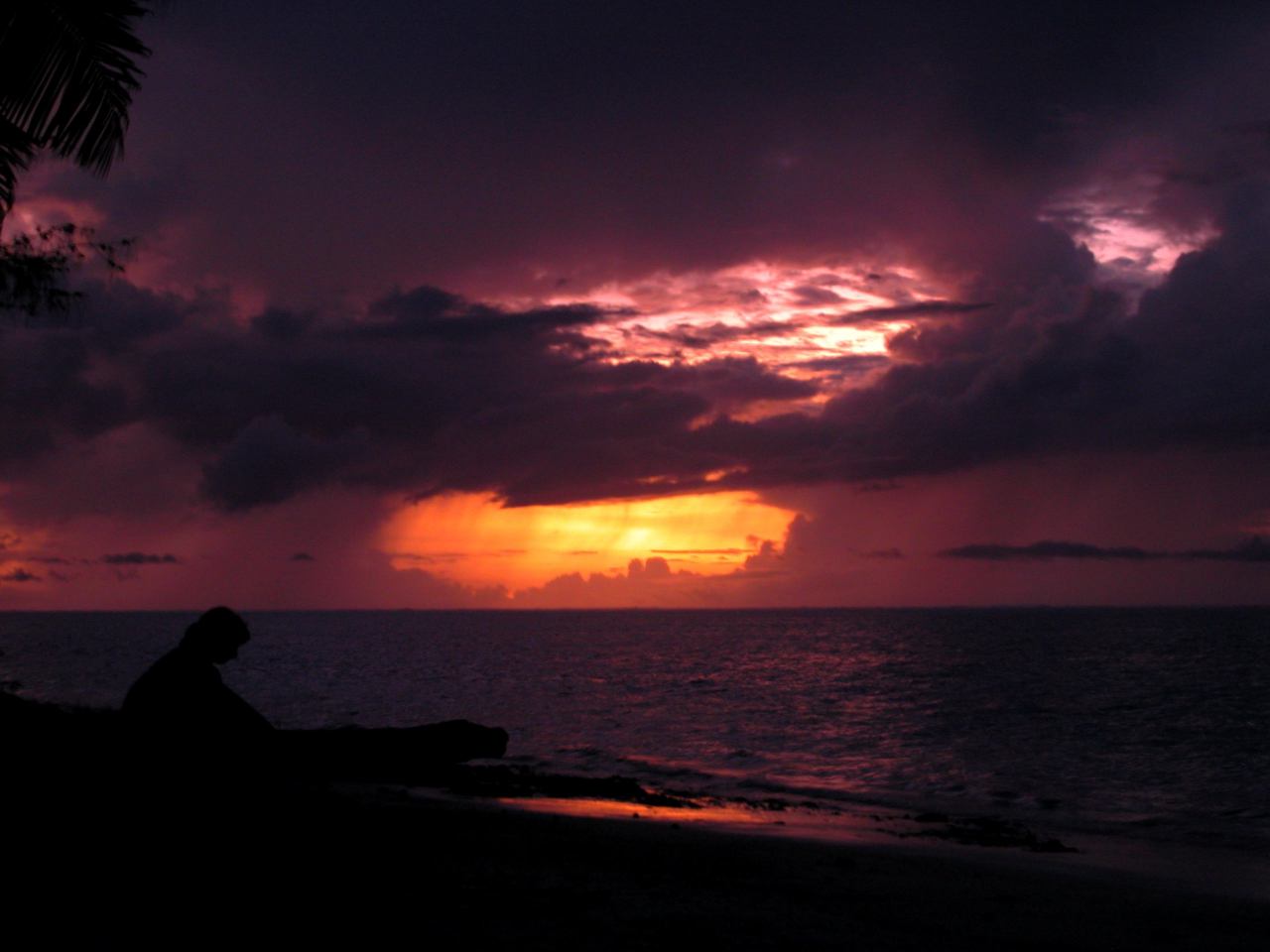
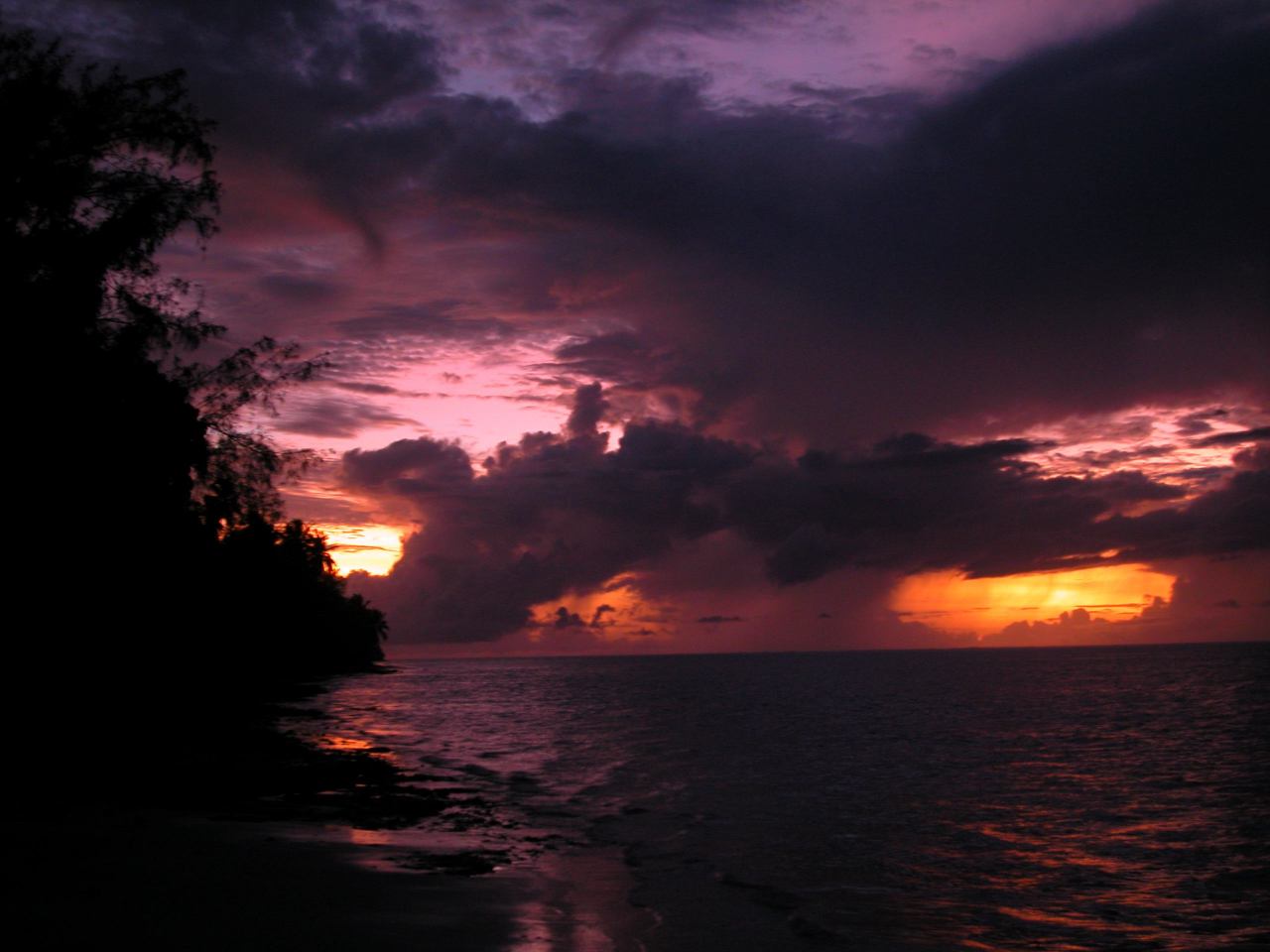
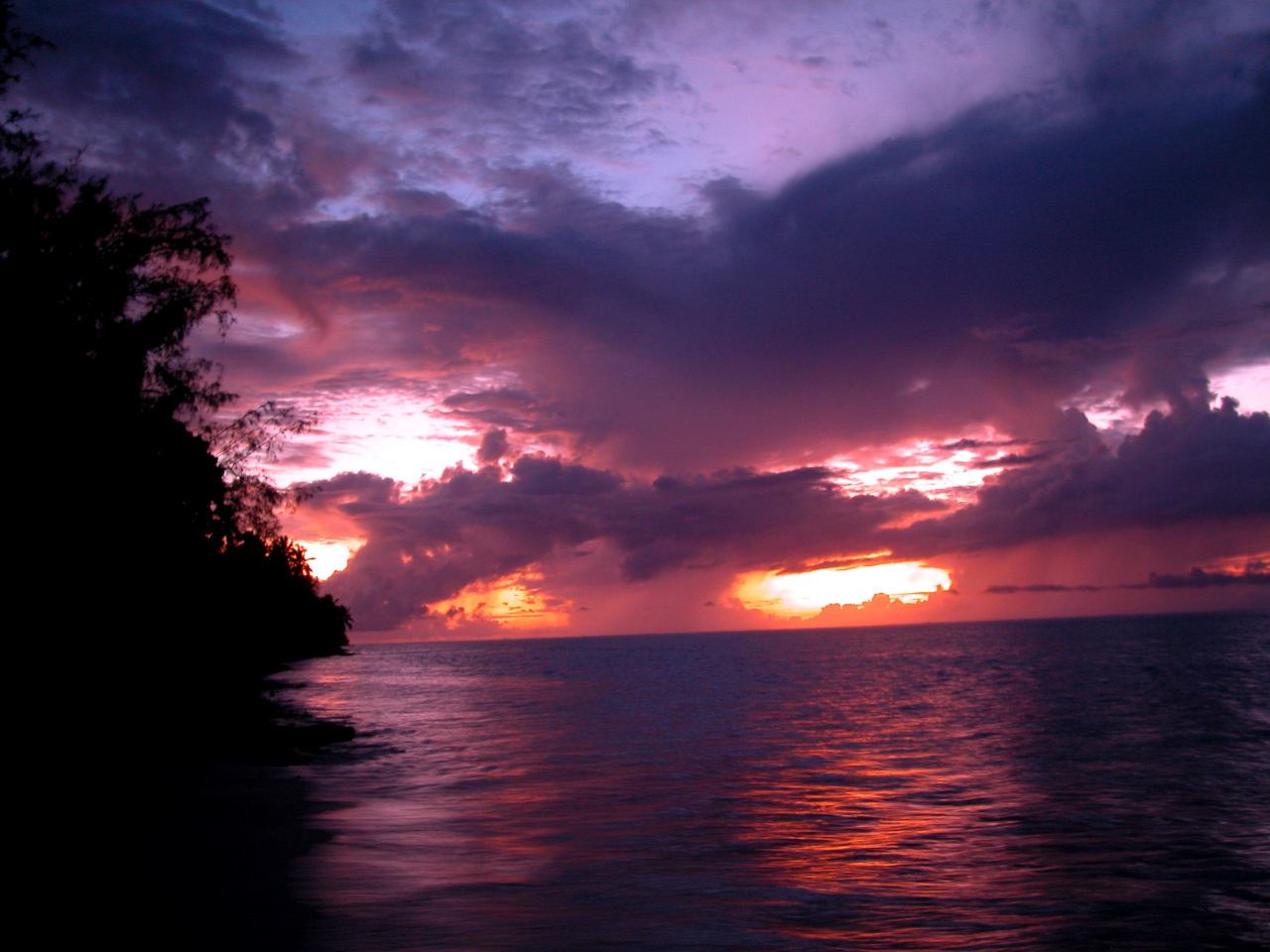
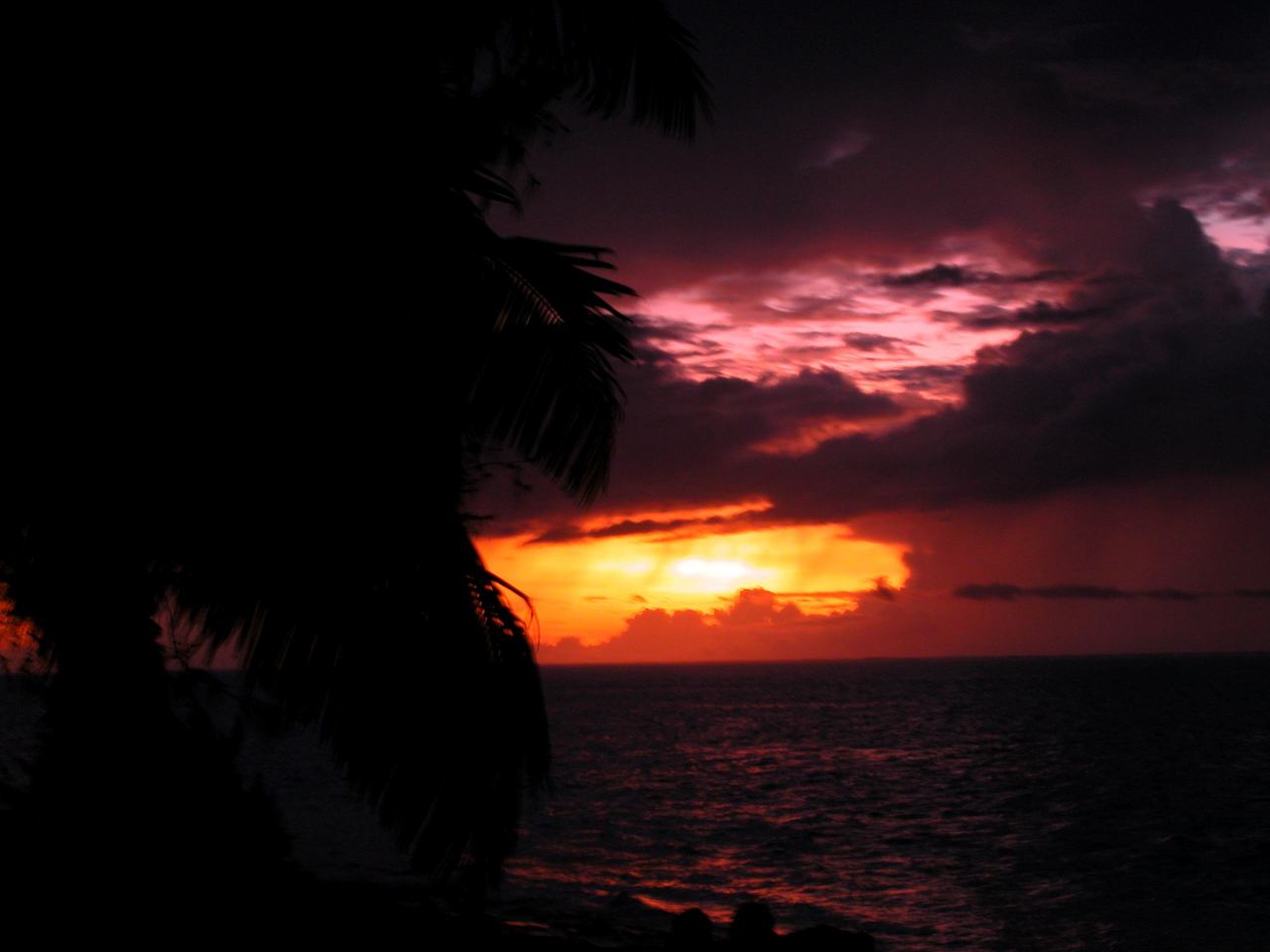
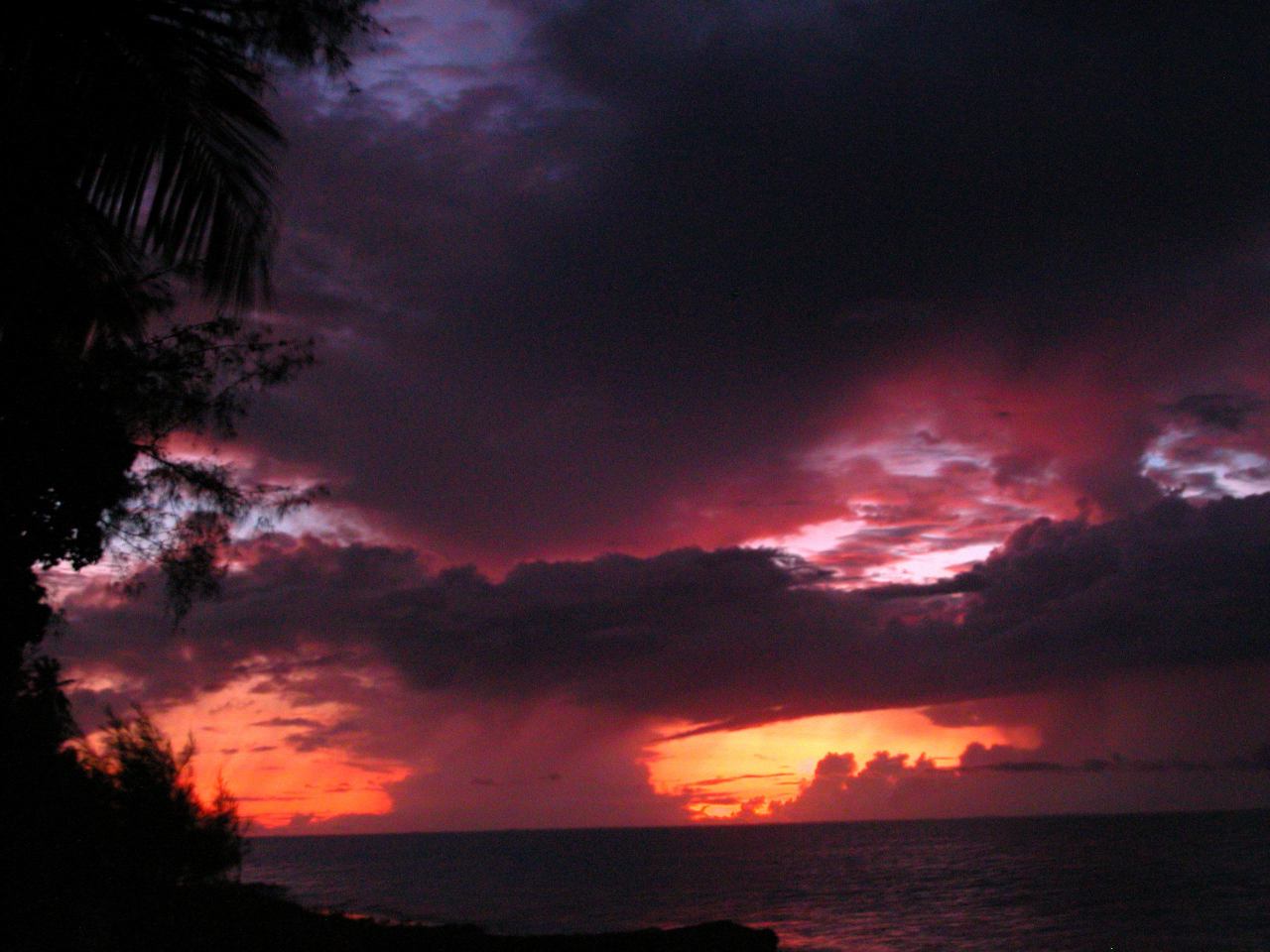
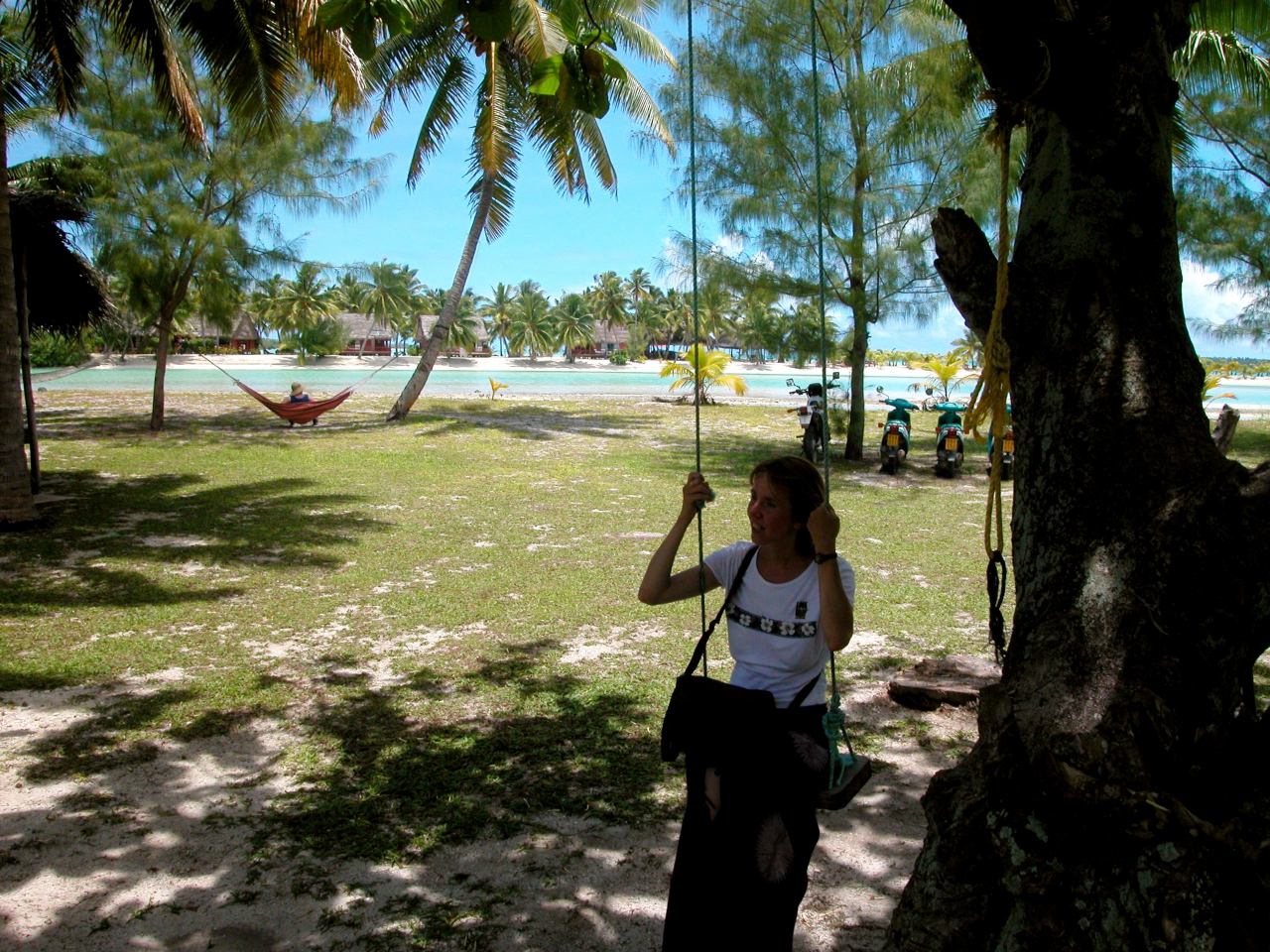
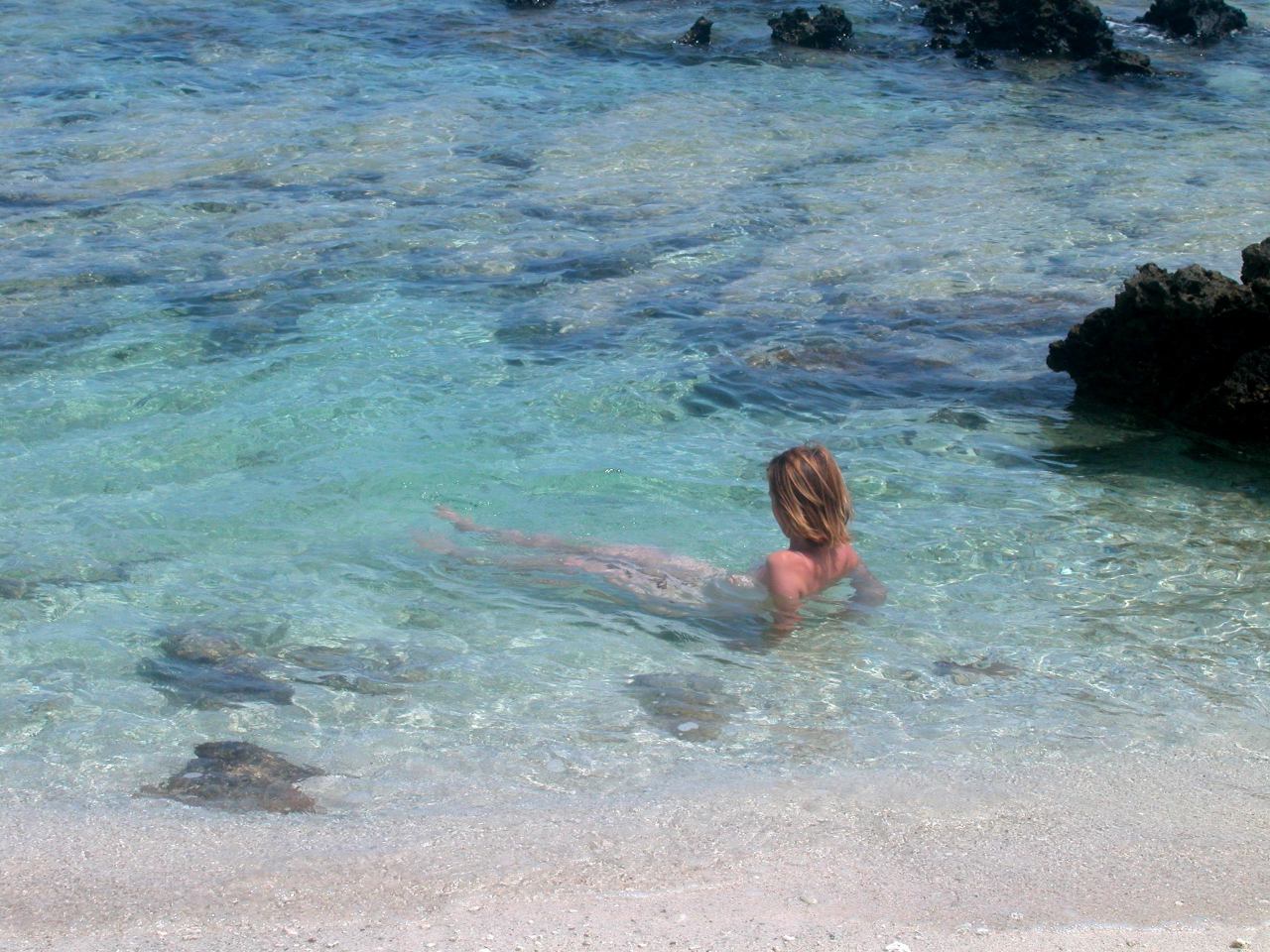
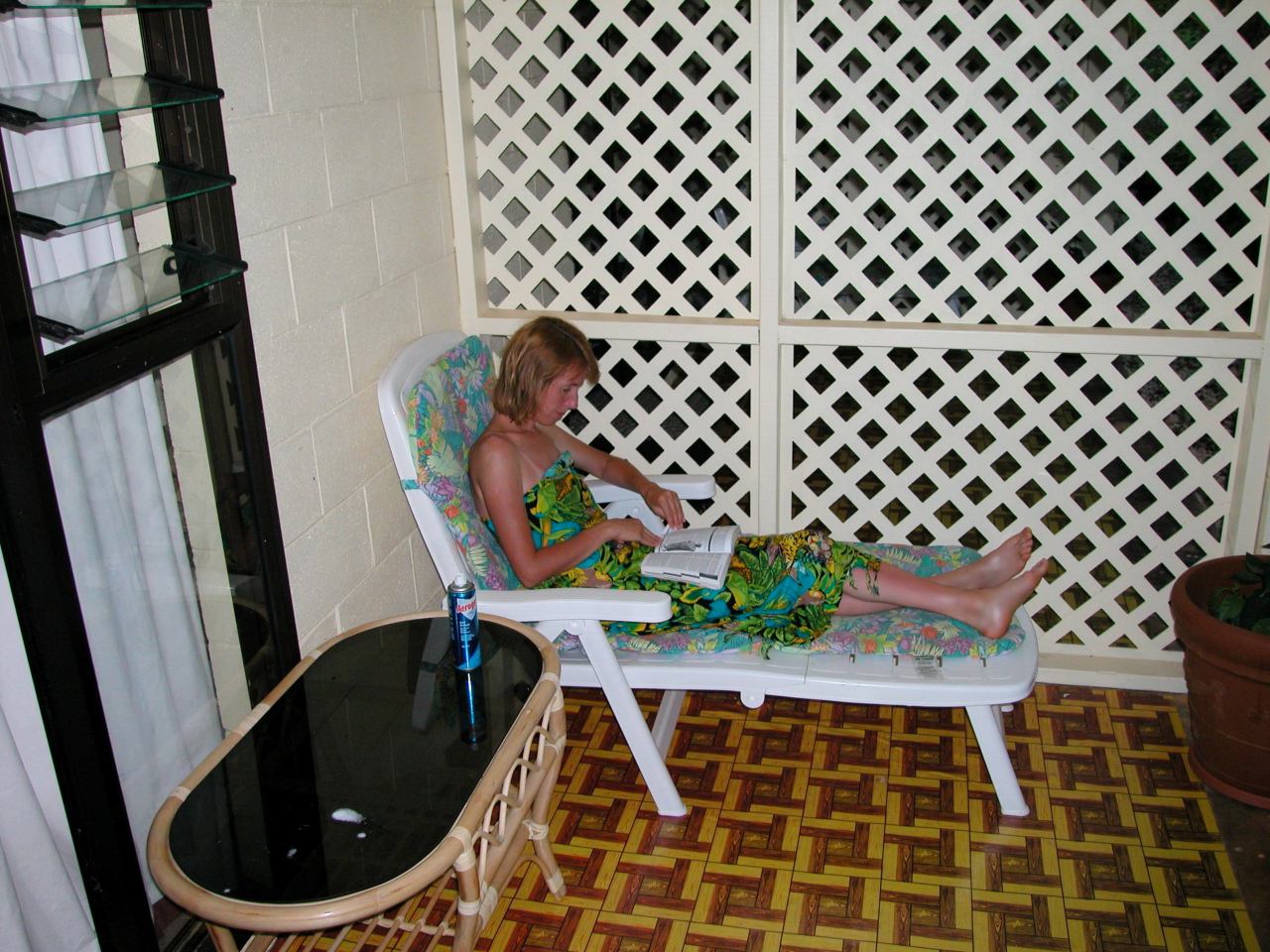
When it was quite dark, Tanya and I settled onto our private little balcony, had a delicious dinner and shared a bottle of wine. Then for a long time we sat looking at the southern sky. Tanya even asked me to take her picture. She said she'd never been so happy. In some distant and cold future she'd look at the picture, remember this moment and think that her life hadn't been wasted.
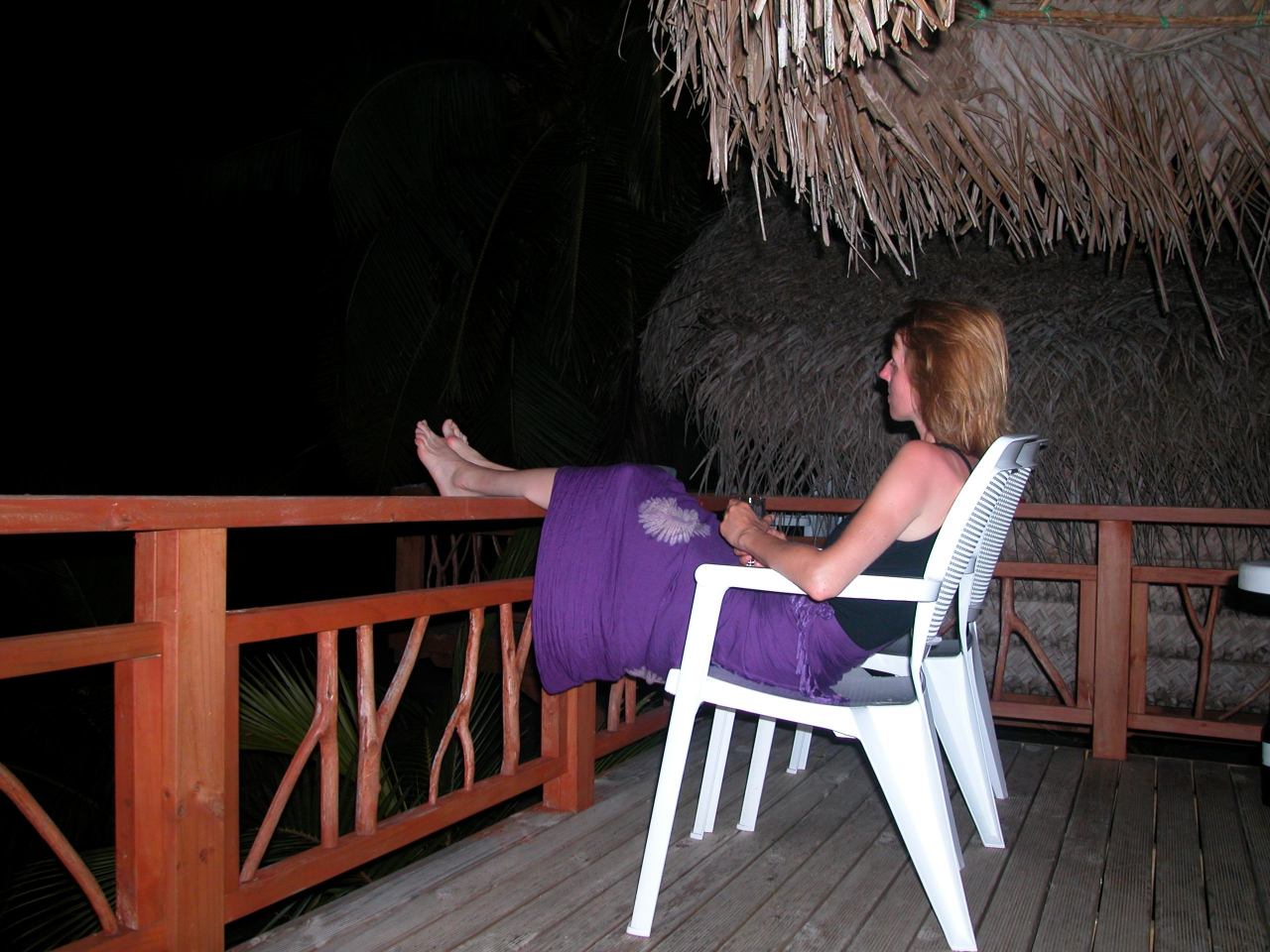
When Tanya fell asleep I went swimming. I splashed about for more than an hour, looking up at the Southern Cross and at the little light blinking on a nearby rock.
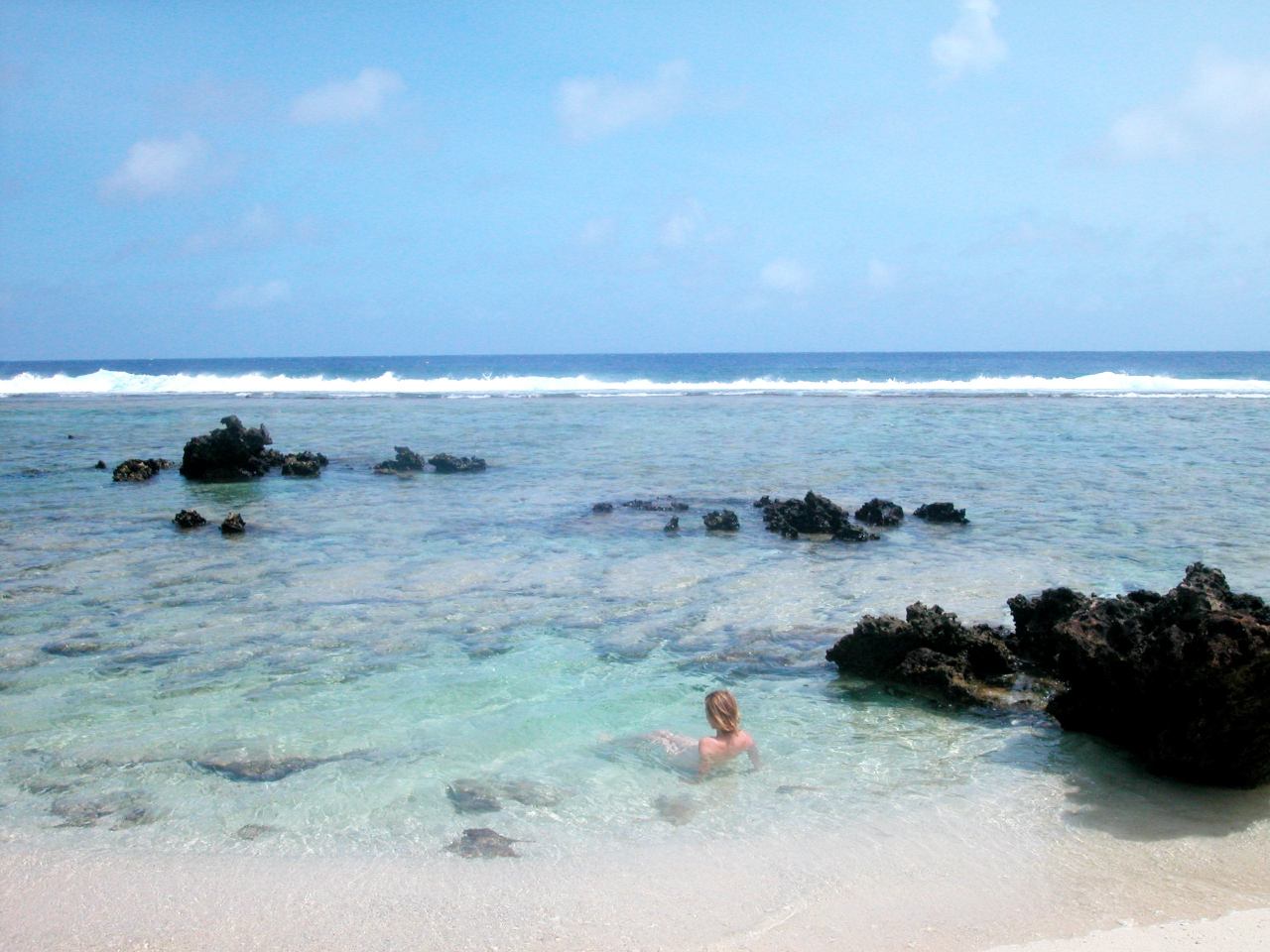
In the morning, Tanya went into the sea. To be fair, it isn't an especially good place to swim. At low tide you can only swim along the shore. A little farther out the coral scratches your stomach. Nobody, incidentally, has gone to the trouble of getting rid of the sea urchins.
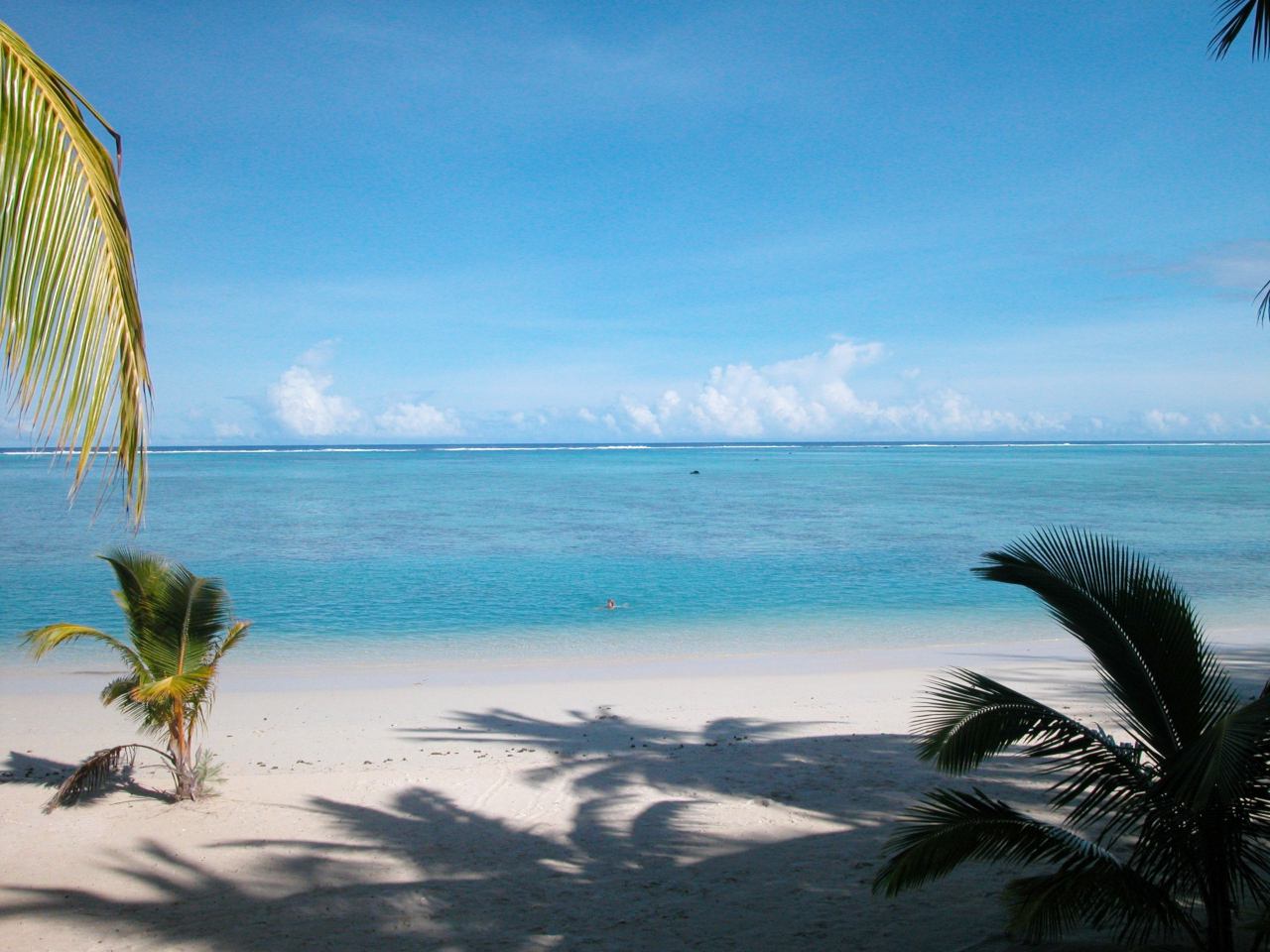
After breakfast we set off to explore the northern end of the main island. The five-kilometre road goes past the airport, and that's where we were at noon. Aitutaki is at the latitude where the sun is directly overhead at noon on 2 February. Sure enough, all the shadows shrank and vanished under our feet.
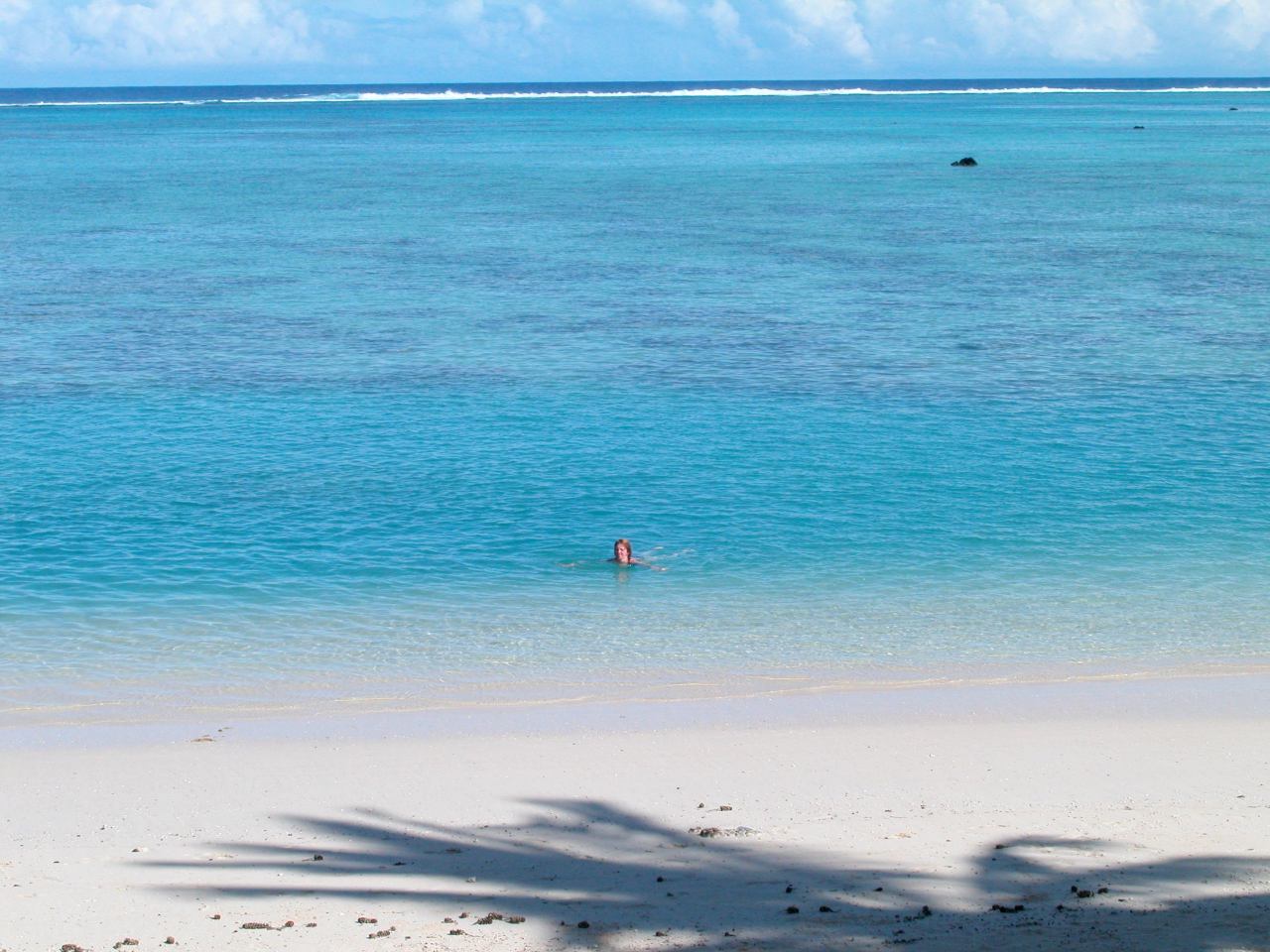
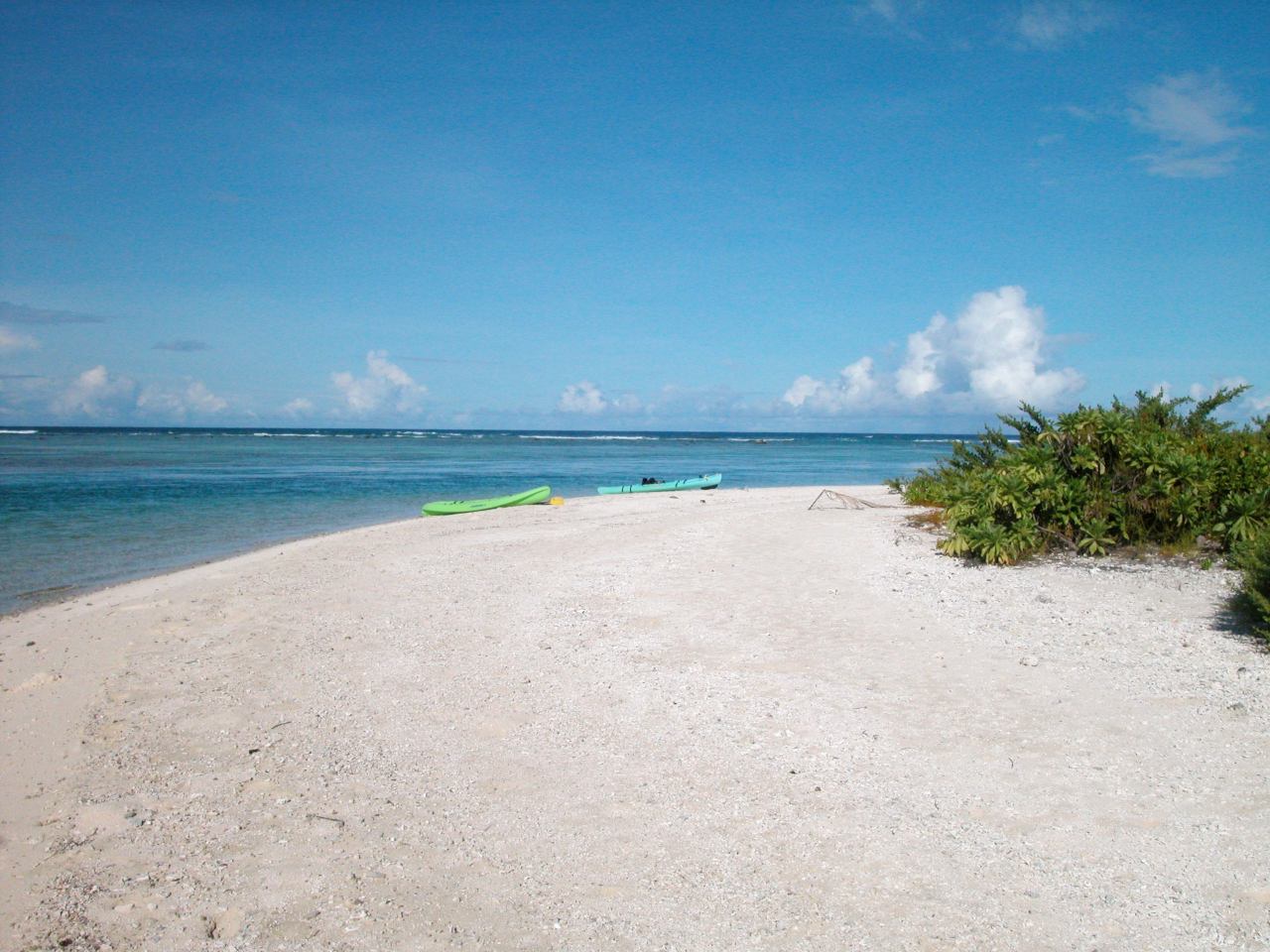
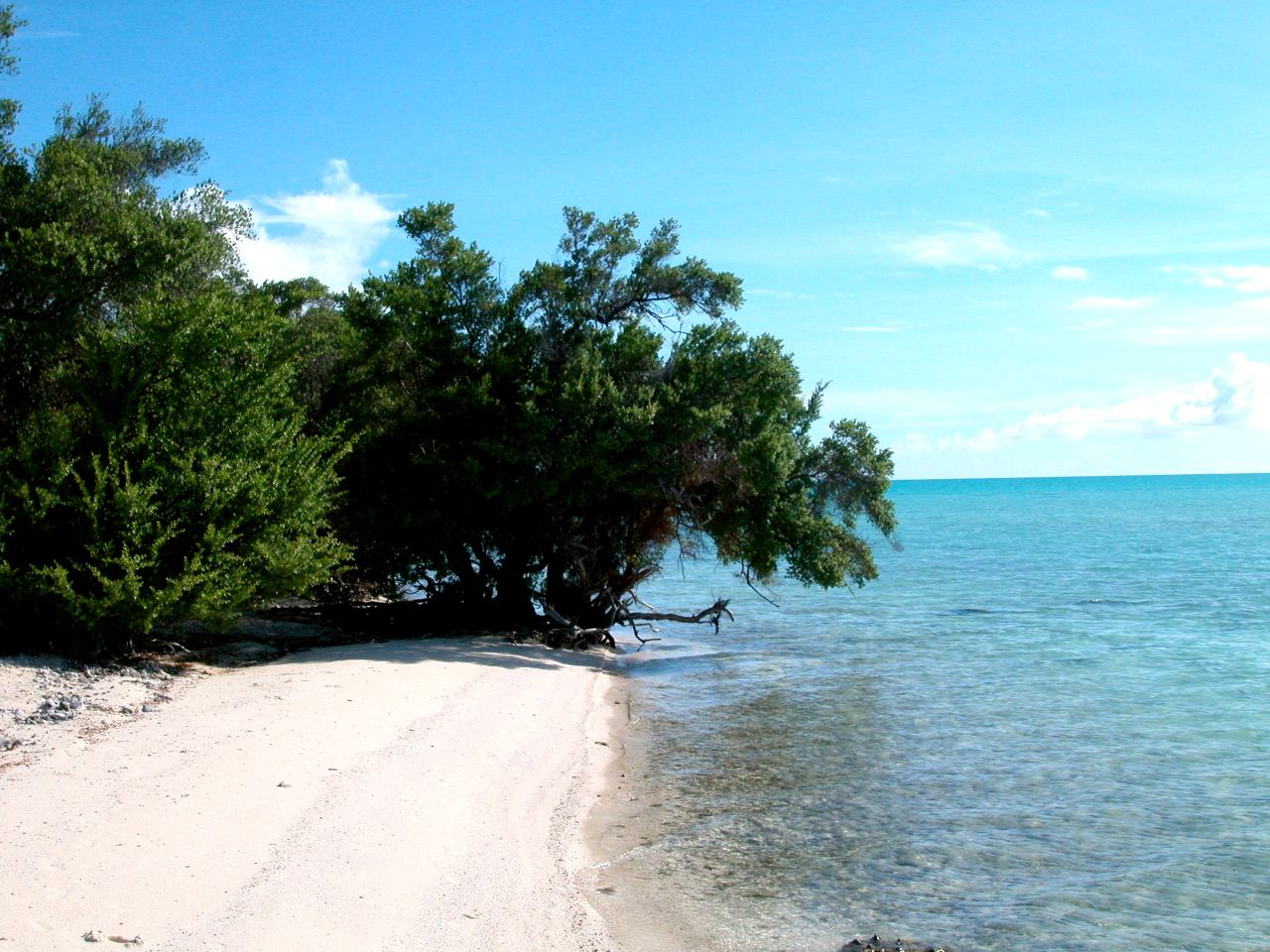
Aitutaki is a fairly old atoll. Most of it has sunk for ever into the ocean, leaving a lagoon twenty kilometres across. The main island lies to the south-west, so its north-eastern shore faces the lagoon. That's the best place to swim. The lagoon is well sheltered from the sea by a reef and free of sharks. Several excellent hotels are here, including Aitutaki Lagoon Resort (tel. +682 31201, akitua@aitutaki.net.ck). You can hire a kayak for eight hours for NZ$20. Unfortunately there were no doubles and Tanya was very upset at having to paddle her own boat. Even so, we managed a good long paddle.
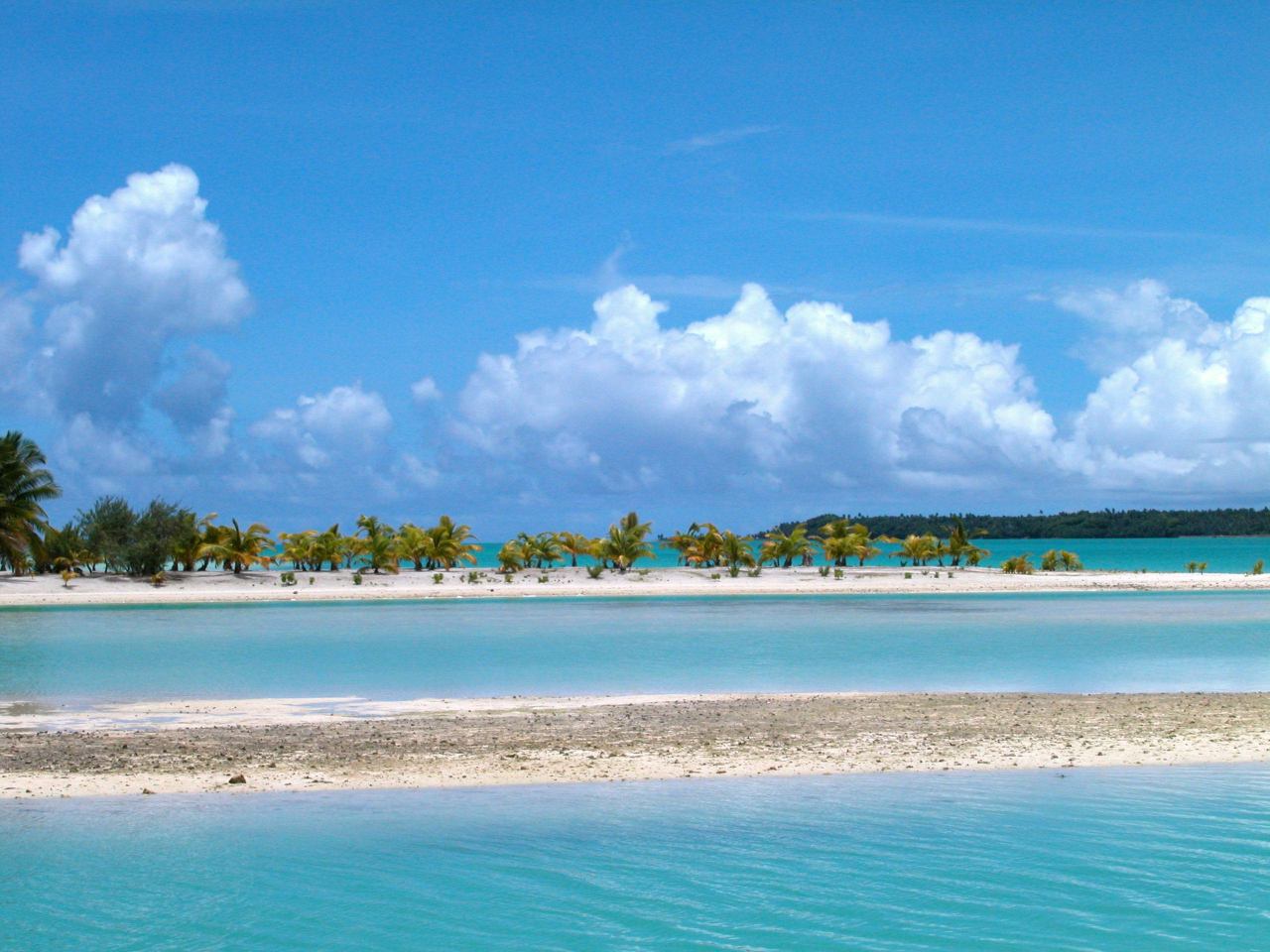
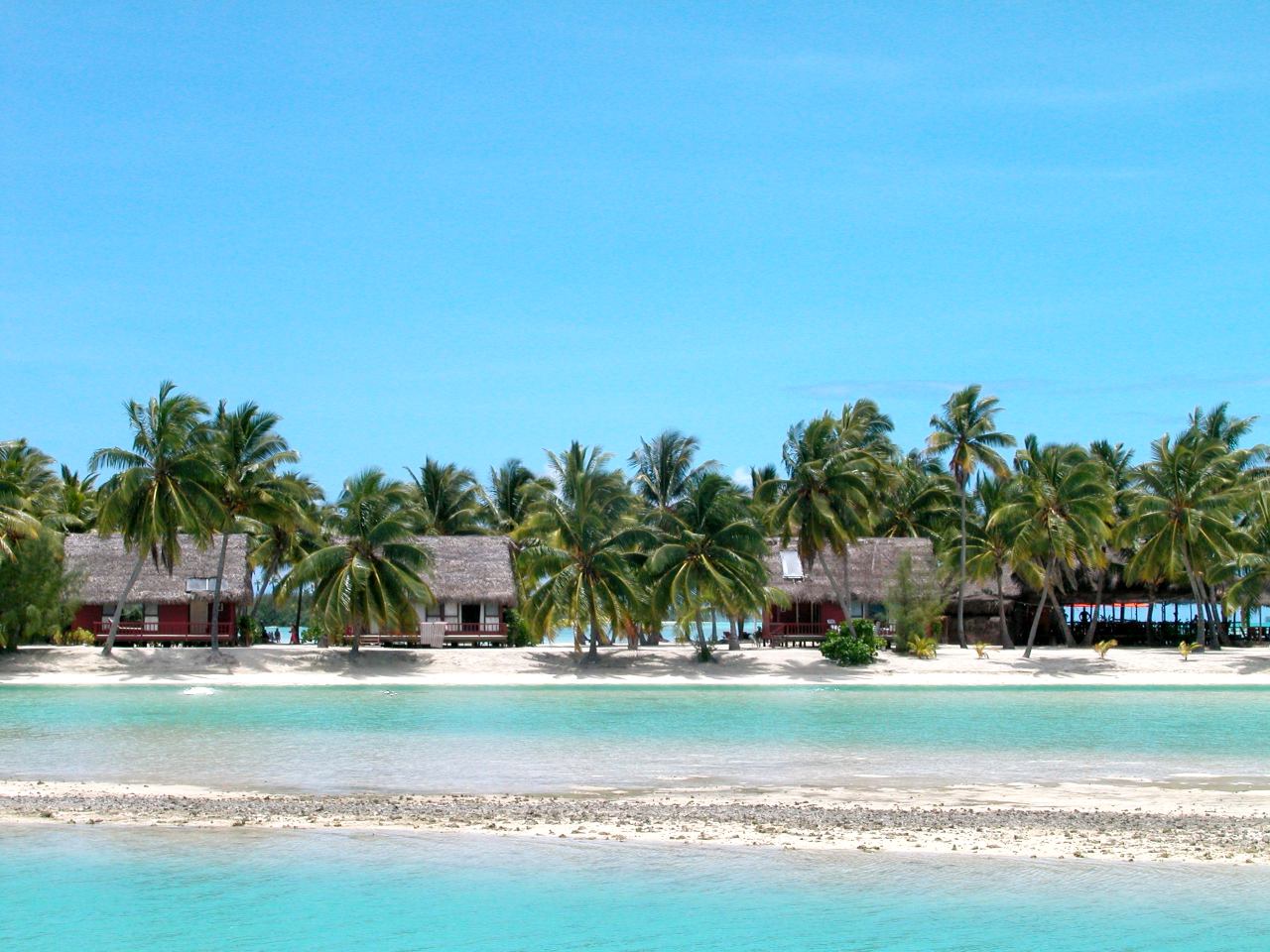
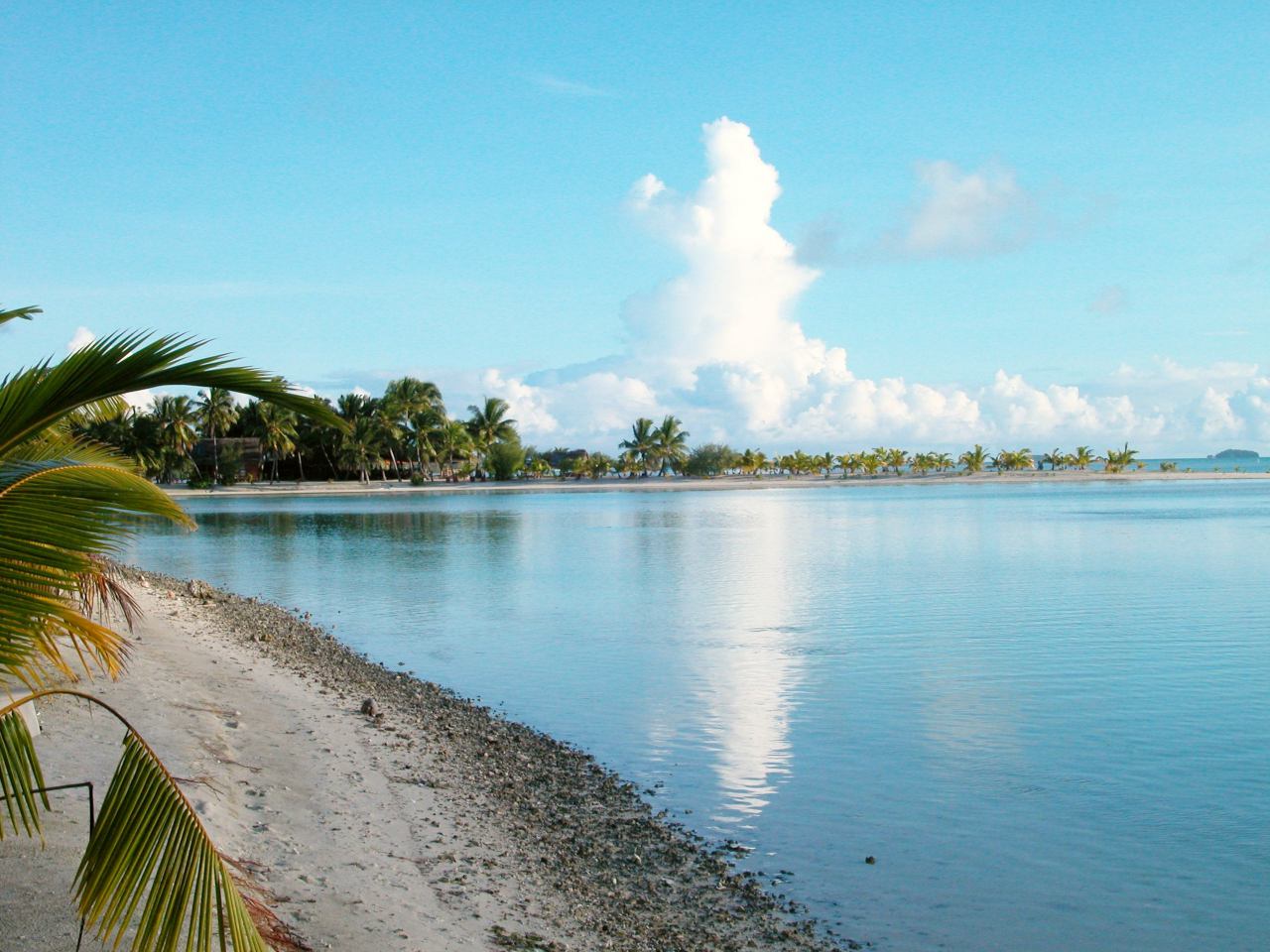
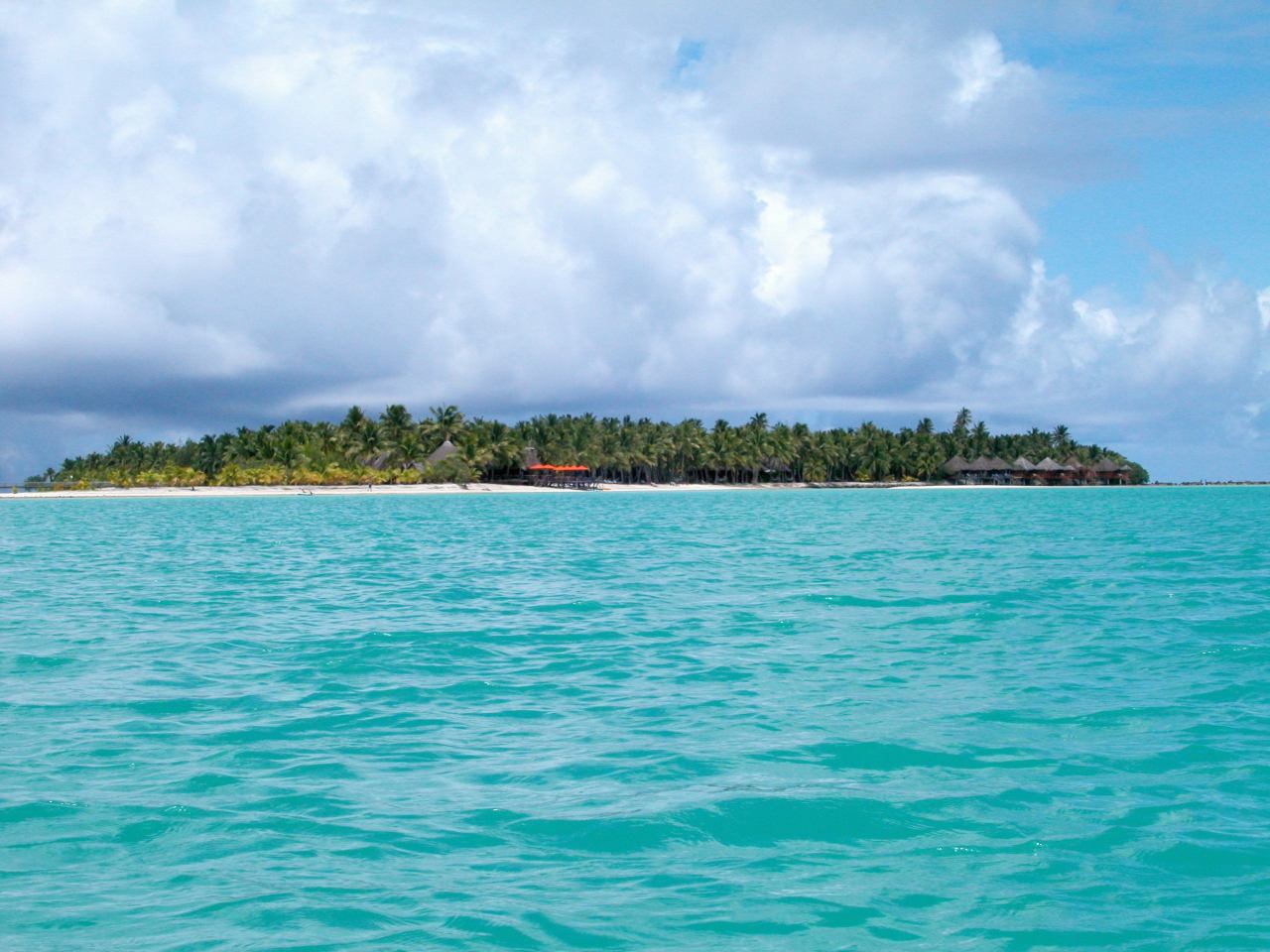
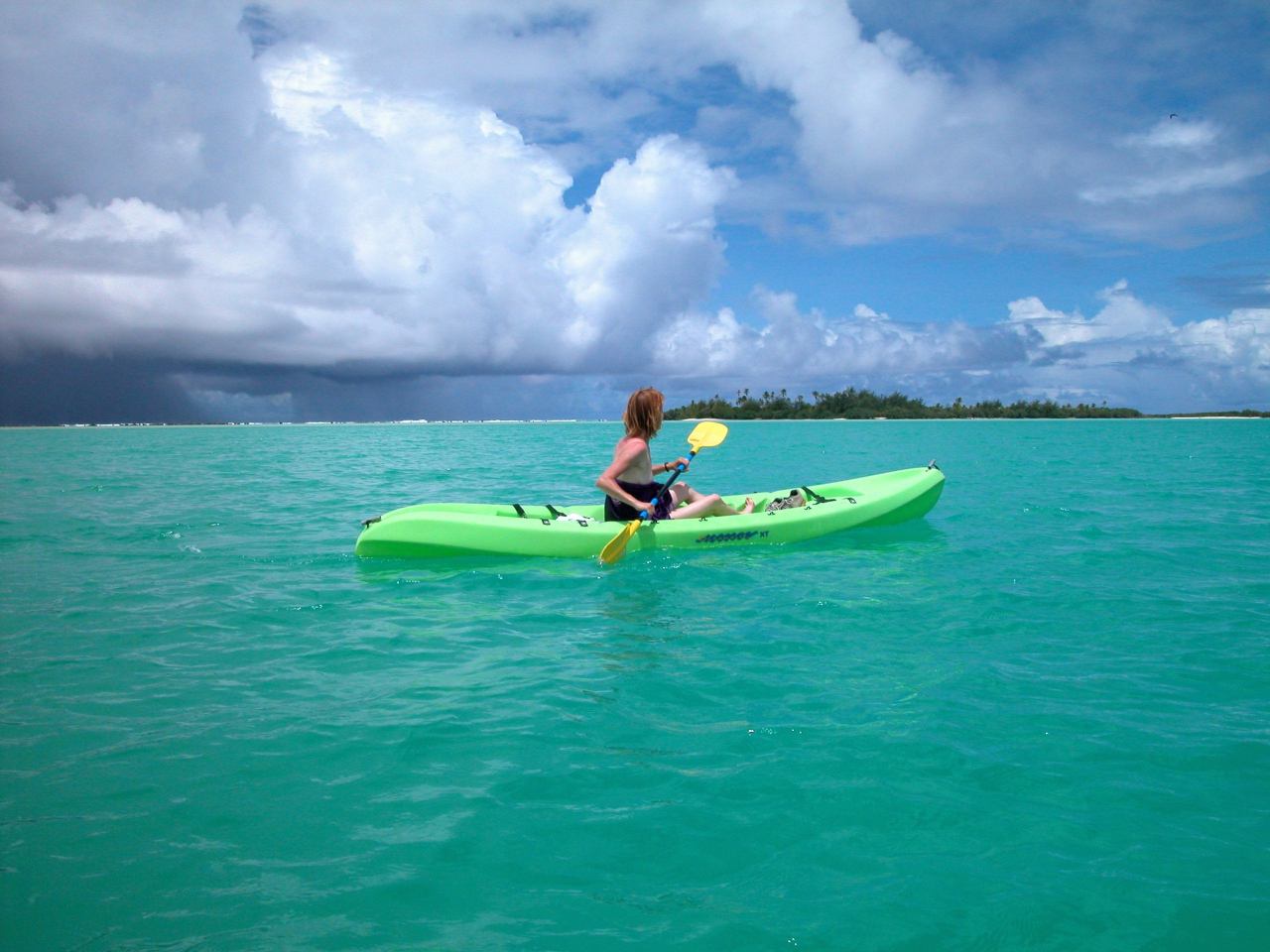
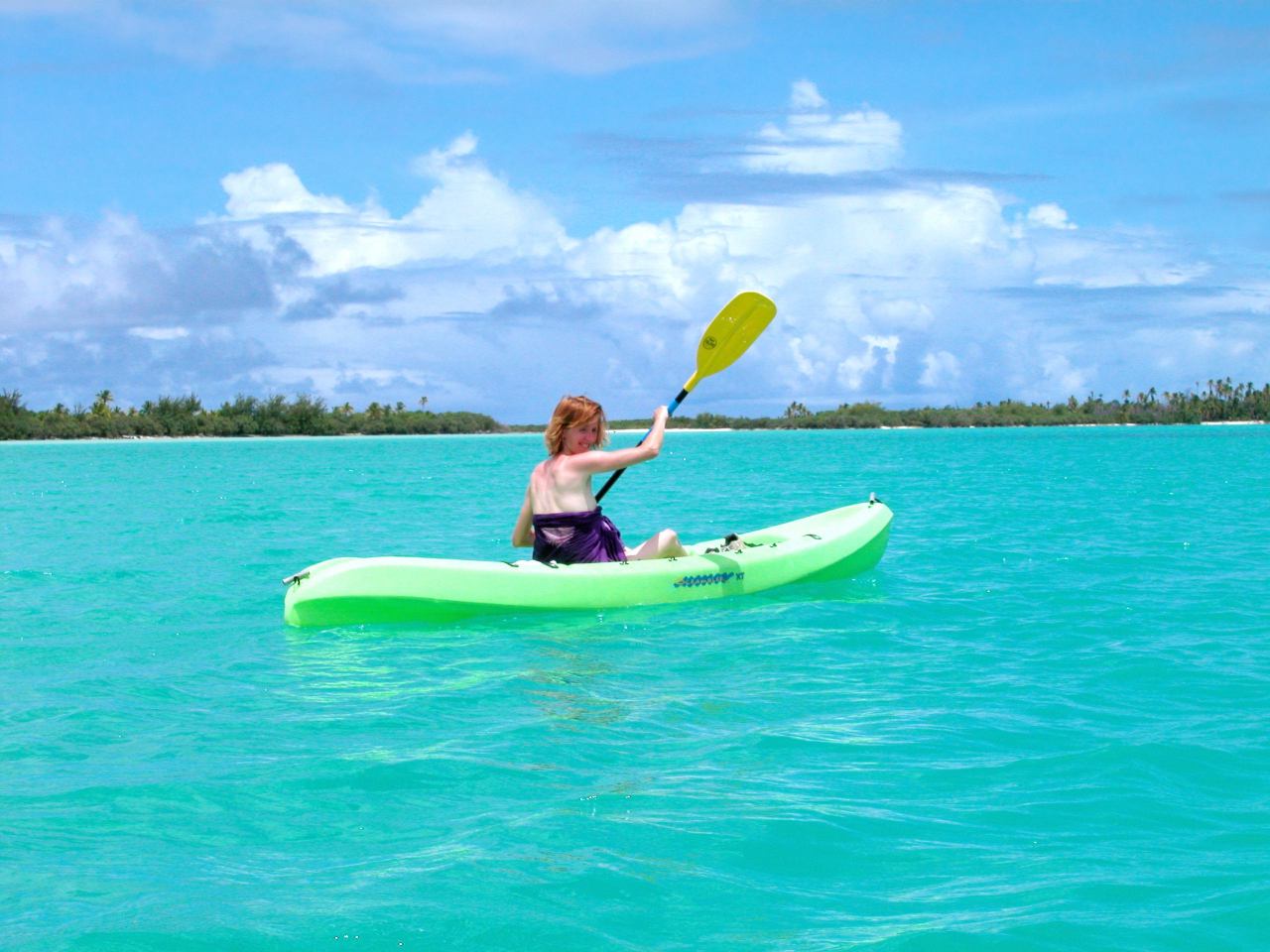
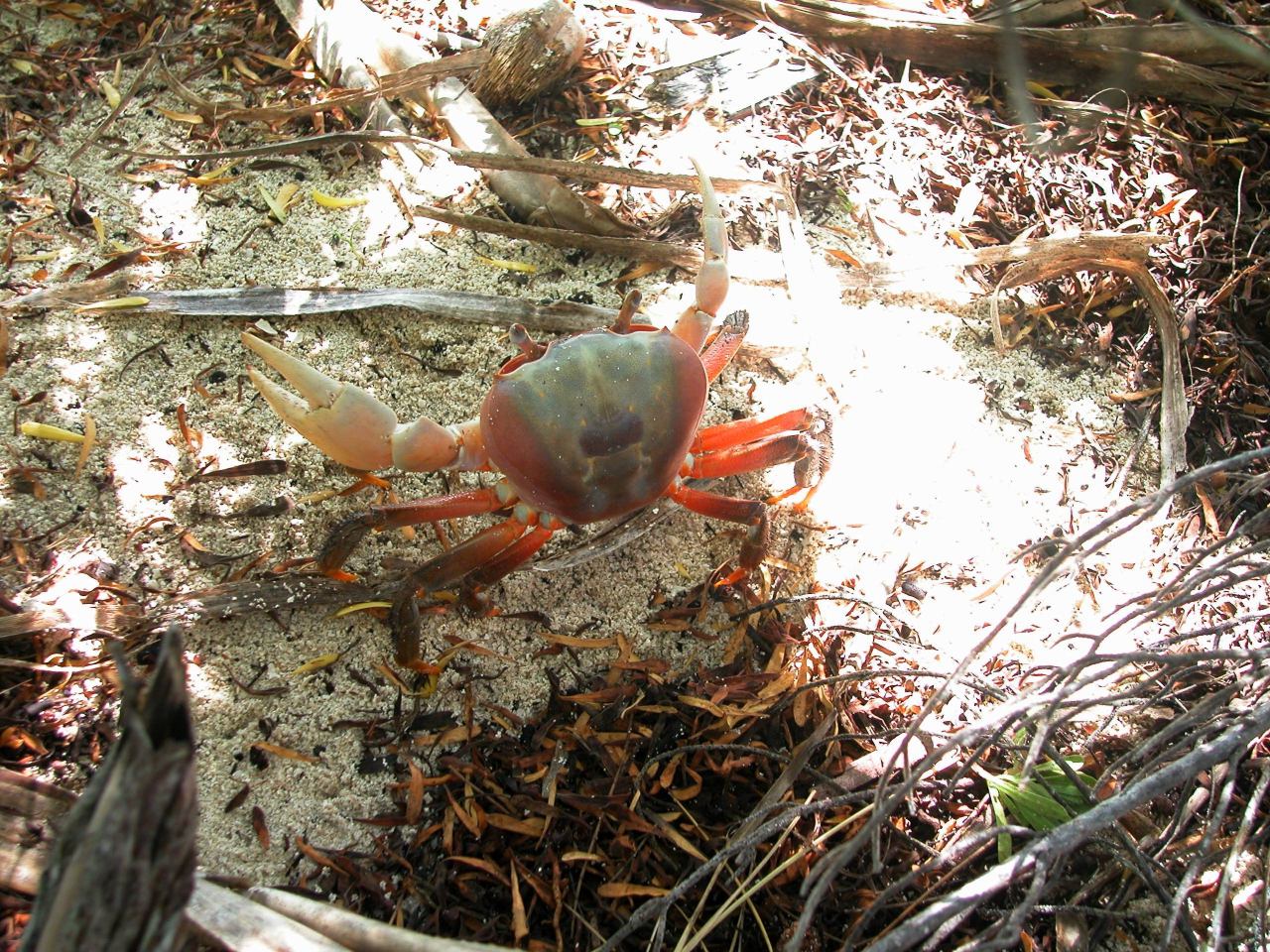
Our first stop was on the island of Ee. A tropical downpour caught us there. We thought we'd wait it out in the bushes and discovered the entire forest was rustling. Several enormous crabs under every bush. How do so many of them find enough to eat? I finally understood why there was a sign near the airport saying ‘Please be kind to the crabs’.
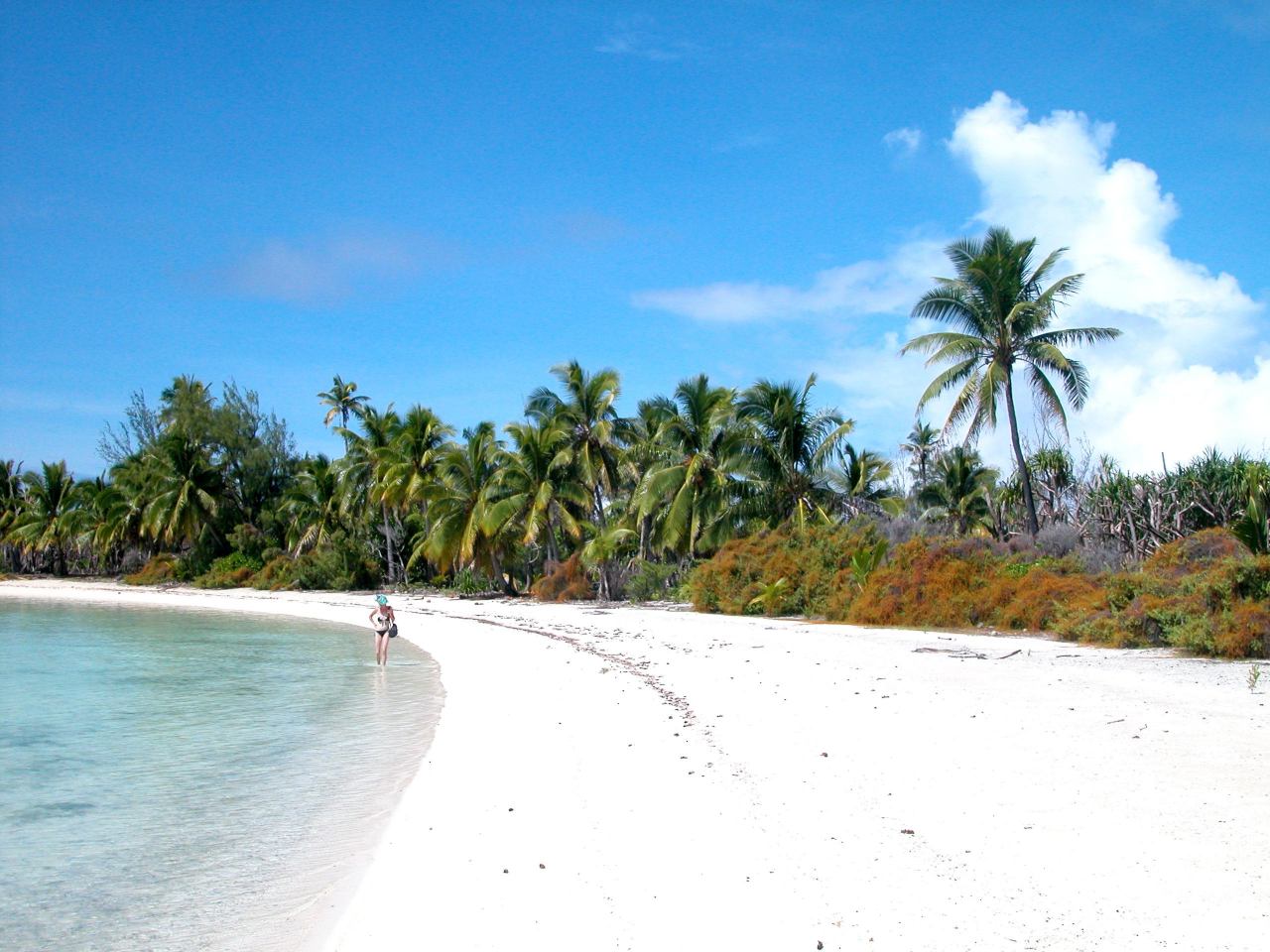
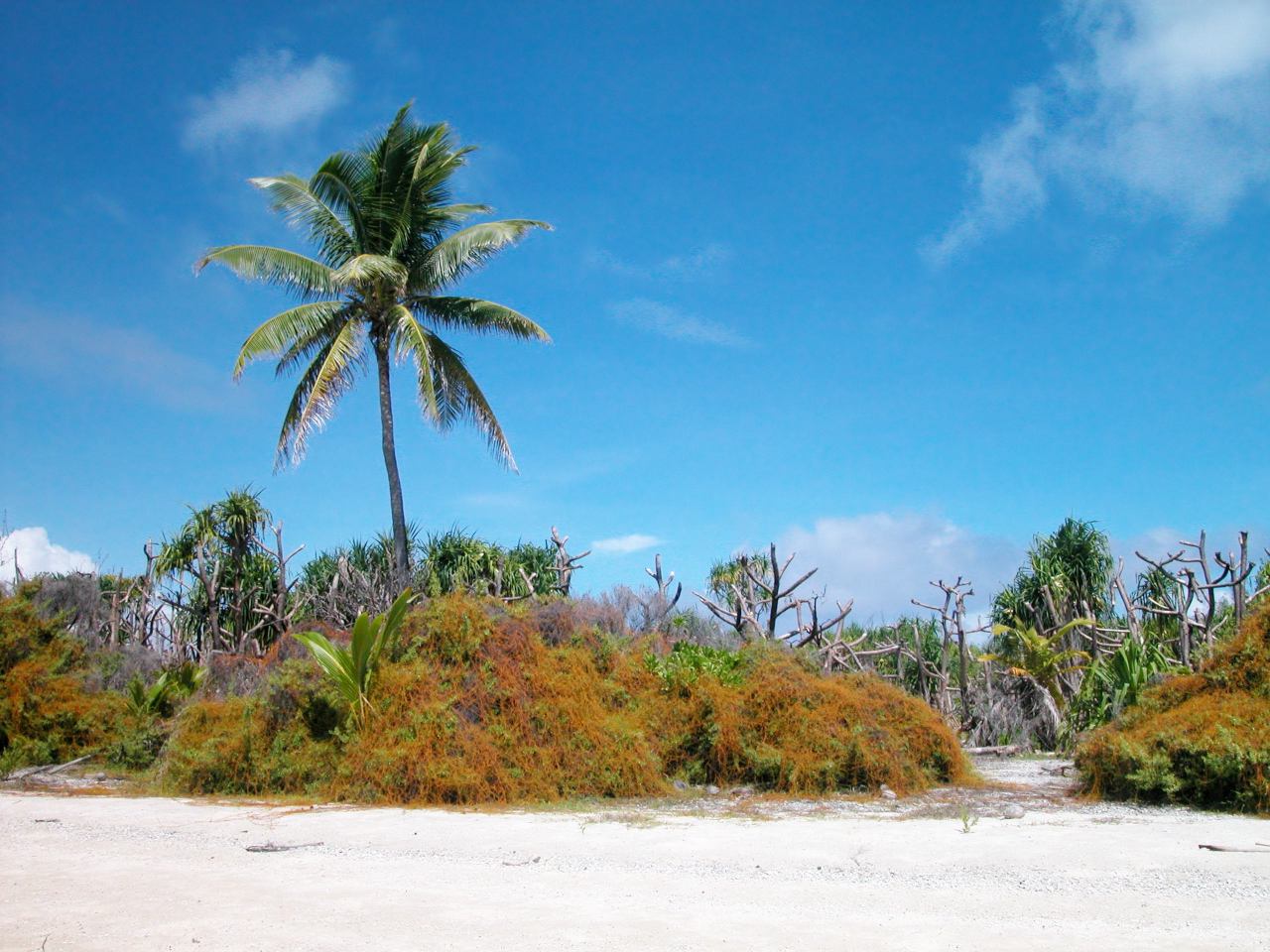
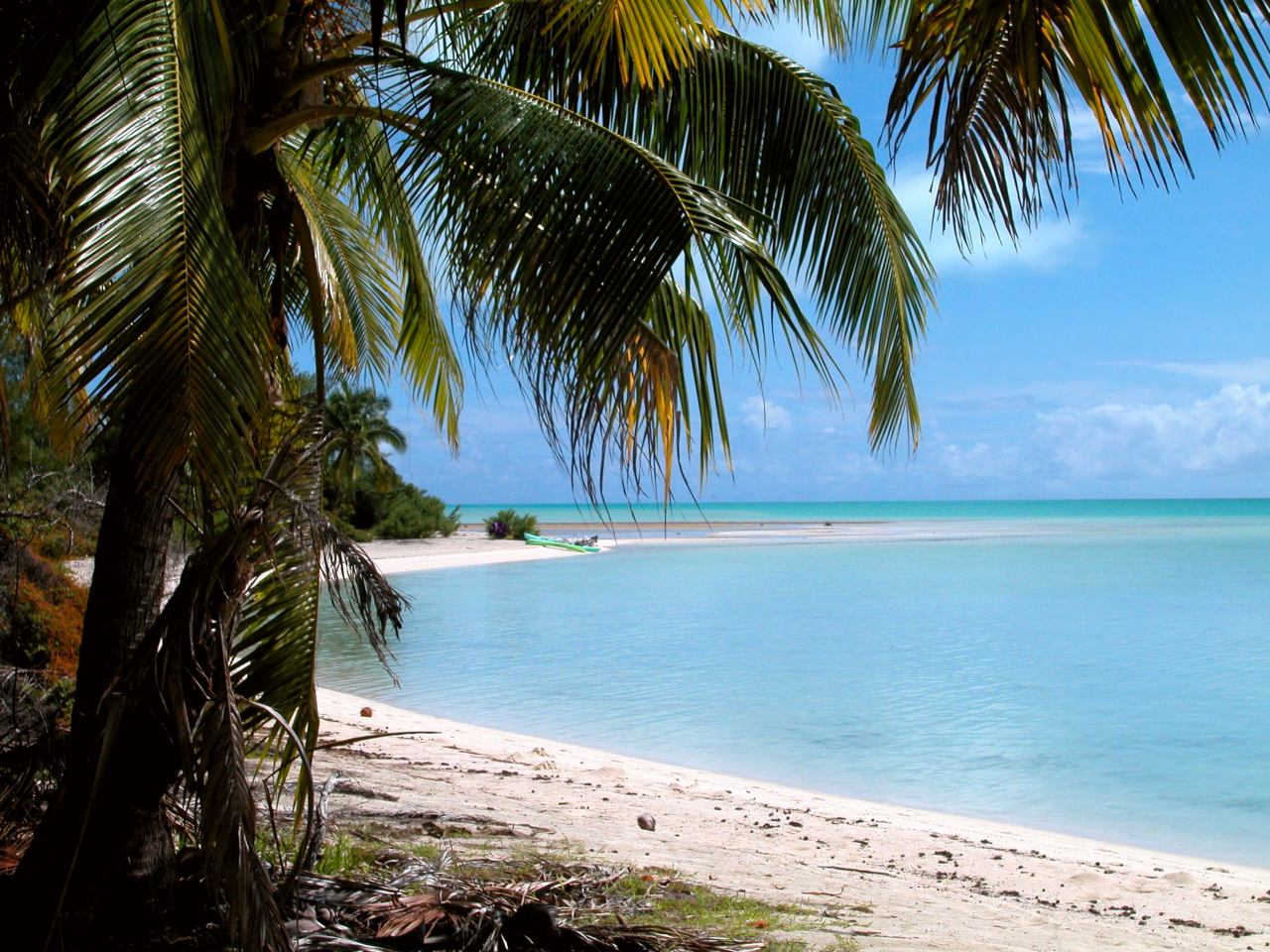
The sun came out again after the rain. This seemed like a good place to dive, so I put on a mask and snorkel. It really was beautiful, although I'd expected more. Fairly like the Red Sea. Experts will find differences, of course, but none struck me as fundamental.
Our next stop was on the tiny island of Papau. Here I went for another swim. I swam for two hours with my back exposed to the tropical sun. I don't like sunbathing. I always burn, so I generally keep my clothes on, and if I do take them off I put on sunscreen. We'd been under the southern sun for more than a month. Our faces and hands had got used to it and we'd grown careless. It didn't occur to me to put sunscreen on the backs of my legs behind my knees. We got quite badly burnt, especially Tanya. We burnt wherever there wasn't any sunscreen and were fine where there was. So there were unburnt handprints left on our backs and stomachs. A funny sight.
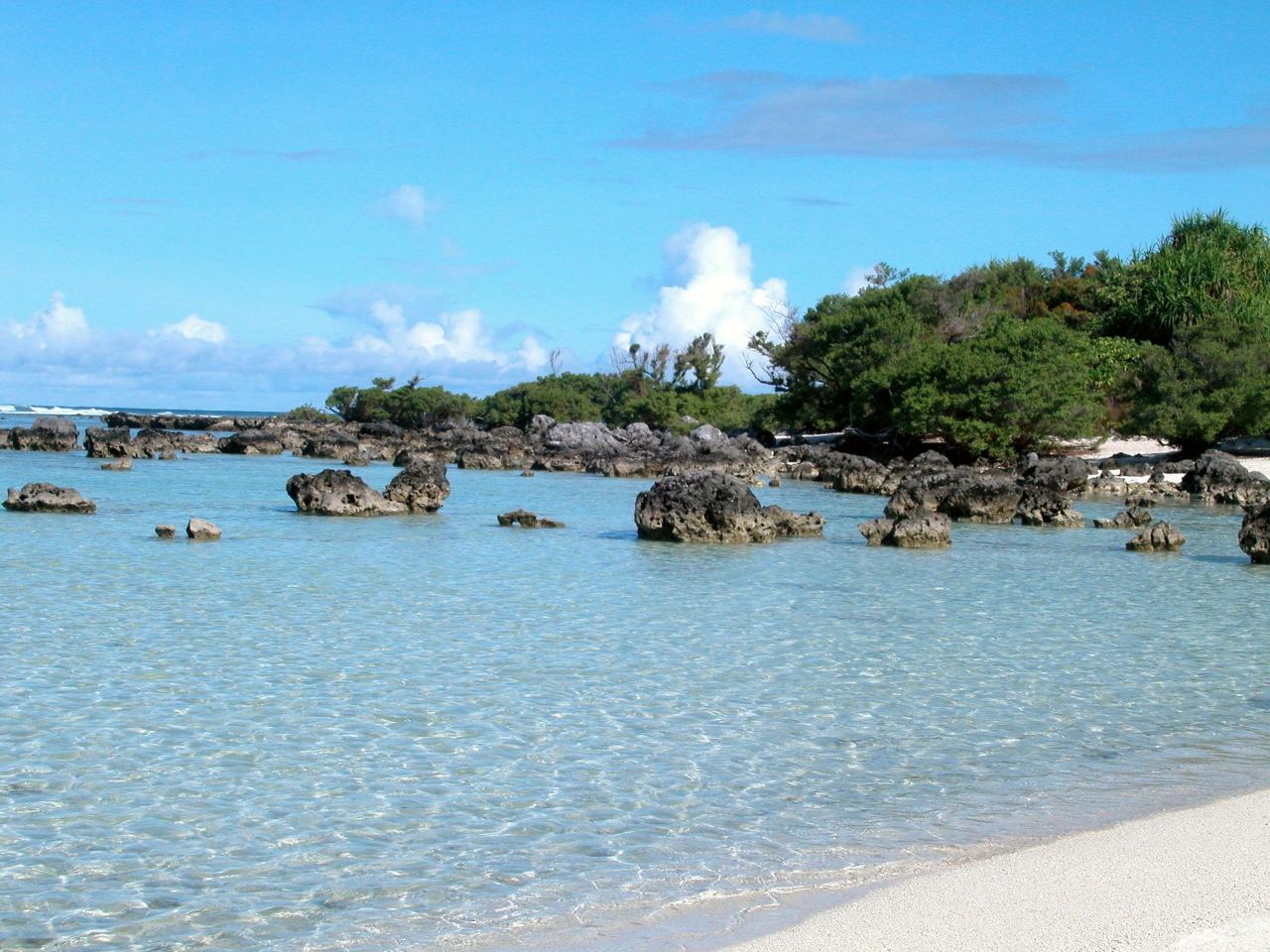
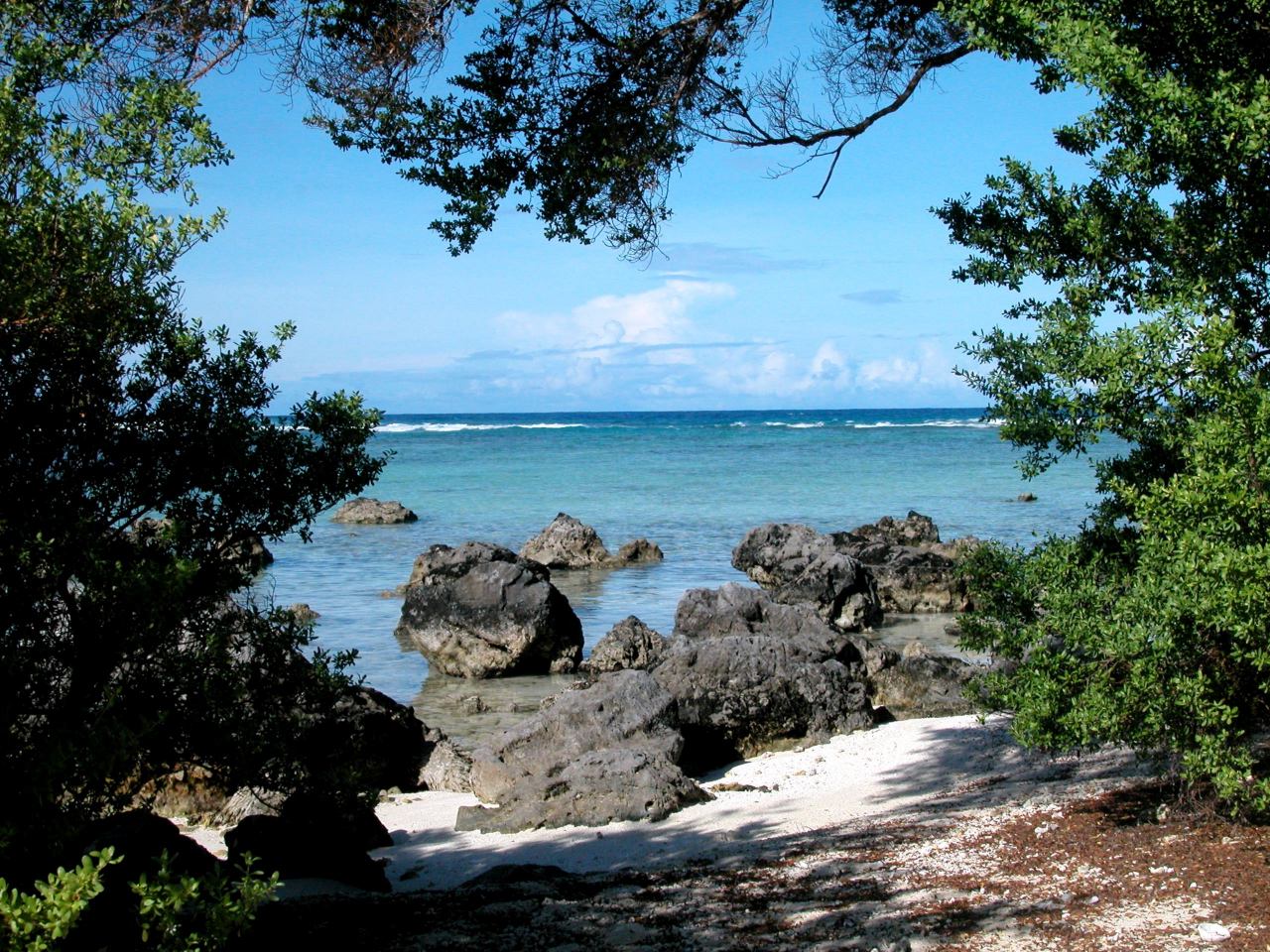
We got back to the bungalow in time for another sunset. This day it was even more beautiful than yesterday's. Dinner was good and we had a bottle, but everything hurt from the sunburn. We even began to worry, especially as the insurance didn't cover sunburn. Luckily our stomachs weren't burnt, otherwise we wouldn't have slept at all.
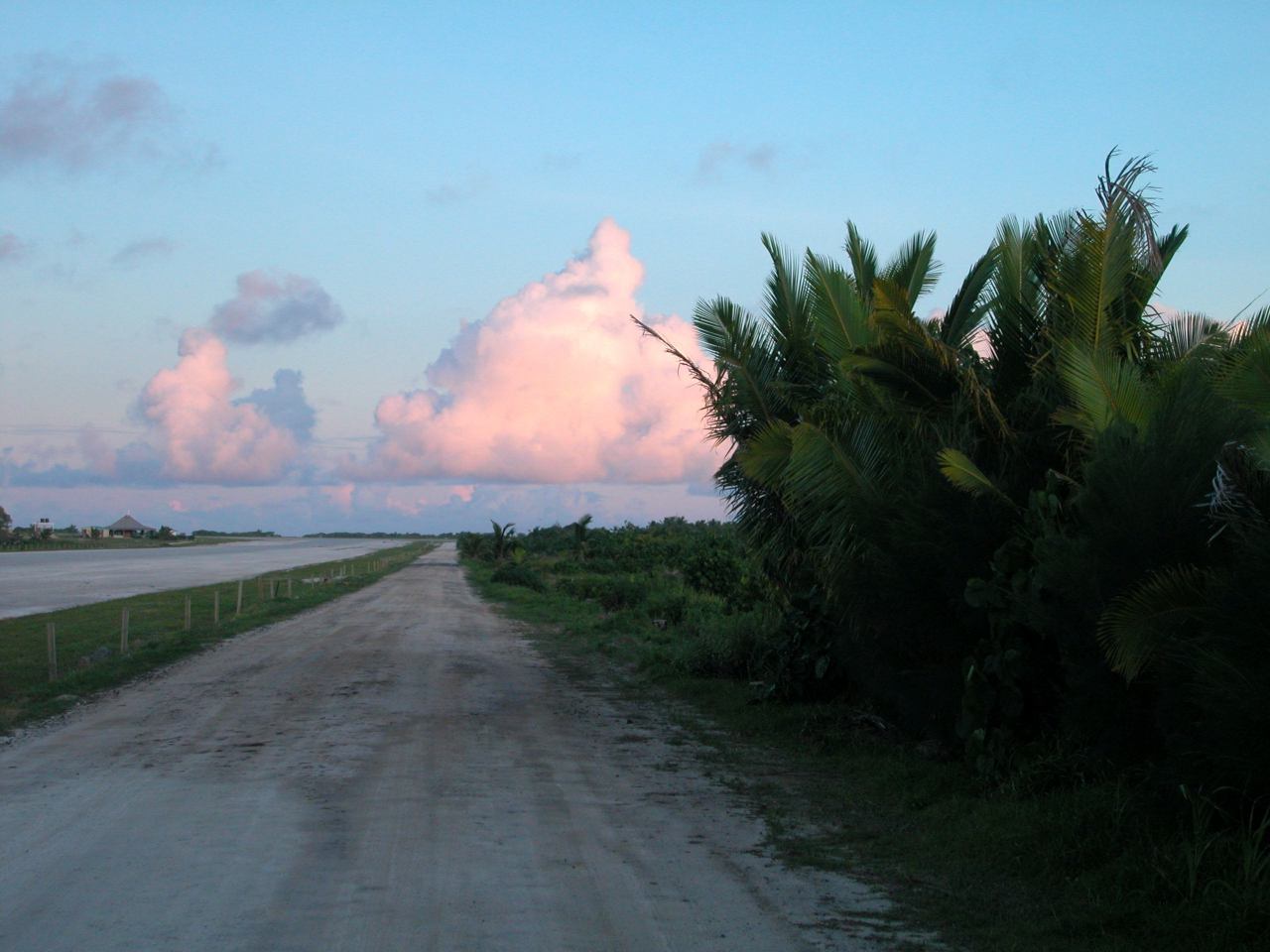
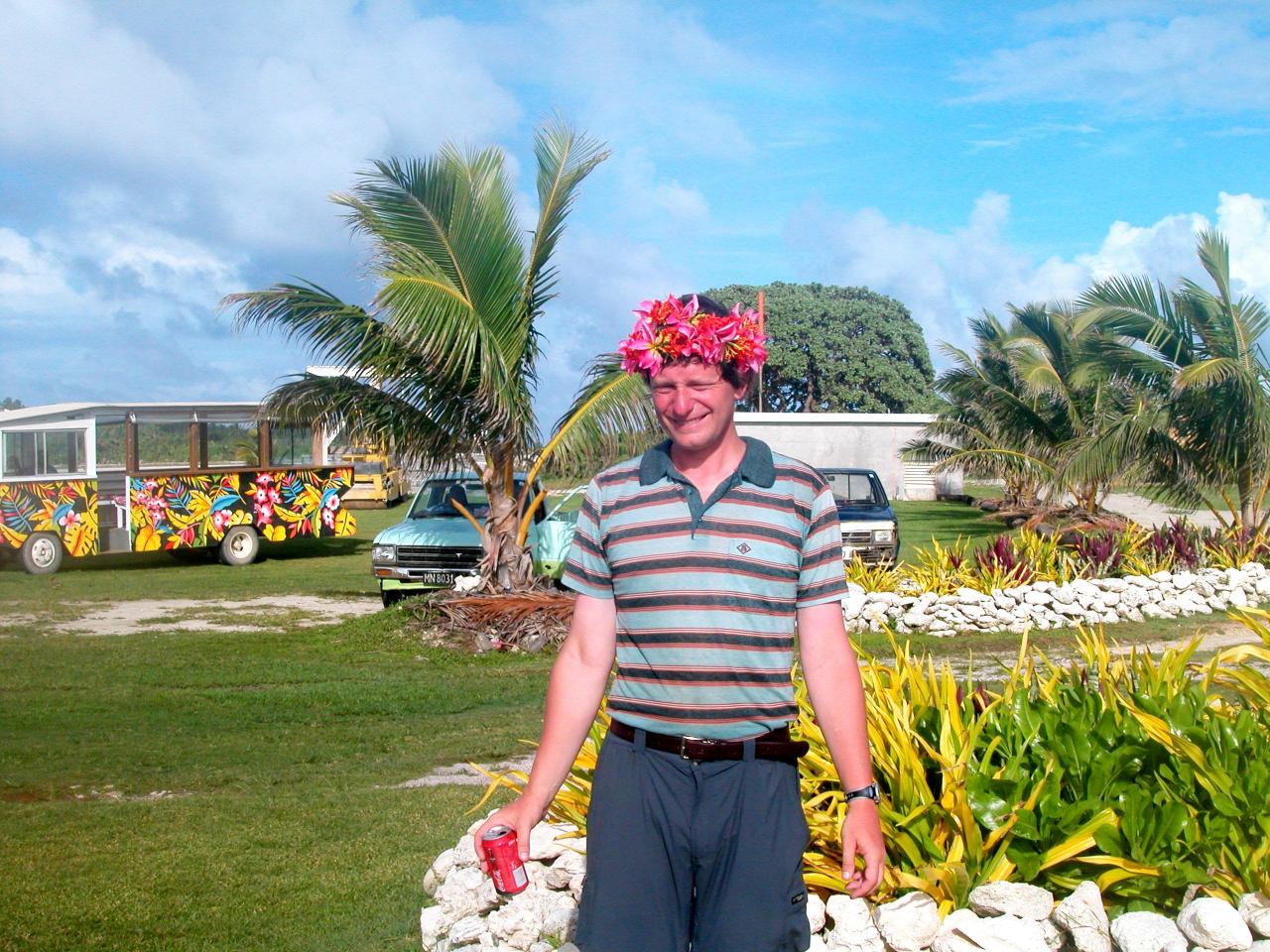
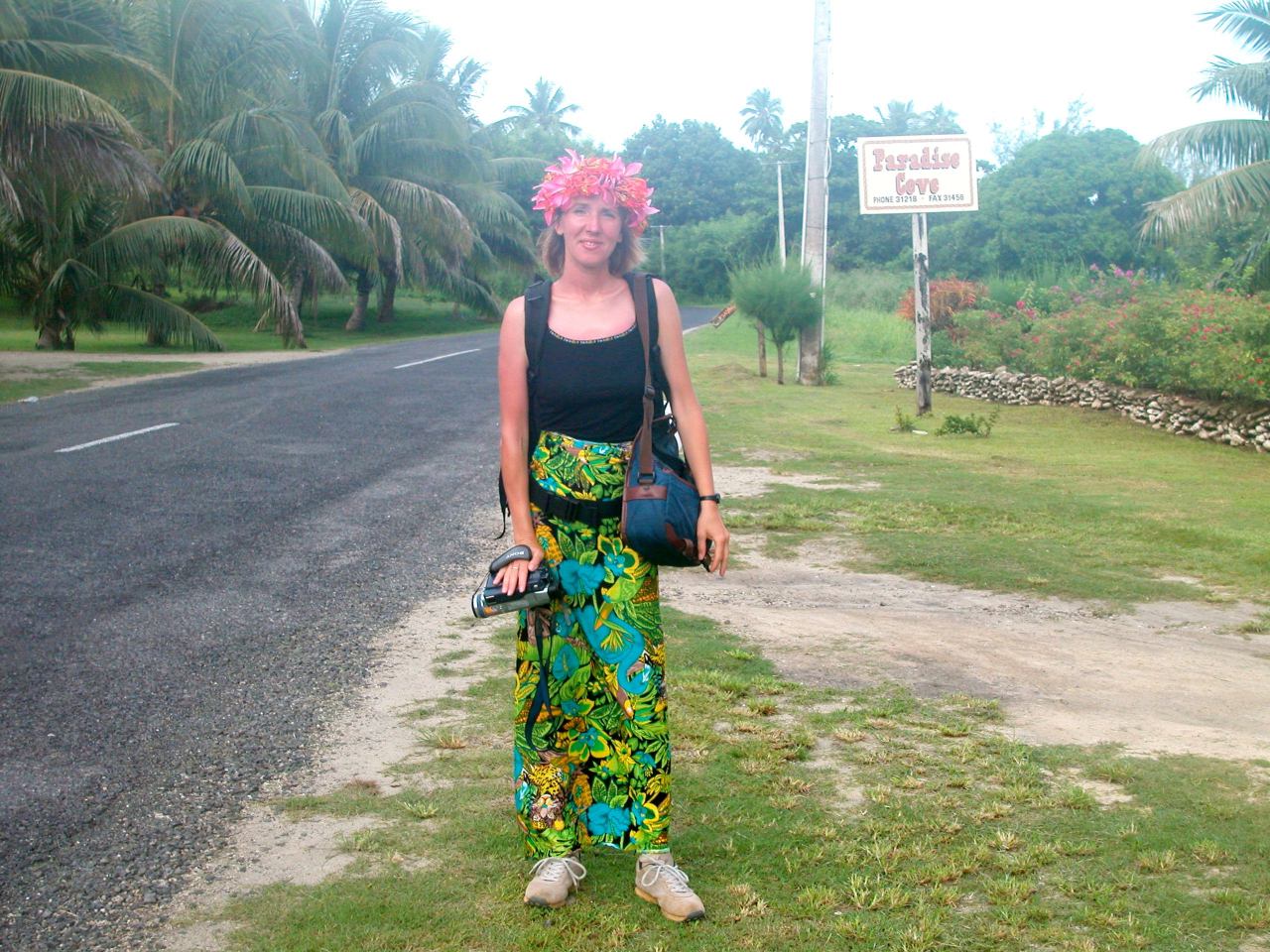
Our tickets back to Rarotonga were for ten in the morning. To say goodbye, they hung garlands round us once again. Here you're not really supposed to take them off. If the locals see somebody with no garland, they consider it their duty to stop this improperly dressed tourist and put one on. A flower behind each ear gives particular pleasure. The idea originally was that a flower behind your left ear meant you were single and looking, behind your right that you were married. A flower behind both ears could be understood however you liked. The locals say it means you love flowers.
That's the state we were in when we got back to the capital. On arrival on an inter-island flight it turned out there wasn't a soul coming to meet us. Not one person from a hotel. We set off for the capital on foot. We were picked up by a four-wheel drive whose driver offered us a hostel on the other shore. At first they promised a private room, then it turned out they had only a bed in a six-bed dorm. We had to cross the island back to Avarua and wander from hotel to hotel looking for a vacancy. This was especially miserable with a burnt back and all my things in a pack. To our surprise there were no vacancies anywhere, and only at the tenth attempt did we get a room at Central Motel (21°12.254′S, 159°45.925′W). In season you can't expect to find a free room by chance, it seems.
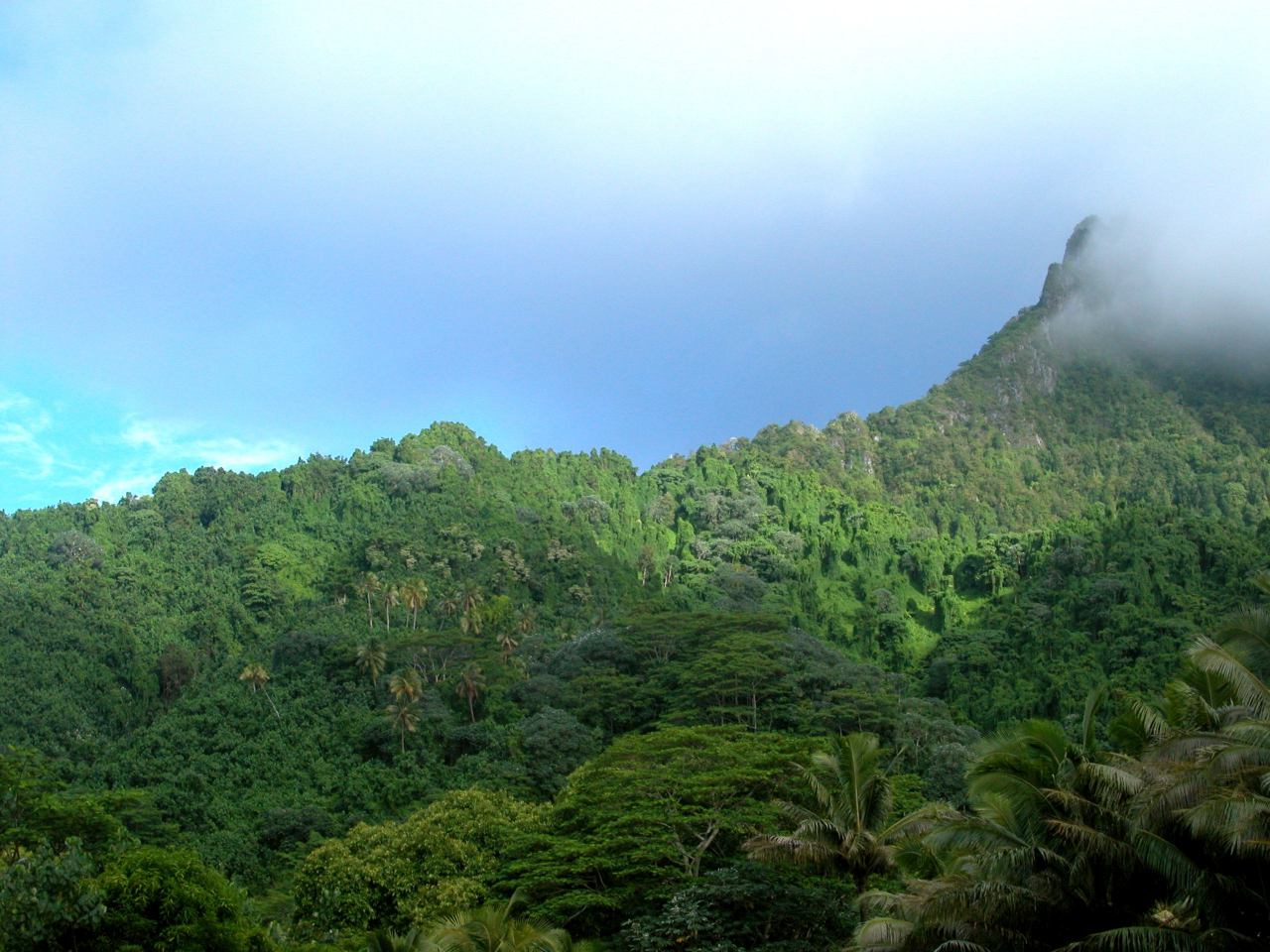
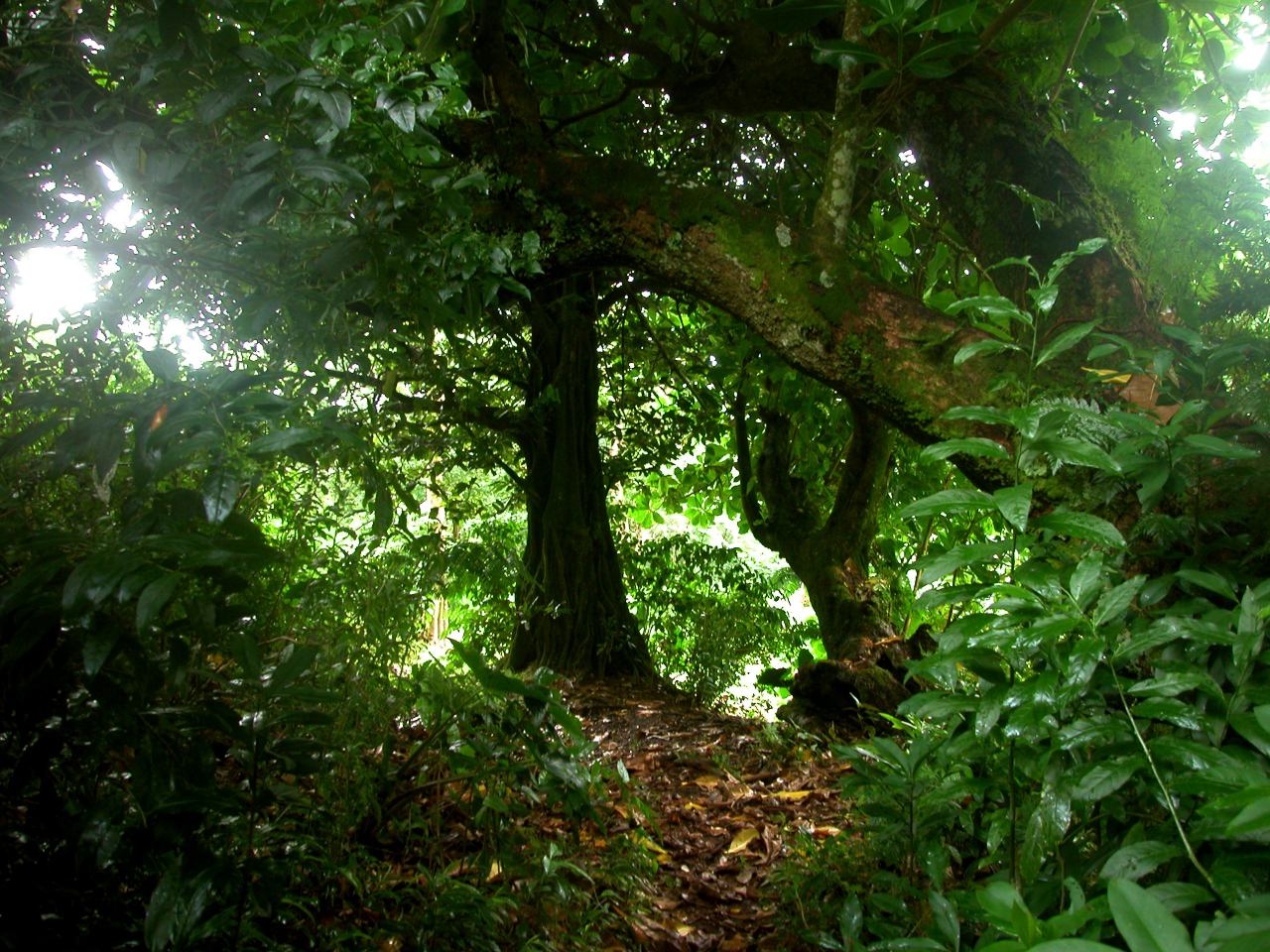
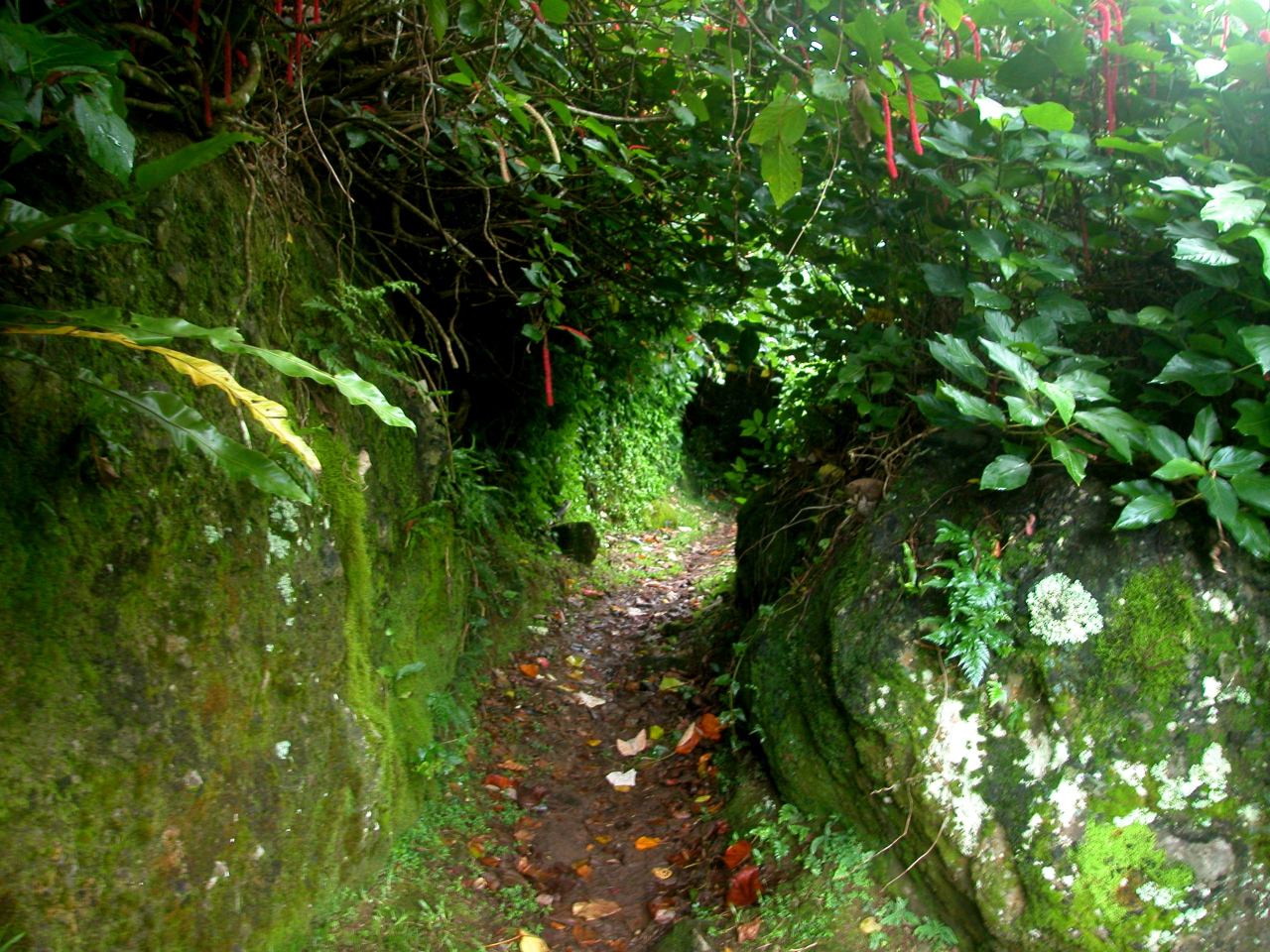
Tanya had burnt more badly. She seemed to have a temperature and stayed in bed. I went for a walk on the track up Takuvaine Gorge. Practically nobody lives at the centre of the island. They're just little trails amongst rocks and jungle, made for seasoned New Zealand visitors. At first they aren't so bad, of course, but the higher you get the muddier they become. Around halfway up I met a young English couple, muddy from head to toe. The young woman was grumbling dolefully. We got talking. ‘Best not go any farther, you wouldn't believe what it's like up there.’ They asked why I was alone. My wife was back at the hotel, I said. ‘Oh, she's a very clever woman,’ groaned the Englishwoman. Yes, from the look of them they had a point. Time to turn round, especially since it was already getting dark.
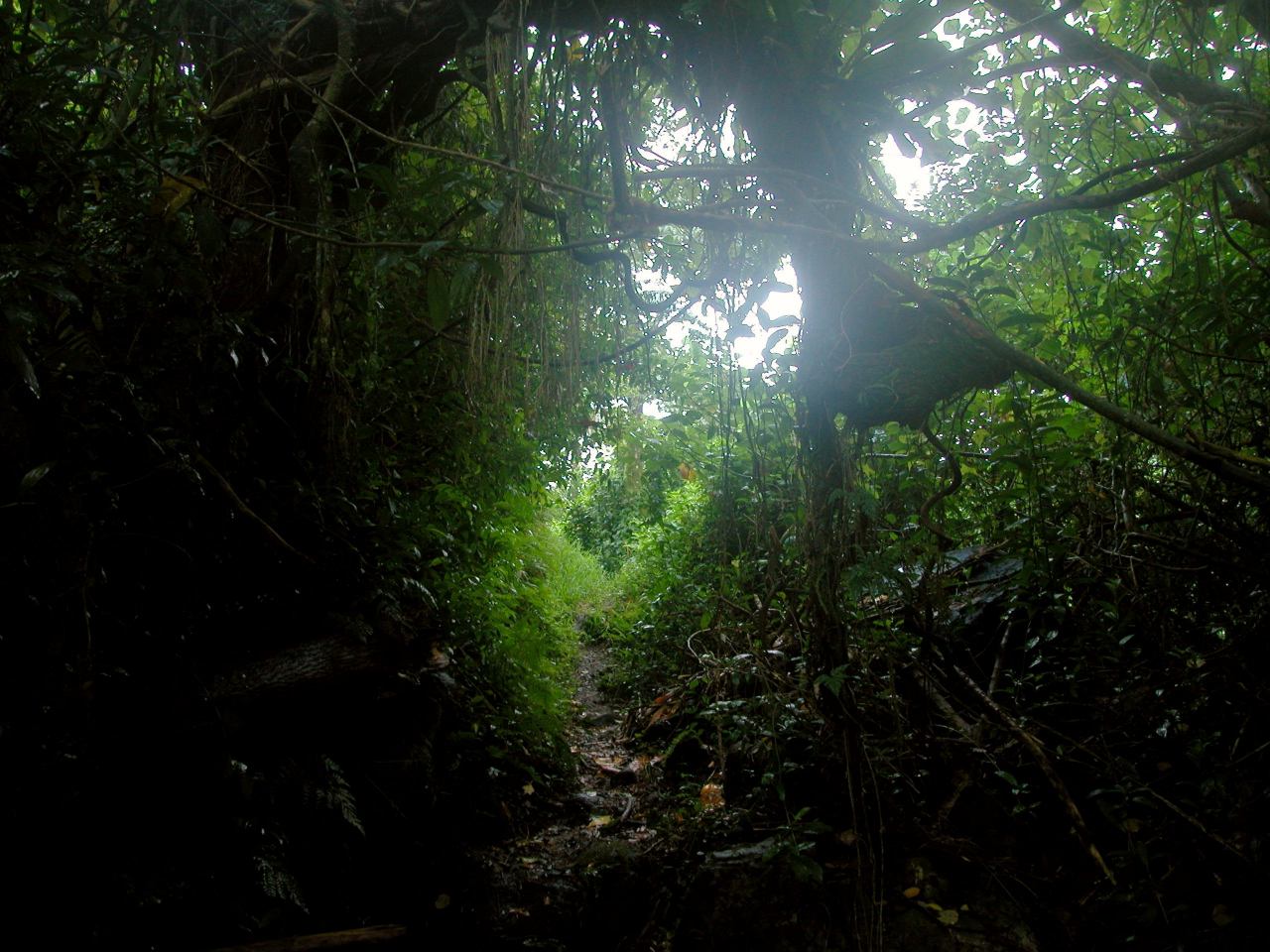
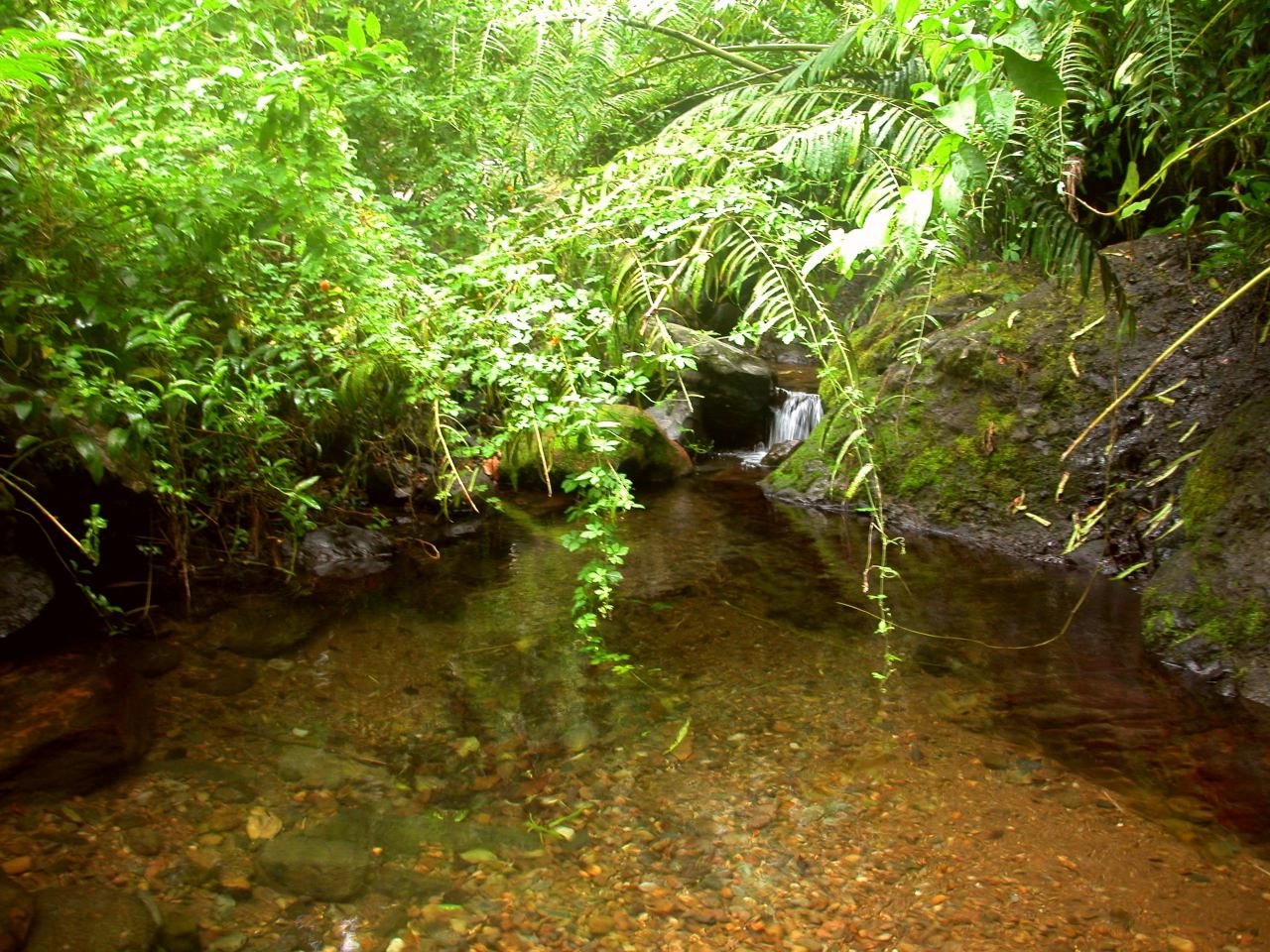
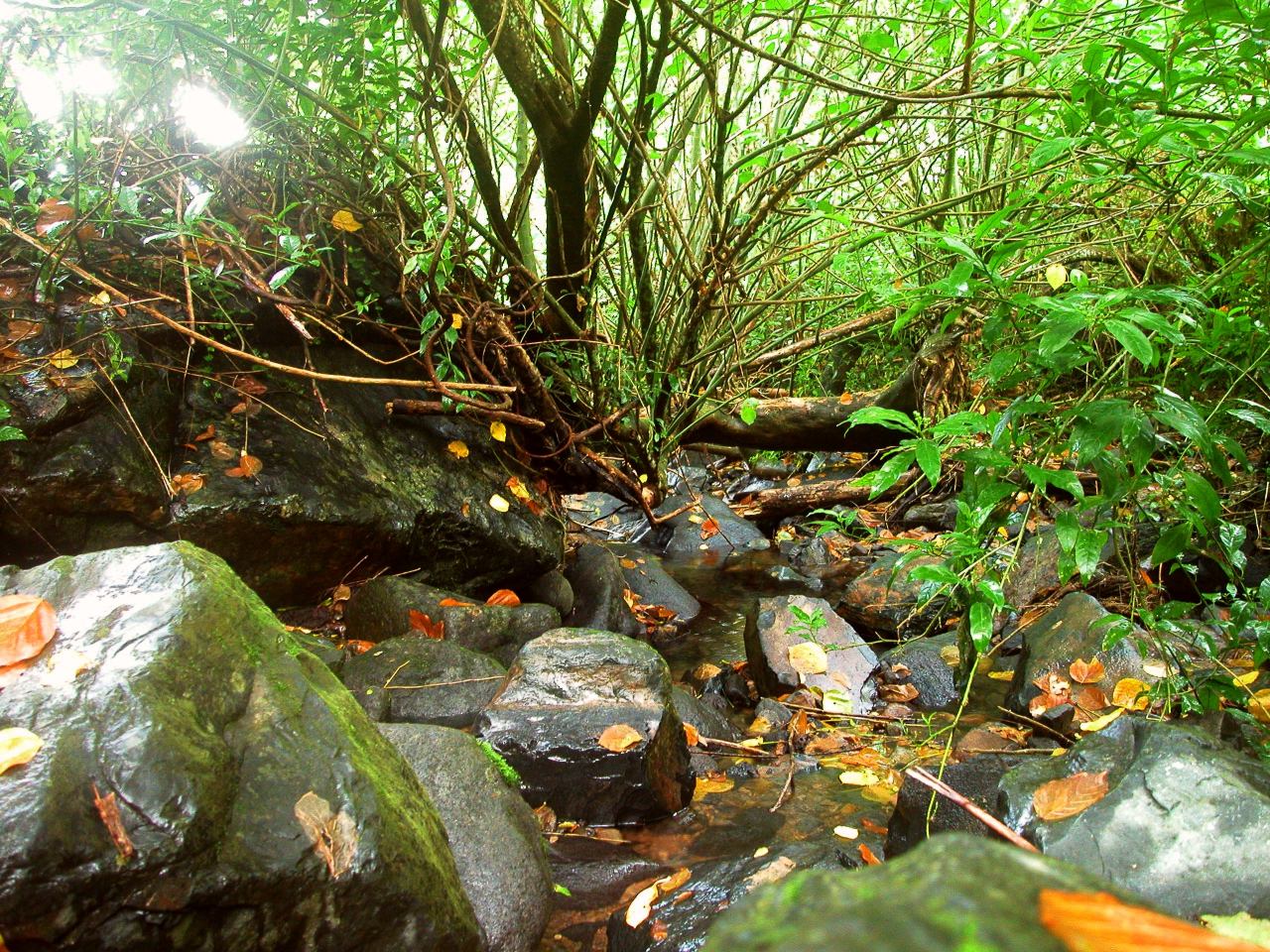
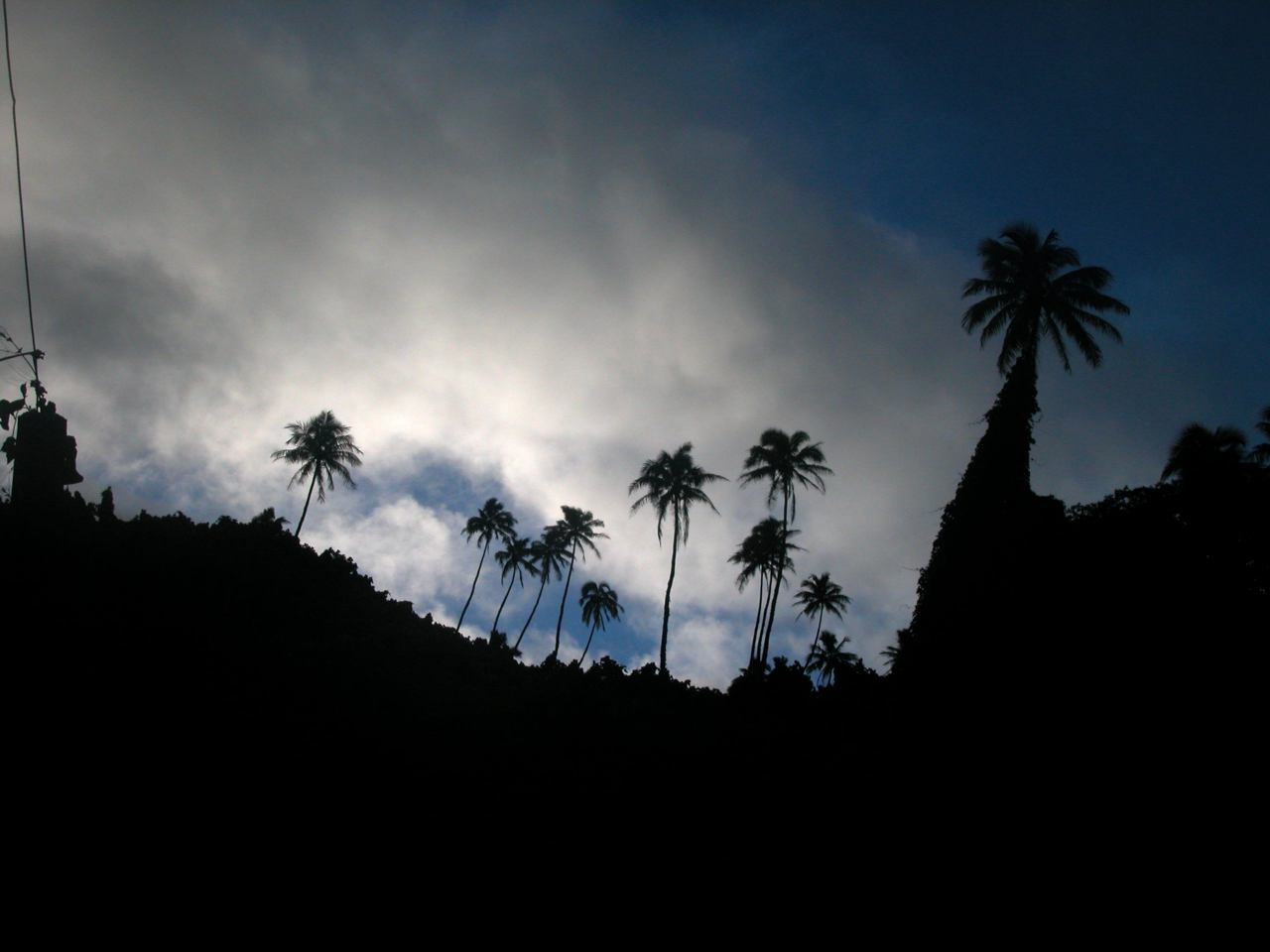
In the evening we rang Russia. It's a good and interesting thing to call from so far away.
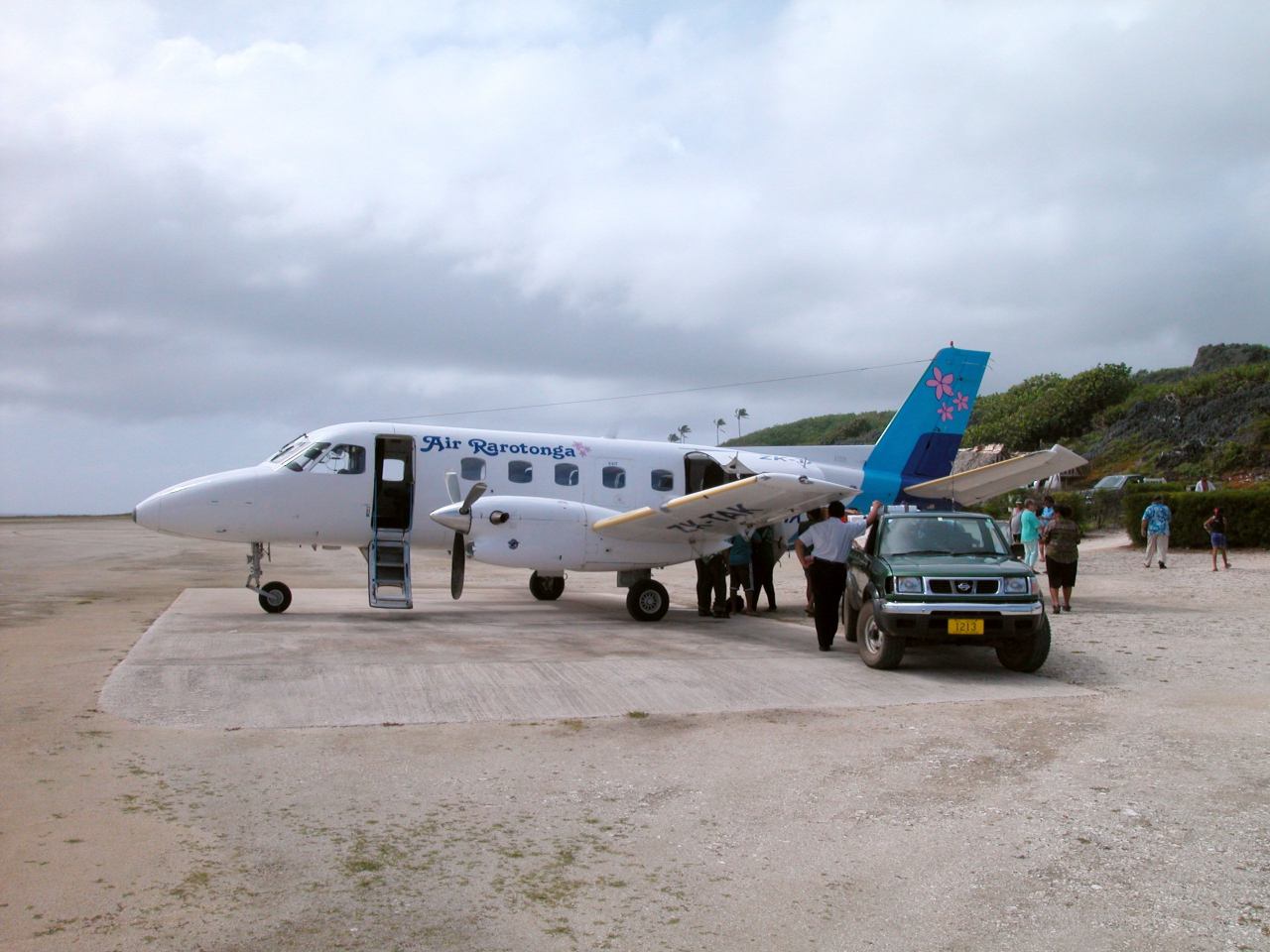
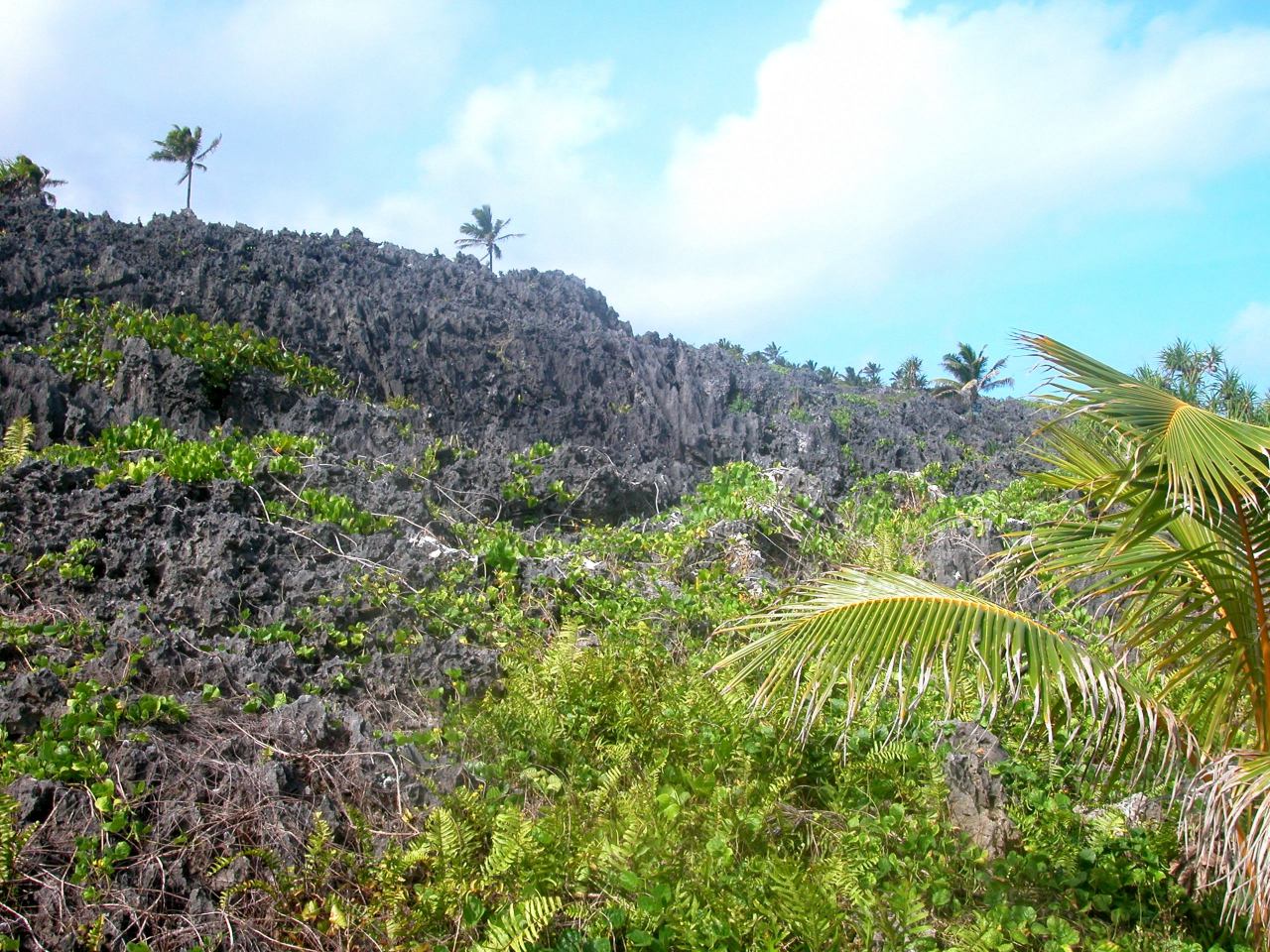
The next morning we flew to Mangaia atoll in a ten-seat Embraer Bandeirante. Its population was just 1,104 and still falling quickly. Only forty years earlier there had been twice as many people. The island has a turbulent geological history. In the nineteenth century, so we were told, an earthquake lifted the island more than ten metres out of the ocean. What people felt when it happened can only be imagined. All we know is that some survived. It must have been astonishing. All the coloured coral ended up on dry land. The islanders' boats were a kilometre from the shore. In the middle of the island, locals show visitors a breakwater that once enclosed the mooring place for their canoes.
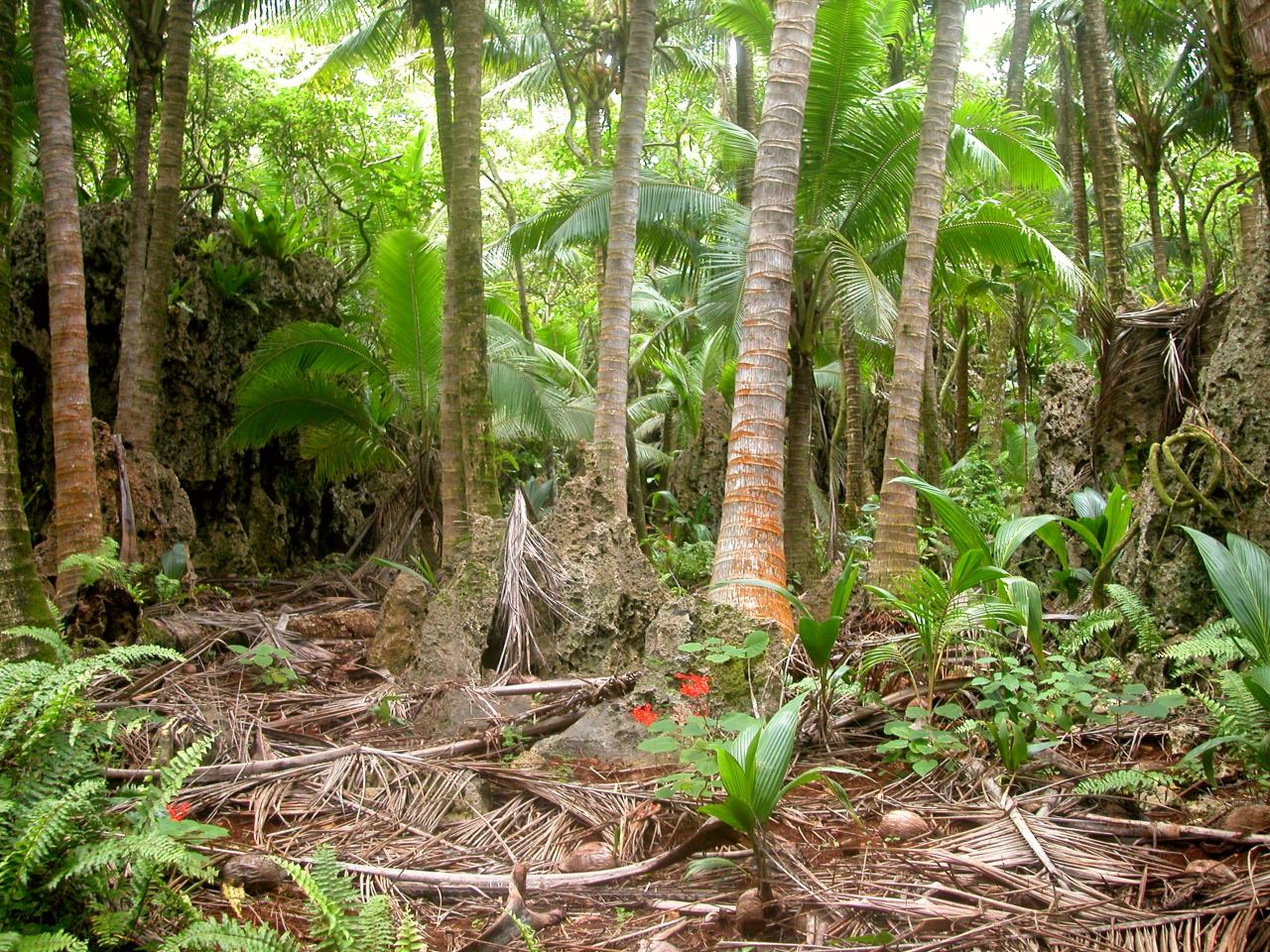
Over the years the coral reef has grown over with coconuts, banyans and all sorts of other things, bananas included. You can still see remnants of coral through the dense growth.
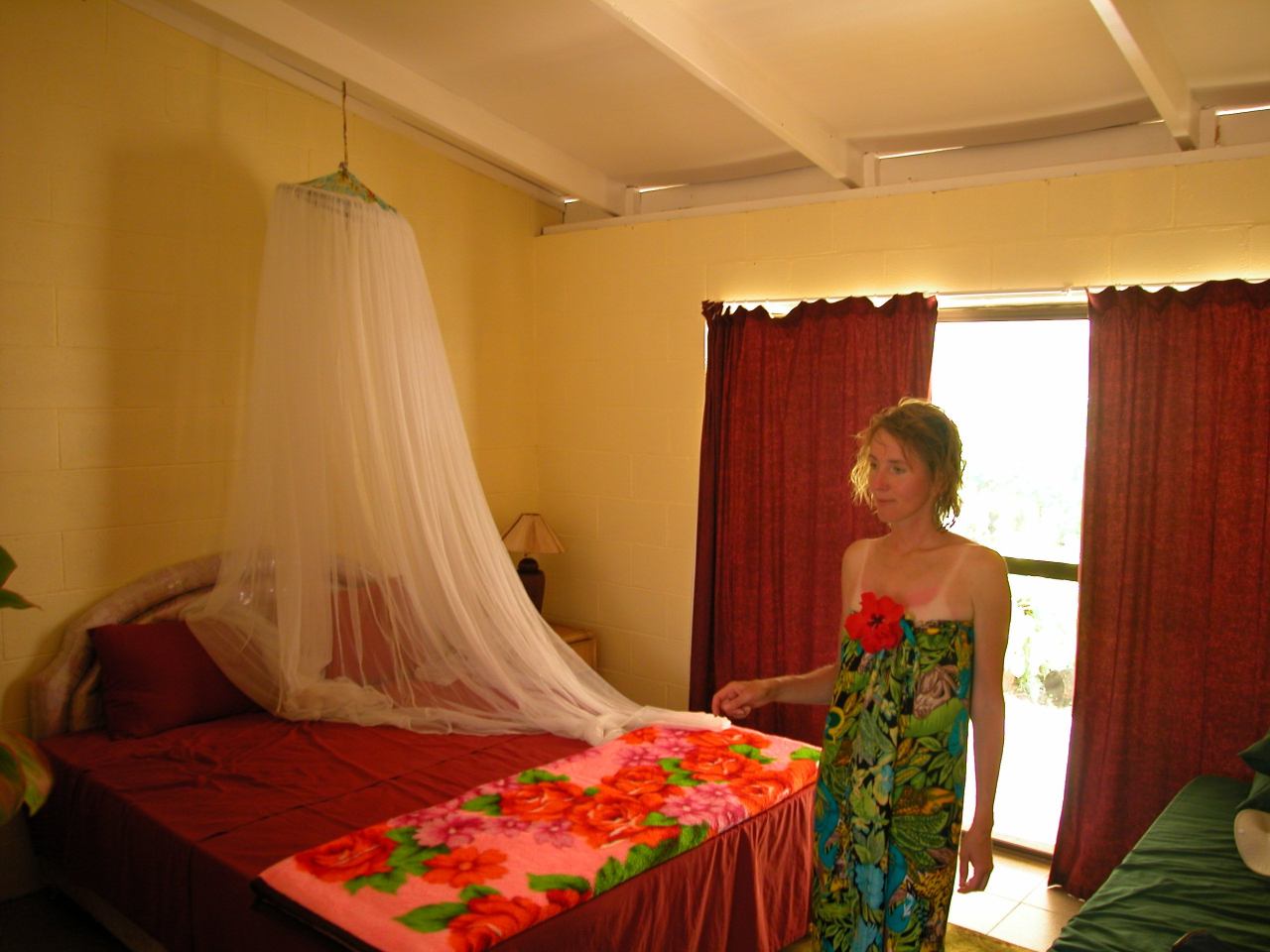
There are only three hotels on the island. It turned out there were six guests between them, counting us. After the long search on Rarotonga, Tanya had called Babe's Place (tel. +682 34092) ahead to see whether they had beds (21°55.702′S, 157°57.515′W). They met us at the airport. Apart from us there was an English couple at the hotel. Very nice people. They were ten years or so older than us and had come to visit the grave of a grandfather who'd had his own shop here. John taught at a university. Barbie was a microbiologist. She introduced herself exactly like that, ‘Barbie, as in the doll.’ A remarkable woman. Imagine coming to a tropical resort, running a bath at the hotel and then guess what she did. She pulled out the plug to see which way the whirlpool turned. Science triumphed. It really did turn anticlockwise.
There are no cafés on the island and the hotels feed their guests. At the appointed time the hostess calls everyone to the table. It's almost a buffet. There isn't a great deal of choice, but there are always endless quantities of local fruit. It brings to mind films about nineteenth-century England, with people sitting around a table making polite conversation. Through the long southern evenings, we talked about all sorts of things: politics, science, young people's manners. However many different people we meet, the English seem closest to us in spirit.
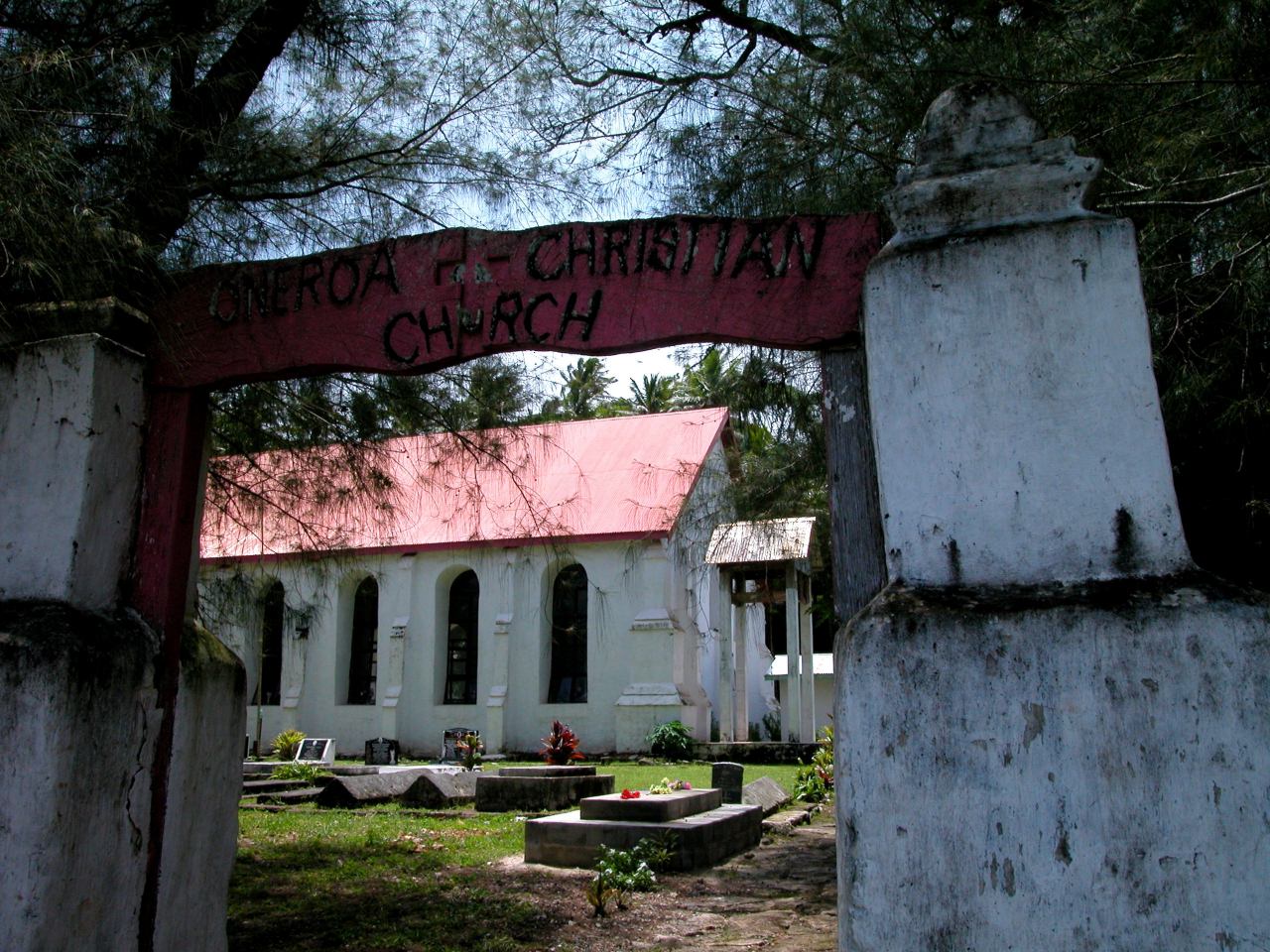
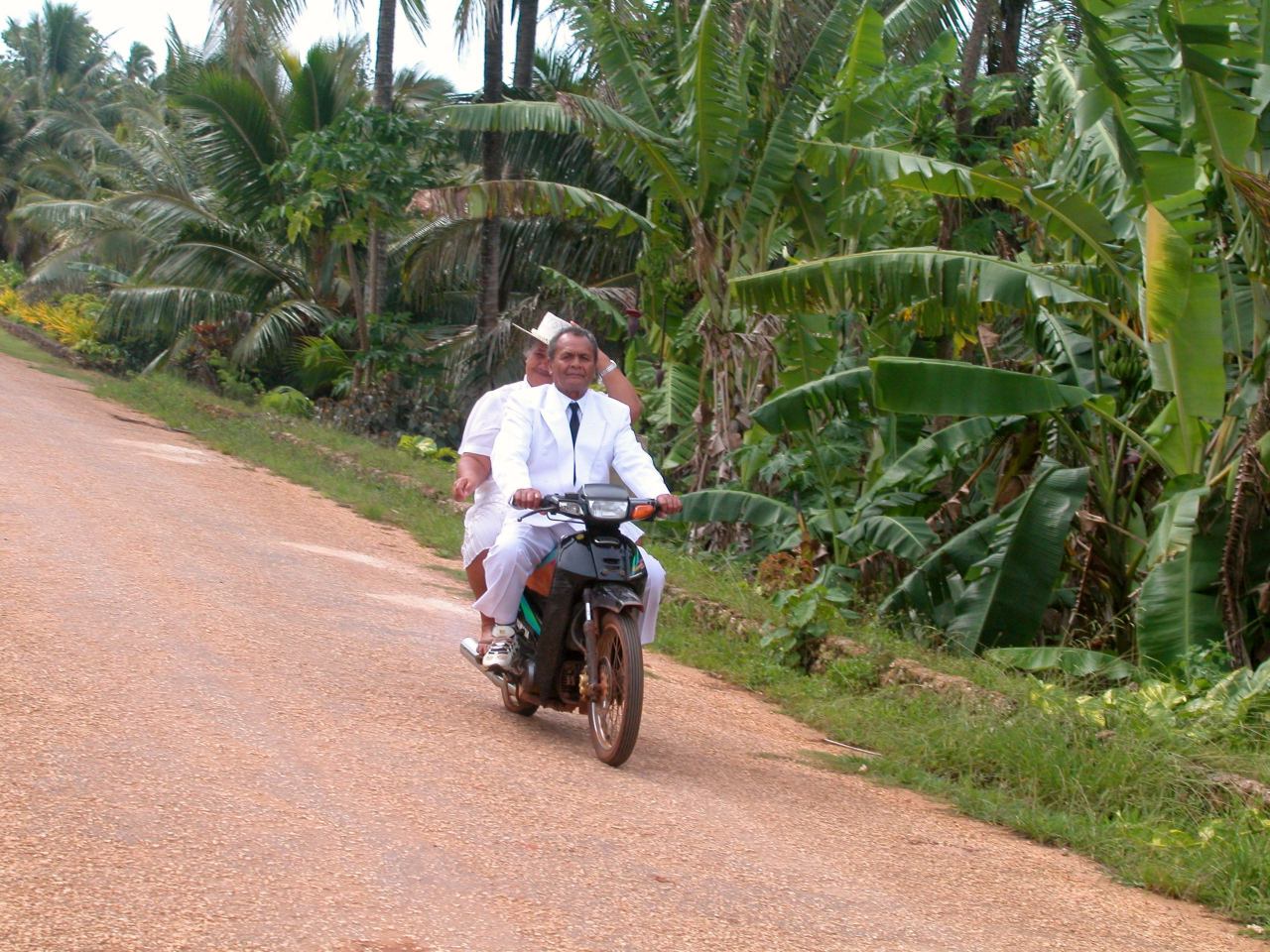
The island has three villages. We were in the largest, Kaumata. In the centre there's a little shop with the bare essentials, a perpetually empty market and a church where the entire population goes on Sundays in white suits and beach sandals. The Cook Islanders aren't as religious as their Tongan neighbours, but Sunday is holy here too and people don't work. The cemeteries are a little like Tonga's, though far more modest. At funerals everybody must be cheerful or the deceased will take offence. People are buried near home, and the graves are brightly decorated.
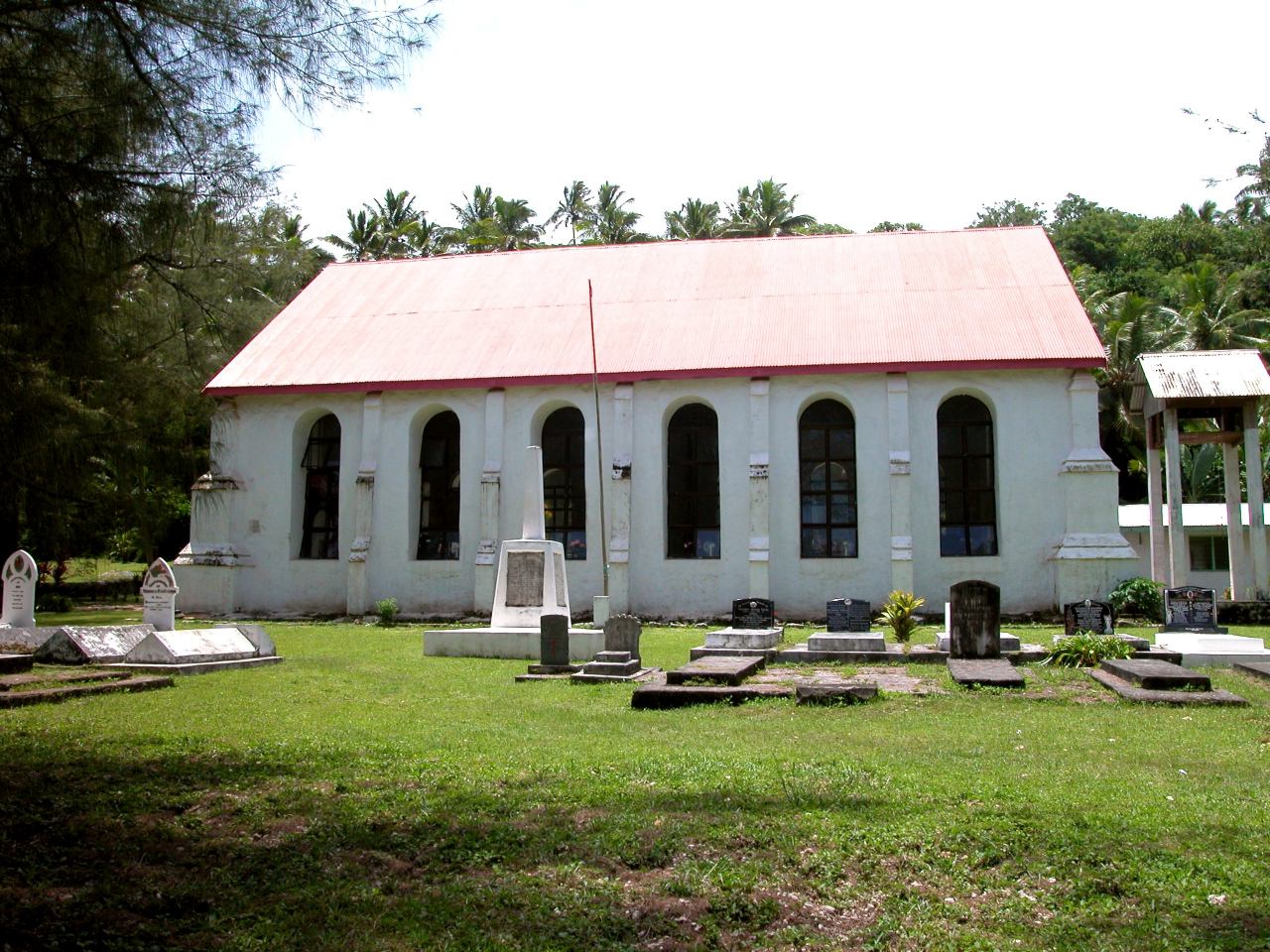
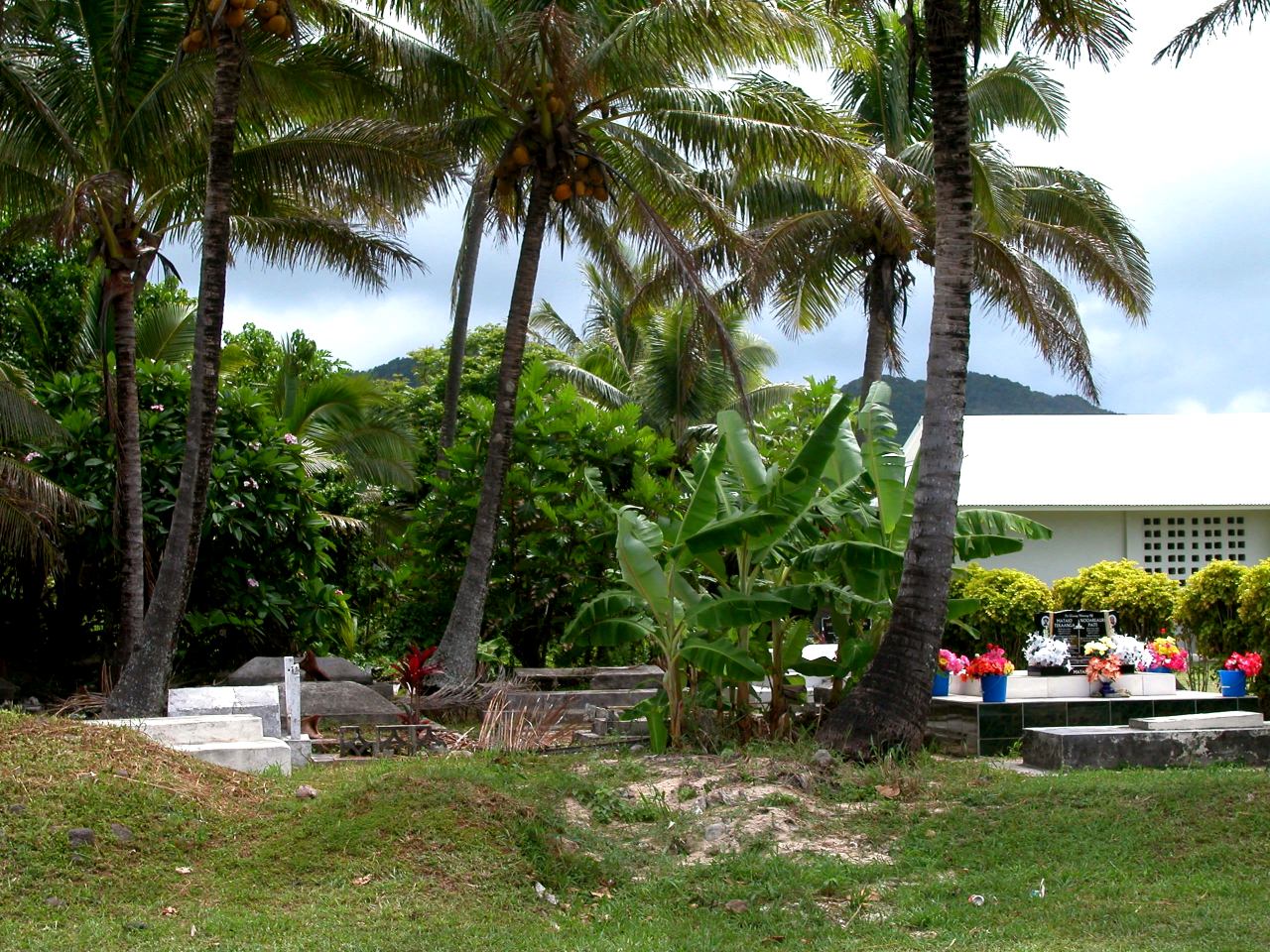
Beside the church is a memorial to the dead of the world wars. Scores in each one. The islands were part of New Zealand, which, despite its otherworldly position, managed to fight hard and, in proportion to its population, I understood, to lose more people than Germany. It's terrible to imagine those cheerful, free islanders rounded up and sent off to defend foreign lands, almost certain to die in snowy European trenches. How wretched they must have been there.
There are plenty of caves on Mangaia. As late as 1968 the last real cave-dweller lived in one, and a hundred years ago that sort of life was normal. Formally anybody can visit them, though in practice the islanders have privatised them. The only way to the entrance is a narrow trail through the jungle, and it starts on private property. What's more, the cave has many passages and exits, and many tunnels are impassable. So it's almost impossible to visit on your own. I tried to mark the route on my GPS, but that wonder of technology doesn't work in thick tropical forest.
In the end we had to hire a local guide. The cave was on the other side of the island and he came to pick us up on a motorbike. There was only one motorbike, so first his daughter came for Tanya, and then the man himself came for me. He arrived with the news that the space shuttle Columbia had been lost trying to land. It upset me and I forgot my camera, which was a shame because the cave was beautiful. Great numbers of stalactites and stalagmites, though the highlight was the human bones. They were the bones of the recent ancestors of today's islanders. Our guide's great-grandfather had hidden from enemies in this cave. Knowing the caves made the people here invulnerable. Now and then they caught and ate an enemy, but most of the time they had to make do with their own people. We were told a heartrending story about a wise chief who organised the eating so that his warriors stayed healthy and strong. The enemy thought they'd already starved and went in to scout, only never to come out again. The tribe lived that way for an entire year. Then the enemy caught the chief's beautiful daughter bathing outside the cave, bound her in dry palm leaves and threatened to set them alight if the chief didn't give in. The chief refused, and the daughter was burnt. The enemy didn't get what he'd hoped for. In the evening the chief came out, collected his roasted daughter and fed her to the tribe. They'd been short of firewood, too. The chief was wise and saved his people. They had to surrender in the end anyway. It turned out everybody who did surrender had lived, but the chief was wise all the same. I suspect the famous enemy was Christian missionaries. Officially the islanders are now Christians of various denominations, but their old religion, with seventy-one gods in twelve heavens, is alive as well.
What amazed me was how much the island had changed in four generations. People are educated now. They speak English, send their children to study in Europe, and are courteous and well-mannered. For me the Cook Islands showed how colonisation can bring peace and prosperity to Indigenous people, whatever the anti-globalisation slogans say.
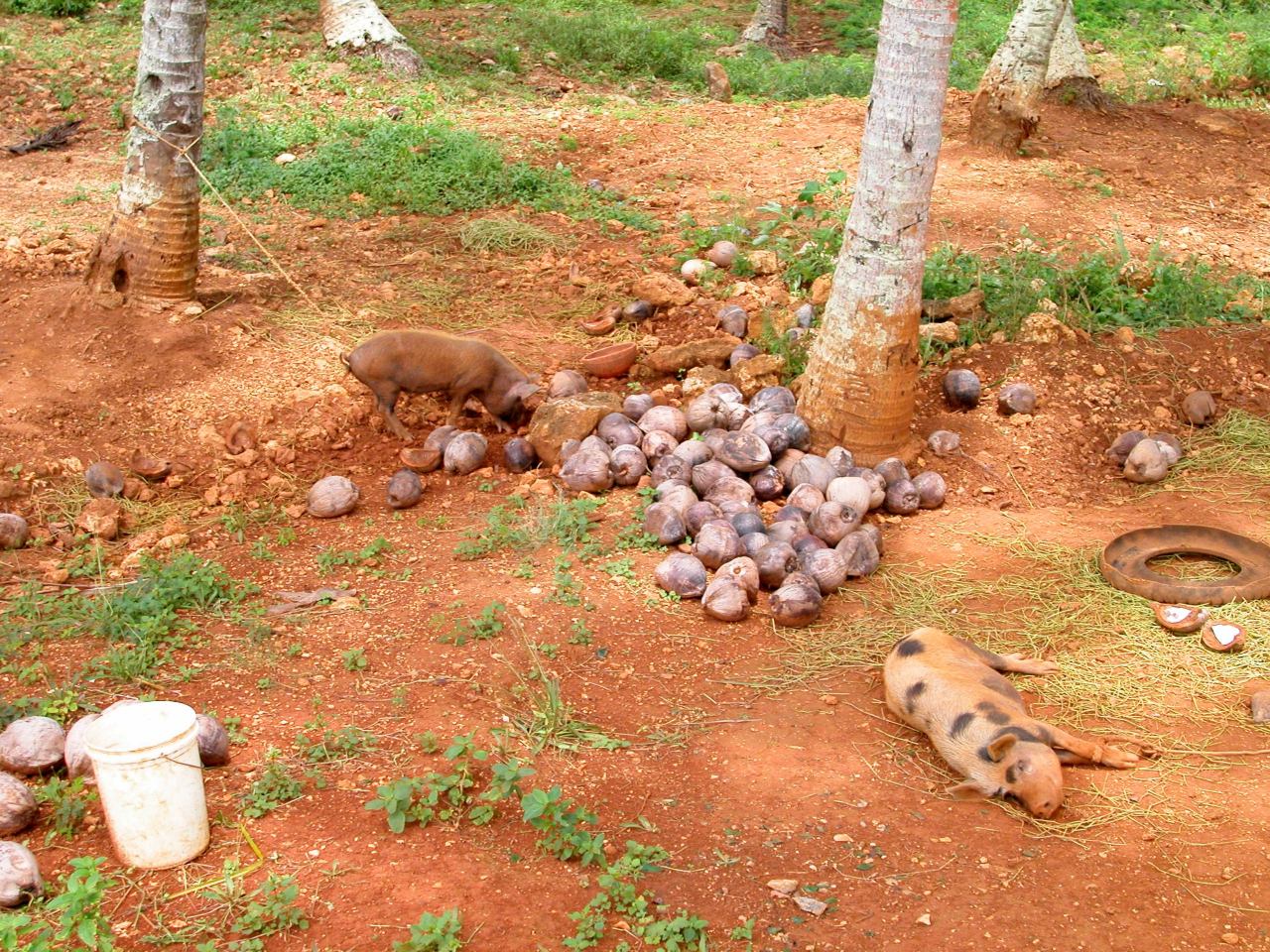
Our guide works most of the time in the port of Bluff, at the very south of New Zealand. His eldest daughter studies abroad. The next one also dreams of leaving to see the world. She says she wants to see some animals other than pigs, of which there are indeed plenty here. The custom is to tether a piglet under a coconut palm. Falling nuts gave it enough to eat. Sometimes a nut hits it on the head, though, and then you get a little skeleton by the palm with the rope still round its neck.
The man has eight children altogether. Apart from the work in New Zealand he breeds horses and looks after the cave. He even has a stalagmite in there with coins from different countries laid out on it. Not a great collection, not even a euro, let alone a Russian rouble. I always carry small change for just such circumstances, so it came in handy. I set out a few coins. They say no Russians had ever been on the island. A few decades earlier a mysterious ship appeared, wanting to take on fresh water. All they knew was that it was from Russia and called itself a ‘science ship’. The locals never did understand what a science ship was. It couldn't tie up and nobody could work out how to get water to it. While they were negotiating, the ship sailed away somewhere. Nobody came ashore. It was the only contact with Russia they'd had. Otherwise they wouldn't have known of it at all. And yet the name of the country, the Cook Islands, was given to it by Krusenstern. The islands were discovered long before either Cook or Krusenstern, but the name stuck, as did the name of Suwarrow atoll.
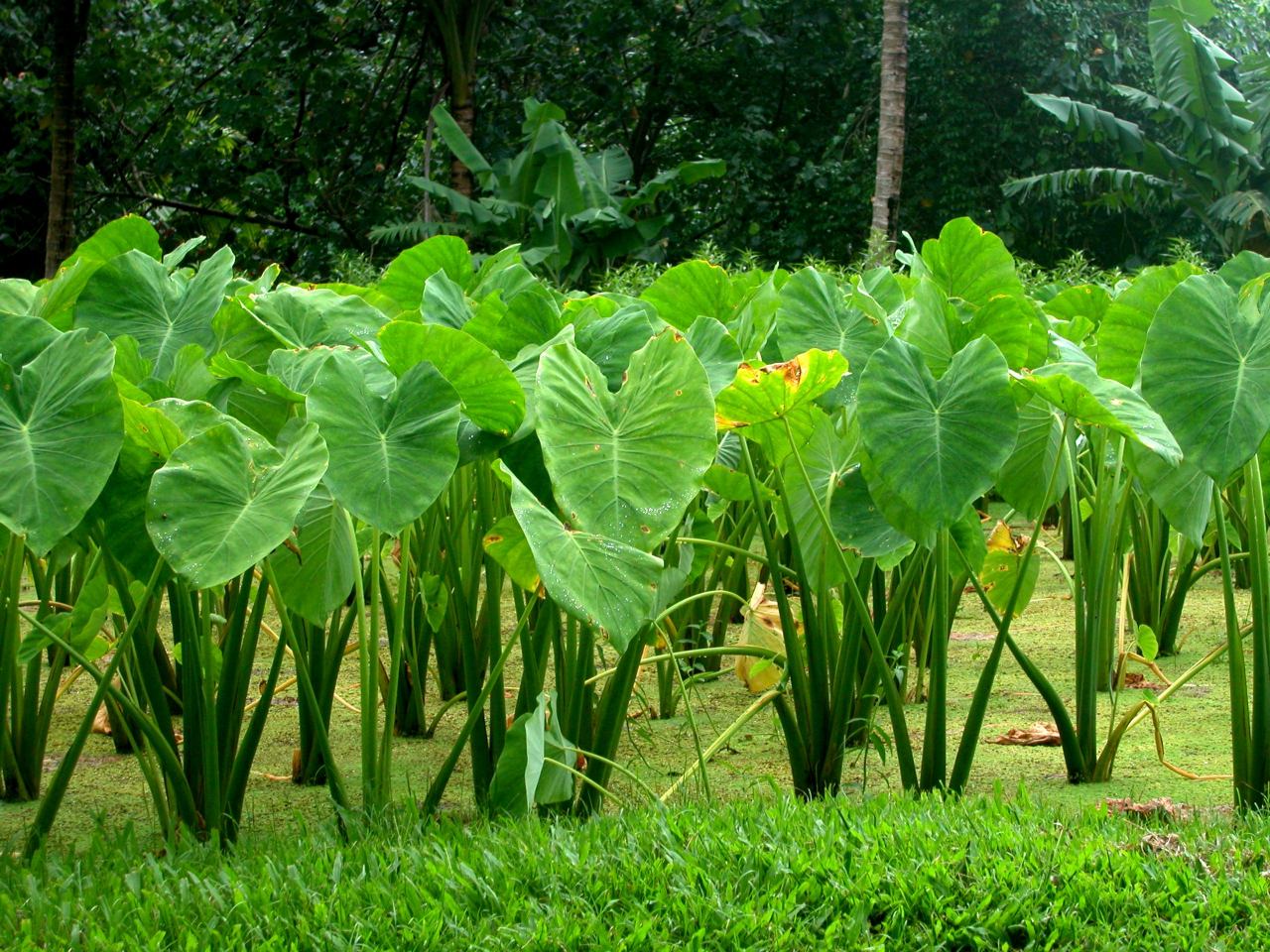
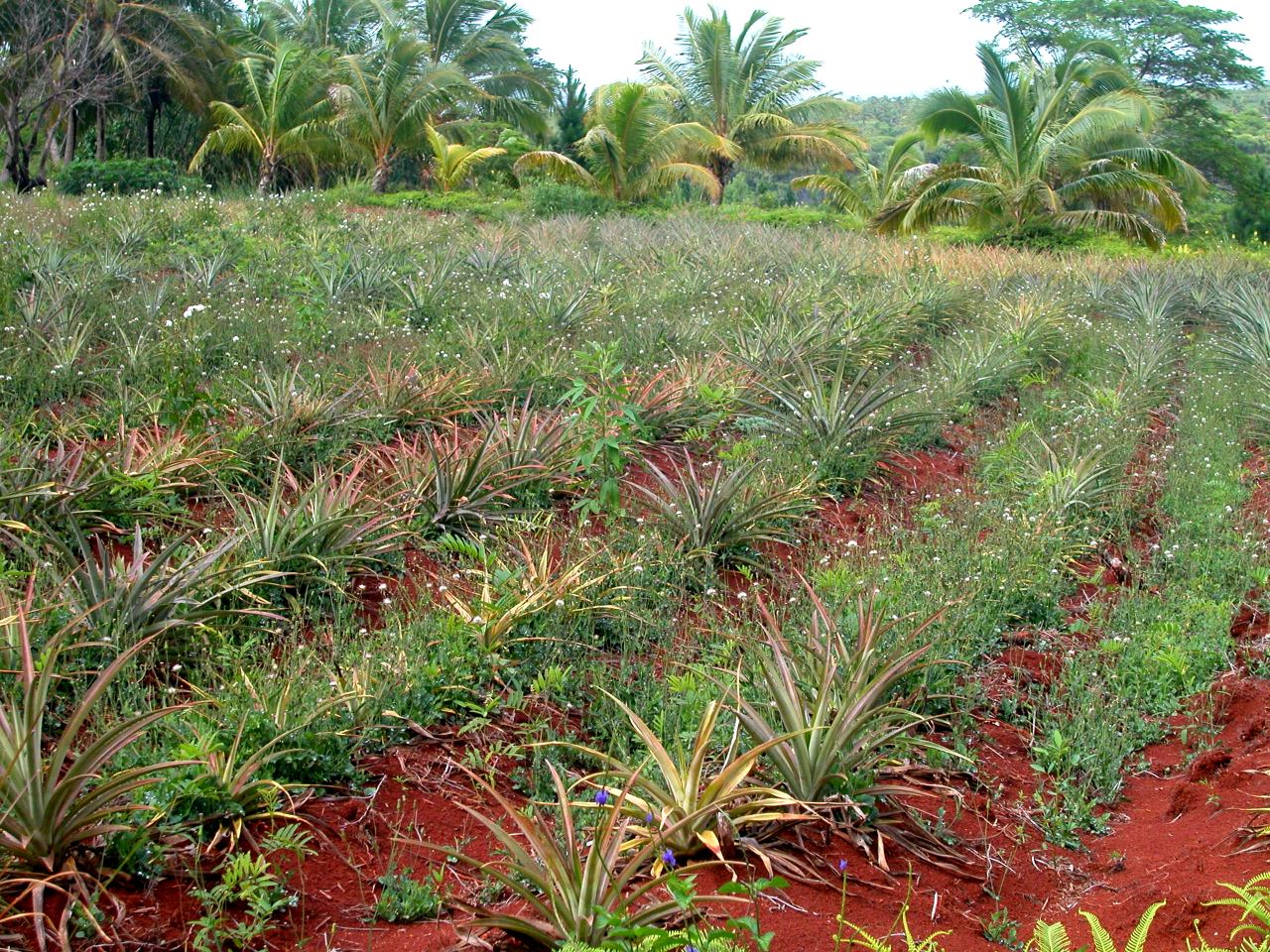
Back from the cave, we did some more walking on the local tracks. The road network on the island is surprisingly extensive. The roads are all unimproved dirt roads, though you can get through in a four-wheel drive. The interior is intensively farmed. There are patches of taro everywhere, the local answer to the potato. It's a water-loving plant. It's meant to grow in a flooded patch. The leaves look like nasturtium leaves, only bigger. You eat the thick root, which tastes like sweet potato. They also grow pineapples and melons.
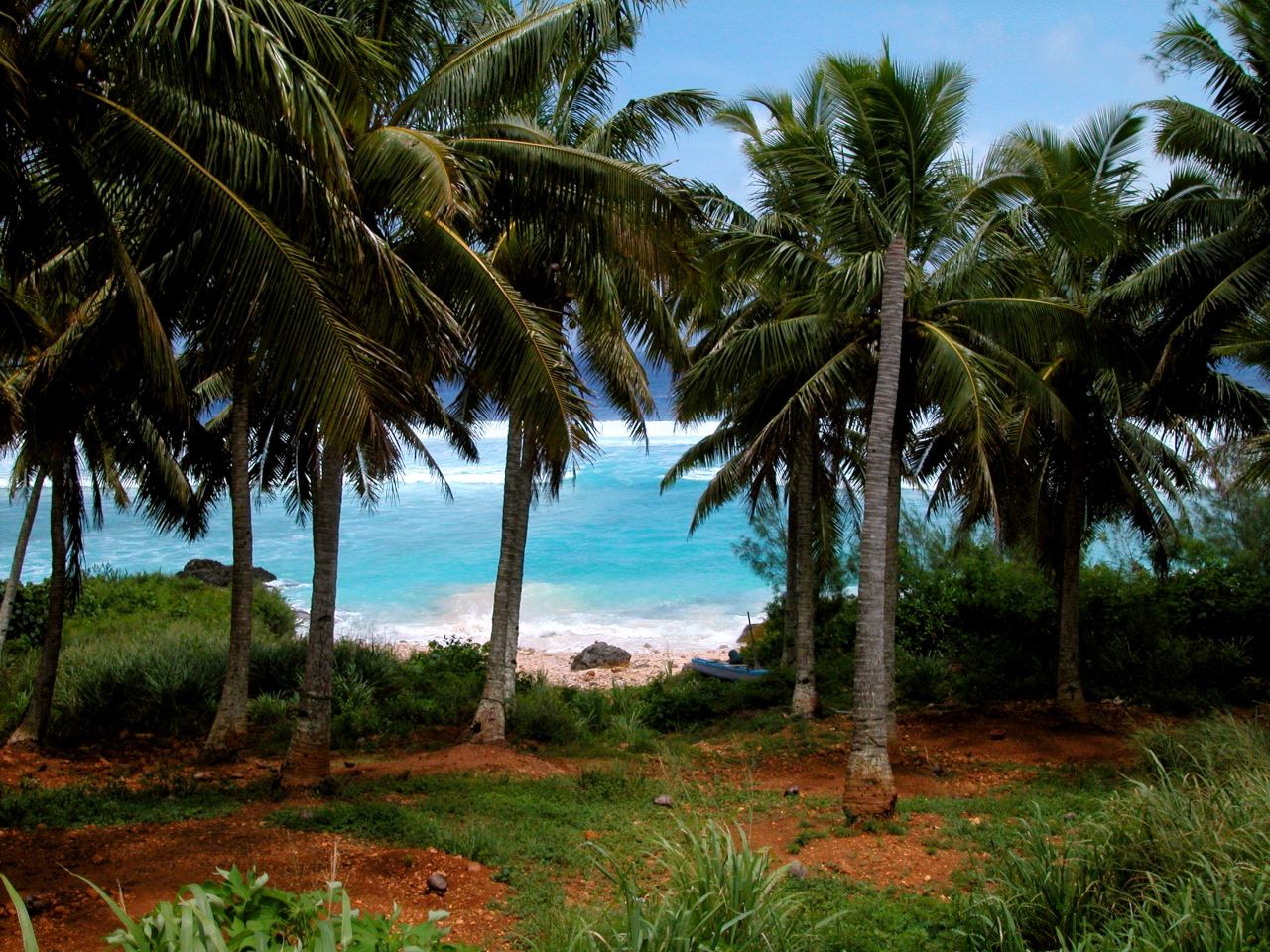
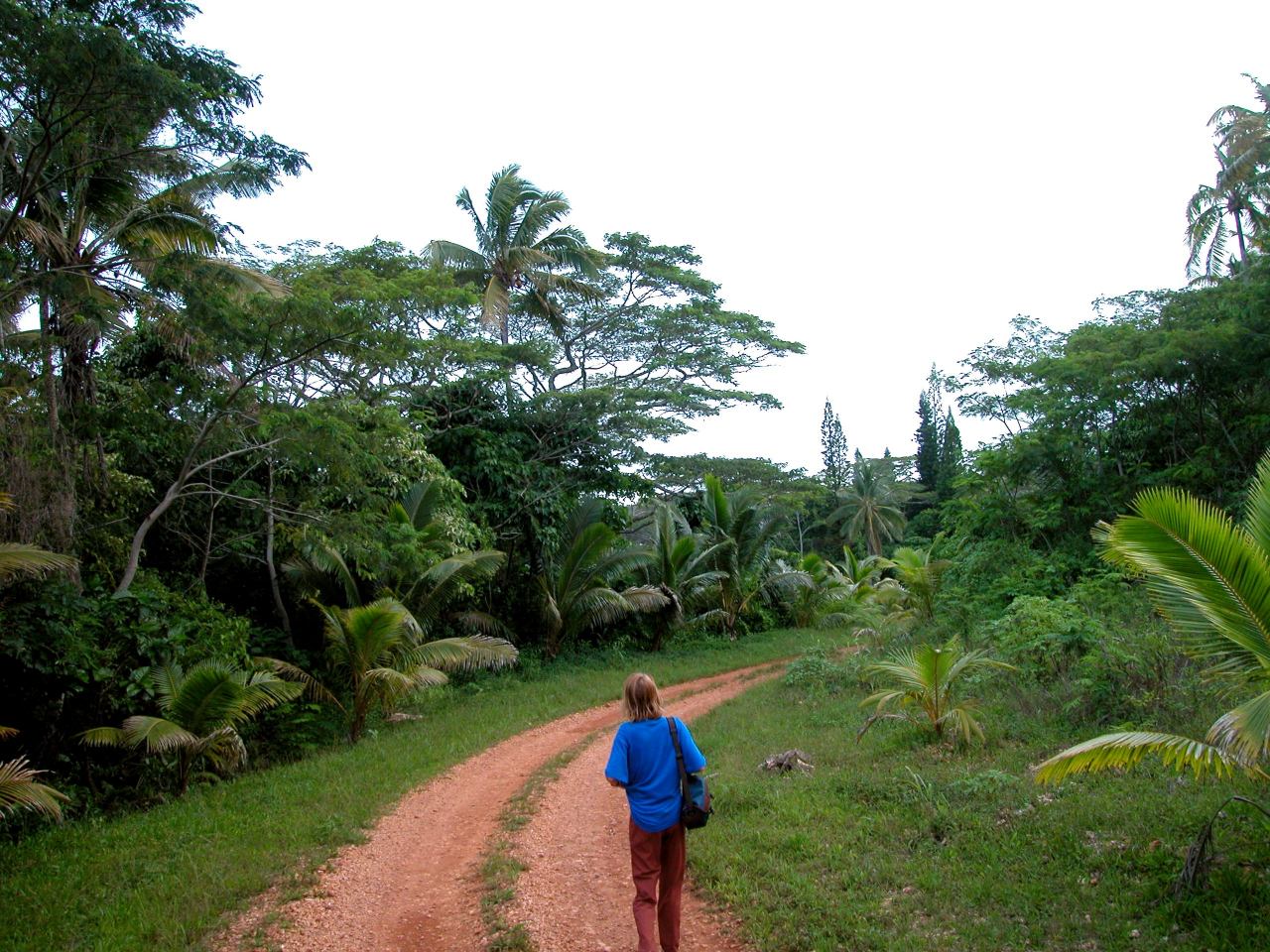
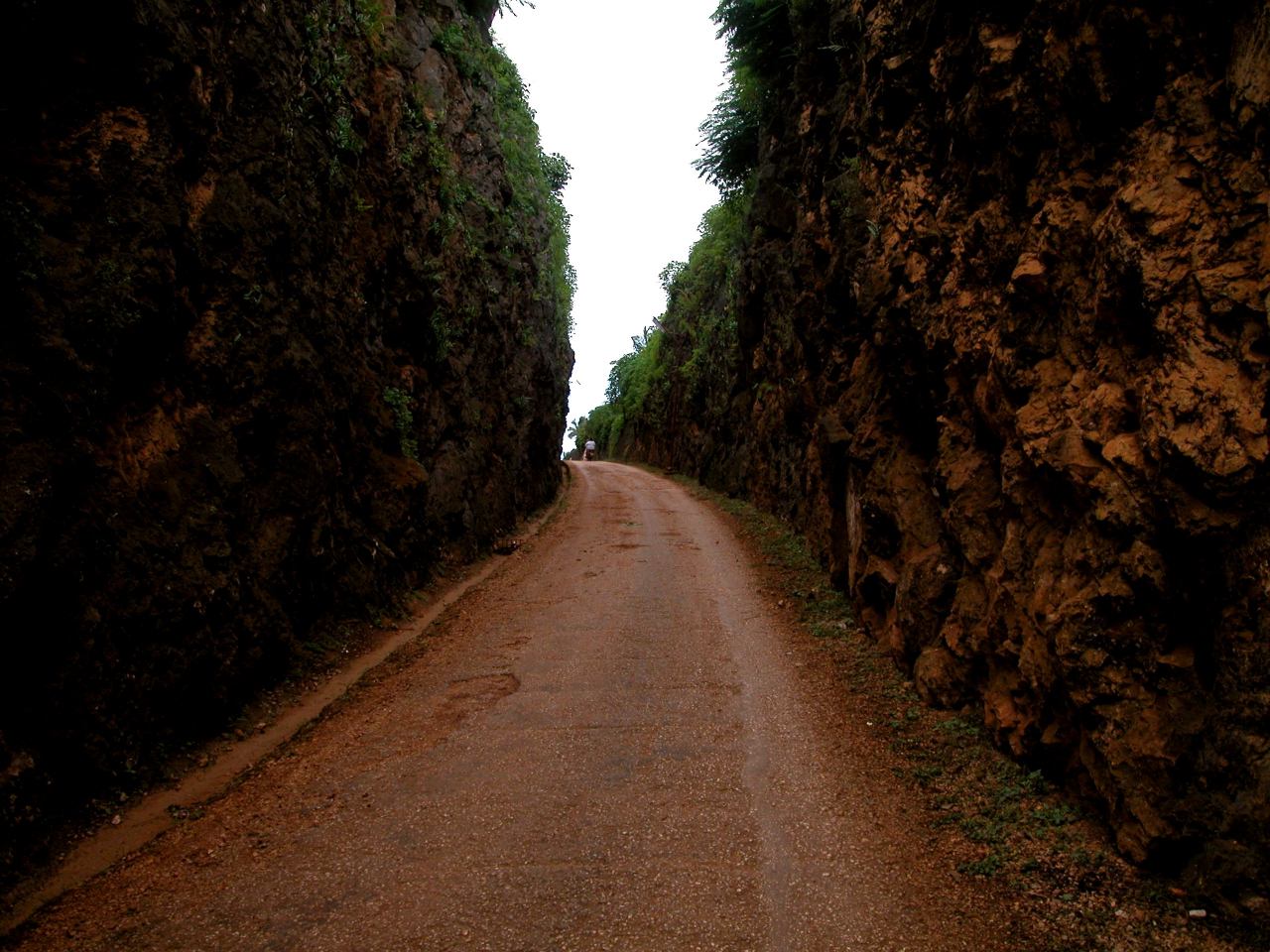
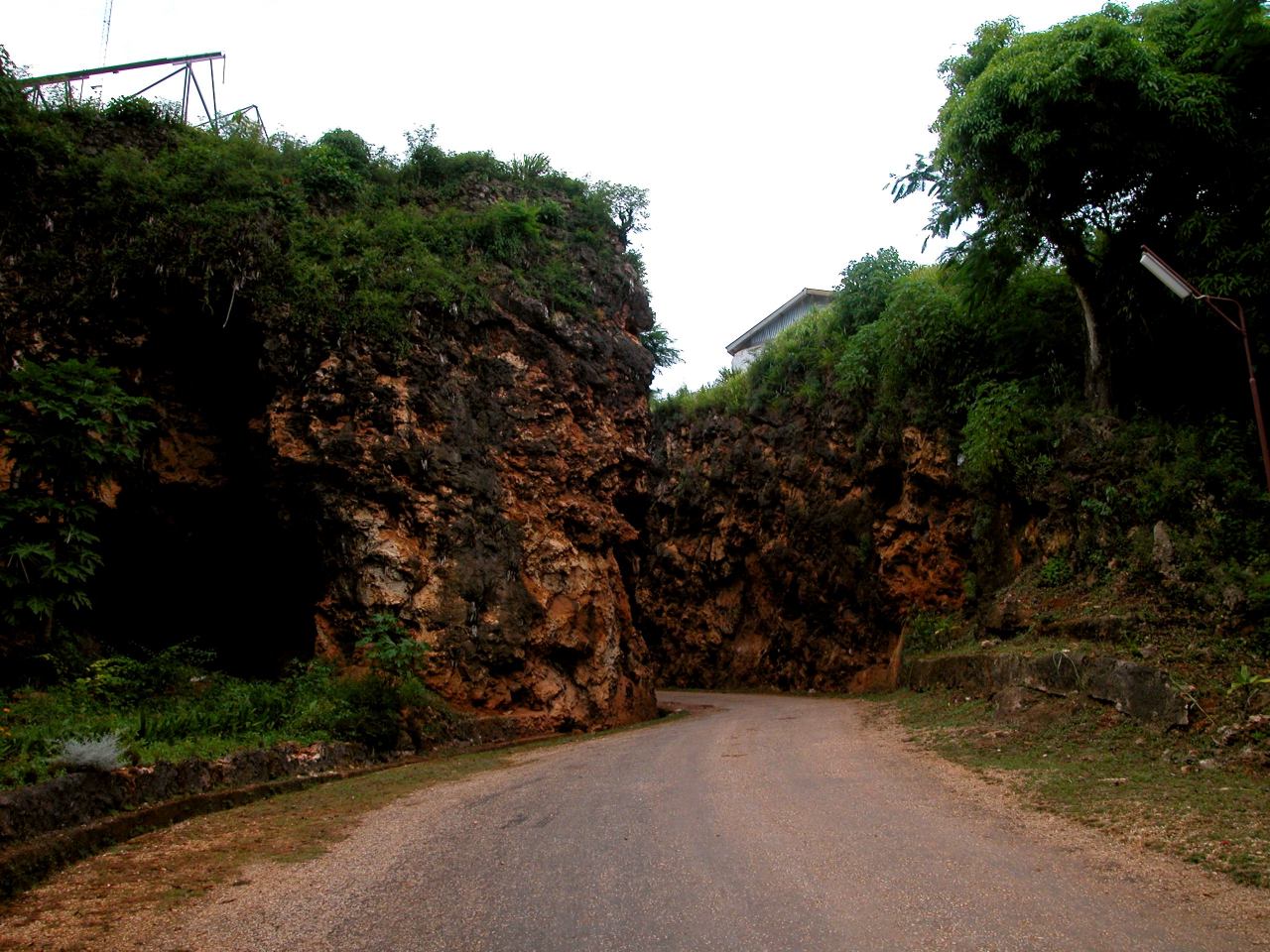
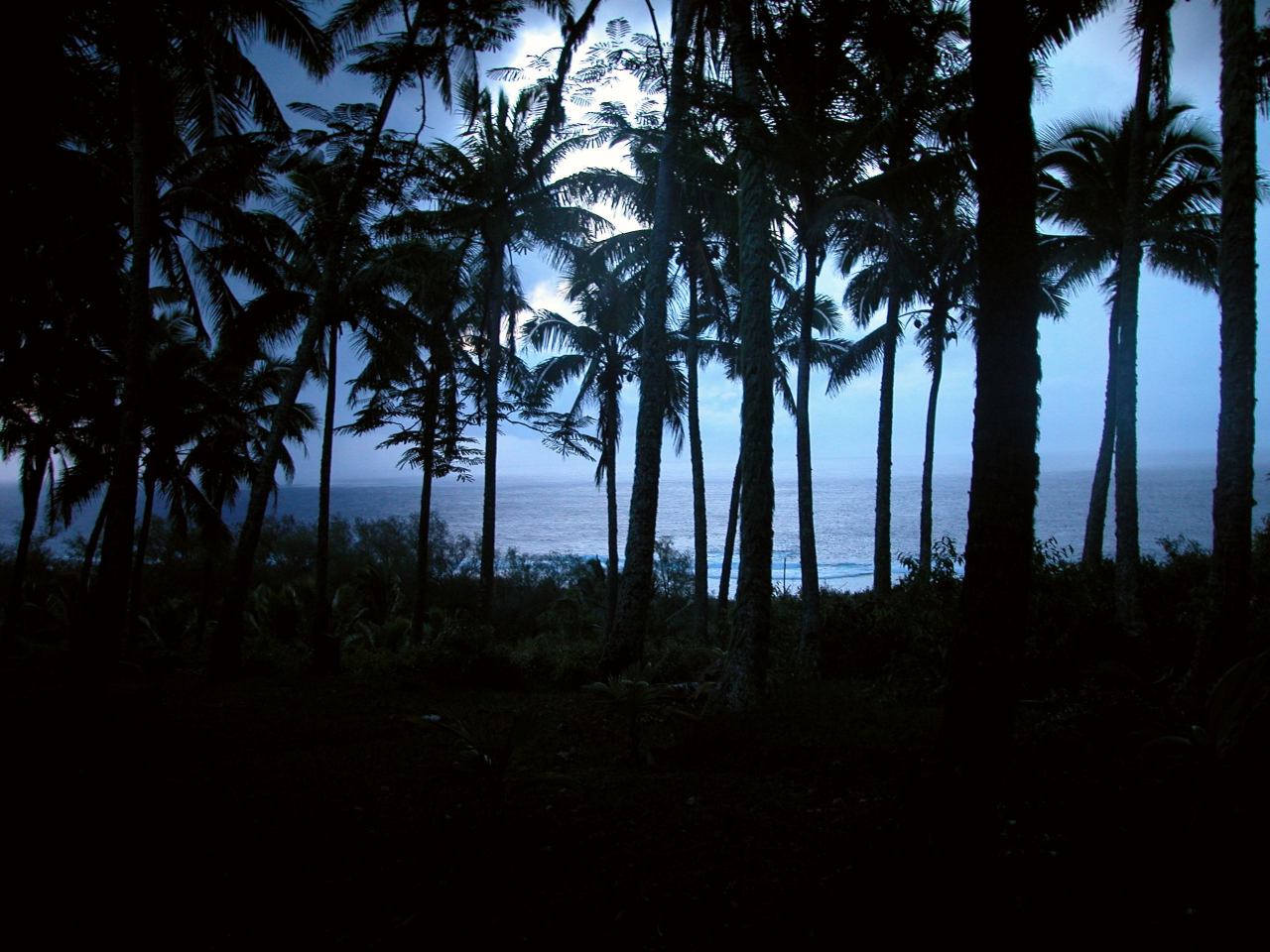
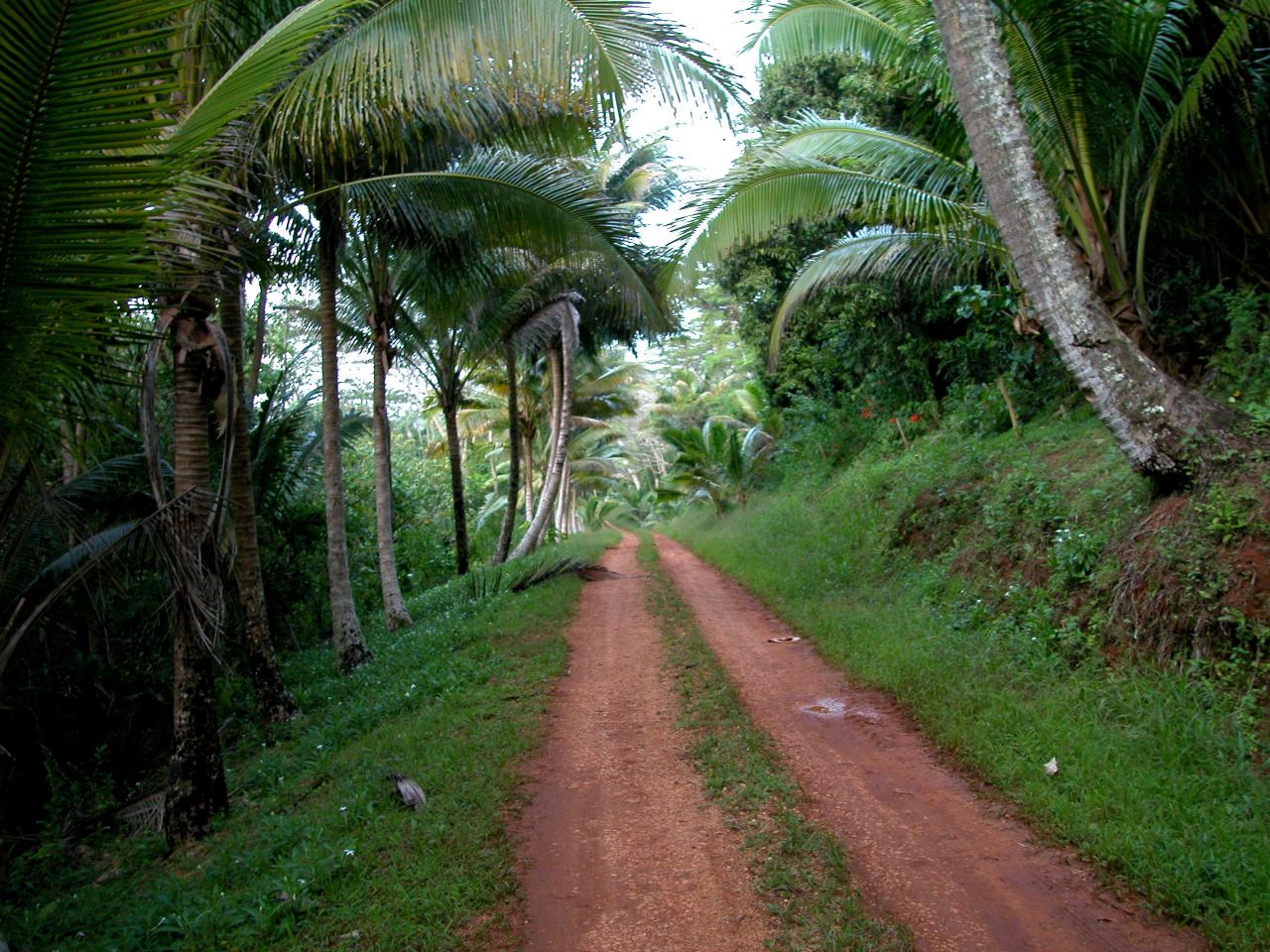
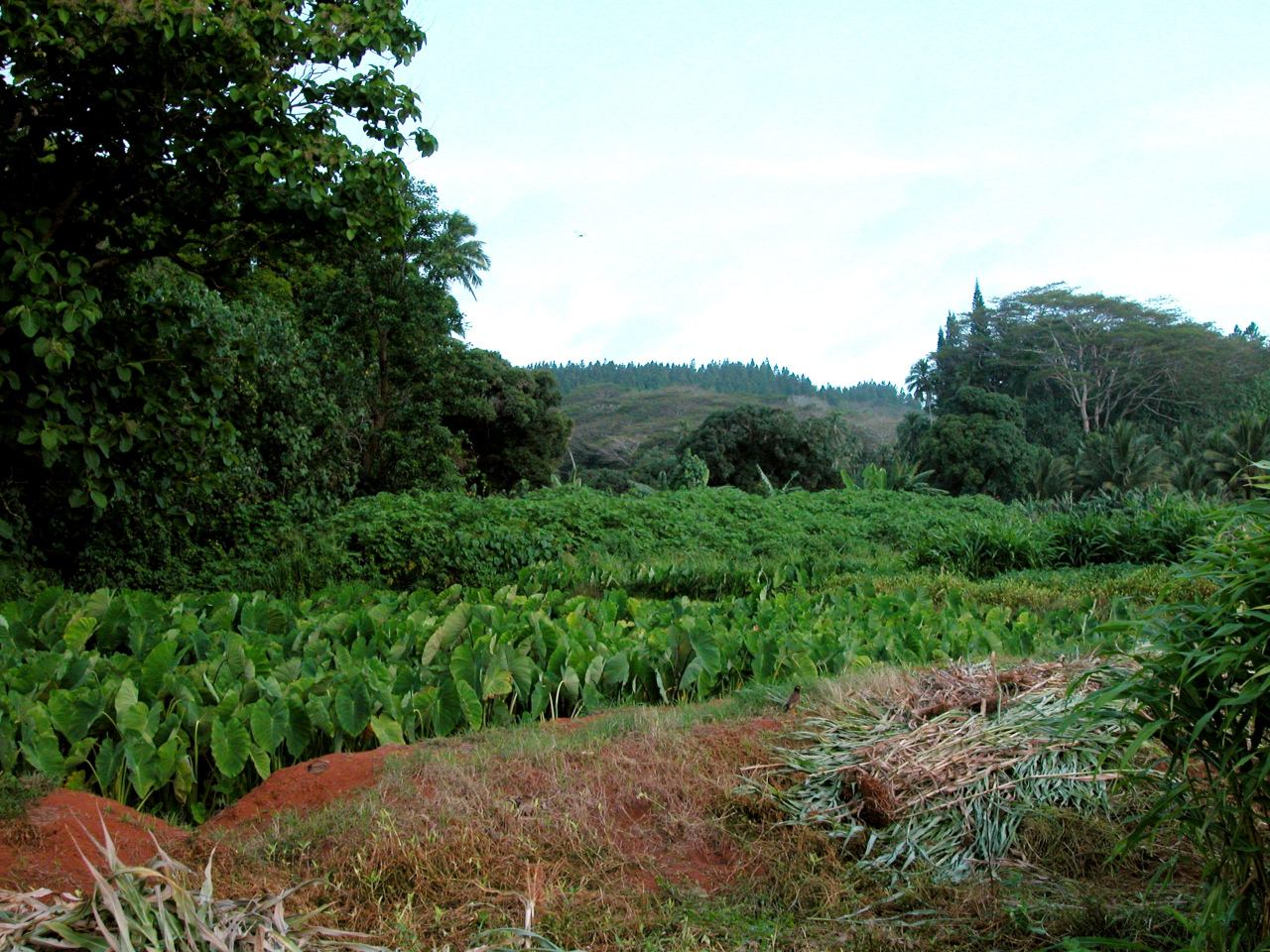
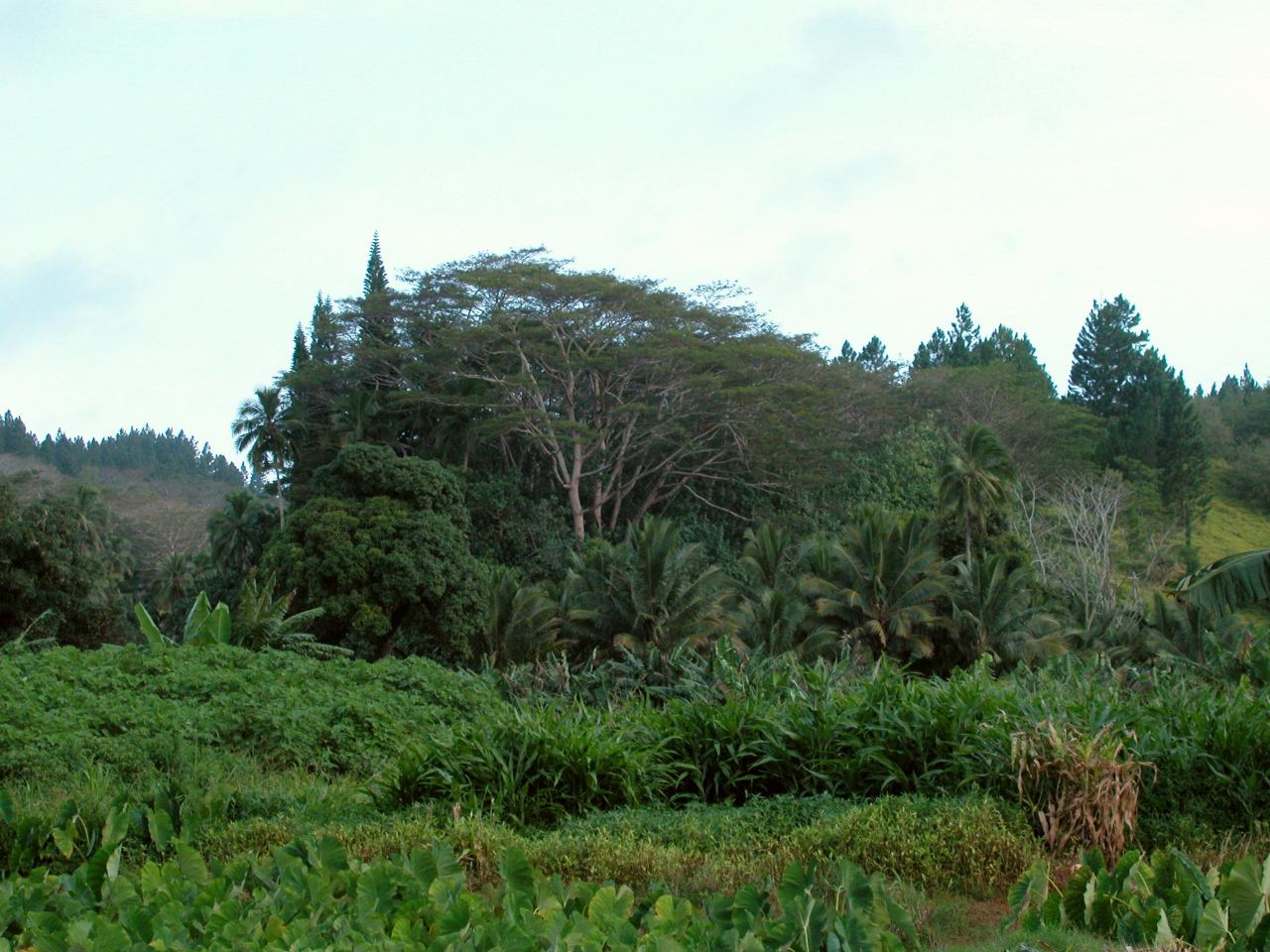
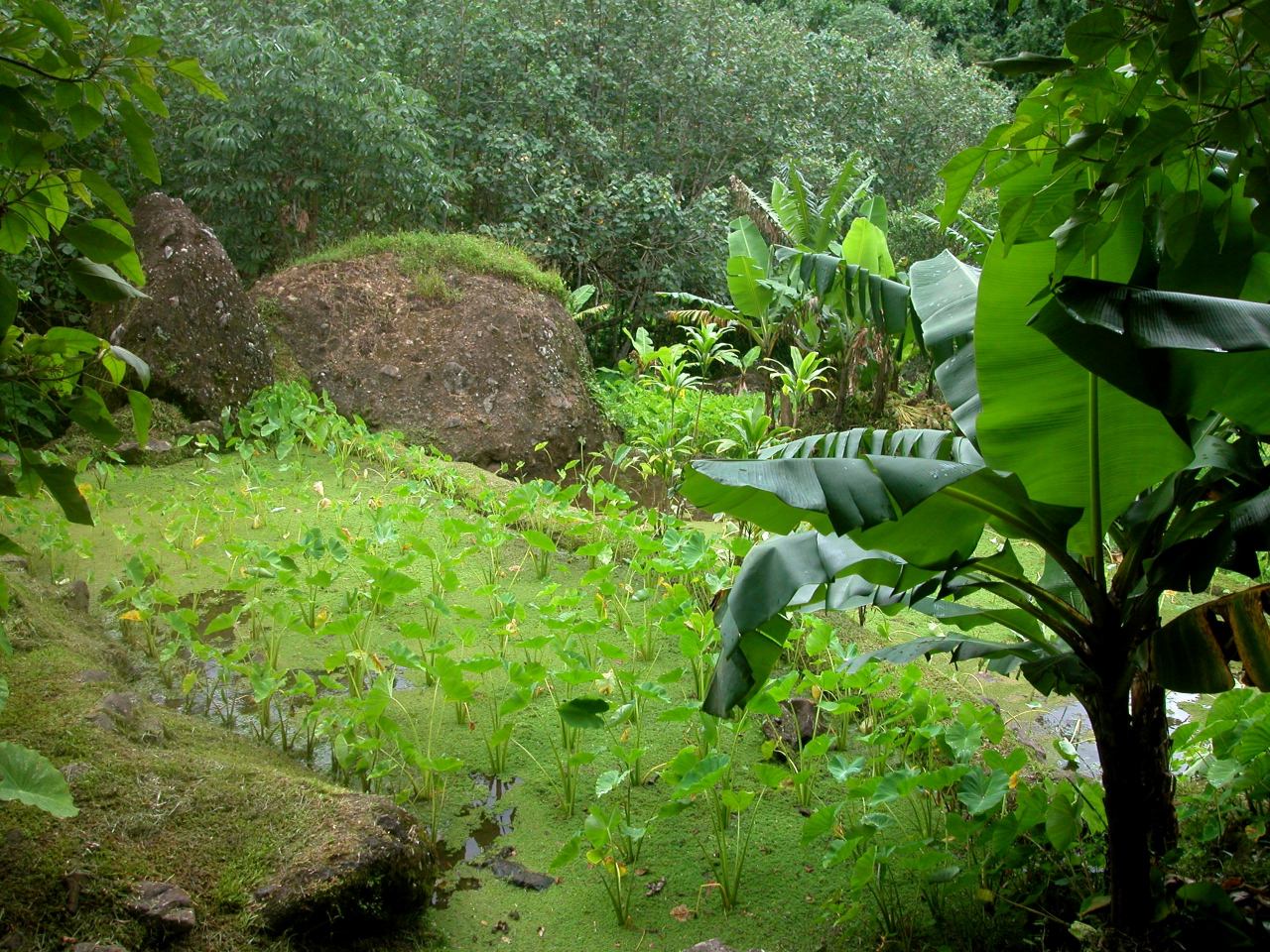
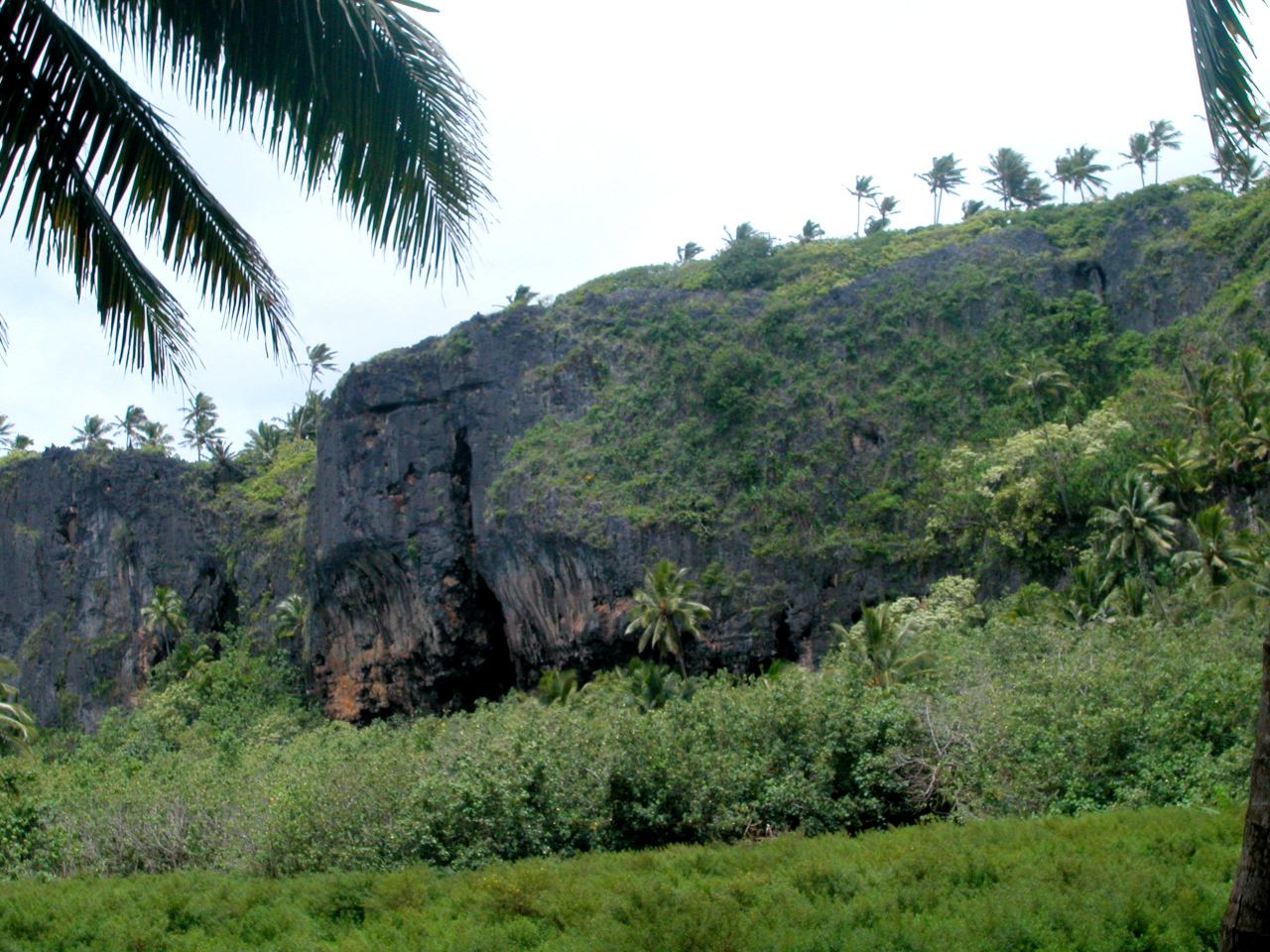
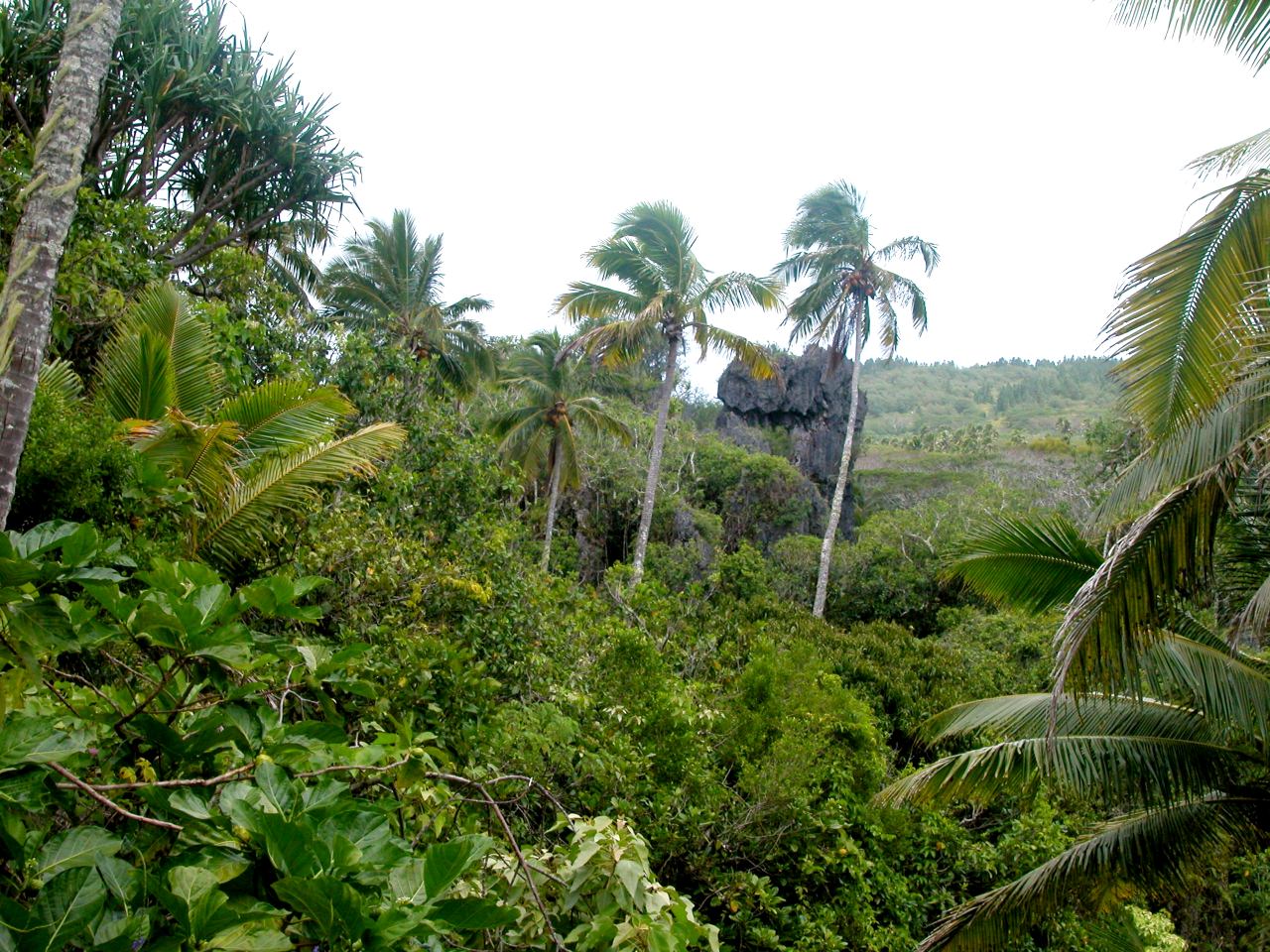
Natural upheavals have made the landscape unlike a normal atoll. There are swampy flats between hills a hundred metres high or thereabouts. There are also rocky cliffs tens of metres high. Hardly any rivers. The hills are full of caves, through which water seeps out to sea.
In the evening the English couple and the two of us gathered round the television to watch and discuss the reports of the shuttle disaster. On television they showed the burning fragments flying apart, over and over again. Very sad.
The next day Tanya and I went on a long walk. For a start we climbed the island's highest mountain, Rangimotia, only 169 metres high. The road follows sharp, young ridges. They've only flattened off the very crest for the road, which gives the impression of an enormous embankment tens of metres high.
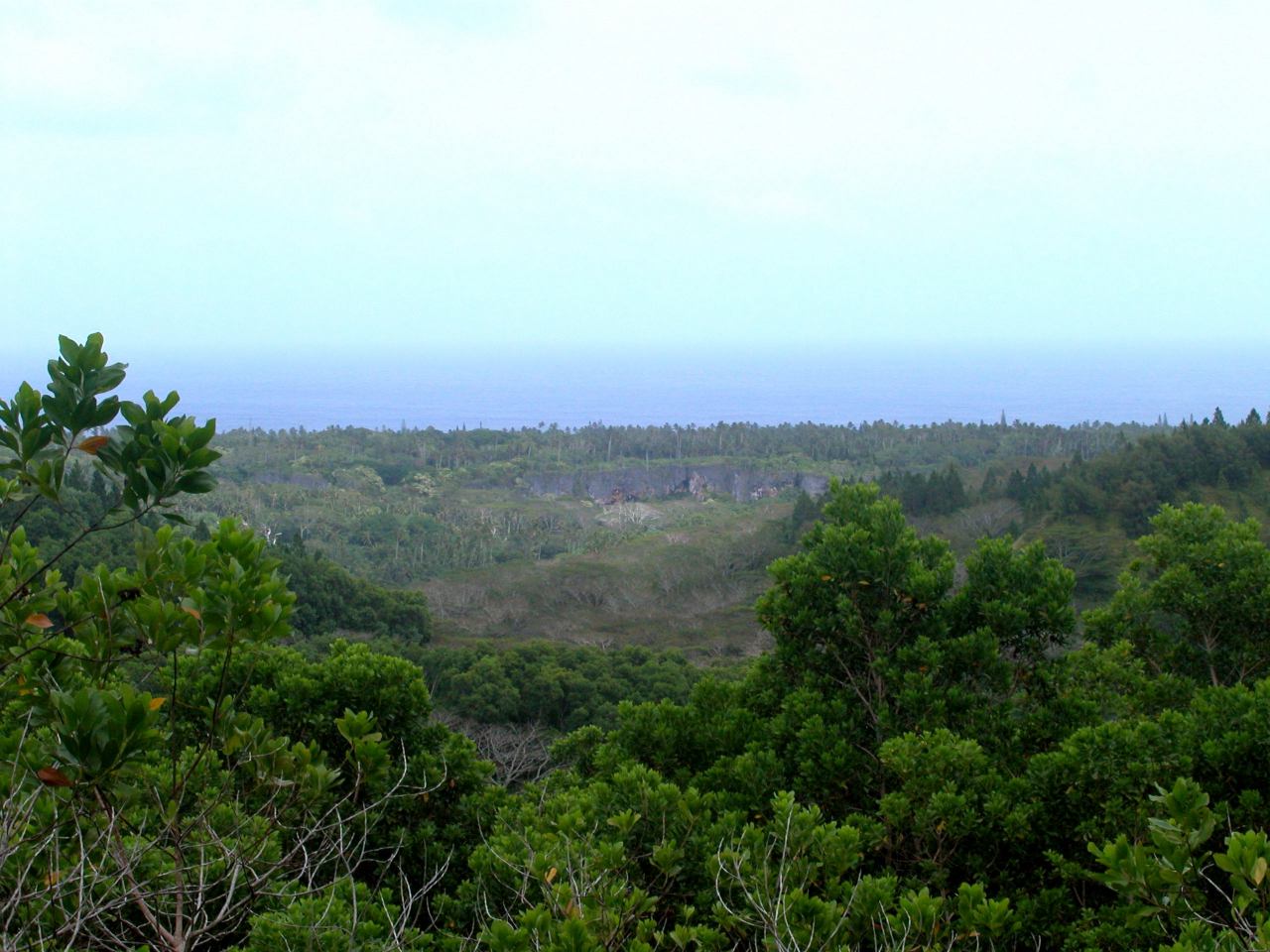
Rangimotia is gently sloping. You can't even see the island properly from it, but there's a television relay mast on the summit. I climbed that as well. That was better. I took a panorama. All the hills are covered with forest. Parts of it were planted. To check erosion, several decades earlier they'd planted California pines on every hillside. The pines took to the place wonderfully and became the commonest tree. In the warm, humid climate their needles have got even longer and bushier.
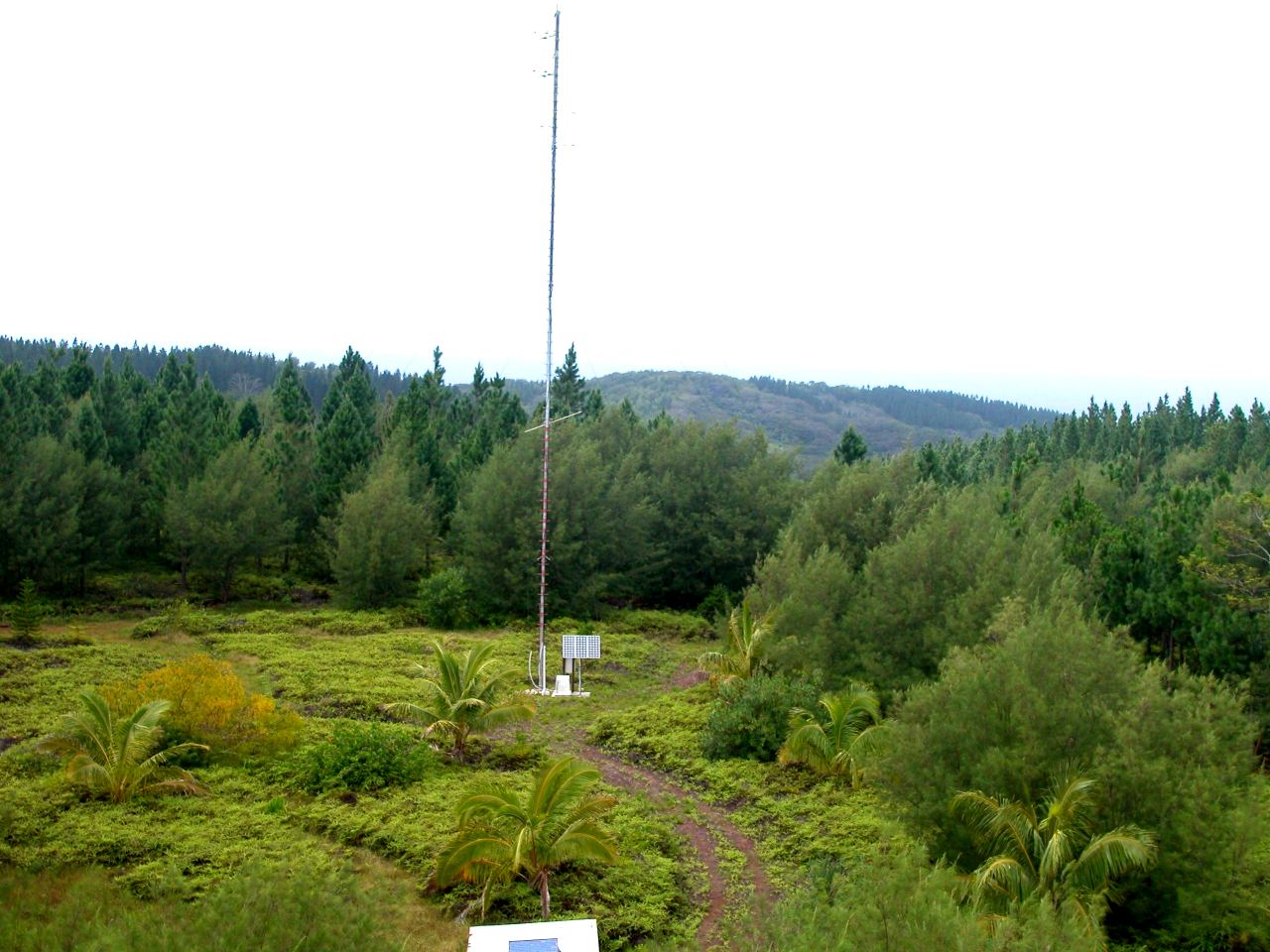
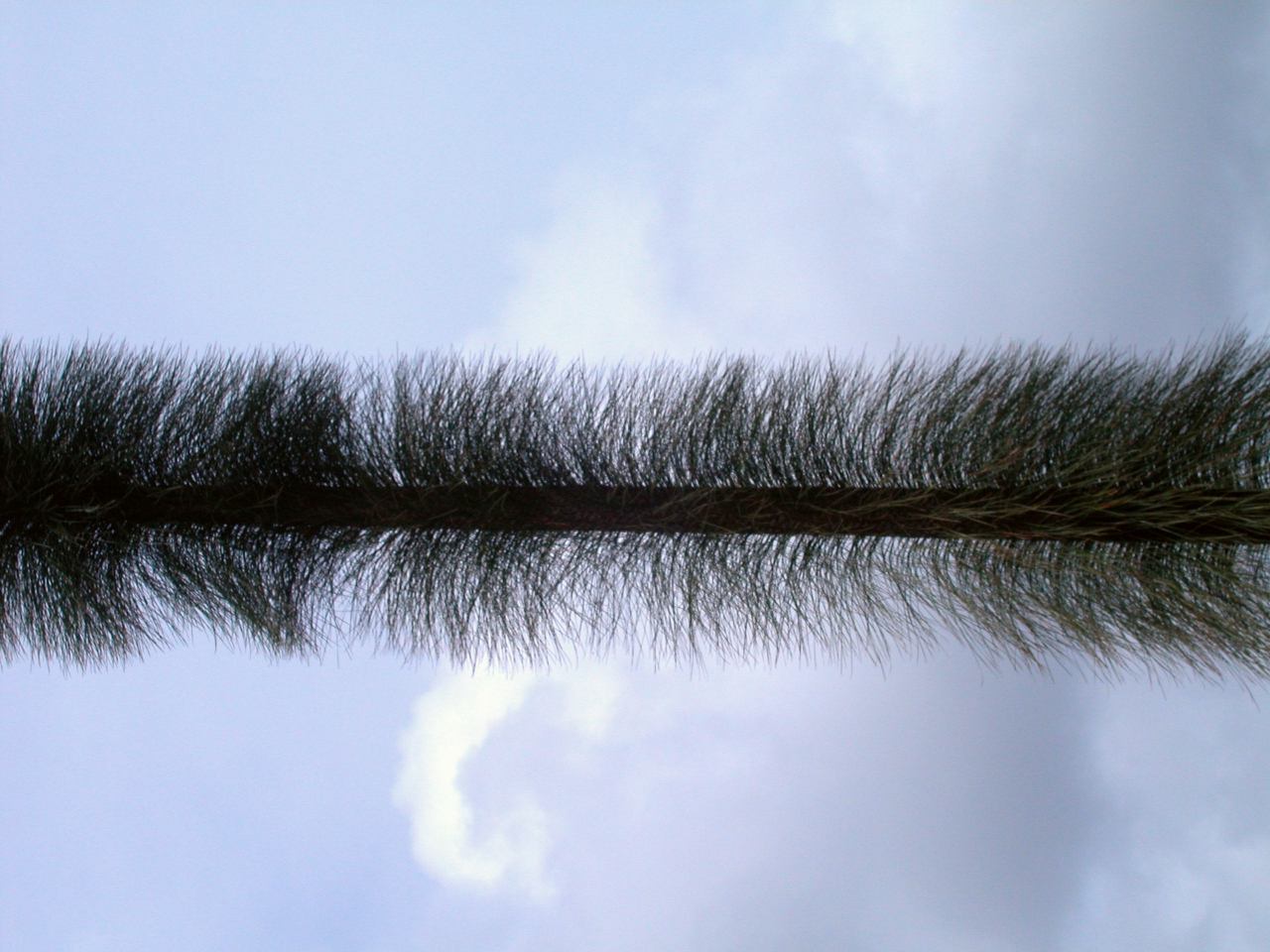
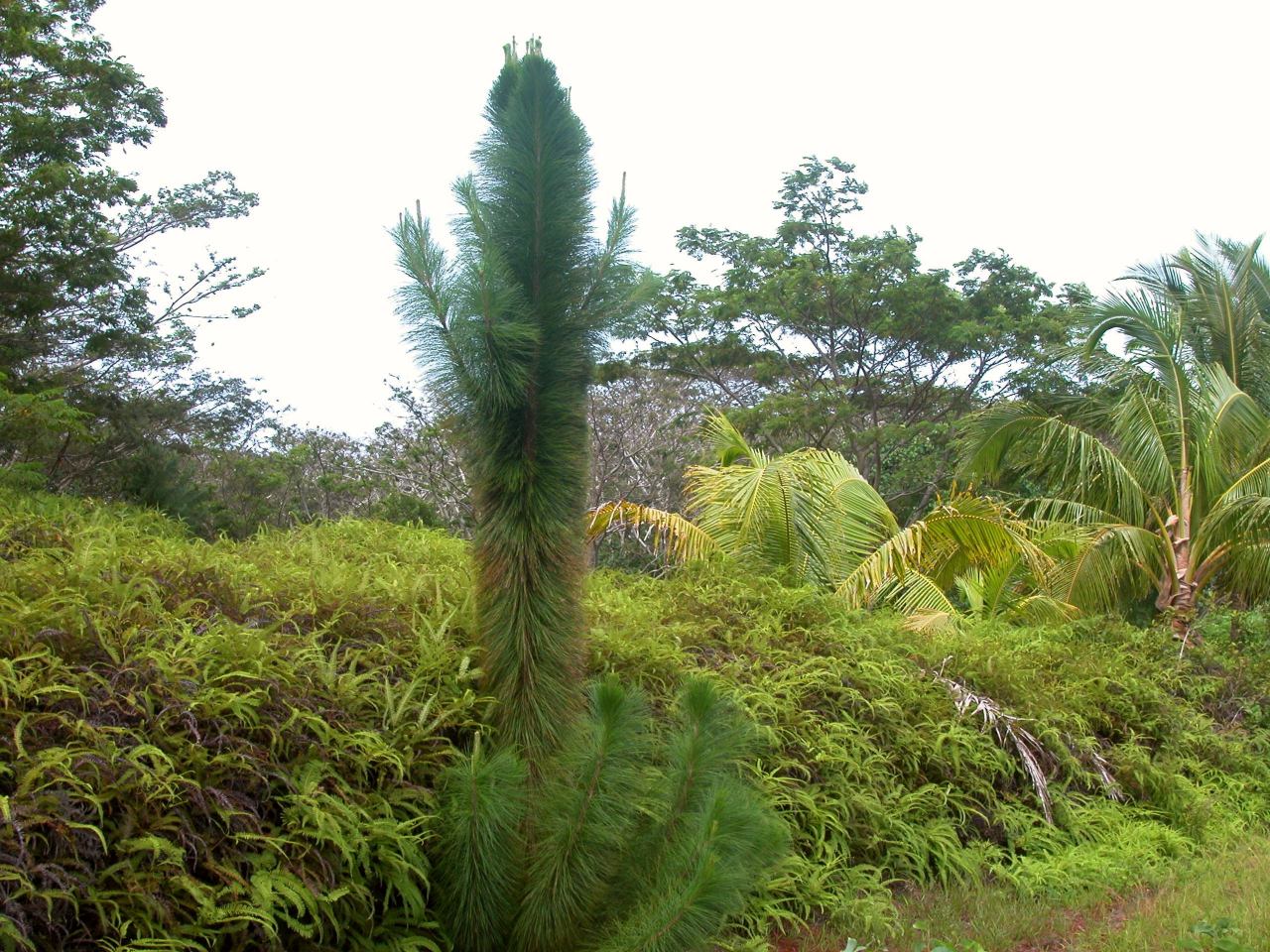
Having come down, we tried to find another cave. The first attempt led us into wild scrub. Then the path vanished and we had to go back. The next try went better. Through coffee bushes and mosquito swamps we found a little cave, but obviously not the one marked on the map as a visitor attraction.
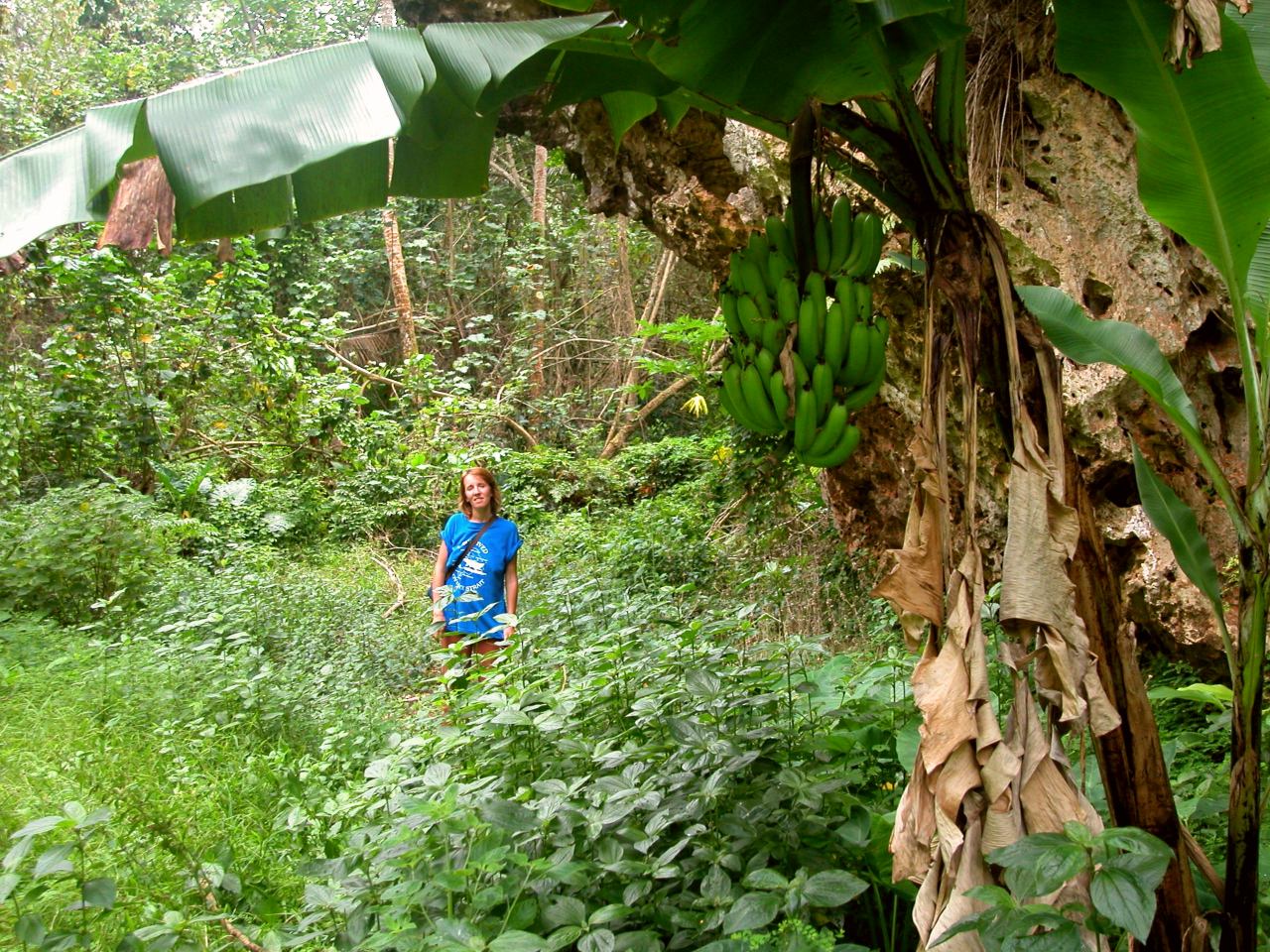
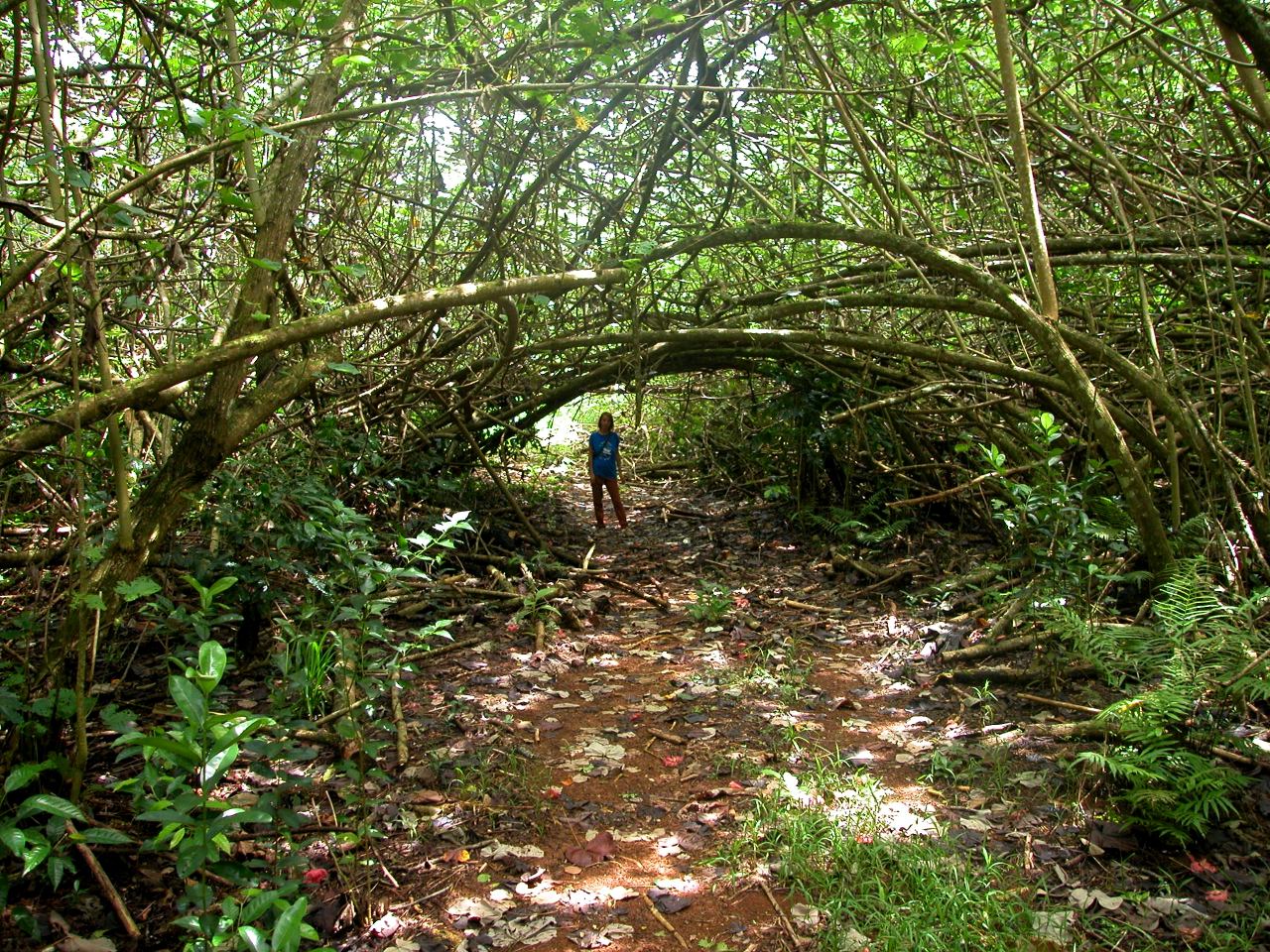
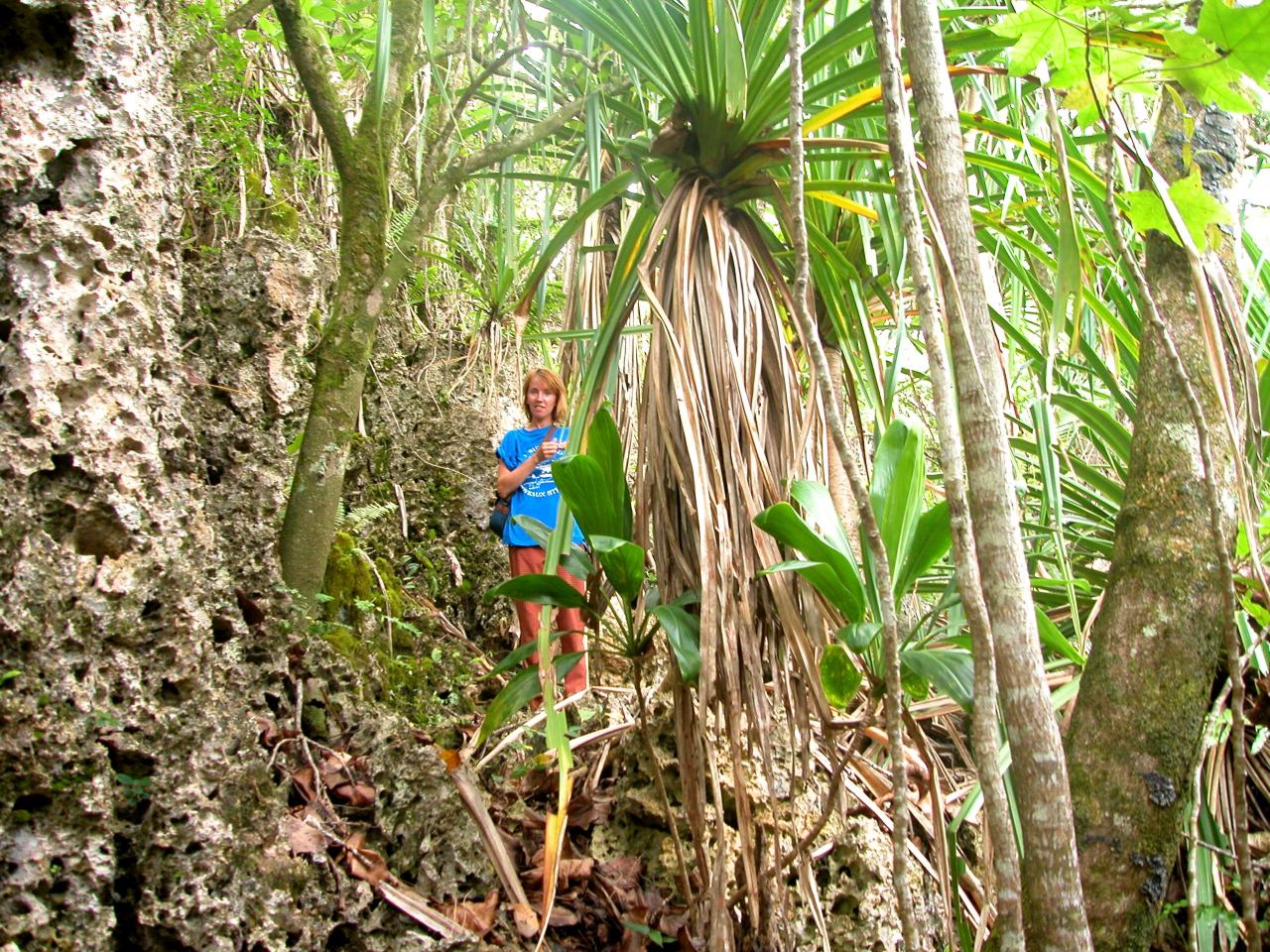
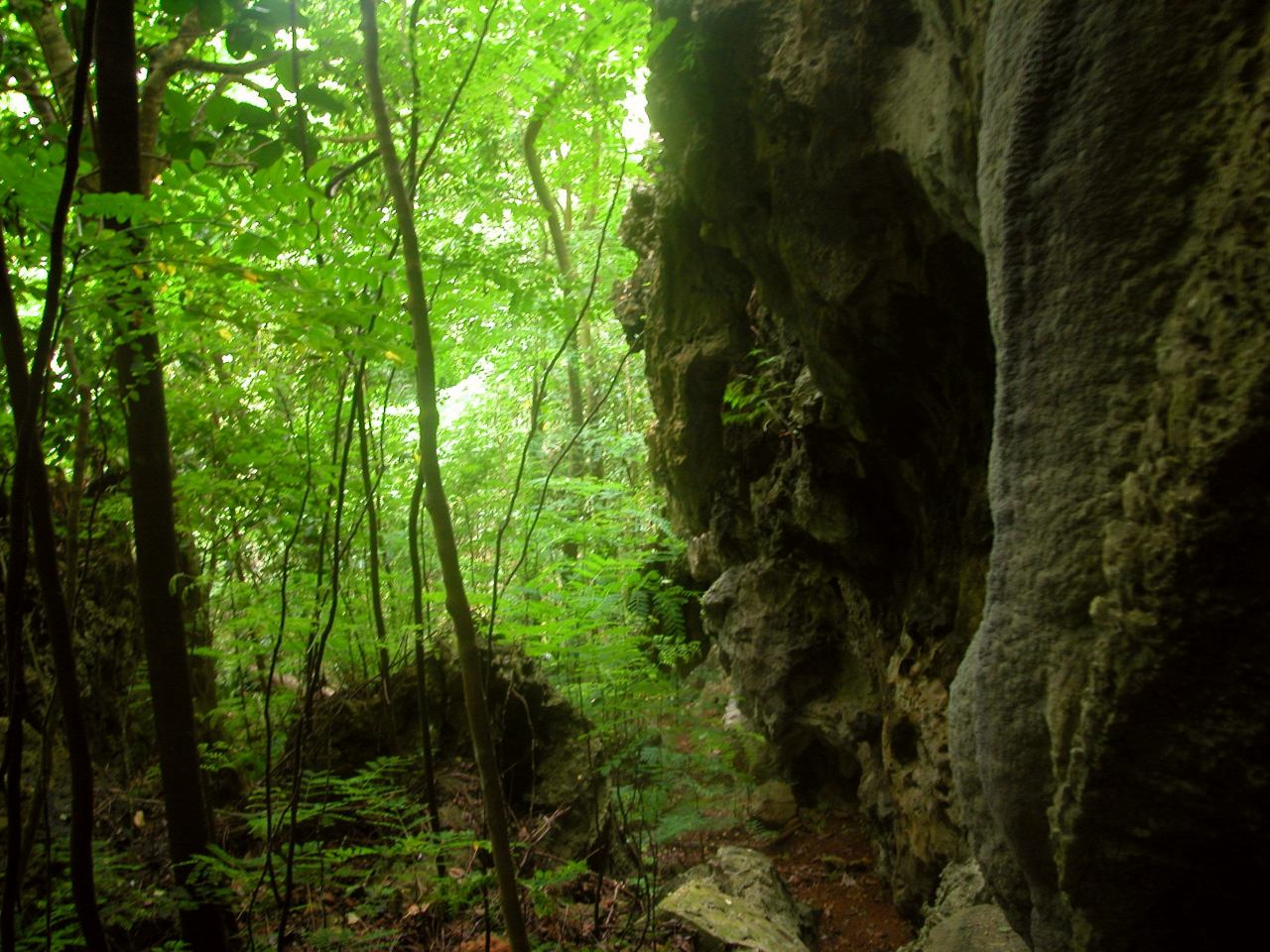
Before long we discovered the entrance to the big cave was flooded by the lake. One look at the water teeming with life and we didn't dare try swimming through.
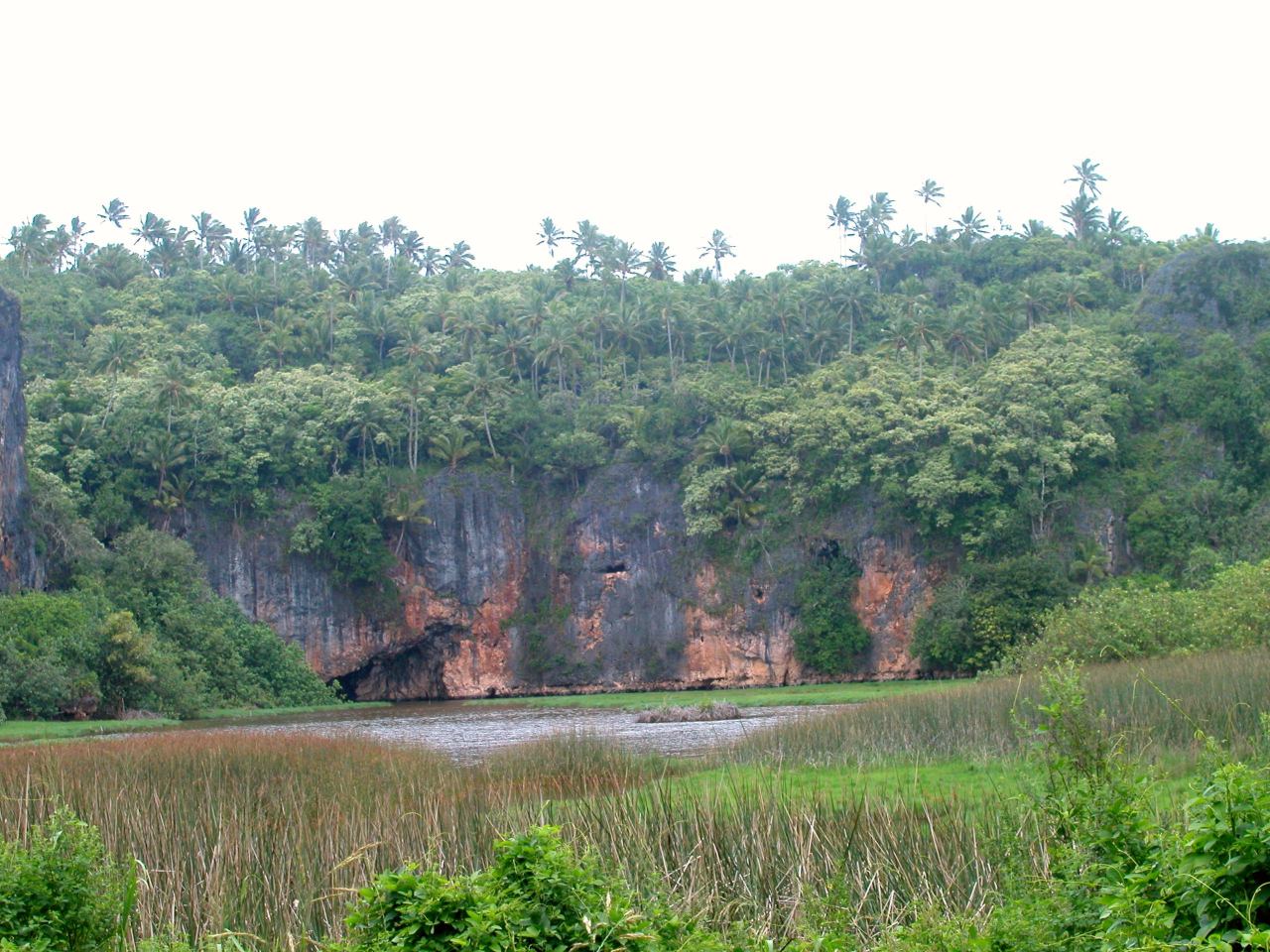
After another few kilometres we descended into the village of Tamarua.
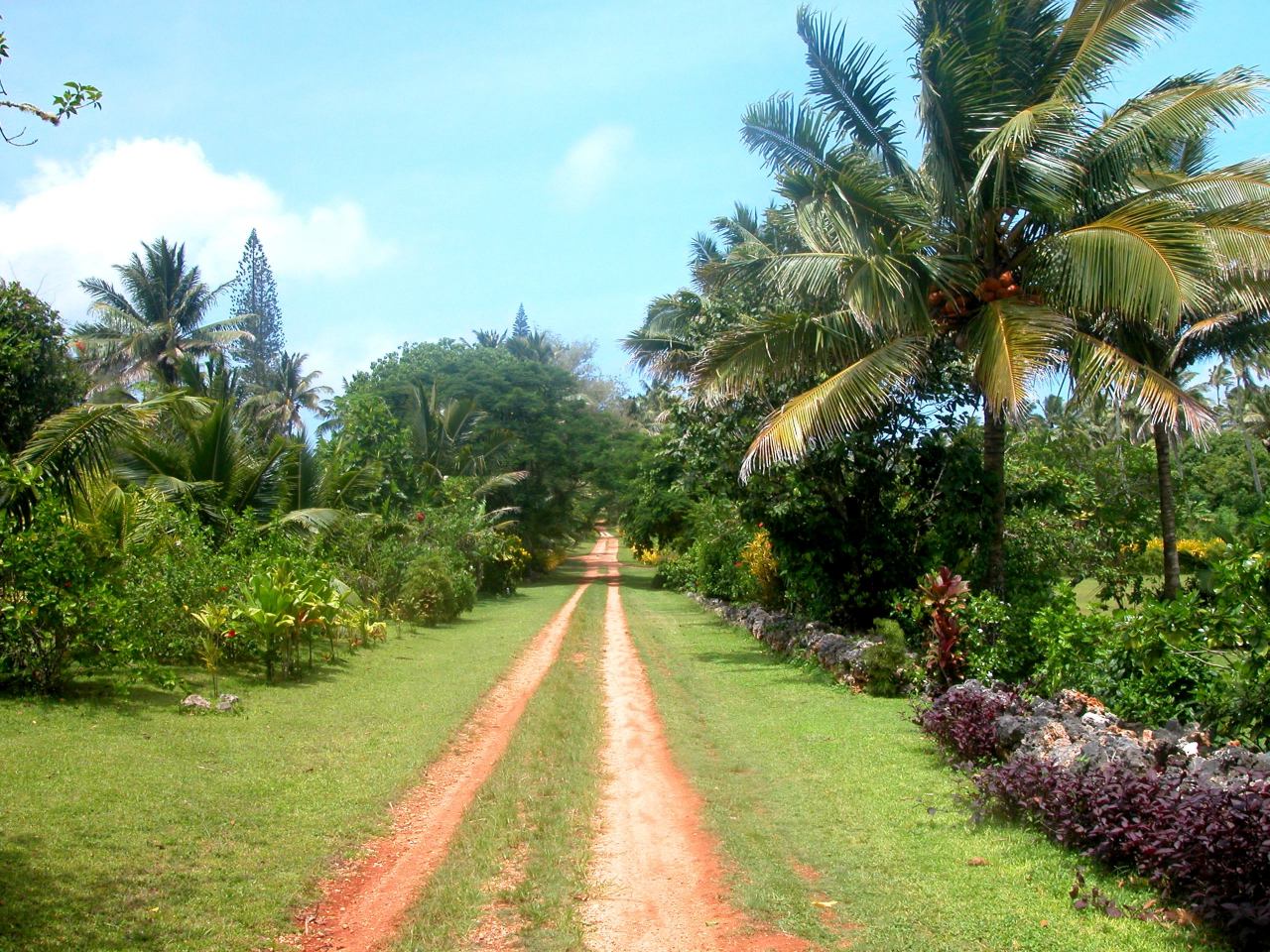
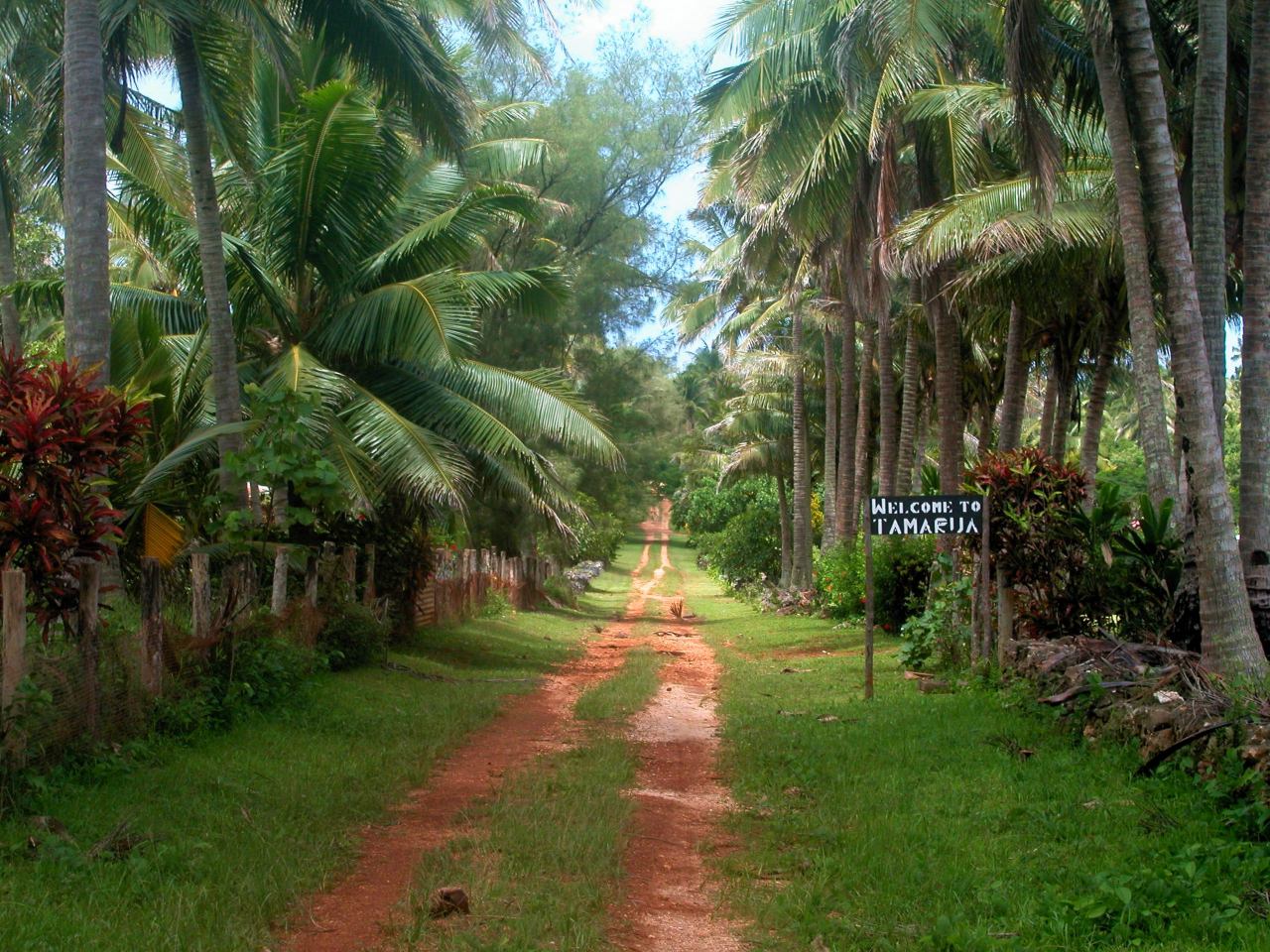
Walking uphill in that humidity and heat is hard. We'd done only twelve kilometres that day and were completely out of strength. We decided to wait until the heat passed and went down to the sea, to splash around in the water for a few hours. The way back seemed long and hard. Every half-kilometre we got a coconut and drank it.
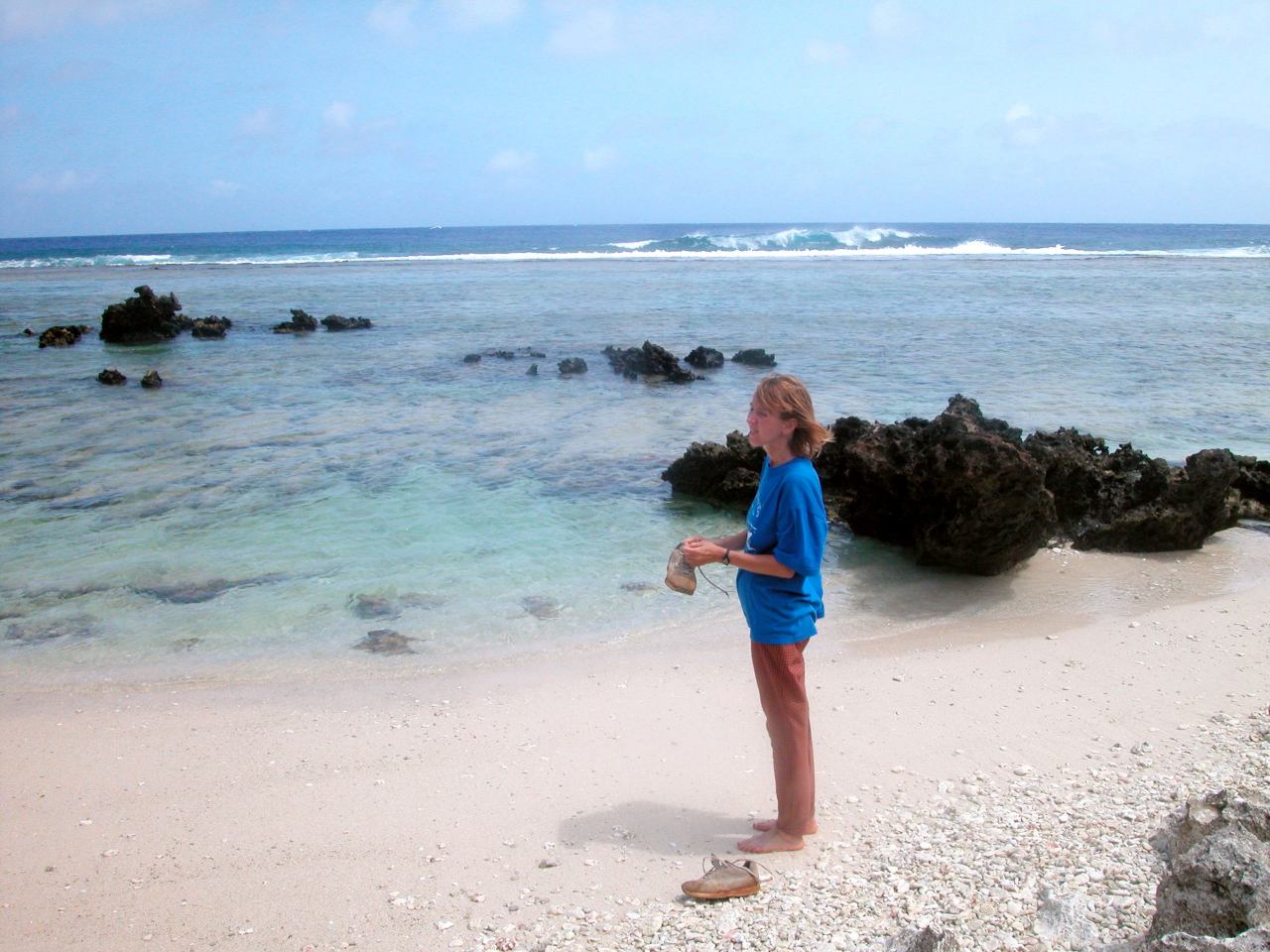
Tonight is our last proper night's sleep. Tomorrow morning we begin the journey home. Five planes ahead, twenty-six thousand kilometres and more than two nights in the air. Time to make ourselves presentable and get a good night's rest. Before that, one last long look at the black southern sky and its stars. In a month I've learnt them quite well. I can recognise most of the constellations as well as I can in the Northern Hemisphere.
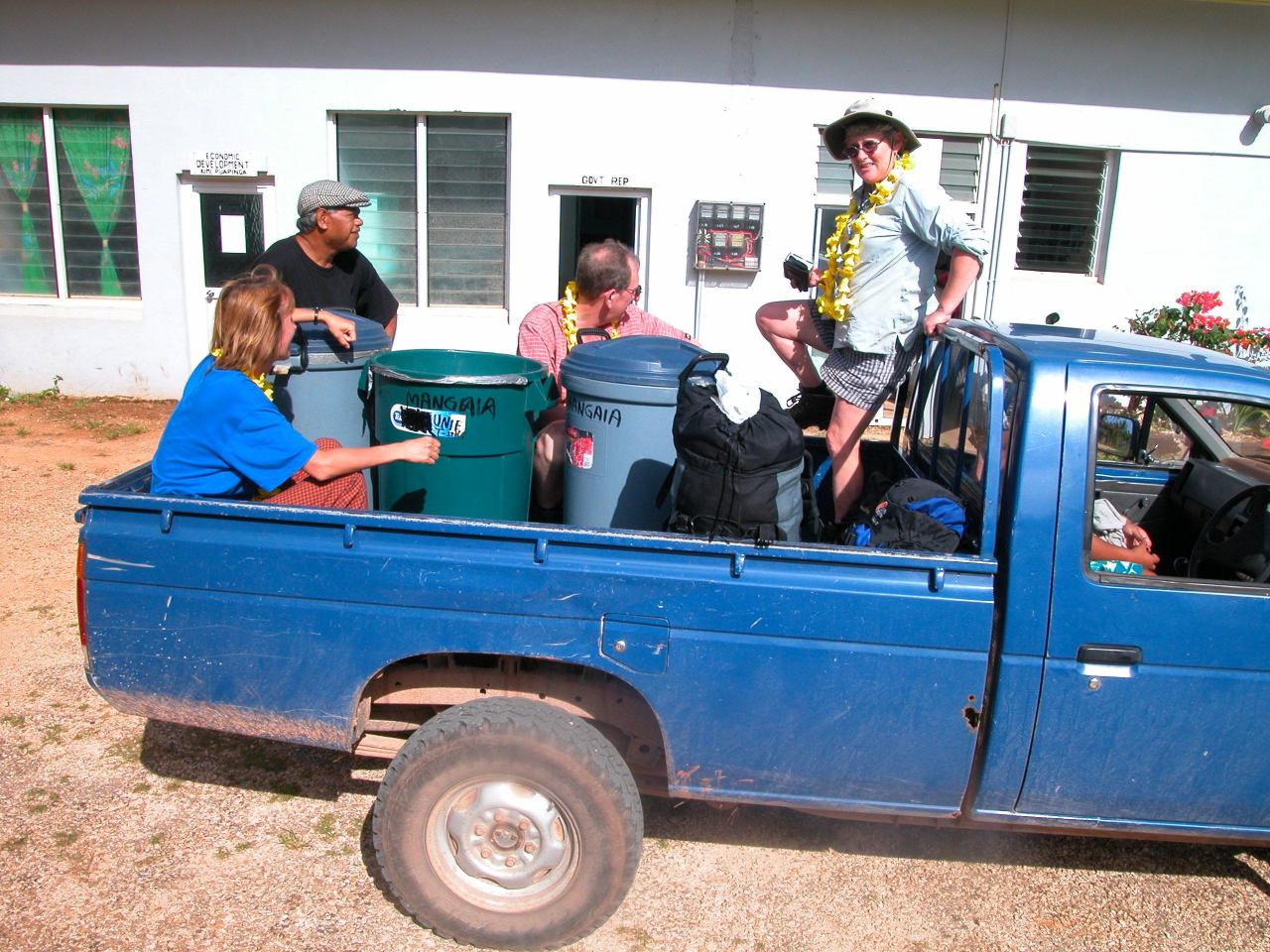
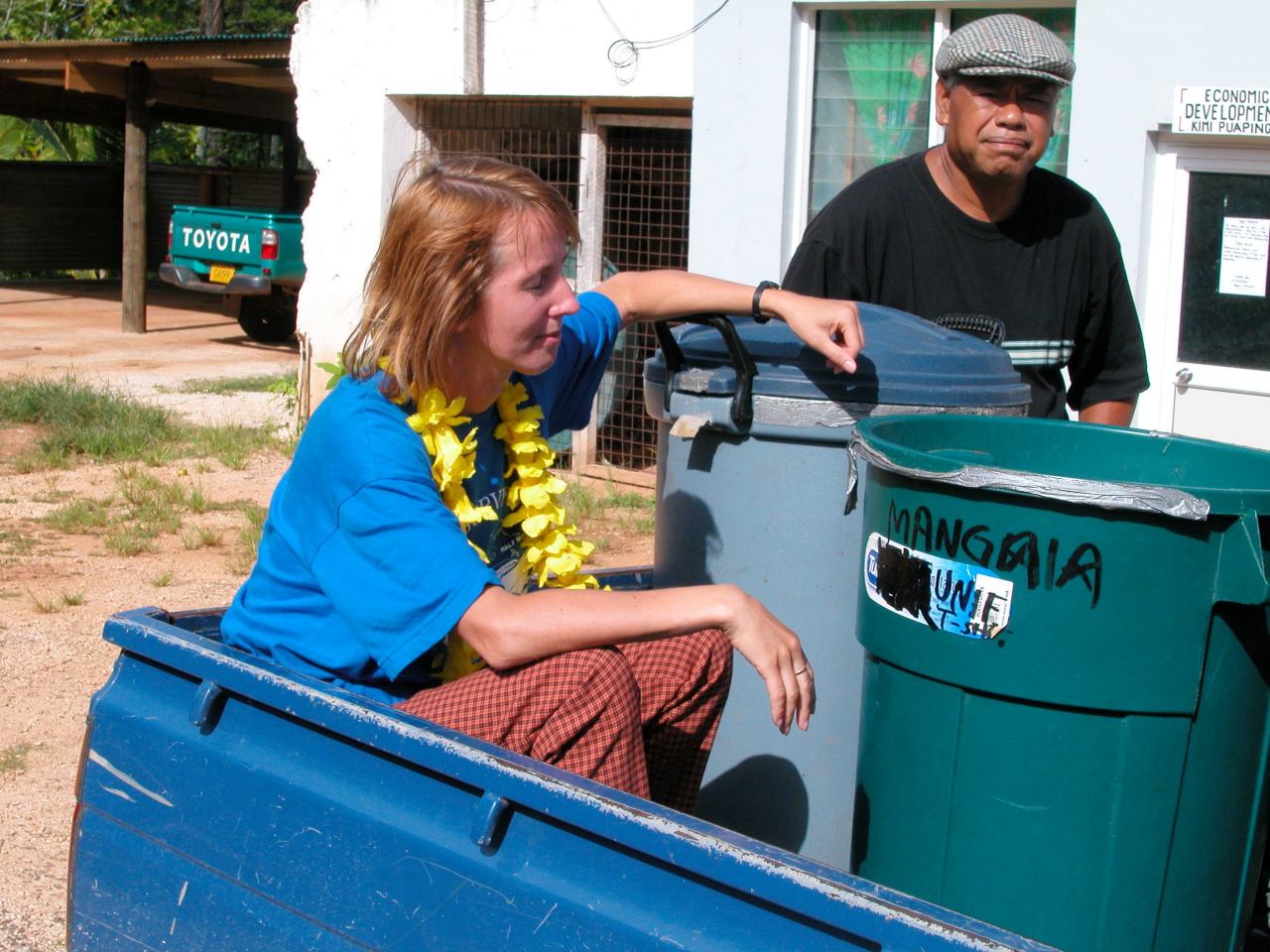
We were up early in the morning, went through the luggage and threw out everything we wouldn't need again. Our hostess brought round her open-backed Honda for the airport ride. Together with the English couple and the catch from the local fishermen, we rode to the airport. As was the custom, they presented each of us with another garland of flowers.
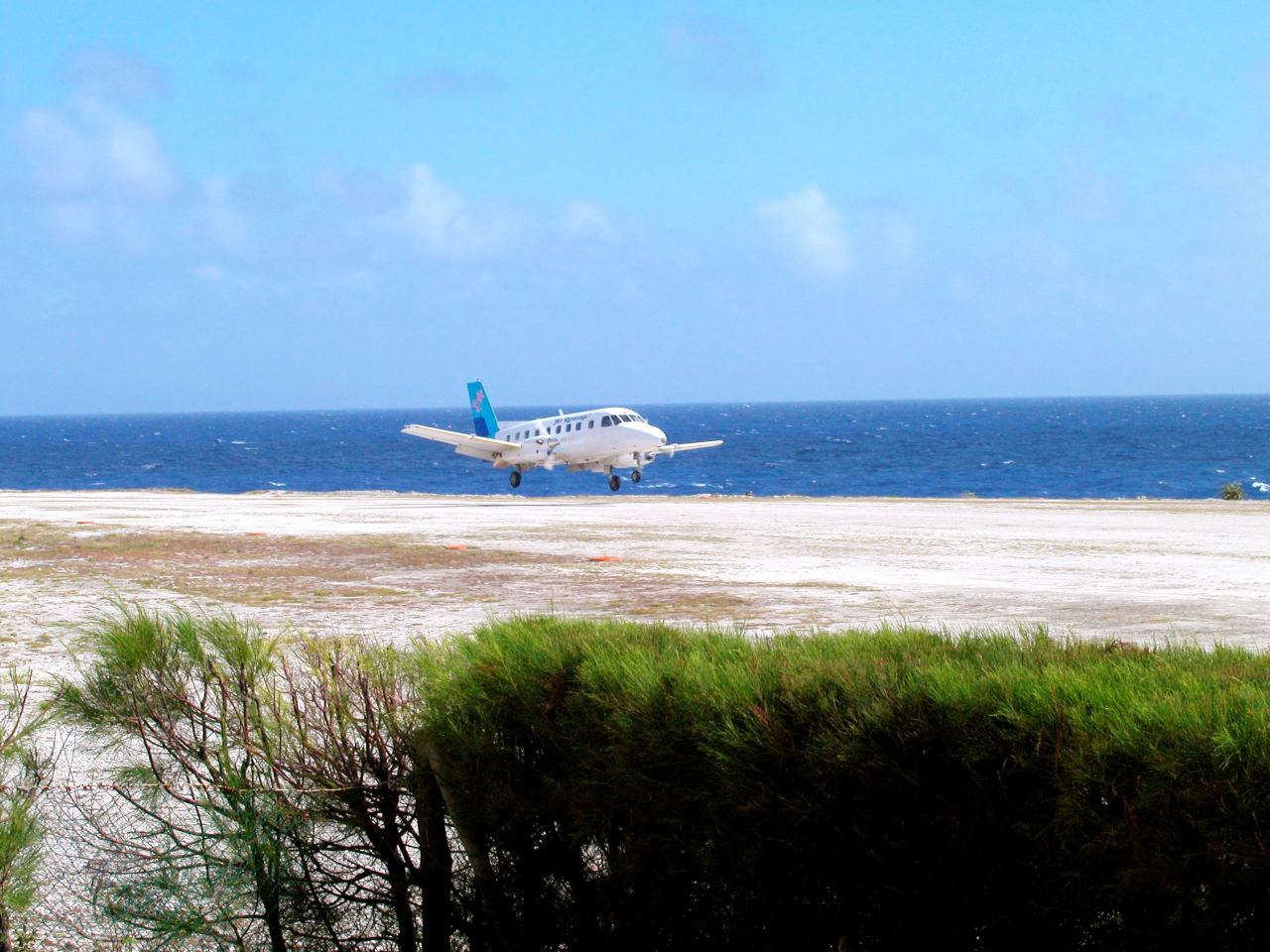
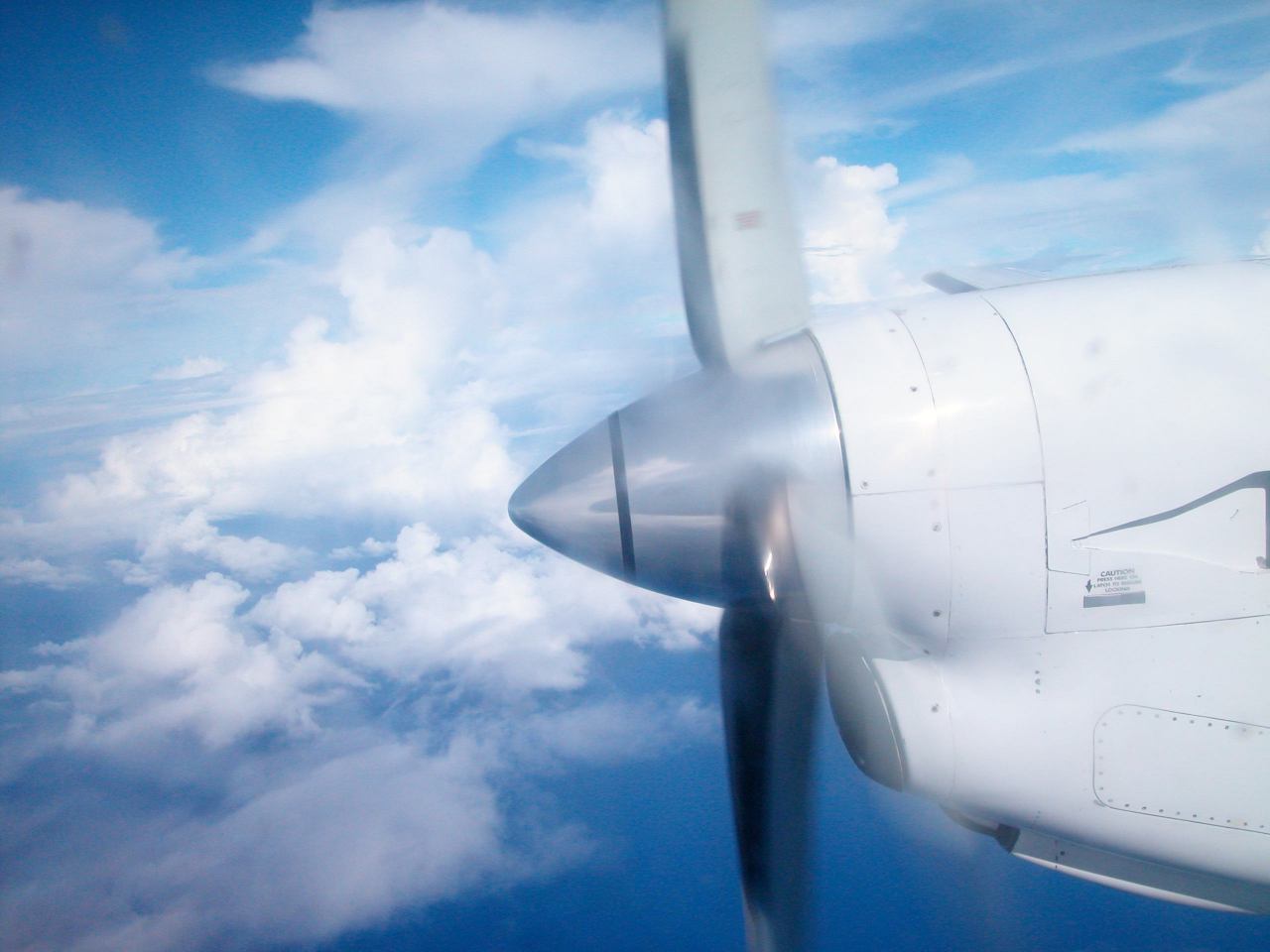
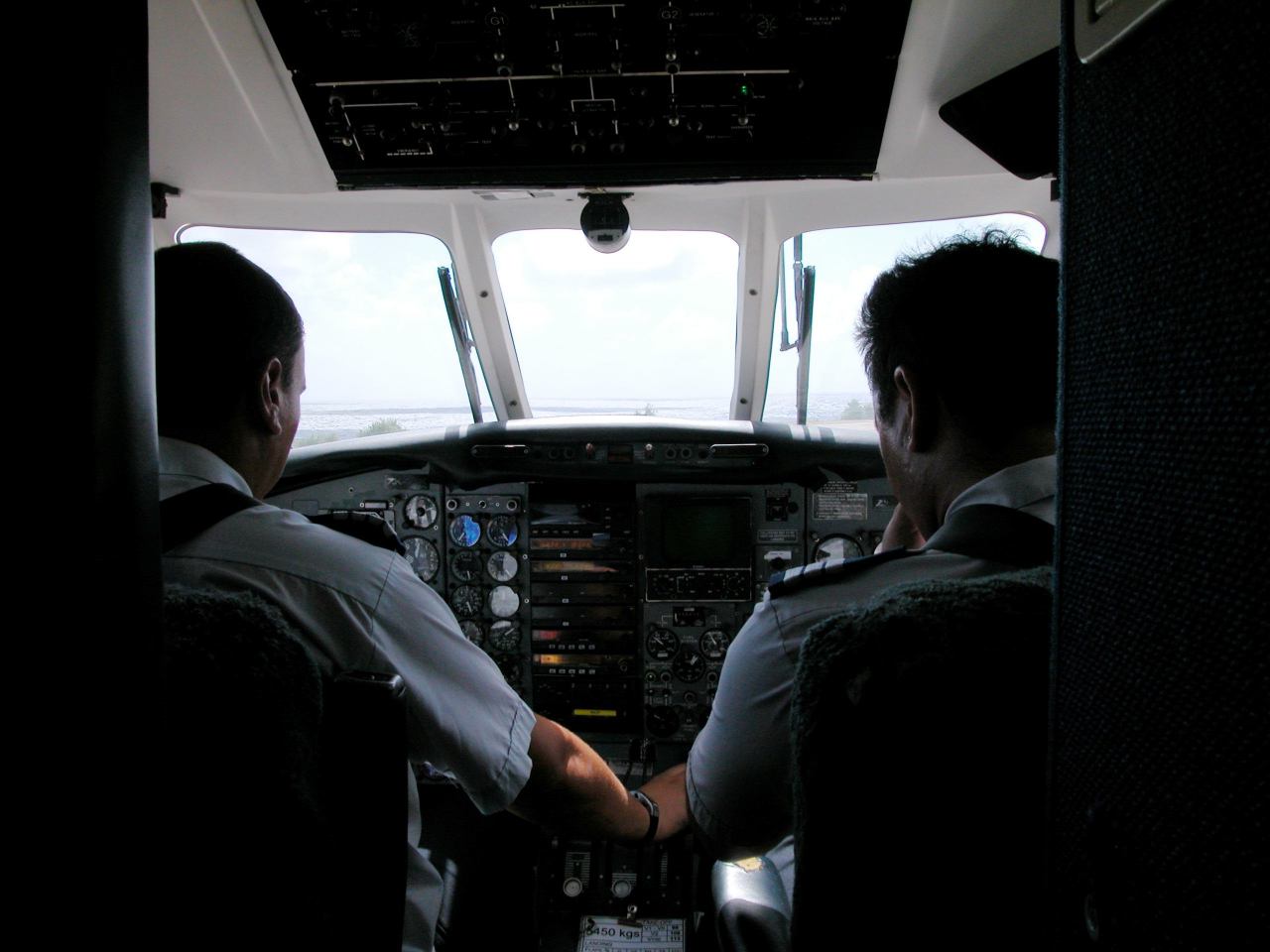
This time I took a seat right behind the pilot. It's even more interesting to look out the windscreen and watch the instruments. The only thing is that landing is frightening. It looks as if the plane will miss or drop to the ground short of the runway.
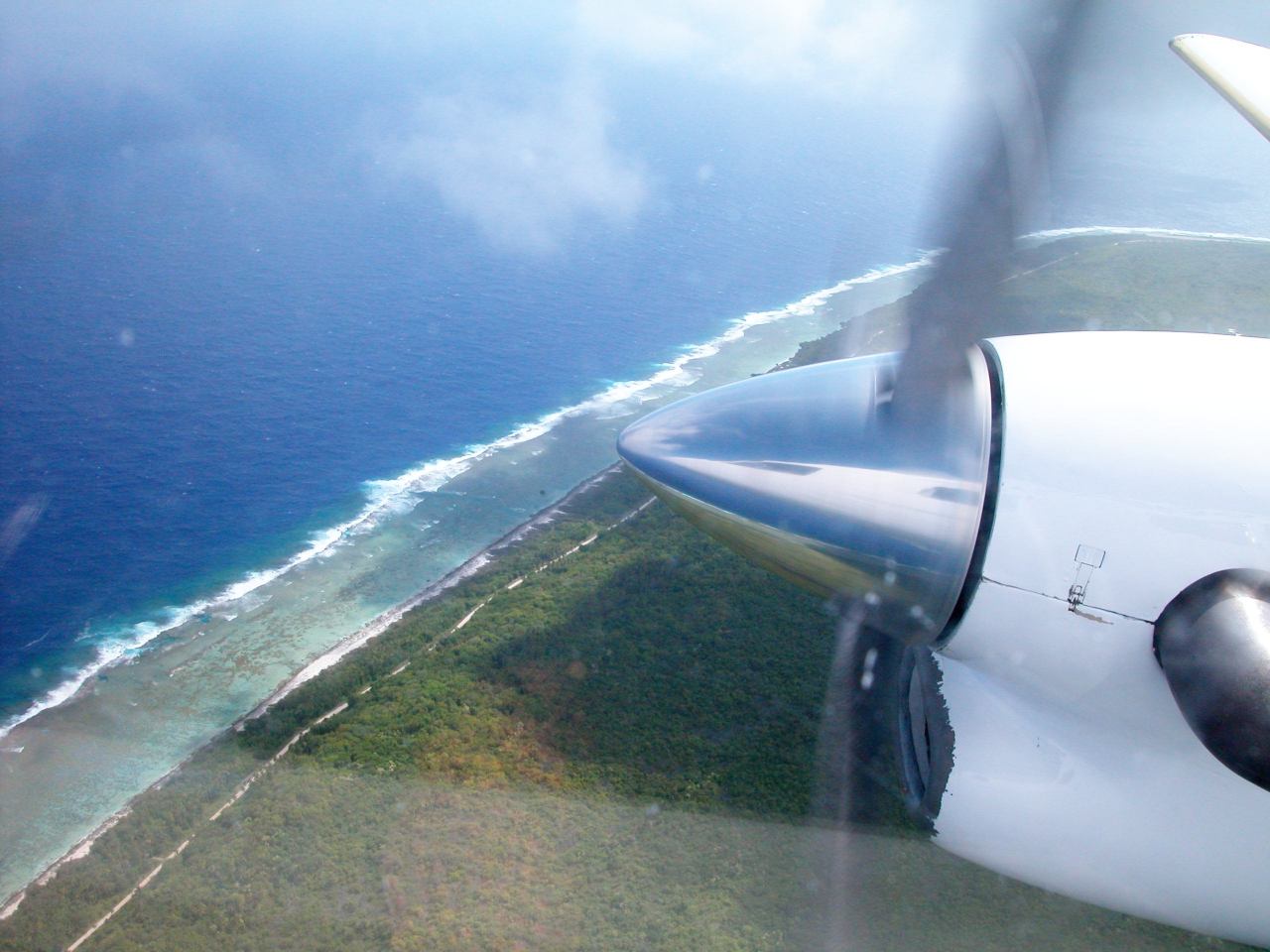
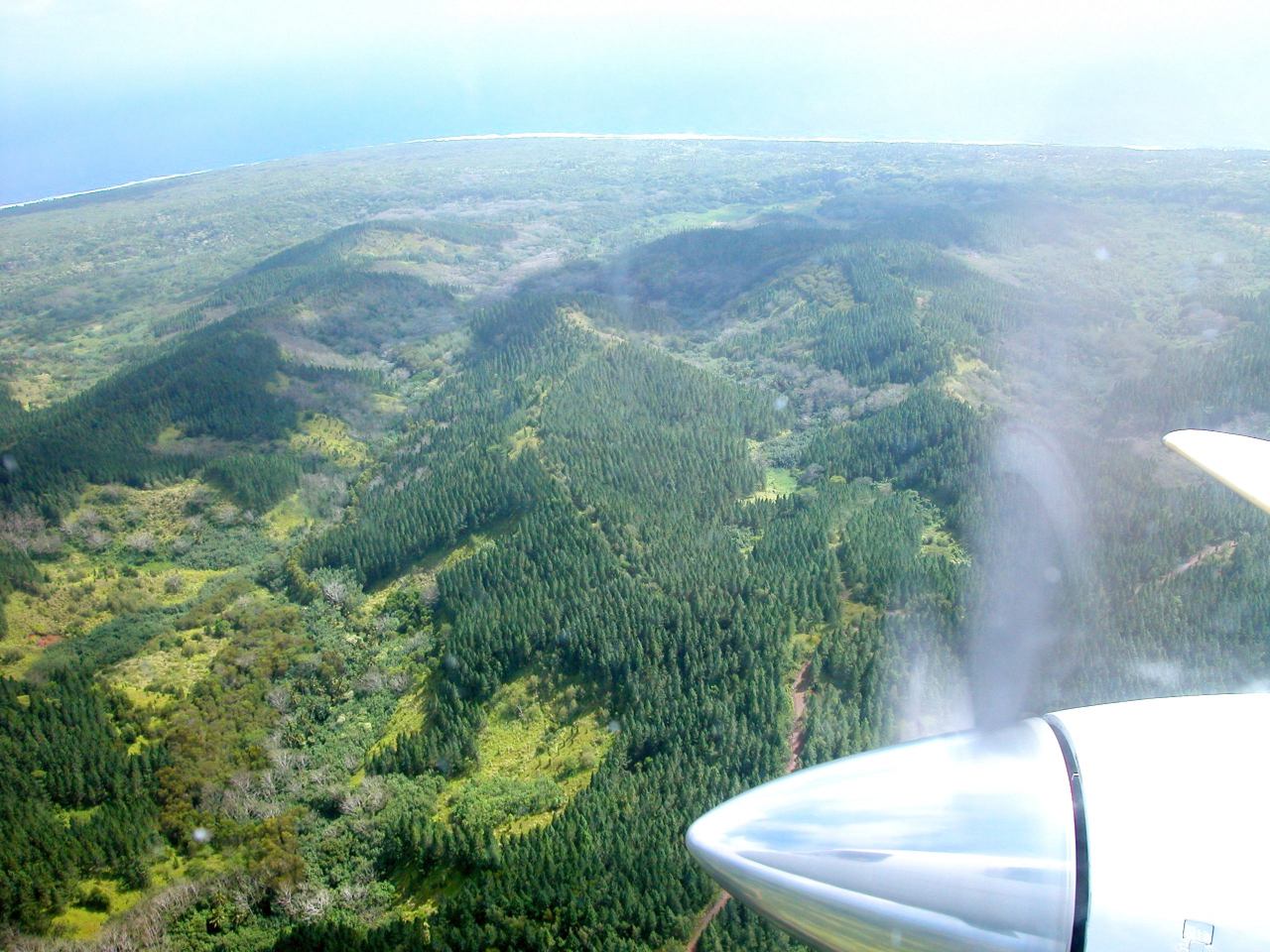
We still had twelve hours before the flight to New Zealand. We left all our luggage in a locker and set off into the hills. The Cross Island Track runs across the country's main island. The saddle is 340 metres high. It's intended for experienced walkers. The first few kilometres are no trouble. They've built bridges and put up signs, and there are even telephones on trees. The serious uphill climb comes in the last few kilometres. The track is tolerable here too, only it's very hot. There's a beautiful view from the saddle. Those who fancy climbing can tackle the Needle on the summit. Tanya waited and I climbed. I got only halfway. Any farther would have got my clothes horribly dirty, and I was supposed to fly to Saint Petersburg in them.
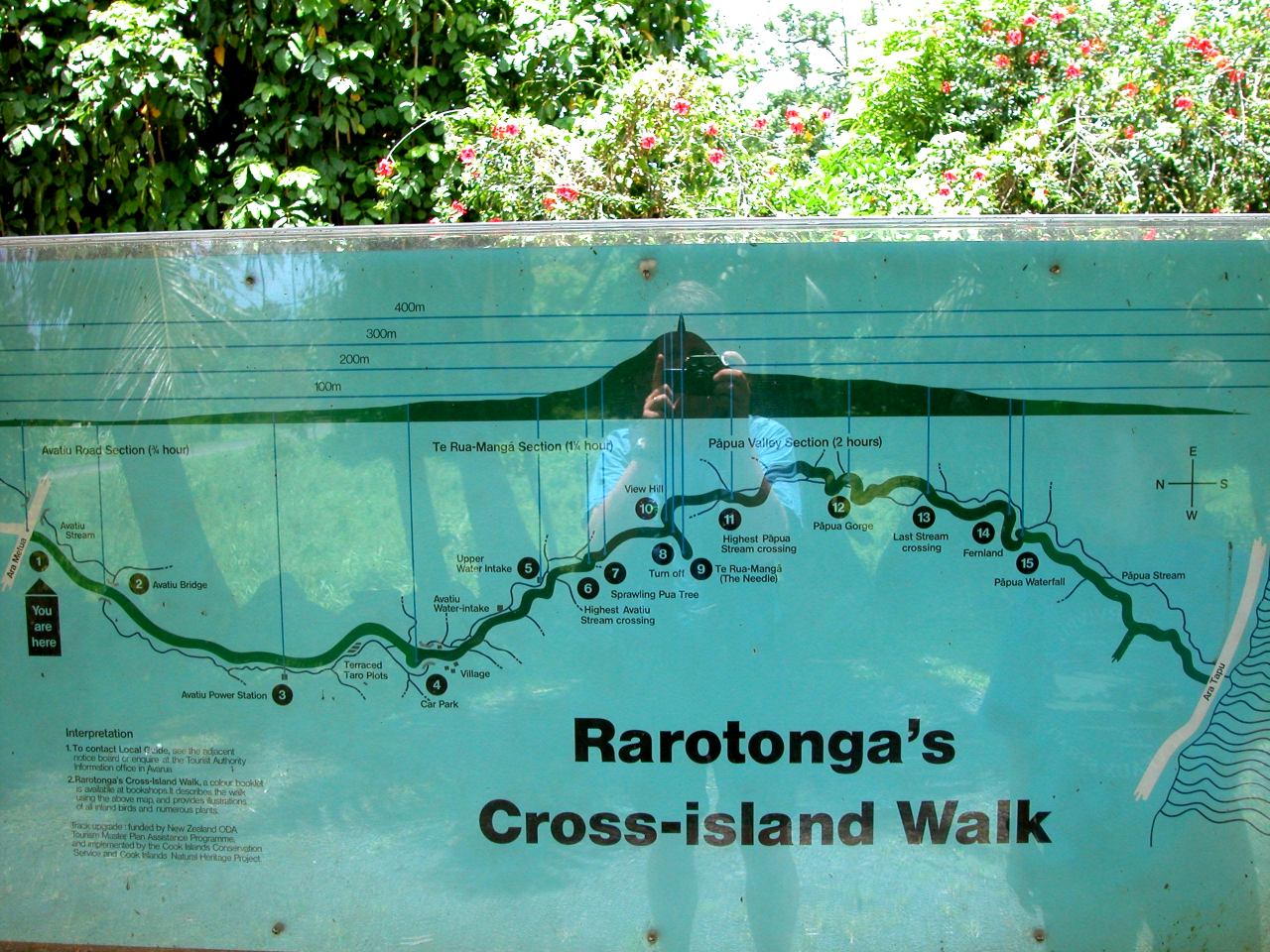
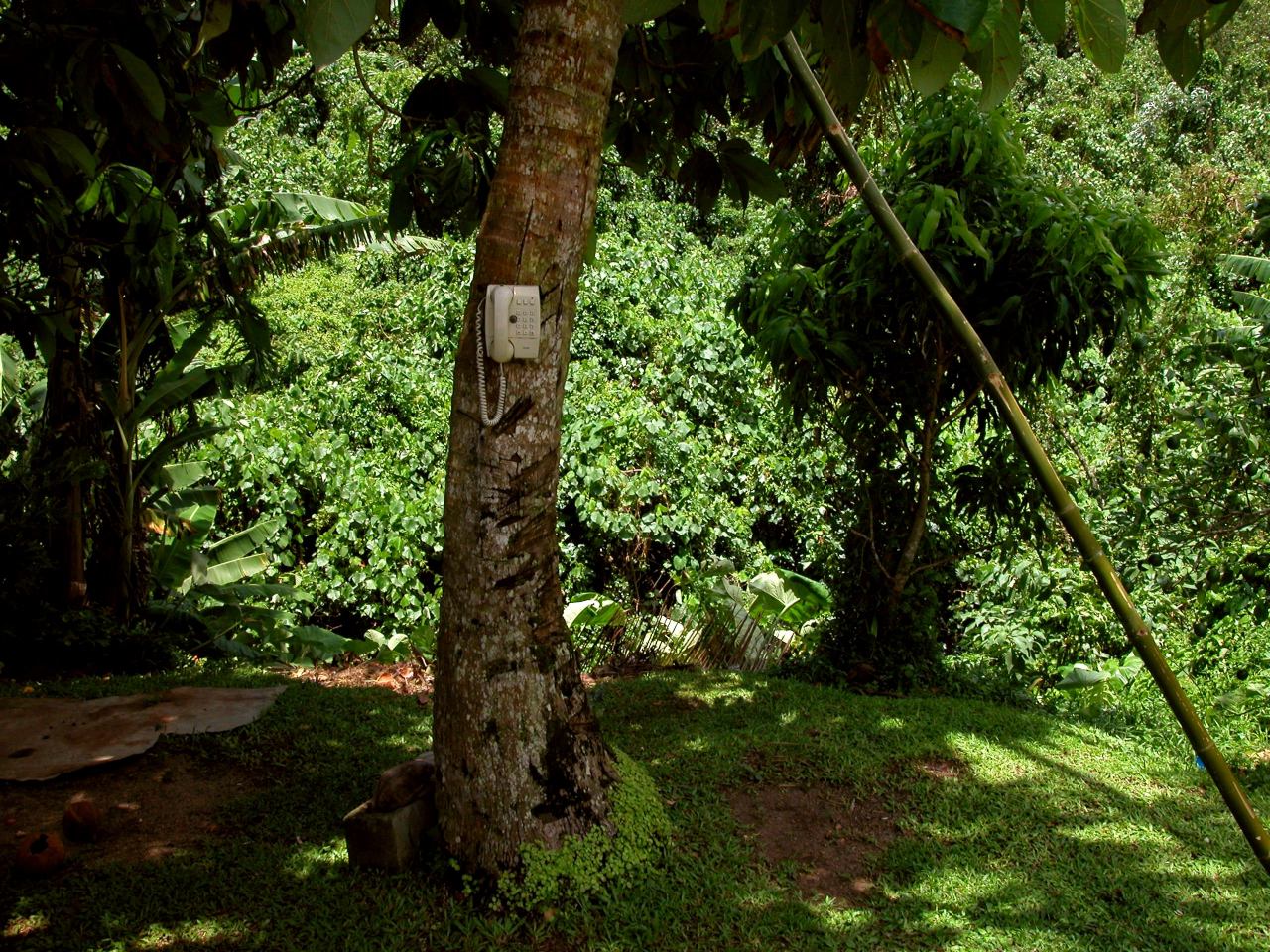
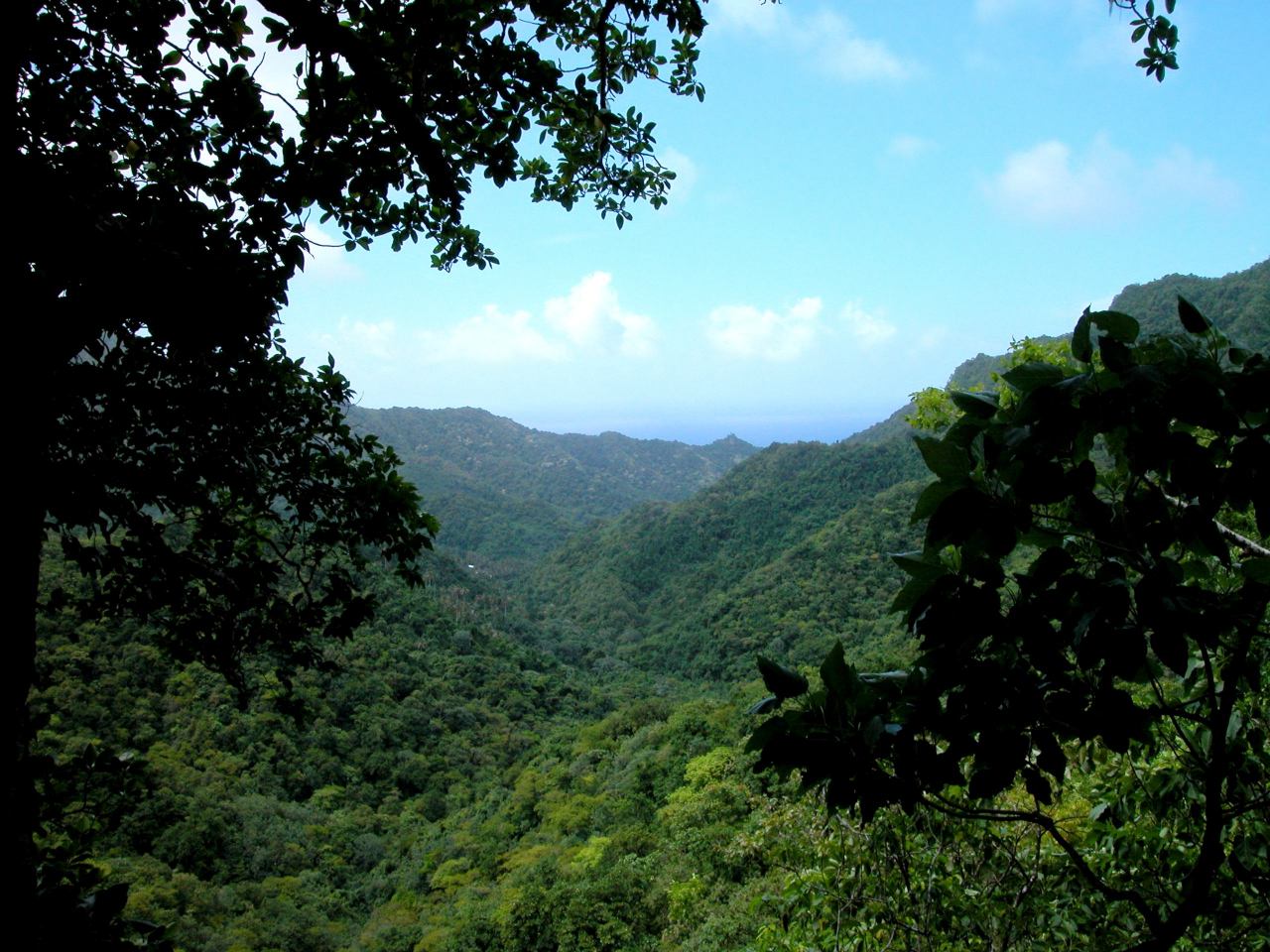
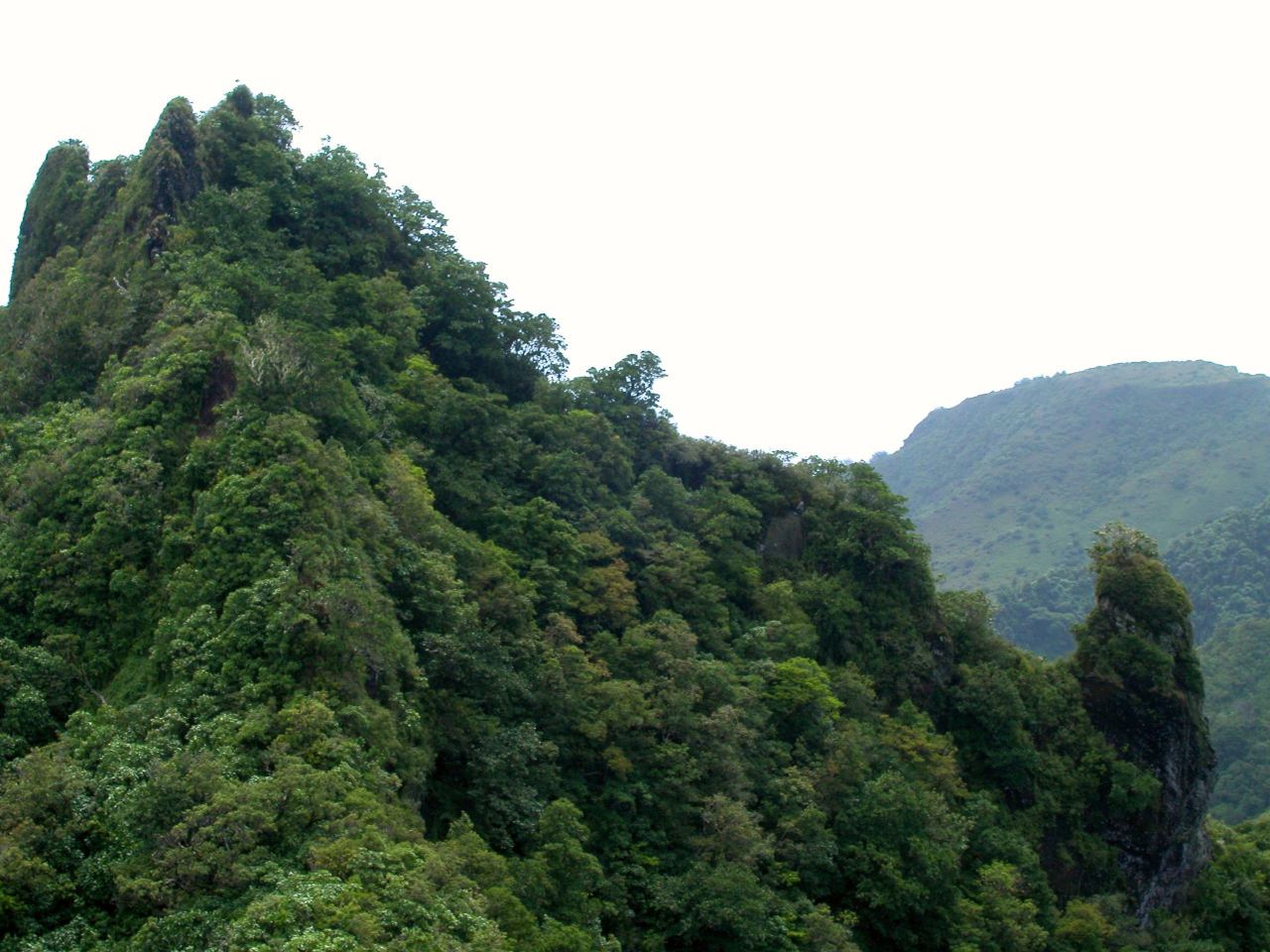
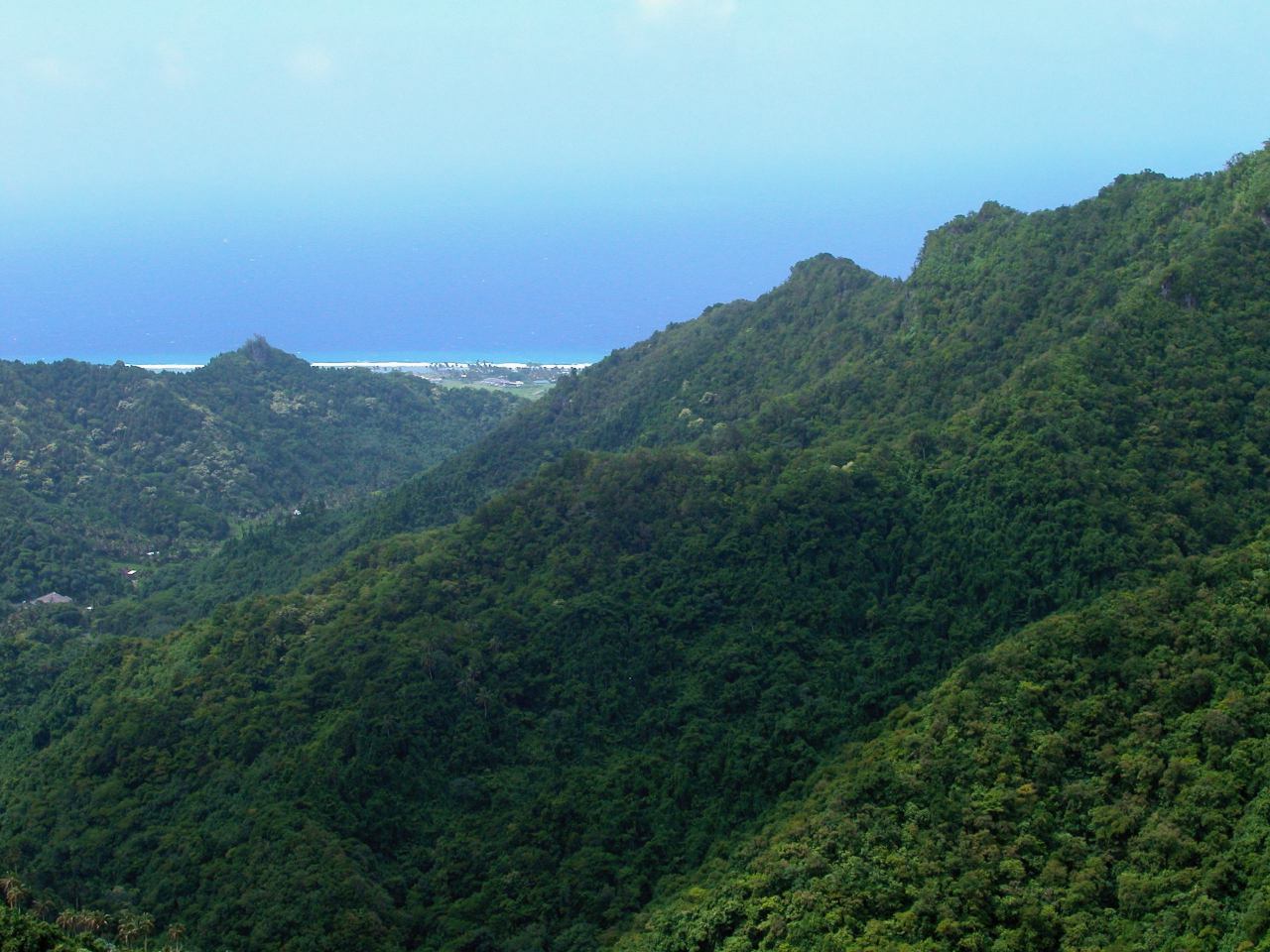
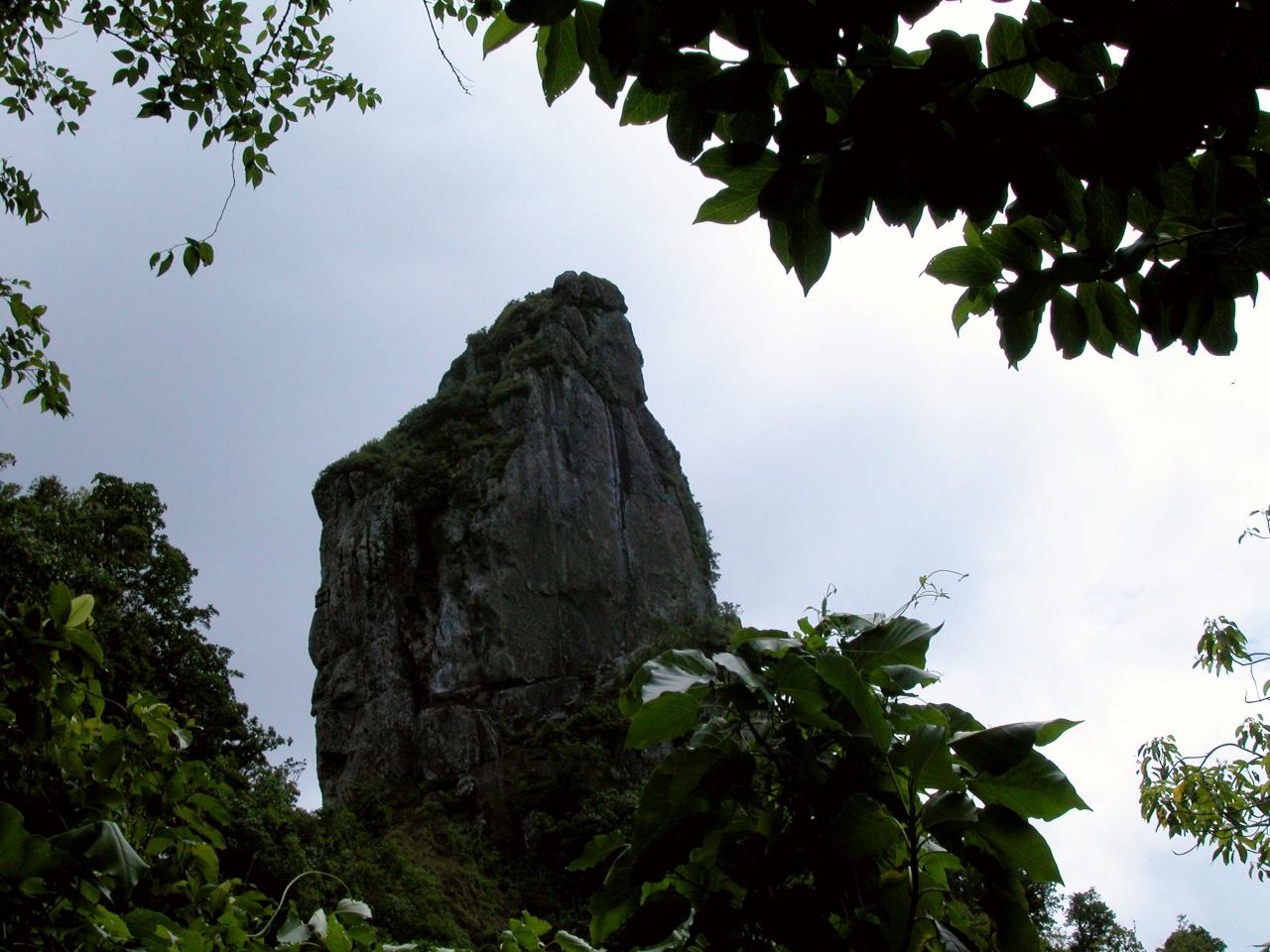
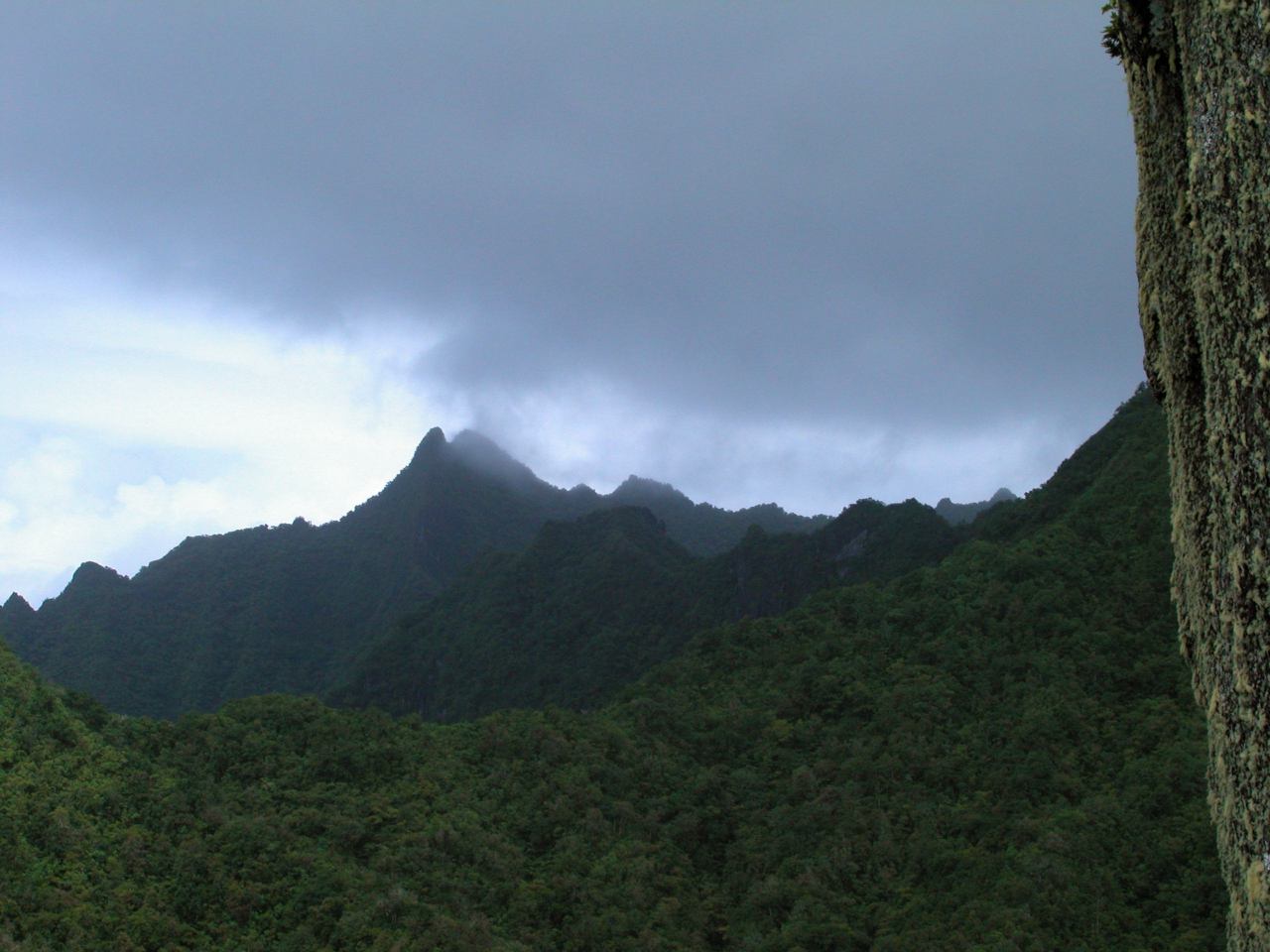
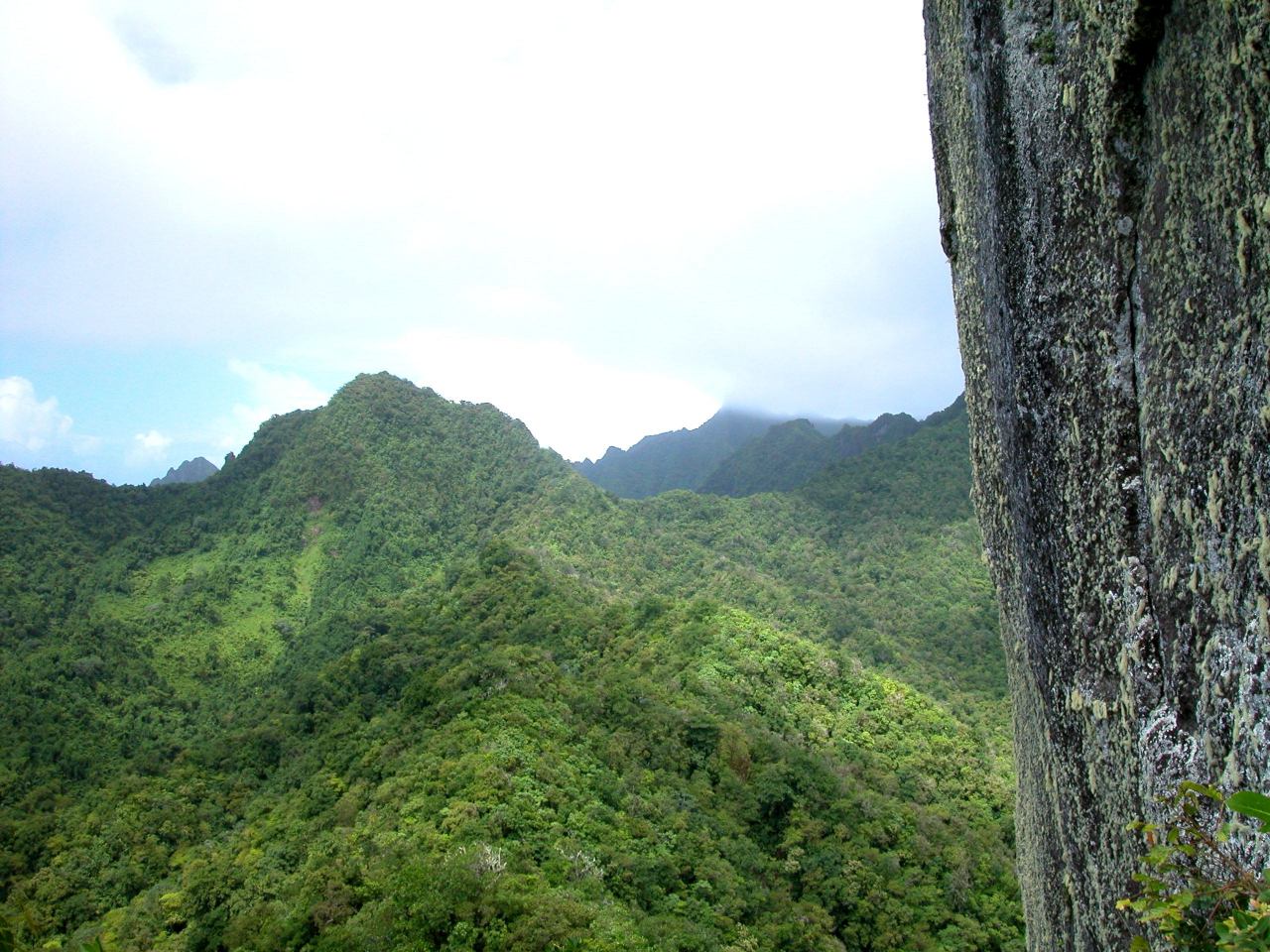
Back at the saddle I found Tanya feeding a rooster. Where it had come from was a mystery. The nearest houses were many kilometres away, with tropical forest in between. The only explanation is that roosters here are different. They can fly far better than ours. Frighten a family of chickens and they can quite easily fly onto an electric wire or a coconut palm. They aren't as fat as ours, of course, but they live freely. Nobody keeps them in their houses. They feed them, then catch them when they need them. Any given rooster belongs to no one but itself.
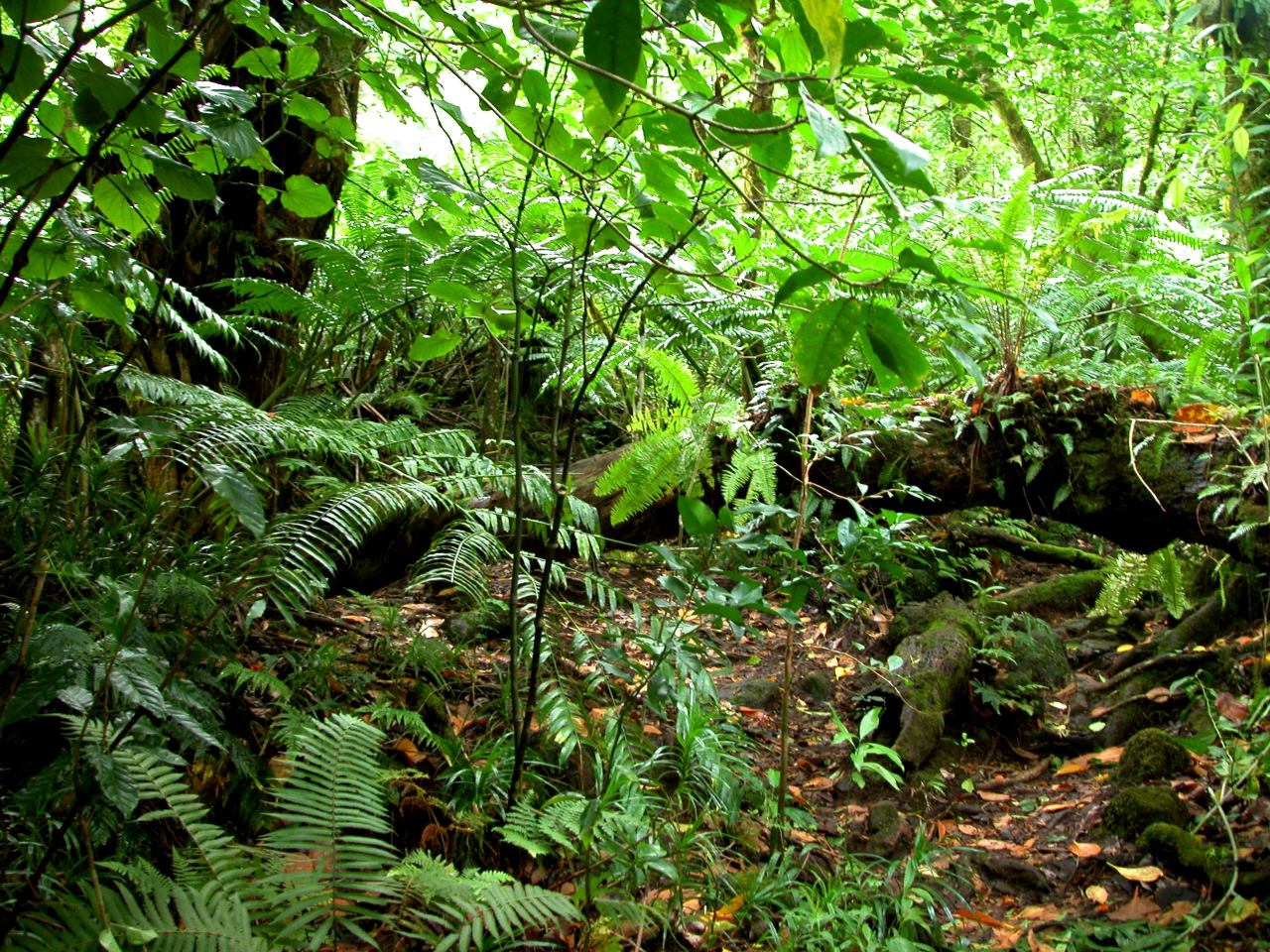
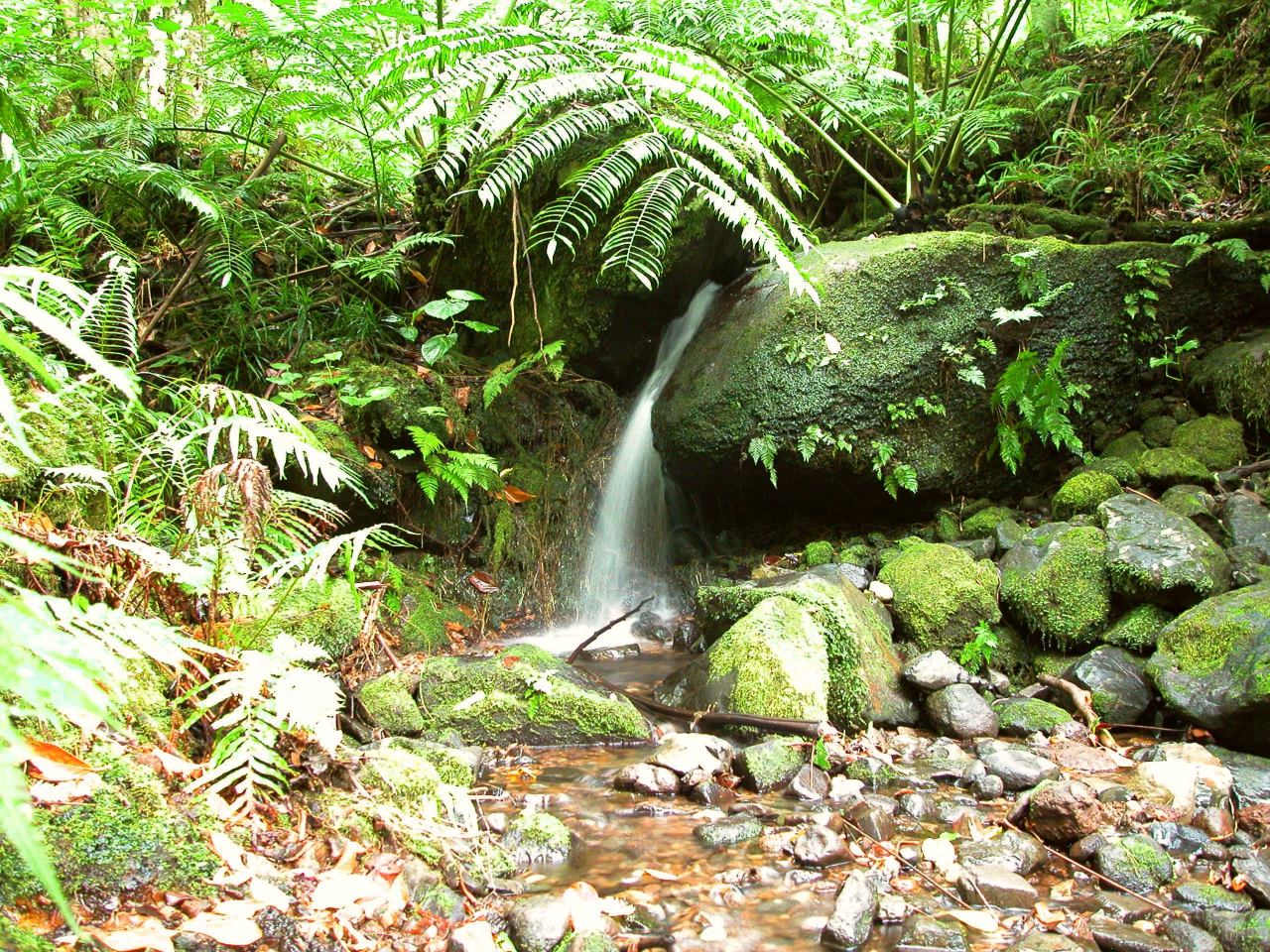
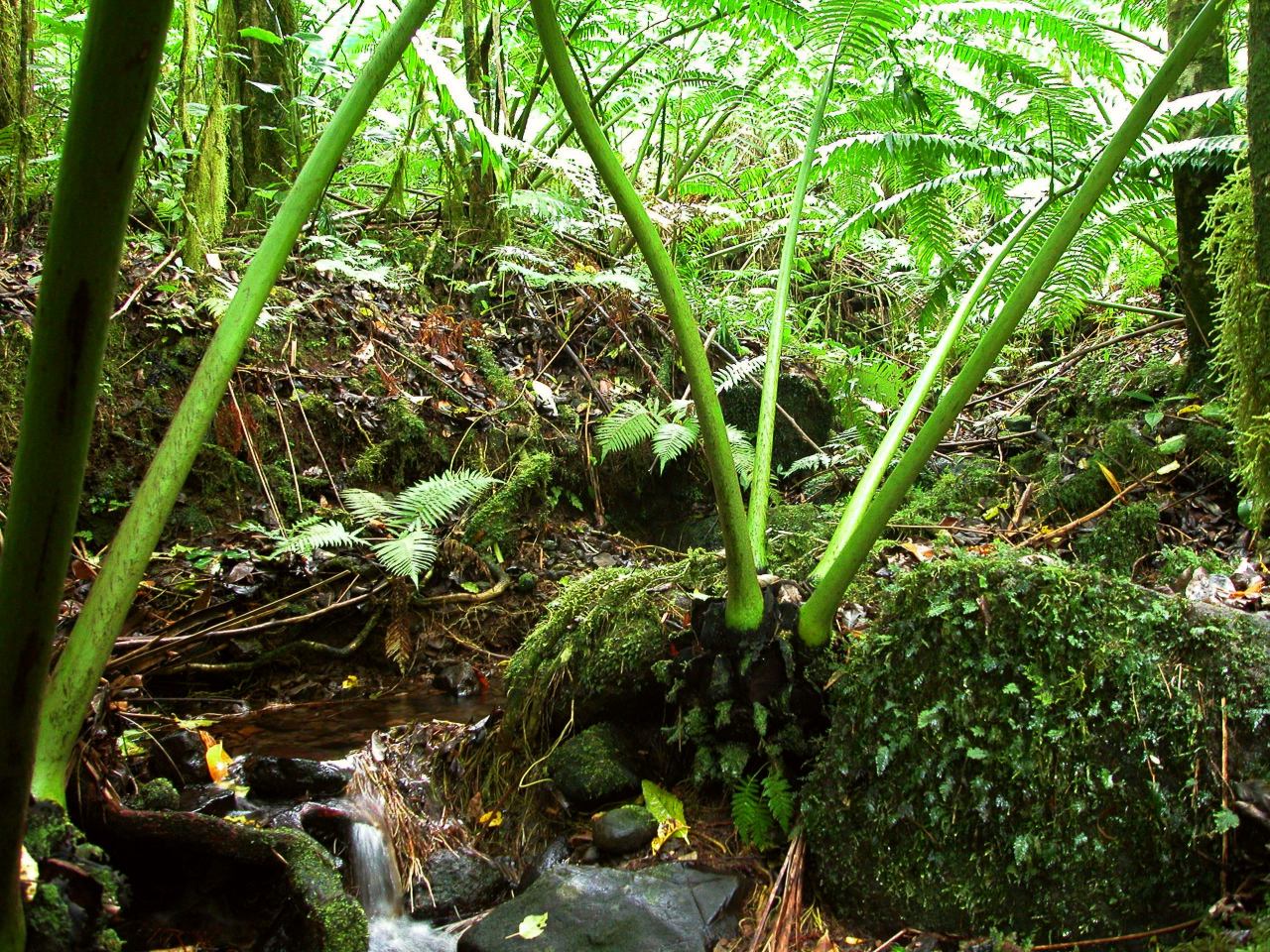
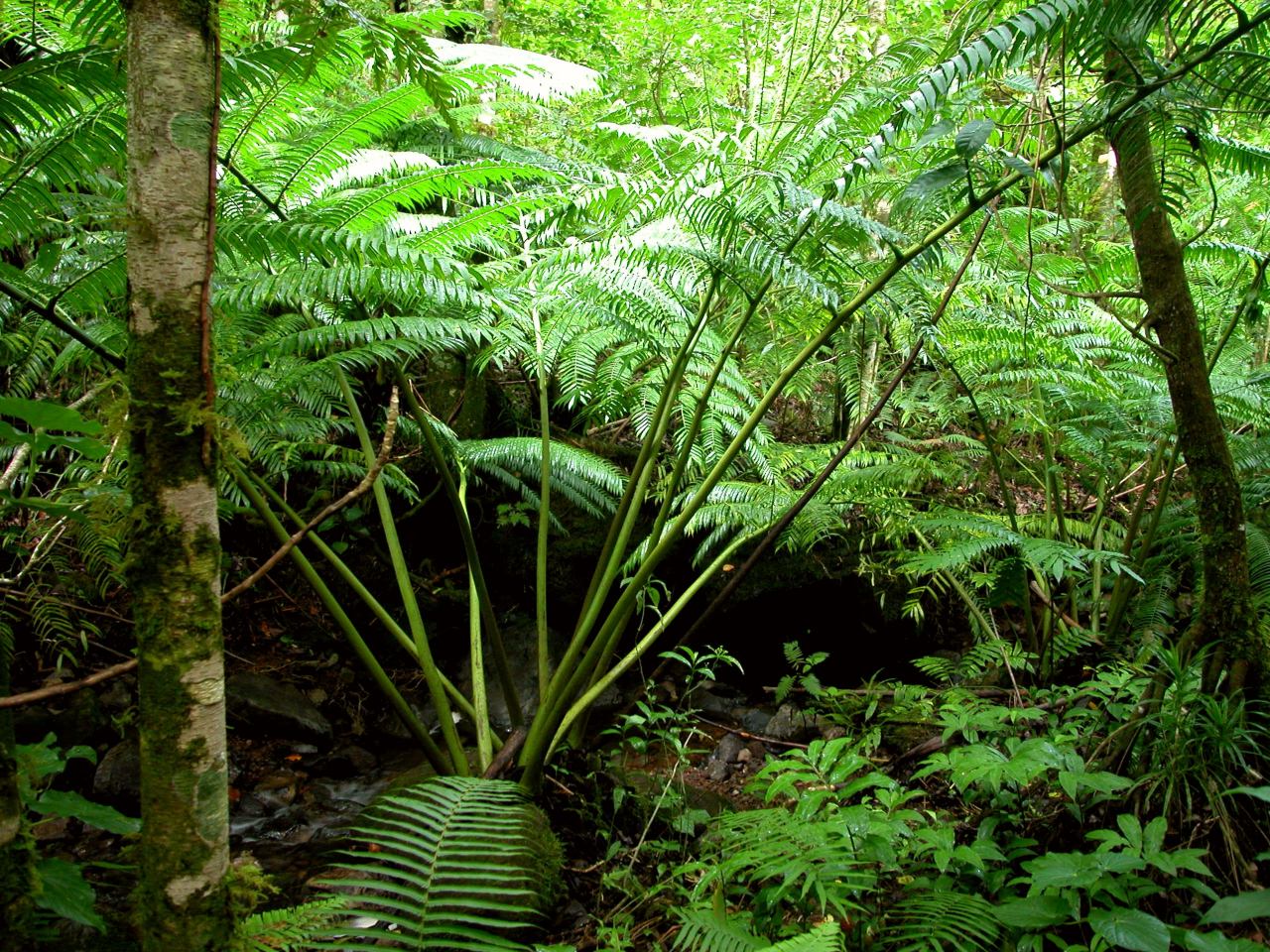
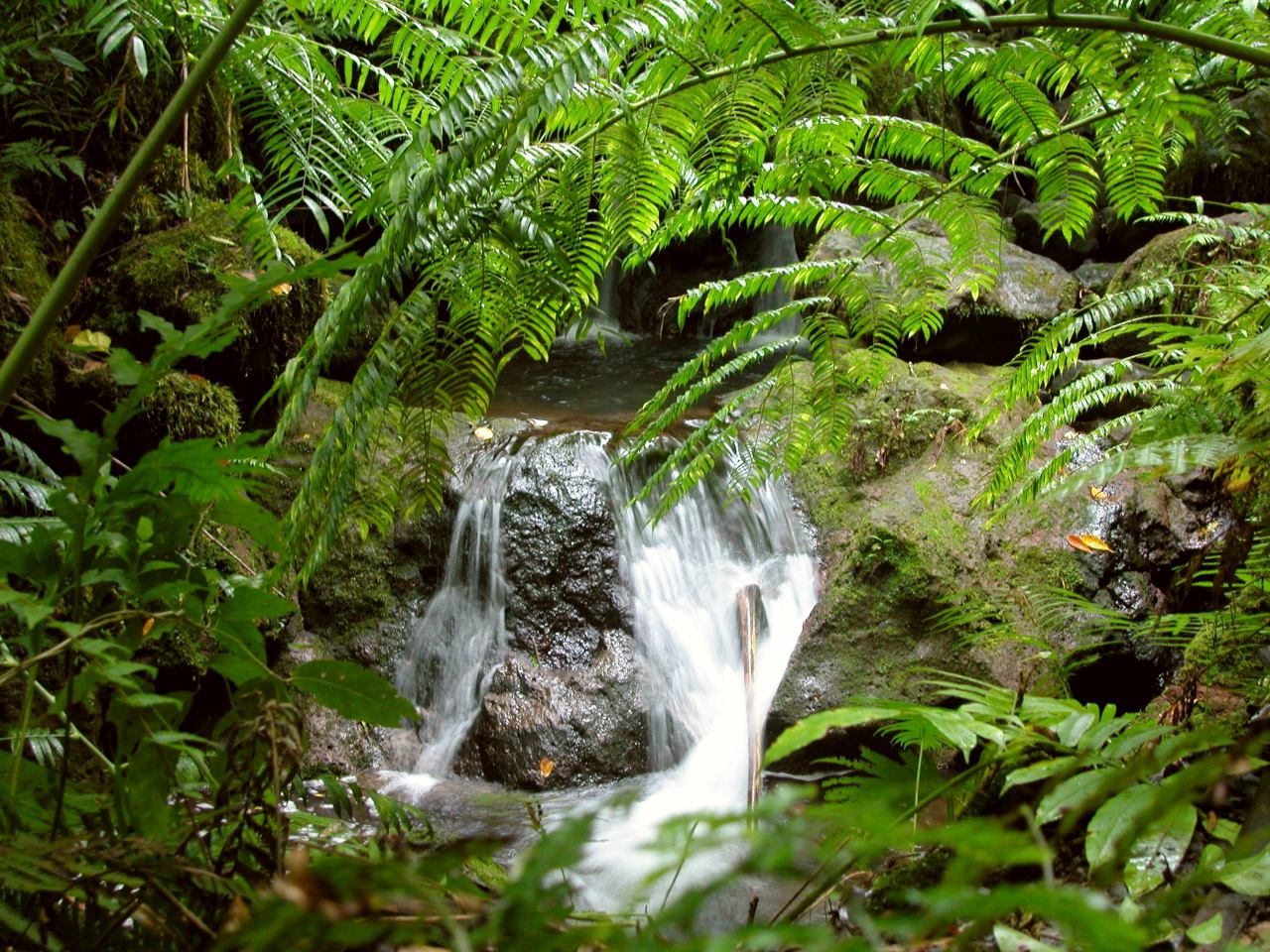
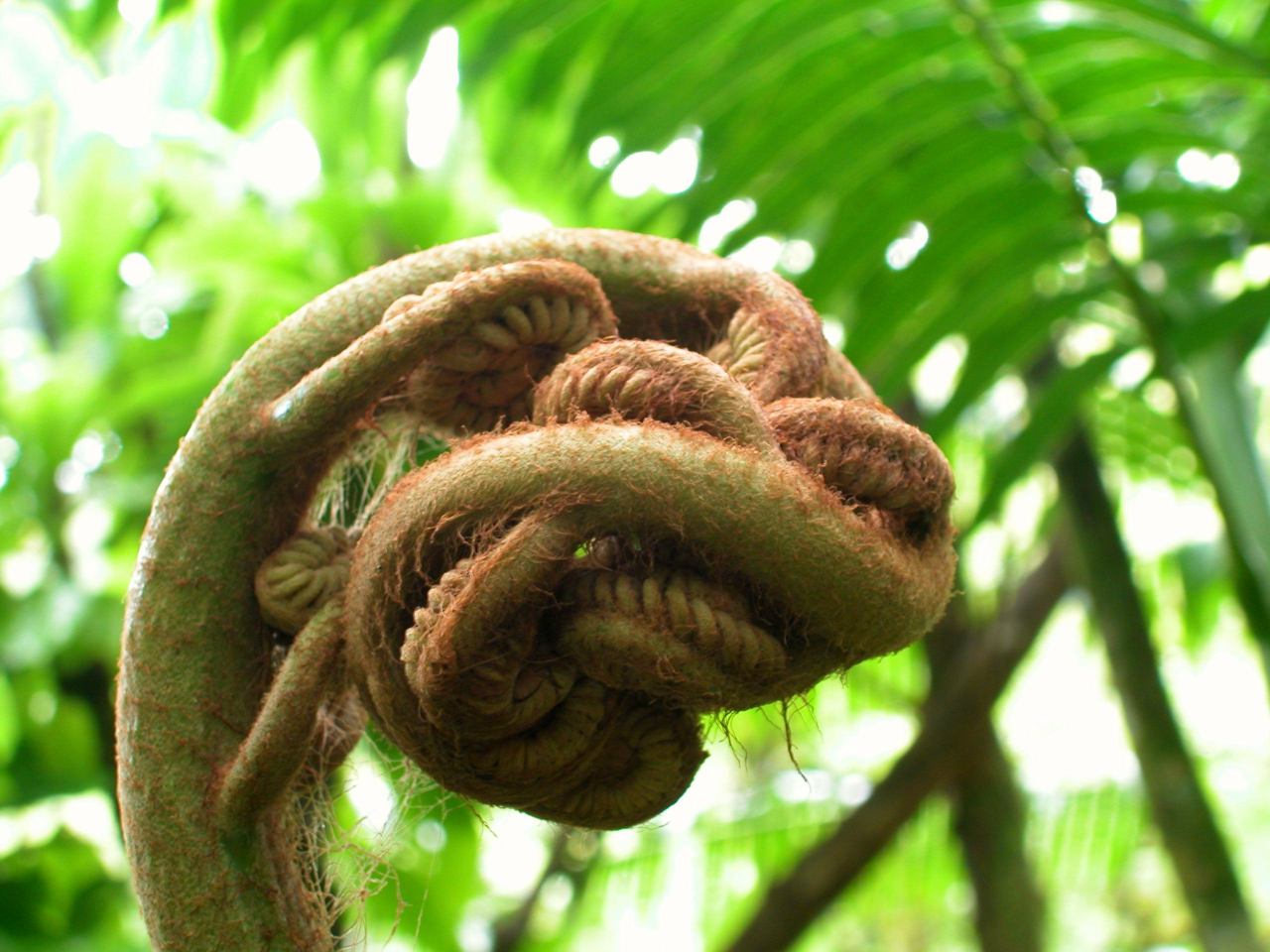
The guidebooks say the track is for walking in just one direction. They even recommend going up to the saddle and returning the way you came, because the track on the south side is a lot worse. That's what the books say. In real life you can say there's simply no track at all. You have to force your way along the bed of the stream, through dense undergrowth, sometimes in knee-deep water, hanging onto enormous ferns. Awful mud. The wet season in full swing, too, with rain coming down the whole time. This wild trail comes out at Wigmore's Waterfall. Beyond that there's tarmac. There's a deep pool at the foot of the waterfall. Local children swim in it, and not merely swim. They jump from rocks many metres up.
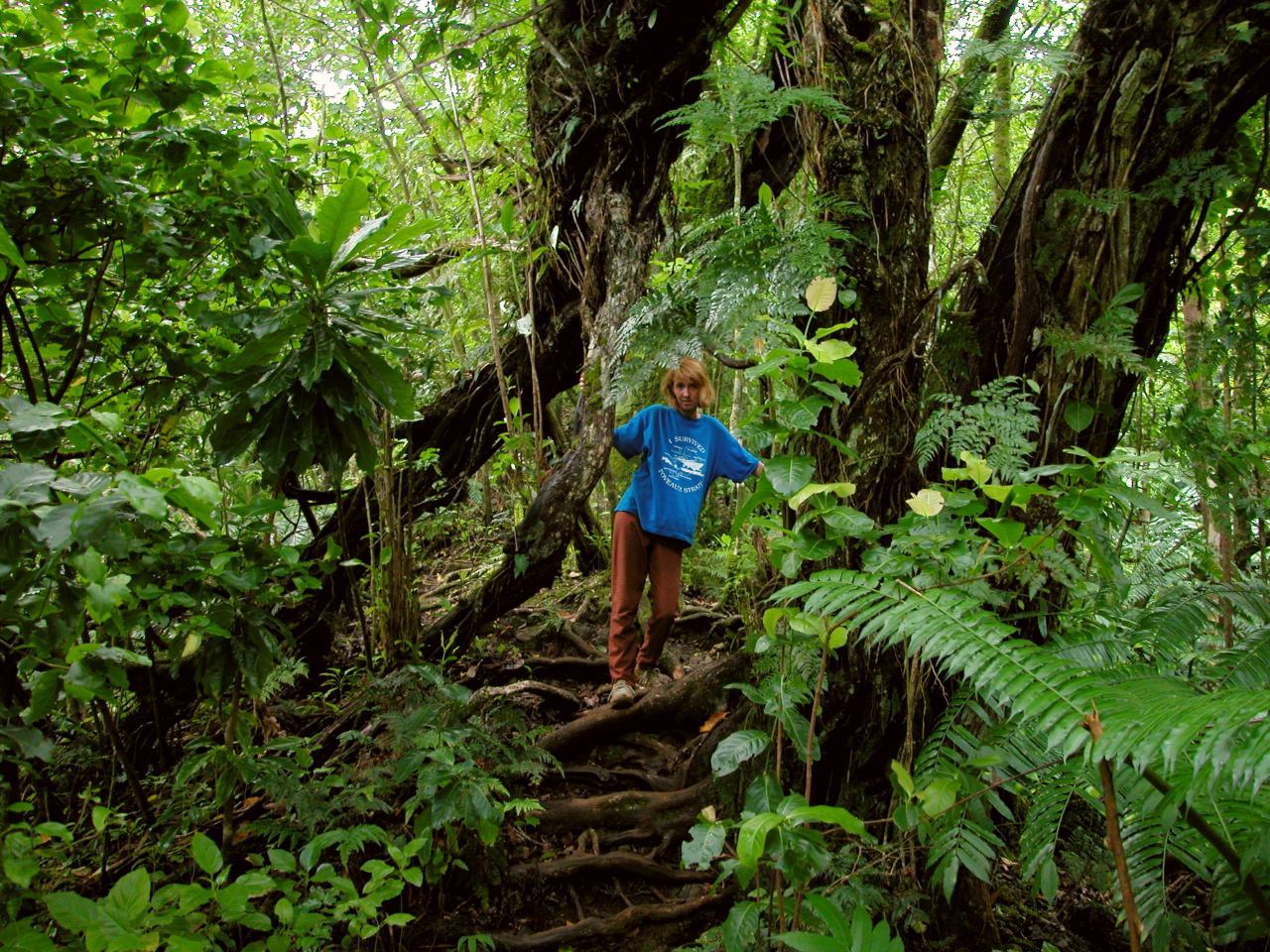
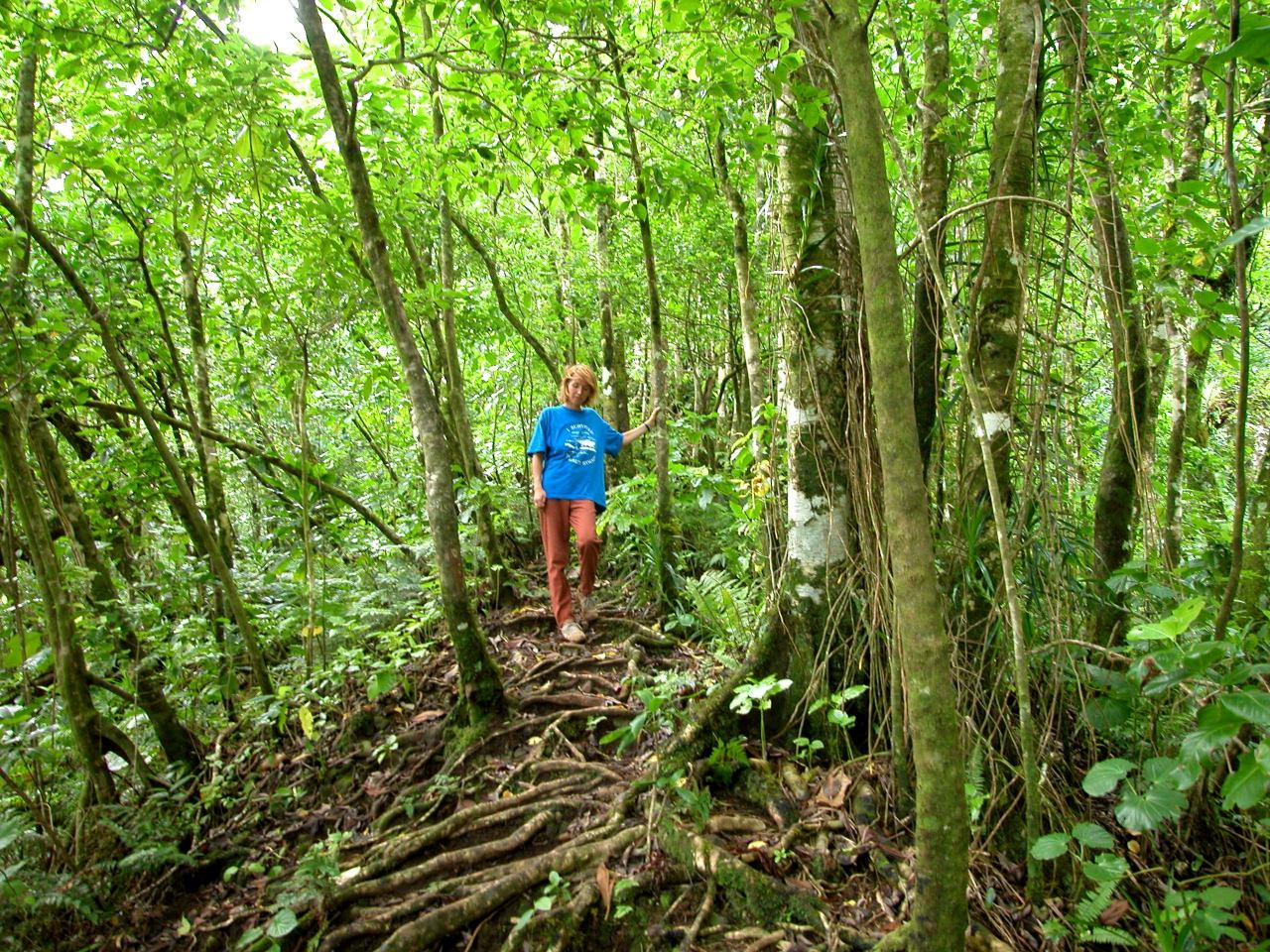
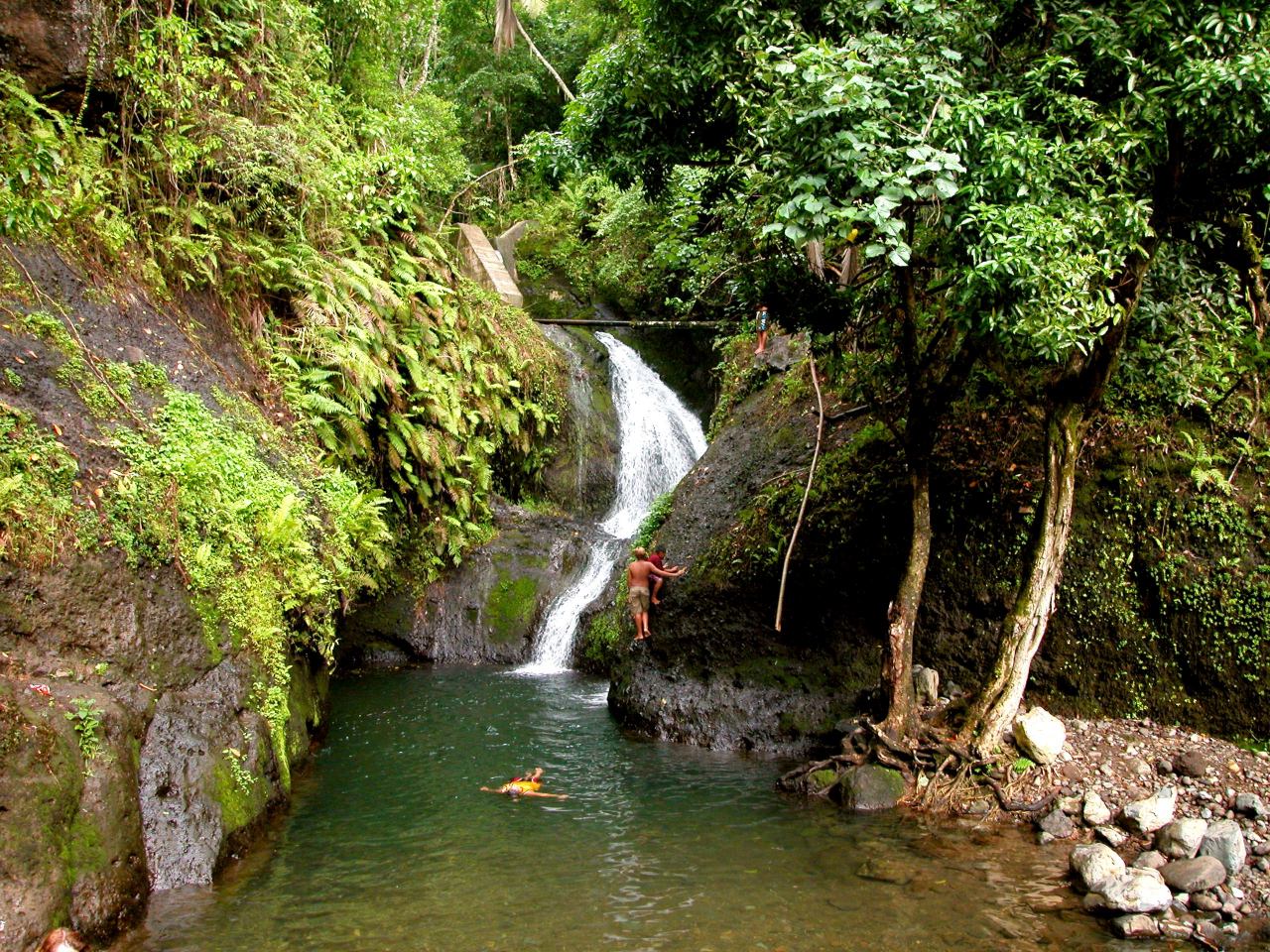
We were muddy from head to foot. Something had to be done. We couldn't get on a plane like that. Having found a secluded spot and a bar of soap we'd thoughtfully put in a pocket, we washed ourselves and all our things. They were wet, of course, but in that heat it didn't matter. In a few hours they'd be back in equilibrium with their surroundings and the clothes would have been damp whatever we did. We went back to the airport on foot. The last chance for a walk in warm summer weather, after all, and a better way to dry out. As the sun went down into the ocean, we found a bench and looked sadly at the scene. Tomorrow there'd be no such sun for us. The trip was over and Saint Petersburg was cold, dark winter.
When it got dark we went to an Italian restaurant and ate enough for the whole journey home.
The plane left at one in the morning. We had a long time to kill at the airport. Boarding was announced. We spent ages explaining where we were going. Nobody here had heard of Saint Petersburg with the code LED. The one in Florida, PIE, was familiar to them. One luggage tag wasn't even long enough. They had to print a continuation.
A man played the banjo in the room where they do passport and other checks. Once you clear the controls, the holding area is an open space with flowers and little benches.
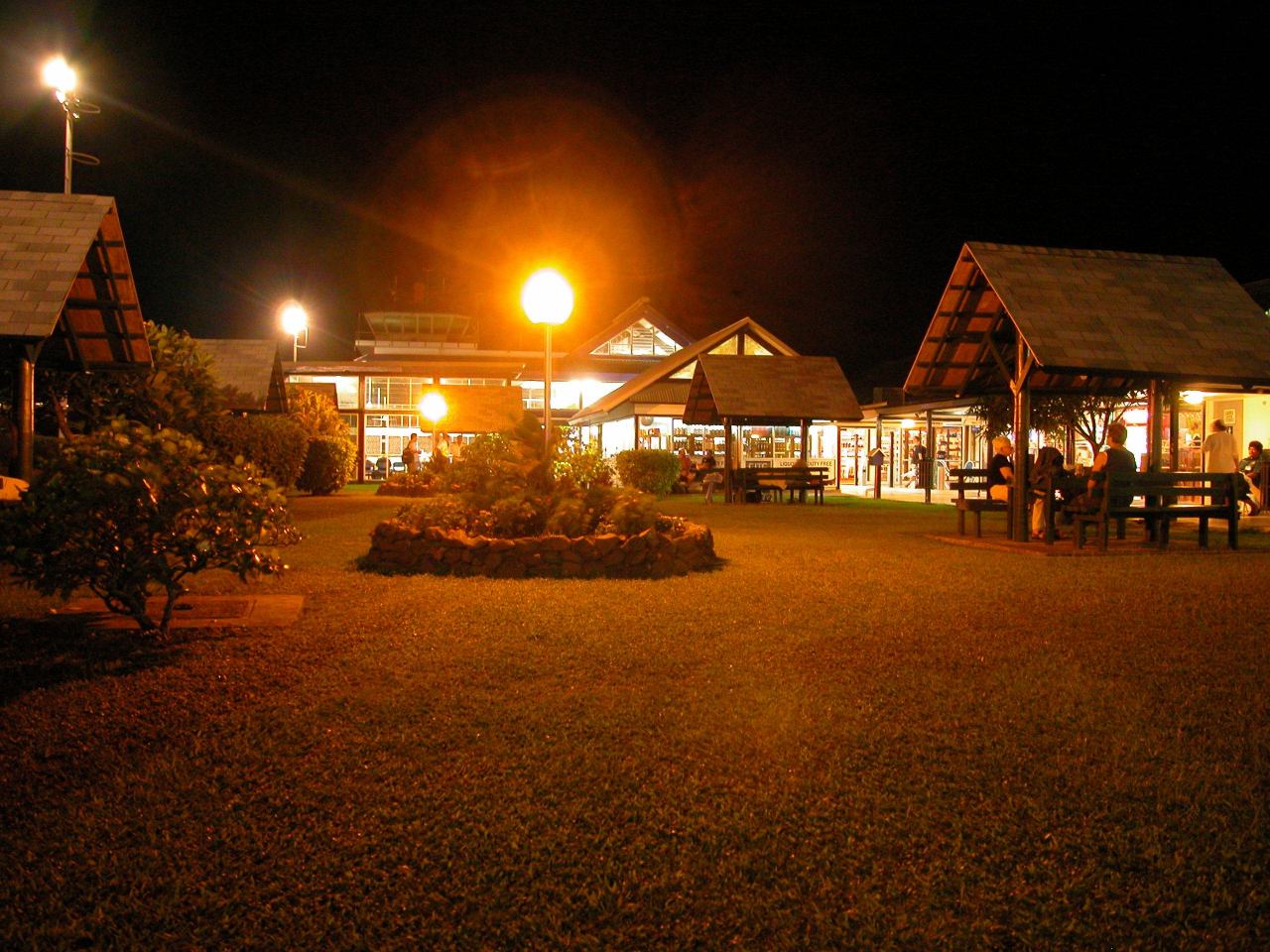
At the duty-free shop we bought some local coffee as a souvenir. By law you're not allowed to take it into New Zealand, yet here it was for sale. That's nothing: there were spears and knives for sale as well. Passengers have been searched and checked in their luggage. The perfect time to arm them.
Now we're climbing the steps onto the plane. It really is over this time. All that's left is to fly twenty-six thousand kilometres. Whatever you come up with, there won't be a flight longer than this one. The world turns out to be small. There just isn't anywhere farther to fly.
The Cook Islands are a splendid place for a quiet holiday by the sea. No wonders of service or spectacular amusements, but everything you need for civilised life is available. Most importantly, there are no noisy crowds of neighbours and no locals bothering you. It's ideal for a rest from people, lying in a hammock strung between palms, watching the sunset and thinking about the meaning of life.