Trip report
The Blue Bird, seen from behind · 28 April–2 May 2001
Come too close and it will slip away. Only the sky remains, calling you with the blue flash of its wing. After a song by Mashina Vremeni.
The dark winter that divided two centuries was over. It had been long and hard: trouble at work, endless inspections, licensing, court cases, a dented car. The list goes on. The winter trip to Africa had fallen through. How we had waited for the day when the birds would finally start chirping instead of the street disappearing into freezing fog, and we could get ourselves ready for an expedition like Tarasik the little white mouse. A small expedition, perhaps, but our first in the new century.
The moment seemed to have arrived. It had been warm for some time and no serious frost was expected. The spring flood had already gone down, but that did not matter. We could always choose an easy river that did not need floodwater. We settled on the Mda, a small tributary of the Msta in the north-east of the Novgorod region.
My car was finally repaired and ready for long journeys, including a first trial run before Norway. The day before leaving I went to get the wheels aligned. The sight of the car up on the lift put an end to that. The steering rack we had repaired was leaking, and the boot protecting the bearing on the steering shaft had come off. The wheel still turned, but that would not last. It would be cruelty to take my beloved white horse down a dirt road without the boot. Nor could I get it fixed overnight. A steering rack is delicate work, beyond the powers of any Uncle Vasya with a toolbox.
There was a way out. The Sochavas had a champagne-green Escort estate, practically new by our standards, and it could carry the kayaks and all of us just as well. It had led a dry life in the garage, so we had every confidence in it. We would take their car.
At home there were two pieces of news. The first was that Tanya had decided to fall ill. Her temperature was 38 °C, and she lay there groaning pitifully, though she still meant to come. The second was a registered letter. I was expecting one from Kamchatka and one from Moscow with my contributor’s copies of the magazine carrying my article about Turkey.
I hurried happily to the post office in the morning. Alas, it was another attempt to get me to sign for a court summons. I saw through the enemy's plan and refused to surrender alive, on the grounds that I did not have my passport. It still spoiled my mood. Tanya lay on the sofa taking her temperature over and over. It was already ten and the Sochavas were nowhere to be seen. What a miserable morning.
At last the bell rang. Soon the familiar road to a spring trip was flashing past the windows. The Murmansk Highway leads to the Veps country, to Karelia, and in a sense to all our spring trips. It was the last working day, so there were no dacha owners out like the first snowdrops. The roads were dry and we made good time, with occasional breaks to talk to traffic policemen hungry for the holidays.
The route started near Nebolchi. We went via Tikhvin and Boksitogorsk, a road I remembered well from 1983. Shortly after Boksitogorsk the paving gave way to dirt. The poor Ford shuddered over all the cobbles that had broken free of the soft road surface in time for spring. We crossed the Syas at the bridge where we had started our 1997 trip. The water was very low, a good two metres below what we had seen that spring. No cheerful rapids this time. It looked as if we would paddle along the bottom of a deep ditch.
In Nebolchi we had a pleasant surprise. A road had been built between our put-in and our take-out, and a direct bus already ran along it. We bought the last few things and drove down to the river. The current was running fast and the sight of freedom sent a shiver through me. Even a sick Tanya made a sudden recovery and rustled cheerfully about, stuffing things into dry bags. We left the car in the nearest yard, listening as usual to warnings that the river was treacherous and that people periodically drowned in it.
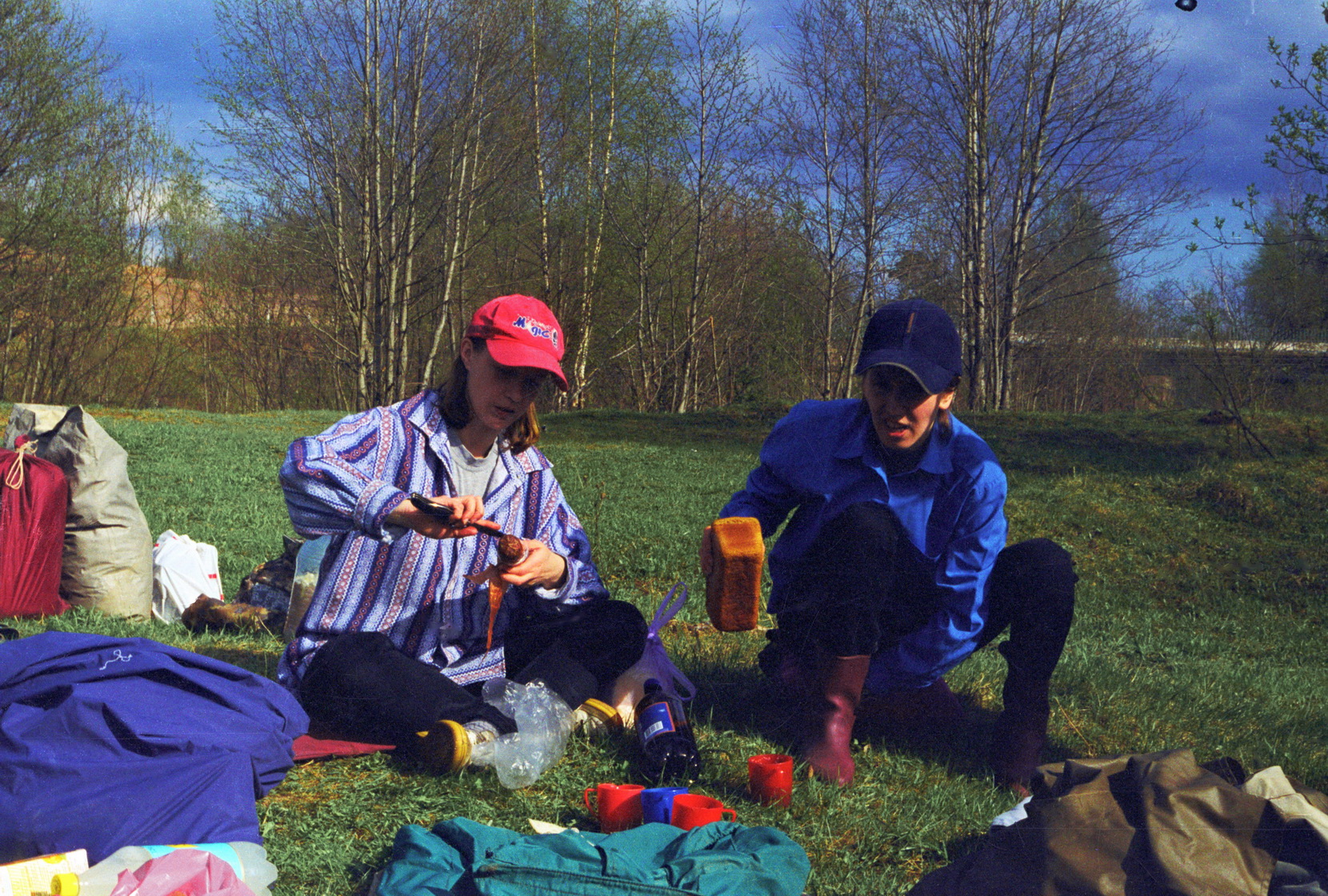
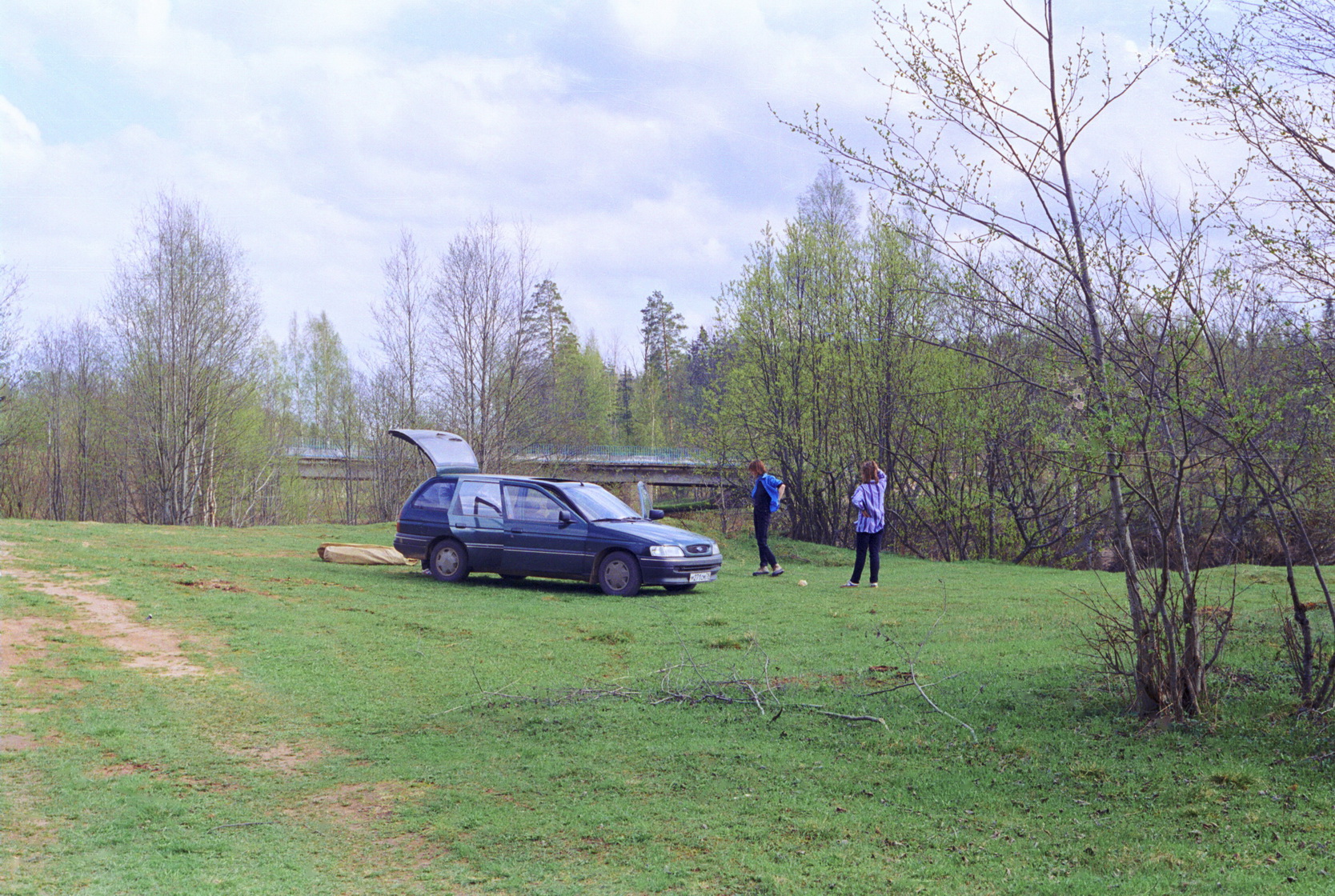
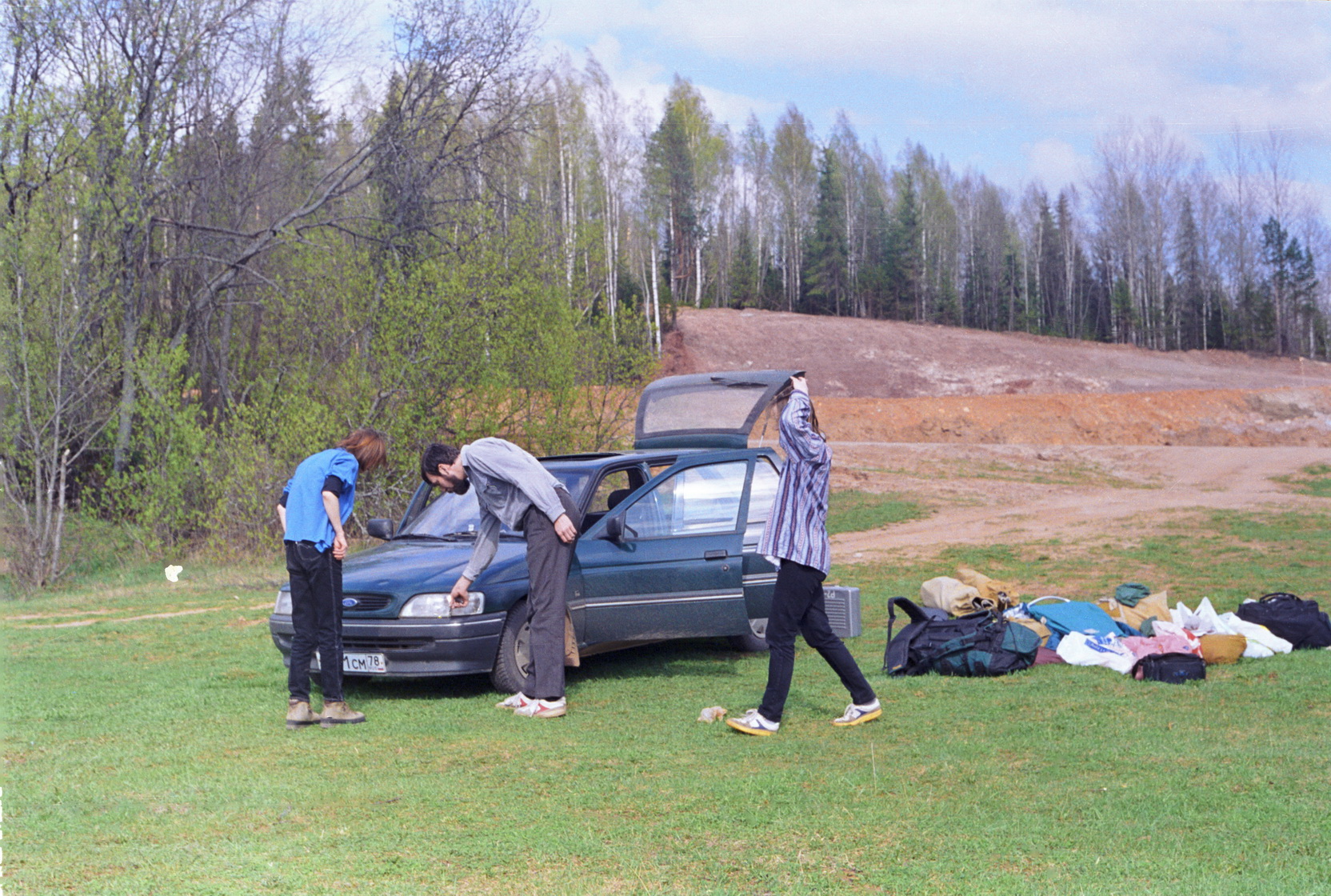
Down the Mda
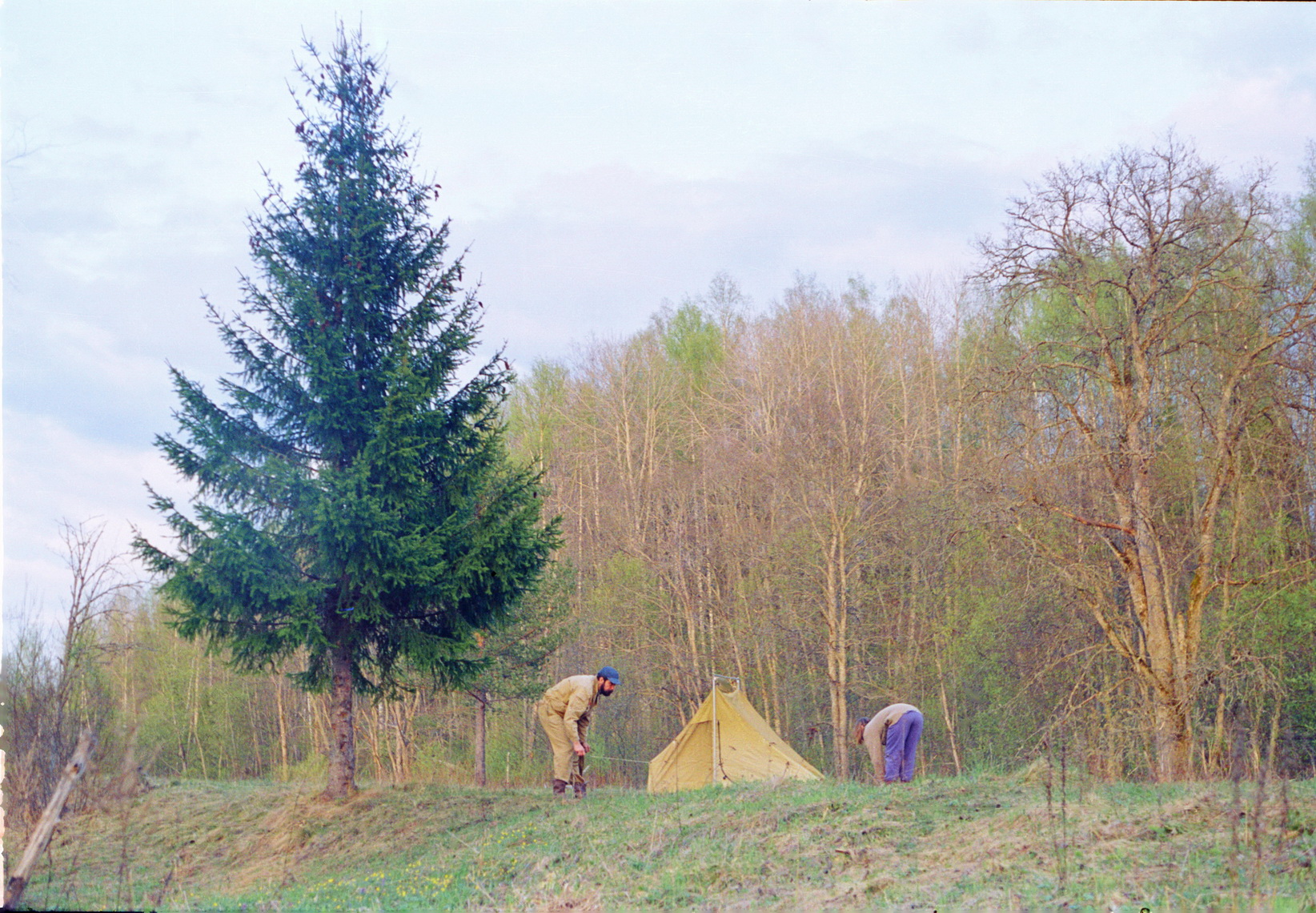
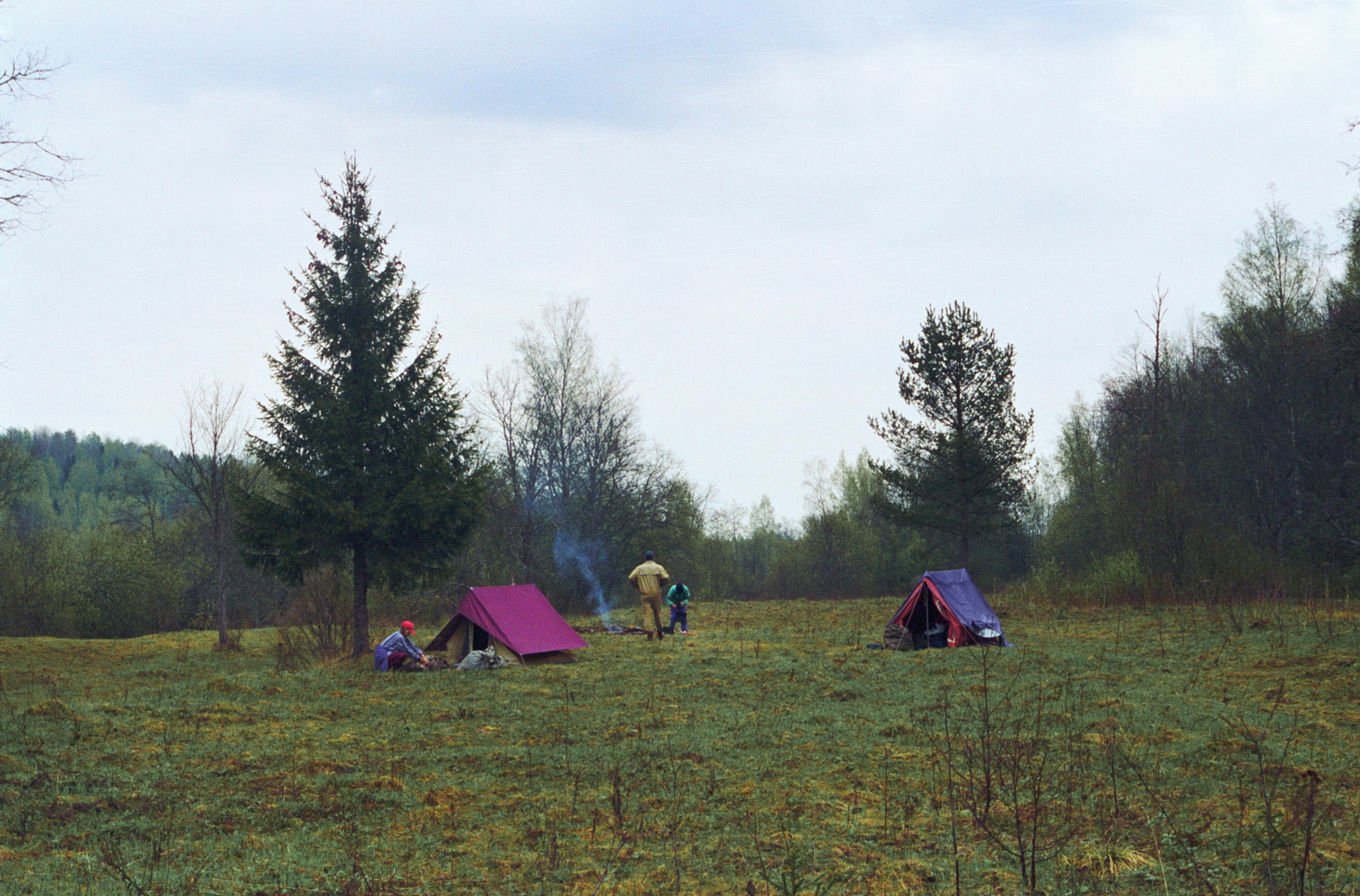
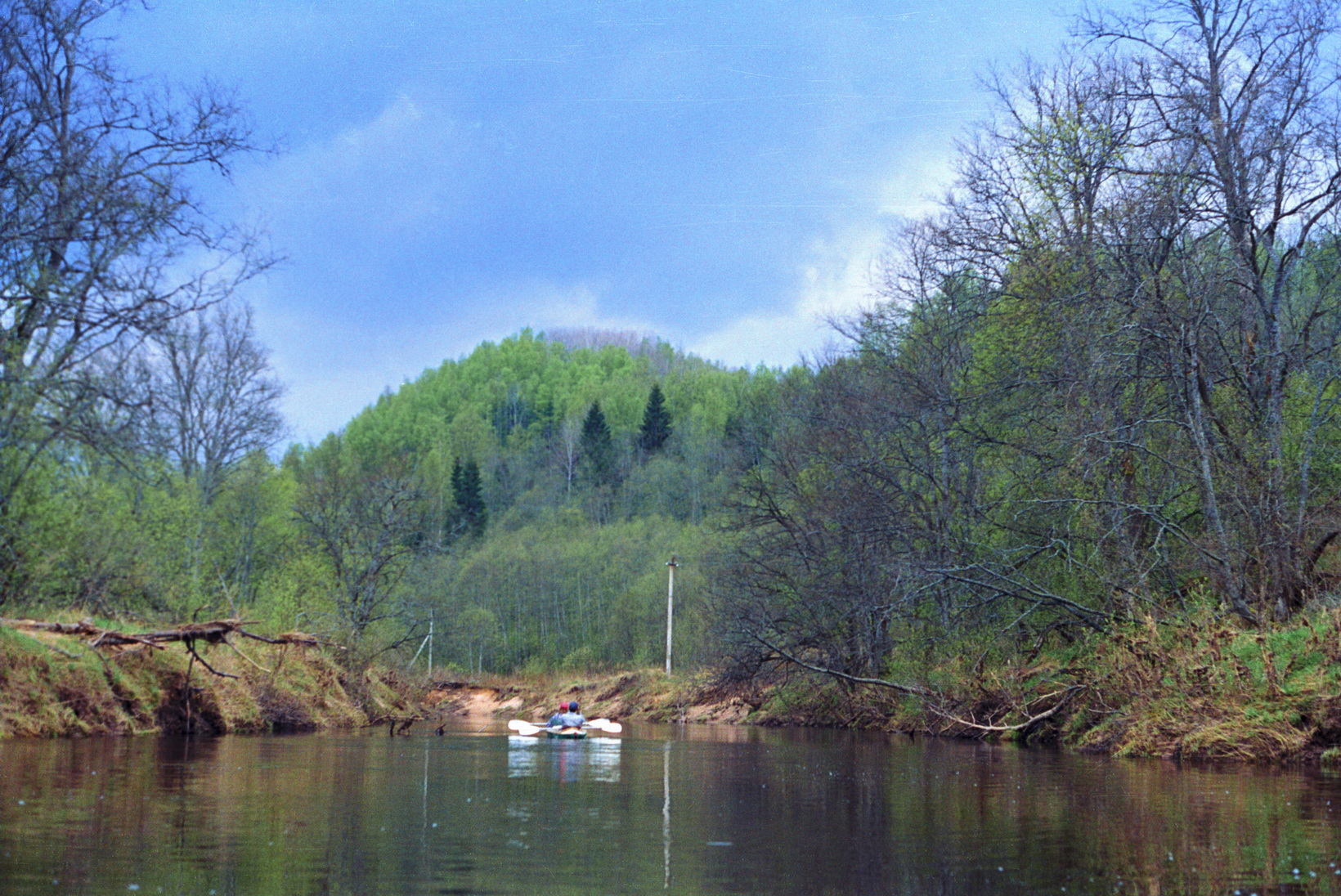
For the first few kilometres the river follows the Nebolchi–Budogoshch road. The traffic was fairly heavy. So much for wilderness. The map showed that the road would stay with us for longer than the few hours of daylight we had left. We looked for a campsite where at least we would not see the cars (59°05.765′N, 33°10.907′E). That was not entirely possible, but we were on the other bank with no bridge in sight, and our side felt quite wild. At the ford over a nearby stream we saw fresh tracks of wild boar and wolves.
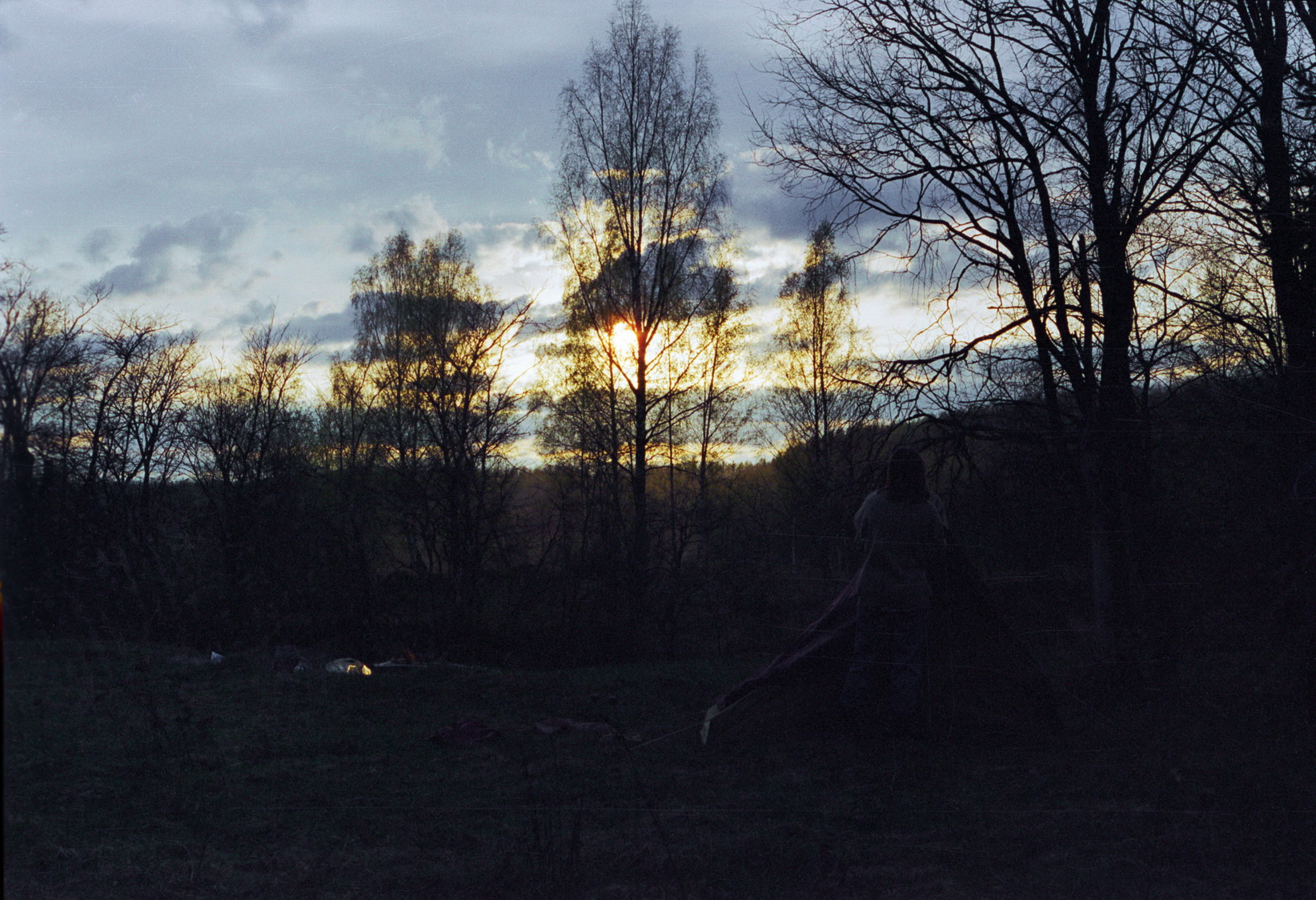
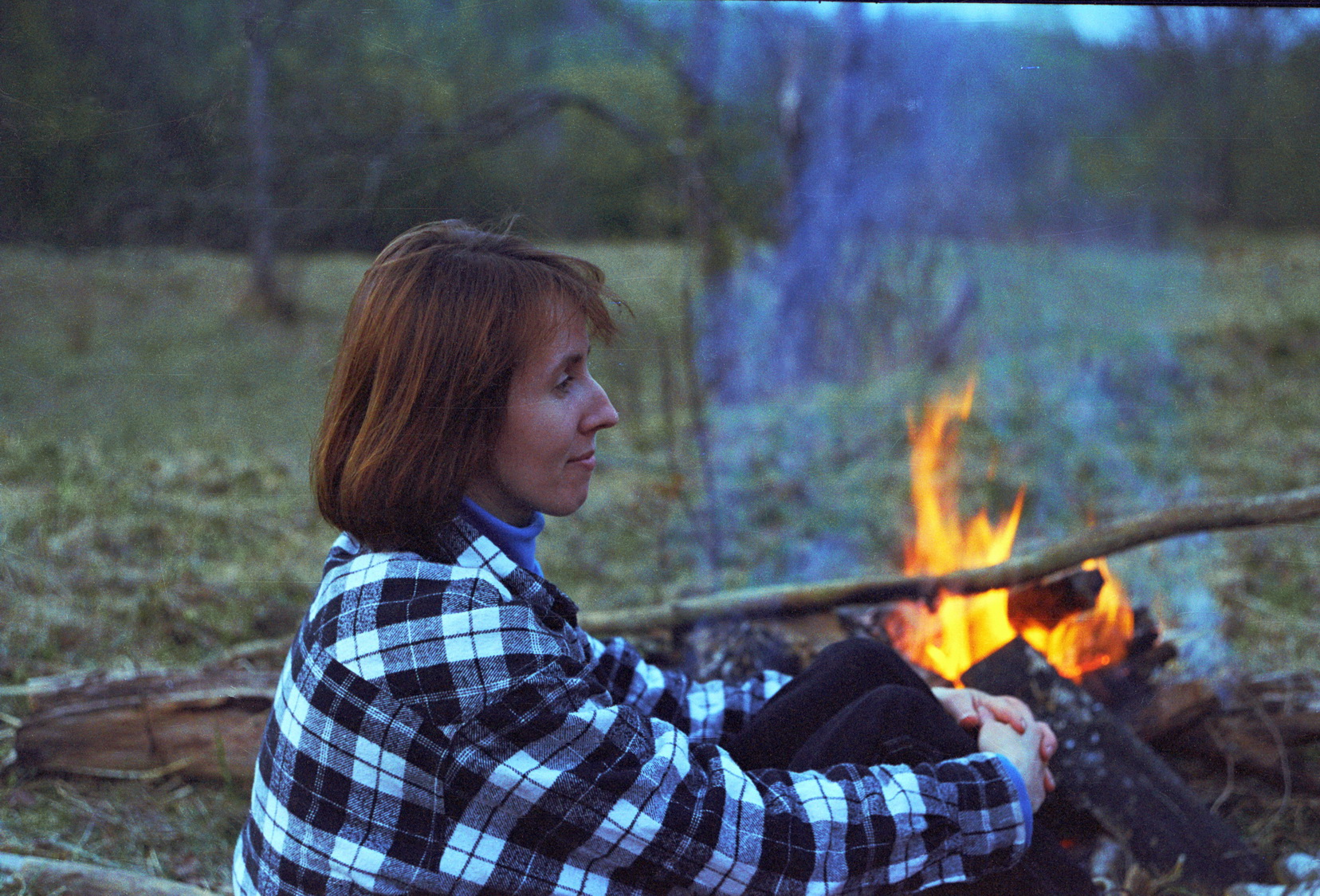
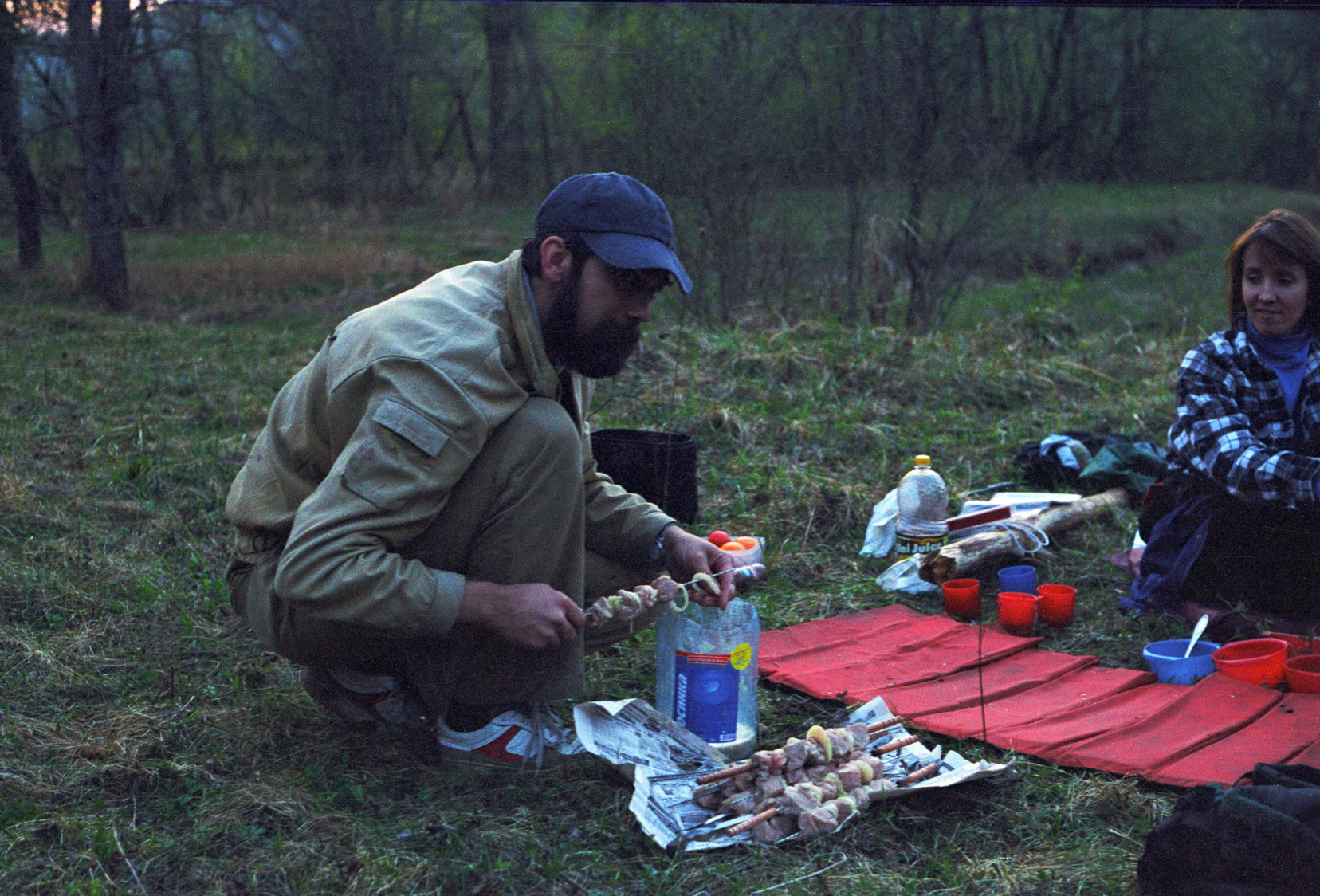
We began our celebration dinner with shashlik and cake. There was plenty of firewood, with an oak and an elm nearby full of dry twigs. By the time the kebabs were ready, the first stars of the spring sky were coming out. At our latitude we see those stars only in spring. Leo, Virgo, Corvus, Libra… The names alone are enough to lift the heart in spring. The shashlik was a triumph. We ate our fill and were just settling into the laziest trip imaginable. Nature, it turned out, was wide awake and plotting something.
The pot of boiling water on the fire decided to fall, of all places, on the middle of my peacefully reclining body. At least my reflexes worked. In a fraction of a second I arched my back into a bridge worthy of a school gym lesson. The damage was limited to wet trousers and a sensation of heat, with no serious burns. That was that. We stayed awake late arguing about NTV, betrayal, freedom and the state.
In the morning we sleepily packed up. There was no rush. We had four days for a route that could be done in two. At the next village, Ustye, we arrived and I remembered I had left our axe behind. The axe was ten years old. Ten years to the day, on the Luga, I had lost its predecessor. Then, on Myukkerikki Island in Lake Ladoga, I had cut a rowan handle and fitted my grandfather’s personalised axe head to it. I had to go back. We had been on the water no more than twenty minutes, but it was not that simple on foot. The road I was counting on turned out to follow the Mdinka, a small, very fast tributary. Lovely, but not where I needed to go. I had to push through the thicket. It was too hot and humid to wear a jacket, while every tick on every spruce seemed ready for action. Turning back to the kayak was too dispiriting, so I pushed on, constantly feeling my head. Nothing terrible happened. It seemed as if the ticks preferred the edges of the forest. The banks were high and cut by ravines, while the valley was full of oxbow lakes. The GPS said two kilometres as the crow flies. It took me forty minutes to cover them one way.
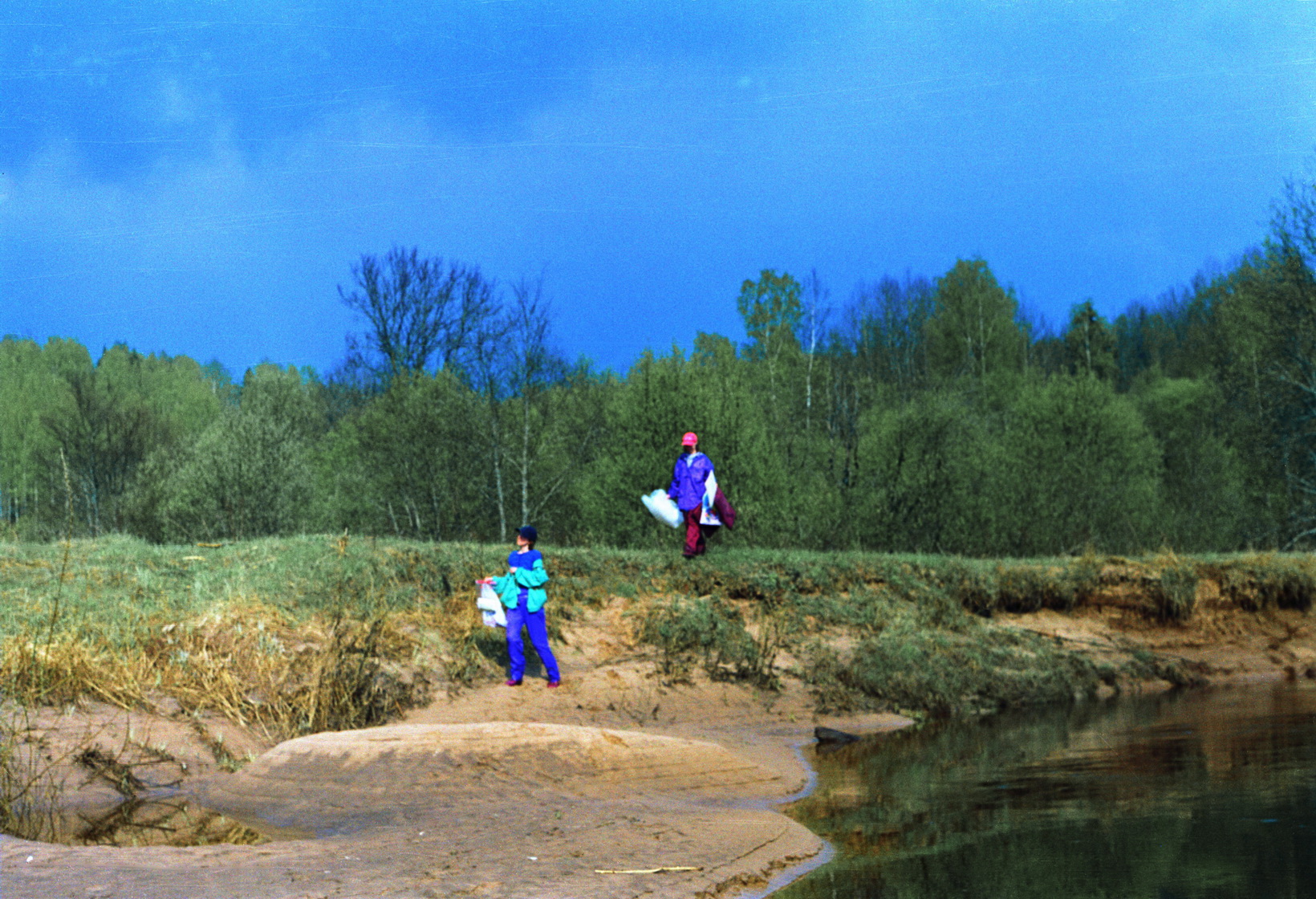
The axe was right where I had left it. The walk back felt shorter with it safely in my hand. The rescue operation took an hour and a half.
Not long after we set off again, dark clouds gathered and thunder began to rumble. Our first thunderstorm of the season, not even in May but in April. In all our years of paddling we had never seen that. Snow, certainly, but no spring thunderstorm. Rather than paddle in the rain we sat under a sheet of plastic on the bank and ate cake with a can of beer.
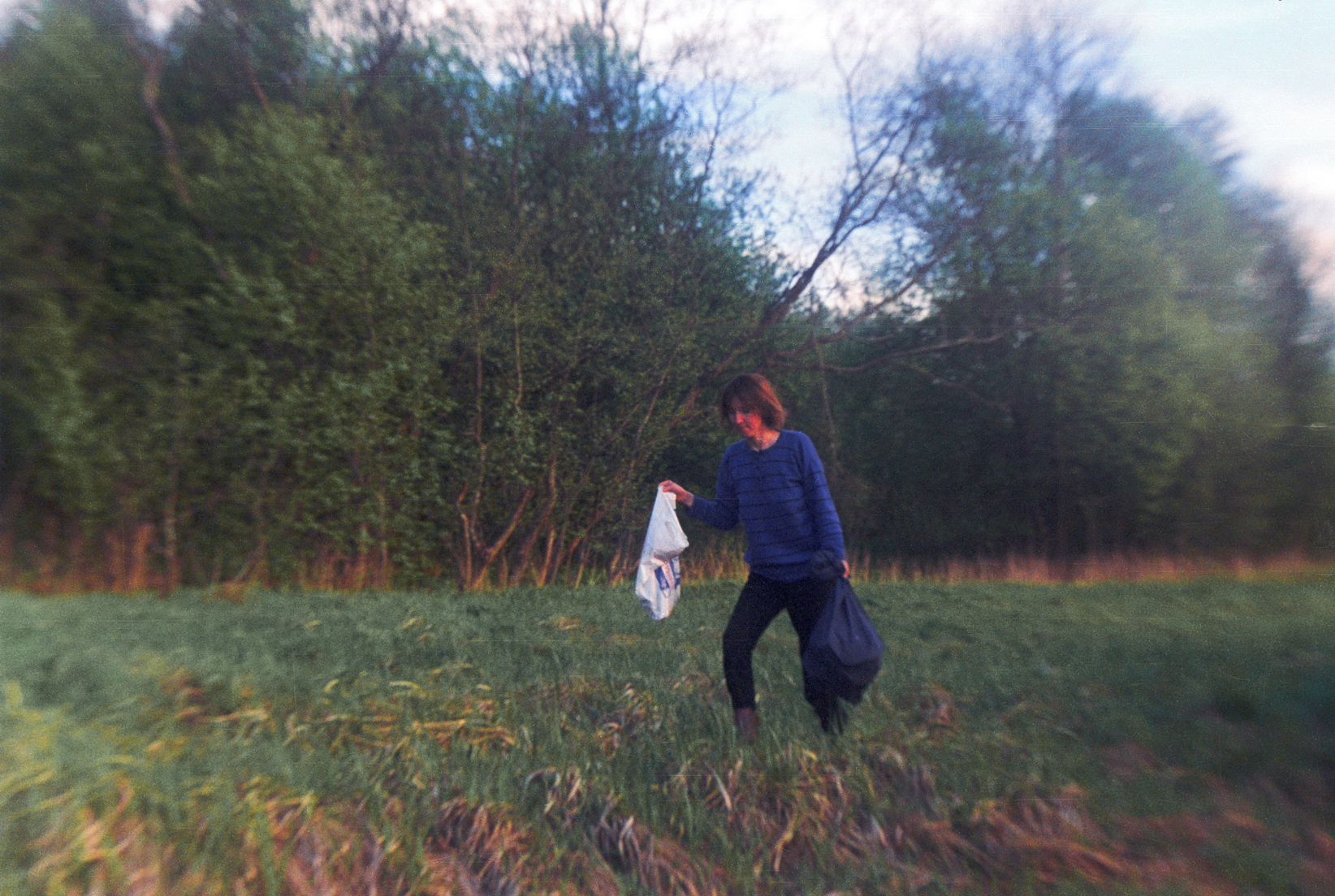
The rain soon passed and the warm spring sun came out. The world was bright and beautiful again, with water droplets glittering on the bushes. Sasha spotted the willows and cut branches for basket weaving. The Sochavas’ younger daughter had started with beadwork, then broadened her horizons and took to weaving anything she could.
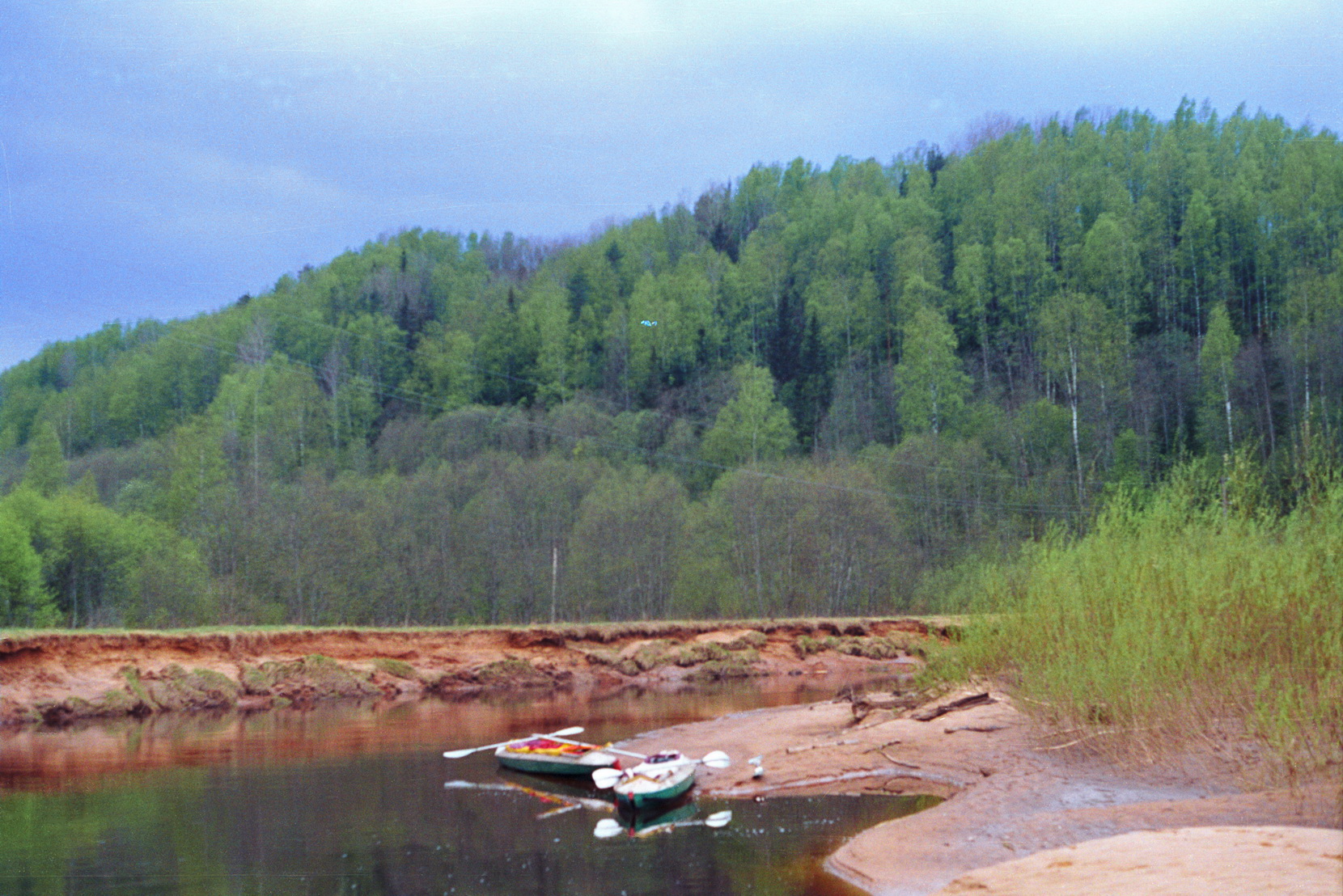
Soon after we set off, a low concrete bridge in Usadye made us unload and drag the boats through. After that the country grew more remote. The road finally left the river and we entered wild forest. Beavers ran along the bank and plunged noisily into the water. A bird we had never seen before flashed past, bigger than a sparrow and smaller than a thrush. It flew just over the water for a hundred or two hundred metres at a time, sometimes gliding, but the important thing was that its tail feathers were blue! The evening was drawing in and we needed a camp. A bend happened to have two small spaces for our tents (58°58.206′N, 33°04.855′E). It was a very cosy spot, lit by the red evening sun. We could see the river from the tent. I love little campsites like that.
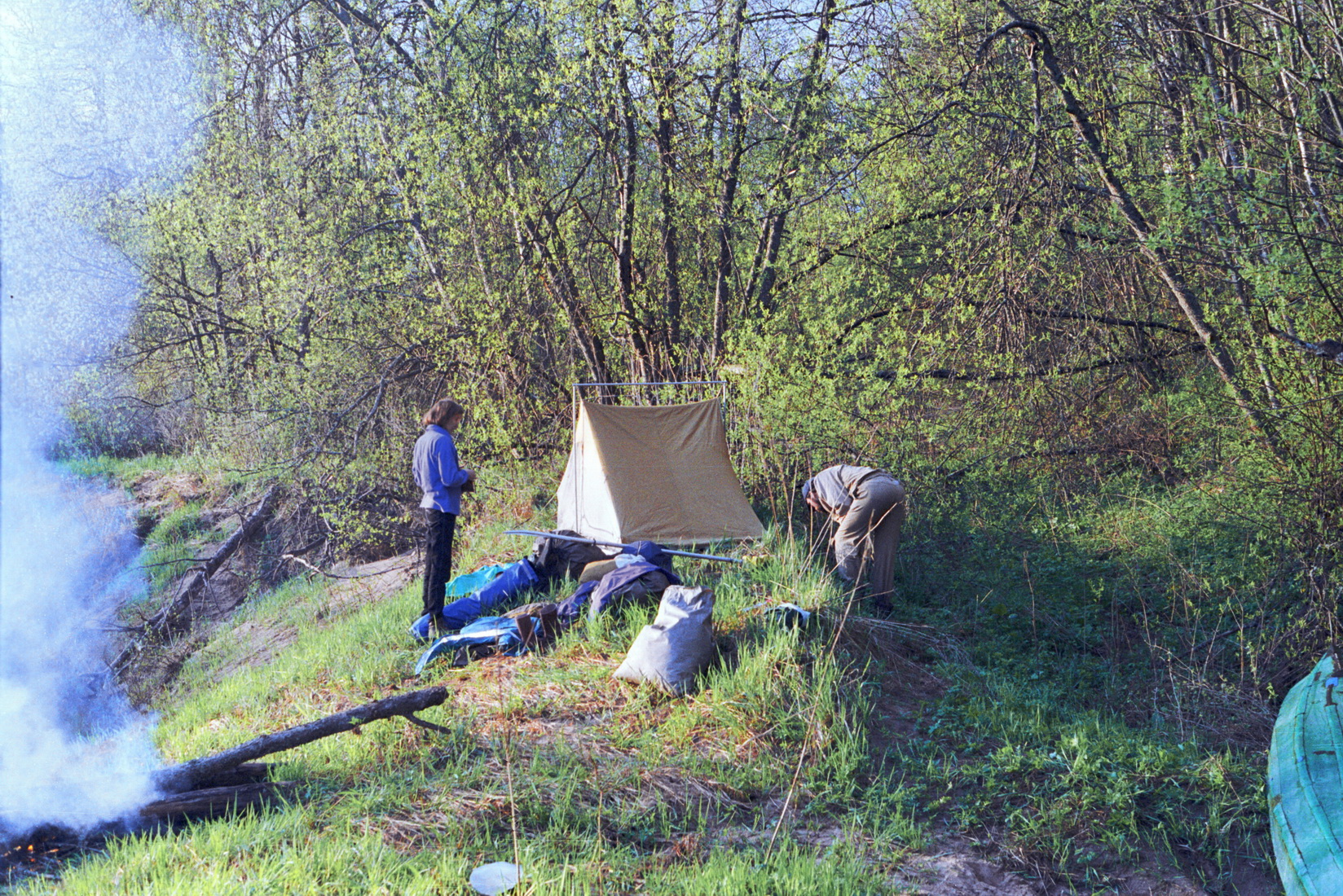
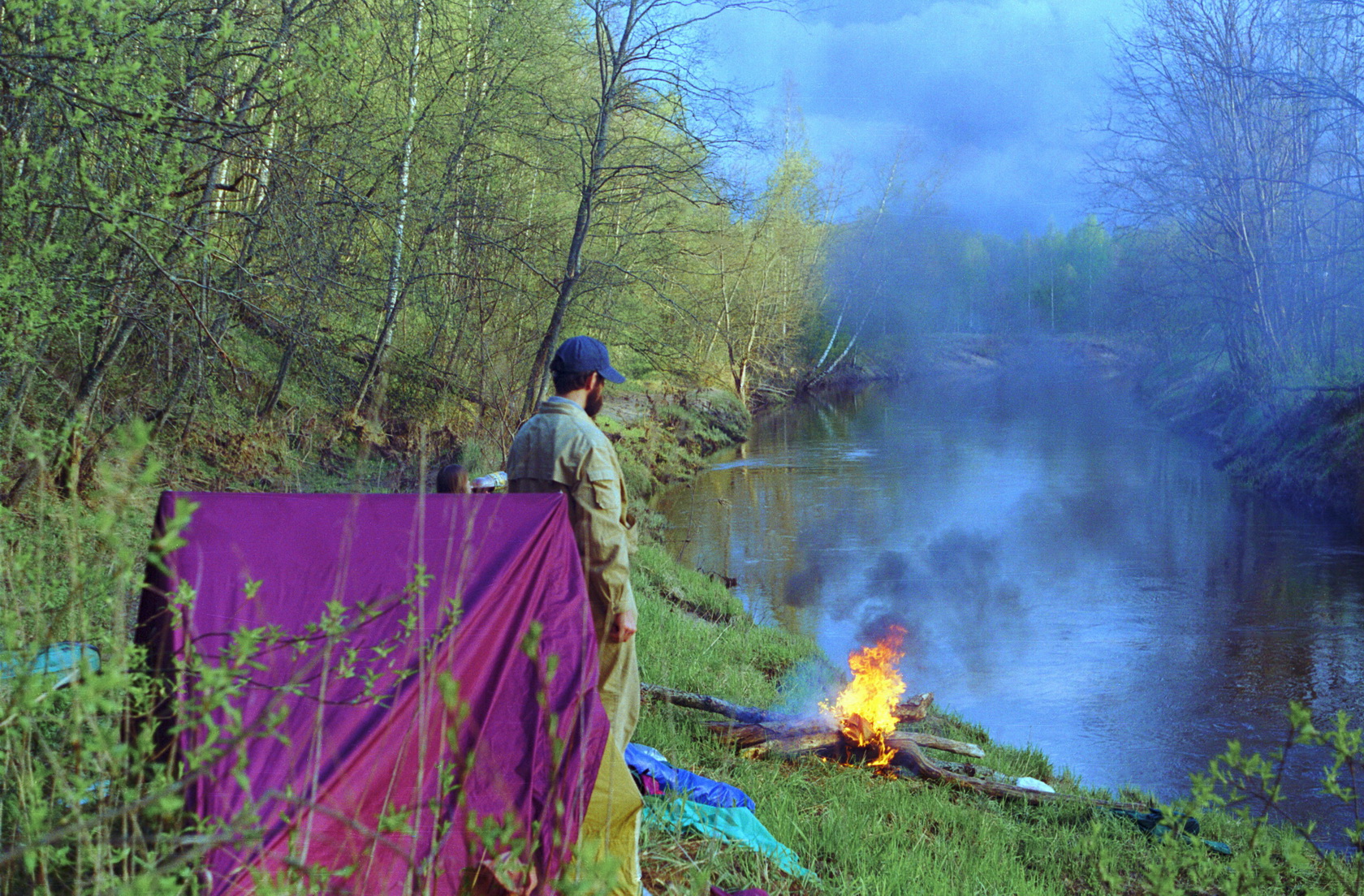
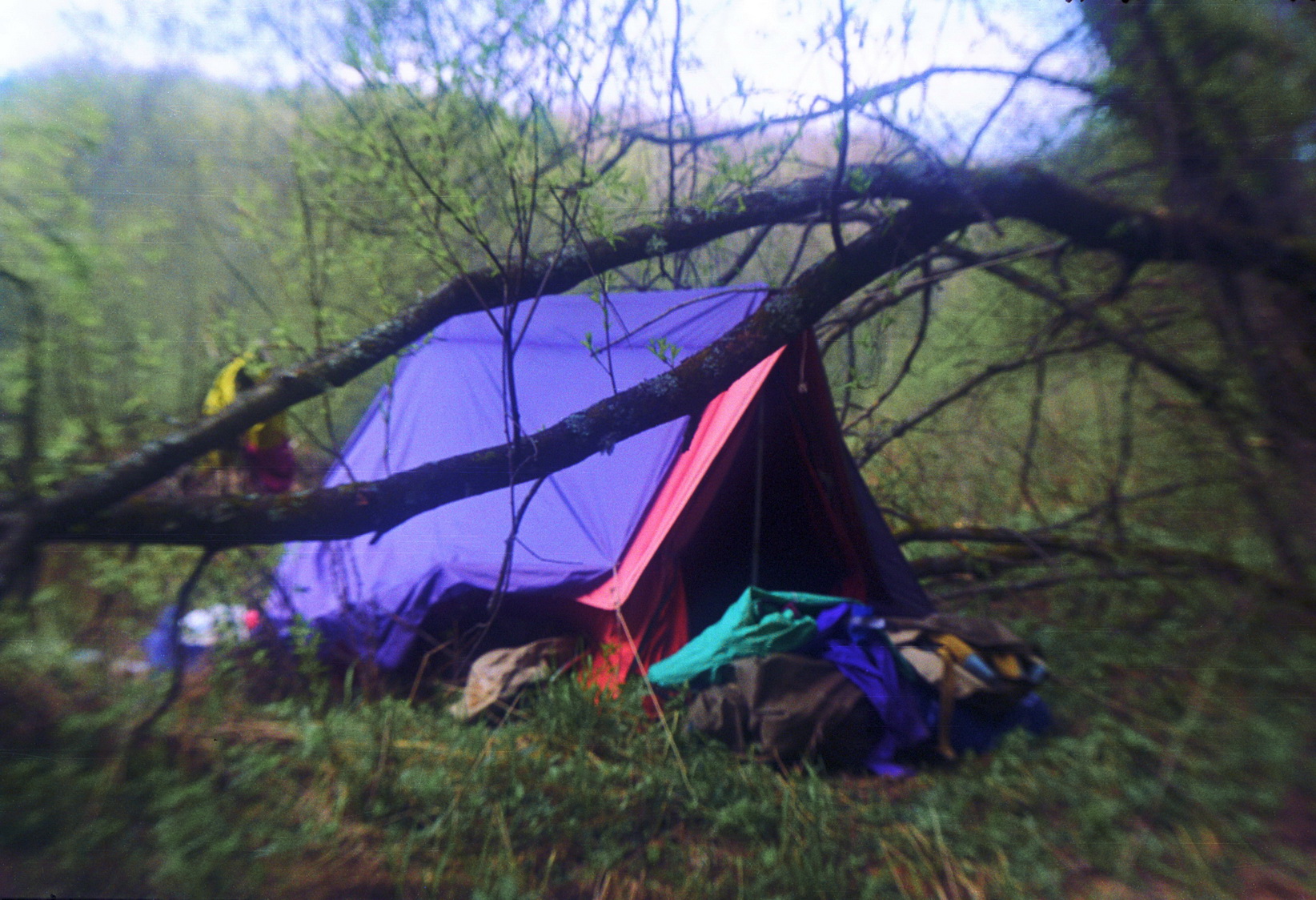
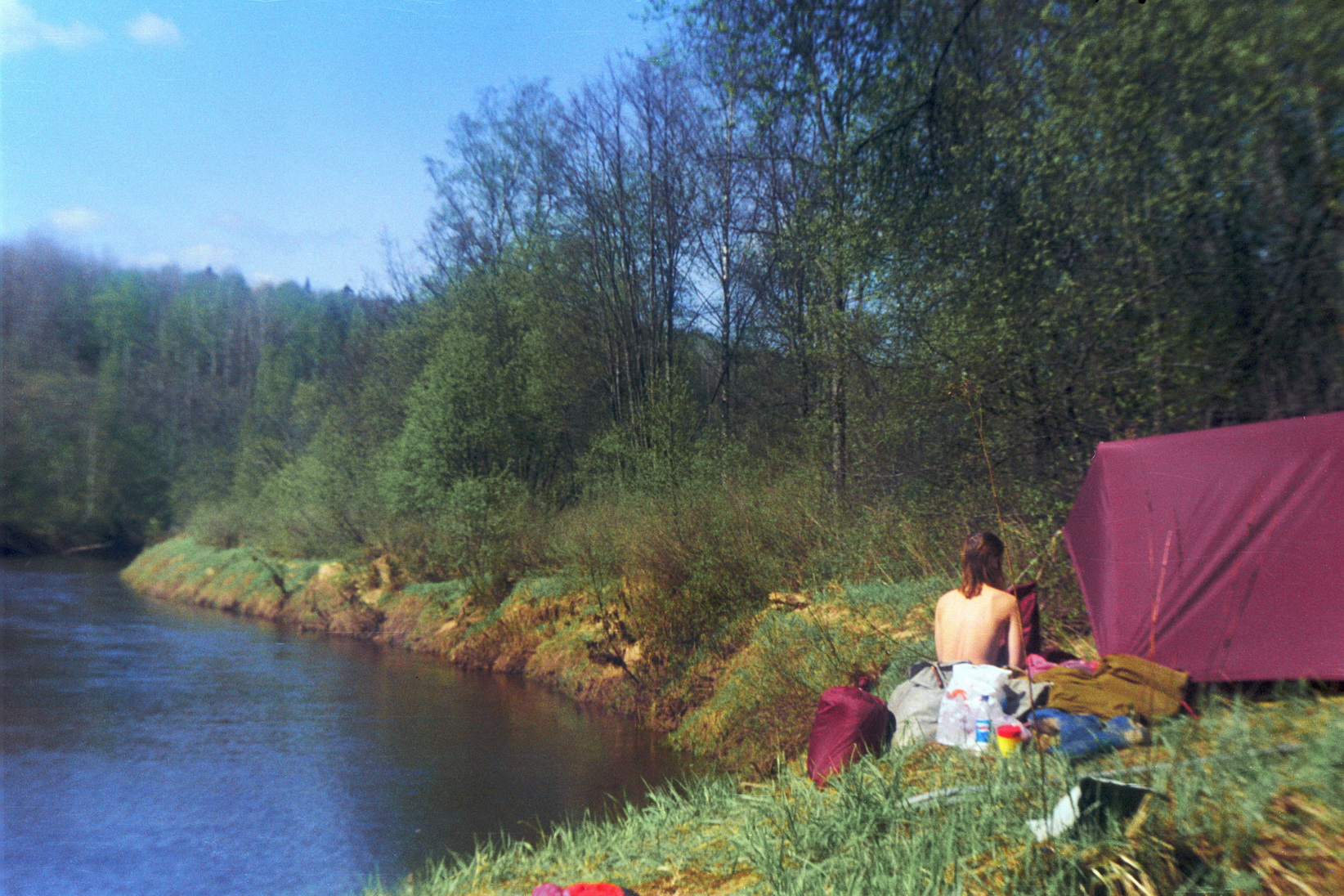
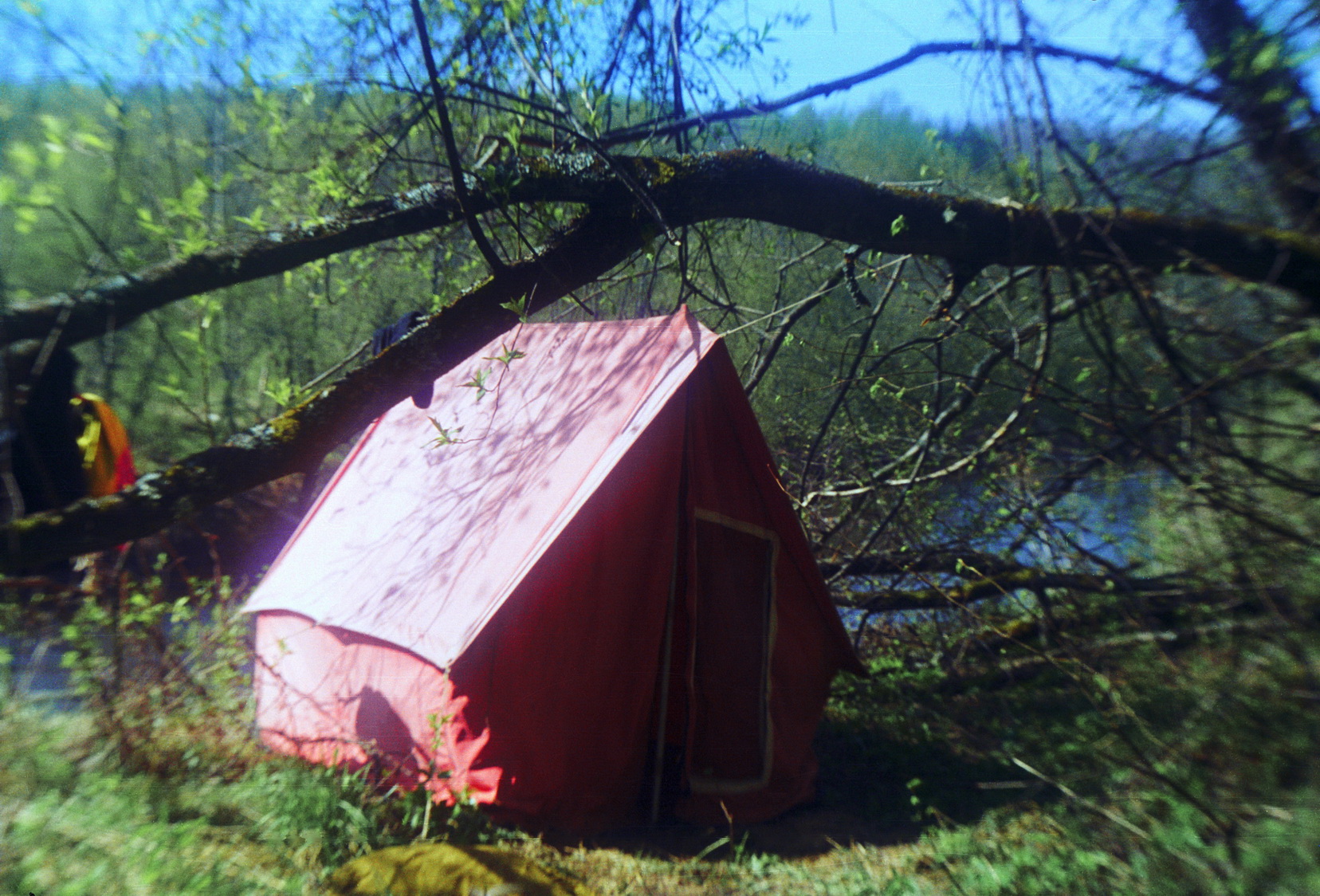
We made a fire right on the river bank. Today was our big anniversary, ten years since we launched our kayak. In April 1991 Tanya and I still belonged to different households, but we had already started buying things together. This was our first purchase. After the Pavlov currency reform my money was stuck in my savings account, so we bought it with a cheque. Ten years before we had taken it down the Luga. We covered perhaps twenty kilometres in three days, but we certainly drank a lot. Towards the end of the anti-alcohol campaign, with shortages everywhere, a can of industrial alcohol reeking of rubber had seemed like a stroke of luck.
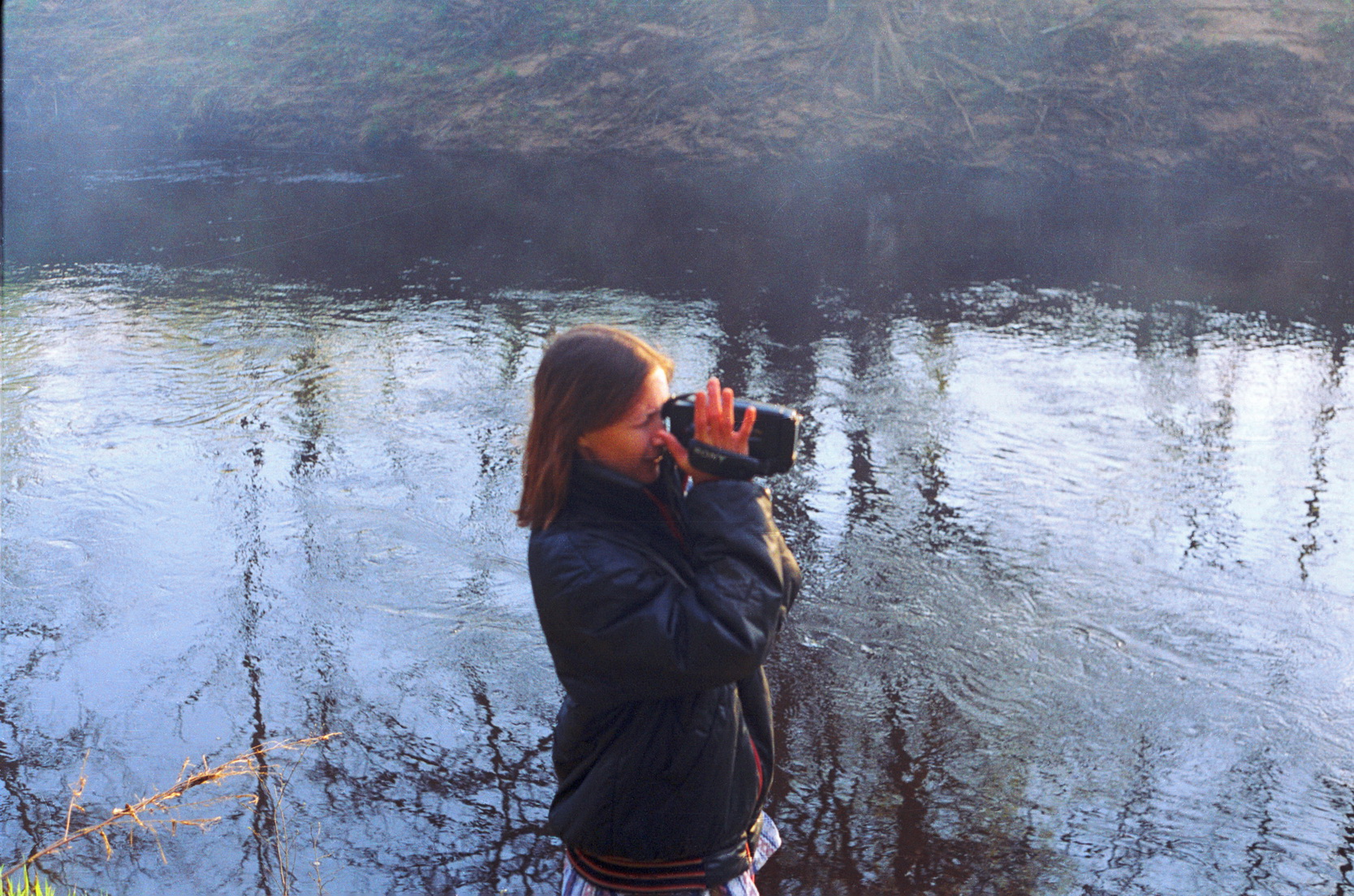
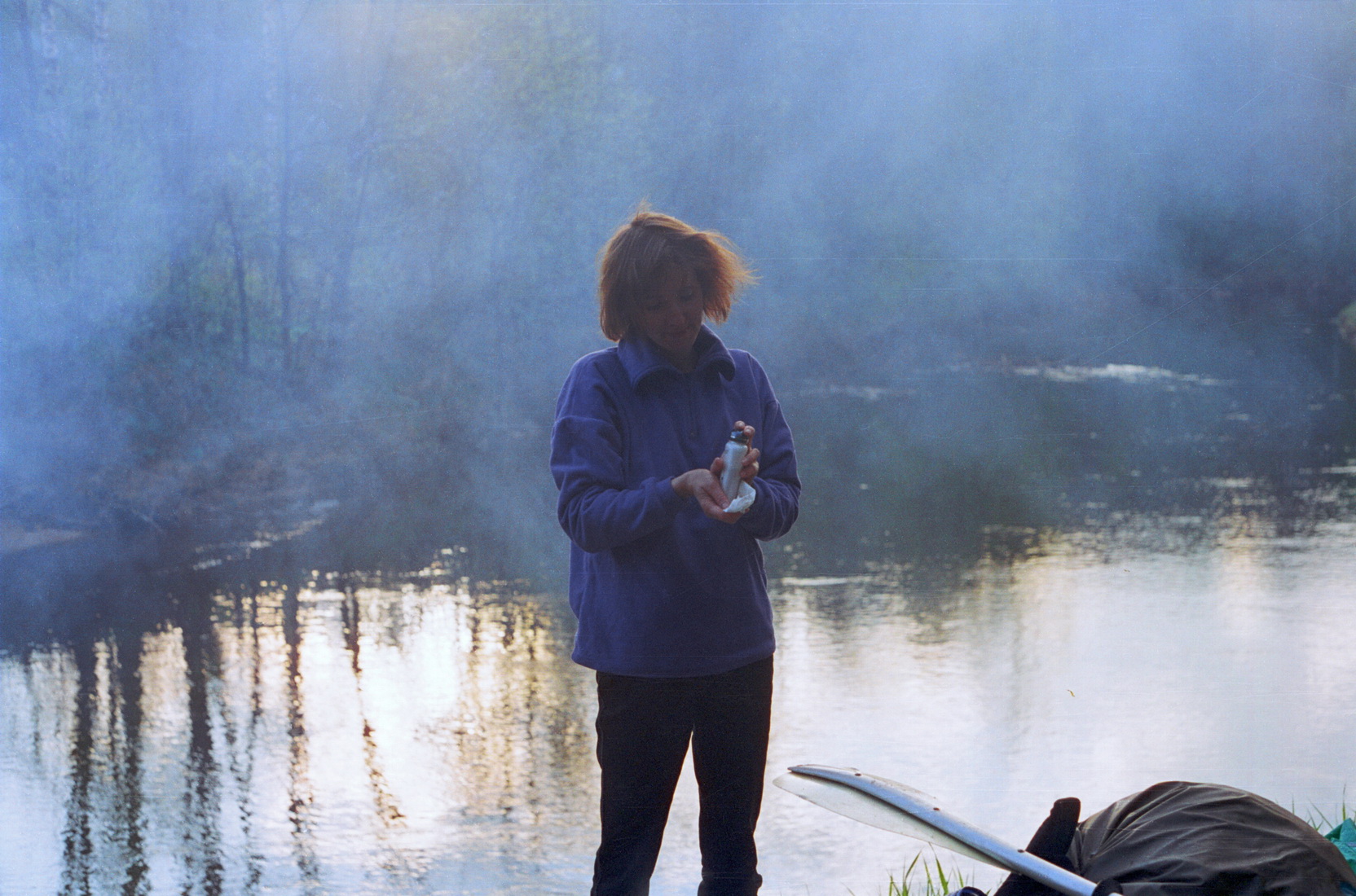
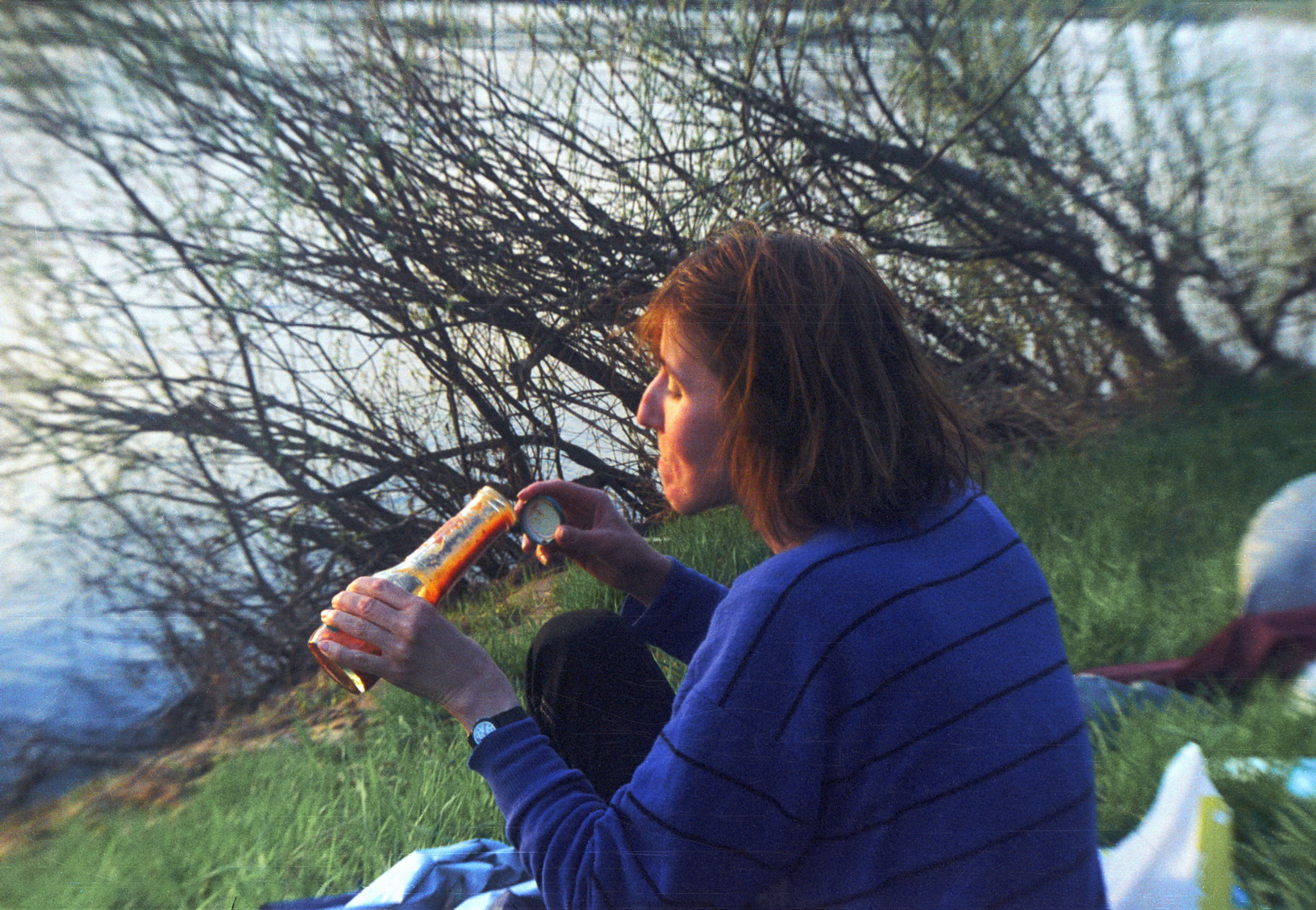
Things were different now. We were not quite so young and hardy, but we had a bottle of Lev Golitsyn sparkling wine and a sponge cake. We were not going to break it over the kayak’s hull. We were simply going to drink it. We put the mugs on the bottom of the kayak. Pop! The cork flew into the open spring sky to meet the first stars. Foam ran over the bottom of our venerable boat, which had covered more than two thousand kilometres and never let us down in storms on the White Sea, Baikal or Ladoga. Valaam, Solovki, Olkhon. Quite a distinguished working life.
At last we were in wild forest again, warm, well fed and a little drunk, with birds singing both around us and in my heart. All the troubles were behind us. After dark the bats came out. I wondered where they lived. The banks were low, and I thought bats needed caves. Was there an underground cave nearby that no one knew about?
We slept until eleven and woke up in a peaceful mood, but the day began with a shock. Sasha found a tick attached to his side. We caught and destroyed it, but could not know whether it carried encephalitis. The thought of an invisible danger was hard to shake. At the time it felt as if all we could do was wait and see.
We were in no hurry. We sat in the sun, and Tanya and I even went for a dip. The water was ten degrees. Cold, of course, but much better than zero. Until four we idled away the time, having the occasional snack and doing other equally pleasant things.
We had planned a short day’s paddle. There was no point in leaving the wild country too soon. A mink ran down the bank ahead of us. When we overtook it again it swam across just in front of us, turning from a soft, fluffy animal into a bedraggled wet creature. Beavers slid grumpily off the bank, dragging their flat tails. We managed to film some of it.
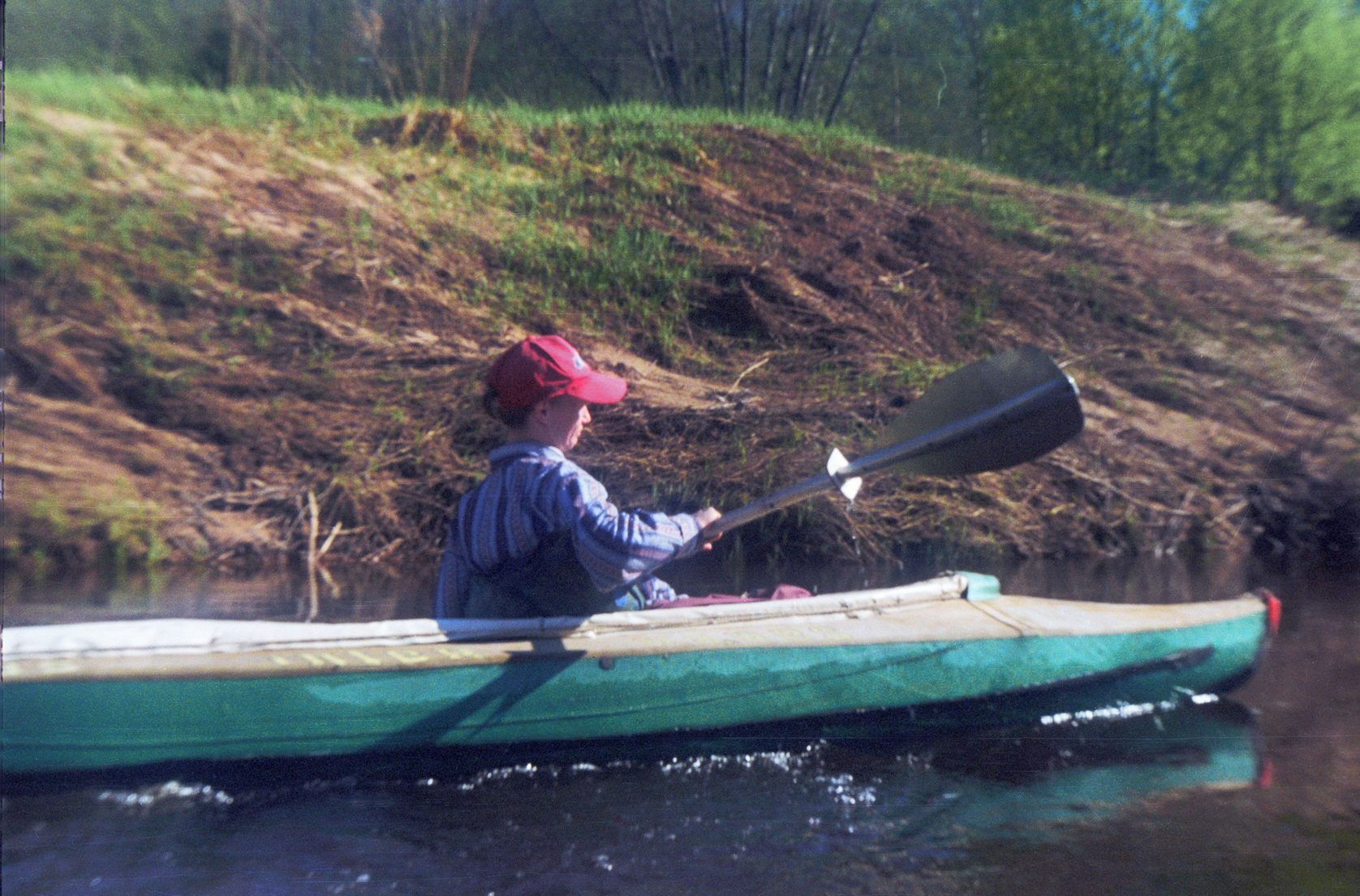
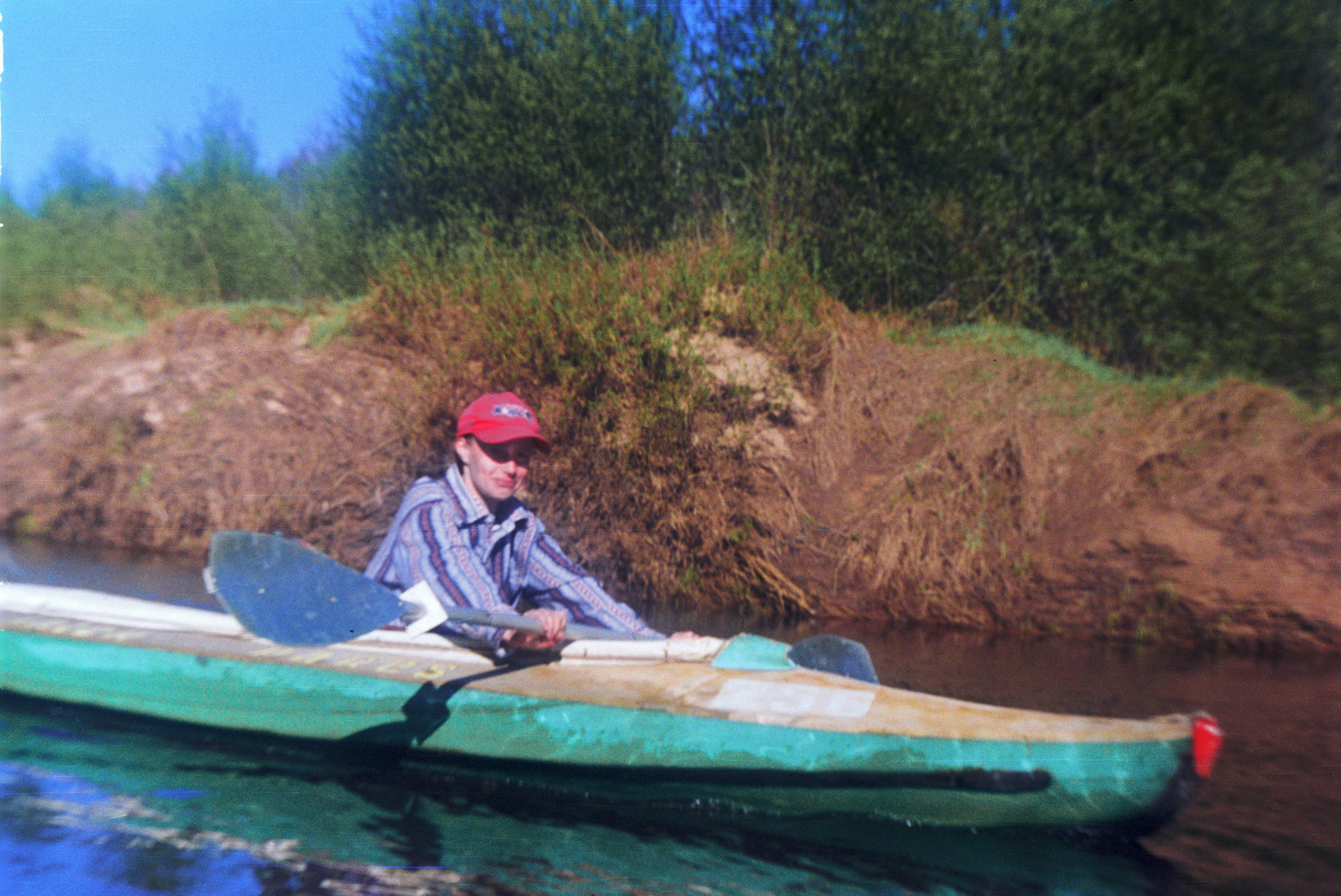
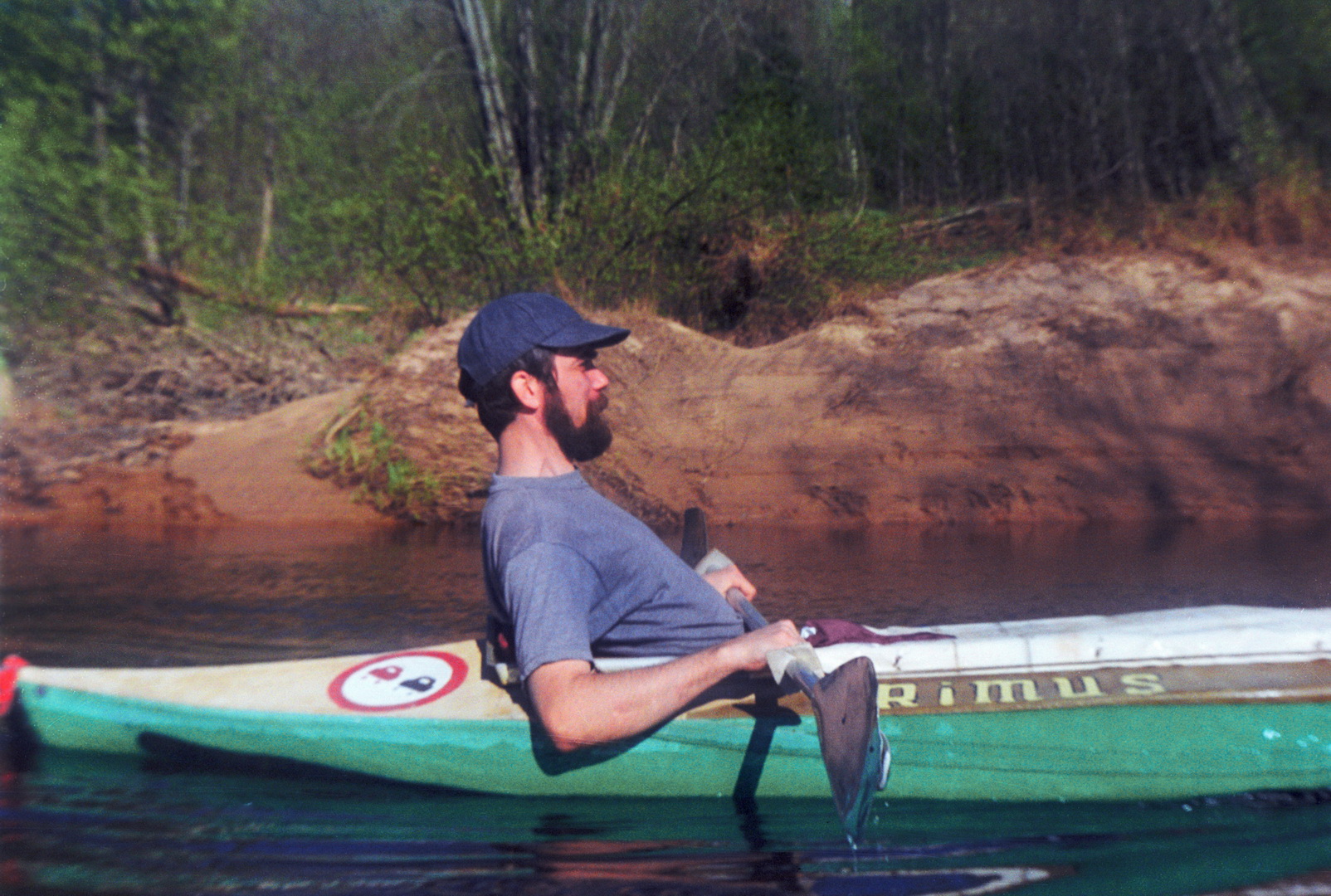
Then the blue bird came back. It would take off about ten metres ahead and round the next bend like a flash of azure. Then it would happen all over again. We could never see it until it was already in the air. Sasha was determined to film it. After several attempts he handed the camera to Marina, with instructions to find it in the bushes, frame it and fix it on videotape for eternity. The hunt went on for hours. The bird took off, Marina pressed the button, and Sasha shouted, “Well? Did you miss it again?” Then the forest rang with arguments about who was paddling wrong, who had been blind since childhood, and how these were the wrong sort of bees making the wrong sort of honey. Marina soon saw where she was going wrong and took to assuring everyone that this time she had definitely got it. The hunt went on anyway. Tanya and I sang the Makarevich song and fell into a philosophical argument over whether it was even possible to catch the bird and, if so, whether the attempt was ideologically unsound.
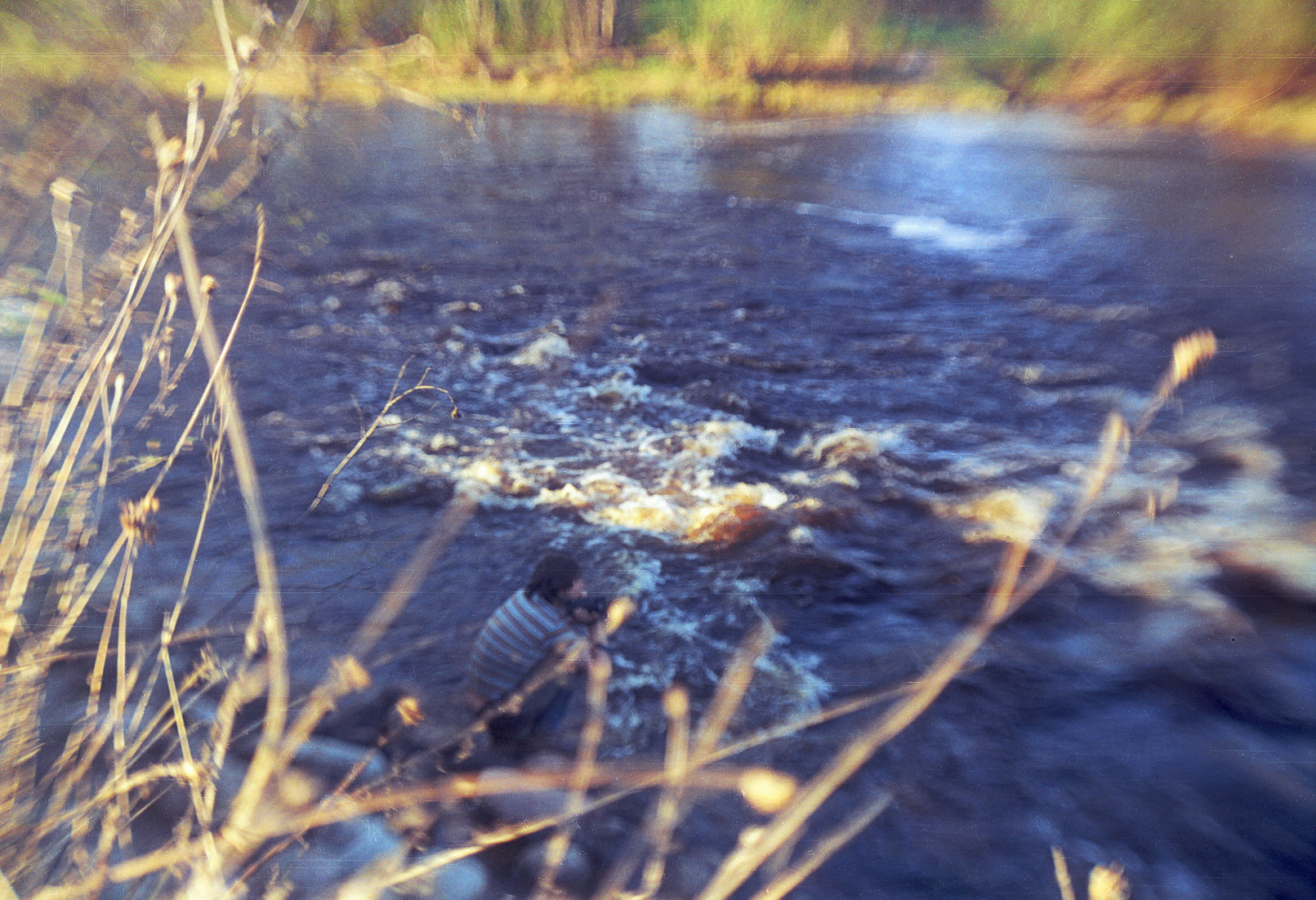
The chase was soon over. The bird disappeared as the forest on the banks gave way. At Bakharikha we came to another low concrete bridge and had to drag the boats past it. At Berezhok there was a small drop over a ruined dam which we could run without inspecting it. The only real obstacle was the drop and the rapids below Bolshoye Zaborovye. We got out to look first. It was worth doing. There were plenty of stones and sharp pieces of the old dam in the channel. We went down in turn, without a scratch, filming and photographing one another. In the conditions we found, the left bank had the deepest line, with a strong current pressing against it immediately below. Good practice.
It was already evening when we ran the rapid. The sun was setting behind a field. We found a high, wooded bank beside a pool below a little rapid. A small bay by the bank was sheltered from the river by sandbars (58°51.403′N, 32°59.597′E). The campsite was popular. Our predecessors’ fire was still smoking. What I remember is the sound of the river and the path of light on the water from the young crescent moon. The sky was clear but the stars were hidden by the tall forest around us.
It rained in the morning. We had a long day ahead of us, forty kilometres through settled country, mostly on the Msta. We had to pack in the rain, then paddle through several hours of downpour. We joined the Msta, a broad river that had carried passenger boats in Soviet times. In the afternoon the clouds suddenly scattered, the sun came out and it grew hot. By evening we reached our destination, Mstinsky Most railway station. The main Saint Petersburg–Moscow line of the October Railway crosses the Msta here. The bridge is guarded but you can go under it. As we paddled beneath it the Aurora train crossed overhead, followed by an ER200. We landed on the south bank near the bridge (58°40.536′N, 32°35.471′E). The village was on the other side and we felt relatively safe there.
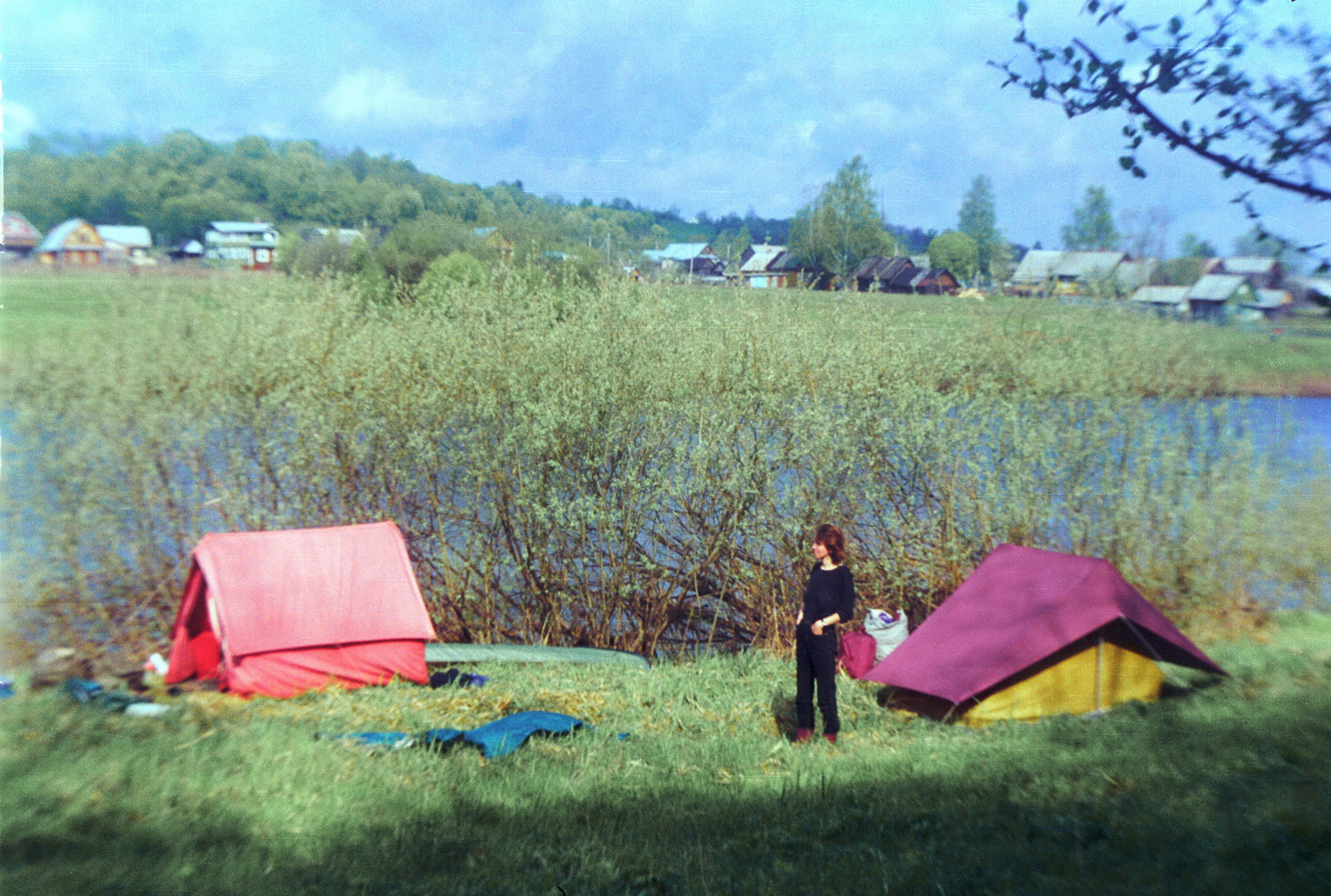
We sat at the fire until almost three in the morning. The alarm got us up, but it was not the only thing that woke us. The flysheet had been pitched crookedly and the night’s rain had left a great puddle a centimetre deep in the bottom of the tent. All our things were wet. Never mind. It was our last night out, and everything would dry back in town.
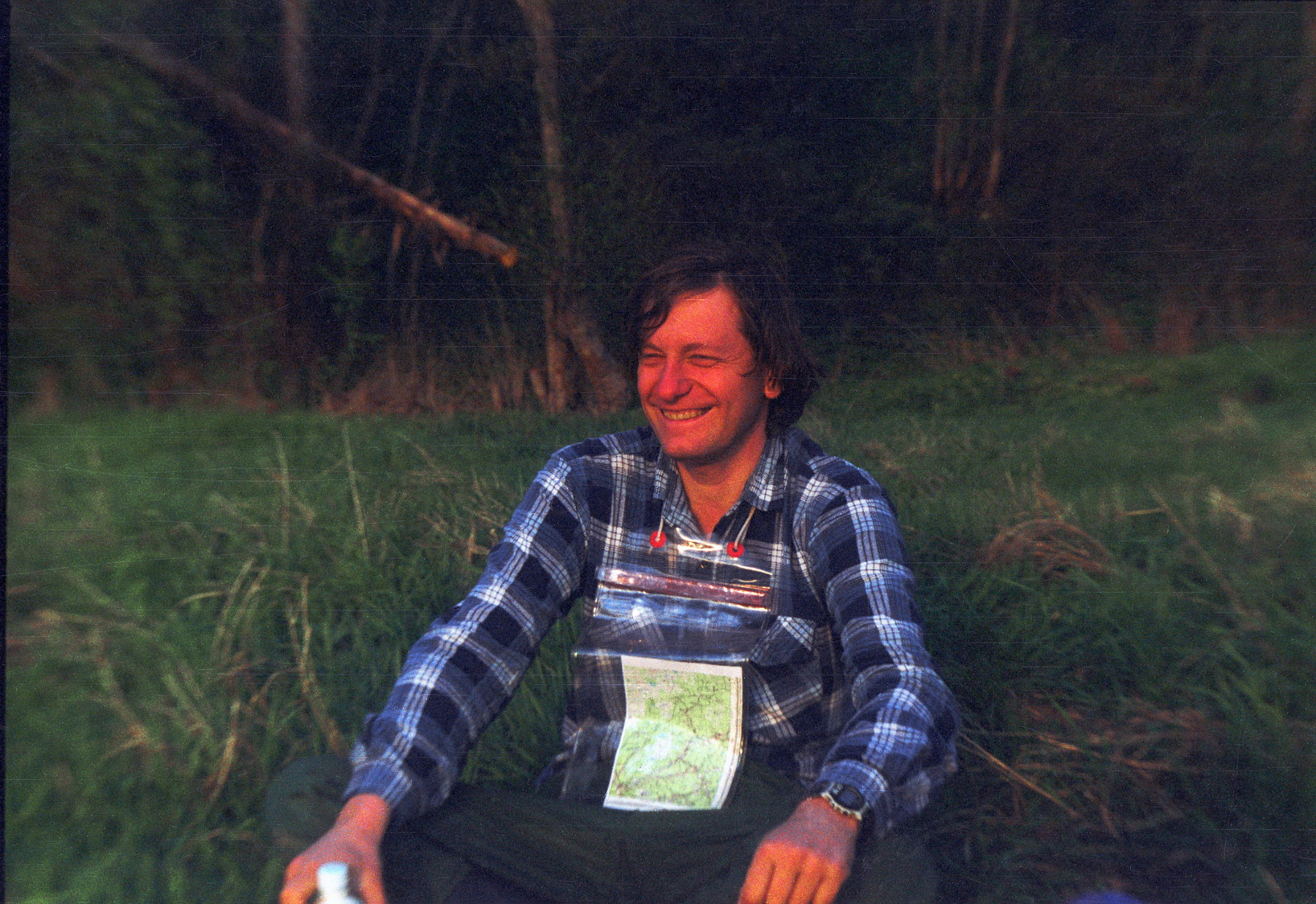
At 11:30 Sasha had to take the bus to Nebolchi for the car. We crossed together, then I came back and we began slowly packing. The sun came out and we laid our wet things out to dry. I felt calm and easy-going. We drank coffee, cocoa, more coffee and more cocoa. The sun was doing the work for us. All we had to do was wait. I lay with my head on Tanya’s knees, eyes closed. Marina tore up silver foil and Tanya plaited it into a whole crop of little braids in my hair. I lay there thinking eternal thoughts. Bliss. Pity it was coming to an end. What a dreary thought, work tomorrow.
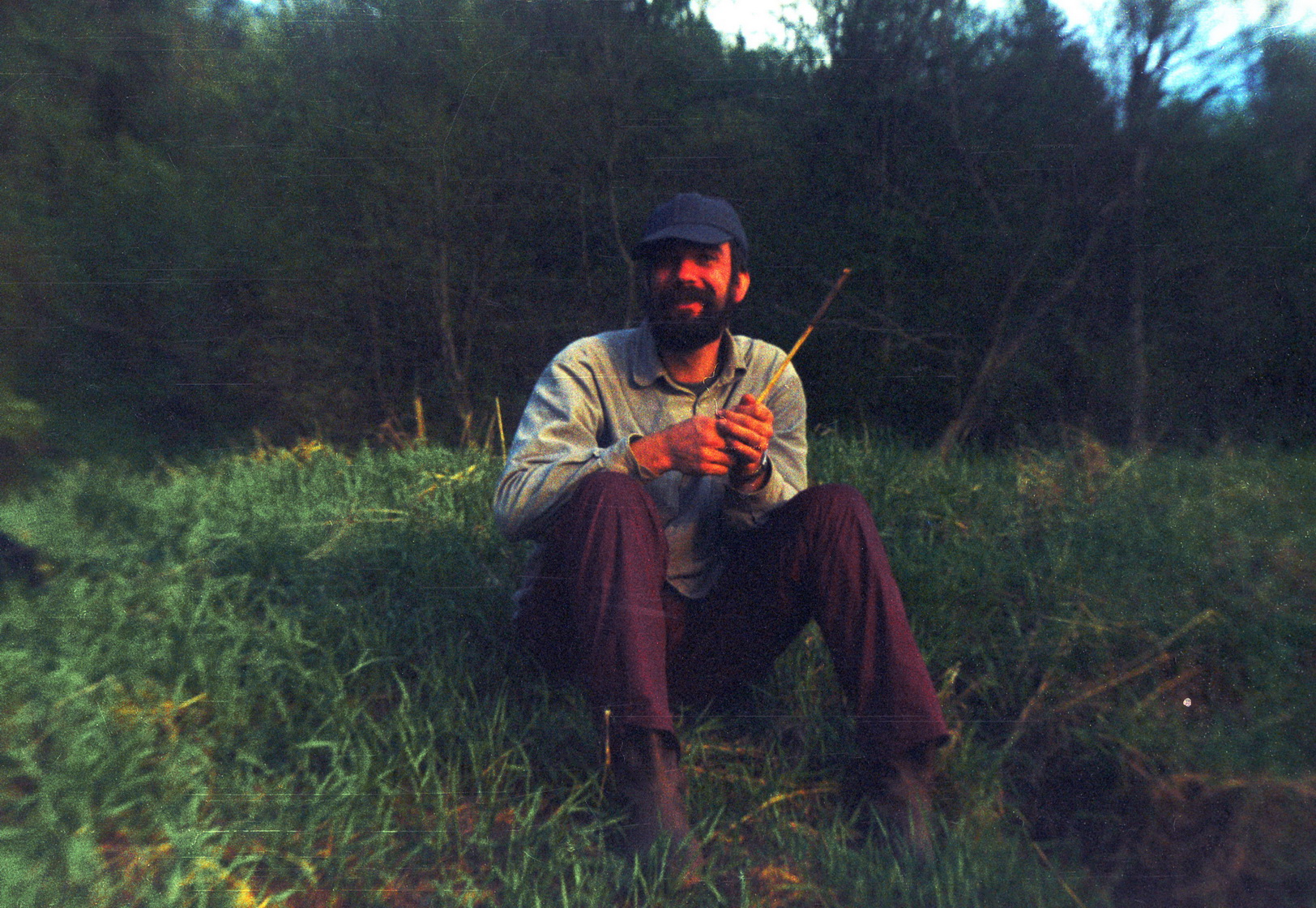
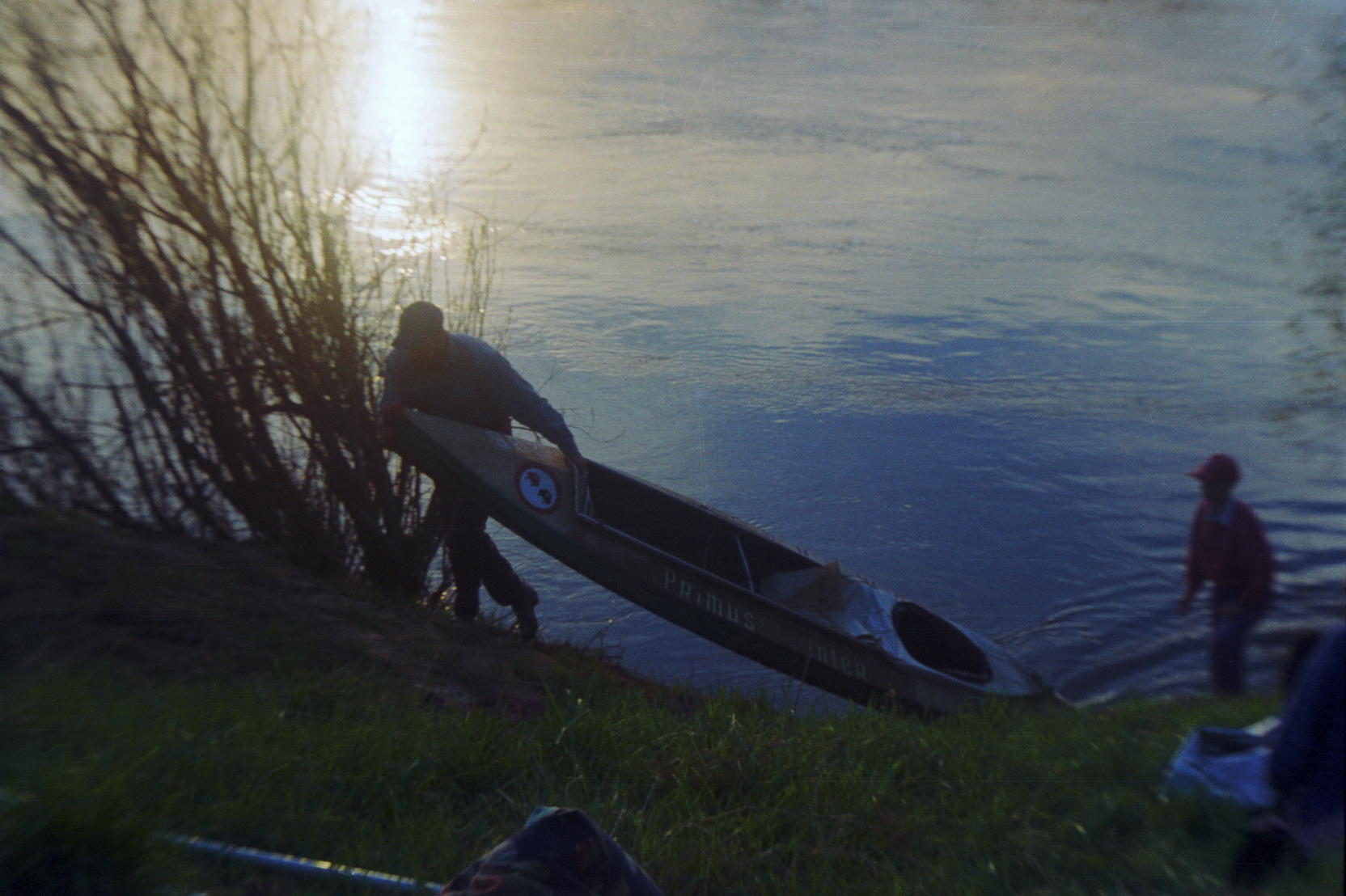
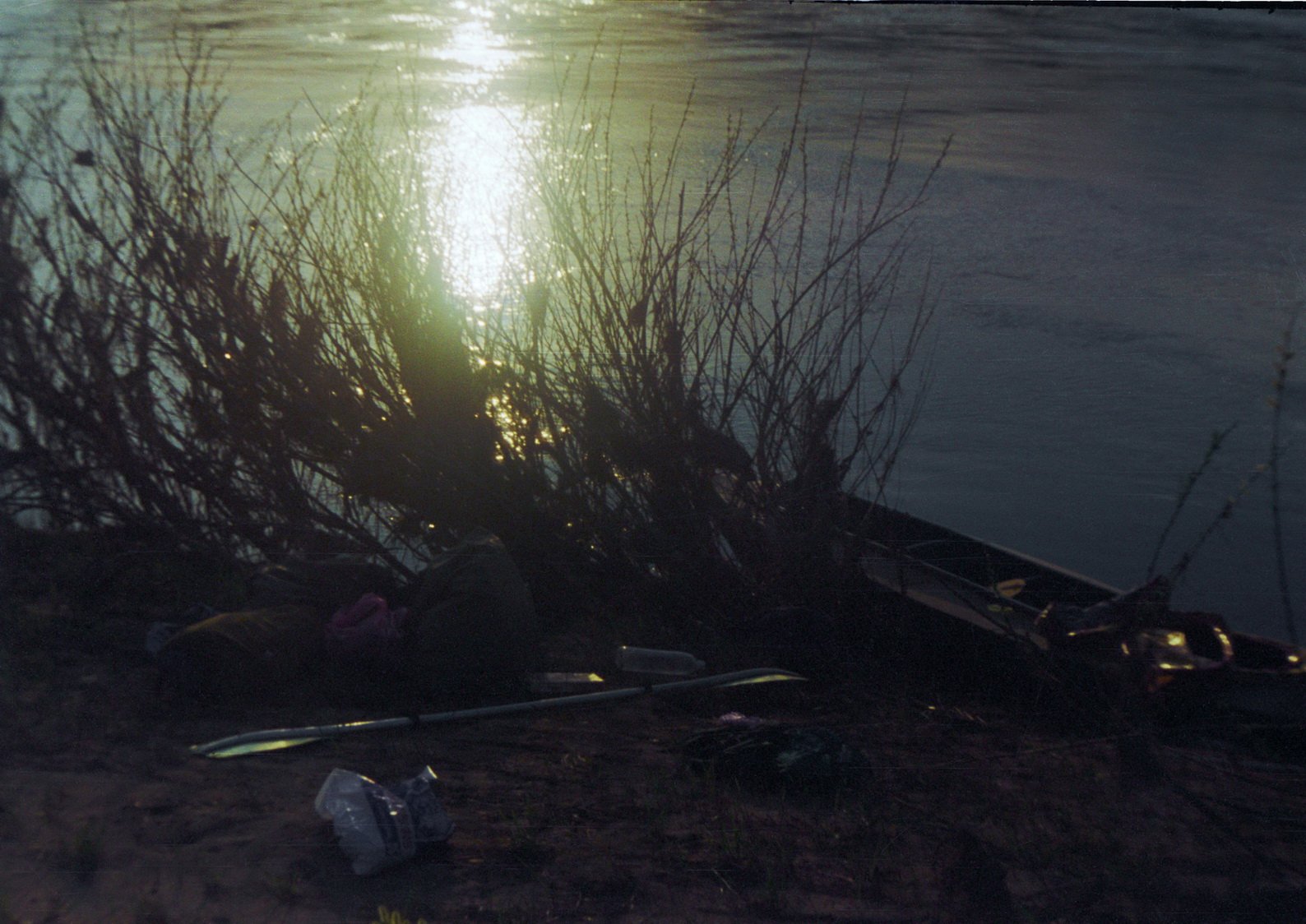
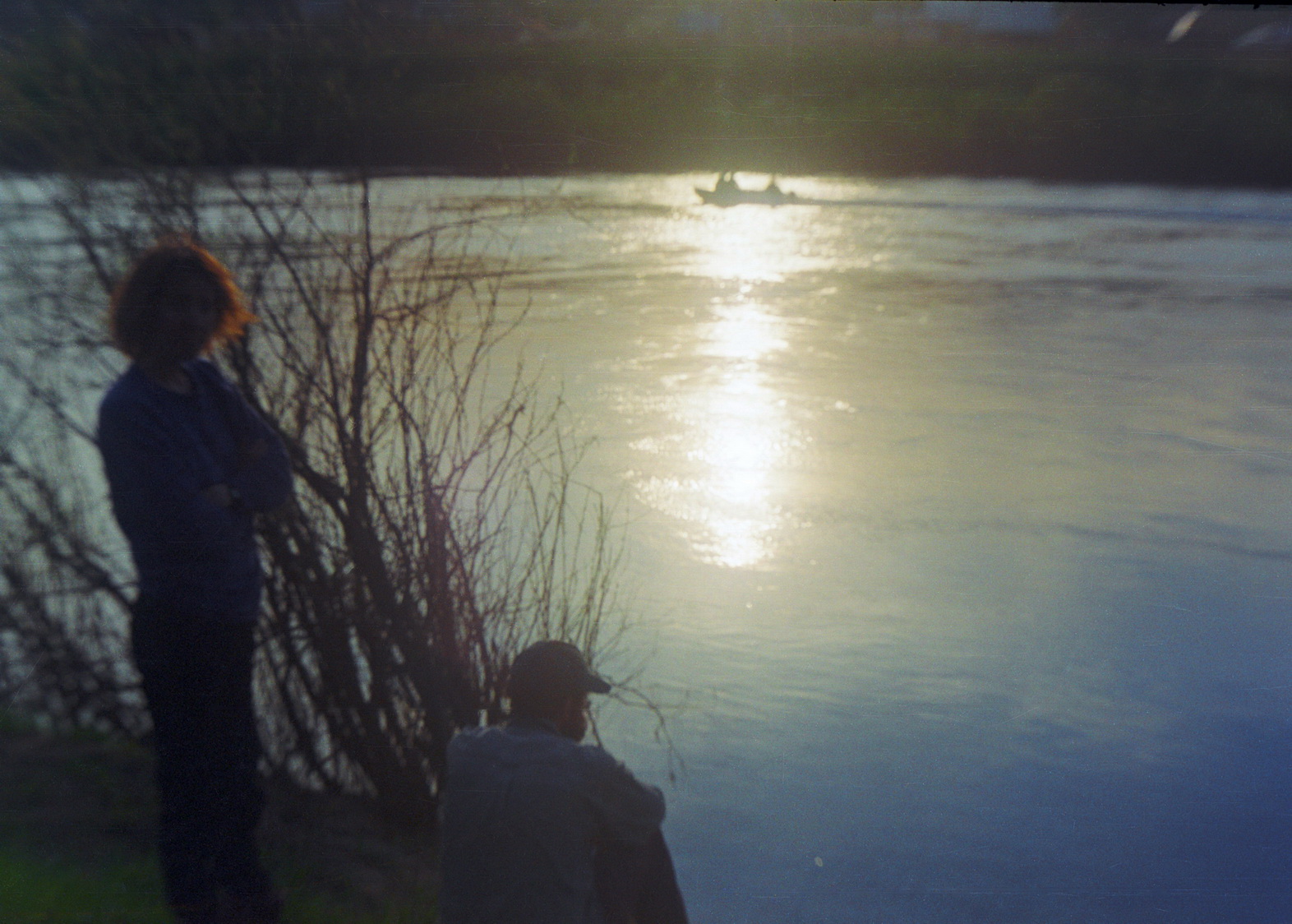
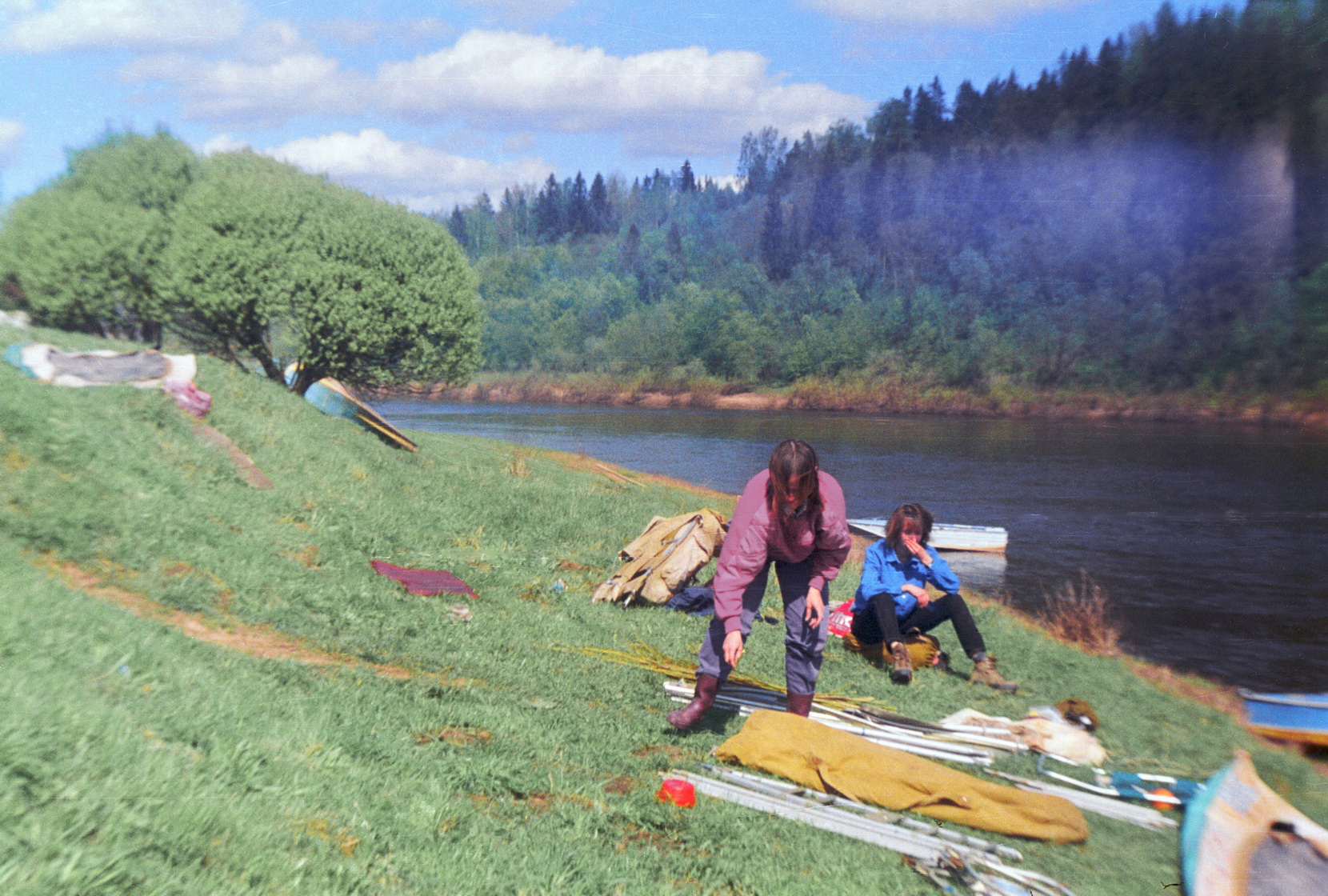
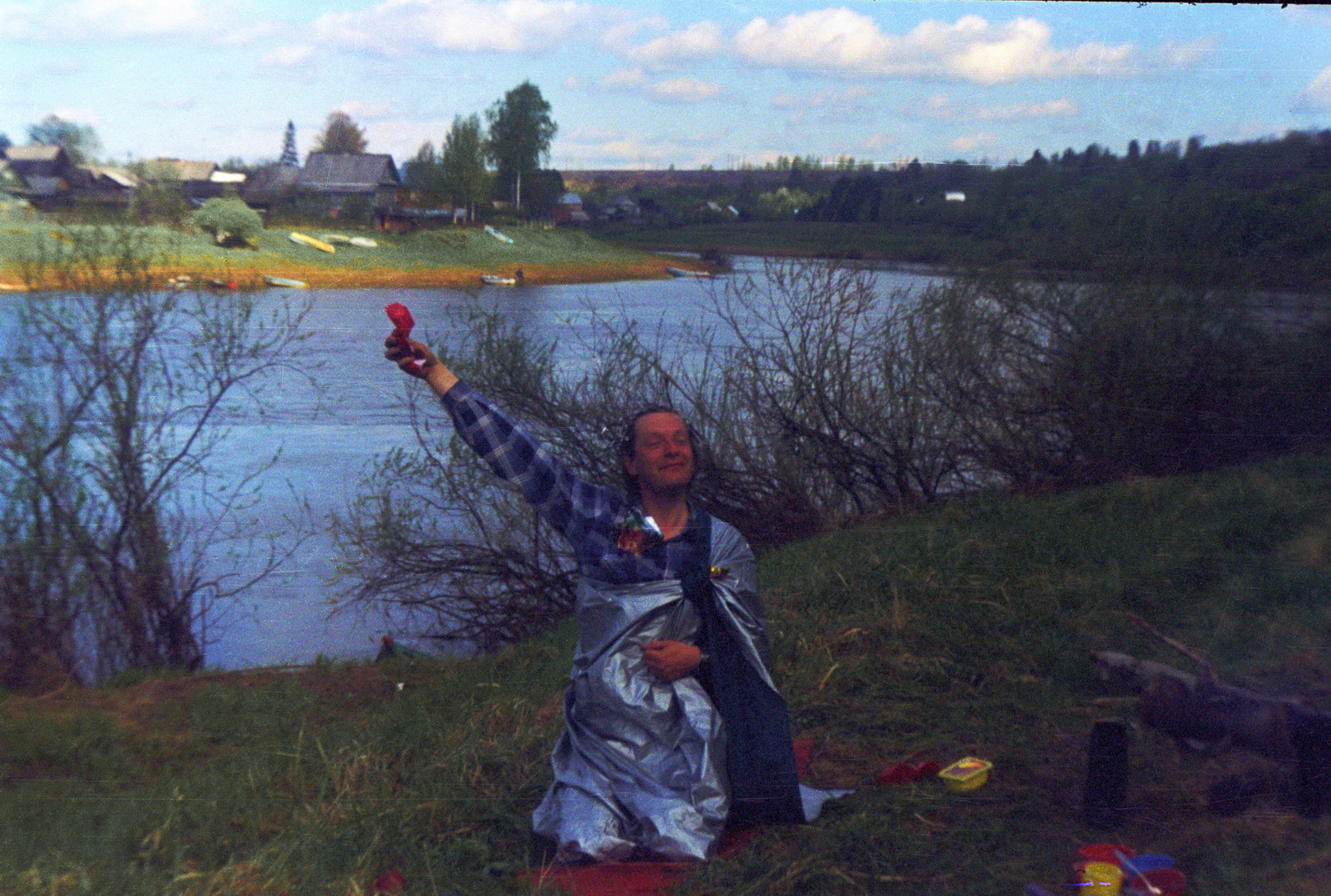
When most of our things had dried, we crossed to the other side. Tanya and Marina were in the two-seater, and I took the three-seater. The current was strong but we had no trouble. That was the last stroke. Where would we paddle next? We had no other trips planned for the year. Tanya went to the shop for beer and Marina and I dried the kayaks.
Six hours after Sasha had left for the car, there was still no sign of him. Tanya came back with the spoils and we finished packing. Then we climbed two peculiar little hills left over from road construction and dreamed about future trips. At 17:30 Sasha arrived. He had not had an easy time. Getting to the bus had meant walking several kilometres. That would have been bad enough, but he had also forgotten the car keys and had to get in and saw through the steering-wheel lock. Luckily there was a spare set of keys and an alarm fob hidden in the car. He made it, just. At six we had agreed to start making our way out on our own.
The drive home
We stuffed the gear into the car and got going. It was a tense ride. Sasha was in a hurry and spared his green friend nothing over the bumps. On the new Malaya Vishera–Lyubytino highway we went fast, too fast. The kayak poles were behind me. If anything happened, they could go right through me. I pushed them to the sides so they would fly past and made a point of putting my seat belt on. “Frightened?” Sasha asked. I did not know what to say. This was no way to drive, but he was a dependable man and things usually went well when he travelled with us. Say anything and he would take offence. Plenty of people drive better than I do. They take bends faster and judge overtaking distances more accurately. Perhaps I was wrong and everything was all right. We passed Malaya Vishera. The road straightened and traffic was heavy on the last day of the holidays. We made a very risky overtake. By then everyone was frightened.
We crossed the Bolshaya Vishera. We could paddle it some time, I thought. A short route with easy access.
Just after Paporotno, at kilometre 166 from Lyubytino, the road bends gently left. We were doing about 130 kilometres an hour. It was a bend the car should have been able to handle, but something happened. We never did work out what, but the right-hand wheels went onto the shoulder. After several dozen metres Sasha steered left. The asphalt was about ten centimetres above the shoulder and there was a good-sized pothole. The front right tyre gave way, and the car went into a skid. At thirty-six metres a second there was little hope of a good outcome. That speed would not simply disappear. We went sideways for another twenty metres, sliding gently towards the ditch. Like frames in a slow-motion film, the pictures stayed in my mind. I still see them in front of me and dream about them at night. I cannot forget them. At first the car seemed to enter the ditch in an almost ordinary way, then shook violently over the bumps. Sasha shouted, “Hold on, girls!” and Marina gasped. Tanya thought, “So this is the end. How frustrating, how dull.” I remembered a survival book, grabbed the seat and tucked my head down.
The ditch was deep. The car tilted and rolled over its right-hand wheels. Now we were flying upside down, flattening bushes. We were still moving terribly fast, but the ditch was deep and full of water and the bushes were small. Even the windscreen was intact. It was like looking out of an aquarium at the muddy ditch water and the waves the car was throwing up. For an instant I thought we might get away with it, perhaps even drive out. We did not. An enormous rotten log loomed up across the ditch. There was a tremendous blow and water rushed into the cabin. The car began to spin. By then it was like a dream. I lost consciousness. At the moment of impact Tanya and Marina were thrown through the shattered rear door window. Tanya came round in mid-air and thought, once again, that the bumps below were the last thing she would ever see.
When I woke, the car had stopped moving. That was good. I was underwater. Perhaps not all of me, but certainly my head, which meant I could not breathe. It was dark. It must be deep. I felt indignant. I was alive, only to drown in a puddle. I had not drowned in the three-metre waves on the White Sea, when they broke right over my head and the kayak was flooded up to the second stringer. I had got through all those rapids. And now, having survived a terrible crash, I was going to drown here. I remembered James Bond, who had always managed to get himself out of the water. I wondered how I would do it in real life.
I tried to think. I reckoned I had a minute to act calmly and a second minute in which I might no longer be able to think straight. There ought to be a pocket of air somewhere above me. I could move my arms and legs. I realised the seat belt was holding me underwater. I felt along it for the buckle, first on the right out of habit, until I remembered I was in the passenger seat. I managed to shift until my mouth was at the surface. My eyes and nose were still underwater, but I could breathe and spit out the water I had swallowed. That was what mattered. I eventually rolled over and got my head above the water. It was not in fact very deep. The car was still upside down and the water had not reached the lower edge of the window. Sasha’s head was battered and bloody, but he was alive and groaning, and Marina was holding his head above water. She too was apparently alive. But where was Tanya? I called and shouted. Silence. I could not see her in the car. Then Marina reassured me that she was alive. Tanya had flown about twenty metres and landed in the ditch. When she came round, she thought she was already in the next world. Water everywhere. Then she thought she was lying in a pool of blood and that none of her fragile teeth could possibly have survived. Finally it became clear that this was still the same world, it was a ditch, the teeth were all there, but her arm was injured and would not do a thing she wanted.
I had time now to think how to get out. On one side the window had survived by some miracle. On the other was Sasha, whom Marina was trying unsuccessfully to pull free. The windscreen was gone, but the roof had buckled until the water reached the dashboard. I had no enthusiasm for diving out. I tried the window switch. It worked. The way out was suddenly open. I climbed out. By now there were people everywhere. There was Tanya on the shoulder, alive. I ran to her. She was bruised, hurt, soaking wet, and we thought at first her arm was broken. The point was that she was alive. Marina was shouting for help. Sasha was caught in his seat belt. No matter how frightening, I had to go back into the car to where I had nearly suffocated. I wondered whether it might catch fire and why I had not thought to remove the ignition key. In spite of the crash, the battery had survived. The stereo was still playing. Alsou’s voice could be heard from somewhere under the water.
I climbed back in, turned the ignition off and undid Sasha’s belt. It was easier to take him out through the passenger window. People had gathered and helped carry and bandage him. One of those who stopped was a doctor. It looked as if there might be something wrong with Sasha’s spine. Marina’s arm hurt and we suspected a fracture. I was the most intact. My arm hurt too, but it worked. The main problem was a hard blow to the head. Everything swam before my eyes, but I could walk.
It was cold and we were all drenched and shivering. I climbed back into the car to retrieve the packs. They had been in the water but we had packed many things in dry bags and found something dry for everyone. We did not dare try to change Sasha’s clothes, so we wrapped him in sleeping bags and whatever else was warm.
When we had time to look around we saw that we had landed right opposite a roadside cross. Whoever went into the ditch before us had not been so lucky.
Everything from the car was scattered along the ditch. The camera lay in the water, hopelessly soaked. The phone was hard to find at the bottom and showed no sign of life either. A pity. Someone had gone the twenty kilometres to Malaya Vishera to call the police and an ambulance. It would have been quicker to phone. The GPS, on the other hand, was still all right, though it had been in the ditch.
Many cars had stopped by then and everyone was offering help, though the first three had driven past. People offered to take us to casualty. Moving Sasha with a suspected spinal injury was too risky, so we decided that Tanya would go back to the city, and Sasha and Marina to hospital in Malaya Vishera. One young woman in particular took charge and I entrusted Tanya to her. They left soon after.
At last the traffic police came, followed a little later by the ambulance. It took Sasha and Marina, and I stayed to sort out the gear and talk to the officers. We drew a diagram and measured distances. Deep in the woods we found the windscreen, identified by its intact rear-view mirror. There were fragments of at least one other car in the ditch, apparently a Volvo 740. With a KamAZ truck they turned the Ford upright and got it out, knocked a few things into shape with a sledgehammer and changed the wheel. It turned out it could even be towed. The steering and brakes had survived. They towed it on a rope to the police in Malaya Vishera and locked it in a shed.
After the crash
We went to the hospital. Sasha had already been stitched up in several places and had more or less come round. His spine was the main worry. He could not feel his fingers. They had taken an X-ray but not developed it yet. Marina’s arm was swelling and hurting, but it was not clear what was wrong. It was nine in the evening, there were no more local trains, and I needed somewhere to stay.
Once I let myself relax in the hospital, I could feel how badly I had hit my head and gladly agreed to stay. My strength went all at once. A kindly attendant brought me tea and put me to bed on the ward. She tried to feed me, but I felt sick and could not eat. I did not get much sleep either. The whole right side of my body hurt.
At five in the morning I left the hospital and hurried to the station. I caught a local train to Chudovo and another to the city. The journey seemed endless. By ten I was home on the sofa with Tanya. We were happy to be alive.
We were all covered in silt. At casualty they had not believed that Tanya had been in a crash. They told her she had been drinking and her husband had beaten her, and scolded her for being dirty.
We made instant mashed potatoes left over from the trip. One packet was torn and needed to be used straight away. Something crunched between my teeth. I spat it out: a freshly cooked snail that had crawled into the packet for a meal. Tanya almost choked with laughter, but it hurt to laugh.
I called the Sochavas’ relatives, took Tanya’s phone and drove back to Malaya Vishera. The drive felt like a dream, but I was in no hurry and overtook no one. I was back at the hospital by eight in the evening. We used the phone to call and reassure everybody as best we could. Then we retrieved our things from the police garage and I drove back to Saint Petersburg, reaching home after midnight.
There was a lot to arrange after that. Sasha and Marina were moved to the city, a MAZ truck took the ruined Ford to a garage, Tanya and Marina went to Medical Unit 122 for examinations, and so on.
What came of it all? As I write this, eighteen days have gone by. We are all alive. That is good. After a crash like that, everything the present day brings feels like a free bonus. Sasha injured his fifth, sixth and seventh vertebrae. He is in hospital in a neck brace and will be recovering for a long time. He had a bad head wound and they had to sew his ear back on. They shaved his head, leaving him with the beard and shaved head of a mujahid. The bruise on his right shoulder, he says, was from my head. Perhaps so, though I think it was from the gun. He did not get encephalitis. Marina spends her days with him and cares for him as much as she can.
Tanya had broken her collarbone and was in a cast at home, or rather in Vyritsa by then. Her arm was scraped up, but things were healing. She counted the days until the cast came off, trimmed it with nail scissors and scratched her battle wounds underneath it with a tablespoon.
Marina and I got away with bruises and strained right arms. All of us had concussions and went about as if in a dream, or rather spent a great deal of time asleep. Any chance I get I head for the sofa and sleep as long as I can. Tanya and I have been living on the sofa a lot, and gone a little back to childhood. We feel sorry for little birds and play with gentle, soft toys. We have come to understand the world a little better and to love it a little more.
The car is beyond repair and would make a good display on a plinth outside a traffic police post. Poor green grasshopper. It was still so young. Vadik Petrovsky wants to try rebuilding it, though.
We are not going to Norway again. We do not know where we will go or when, but go we certainly will. It is what we think about all the time. It is astonishing how much trouble you can find on such a simple trip. Life is like a zebra. Black stripe, white stripe, black stripe, white stripe, black stripe, then the rear end. End of zebra.
Some people, it turned out, blamed me for the whole thing. Apparently I bring nothing but trouble. I suppose I would have had to die in the crash before they had a kind word for me. I am used to it by now and take that sort of verdict as a tribute to my merits and a sign of envy. Do not count on it. I survived, I intend to live, and you will not get to come to my funeral.
Some tell us to go to church. Others say we are God’s people and that he is watching over us. Who knows? But we certainly will not be bowing to any priests.
Other people joke that we are developing new forms of adventure tourism: white-water car trips down roadside ditches, underwater swimming without an aqualung. We are not offended. We rather like it. By general agreement Tanya is now a high-flying bird. I did not call her my little bird for nothing. Call her that a thousand times and off she flies. I should say it a million times more. She will fly every bit as well as that blue one and without breaking any bones.
Oh, blue bird, perhaps you really are that mythical creature still lurking somewhere in the record of our native wildlife. A bruised head is quite ready to believe it. As the head heals, though, you gradually turn into an ordinary kingfisher with a ginger face, blue only from behind, feeding on little creatures in the river.
Something as small as oil from my steering rack leaking in the wrong place at the wrong time can change the world. It brings Annushka’s spilled oil to mind.
Thank you to those who helped us when we needed it: Olga, who took Tanya first to casualty and then home; Galina, the attendant at Malaya Vishera hospital; and the traffic police officers and doctors who did their duty honestly.
Vyritsa, 20 May 2001.
Postscript
It is now 3 November. Half a year has gone by and we are all alive and nearly well. Tanya and I went to Iceland via Norway as early as July. Sasha spent most of the summer at home in a neck brace but is almost recovered. Our banged-up limbs ache when bad weather is coming. The Sochavas sold the car for parts near the beginning of Grazhdansky Prospekt and bought another just like it, but black. In September I went back to the crash site, found my favourite little knife, sat quietly for a while and brought Tanya a bunch of reeds. After four complaints I finally got the garage to replace my steering rack, and today all of us are leaving for Finland.
We came back from Finland without losses. :) And we did make it to Norway the following year.