Marina Sochava’s diary
In the second half of July 1997 we kayaked along Lake Baikal from Severobaykalsk to Khuzhir on Olkhon Island. There were four of us: Alexander and Marina Sochava and Alexander Simo and Tatiana Simo. We had two Taimen kayaks, one with two seats and one with three.
My wife Marina wrote this diary. As Sasha Simo and I share the same first name, she calls him Sasha and me Sashka. — Alexander Sochava
7 July
Saint Petersburg to Omsk by compartment sleeper, departure at 21:10. We started hauling our gear around at half past five, which meant I spent three hours in the station pondering the meaning of life and silently criticising everything around me. Sasha and Tanya turned up looking pleased at eight. A neighbour had given them a lift. The attendants took a dim view of our gear and wanted us to pay to carry it. Sasha tried a few magic words: “I work on the railway myself”, “I’m sure we can come to an arrangement” and “It’s camping equipment”. But the young attendant would not be moved. He sighed, pulled on his trainers and went with her to see the train manager. He told the manager about a regulation allowing camping kit to travel free, if such a regulation did indeed exist, Sashka adds. He came back victorious.
8 July
Tanya started sewing as soon as morning came: a spray deck for the kayak, a flysheet for the tent and lots and lots of bags from scraps of shiny fabric. I don't know why she needs a new sewing machine. She does splendidly without one. For the first day we travelled through familiar country.
9 July, Wednesday
We spent the morning looking out for the Chusovaya. We saw Kaurovka and its church, Bilimbay and a pipe with a waterfall gushing out of it, then Pervouralsk. The sewing continued all day. We caught up with the rain and overtook it.
10 July
Omsk at 03:10 Moscow time, about six locally. Tanya and Sasha went for a walk while the two of us got tickets to Tayshet on the Chelyabinsk–Chita train. I wasn't quite sure why we were going specifically to Tayshet. The others knew, Sashka notes. We had places in an open sleeper and the train would leave in six hours. Sashka managed to get the tickets at a strange window labelled “Miscellaneous Charges”. People in the other queues assumed there were no tickets left.
When the others got back, we took the video camera and went out. Omsk was clean and well kept. The start of Marx Street was particularly fine, cobbled and full of flowers in all sorts of colours. The street descends in terraces. The restored old buildings are all shops. Just like the Champs-Élysées, really. We went down to the Irtysh, a typically northern river, broad and full, with fairly low banks. People were fishing. The bank was sandy and overgrown. There is a proper embankment somewhere but we didn't get that far. Colleges, the Dostoevsky Museum, a theatre and a circus. Old ladies selling raspberries, strawberries and blackcurrants. There was plenty of greenery, but the air felt heavy.
It was dreadfully hot as we boarded. We had two side berths and two upper bunks. We somehow stuffed the kayaks and packs onto the shelves above and fell into a sleepy stupor. Our neighbours got off that evening at Novosibirsk and we took over one bay together. The night was quite cool, but everyone woke every three hours anyway. Our bodies had no idea what time to live by. We were four time zones away already.
11 July
Krasnoyarsk at nine, Moscow time. The hills are indeed red. Sasha wanted to photograph the hydroelectric station on the Angara, but it was out of sight, so he had to make do with the bridge. The mountains began. The train kept making right-angle bends. How did they build all those vast railway embankments a century ago? With shovels?
At 17:30 Moscow time we reached Tayshet, a perfectly flat little town along the railway. There were hills in the distance, in the Kansk–Achinsk coal basin. The train for Severobaykalsk was more than a day away. There were trains to Lena, but they were said to be full and would mean an extra change anyway. We promptly took two rooms in the Biryusa Hotel, fifty metres from the station. A hundred and forty thousand roubles for all of us for one night. They had cockroaches but it was a lovely hotel otherwise. The ground floor had panels of wood all along the walls, or rather the wood was the walls, with carved furniture as well. There was a shower in the room and, astonishingly, warm water. We got bread and some Admiral Kolchak beer at the station, scrubbed off the railway grime and went to bed.
12 July
At eleven in the morning, local time from here on, we moved to the station rather than pay for a second night. Fifteen hours till the train. Hot. Tanya and Sasha went out and bought canvas shoes for climbing mountains. They said Tayshet had more shops than people. We sat for a long, miserable time, saved only by books. The restaurant at the station was cheap and good. At last evening came and tickets went on sale. We got a compartment. The train for Tynda was at one in the morning and our coaches would be detached at Severobaykalsk. Coach 19 stopped a very long way from the station building, but it stayed twenty minutes and arrived nearly empty, so the whole compartment was ours.
13 July
Last day on the train. The mountains began and by evening we could see snow on them. Beautiful. Passes and tunnels. The track climbs in a spiral, almost like a mountain road. The bridge over the Lena didn't impress us. The ten-kilometre tunnel did.
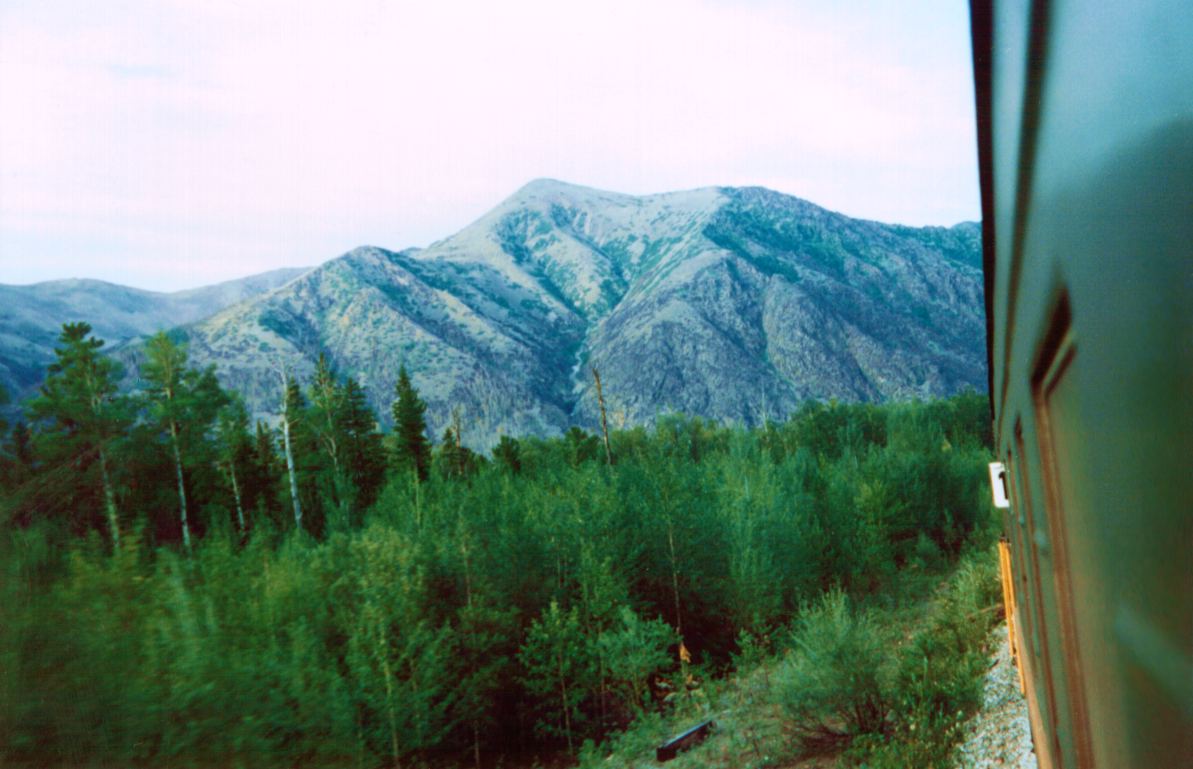
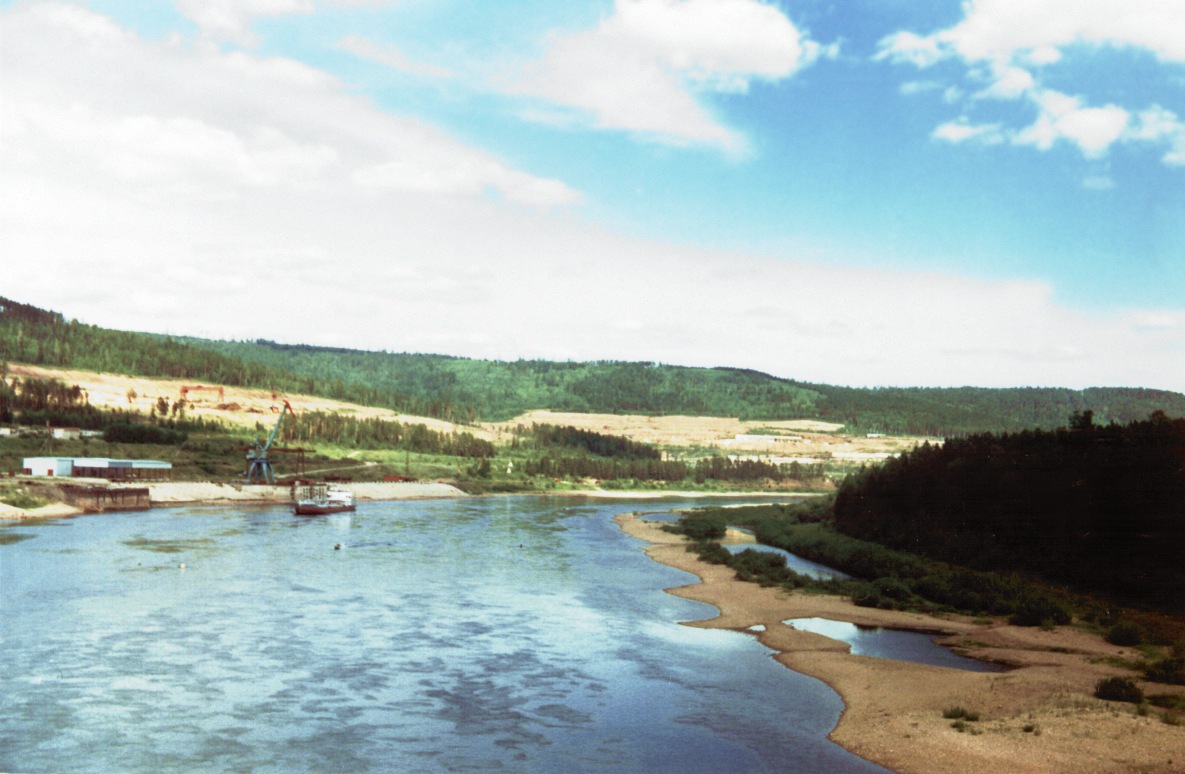
We reached Severobaykalsk at eleven in the evening. We had no idea where to sleep. We decided to go down to the lake and put the tents up there. On the way a local man stopped us and invited us home, assuring us the lakeshore was not safe with the local young toughs about. He had been drinking and was bored and wanted another drink and a chat. We spent the night at his house in the end, Tanya and I in his bed and the men on the floor. His daughter, her husband and his son were there too. The specially designed house seemed to be a single-storey timber place, but with all the comforts of town, including central heating and gas. In the garden were glasshouses with tomatoes, vegetable beds and potatoes. A laika hunting dog. He warned us darkly about meeting the local population.
14 July
Early in the morning we moved to the town beach. I doubt it would have been dangerous at night. There was a group from Chelyabinsk nearby, though it might have been noisy if the local youths had really been out. It was windy from morning and by nine there were whitecaps all over the lake. A small storm, nothing typical or lasting, the locals assured us. The water was warm and the beach full of people swimming. Sand blew every which way, into eyes, hair and all our belongings.
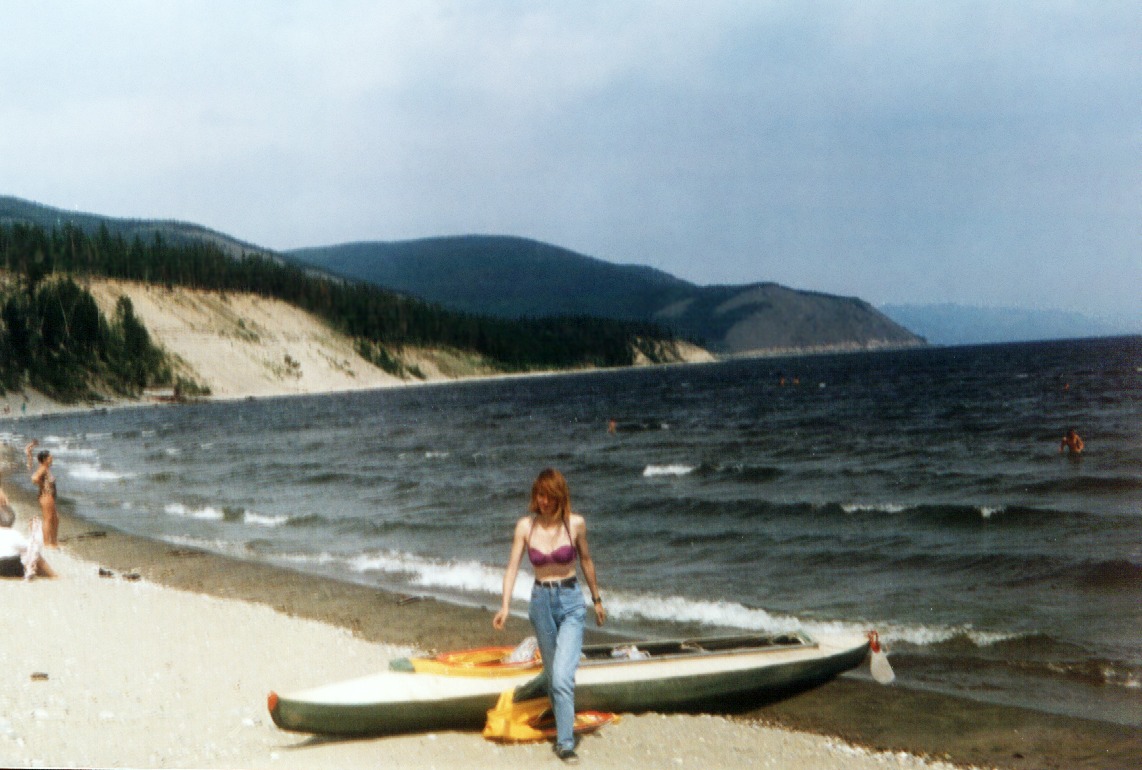
We made three shopping trips for bread, cheese, vegetables, beer and grains. Meat, cheese and vegetables were very expensive. Our host had kindly given us some of his own potatoes. He said they would go to waste anyway. They had great sprouts but were quite sound otherwise. Severobaykalsk is small and pleasant, a city built to a Leningrad design which we were told dated from 1979. Its main street, Leningradsky Prospekt, had just six buildings, but they were five storeys high and quite elaborate, each a little complex in itself. There were a few freestanding bank buildings and a large shopping centre. By midday everyone was tired and annoyed with themselves, one another, the wind, and everything else.
We set off at four as usual. A wave broke over us while we got in and only my head and shoulders stayed dry. Tanya and Sasha had their new spray deck and skirts, brightly coloured but with no straps. The wind had eased but a strong swell came at us broadside. It came over the bow, the side or the stern as soon as you let your attention wander. We paddled a fair way offshore, about a kilometre. Sasha grumbled that we should stay within swimming distance in case an offshore wind sprang up. The bays and headlands would have made it slower nearer the shore, though, and the waves there were less comfortable. On the whole the wind and swell were behind us. We regularly bailed out the boats with a rubber bulb. It was warm and I was barefoot, wearing a wet yellow T-shirt that dyed my lovely blue trousers into a tasteful pattern of greenish streaks.
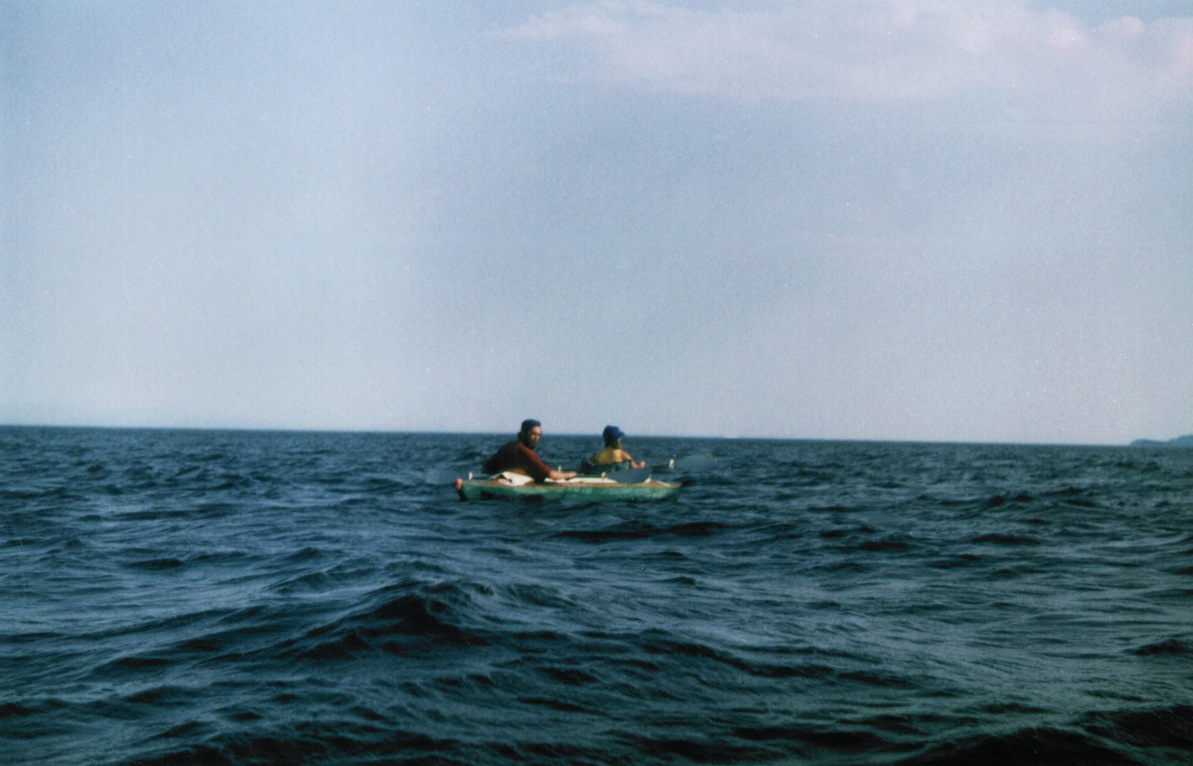
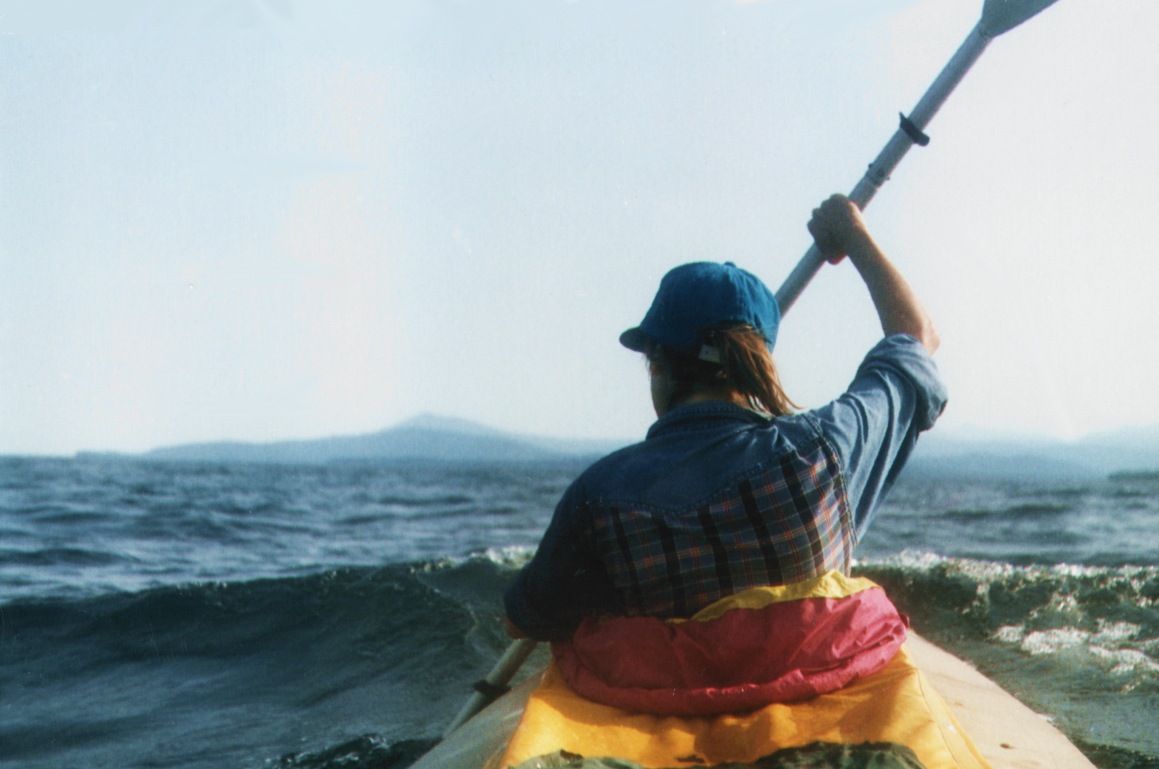
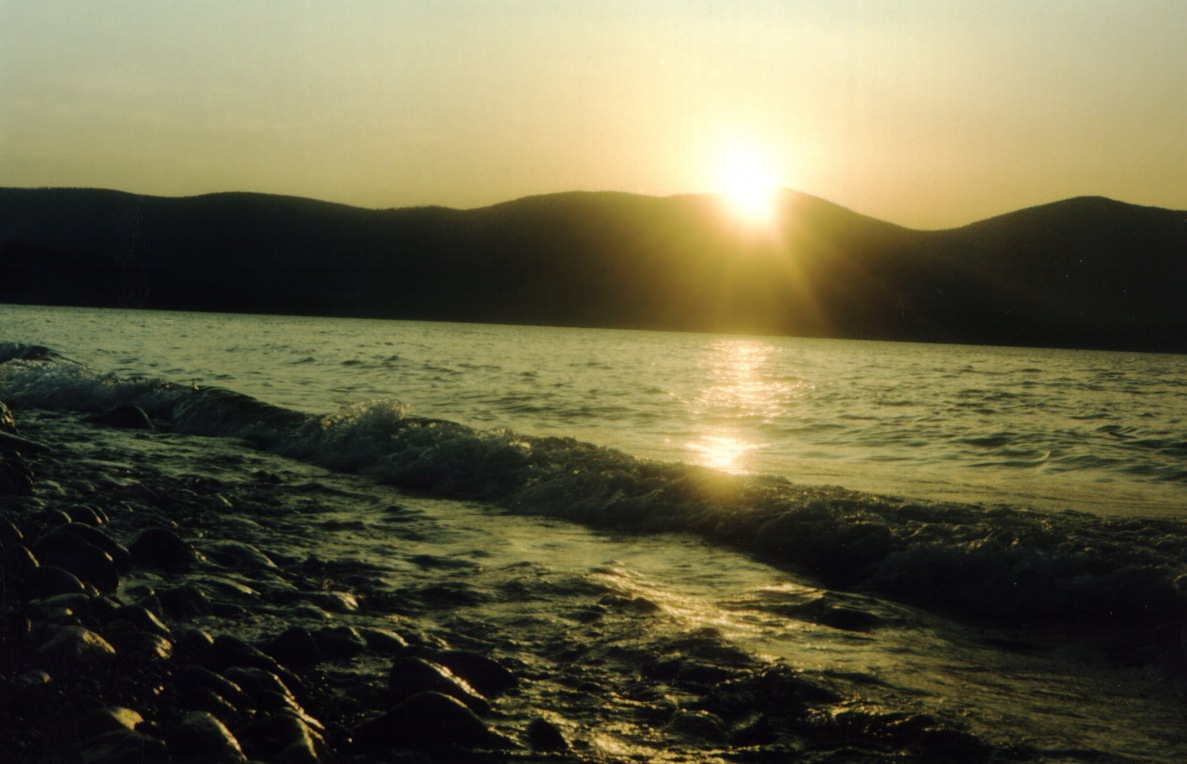
We made the island by eight as planned. We landed on the windward side as usual, which at least was not the steepest side. A stony beach, a little larch forest and gull chicks making short dashes between the stones. We lit our first fire and made soup. That evening we had Moldovan wine. Lovely and cosy. Not many mosquitoes, but the ones we had could bite.
15 July
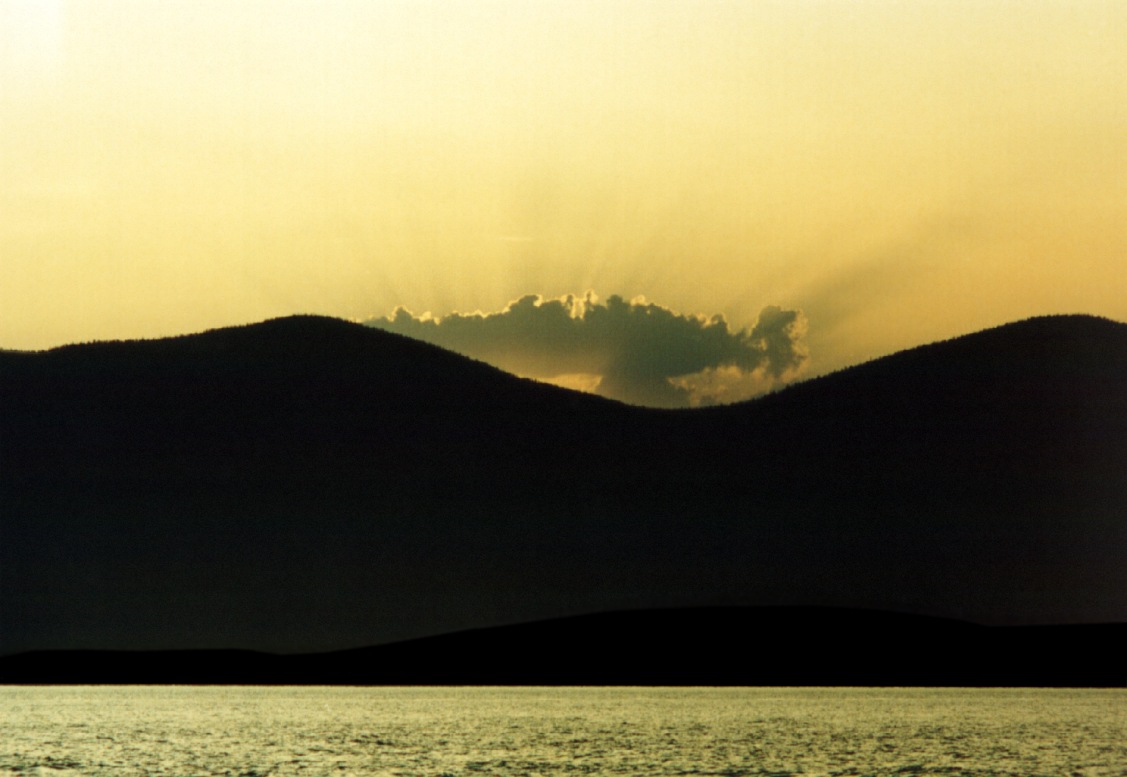
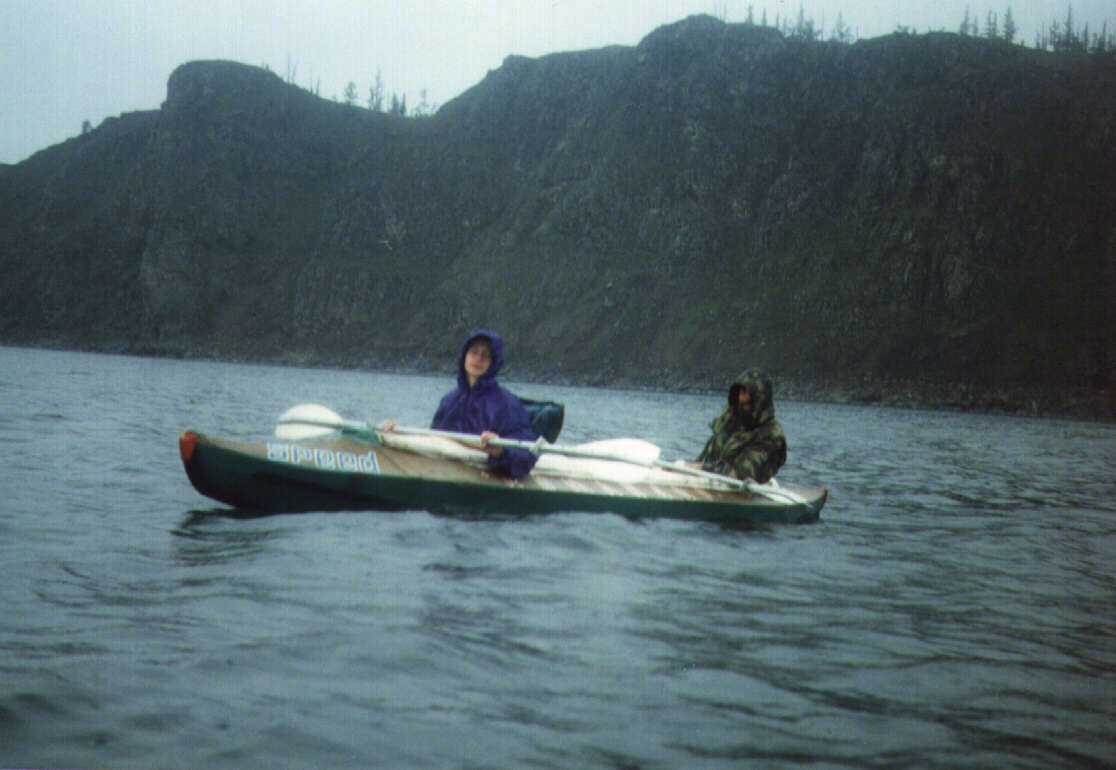
At four or five the sun was shining through clouds and the water was calm. By nine the wind and waves changed direction. The sky closed in and it rained. Clouds came out of the valleys and covered the mountains. We found gull eggs, well camouflaged. It was cold. We left at five in the afternoon. A little chop, rain at times and fog. We passed the village of Baikalskoye without filming it, then a valley with a river we couldn't see. We landed on a stony beach on a cape. Beyond it was a dry little bog and then a low hill. We put our tents up in the bog. I tore our flysheet and Sashka snapped at me. It was after nine when we got there, and everyone but me went for a swim.
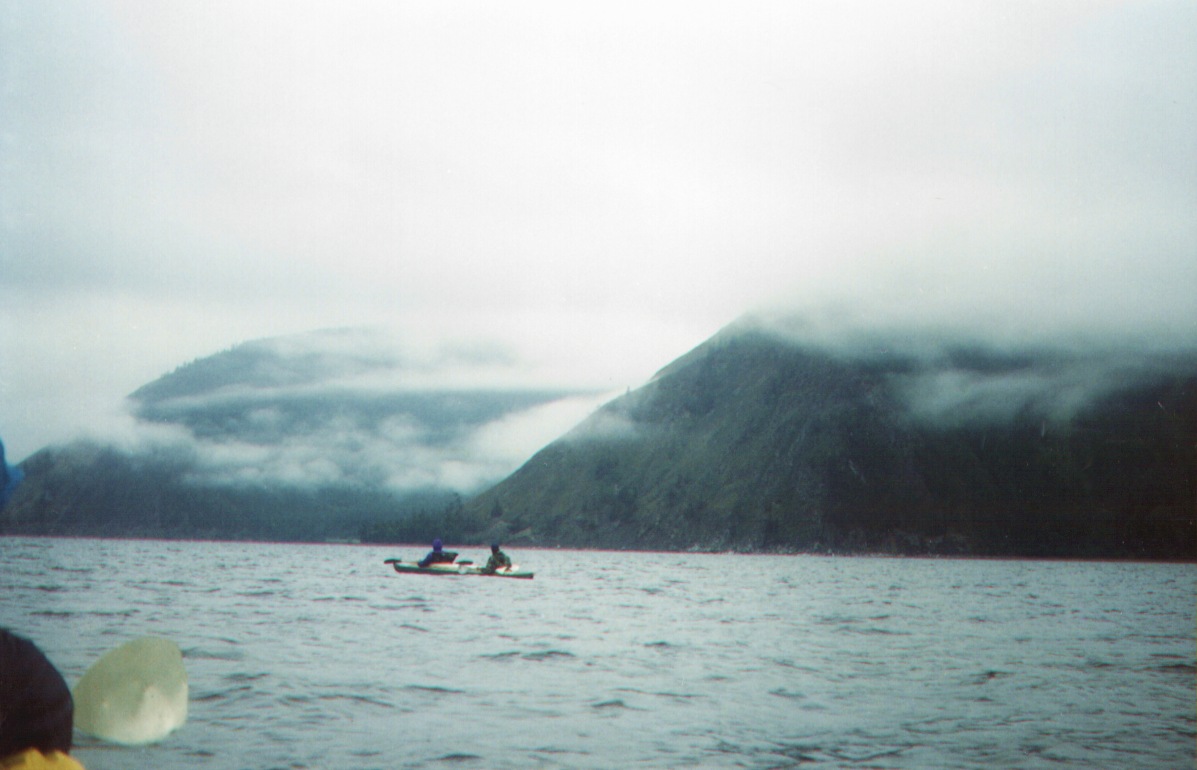
16 July
Fog all around and above us in the morning, but hot where we were. Sasha climbed part of the hill, above the clouds, and said it was terribly hot up there. The rest of us walked lower down. We swam. The water was below fifteen degrees. We set off for Cape Kotelnikovsky at three. Sasha’s estimates of where we were kept changing. The night before he said three hours to the cape, now it was six or seven. We were doing a centimetre an hour on the map without knowing the scale. The hills and valleys all looked alike and the fog hid everything past the next cape.
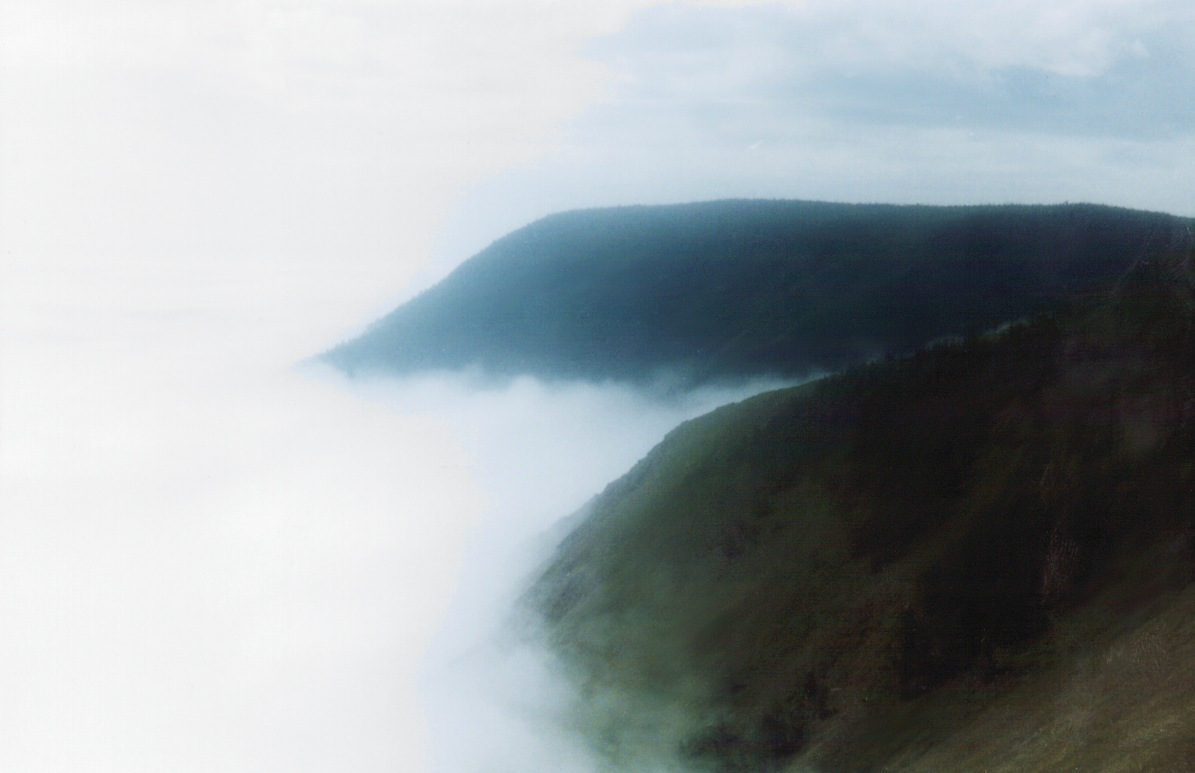
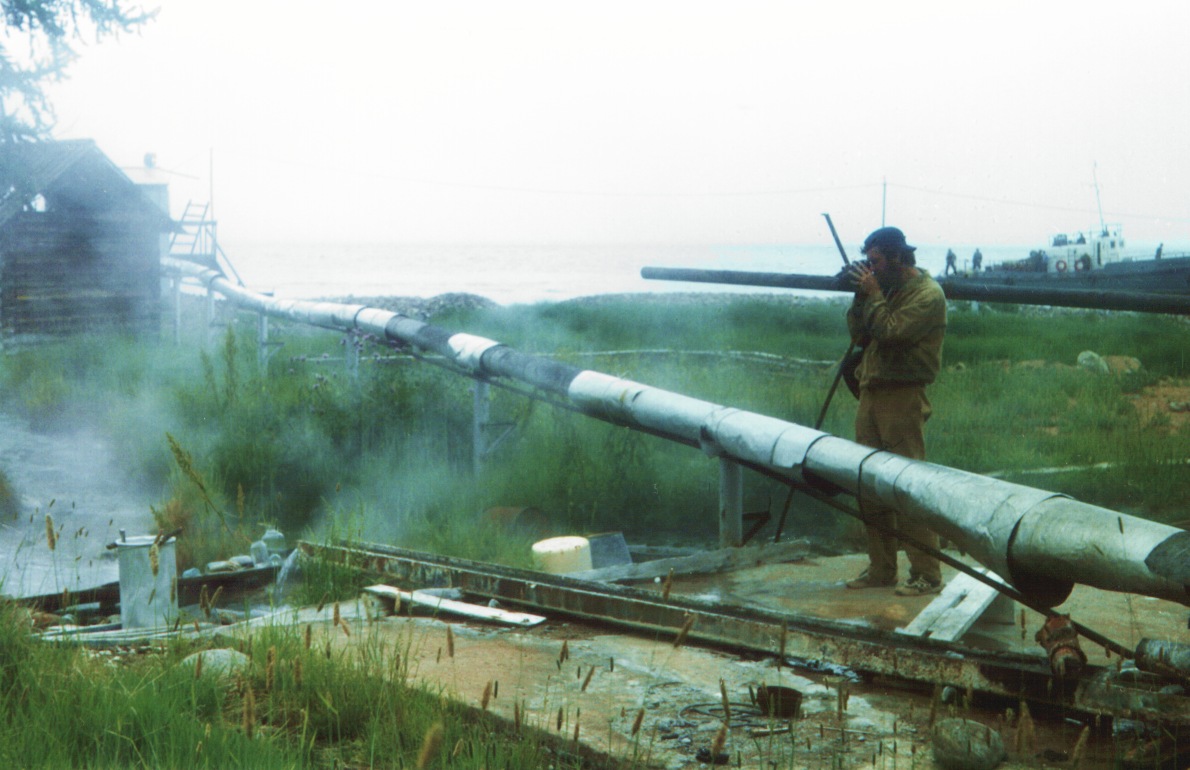
Kotelnikovsky came into sight at six and we got there around seven, cold and wet. There was a holiday camp, a pier and a smell of hydrogen sulphide. We would have gone on but the Simos landed and asked about the hot springs. They were right on the shore, one hot and one cold. The hot one had two pools, a bigger outdoor pool and a shallow, pretty one under a roof. The deeper one was empty. They change the water every week. You pay to get in. We relaxed wonderfully and warmed up to the bone. We bought dried omul from the keeper. People come by motorboat or ship, and apparently by car over the ice in winter.
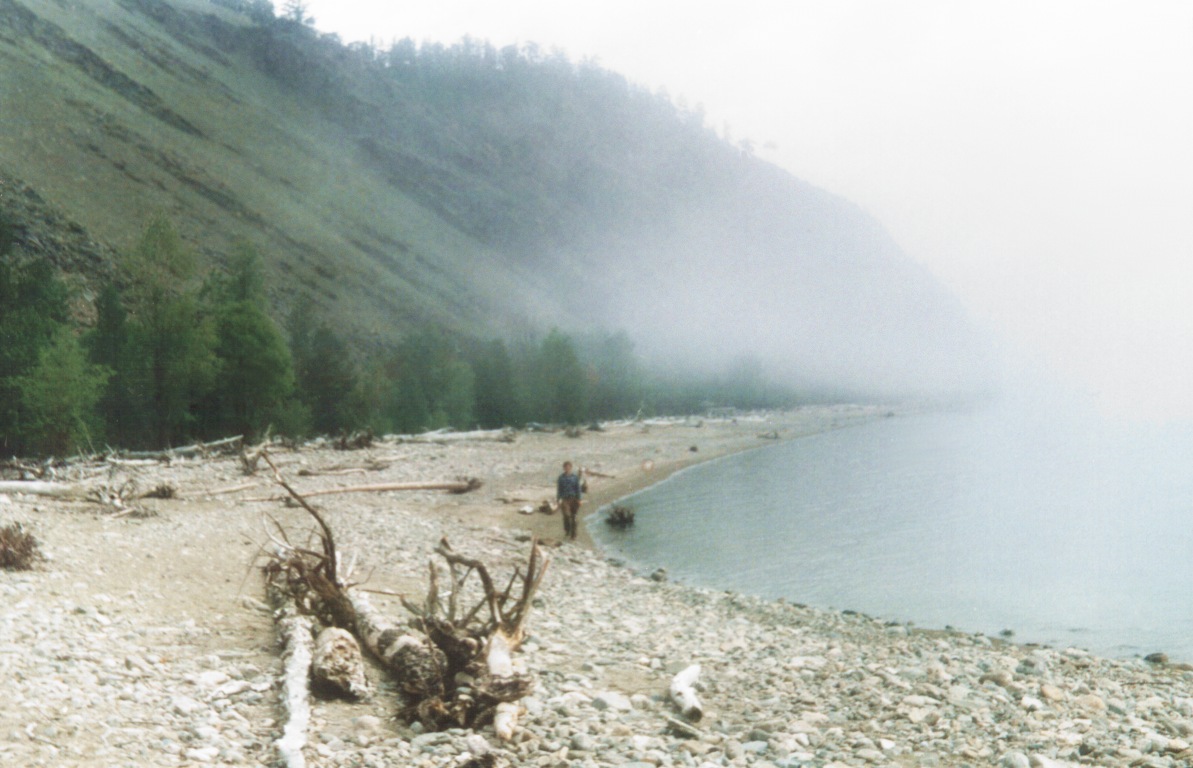
We paddled another hour and a half around the bog on the cape and camped on a stony beach below a mountain. There were masses of dry trees washed up, enough for a wonderful fire. A little river nearby. Fog all the time, never quite the same: now higher, now lower, now thicker, now lifting to show the summits, with the fog below and the shore beneath it. Sometimes fog would creep out of a nearby valley and cover almost everything.
17 July
Changing fog in the morning, sunny intervals and a calm lake. We climbed the mountain anyway. Hot. White and pink marble up there. We could not tell who had made the trail; it was covered in big heaps which later turned out to be from horses. We followed it down to a stream in a gorge with a waterfall. Sasha crossed on an overhead cable at some cost to his hands. Tanya and I just pretended to do the same for the camera, which was hard enough. Very beautiful. We followed the river, or rather the hills above it. There it spread into several wide, shallow channels over stones. Not much to see.
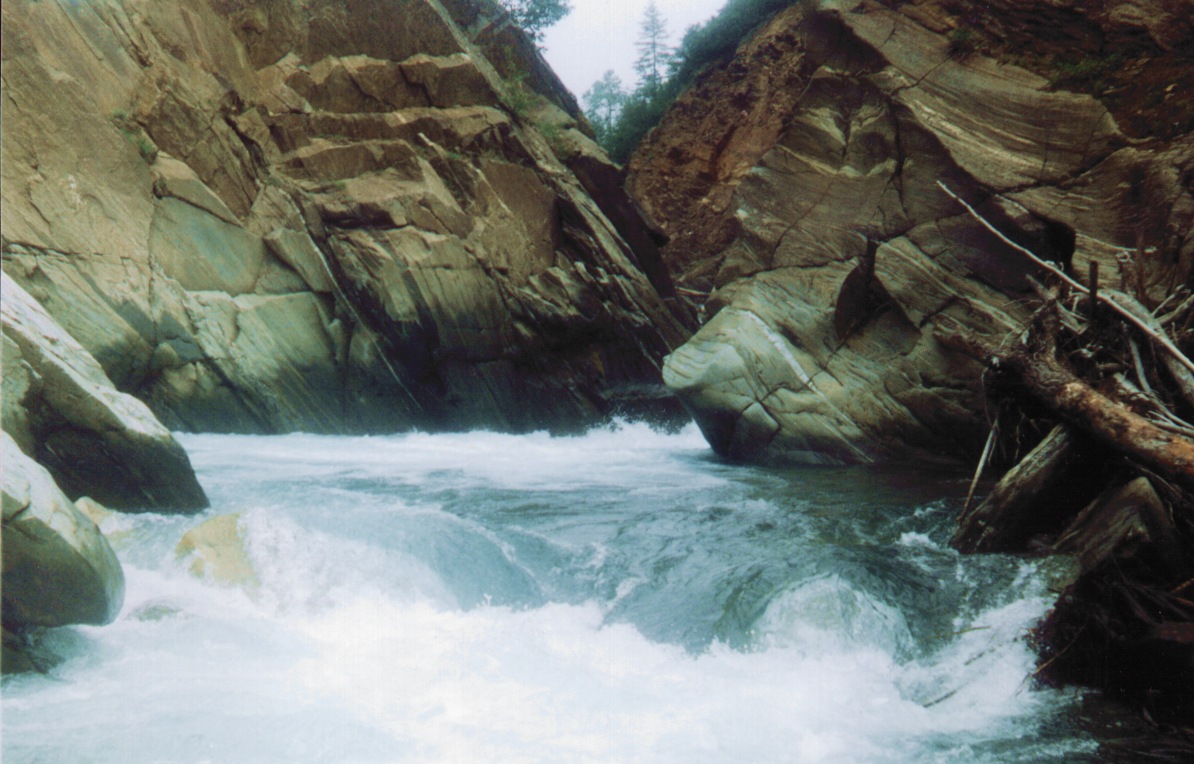
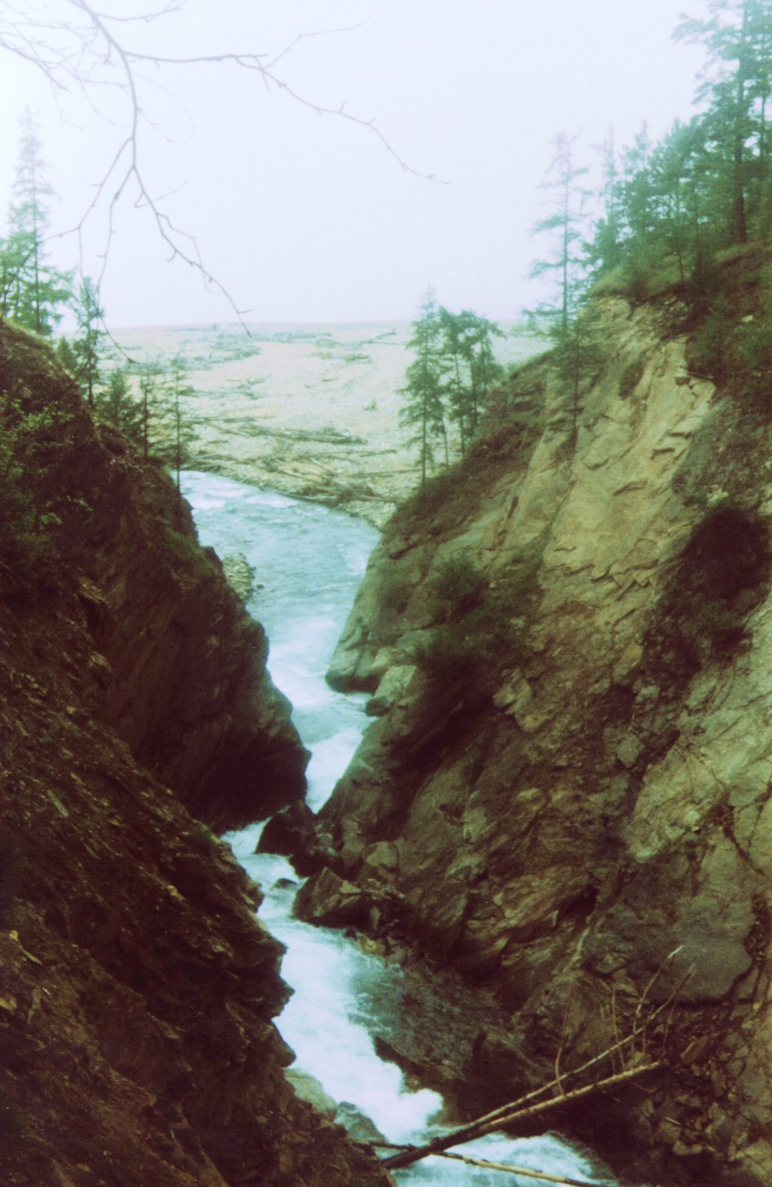
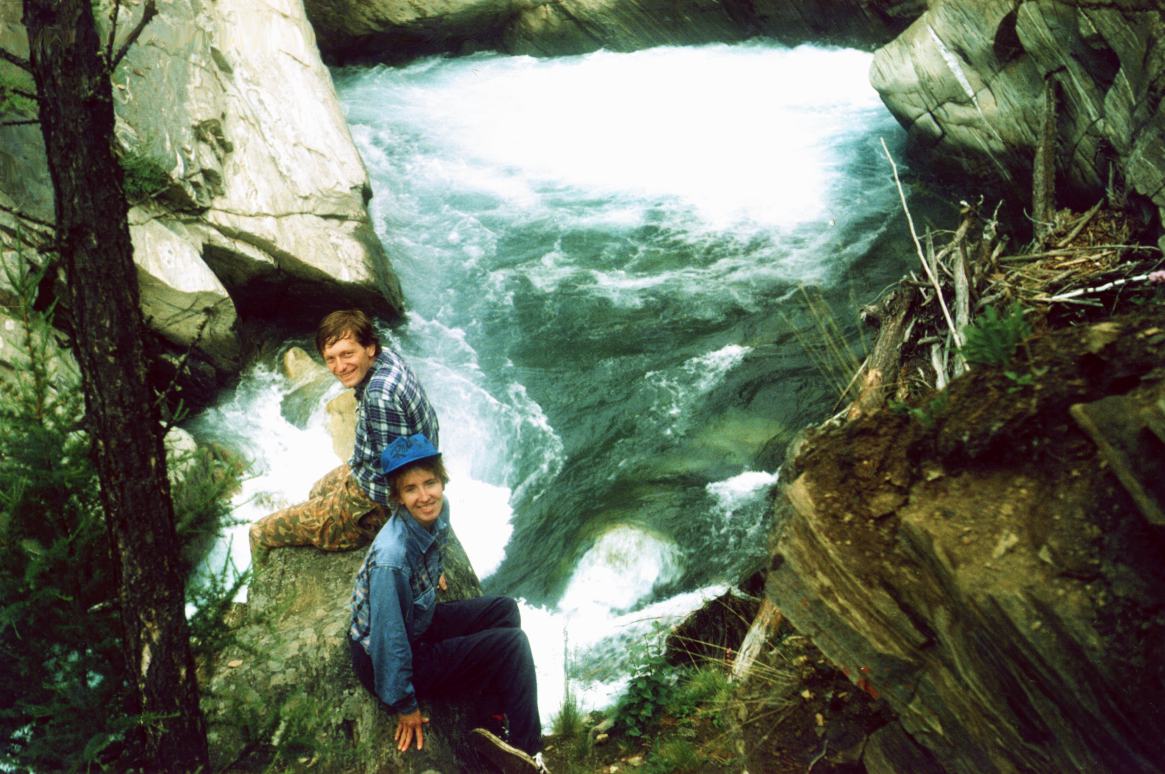
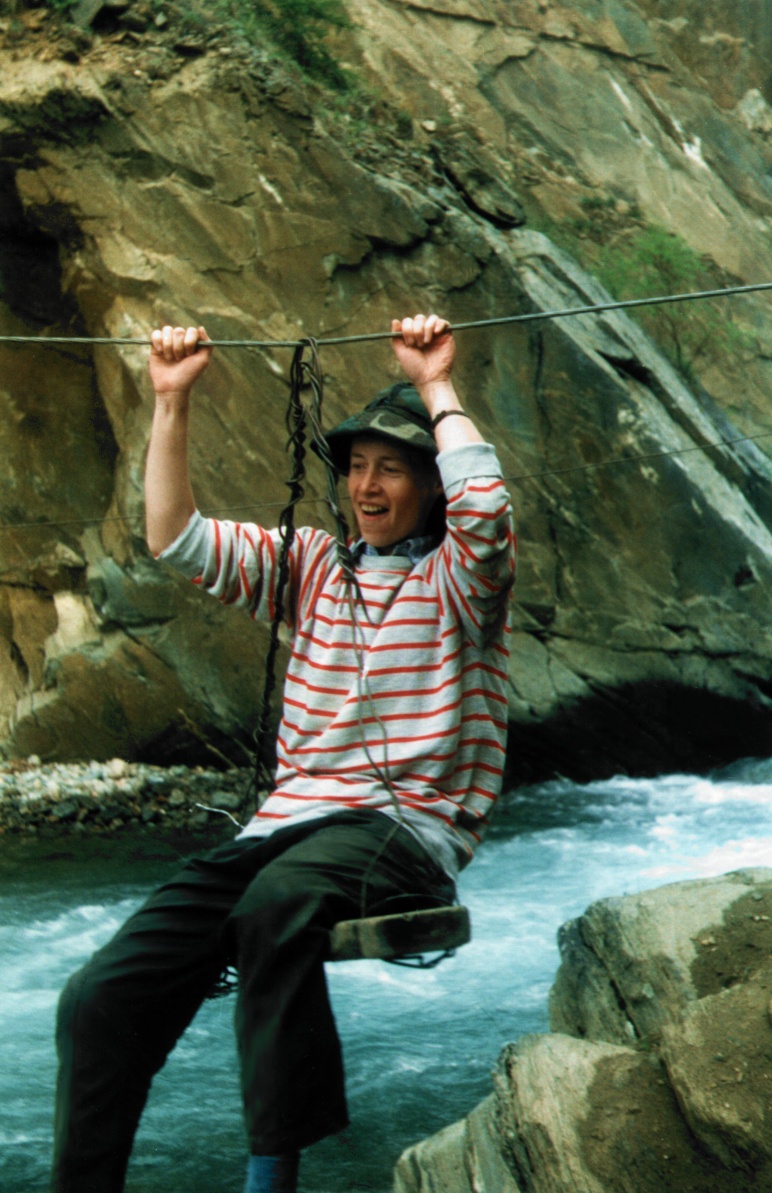
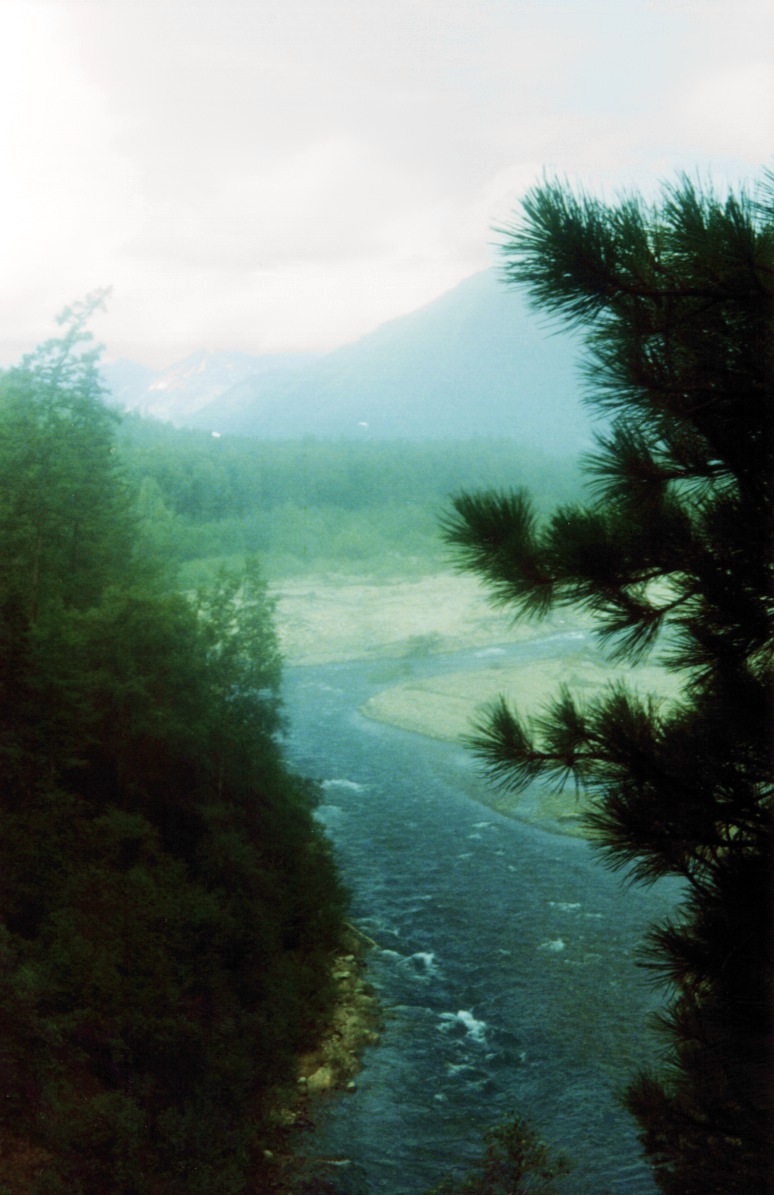
On the way back along the shore we found slippery-jack mushrooms and an enormous, carefully laid-out campsite that went two hundred metres along the shore. A volleyball court, tables, shelters, stone fireplaces, paths, pictures made of stones and arrangements of driftwood. A large group of industrious people must have camped there. By four, when we were ready to paddle, the waves were already too big to load without soaking ourselves and the kayaks. We grumbled at one another, mostly Sashka at me, until seven and then made mushroom soup. We sat up till two. We picked up lots of Chinese stations on the radio, and Radio 1 had a programme with Gorodnitsky. Good songs. We agreed to paddle in the morning.
18 July
Sashka and I woke at eight. The lake was still. We started bustling. Sunny and warm, hardly any fog. We launched at 10:40, a record. Sasha and Tanya followed the shore while we kept cutting straight to the next cape. There was wind on the water. I tried to sunbathe, but half an hour later I was putting on everything I could reach. My hands were freezing from the cold paddle. We could see the mountains and the snow on them, not even a kilometre up. At three we stopped for a bite on a small stony beach beneath a mountain. At four from a low point we saw our next target, Bolshaya Kosa. Everyone was tired and we tried to cut across.
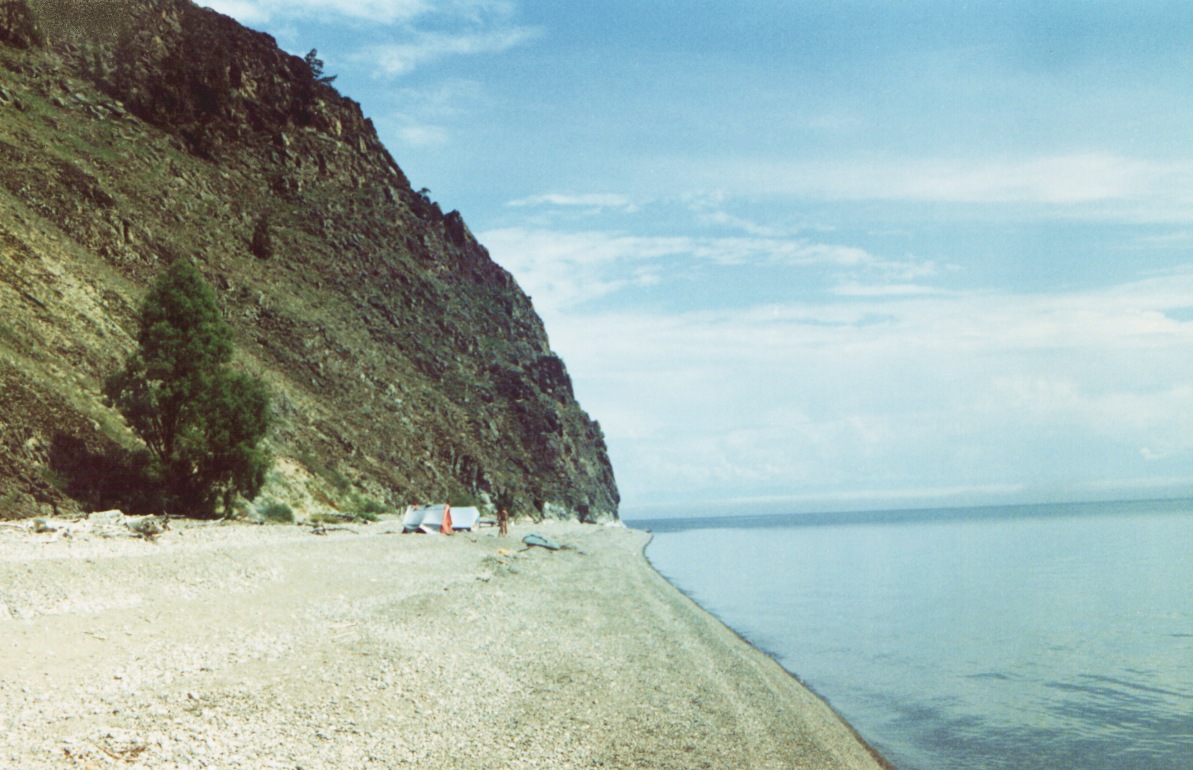
Ten minutes later the waves rose, coming straight in towards the shore. We turned back towards land and spent over an hour paddling at an angle to them. By then the squall was over. We reached the cape by seven. Nearby was a little river, not rushing, with sandy shallows. Blackflies and mosquitoes from the nearby bog. We'd covered about thirty-three kilometres. Sasha had finally worked out the map scale: 3.75 kilometres to a centimetre. Sashka had burnt his belly. Sasha and Tanya had put cream on and hadn't burnt, though we were all red in the face. A sip each of cranberry cordial and a piece of chocolate. A walk to the river. Fairly clear, pretty flowers, stars and an almost full moon. After dark clouds appeared above the mountains.
19 July, Saturday
Rain at night. Everything was the same shade of grey. Sasha had put his flysheet up properly. We hadn't, and had to put plastic over ours in the morning. The Simos’ need for coffee and porridge was stronger than the rain. The lake started to get rough. We walked the shore looking for pretty stones. Rain and wind and about twelve degrees. Only warm by the fire. At three the Simos made soup in pouring rain. That is what Tanya’s love for her husband and his love for soup can lead to. It stopped raining just as the soup was ready. Full of vitamins, with wild sorrel and garlic.
We thought about climbing a mountain two kilometres away. It didn't look like quite the right mountain, and there were plenty ahead closer to shore. Sashka and Tanya went looking for mushrooms and were gone so long we wondered if a bear had eaten them or if they had caught and were skinning the bear. They came back at five with very few mushrooms. Tanya had squealed when Sashka tried to get her across the little river on a log.
The rain had stopped, so we got ready to paddle a little. The moment we set out, we got the fiercest downpour of the day. An hour after that Tanya and I were squealing that we wanted to be on land and dry or to have some cranberry cordial. They told us not to be silly; four kilometres would hardly be worth setting off and getting soaked for. One hour more and the rain stopped. We landed just before Cape Cheremshanny. A winter hut, a stream, a few metres of beach, a little bog beyond.
It was the anniversary of Sasha and Tanya’s first meeting. They went to pick flowers and we made a vase from a plastic bottle. We opened the champagne and a bar of Fazer and filmed it. Having a drink on an empty stomach is absolutely correct. Everything immediately becomes much more cheerful. Dinner was our “pig's trough”, neither soup nor main course, mushrooms, potatoes and meat in a thick sauce. We sat by the fire and talked. Lovely.
20 July
Sashka demanded coffee in bed. Tanya and I had a job getting the fire going. While the porridge cooked we walked to the stream and the winter hut. It had a stove, firewood, wooden bunks, a table, salt on a shelf and a little bag of rice hung from the ceiling. We launched at 13:30 planning to do fifteen kilometres or considerably more if it went well. Half an hour later it was clear it wasn't going to go well. Strong gusts blew out of every gully, mostly into our faces. Small waves boiled around us. The wind tore spray off their tops and drove it fast over the water. After two hours we put in at Cape Cheremshanny because Tanya and I were scared and soaked.
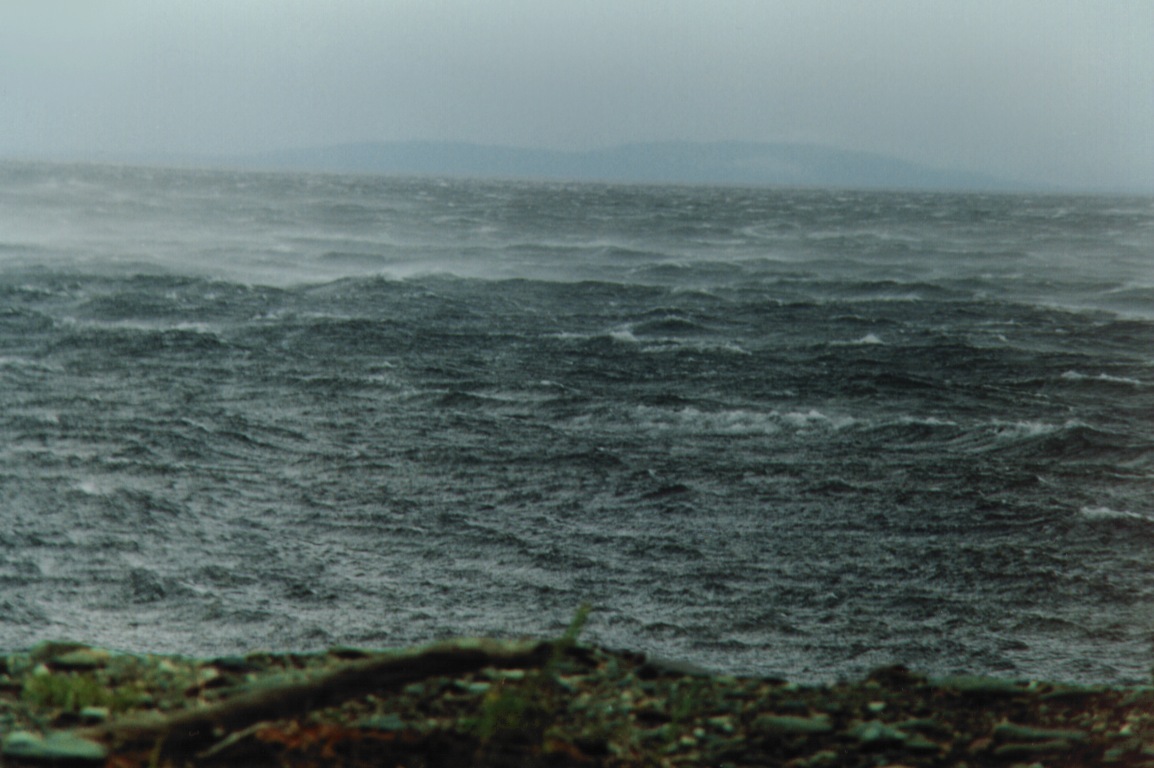
A fisherman gave us some grayling, which he caught near the streams. There were three children, two mothers and one grandmother living there. The old man we'd heard about in Severobaykalsk paddled off, saying it was quite possible to follow the shore. We felt ashamed. At the point we lined the kayaks round on ropes, with the men paddling and Tanya and me walking ashore with the lines, and then went on. The wind was even stronger, usually head-on but sometimes behind. We kept a few metres from the shore; a moment’s inattention and you could be blown fifty metres out into open water. After another hour and a half we landed on the next cape. So did the old man. His name was Vladimir Yakovlevich Bezmenov, sixty-five. He had paddled all his life, mostly on rivers up to Grade 5. He'd been to Baikal once but hadn't had time to go far. He wanted to reach Irkutsk.
We pitched on the cape as usual, almost right in the wind, and made fish soup. The reserve ranger arrived in a motorboat. We were nearly on the boundary, with the reserve starting at the next cape. He said the wind was a gornyak, blowing from the mountains, and would probably still be there tomorrow. He was looking for his dogs. We could go through the reserve if we paid two dollars a day per person.
21 July
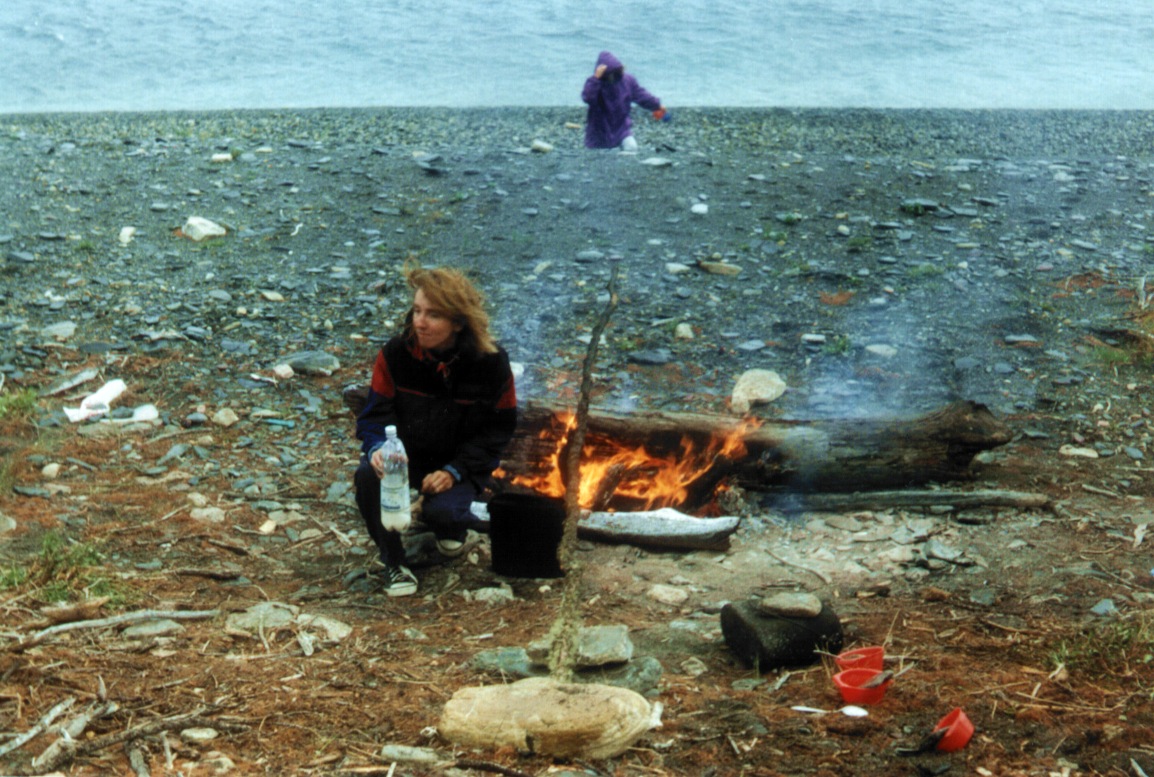
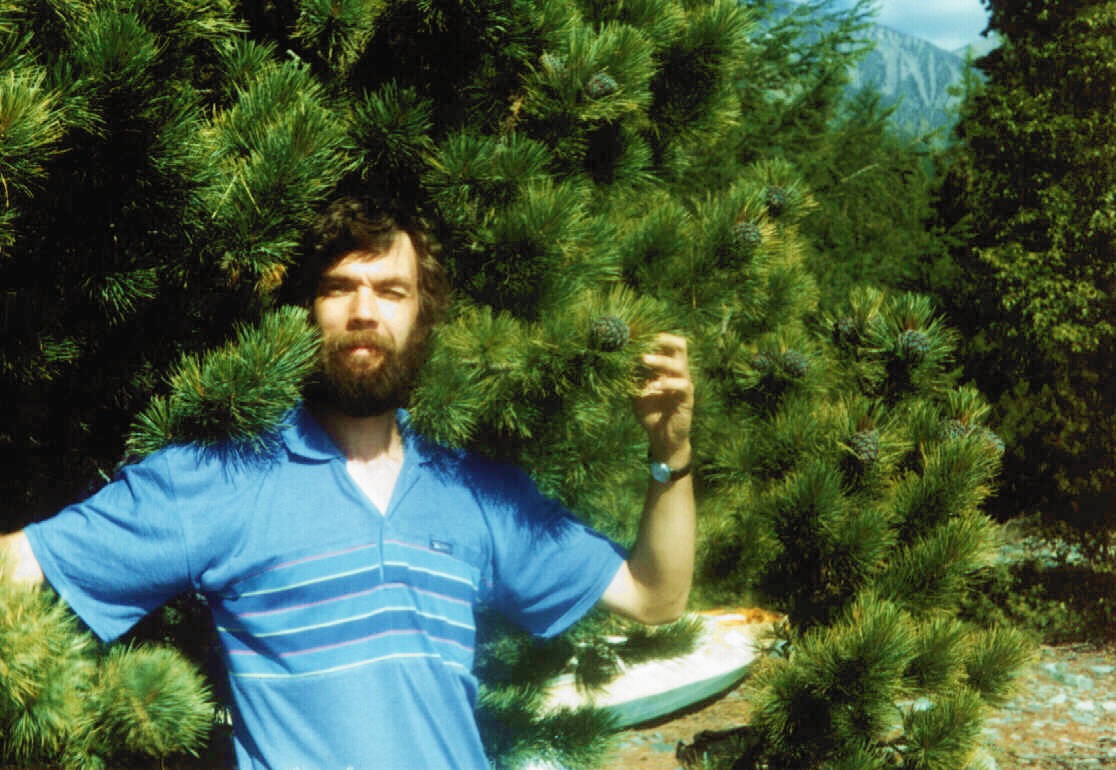
Sashka and I woke at six when the wind tore the flysheet. He stuck it back together with tape. It was raining and the wind and waves were worse. We moved the tent into the woods under a Siberian pine, where it was much quieter. We would not paddle today. The wind went through everything we wore. Rain all the time, though it was hard to say whether it was rain from the sky or spray off the waves. We put the boats in the bushes because the wind had turned one over several times the day before. We put stones in the bowls and pots so they didn't blow away. We all sat in one tent.
At six in the evening the rain stopped and everybody but me climbed the hill. I tried to keep the fire going but the wind ate fuel almost as soon as I put it on. Vladimir Yakovlevich came round and invited me to his fire below the bluff, out of the wind. The others returned close to ten, Sashka with some Siberian pine nuts. We went to Vladimir Yakovlevich’s for supper. Hardly any wind, a nice spot, but the fire was wrong and smoked in every direction. It was already dark. Sashka lost his knife and was terribly upset. Tanya’s watch had been lost back on the train. We found the knife only when Vladimir Yakovlevich brought a powerful torch. The ranger, Fyodor Fyodorovich, had called again during the day. He said the wind would drop tomorrow and asked us to call at Cape Elokhin to arrange passage through the reserve.
22 July
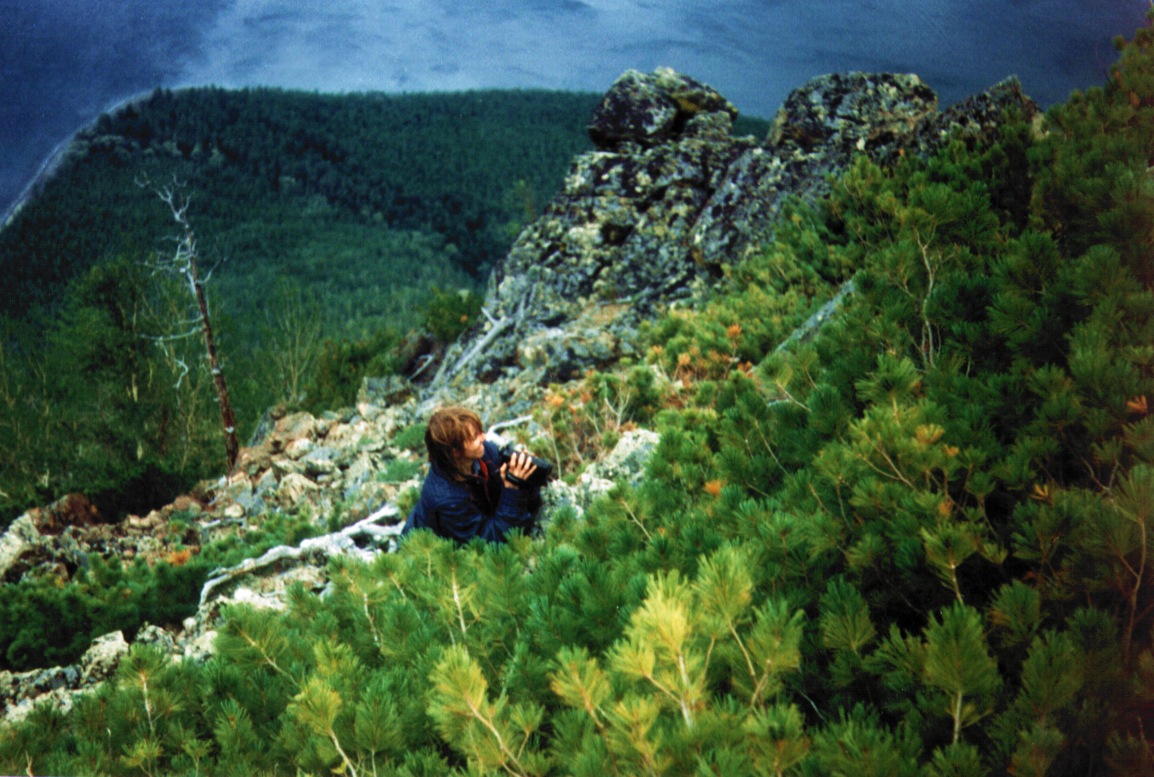
We wake at ten. Hot. Sasha and Tanya have already washed their hair with water heated in the pot. The wind is strong, but from a different direction, and there are hardly any waves. We leave around one. An hour later we reach Cape Elokhin, where Fyodor Fyodorovich takes a long time writing out the paperwork. He does not take any money. He says he will radio Cape Pokoyniki, where the head office is, and we are to call in when we get there.
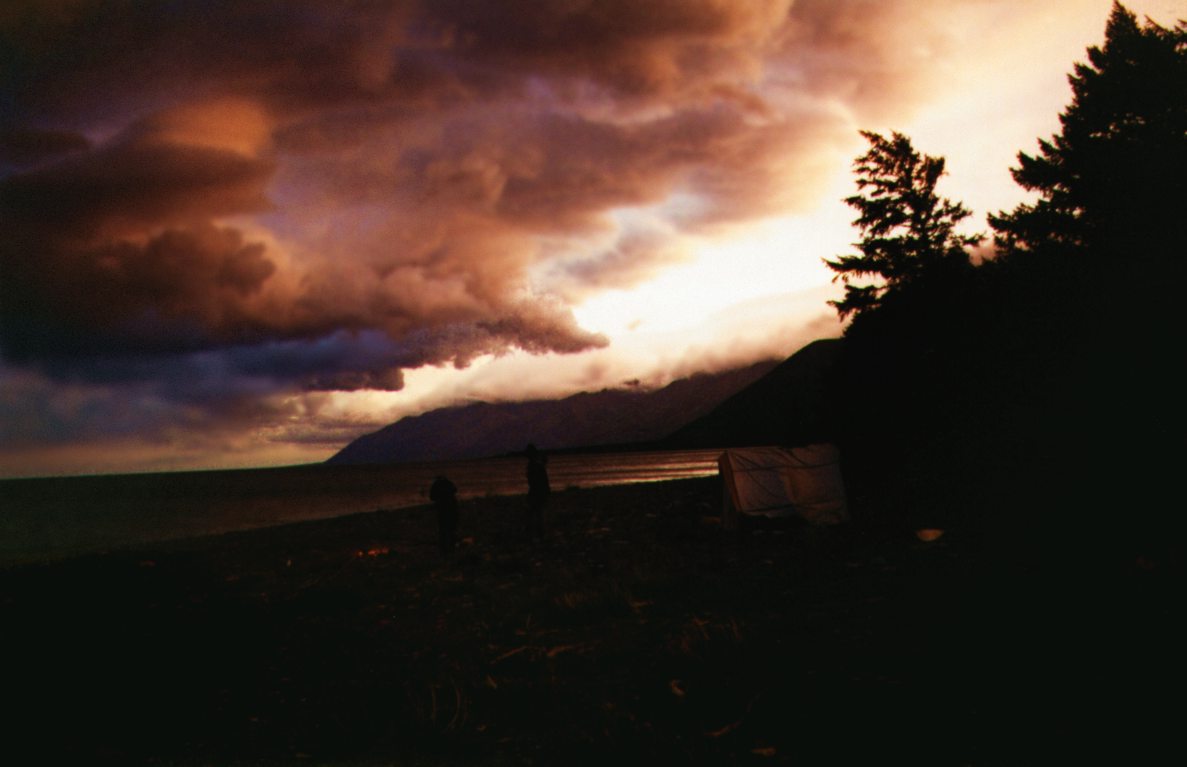
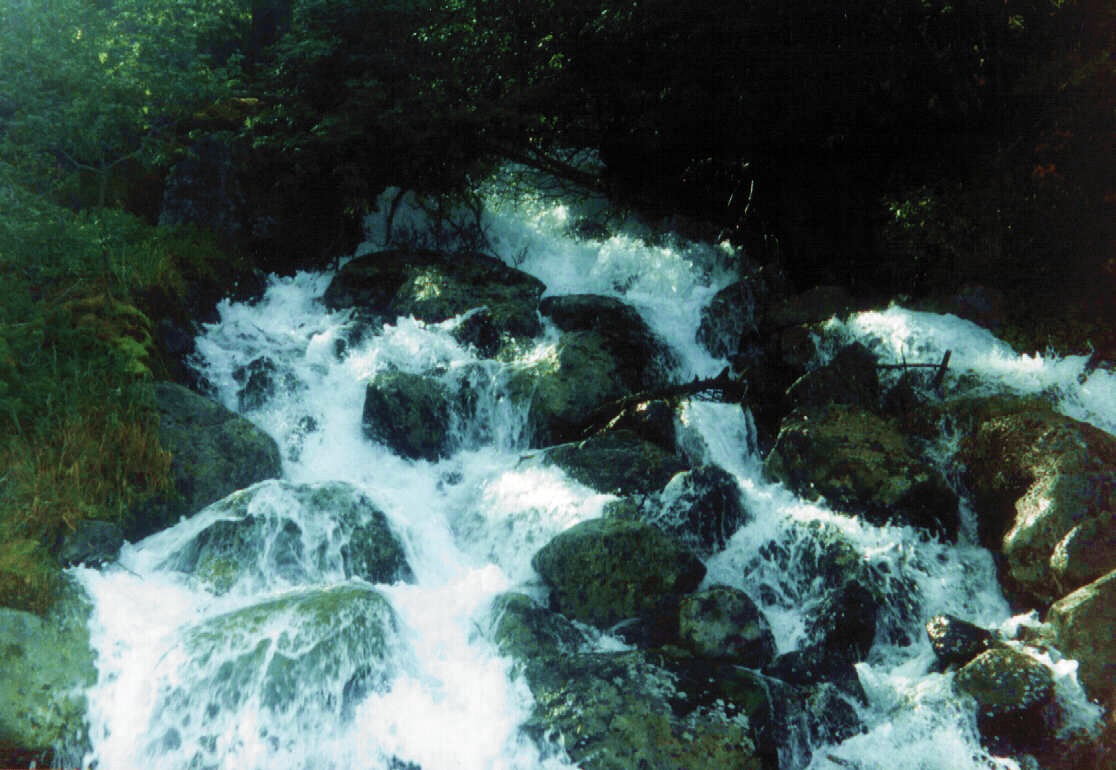
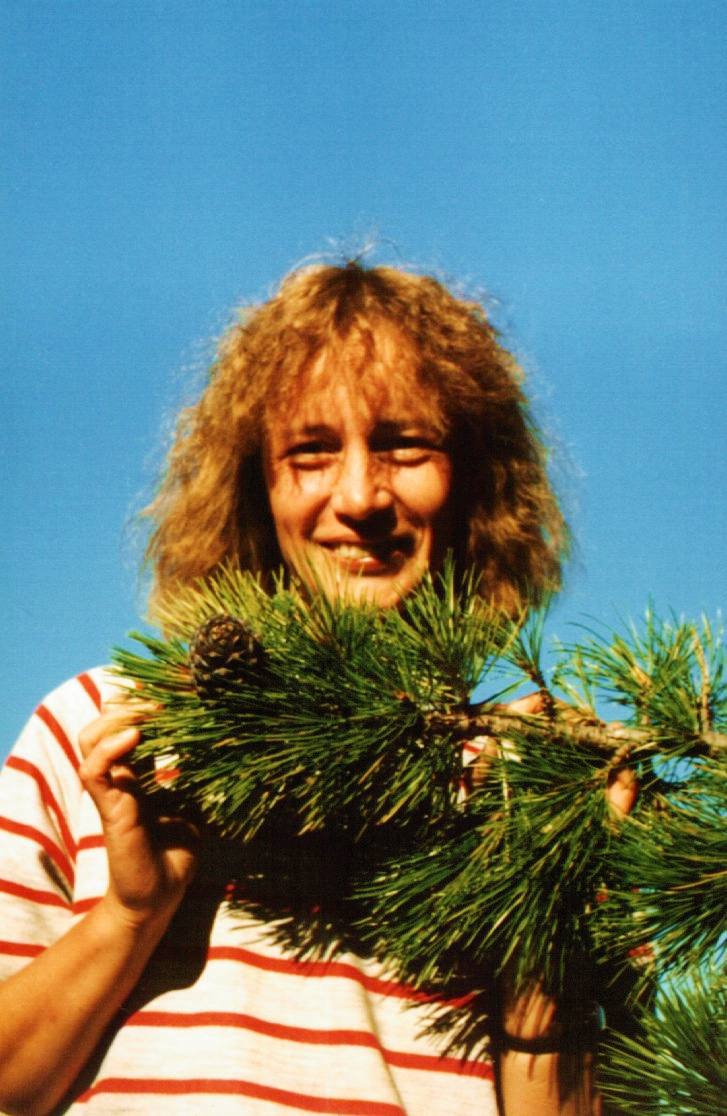
One minute sunshine, the next a downpour. At four we stop for a snack by a stream with a waterfall. Sasha hops over it from stone to stone, trying to get some good shots. We paddle until 19:30 through several more downpours. By evening there is a big, rolling head sea. Everyone’s hands and feet are terribly cold except Sashka’s. We camp on Cape Yuzhny Kedrovy. The tents are under the Siberian pines, which are full of cones.
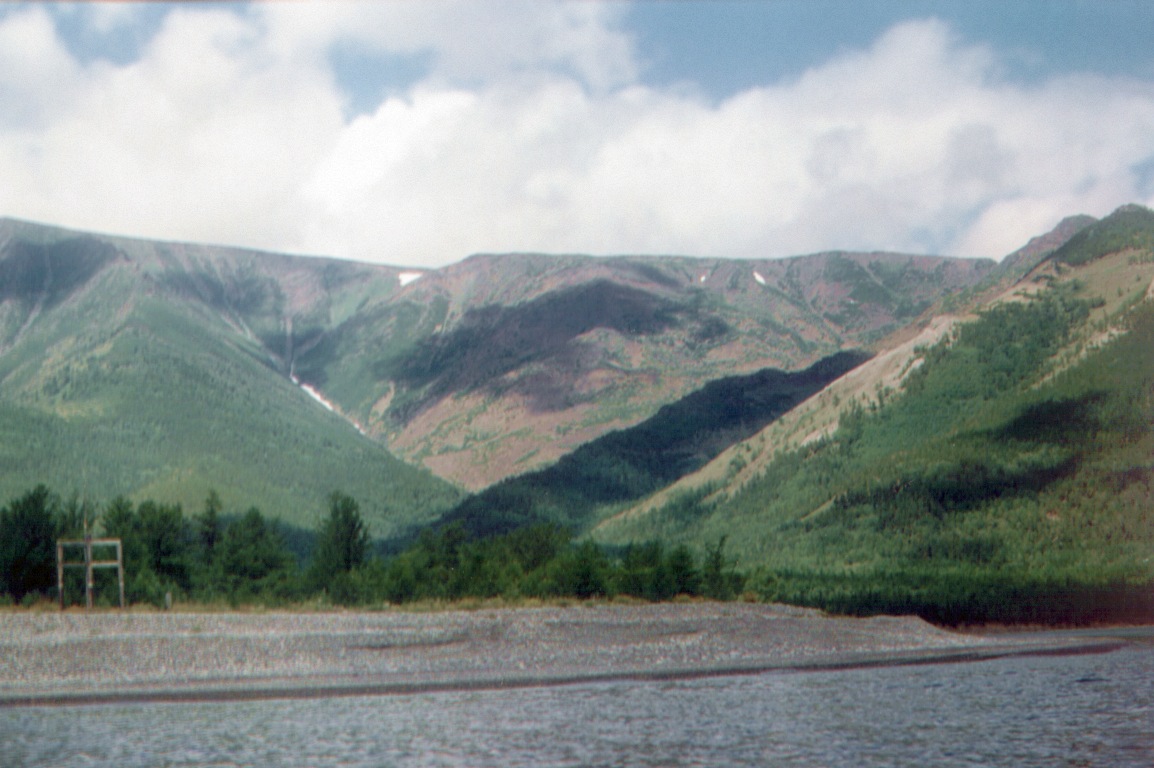
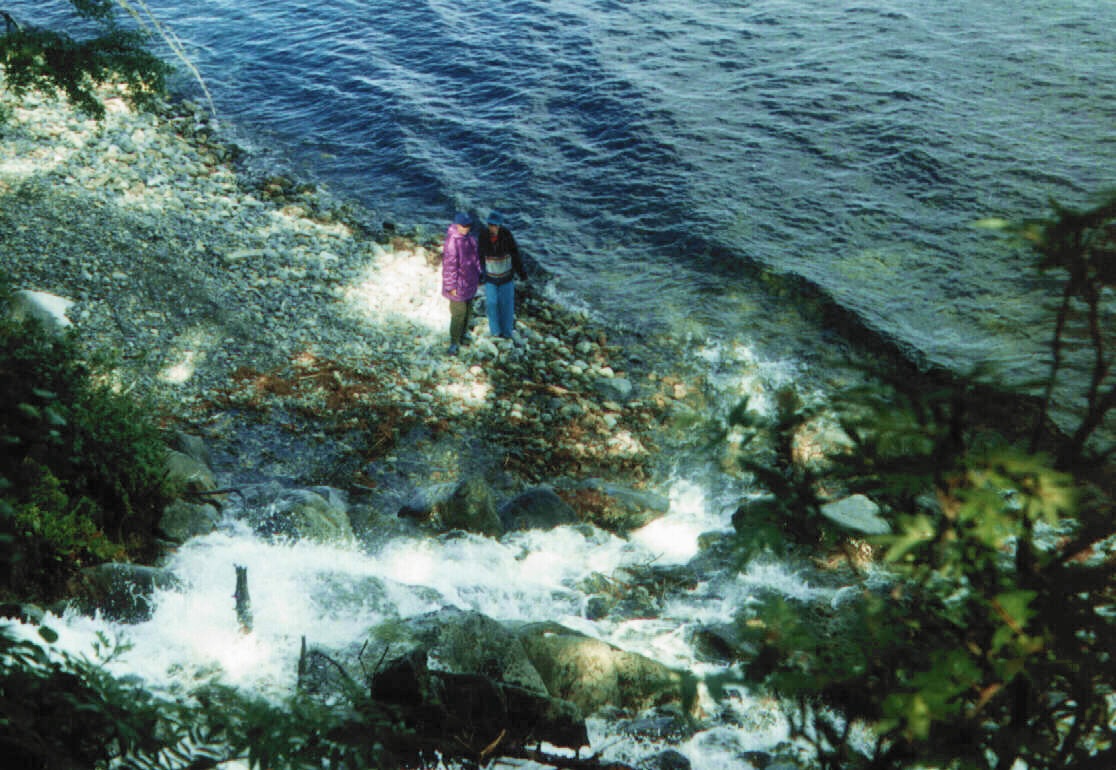
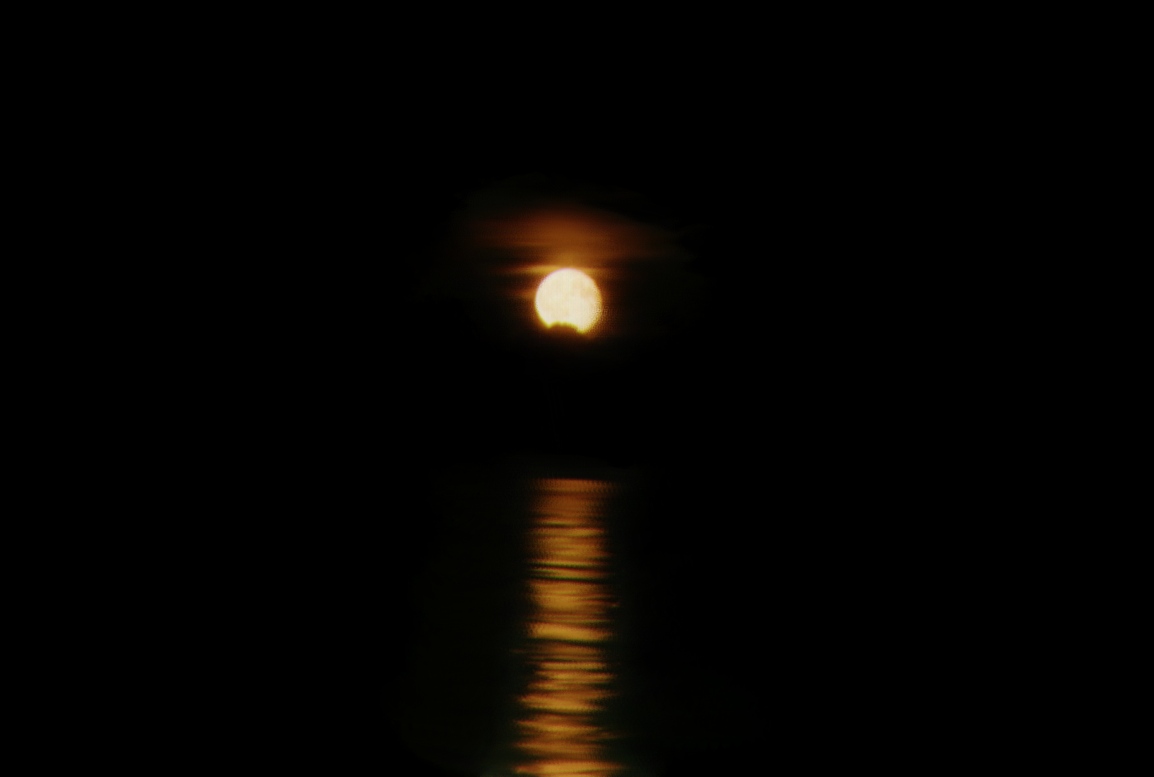
Sashka is unhappy because he wanted to go farther, but it is a pleasant spot and he settles down. We go to bed fairly early, just after eleven. There is another shower while we eat, but afterwards a huge, beautiful yellow moon rises from behind the mountains on the other shore. Very cold, 9°C.
23 July
The cold woke us around five. We zipped our sleeping bags together and Sashka put on a jumper. Sunshine in the morning. Sasha and Tanya went off to climb the mountain at noon and stayed out all day. I whinged a bit and Sashka stayed behind. The weather goes like this. Half an hour or an hour of sun, a rainbow and a chance to sunbathe, then a downpour or just wind, and you need your jumper. We washed our hair. No waves. V. Ya. paddled up and we had a chat.
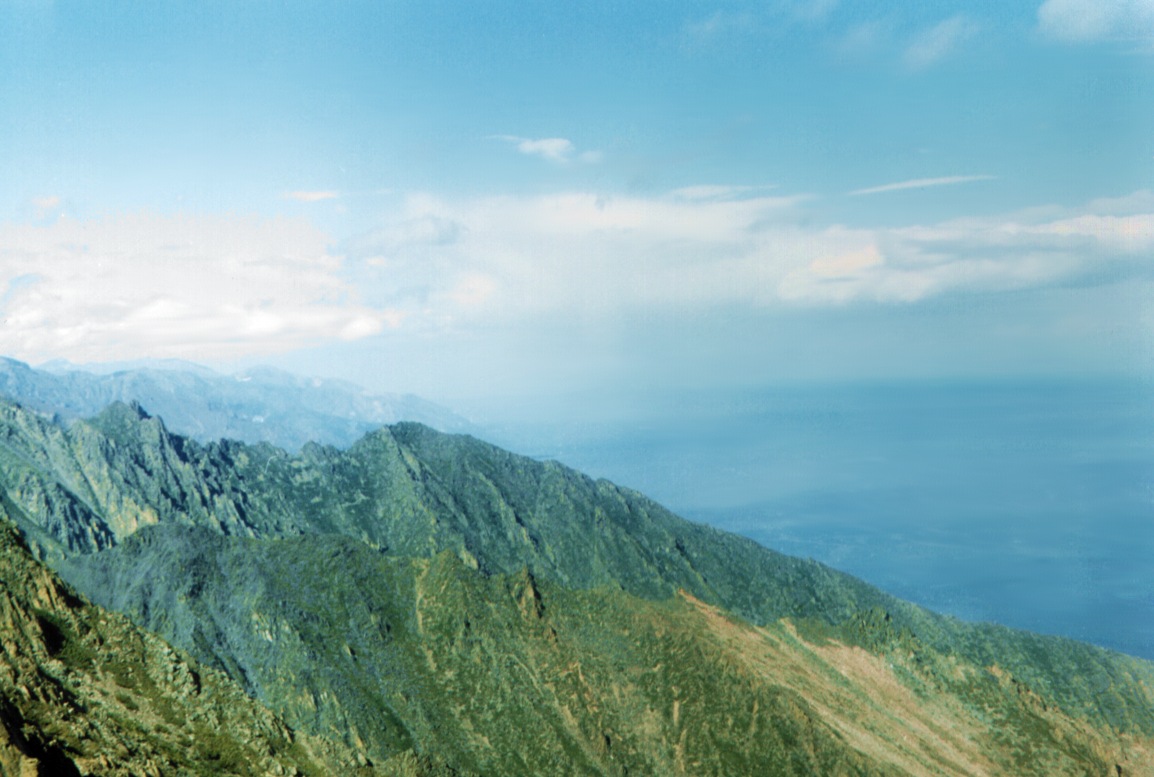
The others got back at nine, soaked from head to foot and delighted by what they had seen and by having made it. The slope is full of mushrooms and red lingonberries, with impenetrable thickets of dwarf pine.
24 July
Sun enough to try sunbathing. Air 15°C in the shade, water 8°C. Calm. We do some patching, shaving and so on. Push off at 12:20. Several showers, none too heavy. It is cold all the same, but Sashka gamely paddles in a T-shirt. A snack on a cape at 16:00. There is a lake inside the cape with warm water. Sashka swims, and everyone else stands around in jumpers.
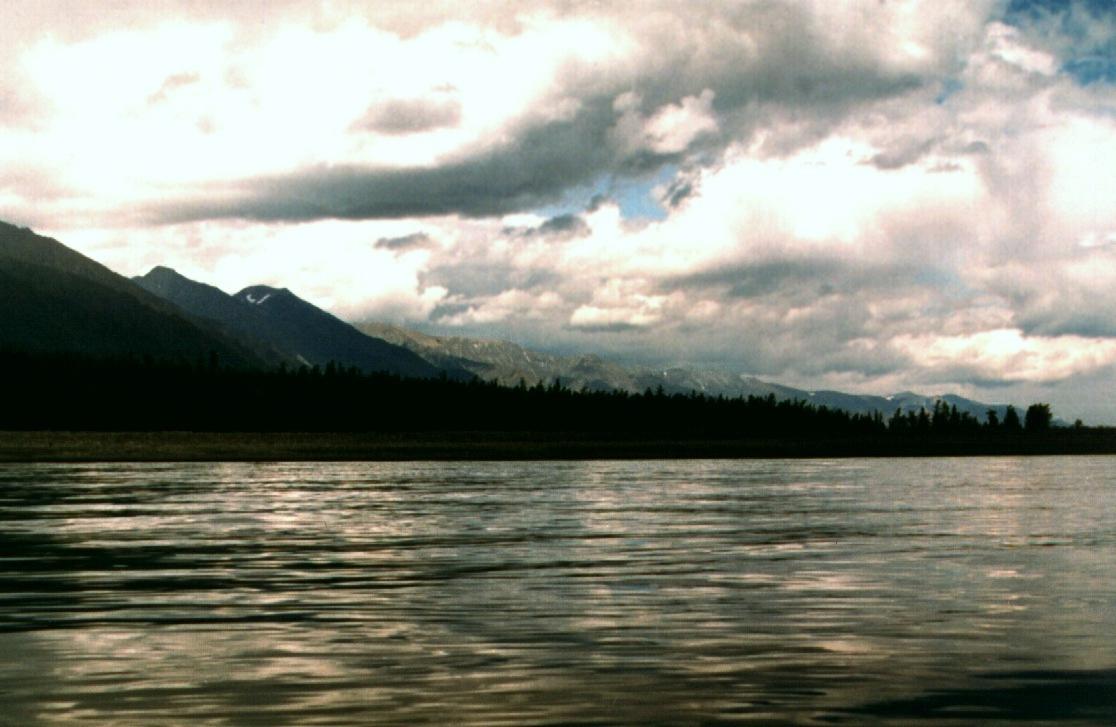
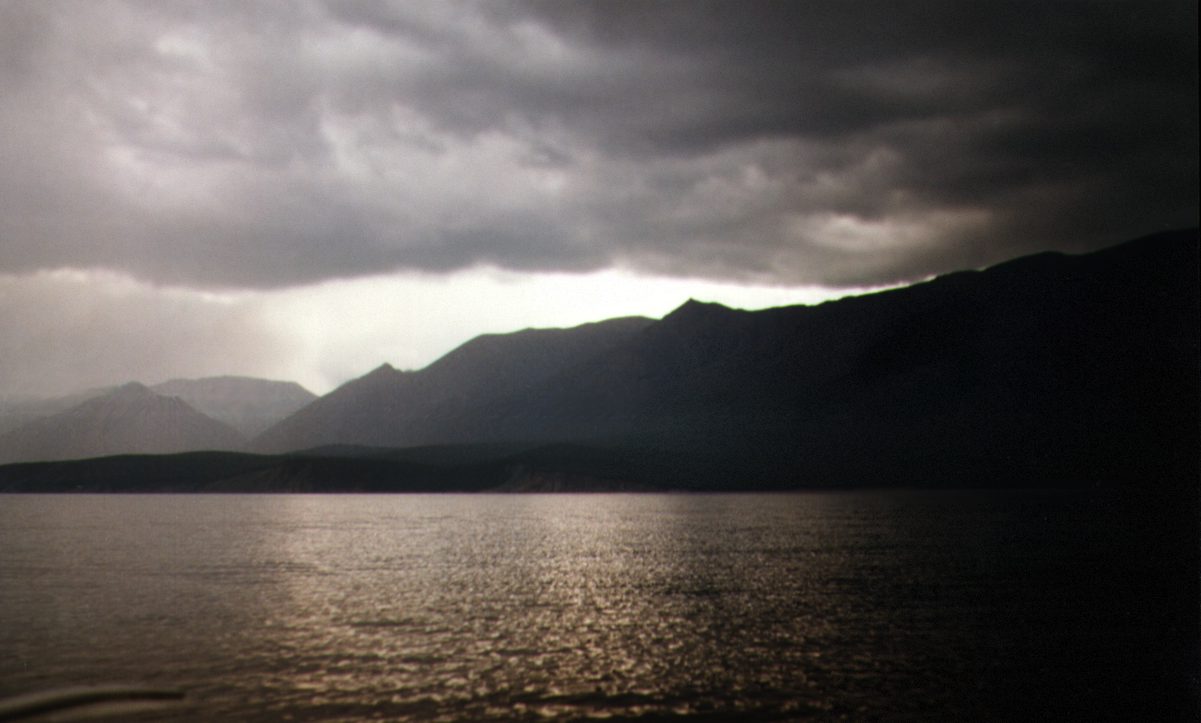
While we eat, there is thunder in the mountains and a downpour. We sit on the sand under a sheet of polythene and feel like tomatoes in a greenhouse. We paddle on at 17:00. Our boat is nearly a kilometre offshore and the Simos are much closer in. At 19:00 a thunderstorm and downpour hit. The Simos fall behind and land somewhere. We keep going, expecting them to catch up, and at 20:00 arrive on a beautiful little beach below a cliff. The round stones look like beads.
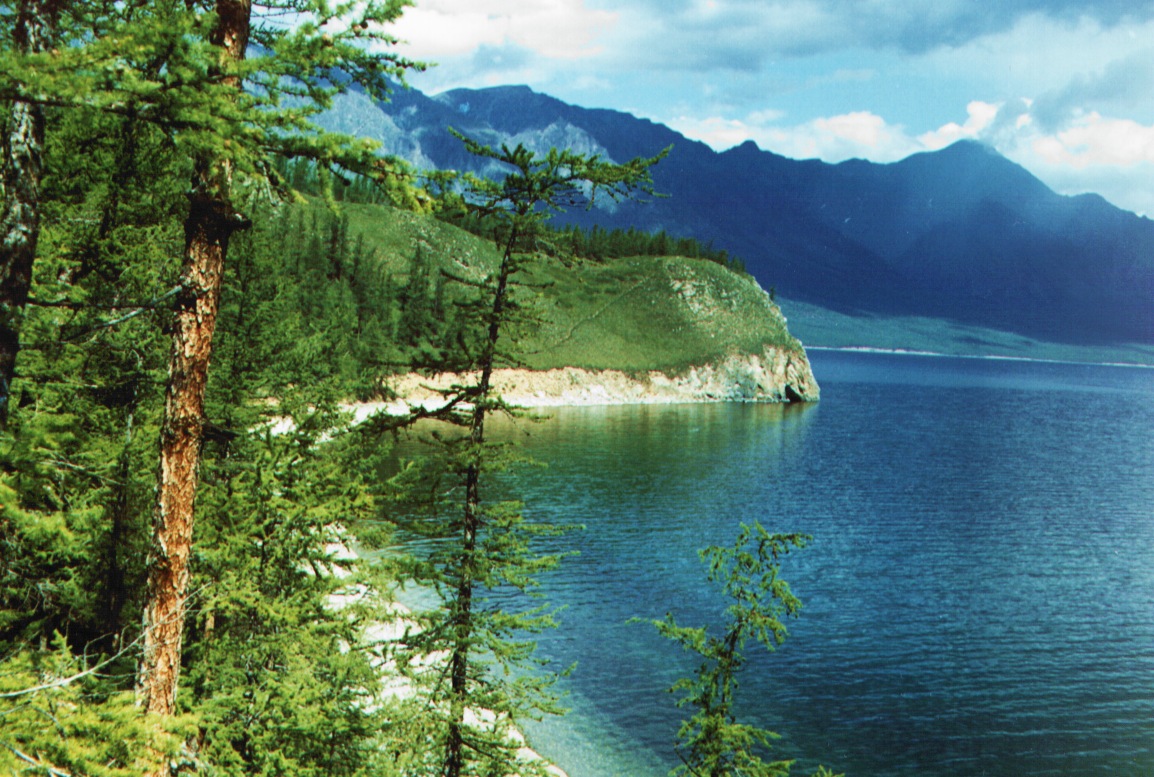
We wait for the others, but they never come. We light a fire and eat tinned food with bread. The others have the pots. We boil water for cocoa in an empty tin. The sky is clear and it is very cold.
25 July
We wake at eight because of the heat. The sun has warmed the tent to above 20°C, though outside it is about 15°C as usual. I stay in the tent until 11:30 and have cocoa in bed. It is lovely and sleepy. Some people from the reserve come in a motorboat and finally take our money, 11,000 roubles per person per day. They tell us the hydrofoil does not call at Khuzhir.
At 13:30 we see the Simos paddling along and join up again. It takes a long time to get around Cape Pokoyniki. It takes a cheerful lot to call a place ‘Cape of the Dead’. A few houses and a weather station, the only one on all of Baikal? Four downpours again today. We stop beyond Cape Shartlay among the flowers beneath a mountain.
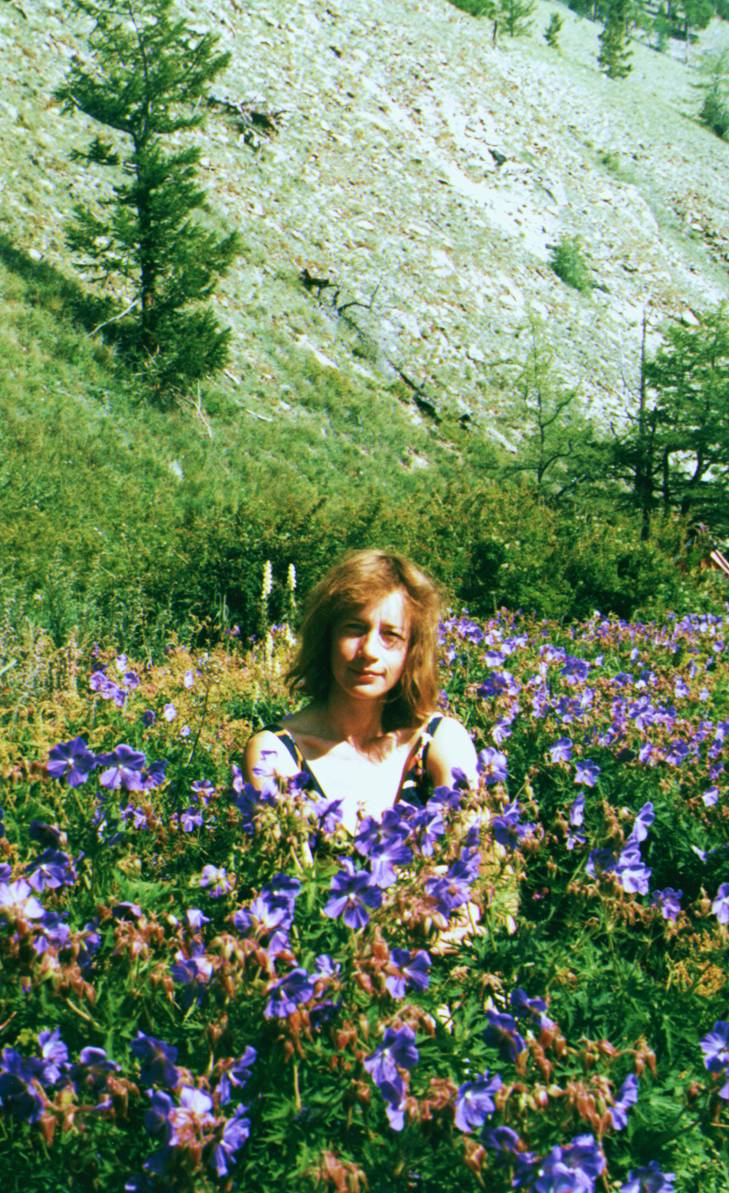
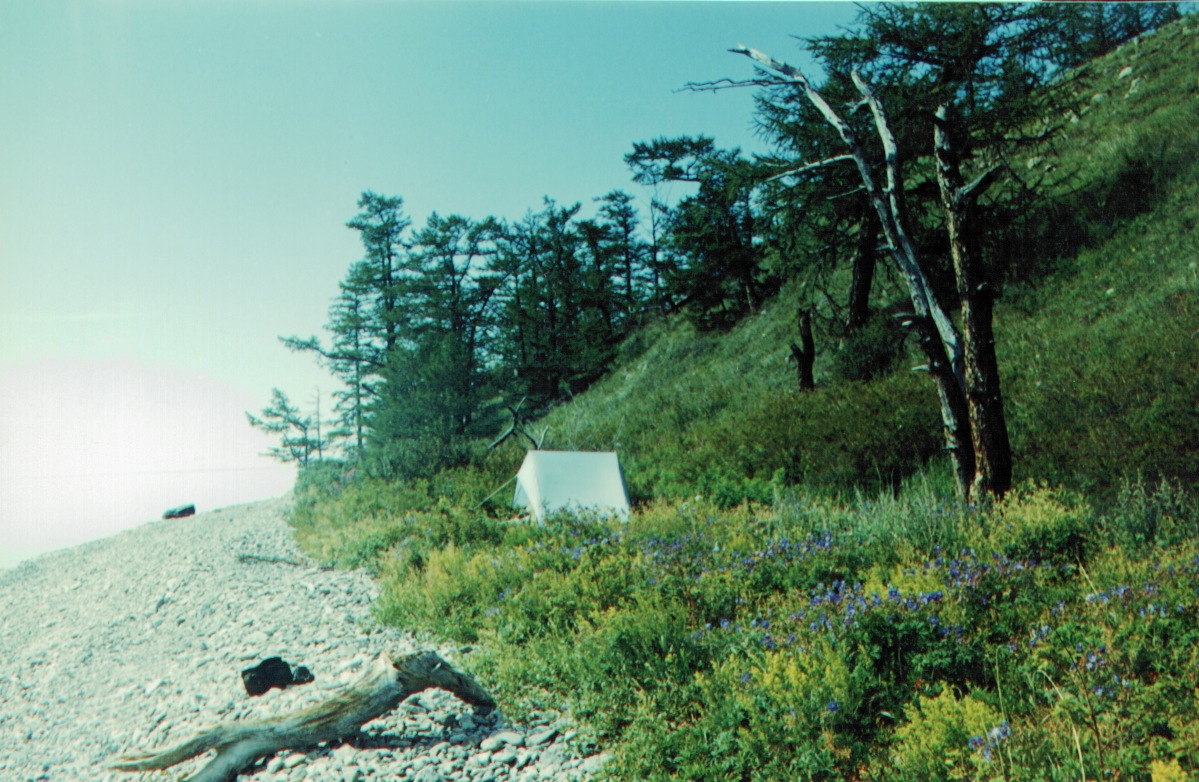
26 July
Hot, 25°C. We sunbathe and push off at 13:30. For the first time it is warm enough to paddle in a swimsuit. We pass Cape Ryty. I wonder who dug it. Wind and waves as we go round the cape, then calm for the rest of the day. The boundary of the reserve. Horse pasture. For the first time we feel like beer, but we have drunk it all. Sasha eats porridge from a bottle because his tummy hurts.
Someone waves from shore. We land. A ‘fearsome’ Buryat, who wants a chat and a drink. He says the hydrofoil does go to Olkhon. The cliffs begin. The beaches are too small for camping. At the river mouth there are two motorboats and some dogs. We camp on a little beach halfway along the next cliff. There are two larches and a third, large and dead. We light the fire beside it. It is 17°C in the evening. The water is still 8°C, although it felt warmer during the day. The first evening without a jumper. Sashka saw a fox. Horses are grazing on the cliff. There is a risk of rockfall. Someone walks about up there at night and little stones come raining down.
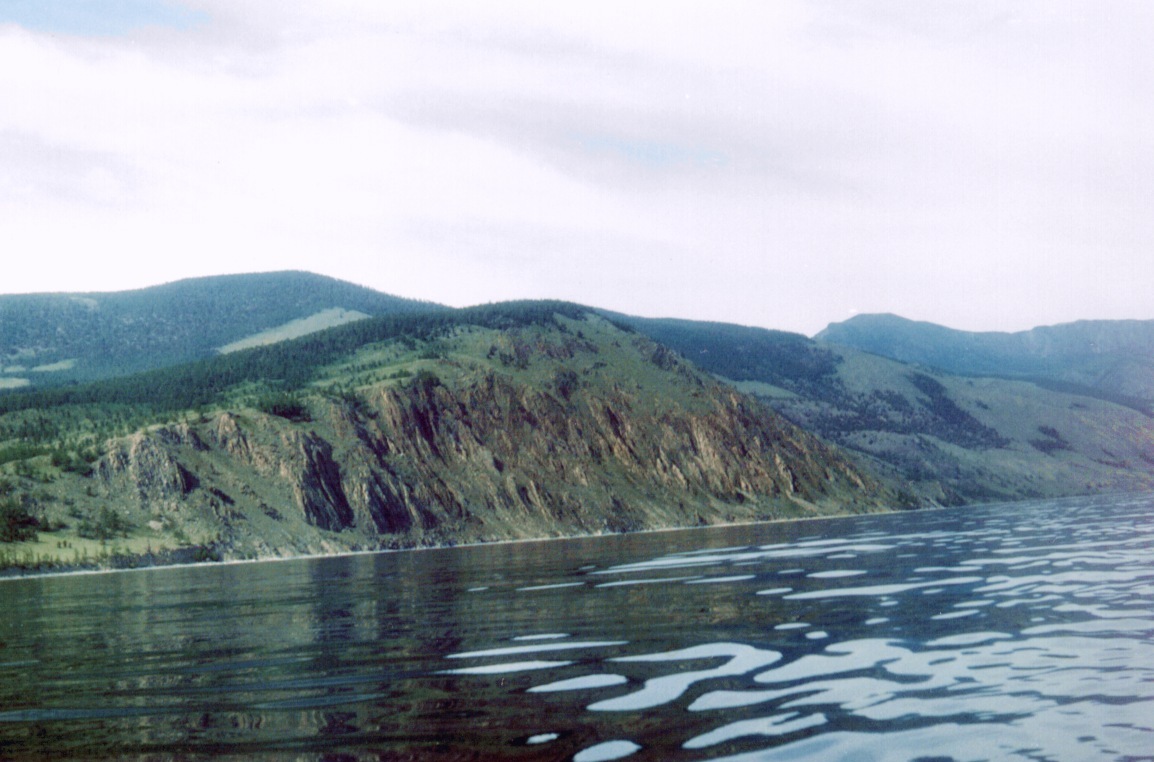
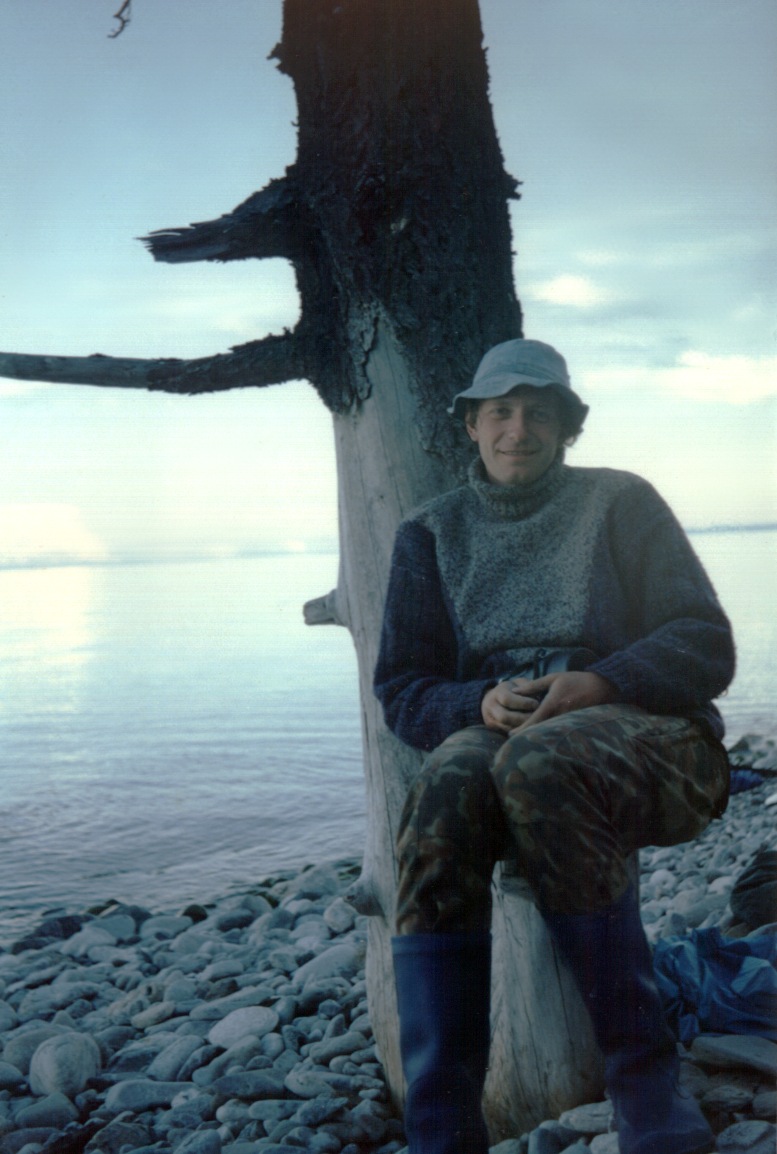
27 July
Over 30°C in the tent. Sunshine, heat and calm. We paddle from noon until three to the village. The bay is big and the landing is at the far end. You cannot get straight to the village because of the bog. Three kilometres to walk in the heat. Buryats live there. There is no shop, but there are ‘local businesspeople’. They are voting for the head of Irkutsk Region, and there is a stall at the village council for the occasion. We buy pasta, biscuits, three tins of stewed meat and chips. There is never any bread to buy, as everyone bakes it at home. There are plenty of cows, but nobody wants to sell us milk either.
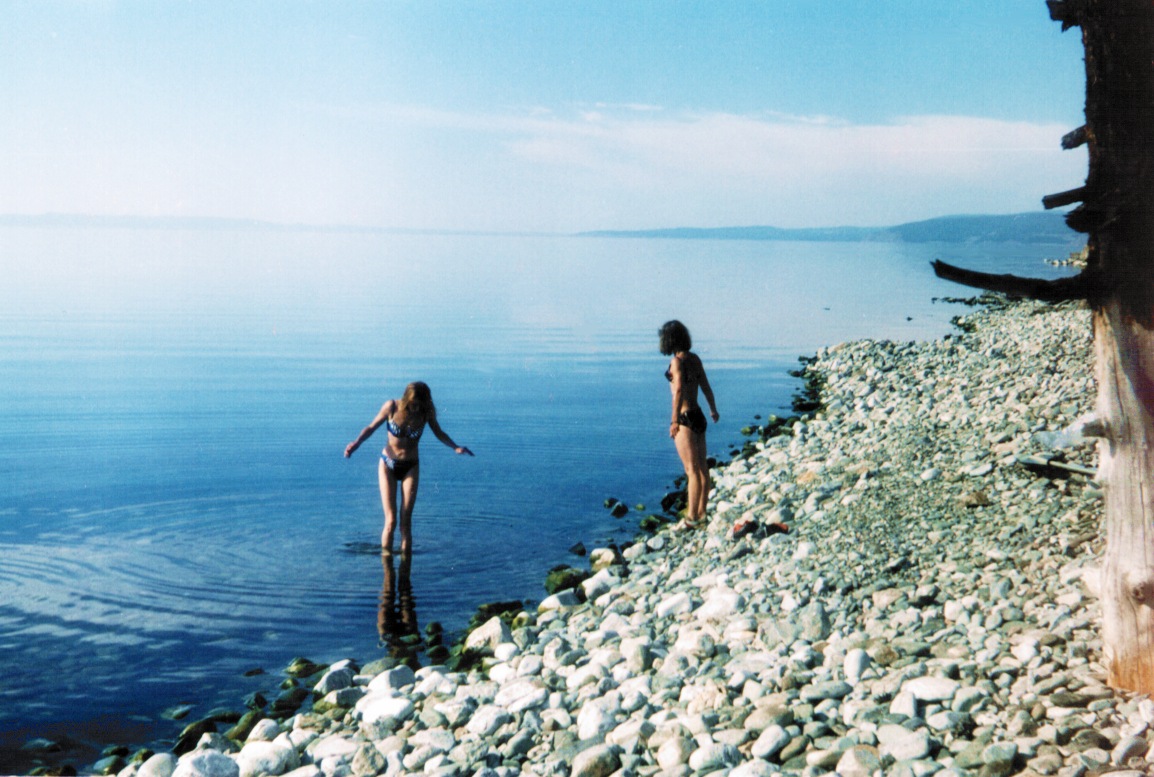
At five we have a snack at the landing. There are stones near the shore and perfect sand a few metres down. We paddle to Cape Aral, arriving at nine. There is a grotto in the rocks at water level, and roads and several cars on land. You can see Olkhon clearly. Sashka asks me to put this on record. ‘We’re not going to Olkhon today either.’
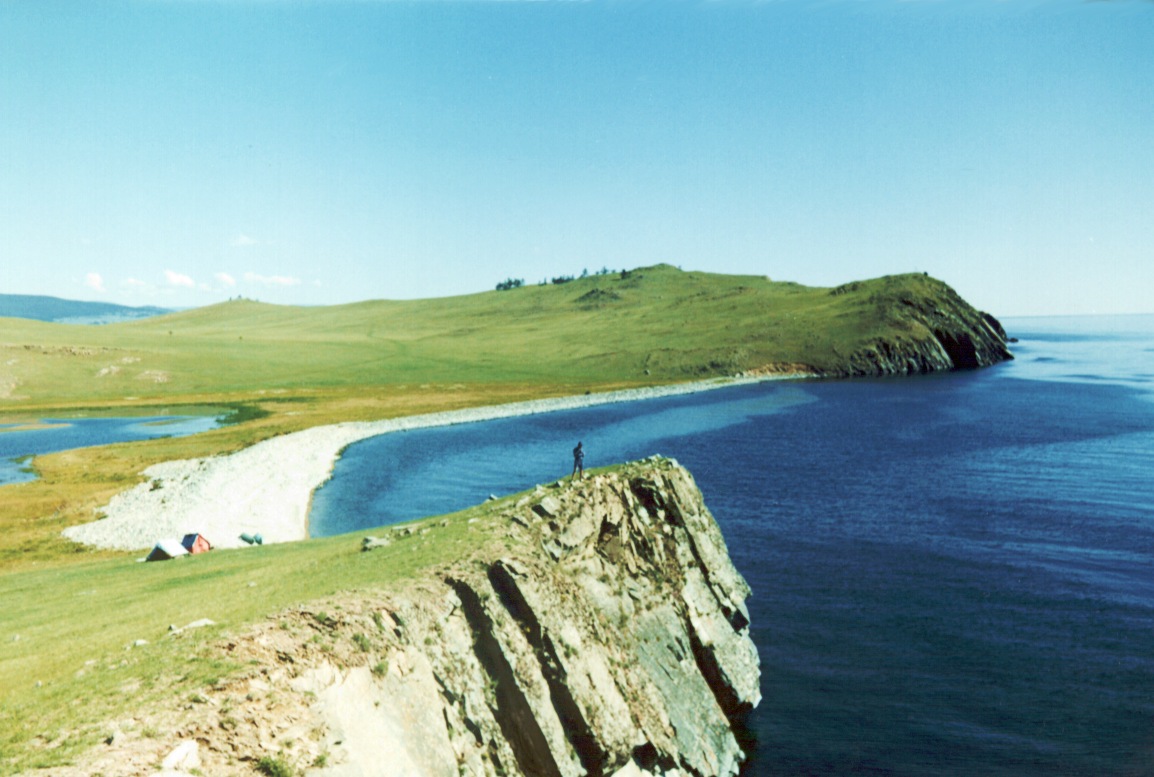
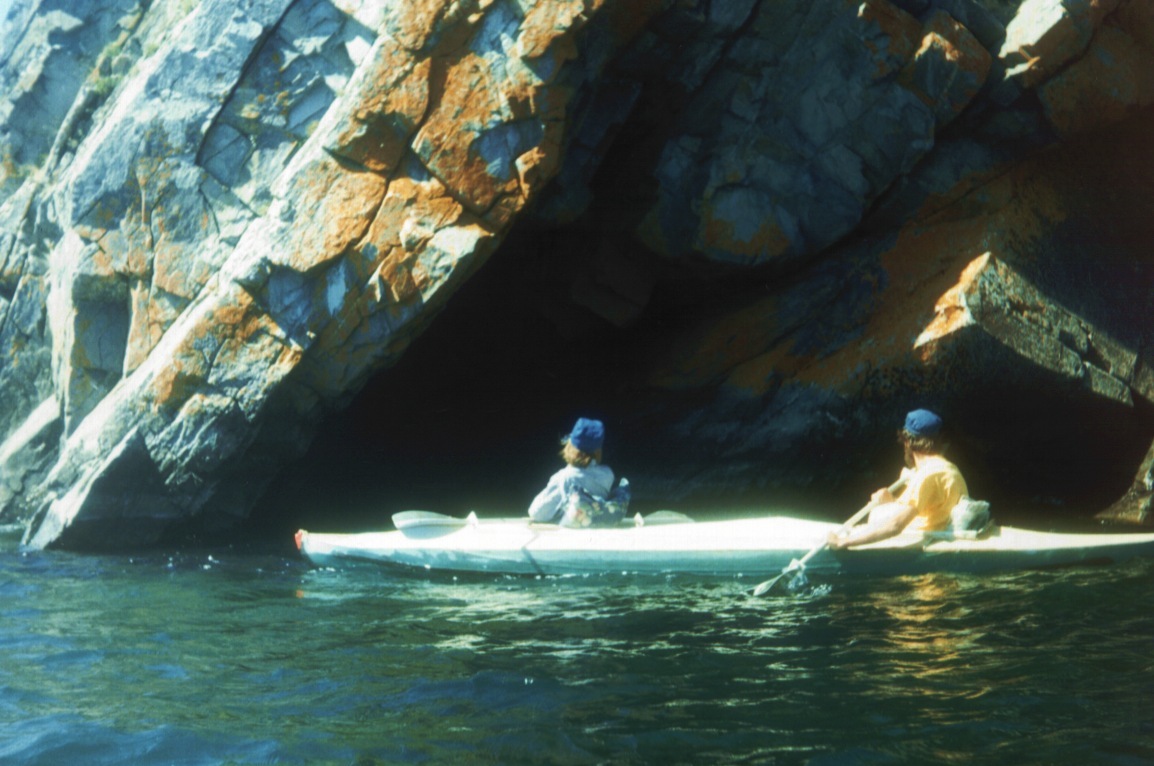
Sunshine all day and hot even on the water. The cape is bare. There is a beach between the cliffs and we light a fire by the rocks. Fuel is scarce, so we walk along the shore picking up what people left by old fires. There is a little village a kilometre away and cows graze beyond the lake, or bog. We see meteors at night. A sky full of stars.
28 July
Up at nine. Sashka washed his blue trousers and grumbled, ‘Why did God create women?’ A light breeze. Water 12°C, air 20°C. We sunbathe. The great problem is finding a private bush. The solution is to climb onto the cliff on the easy side and make your way partway down the almost vertical rock face towards the water.
We push off at 13:00. We paddle into the grotto. The sun reaches it through a crack in the rock and the light seems to come from underwater. The grotto is about a metre and a half wide and more than twenty metres long. A swell develops on the lake, with the Barguzin at our backs. Within an hour it is a storm. But it is warm, the sun is shining and the wind is warmer and less fierce than the gornyak. It does not tear off the foam. The waves are strong around the capes and there are whitecaps all over the lake. It is almost calm behind the capes, but the waves rise again halfway across a bay.
The Simos stay close to shore. It is awkward with the waves coming from the side, but the shore is within what we call Tanya’s swimming range, so it feels safe enough. We cut across as usual and I grumble. We film it. We stop for a bite on the sheltered side of a cape from 15:30 to 17:00. The rocks are warm enough for sunbathing. Go a little higher and the wind makes you want to put your clothes back on. On land there are roads with cars going back and forth, about five or six an hour.
We all stay close to shore after that. We land by 19:00 and the storm eases about then too. The nearest place where cars are parked on the shore is about five hundred metres away. The forest is far back in the mountains. The shore has bare hills and fields. A few pines and larches. Firewood is a problem again. There are signs of people who camped here before us everywhere. Yellow poppies.
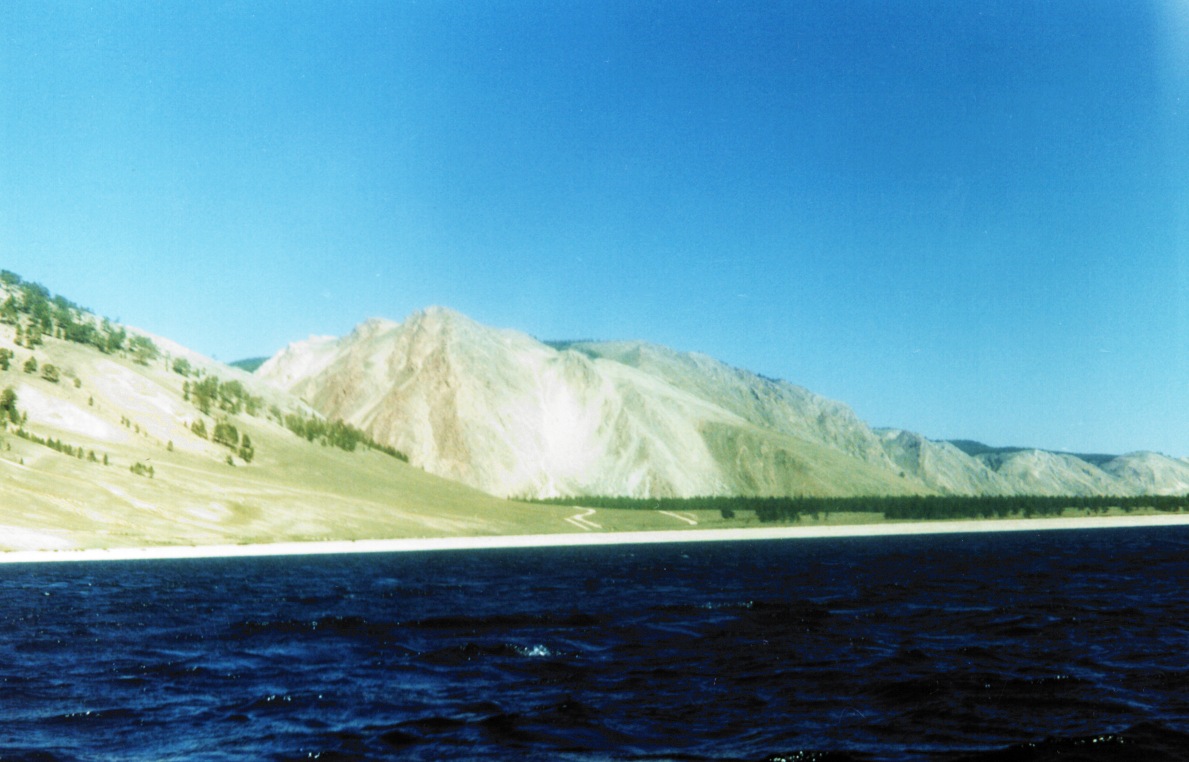
In the evening a four-wheel drive goes along the shore a few metres from us. I do not like it one bit. Sasha says he admires the driver. We debate how free a person can be within society and from it. Do you restrain yourself and expect the same from others, or do as you please and put up with whatever everyone else does? The water is full of weeds. Sashka wades in knee-deep and uses his paddle to reach out with the pot for clean water.
29 July
Wind again, with smaller waves. Cars are driving along the road twenty metres away. We discuss whether to go to Olkhon. We decide to follow the shore until lunch, by which time we will be close enough to cross via the islands if the weather allows. Camps all along the shore, every hundred metres. Cars, tents, children, washing, blankets, dogs, inflatable boats and motorboats.
We paddle along the shore. As we round one of the capes, the tailwind dies within ten minutes and a considerable headwind, the Sarma, sets in. It flattens the following sea and makes a little jumble of ripples on the water. It is over in half an hour. At 18:00, after a bite to eat, we set off towards Olkhon. Hardly any waves. The nearest island is less than an hour away. Another, larger island lies beyond it. Two hours later we are on Olkhon. We camp on the tiniest beach of the whole trip. Mountain firewood takes some work. We saw through a stump on the cliff.
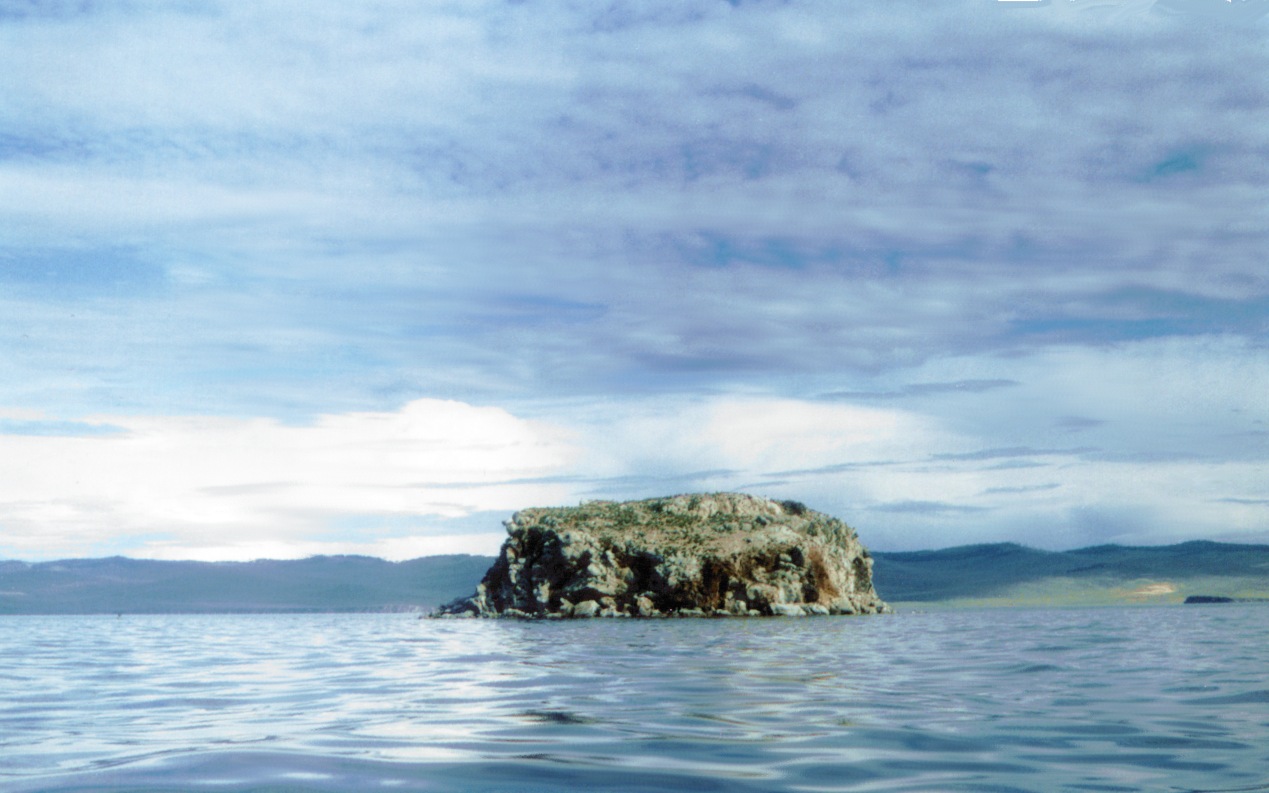
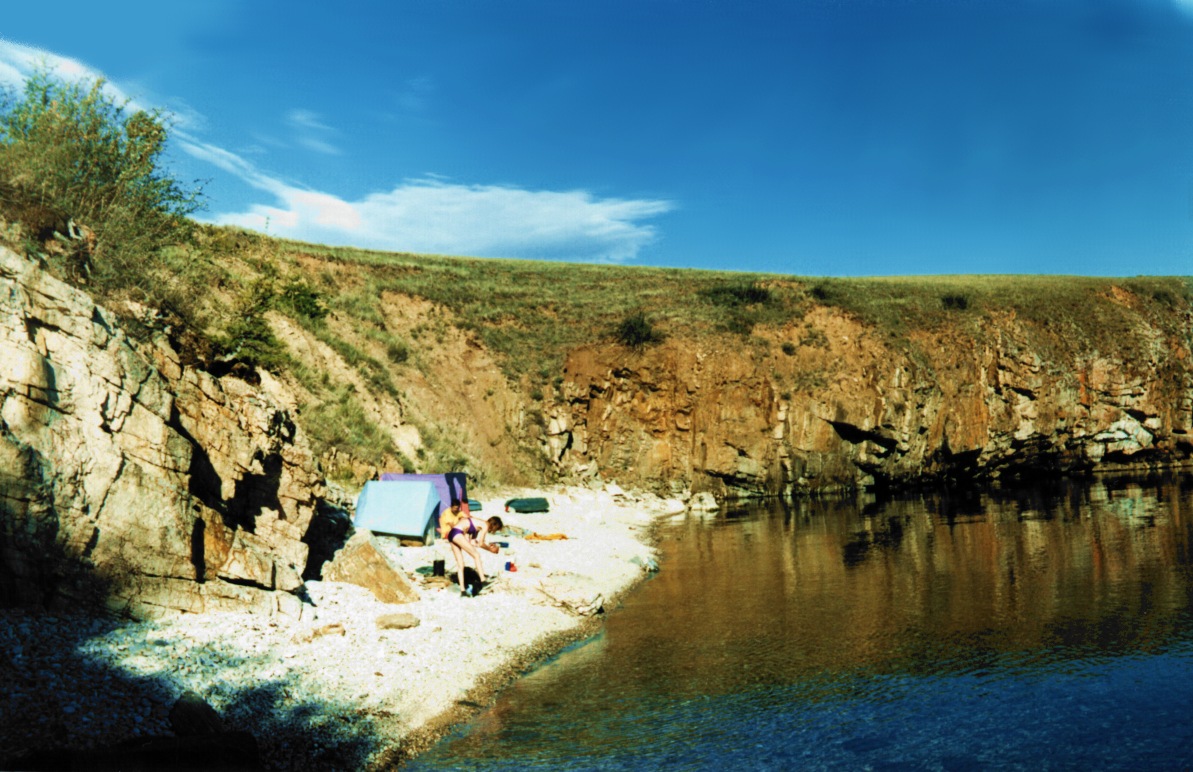
30 July
Sasha and Tanya head to the road in search of locals to ask about the Kometa. We walk along the slope to the nearest headland. There is a memorial to two young Buryats, with nothing to say how they died. But as Fyodor Fyodorovich said, it always comes down to one thing. Glug, glug. Then we walk up the hillside to a little stand of trees. Some strange birds that look like grey herons take off from among the rocks.
The others are back by two. They met two Buryats, one from Toksovo and the other from Pushkin, who said the Kometa calls at Khuzhir and there is also a bus. We see the Kometa travelling along the far shore, but Khuzhir is far away and it might turn in there later. At four we set off for Khuzhir. The first two thirds of the way are almost calm. Then the Barguzin suddenly hits us head-on, and within fifteen minutes there is a big head sea. We stay close to shore. Where the headlands have high, steep cliffs, the reflected waves make the boat pitch unpredictably in every direction.
A ship at anchor off Khuzhir is swinging back and forth. They greet us with blasts of the horn. A sandy beach runs for kilometres. I squeal as several splashes come over the bow and soak my trousers. We make a mess of landing sideways and the trousers get wet from below too. Sashka goes to see what he can find out. The Simos land thirty minutes later. Sashka comes back cross. The Kometa does not call and the bus is at nine in the morning.
It is hard to walk on the sand, so we get back in the kayaks and paddle two more kilometres to the point closest to the bus stop. The waves have almost disappeared again. Before unloading, we paddle off to see the main Buryat attraction, a cave in the rock. It is hardly a cave, just a crack. Meanwhile Sasha and Tanya pitch camp and take their kayak apart. We come back in pitch darkness.
31 July
Up at five. Sashka had no alarm clock, so he lay outside his sleeping bag to make sure he would not oversleep, and froze. At first light the Simos go to see that same rock. We pack up and dry the kayak over the fire, successfully. We are at the bus stop by nine. It turns out the bus ran into the ditch the day before and cannot be fixed. But hurrah for private enterprise. One of the local Buryats hears people want to leave and pulls up in his Nissan minibus by ten.
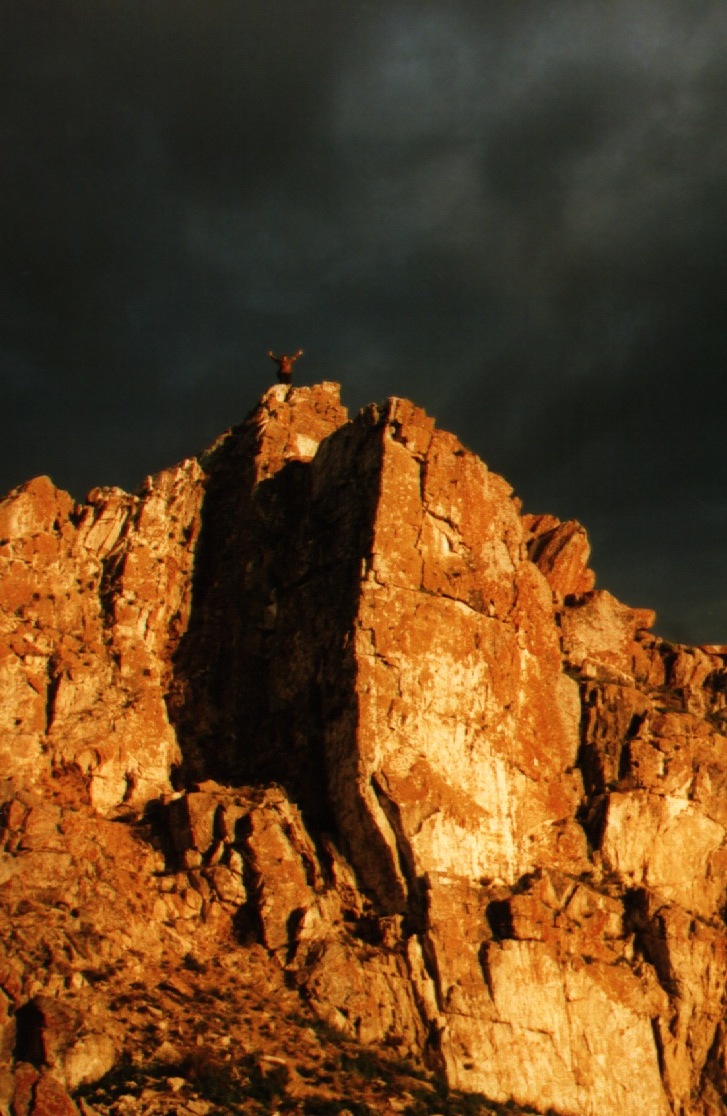
What fits inside? Two kayaks, four paddlers including all of us, two Polish hikers, three other passengers including a mother and two fairly large children, and more than ten packs and bags. On to Irkutsk for 100,000 roubles a head, almost the same as the bus. At noon the ferry takes us through the ‘gates’ of the Little Sea. Goodbye, Baikal! We reach Irkutsk at 17:00. The road is terrible. It reminds us of the Camel Trophy and desert rallies.
And that is where Marina’s diary ends. A pity.