Trip report
Near Invercargill are low, forested hills known as the Longwoods. There are two huts in the forest and very little has been written about them. DOC lists them as huts kept for their historic value.
In theory you can drive almost all the way up Cascade Road, leaving about half an hour on foot. Turnbull’s, named after New Zealand’s chief surveyor in the late nineteenth century, looked the more substantial of the two. Martin’s Hut looked ready to fall down. We had a night to spare near Invercargill, so we went to have a look.
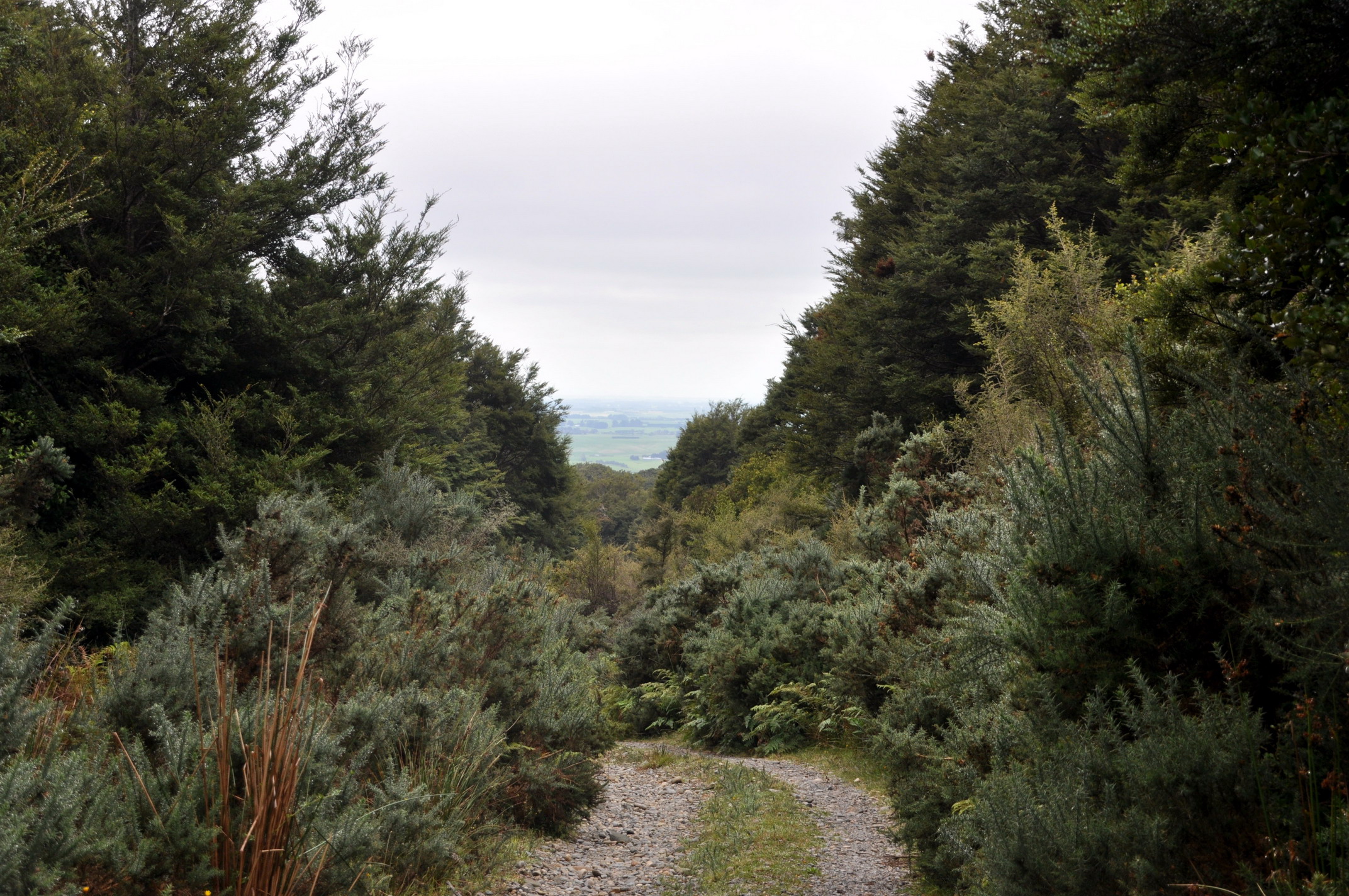
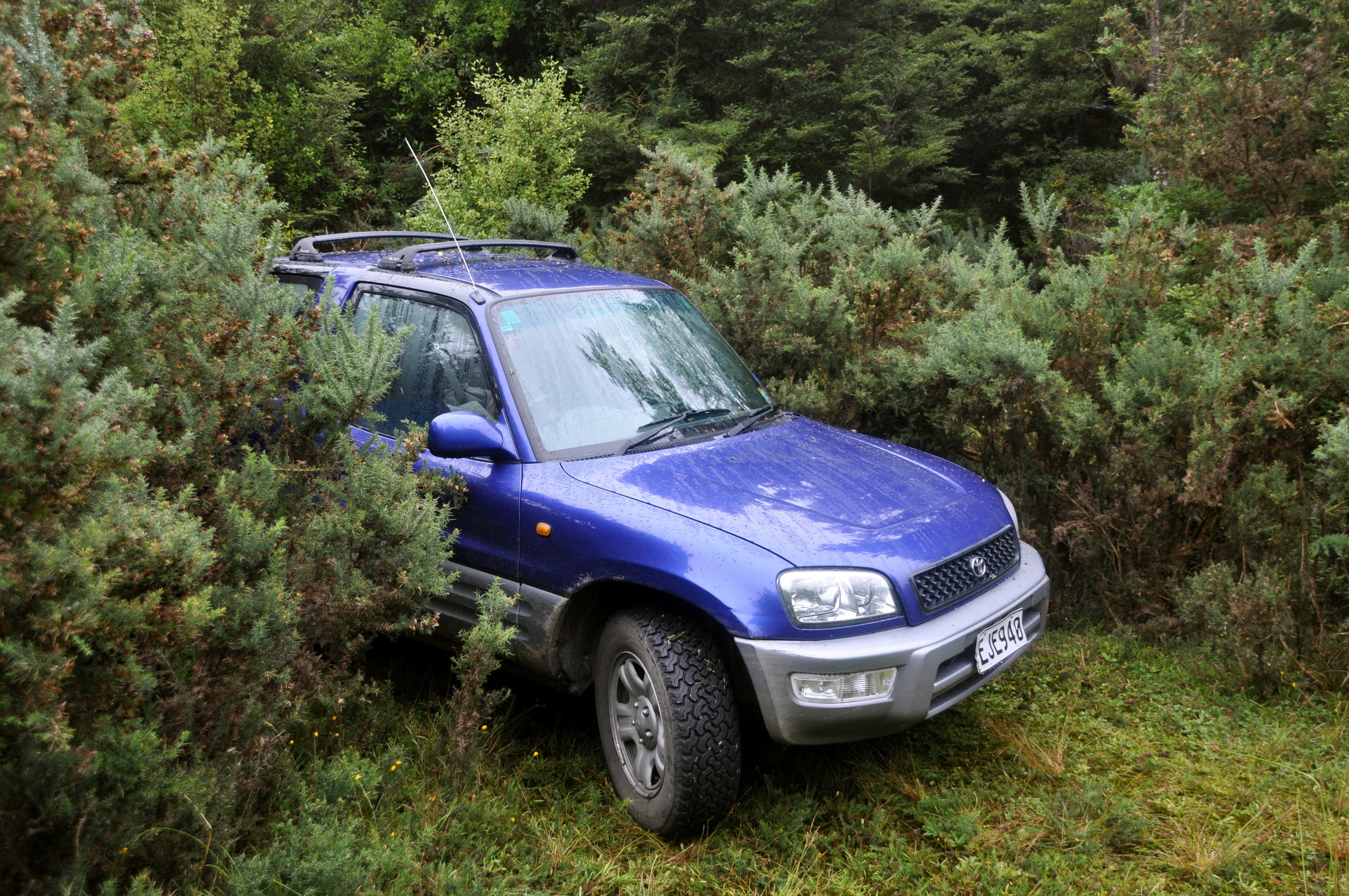
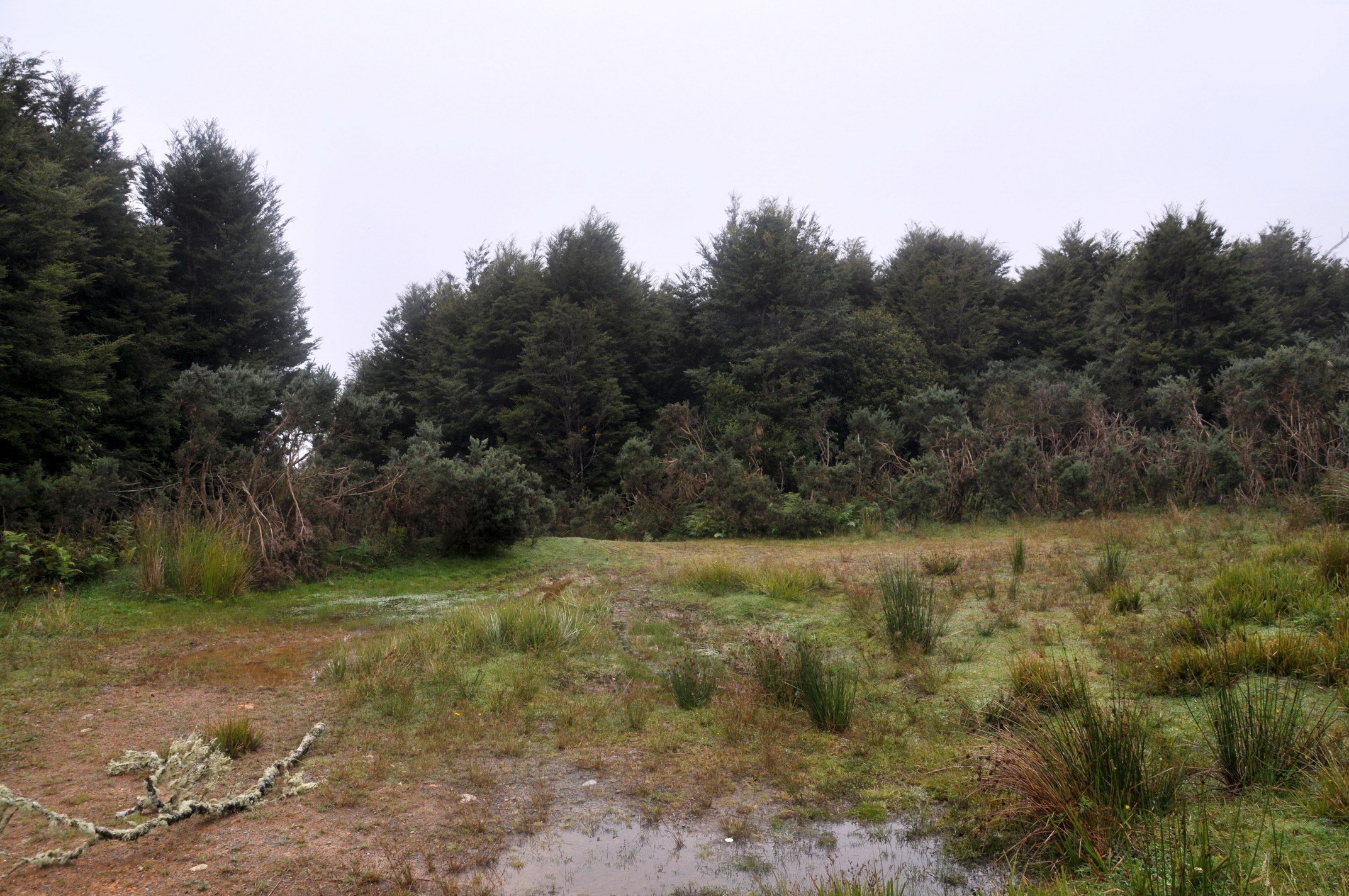
The first obstacle was the road. You really need four-wheel drive. In places the bushes grew so thickly that the branches hung right across to the middle from both sides. You could tell they didn’t get traffic every month. We never made it to the road end marked on the map. A couple of kilometres short, there was an awfully deep puddle and we didn’t want to scratch the car. A downpour had just ended, so perhaps it’s easier in fine weather.
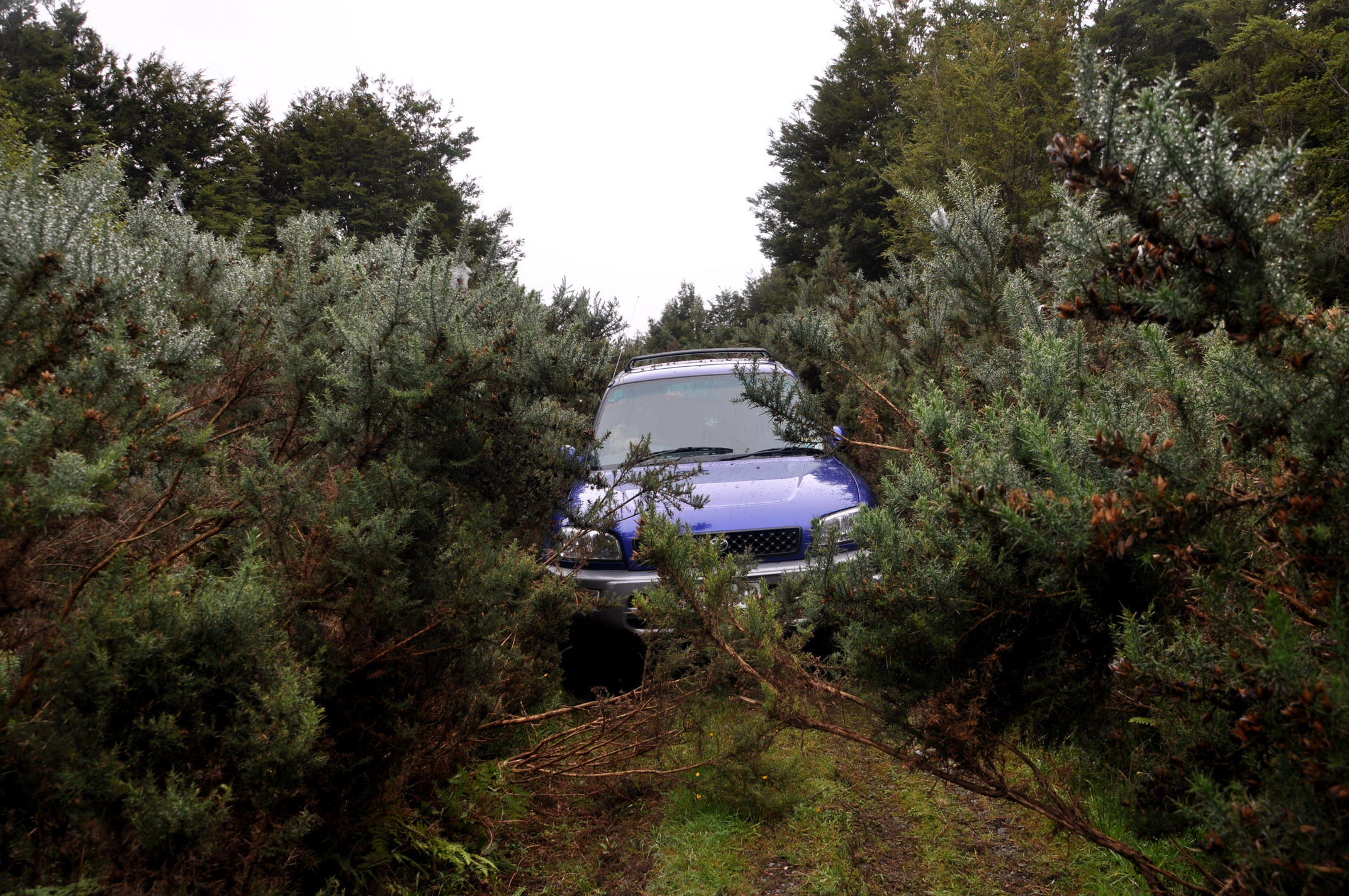
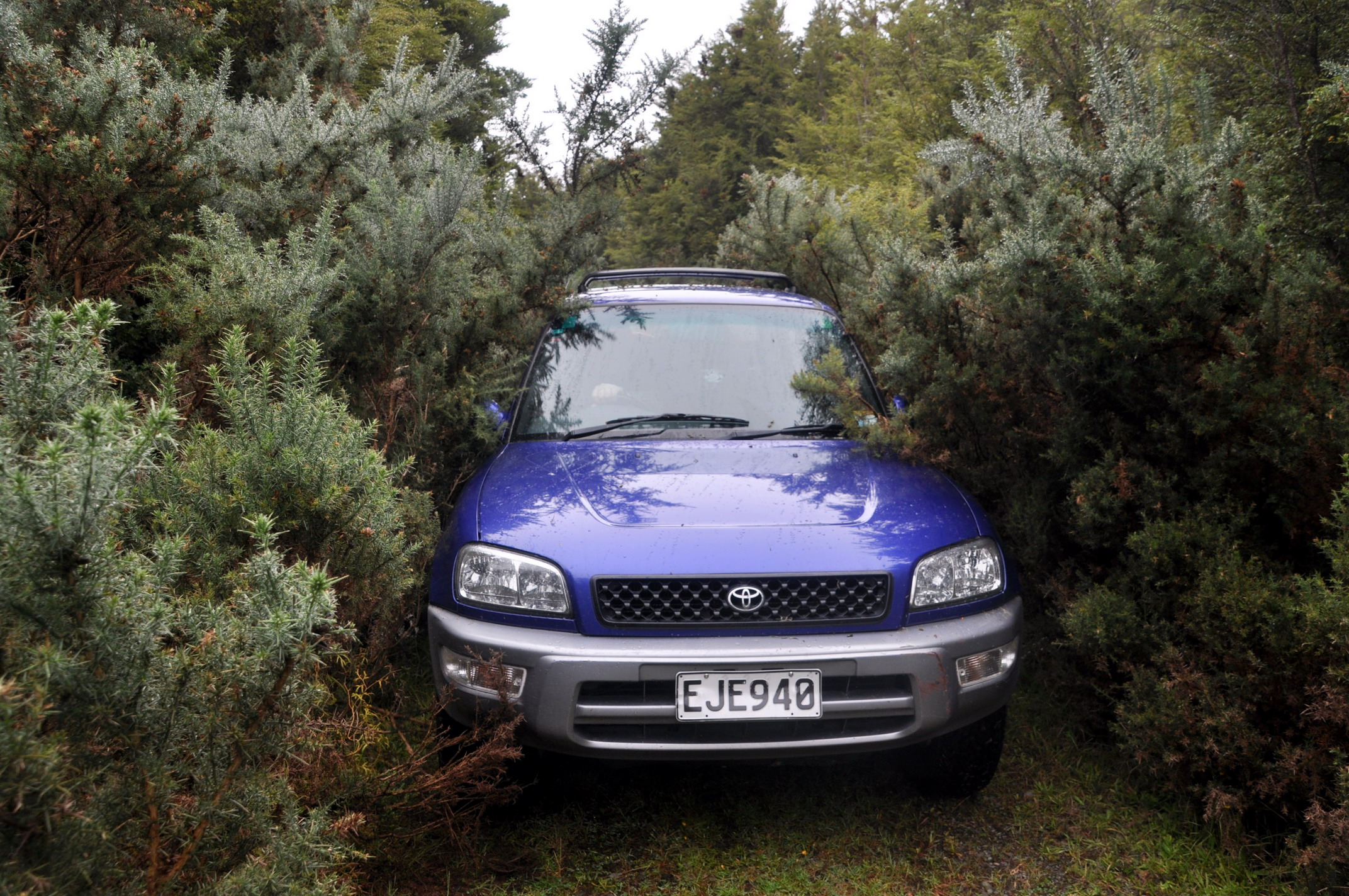
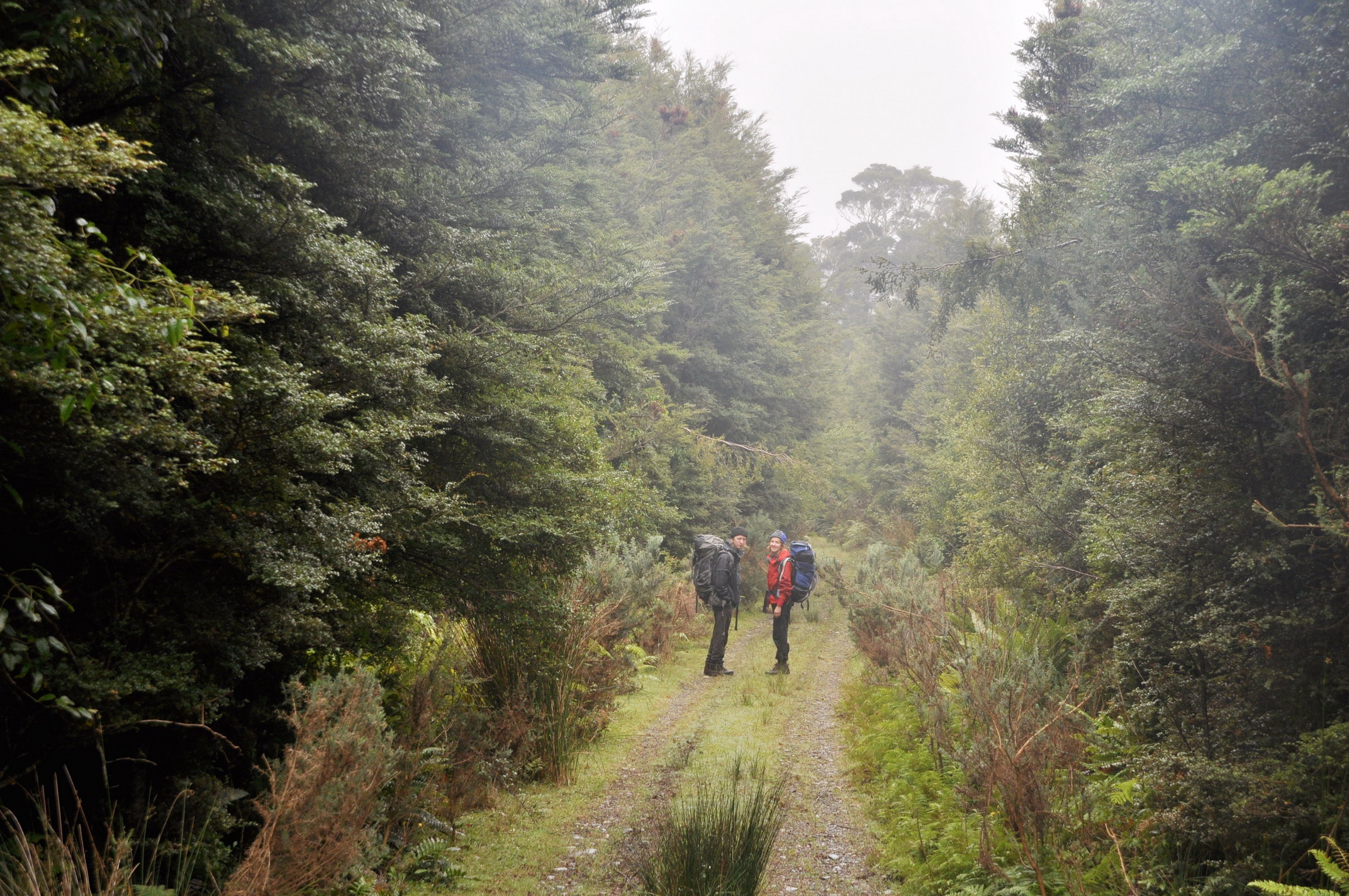
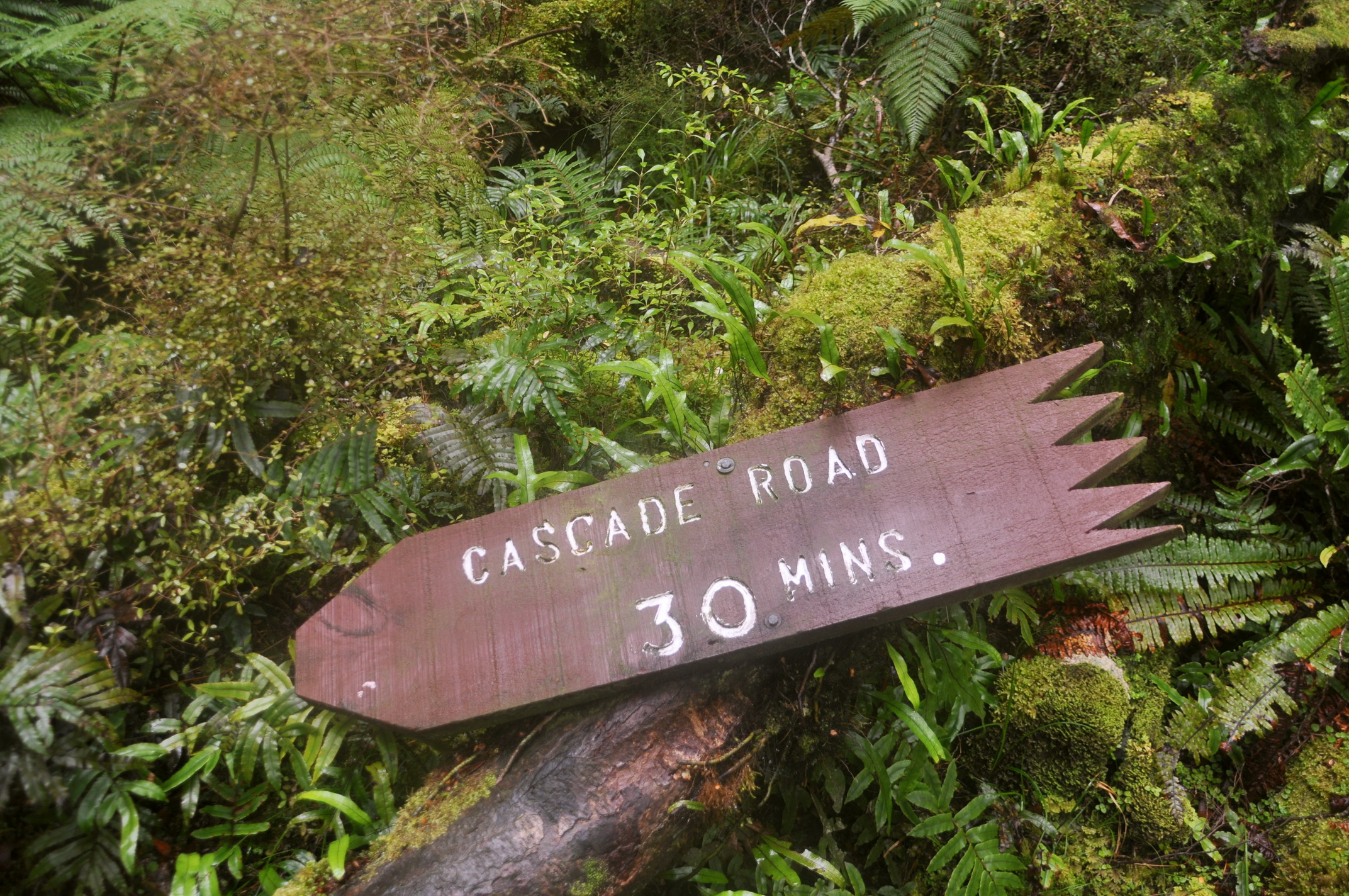
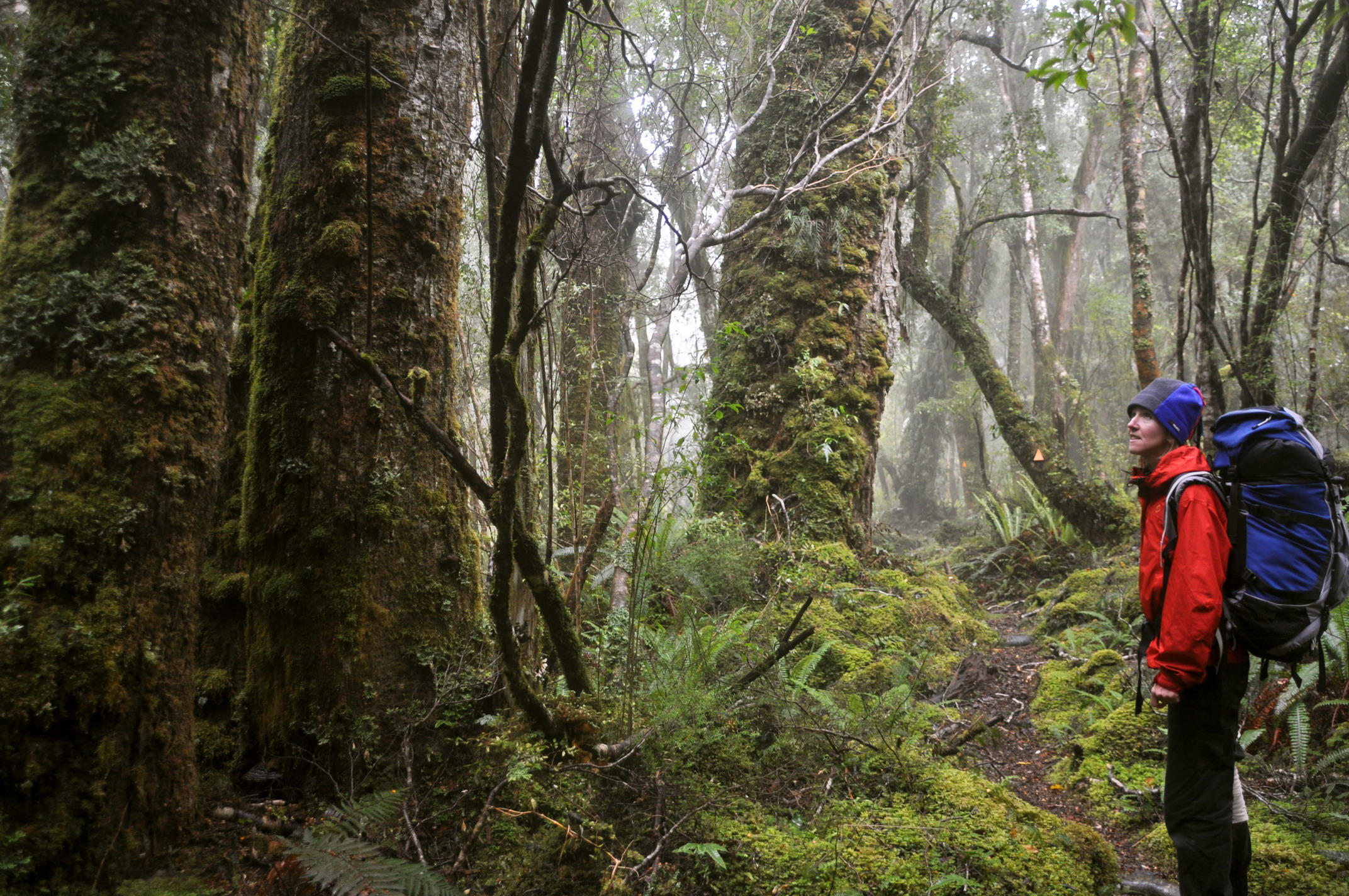
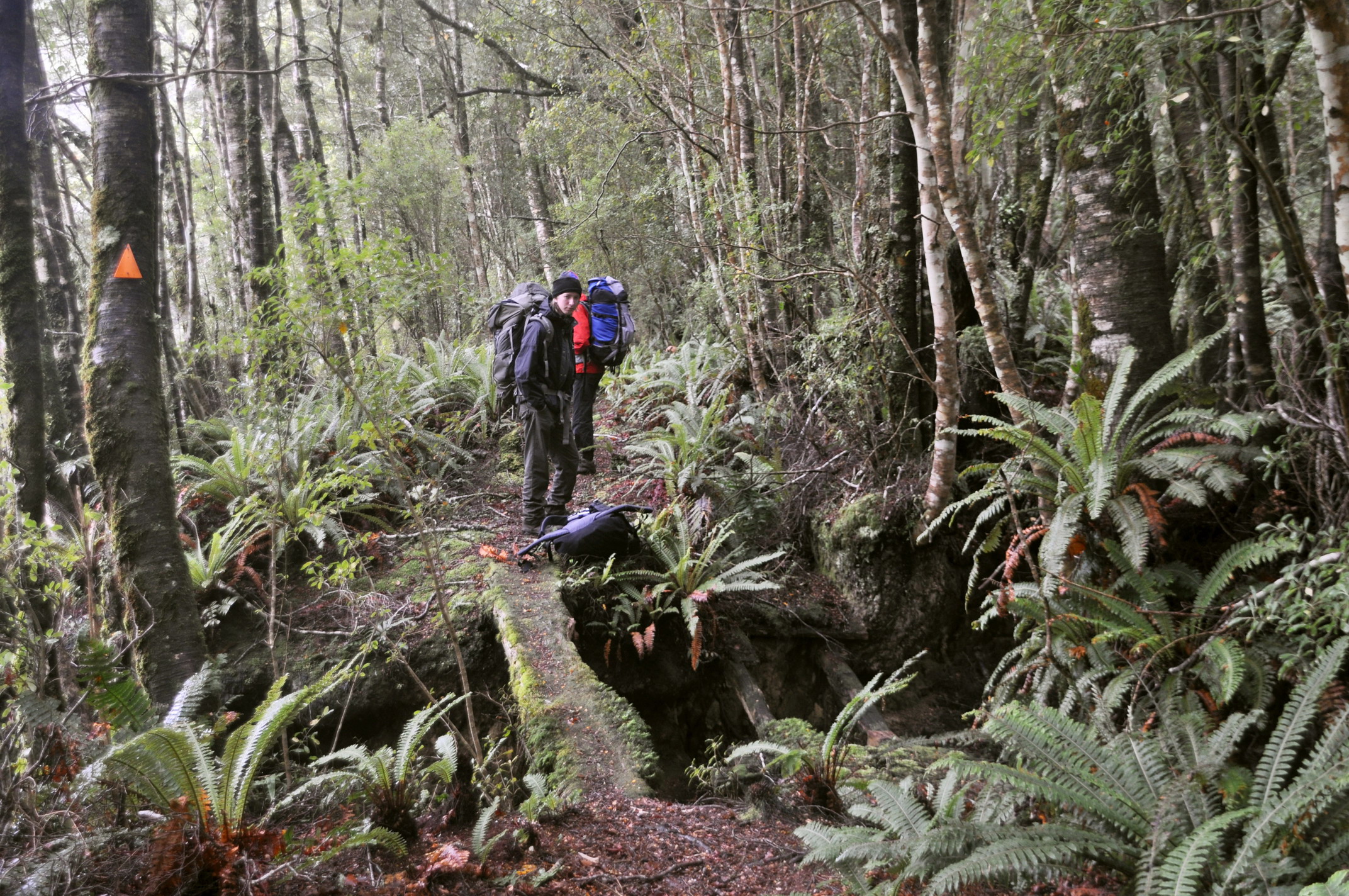
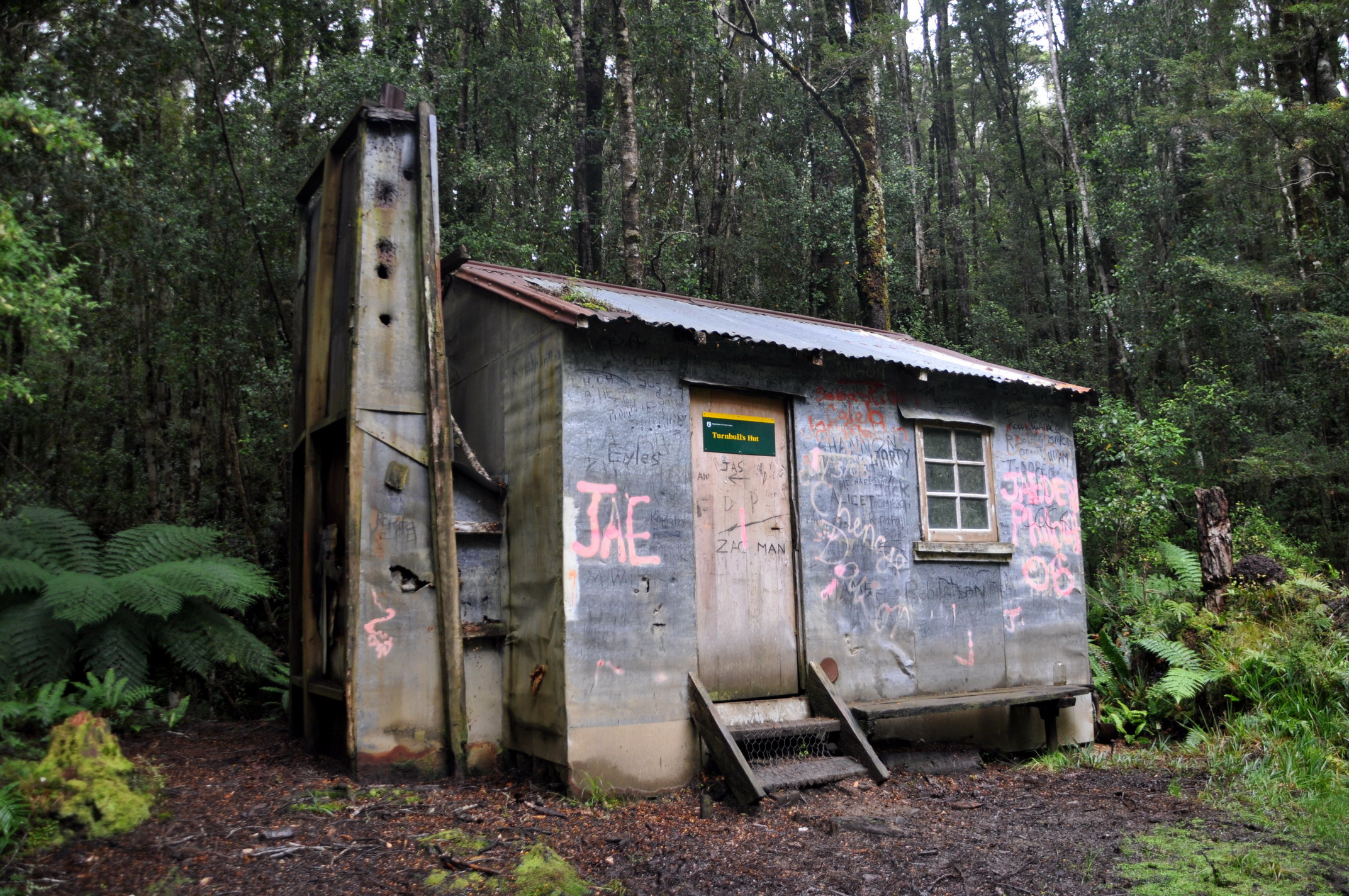
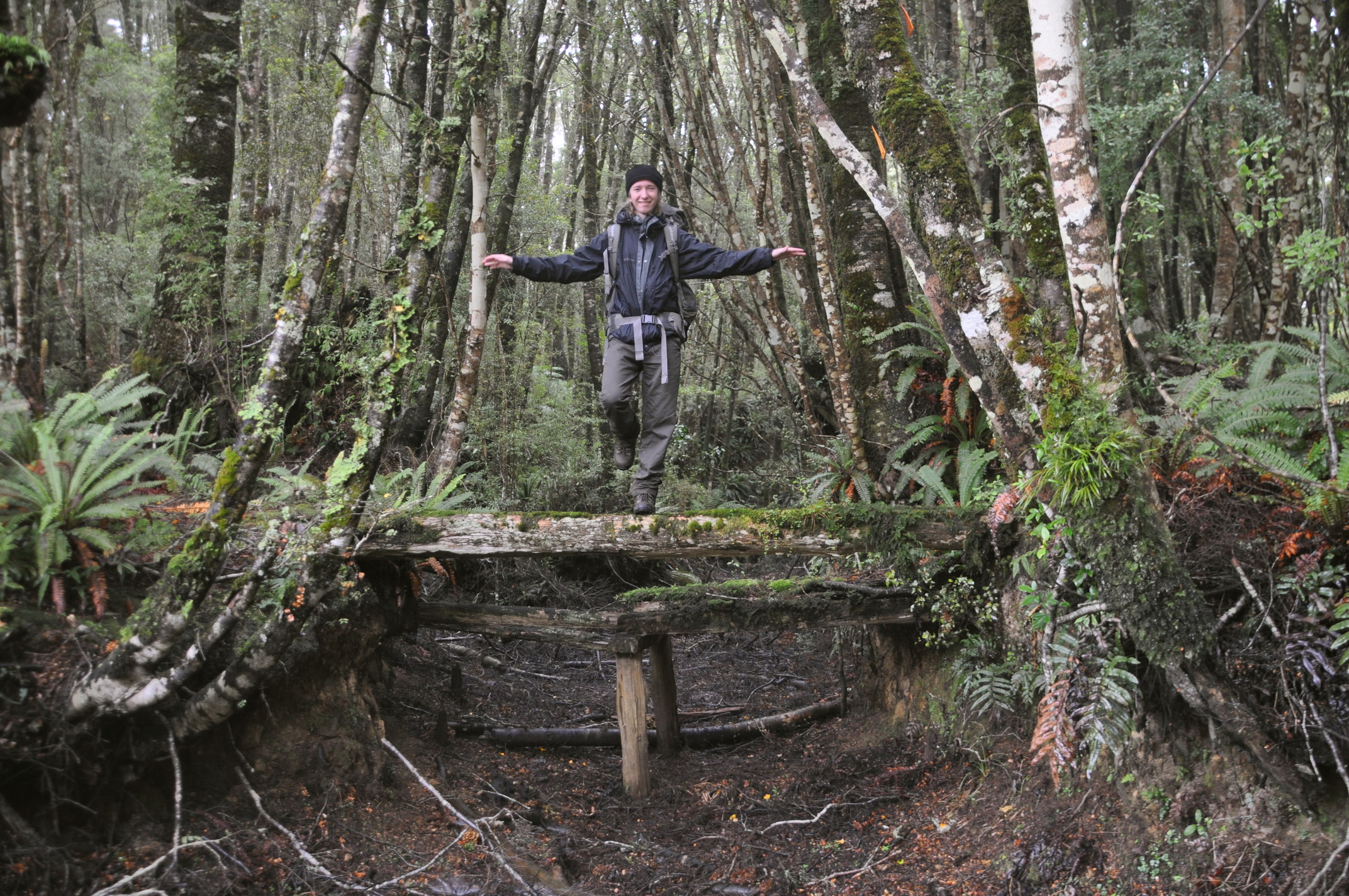
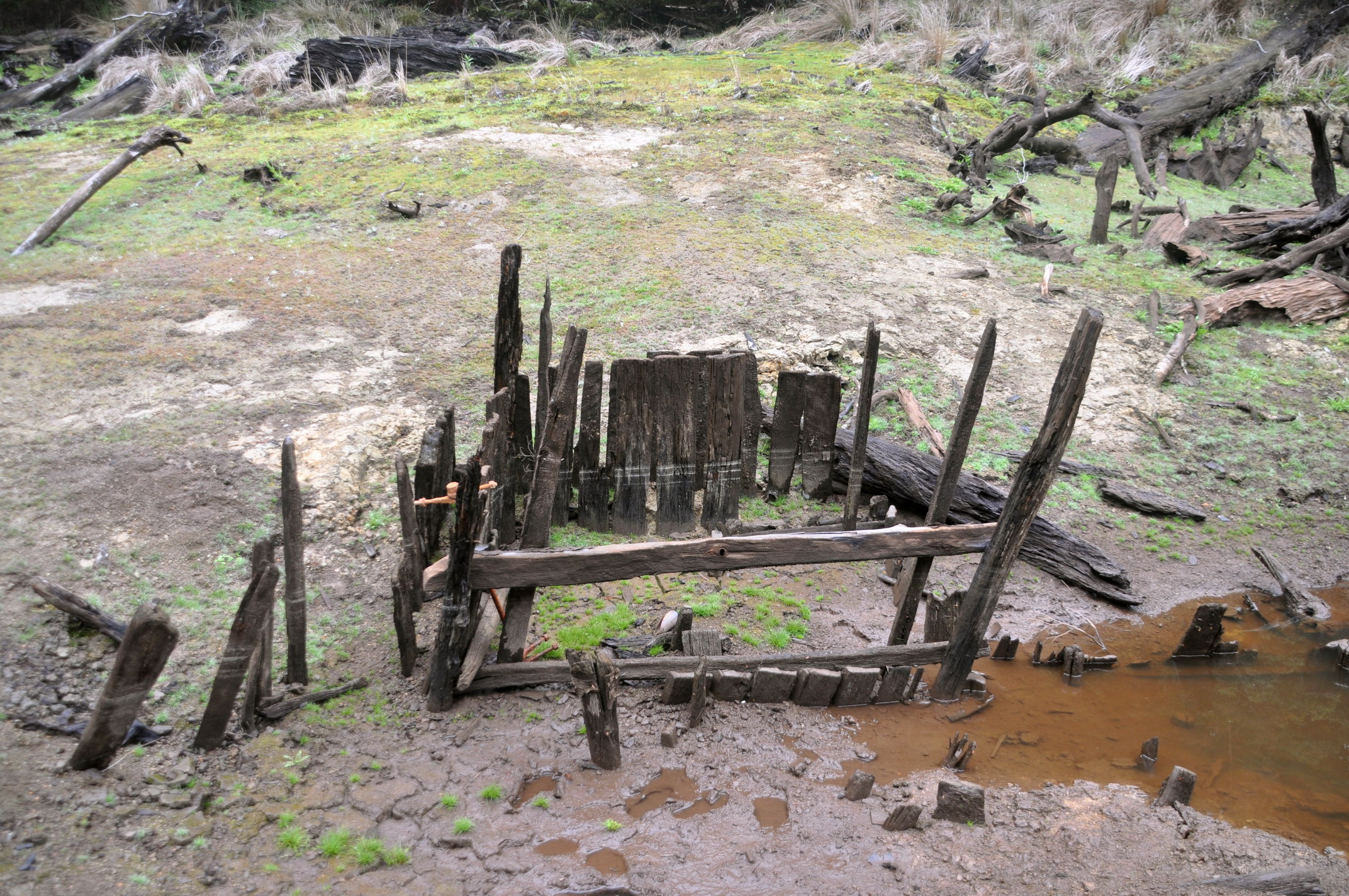
We left the car in the bushes (46°16.504′S, 167°52.073′E) and went on foot to the end of the road (46°17.114′S, 167°51.811′E). A marked track starts there, with a sign saying the hut is 30 minutes away. At first it pushes through young beech and mānuka and crosses a creek, then enters a tall rain forest, just like the forests on Stewart Island or in Fiordland. It’s a beautiful track among enormous trunks, including rimu and tōtara. It follows quite a different line from the one on the topographic map. Just before the hut, the track reaches what used to be the edge of a lake, or rather a reservoir. The hut, Turnbull’s, stands by the dam (46°17.506′S, 167°51.101′E). The dam builders presumably put it up.
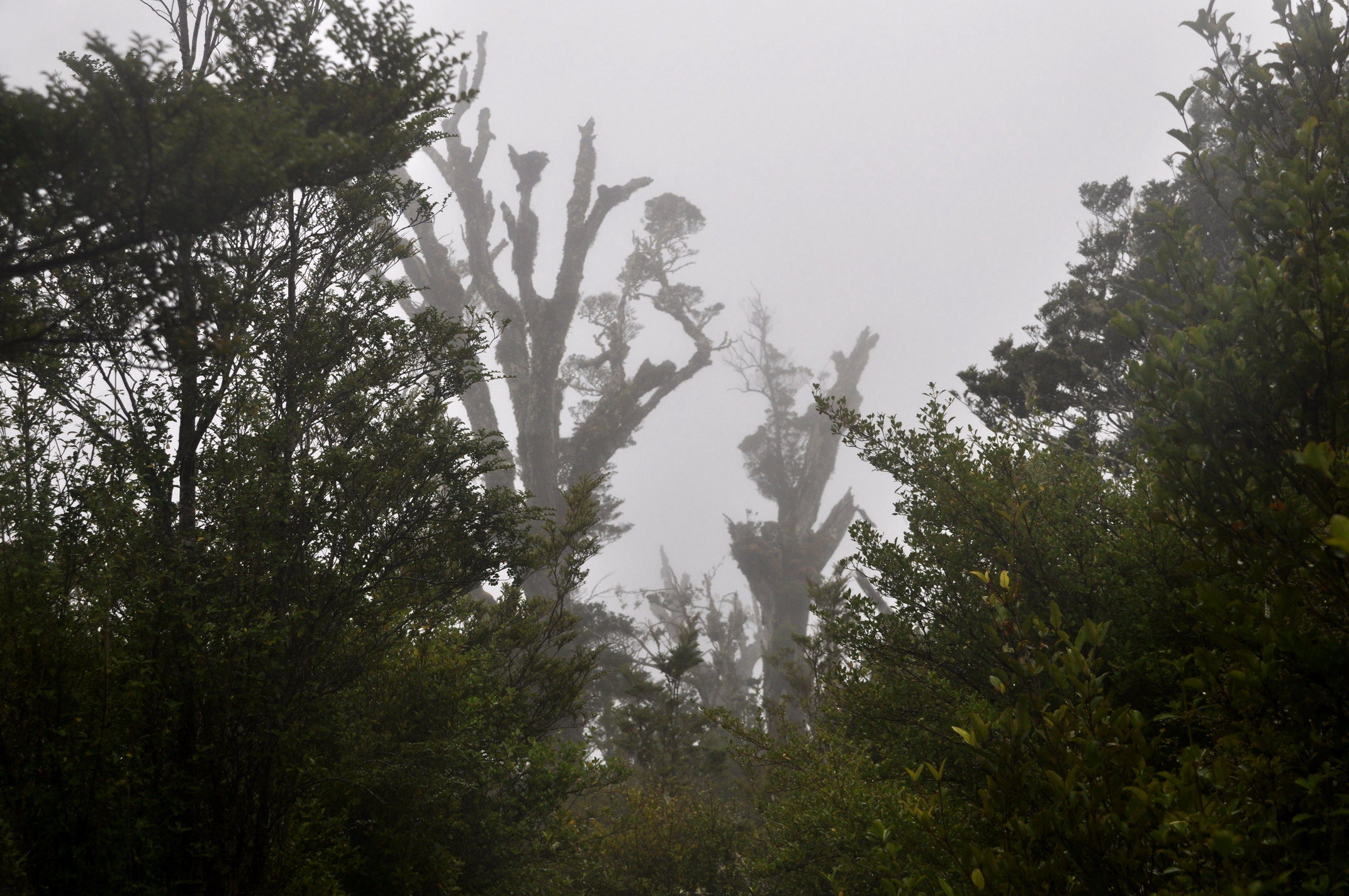
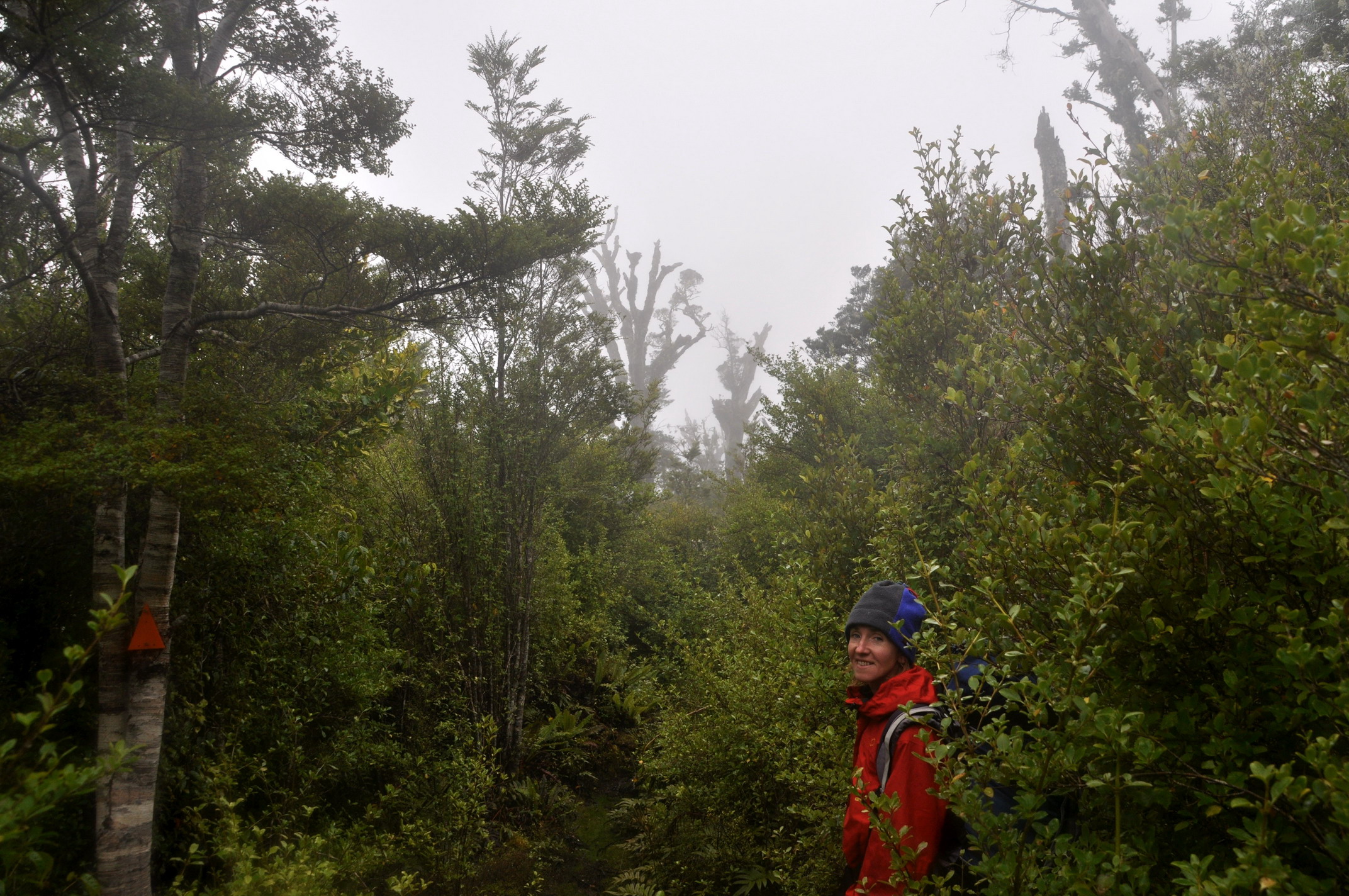
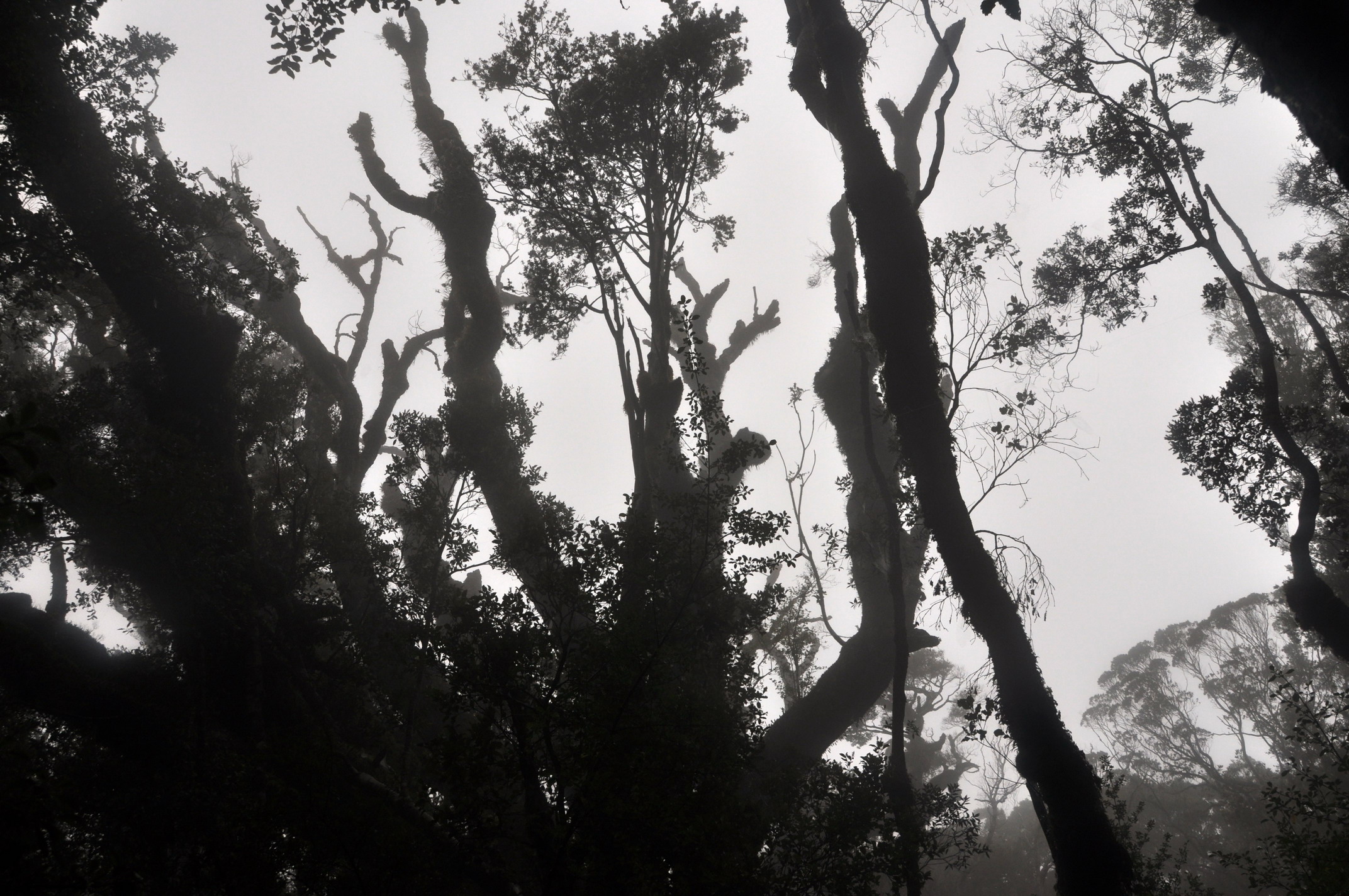
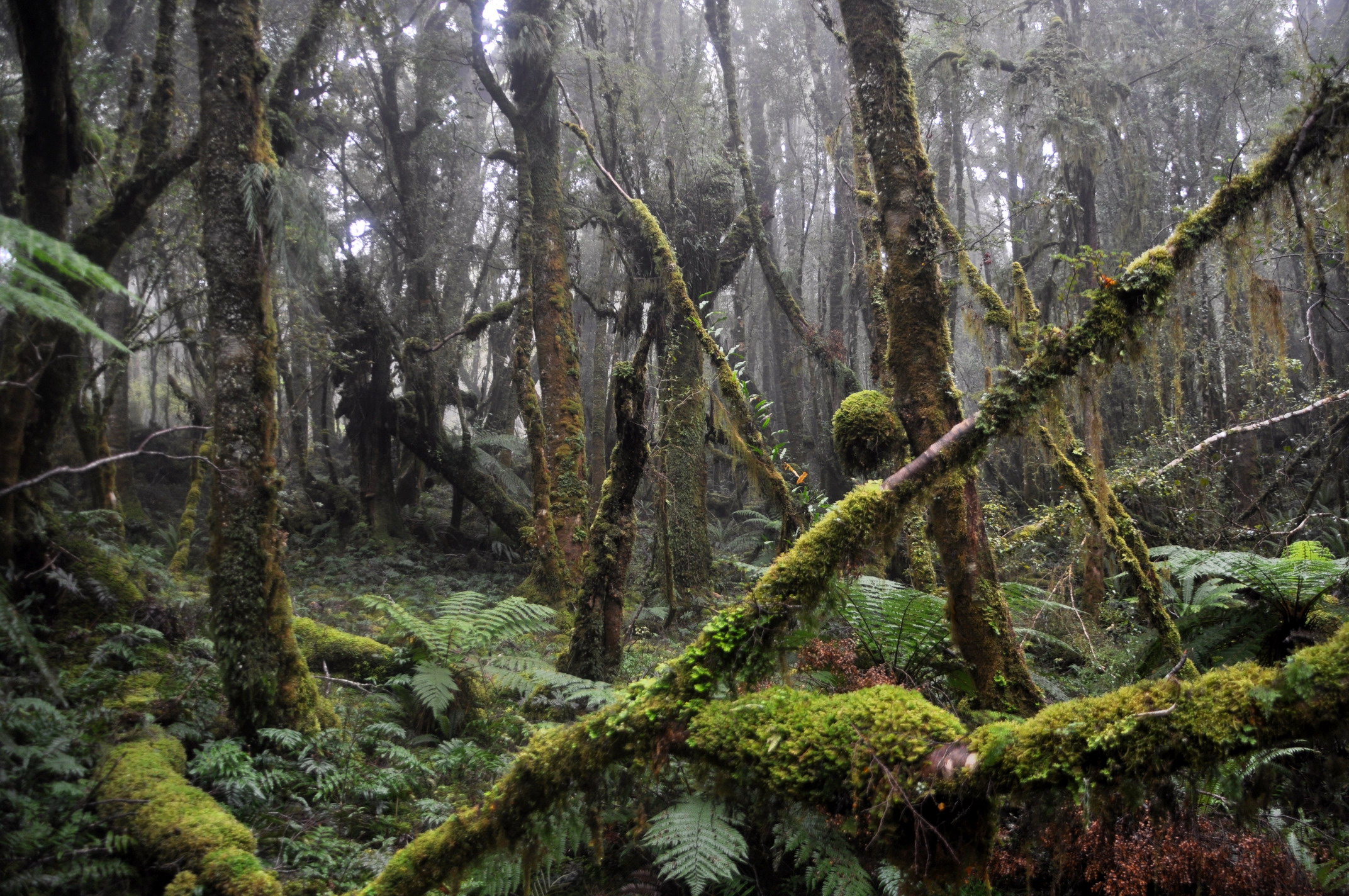
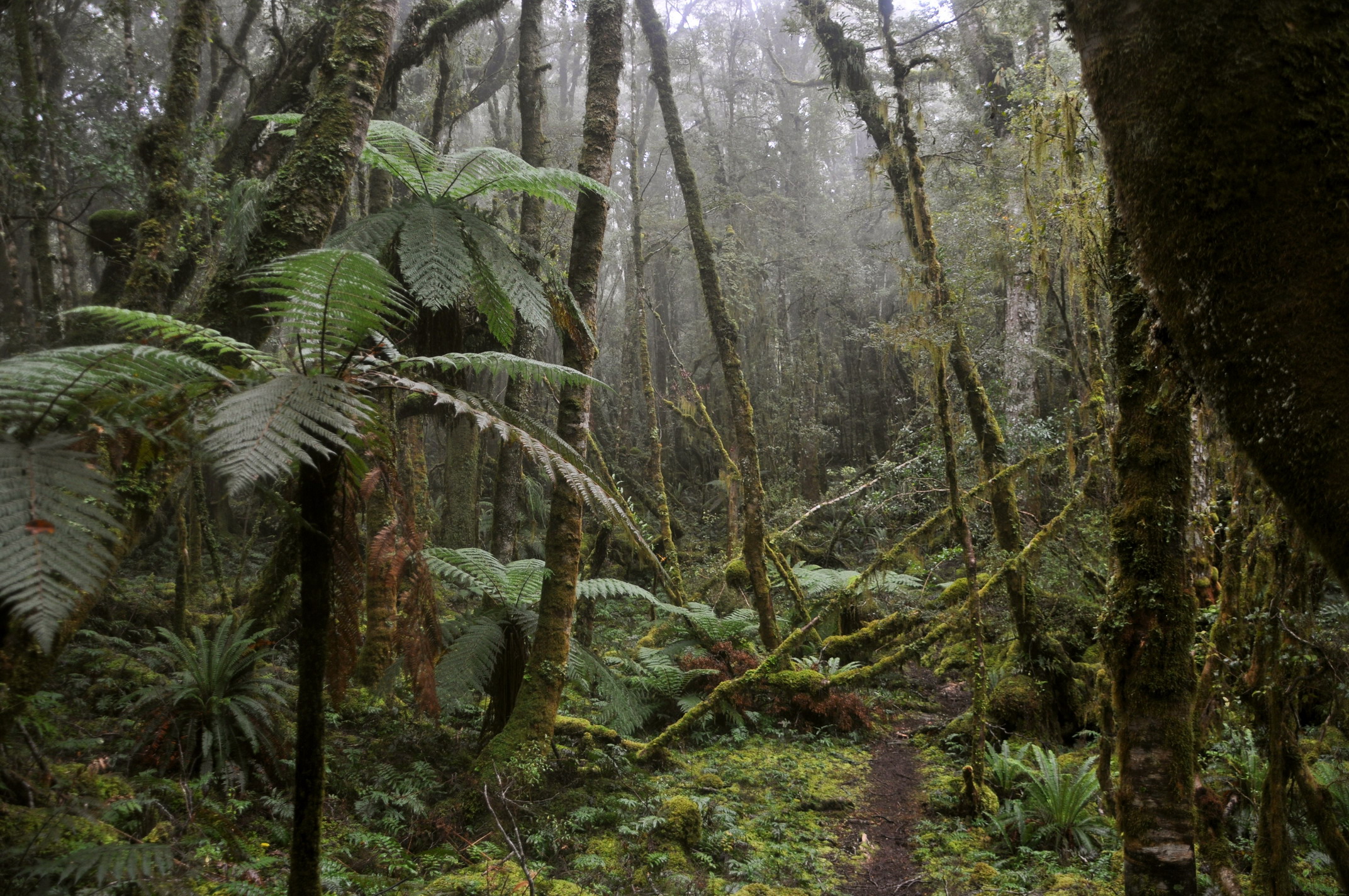
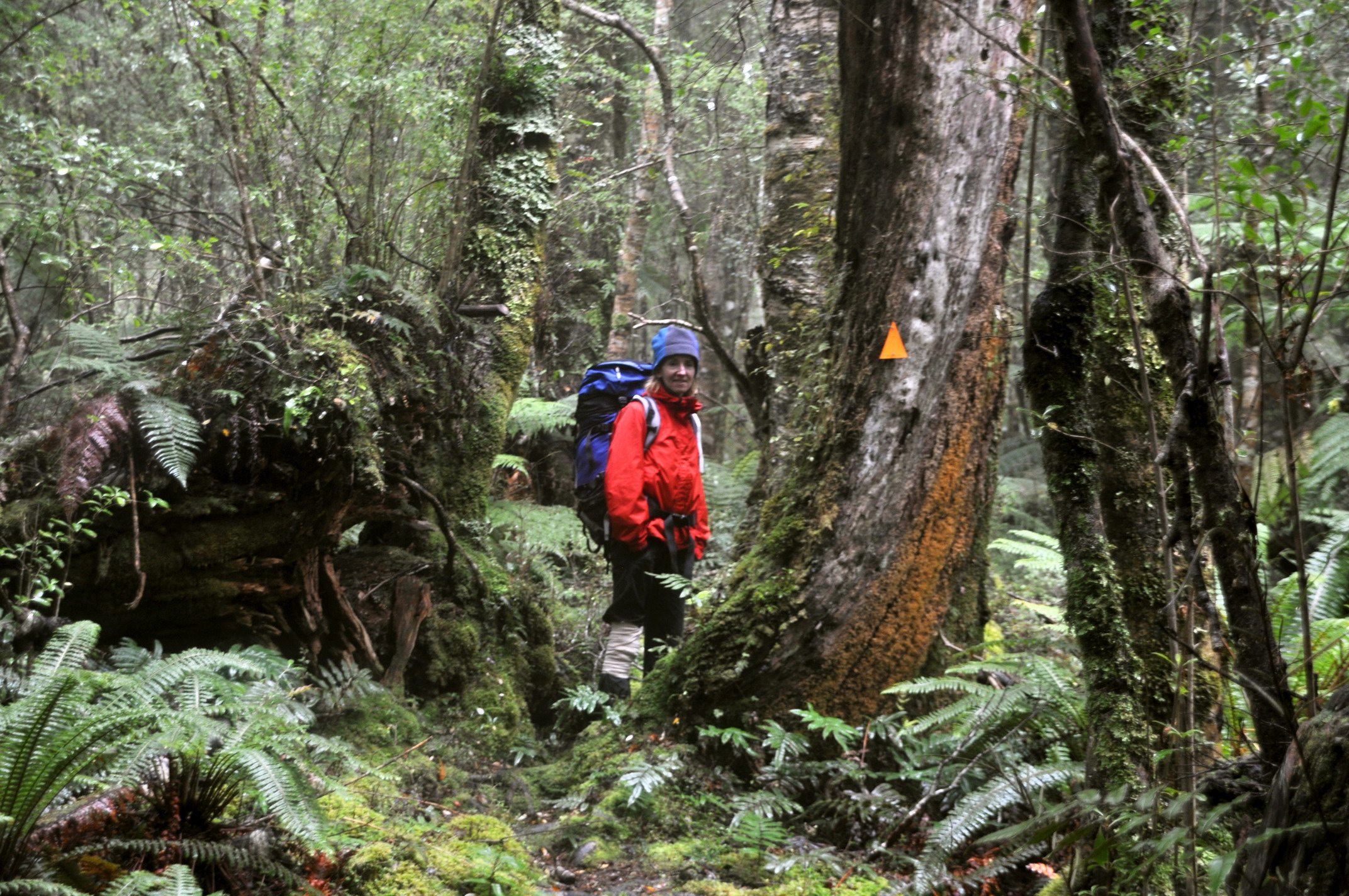
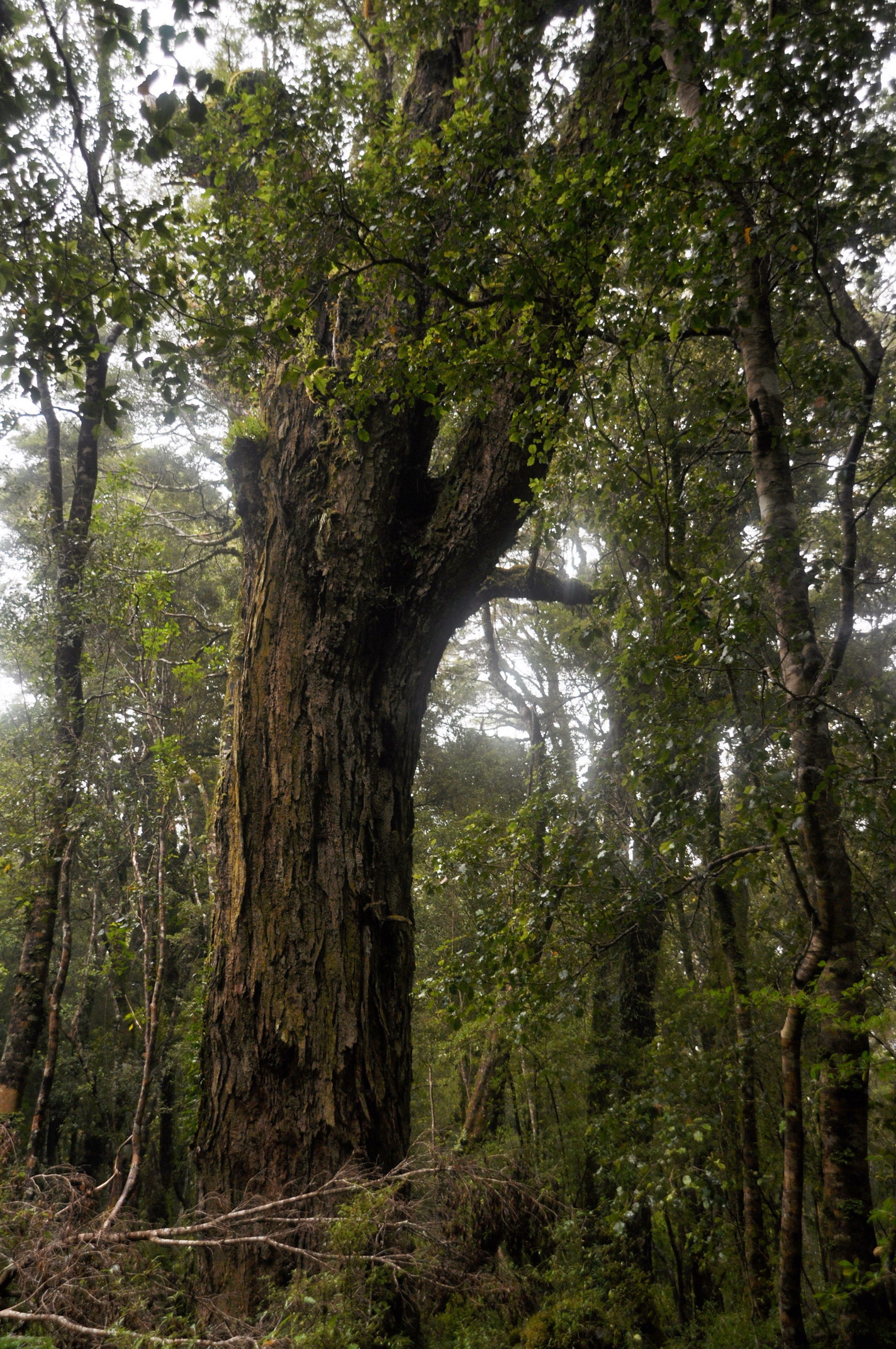
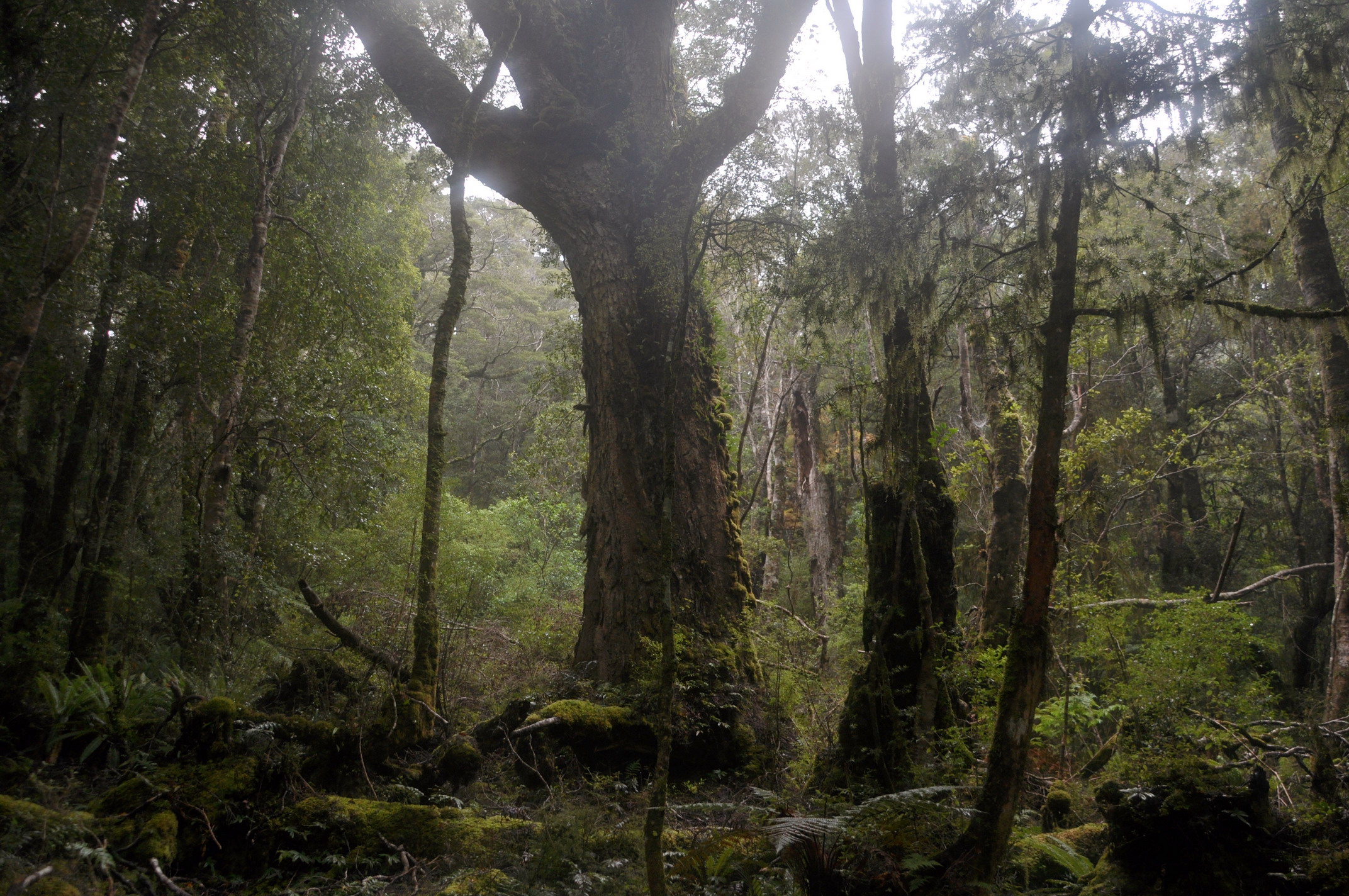
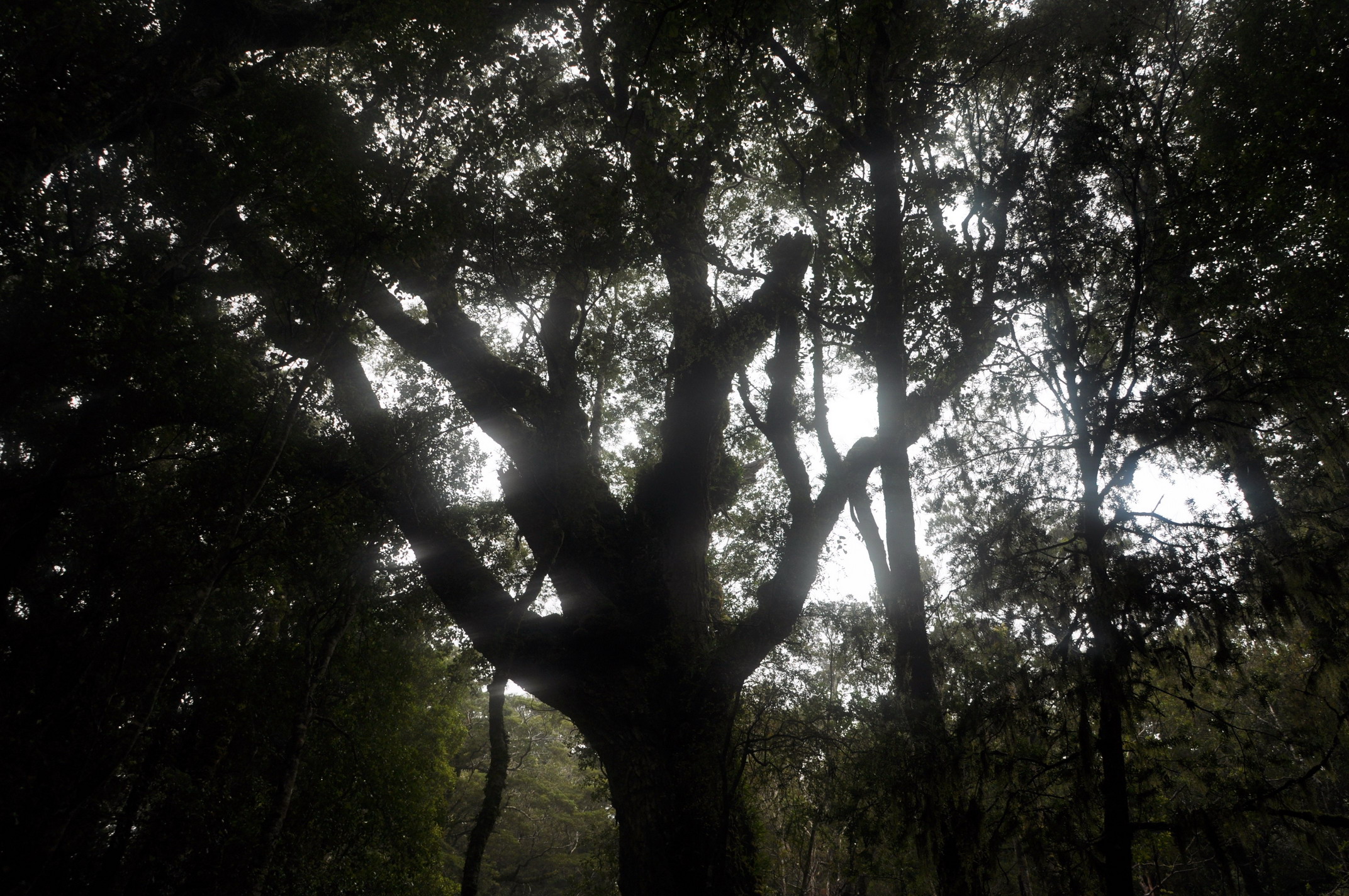
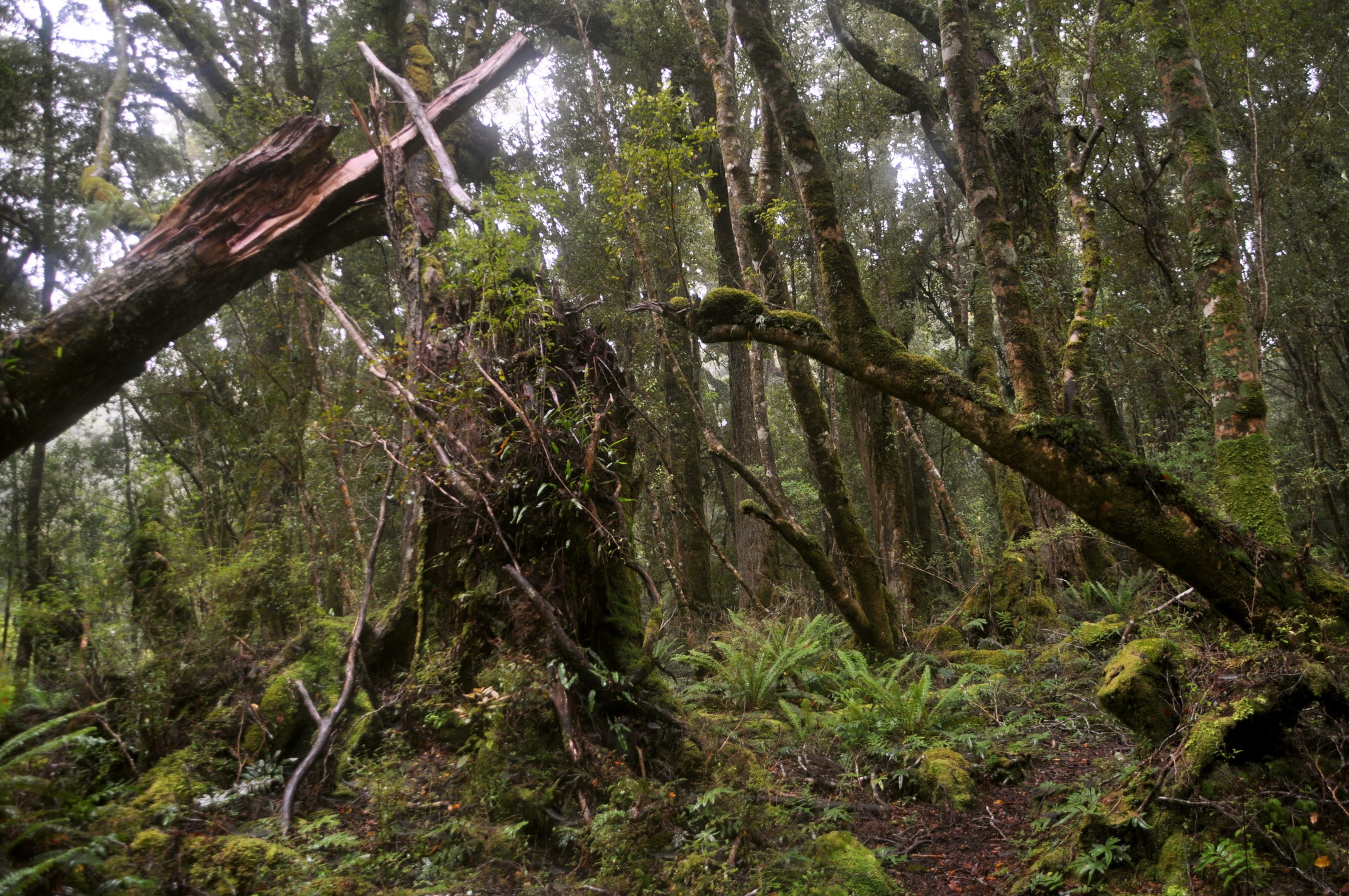
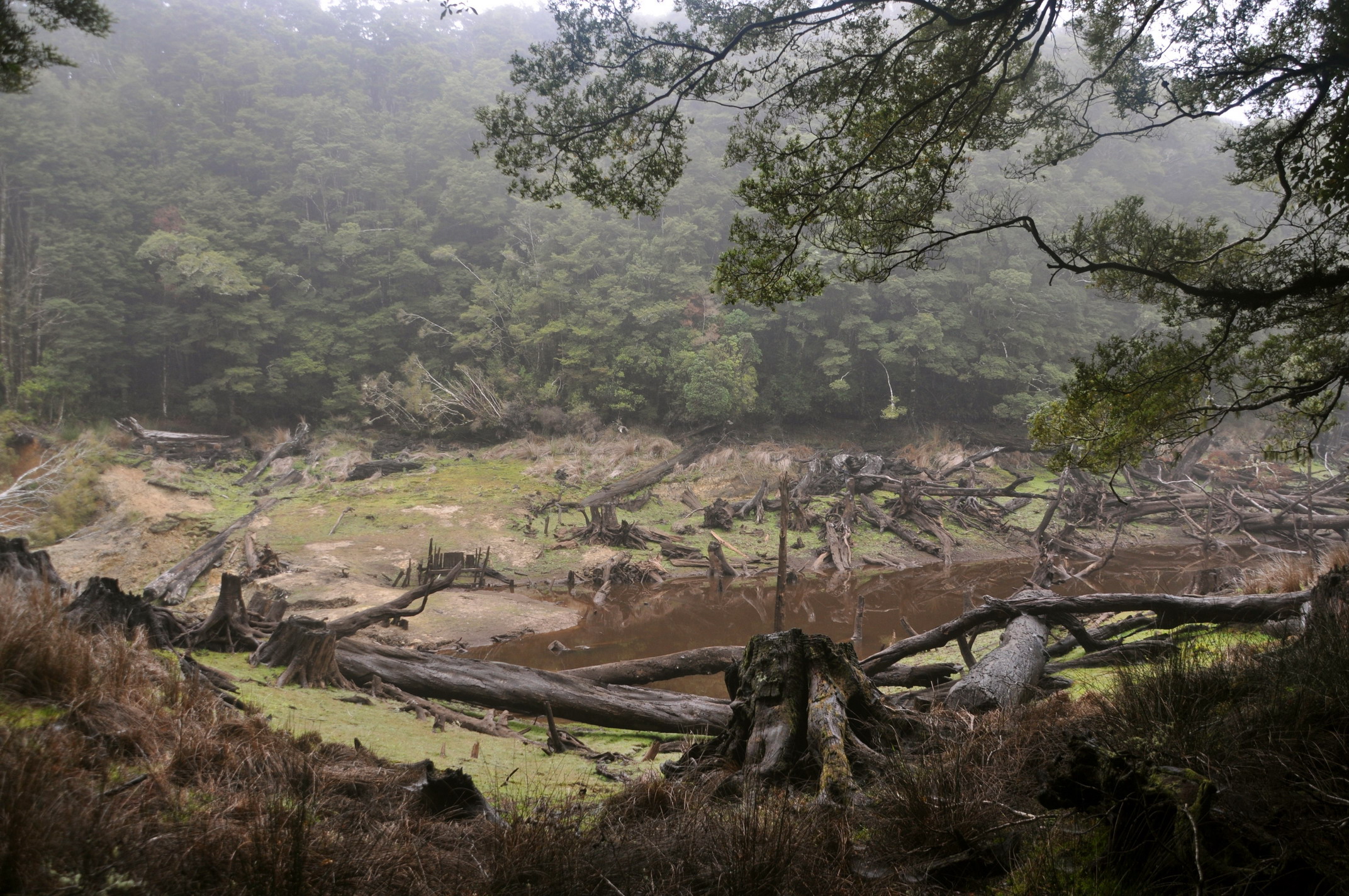
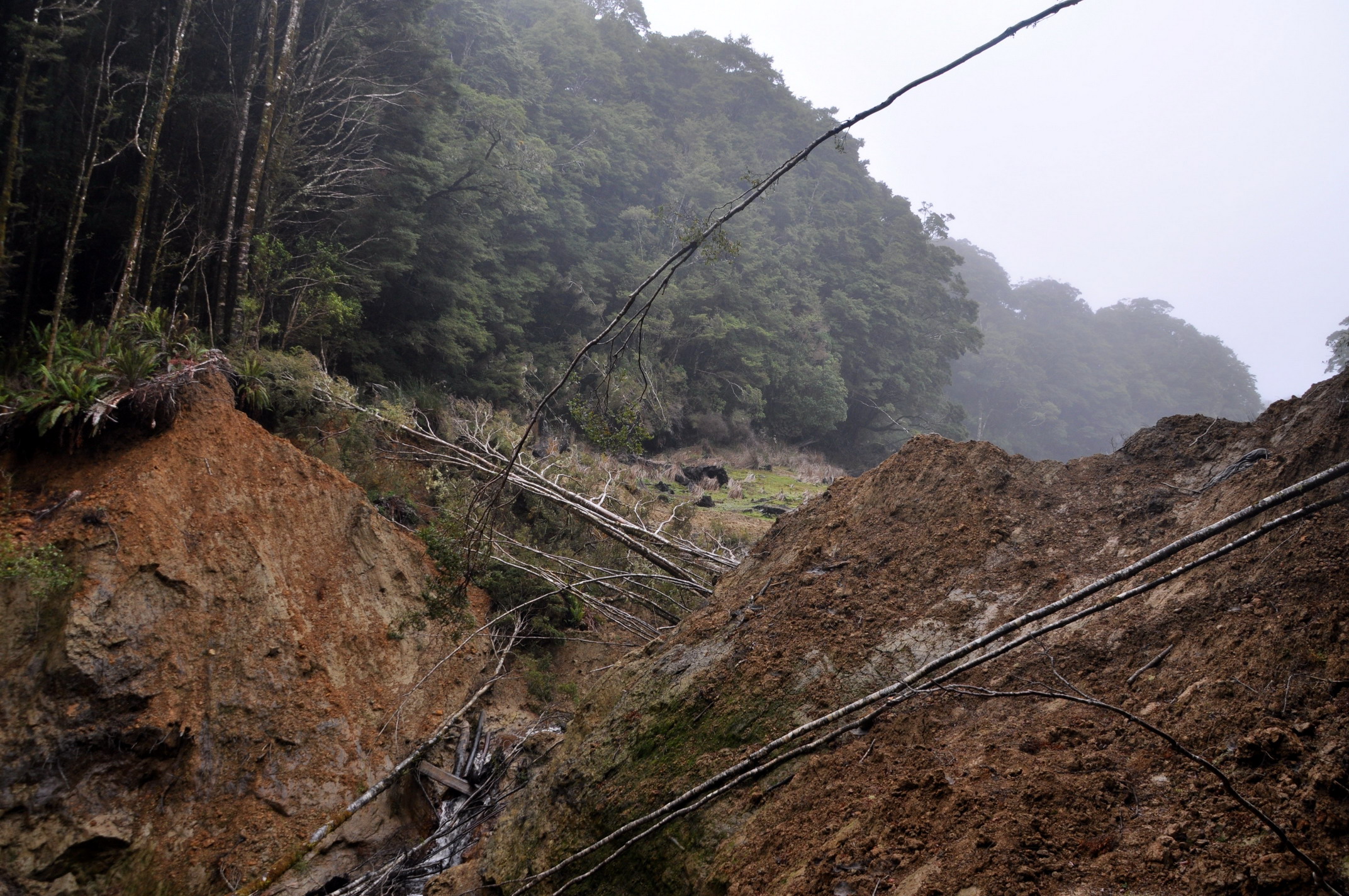
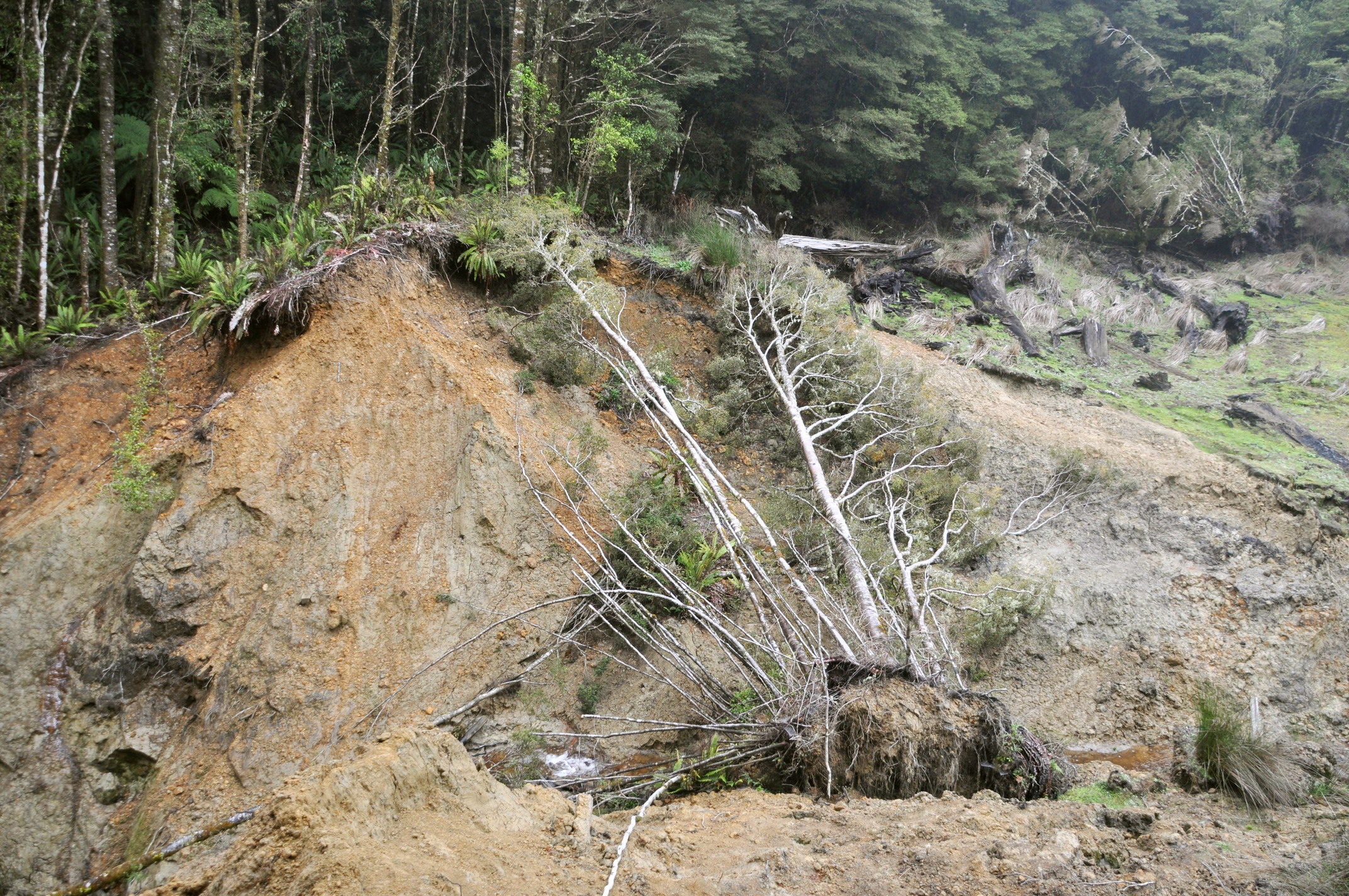
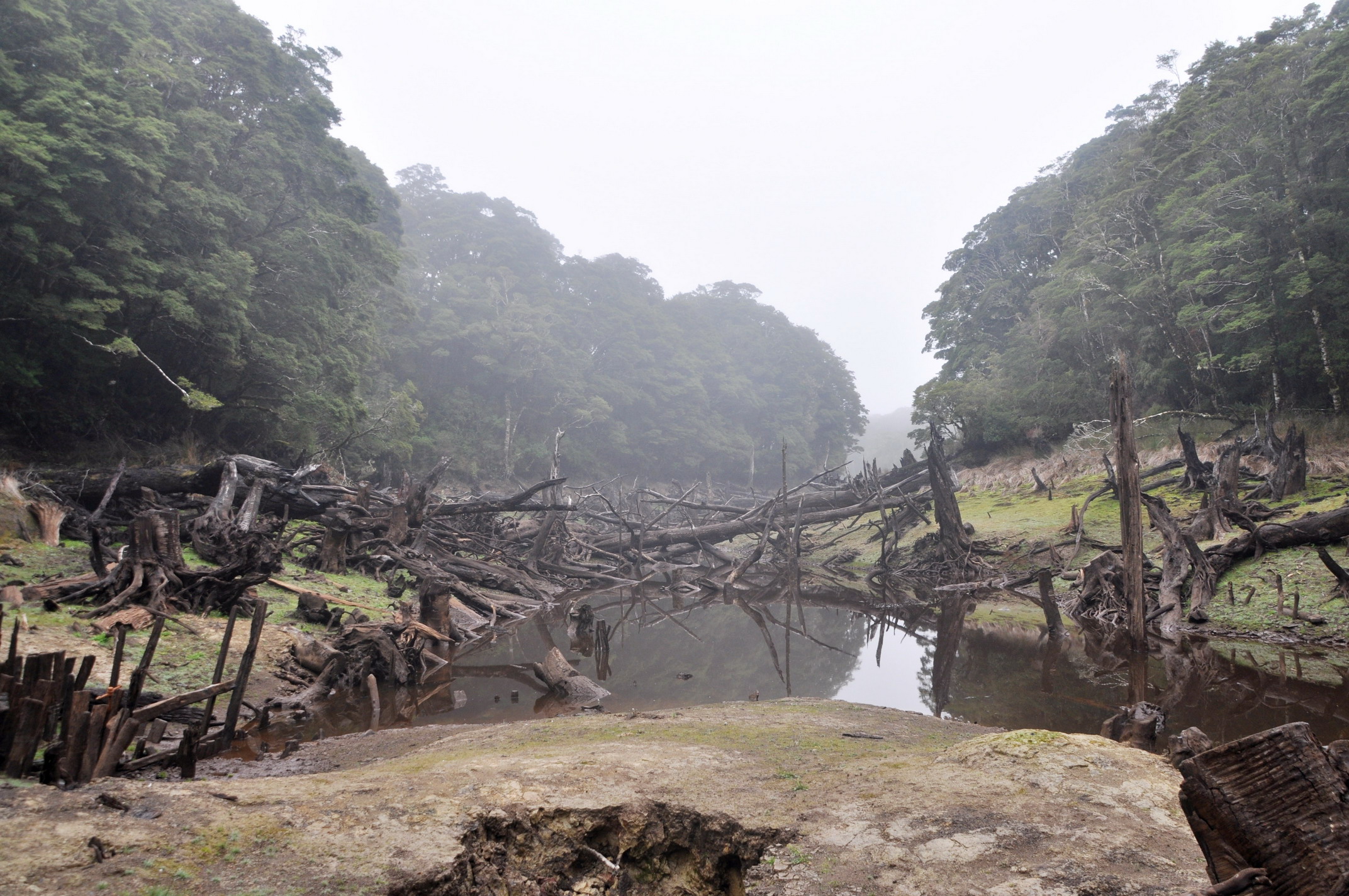
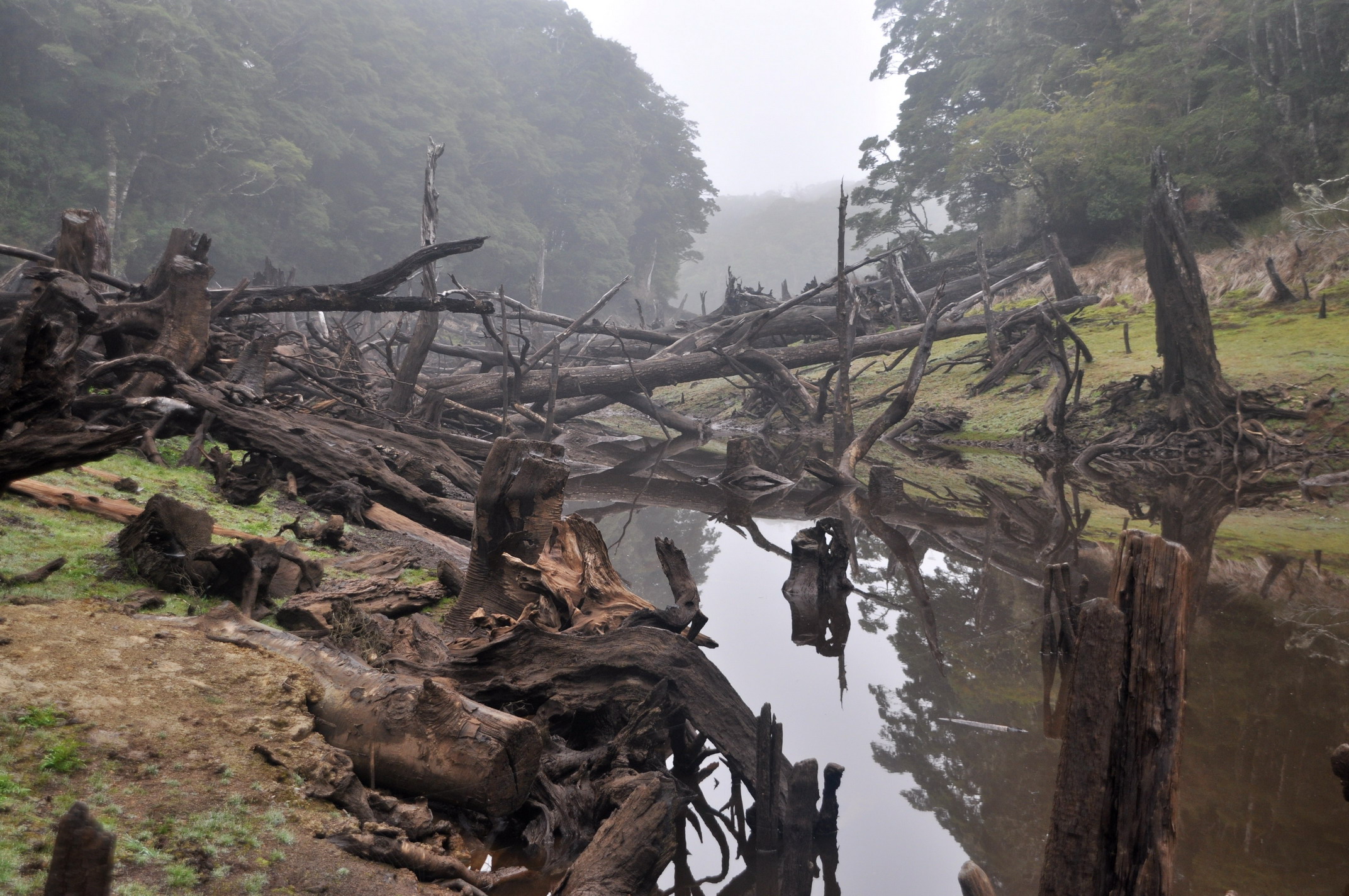
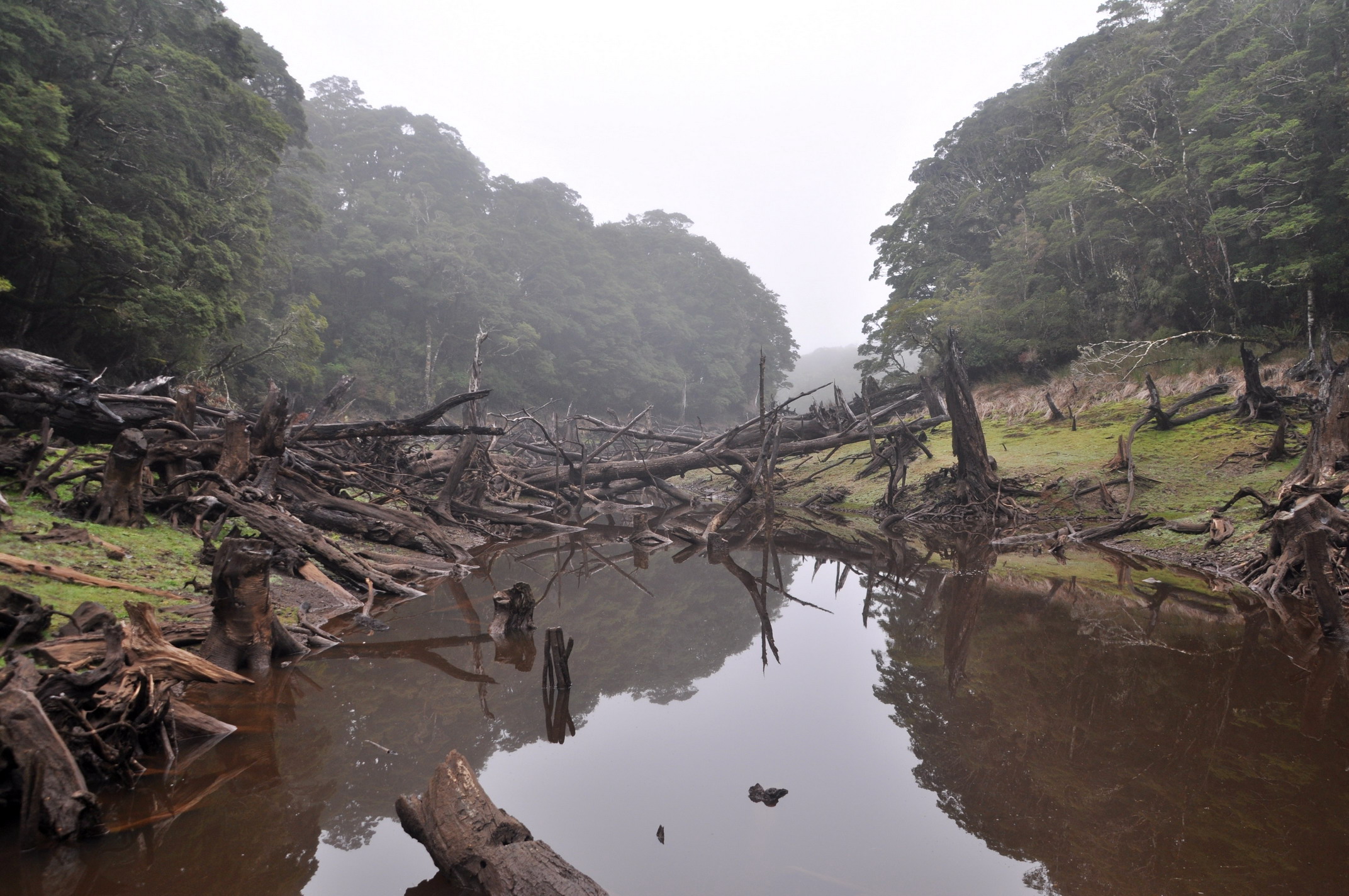
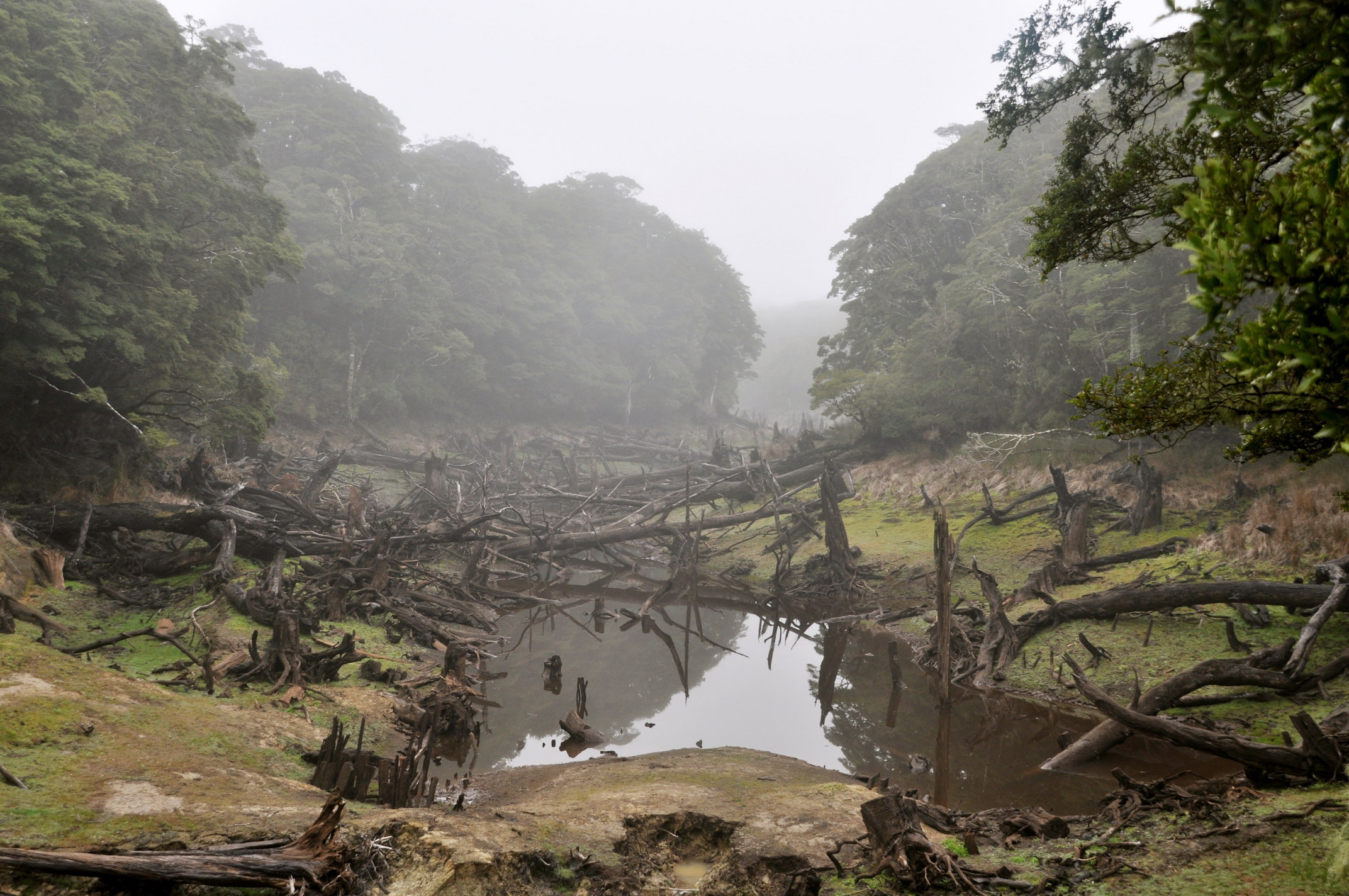
In the spring of 2009 the dam burst. The lake drained, leaving the lake bed a desolate landscape of tree trunks, drowned when the dam was built and still standing after a hundred years.
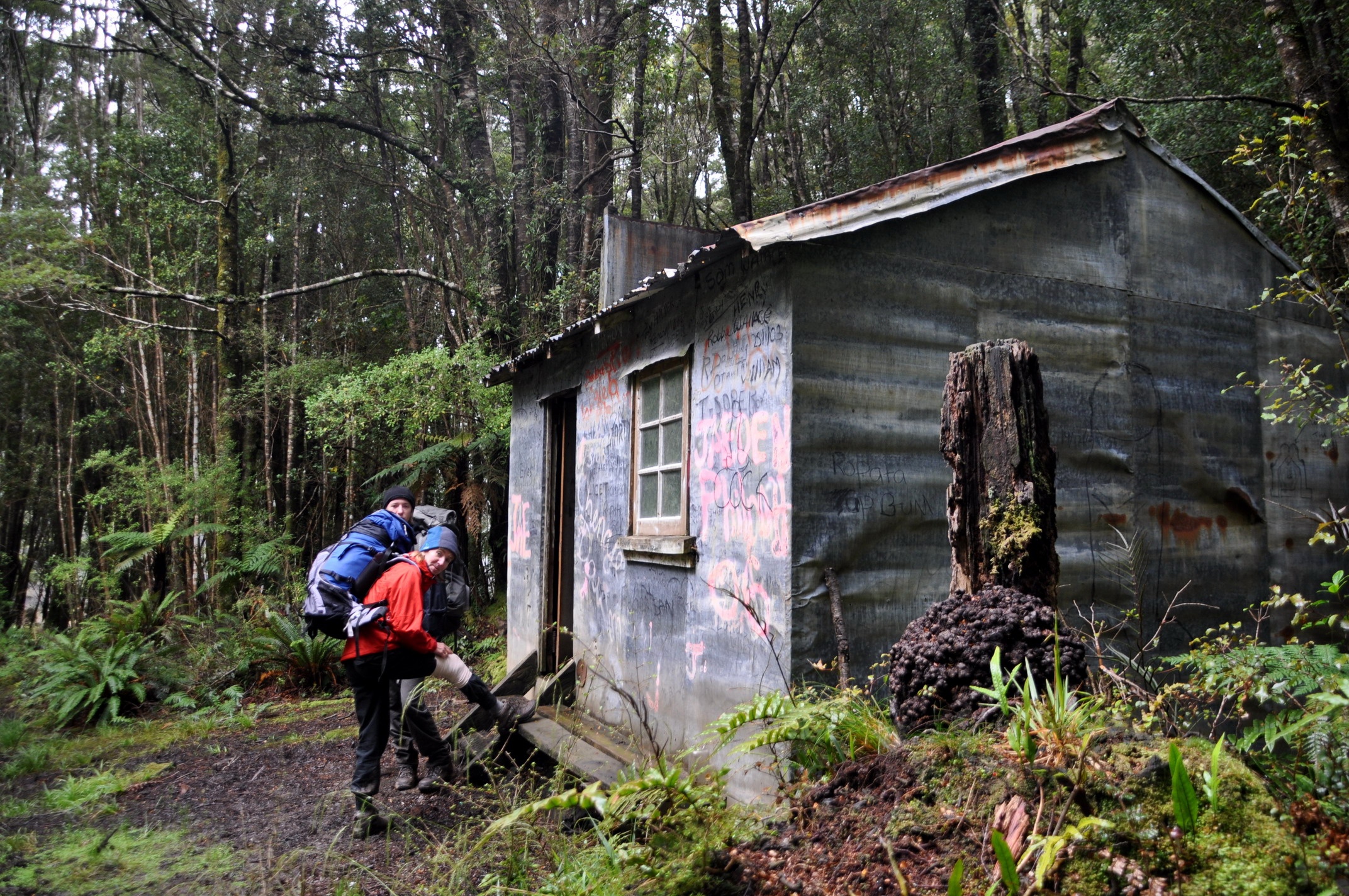
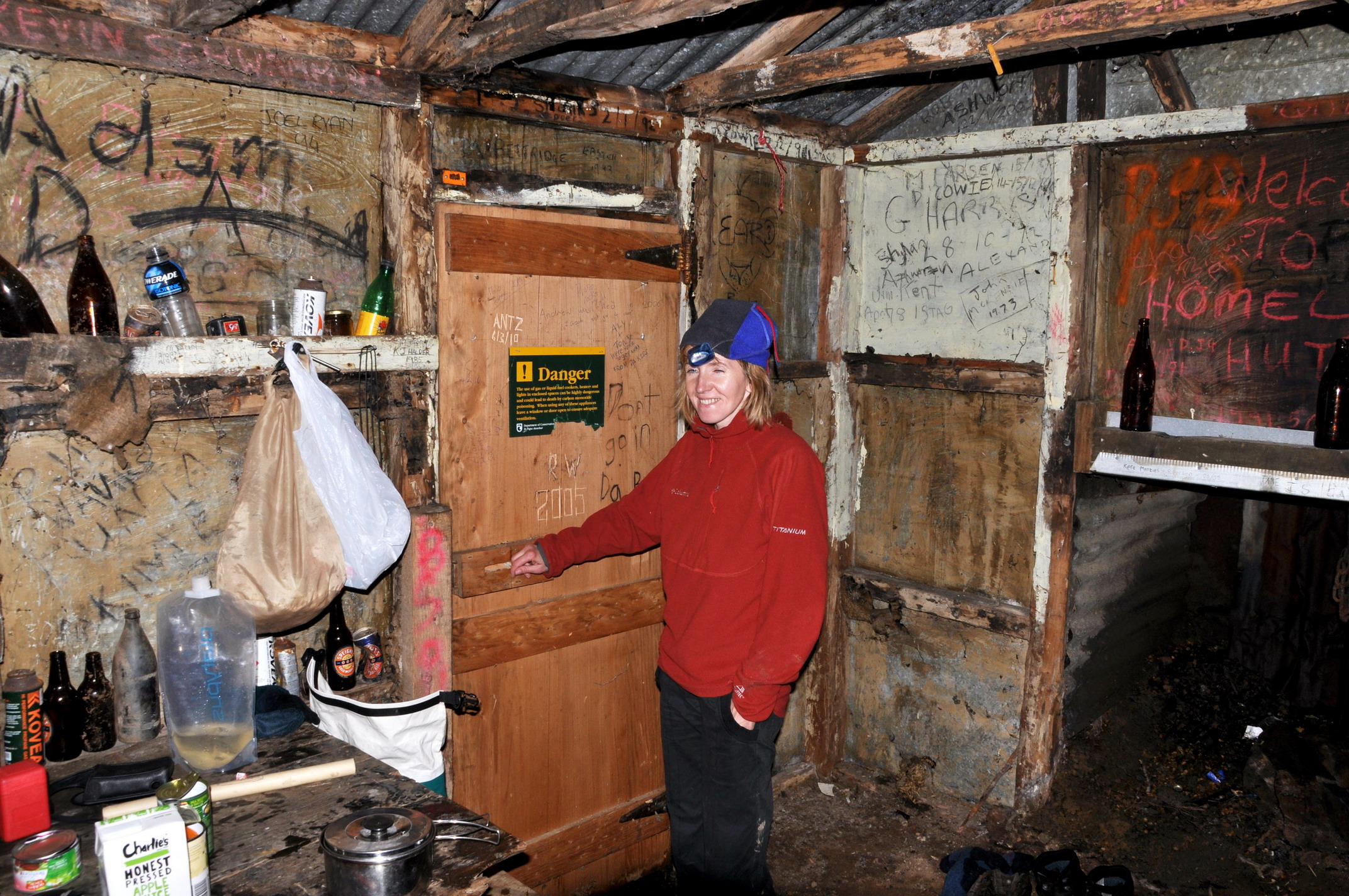
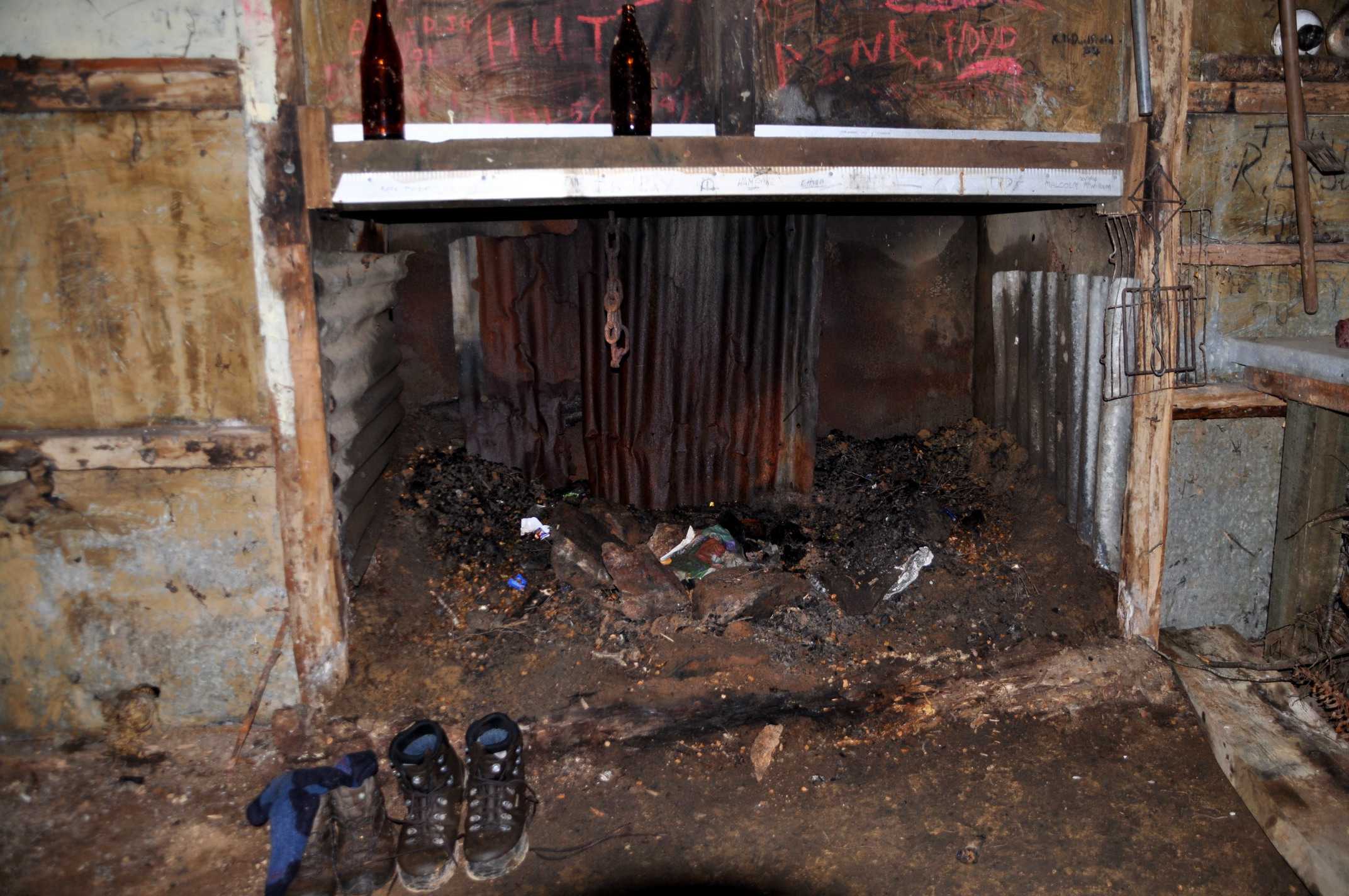
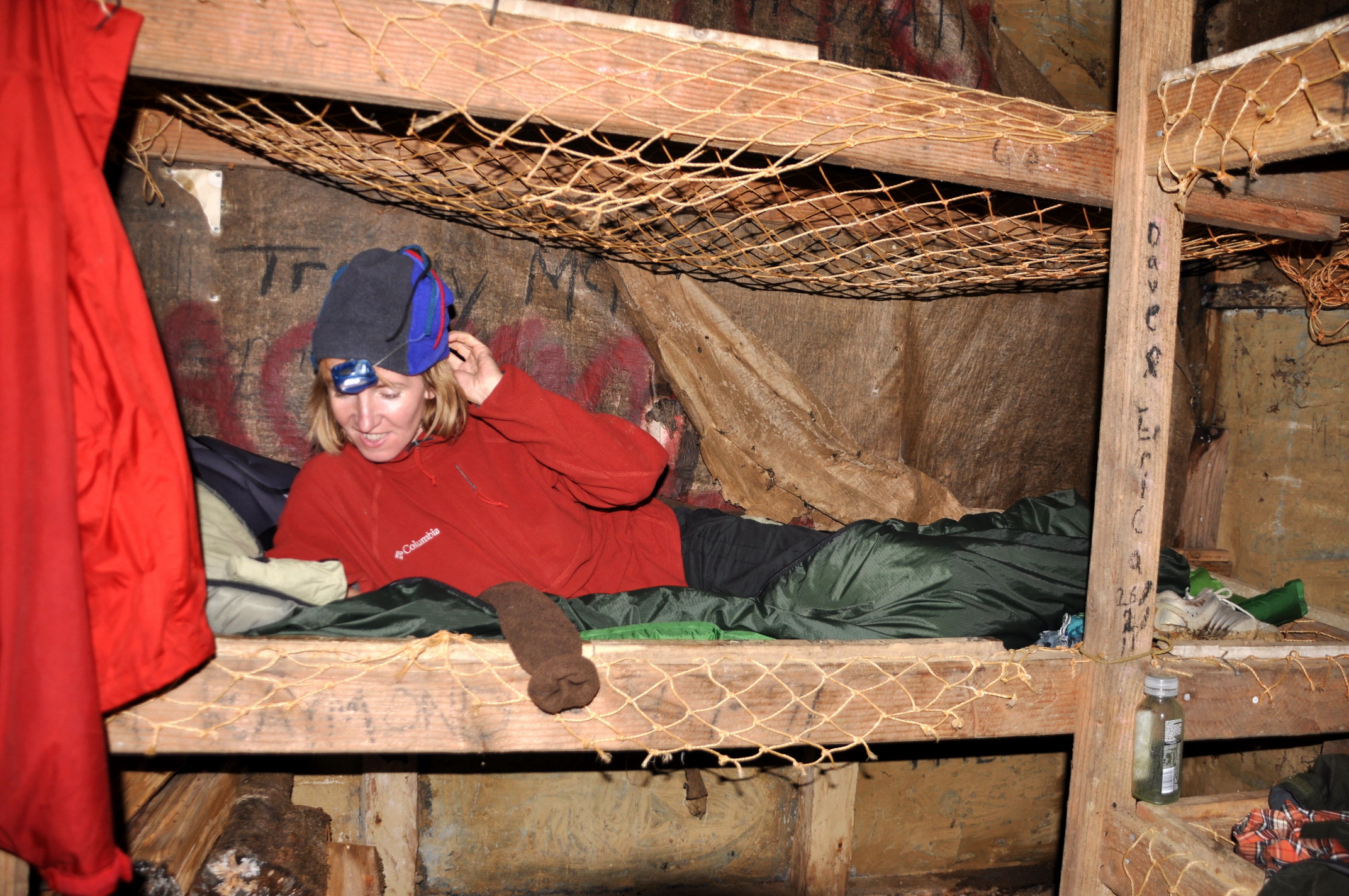
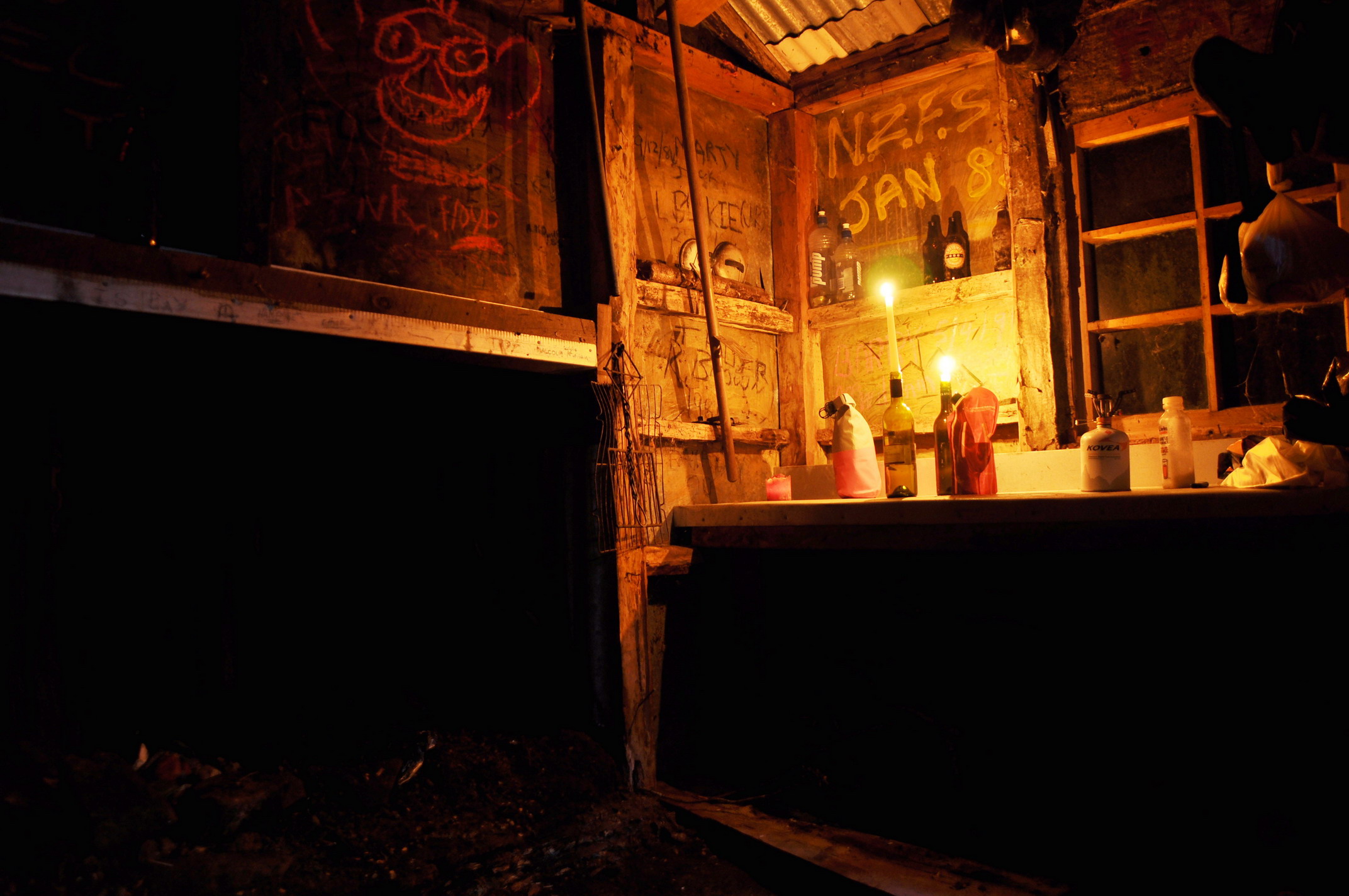
The hut itself had rotted quite badly. It had an earth floor. There may once have been boards, but they were long gone. The four bunks had canvas slings stretched across frames. They were surprisingly comfortable, though the hut itself was damp and smelled of rot. The open fireplace looked likely to smoke, and it was warm enough to leave it alone. The roof leaked, so everything inside was half rotten, even the visitors’ book. Hunters came by fairly often, but few stayed overnight. There were only a handful of entries for all of 2010.
Getting water was awkward. There was no tank, we didn’t fancy dipping into what remained of the lake, and the nearest creek was a ten-minute walk back down the track.
We slept well. The morning was even wetter than the evening, with a cloud sitting on the hills. We went back the way we’d come. At a junction near the hut, a marked track leads to Martin’s Hut in about two hours. It was so wet that we decided to head home.