Trip report
Autumn is a fine time for walking in New Zealand. The snow hasn't come yet and it isn't too cold. The bush is still as green as in summer. New Zealand's native trees are evergreen, so you only get a golden autumn in the towns where the settlers planted European trees. The only drawback is the crowds, especially over Easter, when the schools and universities are on holiday.
We didn't manage to get away on a long tramp this time. There was plenty of time, but we all fell ill in turn. I was sick for a week, then Tanya and Denis. In the end Tanya and I got away for five days near the end of the holiday. She hadn't quite recovered, but she wanted to be in the mountains. The only good weather was in the north, in Kahurangi National Park. That suited us. It's warmer there, and five days isn't enough for a good tramp in Fiordland.
This time we chose the Thousand Acre Plateau, a broad expanse of alpine meadows ringed by cliffs. The books compare it to Professor Challenger's lost world. The cliffs don't go all the way around, of course, and it isn't hard to get up there.
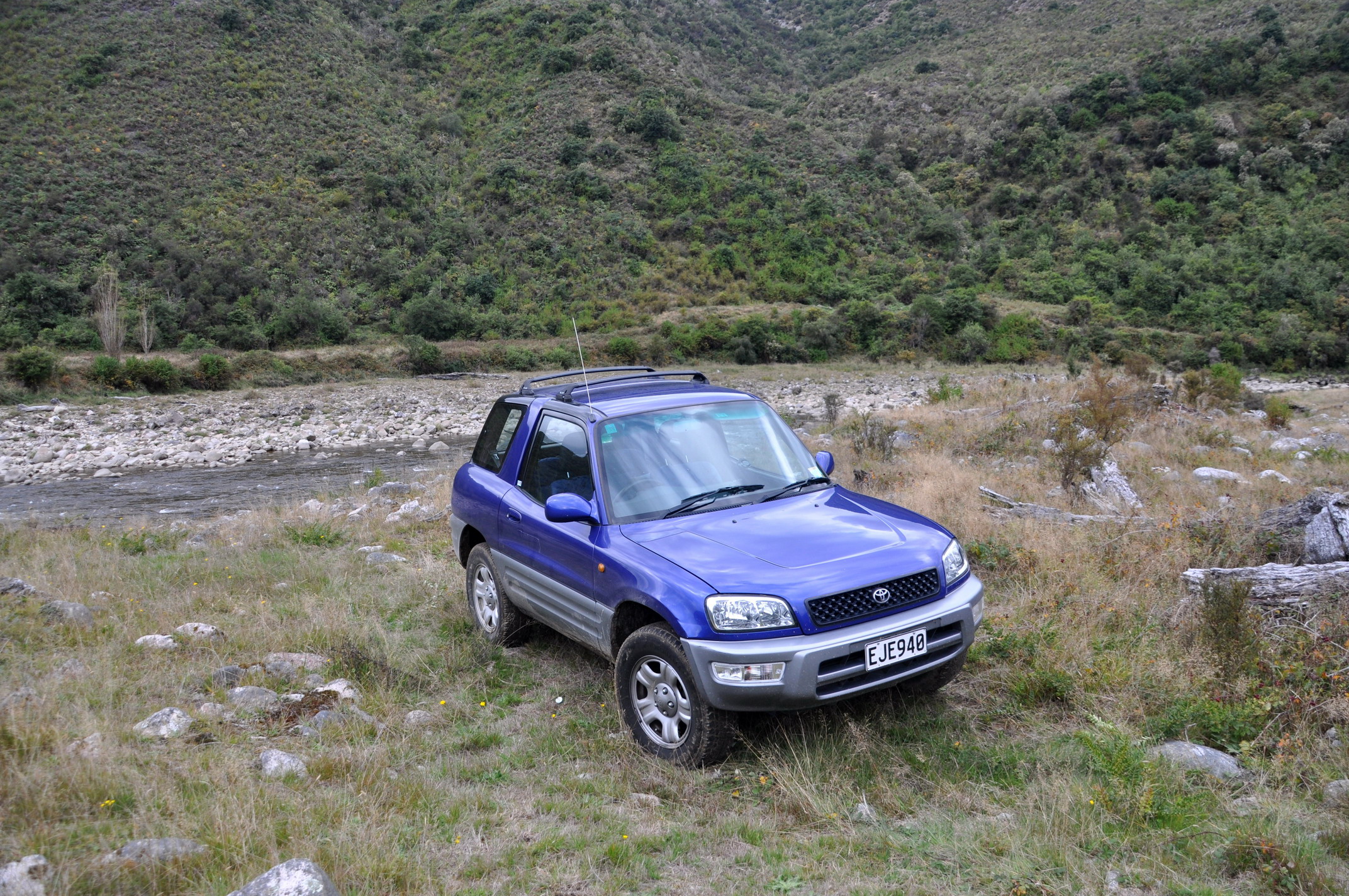
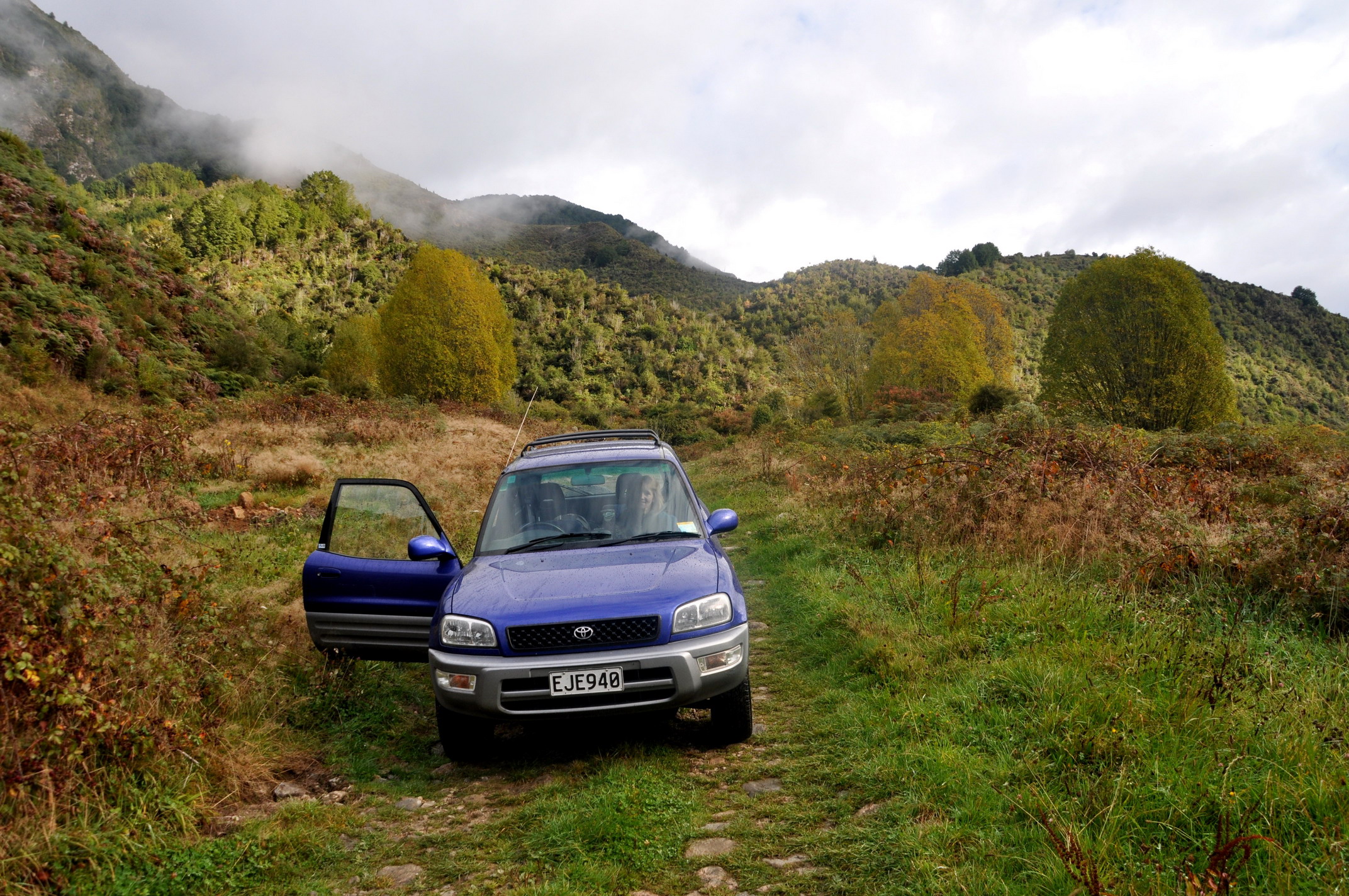
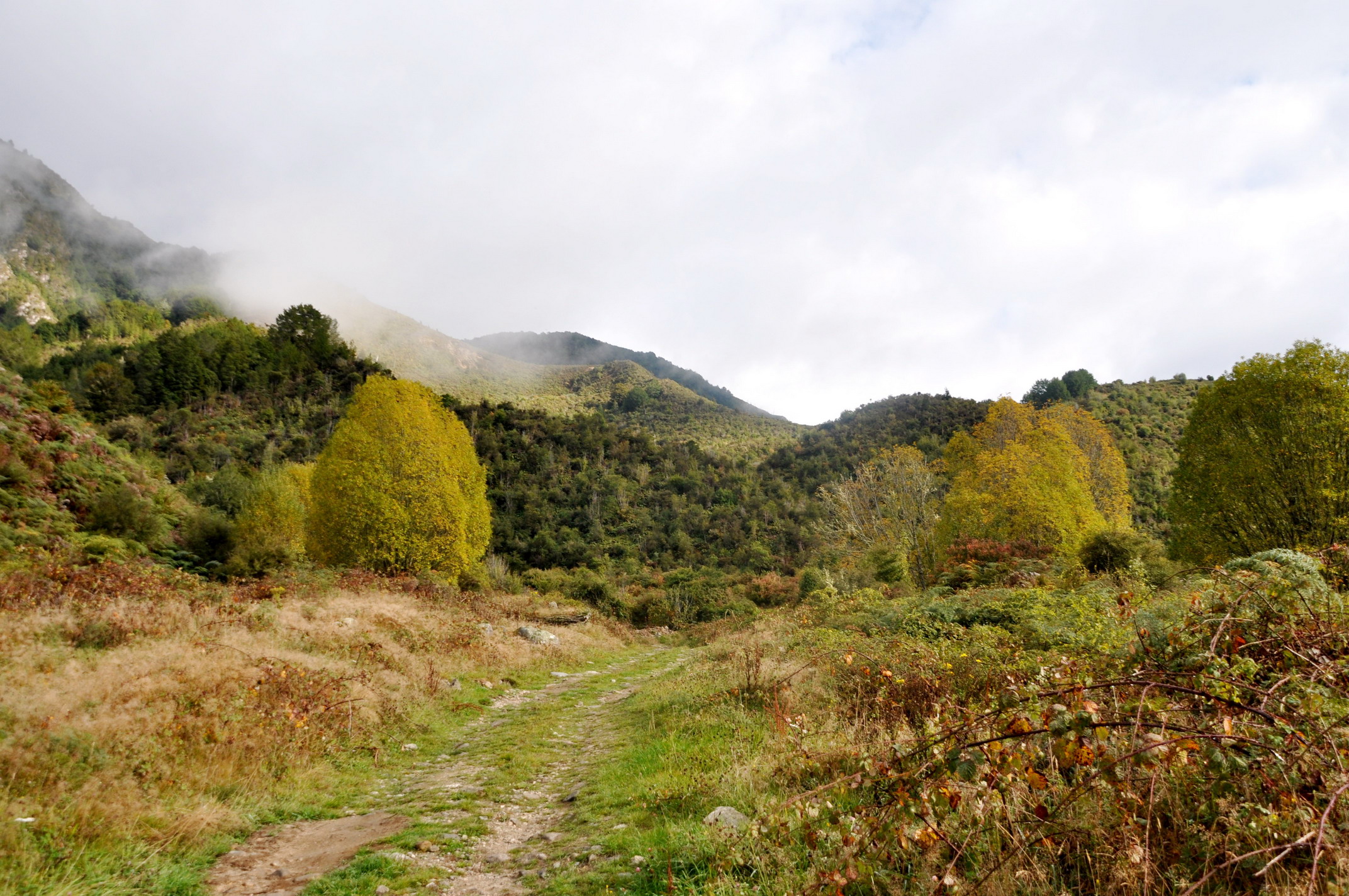
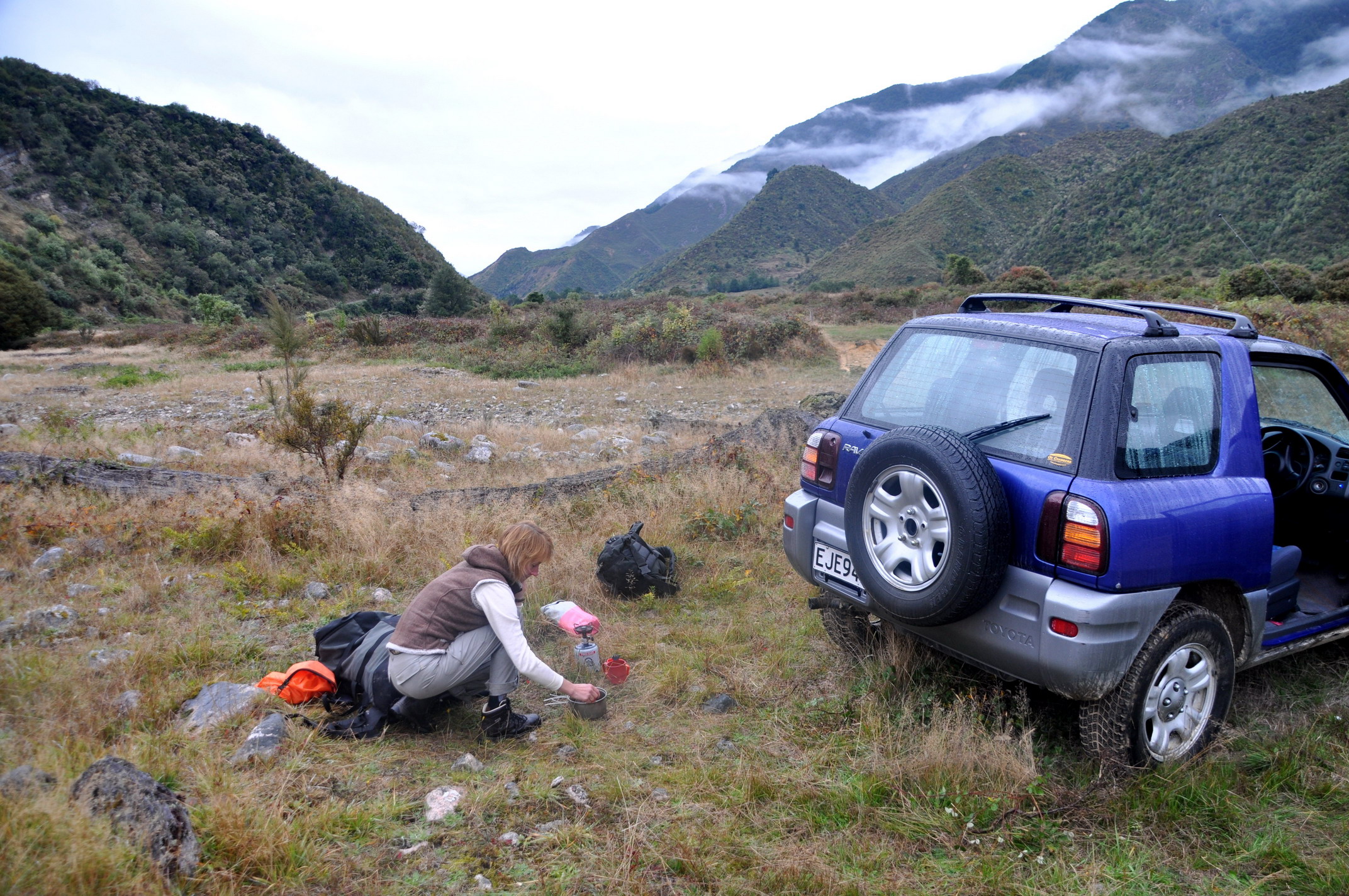
The track starts along the Matiri River. The formed road ends at the car park (41°42.320′S, 172°19.823′E). Beyond that it's supposedly for four-wheel drives only. We successfully got our RAV4 as far as the western branch of the Matiri, which is easy to cross on stones when the water is low (41°41.075′S, 172°19.359′E). From there it's a foot track.
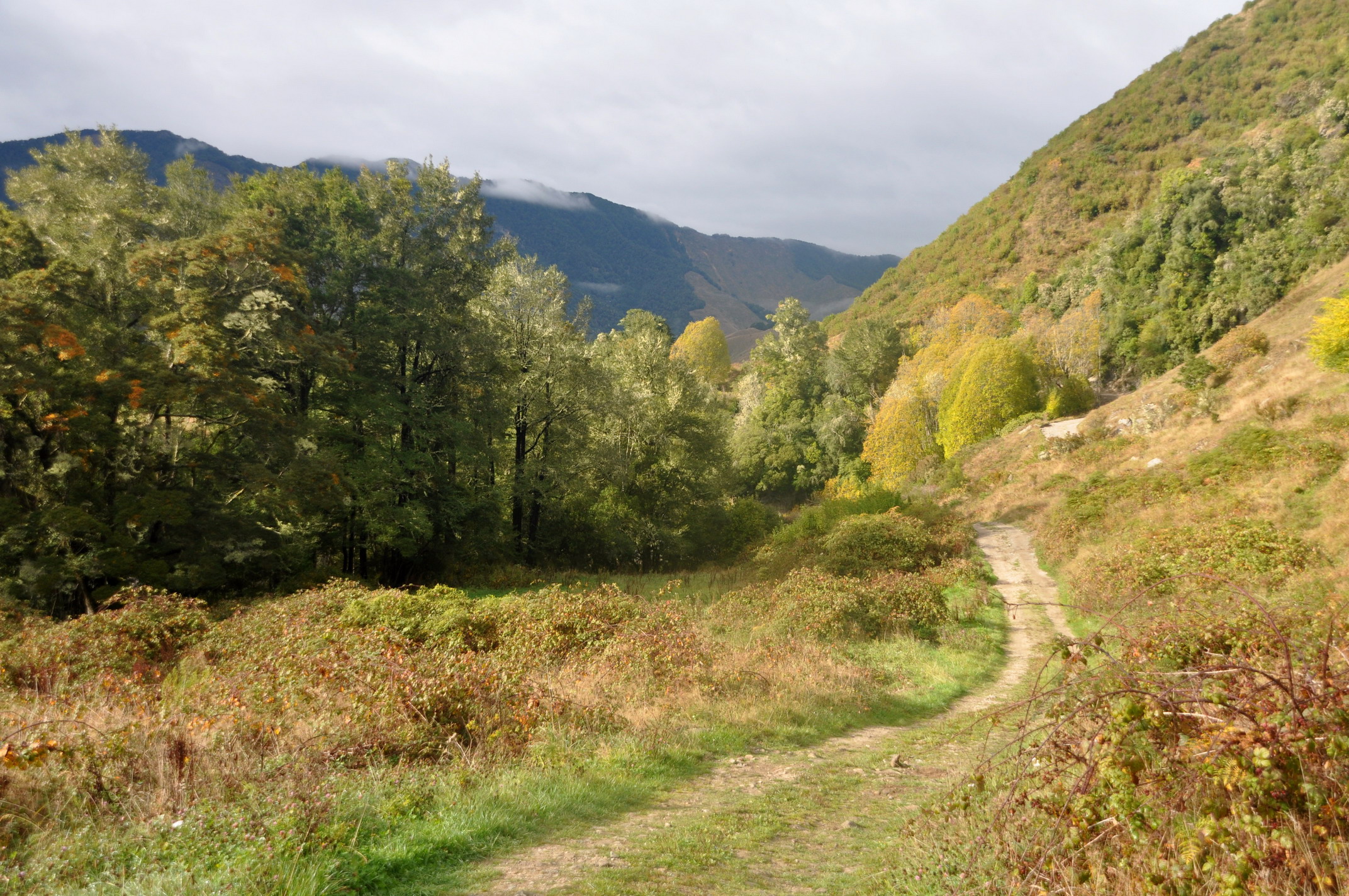
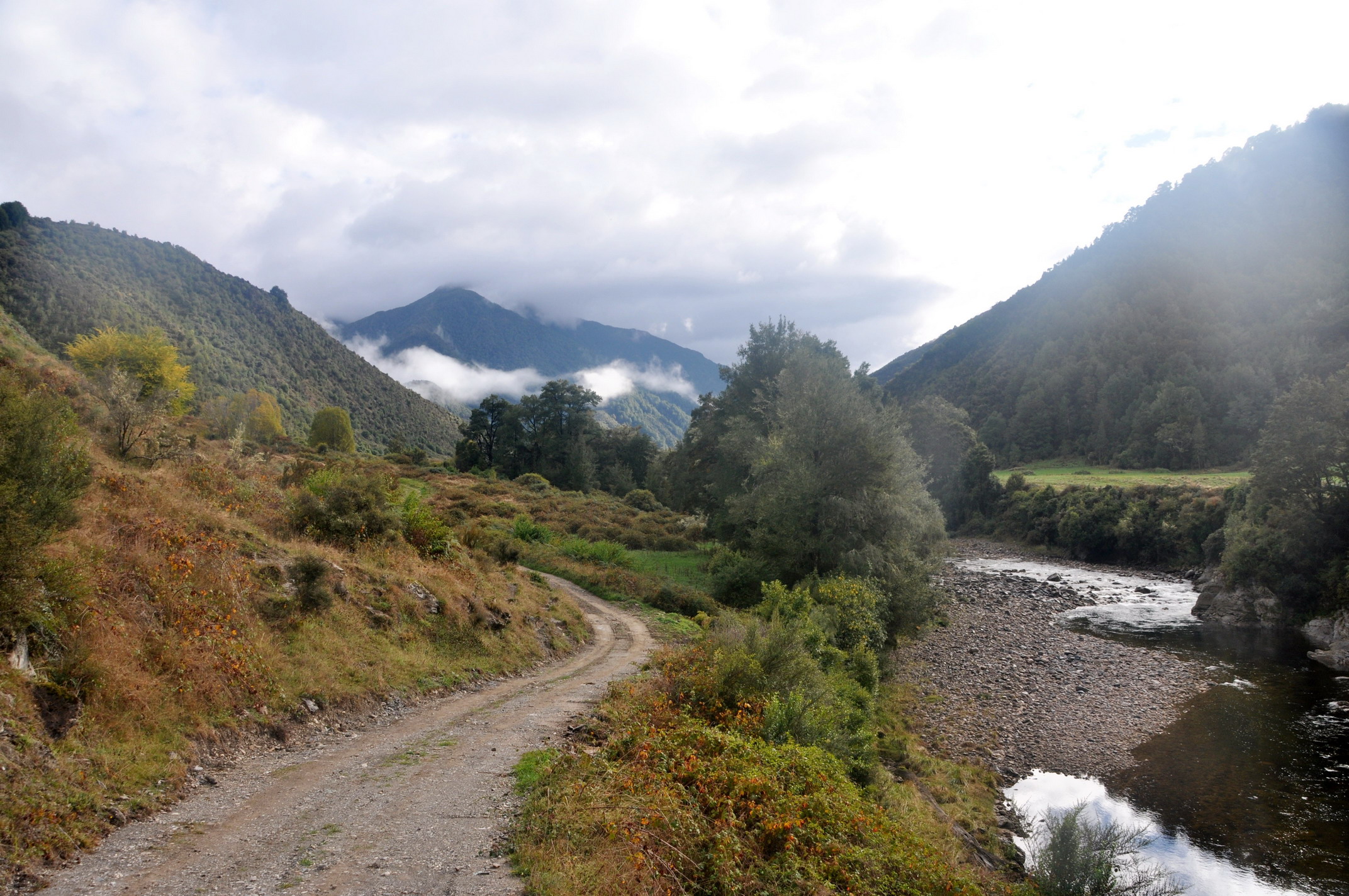
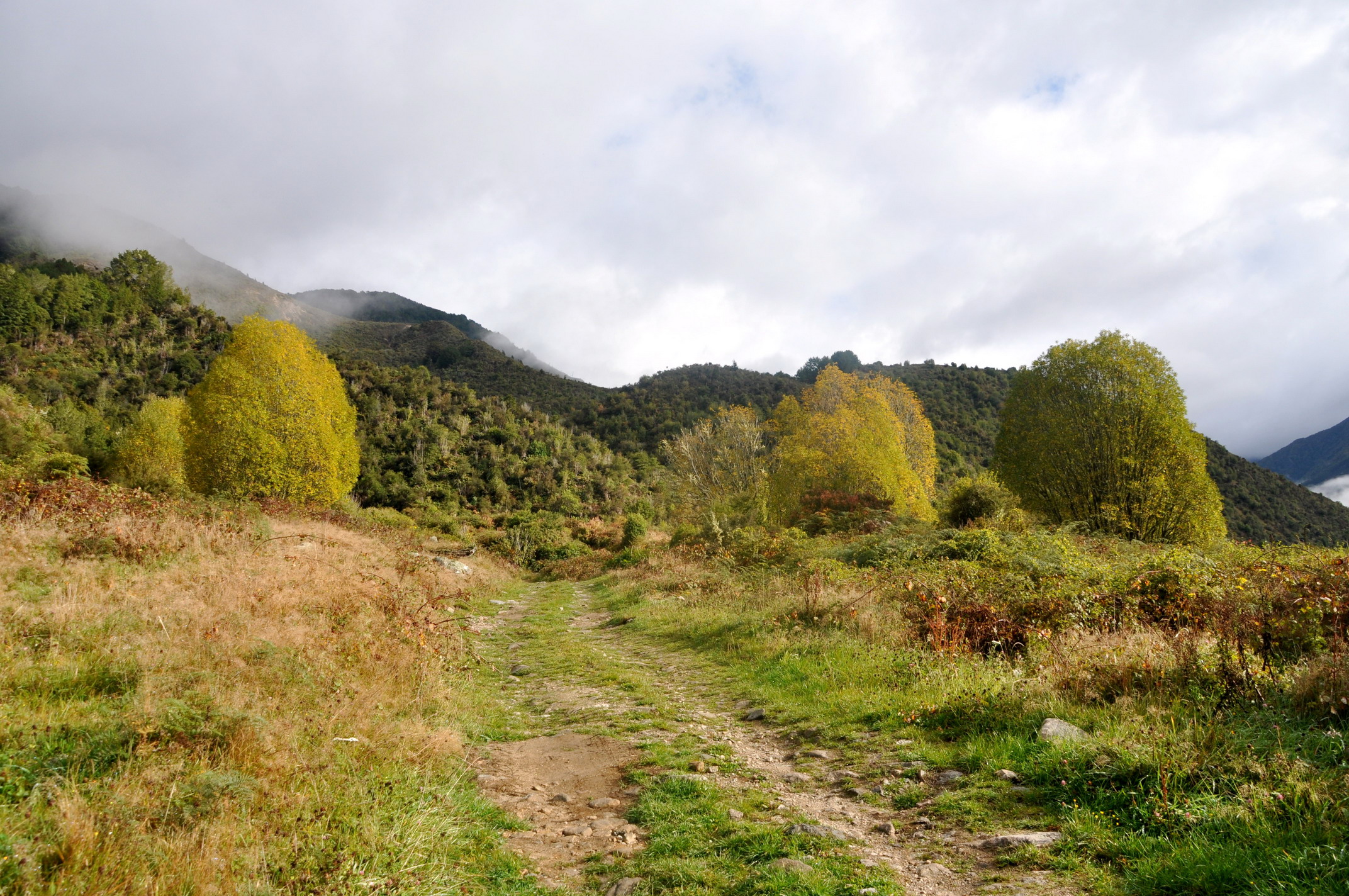
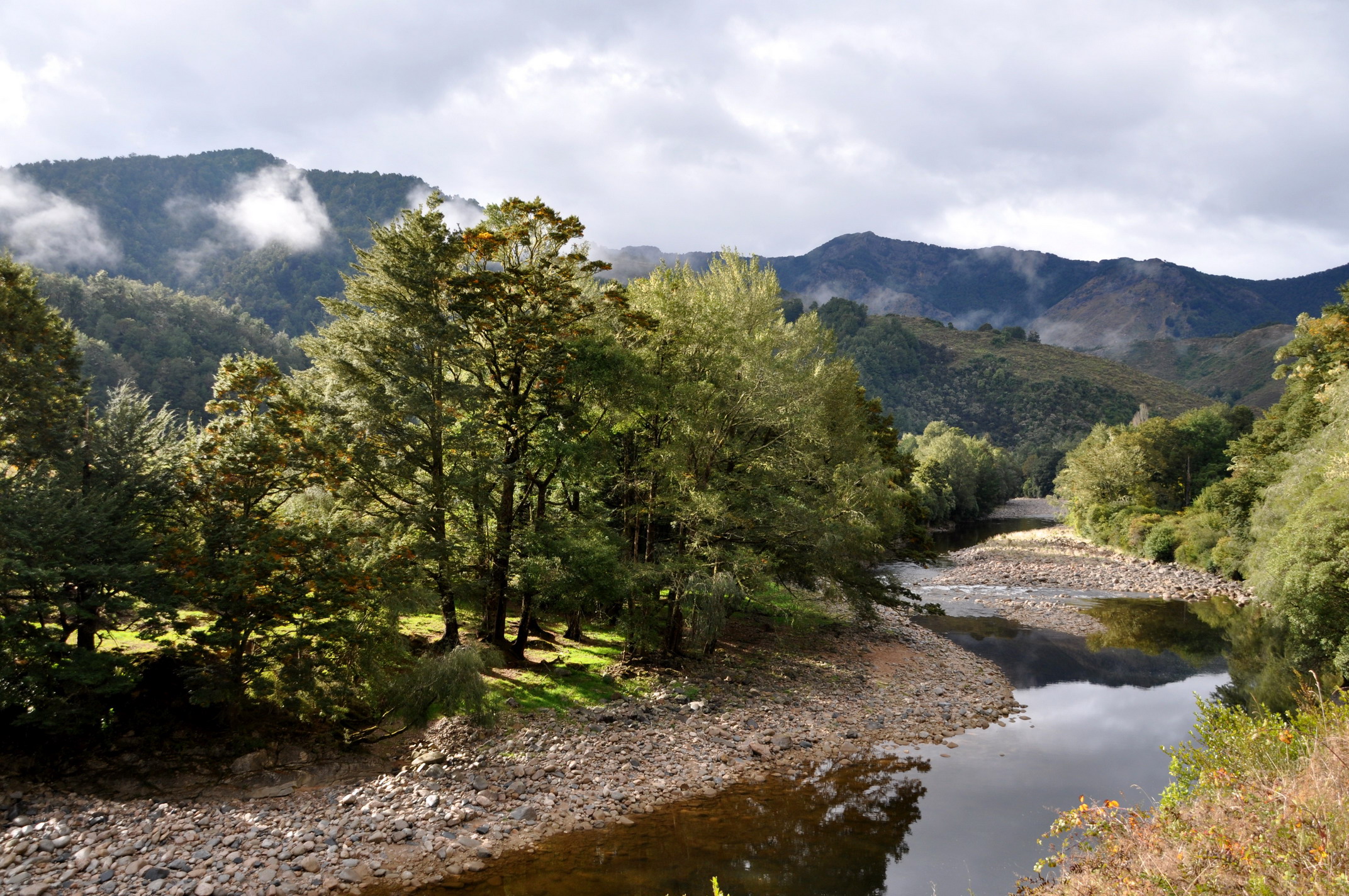
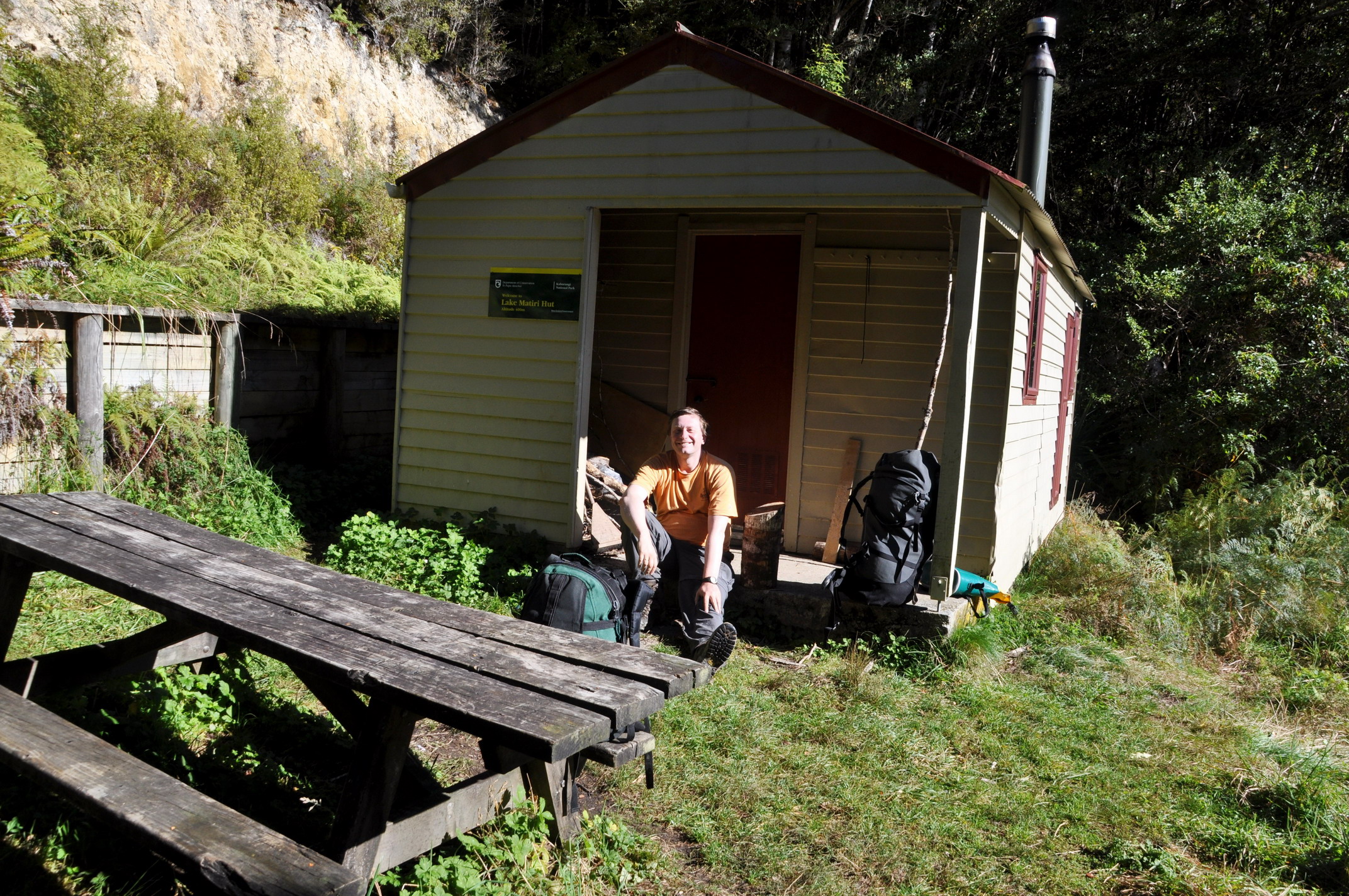
The first few kilometres follow an old road on the bank of the Matiri. Vehicles aren't allowed on it any more. The paddocks around it have long been abandoned. Soon you enter the national park. The road climbs along the steep riverbank but the going remains good. It's an easy walk to Lake Matiri. There stands the first hut, Lake Matiri Hut (41°39.359′S, 172°19.821′E). To our disappointment there was smoke coming out of the chimney, so we knew someone was already there.
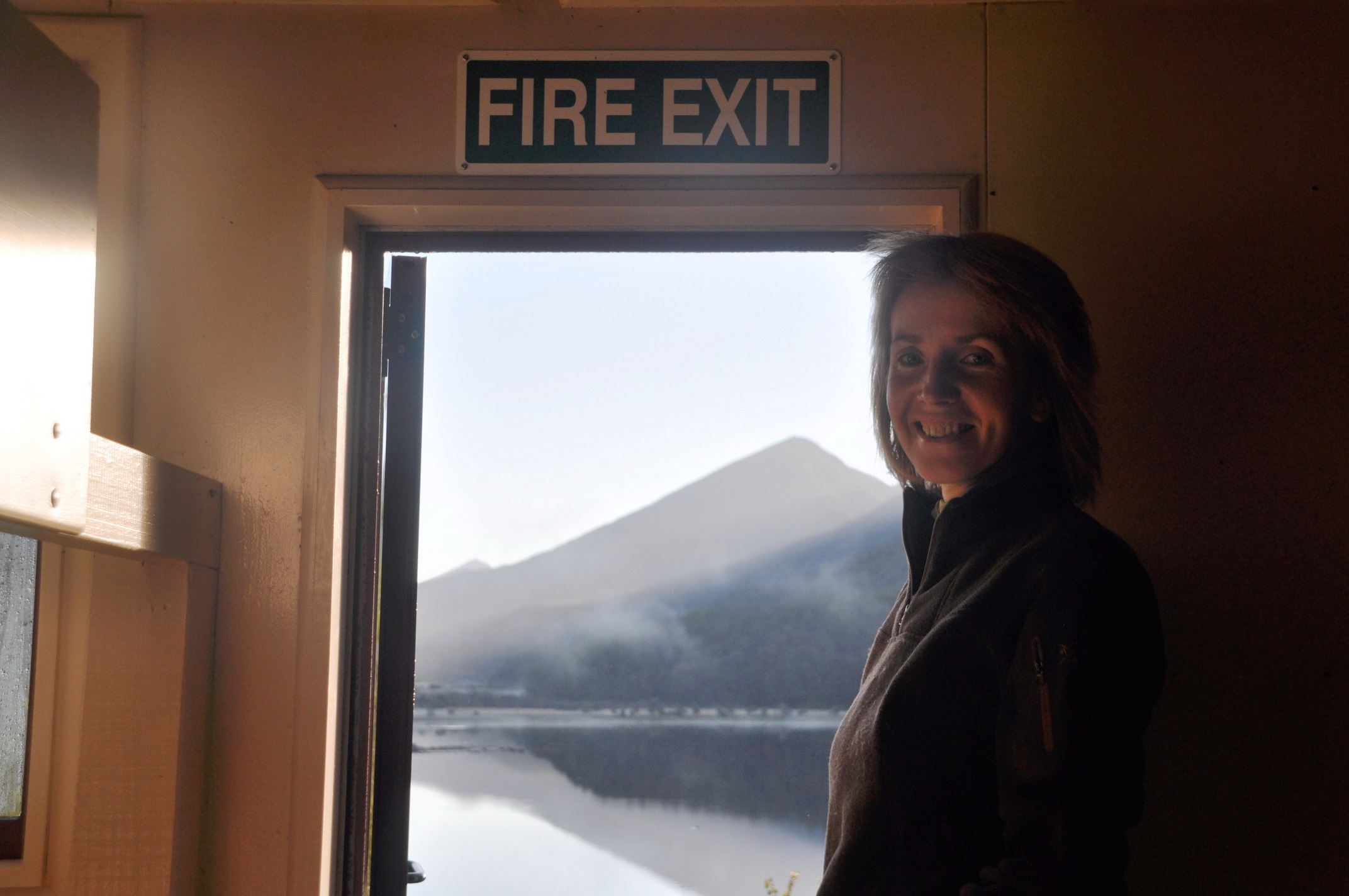
It turned out to be a young German woman named Inka. She was travelling around New Zealand on a one-year working holiday visa. It meant a year to do as she liked, as long as she left the country at the end of it. She was travelling alone with an enormous pack. It was full of carrots and potatoes because she was vegetarian. How she carried it over the mountains was a mystery. She spent as little as possible on a bed, sleeping in her car, at free campsites or in huts. She showered at paid campgrounds but only paid for the shower. It's good to be young. Better still to have a passport that opens doors. Young Russians couldn't get that sort of visa at the time.
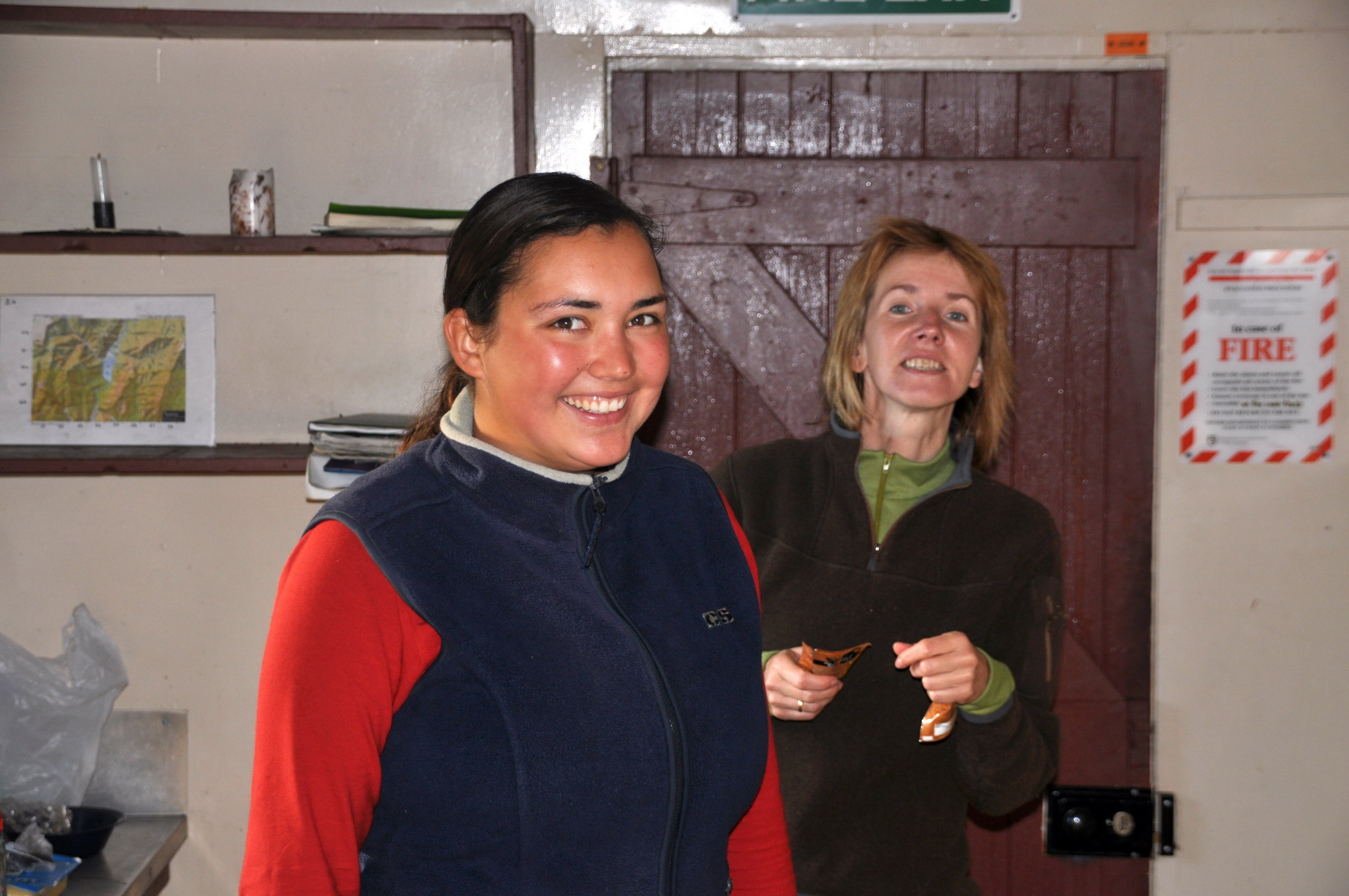
Five more people piled into the hut after dark, young travellers from all over the world. There were only six bunks, so the newcomers had to squeeze in. Perhaps it worked out for the best. A girl in your sleeping bag keeps you far warmer than one in the next bunk.
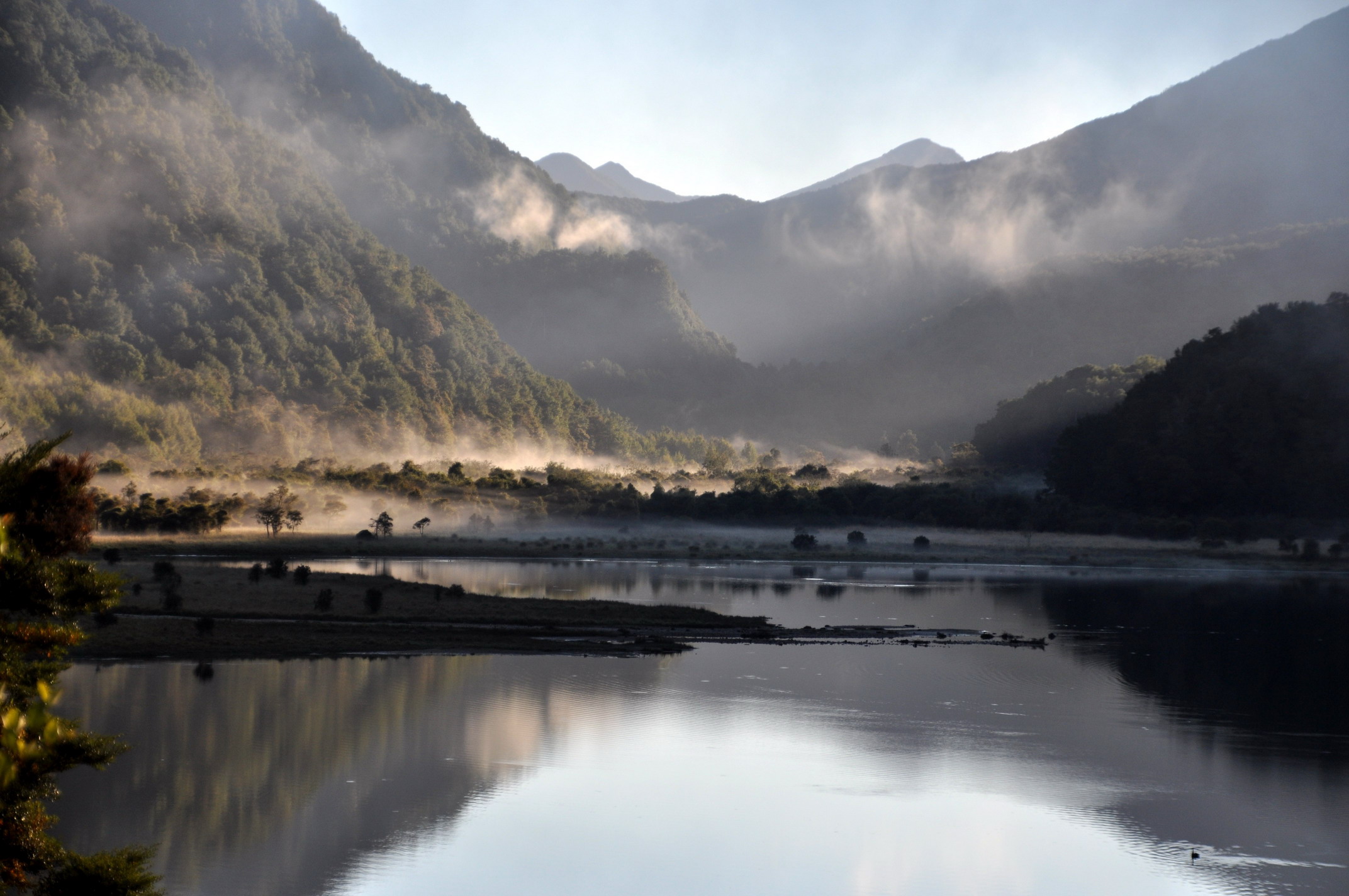
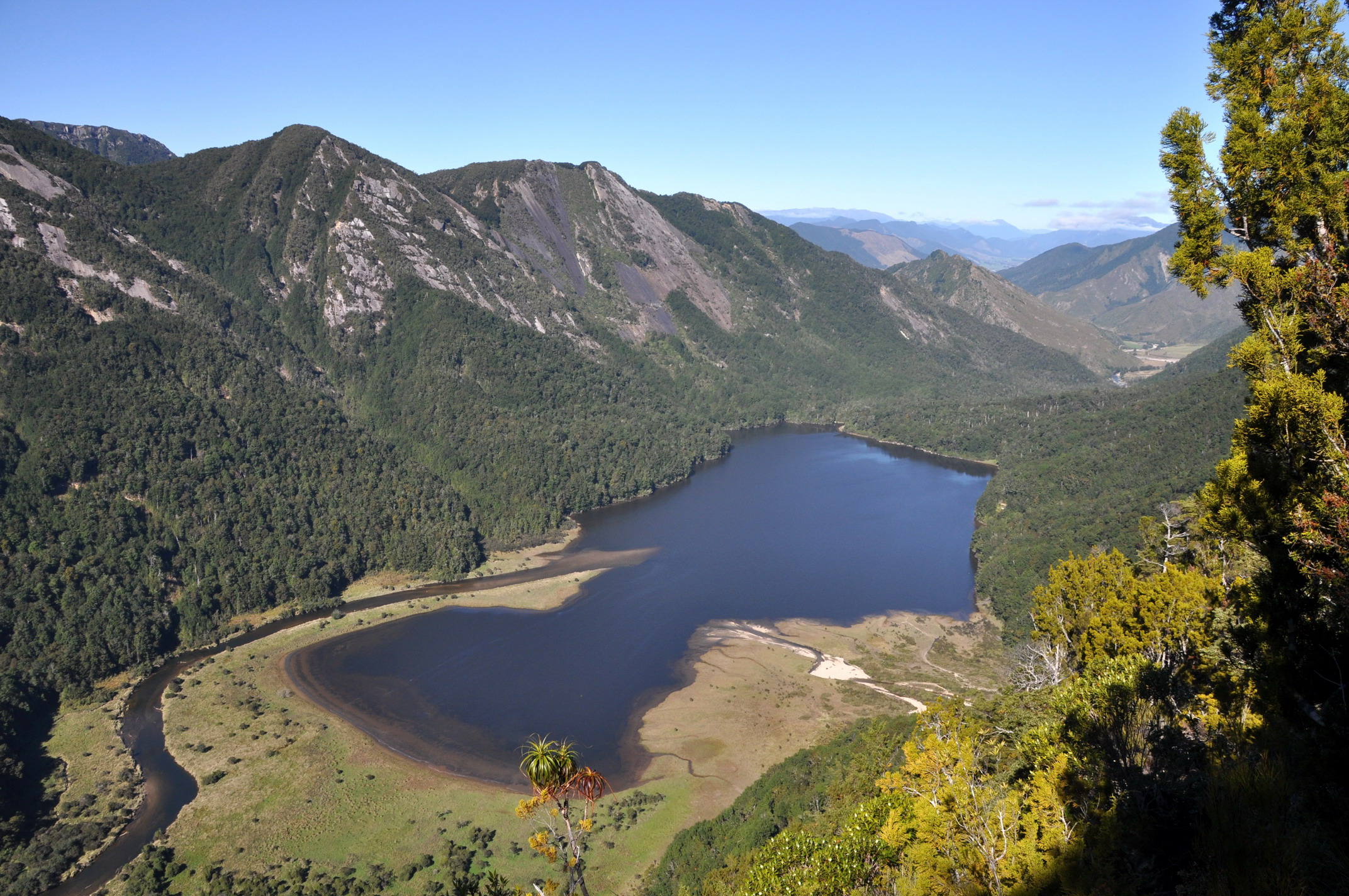
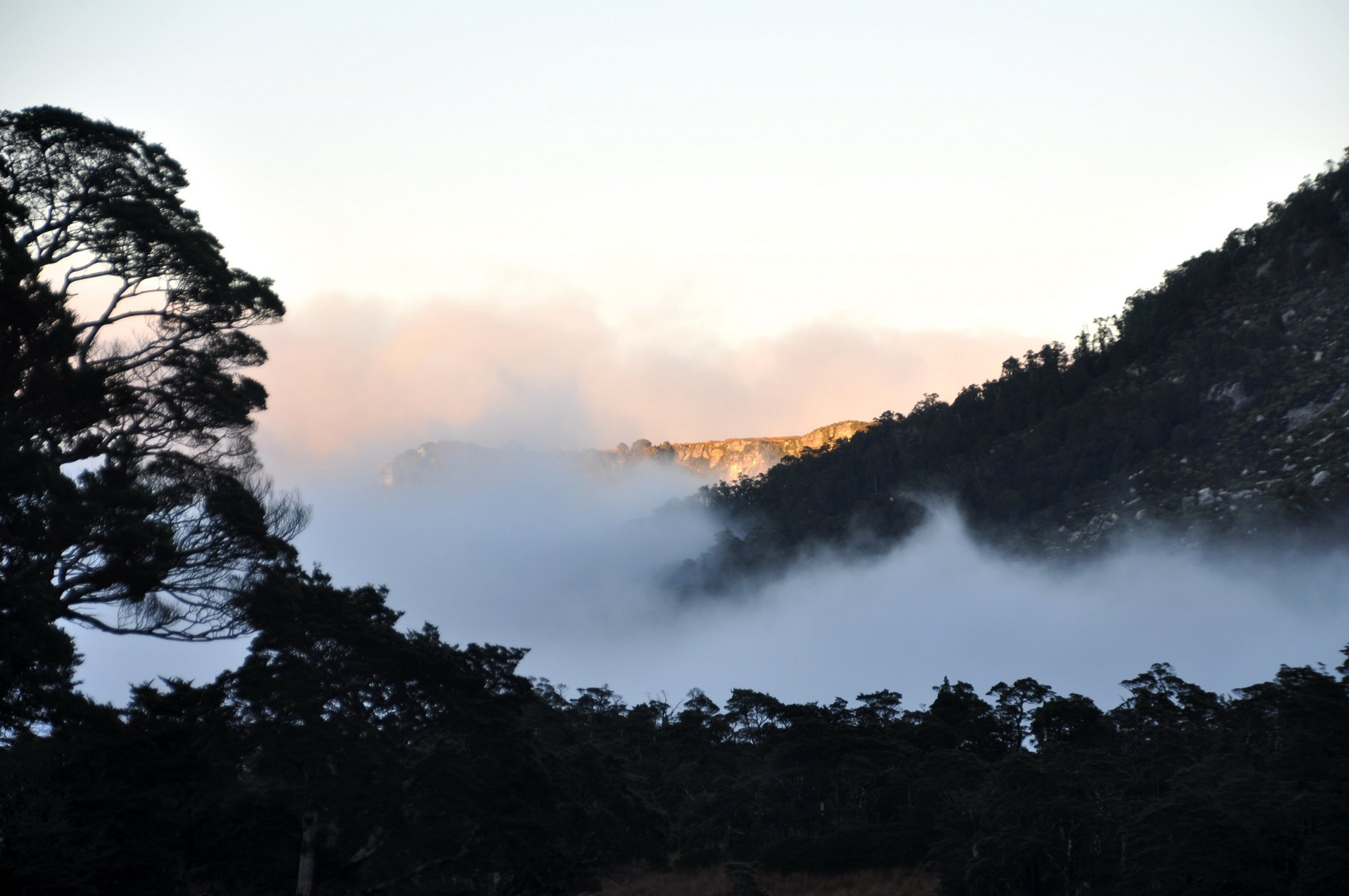
The morning was cold. Banks of mist rose off the lake in the pink light of sunrise. The young people left early while we took our time, warming ourselves in the sun and drinking tea. We weren't in any hurry. The late arrivals had gone on to Larrikins Creek Hut at the end of the track. It only had four bunks, so there'd be no room for us. For the day we'd go halfway, to old Poor Pete's Hut.
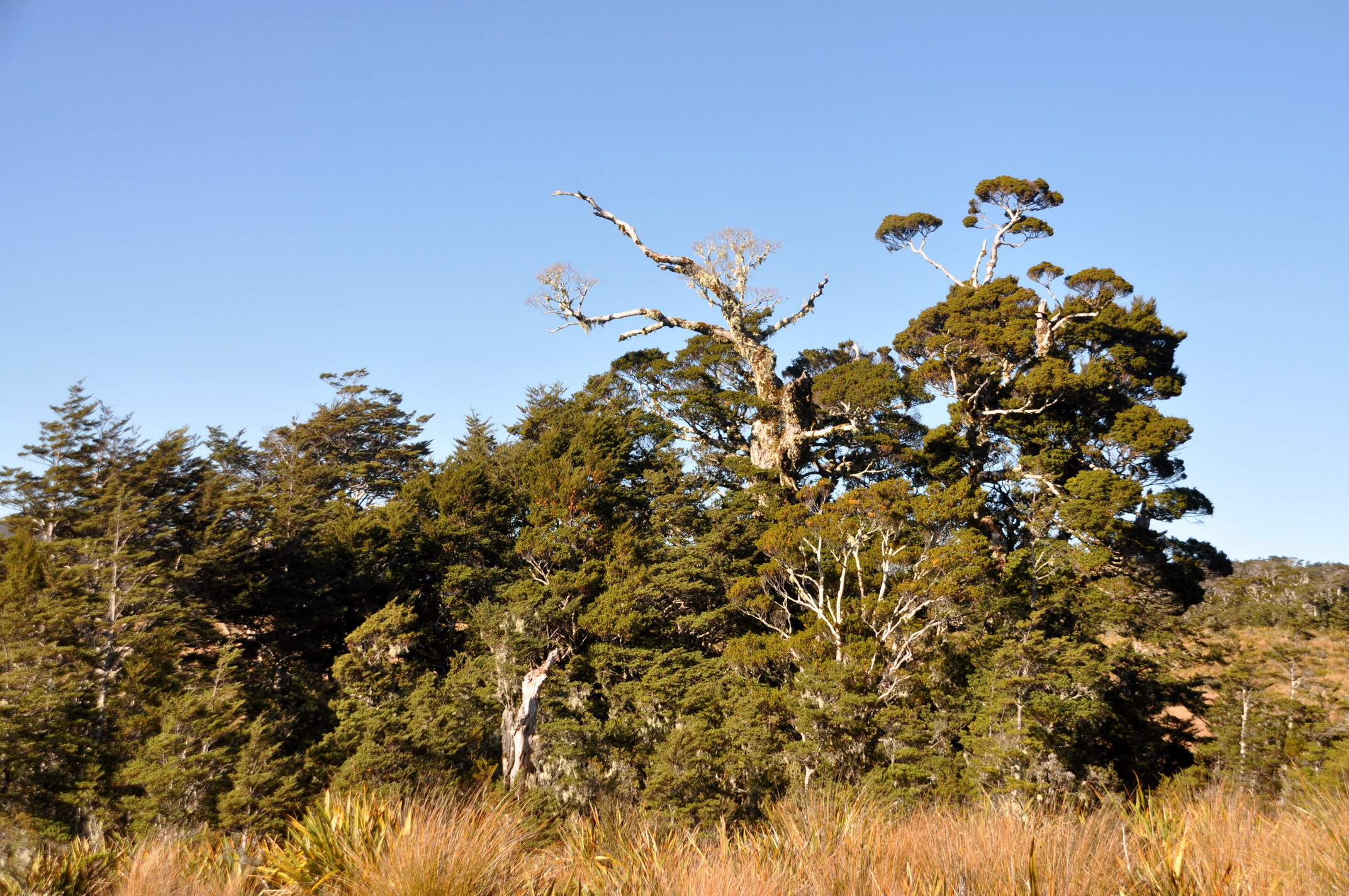
It isn't far, but you have to climb 800 metres up a steep track to the plateau. The climb starts at the north end of the lake. The track runs up a ridge and there's nowhere to get drinking water except for one little creek off to the side (41°37.888′S, 172°19.401′E). We took a long break there and had sausages and instant noodles. A robin flew up and started begging. We shared the sausage, and it ate straight out of my hand. Beyond that the going across the plateau is easy.
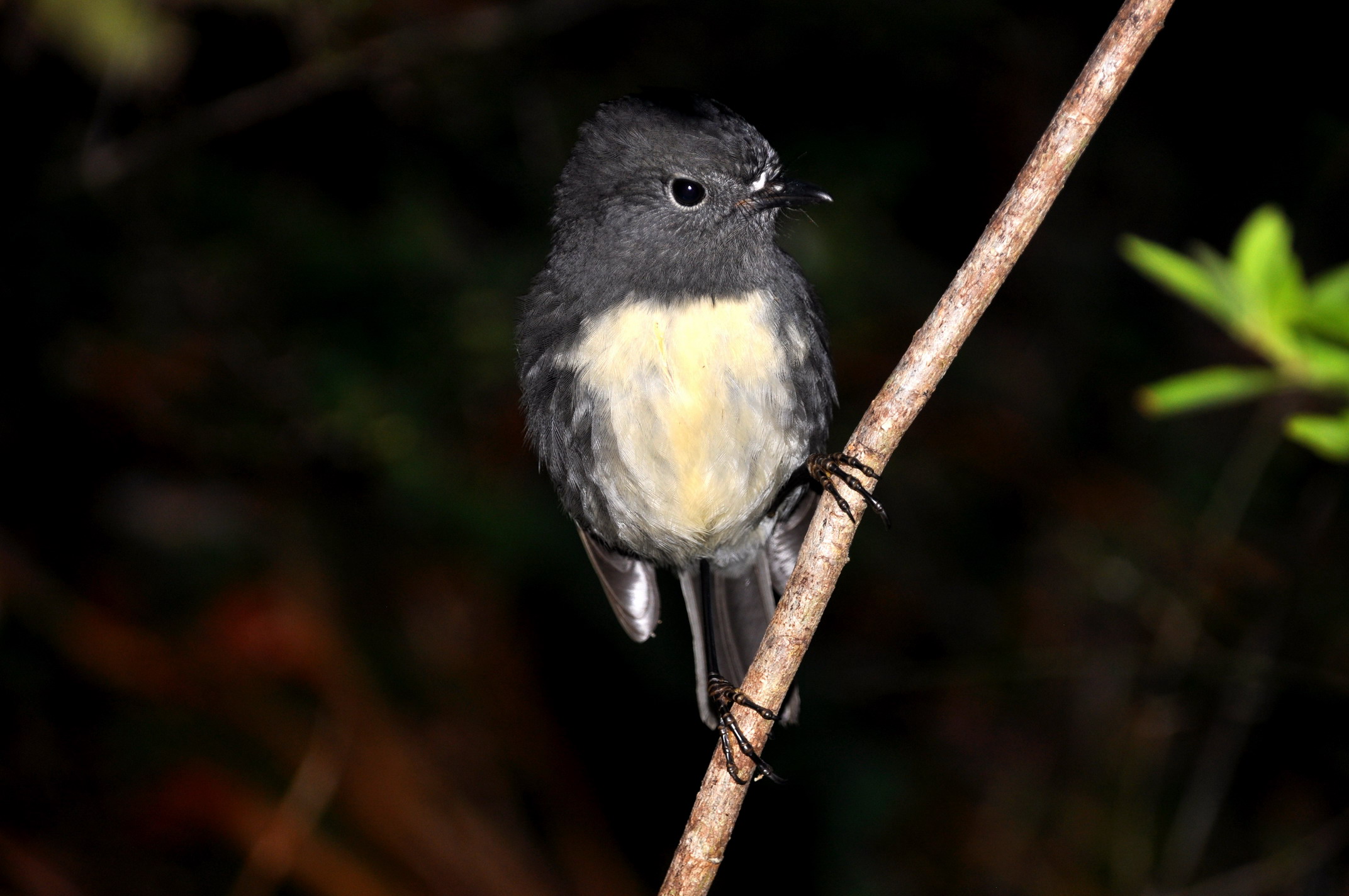
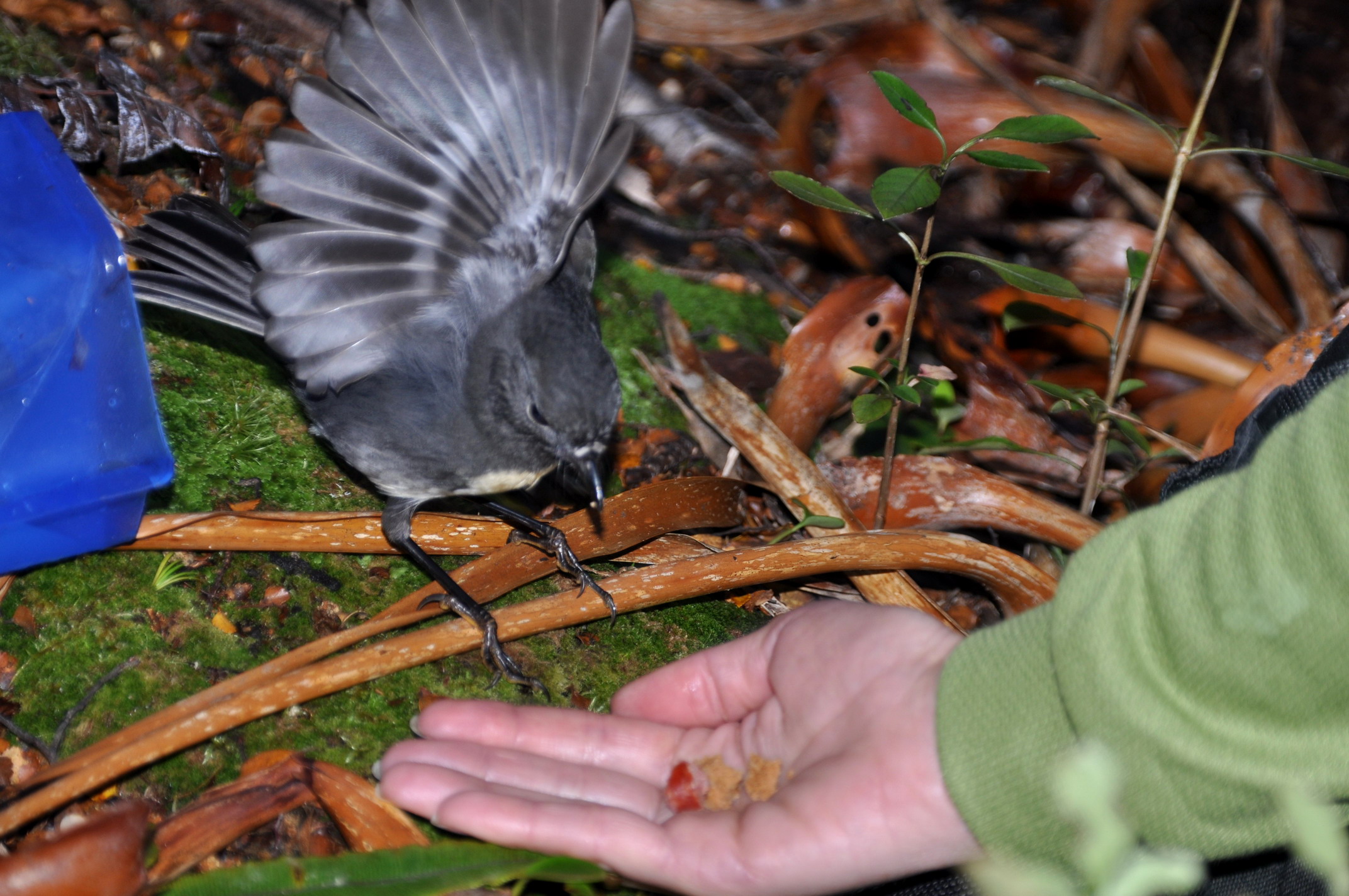
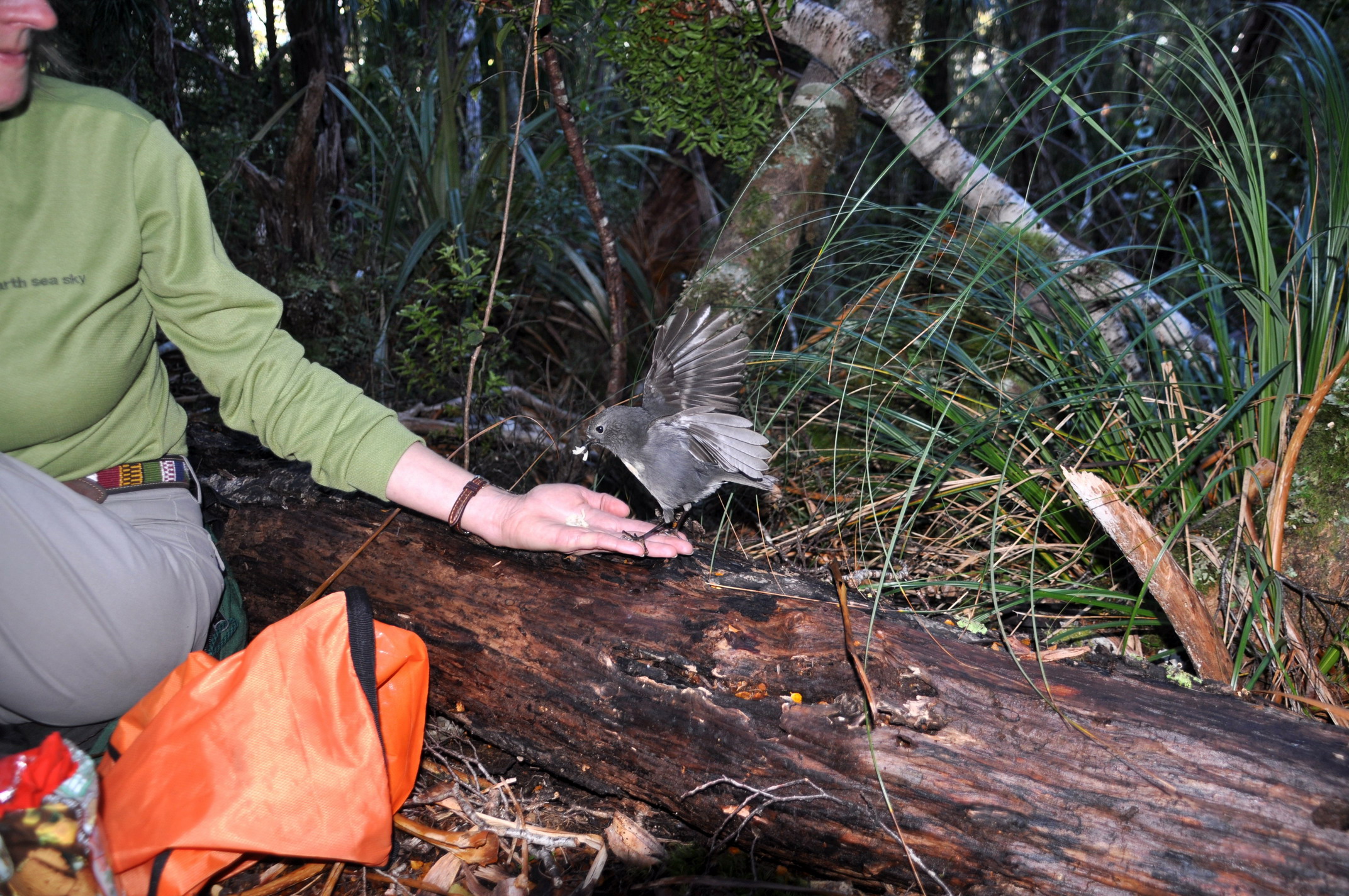
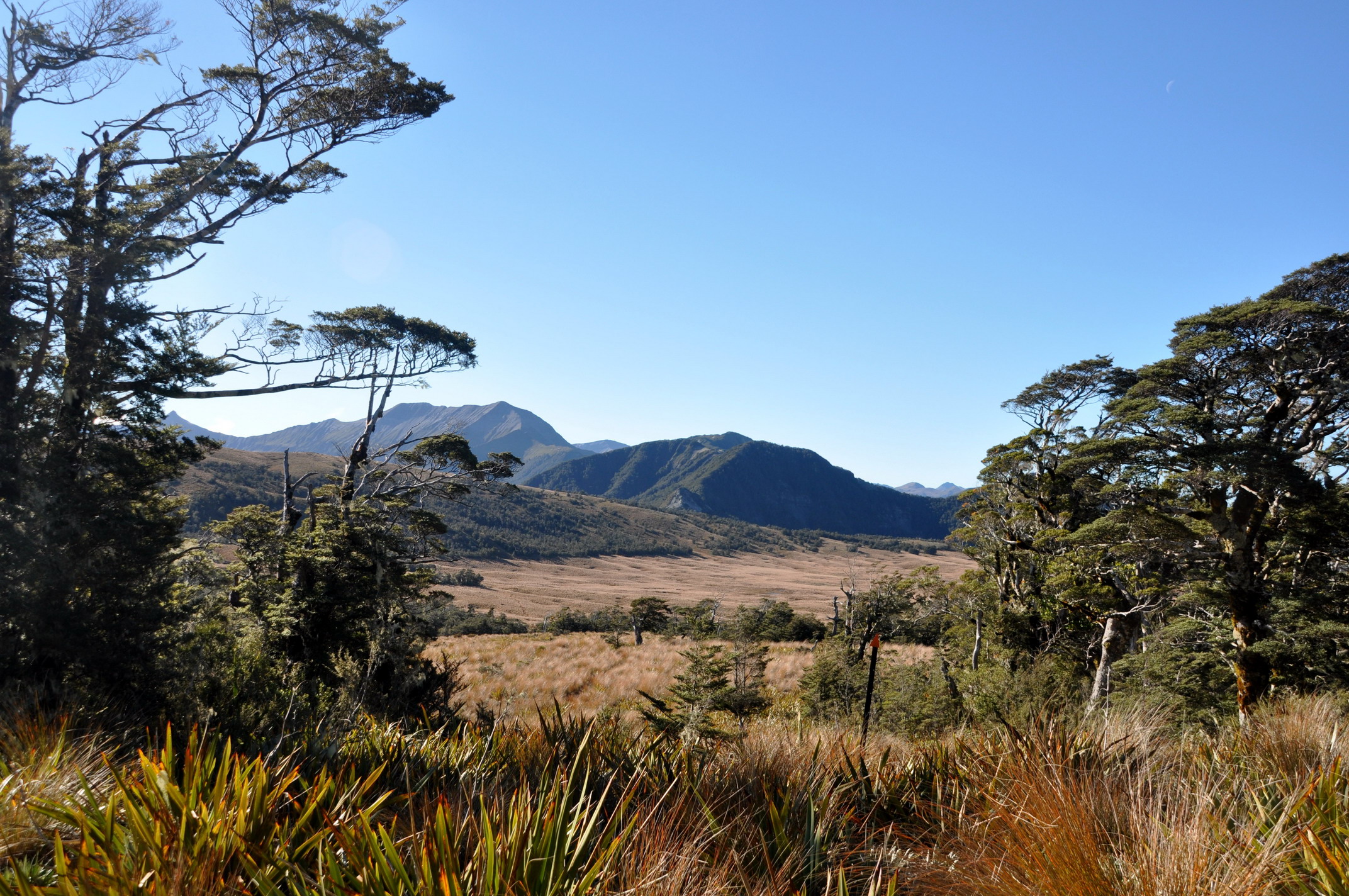
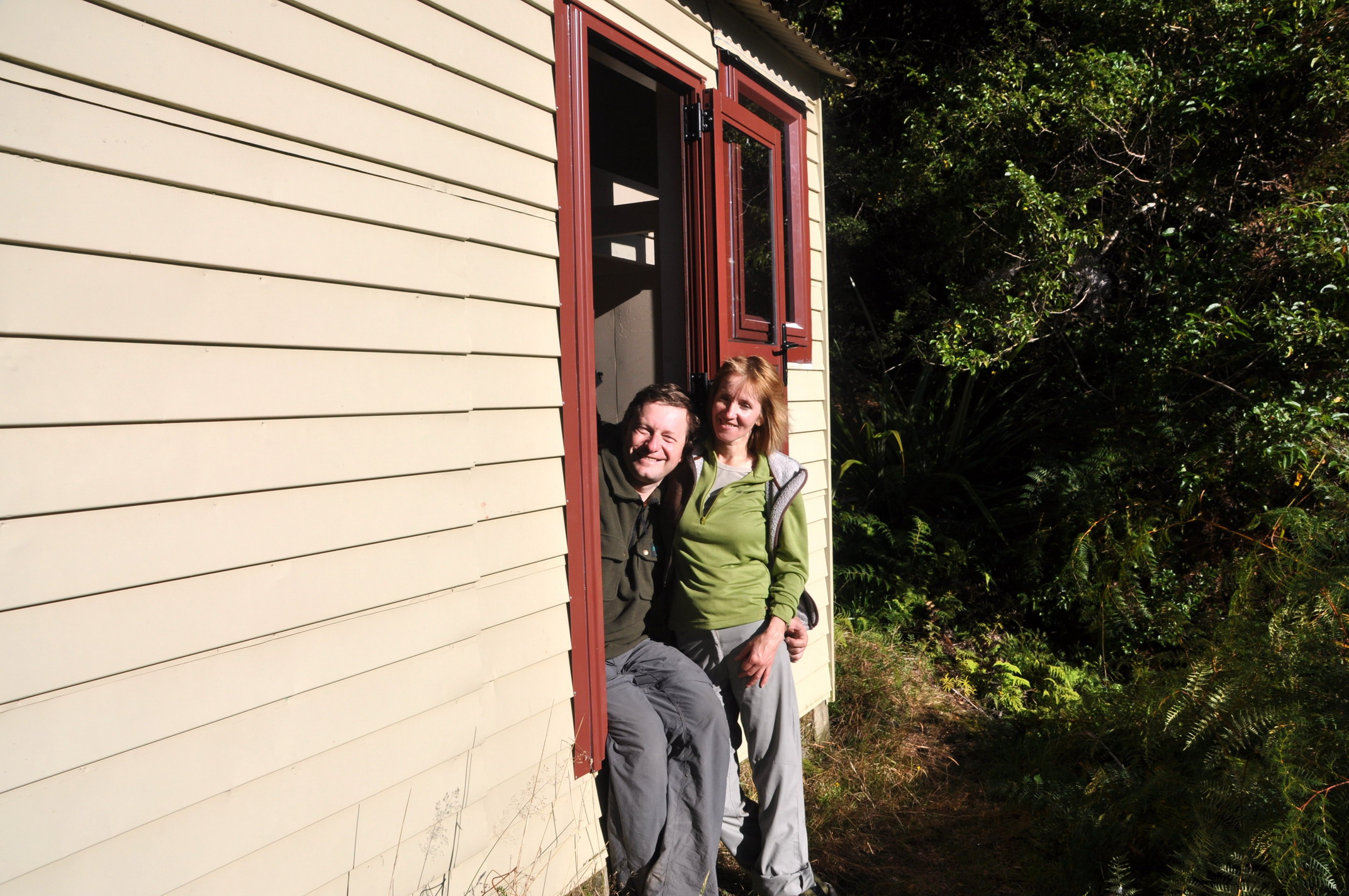
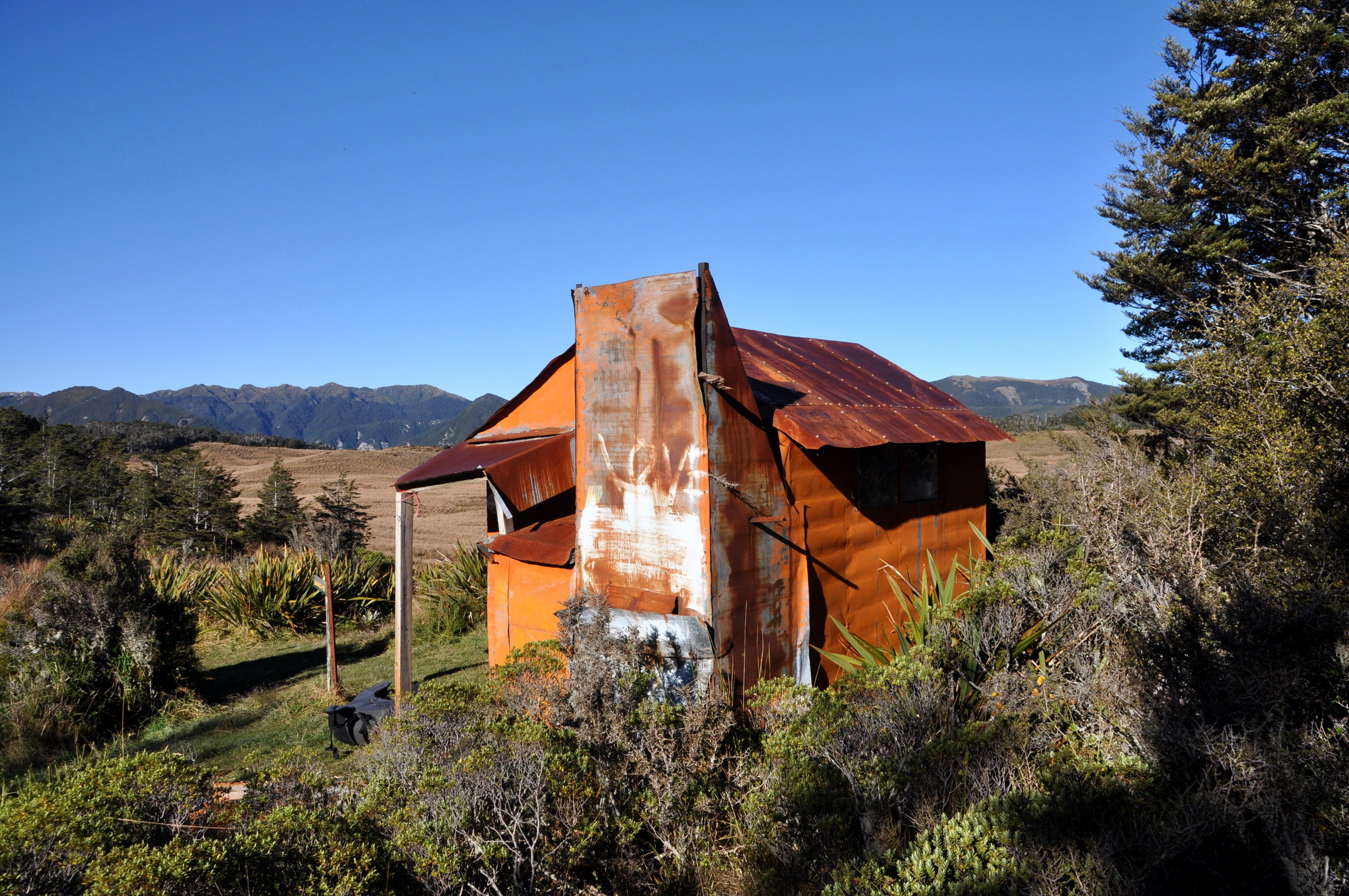
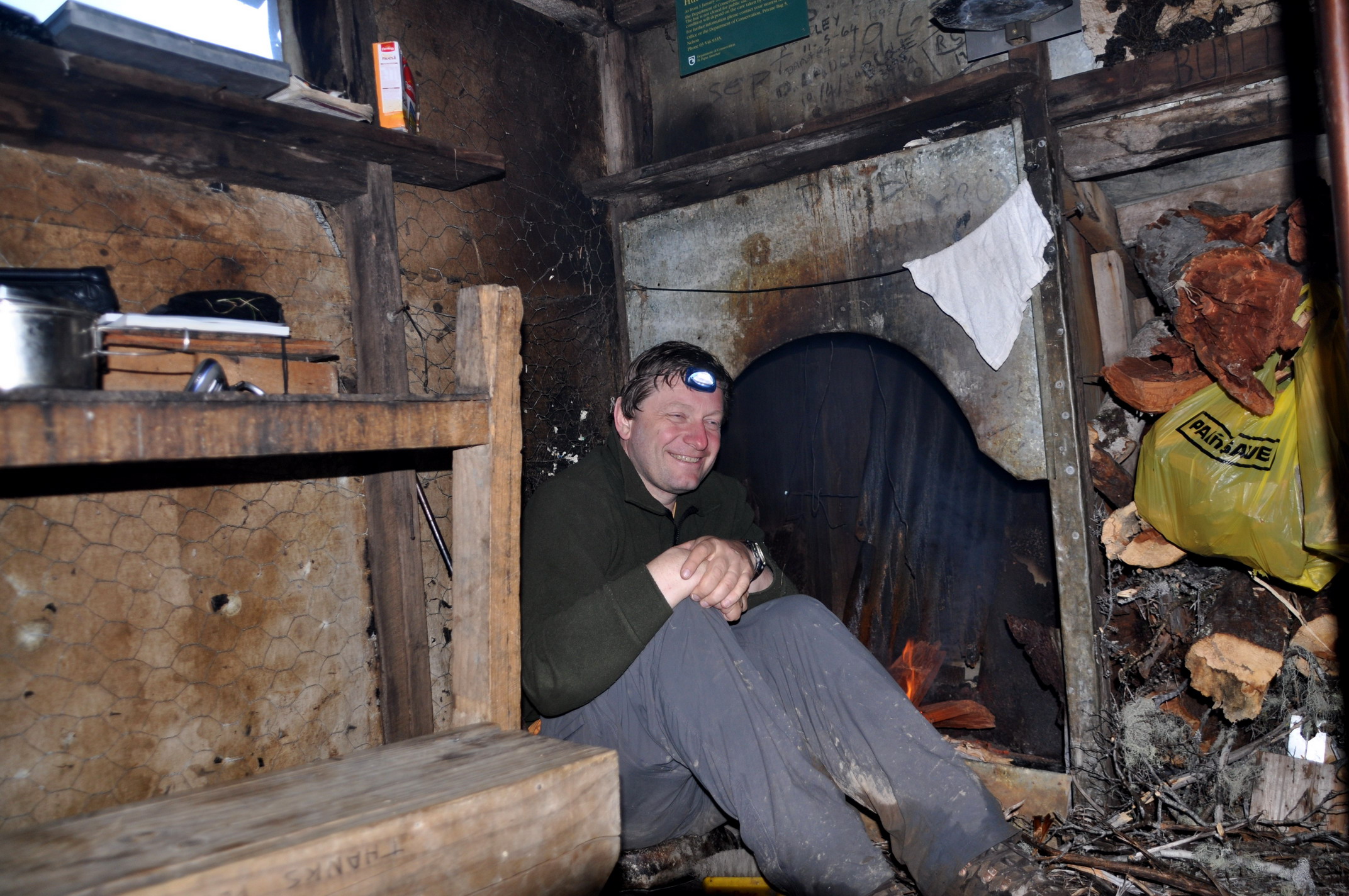
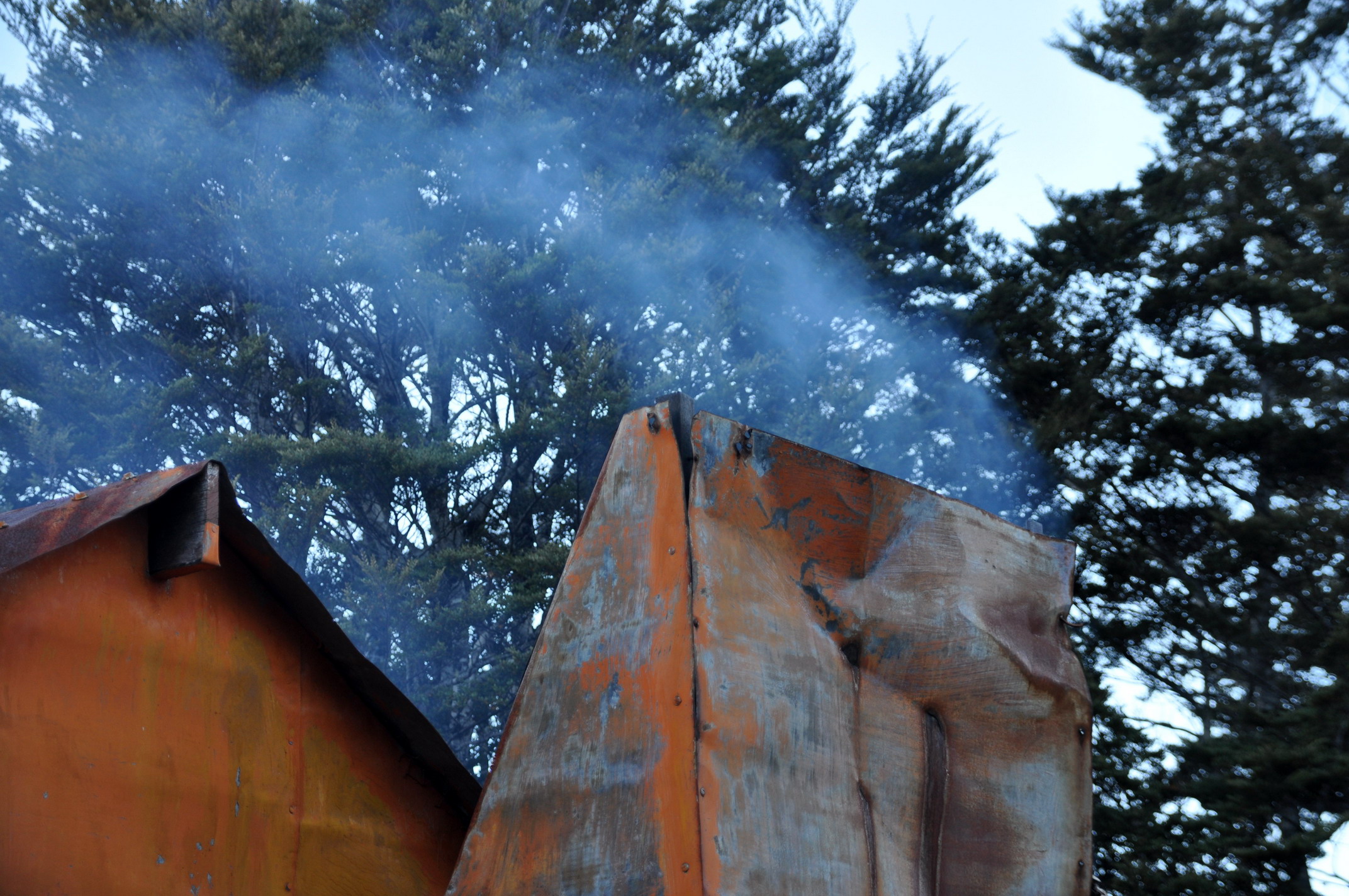
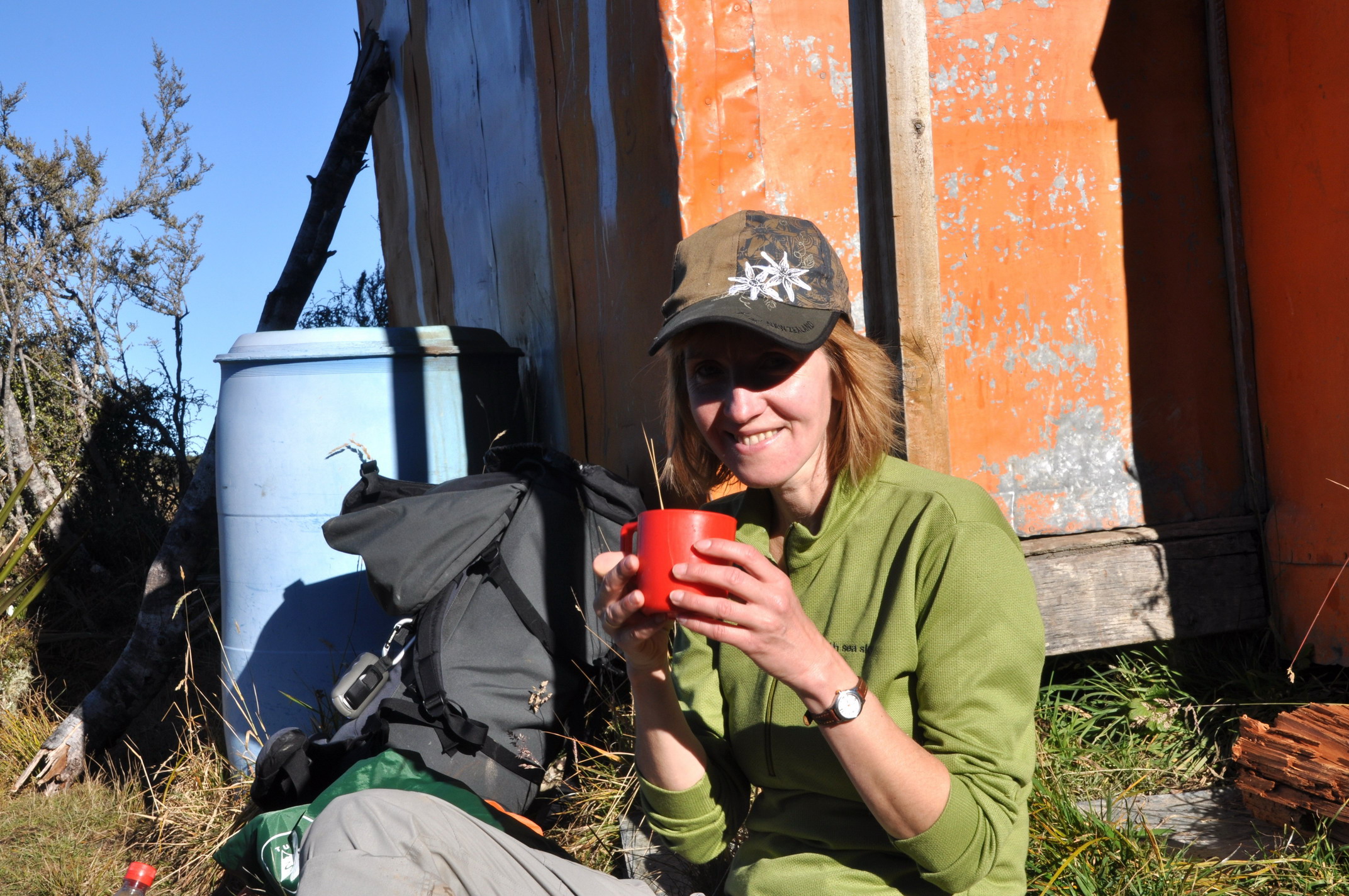
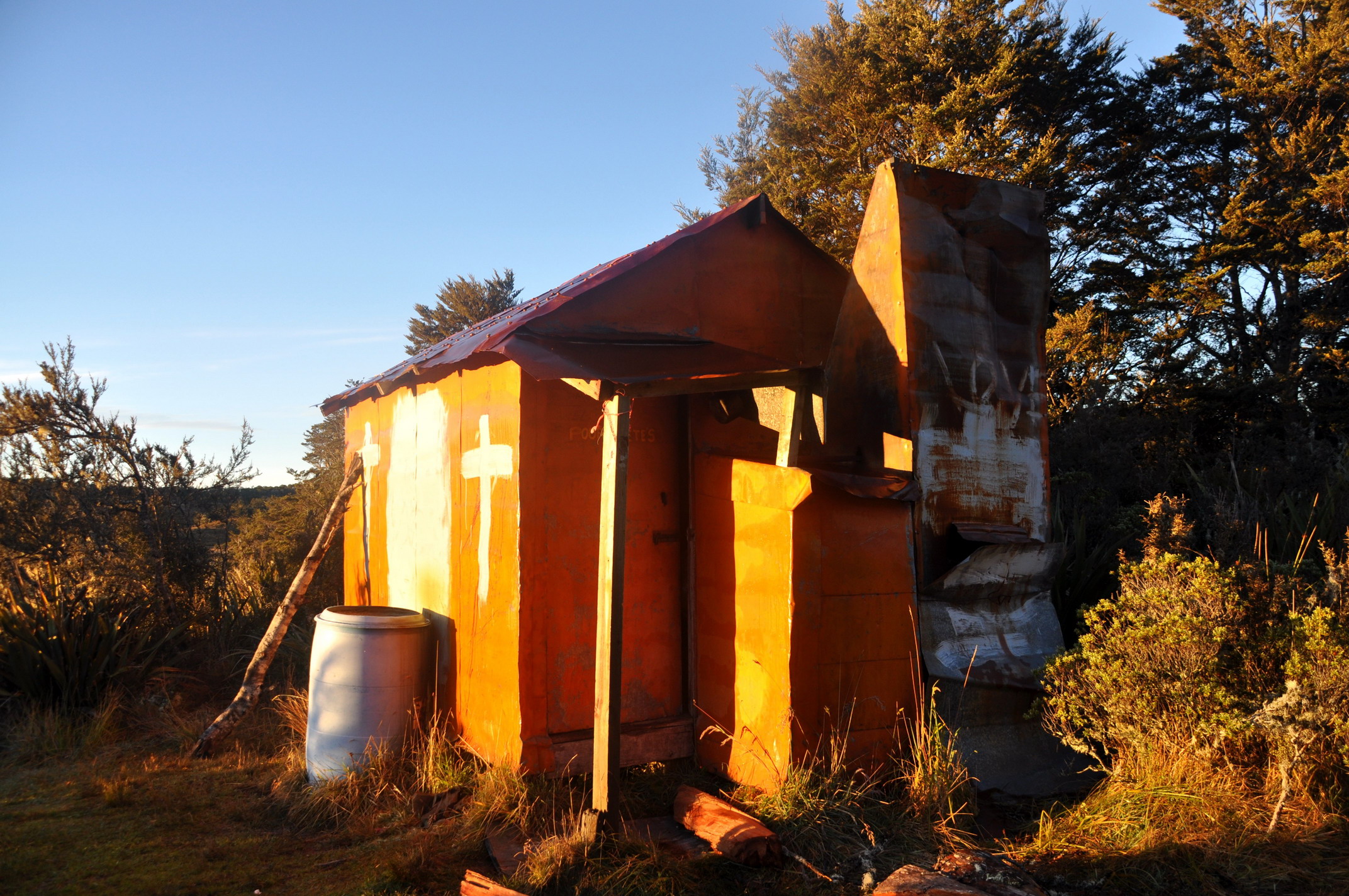
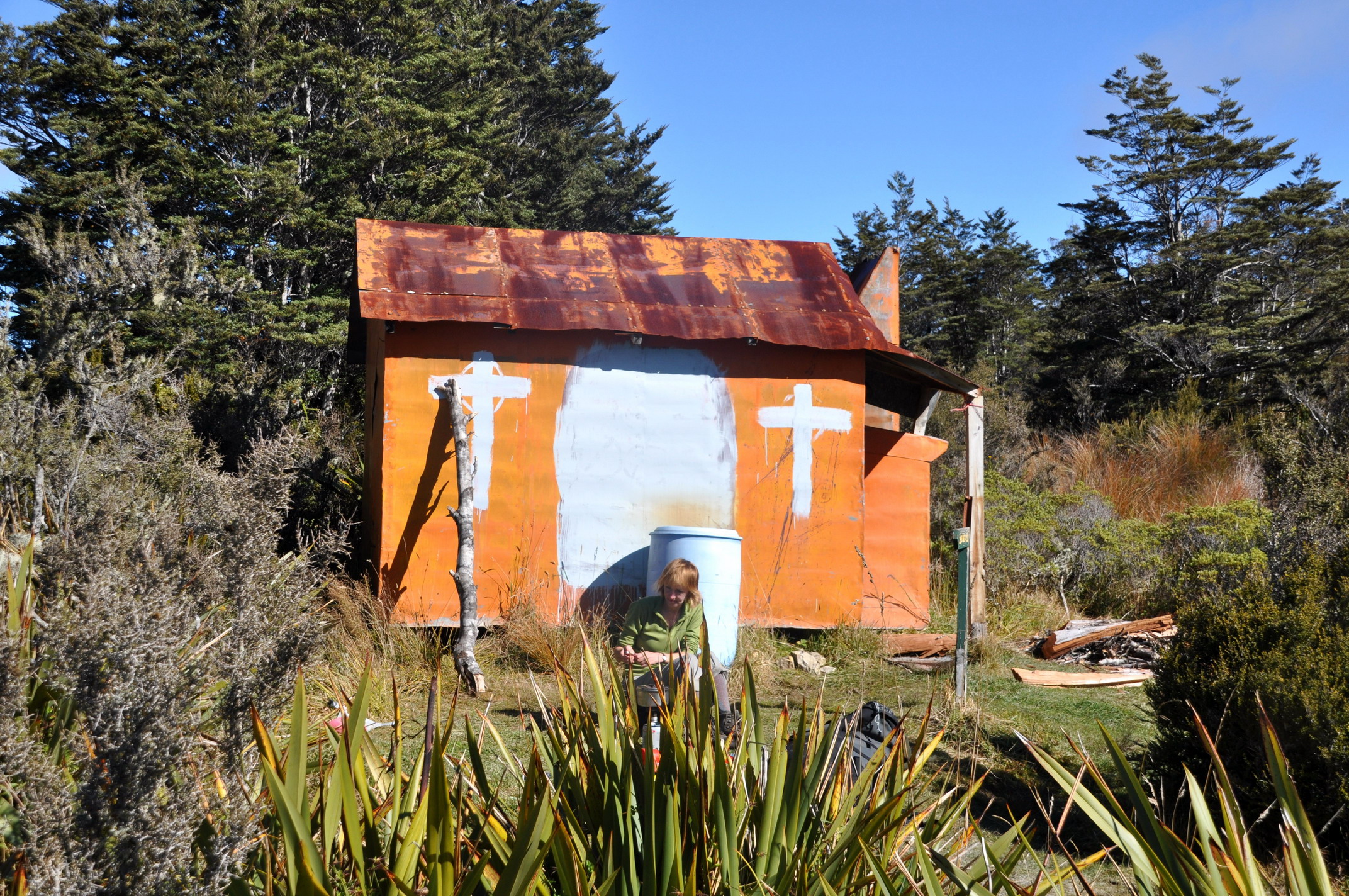
Poor Pete's Hut is old. At the time DOC was no longer maintaining it and visitors were left to decide for themselves whether to stay. It was built in 1956 and only has two bunks. The fireplace has an open fire that smokes badly. The smoke comes into the hut instead of going up the chimney, but you can still enjoy a coffee on the porch in the setting sun. For warmth you need a good sleeping bag. Those fireplaces give off very little heat. It's really a stove built onto the outside wall. It heats the outdoors, while inside you can watch the fire and, of course, breathe the smoke. Still, it's cosy. A real fire beats a closed stove any day.
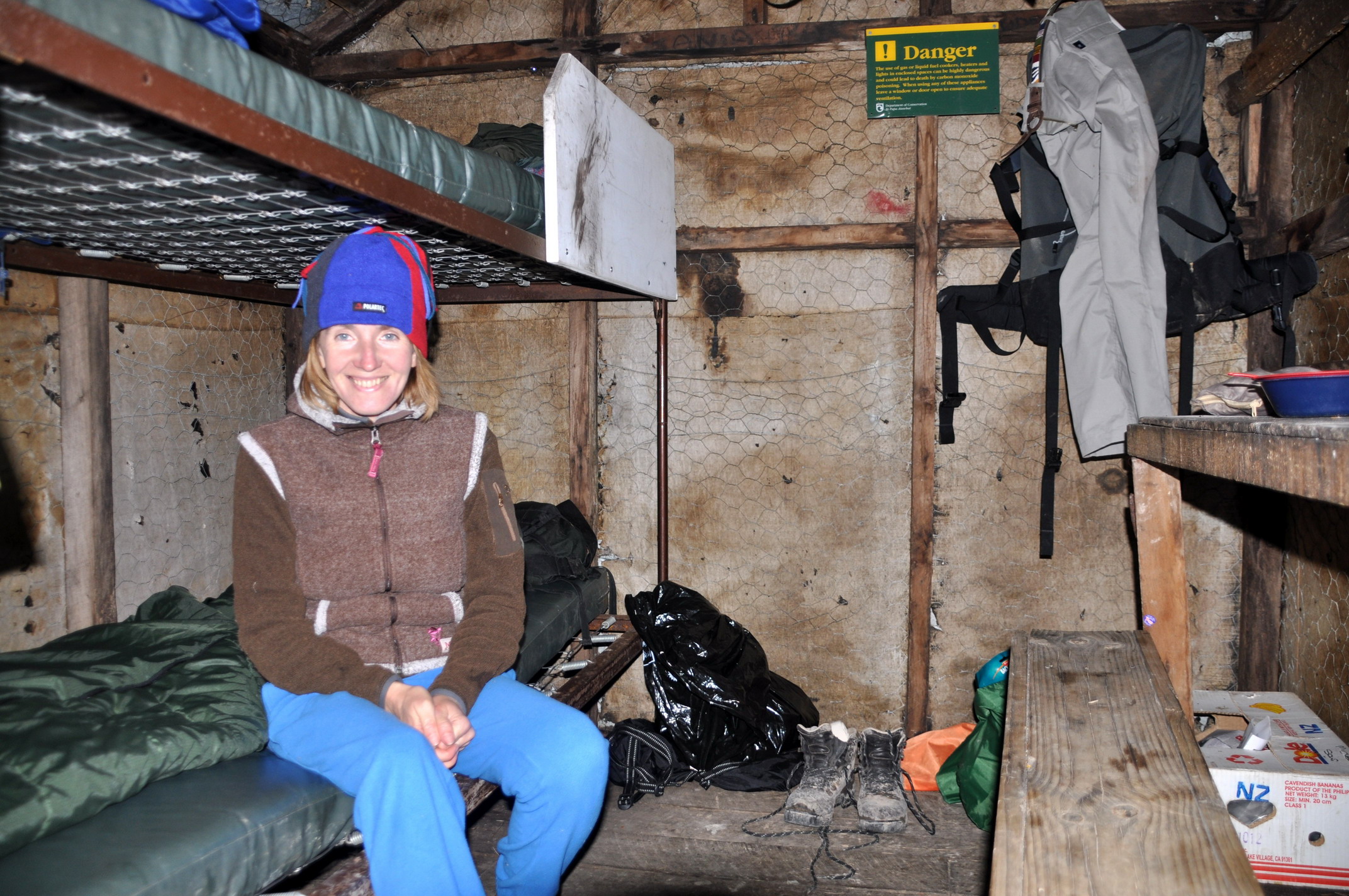
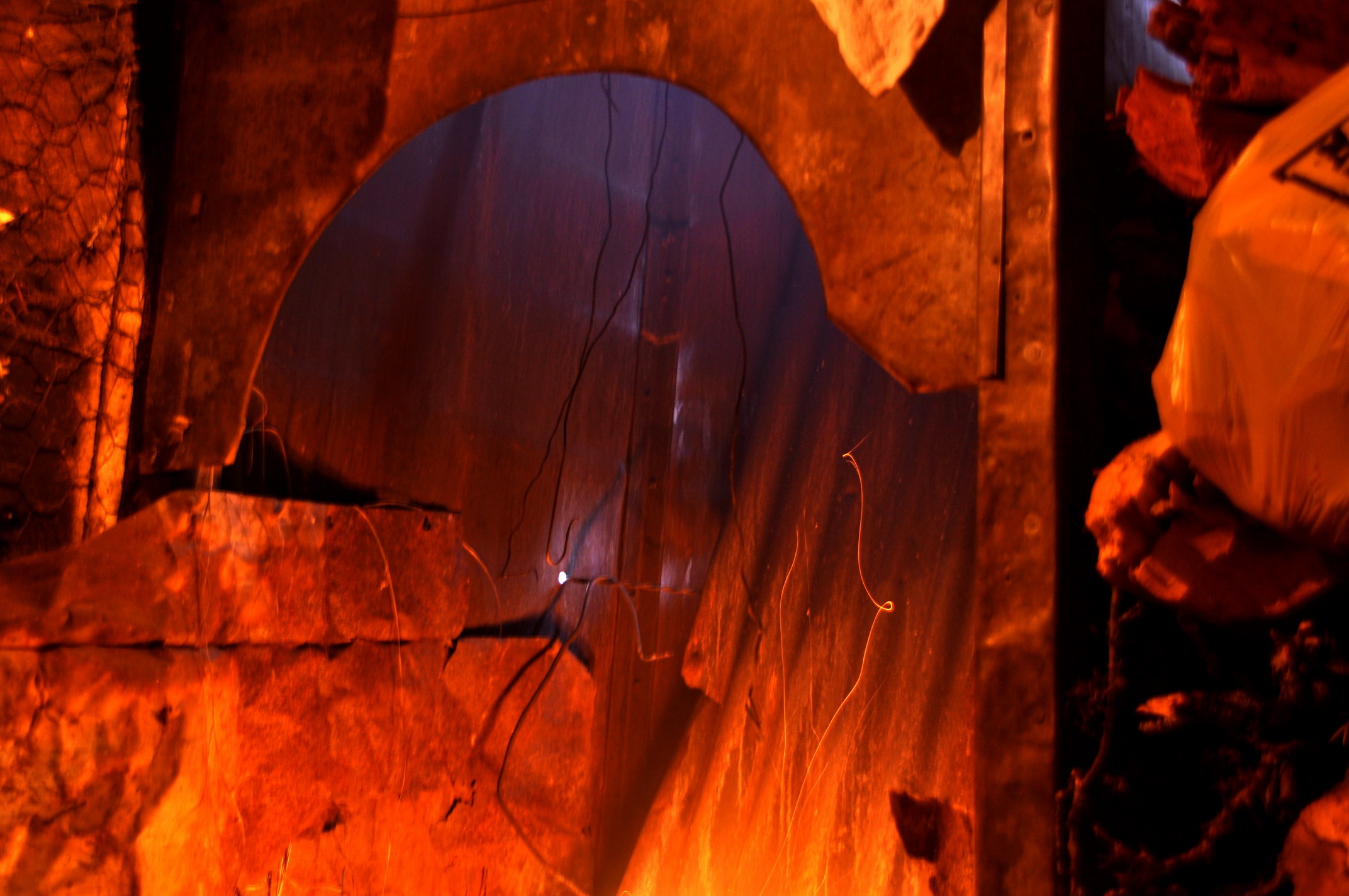
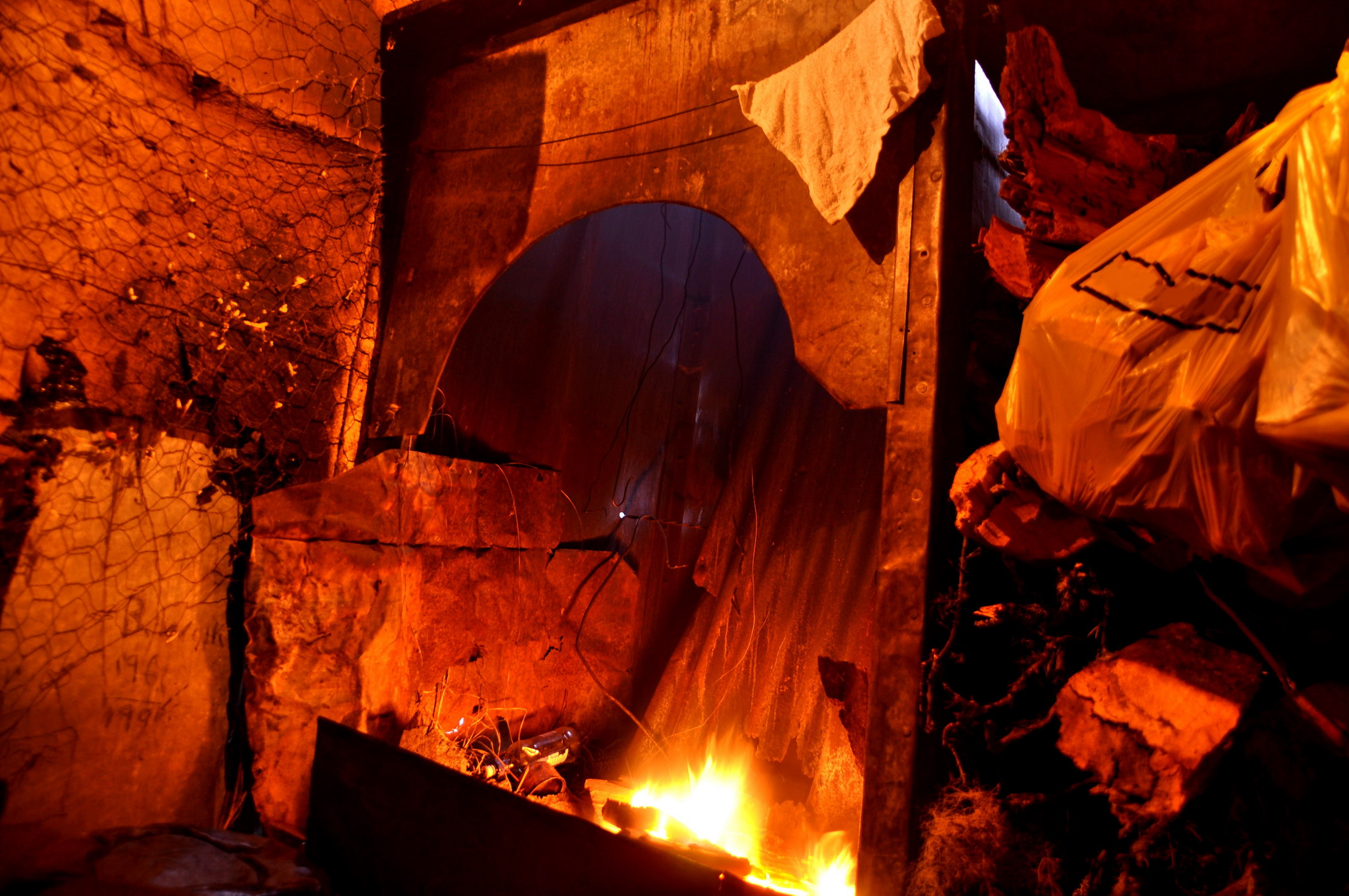
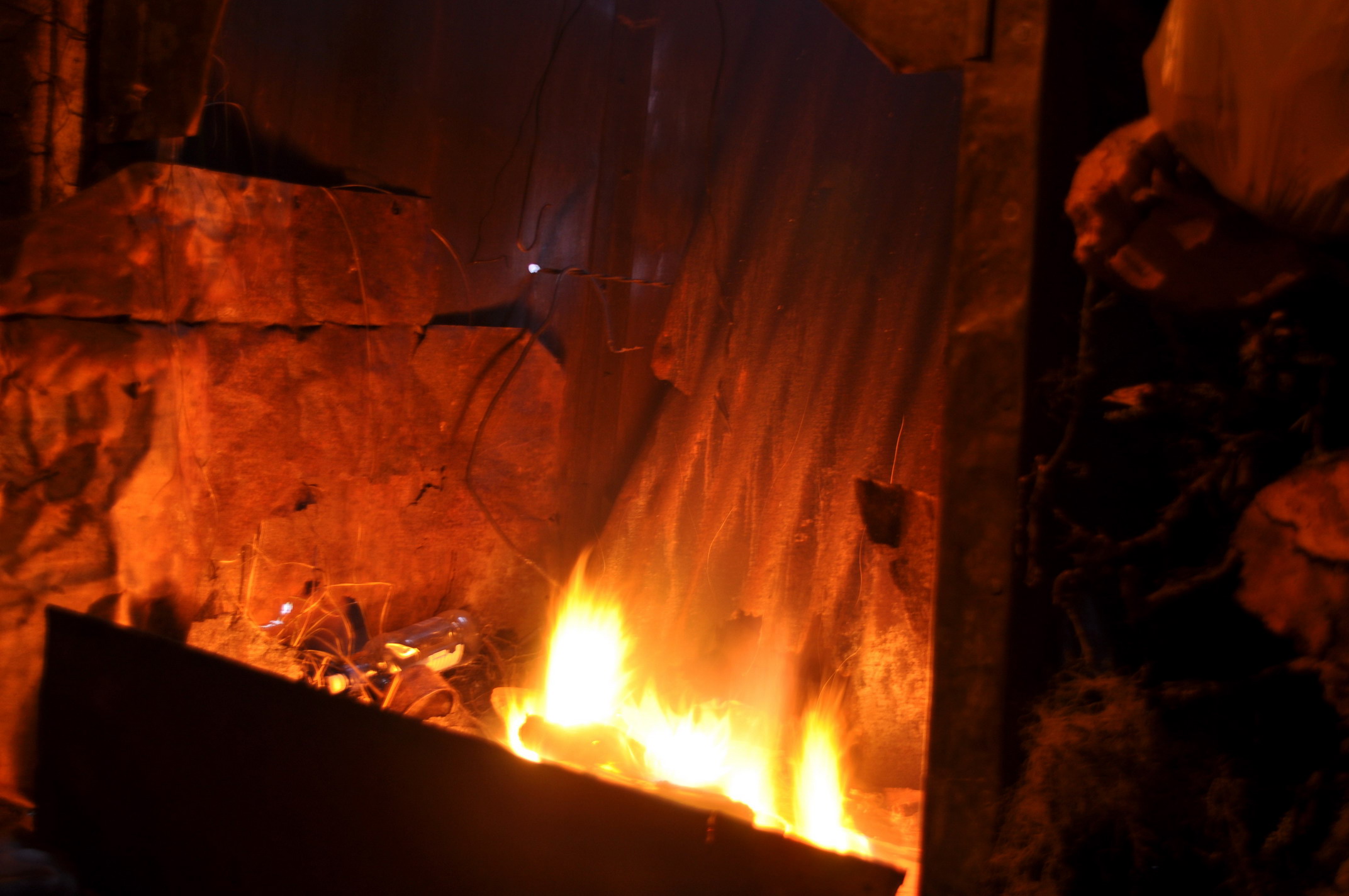
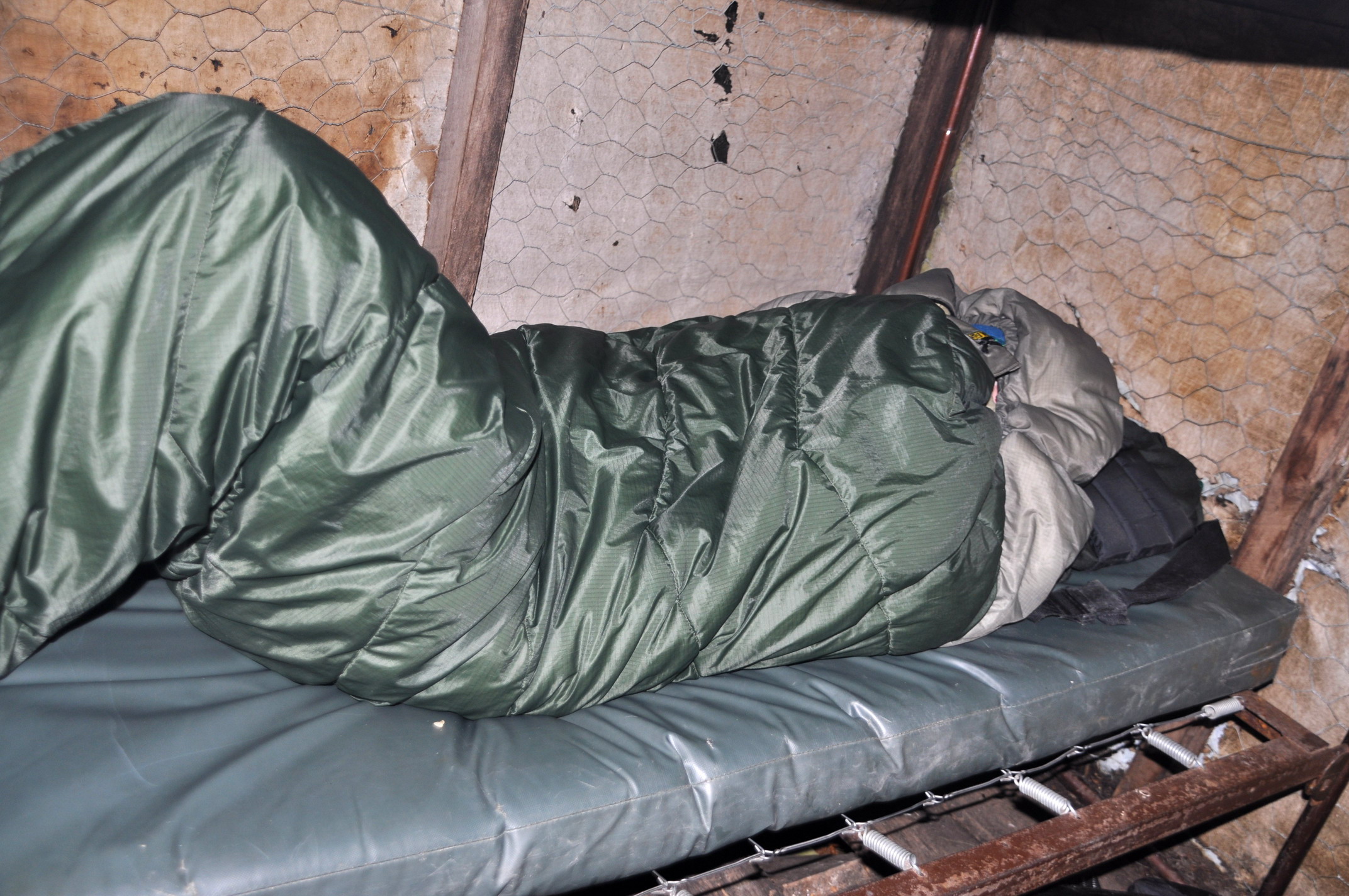
A terrifying creature visited in the night. It rustled and grumbled. Tanya first tried plugging all the holes in the floor, then ousted me from the top bunk. An experienced tramper, and still afraid of mice. Fear does make things look bigger. She spent the whole morning telling me how she'd fought off a giant possum.
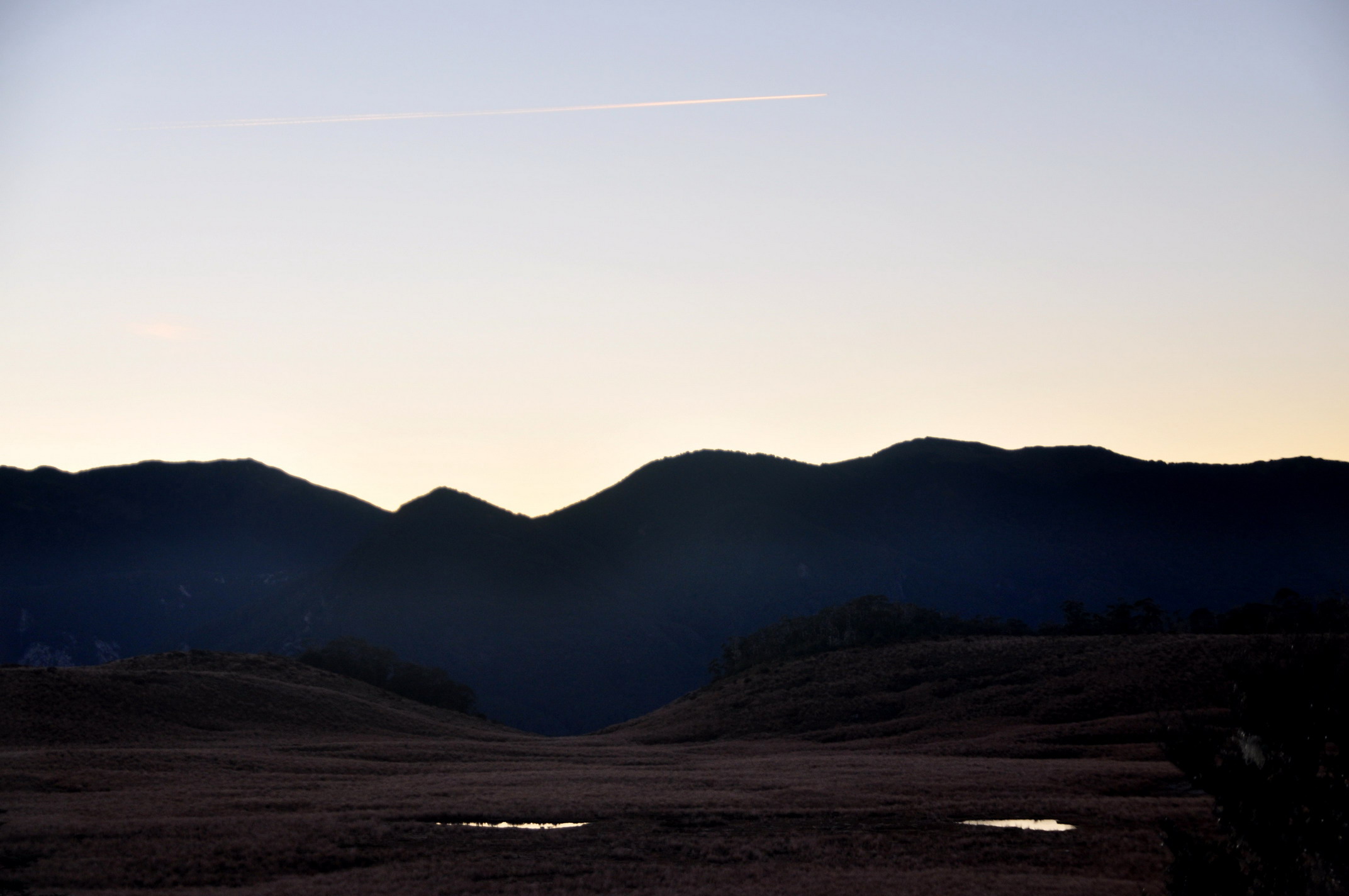
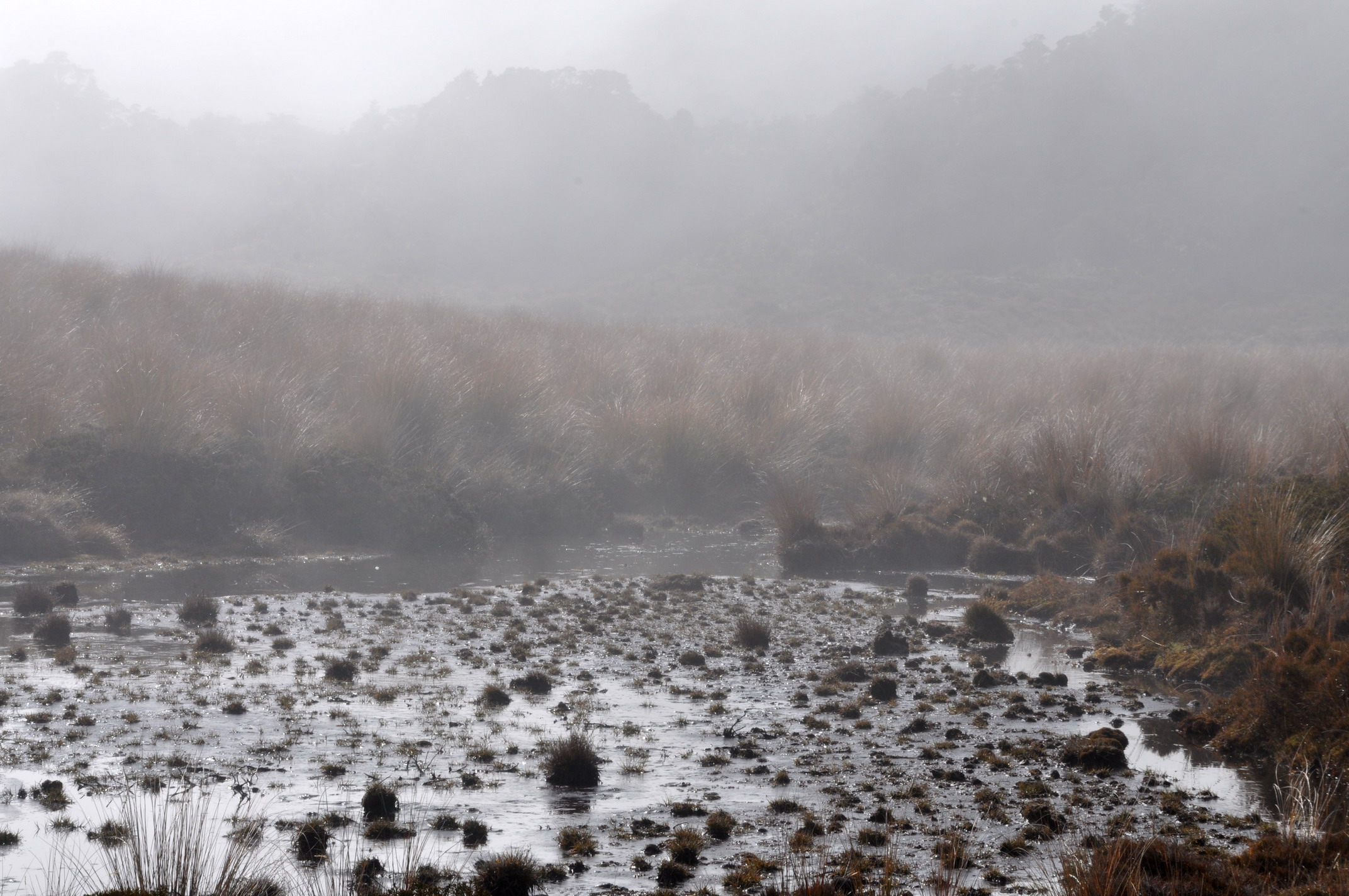
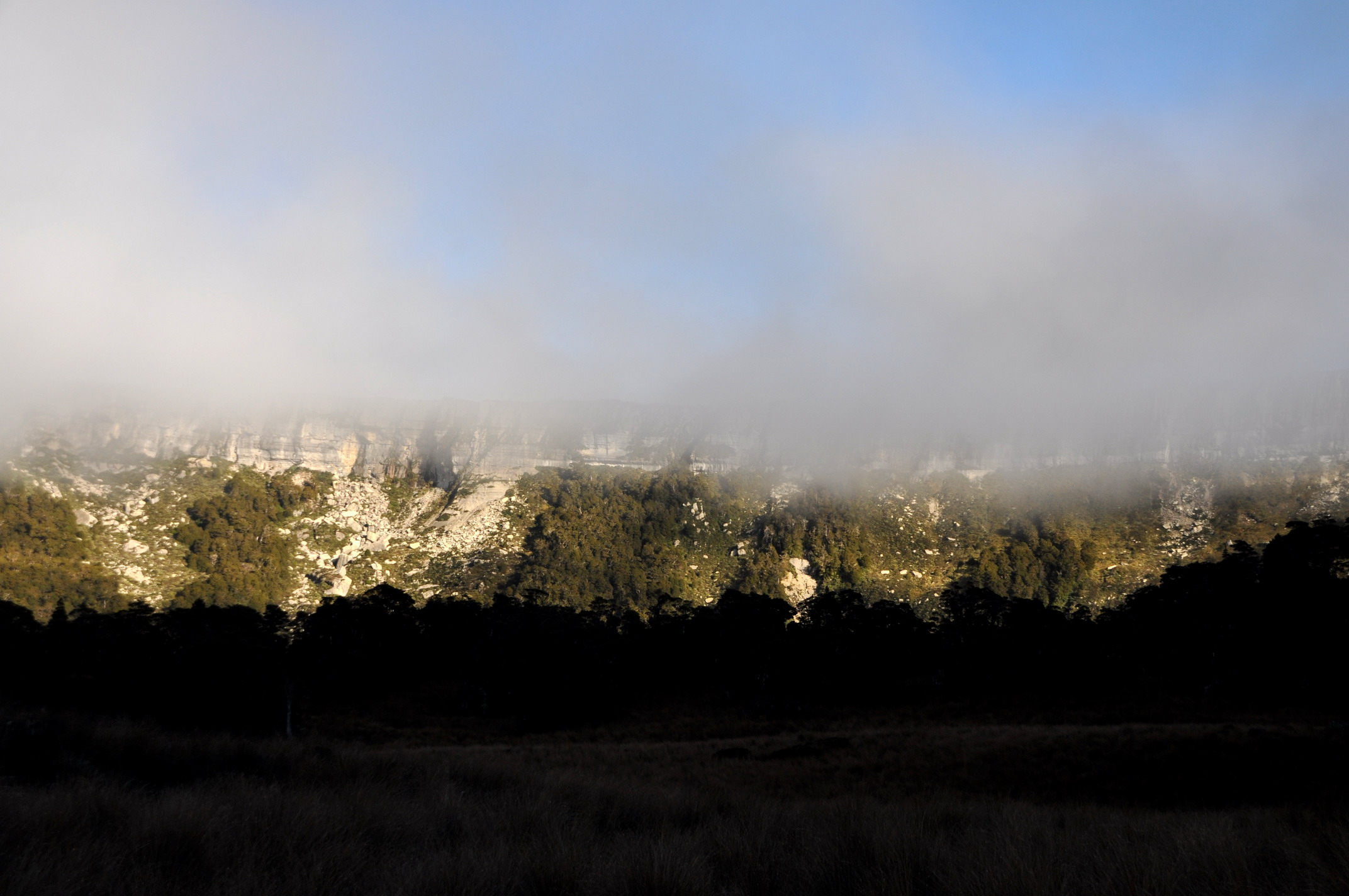
We were up before dawn. The sun didn't come up from behind a distant mountain and melt the night's frost until we were having our first coffee. We set out early and reached the next hut, Larrikins, around noon. The walk was very scenic, with rocks and little islands of bush all around. Alas, we walked the second half in a cloud. Thick fog hid all the good bits.
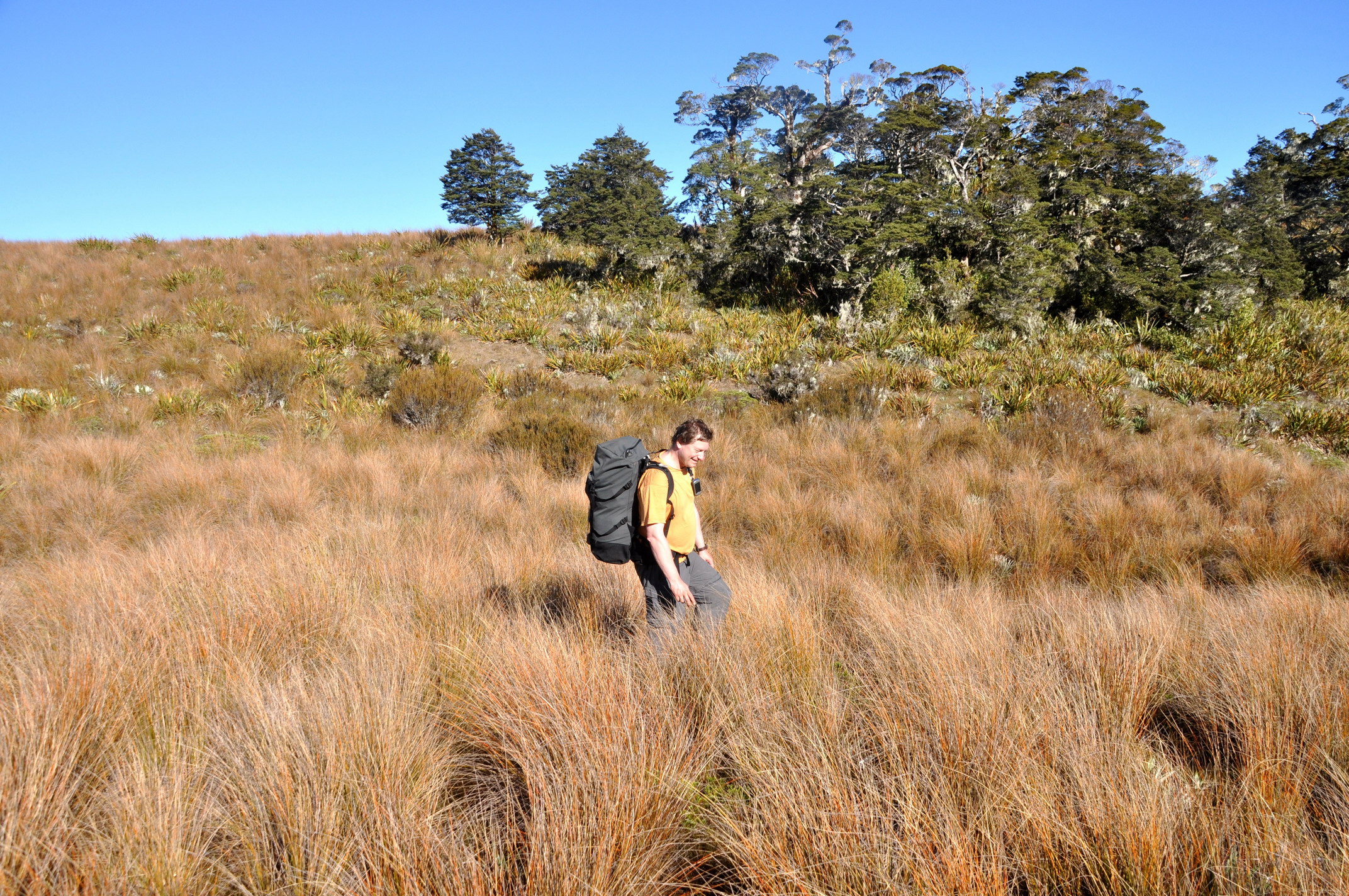
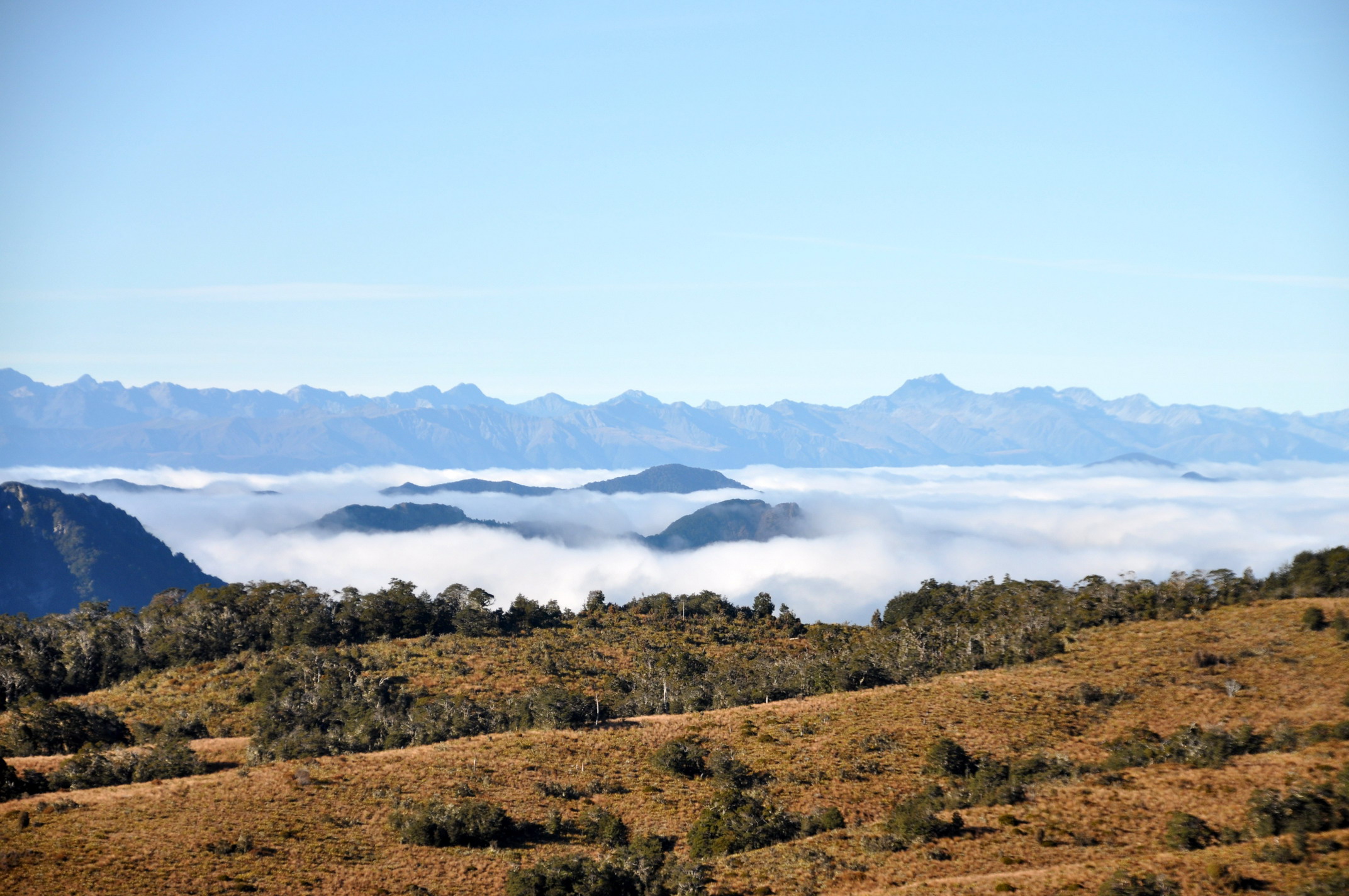
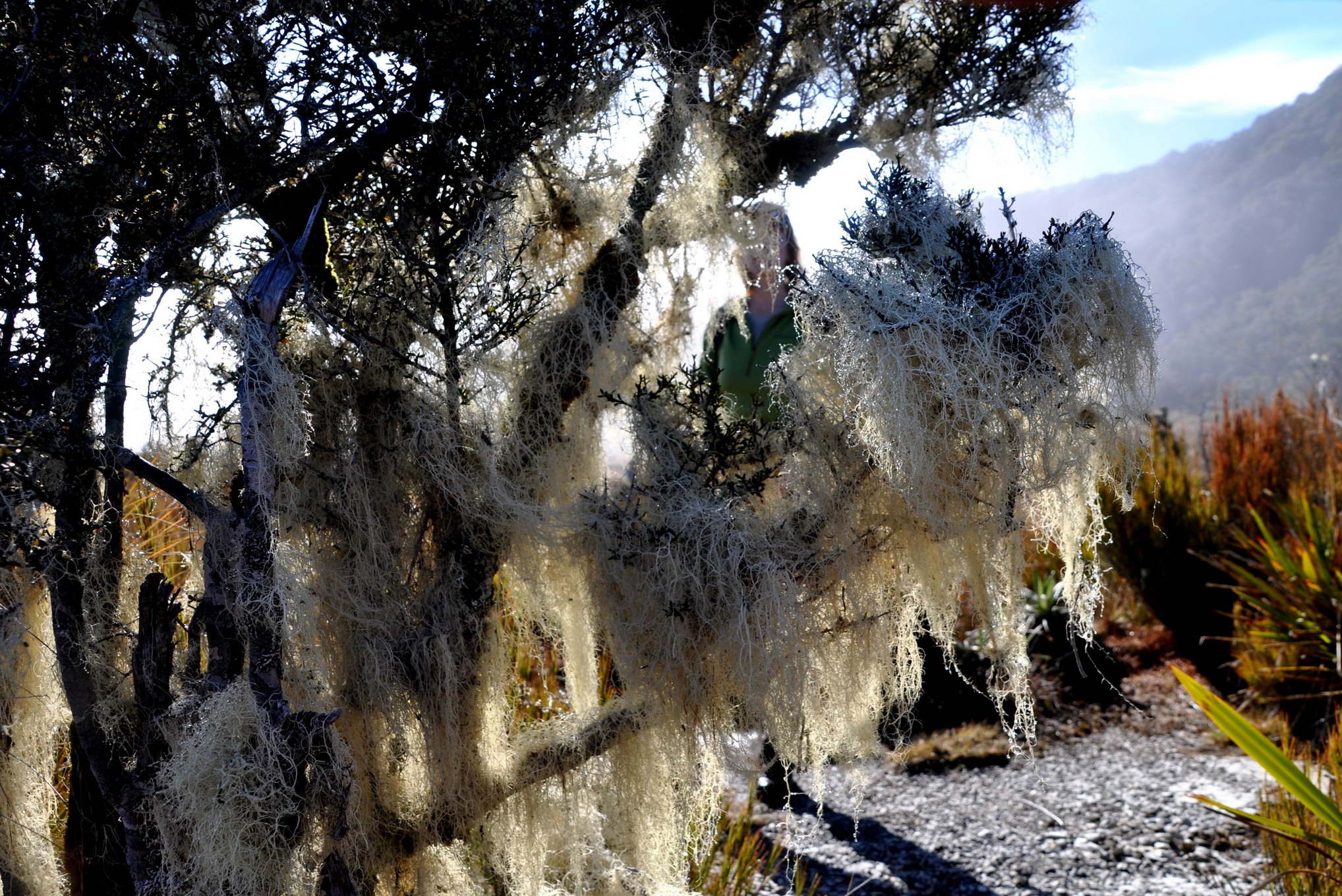
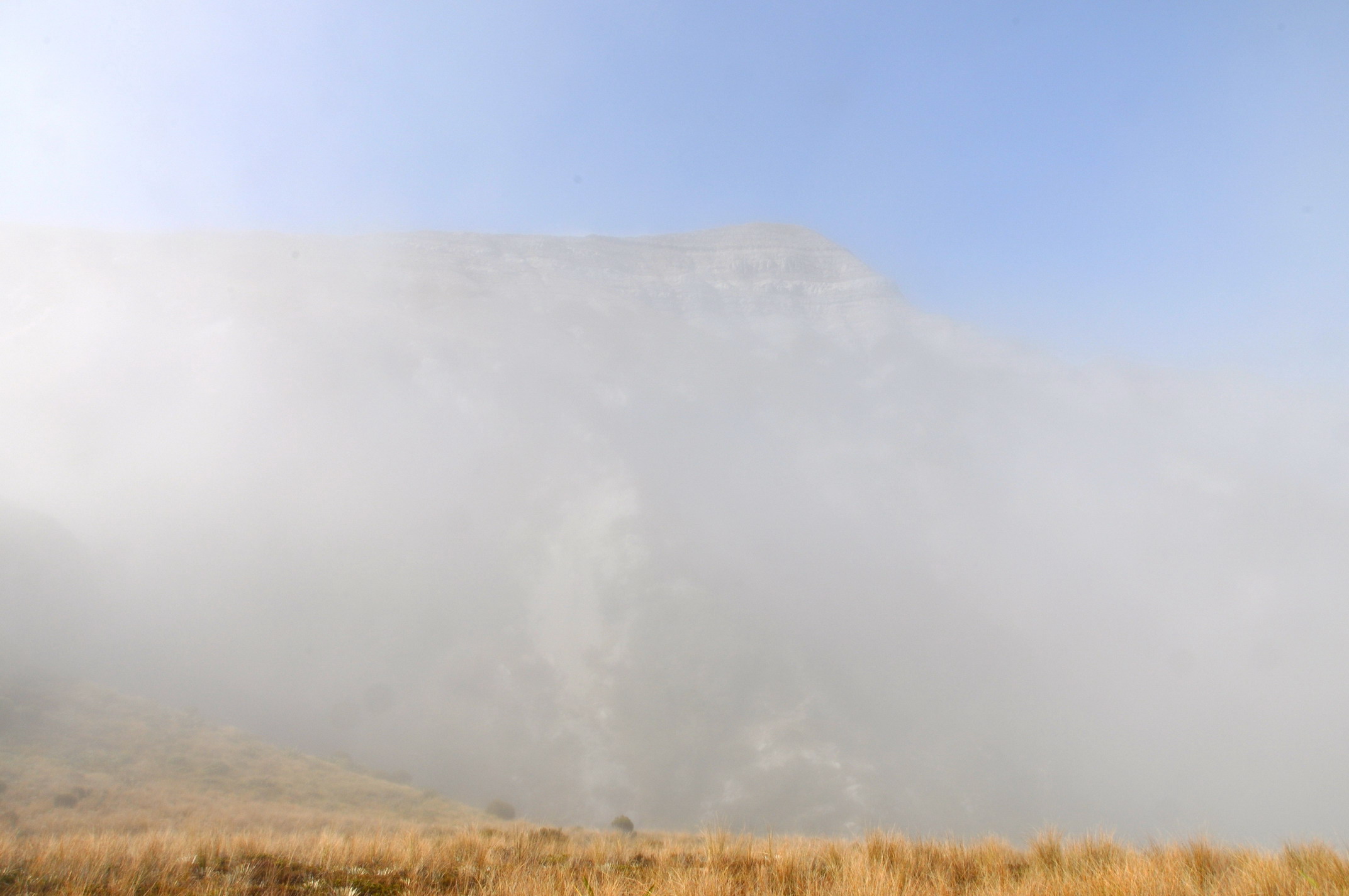
Tanya was still ill. At the creeks we drank Theraflu as well as tea. When we got to Larrikins Creek Hut there was plenty of daylight left. Tanya decided to warm herself at the fire while I went for a walk in the hills. As it turned out, all I had to do was climb another few hundred metres and leave the clouds below. In the sun it was beautiful and hot. For a start I scrambled up the peak called The Haystack (41°33.271′S, 172°19.240′E), 1,522 metres high, and had a bite to eat. Nearby I could see Mount Owen, which we'd climbed the year before.
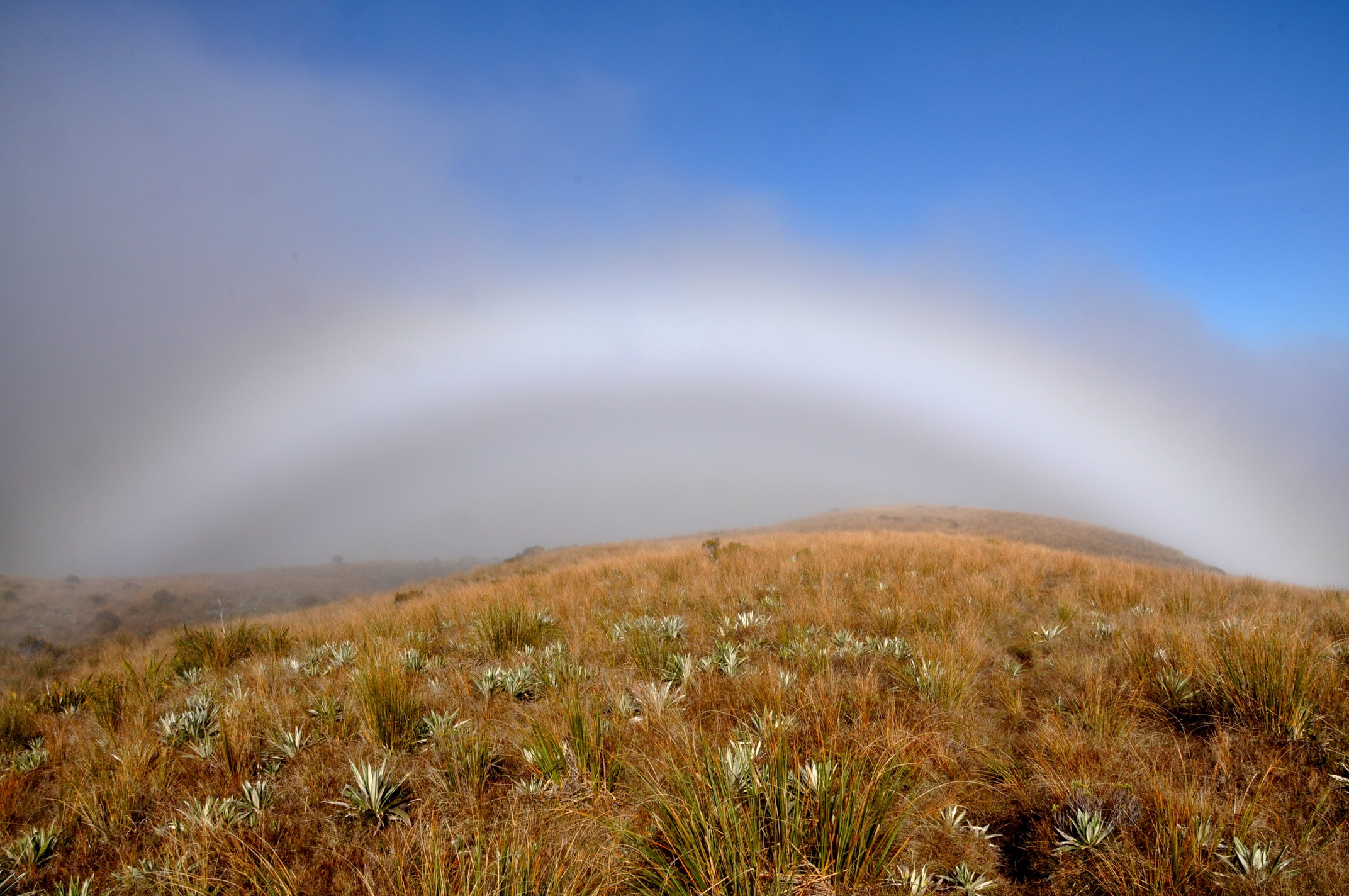
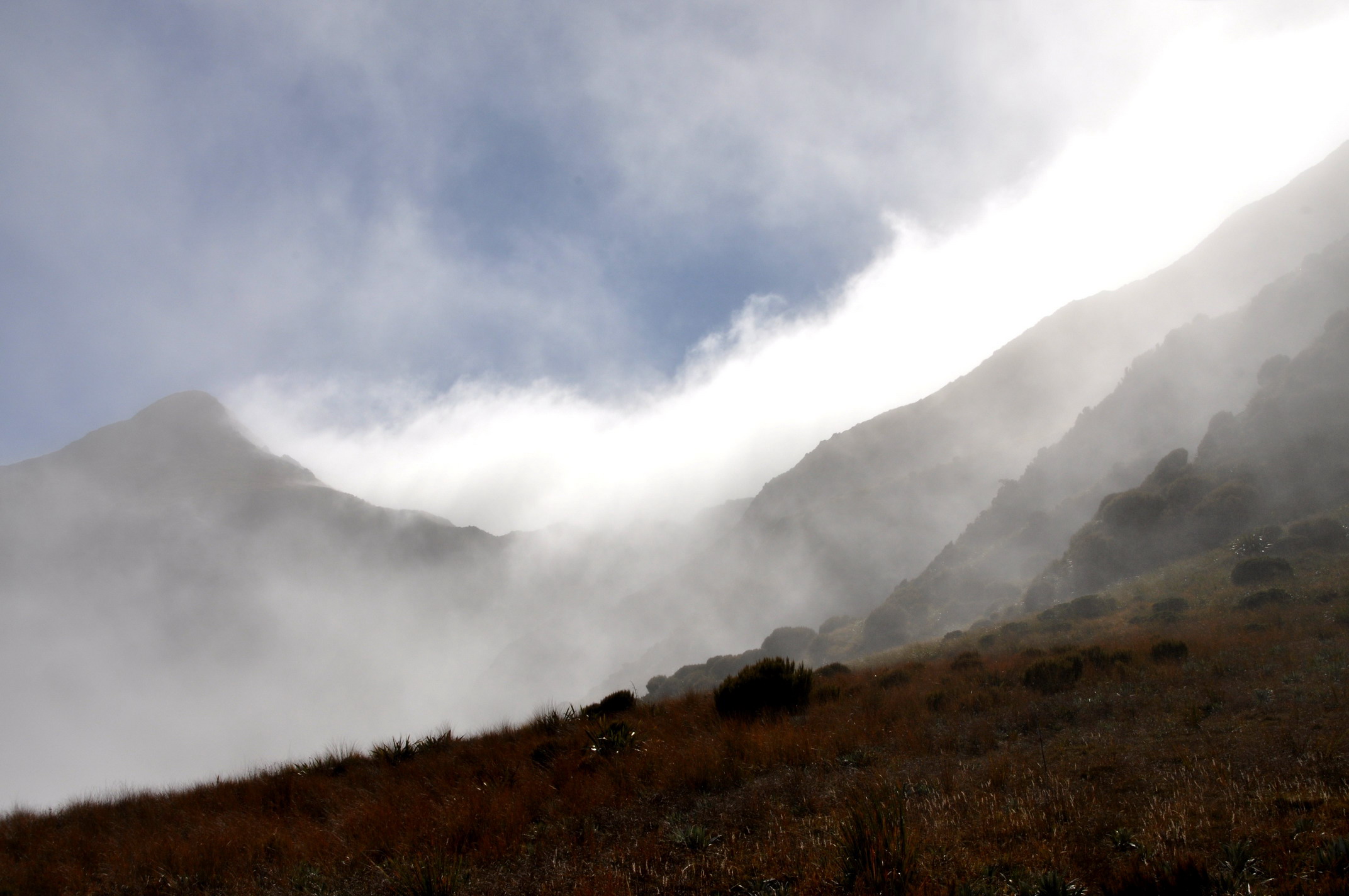
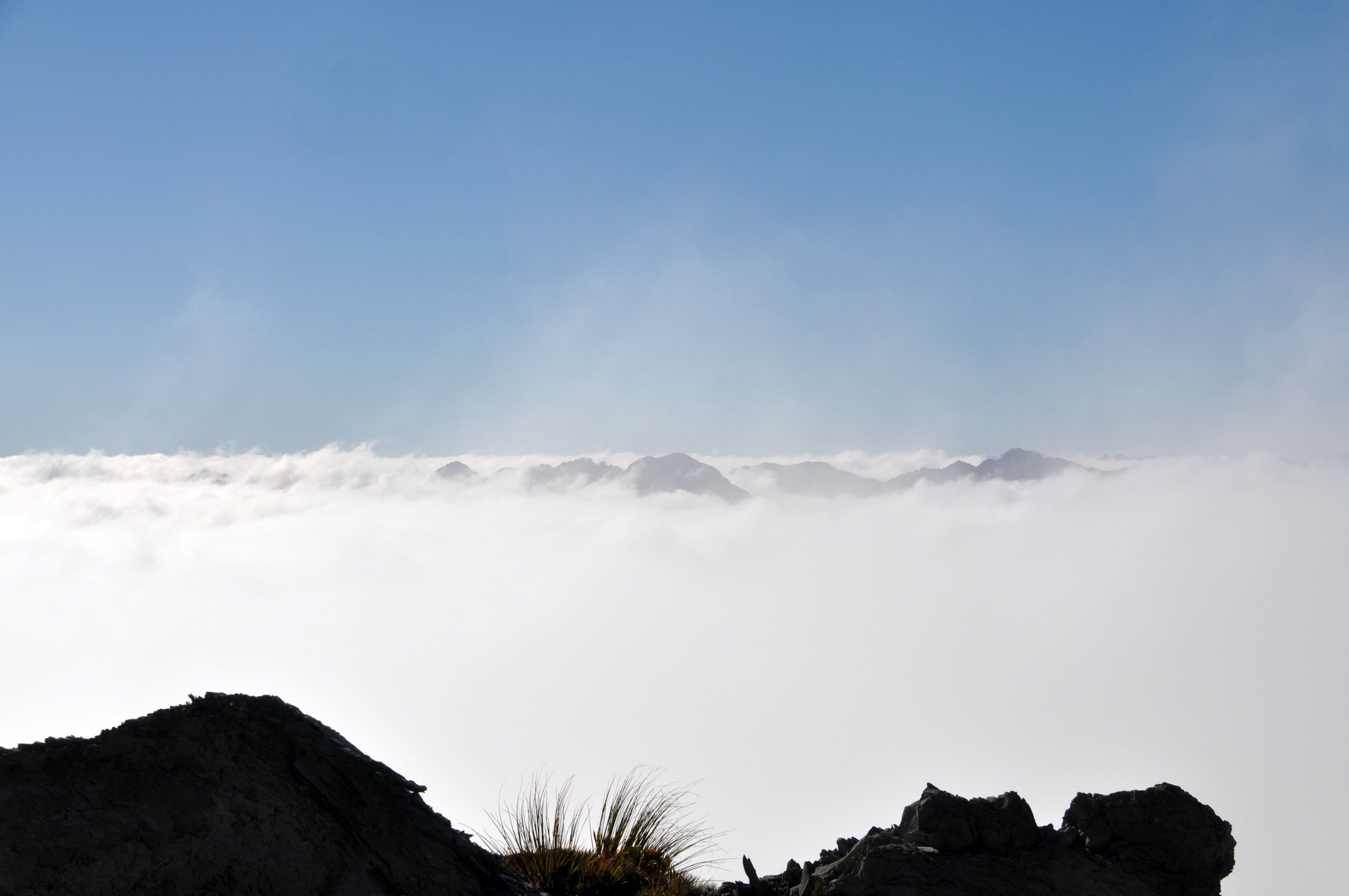
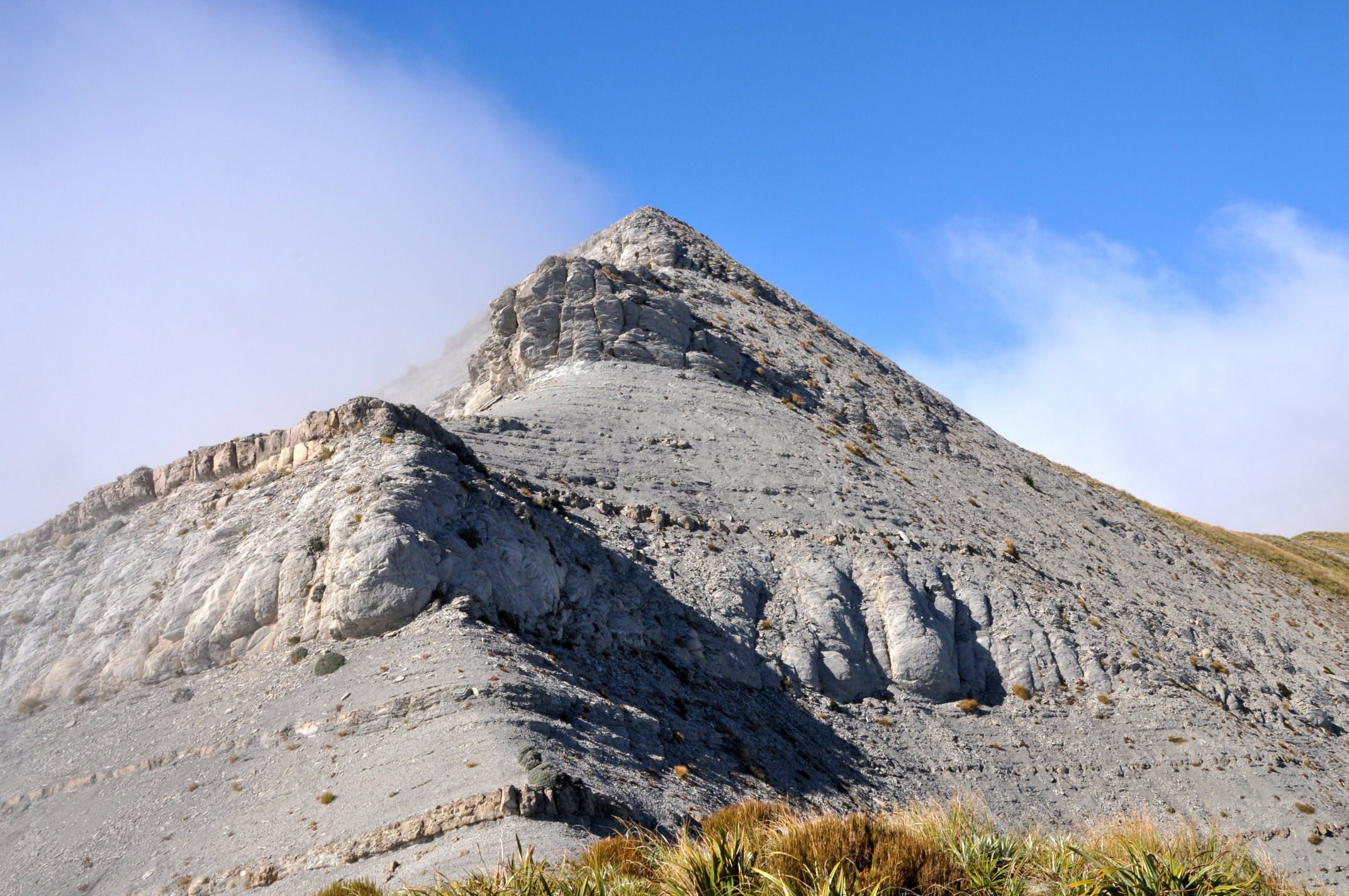
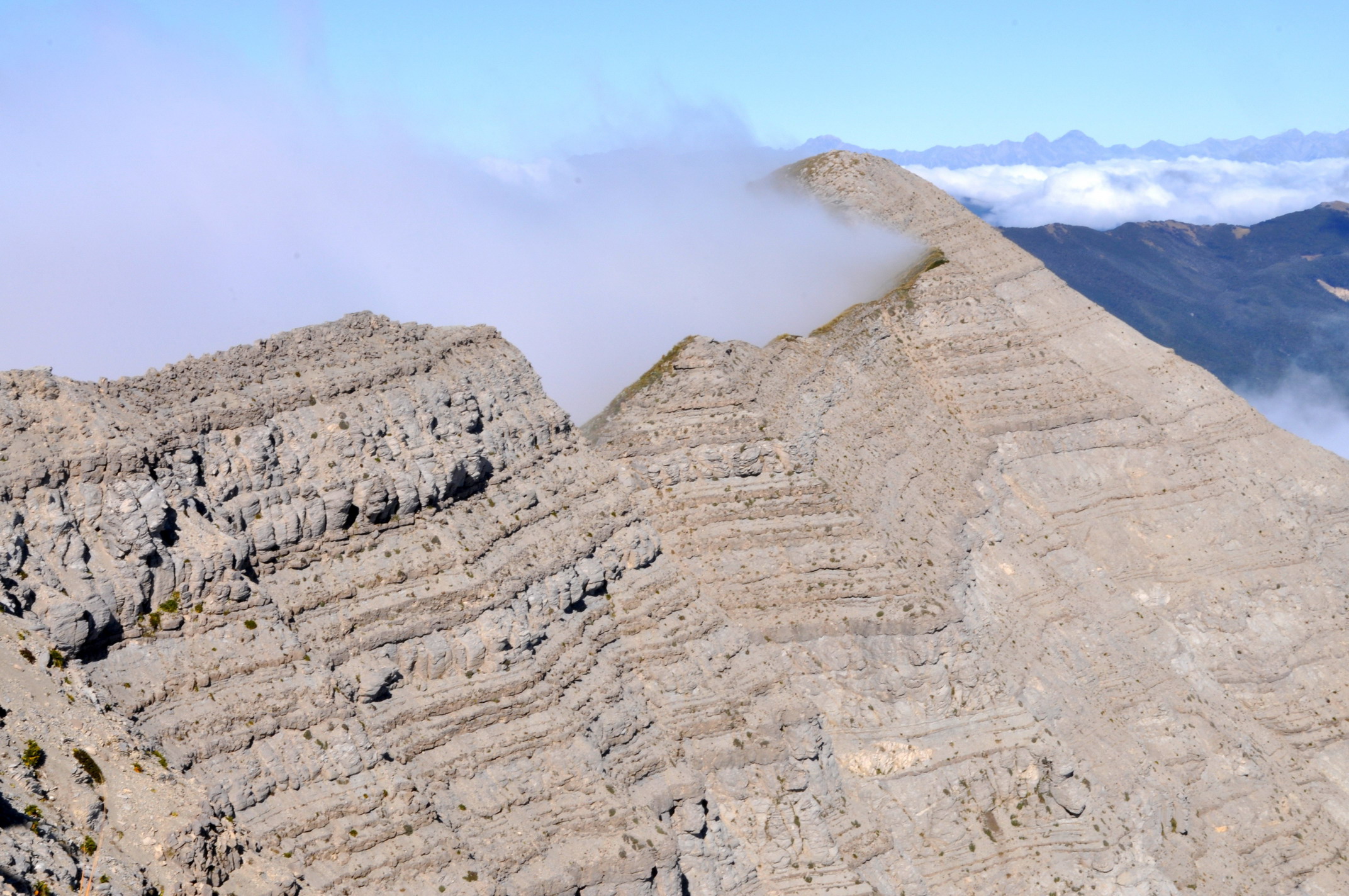
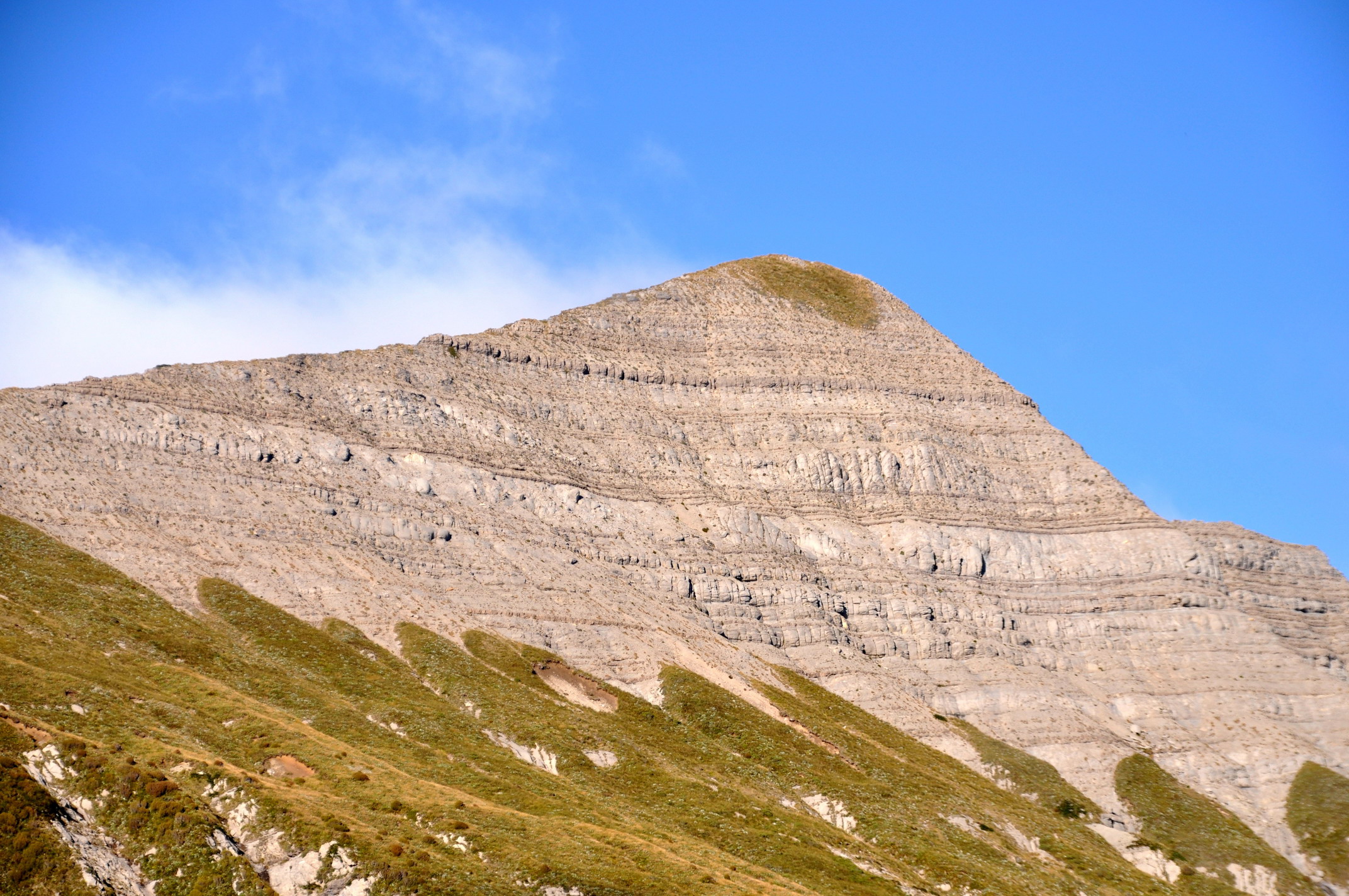
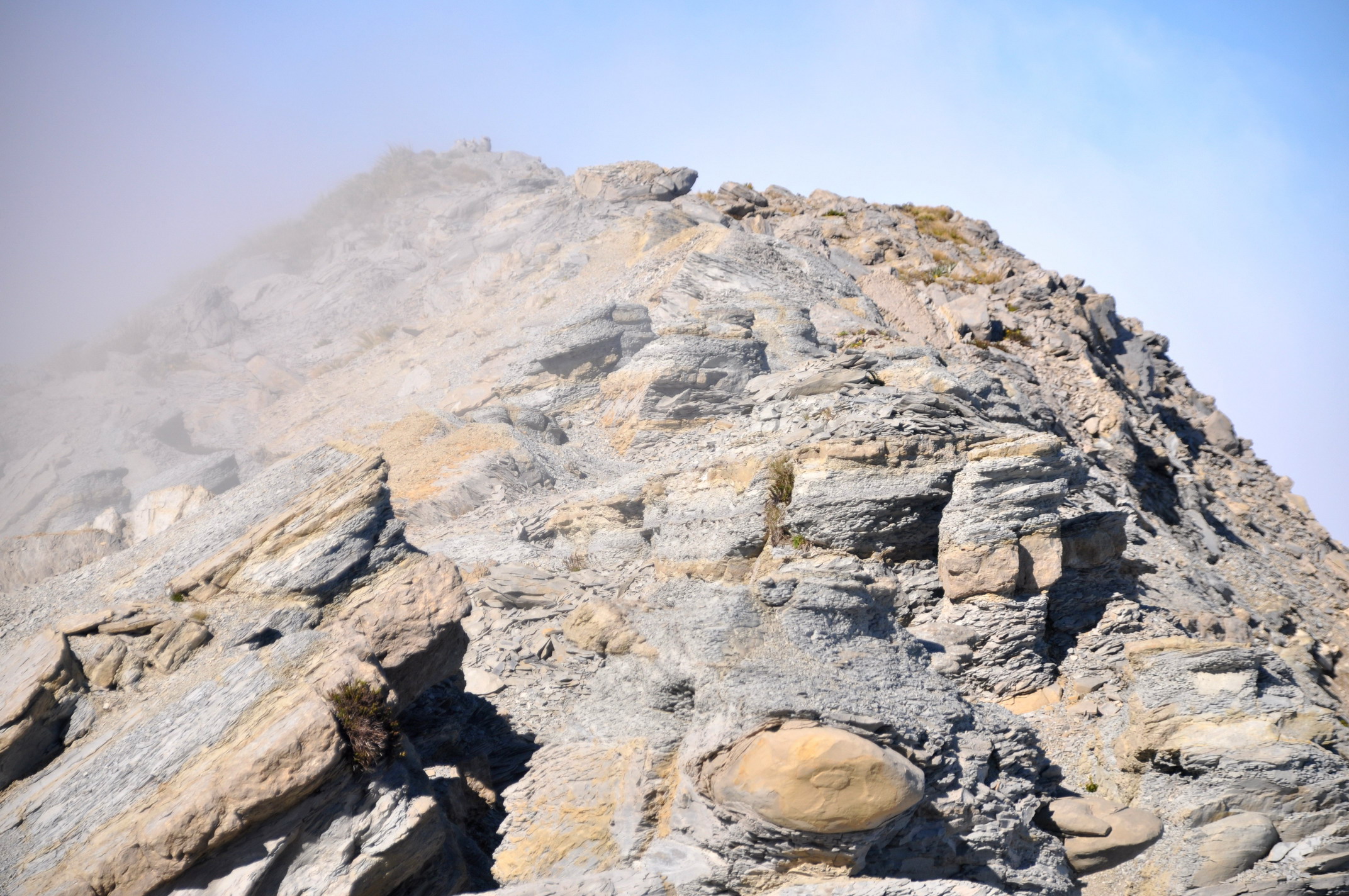
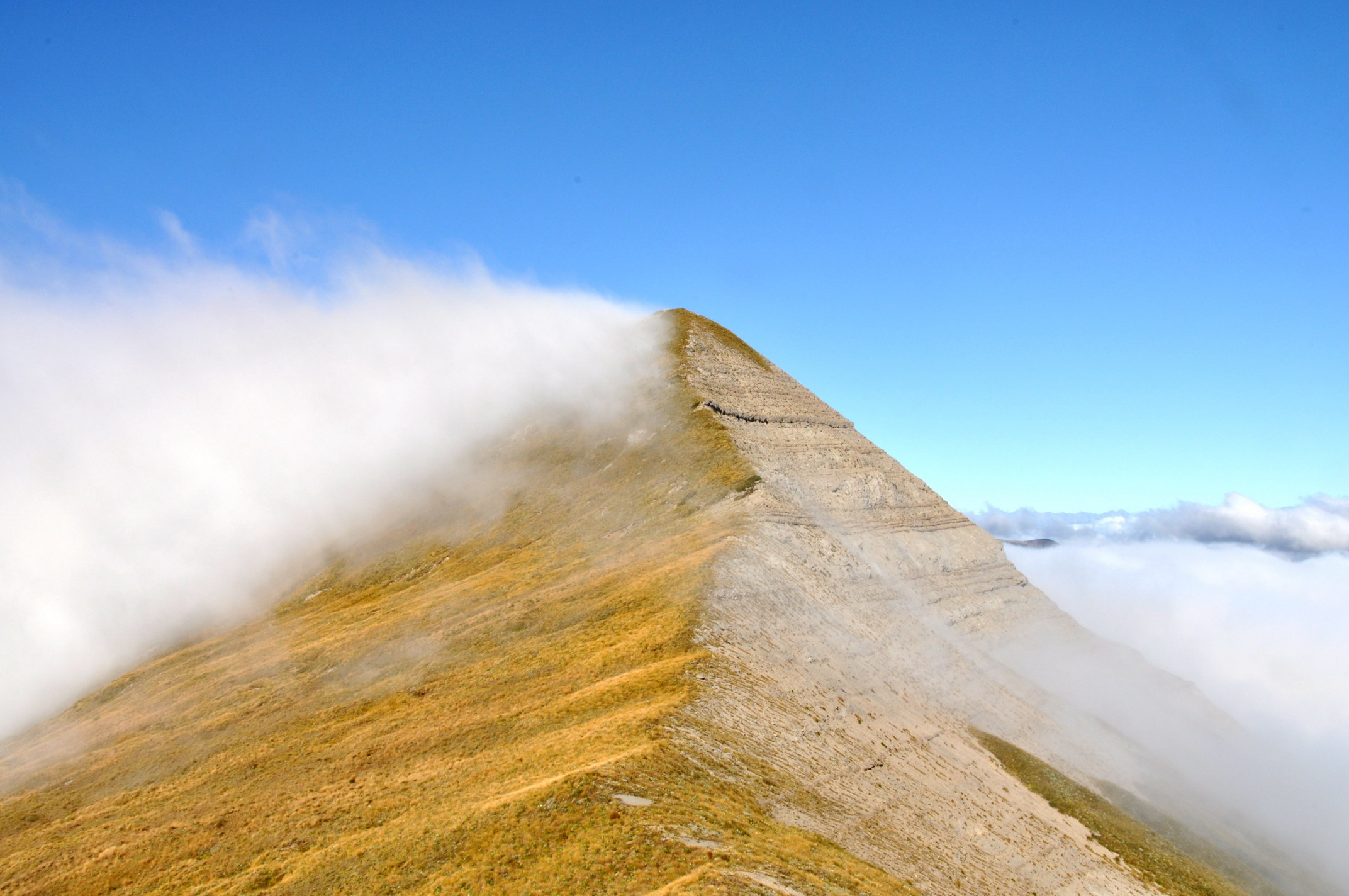
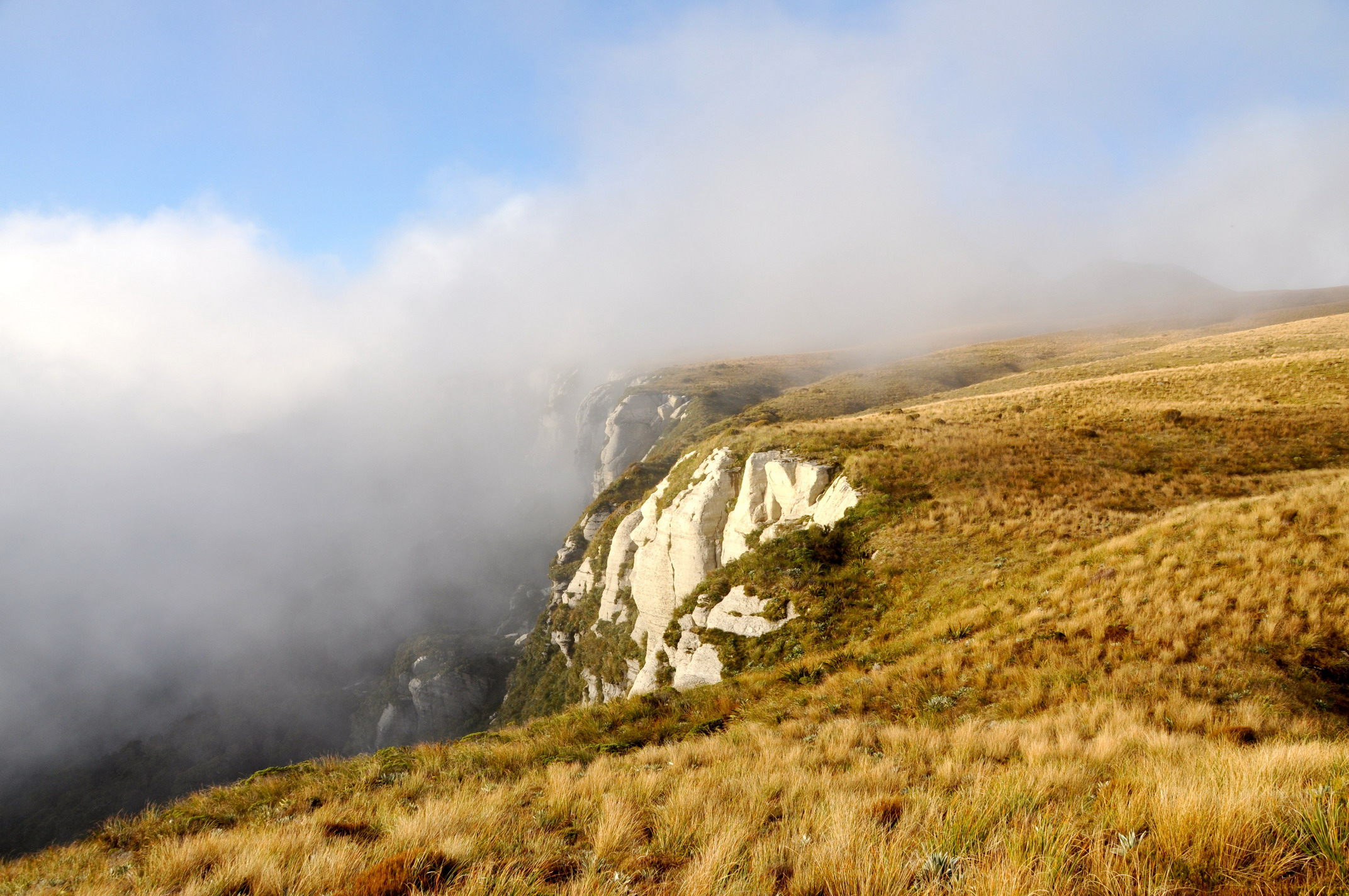
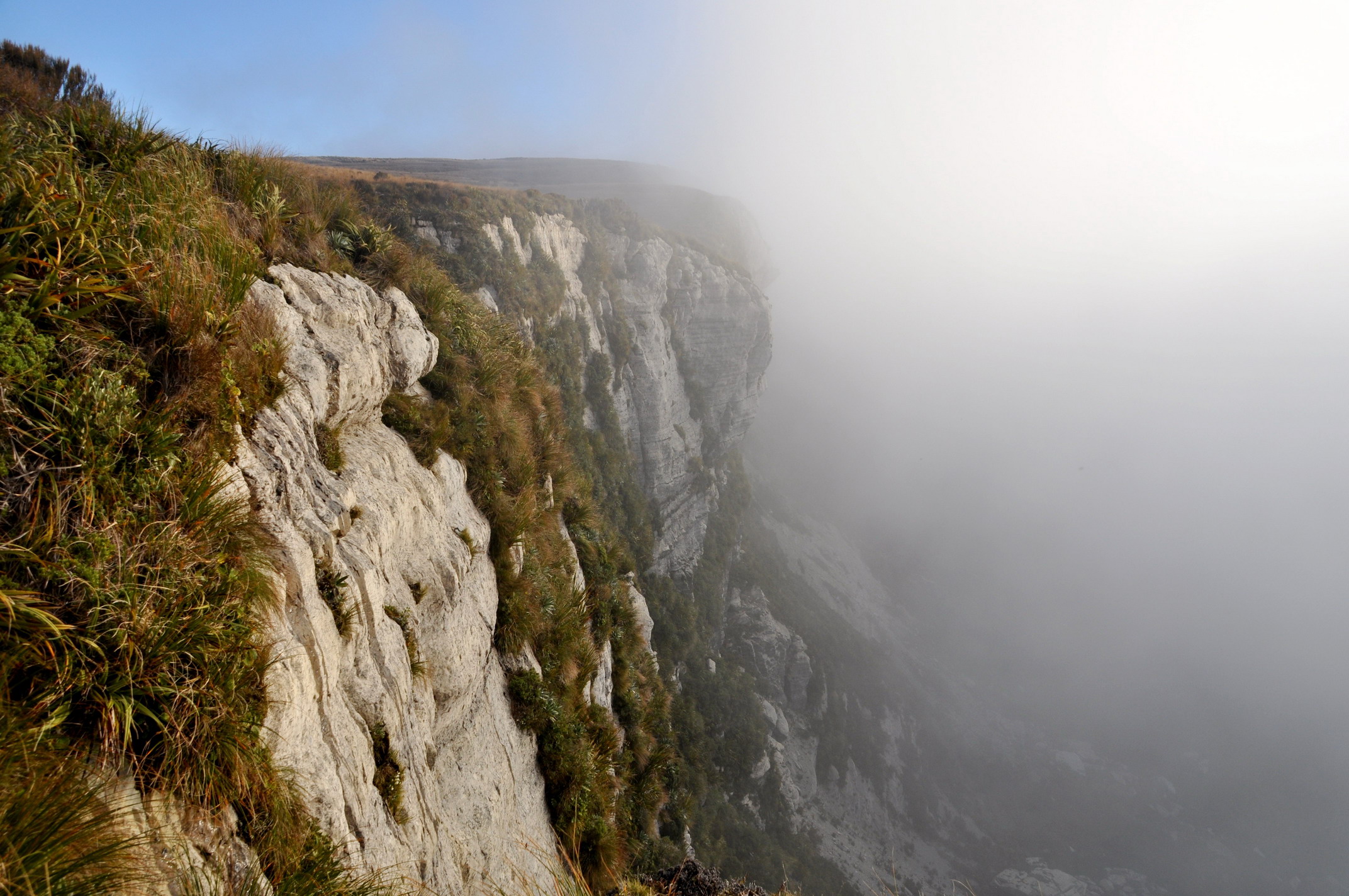
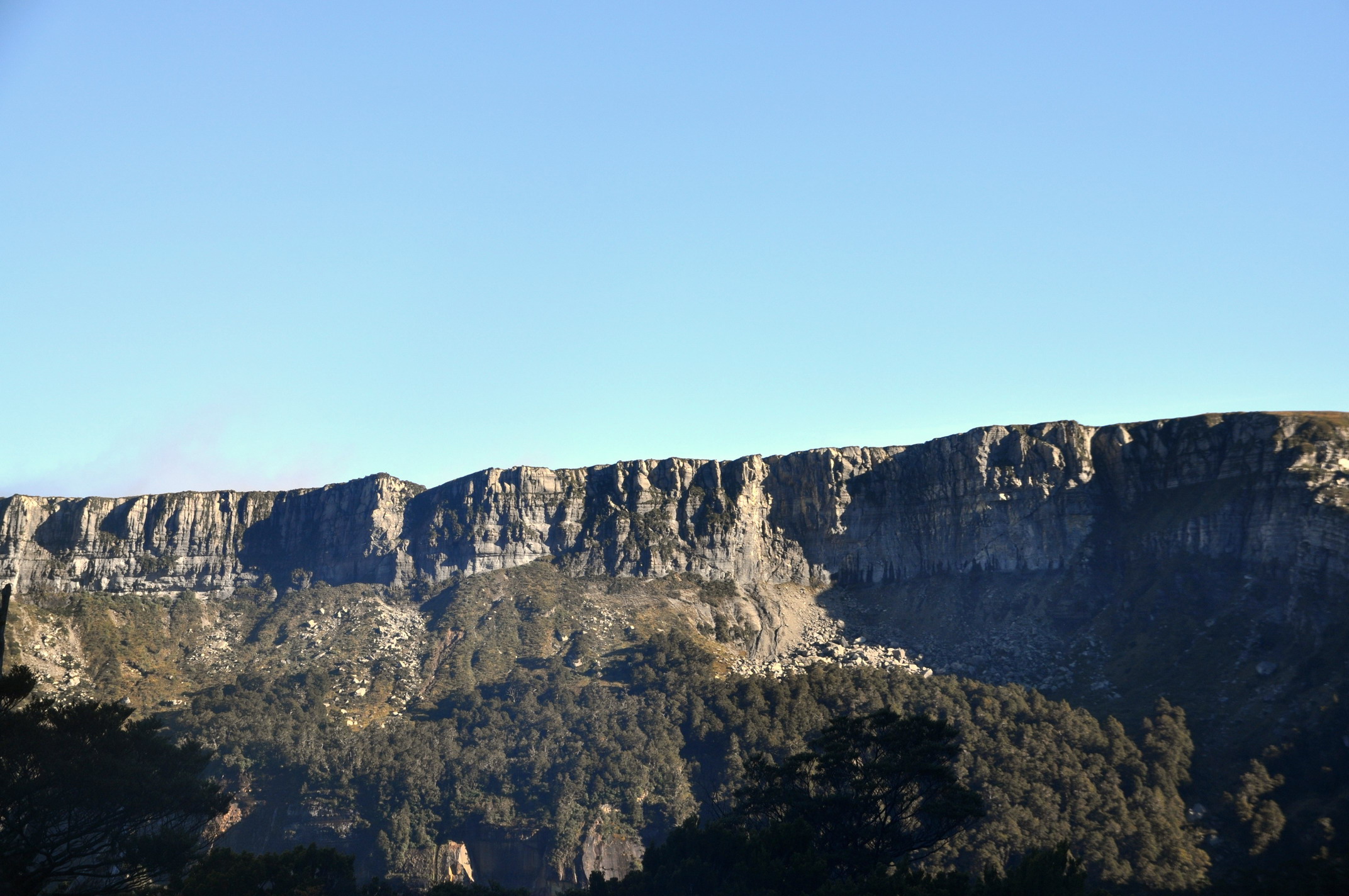
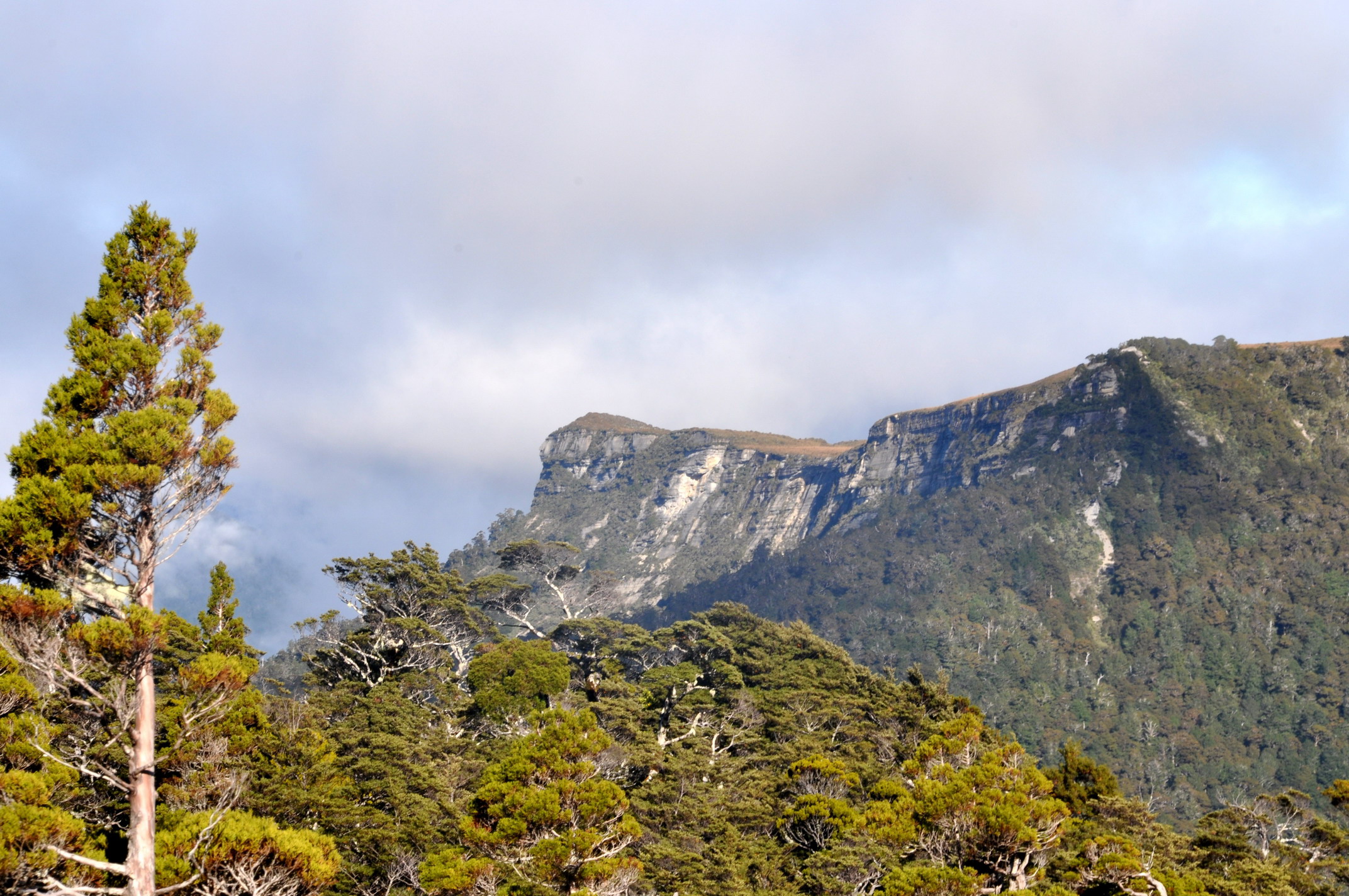
To the west was another plateau with sheer edges (41°33.215′S, 172°18.169′E). The one marked Thousand Acre Plateau on the map is the one with the huts and tracks. This was another plateau altogether, farther away and higher, with steeper, more forbidding cliffs. How could I get onto it? I went down to the saddle but couldn't find a track up. For some reason people didn't go there, which made me all the more determined. It turned out I could get up a steep slope covered in all sorts of prickly shrubs. Pricked but undeterred, I made it to the plateau and walked around it for an hour or two. That's all the time I had before the early sunset and dark.
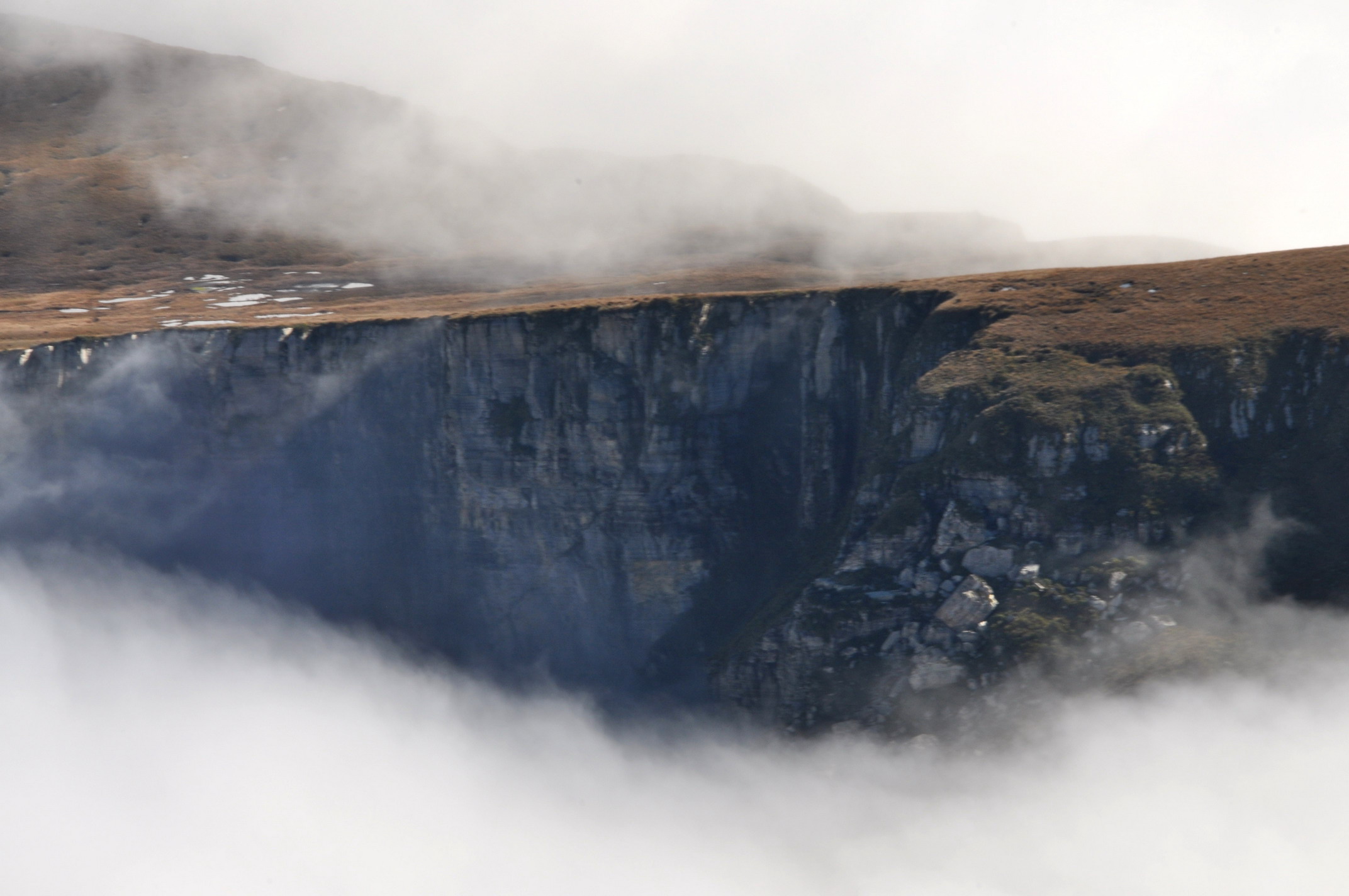
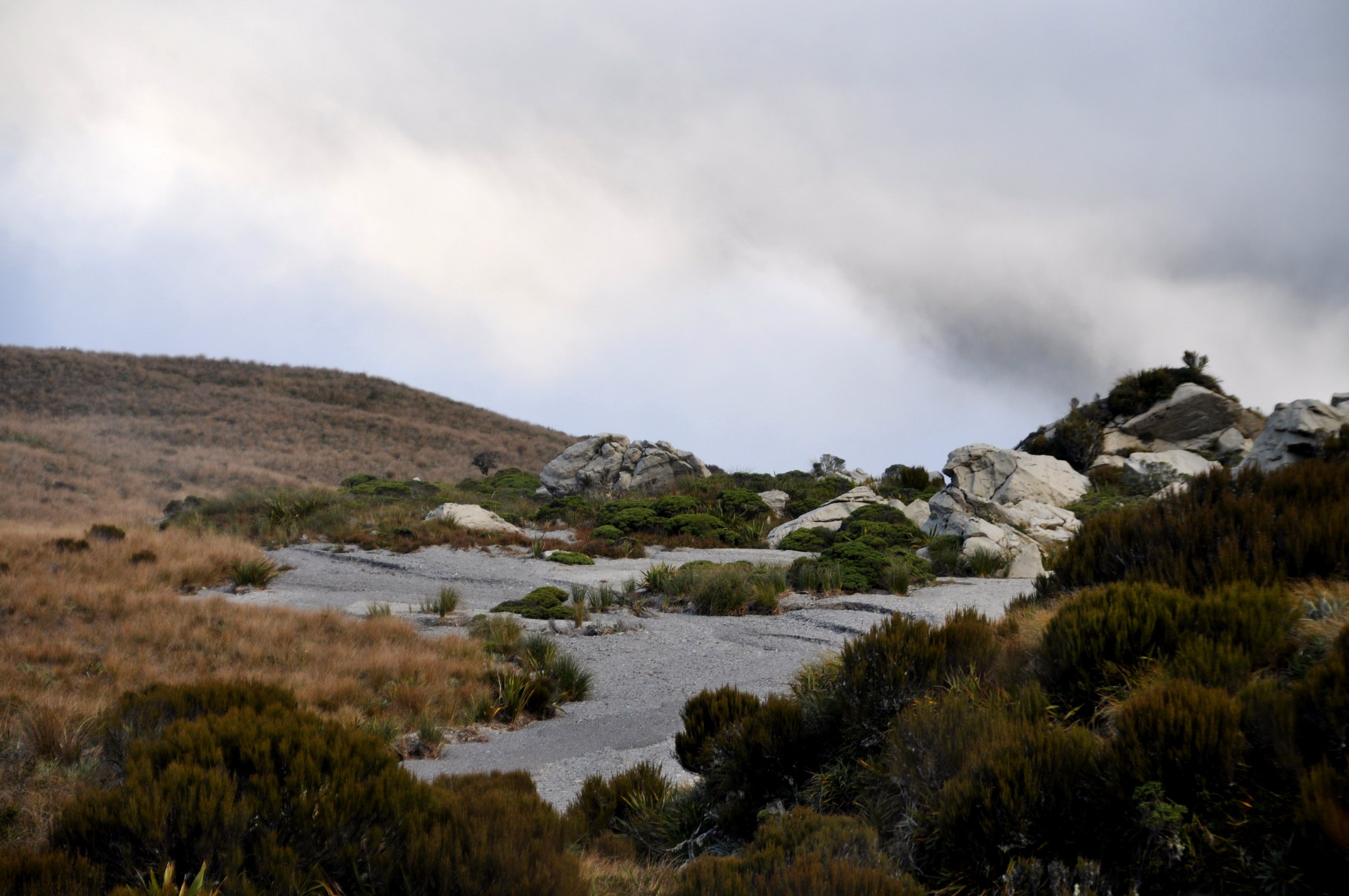
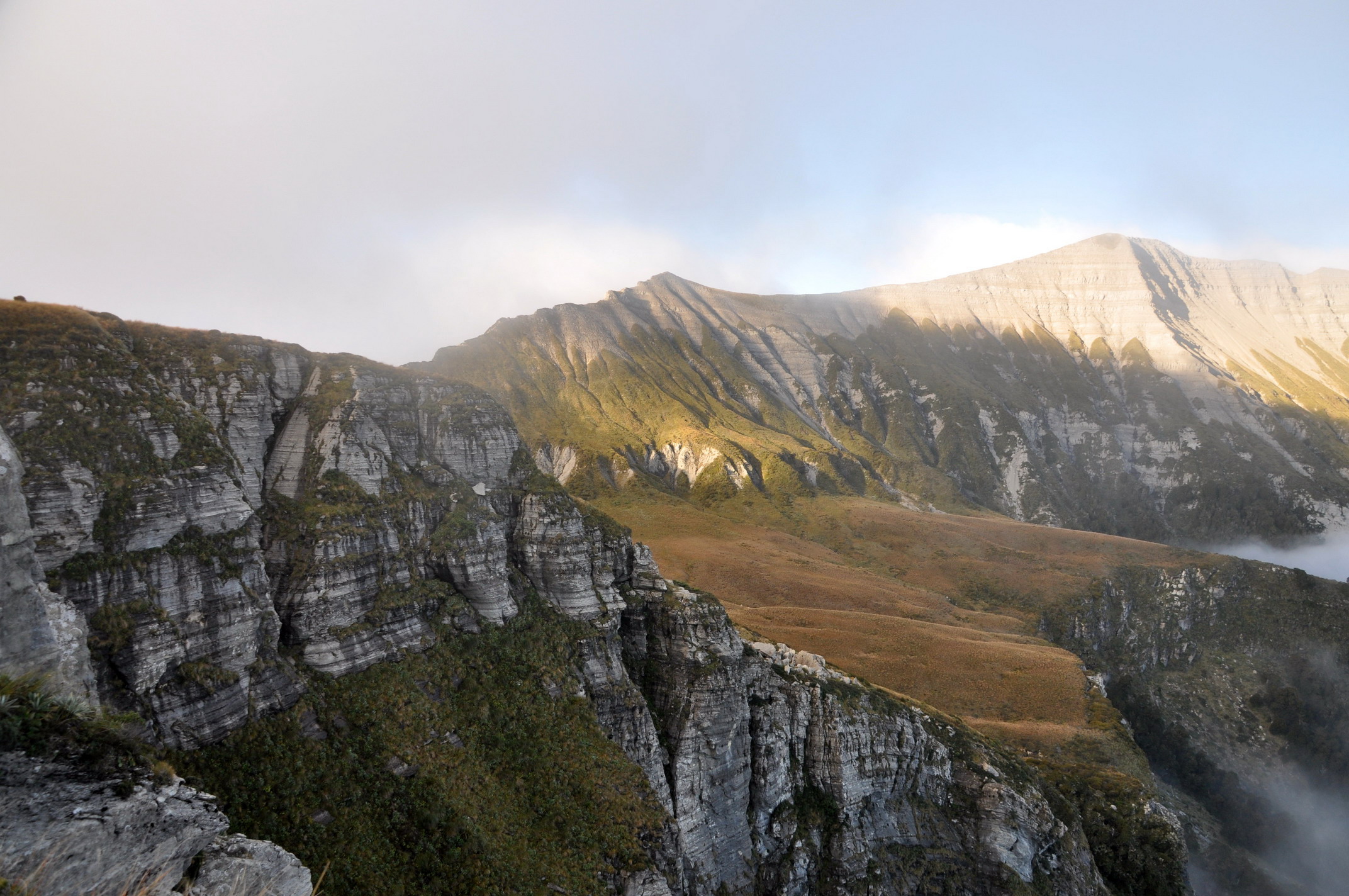
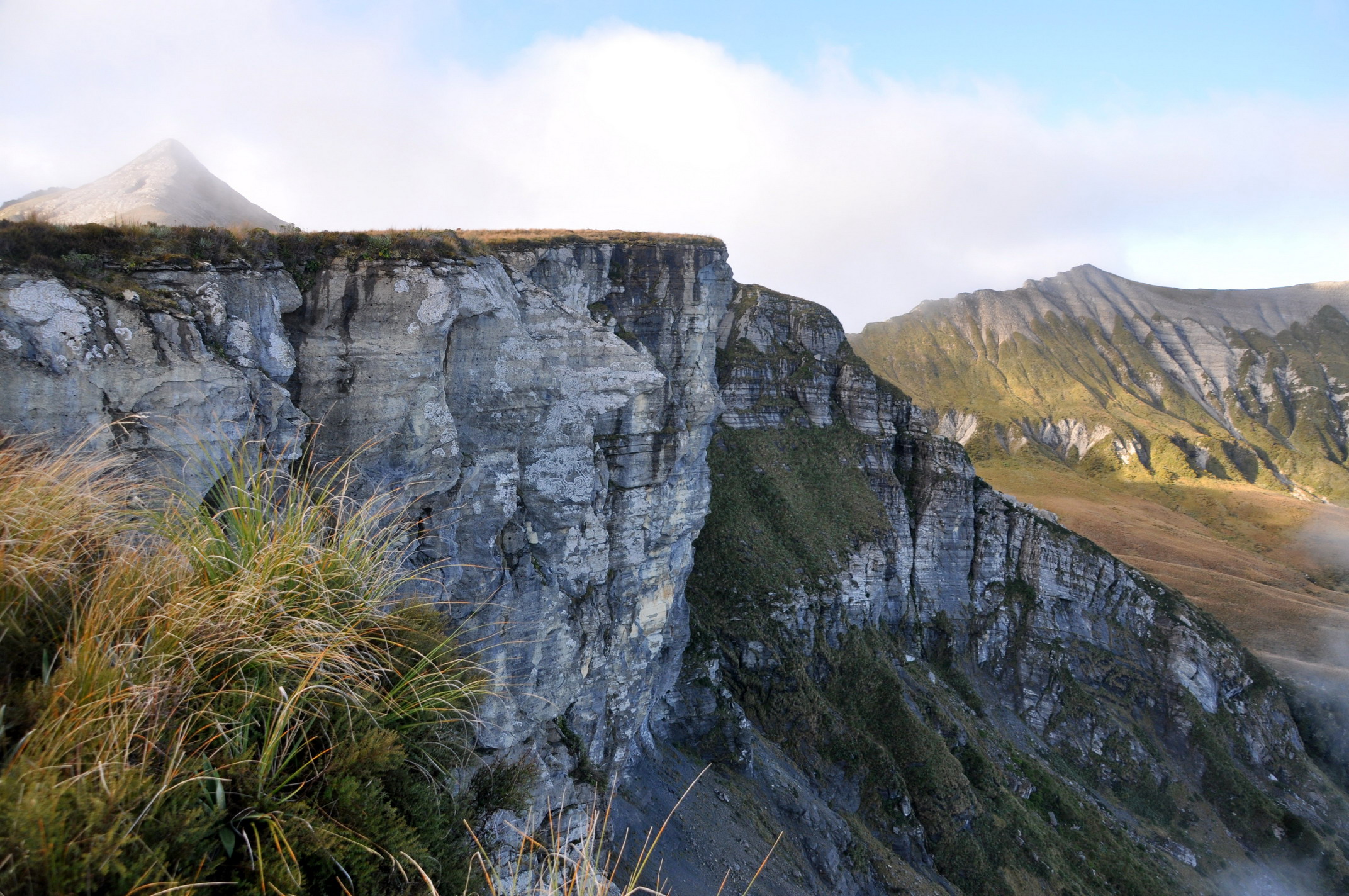
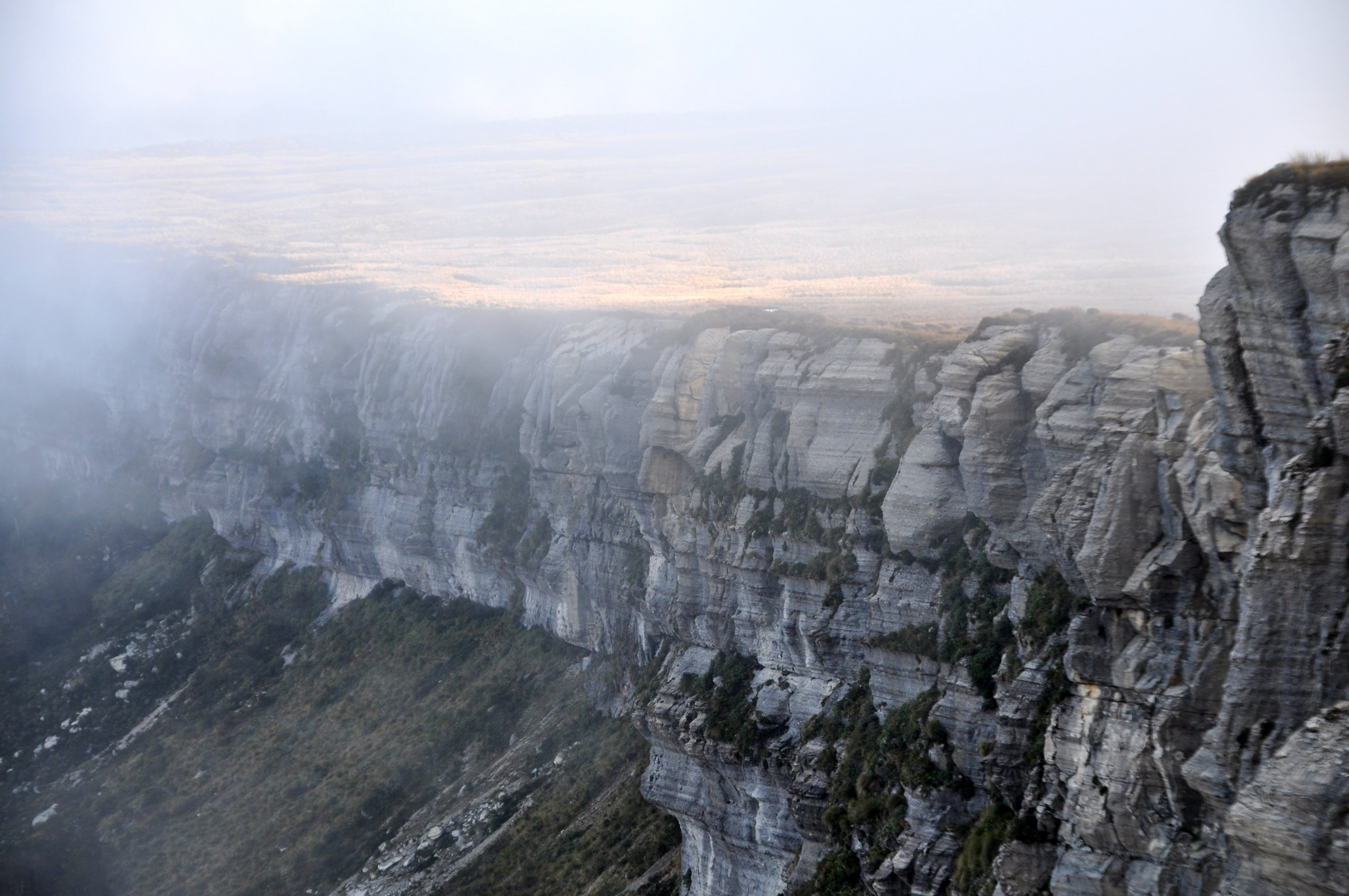
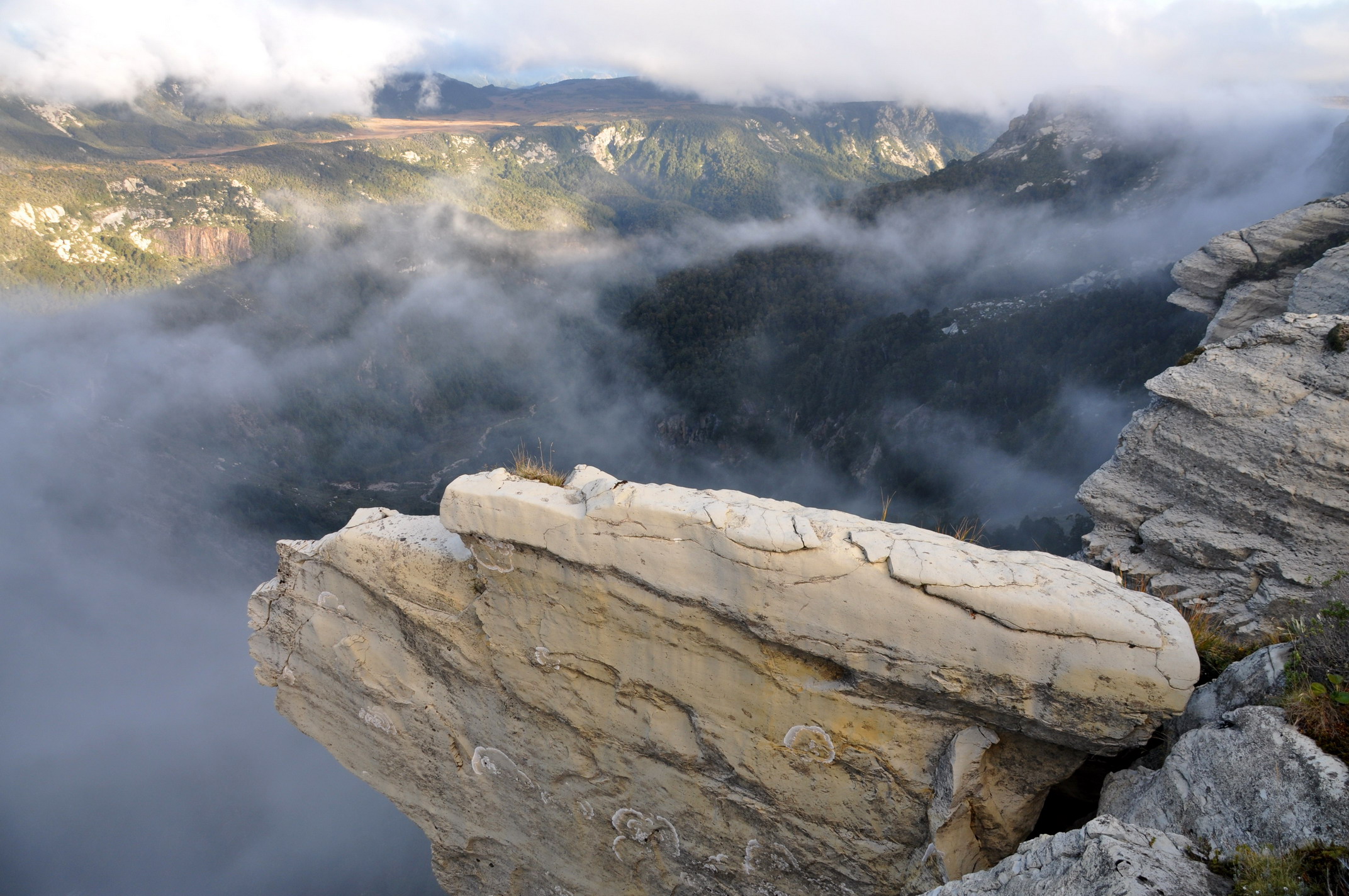
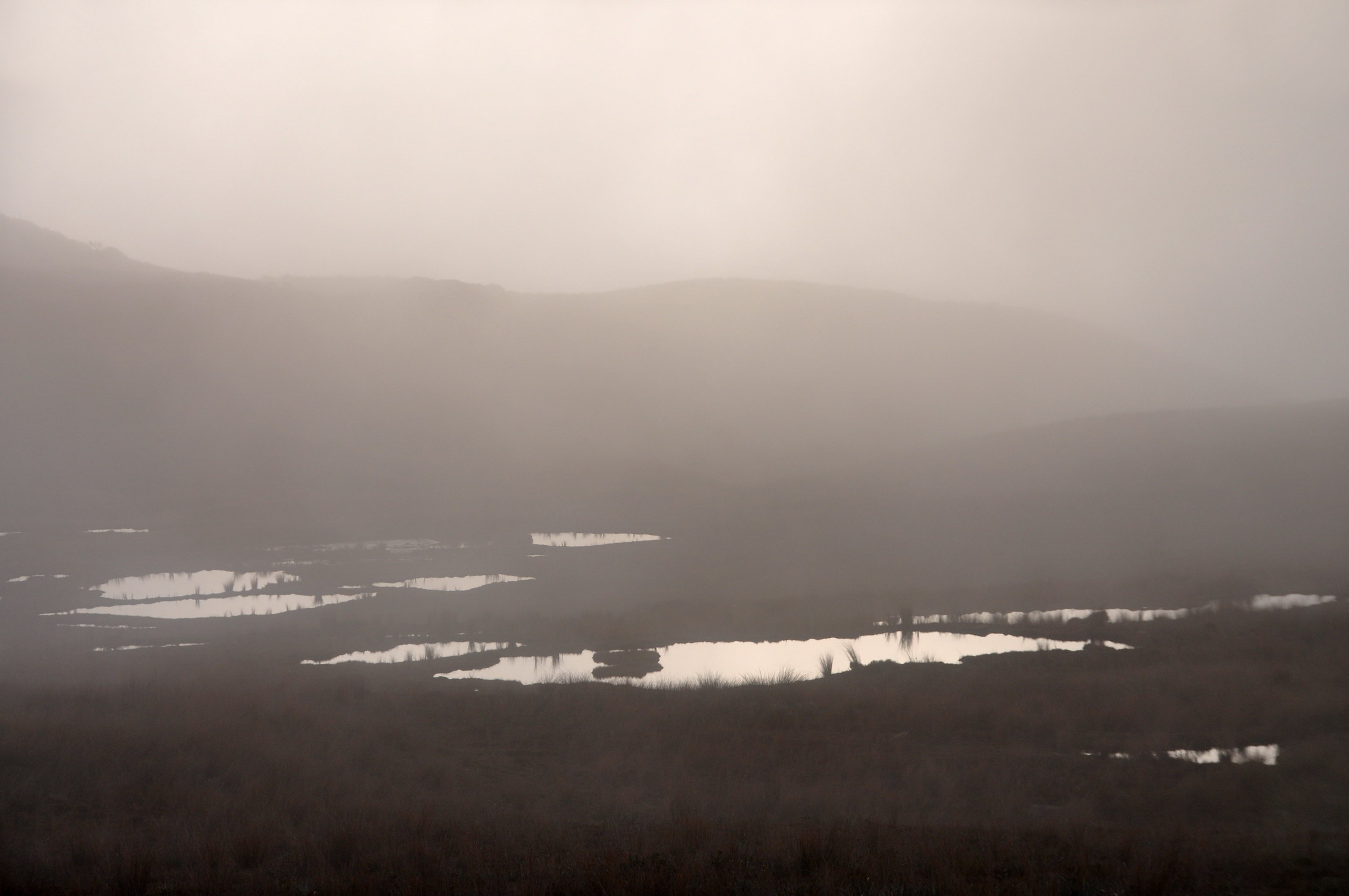
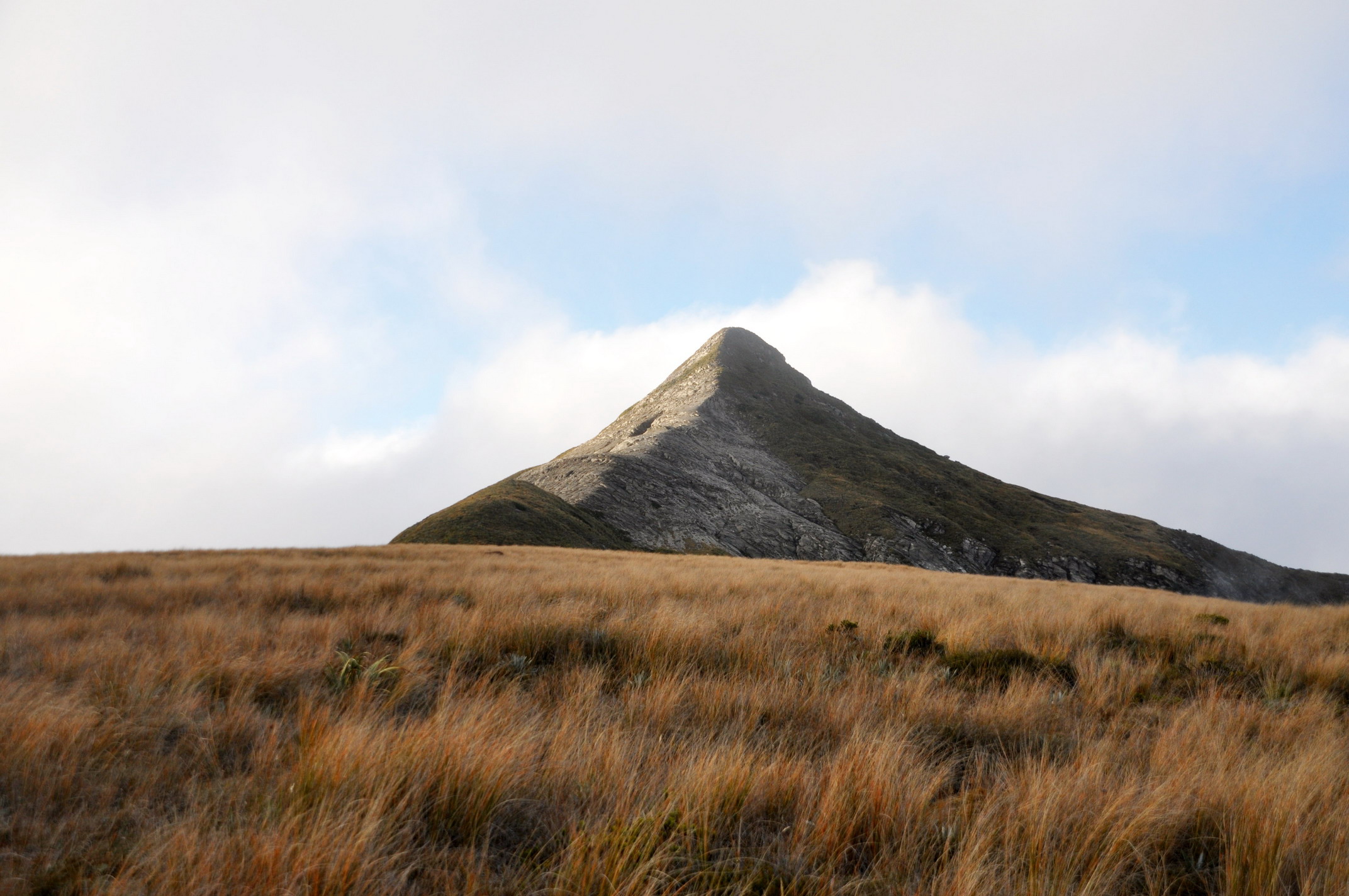
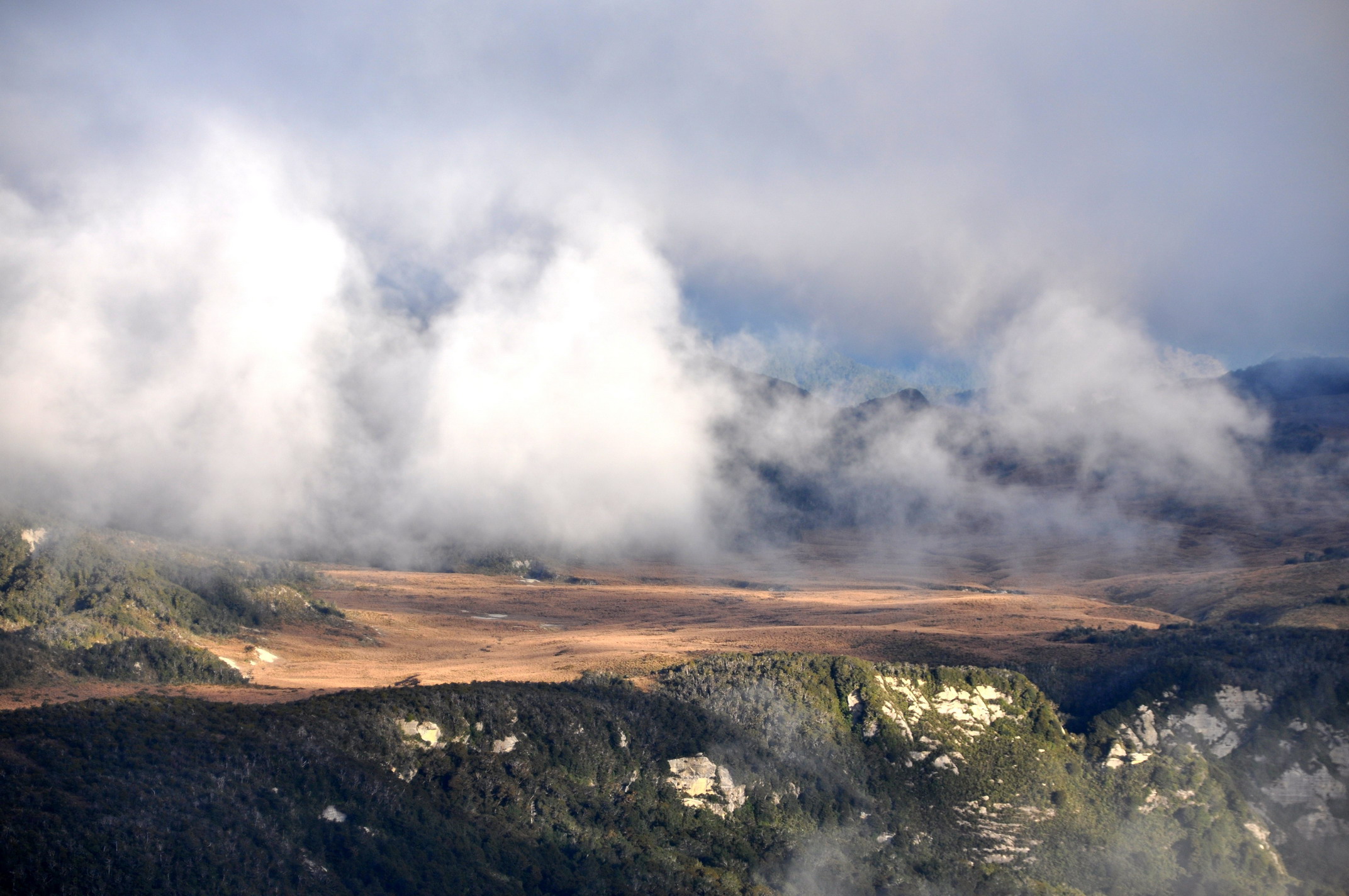
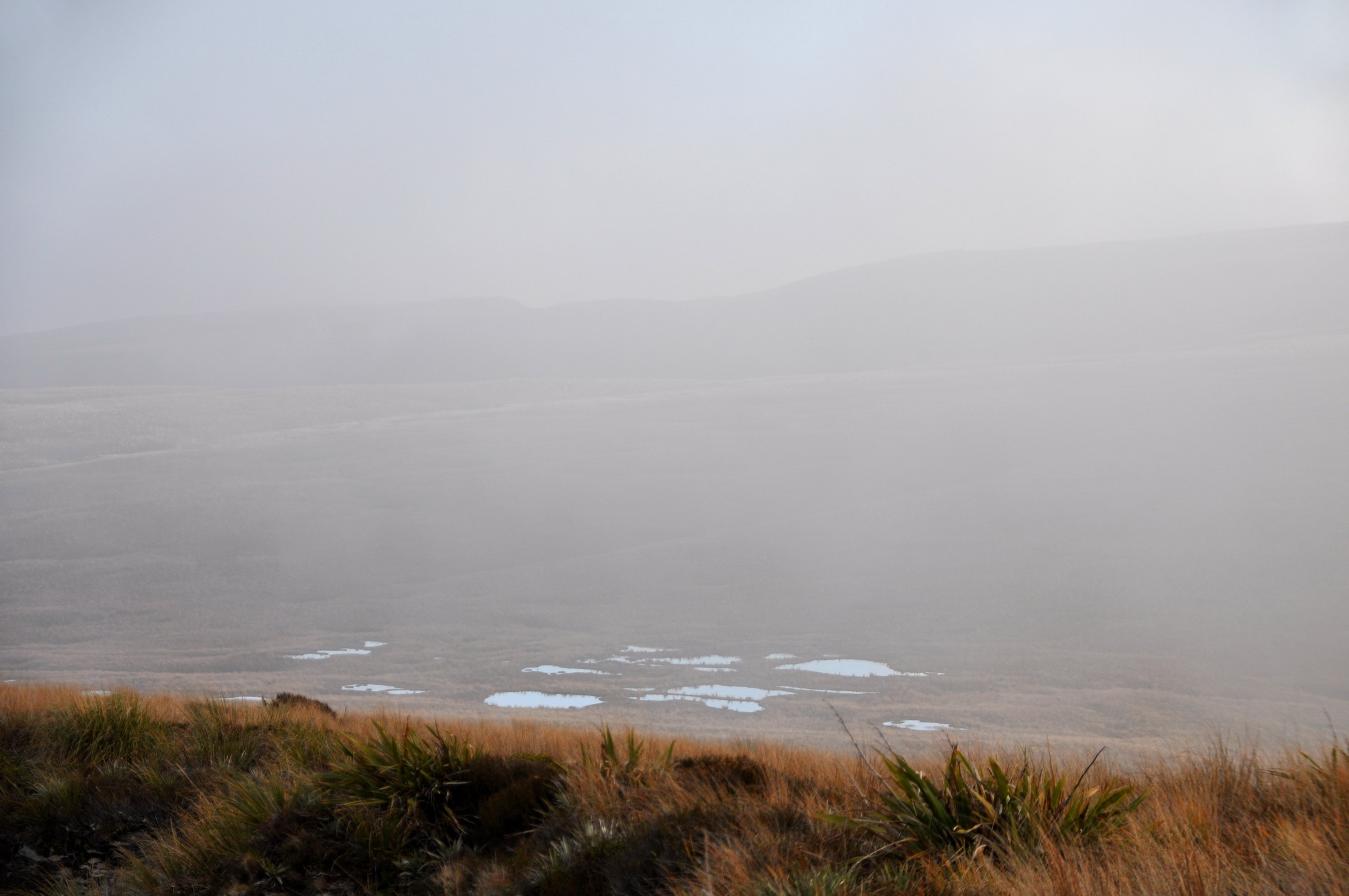
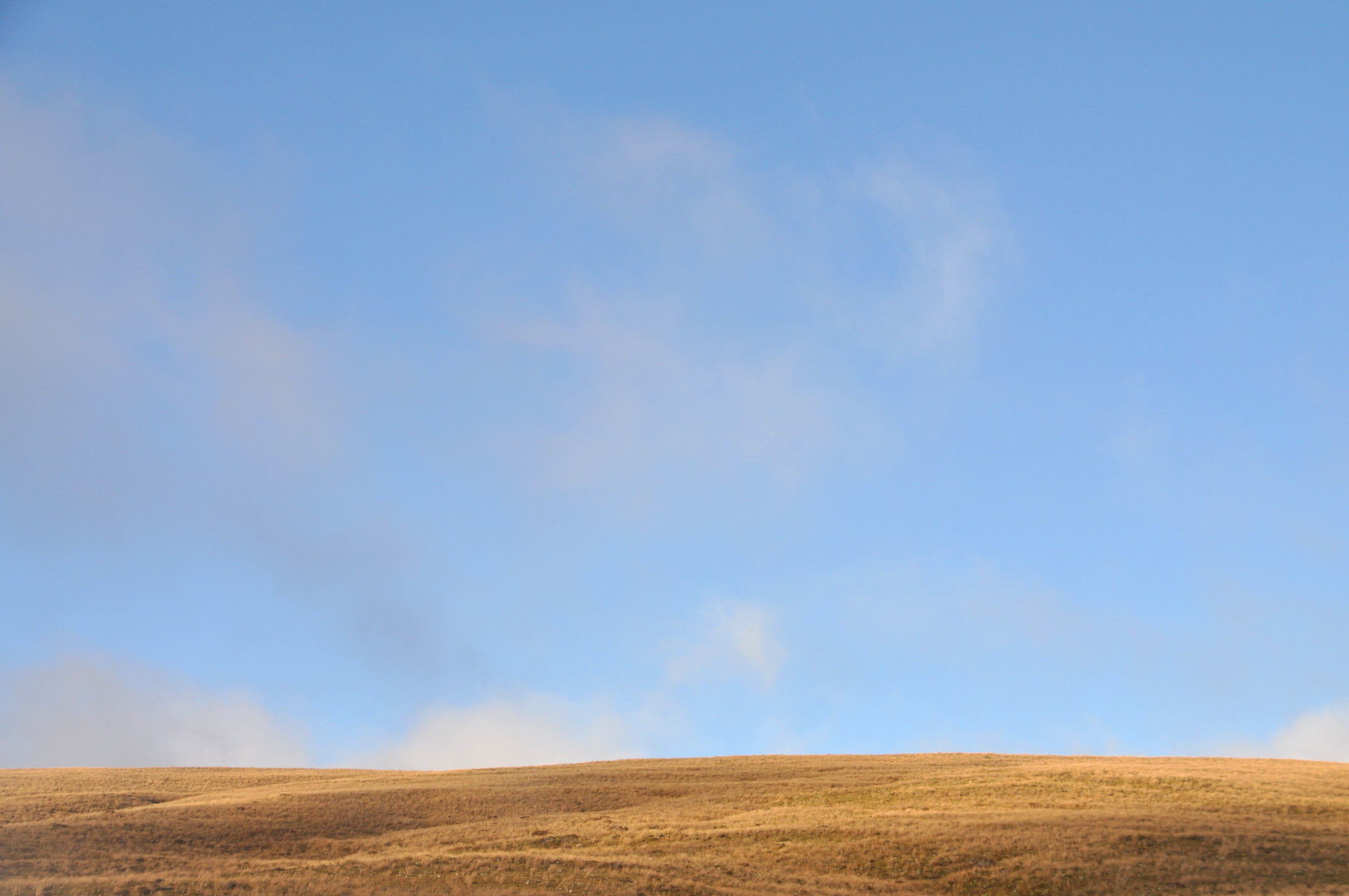
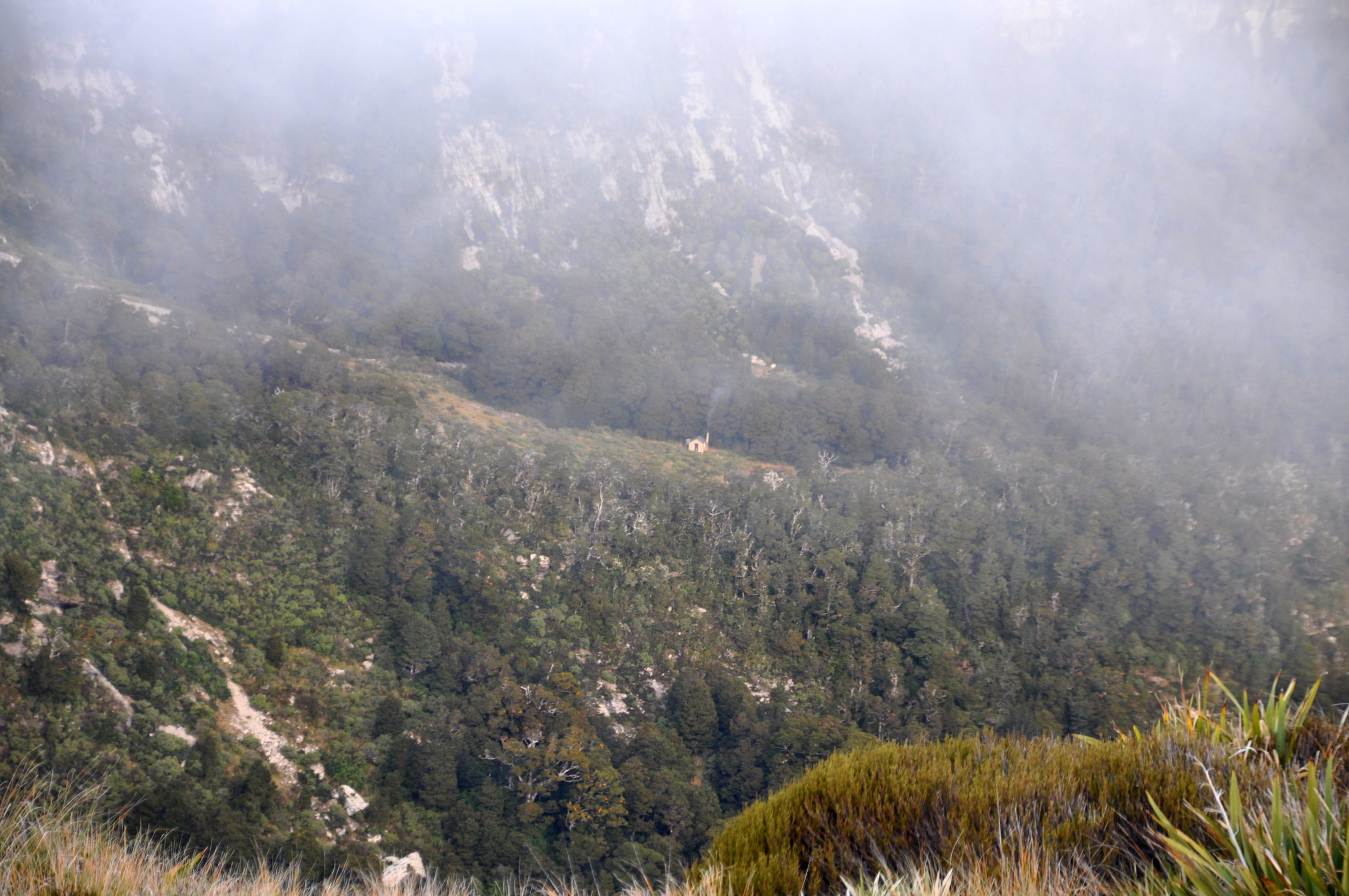
Walking up on top is easy. It's all tussock and no scrub. Only the bogs in the middle try to suck your feet in, and near the edges you have to keep dodging fissures. Towards evening the uniform grey cloud broke into ragged shreds and I could see distant crags from time to time. At one point, through a break like a scene in Tarkovsky's Solaris, I saw the little hut where Tanya was keeping warm. Smoke was rising from it so cosily. A meal and cocoa were waiting for me down there. Then I saw a tiny dot. It was Tanya herself, out to have a look at the world. I called, but she couldn't hear me. Too far away.
I came down in the dark with my torch, very hungry and thirsty. This time the fire was burning beautifully, without smoke in the room. We spent a long time warming ourselves beside it.
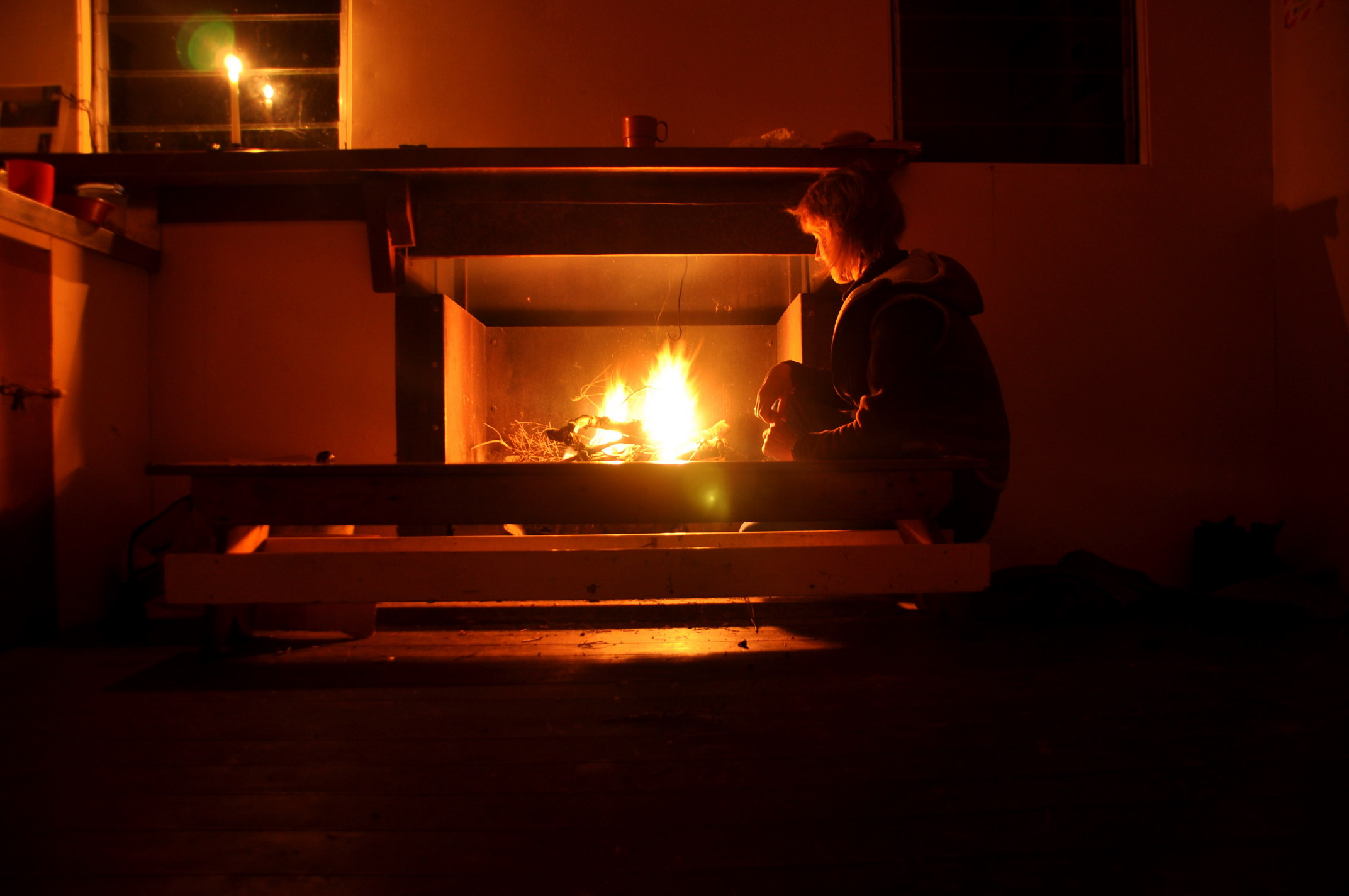
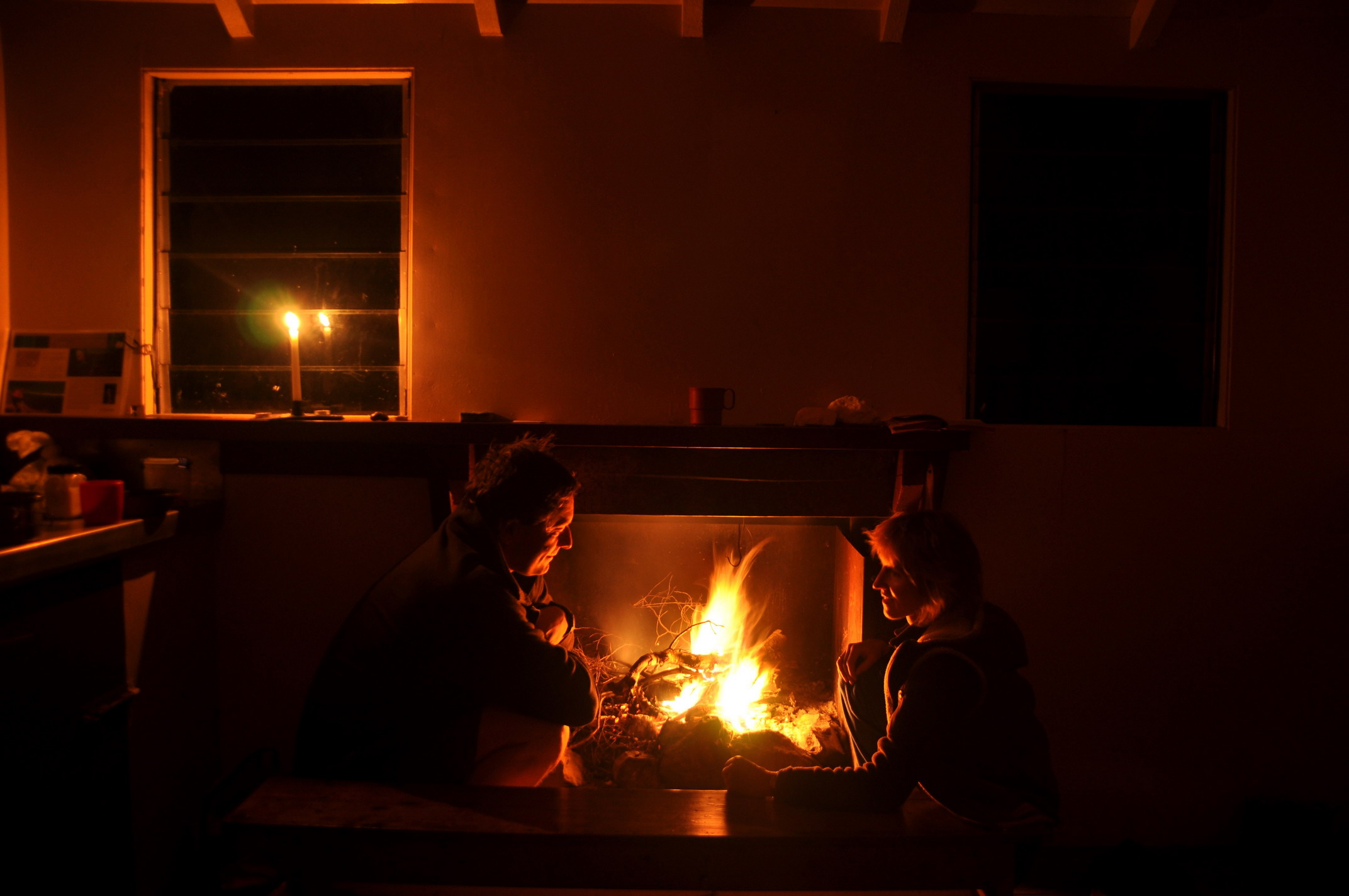
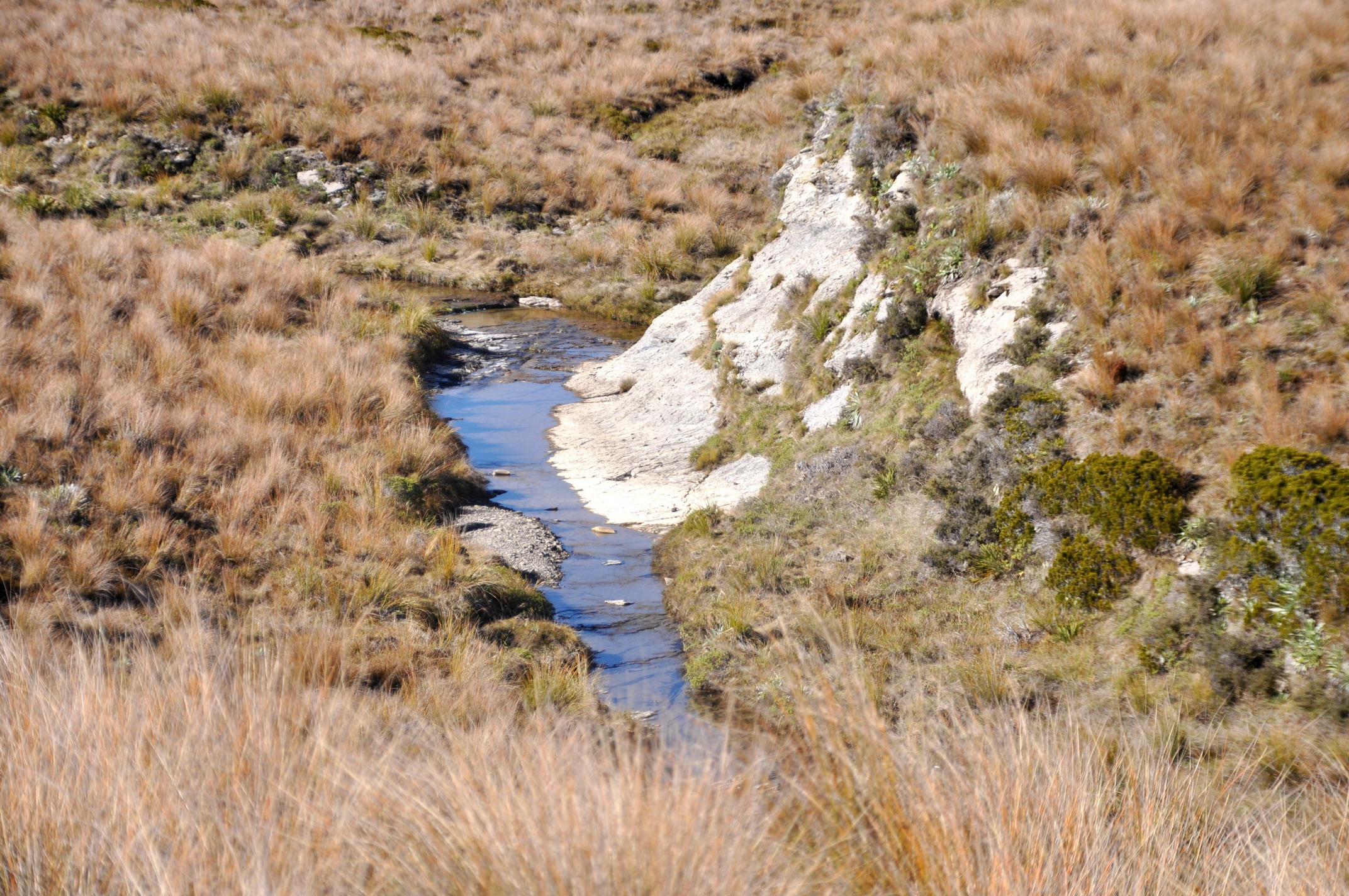
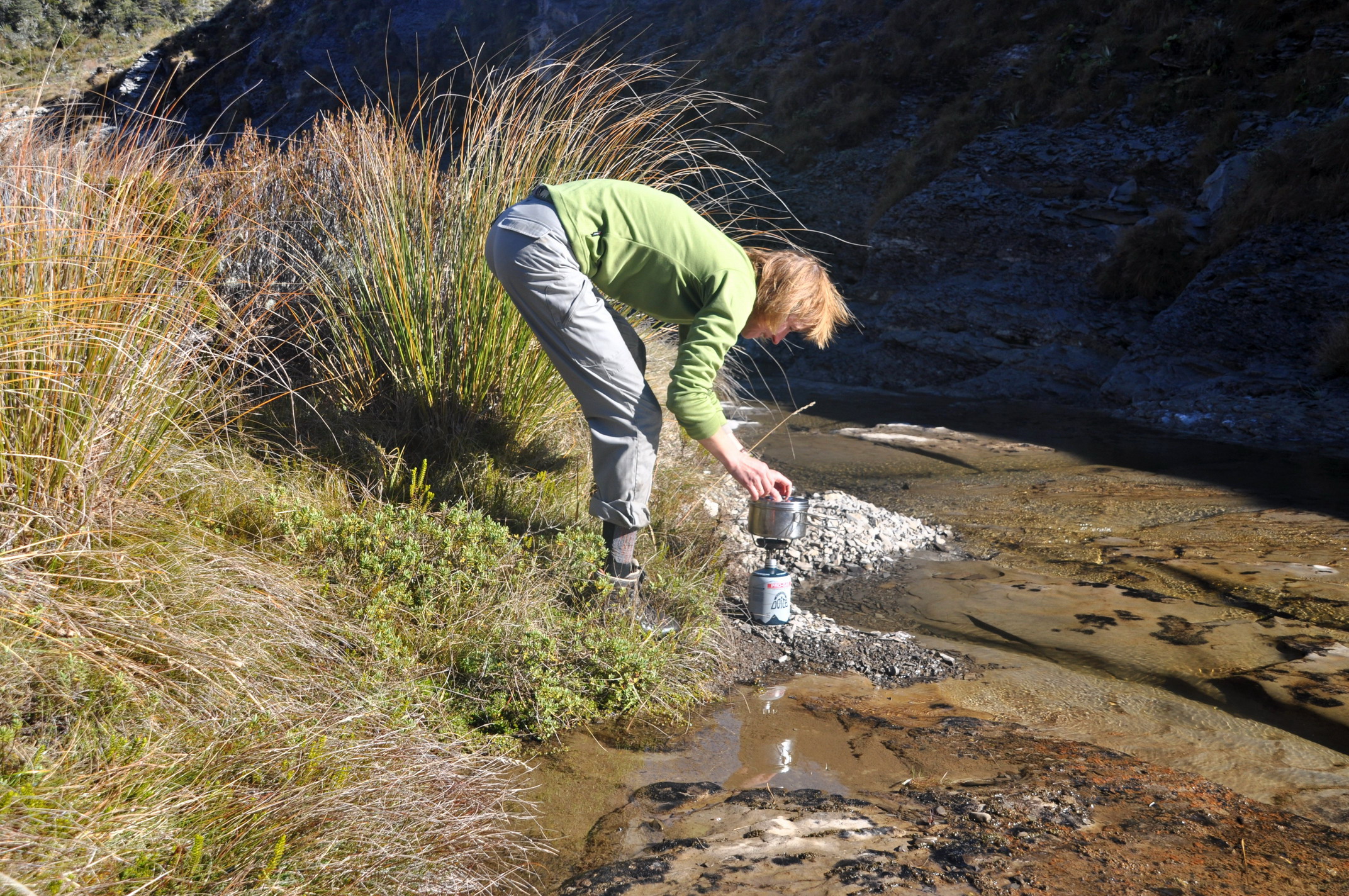
There was a hard frost in the morning. The altitude was over a thousand metres, and even the big puddles had frozen thick. This time it was a sunny day and as we walked we could see all the cliffs around us. It was easier going downhill, so we could afford plenty of breaks beside every good creek to drink tea. We had lunch at Poor Pete's. By evening we'd come down to Lake Matiri Hut. We could have gone on to the car, but why drive to Christchurch all night? We were happy to spend another night out, especially with the hut empty.
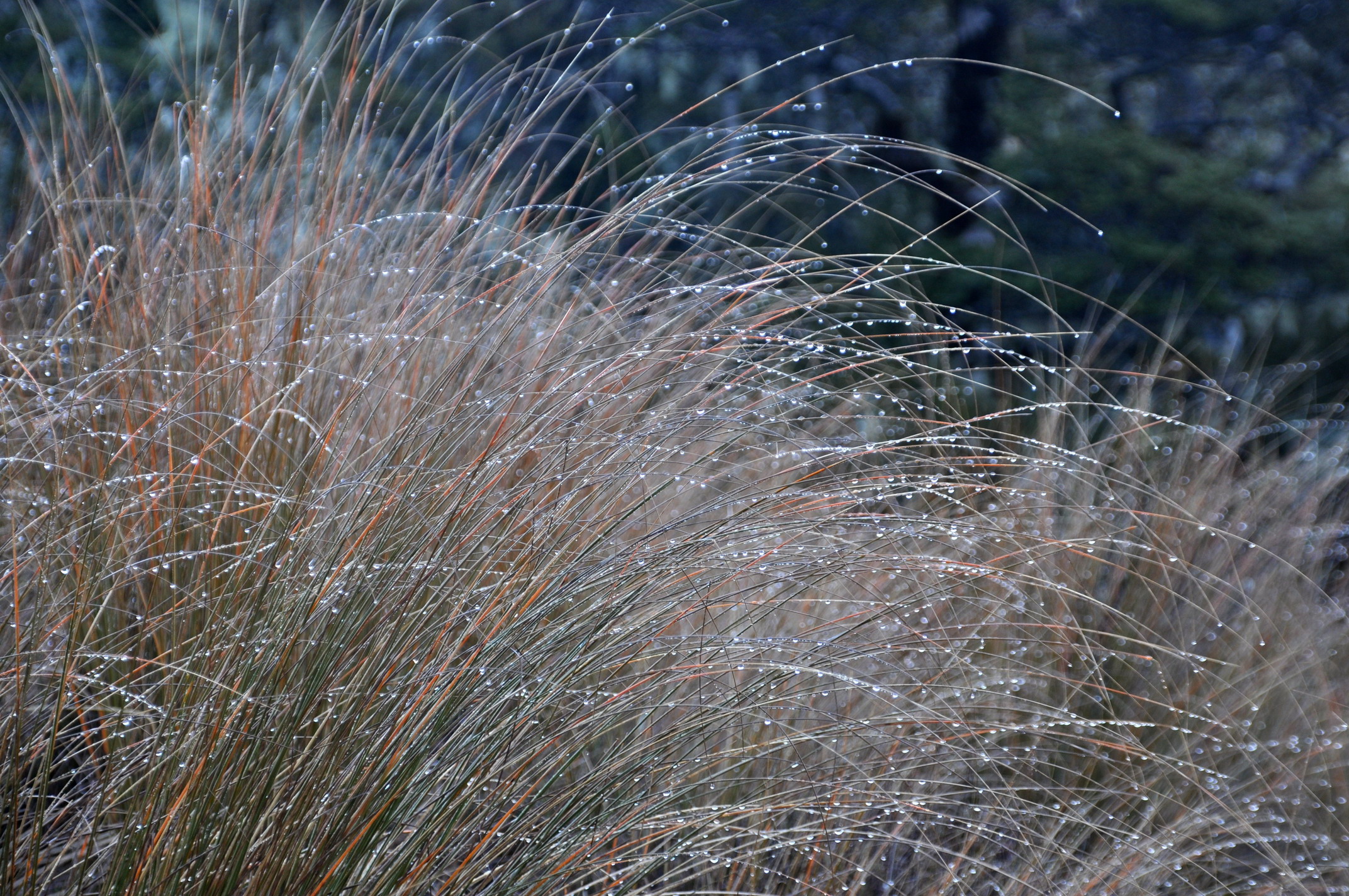

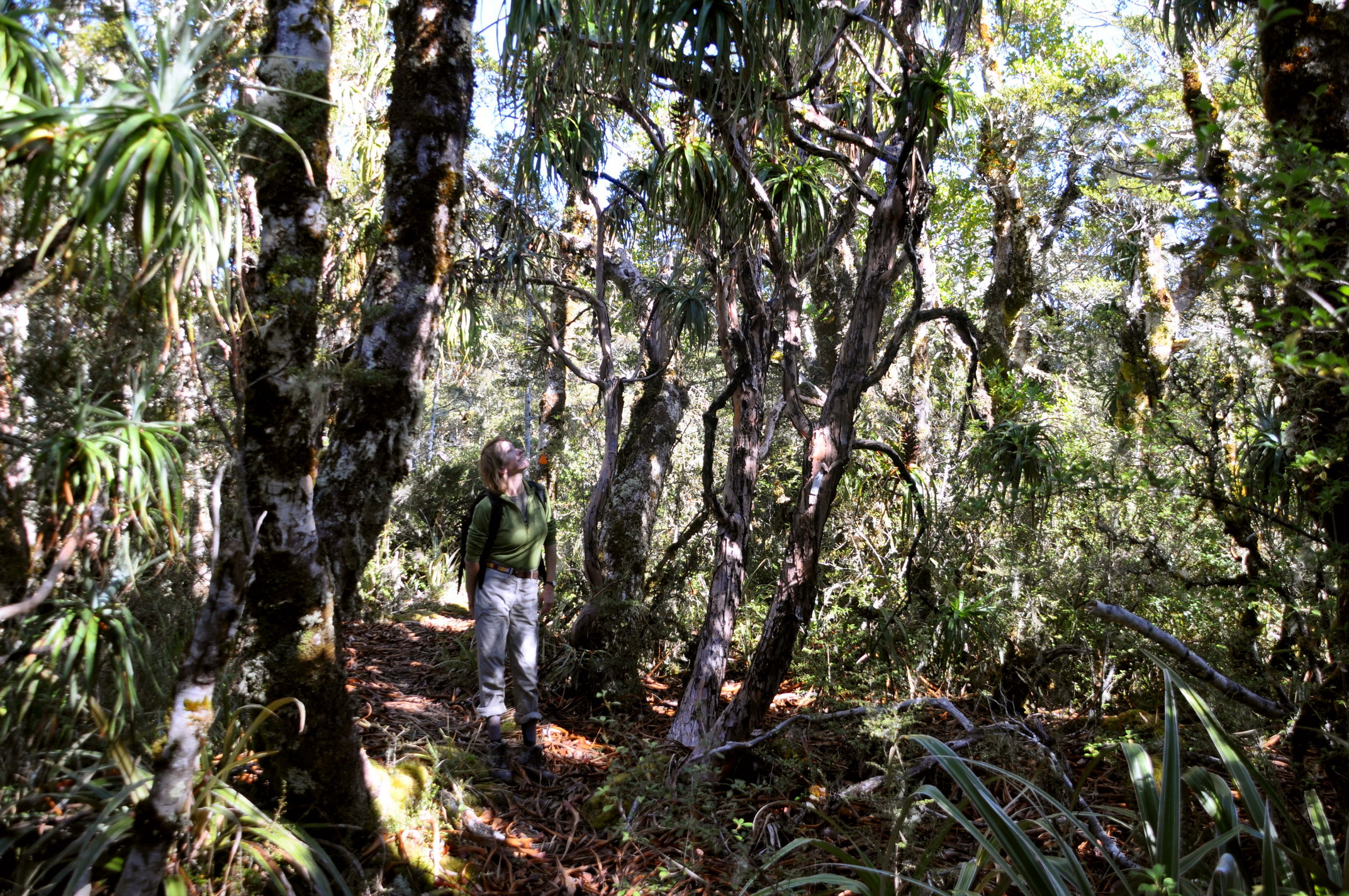
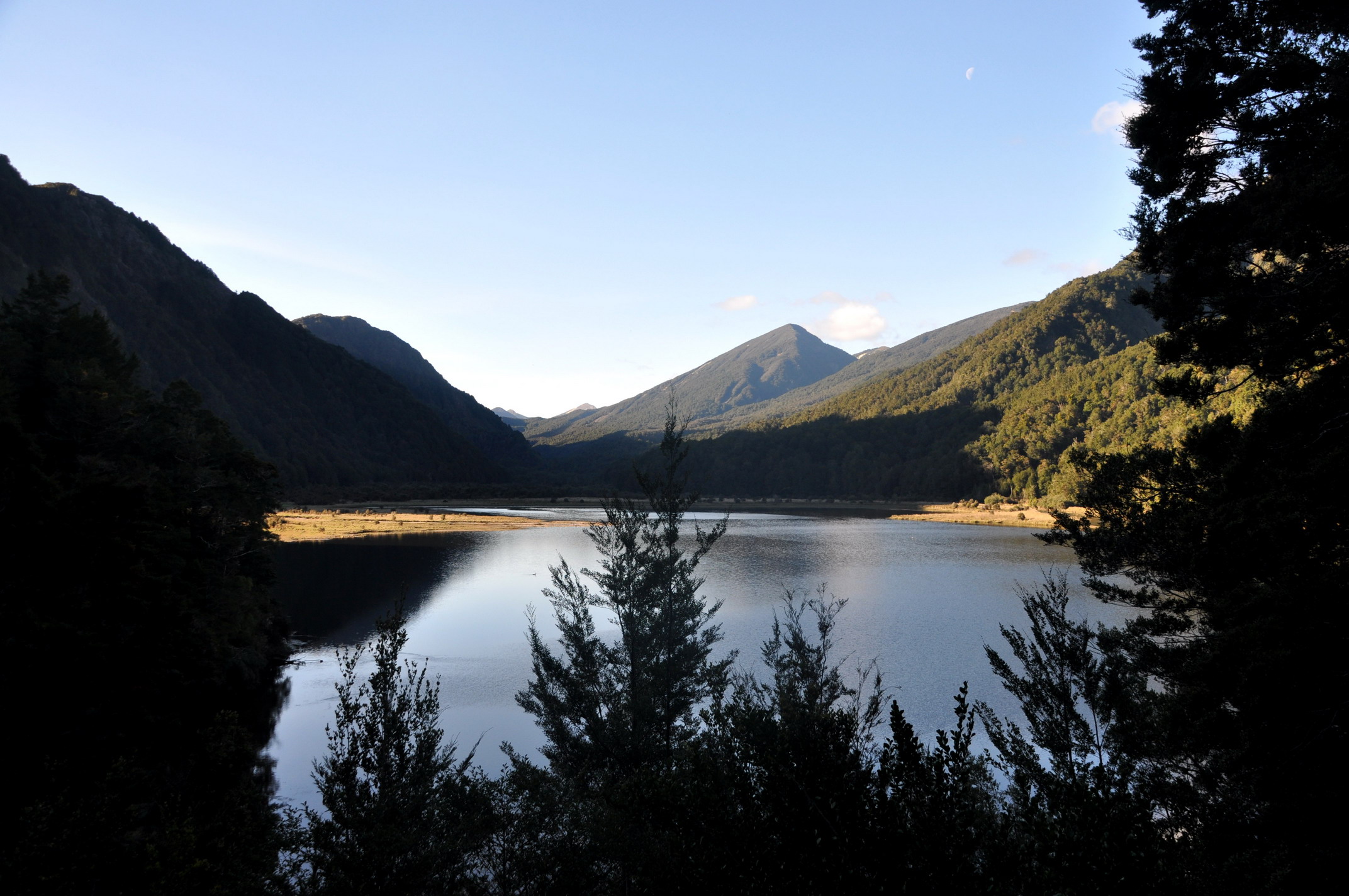
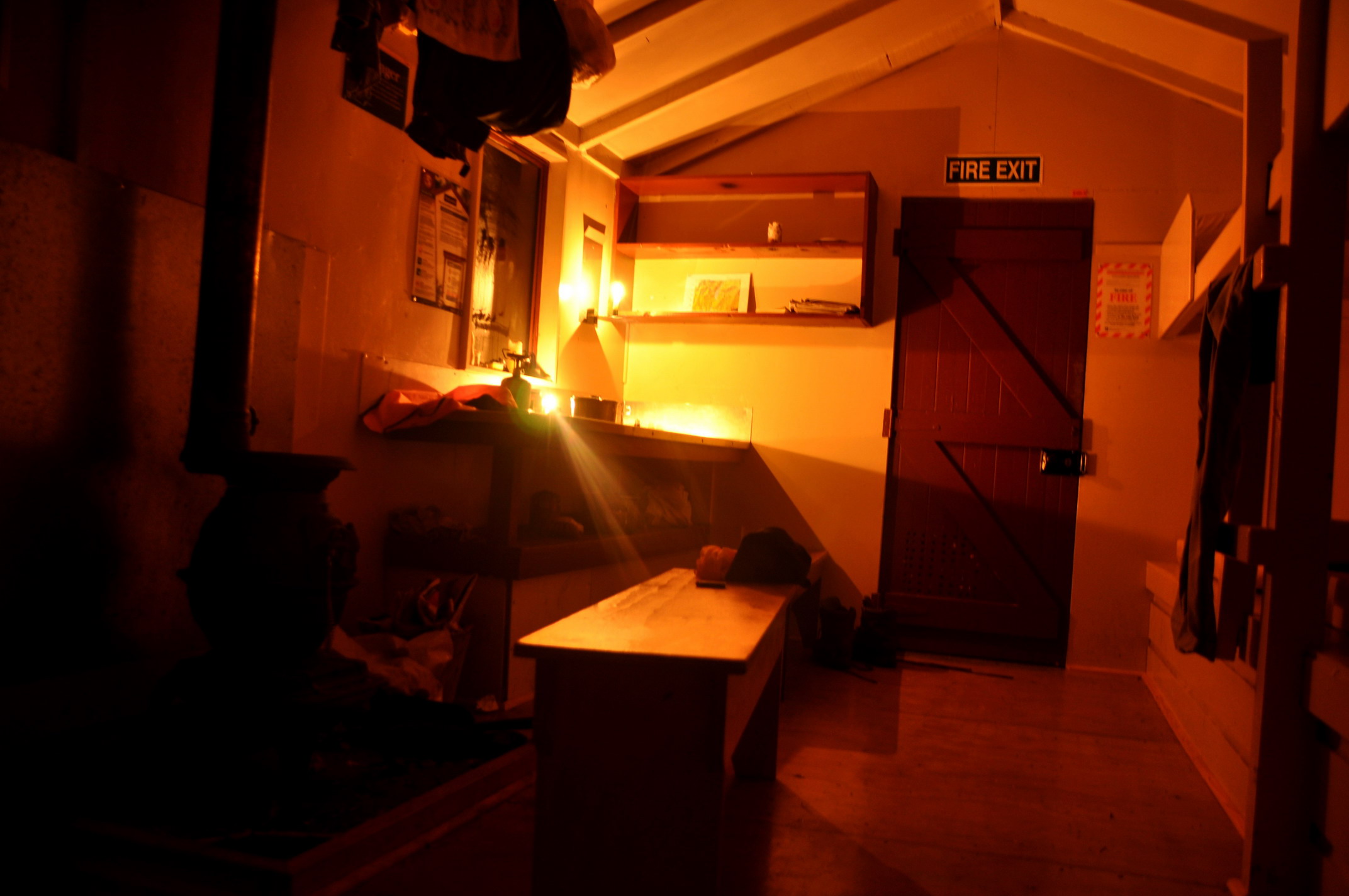
The weather turned in the morning and it started to drizzle. We weren't worried, with dry clothes waiting in the car. It was a very short walk, and we got there without trouble. Better still, the rain let up for a while when we reached the car and we had one last meal in the open air.
The track in Kahurangi National Park takes about two days. Exploring the Thousand Acre Plateau involves a 700-metre climb from the valley floor. See also New Zealand Tramper.