Trip report
Madagascar 2003. Don’t pull a lemur by the tail
Madagascar is a huge island in the Indian Ocean. It is usually counted as part of Africa, yet in many ways it is a world and a continent of its own. Much of the population traces its ancestry to Southeast Asia. Malagasy is related to languages spoken on Borneo. Colonisation brought the British, the French and even Norwegians, who settled in the highlands, where the cold climate reminded them of the far north back home.
Arabs also came to the island and settled on the north-east coast. Farther south there are people whose ancestors came from southern Africa. The mixing of these cultures has produced an extraordinary variety.
The natural world is stranger still. The island developed independently of Africa for millions of years. Many predators seem to have died out, while other creatures multiplied. The result is a remarkable diversity of species, most strikingly among the baobabs. Seven species had been recorded in Madagascar at the time, six of them found nowhere else.
A baobab is a mighty thing, the very picture of indestructible strength. Since childhood, especially after reading The Little Prince, one question had bothered me. How do the locals grub out a baobab and chop it up for firewood? Imagine being given a 600-square-metre garden plot and finding a baobab taking up 500 square metres. You’d have to do something about it. I almost wanted to take part in such a project. I probably never will, but it seemed a shame to go through life without seeing that fabulous tree.
For a long time the political news out of Madagascar had been grim. There had been a civil conflict, and then we heard there had been peace, or at least a truce, for a whole six months. Ratsiraka, the old ally of the Soviet Union, had been defeated. To me it looked as though common sense and the dollar had prevailed. It was time to go, before every baobab acquired a ticket office and hotels divided up the coast.
Getting to Madagascar was complicated. Flights came from Paris, Nairobi, the Seychelles, Réunion and Mauritius. Air France flew from Paris. Tickets were expensive. The return fare from Saint Petersburg came to US$1,556 per person, and even from within Europe it was at least $1,200.
Plenty of dreadful things have been written about Air France, and I’m afraid I have a few words to add. Why did we have to get to the airport at five in the morning and land in an unfamiliar city at one the next morning? It came down to the connections. Other airlines somehow managed to come up with schedules a human being could live with.
The aircraft itself was splendid. The Paris–Antananarivo A340 had every gadget going, including a screen at every seat. So why was there a half-hour queue for the women’s toilets at Charles de Gaulle? The paper had run out, and I suppose none of the Western passengers knew quite what to do. In the new long-haul terminal, including the departures to America, there were 50 seats for 20 gates. Among all the shops there wasn’t a pharmacy or anywhere to buy a bag, shoes or the sort of clothes you might need on the road. The moment Tanya fell asleep, someone took the book from her lap. She’d bought it at the kiosk next door. There was juice on the menu and none for sale. They’d run out, and nobody seemed particularly eager to get any more. This was a huge transit airport. Even little Auckland had a dozen places to eat, and we still wear some of the clothes we bought there. Perhaps the Almighty was displeased with the airport for a reason when the ceiling came down.
I don’t mind that the cabin crew were Frenchwomen of less than breathtaking appearance. There’s no rule saying everyone has to be beautiful. I’m less inclined to forgive how little English they spoke, or how hard it was to get a glass of water outside the appointed hour. First you had to find someone. Then you had to wake her up. Then you had to remember the French word for water…
Let them go on competing in the world market that way. I don’t even feel like opening a frequent-flyer account with them.
After years of Socialist customer service, though, we were hard to shake. Our spirits survived.
The sights from the window were magnificent. First came the Eiffel Tower, then the Alps and Mont Blanc, then the sea and the famous Italian volcano on Stromboli, which erupts daily. What a sight from a plane. Nearby was Vulcano, the island that gave all the world’s fire-breathing mountains their name. Then came Etna on Sicily. A pity the eruption was over again.
A short crossing of the Mediterranean and we were over Africa. We crossed the coast near Benghazi. Apparently the sanctions on Libya hadn’t stopped airlines using its airspace.
The Sahara comes right down to the sea. Hardly anybody lives along the shore, never mind deep among the sands. Just one little road crosses the desert. We had driven along it once. After clipping a corner of Egypt, the flight took us over Sudan. In the desert there’s hardly any rain, so you can see the ground almost everywhere, though there’s precious little to see. A bleak, stony plain. As we approached Khartoum, the Nile came into view. Its banks were bare and almost empty too, but at least roads and little villages started appearing.
There were extensive gardens south of the Sudanese capital, though they didn’t last long. The desert ended and the tropics began. Sudan’s seemingly endless civil war had divided the country into two halves right along the boundary between those landscapes.
Summer is the wet season here, and it rains daily. The ground vanished in a haze of cloud. We flew among huge banks of cumulus lit by the setting sun. Here in the tropics the clouds can rise 20 kilometres, higher than airliners can fly. Flying through one is no pleasure either. There’s heavy turbulence and often a thunderstorm inside, so the aircraft has to skirt those mountains in the sky. It was extraordinarily beautiful.
The sun set. We reached the Indian Ocean in the dark. Below the wing lay Tanzania’s largest city and informal capital, Dar es Salaam, a huge pool of light among the scattered lamps of neighbouring villages. It looked as if much of the country had no electricity. Zanzibar was another matter. Its coast glittered like a European one. The Comoros were visible too, but Madagascar looked dark apart from the capital and a few other cities.
We landed in the middle of the night. The temperature was 12°C. It could have been colder. Winter in July.
Arrival in Antananarivo
Visiting Madagascar in 2003 meant getting a visa. The embassy in Moscow issued one in a few days if you brought your original paid tickets and filled in a form. They weren’t rushed. You could tell from the register that some days nobody applied. The visa cost 200,000 Malagasy francs, or US$32.85. They only took dollars and didn’t give change.
Citizens of what I thought of as the usual countries could get a visa on arrival, a little more cheaply. Airport staff told me Russians could do the same; the embassy, on the other hand, insisted we had to apply in Moscow. I never established which was true. In any case, the dollar or two you might save had to be set against what happened at the airport. Several hundred people lined up at the one window that put visas in passports. Our big plane had been full, mostly of French tourists. Nobody was in a hurry. The Malagasy proudly said that things happened mora mora, very slowly.
We were glad to have got our visas first. We were among the first to reach passport control. The officer looked at the Moscow visa as if he had never seen one. He recalled the distant days when Aeroflot flew there and let us through. Then came customs. Cameras, video cameras and other equipment had to be declared, and it was best to lose neither the form nor the equipment. Failing to take it out with you could mean paying duty equal to what it was worth. Camera gear cost twice as much locally because of the huge duties; it felt as though they’d been devised with tourists in mind. We kept broken equipment rather than throwing it out or selling it to anyone, and took care with the serial numbers.
They checked the bags quite thoroughly. Airport staff spoke a little English, though it became harder to find English speakers beyond the airport. Almost everybody spoke French, but there seemed to be even less English than in Russia.
The Communists had been driven out, but something of Socialism lingered on. Exchanging money was a problem. Only foreign tourists, or people with a special permit, were allowed to do it. It was also a one-way transaction. You could exchange foreign currency for Malagasy francs, but to turn francs back into dollars you had to go to the black market and risk prison or, at best, deportation. I was told the police could let you go after stripping you of at least what you’d tried to change. A money changer and a policeman could work together, one doing the exchange and the other confiscating the money, and then split the proceeds.
On 8 July 2003 the official rate was 5,894 Malagasy francs to the US dollar. Inflation was high, and euros were as welcome as dollars. The rate was quite reasonable and there was little advantage in using the black market. The official procedure, though, was astonishing. There was usually a queue. For each individual banknote the clerk typed a separate sheet with the bank’s name, the serial number and the customer’s passport details, took it to be signed by three officials, and passed it to another official to enter into a computer and print a receipt. The hapless note was stapled to all the signatures and put in a safe. You were then called forward in queue order to collect the money for each note separately. A single 500-euro note would have been ideal. Banks refused to take one-dollar bills. Paying in foreign currency was forbidden and carried heavy penalties for both parties, though you could occasionally slip someone a dollar when paying for something.
At the airport the procedure was a little simpler. It still took about ten minutes per person. That was when it paid to have our visas already in our passports. We had got there near the front. A hundred people at ten minutes each. I could see why the flight came in after midnight. They could all be finished by morning and still have the day ahead.
Formalities over, we stepped out into the vast, real world of this fairy-tale island.
There were plenty of touts for travel agencies. You weren’t going to be left without a bed, and nobody forced you to take anything. We had tried to book online beforehand; only the most expensive hotels were beginning to offer it, and there had been nothing available when we looked. Car hire was barely an option either. Budget had an office at the airport and another on the main street, Araben’ny Fahaleovantena. Both were shut when we were there. The facilities you might expect alongside car hire didn’t exist. Roads were poor, there were no signs and the maps were approximate. No breakdown service and no mobile signal outside the larger towns.
We gave in to the airport agents and picked a hotel that supposedly had a room with a shower. They grabbed our bags and carried them to a taxi. Four people got into the battered thirty-year-old car with us. The agent assured us there was nothing to worry about. He was probably right, even as we picked our way through poor neighbourhoods along broken asphalt with no streetlights. It was Saturday. Young people danced to tape players in lit-up shacks doing service as discos, and zebu carts came the other way down the road. The city was going about its evening in a way completely new to us. Wonderful. We were starting to like the place. I thought we might have a good time there.
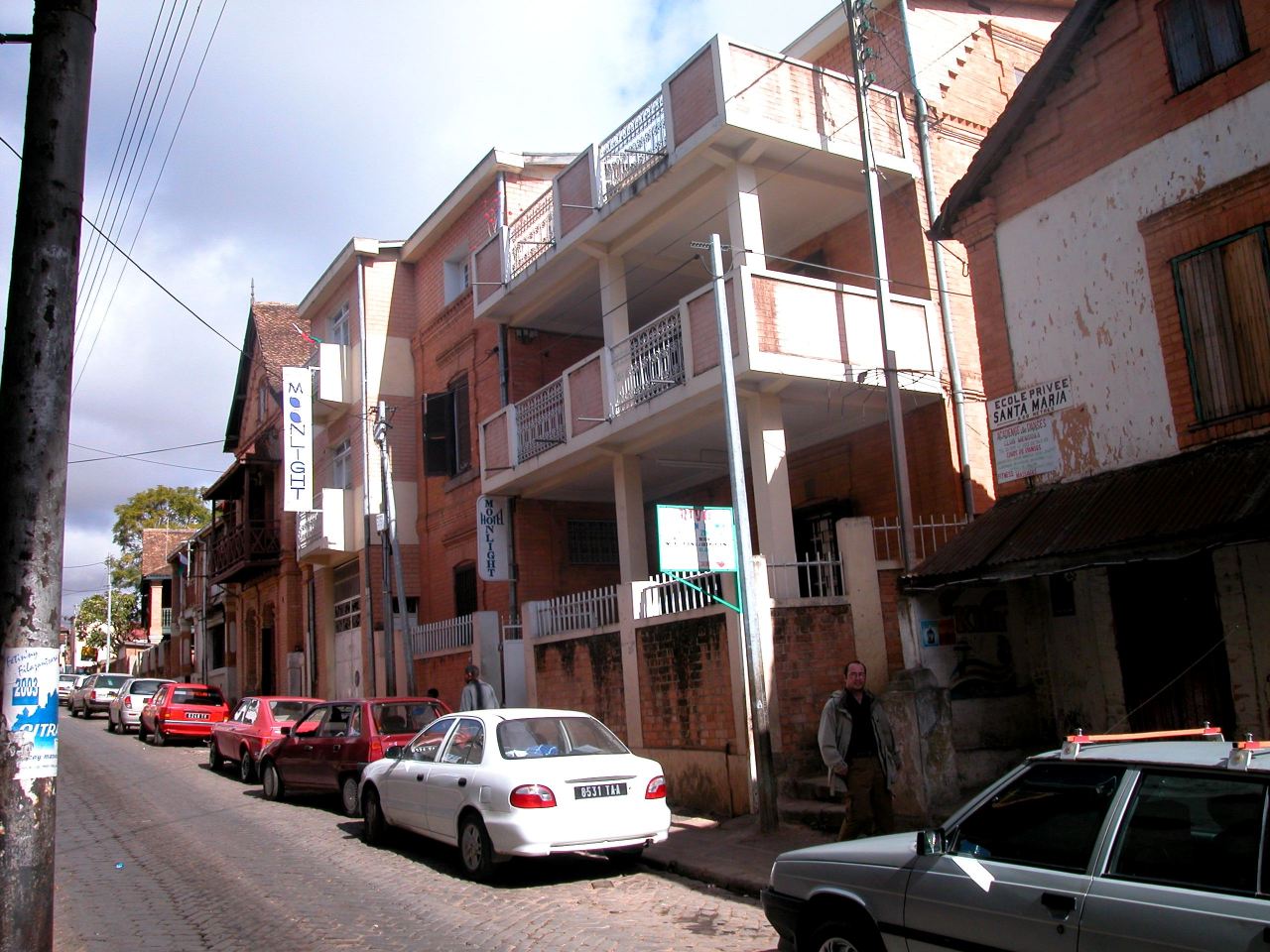
They took us to the Moon Light Hotel, a ten-minute walk from the centre. The fare was 100,000 Malagasy francs. By local standards that was a lot. It would buy fifty rickshaw rides, though a taxi driver’s right to wait at the airport probably cost quite a bit too. A hundred thousand francs was a salary, but the taxi driver was human and wanted a tip. Another ten thousand, perhaps? Oh, all we had were twenty-five-thousand notes. What a shame, no change, so twenty-five would do. We gave him twenty-five. He took it without blinking. Then two more of the men who’d climbed into the car came to life. They’d helped us carry our bags at the airport, they said. Another ten thousand would do, or twenty-five since nobody had change. Each. We told them to get lost, wrested the bags away and took ourselves to our room. The shower turned out to be in the corridor. By then we were too tired to look for another hotel. The corridor would do. We could do everything else tomorrow. Now for sleep.
Lights out, and the mosquitoes came out hunting. We’d brought malaria tablets. At the time we’d been told not to worry about yellow fever or dengue, and that malaria was unlikely in the capital. The floodplains of wild rivers, we were told, were another story.
We woke around ten. Outside the window, noisy African life was in full swing. Children shouted, cars honked, cocks crowed. The travel agent from the airport was on guard outside our door, keen to sell us a tour of the country. He offered a car with a driver for eight days, for €600 or 4,500,000 francs. It was Gasikara Viaggi Tours, tax number 6167858. The Antananarivo phone was 22-295-52 (+261 33 22 00 814), the manager’s mobile 032-02-228-68 and the email gasikaraviaggi@dts.mg.
Even the manager turned up. The price seemed bearable. Hiring a car without a driver looked dearer, assuming there was anywhere to do it. Budget might open on Monday, but we didn’t want to spend the time waiting.
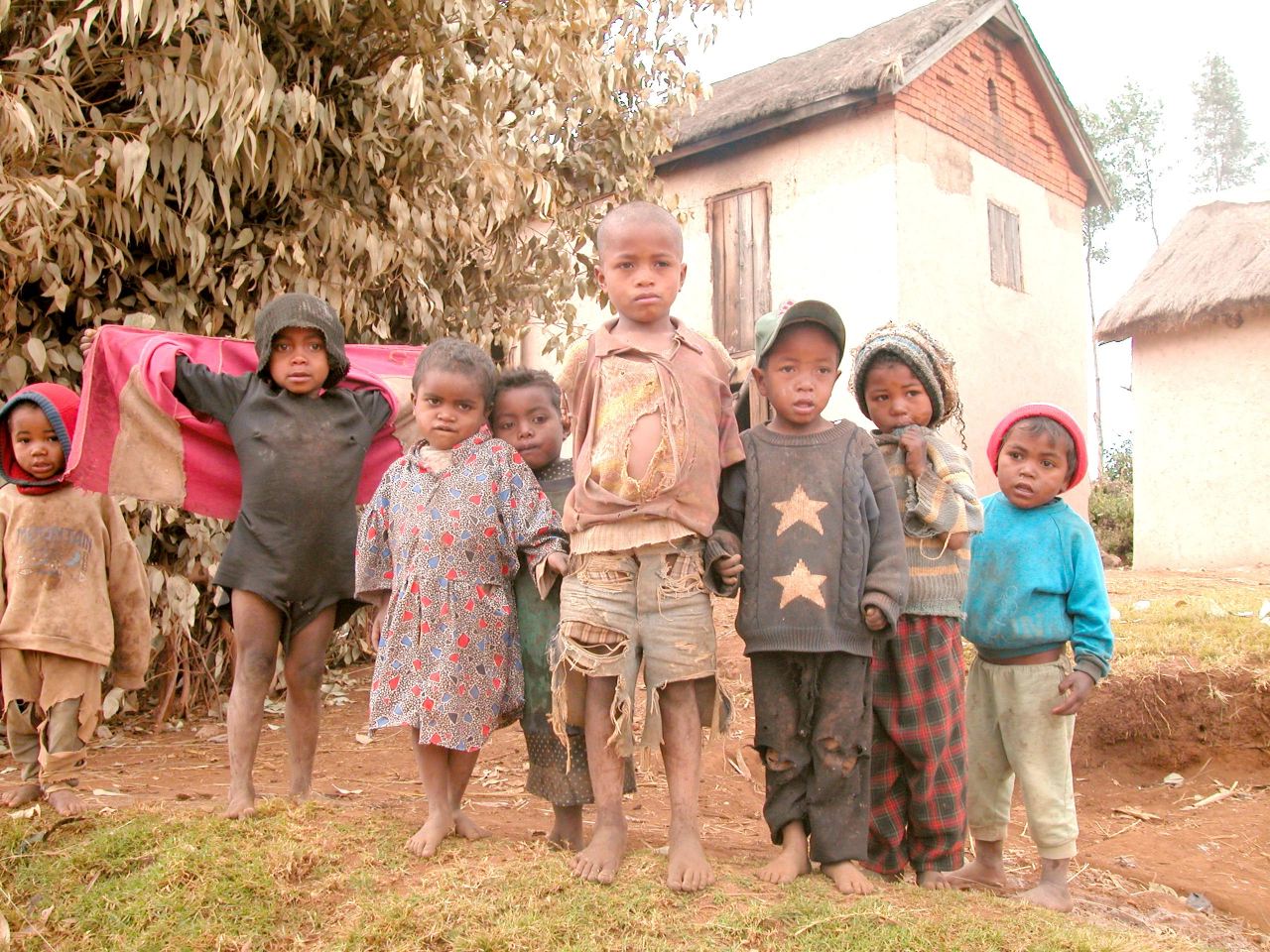
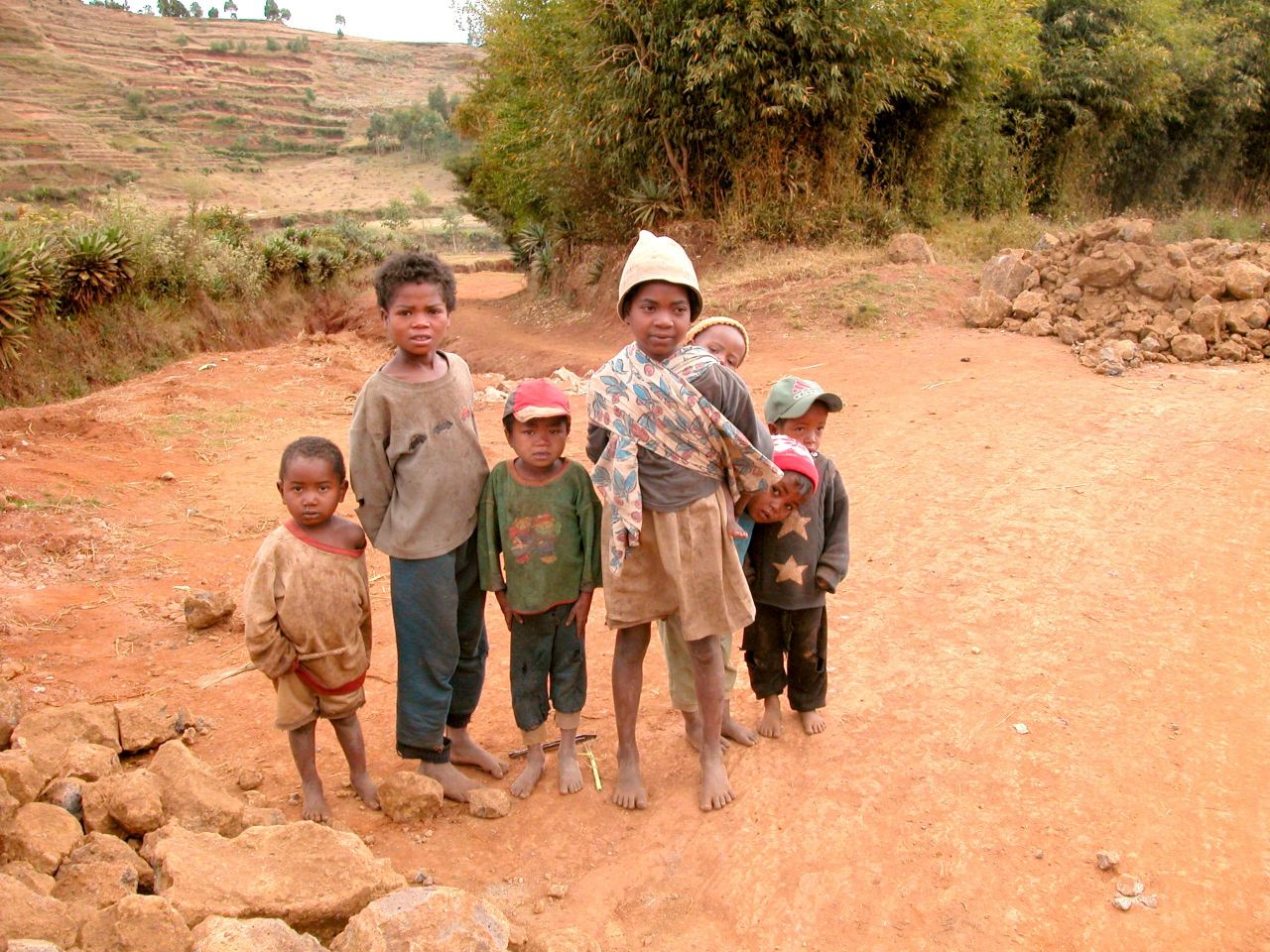
We agreed on noon and went up to the open top floor of the hotel for breakfast and a look at local life. Women carried basins on their heads. Children in rags played in the mud. Even in the middle of the capital the poverty was striking. This vast, handsome city built by Europeans had fallen into neglect, like a nobleman sent away to work in a logging camp. There hadn’t been a lick of paint in years. Some buildings were simply ruins. Our guide would point and say, that one was burnt seven years ago, in the political events; and that one a year ago, in the next round. For people here, political events had taken their place alongside floods, cyclones and droughts as a kind of natural disaster.
That seemed quite true to me. The country’s greatest natural disaster, I thought, had been the turn to Socialism and the rise of Didier Ratsiraka. He befriended the Soviet Union and set out to build a bright future. Unlike many dictators in my eyes, he wasn’t doing it to line his own pockets or build palaces and ski slopes. He believed in an idea. It was the idea I thought was wrong. The results soon came. Drought and floods struck, sometimes at once. Children died in their hundreds of thousands from hunger. Help from the great Socialist friend kept things more or less under control, but when the Soviet Union collapsed, people had to think about democracy again. The regime fell in the early nineties. First they opted for capitalism. Then, on discovering they had no capital and would have to work, they brought Ratsiraka back as an elected president. During these events the Queen’s Palace in the middle of the capital was burnt.
The natural disasters resumed. Floods swept away bridges and the crops that had already withered in the drought.
At the next election the people in power used their position. The official result gave it to Ratsiraka. On the unofficial count the winner was his rival, Marc Ravalomanana, a businessman and the mayor of Antananarivo. Unrest swept the country. Most of the bridges were blown up. Children were starving, but in 2002 the West intervened and recognised Ravalomanana as the winner of the 2001 election. Ratsiraka was given refuge in France. He fled on 5 July 2002 and, I thought then, was unlikely to risk showing his face in Madagascar again. Life began to improve. At least people no longer seemed to be starving or killing each other.
The triumph of Western ideals was still a way off, but ATMs had recently started working in the capital. You could walk up to one and take out the local money you needed. People there didn’t seem to see the point of this machine that fed you money. For tourists it meant getting francs without standing in a long queue.
The biggest note was 25,000 francs. The ATM issued crisp unused notes, no more than half a million at a time. The custom was to take nine notes, wrap them in a tenth and staple the bundle through the middle. That made a neat quarter-million, and put a hole in every note. They did it with dollars too. Now I knew where the American presidents with holes in their eyes came from. The smallest note was 500 francs. Tourists rarely needed anything smaller, but you could still find coins at markets and in poor areas, decorated with baobabs, zebu, orchids and Socialist tractors. Excellent souvenirs. The denominations took some figuring out. The coins were in ariary. One ariary was five francs, the other way round from what I’d expected. On top of that, inflation had eaten away at the currency and the coins had been revalued by a factor of five. A coin that said ten ariary and fifty francs was actually worth fifty ariary and 250 francs, or half a 500-franc note.
Debit and credit cards were seldom accepted in shops. We used ours to buy Air Madagascar tickets once (Air Madagascar). It was the only place that didn’t charge an enormous supplement for paying by card. And Antananarivo was the only city where we found ATMs.
Now that we had enough cash, we took a short walk through the centre, stopped at a café and had coffee. They grow it in Madagascar and they certainly drink it. The taste was unfamiliar, but there was hardly anywhere you couldn’t get a cup of the indispensable stuff.
A crowd of self-appointed guides followed tourists around. Stop anywhere and a man would materialise to tell you that Antananarivo was a beautiful city and that the building in front of you was such-and-such a palace. Let him get a minute’s patter in and he’d ask to be paid. The only way I found to get rid of them was to say loudly at the outset, “No guide, please!”
South through the highlands
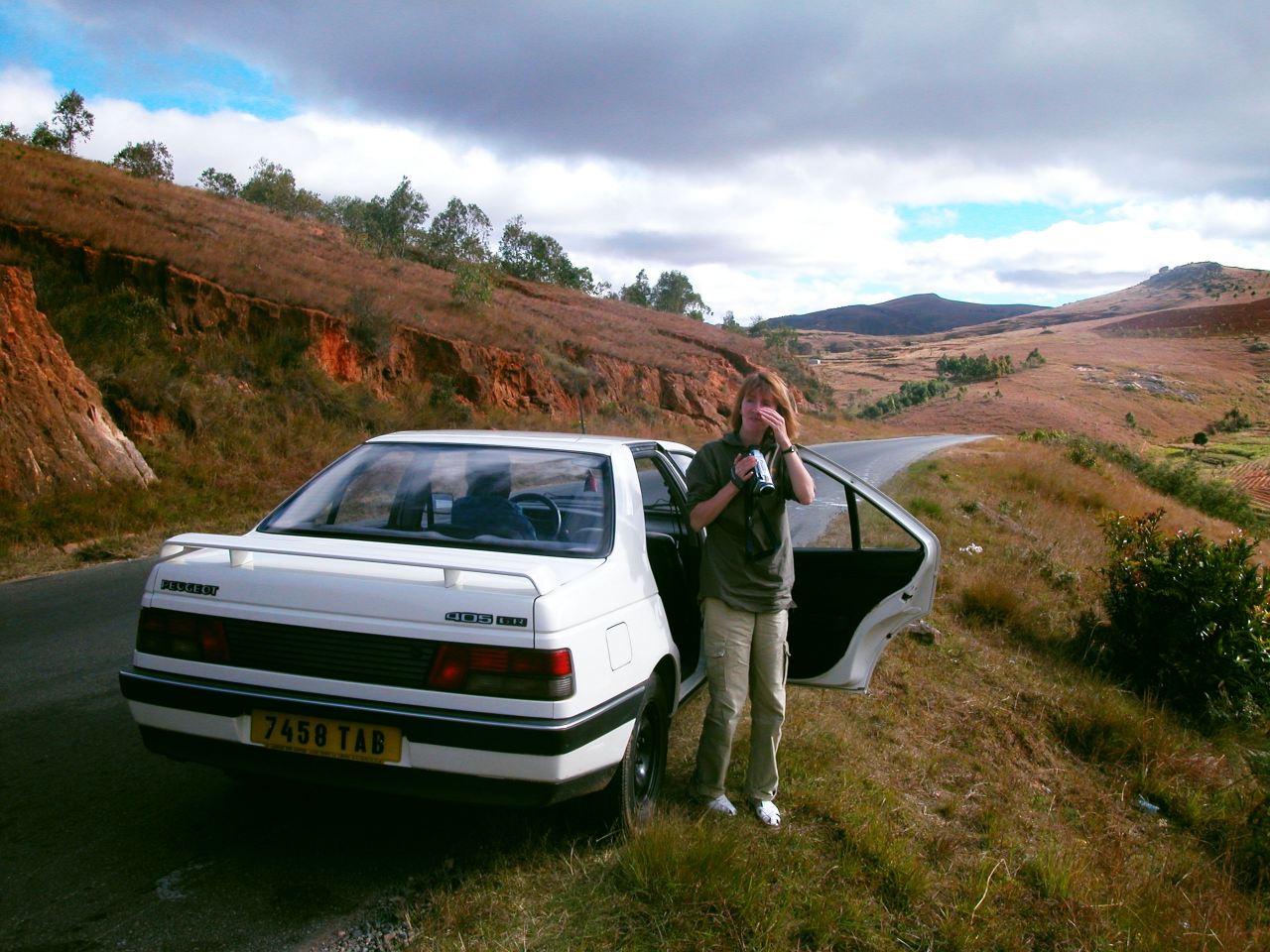
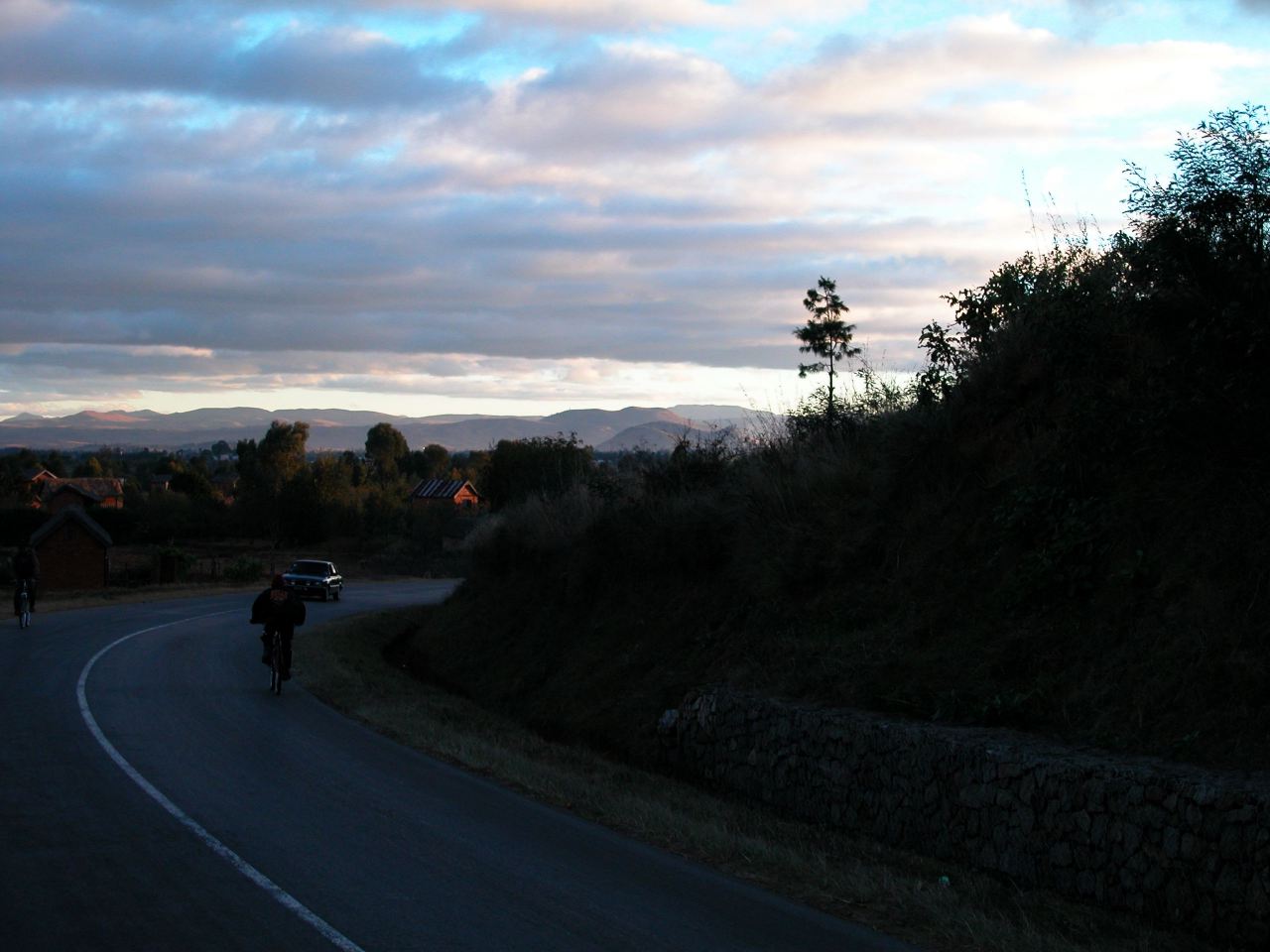
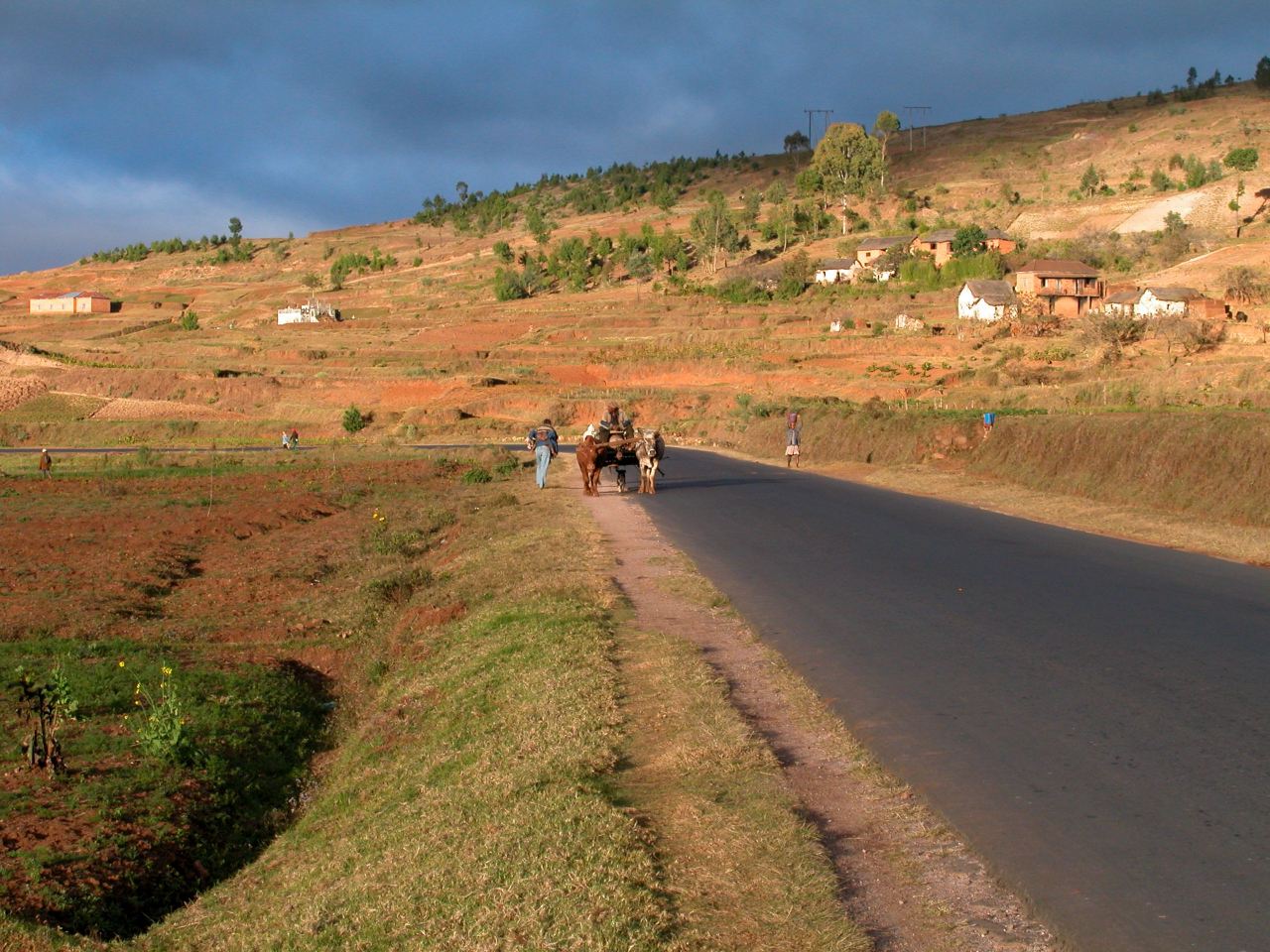
At the appointed hour the manager met us and introduced our driver. Parany was a shy and thoughtful man of forty. He spoke a little English. The car turned out to be a white Peugeot 405. We left town and headed south on the main road, the RN7. Near the capital it was an ordinary two-lane road with a decent asphalt surface. Most of the traffic was bicycles and carts drawn by zebu.
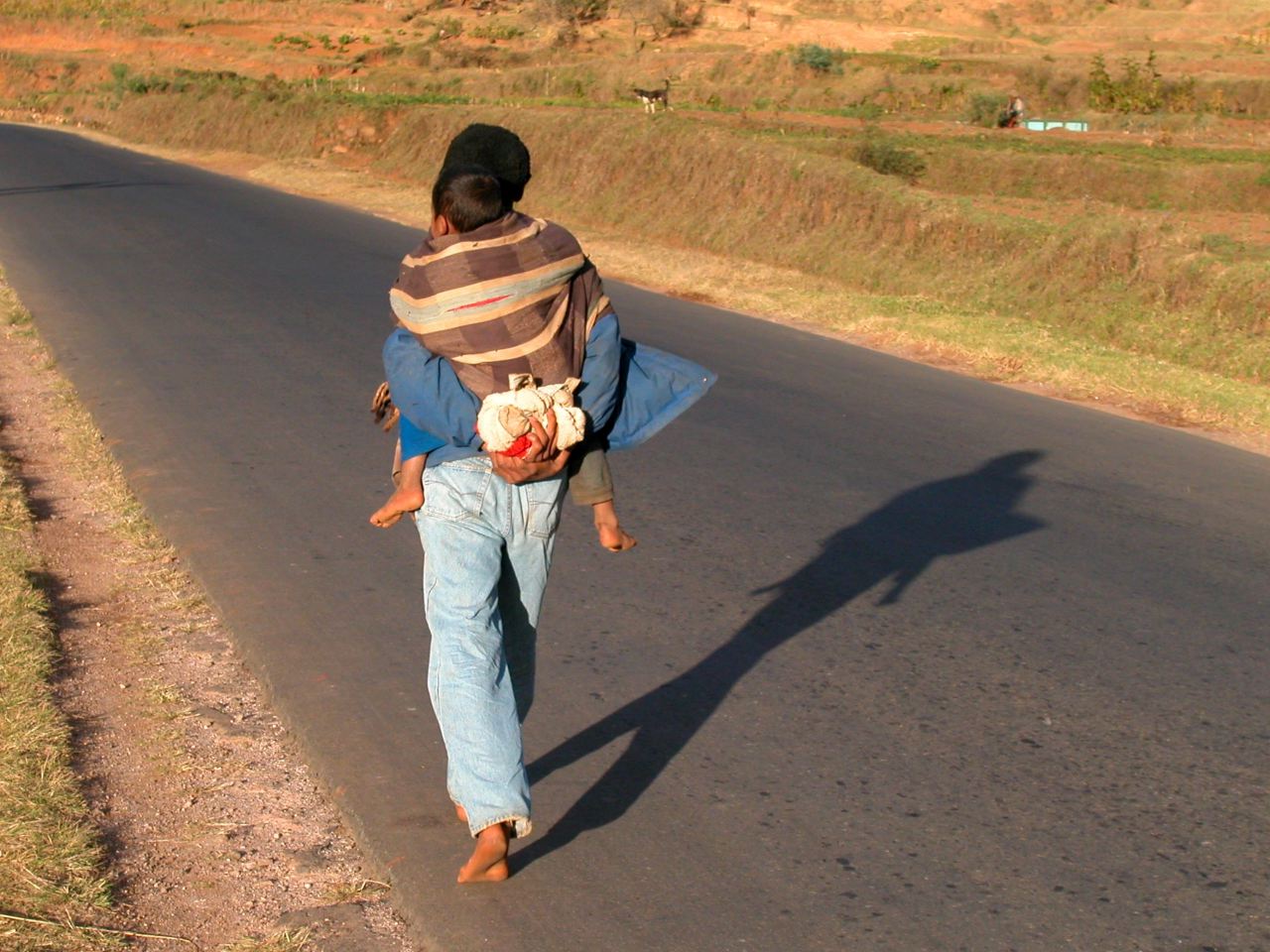
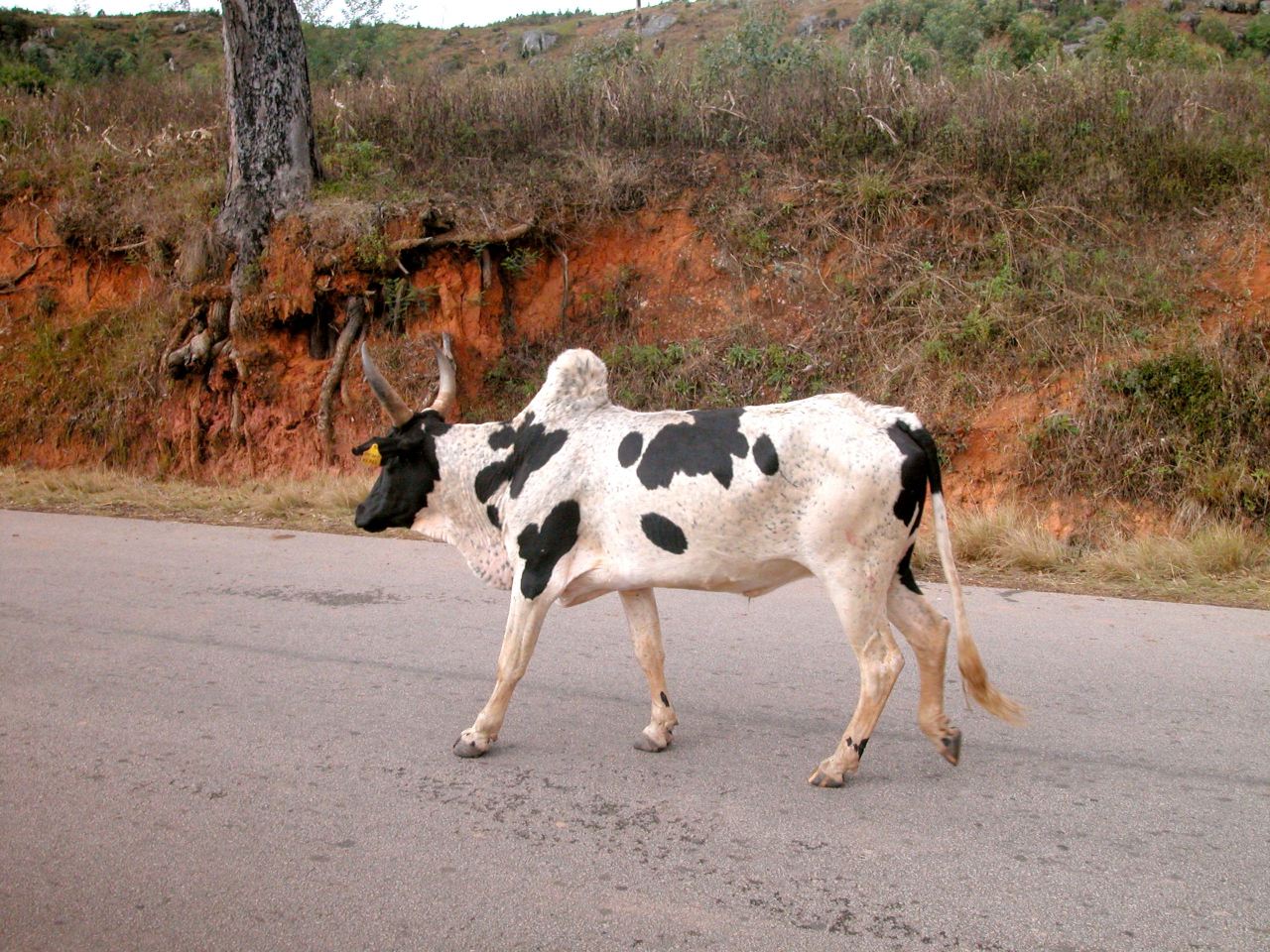
A zebu is a smallish cow with a hump above its shoulders. The word is pronounced the French way, zébu, with the stress on the long final vowel. In Madagascar the zebu is sacred and seems to hold the entire universe together. It is also the national food. The meat is delicious, softer and more aromatic than beef. We ordered it every day. A serving with a side dish generally cost about 20,000 francs. That was expensive by local standards and more of a special-occasion dish than daily fare. Every ritual seemed to involve the zebu. We were told that before a young man married he had to steal a herd of a hundred as proof that he had become a man. Even wealth was measured by herd size. “He’s very rich,” the Malagasy would say, “he has a thousand zebu.” How much that was worth in cash depended heavily on the place and the animal. Herds generally grazed in the south and were sold and eaten in the north, a thousand kilometres away. Huge herds were driven along the main north–south road. The herders had to buy hay and food and pay for the right to pass, so much of a herd never reached the capital, and the value of what did went up several times over. A white zebu with black spots and a fine hump was the most prized. That was what a person of standing was meant to use on ritual occasions. In the capital it might go for two million francs, roughly US$300. A small black animal with no hump in a distant village could be had for 60,000 francs, less than ten dollars.
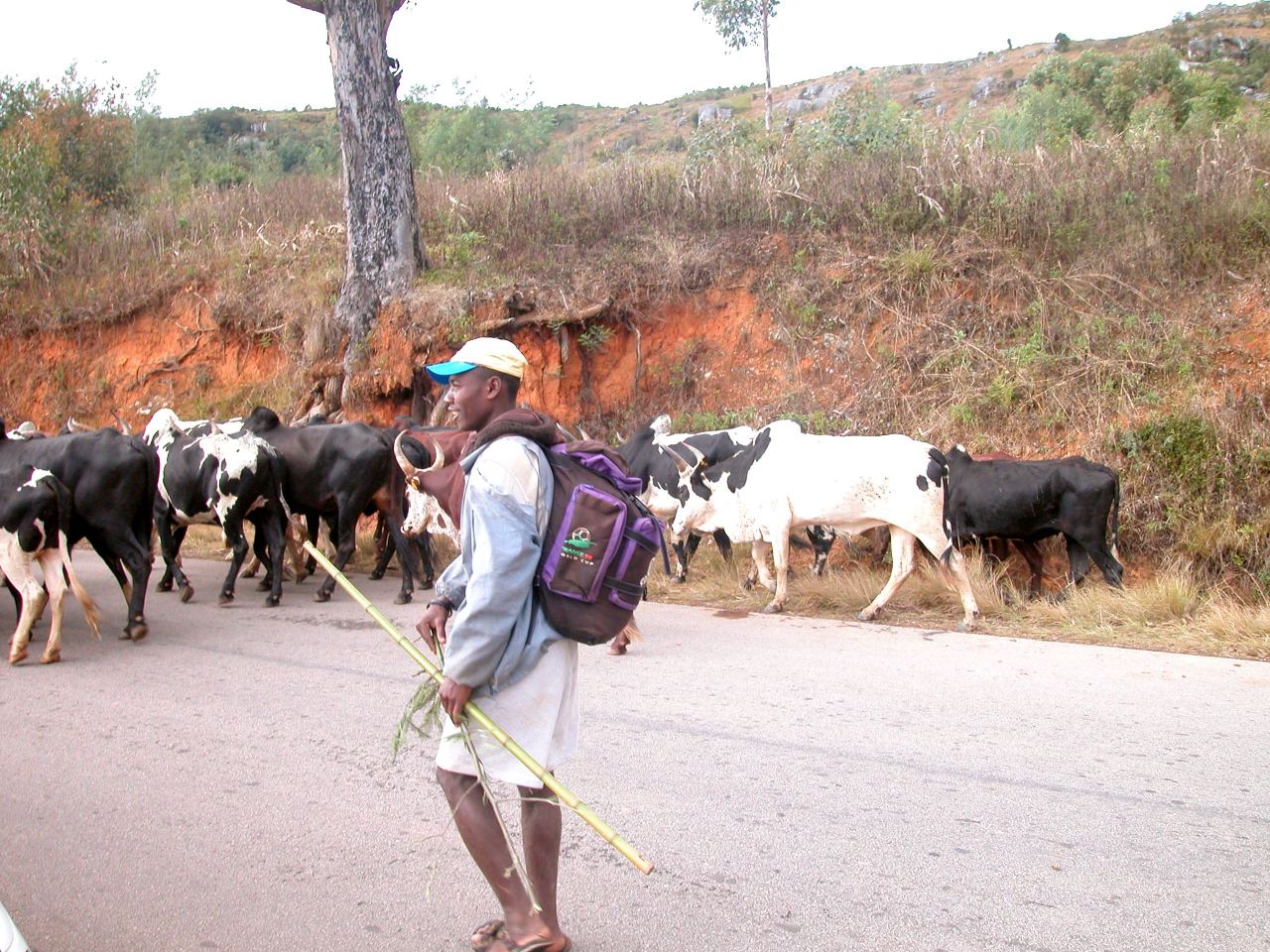
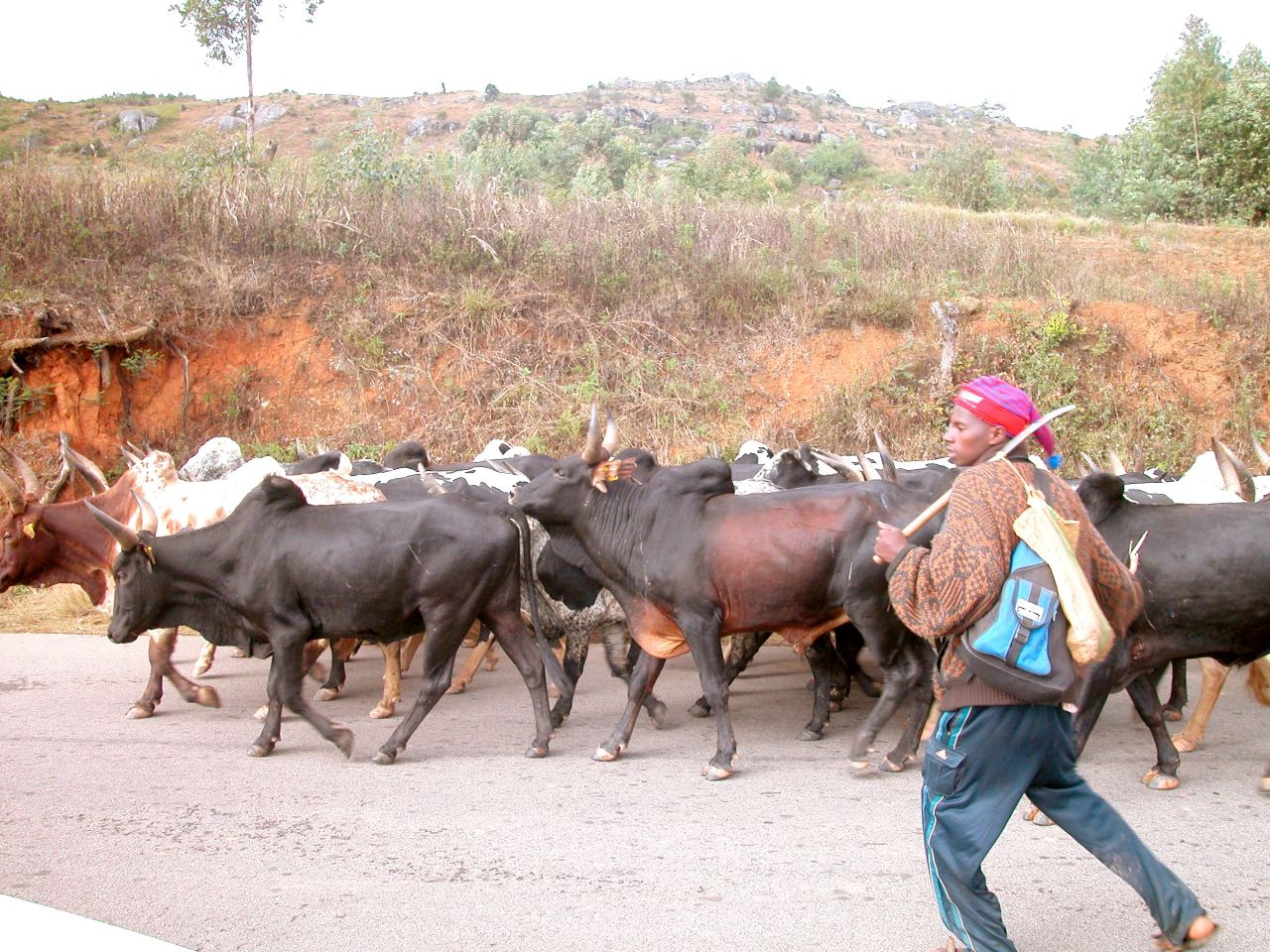
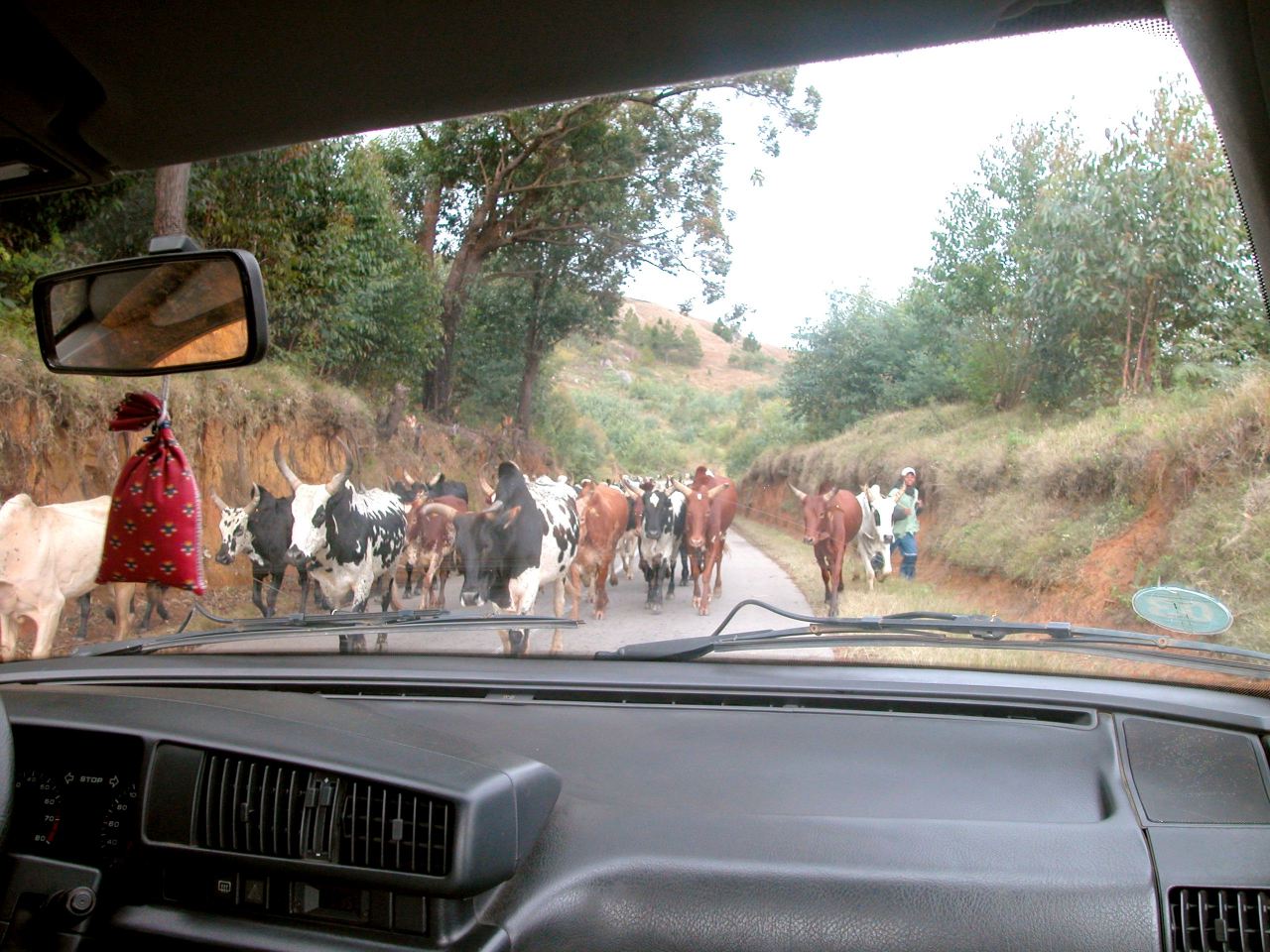
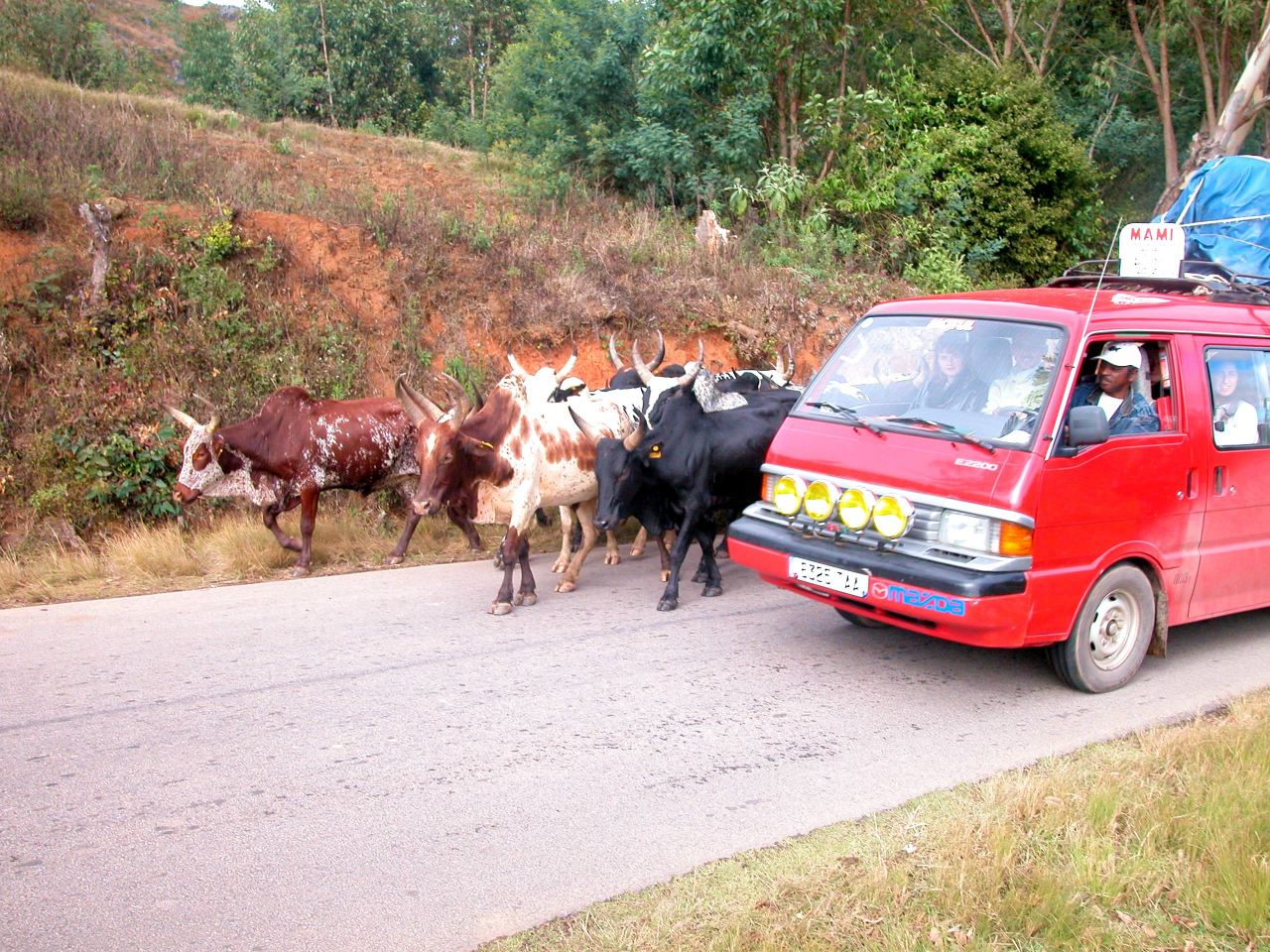
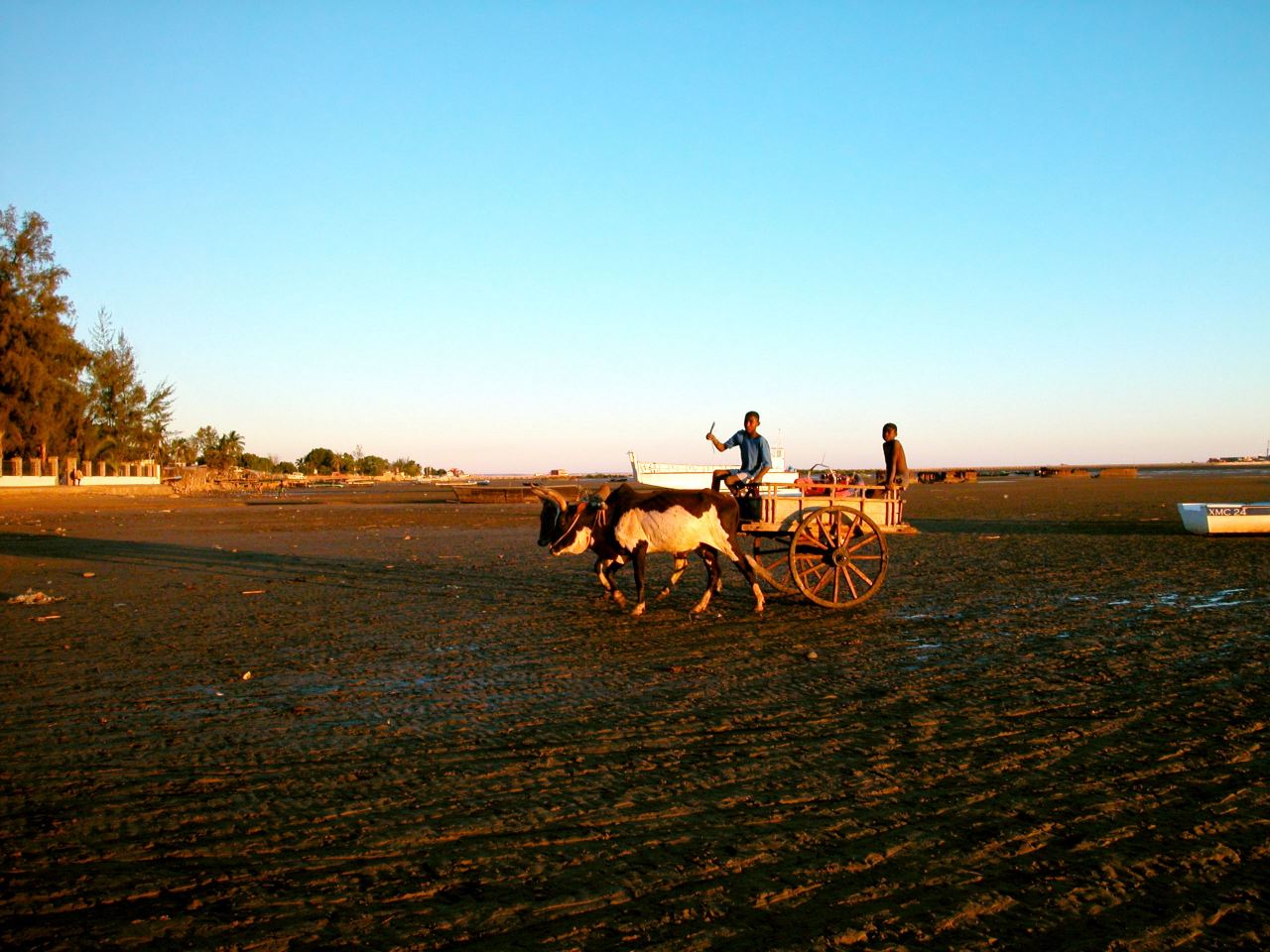
To my surprise, zebu were hardly ever milked, or at least the markets sold no milk. They were commonly used to pull carts. A cart was drawn by a pair. It went no faster than three kilometres an hour, but nobody was in a hurry. They made up most of the traffic, and you could even flag one down. Away from the tourist spots, farmers would give you a ride for free, though rarely farther than the next village.
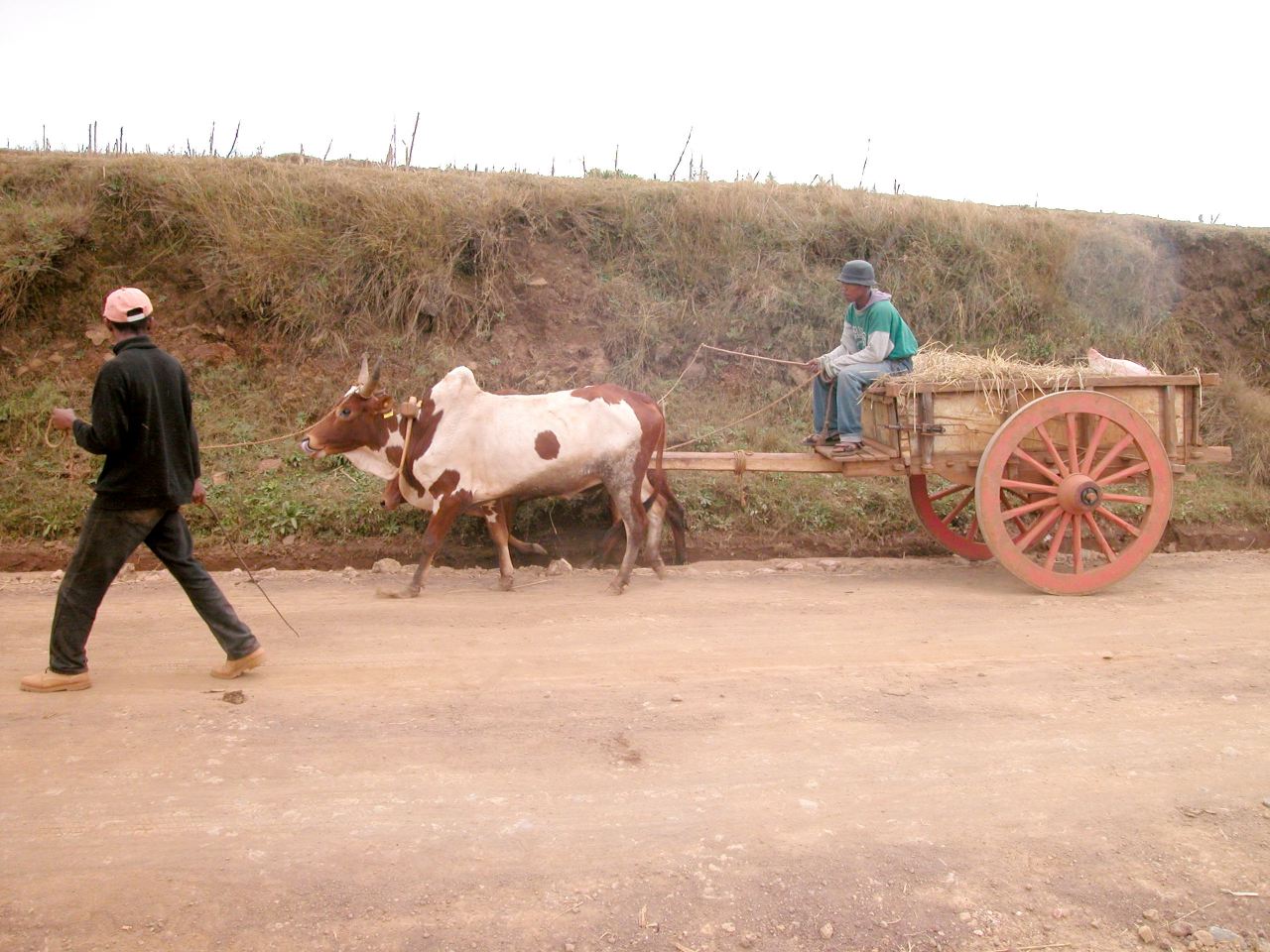
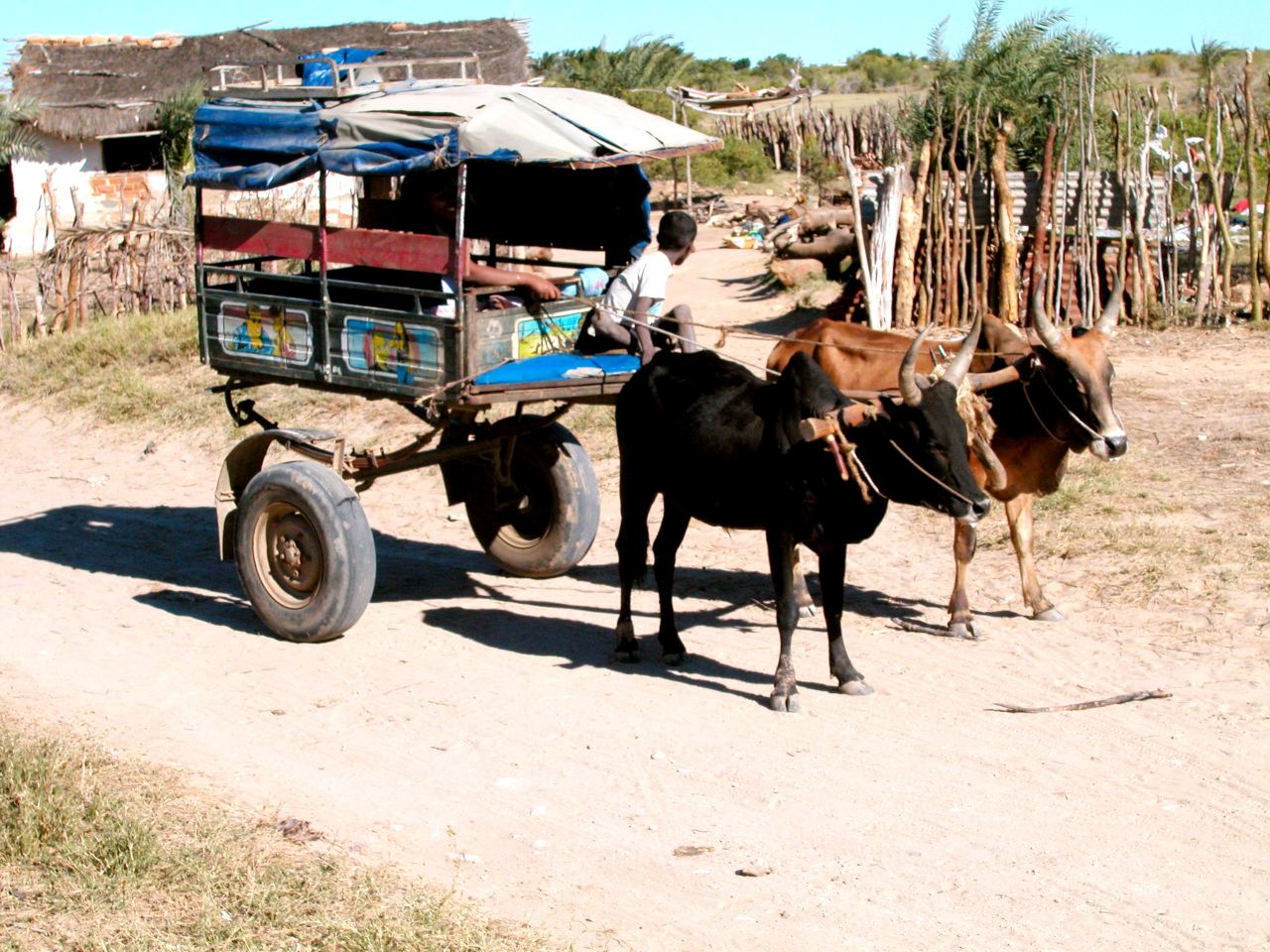
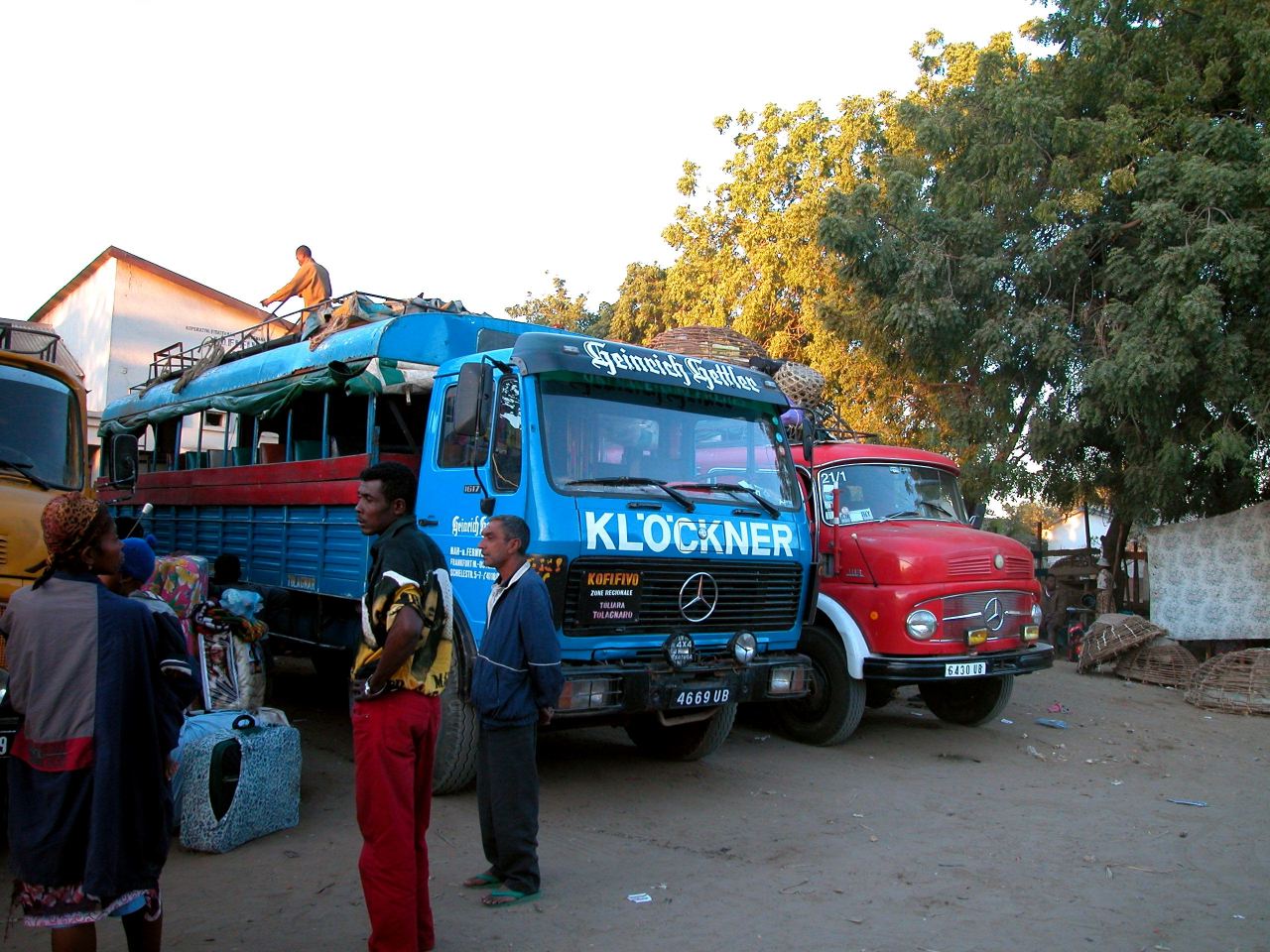
Motoring wasn’t easy in Madagascar. Petrol was around one US dollar a litre. At that price, a car used more in fuel over a given distance than a rickshaw, or pousse-pousse, would charge for the ride. That put a private car beyond most people’s means. What they could afford was a taxi-brousse, a shared taxi on a set route. In town it looked like a Russian minibus with about twice as many people squeezed in. In the countryside without proper roads it might be a six-wheeled, all-wheel-drive Mercedes from the middle of the previous century. Several dozen people could fit in the back, along with children, chickens and sacks of charcoal and potatoes. An eight-hour ride cost about US$15, which wasn’t cheap either.
People expected to be paid for a ride and often couldn’t see the point of hitchhiking. Why should a driver earning ten dollars a month pay for the petrol while these rich white travellers, earning hundreds of times more, got a free ride? His children were going hungry. That was no exaggeration: children really were dying. A ban on picking up foreigners complicated things. The many checkpoints examined papers carefully, and anybody who broke the rules faced severe punishment. Even so, people were kind and sociable, and didn’t all follow the rules to the letter. Sooner or later you could find a lift, particularly with a European at the wheel. The destruction and famine had brought all sorts of international organisations into the country, and their workers were glad of someone they felt at home with. In a place that remote, even Russia could pass for Europe. “At last, somebody who speaks English! Another human being in this godforsaken place. I’m having a hard time here. I’ll finish my contract and go home. Ah, my dear Brussels!” The fierce-looking checkpoints somehow let them through. I never saw anyone hand over money or lose their temper. They chatted for a minute, looked at our passports and let us go on.
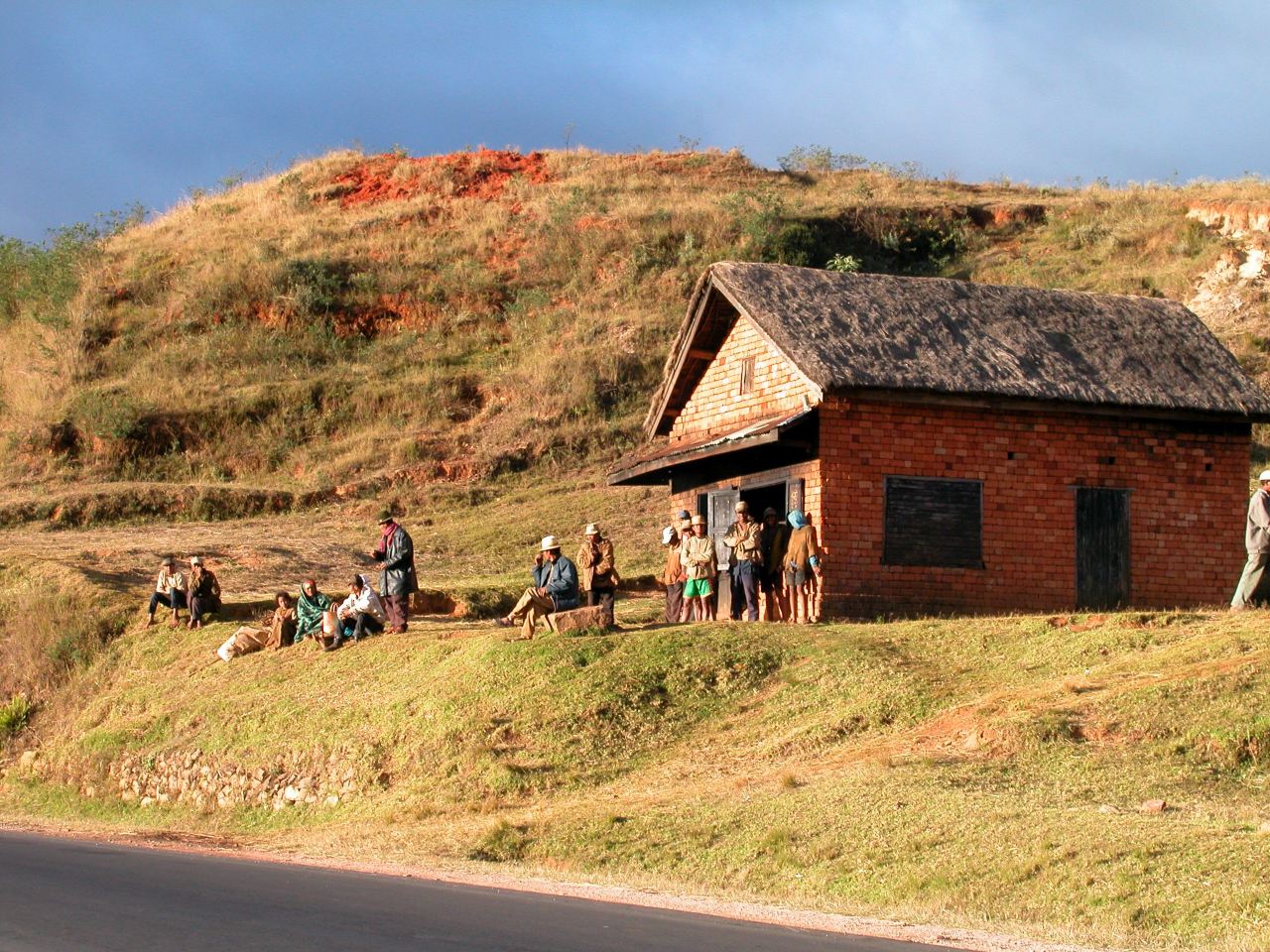
Our first day was already ending. The setting sun lit the mountains with red rays, bringing out the land’s already red colour and the little villages built of the same red brick. People who were cold warmed themselves in the last rays of the sun, trying to soak up the last warmth of the day. Nights could get down to two degrees above freezing. We were in the highlands. Much of central Madagascar stands up to 2,500 metres above sea level. On the highest peaks there can sometimes be frost before dawn, but it never snows here.
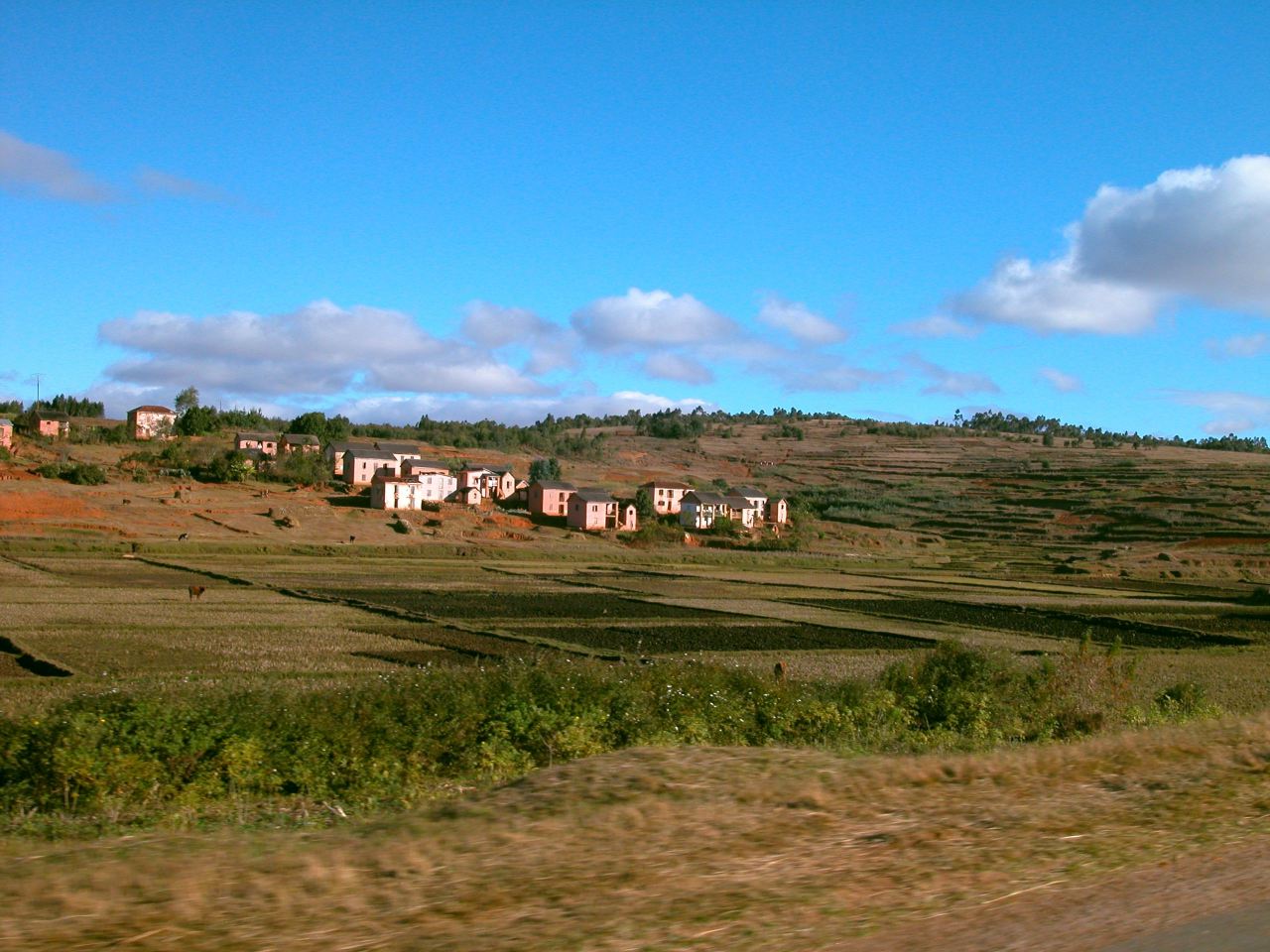
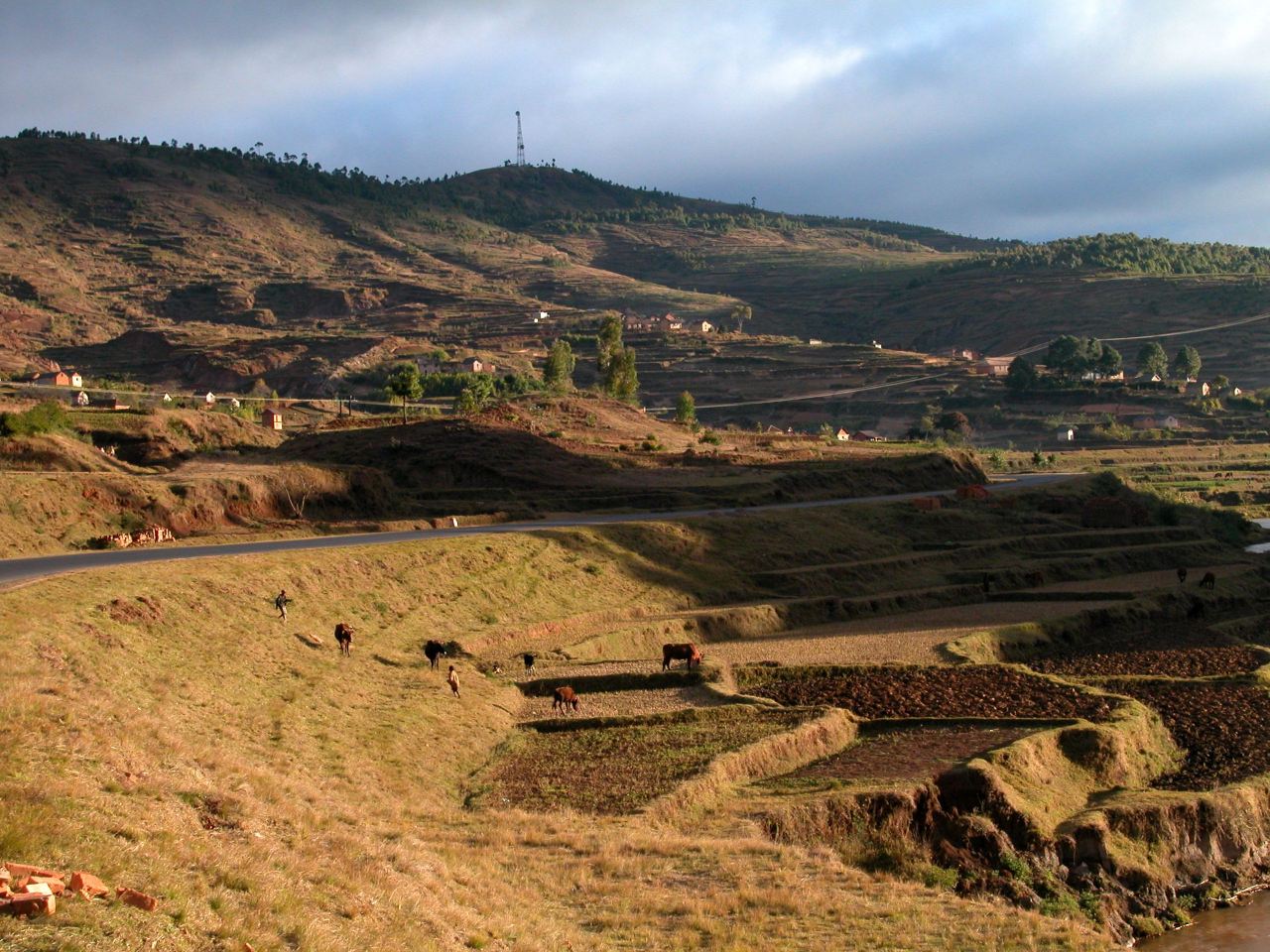
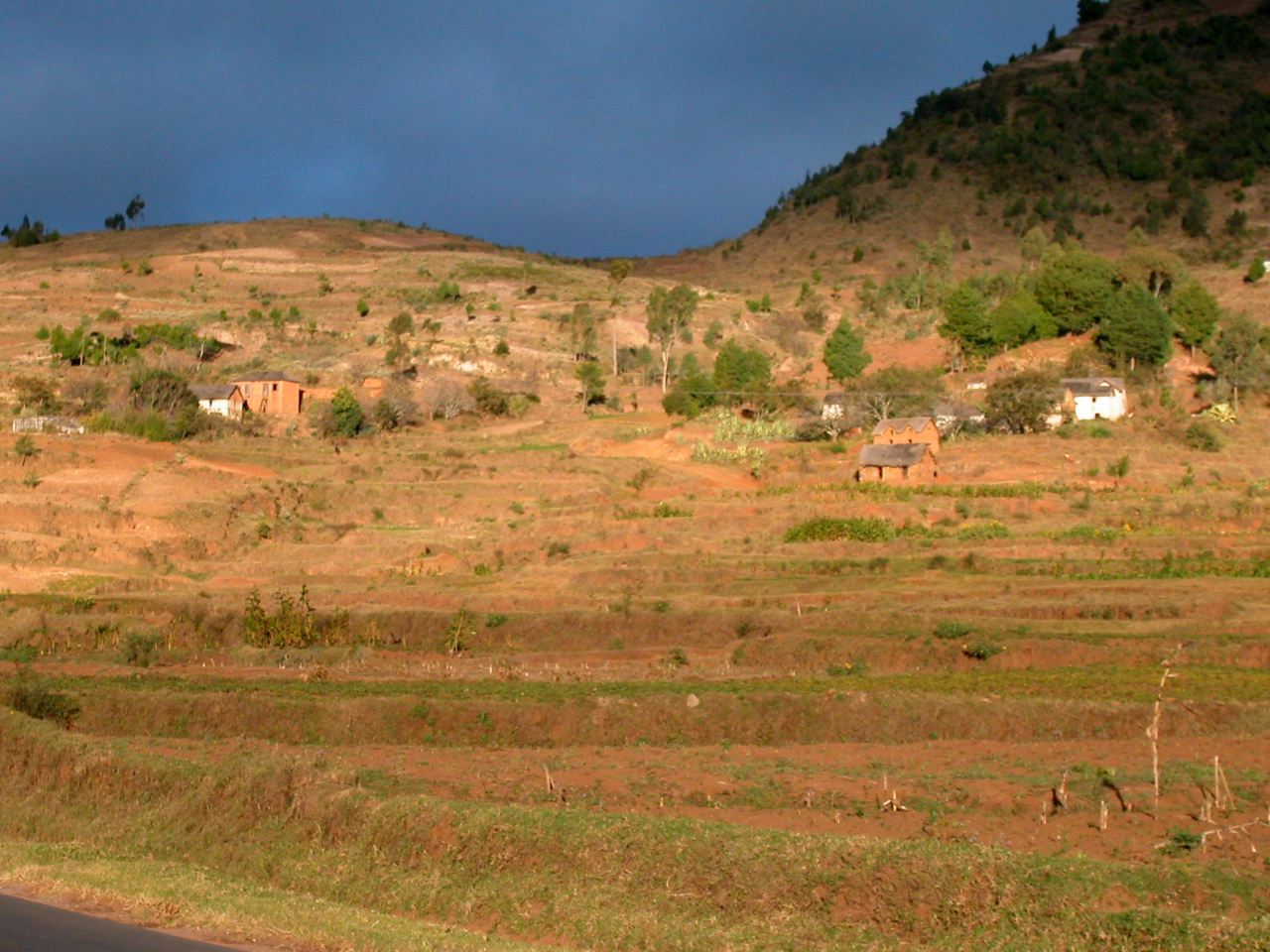
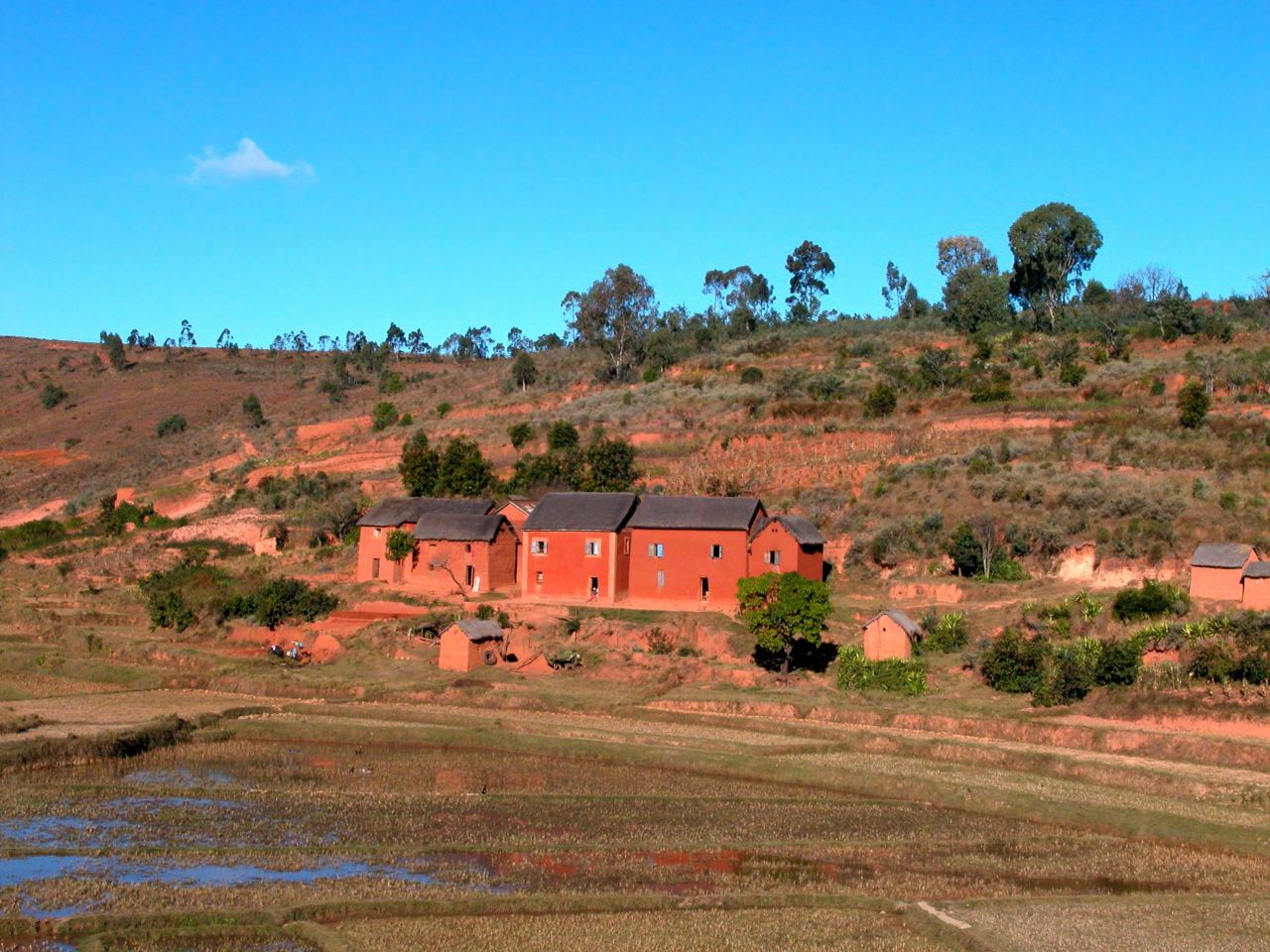
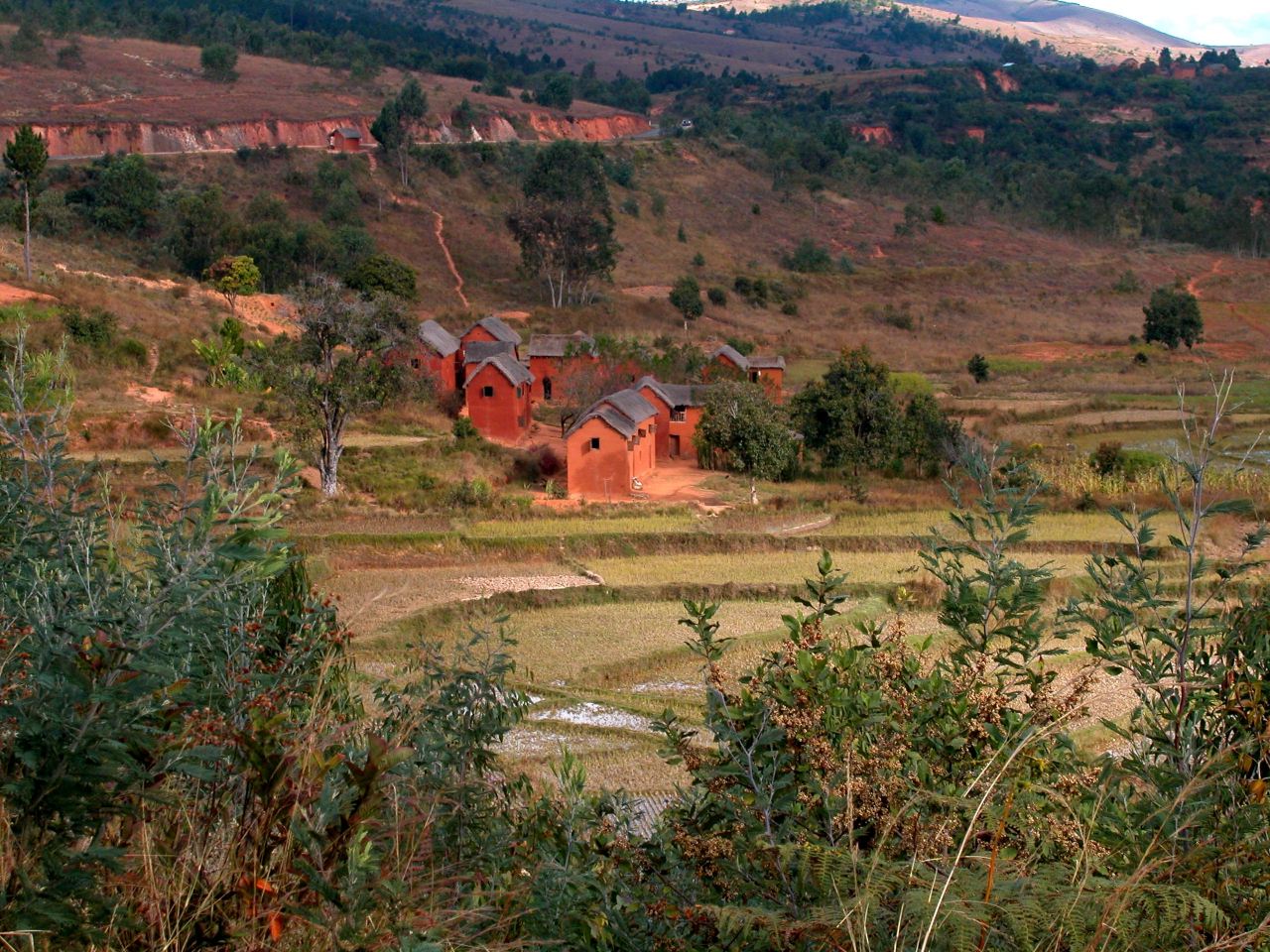
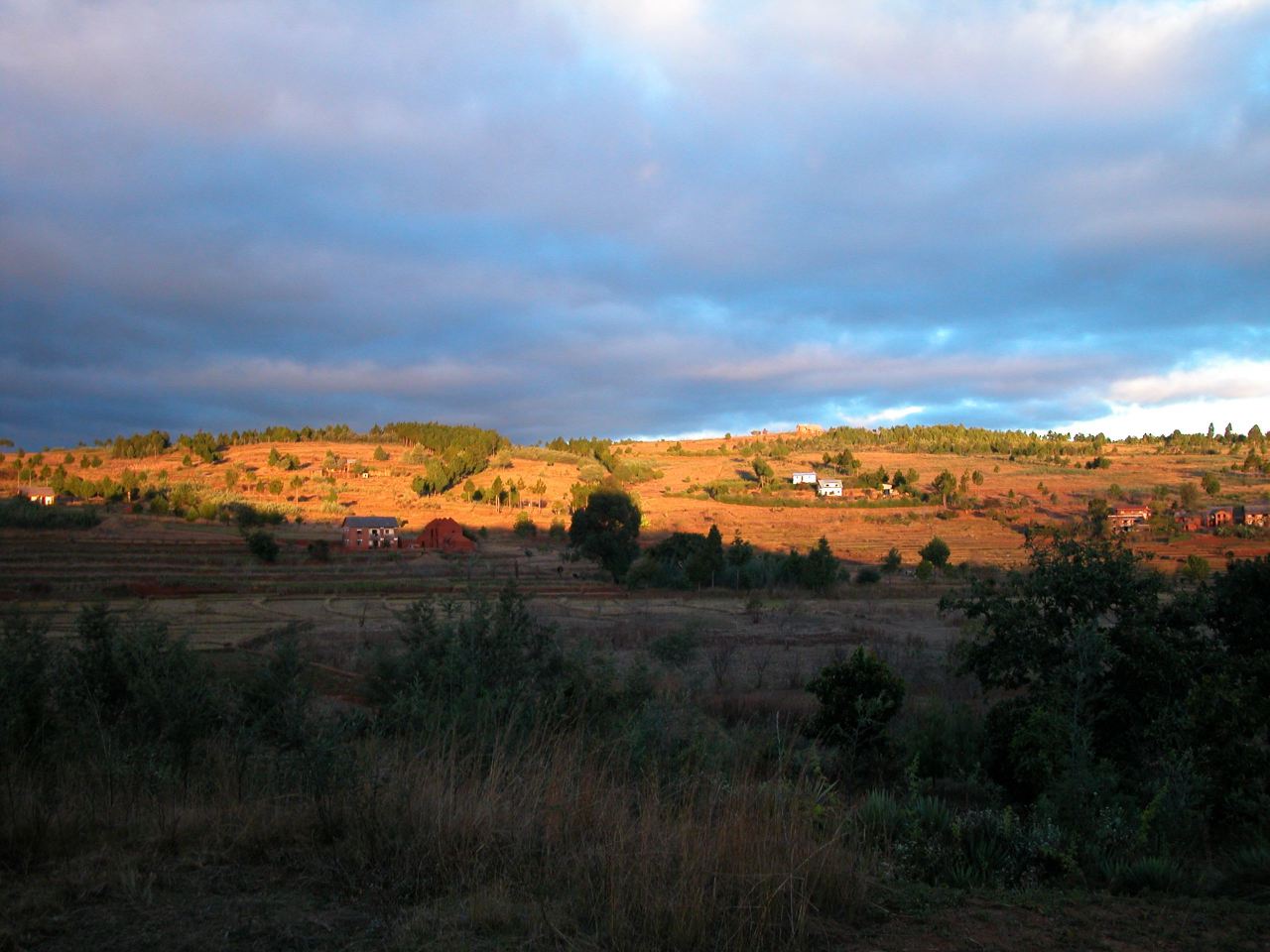
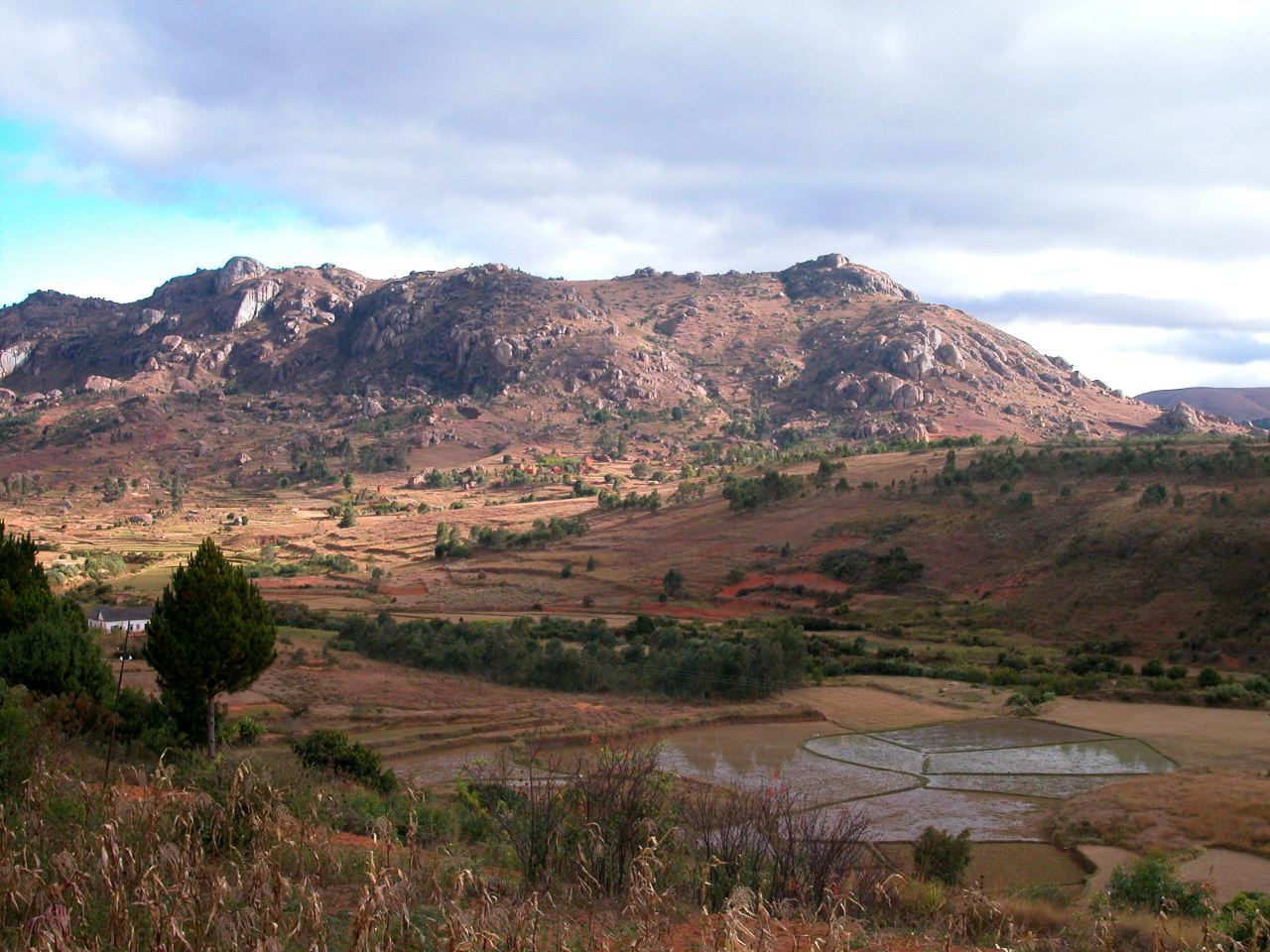
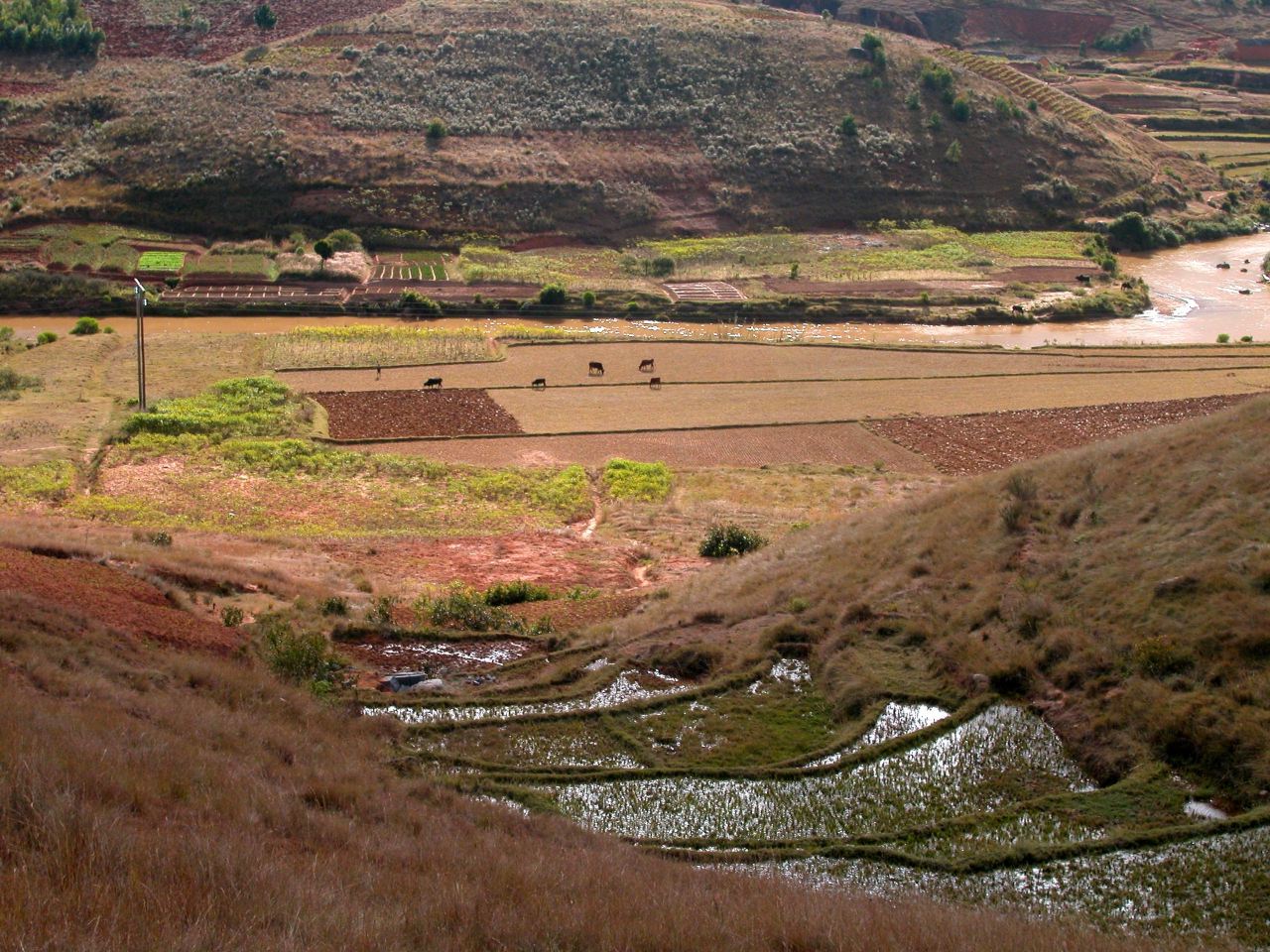
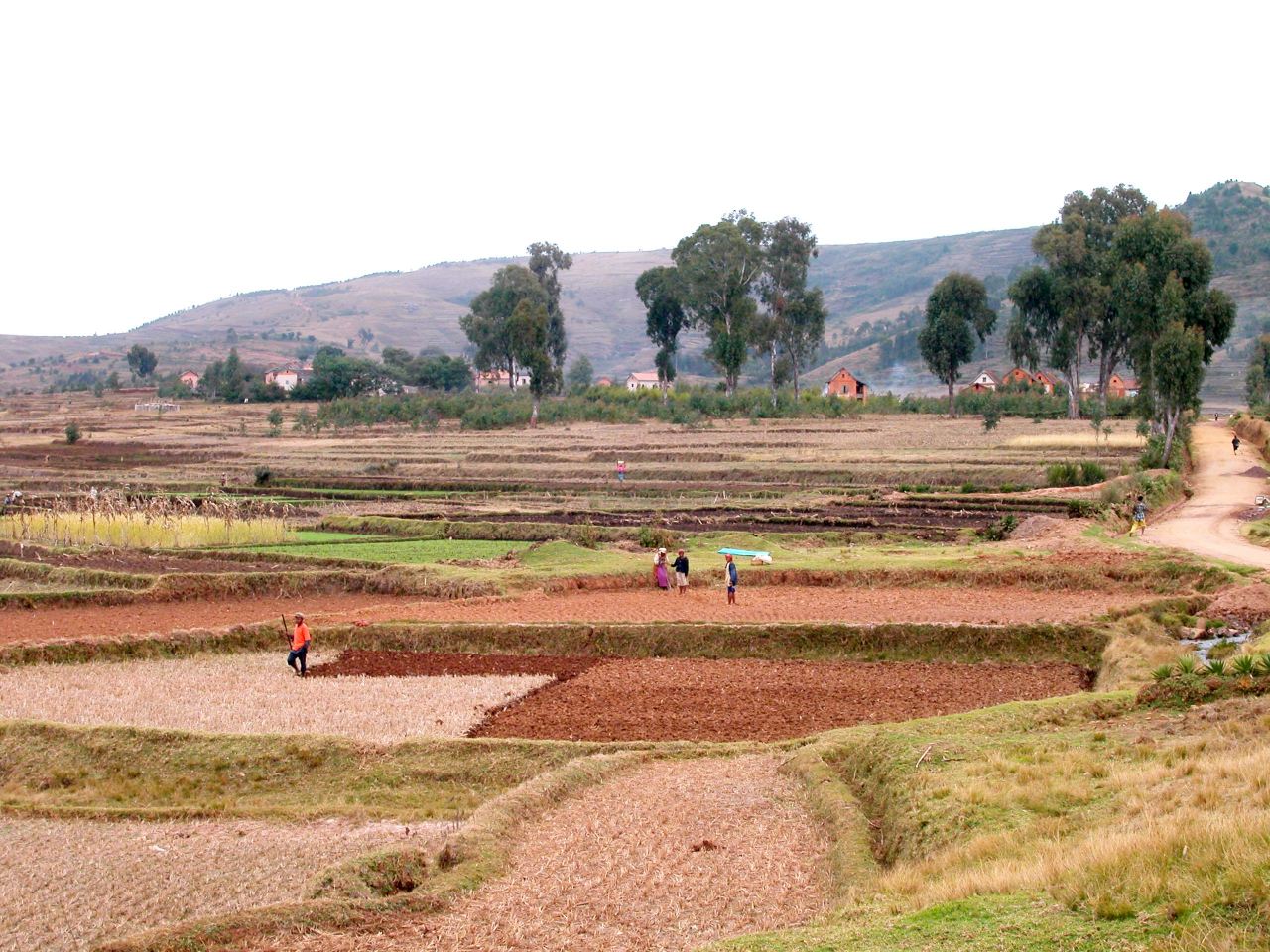
There was little forest in the central country. Stony crags gave way to terraced fields. The Malagasy had brought this technique with them from Southeast Asia. The terraces had been built over centuries. They had foundations and walls of fired brick, and a clever system of waterways made it possible to grow rice almost to the hilltops.
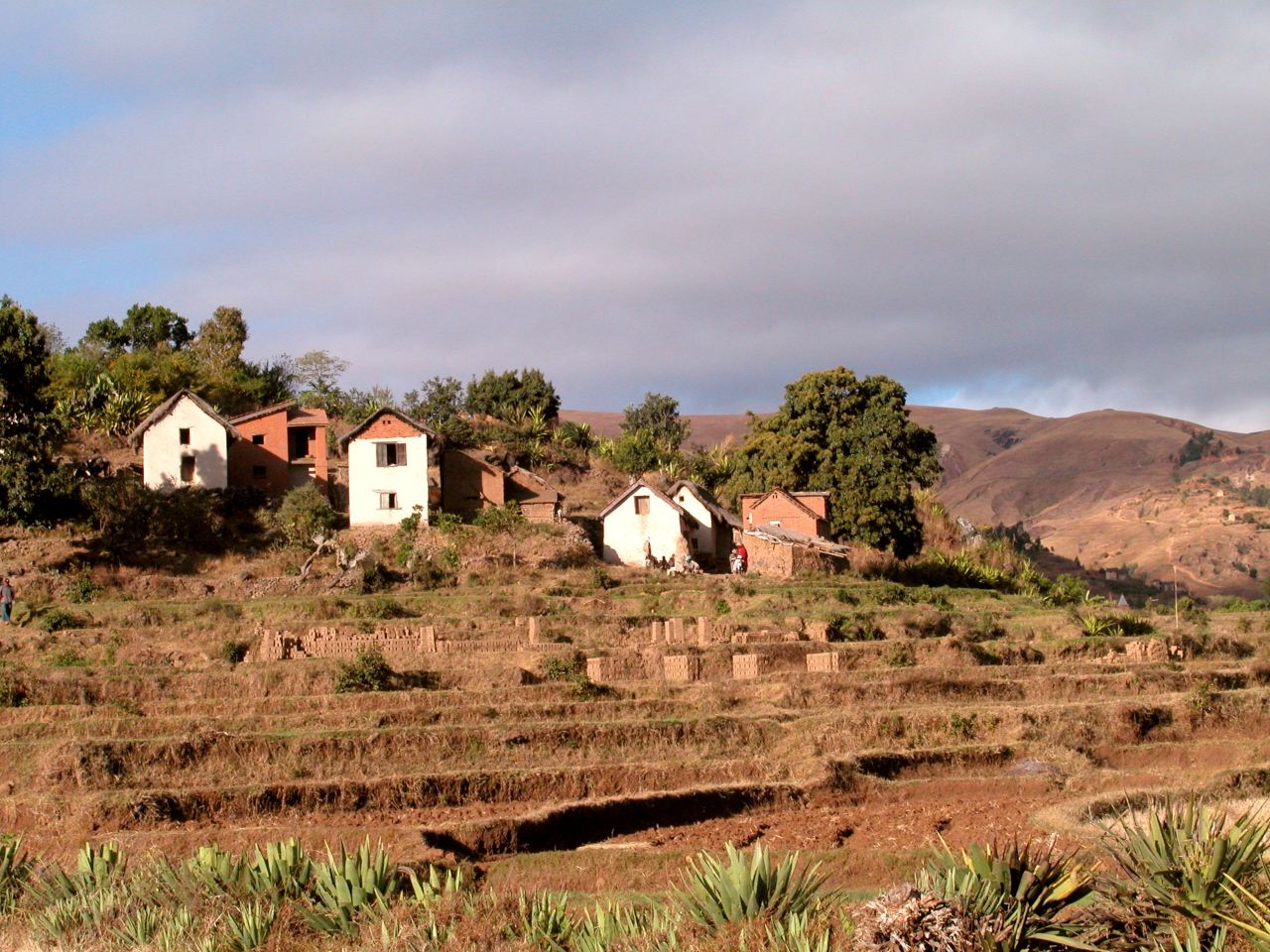
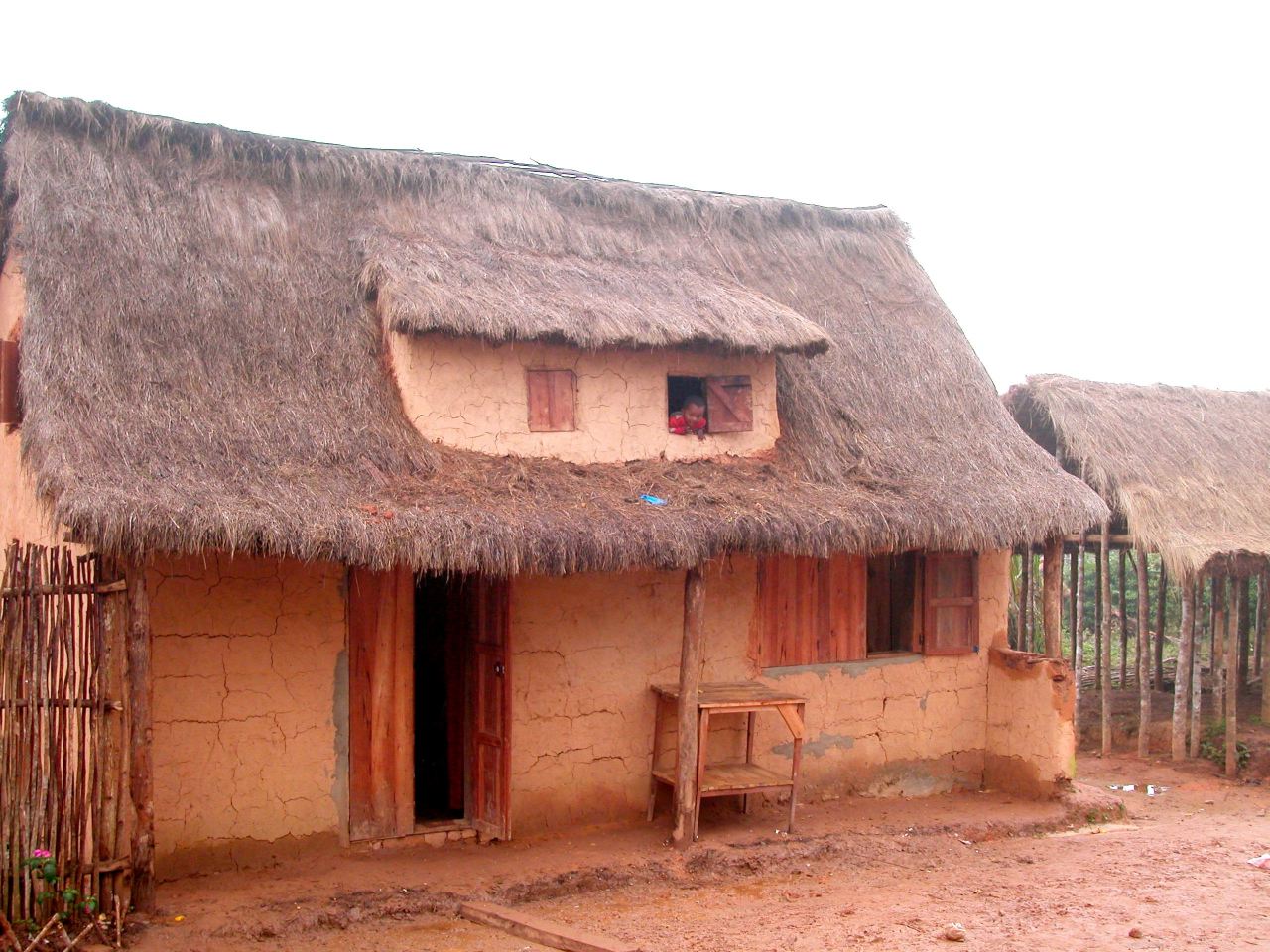
Houses were made of the same brick and generally had two storeys. One little room on the ground floor housed a family of ten. Above it was the shared kitchen. The smoky hearth in the middle wasn’t really a stove, just a fire in the room. Windows usually had wooden shutters in place of glass.
There were children everywhere, often ten or more in a family. The population was growing by three per cent a year. You saw hardly any elderly people and the country felt very young. Madagascar had a population of 17 million then.
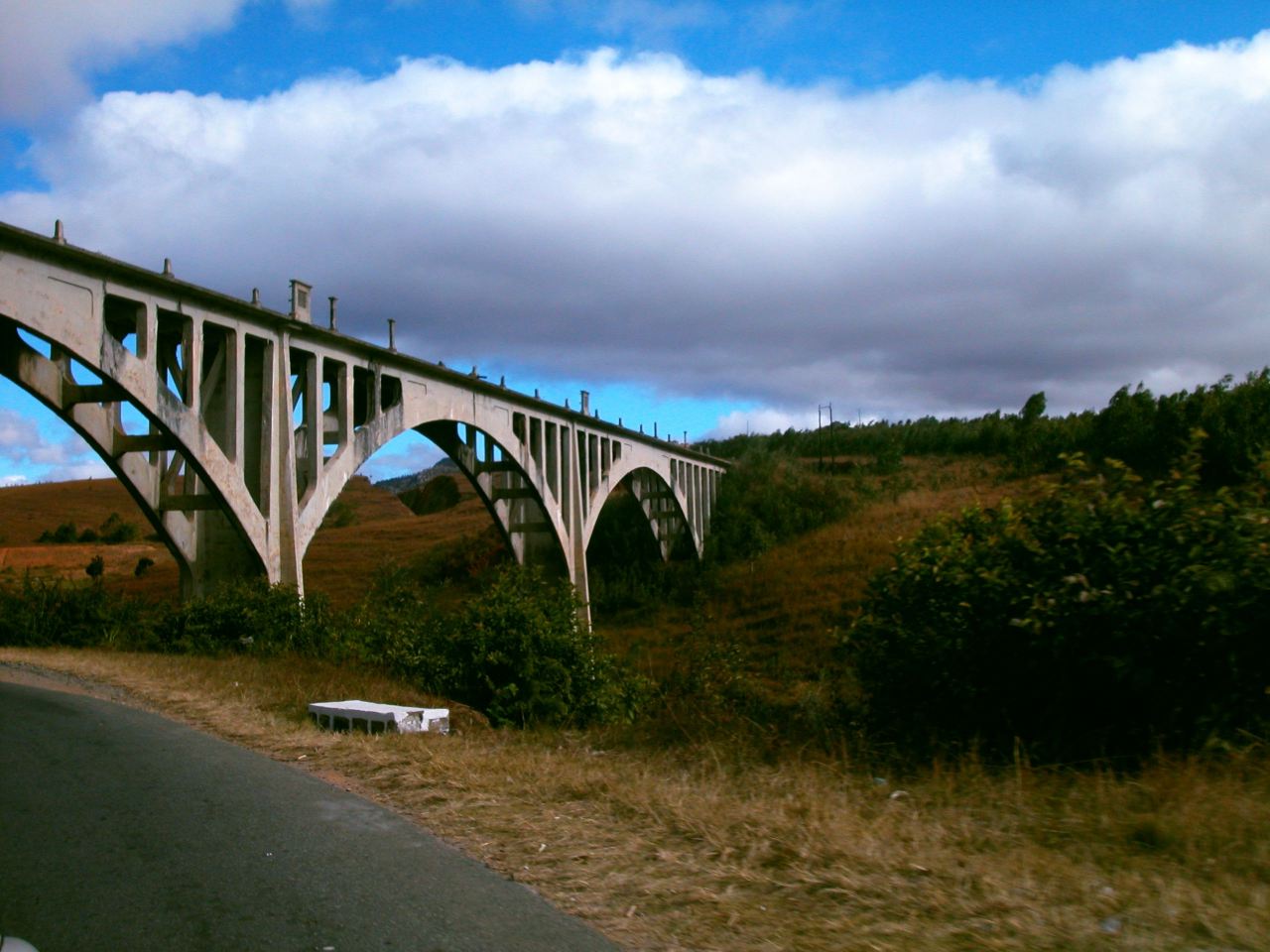
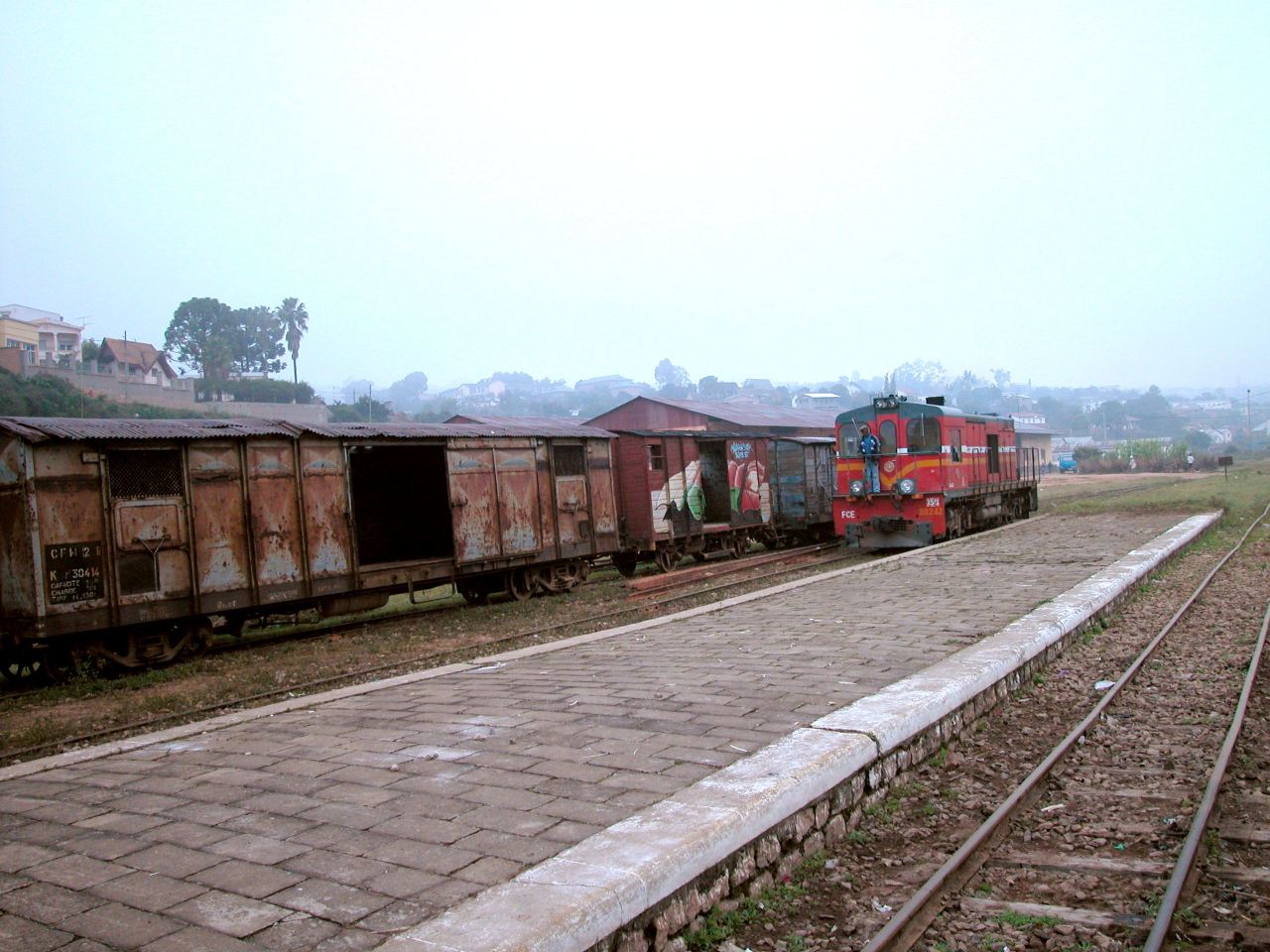
The railway the French built in the early twentieth century ran along the highway. They’d made everything to last. Stone bridges carried the line over the road. It all remained intact but had been out of use for a long time. It had become cheaper to hire a car than to run the railway. At the time, the only line I knew still operating was Fianarantsoa–Manakara. To their credit, people hadn’t dismantled the abandoned railway. The rails were still in place, nobody had sold them for scrap, unscrewed the nuts or melted them down into something useful in the nearest town. And they’d lived through appalling hardship in the preceding years.
We stopped for the night in Antsirabe at a small hotel called Green Park that took foreign tourists. We got a round room at the top of a red-brick turret for 70,000 francs. Our driver simply didn’t drive after dark, so we stopped early. In winter it was pitch black by six, which left us plenty of time to walk around town. At night it was fantastic. There were no electric lights. The Southern Cross shone in the vast black sky along with thousands of other stars. The southern sky is brighter, with more stars and a broader Milky Way. The centre of our galaxy lies in Sagittarius in the southern sky.
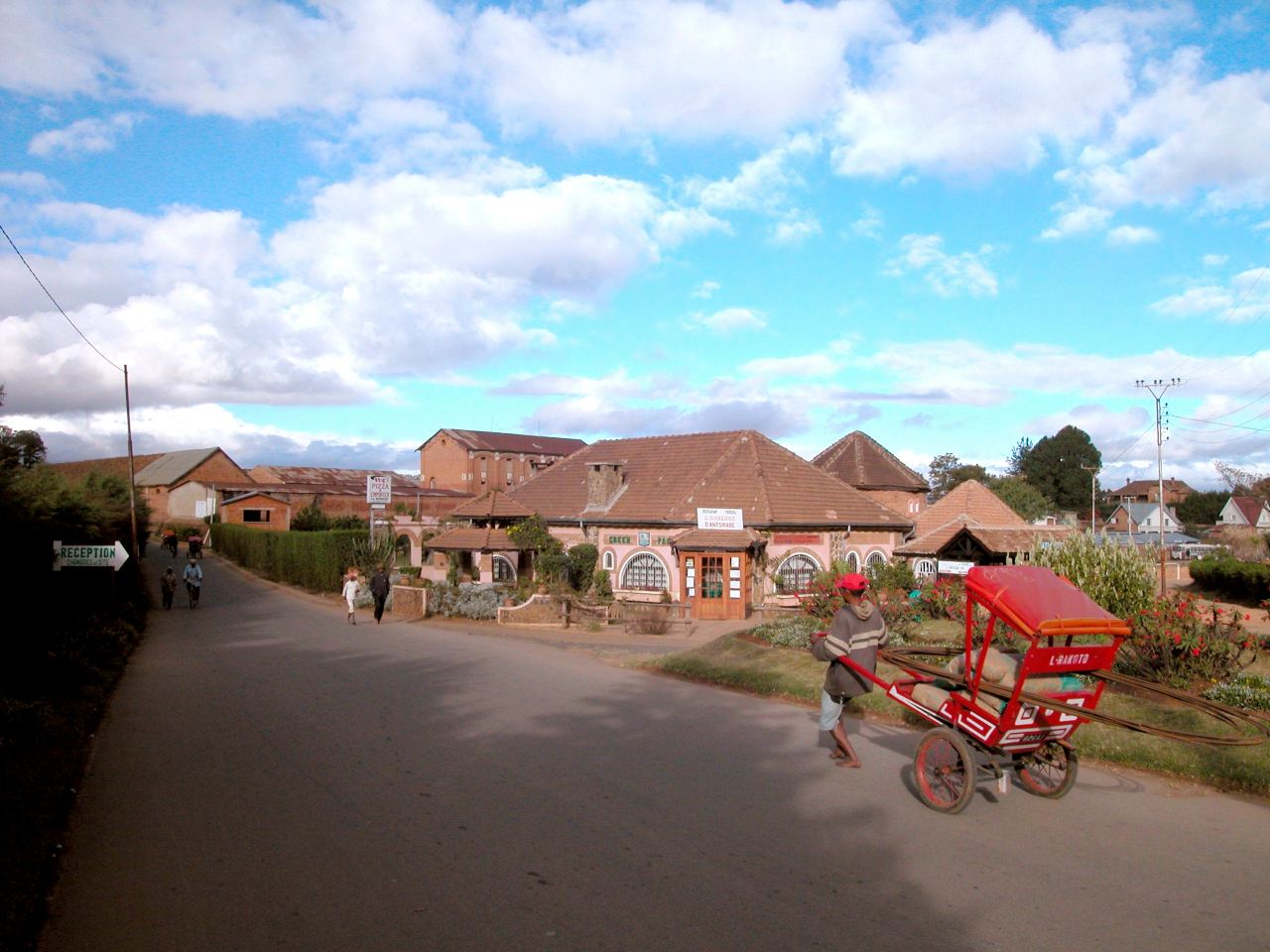
Even in the dark, the place was alive. All the shops were open. The light of smoky paraffin lamps and candles flickered on the walls. In the street people cooked or simply warmed themselves at little charcoal fires. Red points of light were everywhere. Rickshaws took passengers home, marking their width with candles shielded from the wind by plastic bottles. Now and then a zebu’s head would emerge unexpectedly, snort and vanish again into the blackness.
It was such a cosy, unfamiliar sight that we were beside ourselves with pleasure. A place like this existed on Earth and here we were in it. How lucky we were. After our walk we went into the Pousse-Pousse restaurant, where the tables were set inside mock rickshaw carriages. We ordered zebu, a bottle of local wine and then another. We might as well get on with enjoying our holiday. The wine tasted good and the world outside might have come out of a medieval book. We sat there a long time, thinking about our lives and wondering why this should all have fallen to us, and swapped text messages with friends and family.
We went home in a pousse-pousse, the local name for a rickshaw. In Madagascar it was the classic two-wheeled carriage with handles, pushed from behind. In Soviet times I’d seen children’s pictures of wicked American colonisers riding through Saigon on the backs of poor little Vietnamese people. Even then I had no taste for the idea of class hatred, but I had never imagined using that means of transport myself. A rickshaw driver did reasonably well by local standards, much like a taxi driver at home. A ride in town cost two to five thousand francs, and he could earn twenty thousand in a day. That could feed his family. So as I saw it we were helping people earn a living.
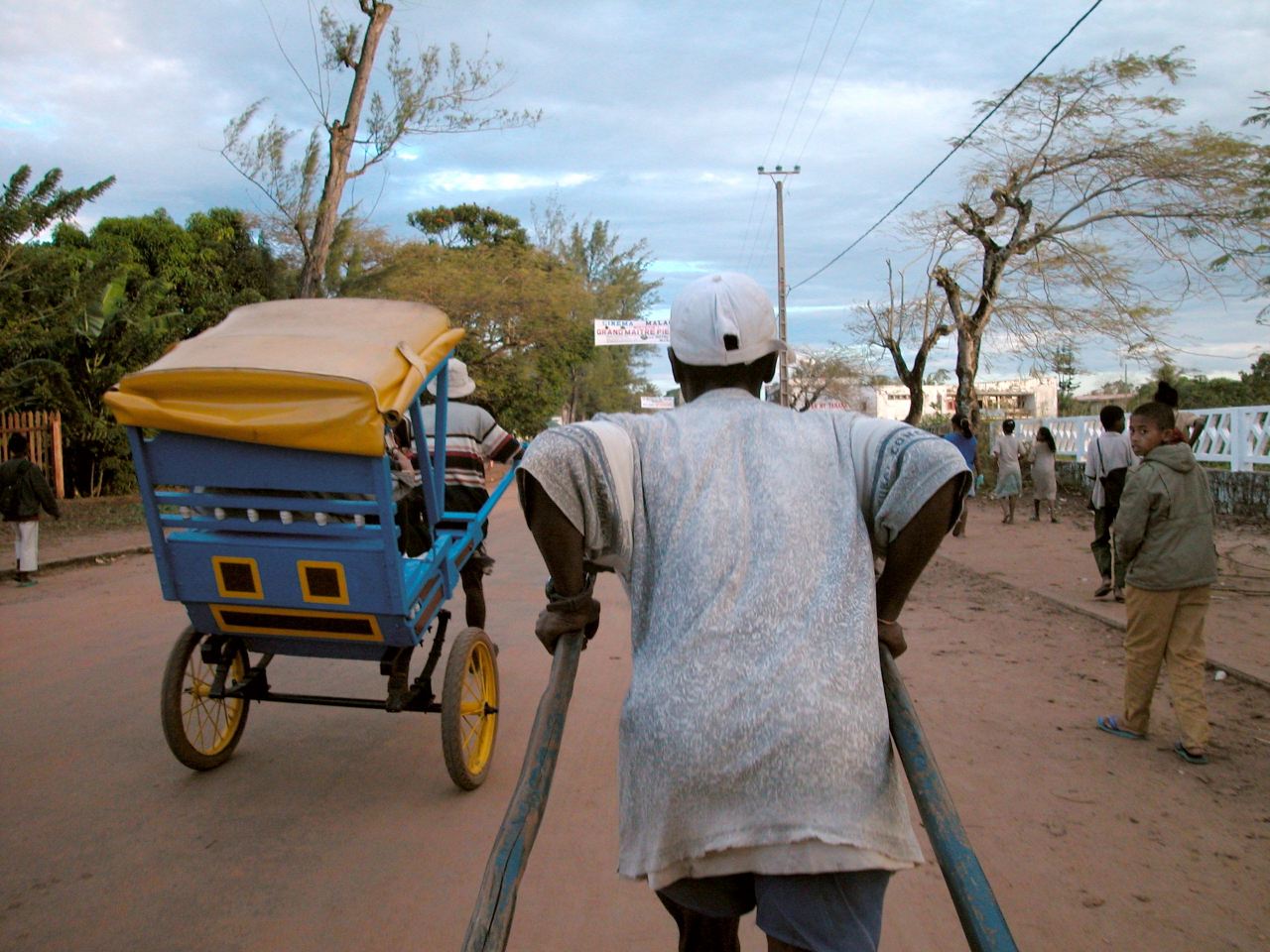
The drivers ran barefoot. They told us shoes wore out quickly, whereas the skin on their feet grew back quickly and for nothing. They kept their carts immaculate, painted them with all sorts of designs and gave each one a name. While waiting for a passenger they polished the wheel spokes and the other metalwork until they shone, and washed their own feet to look presentable. At the sight of a white traveller, the driver would jump up, hurry over, stamp his foot like a horse pawing the ground and call out, “Monsieur, pousse-pousse!”
Two people can ride together, especially if there’s no big hill. On level ground the driver runs as fast as twelve kilometres an hour. We timed a route that had taken us twenty-five minutes at a brisk walk. Our rickshaw driver covered it in twelve, with both of us in the cart. Local people often used one, sometimes to carry their shopping. Sometimes they’d simply load one with bags and send it off like a packhorse.
It was especially good to ride a pousse-pousse, check its speed on a GPS receiver and talk on my mobile all at once. There was the twenty-first century we’d all been waiting for.
In 2003 GSM coverage in Madagascar was confined to the larger cities. The two operators were Madacom and Antares (Orange). A text on Madacom cost US$0.1534, and a minute’s call to Russia cost US$5.27. There was no roaming on Antares. The call quality was dreadful. Outside the capital you often couldn’t make out what anybody was saying and could only send texts.
Larger towns had internet cafés. There were few Malagasy resources online. In Russian there was the good but neglected Madagascar Project. For English links, the University of Pennsylvania’s list was the best I found, and the Missouri Botanical Garden had information about plants. There were very few pages actually hosted in Madagascar under the .mg domain. A fibre-optic cable had recently been laid around Africa, giving it a reliable, fast link to the rest of the world. Madagascar was still linked to it only by satellite.
We slept like logs. It was quiet and fresh, even cold, I’d say. At night we put on every warm thing we had. The walls were thin and the windows draughty, and it was barely above freezing outside.
We were up at dawn, had breakfast, met our driver and went on.
Betafo and the crater lakes
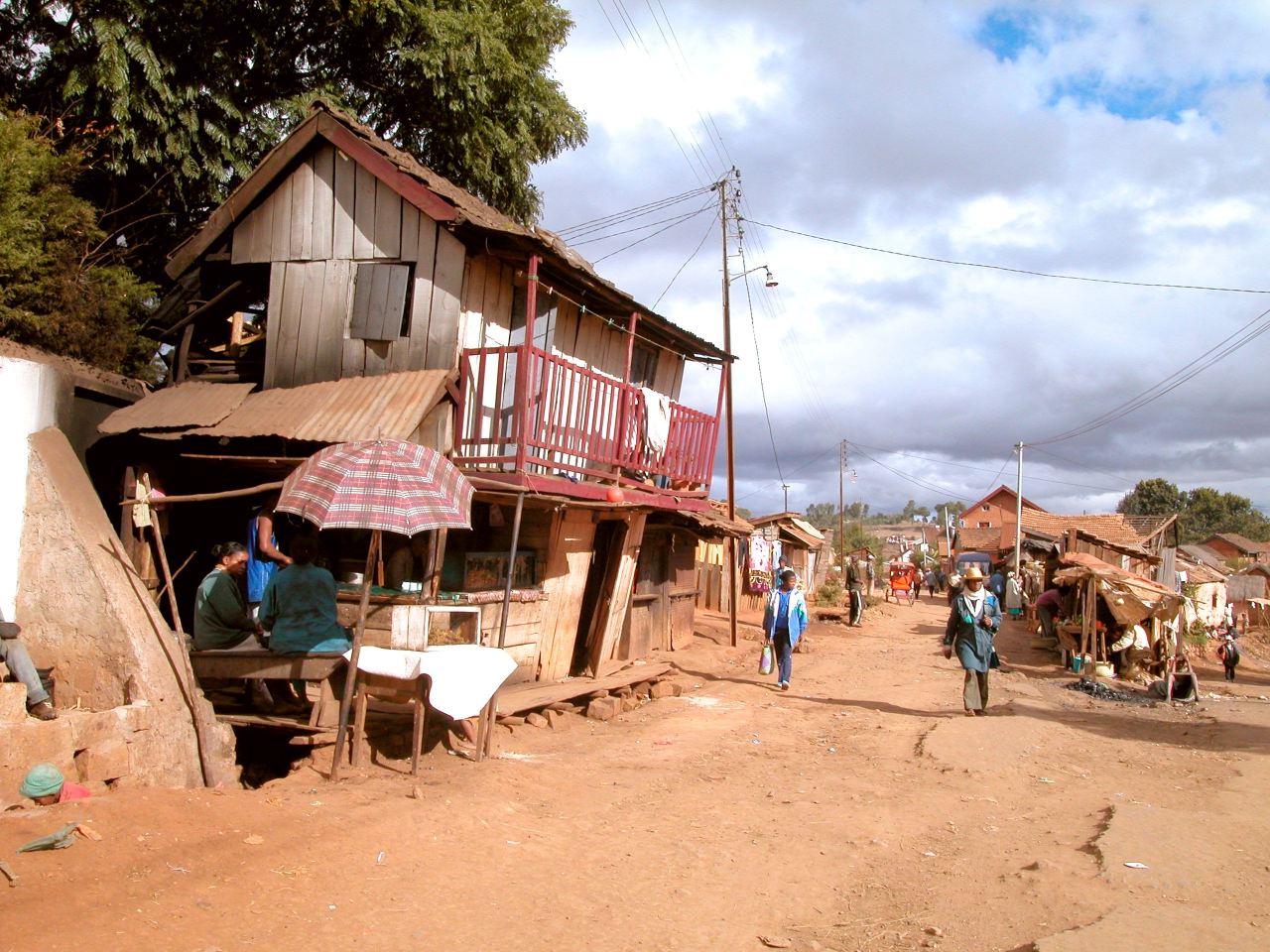
Every small town had a few shops and a little market, but some towns were major market centres. People gathered there from all around. Farmers would spend days walking or take a bush taxi to buy several weeks’ supplies and sell what they’d brought.
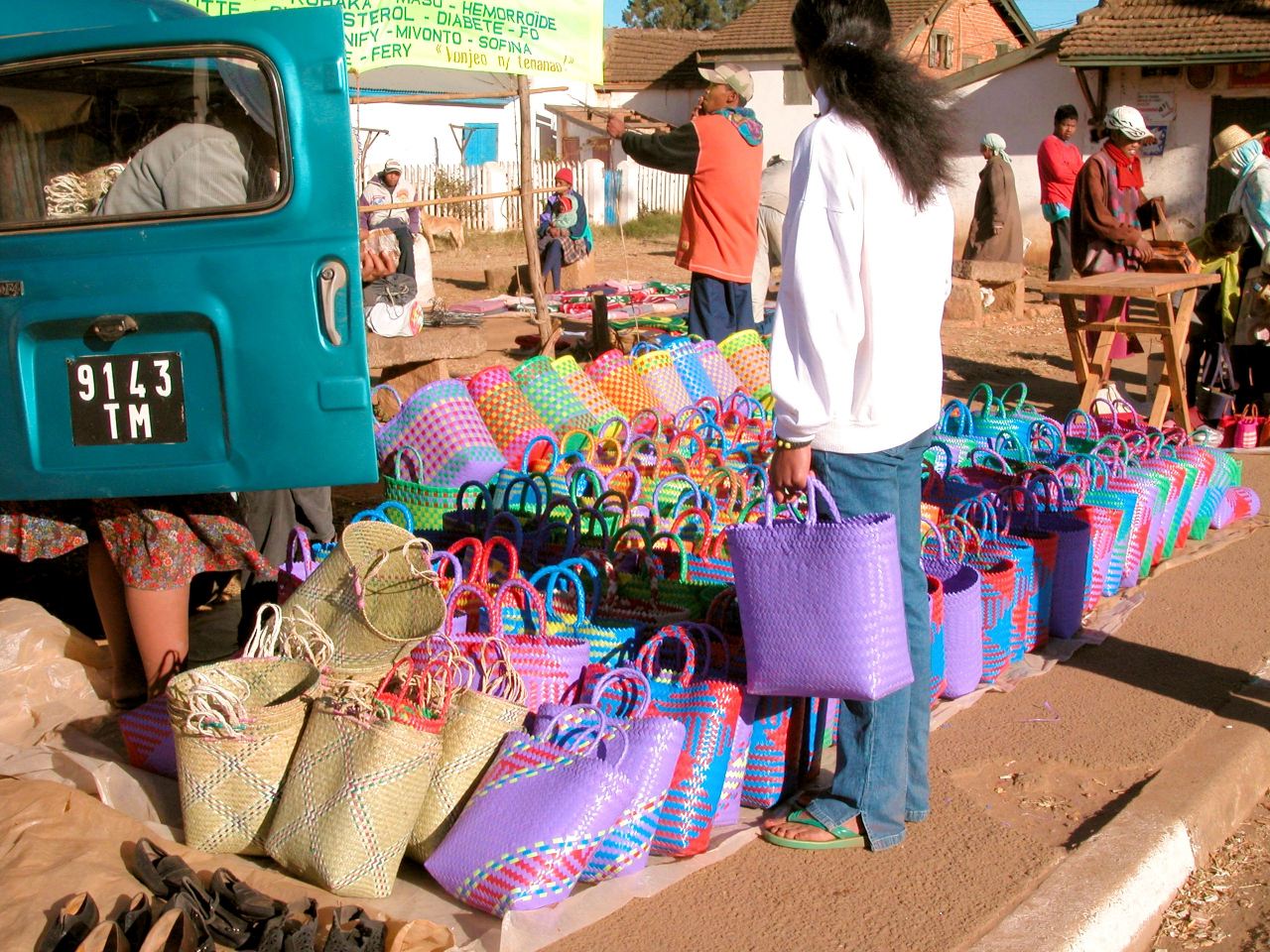
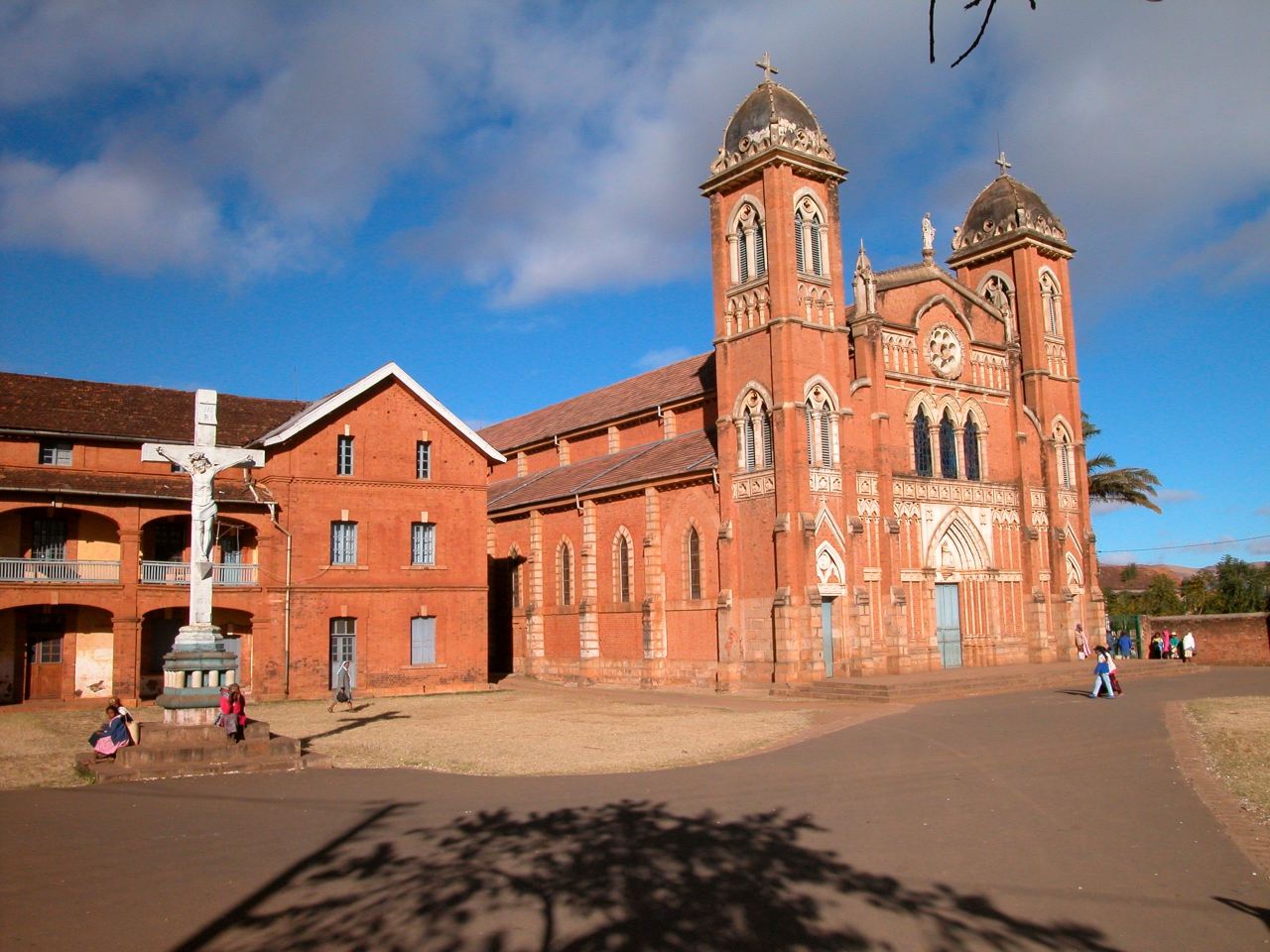
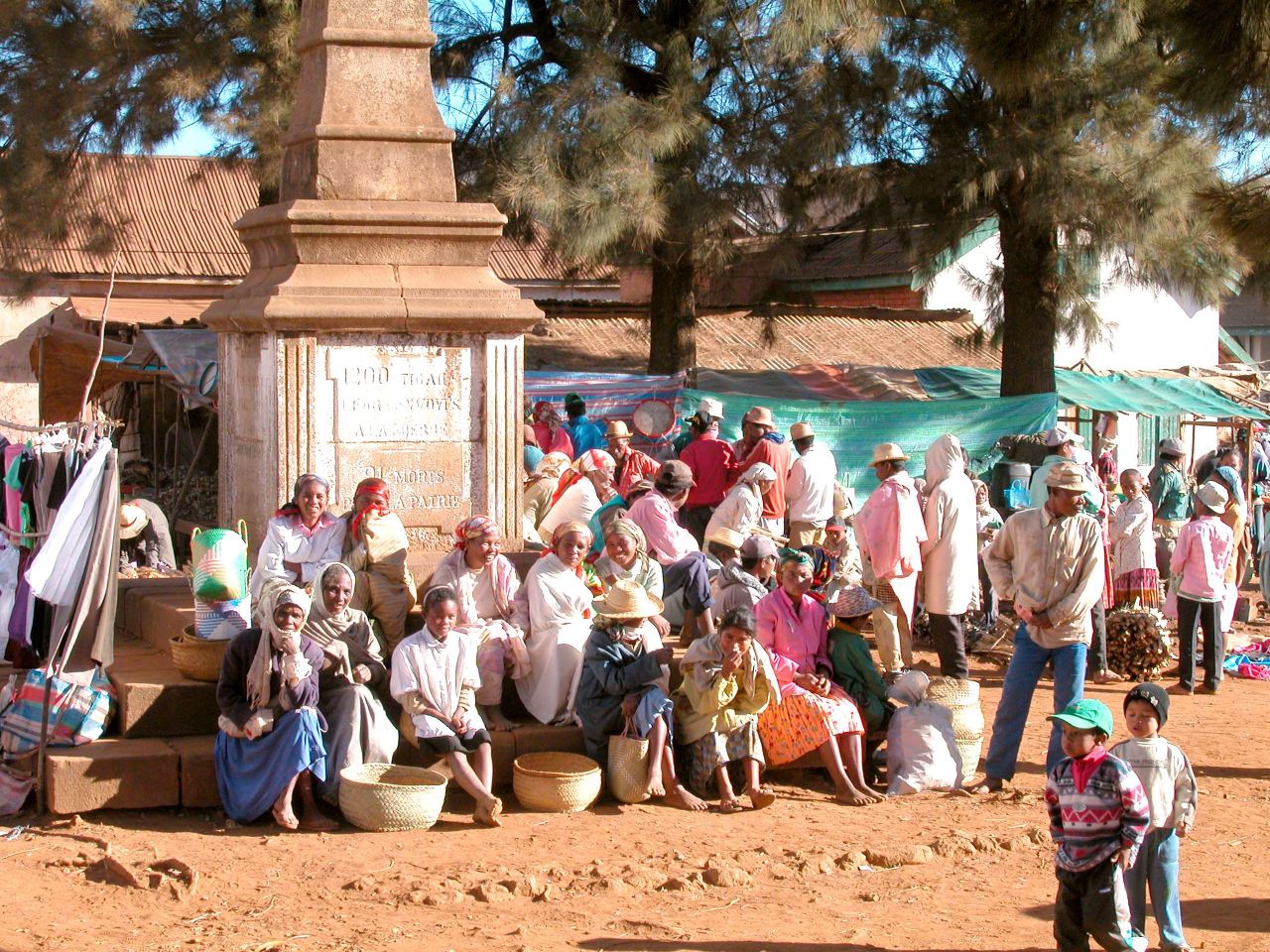
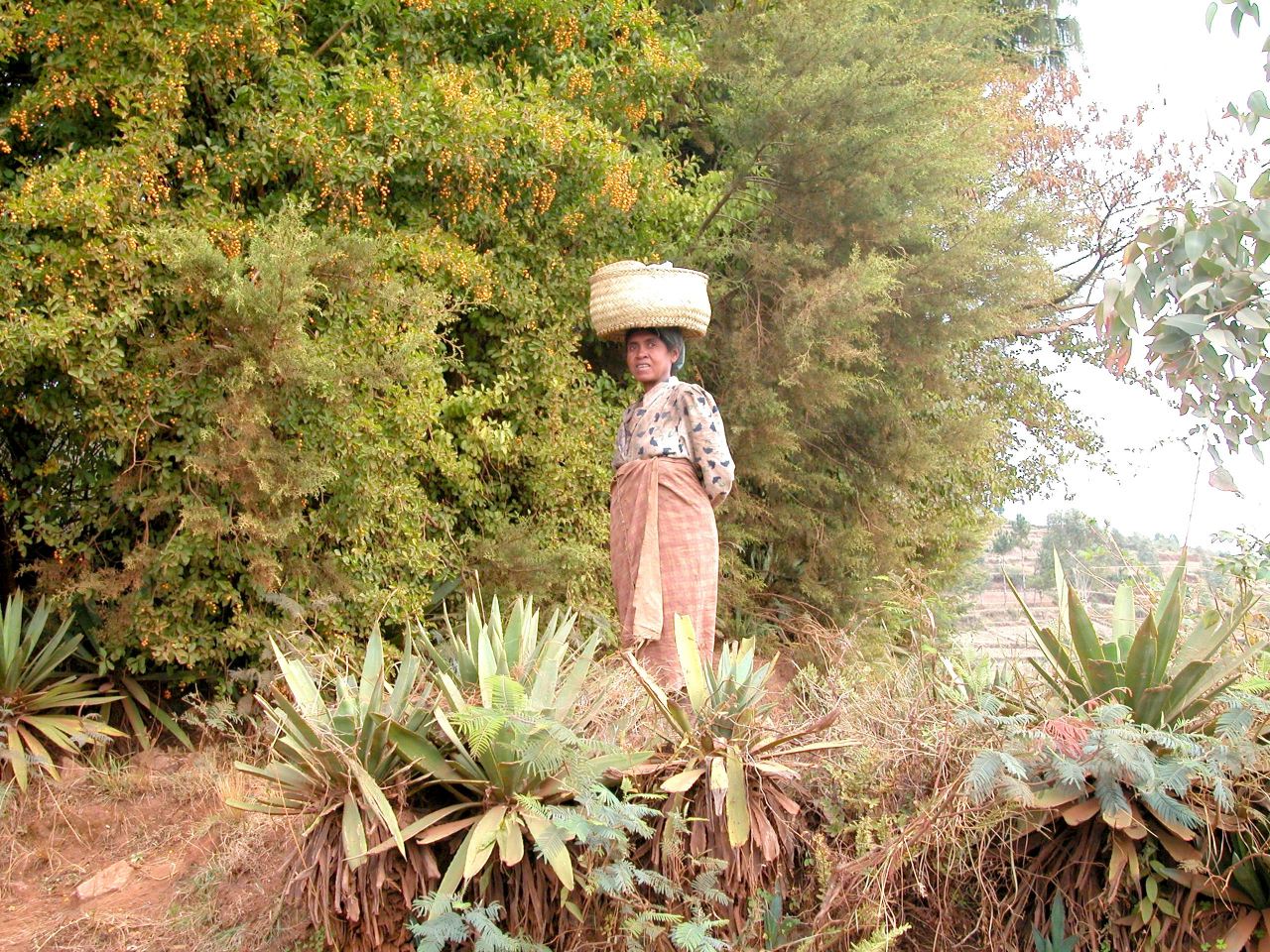
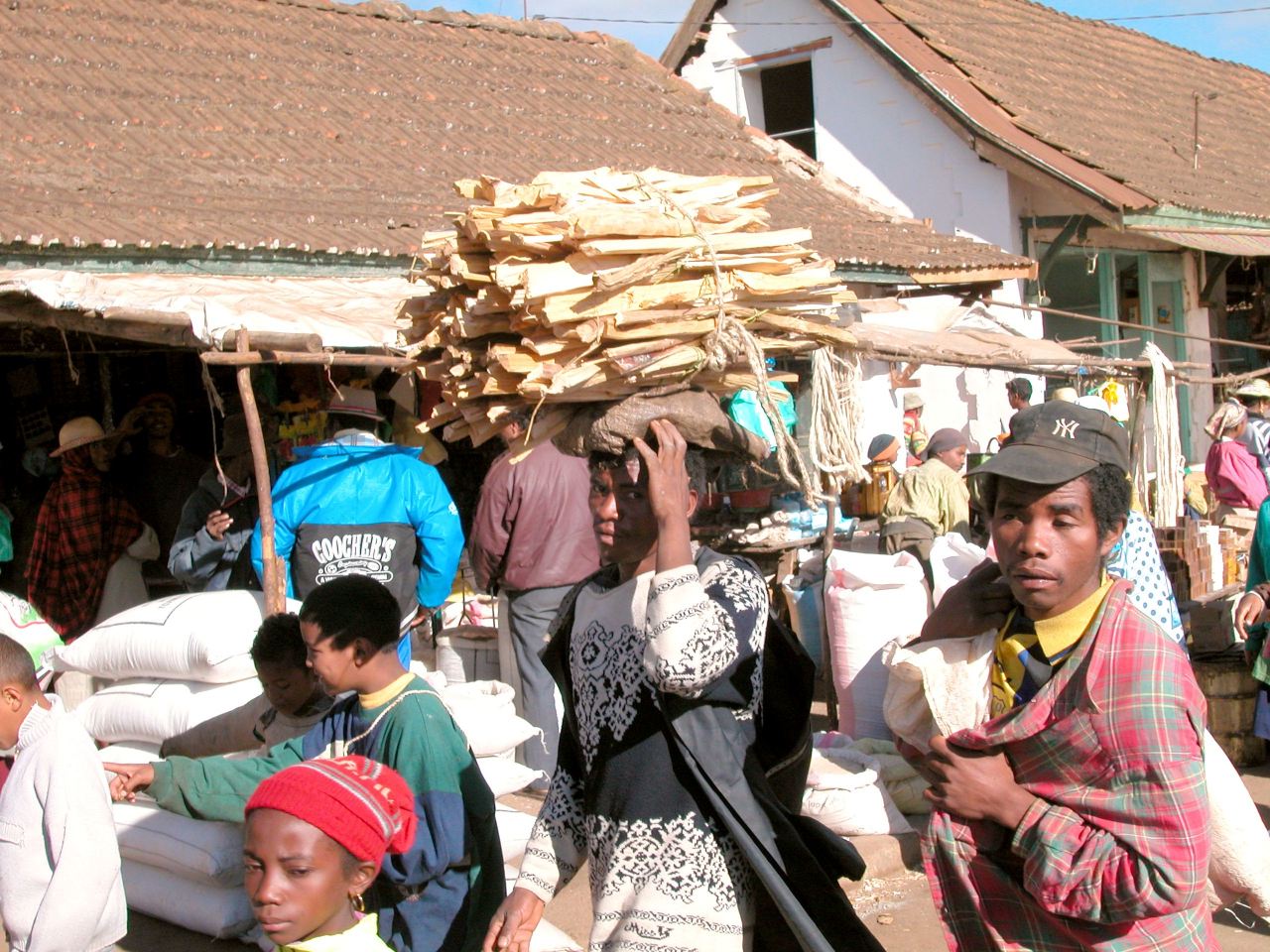
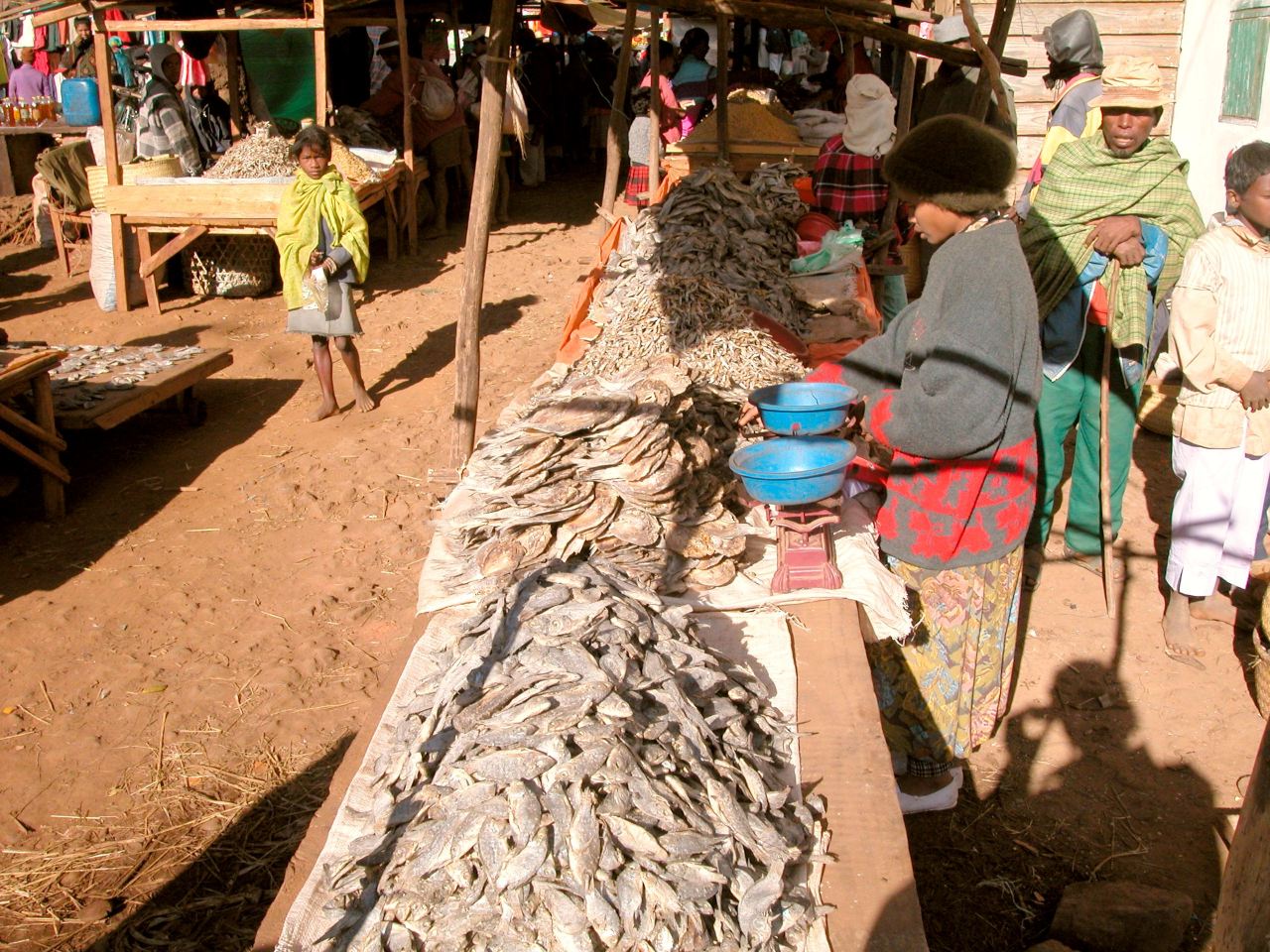
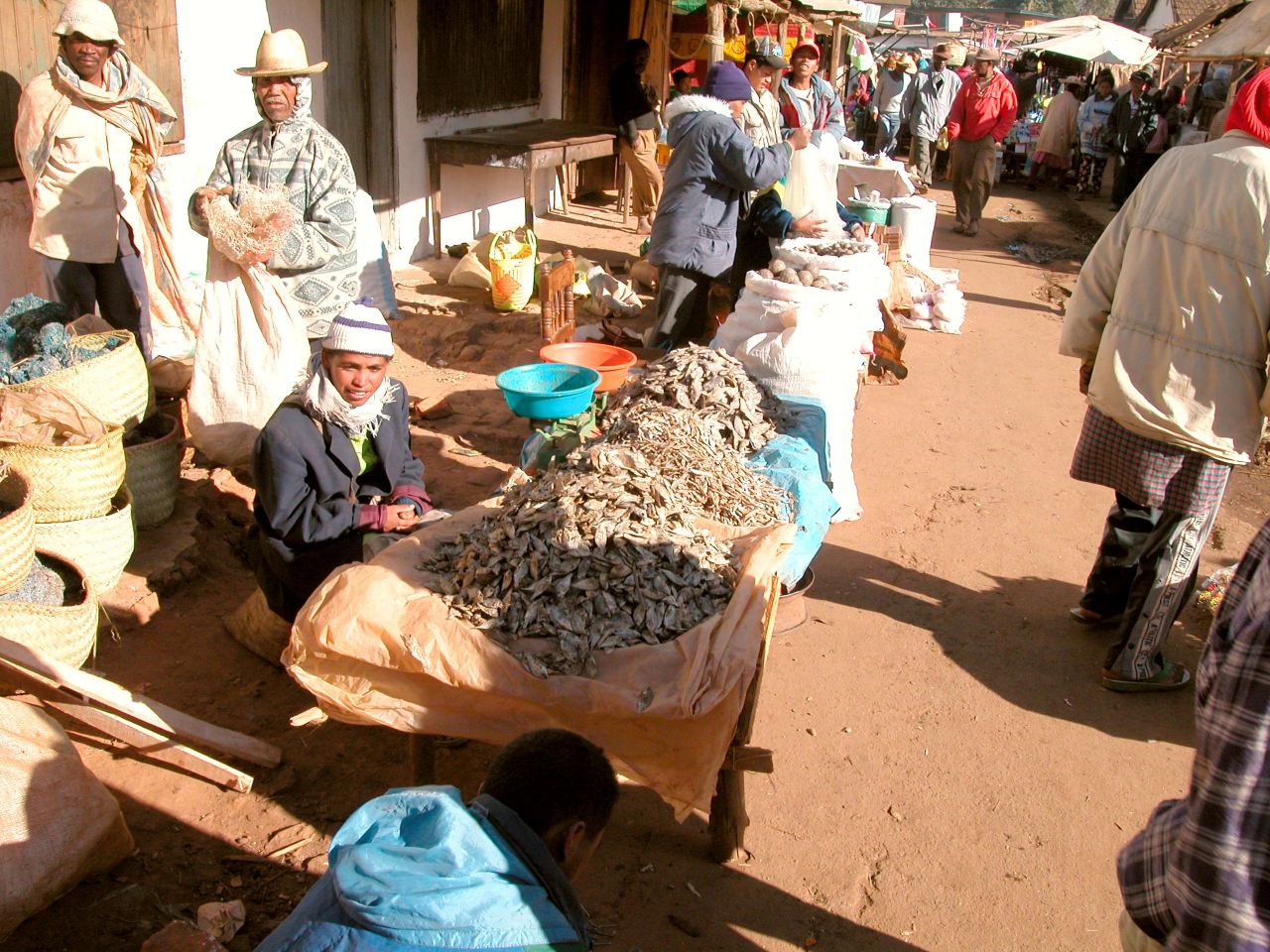
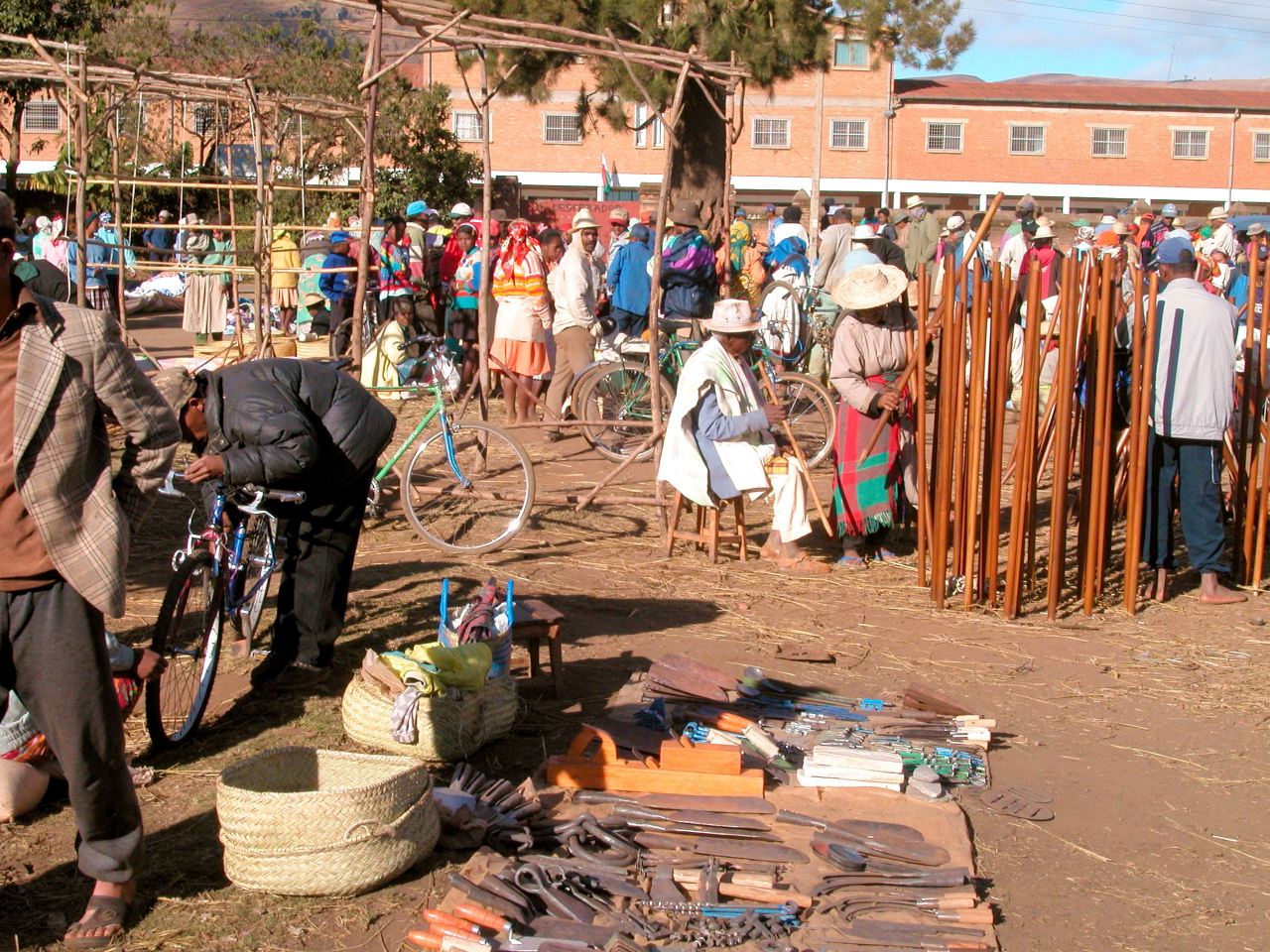
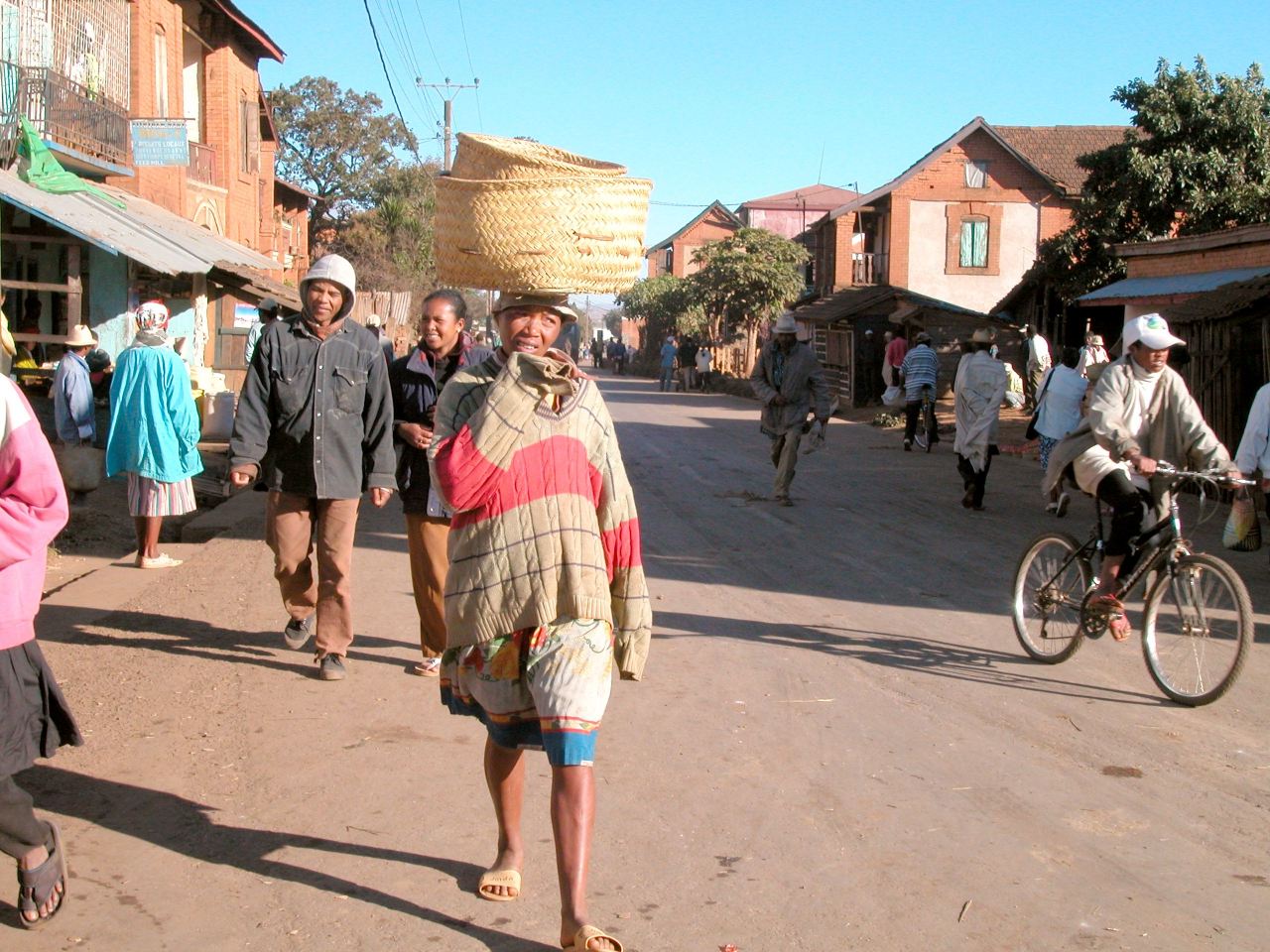
South of Antananarivo, Betafo was famous for its market. Sellers had spread out across the huge square in front of the church, most of them on the ground. It reminded me somewhat of a flea market at the start of perestroika. Here and there were stalls selling expensive imported goods with bored attendants, but for the most part people traded as they had for centuries. Women in bright dresses carried enormous woven baskets of produce on their heads. The market was divided into sections, each dealing in one type of goods. There were rows of cabbages, tomatoes, carrots and bananas. Separate trays held different kinds of meat. Pork, lamb and of course zebu meat. Nearby you could buy a live animal, hay for its feed and locally produced salt.
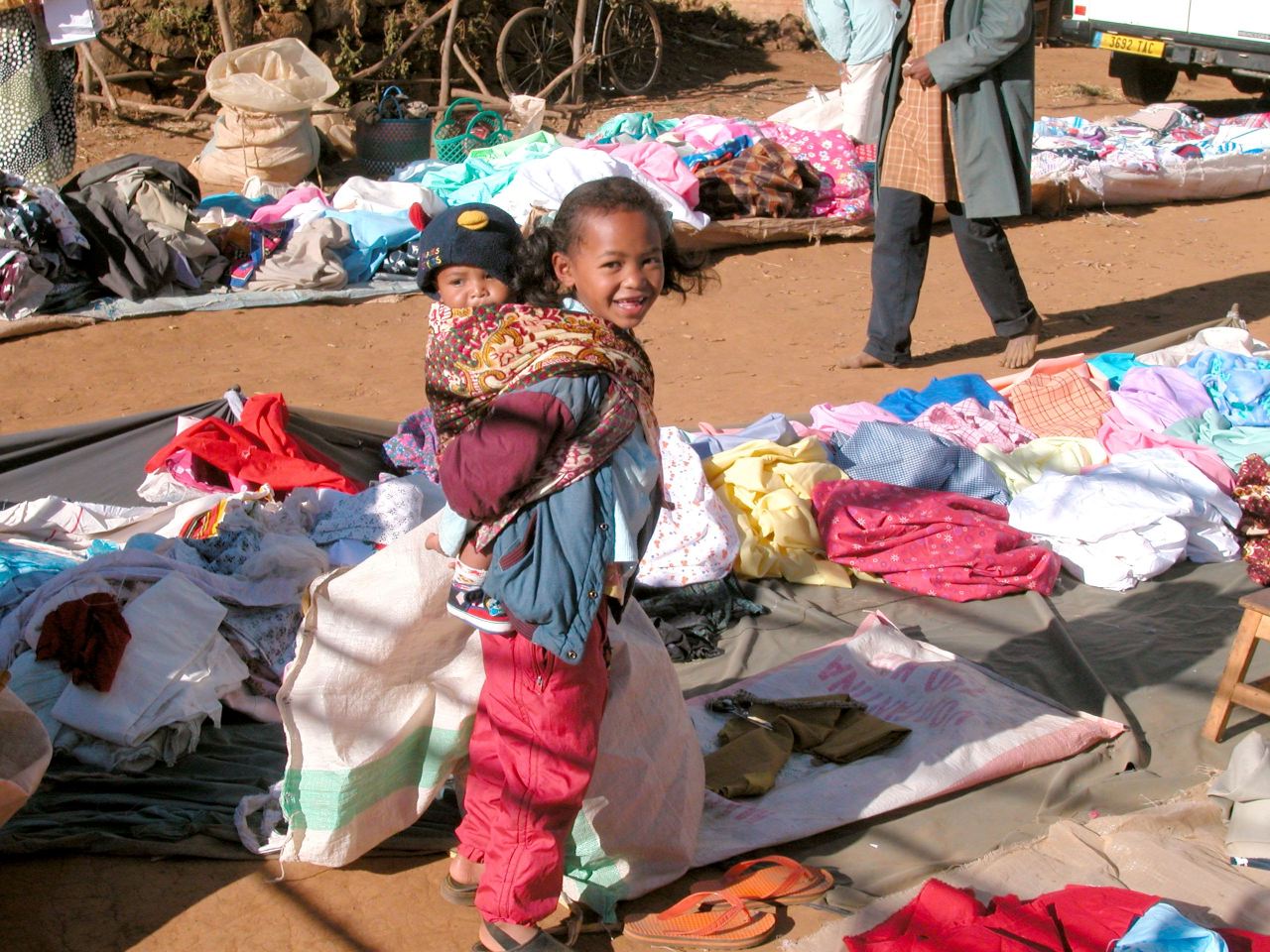
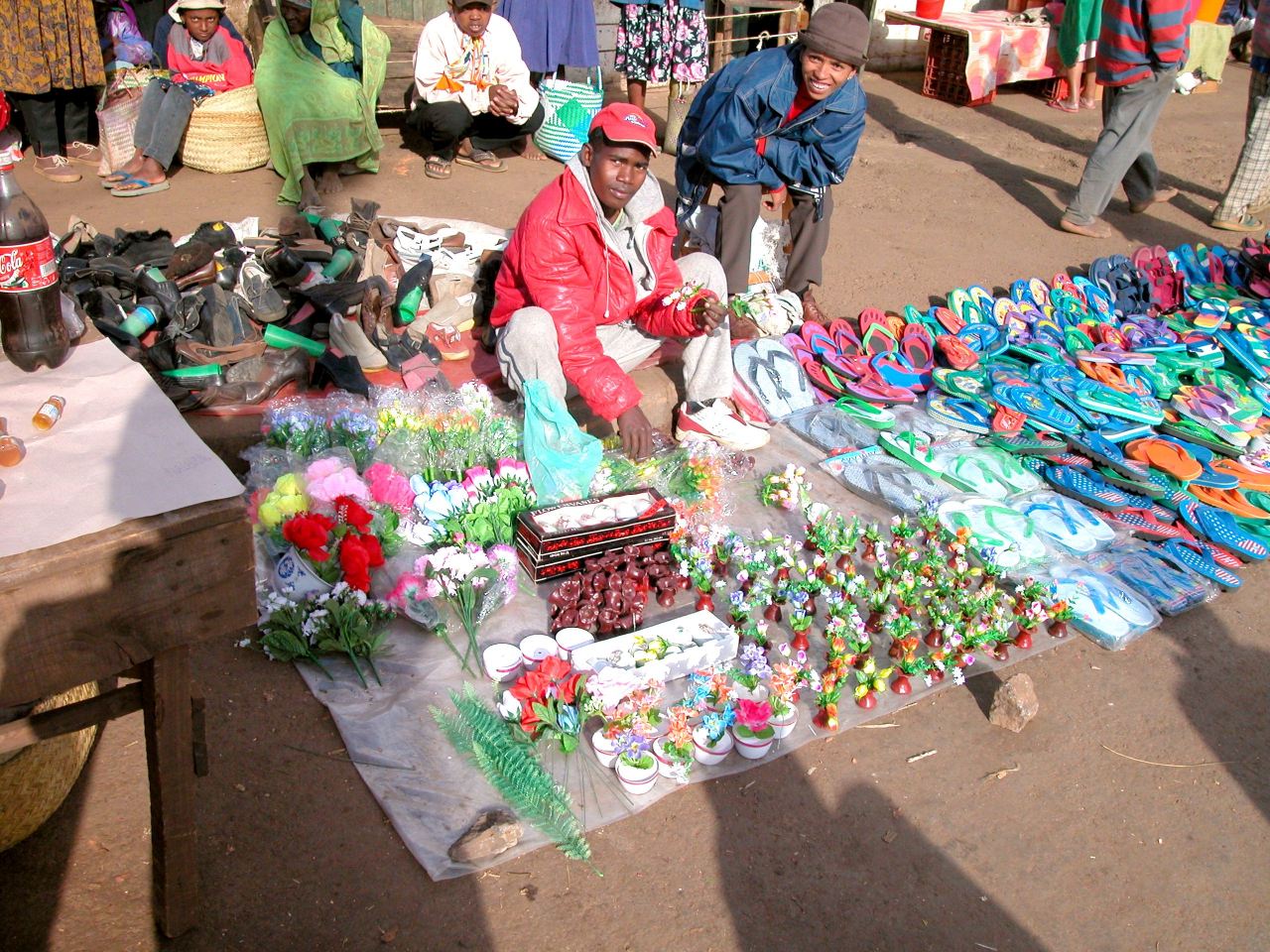
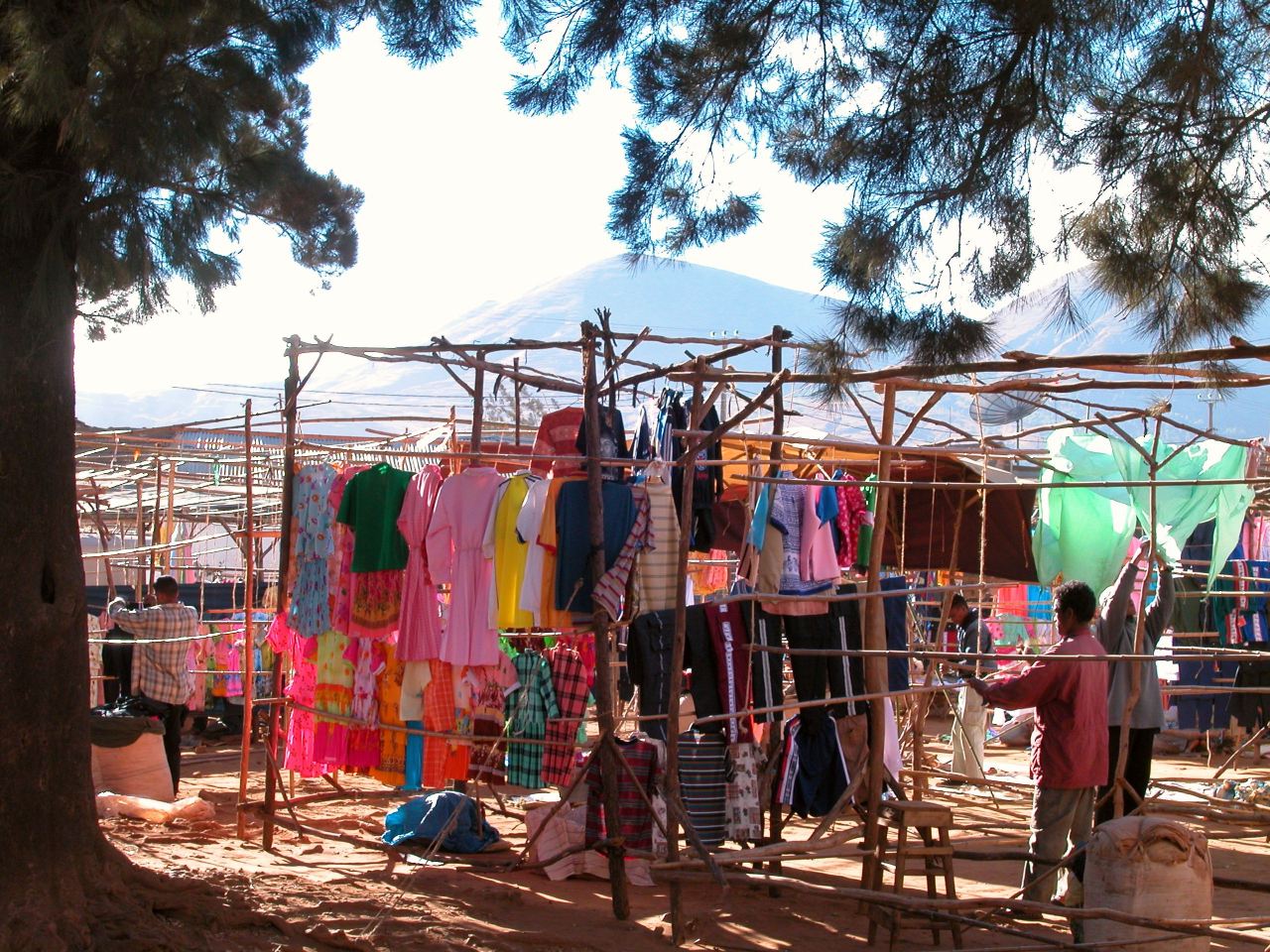
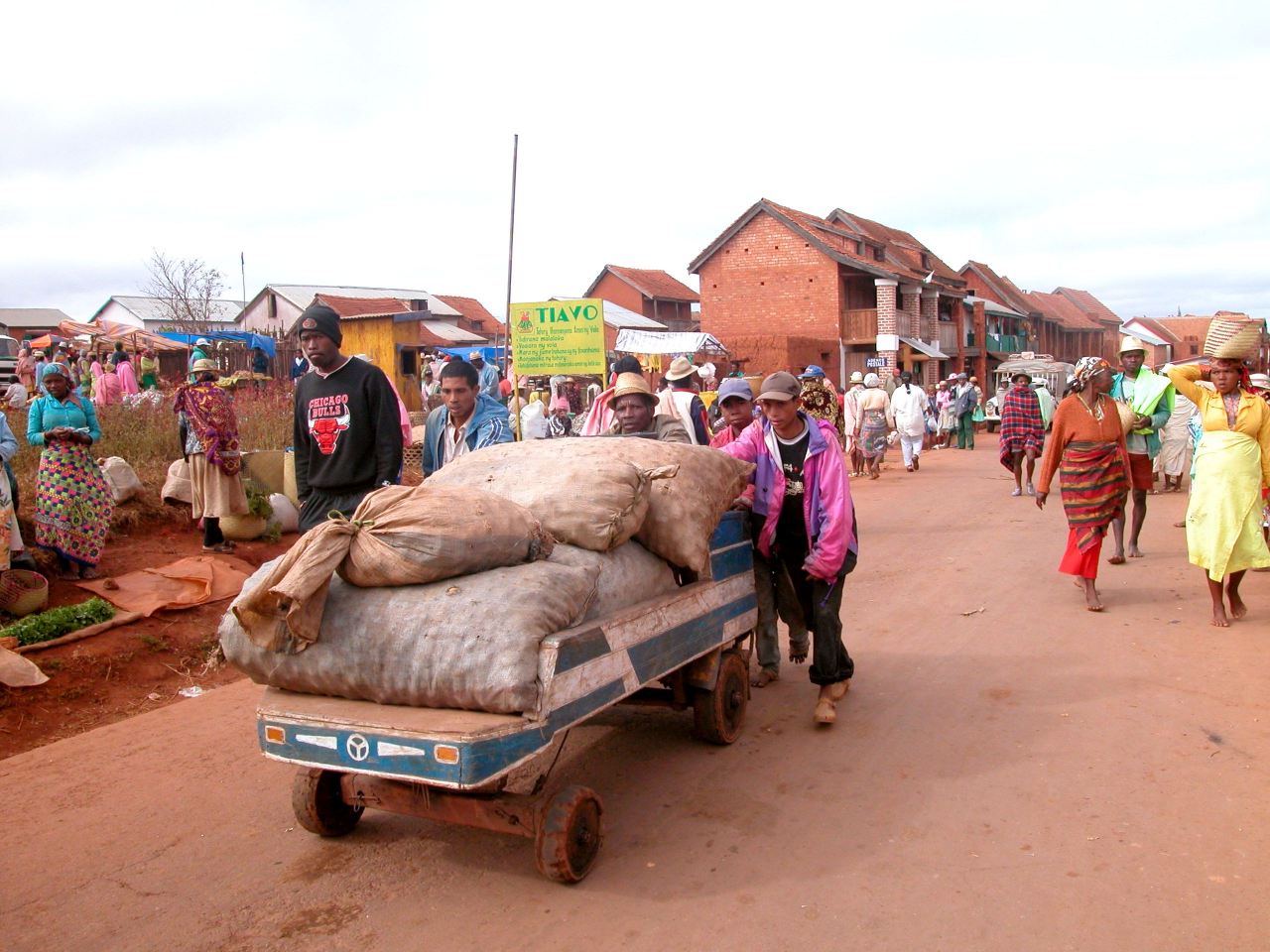
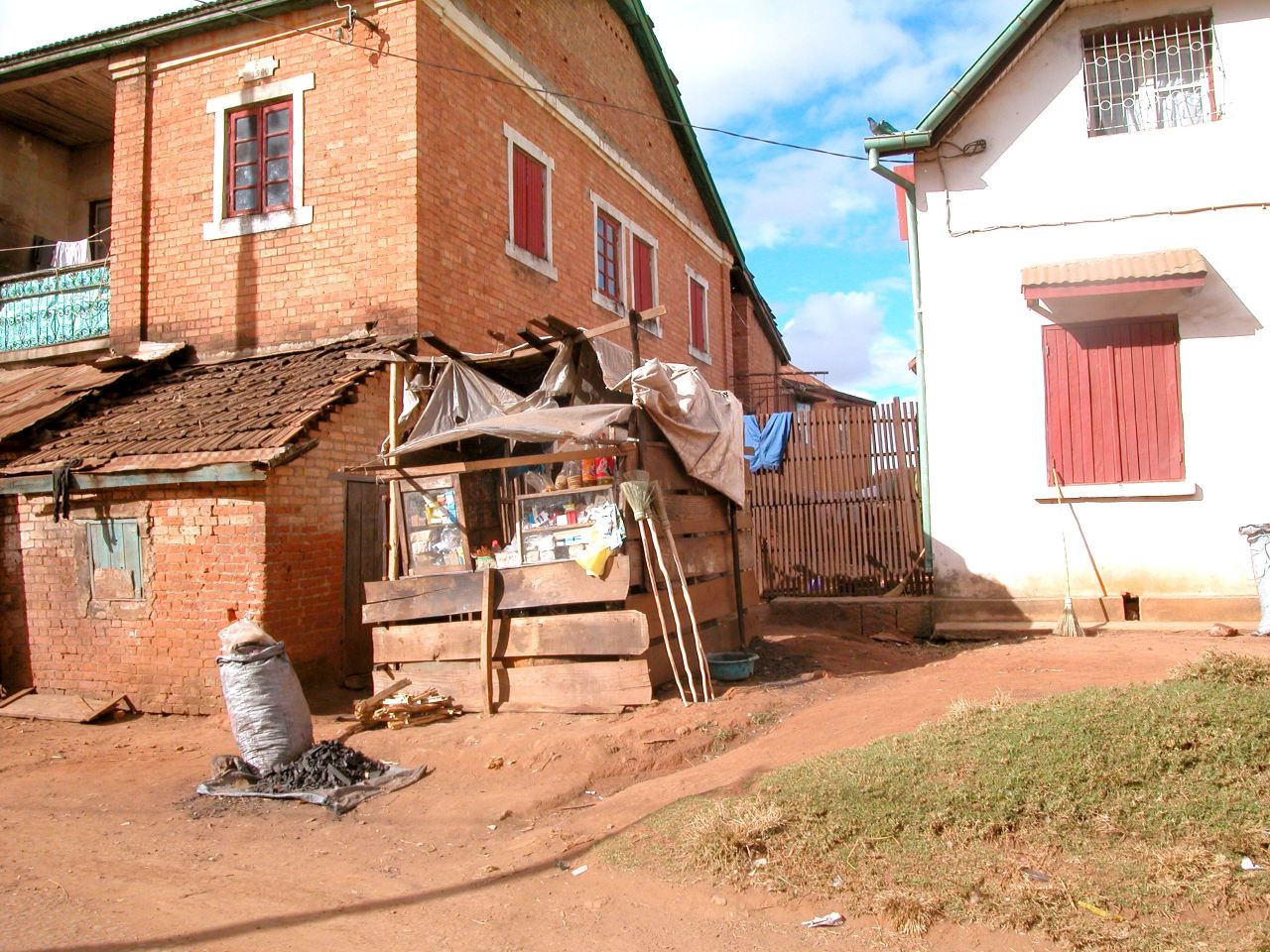
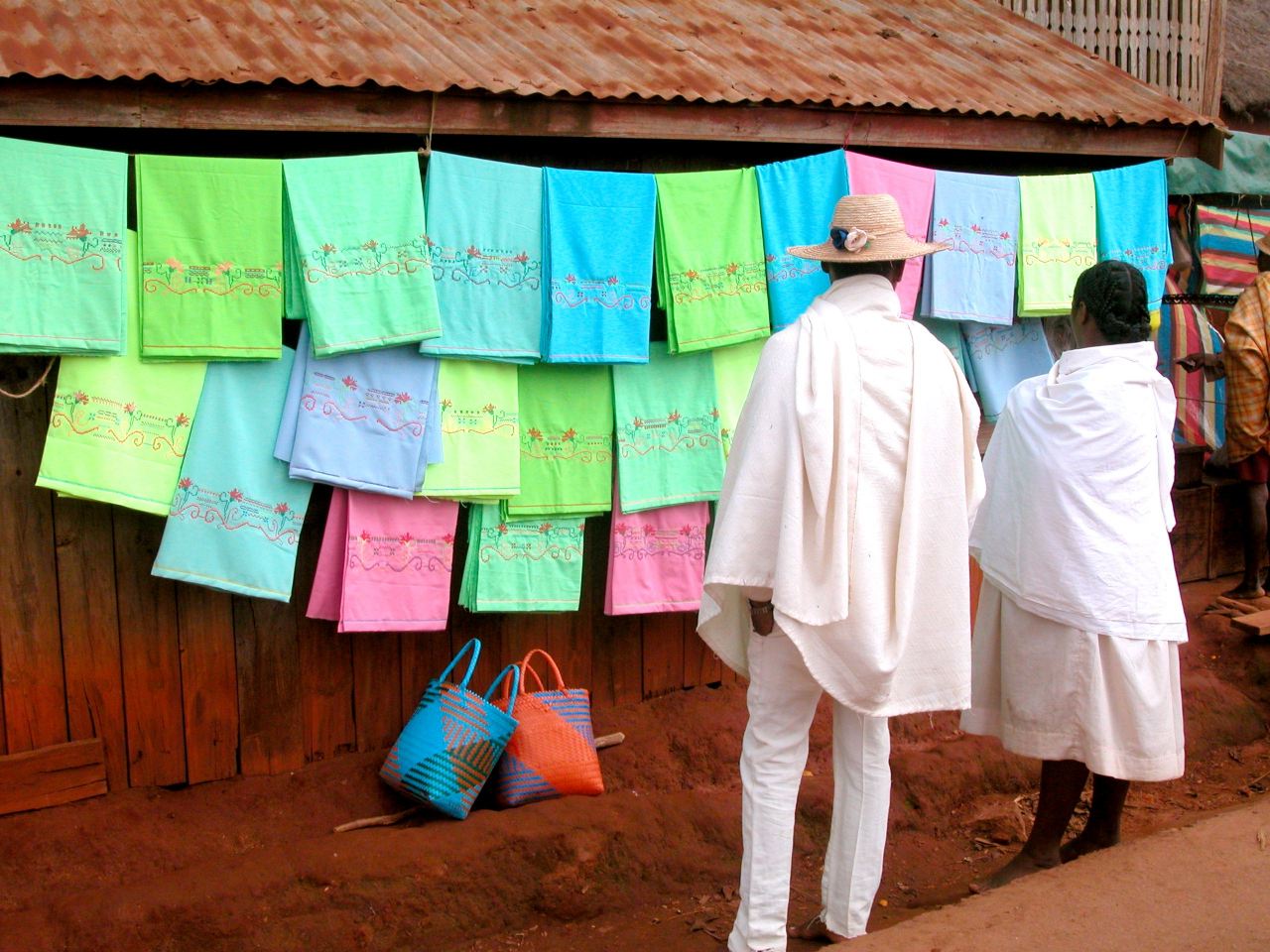
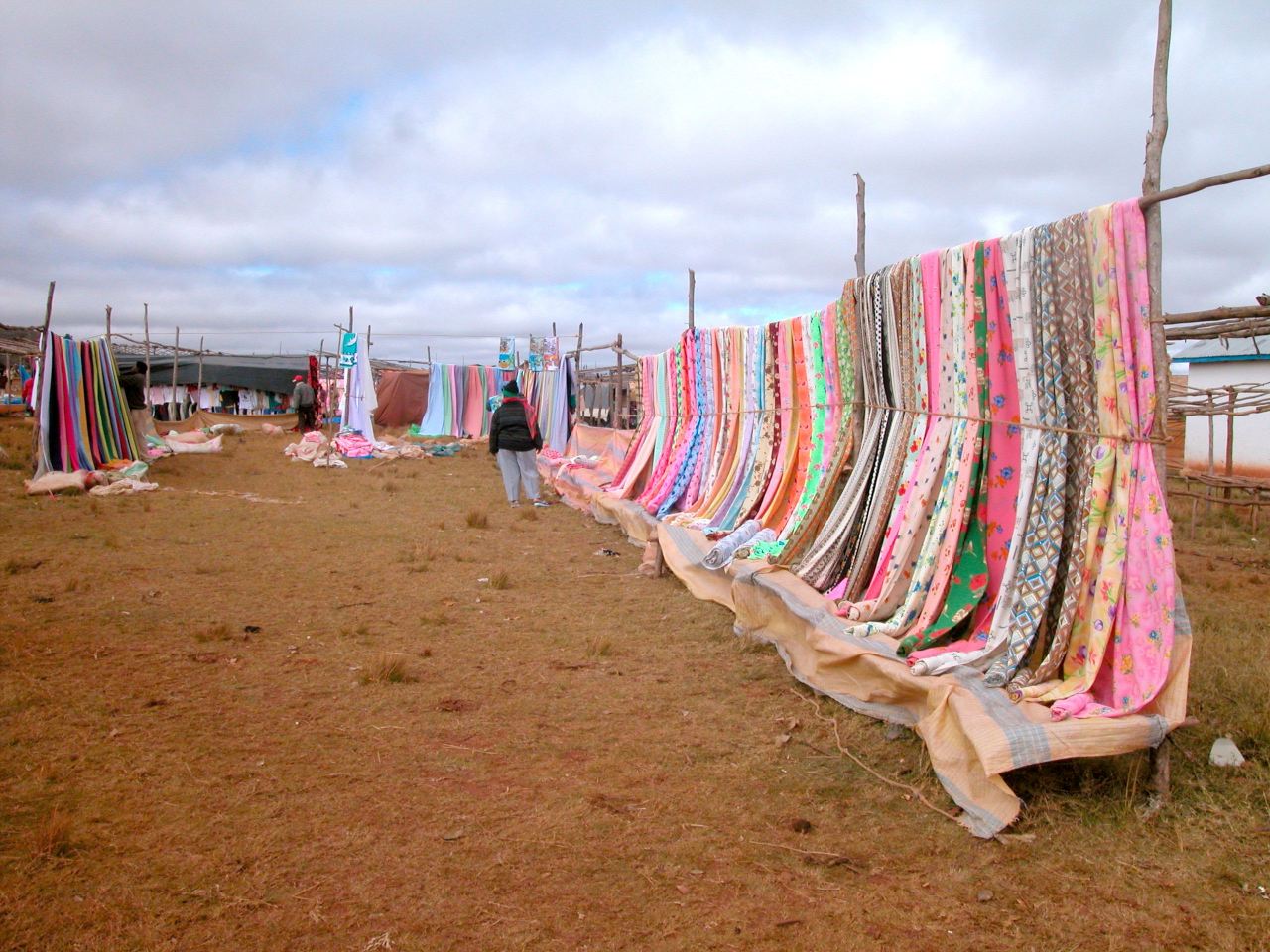
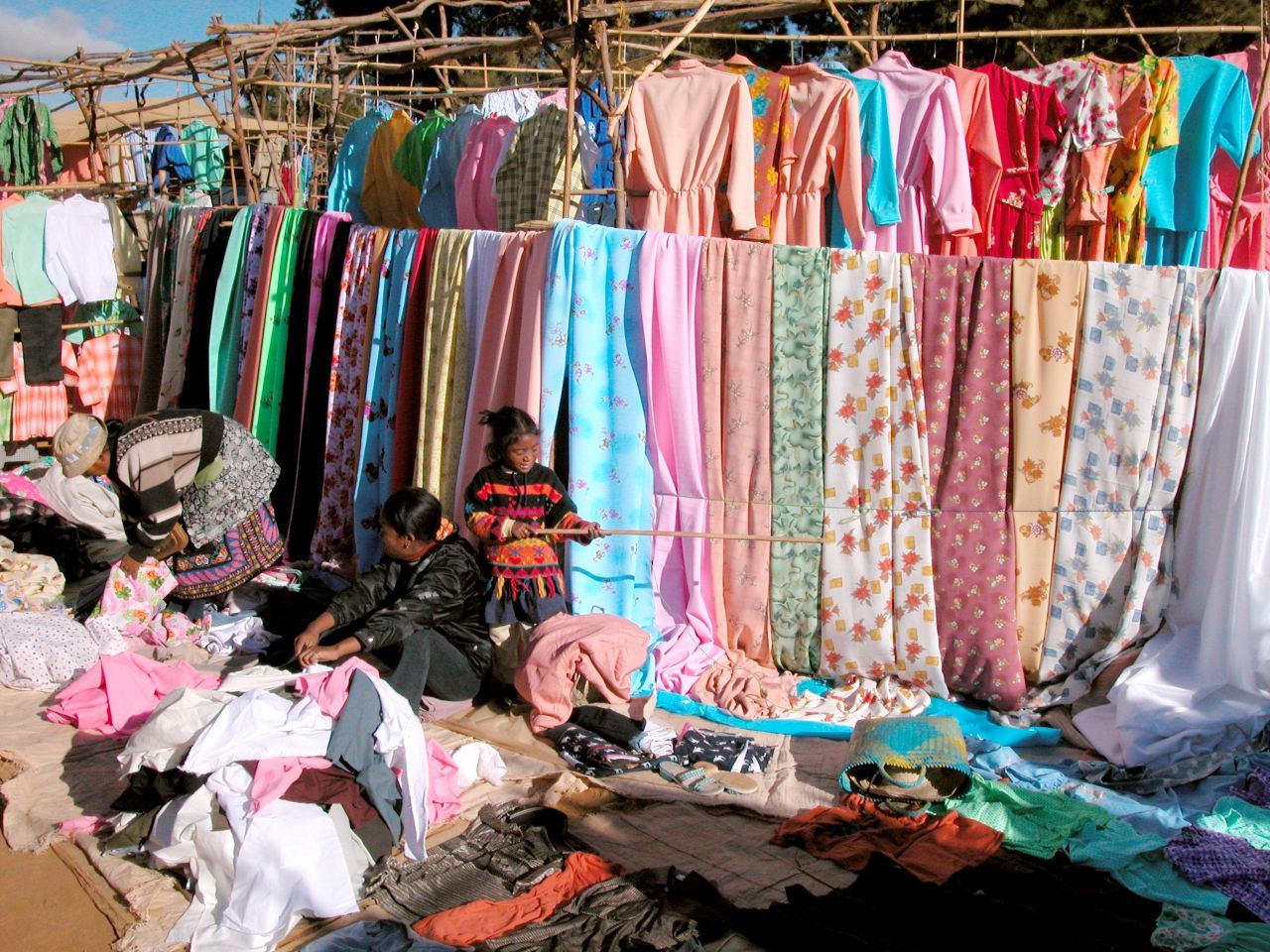
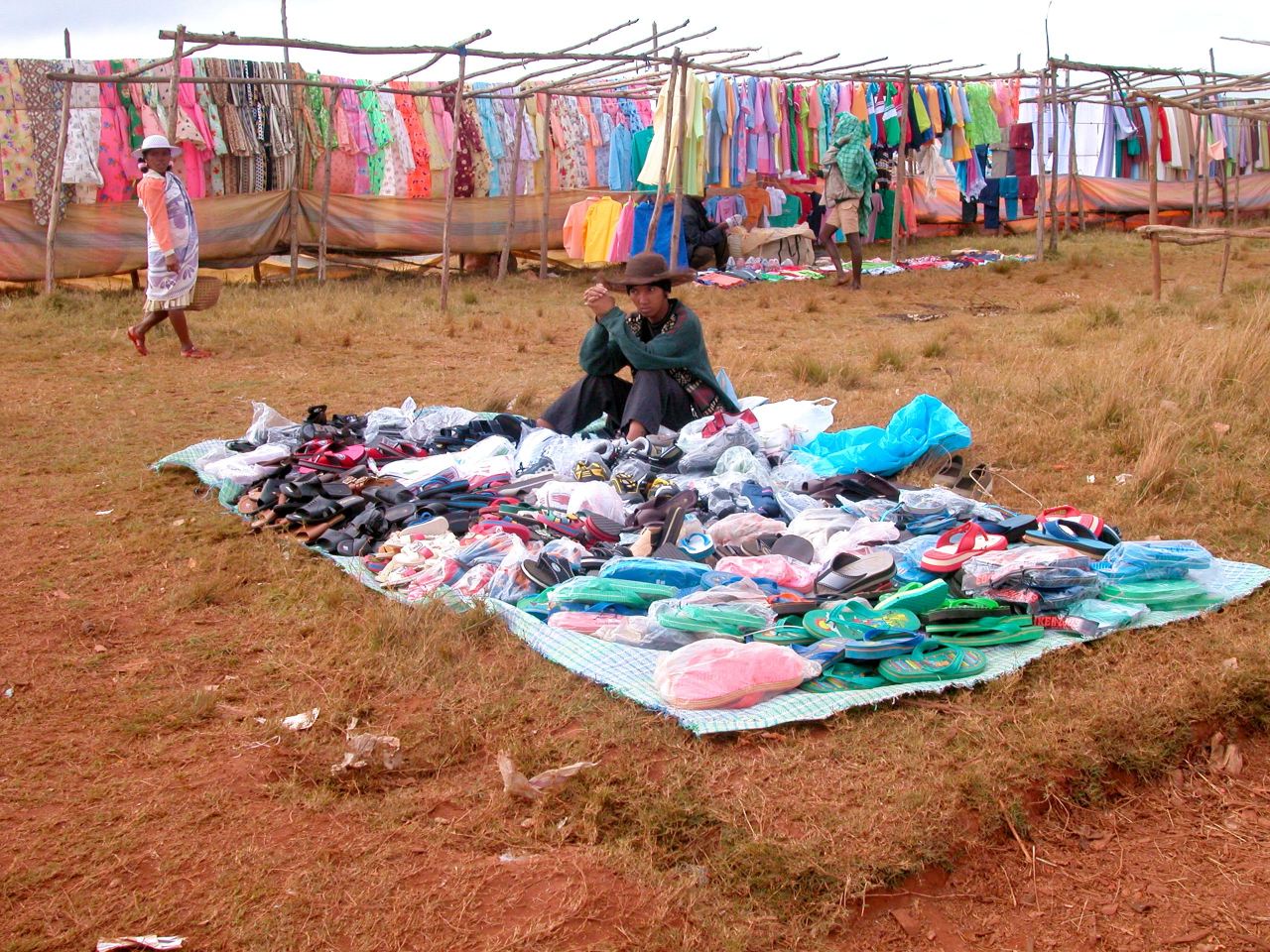
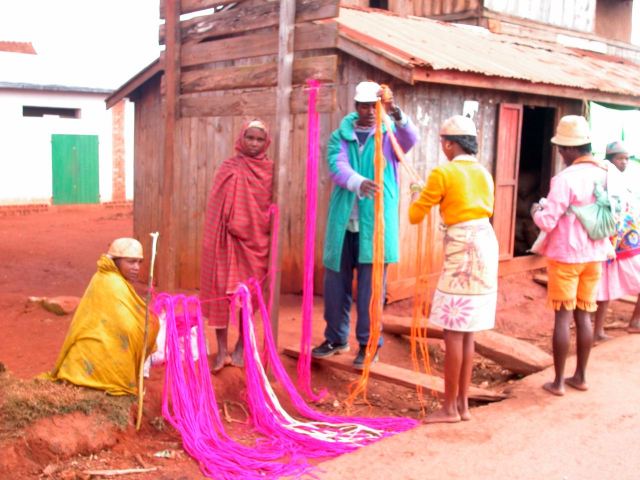
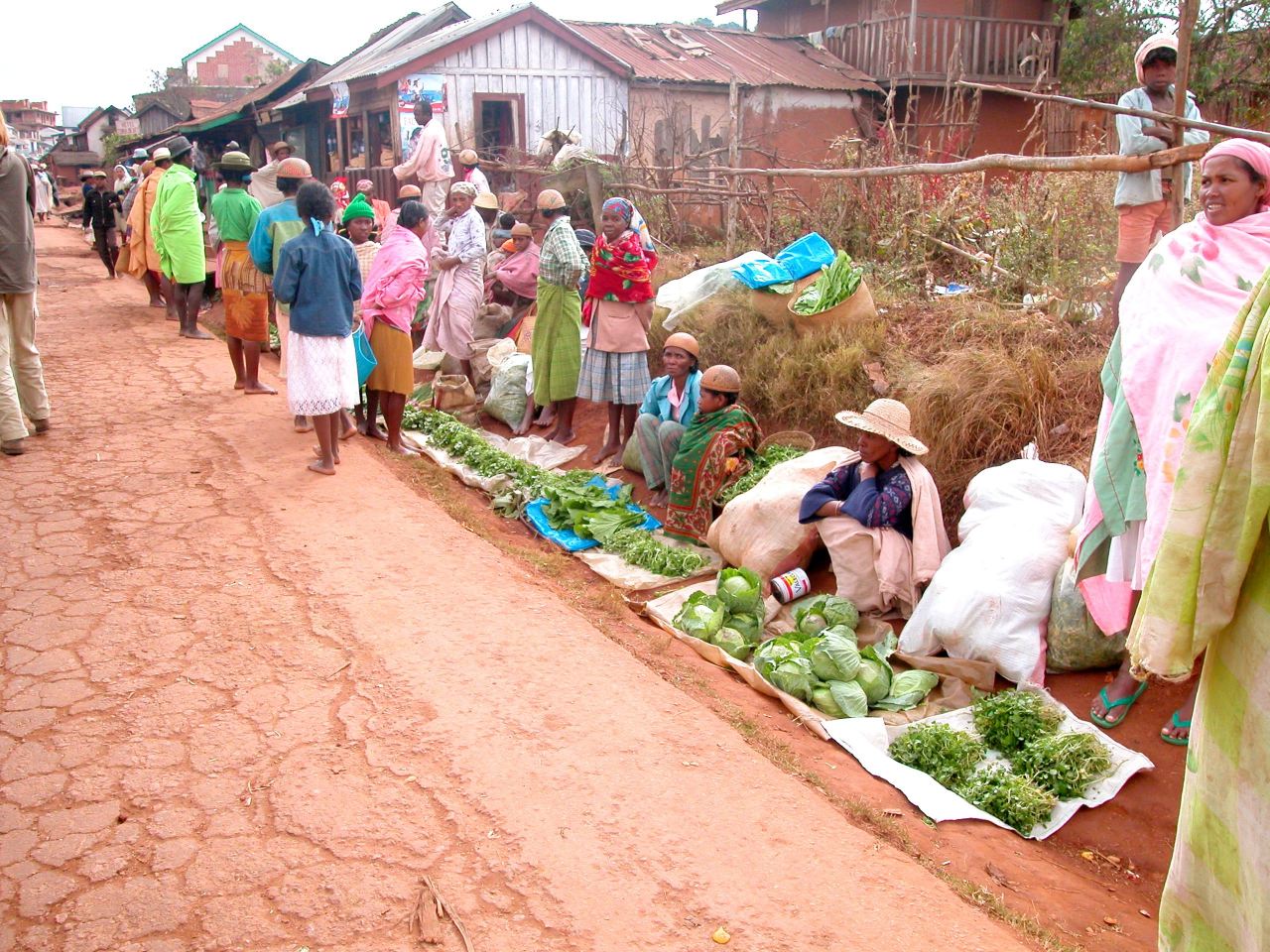
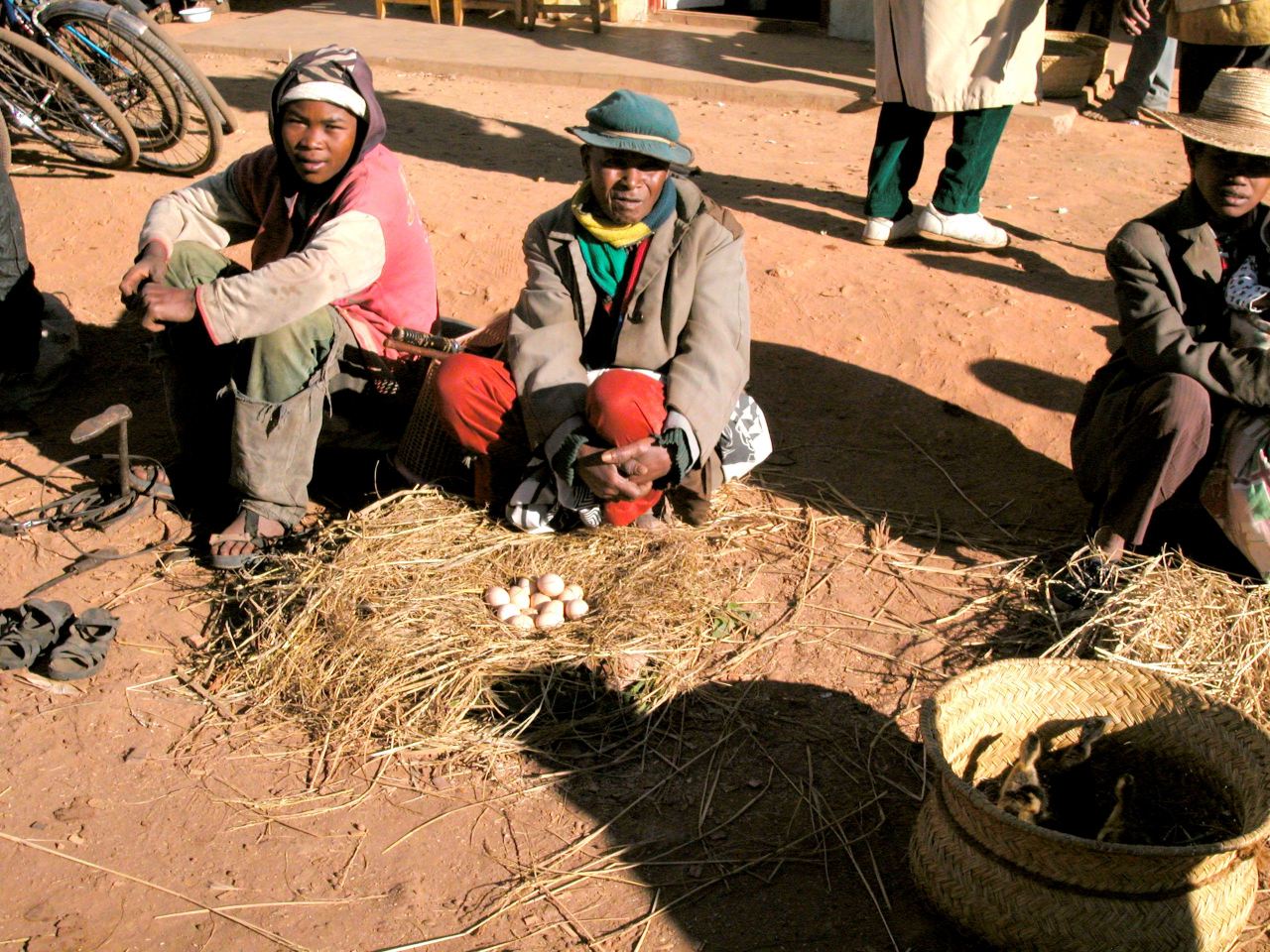
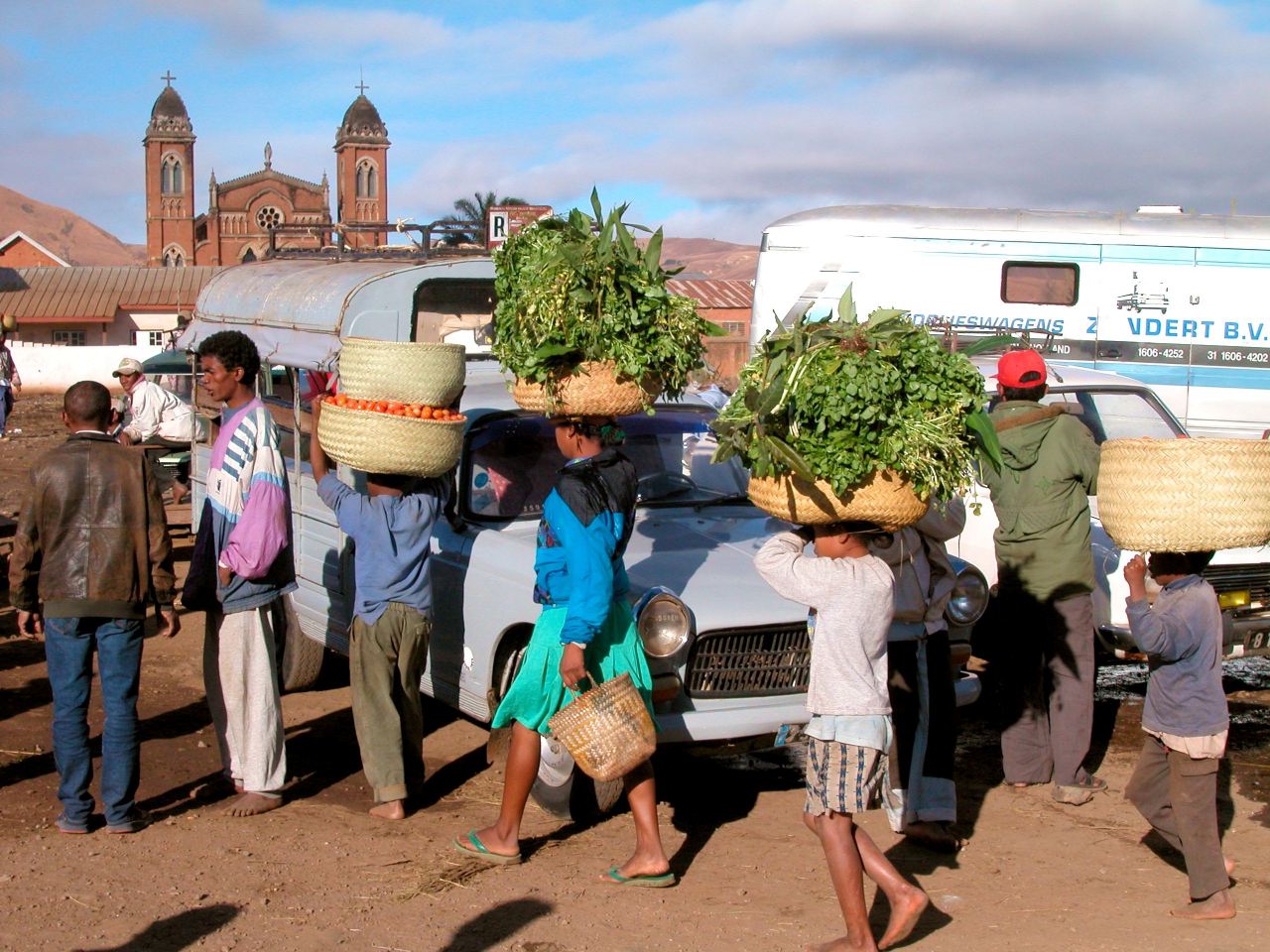
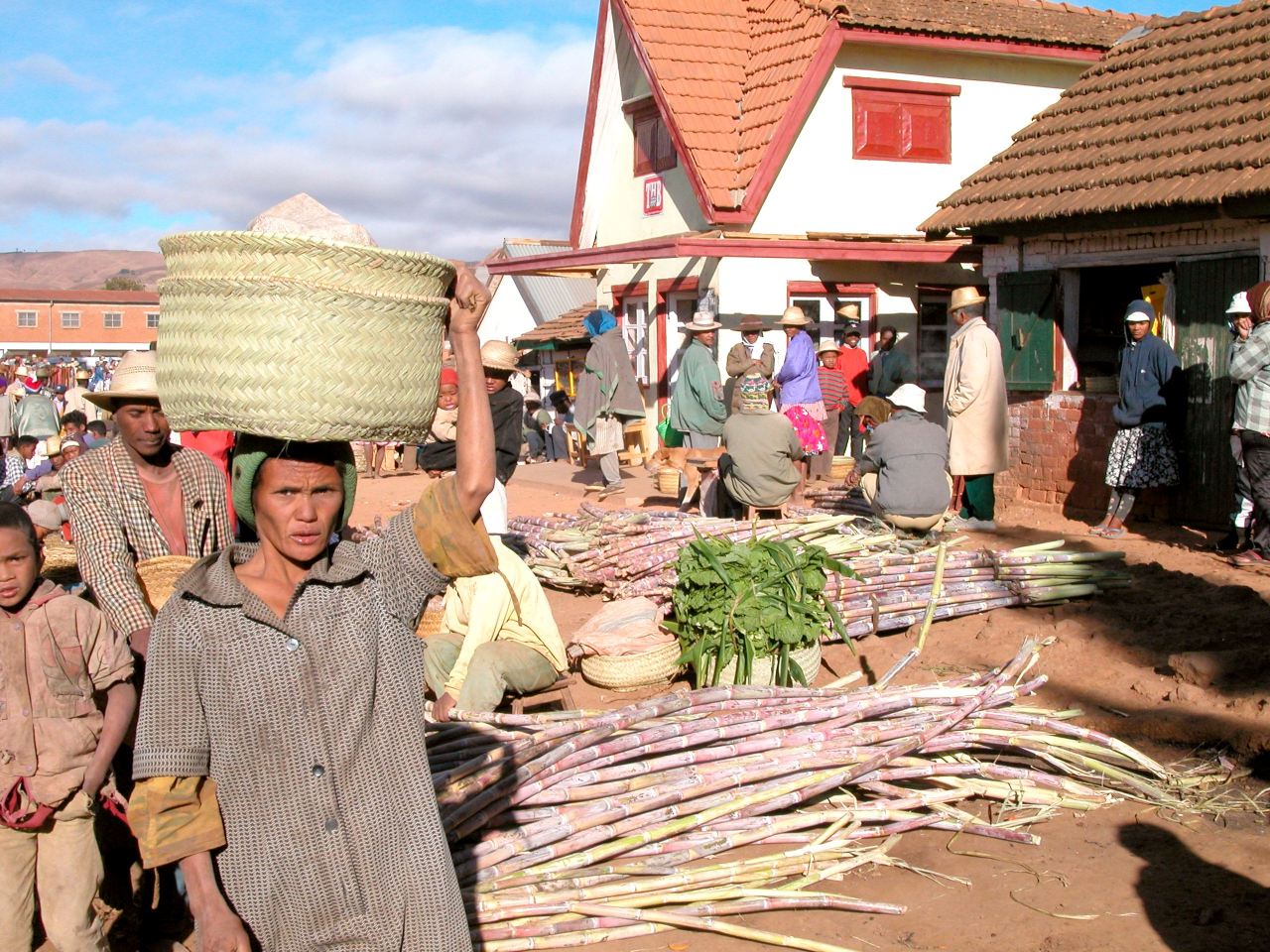
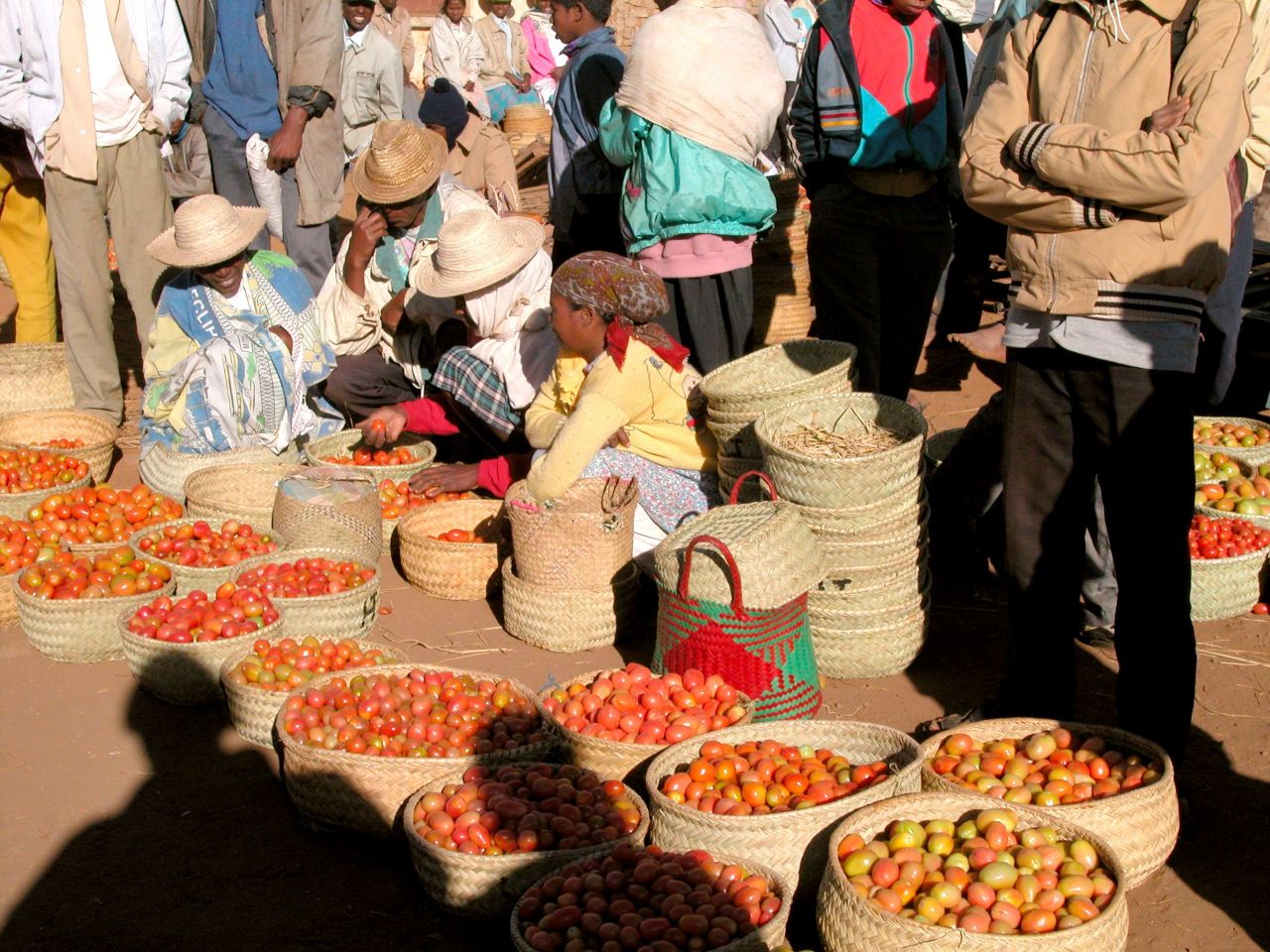
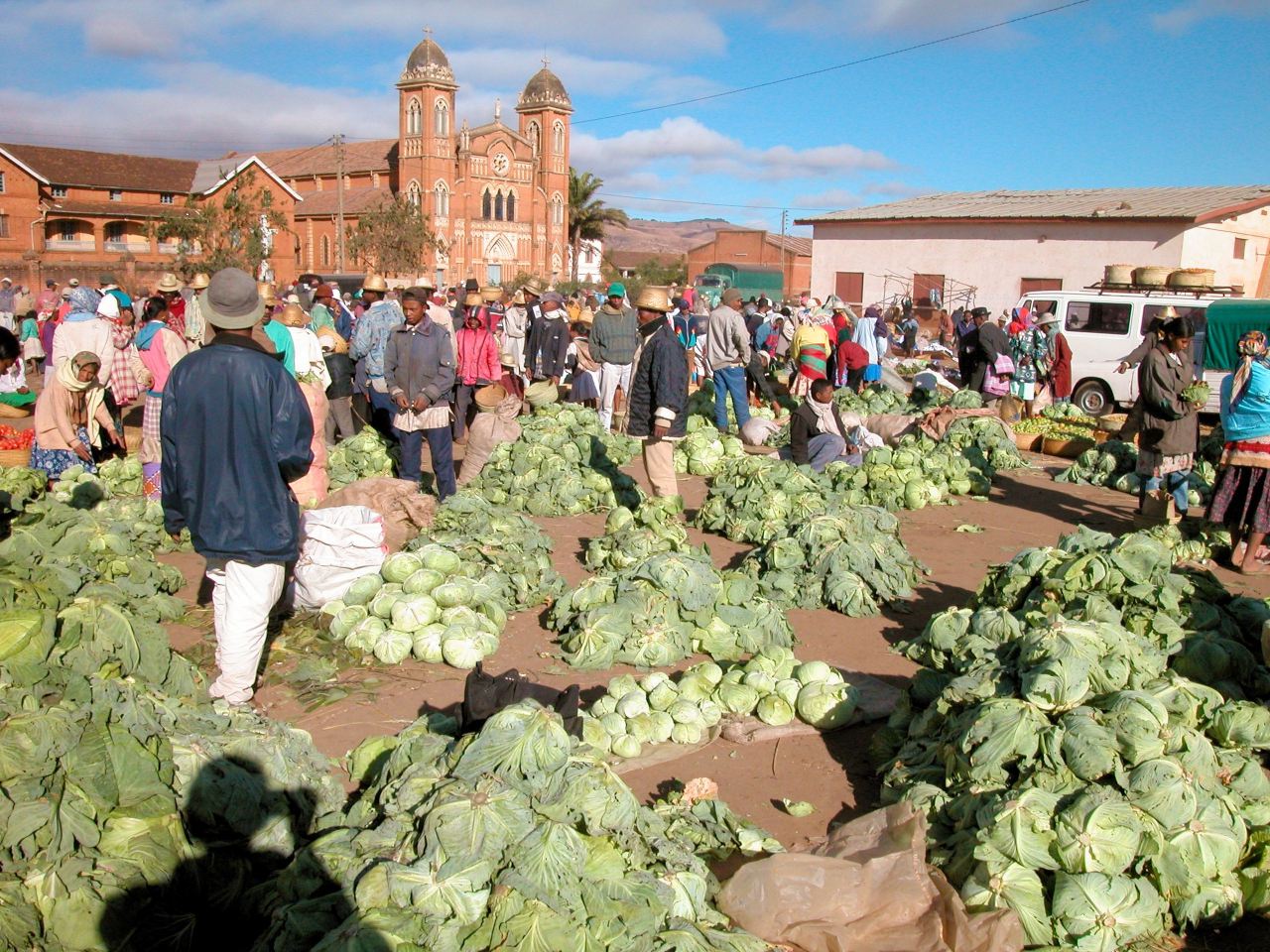
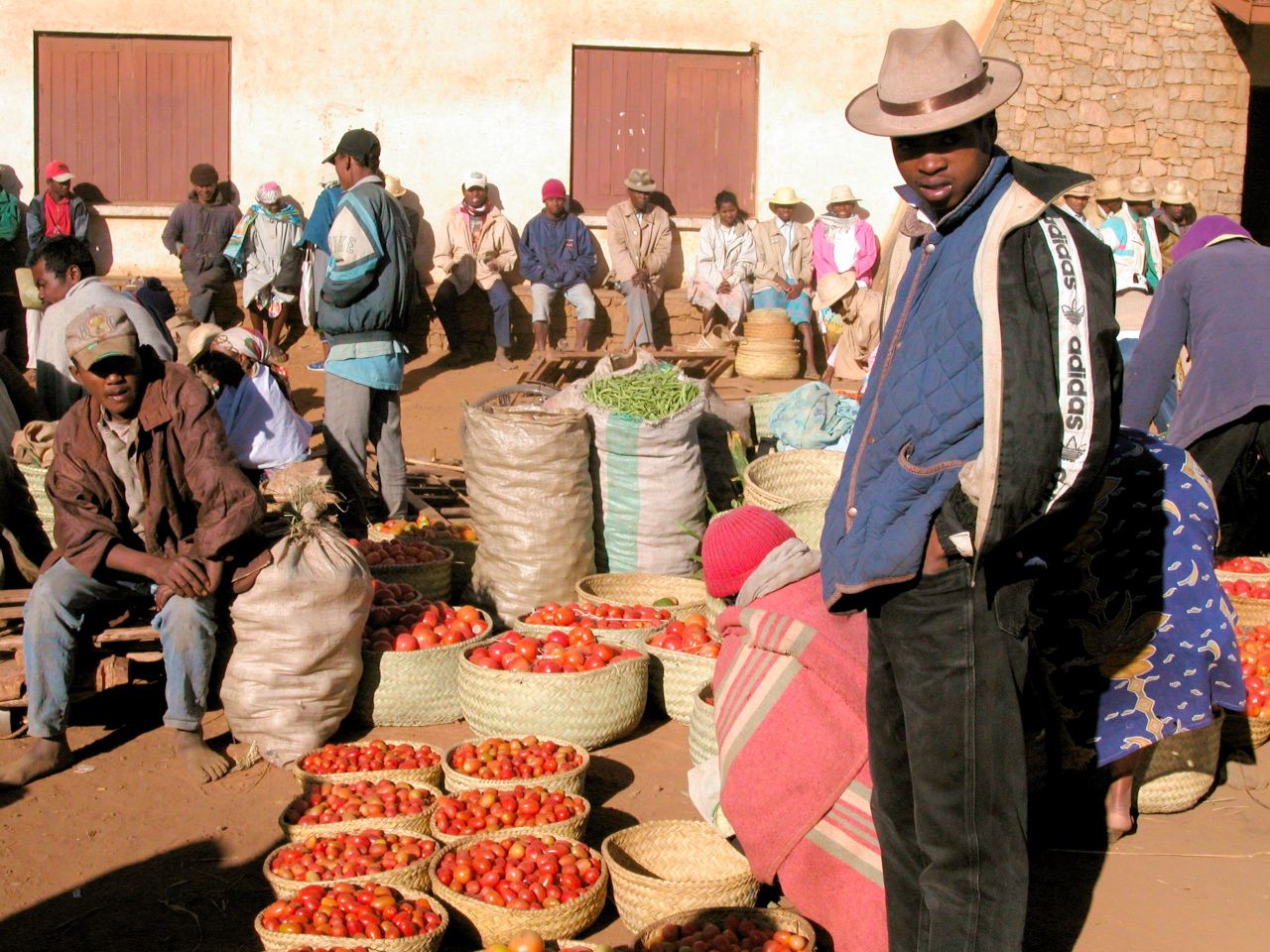
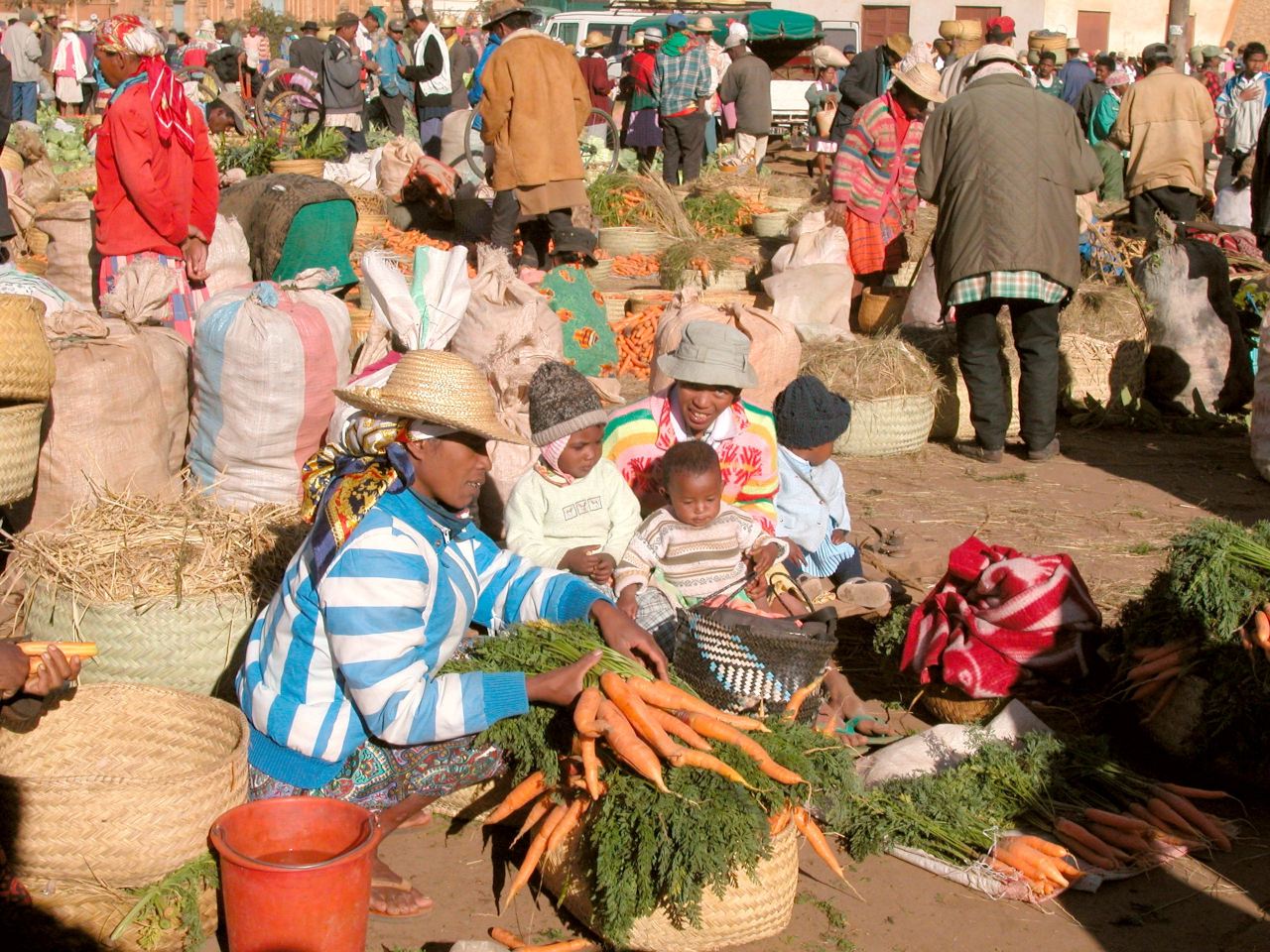
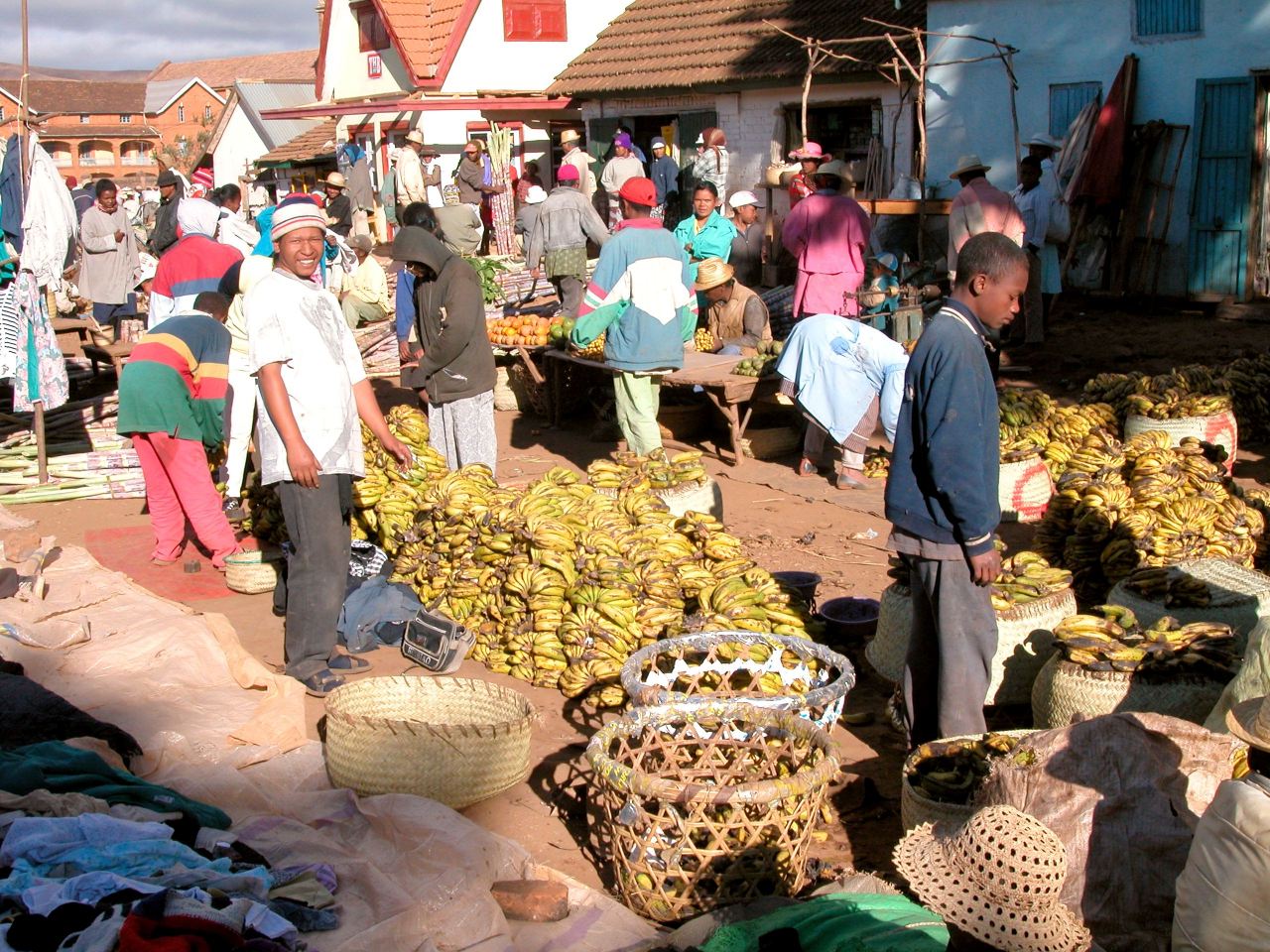
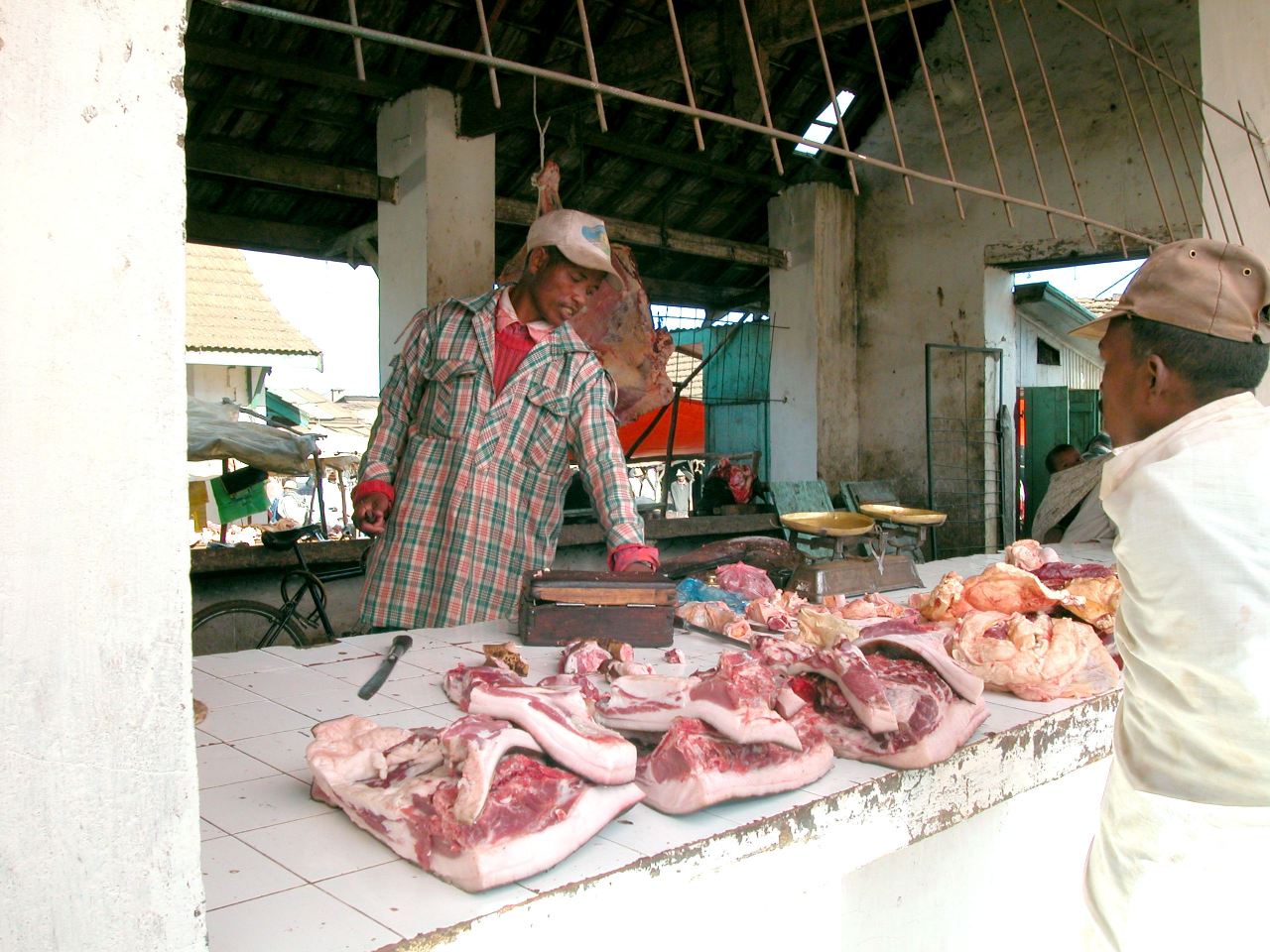
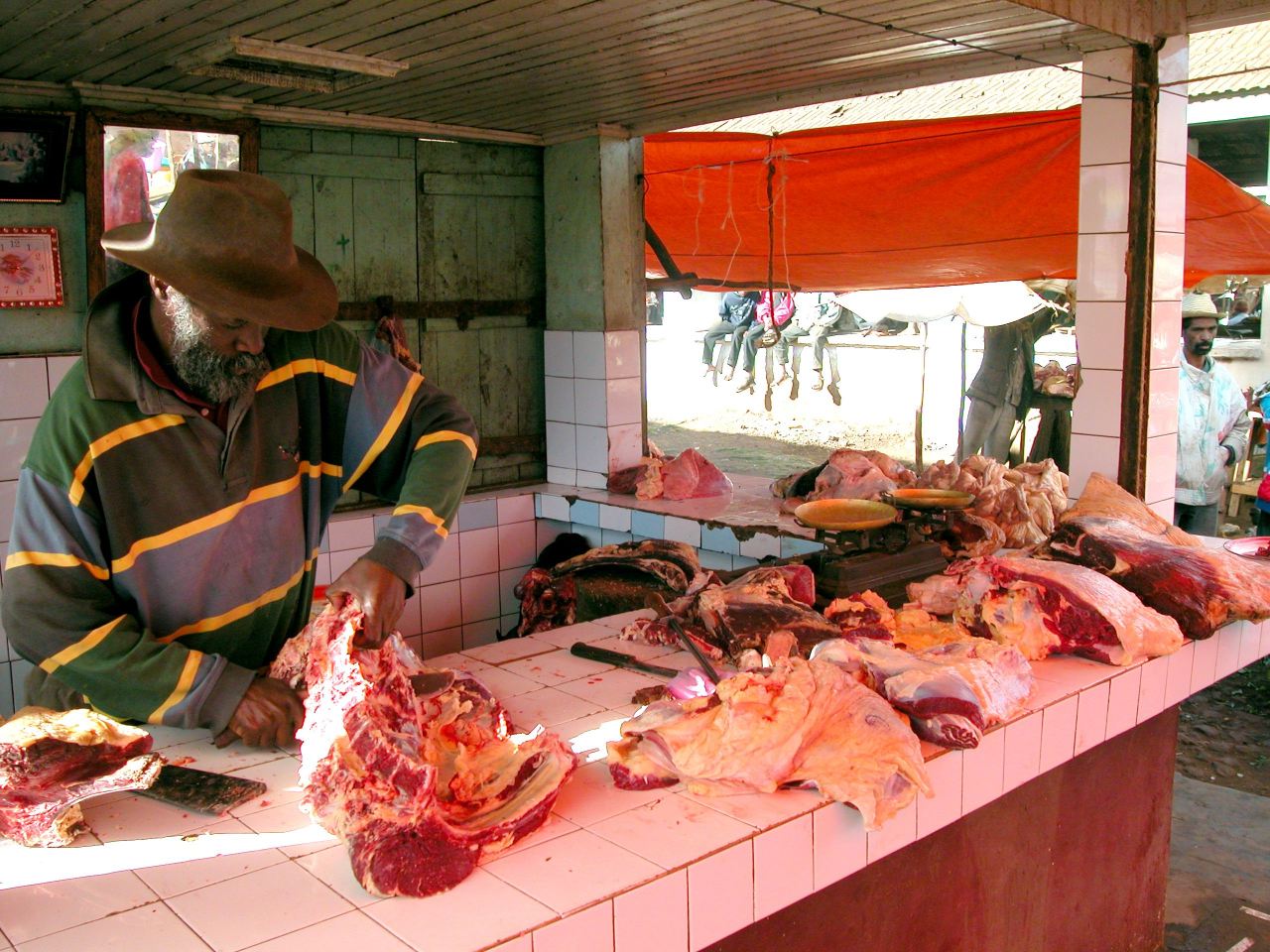
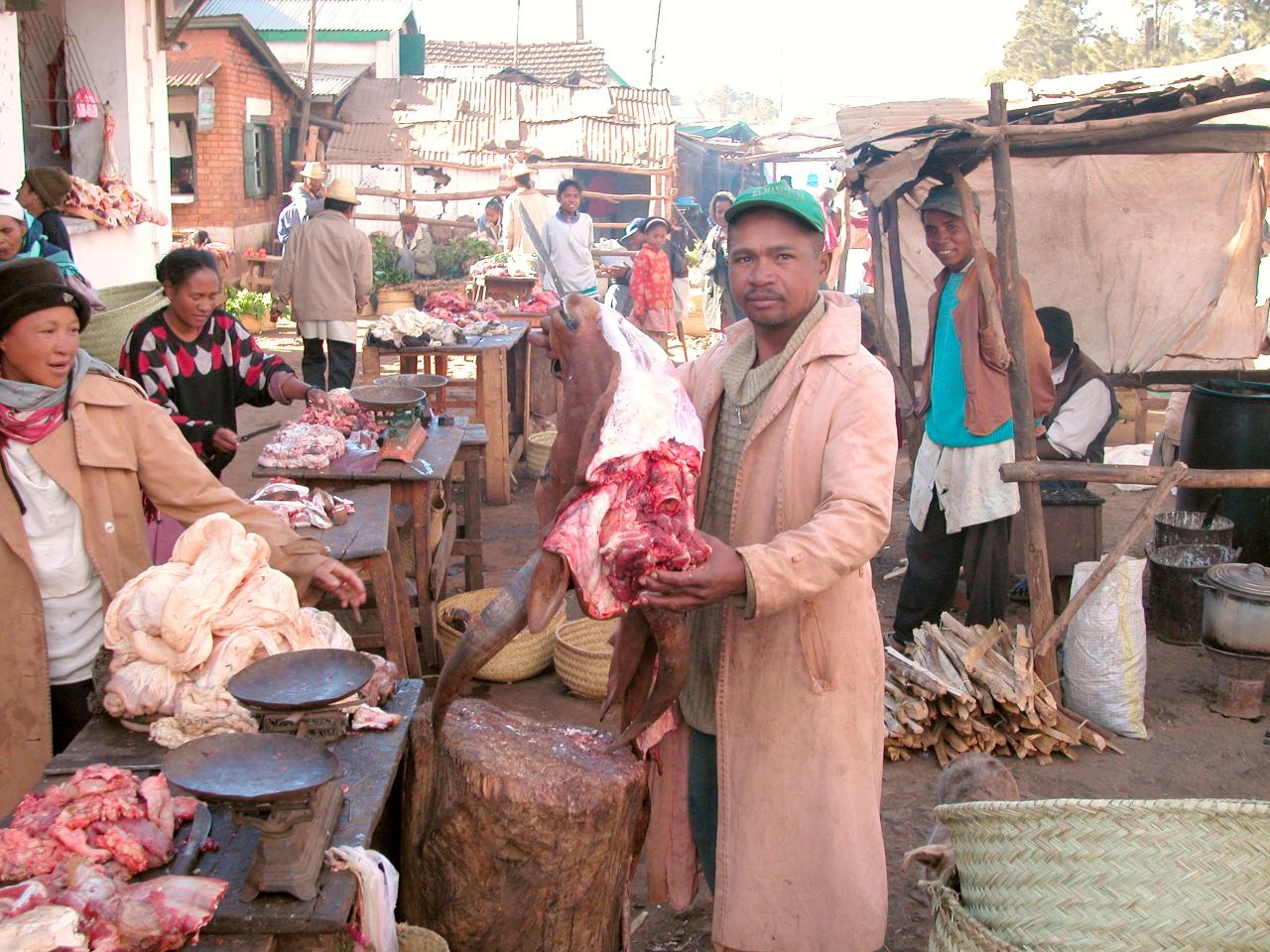
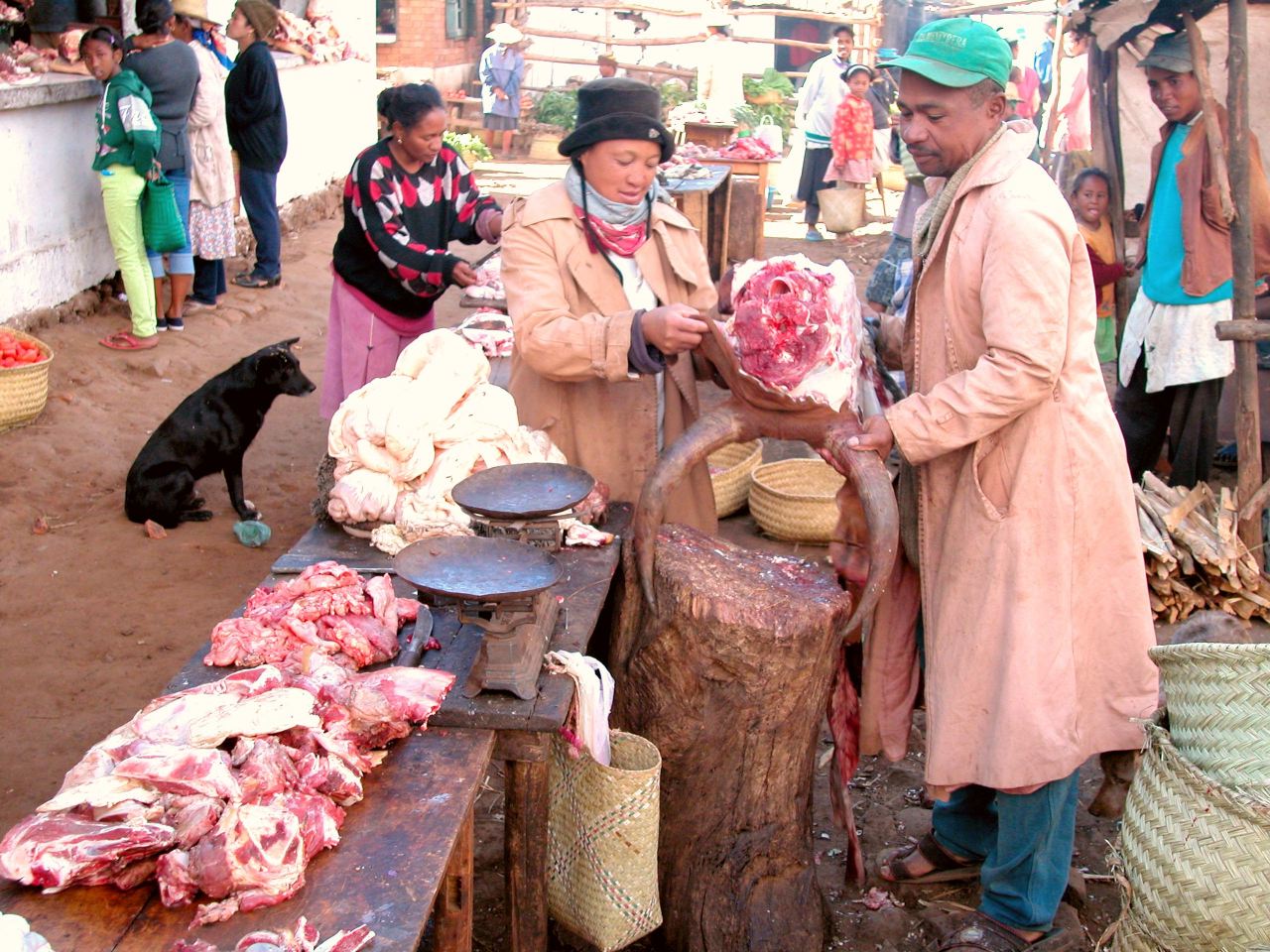
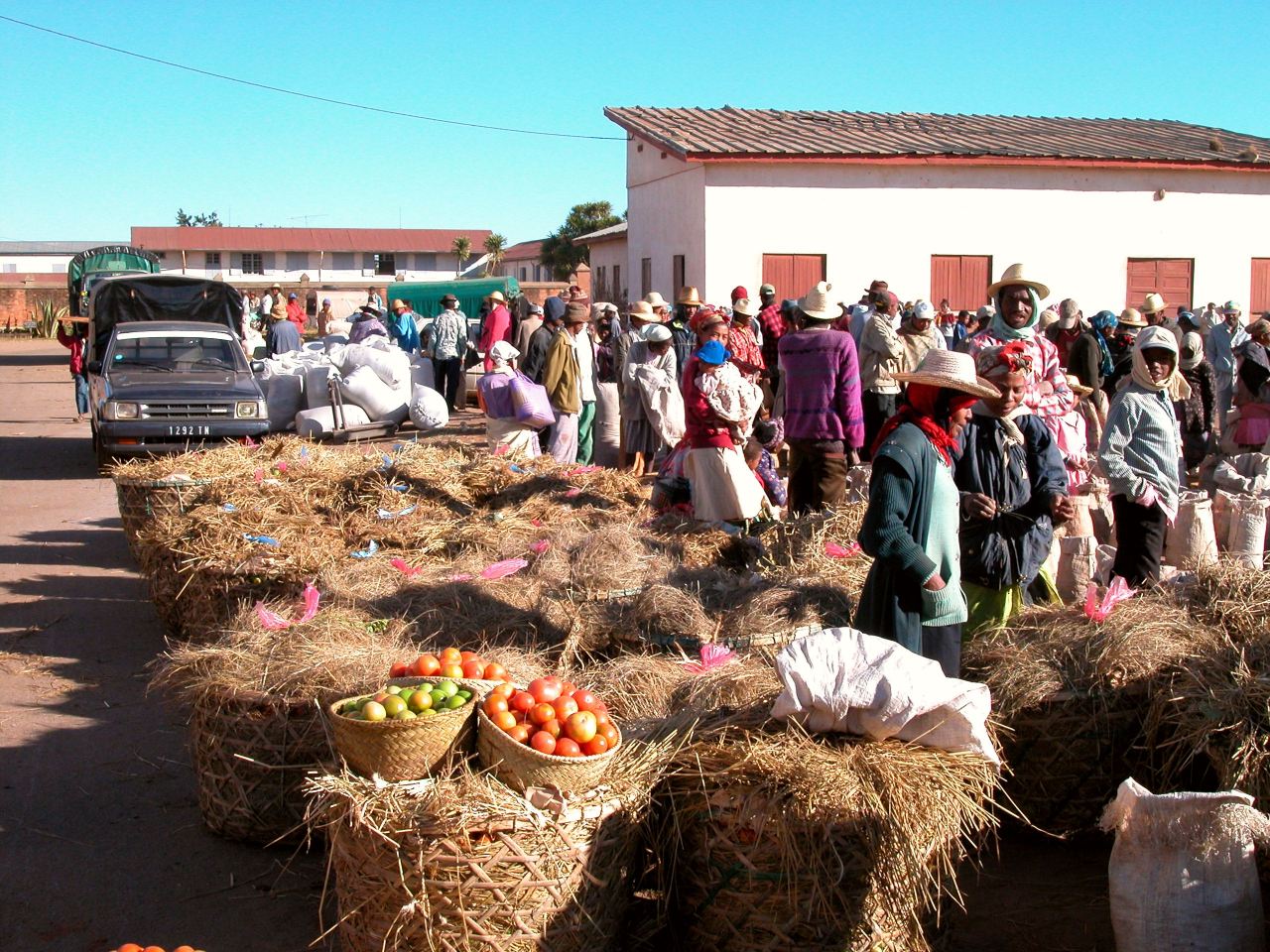
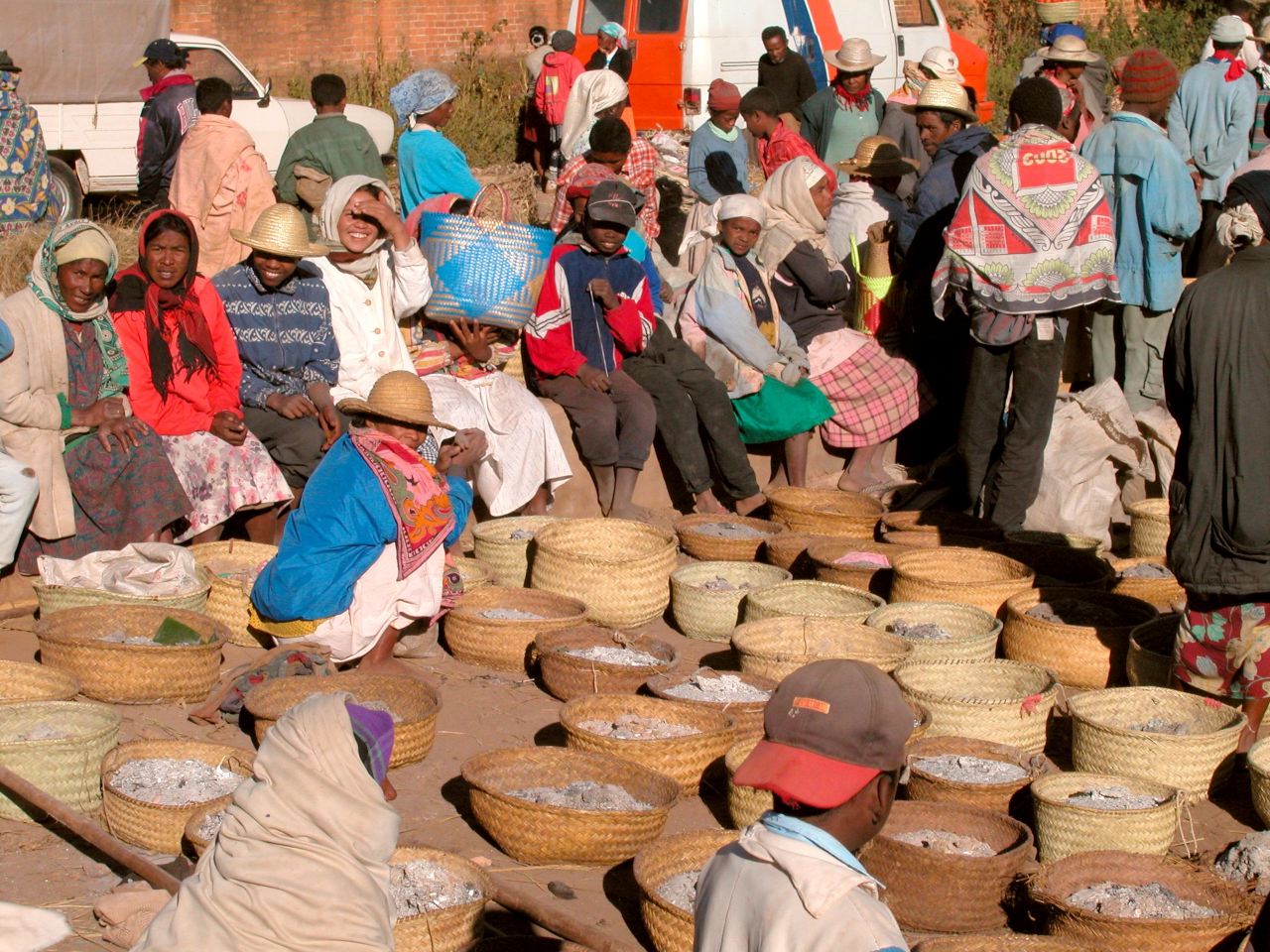
Some people sold second-hand goods. They were hardly the kind we got in Russia. Most of the shoes and clothes were so worn that back home even a person rummaging through a rubbish bin would pass them over. There were plenty of old tools: homemade hammers, hand drills, chisels and hoes.
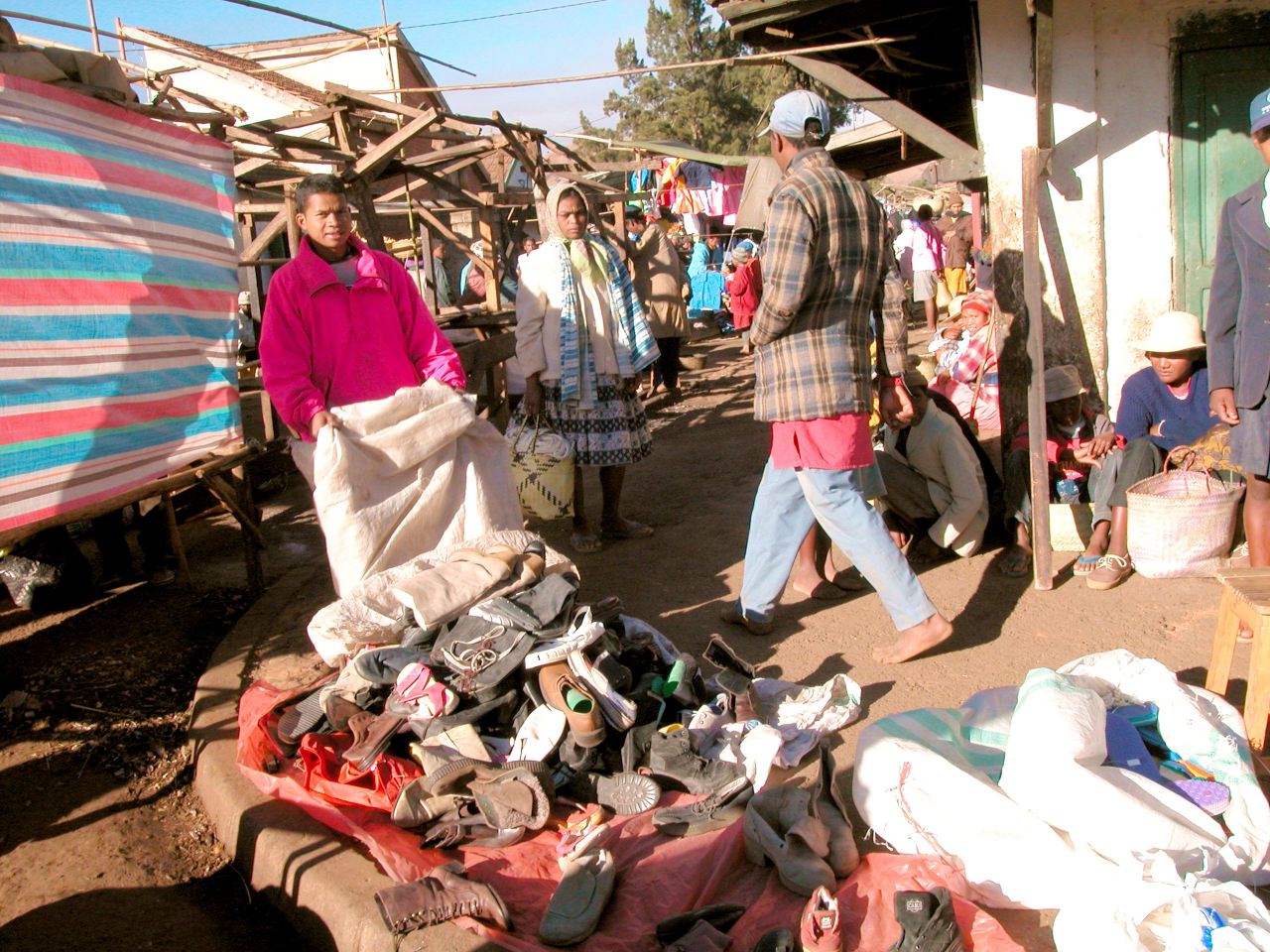
Back home we’d long since have thrown these things out or put them in a museum. It was a pity I couldn’t bring all the old iron from the country house and give it away here. It still had work in it.
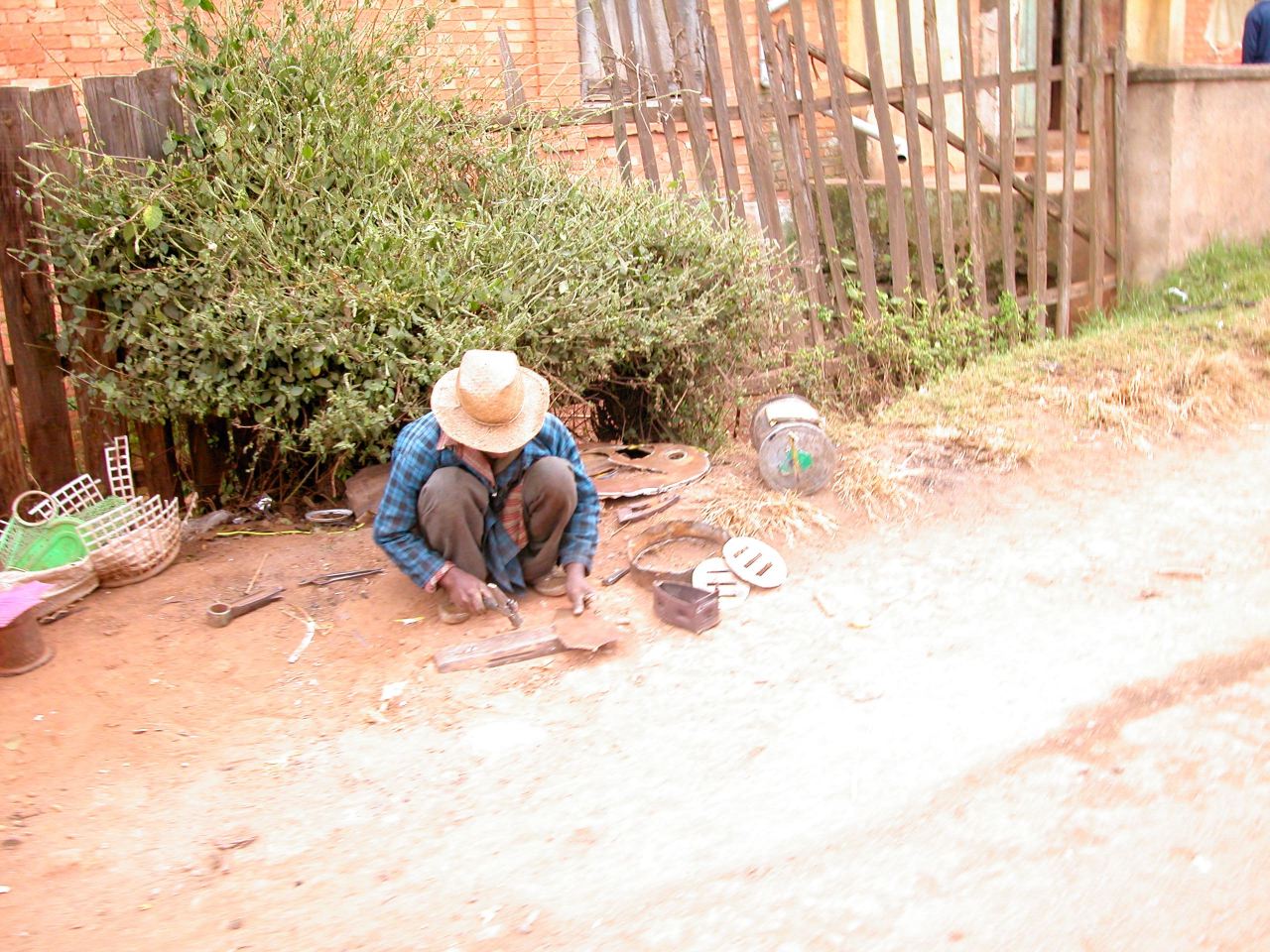
If you couldn’t find what you needed, that was easily solved. A separate row was occupied by blacksmiths. They had built little furnaces out of stones right on the ground. They fired them with charcoal and fanned them with homemade bellows made from two metal cans. A blacksmith sitting right there could forge whatever you wanted. You could even bring him your own material, a bit of iron that had fallen off the car or an old tool that had broken. Fuel drums were especially good scrap and finding one was a piece of luck. We came across a blacksmith making clothes irons from one. Electricity was scarce outside Antananarivo, so the irons were heated with charcoal.
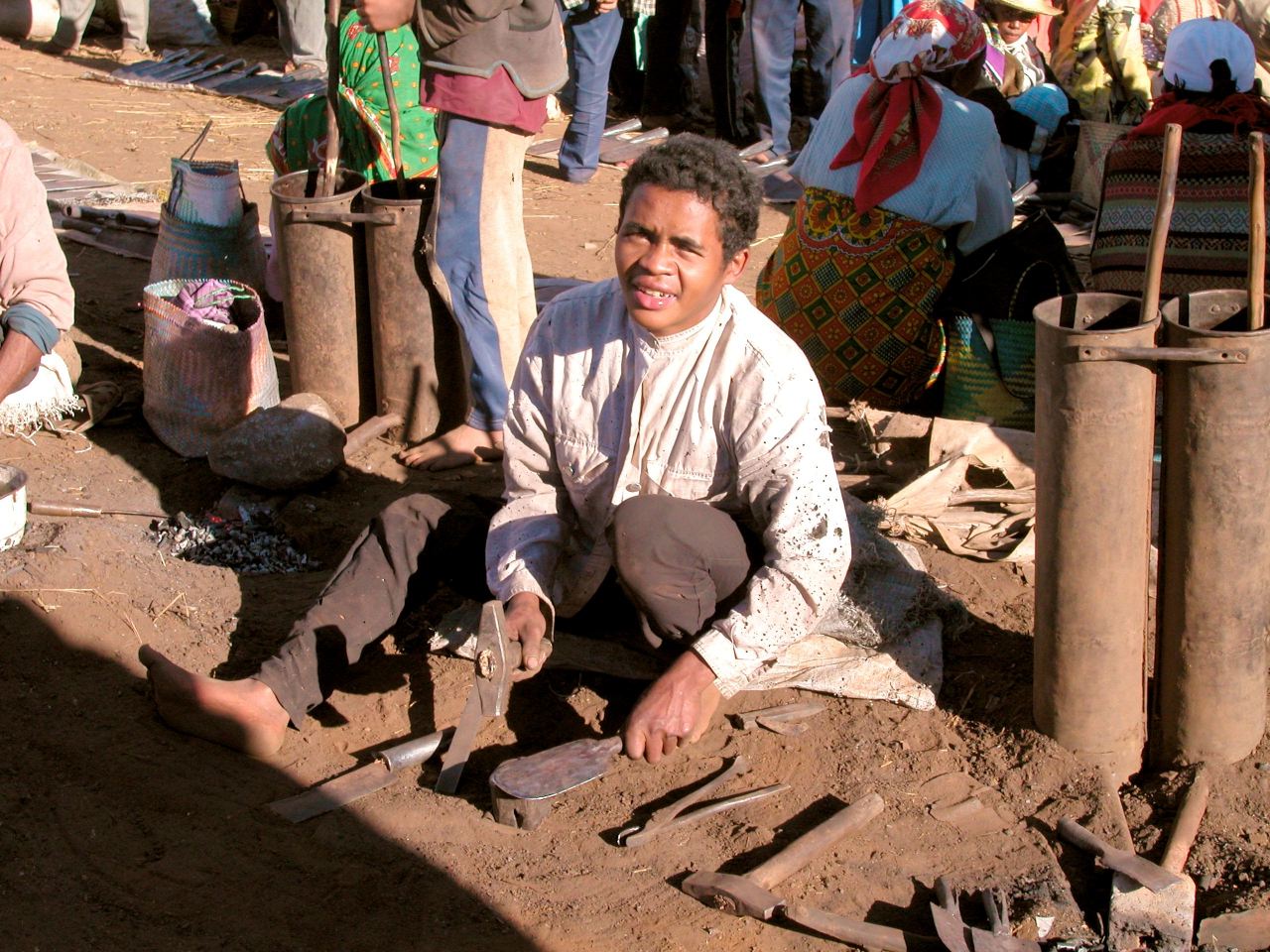
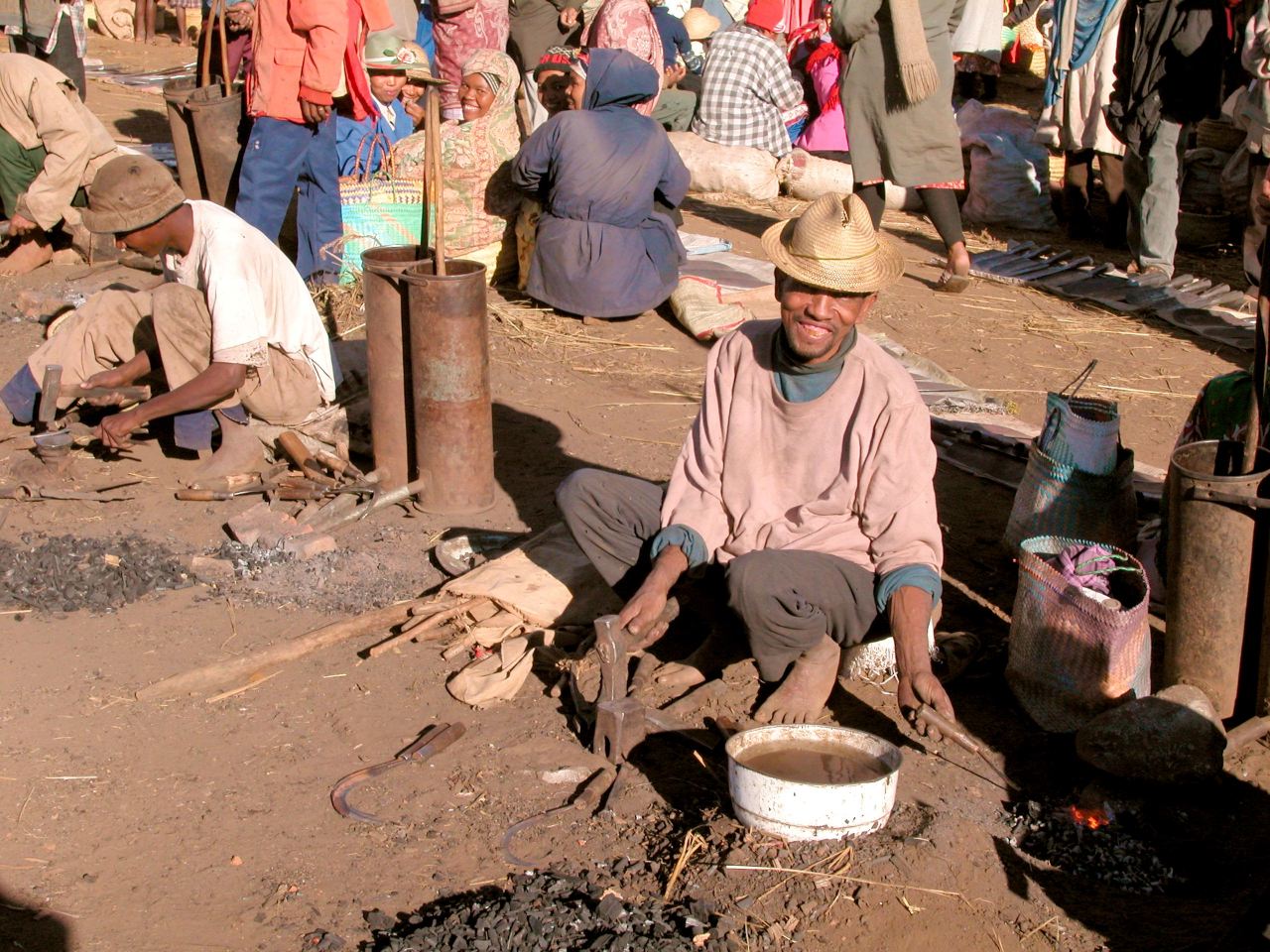
Charcoal was the main fuel. It was made right in the forest. Men in what looked like loincloths took simple axes to ancient eucalypts, cut them up, dragged the wood into a heap, covered it with earth, left a few holes and set it alight. Once it was burning they closed the holes. The charcoal was used for cooking, heating clothes irons and keeping warm on cold July evenings.
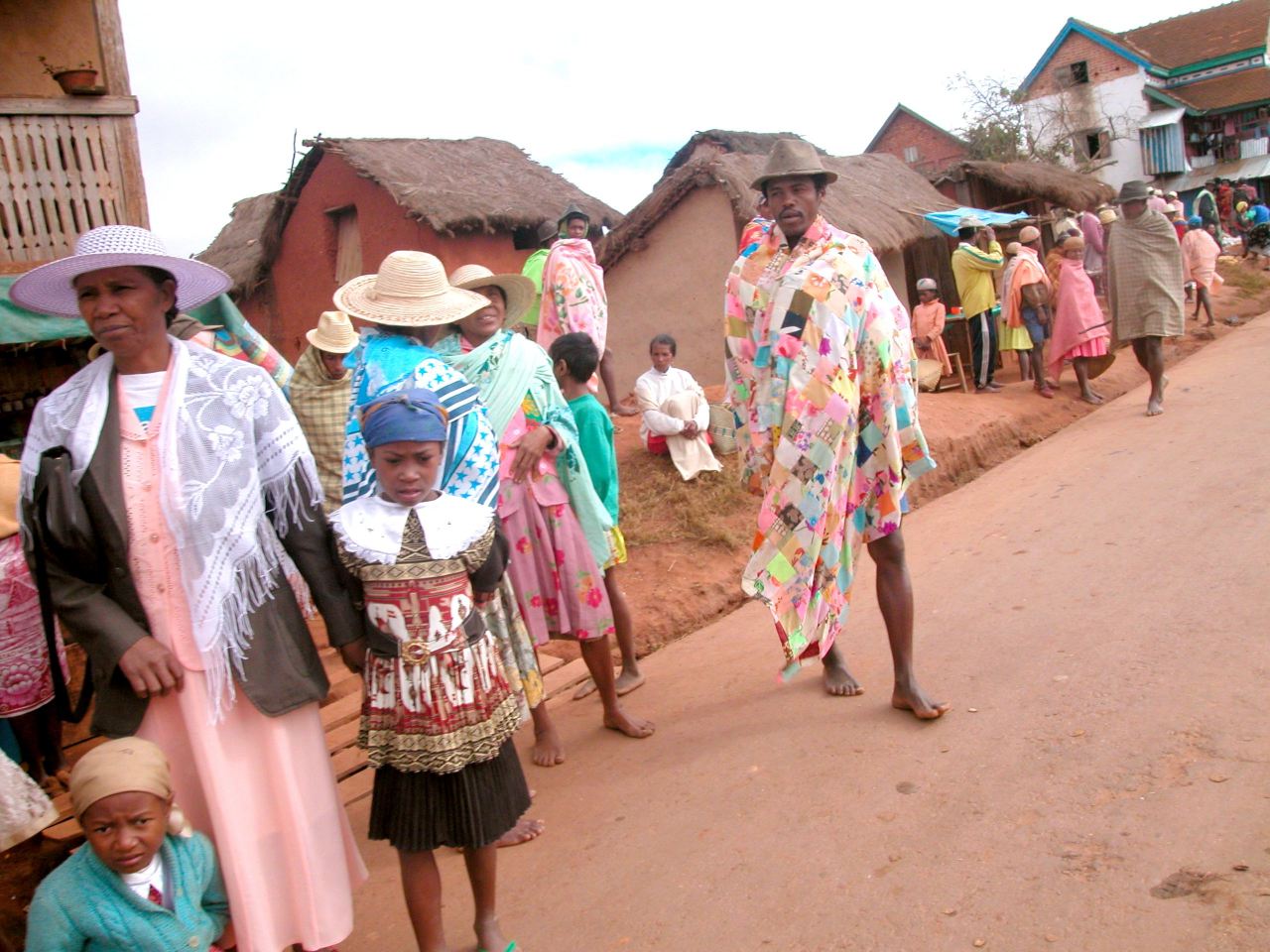
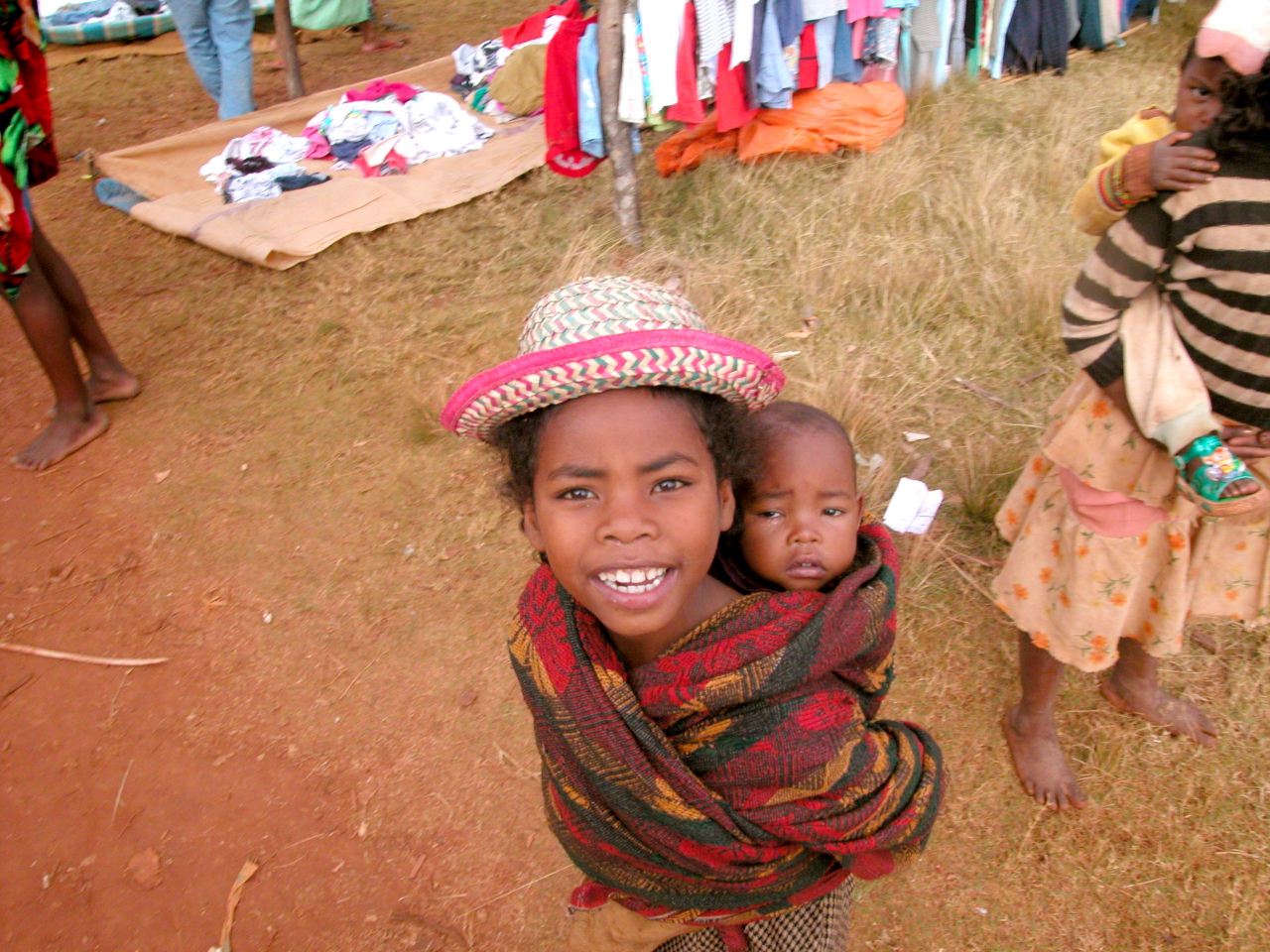
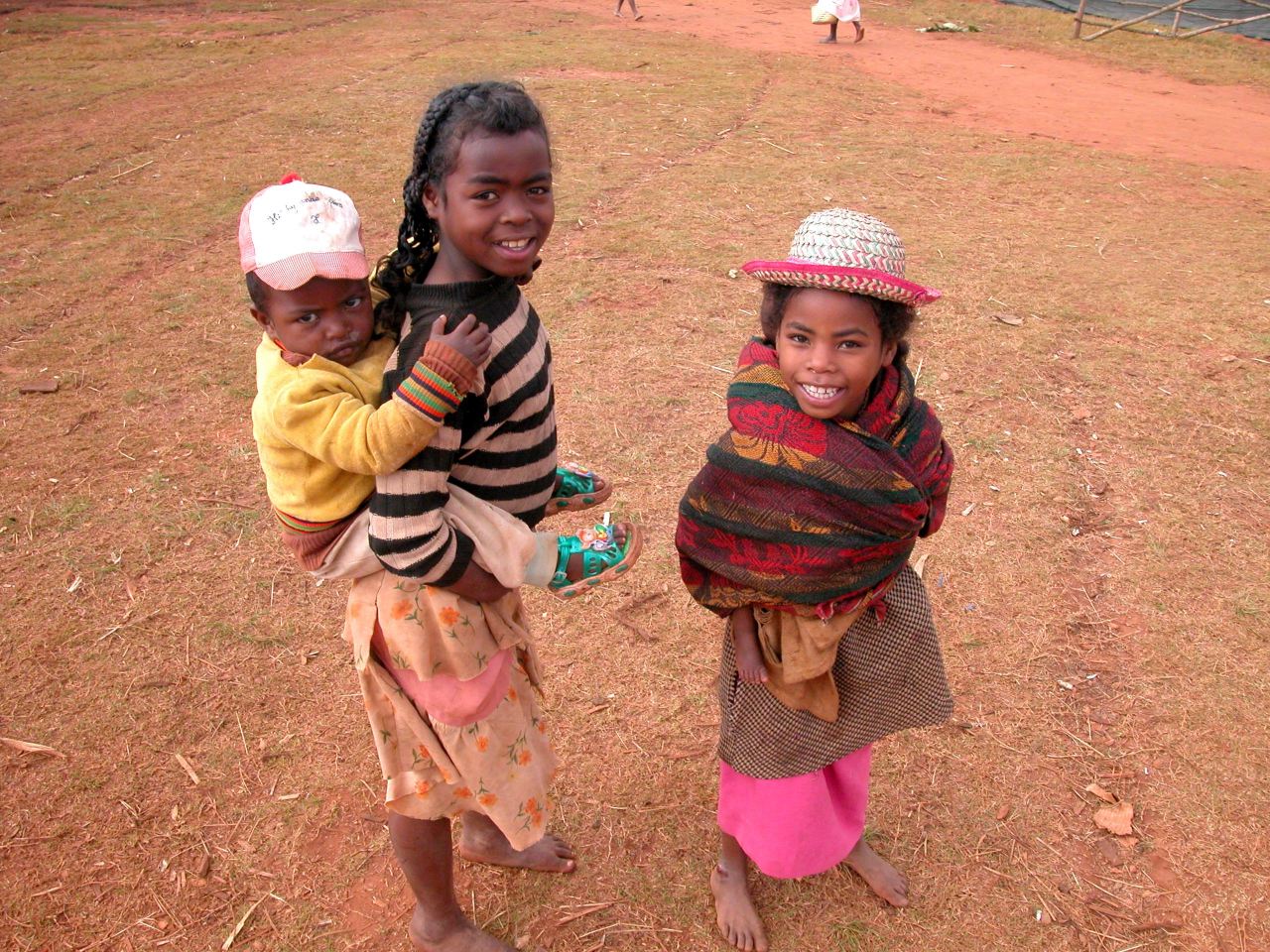
At the same market you could have clothes made for you. Women sat on the ground with hand-operated sewing machines and would make whatever you asked for. People wore anything that took their fancy. Alongside brightly coloured traditional dress you saw outfits that might have come from Europe five hundred years ago. It seemed as if they’d survived from another age. People were dressed so colourfully that it was simply a feast for a photographer. Better still, they liked having their picture taken. When they saw a camera they smiled and posed, and nobody asked for payment afterwards.
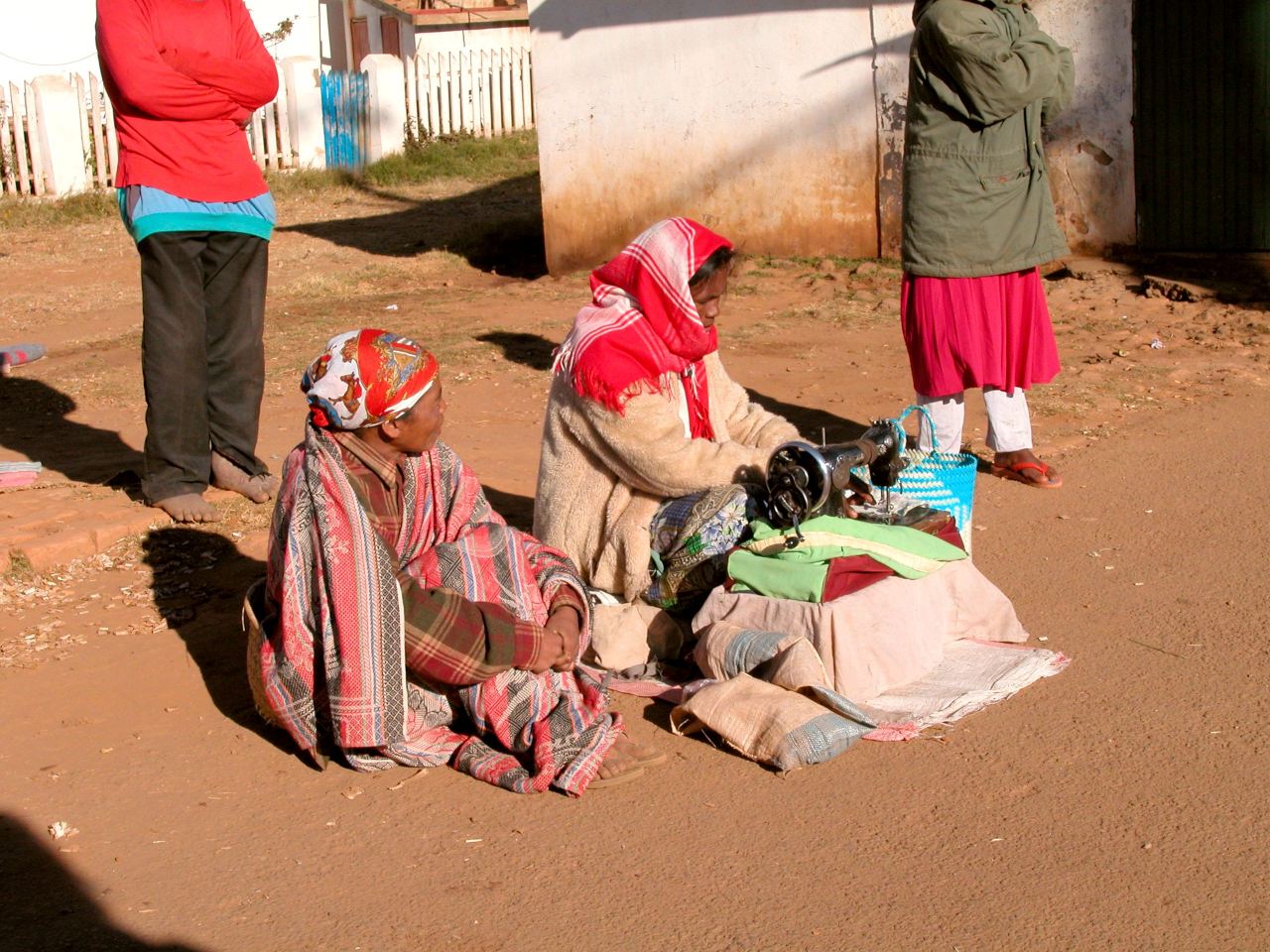
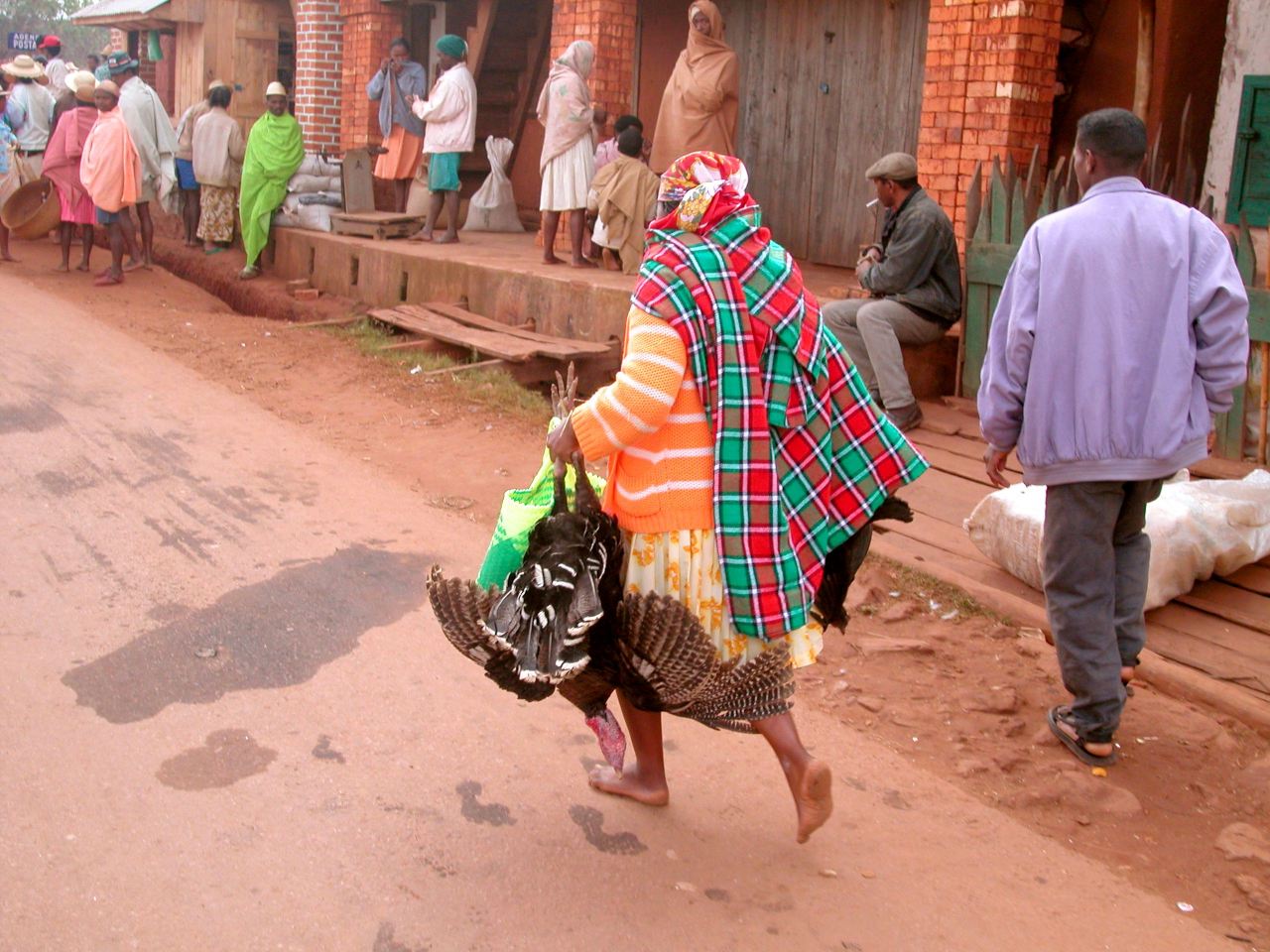
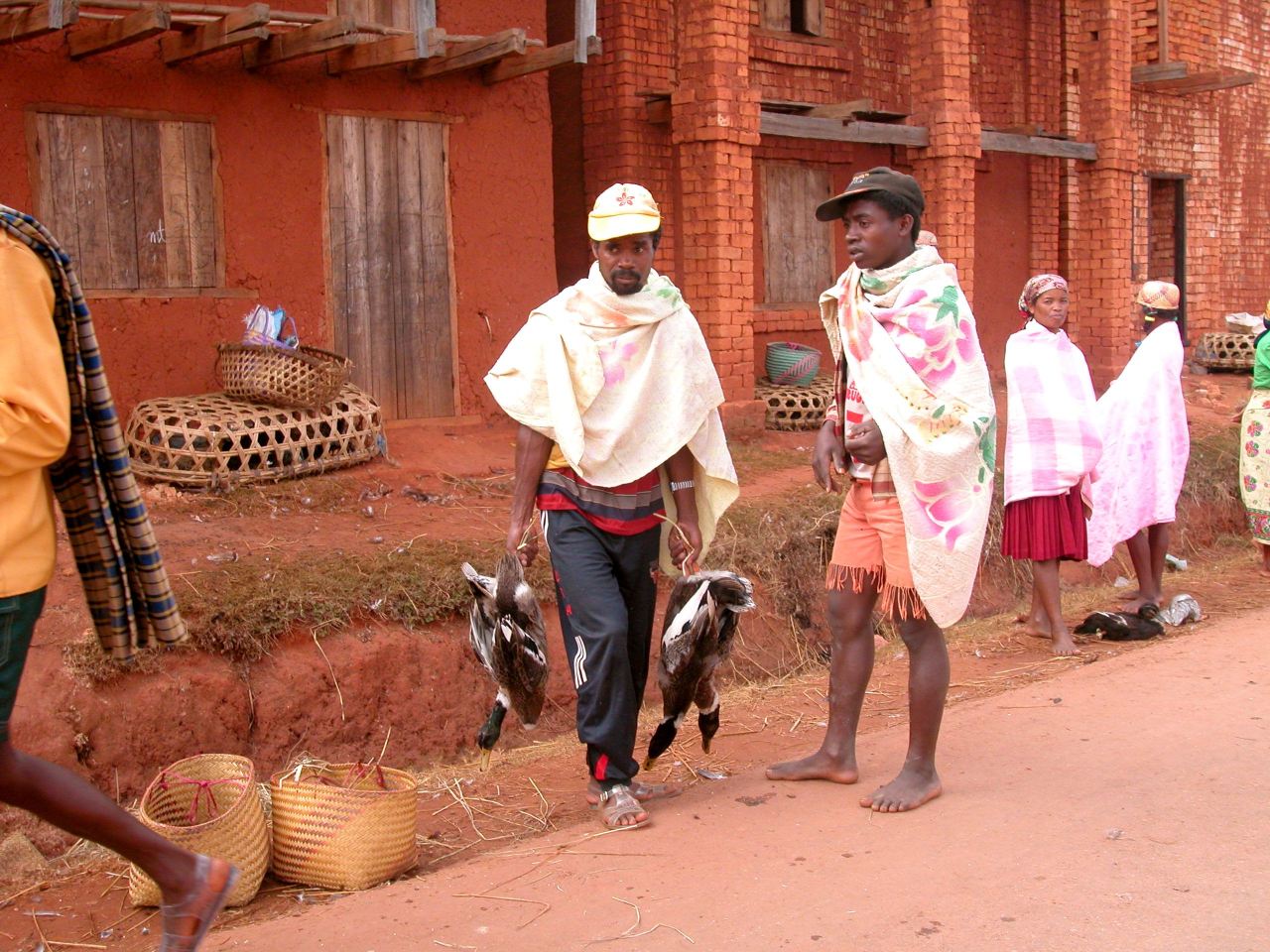
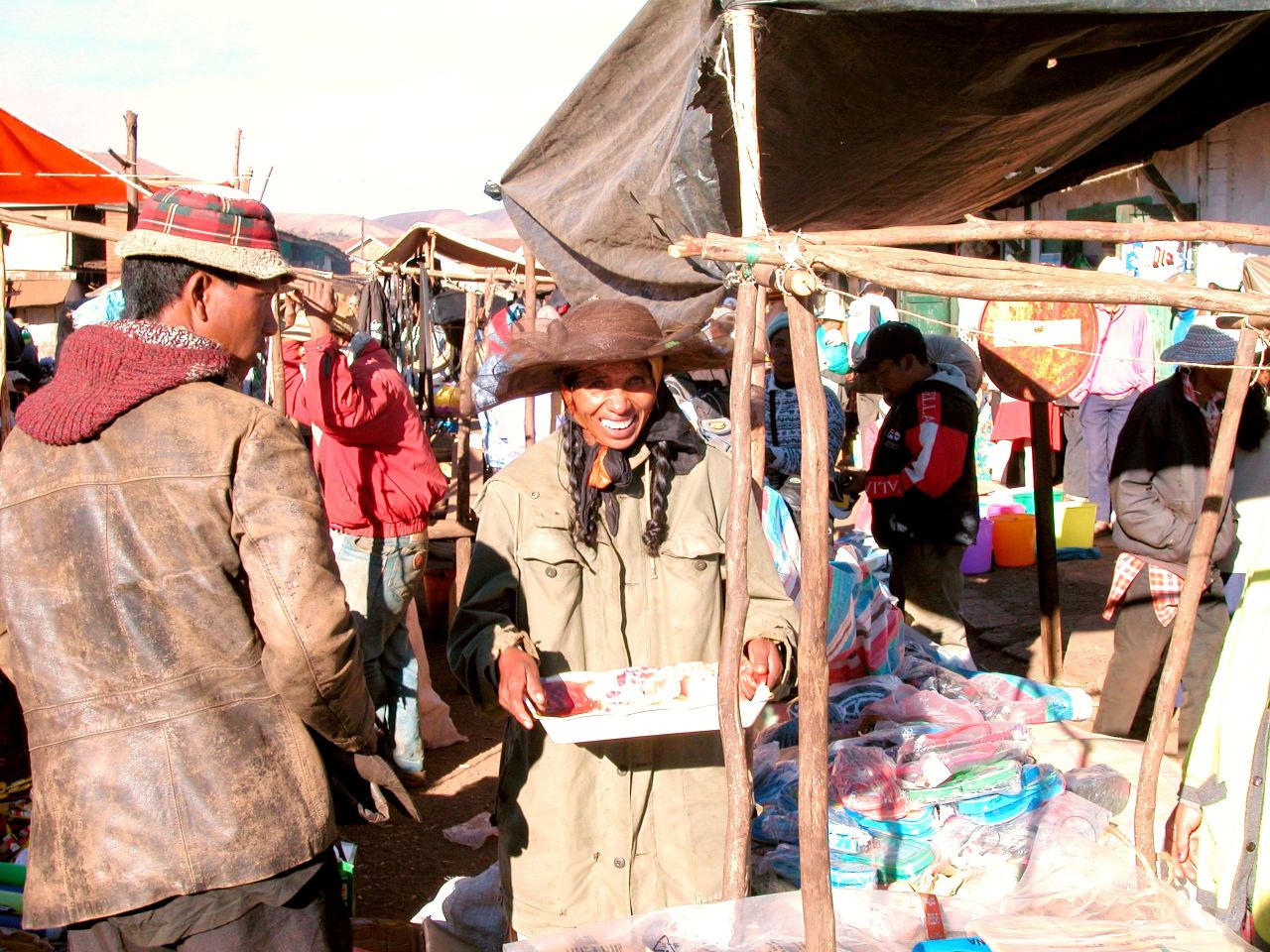
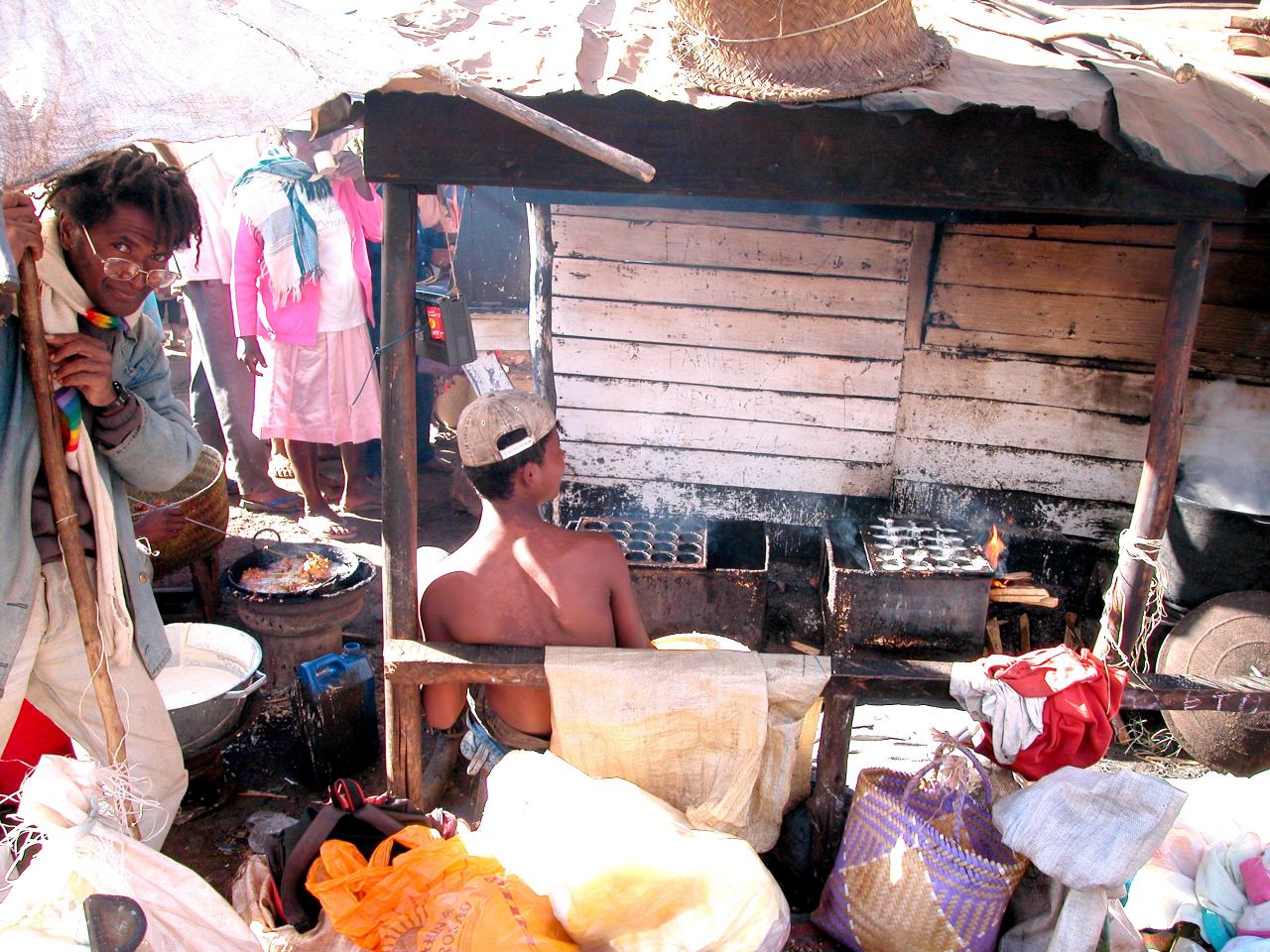
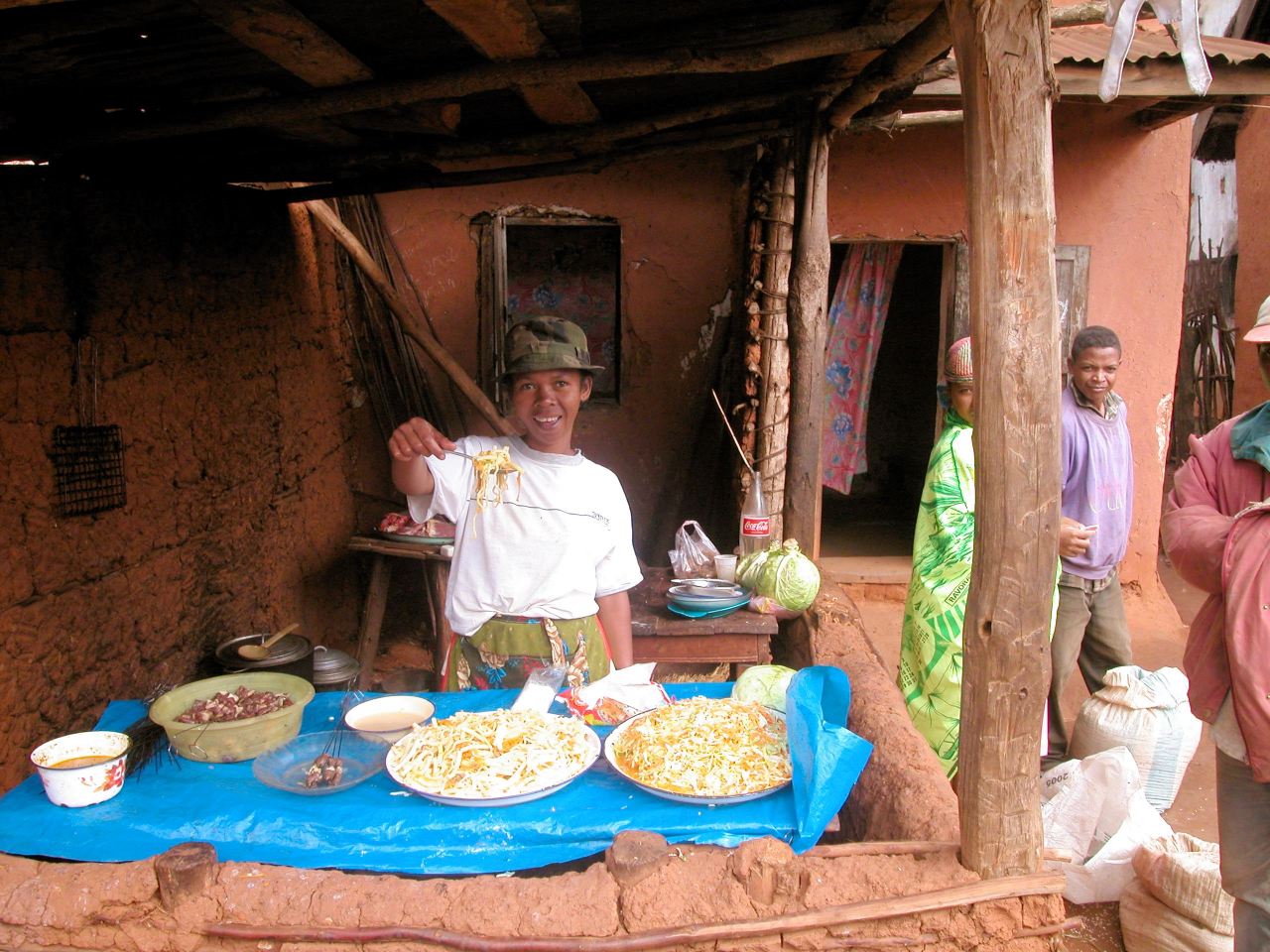
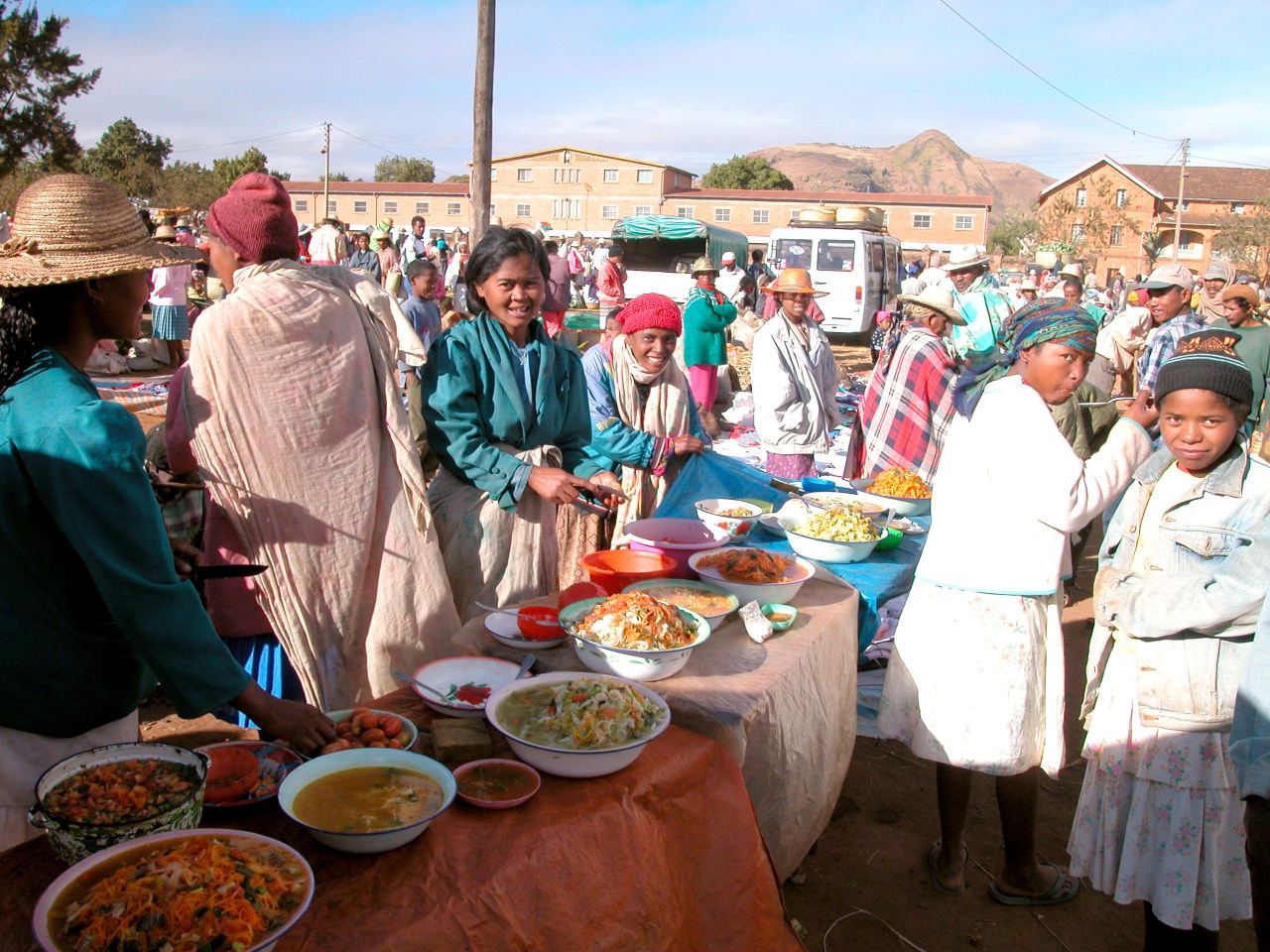
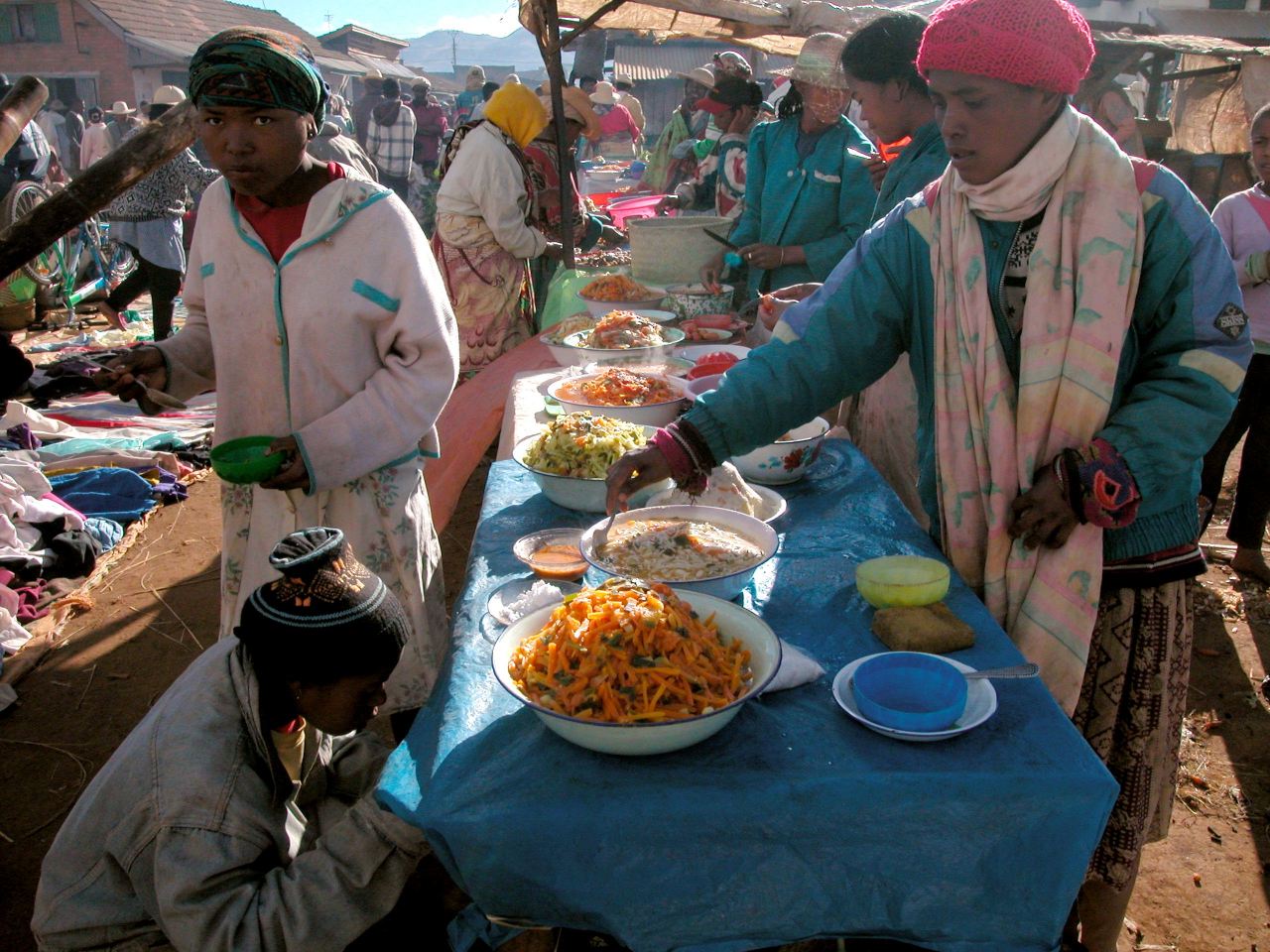
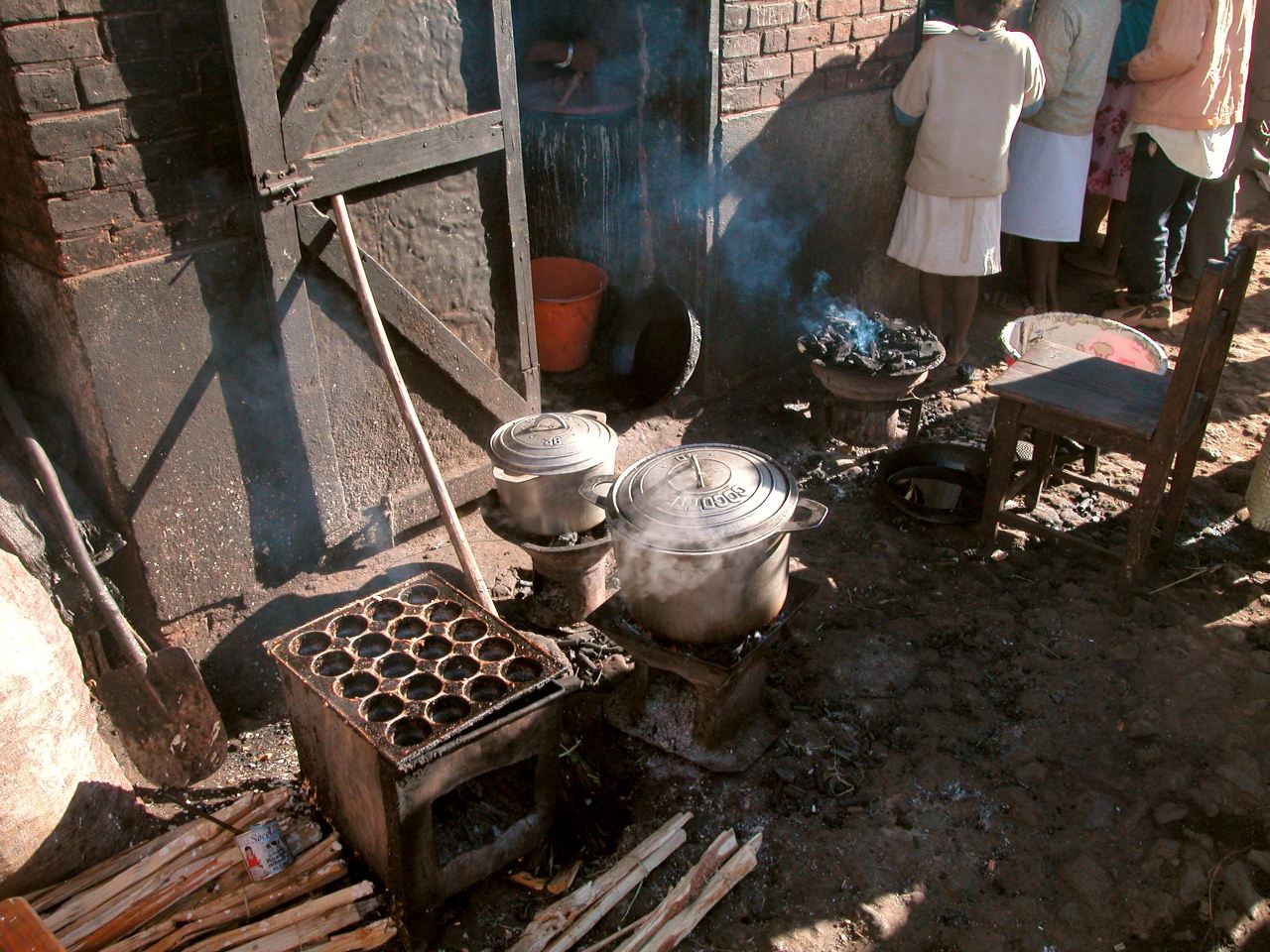
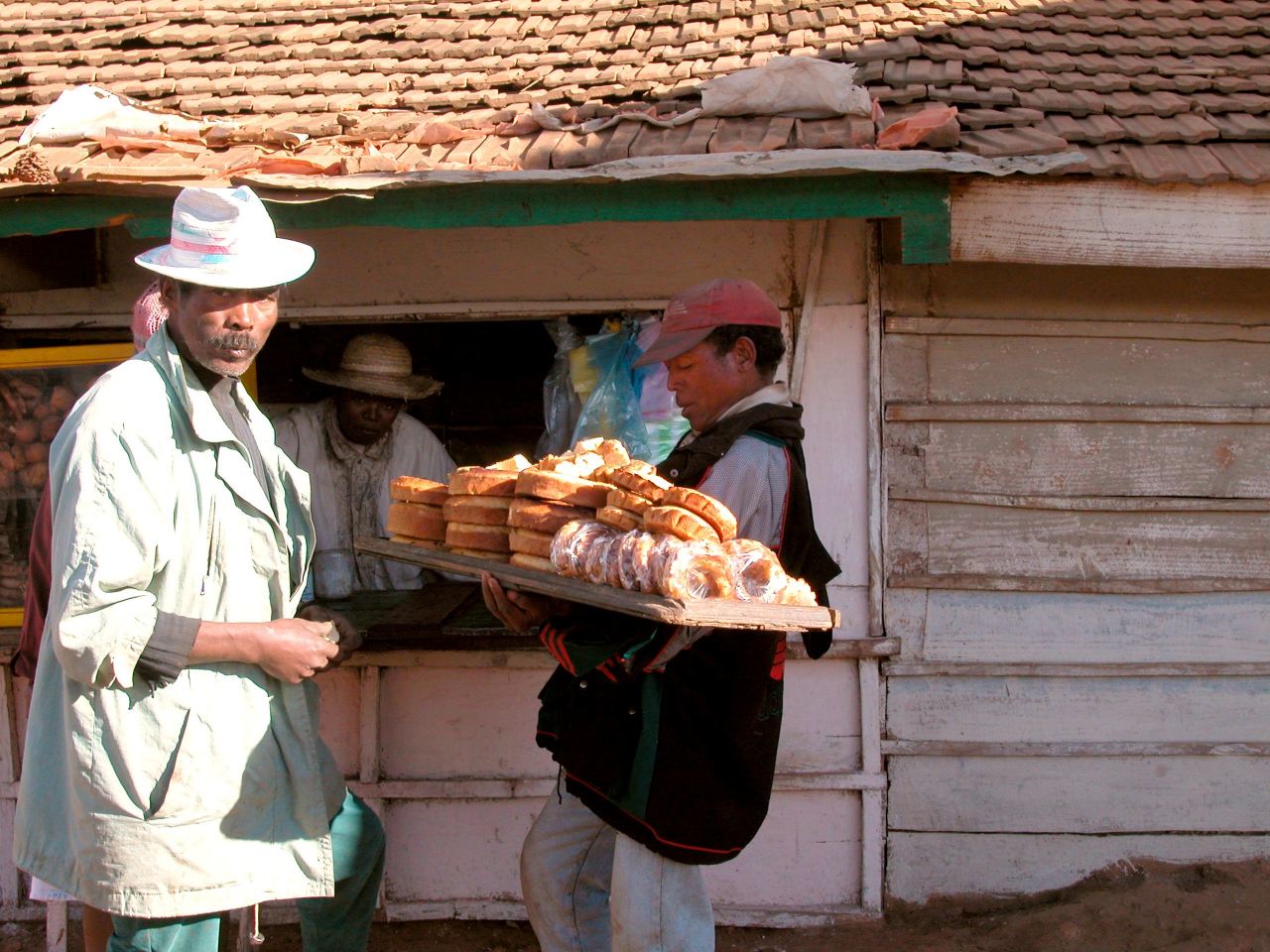
You could eat right at the market. Kindly women cooked thick vegetable soup over open fires in enormous heavy aluminium pots. They also baked buns in moulds. It looked delicious, though we were a little scared of trying it. Nobody was washing their hands or the dishes. People took turns eating from the same plate with the same spoons. We decided to try it at the end of the trip, when it wouldn’t be so annoying if we got sick. We were afraid of spoiling the whole trip if we started now. Later, I heard there had been an outbreak of an unidentified illness something like atypical pneumonia, and that as many people had died as in Southeast Asia. Here a life had a different price, and there was nobody to make it the top story on CNN.
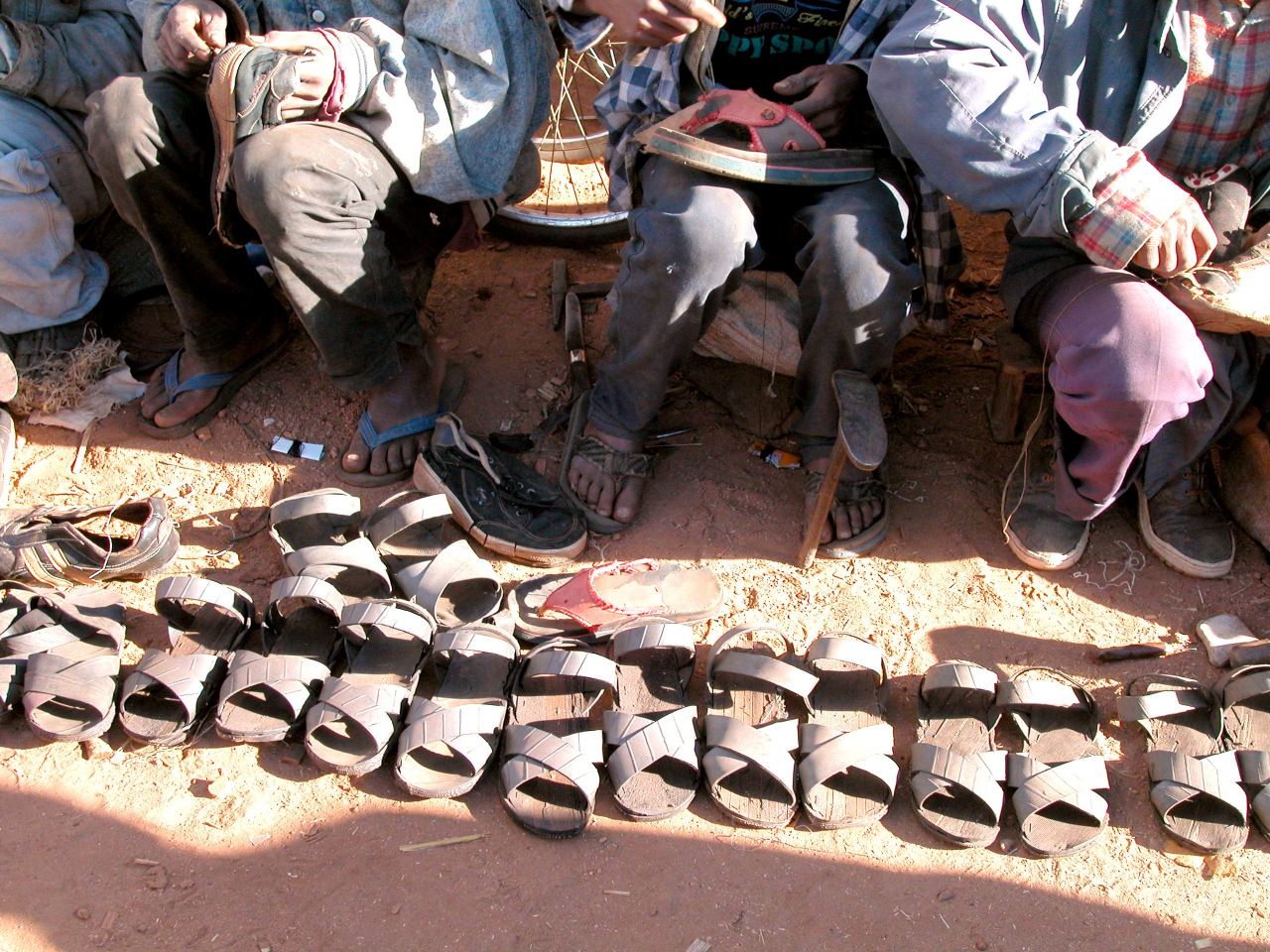
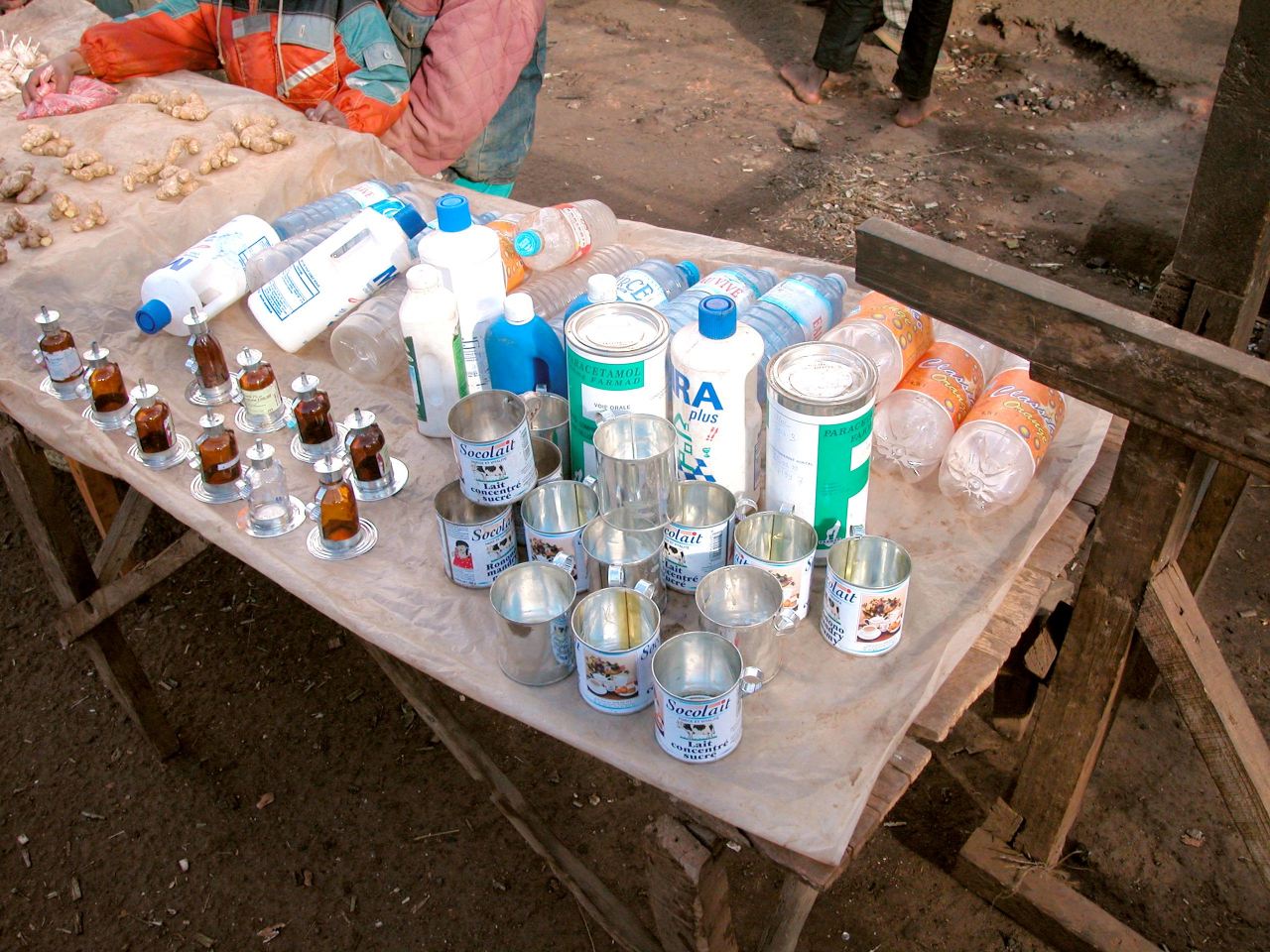
The standard of living in Madagascar was desperately low. Necessity is the mother of invention, and everything was put to use. They made flip-flops from old tyres, and cups and paraffin lamps from empty tins. An empty plastic water bottle was worth something. You could sell it for a thousand francs. Perhaps that was why the roadsides were so clean. Drop something and someone would come out of the bushes and snap up the unexpected find to use again.
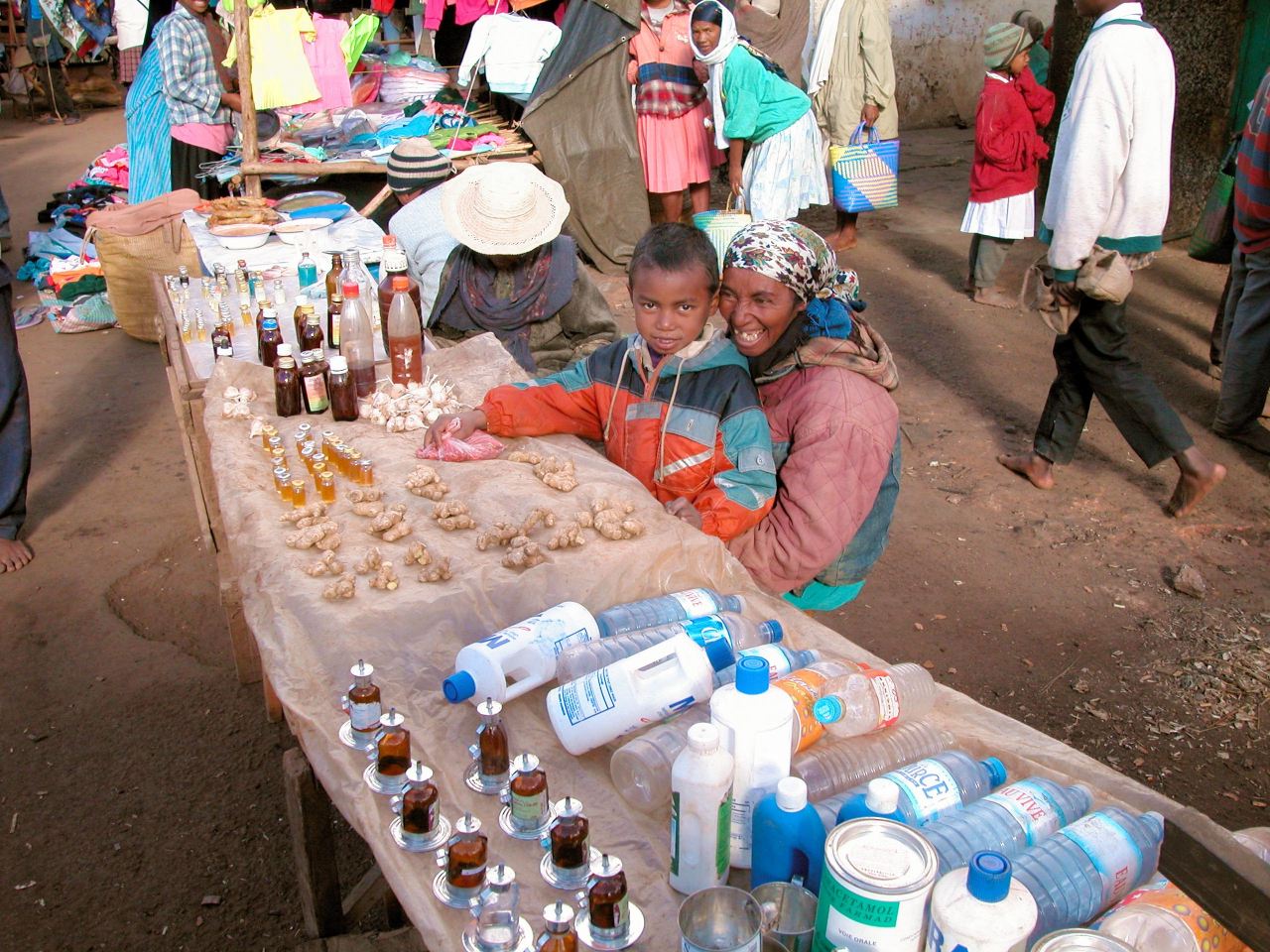
I really dislike shopping, but I spent hours running round that market. So many good pictures, so many ideas.
Near Betafo are two lakes, Andraikiba and Tritriva. Both occupy craters left by a long-extinct volcano. They are reached by a rough dirt road. Maybe there was something to be said for having a driver. I’d never have guessed the right road ran down a track through someone’s yard. There were no signs at all and places often had one name on the map and another in conversation. Nobody said Antananarivo, for instance. They said Tana. You needed French at the very least.
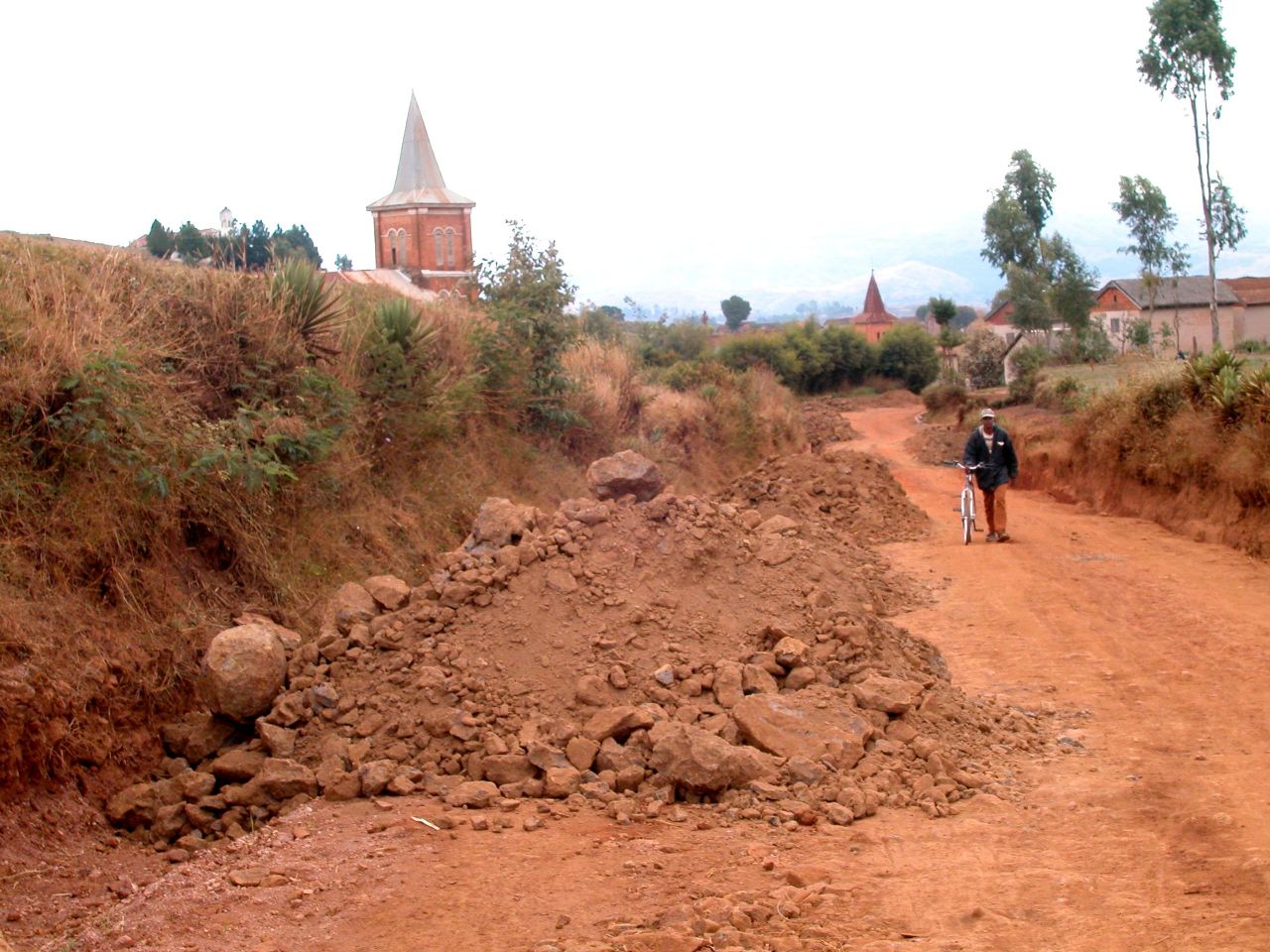
The larger lake, Andraikiba, had gently sloping shores. You could drive right down to the water. Better-off residents went there for picnics.
The smaller, higher Lake Tritriva was considered a natural wonder and you had to pay for a guide. He was more or less compulsory. You couldn’t simply hand over the money and walk by yourself. Pay enough and he might leave you alone, but local custom called for a tip of another ten to thirty per cent. So the more you handed over initially, the more conscientiously this unasked-for helper would follow you around, misquoting the relevant chapter of Lonely Planet. At the edge of the protected area children waited with trinkets. We felt sorry for them at first and bought an onyx turtle. As usual there was no change. People didn’t seem in the habit of giving it. My advice at the time would have been to break large notes early and hang on to your small change until you needed it.
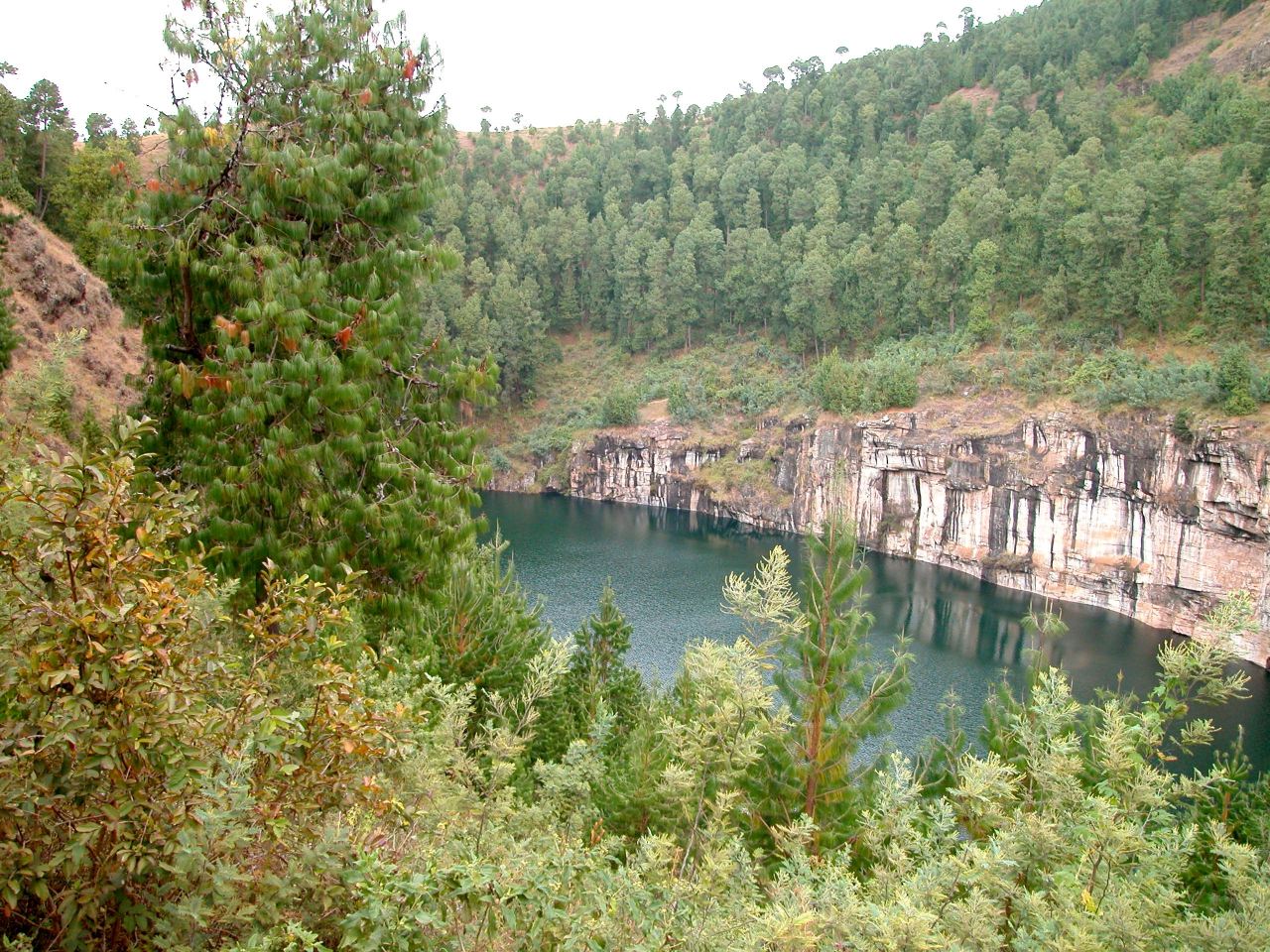
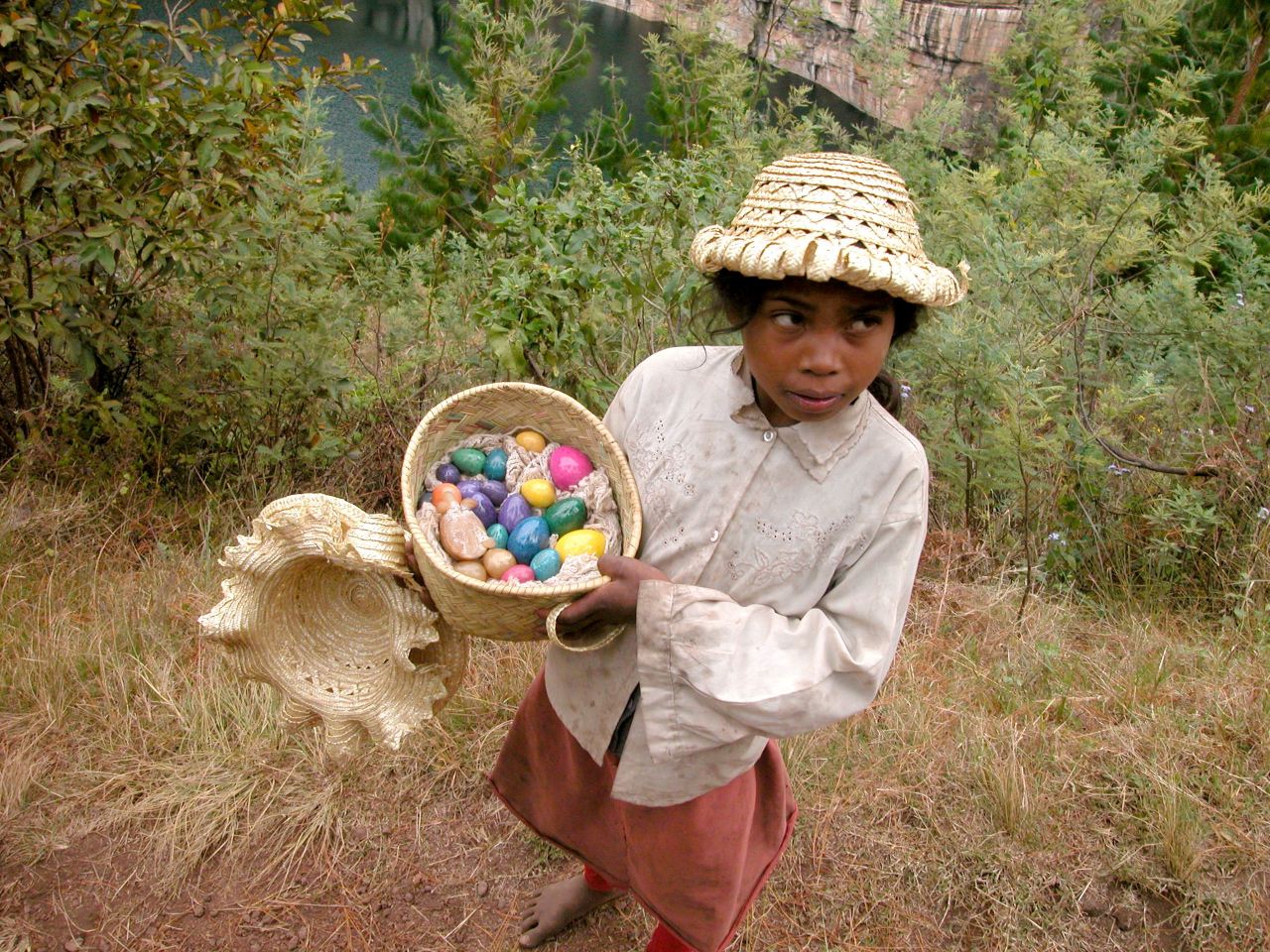
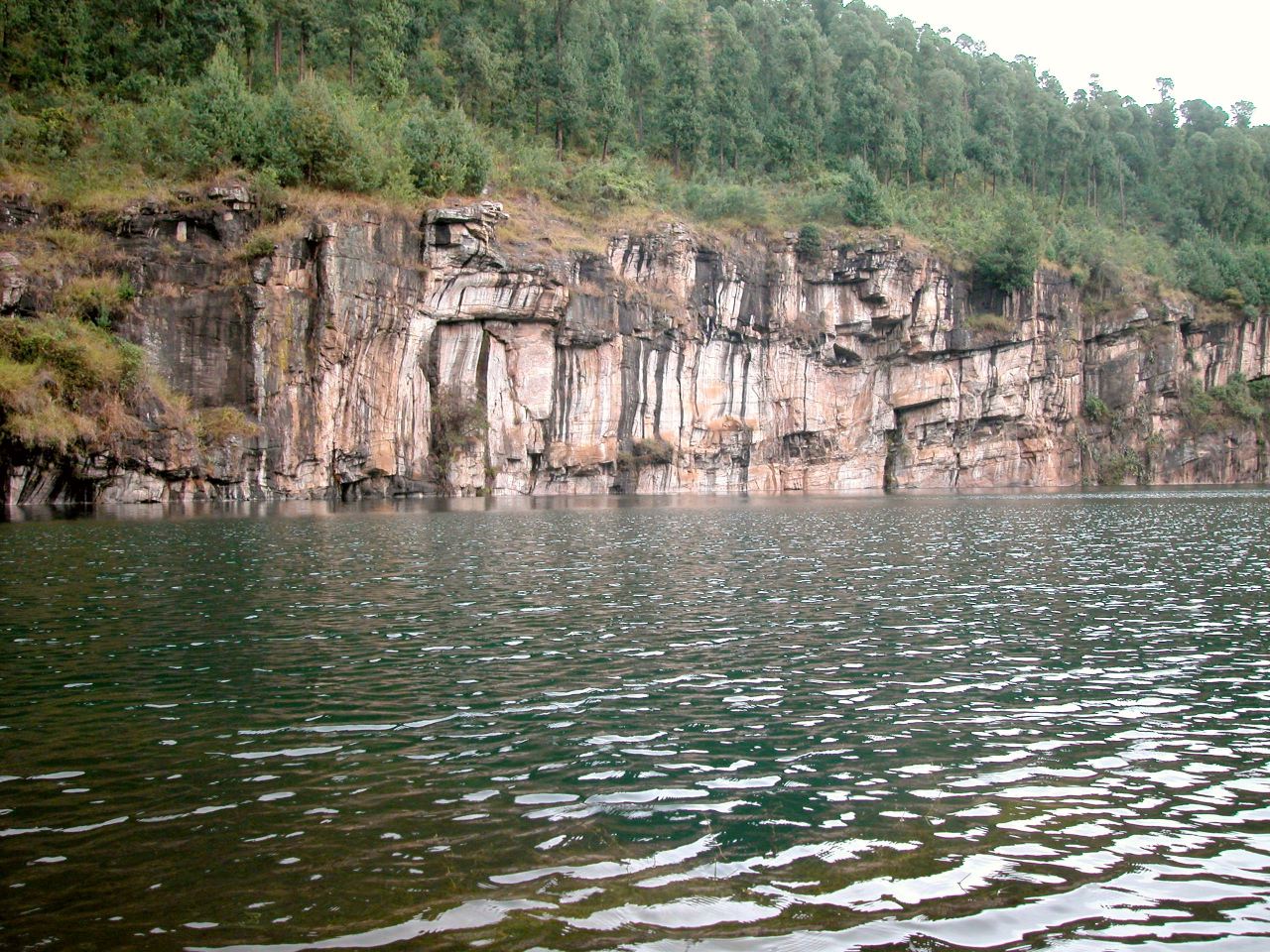
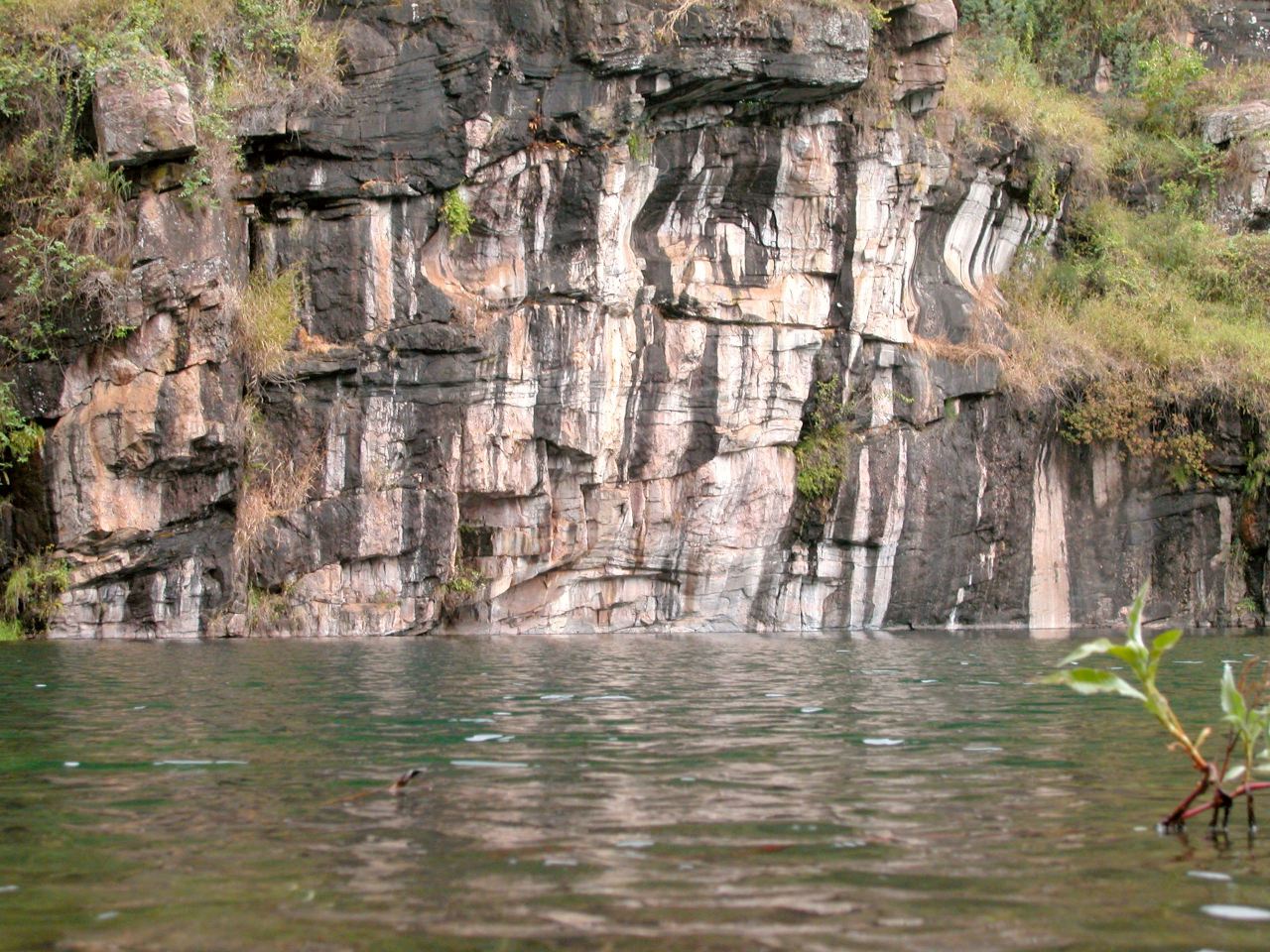
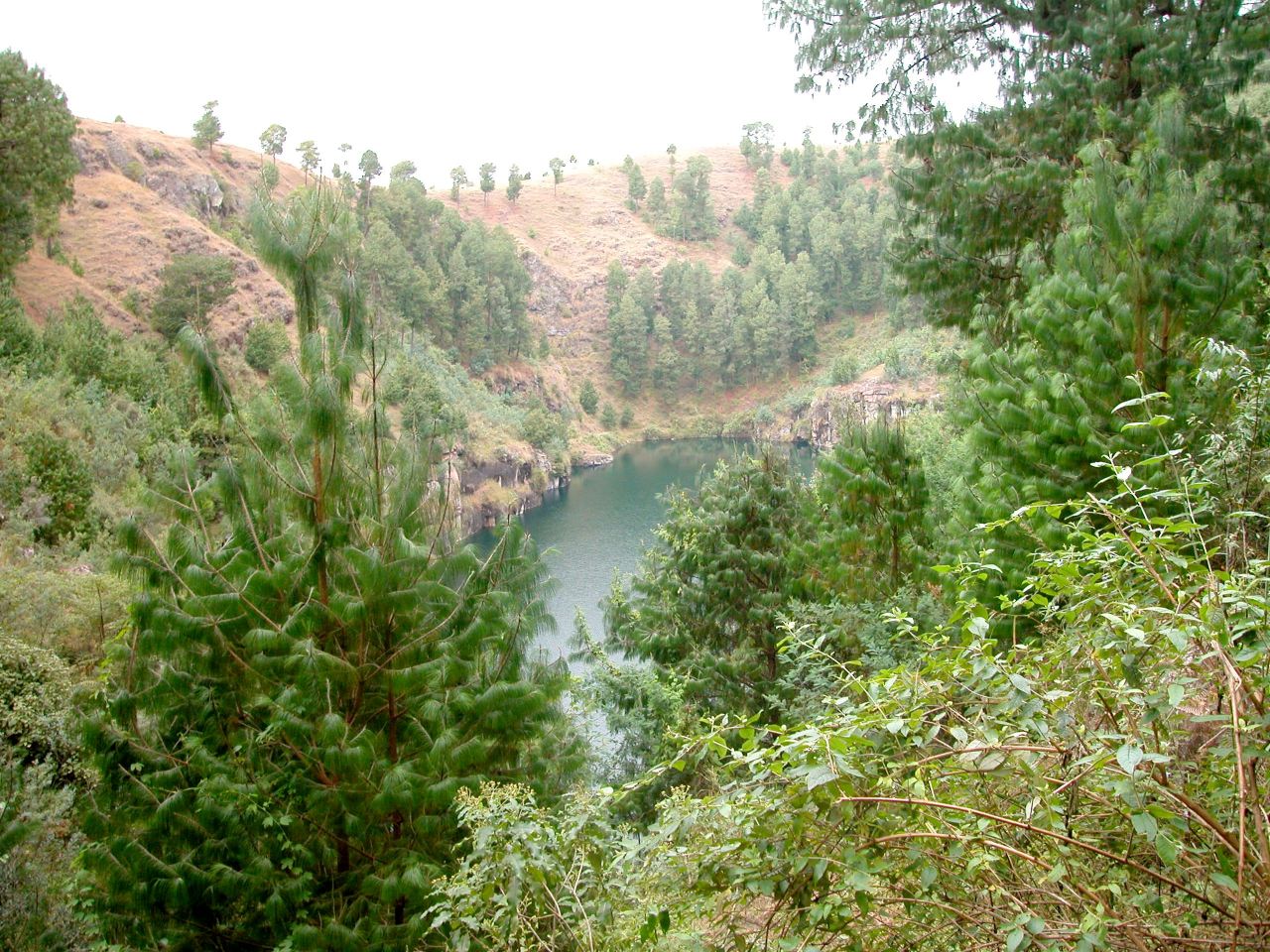
The lake was beautiful. It had sheer shores, slopes covered in pines and bright blue water. Swimming was taboo. The story went that two girls had bathed there hundreds of years ago and had come to grief. Guidebooks suggested respecting taboos. Even if nobody beat you for offending the spirits, a taboo might have a reason. Some particularly vicious germ in the water, perhaps, a crocodile in ambush, or something worse.
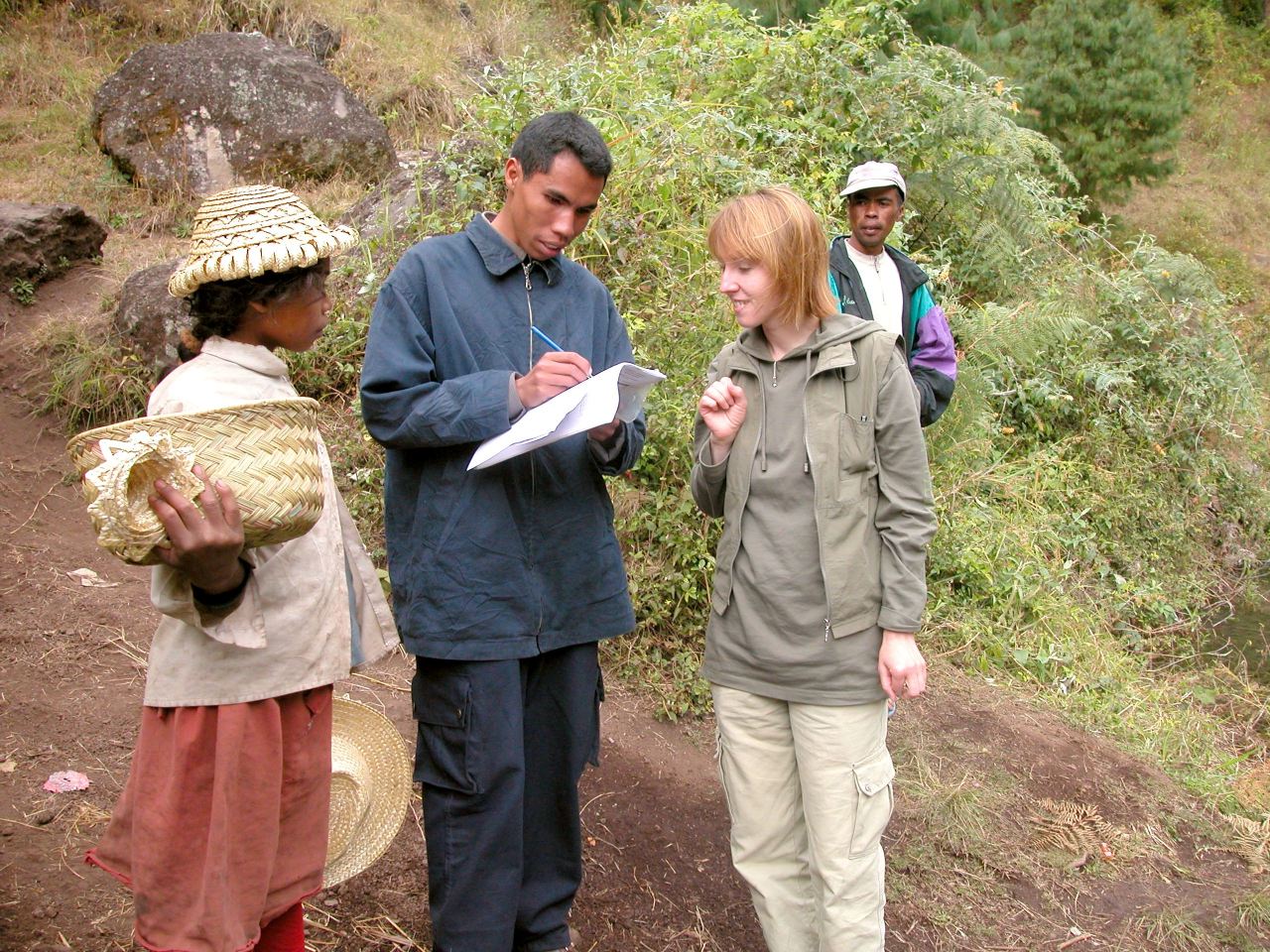
We were intercepted by a local student writing his thesis on tourism development. He was doing a survey to find out what would bring more people to Madagascar. We answered as one: “Get rid of the compulsory guides, organise car hire and put up road signs.” It didn’t seem to be what he wanted to hear.
No sooner had we left the lake than the car stalled. Parany opened the bonnet thoughtfully and kicked a wheel. That was as far as his knowledge of mechanics went. He was the driver, he said, and what went on under the bonnet was someone else’s concern. It also turned out he had no tools. We found a screwdriver with some difficulty.
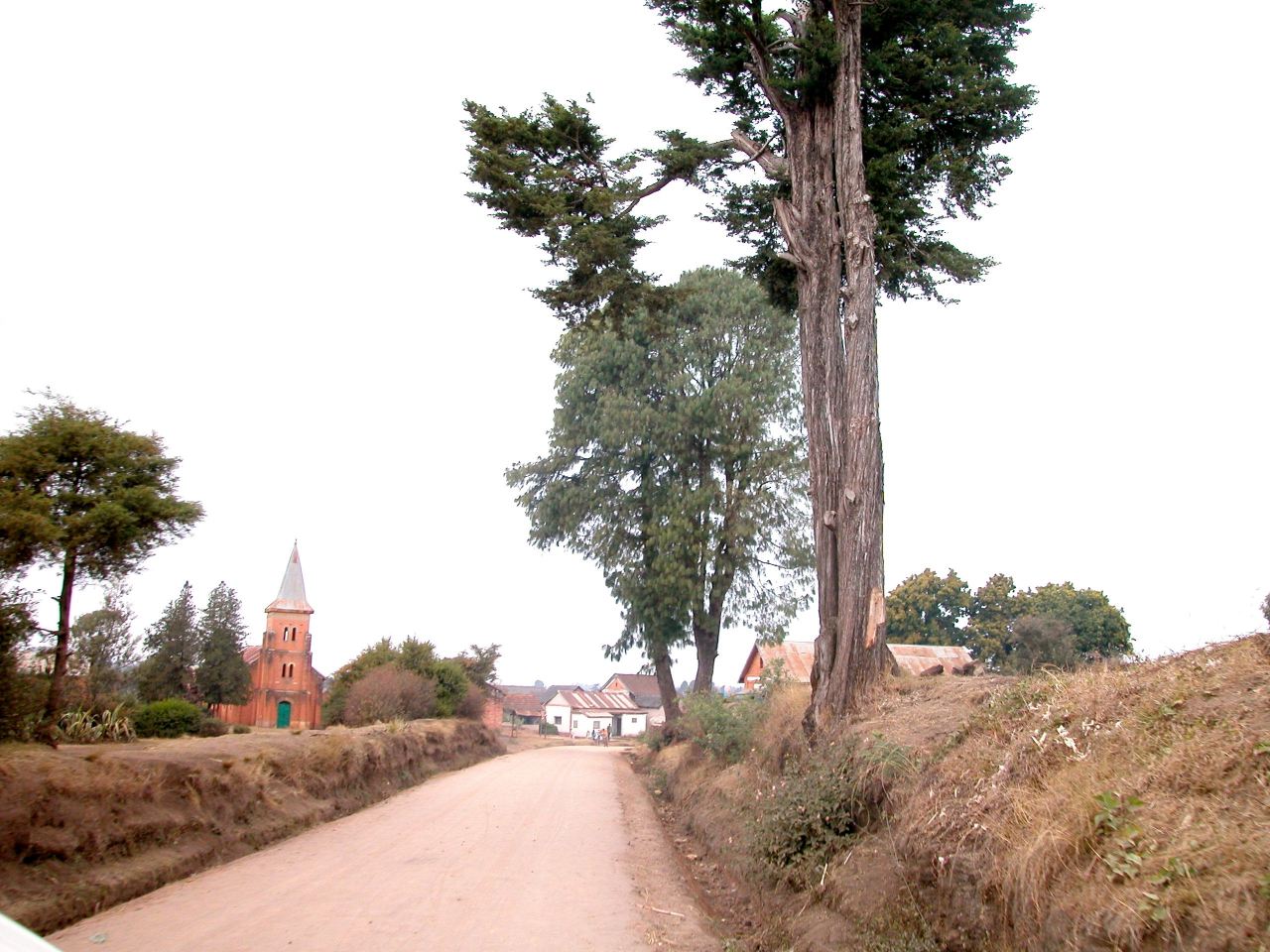
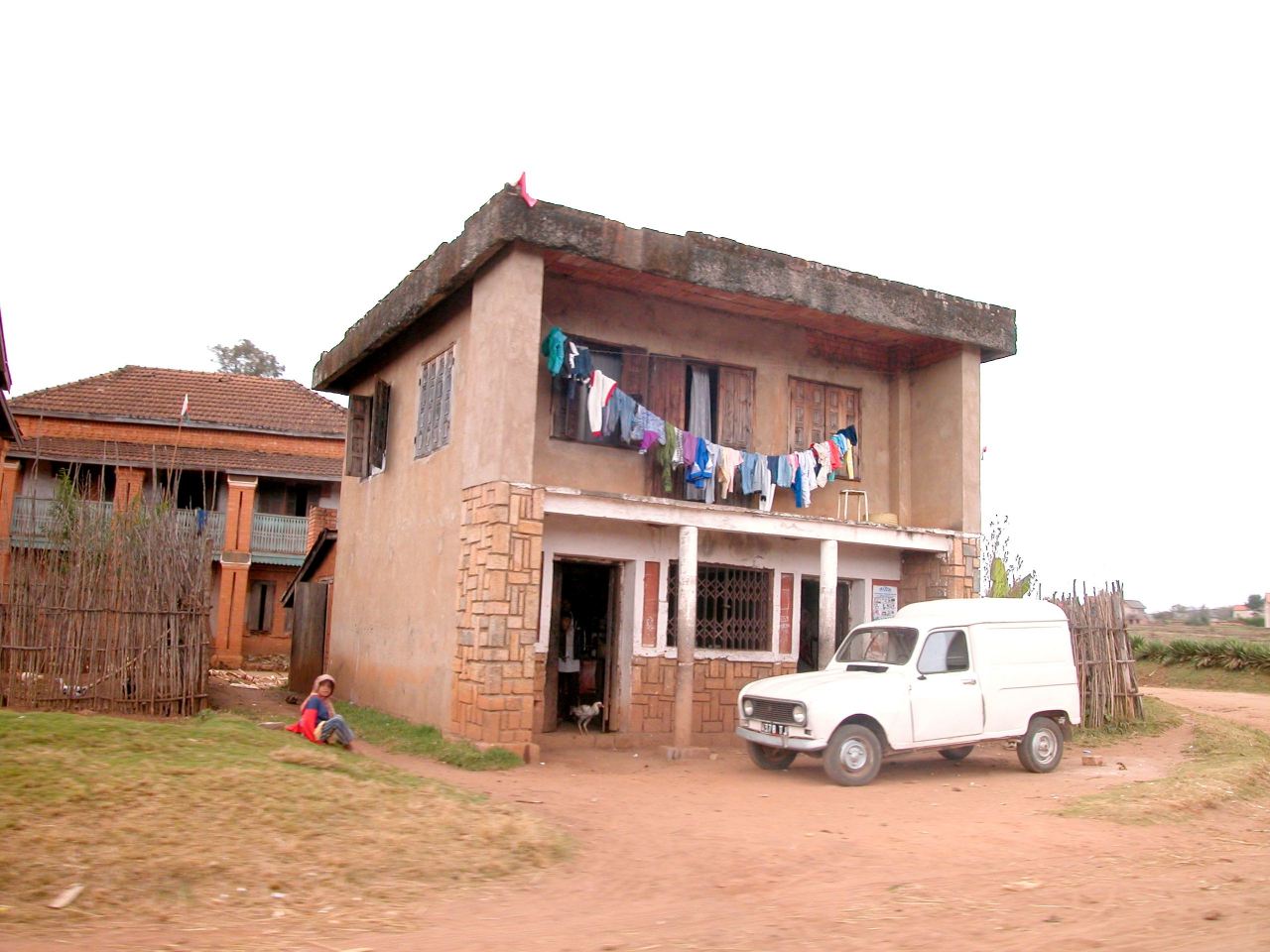
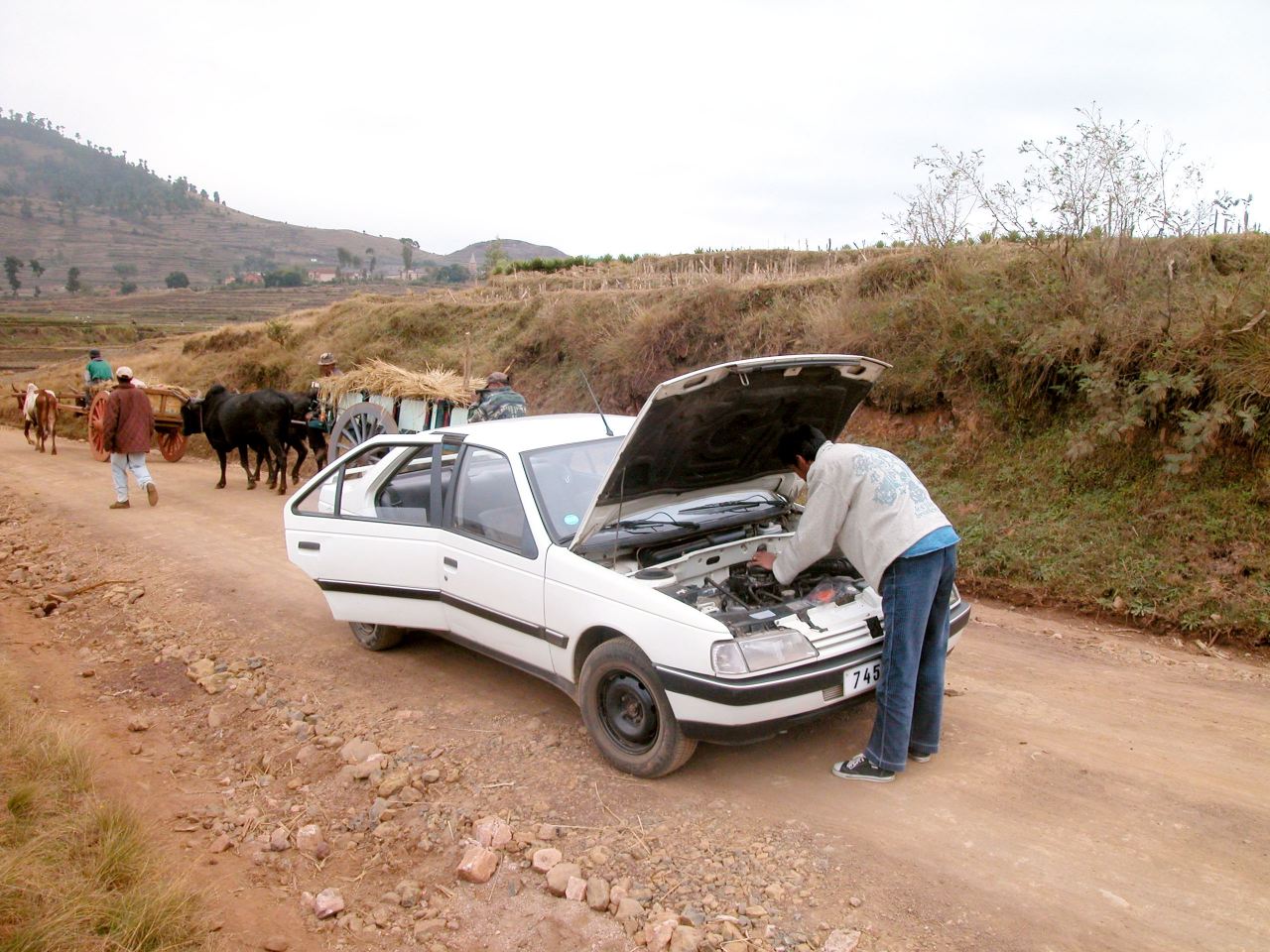
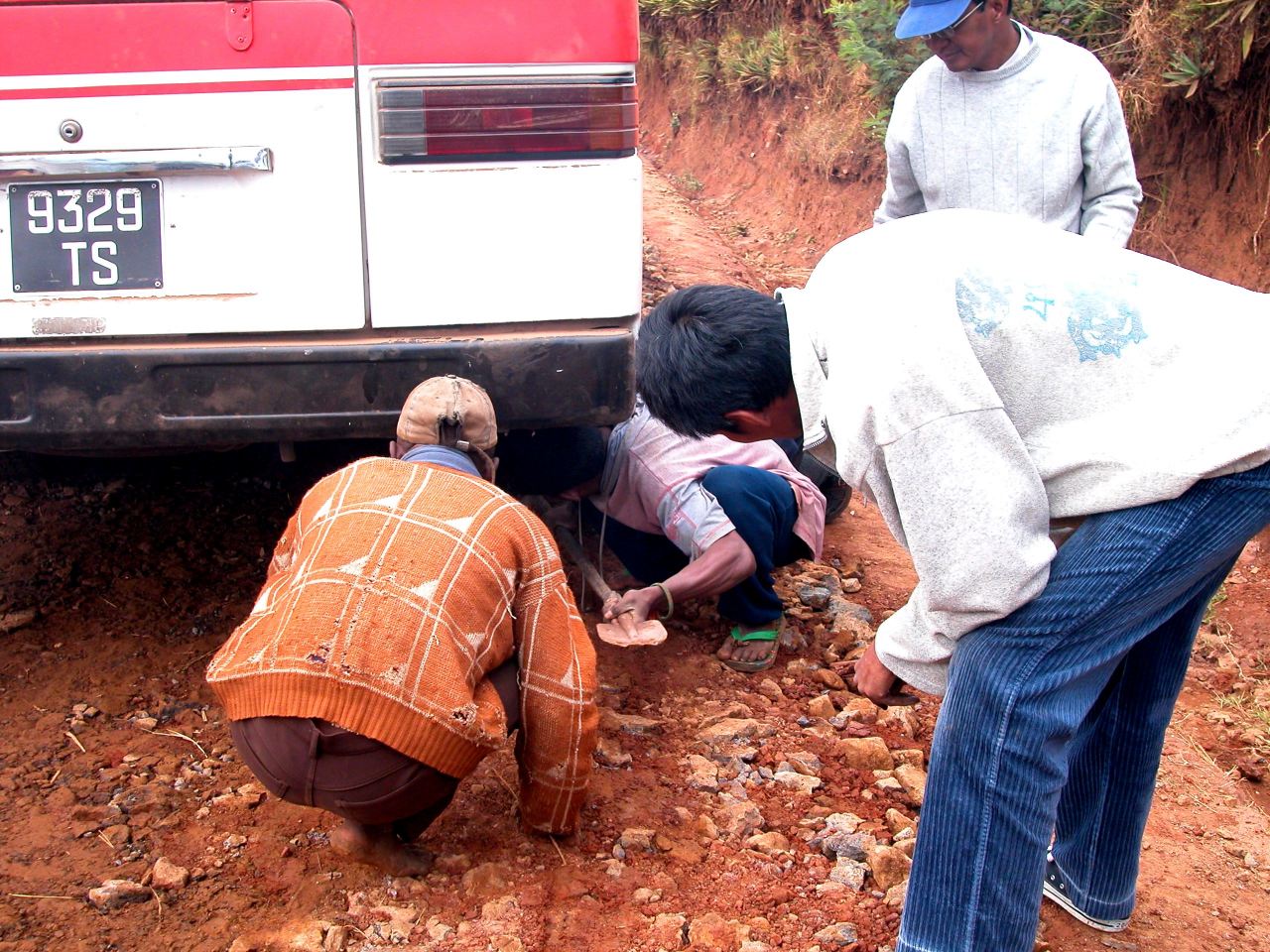
He was very surprised when I took the leads off the spark plugs and established that there was no spark. I checked the coil and found it sound, then pointed him to the electronic ignition module. “Oh yes, we changed that little black box last week.” Well, that was that. We weren’t going any farther that day. If only he’d had a meter. I could have found the broken wire leading to the module, which turned out to be the trouble. With no meter, we flagged down a bush taxi and went back to Antsirabe. Parany came too. It wasn’t a regular bus. It was carrying the choir of a Protestant church, and the cheerful women entertained themselves and us with singing all the way. We stopped on the way for repairs, since their bus broke down as well. That one could be fixed with a crowbar, a sledgehammer and some good Malagasy swearing.
Parany went to a garage to arrange for the car to be brought in. He didn’t have a phone, so we arranged to meet him that evening at the previous night’s hotel.
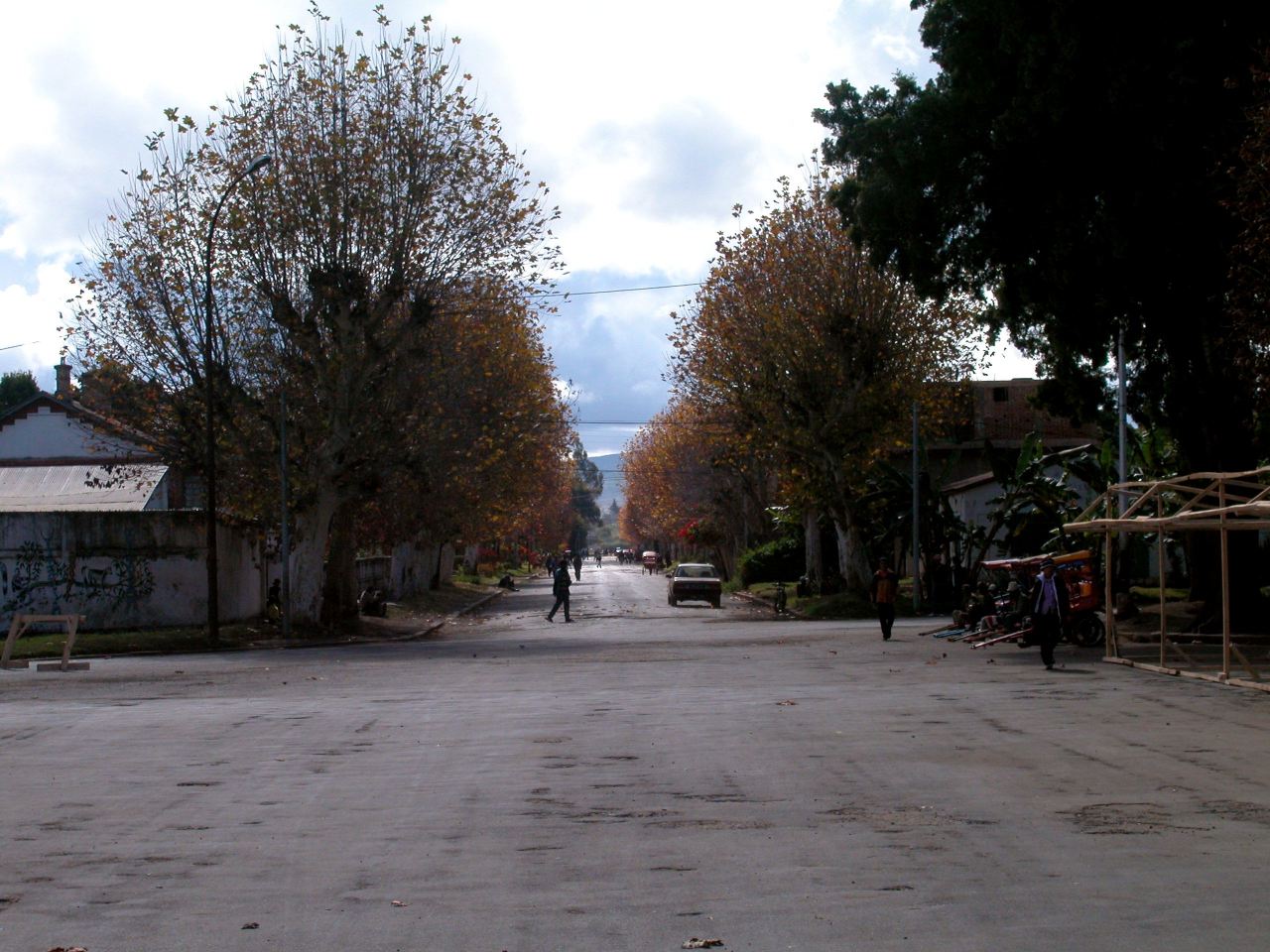
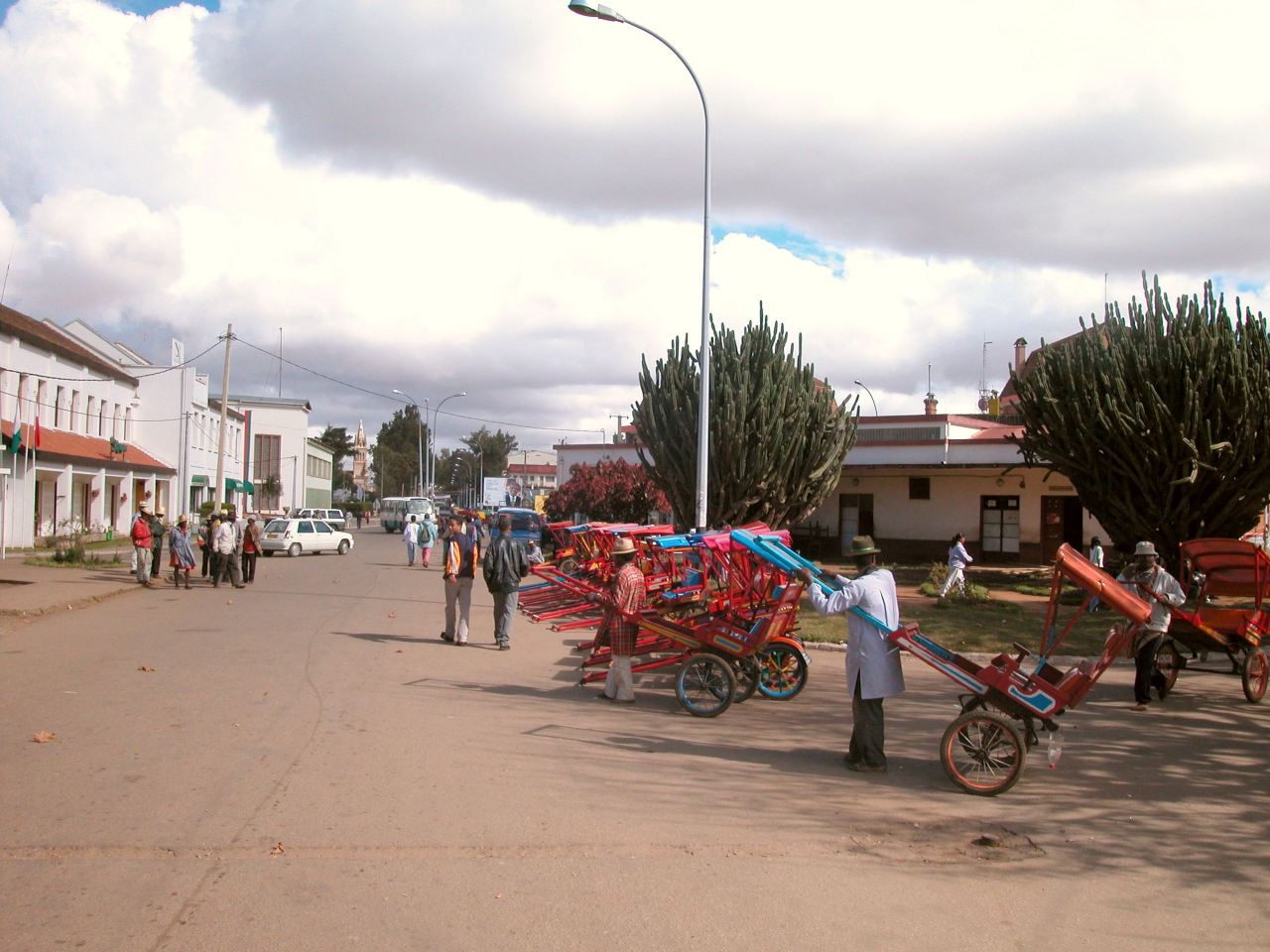
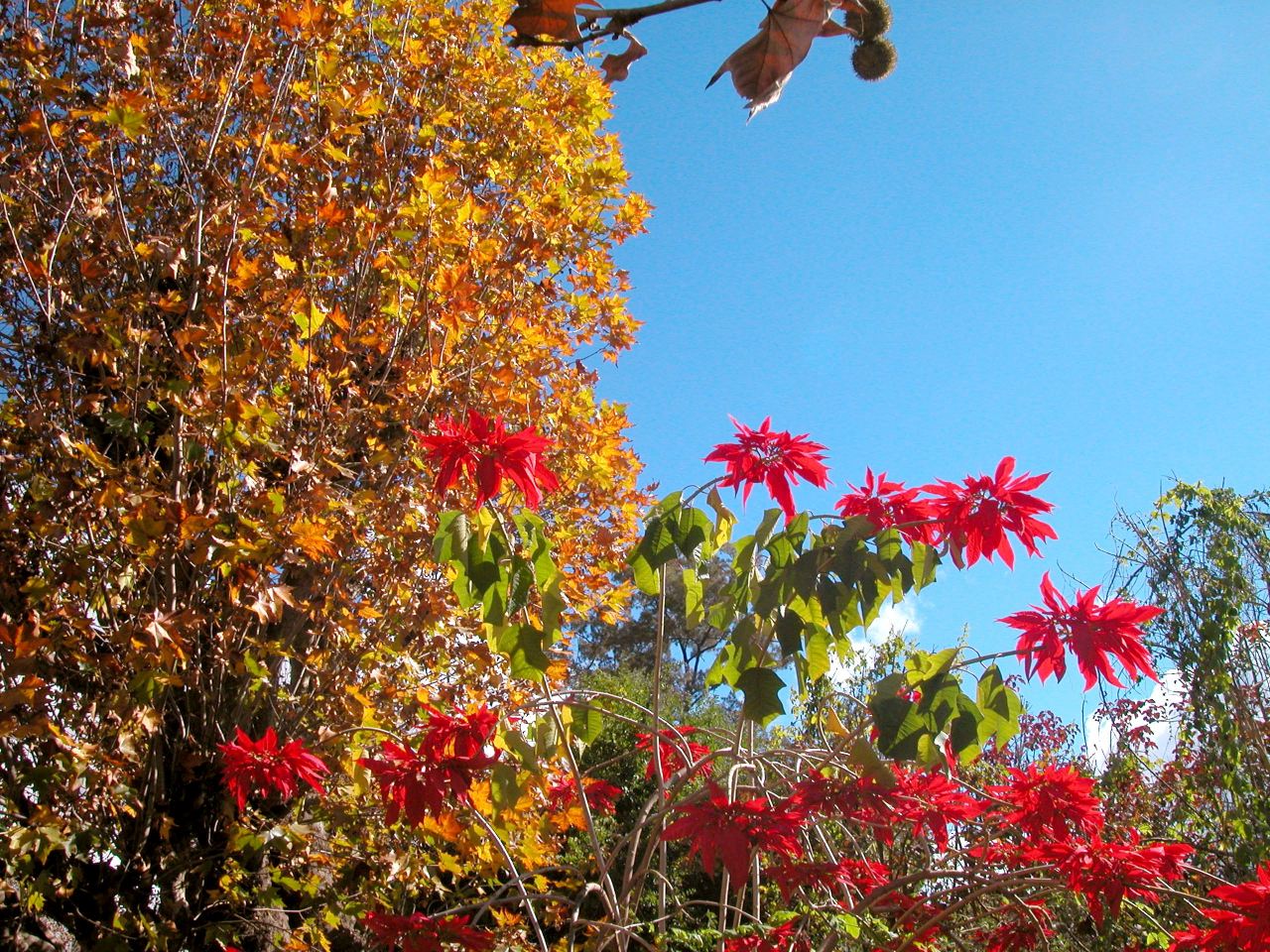
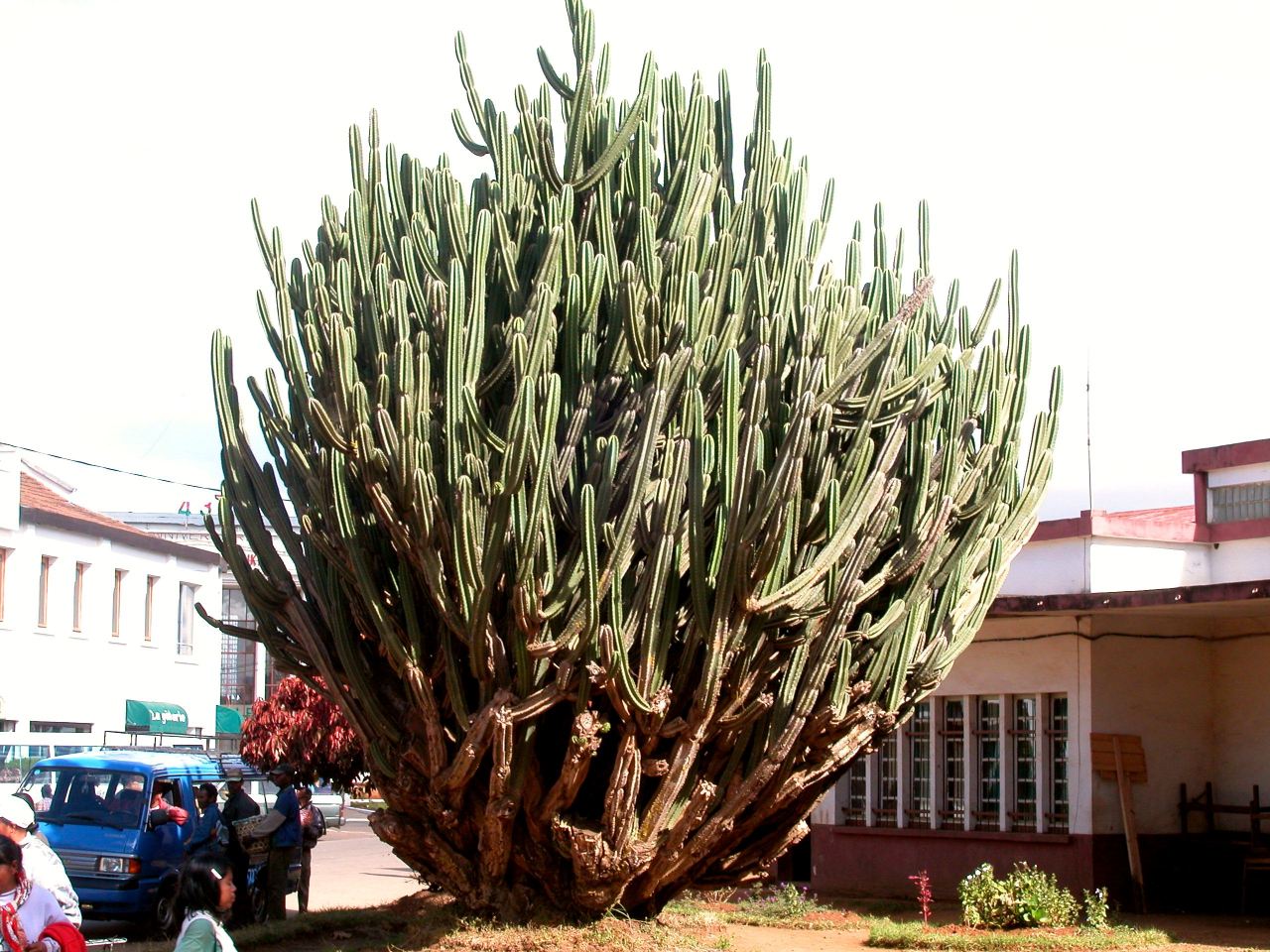
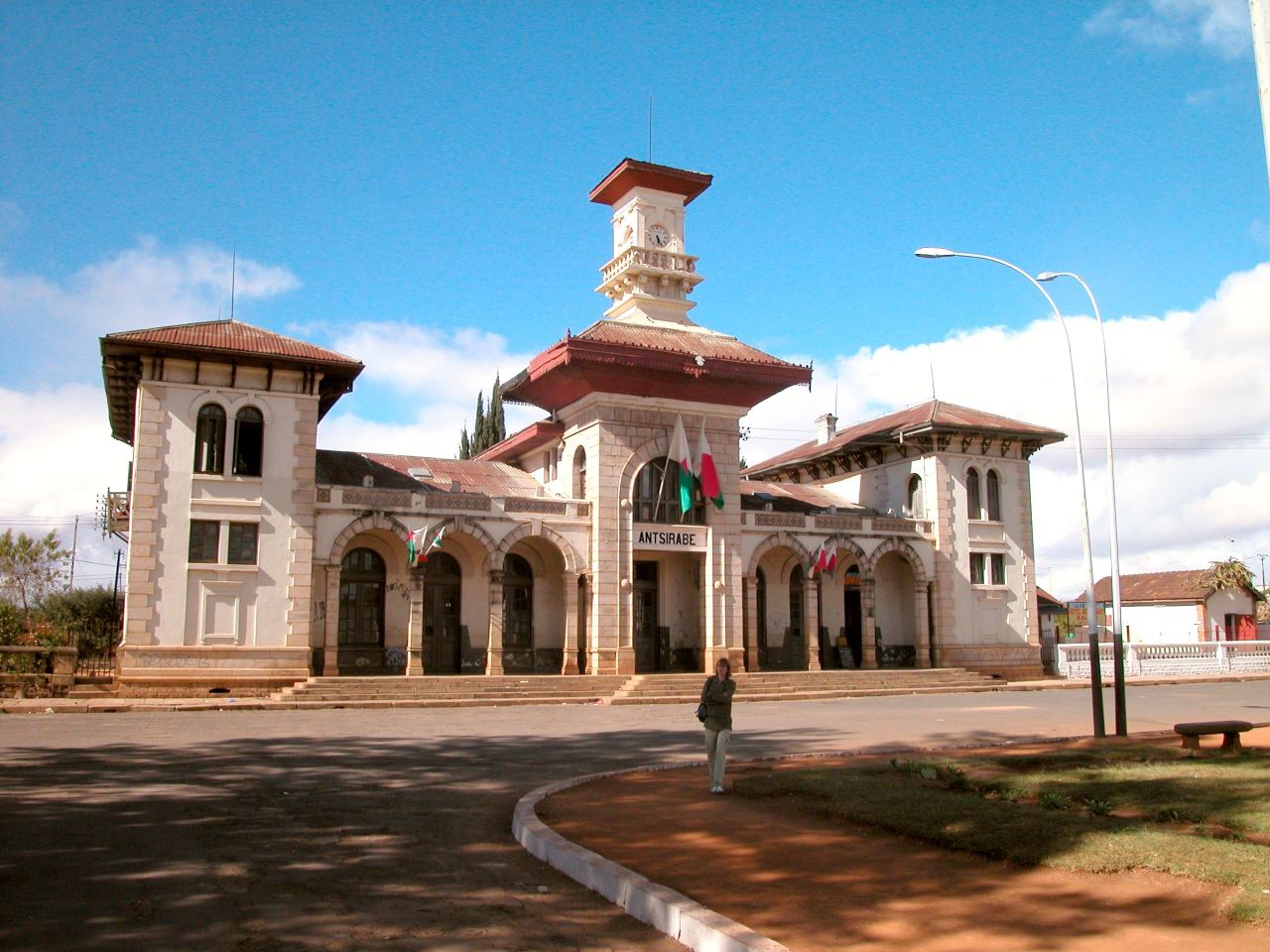
Left on our own, the two of us set off on a long walk through town. The clear blue sky and yellow falling maple leaves gave me that aching autumn melancholy. The broken asphalt in the empty streets made the town look like a Central Asian district town in the 1980s. Only the enormous cacti and the rickshaws that kept turning up from behind the bushes reminded us where we were. Antsirabe has a railway station. It hadn’t been used for years but was still in remarkably good shape.
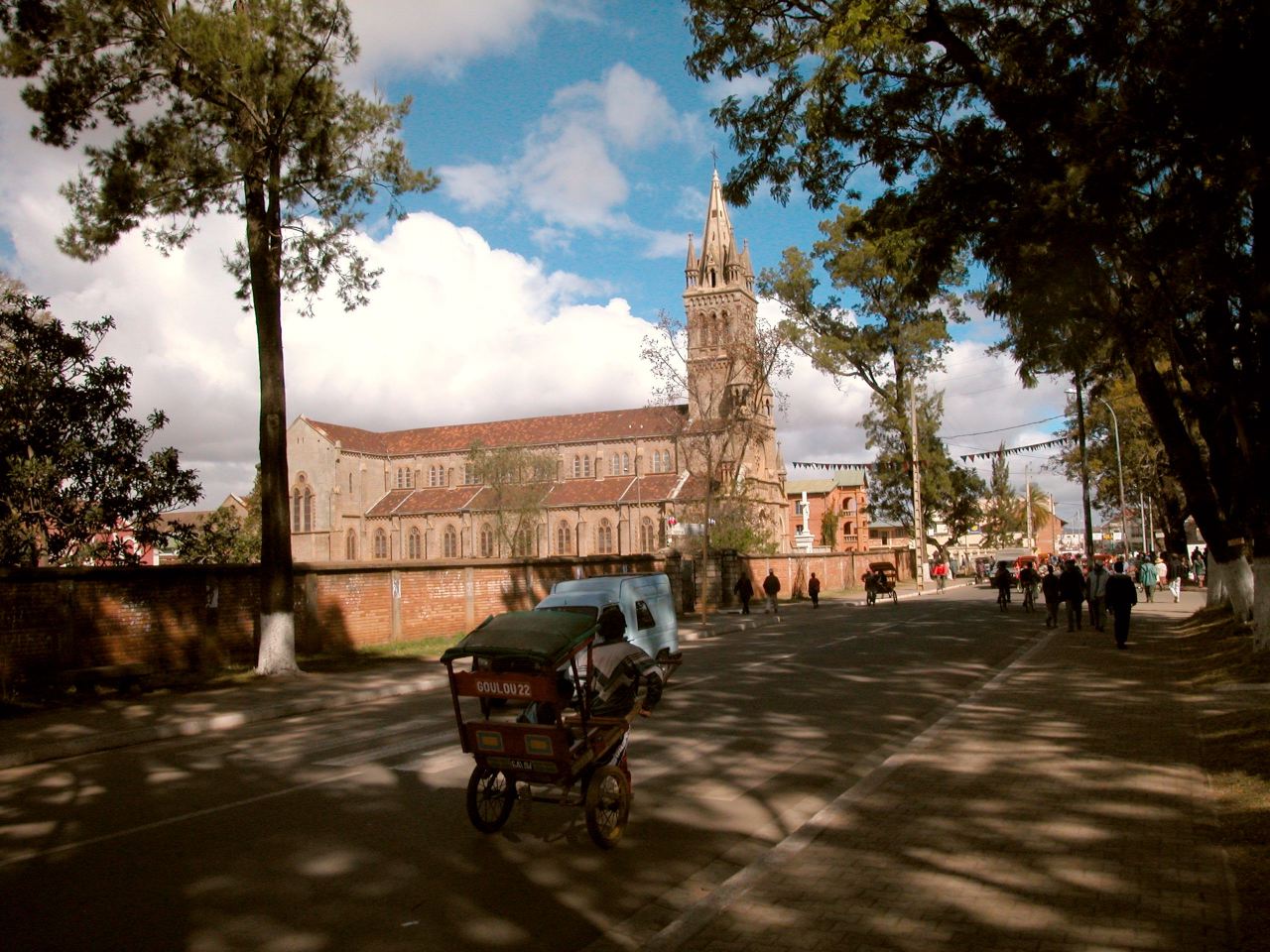
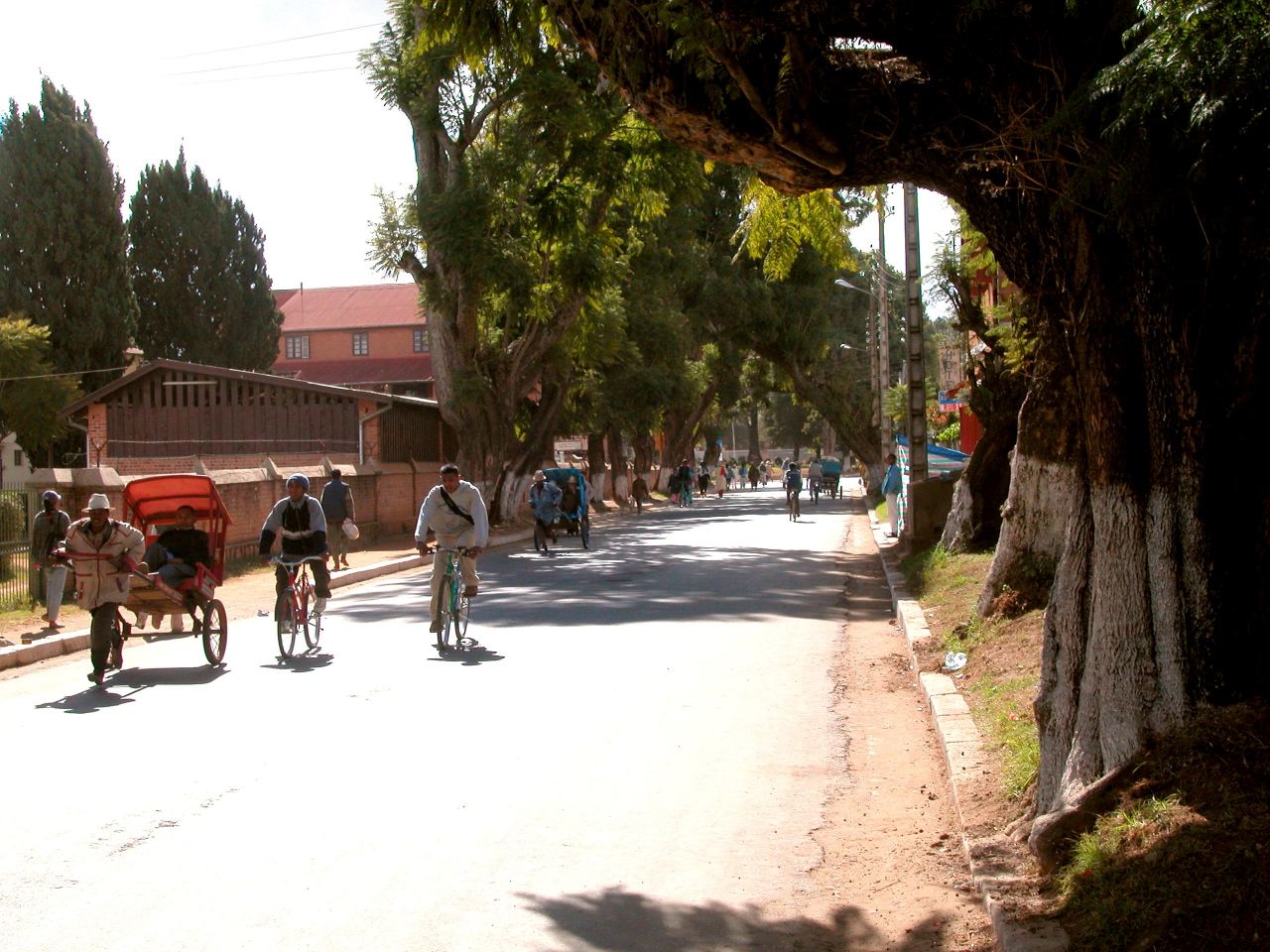
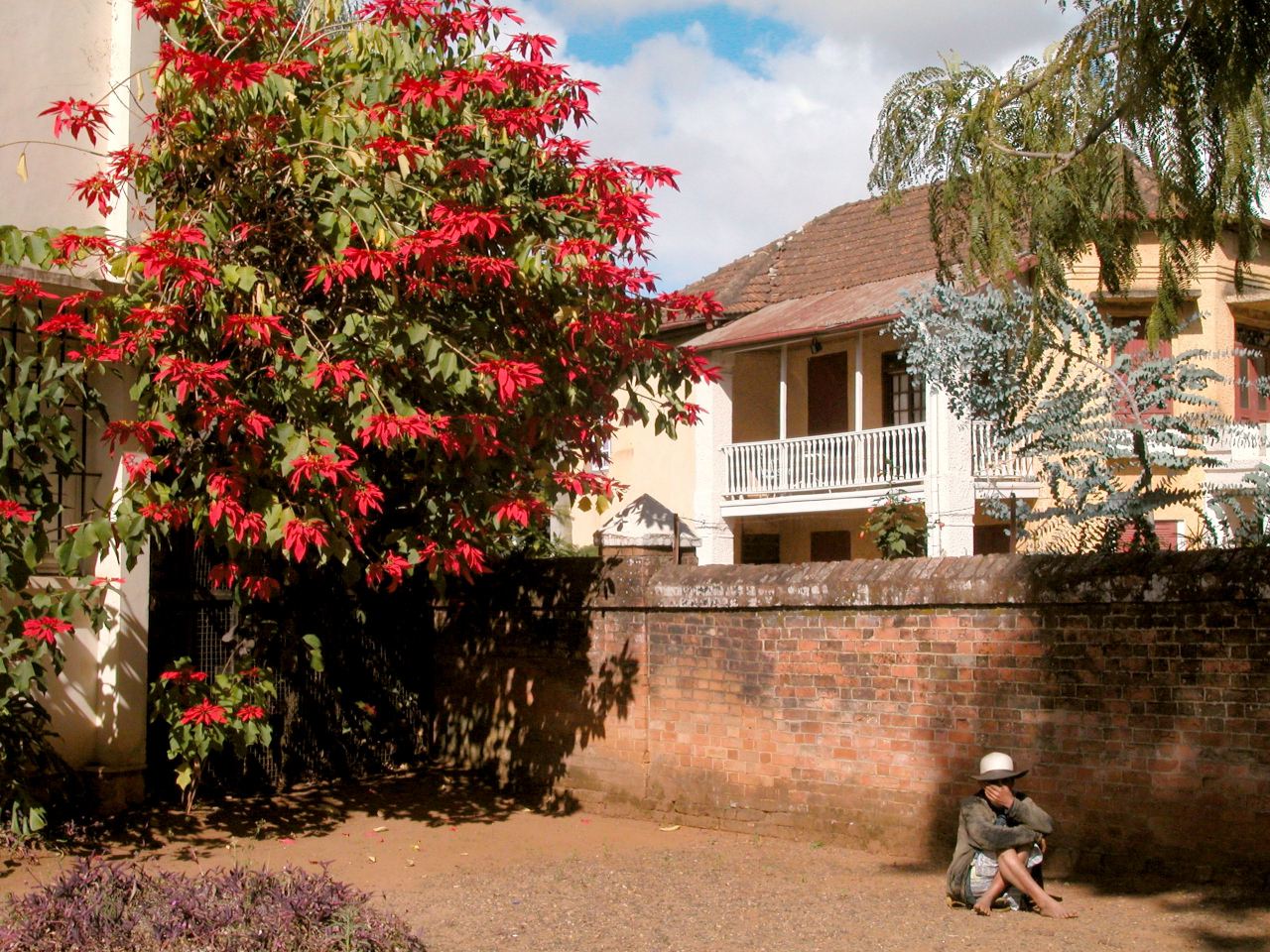
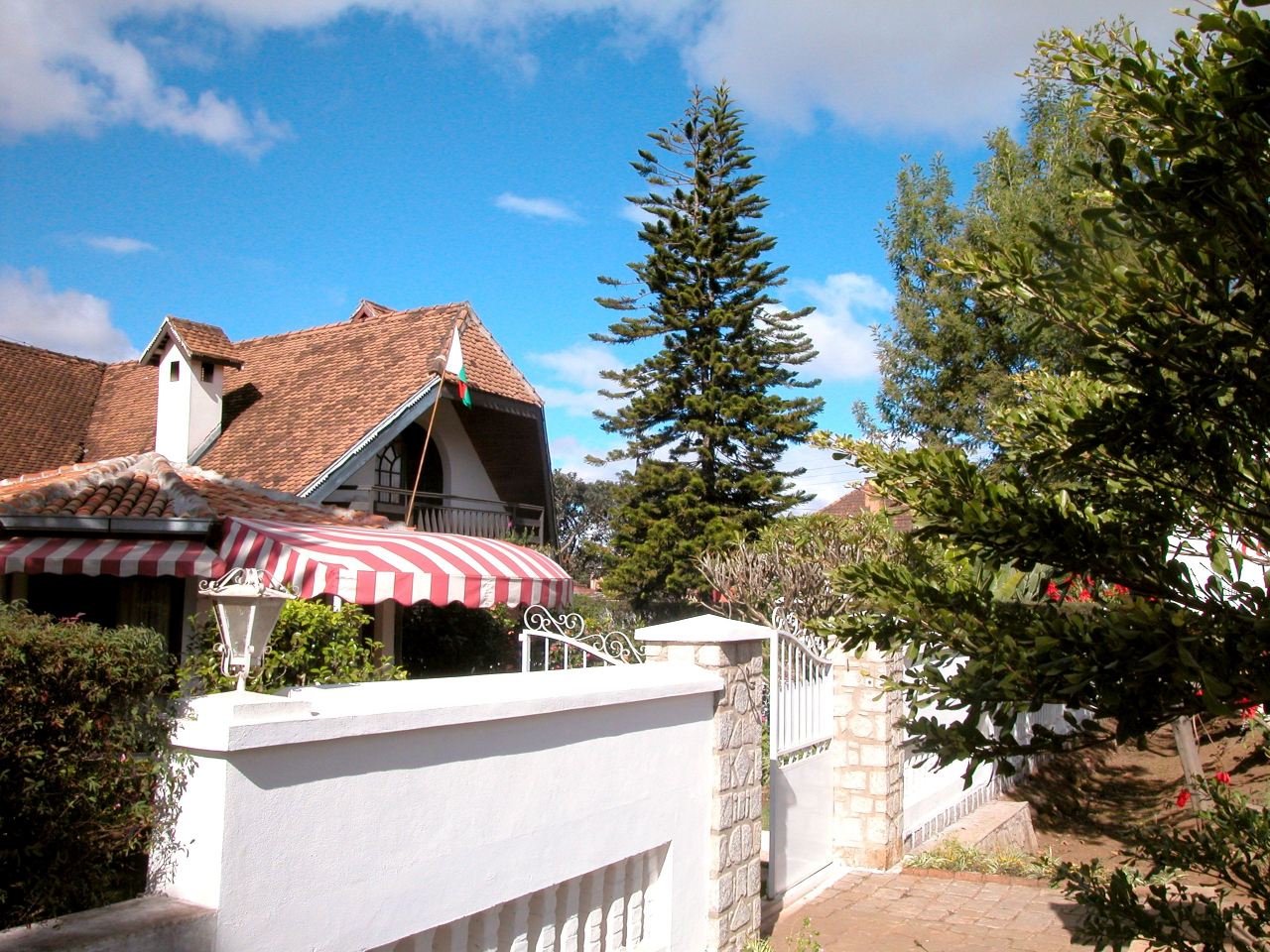
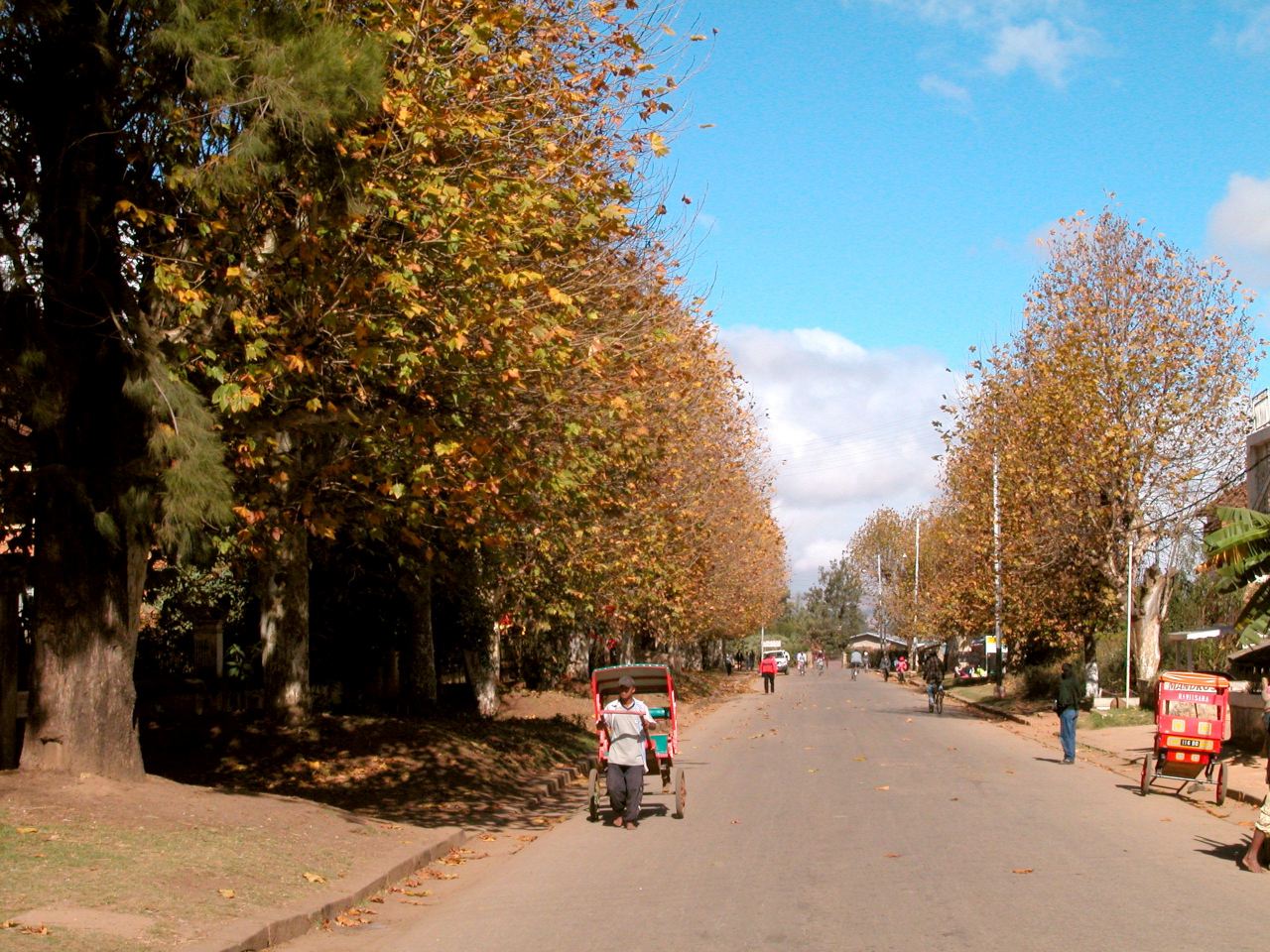
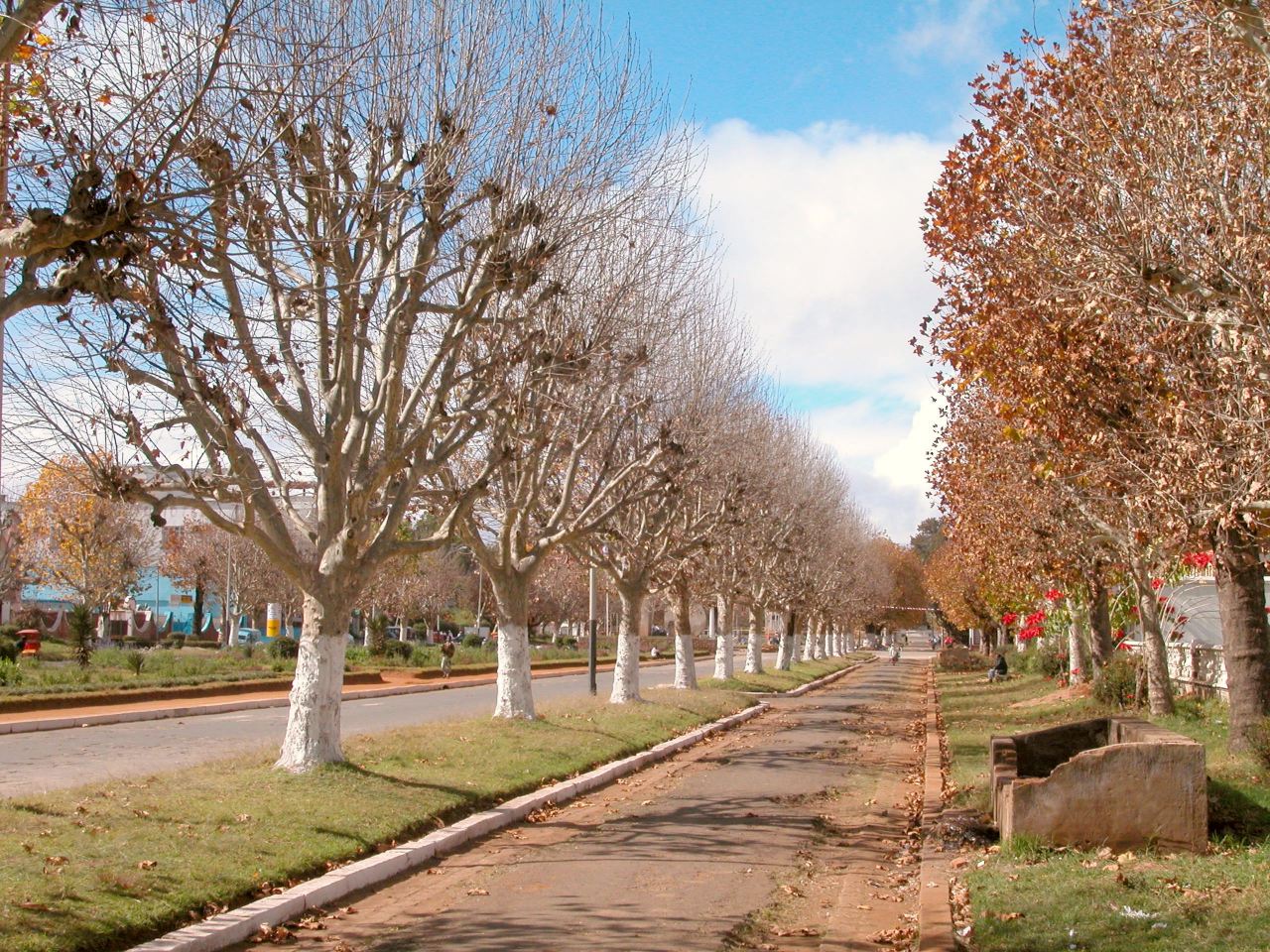
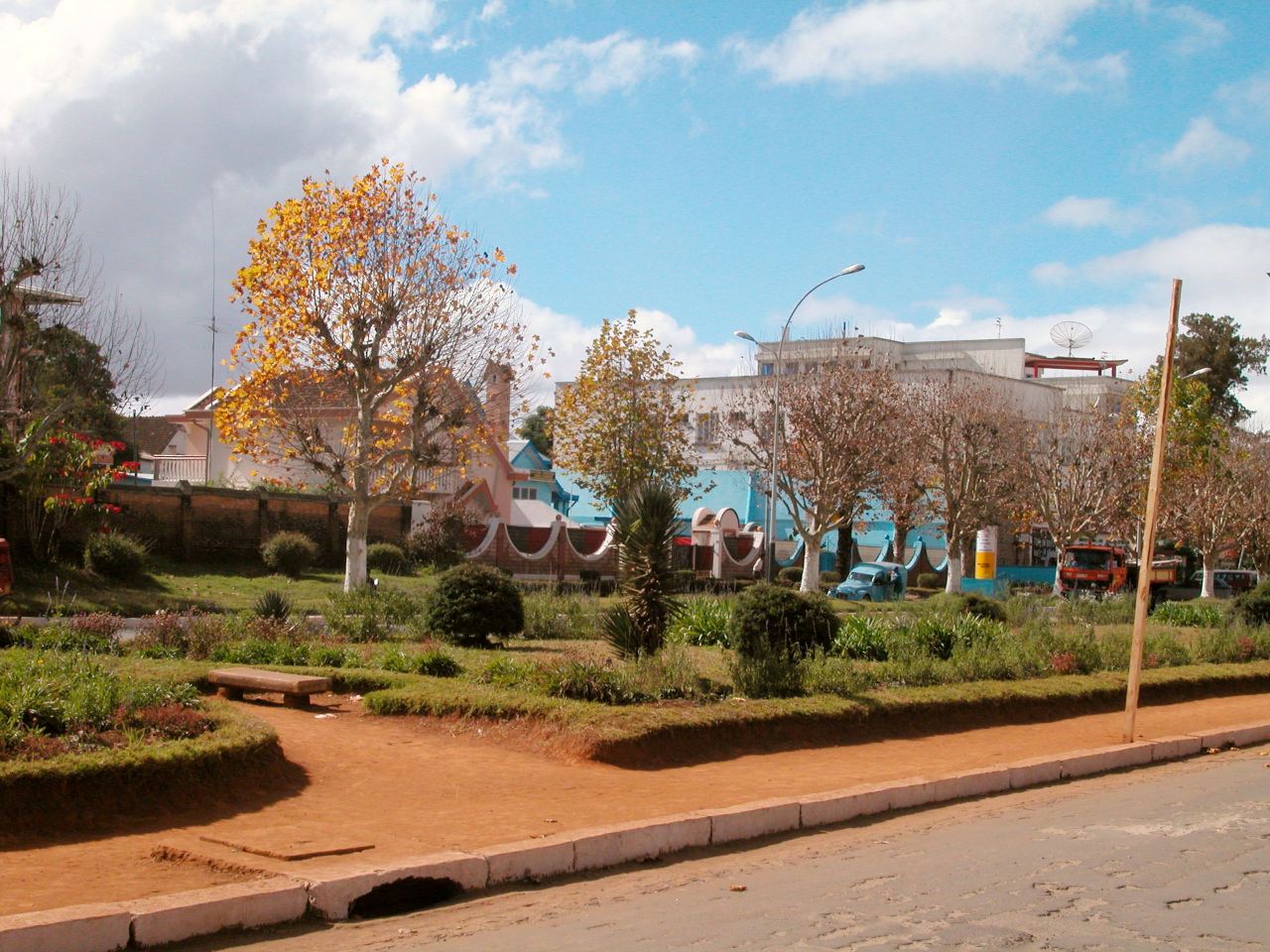
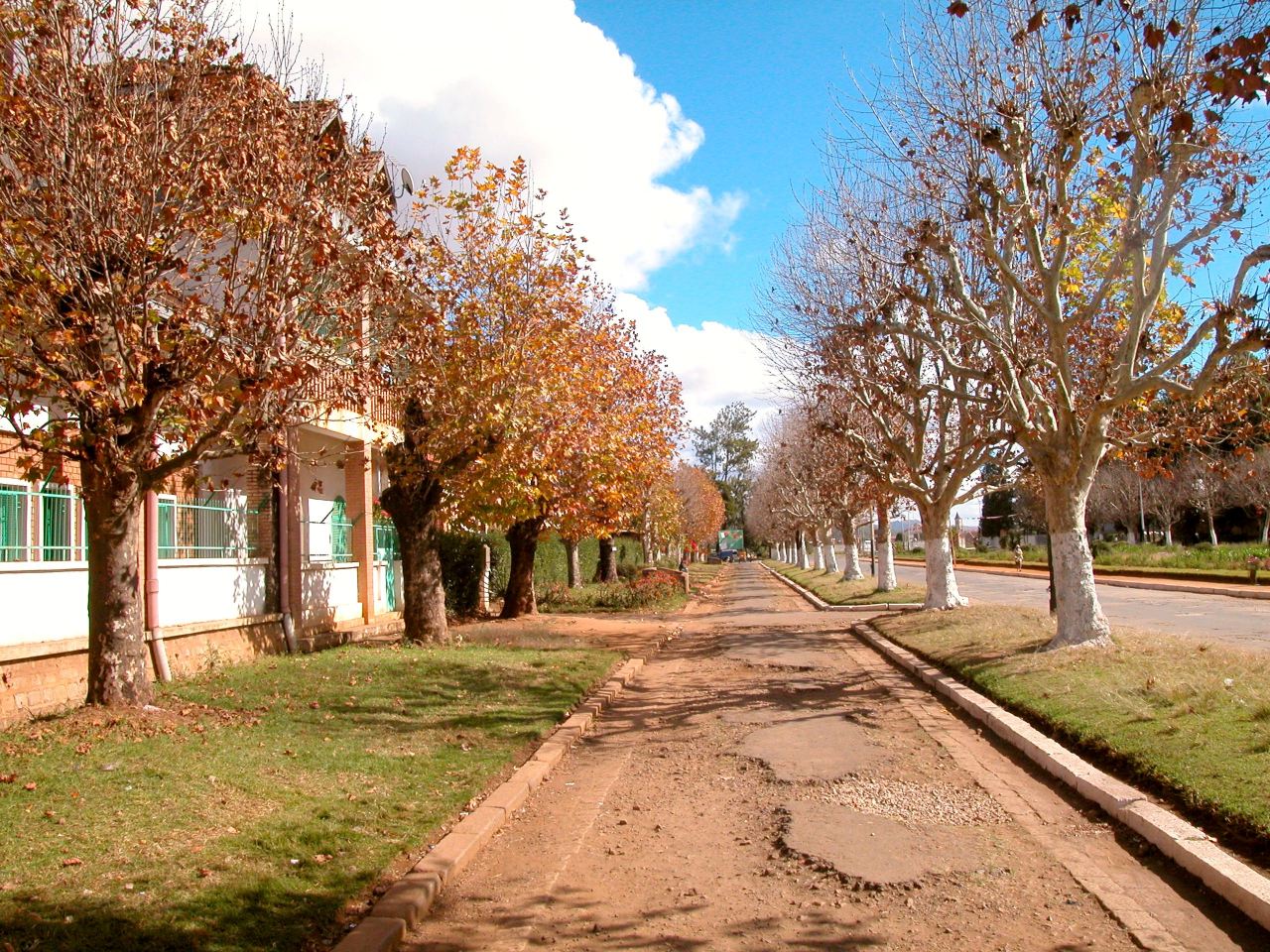
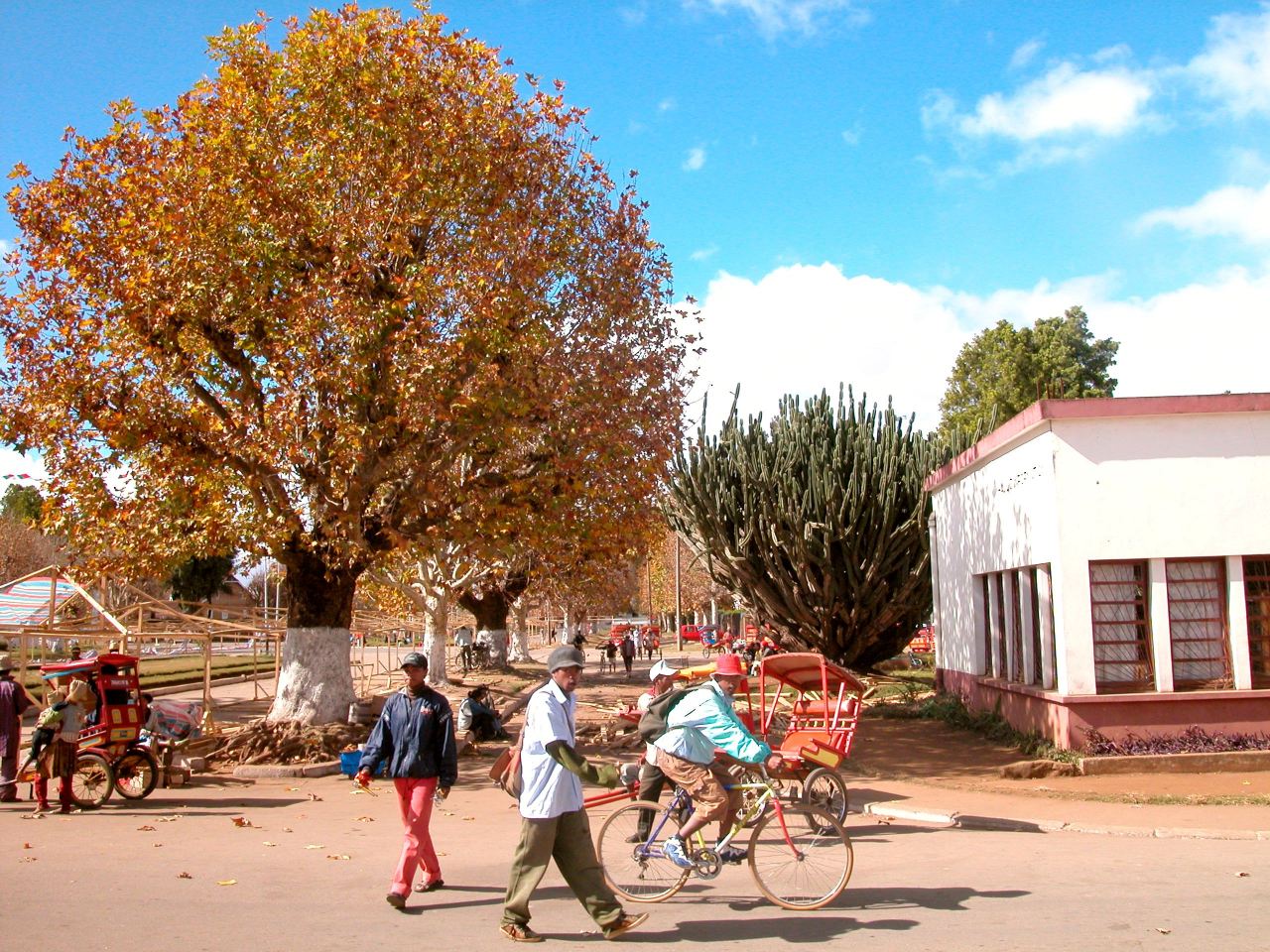
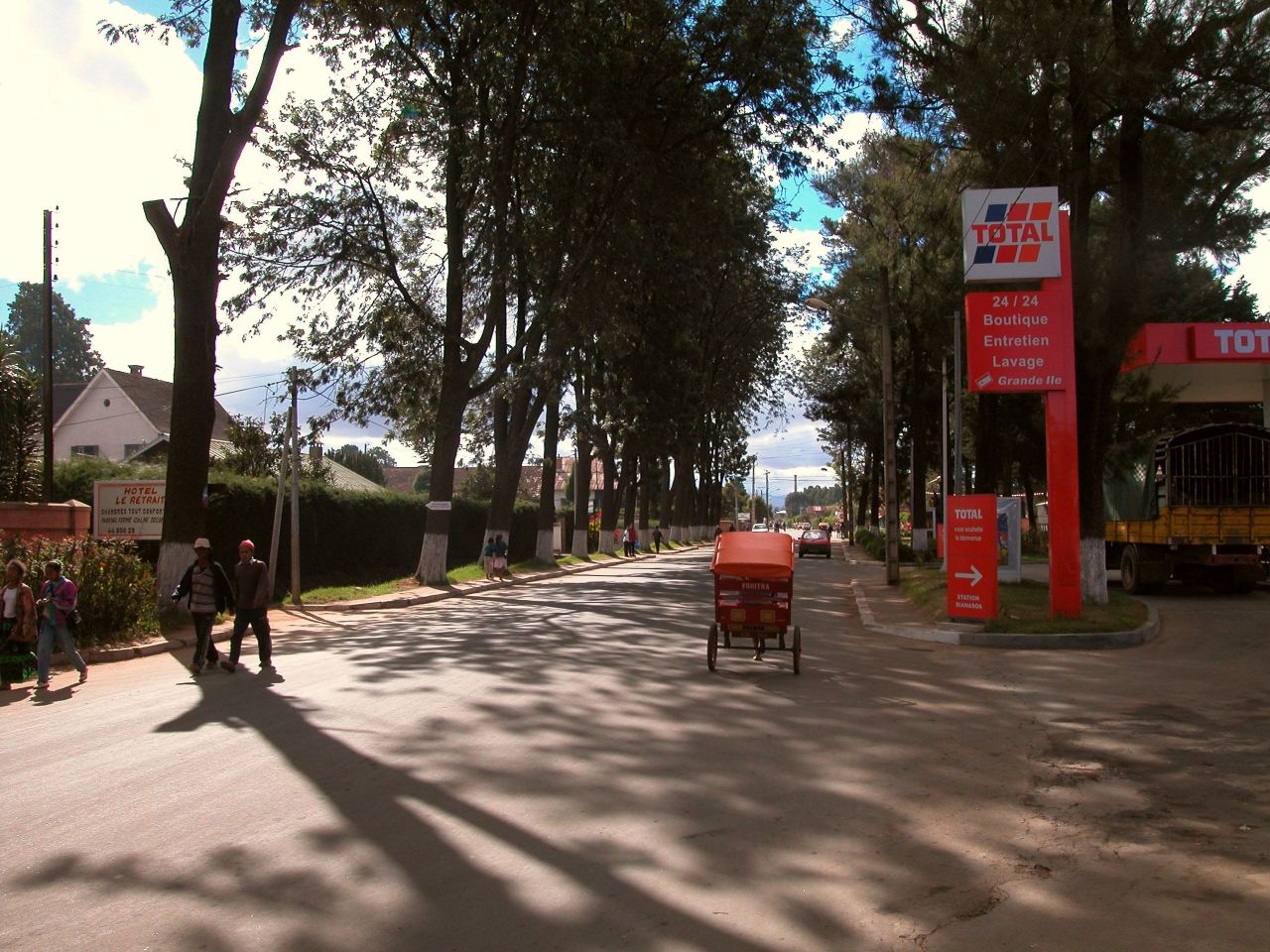
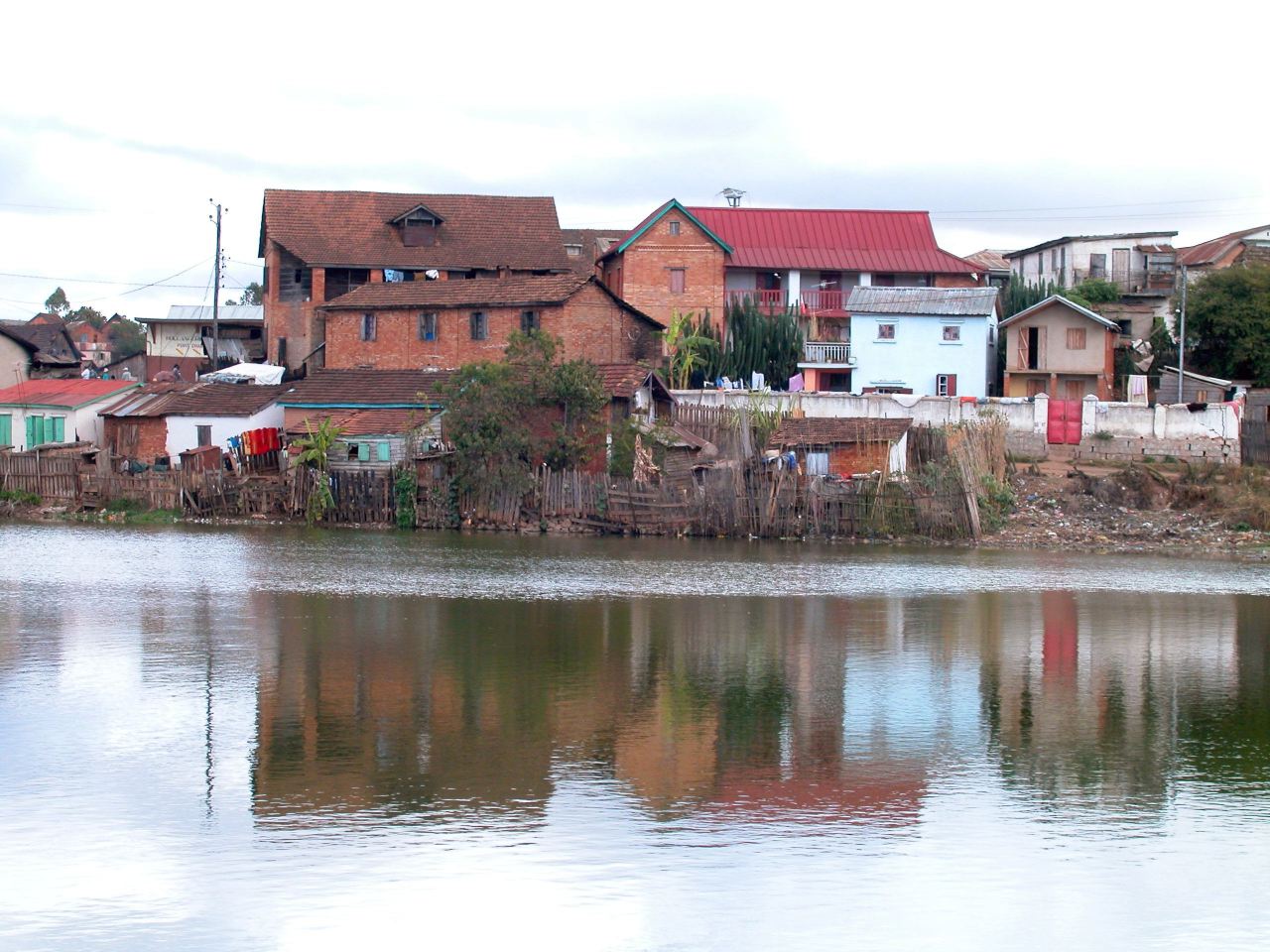
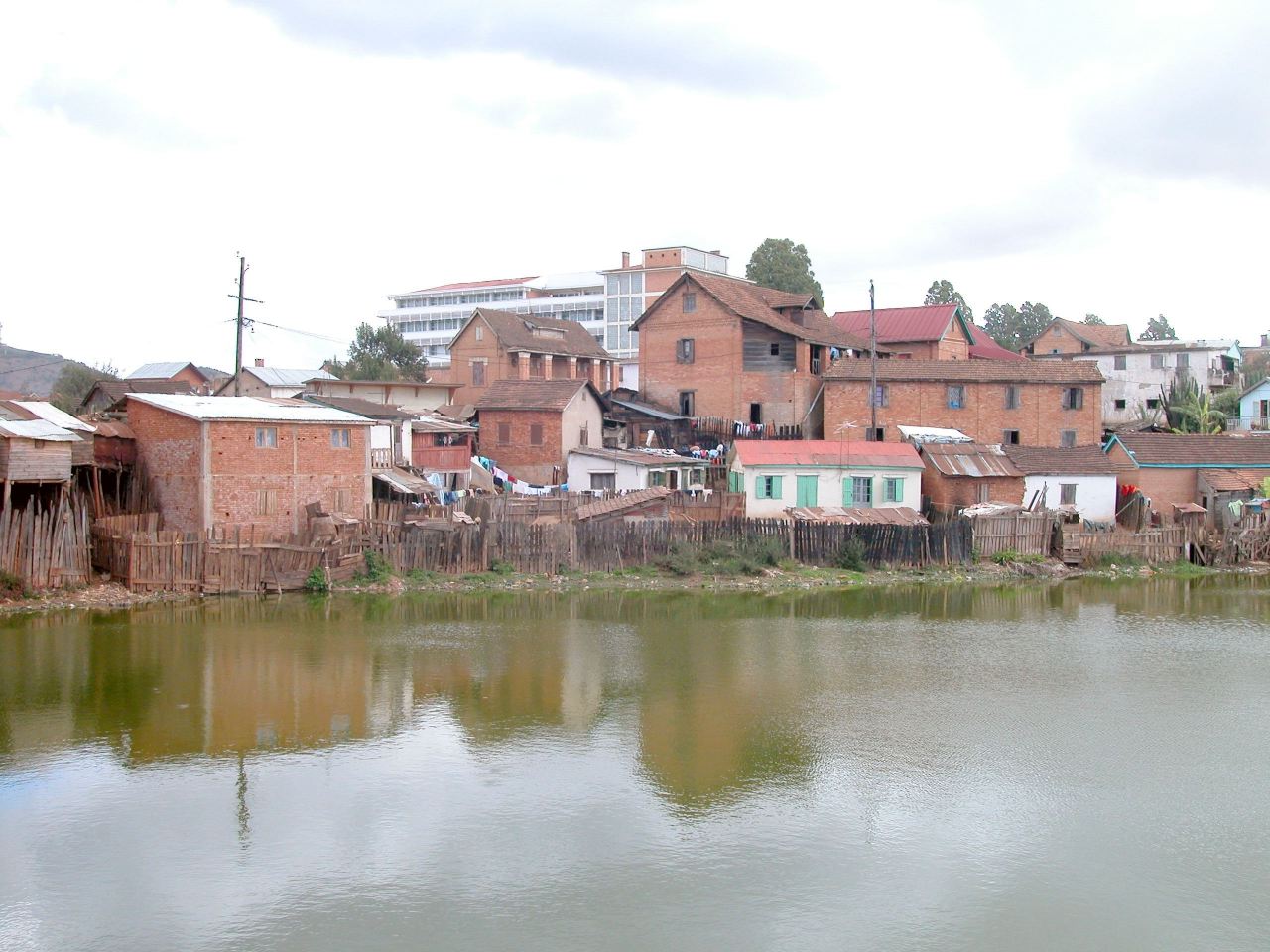
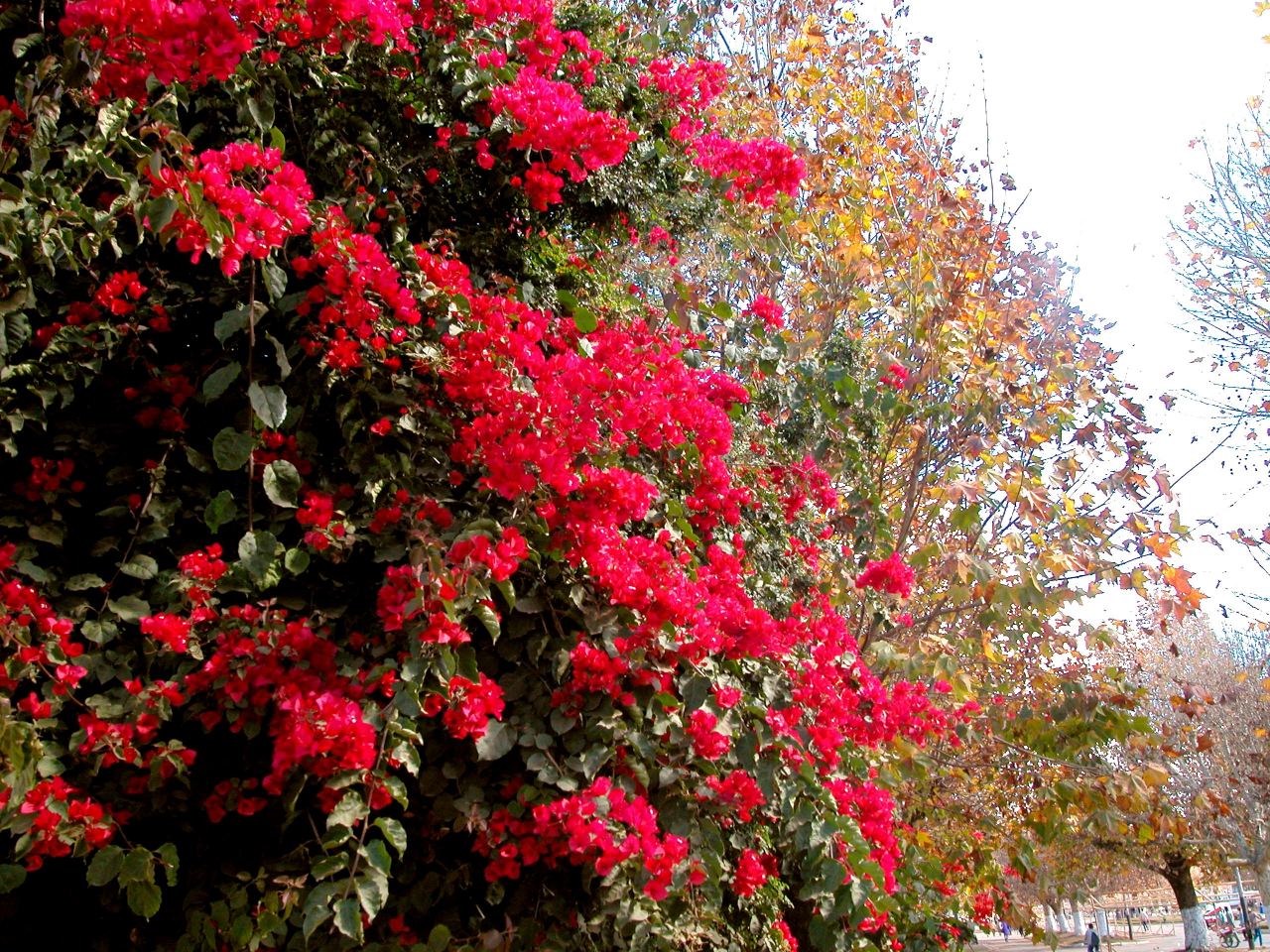
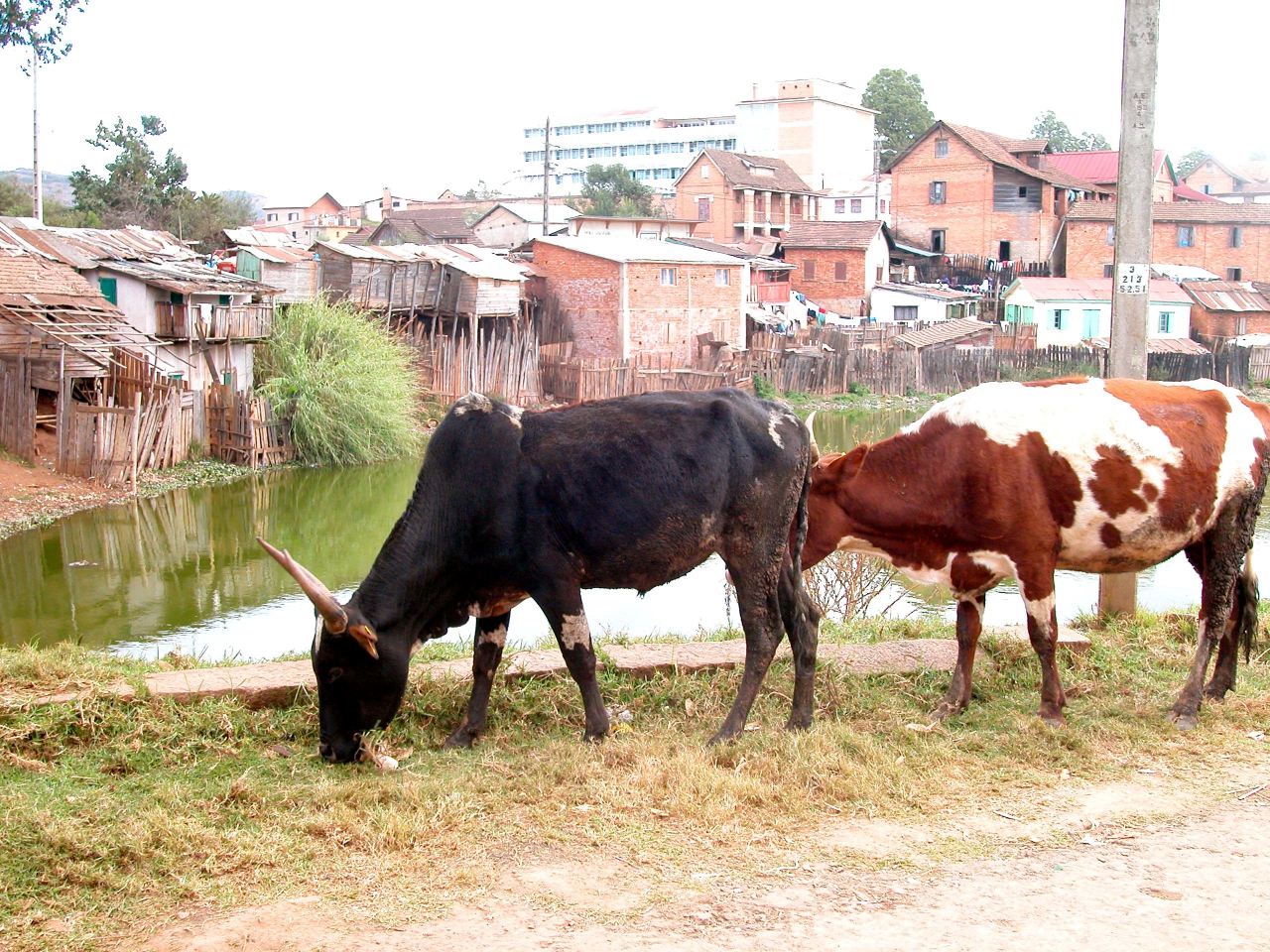
There are hot mineral springs in town too. People came there to wash their feet.
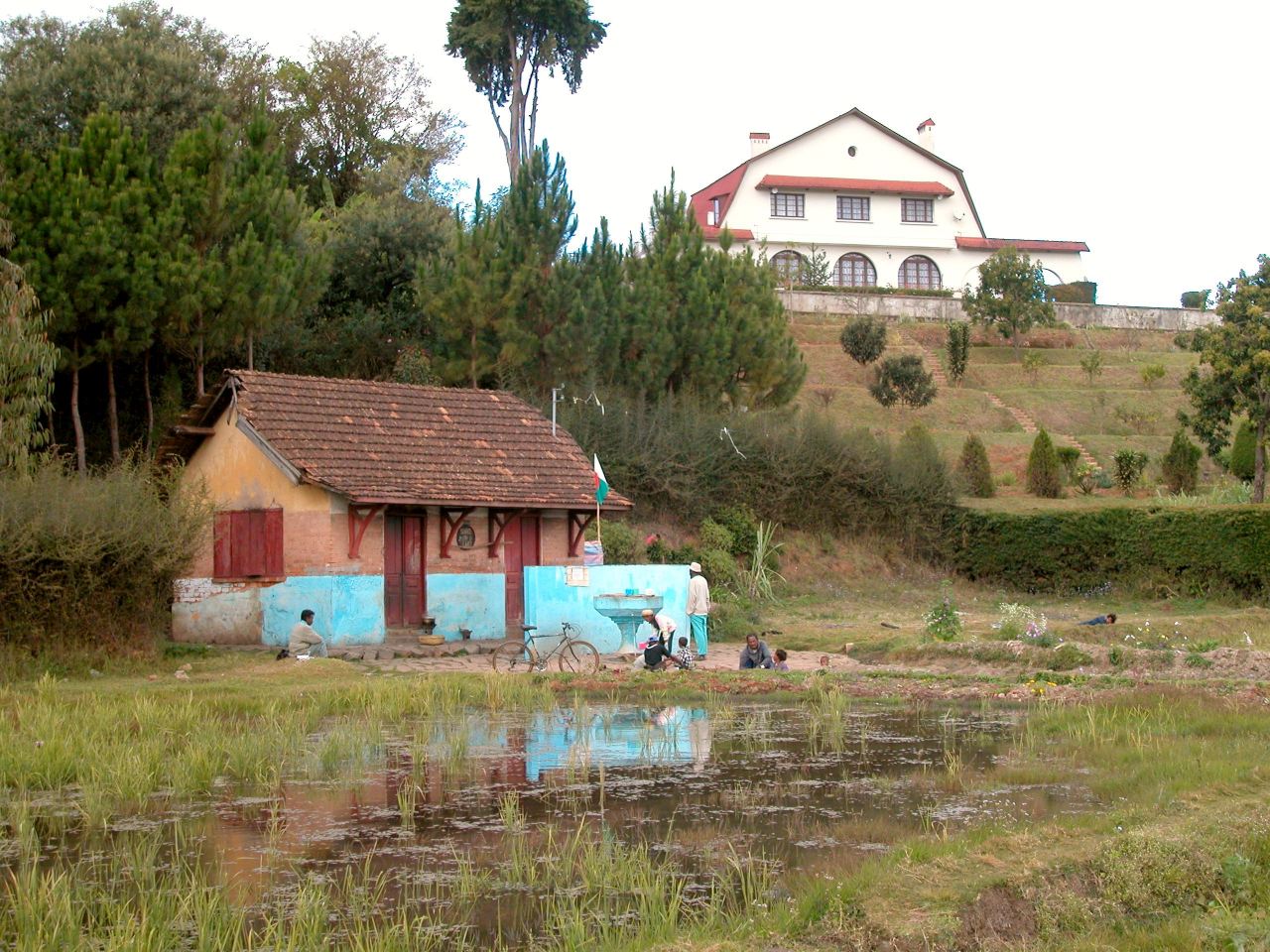
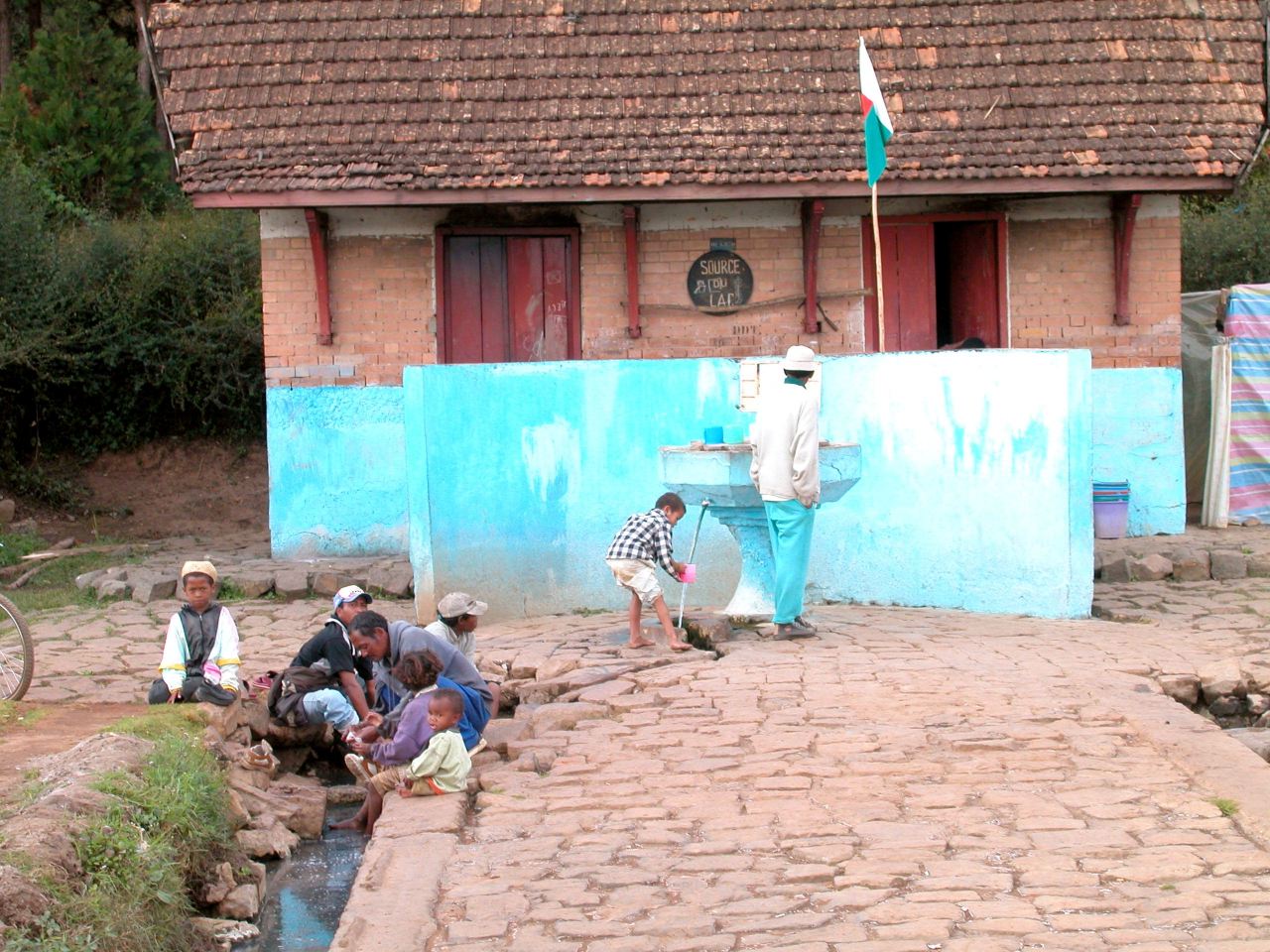
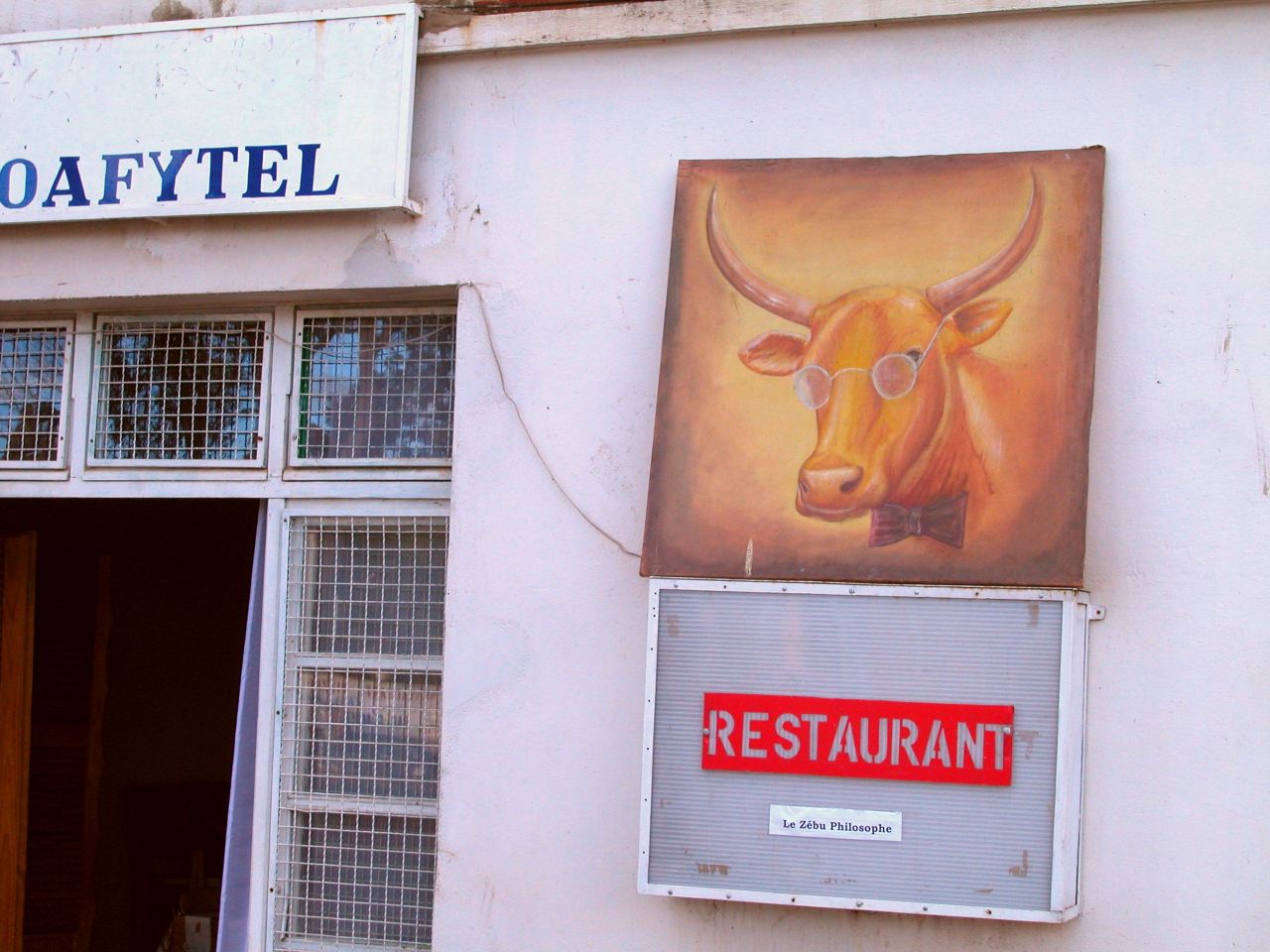
We ate several times, had coffee, went to the post office and sent a postcard home. It took twenty days to arrive. We found a restaurant called Zebu Philosophy. The animal really was an object of devotion here. By four in the afternoon we were thoroughly bored, but we were in luck. At four on the dot Parany appeared with the car repaired. Hurrah, we could go on. We weren’t going to get far, unfortunately. Before dark we only made it to the next town, Ambositra. We stopped in a modern three-storey hotel, had a short walk and went to bed. We’d fallen well behind schedule and would need to be up early the following day.
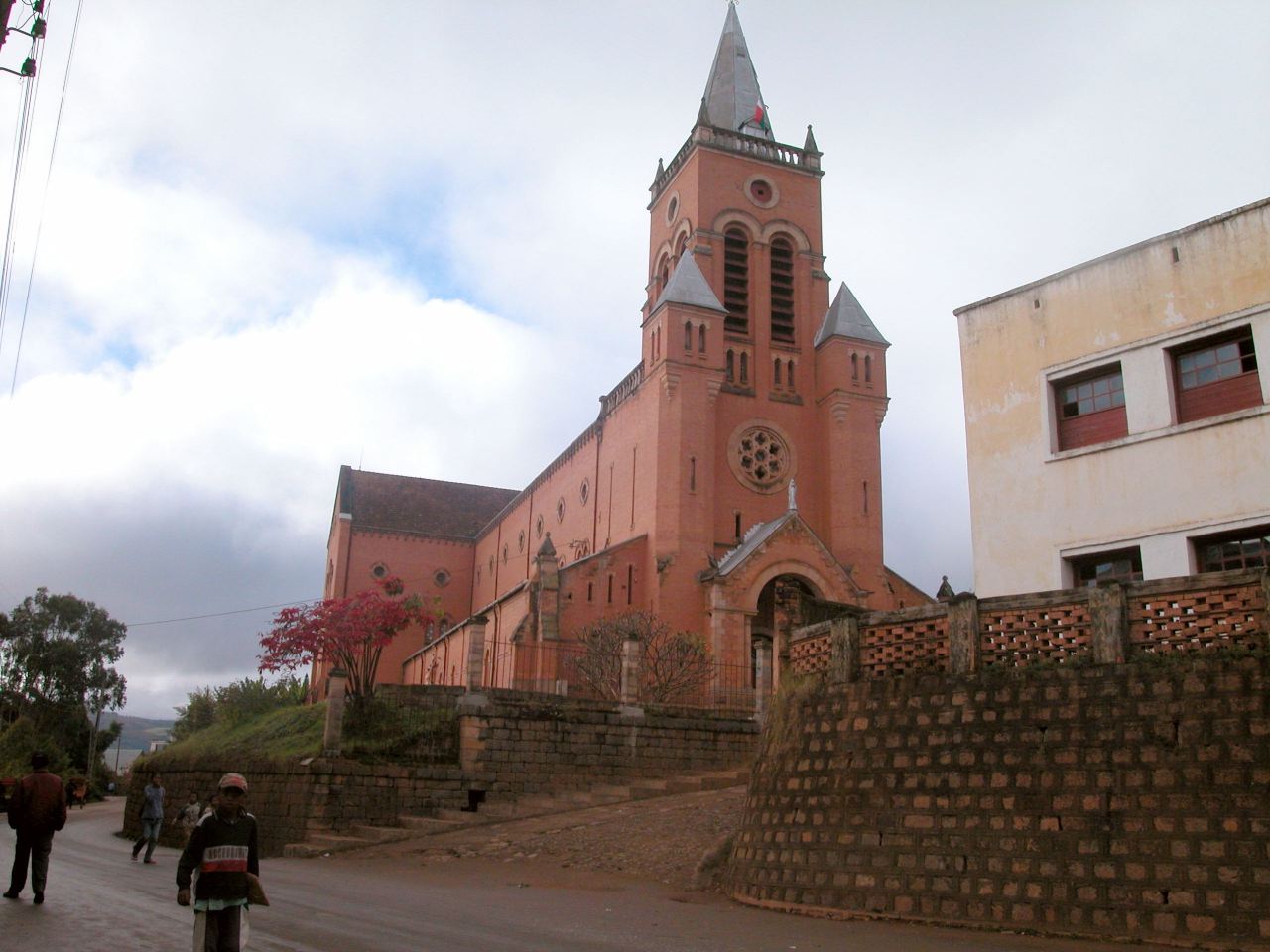
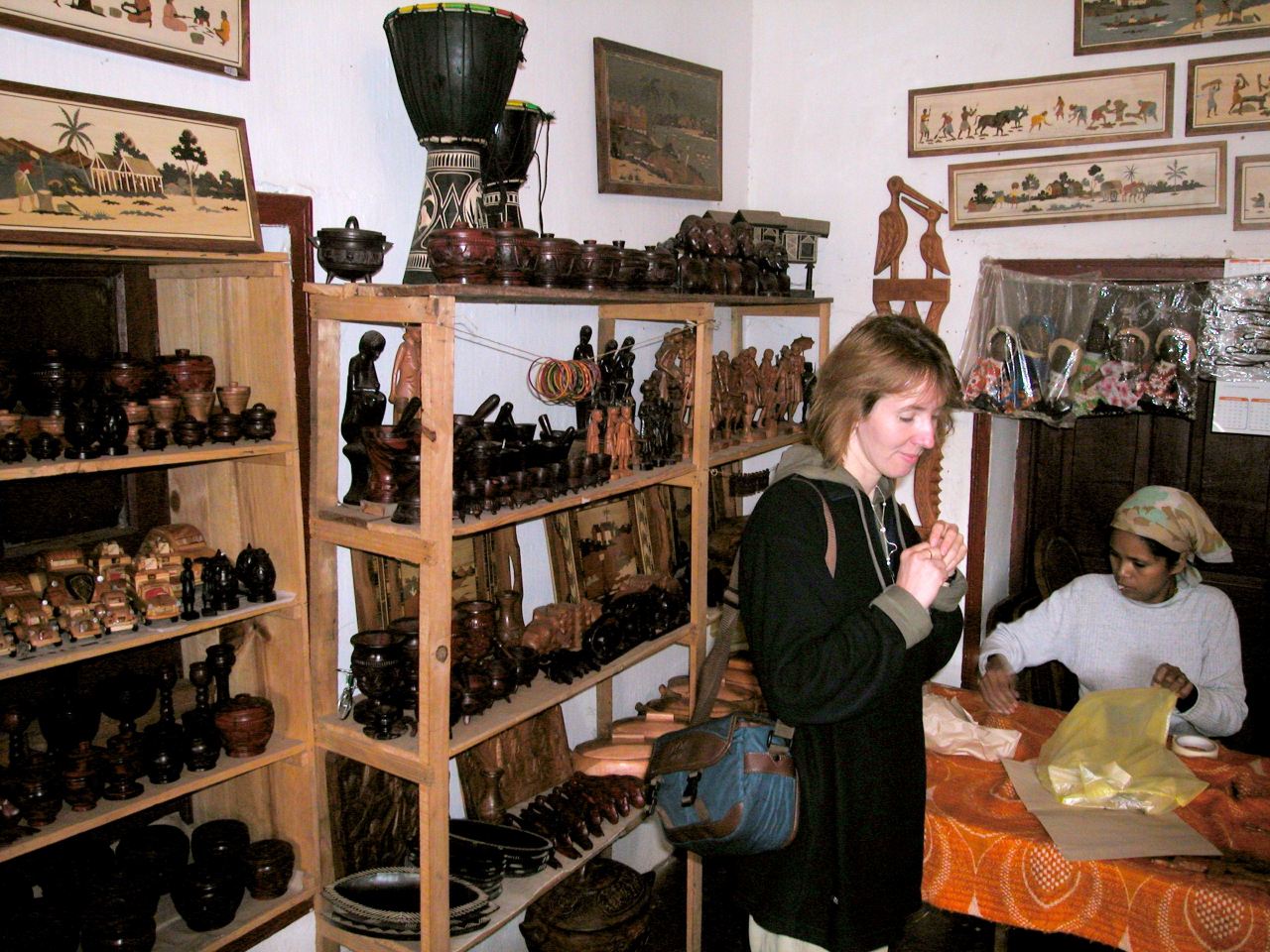
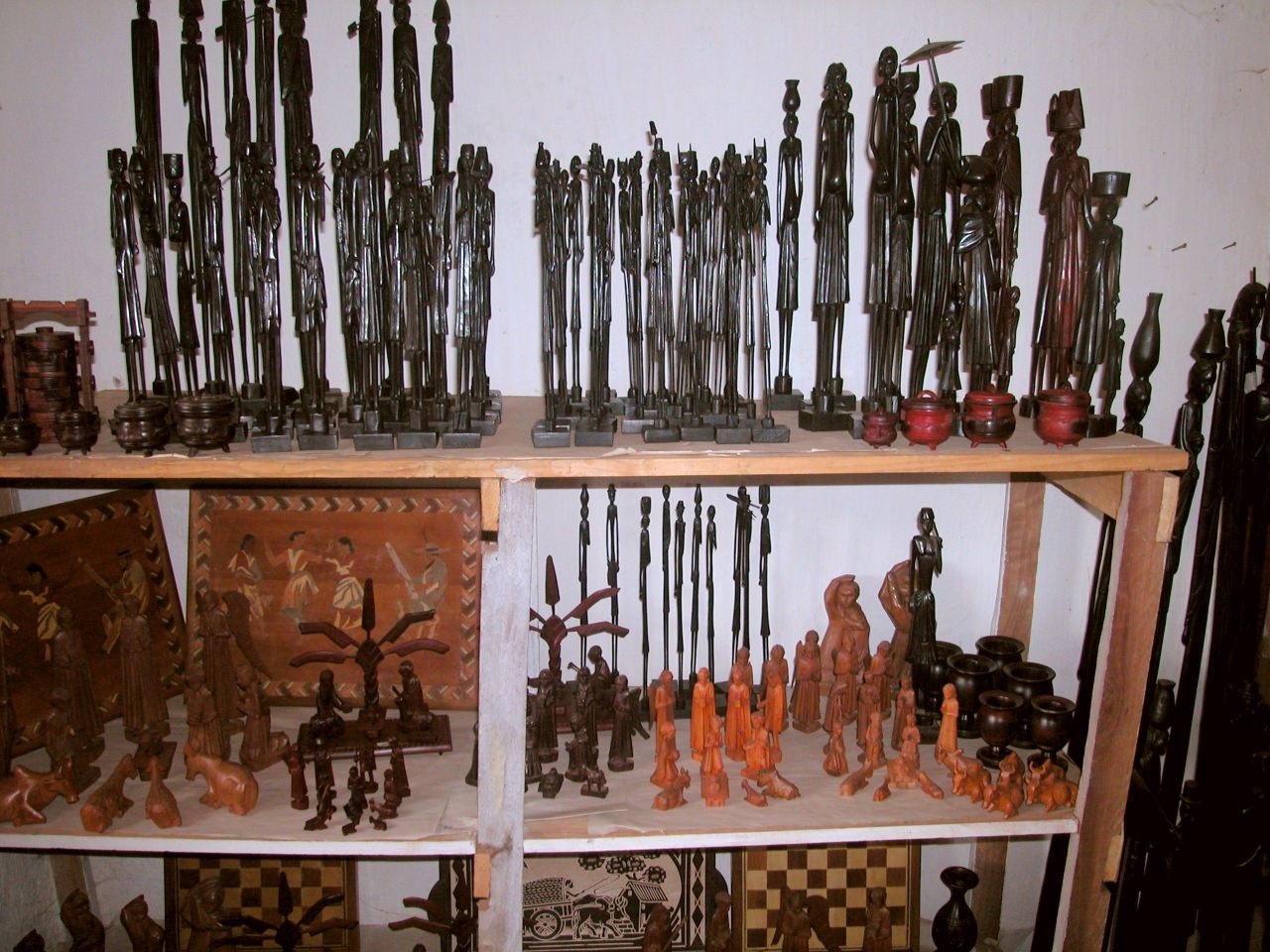
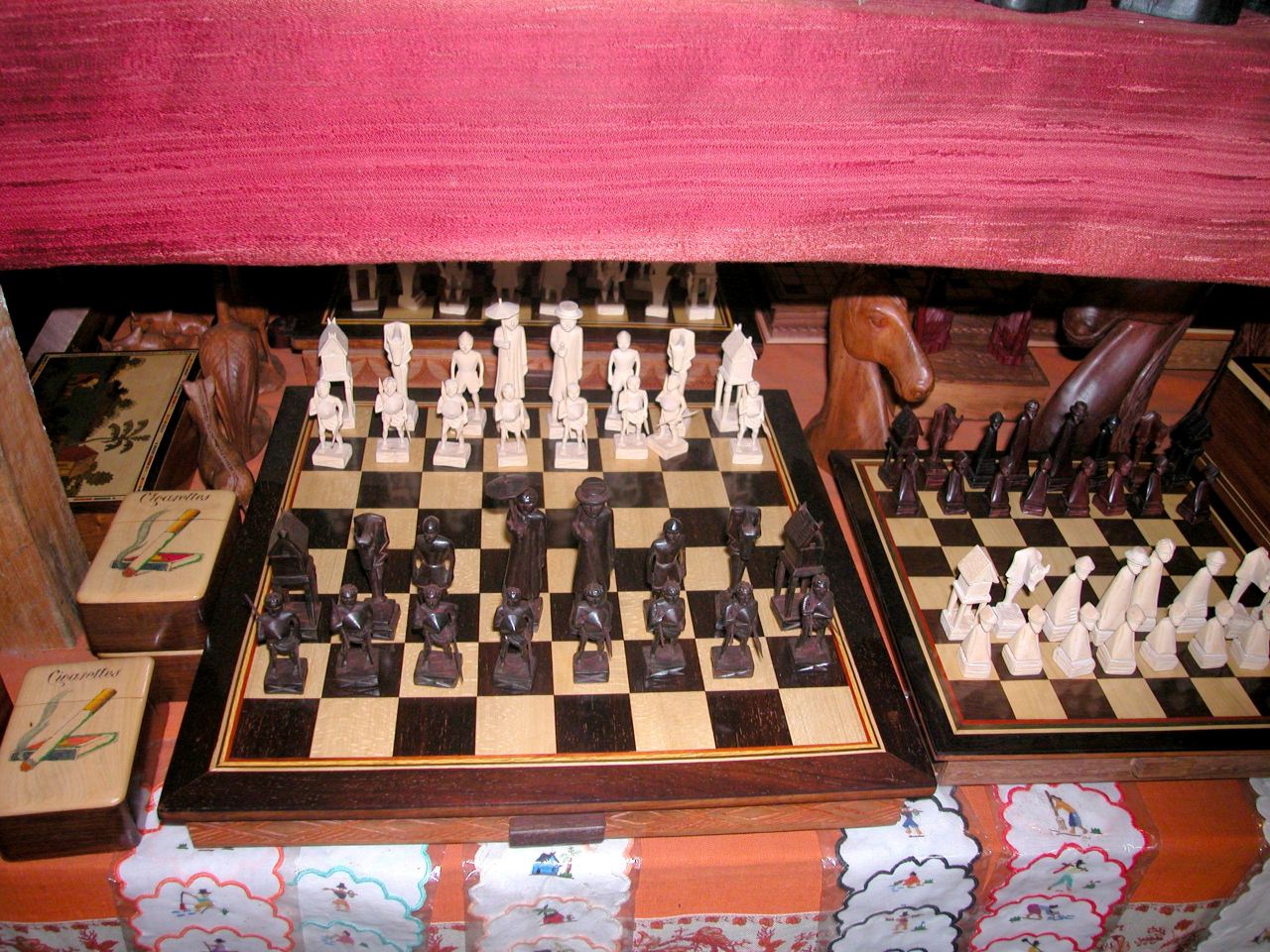
Ambositra is famous for woodcarving. The main street was lined with little shops selling all sorts of carvings. The trouble was that none of them opened before ten, so getting up early had done us little good. The prices were slightly lower than for the same souvenirs in the capital. The figures themselves were interesting, carved out of eucalyptus and other exotic local woods. They ranged from a thousand francs to several million. The expensive ones were huge statues and vases more than a metre across and weighing tens of kilograms.
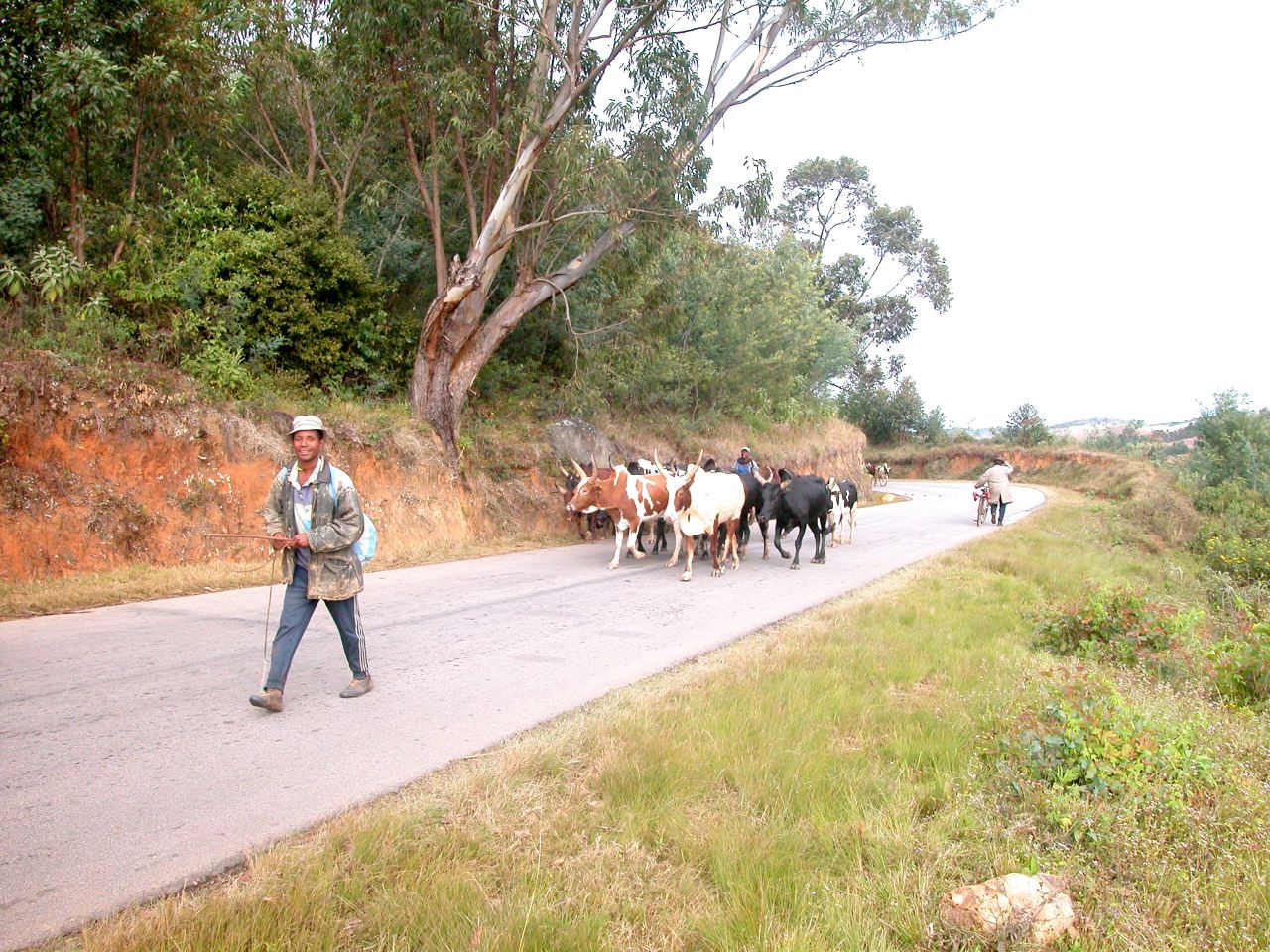
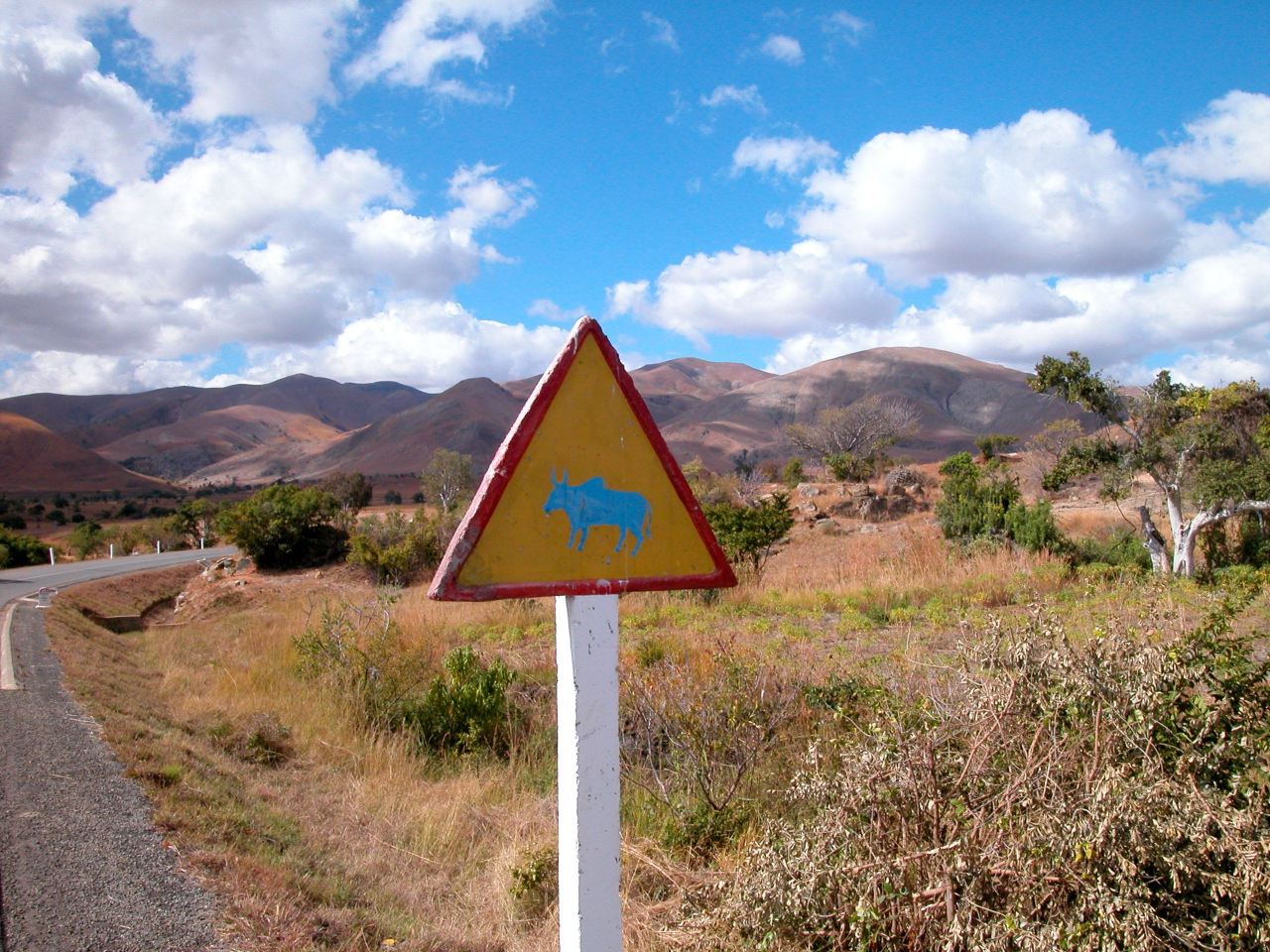
Our next stop was Fianarantsoa, the country’s second-largest city. It was a four-hour drive through the mountains, so there was no great speed. Herds of zebu kept blocking the road. Usually they’re driven over the earth alongside the road so the asphalt doesn’t wear down their hooves, but there’s only one way over the mountain passes. We even saw signs saying “Beware of zebu”.
Some little roadside stalls sold honey. We hadn’t seen it elsewhere in the country. Tanya is very fond of honey, so this was the place to buy some.
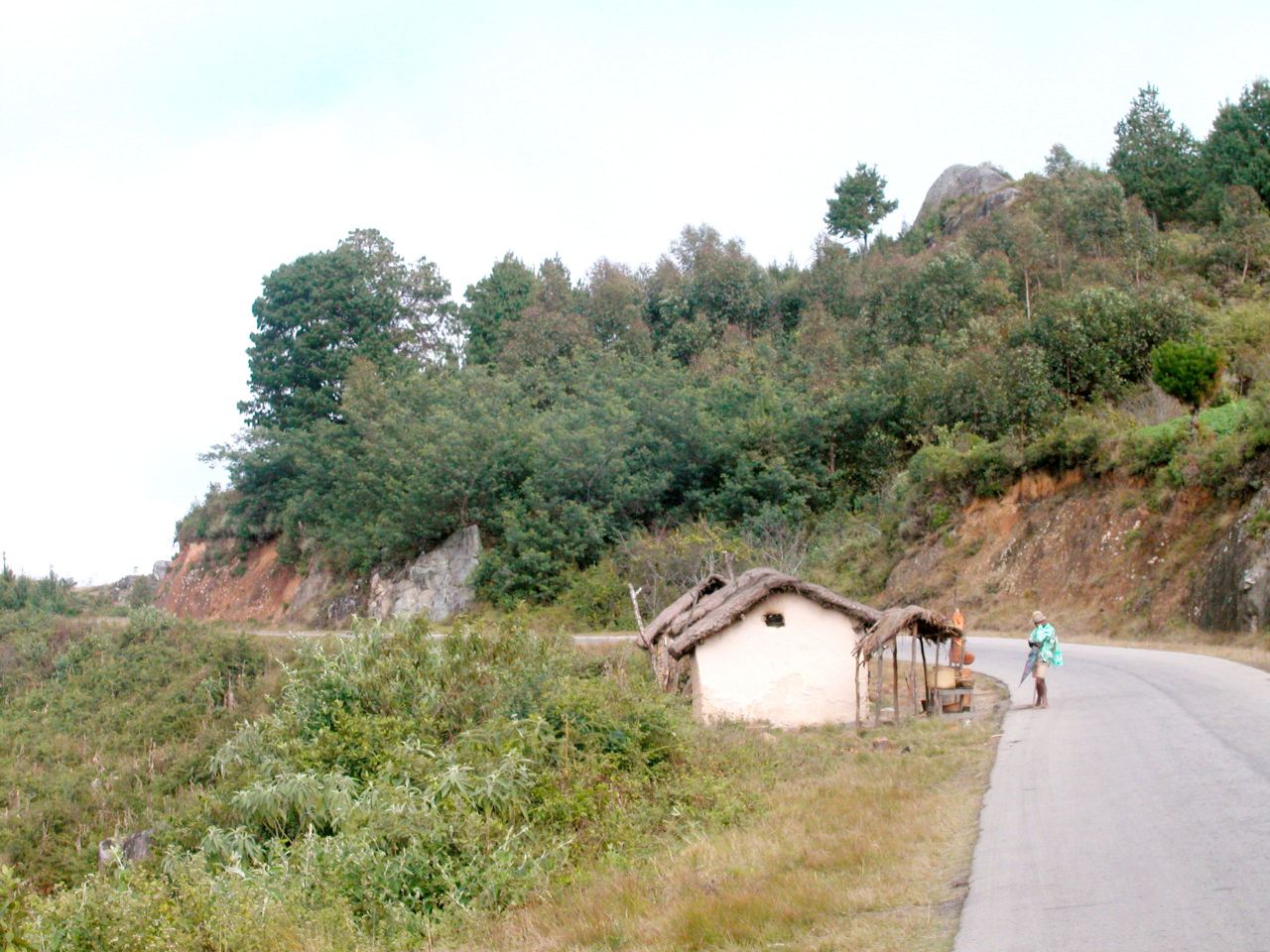
At one of the mountain passes, Parany pointed out a village. “Our president was born there,” he said, “and everybody in his team.” Evidently there were some clever people living there. I told him these things didn’t only happen in Madagascar. In Russia, too, the president and everybody around him came from the same village.
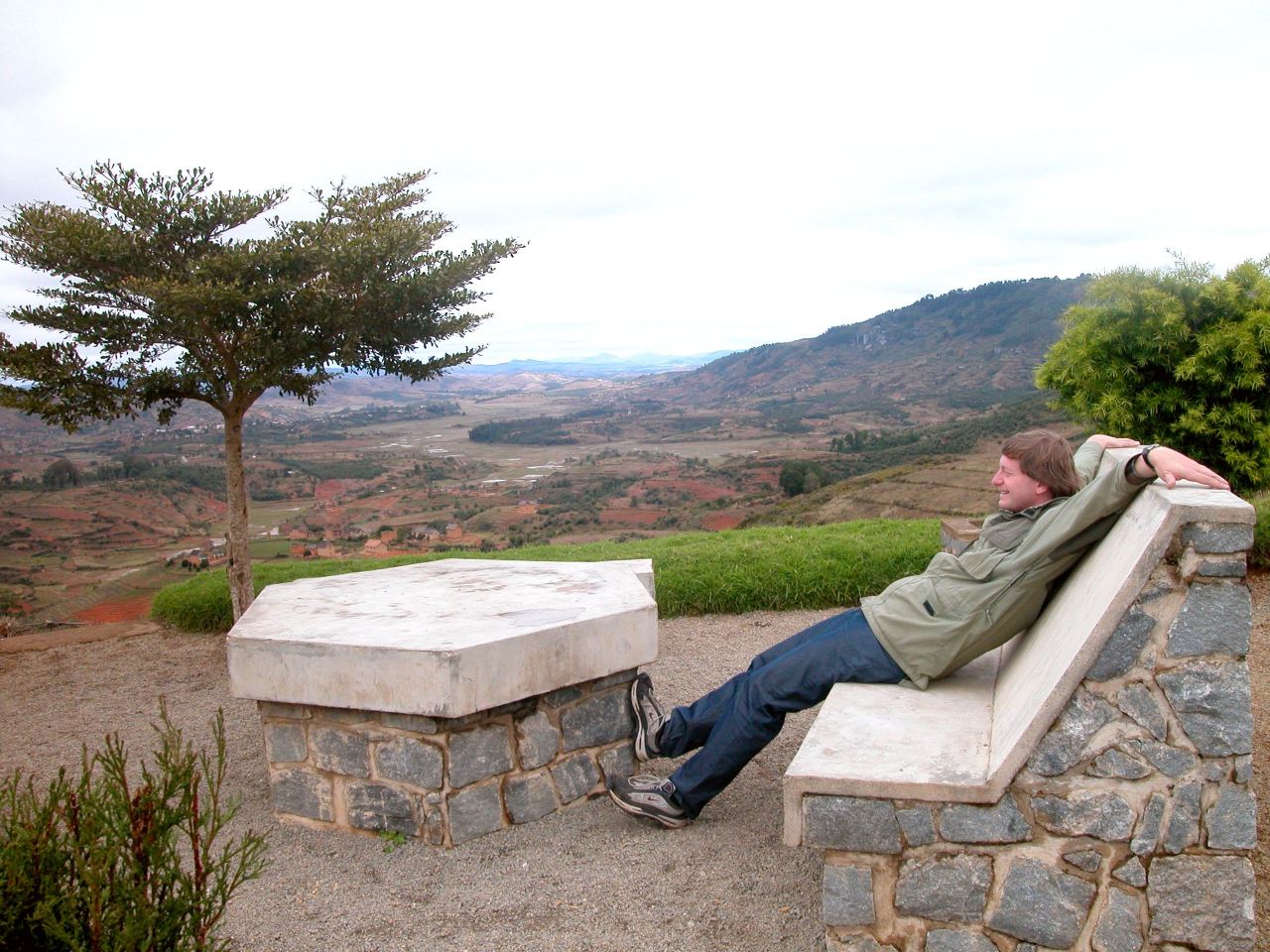
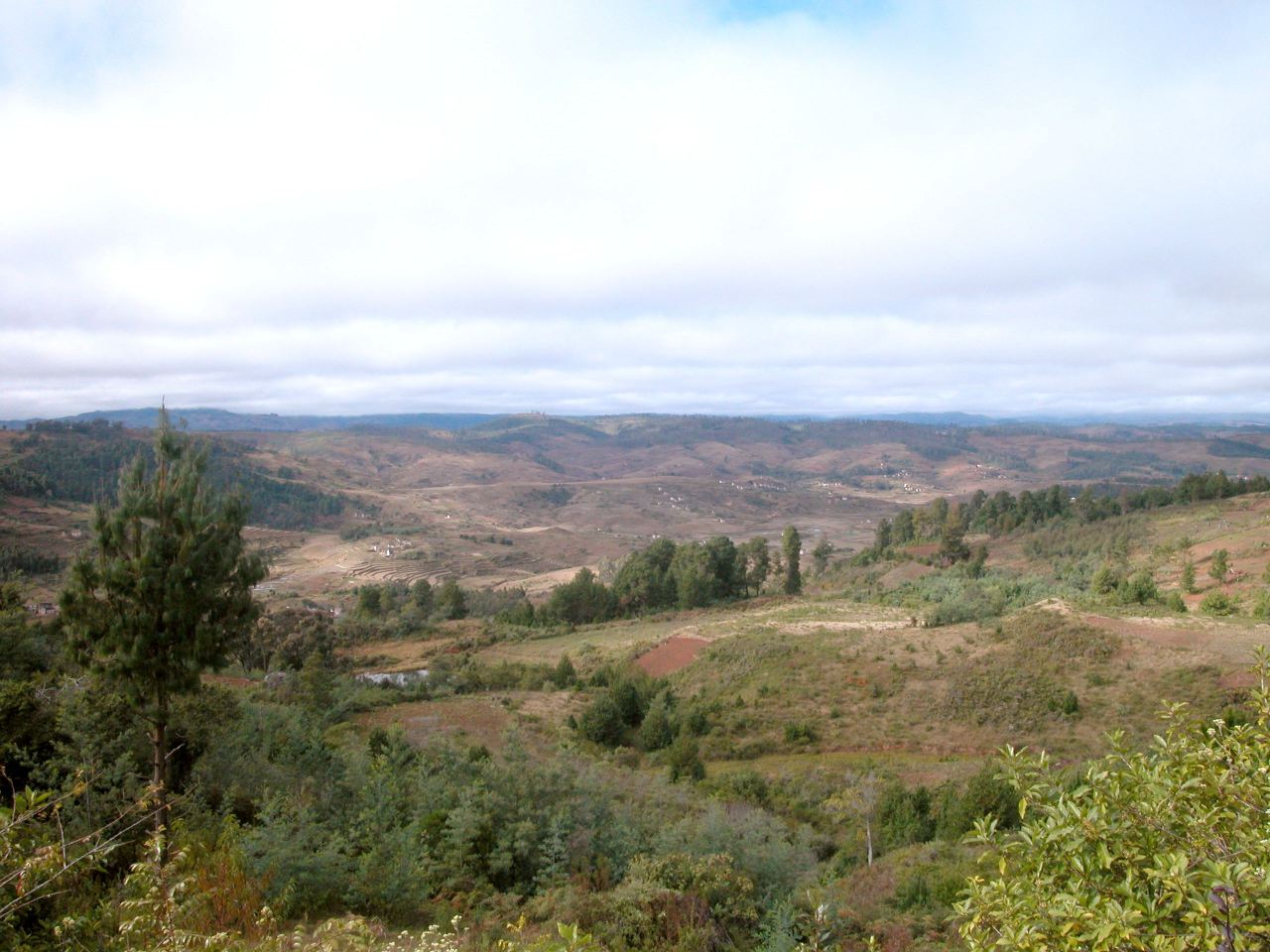
We reached Fianarantsoa in the afternoon. It was a sizeable city. As we understood its history then, the British had built it. We were told the population was approaching a million. It had few tall buildings and spread for kilometres. Parany dropped us off for lunch and said he’d meet us in an hour. After another plate of zebu we went to the meeting place and waited. No sign of Parany. With some difficulty I eventually found him at the railway station. He had been waiting there, at the Chez Papillon, where we were to spend the night. A room was 70,000 francs. While I was finding him, Tanya disappeared. I’d left her waiting in the original place and called her to tell her to come to the station, but she hadn’t found the way. Now I had to look for her. We tried calling each other, but could hardly hear a word. Then a local man interrupted.
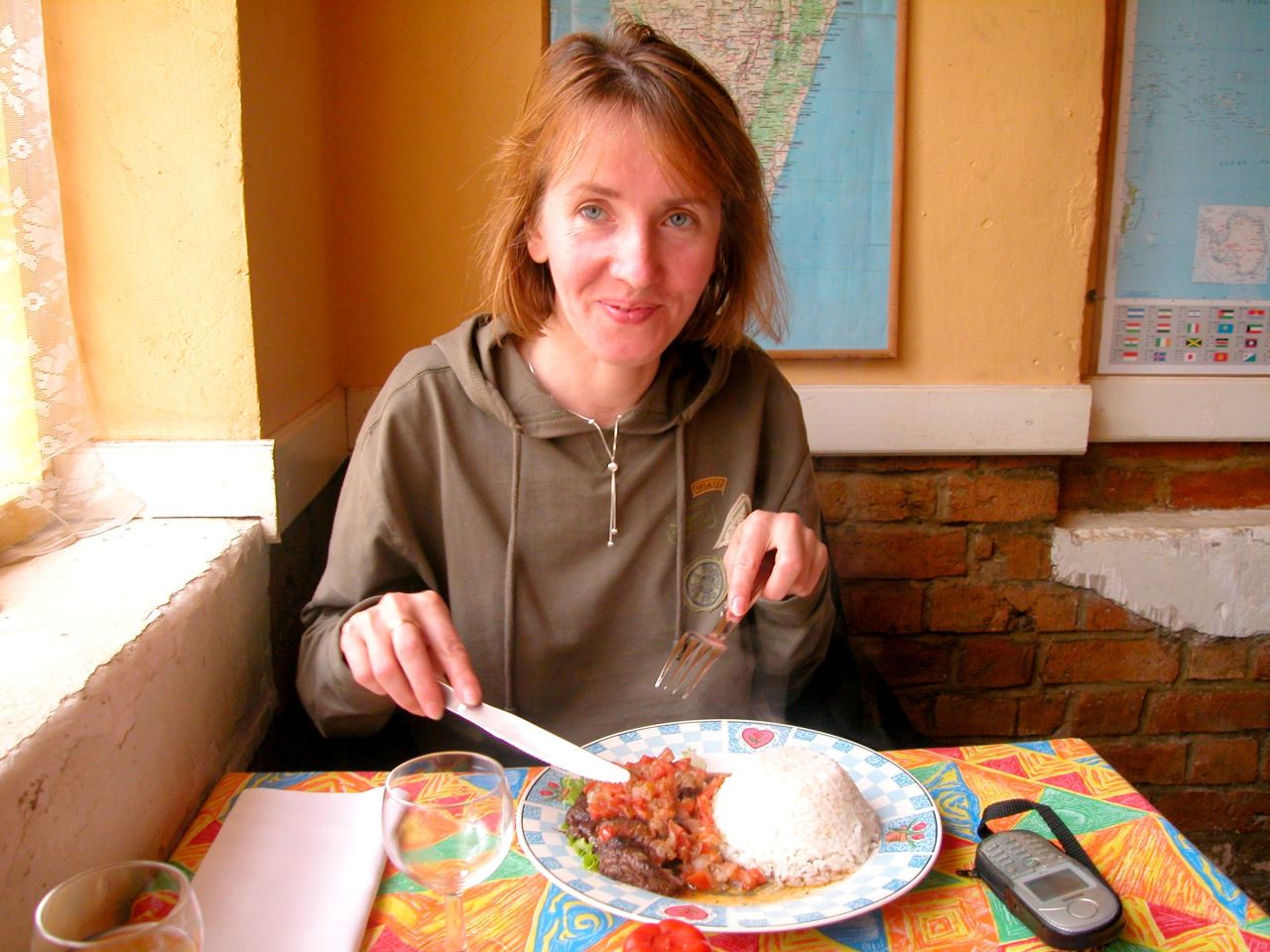
“Are you looking for a white lady?”
“Yes.”
“She went down that street ten minutes ago.”
What a country. One white lady in the whole city.
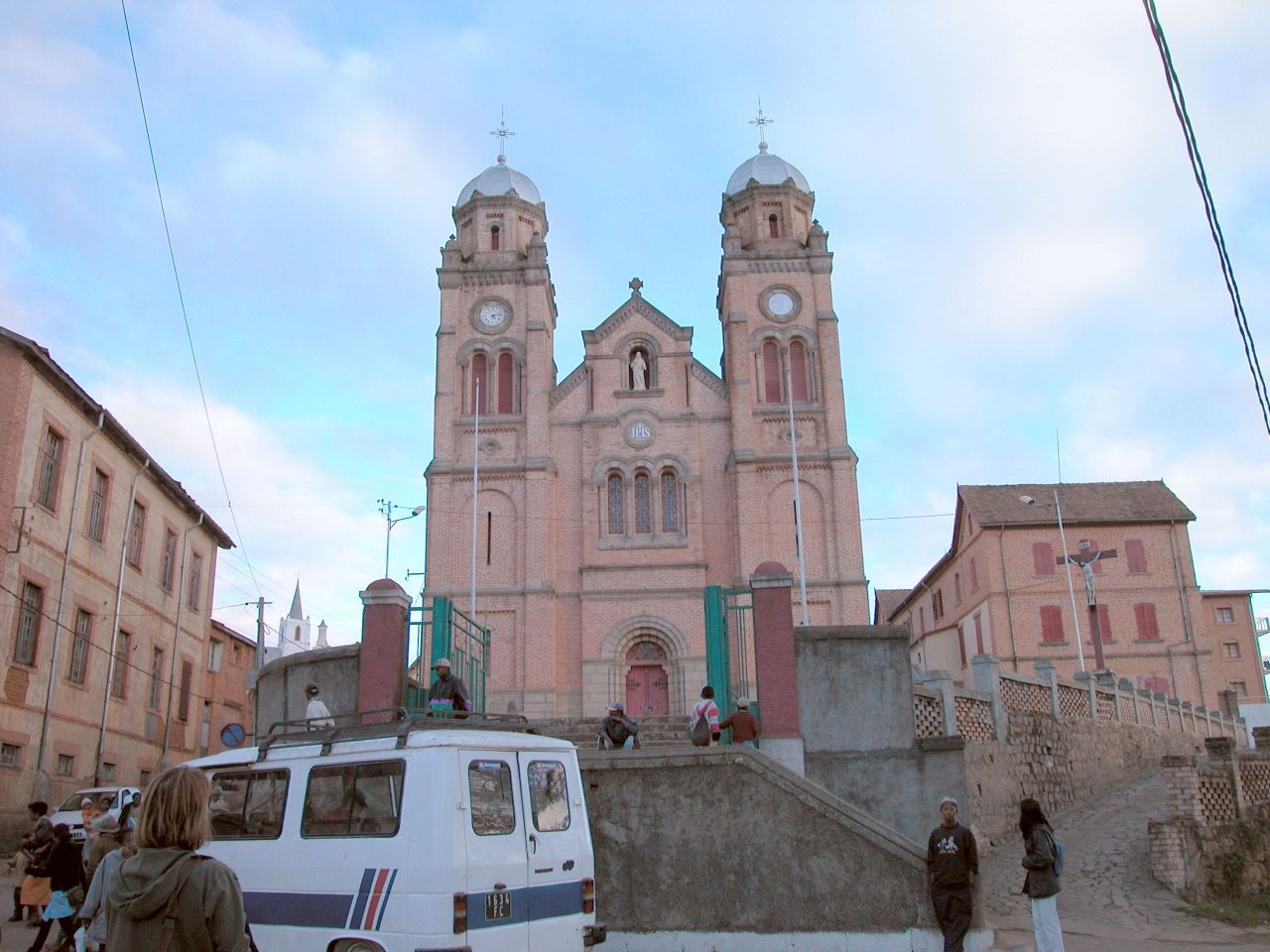
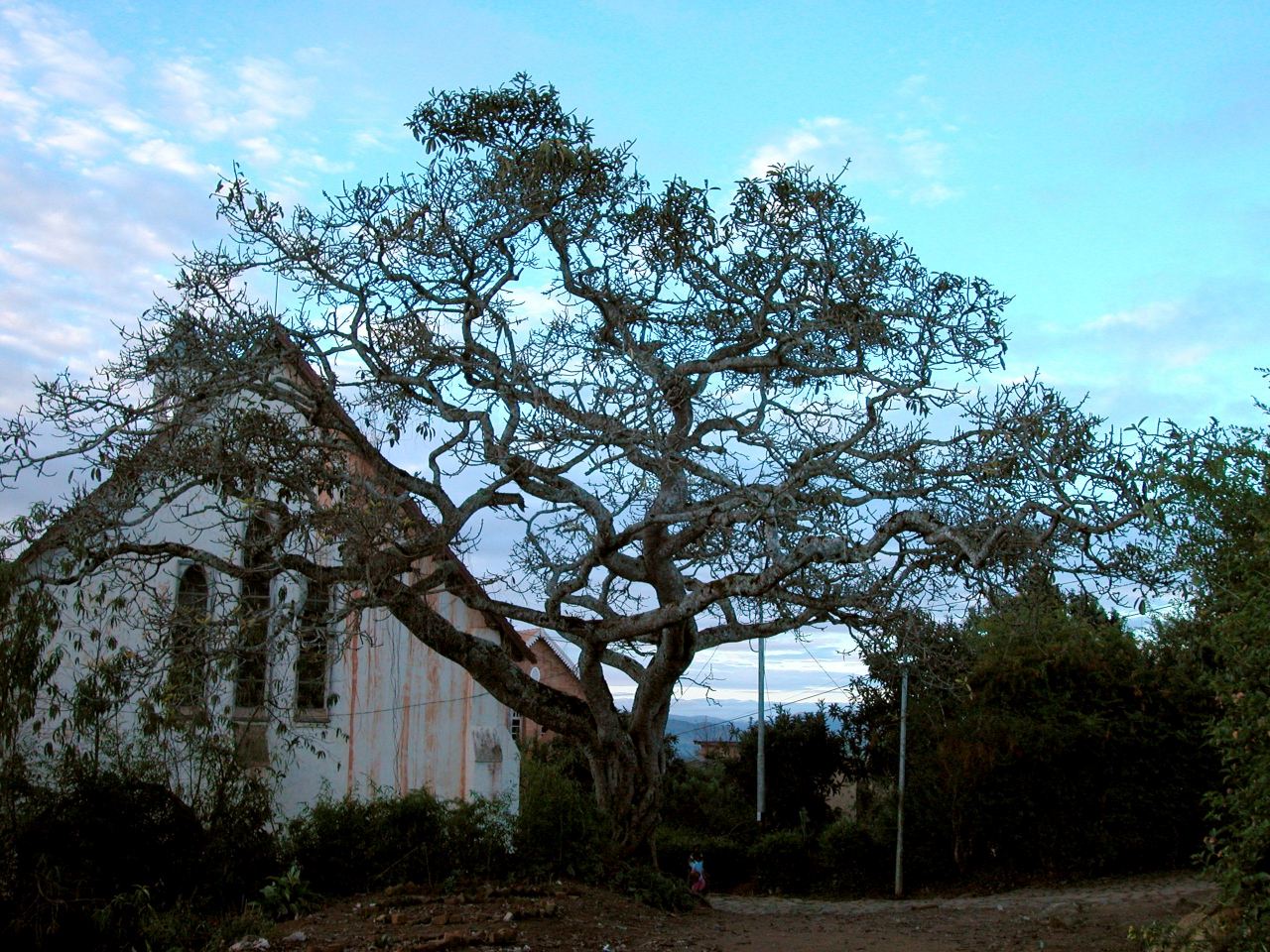
At sunset Parany still managed to take us on a short tour of the city. It included the upper town, perched well above the modern centre. It was an interesting old quarter with historic churches dating from the days of British influence. We were told that the British had held sway there in the eighteenth and early nineteenth centuries. Madagascar lay along the strategic route to India around Africa. Then the Suez Canal opened, the island lost that importance and the French came. Some of the first builders in the town, we gathered, had actually been Norwegian.
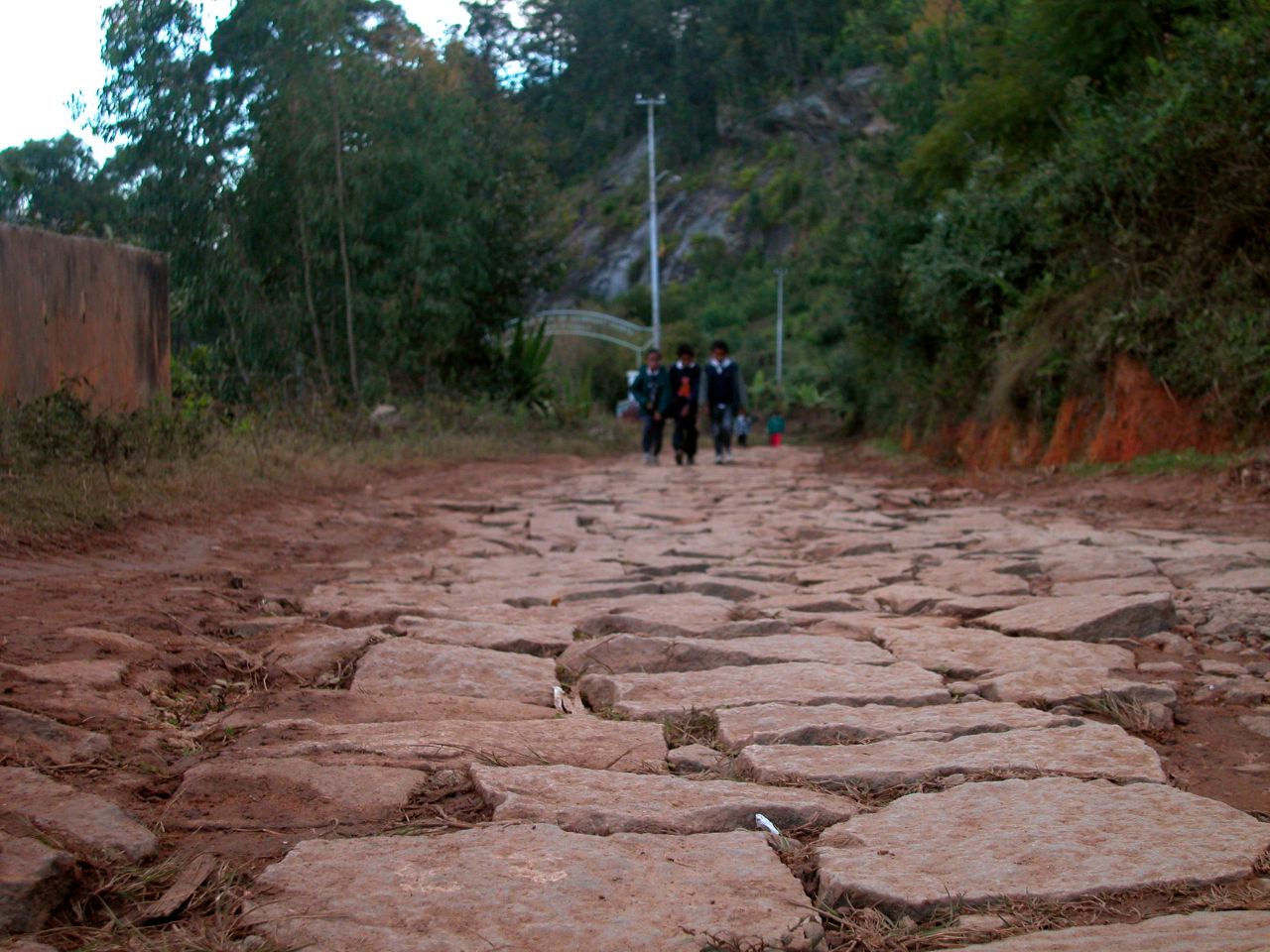
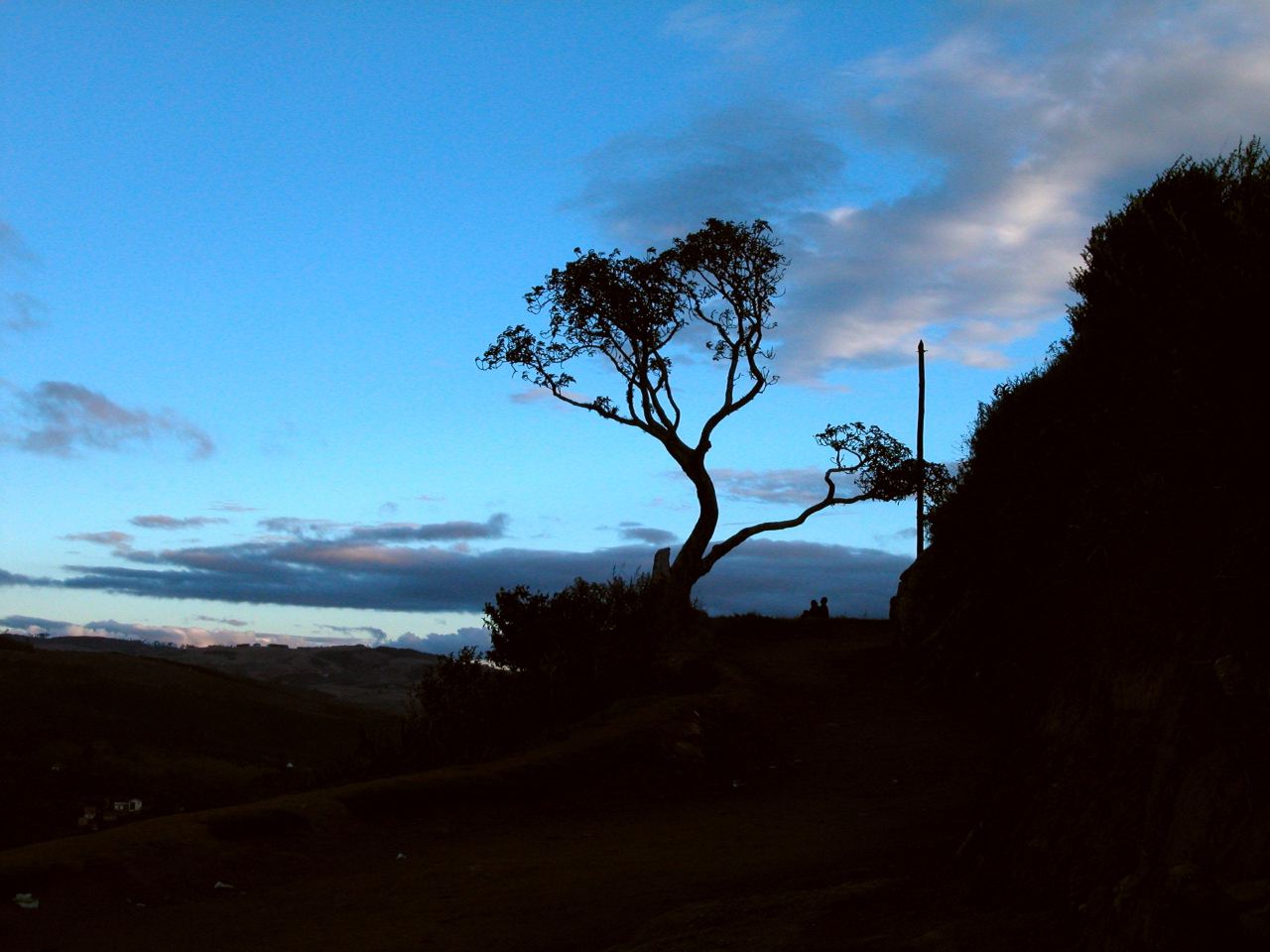
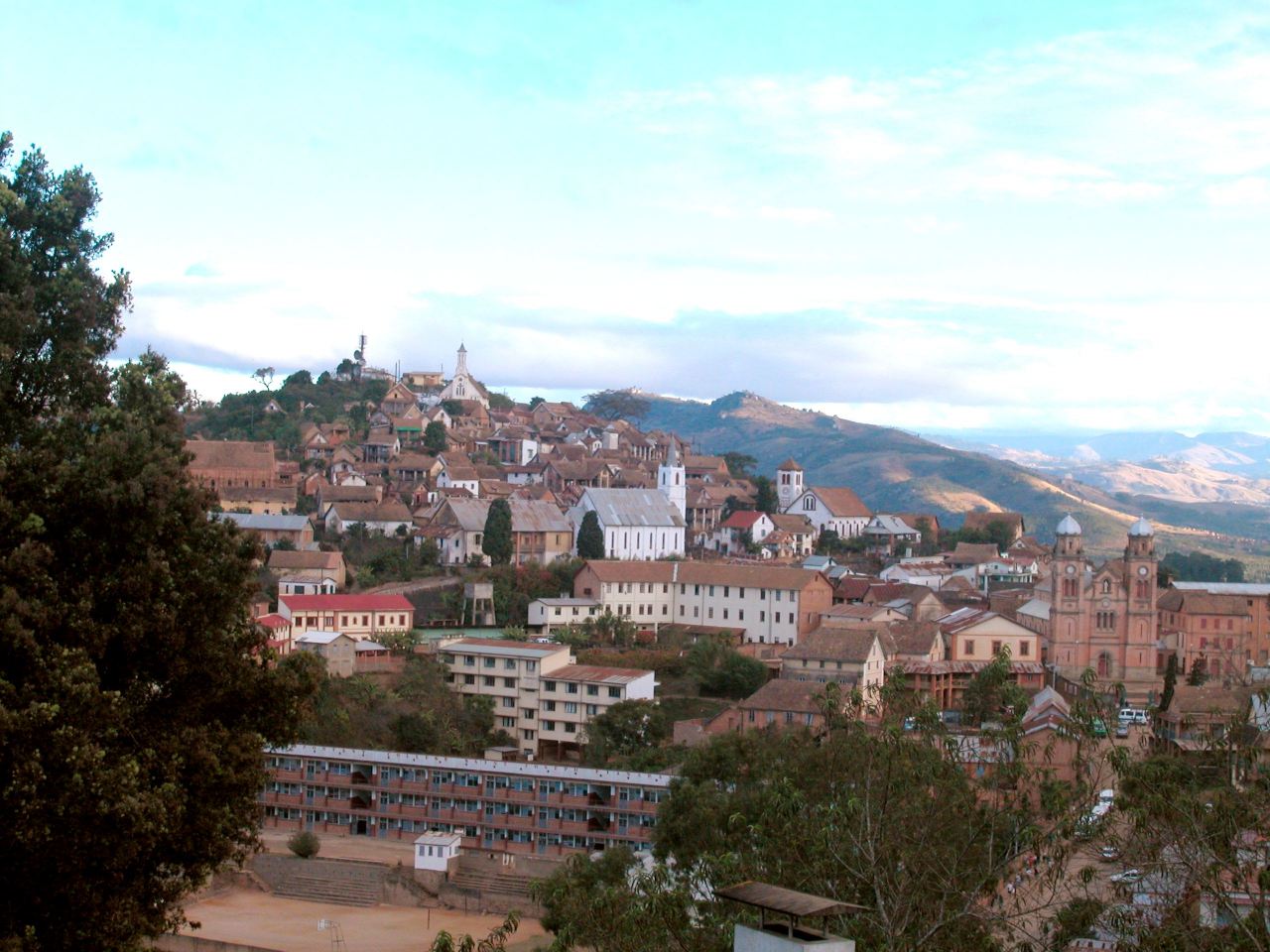
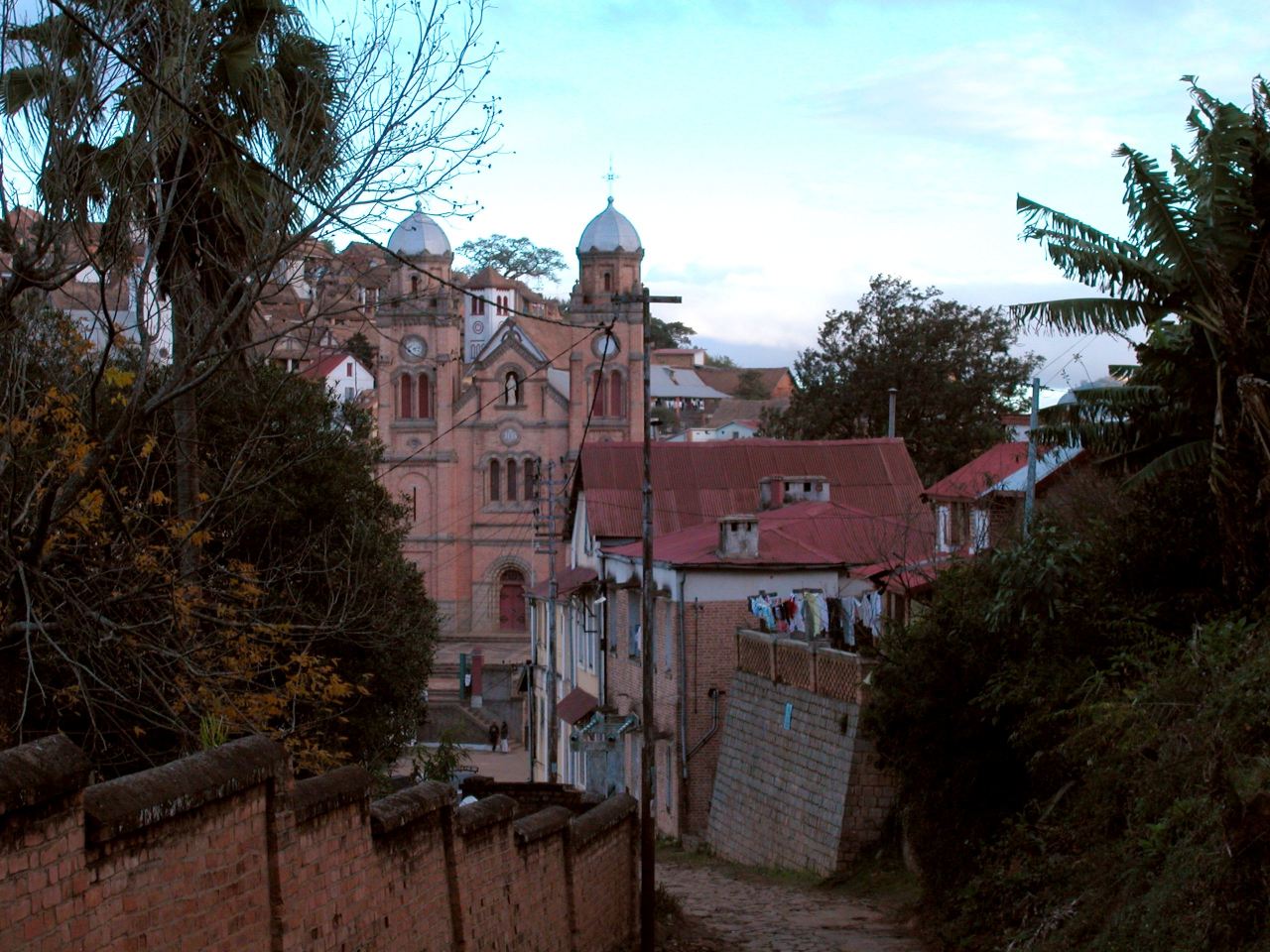
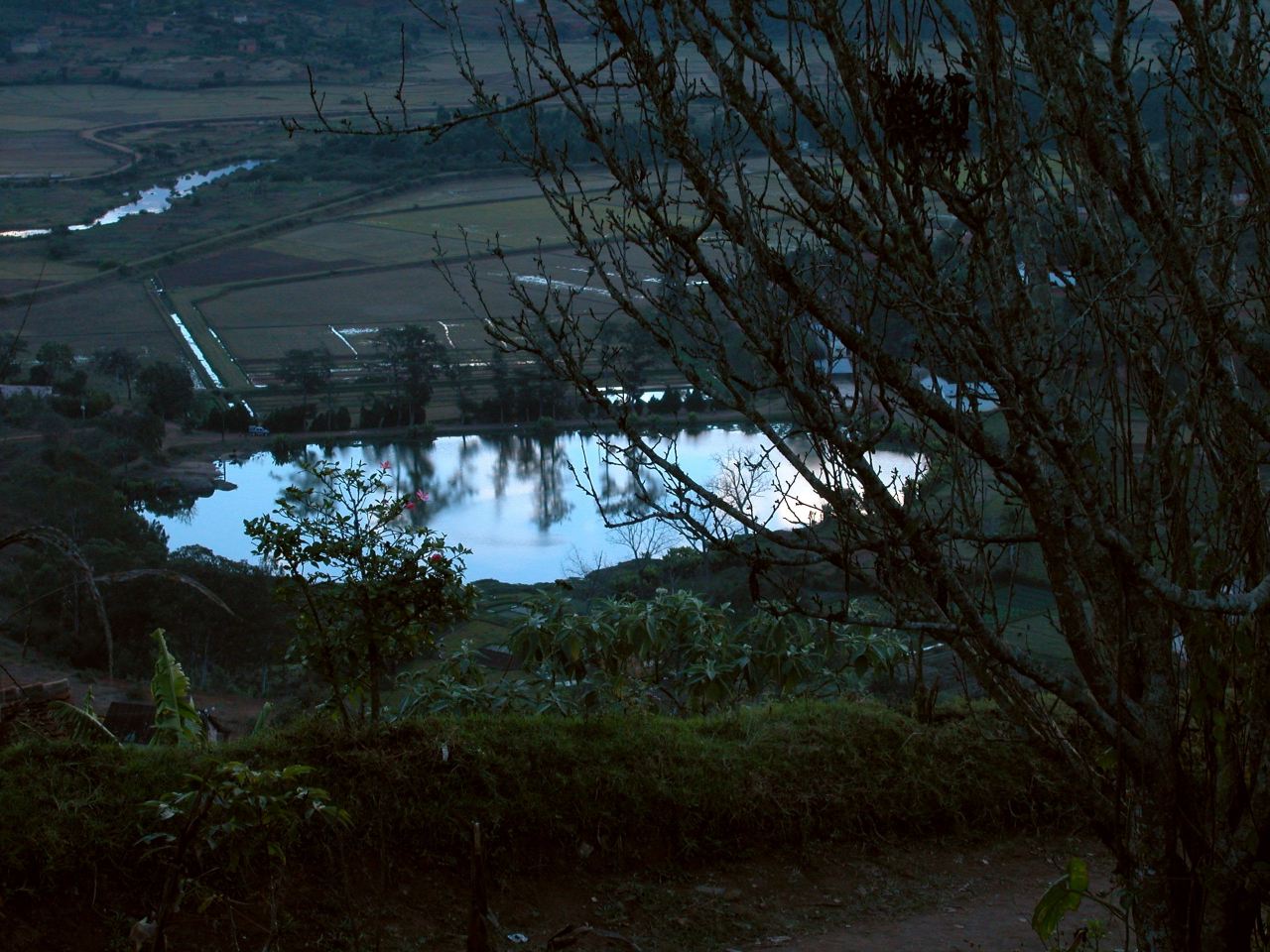
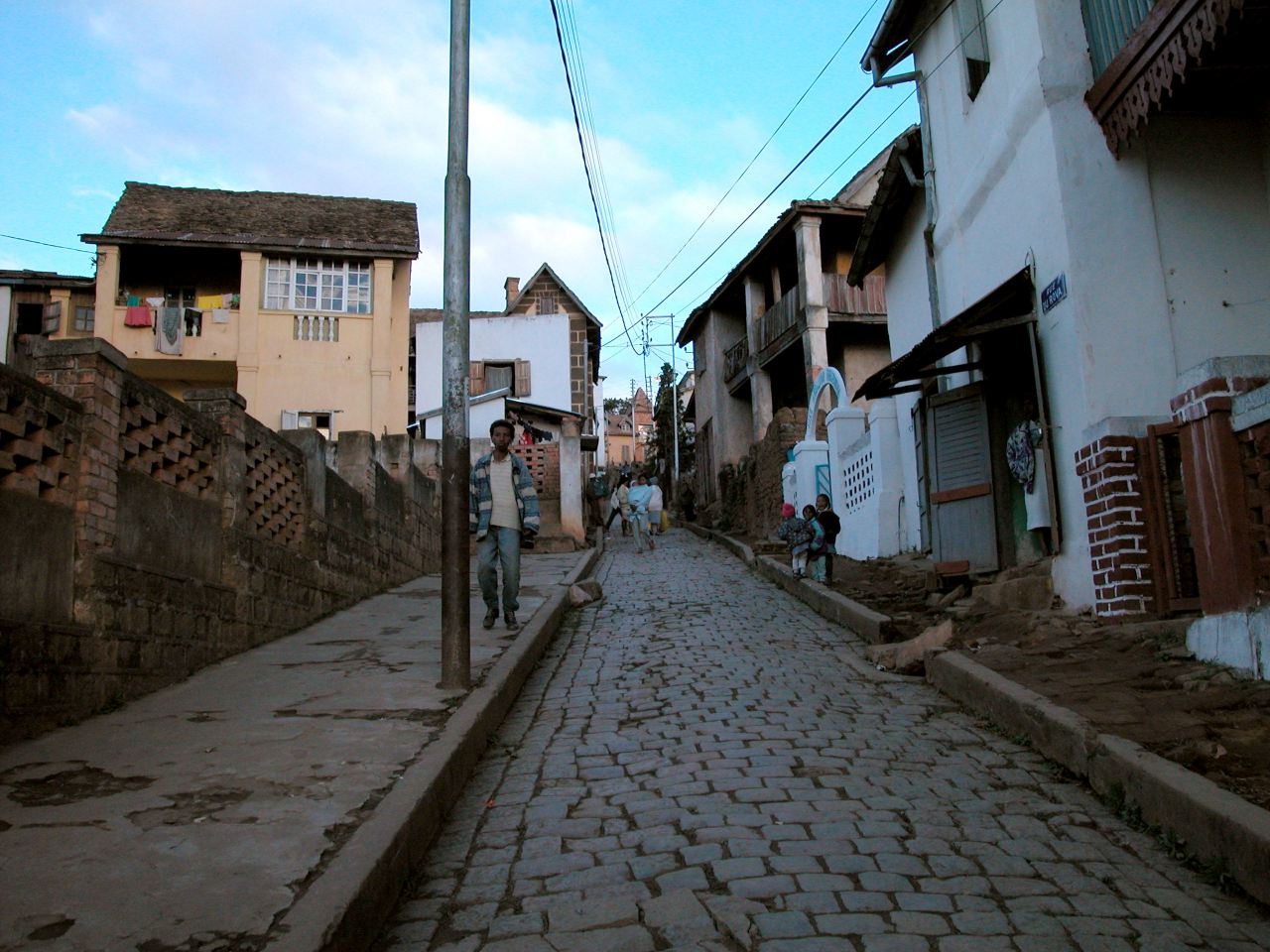
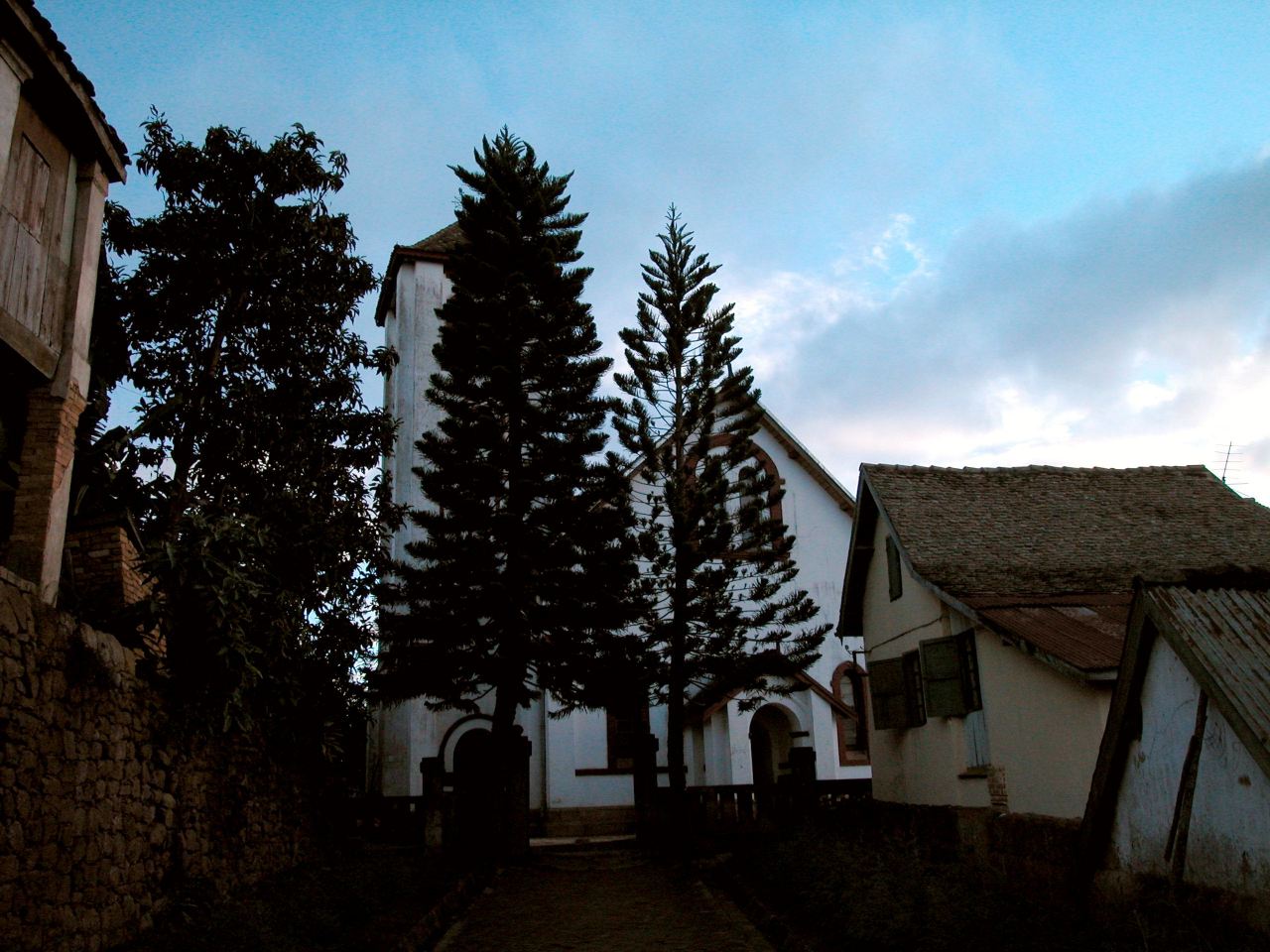
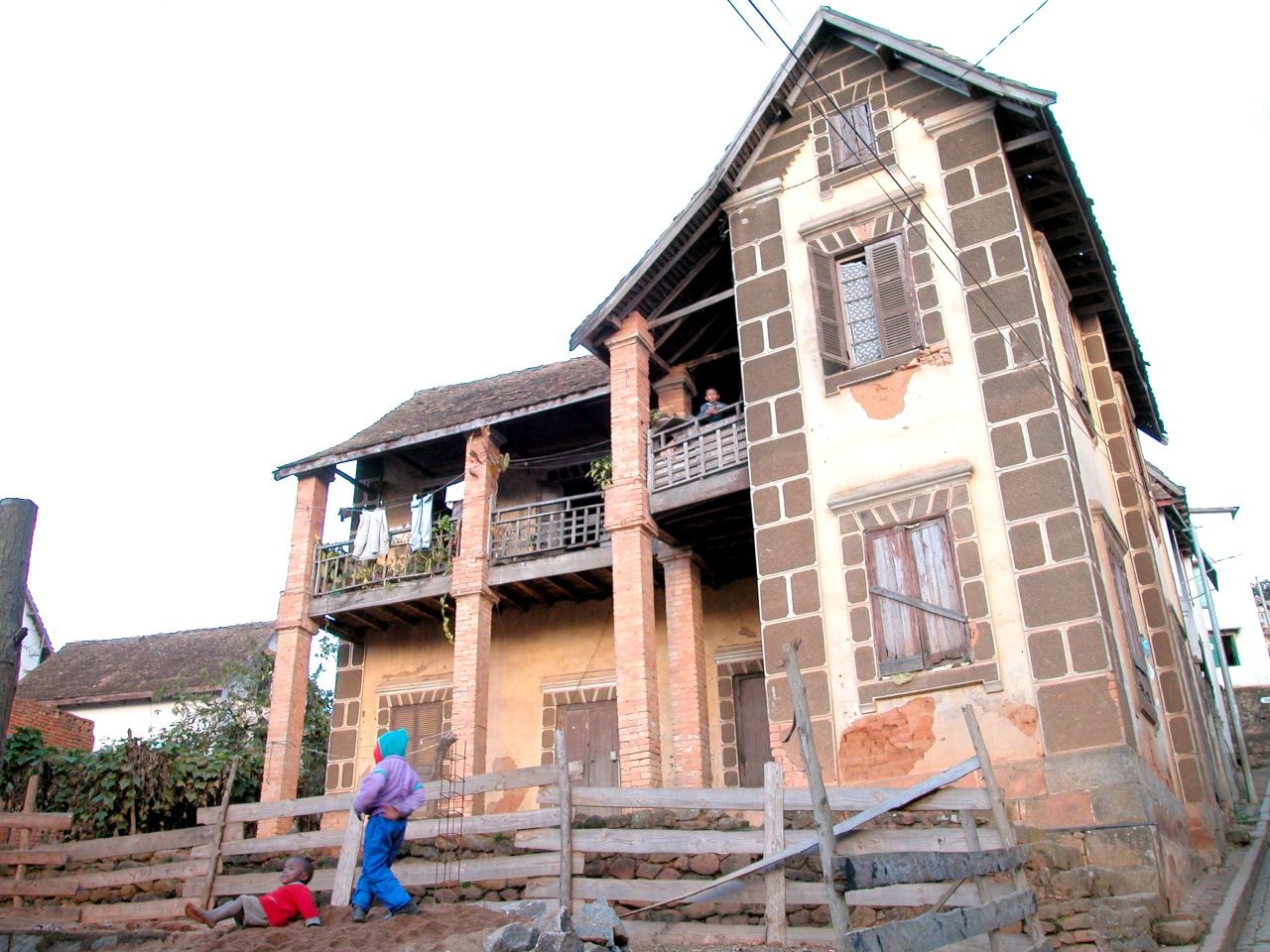
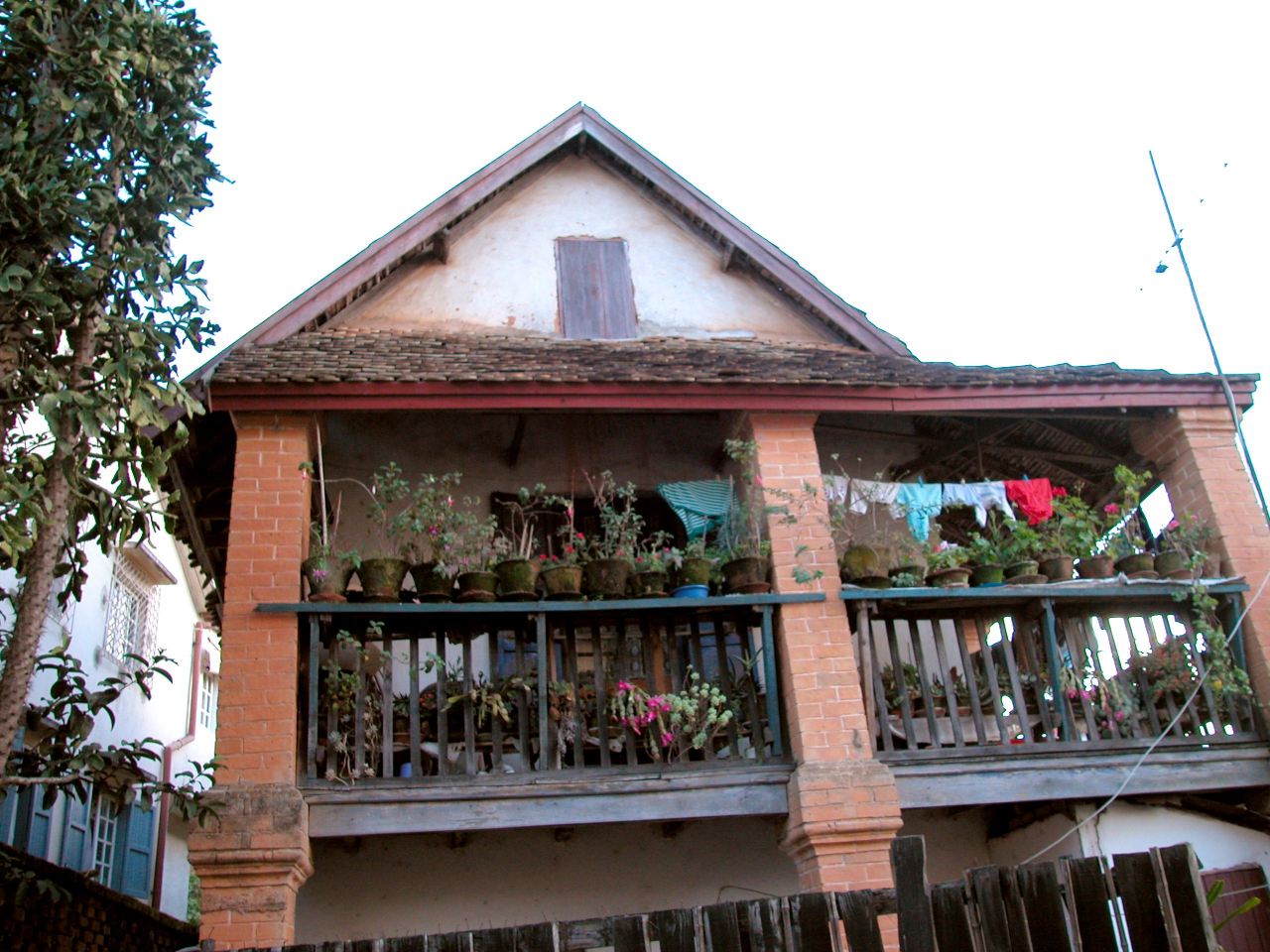
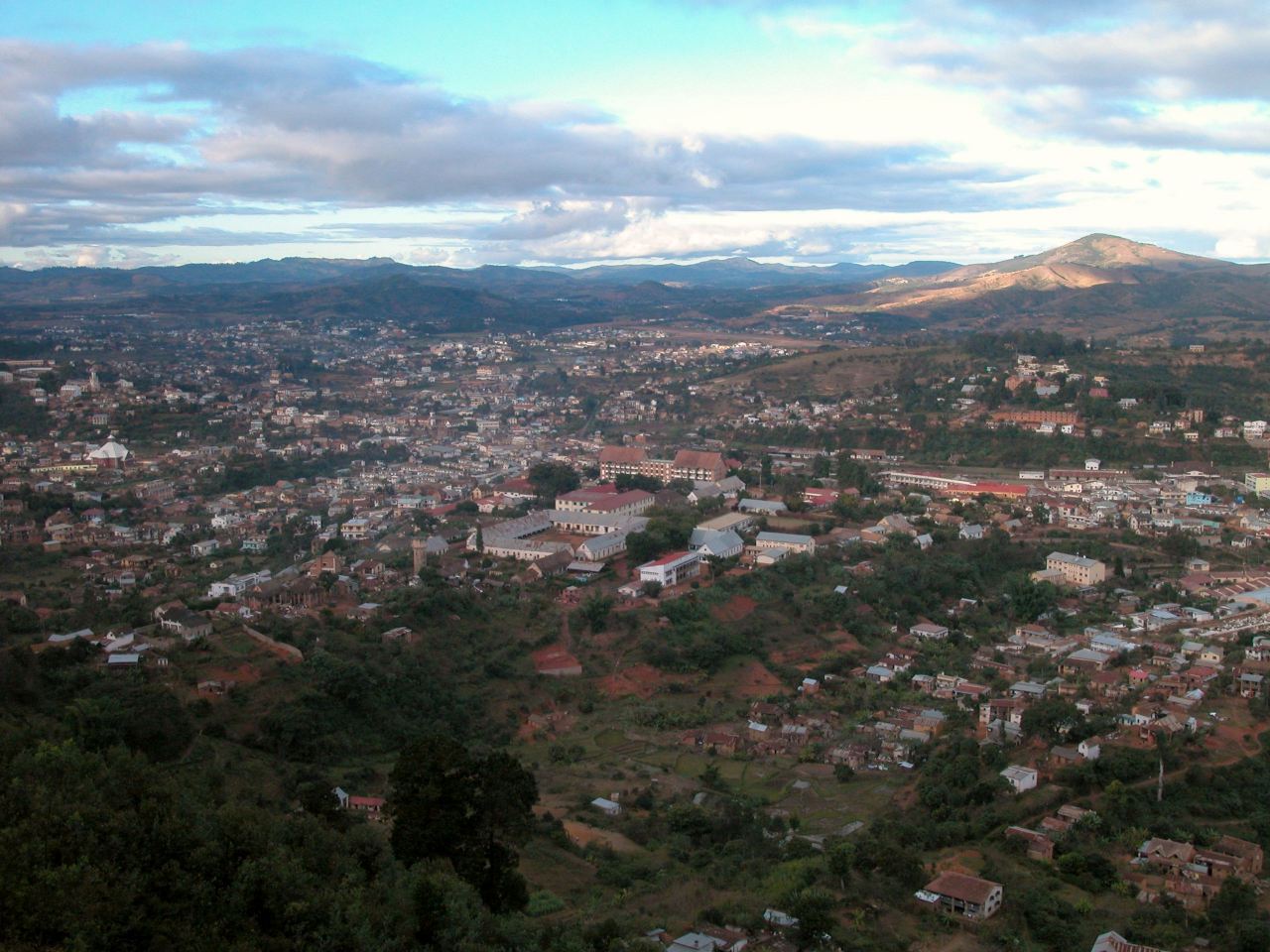
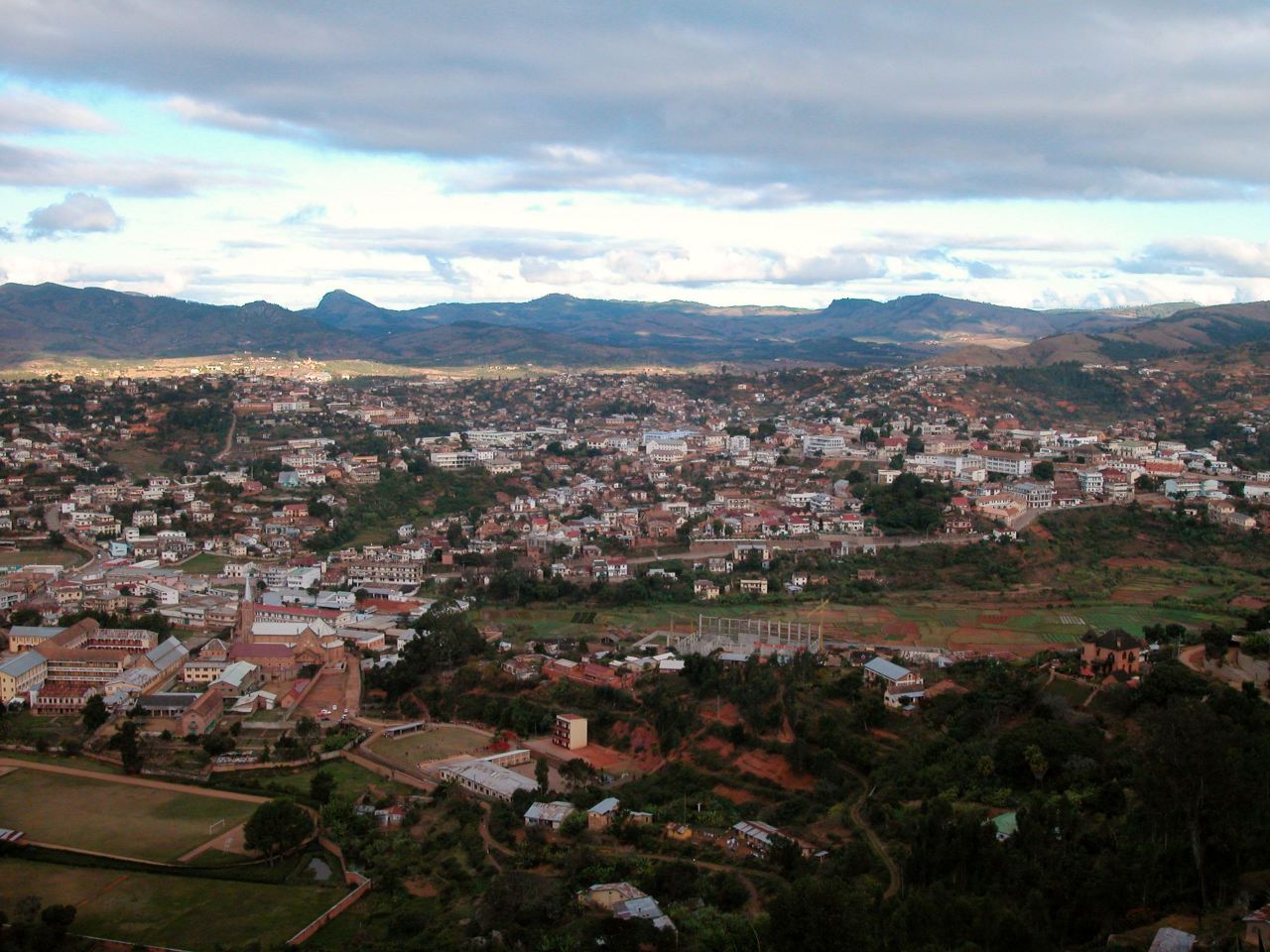
The lookout had a fine view of the city. A university took up a large part of the centre. Apparently the most popular course with applicants in Madagascar was computing. Where did all the programmers work? I hadn’t seen many computers.
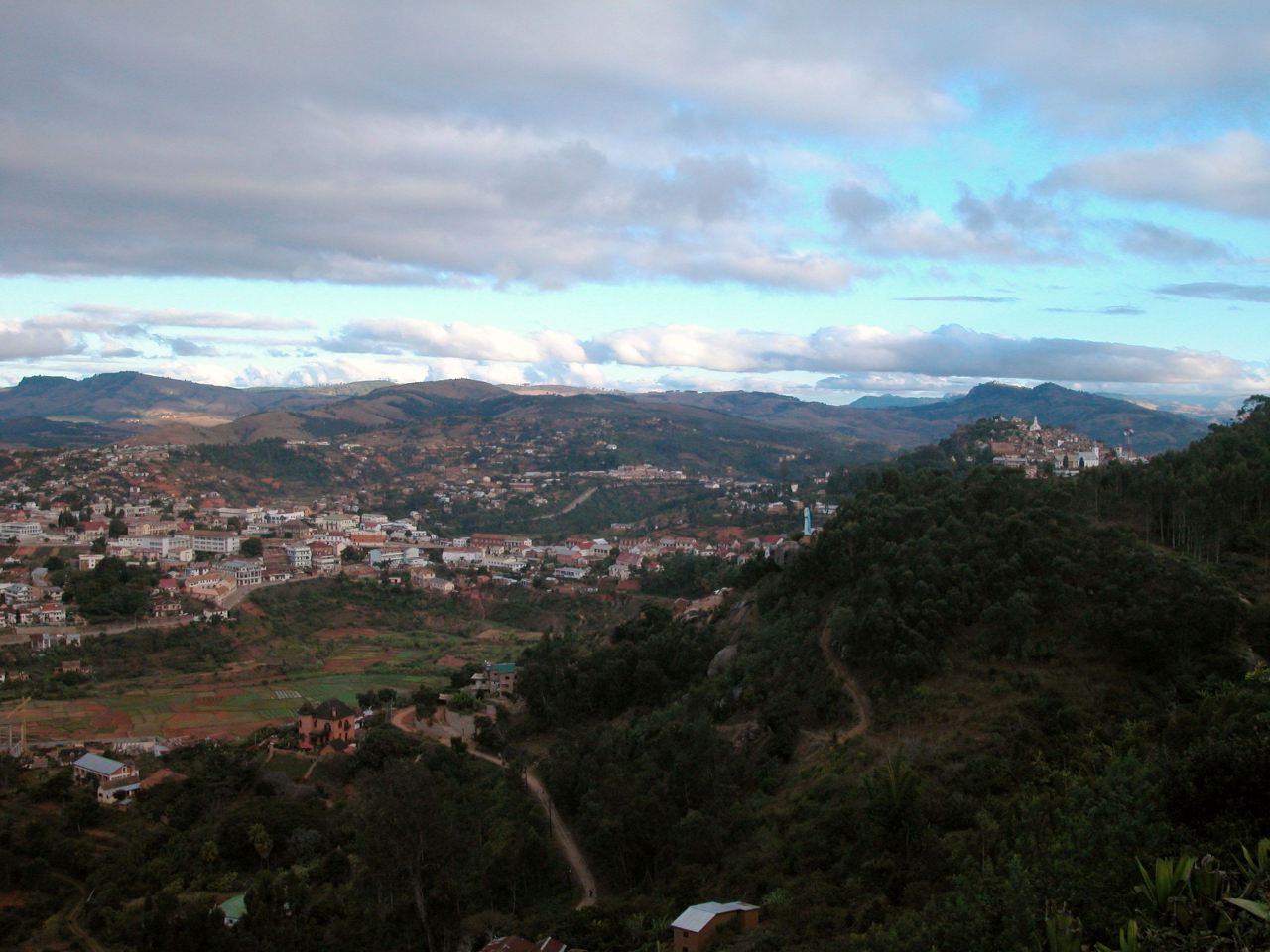
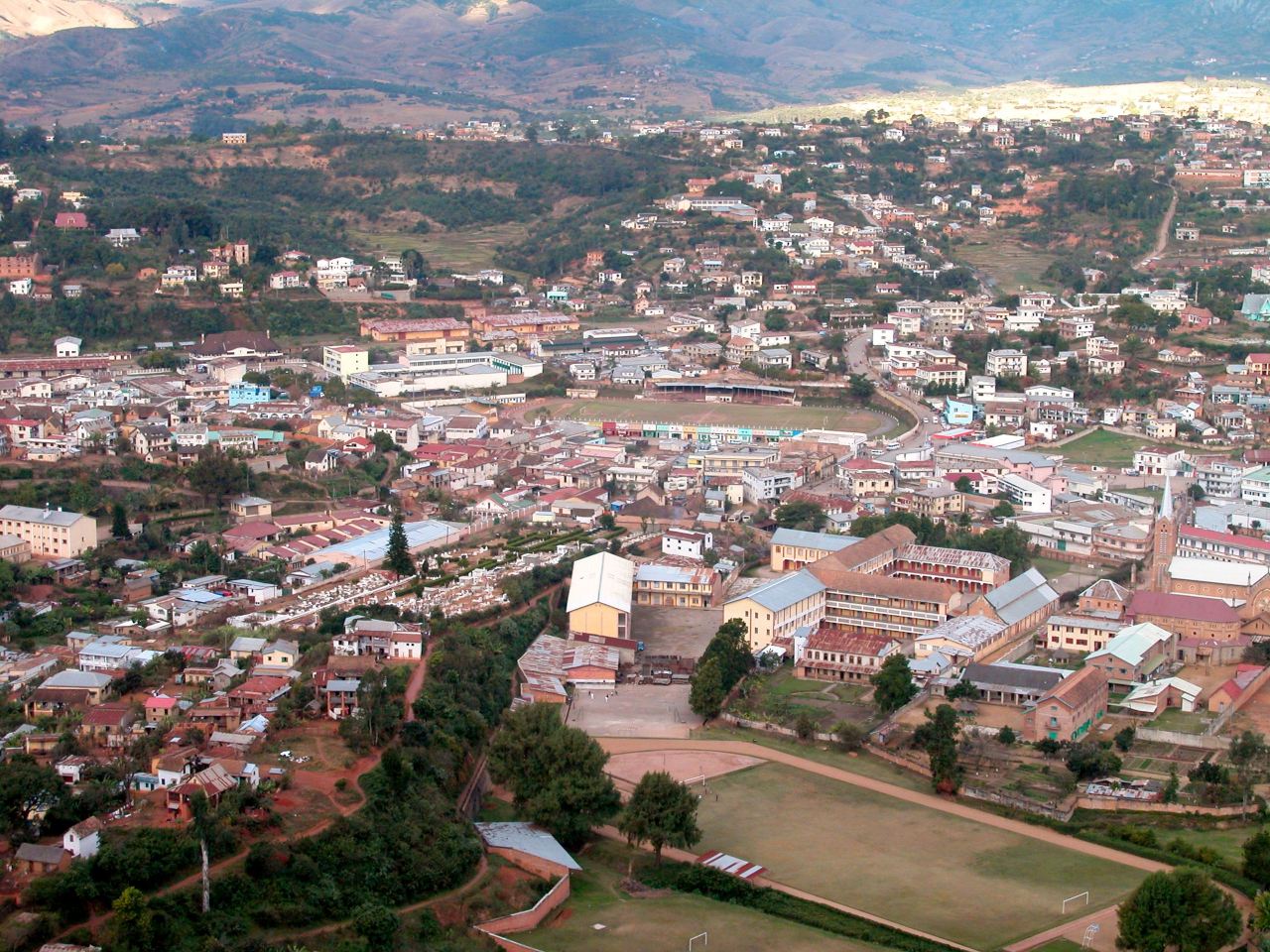
By train to Manakara
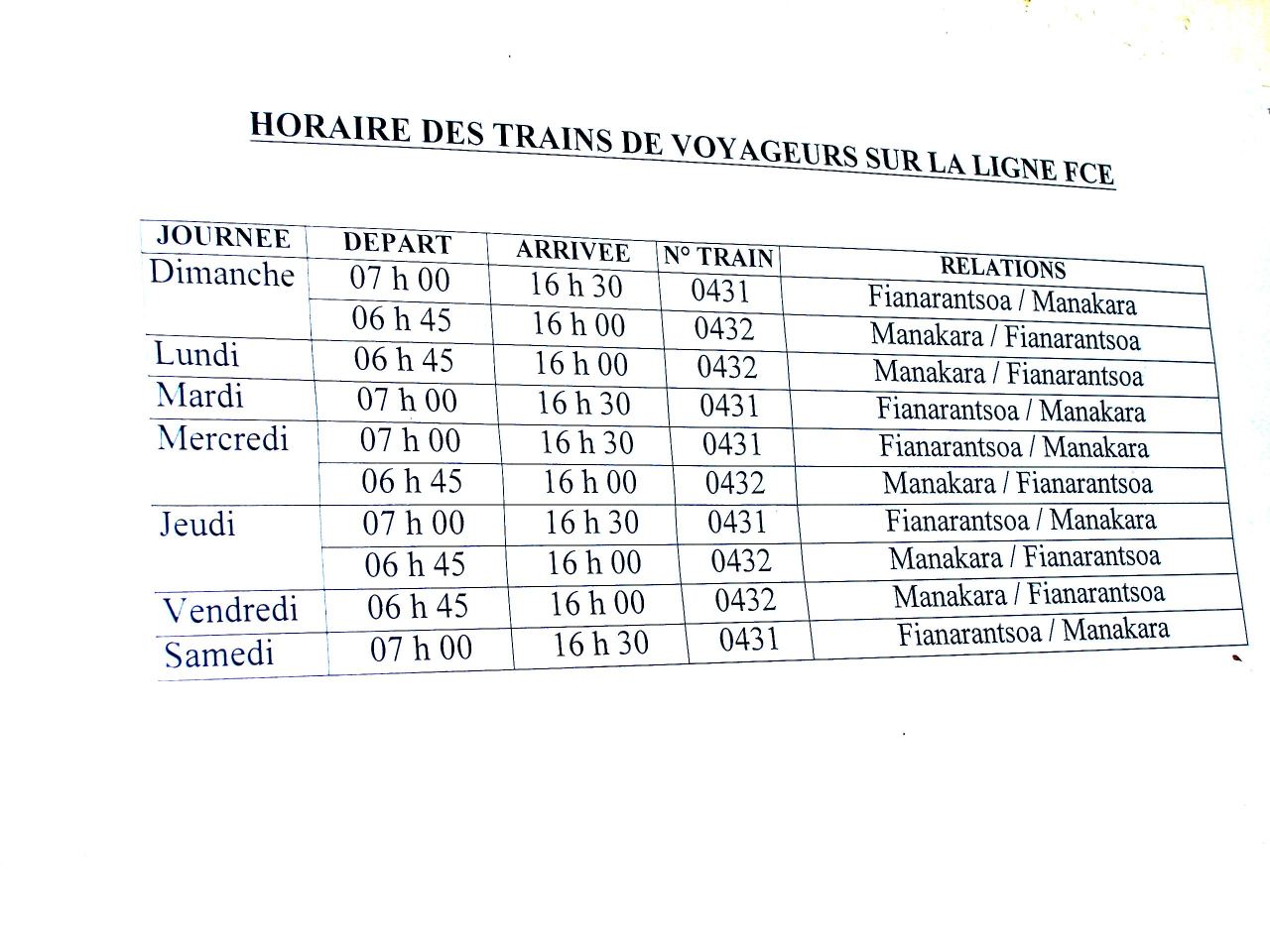
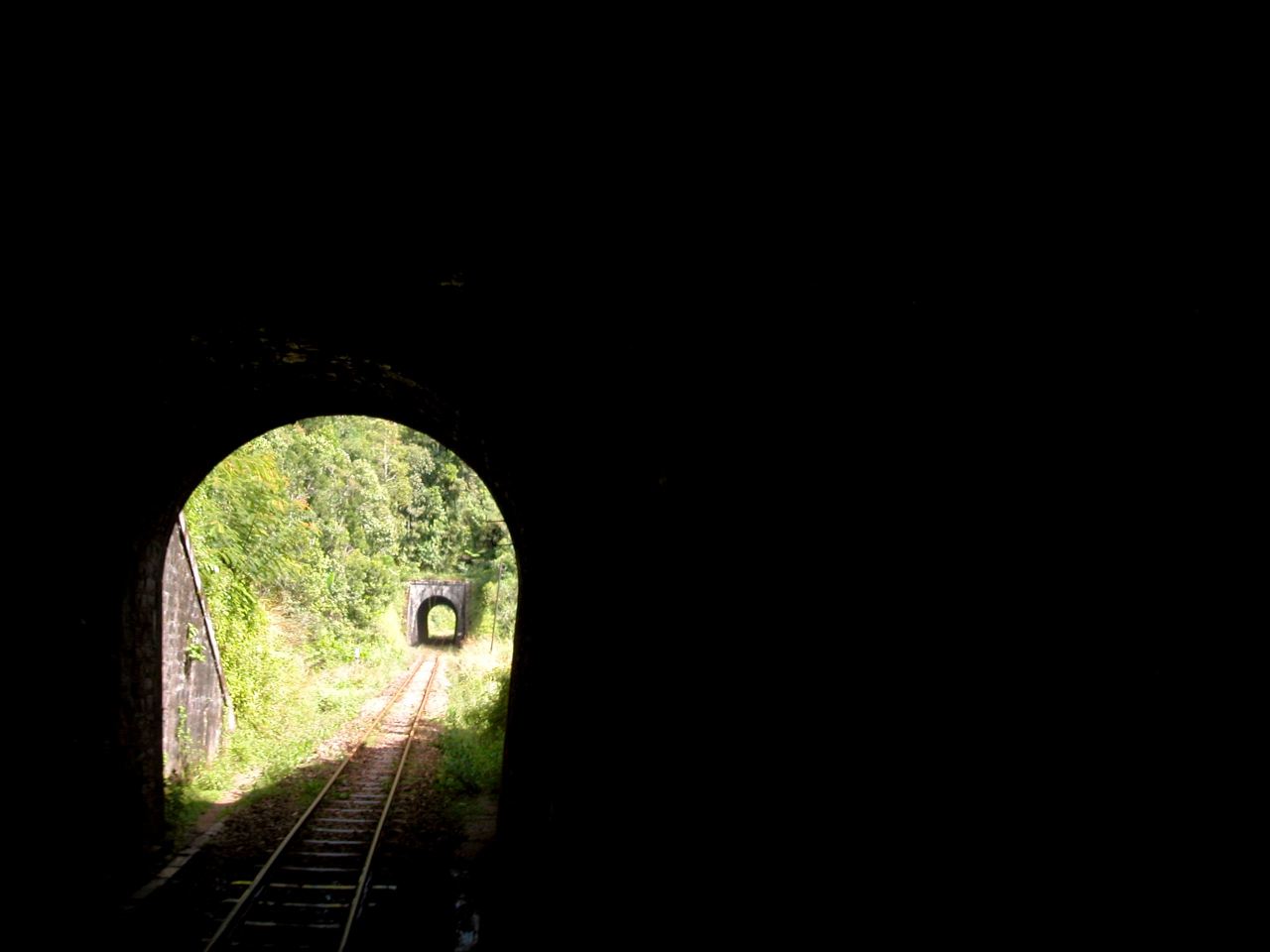
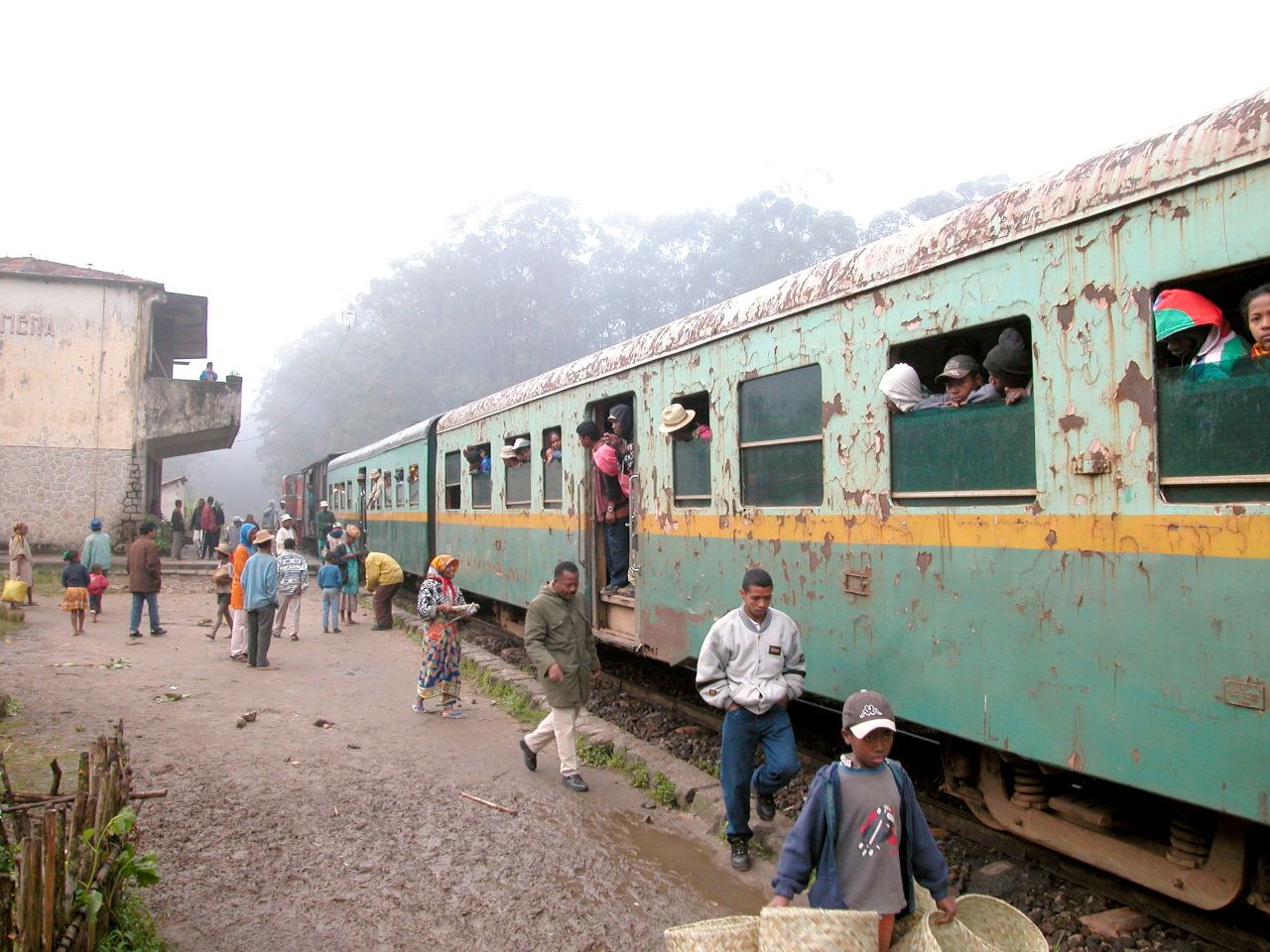
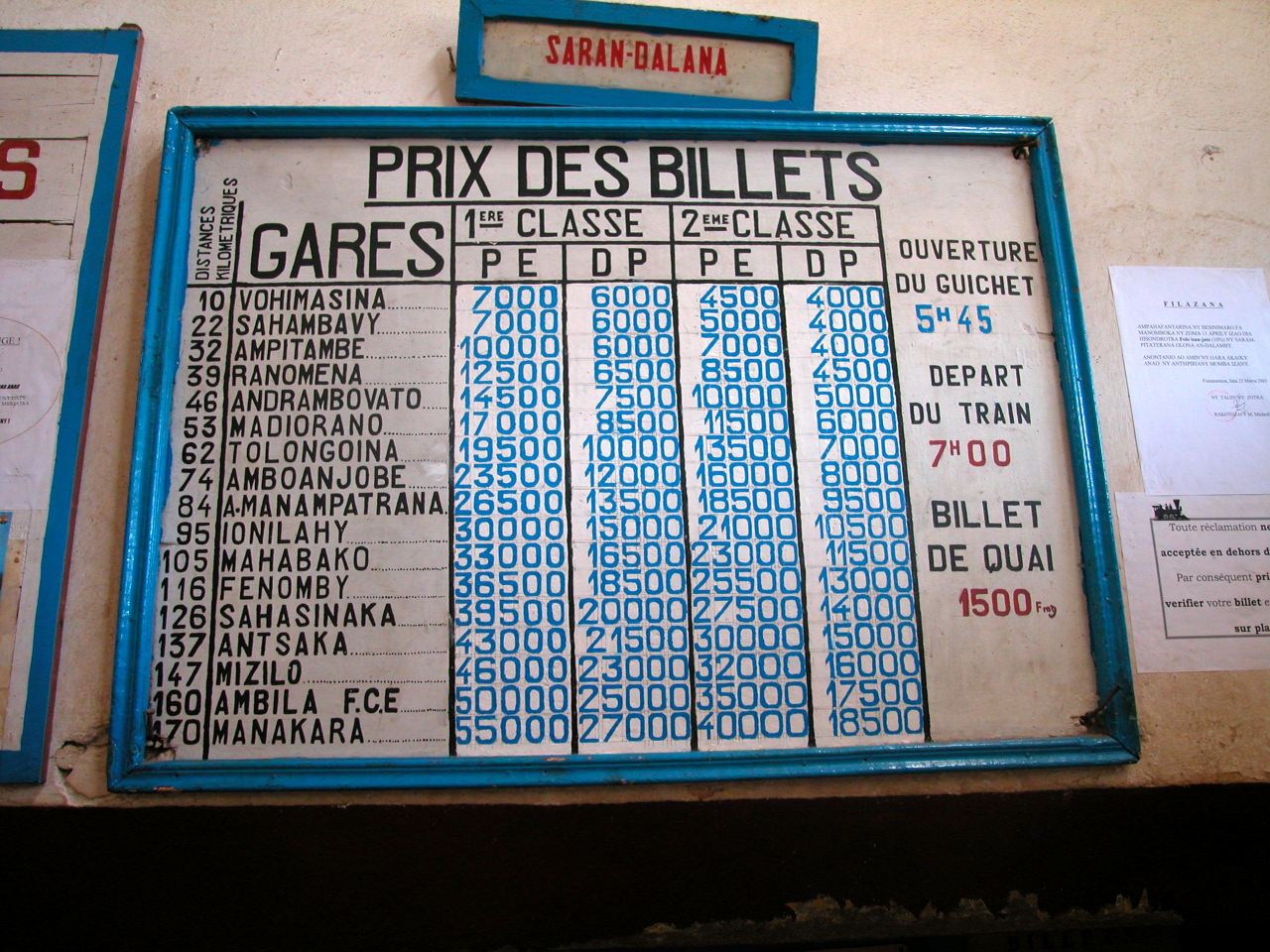
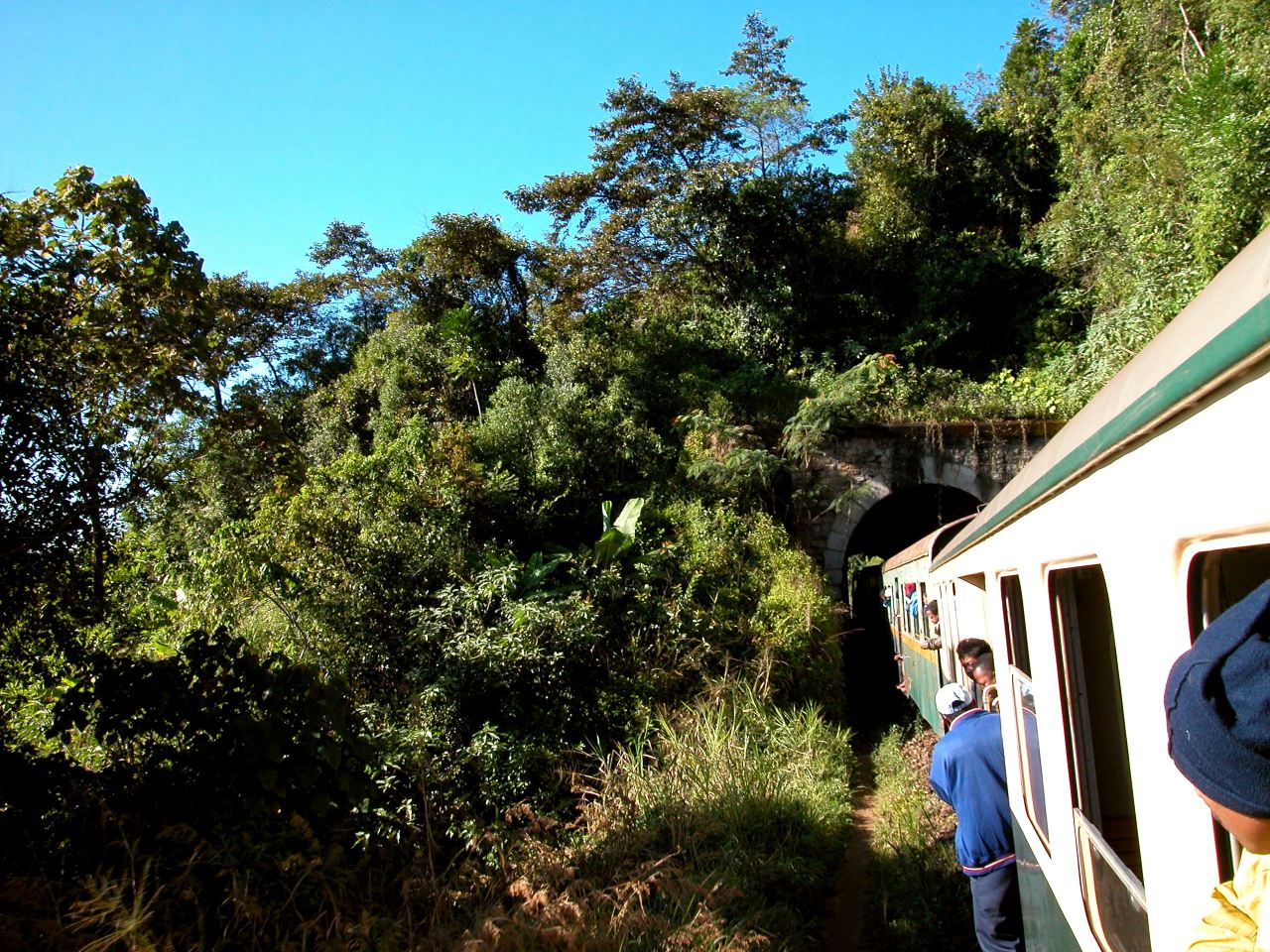
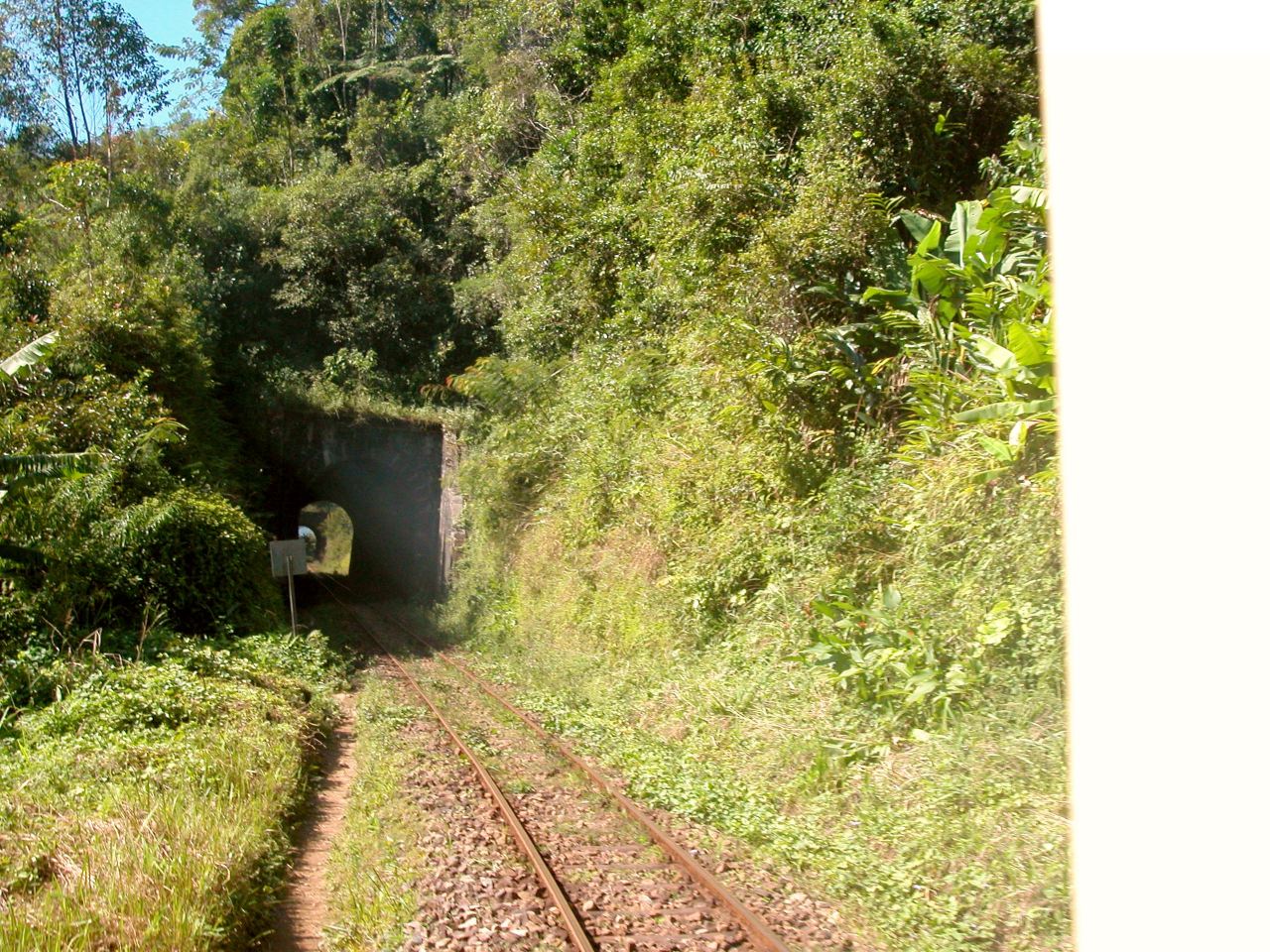
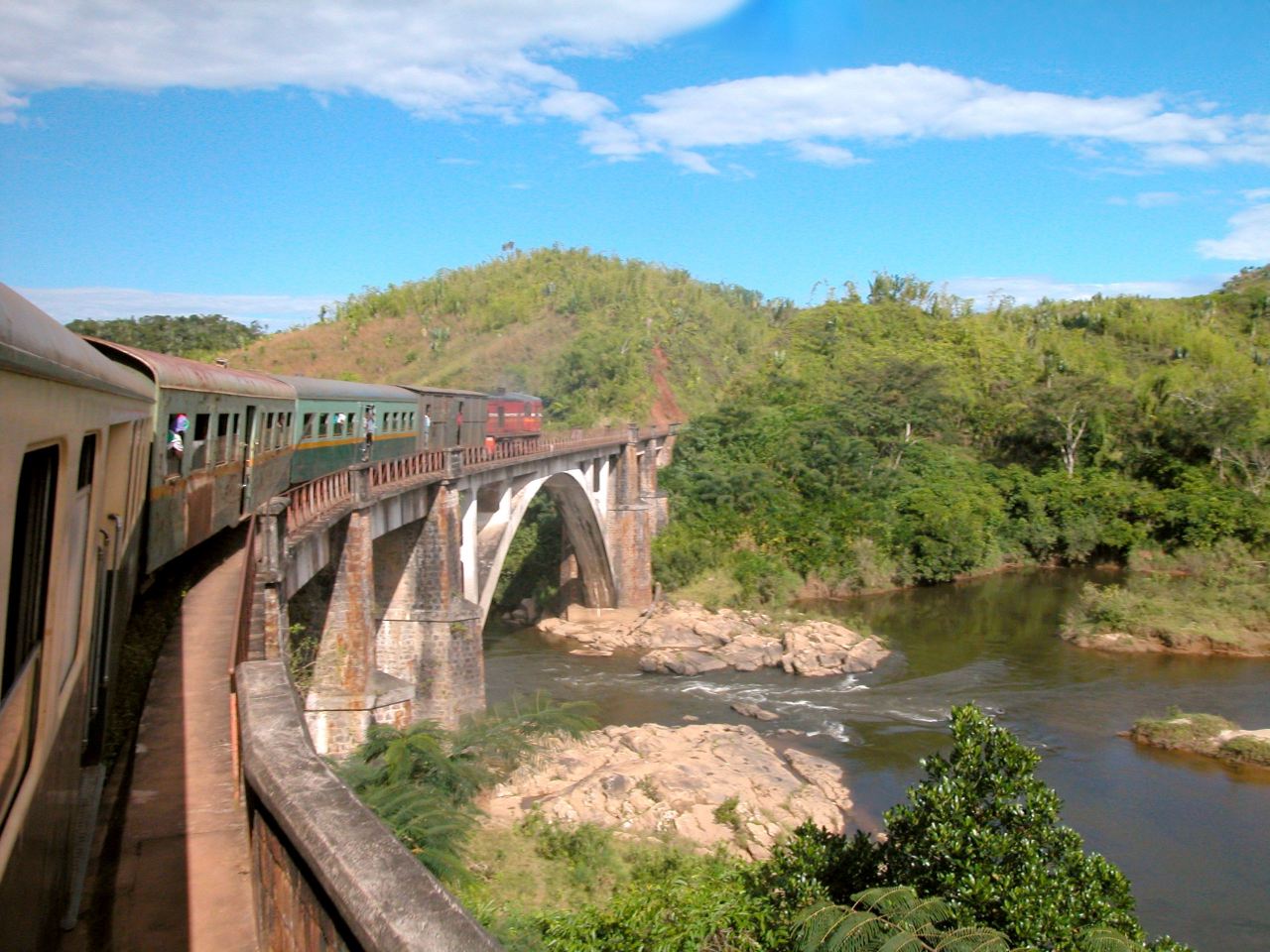
At seven the following morning we took the train to the coast. The island’s last working railway, as far as we knew, still had a passenger train four times a week. The ground was so difficult and the swamps so wet that they had never managed to put in a decent road. The line covered 170 kilometres, descending from more than two kilometres above sea level to the coast. There were fifty tunnels, including one three kilometres long, and any number of bridges. The line had recently been restored and the trains ran regularly. In 2004 there was a report that extraordinary rains had brought mudslides and destroyed the line. It was in fine working order when we were there.
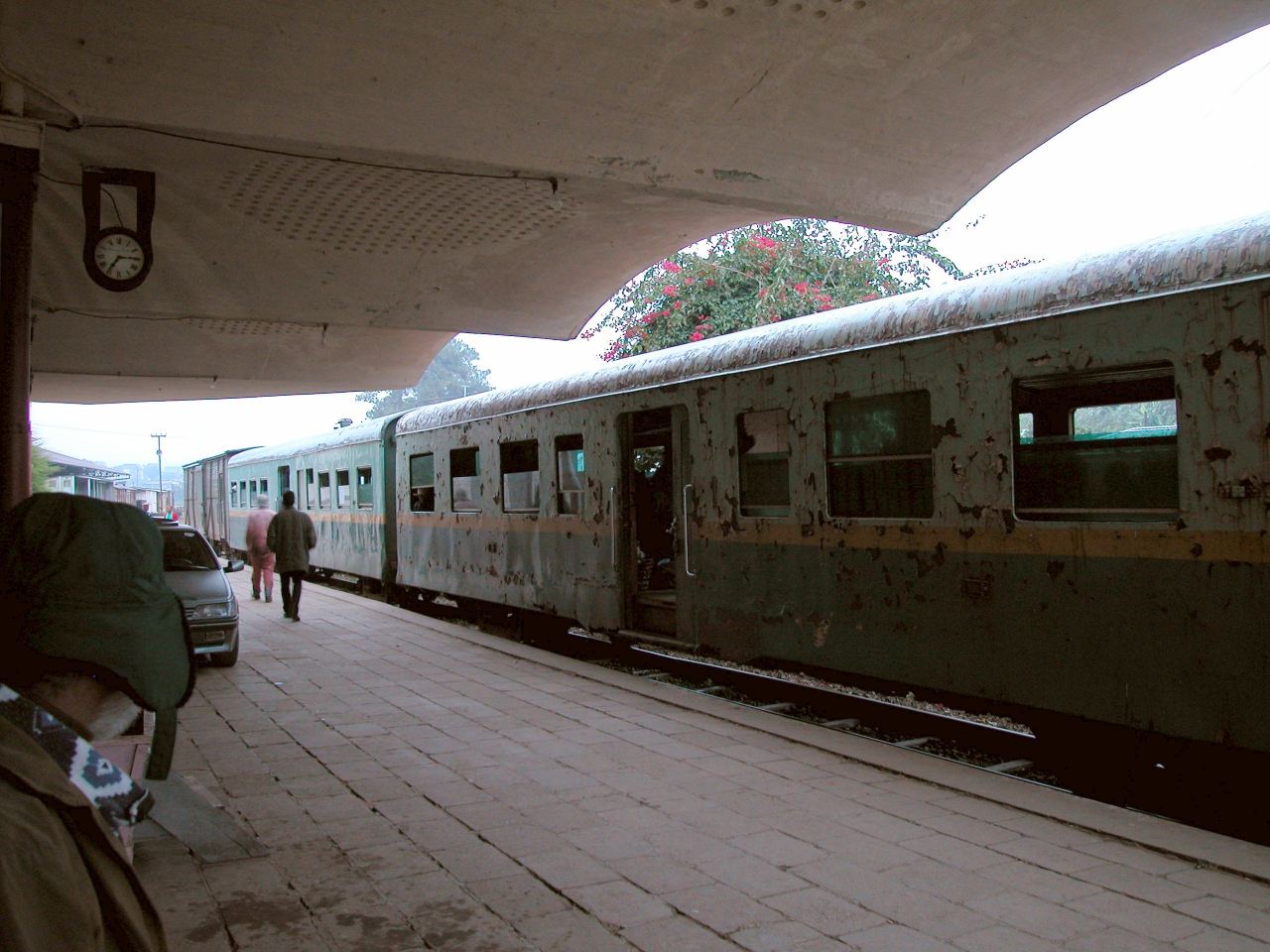
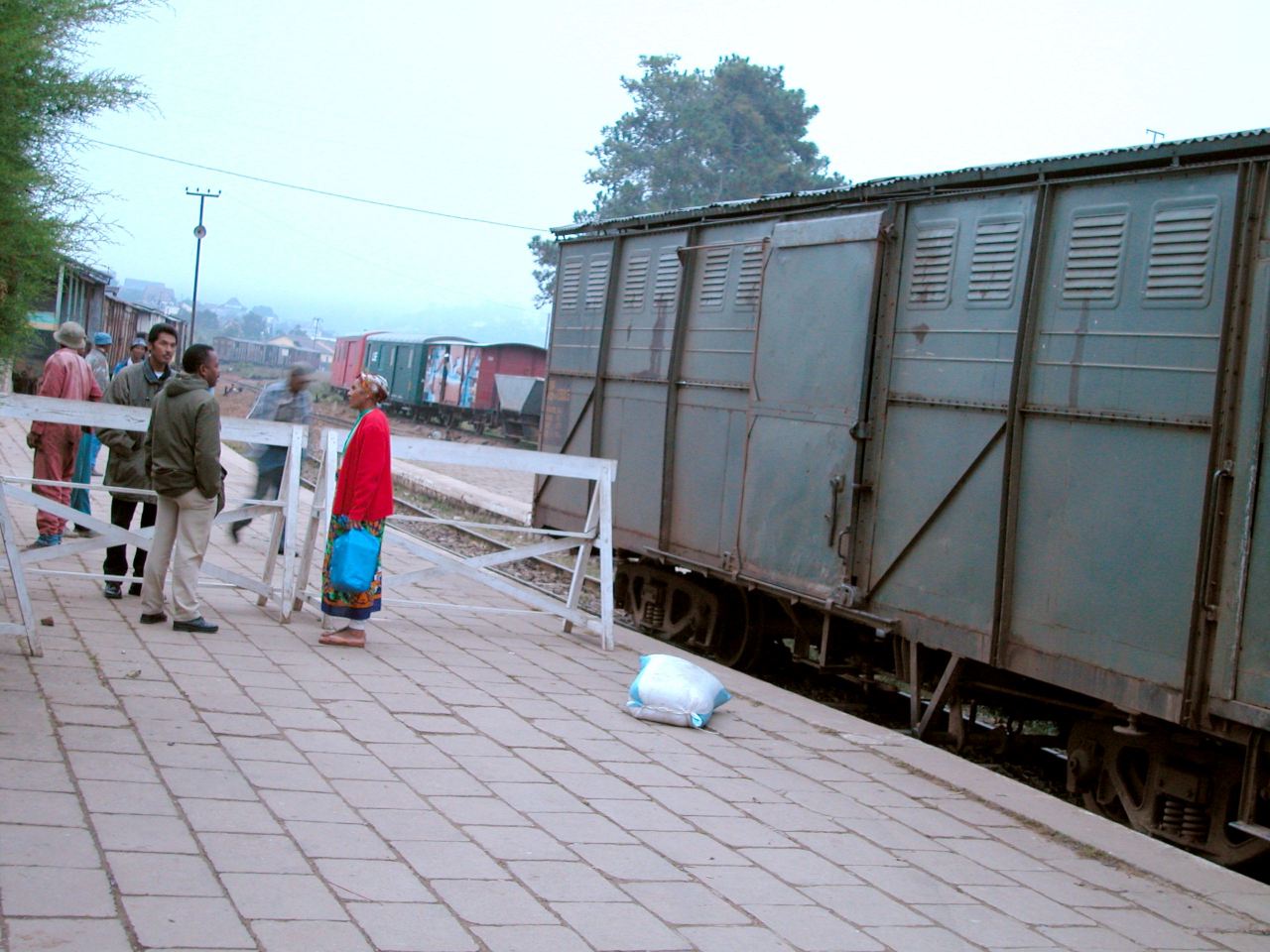
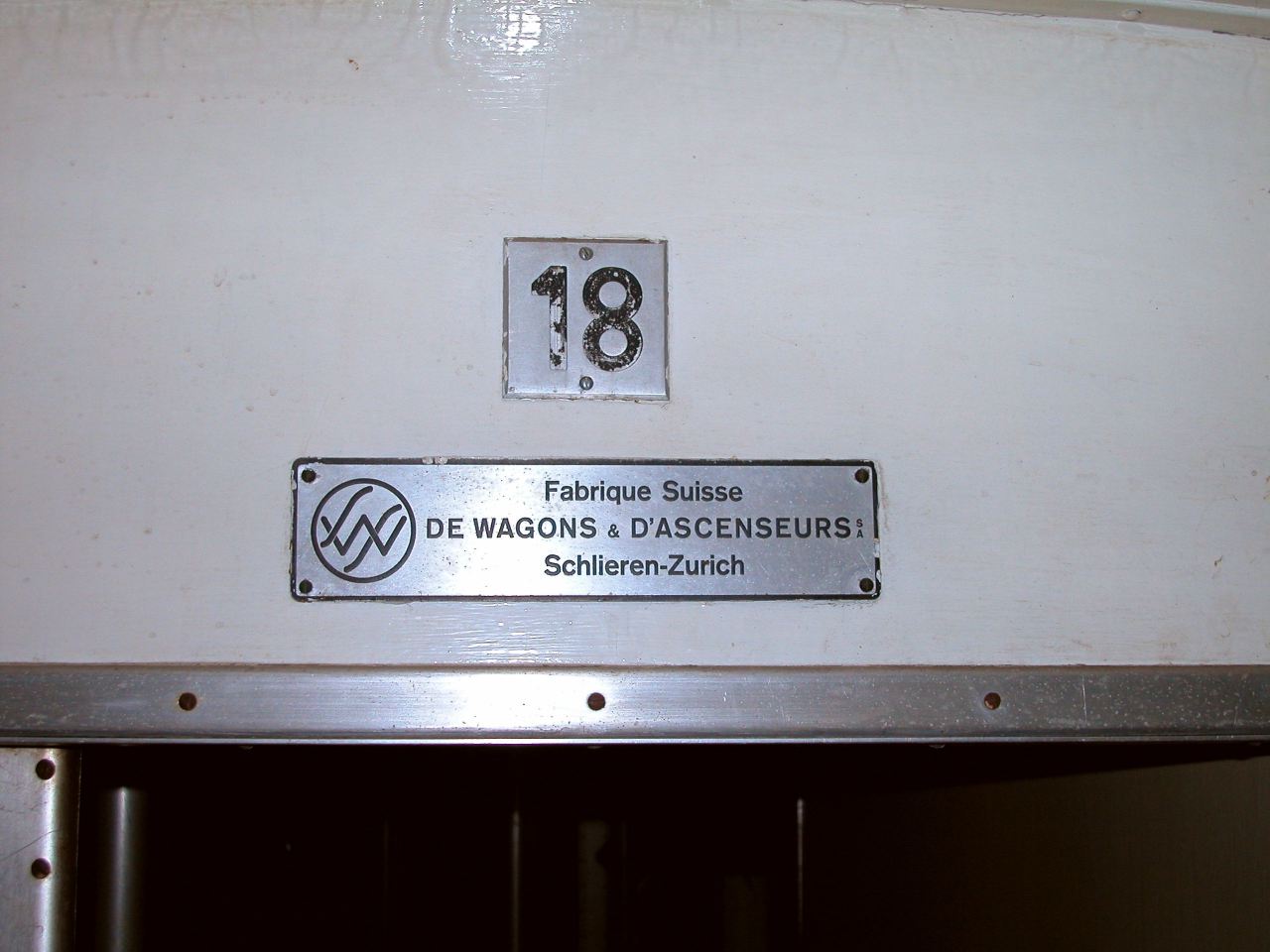
The coaches were divided into first and second class. First was a little dearer, less crowded and more thoroughly painted and cleaned. We took first. Our carriage had been made in Switzerland by De Wagons & D’Ascenseurs, Schlieren-Zurich.
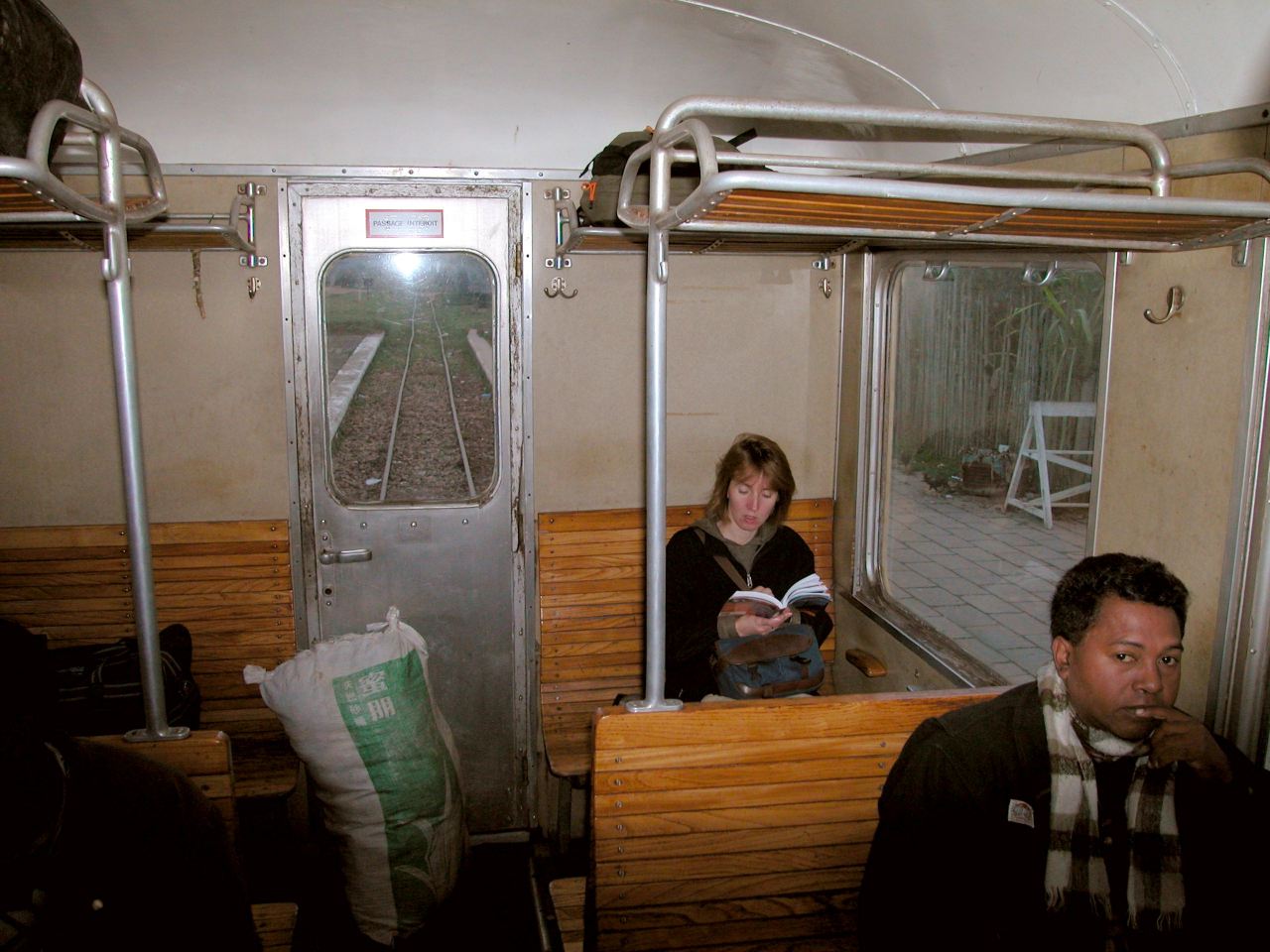
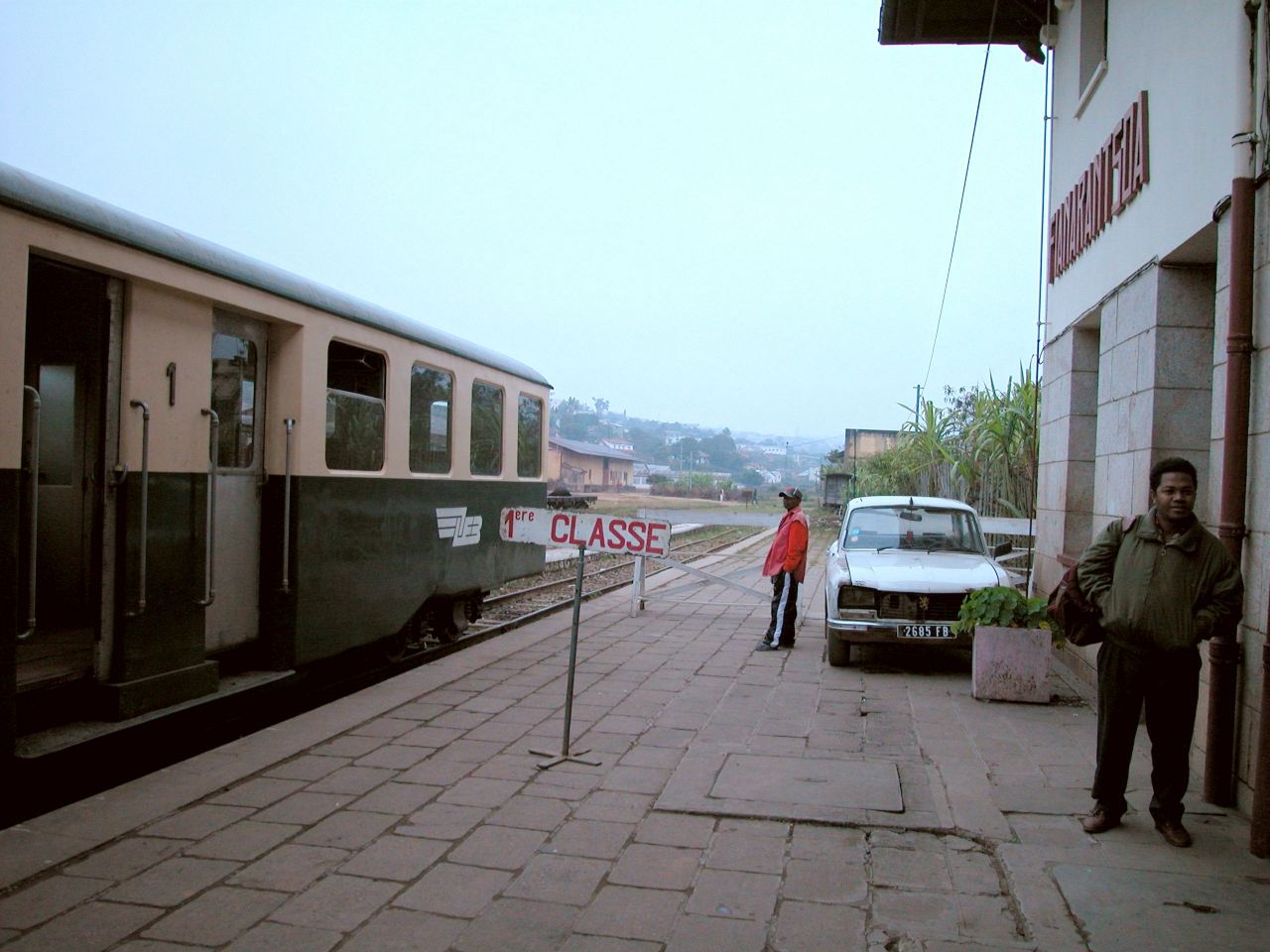
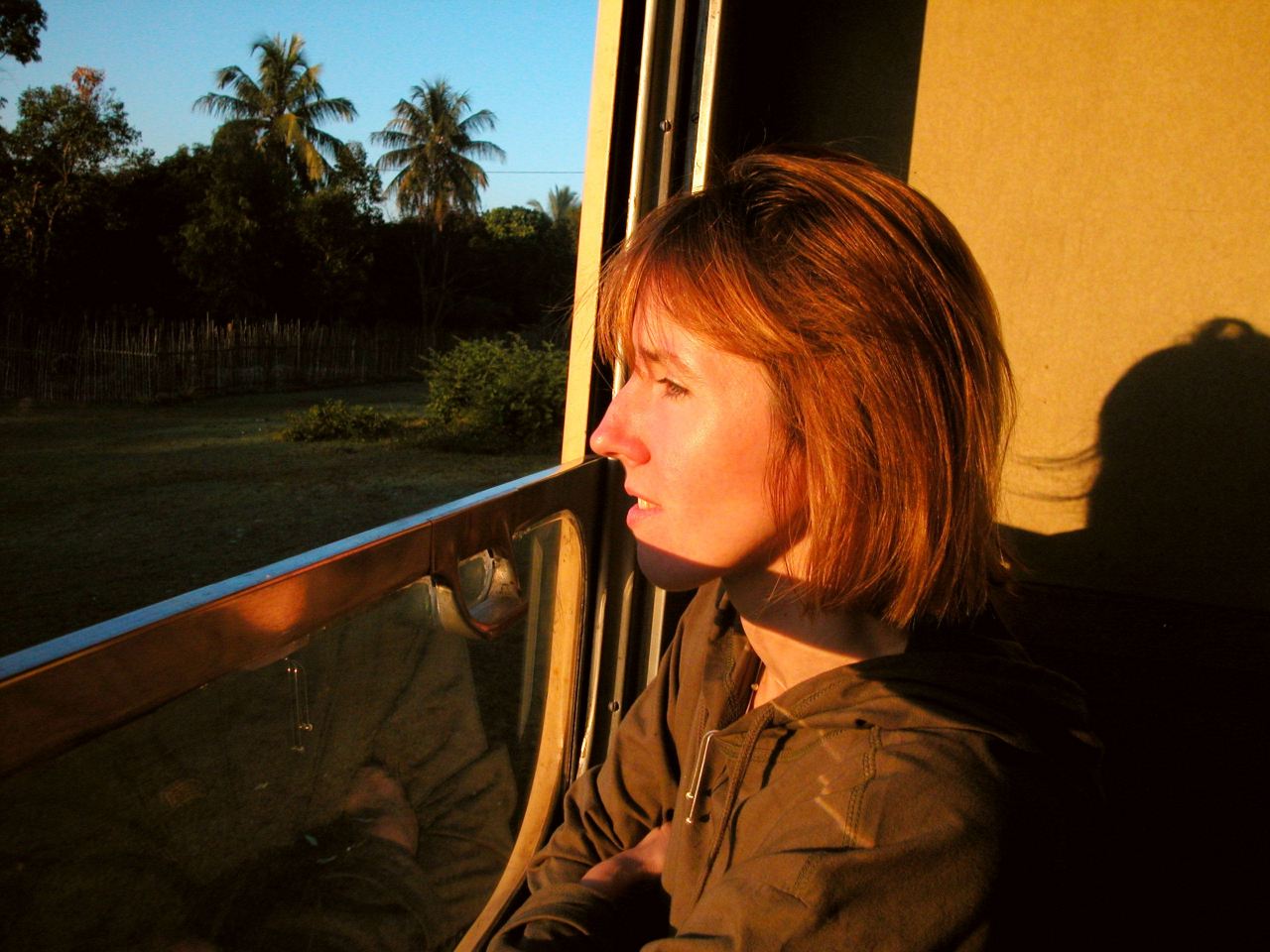
At first I thought it was intended entirely for tourists. In fact there was just one French couple besides us. Local people filled the other seats, people with a little more money or with small children. The other coaches were packed, so first certainly was more comfortable.
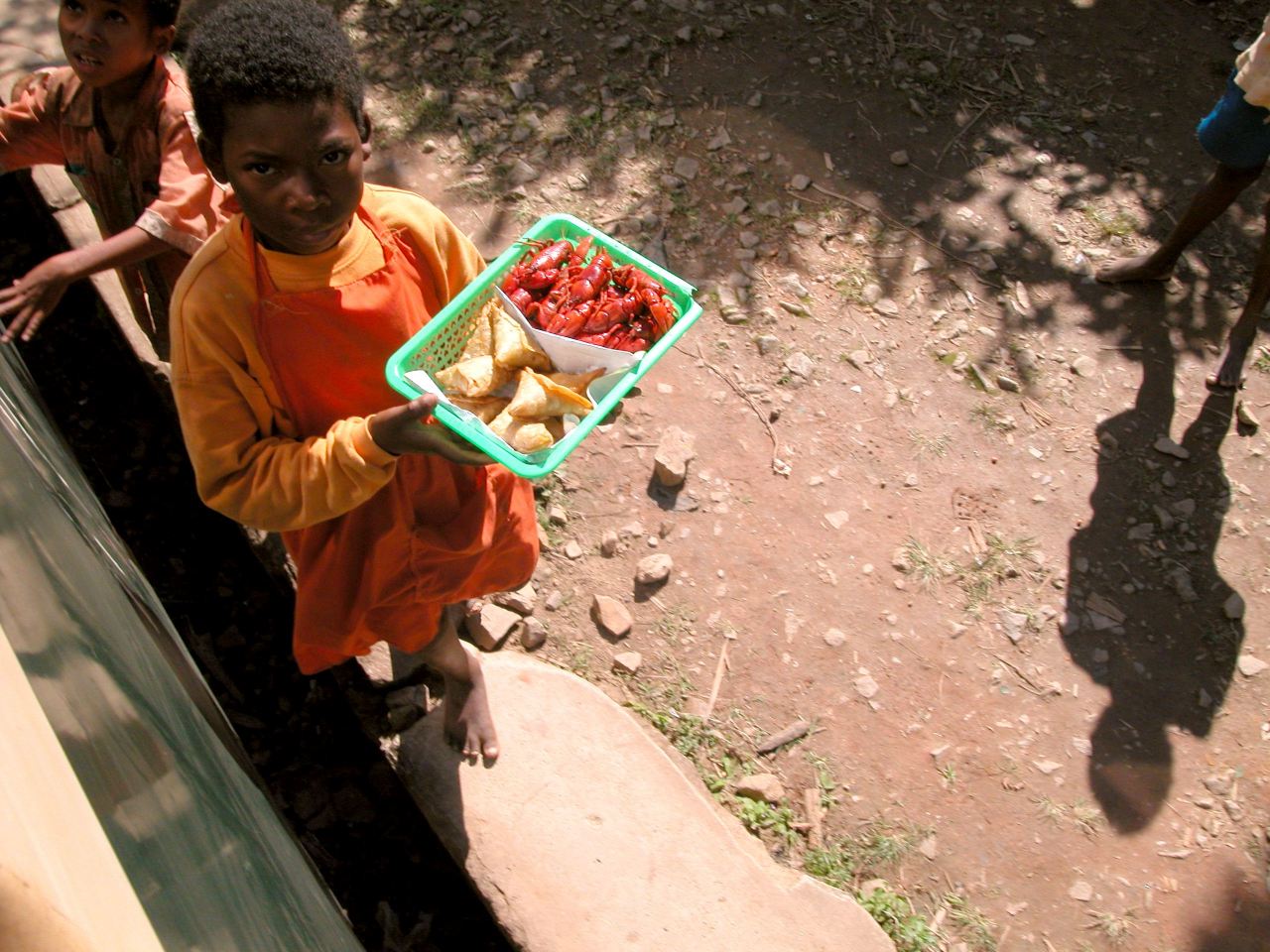
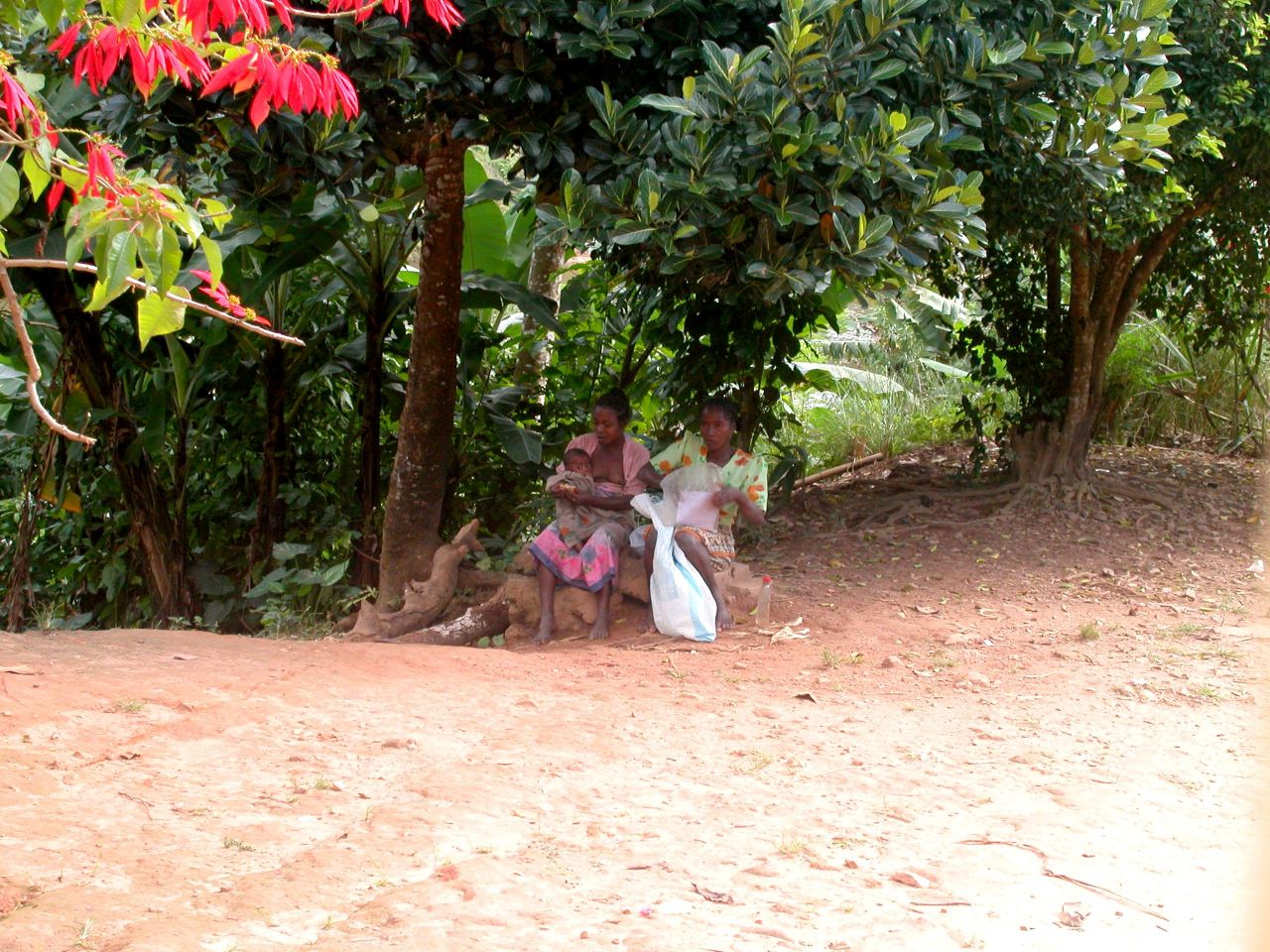
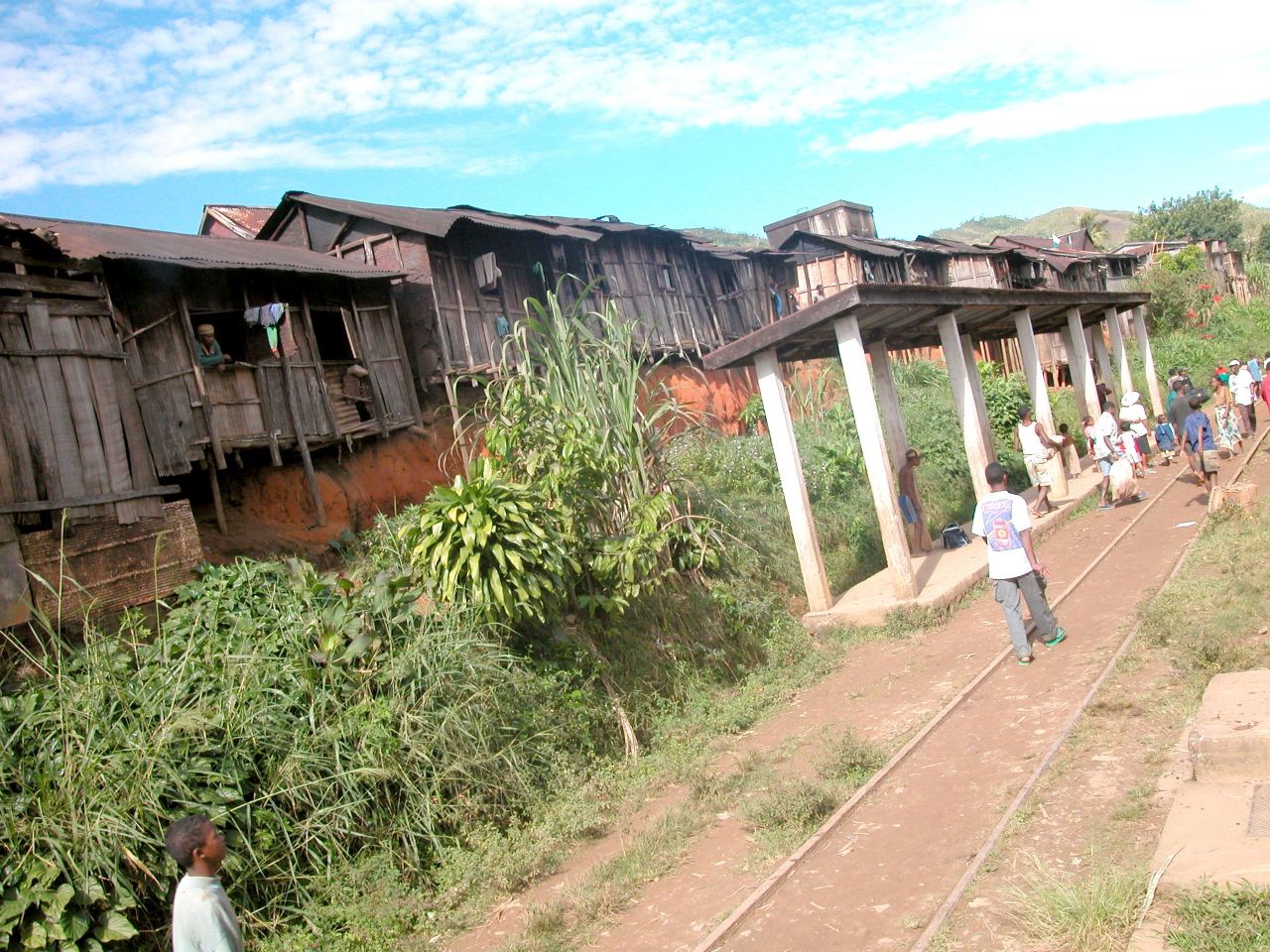
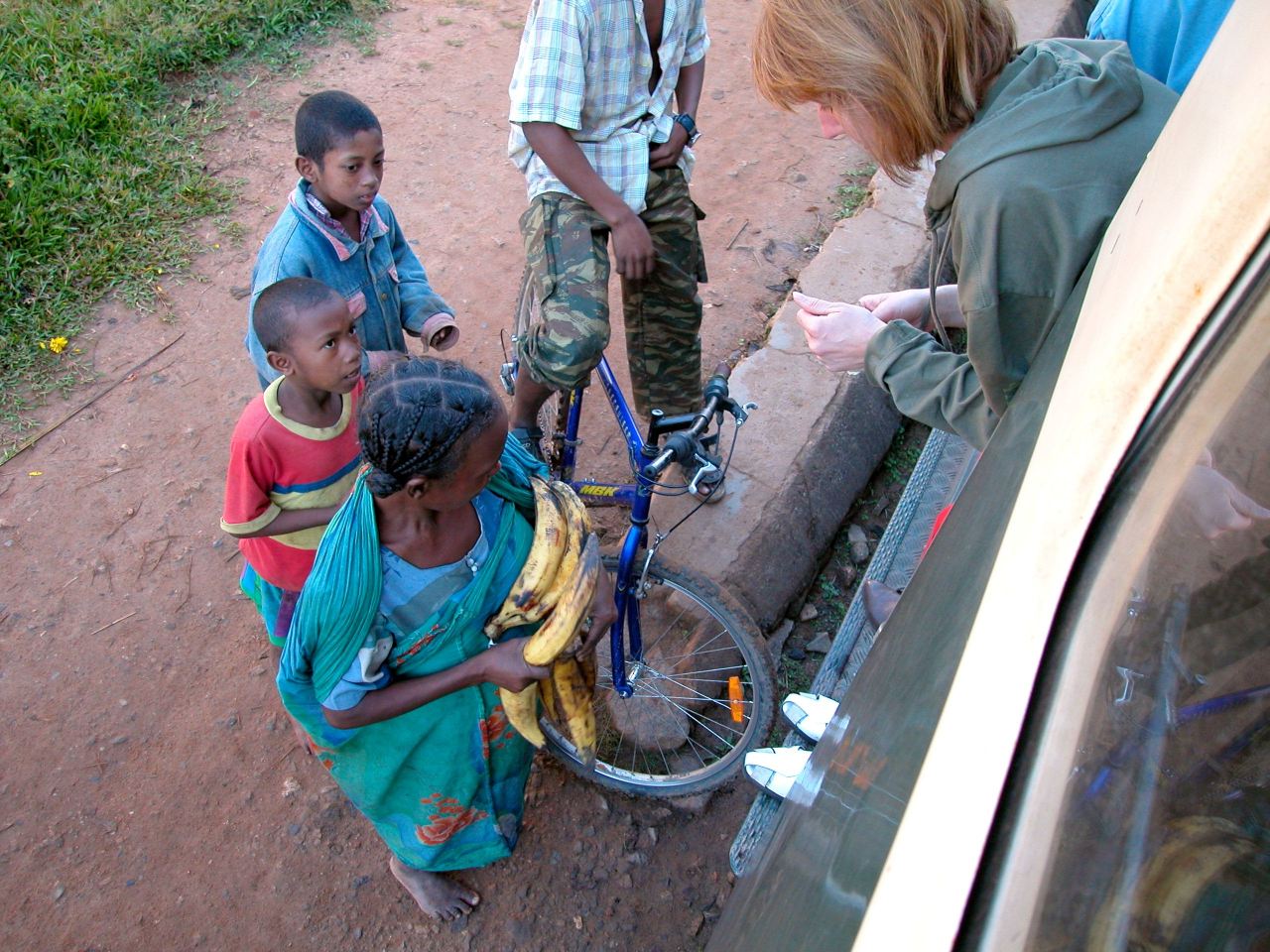
The scheduled departure was seven. We left at nine. The line started out running along the plateau. The first stops were near Fianarantsoa, but soon we were in wild country. For the people at these little stations, the railway was the only connection with the rest of the world. It was misty and raining. After two hours we went through an immensely long tunnel. There were no lights in the coaches and we sat in pitch darkness. Immediately after the pass, the sun appeared and the vegetation changed. Around us were bananas, tree ferns and other tropical plants. Soon we stopped for a long time at a little station called Andrambovato. People ran up to the train with pastries and bananas. At the next stops they added boiled crayfish.
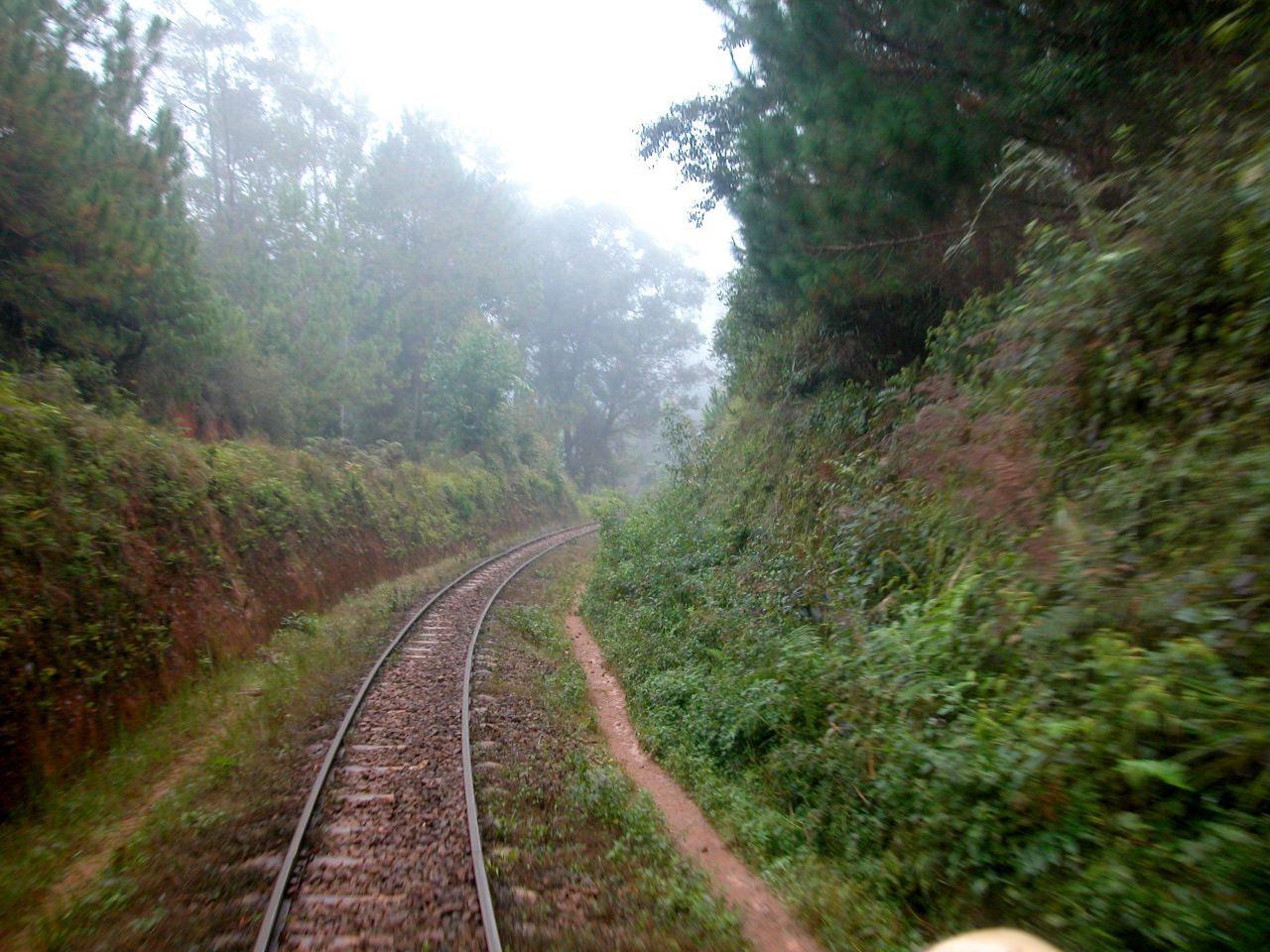
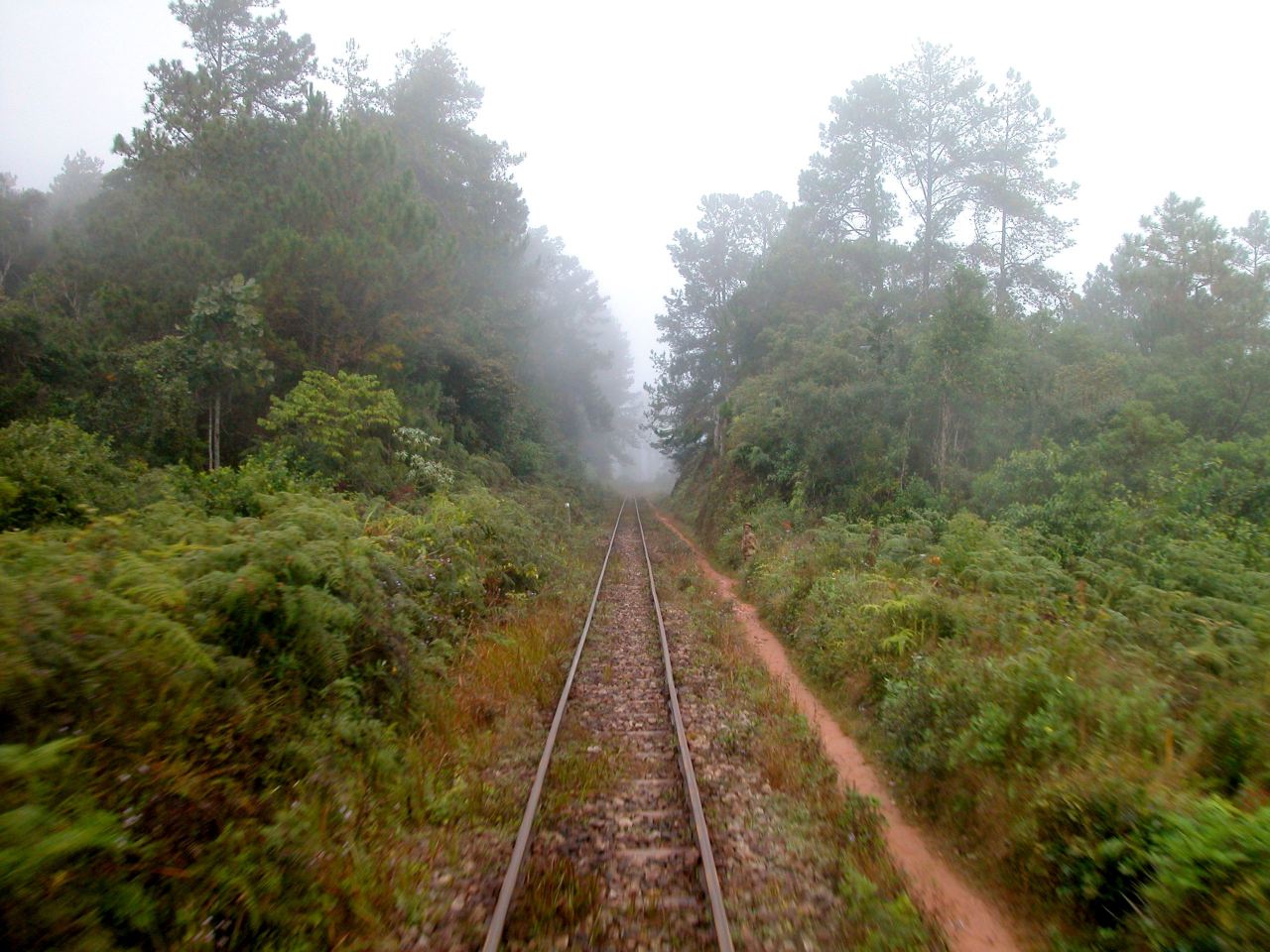
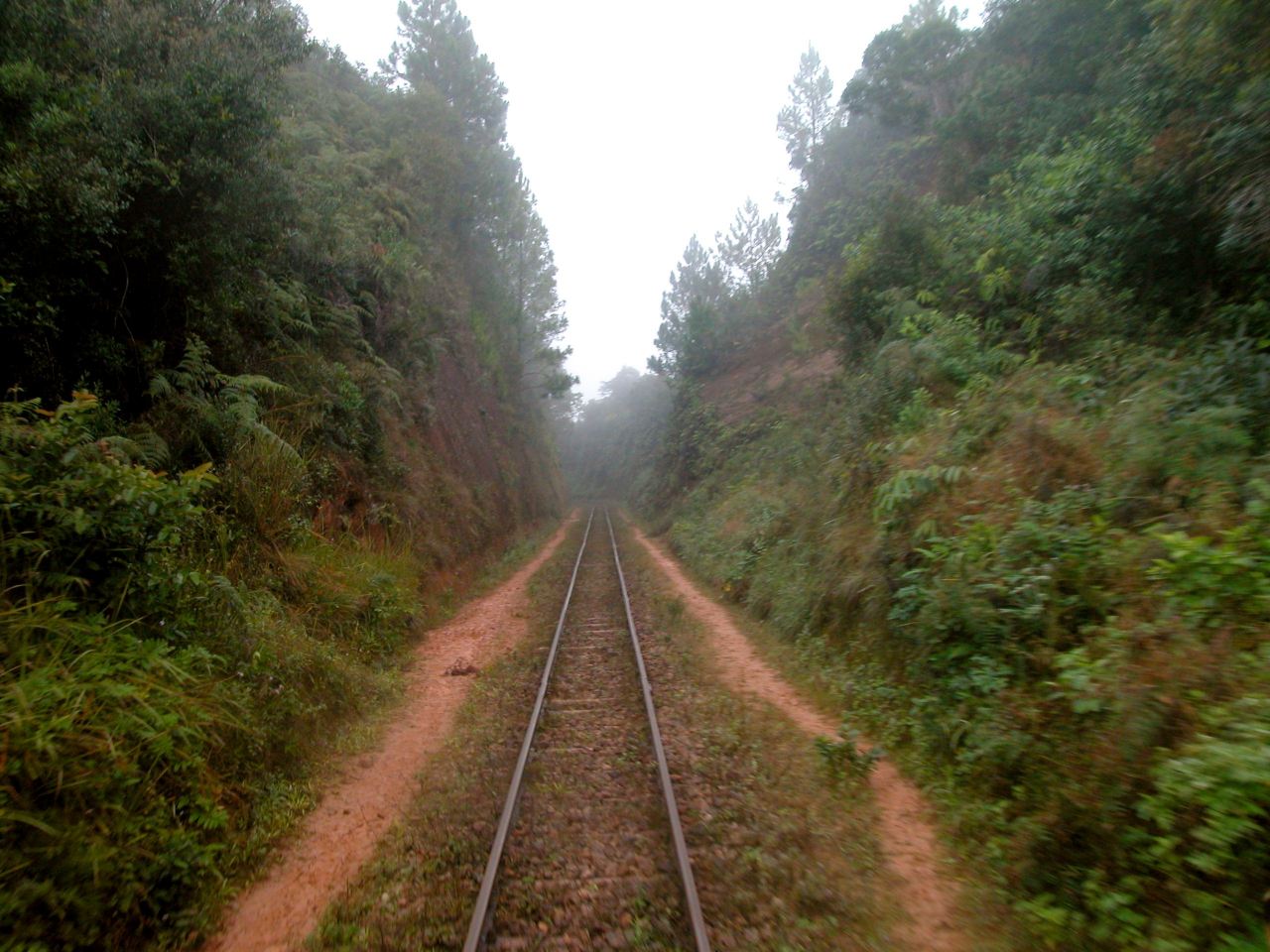
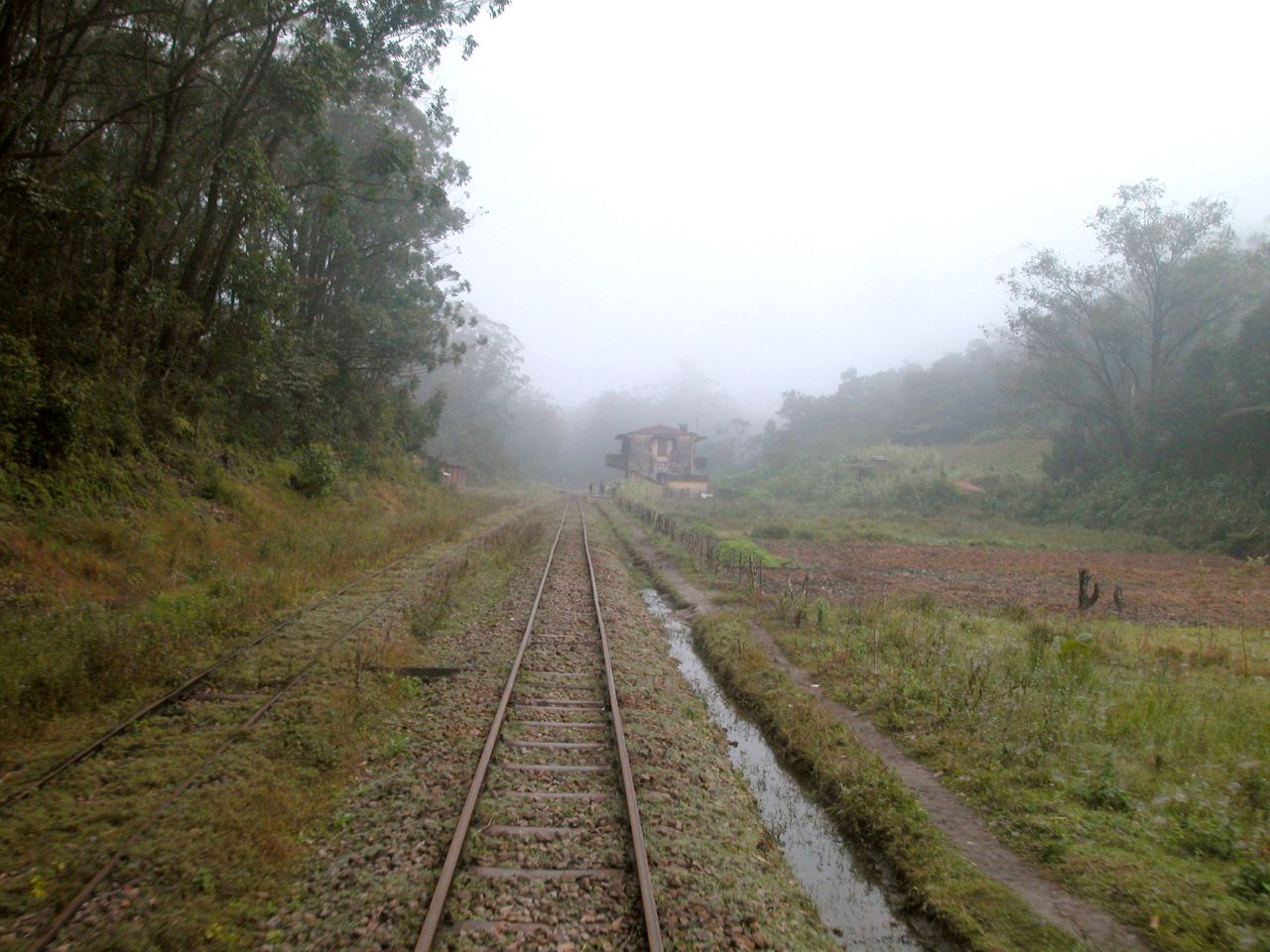
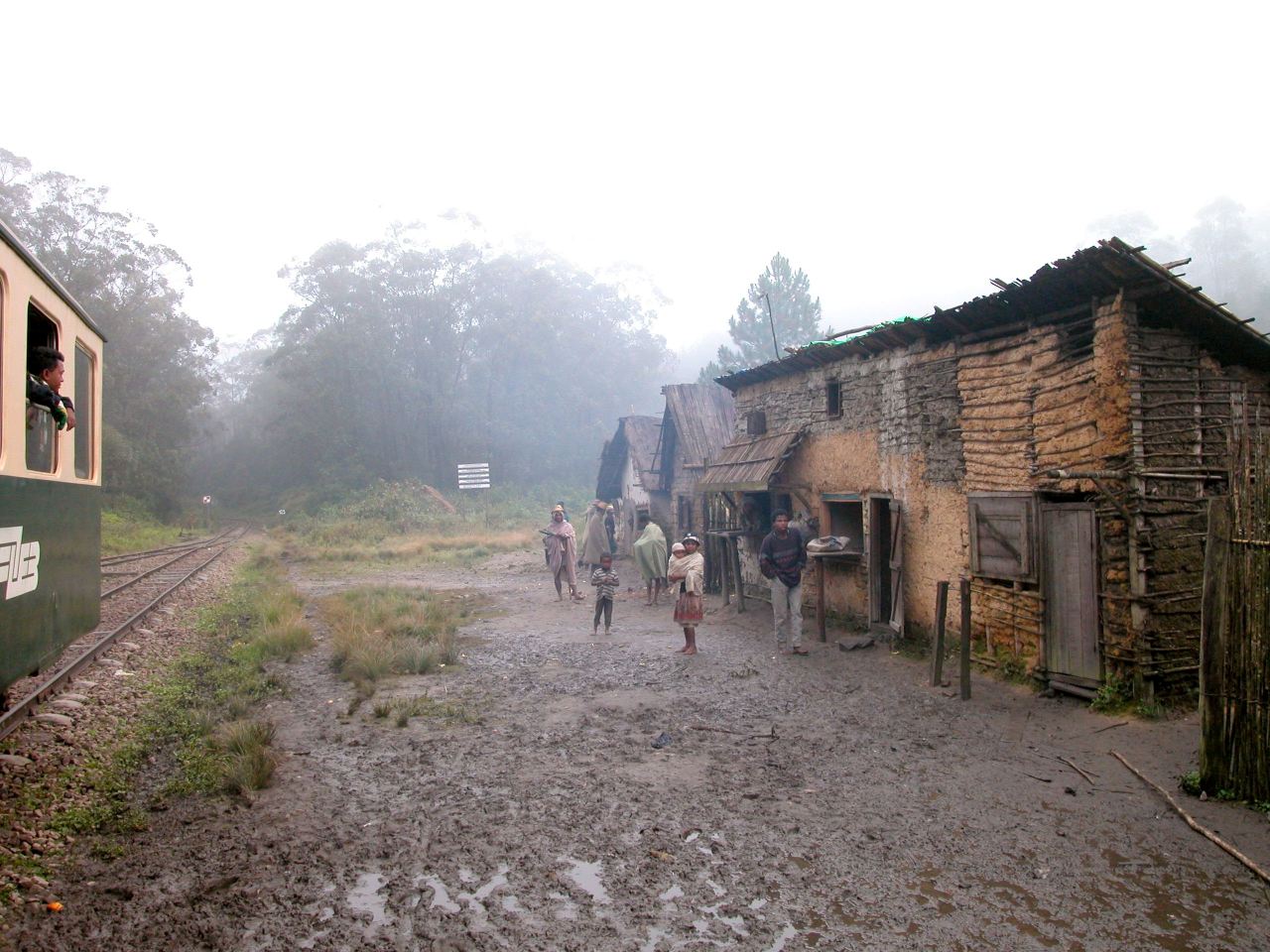
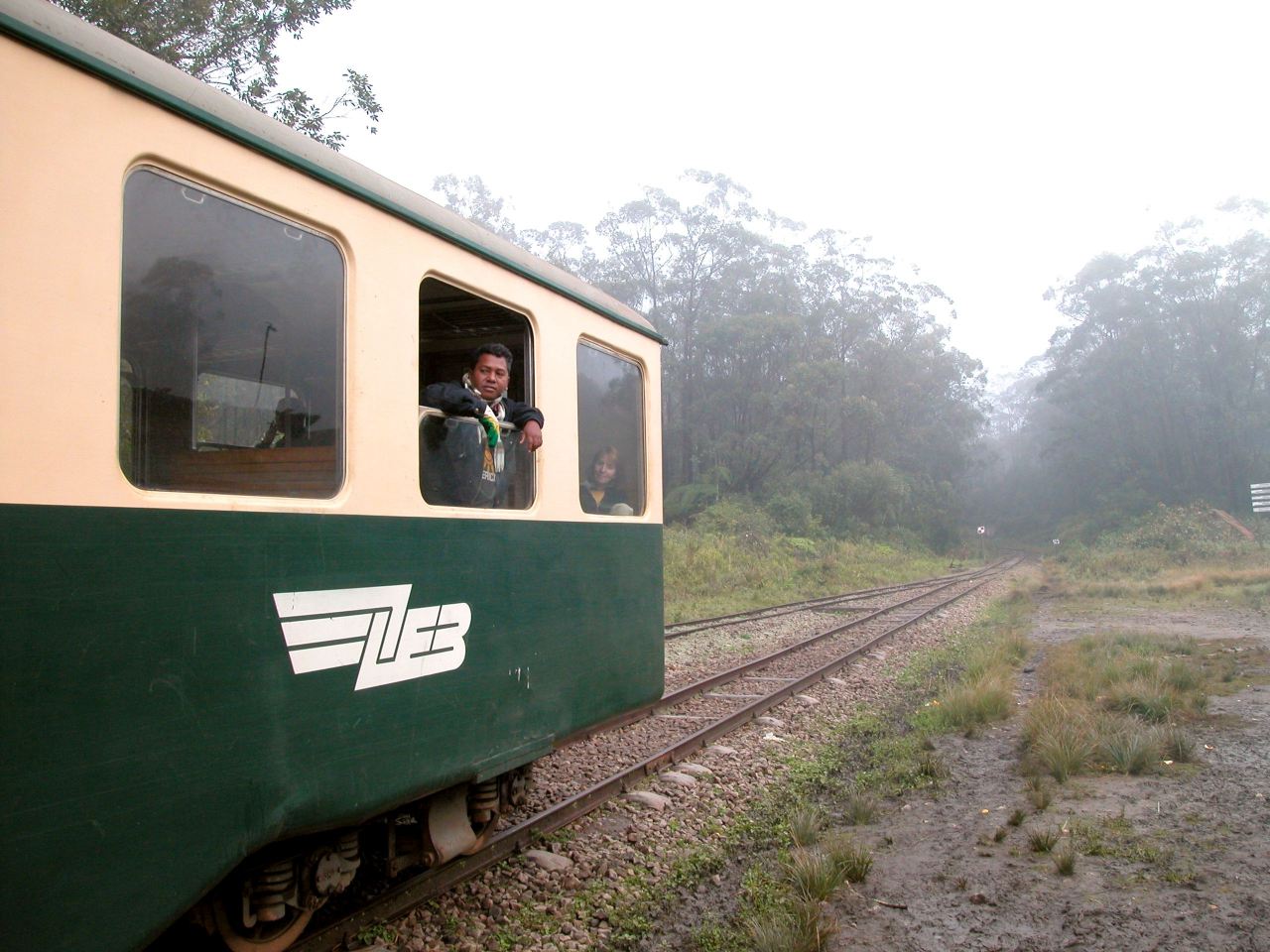
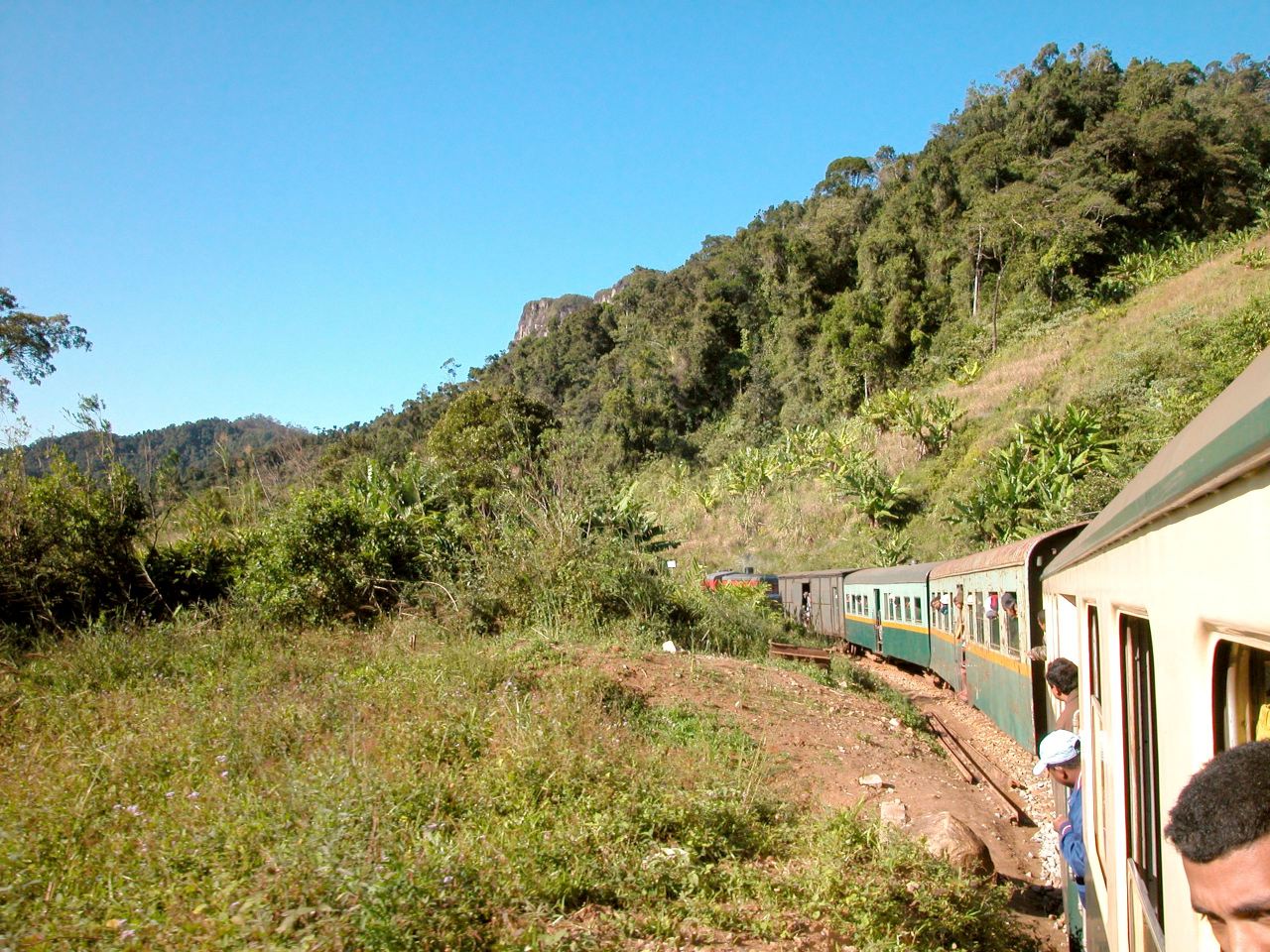
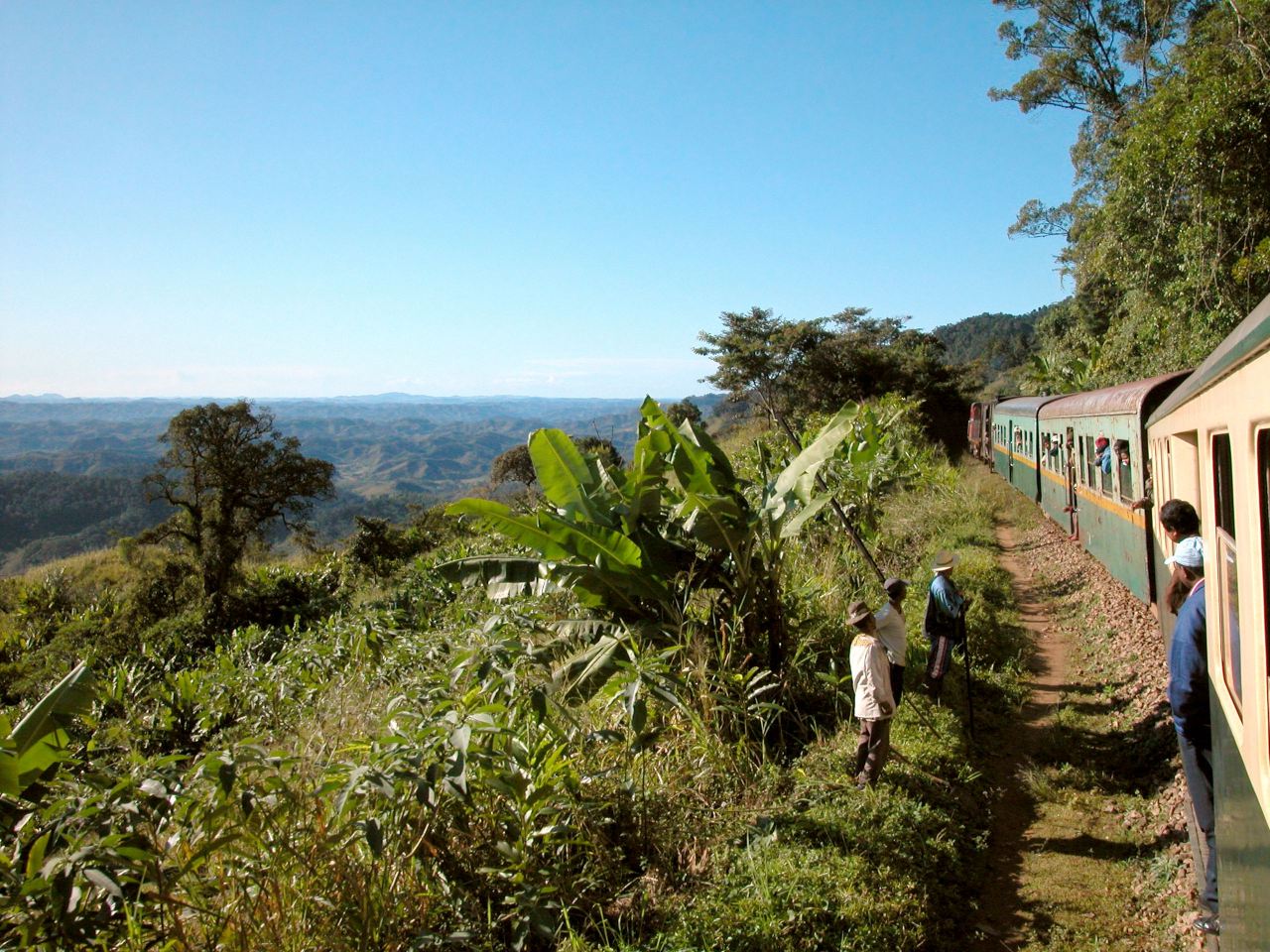
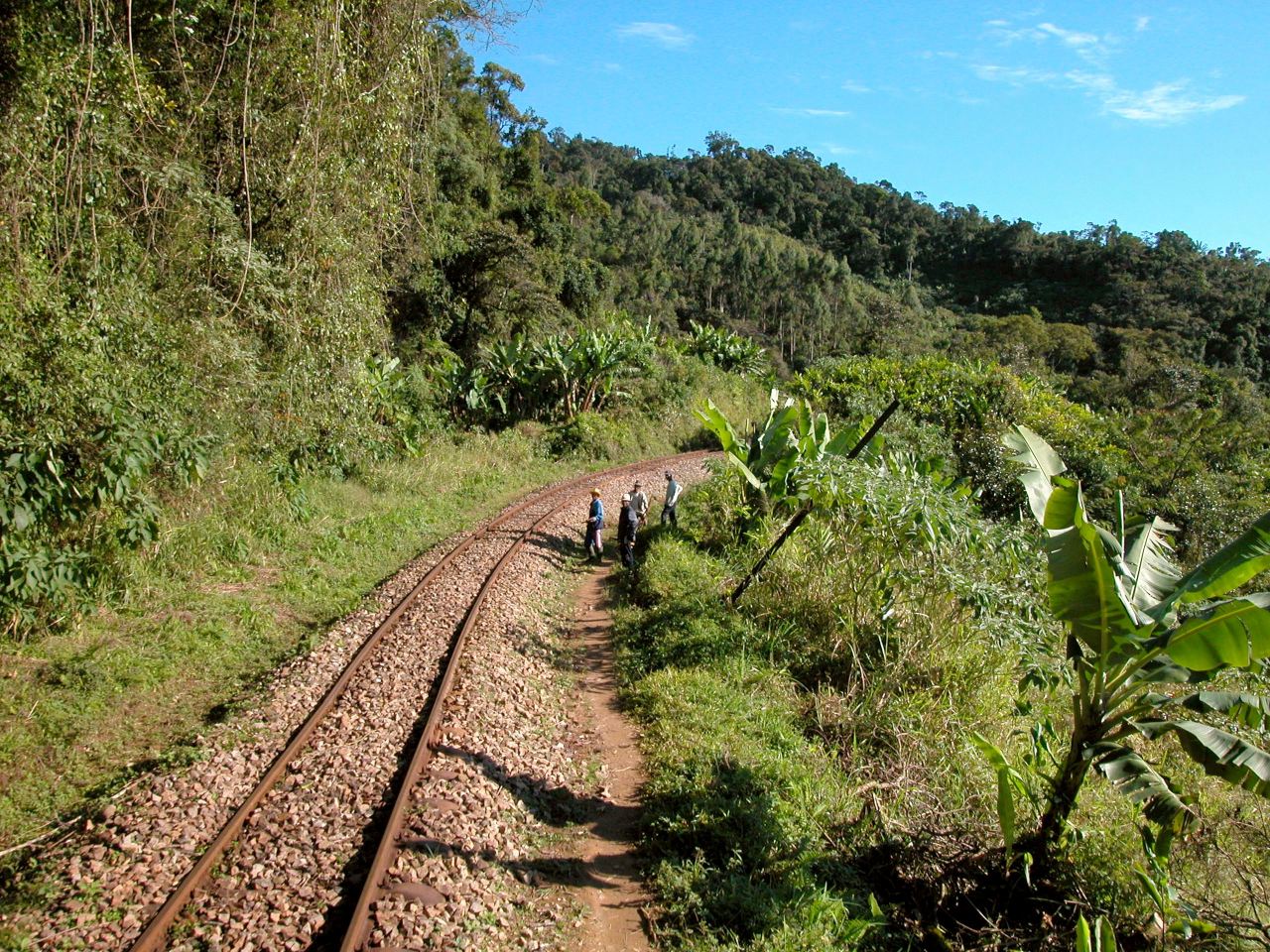
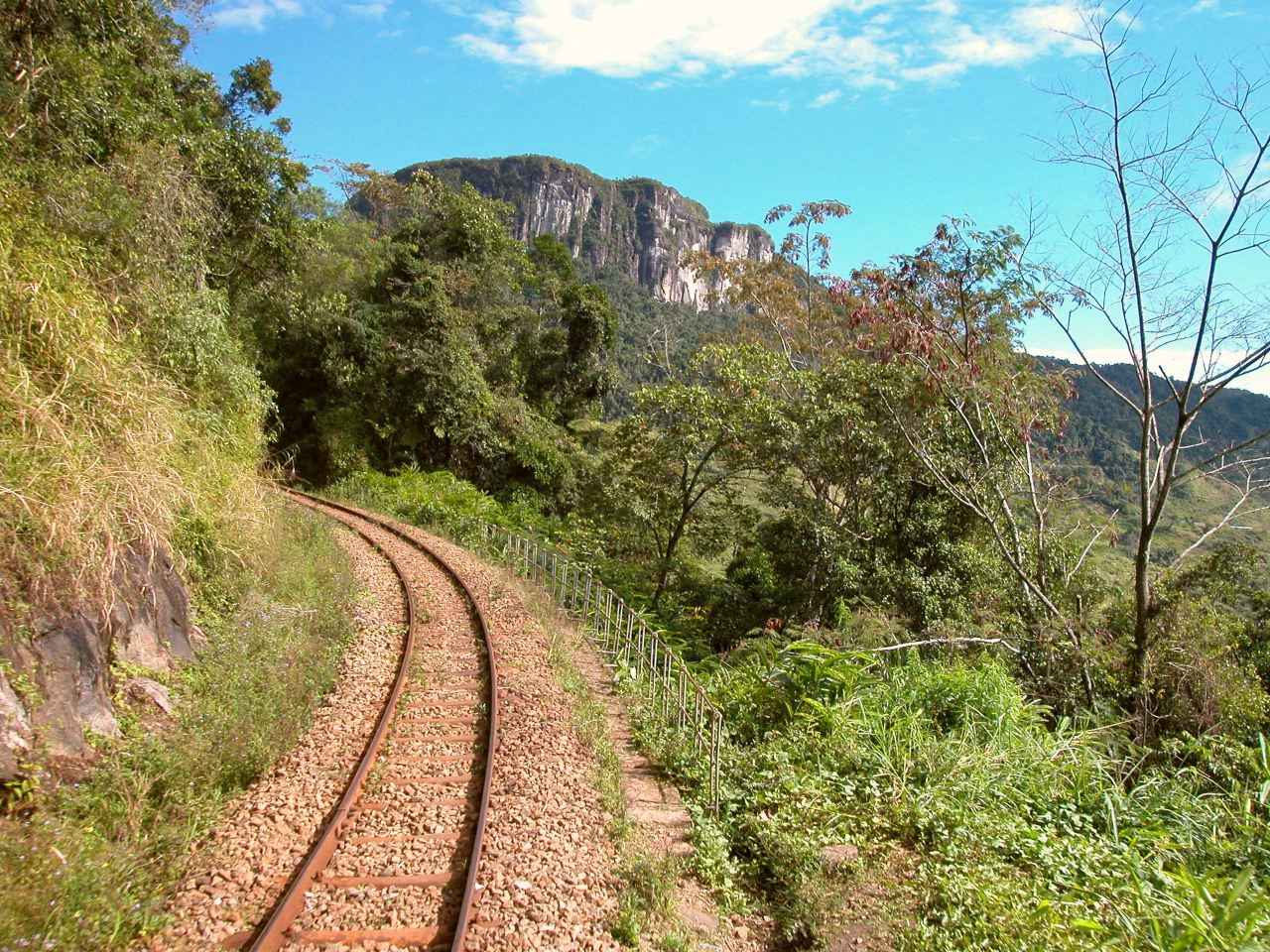
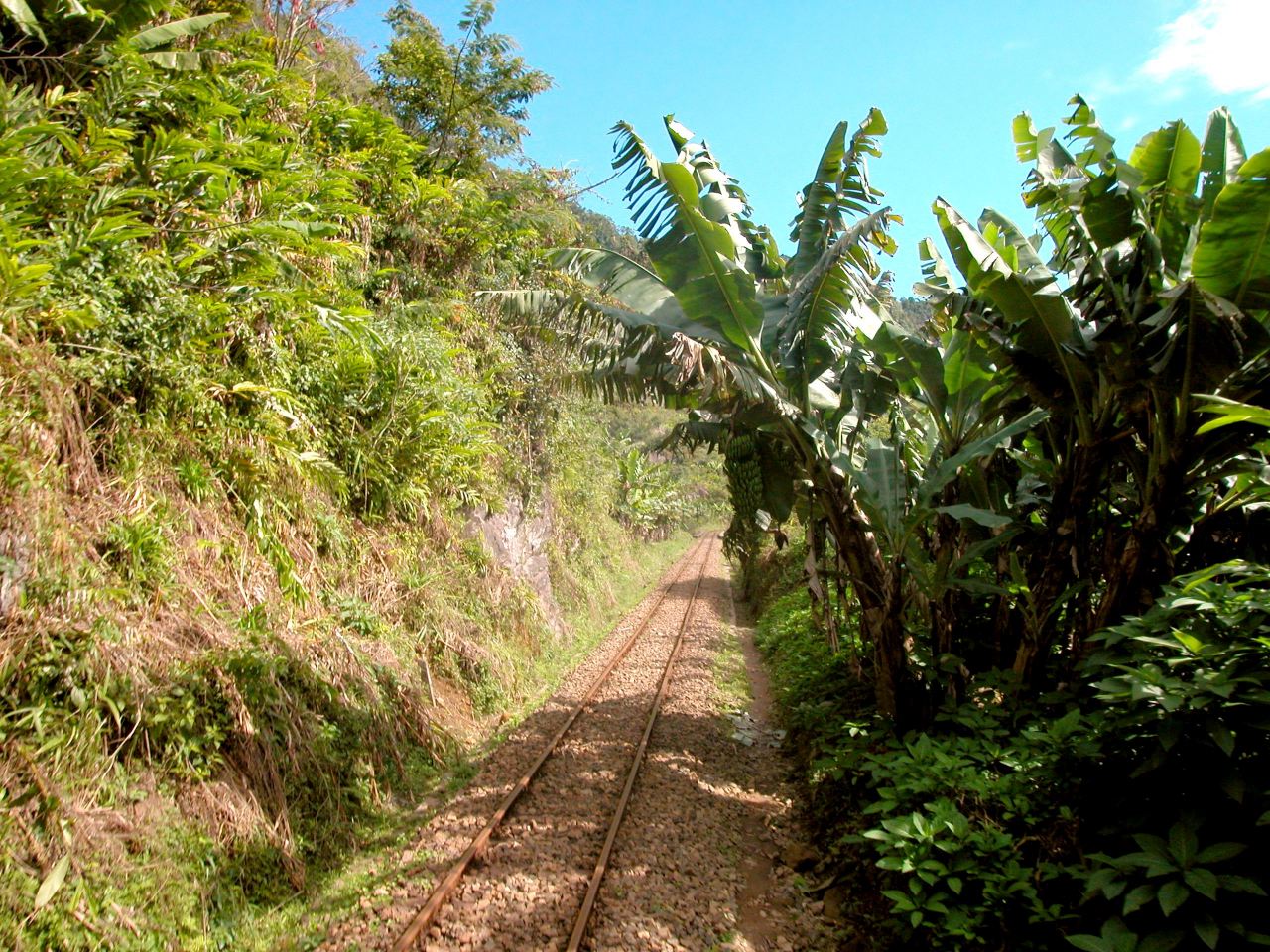
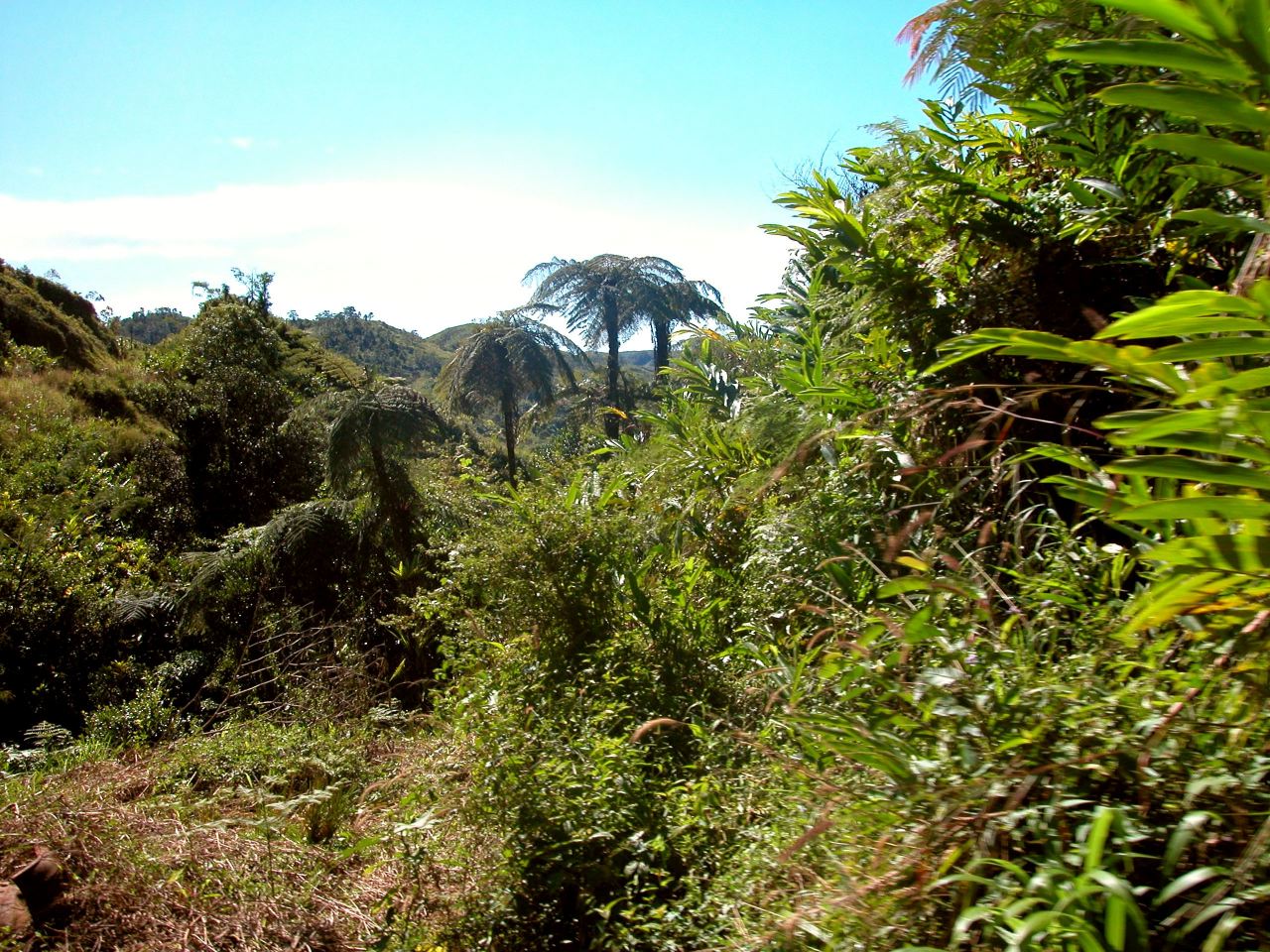
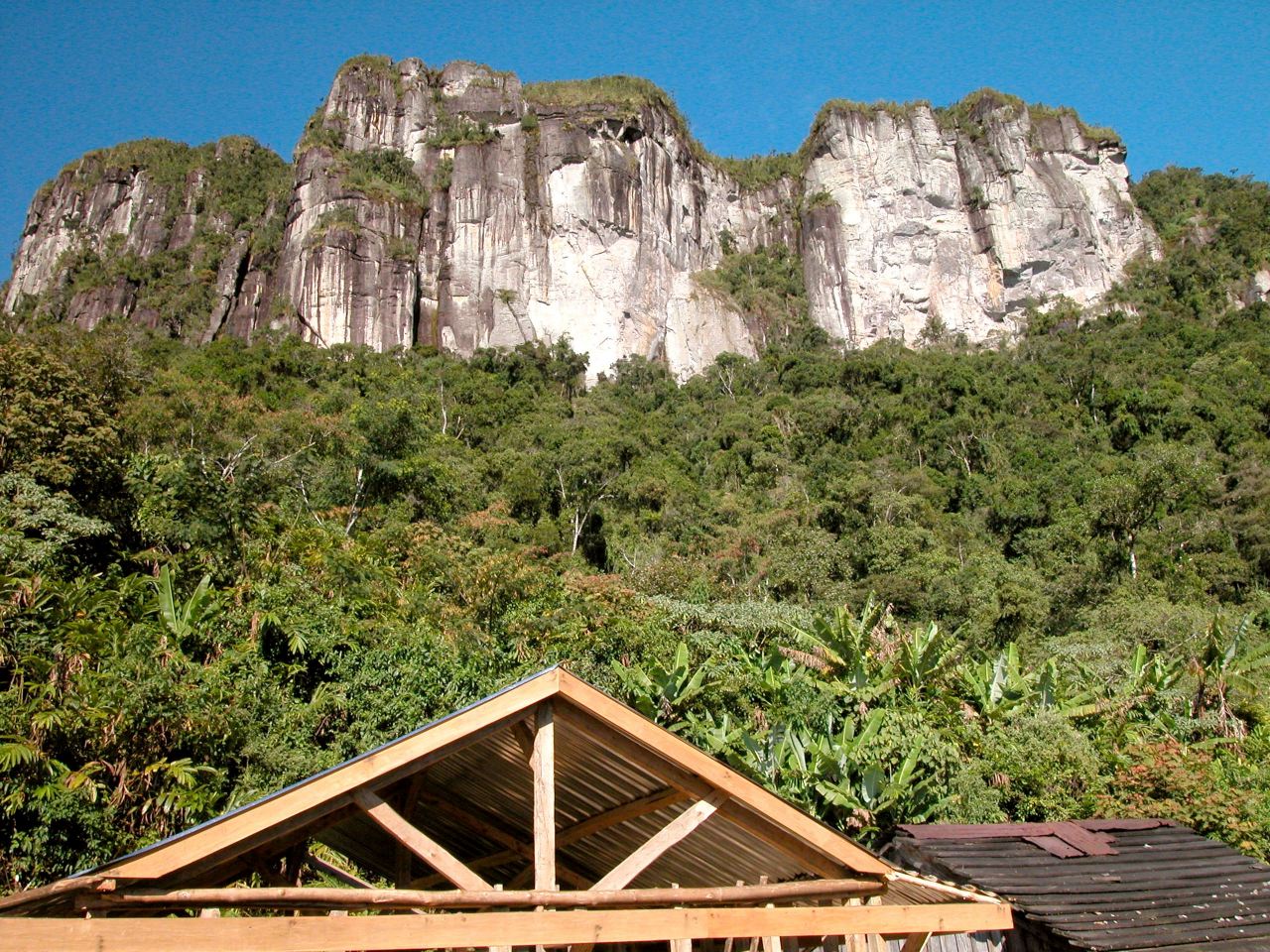
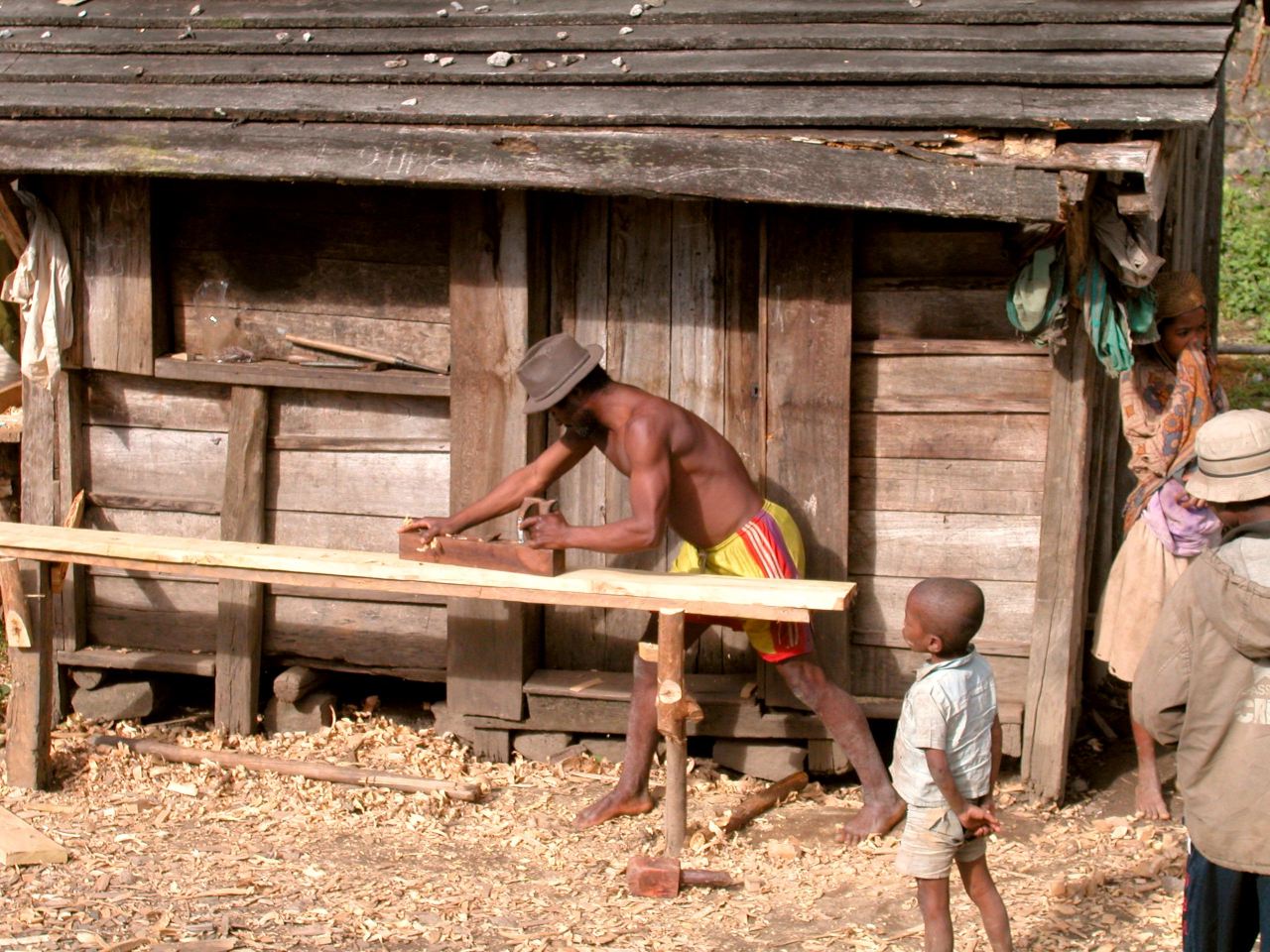
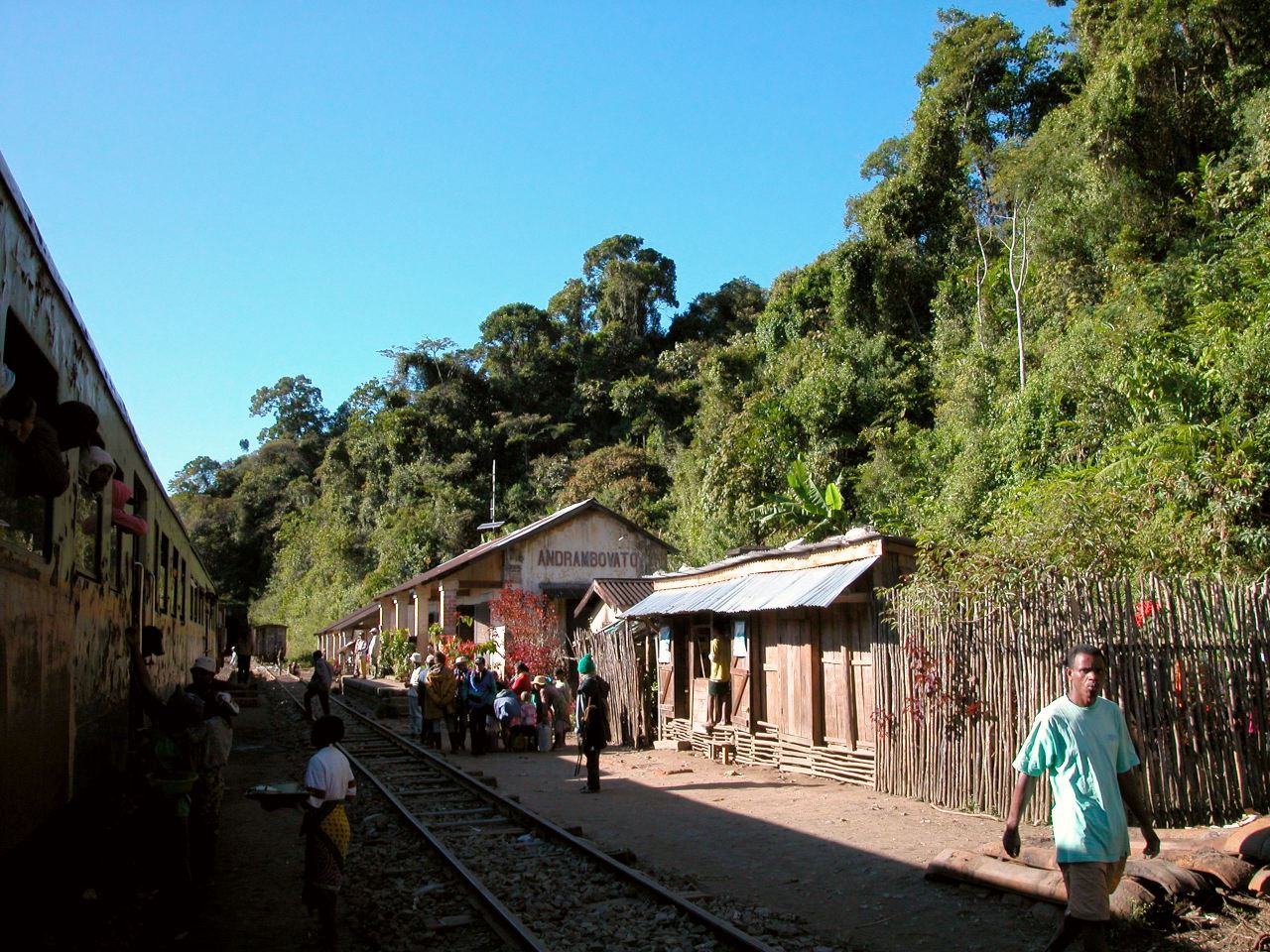
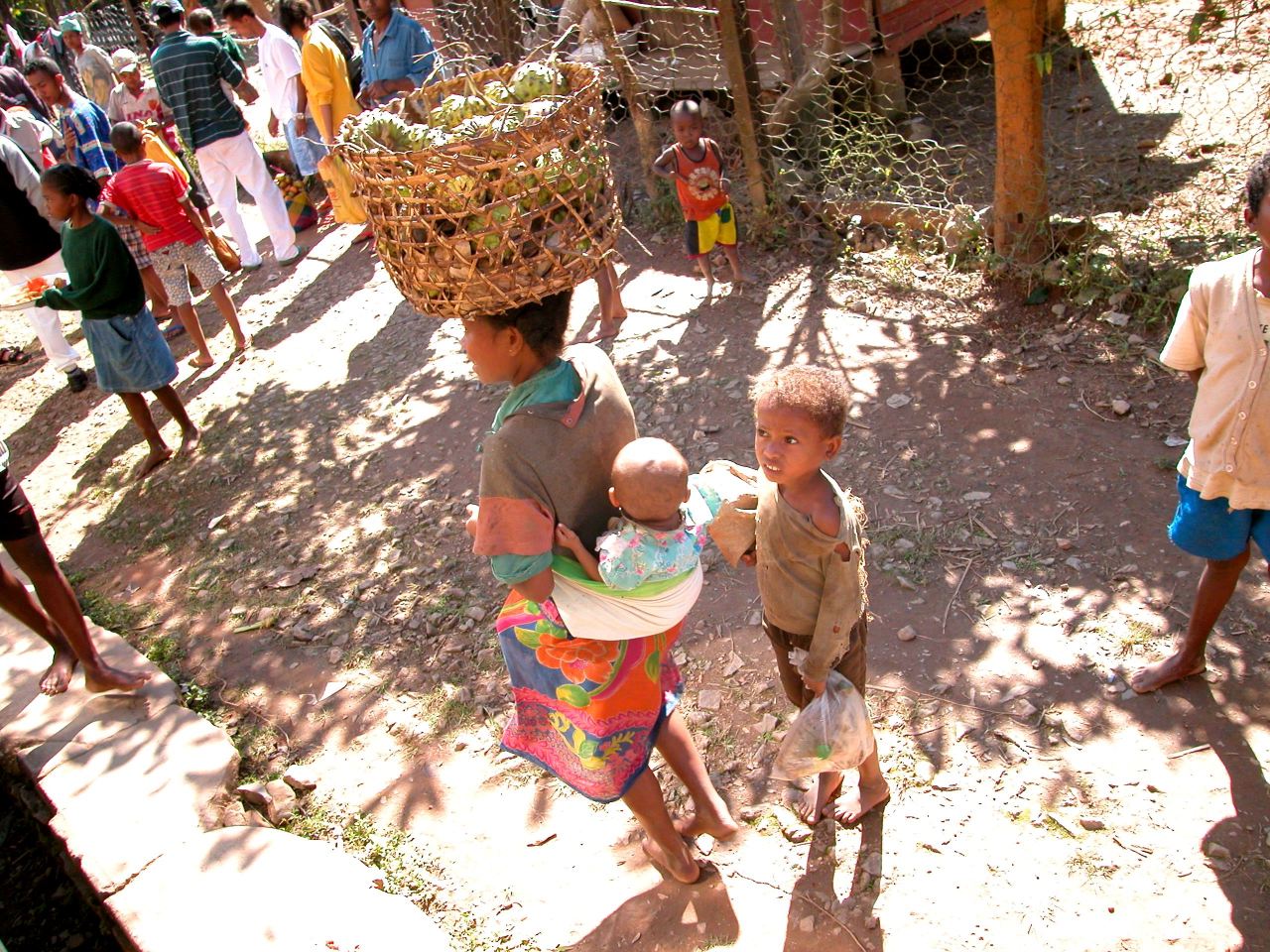
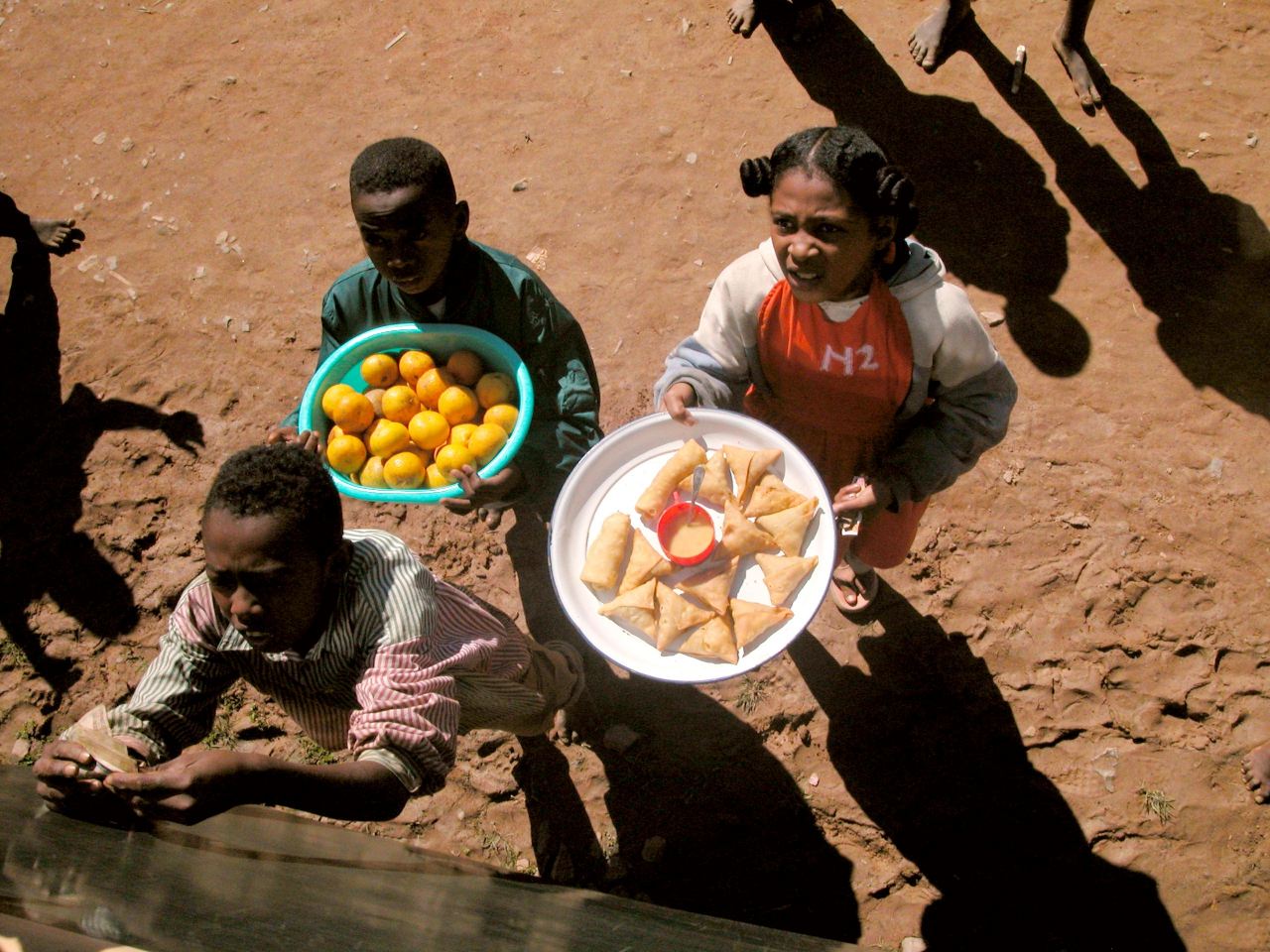
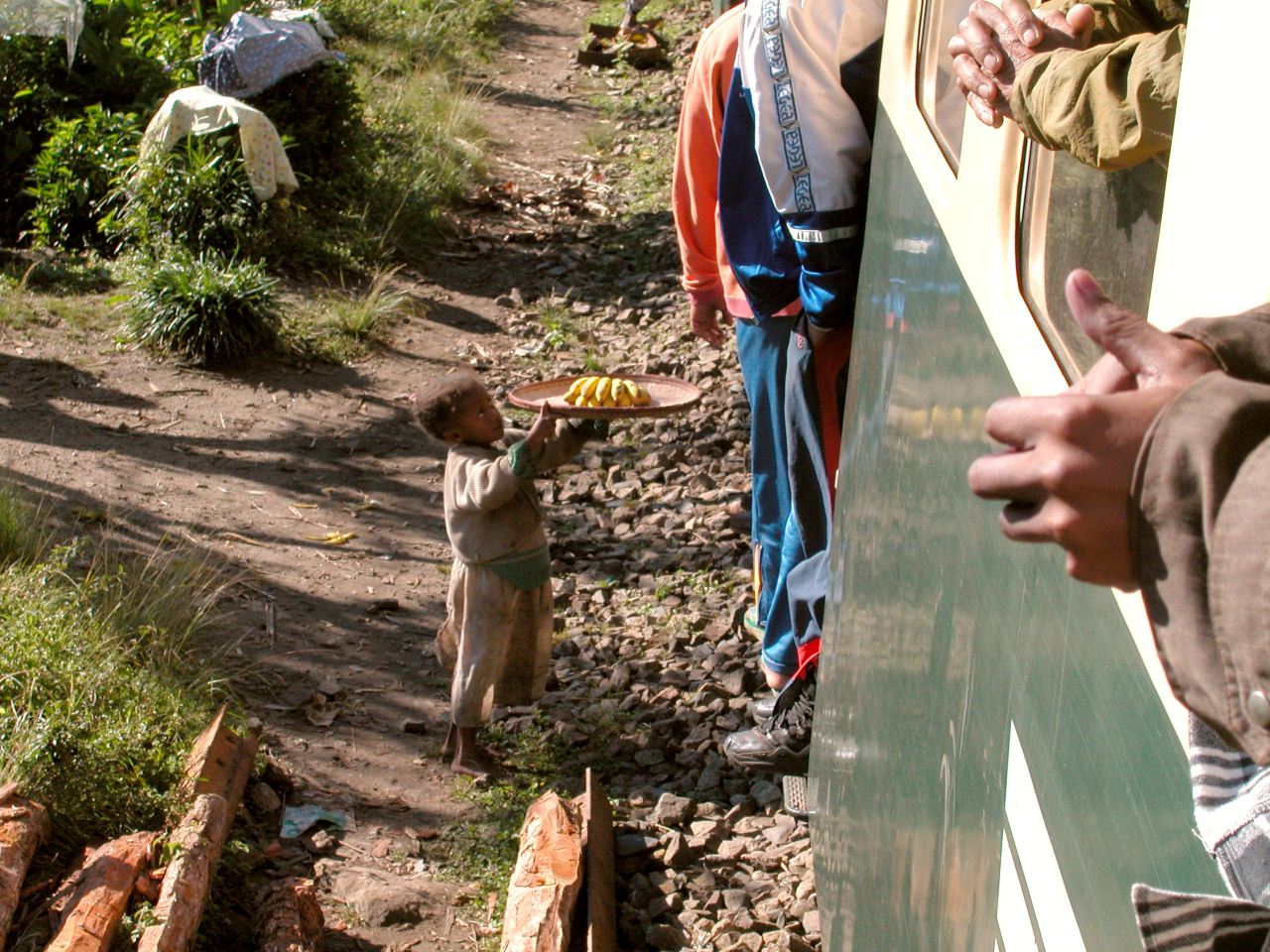
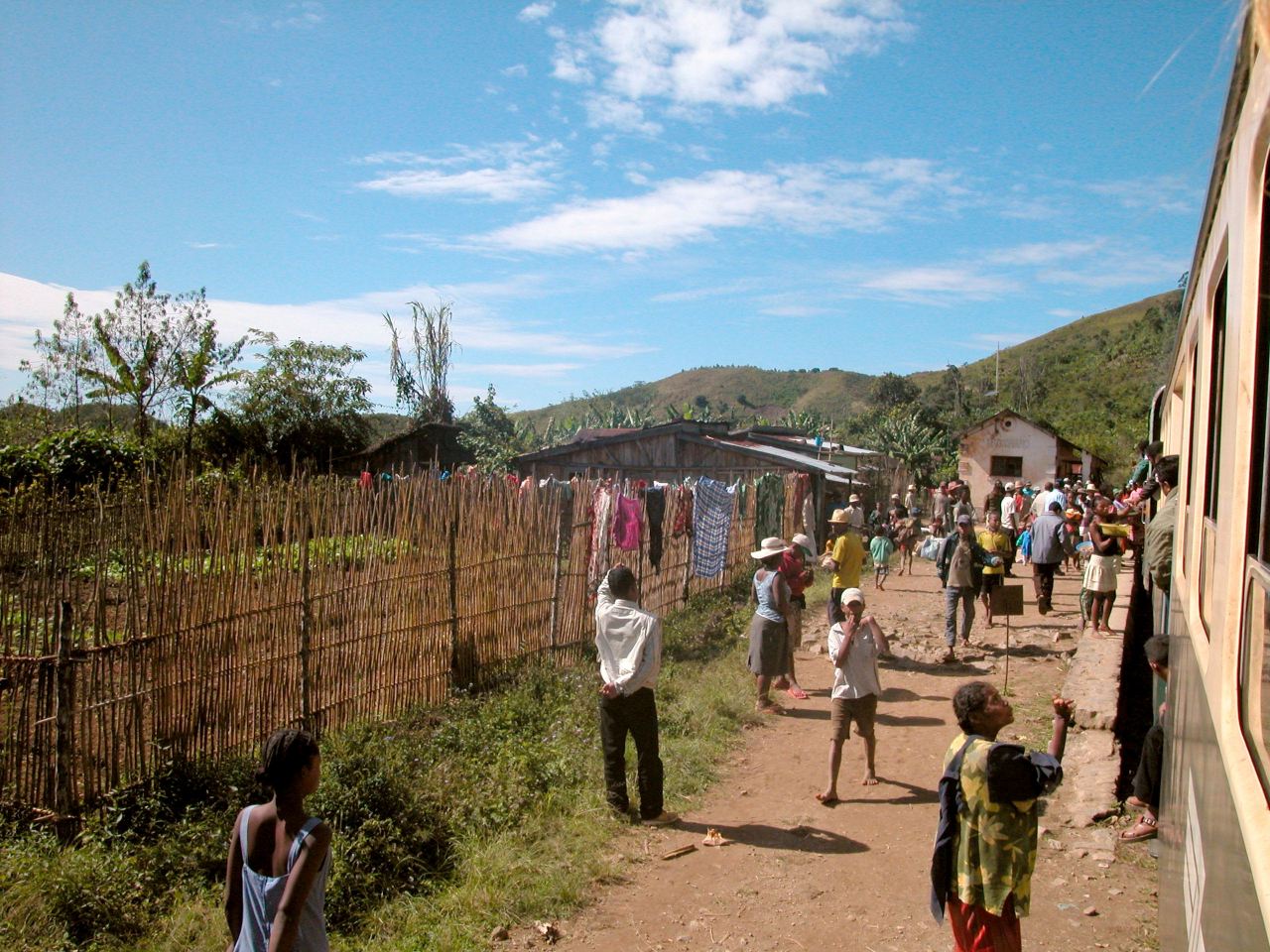
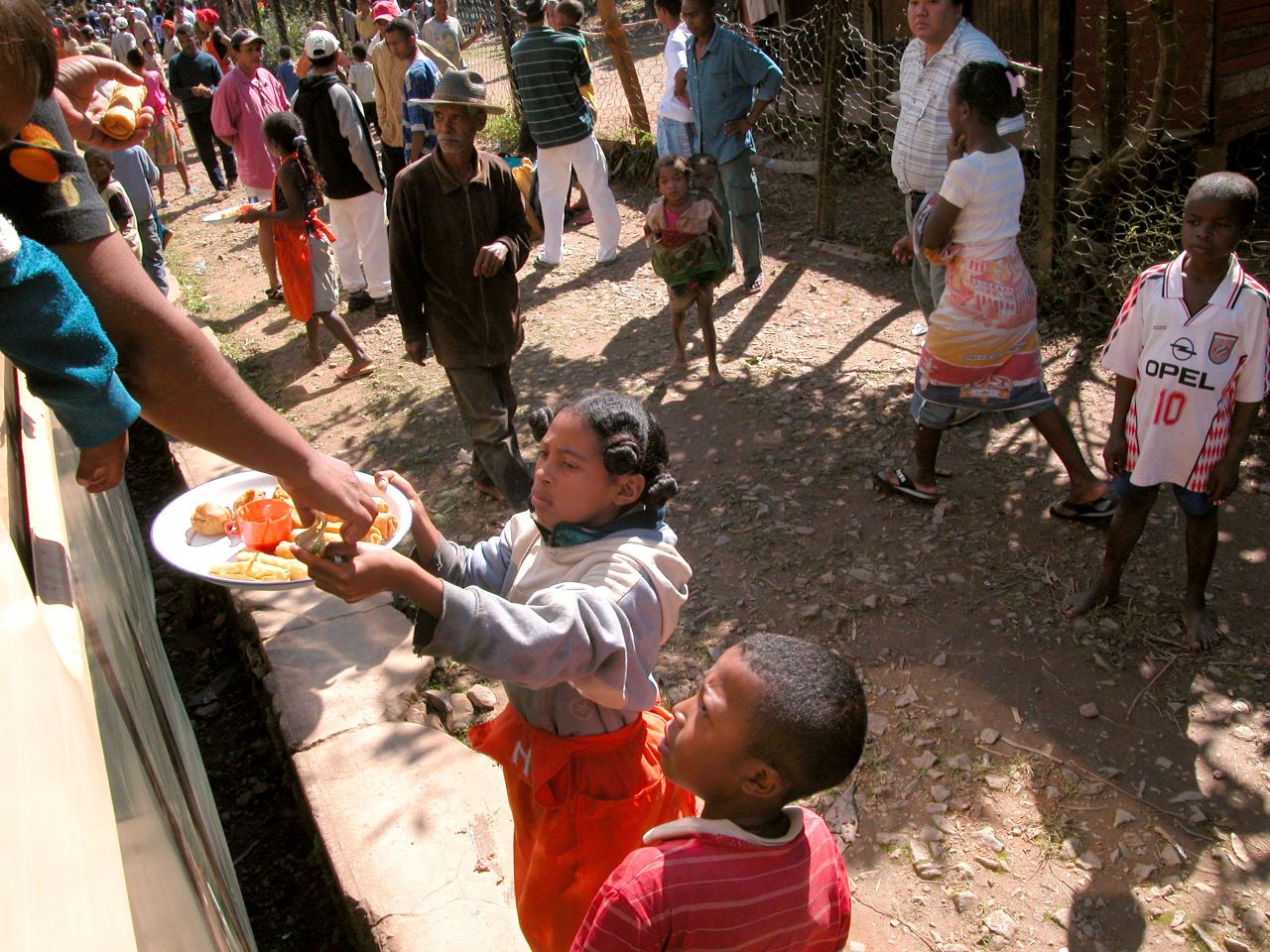
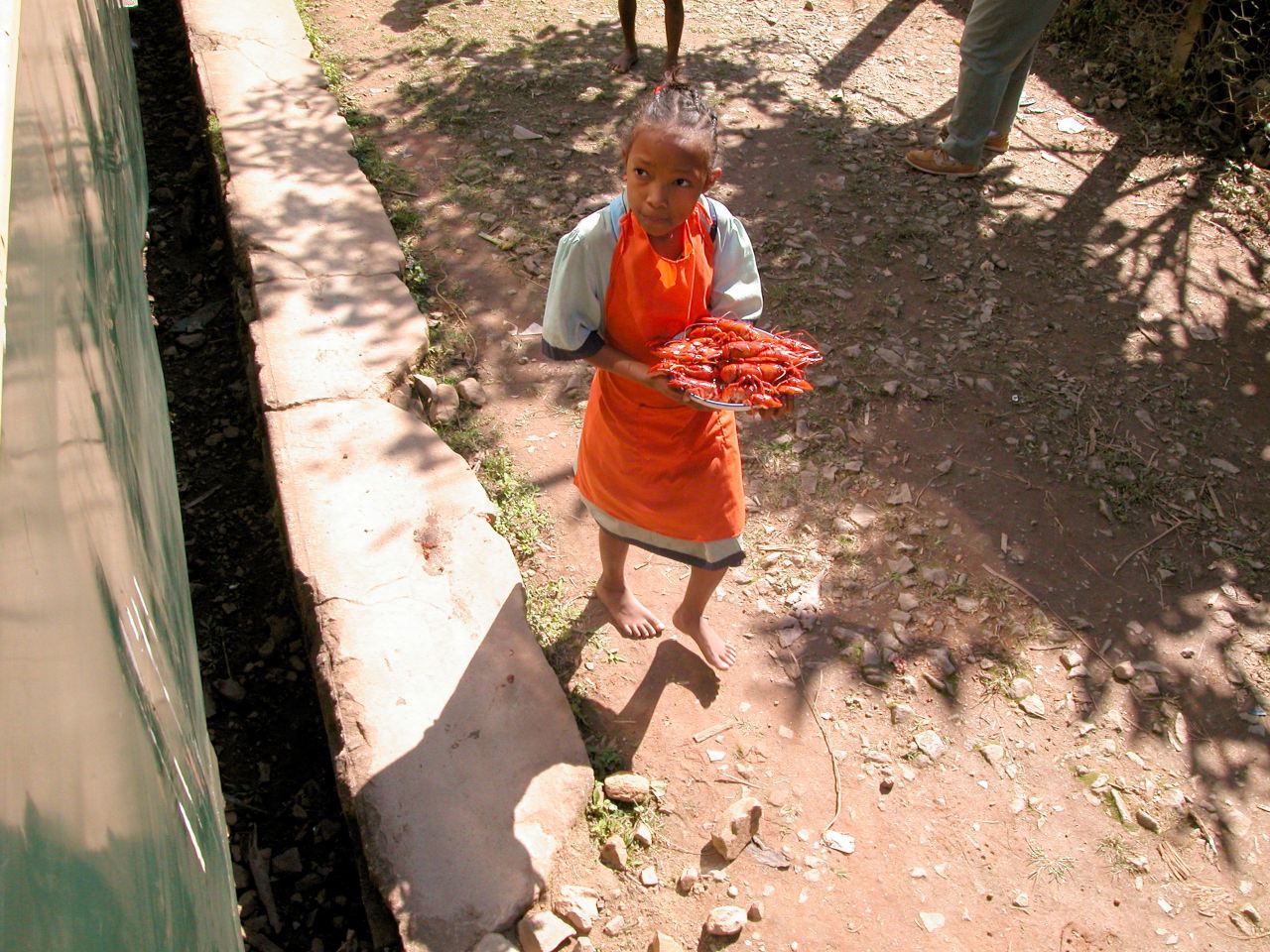
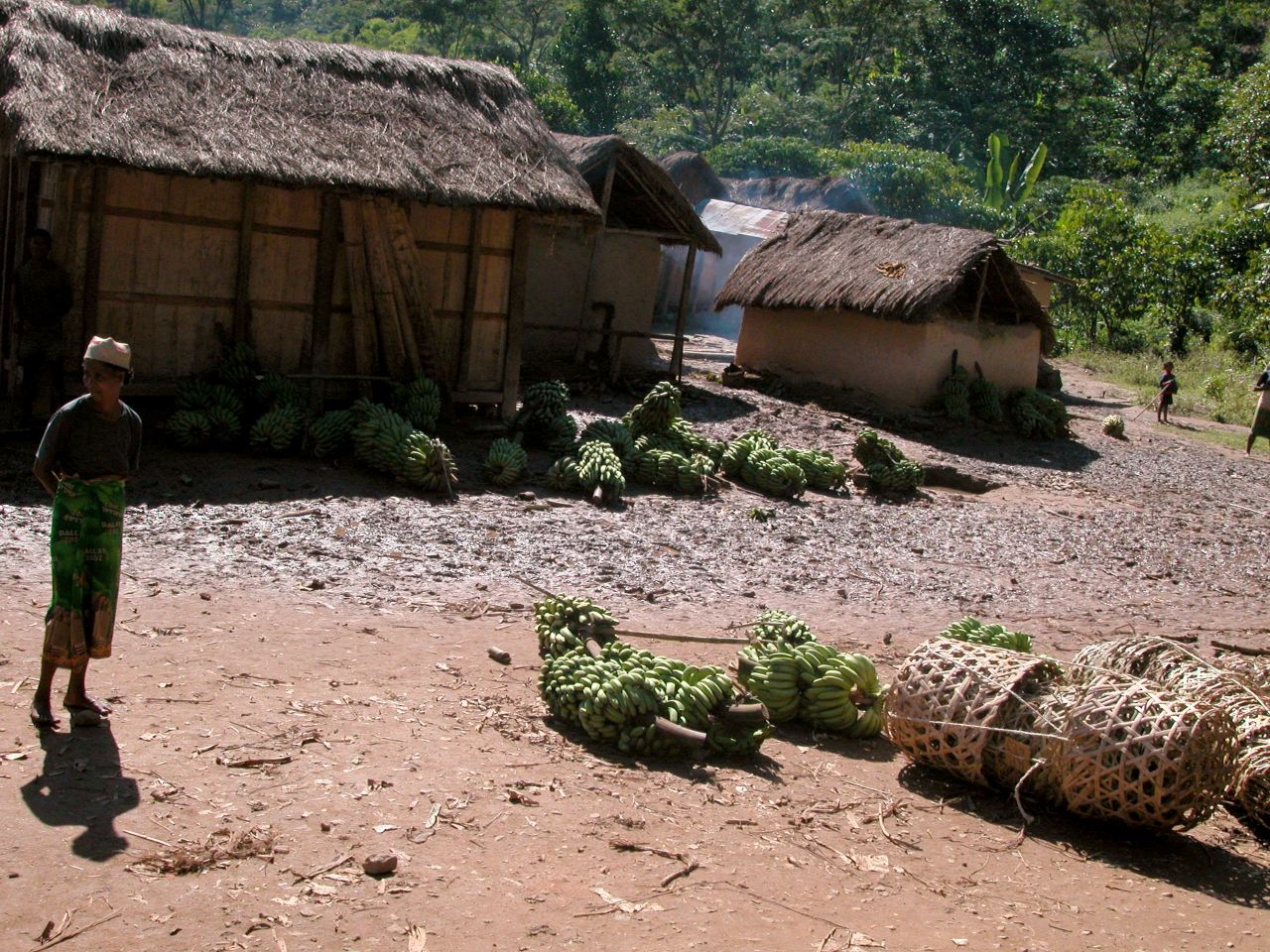
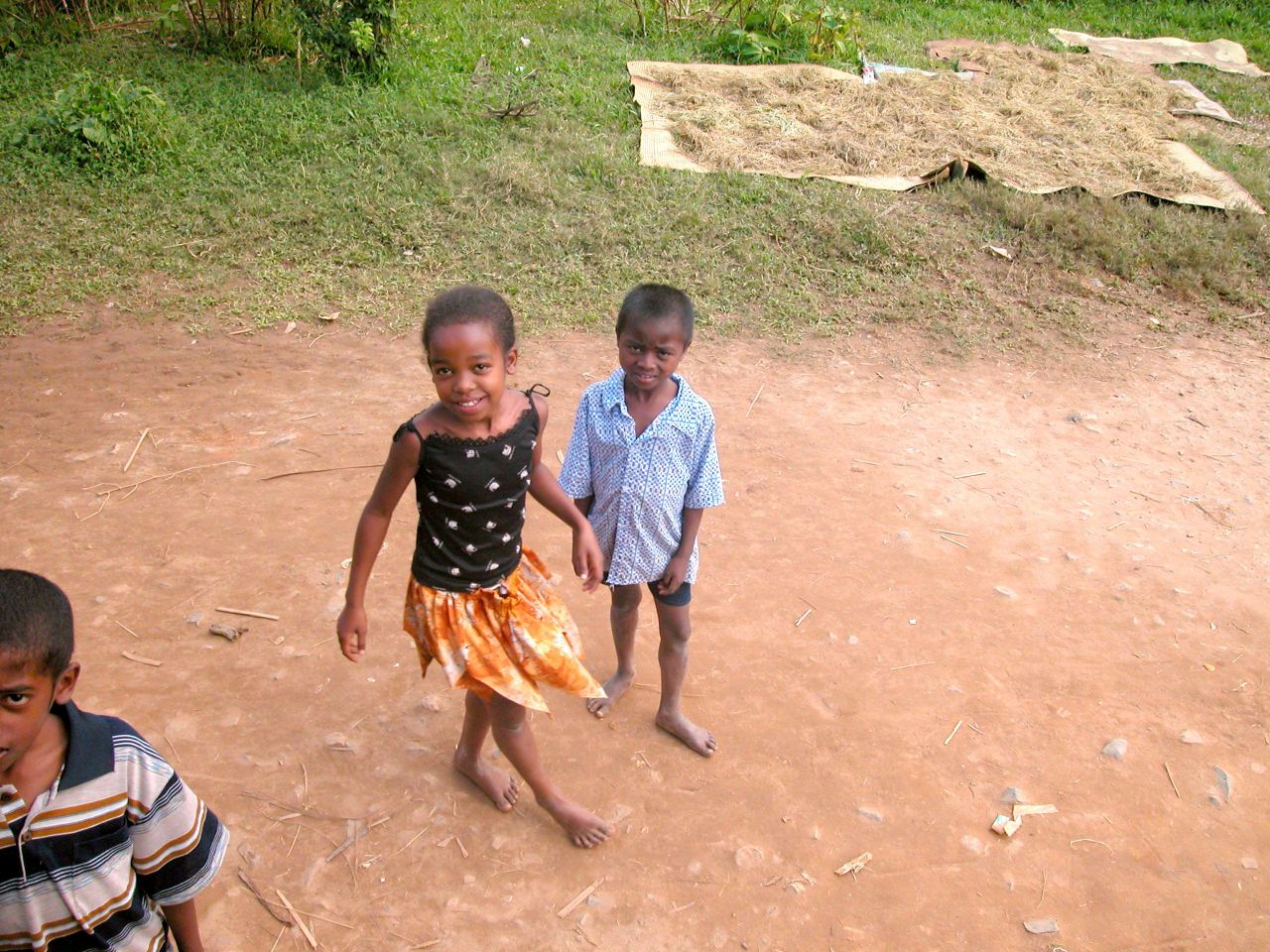
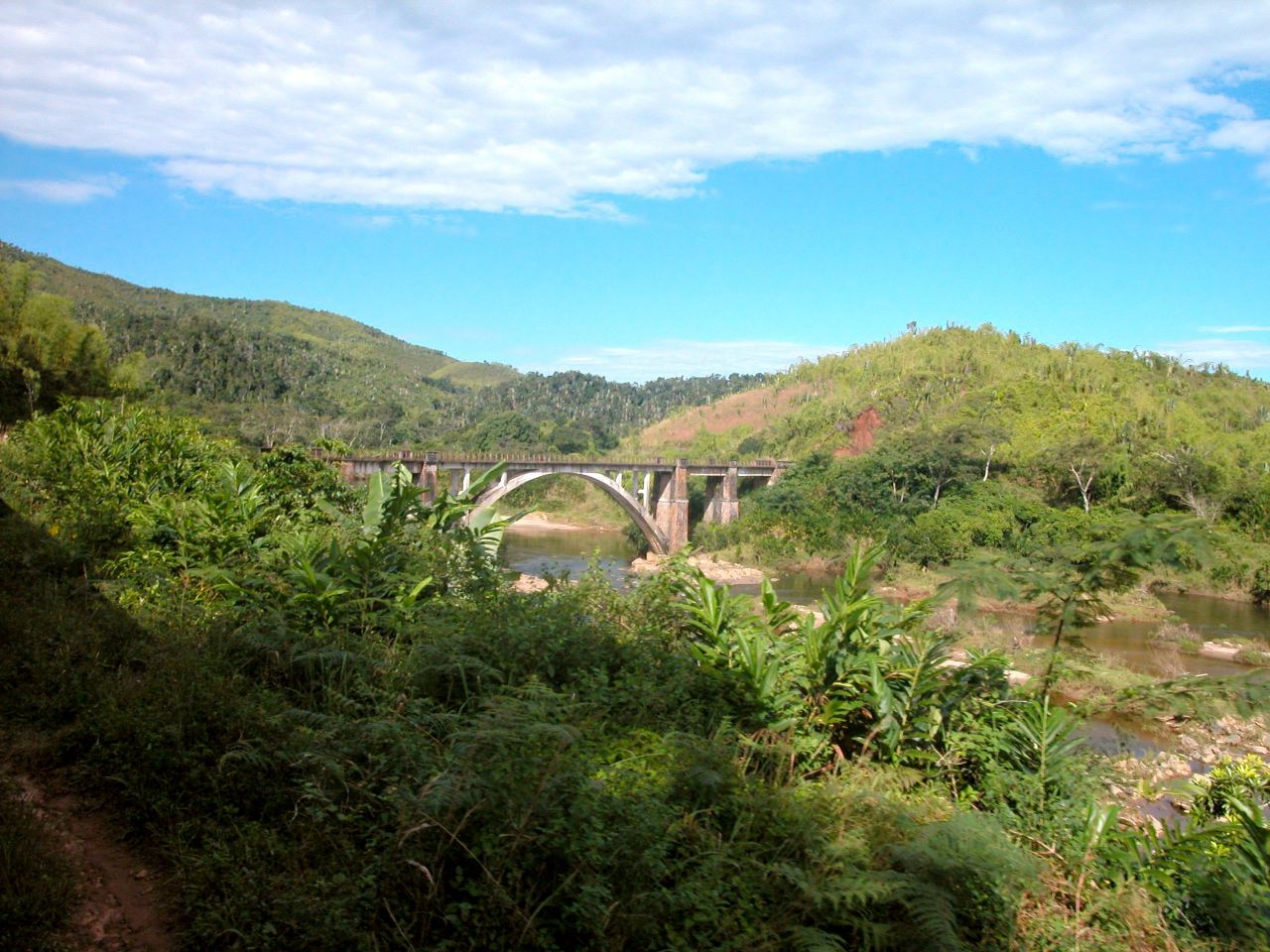
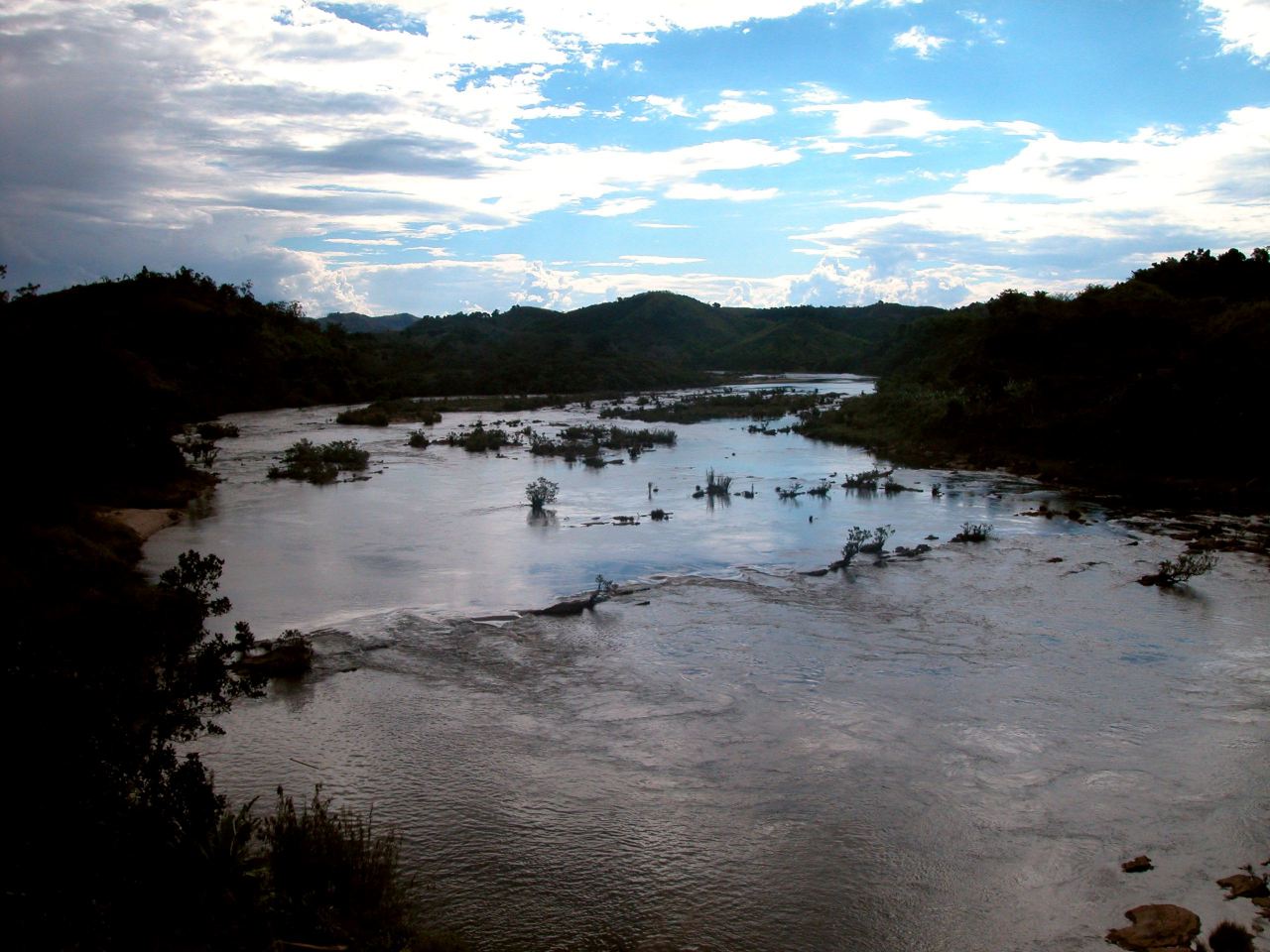
As we made our way towards the sea, the mountains gradually fell away. Villages grew steadily more populous and the stations more substantial. The line followed the banks of the river Faraony, now and then crossing it. At one little station we passed a train coming the other way.
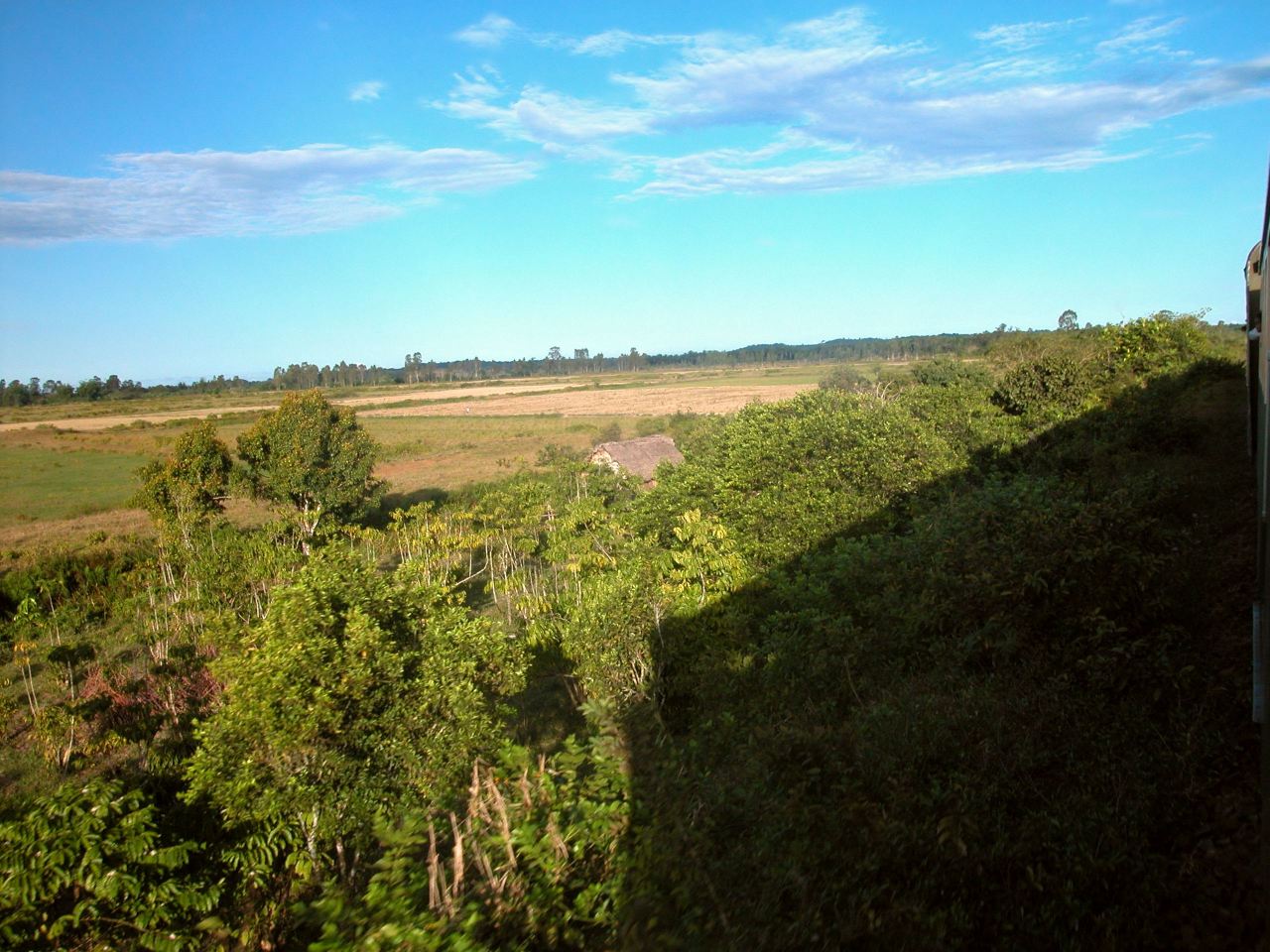
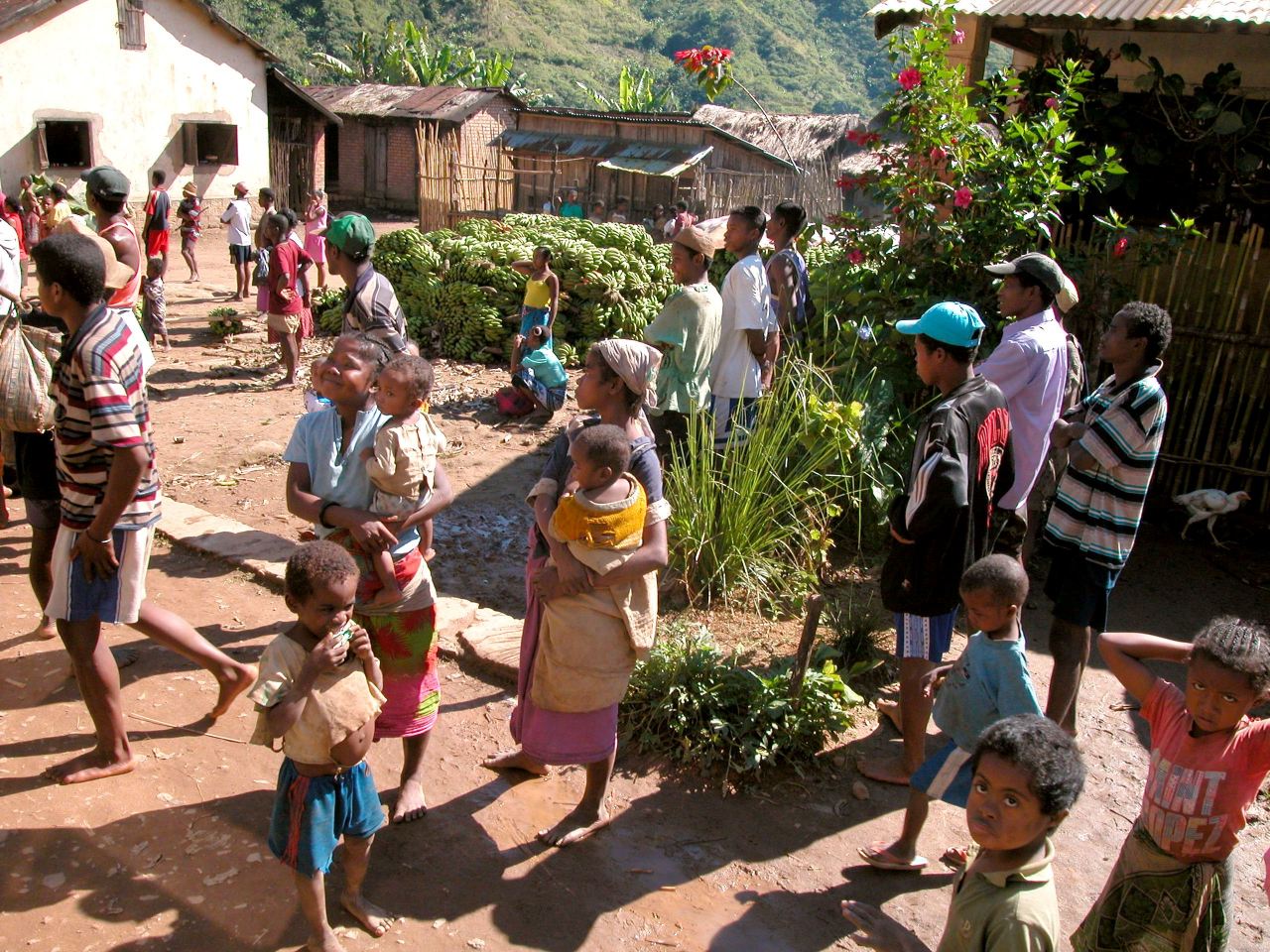
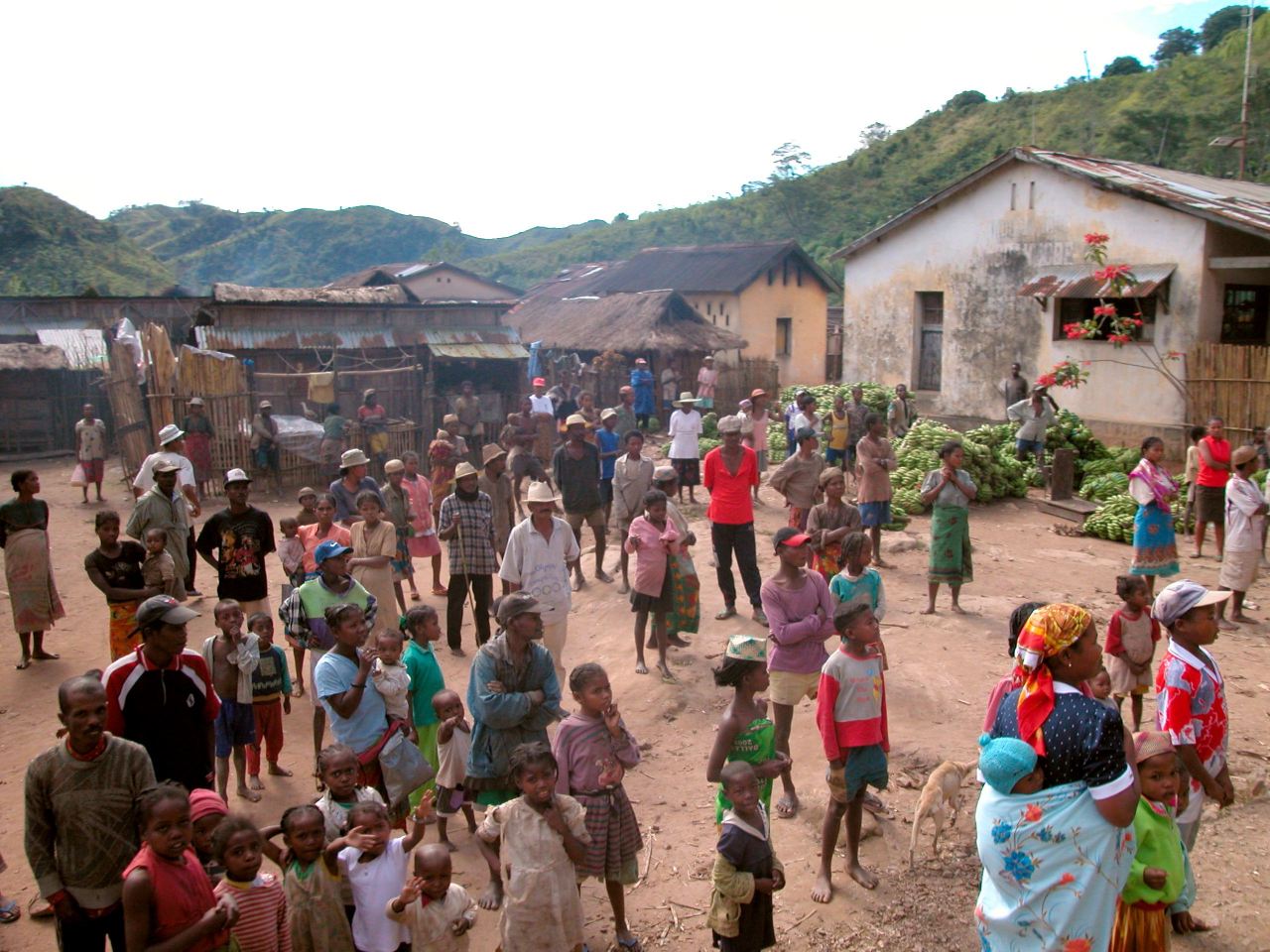
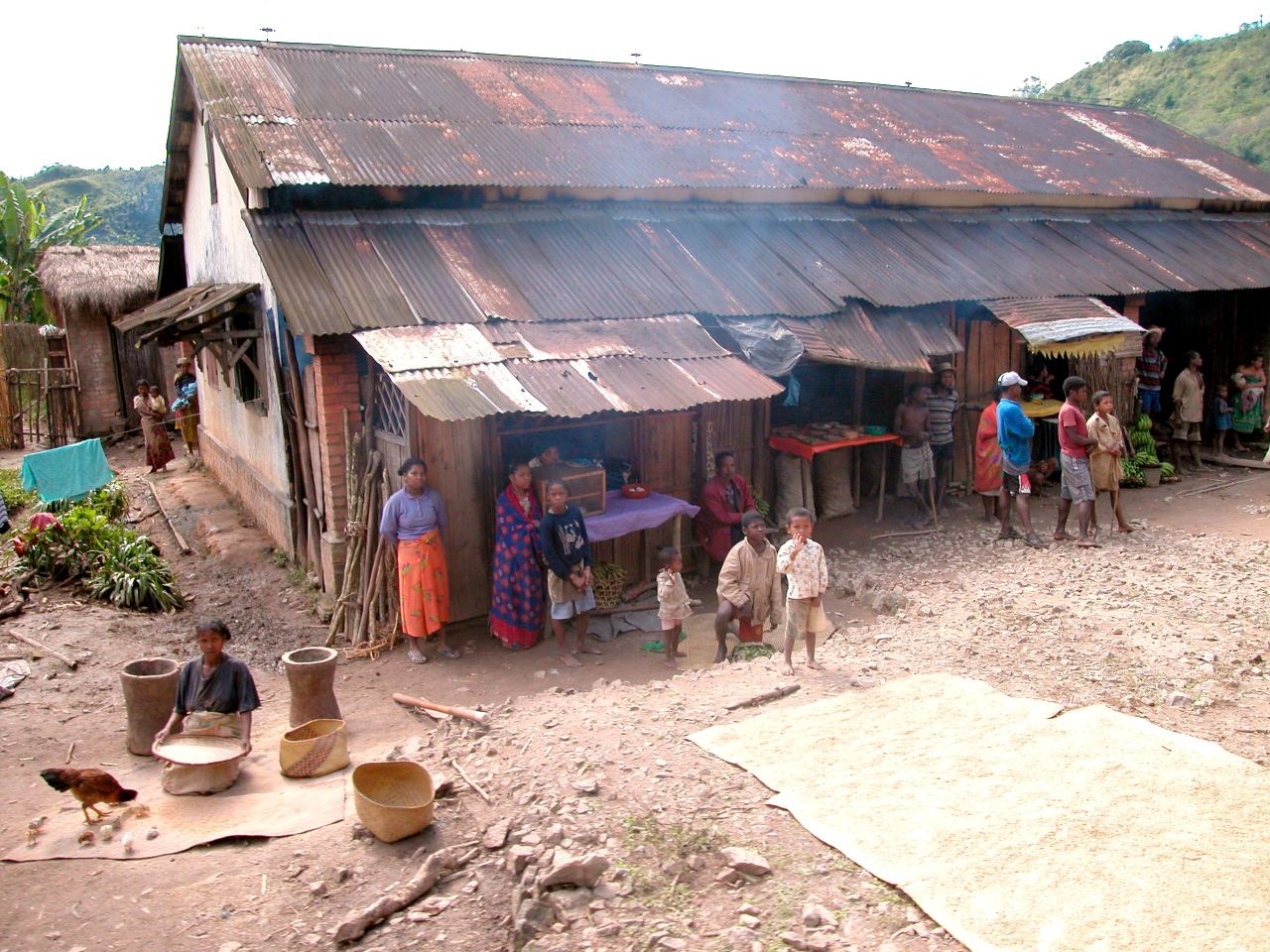
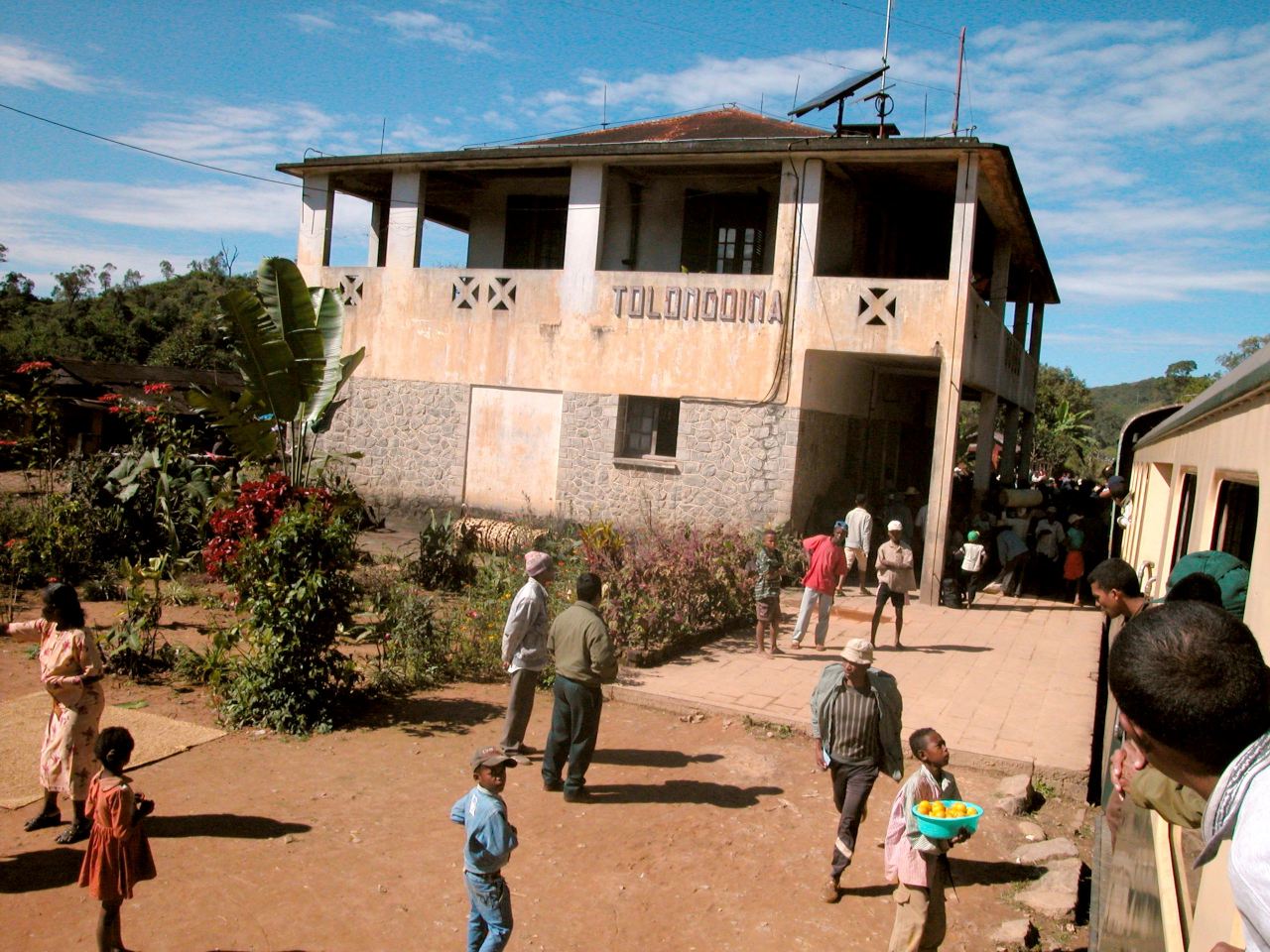
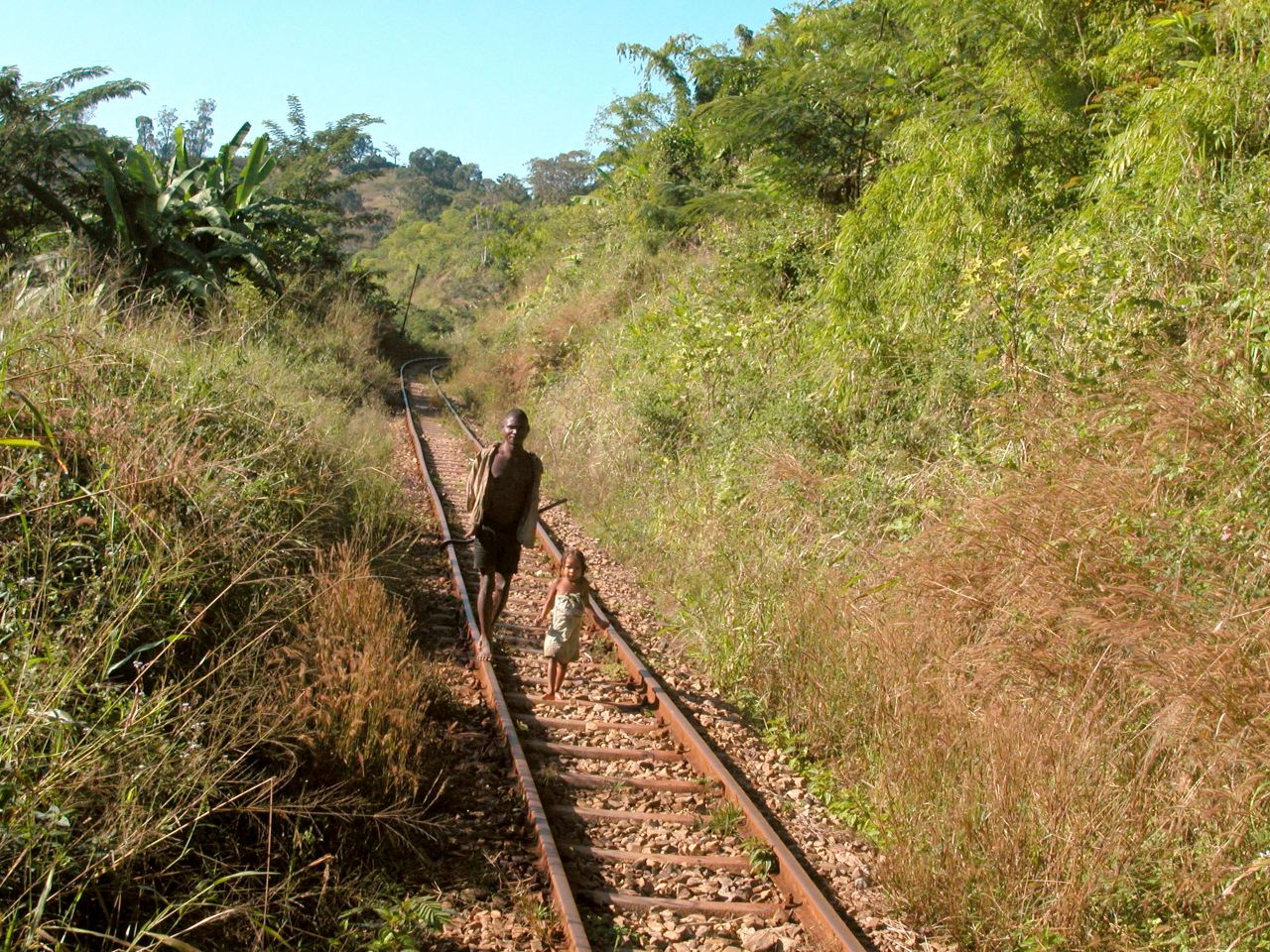
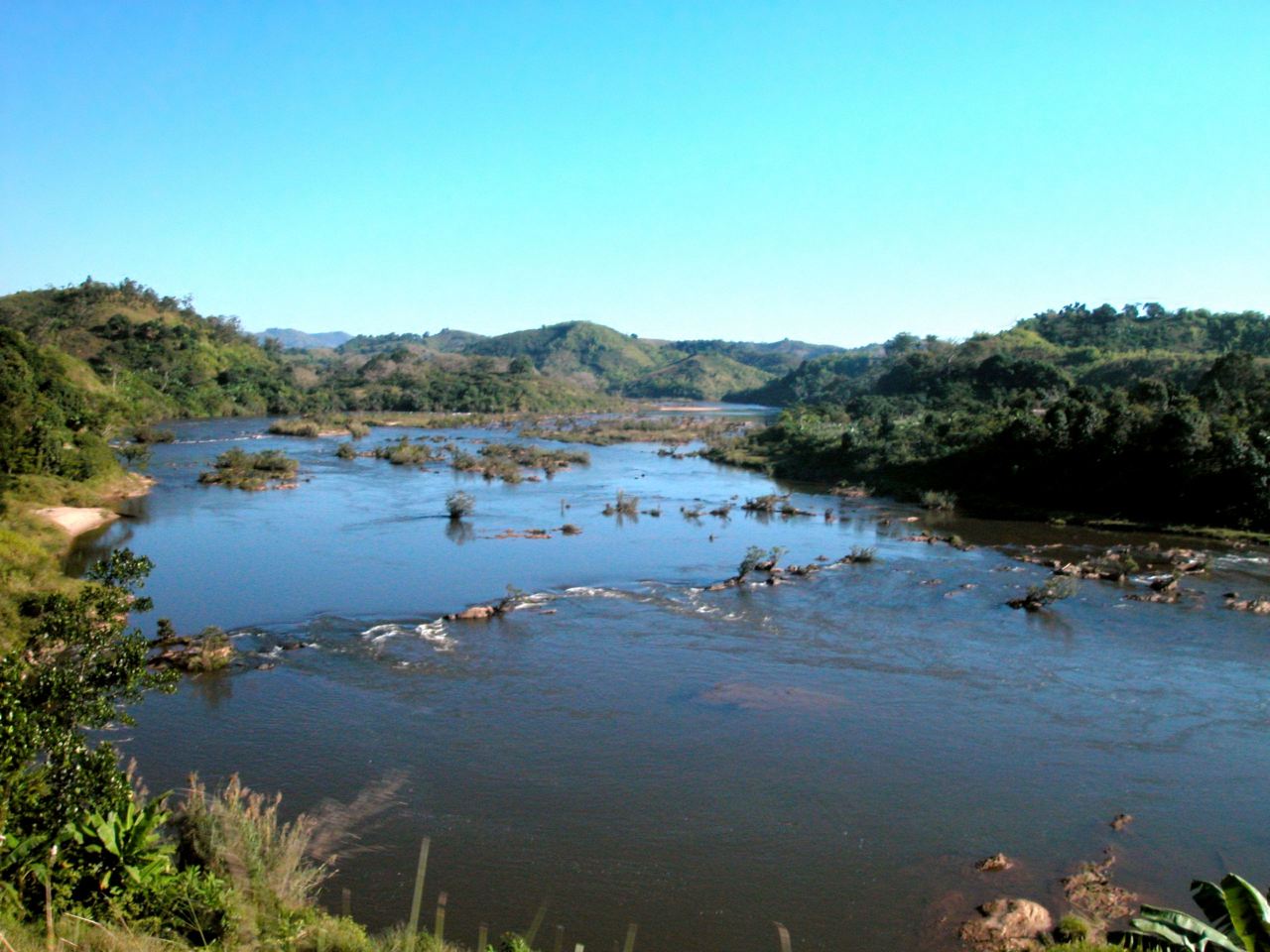
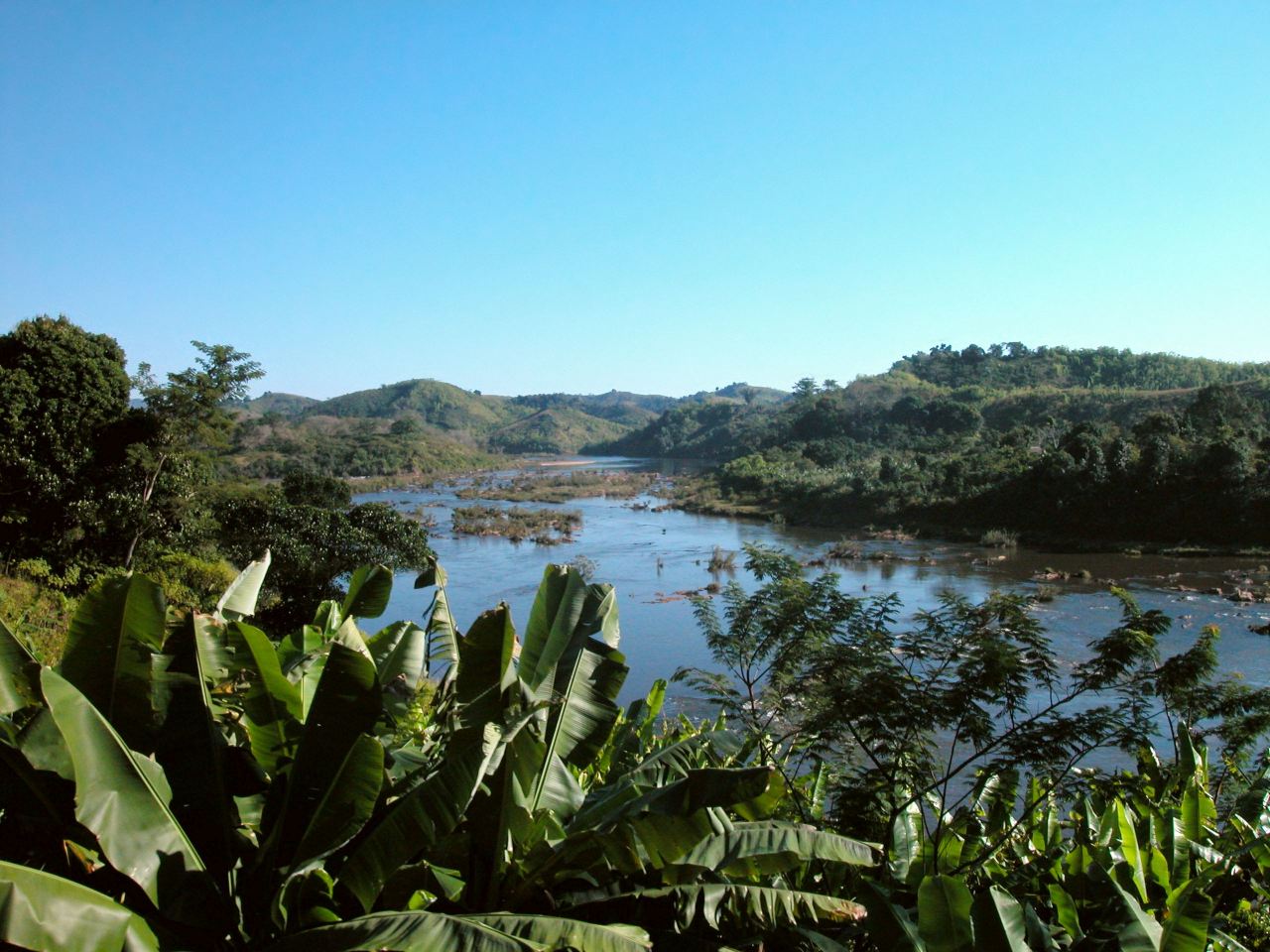
The last few kilometres ran across flat ground planted with date palms.
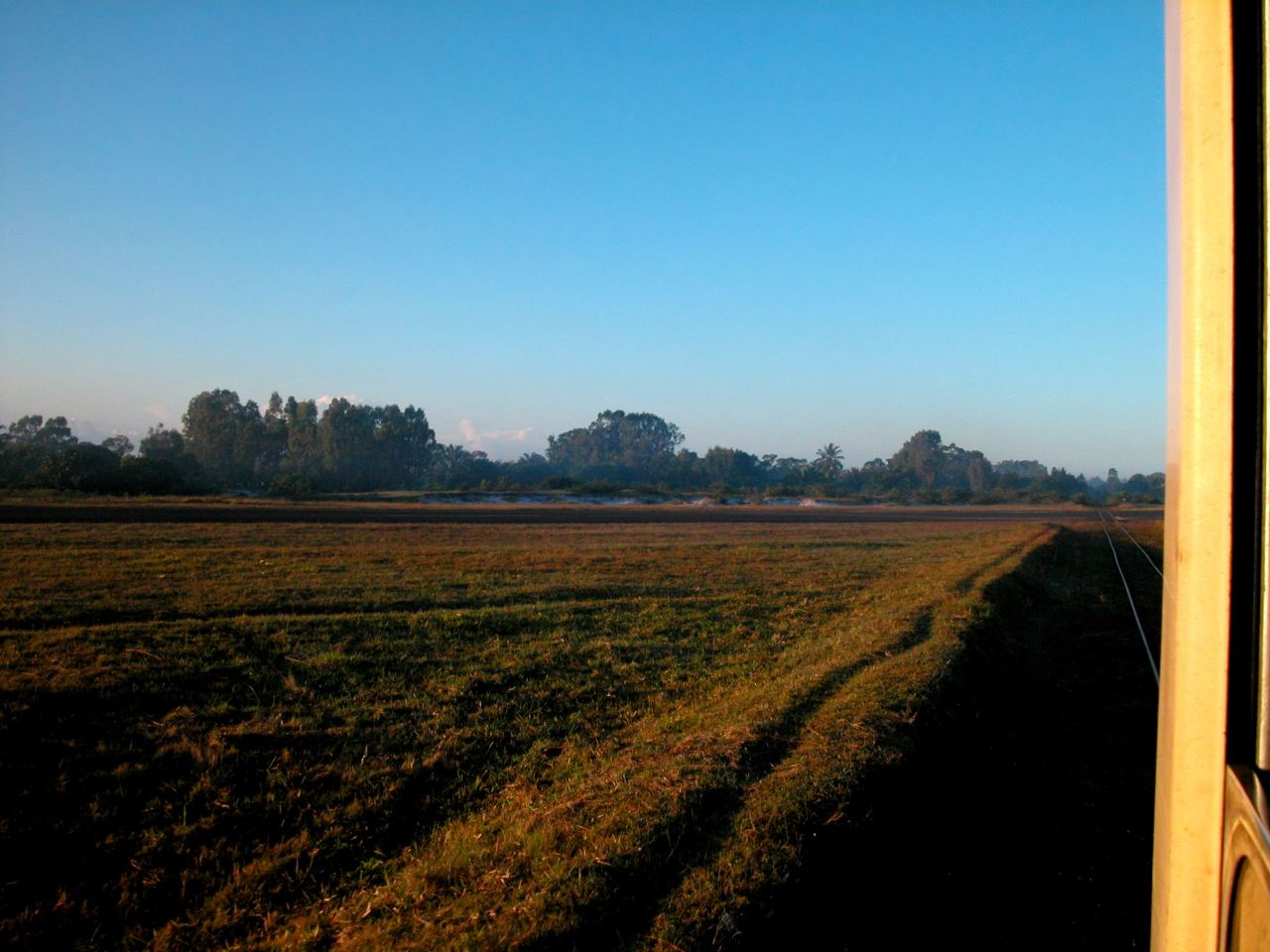
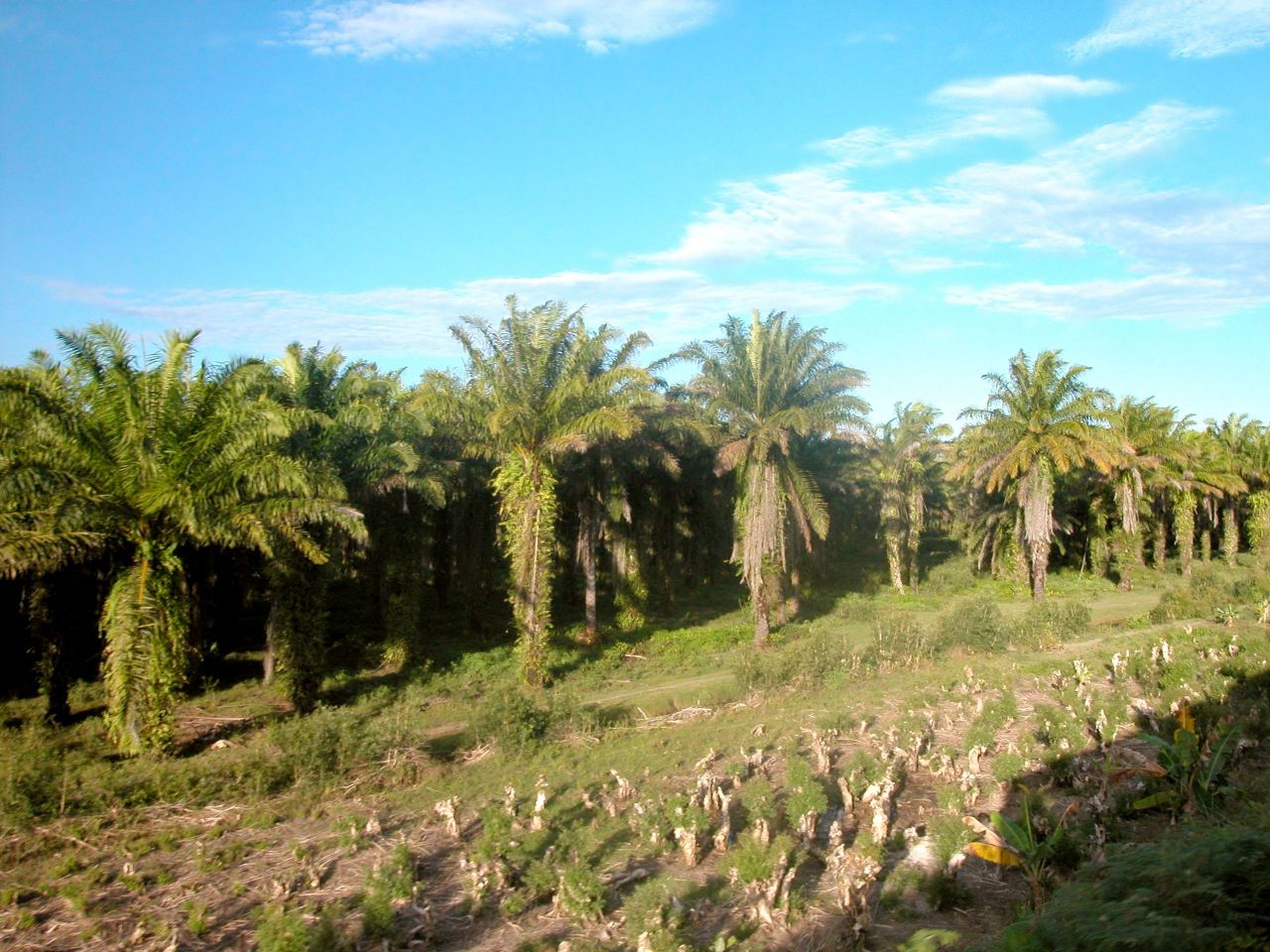
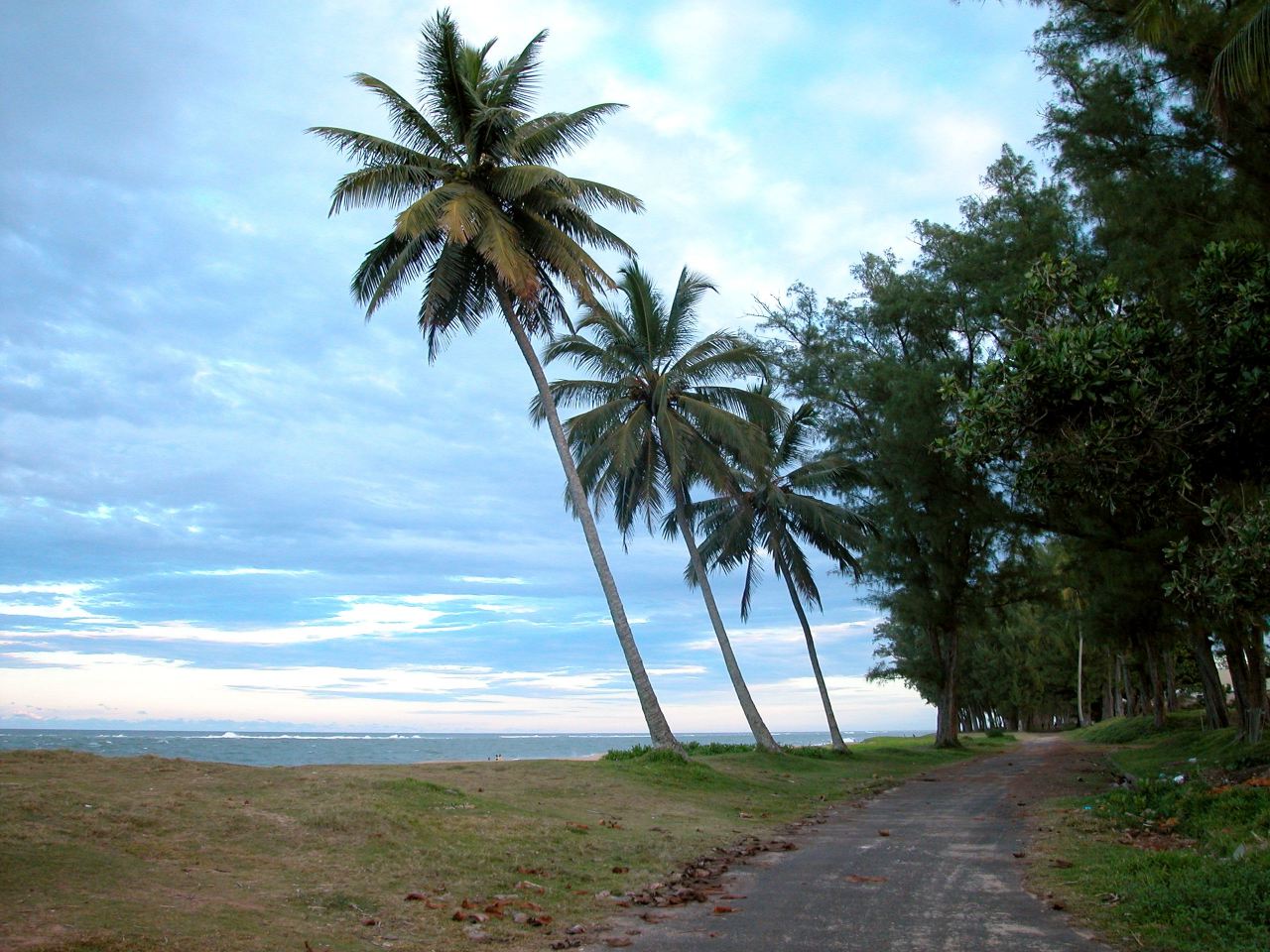
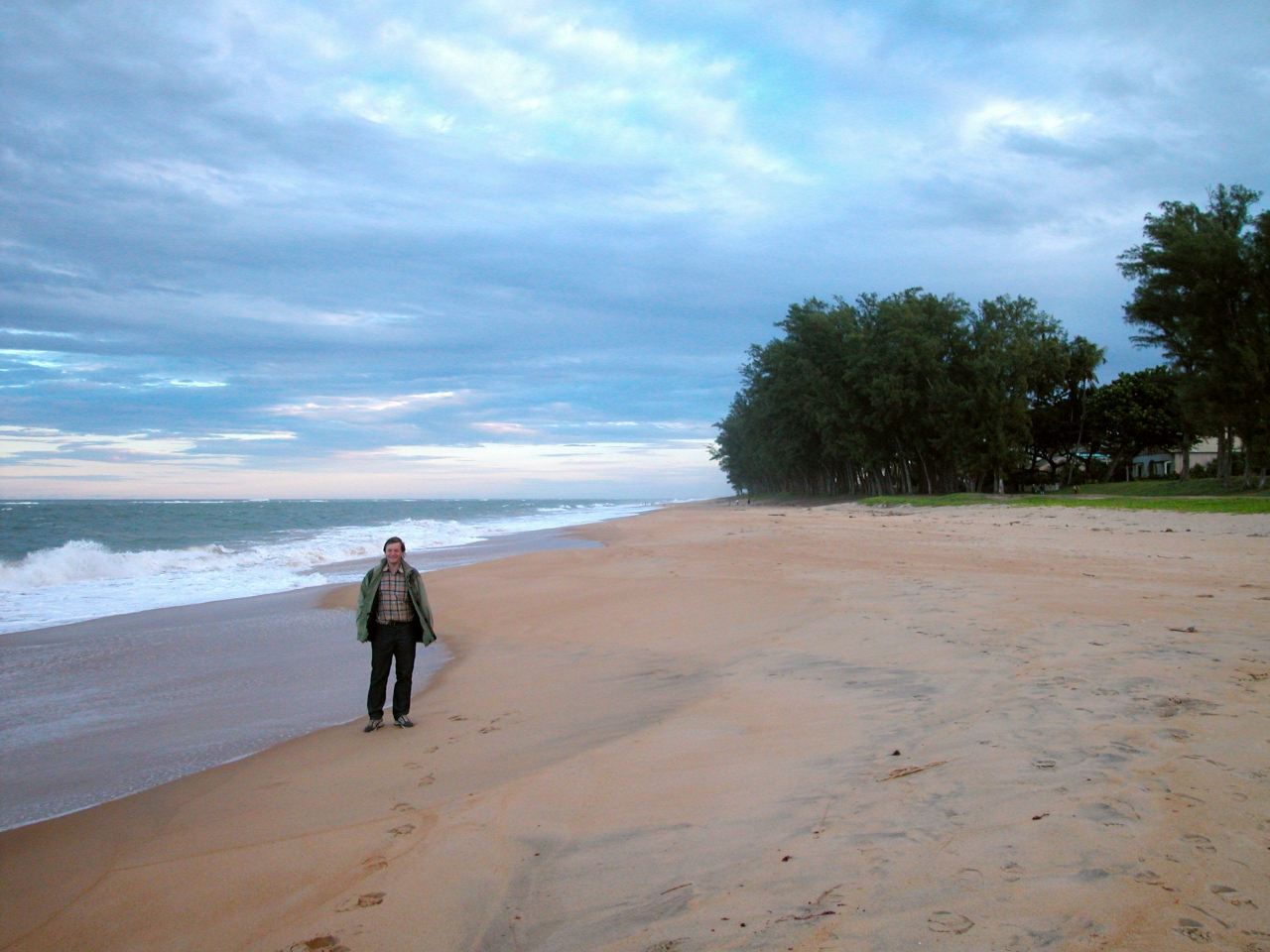
It was six in the evening when we reached Manakara, a little resort town. The seafront had small hotels with bungalows. The town stands on a spit. On one side is the sea; on the other is a freshwater canal. The sea has sharks and the canal crocodiles, so you can choose where to swim. Tourists are strongly encouraged to use the hotel pool. Some seaside resort.
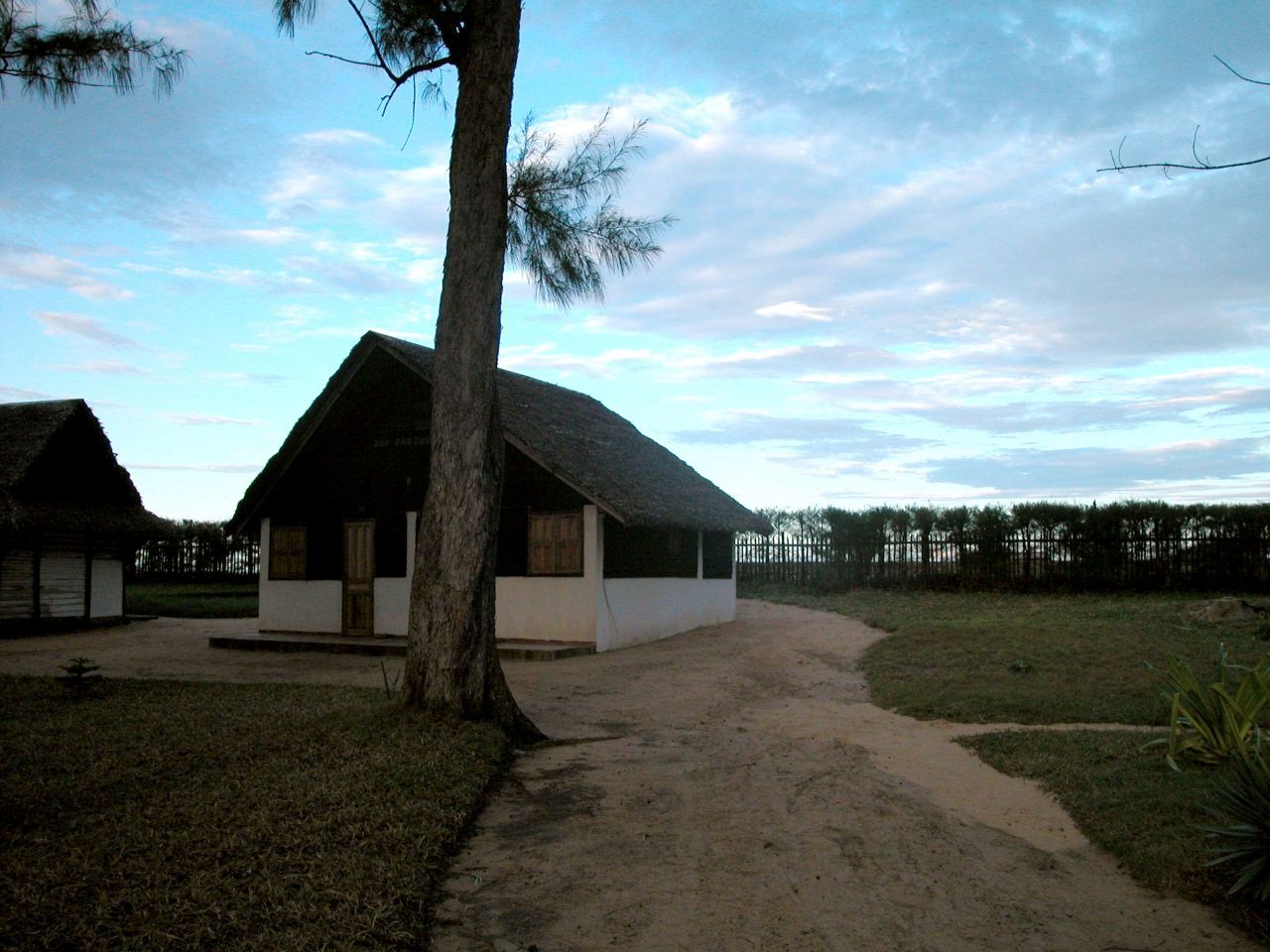
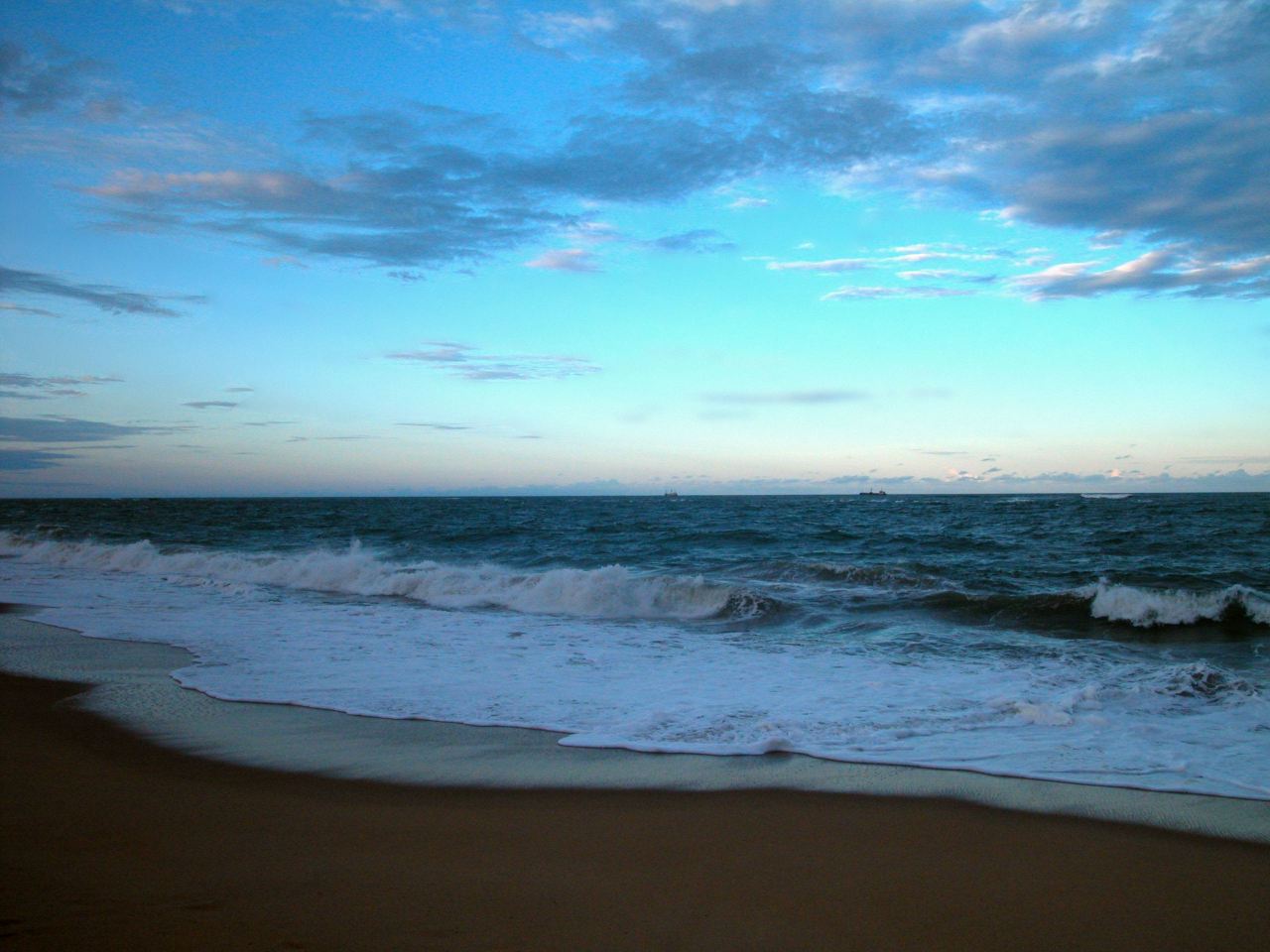
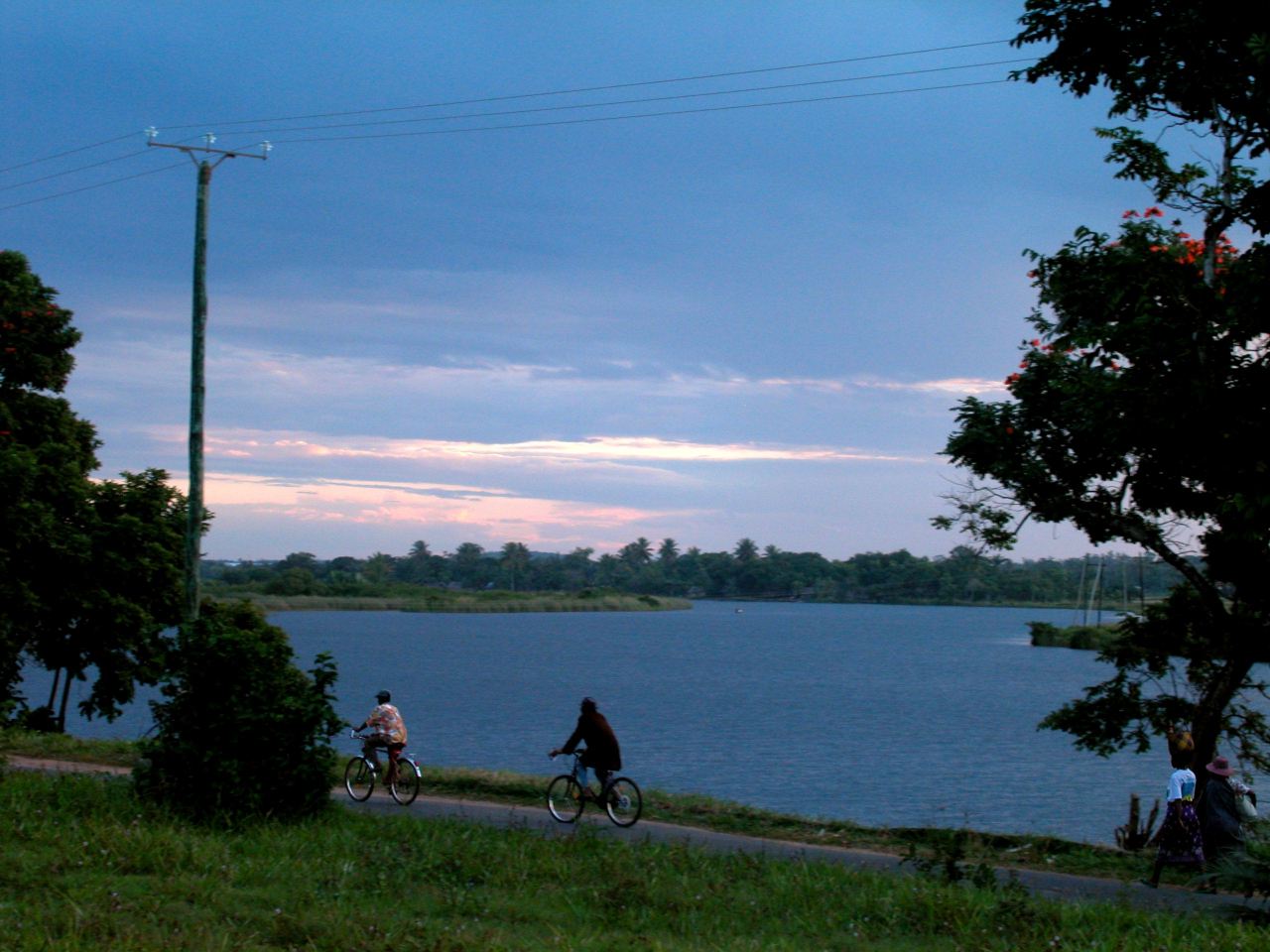
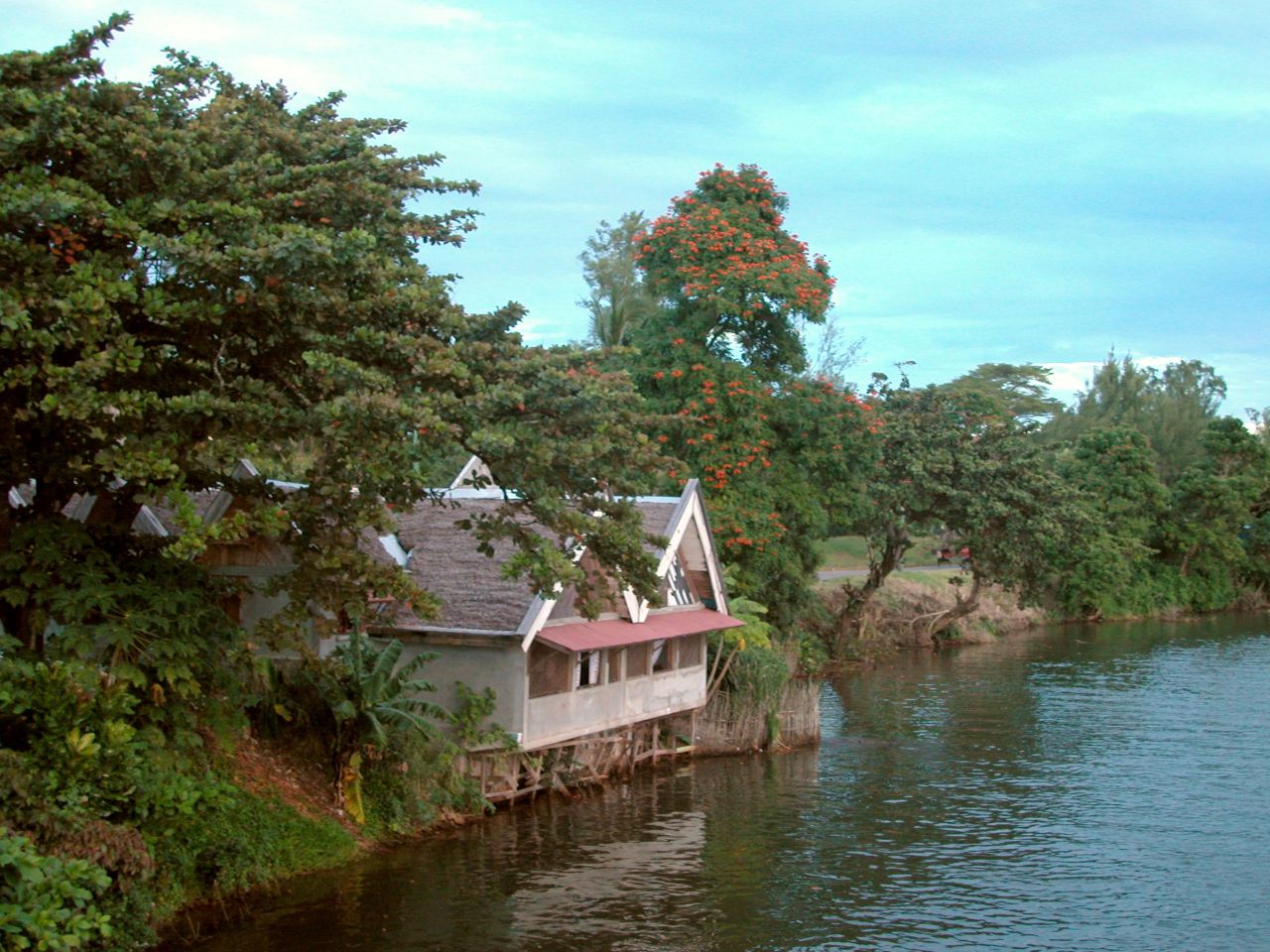
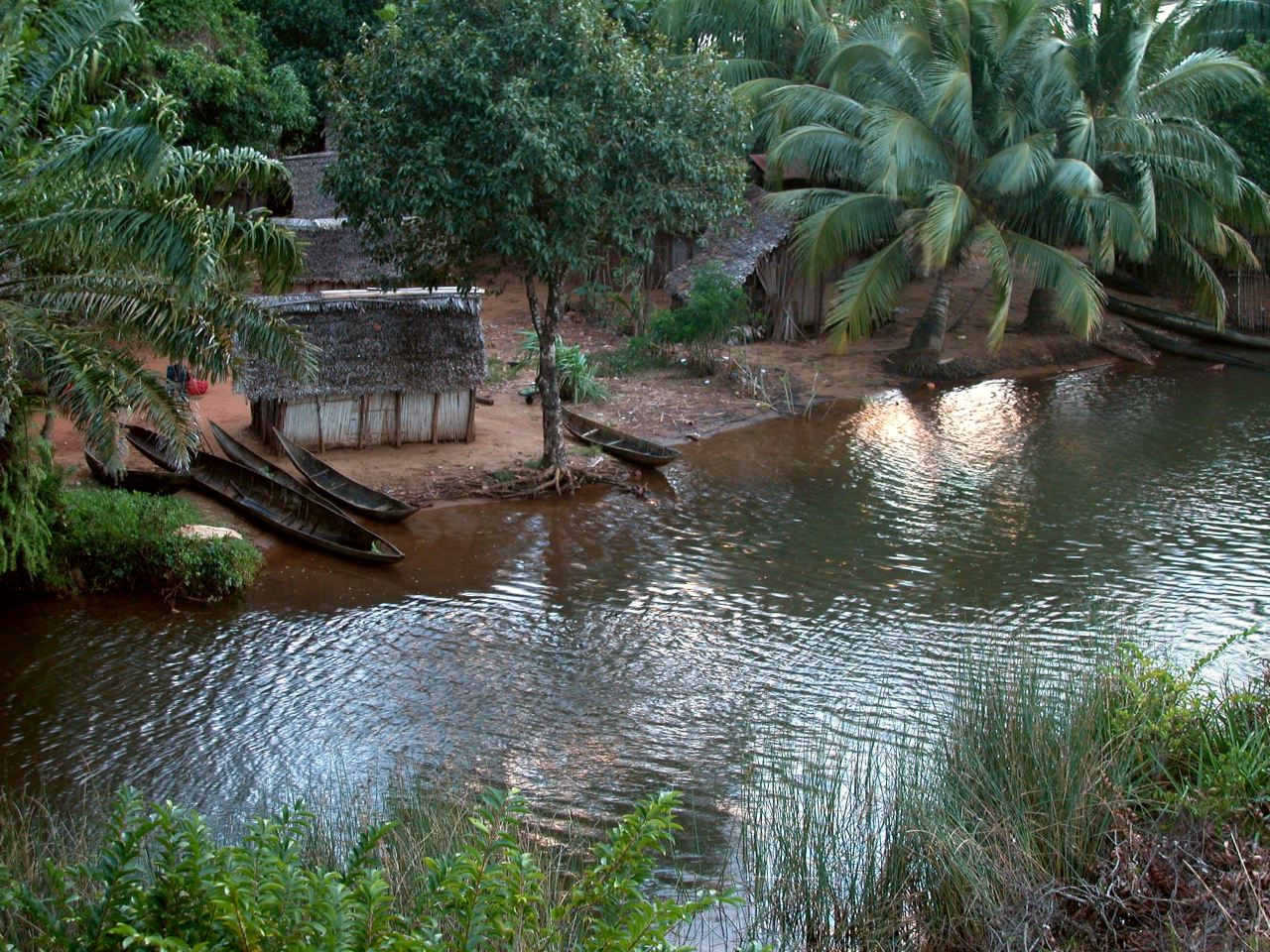
From the guidebook we picked the Hotel Parthenay Club. We couldn’t see how to get there from the station, so we hired a pousse-pousse. Out of the crowd that came running, we chose a man who understood a few words of English. He asked for 5,000 francs and I bargained him down to 3,000. We’d been told to bargain hard and hold the line so we didn’t upset the going rate. The rickshaw drivers were hard enough to deal with as it was, the argument went; spoil them and it would be worse for everyone. The road turned out to cover five kilometres, some uphill. The poor man was puffing like a samovar. Tender-hearted Tanya nearly cried to see someone work so hard for fifty cents. She talked me into giving him the five thousand. He immediately offered to pick us up at six the next morning for the train back. We agreed. In the morning he said he’d slept there on the cart all night and expected ten thousand for it. So much for pity. Tanya had no more of it for rickshaw drivers for the rest of the trip.
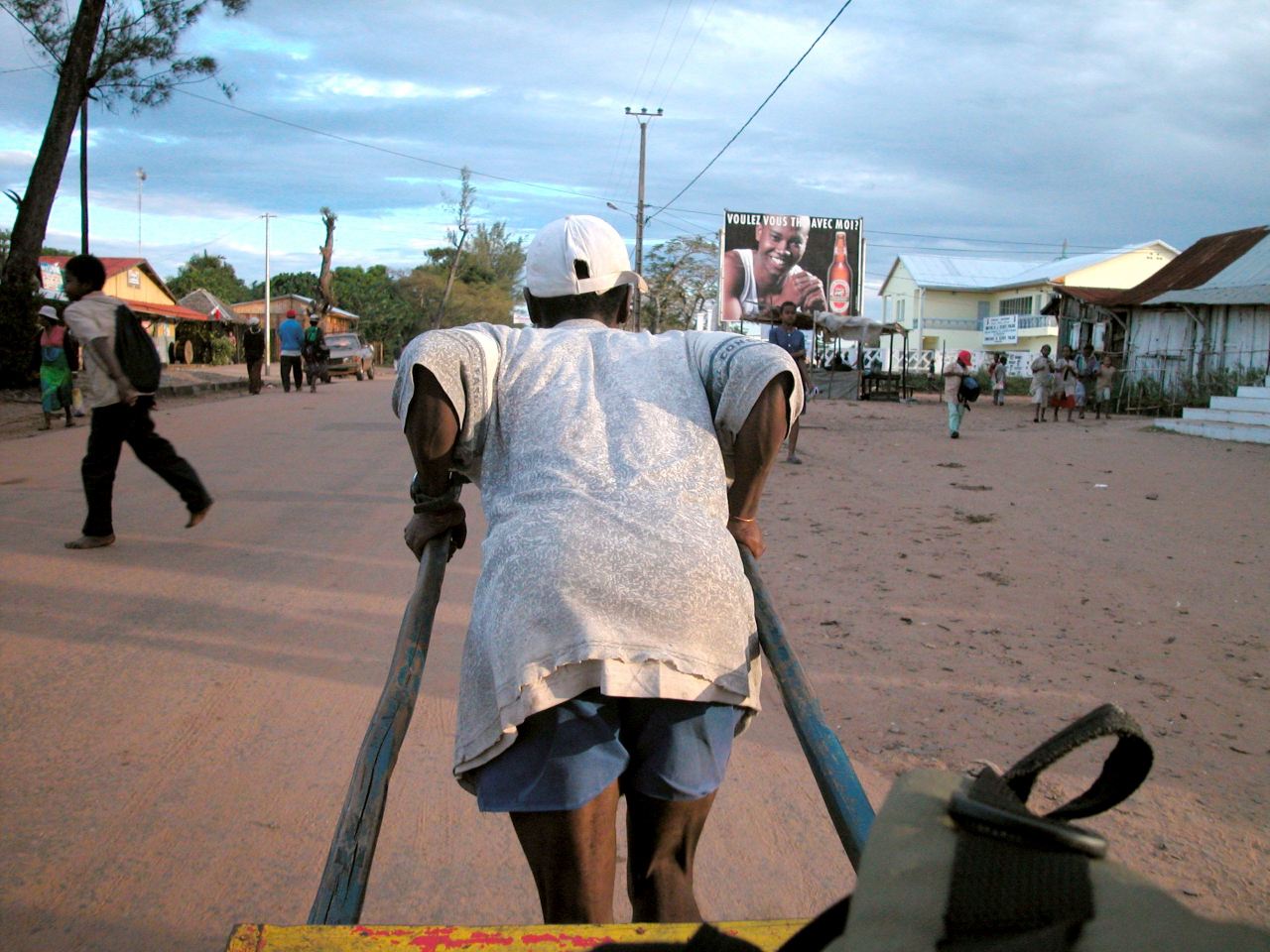
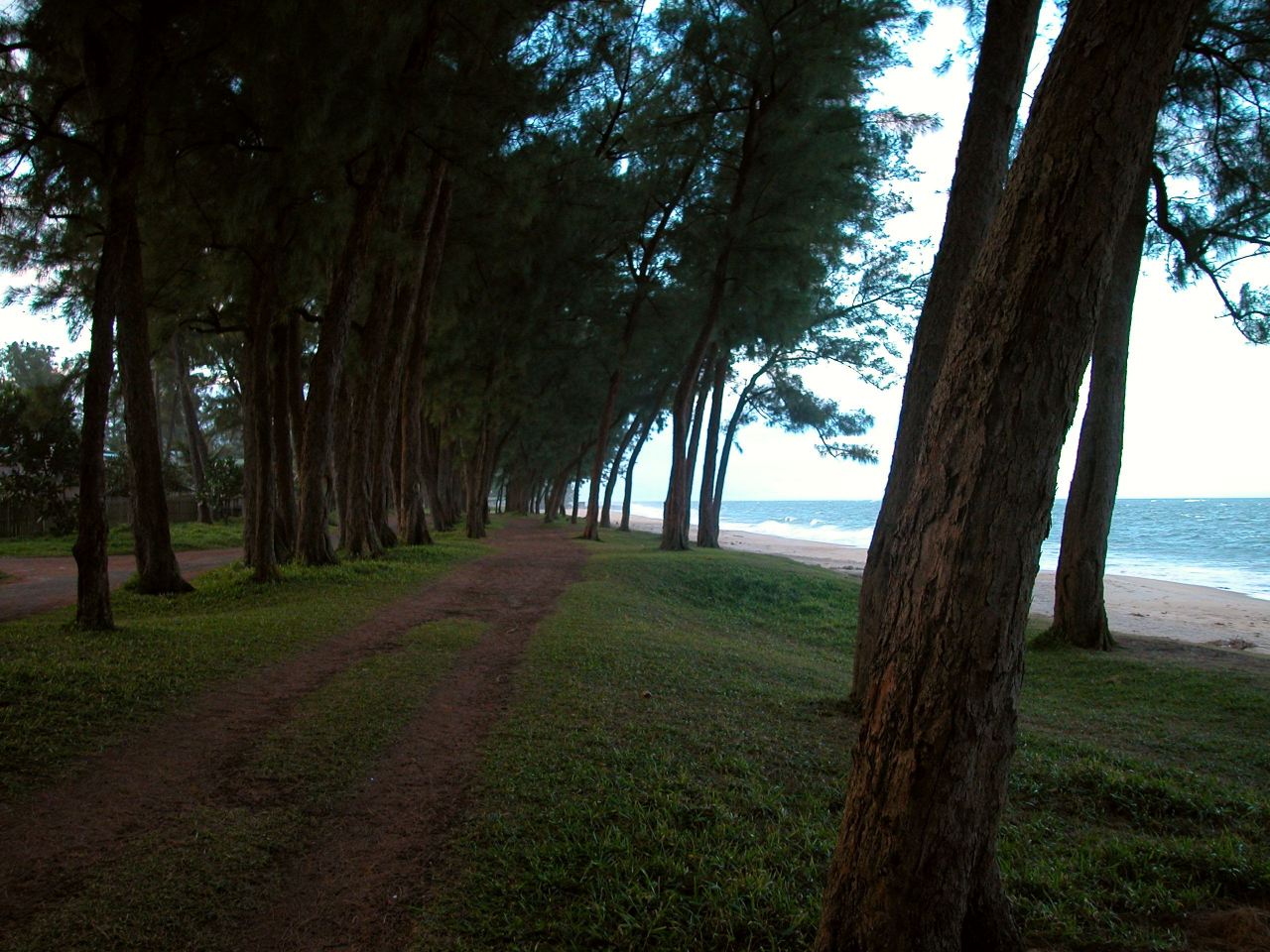
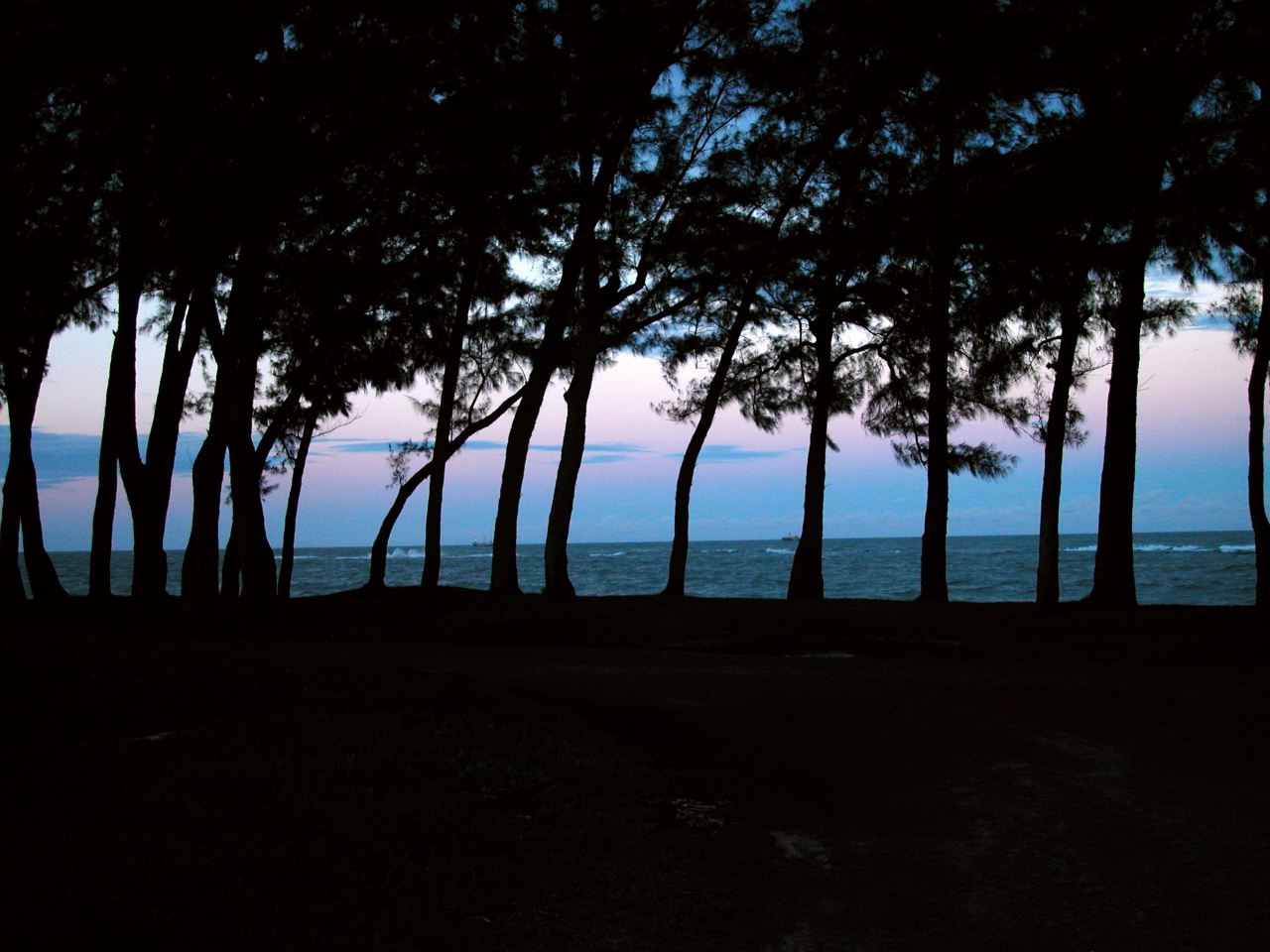
We walked for a long time that evening. The town was a decent size and took about two hours to walk around. A shady avenue lined the coast, with a fine sandy beach and warm water. We didn’t risk swimming. In that part of the island there was scarcely a reef. The water got deep right at the beach, so the waves broke on the sand and sharks could get very close. The chances were tiny, of course, but we didn’t feel like testing them.
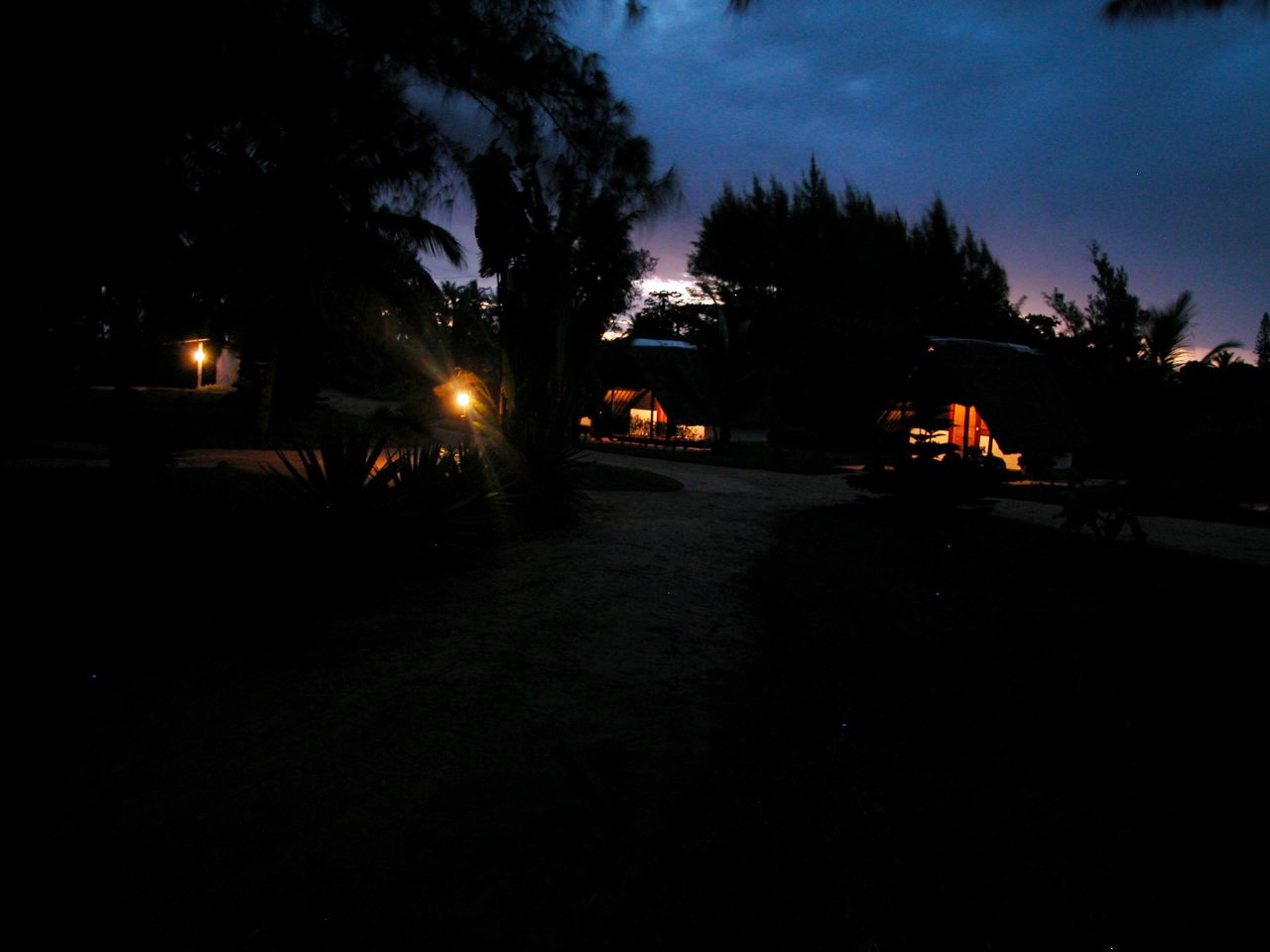
That evening I ordered a spiny lobster at the restaurant. It turned up on a vast platter. I spent a long time breaking through the hard shell to get the meat out. It was an unusually pleasant evening, and we were warm at last. Down by the sea it was properly tropical, warm even in winter, unlike the high plateau. We slept in a bungalow by the shore. It was cosy, had hot water and, like any tropical lodging, was full of little creatures.
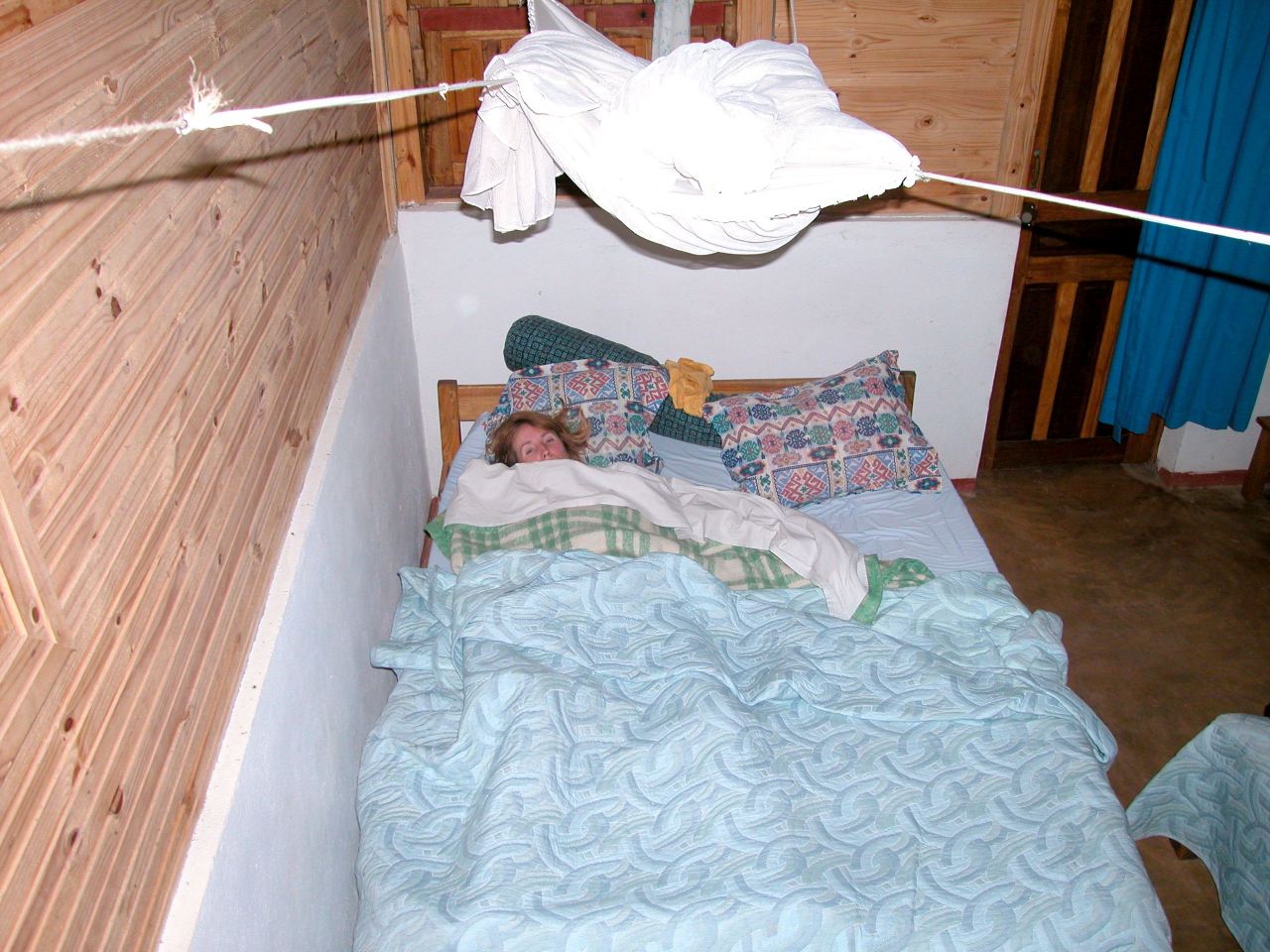
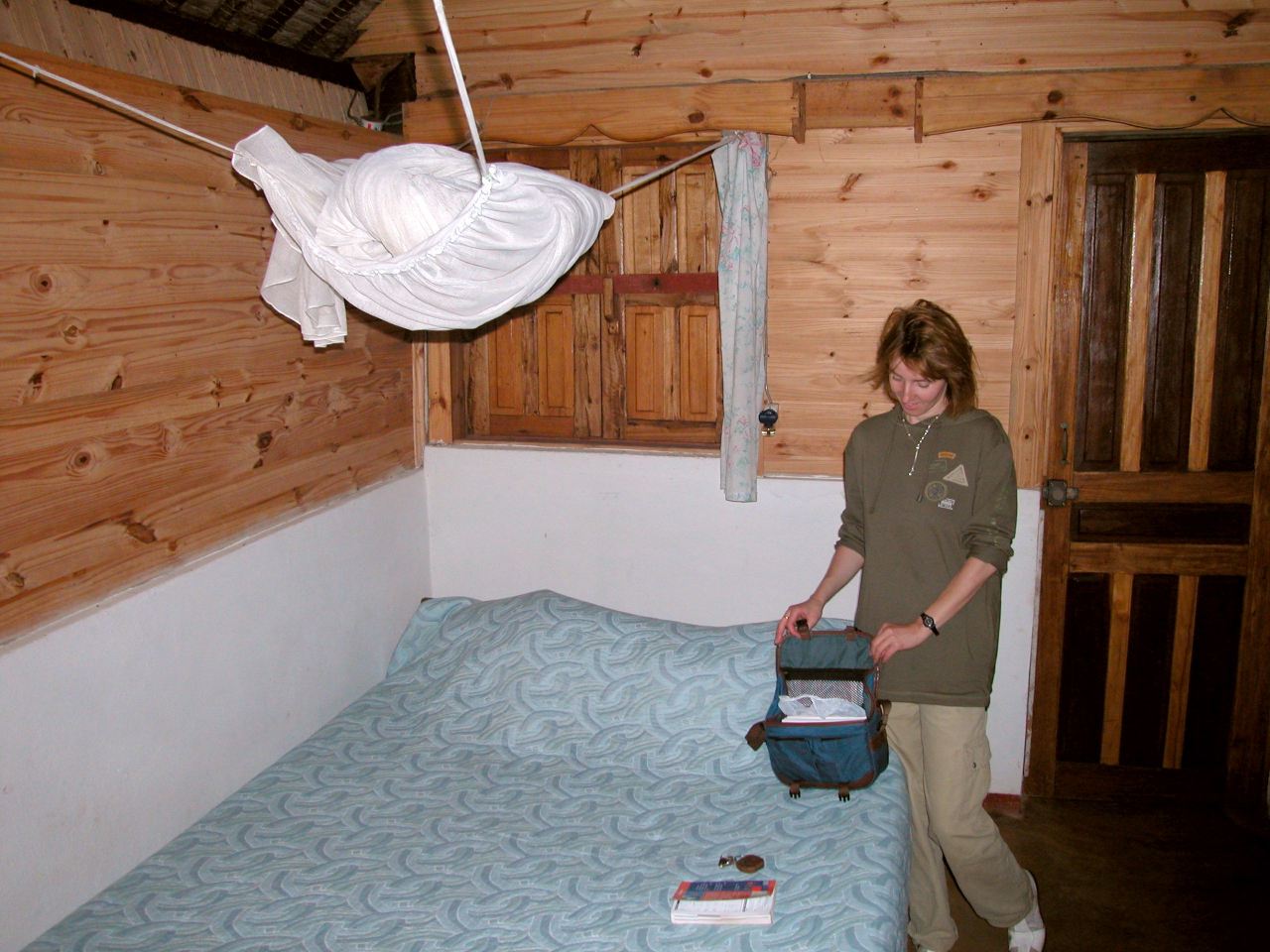
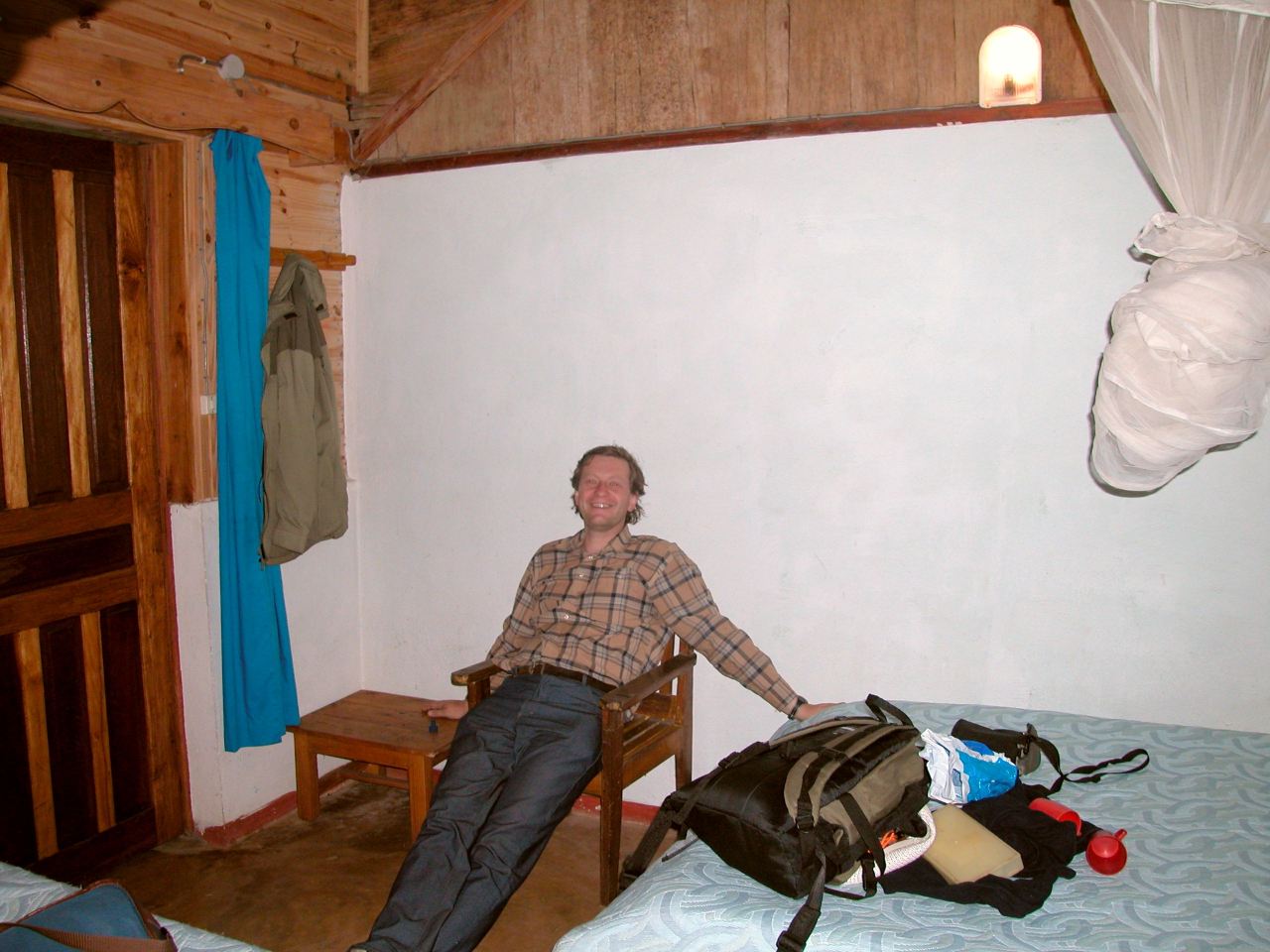

Our train back to Fianarantsoa left at 6.45 the next morning, so we had to get up early. The sun had barely risen above the sea, and the morning mist hadn’t had time to clear. We hadn’t eaten a proper breakfast and got on hungry. Riding that way until evening didn’t appeal, so we decided to try what people sold at the stations. We tried all the pastries, the bananas and the crayfish. It was delicious and, as it turned out, did us no harm.
Although the train was going uphill, the return journey was faster. We were back in Fianarantsoa around two in the afternoon.
Parany met us right at the station.
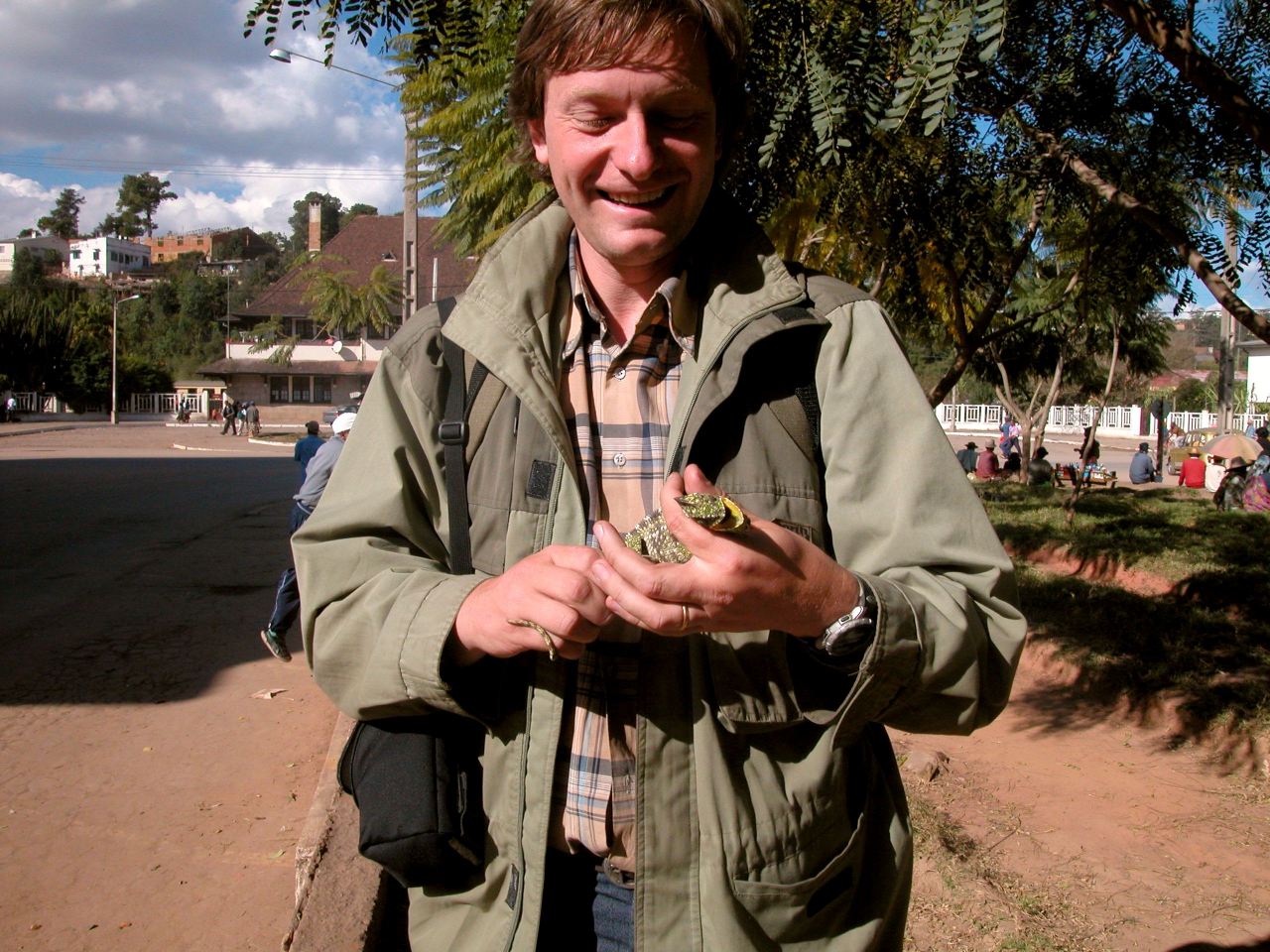
In the square outside people show arriving travellers chameleons. Several large ones were sitting in a tree that looked like a mimosa. There are a great many chameleons in Madagascar. You even see them crushed on the roads, but in a tree they are hard to spot. The camouflage is excellent. You have to stand and look long and hard at the branches, figuring out how each one grows. Sooner or later you’ll spot a bare twig of mysterious origin. There is your chameleon. It can be coaxed down with a stick. Disturb it a little and put the stick in front of its nose. Without any hurry it will climb on. Then you can lower the stick and you’ve caught it. The largest reach sixty centimetres. You have to be careful when you handle them. Their jaws are fairly strong. A thirty-centimetre one gave me a good bite. It’s best to keep your fingers away from its mouth.
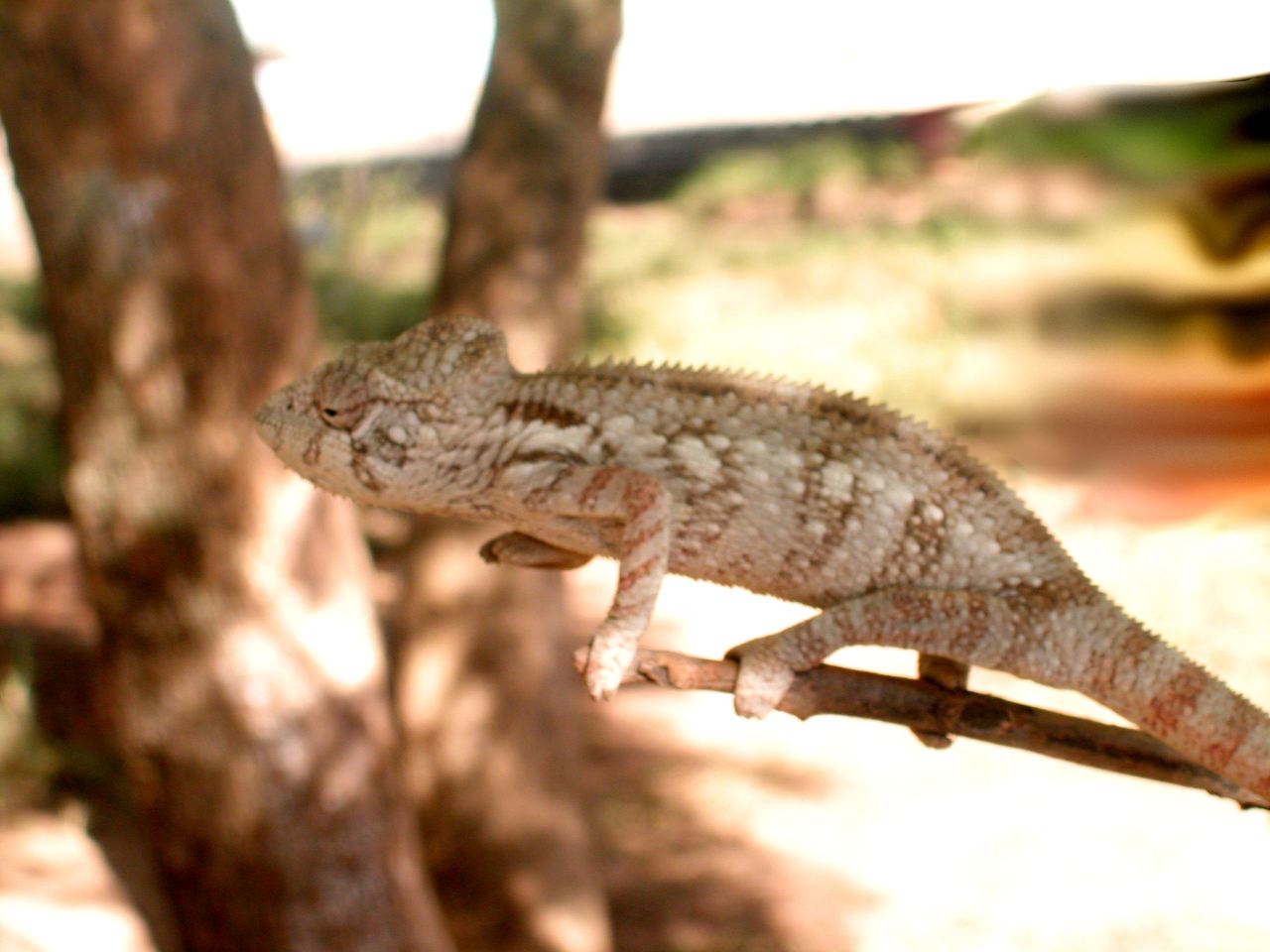
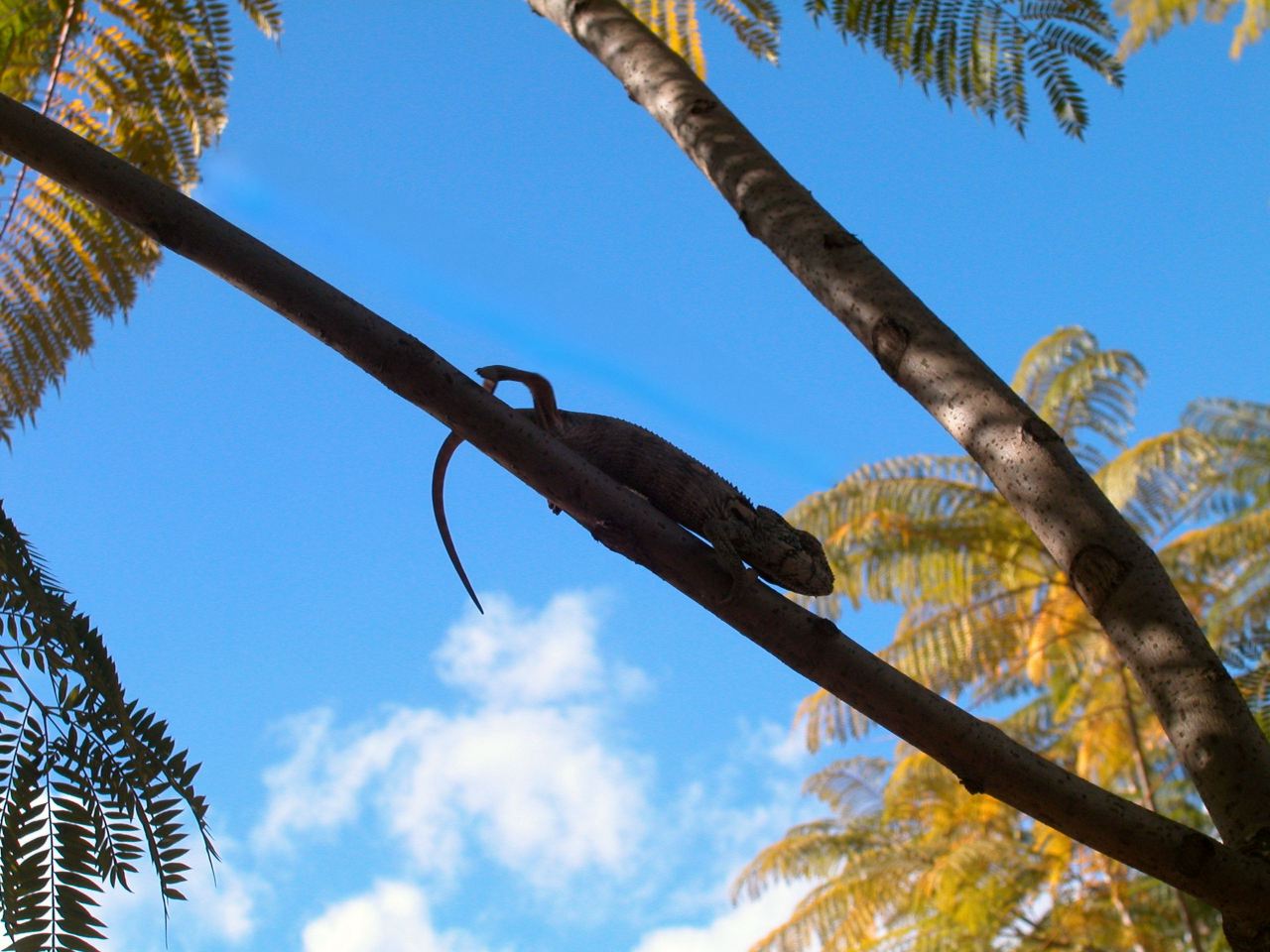
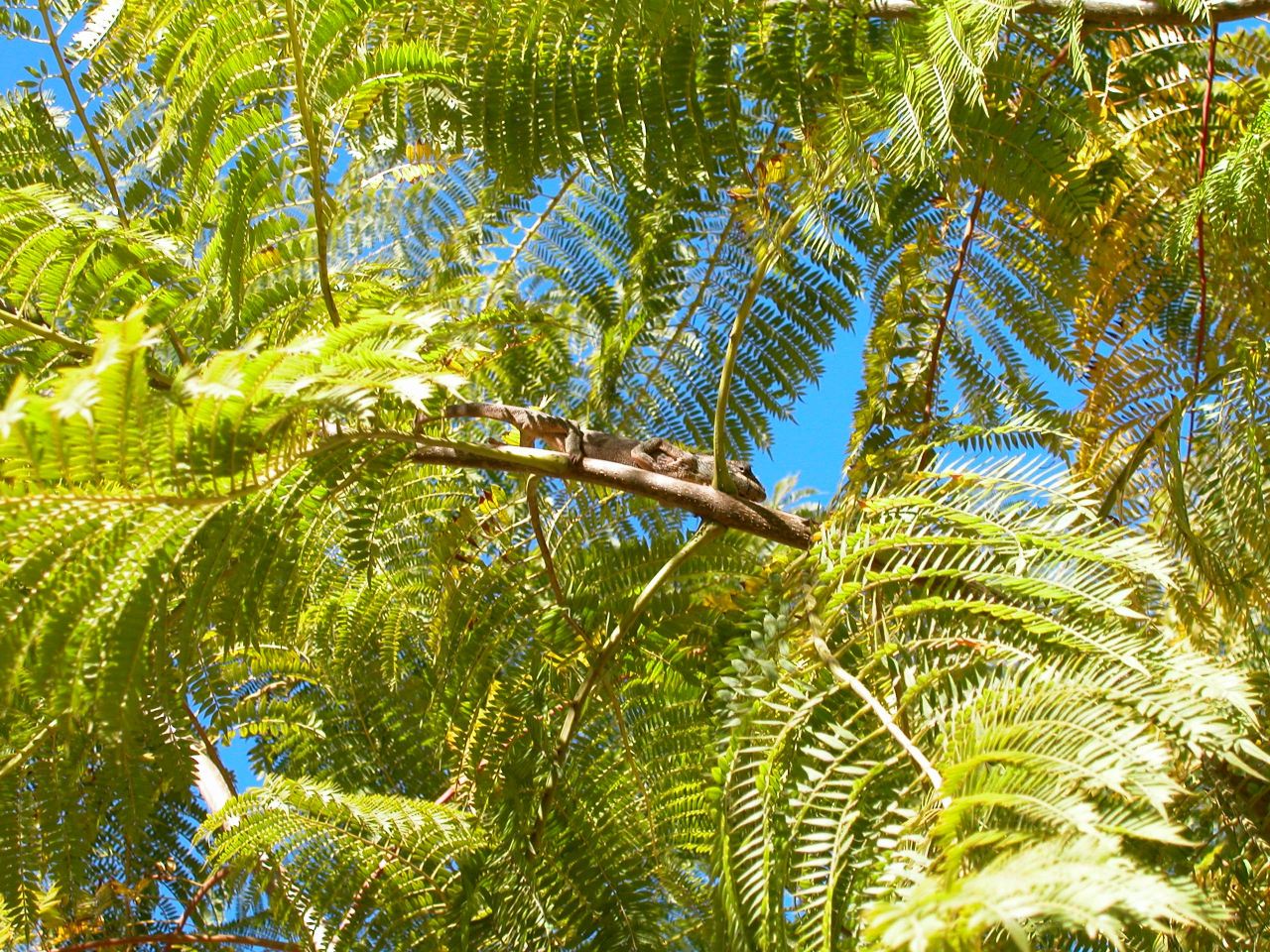
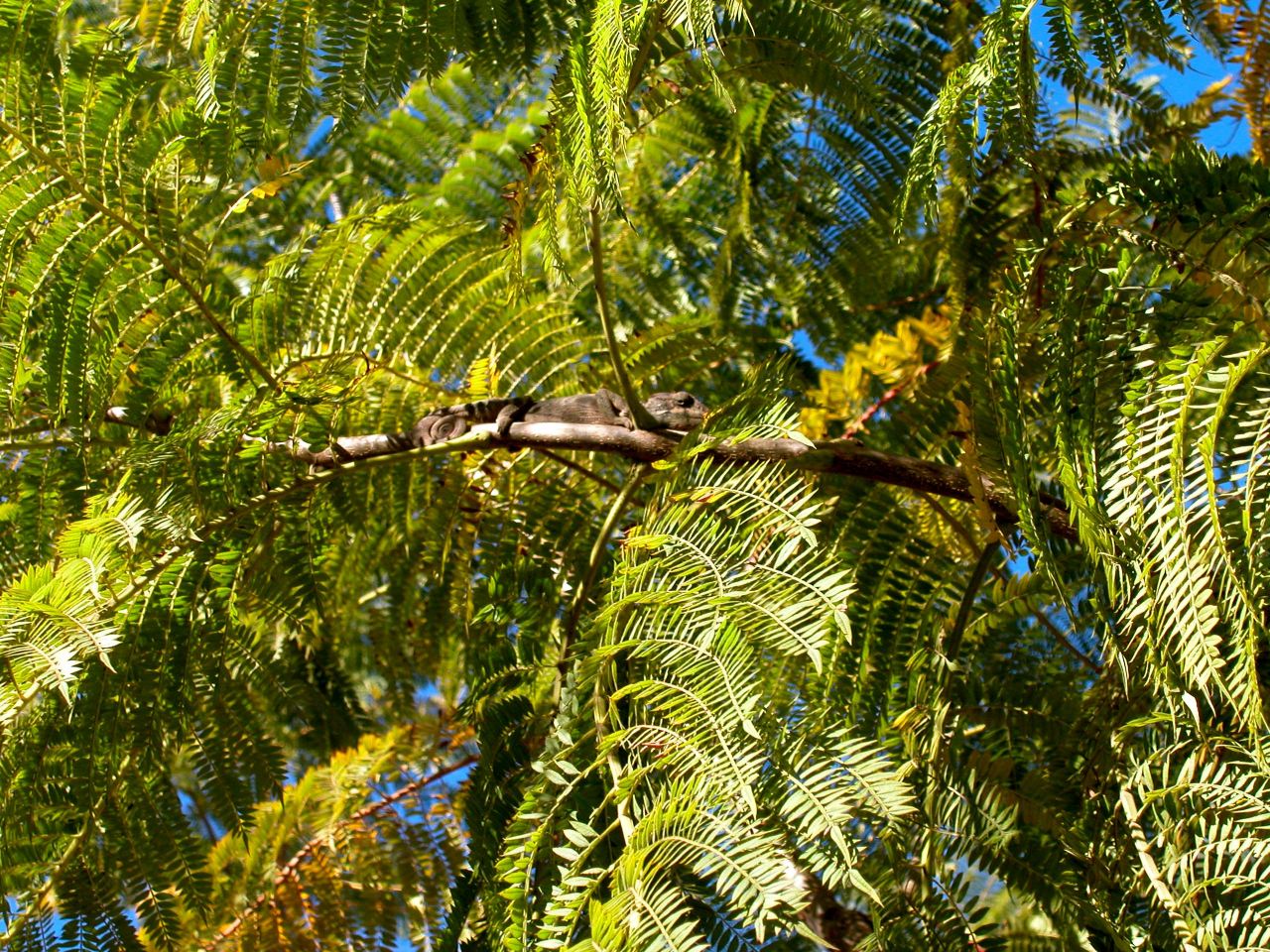
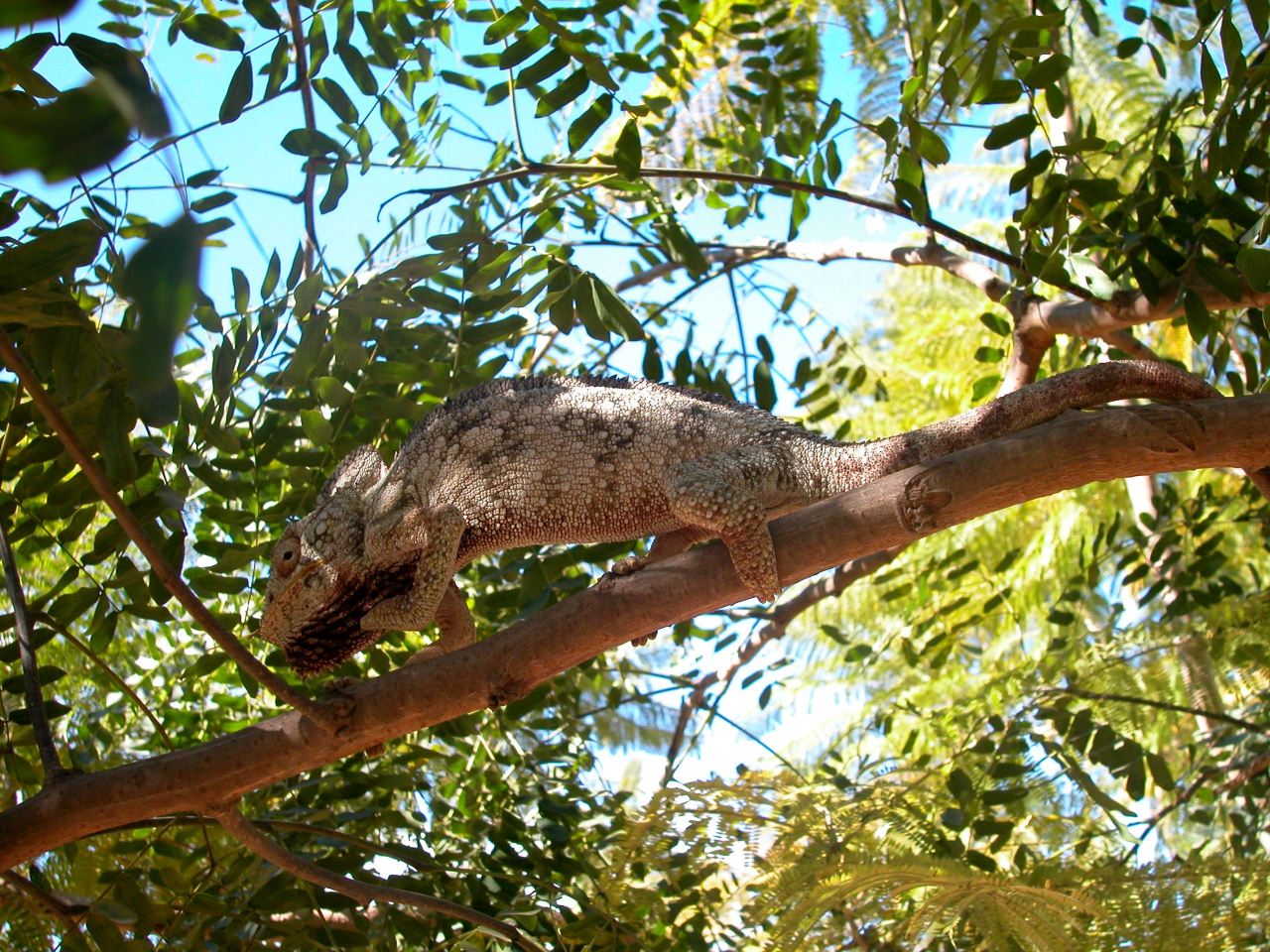
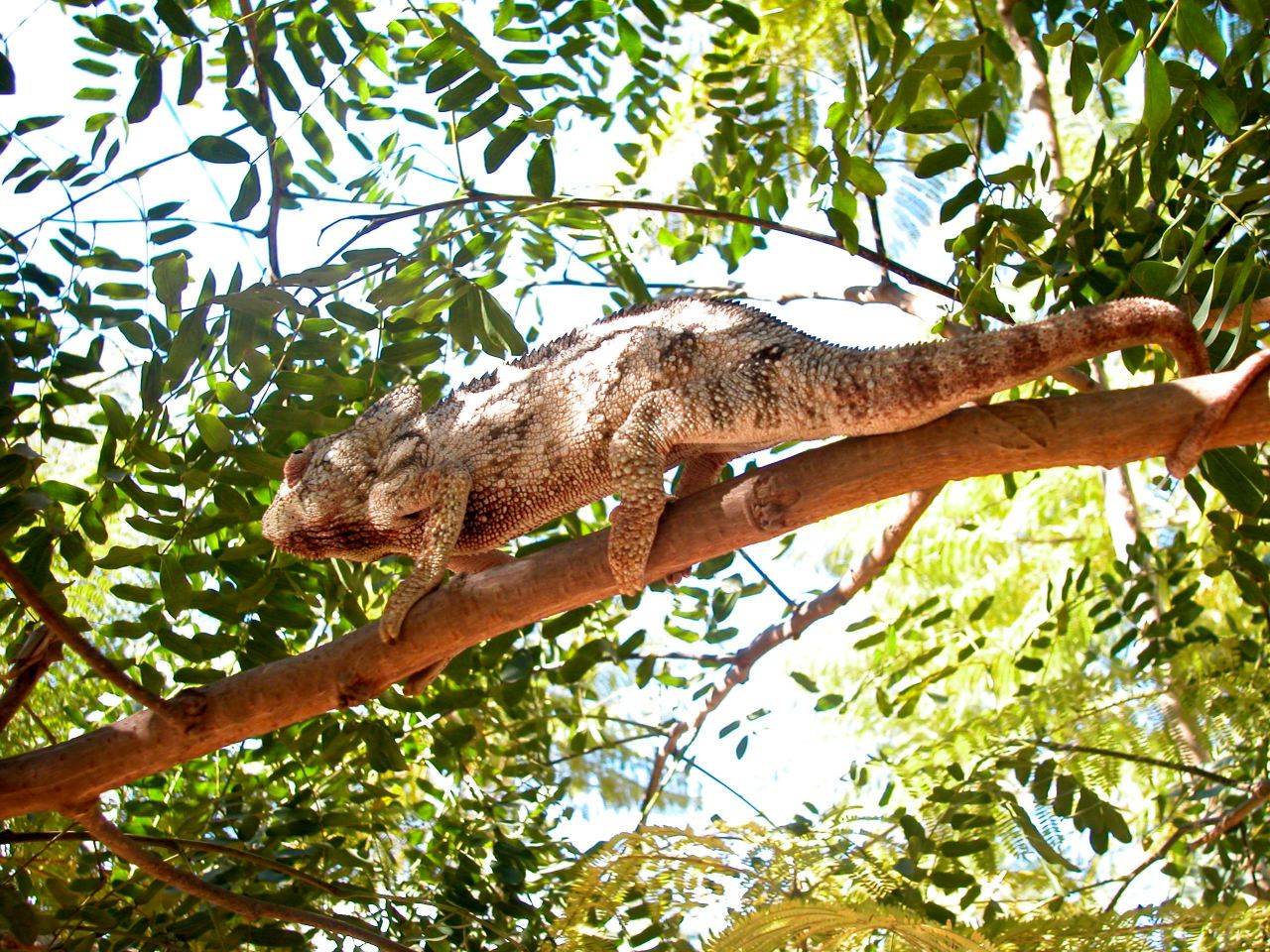
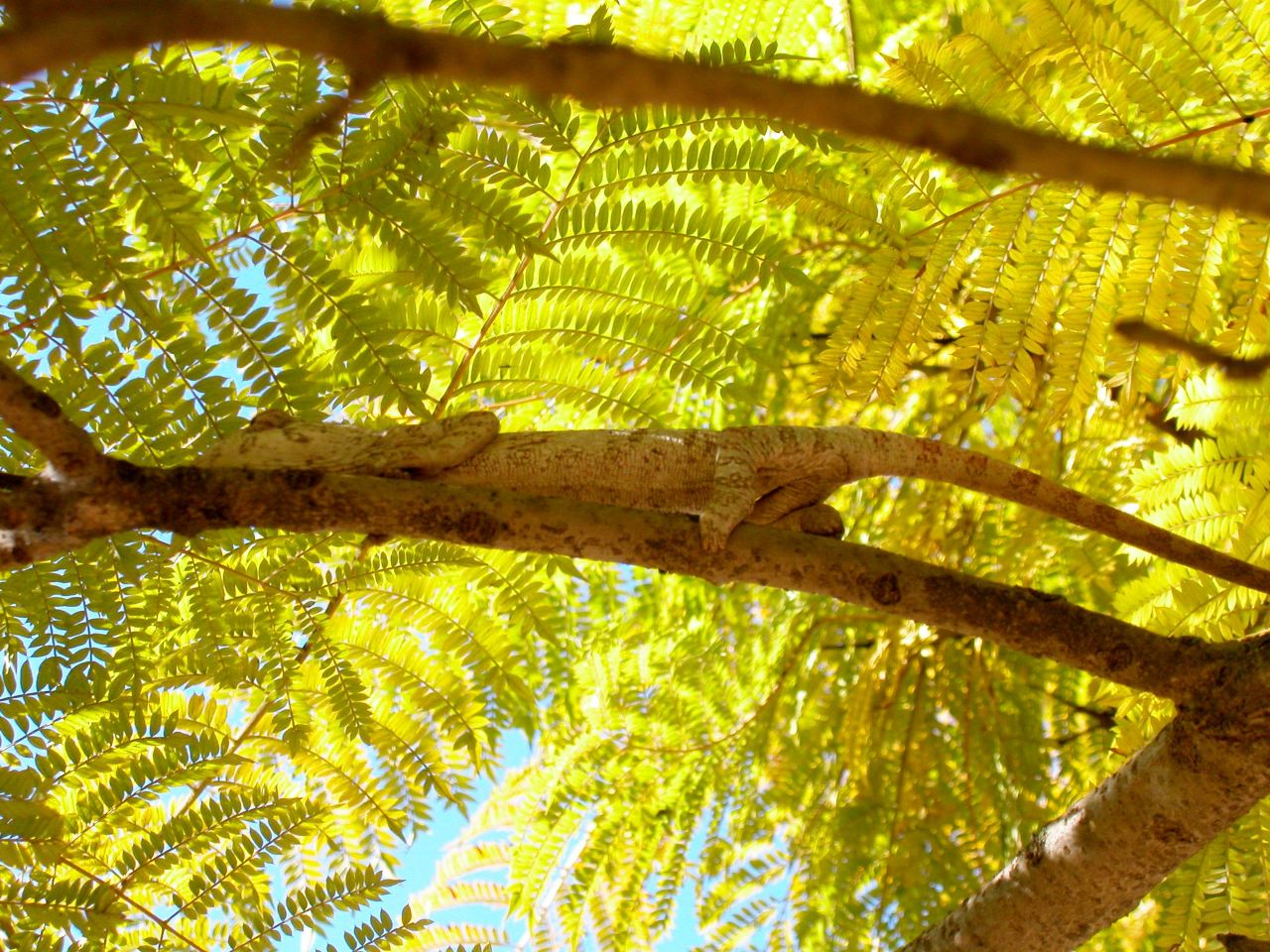
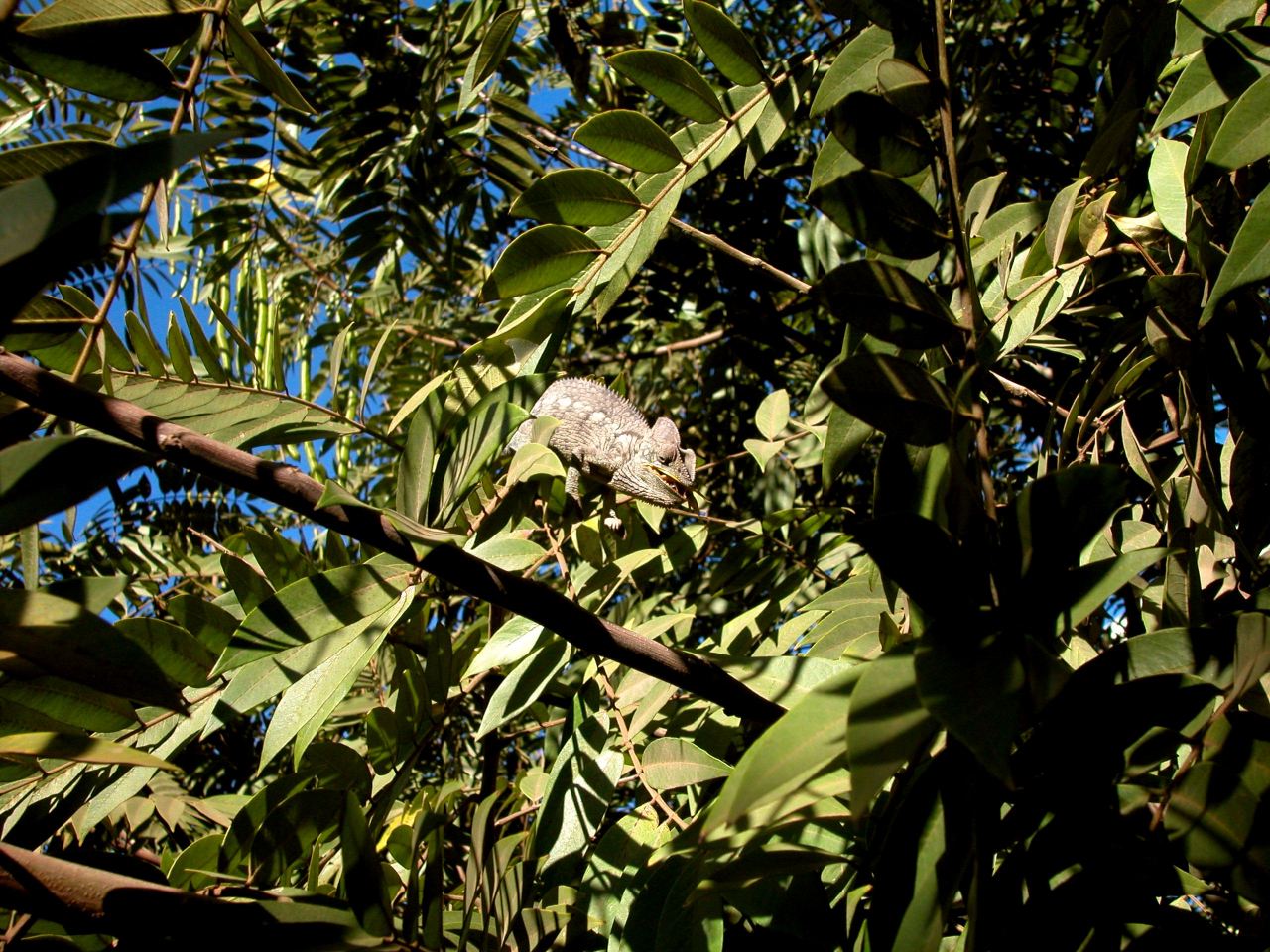
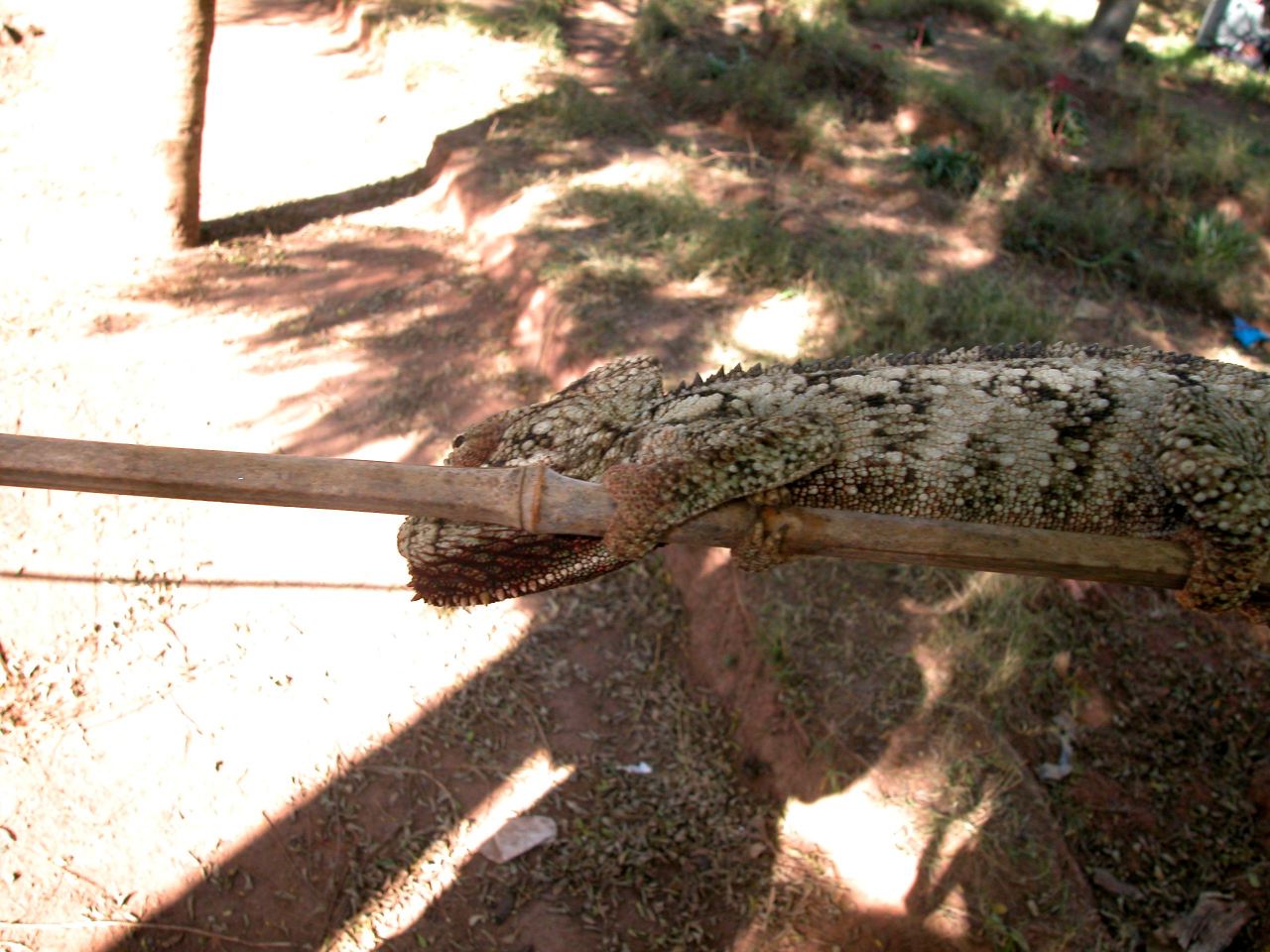
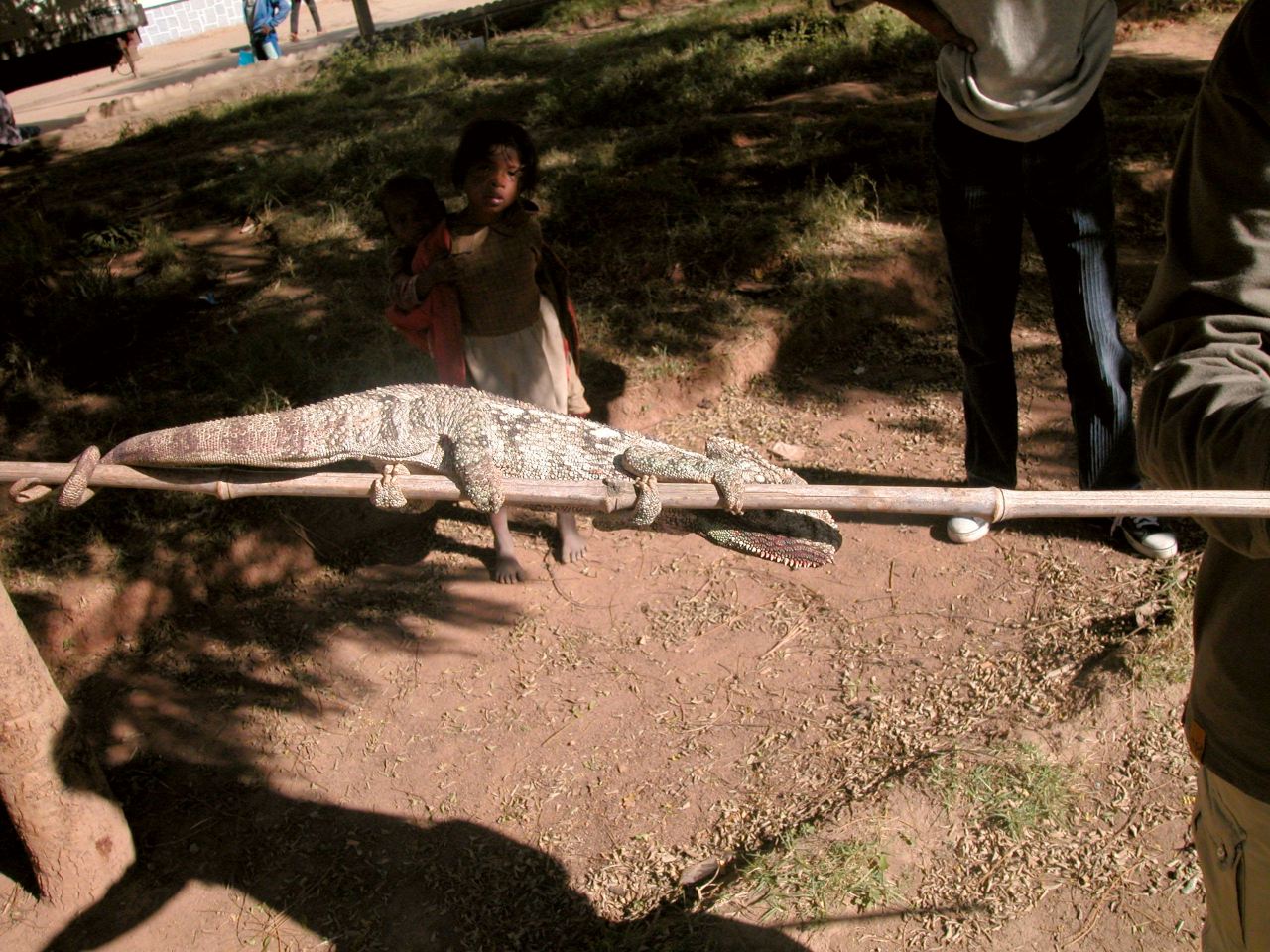
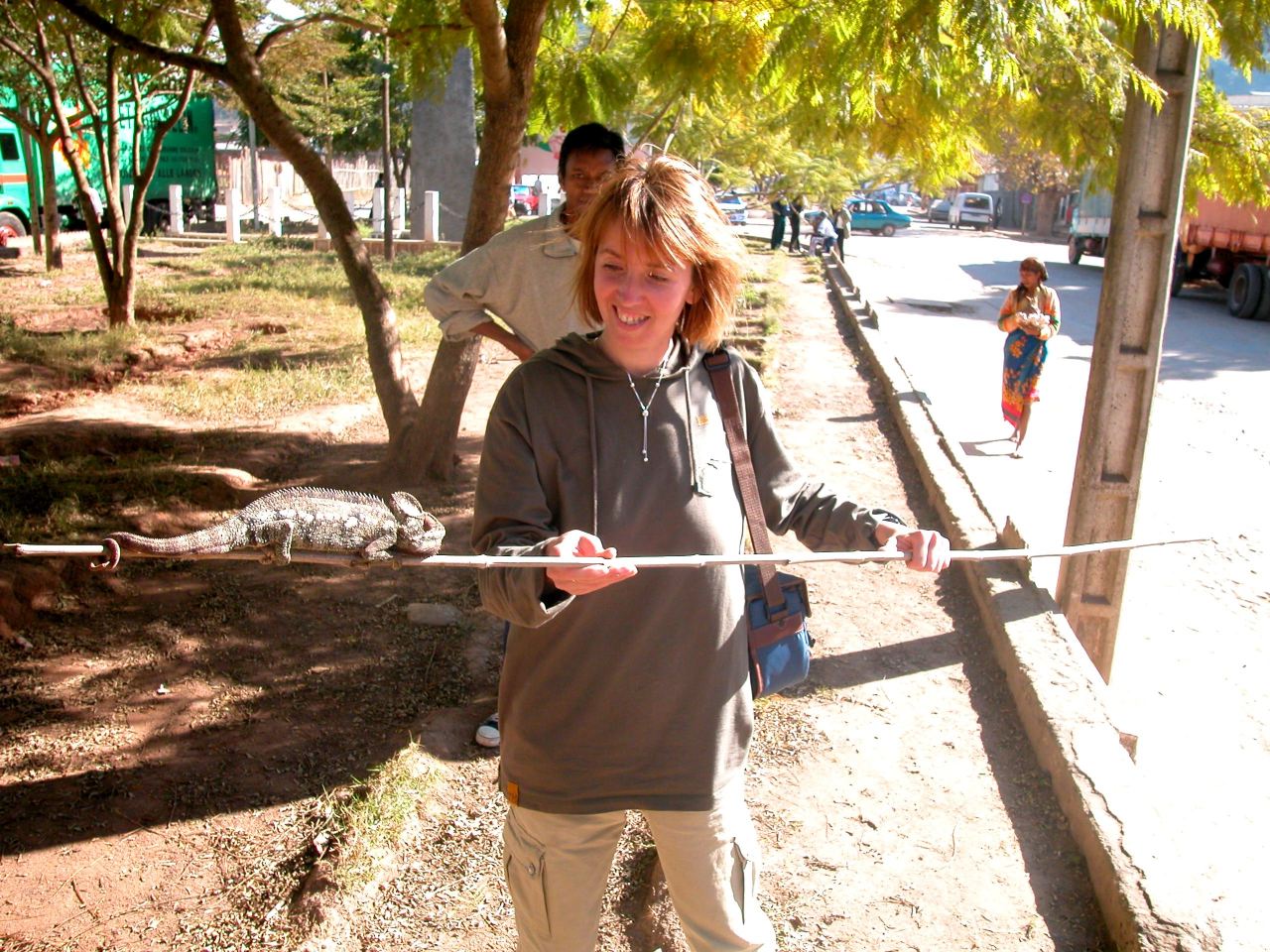
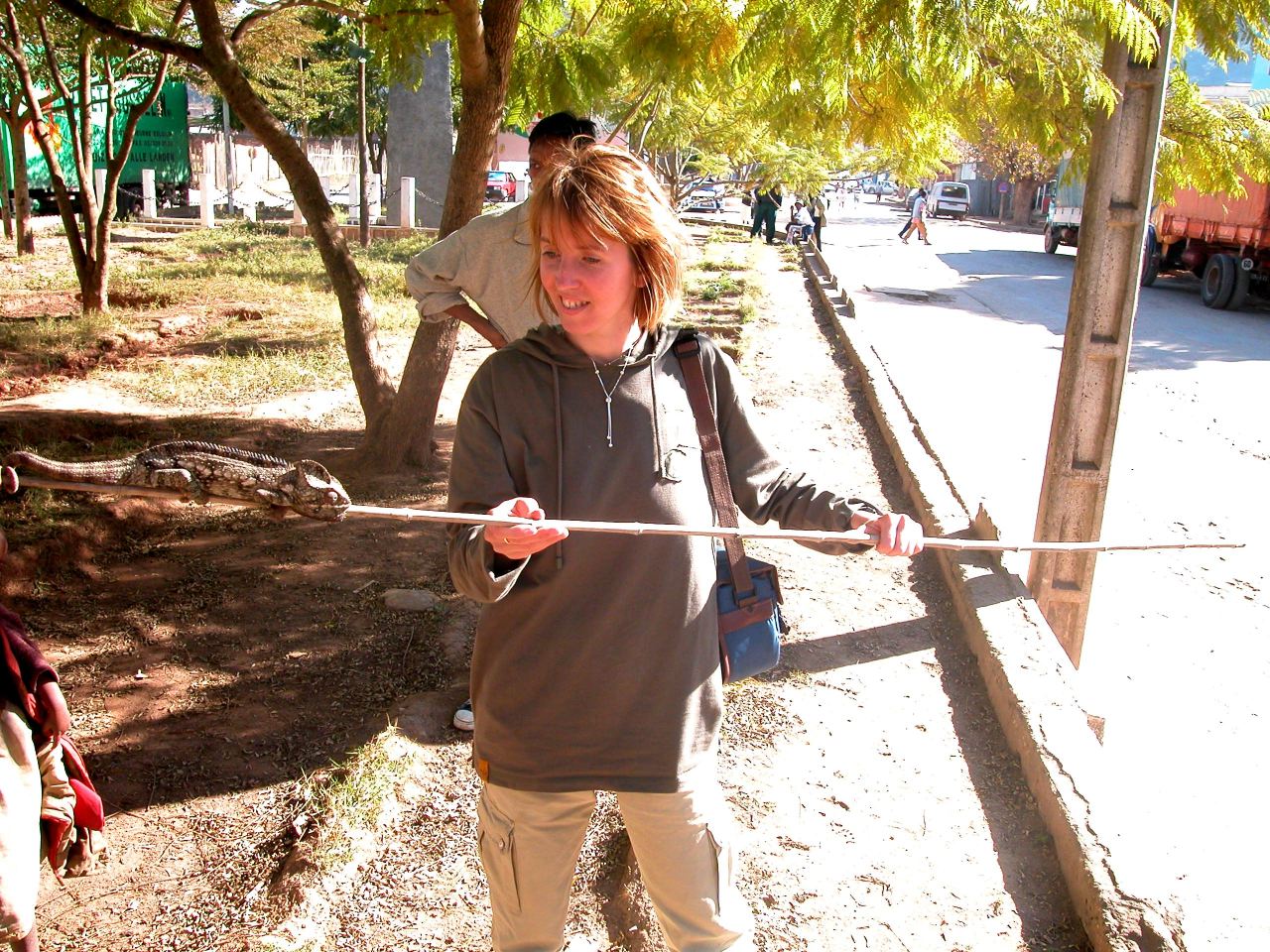
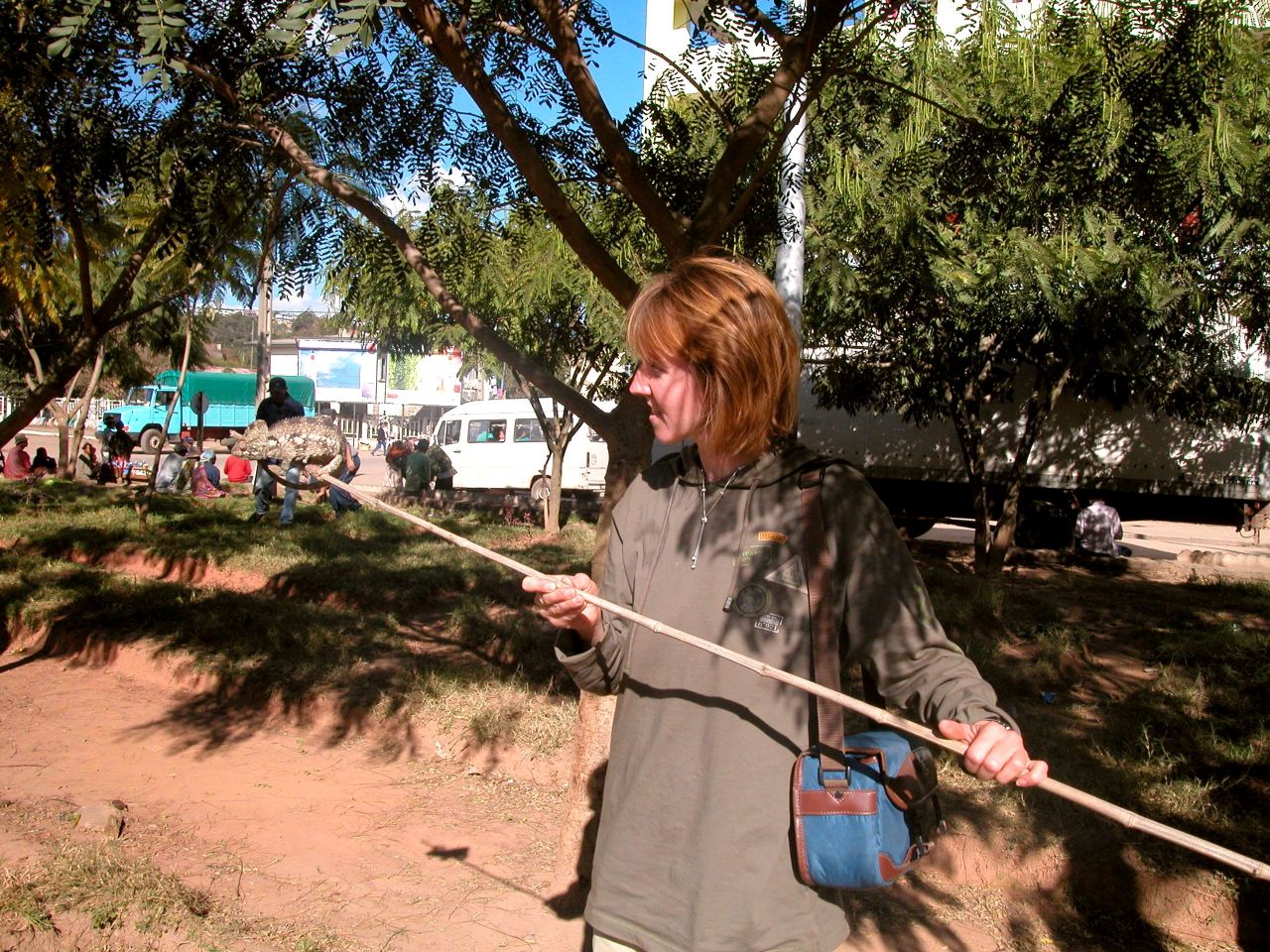
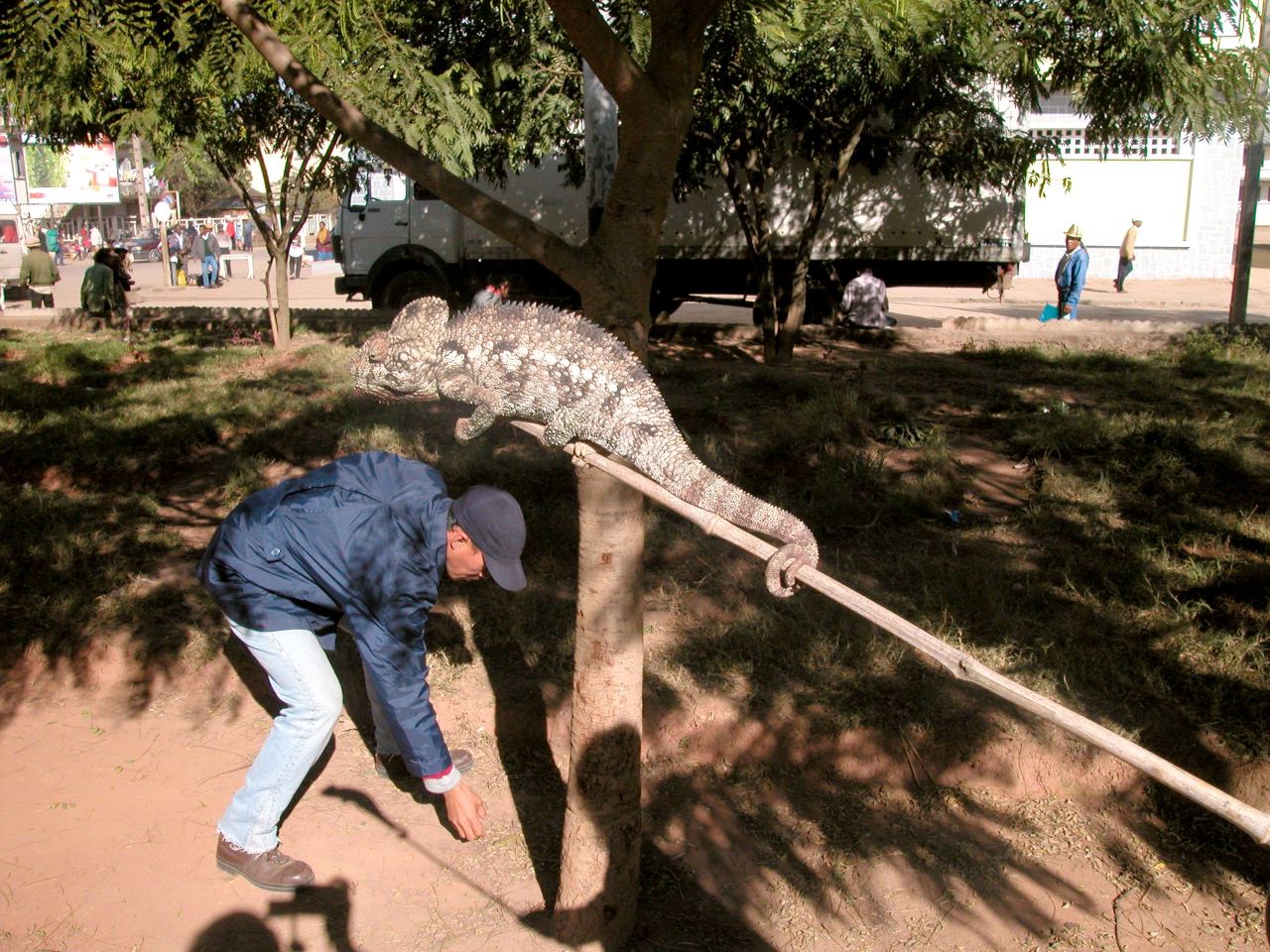
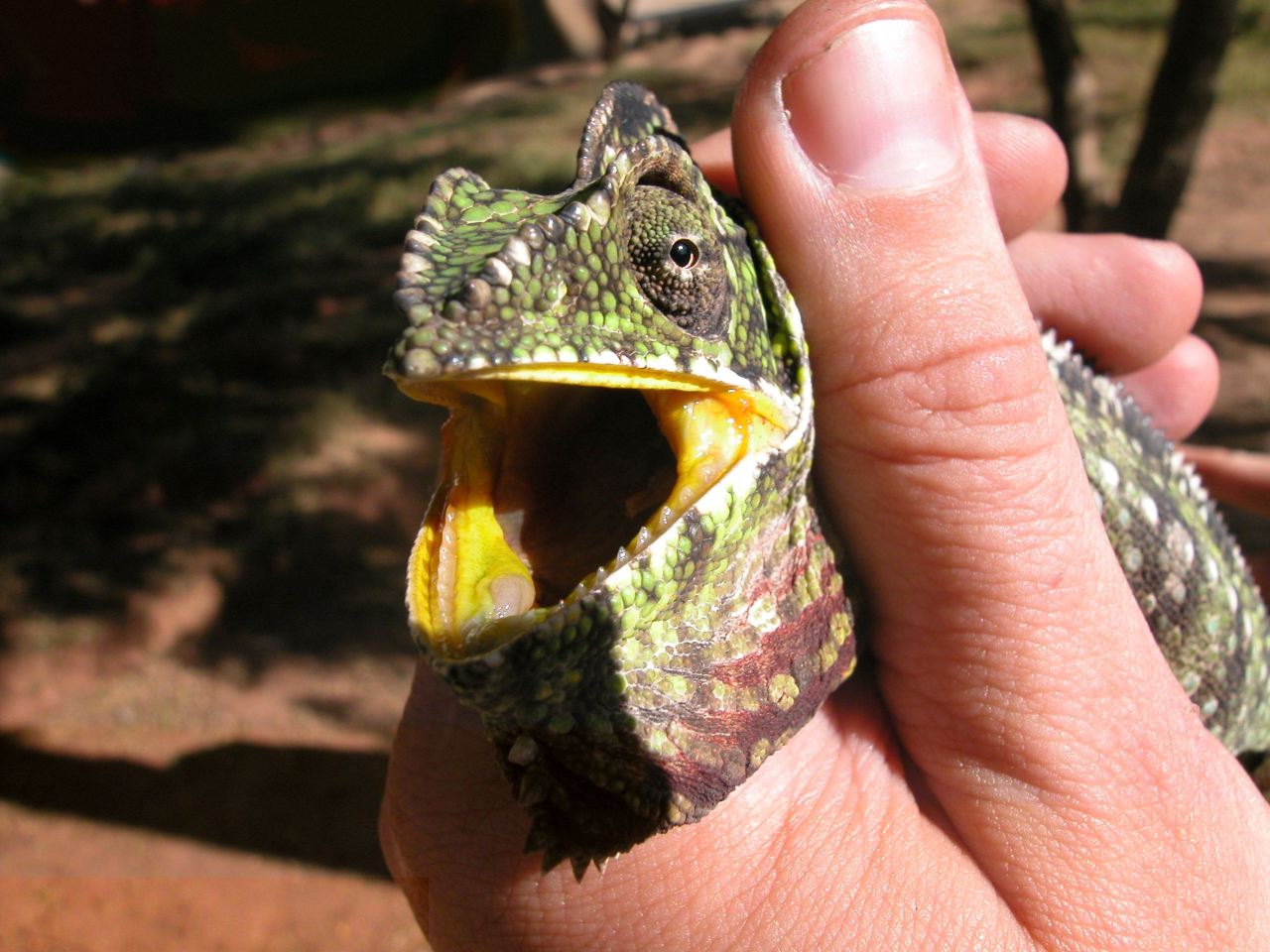
Contrary to what many people think, the chameleons we saw didn’t change colour instantly. Take one from a green branch and put it on your hand, and it doesn’t turn pink. It seemed to me they took quite a while to match the bushes they were sitting in. The changes I saw were within a limited range of plant colours. We never got them to put on anything bright.
The chameleons in the station square were tame. People fed them for the benefit of visitors, and there were different kinds, including some huge specimens. There are many in the wild as well, but handsome ones like these are harder to come by. Visitors were encouraged to bring grasshoppers from the market, pay the chameleon keeper and give a tip besides. Ten thousand francs settled everything.
Ranomafana
Madagascar’s east coast is covered in tropical rainforest. It is some of the most fascinating jungle on Earth. People had come off worse in the struggle to settle it, and much of the forest remained untouched. A vast area was set aside as Ranomafana National Park. Most of it was reserved for specialists and closed to travellers. A guide was compulsory in the rest. This was a continuing sore point for us in Madagascar. It was hard to be alone. There weren’t any fences and you could slip in on your own, but local people travelled throughout the park. Each appeared to have a place in the system that controlled it and lived on visitor fees and foreign grants. They wouldn’t welcome a tourist who hadn’t paid.
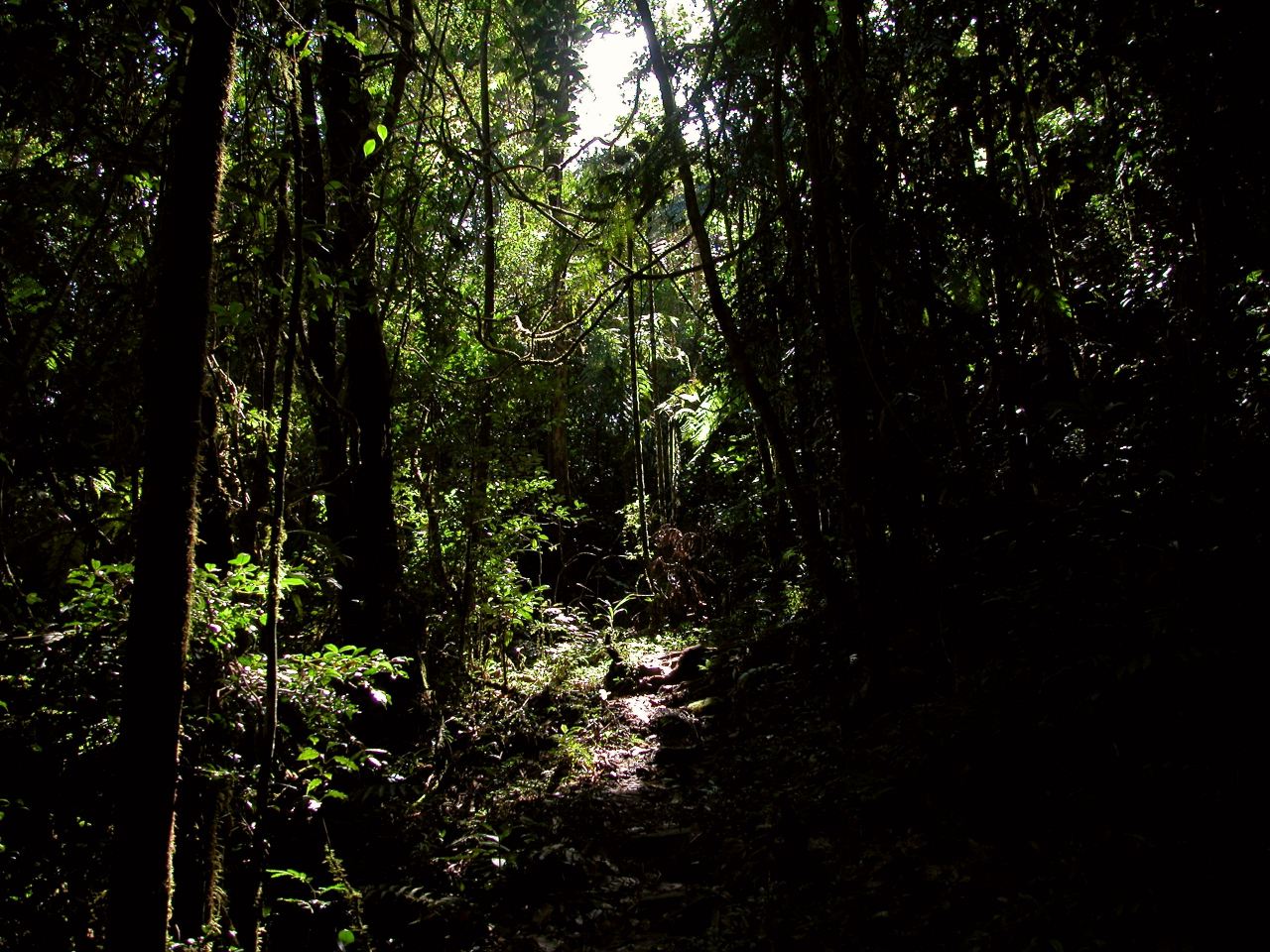
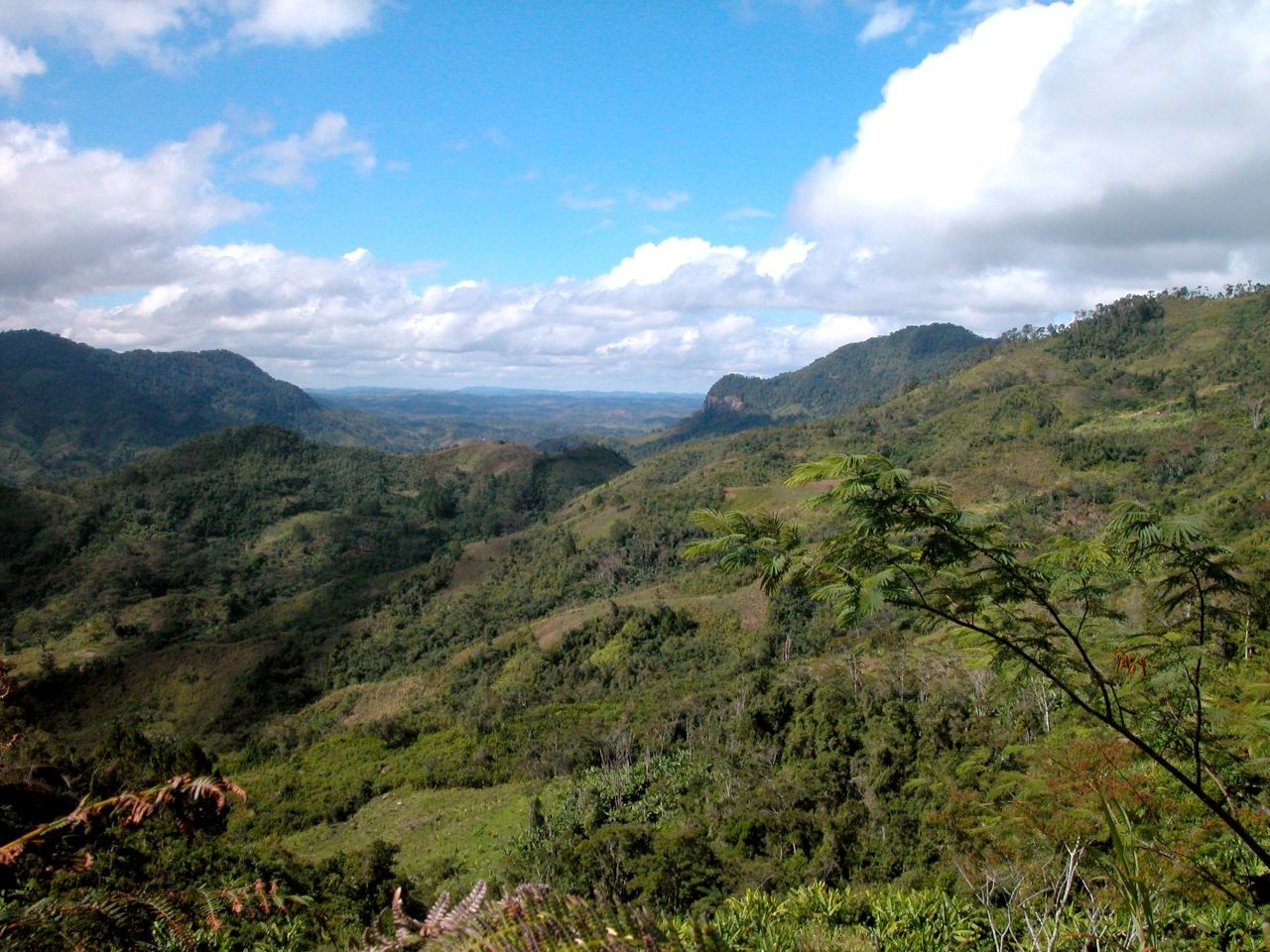
A small settlement in the centre of the park provided bungalows and other places to spend the night, and plenty of little restaurants. We arrived at sunset. The sky had cleared after an afternoon downpour. Ragged scraps of cloud drifted across the pink evening, framed by jagged mountain tops. Mist rose from the ravines. We sat in an open-air restaurant and ate zebu, washed down with good local wine. Fianarantsoa was the centre of wine production. A bottle cost ten to twenty-five thousand francs. Southern night fell quickly. There was no moon, and we walked round the village in pitch darkness. There was no street lighting, although the Swiss had recently built a hydroelectric station nearby. Just as well. When there’s a sky that black and full of southern stars, light bulbs seem out of place.
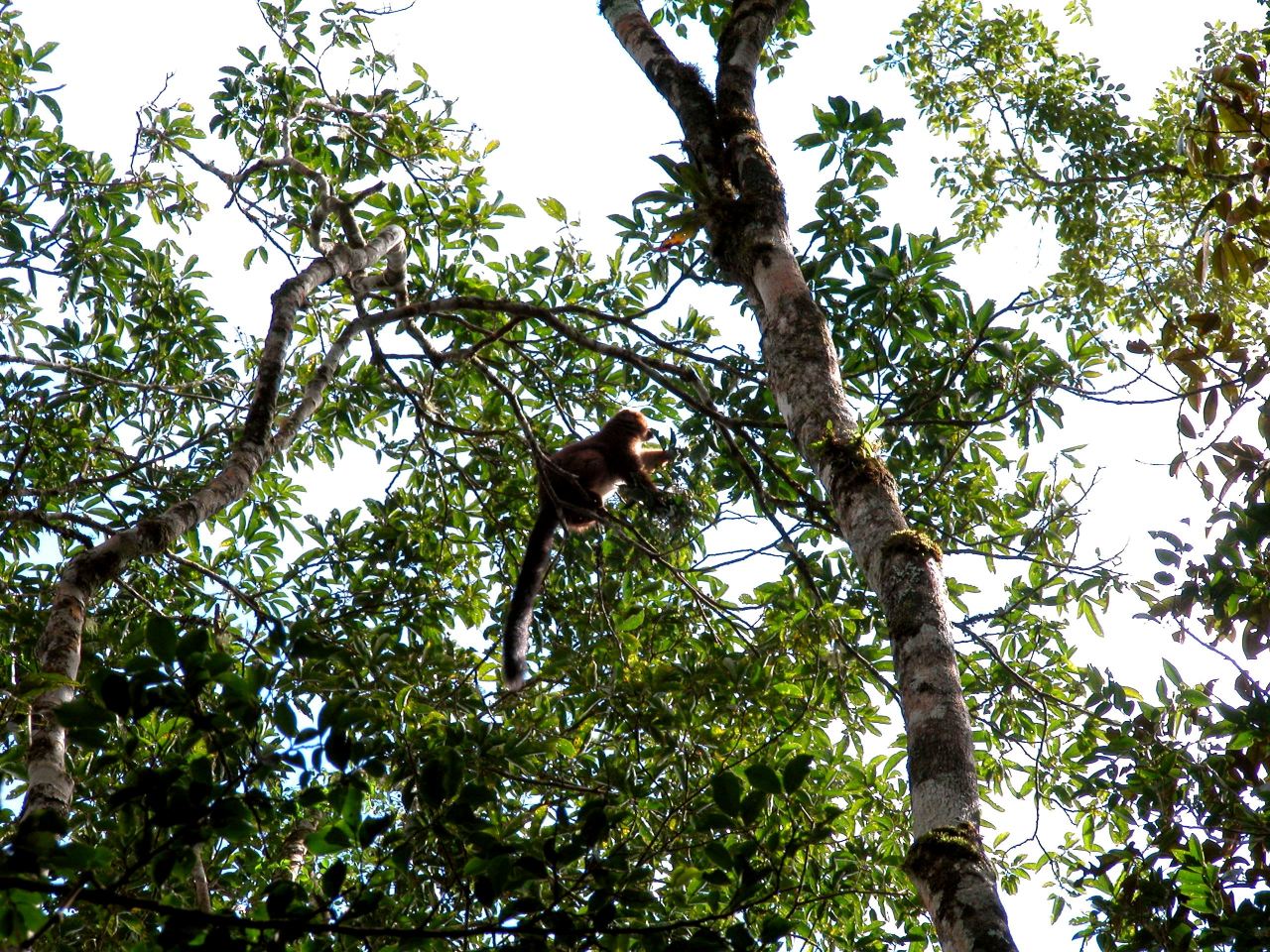
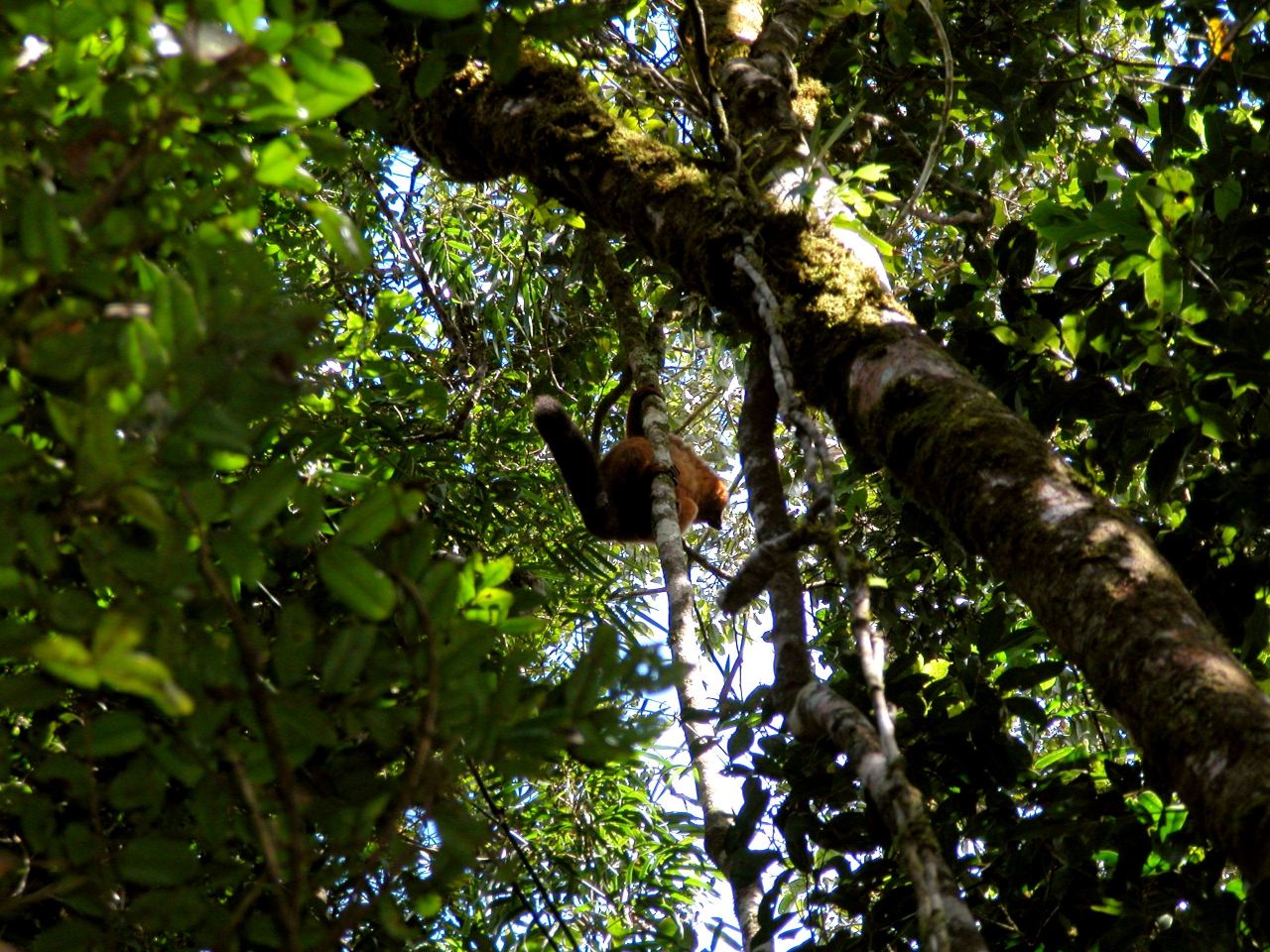
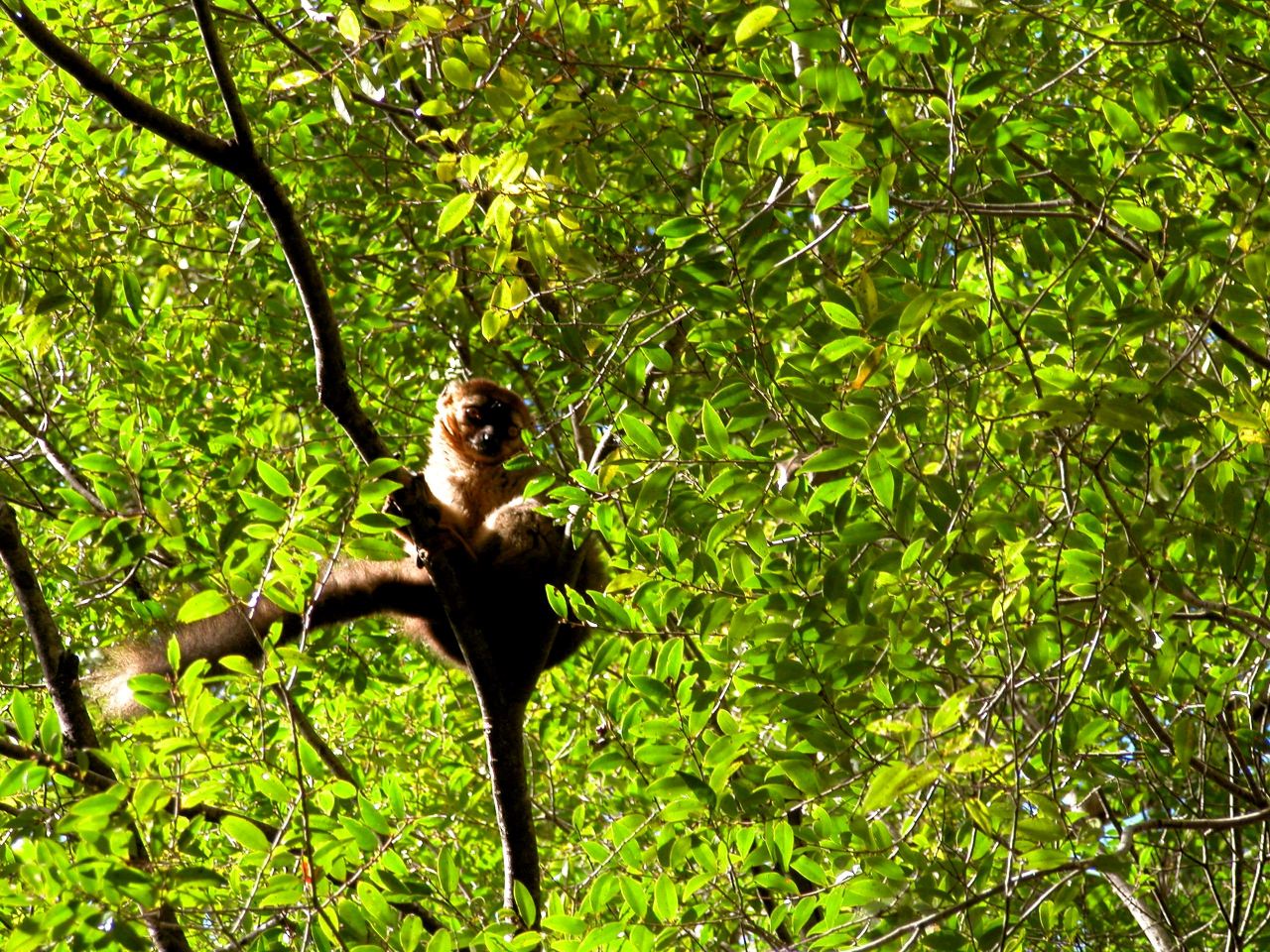
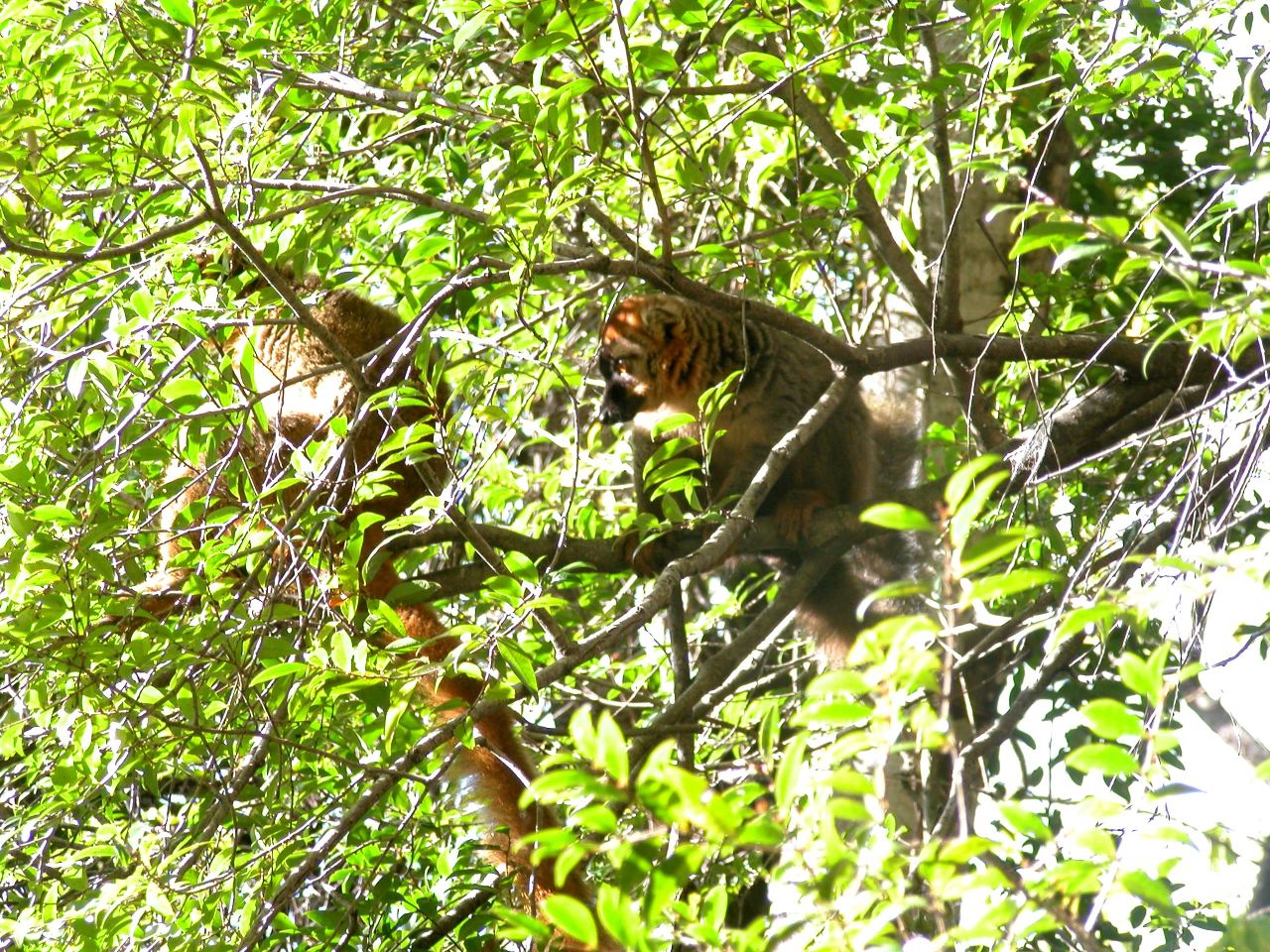
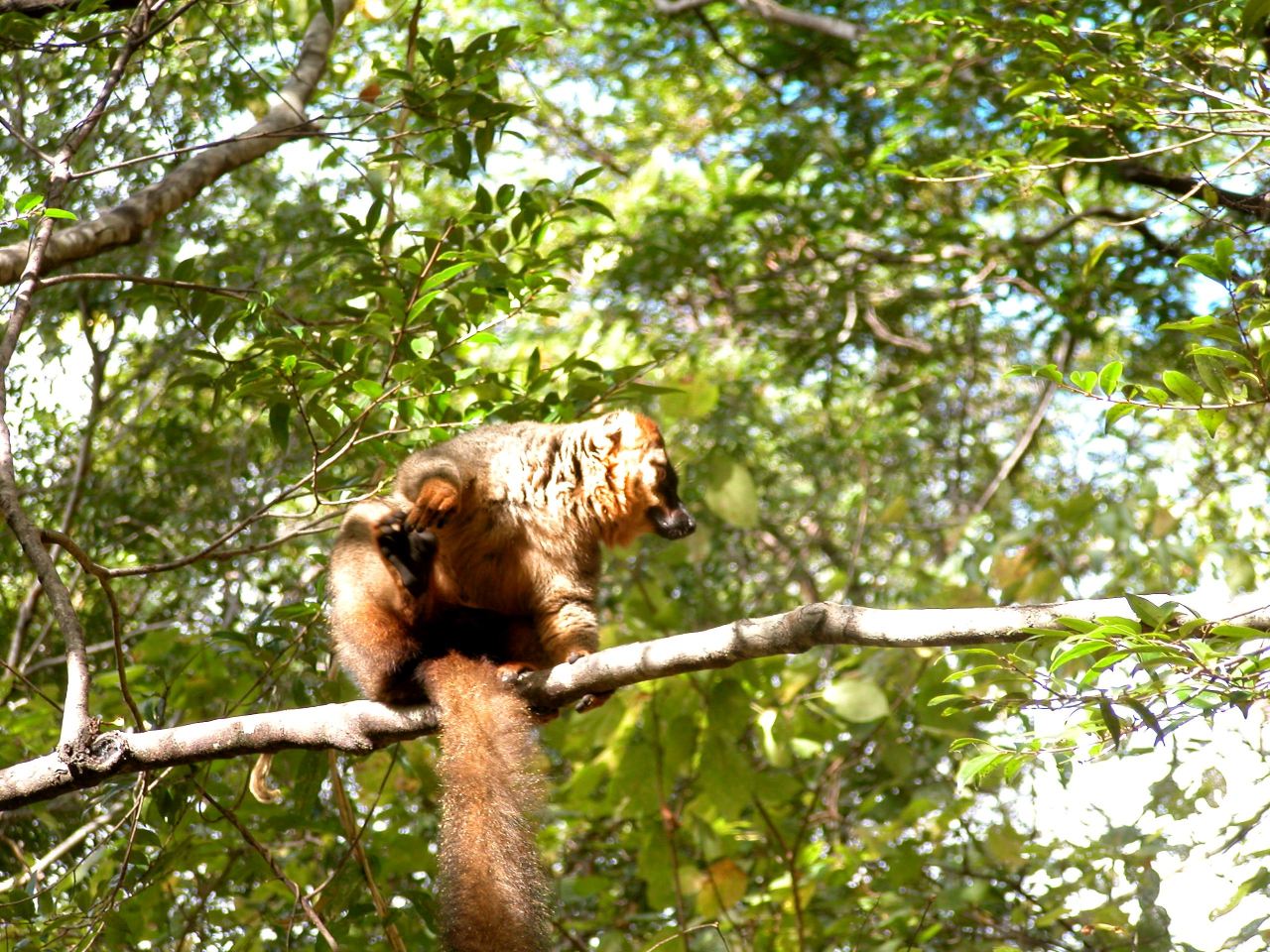
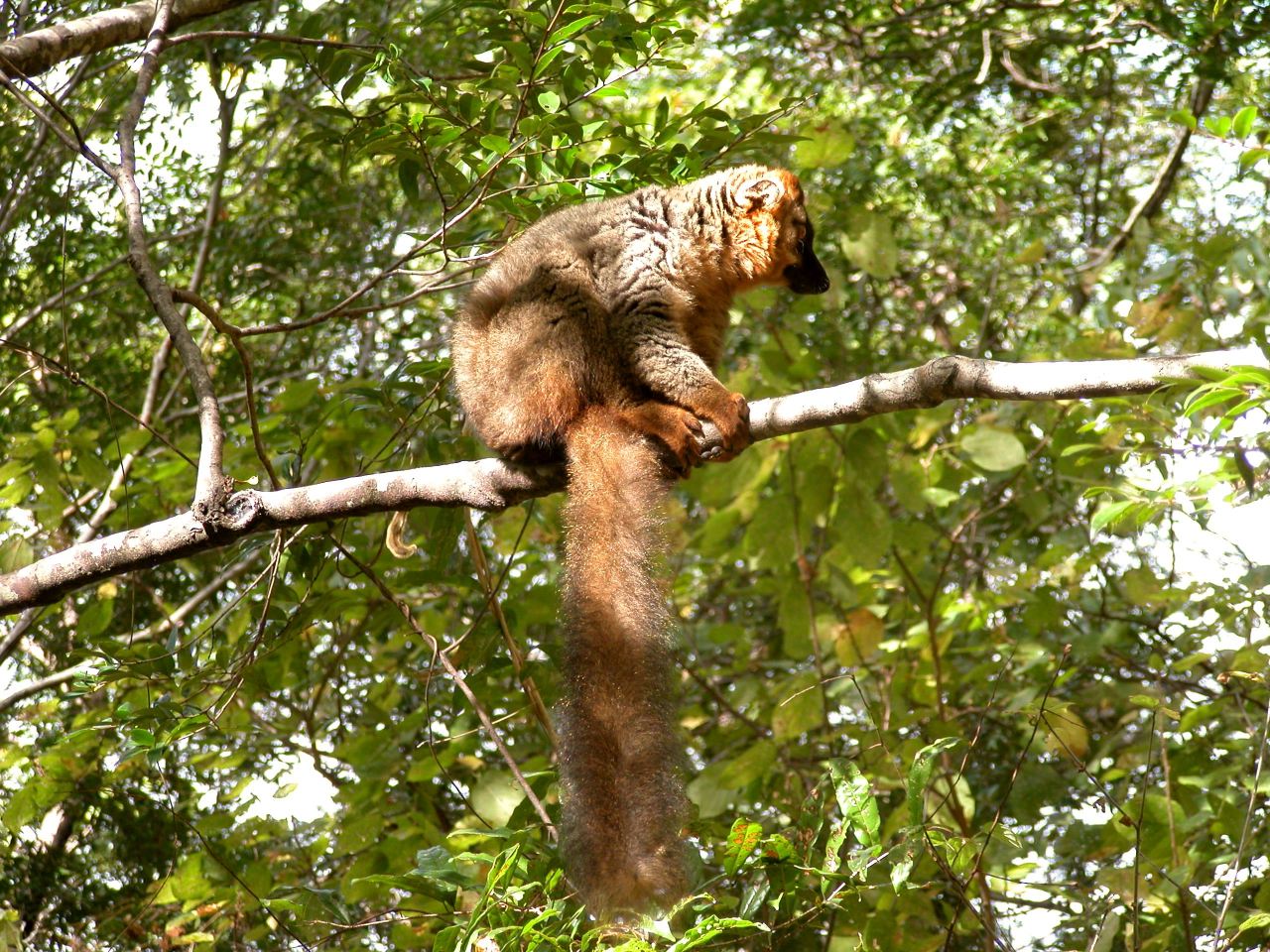
In the morning we took a long walk into the forest. The main attraction was the bamboo lemurs. As their name suggests, they eat bamboo. Its leaves contain cyanide compounds, deadly to most mammals in large enough quantities, and the lemurs make a daily meal of it. It seemed to me that for them it was practically a vitamin. A lemur sits on the branches feeding fresh leaves into its mouth with its paws. To us it looked as though they even slept by the hour, between meals. Eat and you can have a nap. Wake up and you can eat. For much of the time the bamboo lemurs hardly moved at all, as you might expect of a tropical plant-eater. I wondered whether their slow metabolism helped them digest poisonous leaves. Anything non-poisonous in the jungle, it appeared, had long since been eaten. When they jump, though, they go a surprising distance, very deftly. They just don’t do it often.
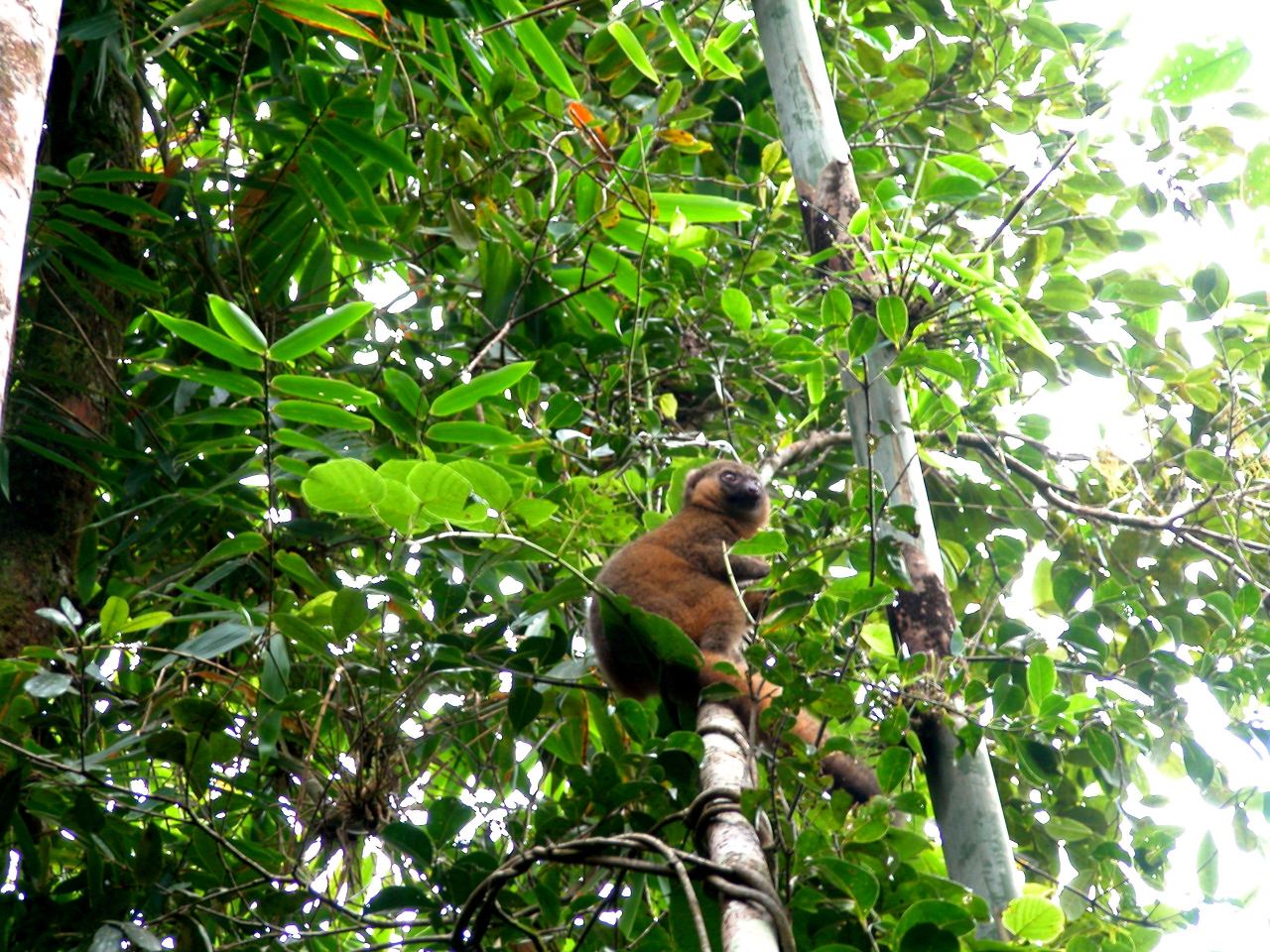
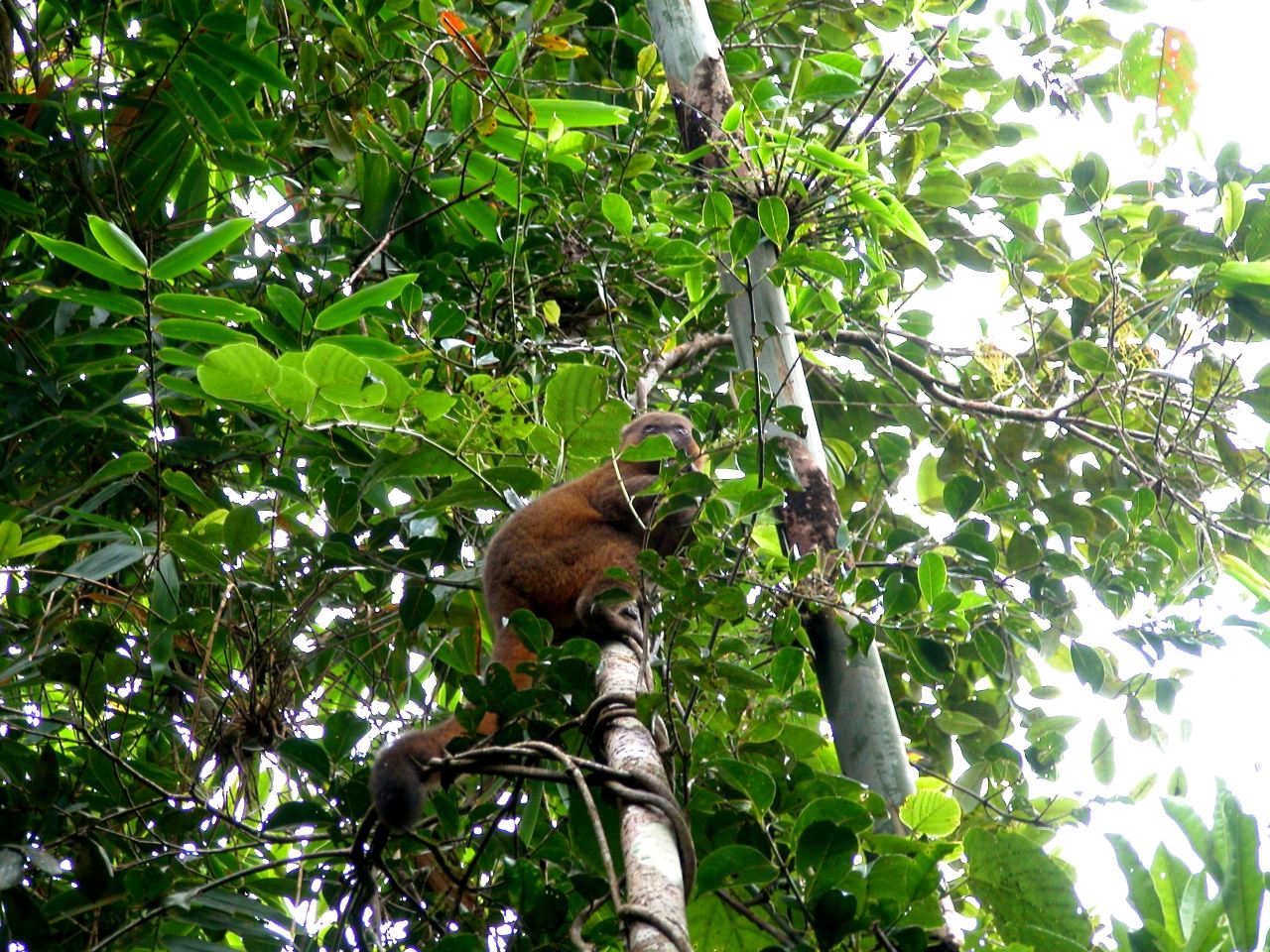
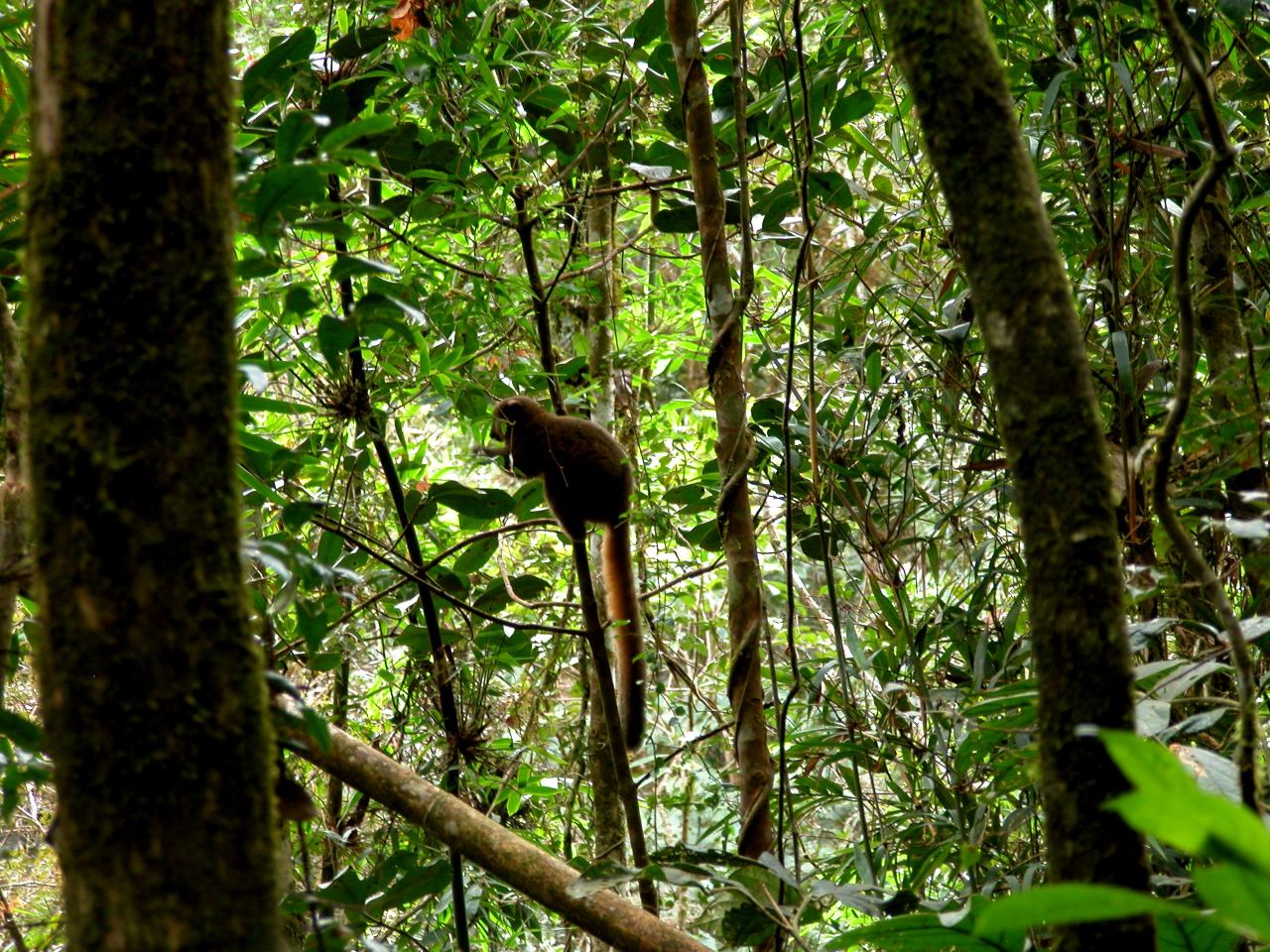
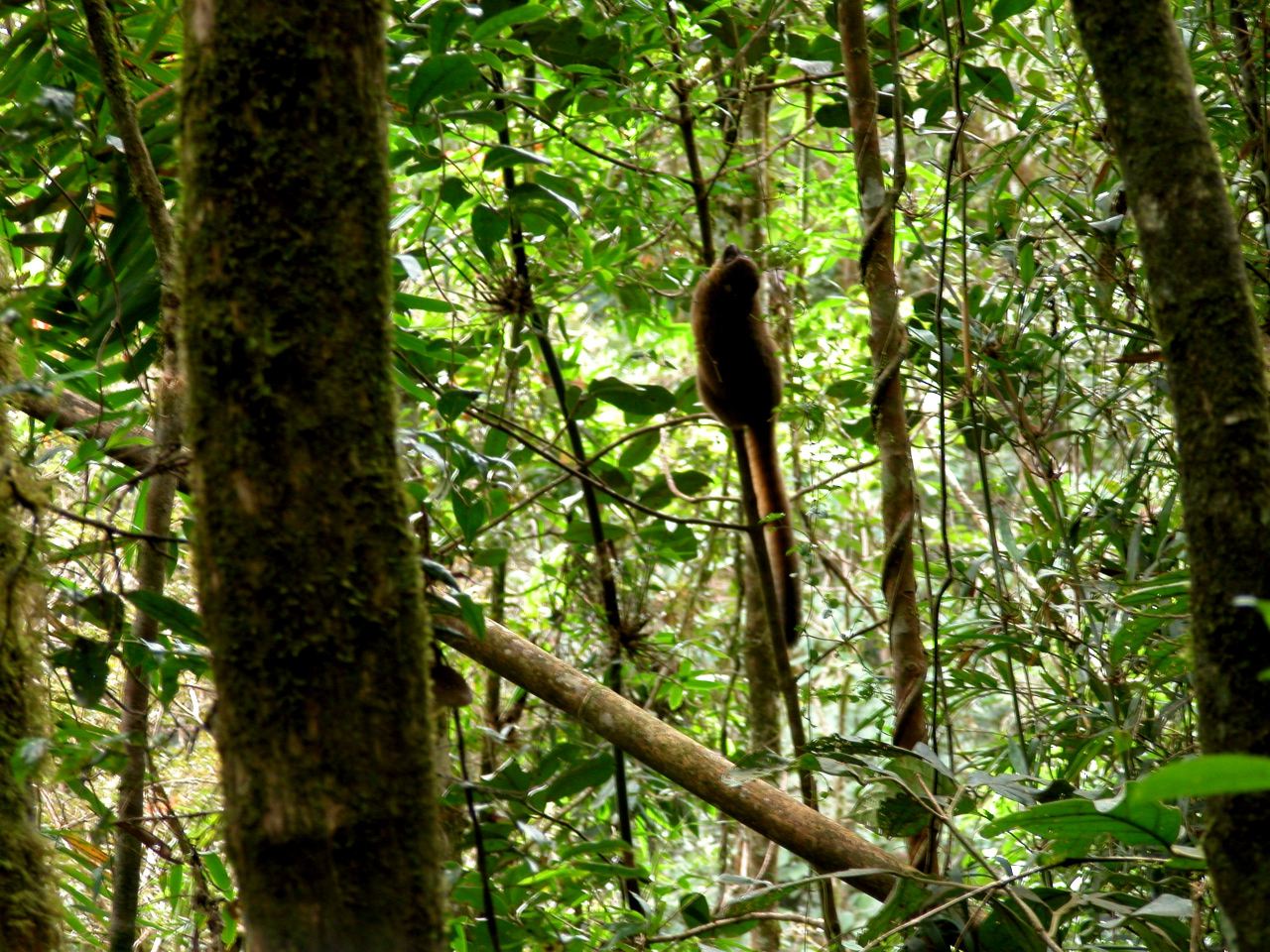
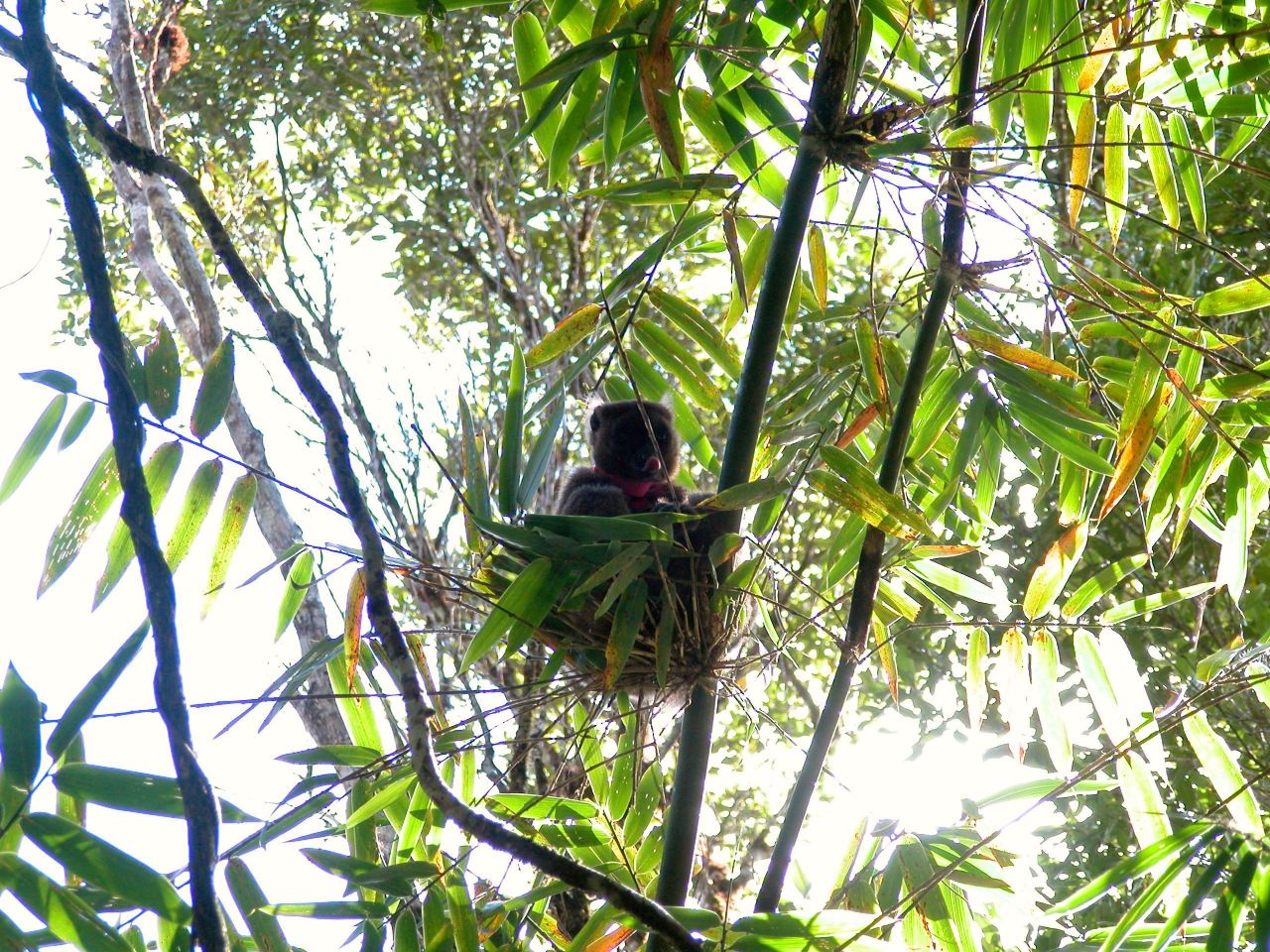
There are several species of bamboo lemur. They eat different kinds of bamboo and seem not to notice one another. Lemurs of the same species live in small groups and quarrel with their neighbours.
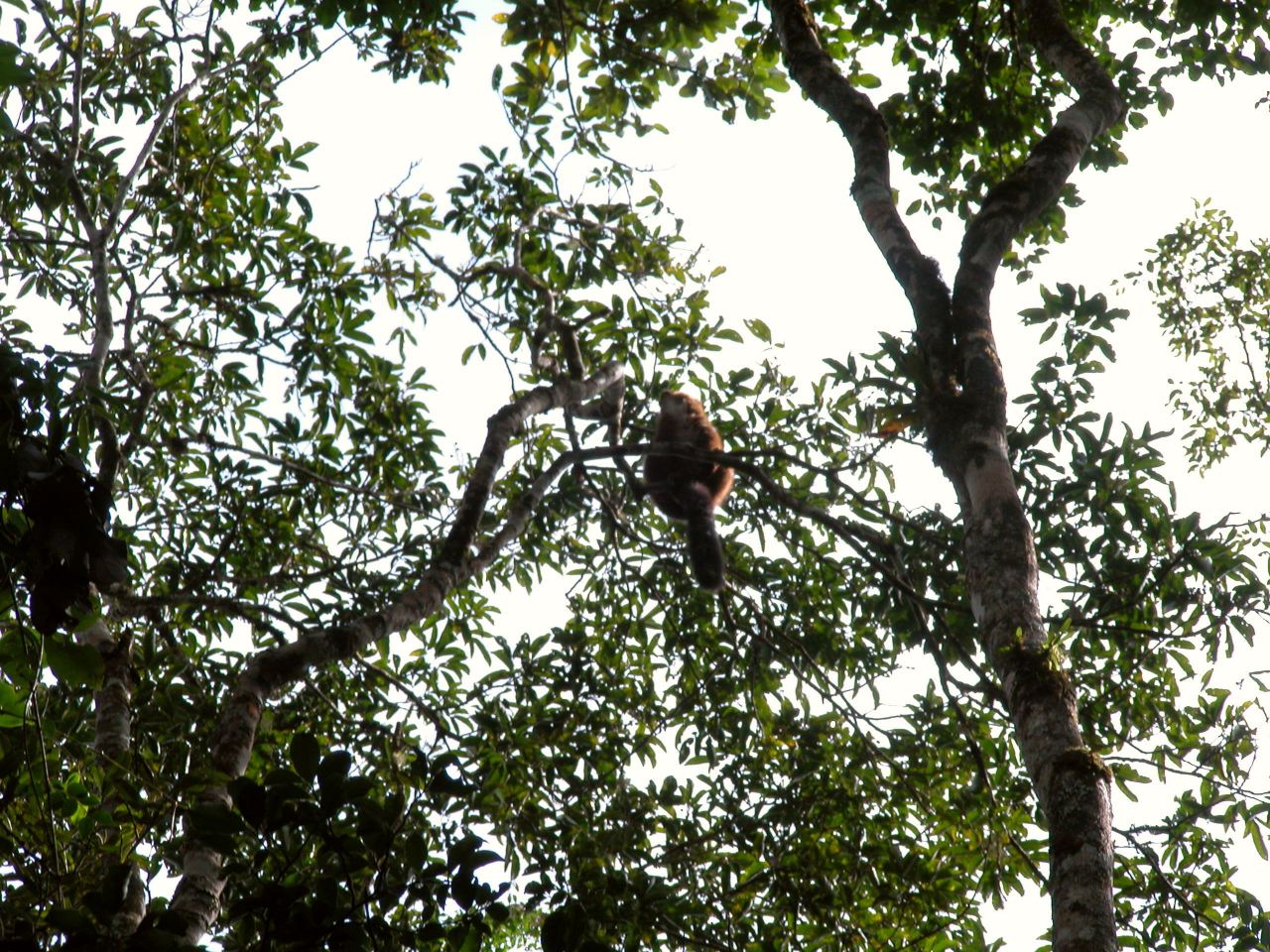
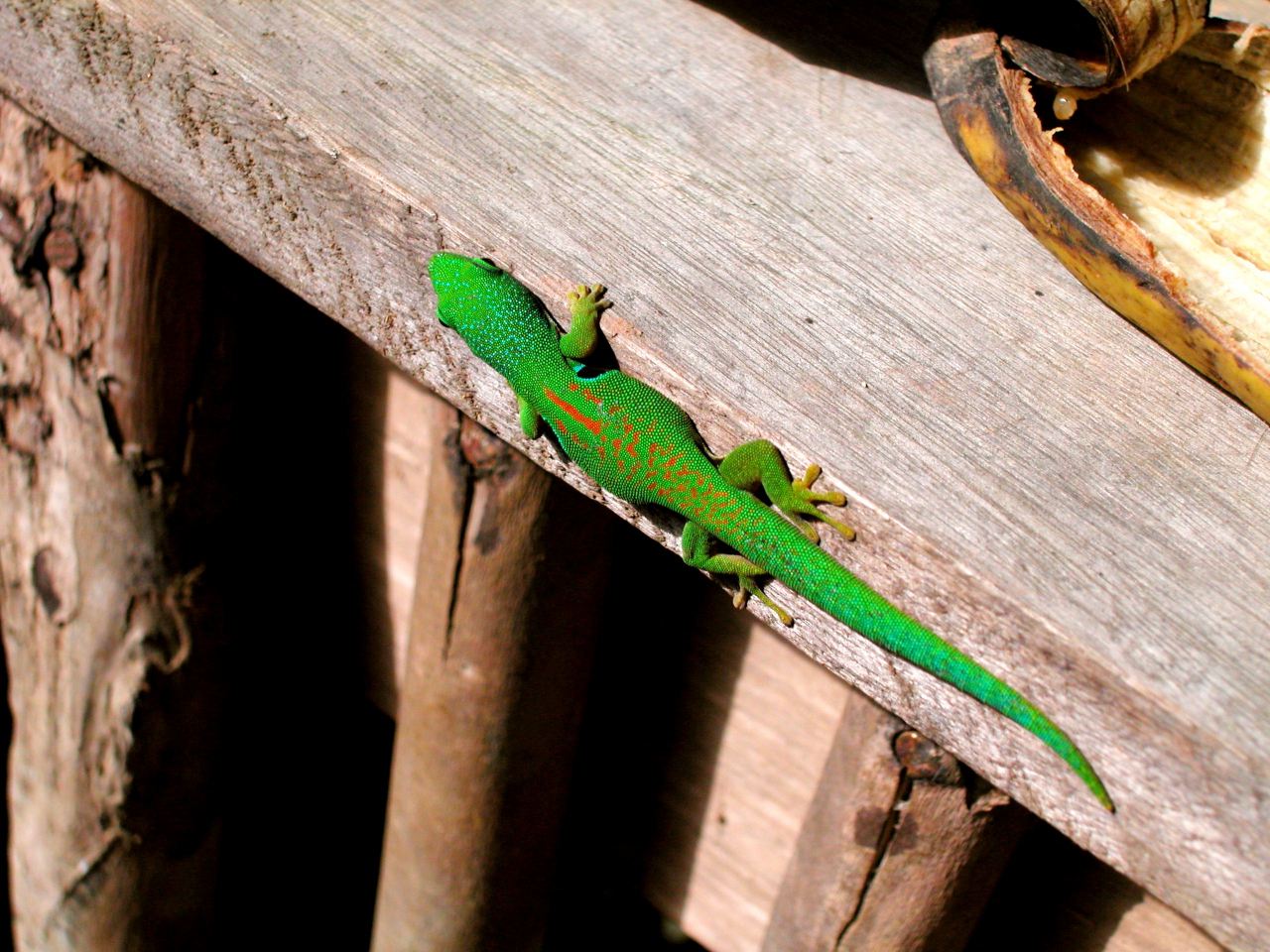
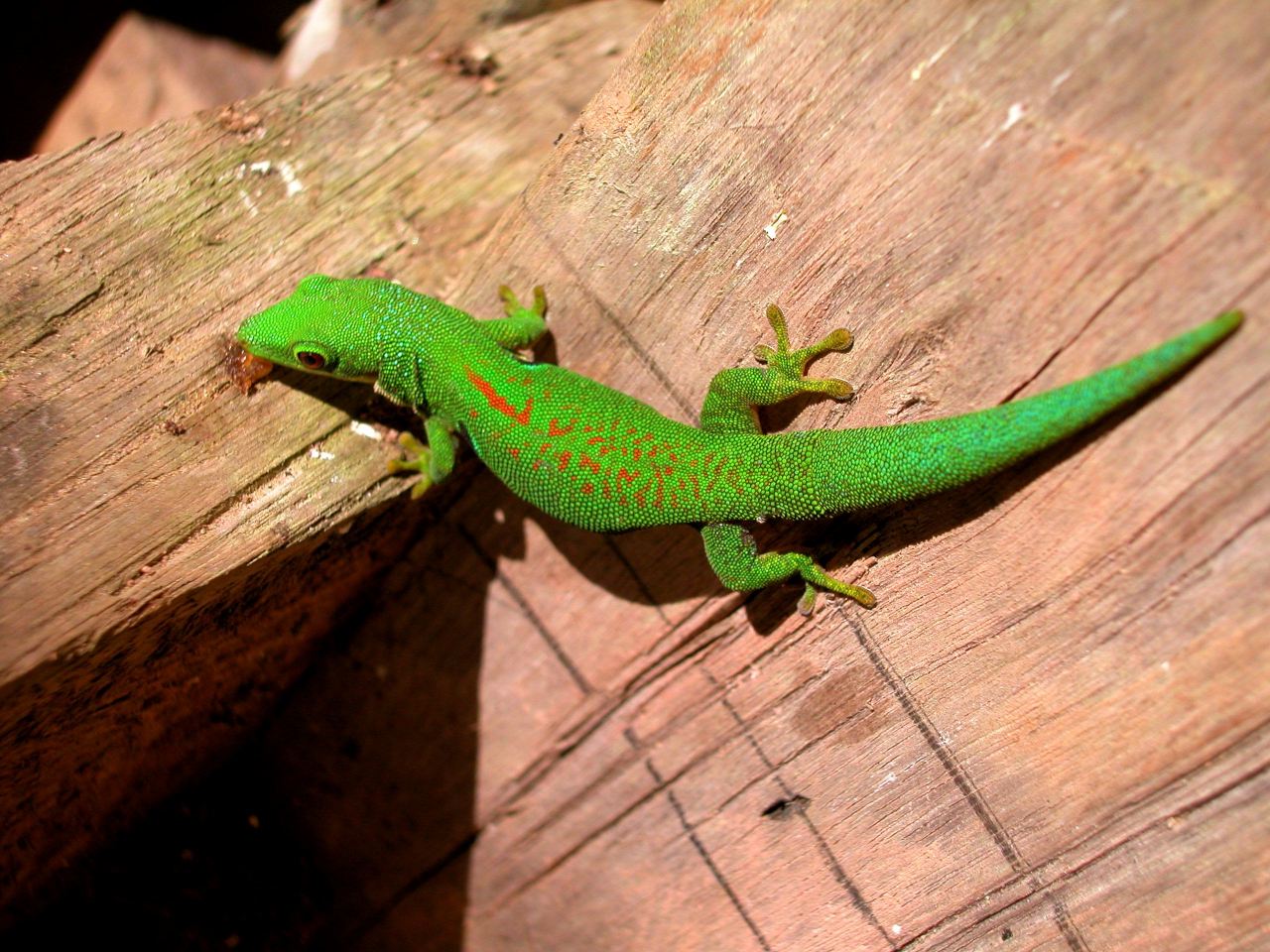
Ranomafana attracts birdwatchers as well as lemur-watchers. There are many endemic birds, and a large share of the visitors were there to look for them. There were plenty of lizards, notably Phelsuma day geckos. For some reason they are so famous that there’s even a Russian-language site about them, www.phelsuma.narod.ru.
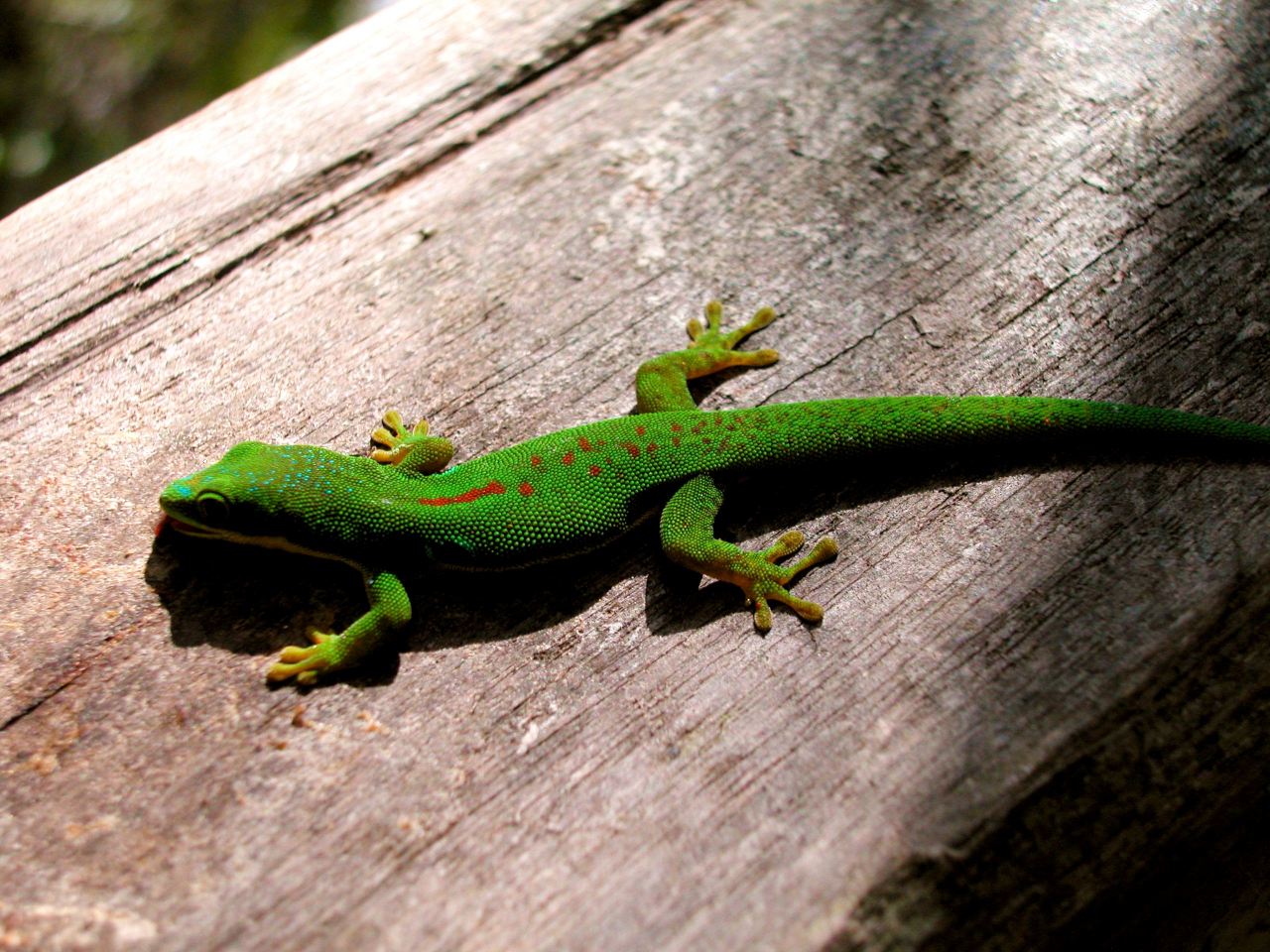
A tropical forest is always full of life, including insects. I thought the most frightening animal on Earth was the mosquito. You could count the people killed by large predators worldwide in hundreds each year. Mosquito-borne diseases killed vastly more. Malaria and other fevers could be fatal without treatment. We were told in 2003 that yellow fever and dengue weren’t present in Madagascar. I’d brought Lariam as my malaria prophylaxis. The schedule I followed back then was one tablet a week, starting two weeks before the tropics and continuing for a month after leaving. It had seemed to work for me before. In one malarial Amazon forest I counted the bites on a square centimetre of skin and estimated I’d been bitten at least a thousand times over a night. I escaped malaria. The tablets were expensive, though. Madagascar also had leeches. We’d heard that they didn’t carry infections, but that tugging one off could leave a piece behind and cause a long-lasting infection or even an abscess. The one we were warned about was hardly bigger than a mosquito and crawled just about everywhere, even round bus stops. None bit us, or at least we noticed none. People told us to use a lighter nearby to make it let go, and then, depending on how fond you were of animals, to tread on it or let it go in the forest. The trick, they said, was not to roast it before it got the message to let go. We also took more care over grazes and cuts than we did at home. I carried iodine because I thought an unfamiliar infection had a better chance of turning nasty. We avoided sitting on rotten logs or stumps. That, I think, was about all. I didn’t feel a tropical forest was more dangerous than a Russian one. Back home we had ticks carrying encephalitis, an illness I considered often fatal and for which, in those days, I believed there was no effective vaccine. A bear seemed scarier to me than a lion. In Russia we also had the slightly venomous adder, as well as nettles and hogweed that burned your skin. Somehow we lived through those burns.
Ranomafana National Park has a great many paths through the forest. They break the illusion of untouched wilderness a little, but they do make it easy to get about. One of the more distant trails leads to a magnificent waterfall.
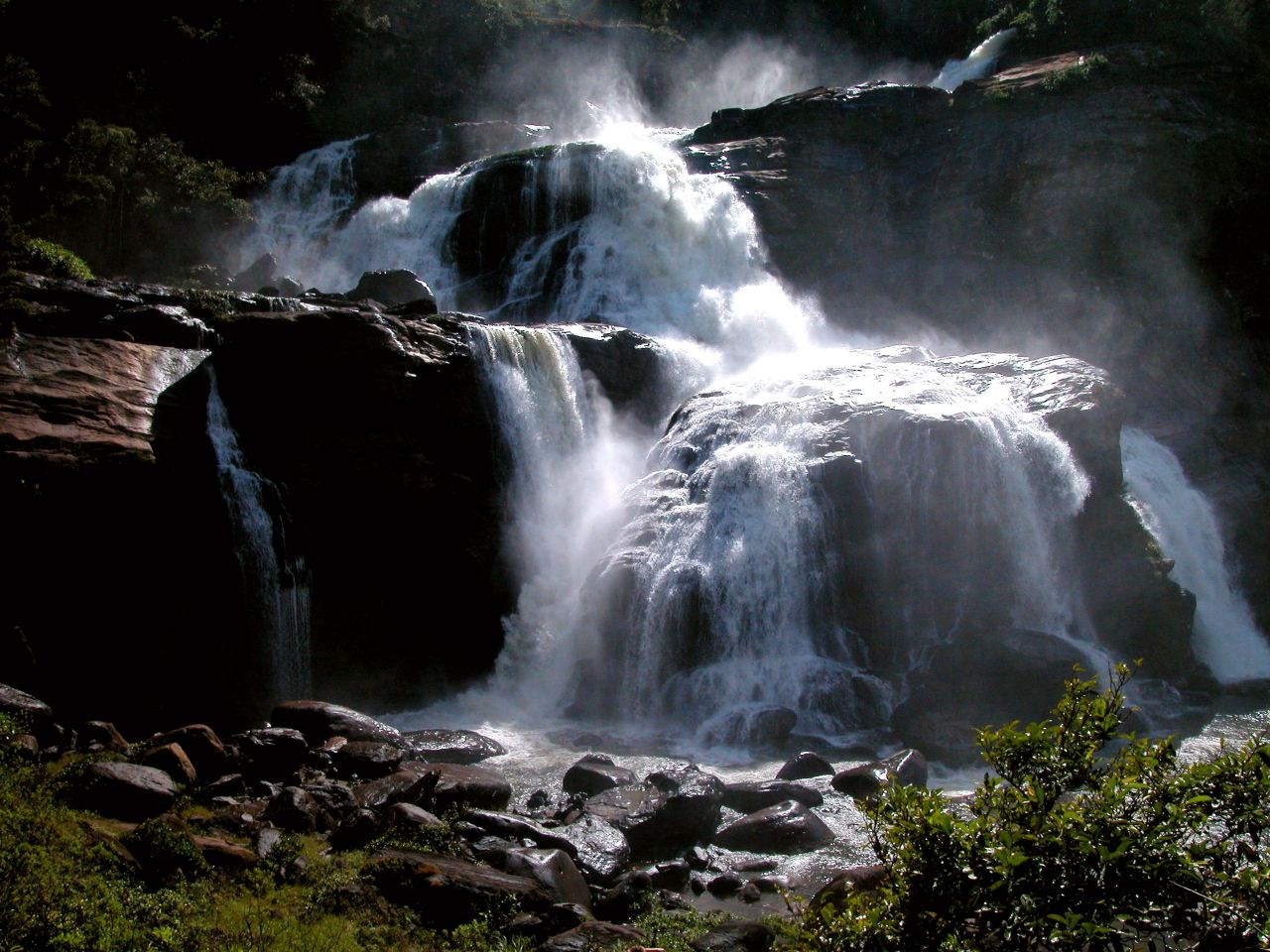
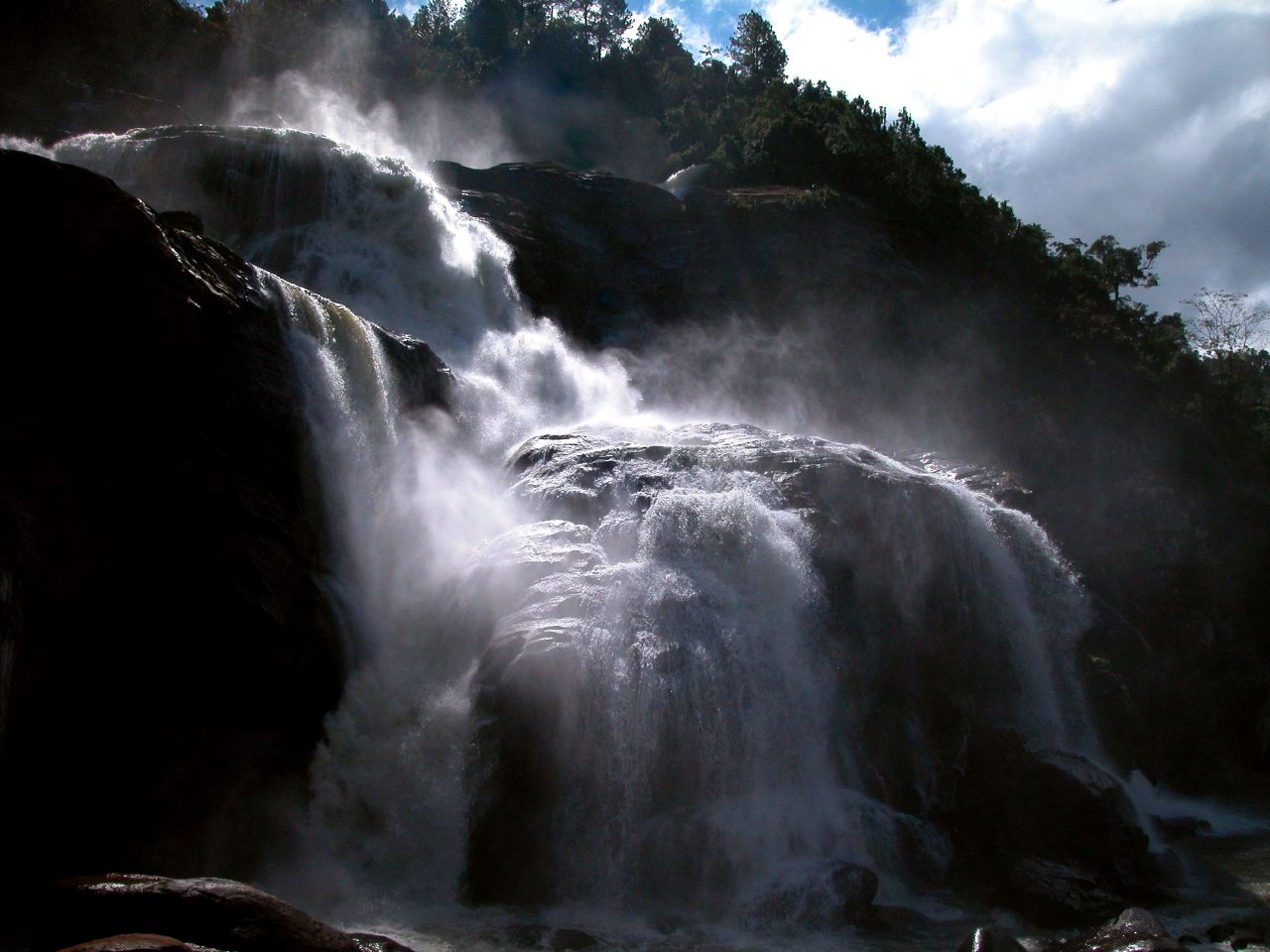
Village people still lived within the park. Efforts were being made to move them out or restrict their farming, but they stayed in the huts they’d always lived in. The custom was to pay a little for walking through their gardens.
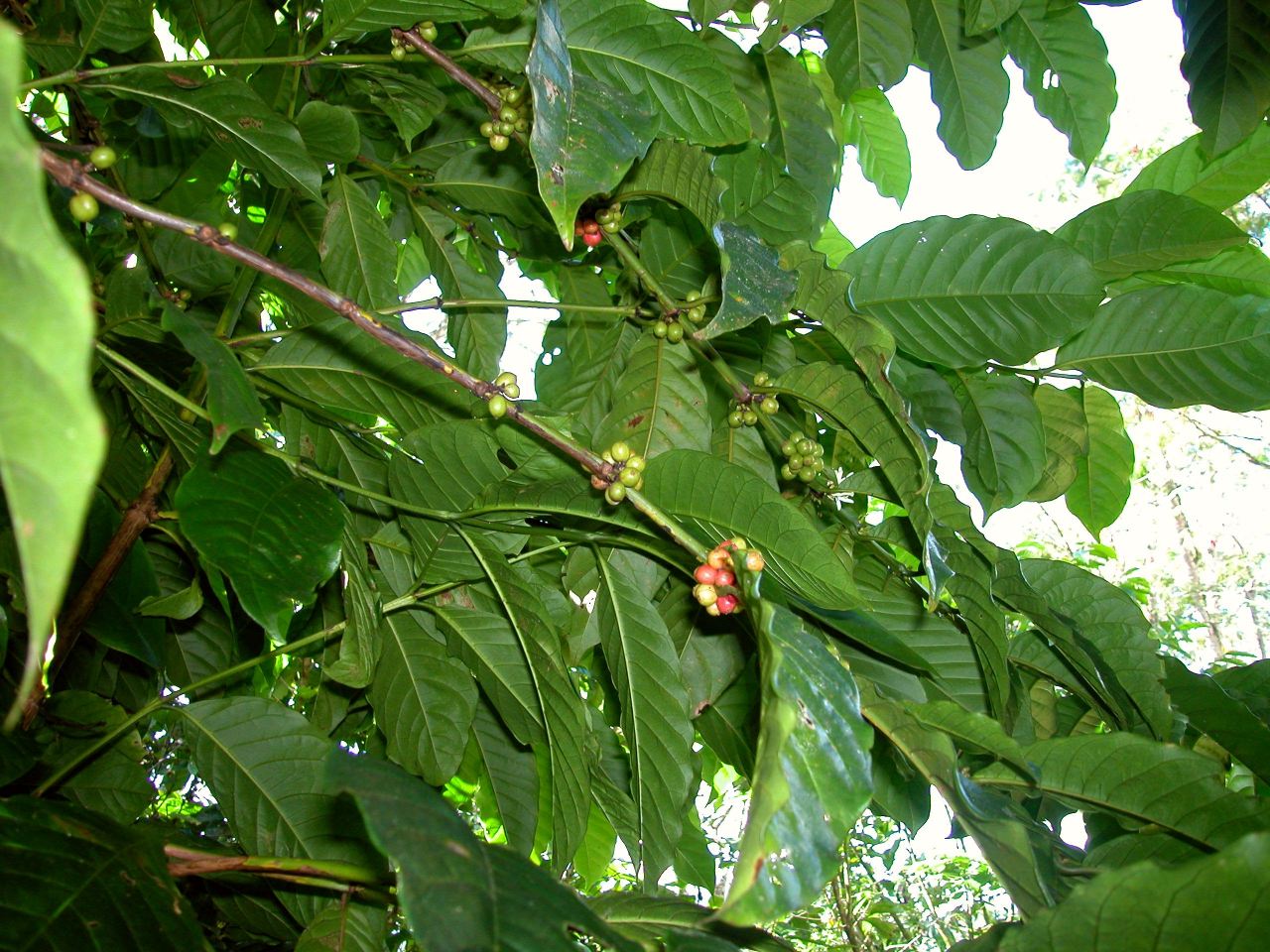
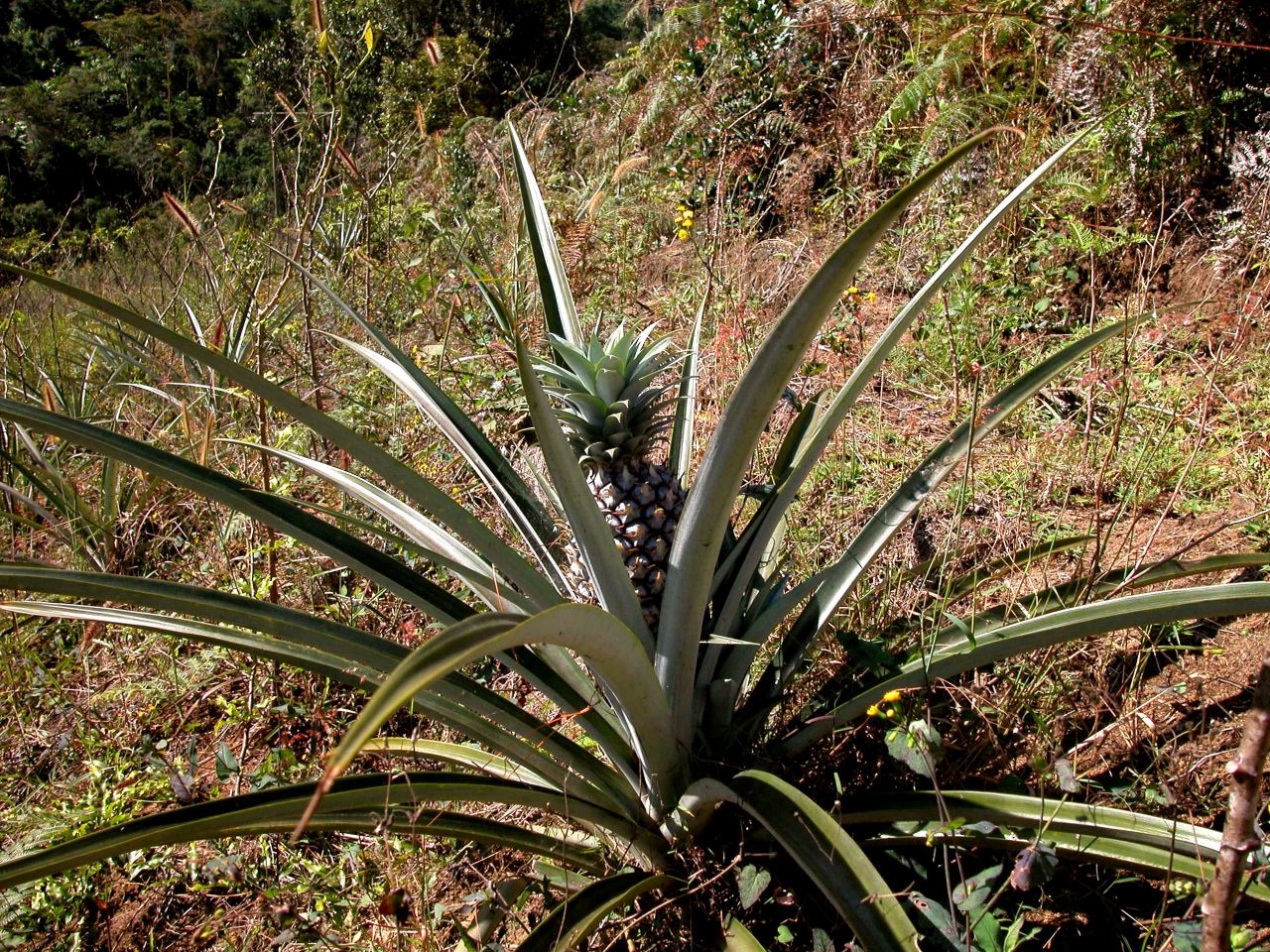
In the river floodplains, where the tall rainforest gives way, you might come across a grove of coffee trees. Here and there the spiky tufts of pineapples poke out.
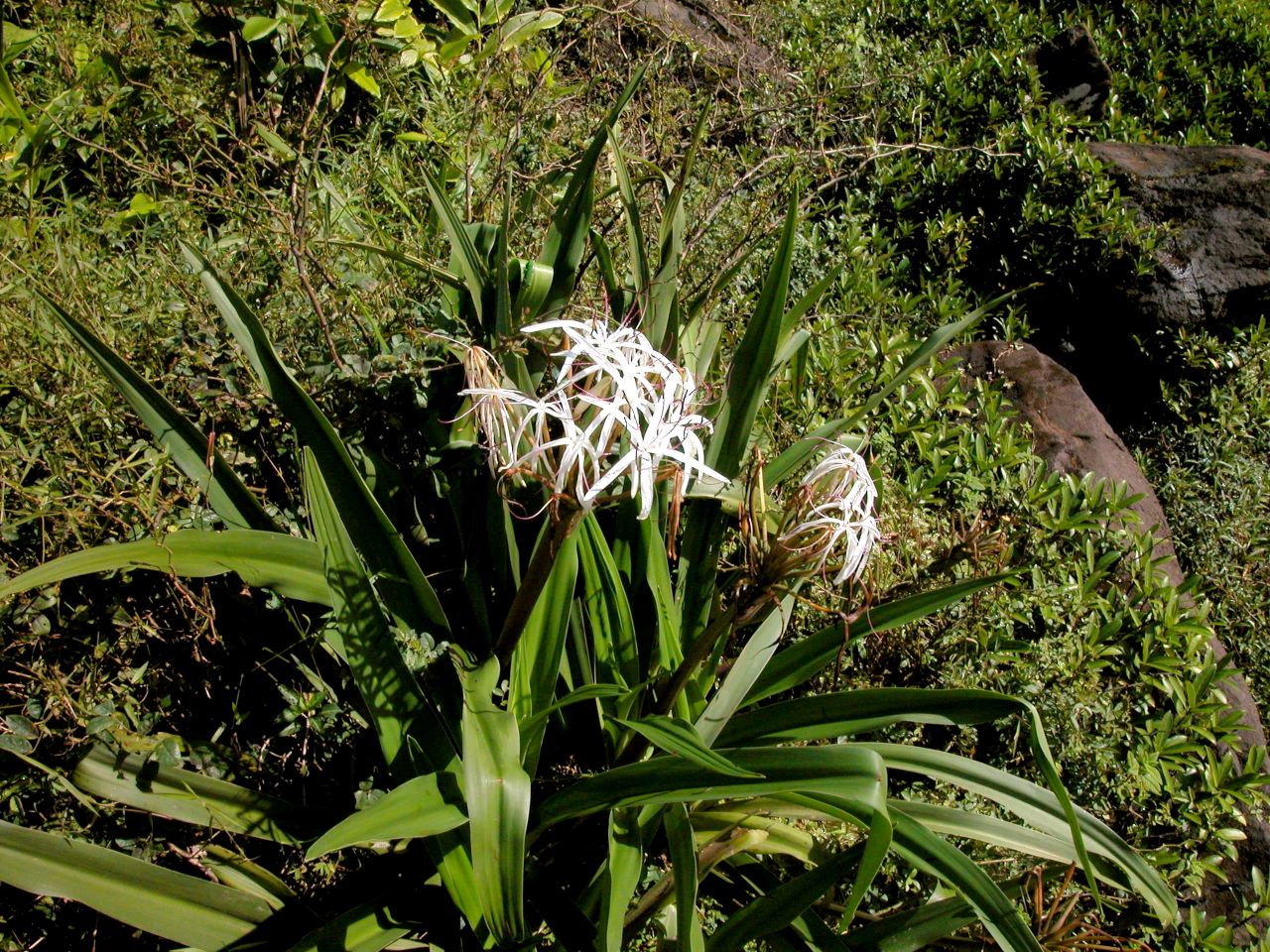
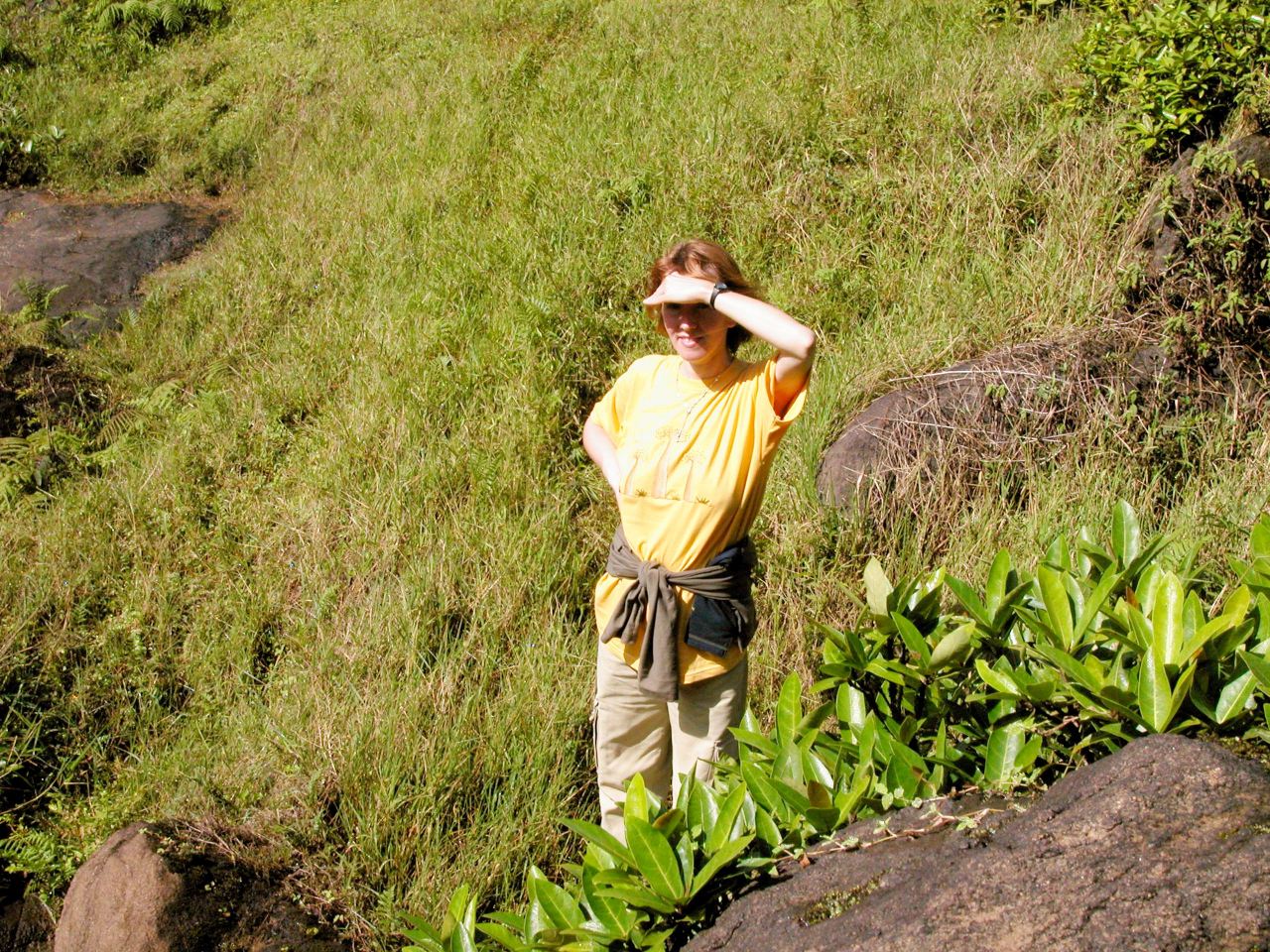
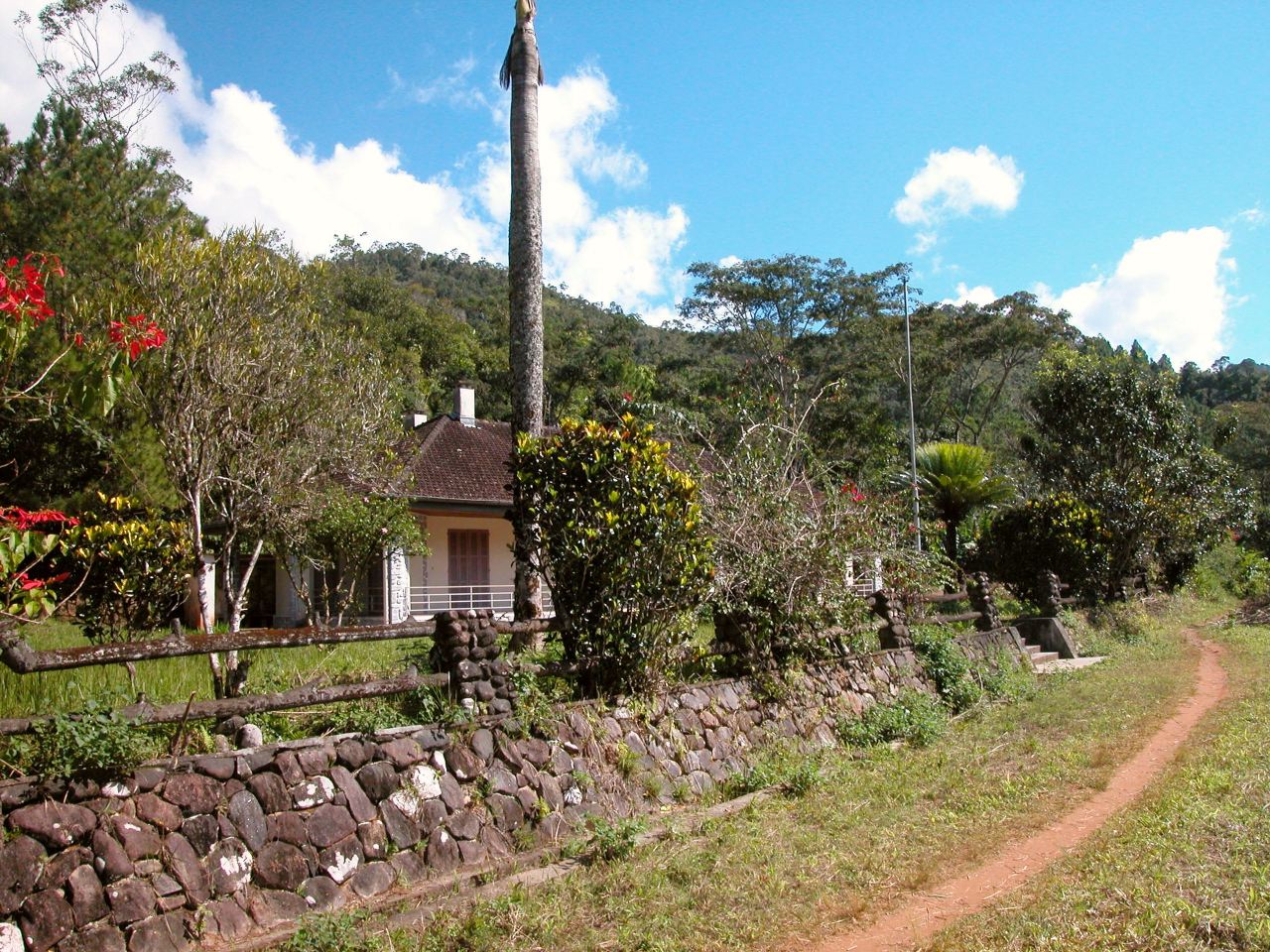
Visitors were driven high into the hills so they could walk back down while taking in the scenery. The trails came together near Ranomafana village, where Didier Ratsiraka’s country villa stood empty. It had been empty since the president fled. Even in a very poor country people could respect private property, I thought. Nobody had ransacked an empty house, even when it belonged to a deposed president in exile.
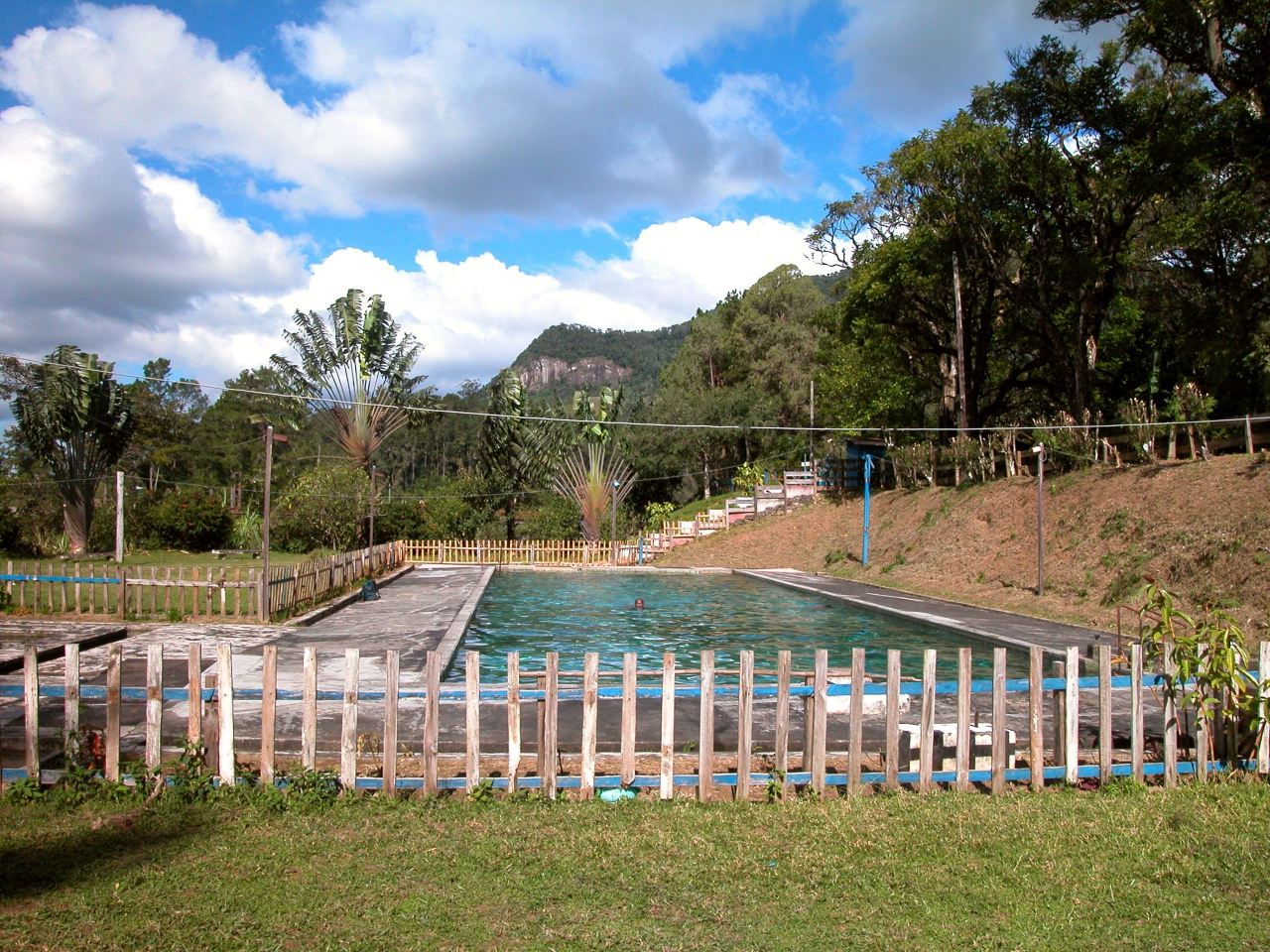
Next to the villa is a hot spring and a pool. The spring gives the park its name. Ranomafana means hot water. For 5,000 francs you could swim as long as you liked. There were changing rooms and a shower. The water was slightly mineralised and about thirty degrees.
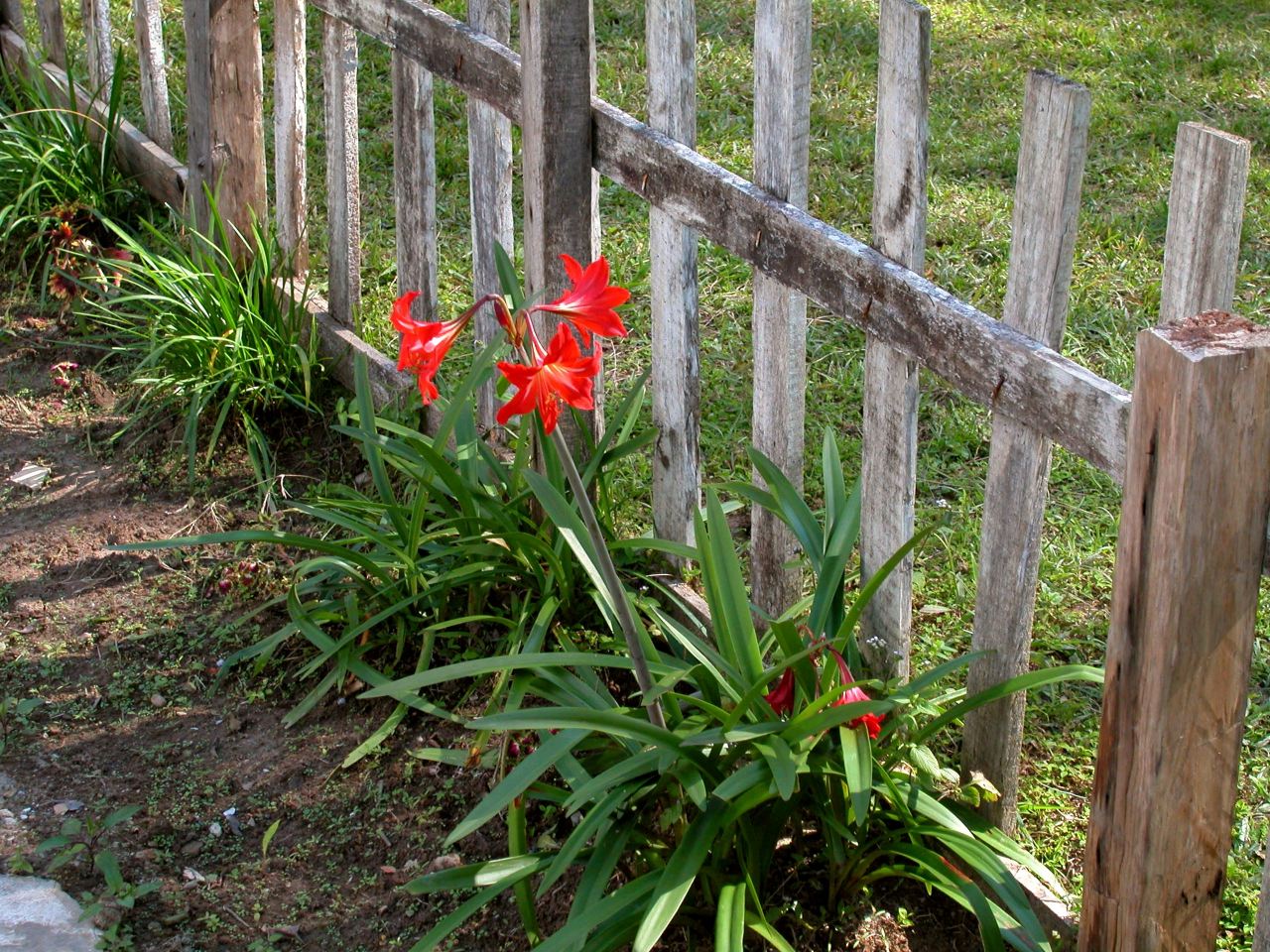
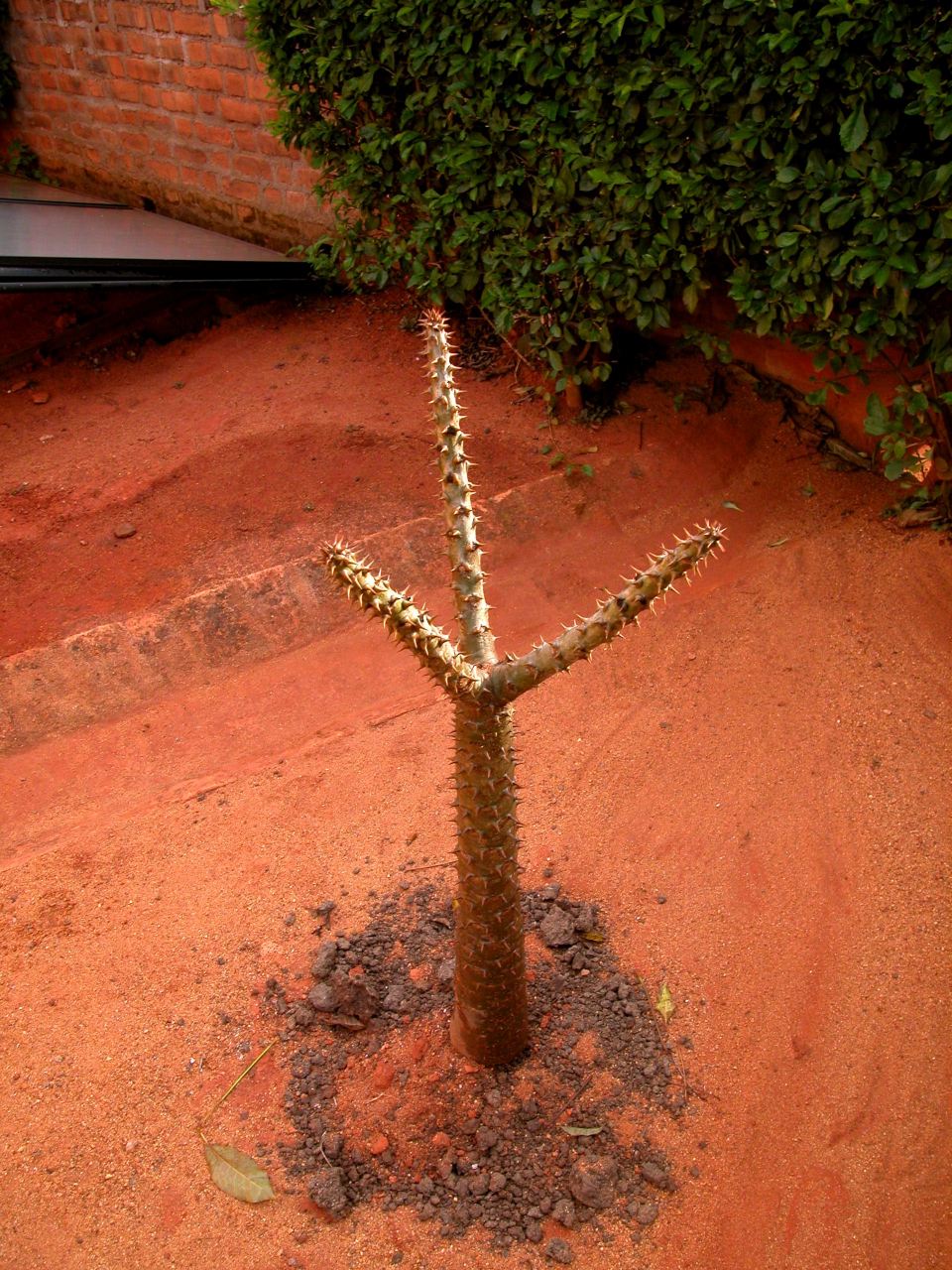
After lunch at one of the restaurants we drove farther south. The road to Fianarantsoa was very rough and took several hours despite the short distance. The day was drawing to a close, and we couldn’t get far. For the night we stopped at an expensive tourist hotel in the town of Ambalavao. A double room was 110,000 francs. Although Ranomafana was only a hundred kilometres away, the climate was completely different. Rain was rare. In place of the jungle there was dry grassland with cacti and pachypodiums. Nights were very cold.
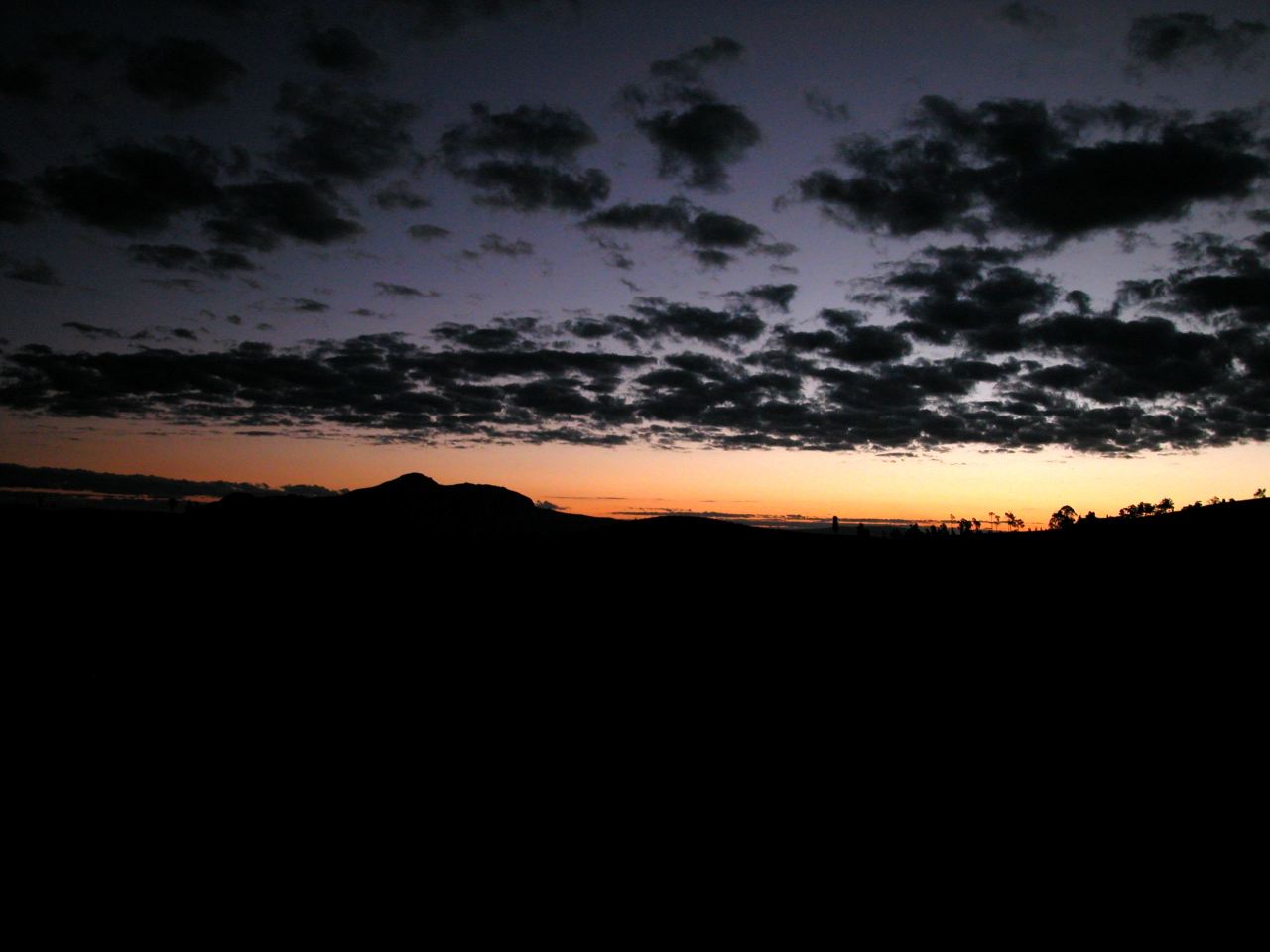
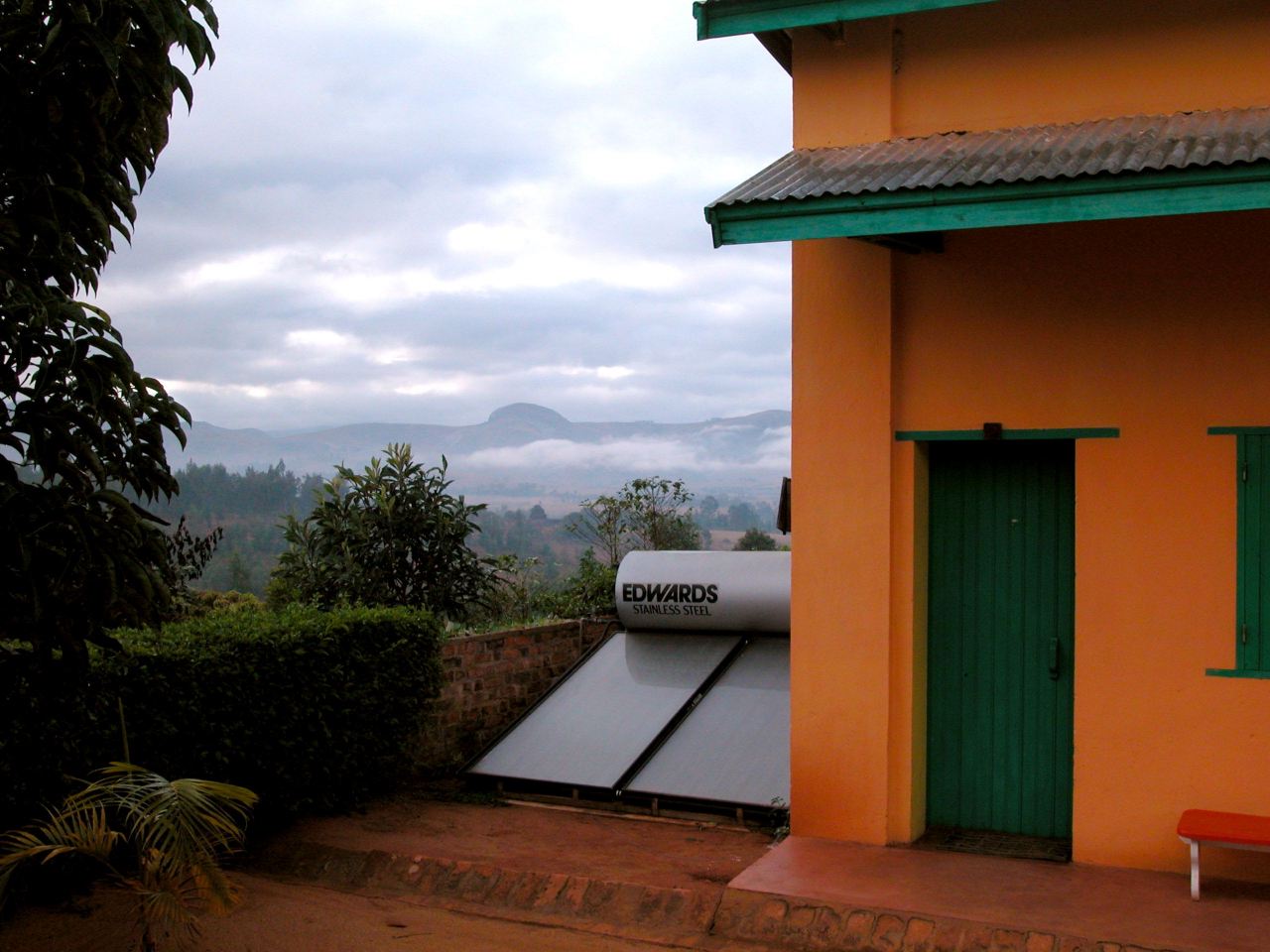
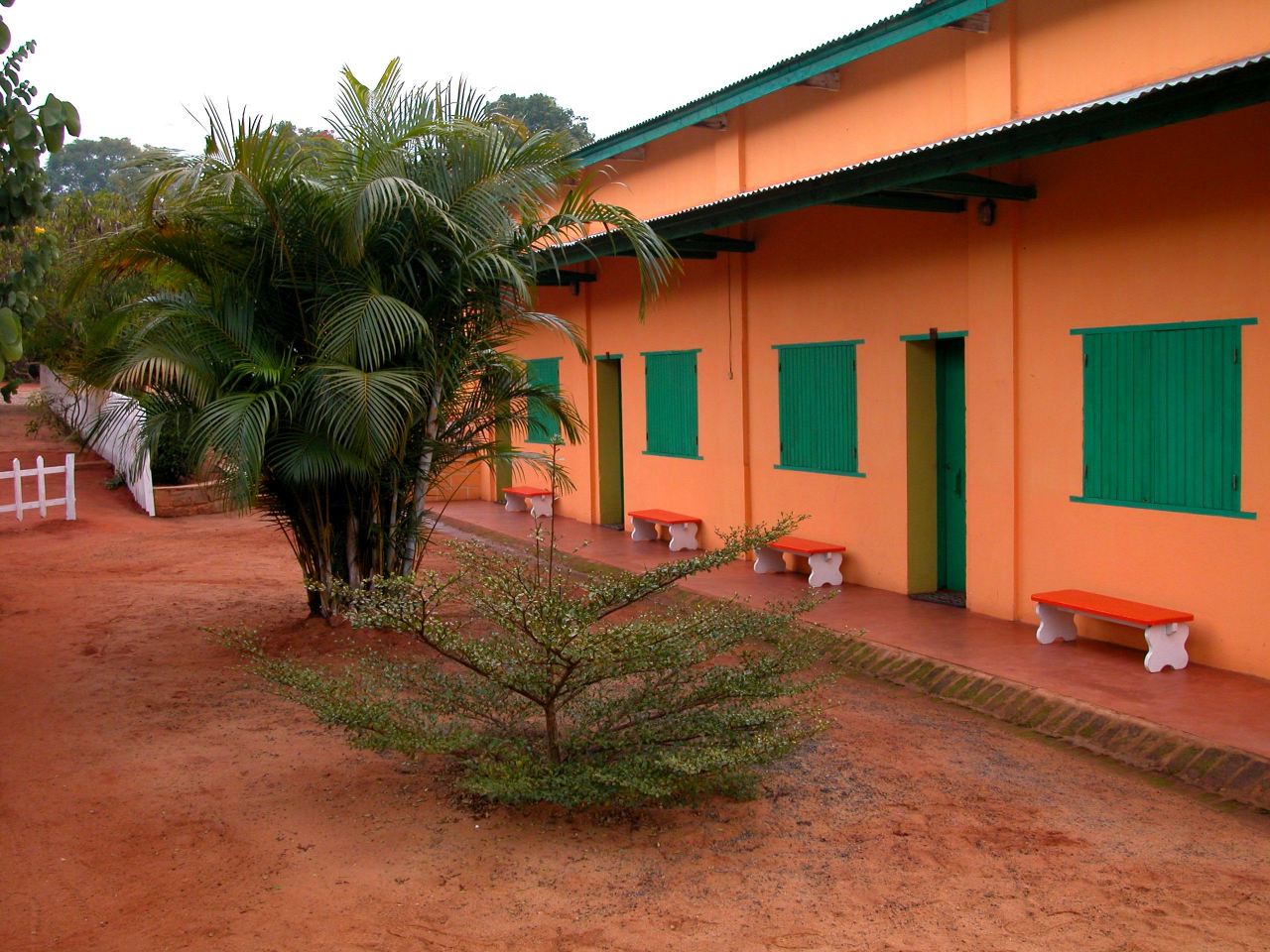
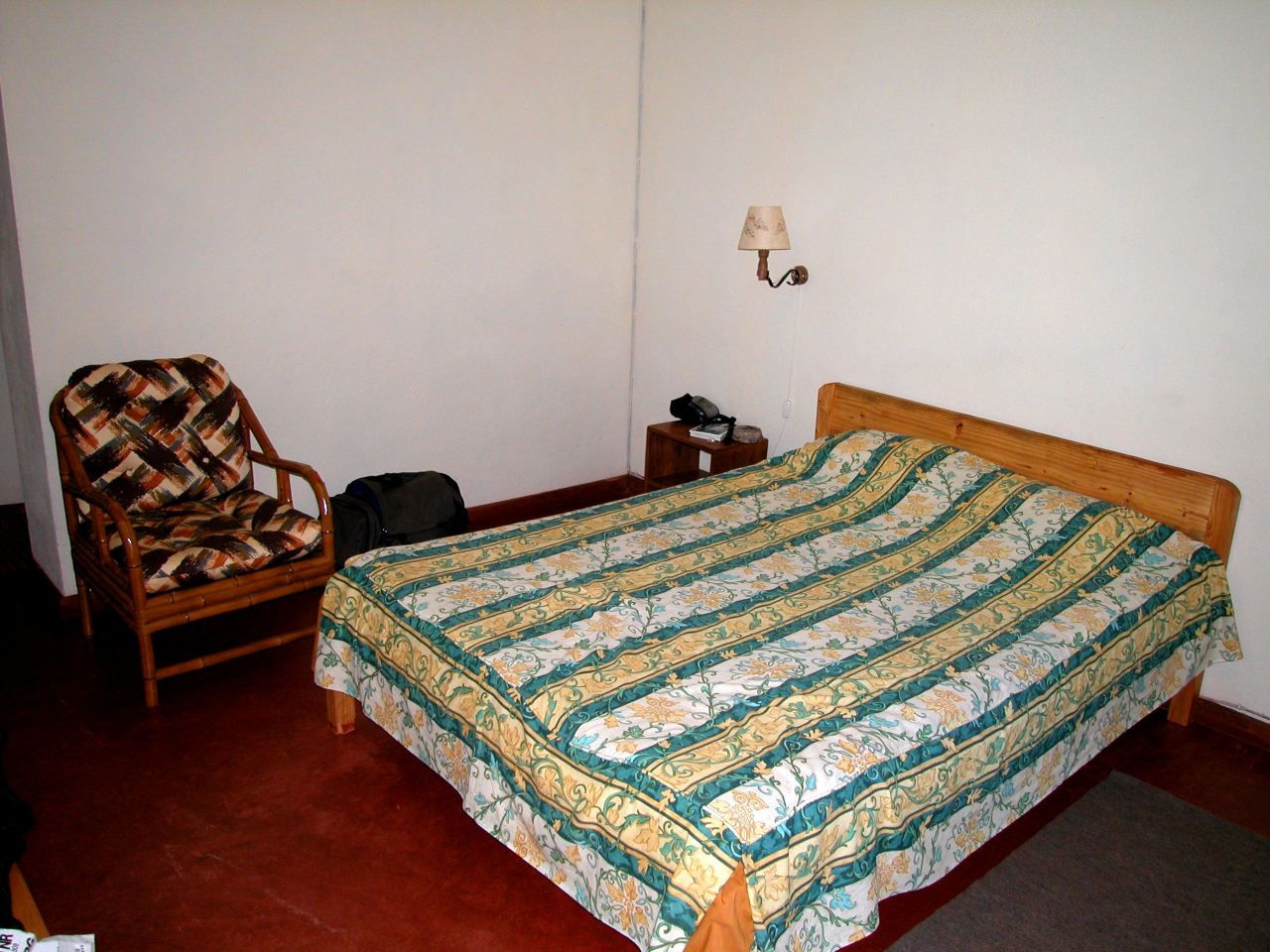
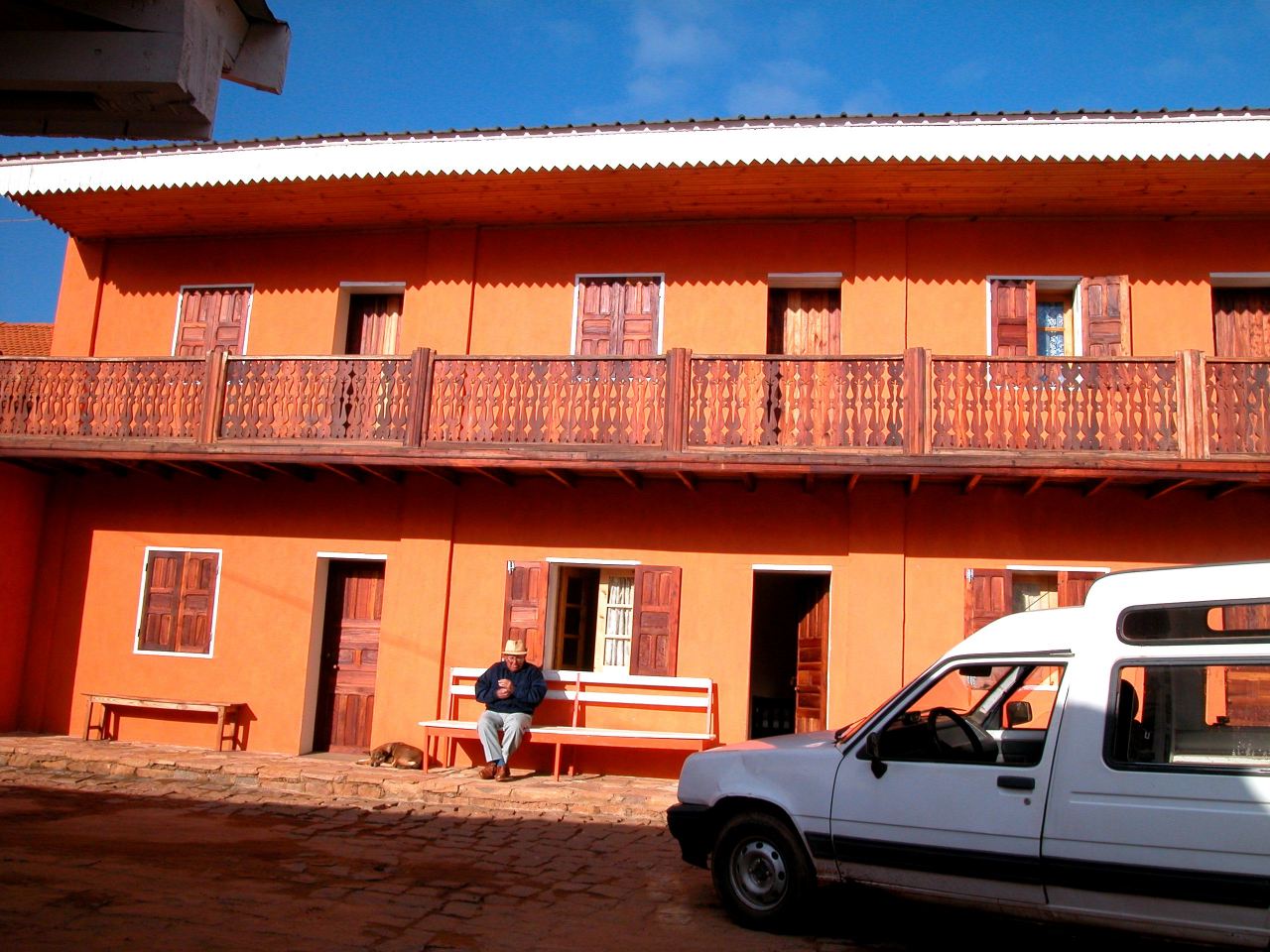
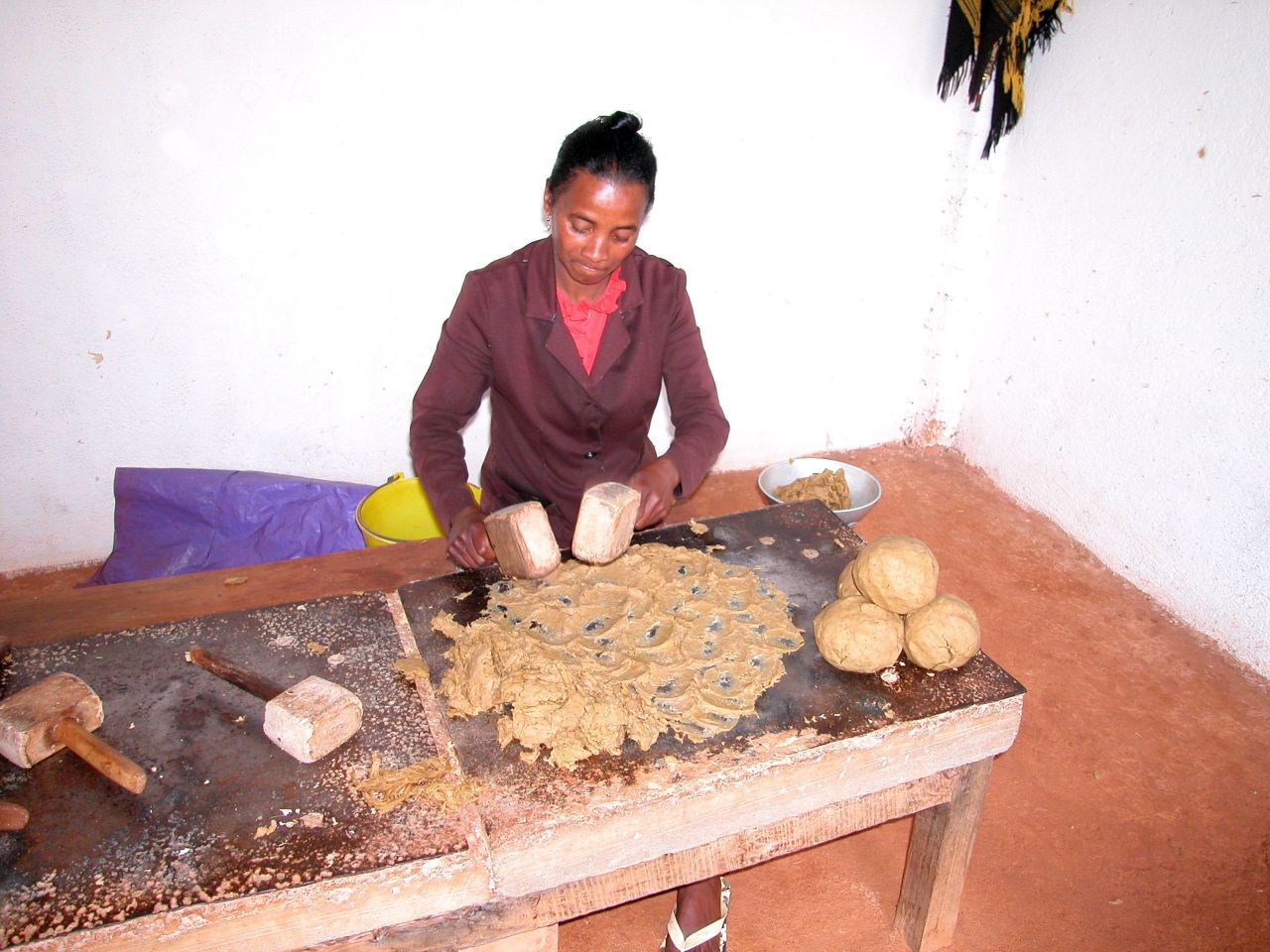
The hotel adjoined a workshop-museum that made paper by hand. A visit was part of the package. The ticket cost almost nothing. The point was to make it very hard for a visitor who’d already been let in to refuse to buy a decorated scrap of paper for several tens of thousands of francs.
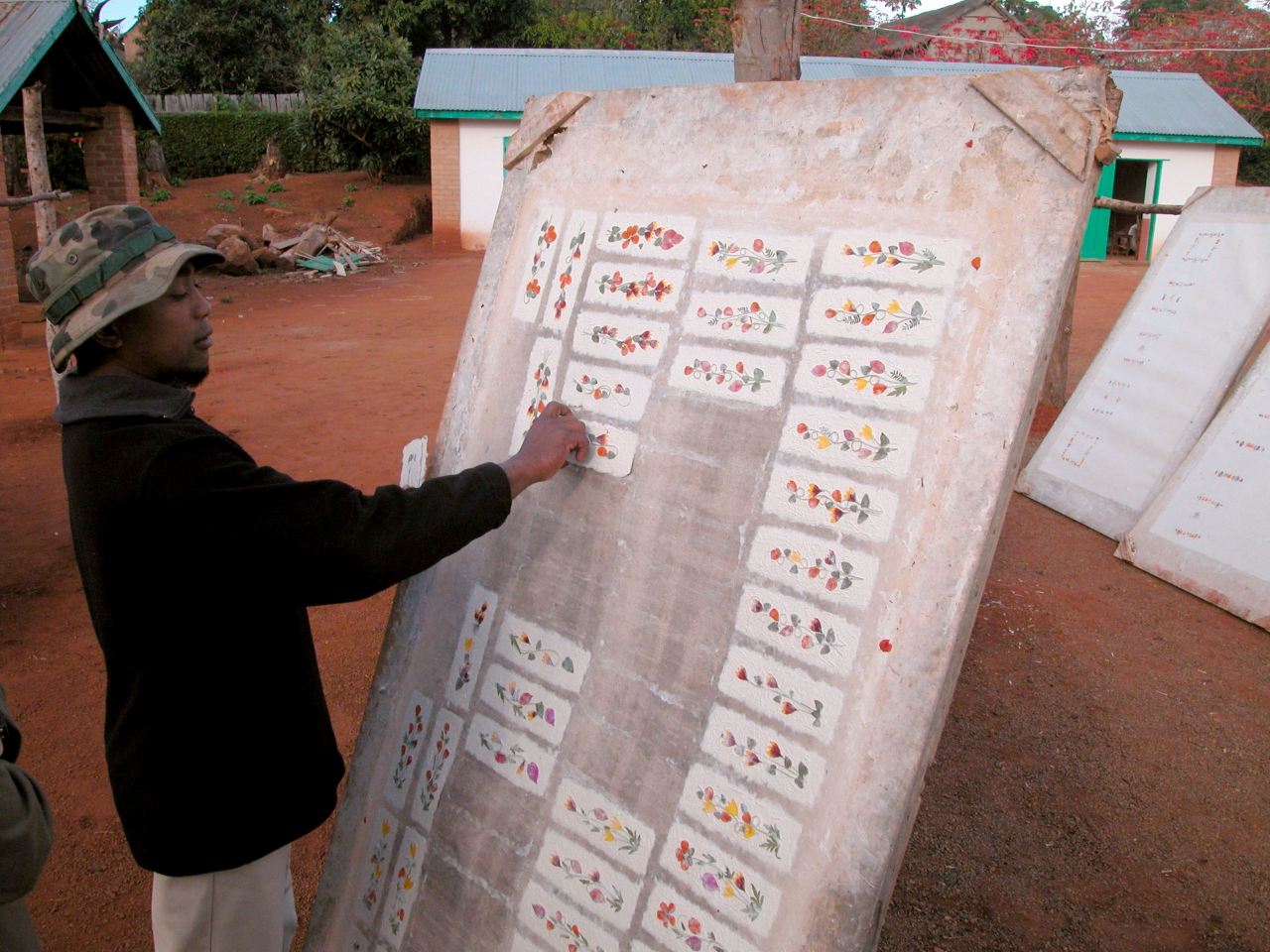
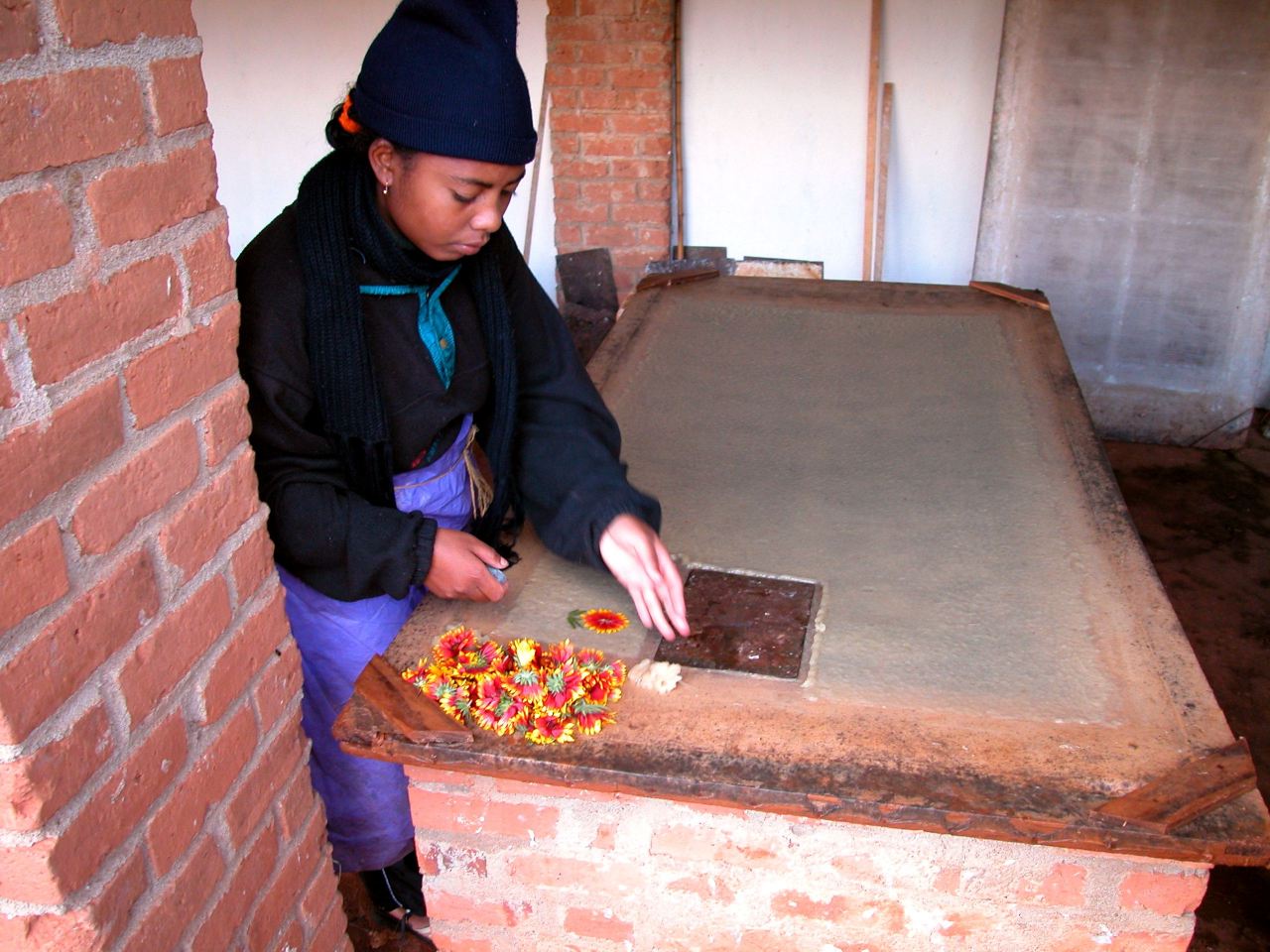
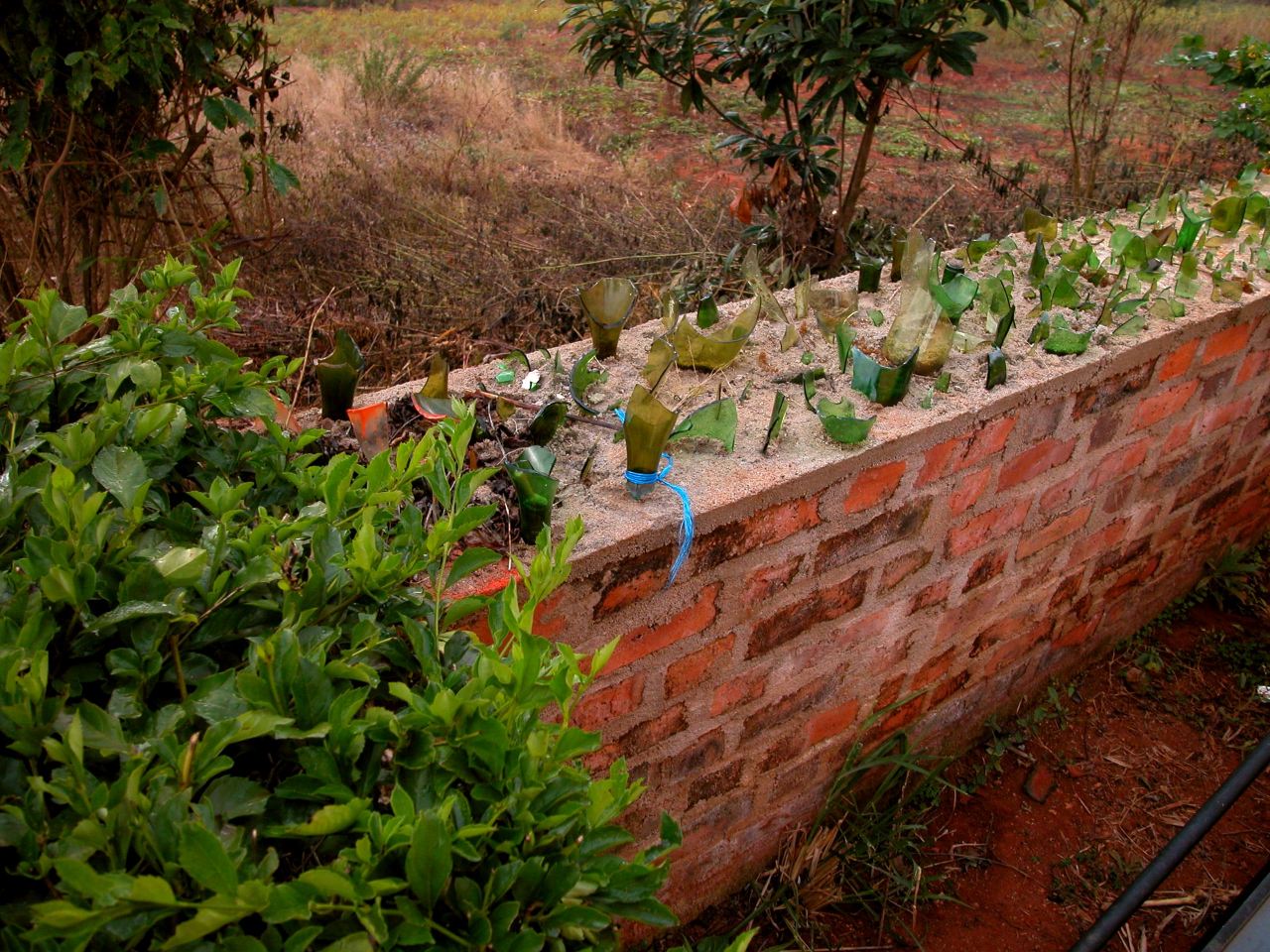
Madagascar had enough genuine wonders without the sort arranged for foreign tourists. I was much more taken with a wall topped with the sharp edges of broken bottles set in concrete instead of barbed wire. You see walls like that all over Madagascar. People often go barefoot, so I imagine they make quite a barrier.
Ring-tailed lemurs at Anja
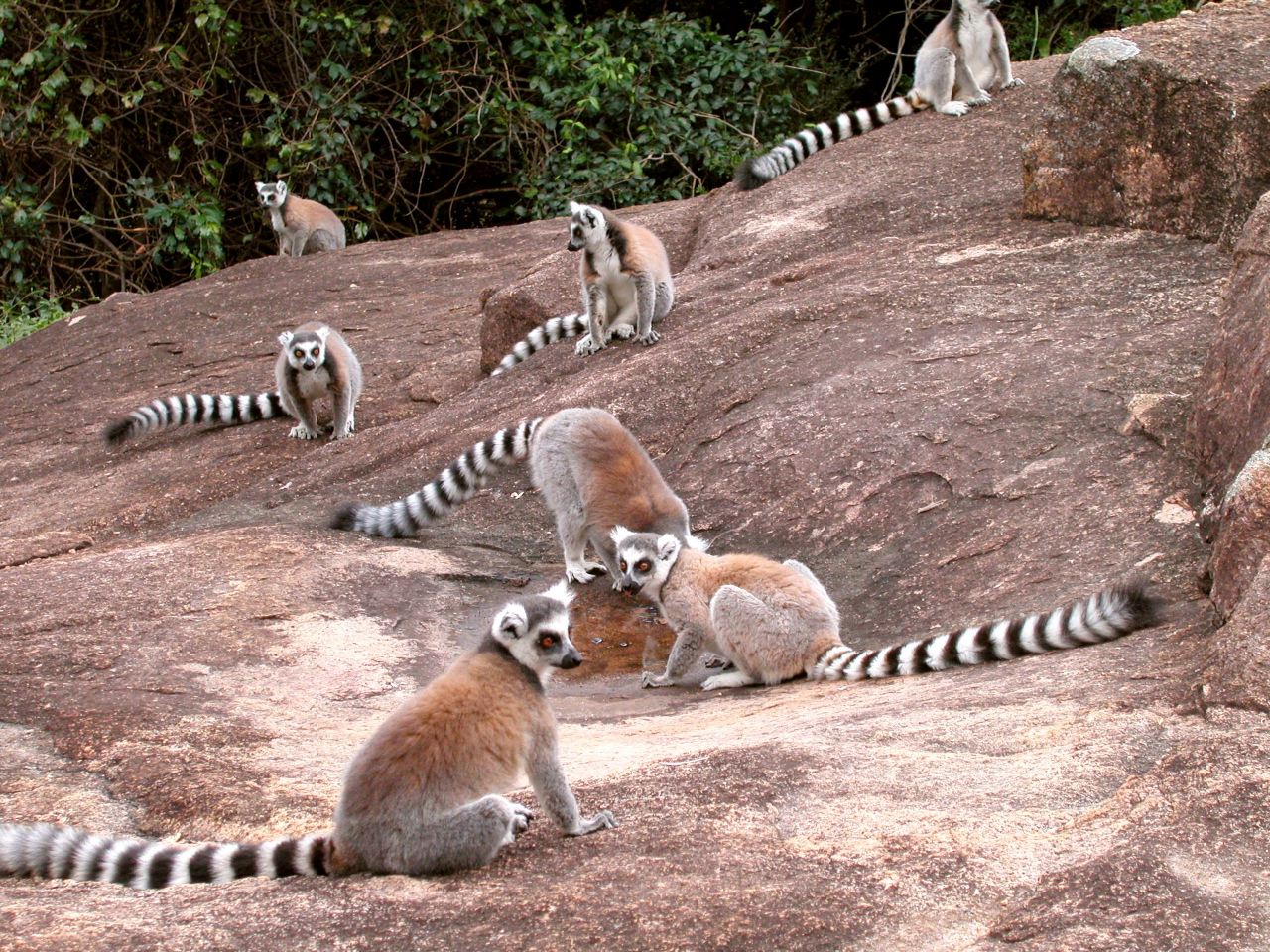
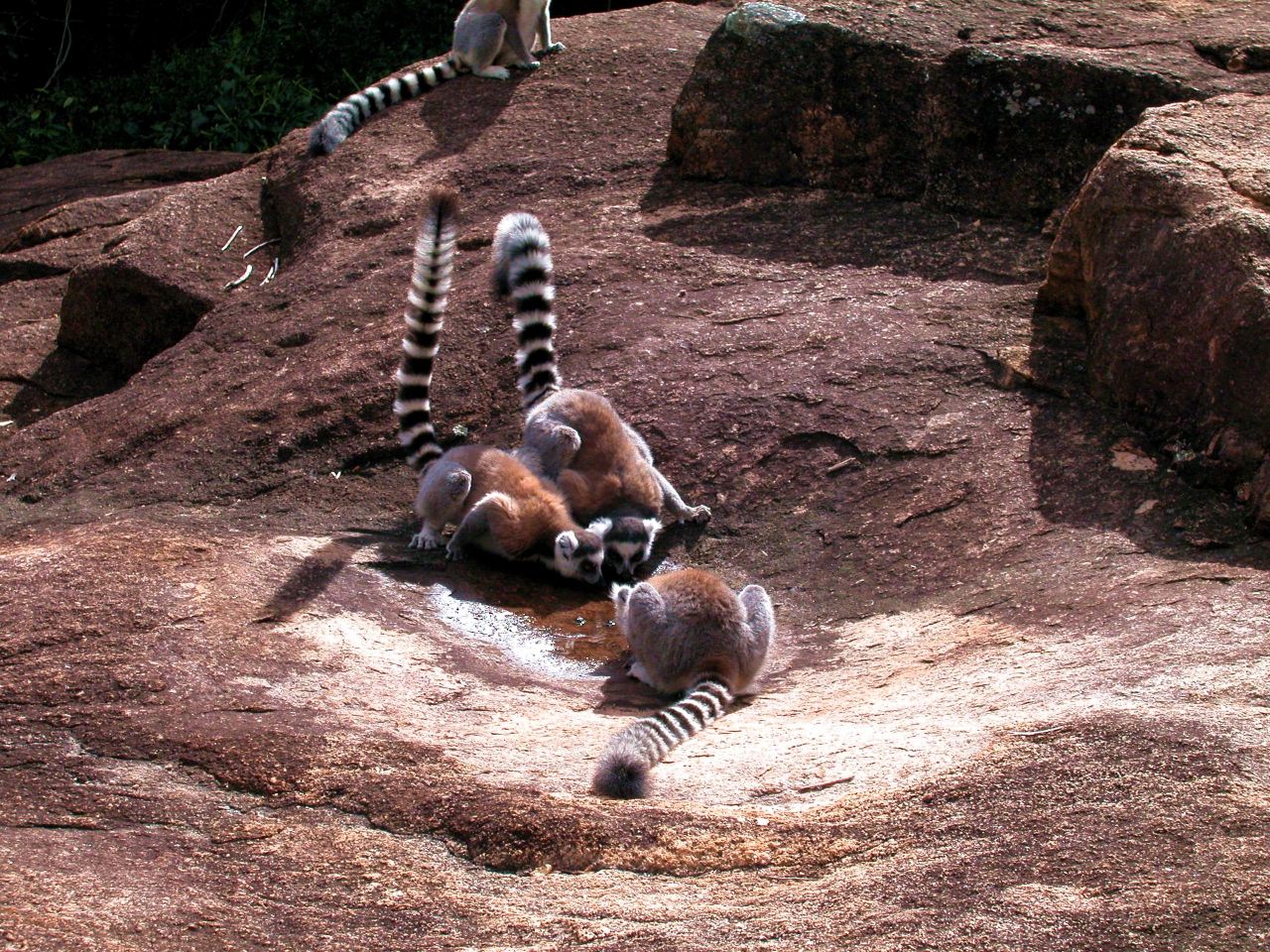
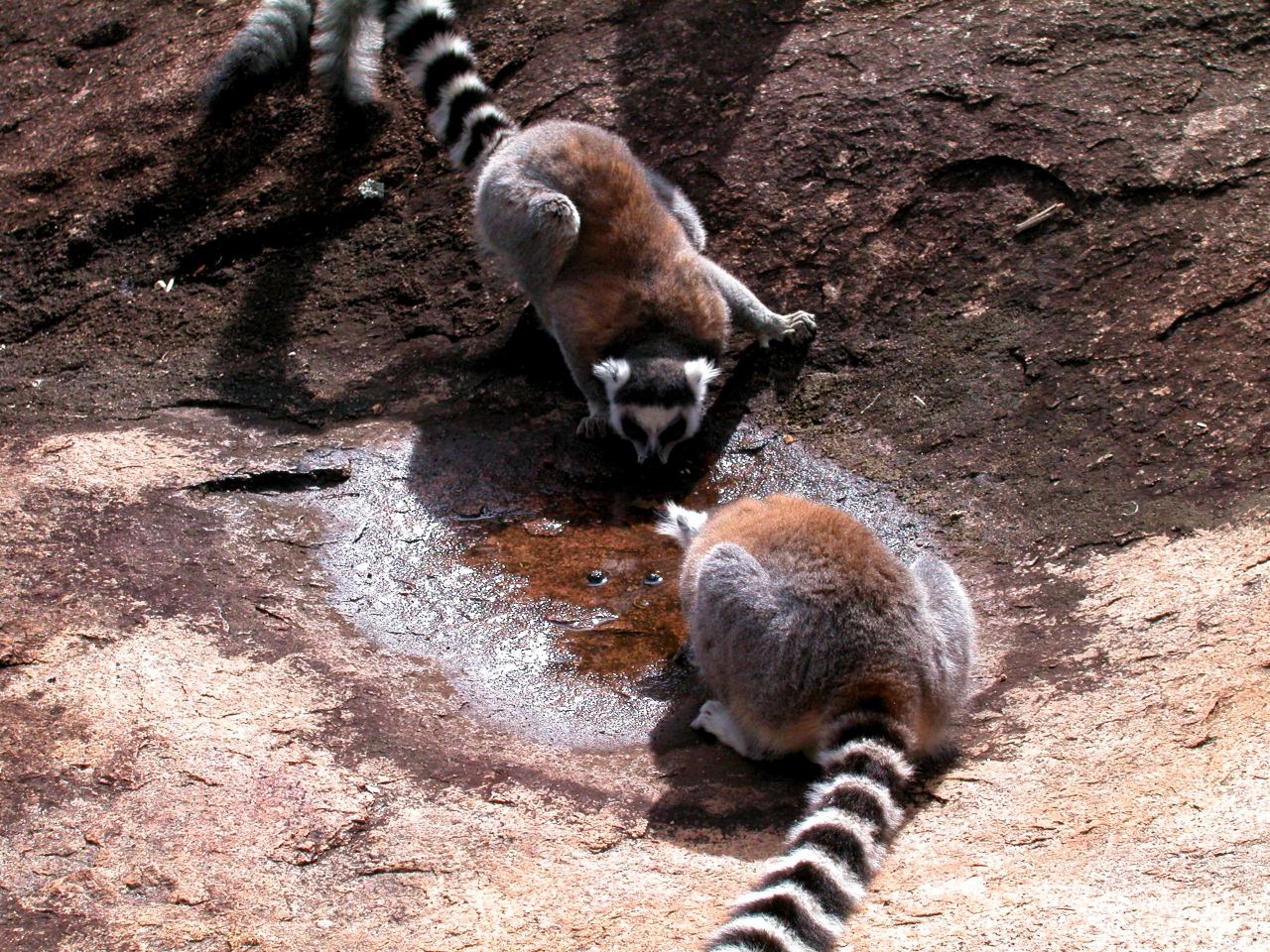
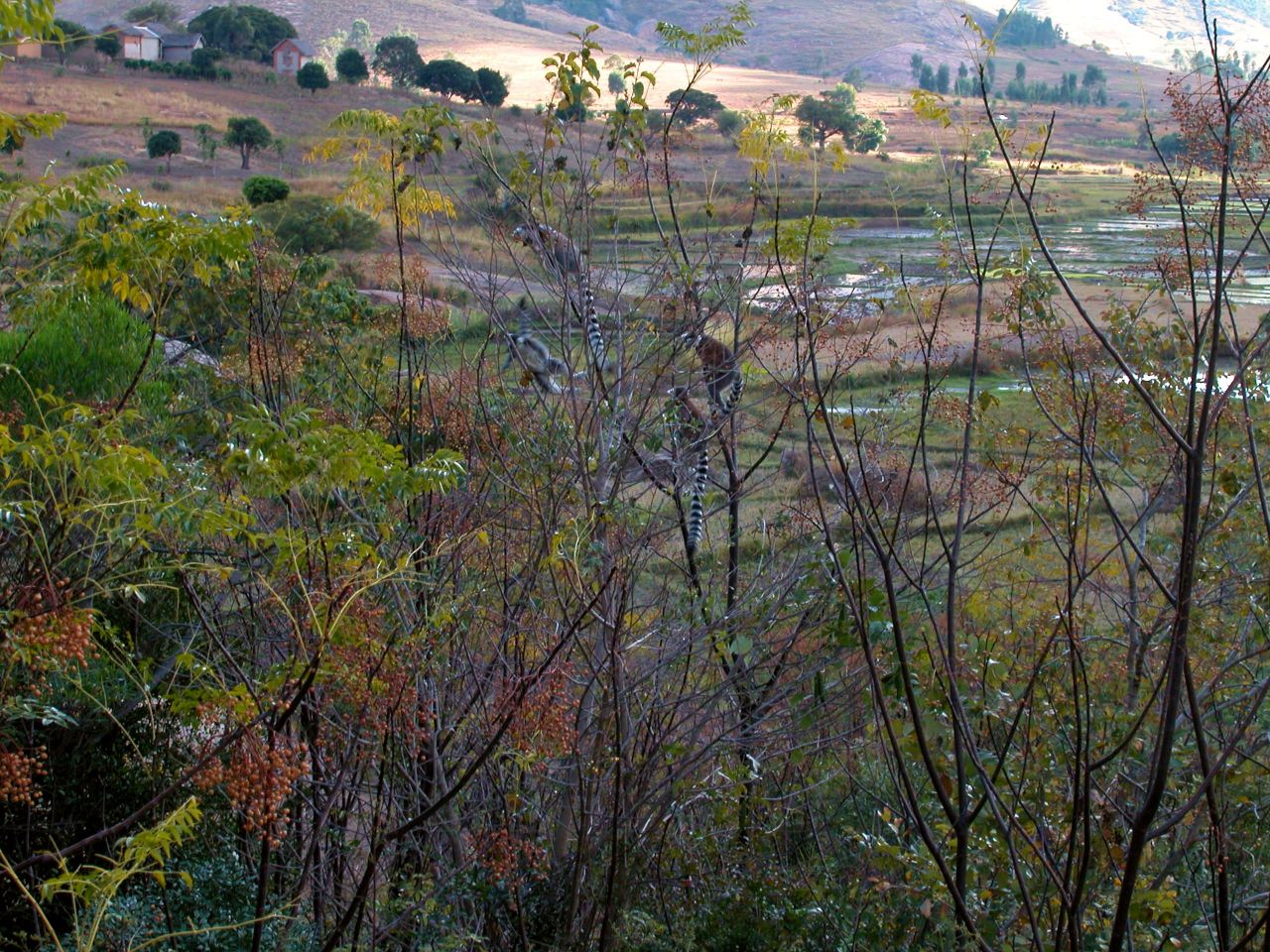
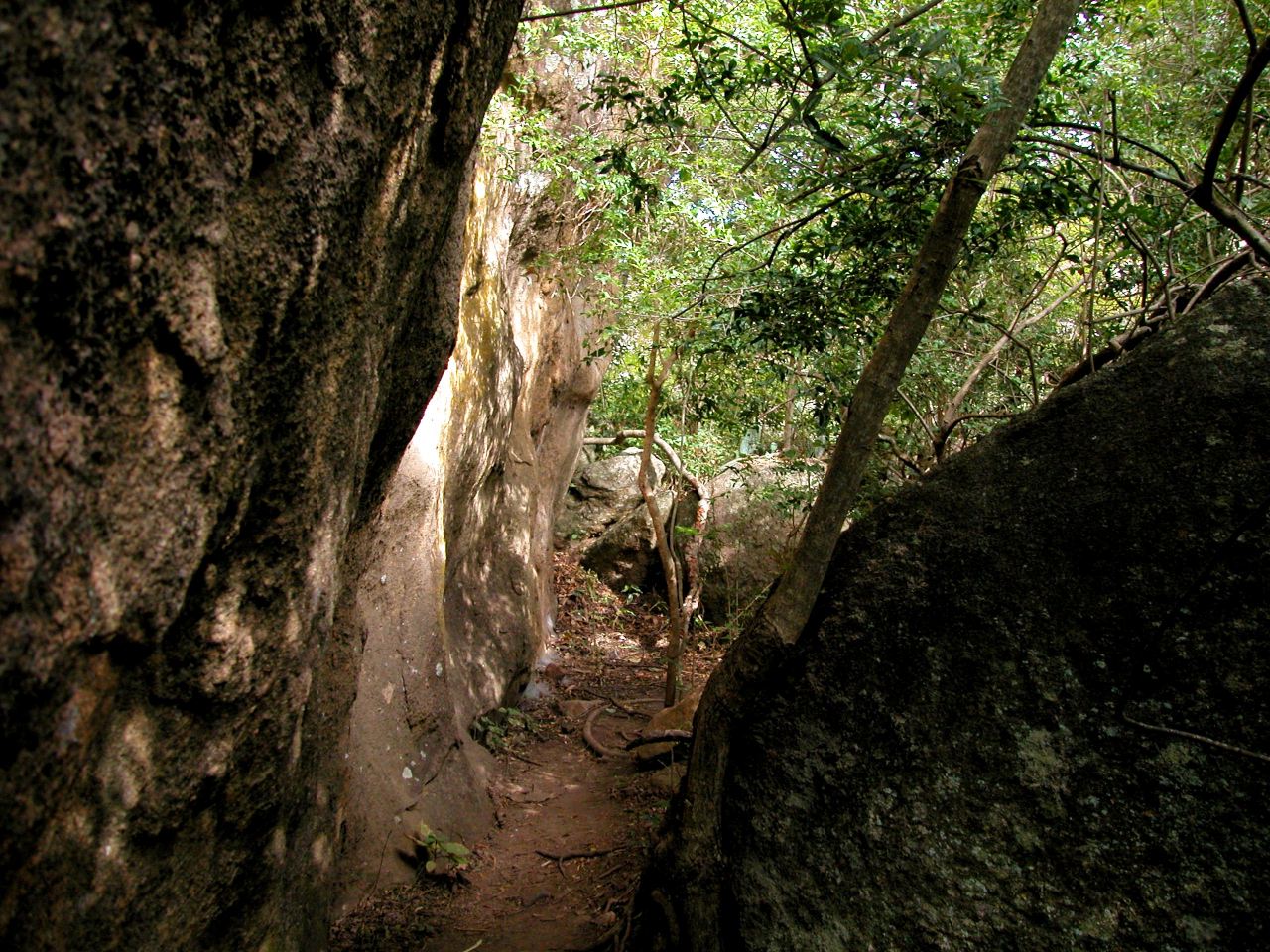
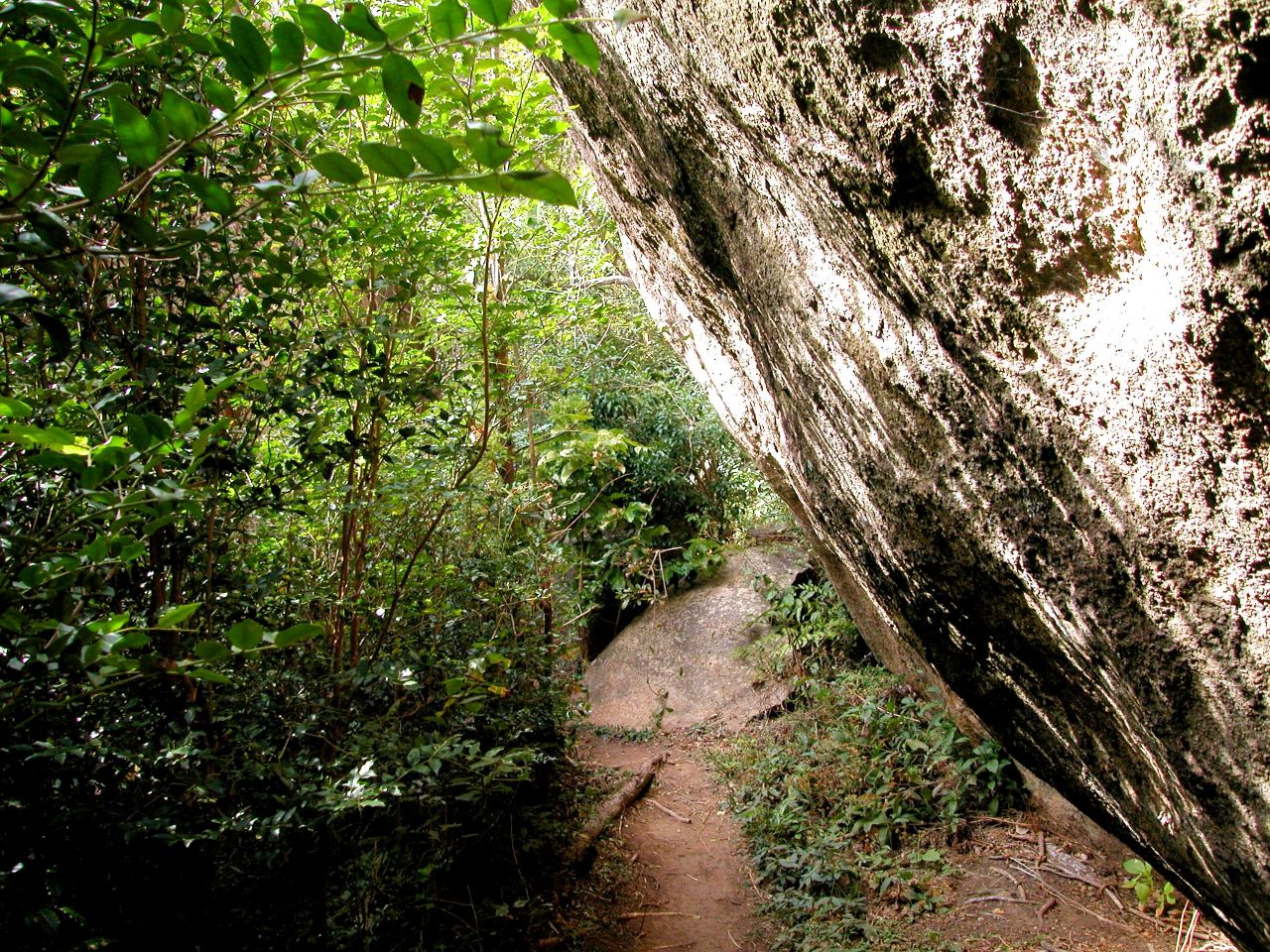
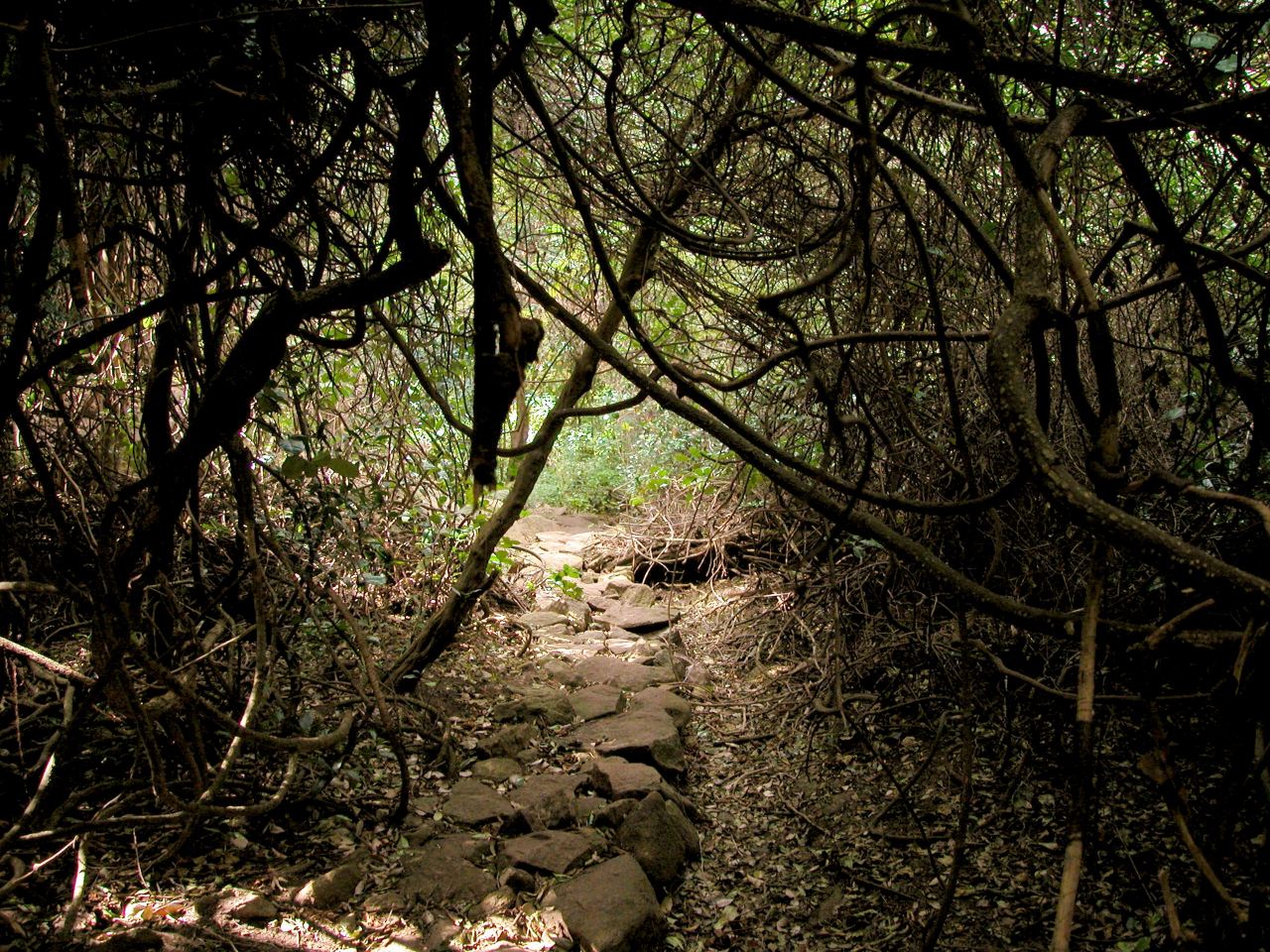
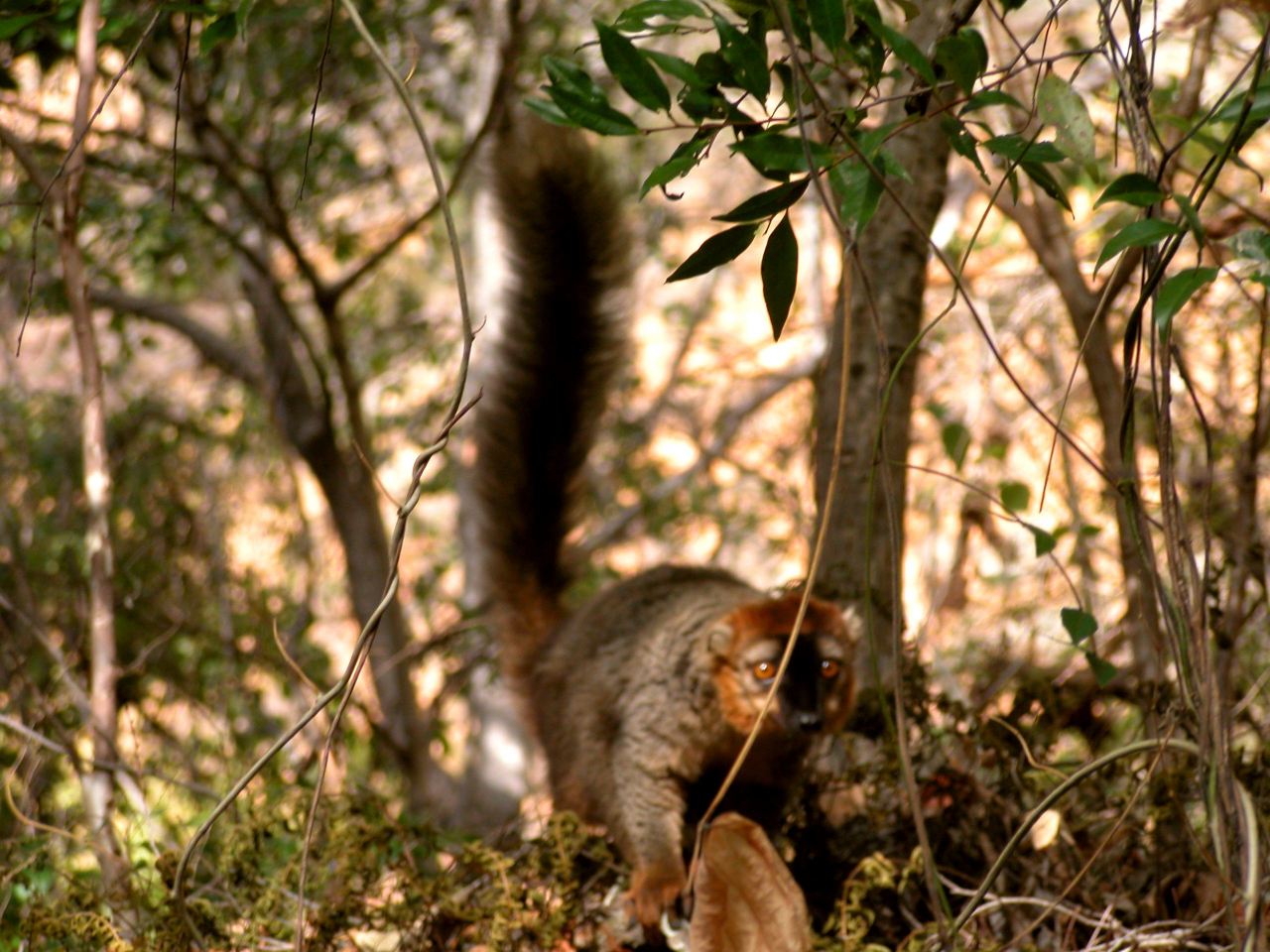
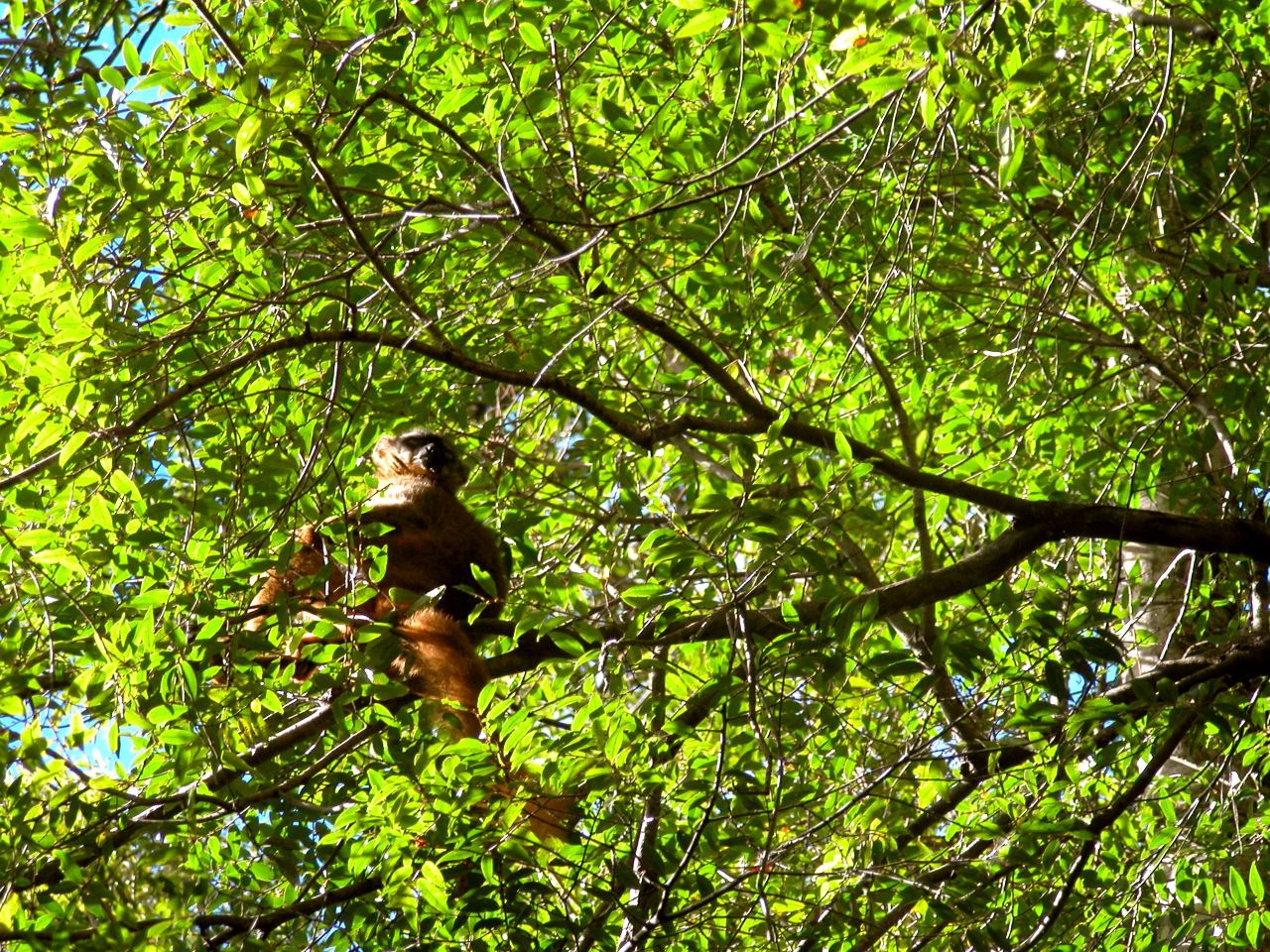
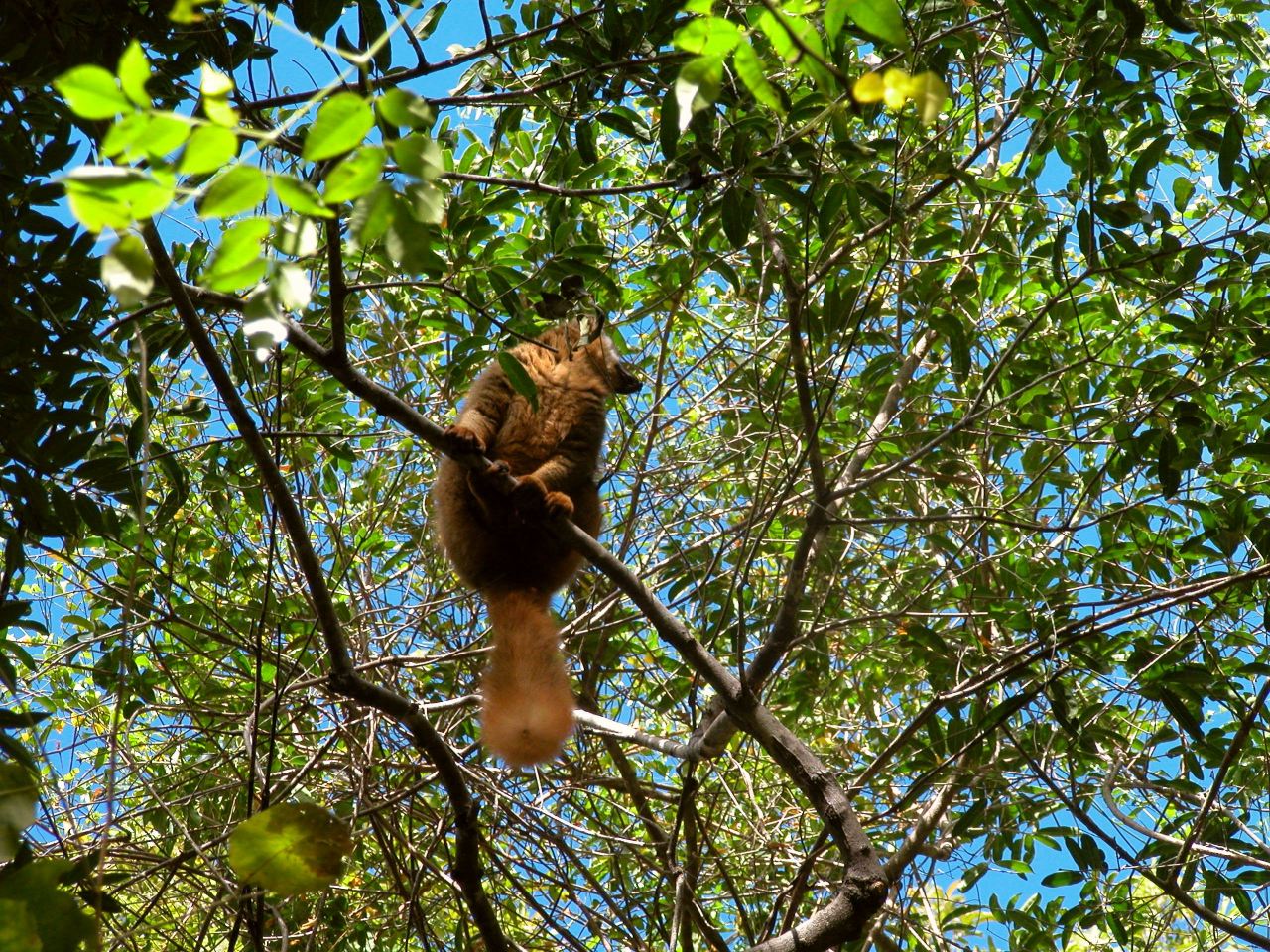
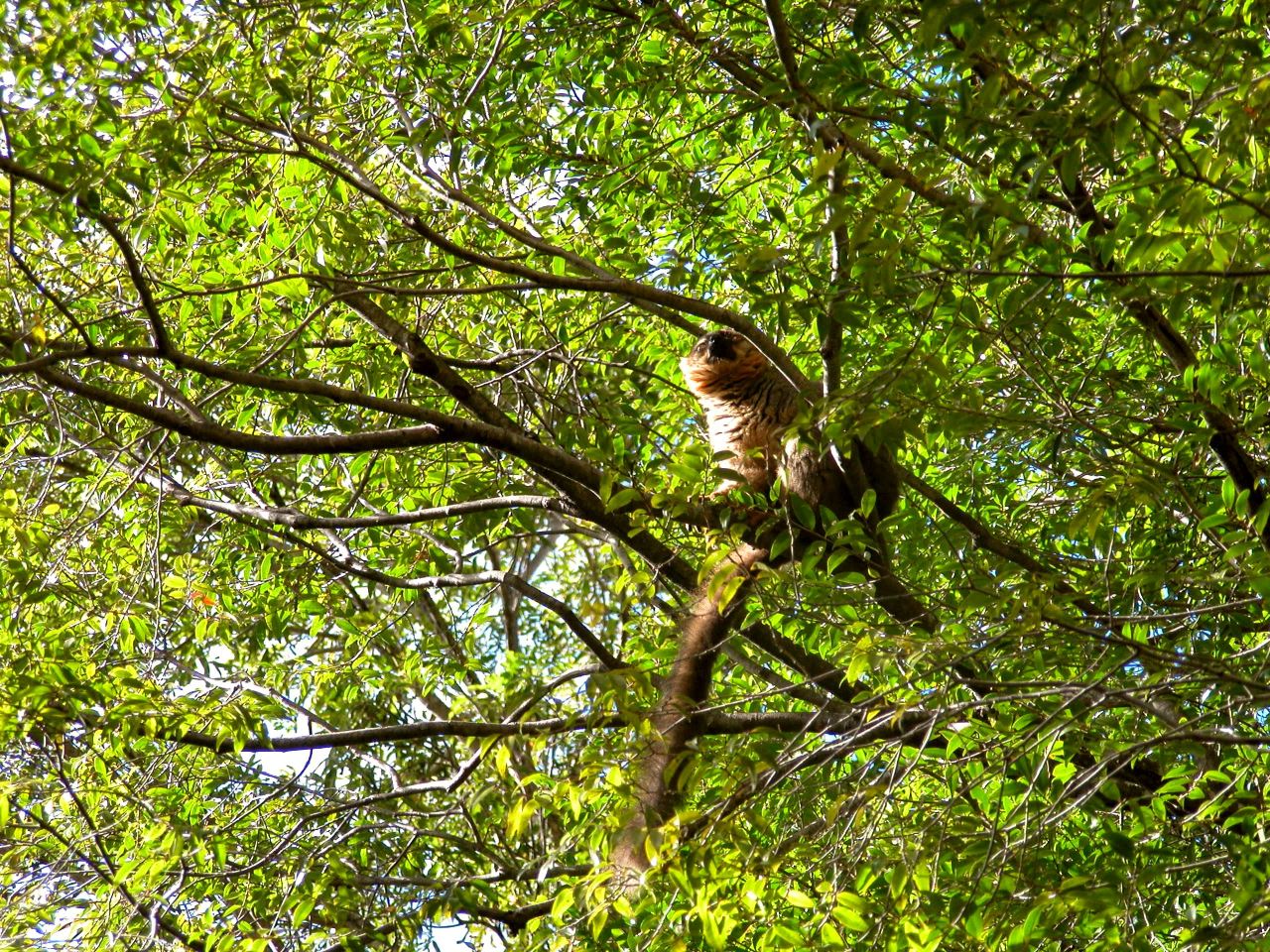
About forty kilometres south-west of Ambalavao there was a little private reserve called Anja. Admission was 25,000 francs. The phrase “private national park” struck me as a legal puzzle. In practice it worked beautifully. In a few hectares of unspoilt forest lived several hundred ring-tailed lemurs, called ring-tailed lemurs in English and Lemur catta in Latin. Unlike the bamboo lemurs, these will eat anything they can find. They run about on the ground and beg for food. They particularly like bananas. Guides used to hand visitors bananas on the way in, so lemurs would surround them at once. They didn’t go back into the forest until the last banana had gone into their insatiable stomachs. They jumped on your shoulders and made themselves at home.
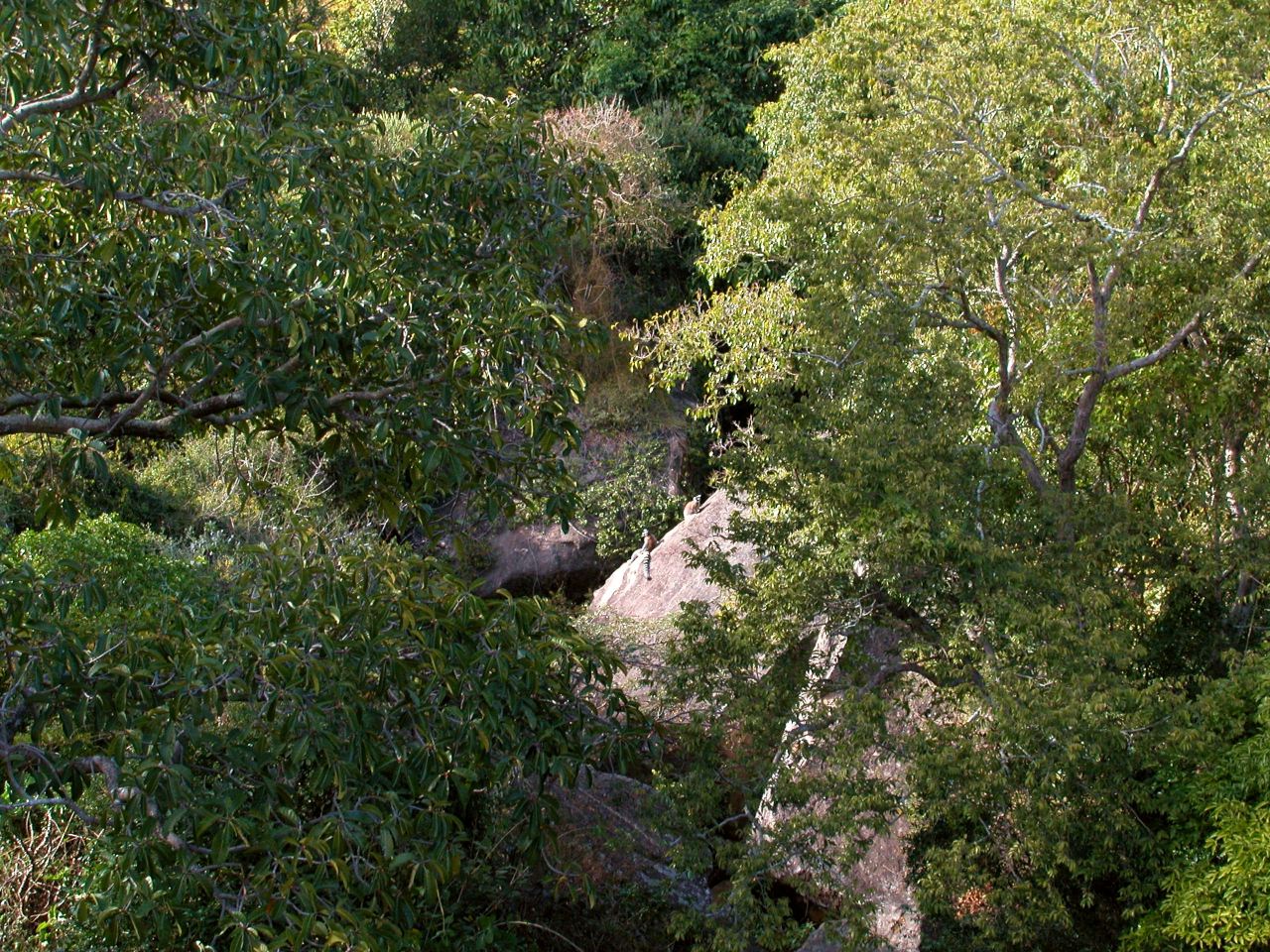
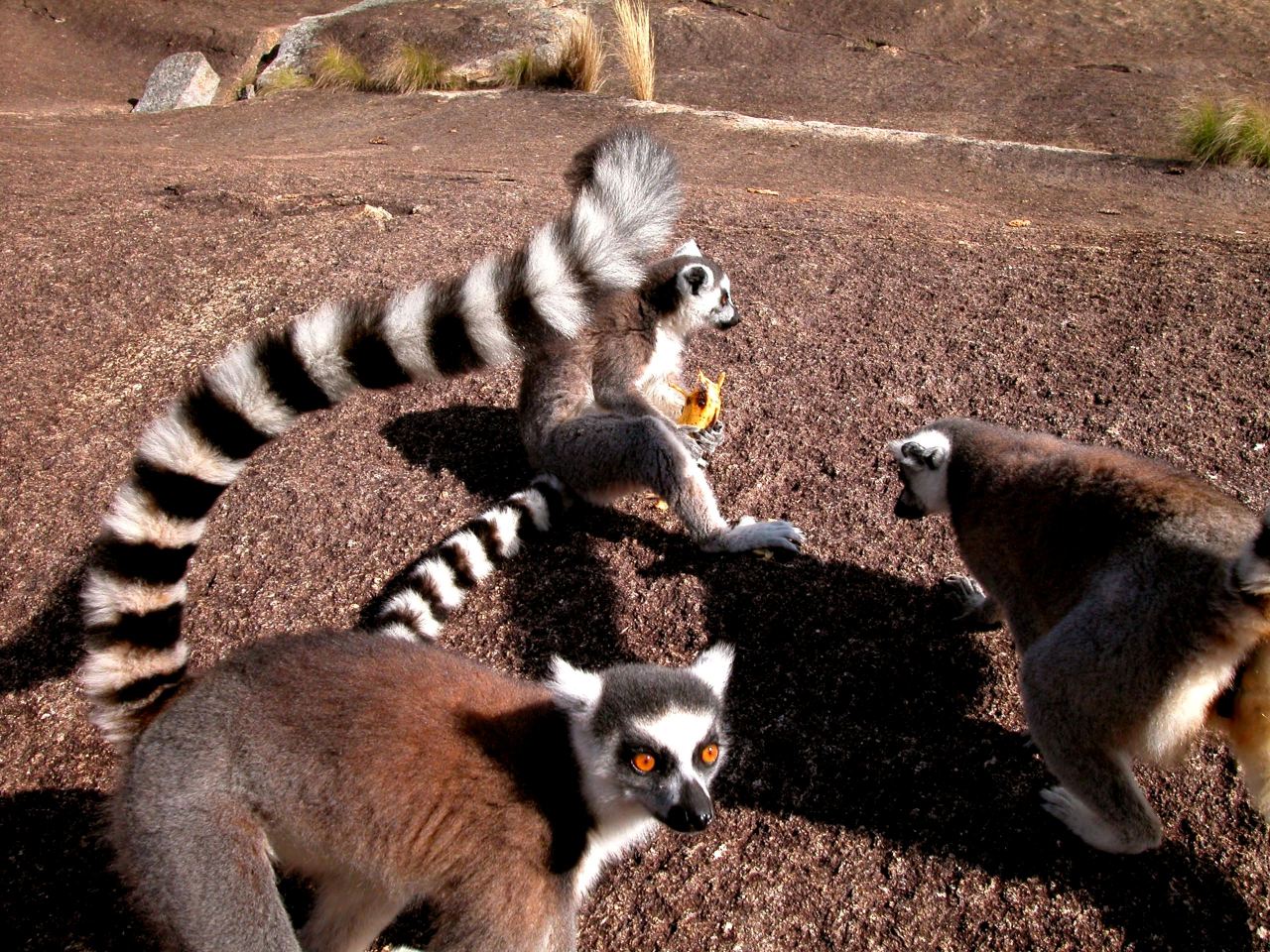
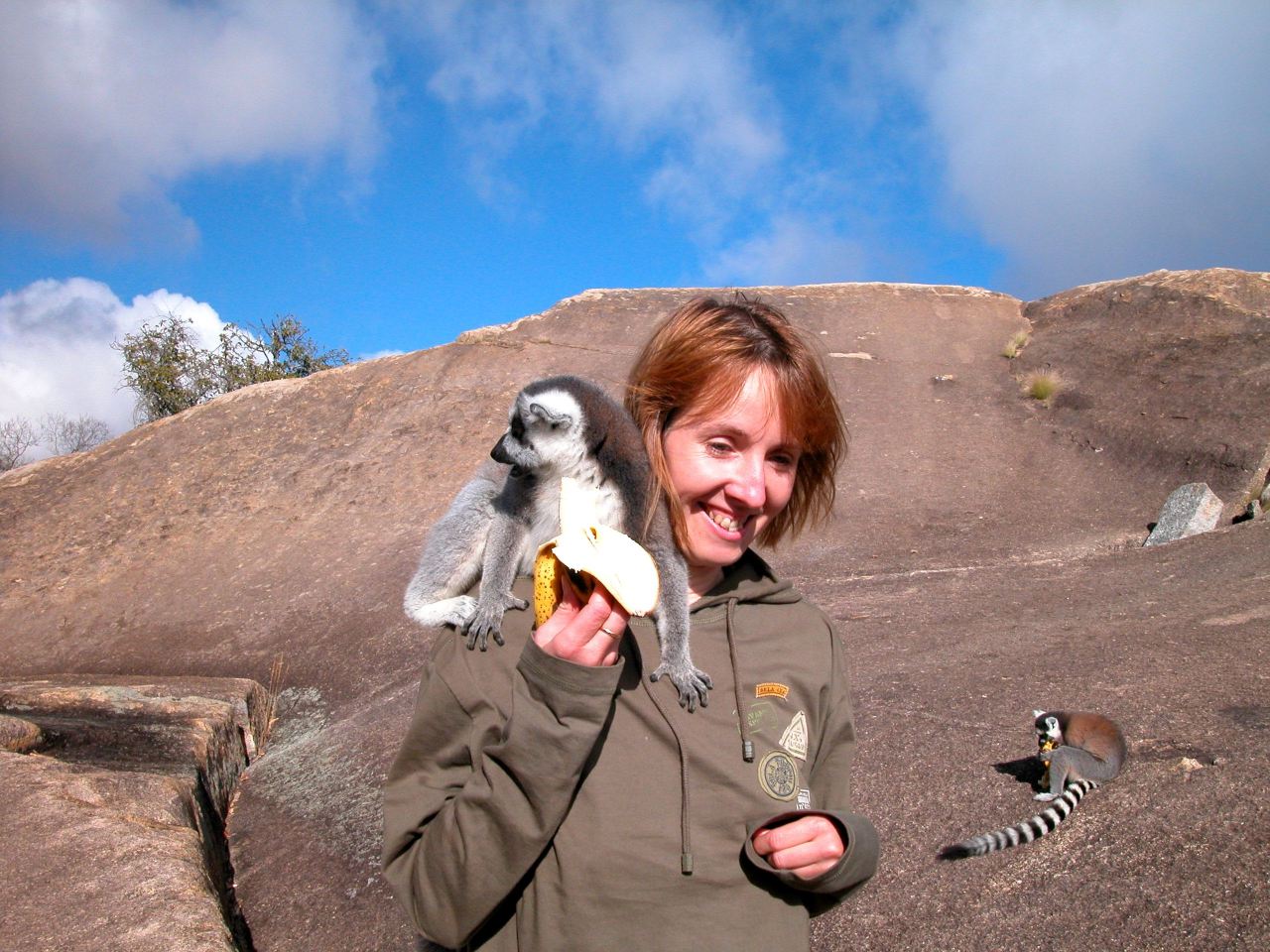
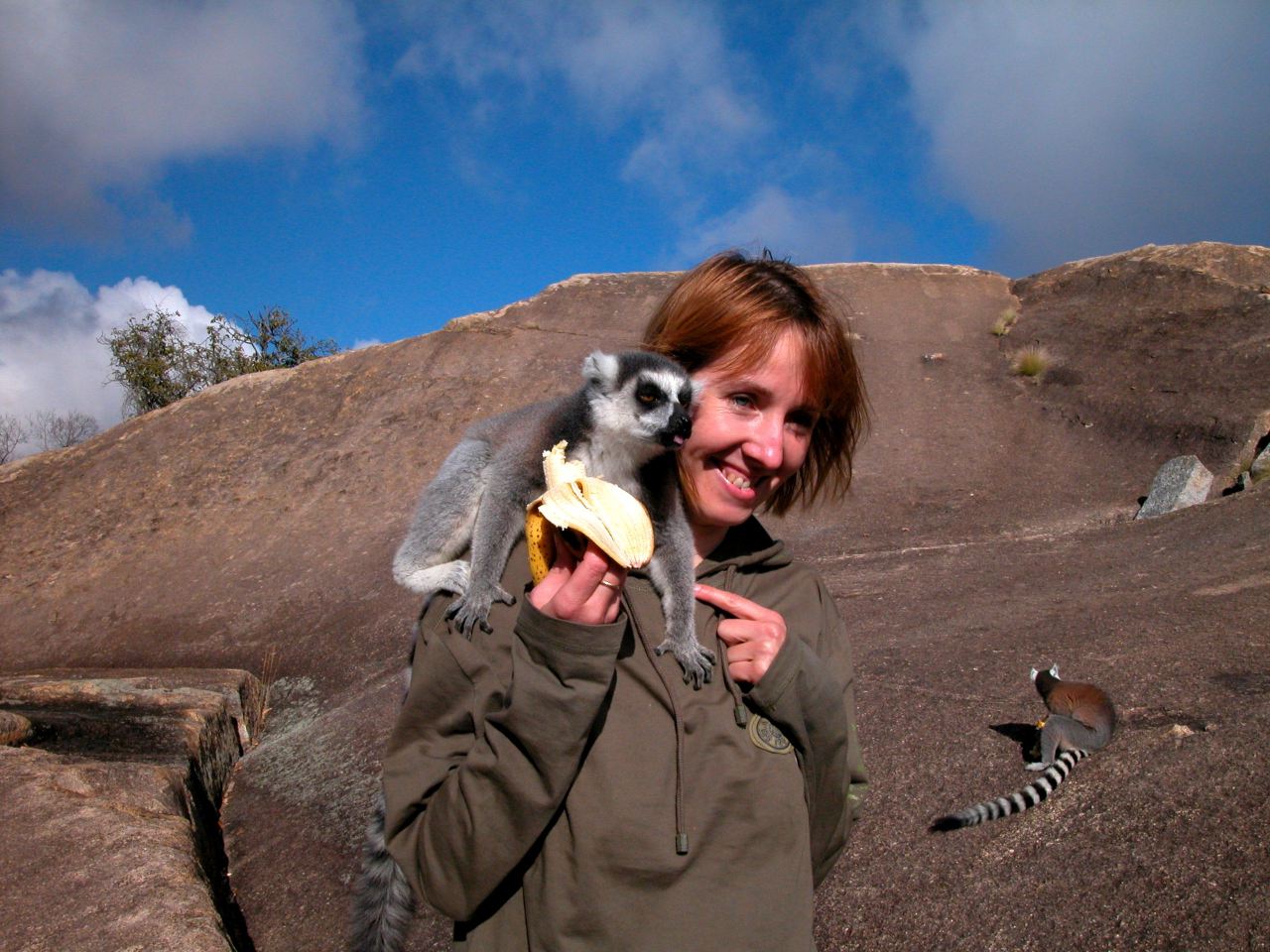
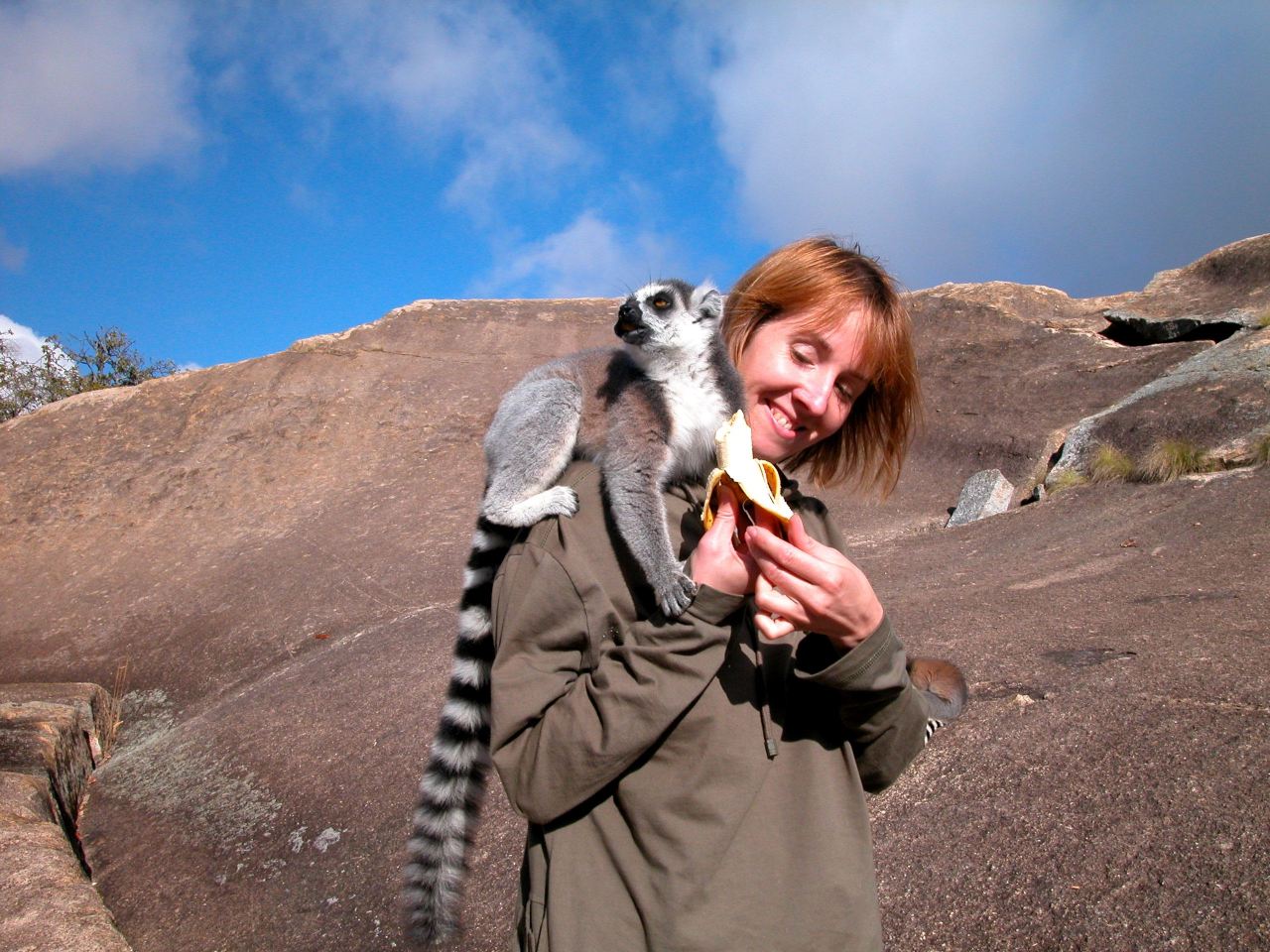
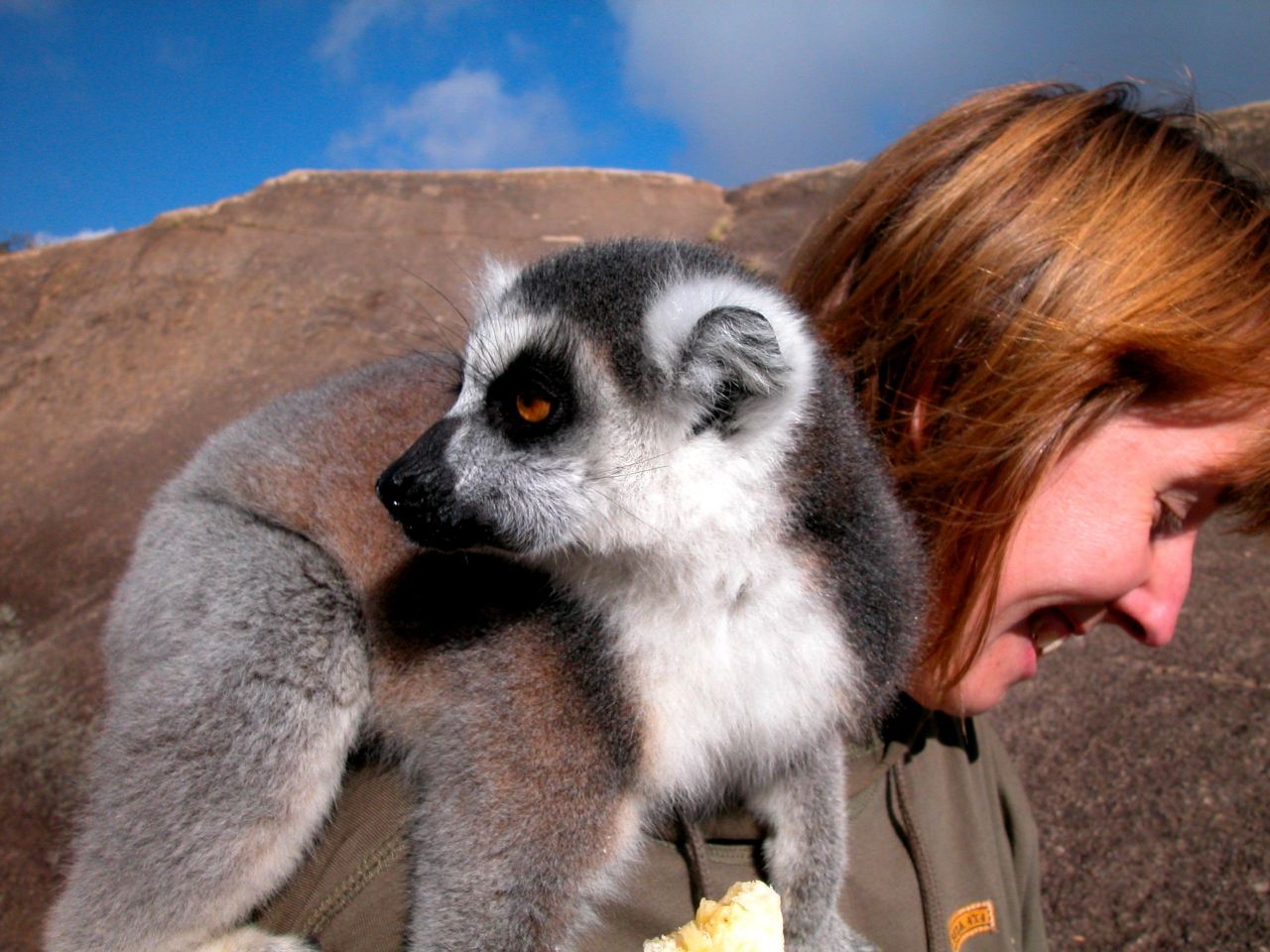
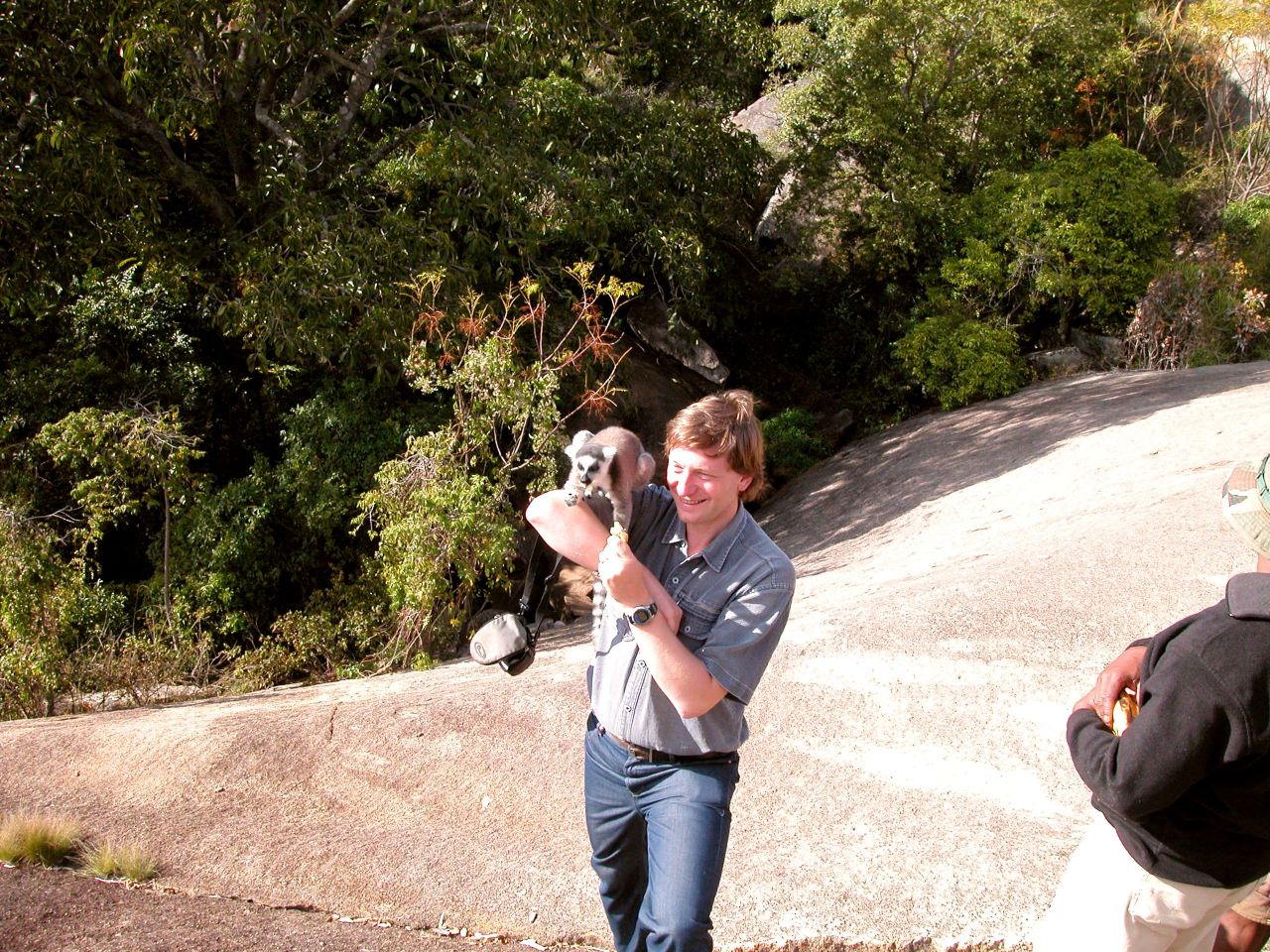
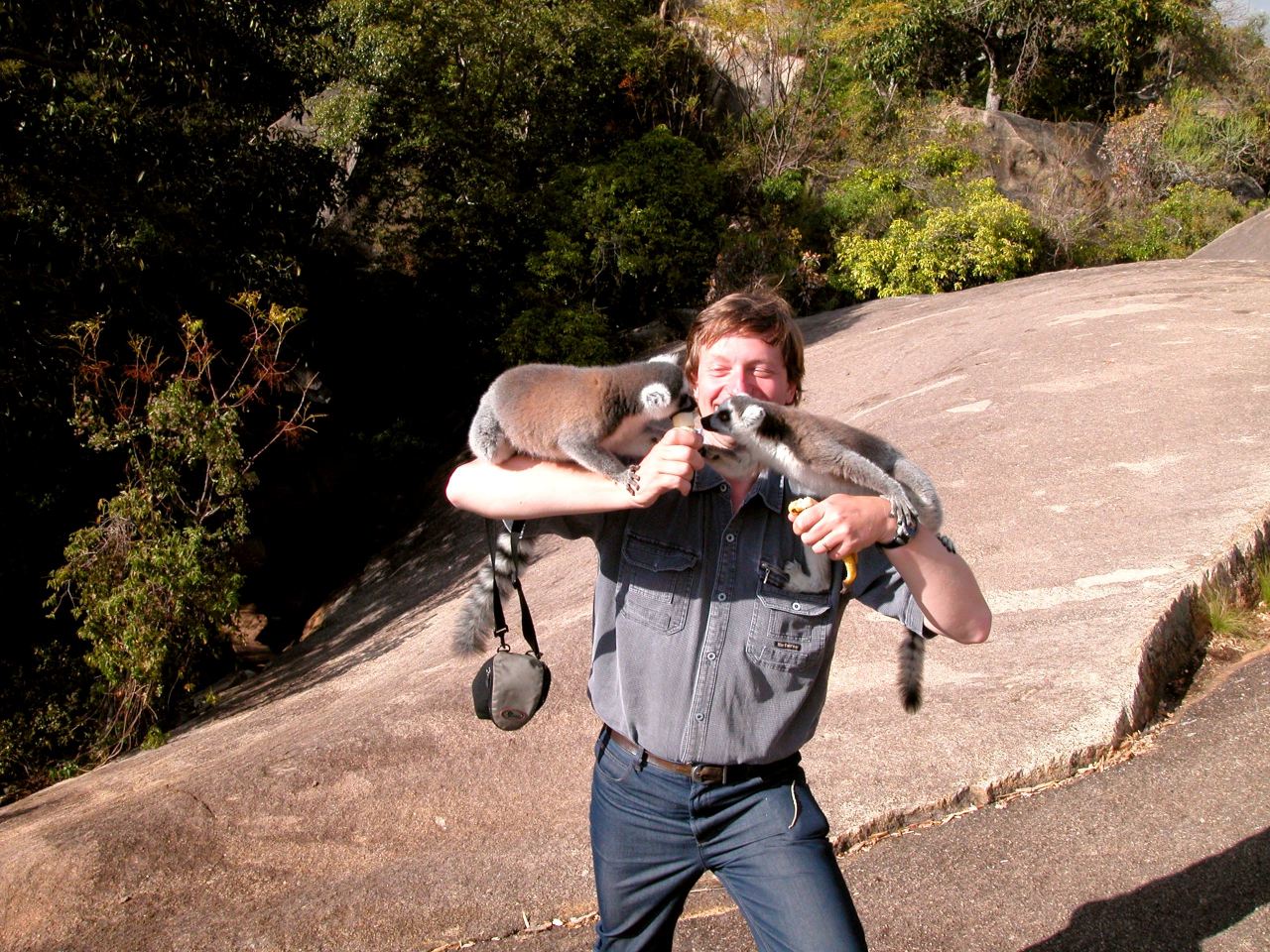
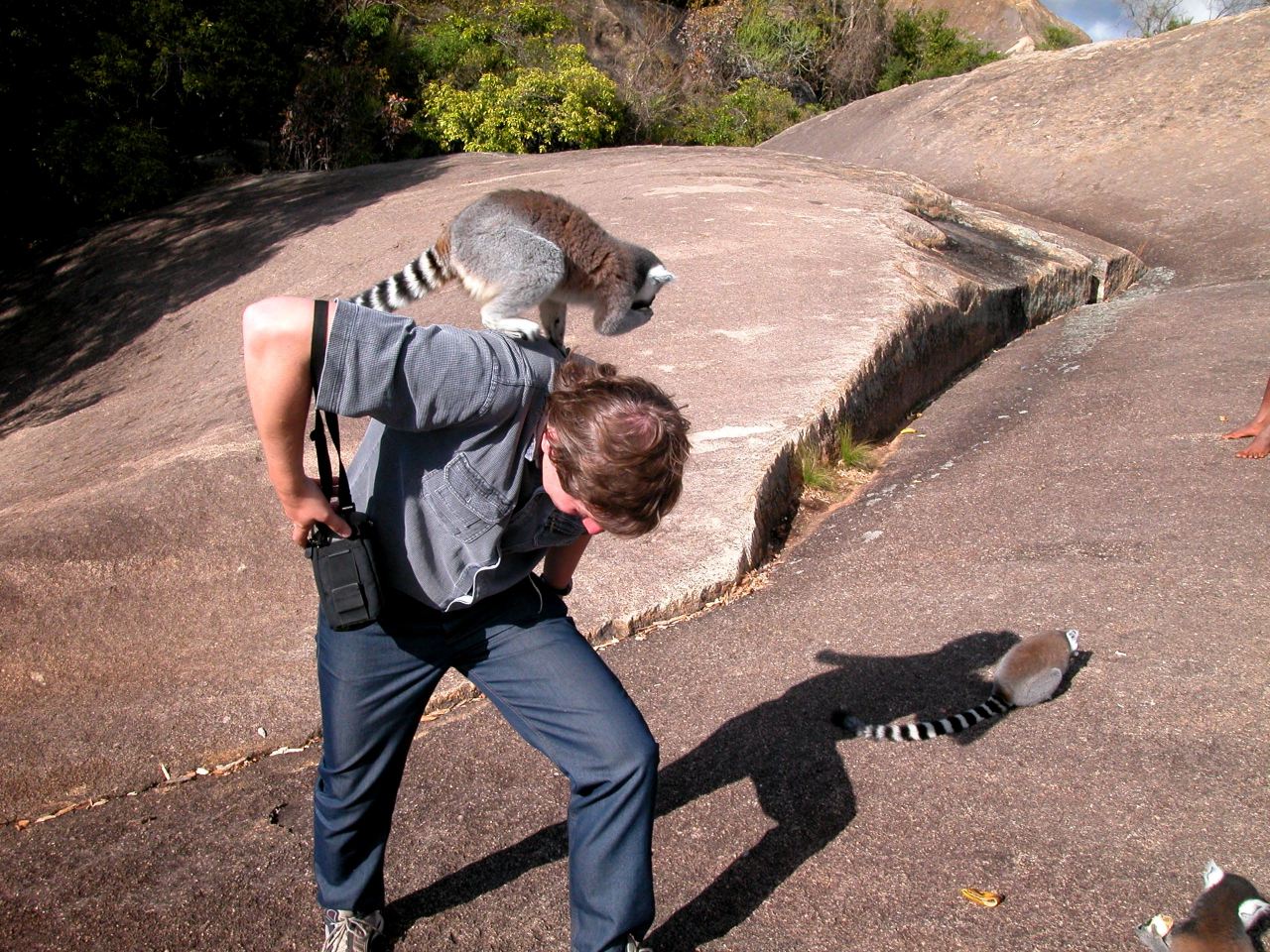
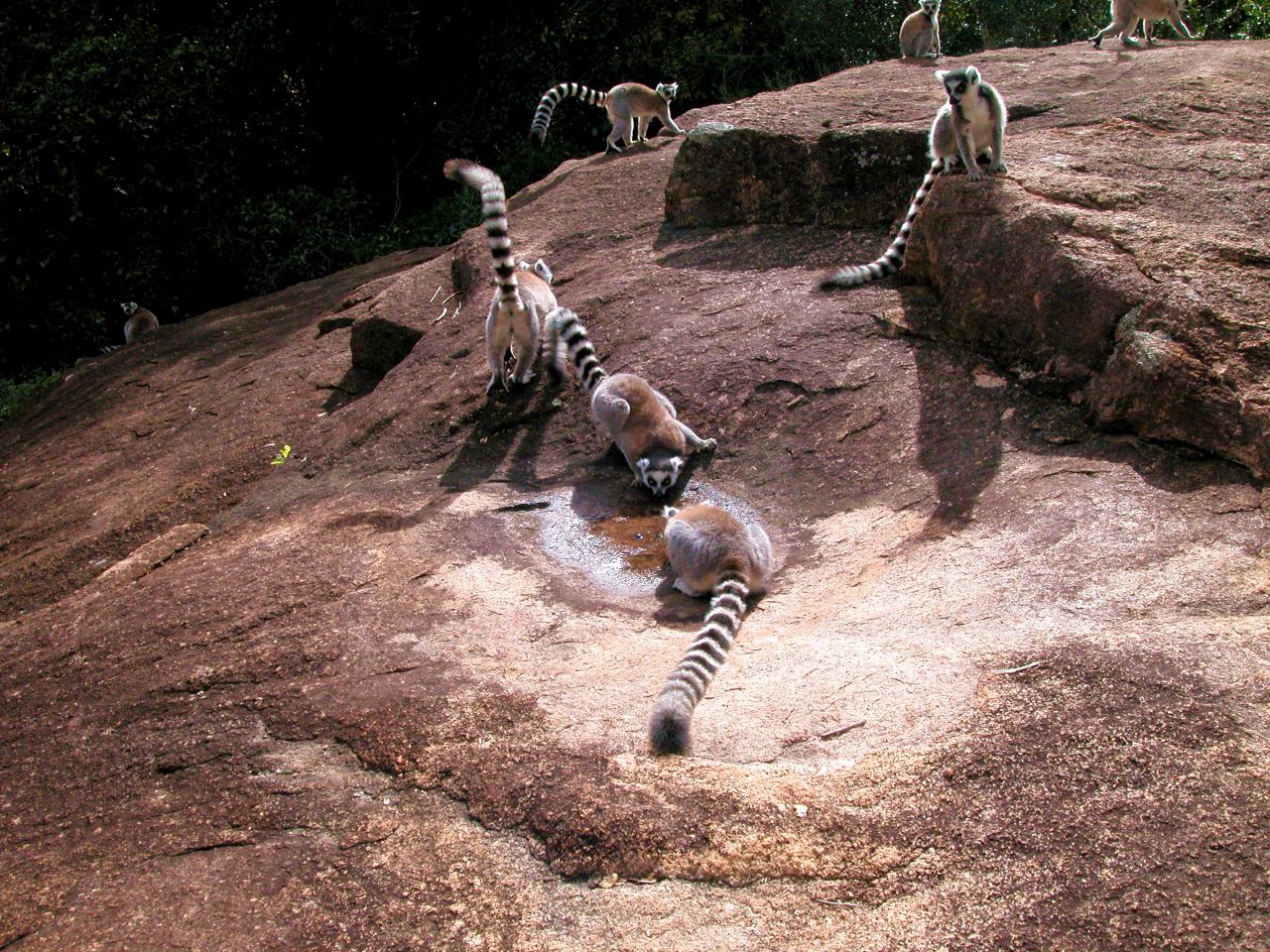
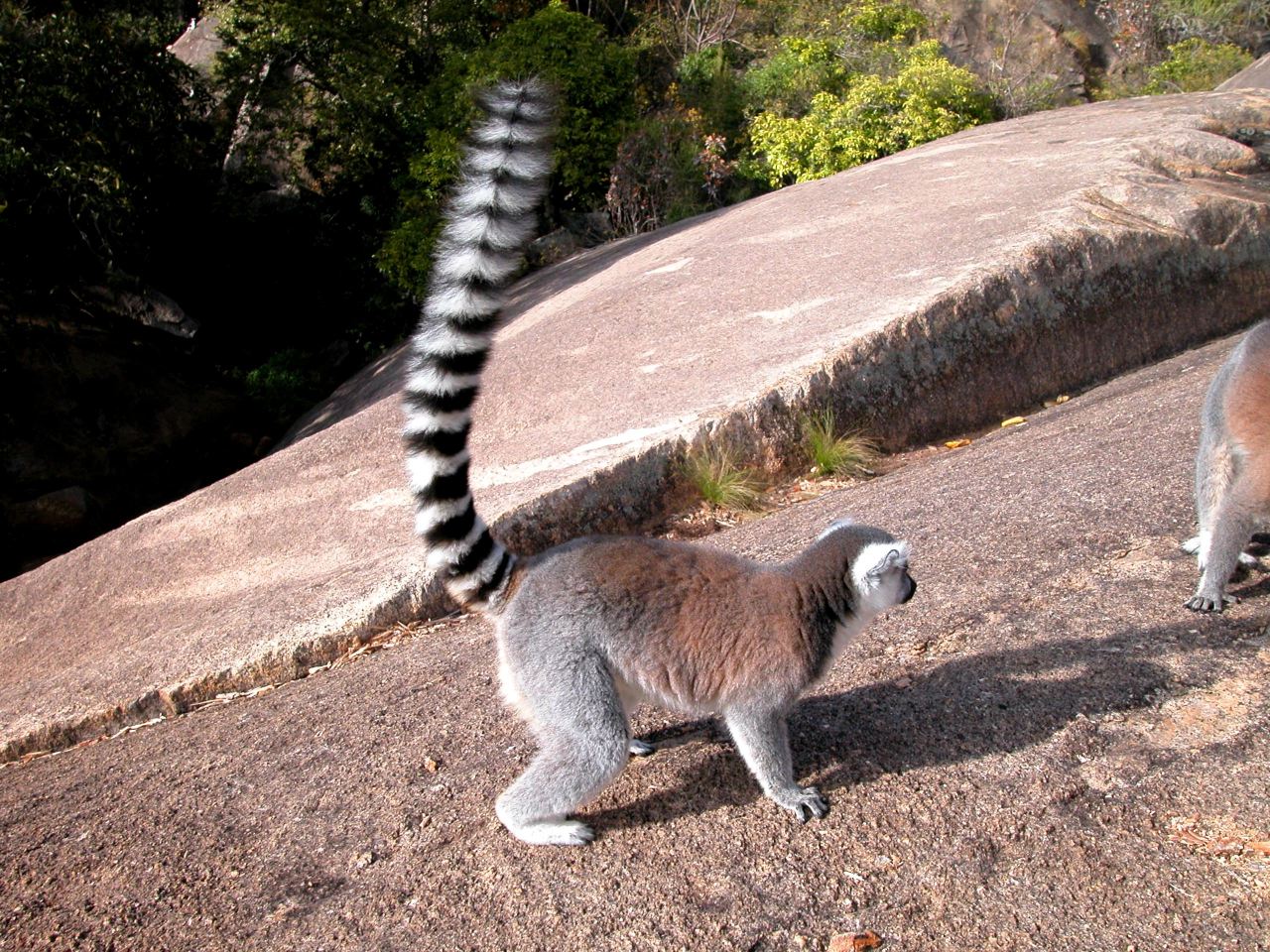
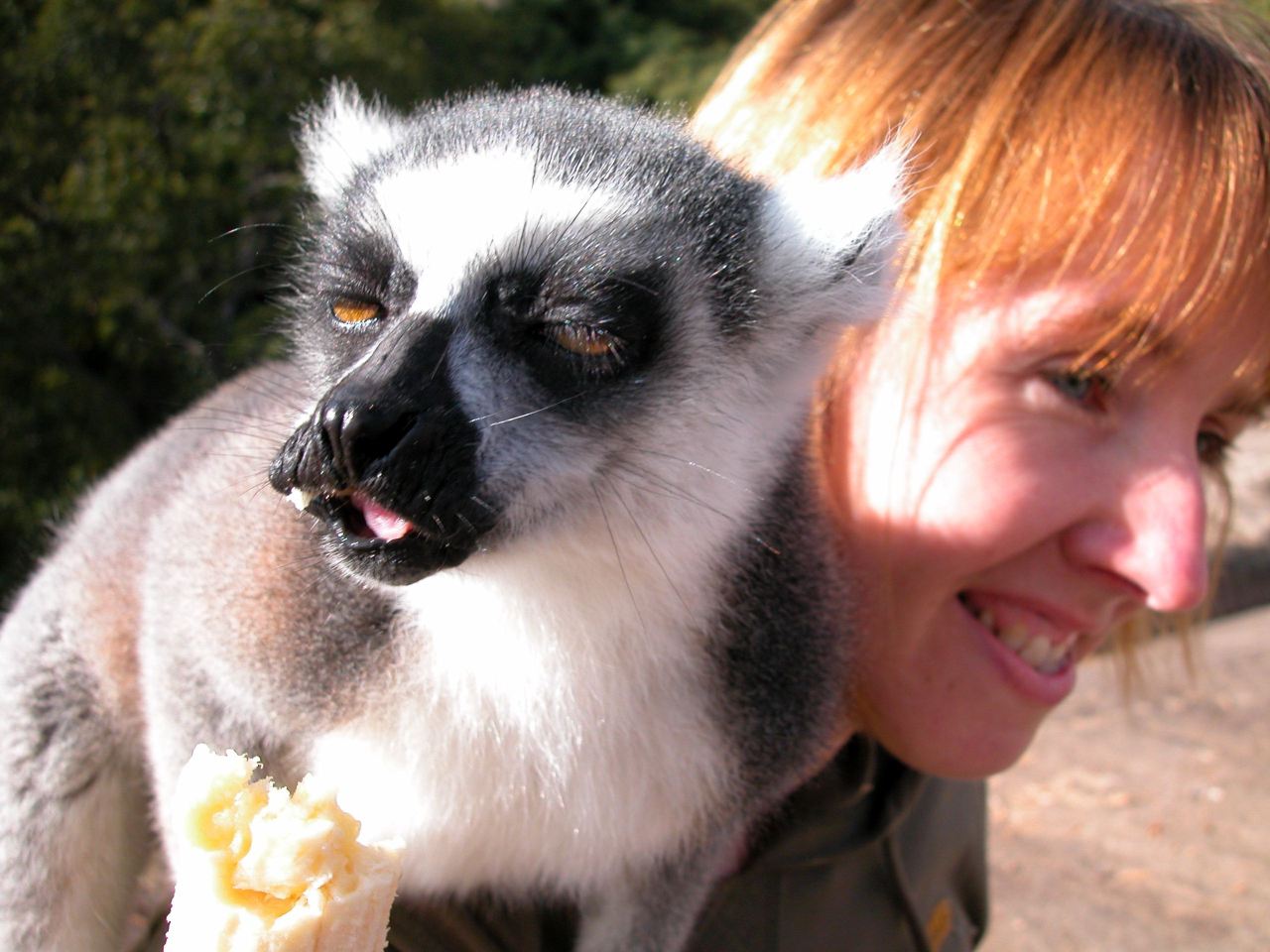
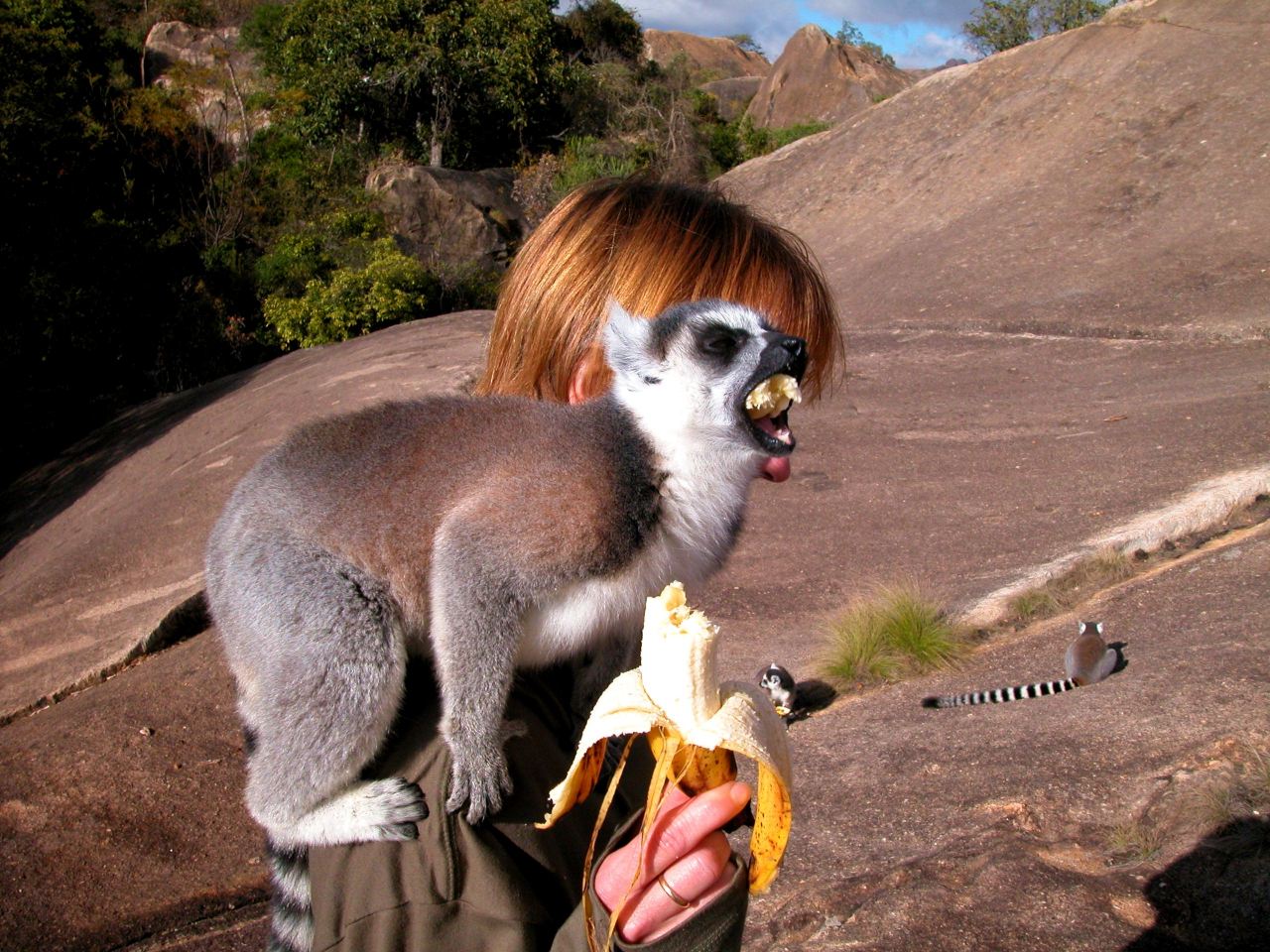
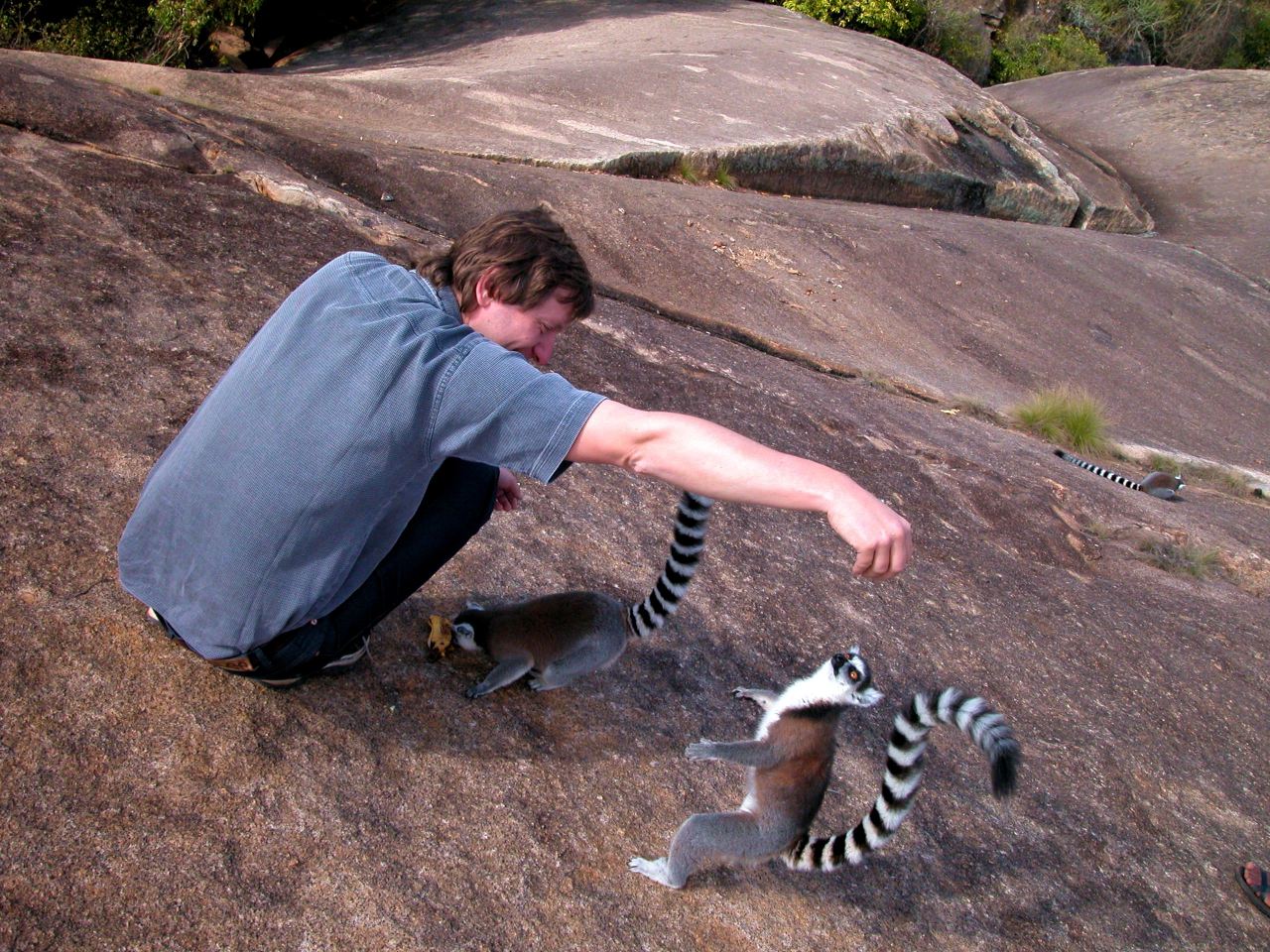
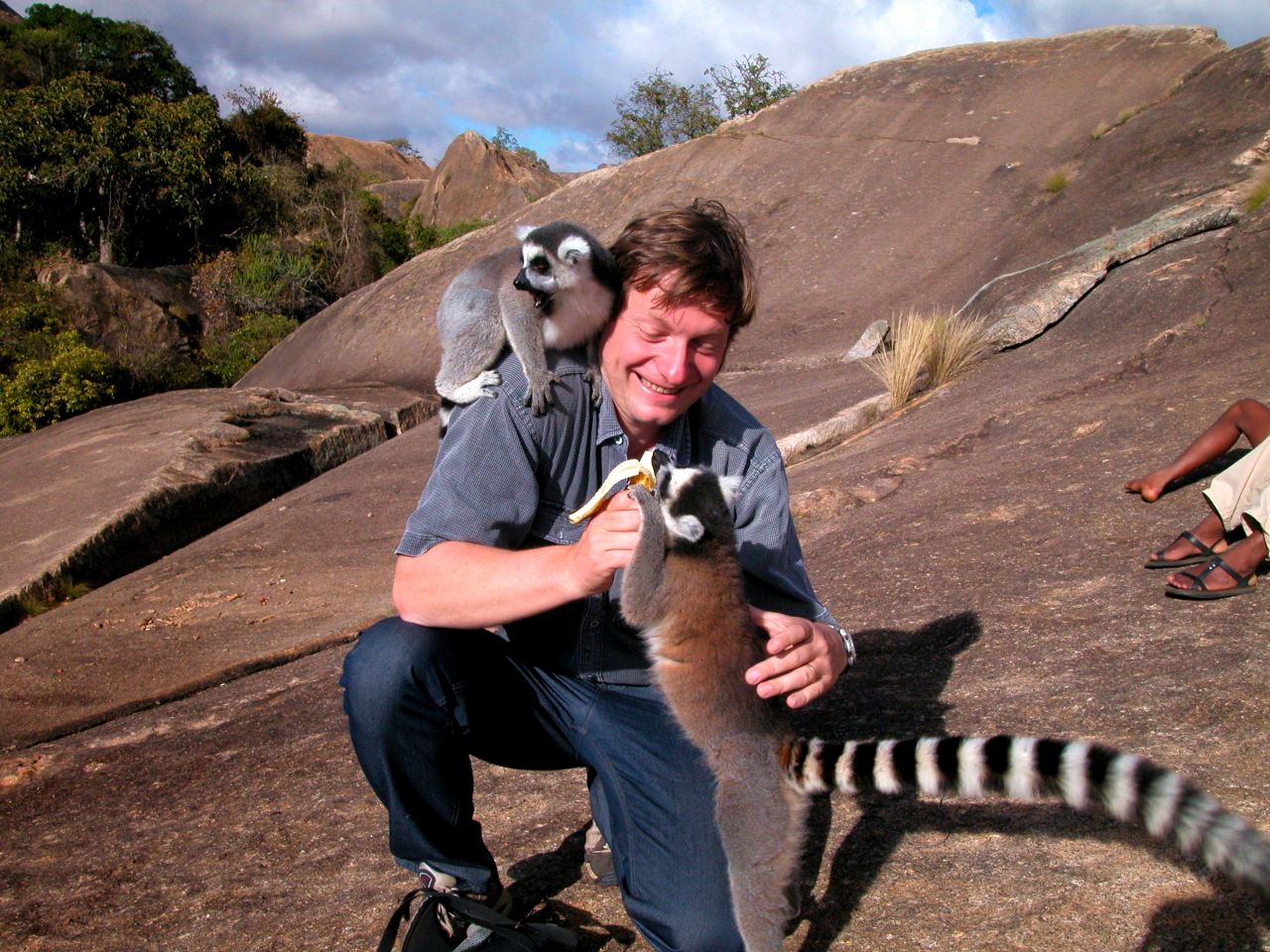
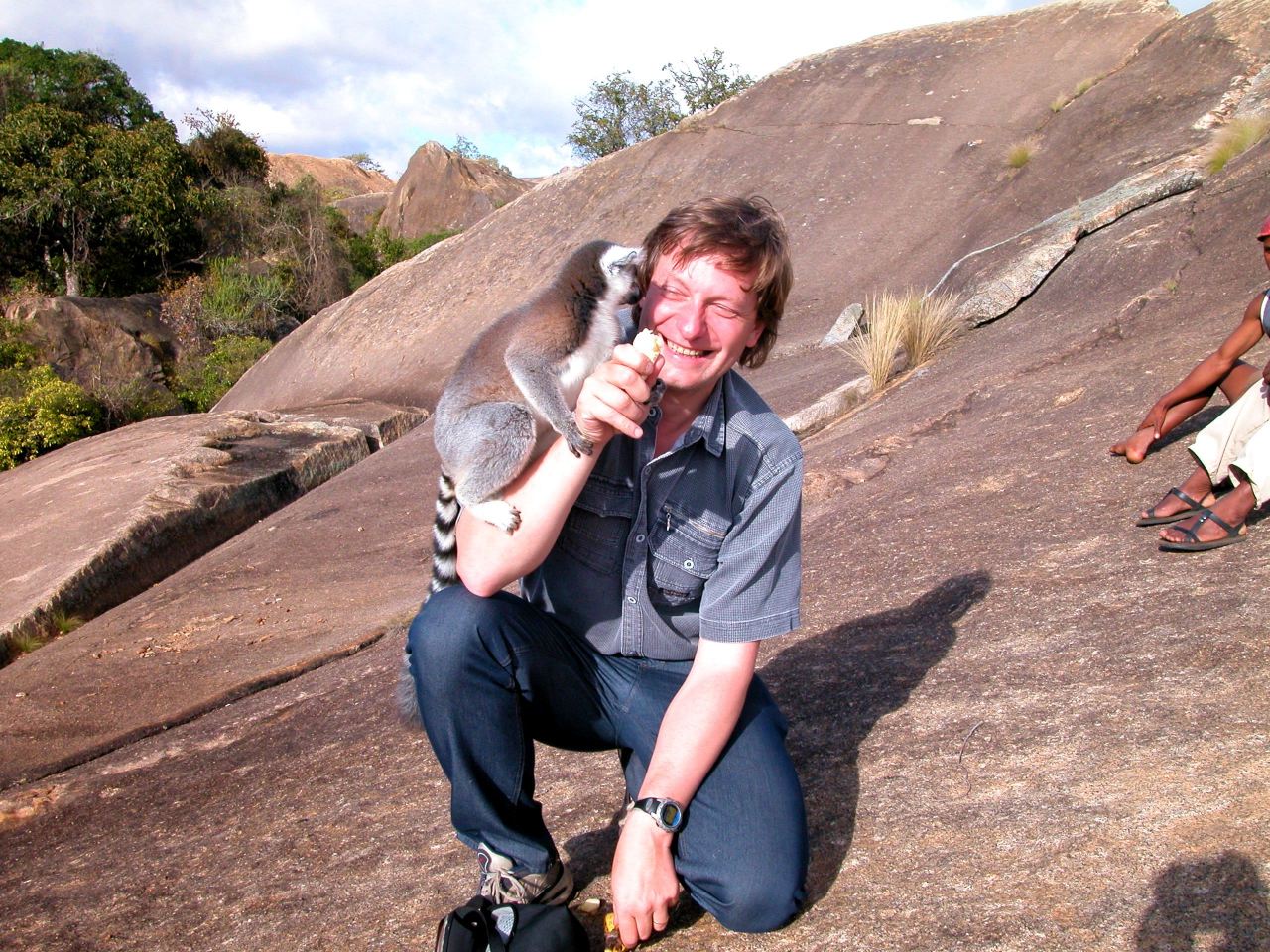
Feeding them was a pleasure. A soft, warm animal pressed up against your cheek, holding the banana in its almost human little hands as it chewed. Its bushy striped tail dangled nearby. You could hardly resist pulling it. The lemur didn’t like that, or being patted. It hissed and bit. It had a huge mouth and sharp teeth, though fortunately they were designed for soft fruit. The bite didn’t look likely to do more than break the skin.
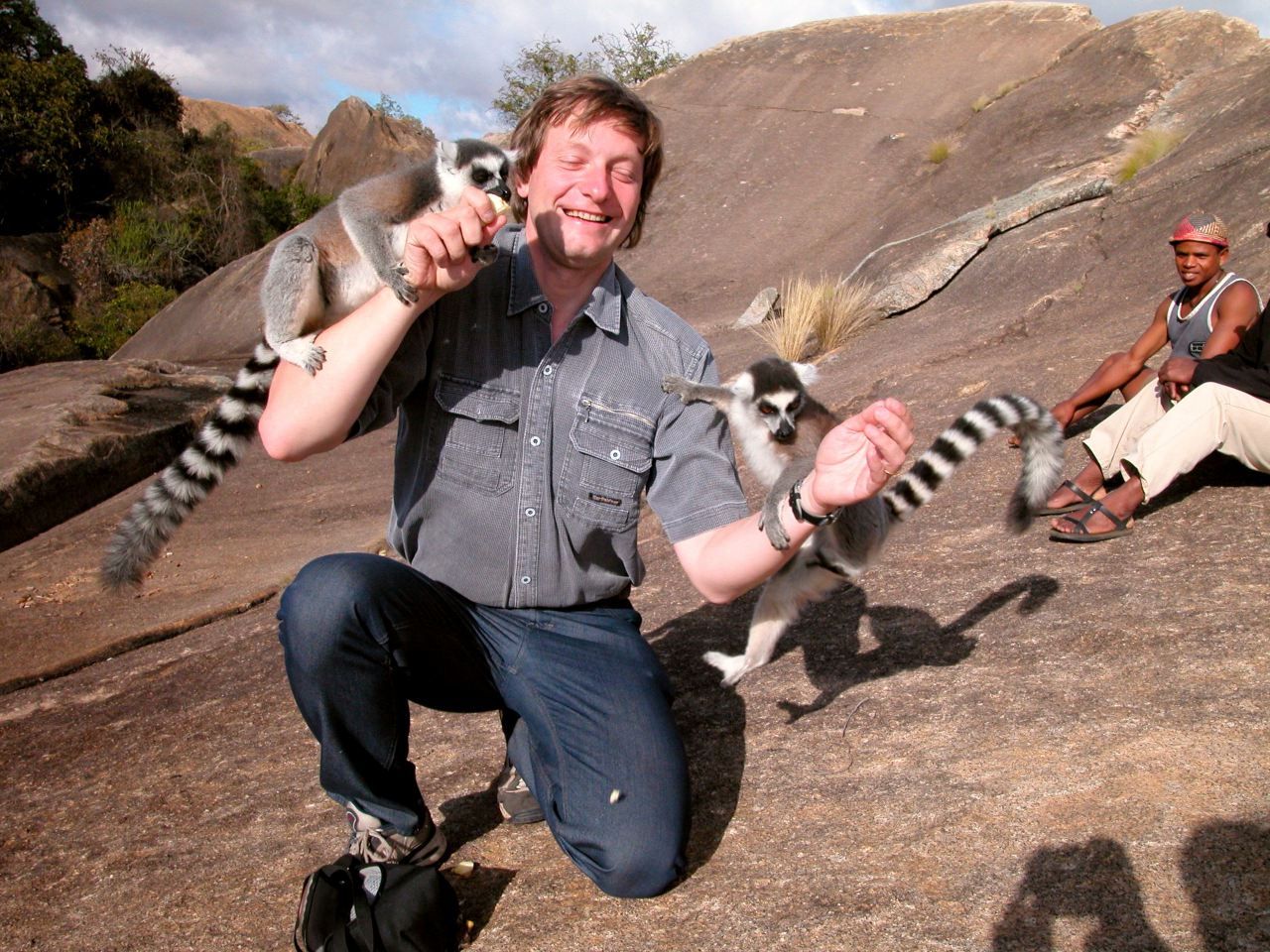
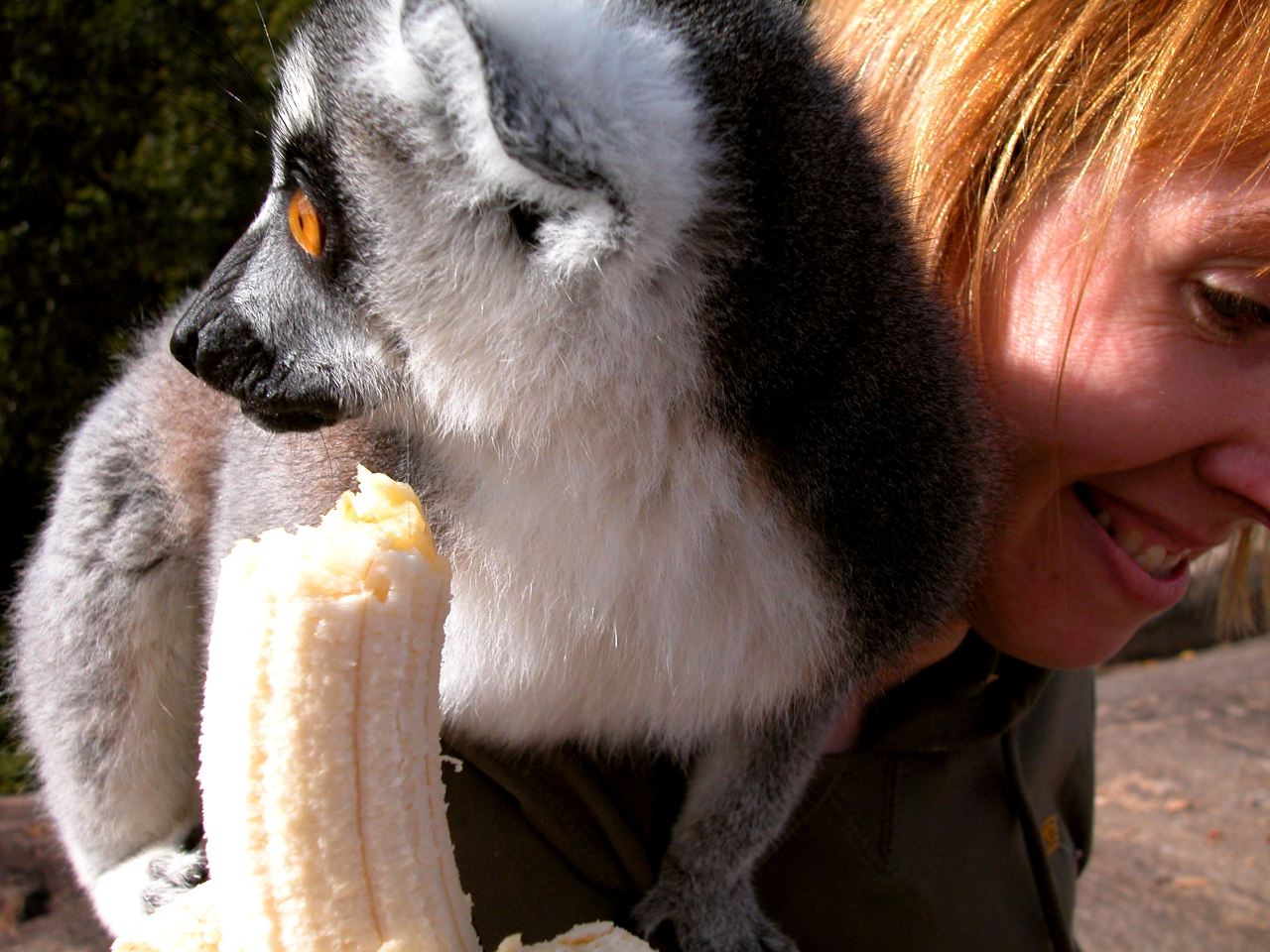
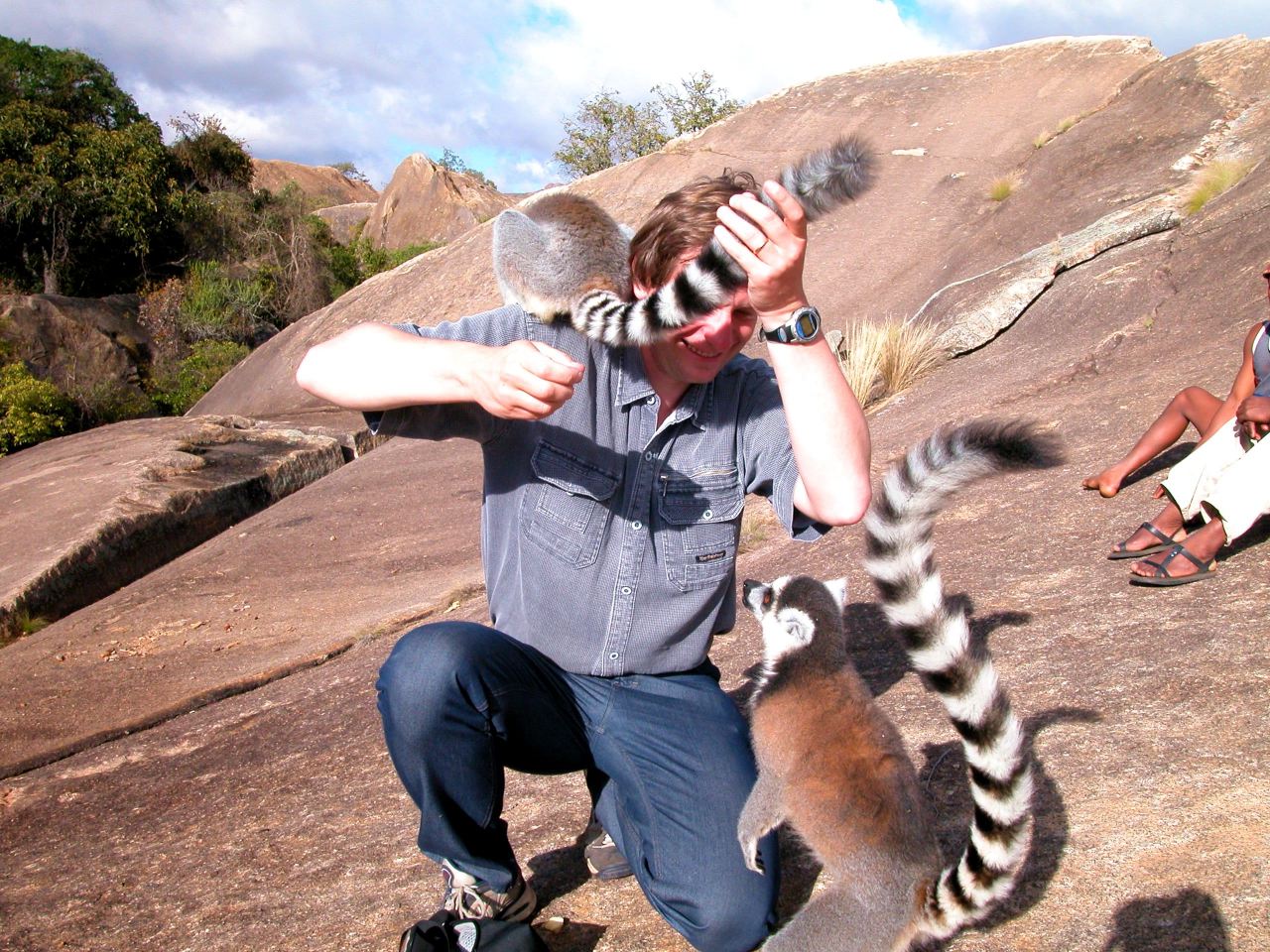
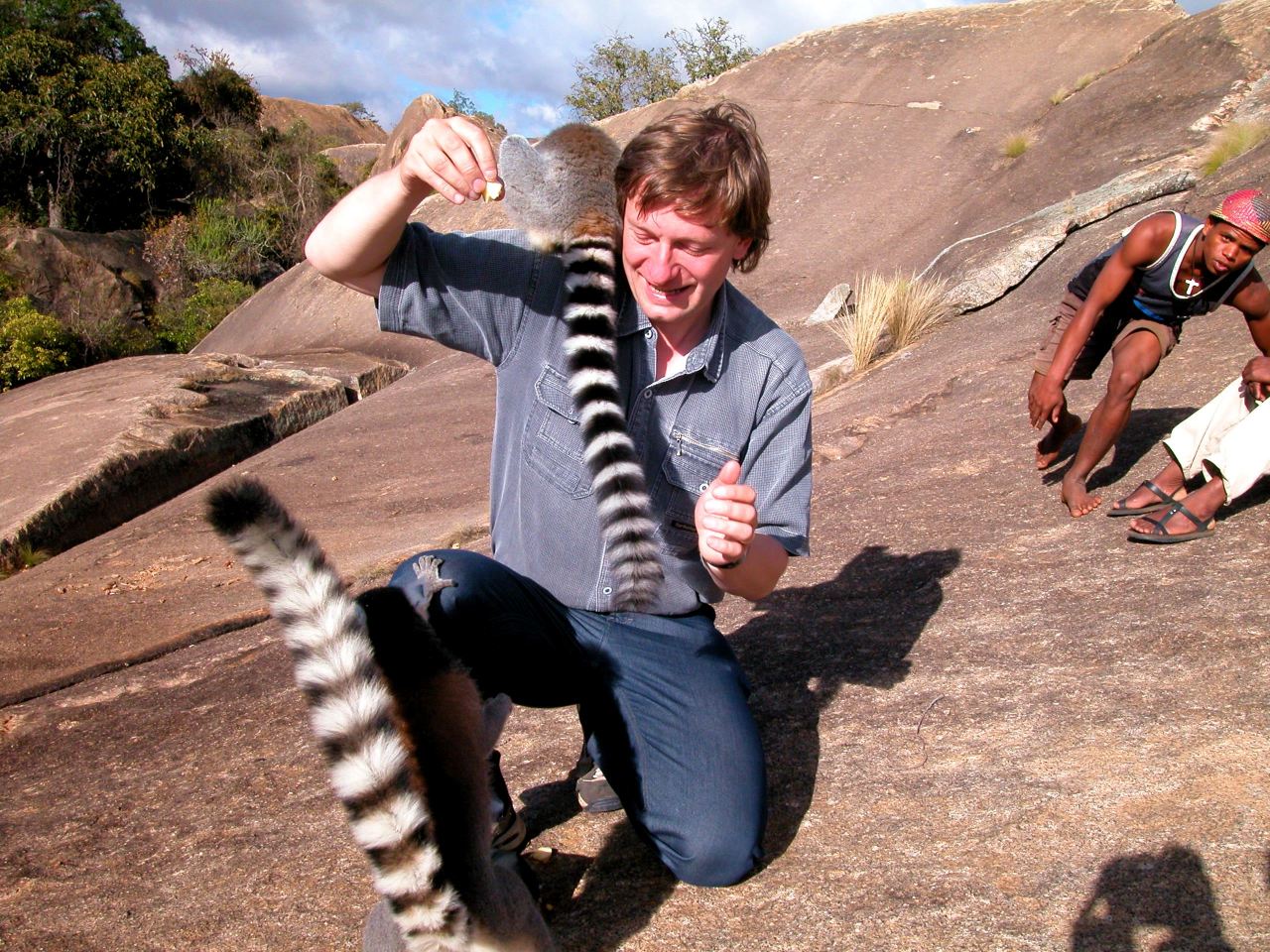
Only the males rushed up to the visitors. The females were shyer. At first light they tried to warm up after the cold winter night. They sat with their soft white bellies facing the sun and their arms spread to the sides, like a beauty sunbathing on the beach. The males walked about nearby. A wagging tail curled forward meant courtship. The females kept sunbathing and paid no attention. It was hard to get close to a female at her sunbath. She was very wary and would go straight onto all fours as soon as she saw a person.
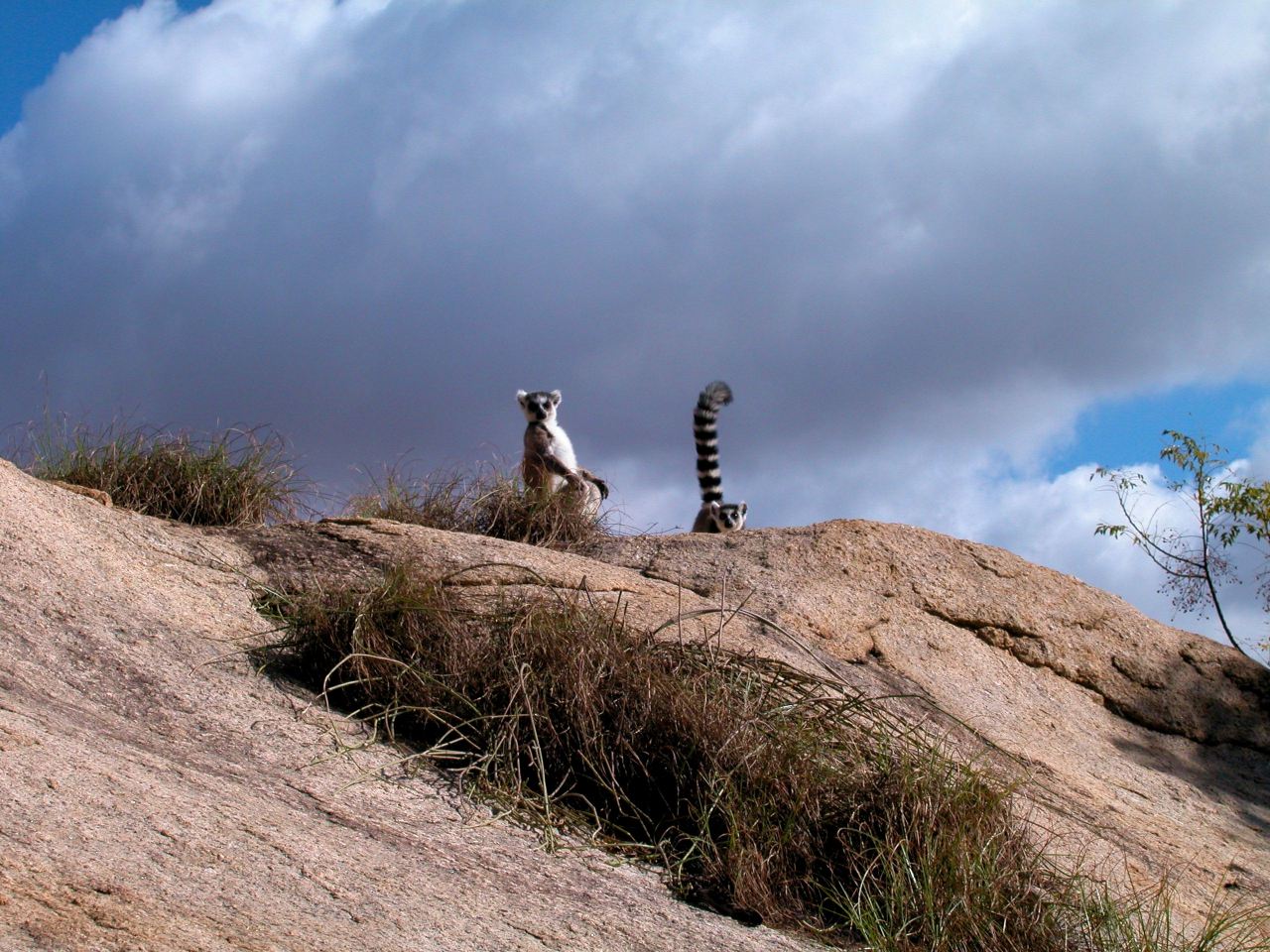
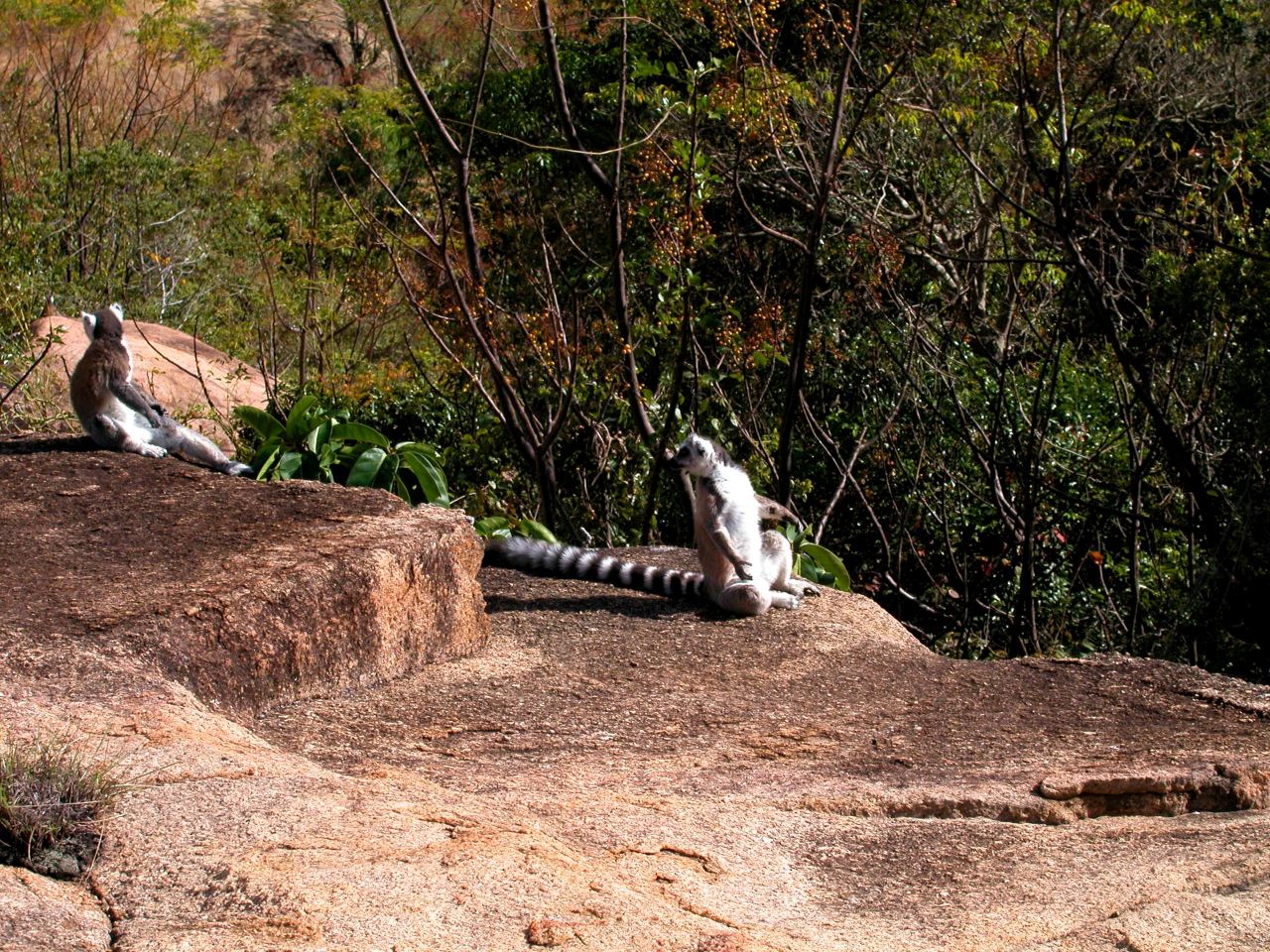
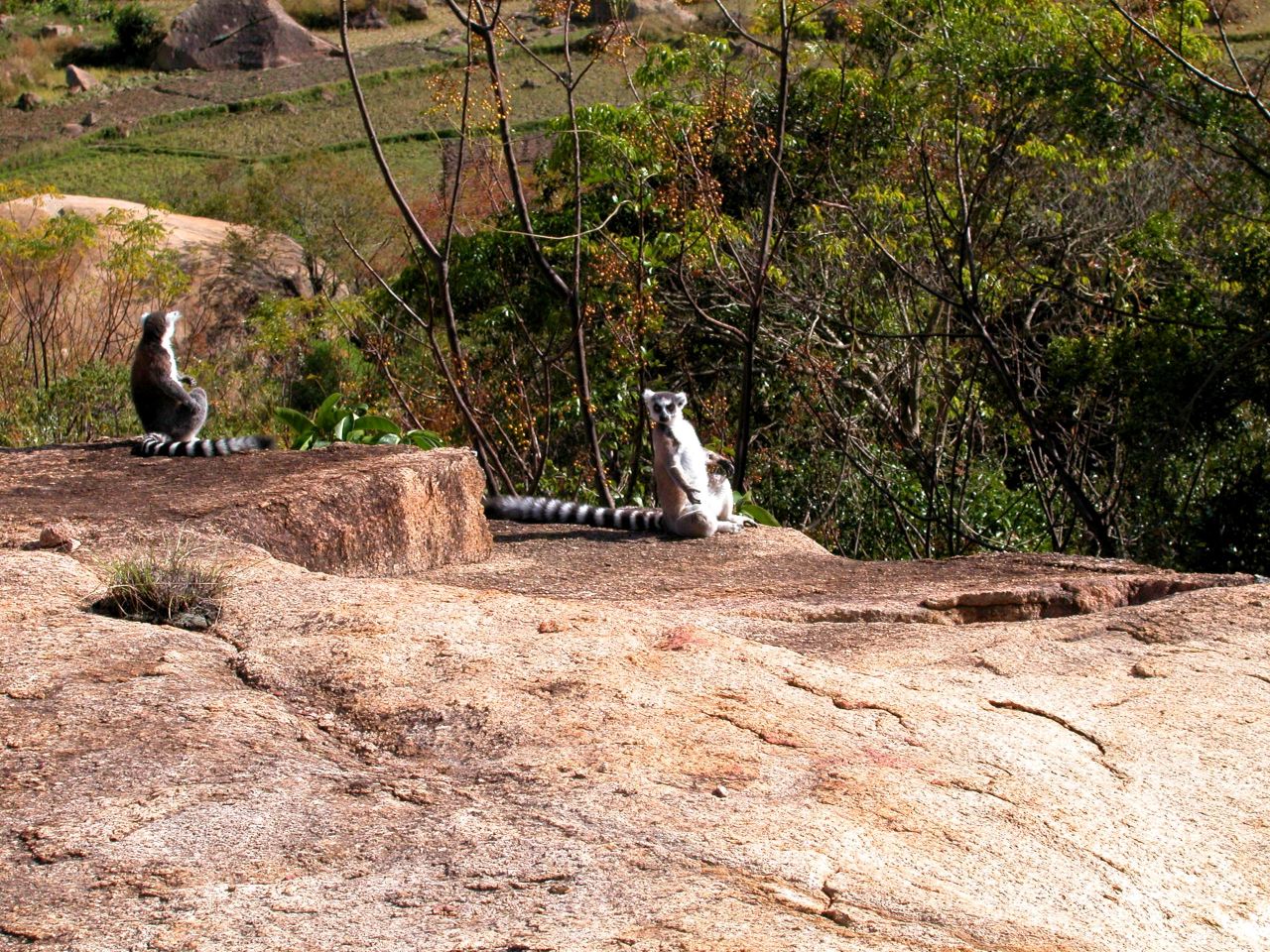
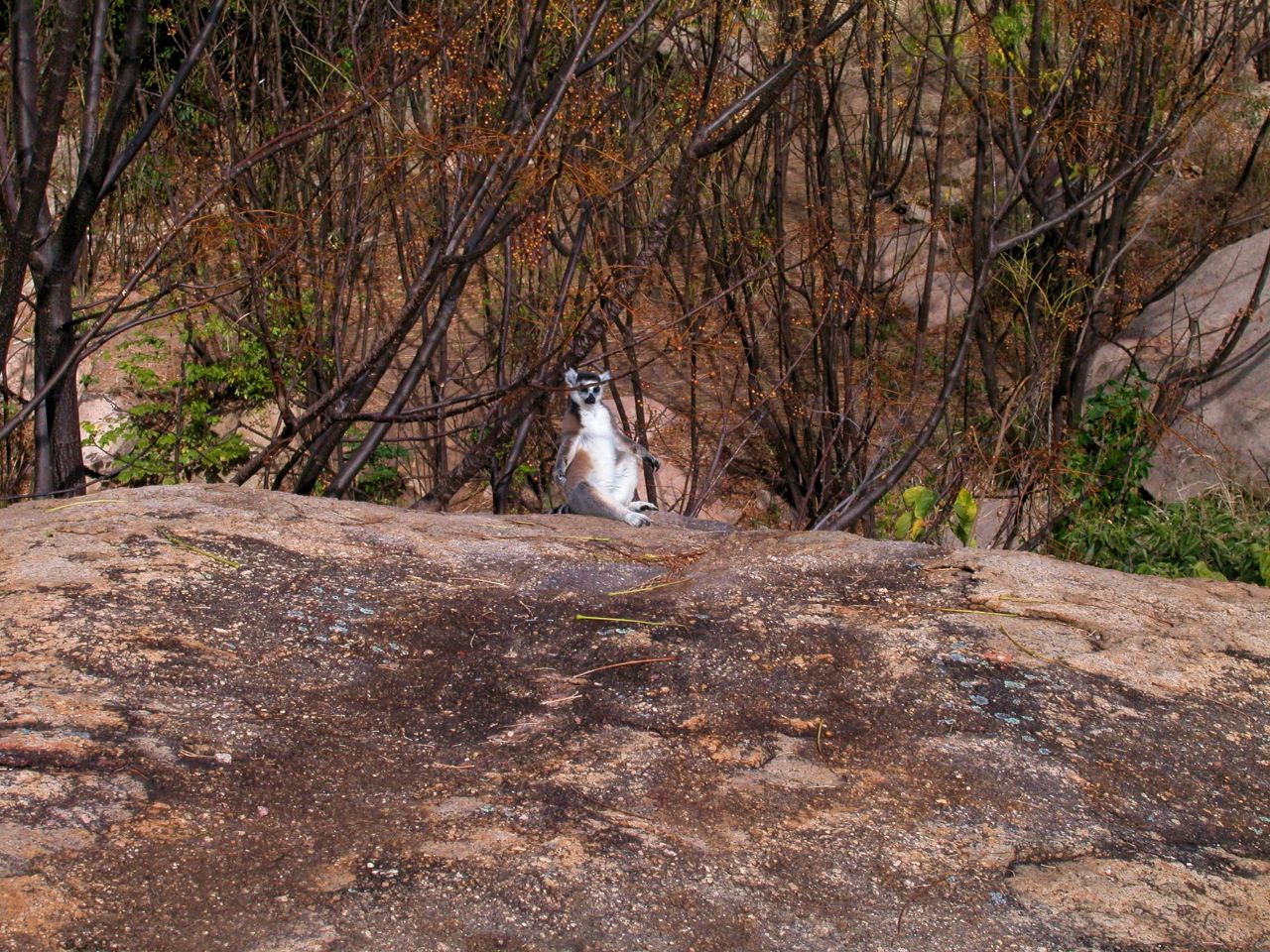
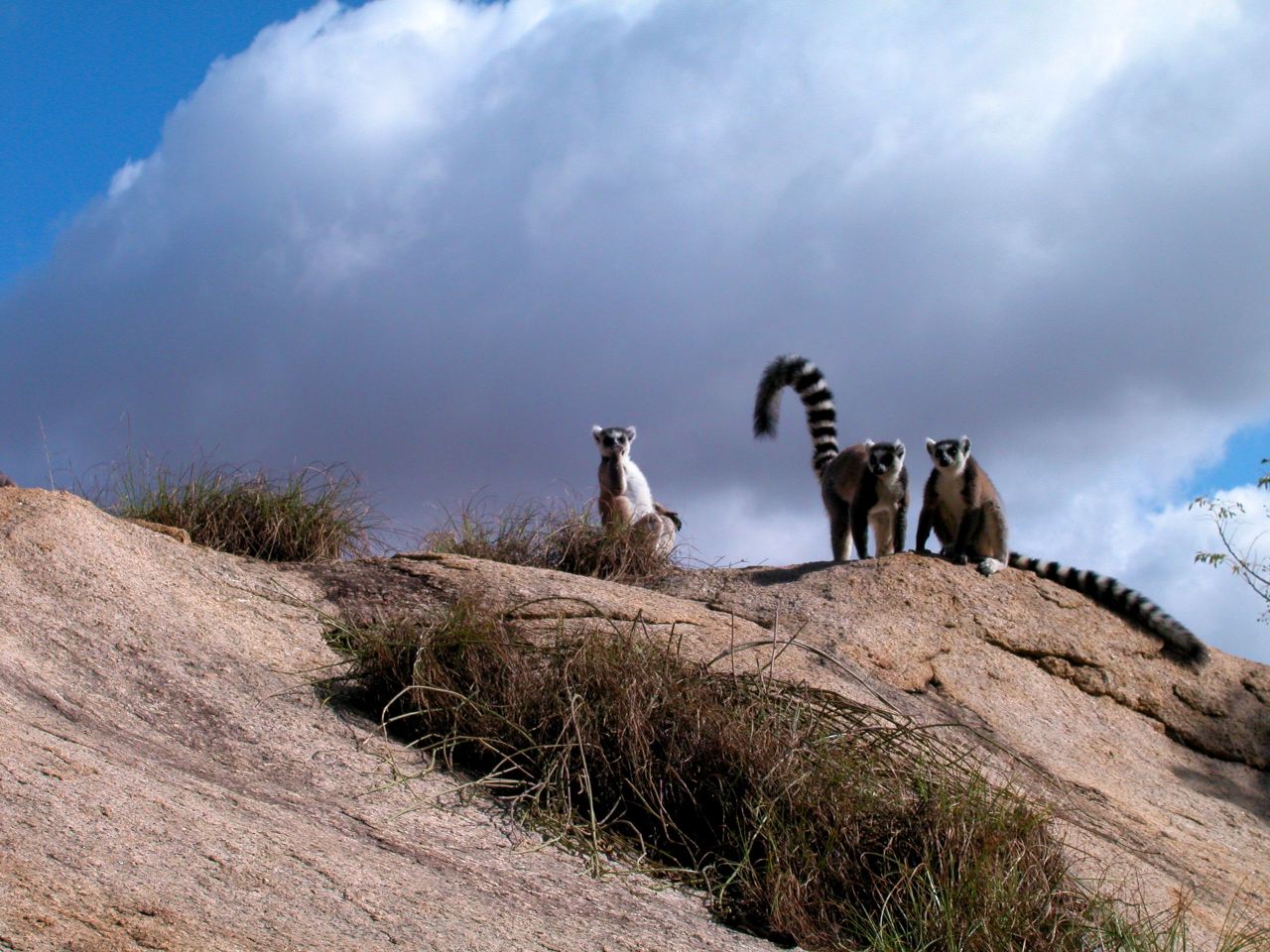
Lemurs also live in groups of ten to twenty. They climb into the same tree and hang like Christmas-tree decorations. In those days there were plenty of lemur pages online, such as www.gozen.demon.co.uk/godric/godric.html and www.lemurs.us/madagascar.html. The first had recordings of their calls.
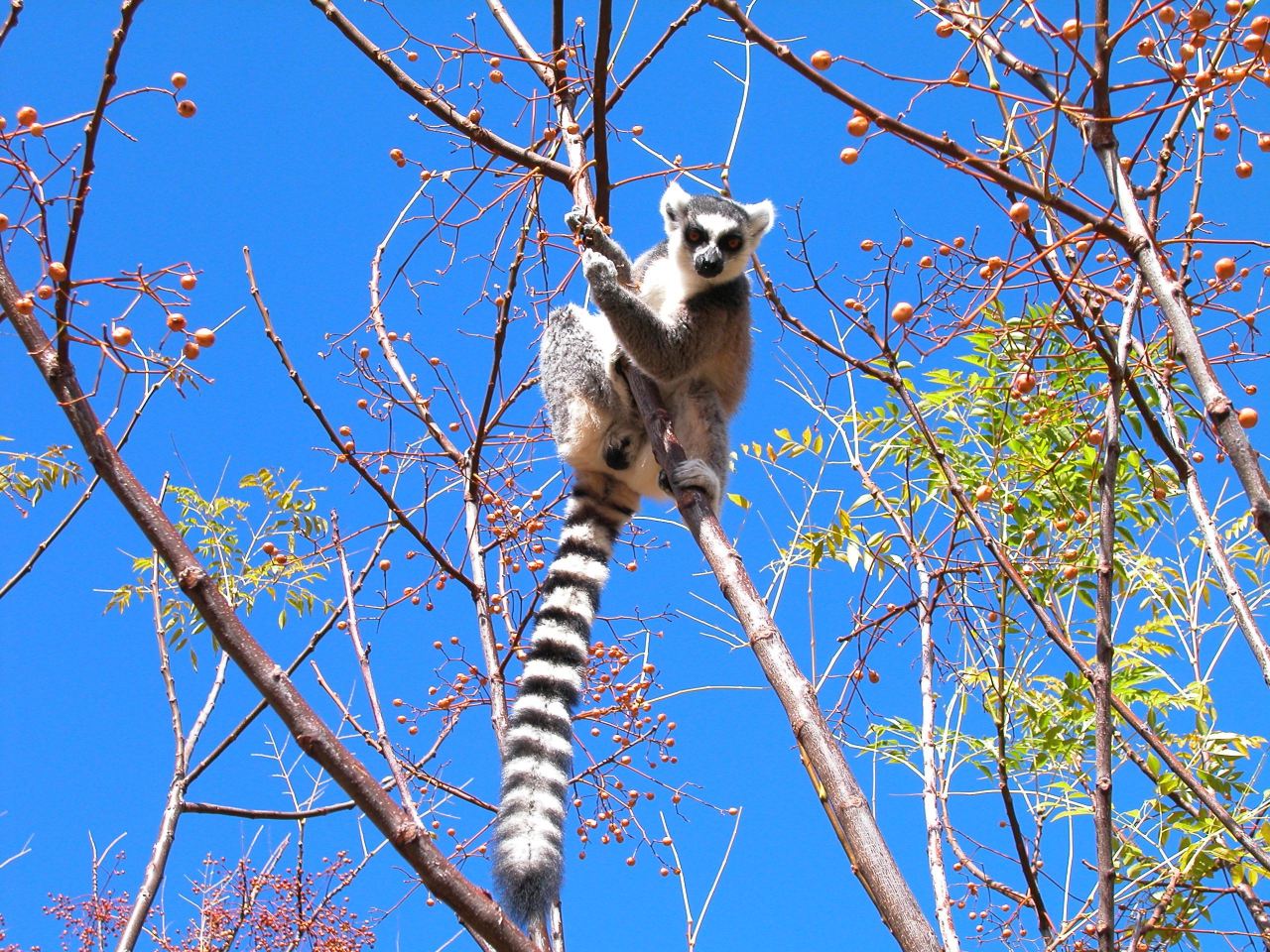
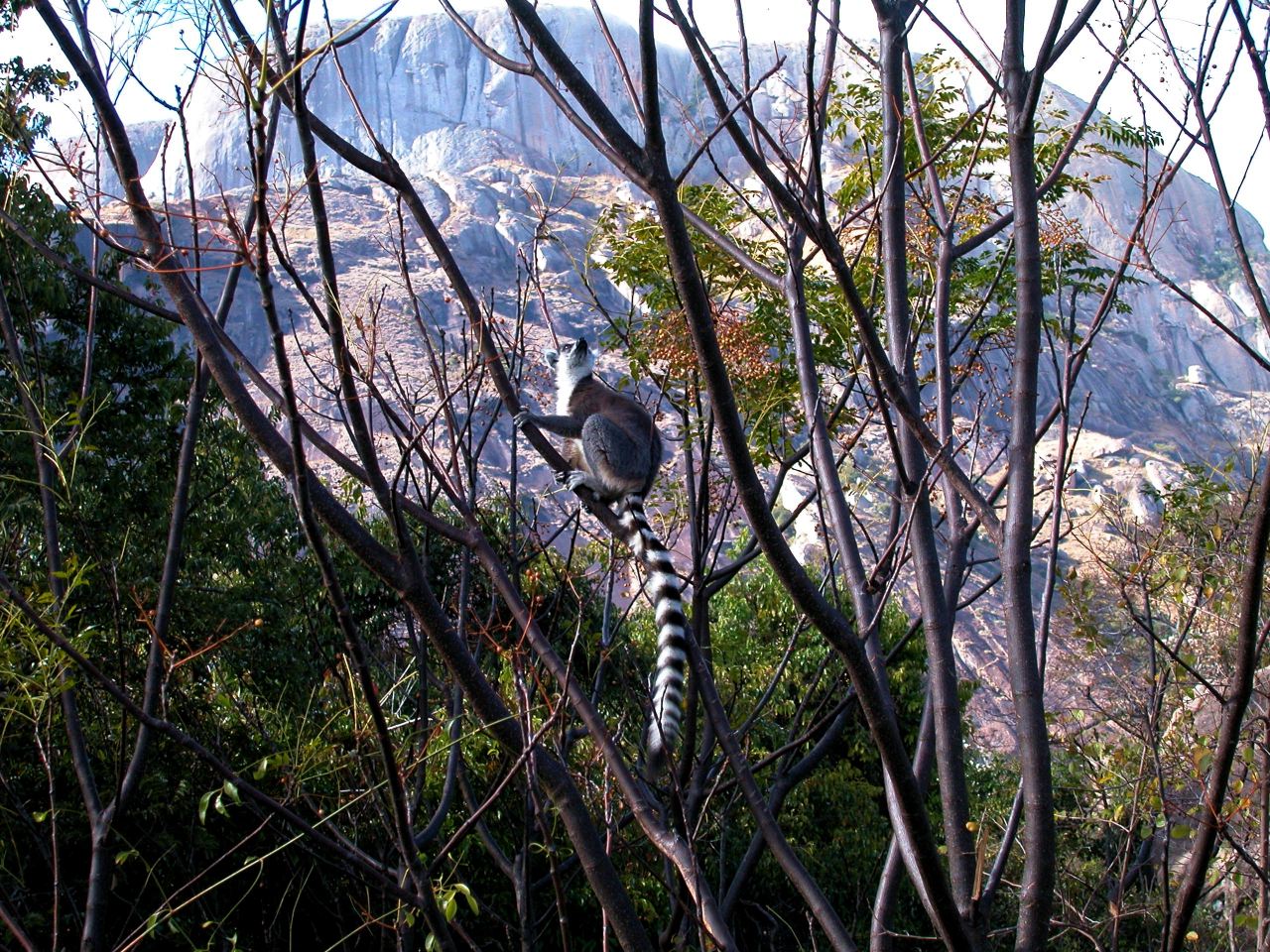
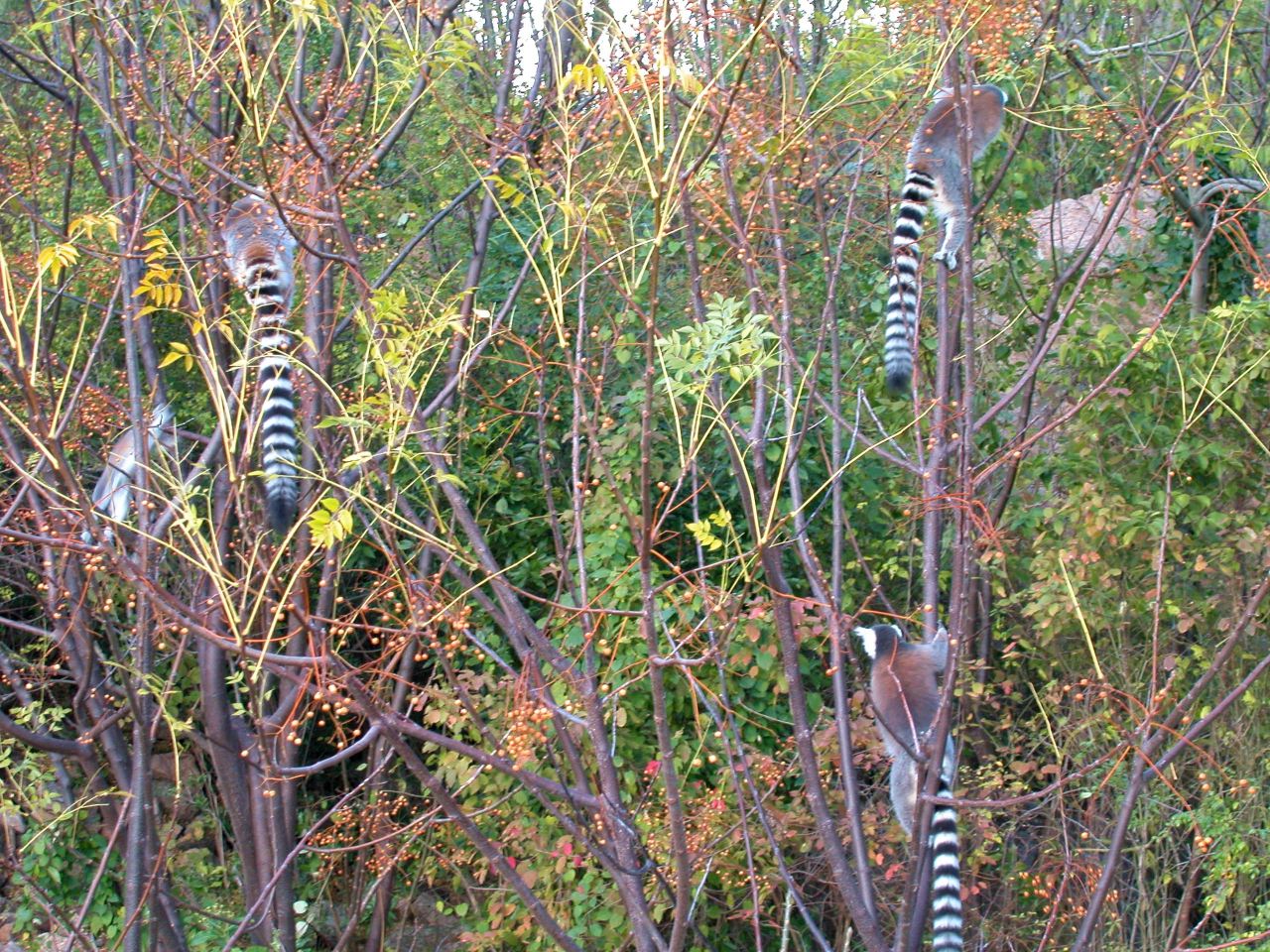
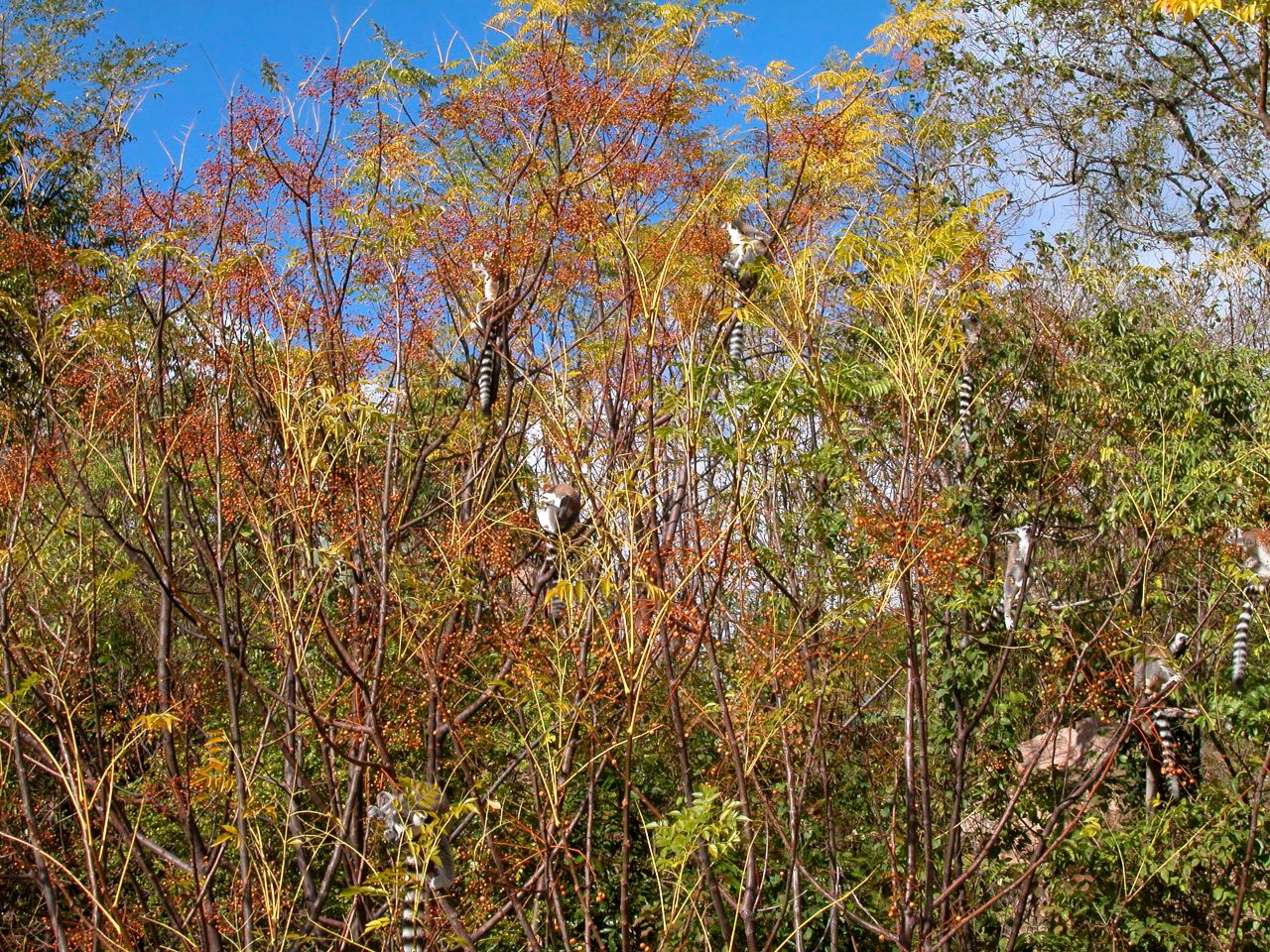
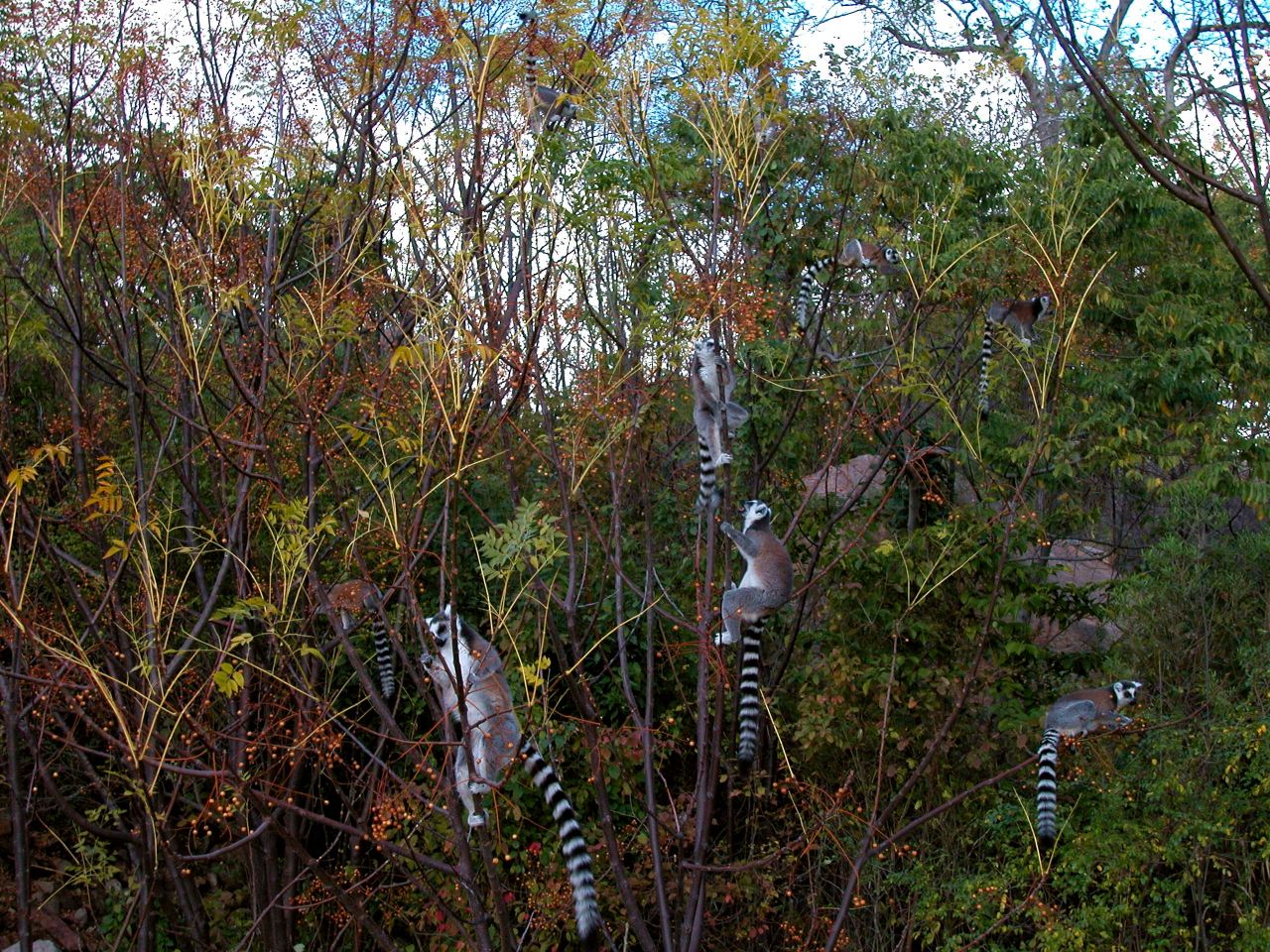
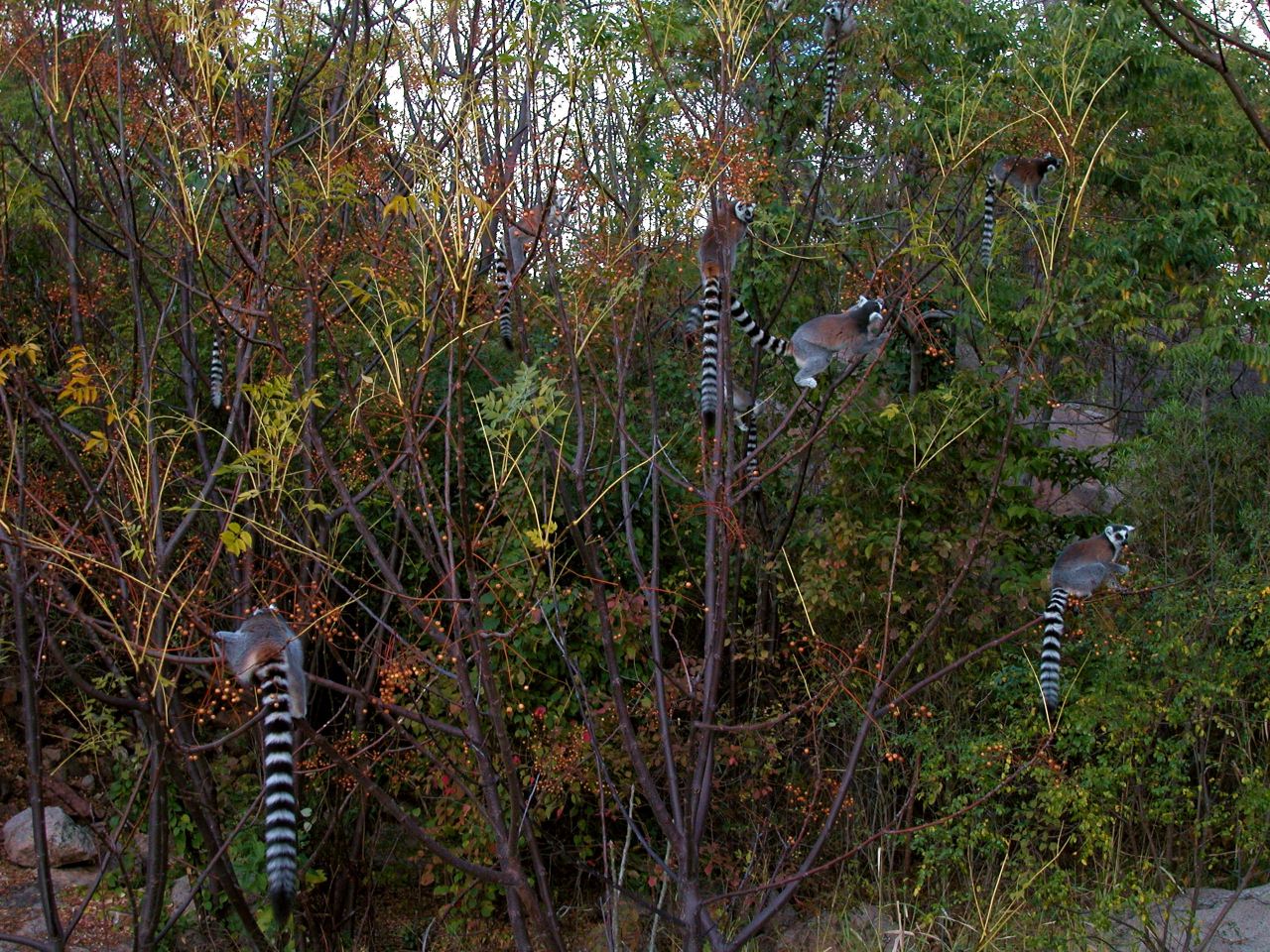
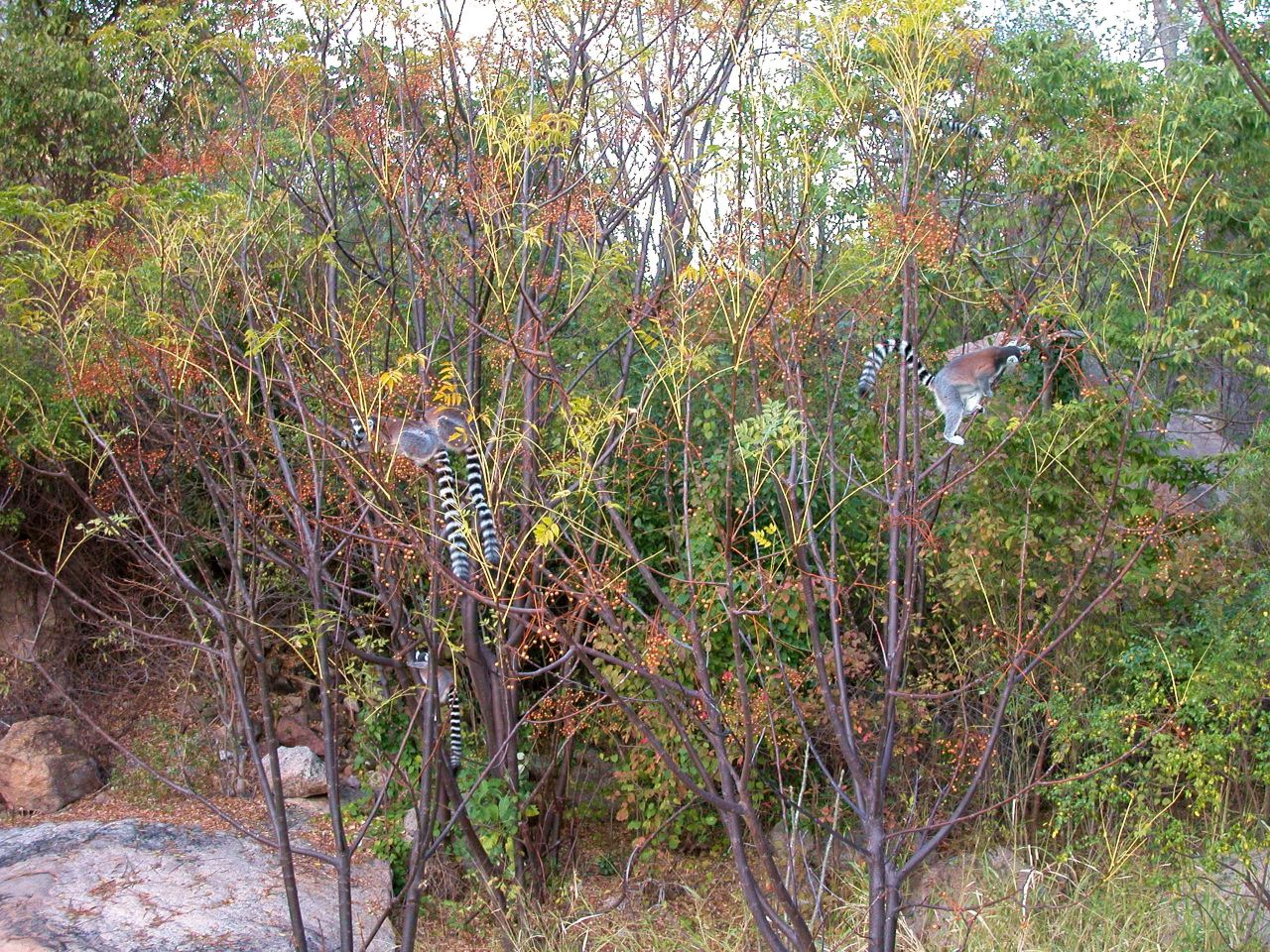
The man who ran the reserve was local and had got the land set aside himself. He also guarded it from the villagers around it. According to the story we heard, at first he shot to kill. By then everybody respected what he’d built. People used to eat lemurs. Local tradition held that lemurs were sacred, the reincarnation of dead ancestors, and that eating one was forbidden. There was said to be a way round the taboo: cut off the paws that made the animal resemble a human being. We were told that this was why almost all the lemurs had been eaten and most survivors lived in reserves.
The Anja reserve was missing from Lonely Planet because it was so new. But it’s well worth visiting. It’s one of the best places in Madagascar.
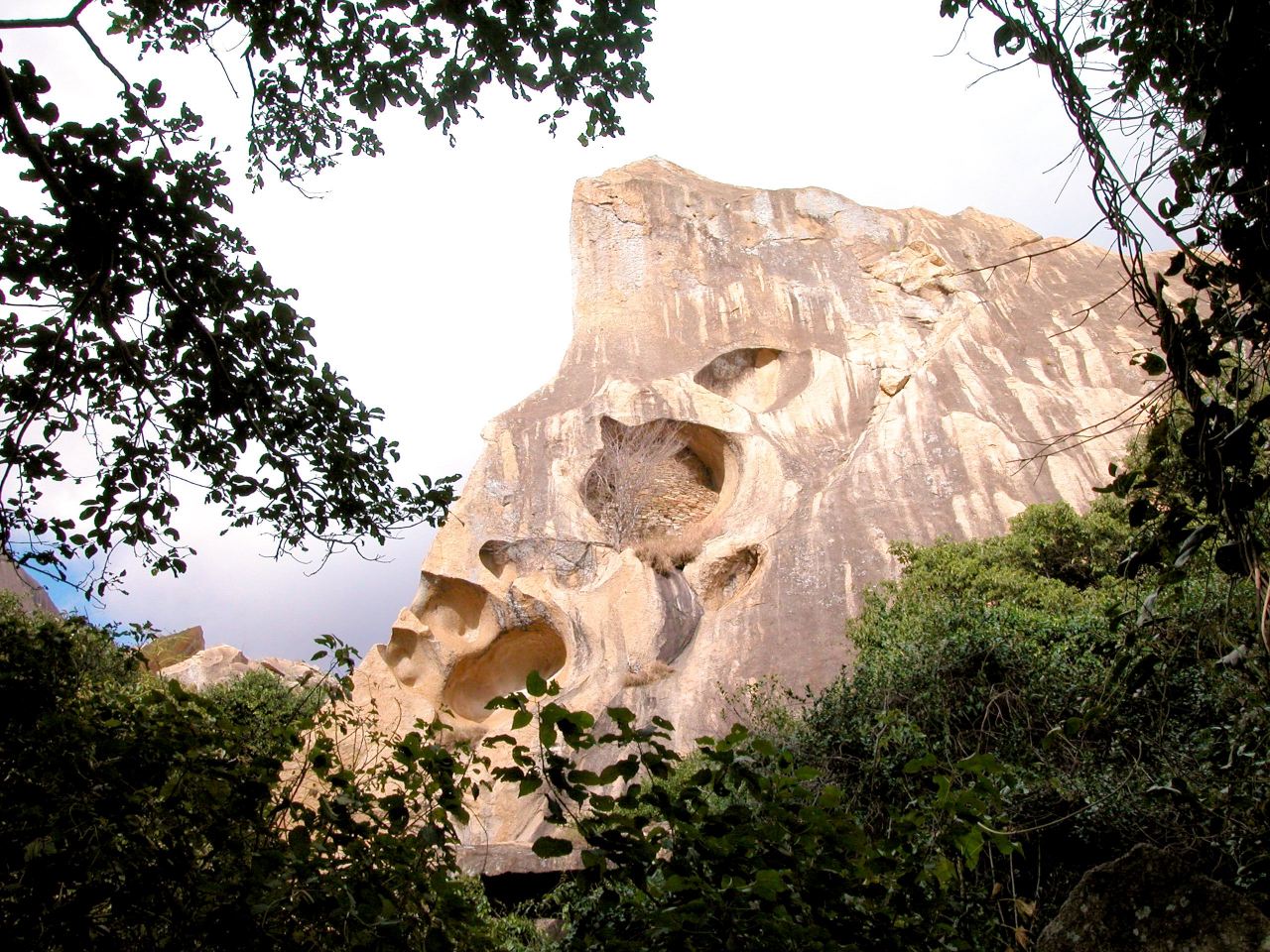
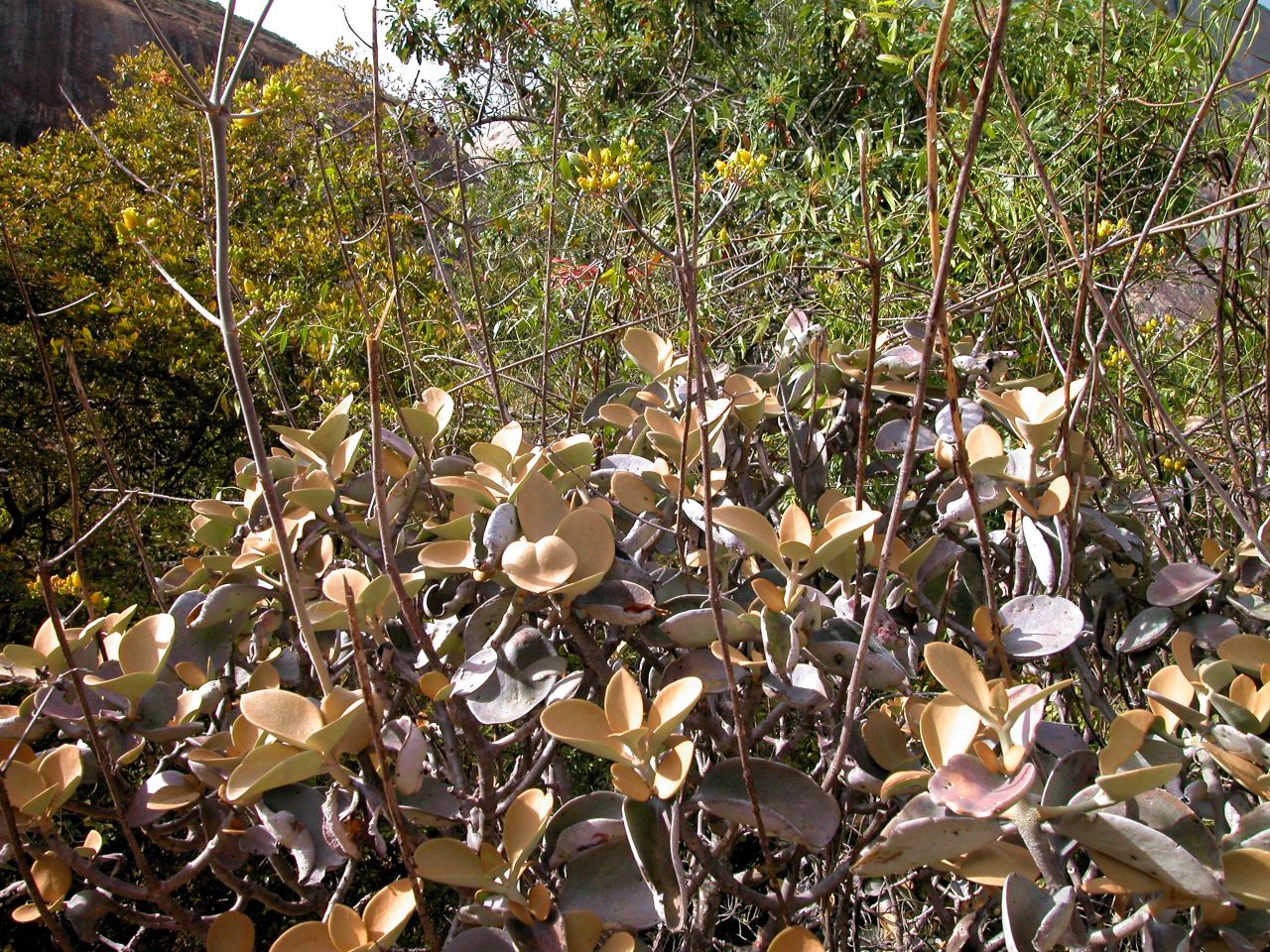
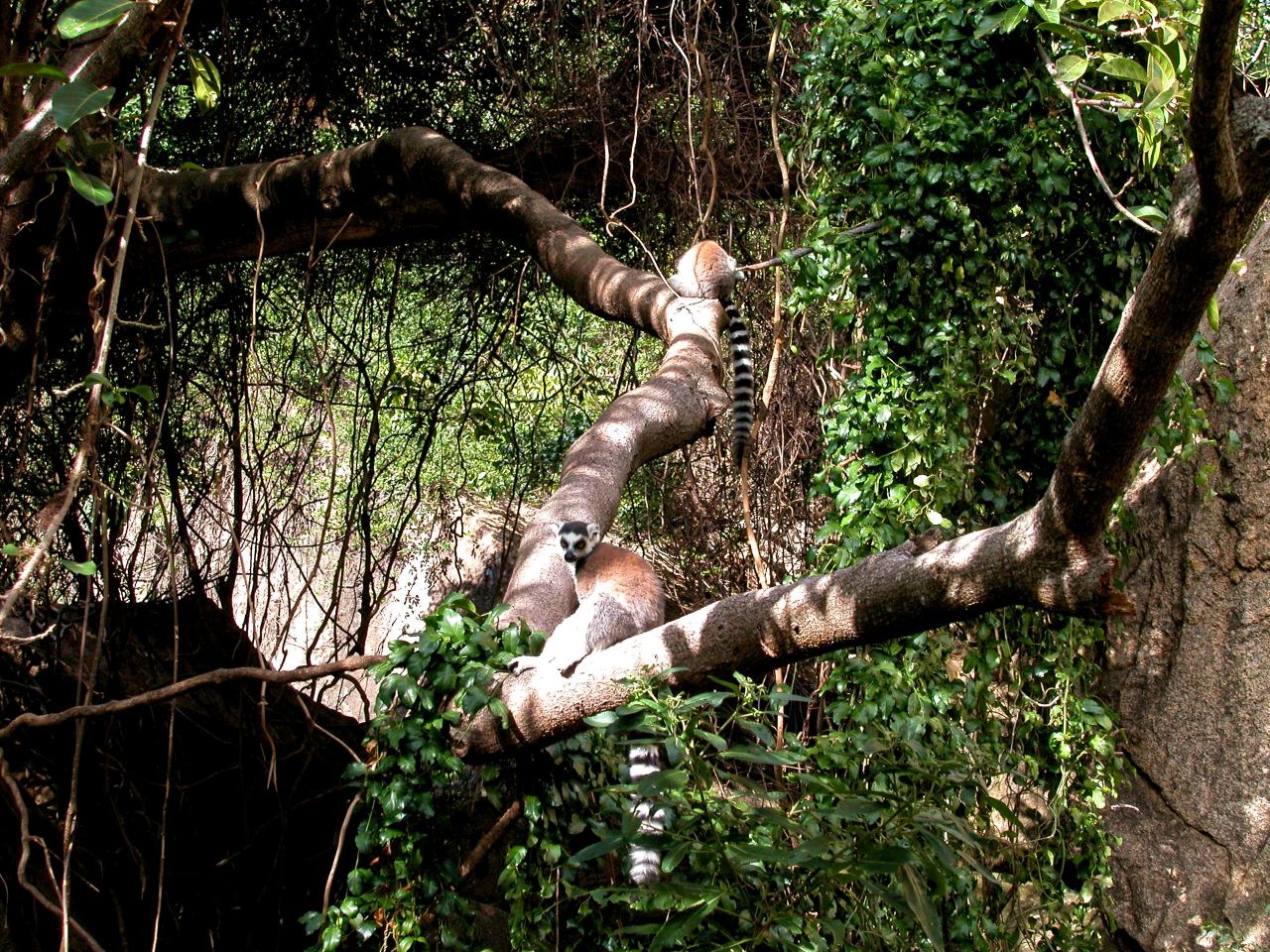
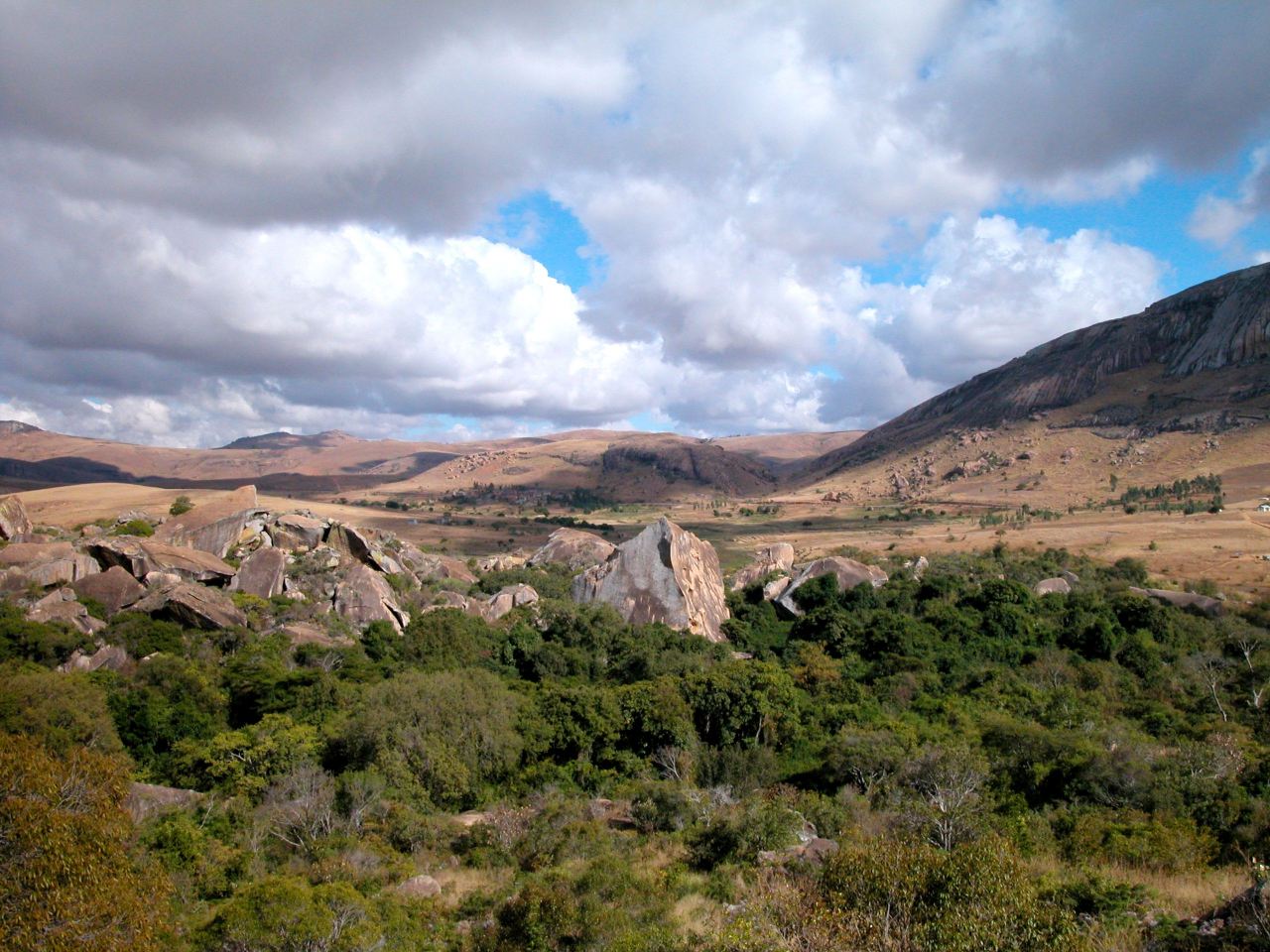
Isalo and the little baobab
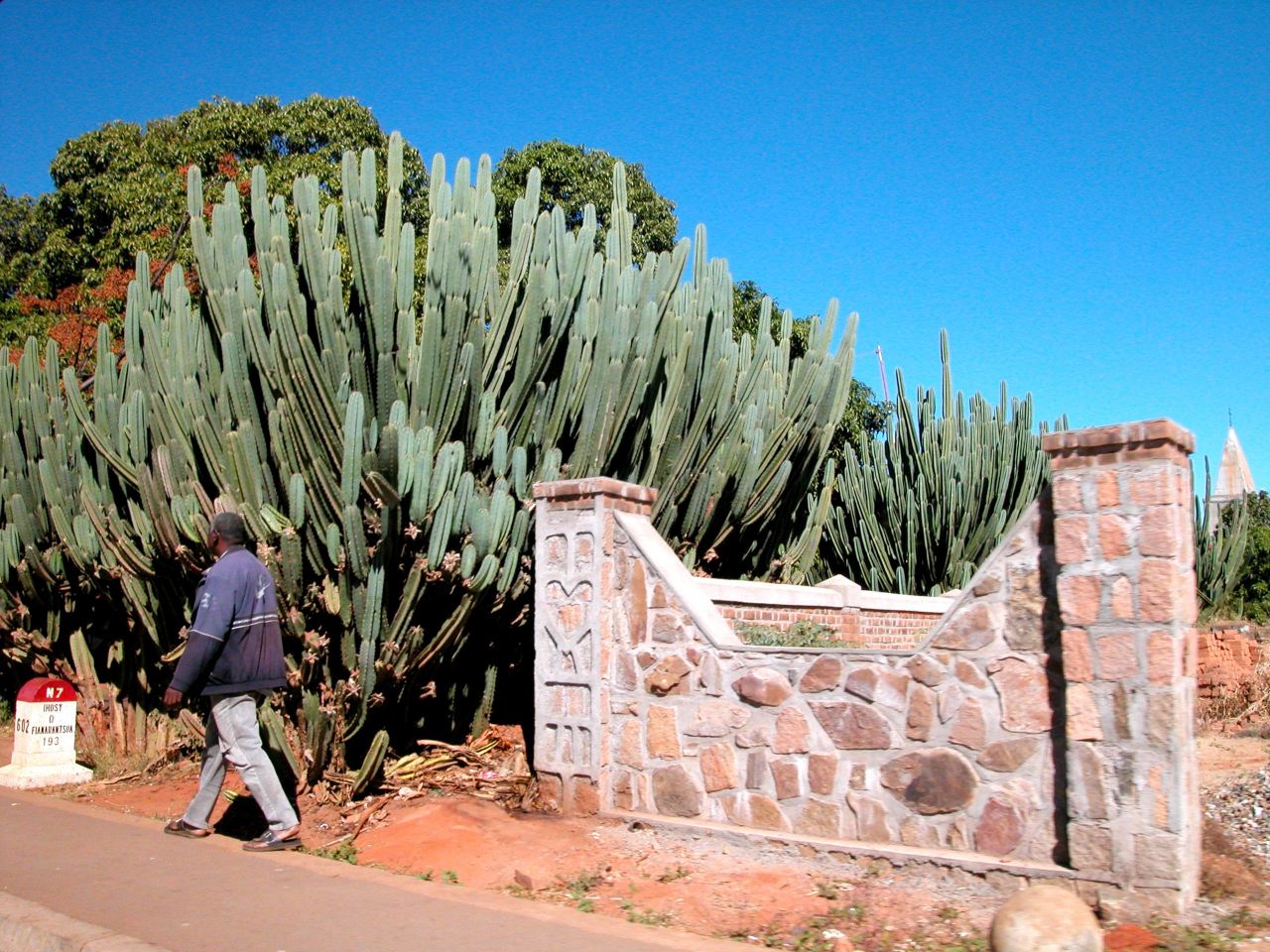
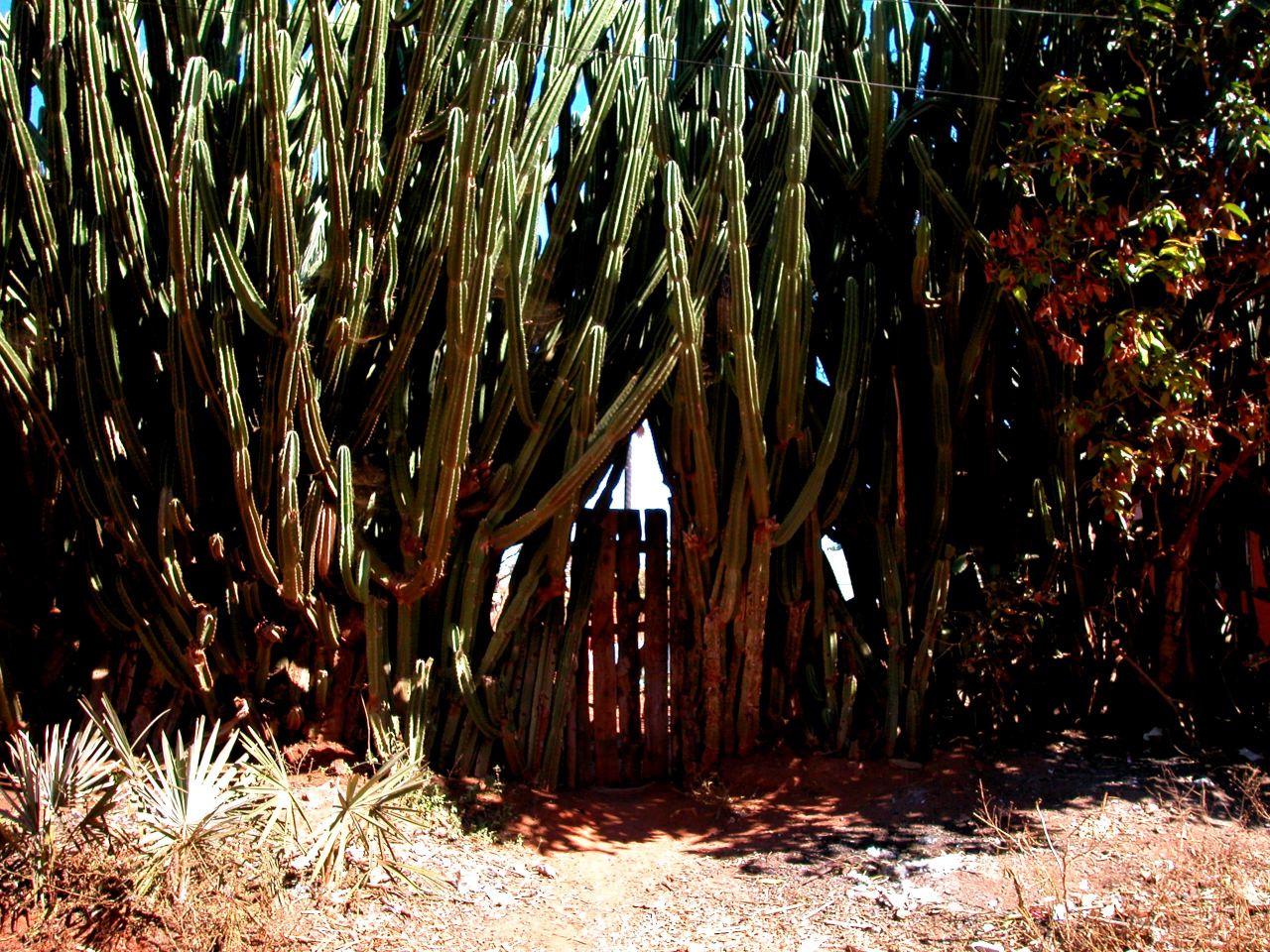
Farther west, the climate grew drier and drier and cacti appeared in numbers. Most had been brought from abroad. In the nineteenth century Madagascar had a disaster when prickly pear overran the fields. The problem was brought under control with an insect whose larvae destroyed the cactus. The effects were still noticeable when we went.
Cacti grow to great sizes in Madagascar. Towns have avenues of them, and they are used for hedges. The town most full of cacti was Ihosy, where we stopped for lunch.
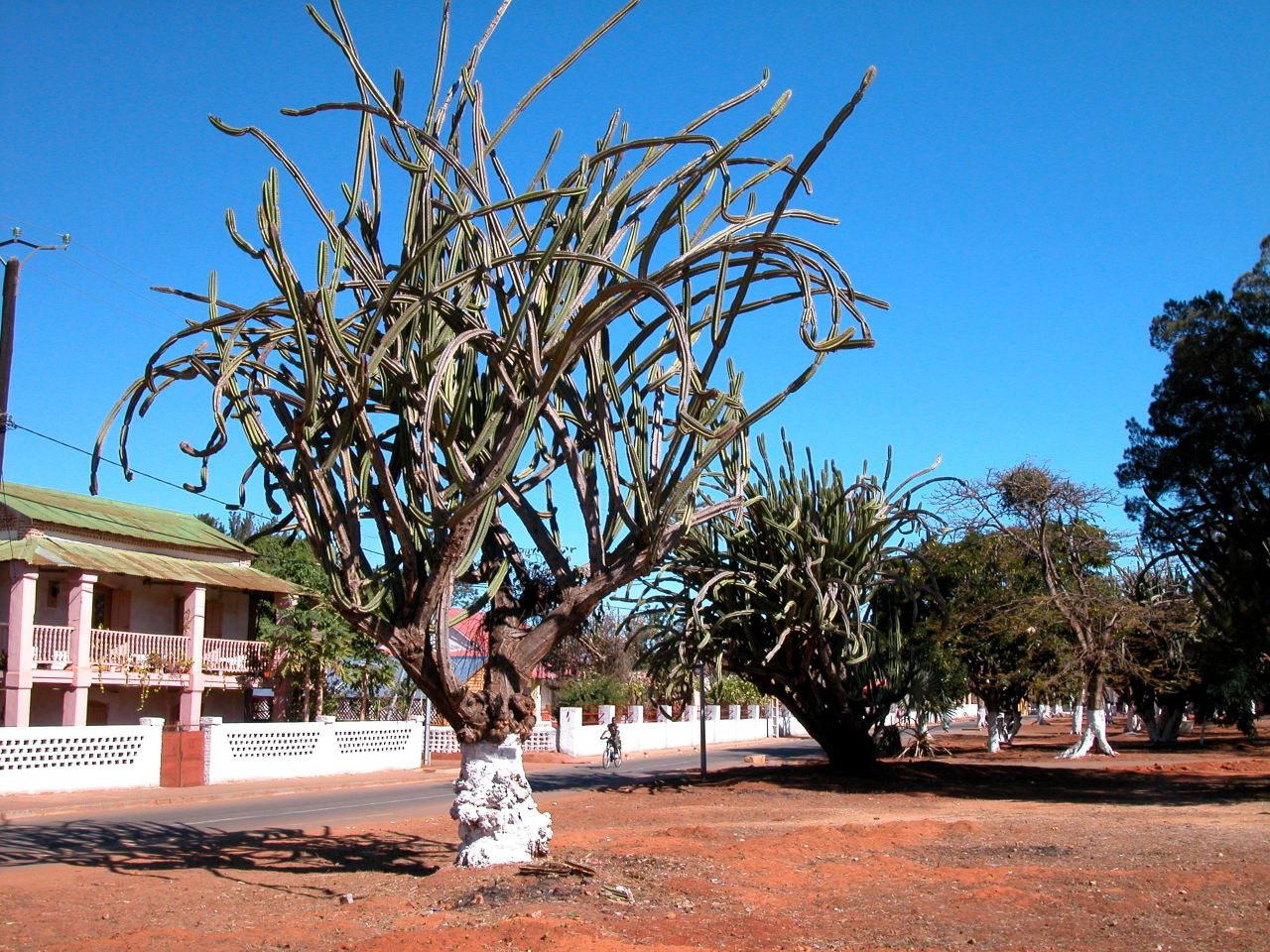
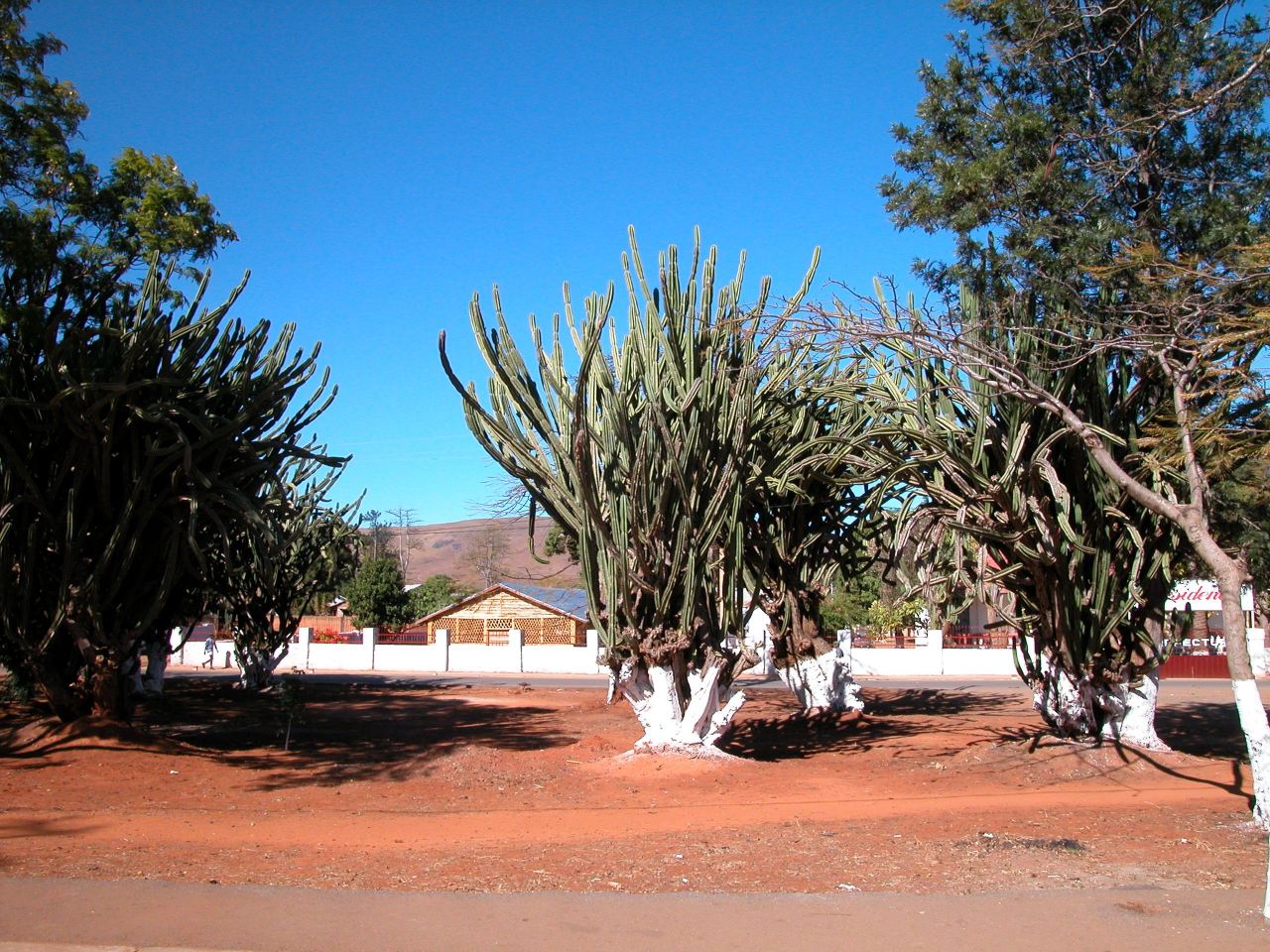
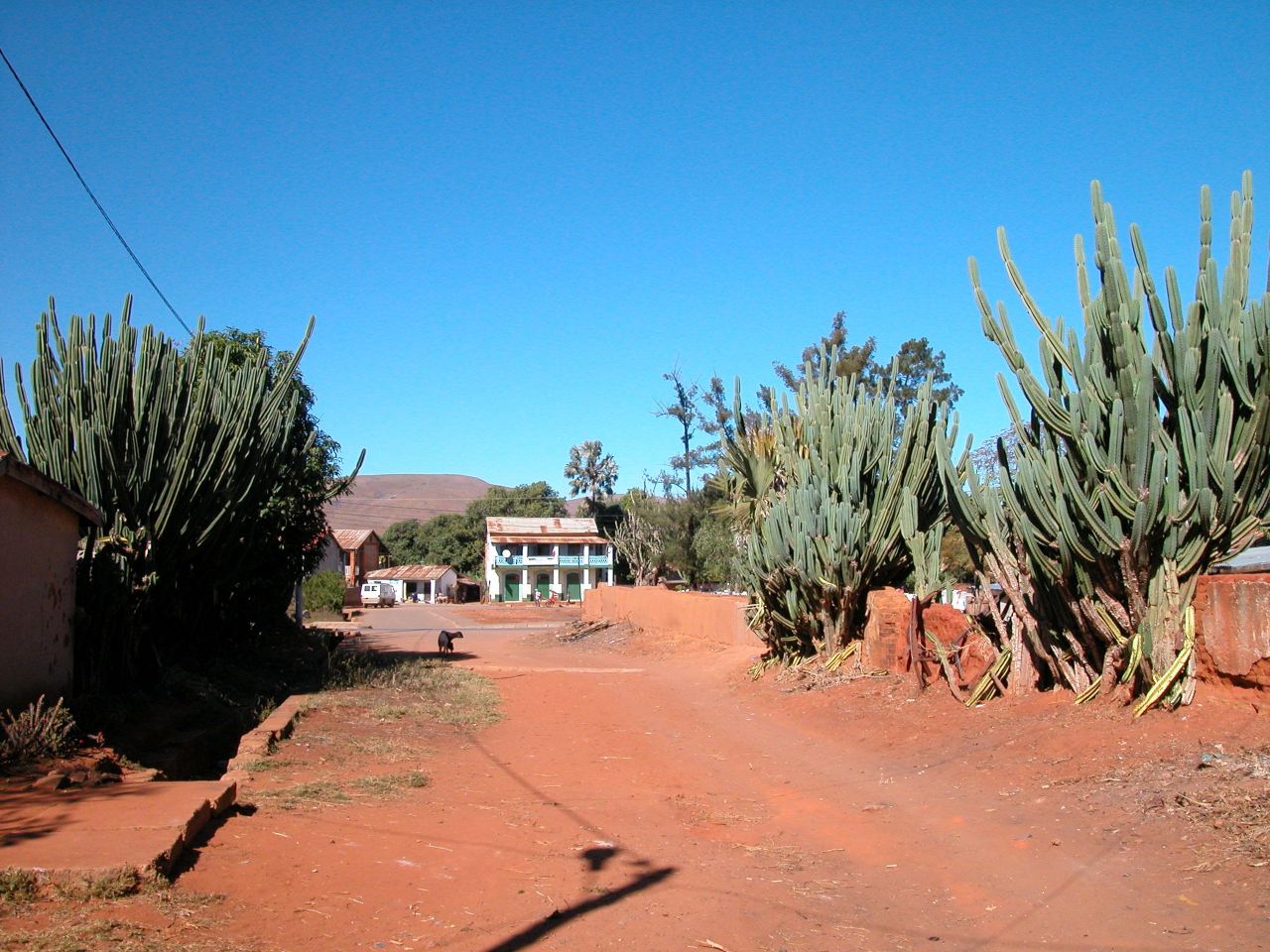
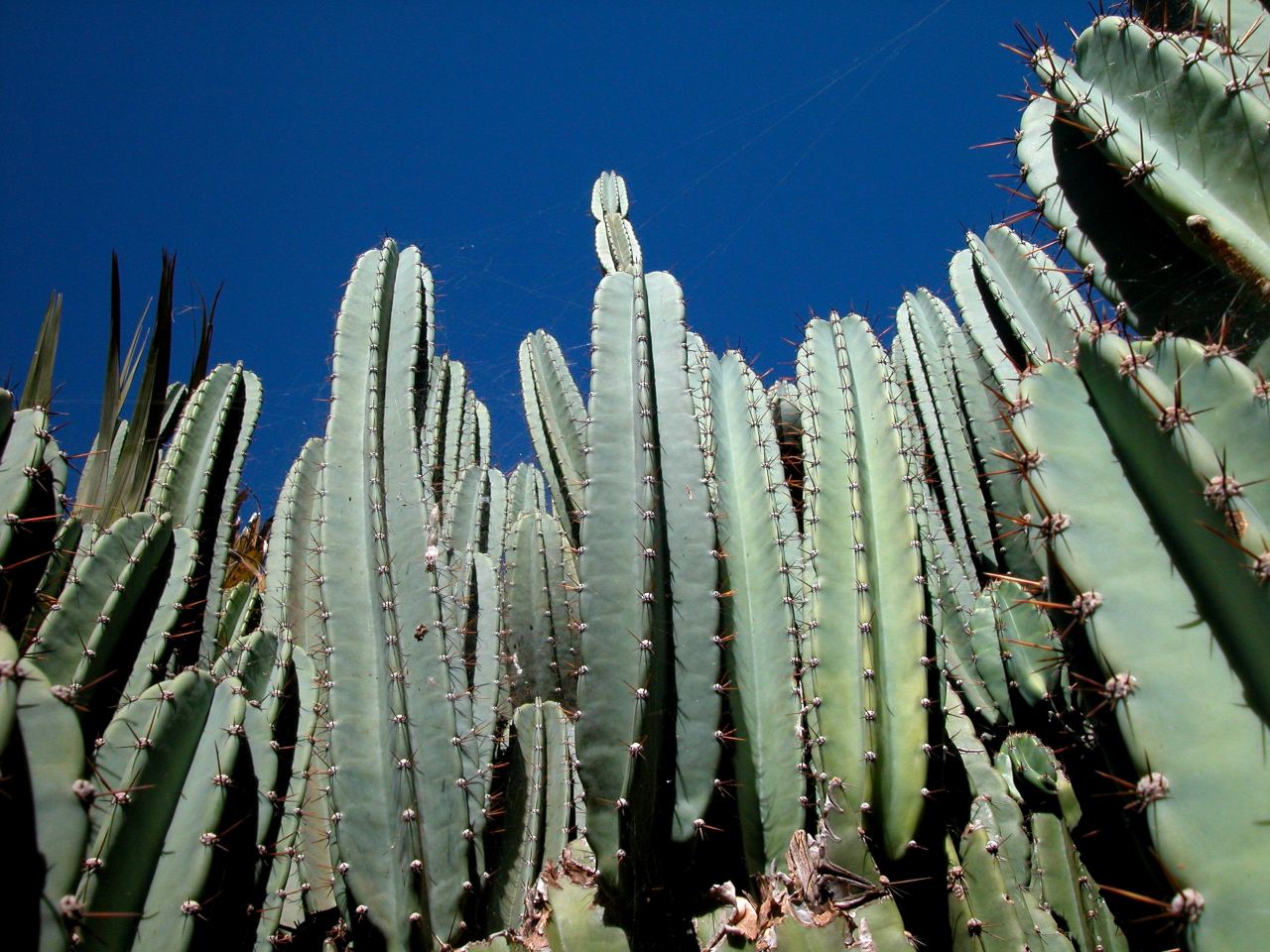
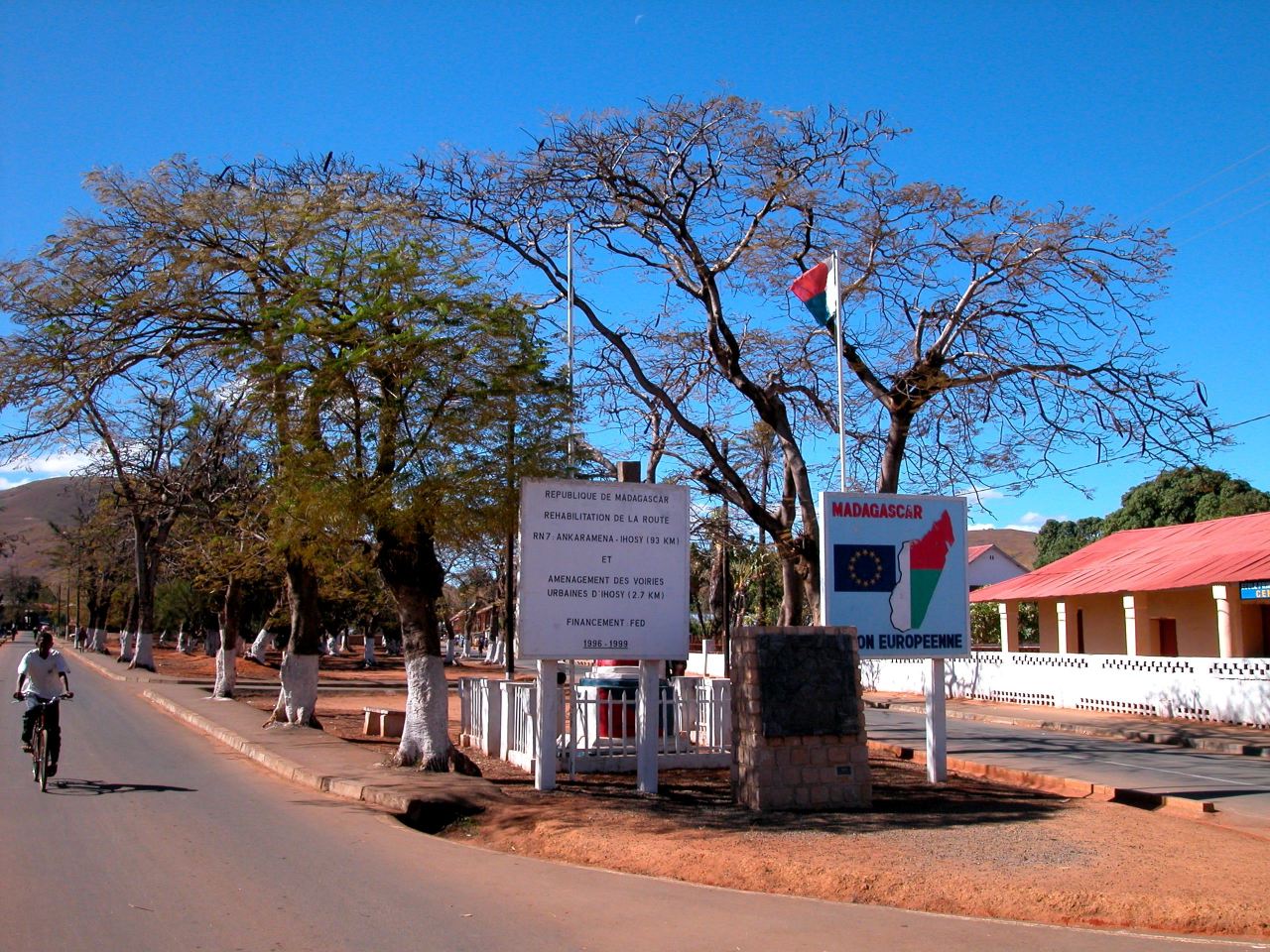
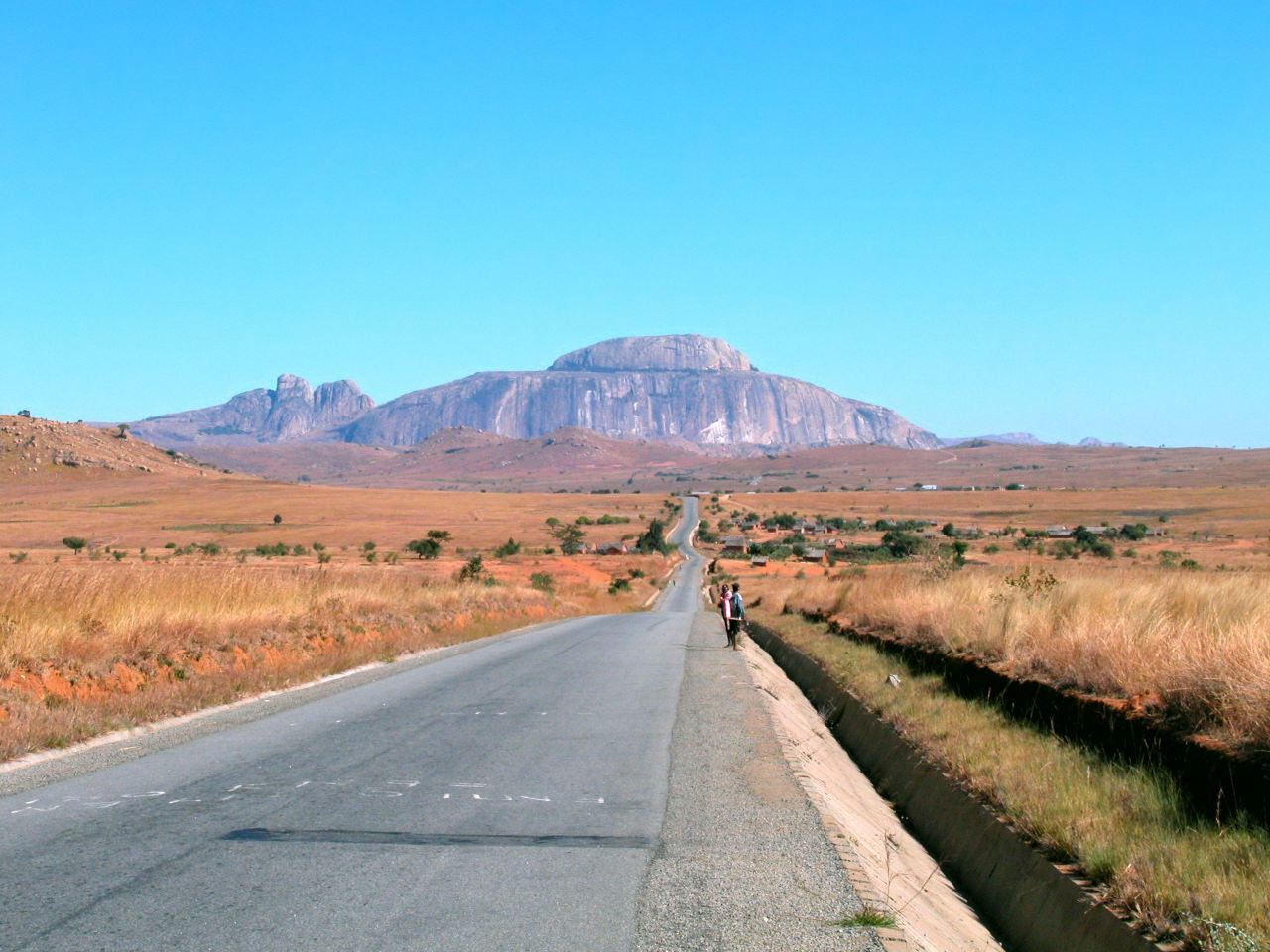
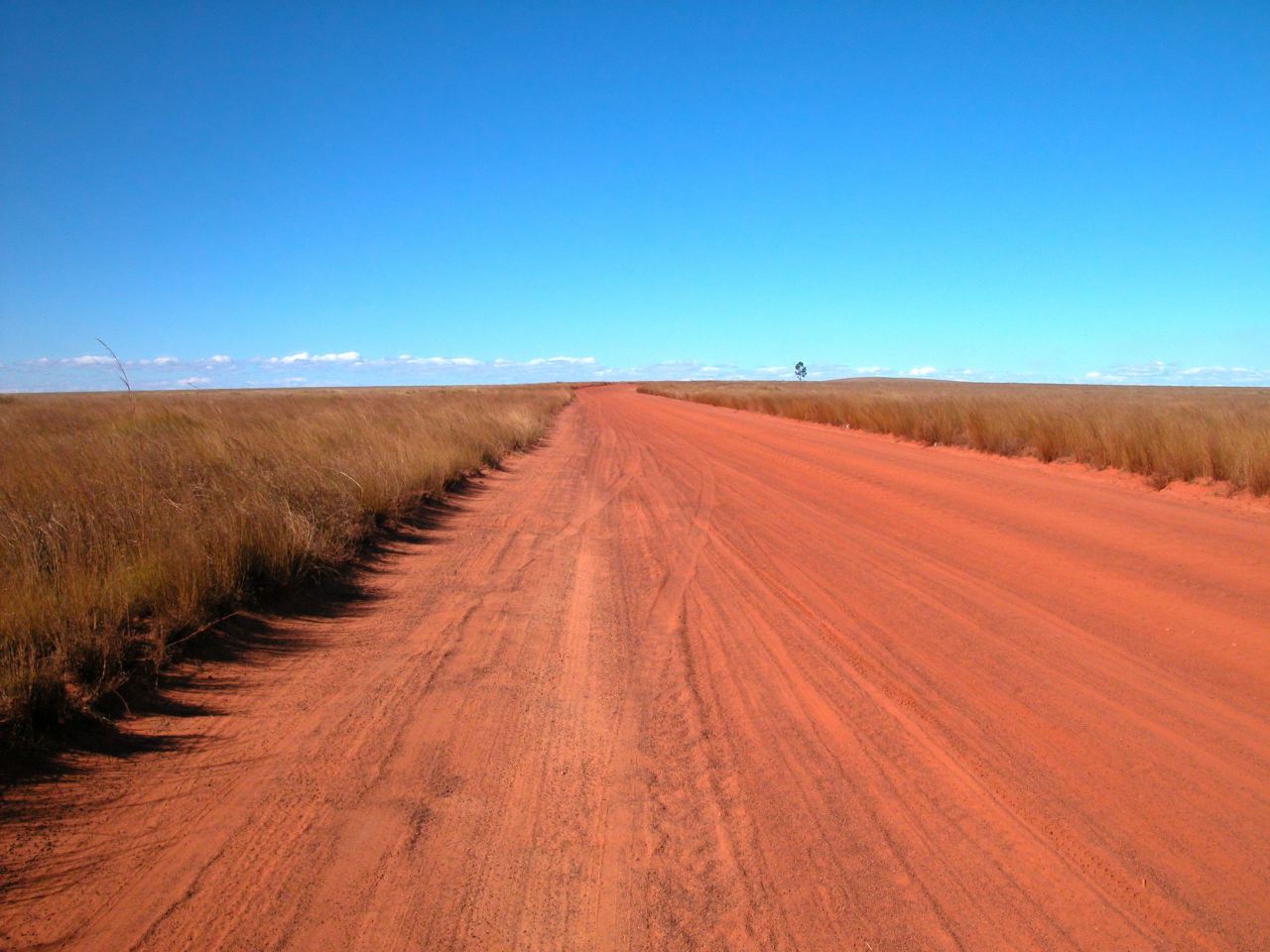
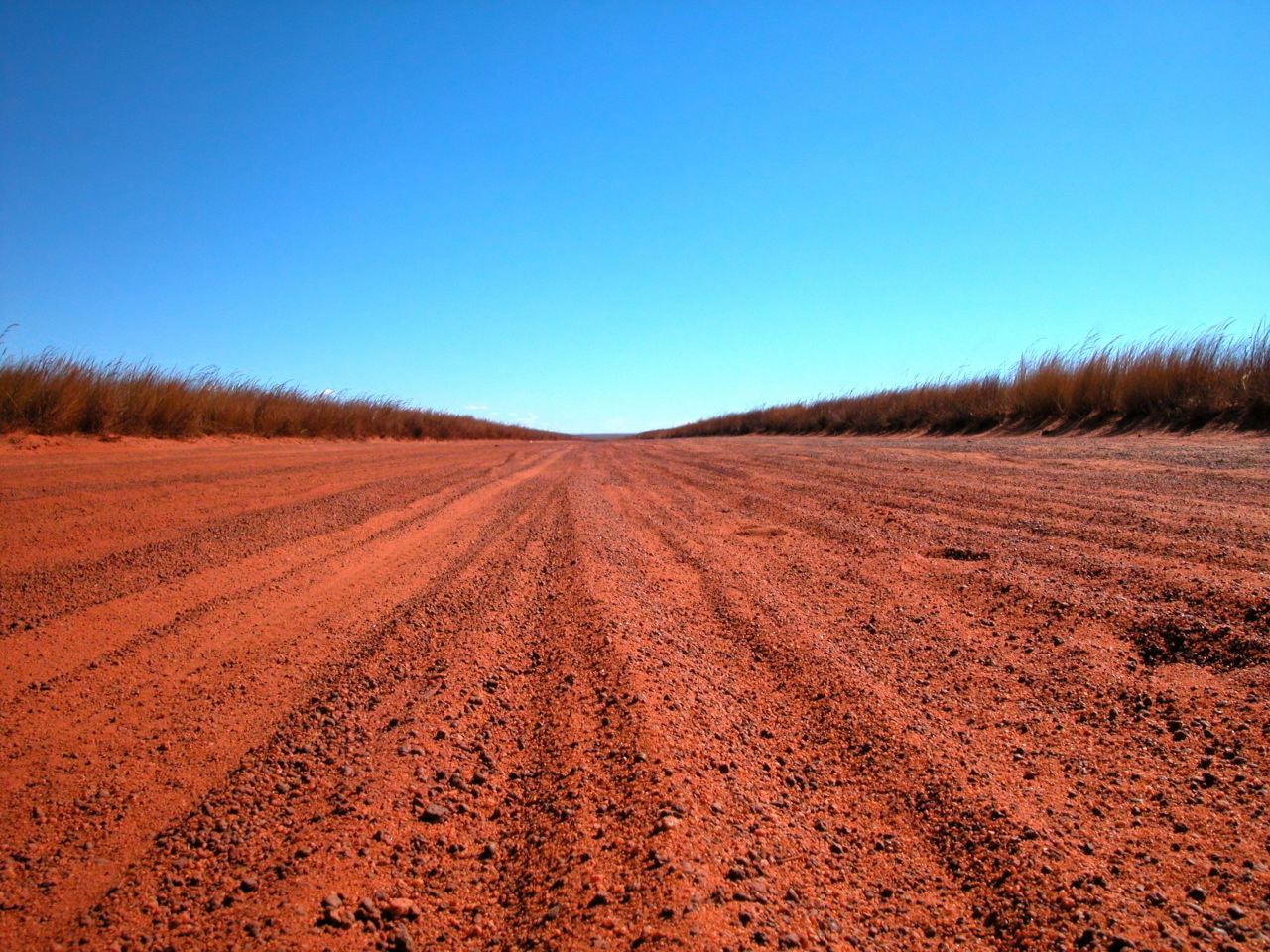
Beyond Ihosy, the asphalt on the country’s main road ran out. It turned into a dusty dirt track through open grassland.
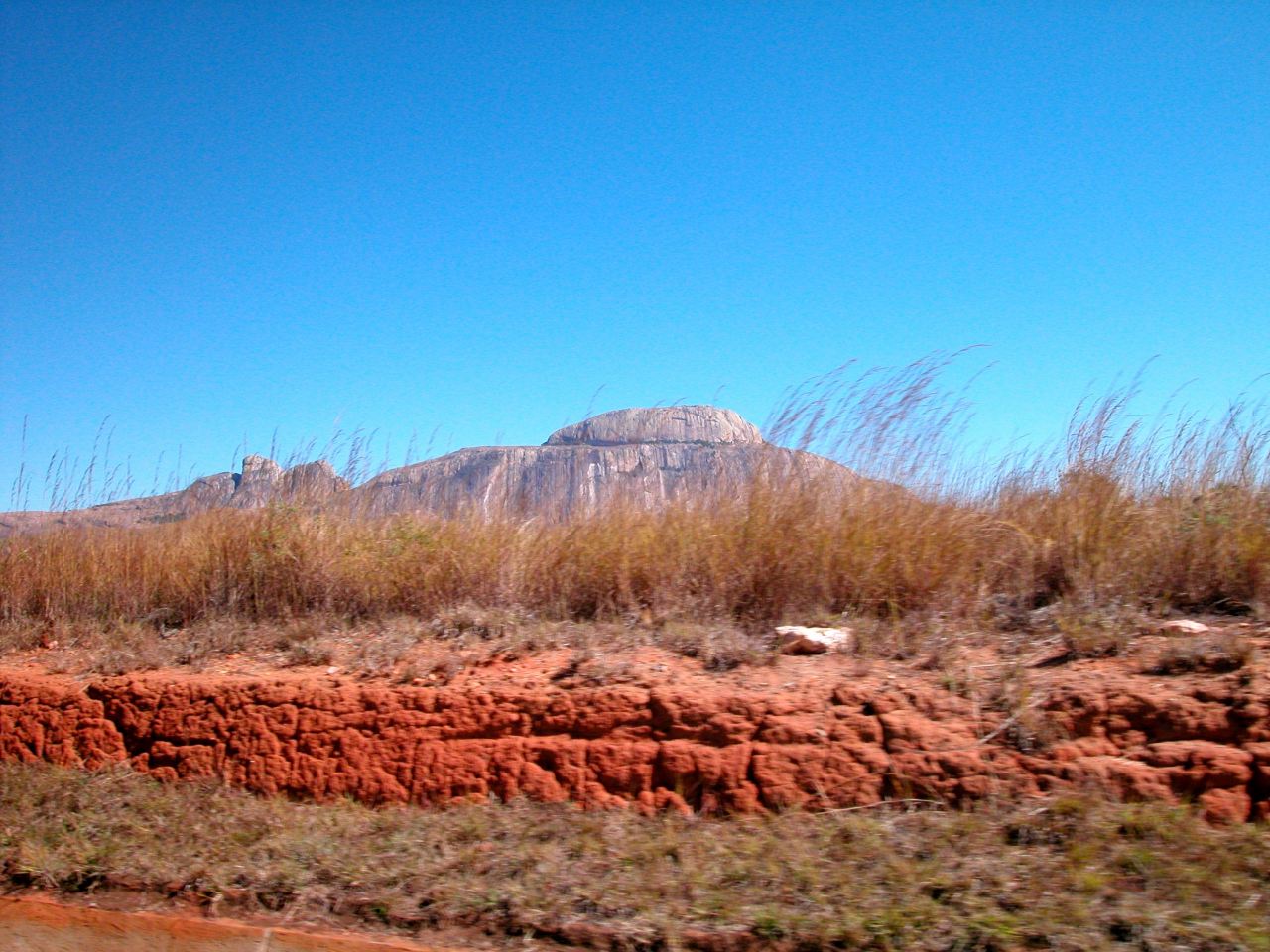
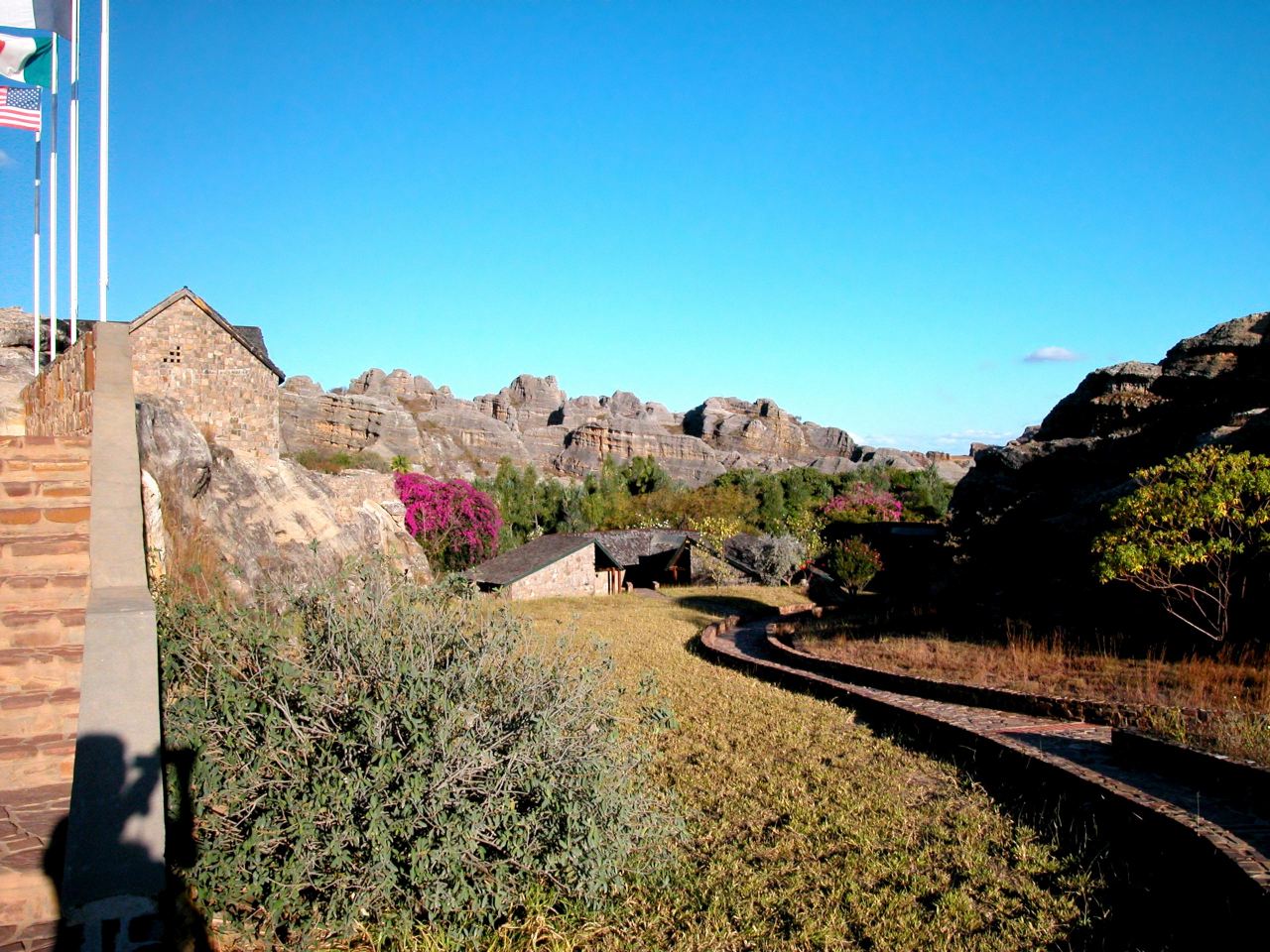
We stopped for the night at the small town of Ranohira, beside Isalo National Park. This was one of Madagascar’s most visited places. Picturesque rocky hills, strange plants and a dry, warm climate made it a regular stop on tours. They’d even built a four-star hotel among the rocks, Le Relais de la Reine (mda@bow.dts.mg), with swimming pools, walking paths and the rest. A double room cost around US$100. It was a splendid place to look round, though we slept in another, quite decent hotel for 100,000 francs. What I needed most was a socket to charge our devices. There was a socket. I’d made a point of asking. I had forgotten to ask whether it had power. In Madagascar that question was well worth asking. At best there was one socket per room and electricity was rationed. The lights went off at night, especially where the hotel ran its own diesel generator.
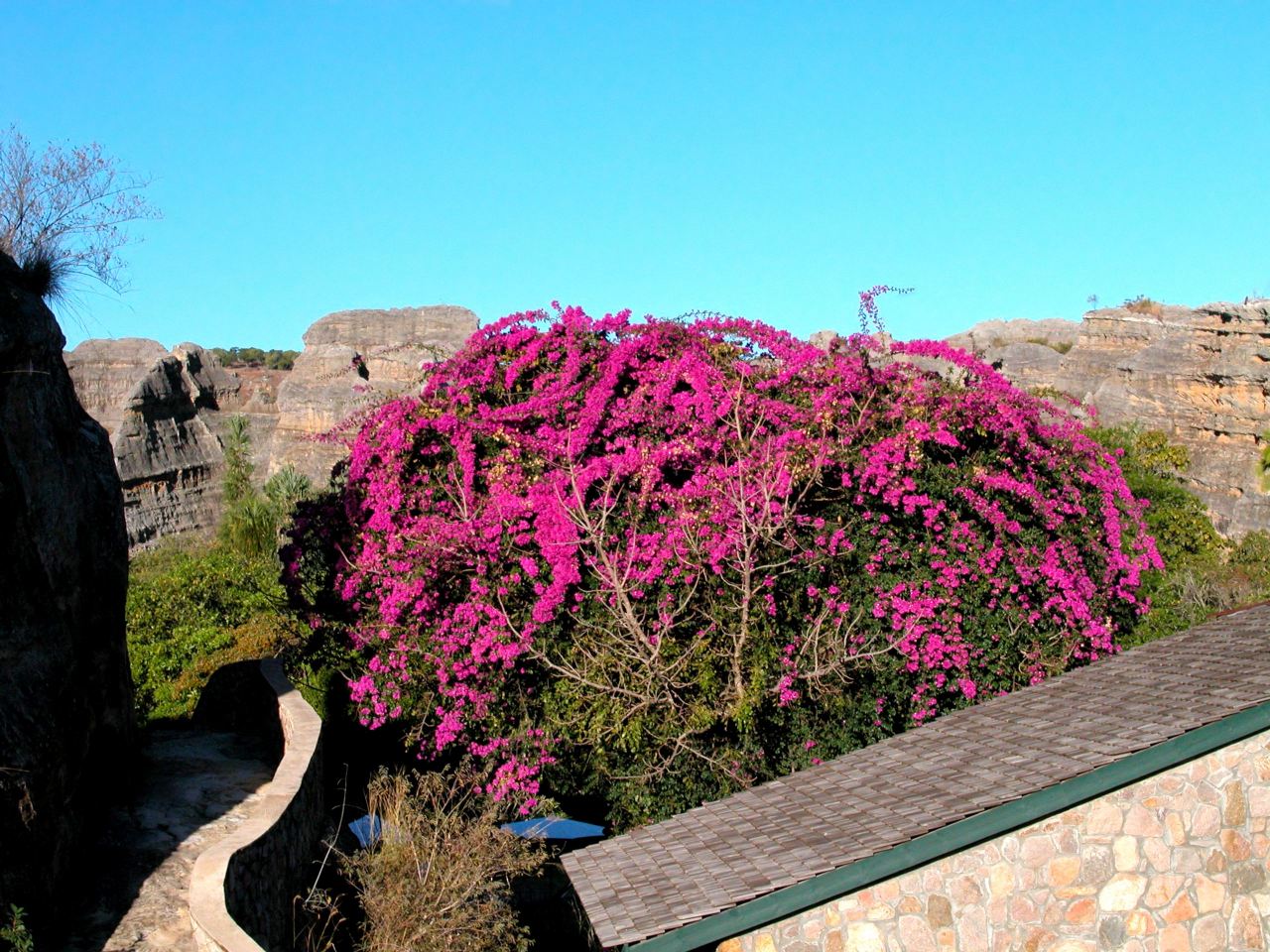
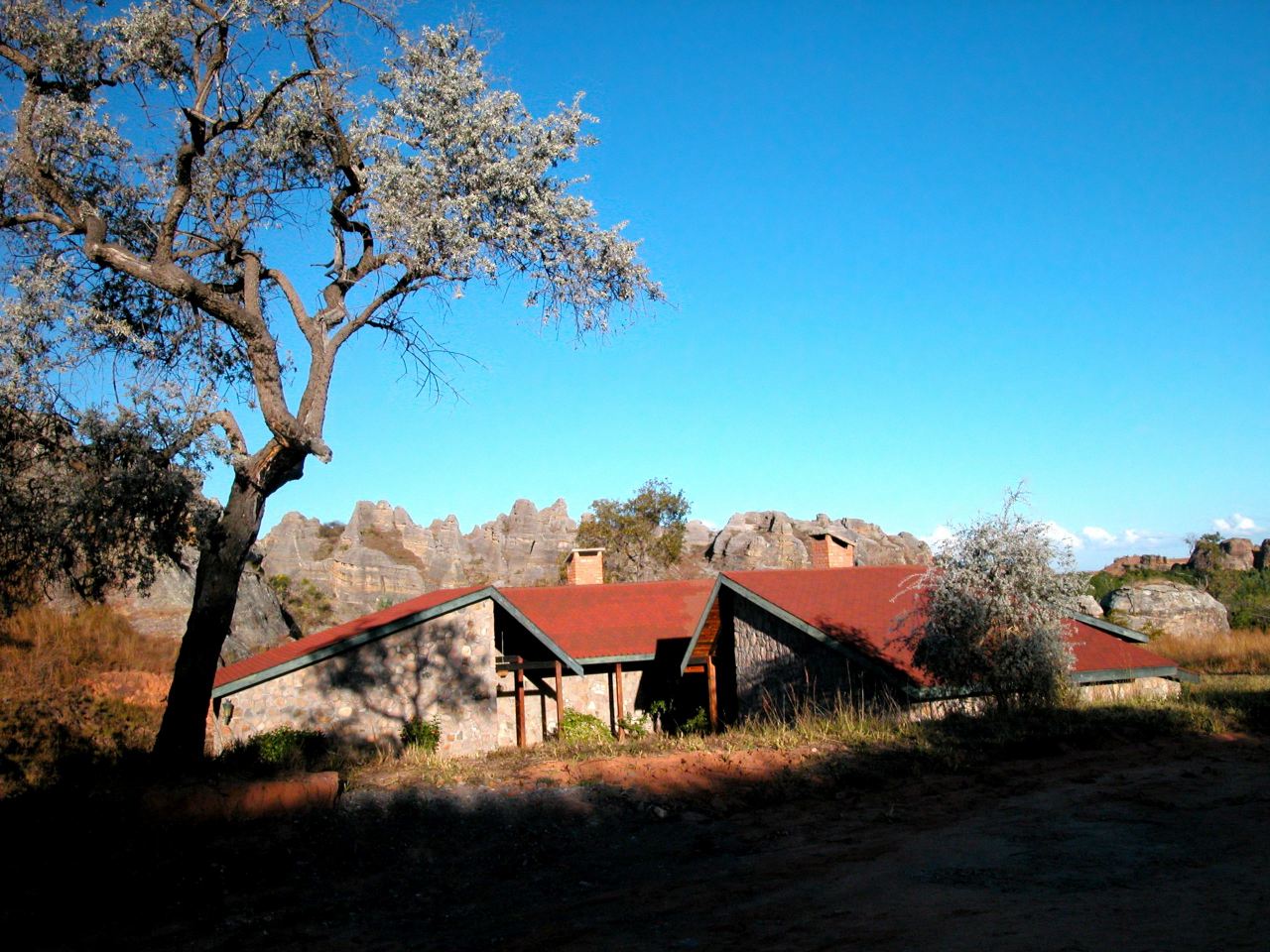
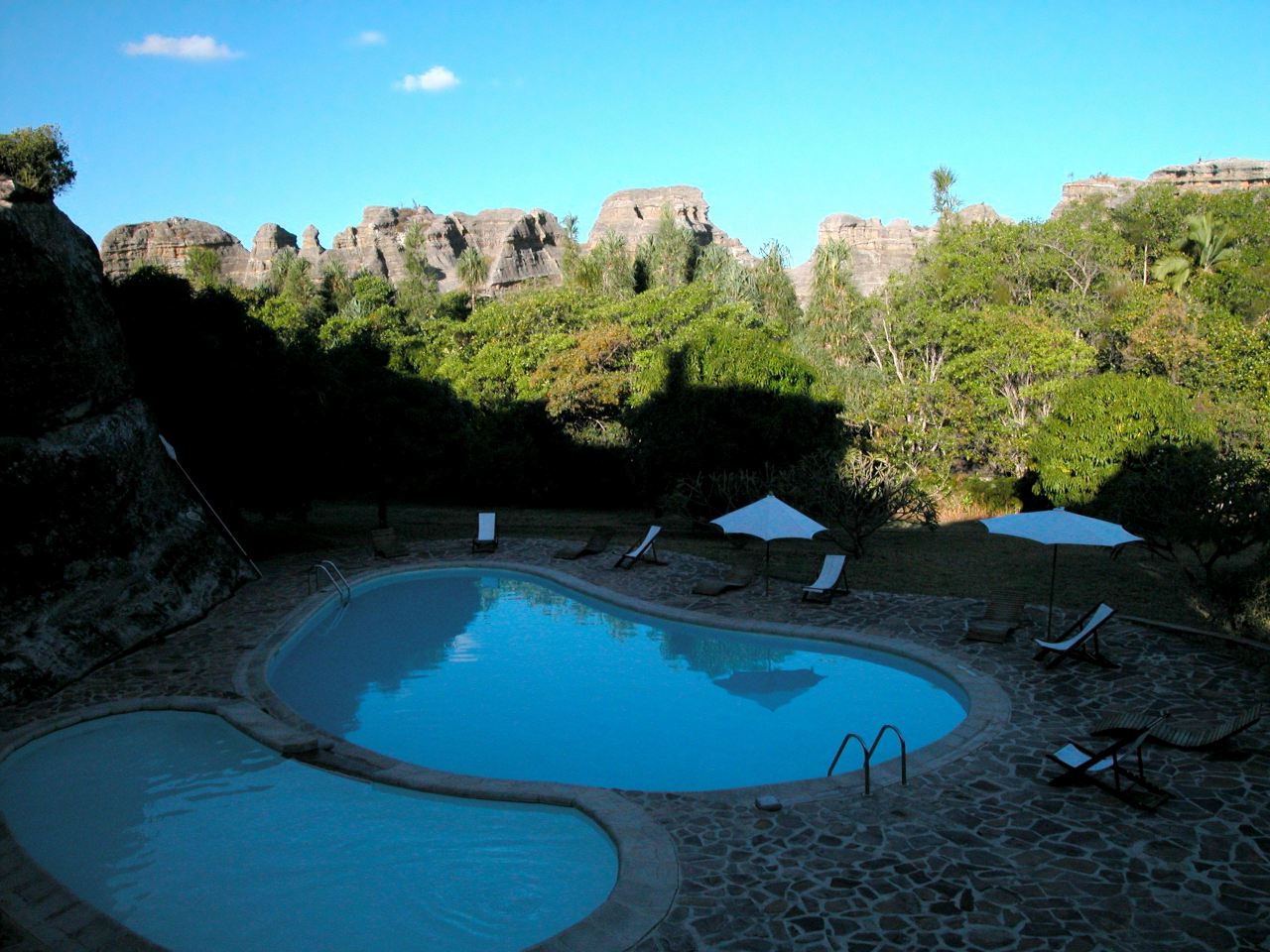
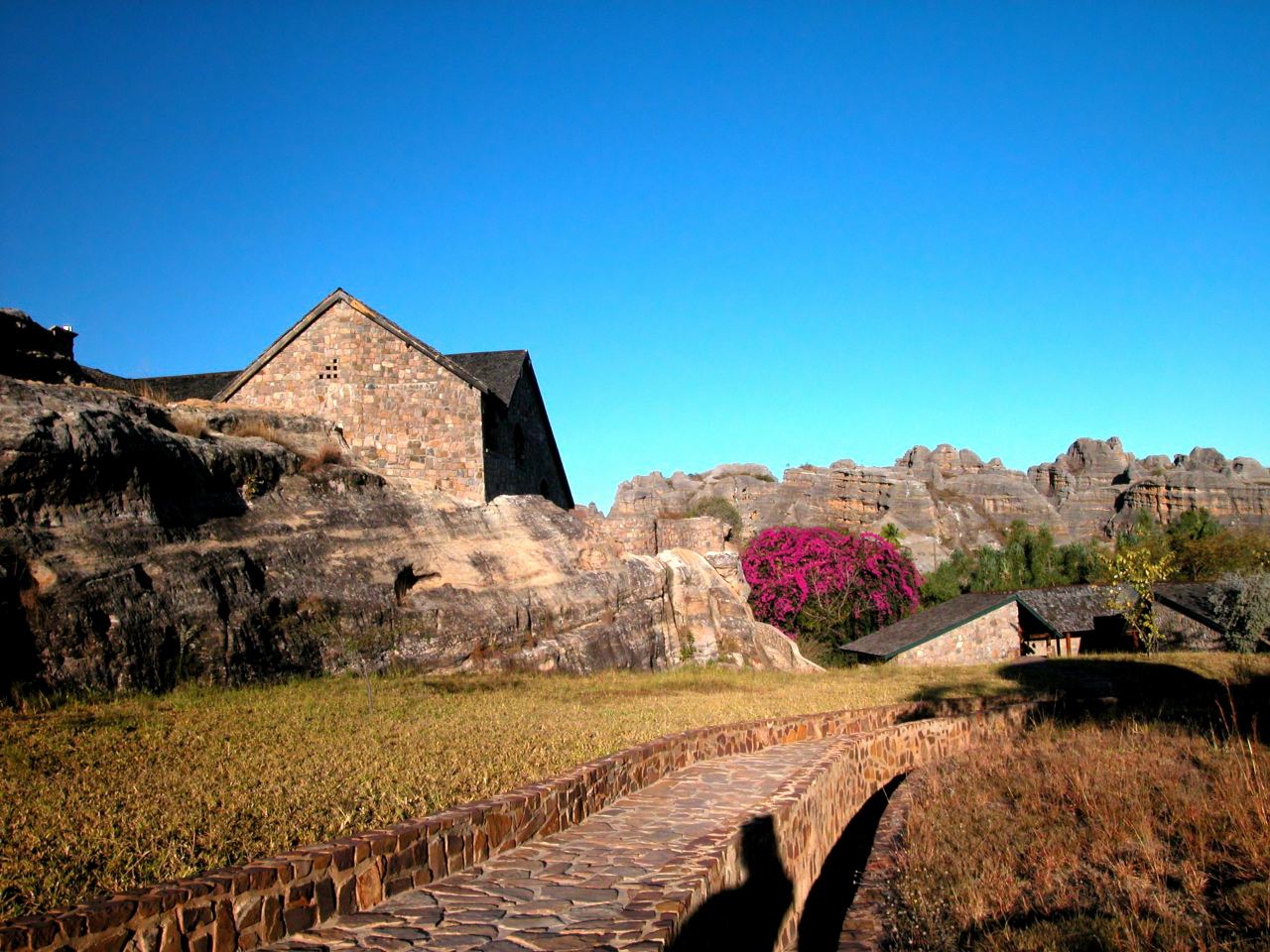
I ended up taking apart the wall light to get the electricity I needed.
A lot of Madagascar’s posters show a hole in a rock through which you’re meant to watch the sunset. It happens to be around here, twenty kilometres farther south, then right down a dirt road. Lonely palms, tall grass and weathered rock formations look much more like mainland Africa. You half expect the striped necks of giraffes to glide over the bushes, and something like a lion’s mane to stir under a bush. There were none here. Madagascar had no large predators and the idea of meeting a large mammal or a venomous snake was far from our minds. It felt safe to walk anywhere. The famous hole in the rock wasn’t especially unique. There are thousands of them in the world, if not millions. But it was a pleasant place, especially away from the road and out of sight of the buses full of people waiting for the promised sunset from the appointed spot.
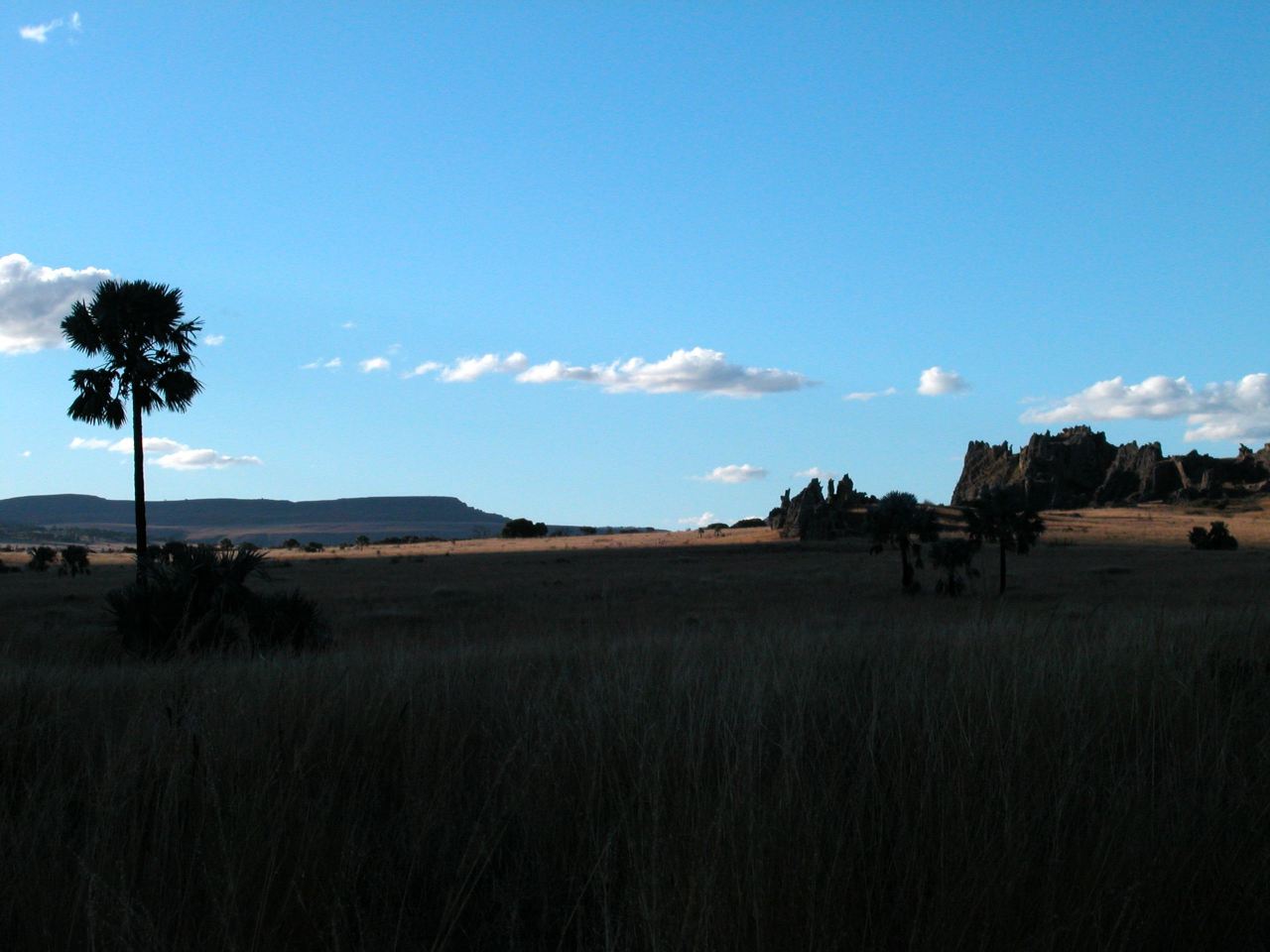
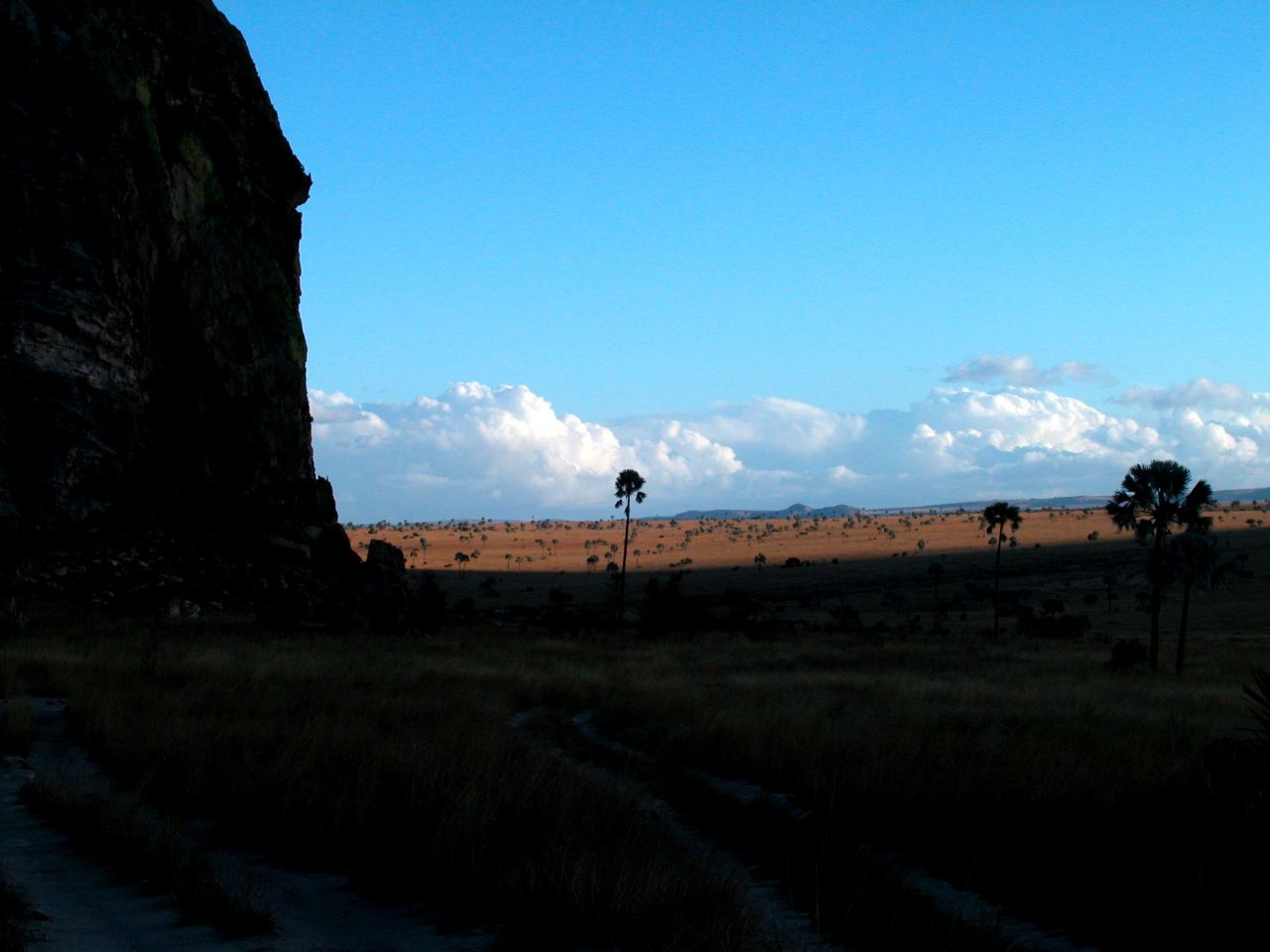
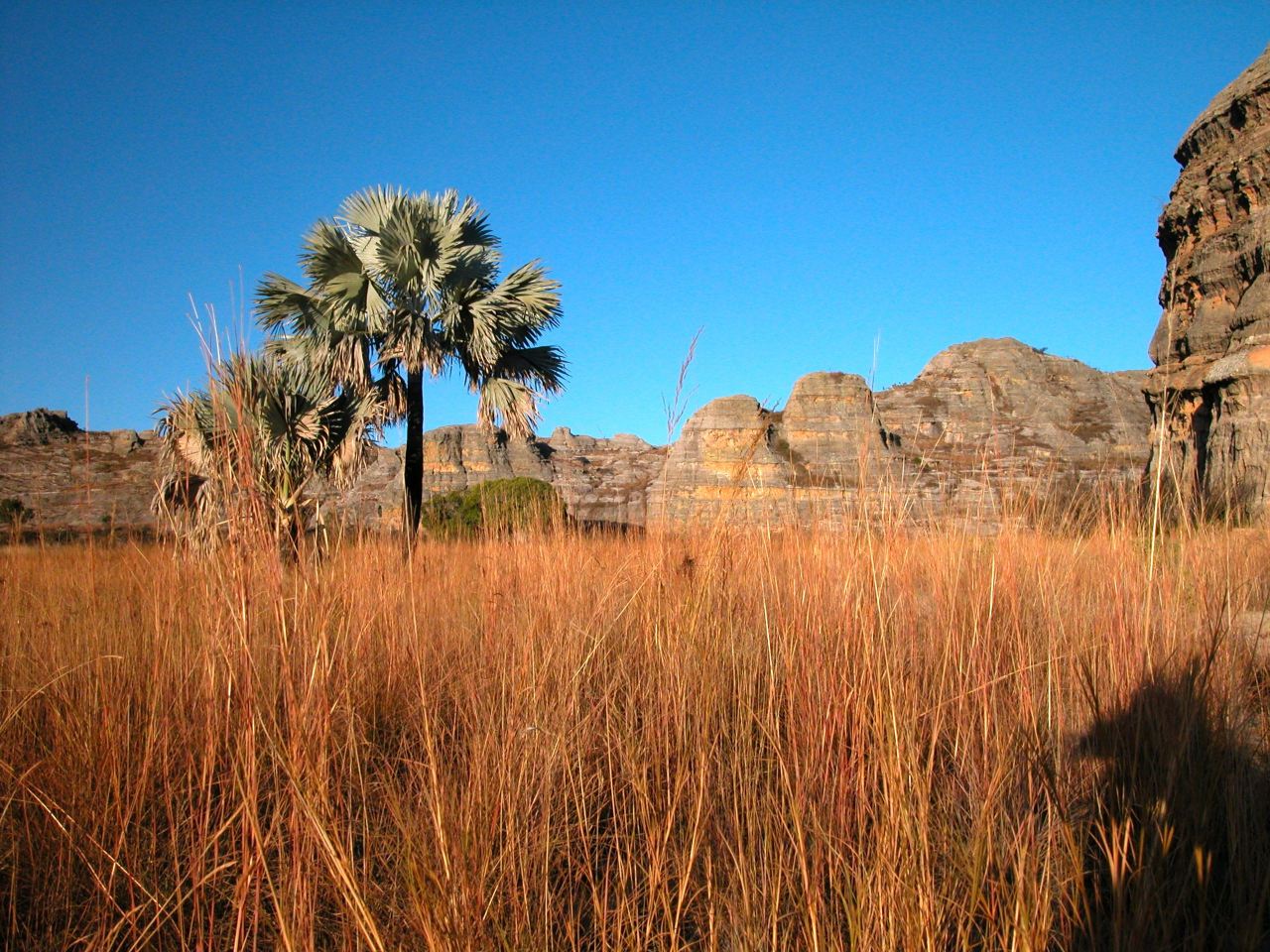
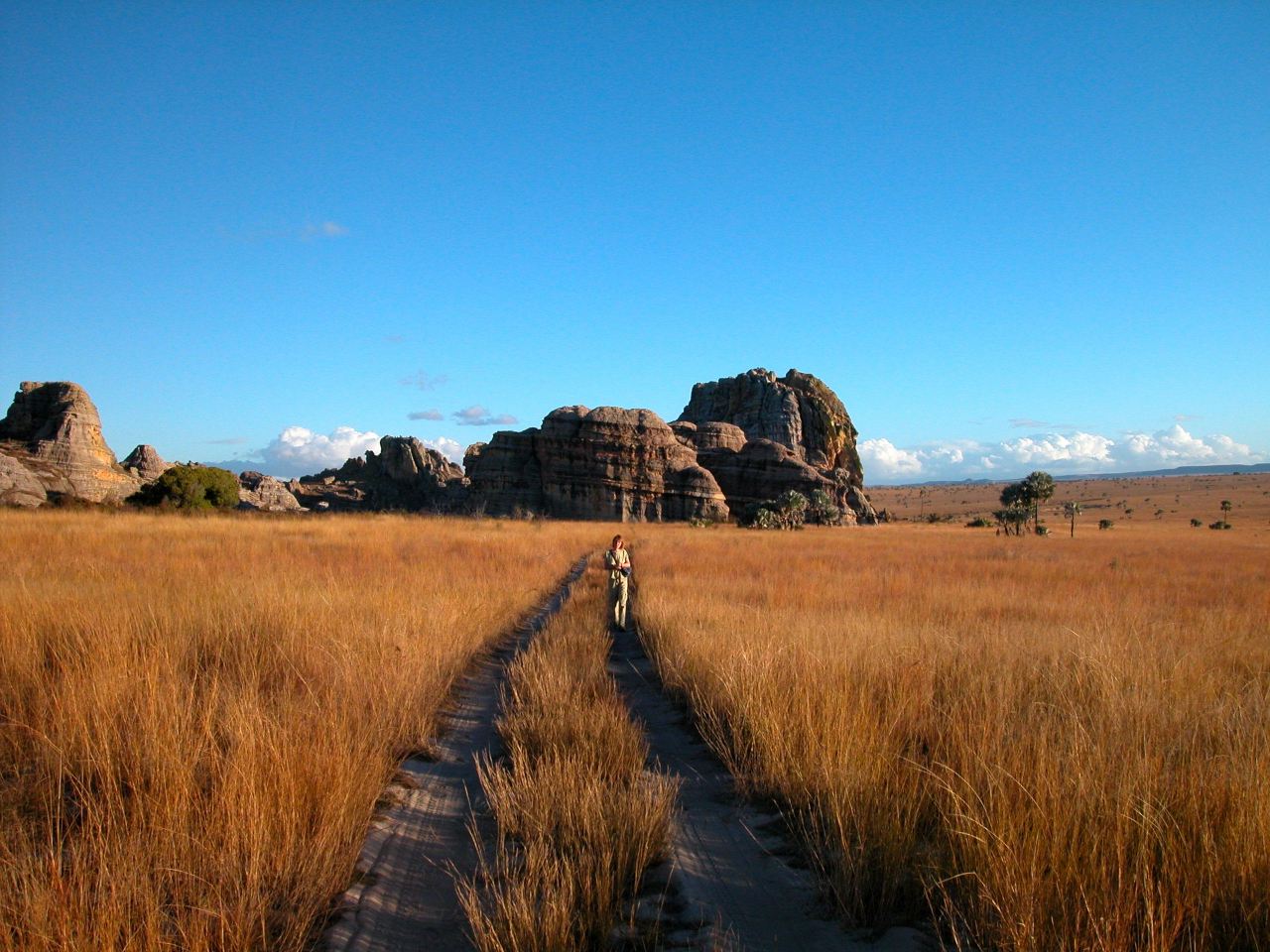
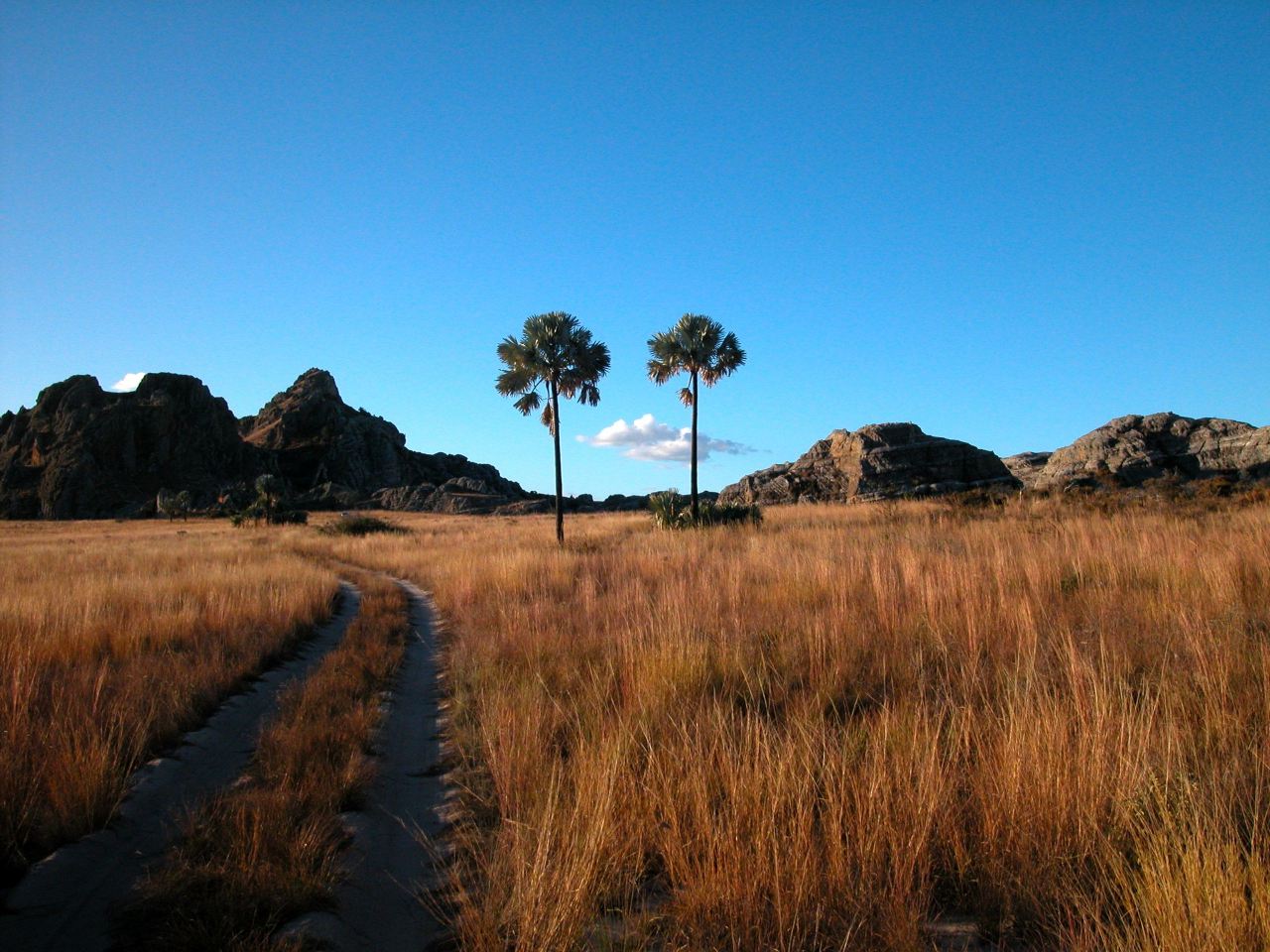
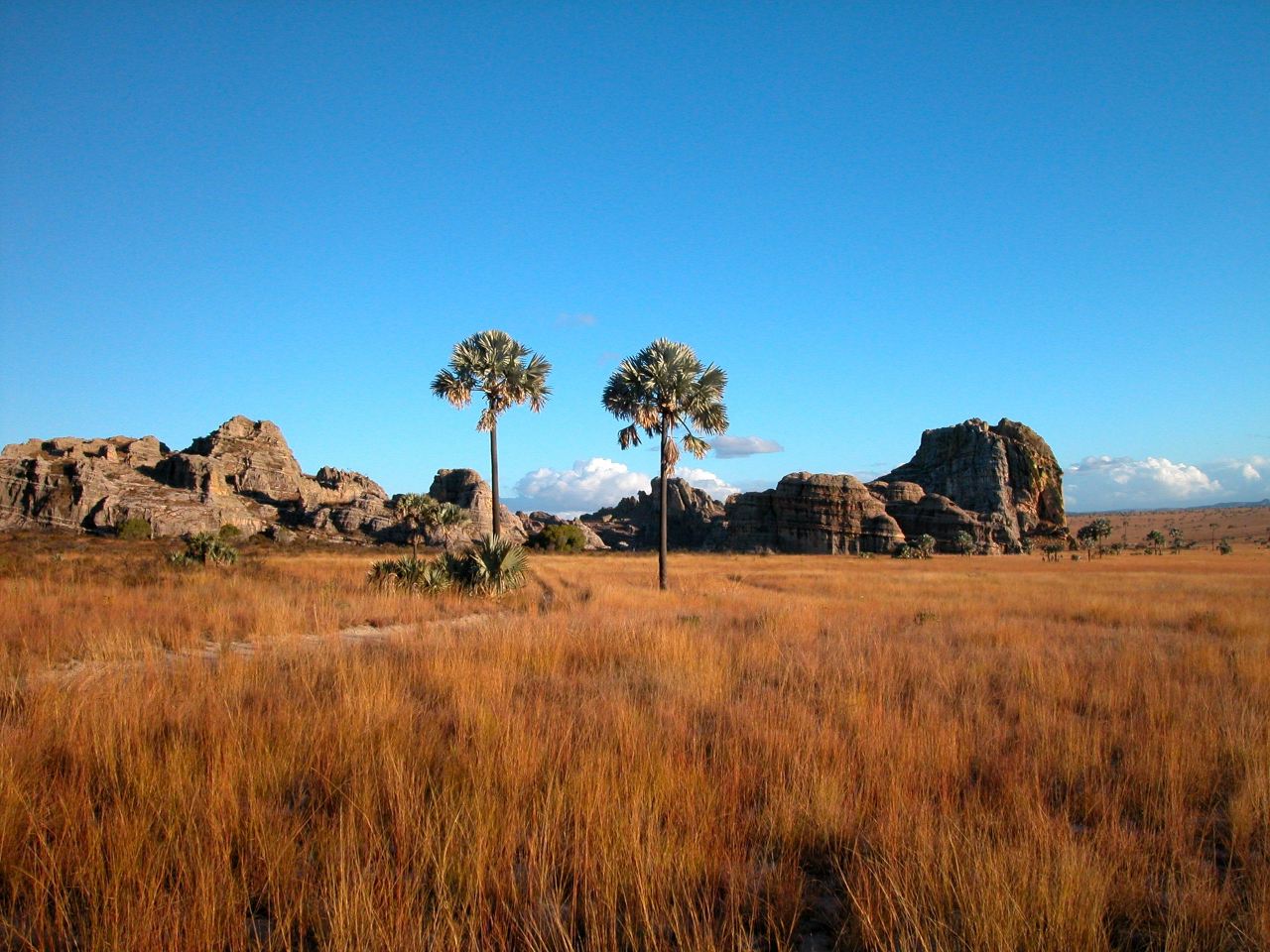
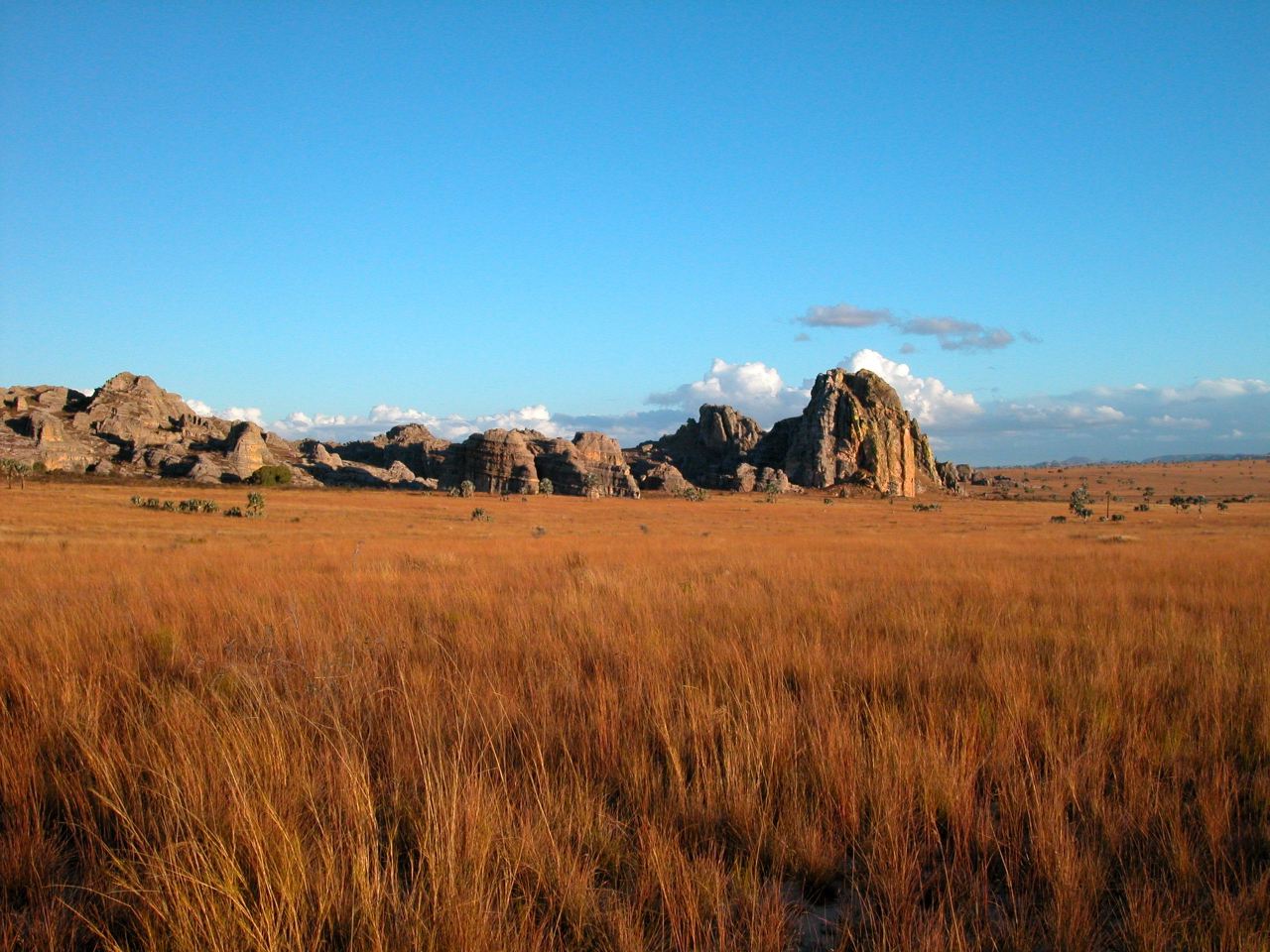
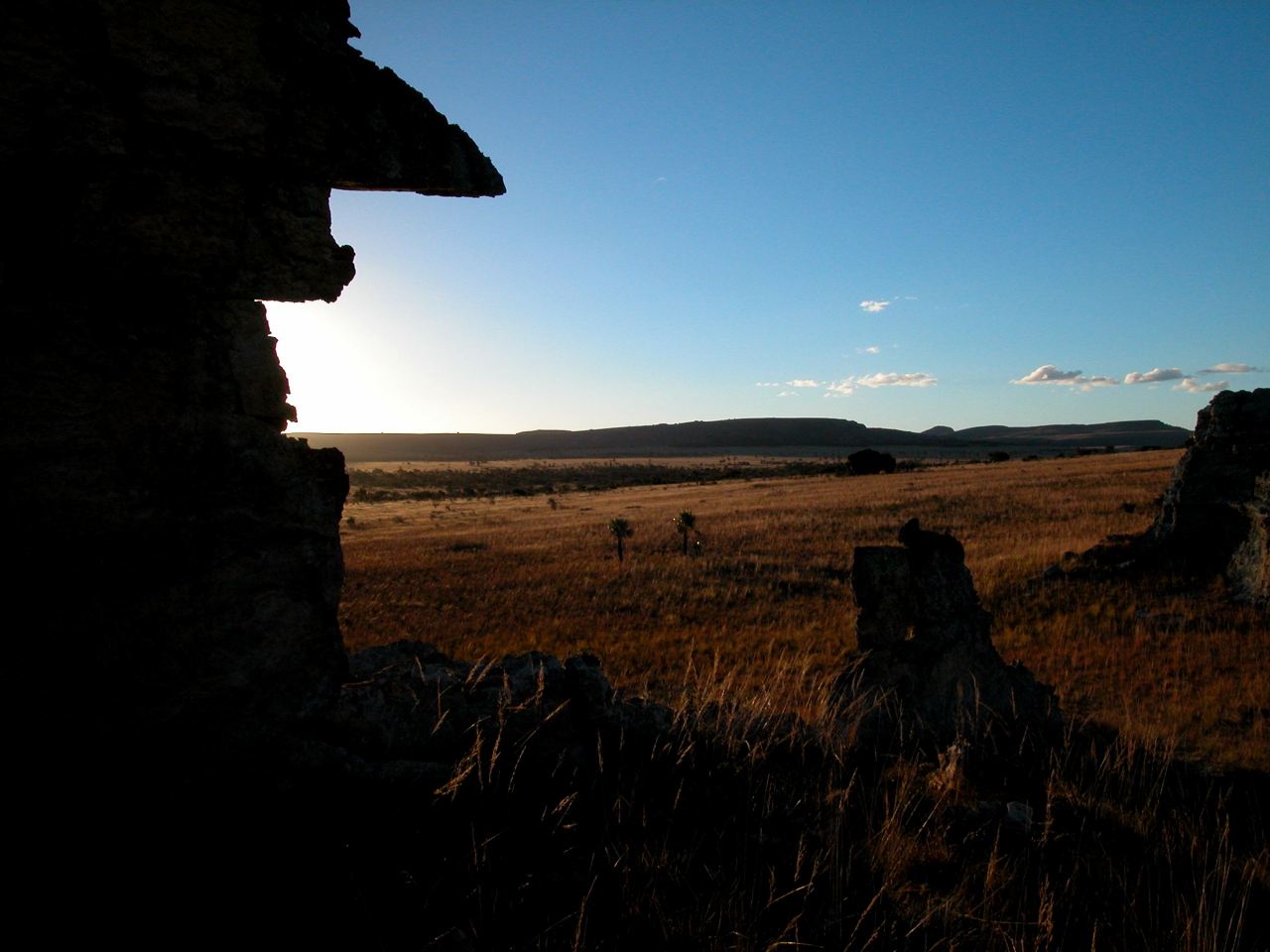
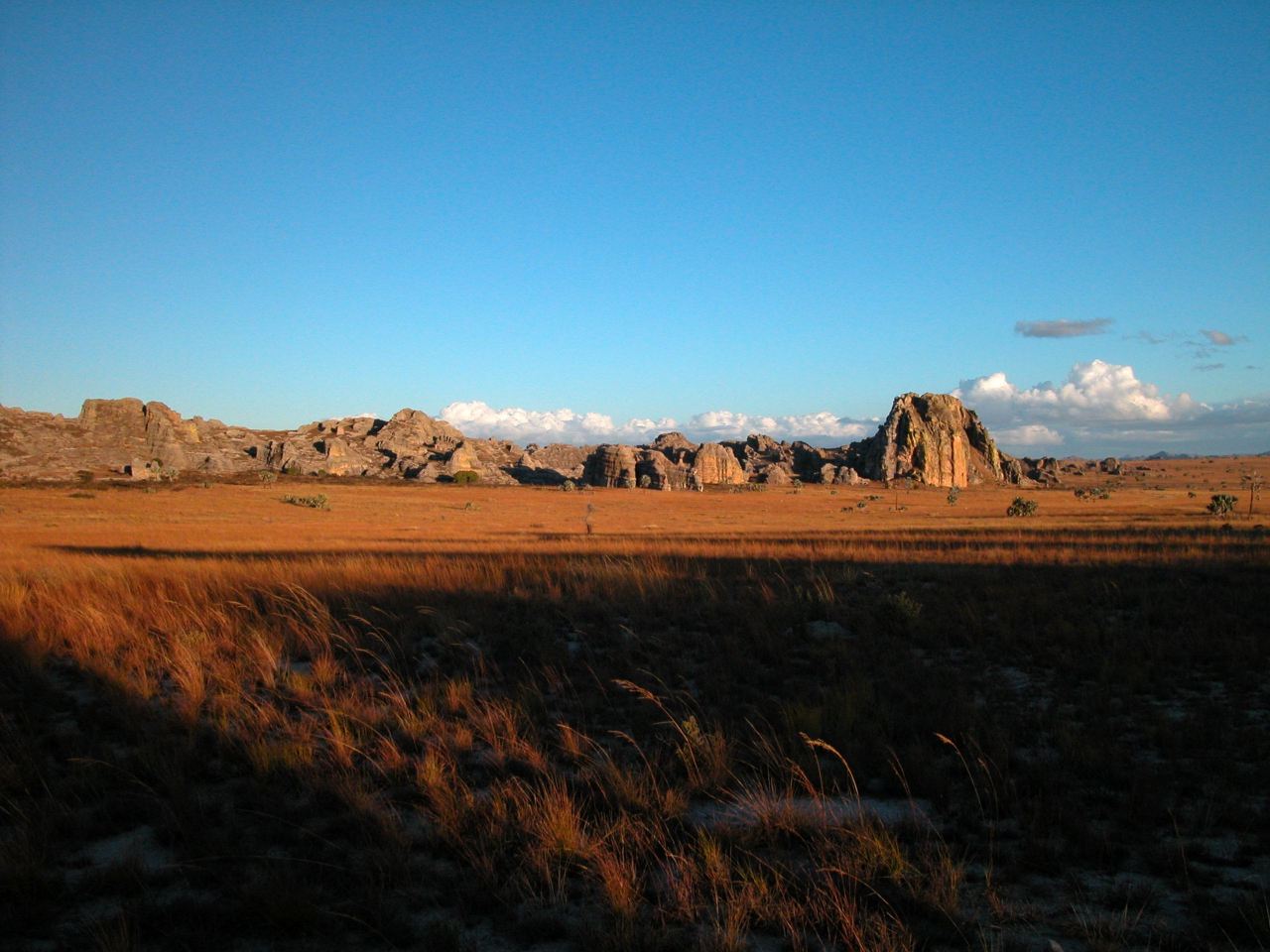
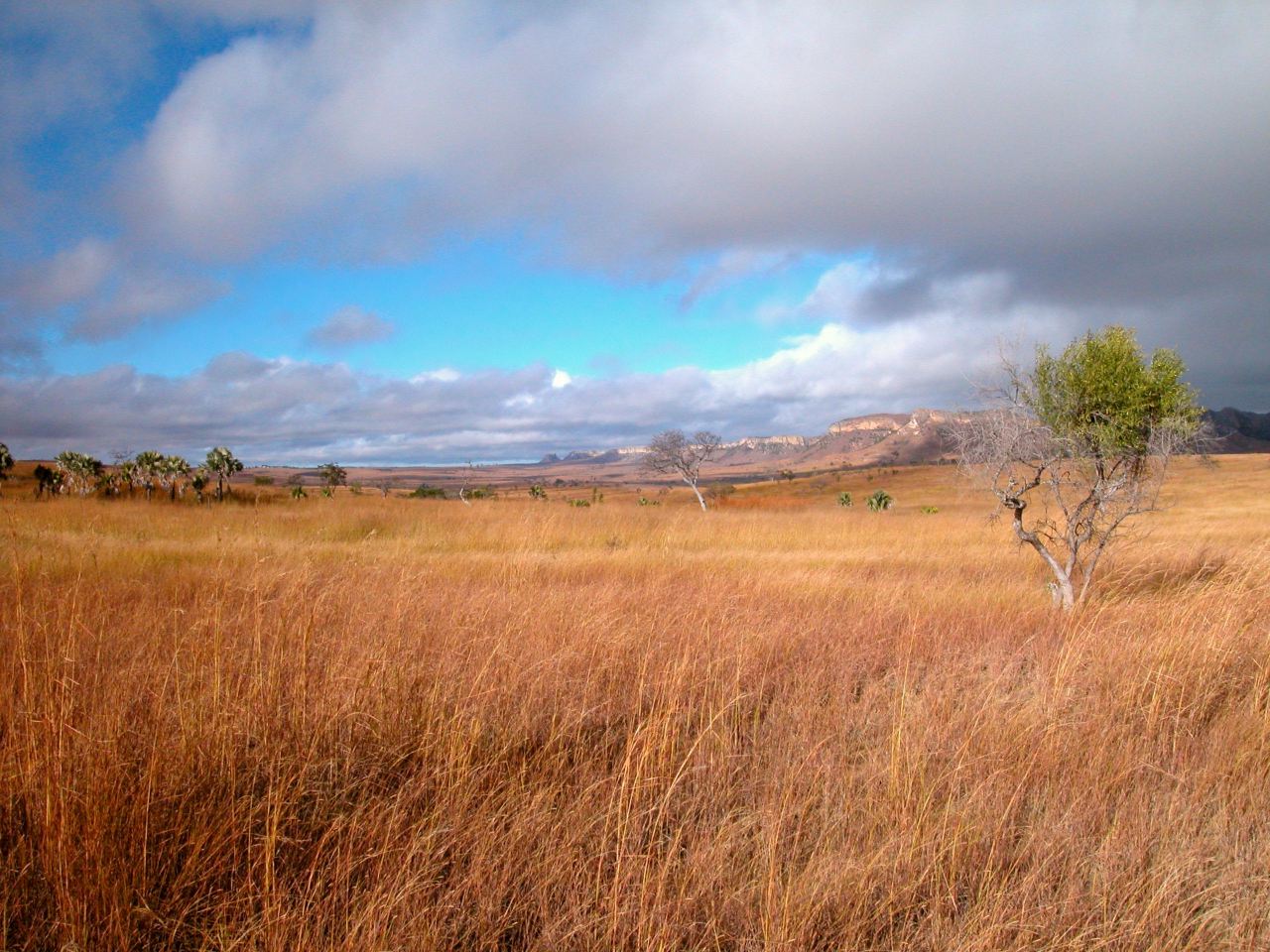
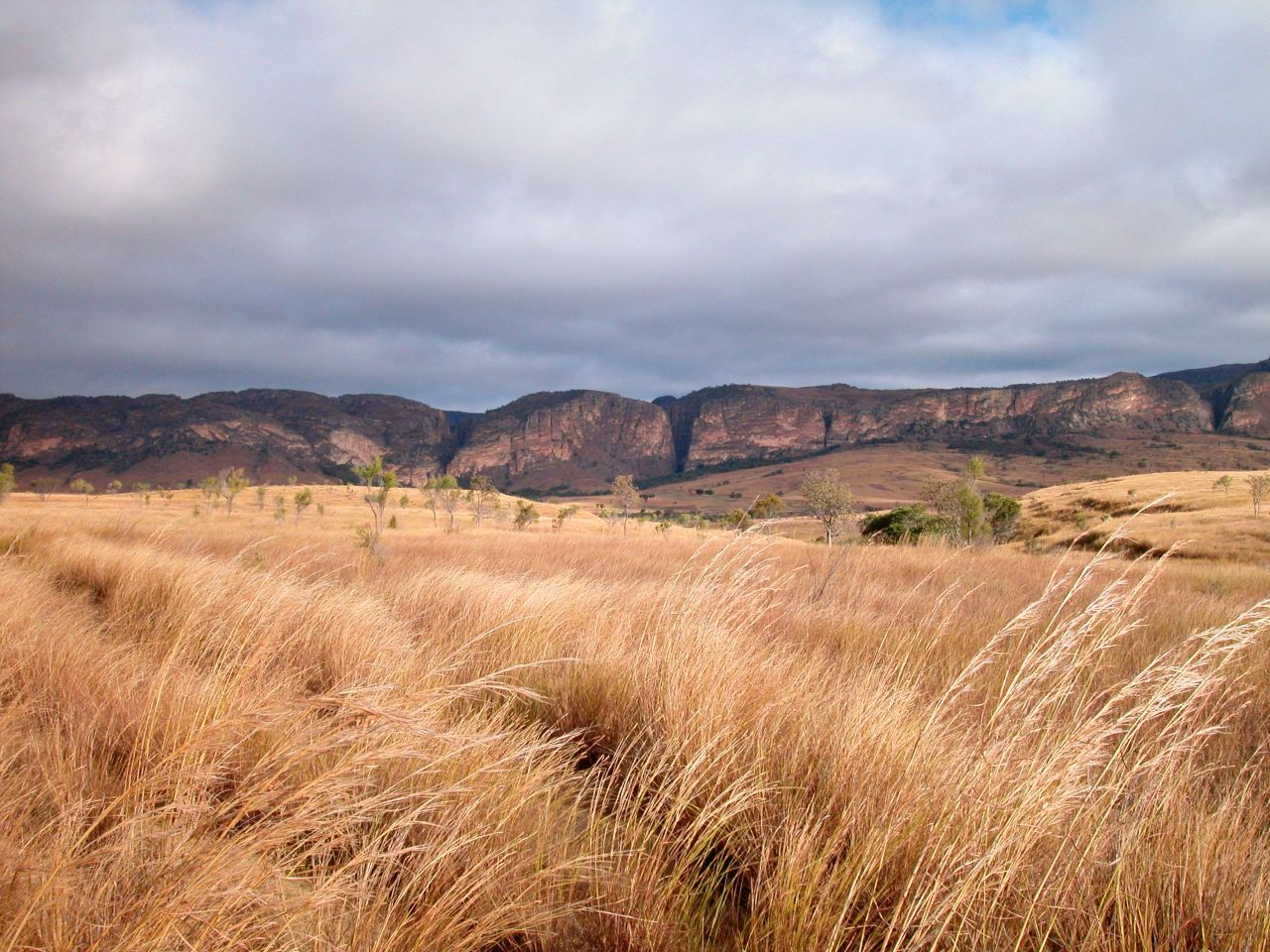
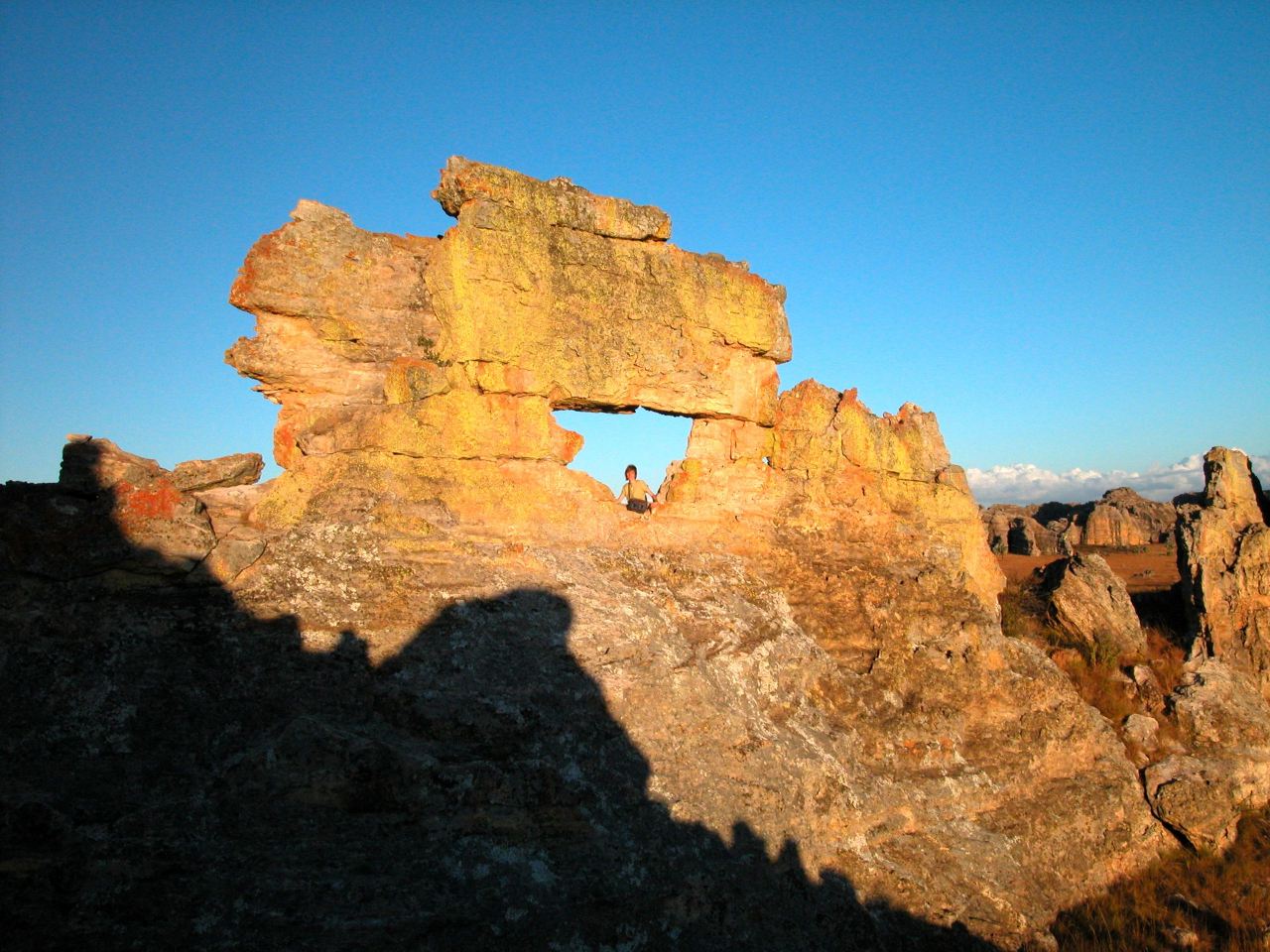
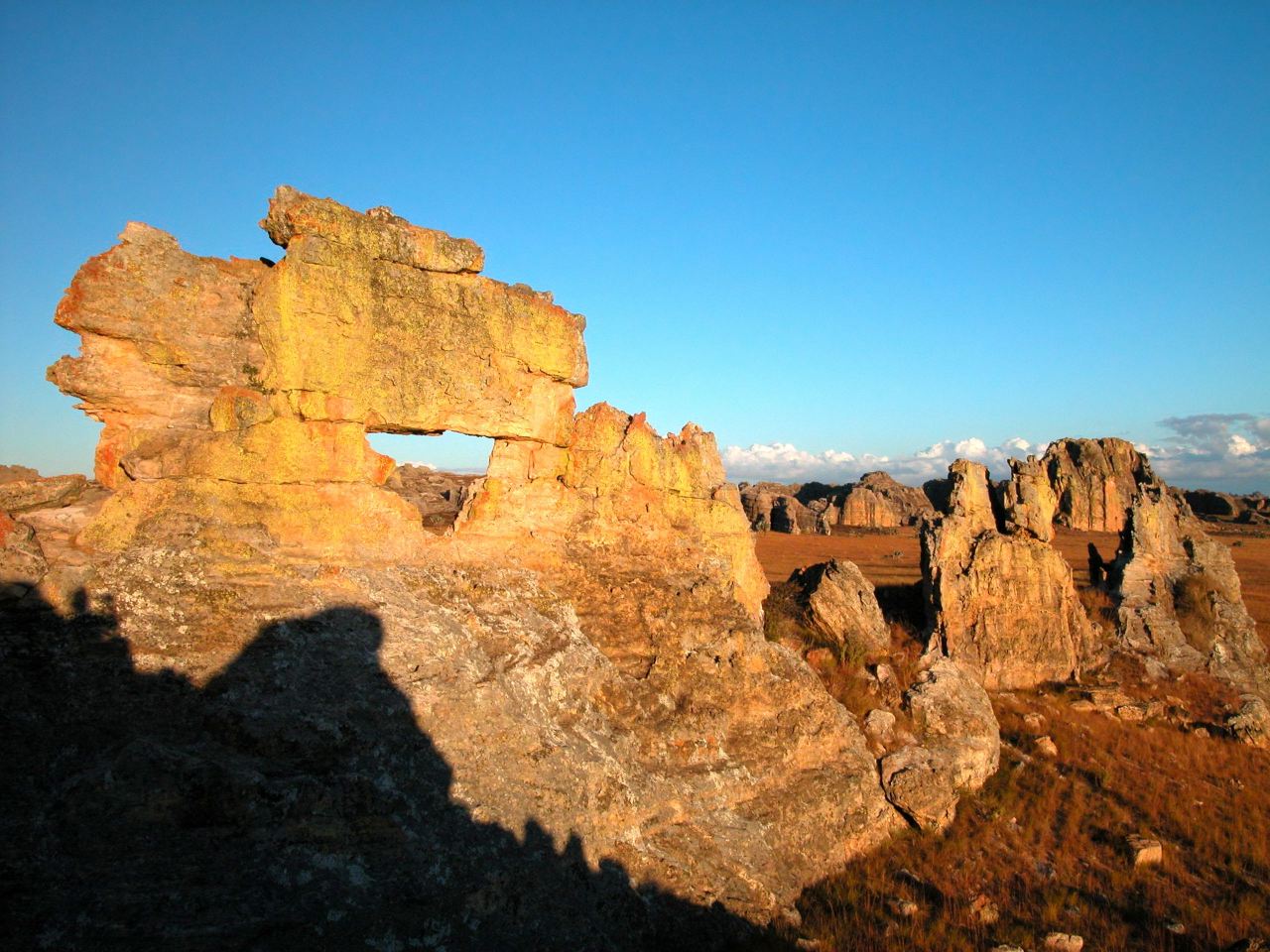
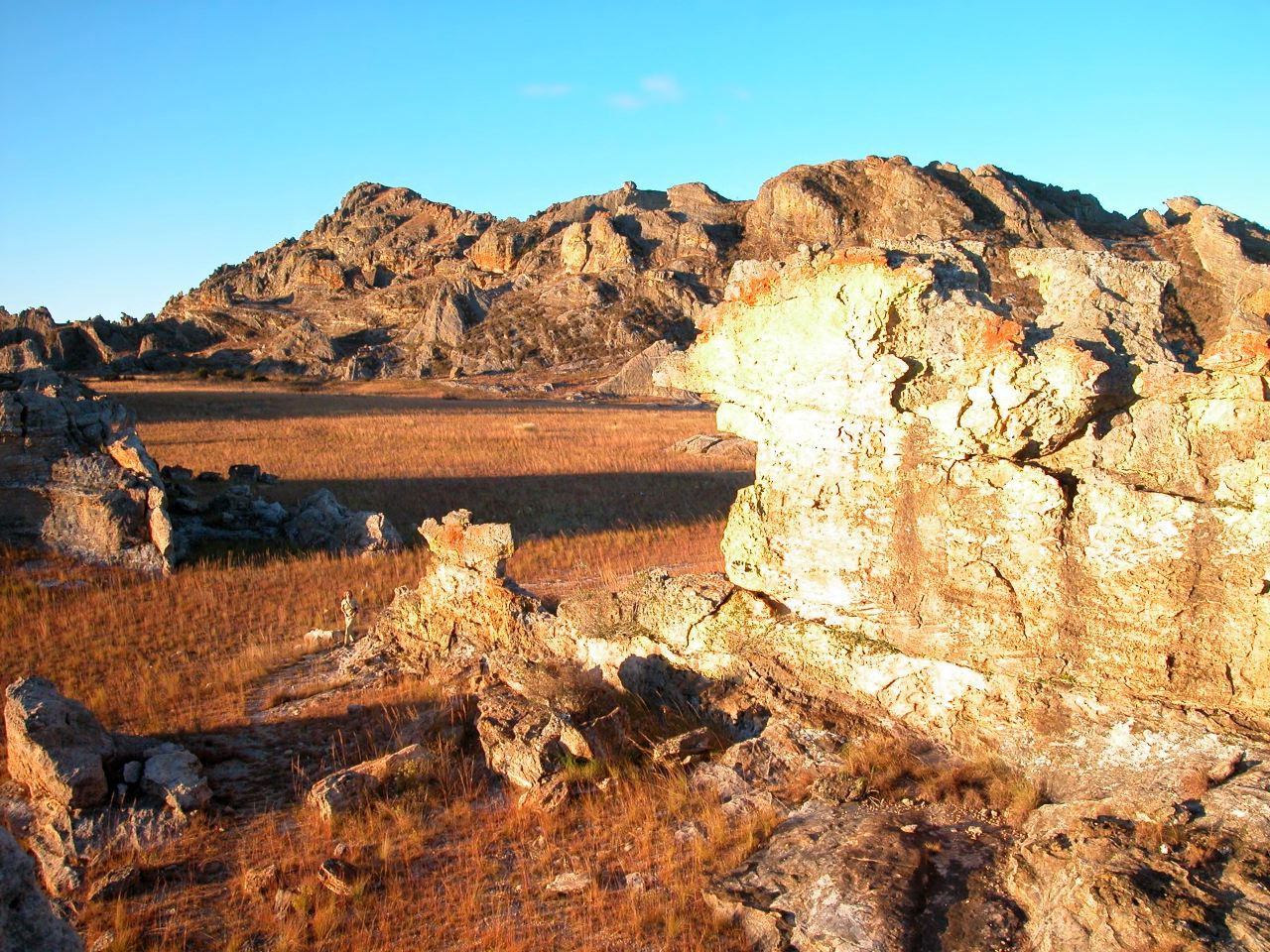
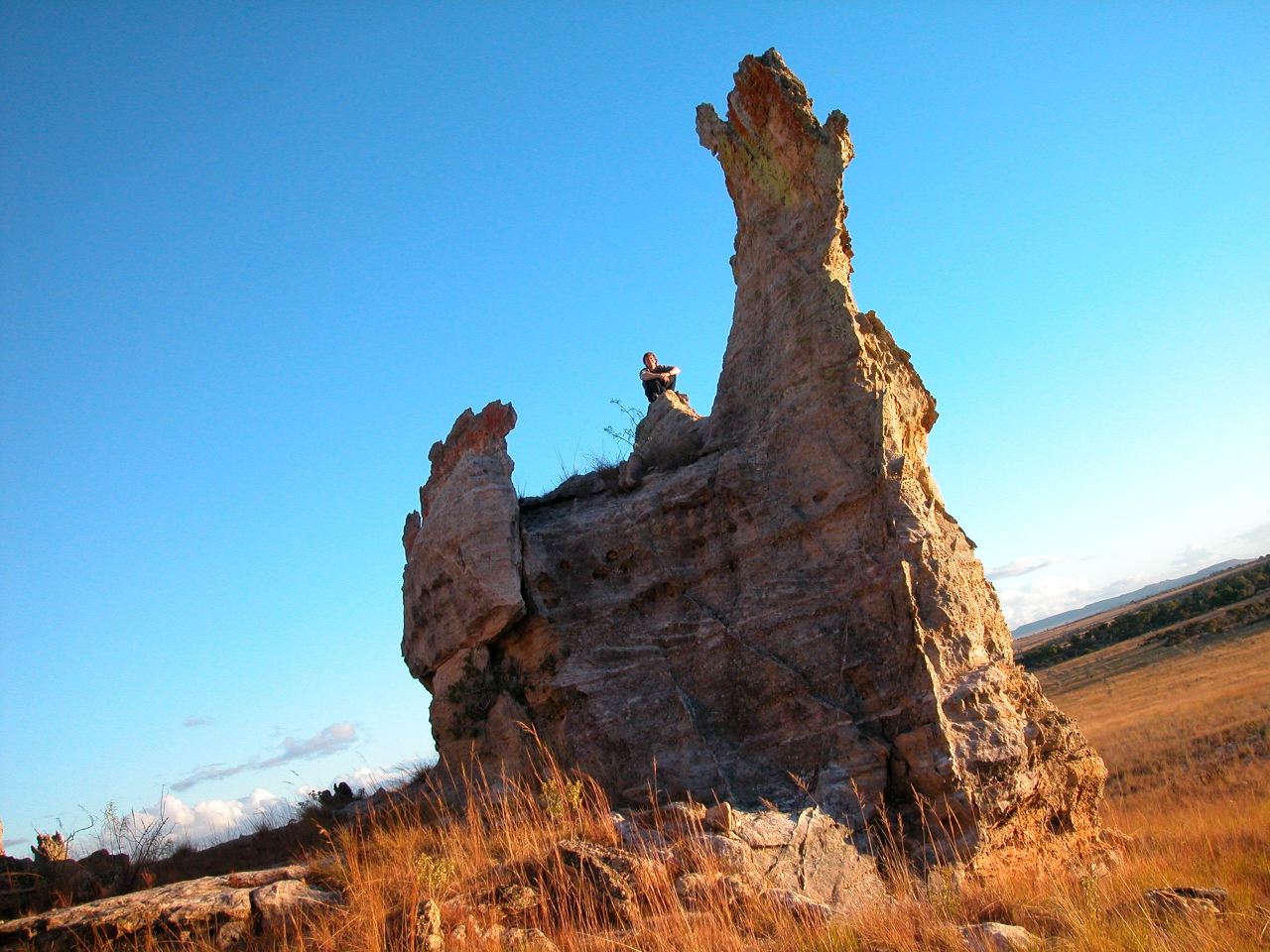
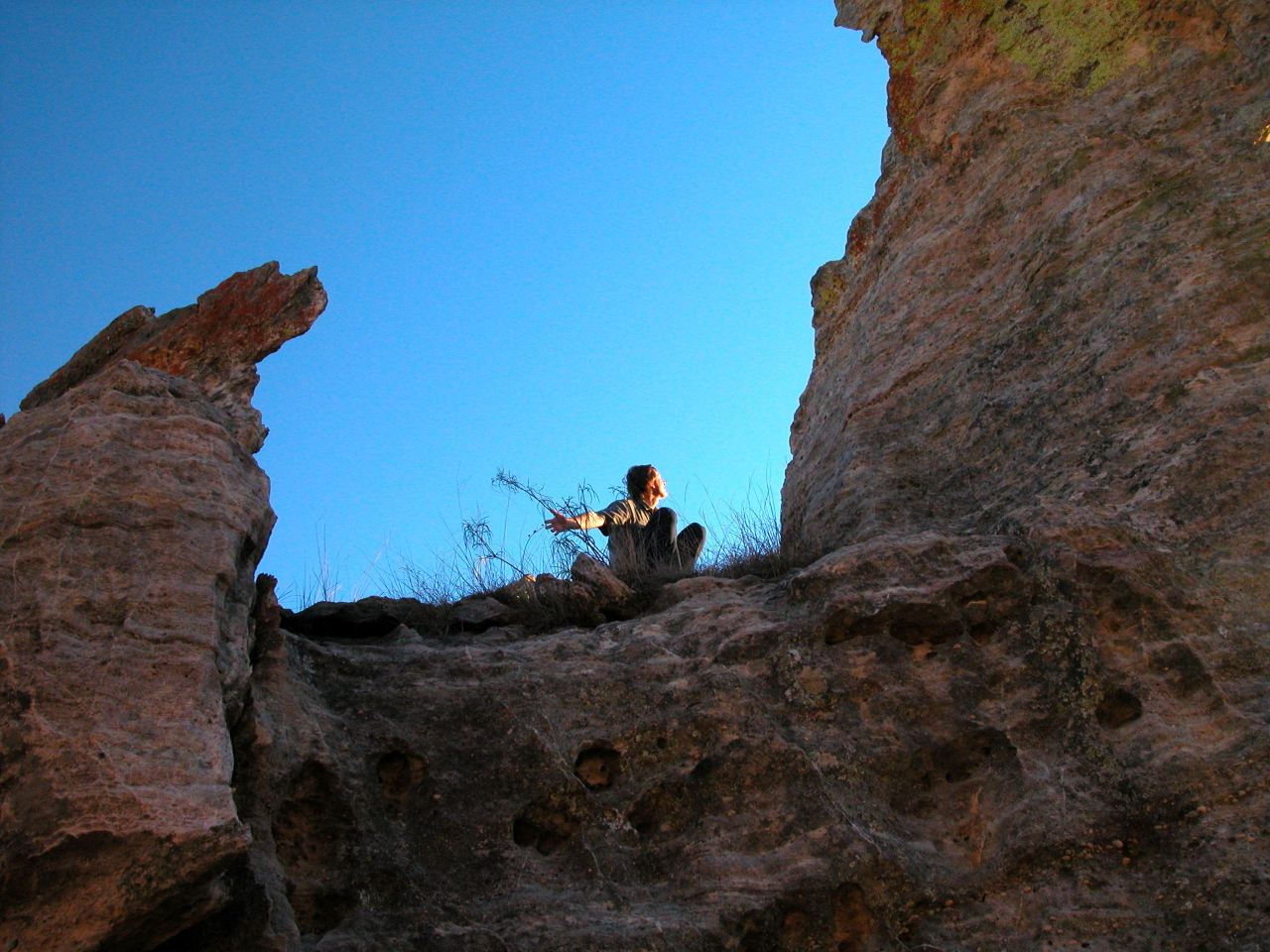
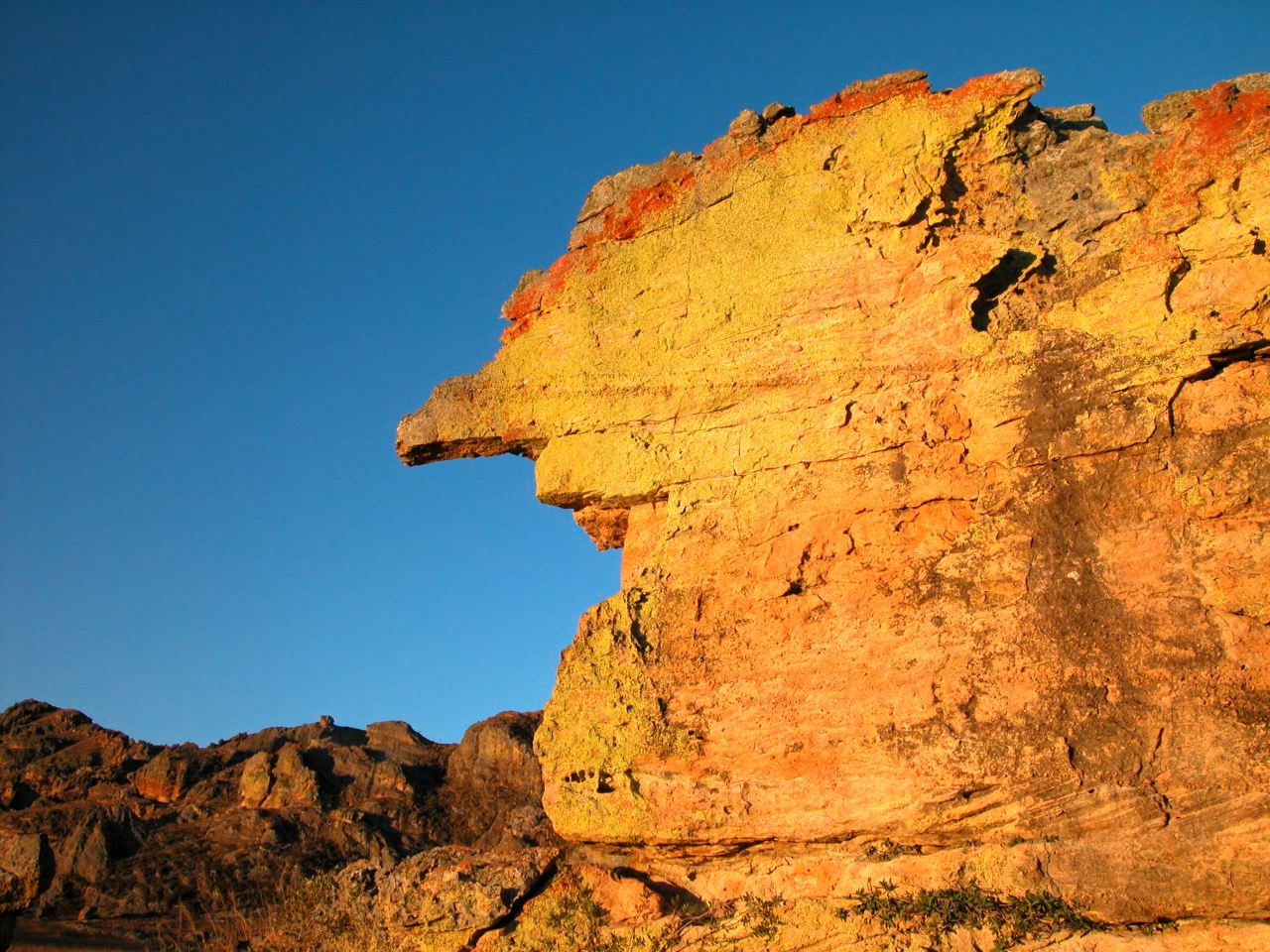
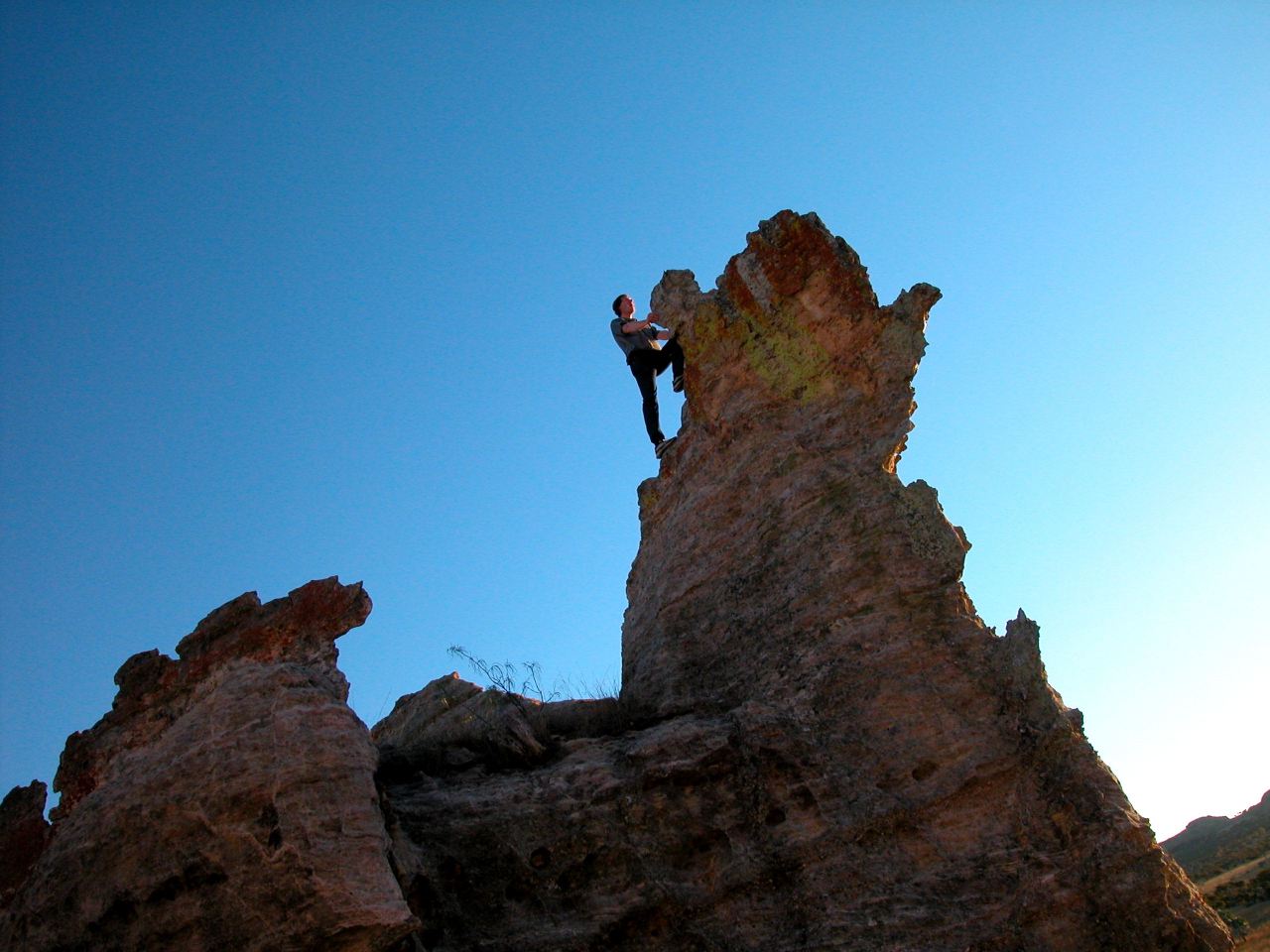
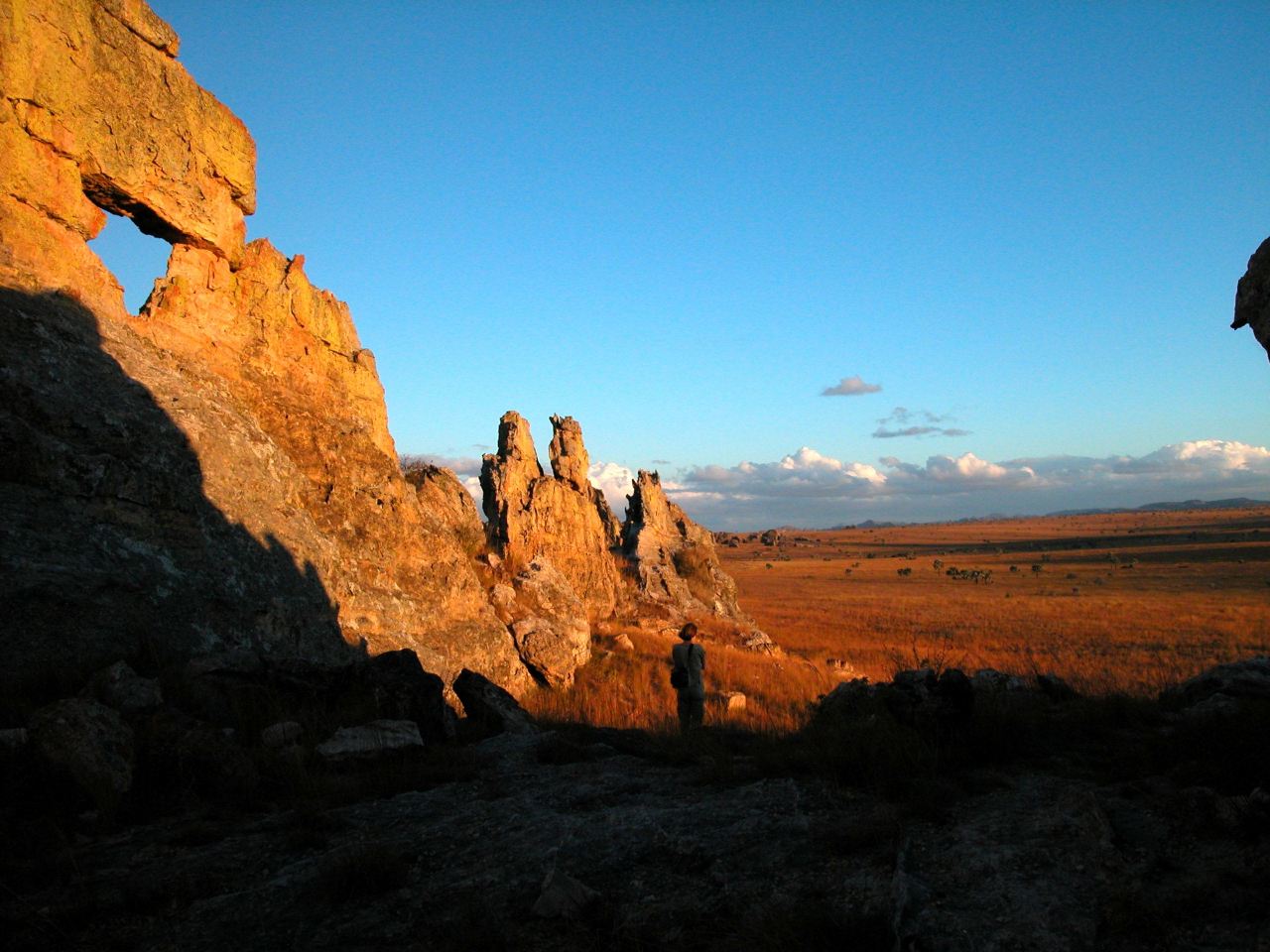
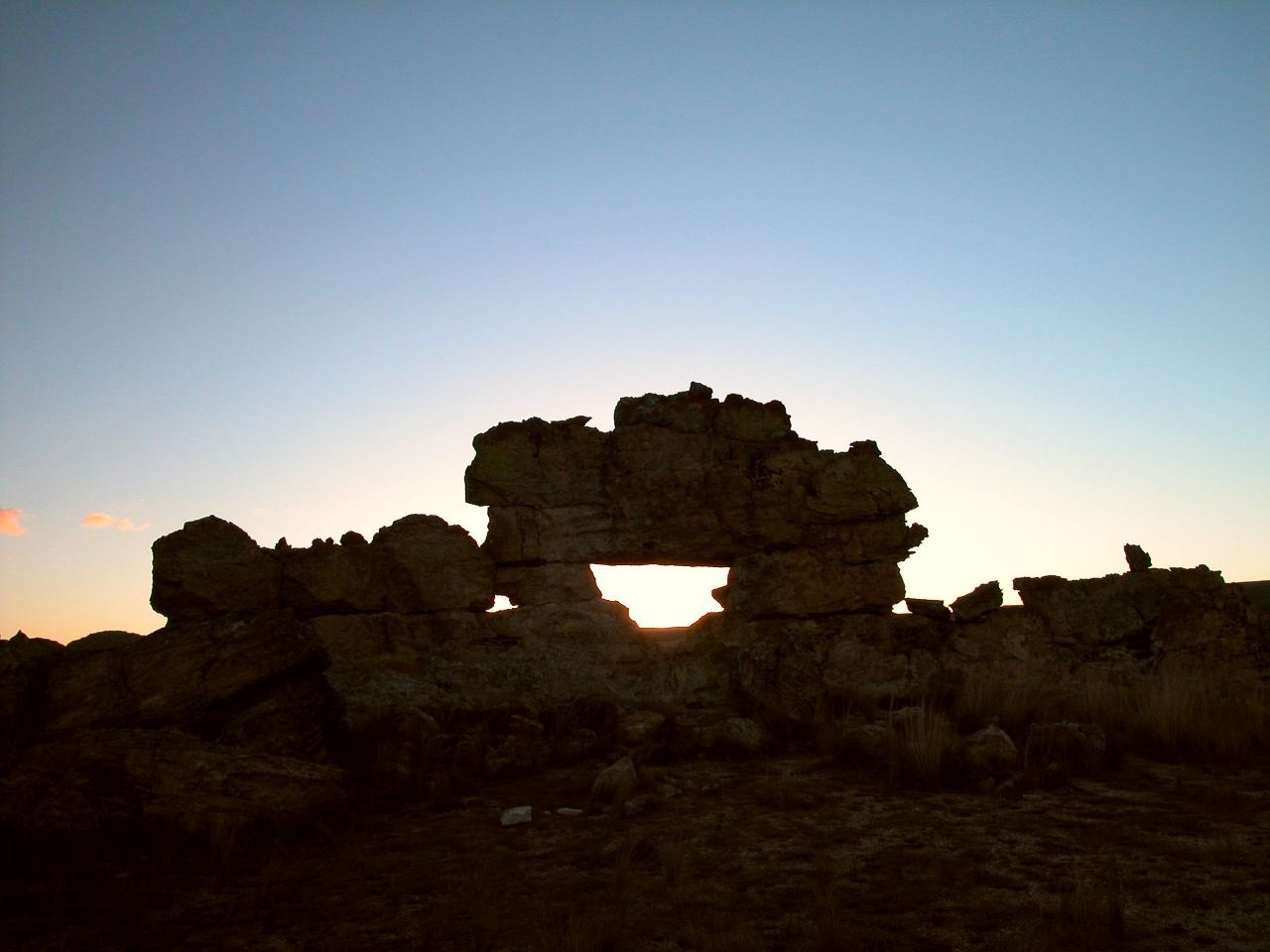
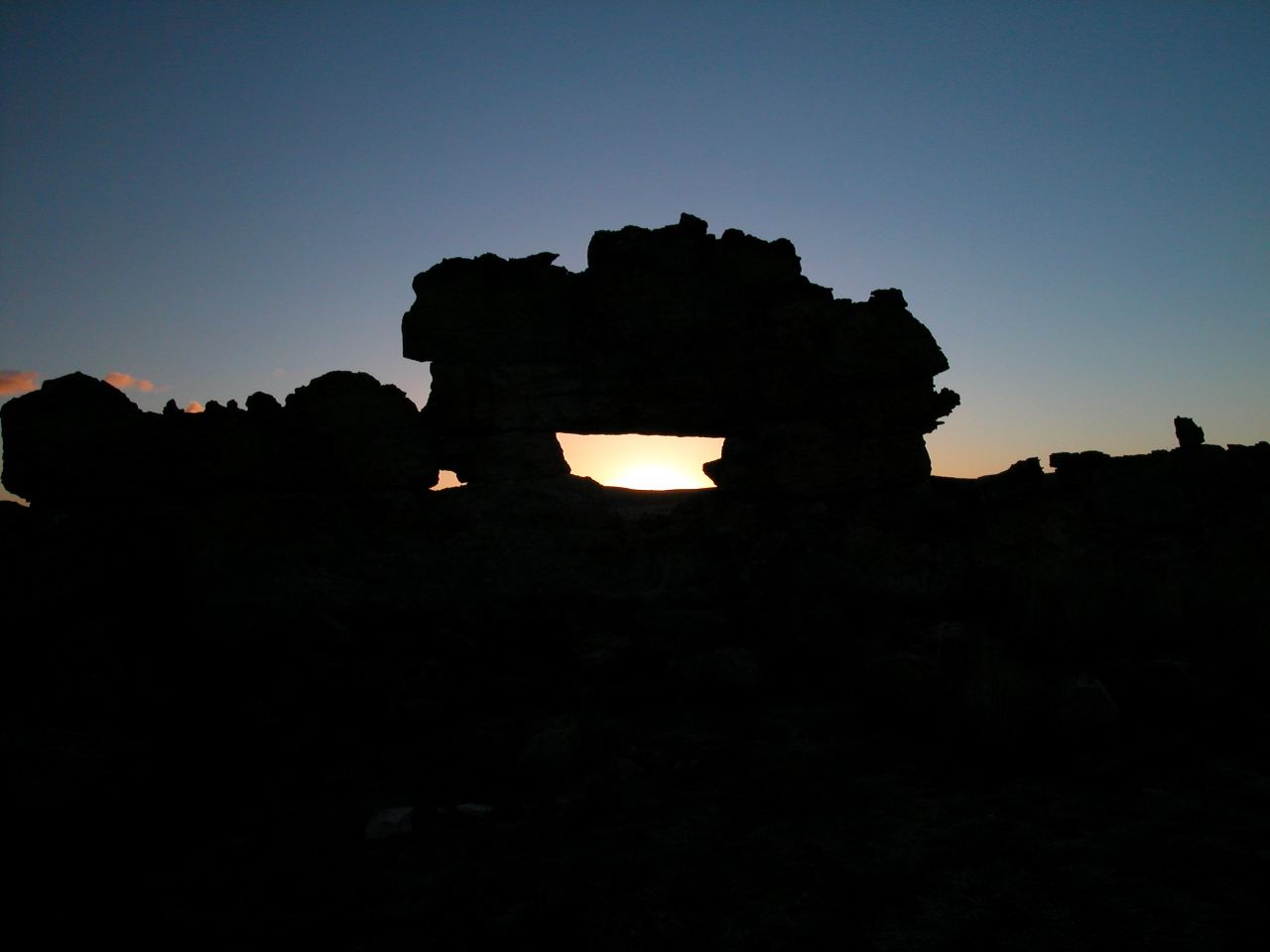
Isalo National Park is large and has no roads in it. Visitors follow footpaths. As it seemed to us, the place was run by members of a French family and felt part nature reserve, part feudal estate and part territory held by a militia. You had to pay to go through and abide by the local rules.
You were meant to have a guide, a porter and a cook. You could turn down the cook. The first two were compulsory. Most visitors went out for two days with one night in camp. Each guide had a porter. Every day the porters carried quilts for themselves and their guides, pots and provisions to the appointed site, and the following day it all went back again. Every day dozens of porters carried the same loads to and fro. I couldn’t understand why they didn’t keep the kit at the campsite. Maybe it was an organisational problem, or nobody trusted the others enough to leave it there.
There was no way of paying the guide and then going without him. Why? In my imagined scenario, all the money would stay with the person selling tickets, everybody else would be left without work and go hungry after robbing the man at the till, the village would die out and there would be nobody to guard the entrance, so in the end nobody would buy a ticket either. This way everyone had something to do and a group brought in at least half a million francs. Two people for two days came to 50,000 a day at the gate, the guide for two days at 60,000 a day, the porter for two at 30,000, a 25,000 campsite fee, food at 25,000 per person per day, including the guide and porter, making 200,000, and a 25,000 tip. Altogether our little walk for two came to 530,000 francs.
We really dislike guides, but we had to agree. Ours even knew English and was one of the best on Parany’s books. Parany was trying to find us the best people so we would speak well of Madagascar and encourage visitors from Russia. It was a pity that all we wanted was to be free to go for a walk.
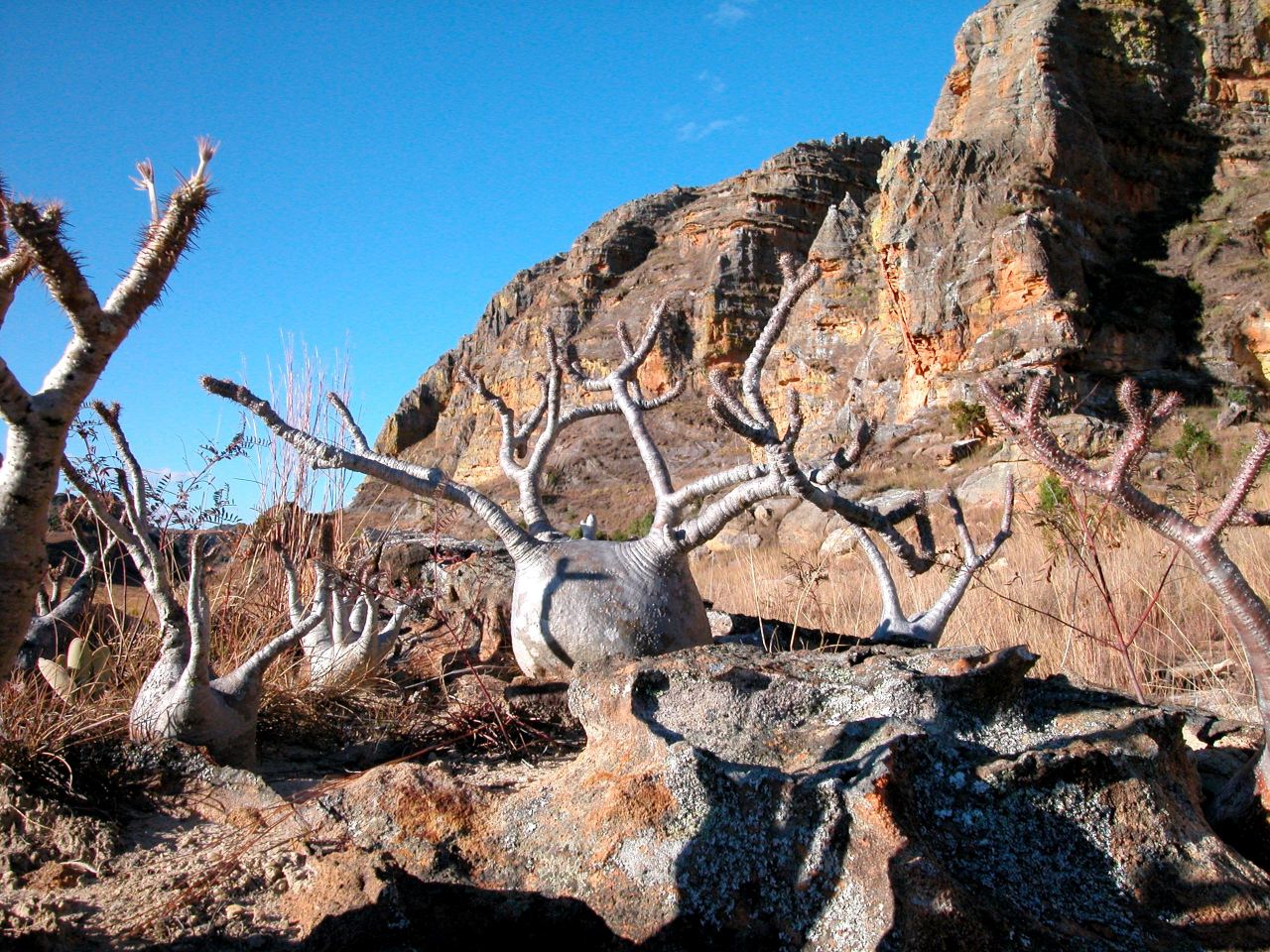
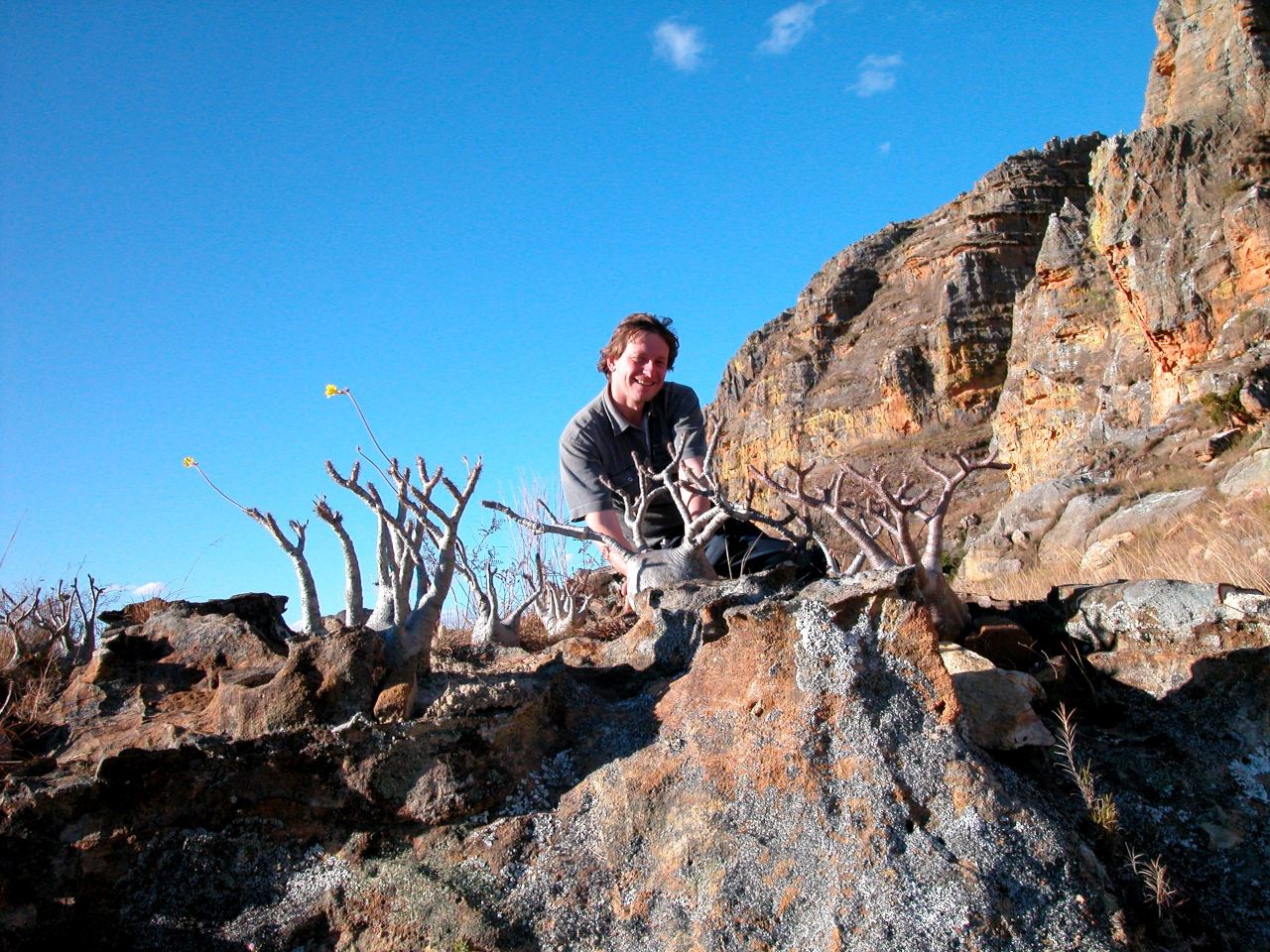
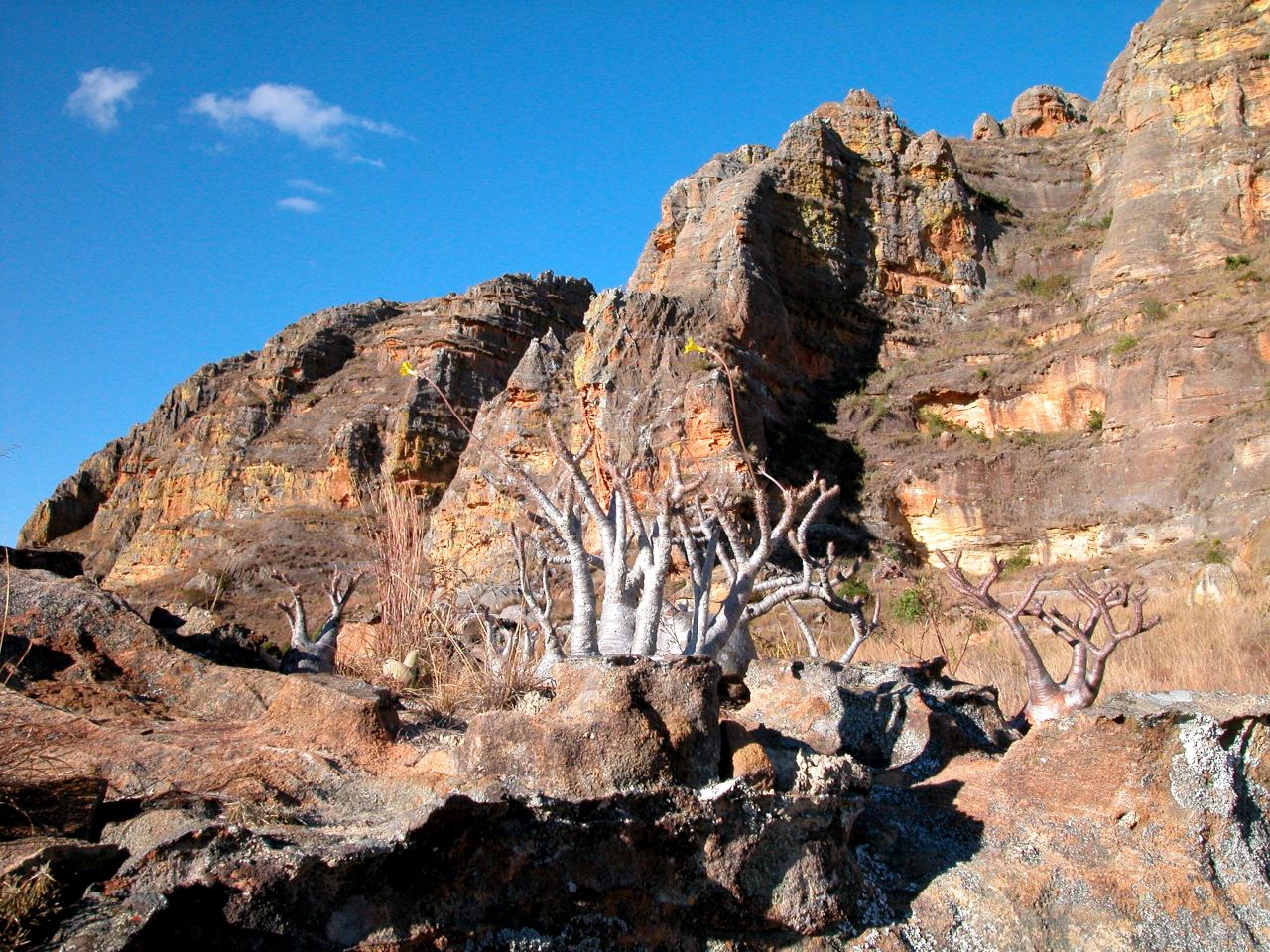
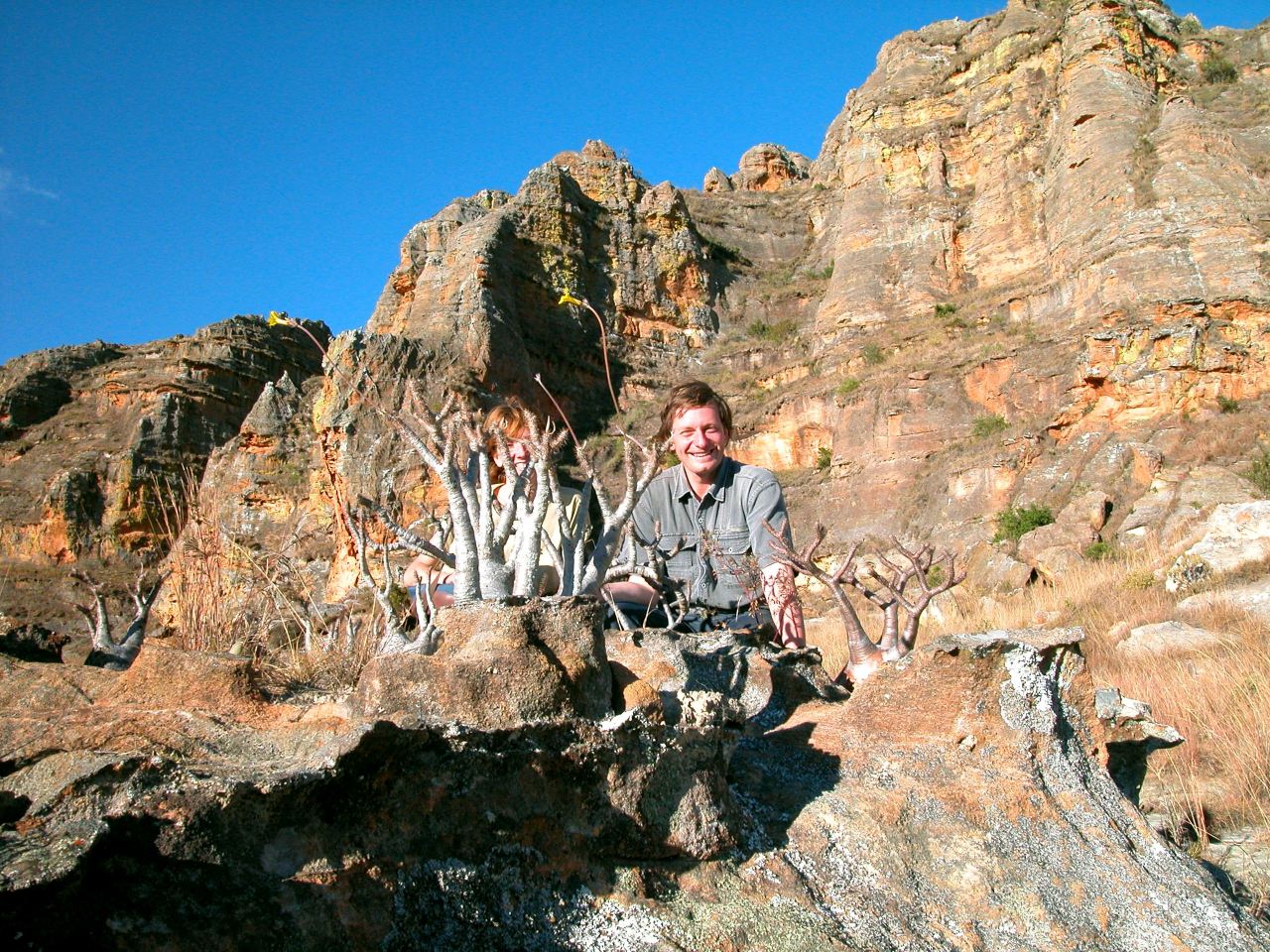
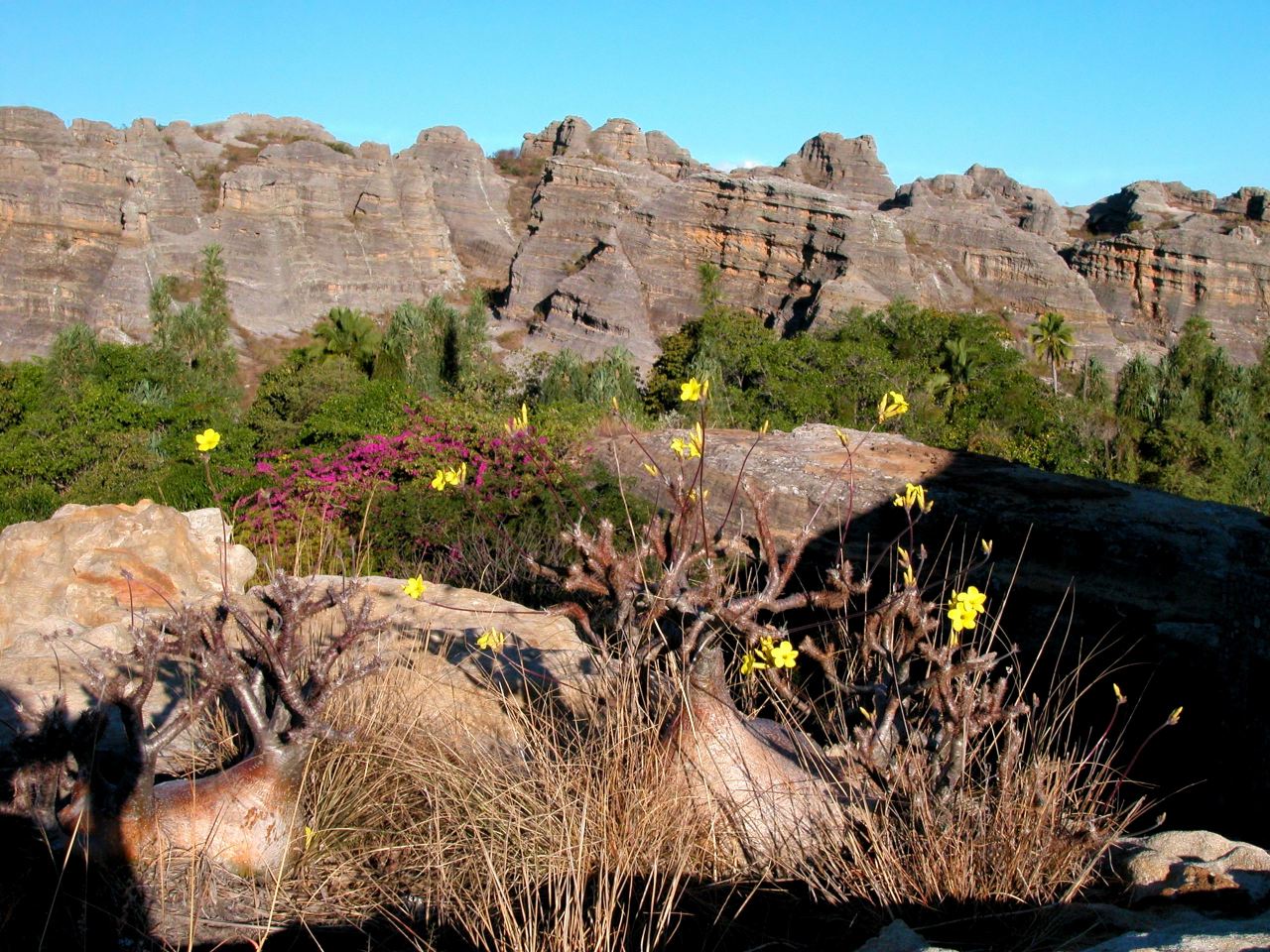
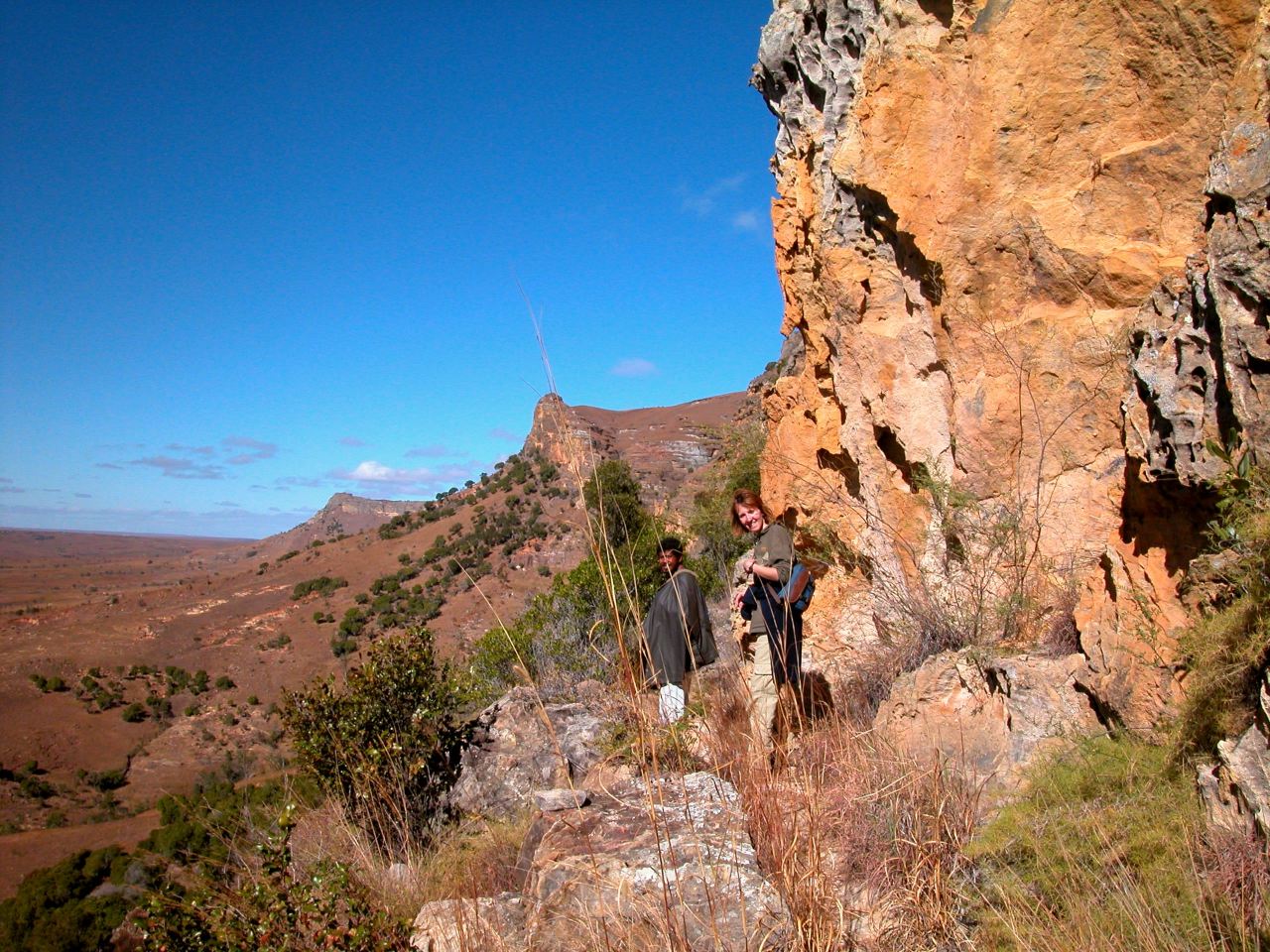
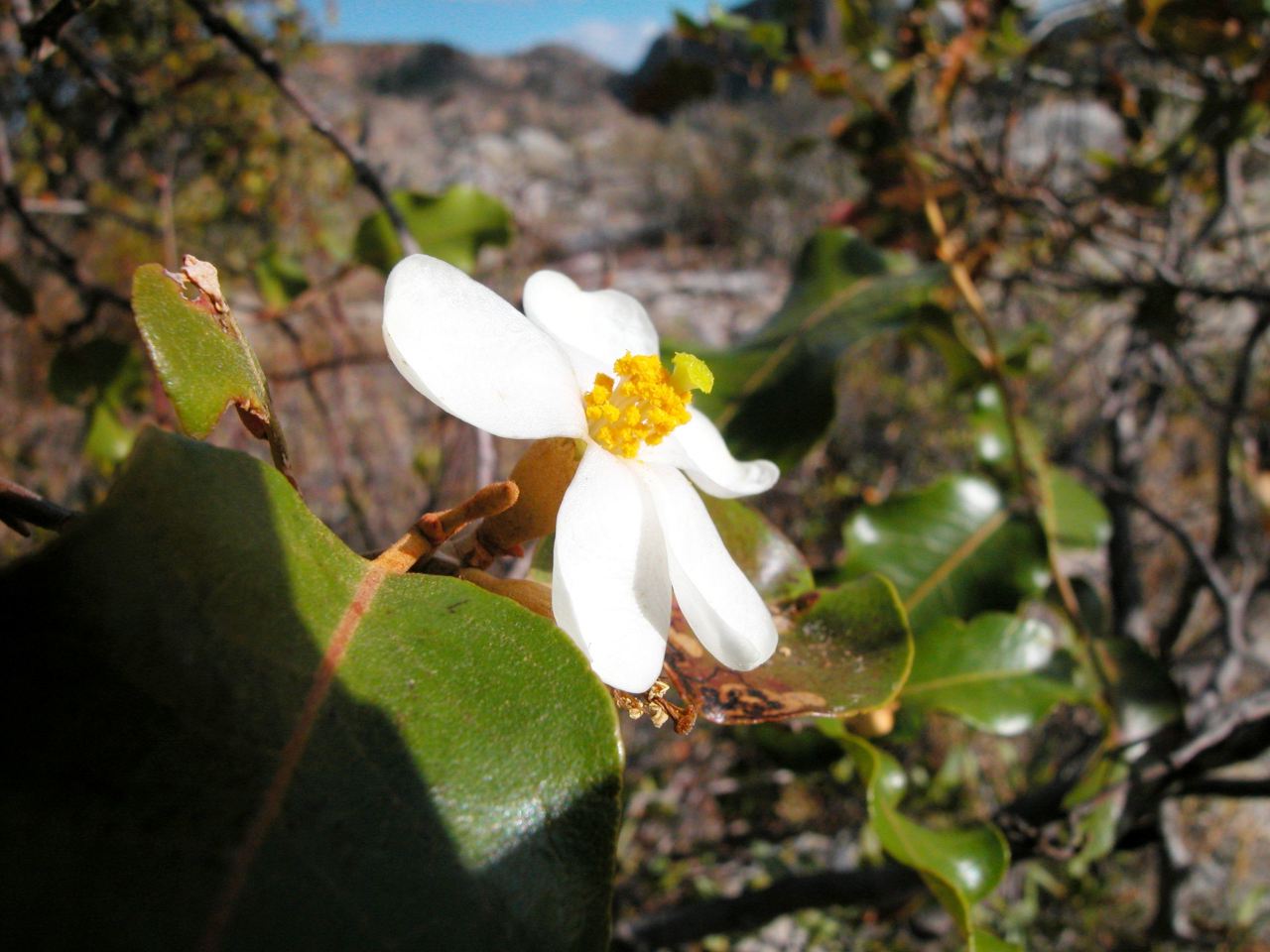
The route began in a steep gorge, with a path along the bottom. It ended at a pool where, legend had it, the king of Madagascar bathed. In the shady forest adjoining the gorge lived another kind of lemur. Farther on the path went uphill, gaining 400 metres. The vegetation was sparse here, but quite extraordinary. Growing there was Pachypodium rosulatum. It’s an astonishing plant. It was for this plant that we agreed to put up with a guide beside us. As far as we knew, in the whole world this form grew on one mountain. People called it a miniature baobab, or bonsai baobab. It isn’t a relative of the baobab. The name pachypodium means “thick foot.” It is a succulent, with a large round water store and leafy branches sticking out in all directions like horns. The leaves fall in winter. Ours had none, but it was in flower. Yellow bells swayed on long, slender stalks. Its shape looked as if it came from another planet. You could make a film about a friendly alien and model it on this thing. We were told it could live up to three hundred years. In old age the ball grows half a metre across. There are several species of pachypodium, but rosulatum struck us as the funniest. A different kind grows on nearby hills and goes by the name elephant’s foot. There are tall and spiny varieties. One of them is common in Russian flower shops and has been on our windowsill for years.
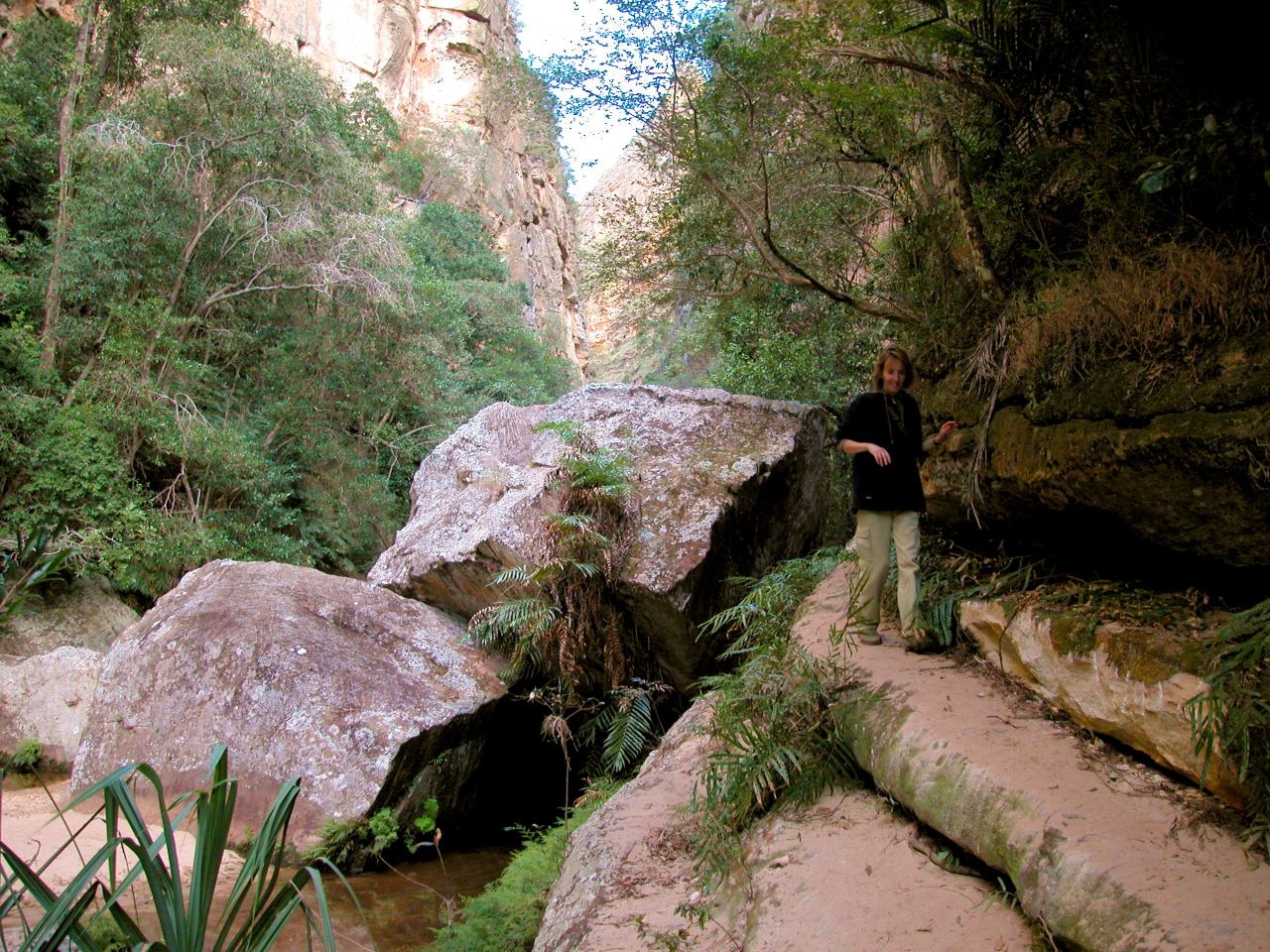
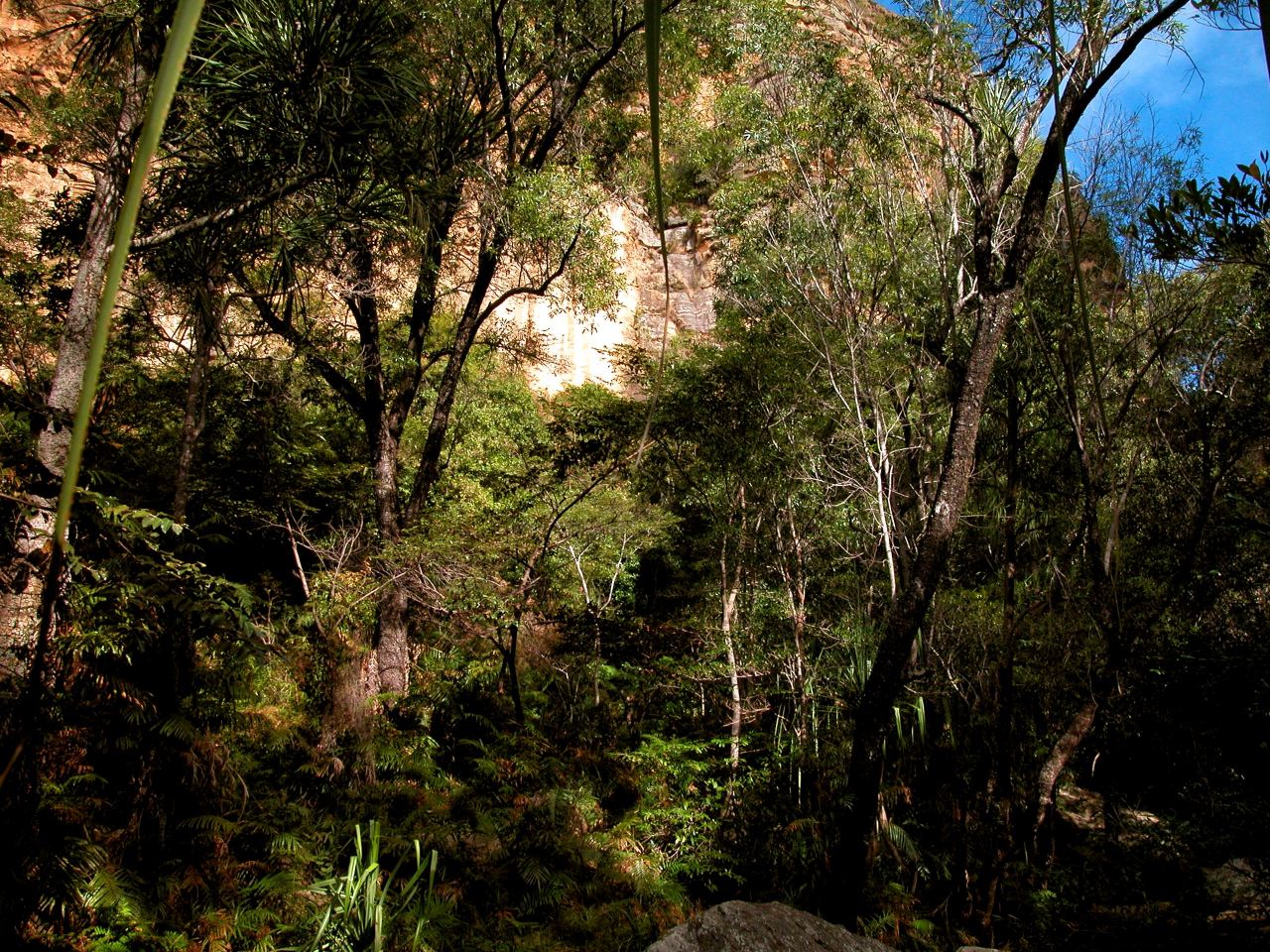
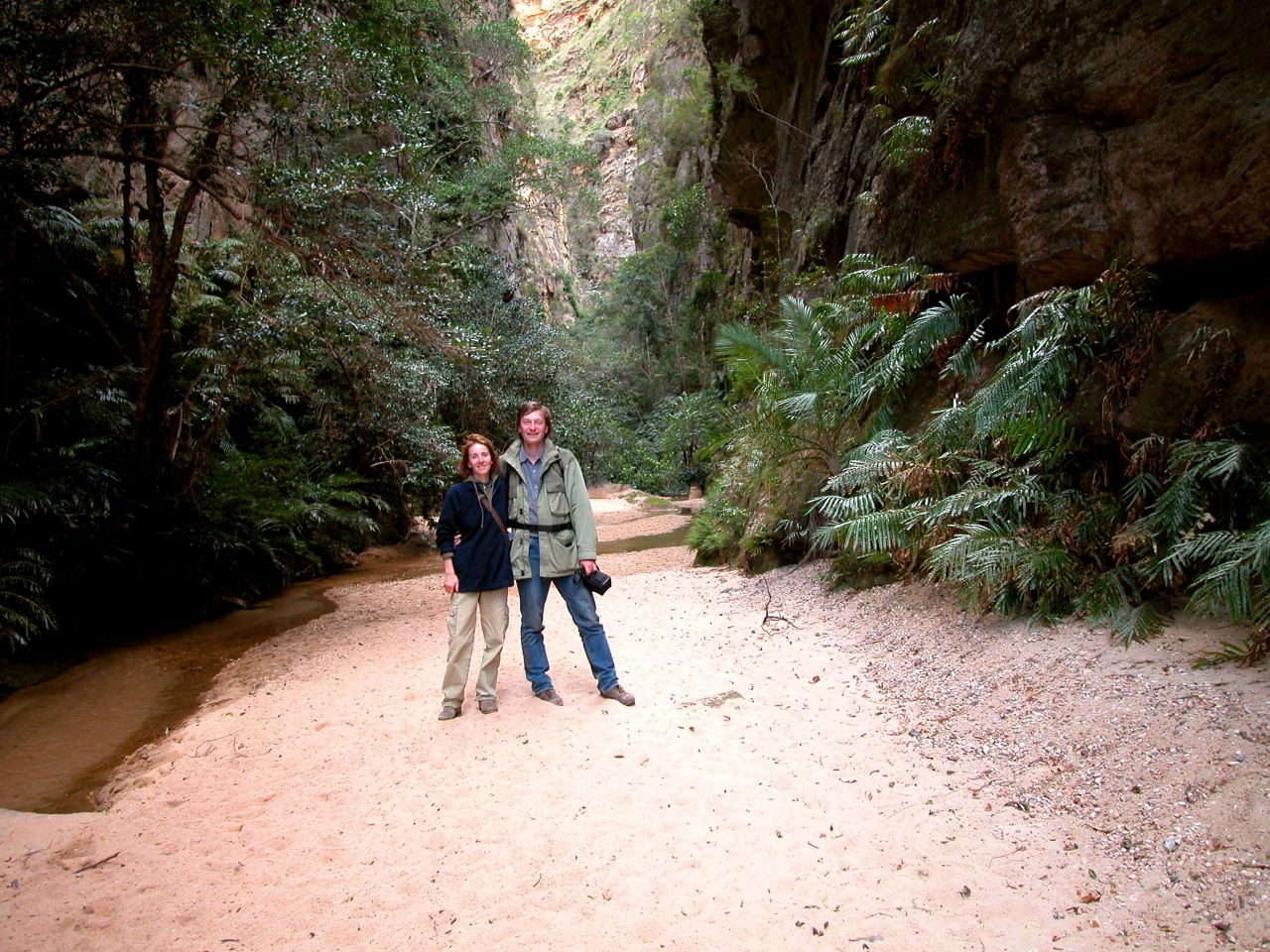
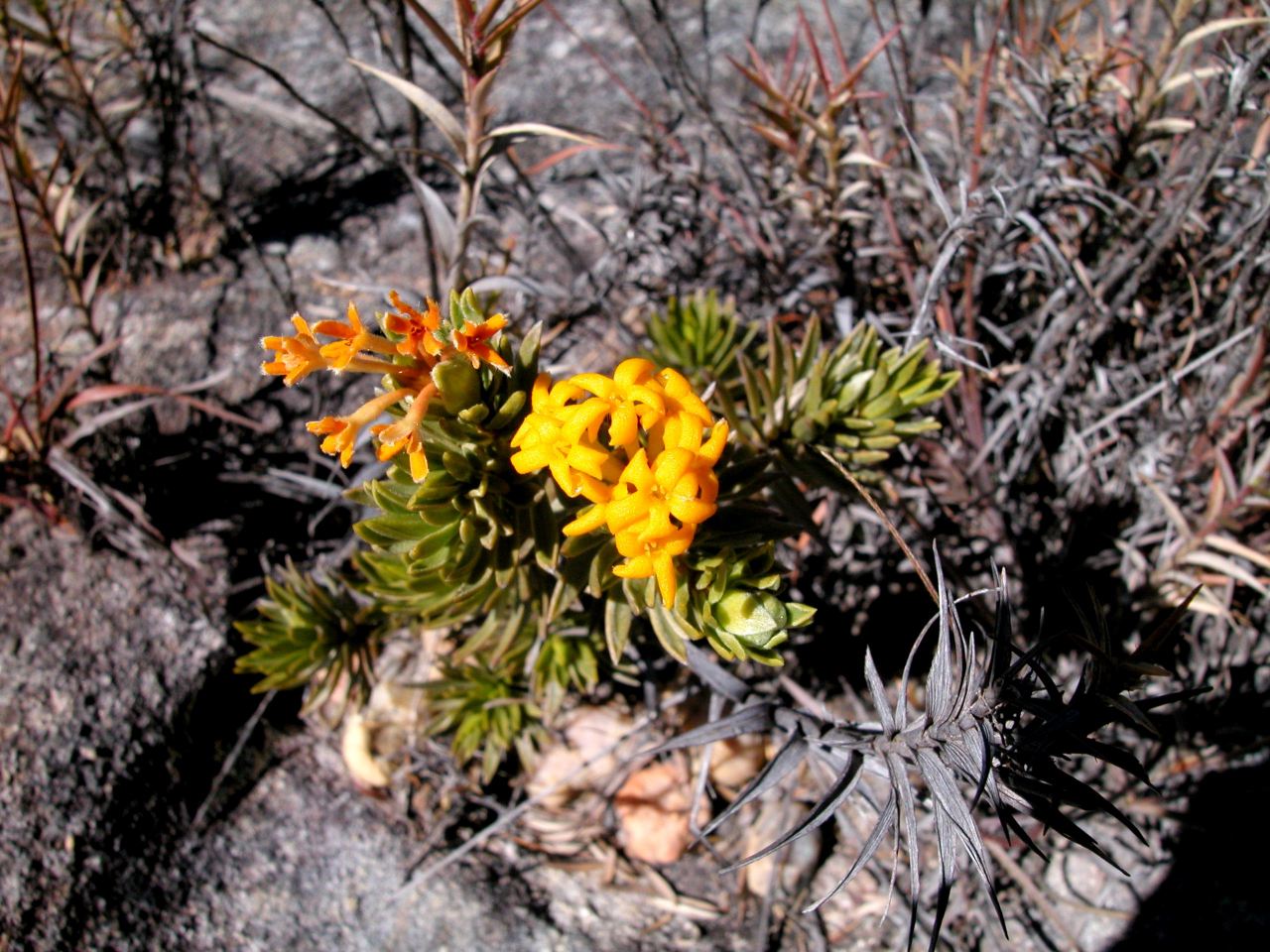
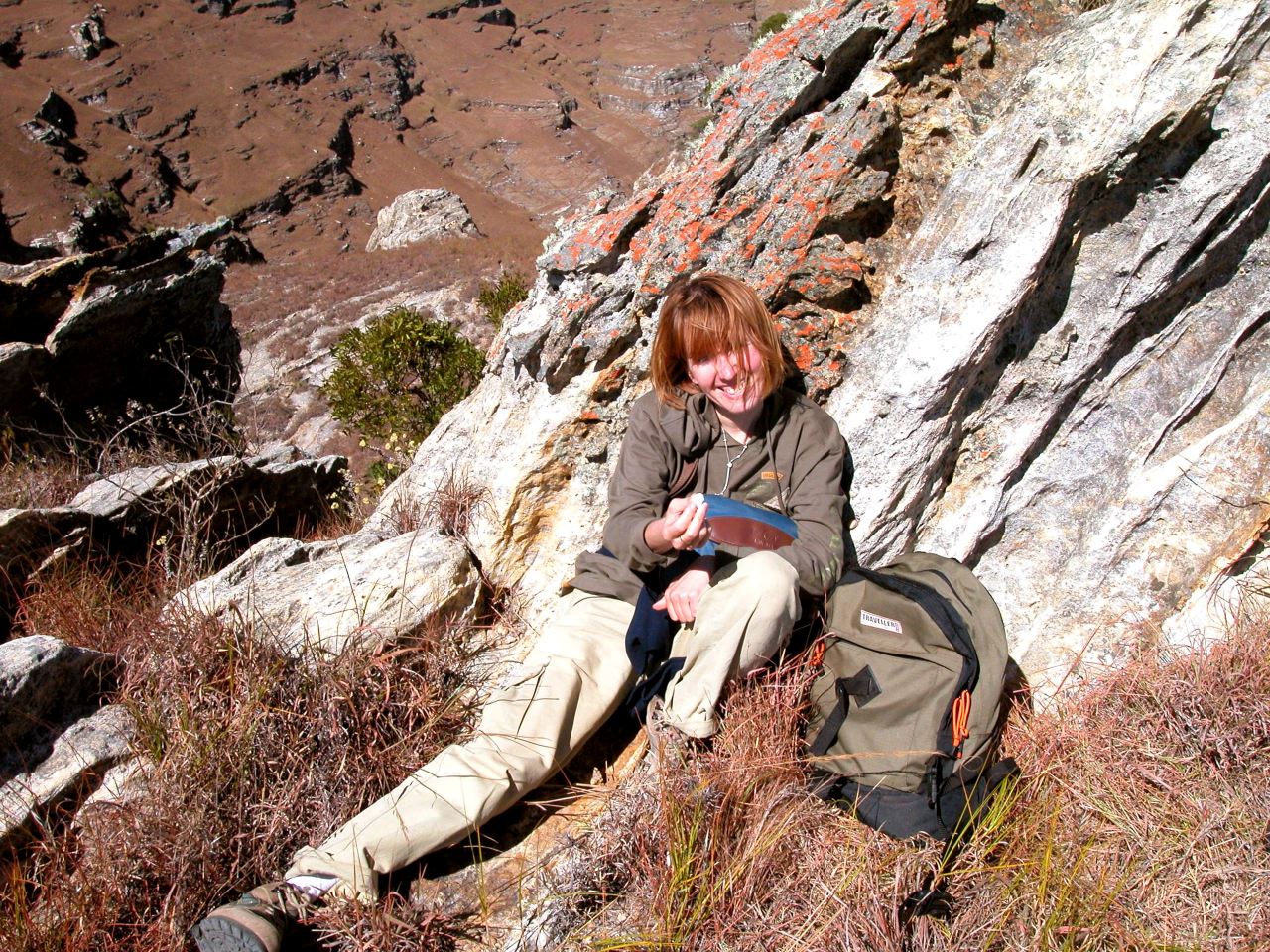
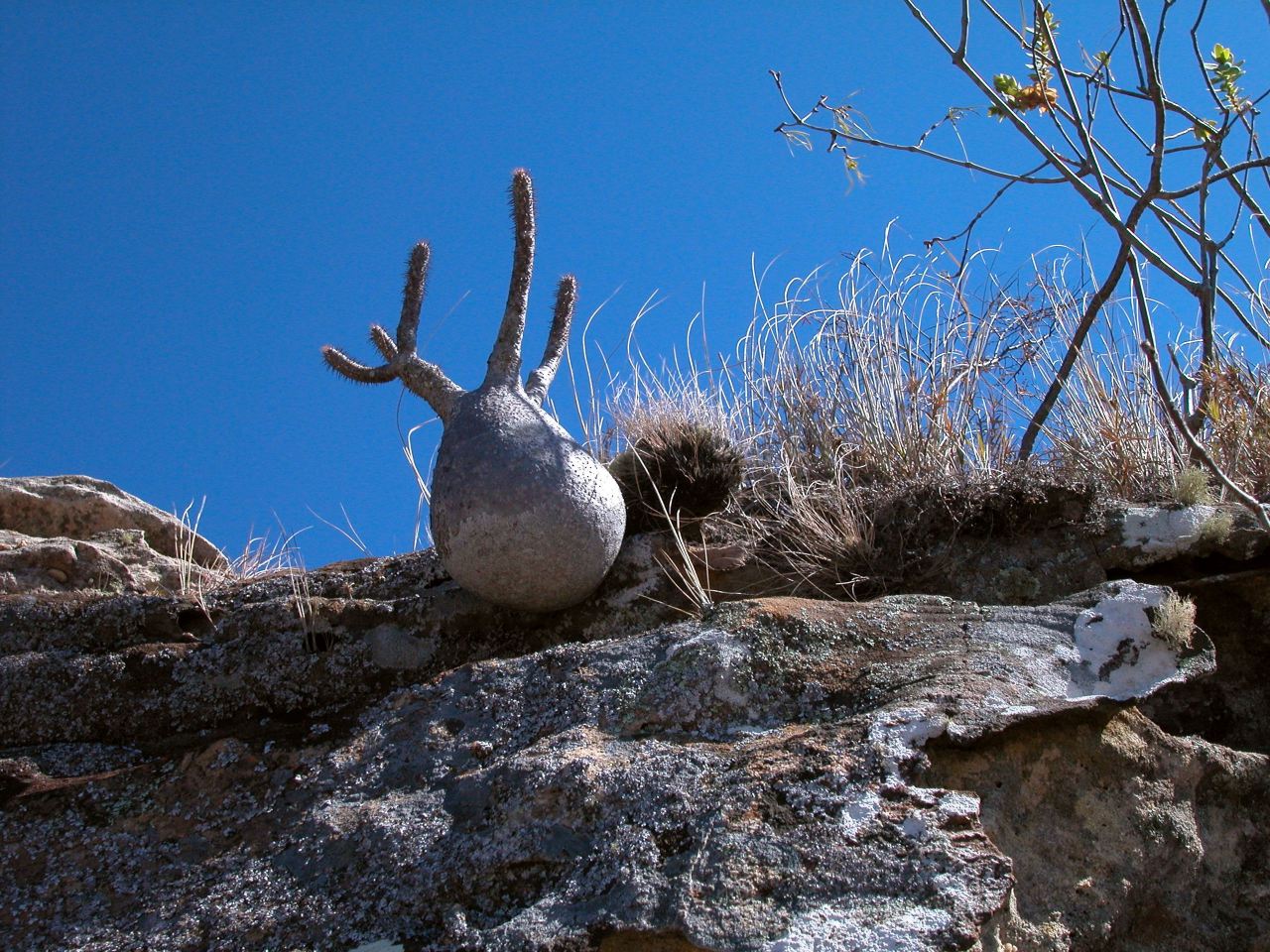
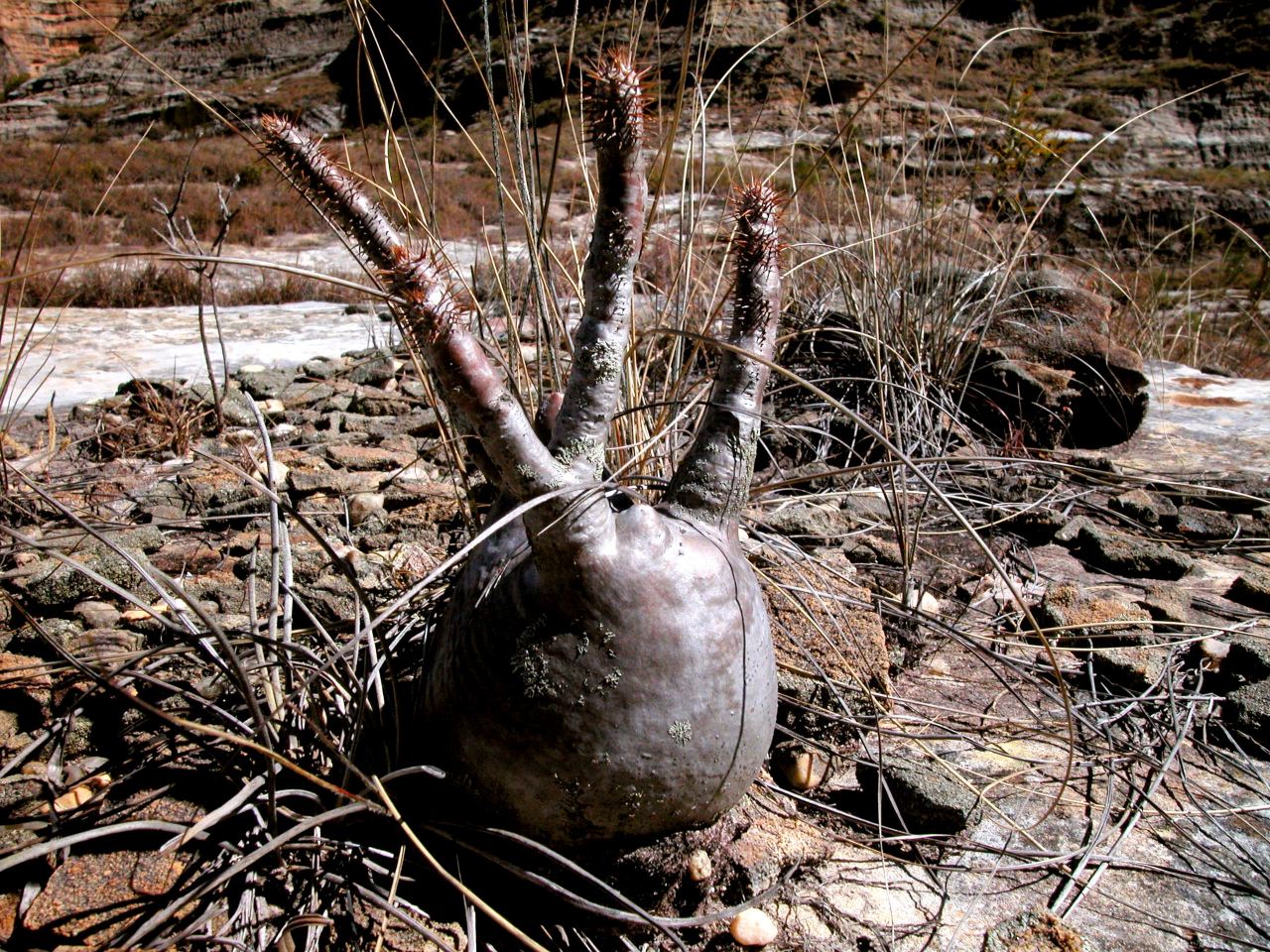
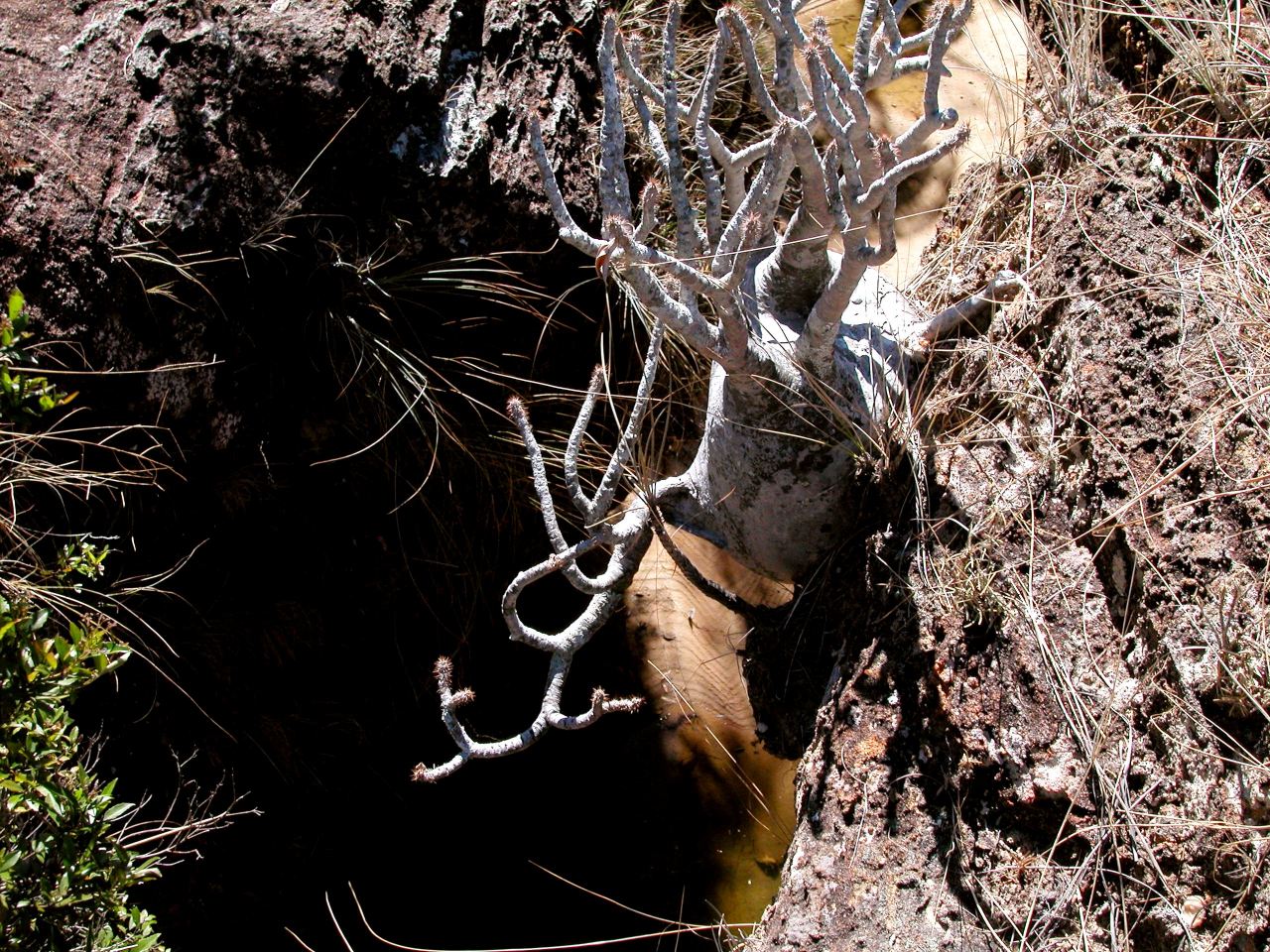
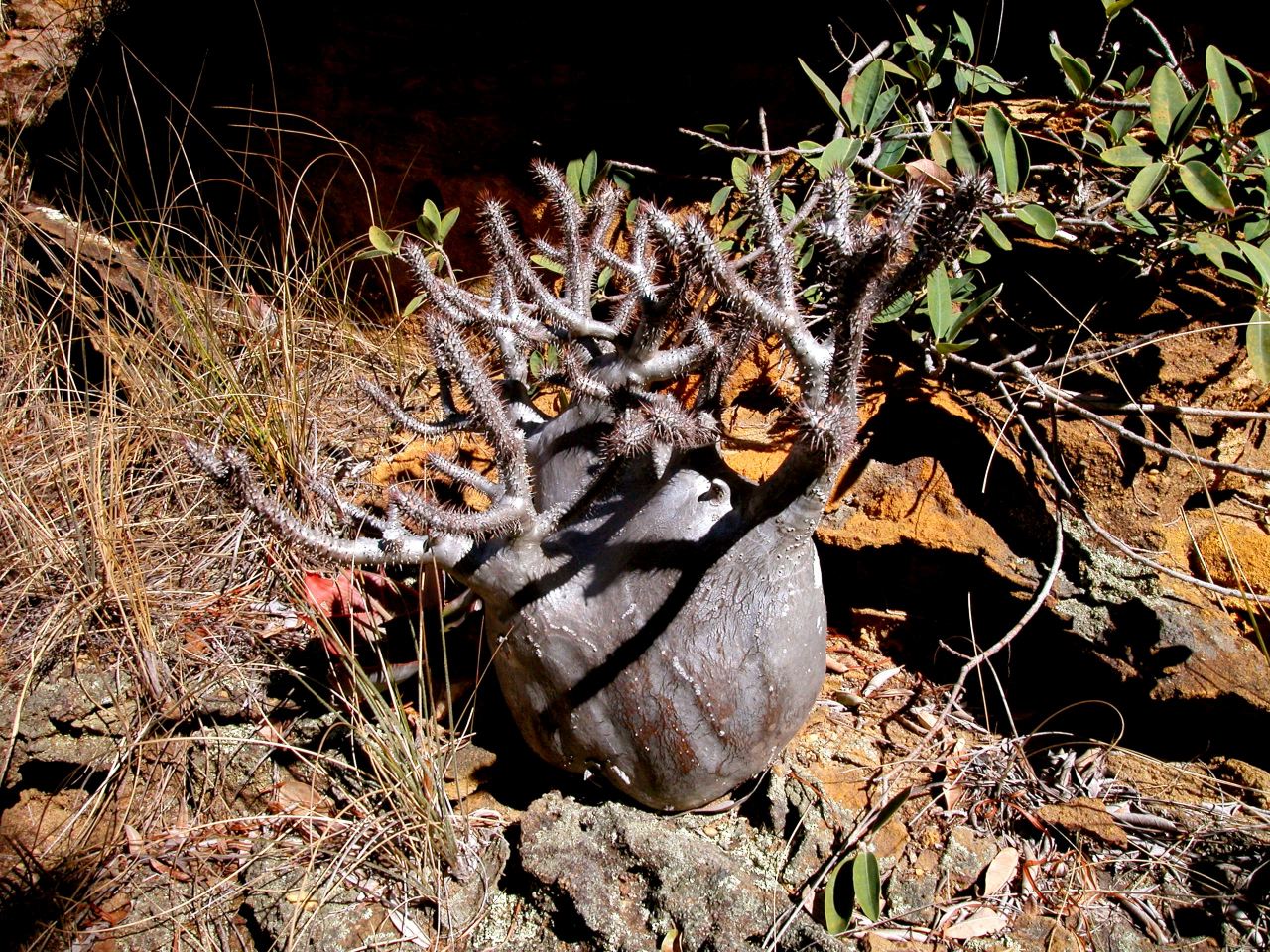
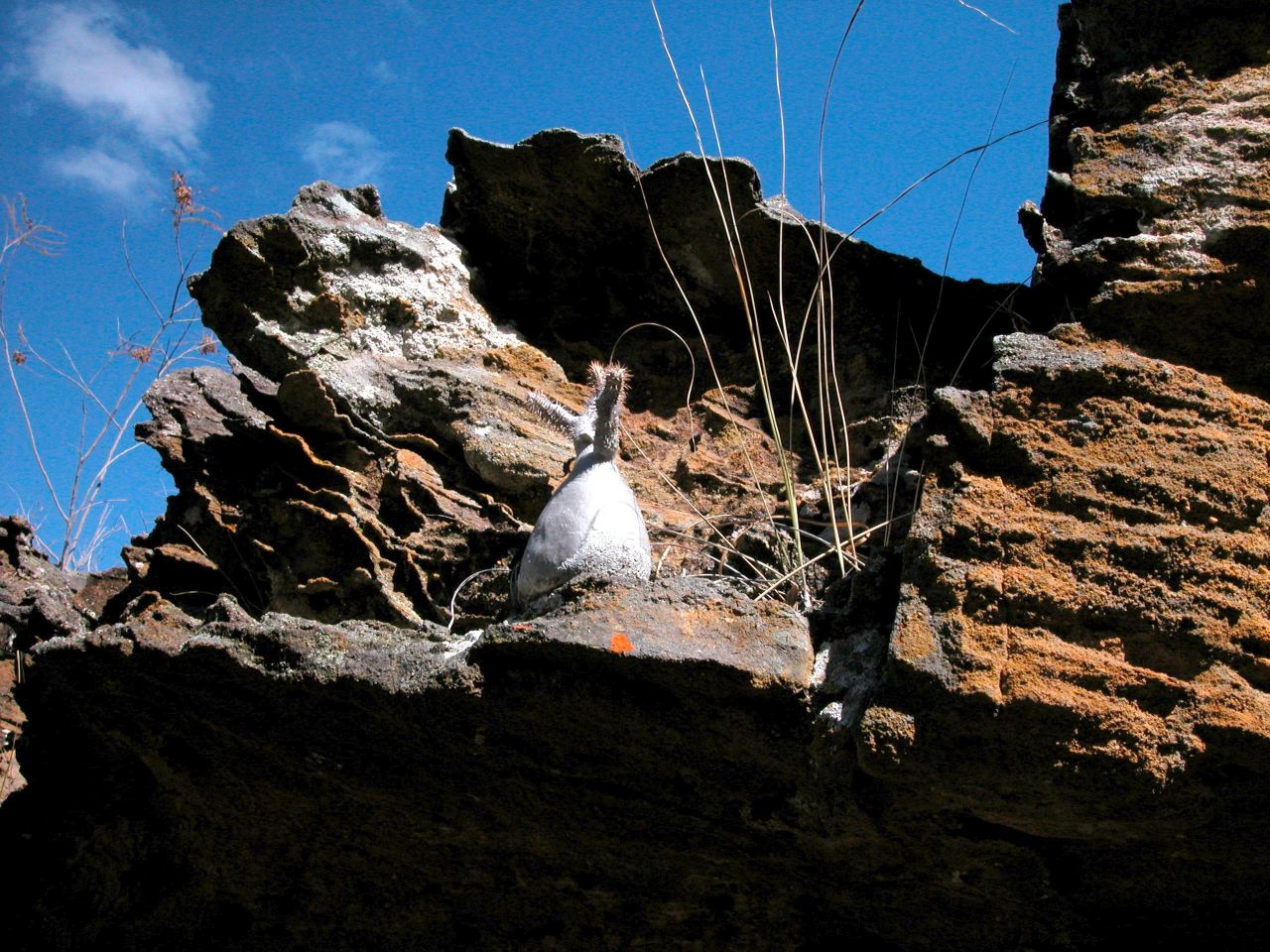
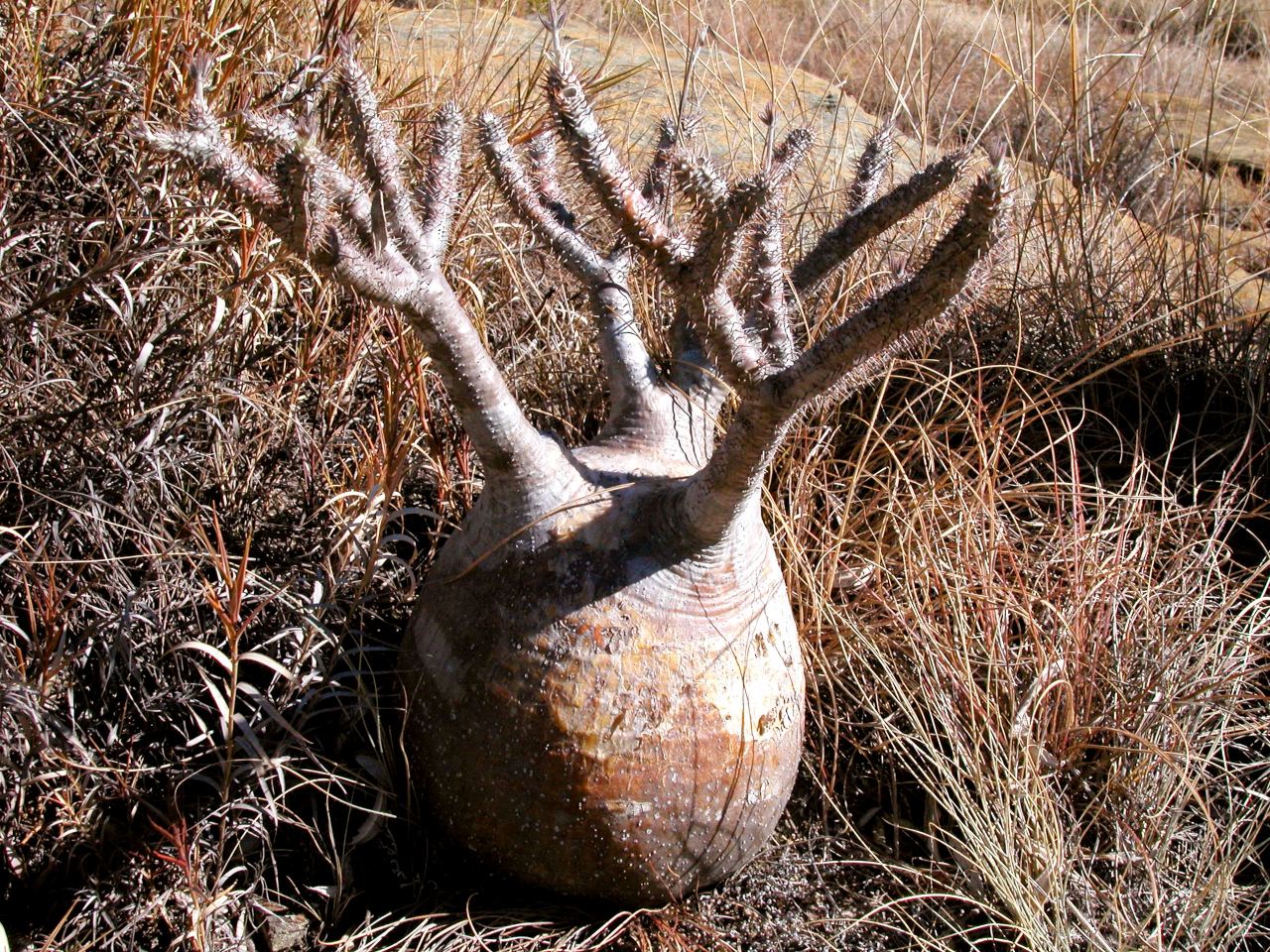
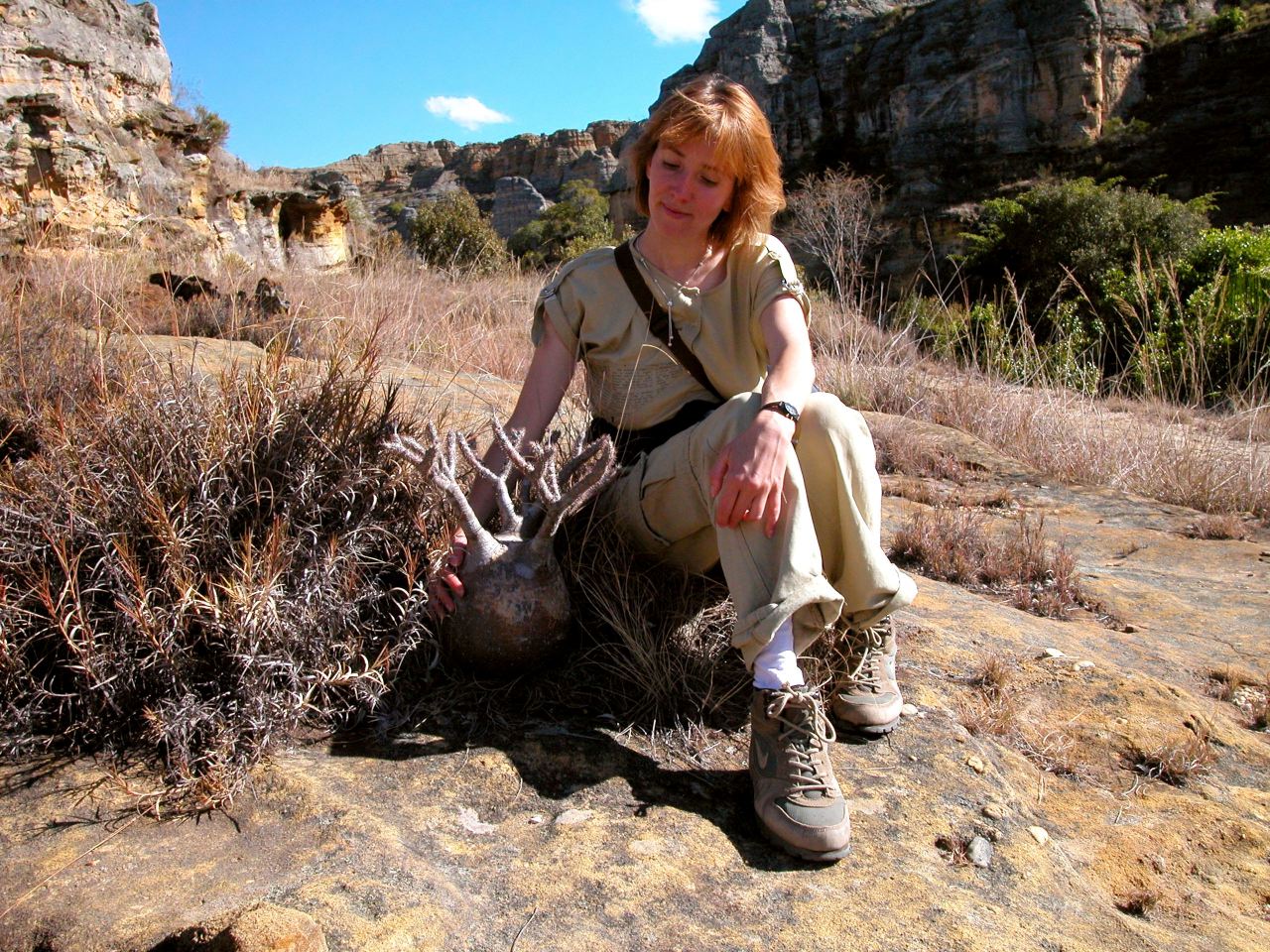
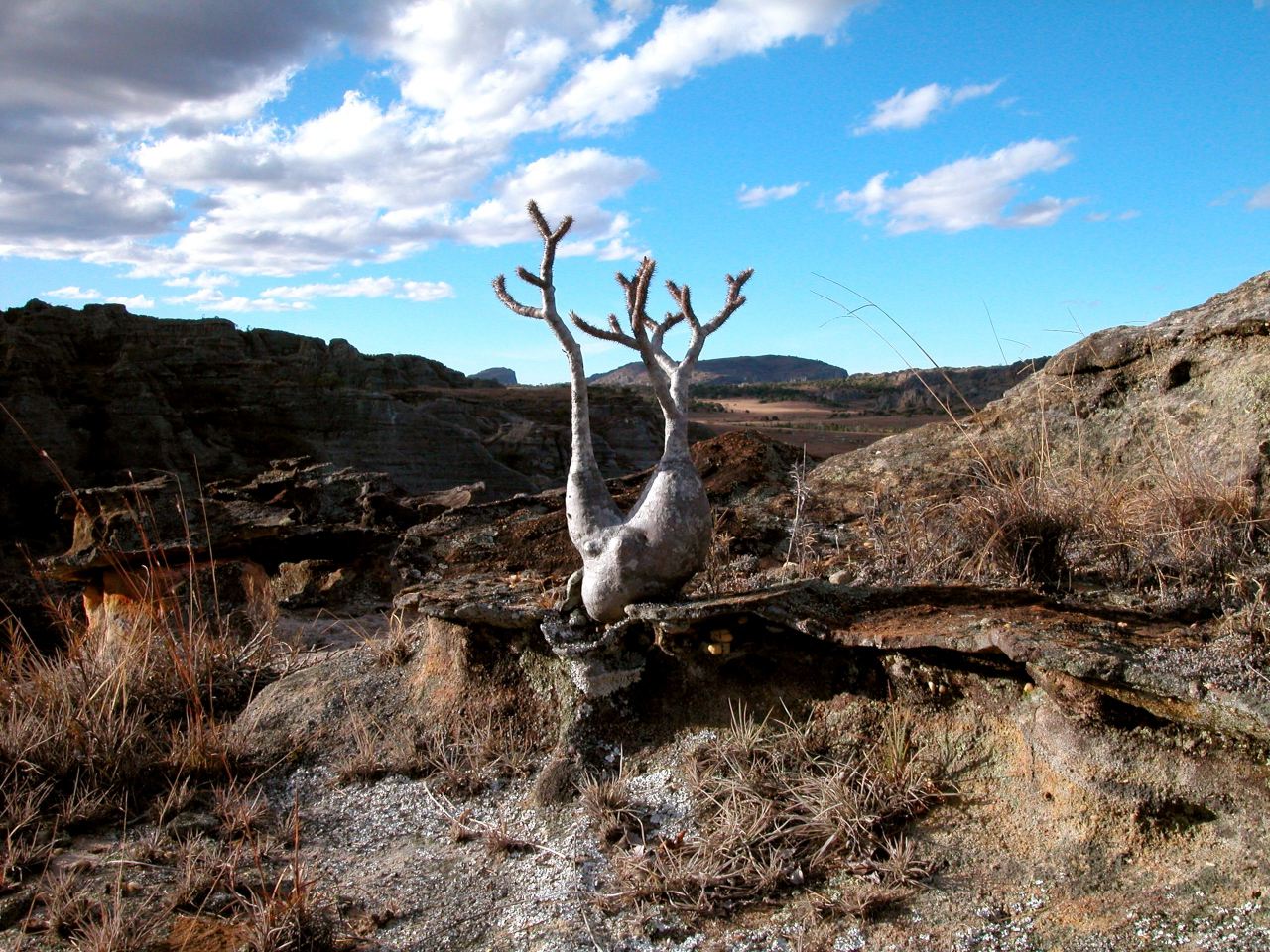
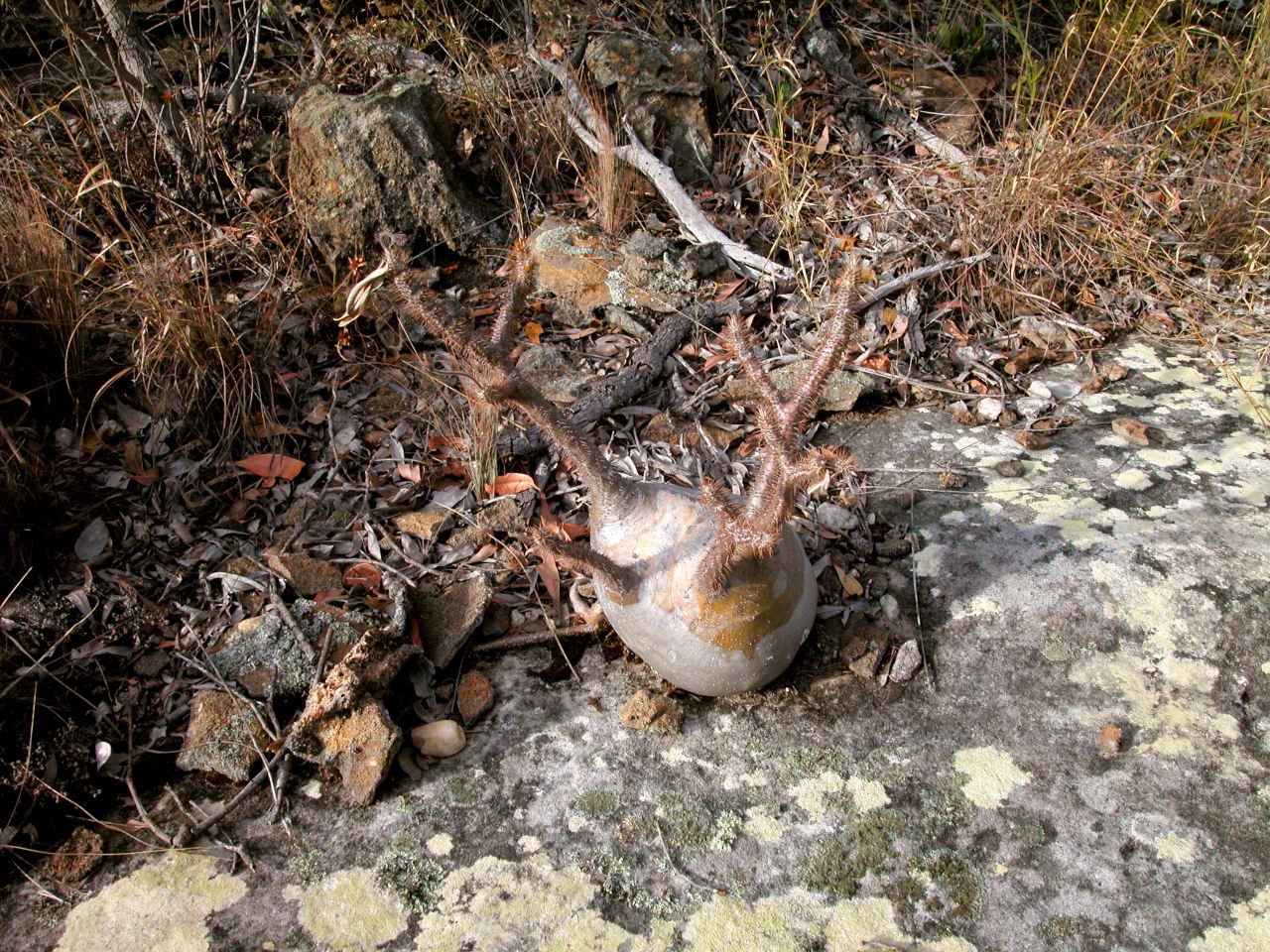
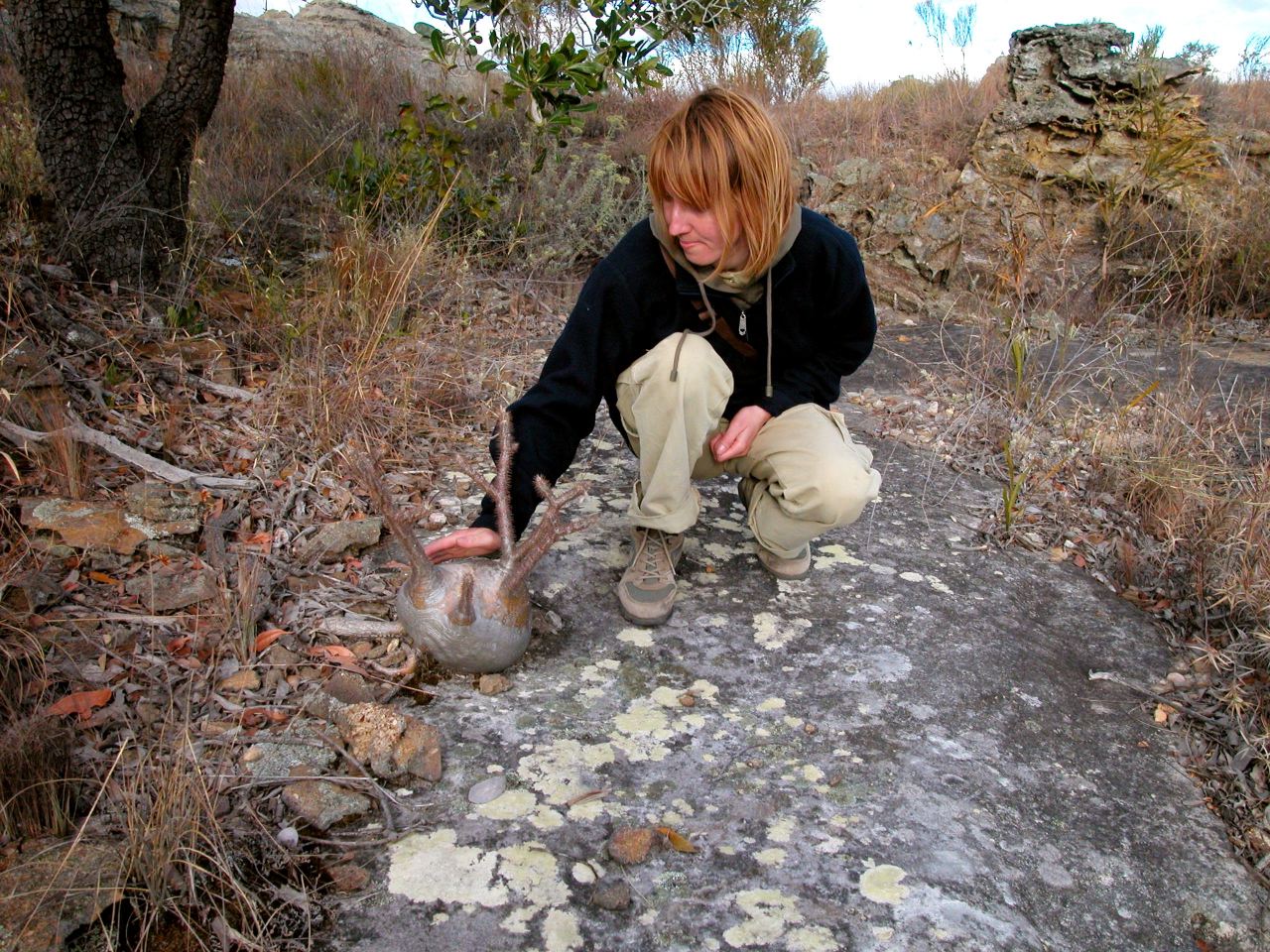
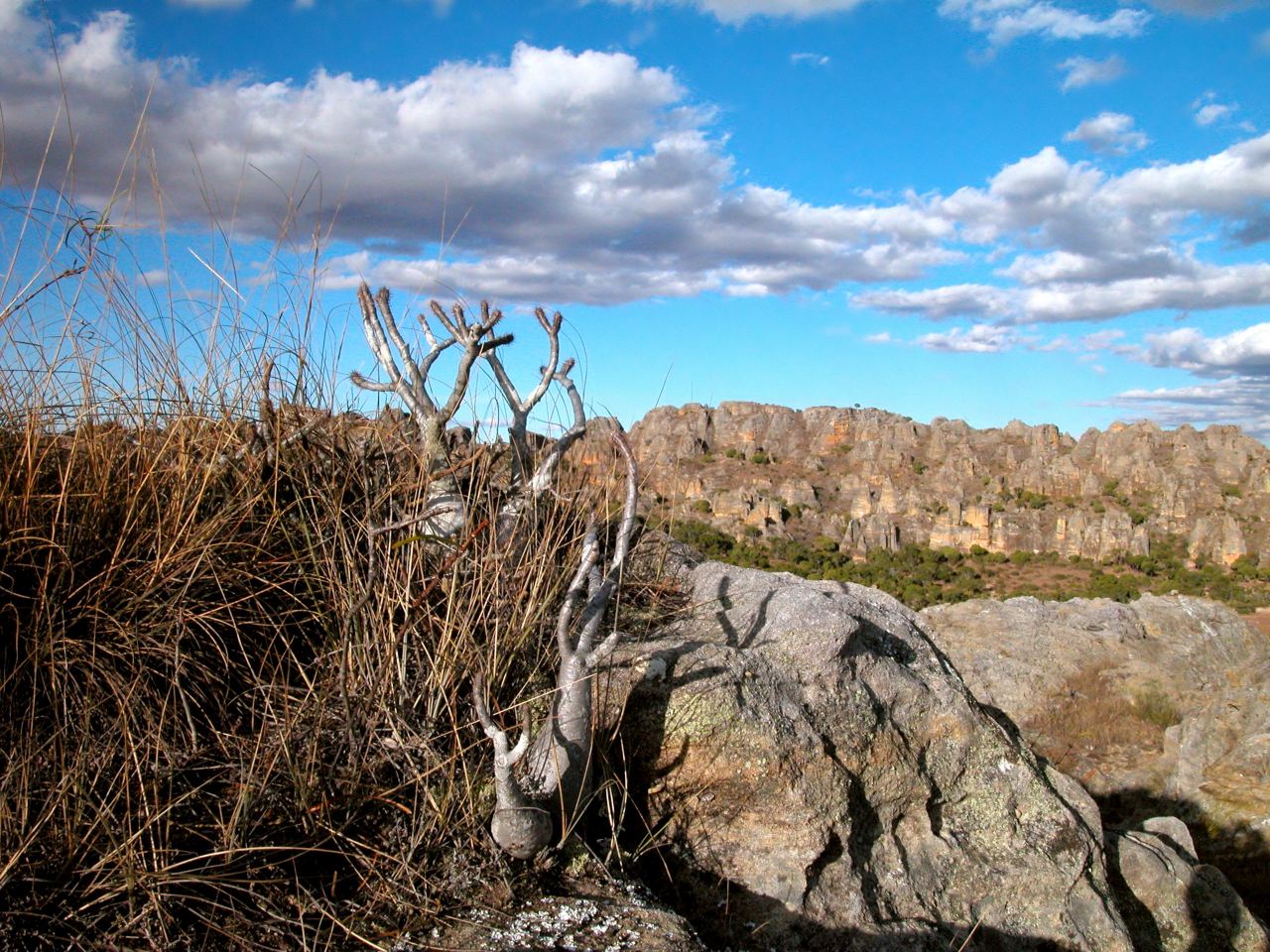
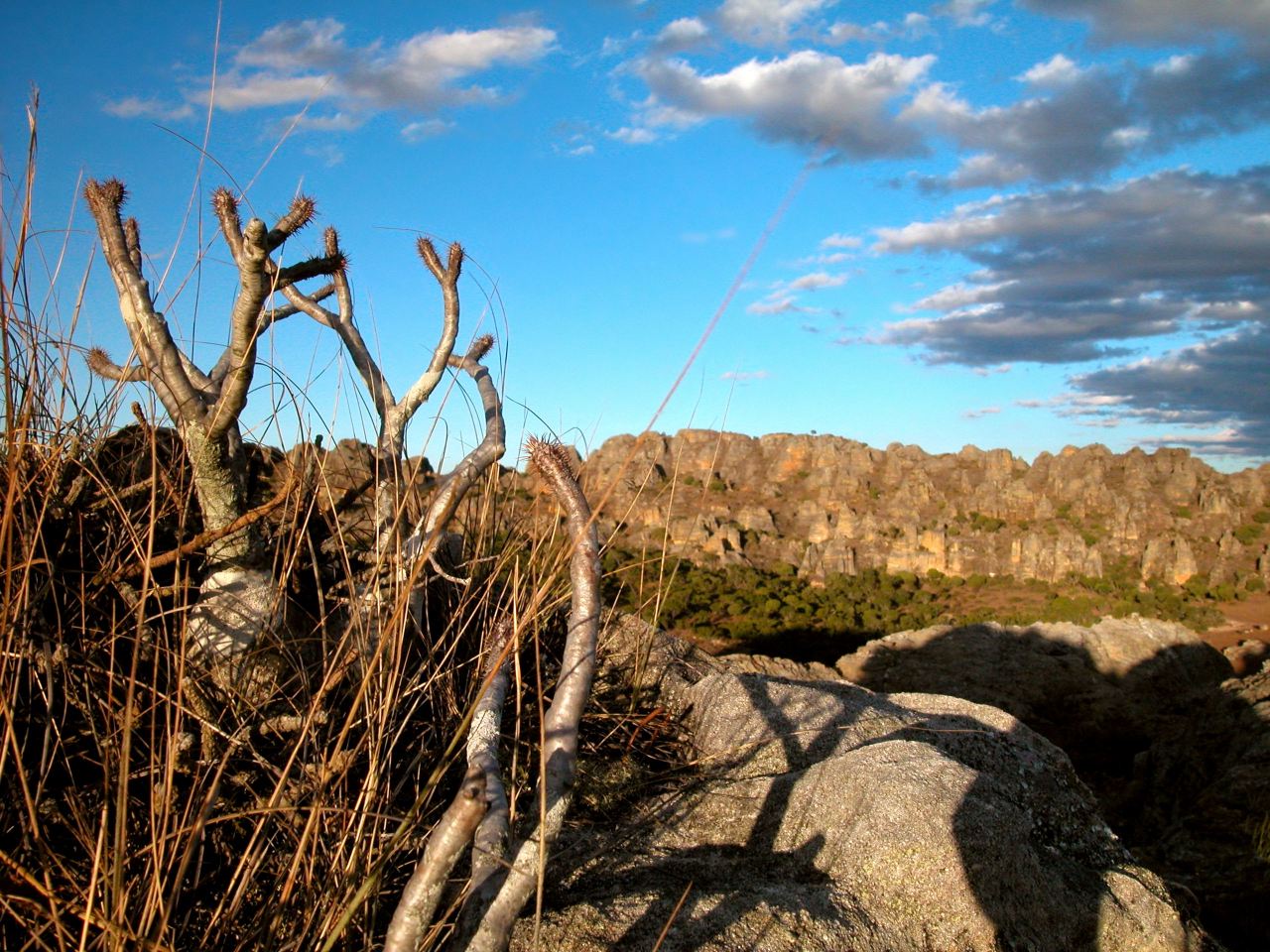
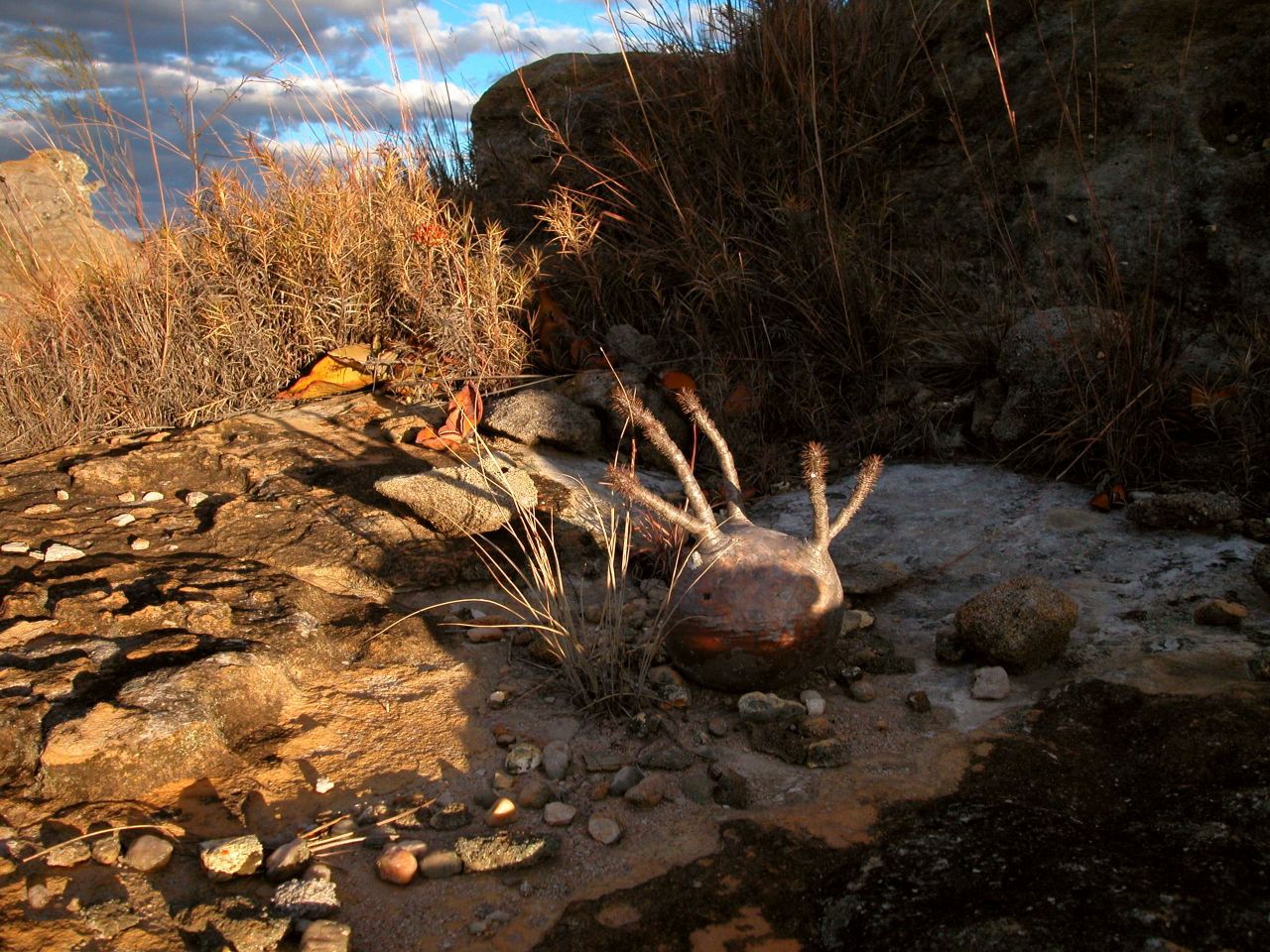
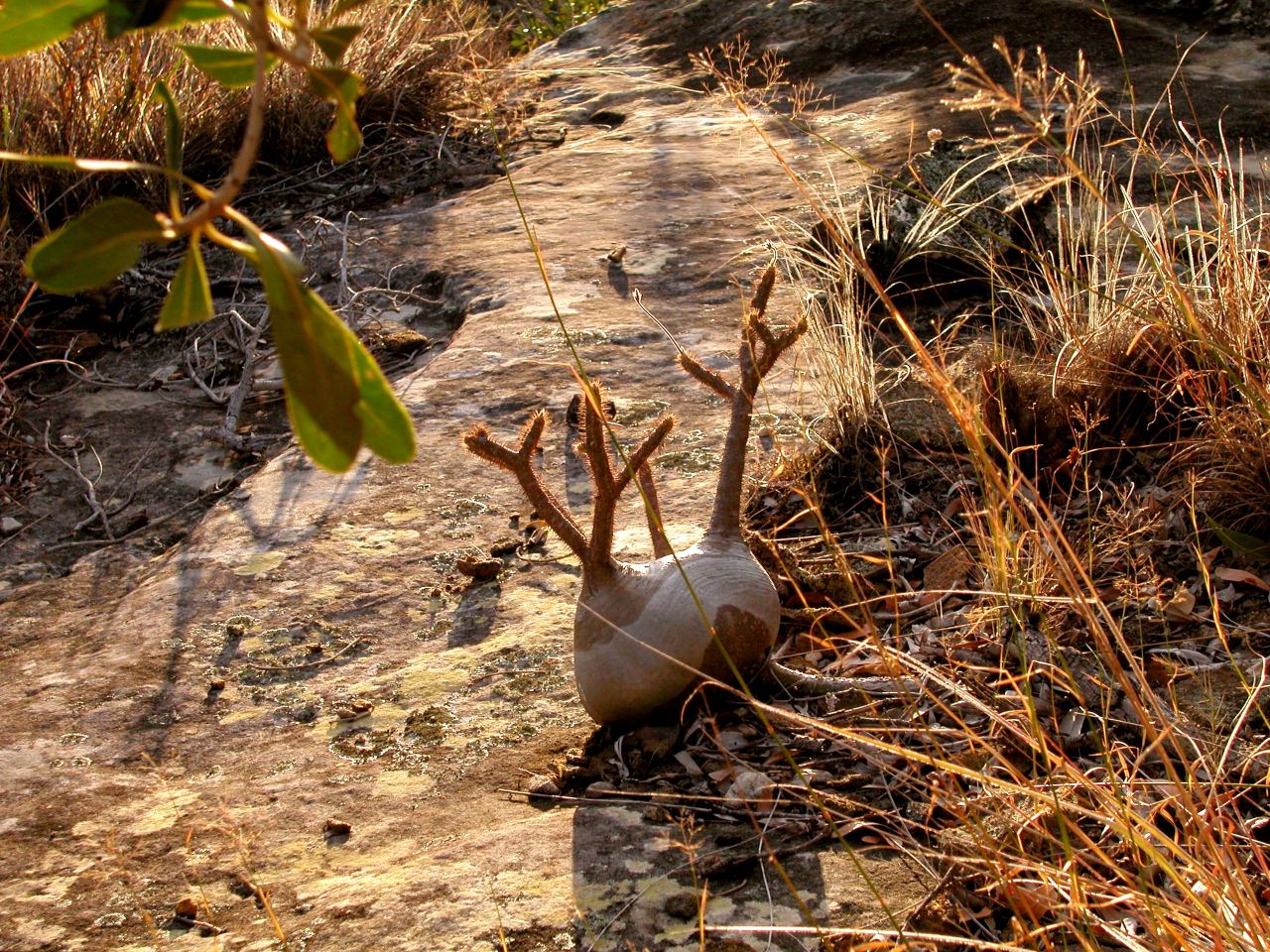
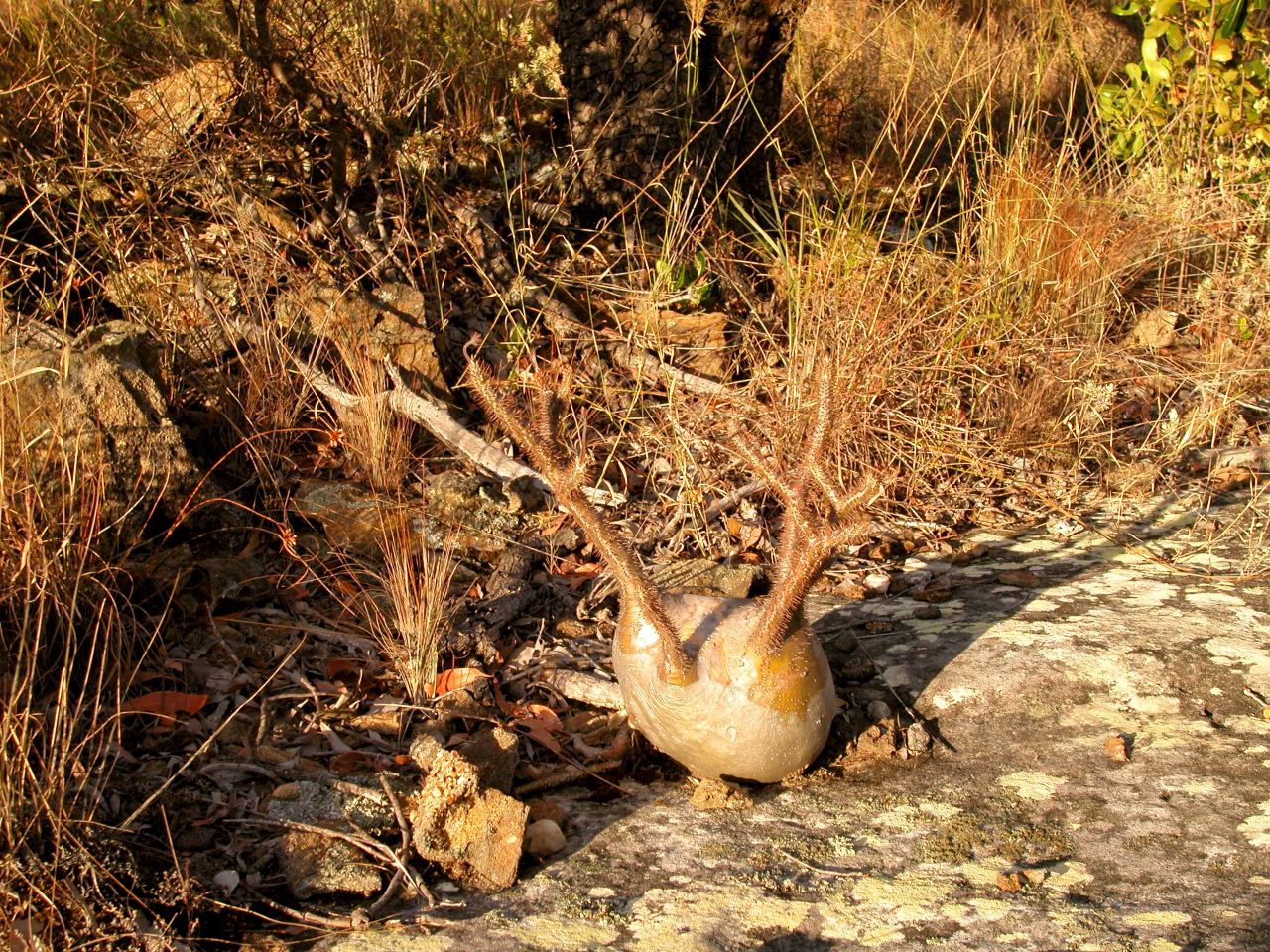
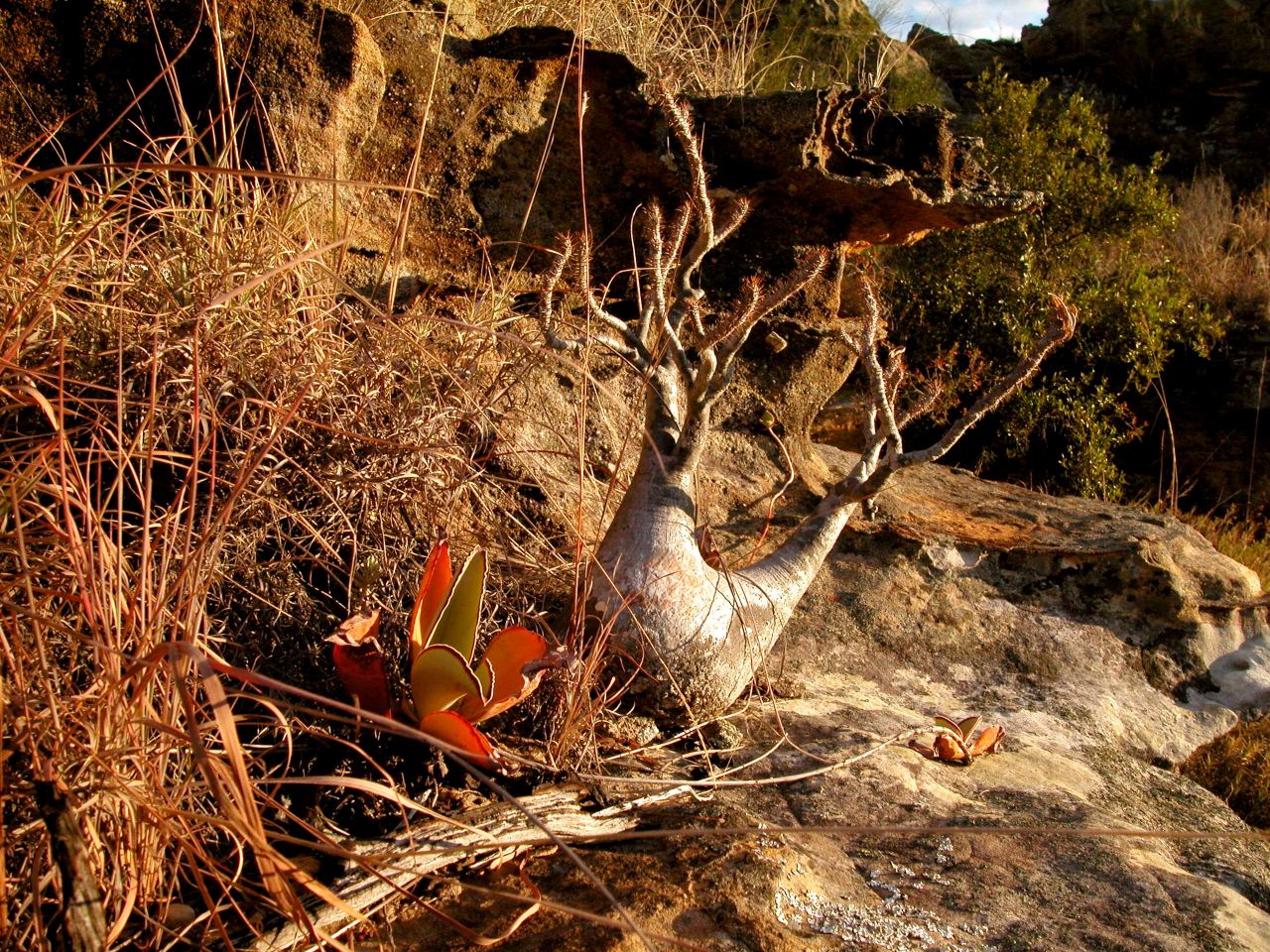
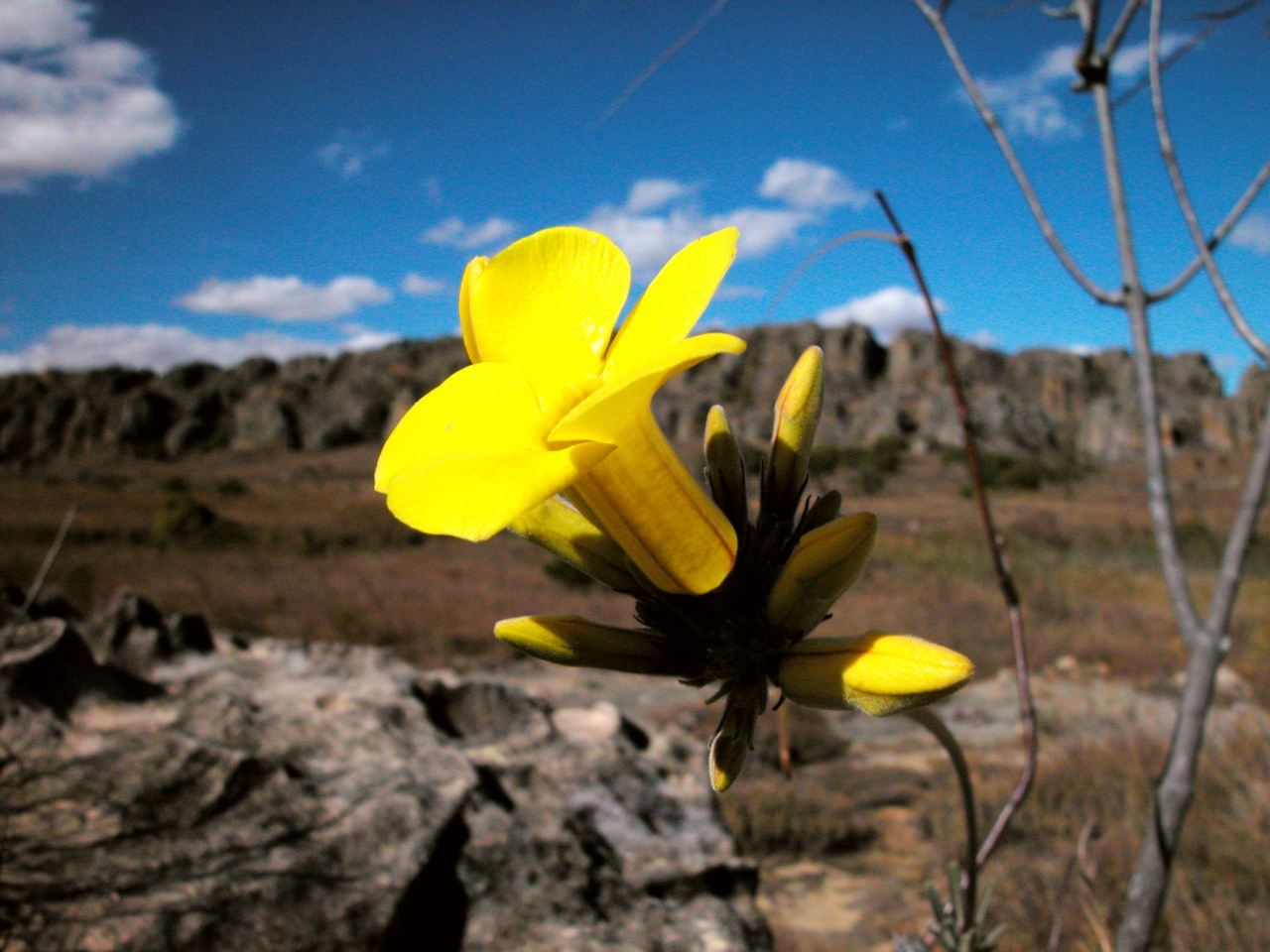
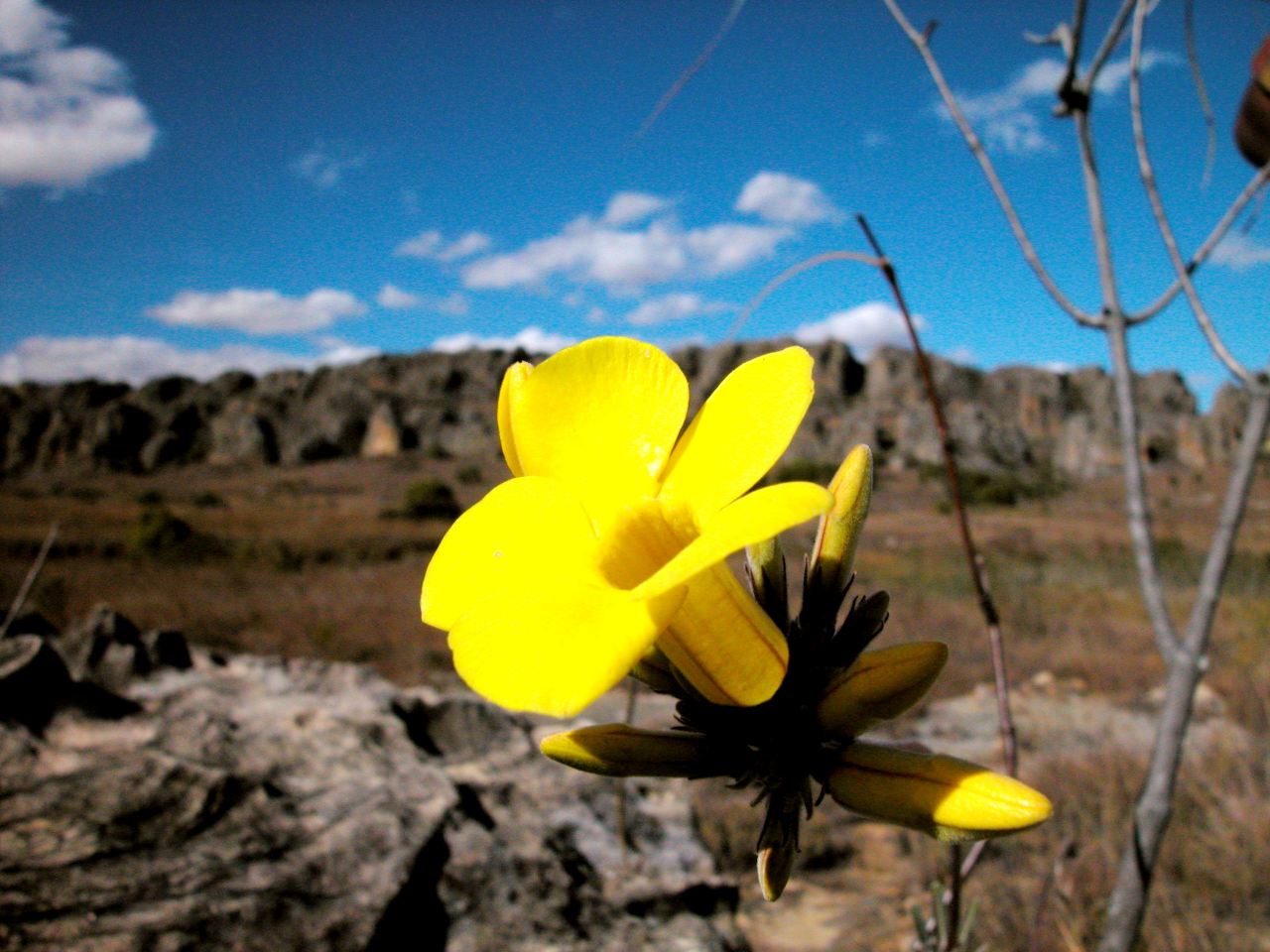
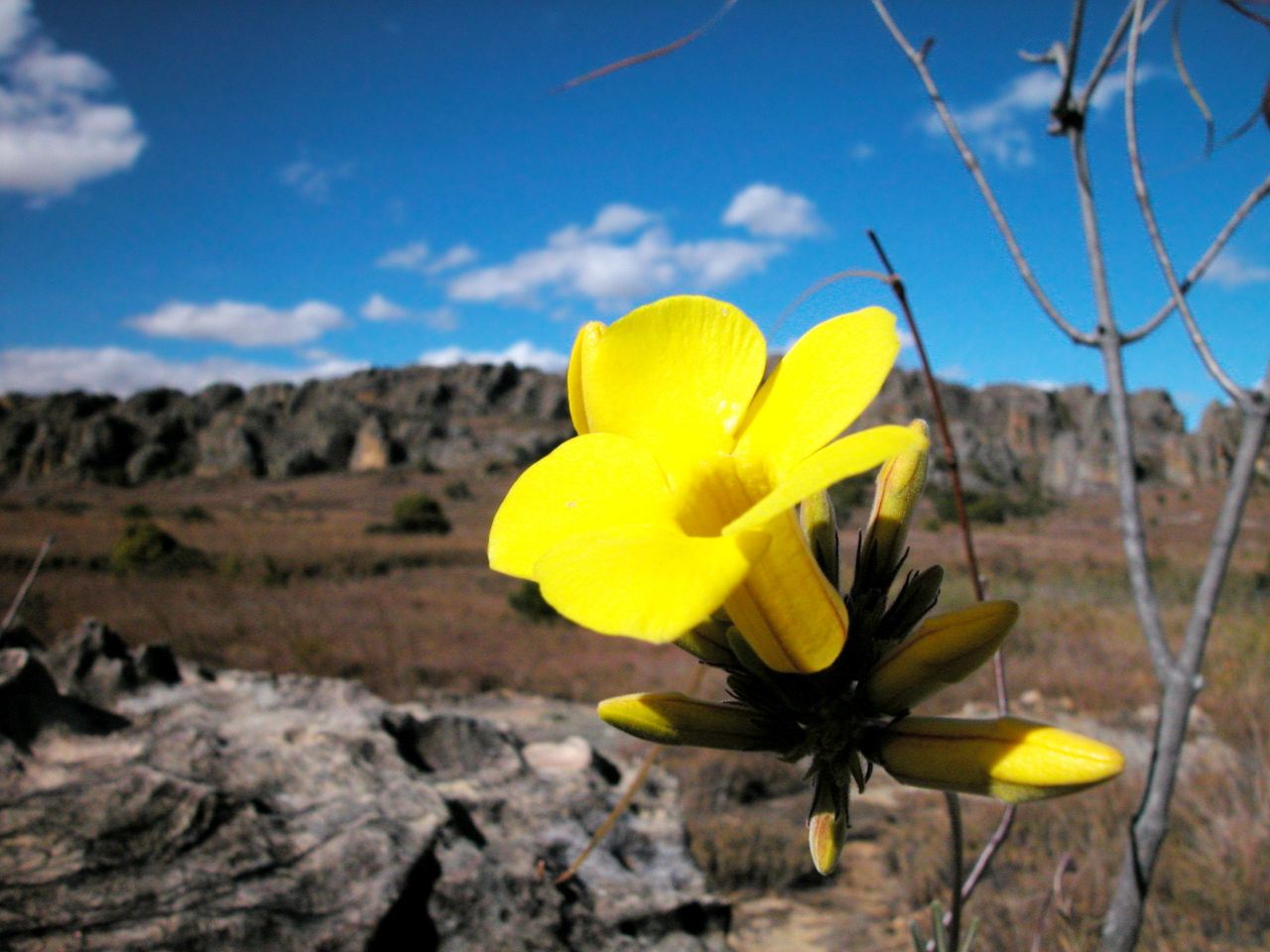
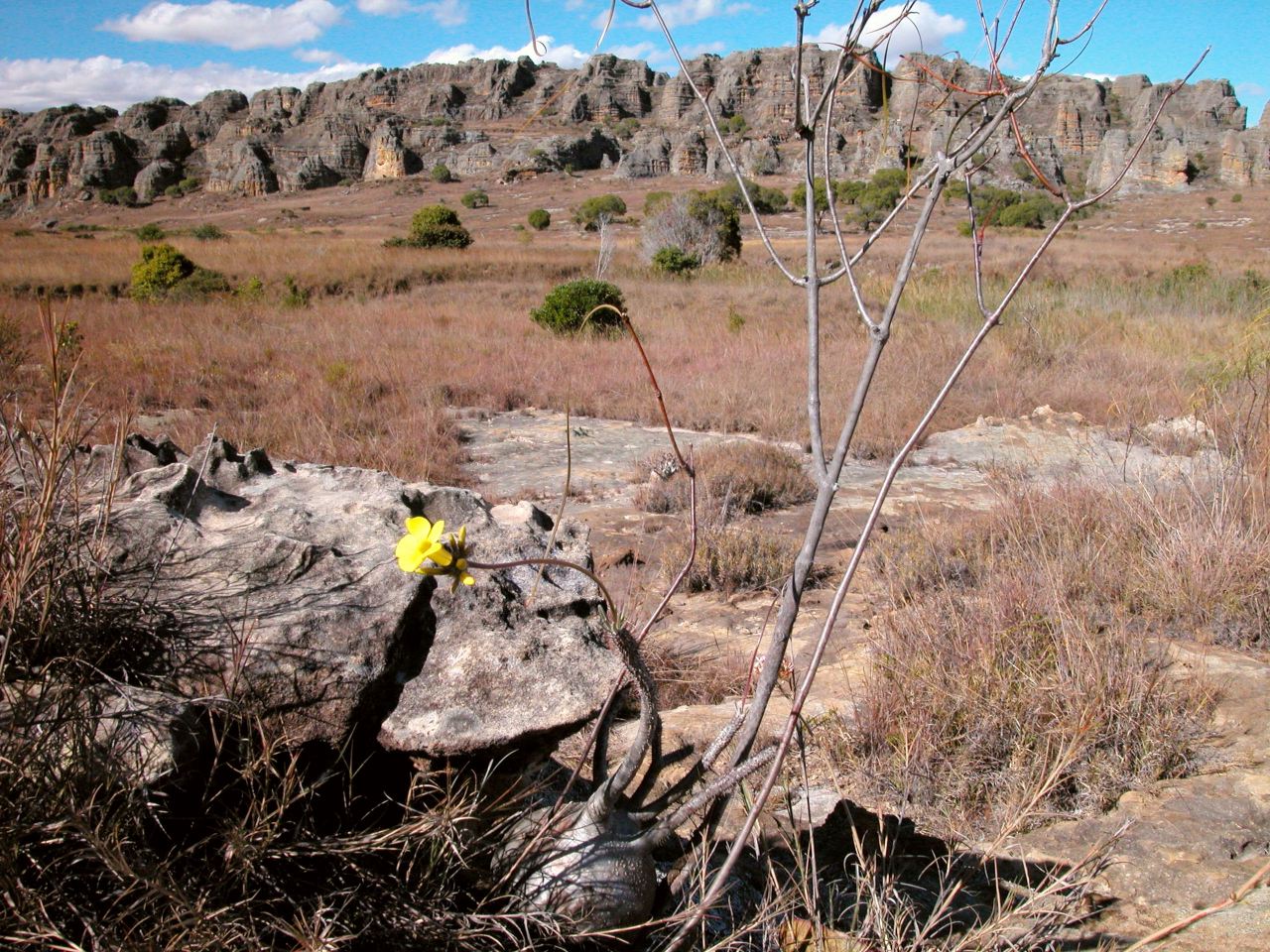
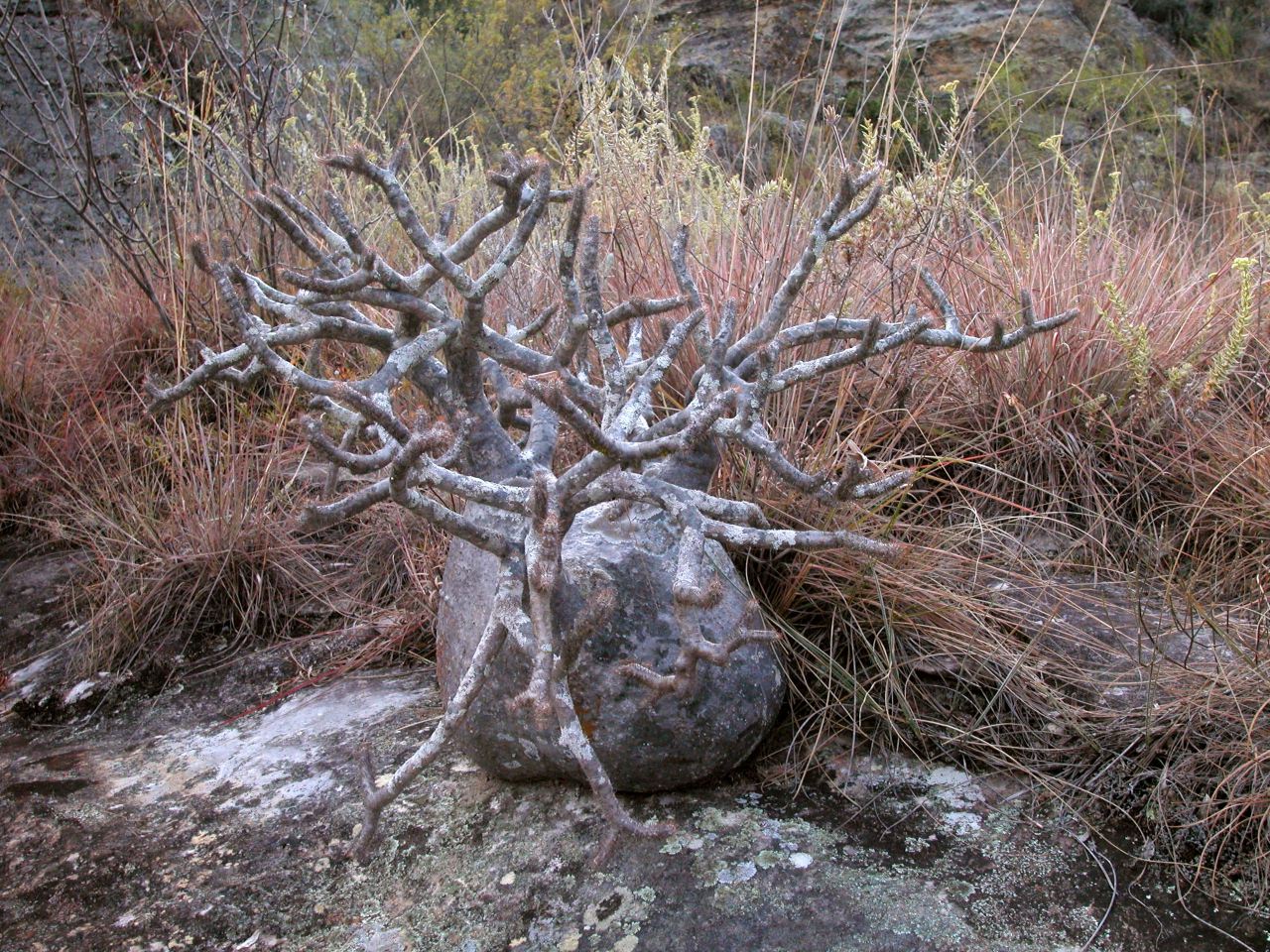
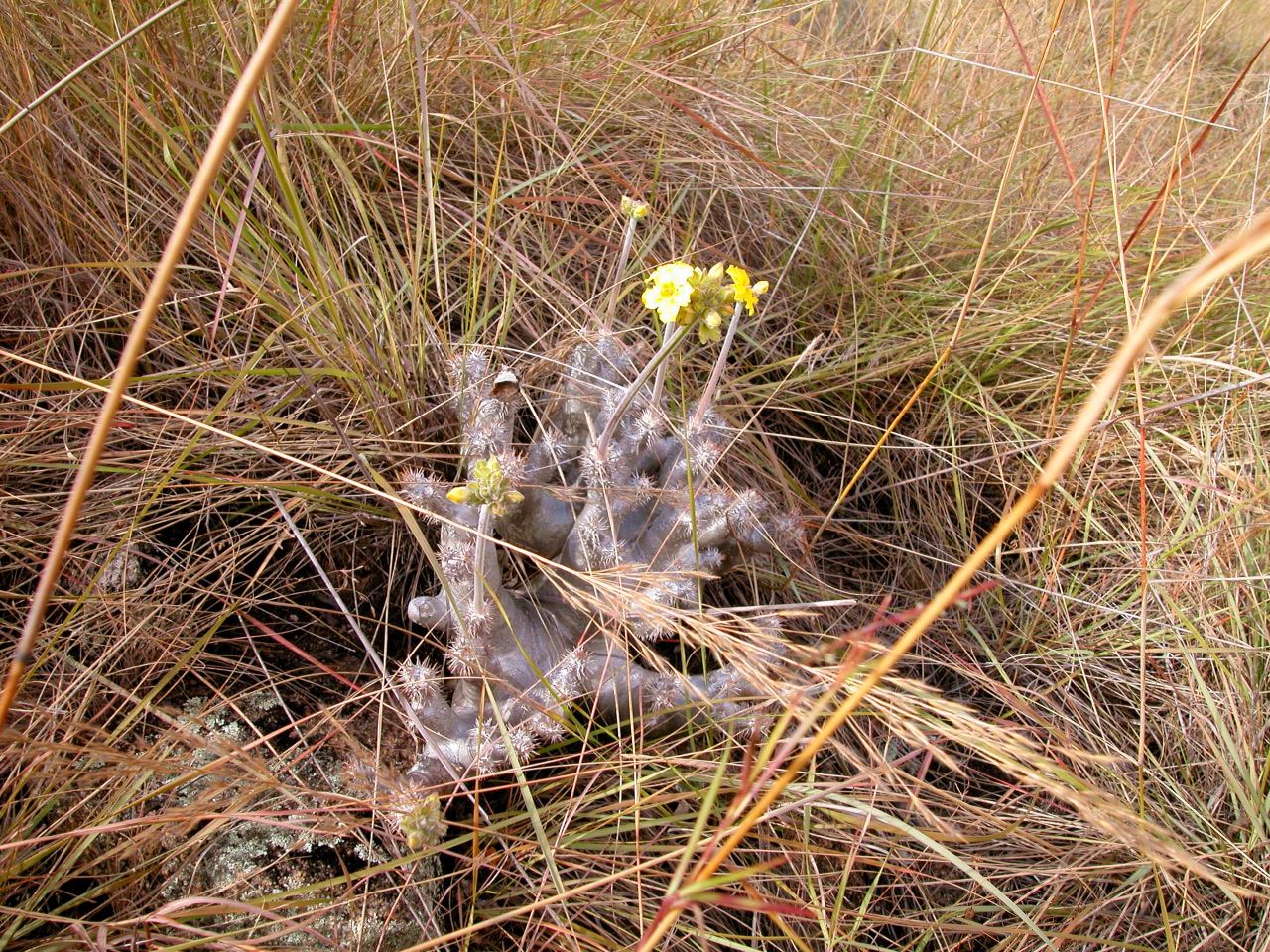
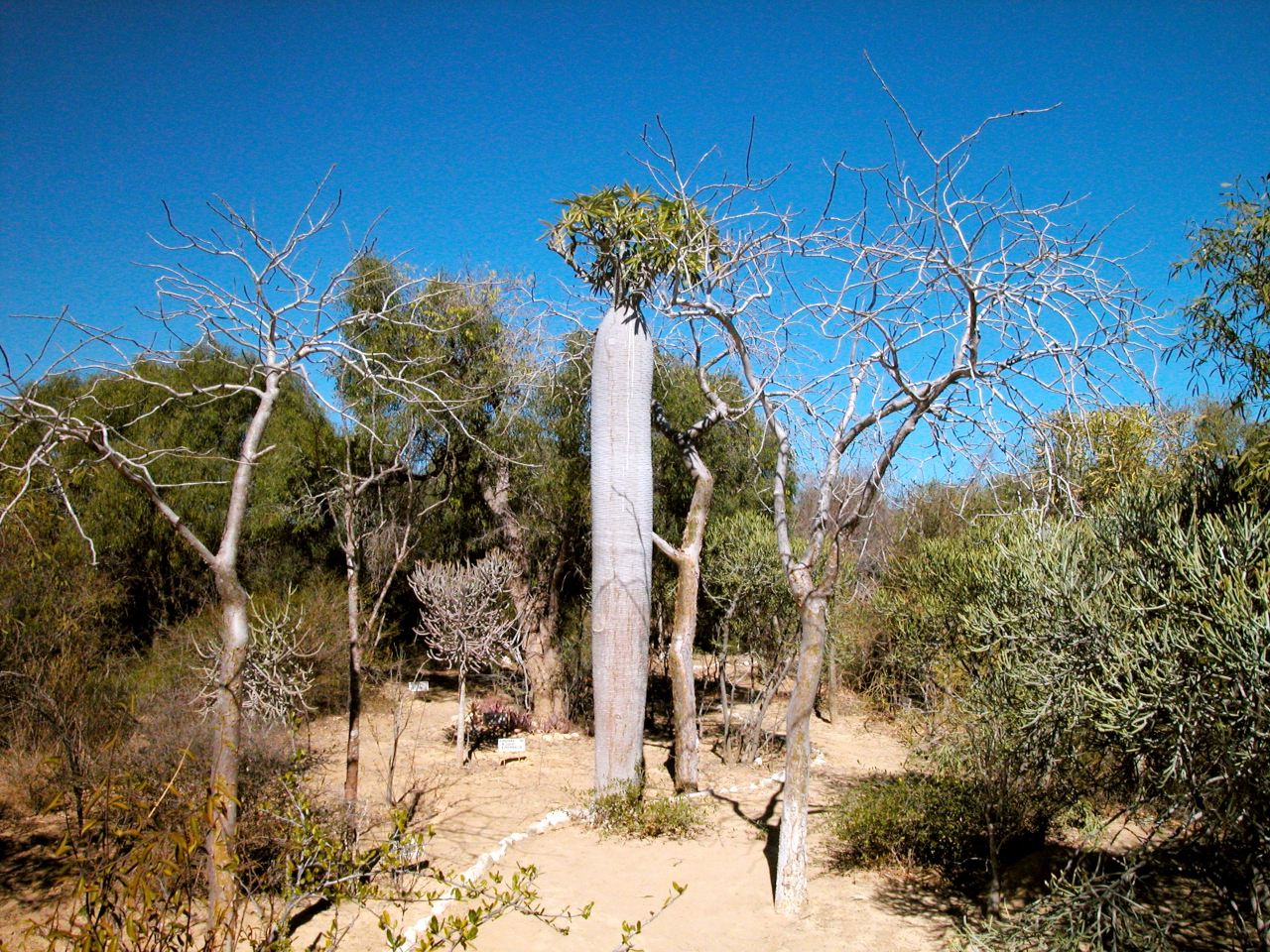
The plant lodged itself in our hearts. We remember it now, along with the kiwi. We brought a little pachypodium back to Saint Petersburg. It took, and became my mother’s favourite flower. She tends it, counts the leaves and measures it with a ruler. It doubled in volume in a year.
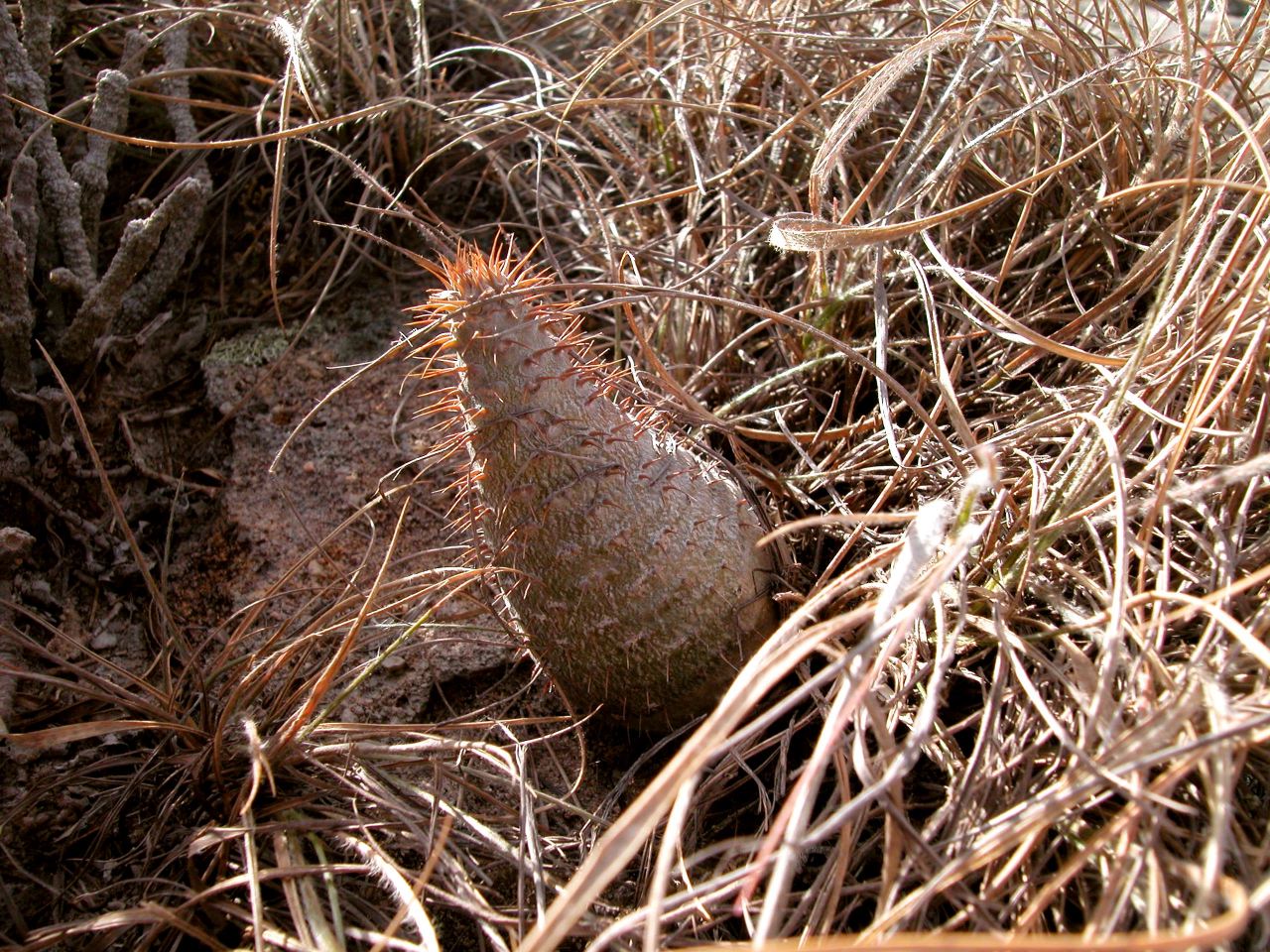
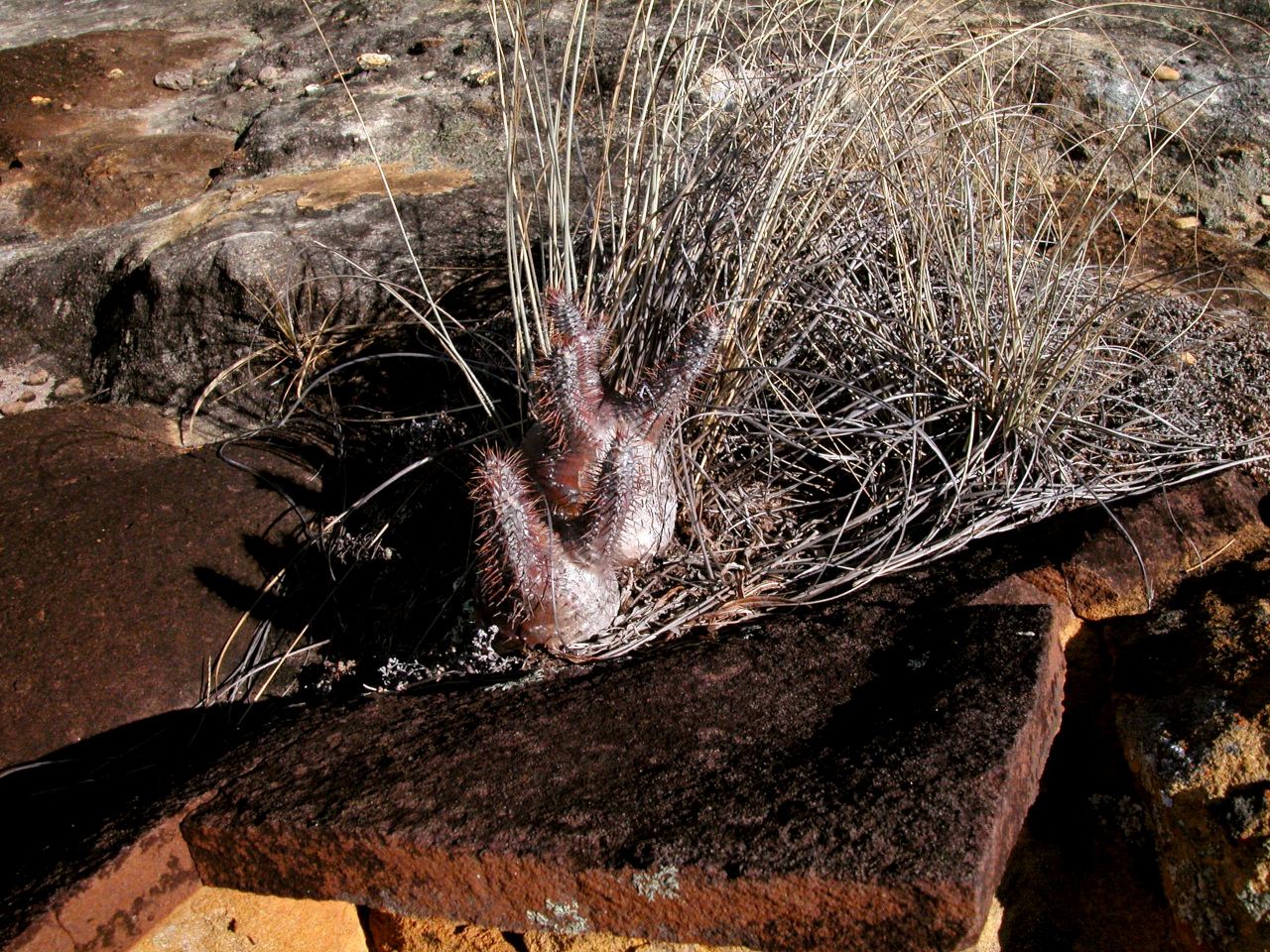
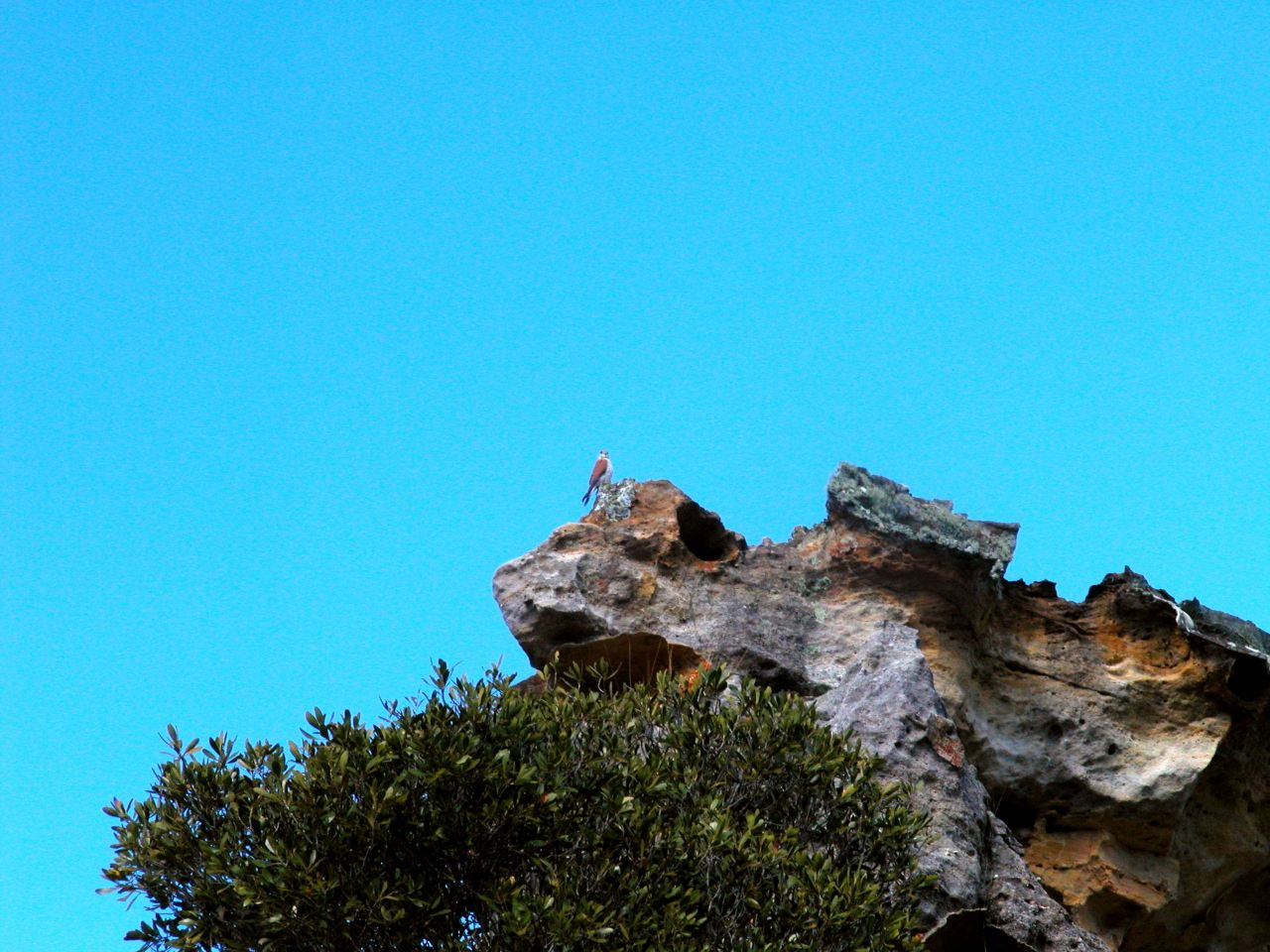
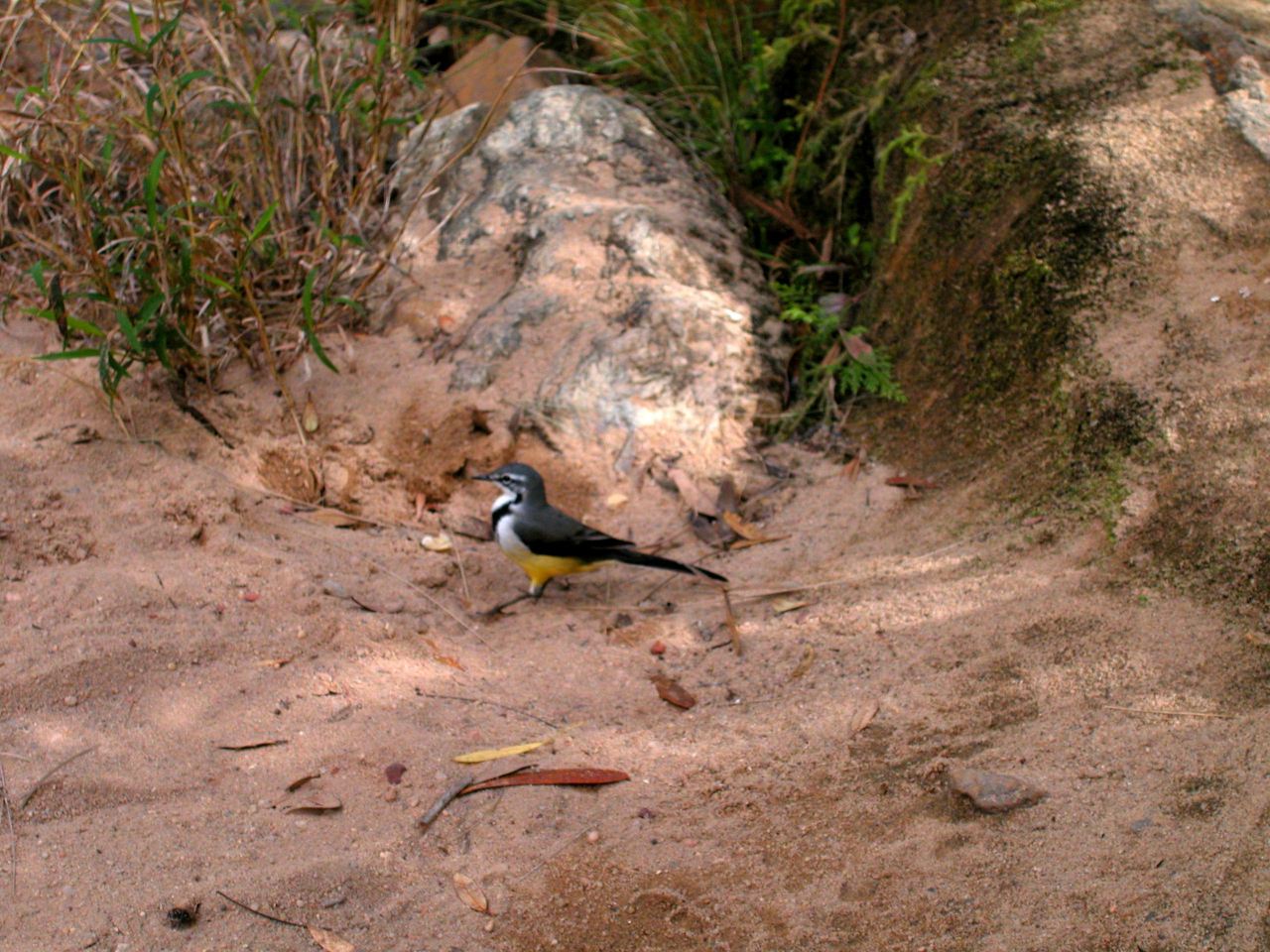
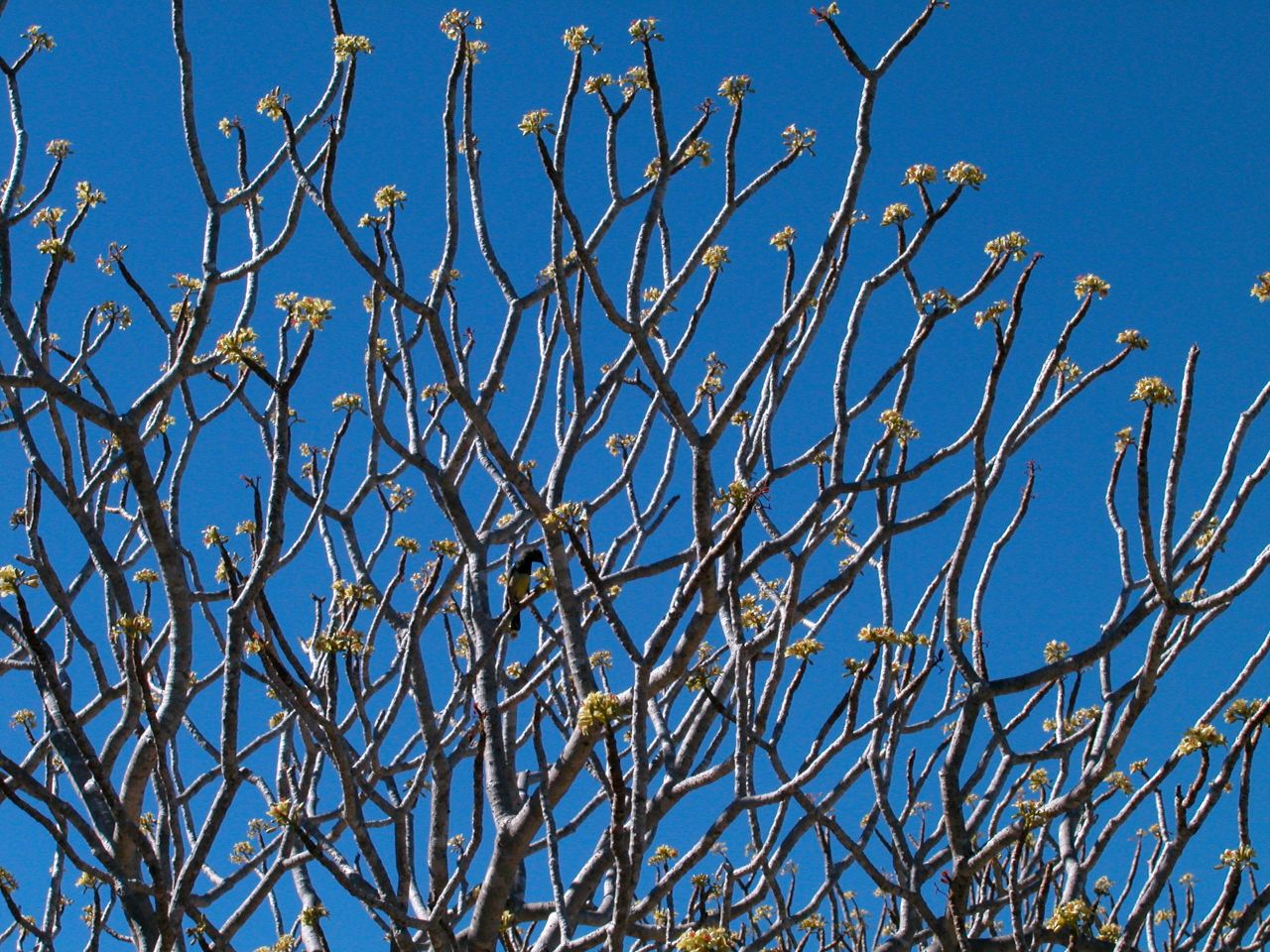
Besides the pachypodiums there grew plenty of aloes, thorn bushes and kalanchoes. The hills, deeply worn by wind erosion, made superb landscapes. Many kinds of bird came remarkably close, quite unafraid. There was the famous sunbird, which seemed to have much the same place in Western European imagination as our bluebird did, except that this one really did exist. We saw it. Now we could only hope our luck would hold.
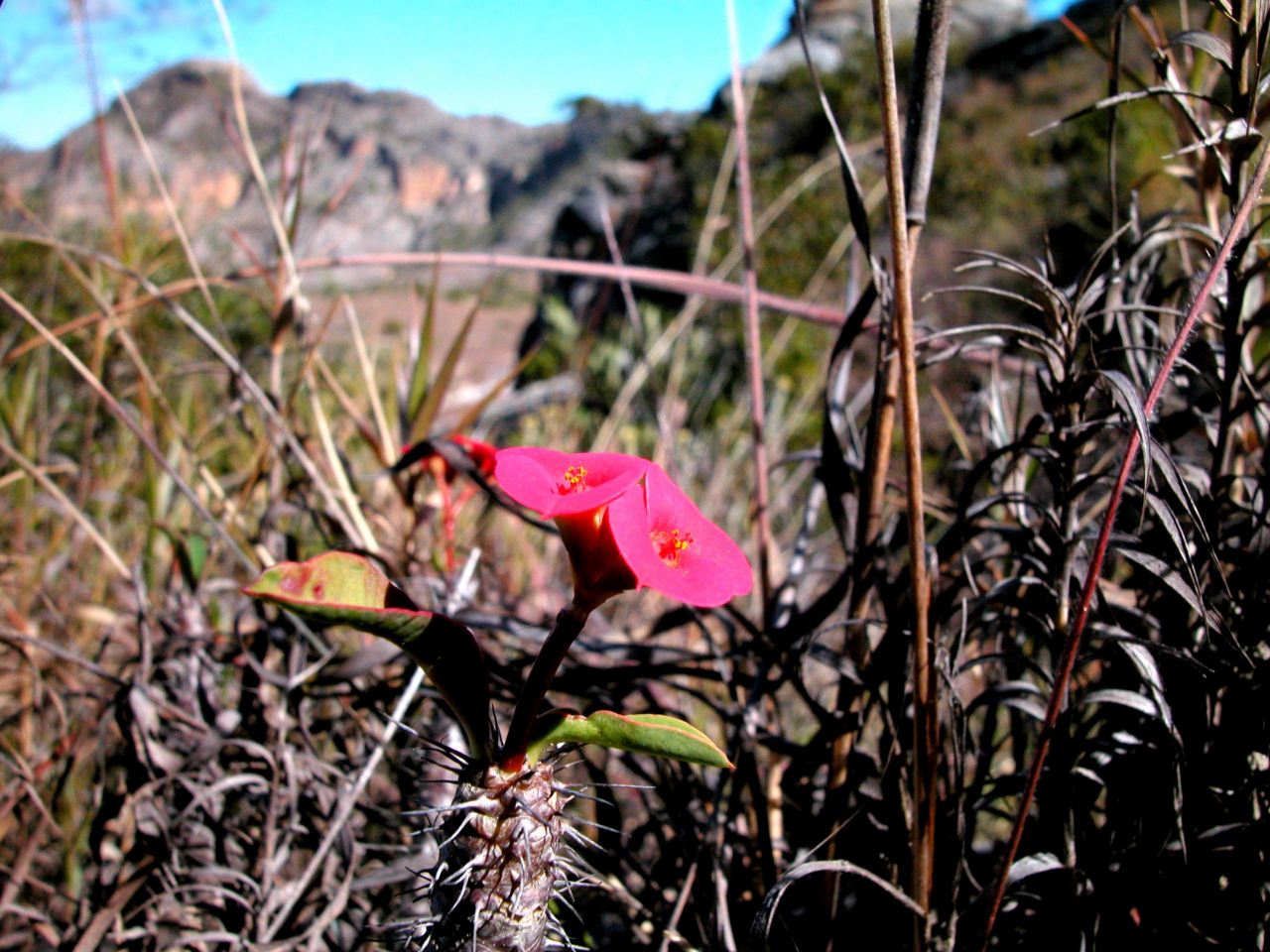
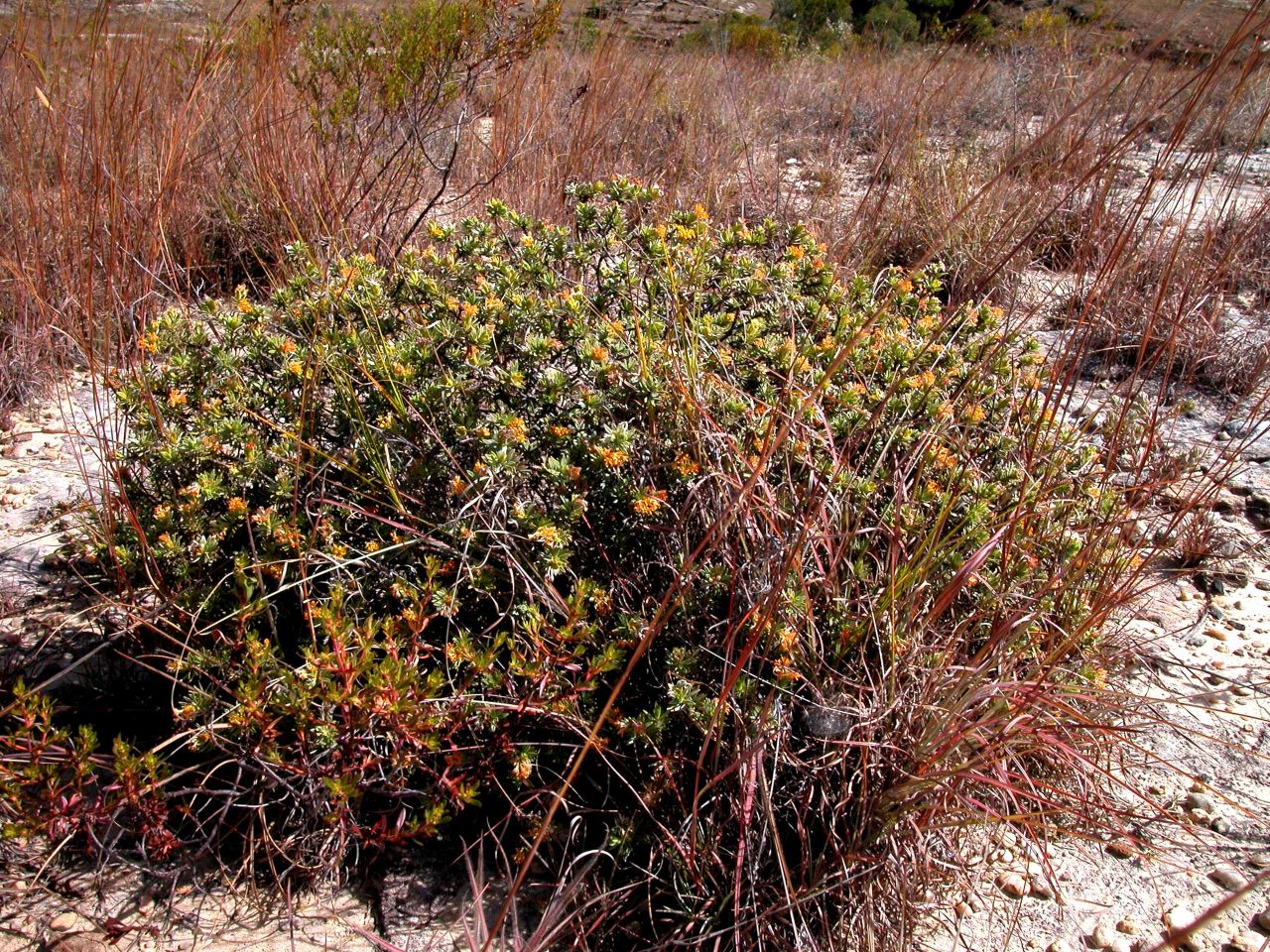
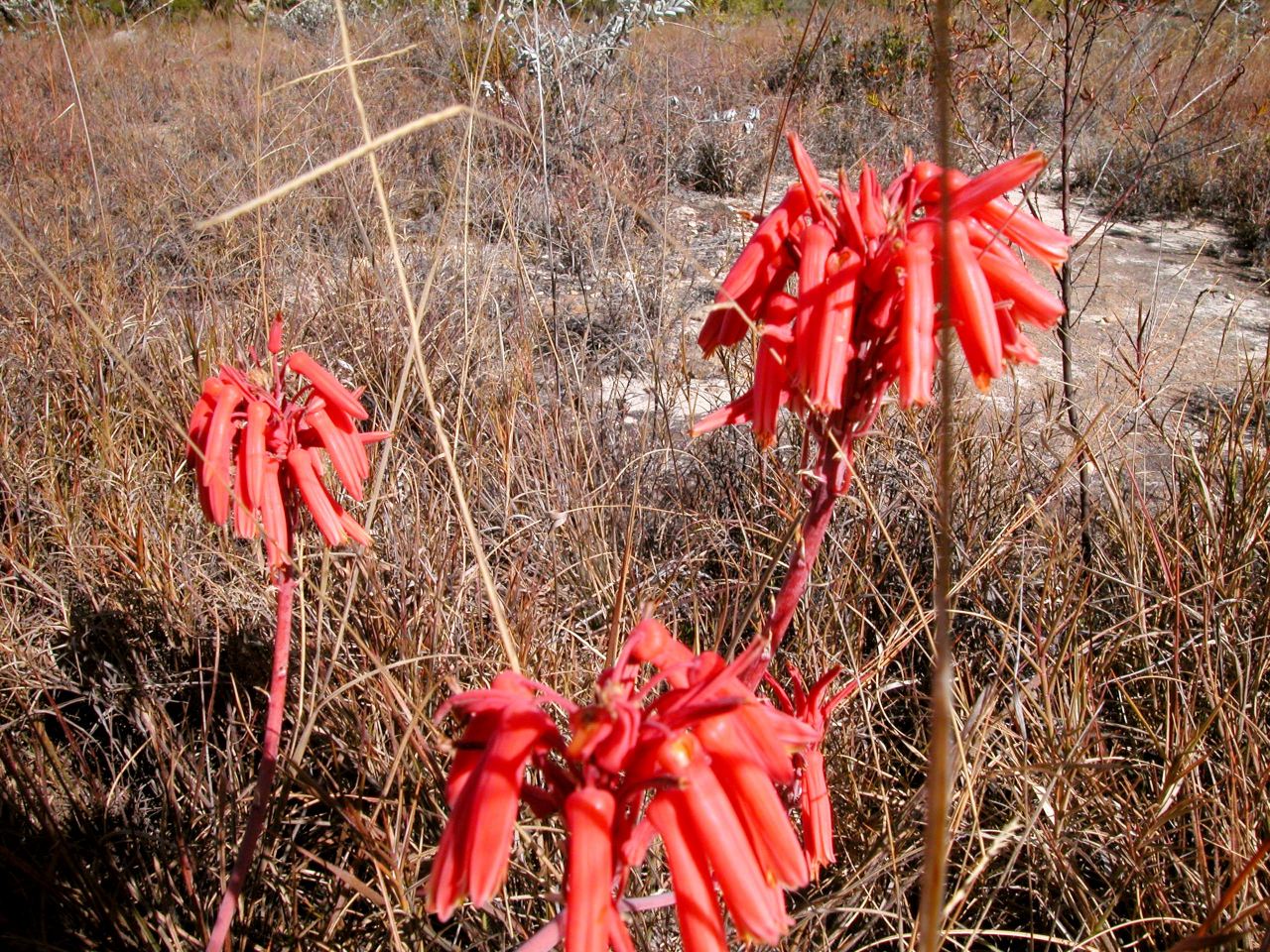
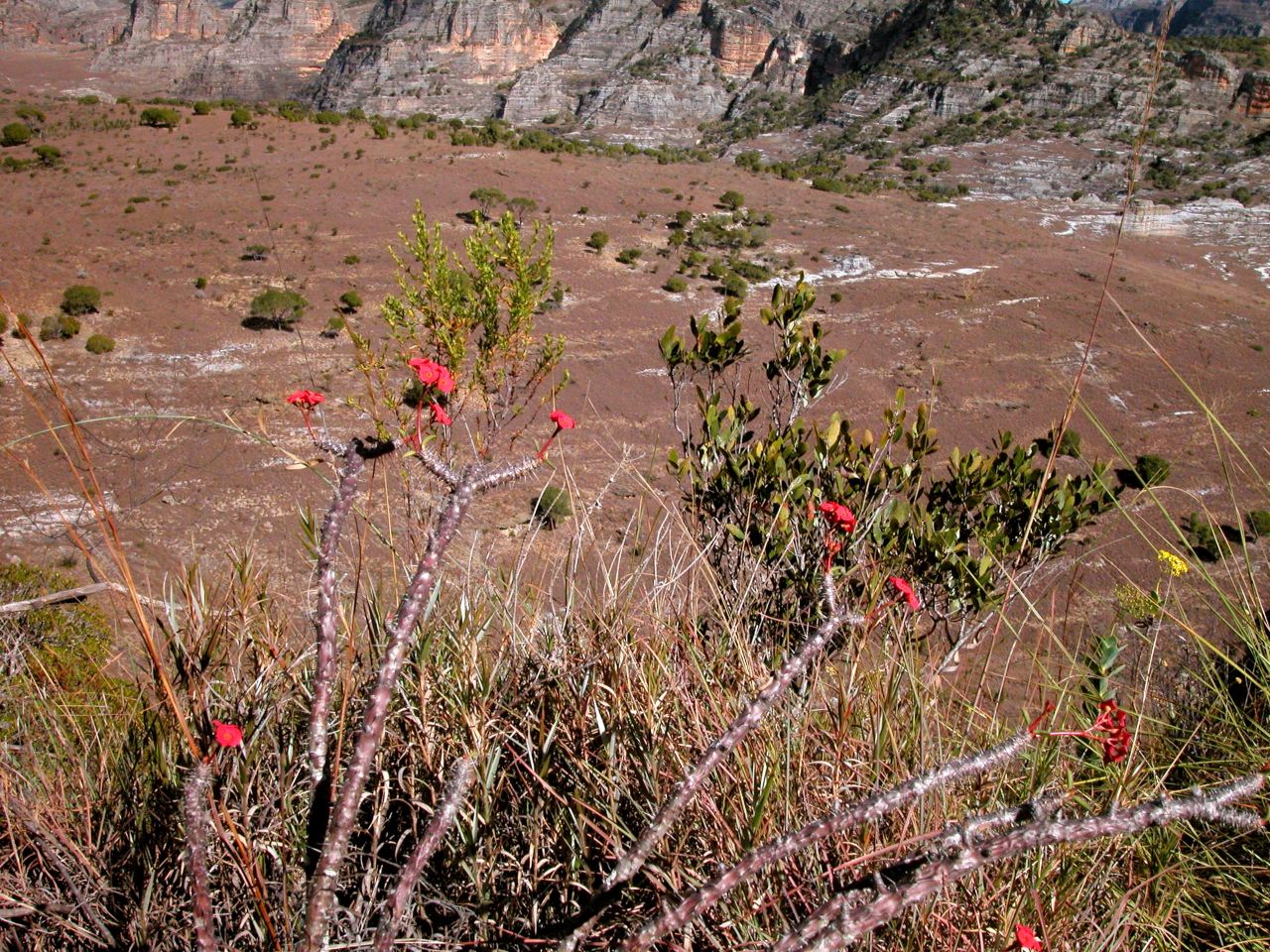
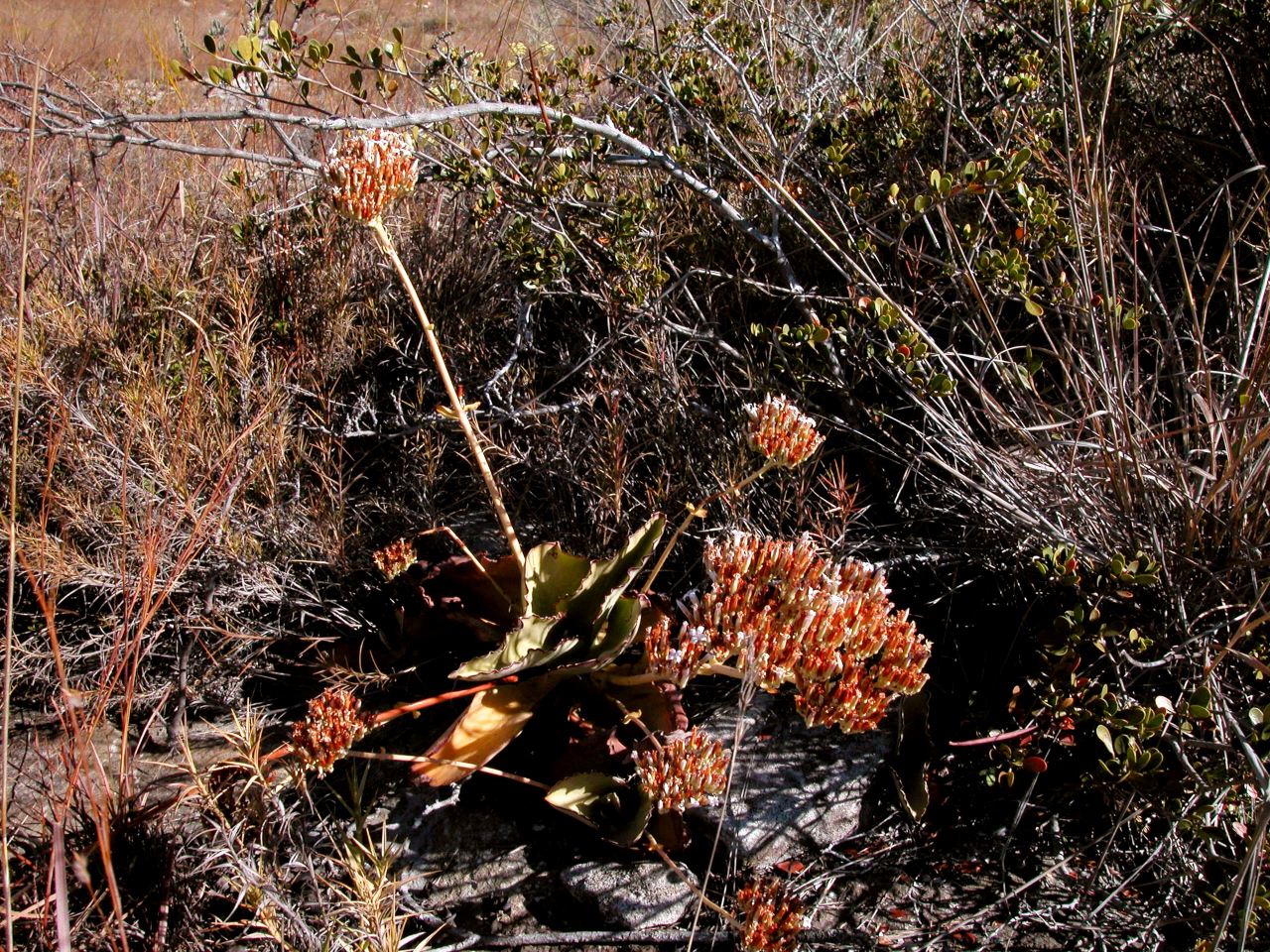
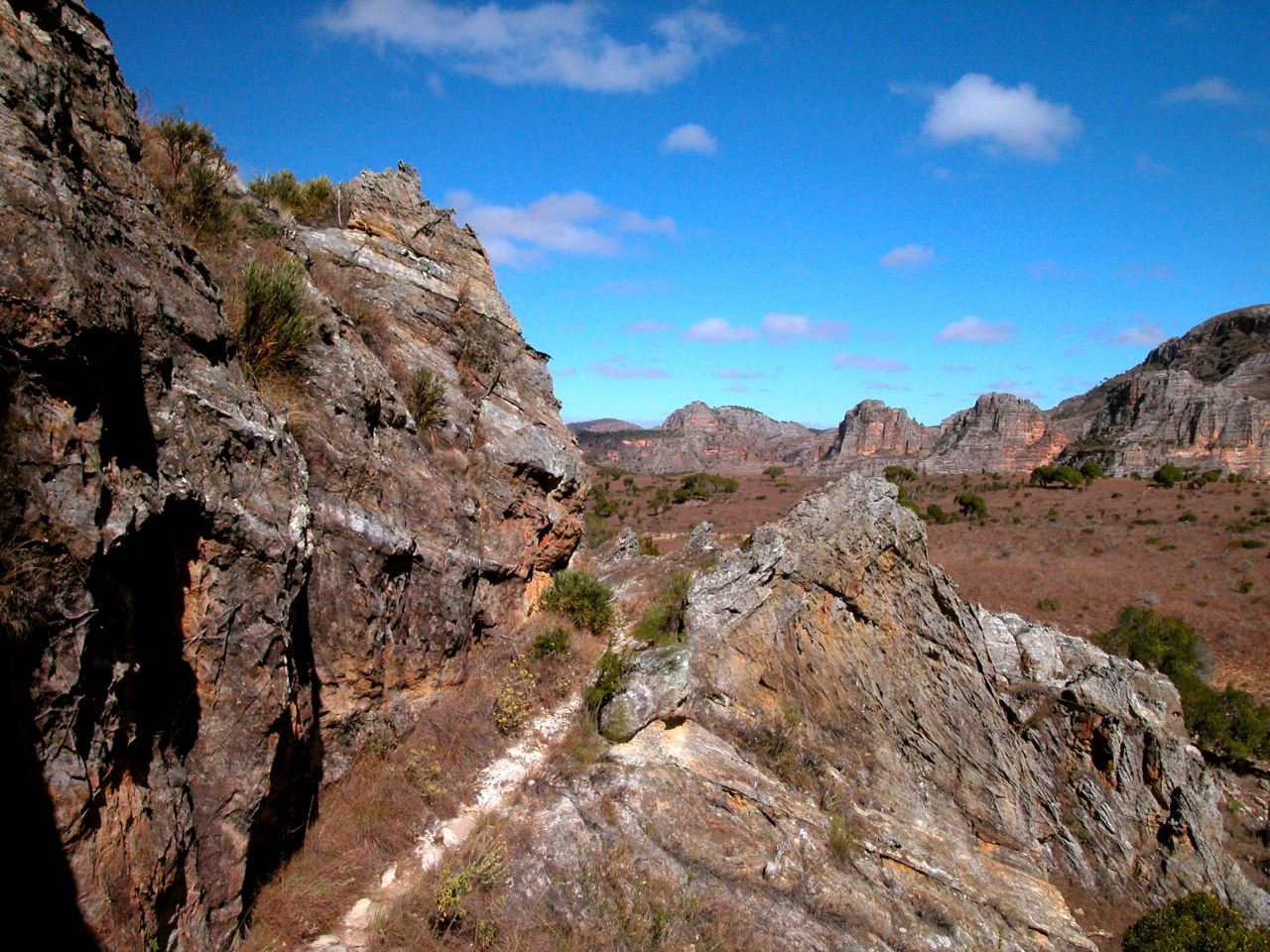
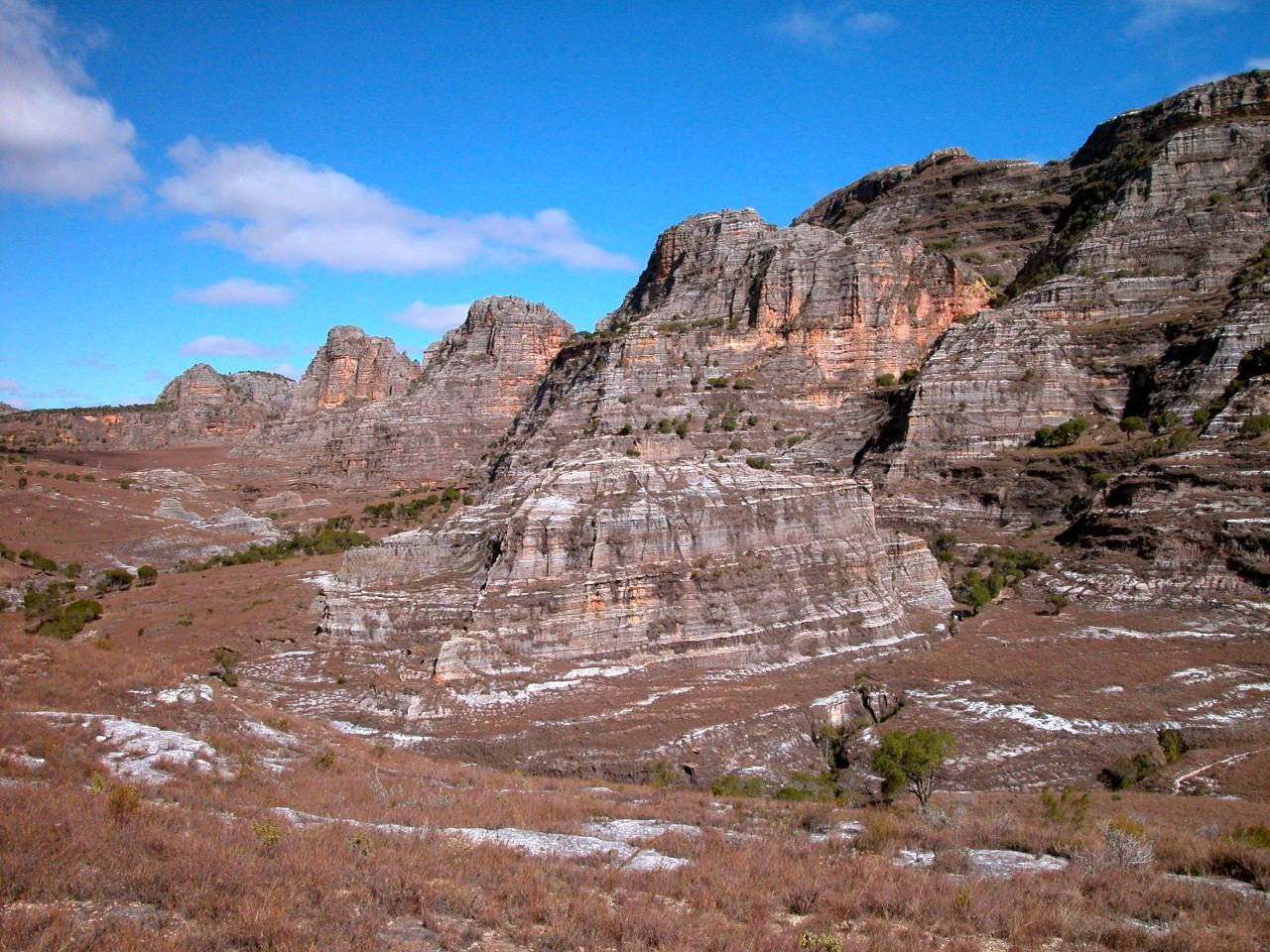
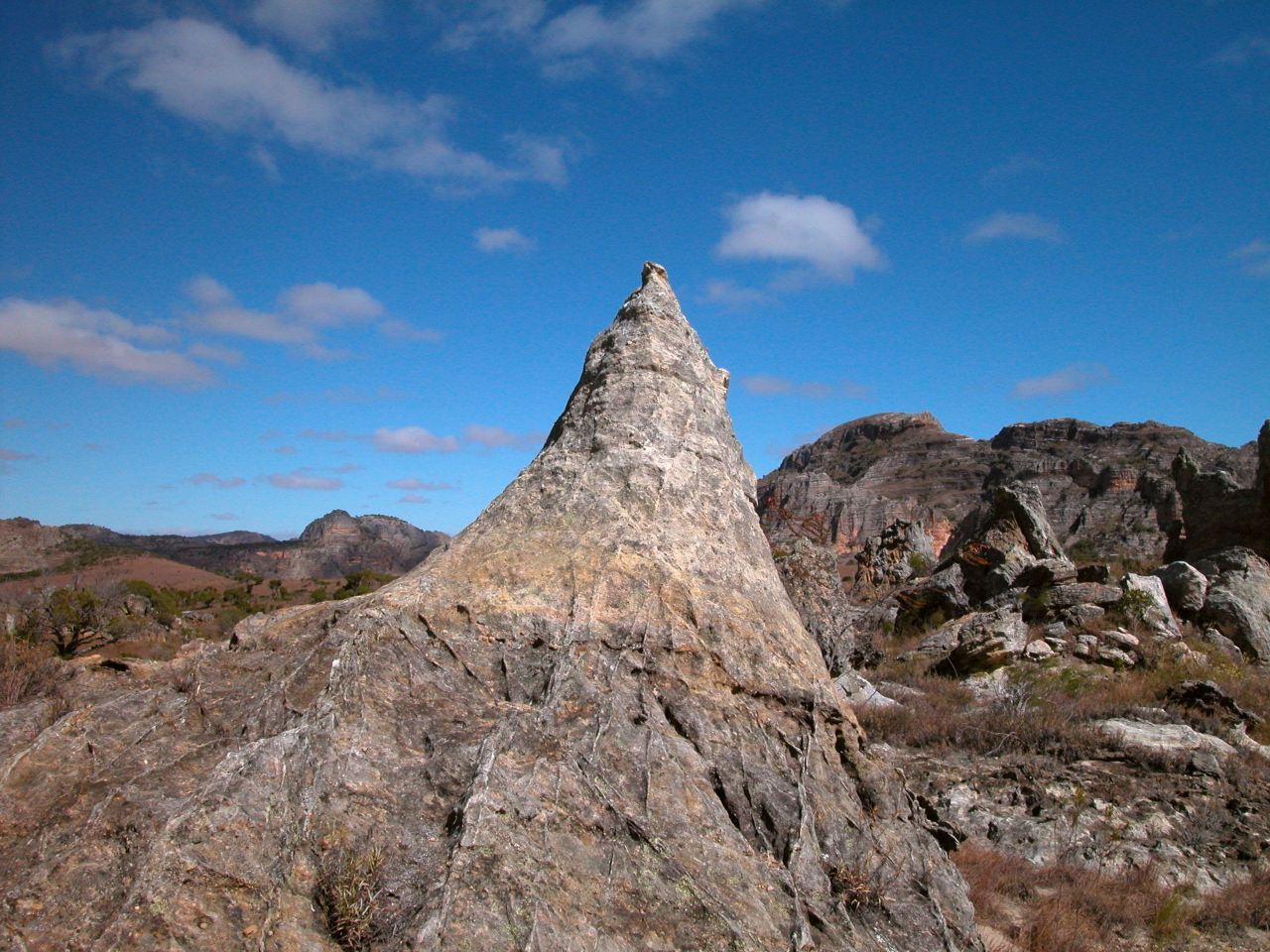
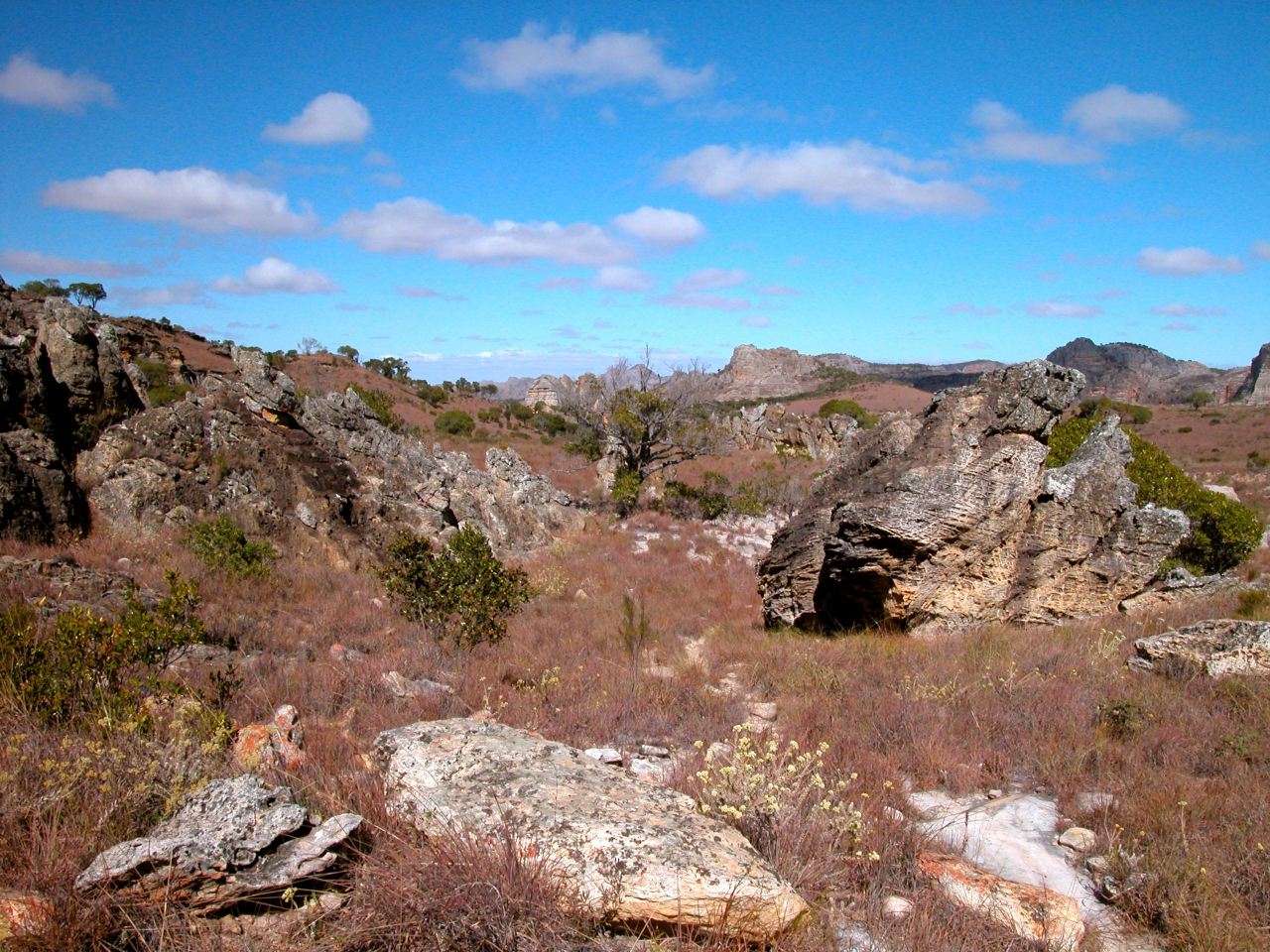
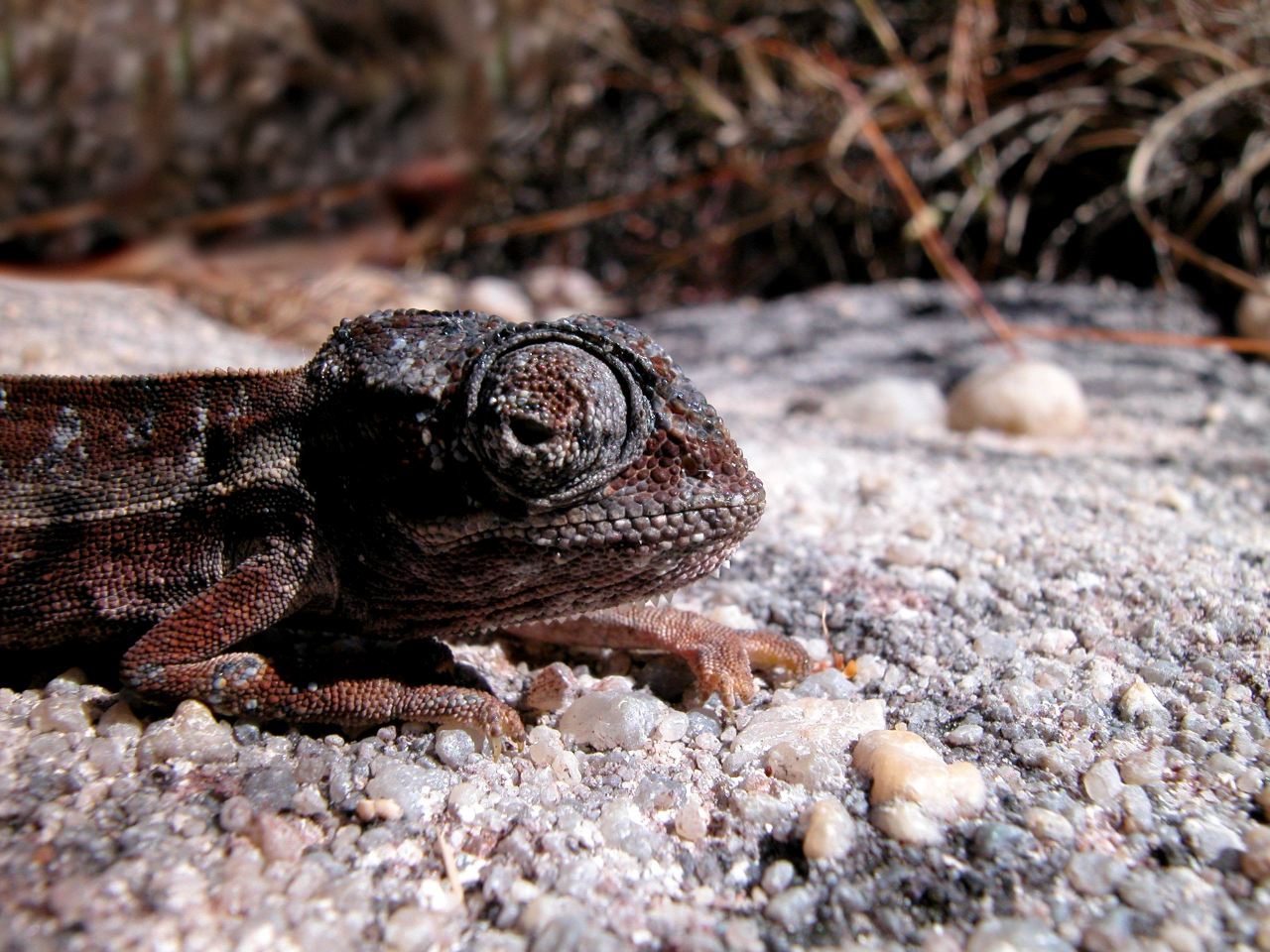
Lizards and chameleons ran across the ground. I managed to catch and photograph one chameleon. While I held it by the tail it sat still. When I let it go, it moved so fast that it blurred at a shutter speed of 1/2000 of a second. People say chameleons are slow.
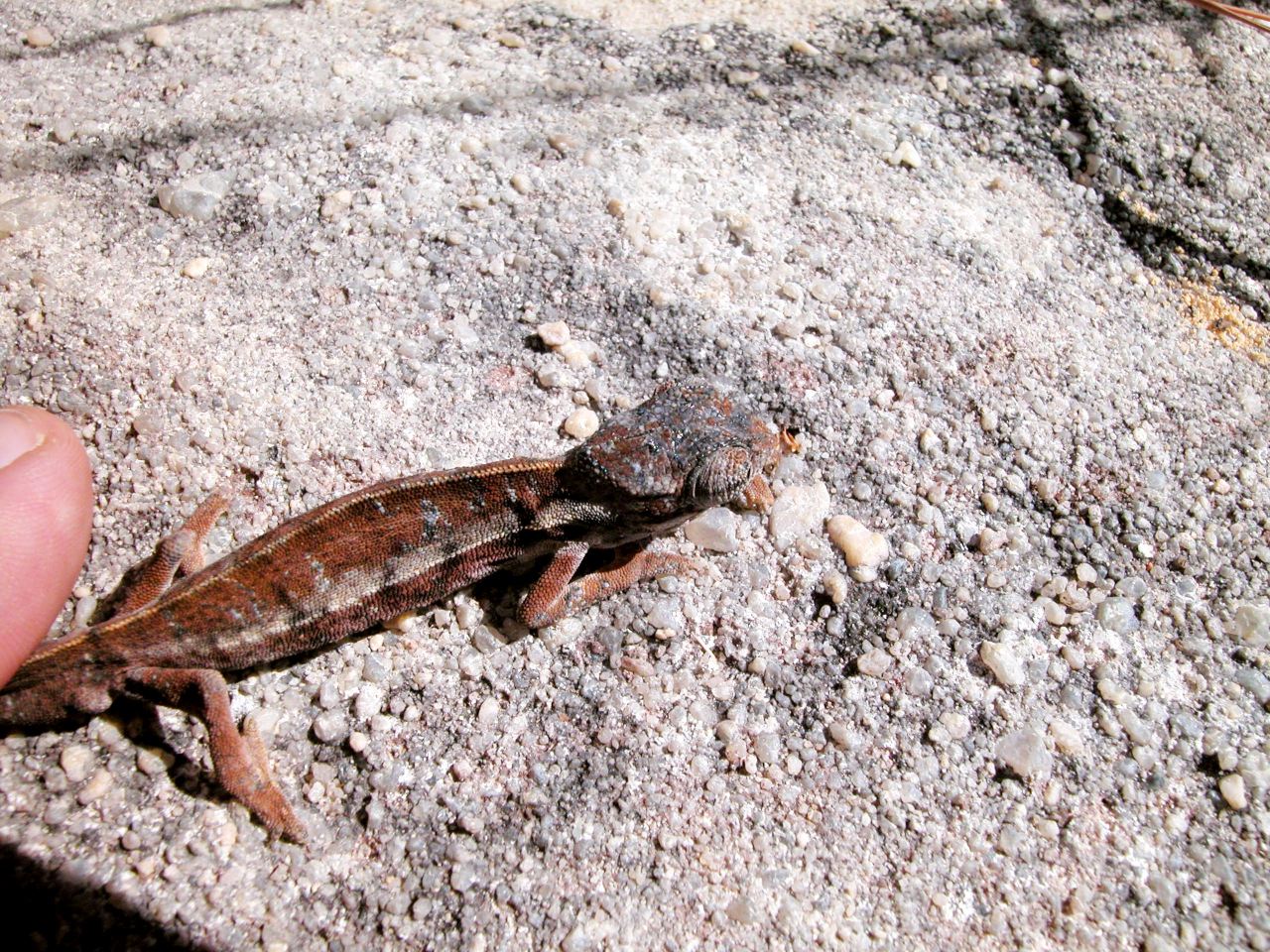
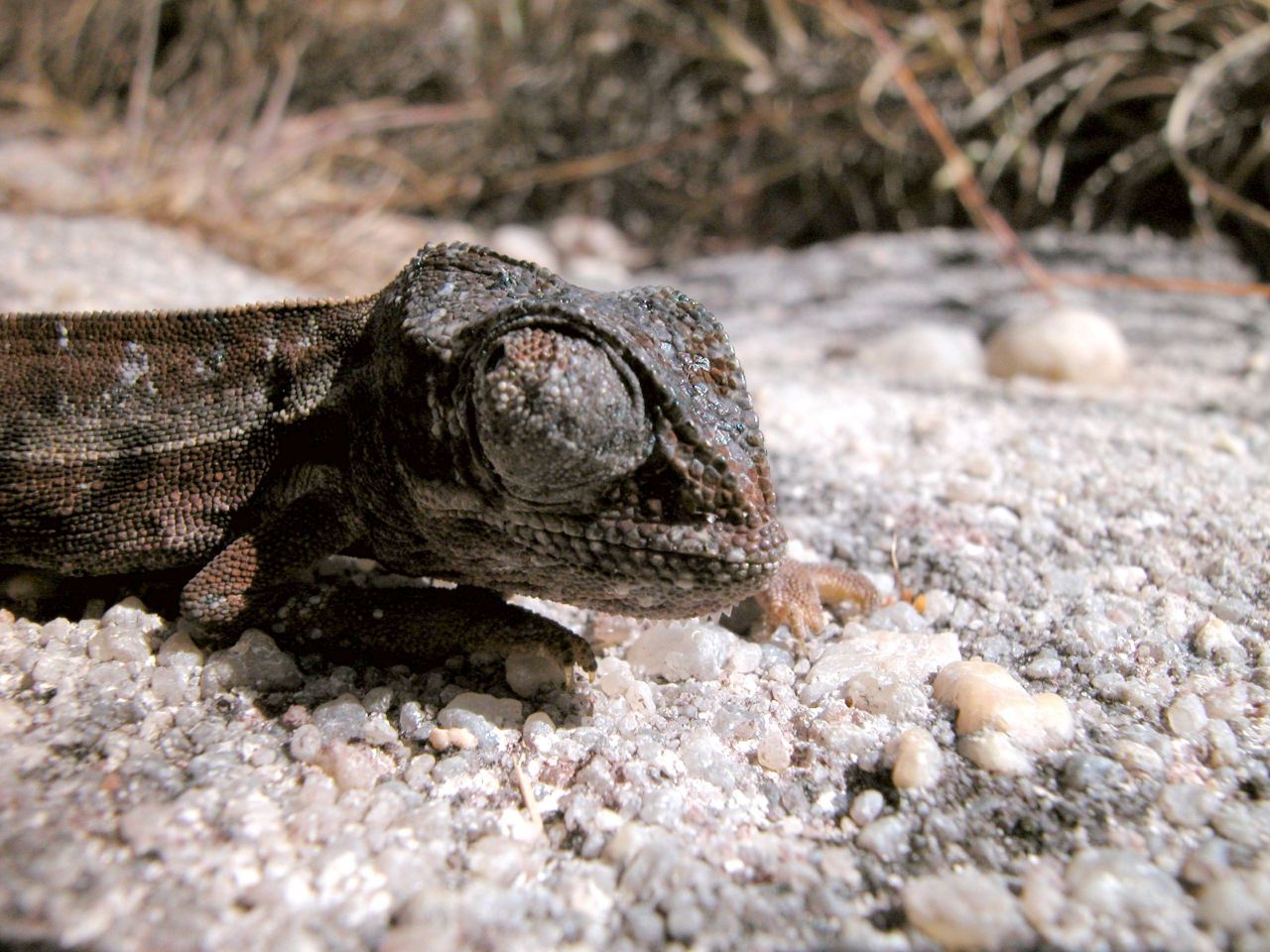
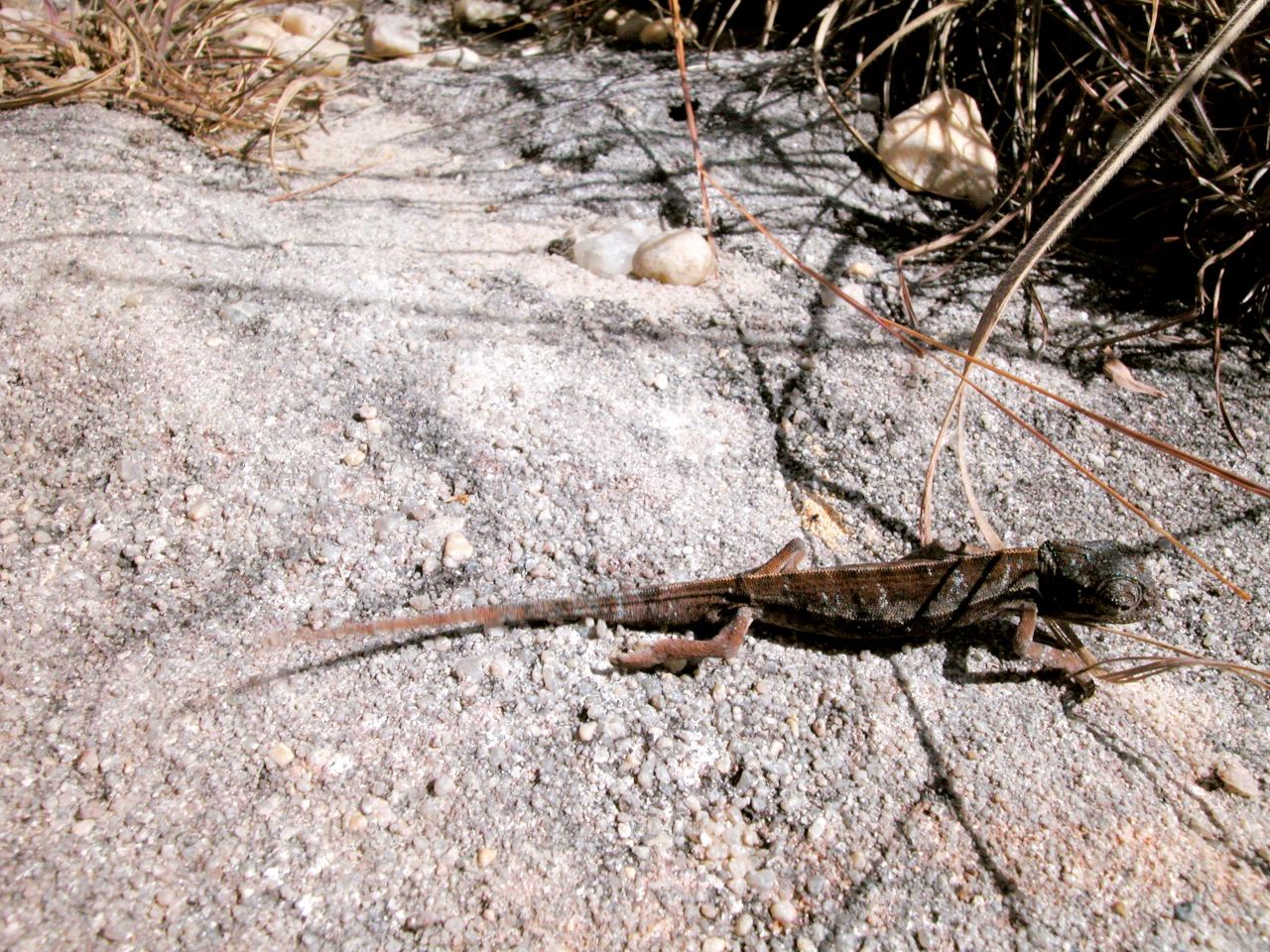
We covered the trail intended to take European visitors all day in four hours, overtaking large groups of French walkers who were stopping under the bushes to catch their breath and drink water.
The campsite was a huge, trampled clearing. Our beloved little tent had already been pitched in the dust, between the kitchen and the toilet. This was a particular honour, they told us, so we wouldn’t have far to go.
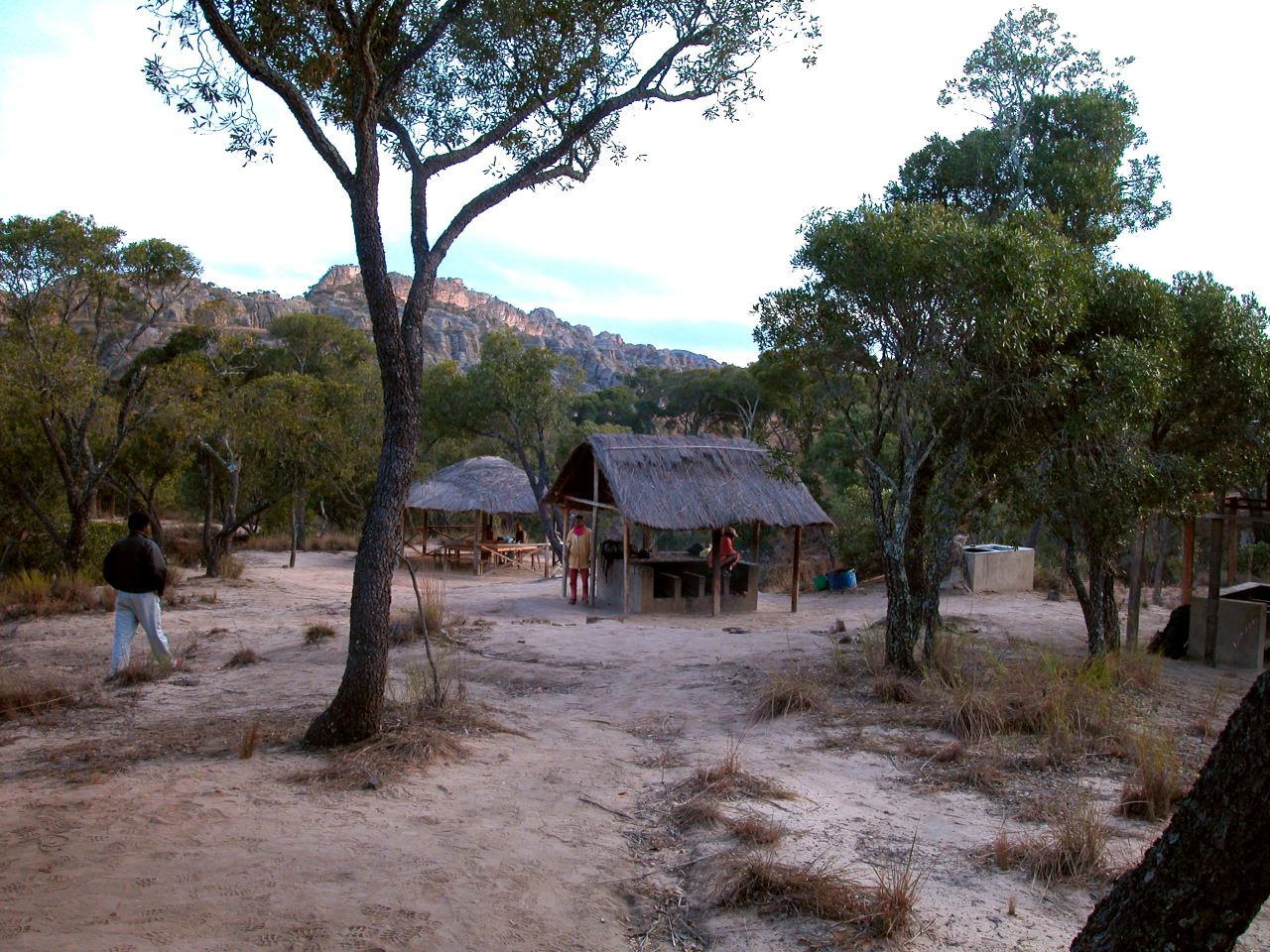
I was so disappointed that I couldn’t hide it. There was a huge, beautiful world all around and we were stuck on that dreary, dusty parade ground at 22°33.993′S, 45°21.982′E, elevation 850 m. Tanya and I walked off in dejection and suddenly realised there were still four hours until sunset and nobody was trailing us. We were free. We climbed the nearest hill, then the next one. There are a lot of burial sites in the area, some said to be royal. Walking on those hills was taboo. Who was going to catch us?
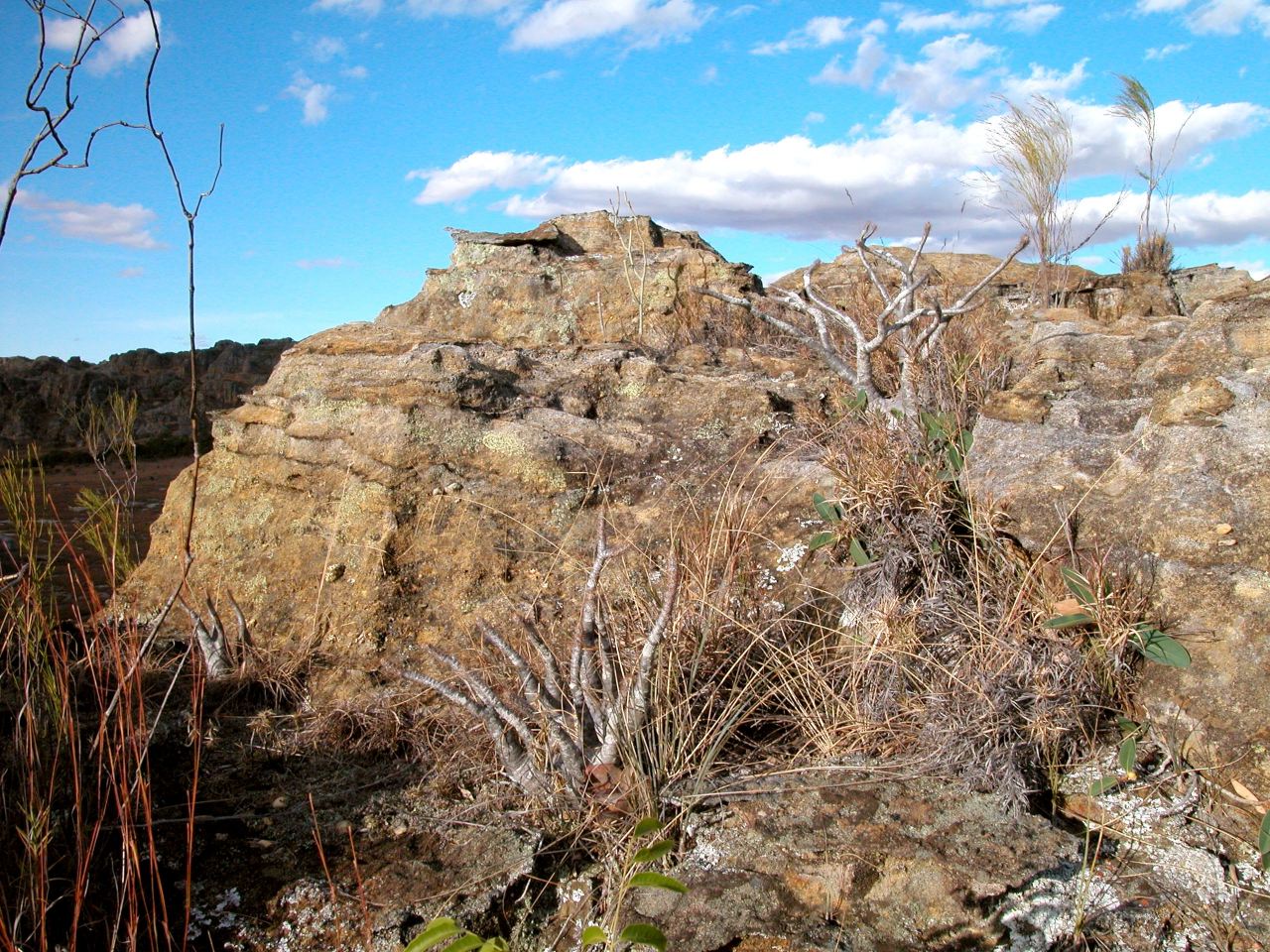
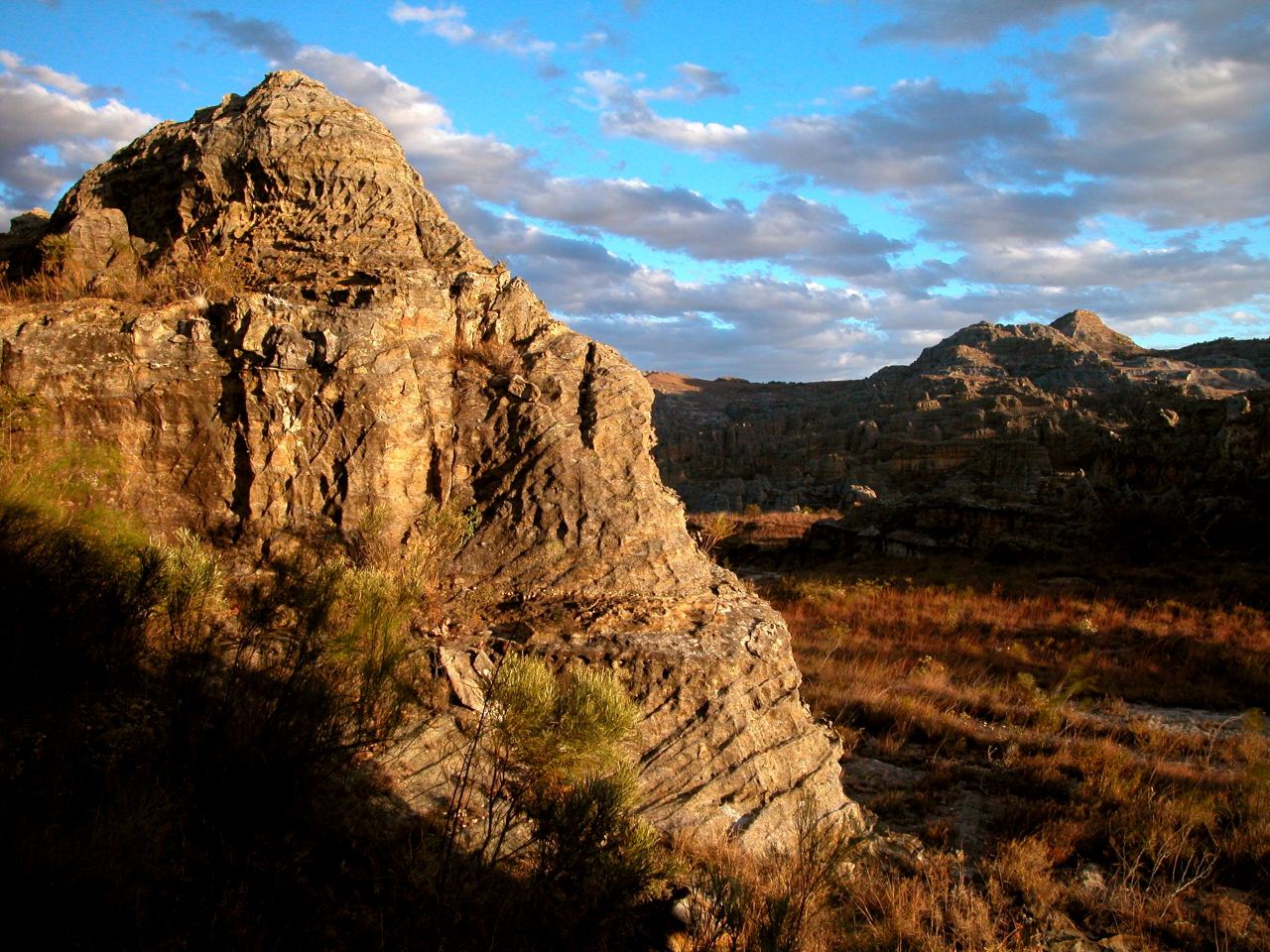
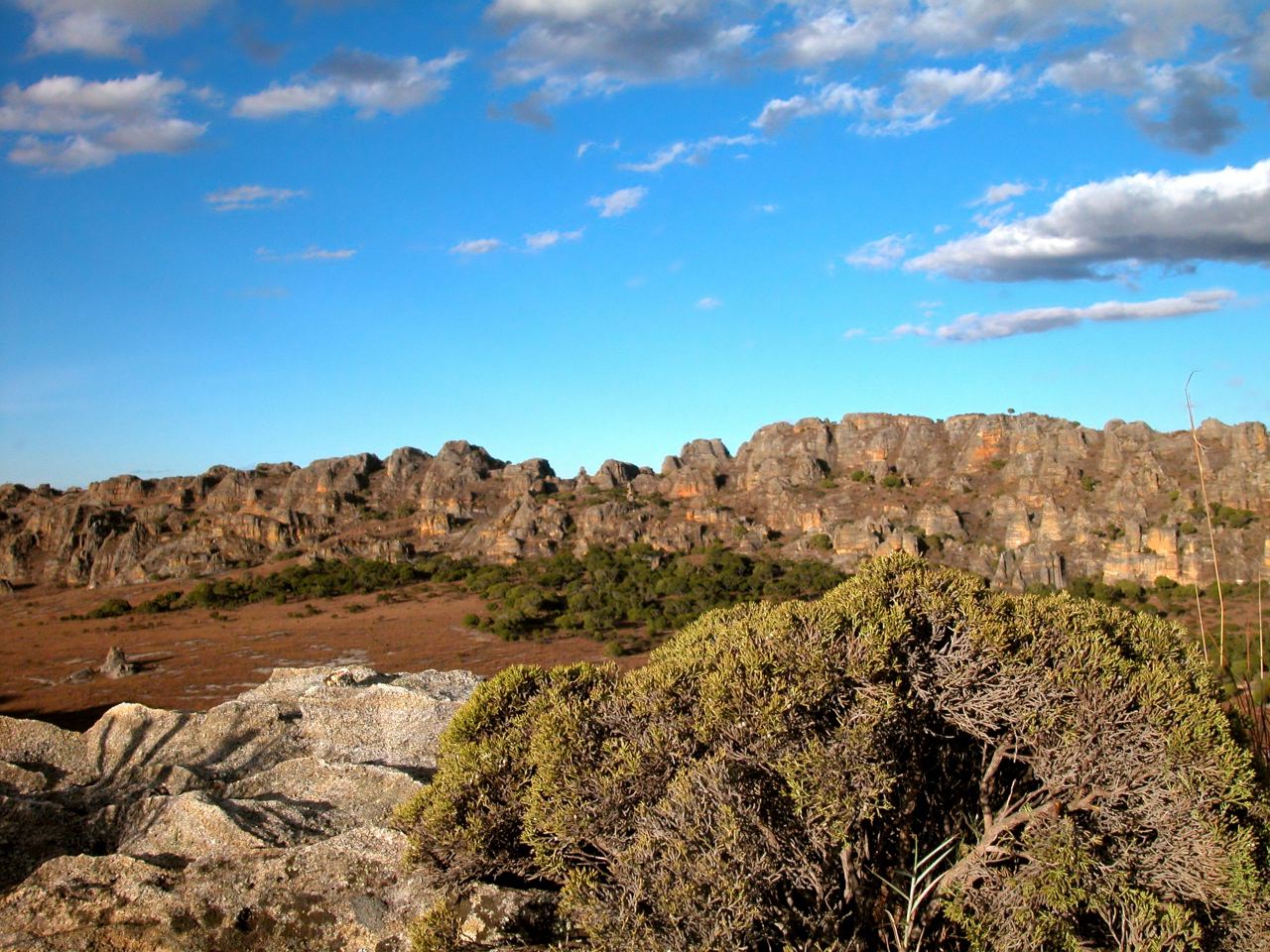
Malagasy communities were considered Christian, but the customs we saw seemed much older. The burial rituals were particularly striking. When a person died, the property, reckoned in zebu, didn’t pass to heirs. Instead the herd fed everybody at the funeral.
The body and the deceased’s personal belongings were placed in a cave and sealed in with stones. On flat ground a square stone box was built for the body and covered over with stones. The zebu were eaten until everyone had had enough. Skulls with their horns were laid on top of the grave. The more horns there were, the more respected the person had been.
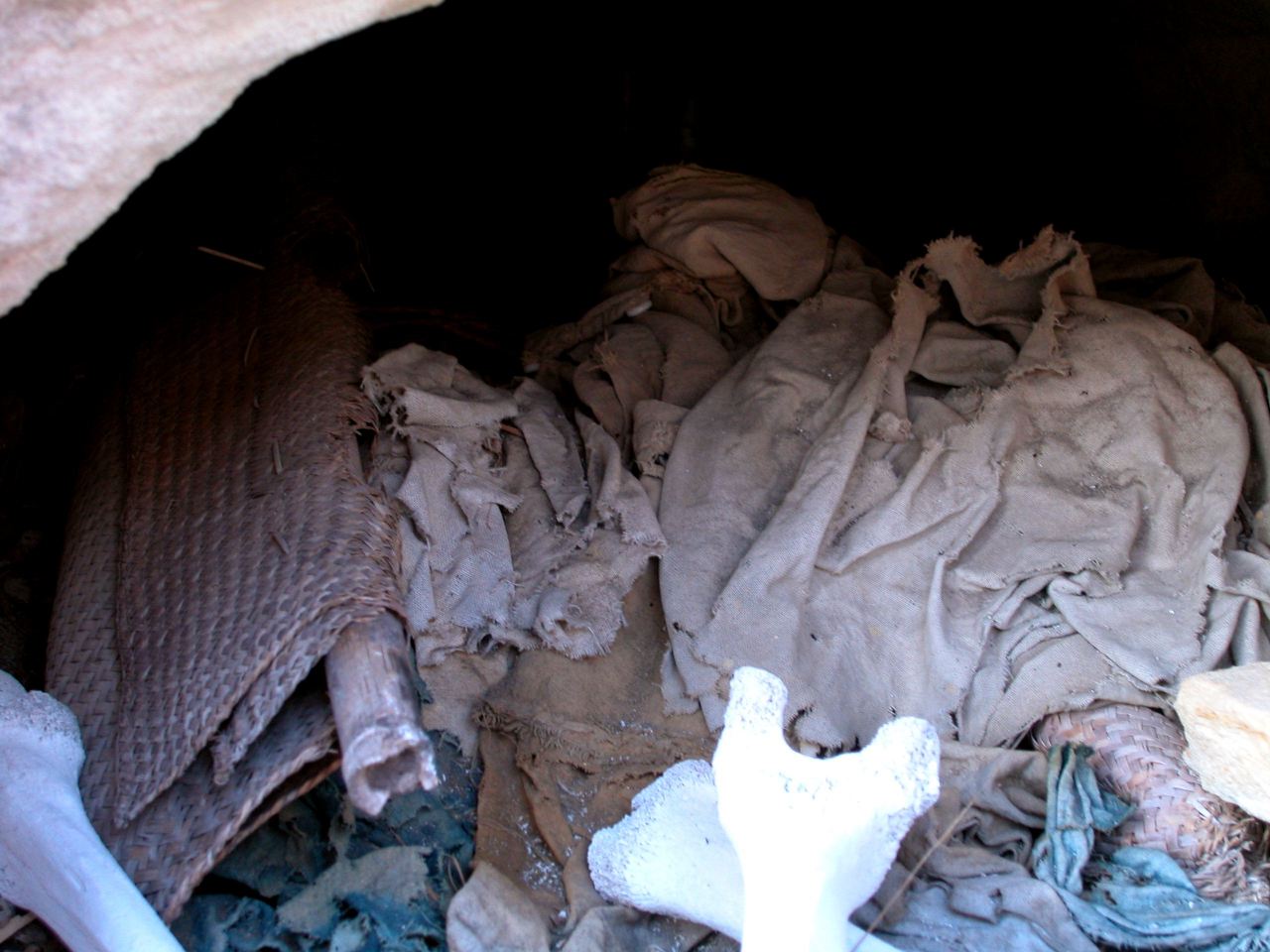
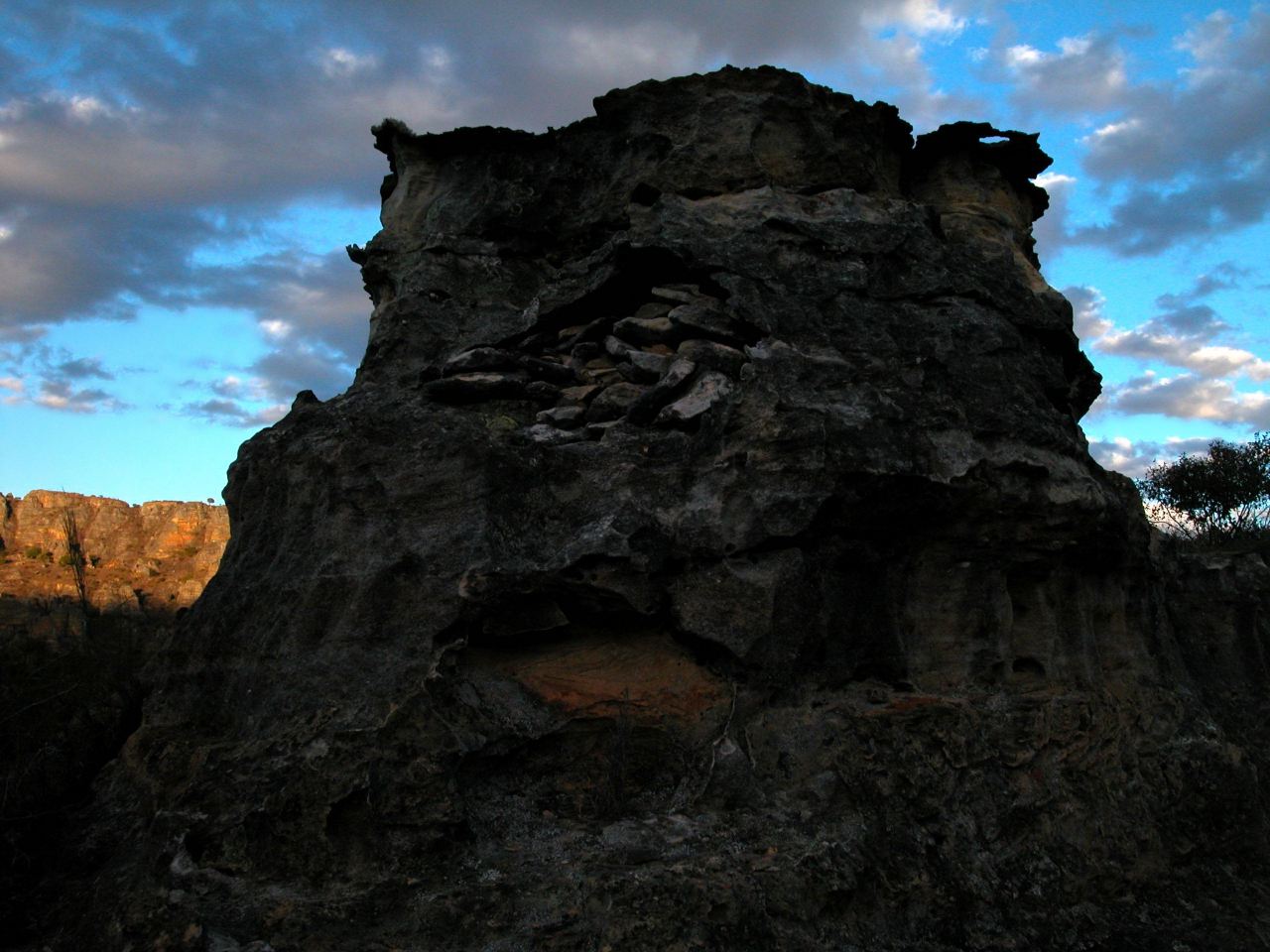
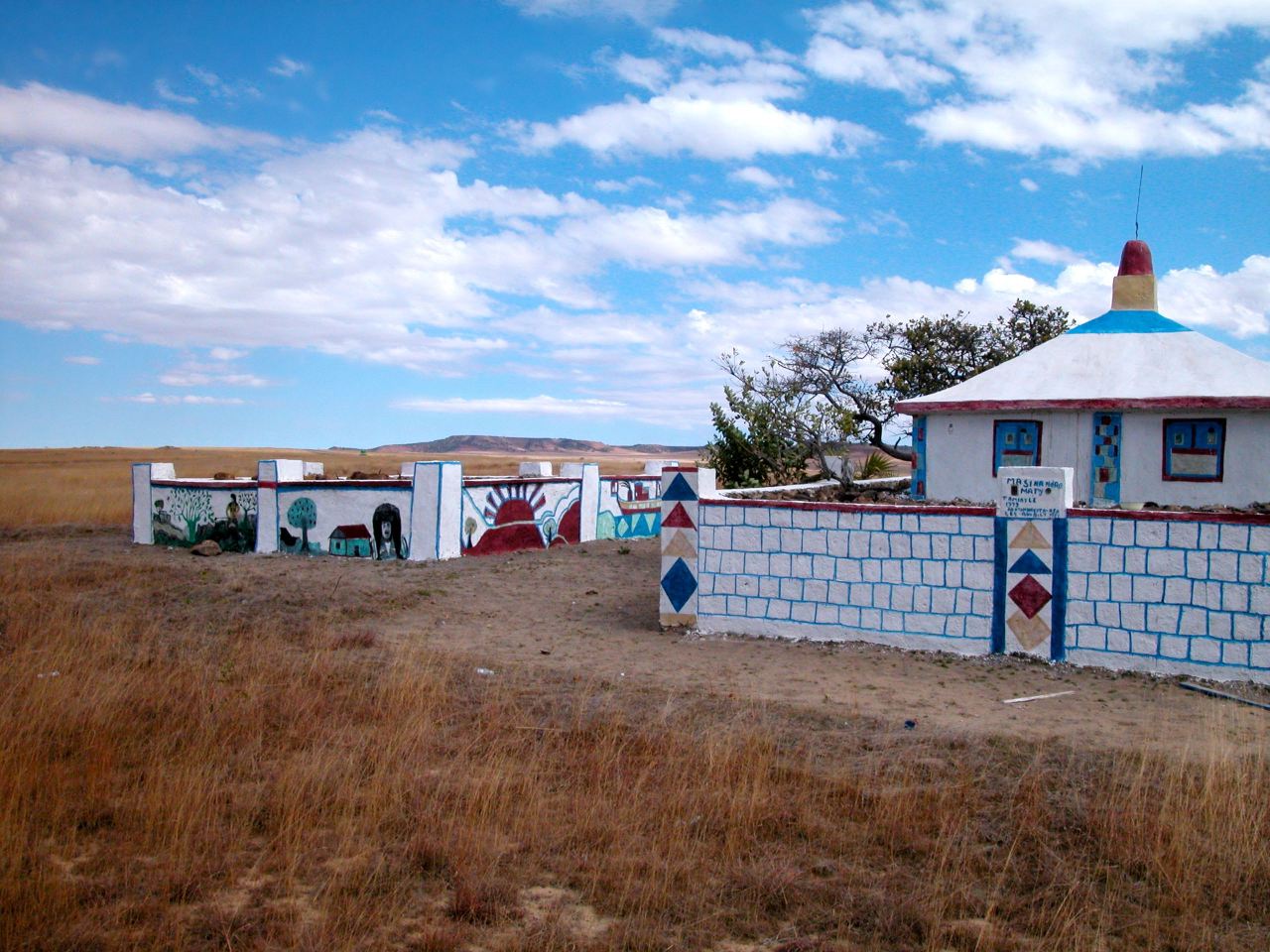
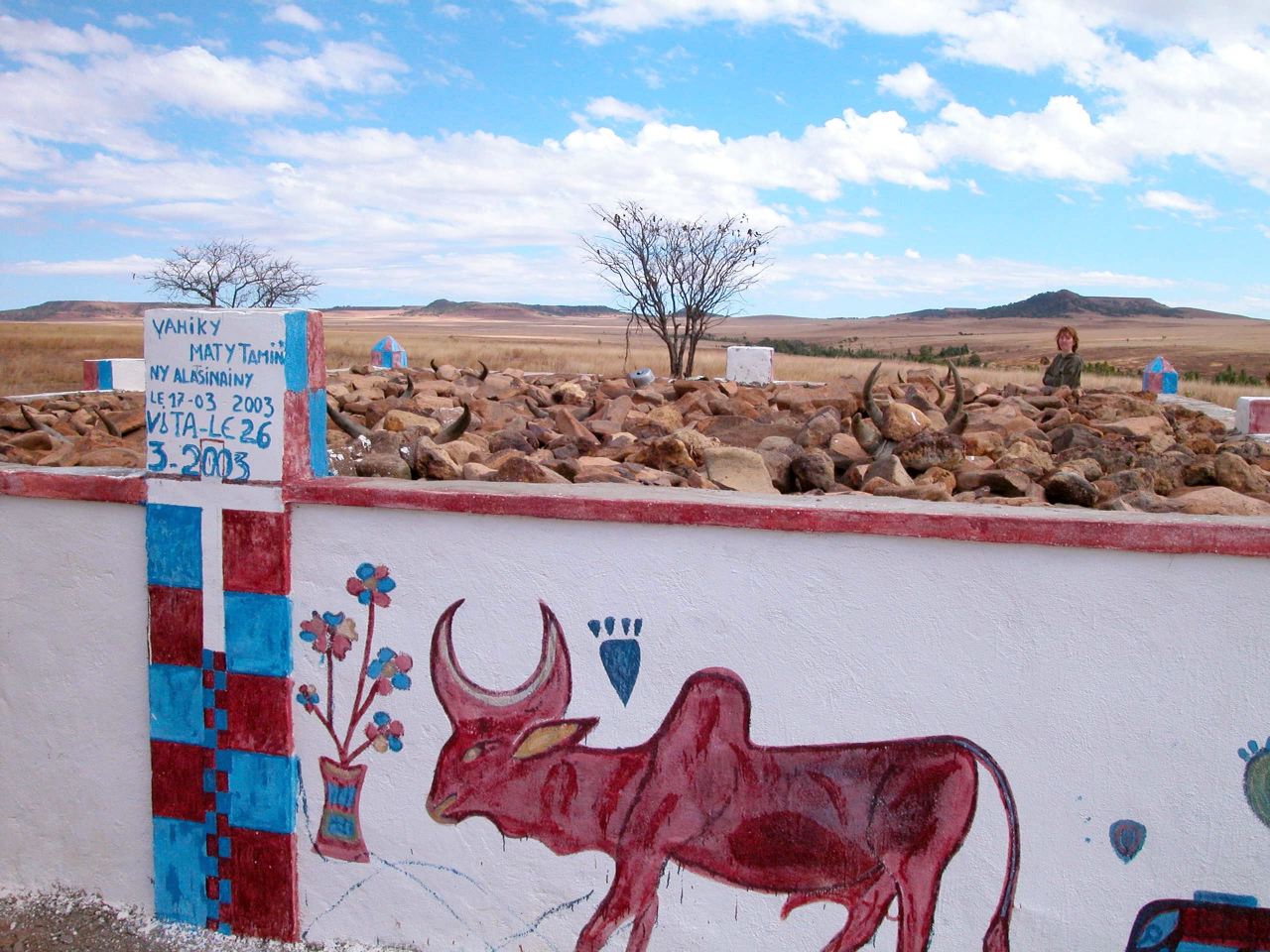
The most unusual thing happens a few years later. In the spring, in September or October, families can open the tomb. The stones are taken apart and the bones of the deceased are laid out, washed and brushed. The family eats more of the dead person’s zebu and buries the bones again. We were told this could go on as long as the family survived and there were animals left in the herd. A tomb with no surviving relatives could be looted. Women and men without zebu were said to have no tomb of their own and to be buried with their ancestors.
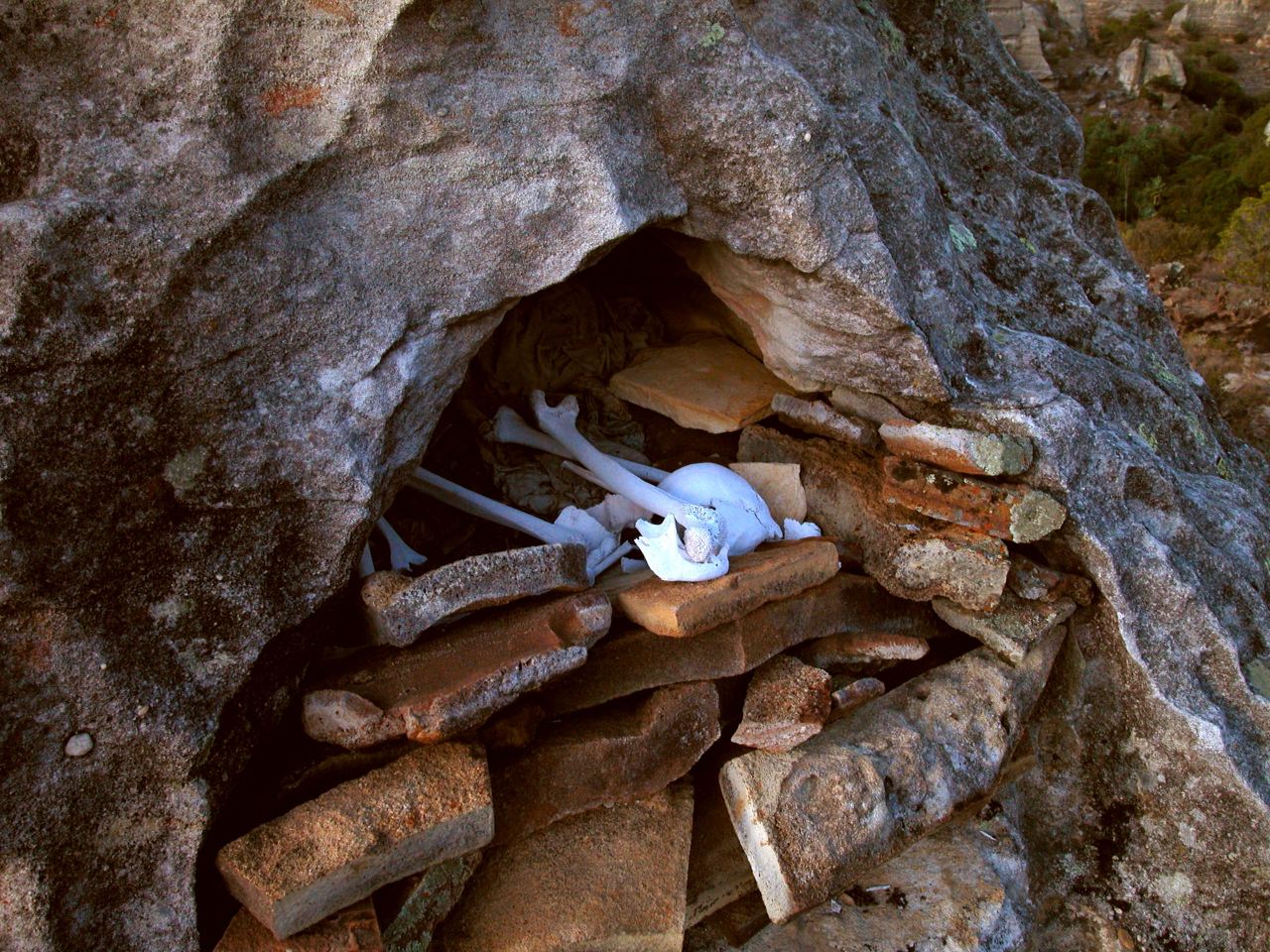
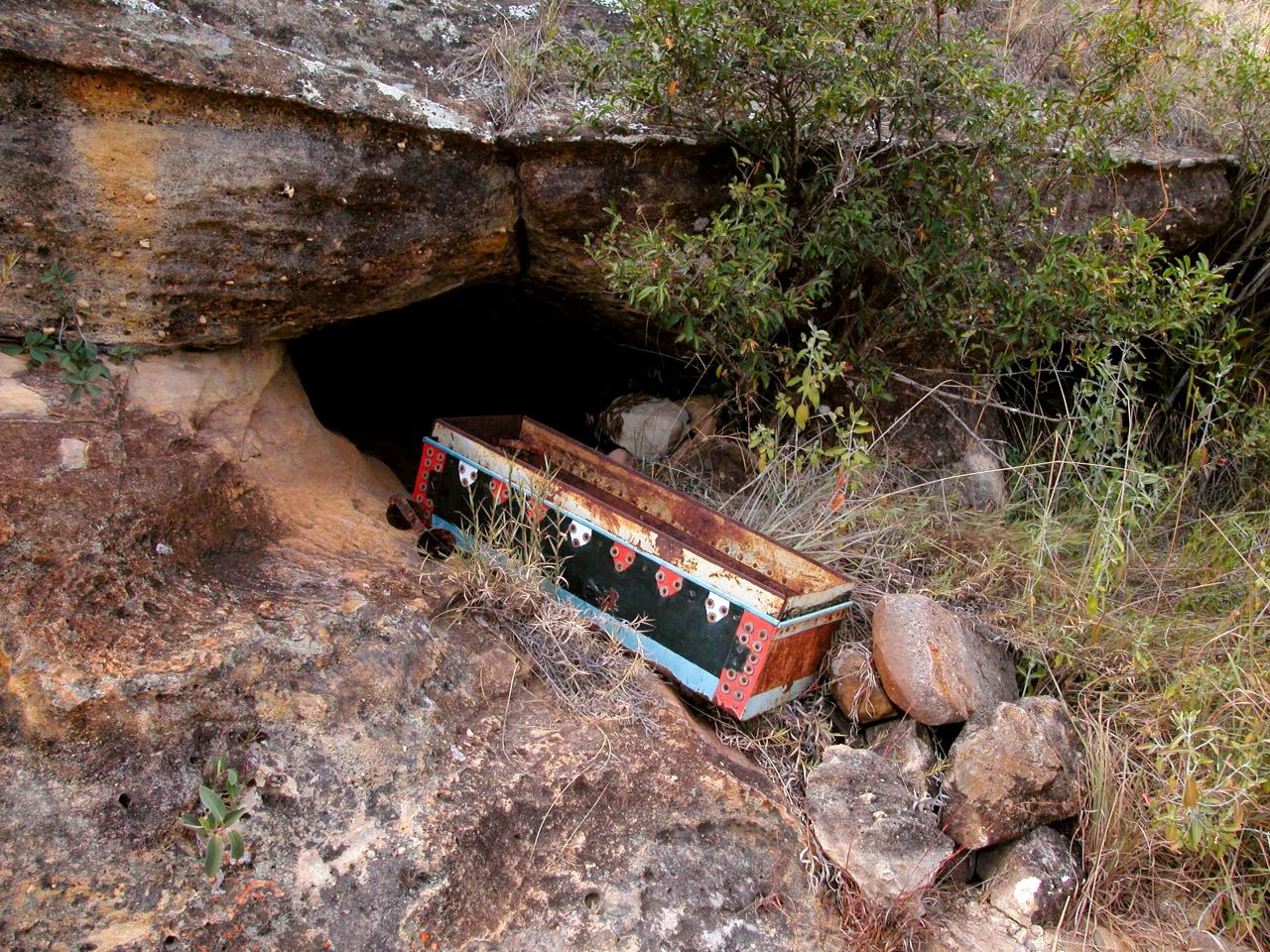
Tourists aren’t welcome at exhumations. Strangers aren’t meant to disturb graves, and taking photographs is frowned on. In my experience money sometimes opened doors. I thought twice before running up to a grave with a camera and sometimes took a photograph after dark, with a flash. There was plenty to see. Wealthy families’ tombs were painted with scenes from the person’s life. There were zebu and pachypodiums, of course, but the modern world appeared there too. Here was the deceased in the army with a Kalashnikov, his girlfriend on a bicycle, helicopters, buses and Jean-Claude Van Damme…
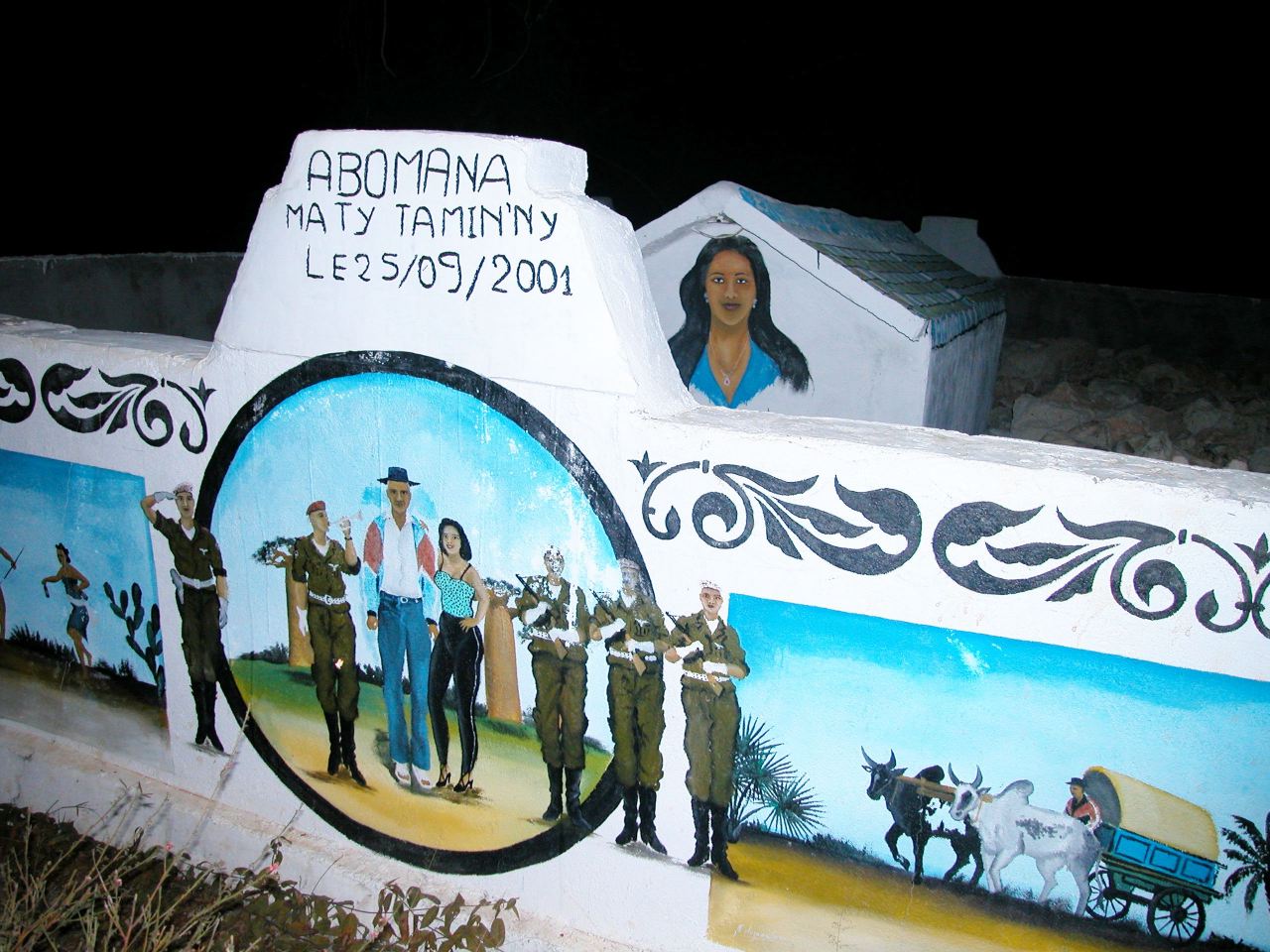
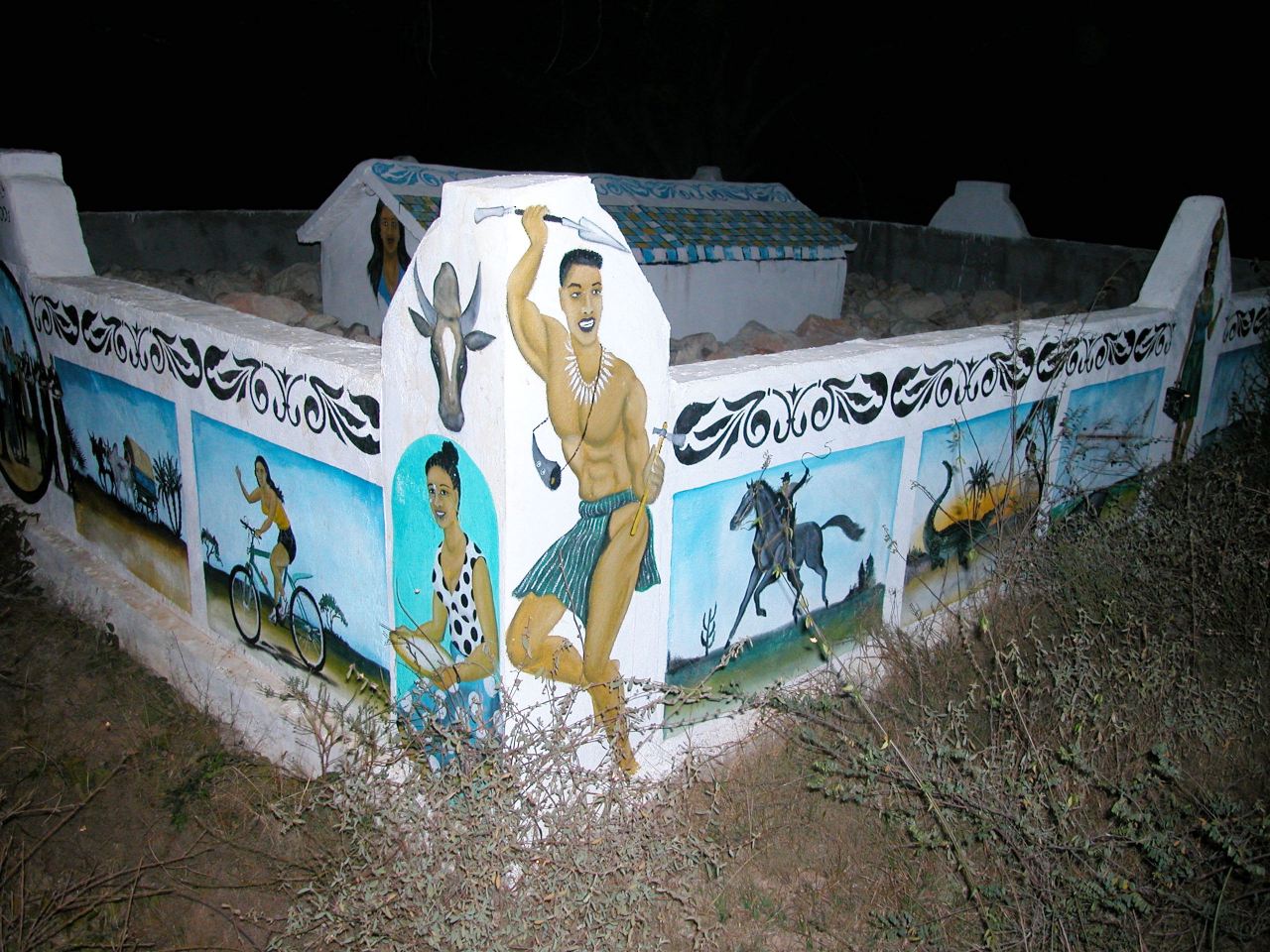
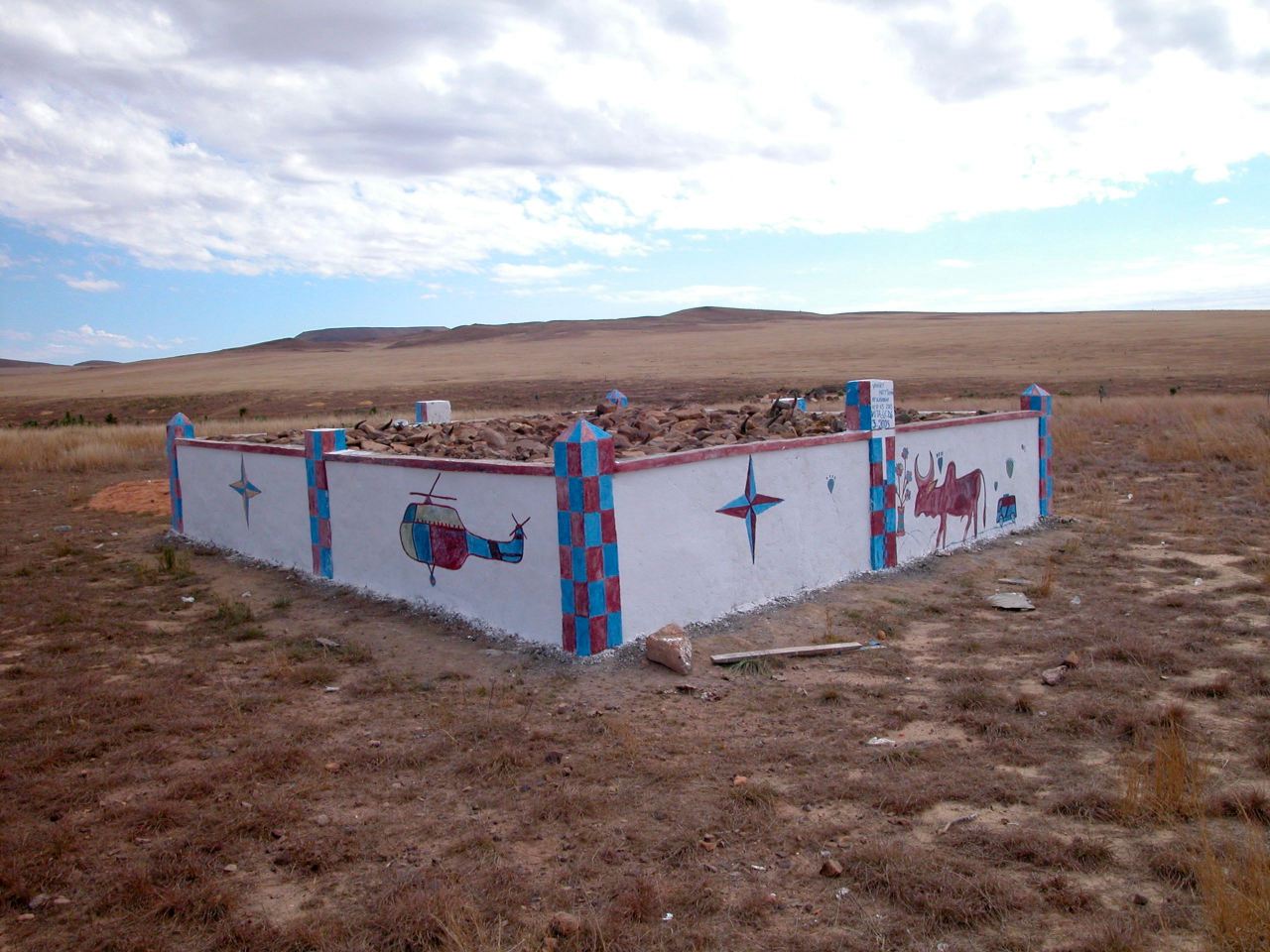
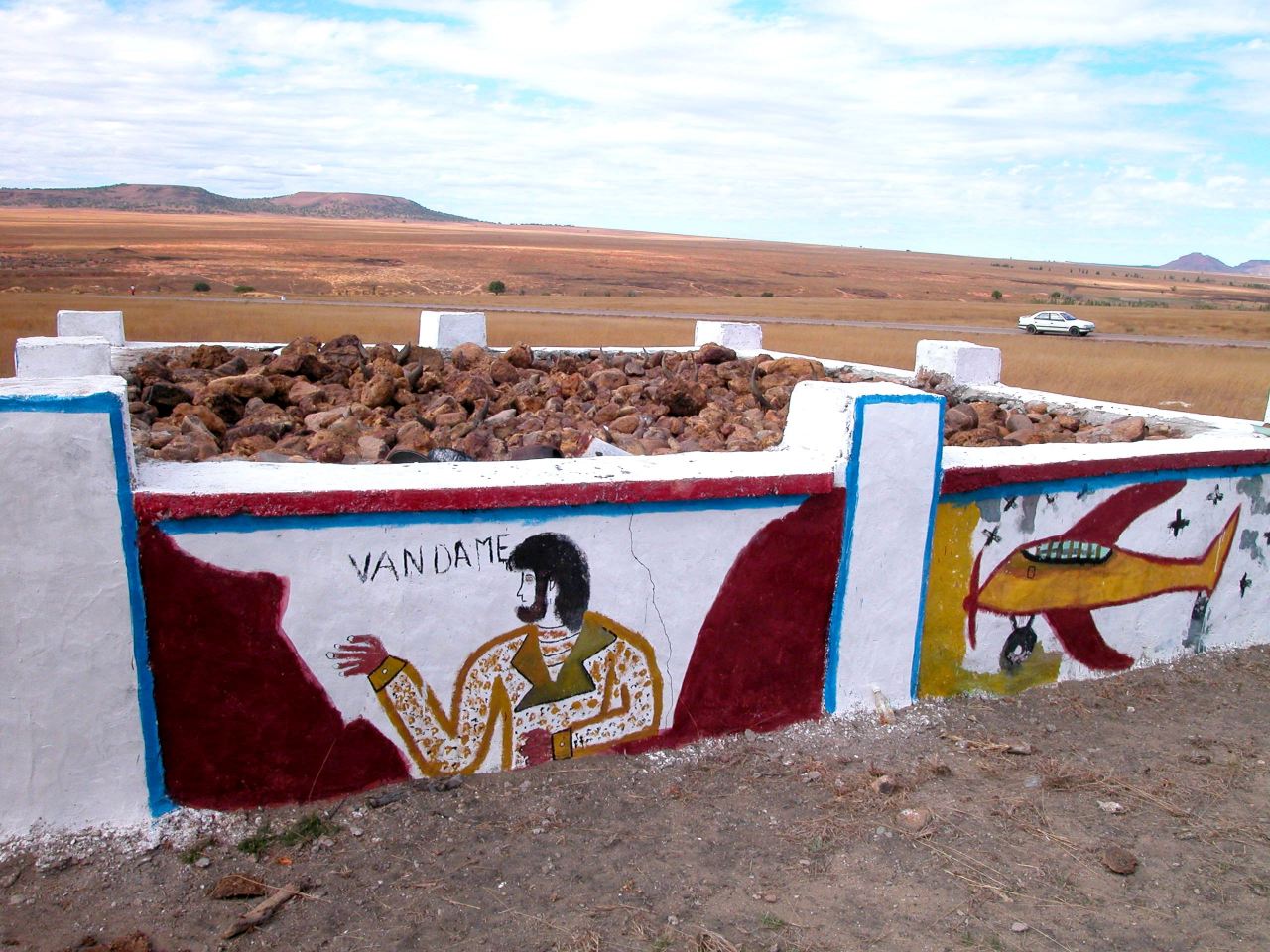
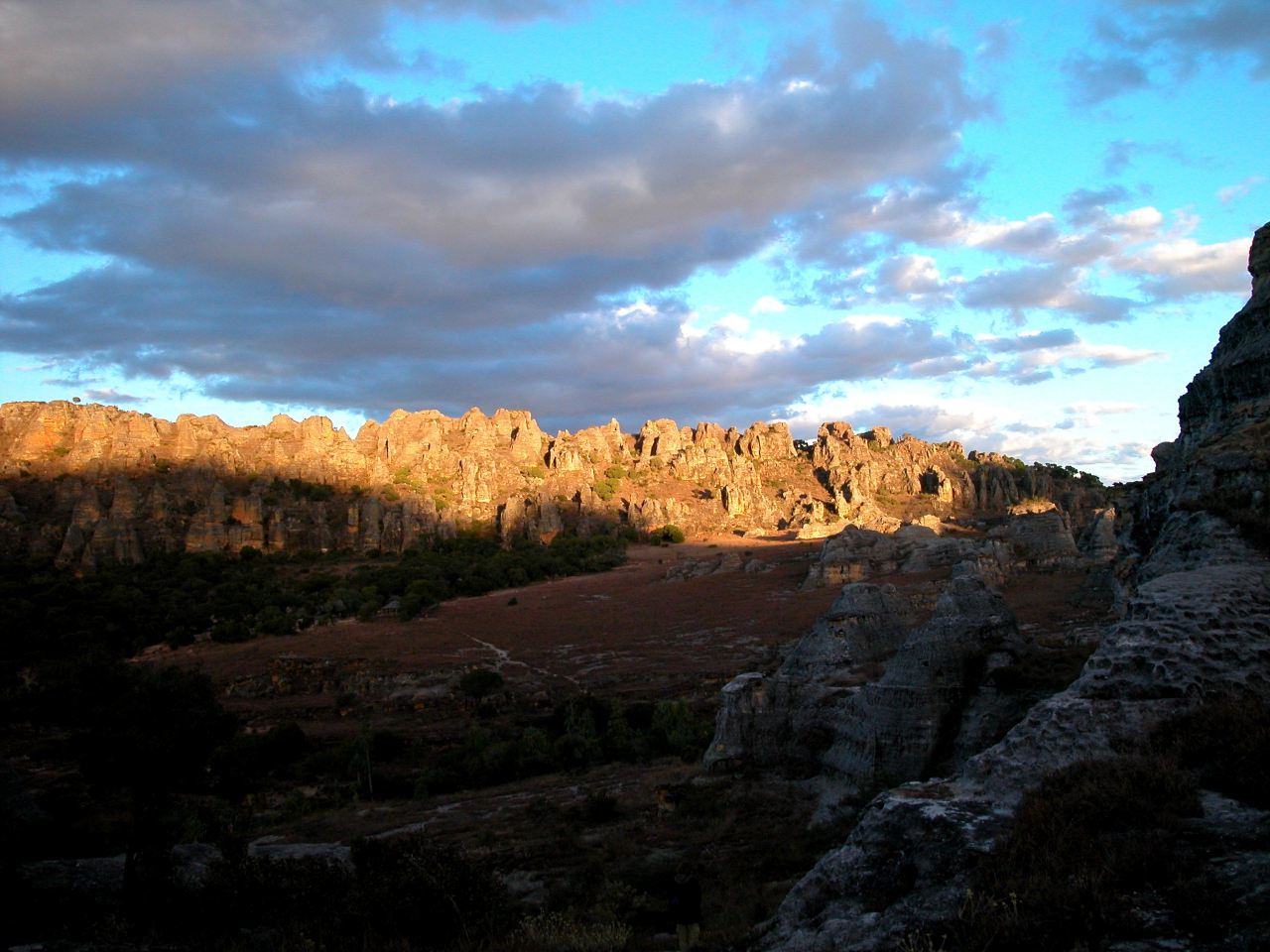
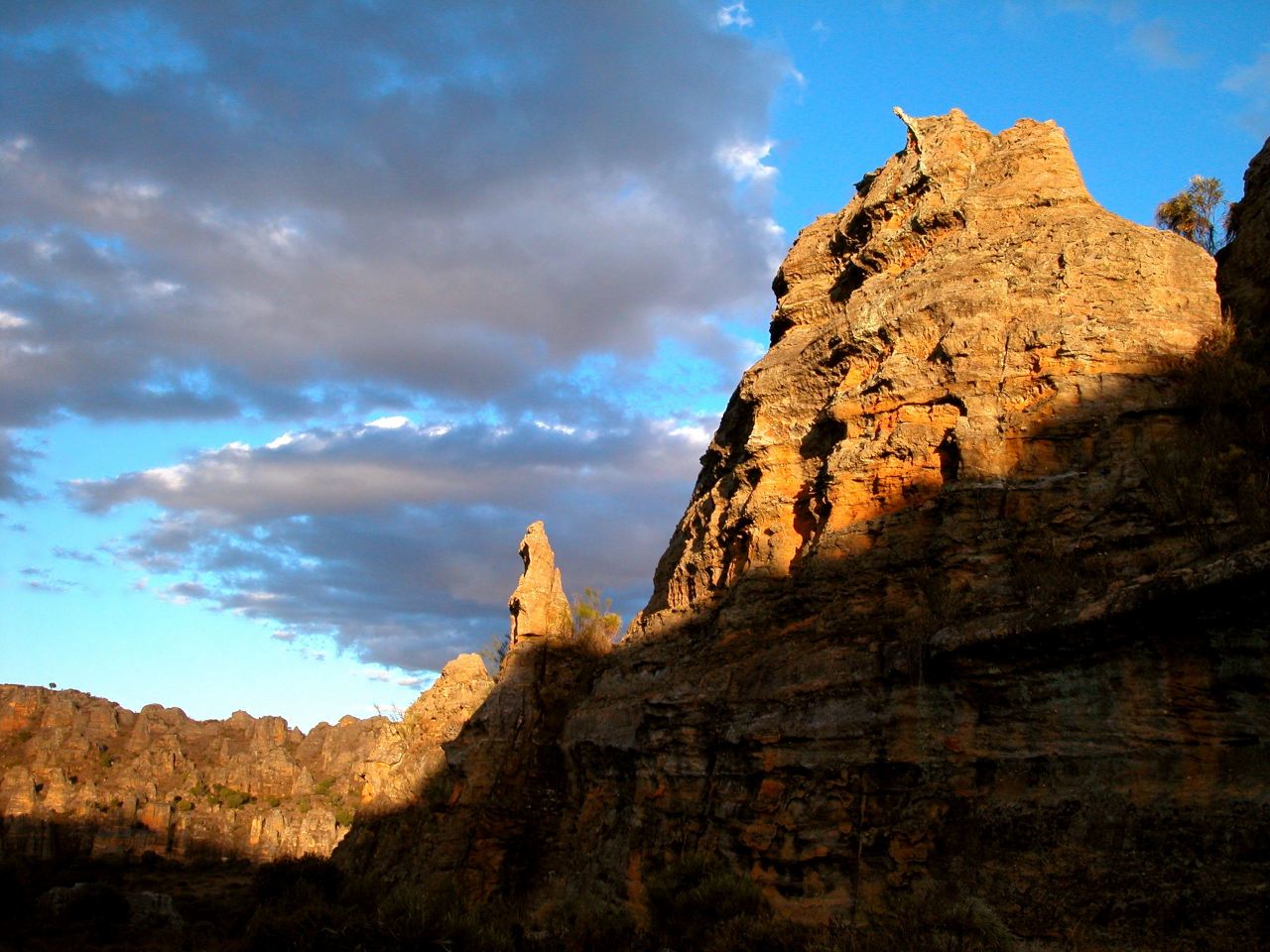
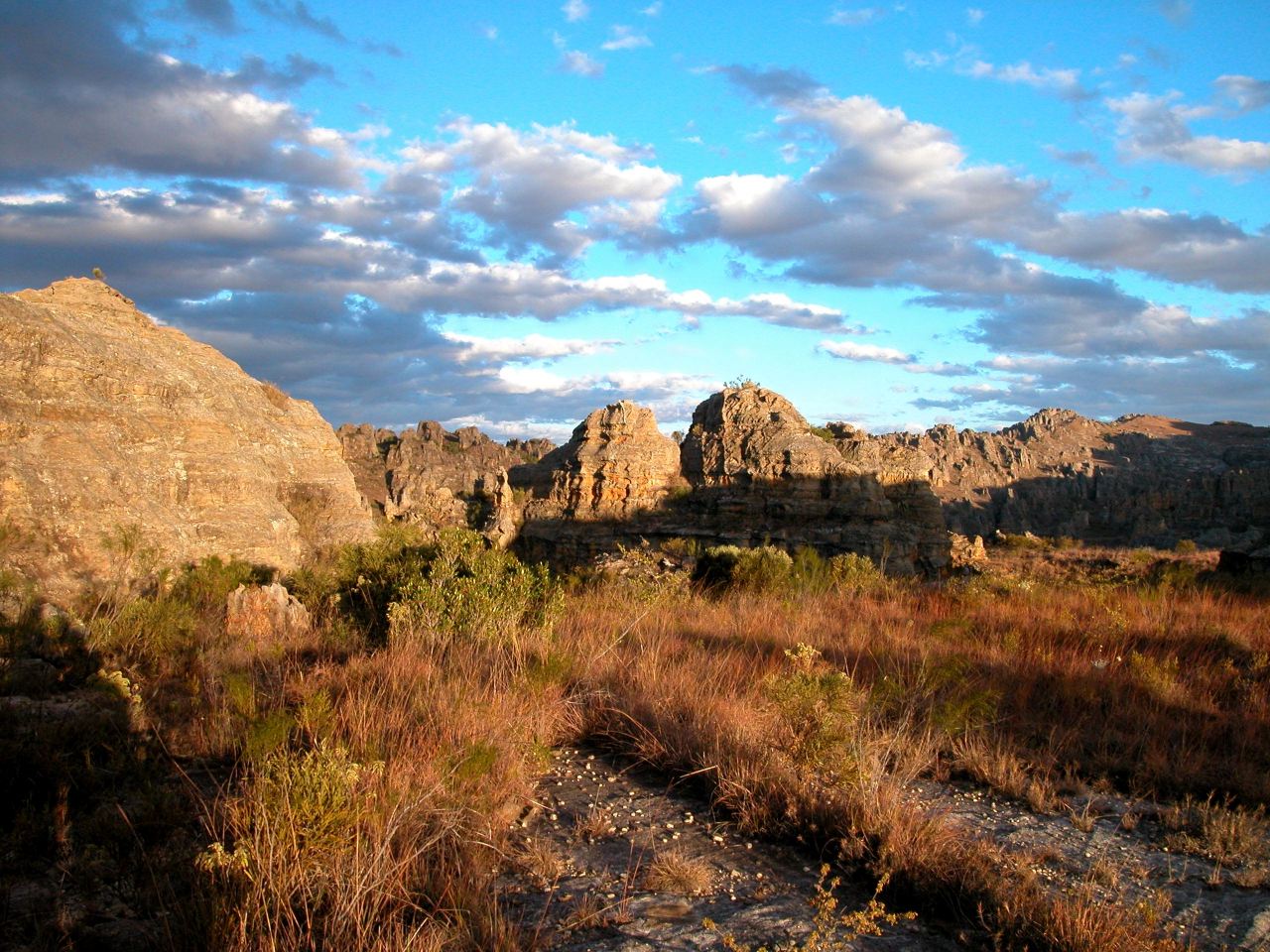
We spent the rest of the day clambering over the little hills looking for an even lovelier pachypodium or another burial site. The sun drew close to the horizon, giving this strange world a special charm. The evening was so beautiful that we forgot the intrusive guides and the tent in the dust. We ended the walk with a dip in a natural pool in a small creek near camp. During the day it was full of tourists and what seemed to be all the children from the next village. After dark we had it to ourselves. The French name, as in other Romance languages, was piscine naturelle. It could just as well have been piscine communale, the village pool.
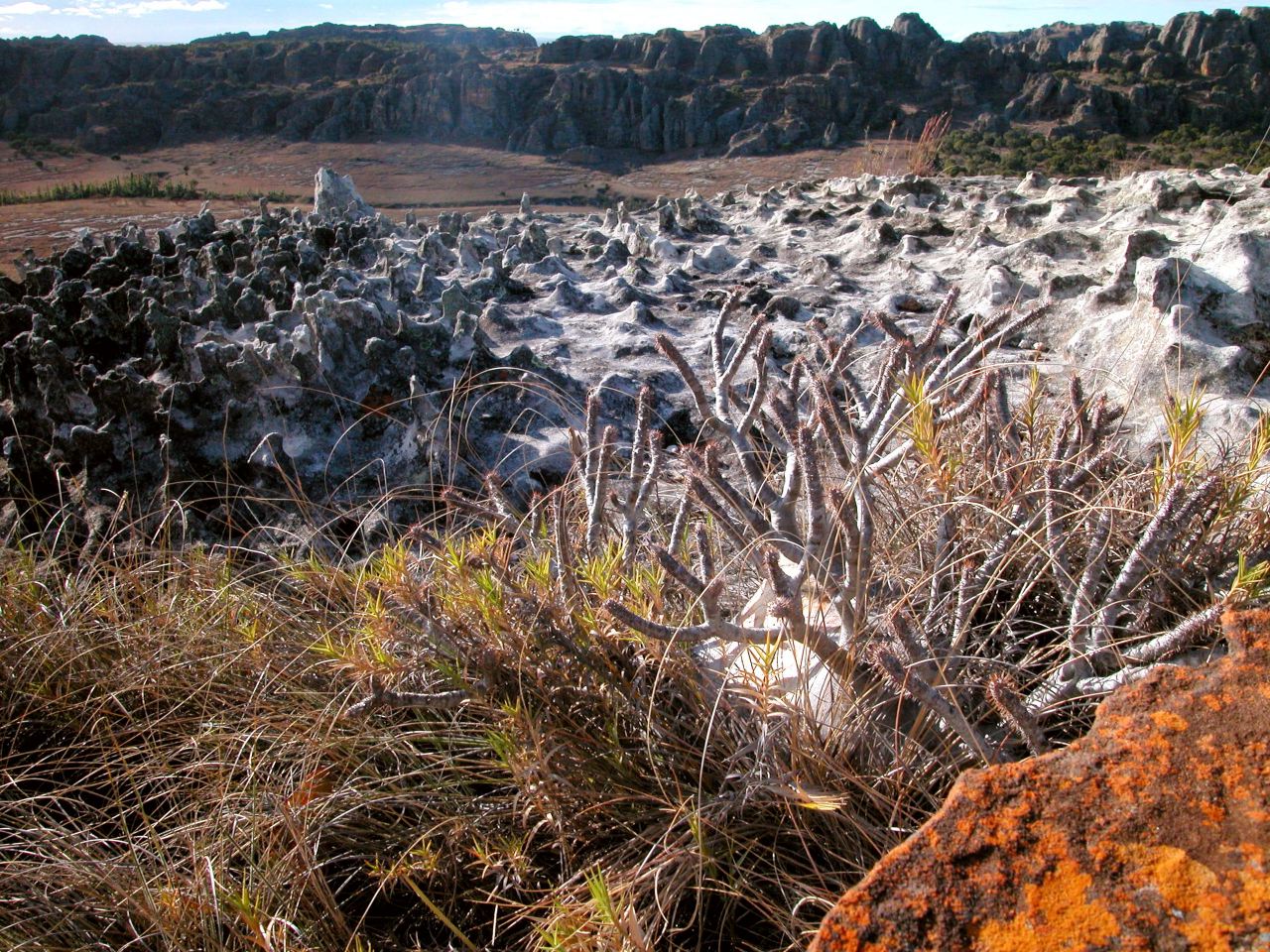
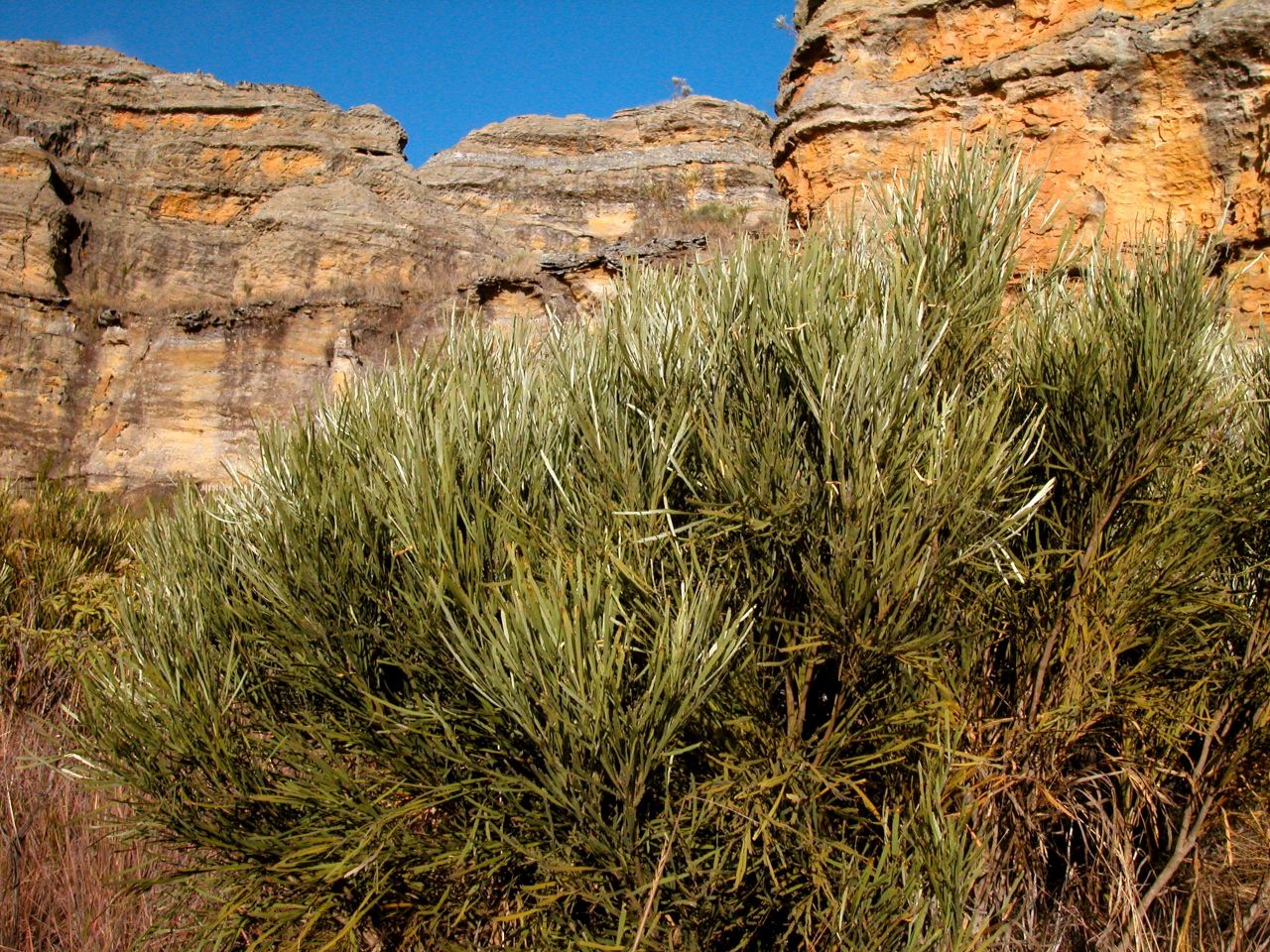
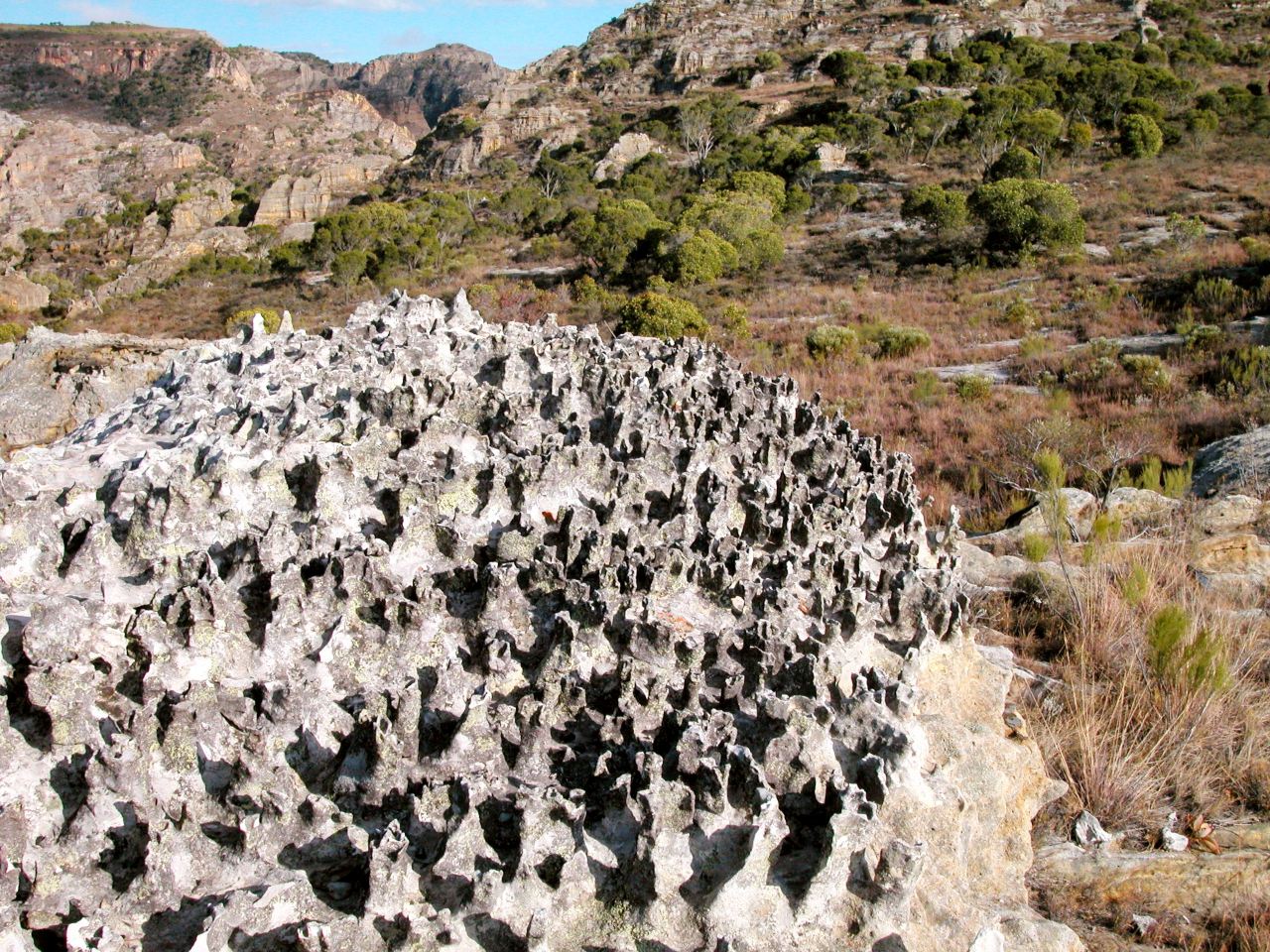
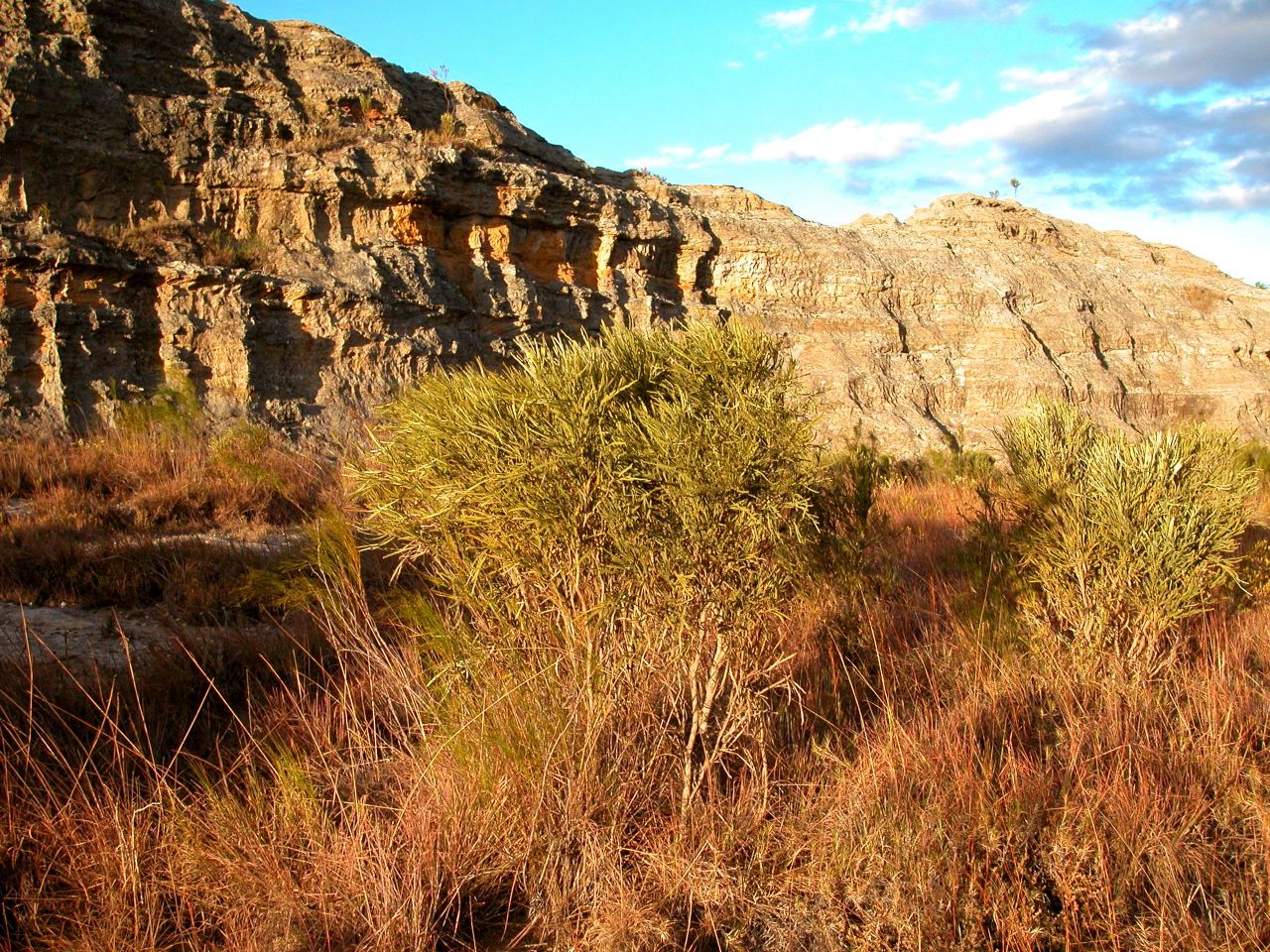
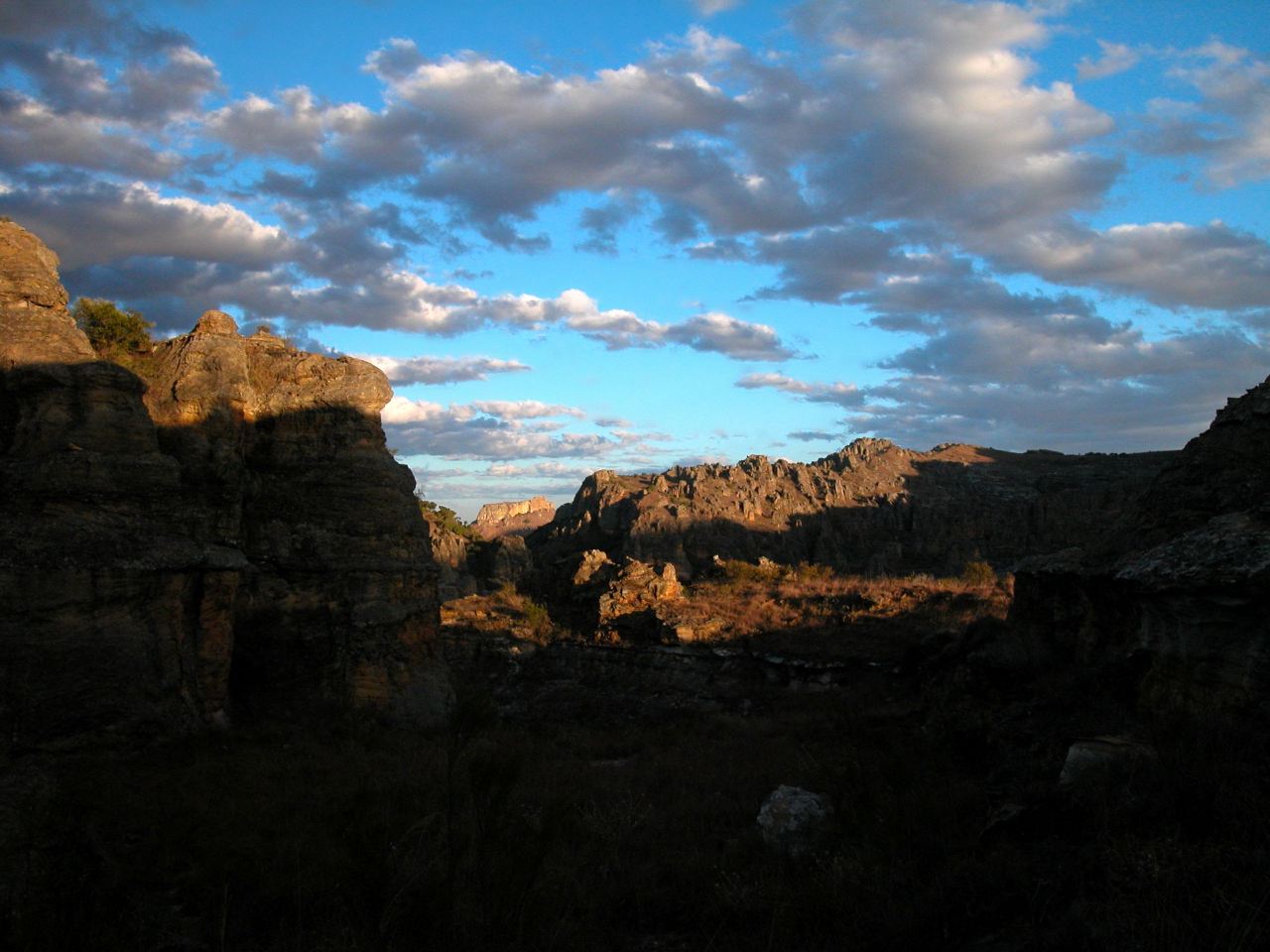
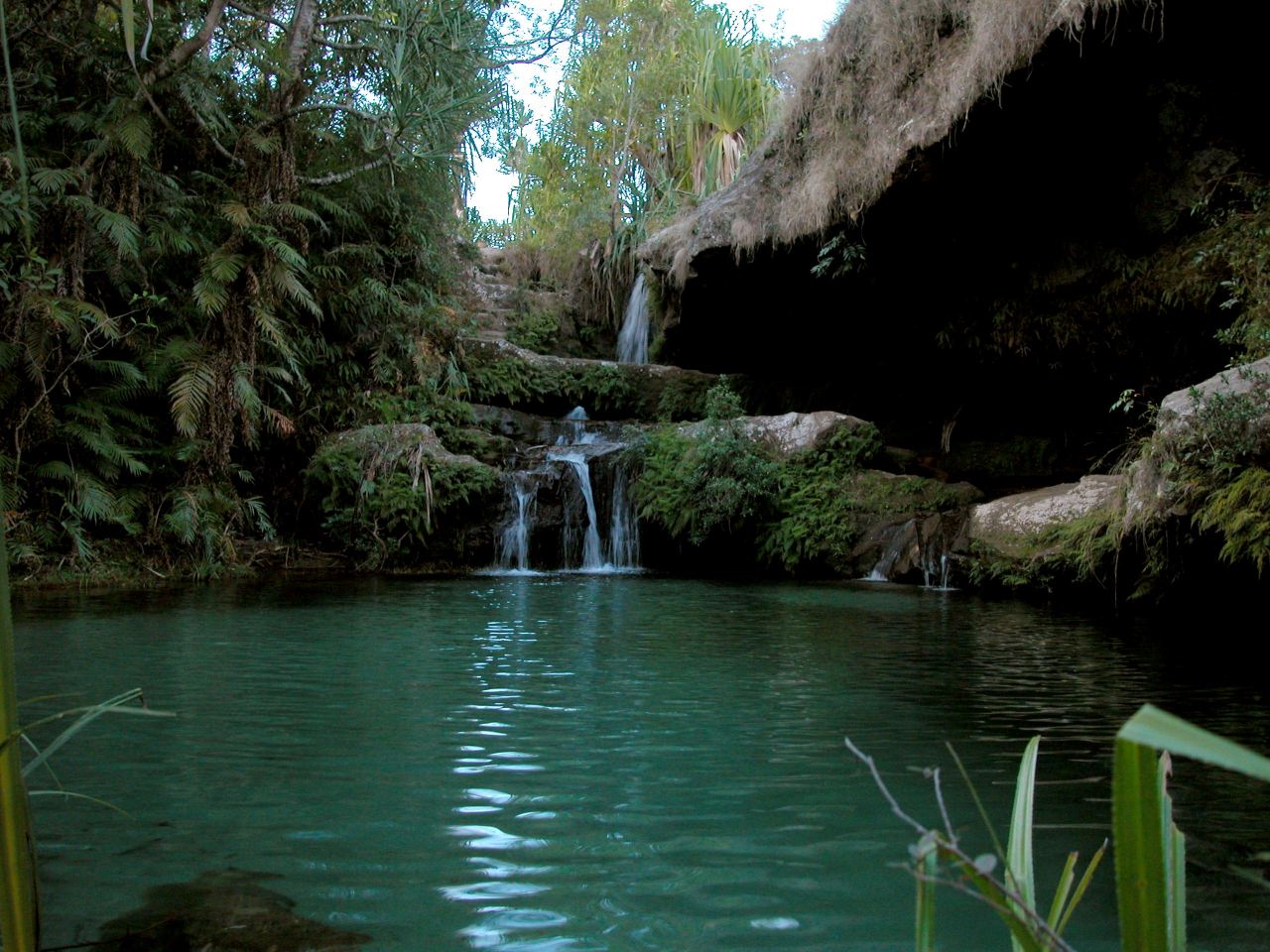
We got back to camp in the dark. Dinner was waiting for us, soup and a main course. It was good. We certainly didn’t need an extra cook.
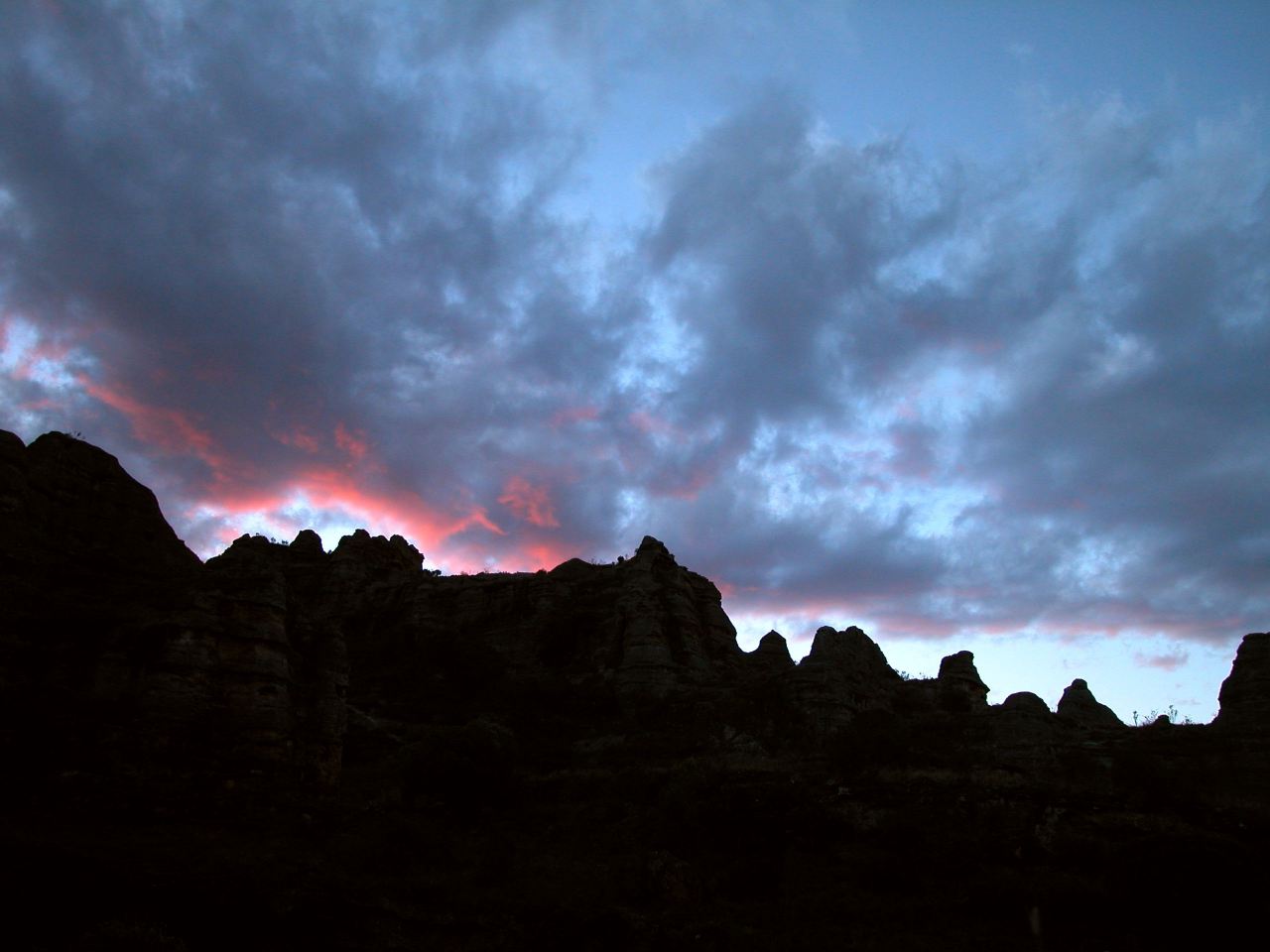
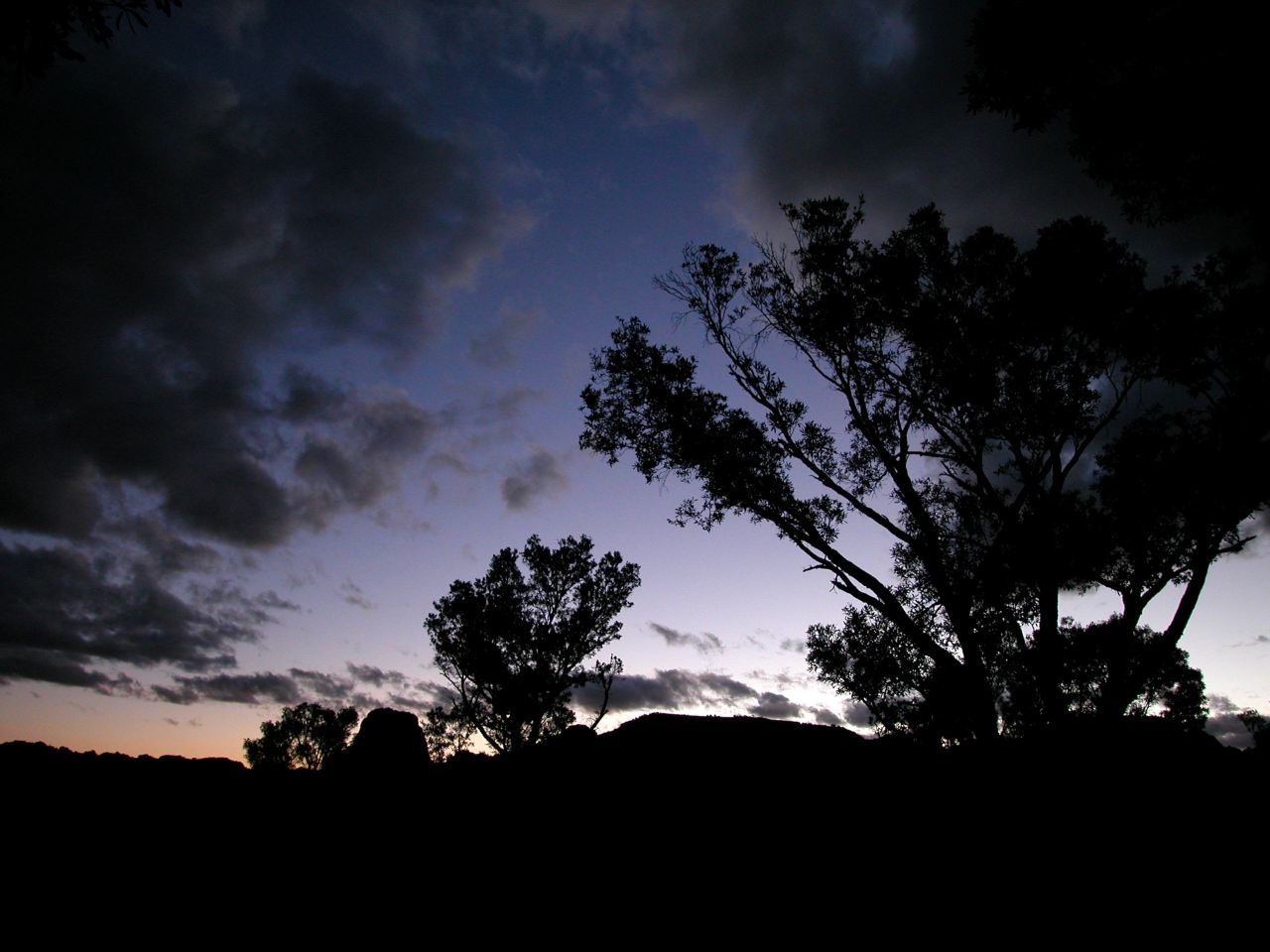
Next morning we rose early, packed quickly and sat on our rucksacks to make it clear we were ready to go. Our guide plainly had no idea what to do with us. He took us round a few nearby hills and brought us to the village at the end of the route. In the end he admitted we were wild people from a wild country. Respectable white gentlemen, he said, didn’t walk that fast. He apologised, but we’d already covered everything. We should have taken the five-day walk. On that one you pitched a tent on natural clearings instead of in designated campsites.
The sapphire settlement and Toliara
A few years before our visit, sapphire deposits had been found south of Isalo. Thousands of Malagasy people set off with homemade picks, hoping to get rich quickly. They brought their families and ended up twelve to a hut made of palm branches, with a square metre per person. Water was scarce and there was dry grassland all around. From dawn till dusk men in little more than loincloths dug into the nearby hills by hand. Women and children moved about in the dust near their huts. Not everybody struck it lucky, and even success could end with the newly wealthy person being killed.
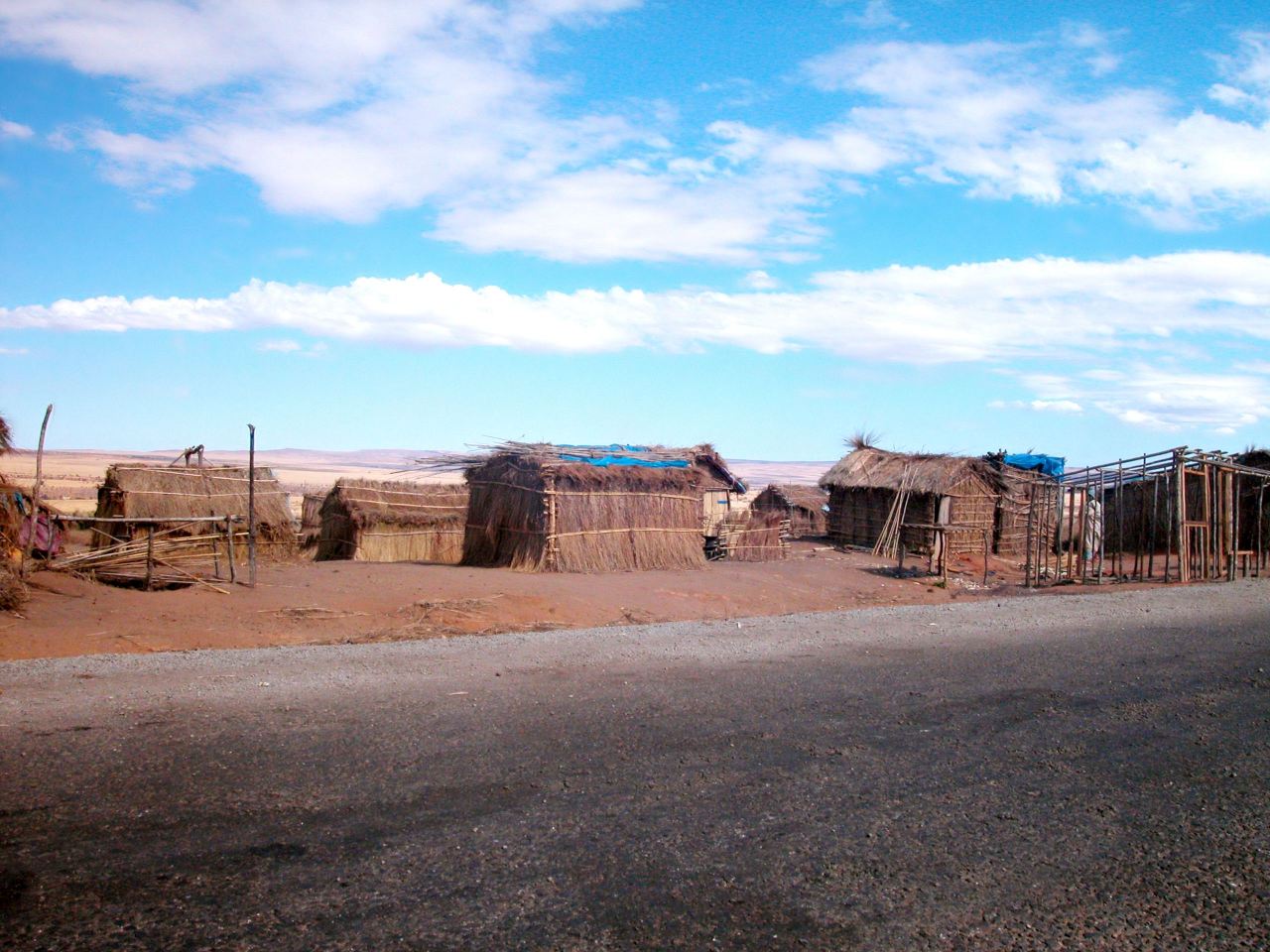
The main sapphire settlement, Ilakaka, looked like the Klondike in a film about a gold rush. Hard-looking men sold their finds at little shops. A hundred dollars would buy an astonishing stone. We were warned that it was unsafe to buy there, and I also wondered about customs. In the end we bought just one small, uncut crystal, weighing about a kilogram, and not until we were back in Antananarivo.
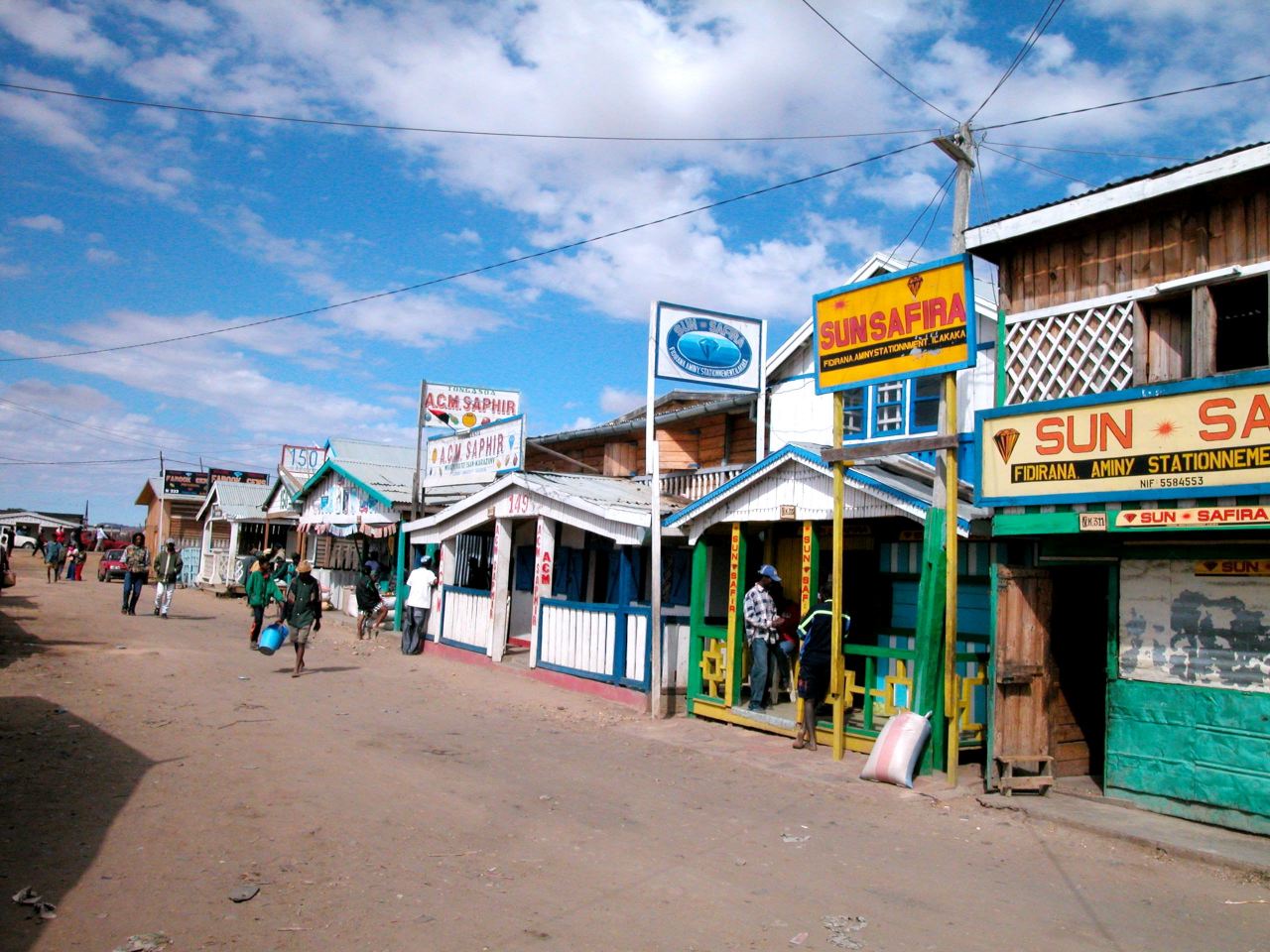
It was our last day with Parany. That evening he would leave us and go back to Antananarivo. The last stop was Toliara, a large city on the Mozambique Channel.
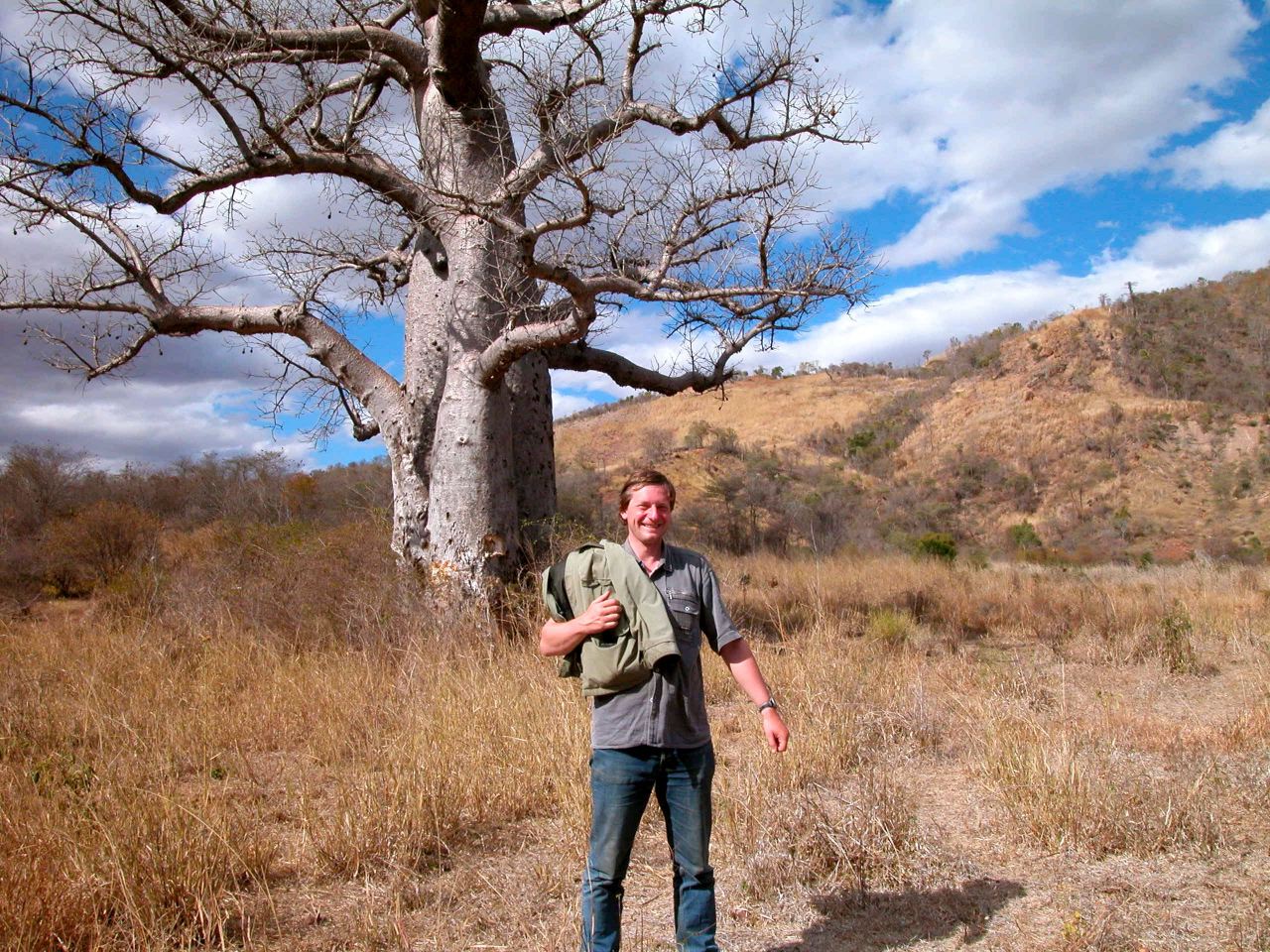
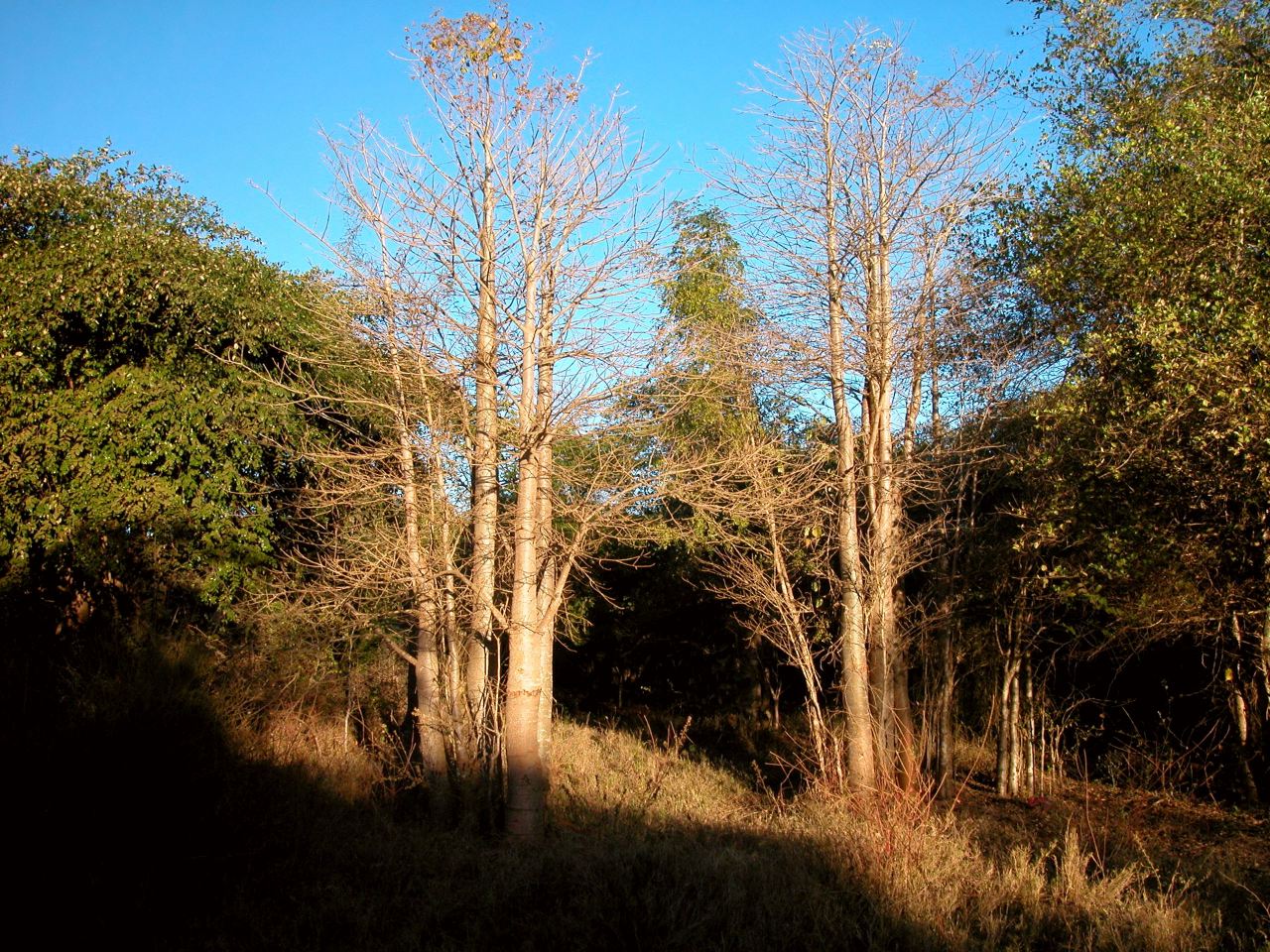
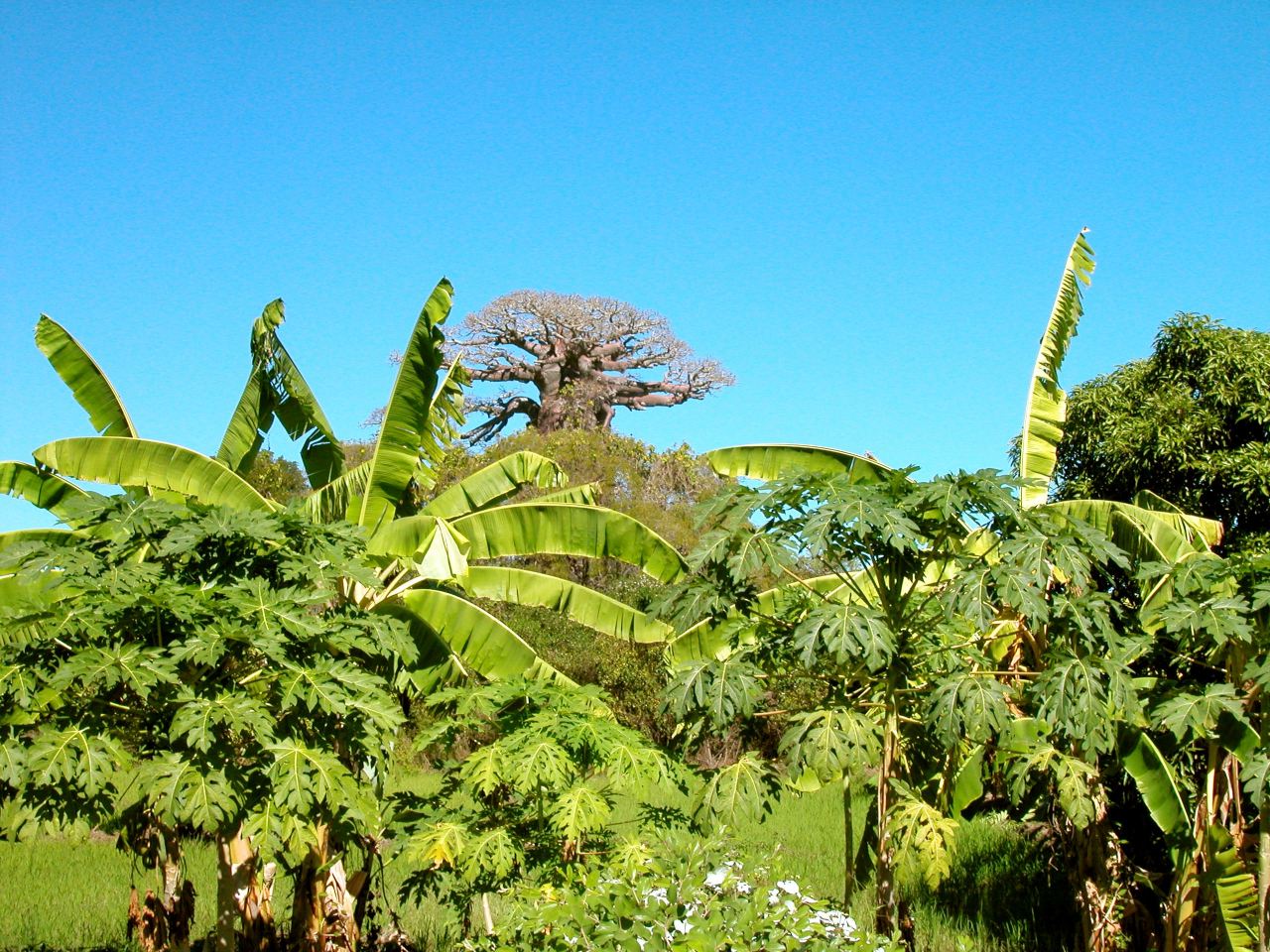
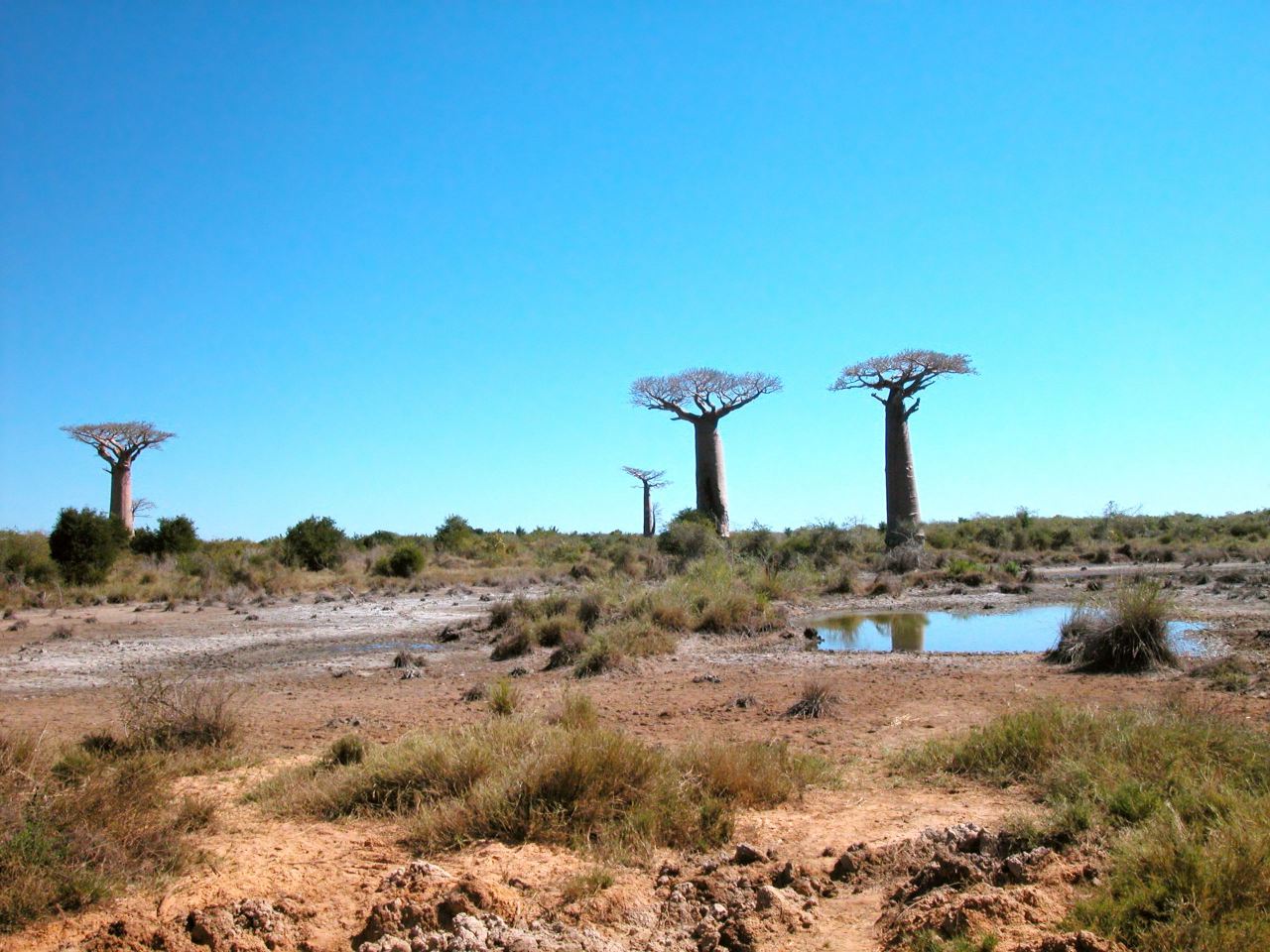
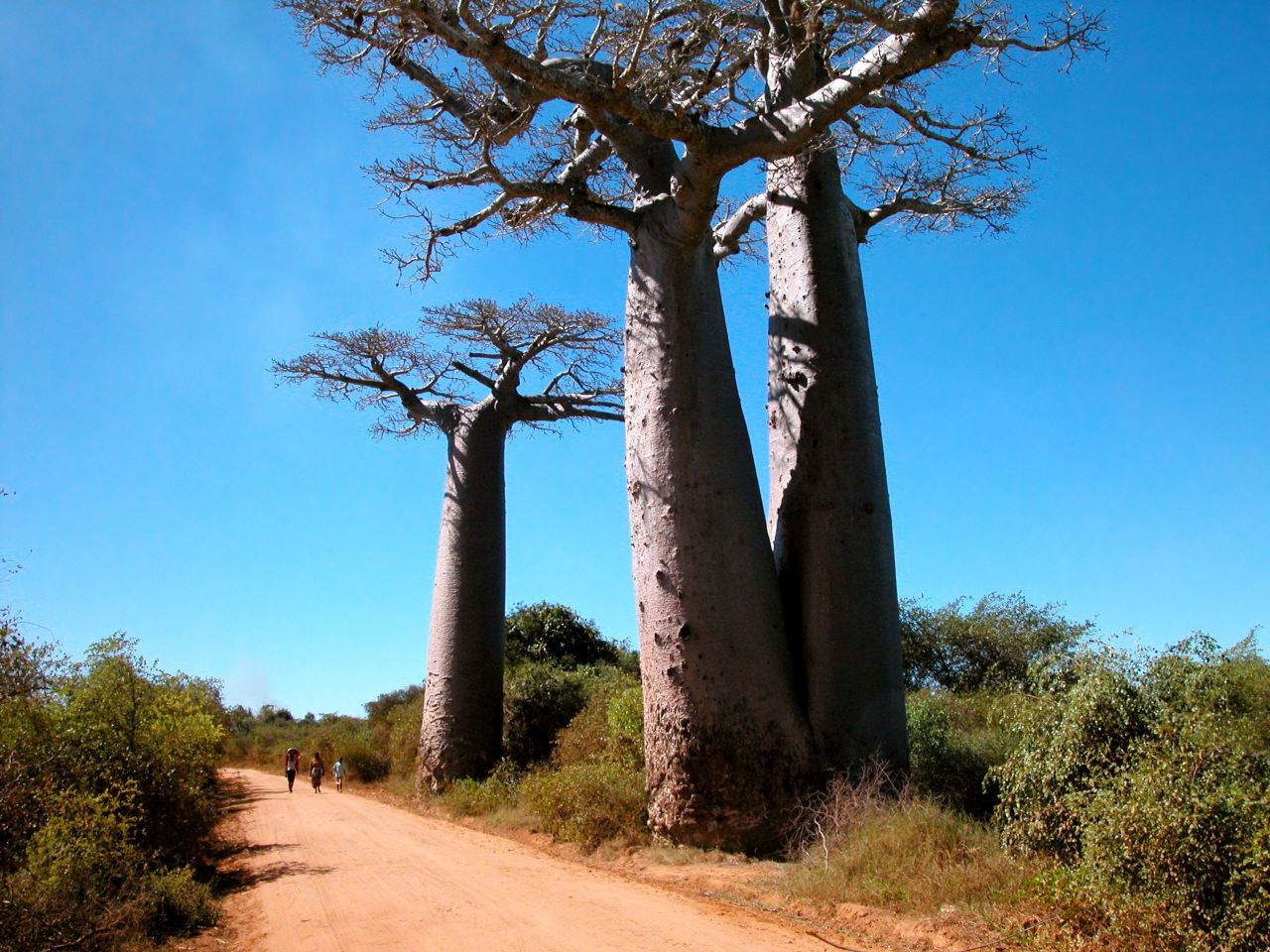
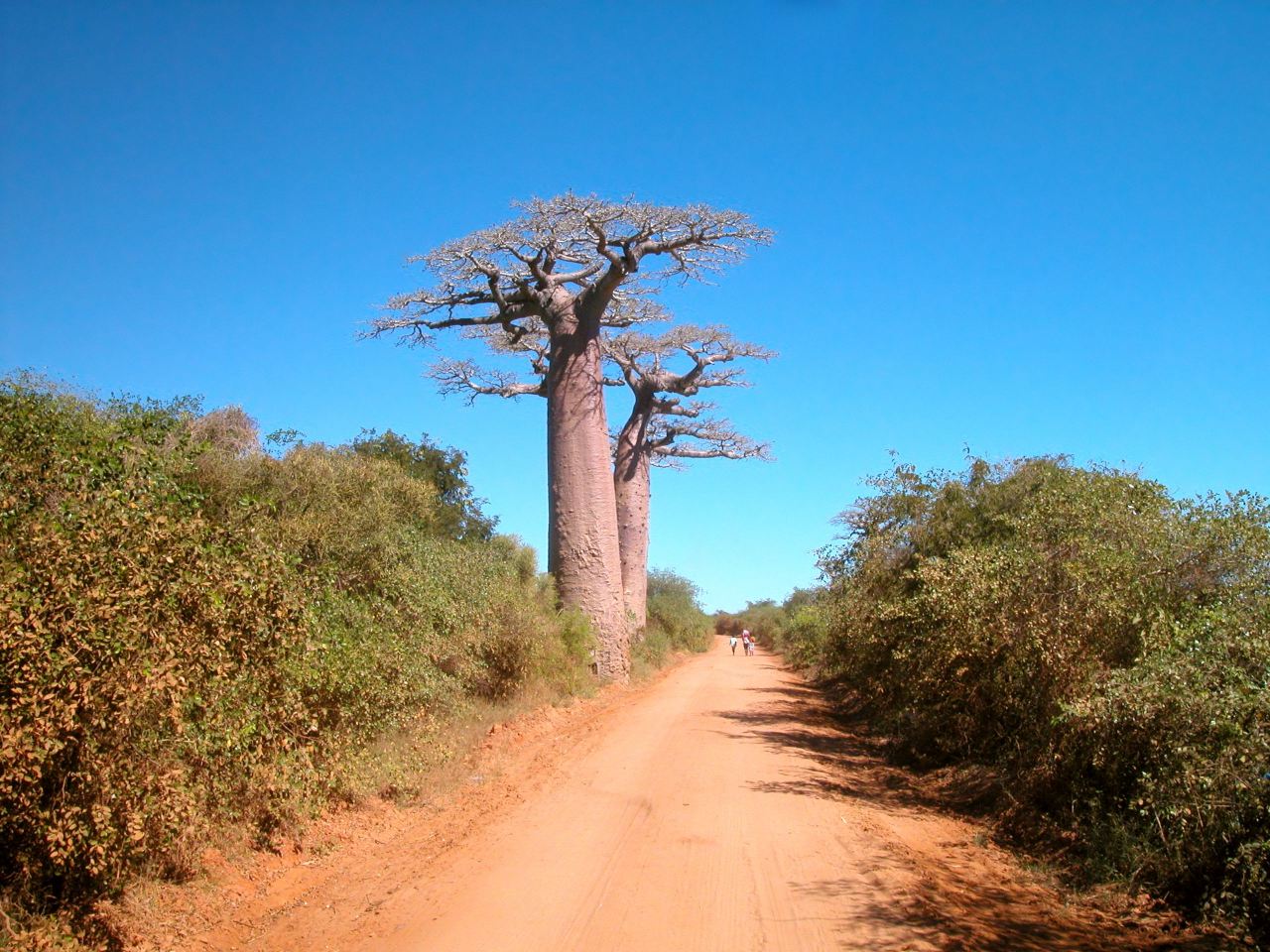
It was warm but dry on this coast. Rain was rare, though it fell often enough for a forest to grow. They called it dry forest, and this was where the baobabs were. We started seeing the first of them by the road with a hundred kilometres still to go to Toliara. No description can prepare you for how enormous a baobab is. You could wear yourself out trying to measure a trunk by putting your arms round it. It is hard to climb one. The branches start high up and are unbelievably thick. A baobab can live for a very long time. At a hundred years old, by what we were told, it was still just a small five-metre tree. Once a baobab forest was cut down, in practical terms it was gone for good. Fortunately the trees were hard to cut and there was little reason to do it. The wood is soft like poplar, unsuitable for building and hard to burn. That helped save this great tree. You could use it as a lookout by driving in metal rungs. The fruit was edible. It ripened in November and resembled a mango in size and shape, on a thick stem. The flavour, people said, was nothing special. You ate it when you were hungry, and harvesting it wasn’t easy, given how high the trees grew.
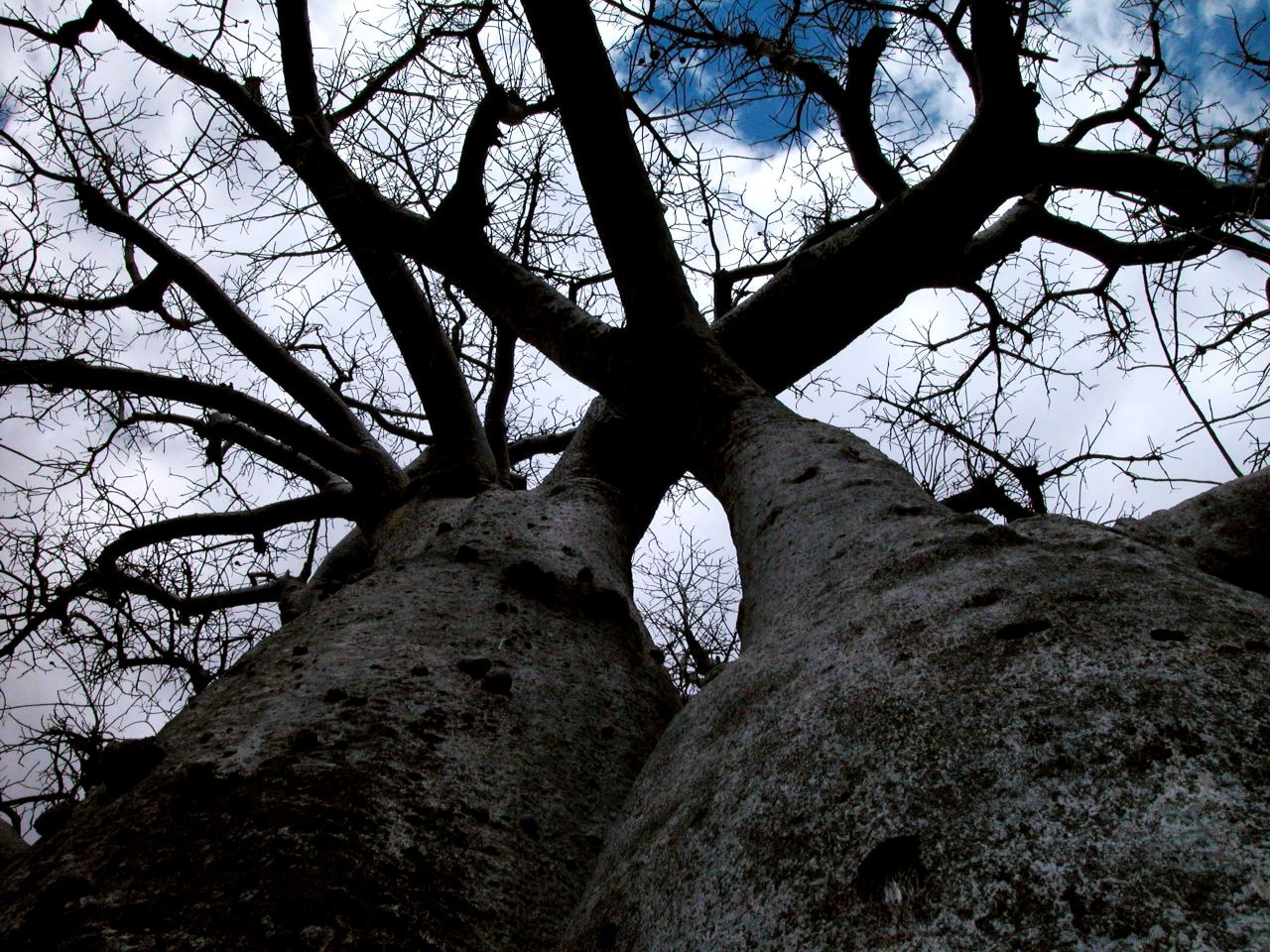
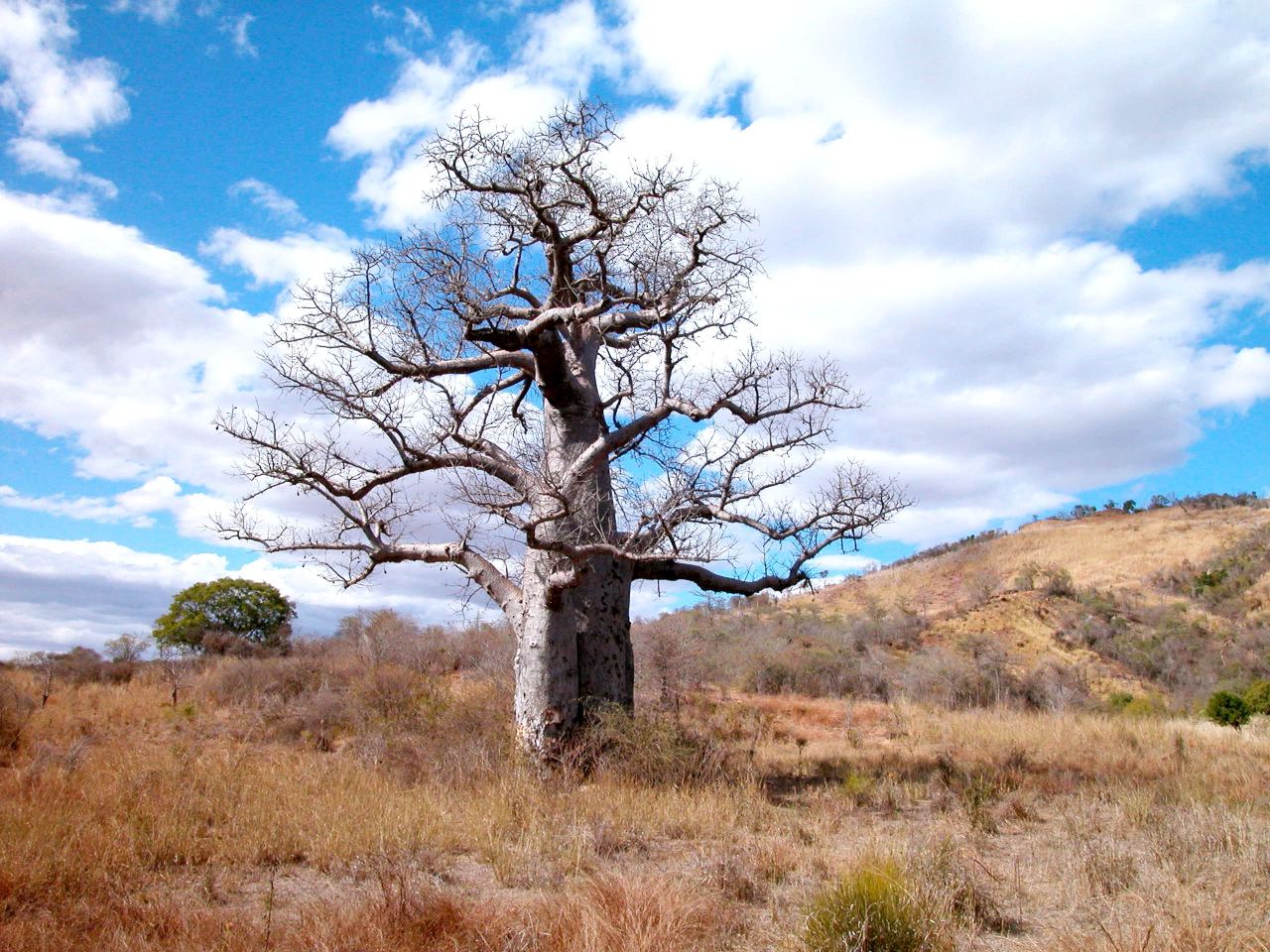
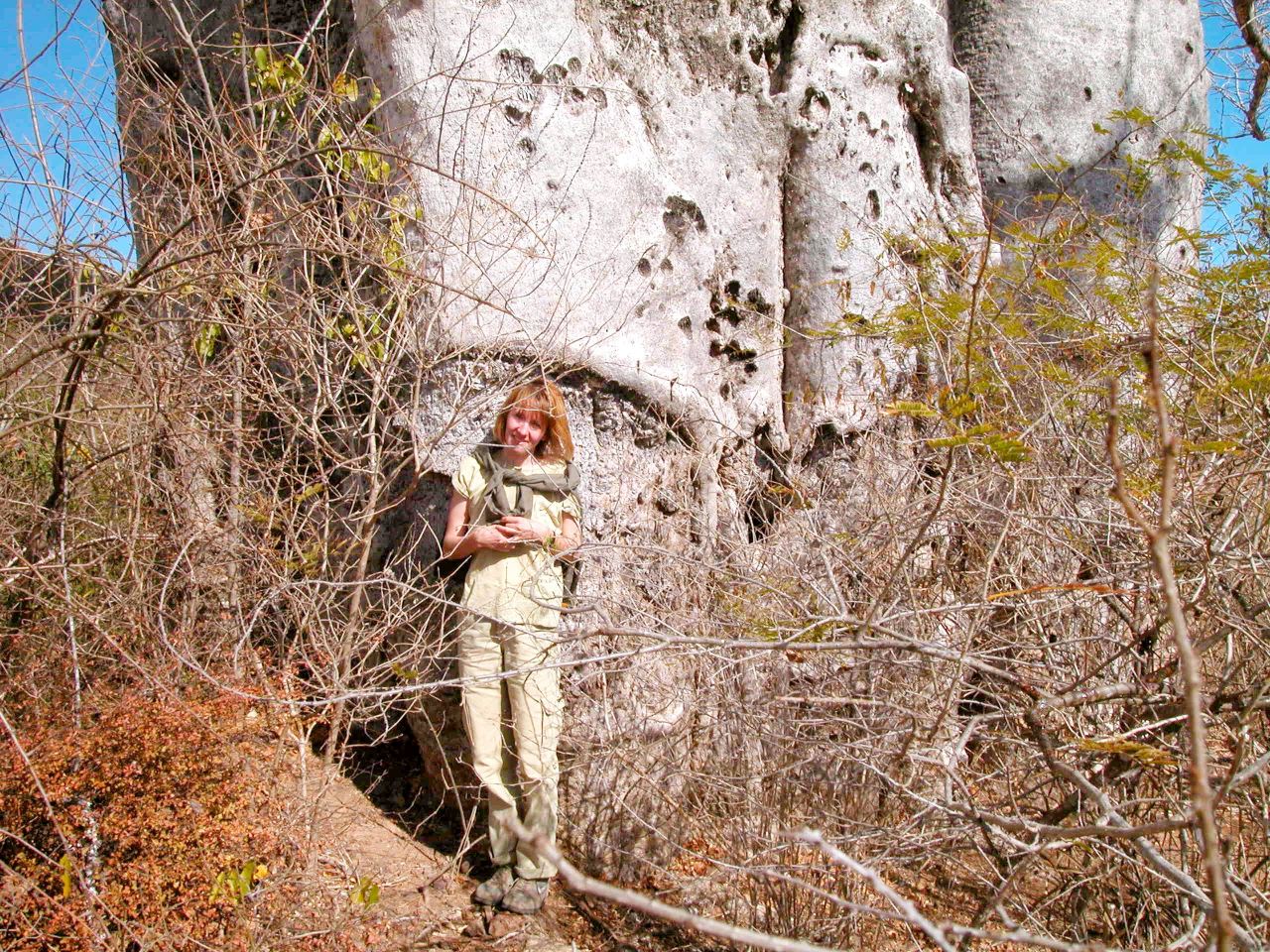
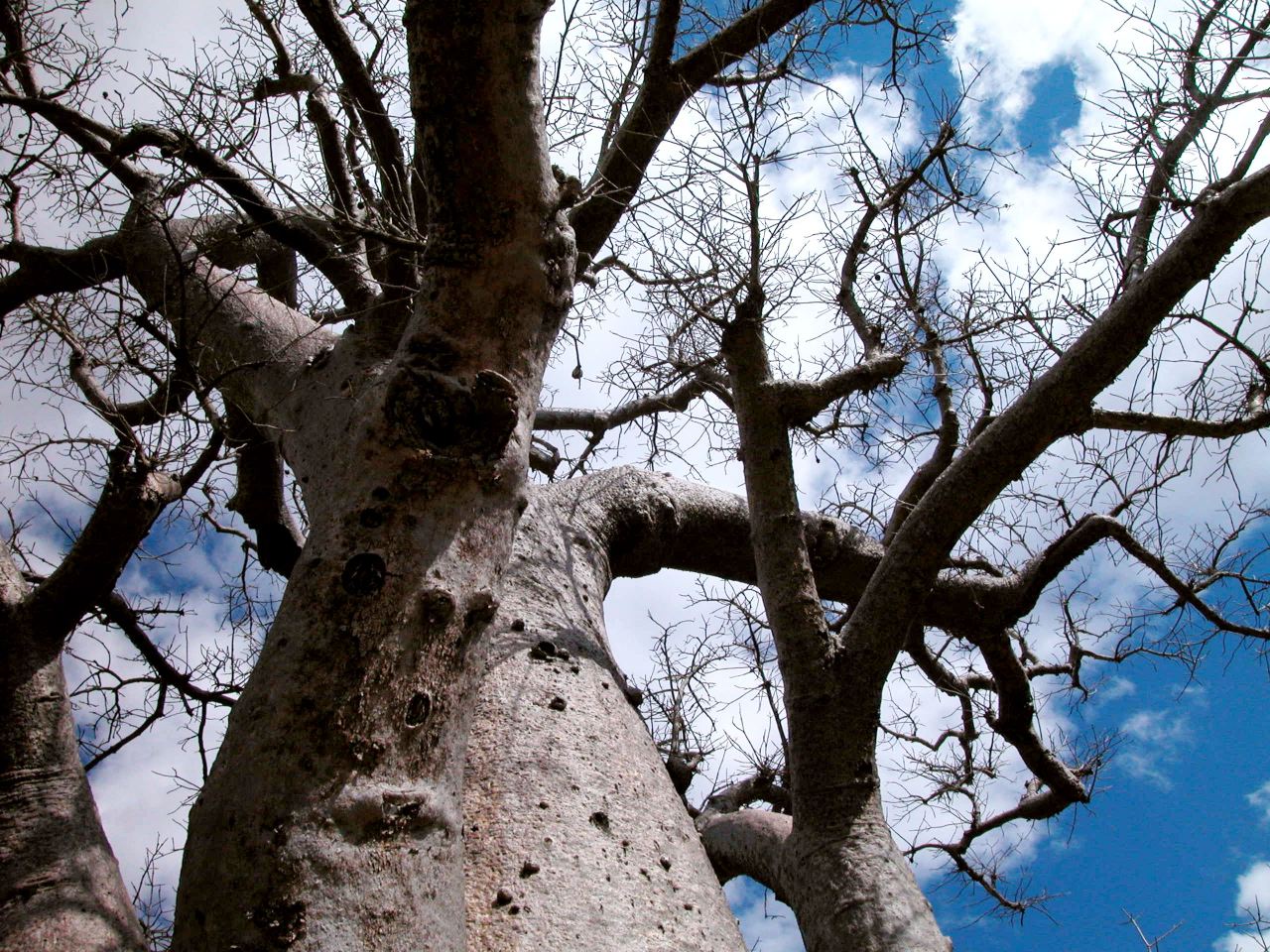
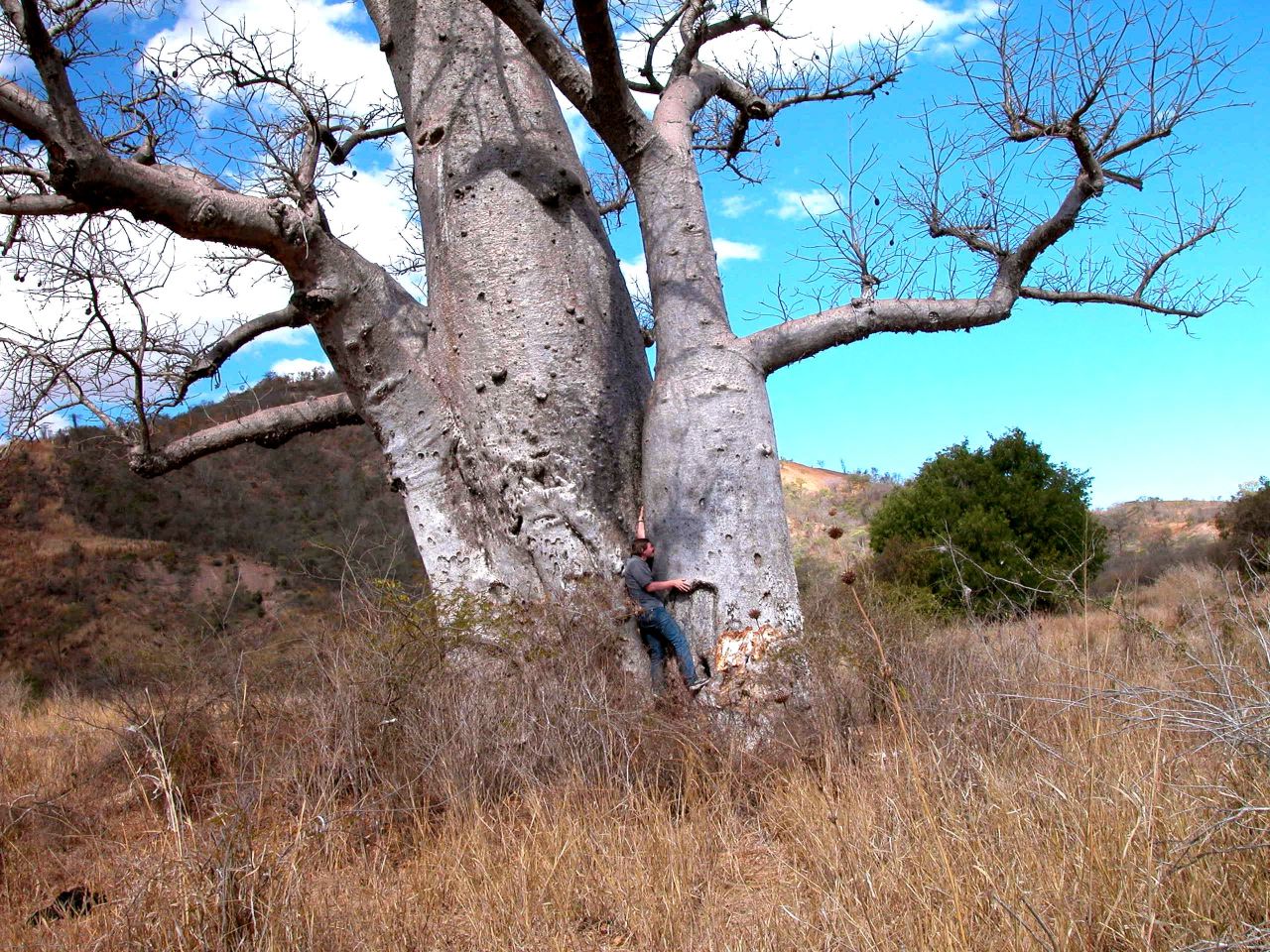
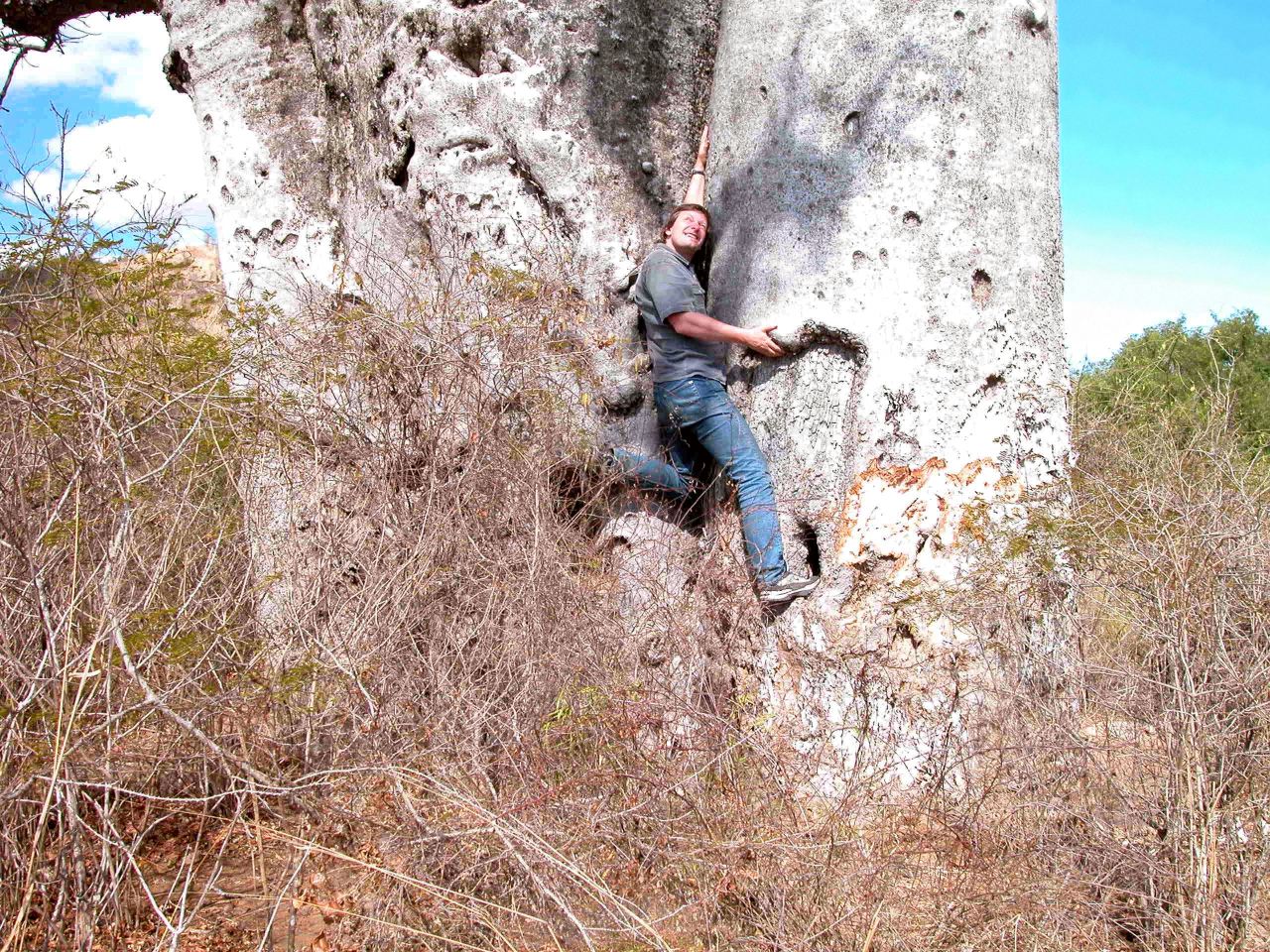
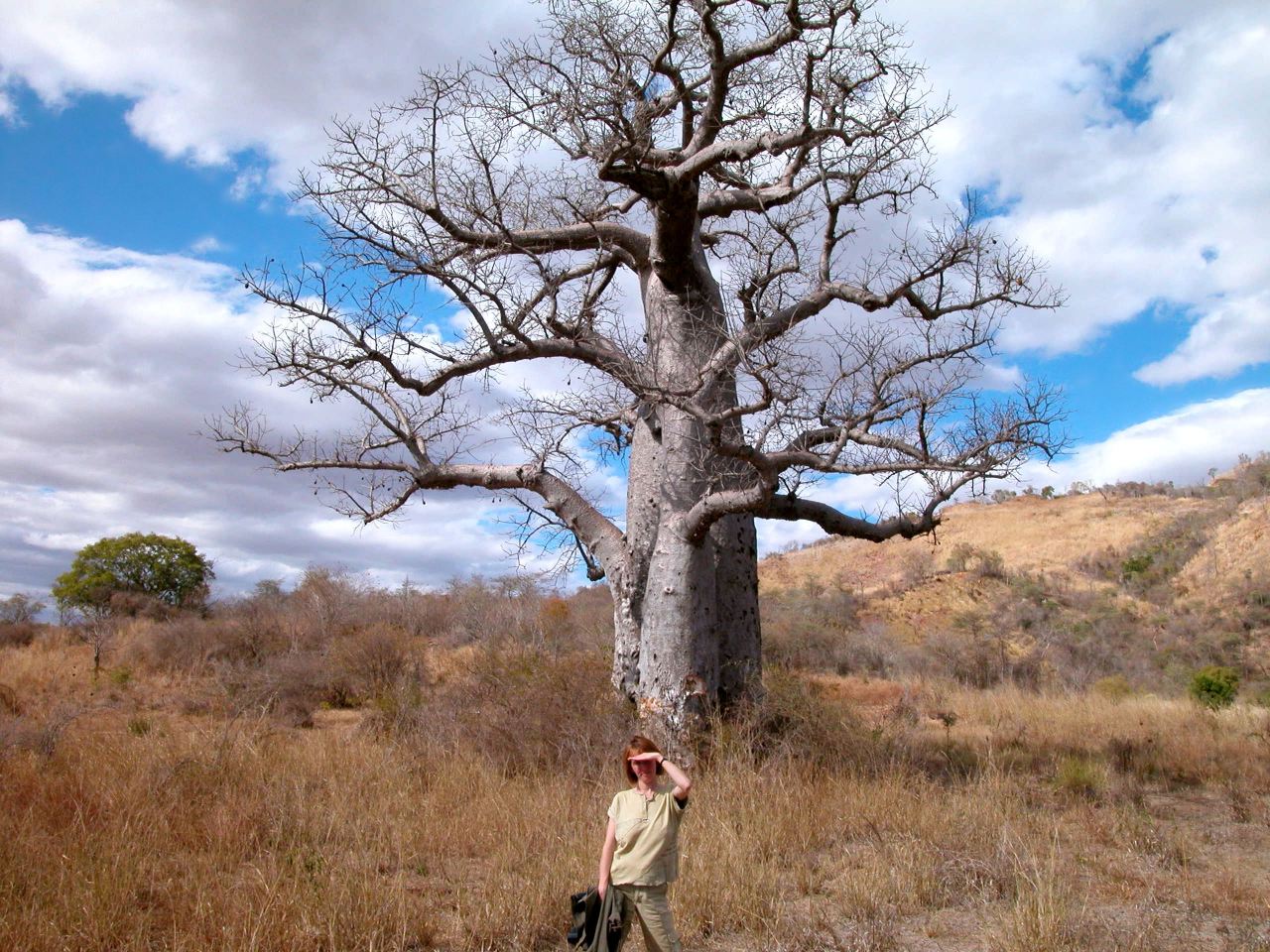
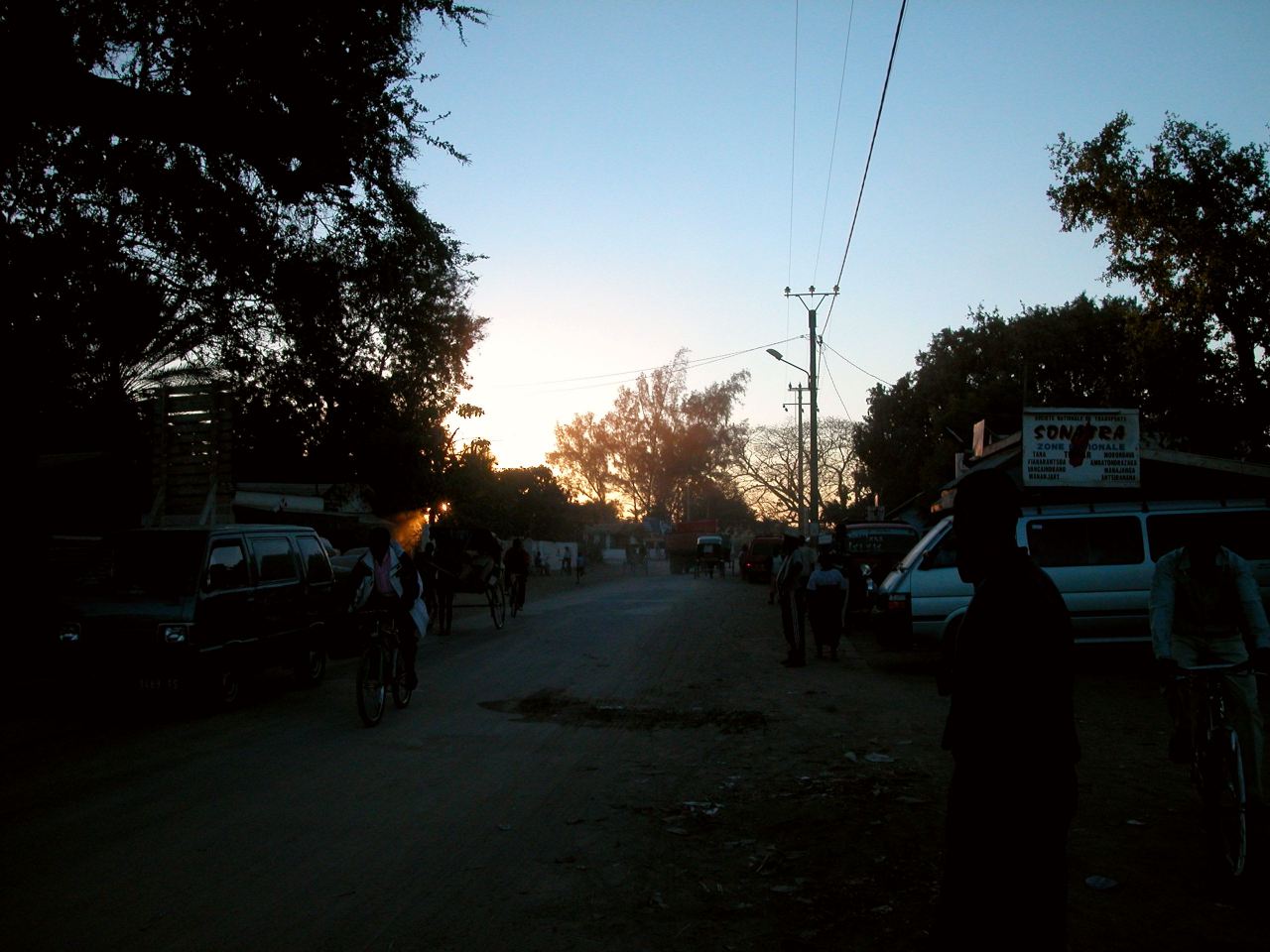
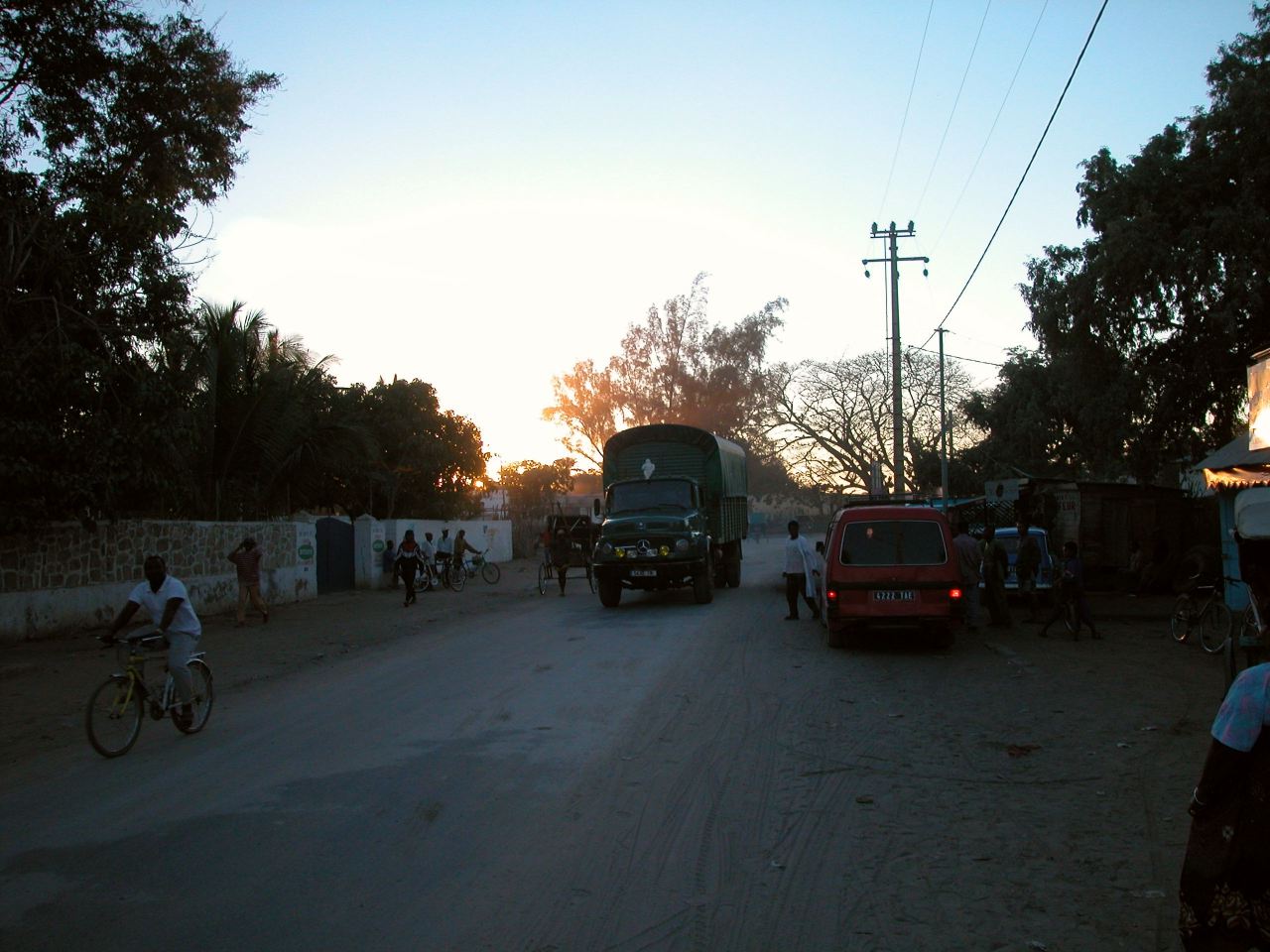
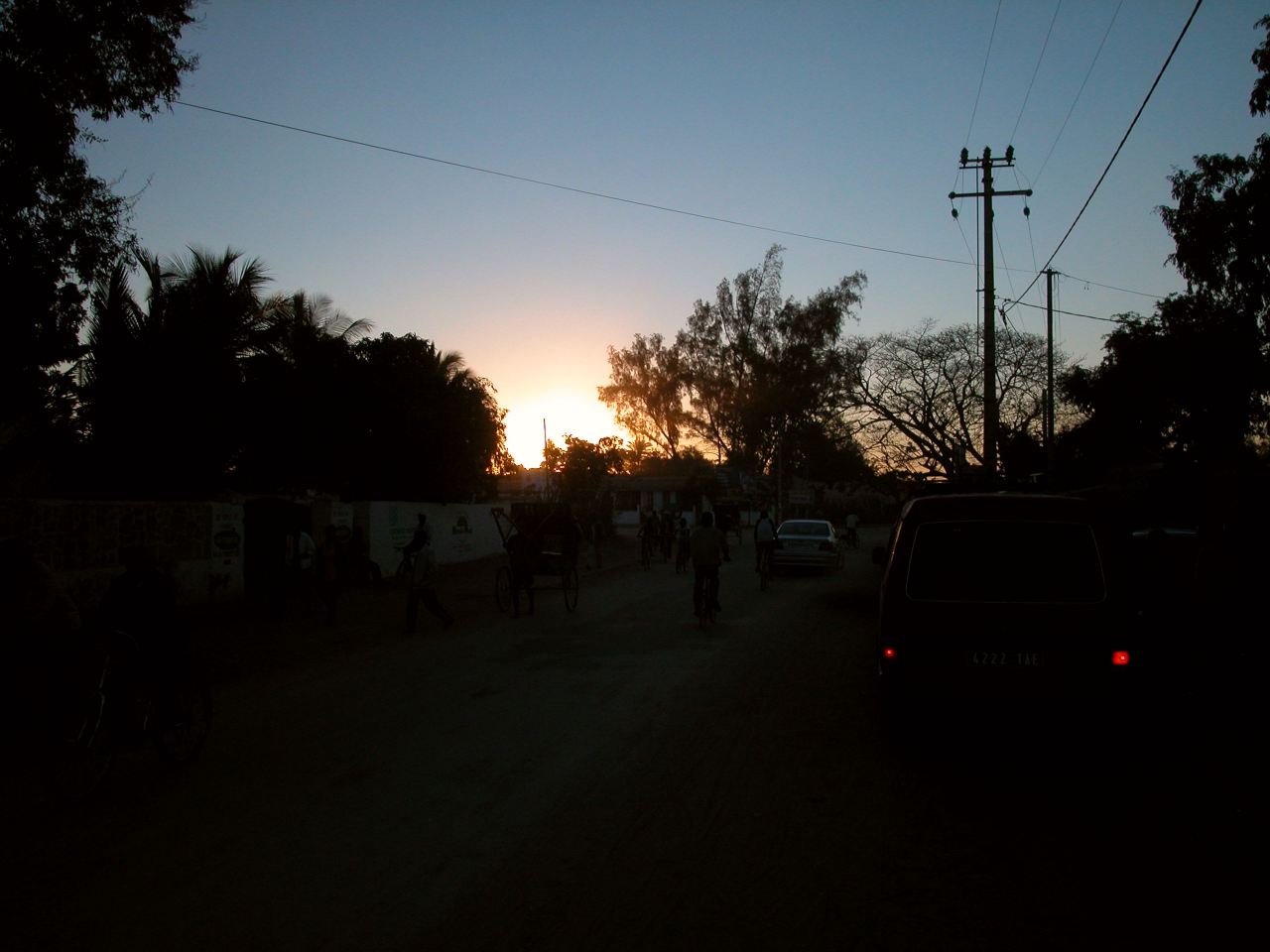
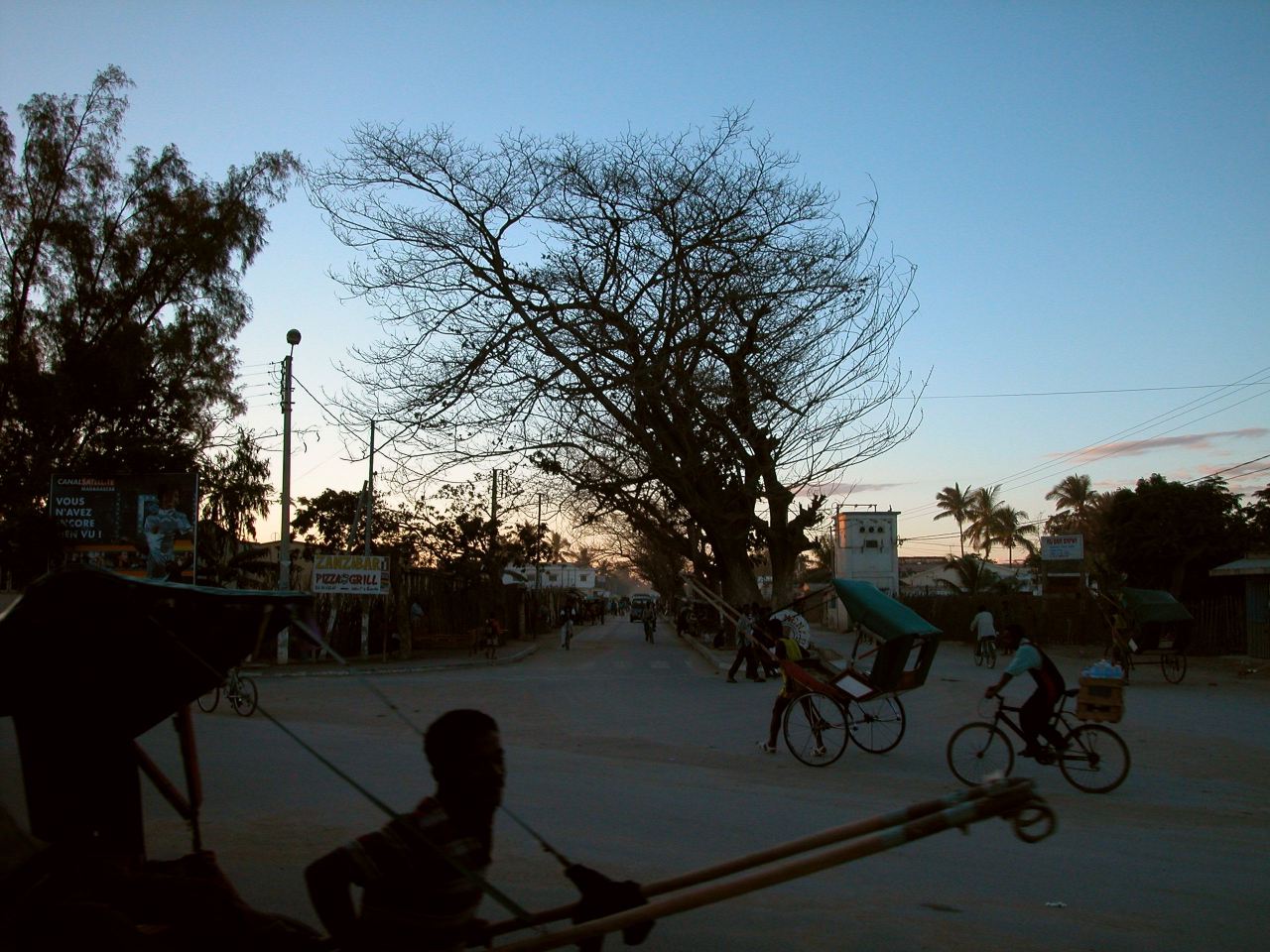
In Toliara we checked into a hotel for two days. We set one day aside for local sights, and our flight wasn’t until the day after that. On our first evening we went walking about town and bought seashells. To us they were the finest in the world. In many countries collecting them is restricted, along with importing and exporting them. Here, far from what I thought of as the wrath of environmentalists, remarkable half-metre specimens lay right on the main street.
Parany offered to take our spare things to the capital and give them back to us at the airport. We decided it was the ideal chance to buy shells without carrying them for the rest of the trip.
We found we could bargain three of them down to 20,000 francs.
We wrapped them carefully in the warm clothes we no longer needed, loaded the bundles into Parany’s car, tipped him 100,000 francs and said goodbye. After seeing him off we strolled through the evening city. Dinner at the Zanzibar restaurant was very pleasant. We met a Korean family and had a chat.
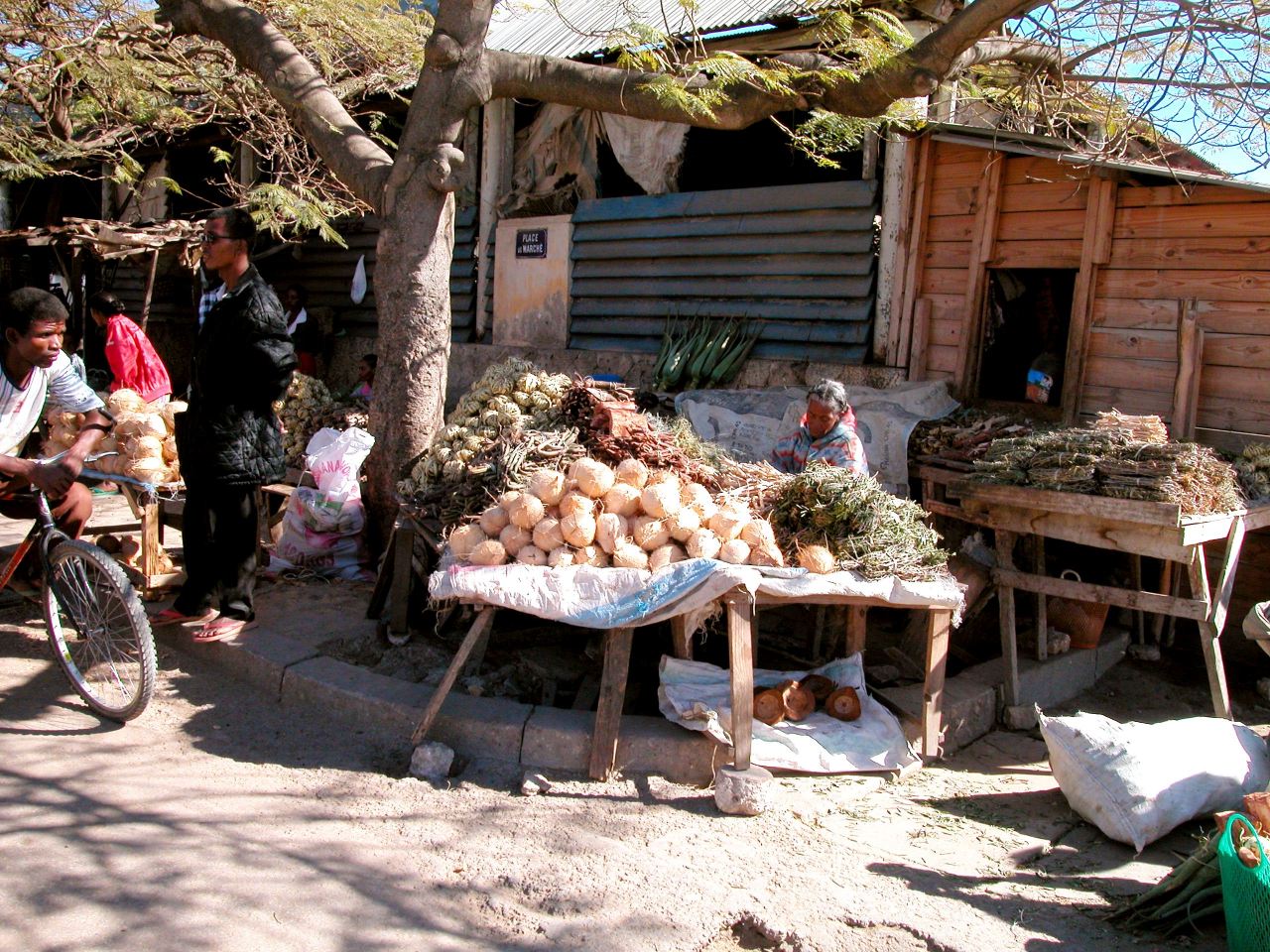
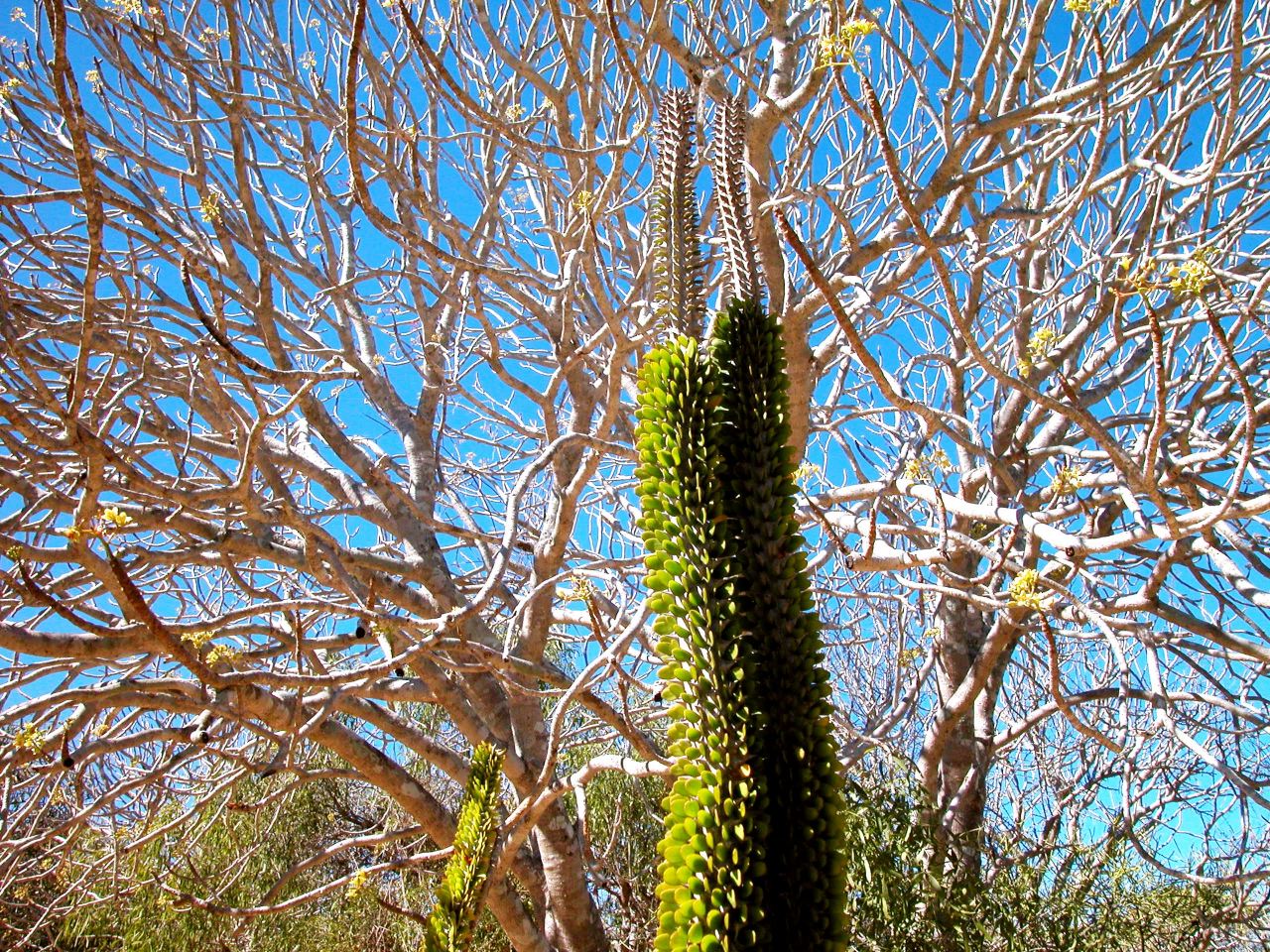
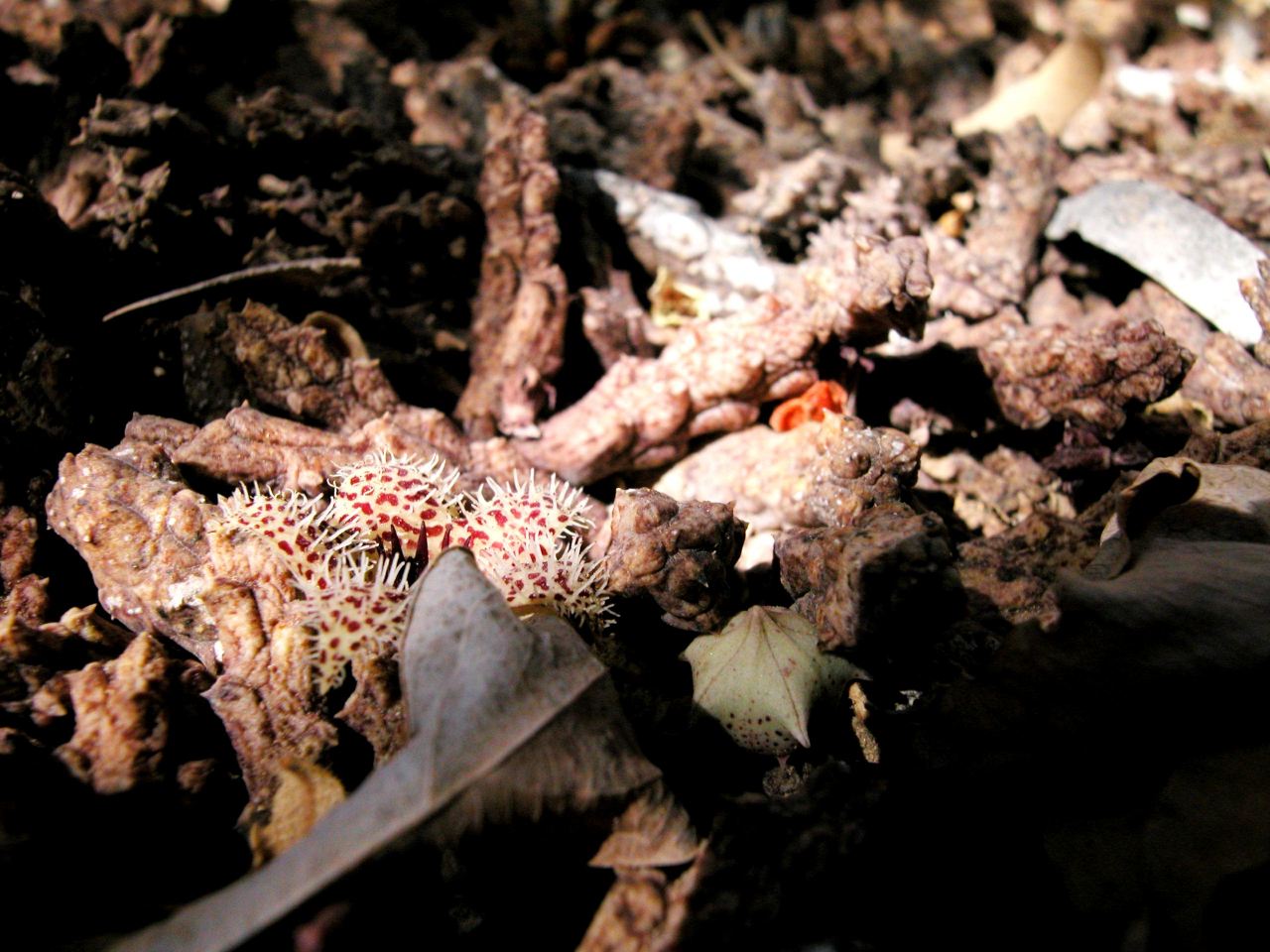
The next morning we flagged down a car to the Antsokay Arboretum (arbo.mada@usa.net), a little botanical garden of dry-forest plants founded by Swiss botanists. There were lots of pachypodiums, cacti and other exotic plants in a few hectares, and plenty of tortoises. Admission was 25,000 francs and the tip came to the same again. There was a small restaurant by the office where we had breakfast.
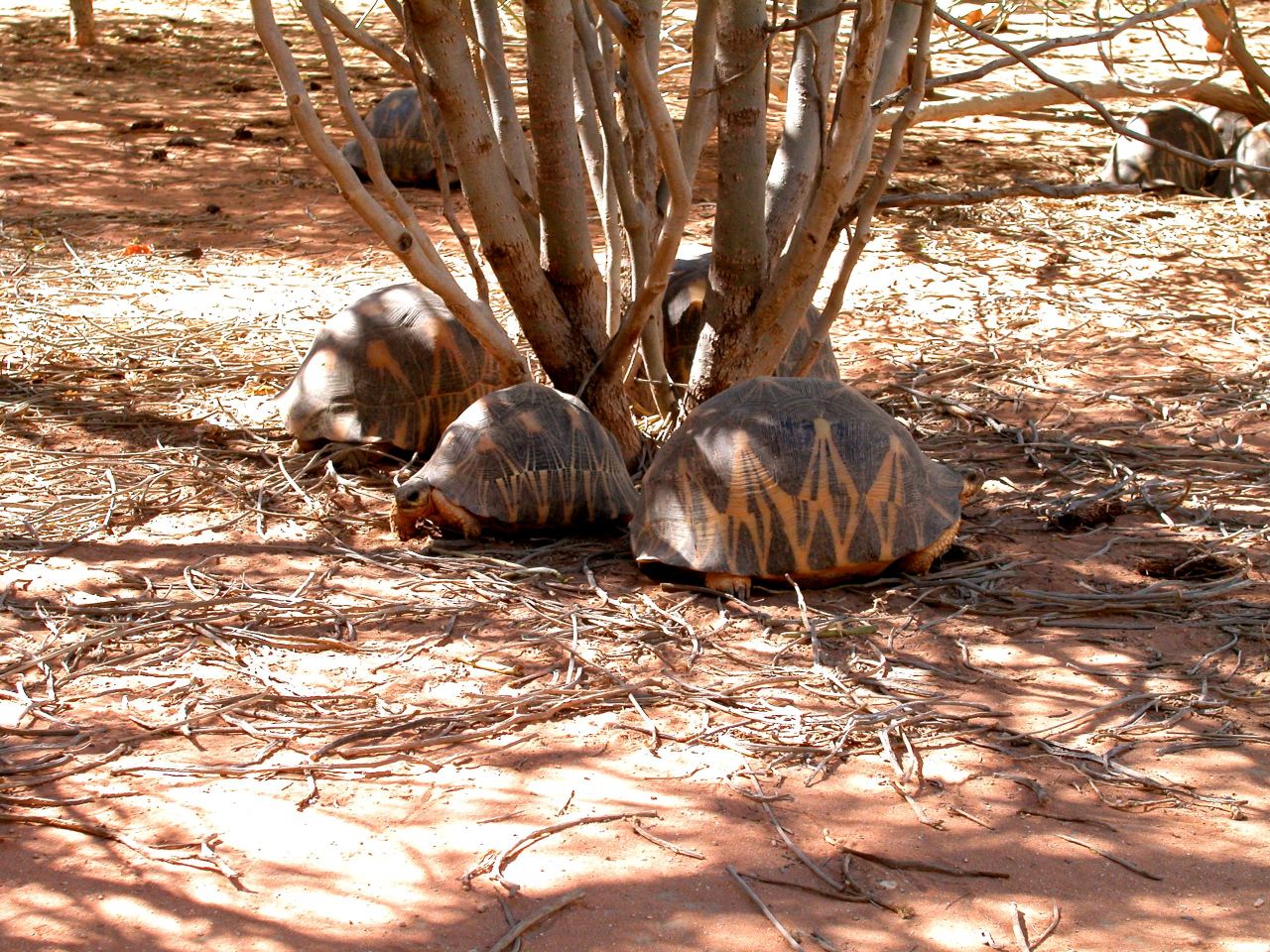
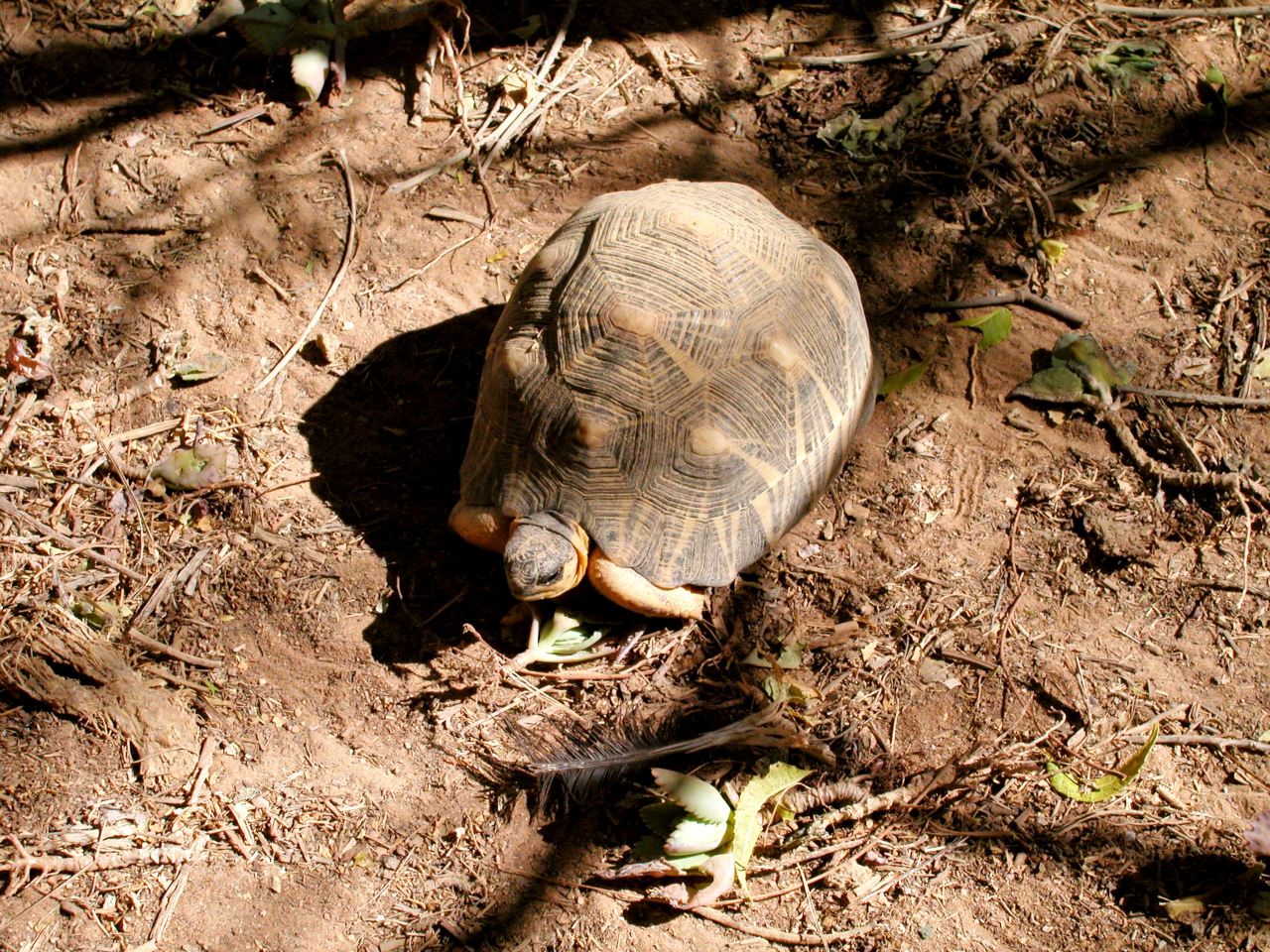
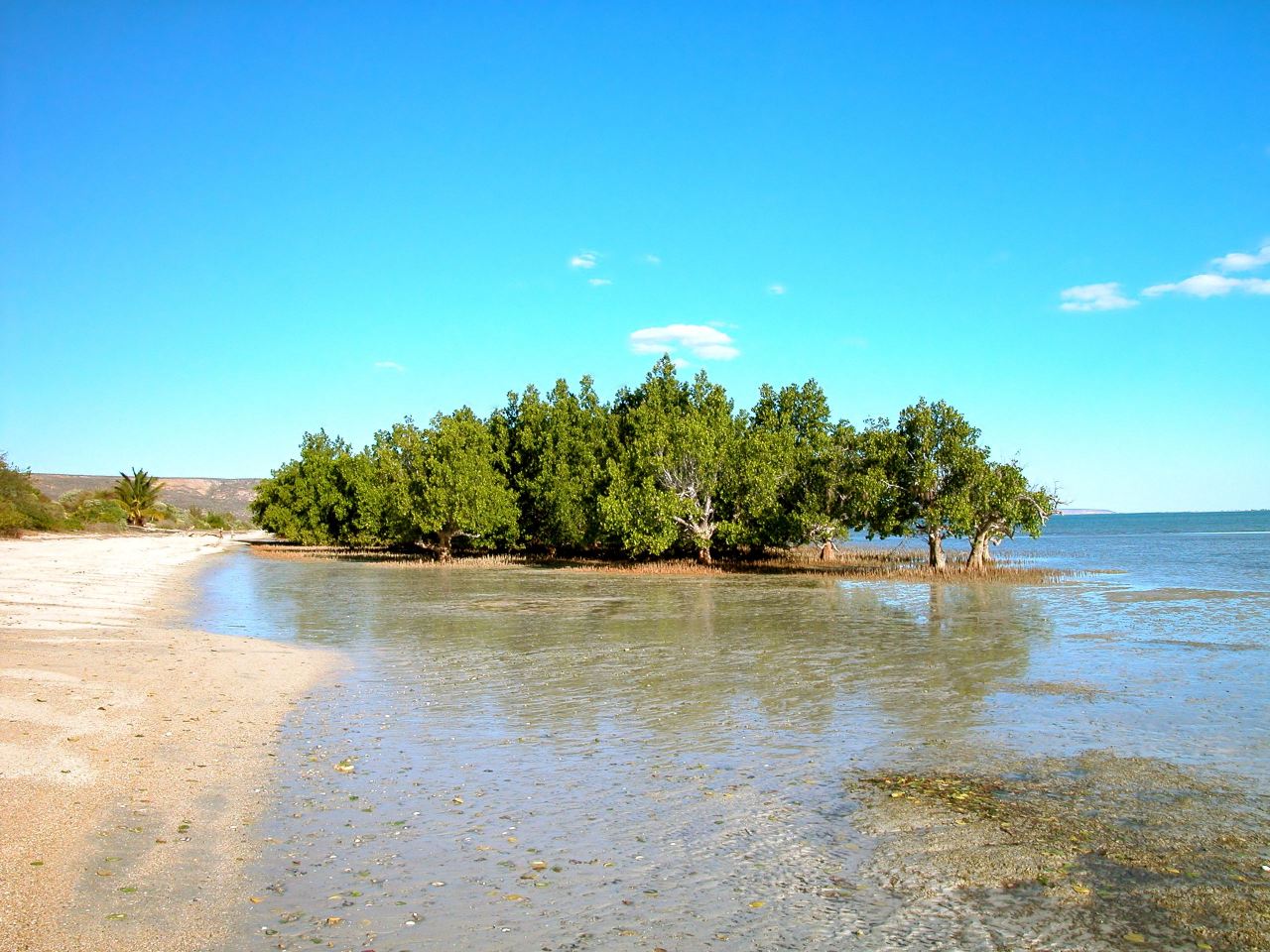
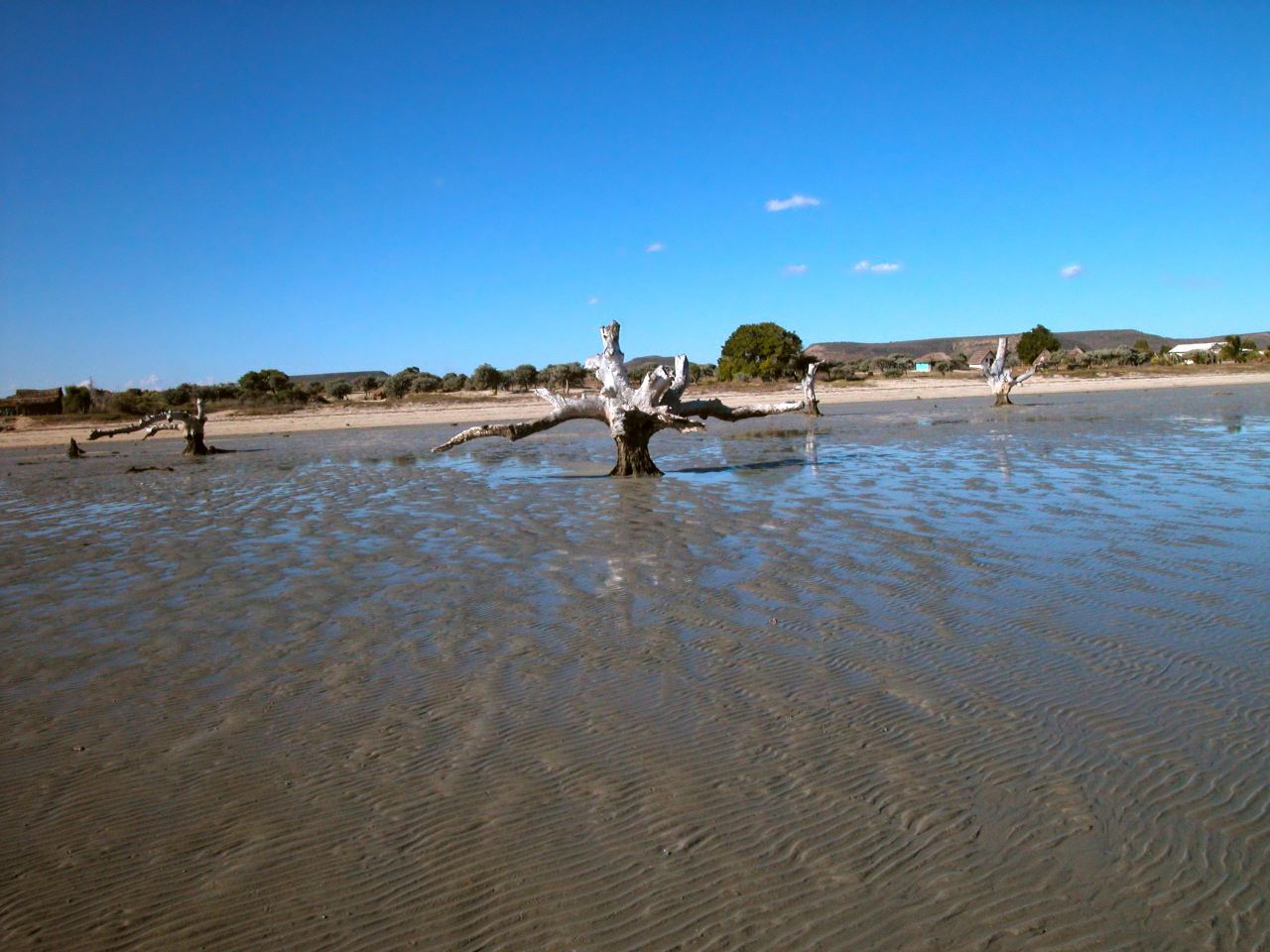
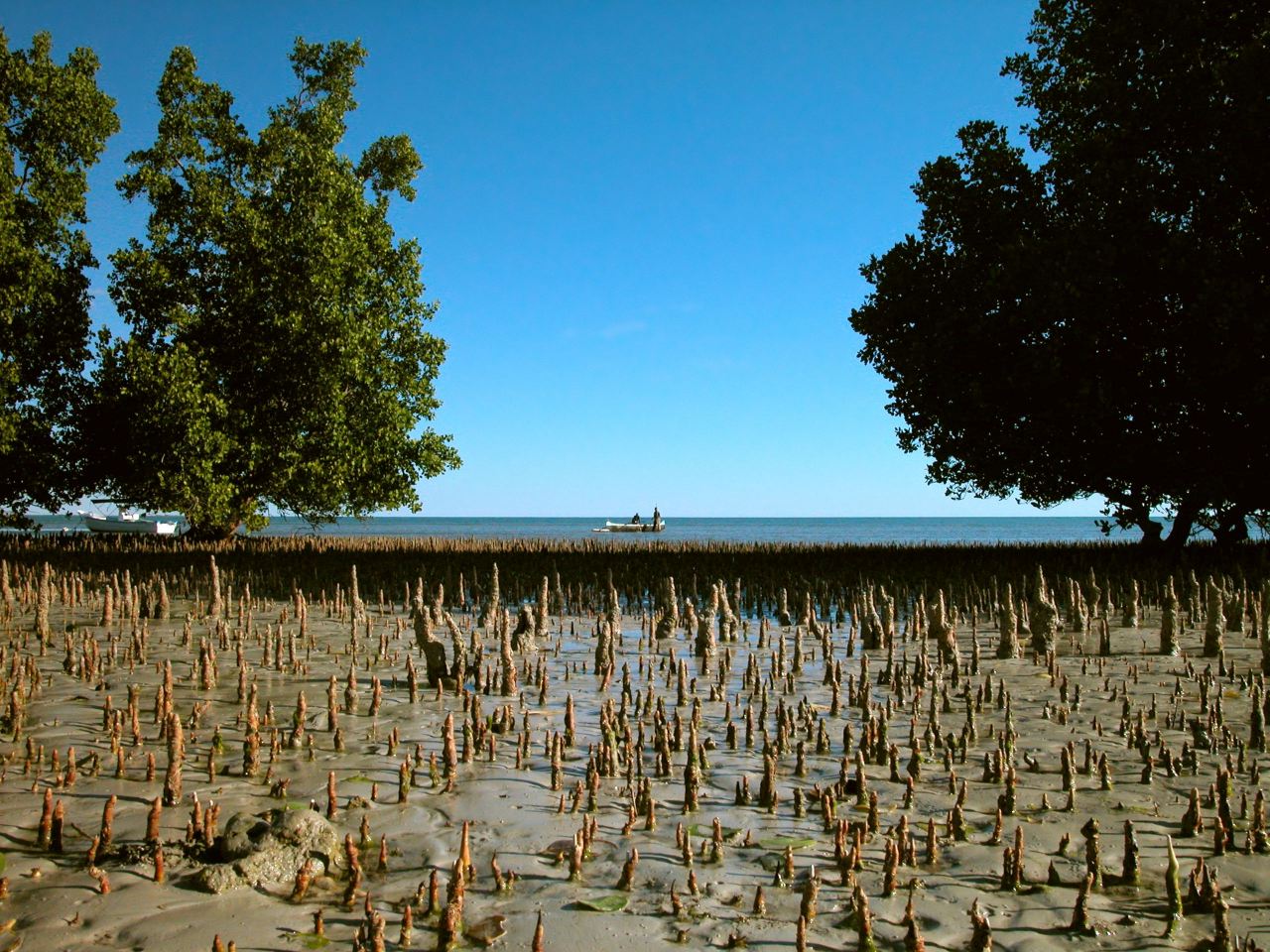
From the garden we set off on foot, hoping to walk along the ocean. It was hot, the shore was partly covered in mangroves, and it was densely settled. Just as we got tired, local fishermen ran up to offer a ride in a canoe to the nearest resort. We gladly accepted. They took us ten kilometres for 10,000 francs. The canoe leaked. One man had to run through the water to the village for a bucket to bail with. So we went along with one man paddling, the other bailing and me texting home. We were crossing the Tropic of Capricorn. I wrote, “Crossing the Tropic of Capricorn in a canoe on the Mozambique Channel.” People got alarmed and texted back to ask where we were going and why. “Mozambique, probably,” I said. It took some reassuring afterwards.
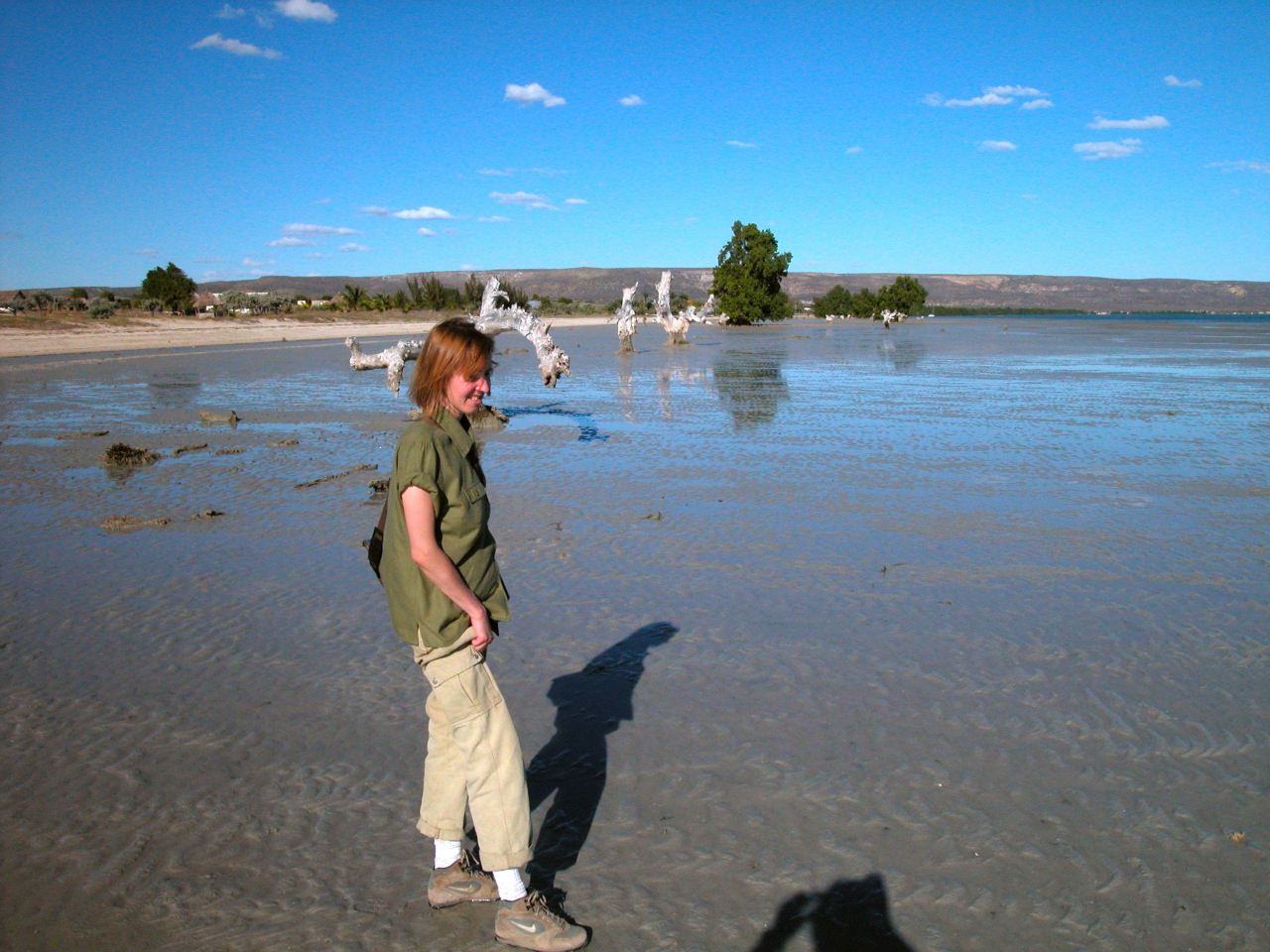
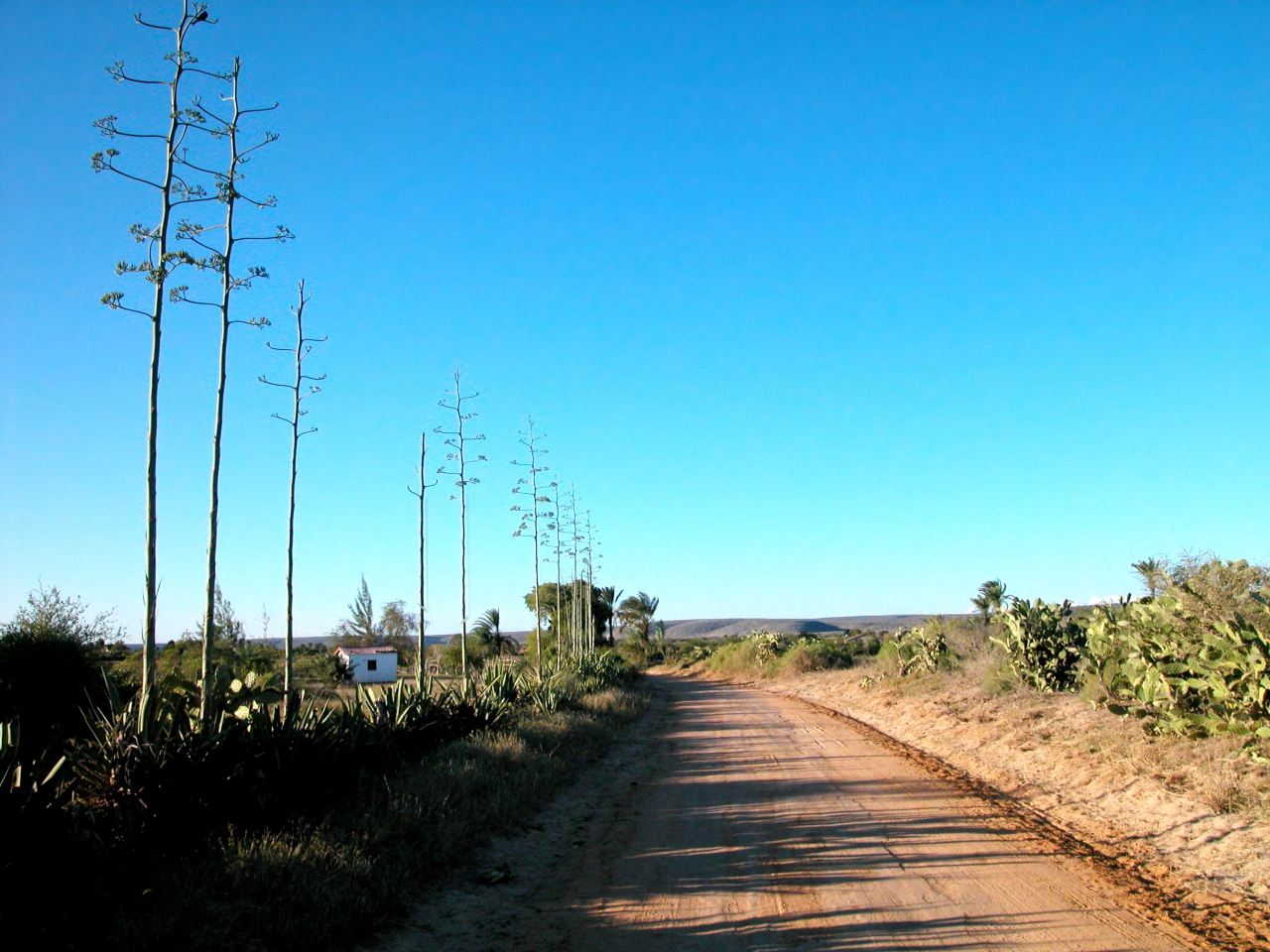
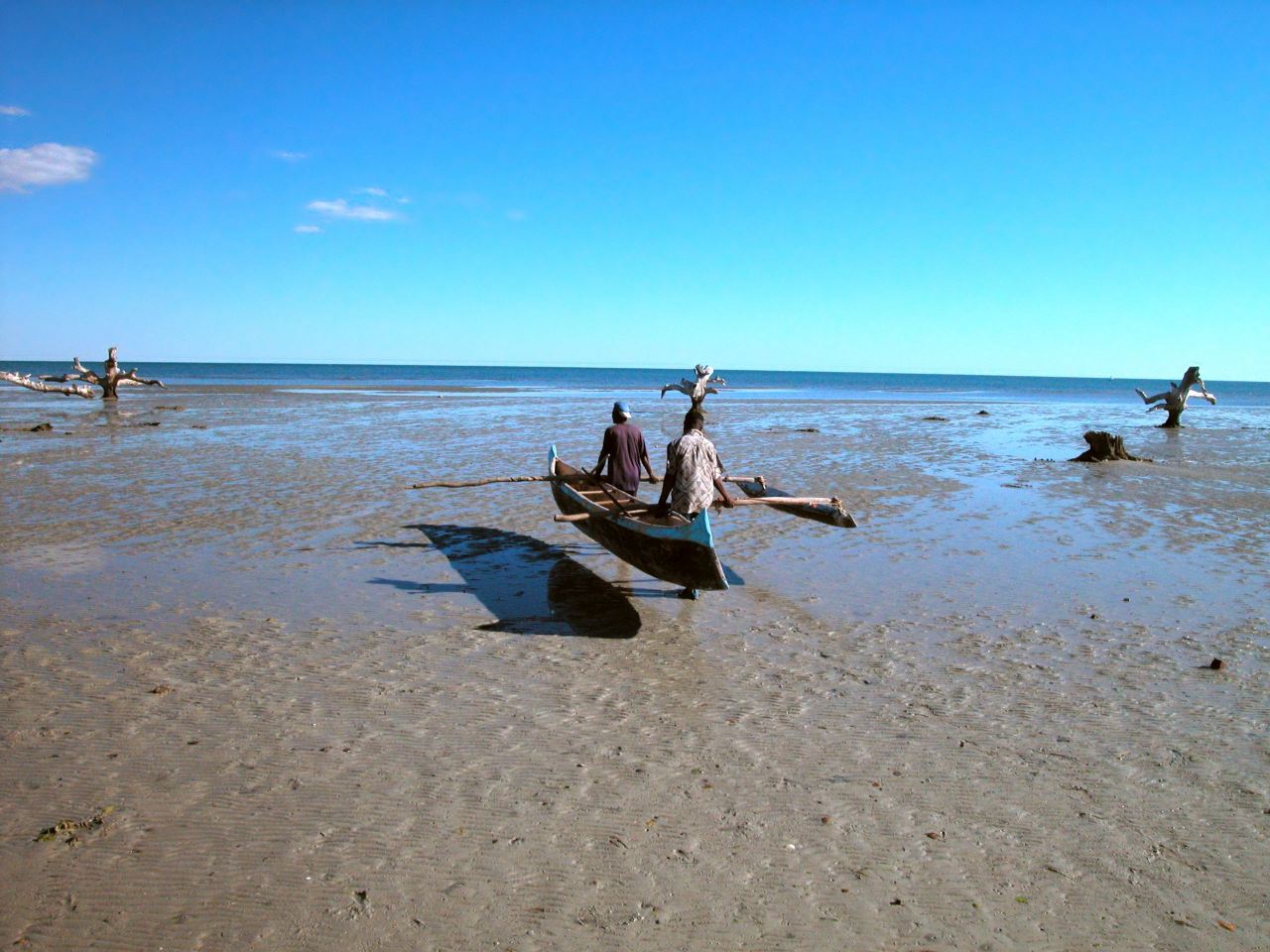
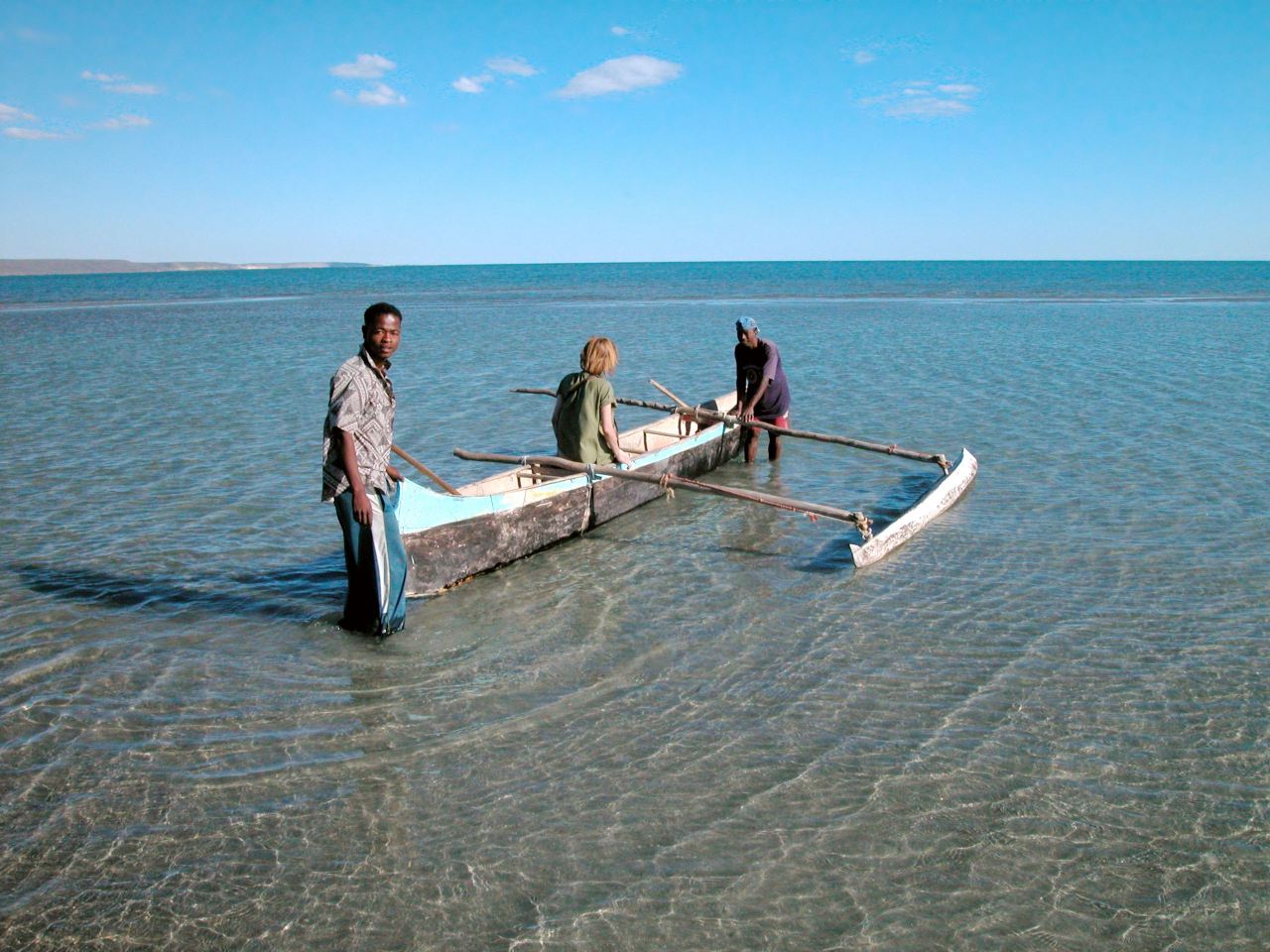
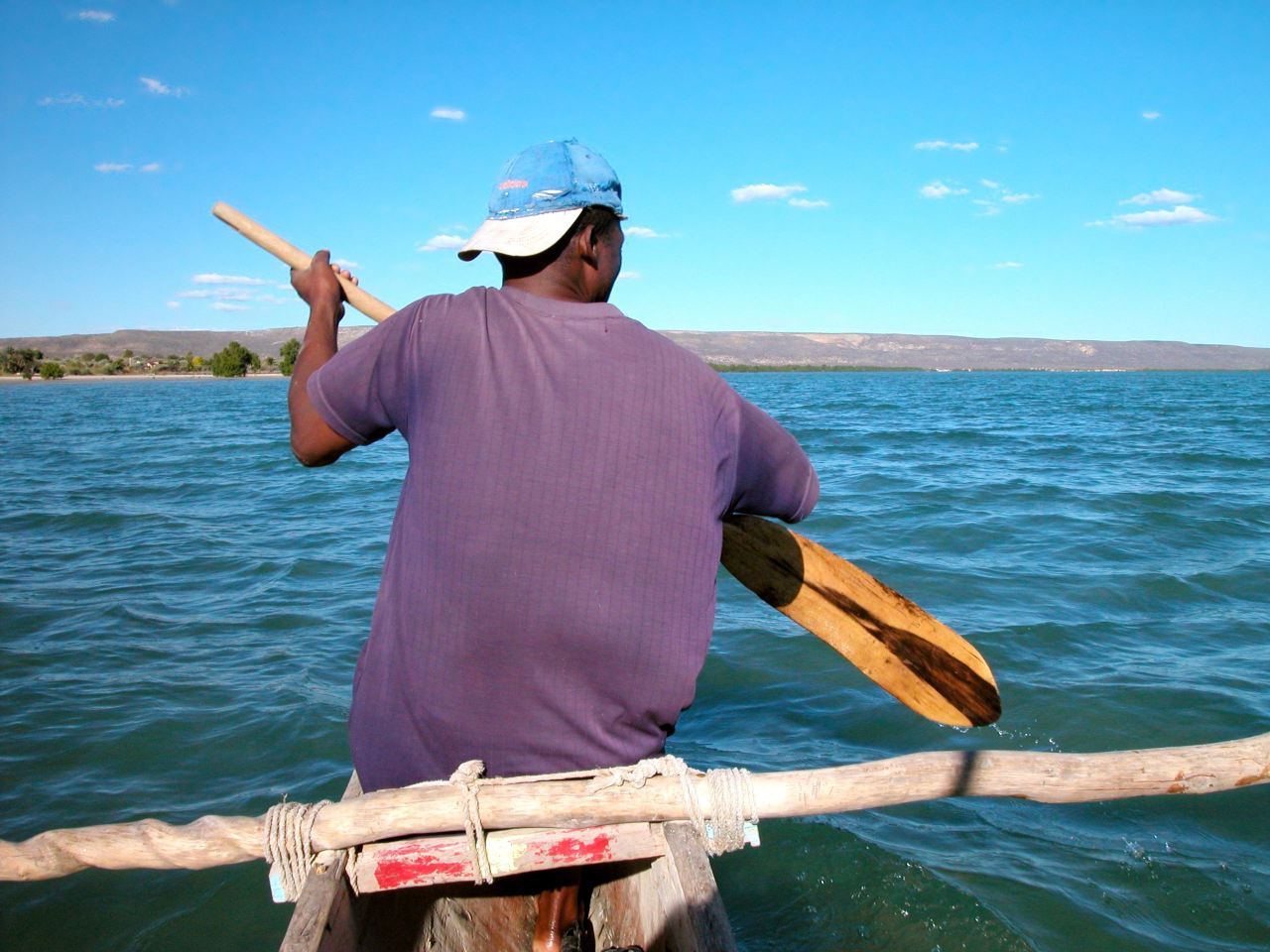
They dropped us at a coastal hotel set up for quiet holidays by the sea. The area was known as a resort. I especially liked the local advertising. “Visit our diving centre and see real sharks.” It was hard not to add, “From the inside.” Another went, “Our wonderful town of St Augustin was founded by pirates, who gave it its name and settled here. Half of them had died of tropical diseases after six months. After five years just one in ten remained. Come and visit our glorious holiday resort!”
We walked back towards Toliara without much hope of a lift. Soon a local plantation owner stopped. He asked whether we spoke English. Hearing that we did, he happily offered to take us back and practise his English into the bargain. We warned him several times that we were hardly examples to follow. He insisted he wasn’t likely to meet any other English people. So we got back to town quickly and for nothing.
We spent the evening walking slowly through town and riding a rickshaw. In a big city like this it cost more, around 5,000 francs, and the carts were newer, with bicycle wheels. Every one had a registration number and a licence. There was no shortage of paperwork. The country was poor, but rules and licences had already entangled the economy before it had a chance to get going. A restaurant sign might actually say “second class, third category.”
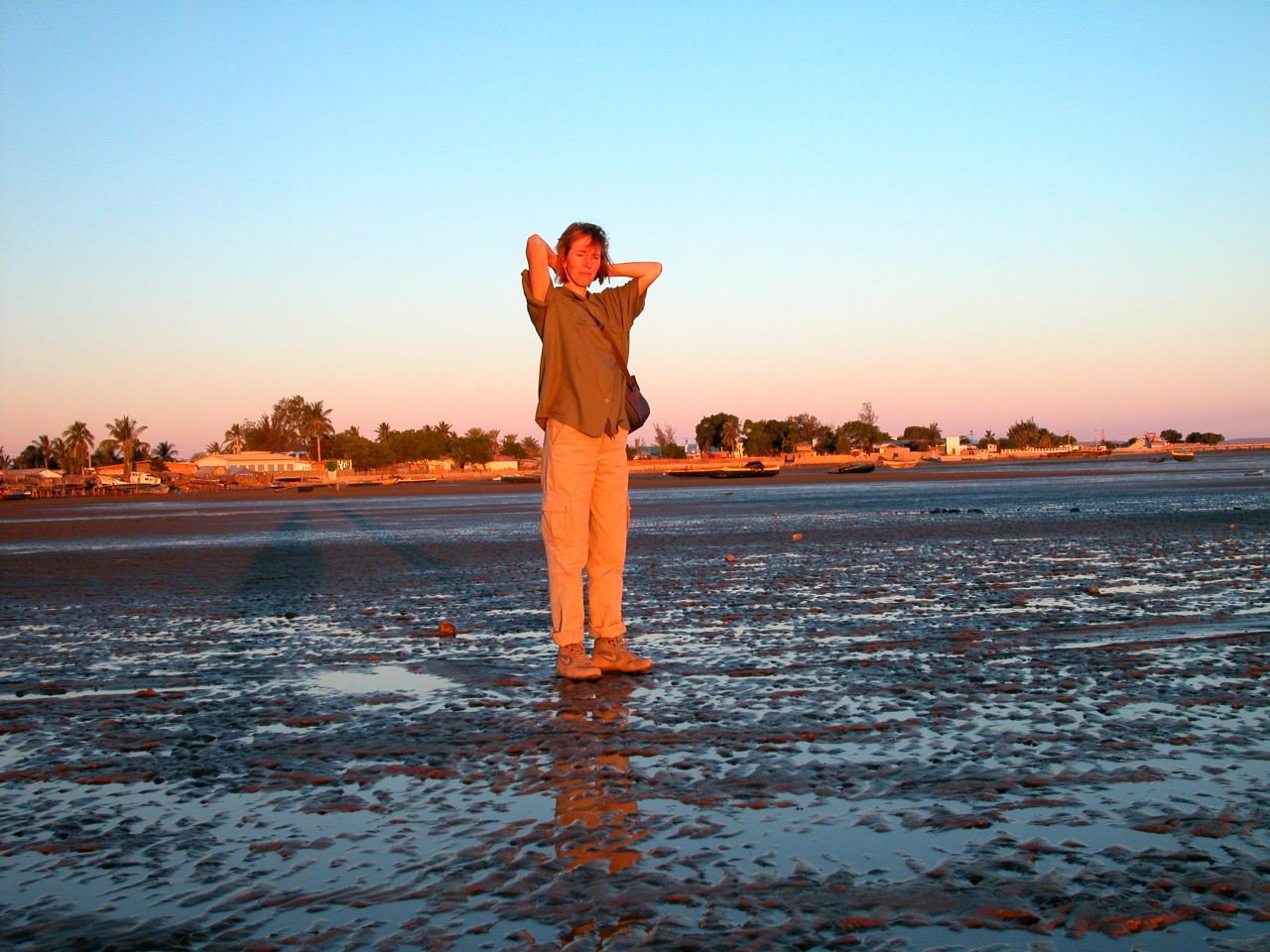
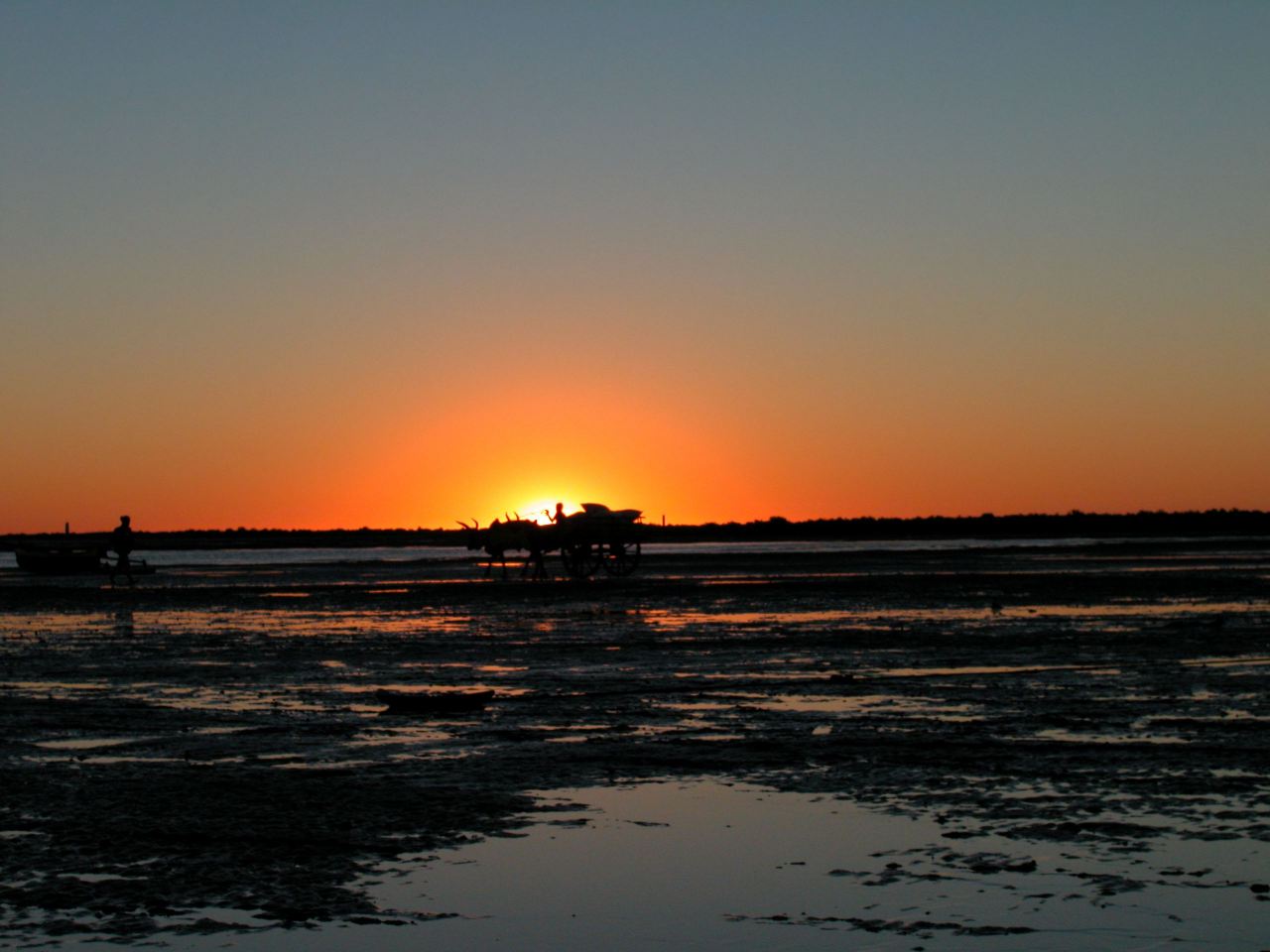
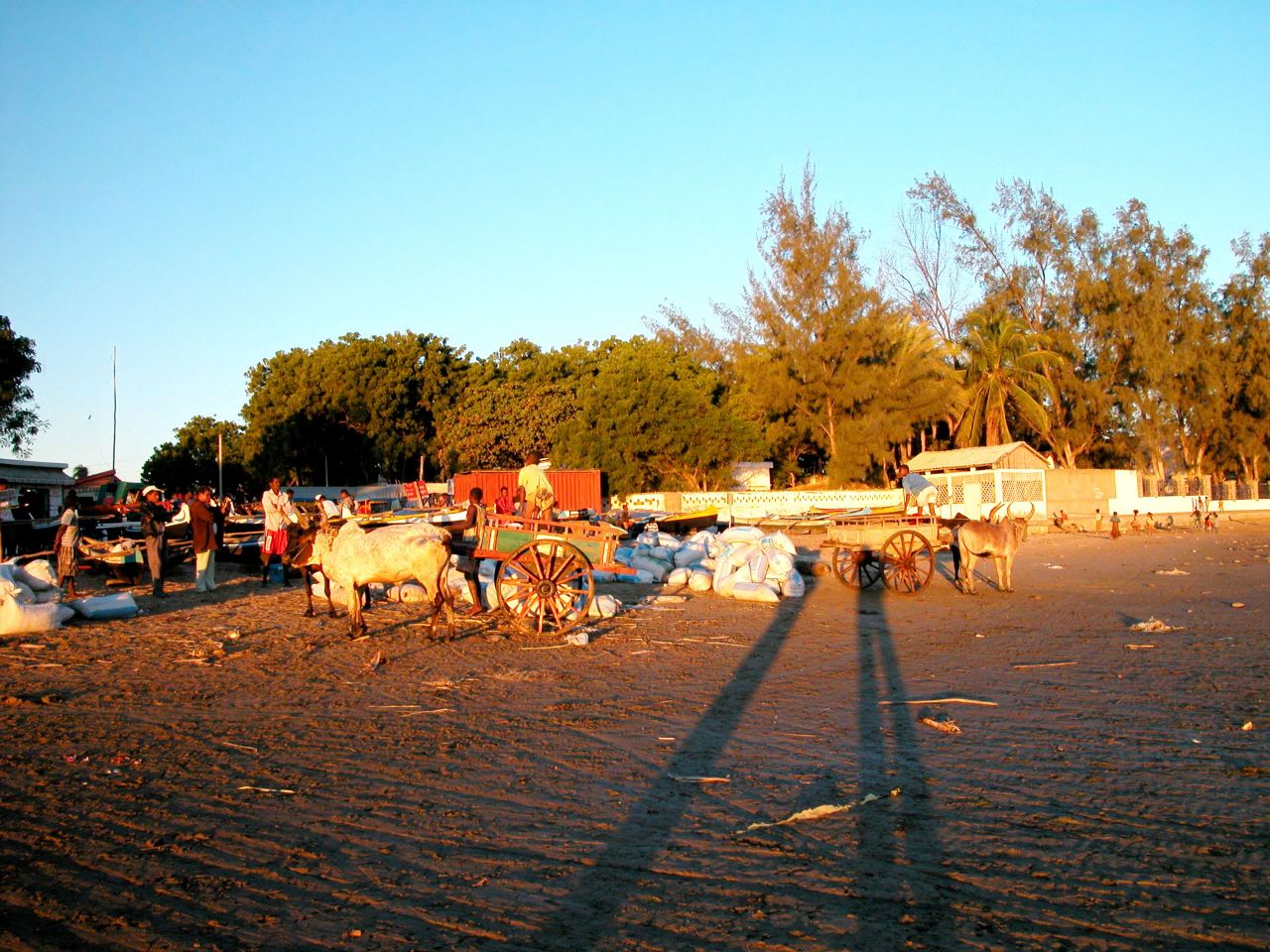
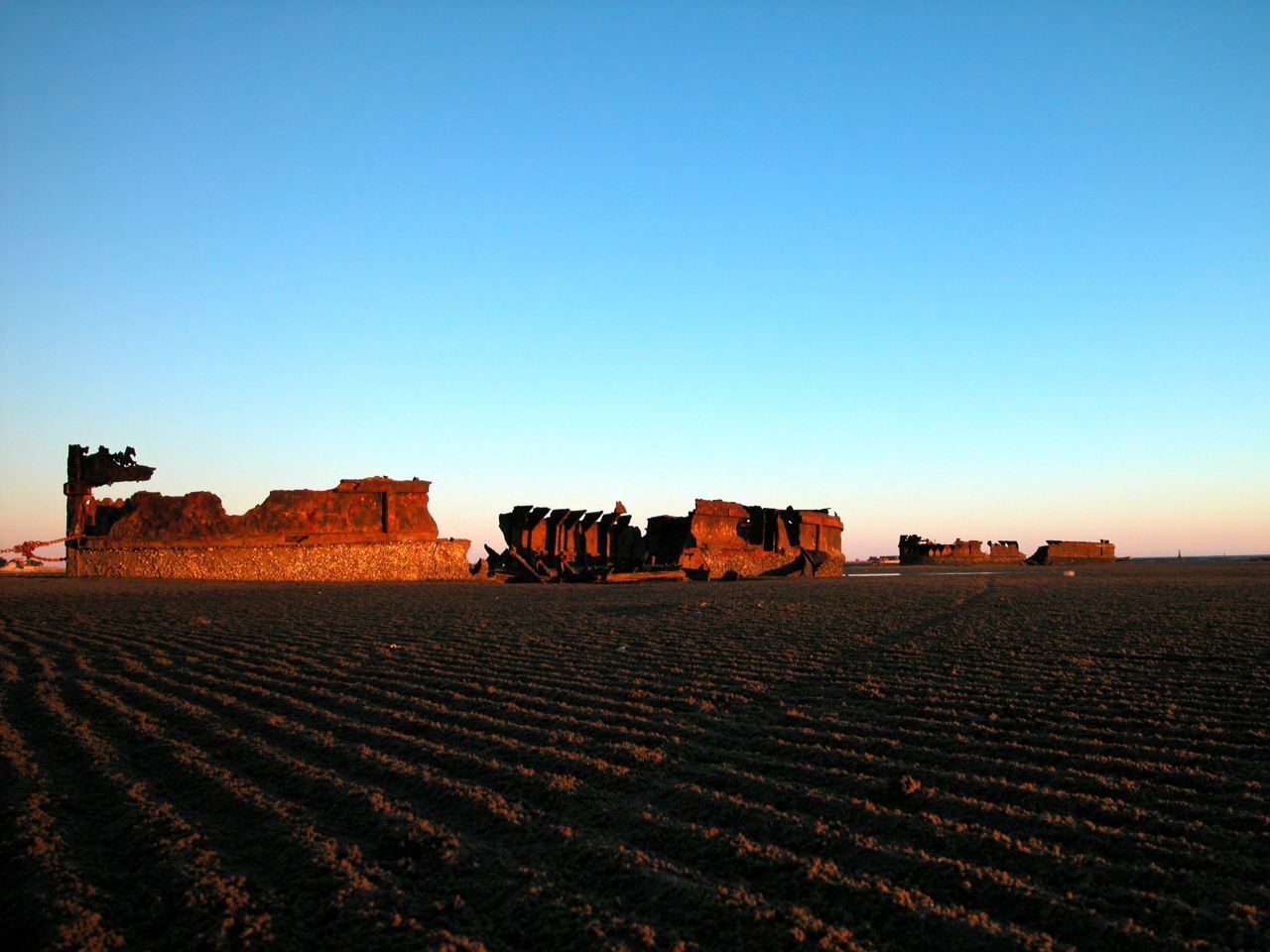
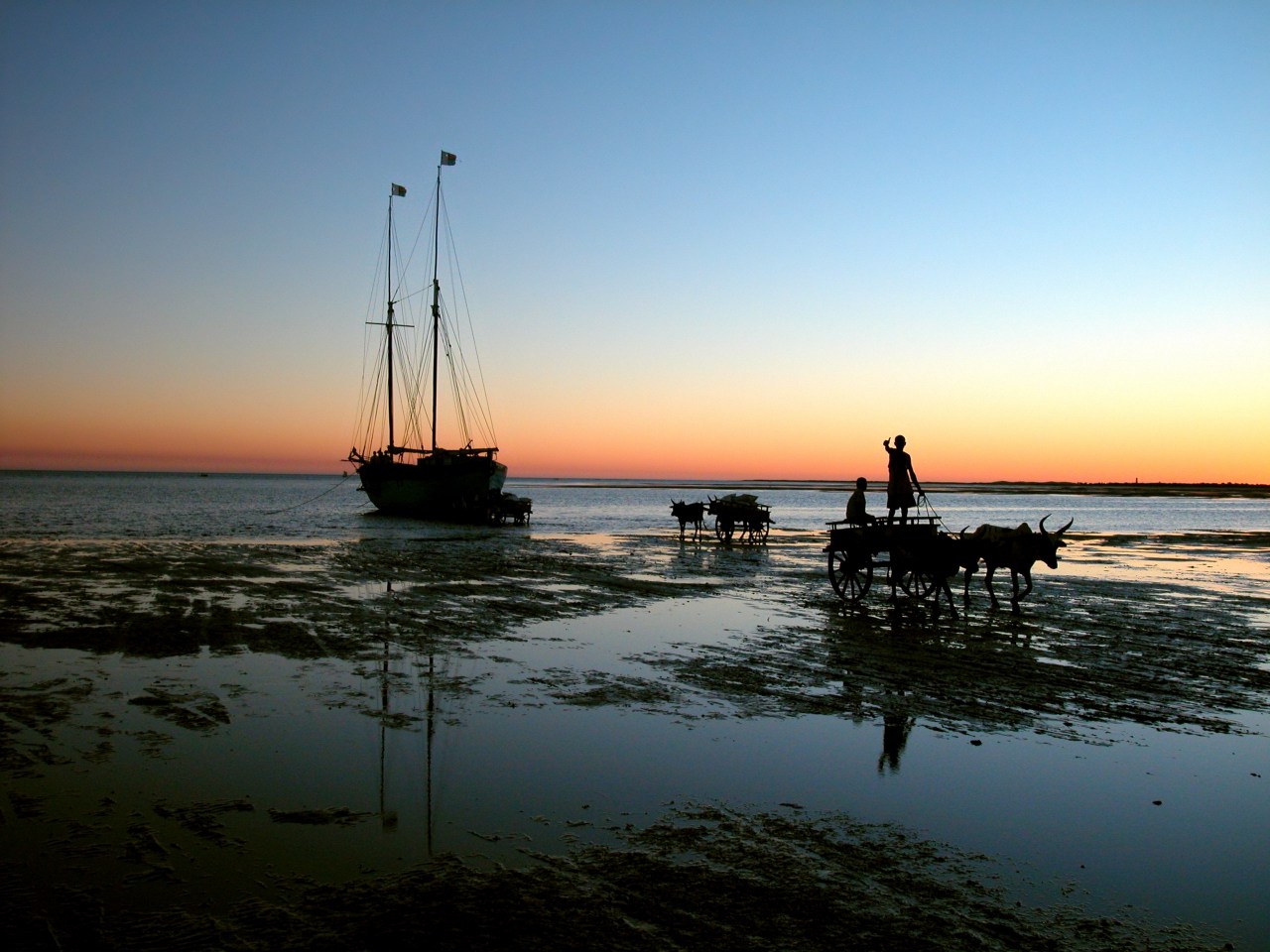
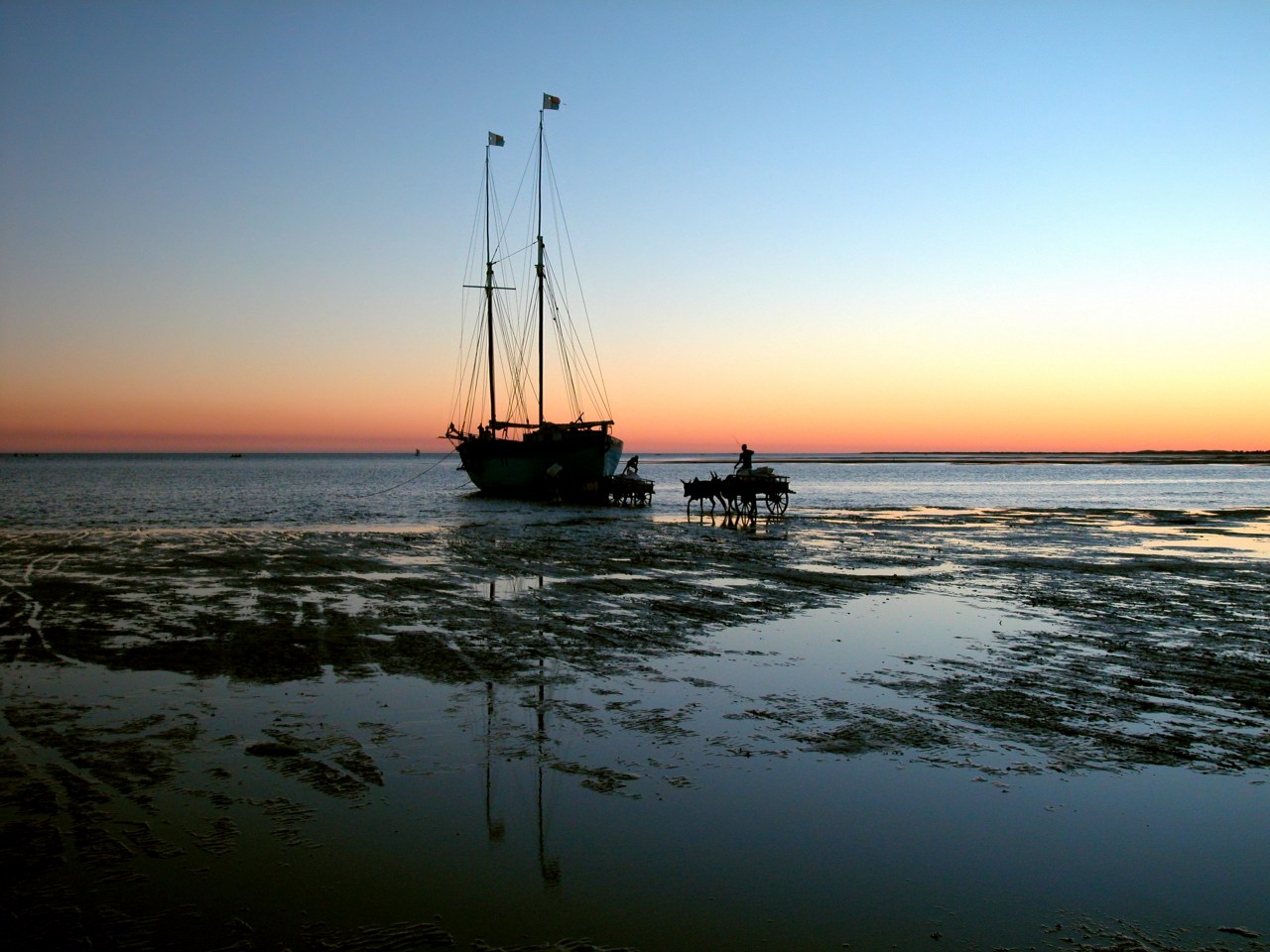
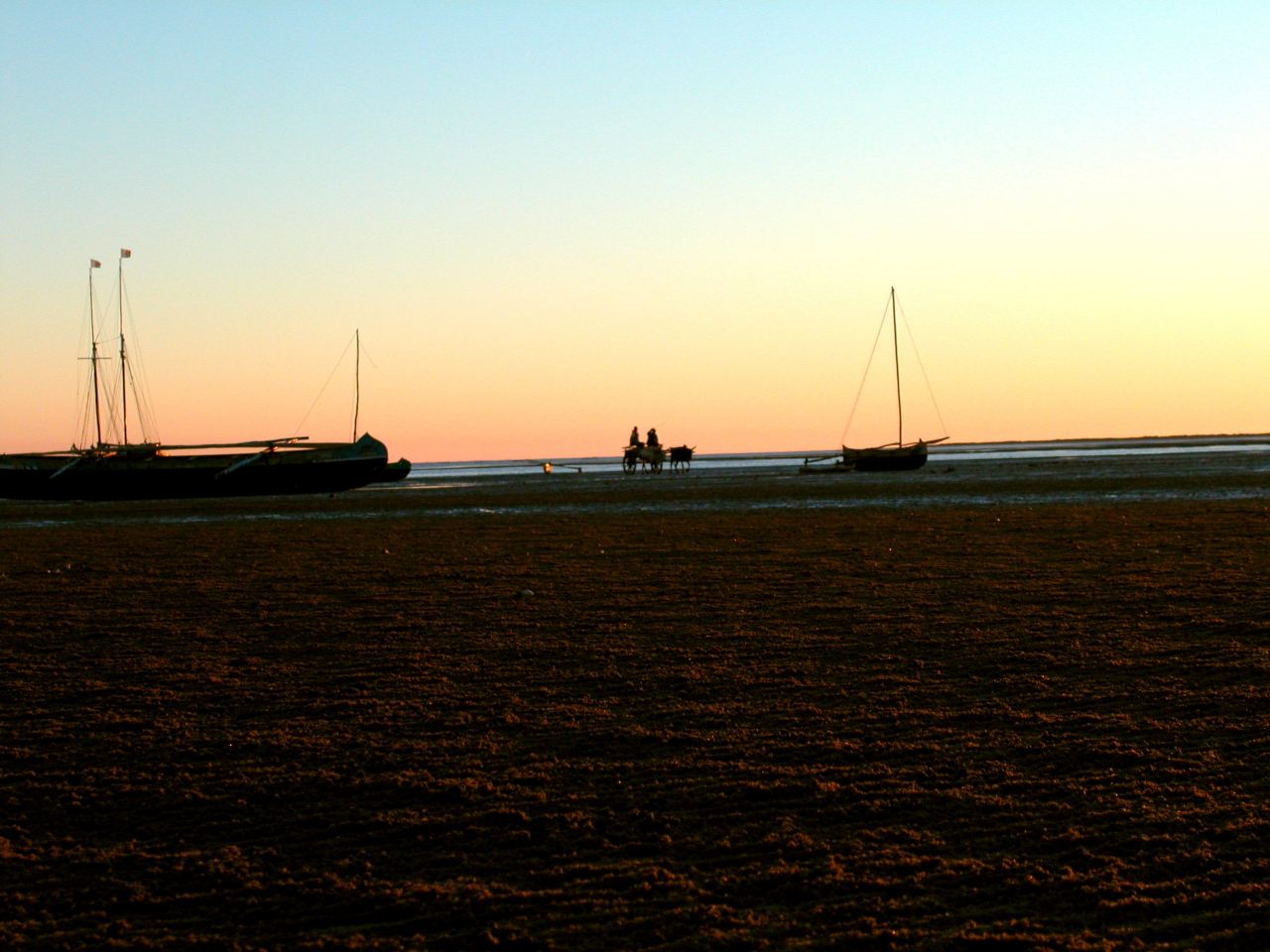
We watched the sunset in the port. Here they were loading a sailing ship. It was bound for Mozambique. Wooden carts took sacks of freight to the little vessel under a Malagasy flag. It all looked just as it must have hundreds of years ago, or perhaps in Phoenicia at the dawn of recorded history. The cargo was probably being smuggled. I saw no customs officers or passport control. It would be out of place to mention them here anyway. They belong to a different world.
Morondava and the road to the Tsingy
We went to the airport early and flew to Morondava in an old Boeing 727. A ticket was 751,100 francs. A plane and an airport seem like civilisation, yet the Stone Age made its presence felt even there. Beside the usual pictures of pistols, grenades and other things banned from hand luggage were a stone axe, a bow and arrows and a spear. And a trickle of fuel was running out of the engine, which wasn’t on the poster at all.
Then something happened to our luggage. Airport employees called us over to the bags we’d already checked in and pointed at one. It was buzzing, to everyone’s horror. An electric shaver had switched itself on. I turned it off, everybody laughed and that was that. If it had happened in New York, I feared they’d have blown up the bag and arrested us. I resolved to keep battery shavers out of my checked luggage.
The plane was flying on to the capital with a stop at Morondava. It was full, but only three people besides us disembarked there.
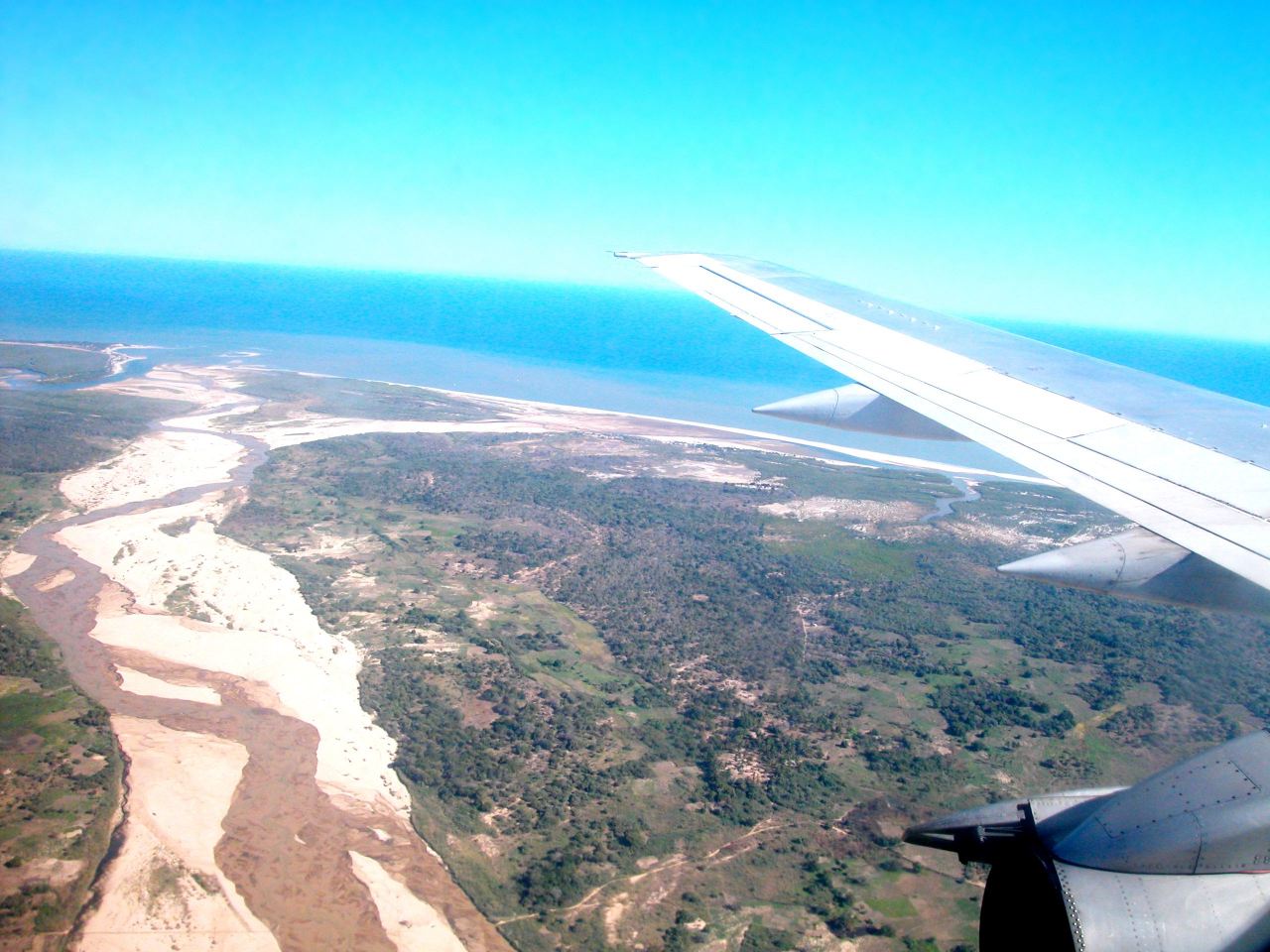
Morondava is the most baobab-filled place on Earth. Here was what we’d heard was the only baobab forest. You could see it from the aircraft. Even at that height the trunks, hundreds of metres apart, were visible.
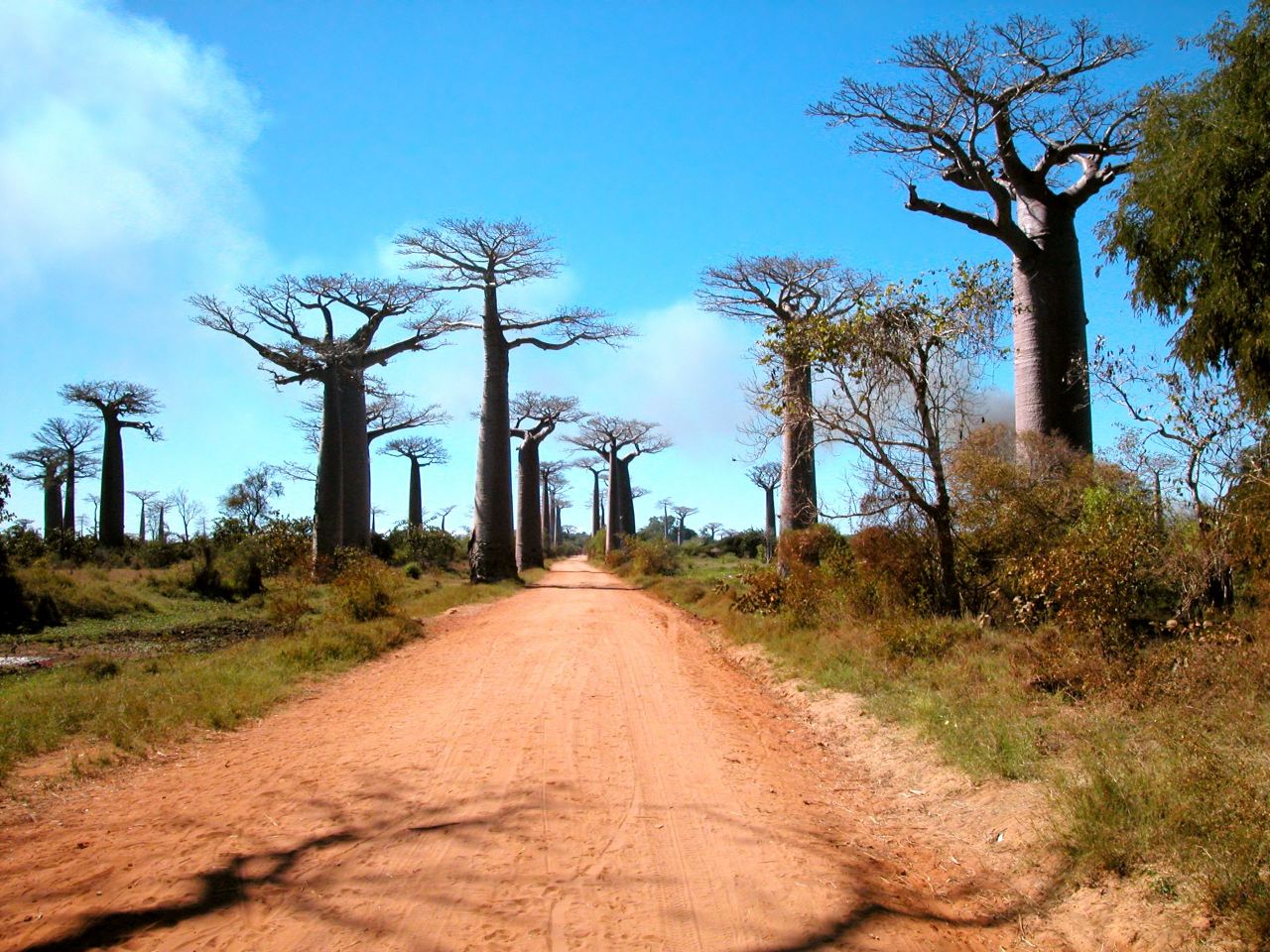
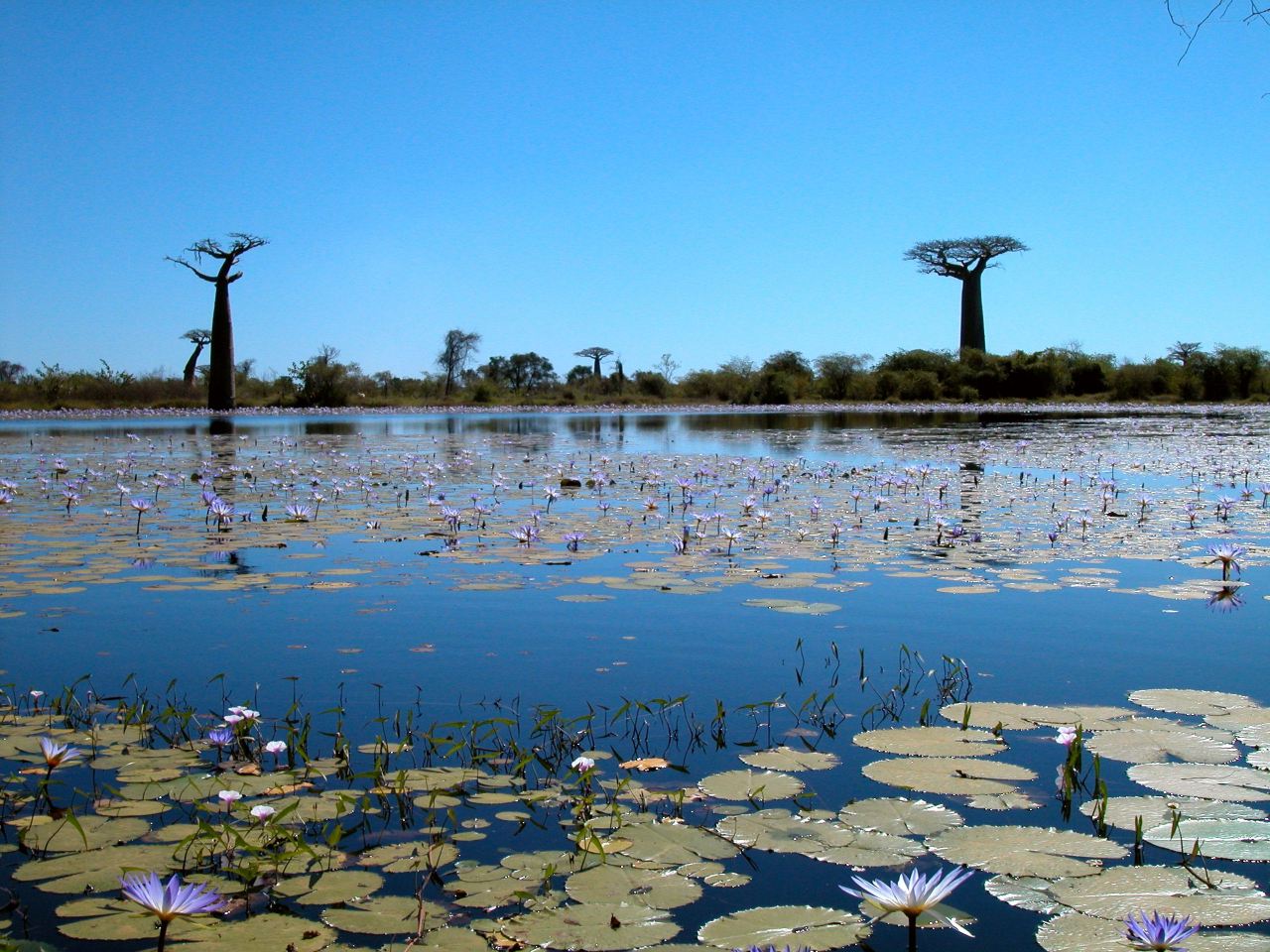
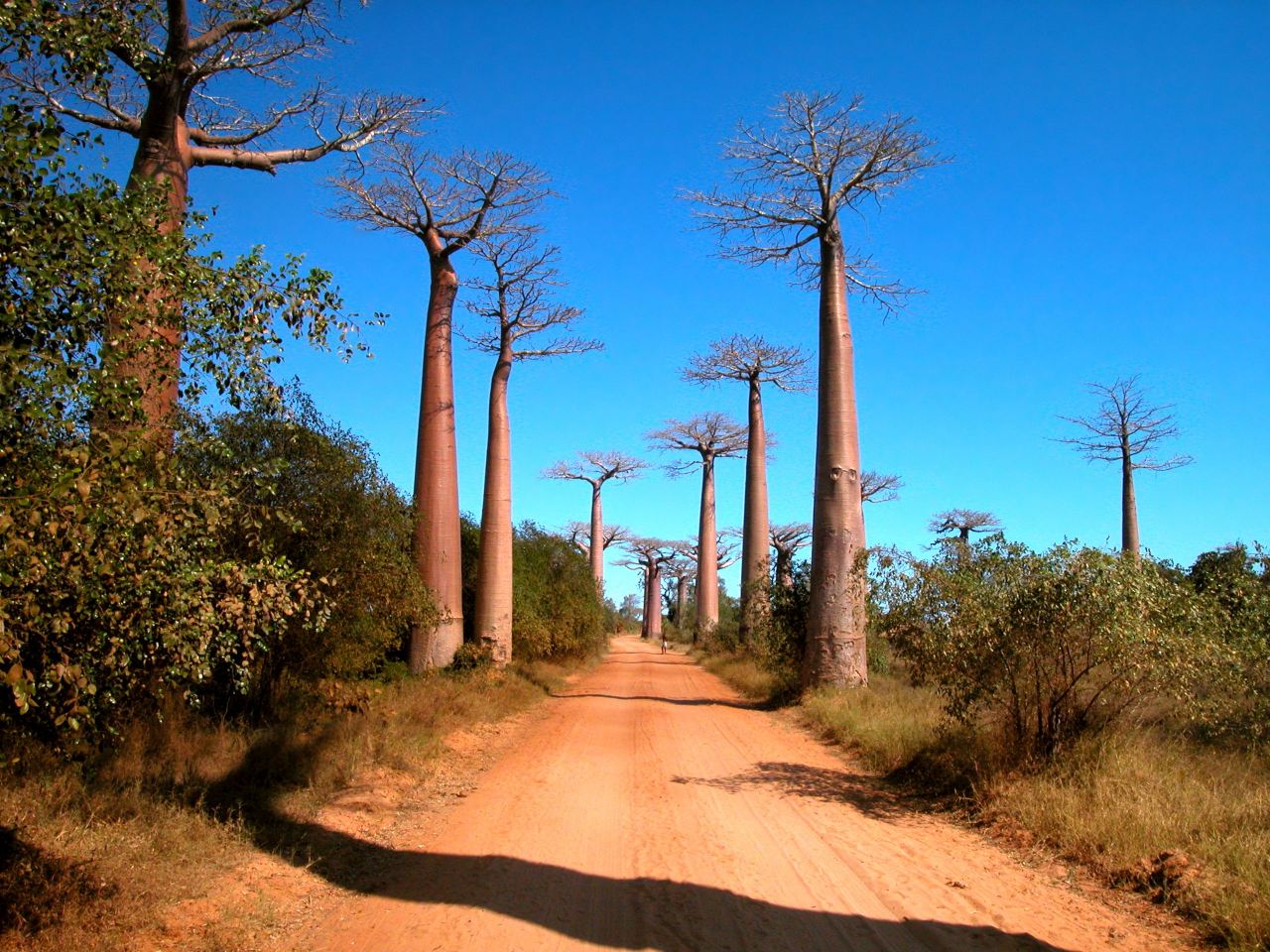
We would save the baobabs for last. Our first objective was the famous stone forest. The limestone pinnacles are called the Tsingy and lie in Tsingy de Bemaraha National Park. A photograph in National Geographic a few years earlier had left an indelible impression and plenty of people wanted to see the place. Getting there was another matter. It was 250 bone-jarring kilometres each way in a four-wheel drive. You had to get to Bekopaka and then walk on to the Grands Tsingy. Since it’s a national park, a guide was compulsory here too. The Petits Tsingy were close to the village. They were an option if you were short of time, though it seemed a shame to go all that way and stop there.
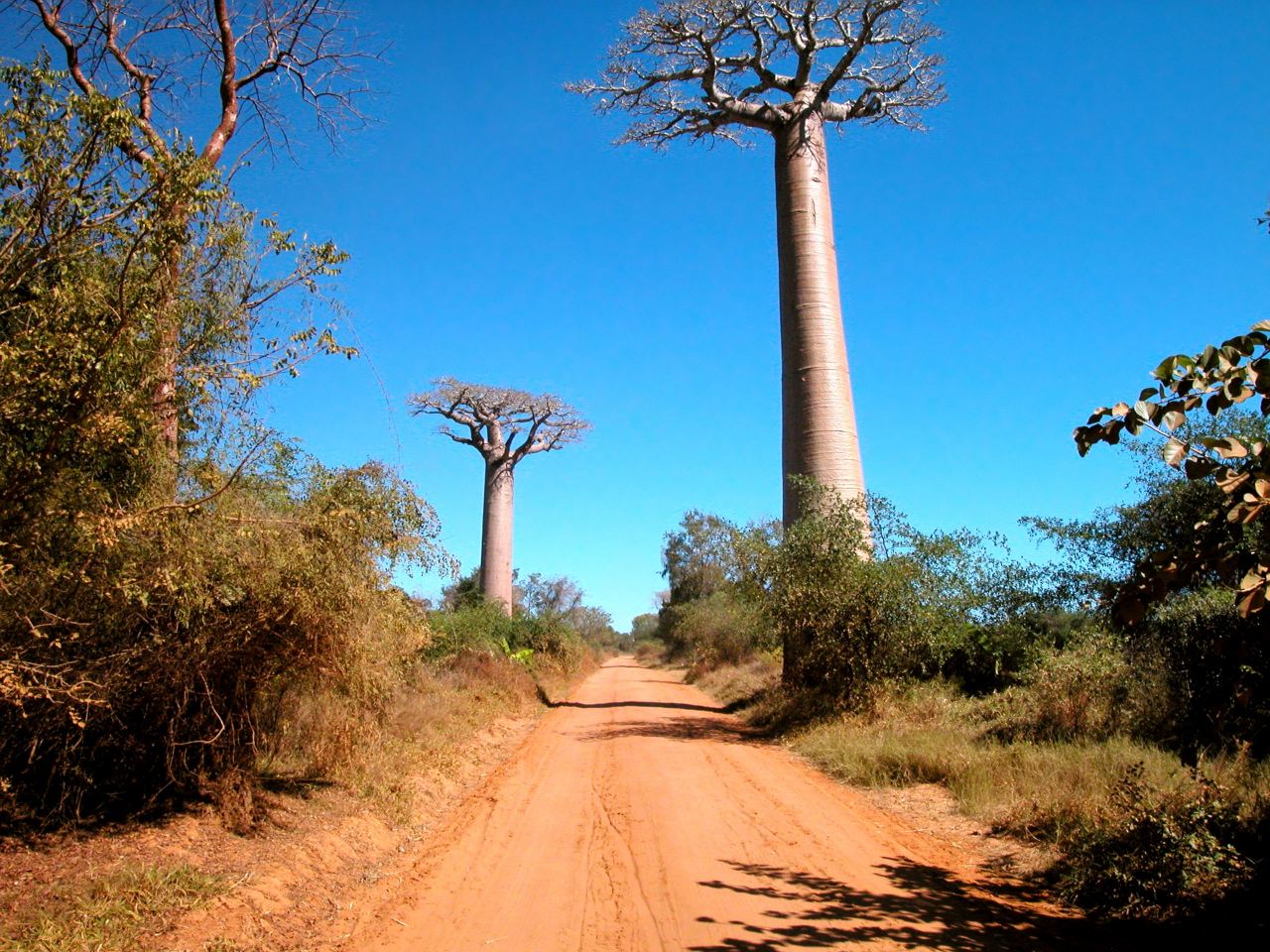
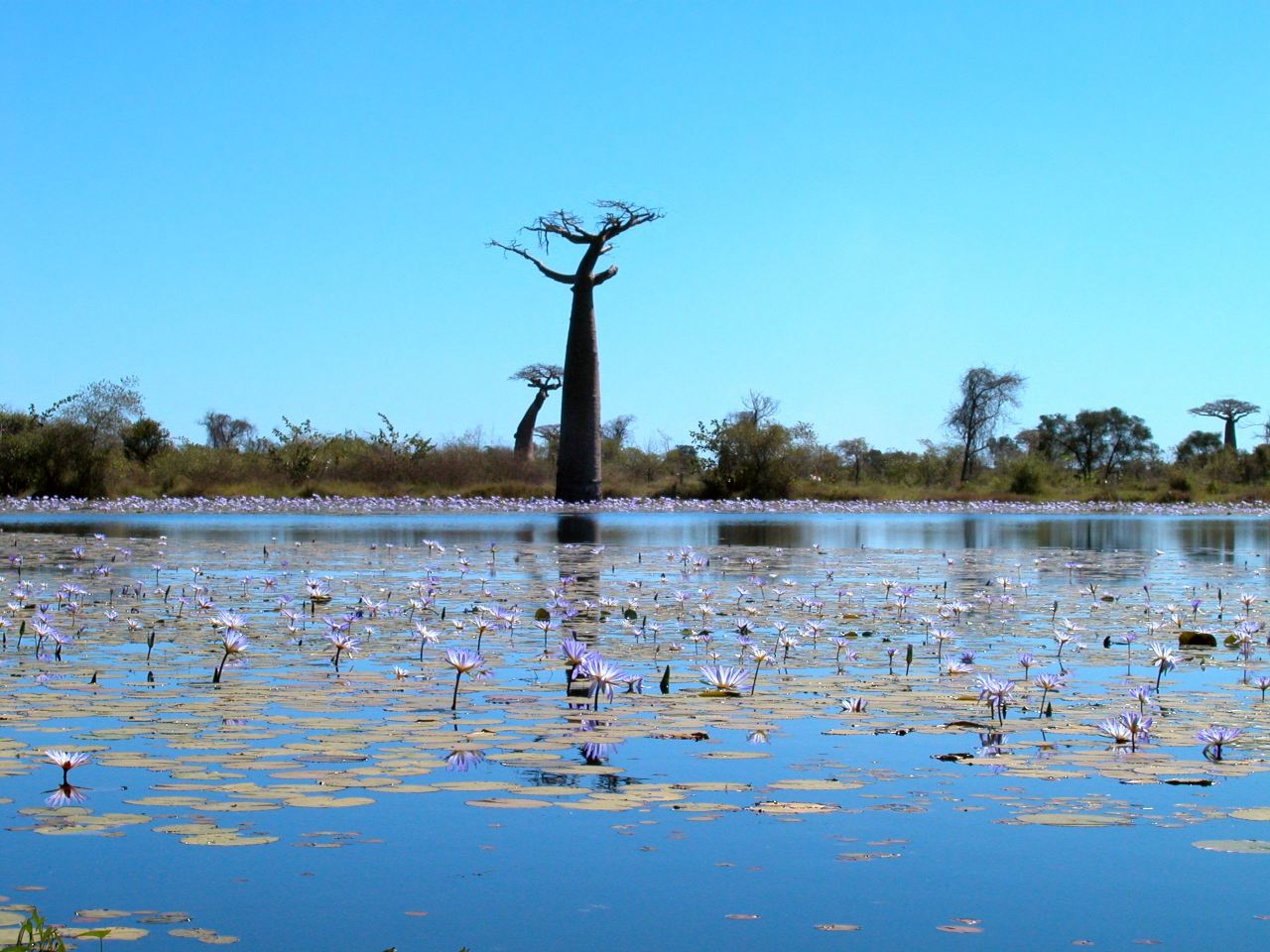
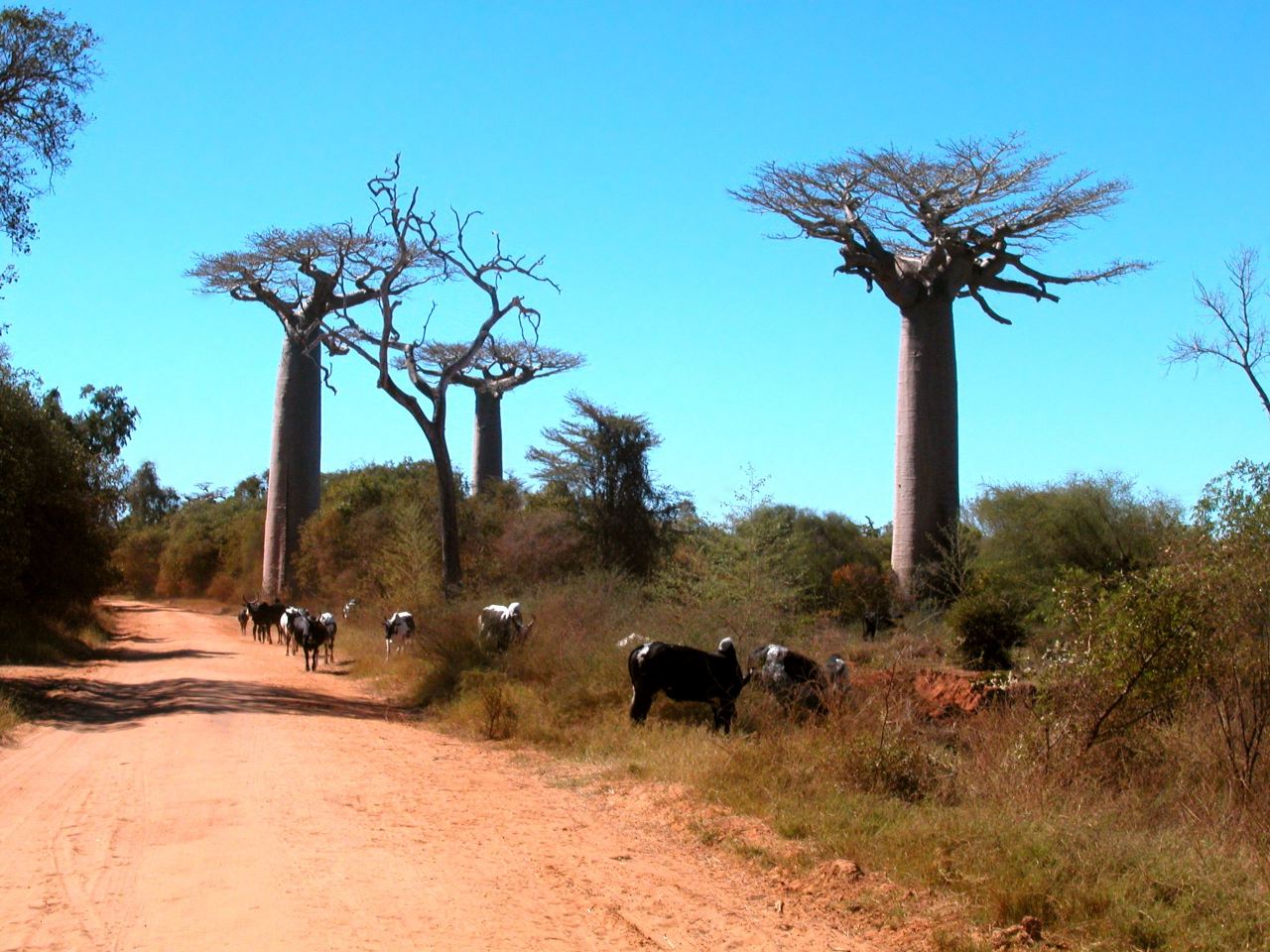
First we went to look for a four-wheel drive. Our trip was nearing its end and the Tsingy took almost a whole day to reach, so we needed to leave at once. There were many Muslim Arabs living in Morondava and running the tourist trade. We found a man named Ali at Continental Tours (+261 (95) 521-52, fax 521-42). The cost was considerable, US$400 or 2,500,000 francs. This time they took dollars. It was almost all we had. Morondava had no ATMs to replenish our cash. We bought food and water and set off at once. The first stop was Belo-sur-Tsiribihina, or Belo for short. The dirt road ran among baobab groves. The driver was clearly in a hurry, sliding round bends and bouncing over ruts. In two hours we reached the great wide Tsiribihina River. There was no bridge and we had to cross by ferry, a deck laid over three big canoes that could take six four-wheel drives. Belo stood on the other bank. It was quite a large place, even with an airport and direct flights to Antananarivo. They ferried us over with the jeep but put us in another car on the far bank. This one looked like a real off-roader, battered and covered in mud. The driver lashed everything down. Otherwise, he said, it would fly out over the ruts. The road beyond Belo really was much worse. It was getting dark when, in the middle of yet another swamp, a front wheel came off. It actually detached and rolled on by itself. We were surrounded by knee-deep water and mud and had to feel around for it on the bottom. The driver didn’t speak a word of English. We tried talking through our infamous Ectaco electronic translator. No luck. He couldn’t understand the machine’s voice and couldn’t read it either. Hardly surprising, since I could barely understand the Russian it spoke. Putting a wheel back on here was out of the question. We cooked dinner on gas, found a flat dry place in the savannah and put up the tent. We were glad we’d carried it. The grass all around was very tall and huge trees stood out black against the sunset. Crickets sang and little animals rustled in the trees. They sounded like some sort of nocturnal lemur. In spite of the trouble, and the likelihood of missing the Tsingy, our spirits rose. We loved being free, away from guides and city noise.
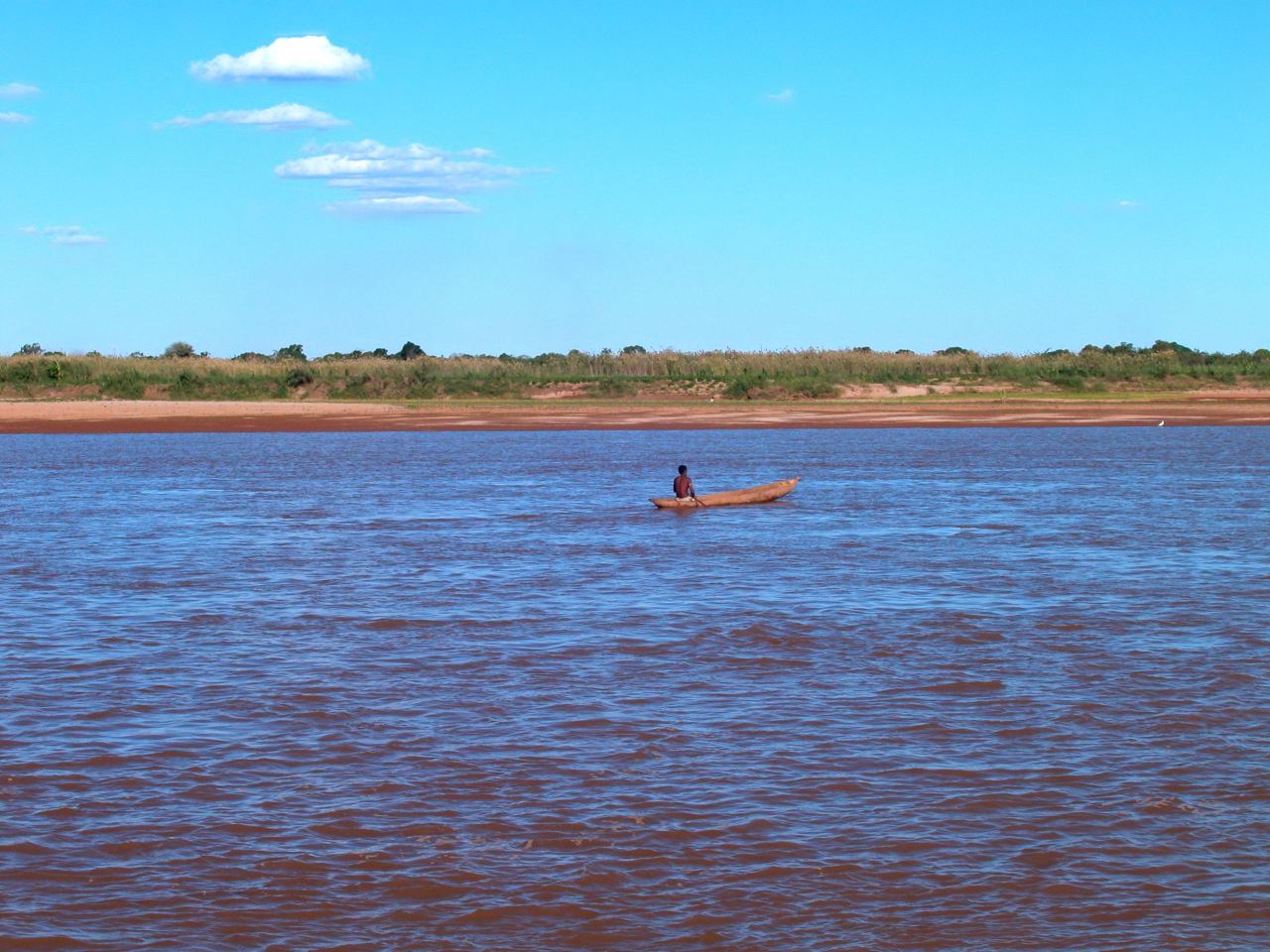
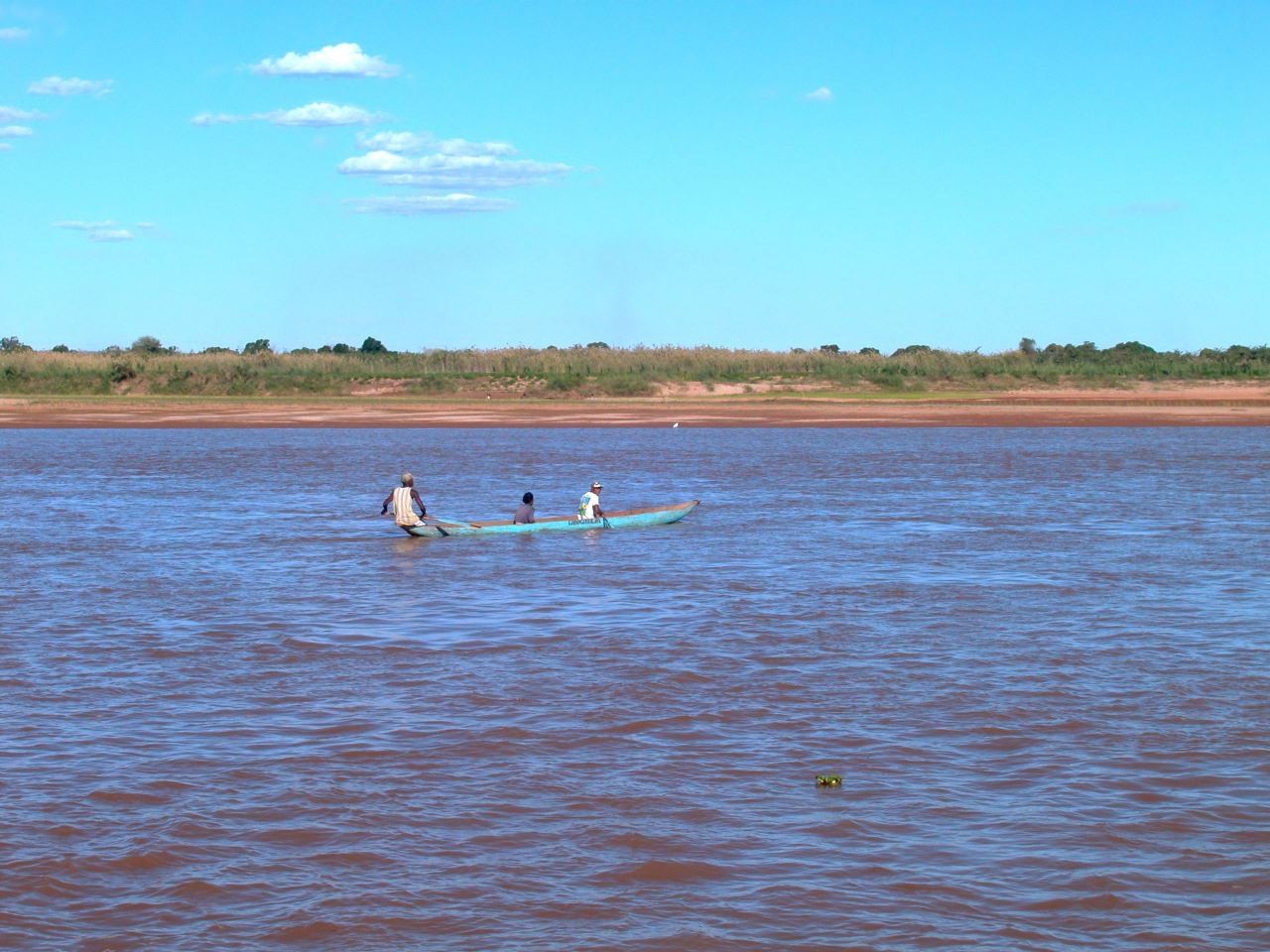
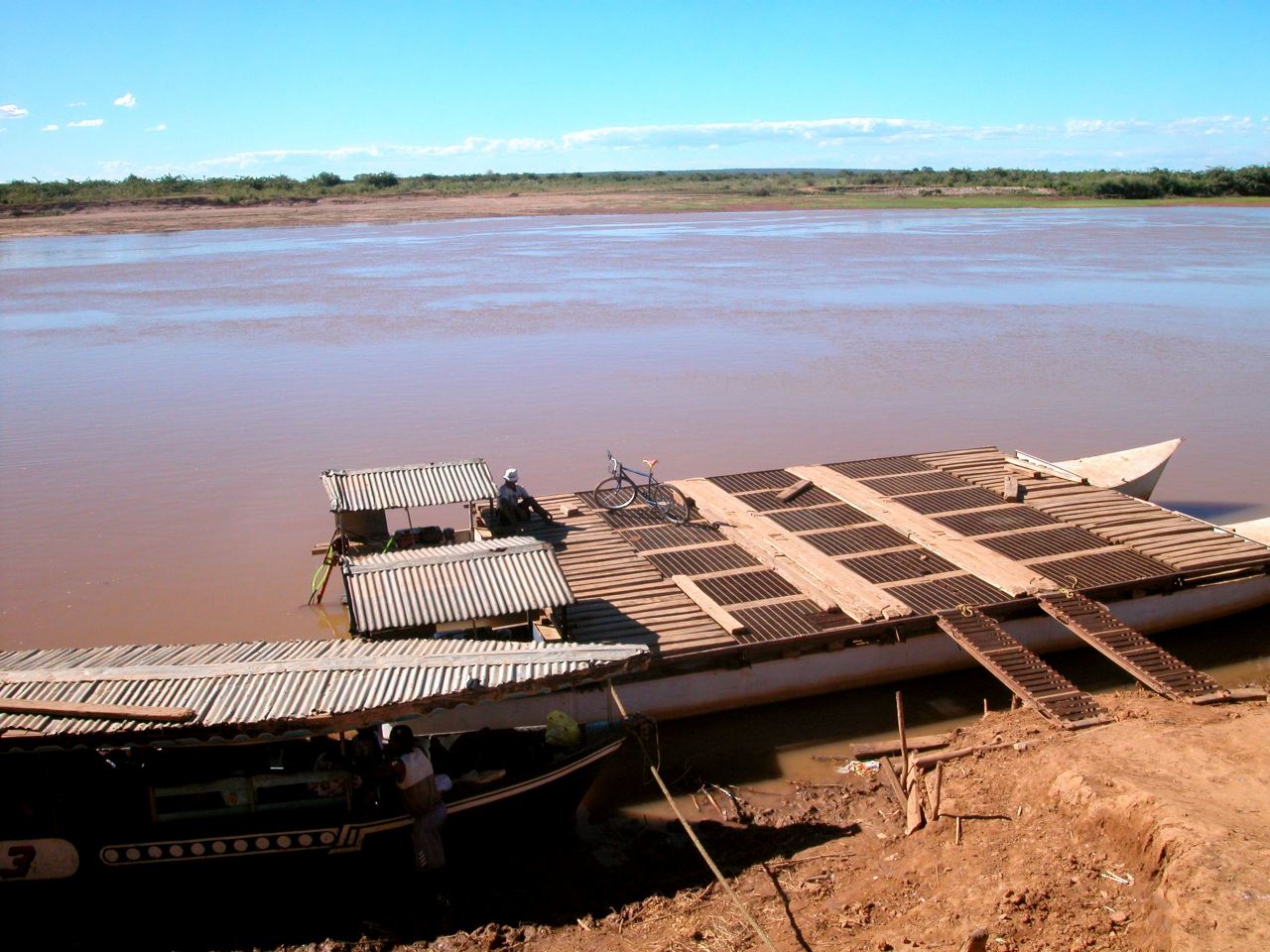
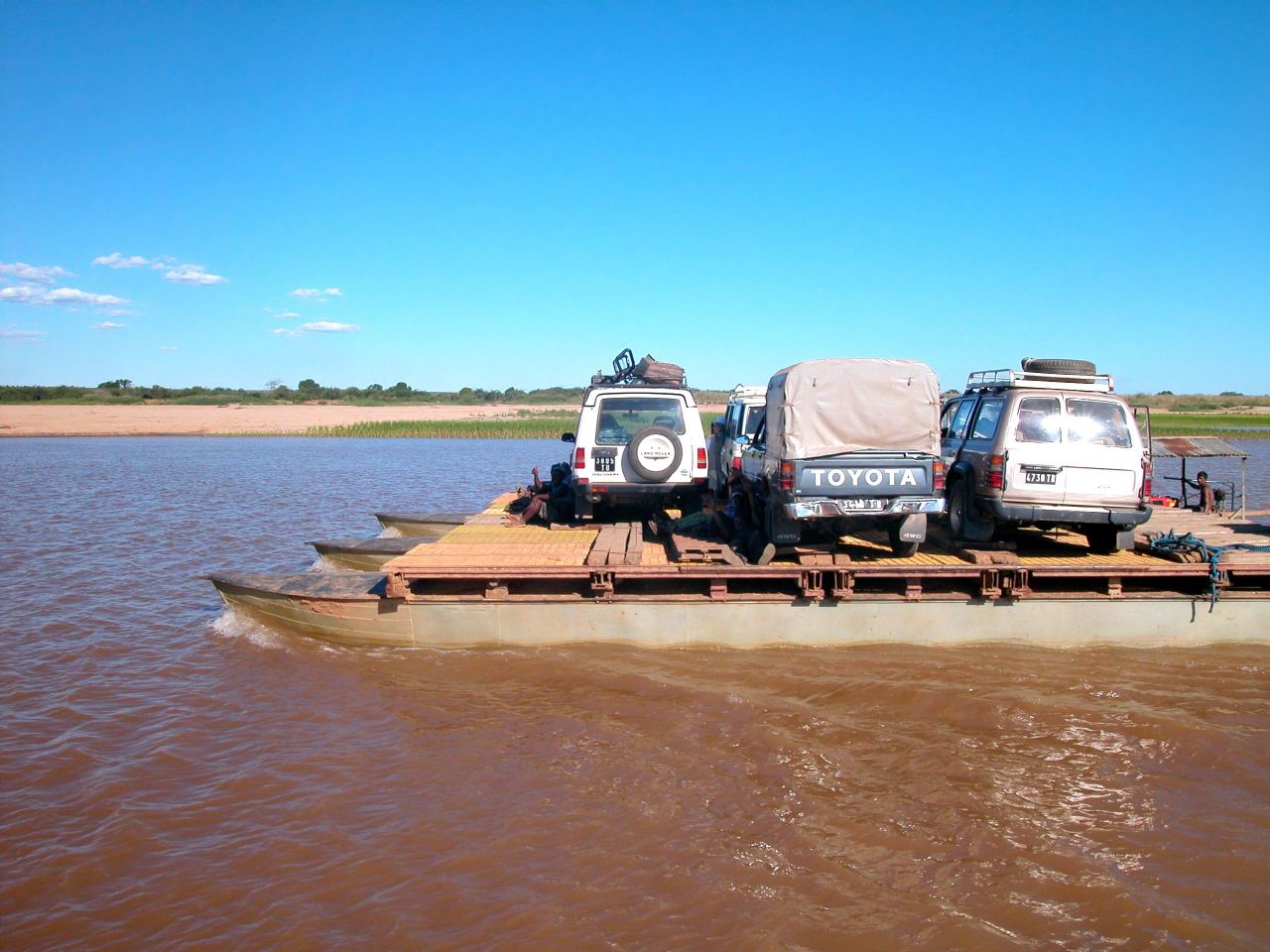
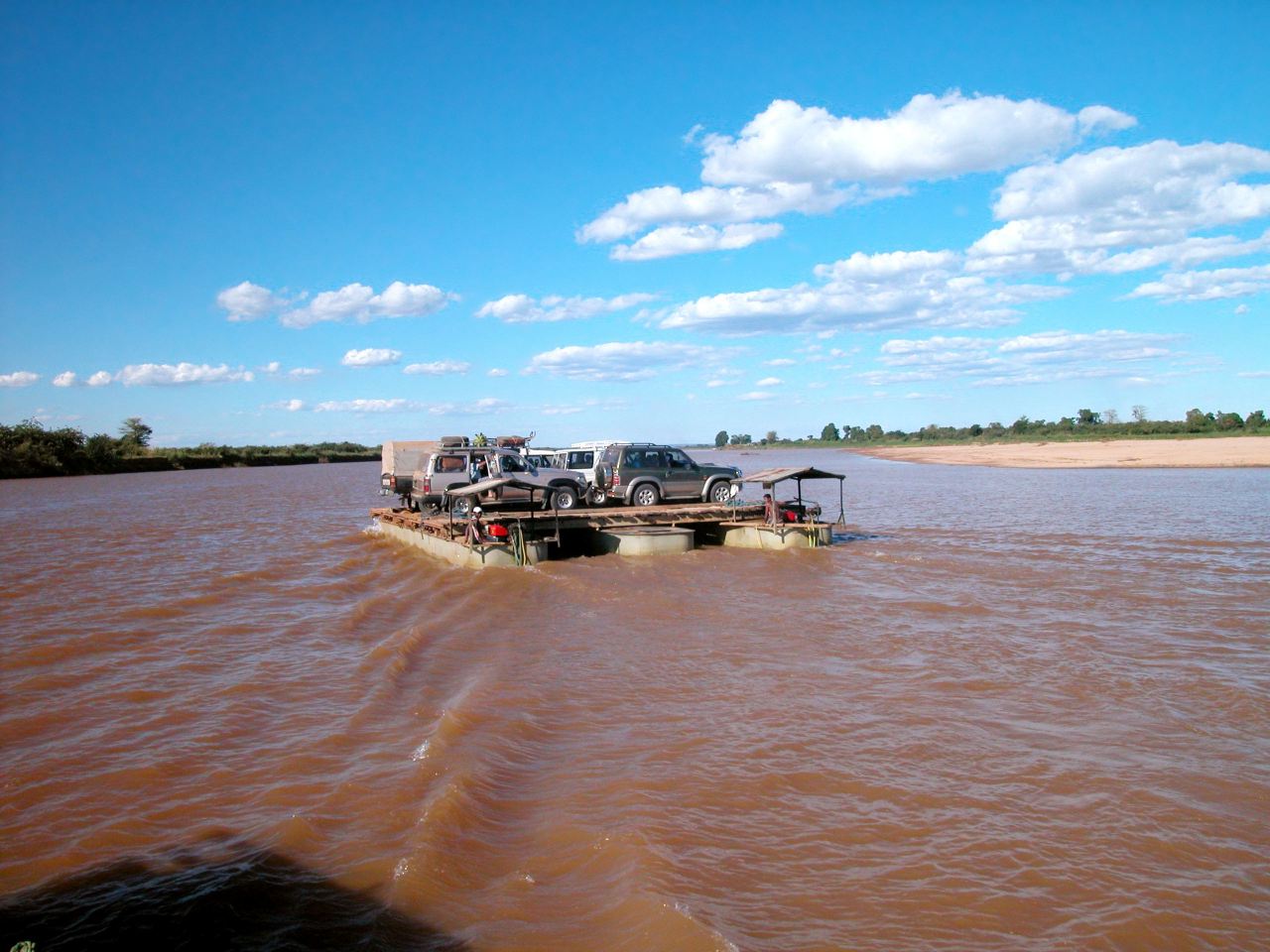
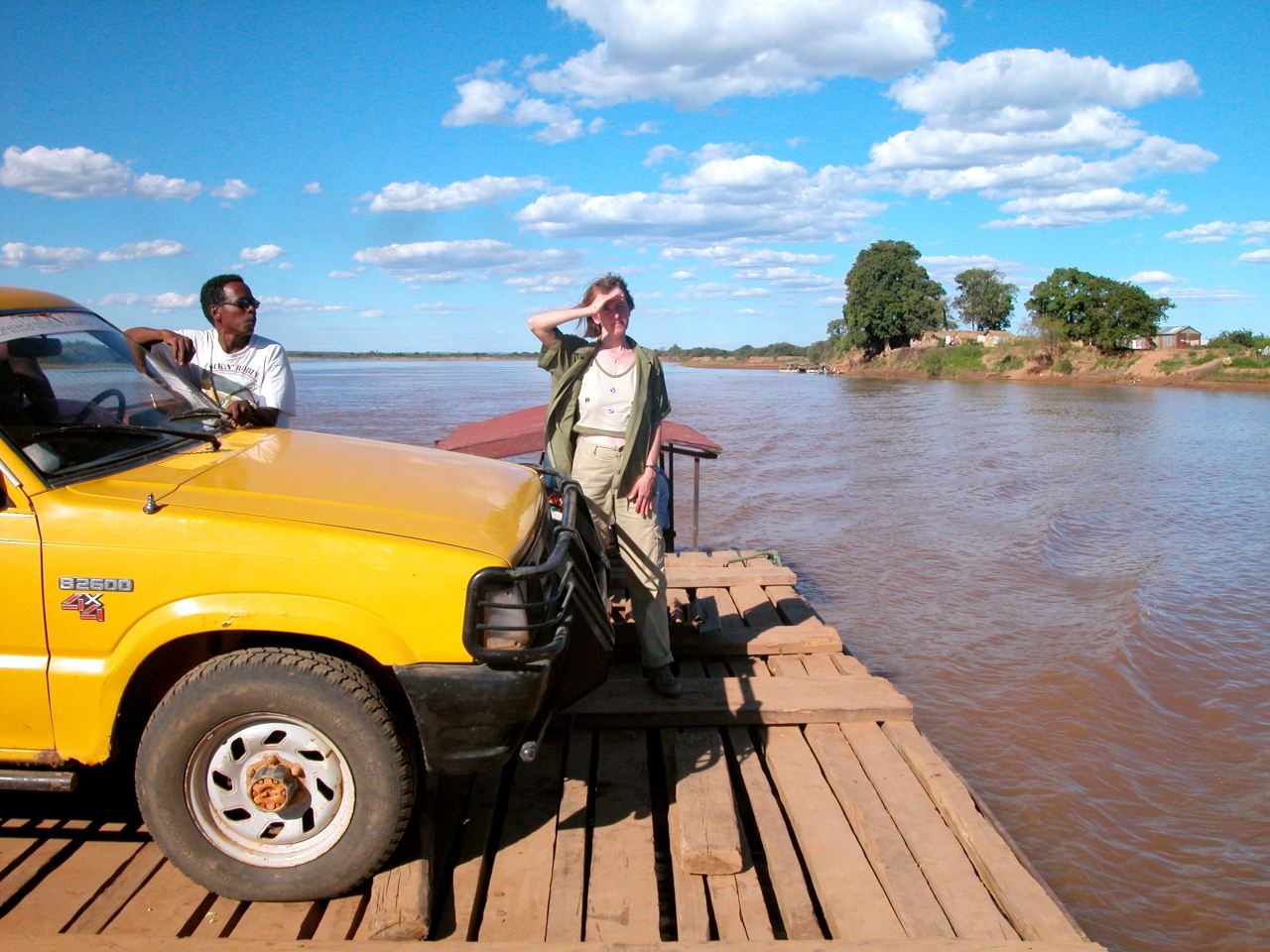
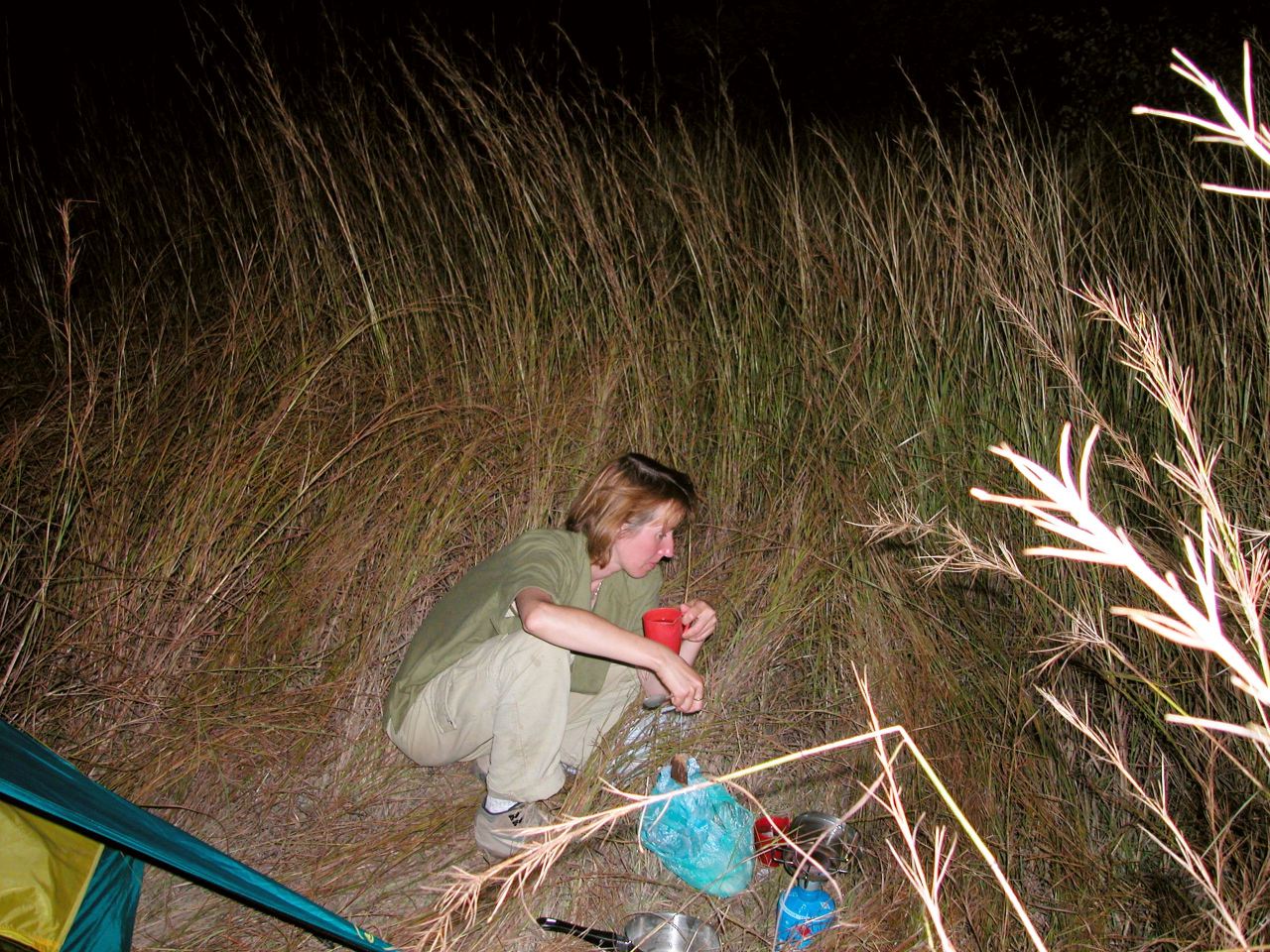
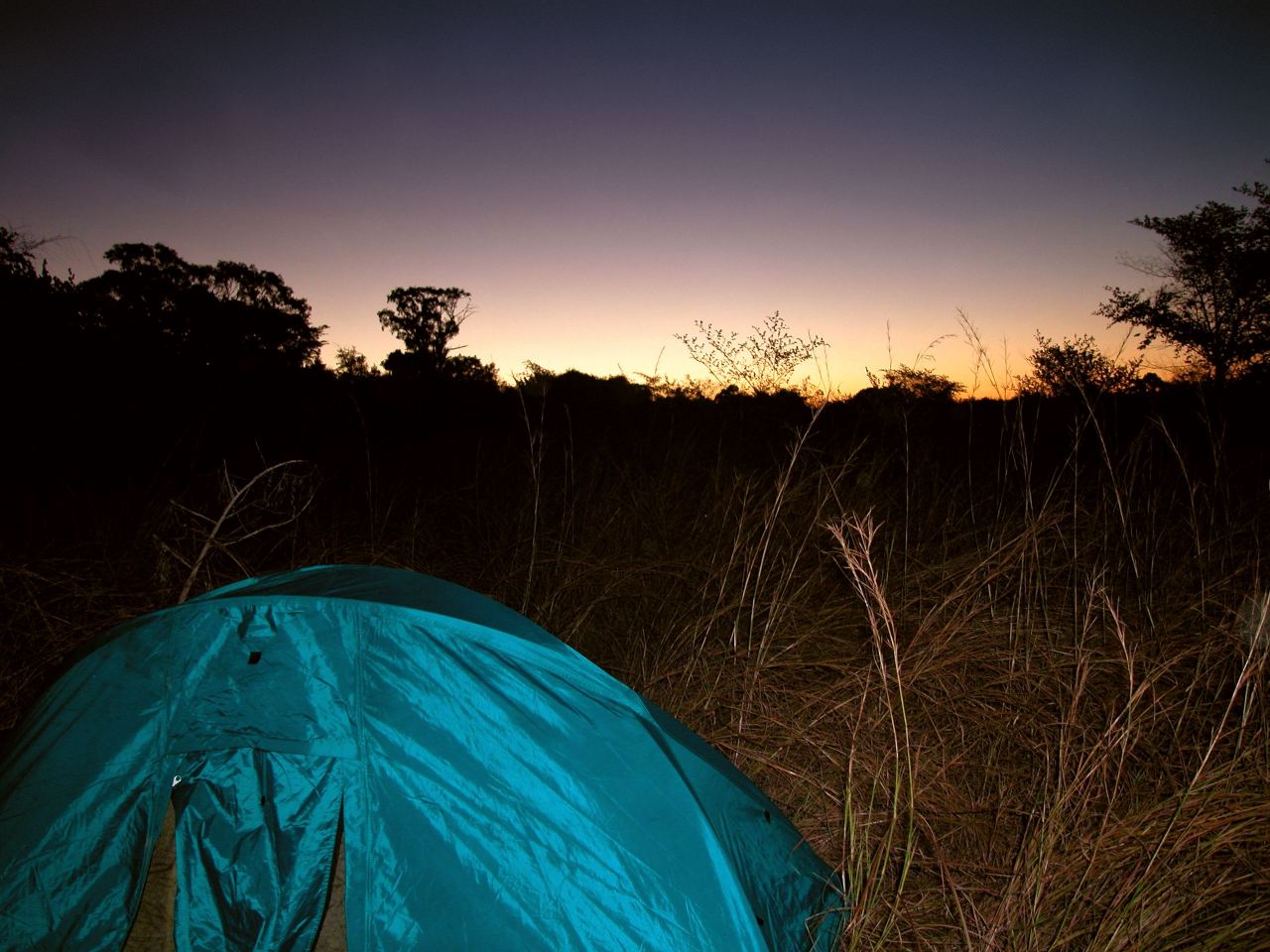
All night long, from the swamp where we’d left the jeep and its unfortunate driver, came the sound of axes, people shouting, zebu bellowing and an engine howling in protest.
In the morning we found that villagers coming home in a Mazda truck had tried to get around the jeep stuck in the road. The truck had bogged down too and the whole village couldn’t budge it. The road was now blocked from edge to edge and nobody else could get through. They had cut a little way round only for carts pulled by zebu.
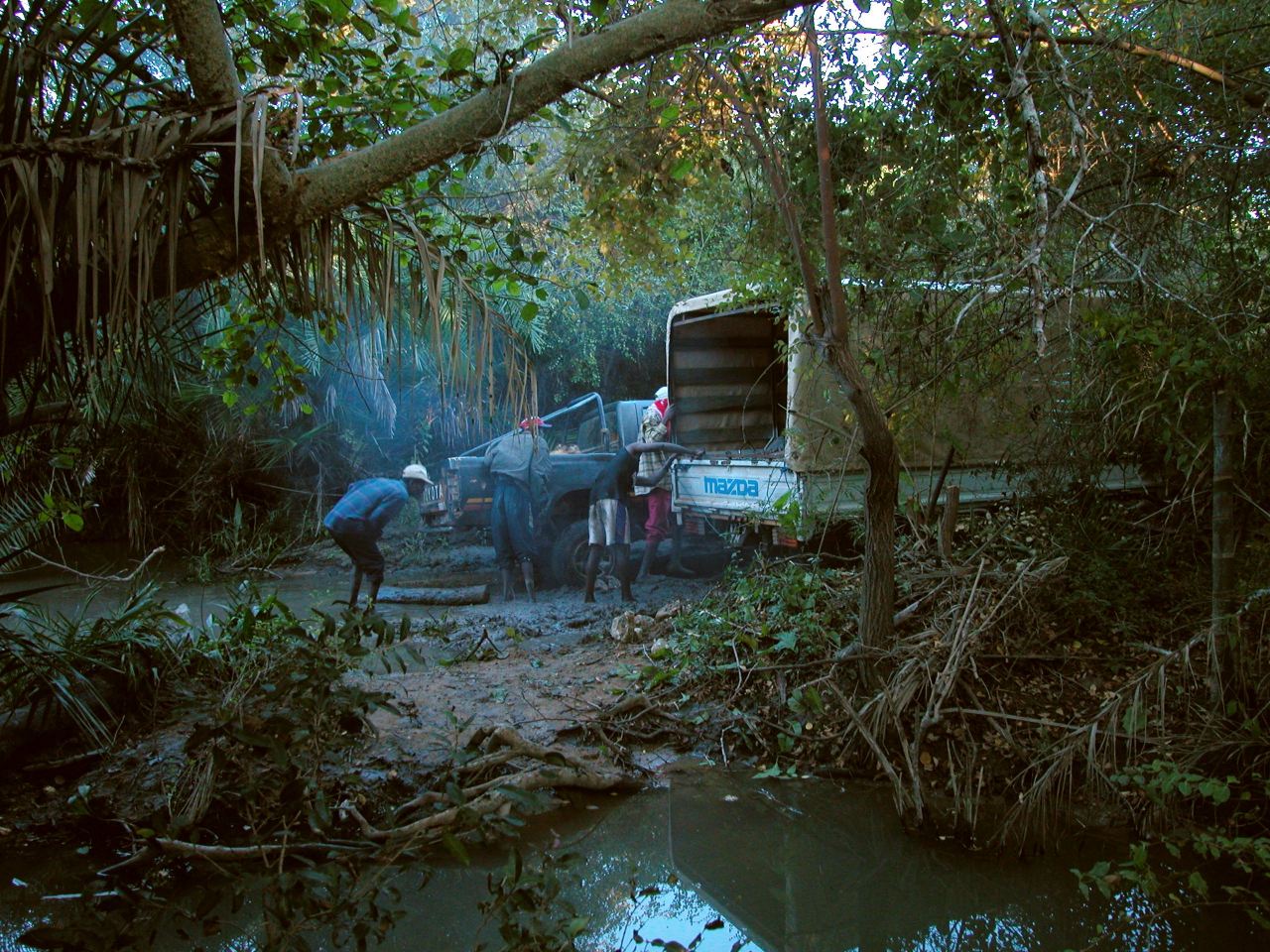
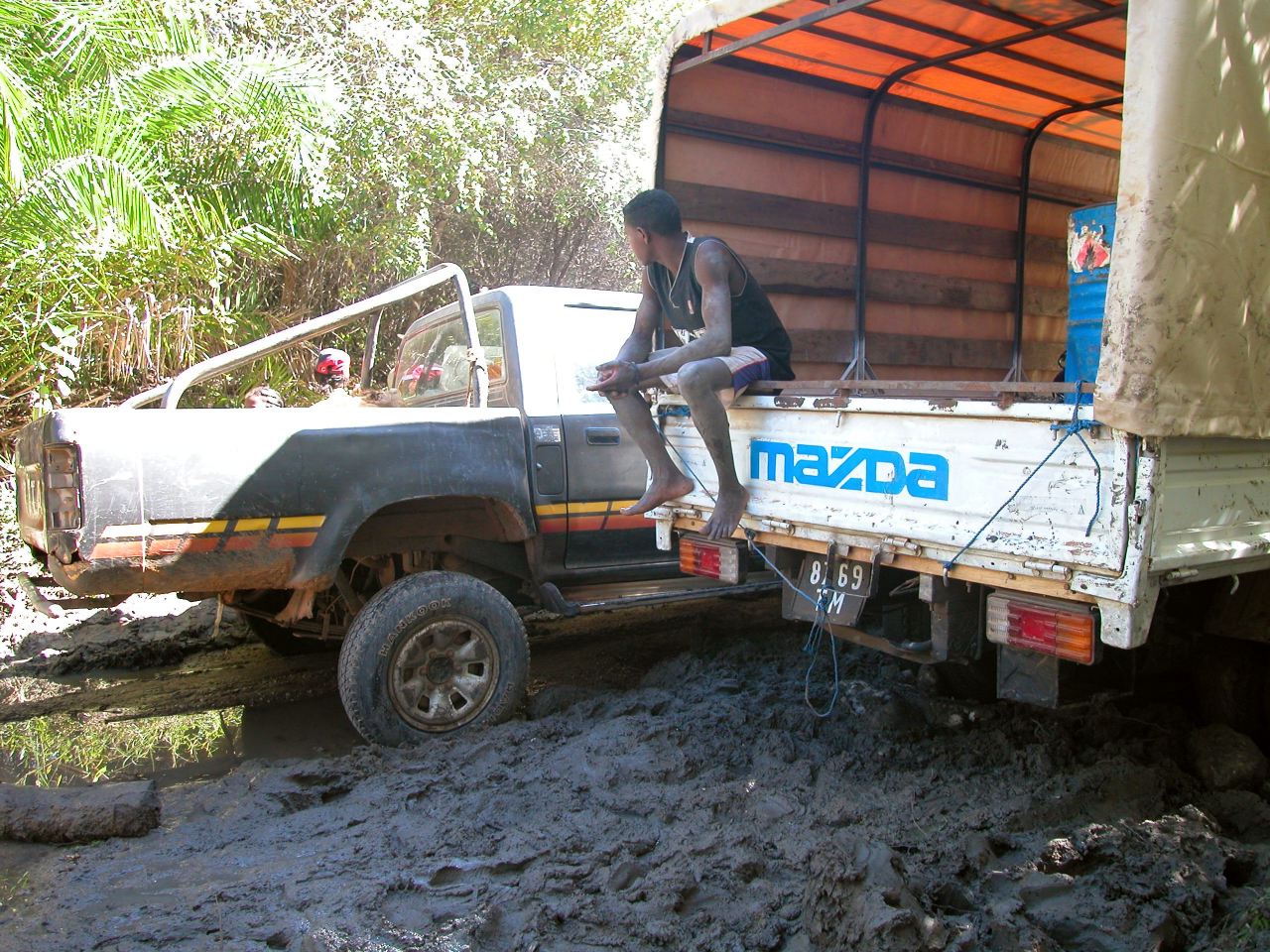
This swamp went by the grand name of National Road 8. Traffic was infrequent. People tried jacking up the truck and bringing stones, to no avail. They didn’t appear to know what to do, though everybody kept busy. I took charge, but the swamp was deep and there weren’t many stones. After midday other vehicles began to arrive. They couldn’t help either. An EU representative came in a jeep. He was on his way to the reserve to see how effectively money was being spent. A big Belgian got out and said, “Oh, this will take ages. I’ve had it with this place. Another year and I’m leaving for good. How many times have we given them money for this road?” Towards evening a bush taxi came in the other direction, a six-wheel-drive Mercedes. Someone found a rope. They pulled out the Mazda and tackled the jeep with no wheel. The driver started shouting that you couldn’t tow it on three wheels and would wreck it. Everybody argued. The EU man stepped in as peacemaker. This was a public highway, he said, and you’re in the way. The driver had an answer. Precisely because it was a public highway, he was a member of the public and could park there for as long as he liked. There wasn’t a no-parking sign within four hundred kilometres.
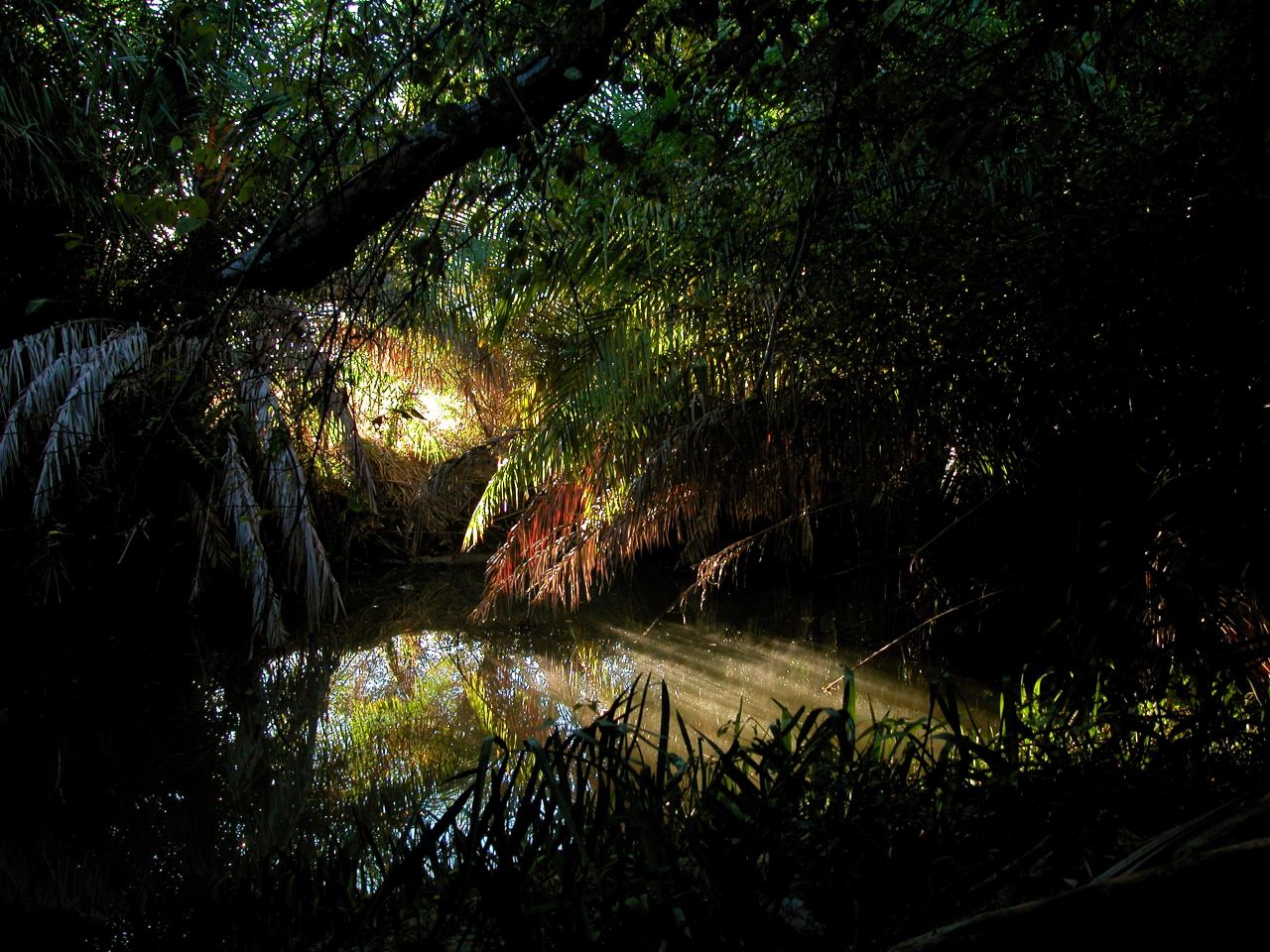
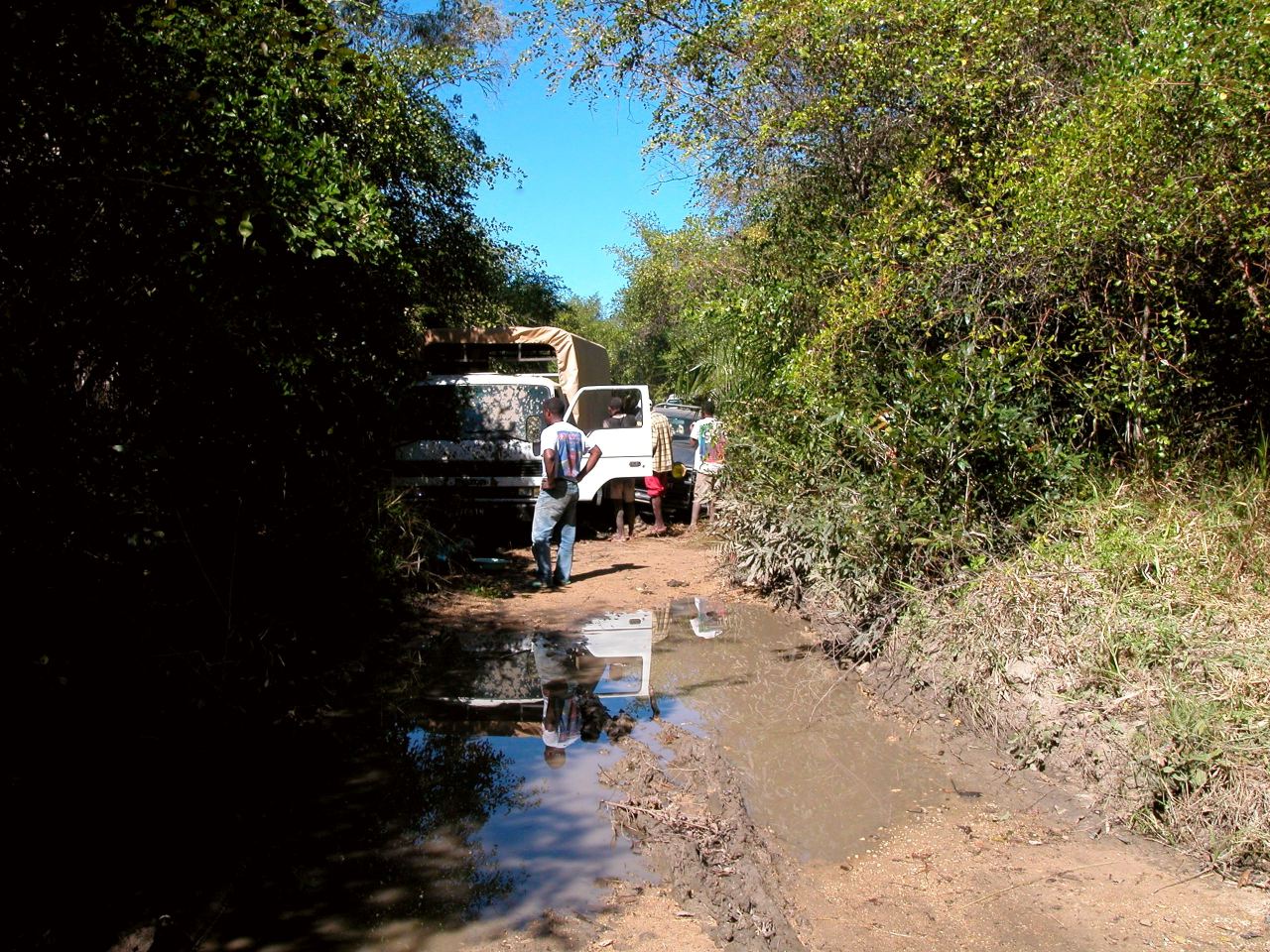
Once both sides had run out of arguments, the army turned up. Their truck wanted to get through too. They held the flailing driver while the Mercedes dragged the poor Land Cruiser over the stones on its belly and up the nearest hill. By Russian standards what remained was beyond repair. The Malagasy would go to the market, have a blacksmith make the required part and carry on to the next pothole. We’d already started back on foot, but the Mercedes bush taxi caught up with us. There must have been fifty passengers, some with chickens and some with sacks of charcoal. It was all piled in the back in layers with the people, bouncing over the ruts as the chickens squawked and pecked. Tanya got a seat astride a wooden chicken crate. These buses sometimes ran for forty hours. Among it all there were mothers with several children. The youngest would be at the breast and the next one asleep in her lap.
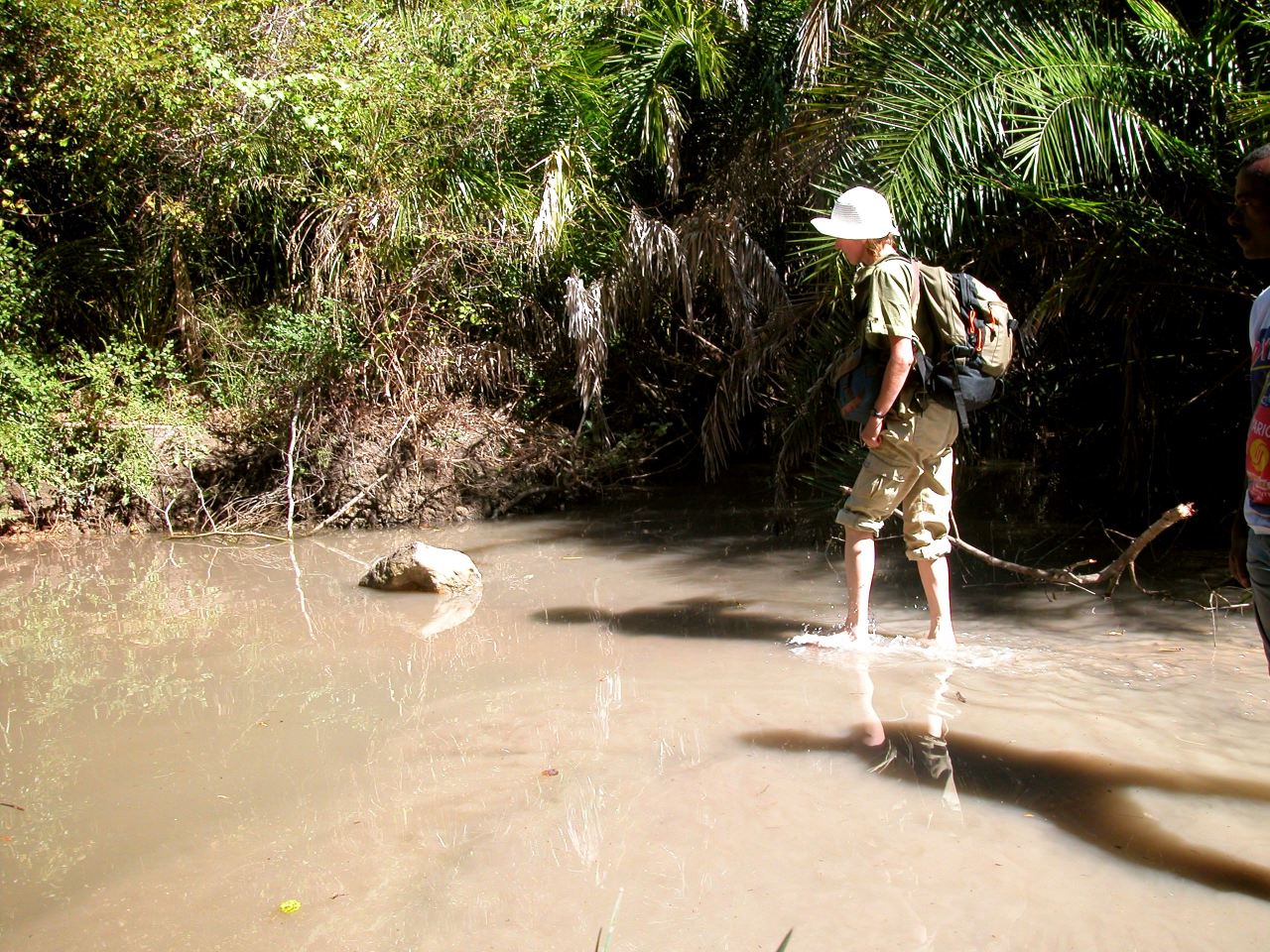
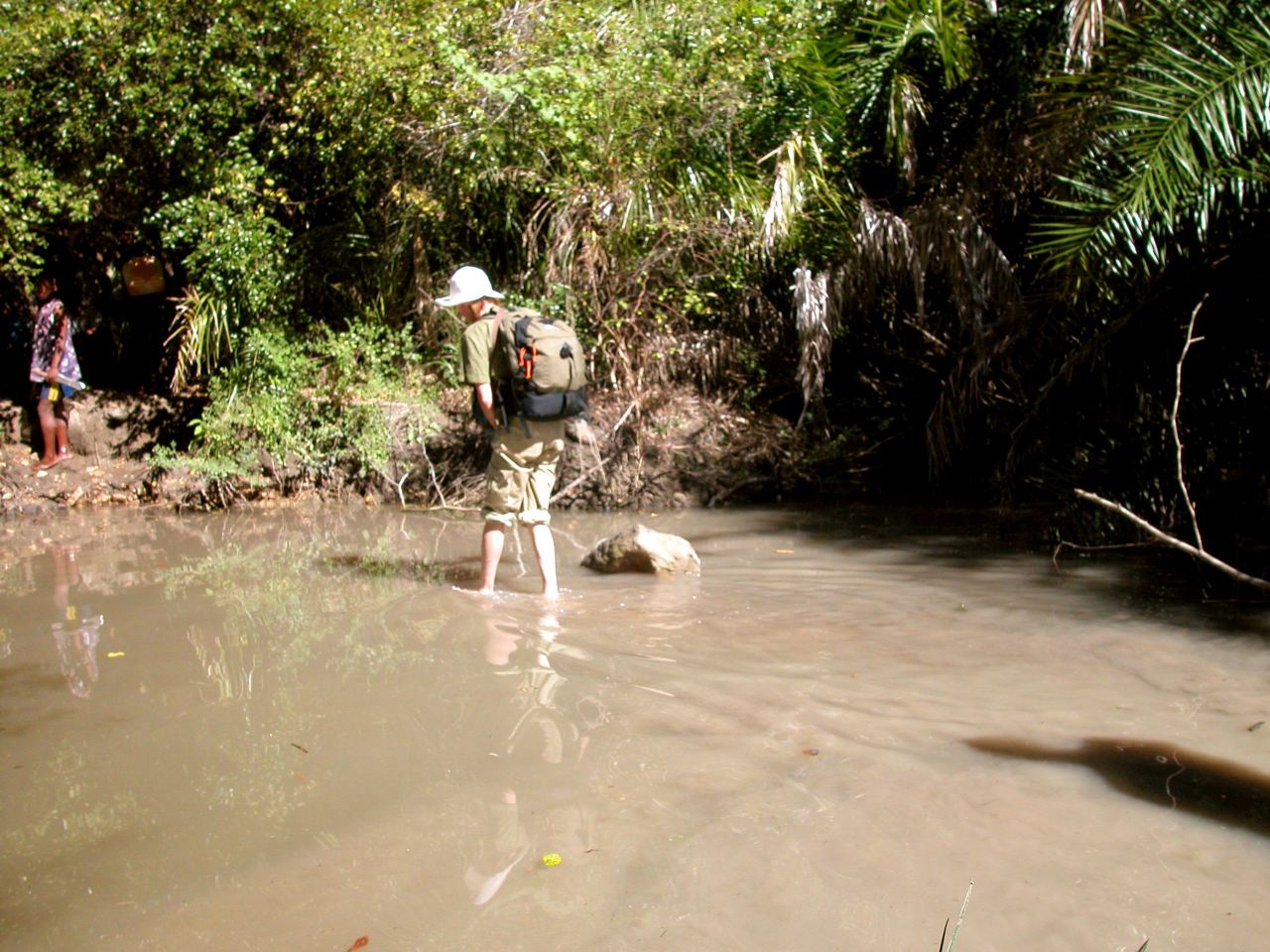
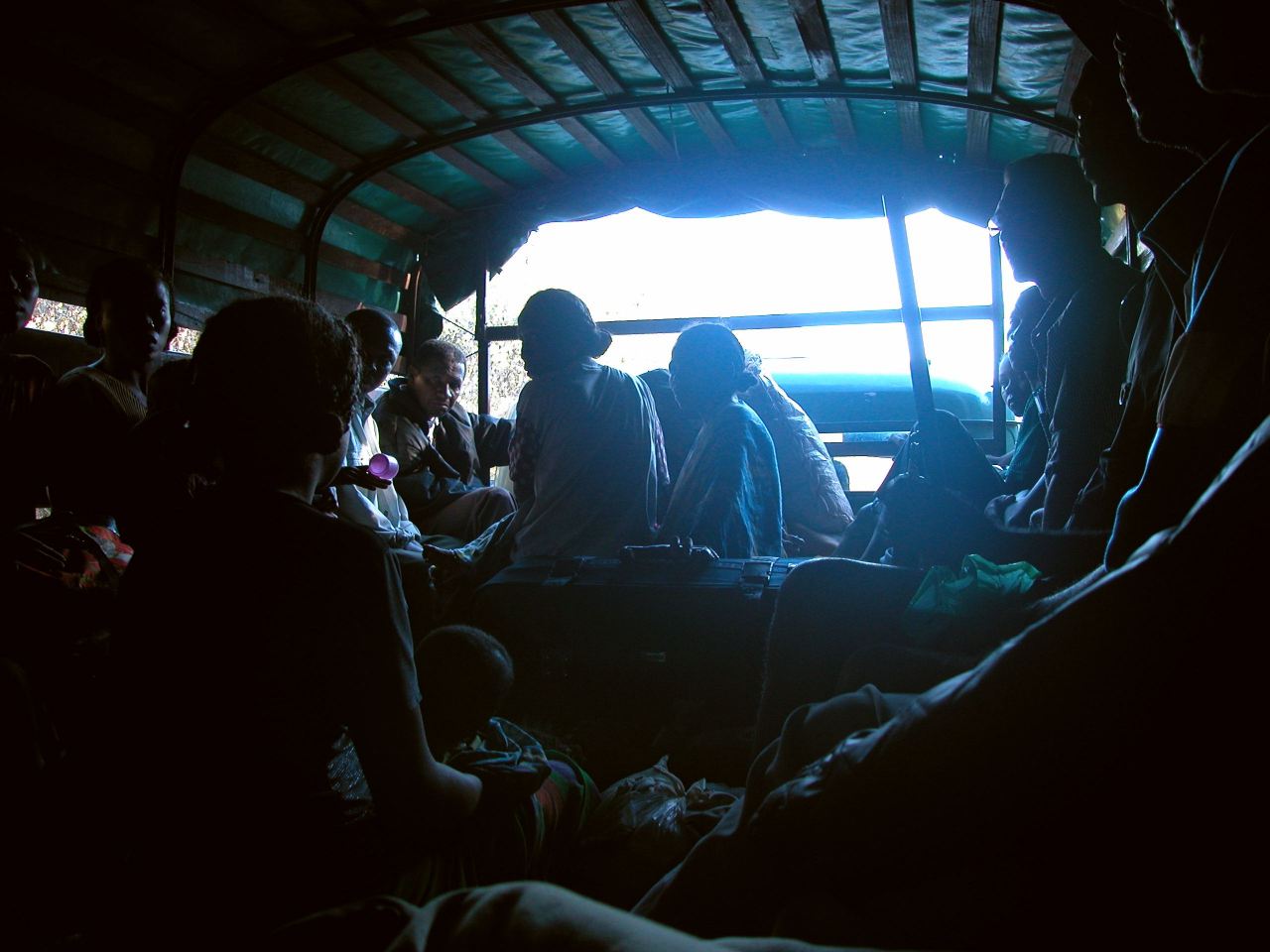
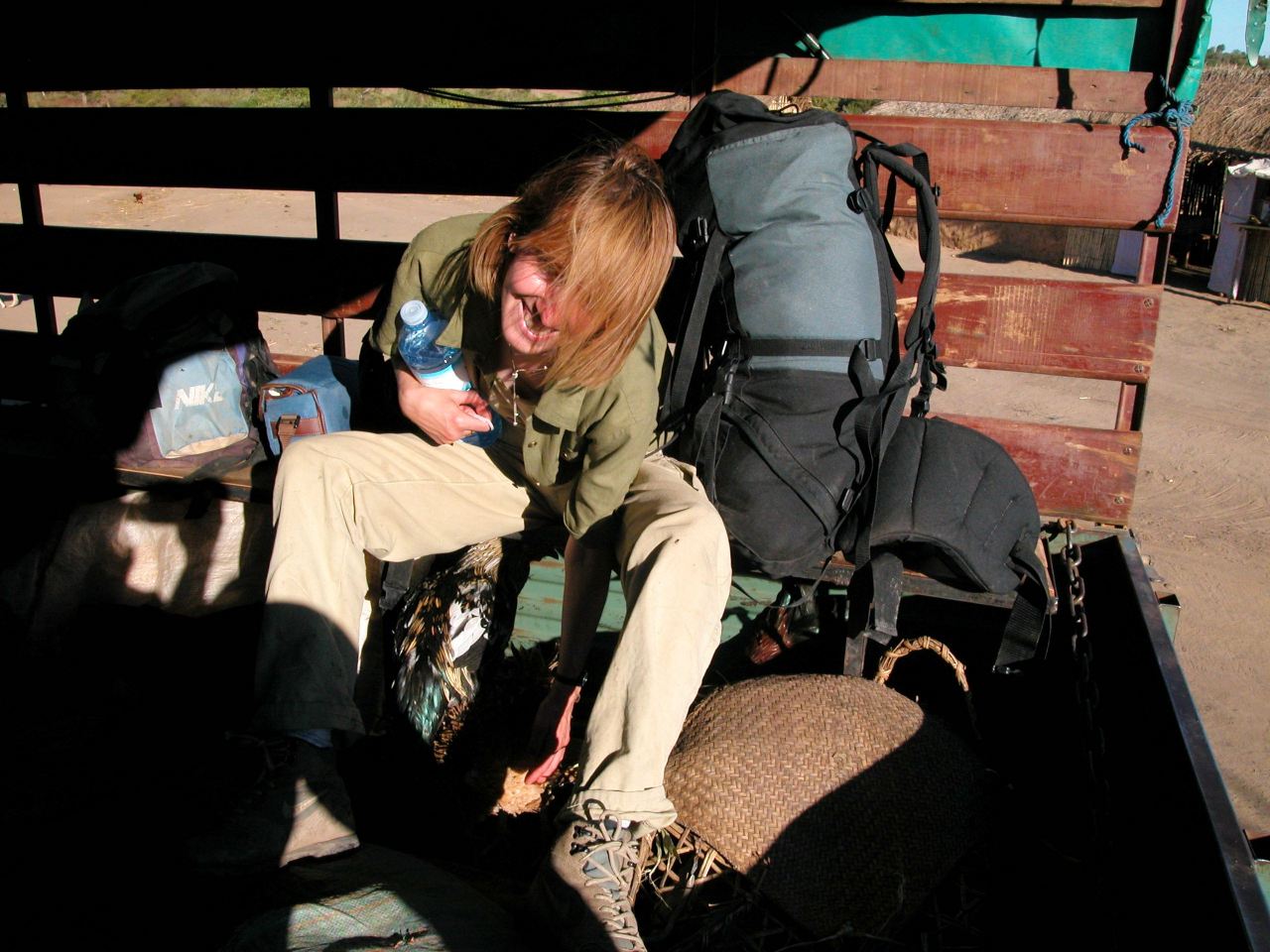
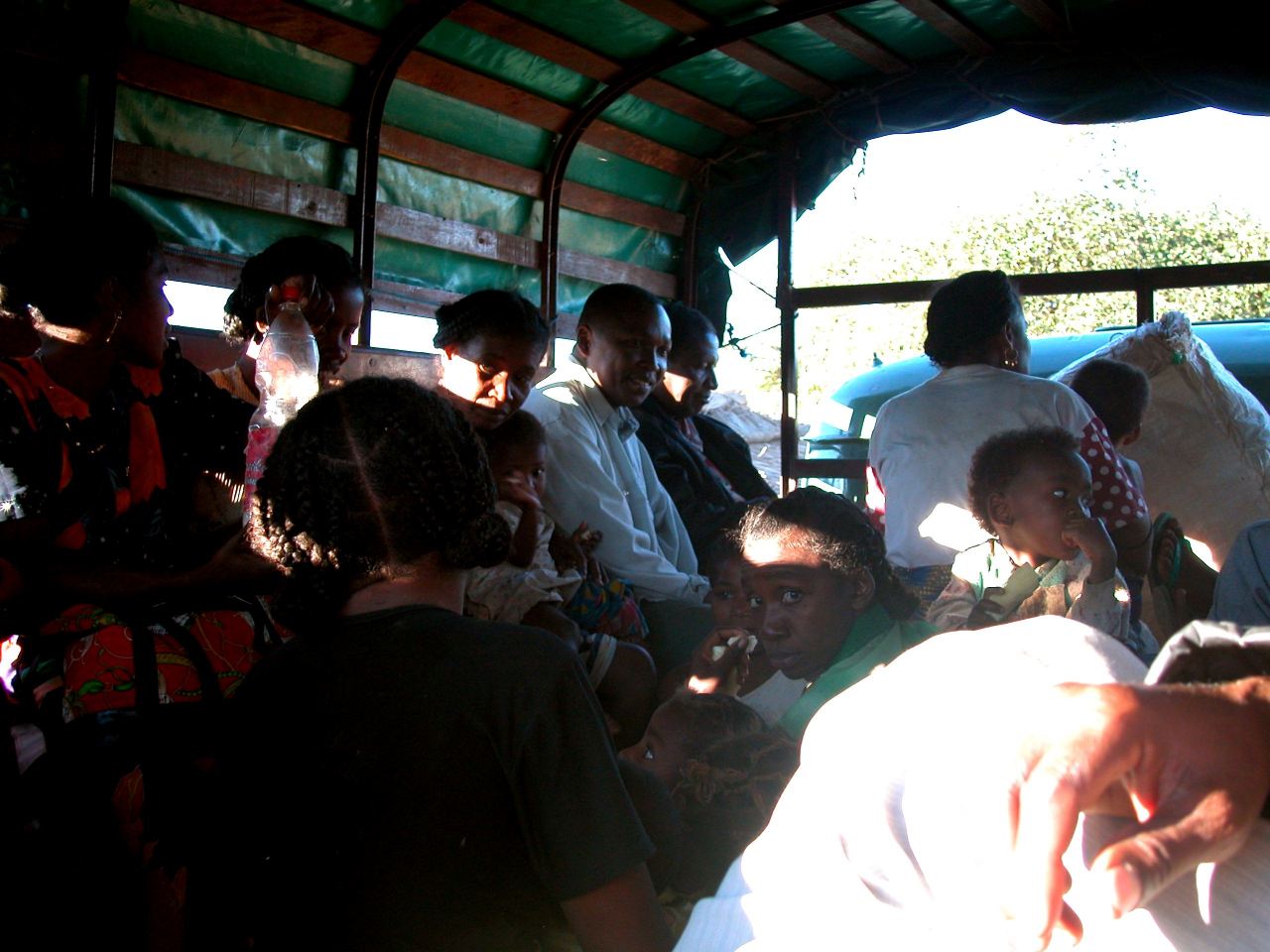
They stopped for meals. Some villages made their living that way. By the time the bush taxi arrived, everything was ready. We sat at tables and got a small helping of soup made with some sort of beans. It was colourful, perfectly edible and amazingly cheap. A full lunch was five thousand francs or so. You could buy a meat pastry on the side.
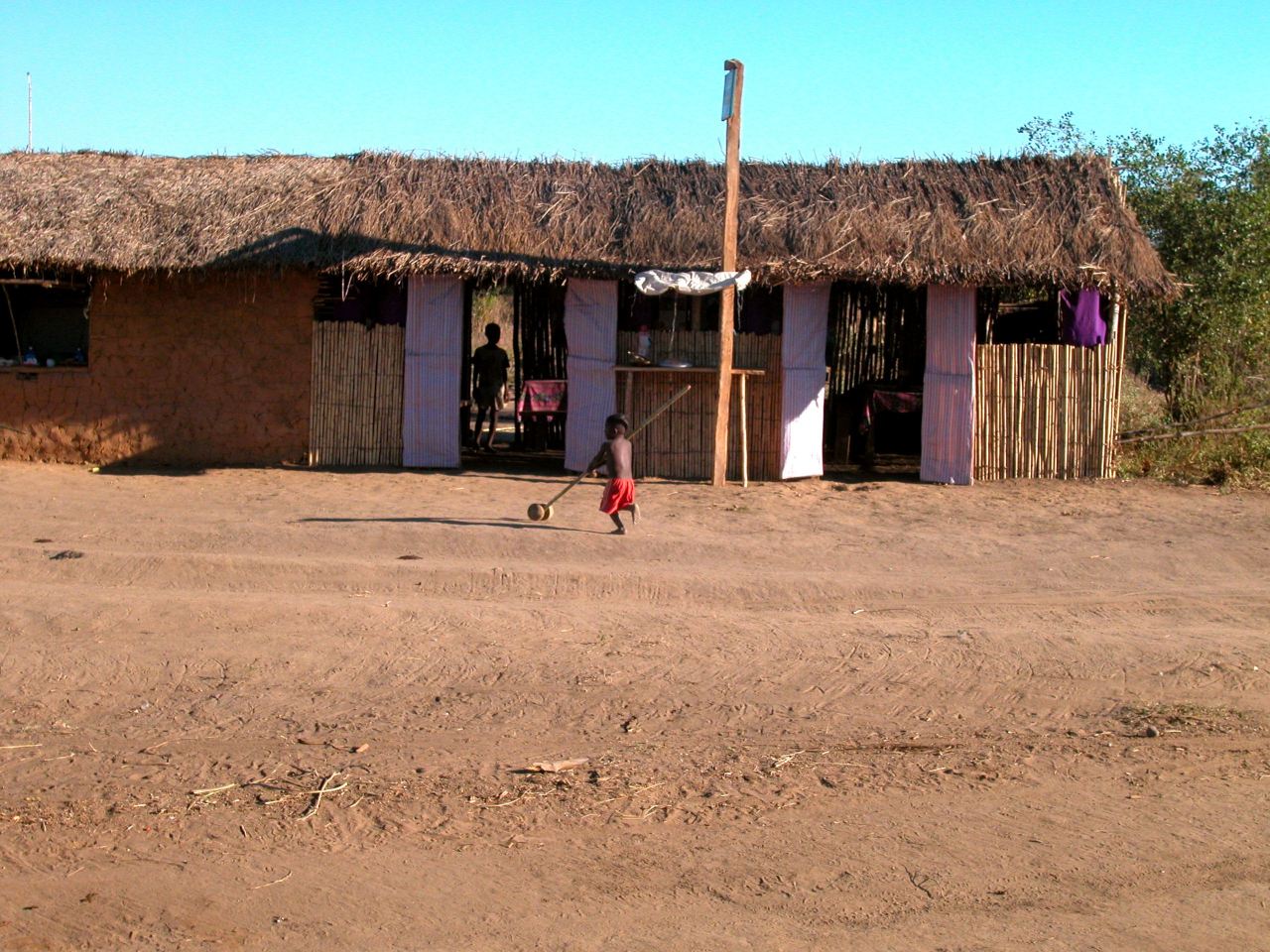
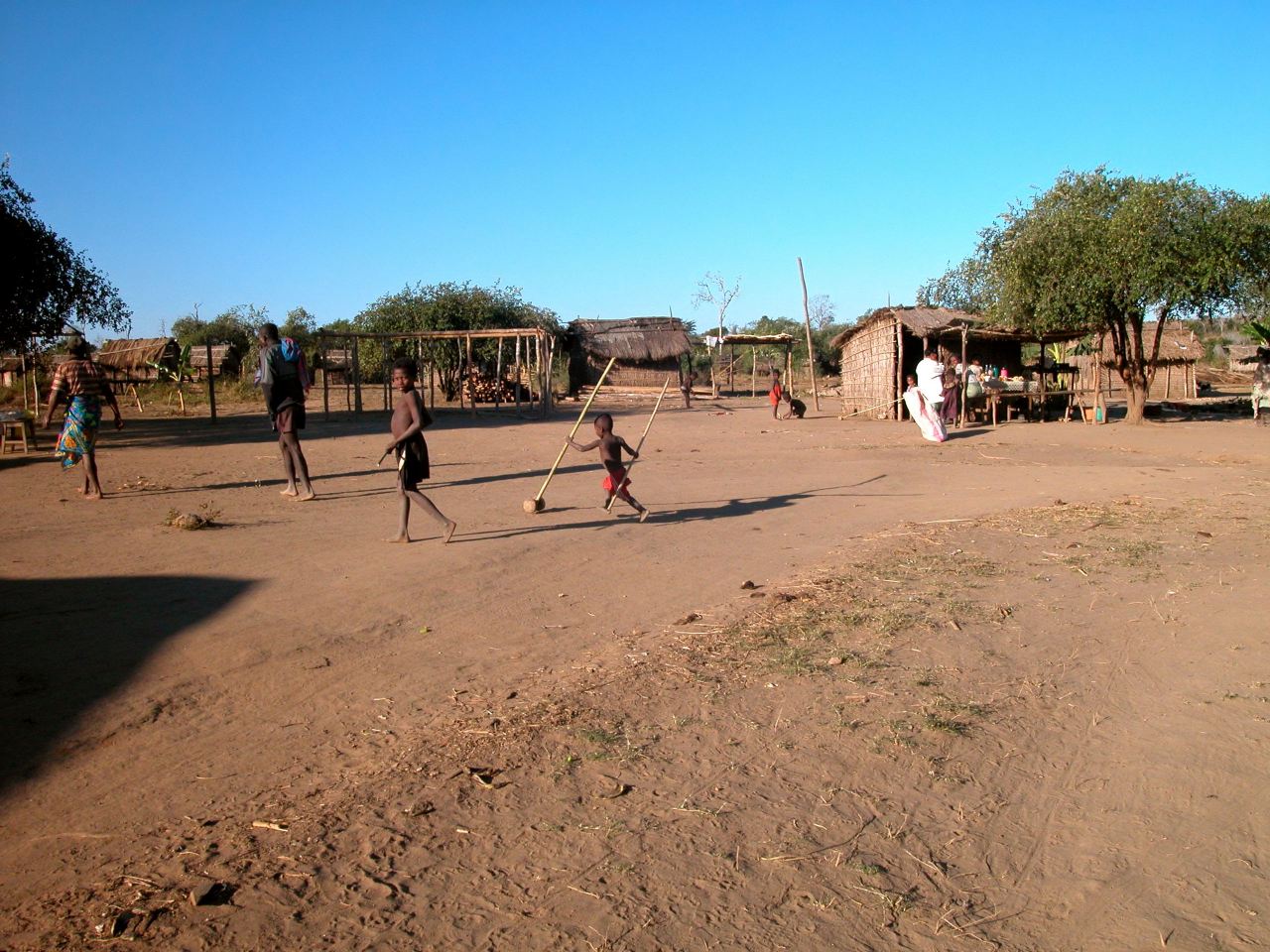
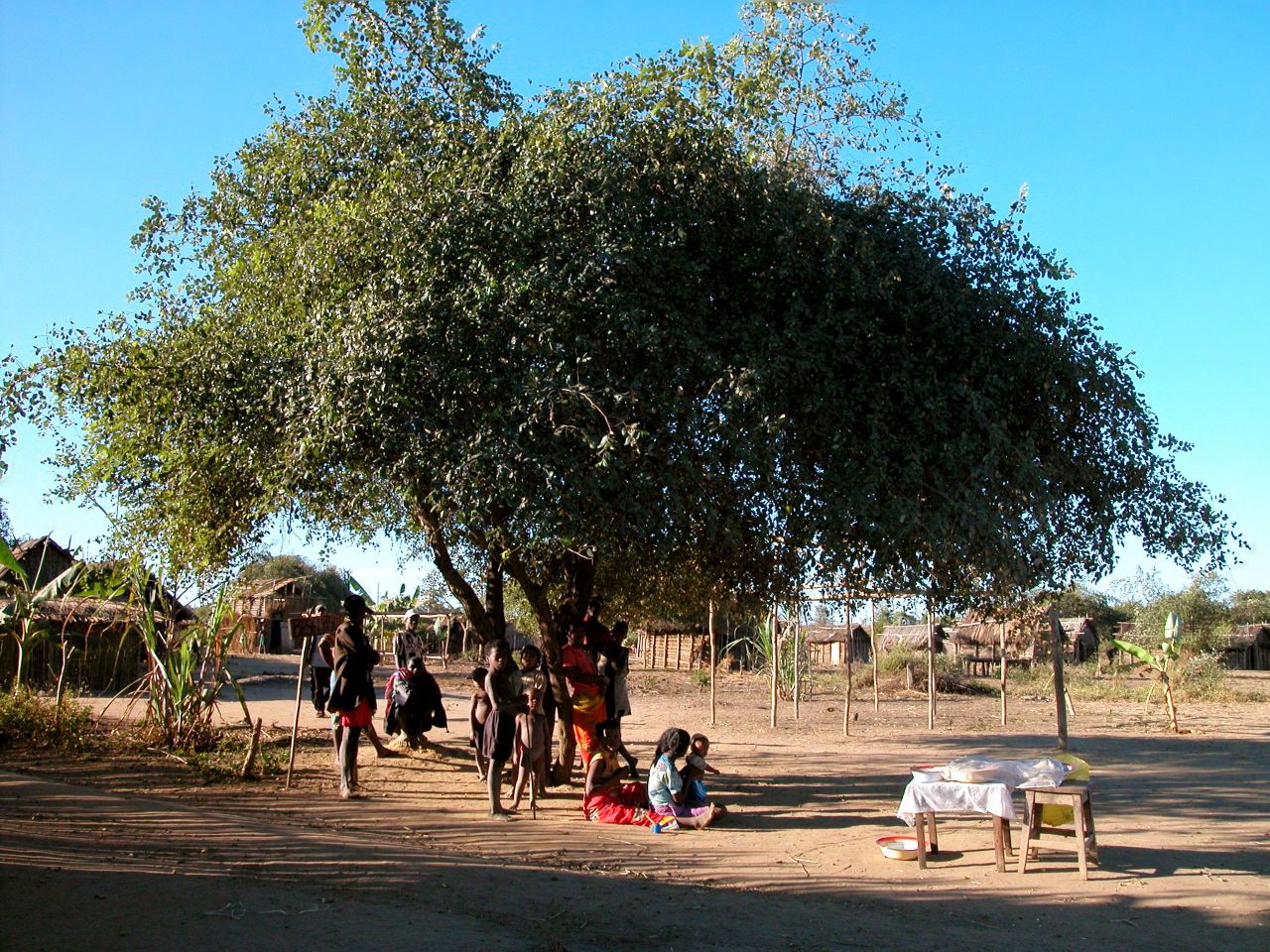
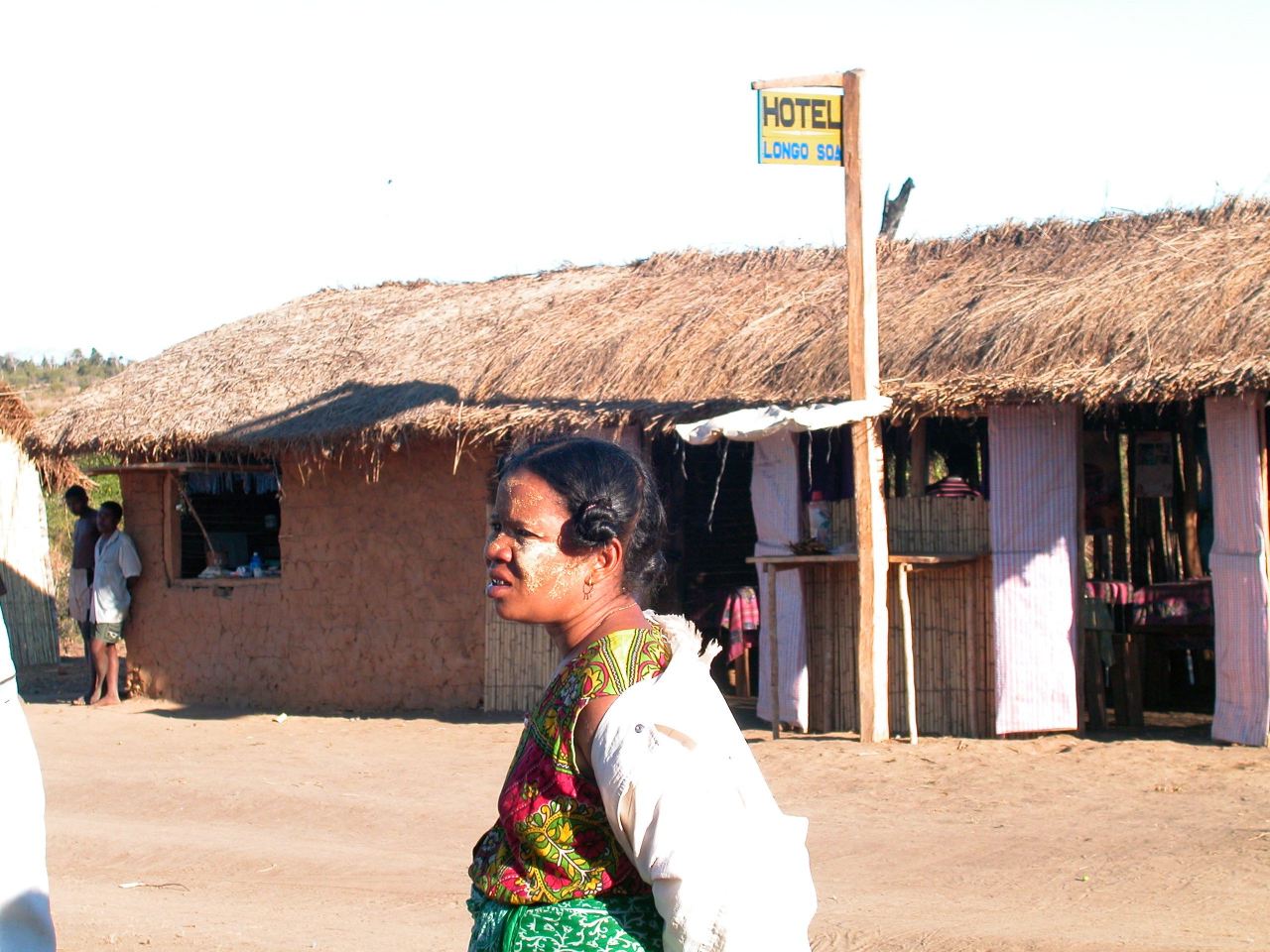
We reached Belo after dark. The regular barge at the crossing wasn’t going anywhere, so we chartered a special crossing for 25,000 francs. It was beautiful. The first stars were coming out and we were floating down a crocodile river in a candlelit canoe.
Our plan for the evening was to walk towards Morondava as far as we could, camp under a baobab and hitch a ride on the road the next day.
It turned into a wonderful walk. The stars and the Milky Way lit our path. The Southern Cross hung ahead of us like a guiding star, and the enormous shapes of baobabs traced the skyline on either side. It was a wonder, a simple happiness, to walk hand in hand across Madagascar. Sometimes life seems to me like a very long road. All our little paths have joined into one long journey over snowy mountains, through scorching deserts, dense jungles and wet swamps. There have been ordinary grey days along the way, and there’ll be a last walk too. For now Tanya and I are still walking, holding hands and looking around. Already there are fifty thousand kilometres behind us, on foot alone. Something like this could only happen in a dream, and we got it in real life.
We passed a cemetery where my flash was enough to take a picture of one of the striking tombs.
We walked seventeen kilometres and camped in the forest at ten at night. Finding a spot for a tent in the tropics takes some doing. Everything grows so thickly that it can take a long time to find a level patch of the right size.
We cooked supper and made a farewell meal of it. Our trip was nearly over and there wouldn’t be another wild campsite like this.
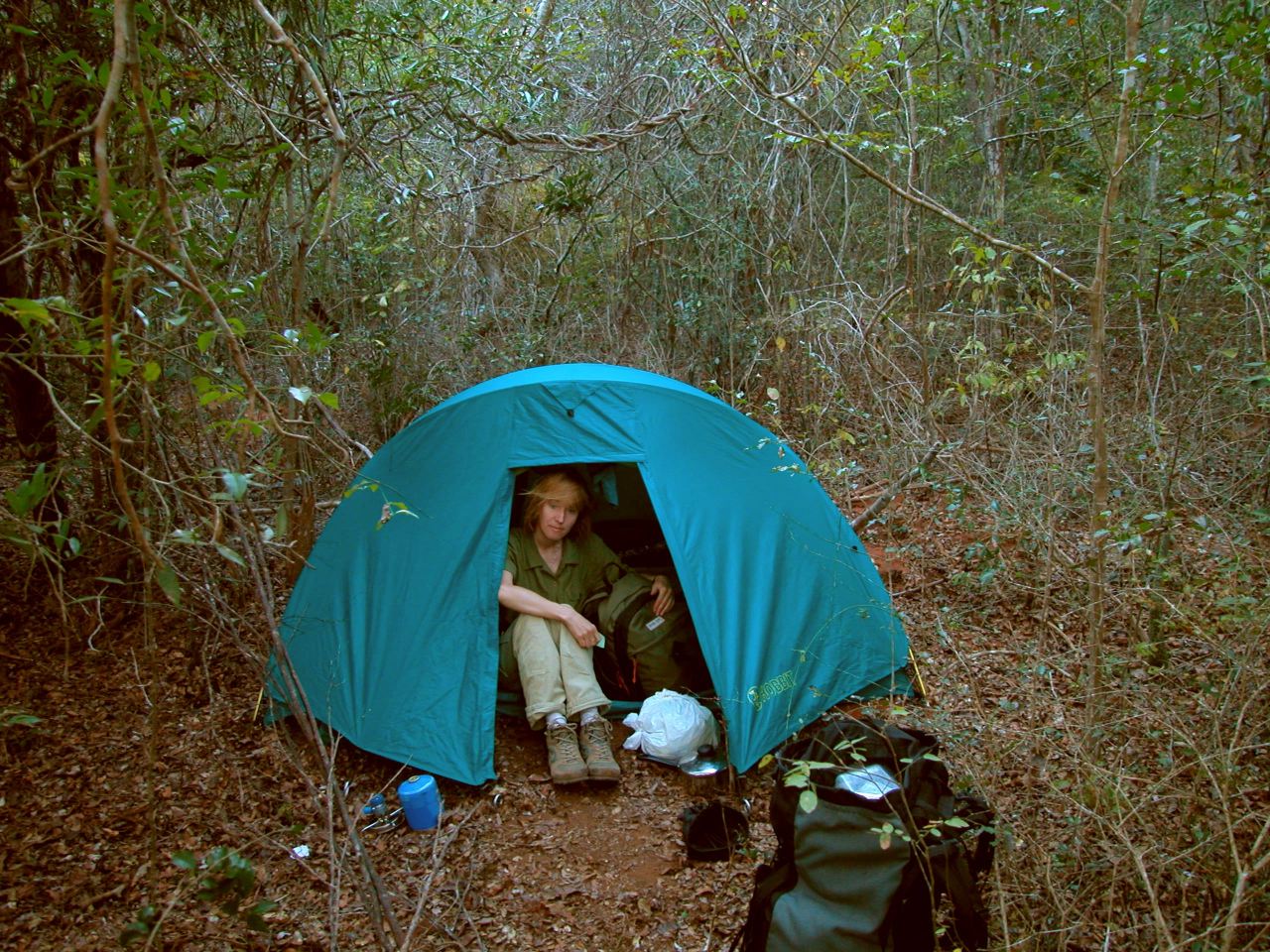
After a quick breakfast we went out to the road. We had to walk for hours before a bush taxi picked us up for Morondava. On our walk we found a wild watermelon, just four centimetres across. The inside was green and the seeds brown. We drank our second morning coffee leaning against a baobab.
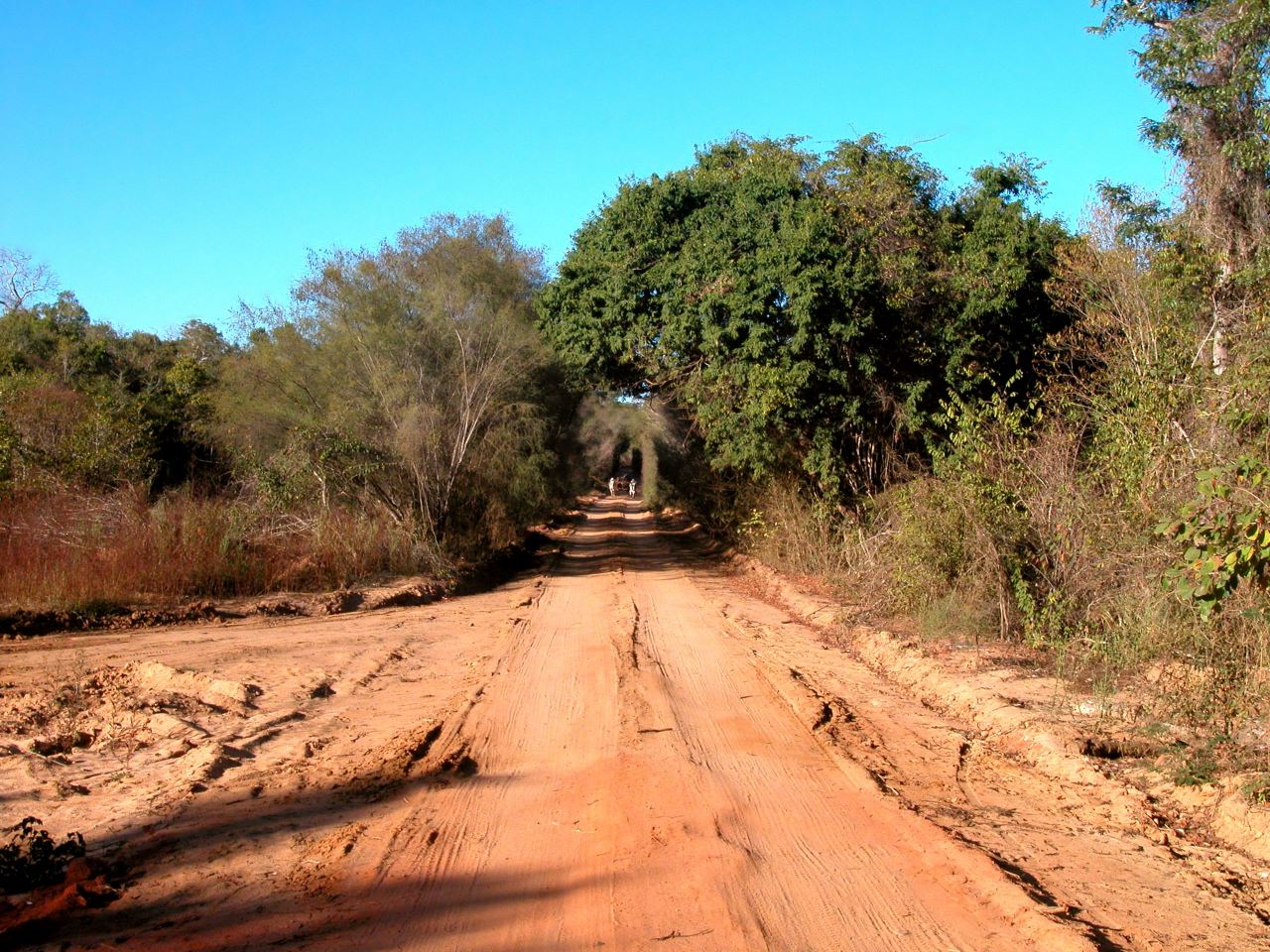
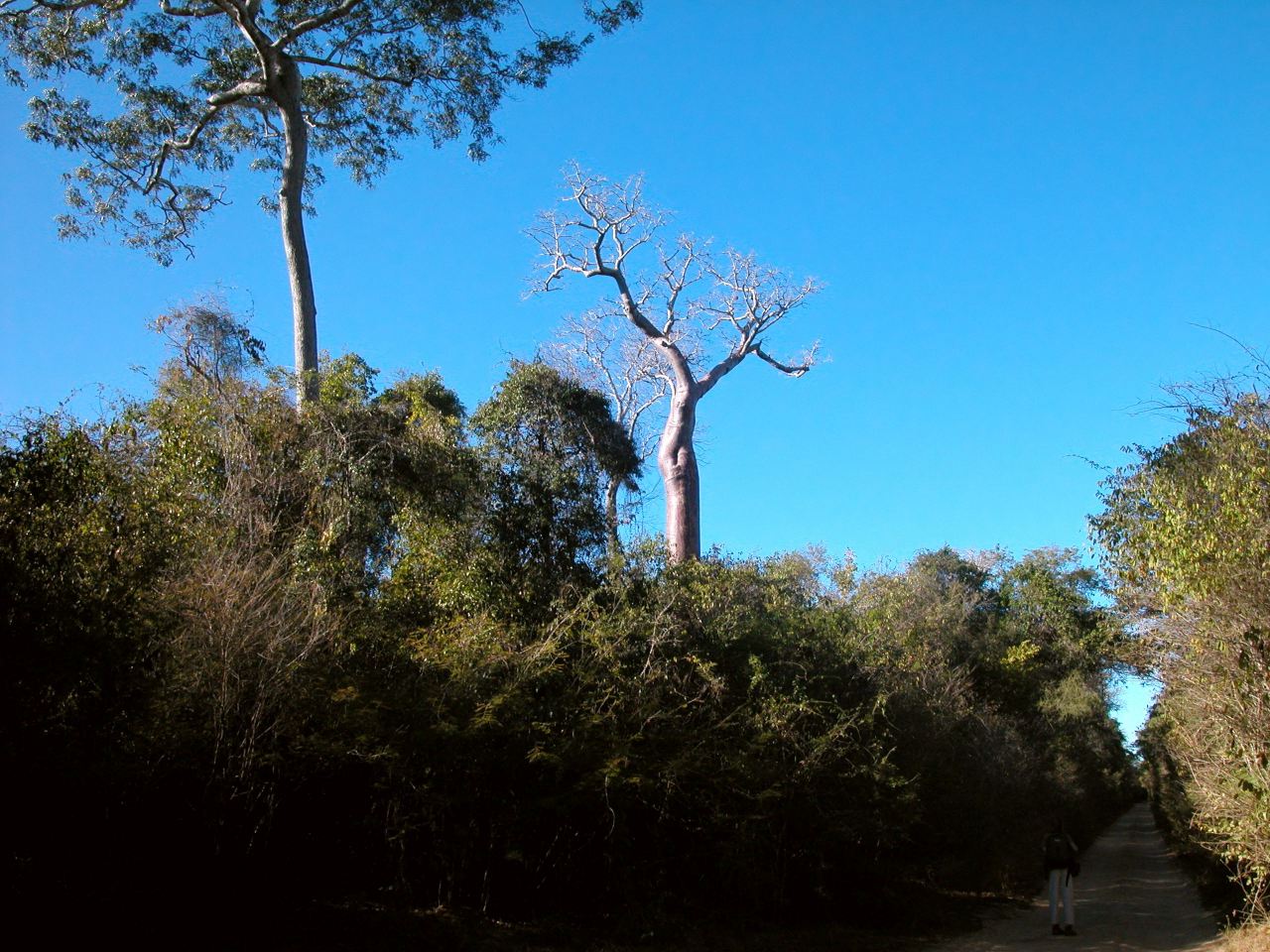
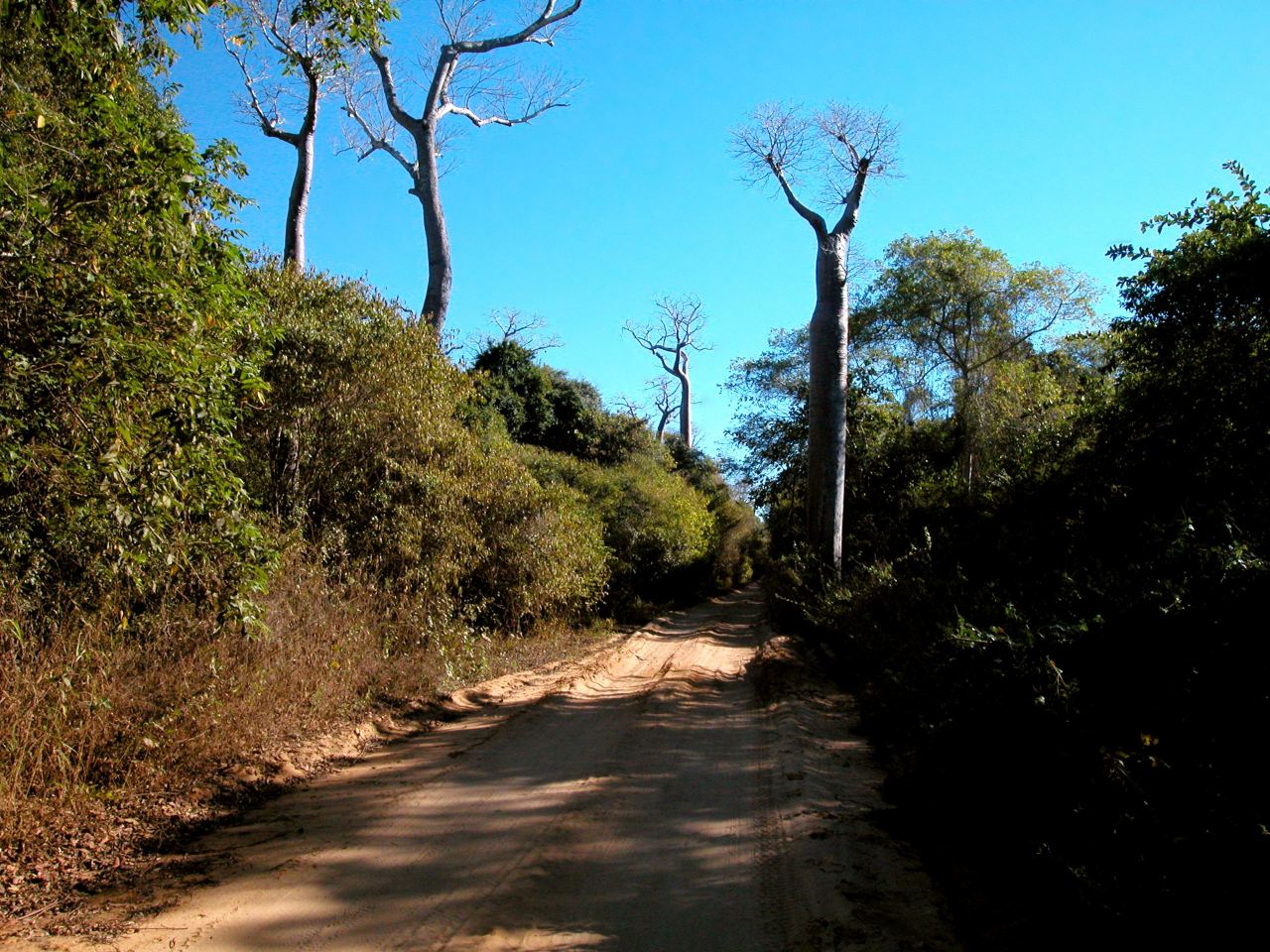
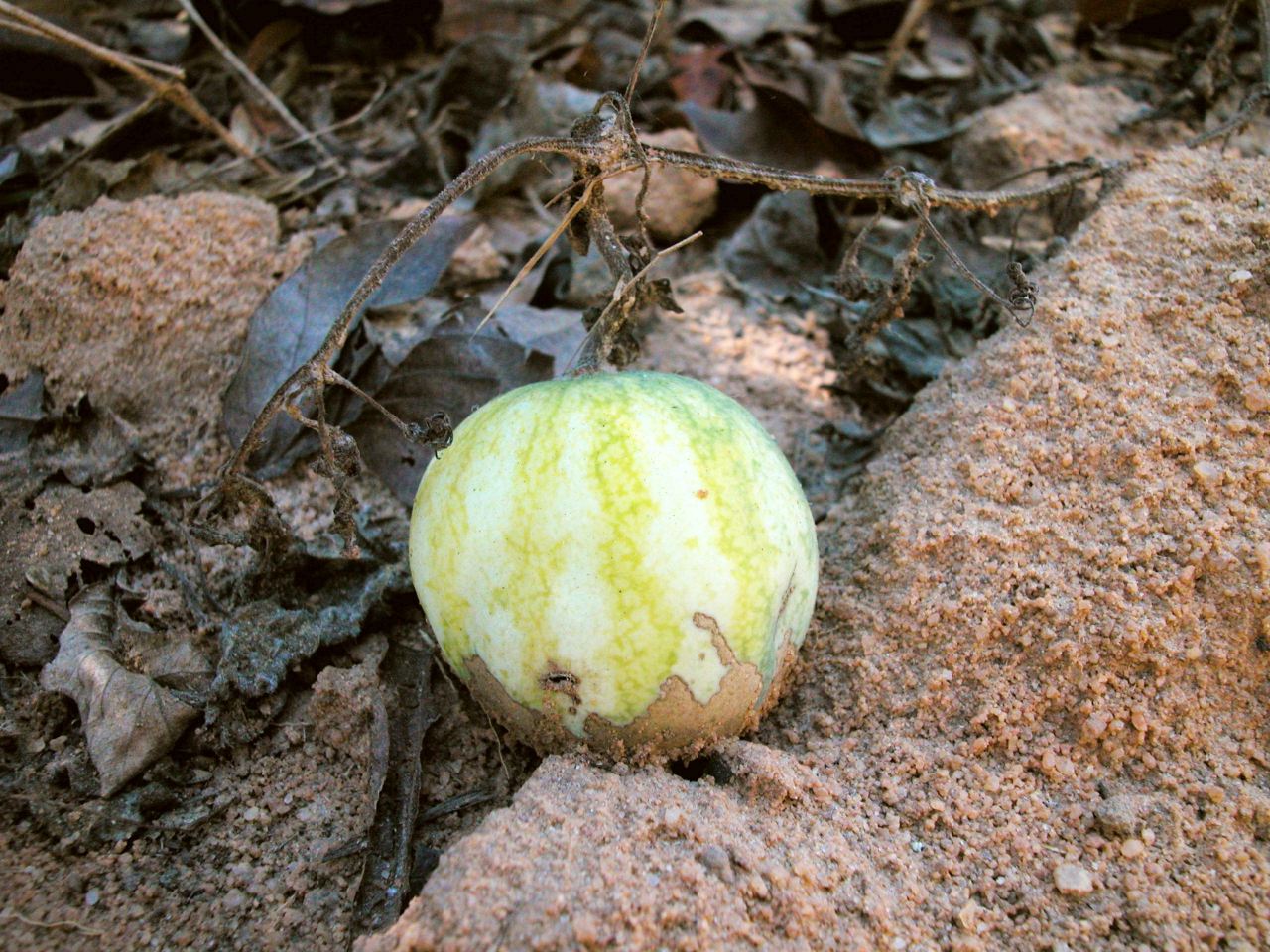
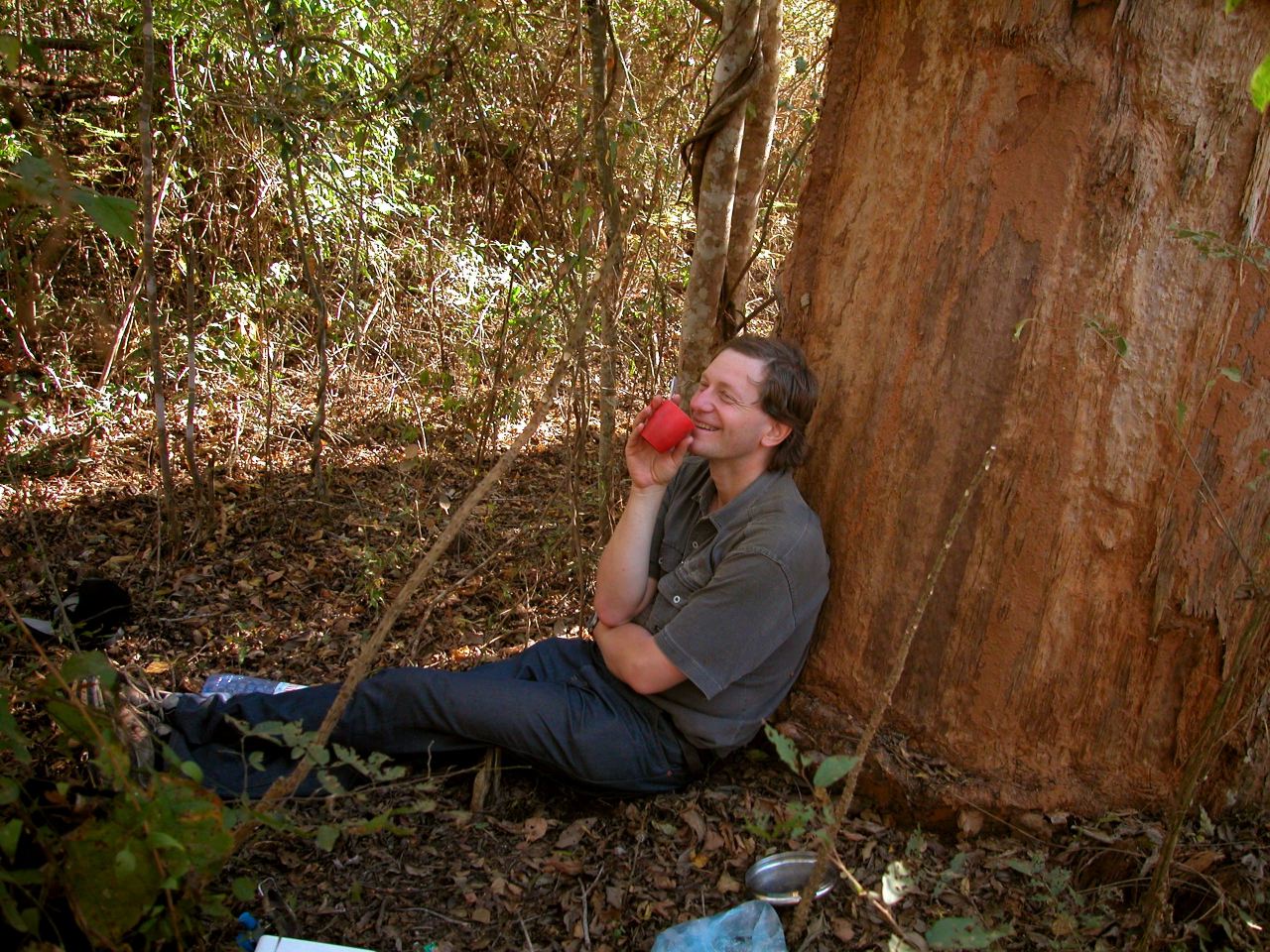
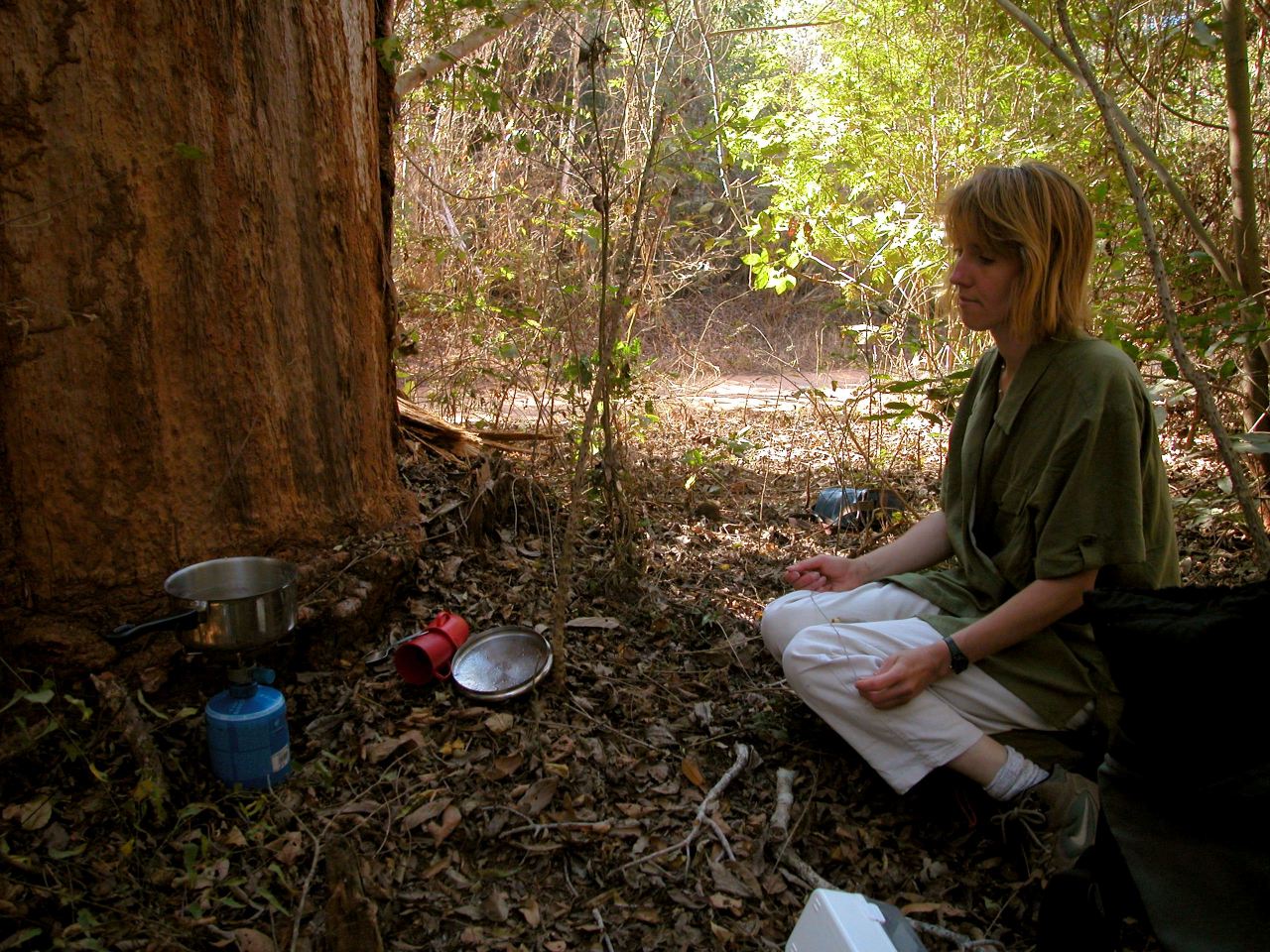
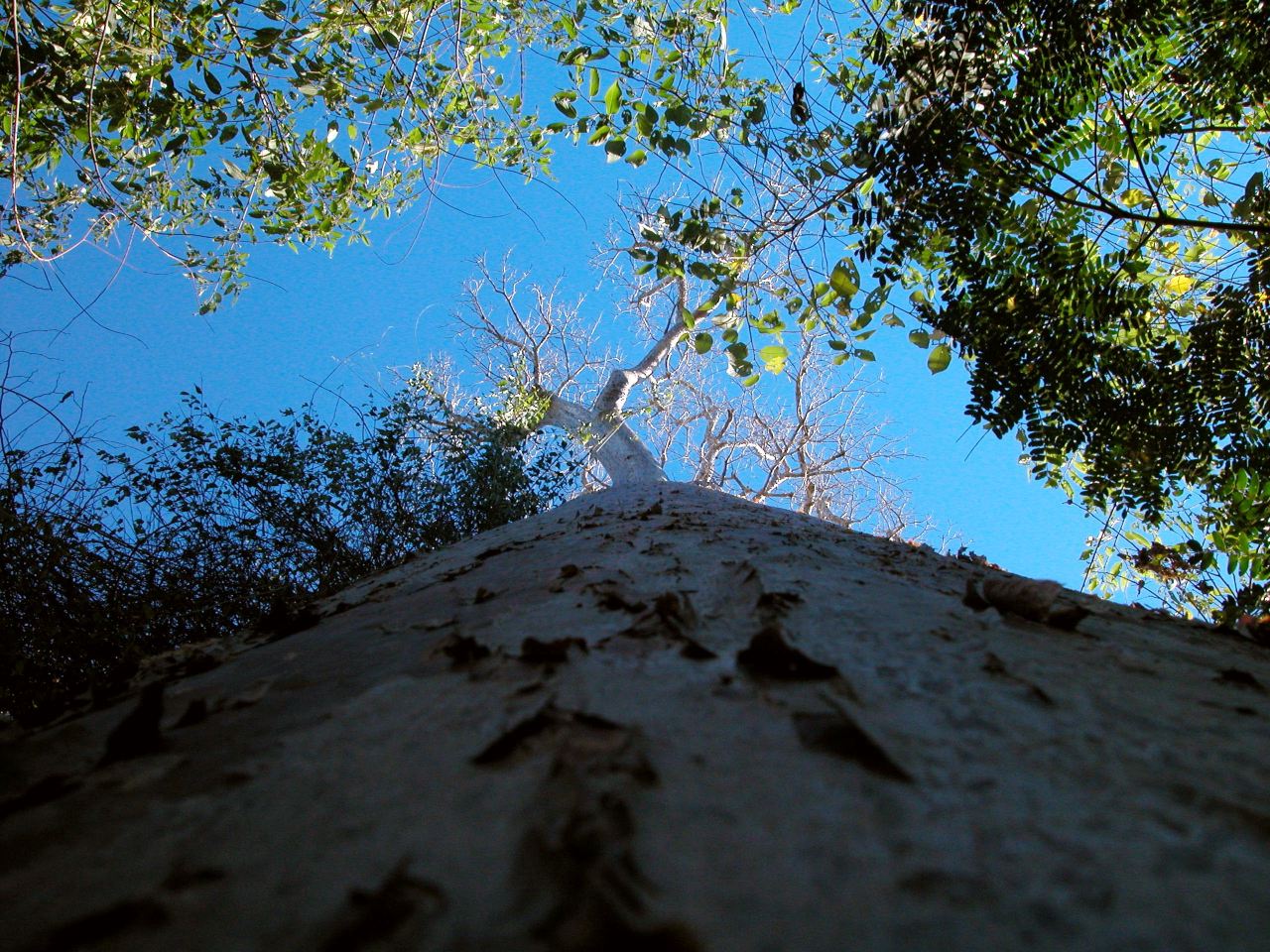
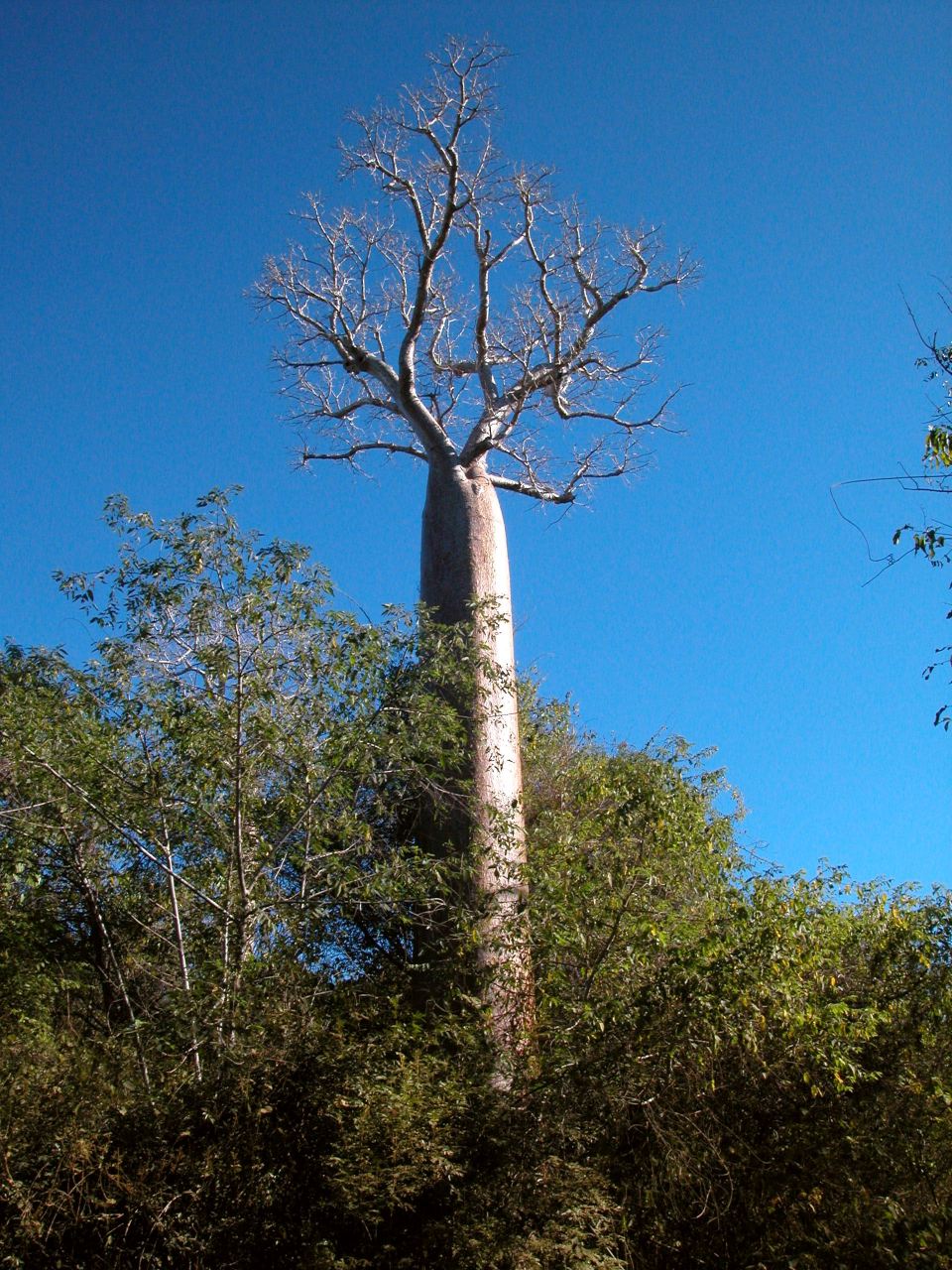
In Morondava we went straight to Ali to ask for a refund on the failed jeep trip. To our surprise he gave us the whole sum without a word, in local currency this time. We took a room at the Hotel Continental, which belonged to him too. We washed, made ourselves presentable, had lunch and took a taxi out to see the famous Avenue of the Baobabs. Its photograph was on the cover of the Lonely Planet guide. The fare was 10,000 francs each way. I imagine the driver counted on getting much more for the trip back, thinking we’d be stuck and would pay whatever he asked. We disappointed him badly by telling him he could go home. We didn’t need a ride back. He was astonished.
The Avenue of the Baobabs lies on the same RN8 leading towards Belo, fifteen to twenty kilometres north of Morondava. Nobody planted the baobabs in a line. There are simply a lot of them there. They grow on the shores of marshy lakes, their surfaces covered in lotuses. The place is especially beautiful at sunset. For several hours we walked among these enormous trees. Buses bring plenty of visitors, though most don’t leave the appointed viewing point. It’s well worth walking about. You could also take a zebu cart for a few thousand francs. Most visitors were French. Having a language in common makes travel much easier. There were very few English people. Yet when we wanted a photograph of the two of us together and looked for someone to take it, the first person we picked from the crowd was an Englishwoman travelling on her own. It was extraordinary how we always found the English. Perhaps there’s something familiar in the way they look at the world.
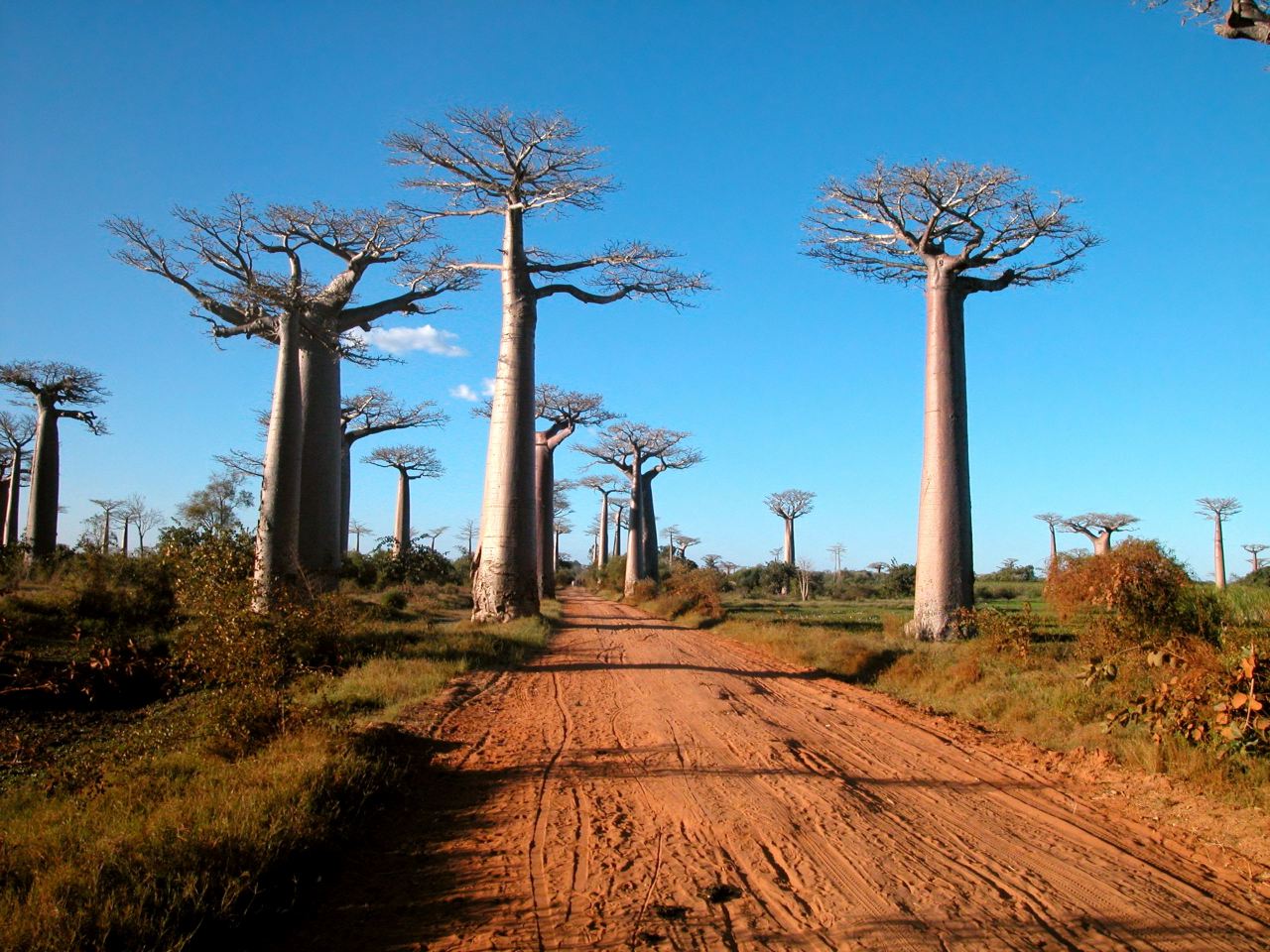
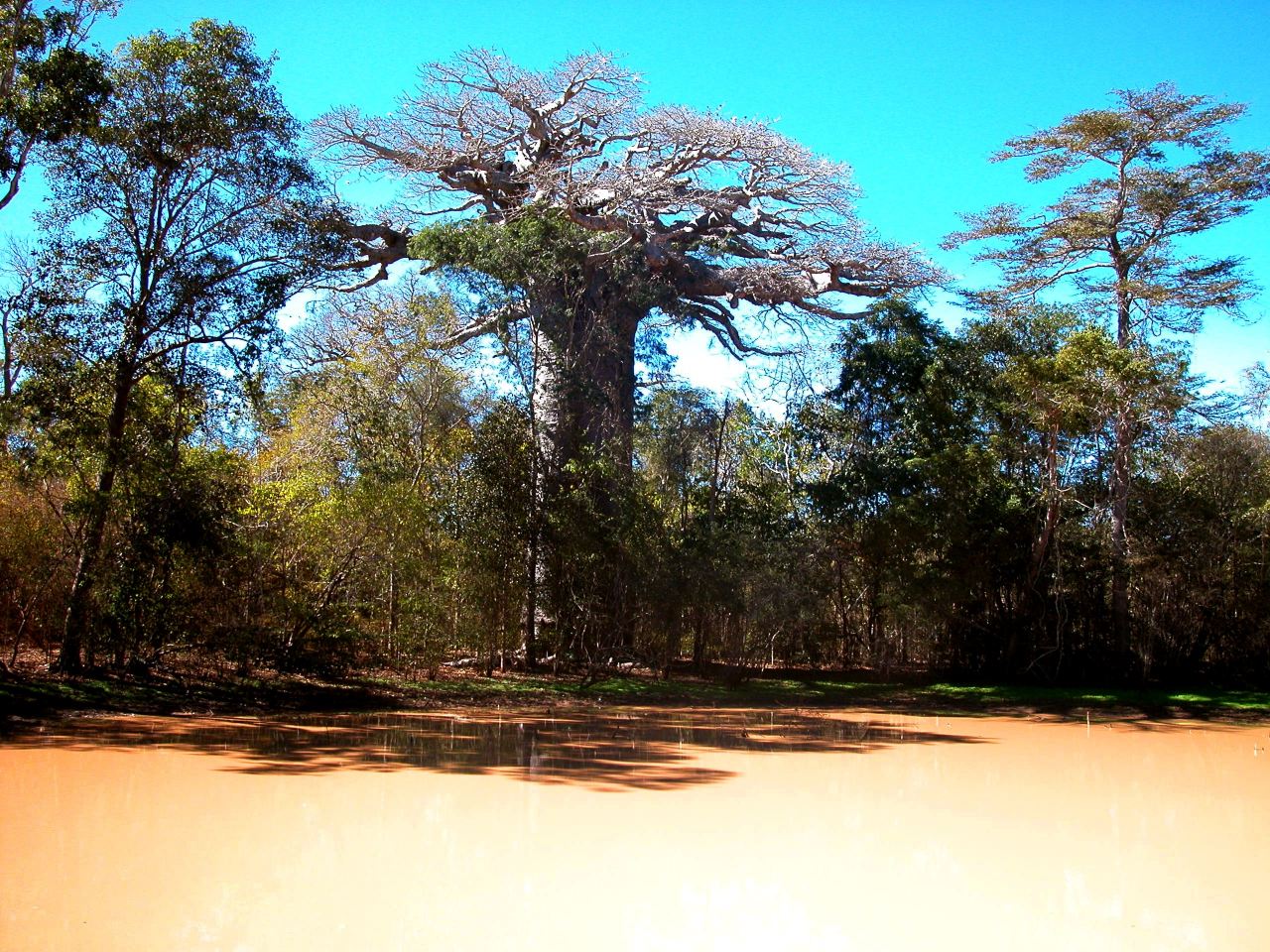
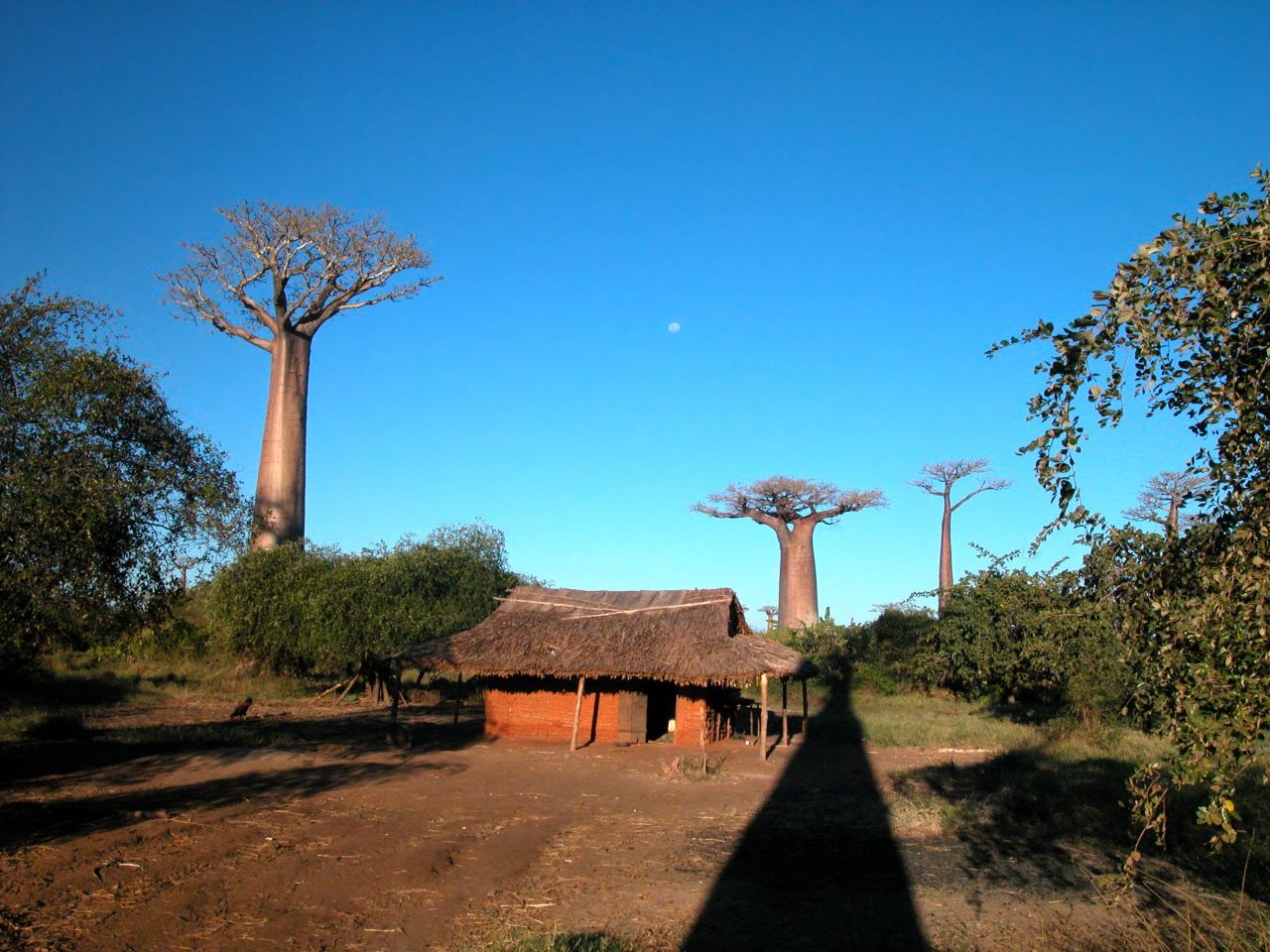
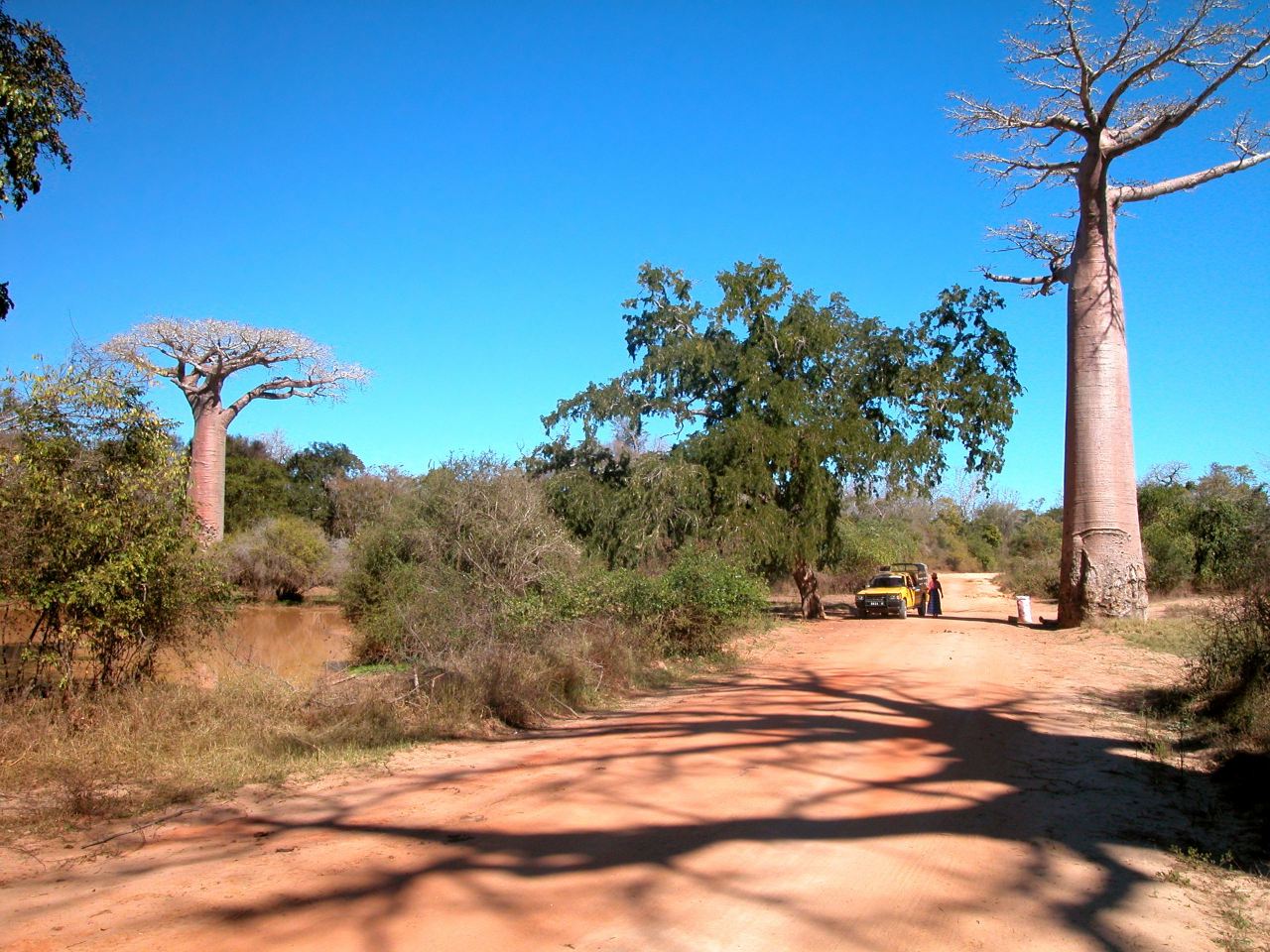
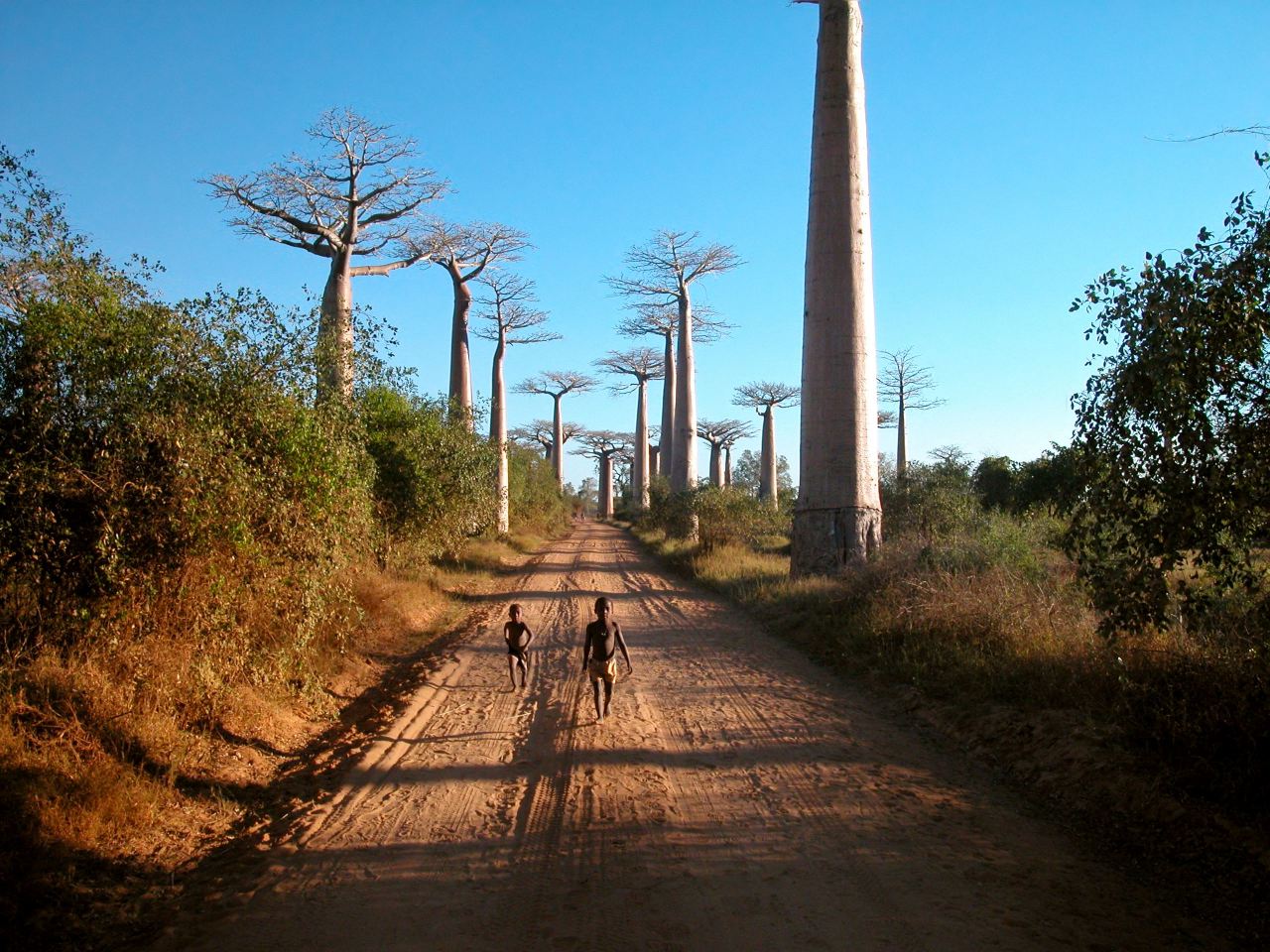
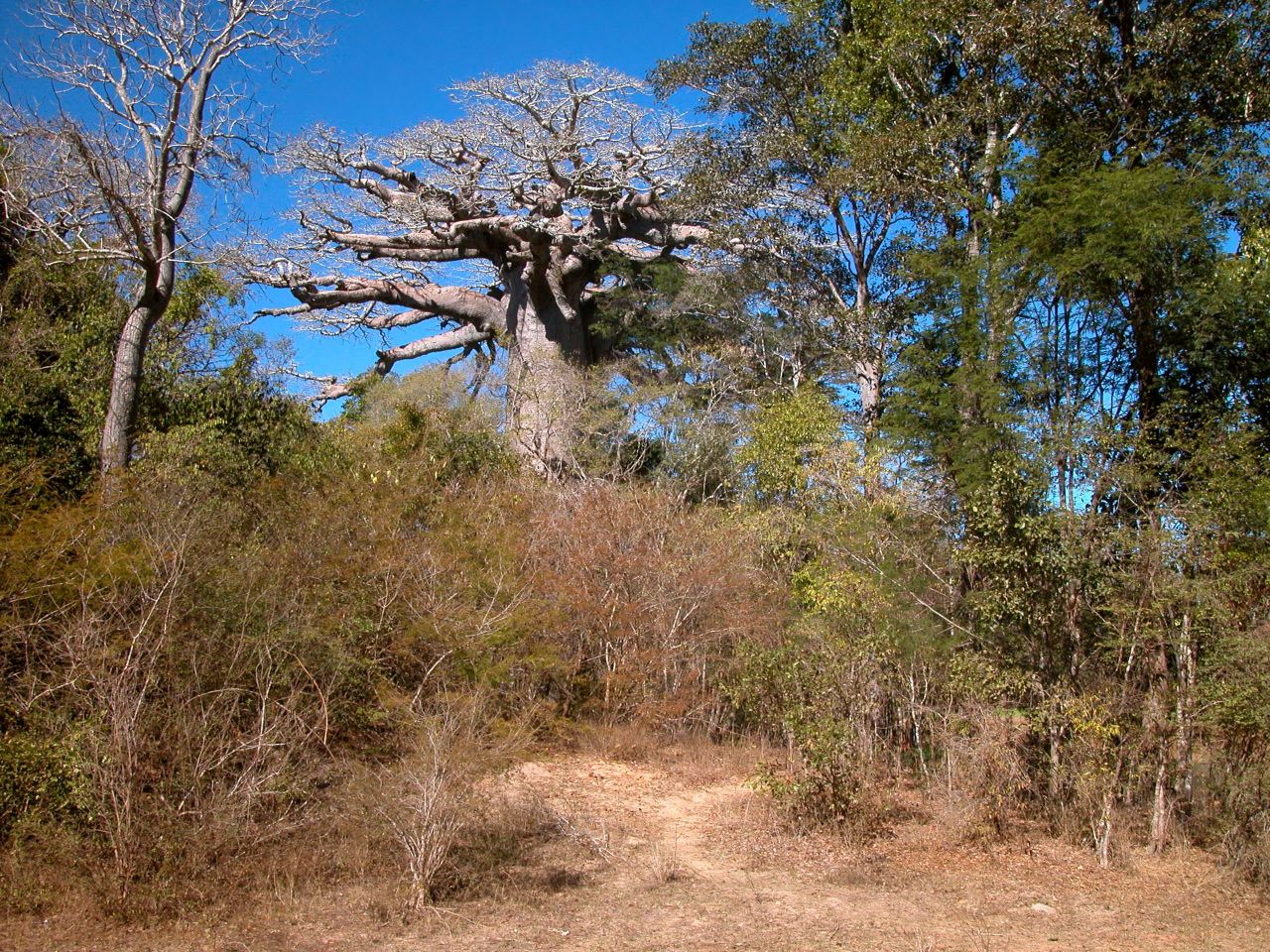
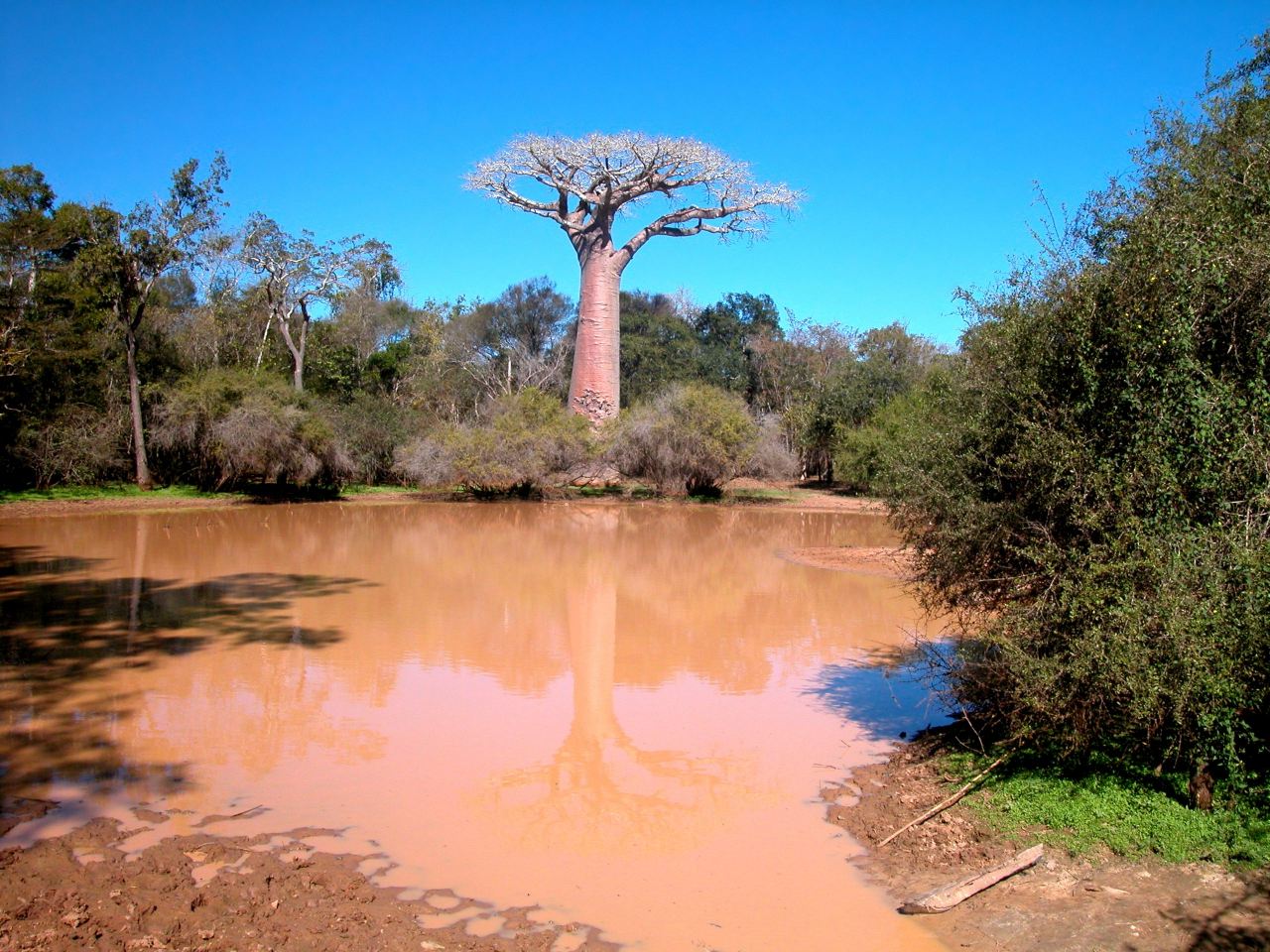
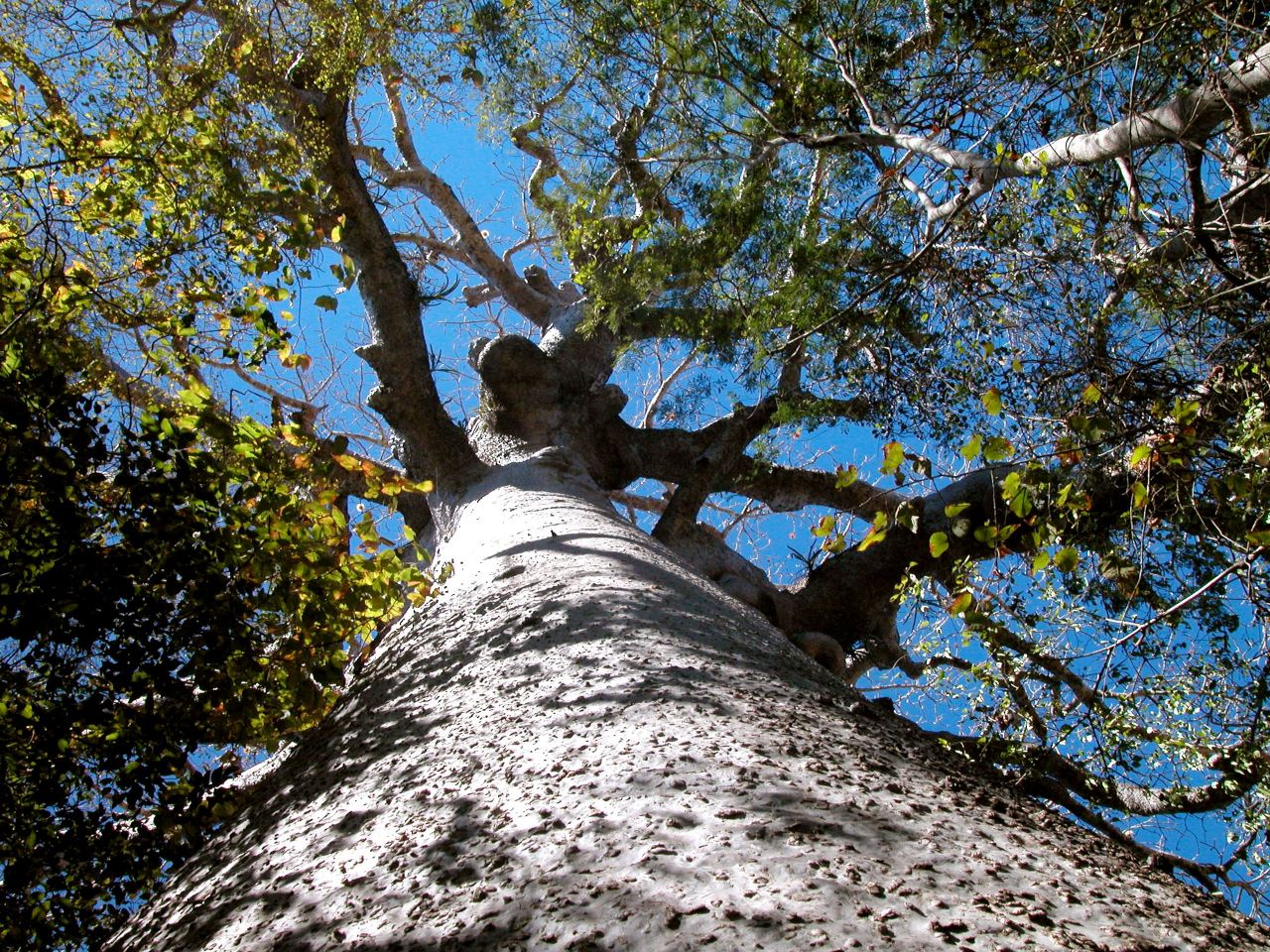
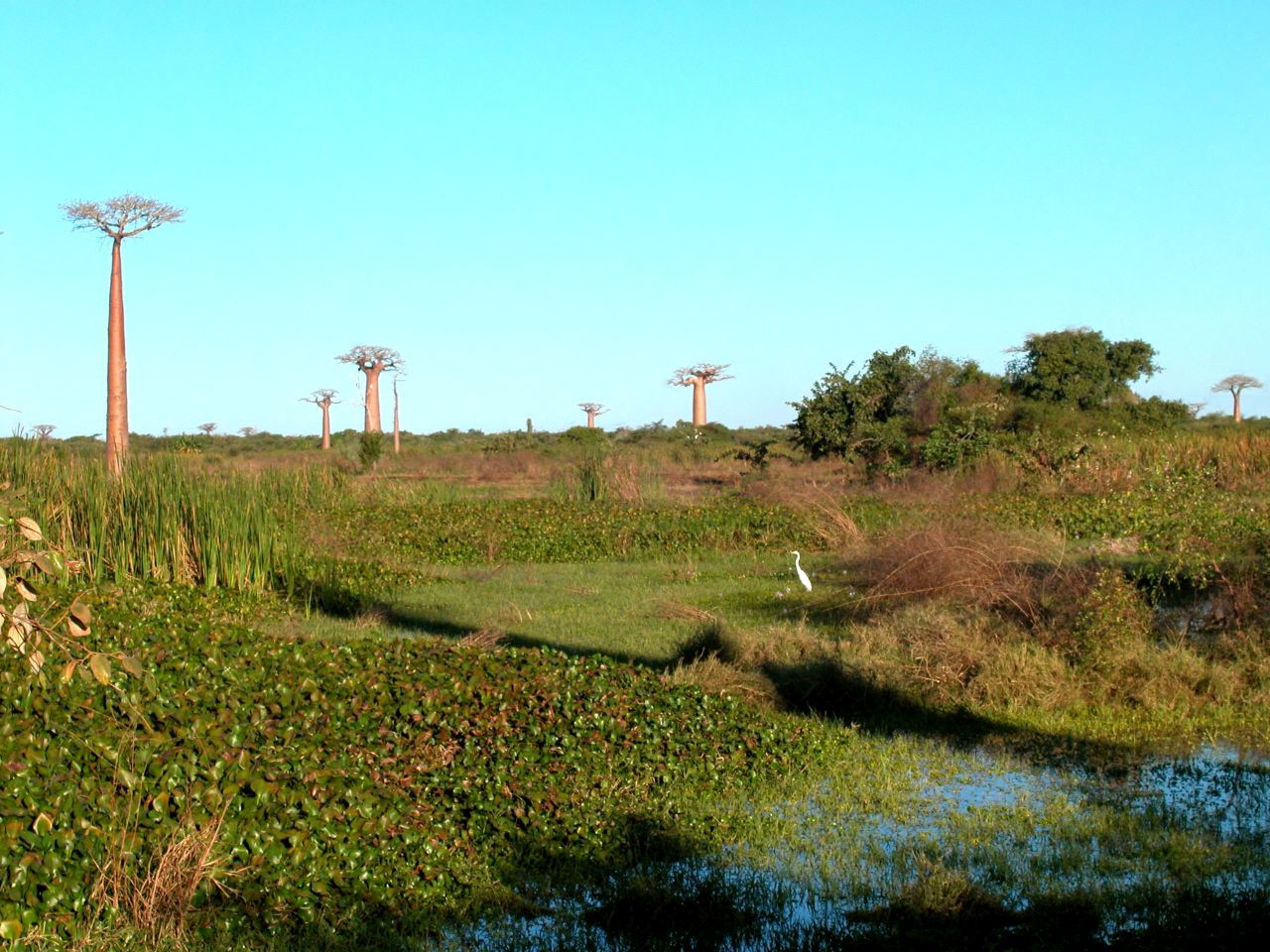
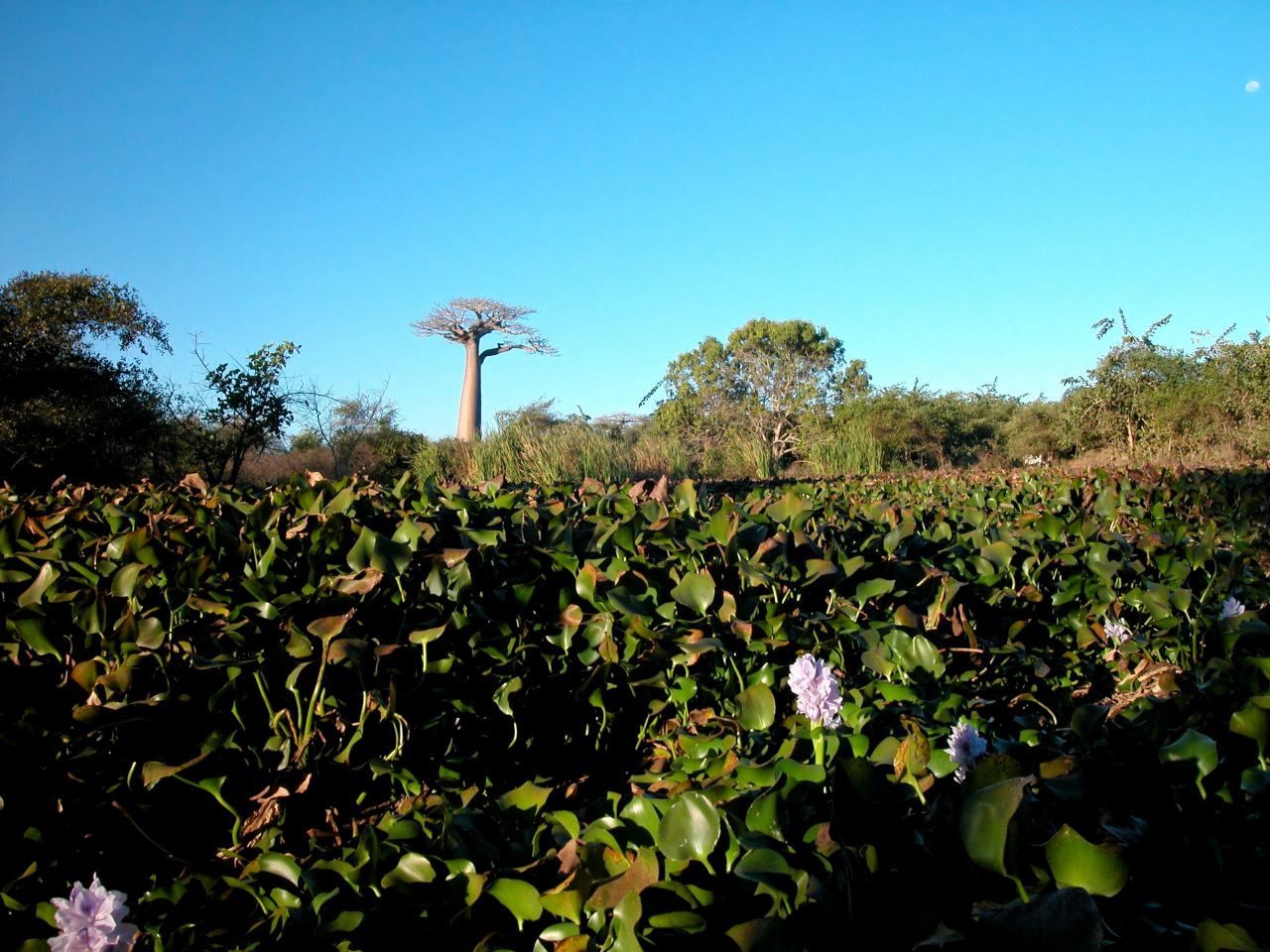
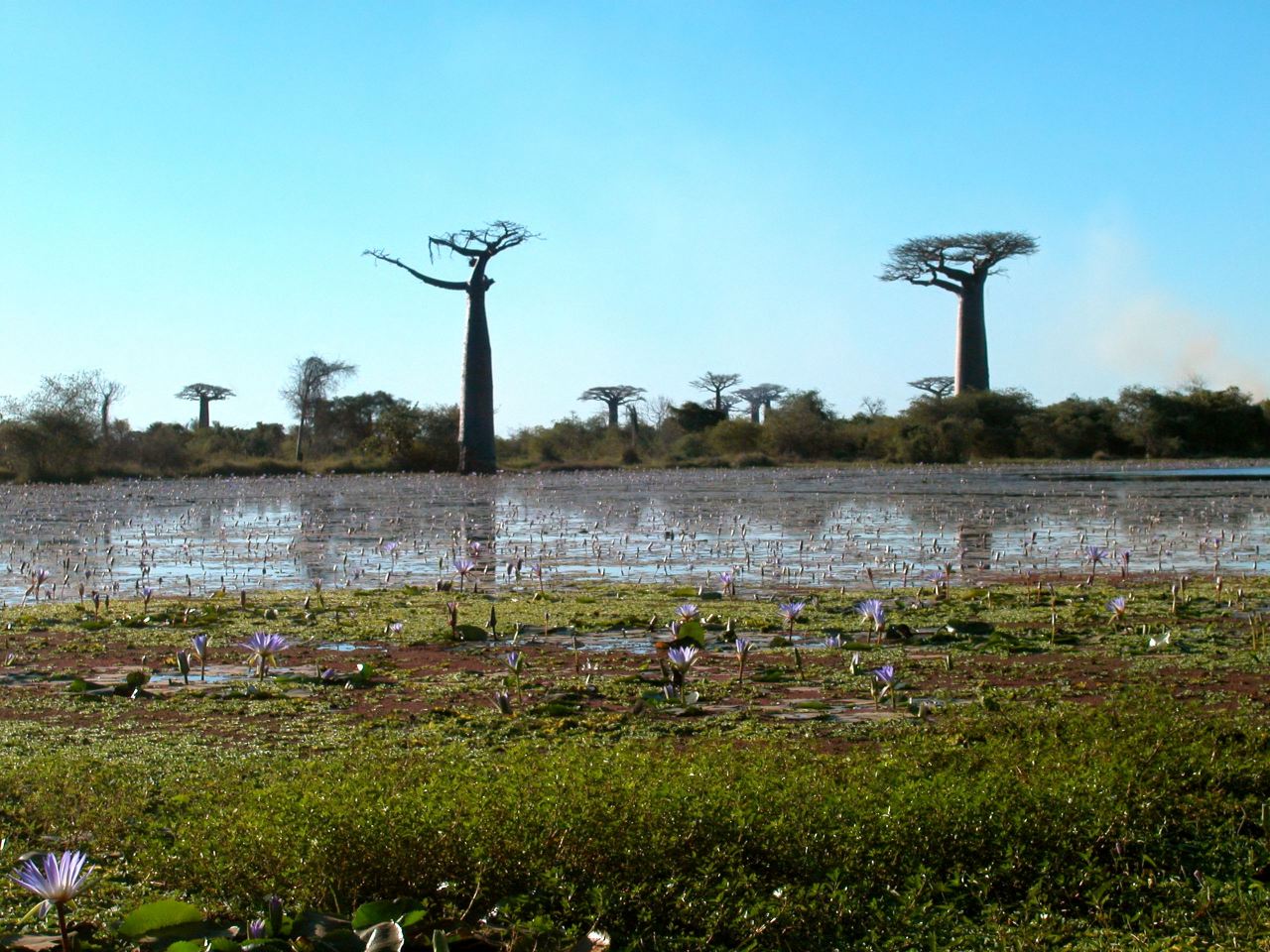
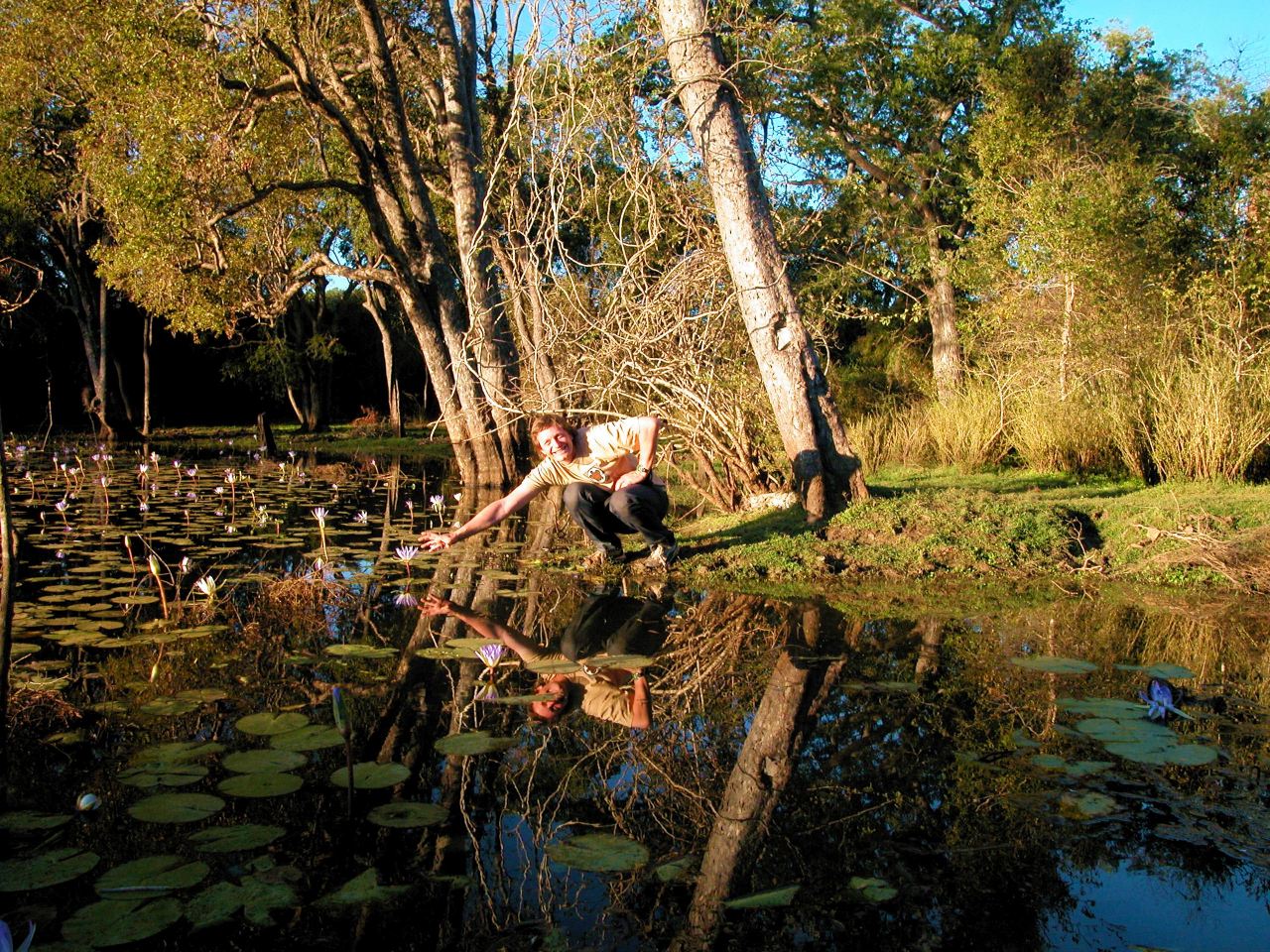
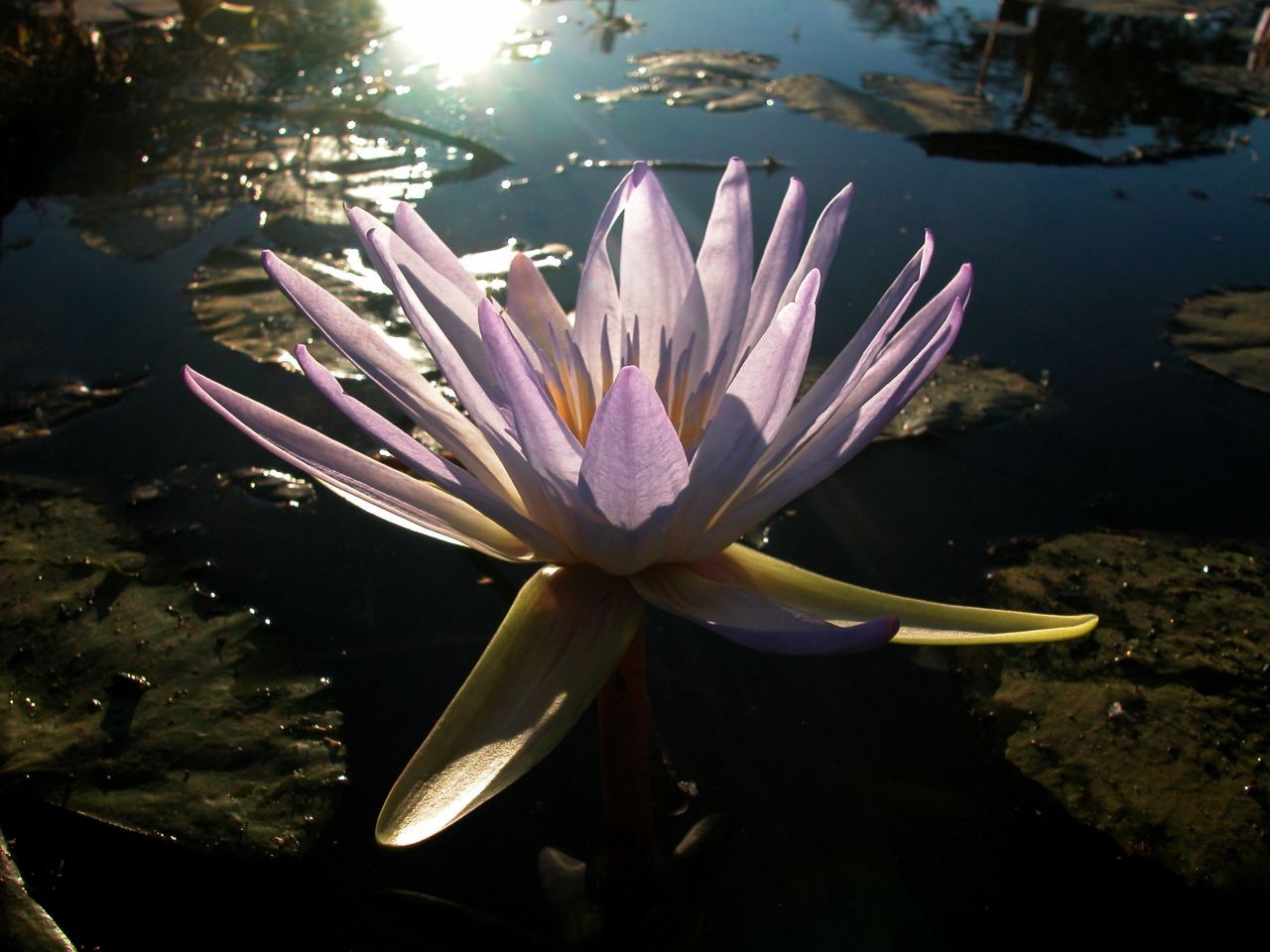
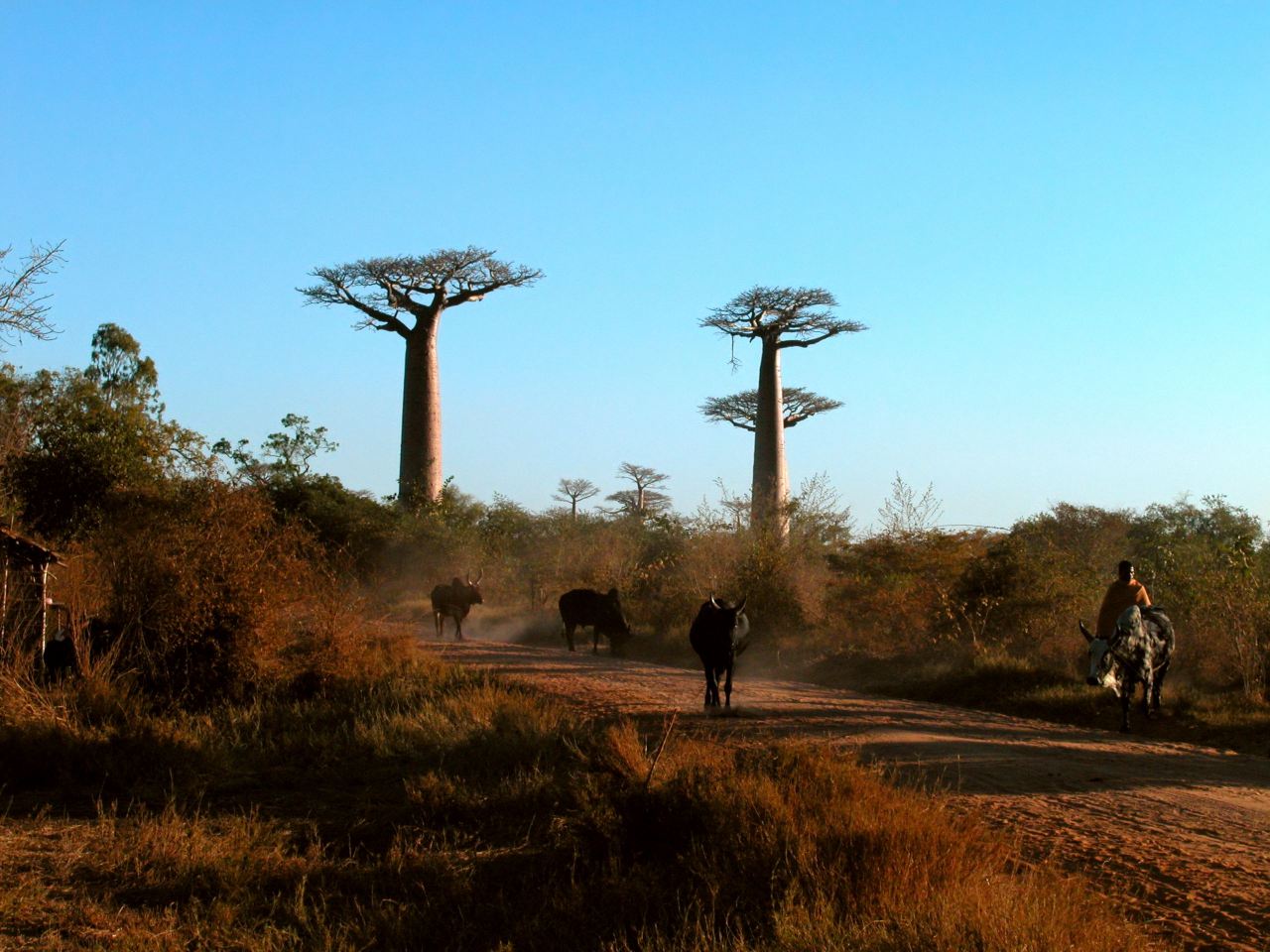
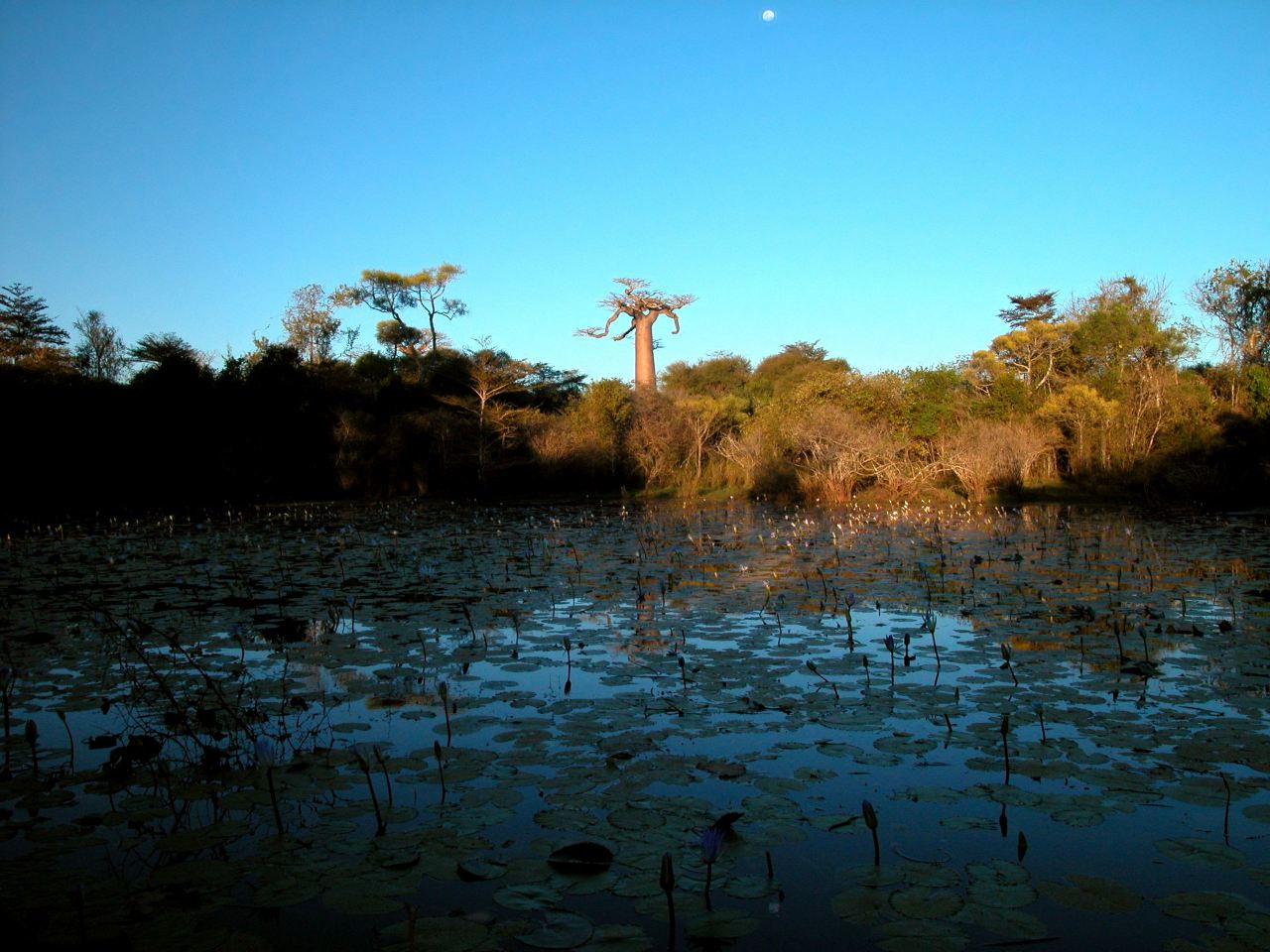
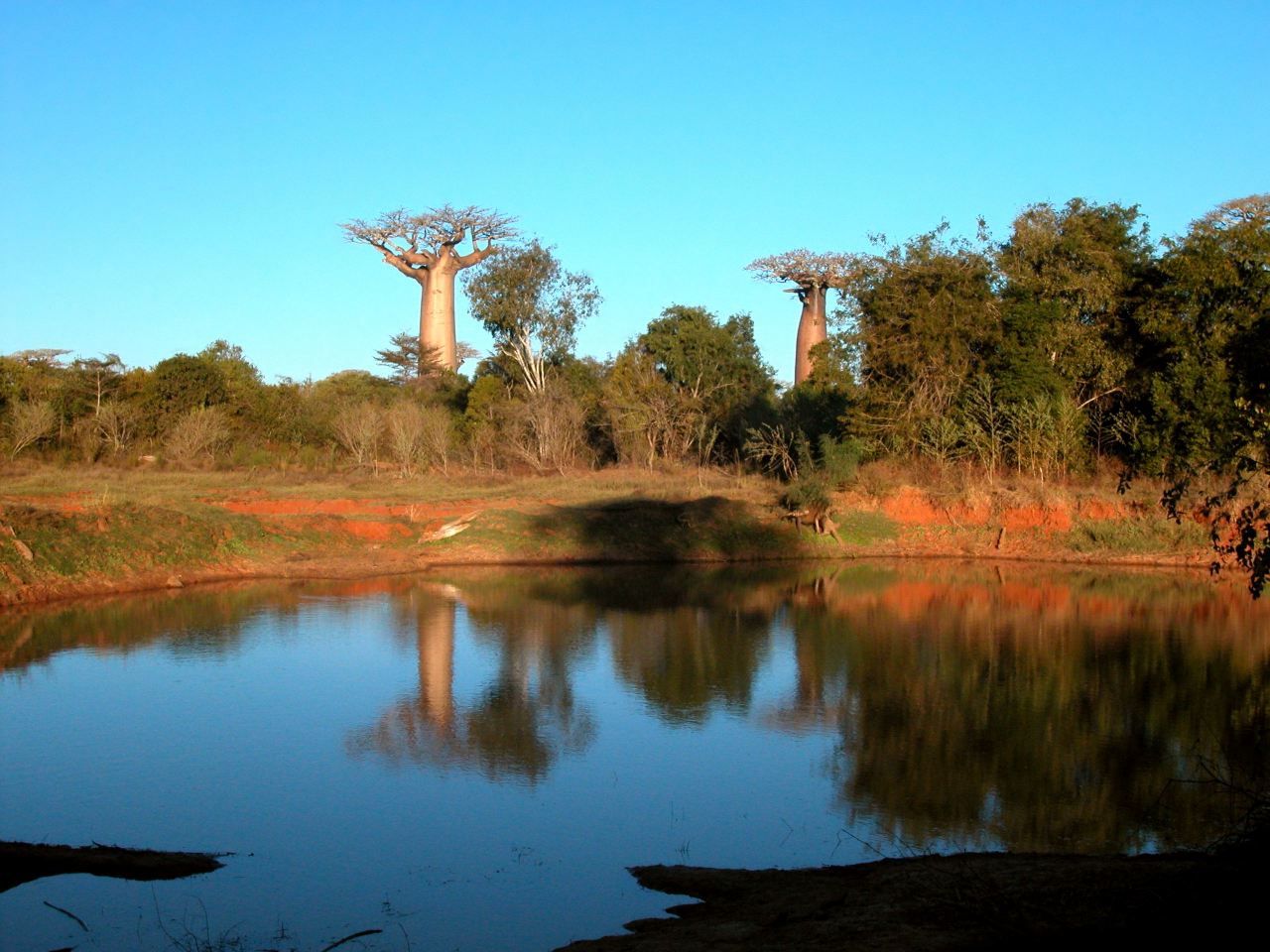
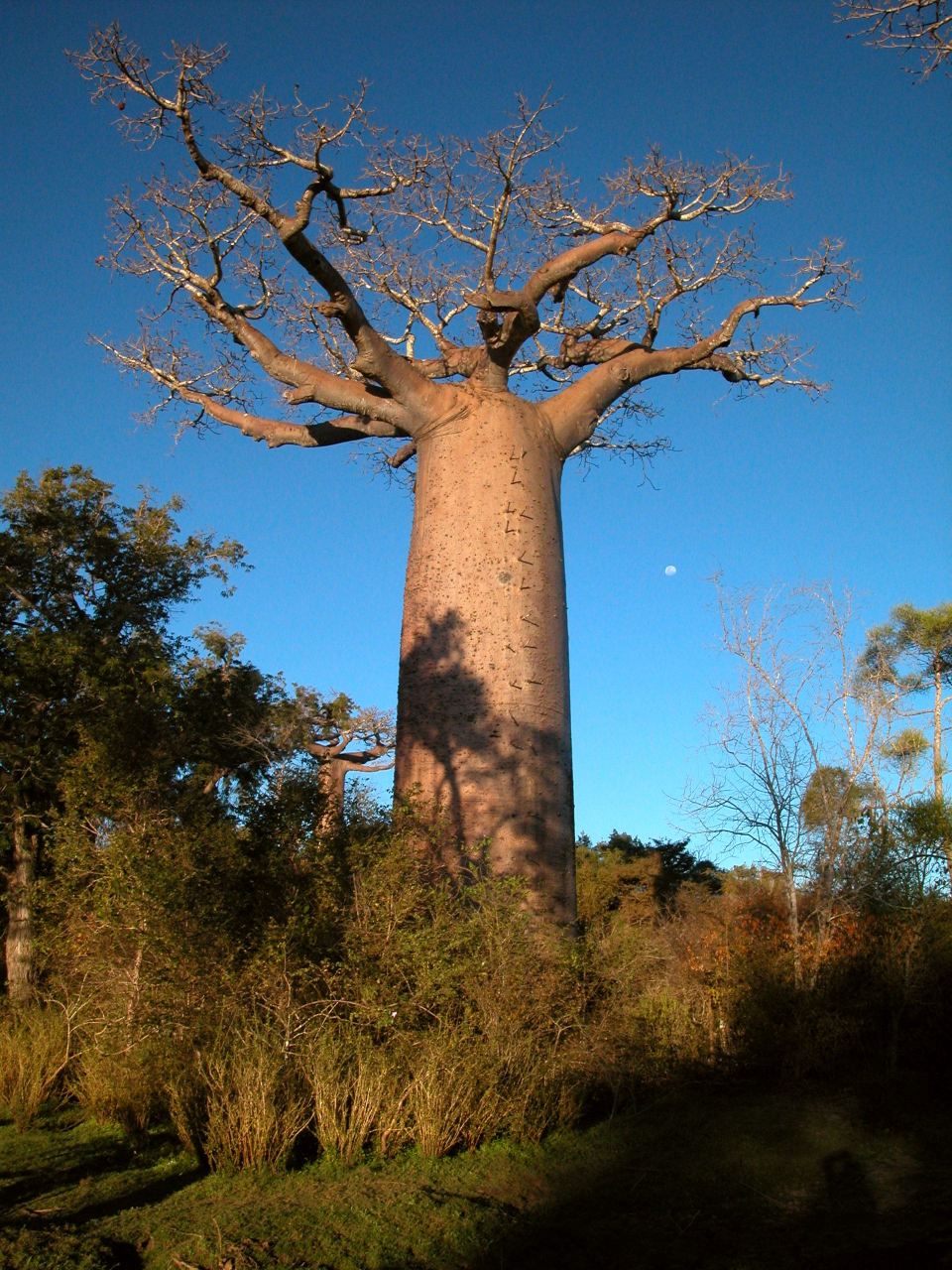
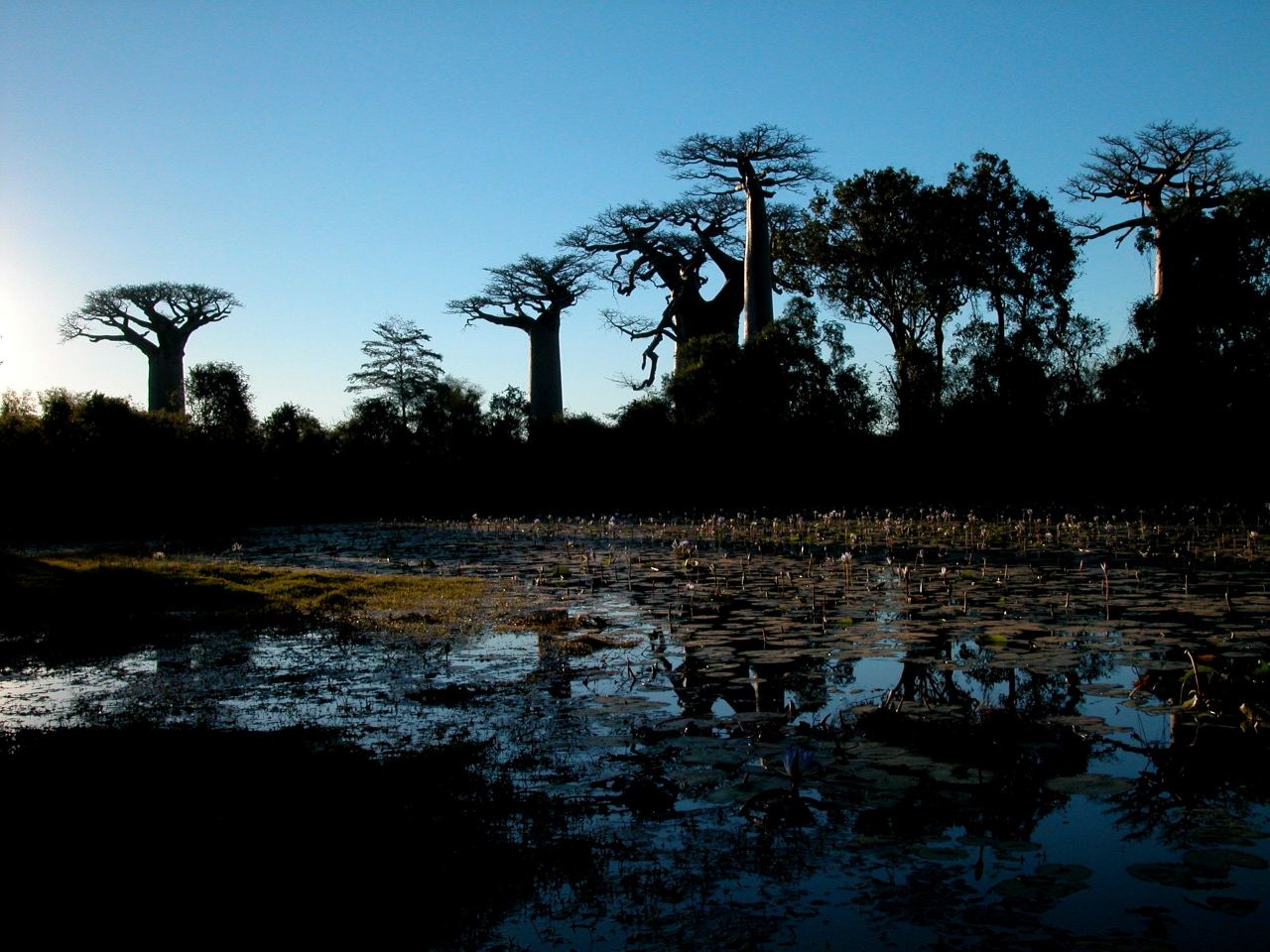
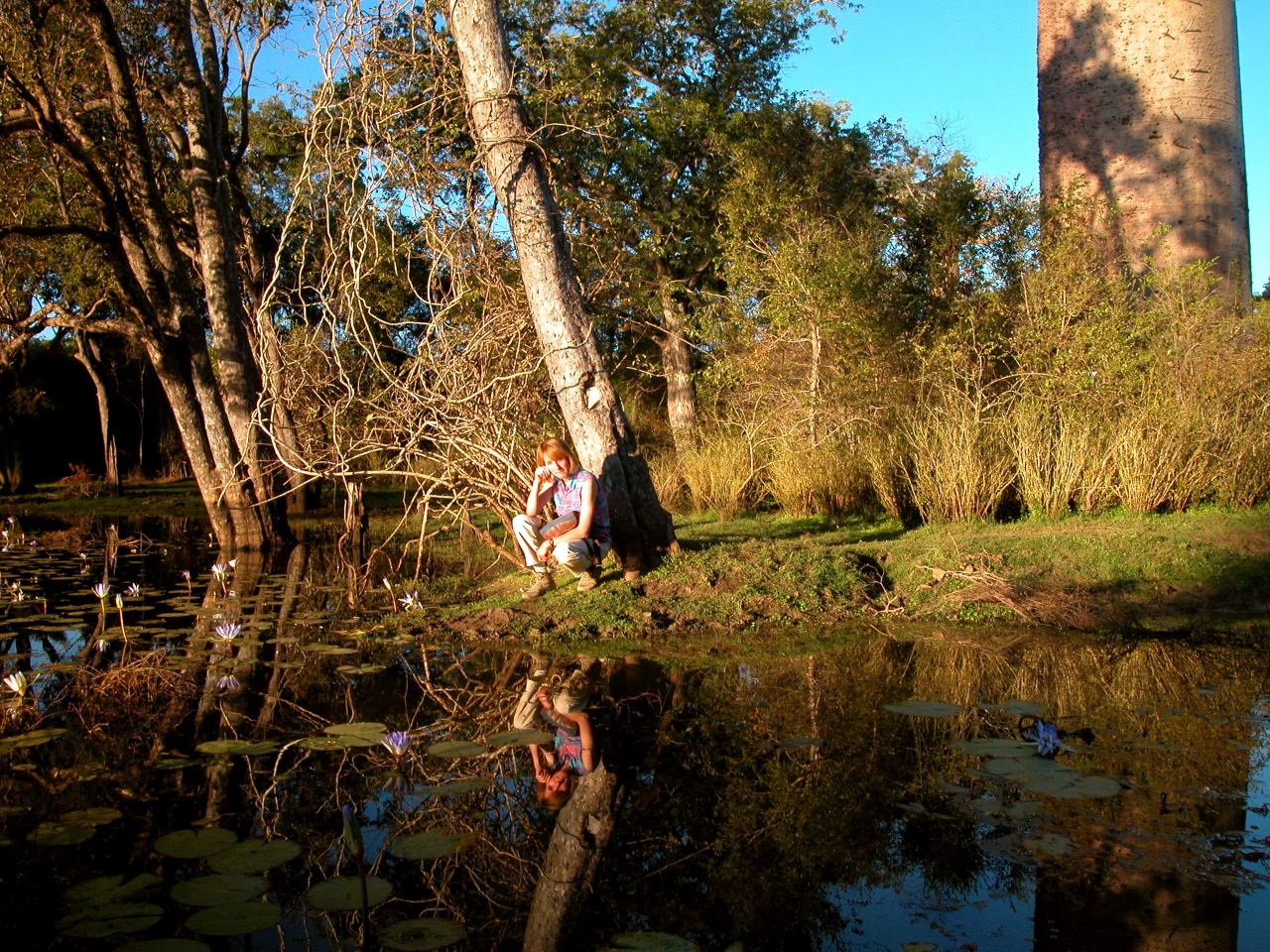
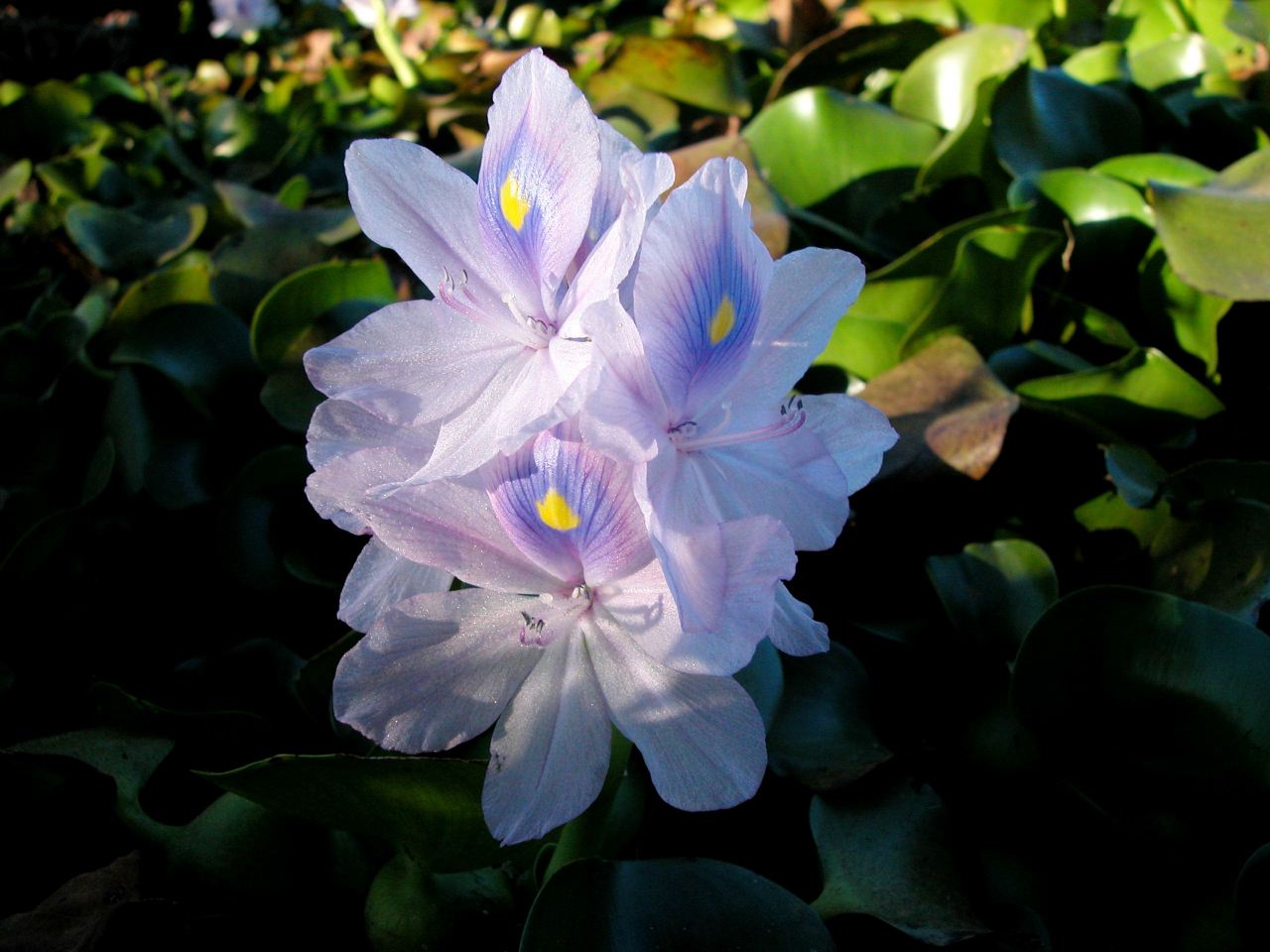
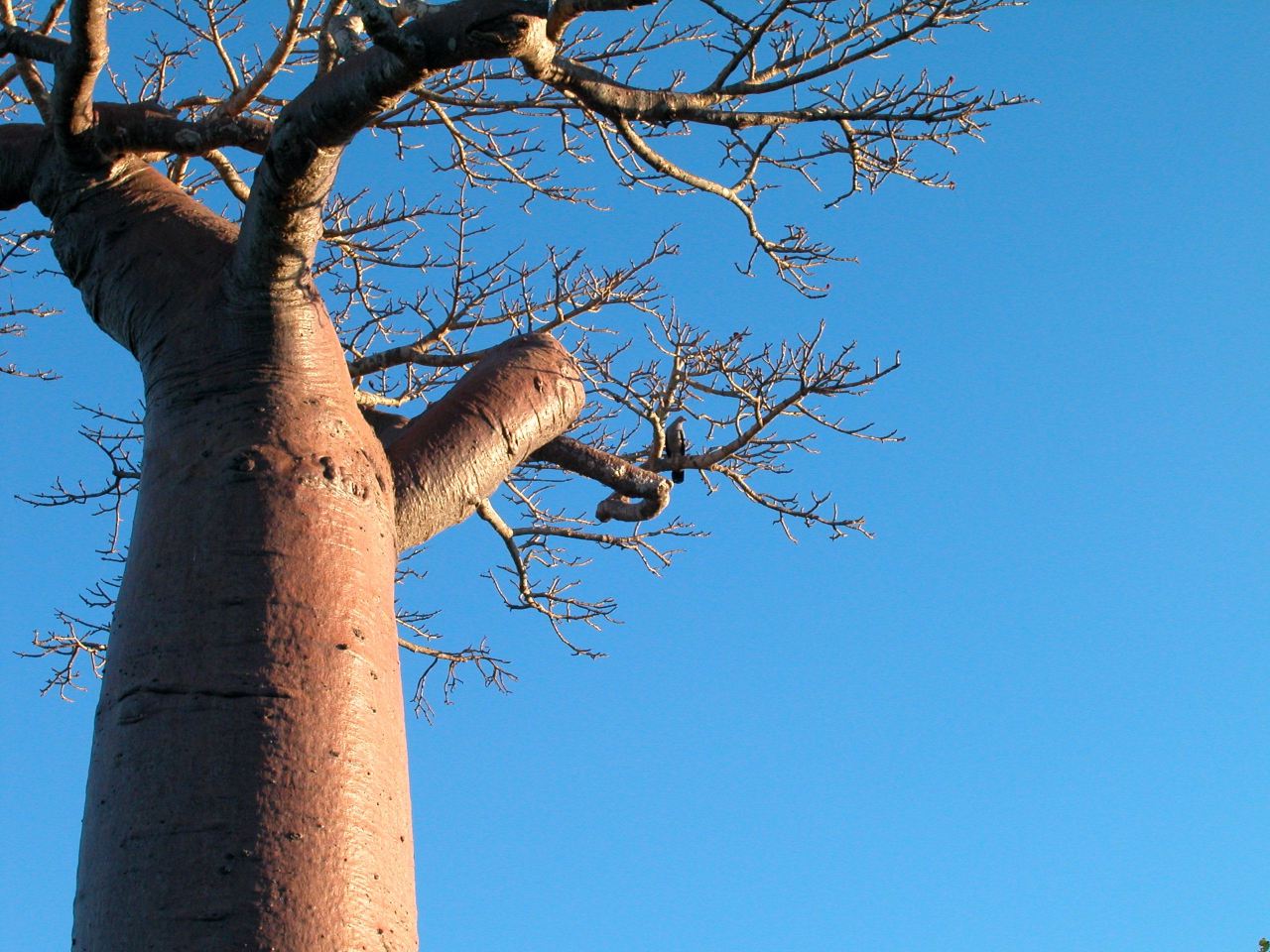
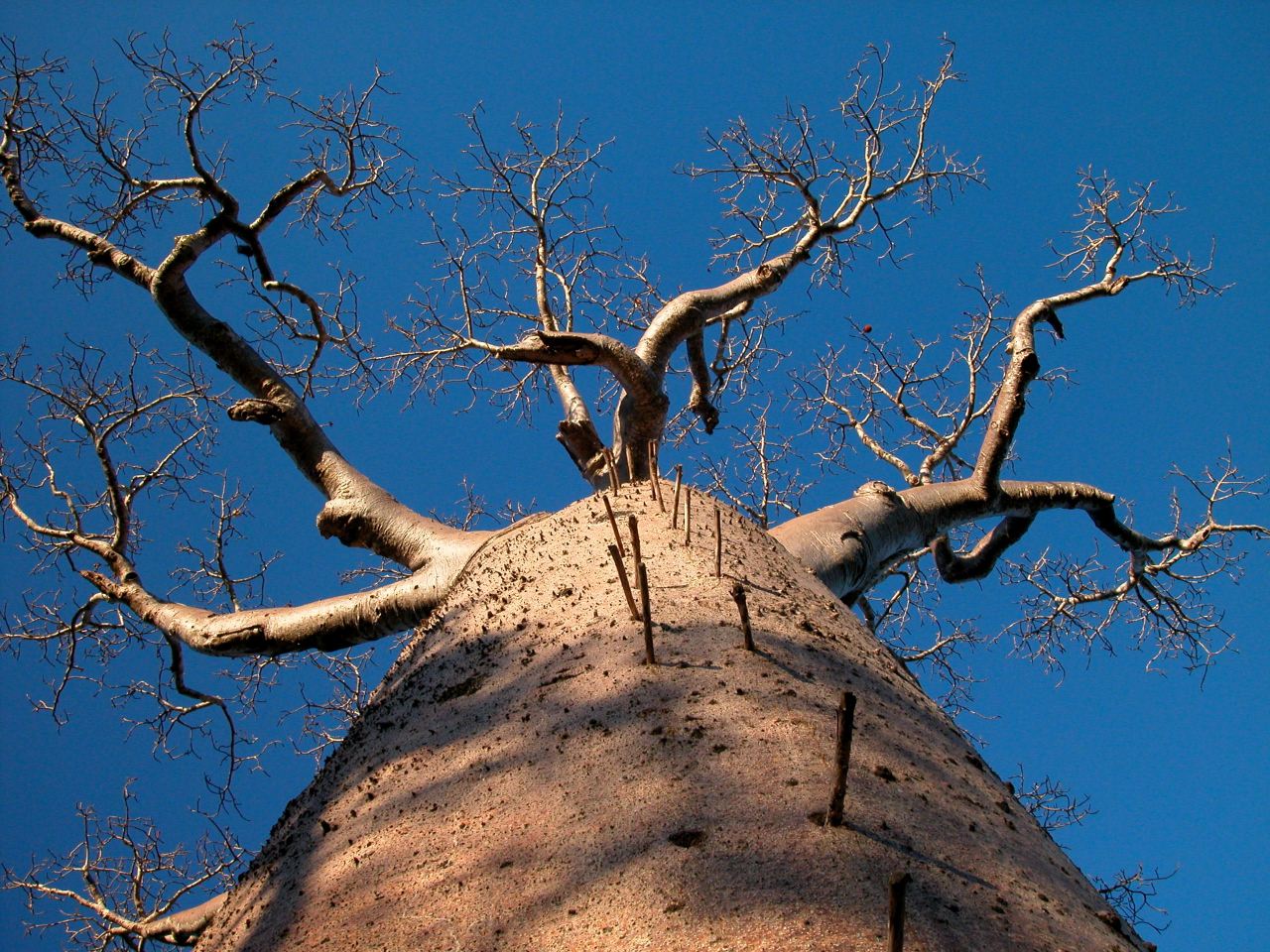
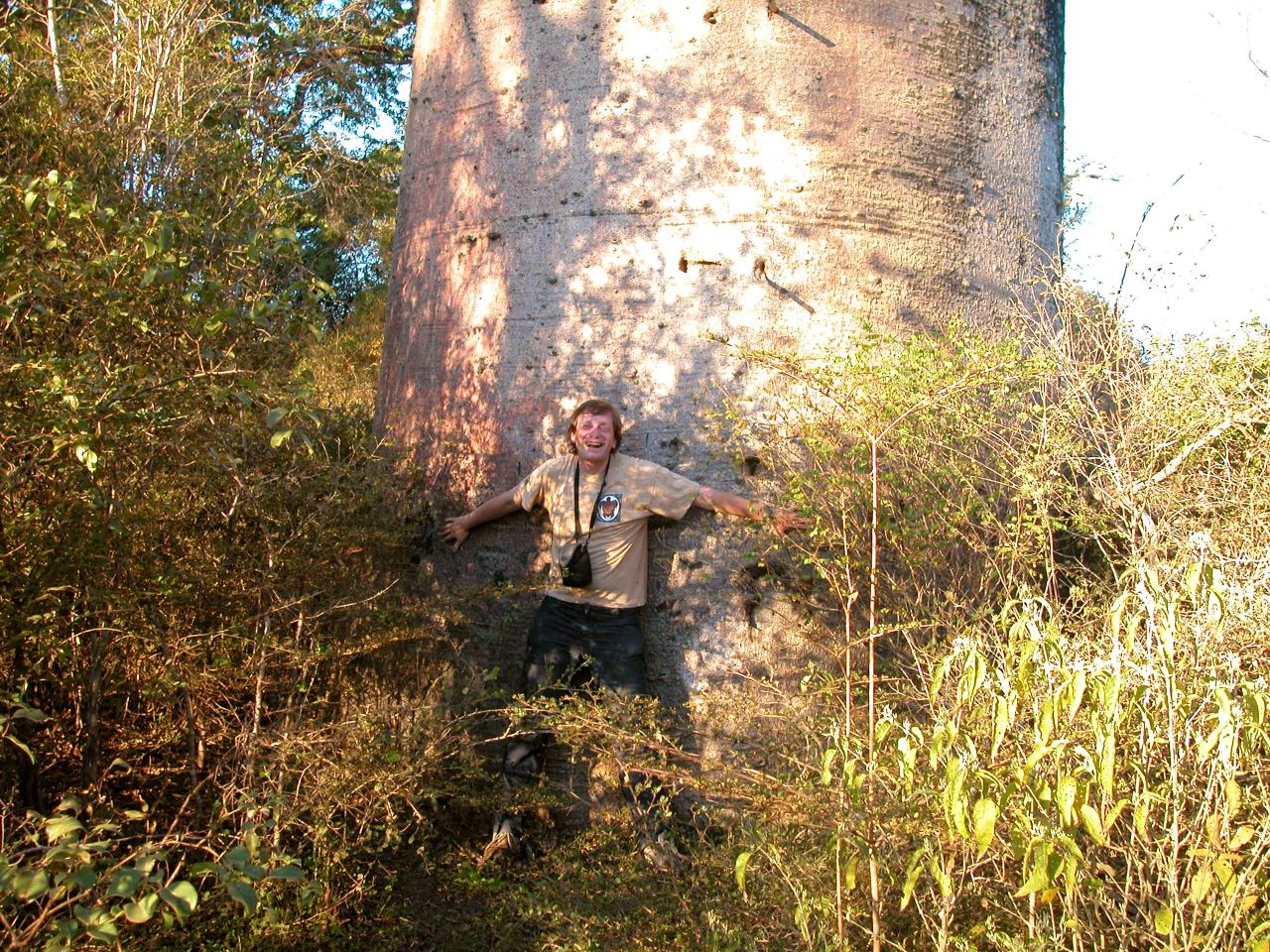
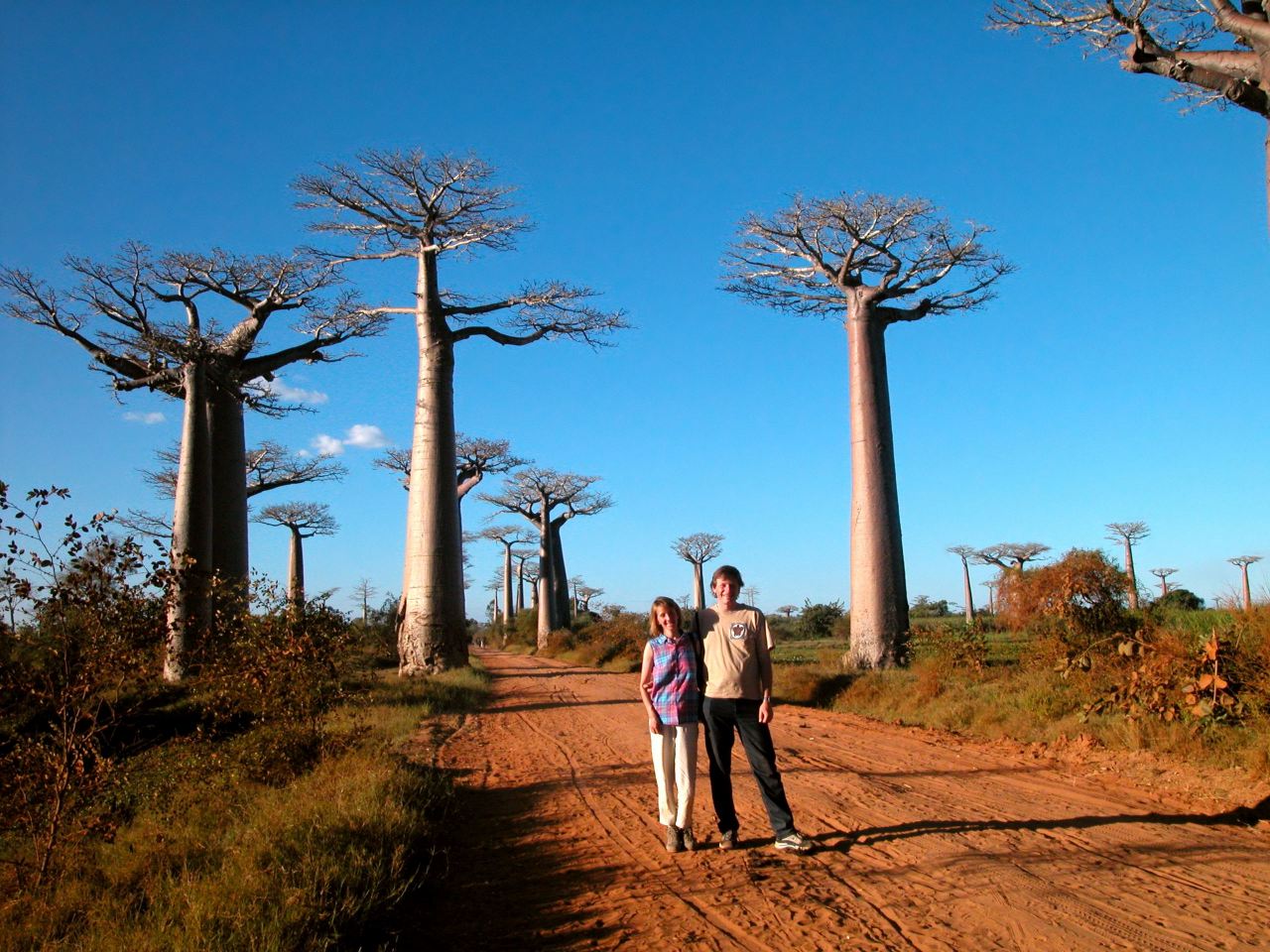
We kept walking until it was quite pitch dark. The sun disappeared behind a great baobab. Out came clouds of mosquitoes. They hardly let you take a picture at all, getting right in front of the lens.
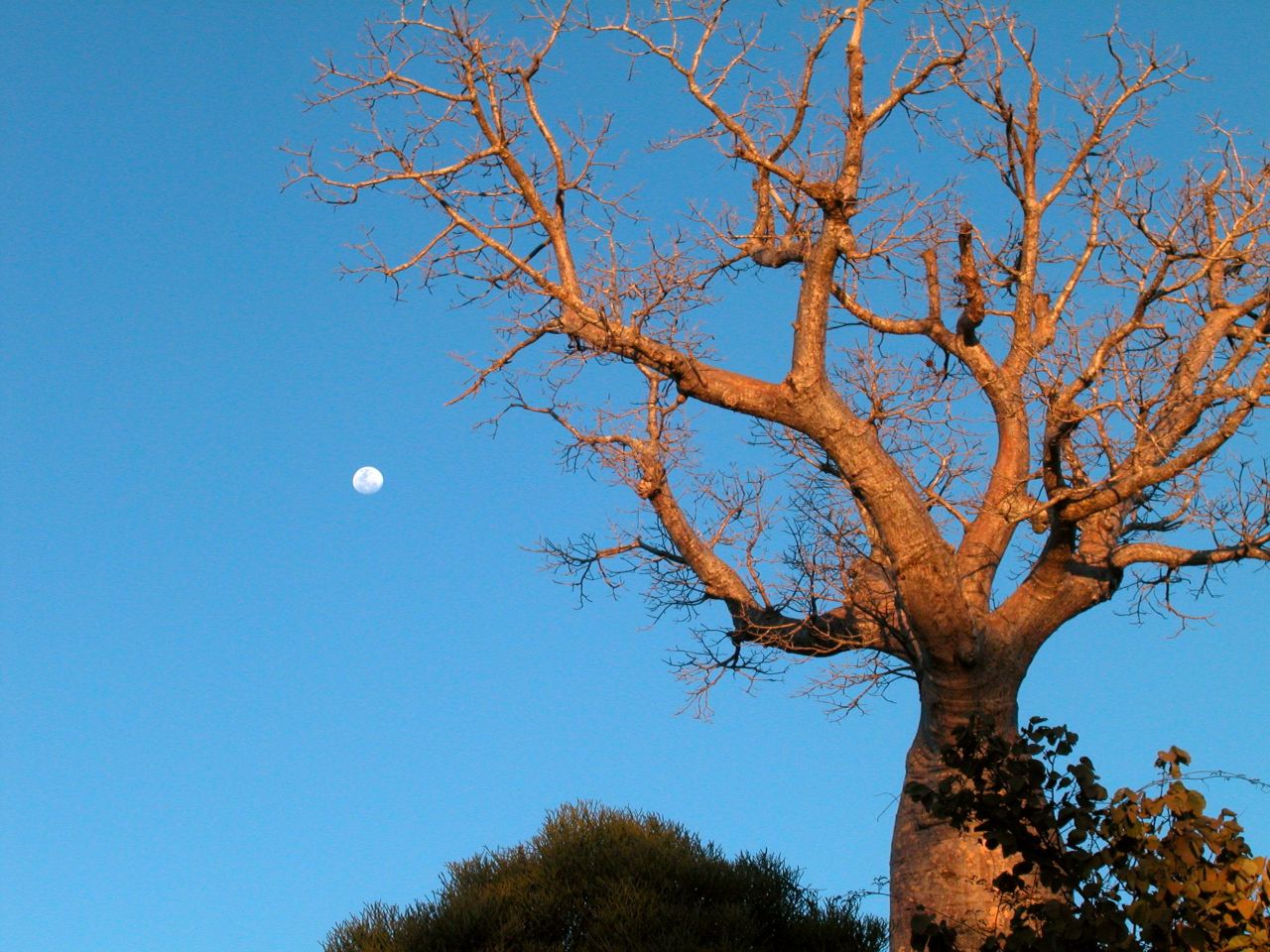
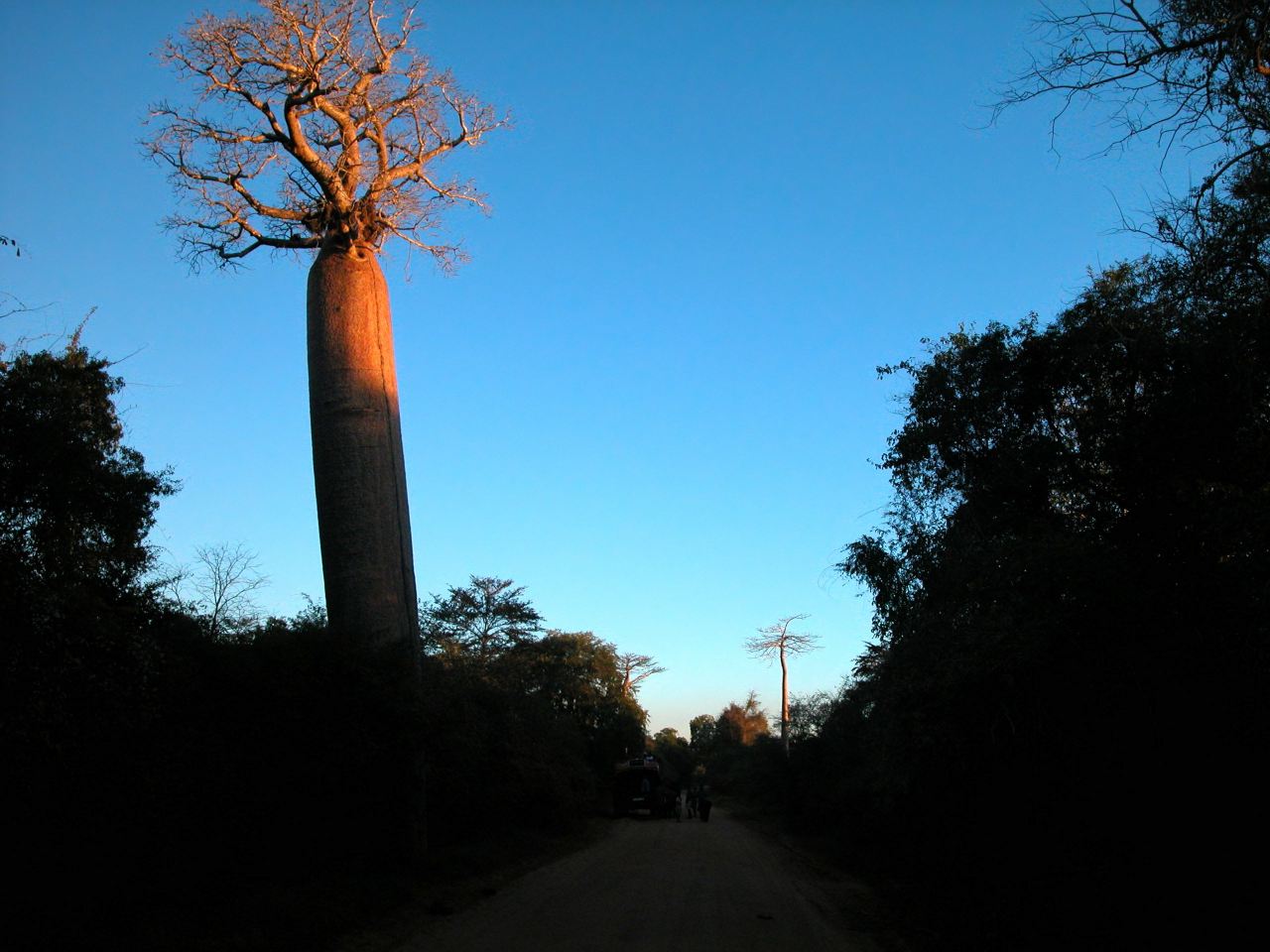
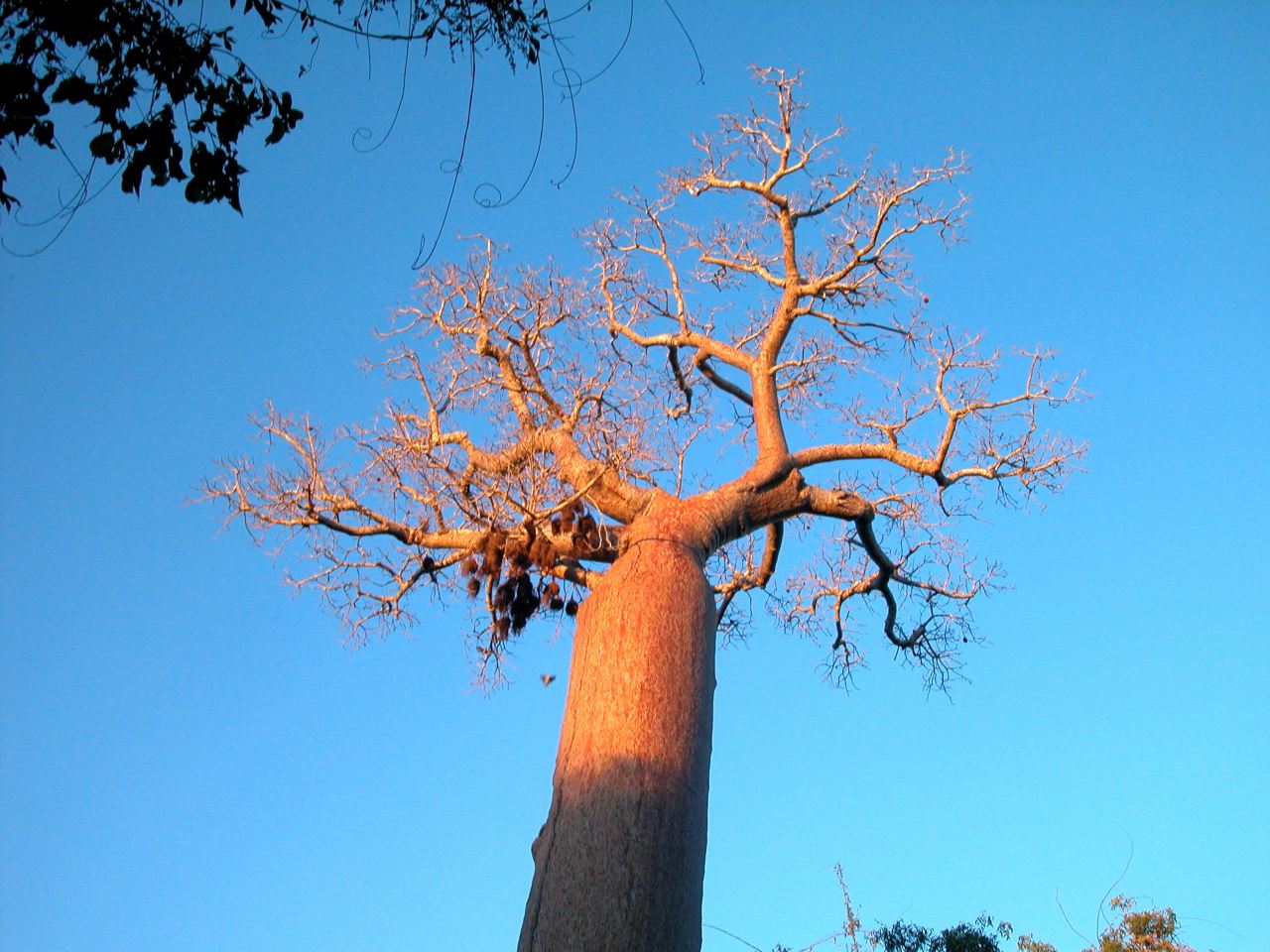
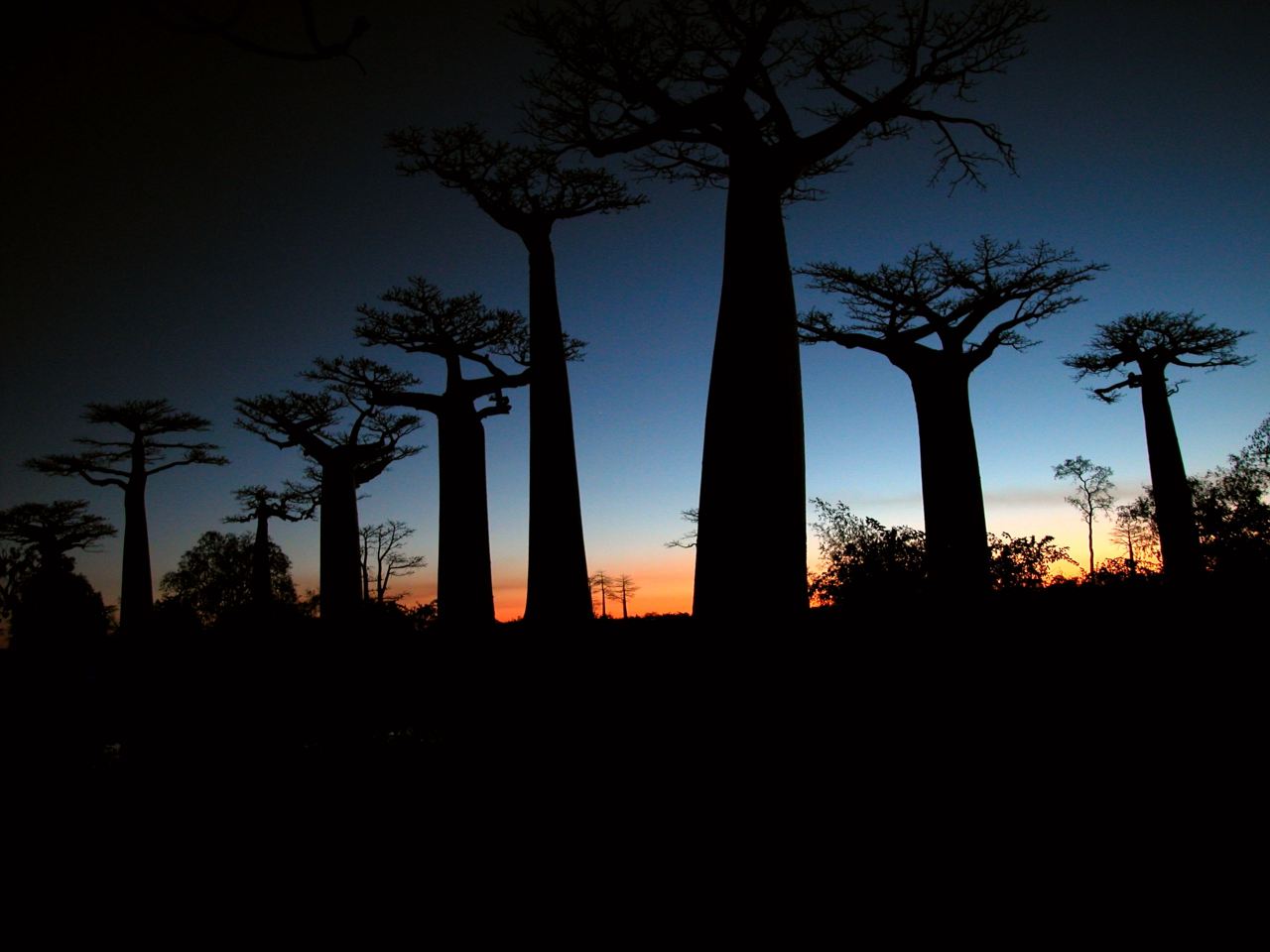
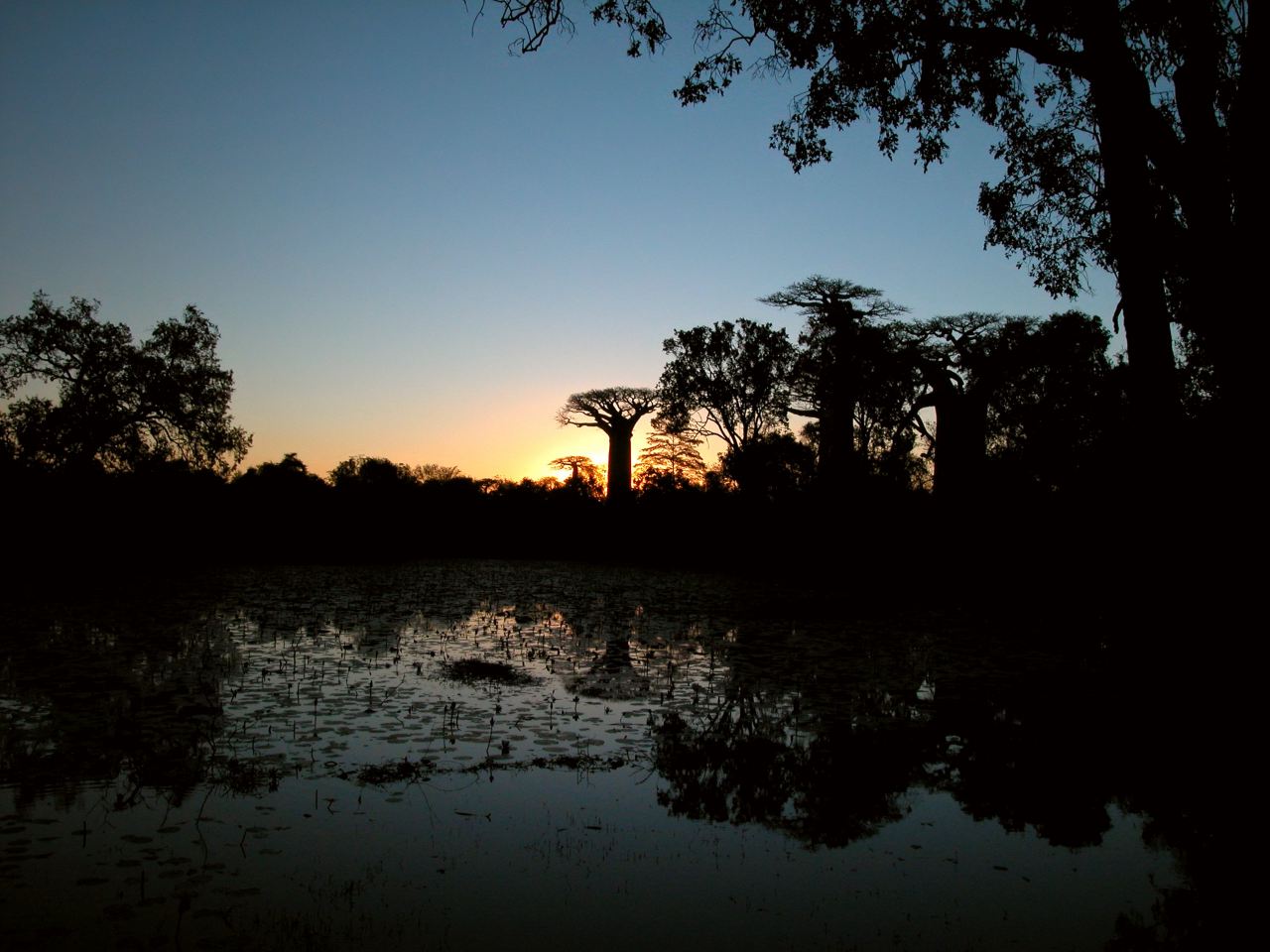
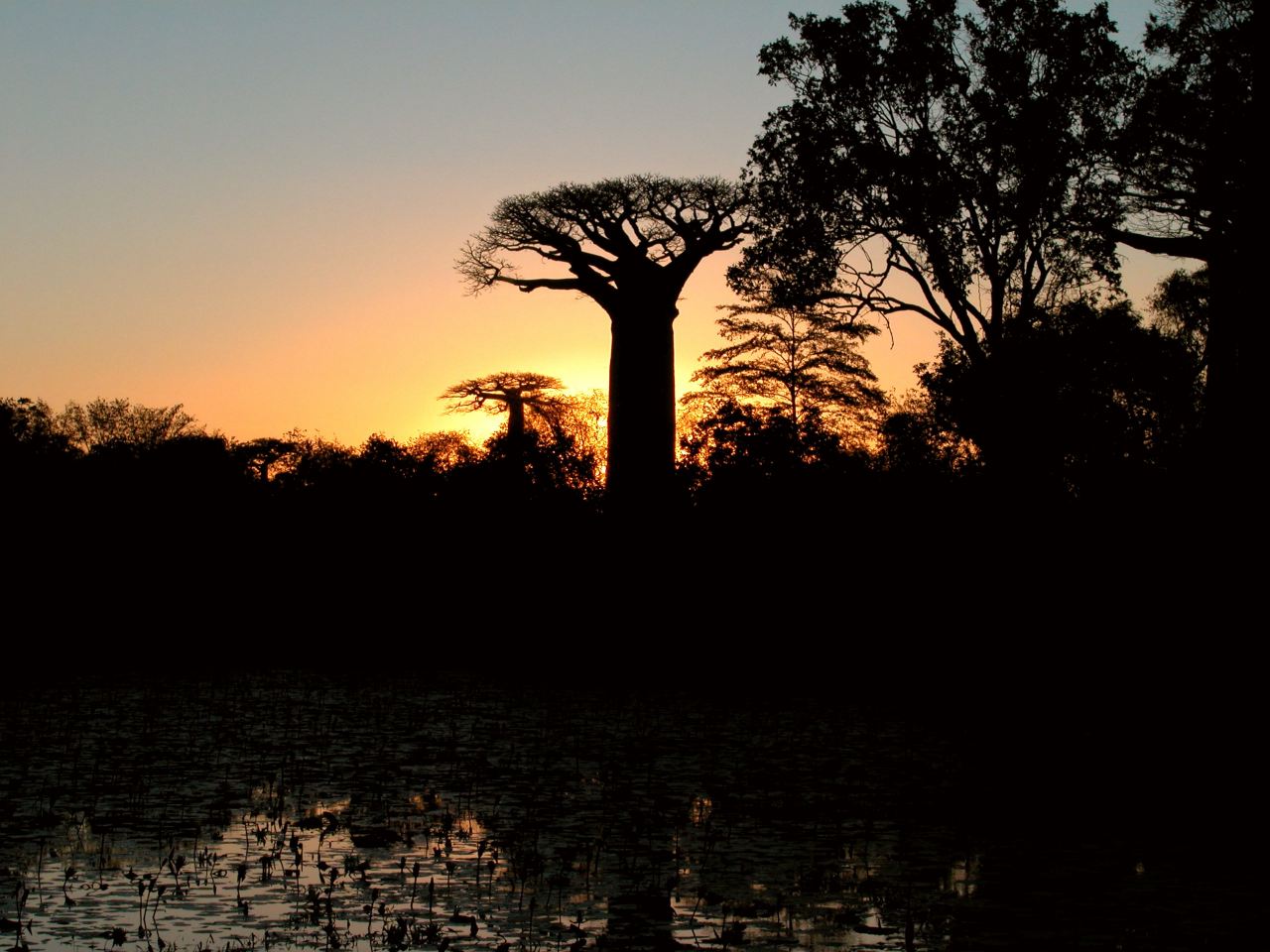
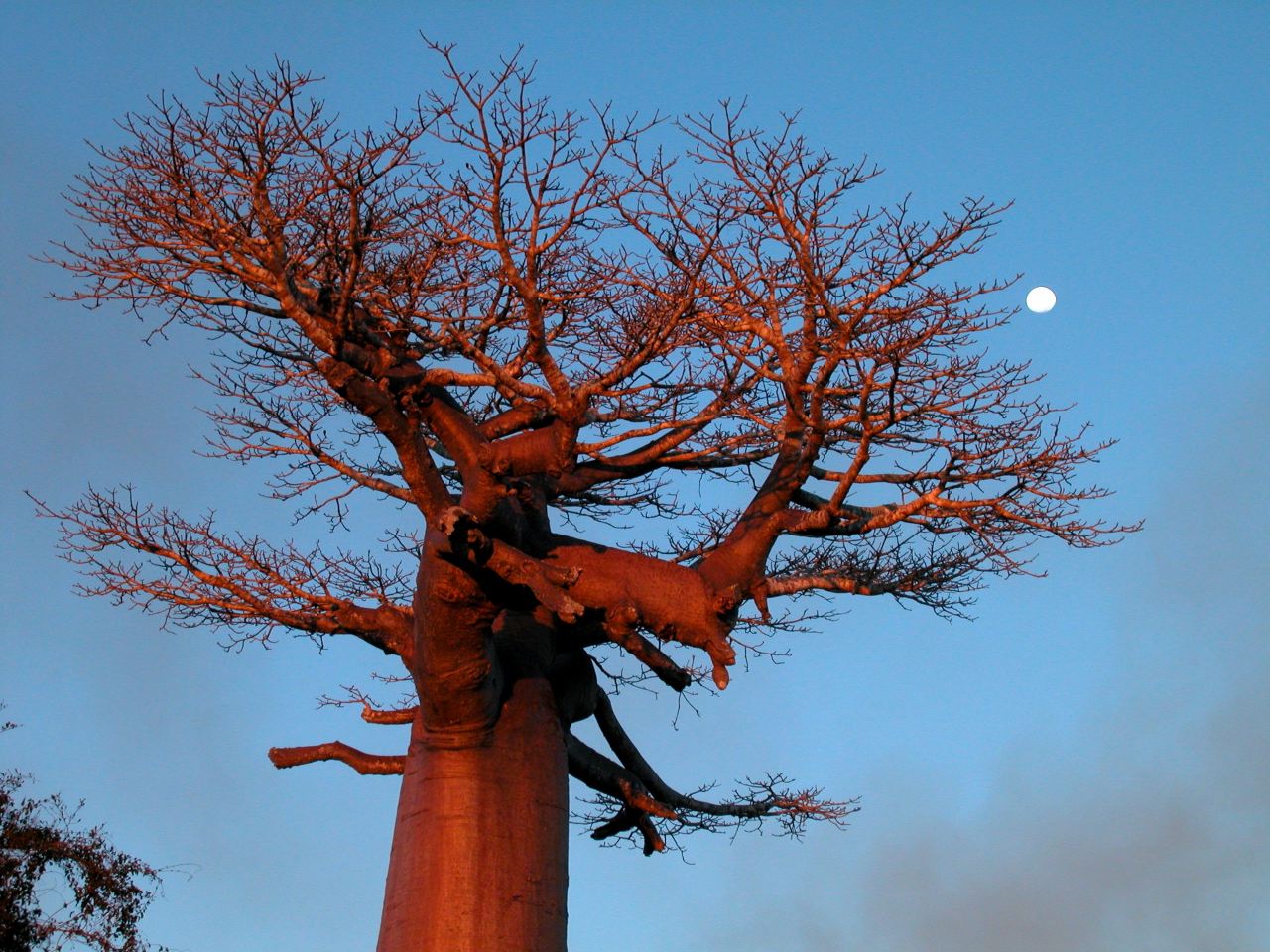
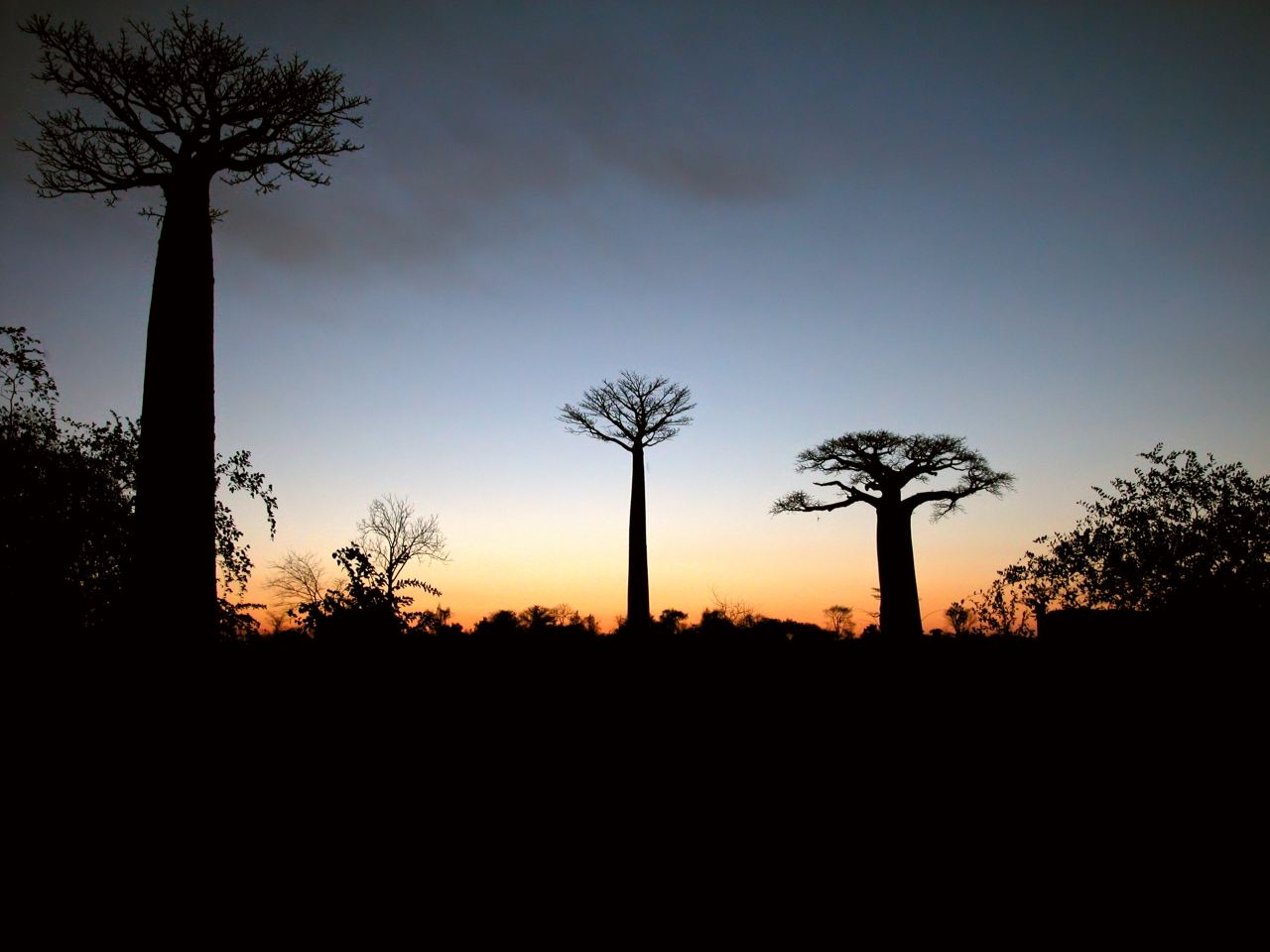
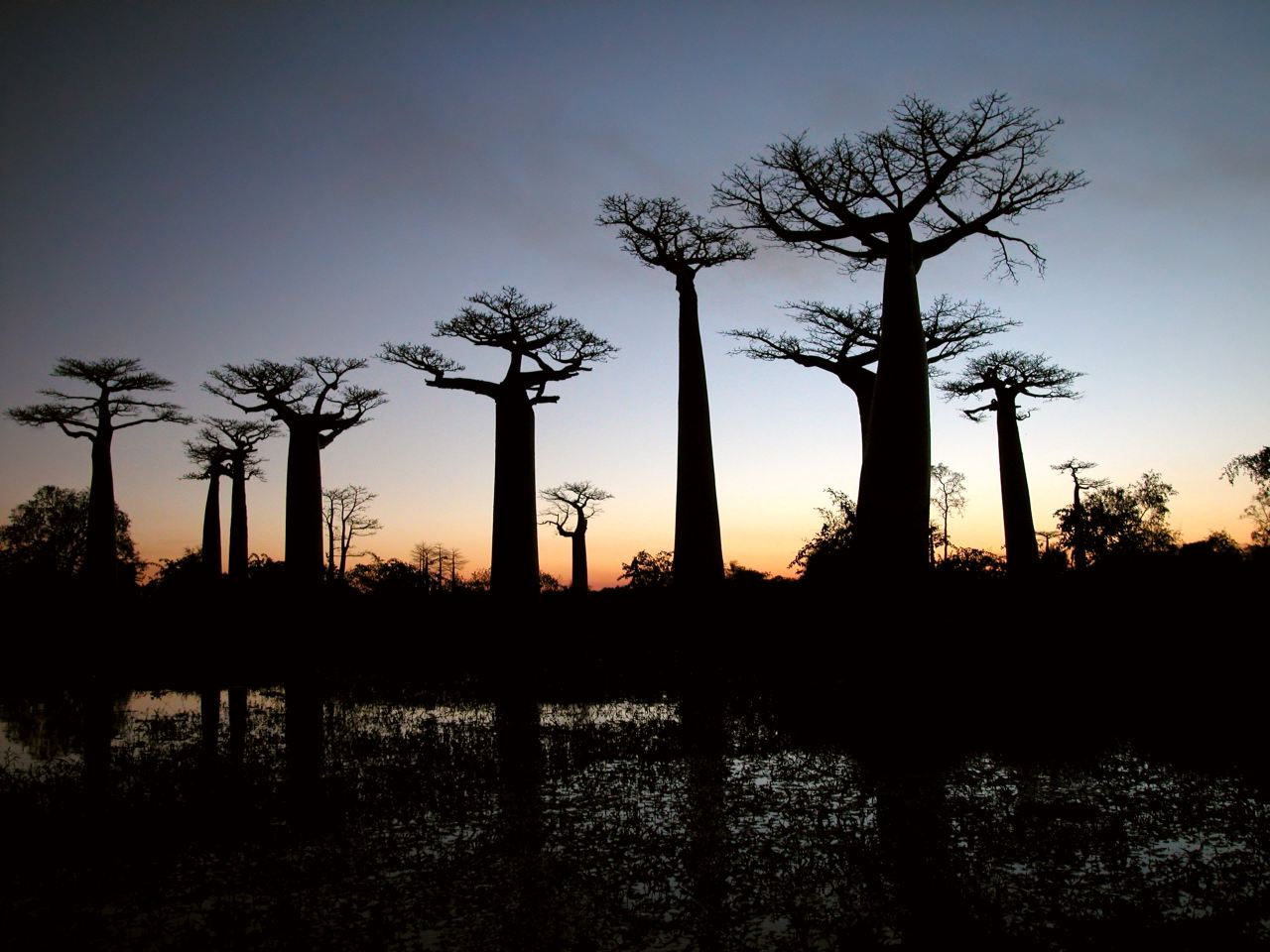
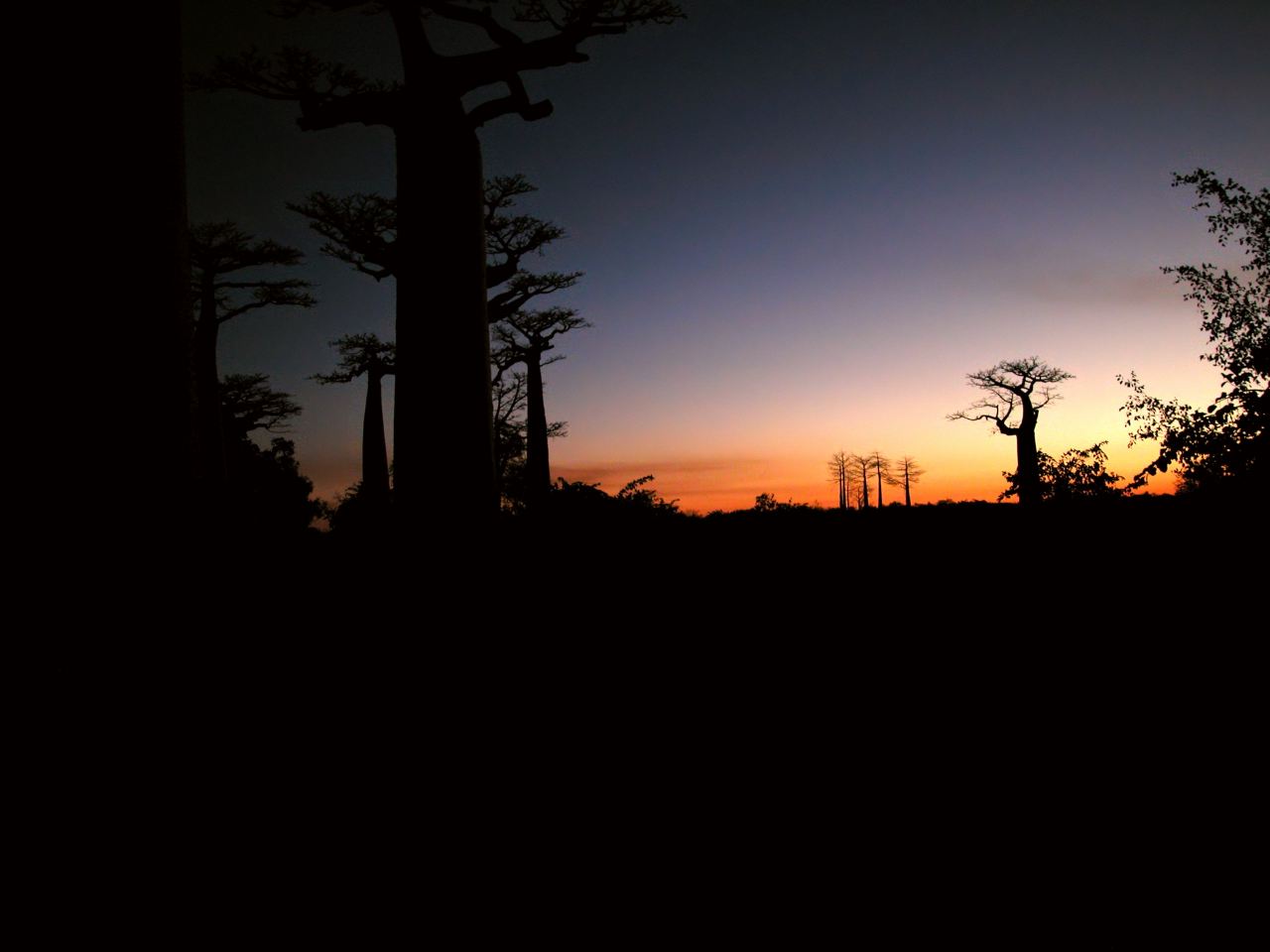
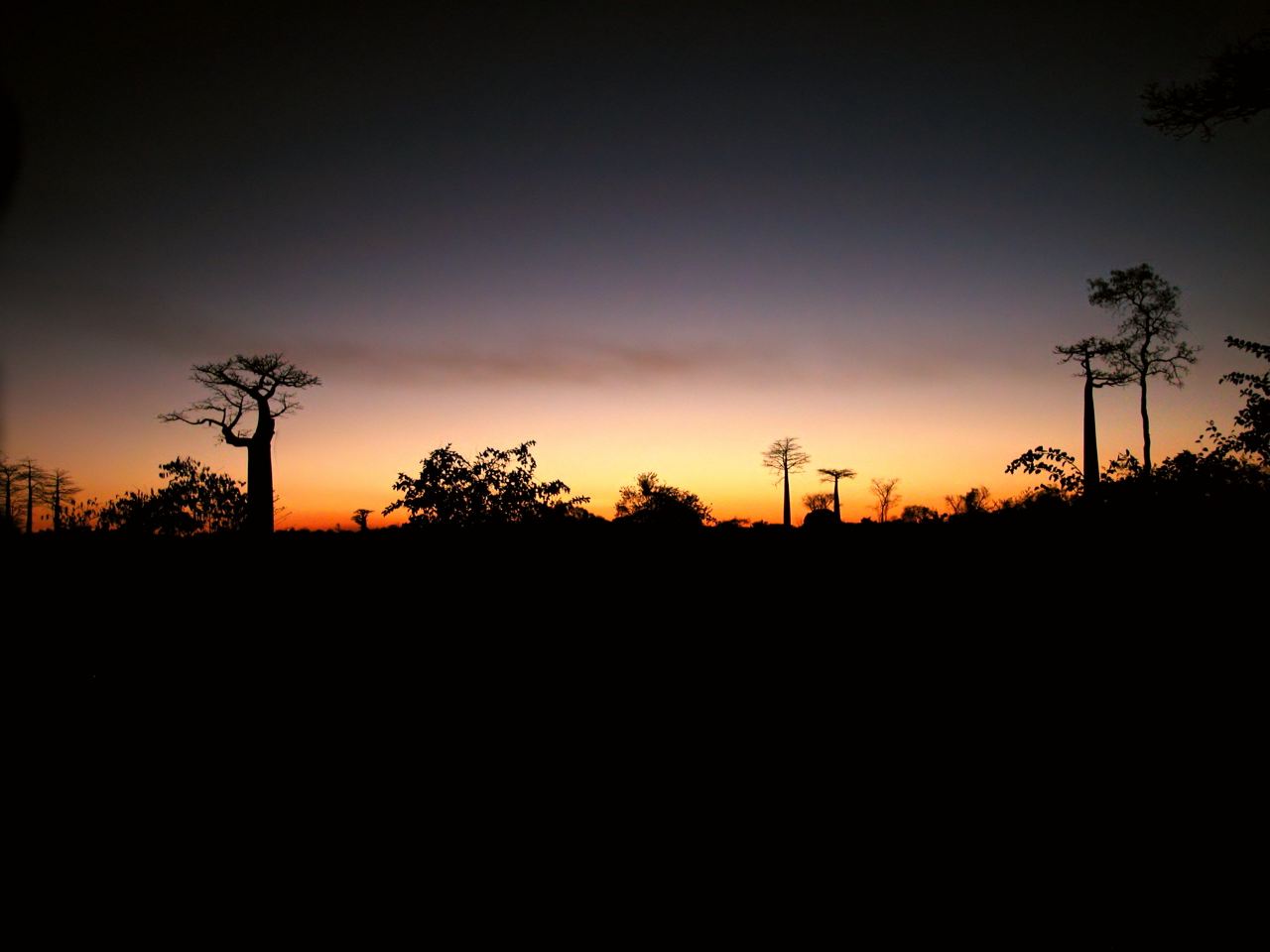
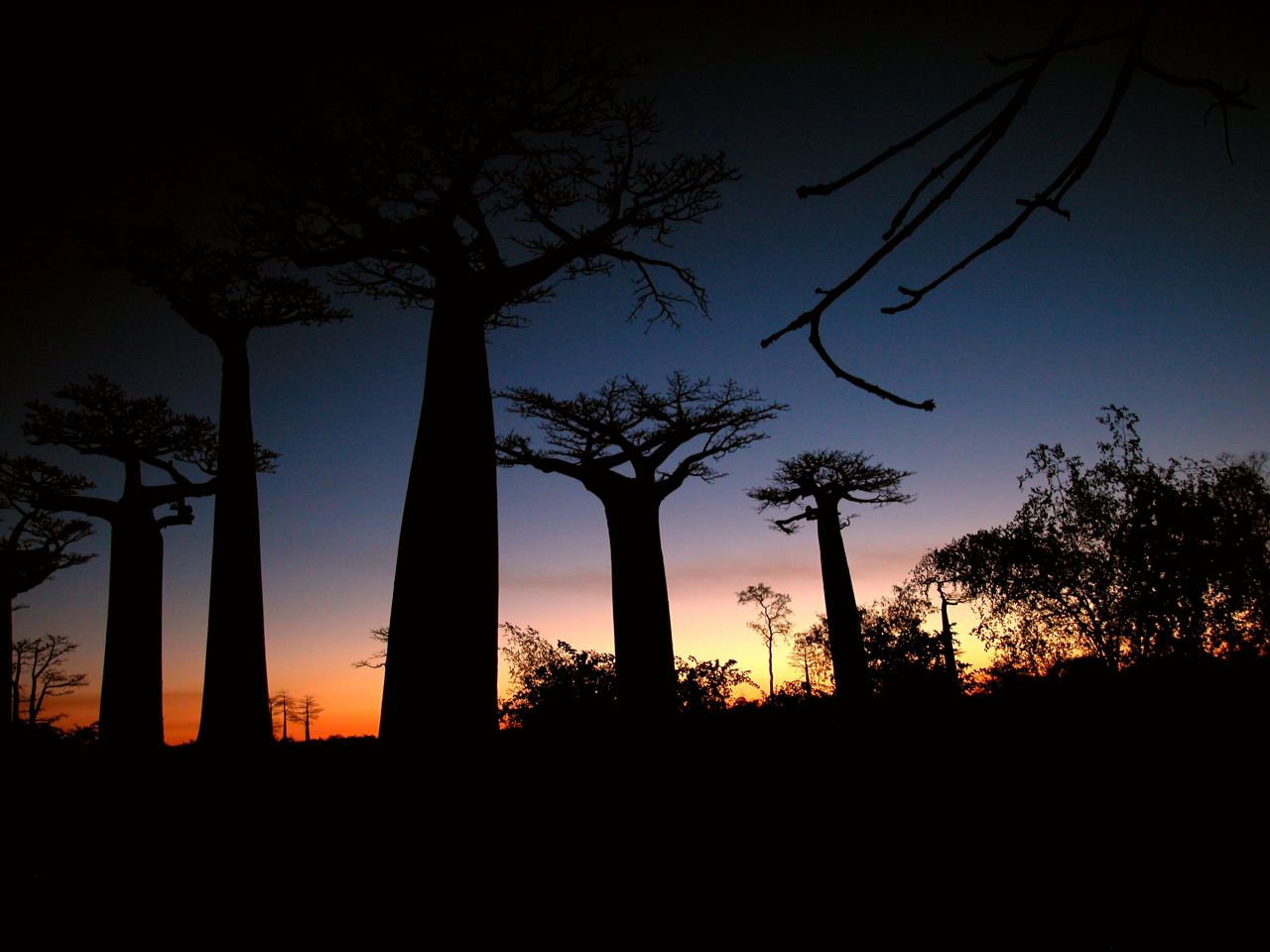
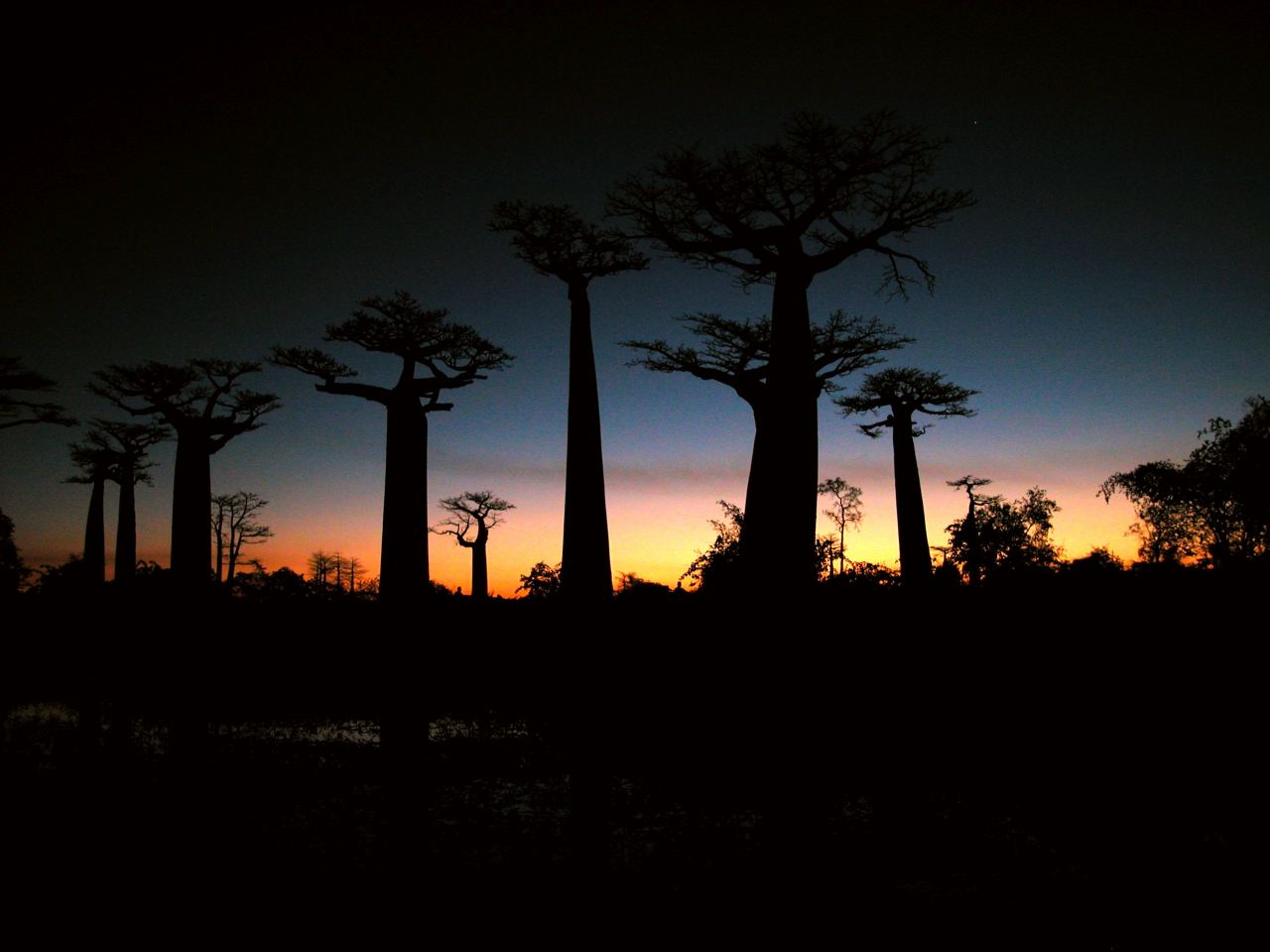
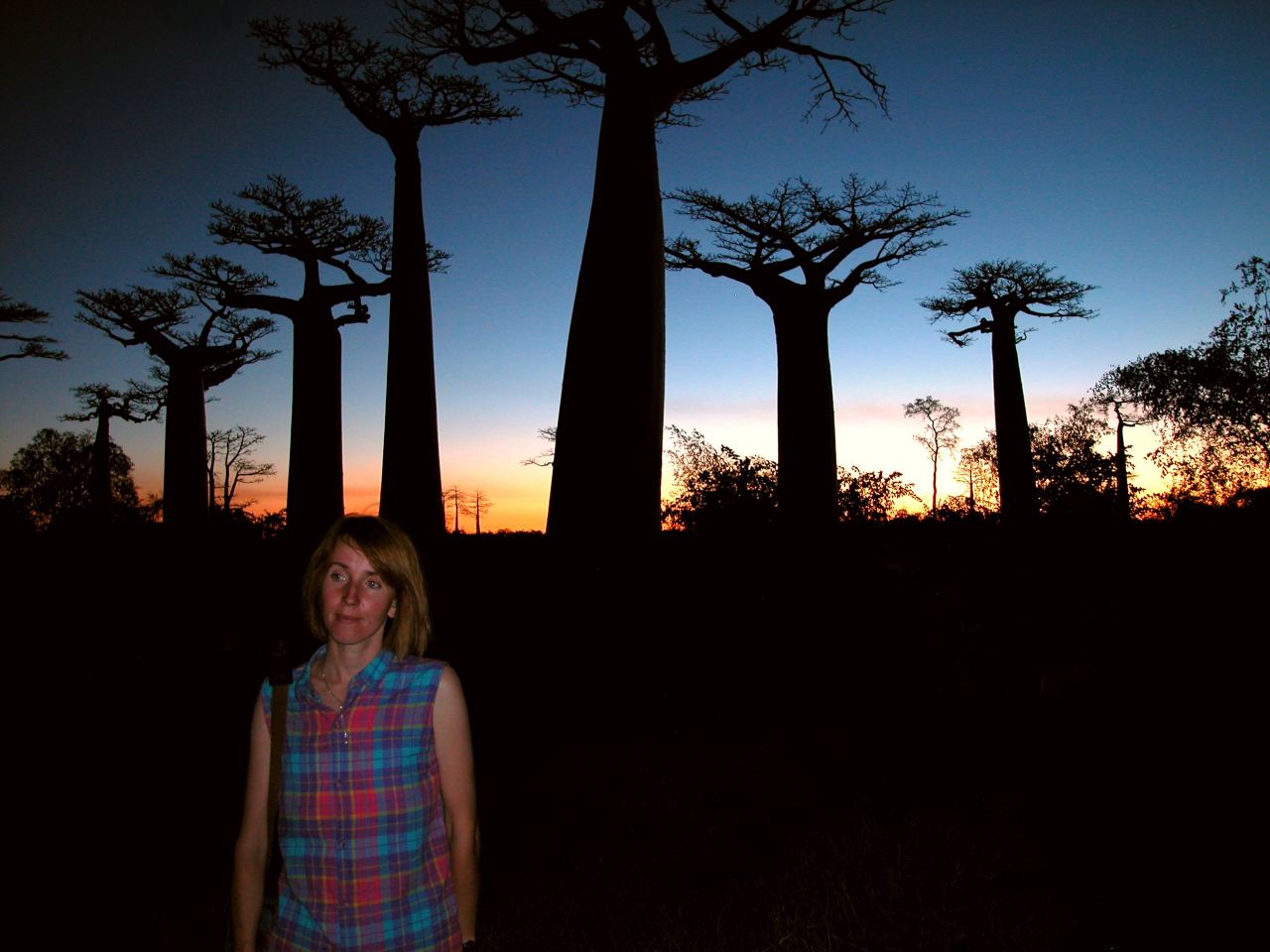
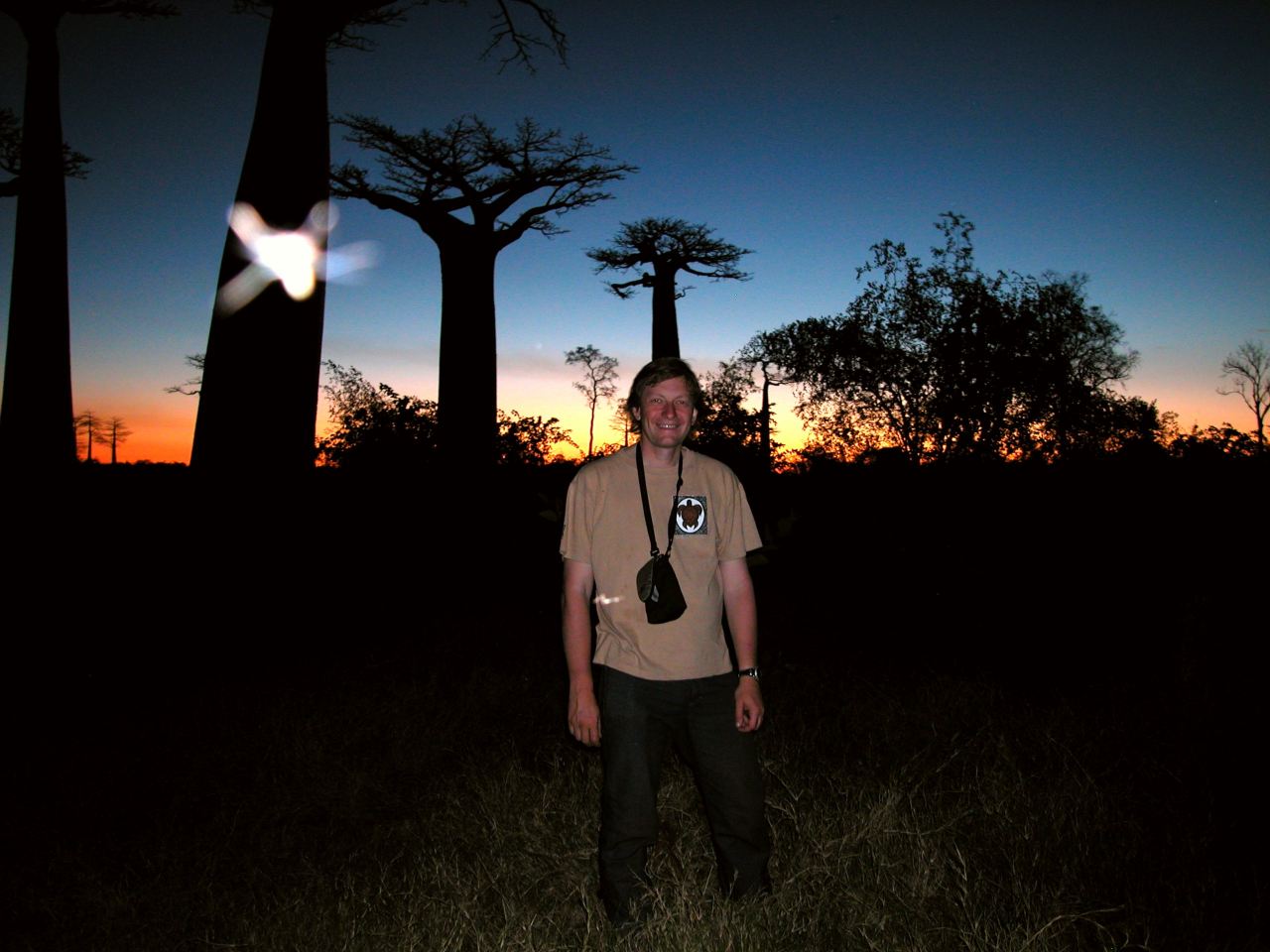
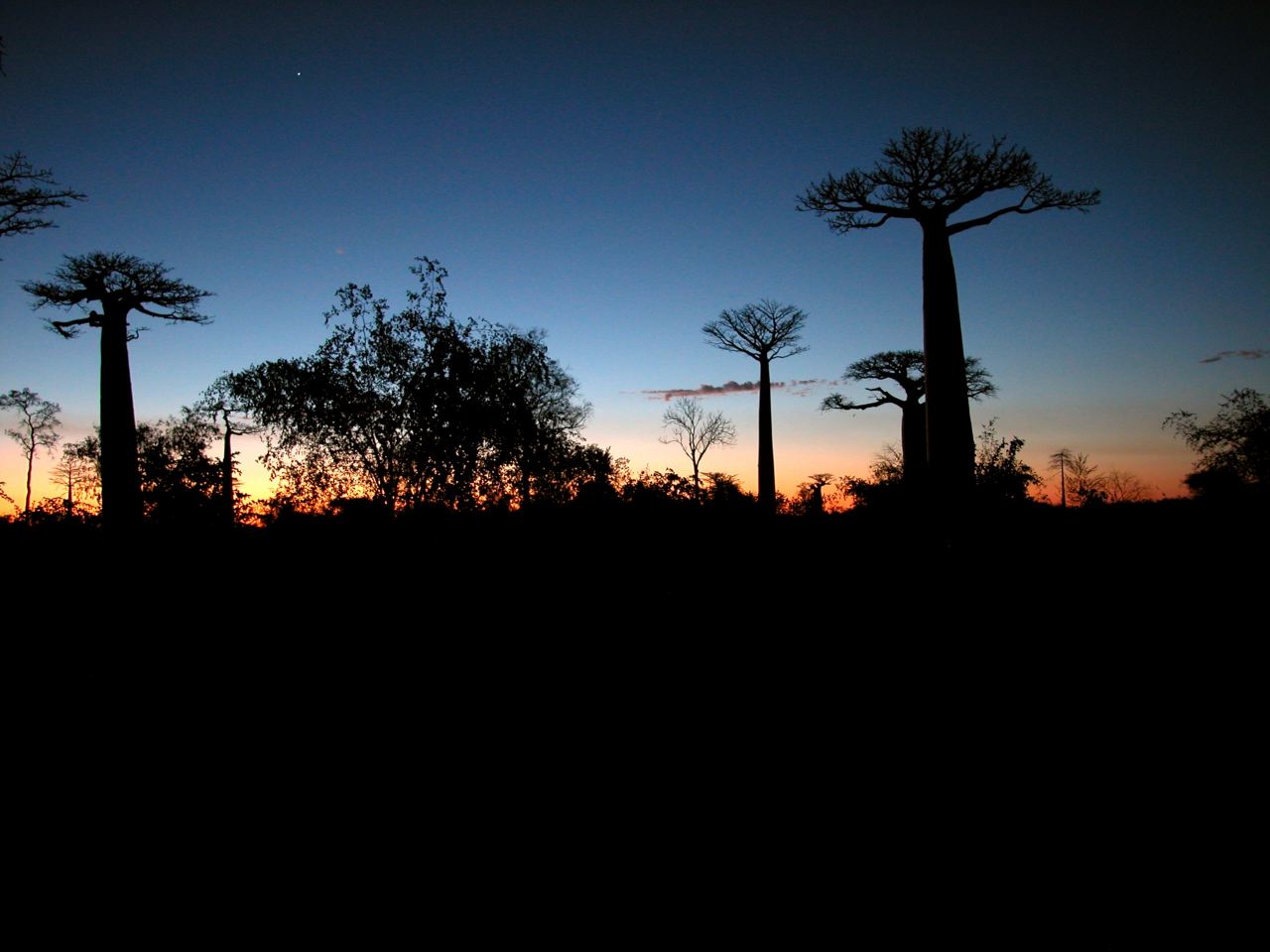
We set off on foot for town. Three hours would get us there just in time for bed, but we’d barely gone a few hundred metres when a French family stopped their car and offered to take us. We accepted. We could walk somewhere else. Now we had an evening to spare and went down to the seafront. People didn’t swim there either. It was winter, they said, and there were sharks. I’d have felt conspicuous on the beach on my own in daylight, and at night nobody was looking, so I got into the water. It was warm enough and I found a shallow place I thought sharks couldn’t get into. I thoroughly enjoyed it.
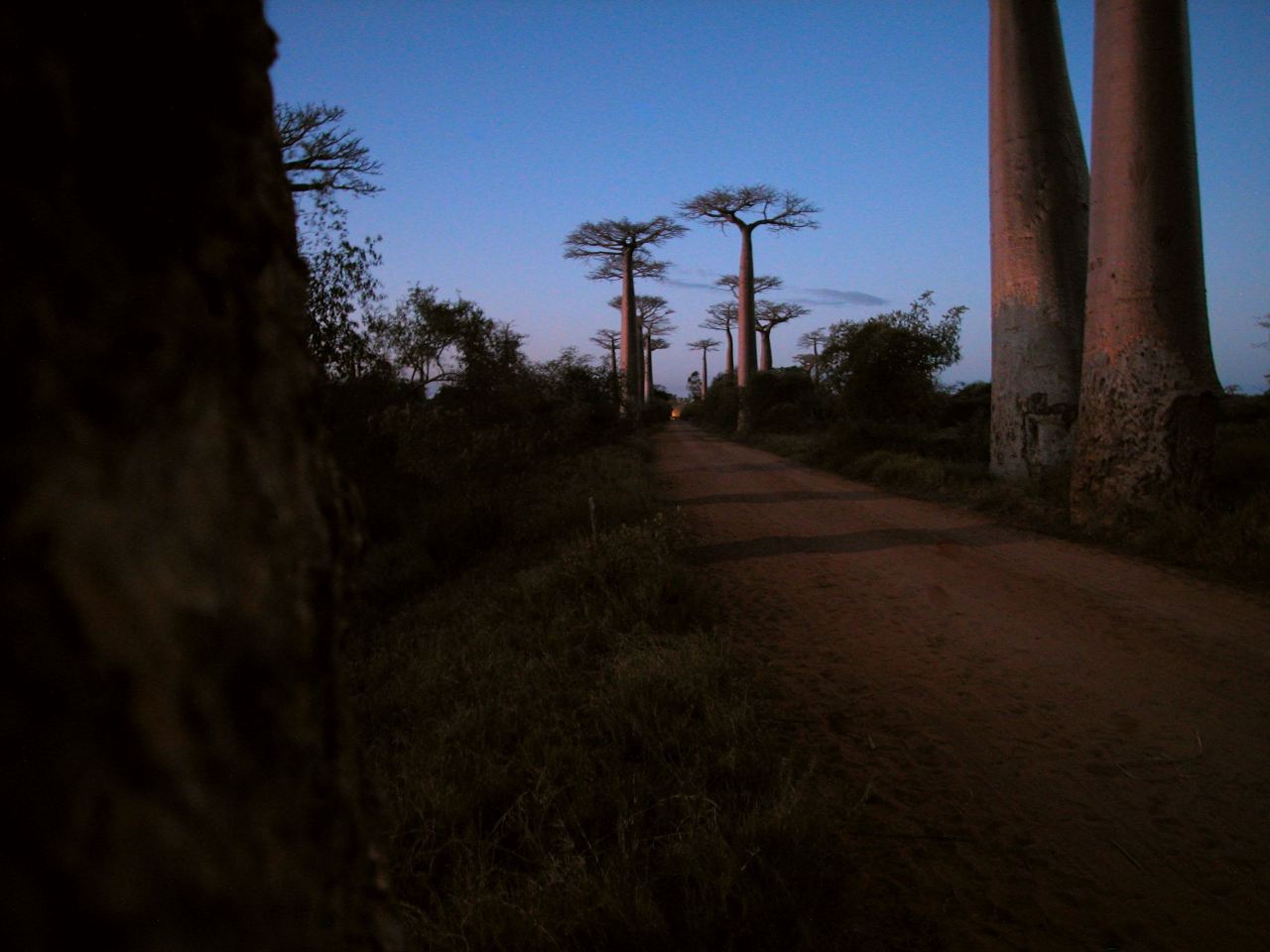
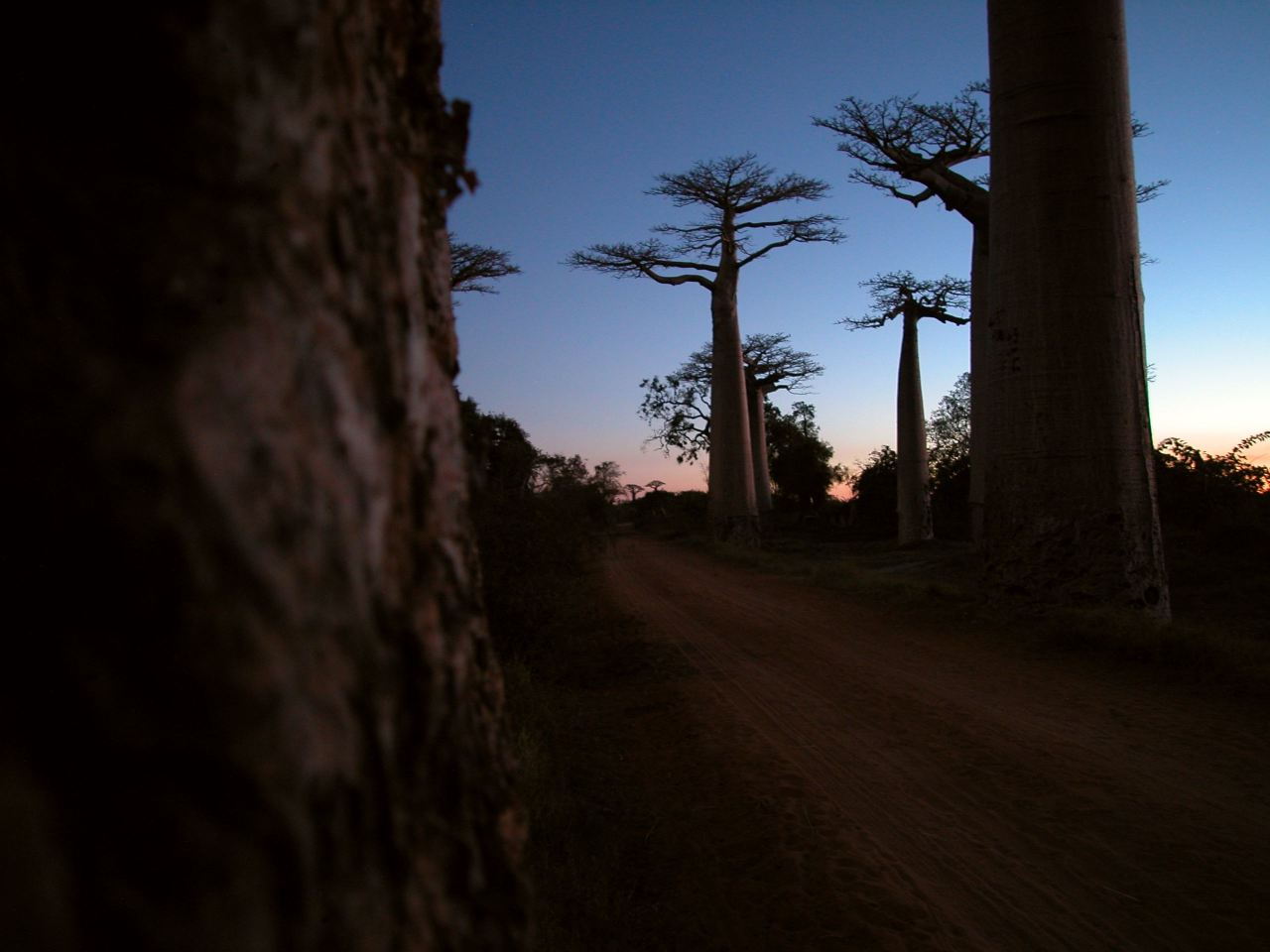
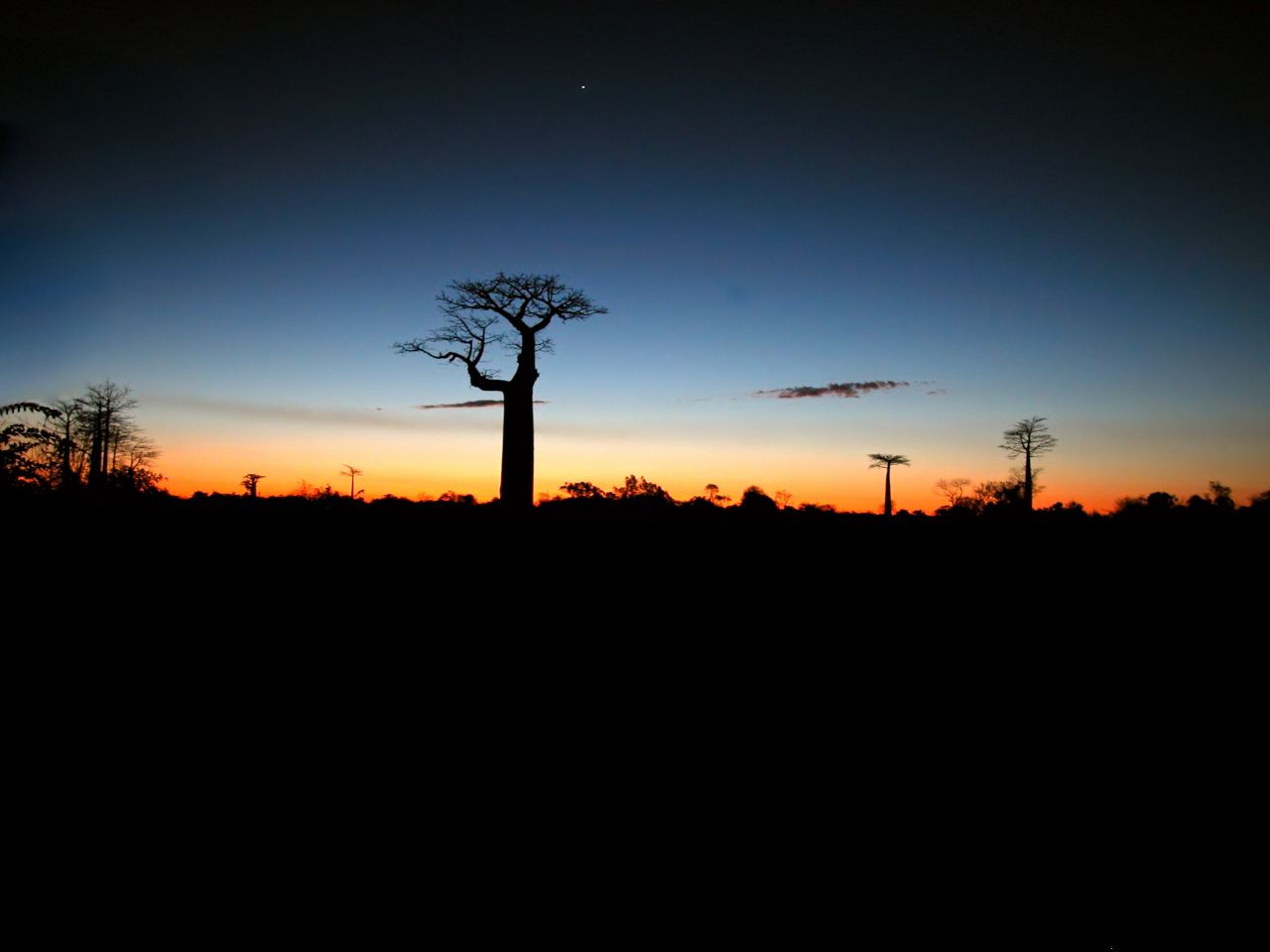
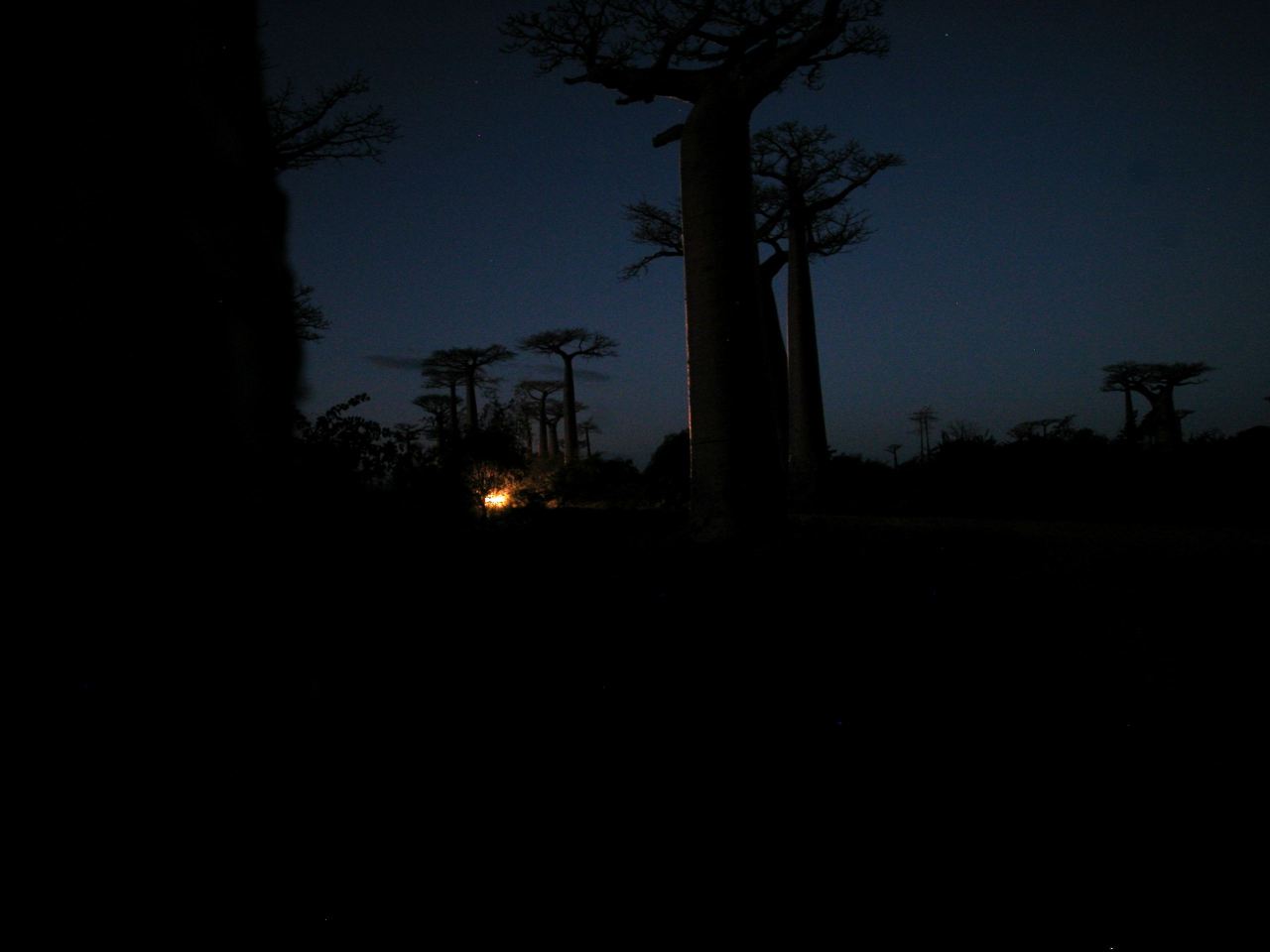
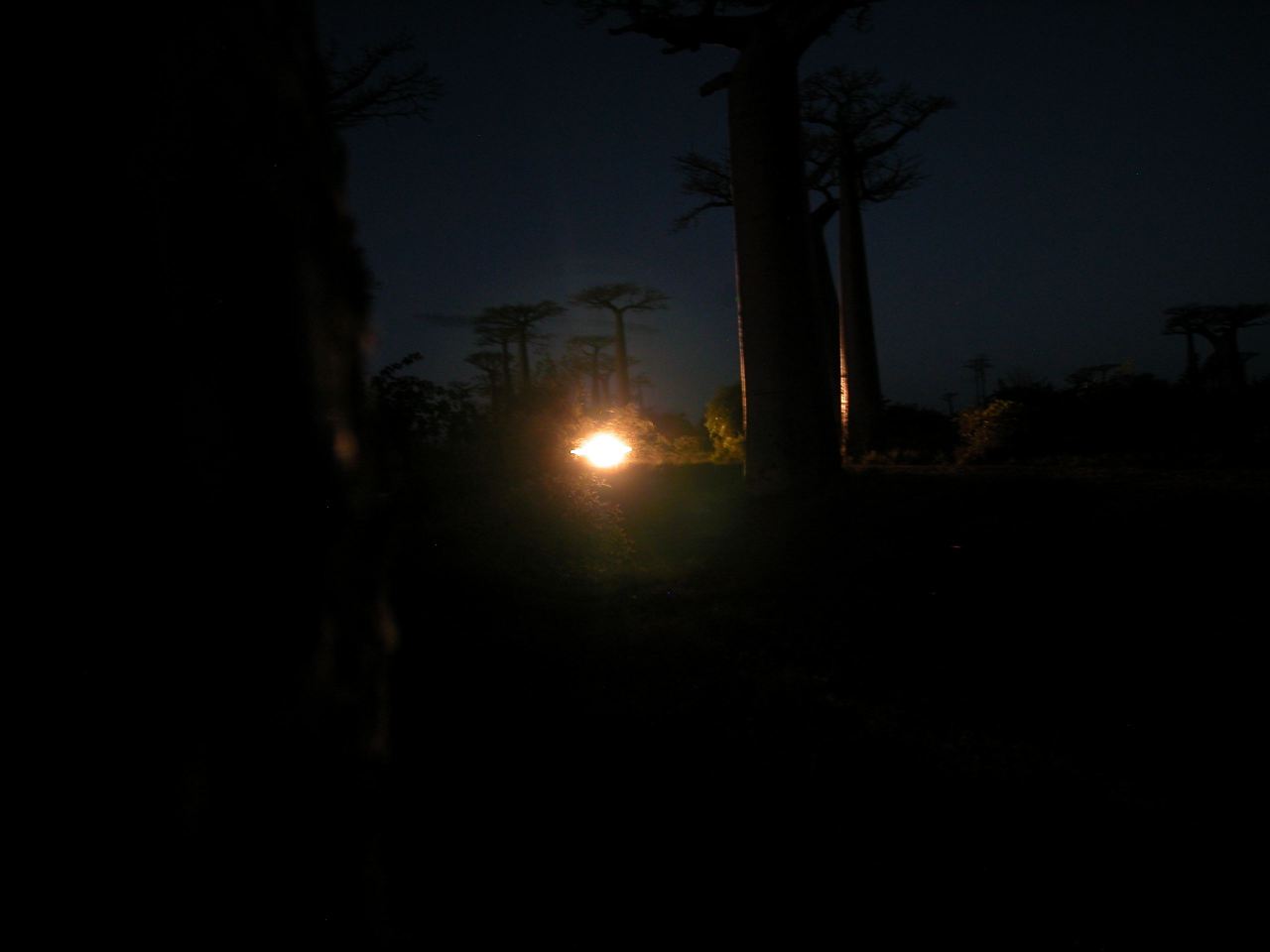
In the morning we went down to the sea again, though this time we didn’t swim. Lots of fishermen were coming back from the morning’s fishing in their canoes. Children in the shore waves were practising how to handle the nimble little craft.
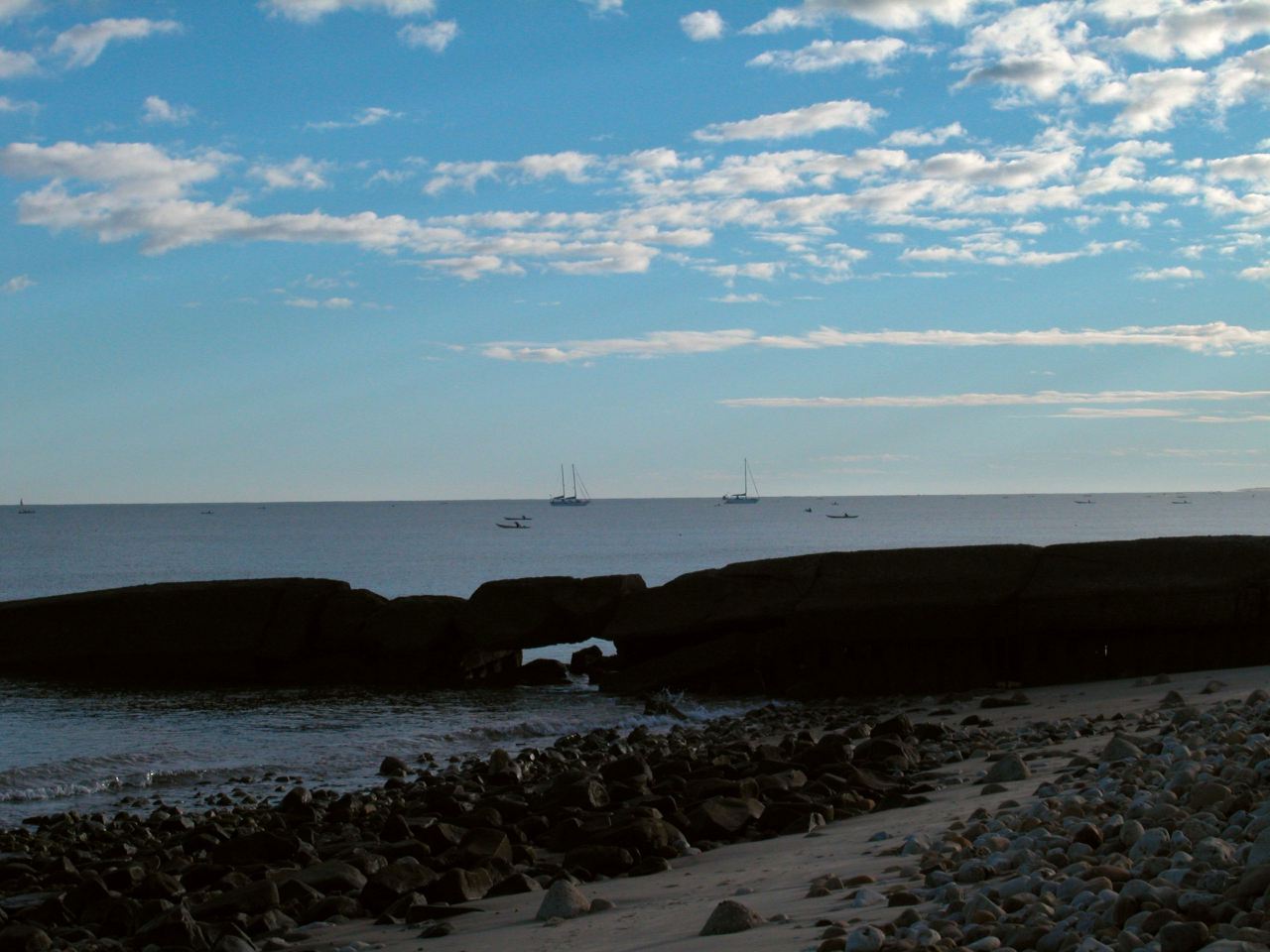
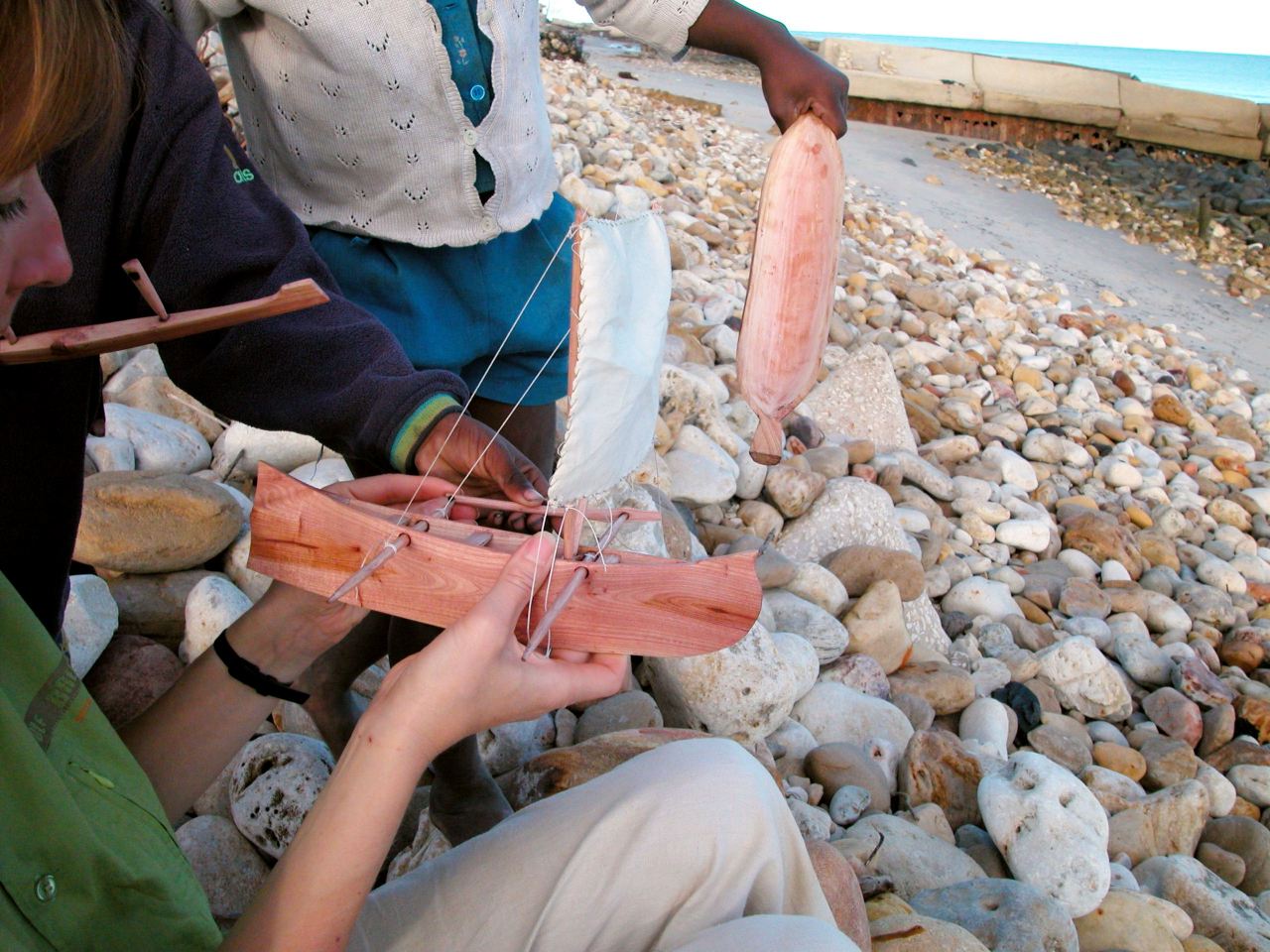
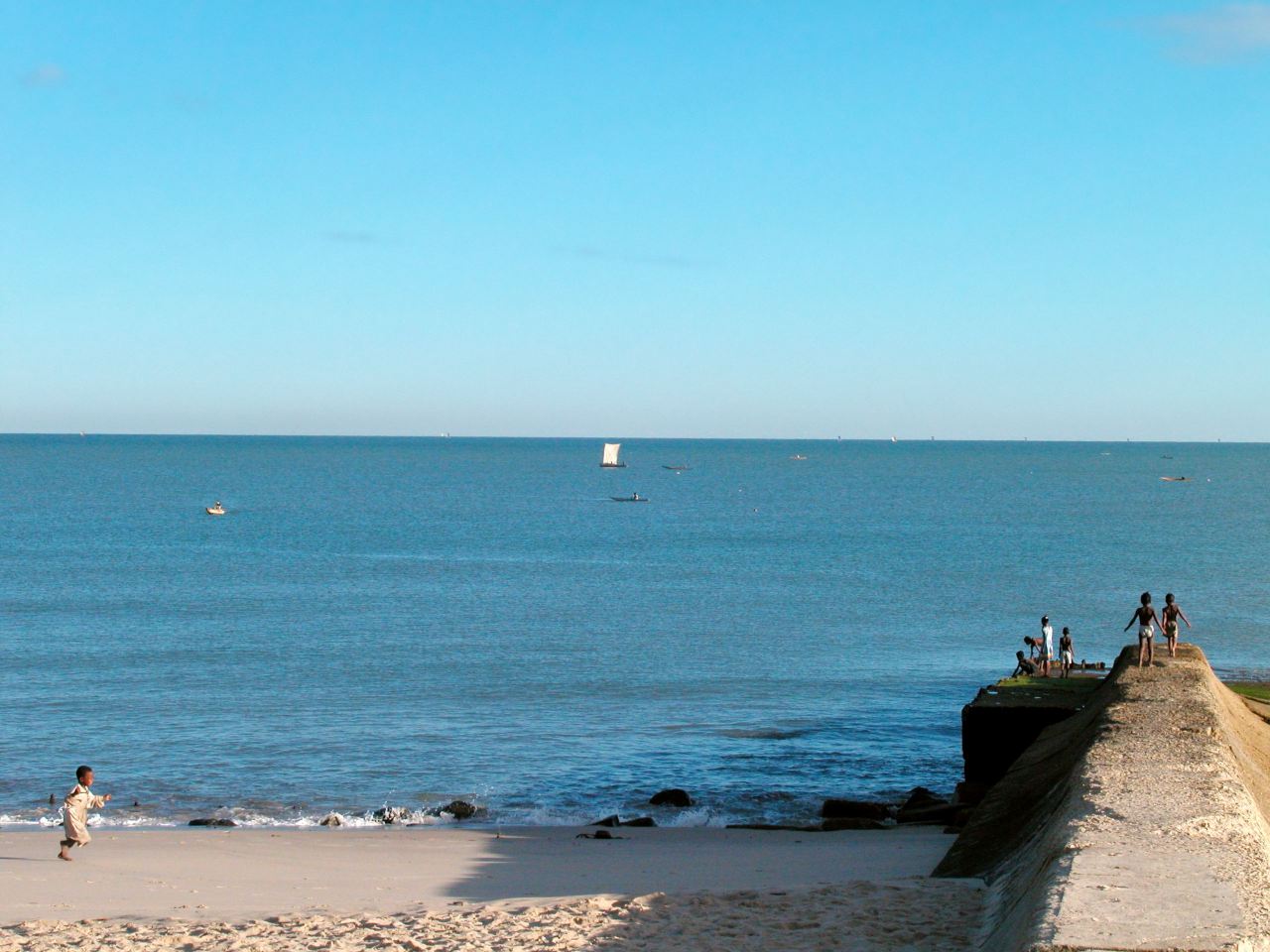
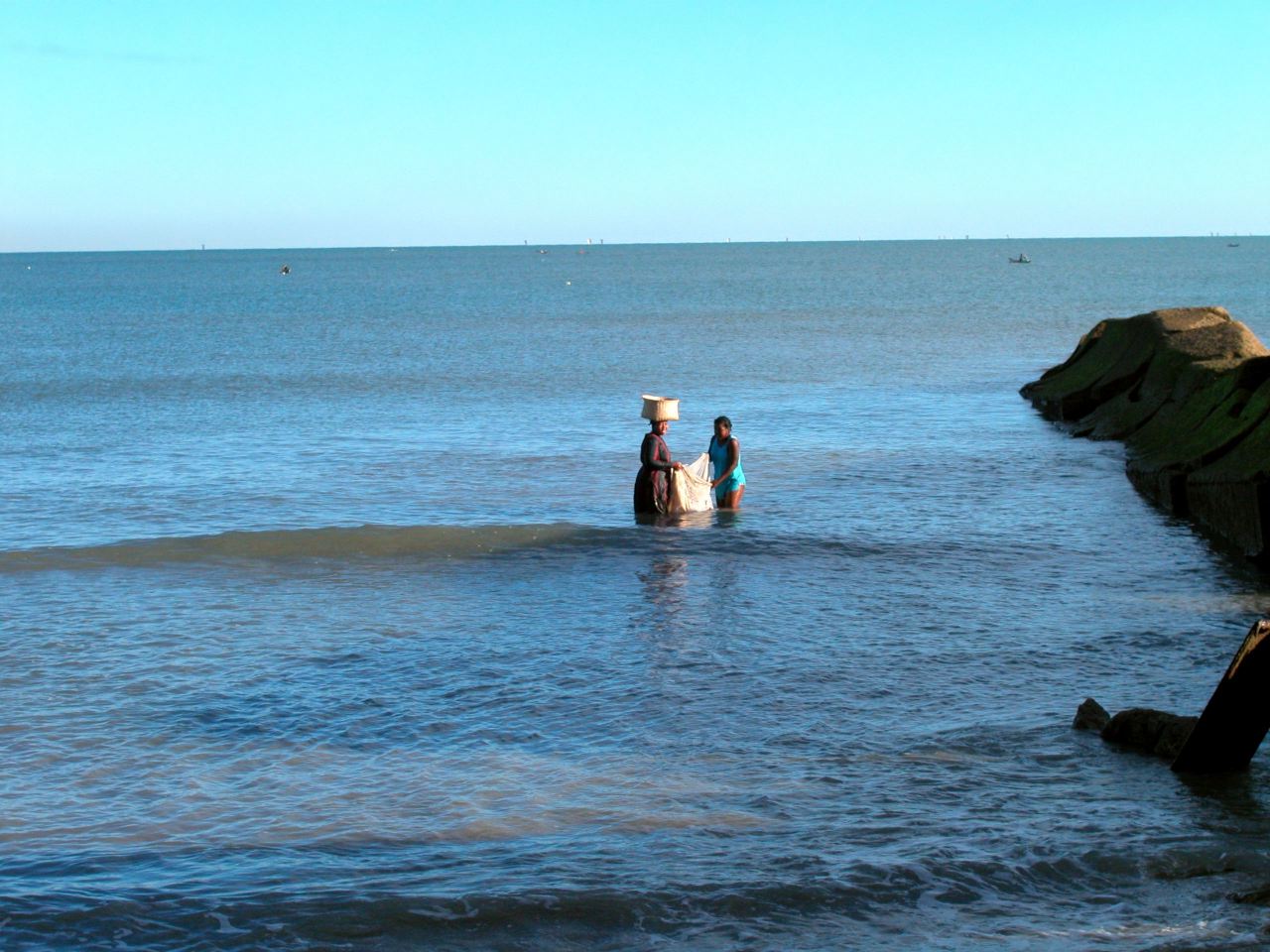
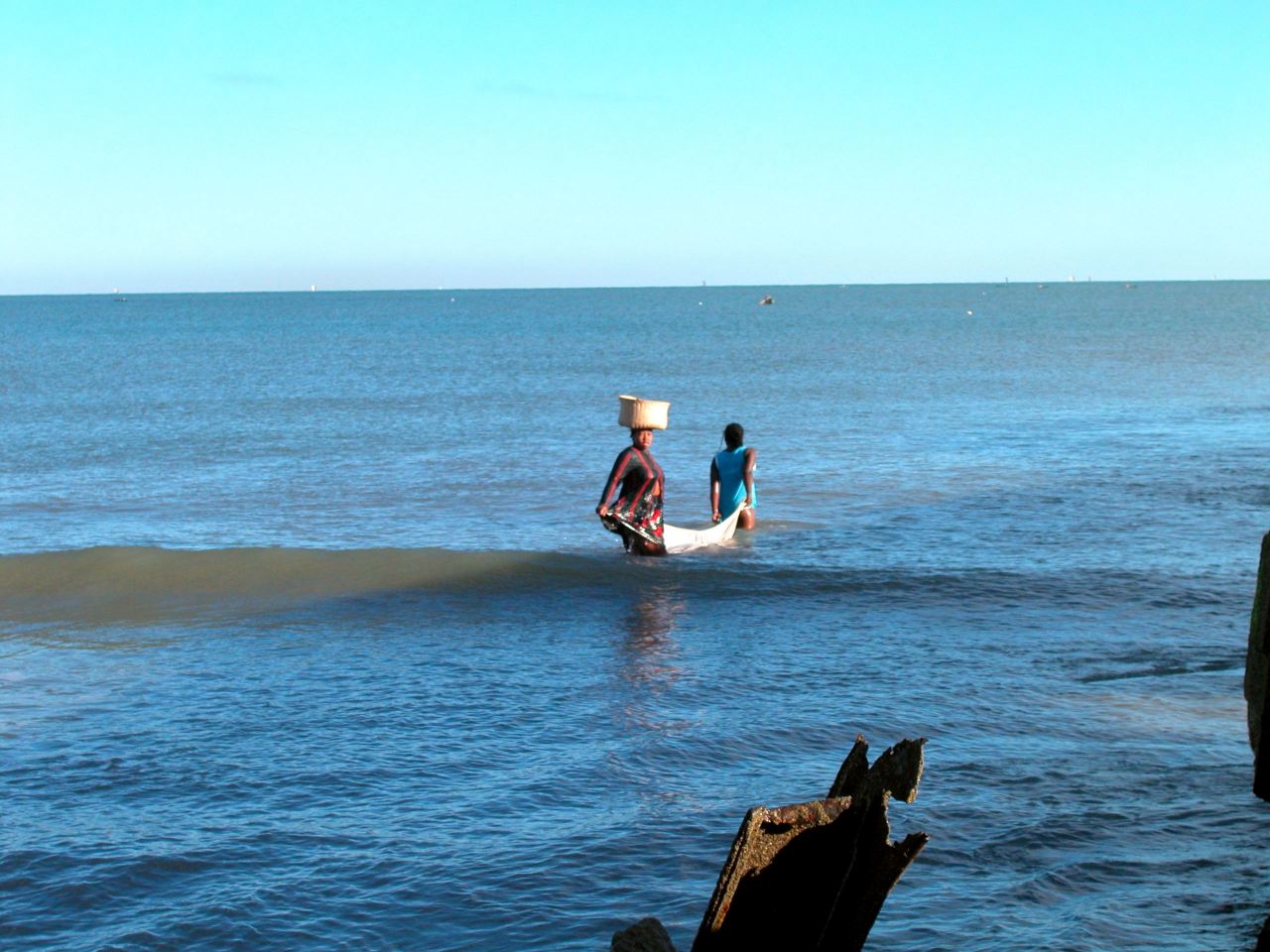
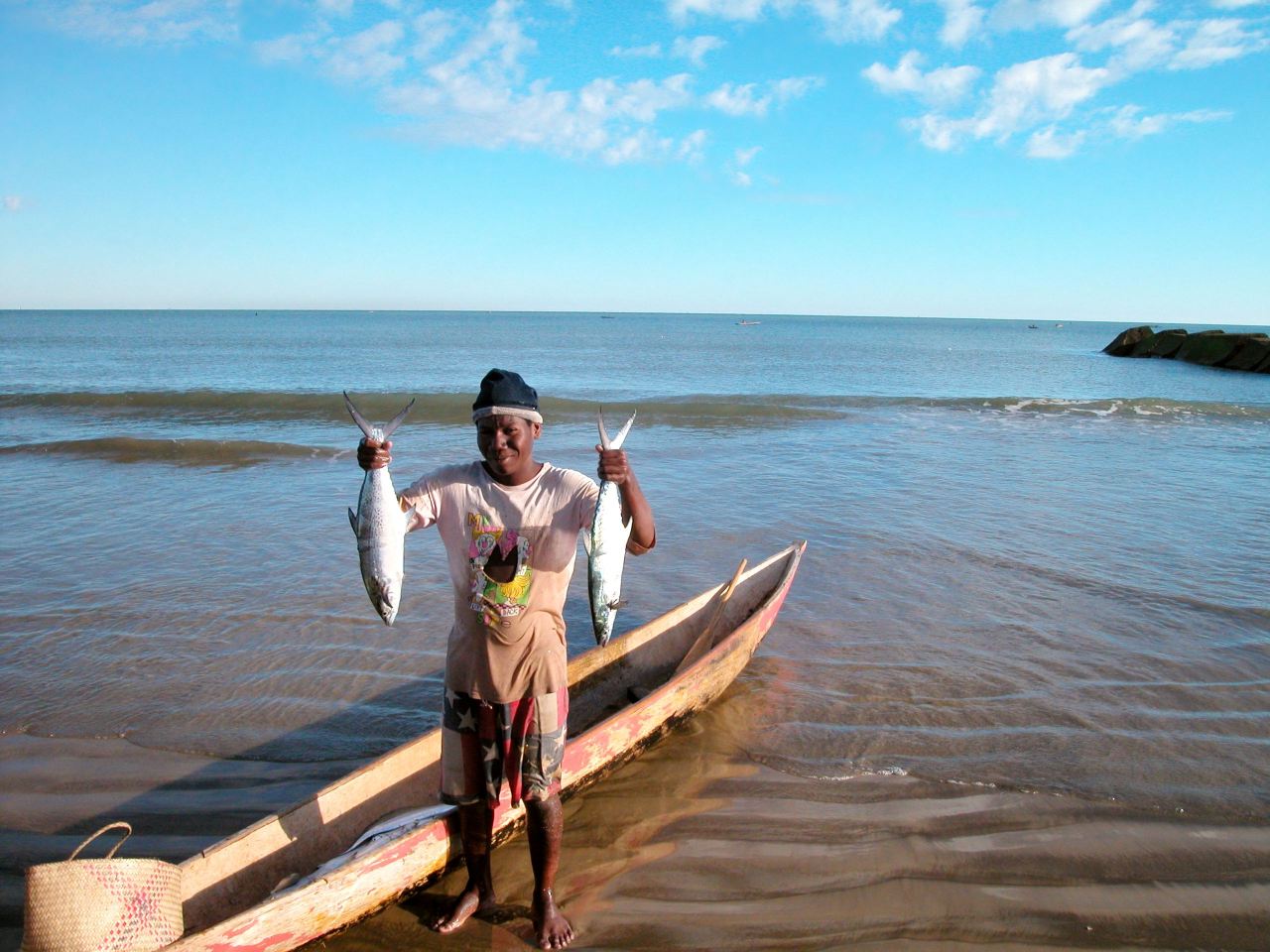
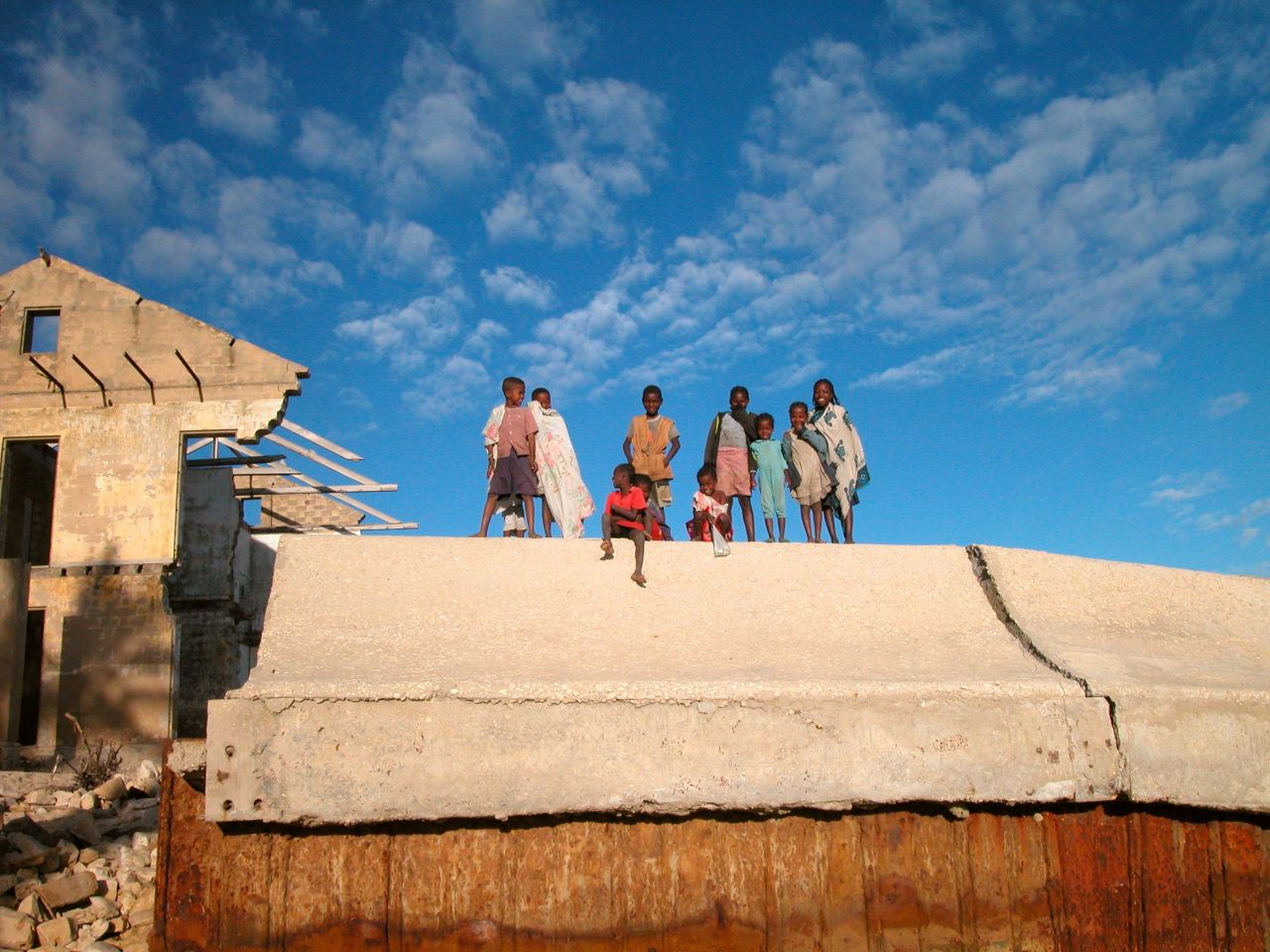
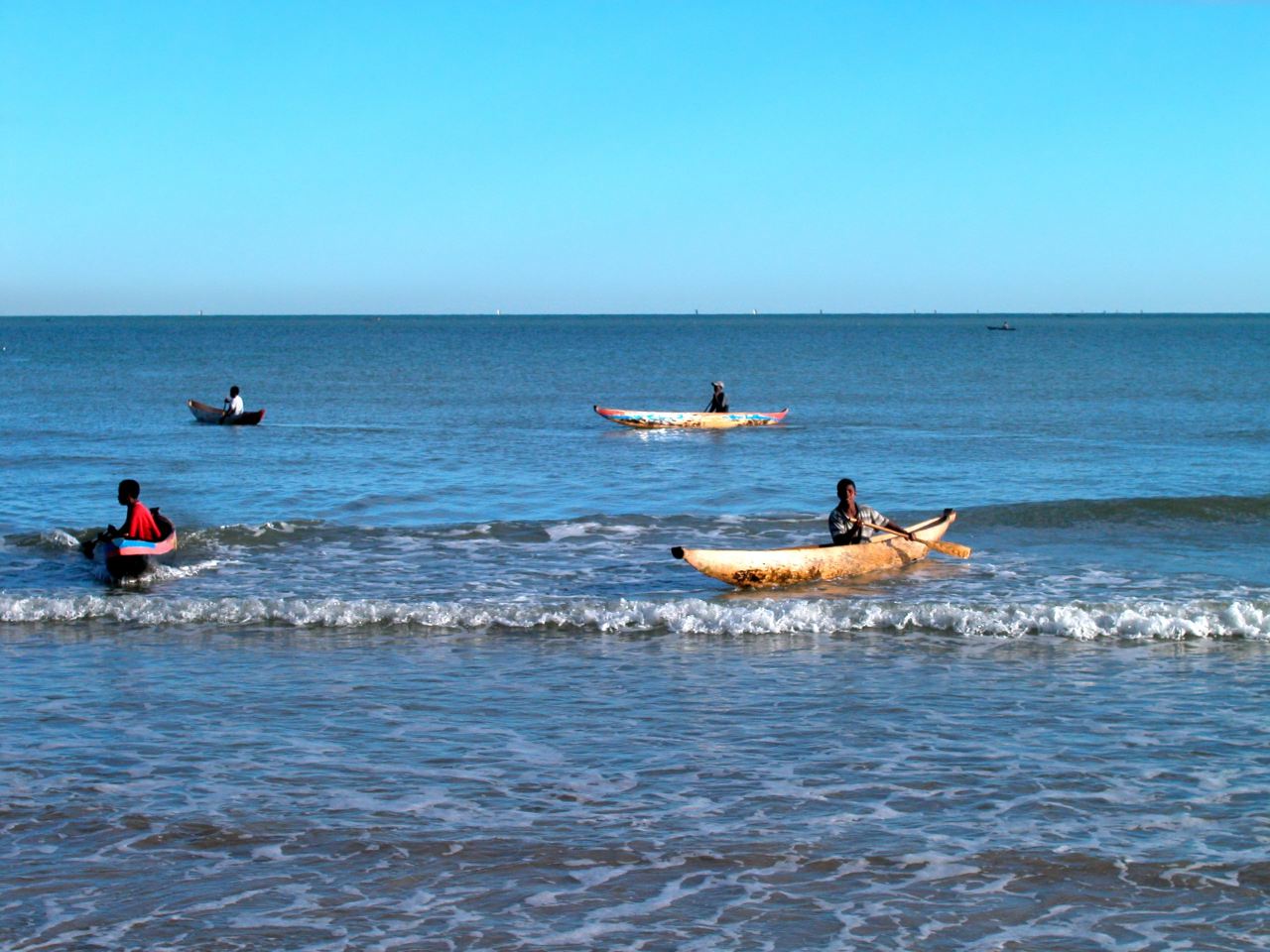
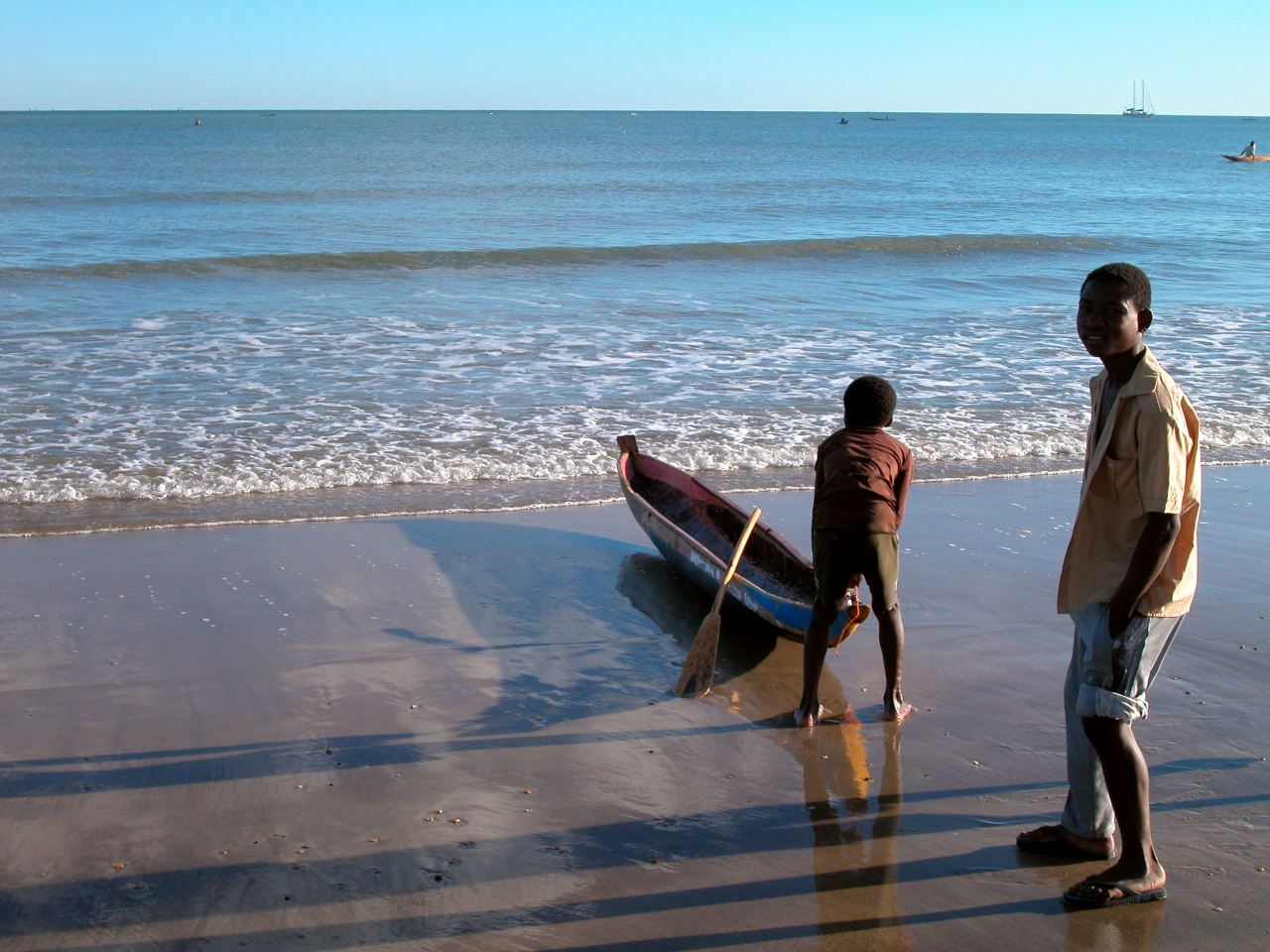
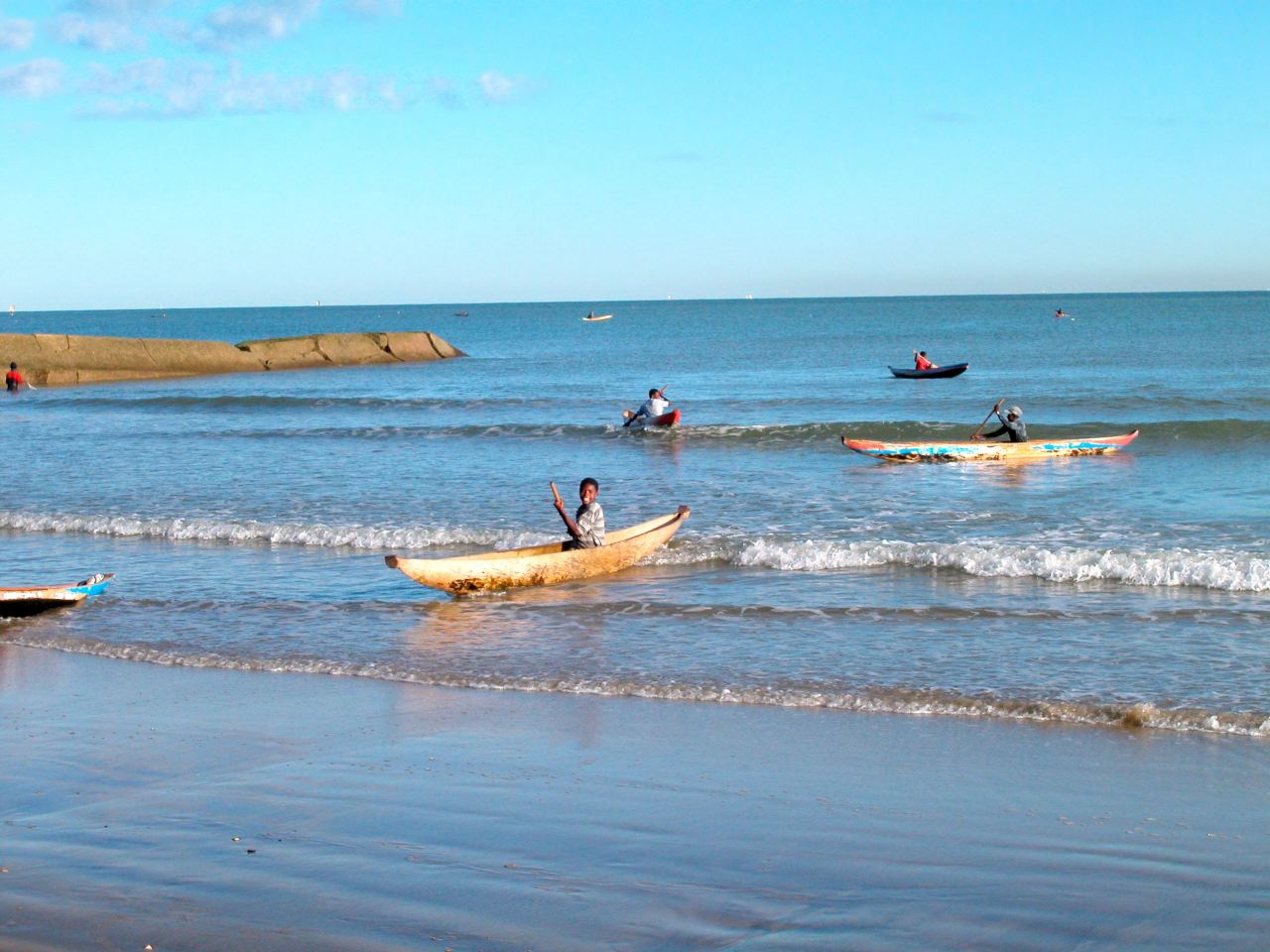
Our flight was at ten and we had to be at the airport by 8.55. We found a taxi right on the beach, and then we were flying over the baobabs to the capital. The aircraft was a little DHC-6 Twin Otter. The ticket was 824,500 francs.
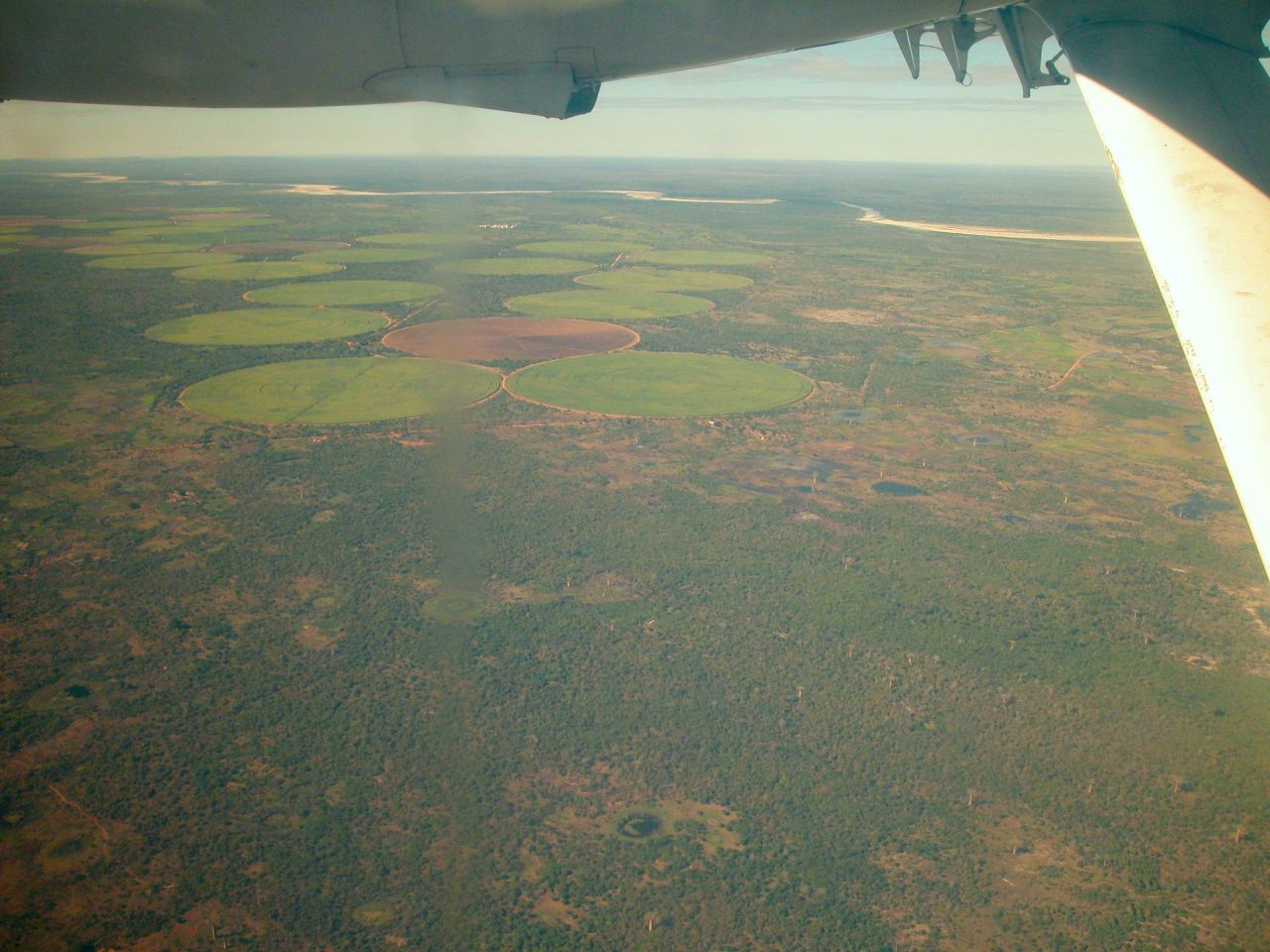
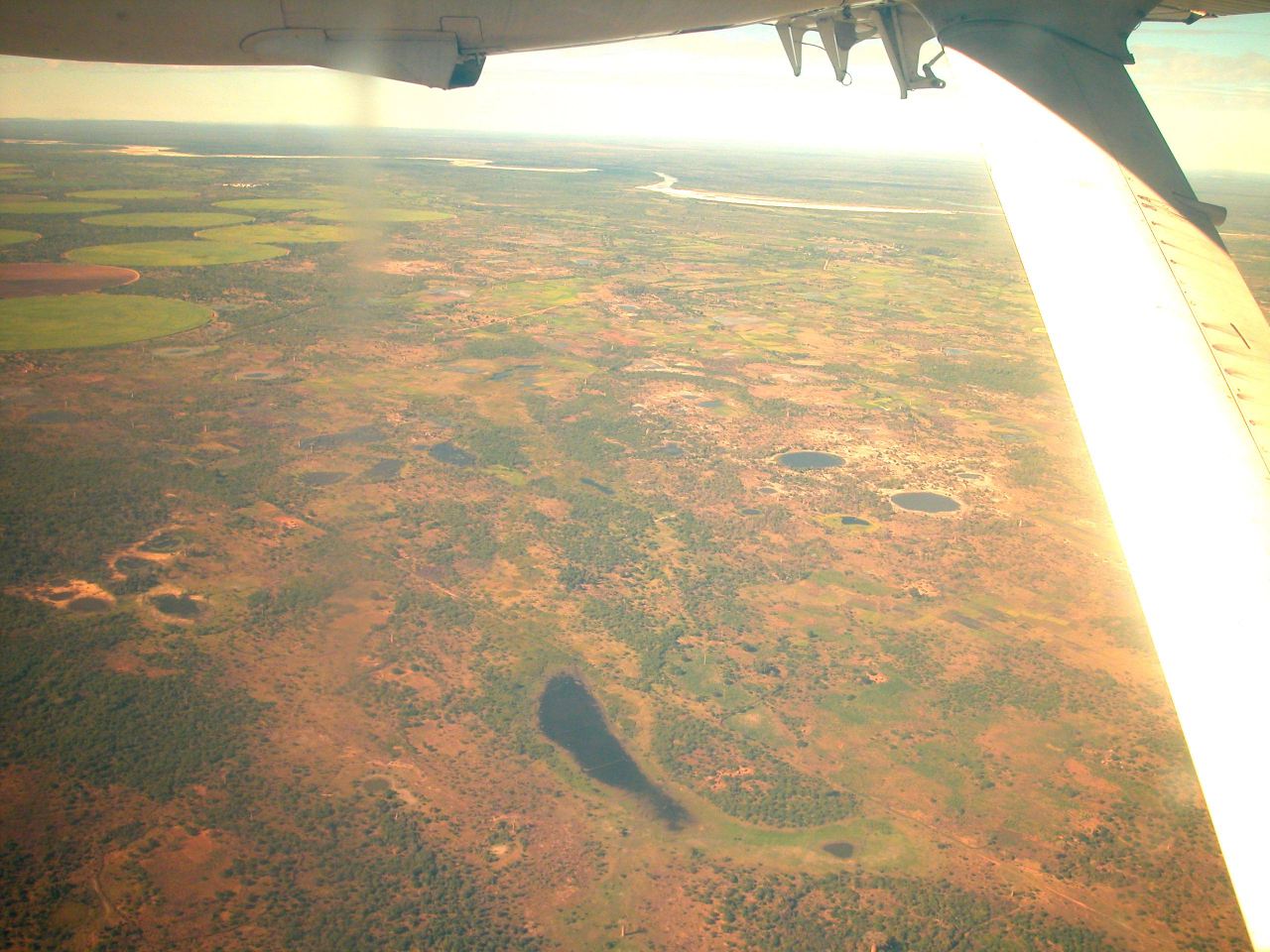
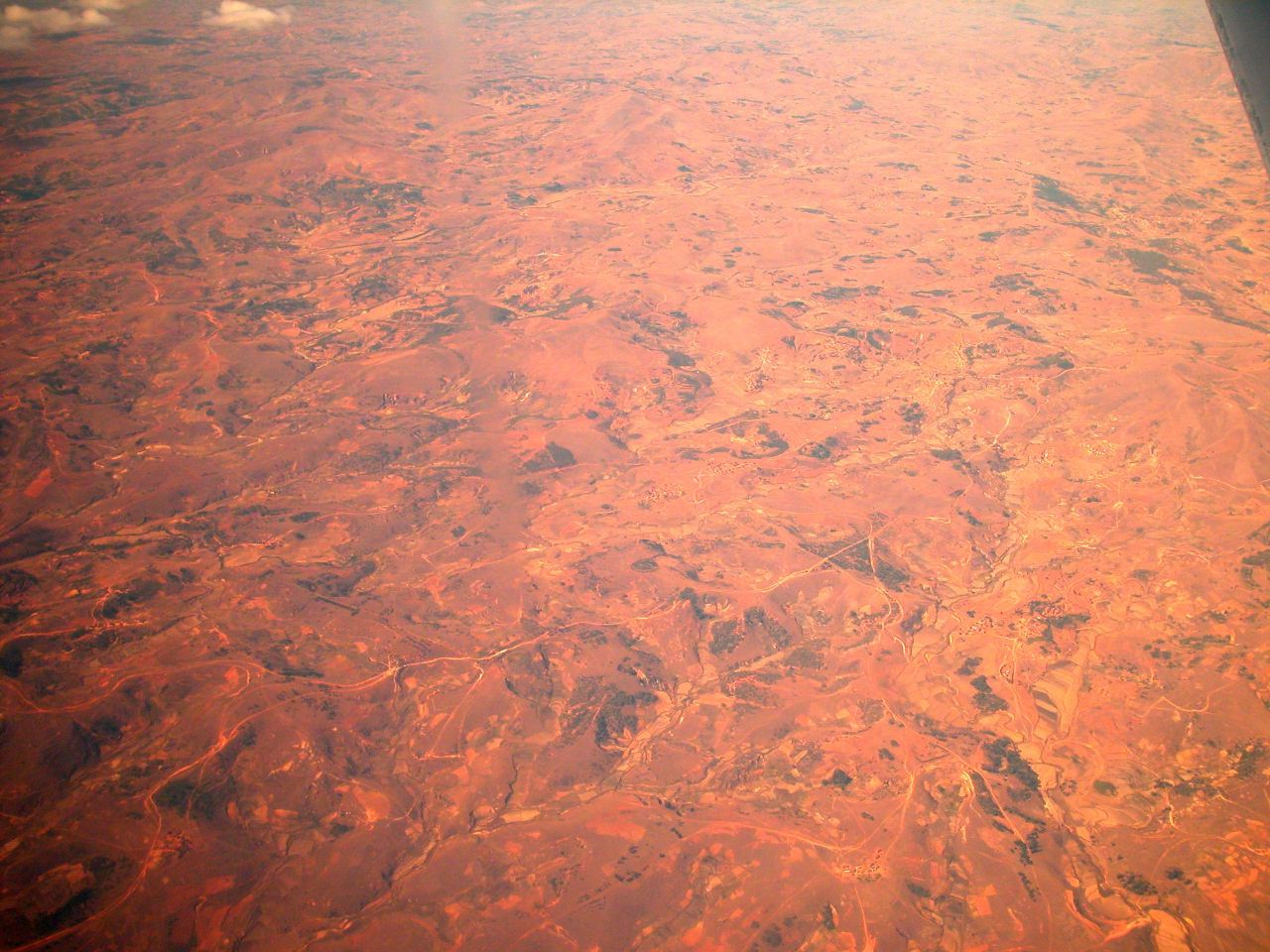
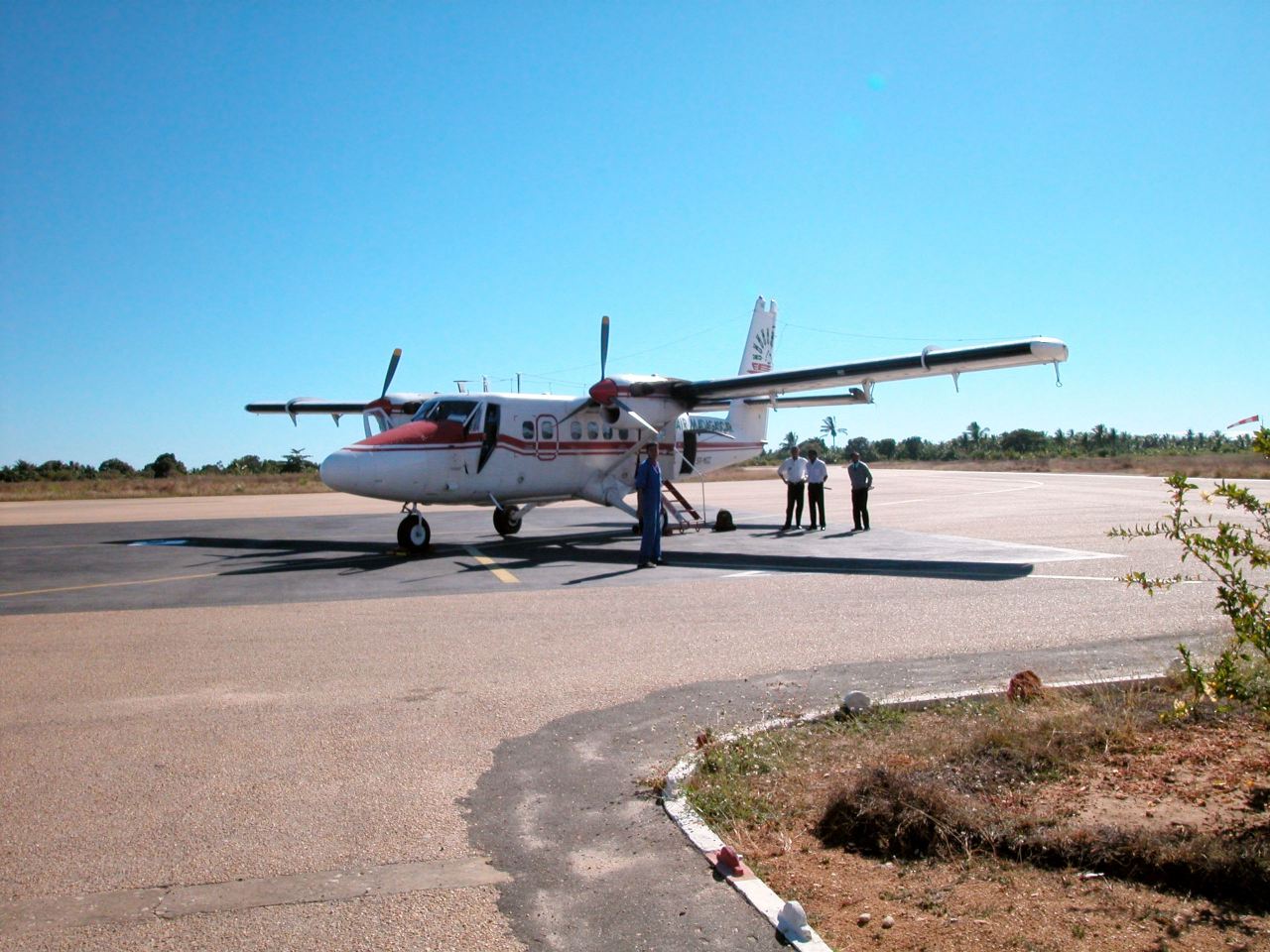
Back in Antananarivo
The Paris flight wasn’t until two in the morning, leaving us plenty of time. Antananarivo is a big city. You could spend hours walking up and down its steep streets. The handsome colonial buildings were run down, but enough of their original beauty remained to give the city character and make it good to explore on foot. We had one big problem: the equivalent of US$400 to spend in local currency. We couldn’t change it back, and were strongly advised to spend it on souvenirs.
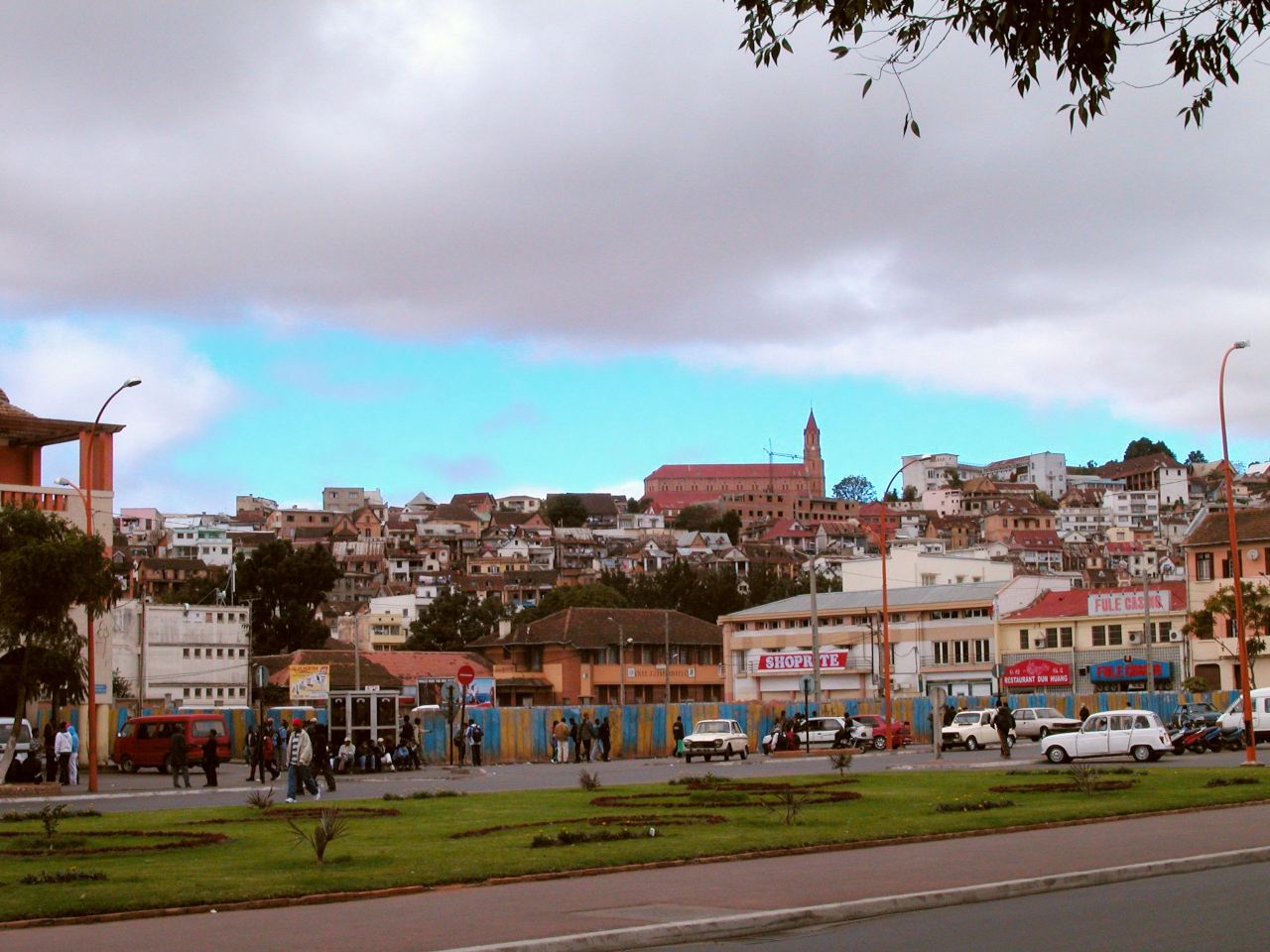
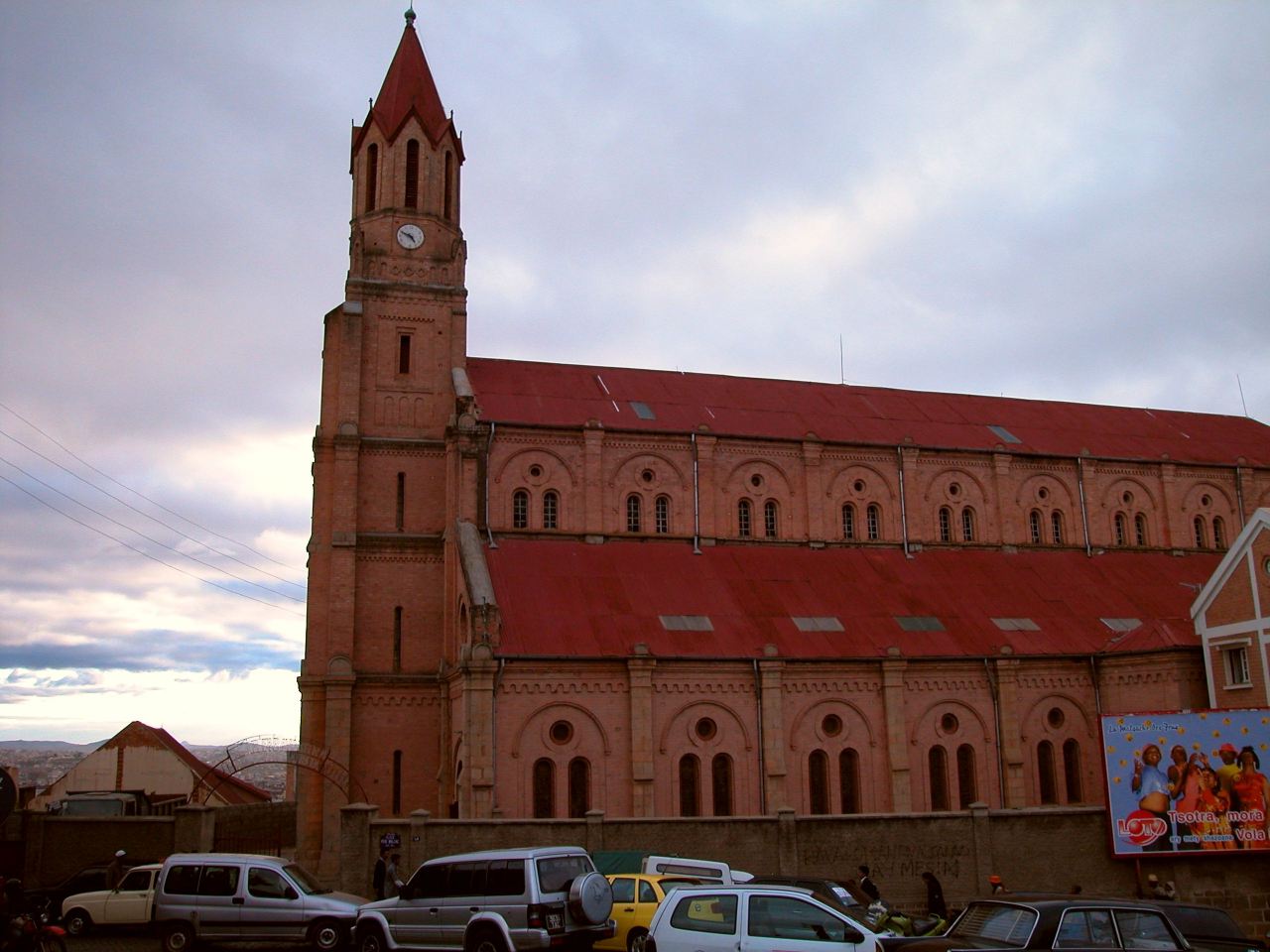
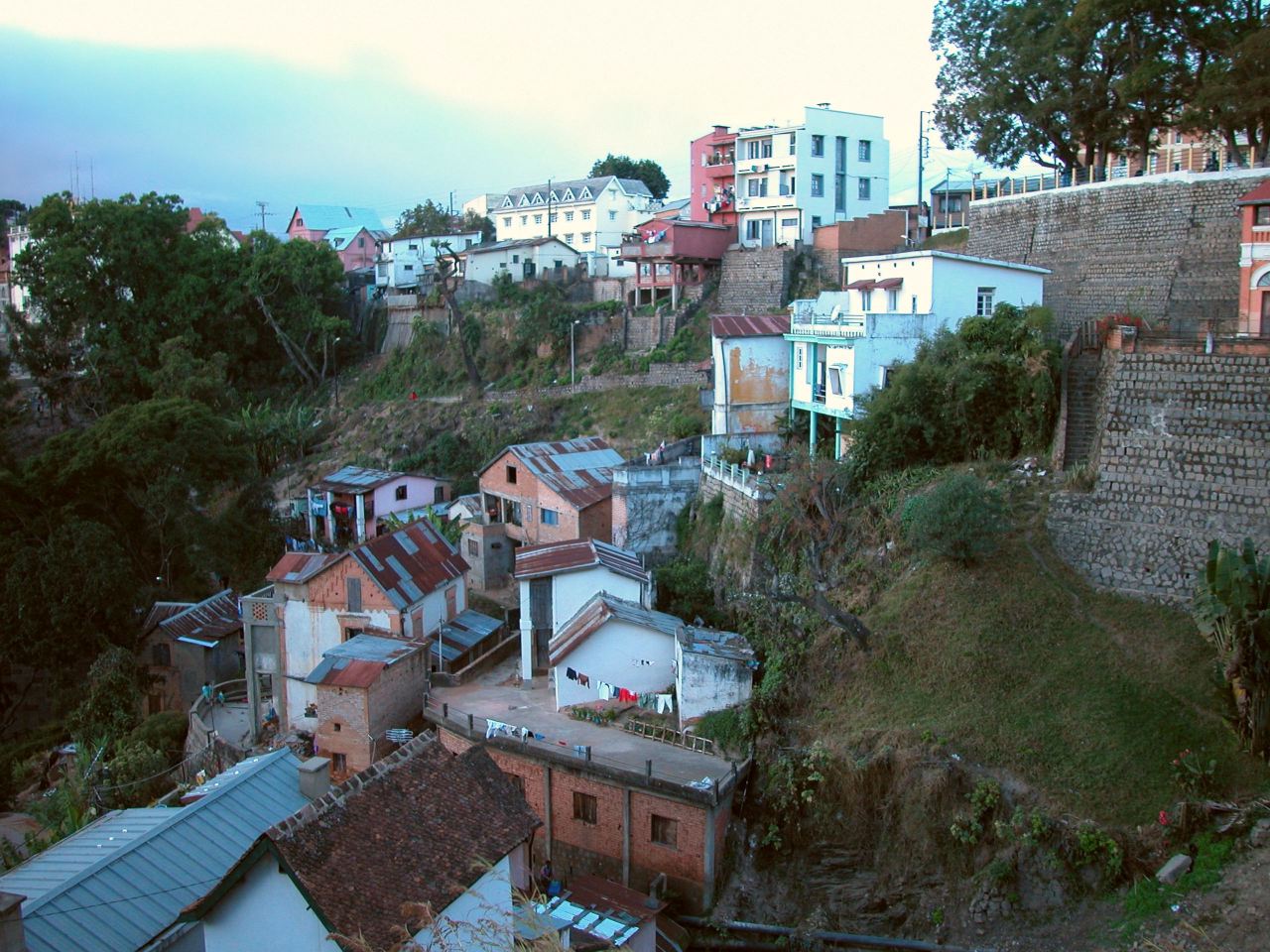
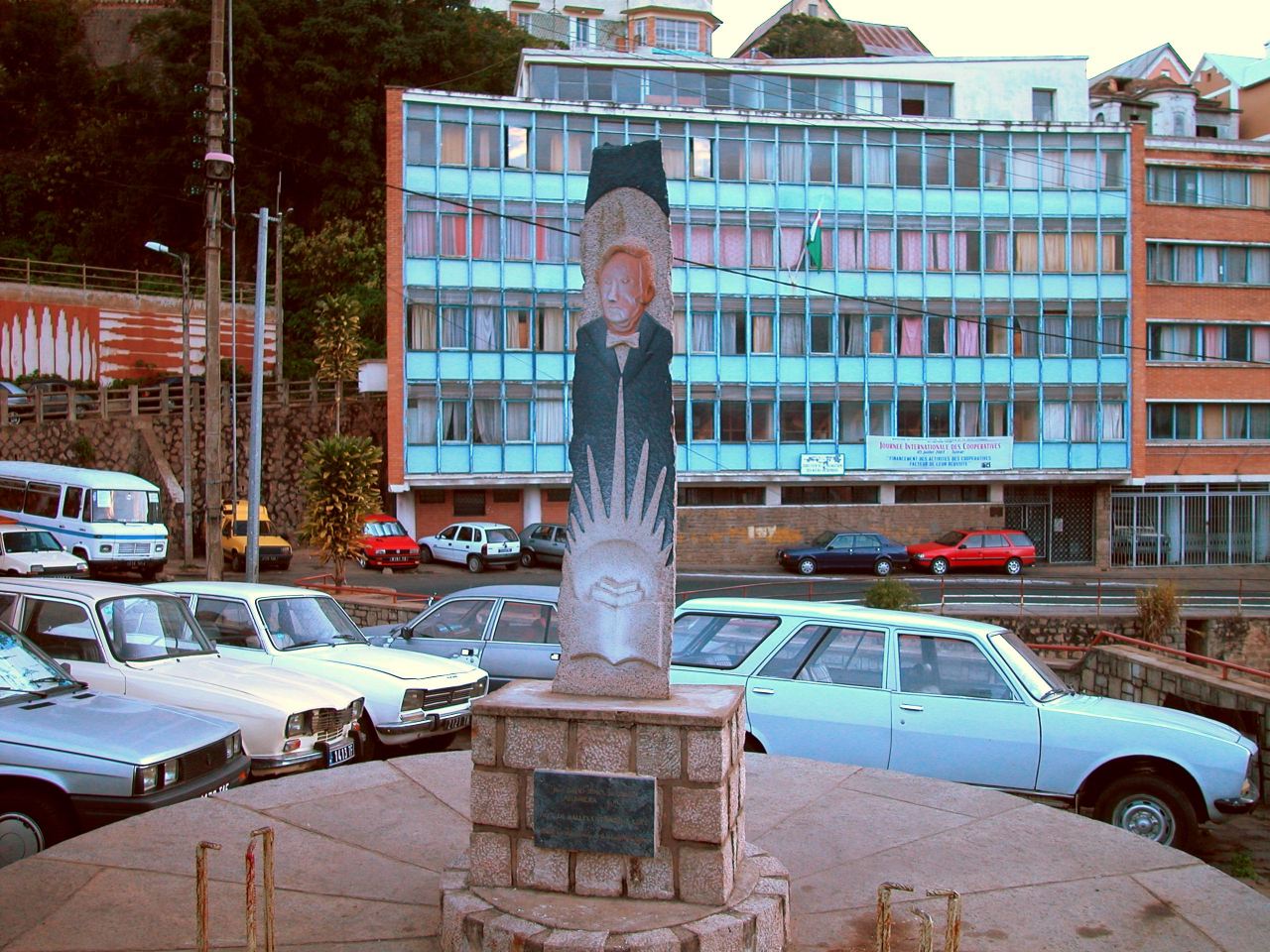
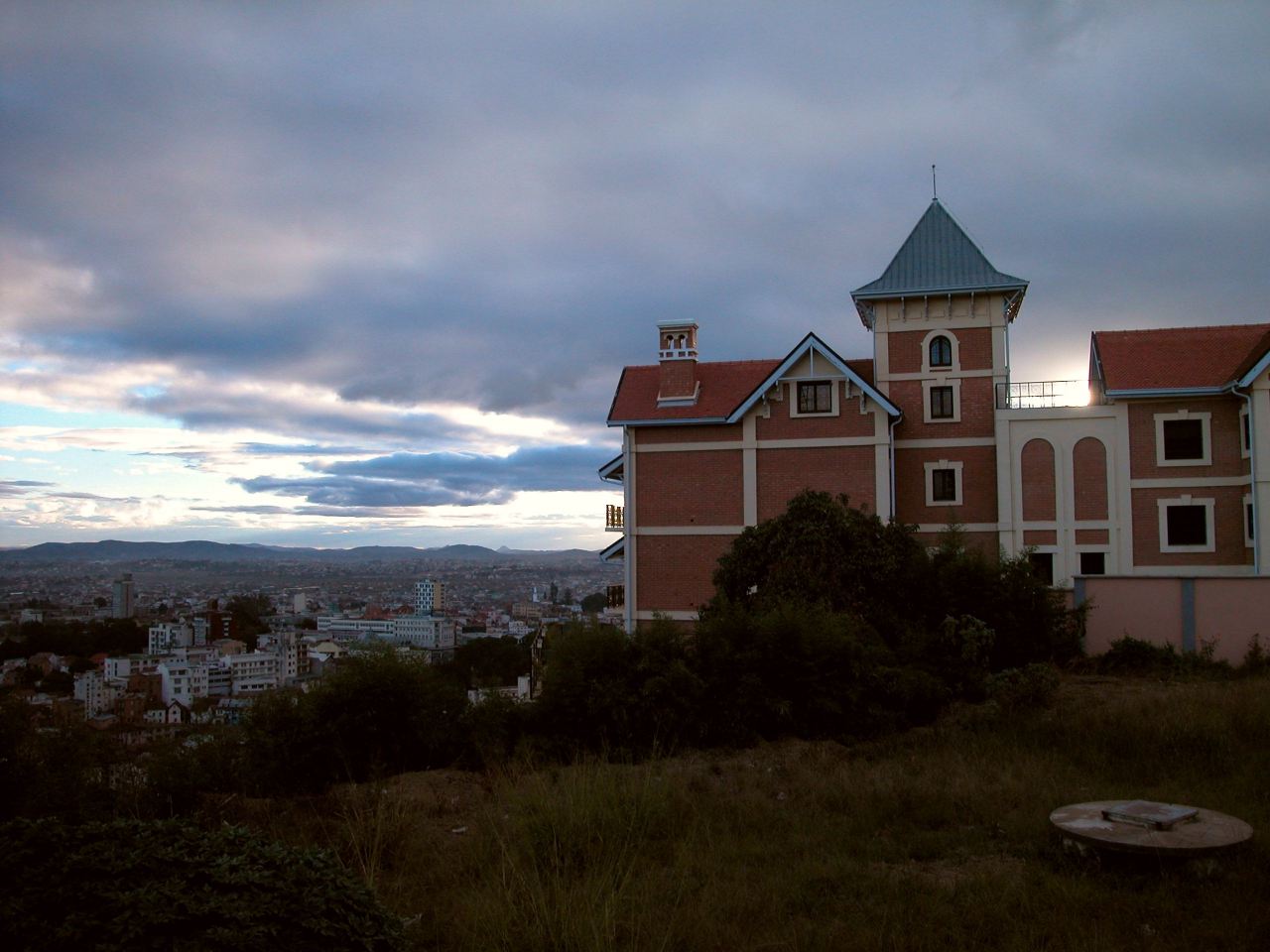
Being obliged to buy things voluntarily was annoying. We ran around the shops looking for something useful, which wasn’t as easy as we expected. We had to enlist the travel agency that had driven us around at the start of the trip, especially since this was included in what we’d already paid.
It turned out there was a supermarket on the outskirts, just like a European one. We bought clothes, shampoo, soap and toothbrushes. They’d all come in useful and we would have had to buy them eventually. I bought forty pairs of socks, for instance. I’m still wearing them. Prices were European too, expensive, naturally, but we had to do something with the francs. The clothes came to a million. At a camera shop I got a memory card for 700,000. We spent the rest on little things at the souvenir market nearby. People say some goods are cheaper where they’re made, that you buy woodcarving in one place and zebu hides in another. To us the market in the capital seemed the best place. It was all together and the prices were hardly higher. We bought a big zebu-hide drum, a piece of uncut amethyst and a lot of little crocodile-skin souvenirs. You could even buy stuffed crocodiles. Many countries had long since barred these things, which I put down to the greens, but they were openly for sale here. And there still seemed to be plenty of crocodiles. I had a kind thought for Russia, where customs wouldn’t care about any of these things. Turn up with that luggage in New Zealand and they’d take it away and you could end up in trouble too.
With the car packed with stuff and the money spent, we went for a walk. The capital had been overcast that morning. Towards evening the sun came out from behind the ragged clouds. The whole world turned colourful, bright and utterly wonderful.
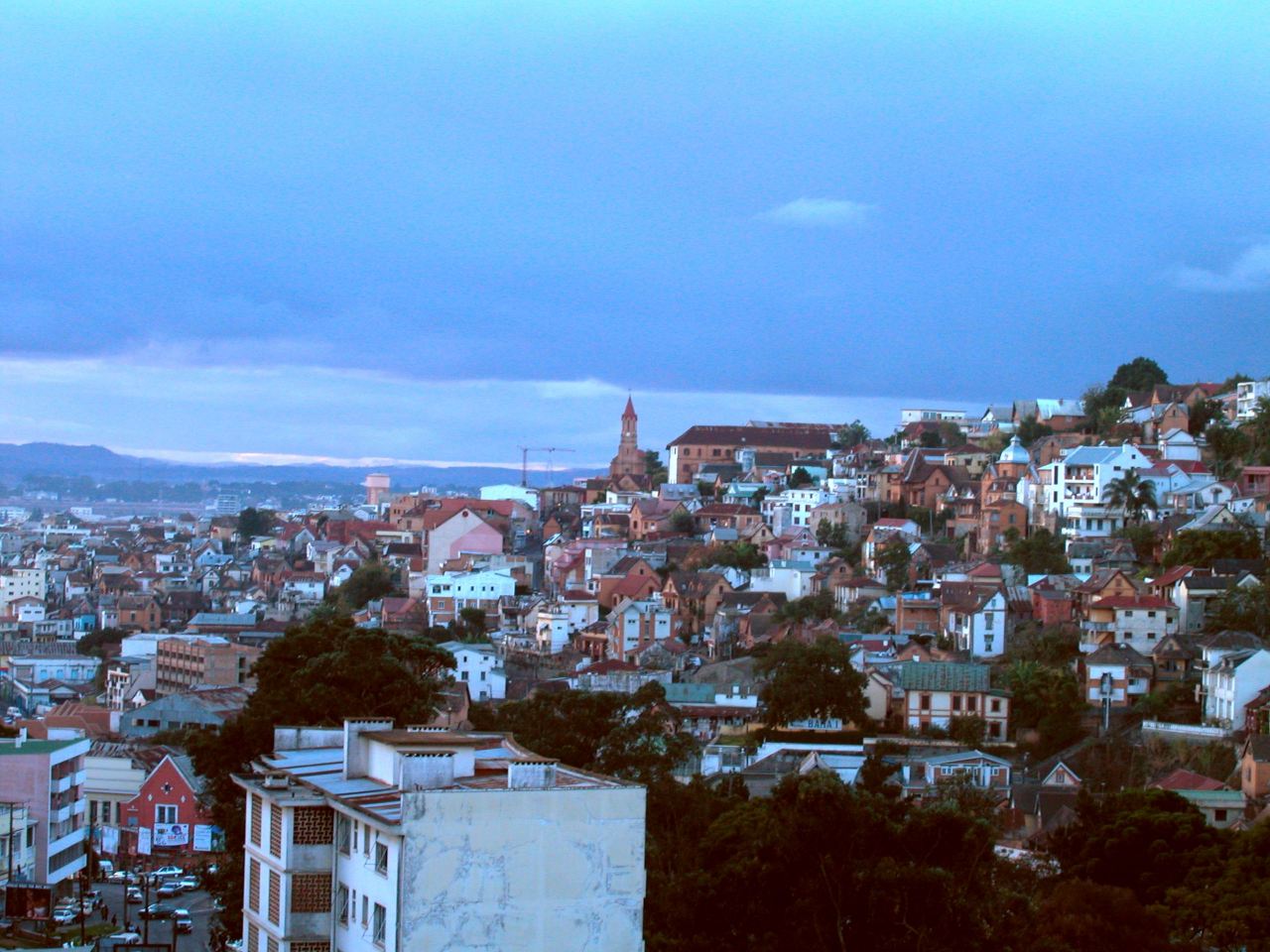
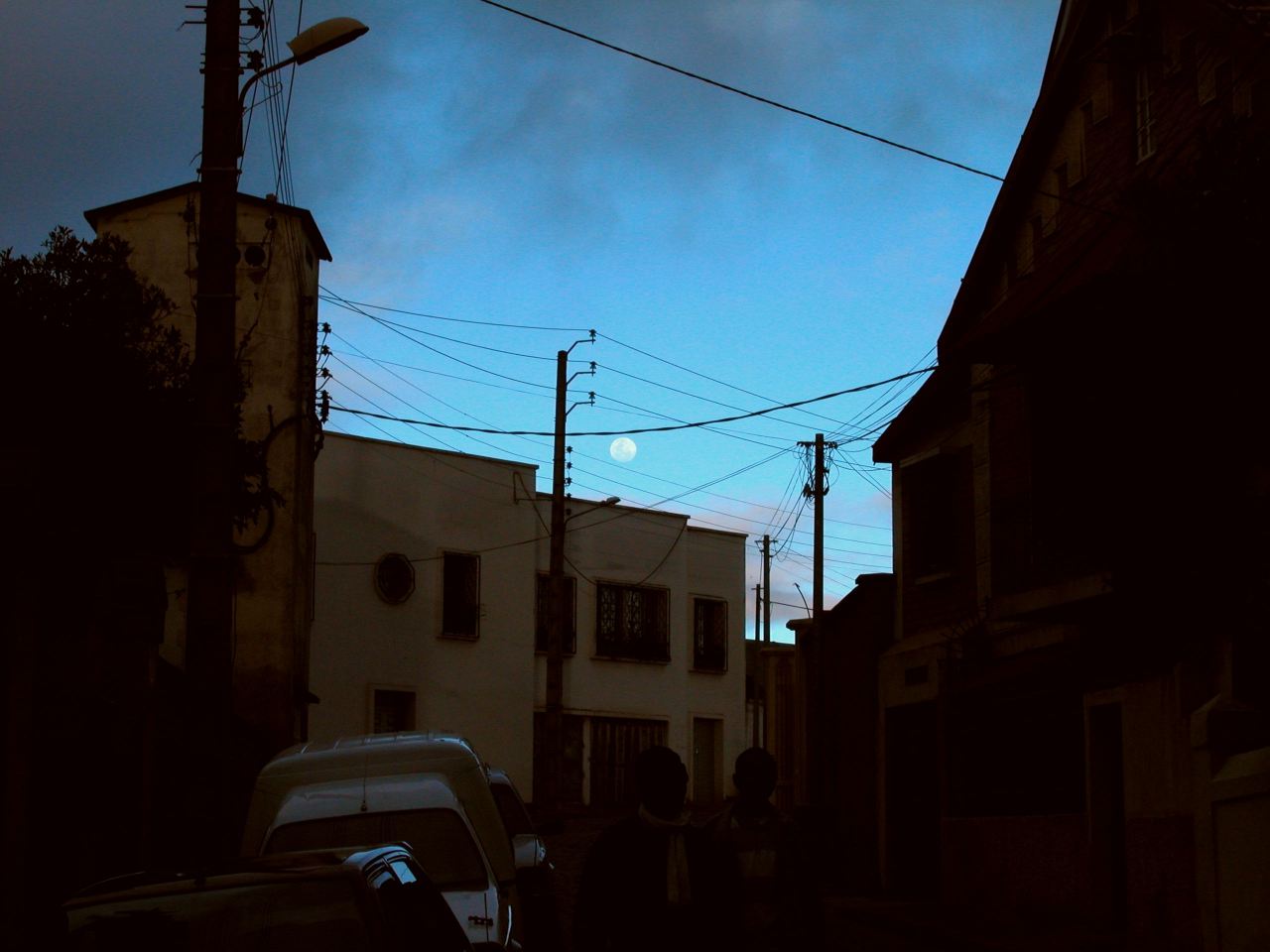
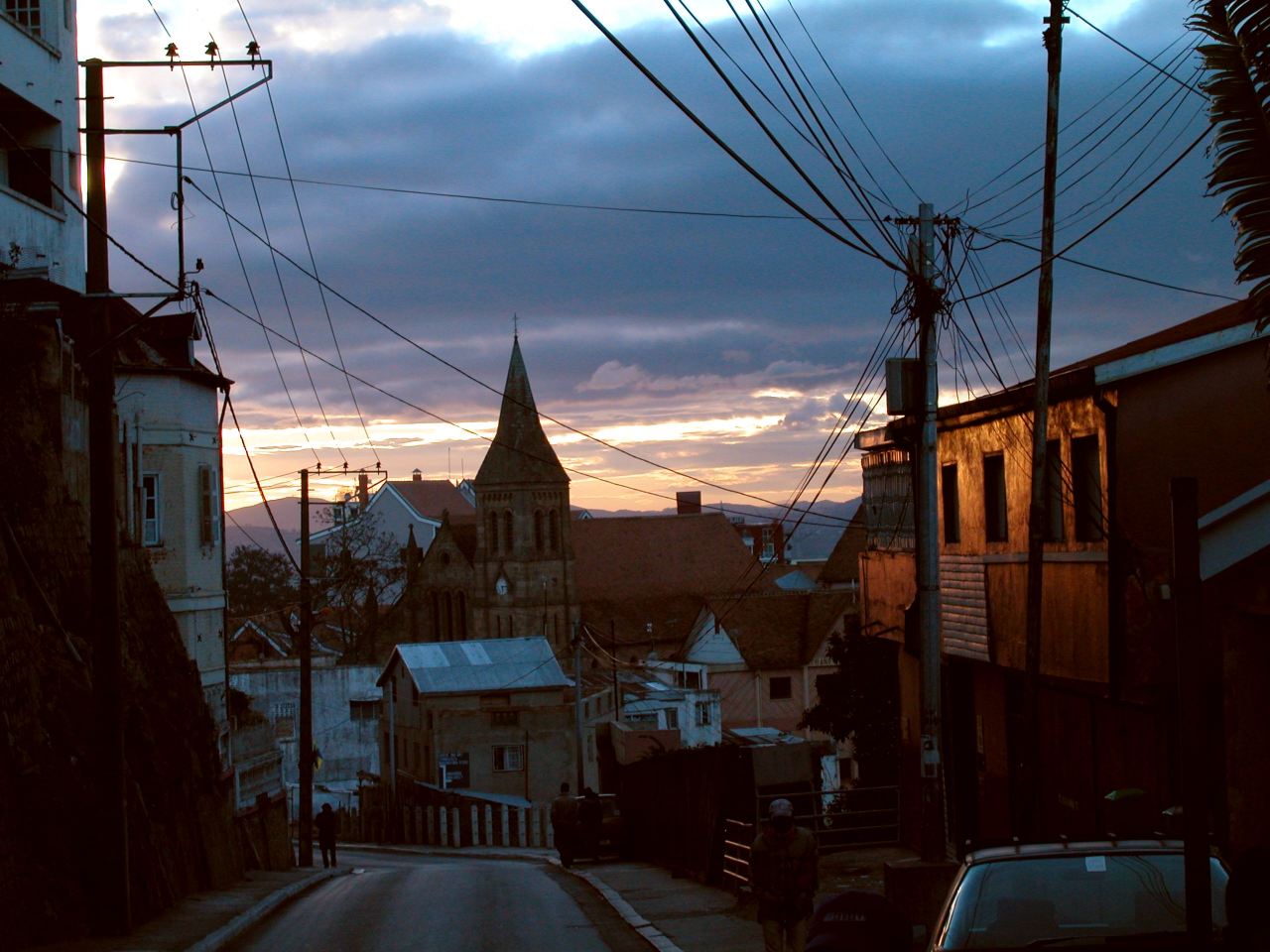
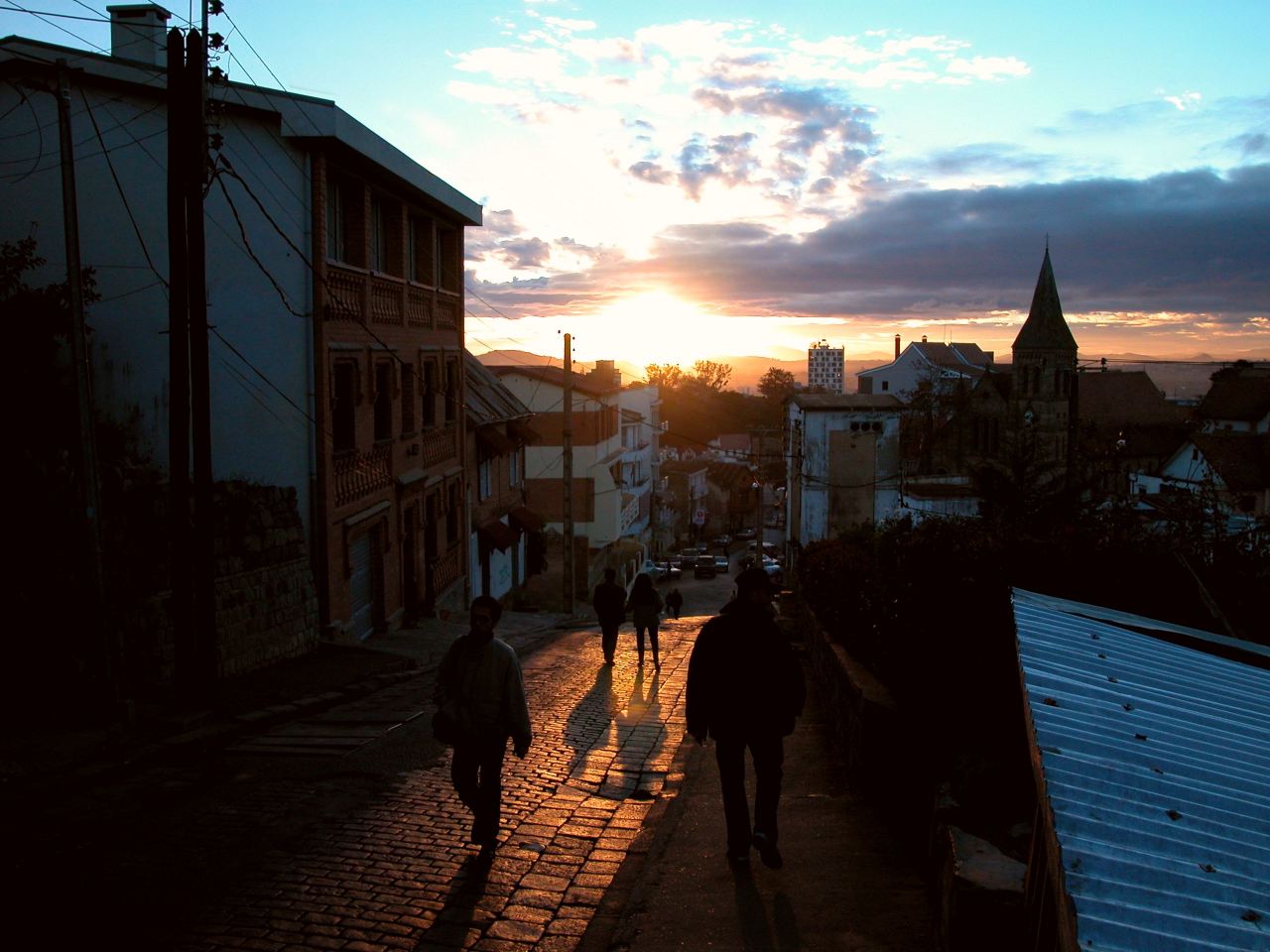
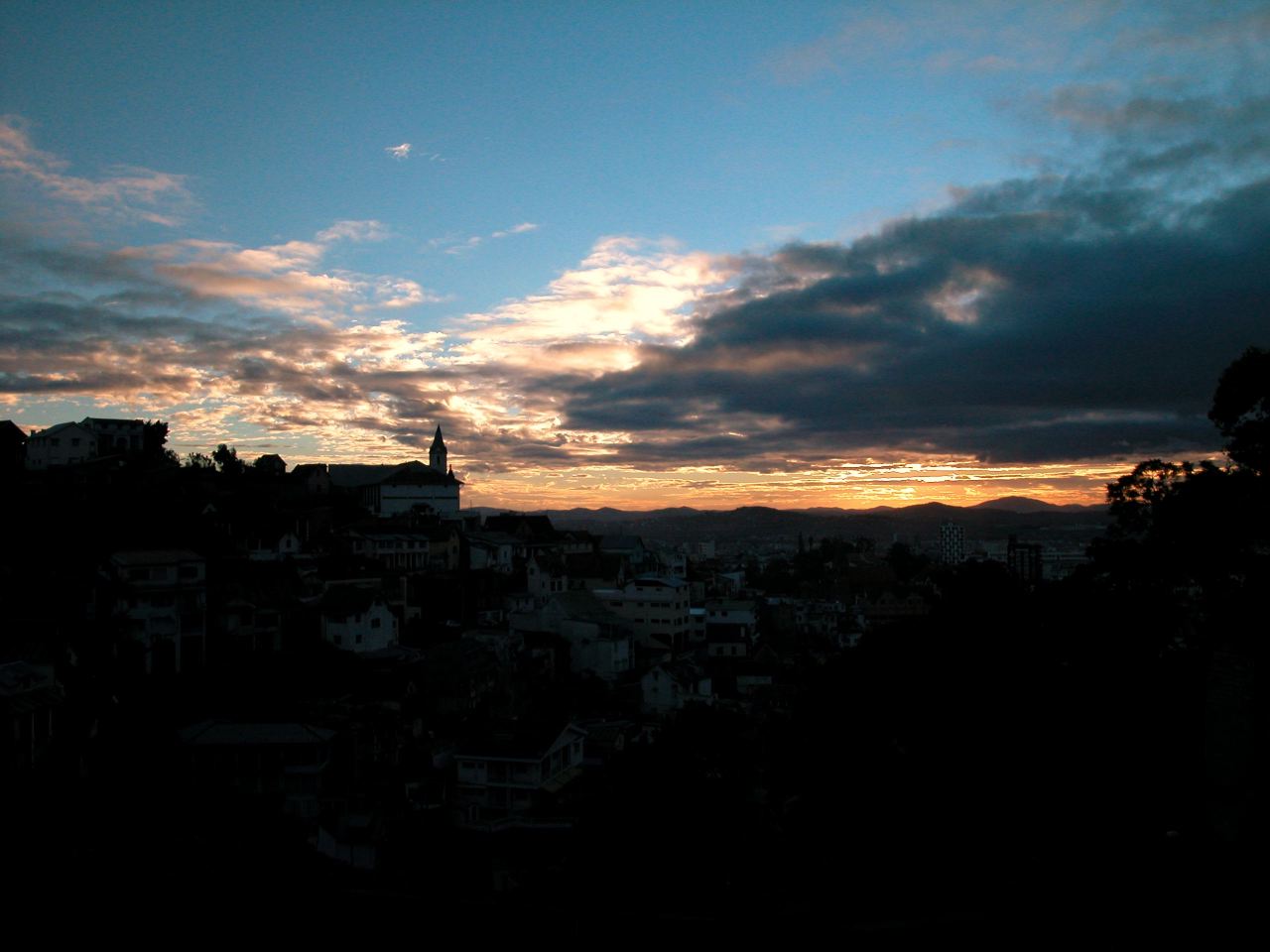
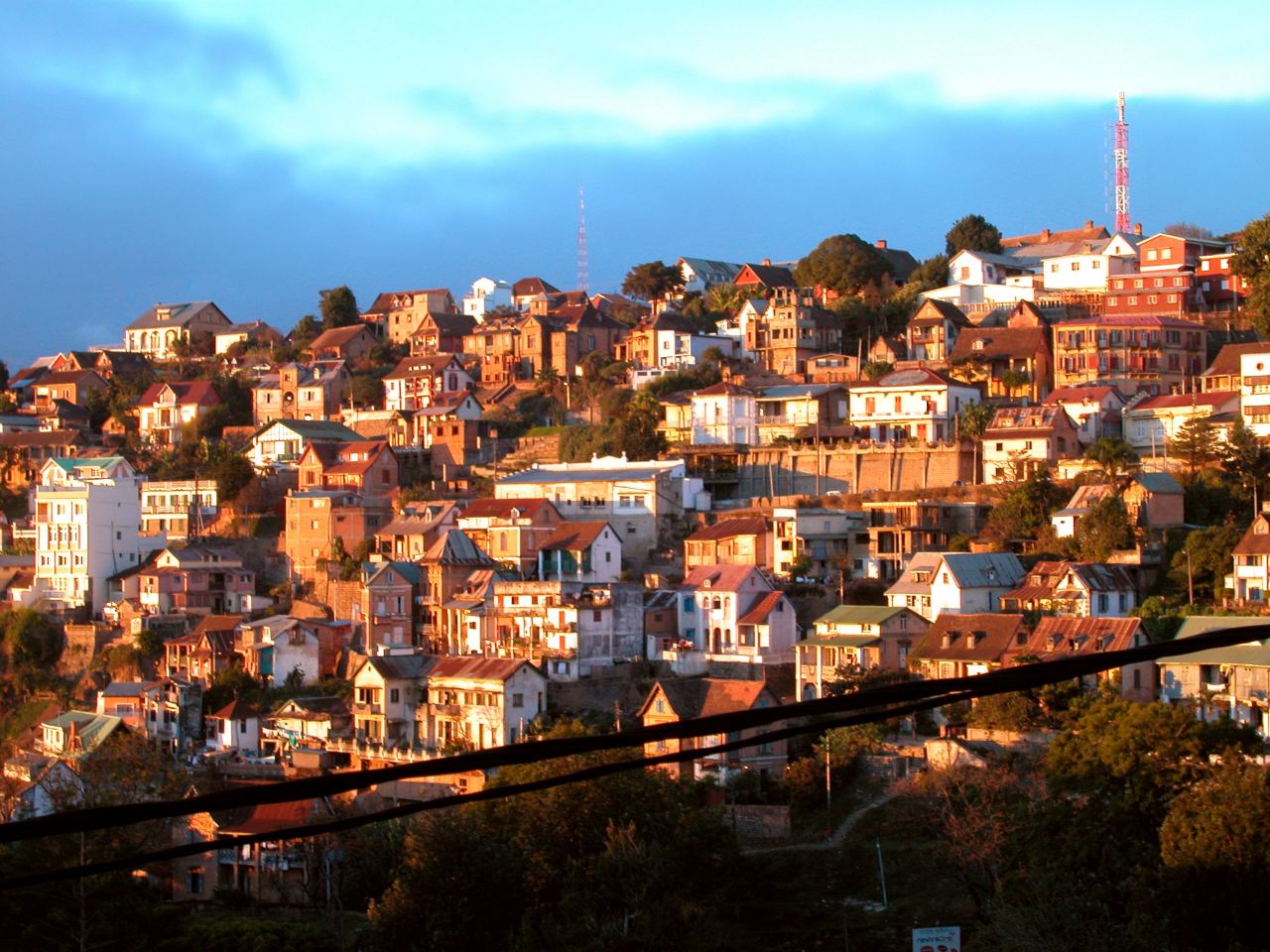
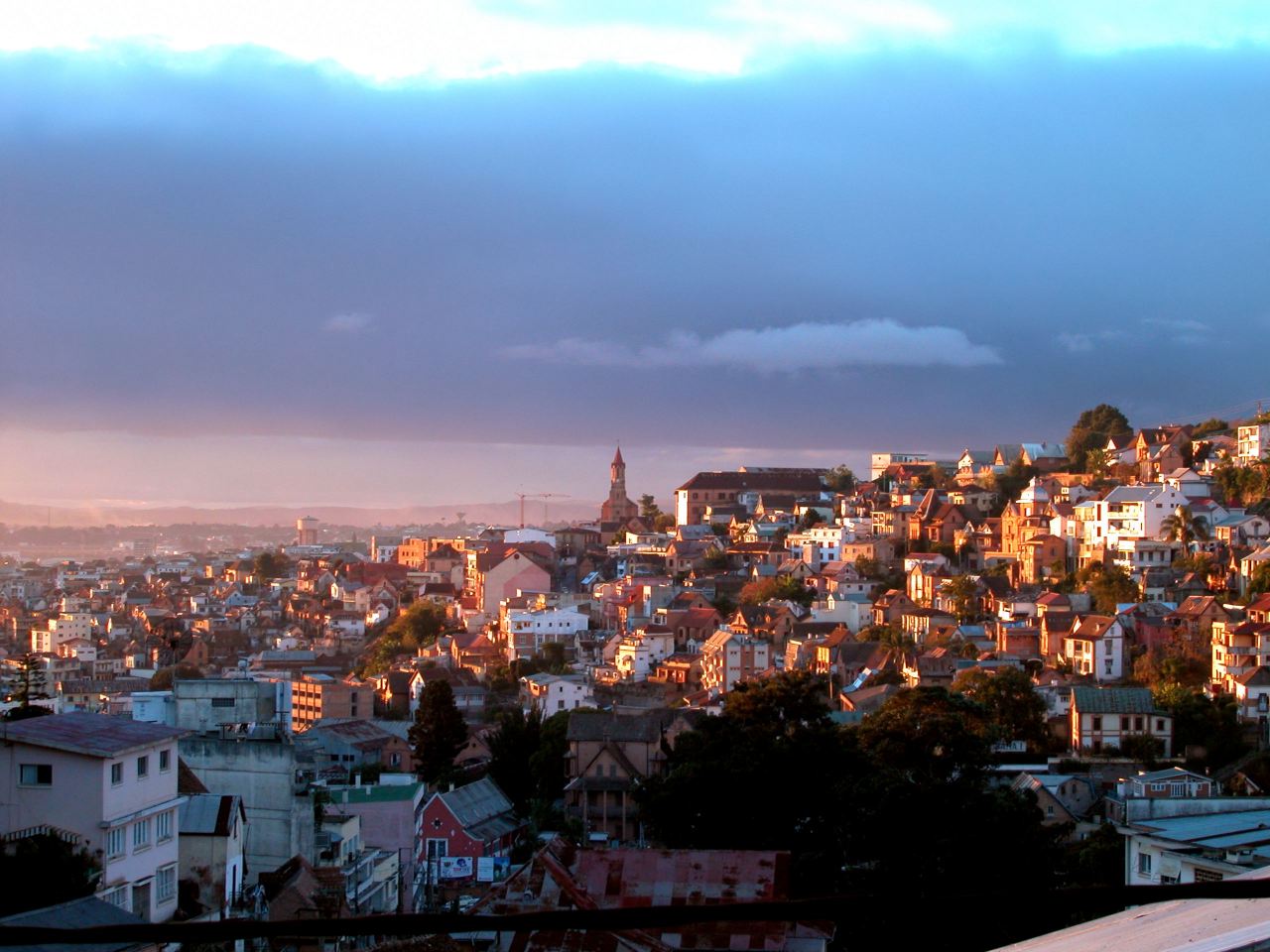
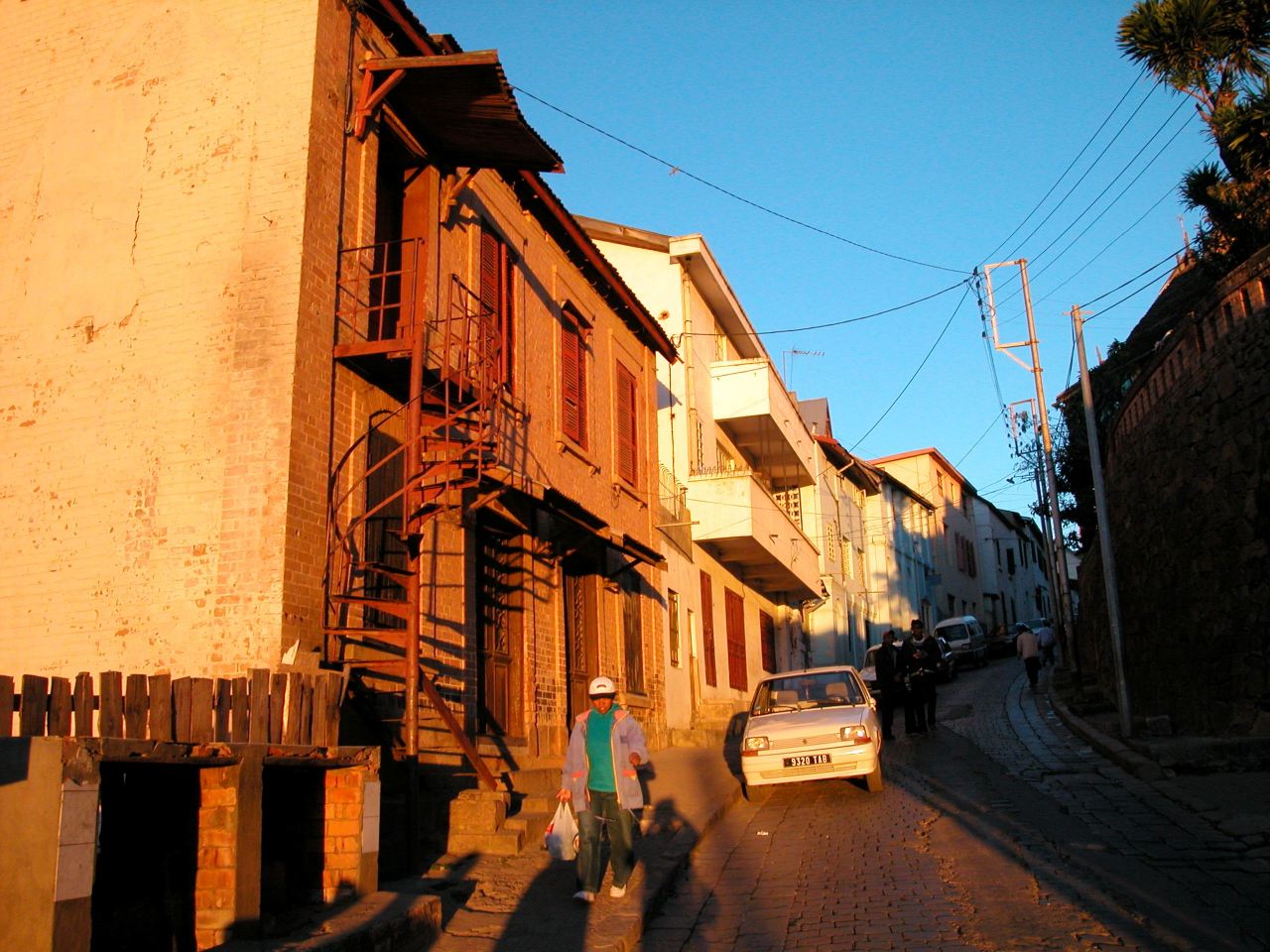
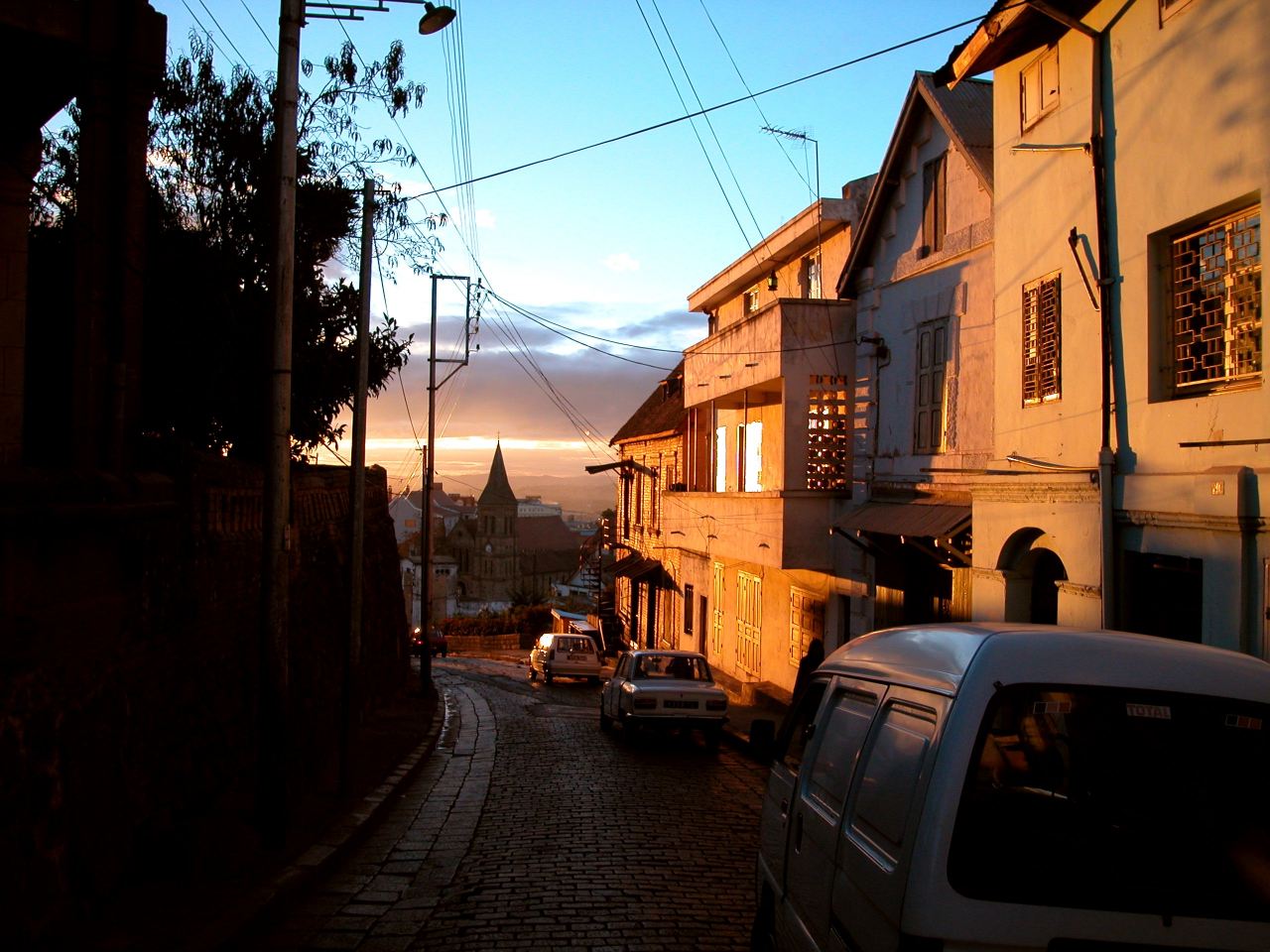

Our last stop was the Queen’s burnt-out royal palace of the Rova. Guides flocked around us but I quite firmly sent them away. Two weeks had taught us to say “No guide!” as soon as anyone suspicious approached. They looked surprised but went away. People generally were persistent. In villages, at the sight of a white person, dozens of children would rush up, hands out. Parany had taught us that a small sweet was the easiest way to move on. We bought a kilo of caramel sweets, and sure enough a little sweet was enough for a child to be happy. In the capital it was different. People asked for dollars. They reminded me of the pushy men who used to hang round Soviet tourist hotels. We had to tell them to go away. The usual English worked poorly and they kept trailing us, pleading. I tried it in Russian, just ordinary words, telling these big strong fellows they should go out and work in the fields. They were taken aback, thought it over and retreated for good measure. So our exotic language could come in handy abroad. We didn’t meet any Malagasy people who spoke Russian. They knew about the Soviet Union and remembered some distant relative who had studied medicine in Moscow. They still remembered Aeroflot crews saying zdraste, hello.
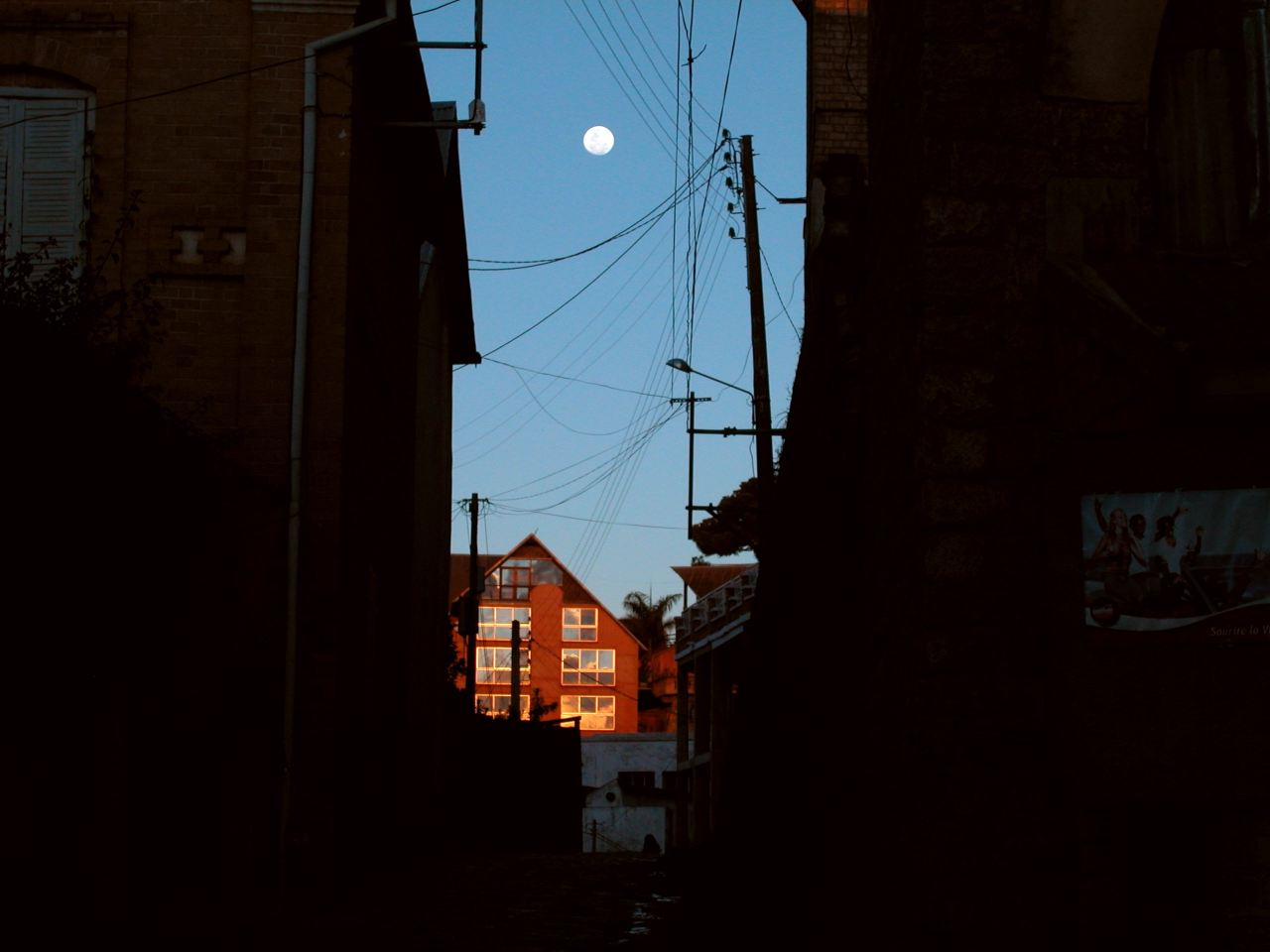
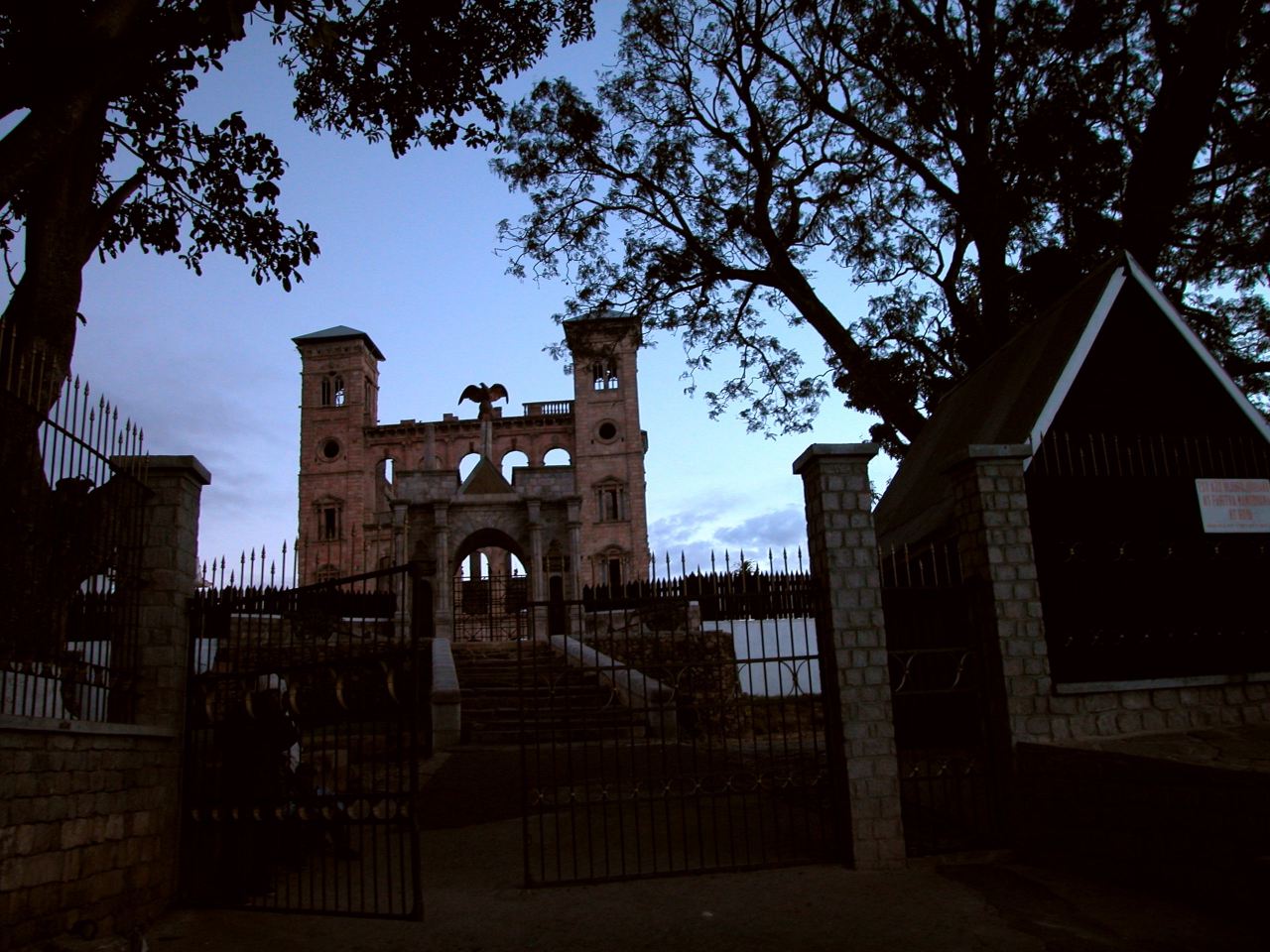
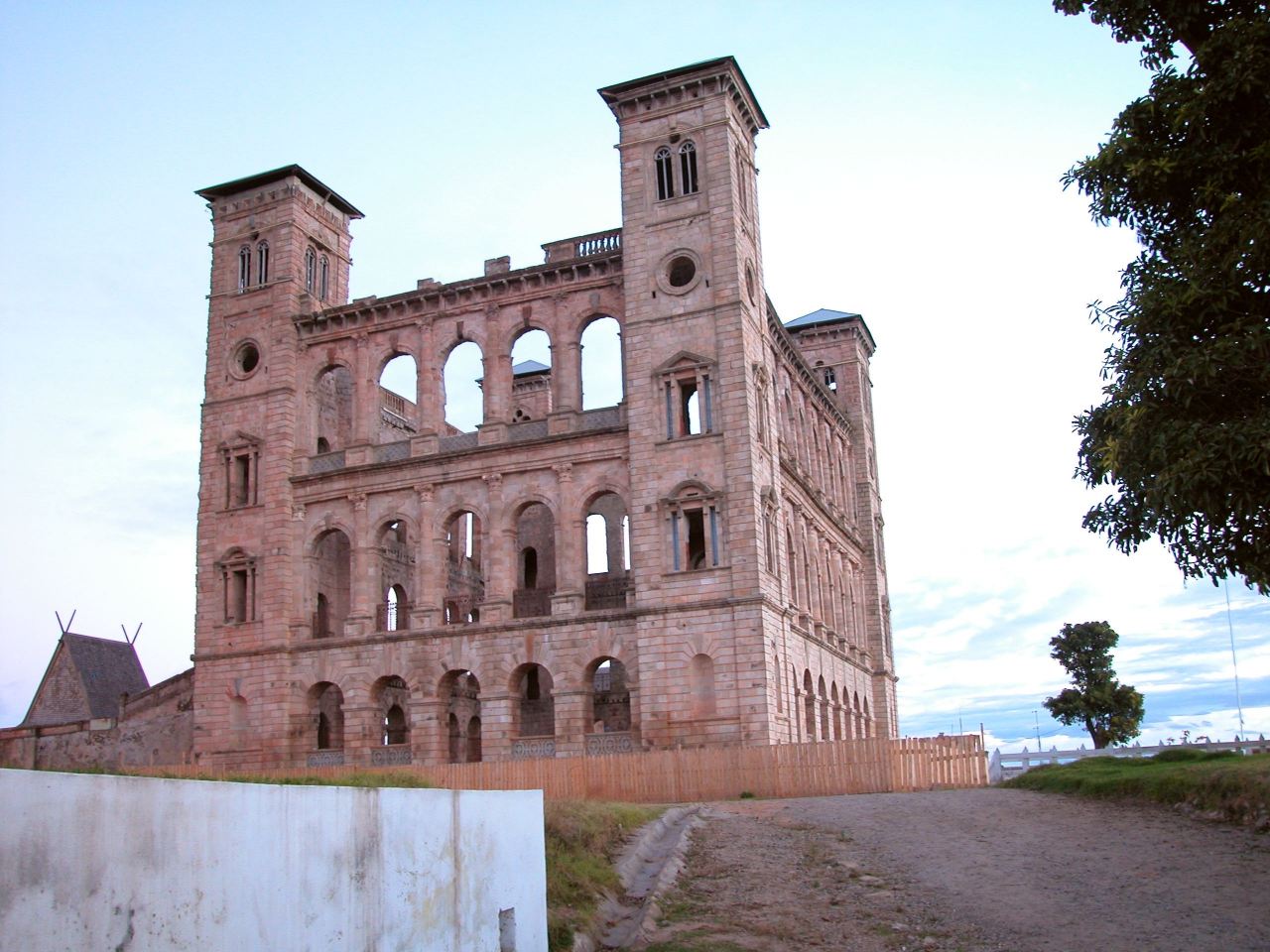
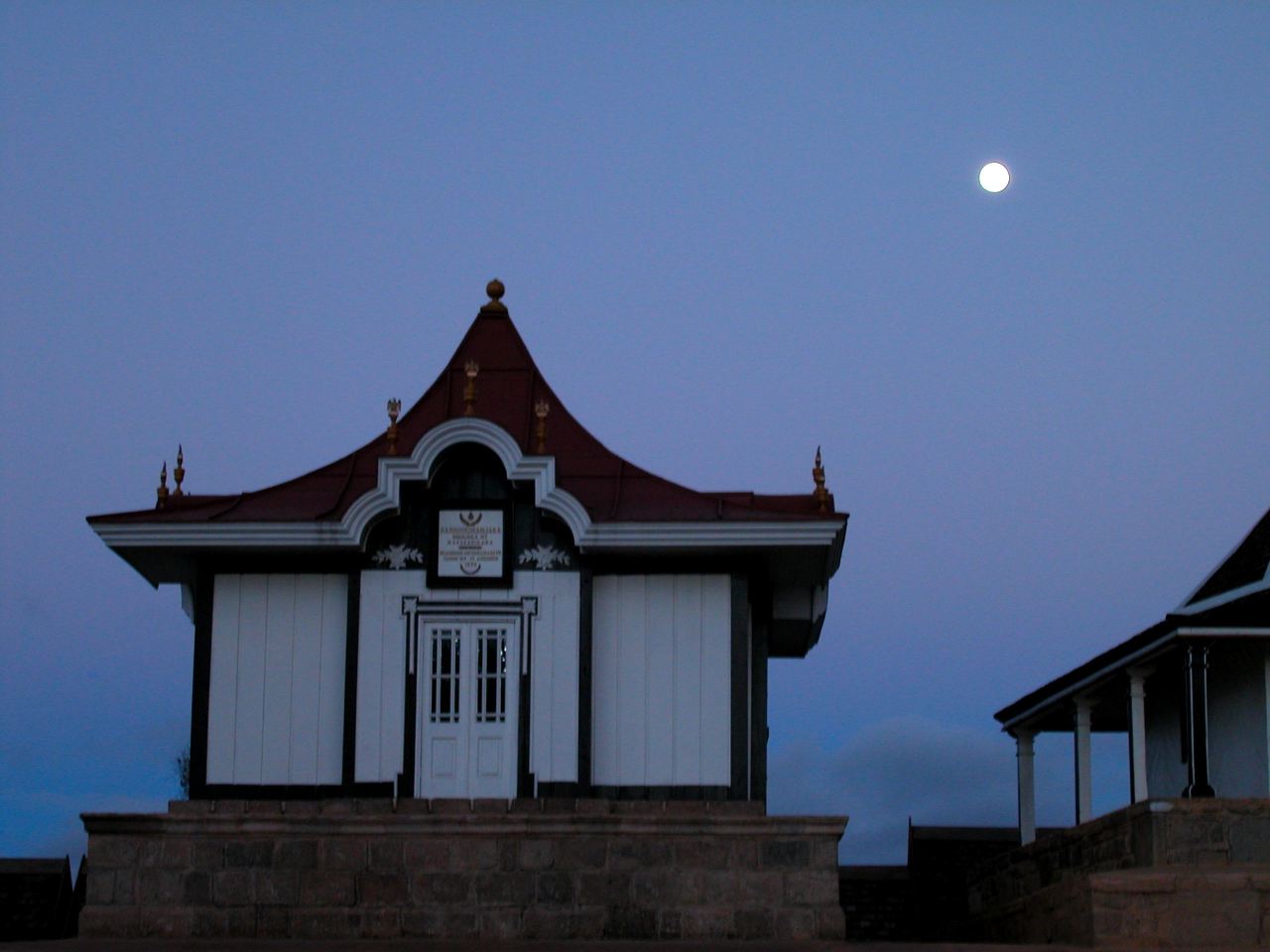
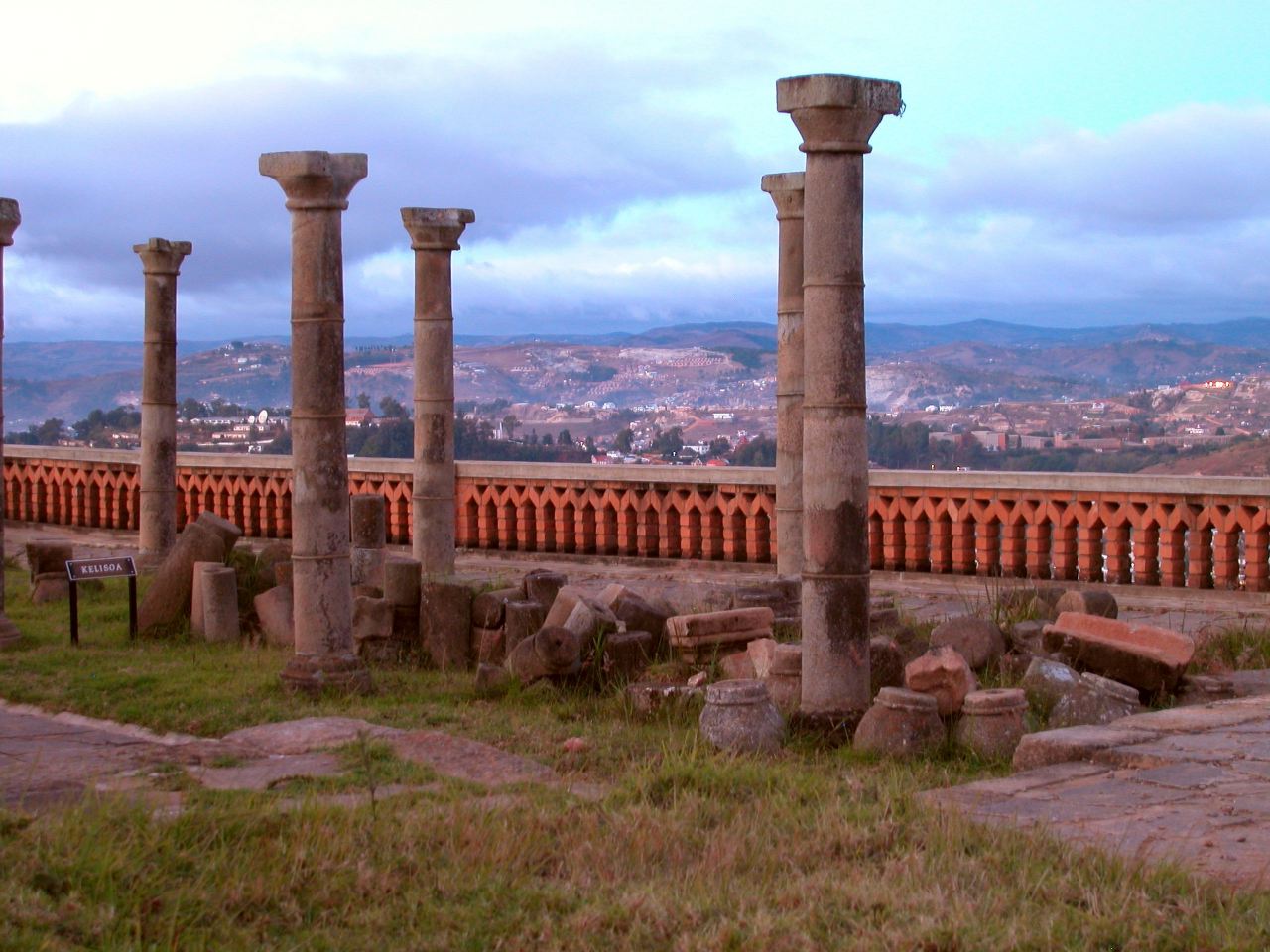
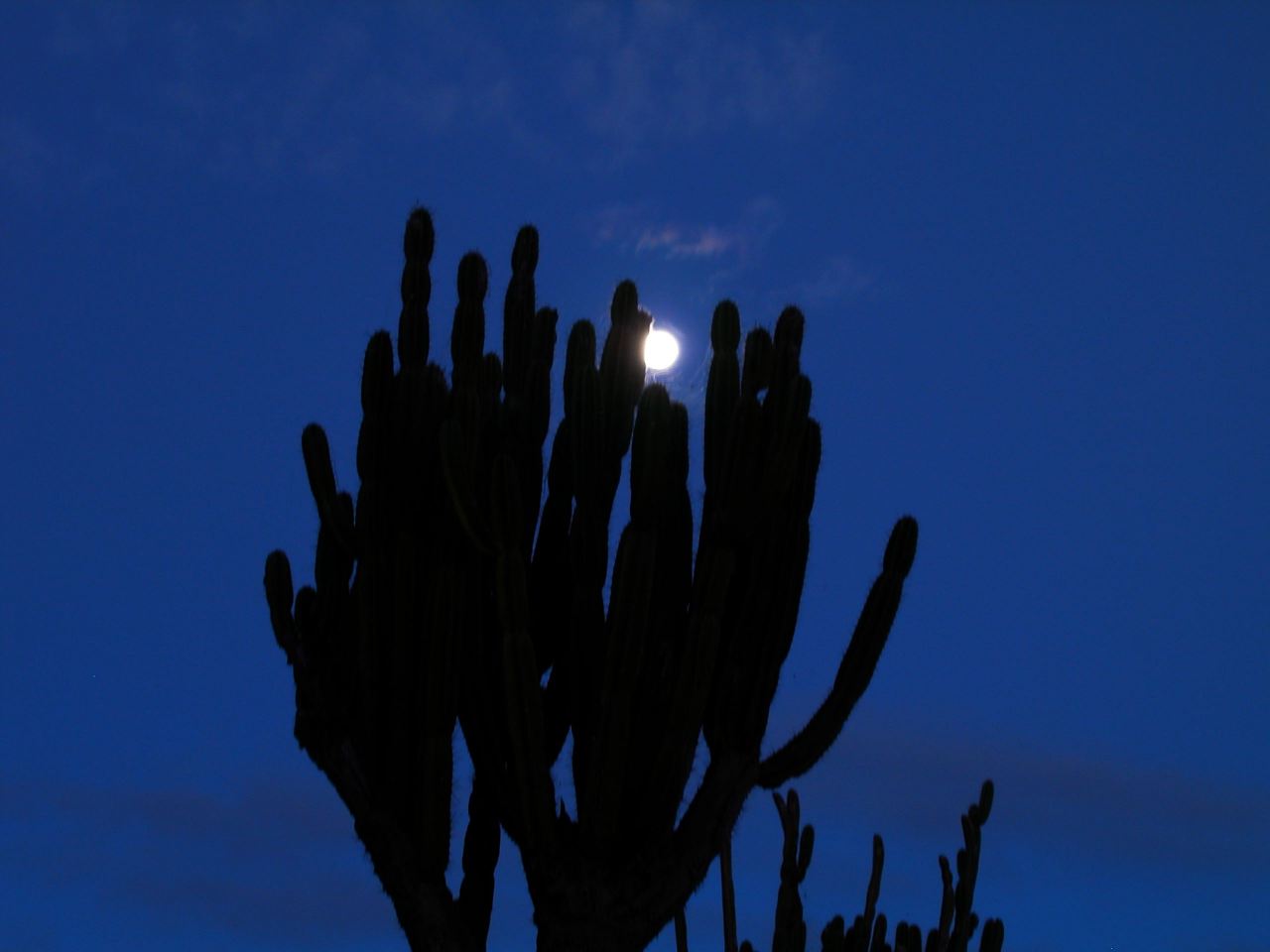
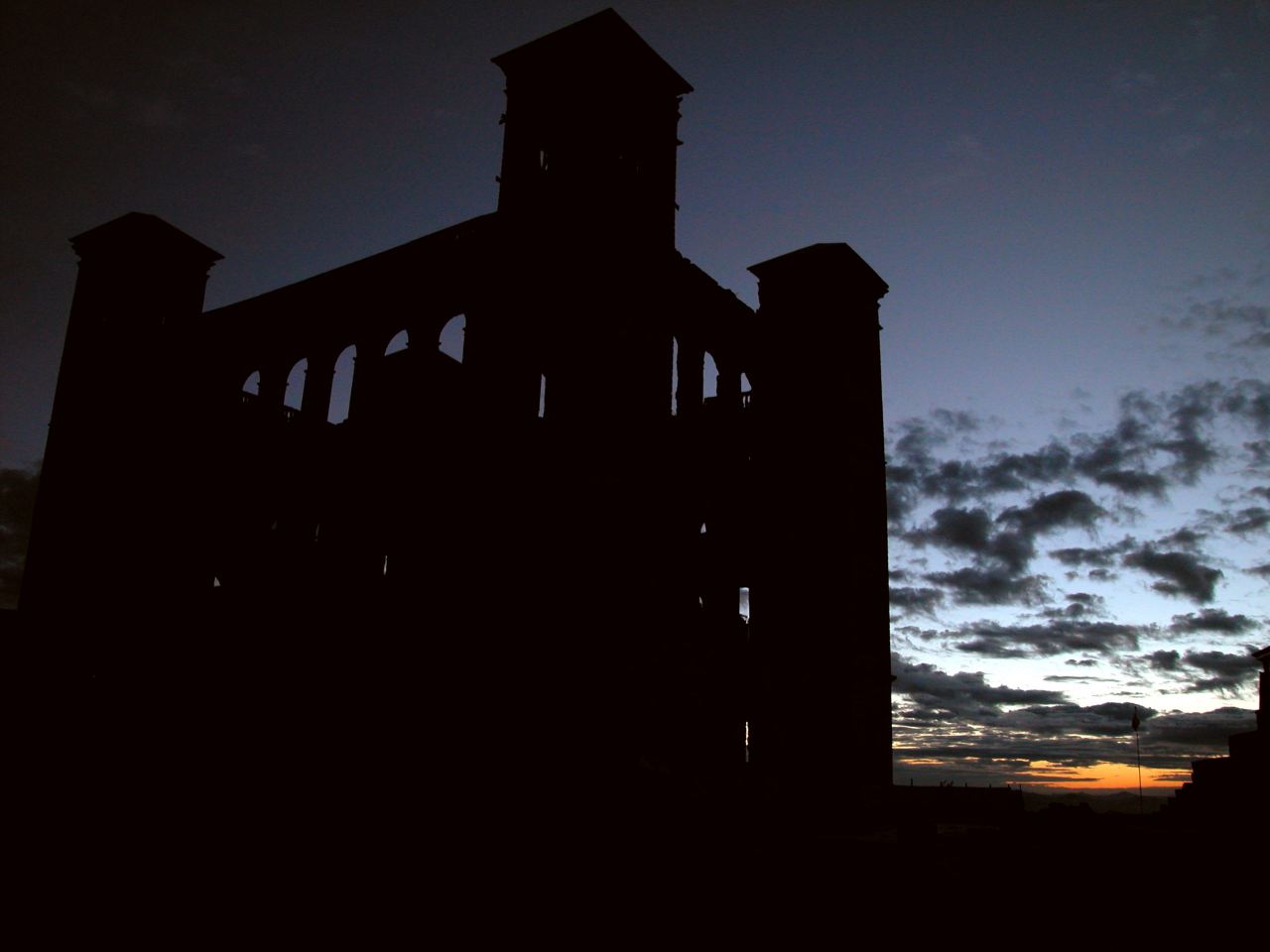
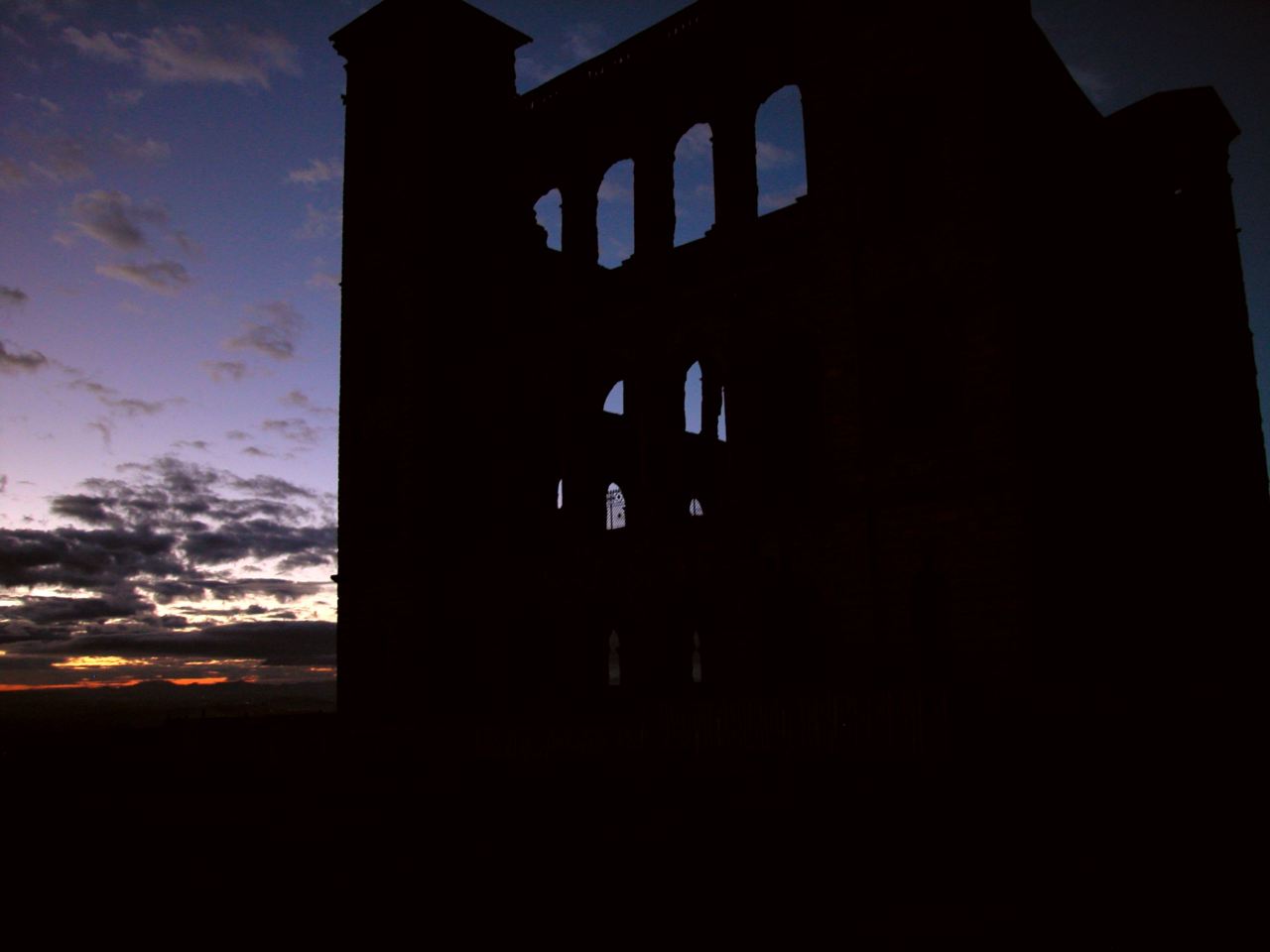
We had our farewell dinner at a café with a magnificent view of the city, the one where we’d had our first coffee on our first day.
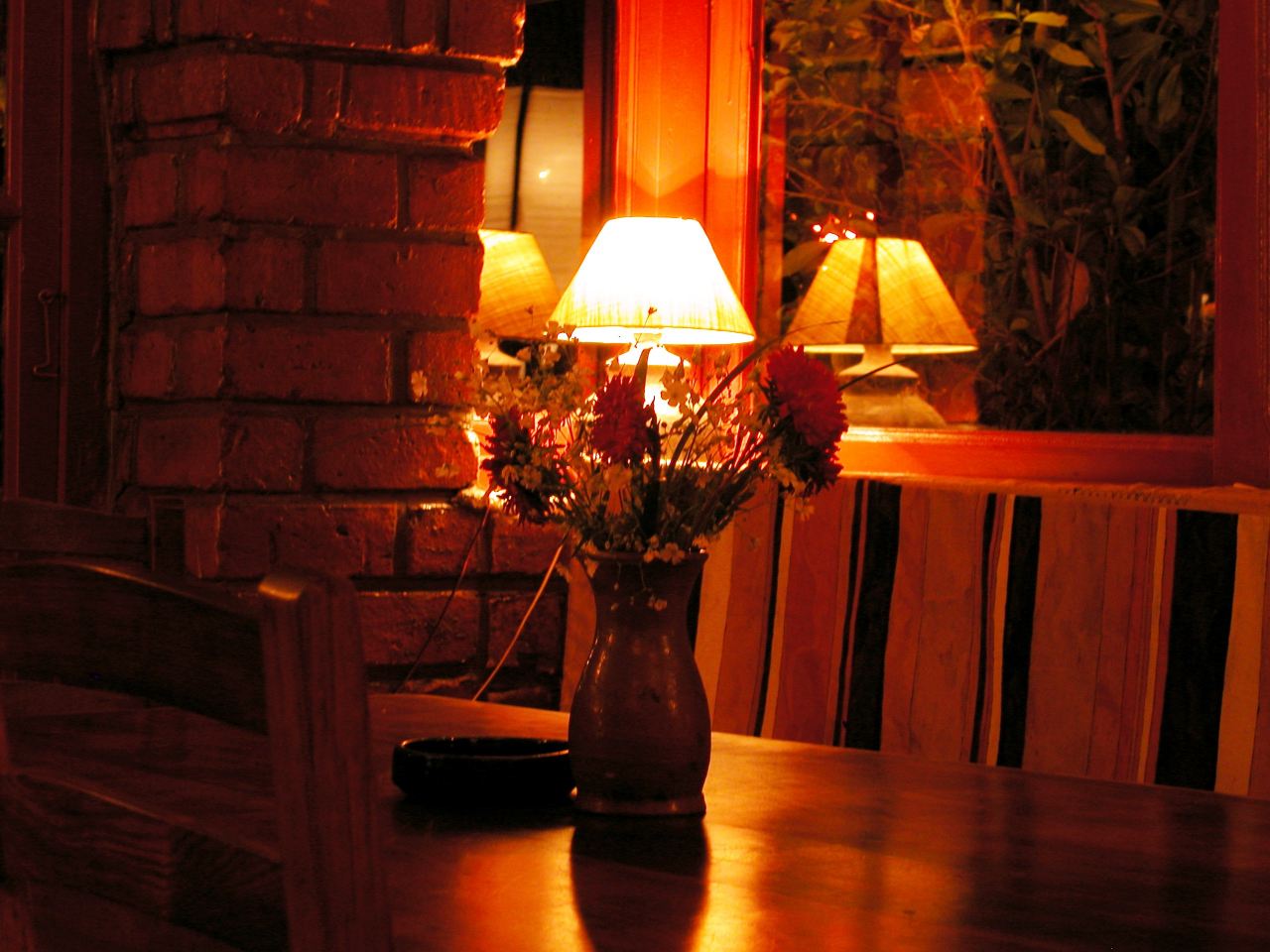
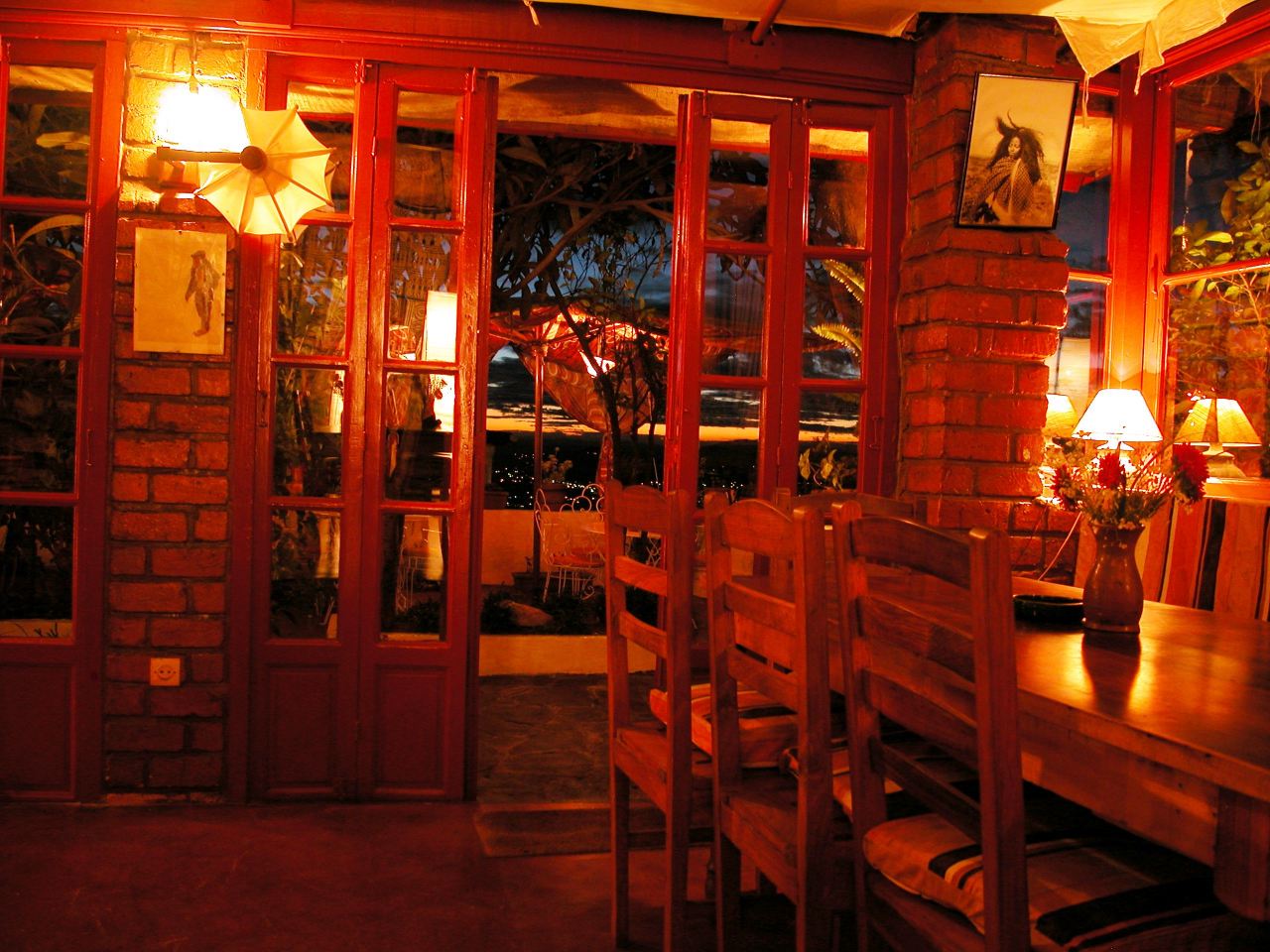
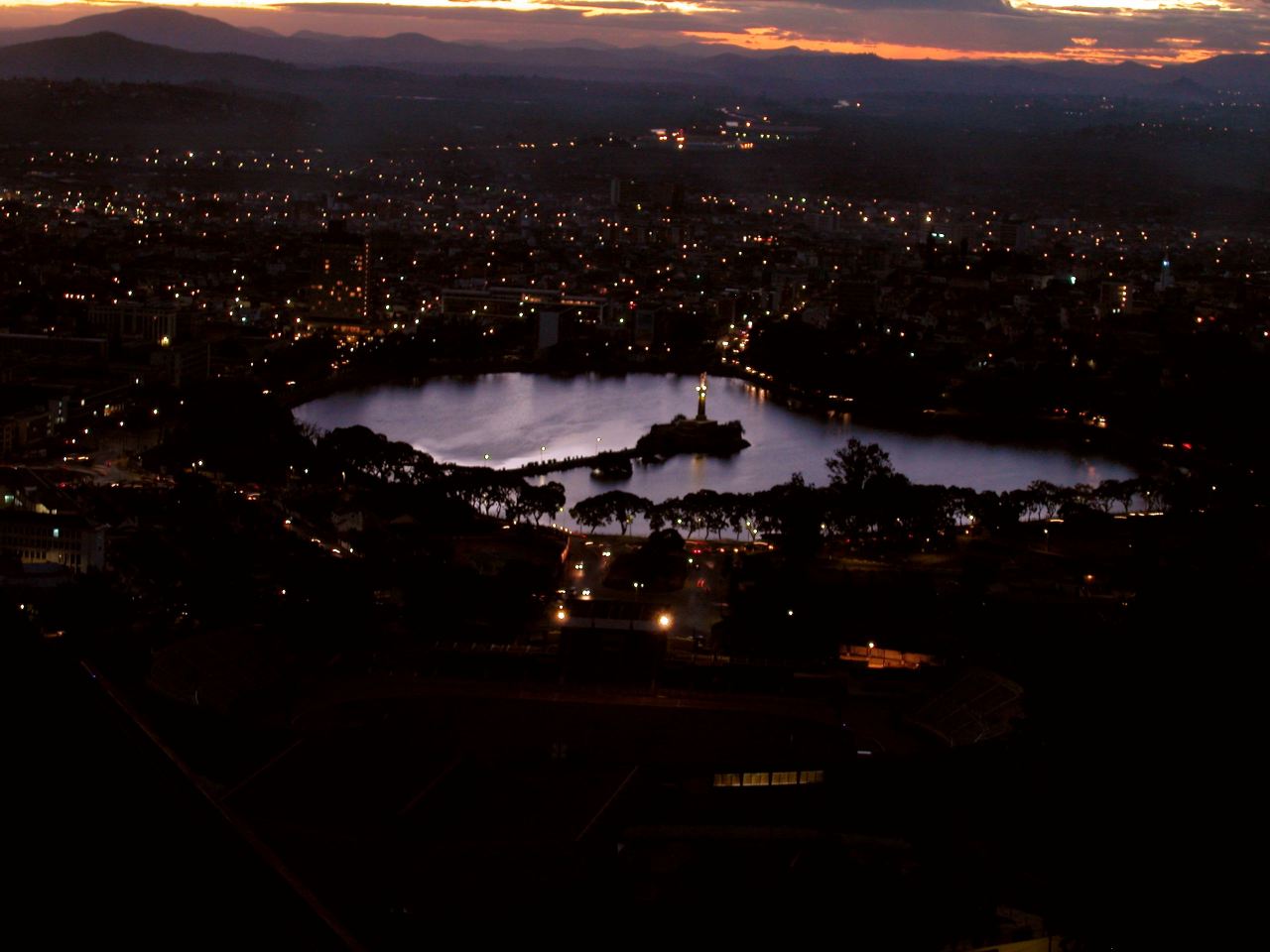
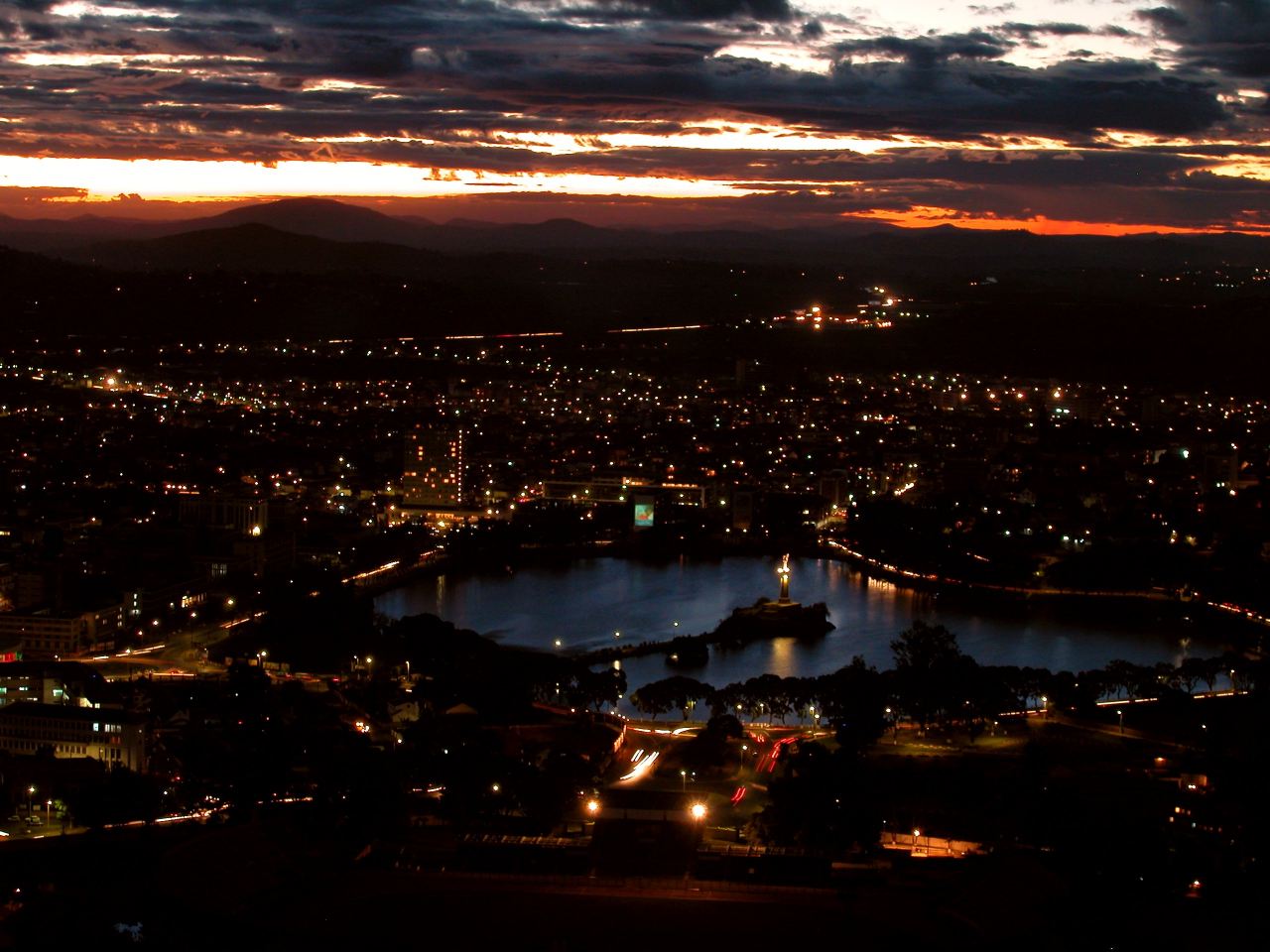
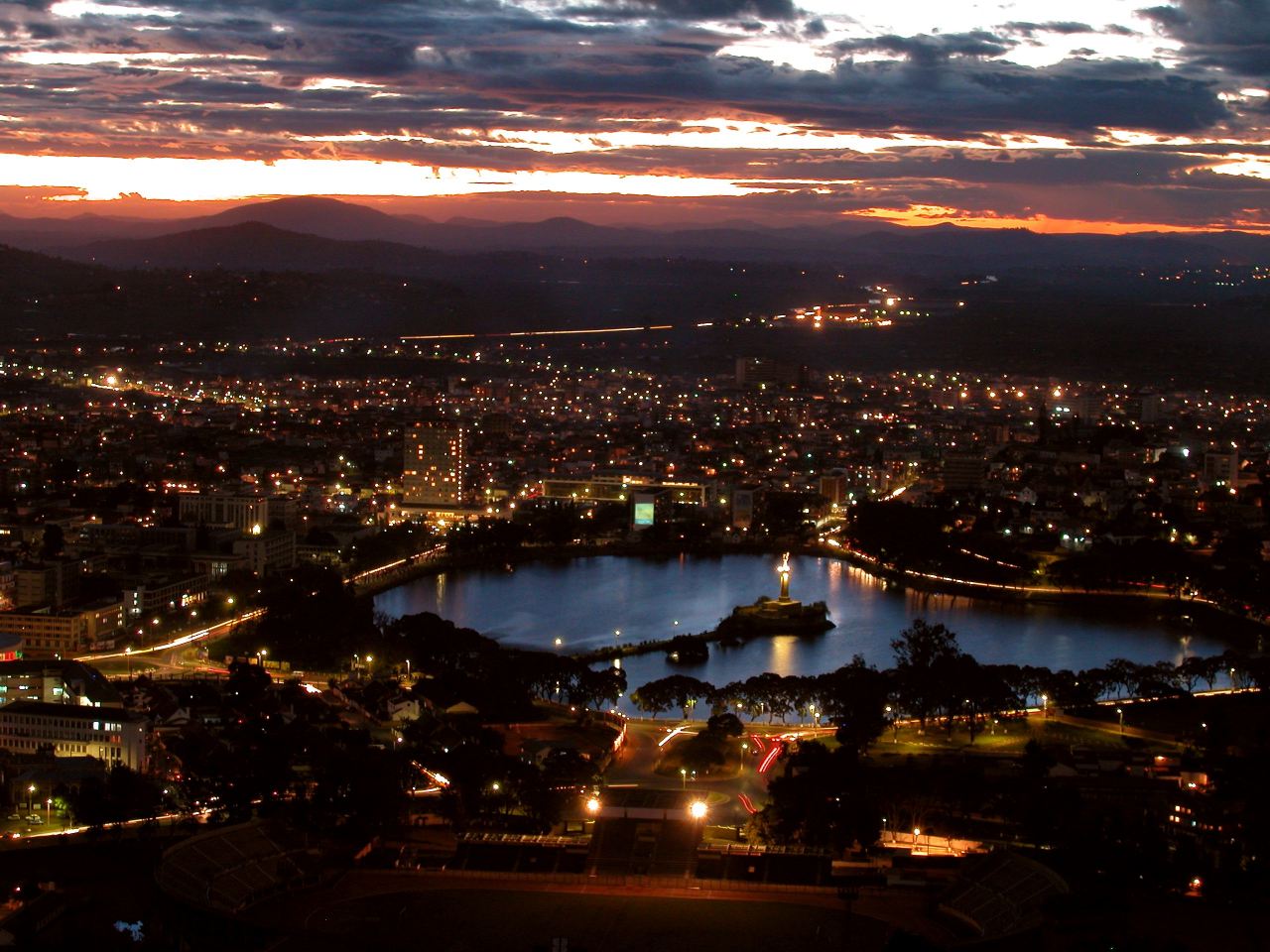
The airport felt predatory. To start with, there were dodgy money changers eager to shake you down for the last of your local cash. They called it an exchange, but would give you at best half the value. Malagasy francs weren’t changeable abroad anyway, they said, whereas here they were in good hands. After we unloaded, a jar of jam opened in one of our bags. We tried to go through the bag, but the police wouldn’t let us do that outside the airport. It was crowded inside and there was nowhere to sit. We cleaned up standing. There was nowhere to wash our hands. The toilets had been closed for cleaning just as the only large international flight was about to leave.
First they asked us to check in everything. There was no inspection, and whatever export restrictions existed didn’t seem to be enforced there. The catch, as I understood it, was that if a declared camera or video camera went into the hold, you wouldn’t see it until Paris and would have to pay a small fortune for failing to take it out of the country. There was a note to that effect on the visa and they checked the serial numbers carefully.
After the Malagasy security check and then the French one, which repeated everything out of apparent mistrust of the Malagasy, we were supposed to wait in a holding area divided in two. The first-class lounge had 300 seats for twenty travellers. Everybody else had no place to sit at all, and was lucky to find a place to stand.
By then you weren’t expected to have any Malagasy money, but the toilet charged admission. If you had no thousand-franc note, they would kindly take a ten-euro note. Best not to mention change. It wasn’t the custom and would have looked ill-mannered.
The duty-free shops sold the same goods at twice the price. They took cards, with a twenty-euro charge per purchase. A plain cloth bag cost twenty euros cash or forty by card.
None of this really upset us much. I took it as a reminder of what the airport was like then: buy what you need before getting there and keep a little Malagasy change.
Our aircraft was an hour late. It was dark throughout the flight, and the first light came over the Alps, with Mont Blanc visible through the window.
A few hours at the Paris airport brought Air France service back to mind.
After all that, Pulkovo back home in Saint Petersburg felt like the height of civilisation and culture. Perhaps that was a first for me. There you are. There are places that struck me as wilder than Russia, and I was still delighted with the trip. Madagascar was a beautiful country, perhaps the most beautiful in the world. Its customs seemed ancient and unique, and I was glad to see them when I did. As the country grows more prosperous, much may pass into history. People had little, but they were welcoming. We didn’t find theft or violence widespread.
I thought that a traveller going with a guide could avoid much of the discomfort we’d seen, whereas an independent trip like ours was best left to experienced travellers.
In any case, Madagascar was a fairy tale come true. It felt no more dangerous than going to our country house.