Trip report
“Eat the beaver and throw away the pelt.” — A local hunter
Getting to the Kolp
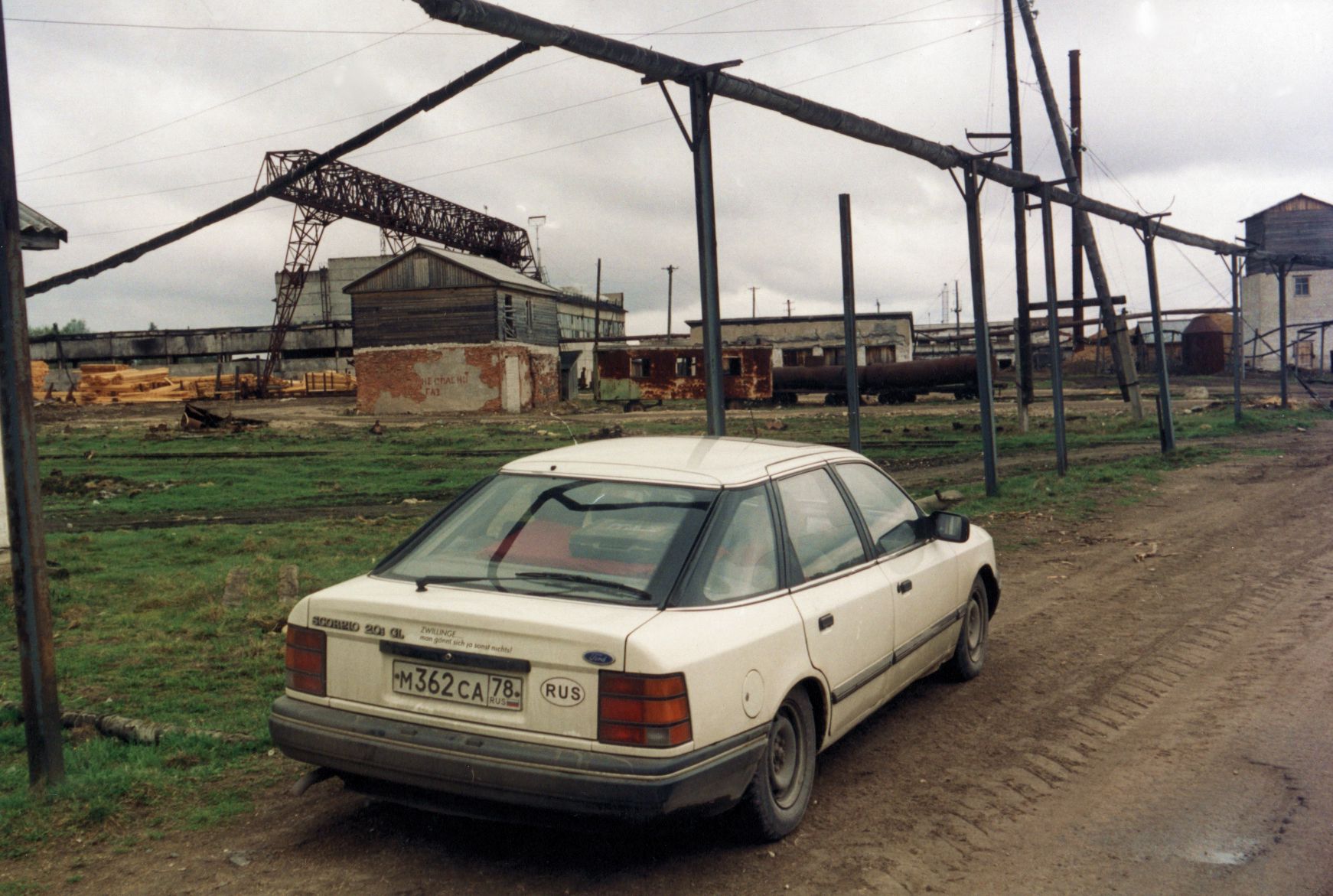
The trip really began with transport arrangements. You can reach the Kolp from Zaborye by narrow-gauge railway. It once had a passenger train, but what ran there now was anybody’s guess. I took the kayaks in my Ford and set off after dark to find out. I slept in the car near Tikhvin and got to Zaborye in the morning. Two men were tinkering with a little diesel locomotive. I explained that we had to get to Krasny Bor on Saturday. They were friendly and clearly hoped to make a little money, but everything was shut on weekends. When I realised they meant it, I went looking for the boss. I found Anatoly Belyakov almost at once, though he was in a great hurry. “Saturday is impossible,” he said. “How about tomorrow?” I tried the last resort and offered big money: 300 roubles. He pondered for a heavy minute, then said, “Meet here at eleven on Saturday.” I asked if I could leave the kayaks until then. He was rushing to the bank with the bookkeeper and left in his green Lada. I waited four hours, not in vain. The boats went into a storeroom full of spare parts. Not content with that, I arranged to leave the Ford in a man’s garden and went to the station to check the timetable, in case it came in handy. On the way a rooster attacked me and left several good scratches. I had not expected such dash from a rooster.
29 April · Day 1
It takes four to five hours to drive to Zaborye, so we got up at five, loaded the car and went to load up the Sochavas. We made good time despite the throng of people heading to their dachas. Just past the bridge over the Volkhov we went into the woods and quickly gathered some morels. We were ahead of schedule, so we stopped for coffee in Dymy at the Boksitogorsk turn-off.
In Zaborye there was no sign of our man at the meeting place or at home. We drove round for an hour and found him in the logging company’s chief engineer’s office. He was surprised we were so early and told us to wait at the depot. We waited two hours. When he finally came and we unloaded, the car would not start. I went at the spark plugs without success. The fuel pump was not running. I powered it from the parking lights and the car started. We later found that knocks to the bodywork as we unloaded the boats had tripped a rear bumper impact sensor. The car had decided it should not pump any more fuel. It was a nervous business and cost us another hour.
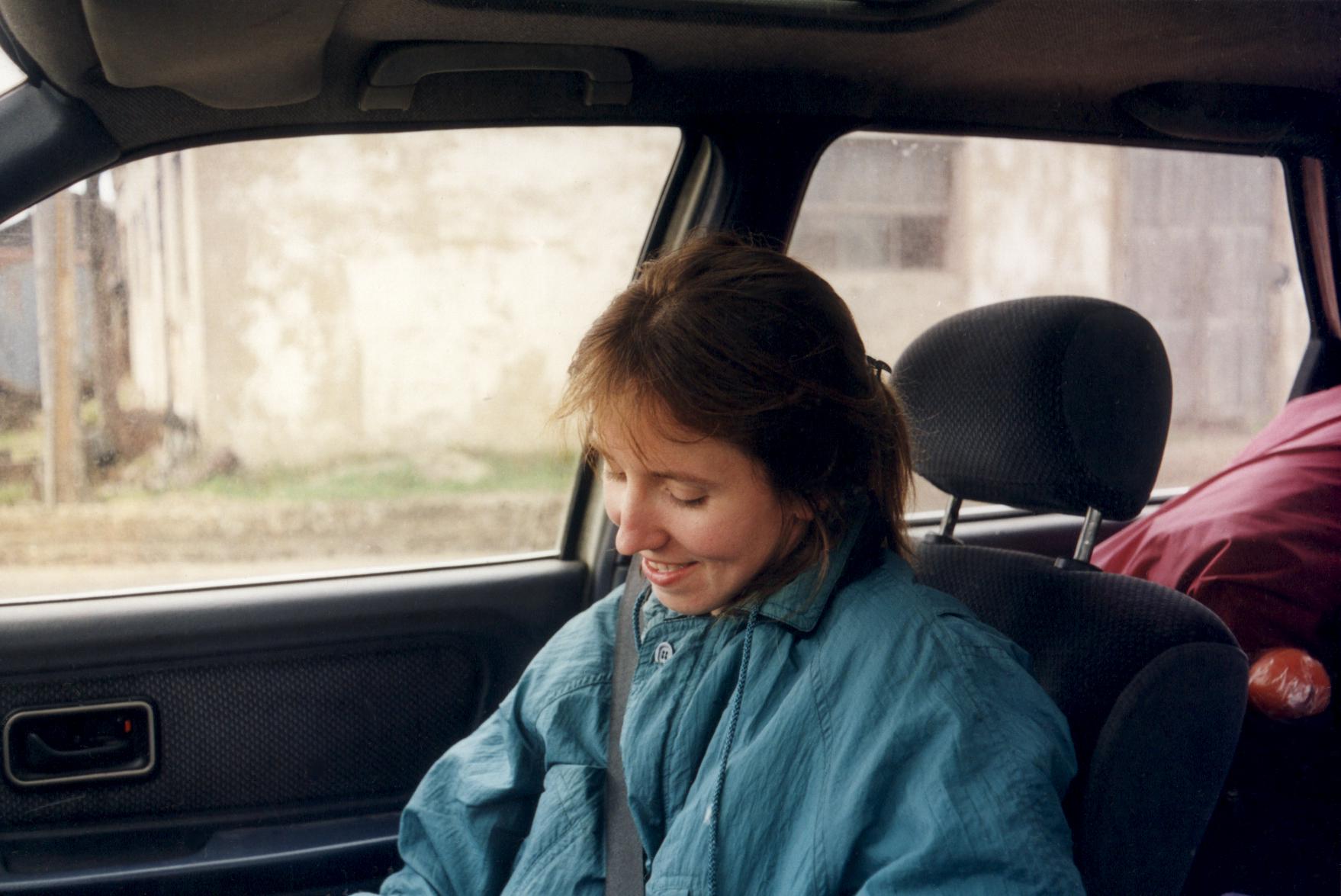
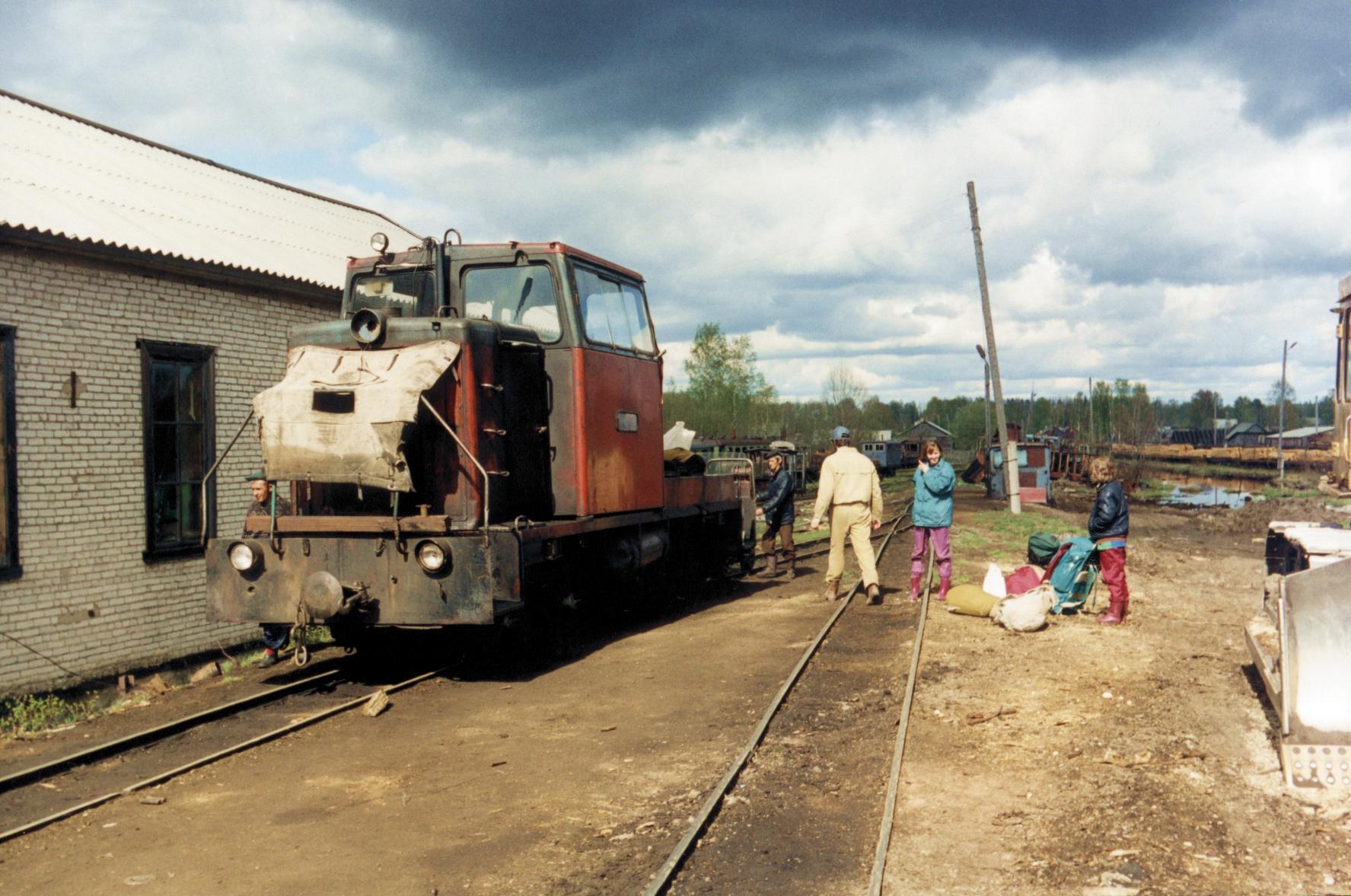
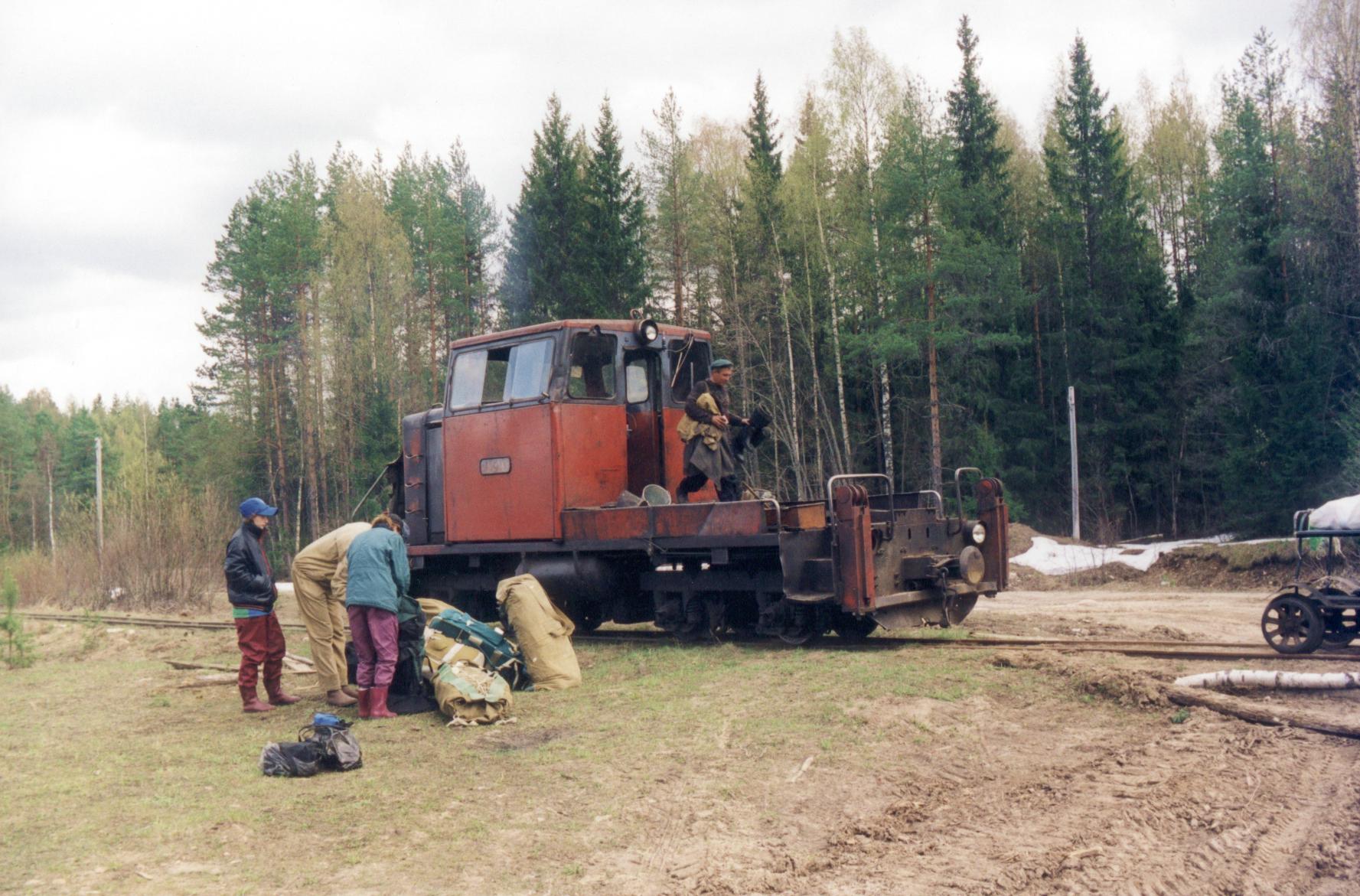
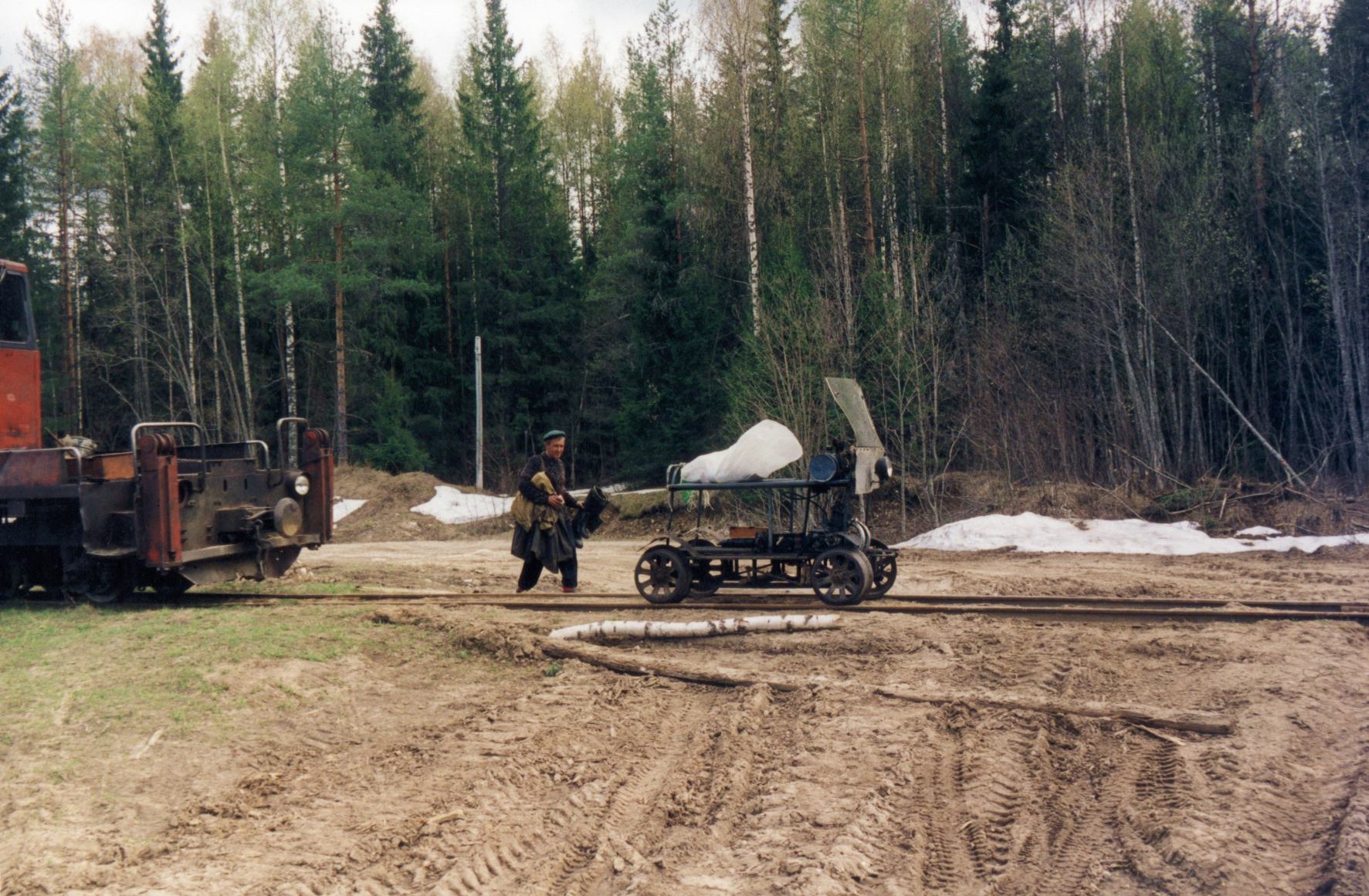
At last all was well. The locomotive was pushed out of the shed. It would only start with a push. Though much larger than the Ford, with a diesel engine of course, it took only two people to start it. A local hunter joined us. He had a little home-made rail trolley with a motorcycle engine and two standard wheelsets on a welded aluminium frame. It weighed a hundred kilos and was quite a job to load. After all the preparations we were finally on our way. The locomotive could do thirty kilometres an hour on the level. Our man with the trolley took up position with his gun and started hunting. The engine made a terrific racket and it seemed every animal within five kilometres should have fled. A capercaillie appeared in the bushes all the same. By the time he took aim, the locomotive had moved on a little and the bird vanished as suddenly as it came.
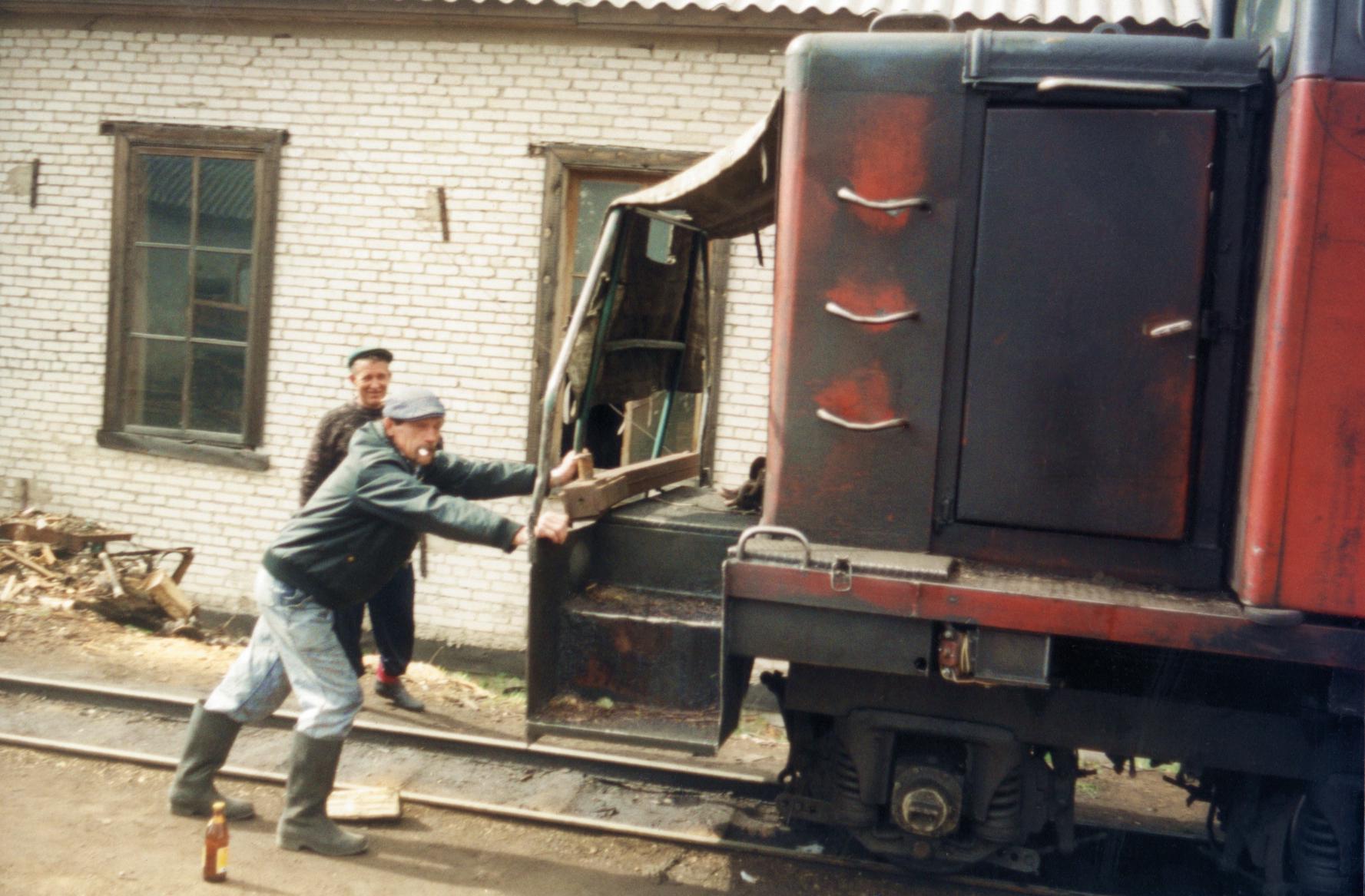
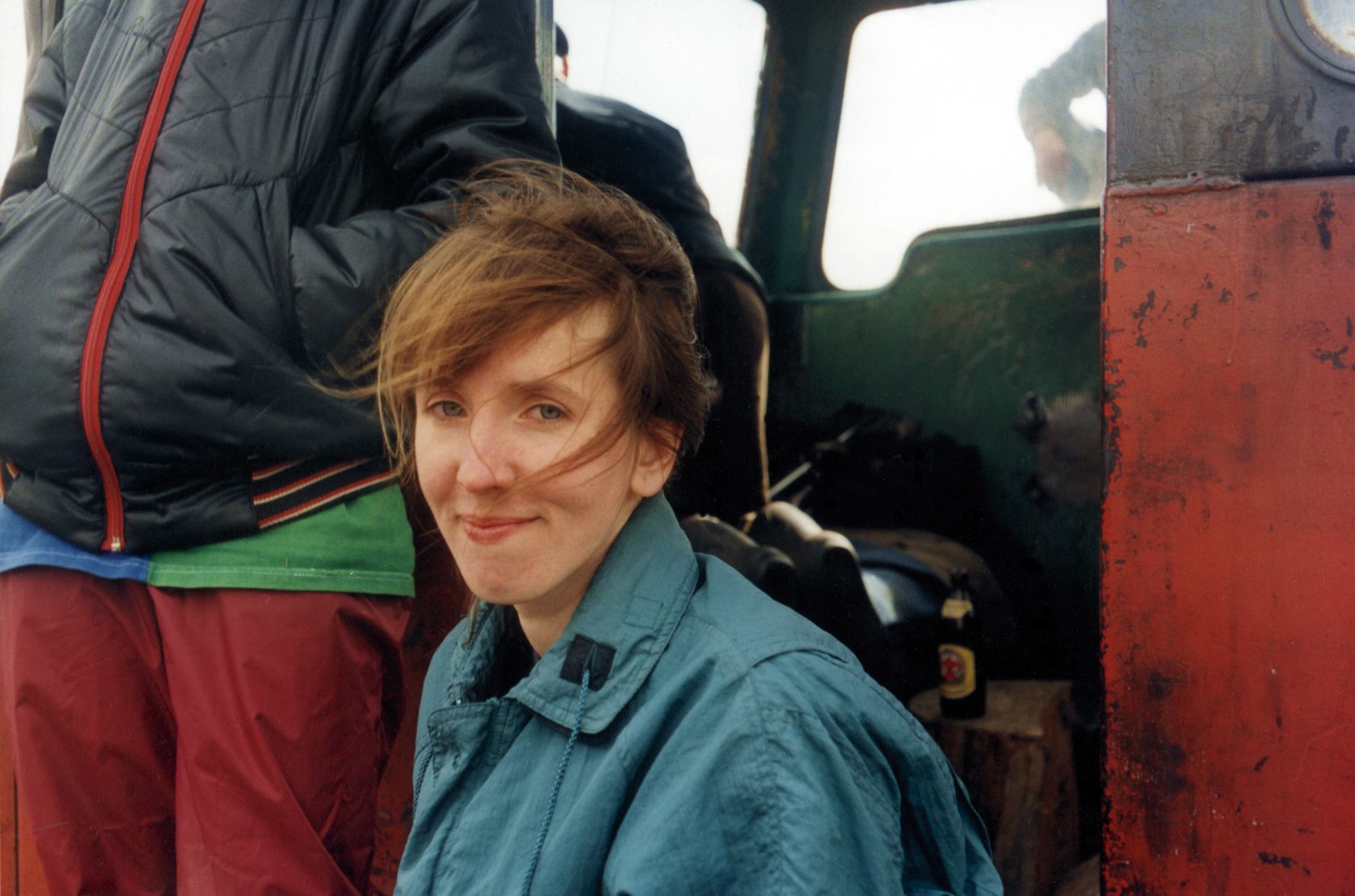
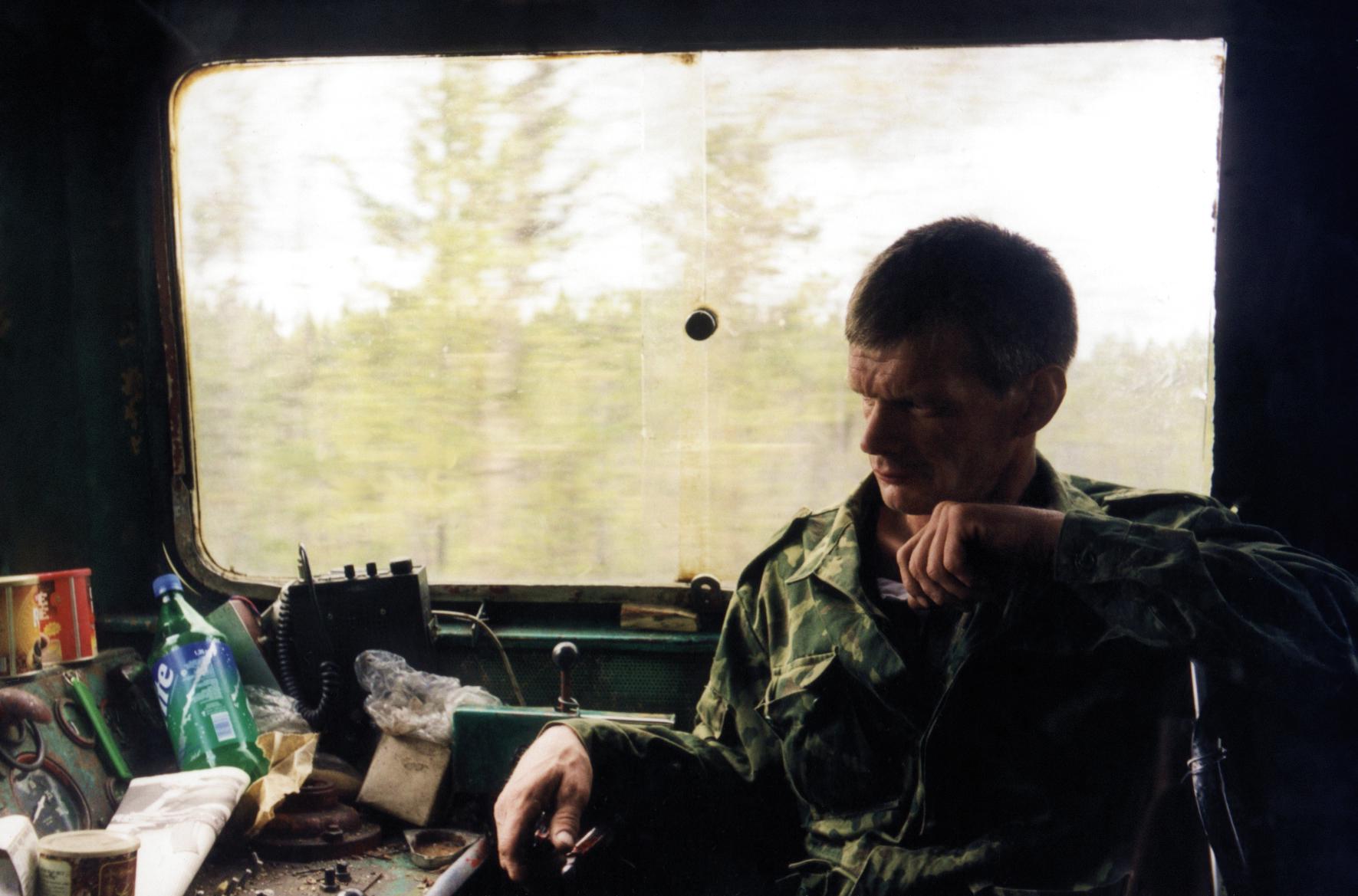
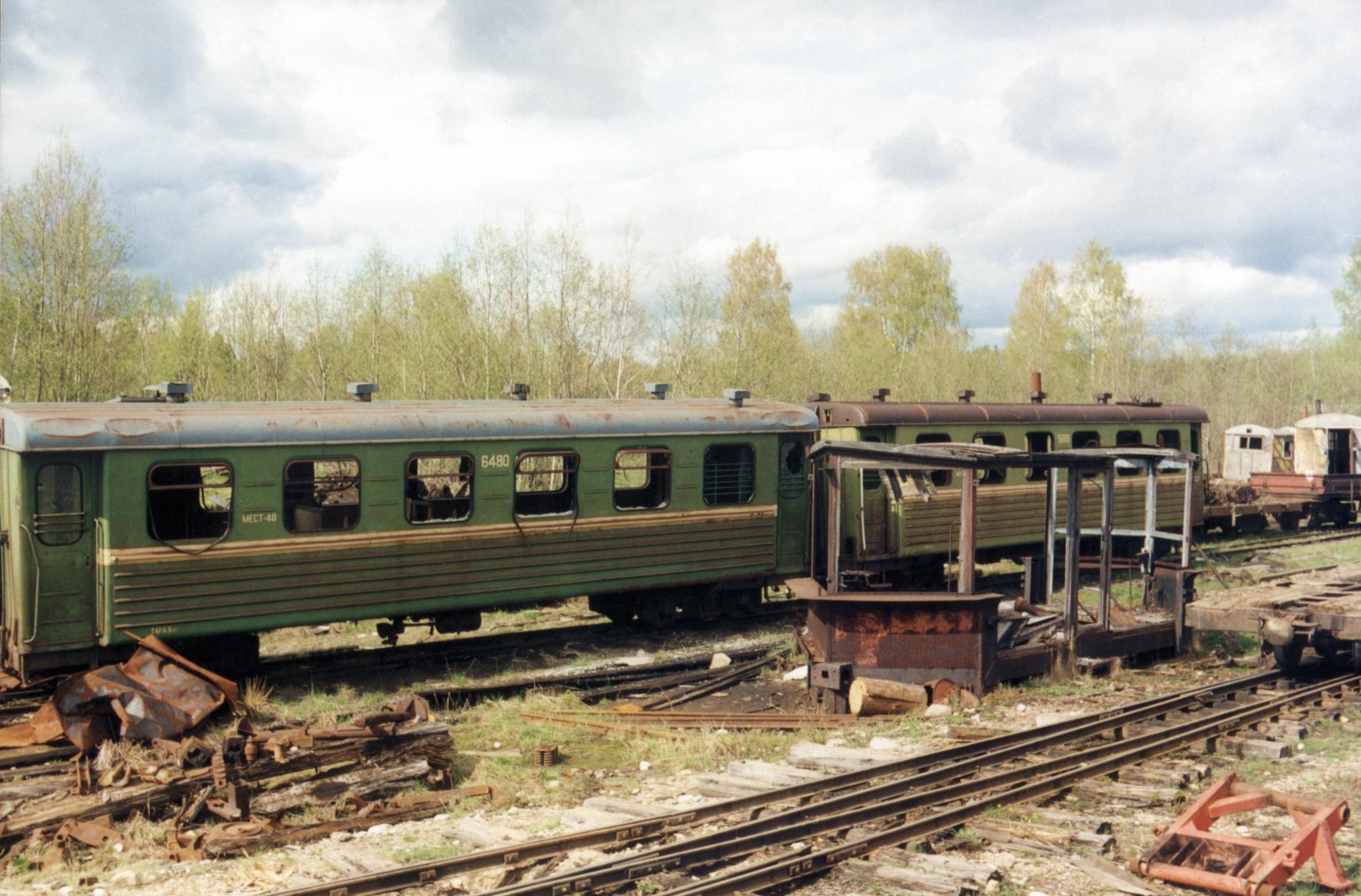
The line runs through a narrow clearing that nobody seems to maintain. Passing trains break off overgrown branches as necessary. The railway used to be far longer, but they have gradually been selling it for scrap. A big locomotive can now go only a little beyond Krasny Bor. The remaining branches are neglected and the rails so twisted that only small trolleys get through. Derailed wagons lie beside the line and no one cares. It is quite a sight.
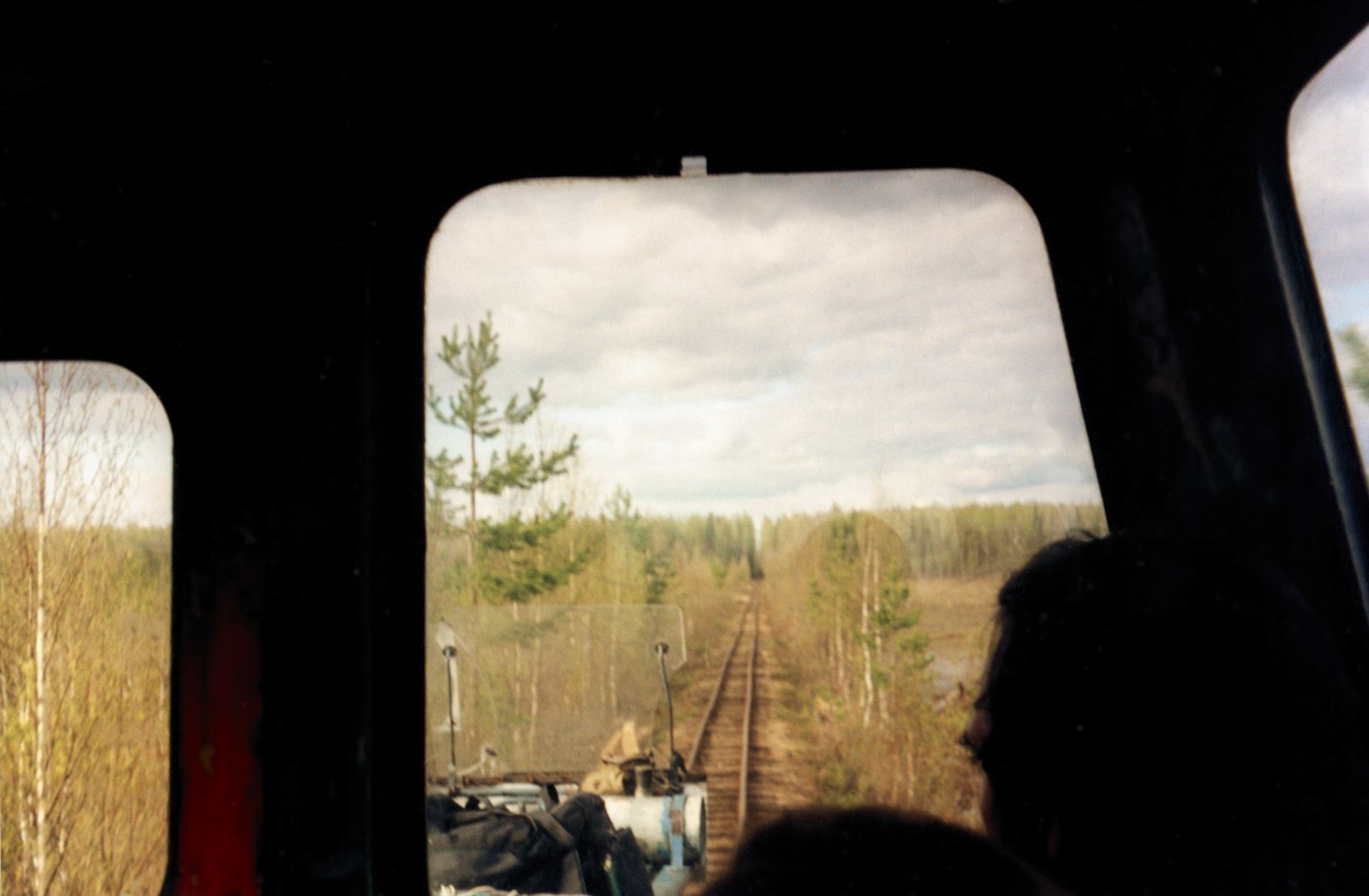
Before long a trolley came towards us. The men tried to hide in the bushes, too late. Meeting the boss on a Saturday was clearly not in their plans. Caught in the act, out without permission on the company's diesel. At least their trolley was light enough to lift off the tracks. There were several passing places but almost no communications. There used to be a line on telegraph poles, which had rotted away.
The country around us was boggy. Two cranes stood in one of the bogs. We were told there were very few left. Hunting them was held to be a great sin, but their numbers still fell. After three hours the country grew hillier and we reached Lake Svyatozero and Krasnoborsky. It was a fairly wild place but they had electricity. There had even been a station once, now hardly distinguishable from the other leaning buildings of late socialism.
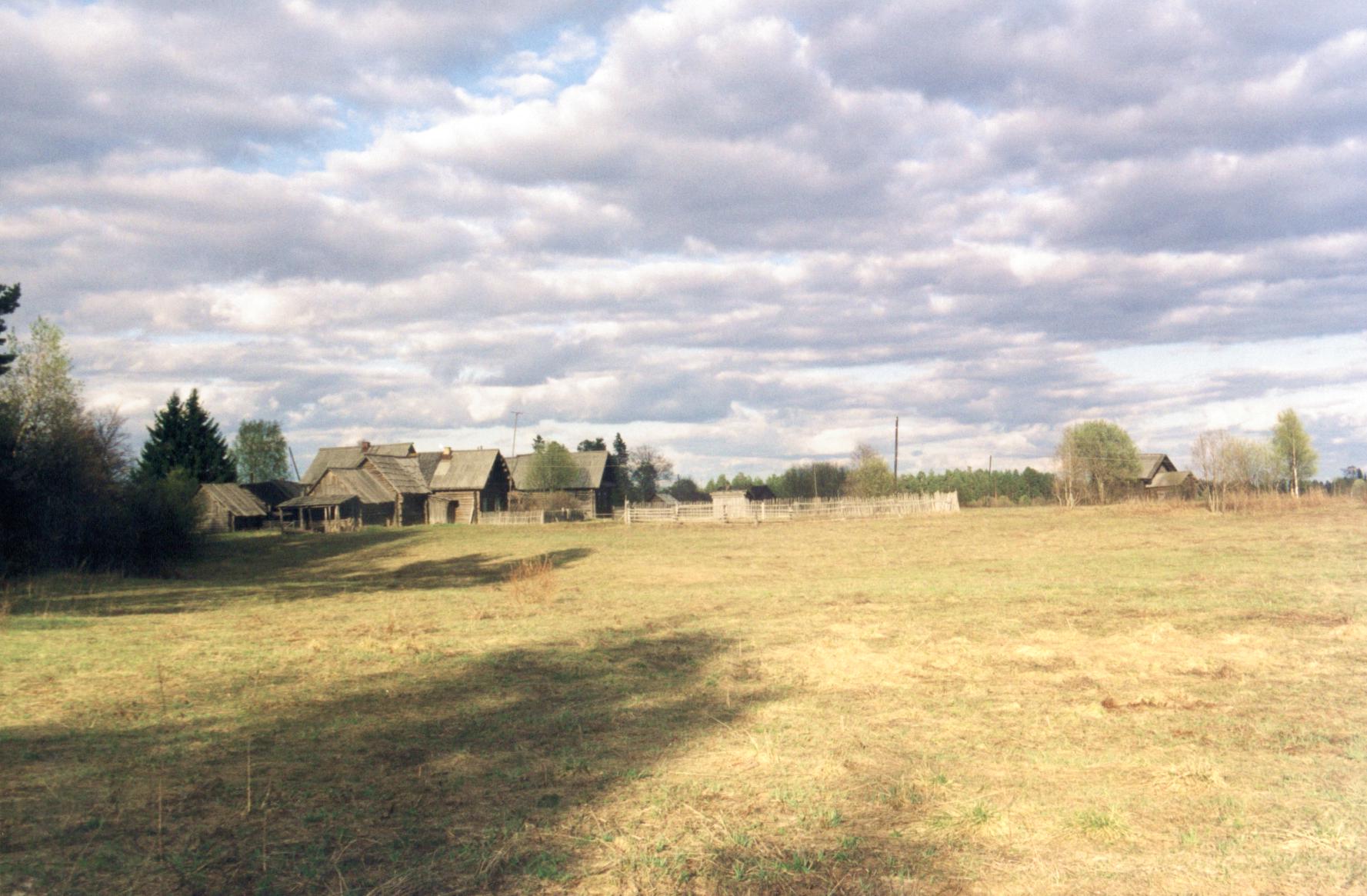
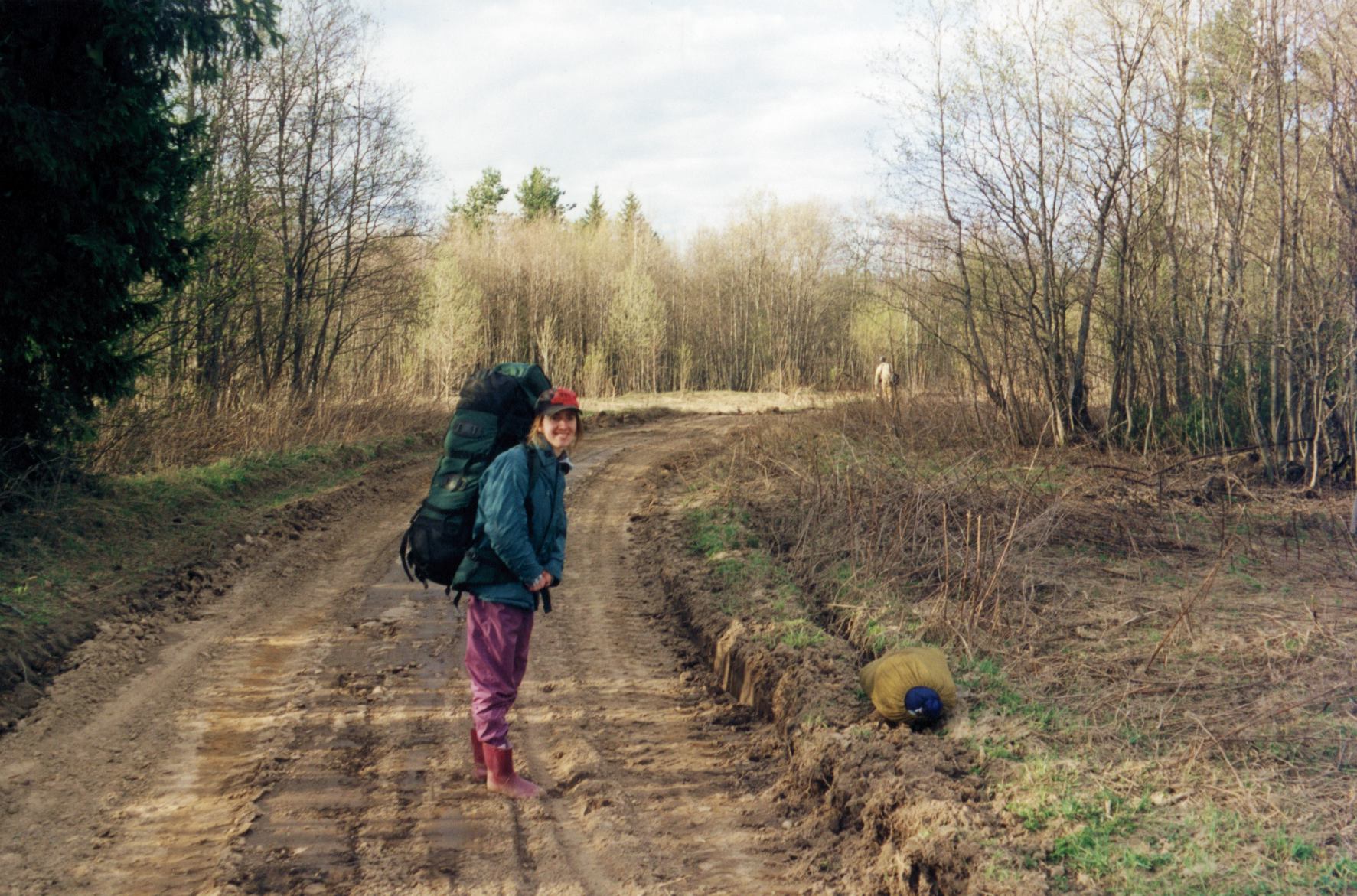
We went a little farther, to a road crossing near Sankov Bor. The village stands back from the line. The houses were there and had power, but there were few signs of life. We unloaded. The hunter went on with his trolley, the locomotive went back to base, and we prepared to carry to Krasny Bor. It went remarkably smoothly. The road was good and we got to the Kolp without a single rest.
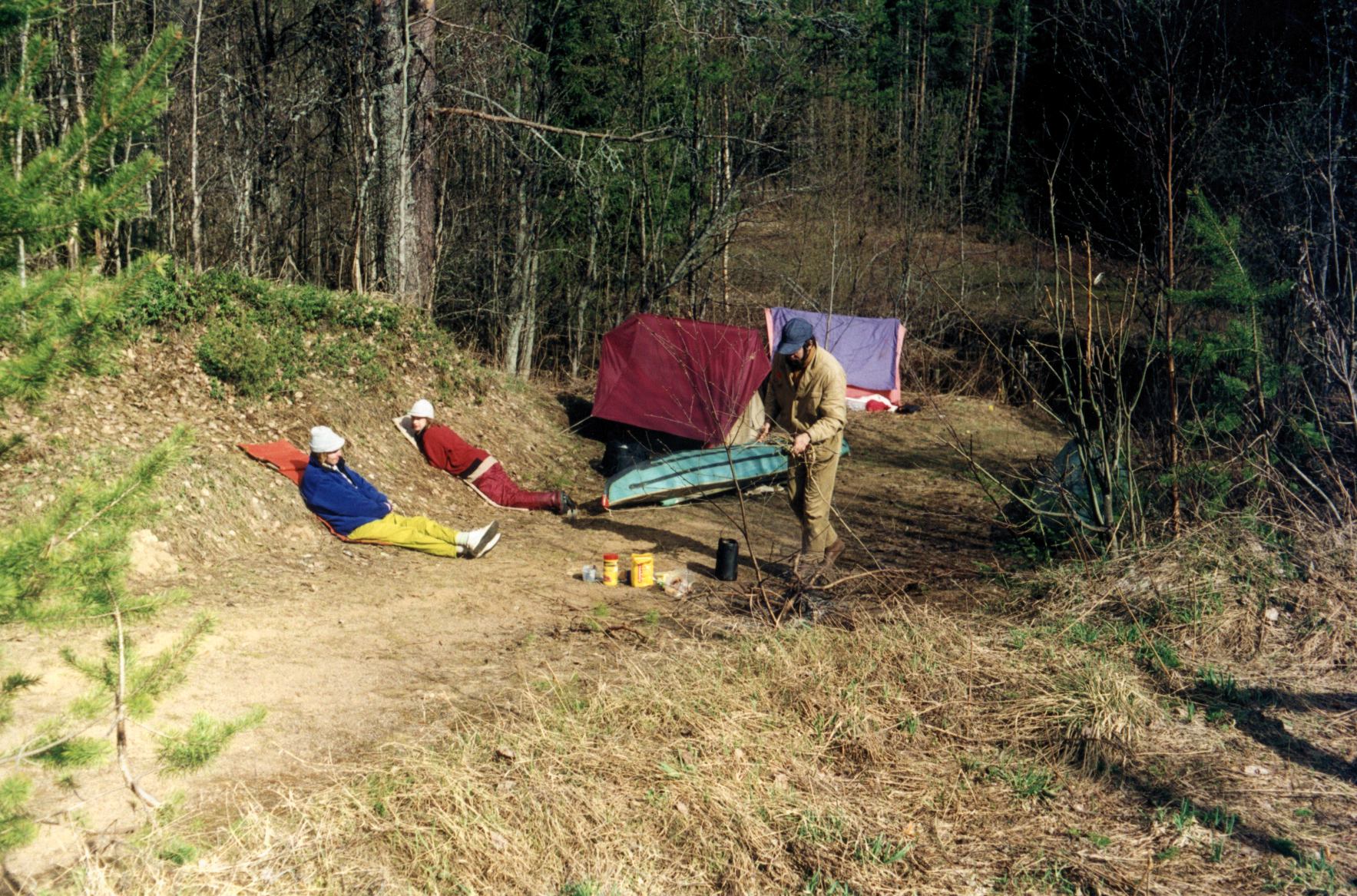
The sight was a little disheartening. It was not a river, but a shallow ditch at best. We felt like looking for something larger nearby, but the map and GPS would not be argued with. This was the river. We found a place in the village to put the boats together. It was getting late, and none of us believed we would put the kayaks together and get another kilometre or two that evening. After an hour’s discussion, we camped where we stood.
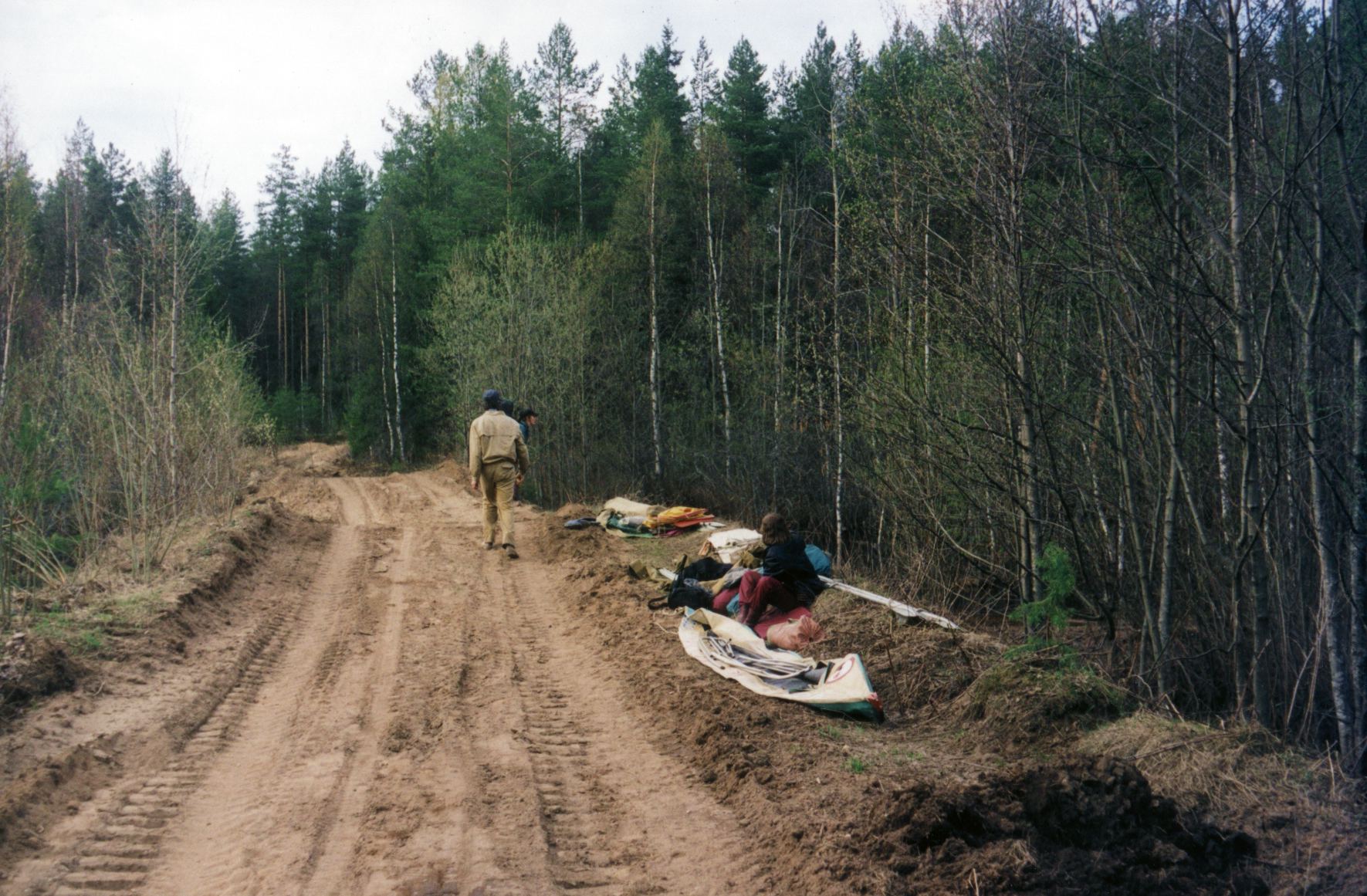
After dark a bus went past towards Korvala along the road we had thought impassable. The roads were passable after all, and with a little determination we might get through to the Genuya. I must come back on foot in autumn to have a look. It is the wildest corner of the region. We made soup, left the boats unassembled and went to bed early. It had been fifteen degrees in the morning. Now a cold north wind was blowing and it was nearly freezing.
30 April · Day 2
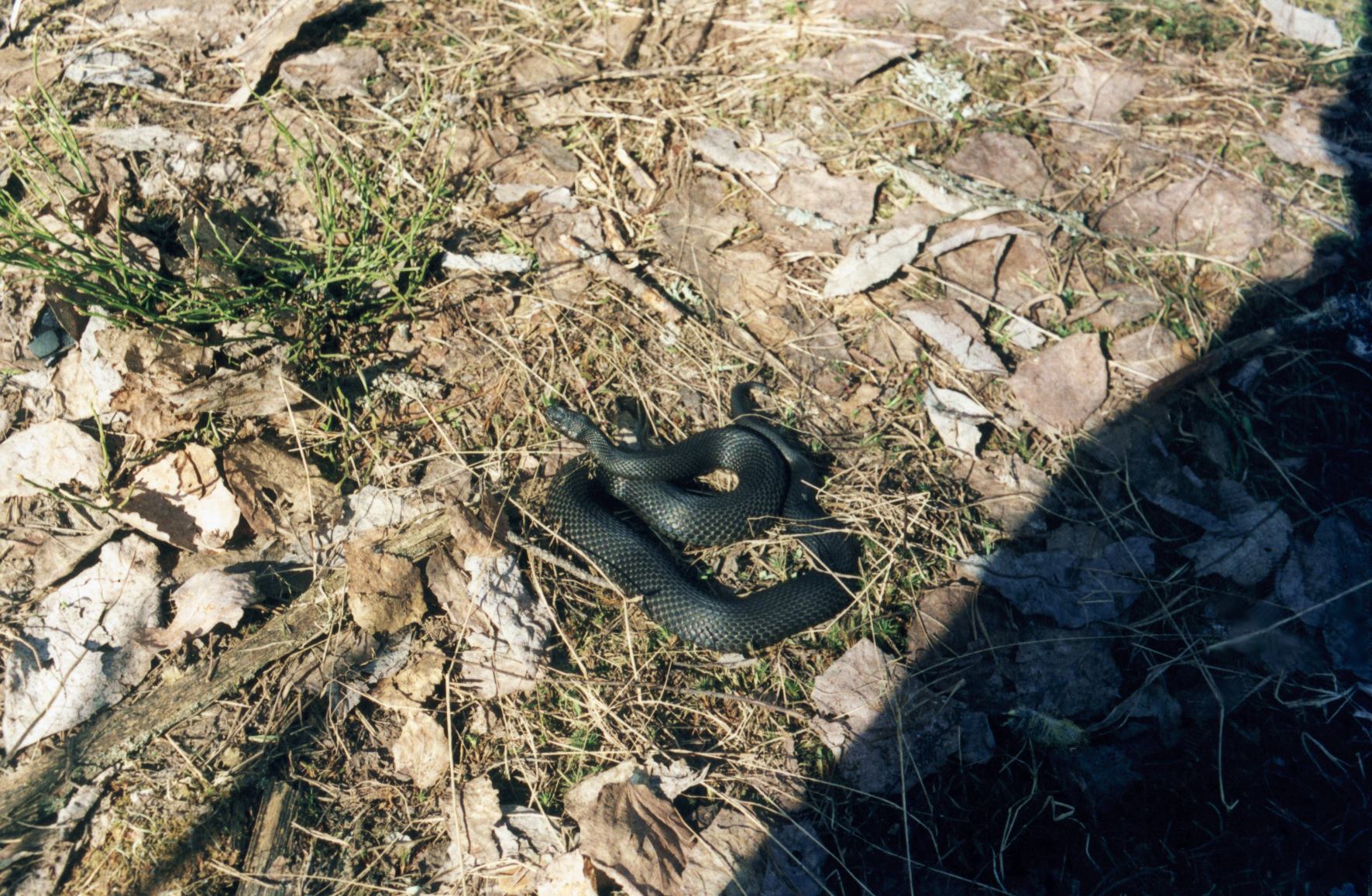
It was cold and sunny in the morning. The only warm spot was next to a low mound, with sun on the south side and no wind from the north. The packing was so slow I wondered whether we would ever set off. Over and over we made one last coffee. Near the camp I found a terrible serpent, black like a grass snake but without the yellow marks behind its head, and looking rather like an adder. I decided to practise catching snakes and took it in my hand, to Tanya’s horror.
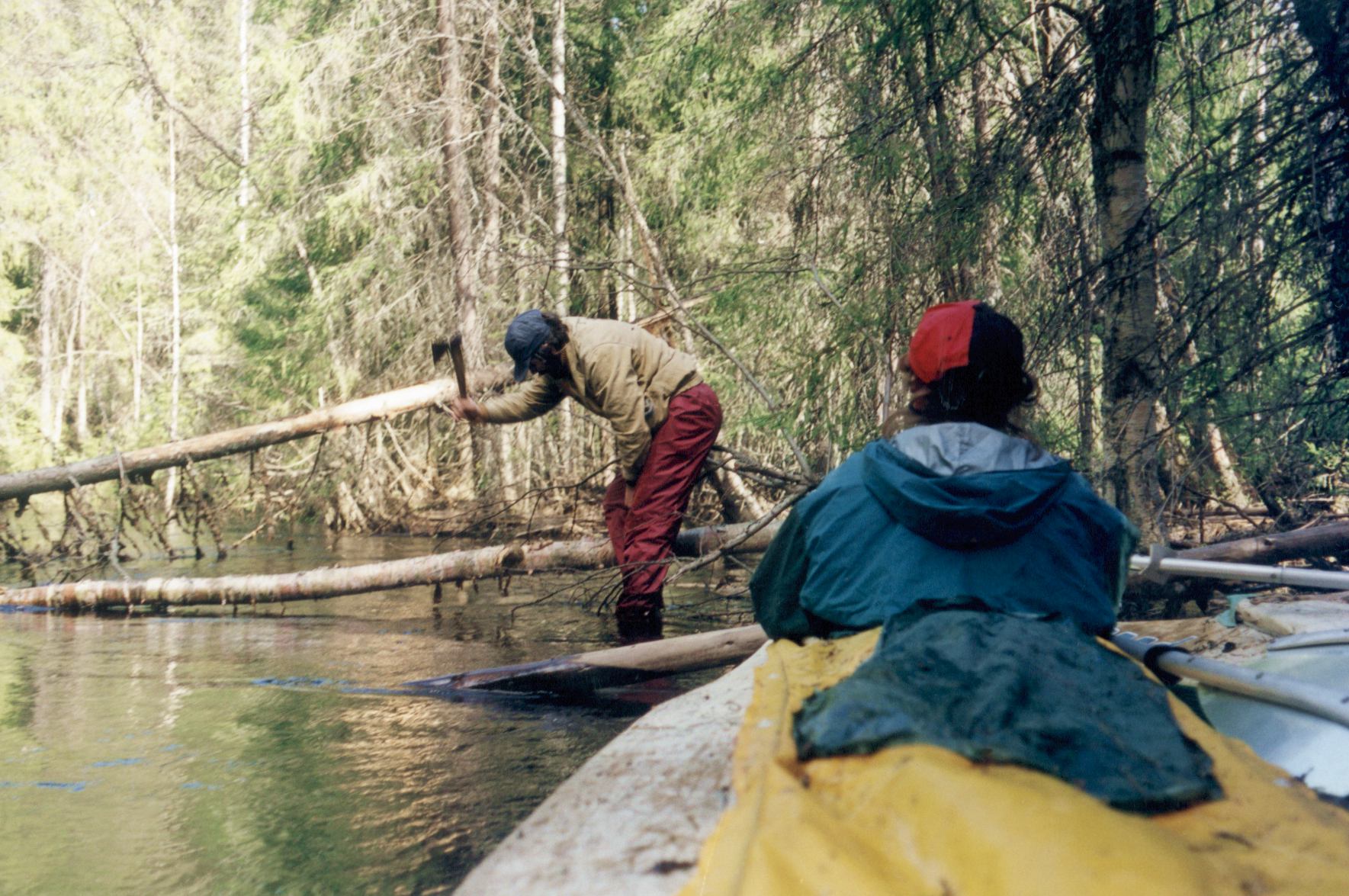
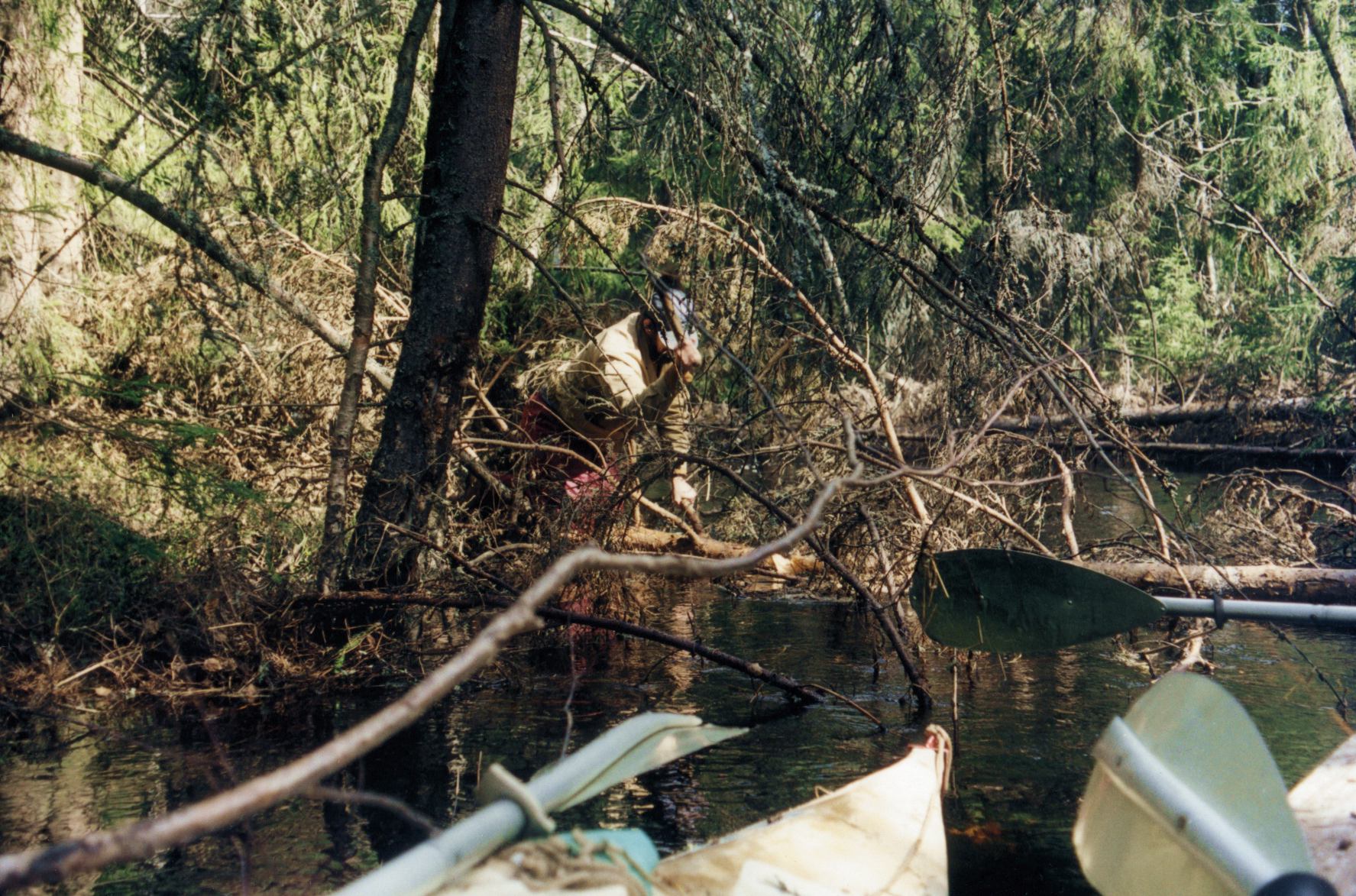
Eventually, in sleepy fashion, we set off at about three. The kayak was twice as long as the river was wide. We went through the village without trouble and met two anglers on the bank. They were the first people we had seen there. Until then it had seemed deserted. Just outside the village came one logjam after another. The locals said they had not seen a kayak here for years, and the logjams showed it. No one had cleared them and our progress was very slow. The one advantage was high water. The river flows straight through the woods, without the slightest hint of flood meadows. It looked unusual and beautiful, but the logjams were getting to us. You could not paddle for a minute at a time. Sometimes we chopped a way through. Sometimes we hauled ourselves over or under the logs. Feet got wet first, and the rest of us followed. A false step or a log rolling down is enough to put you waist-deep. At one jam I called to Tanya to get out. She thought something was wrong and jumped clear immediately, which meant she was wet too. It was cold and windy and felt as if it might snow. The GPS said we had covered two kilometres in a straight line after all those hours of struggle. Wicked, wicked beavers. Most of the logjams were their doing. By evening it was overcast and drizzling. We started looking for camp but there was dark spruce forest everywhere.
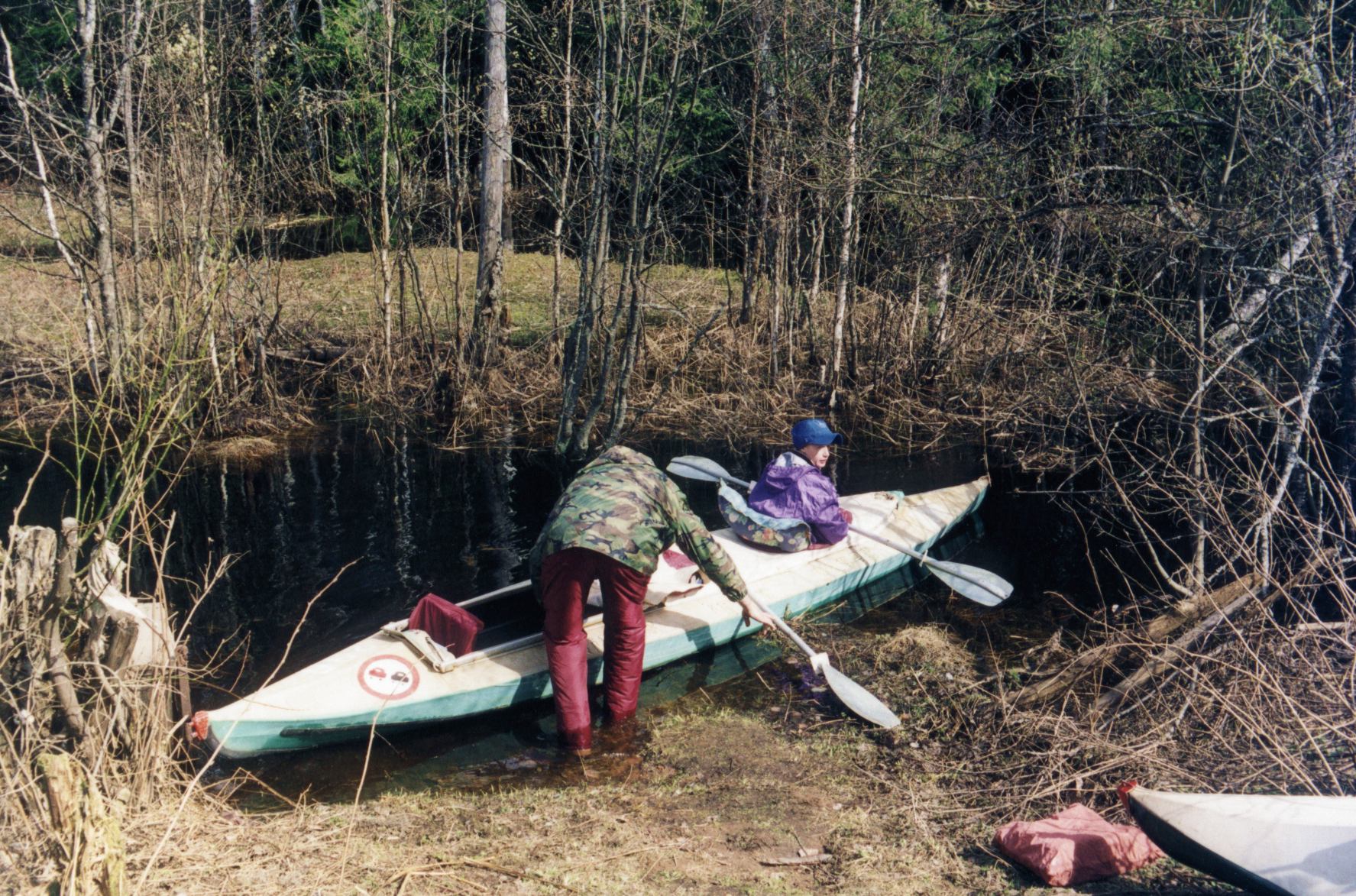
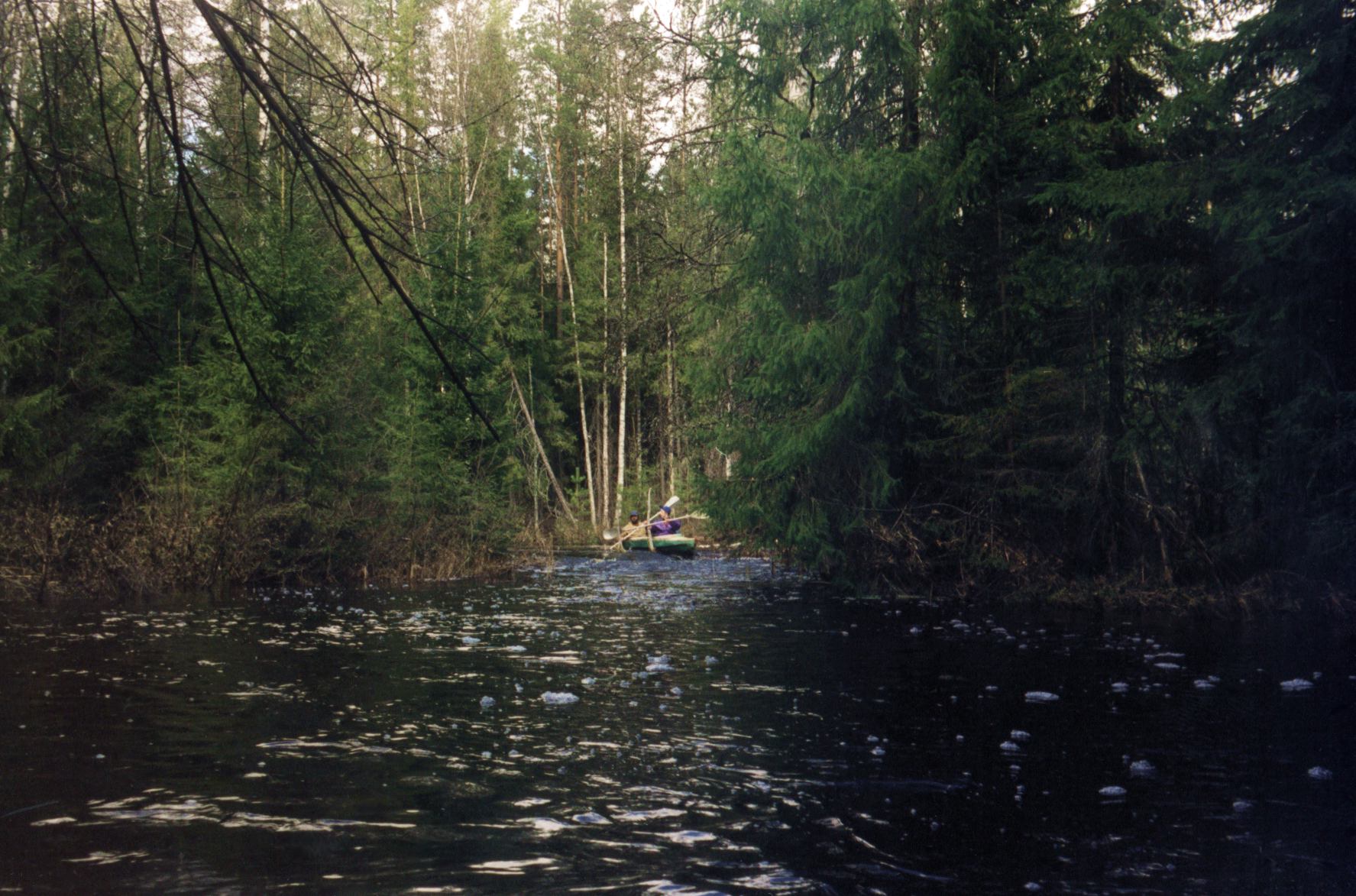
Suddenly there was a splash and furious swearing behind Tanya and me. We turned to see the Sochavas’ kayak upside down and Marina in the middle of the river. She had gone under completely. Sasha was in the water too, trying to drag the boat to the bank. He got it there before long, but turning it over was another matter. By the time we landed to help, some of the gear was already on shore. The main thing was that the video camera had survived. We bailed the water out with Sasha’s rubber boot.
We camped where they had capsized, on moss under enormous spruces. The Sochavas had a lot of wet things, and so did we. We made a great fire and began drying out. A few hours later, by dark, at least the essentials were dry. We made soup and prepared to celebrate our first proper camp of the year. There was champagne and caviar. It was not an obvious place for a feast, but we had never camped in such a jumble of fallen trees and decided that was interesting in itself. At about one Tanya could not keep her eyes open and went to bed. The drizzle soon got heavier and drove the rest of us under canvas.
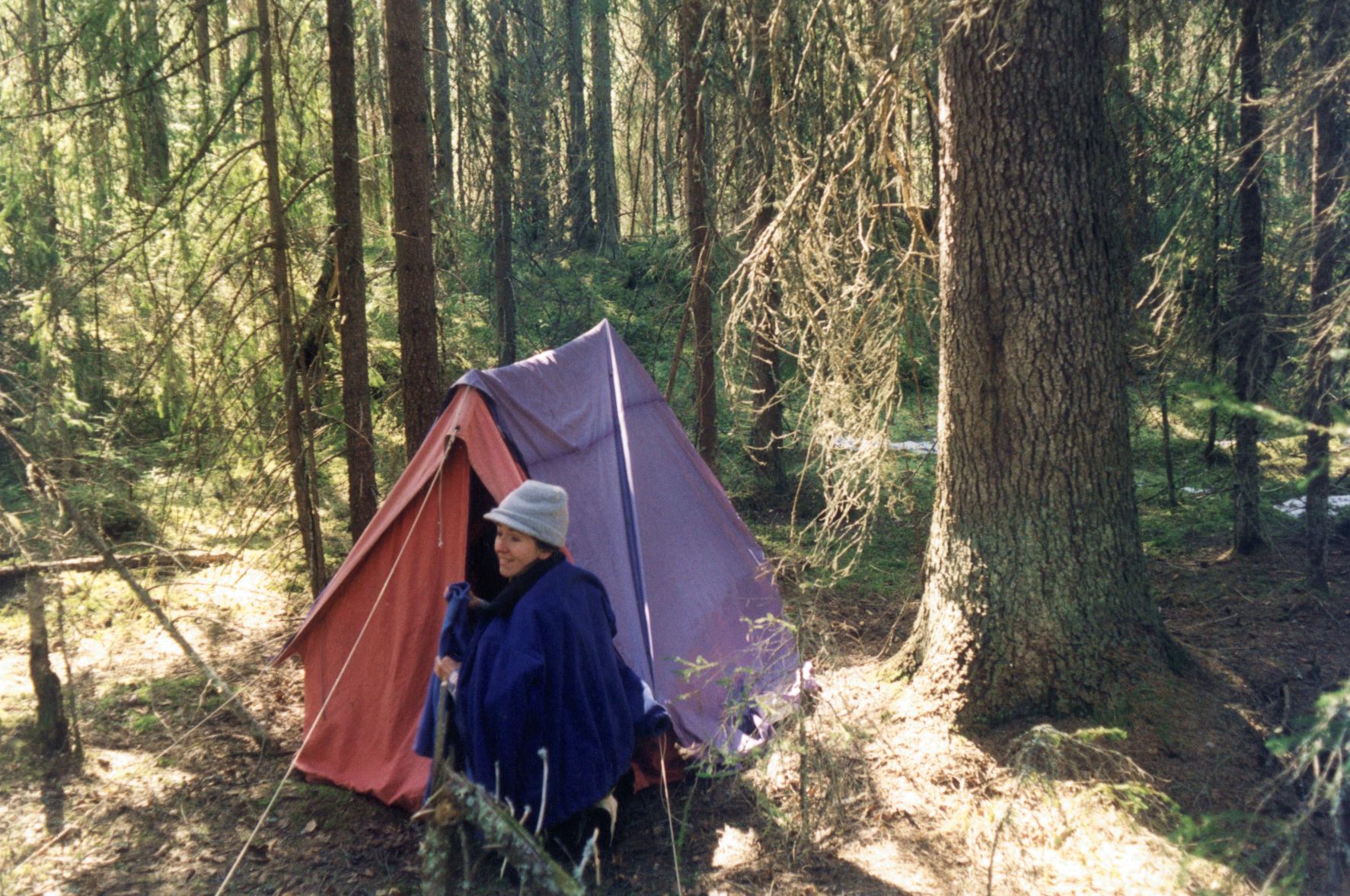
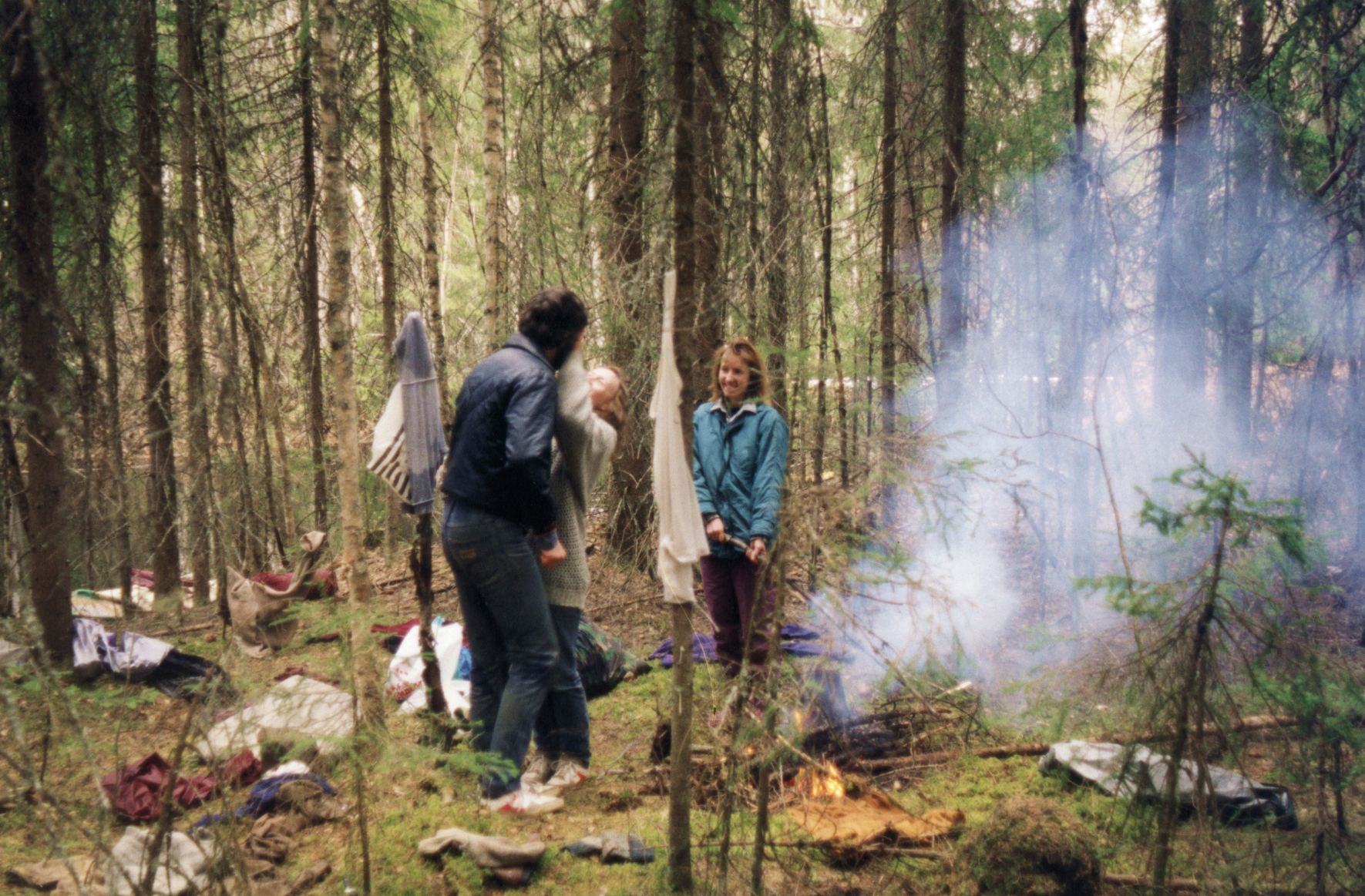
It rained hard all night, but it was warm and comfortable in the tent. We were trying out a new DuPont Thermolite sleeping bag. The material feels a little like down but dries quickly and weighs very little. We also had a new lightweight waterproof groundsheet, especially welcome as we were more or less camping in a bog. The test was a success. Warm and dry.
1 May · Day 3
We slept until eleven. The rain stopped and the sun came out briefly, then it snowed. Our luck with the weather was dreadful. Around zero, at least, rather than last year’s minus twelve. There had been years when we paddled in T-shirts on the May holidays. And they talk about global warming.
While we made breakfast a local hunter came over, curious at such an unusual sight. He loved the forest himself and understood us. We complained about the logjams. “A beaver’s a pest,” he said. “Kill it, eat it and throw away the pelt.” A beaver would make several dozen tasty cutlets, he told us. The hide would not fetch more than fifty roubles and might get you charged with poaching. Best throw it away.
It grew warmer by noon and we set off. The river was still blocked with logs, our progress painfully slow, and we were wet again. The only amusement was the beaver dams, with drops of a few tens of centimetres. We got out and looked at some before running them. On the whole the river is quick but has no big rapids or currents pressing strongly against the banks. We fought it all day and hardly went anywhere. By evening it had turned very cold. We stopped at a small flat spot right on the bank beside another logjam we could not face carrying round. The woods were utterly unfrequented. There was a track beside the river, but it belonged to animals, not people. After meeting a mother bear the previous year, Tanya was apprehensive and listened to every rustle. Fair enough. Bears had plainly been here. There was plenty of wood and we made a big warm fire, so life was bearable unless you stepped away and froze at once. It was minus two with a strong northerly. We were soon ready for a warm, windproof tent.
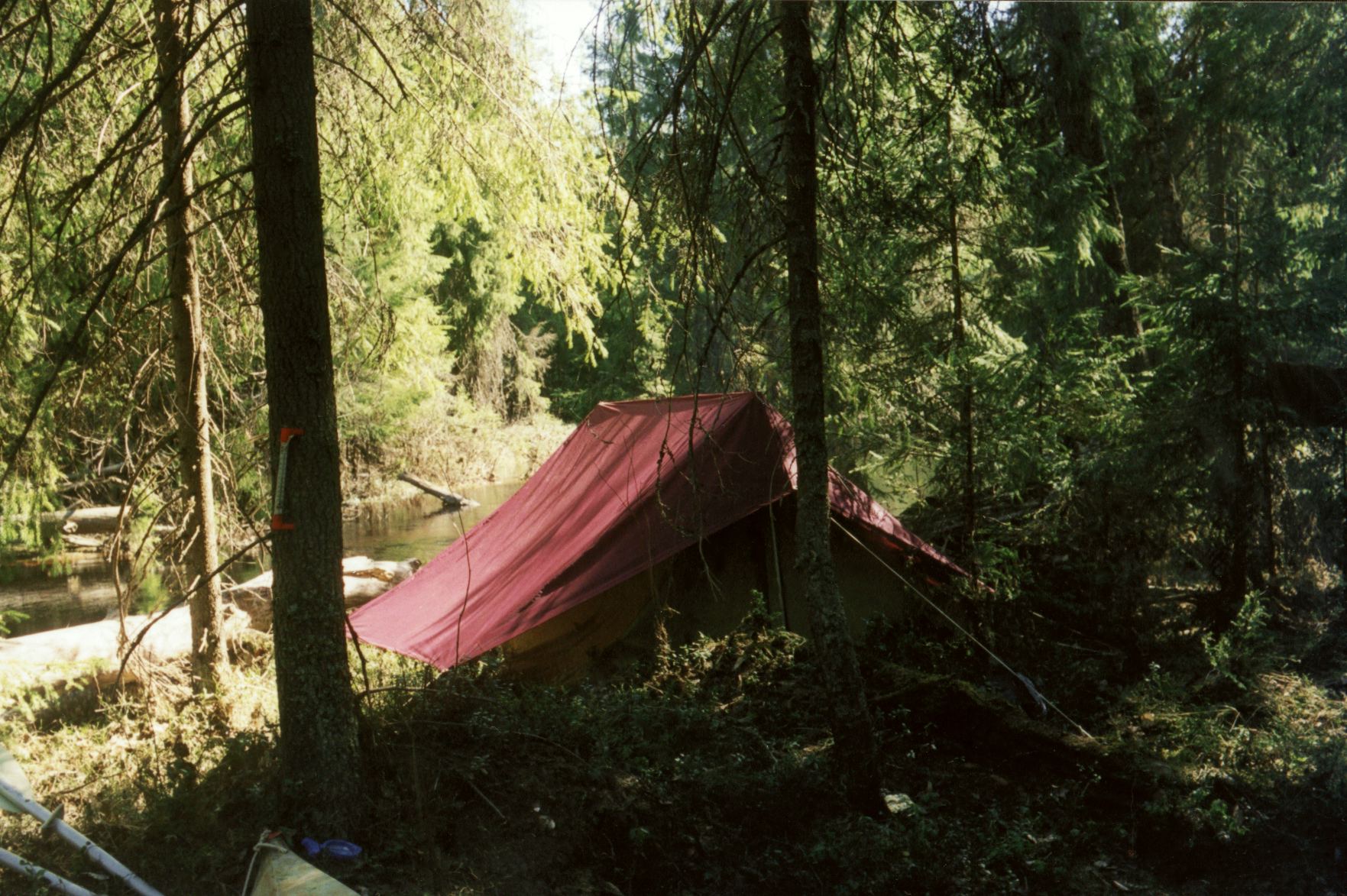
2 May · Day 4
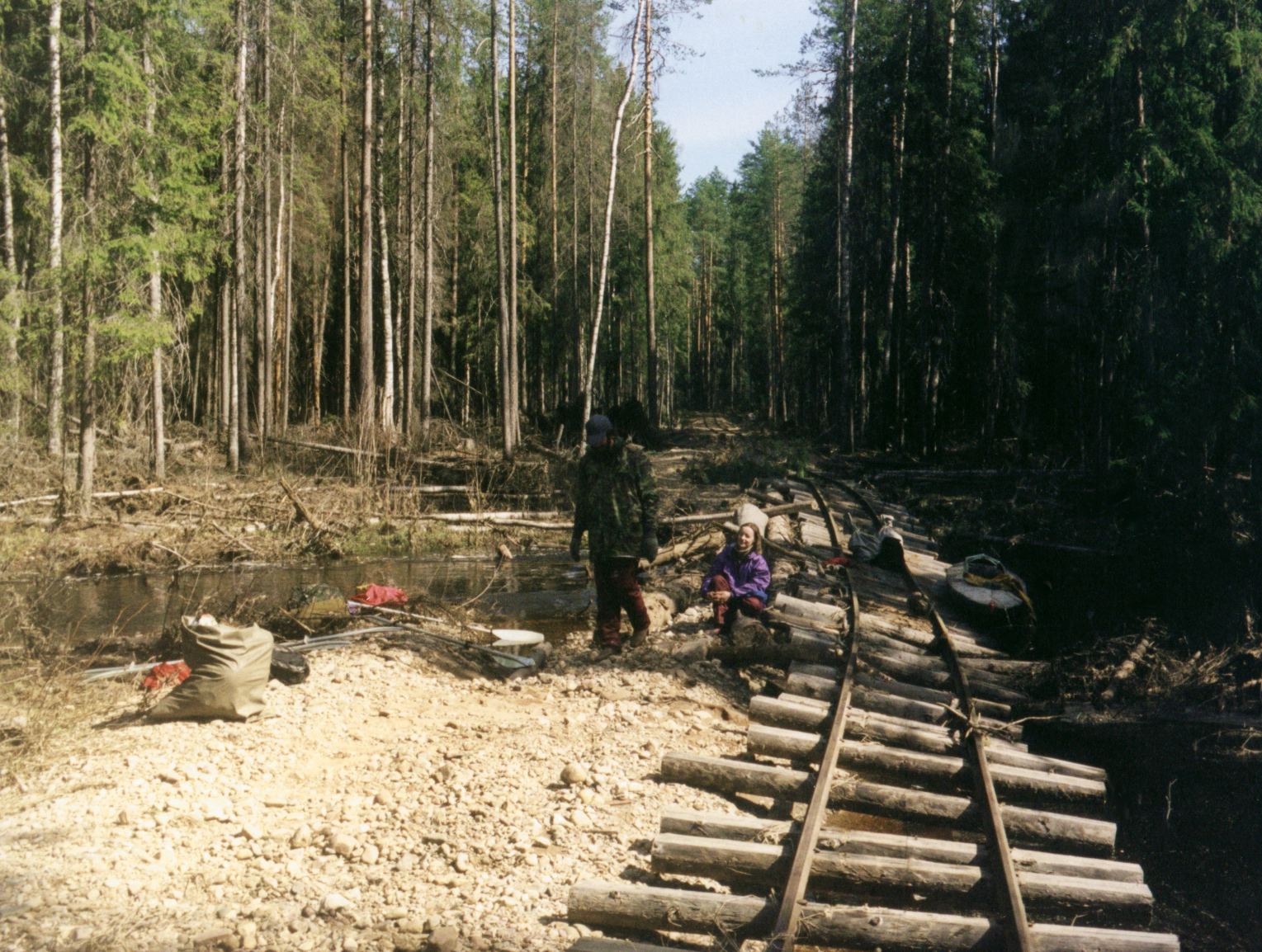
Seven kilometres in a straight line in two days was very little. We had to do something and start earlier, especially as the morning was clear. Before long a narrow-gauge railway crossed the river. It turned out we could have got a lift right down to the water. Only little trolleys could use this branch. The bridge leaned drunkenly and looked long disused, but the polished rails said otherwise. We stopped just past the crossing for a bite to eat and finished a chocolate cake.
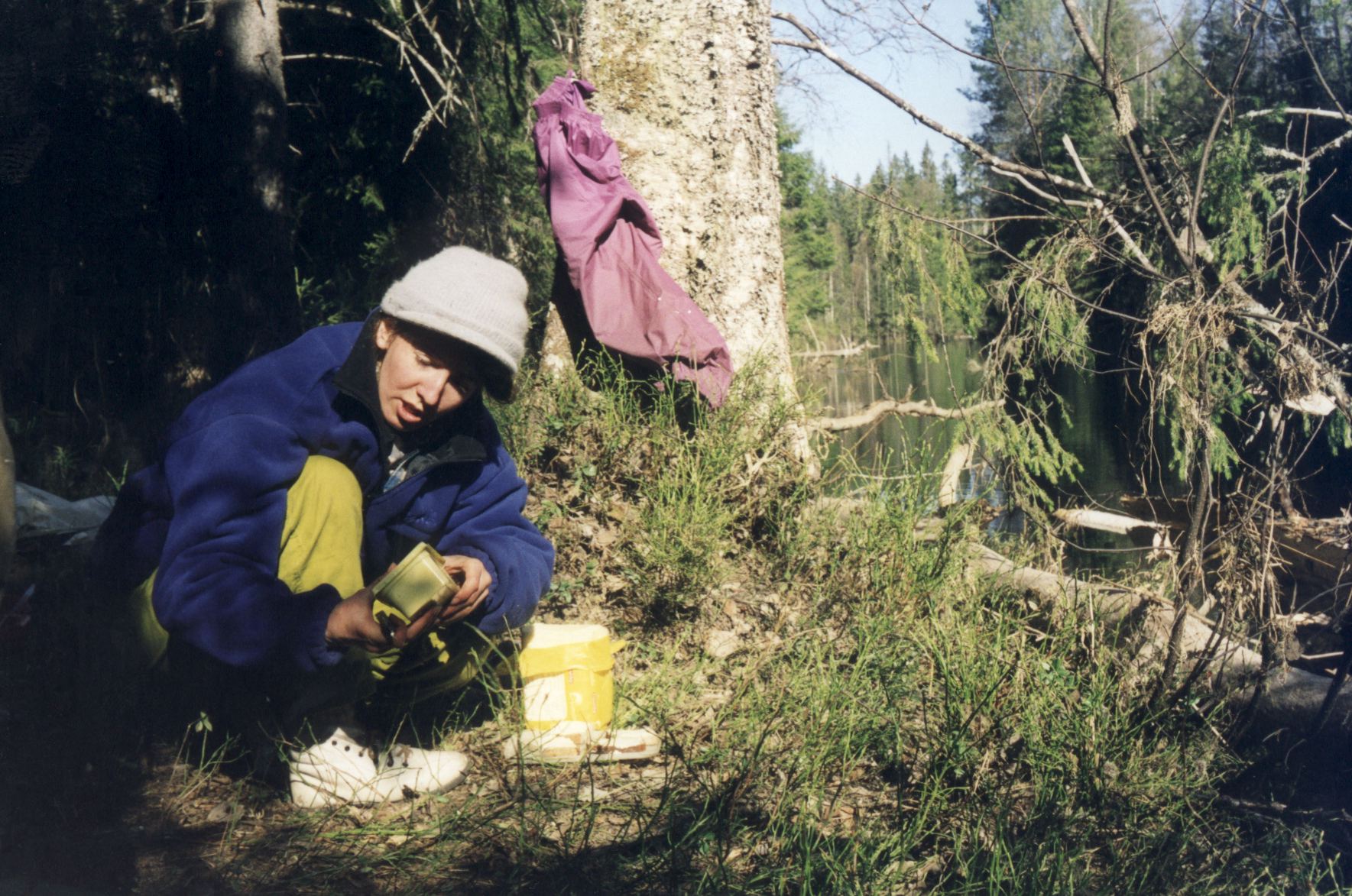
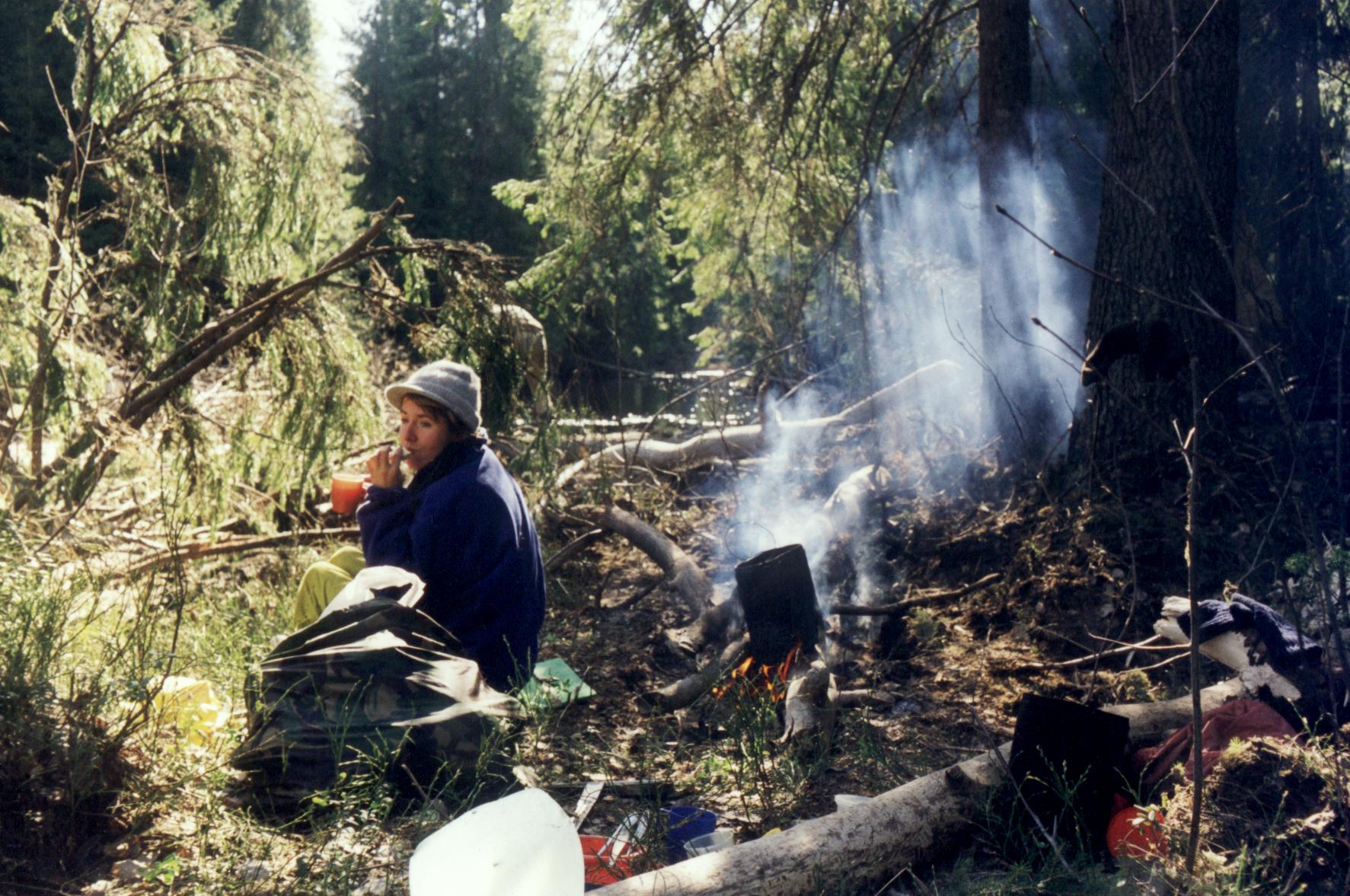
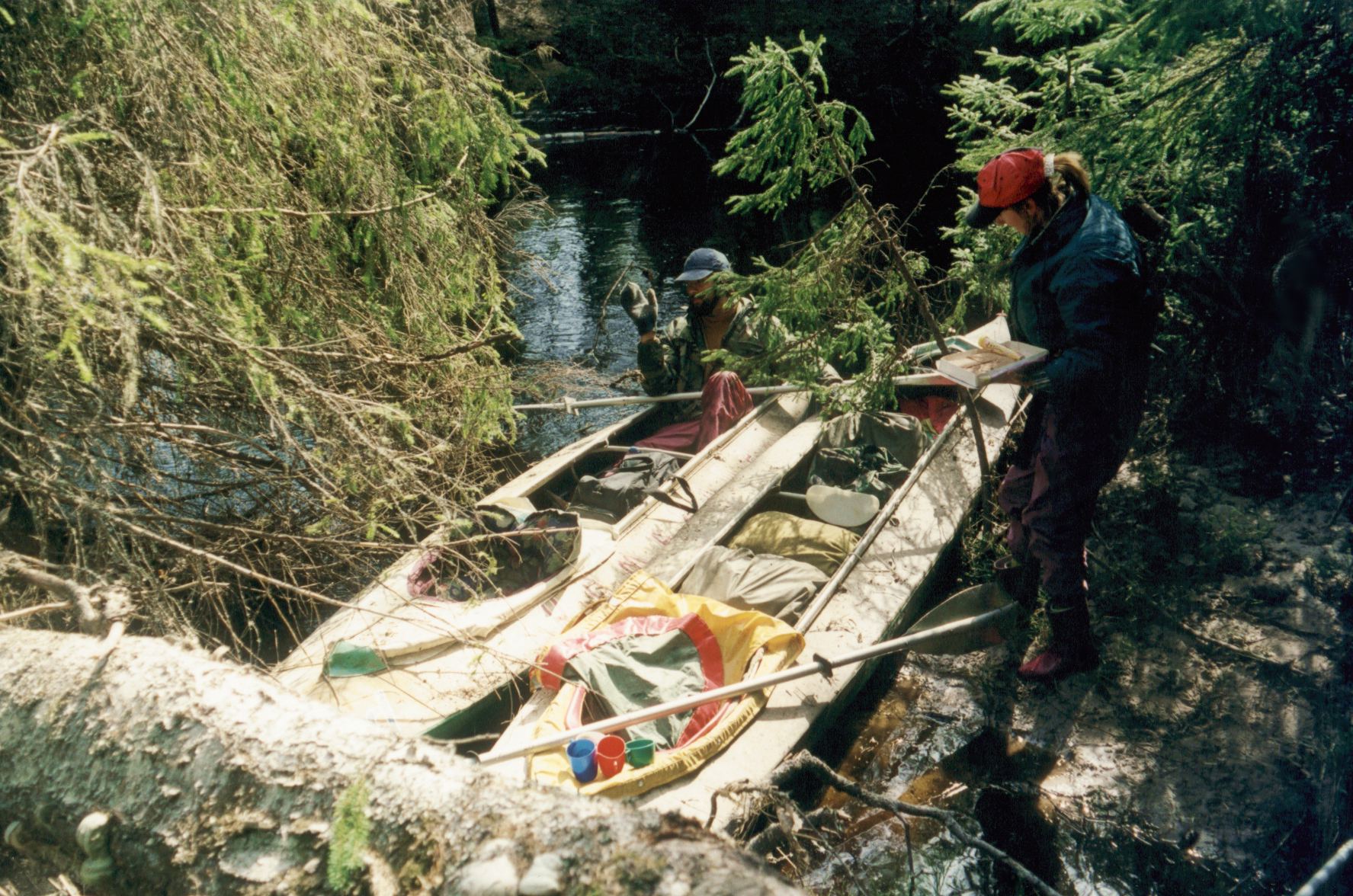
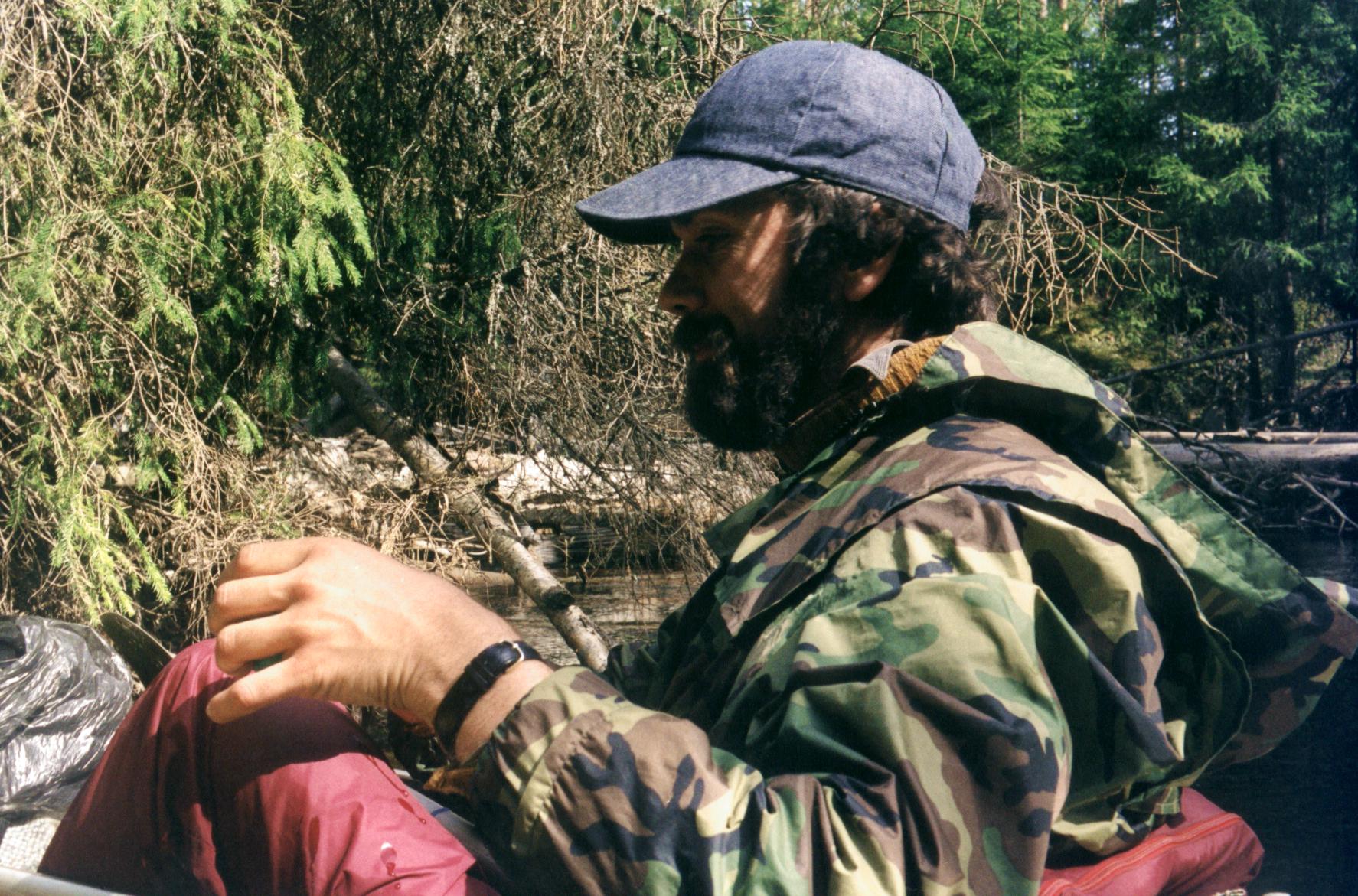
We spent all day again dealing with logjams. At about four, at yet another portage, we stopped for a hot lunch and dried out for the moment. It was my third consecutive day of being wet, almost beyond a joke. A different cause each time, but always the same result: wet to the waist, no fun in this cold.
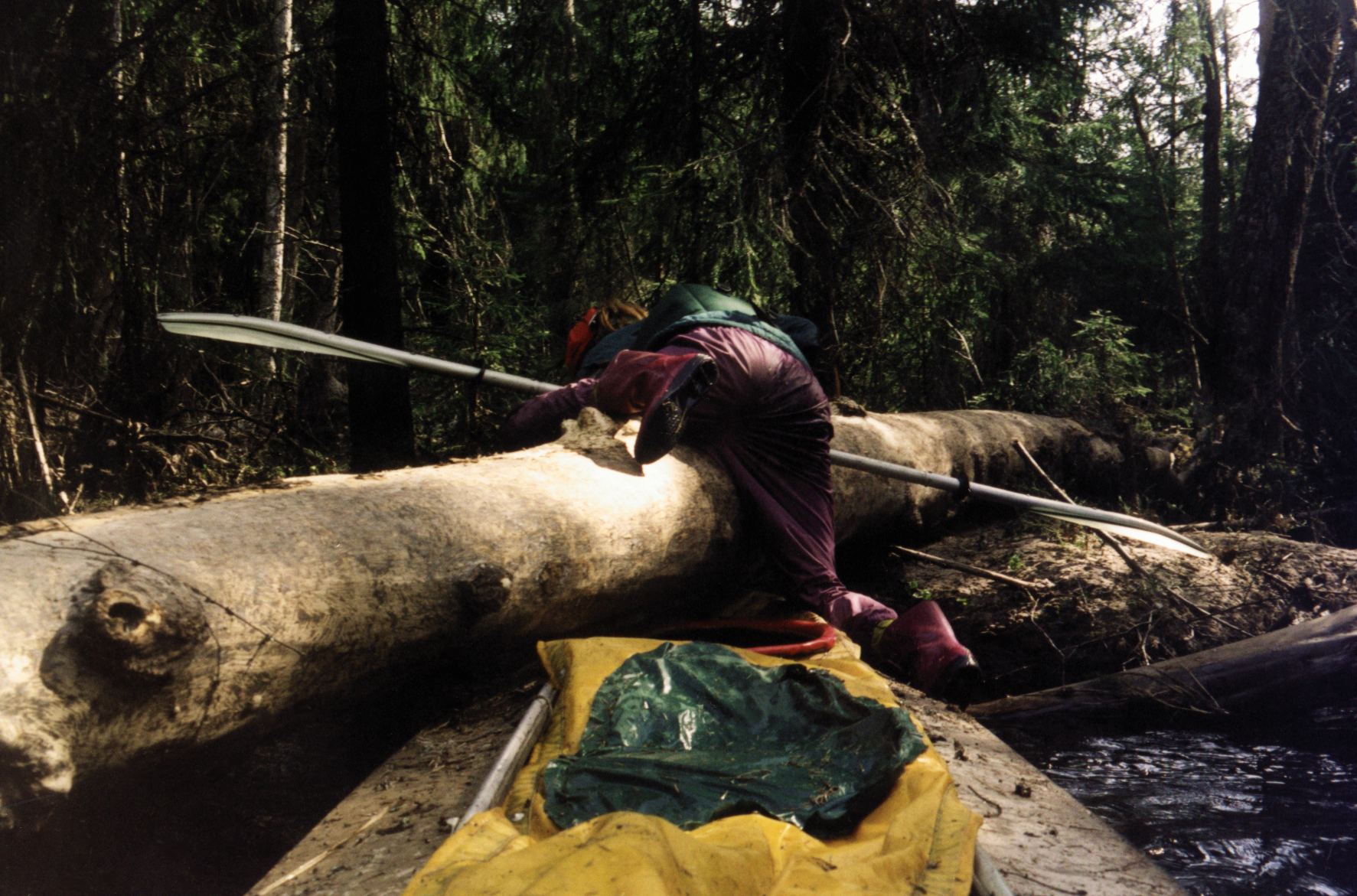
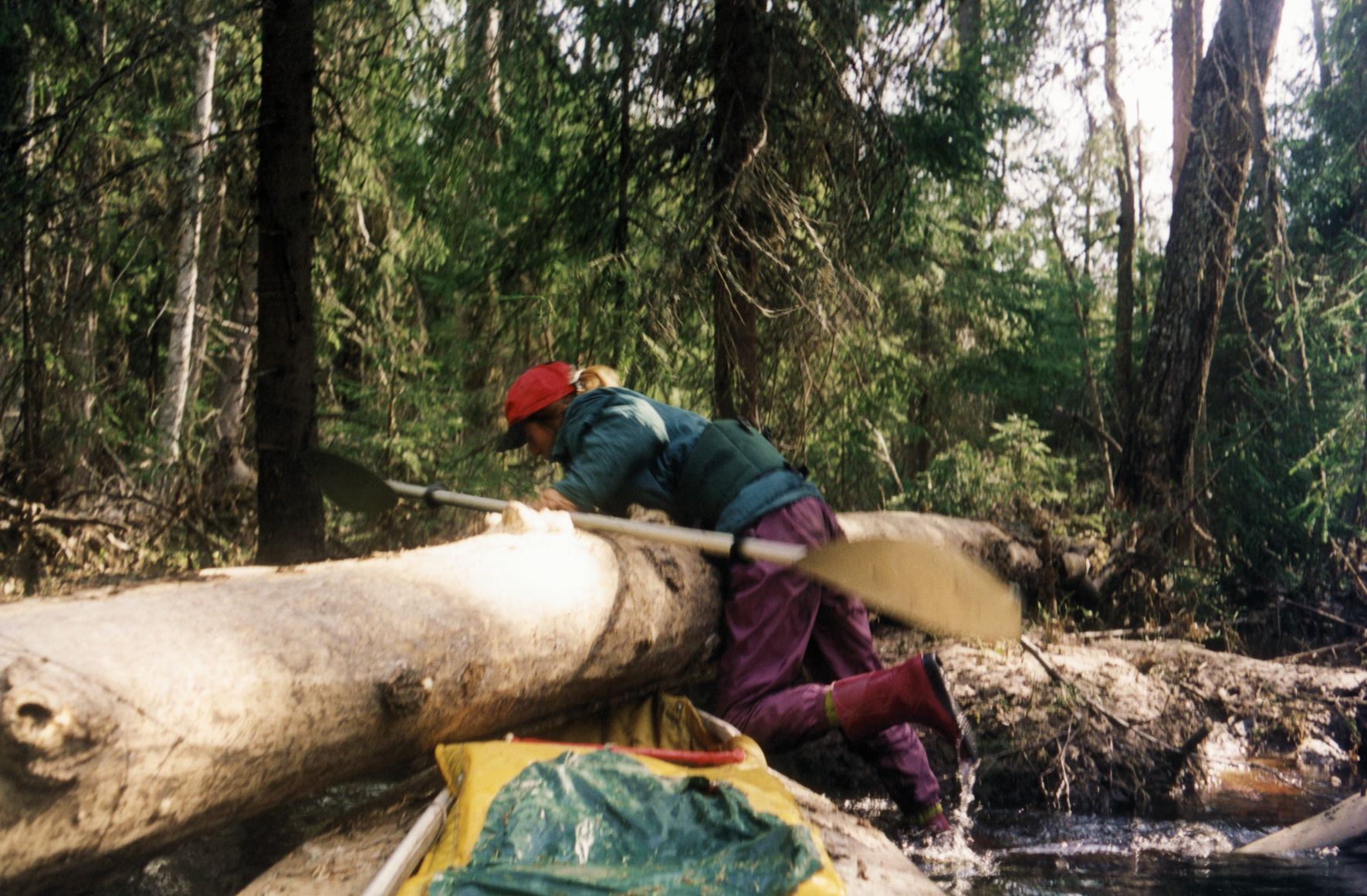
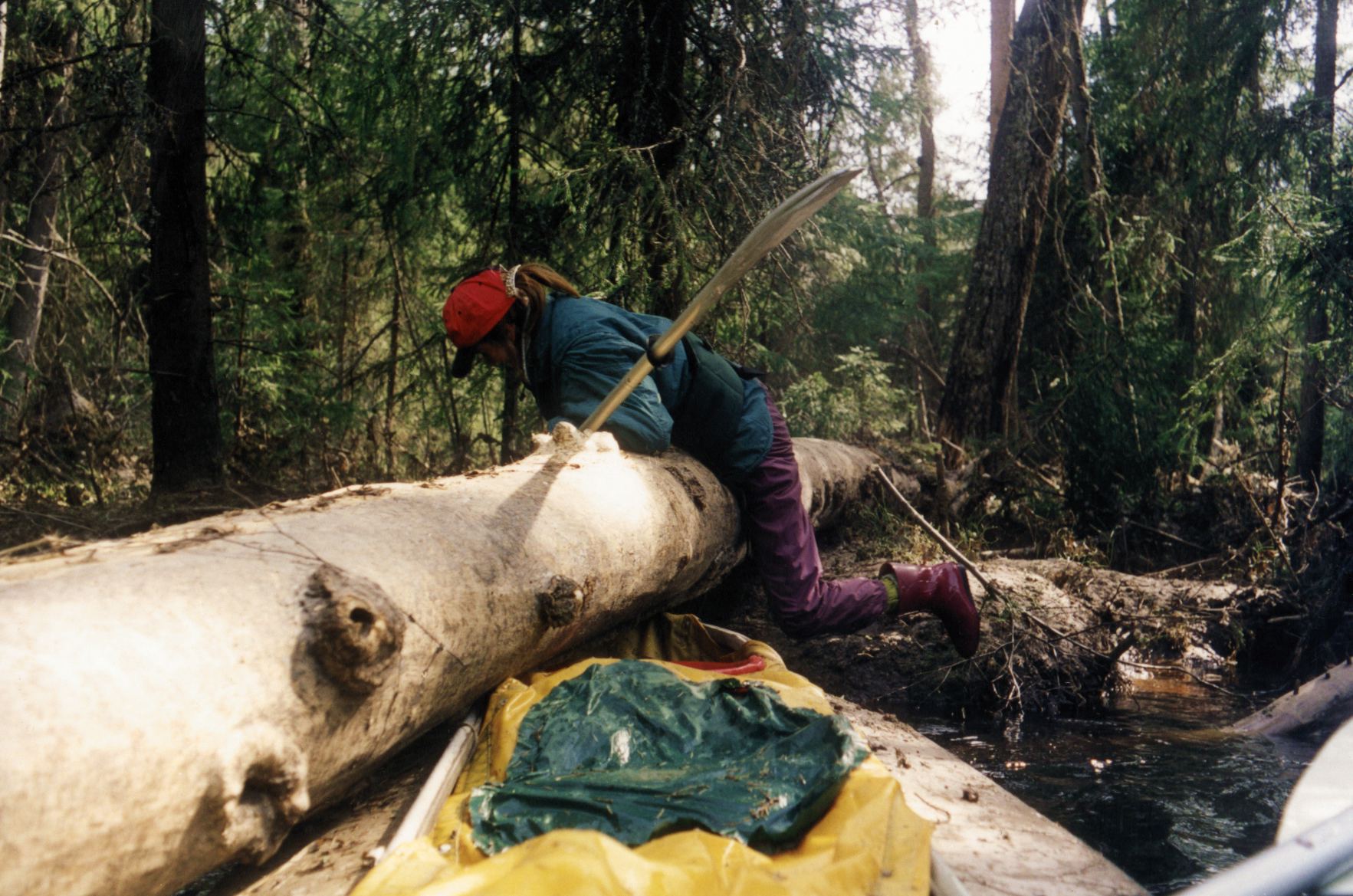
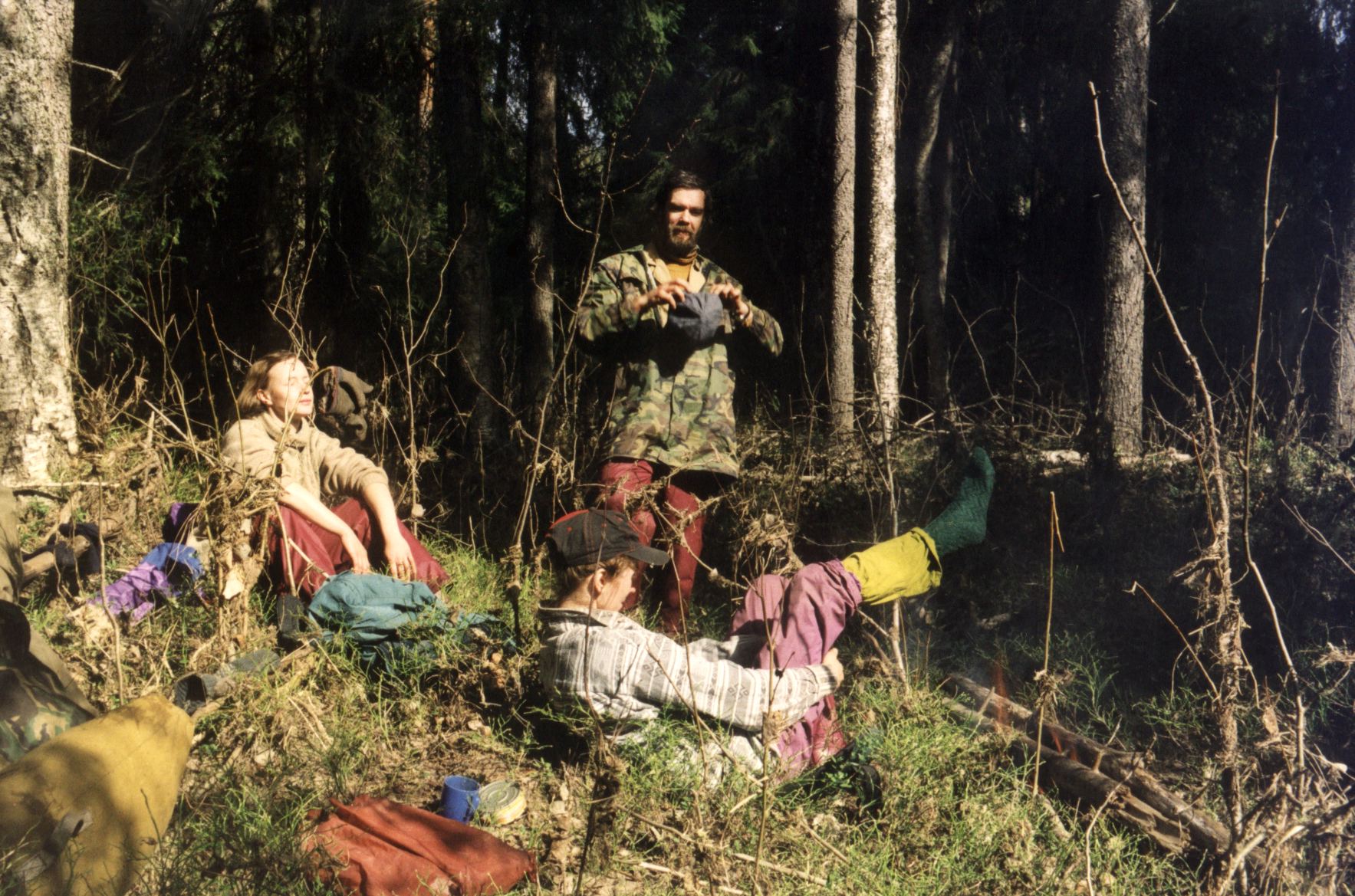
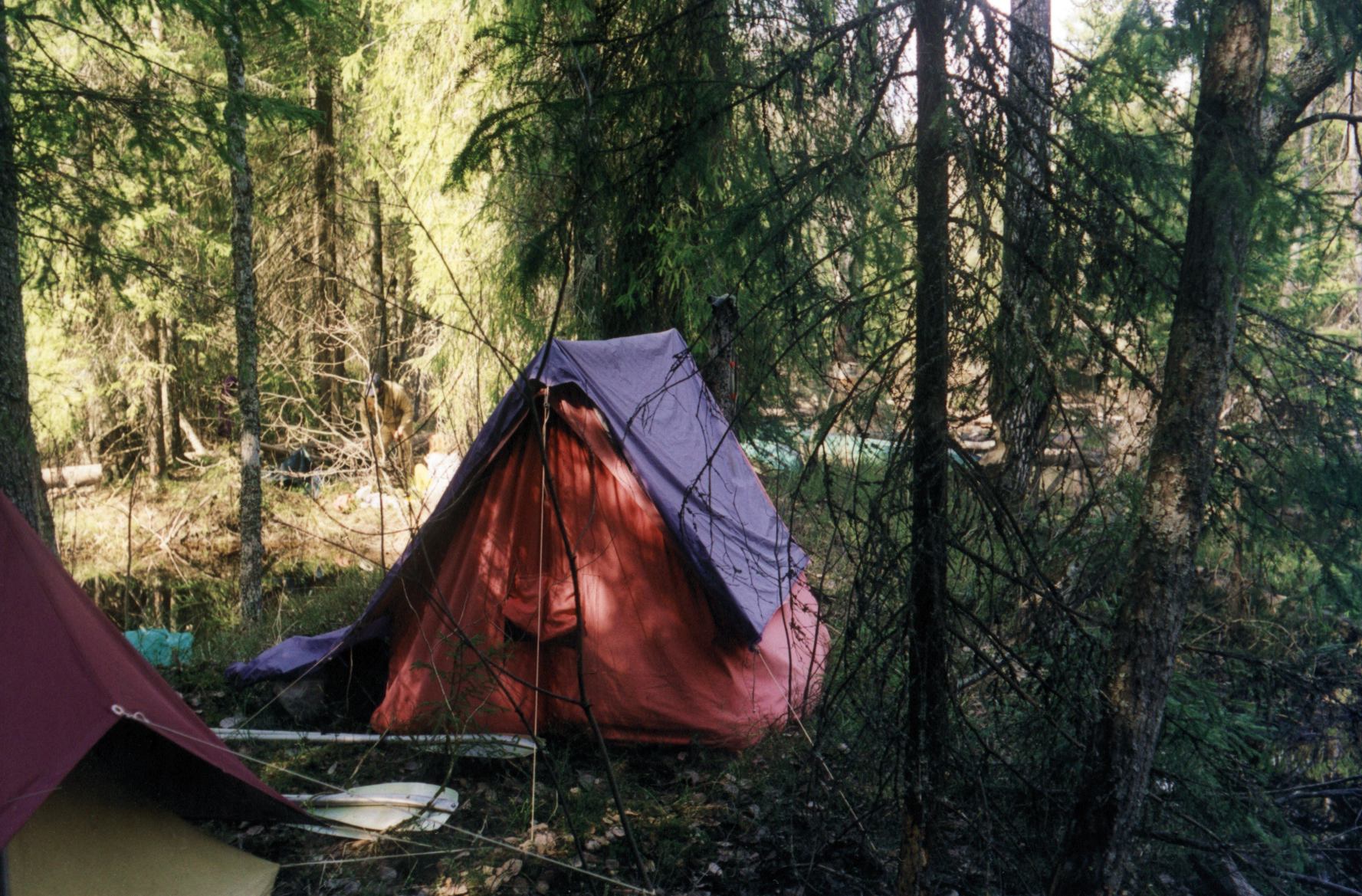
By evening we had entered a veritable kingdom of beavers. Right on the boundary of the Saint Petersburg and Vologda regions, the river got wider and split around islands covered in aspen, the beavers’ favourite. The whole river was one great logjam. We were worn out, and when I went in up to my waist trying to get the boat through another obstacle I announced that it was time to camp. Chance brought us to a small but high island, ten by a hundred metres and irregularly shaped. At first I was told off for choosing somewhere without a place to disappear into the bushes, but it turned out to be the most pleasant, cosy site. Once again we dried ourselves well into the evening. The beavers had left plenty of firewood.
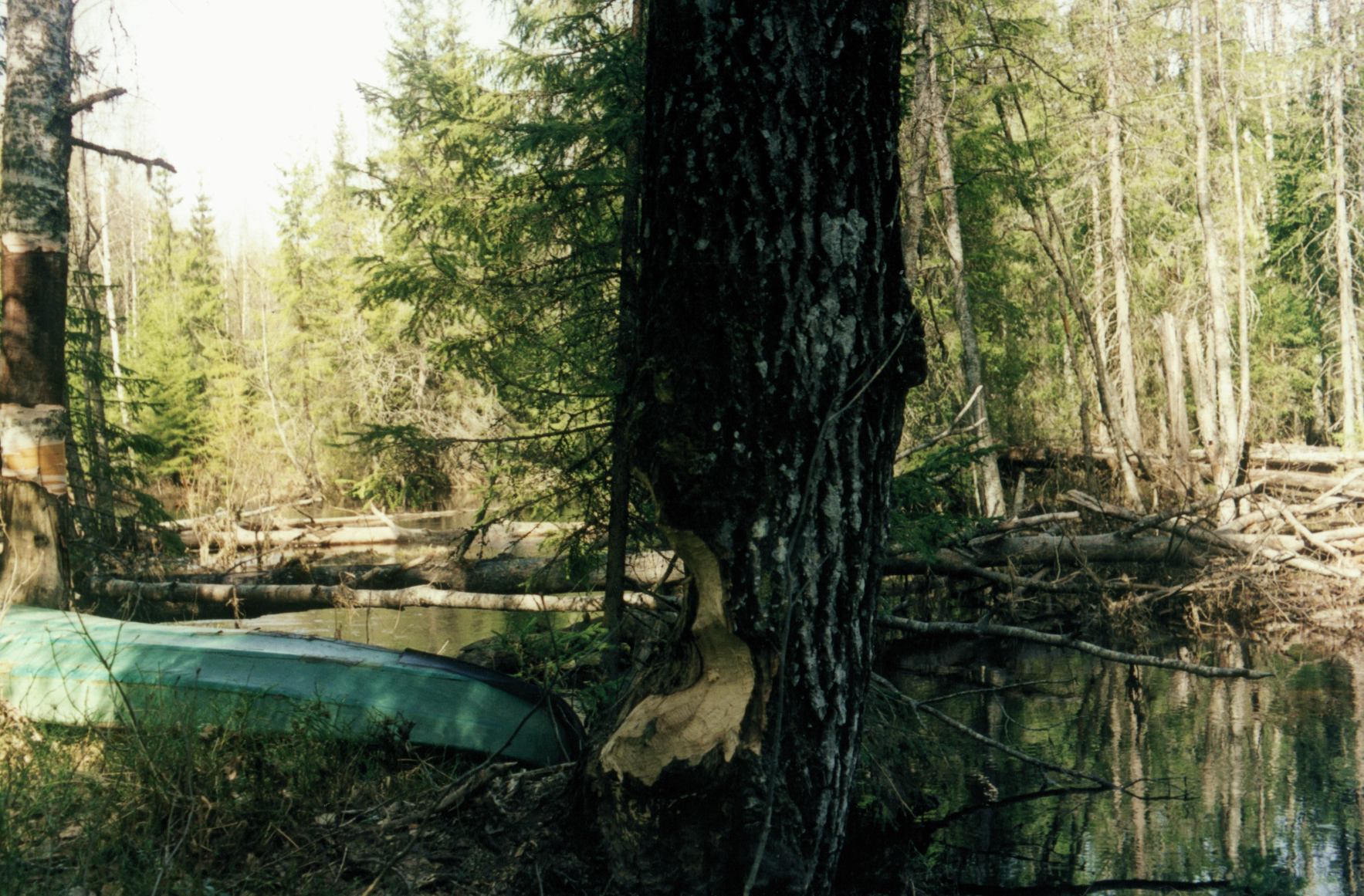
3 May · Day 5
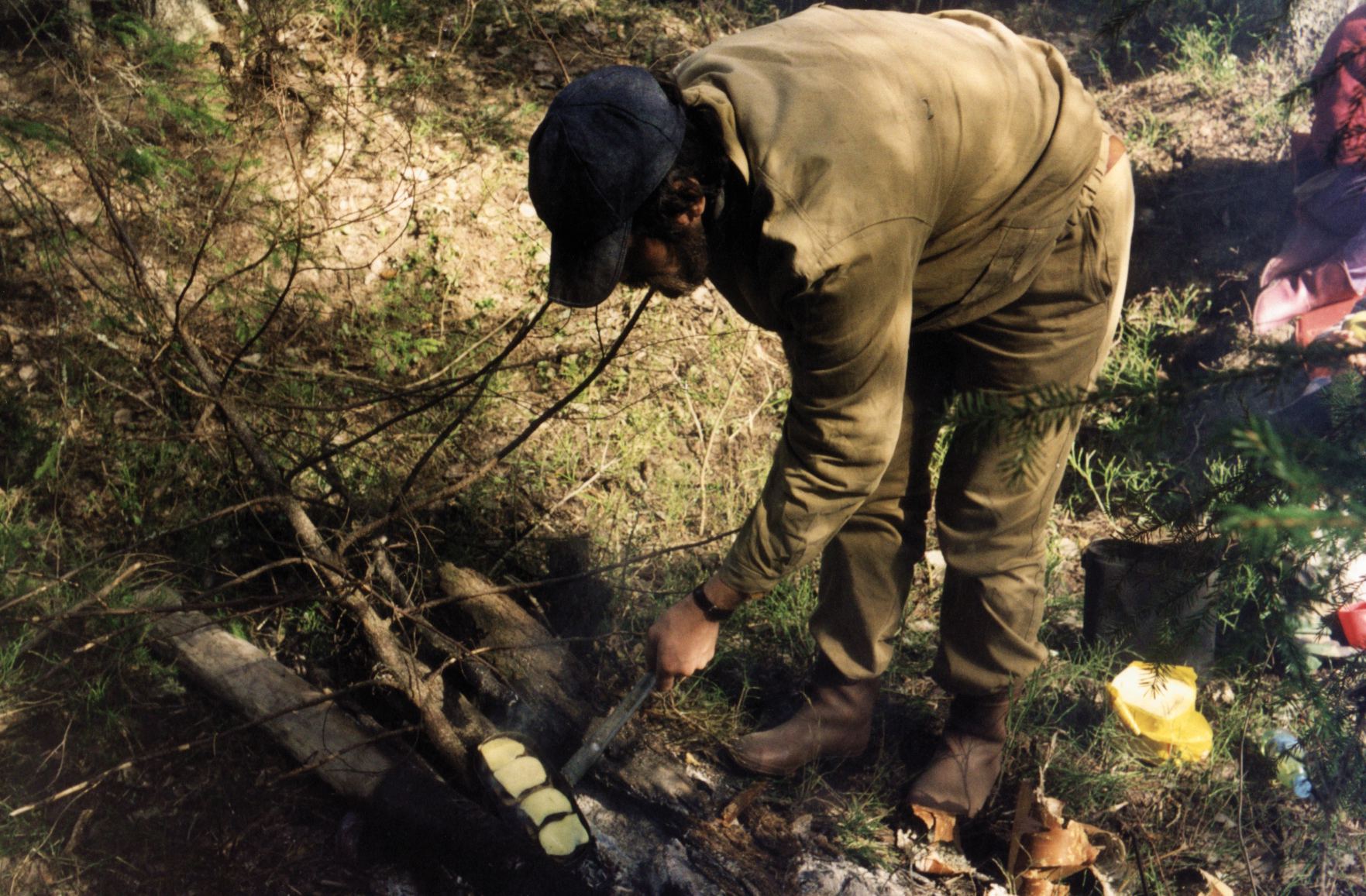
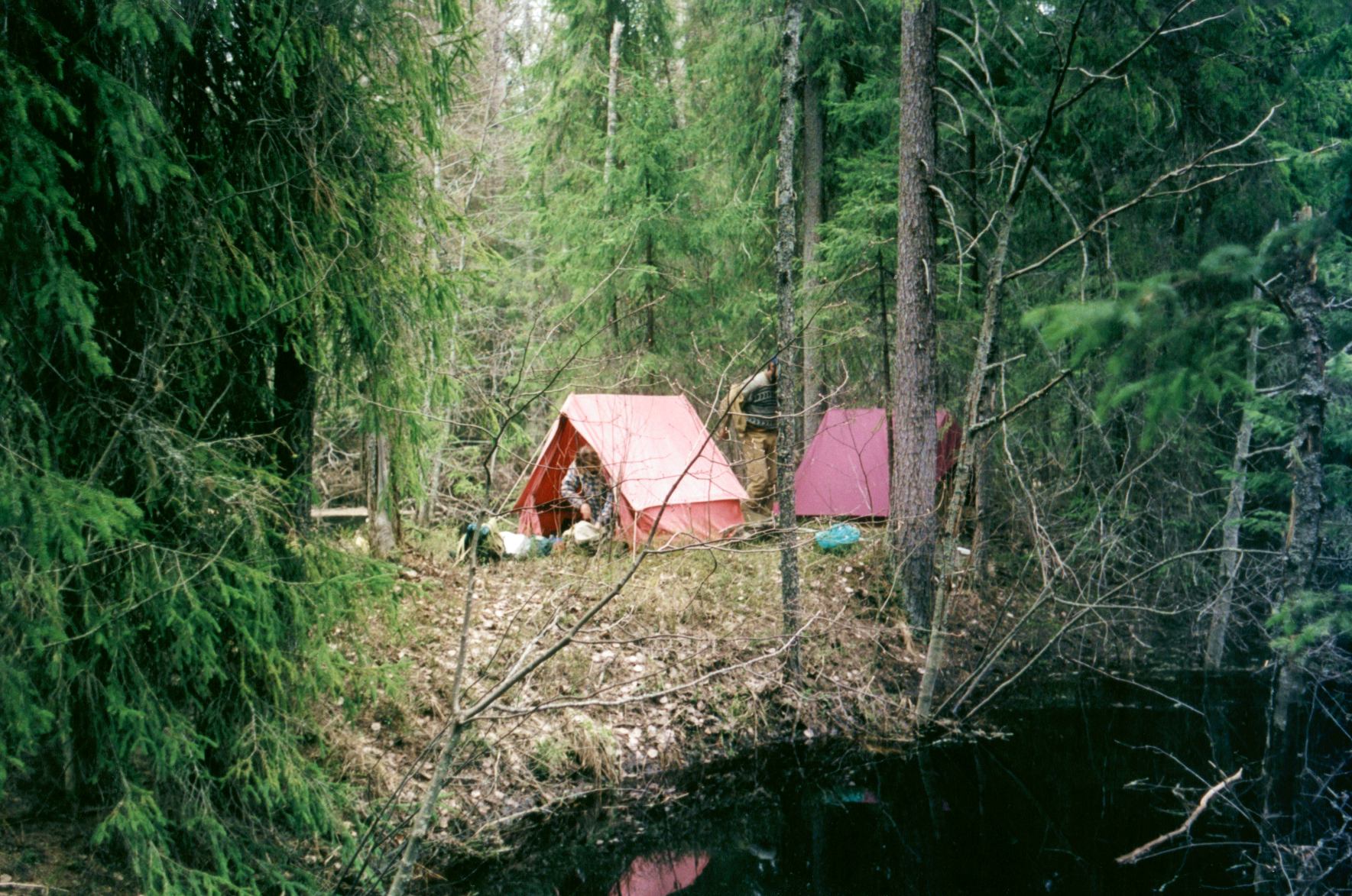
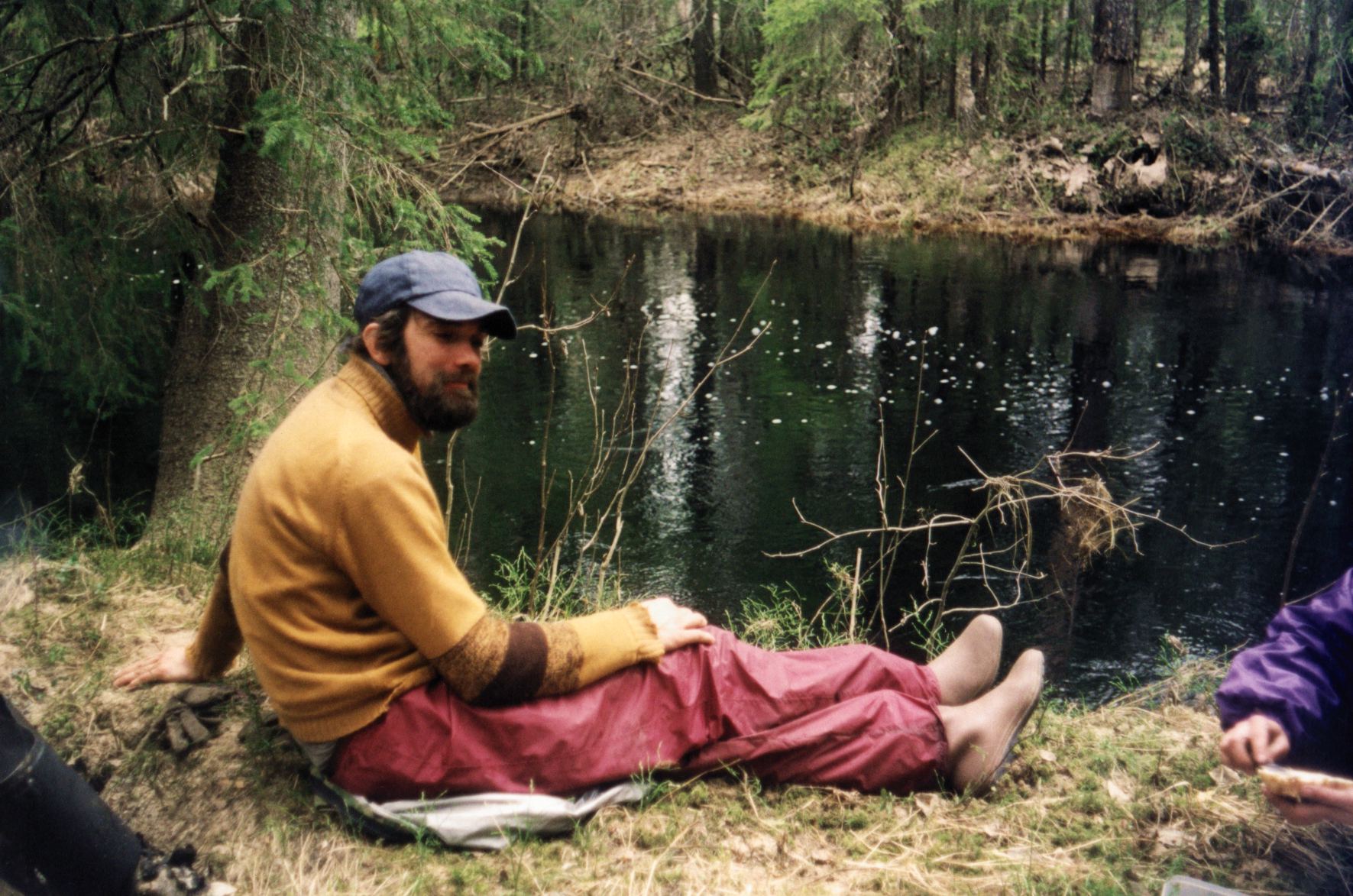
The sun came out in the morning and for the first time on the trip it was warm. I started patching the kayak. After all those logjams some of the old patches had peeled off. Sasha toasted some delicious cheese sandwiches. We found a mouse hole near the tent and plugged it with a piece of cheese to fatten up the mouse. It was such a sweet thing. By general agreement this was our best campsite.
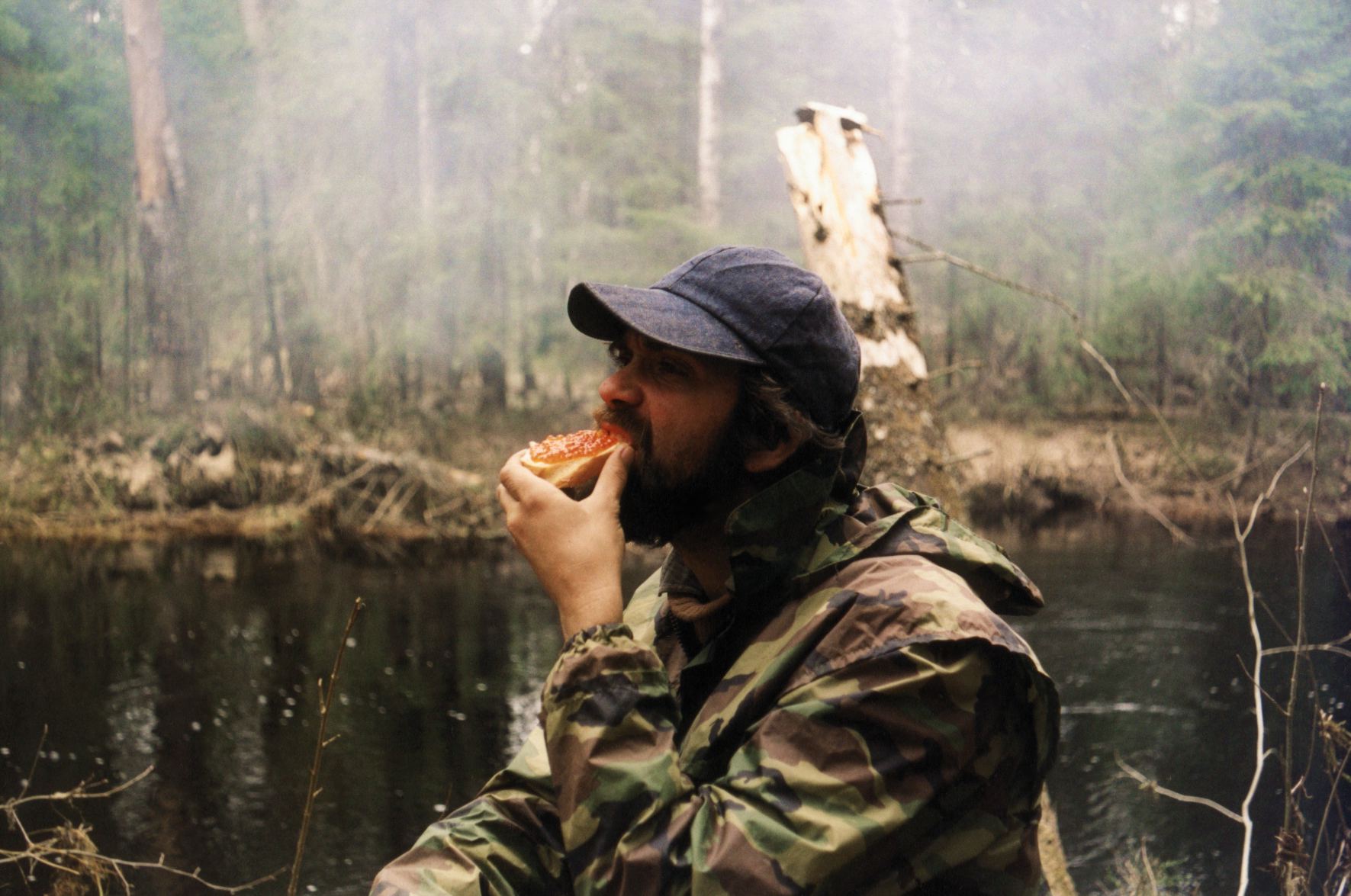
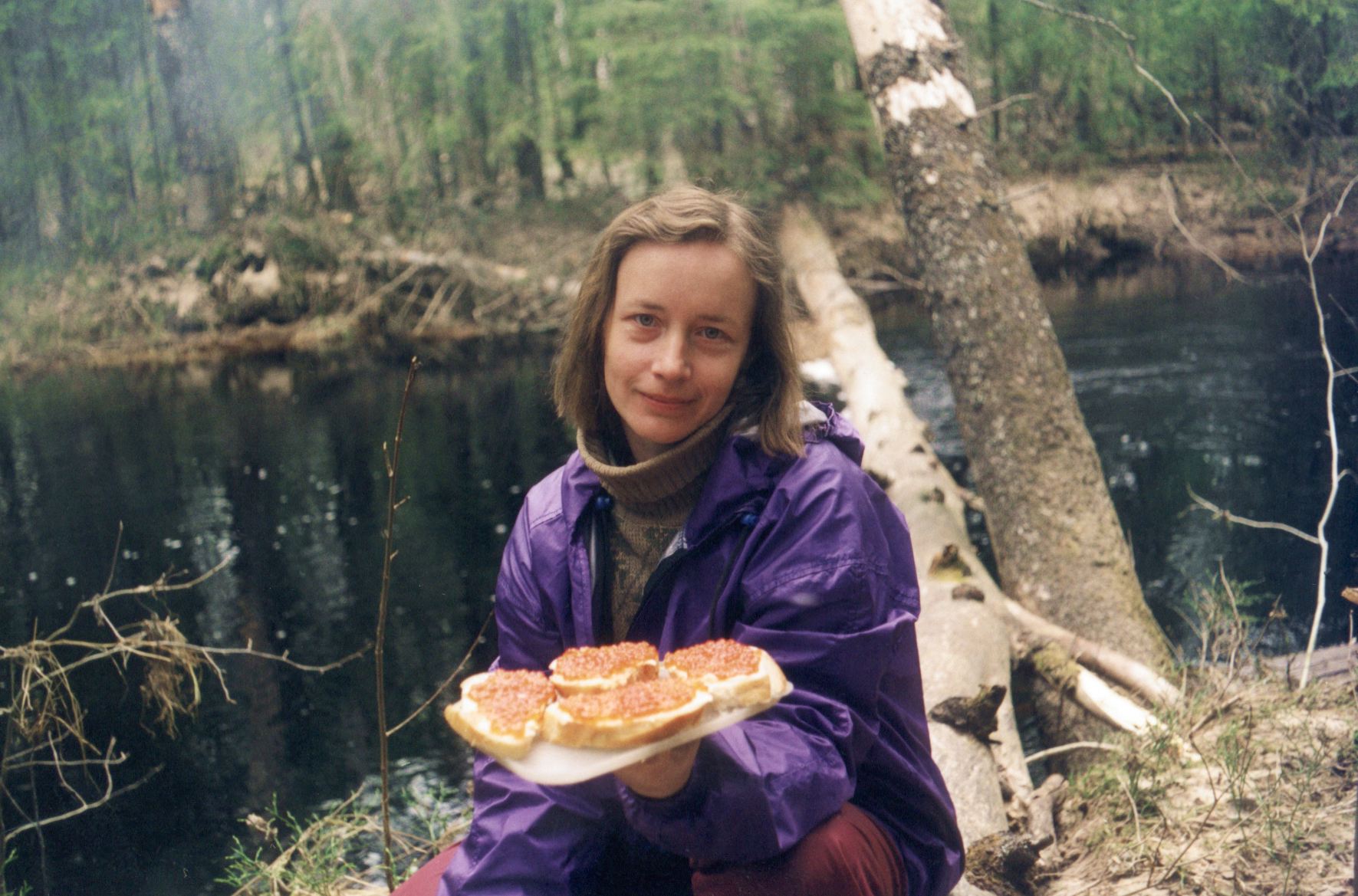
We set off about one. And still more logjams. The river was wider, of course, but there were plenty of portages. At midday the weather darkened. A wet Atlantic low was moving in to replace the cold Arctic air. We stopped for lunch: sandwiches with caviar. It was the farthest point from any habitation. I marked the position with my GPS and a miracle happened. Instead of the usual twenty to fifty metres, my beloved lump of hardware claimed an accuracy of three metres. I assumed it was a glitch. I recorded the point, walked round the woods and came back to the same spot. In the meantime I startled a bear. I did not see it, but there was an almighty crack and the bear tore off away from me.
The GPS was not lying. It really was accurate to within a few metres. At the start of May the United States had switched off the deliberate degradation of civilian GPS accuracy. Now anyone could find out where they were with great precision. Common sense had won over military pig-headedness. The world had been offered a gift, and the Russian authorities had refused it. Even a position accurate to a few tens of metres had been treated as a military secret and GPS receivers were effectively banned. The one saving grace in this ridiculous country was that nobody was obliged in practice to obey every ridiculous rule.
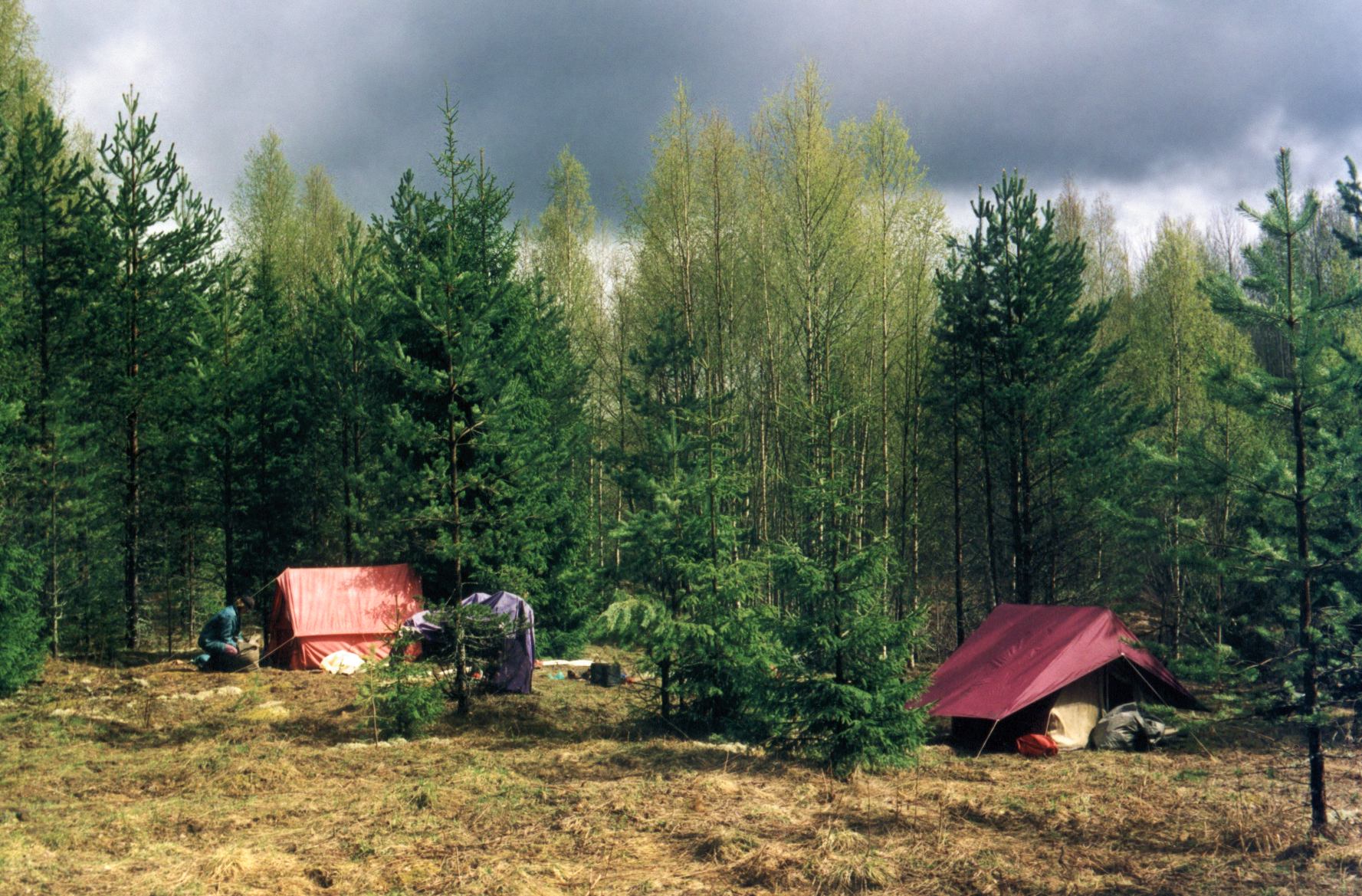
After lunch the logjams thinned out and we moved much faster. We passed a lonely abandoned cabin on the bank and began to leave the wilderness behind. By evening it was drizzling. We stopped on a high bank, our first campsite in the open. It rained hard, so we went to bed quickly.
4 May · Day 6
We woke early because of a deep puddle inside the tent. Everything was wet. Disaster. We had pitched the flysheet crookedly, so water fell onto one wall of the tent. We were used to a groundsheet that leaked. If water ran in round the edge it simply soaked through into the ground. Now that the groundsheet was perfectly waterproof, the result was several centimetres of water inside by morning and all the sleeping bags soaked through. Luckily by eleven the rain stopped and the warm May sun came out. We stripped down to shirts and soon dried our gear. The joy did not last. It rained again and we had to launch in it.
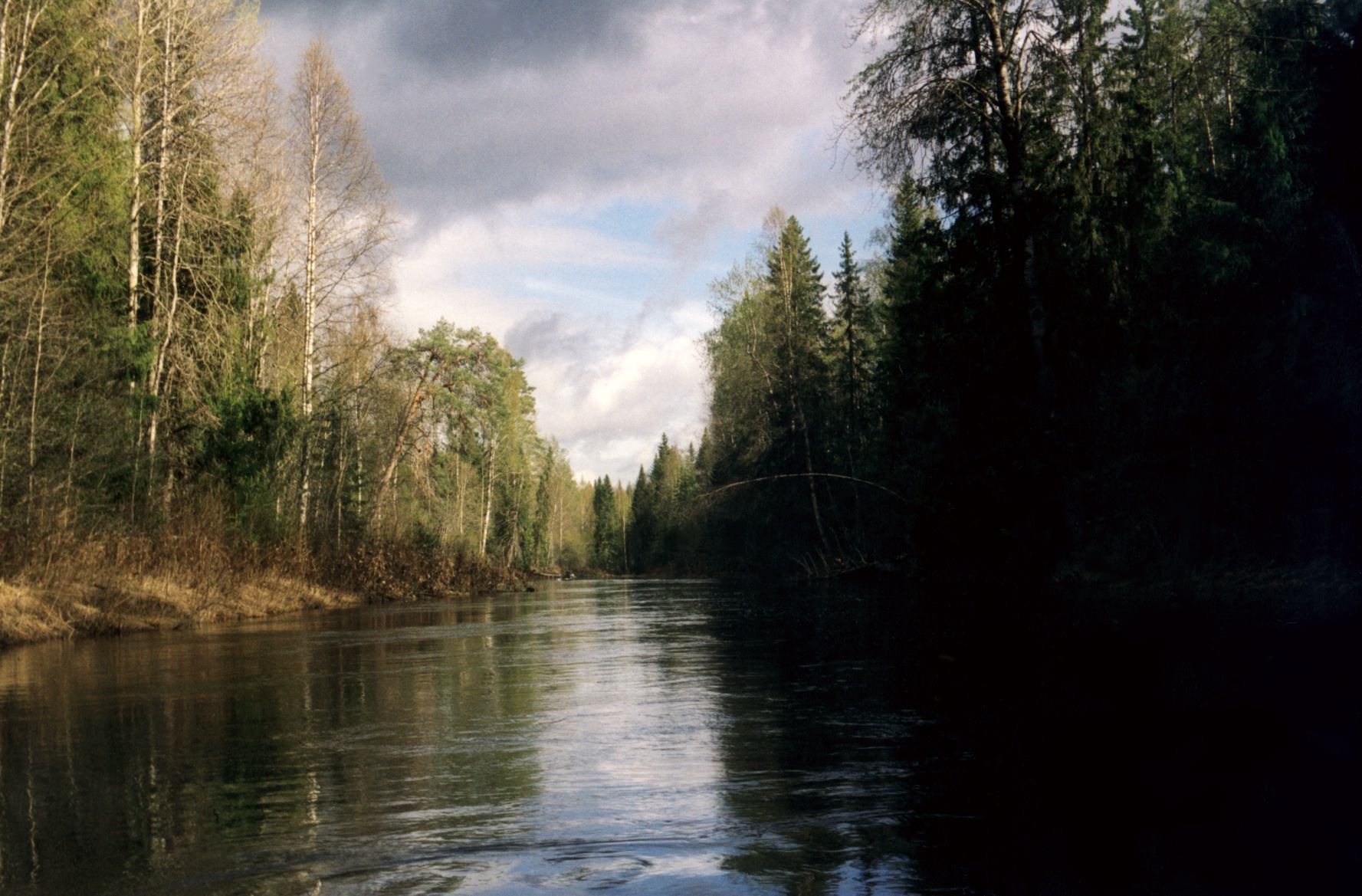
The weather was changeable. Sunshine followed downpours, sometimes with hail. We crossed another narrow-gauge line, this one in good order with a substantial iron bridge. All day there were only two logjams we had to carry round. Towards evening the hail was so fierce we had to wait it out in the bushes. Our shiny jackets had now started leaking. Such a pity. They were good jackets and had lost their waterproofing so quickly.
After five days without any sign of settlement we reached our first village, Plyoso. A sizable place, with a shop and a post office connected to the rest of the world by a good road. It was late and the shops were all shut. We saw a local man fishing and went over to see if we could buy some fish. He had been drinking and could barely string a sentence together. With some difficulty we made ourselves understood. He was ready to part with everything, as long as it brought him thirty roubles and fifty kopecks, the price of the cheapest bottle at the local shop. For that he gave us all his milk and all his fish, though there was not much fish.
Beyond the village and another railway bridge we stopped for the night. There were sleepers lying in the bushes, enough for a fire all night. We made fish soup from what we had bought. It rained again in the evening and sent us to bed early.
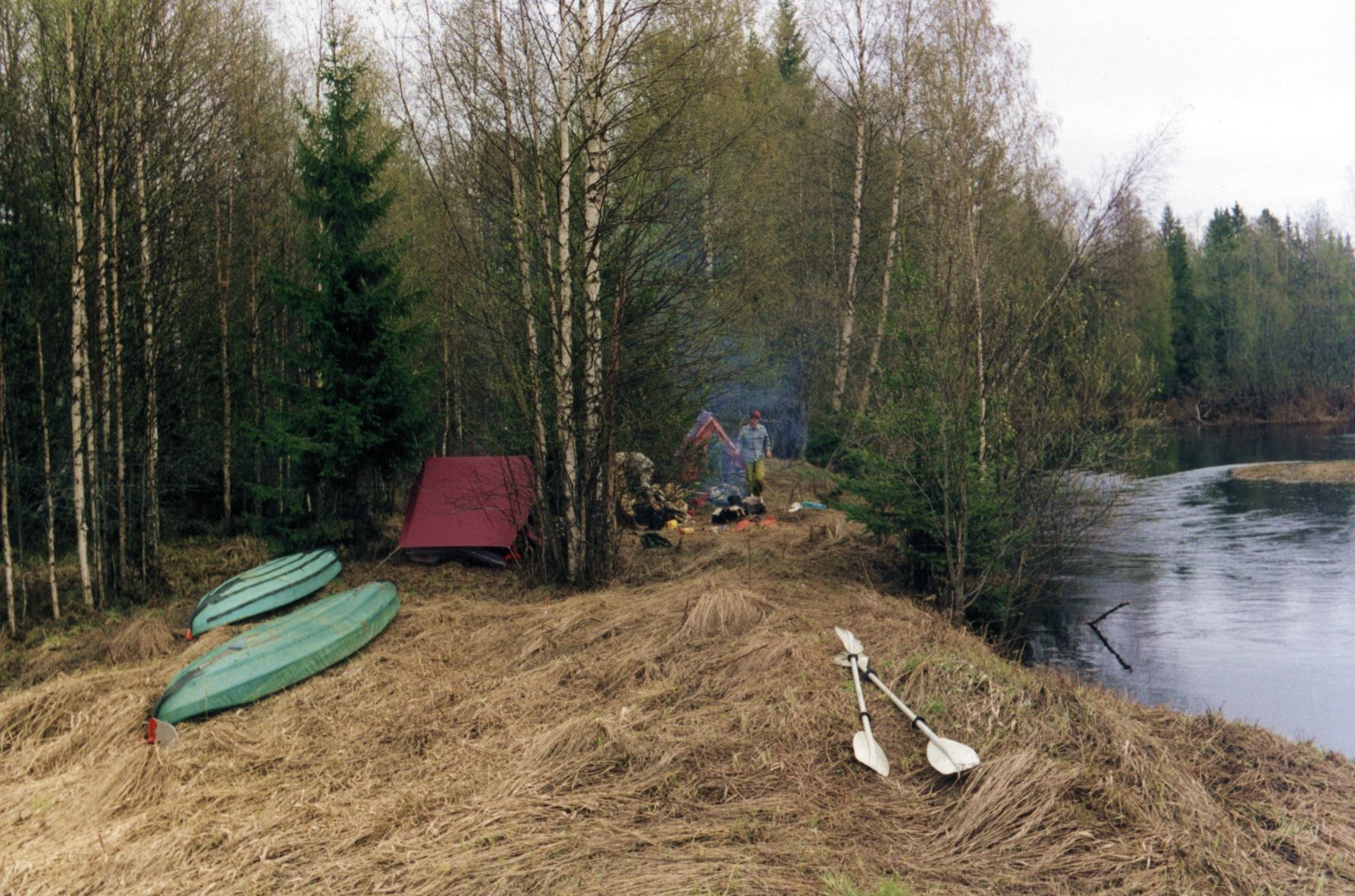
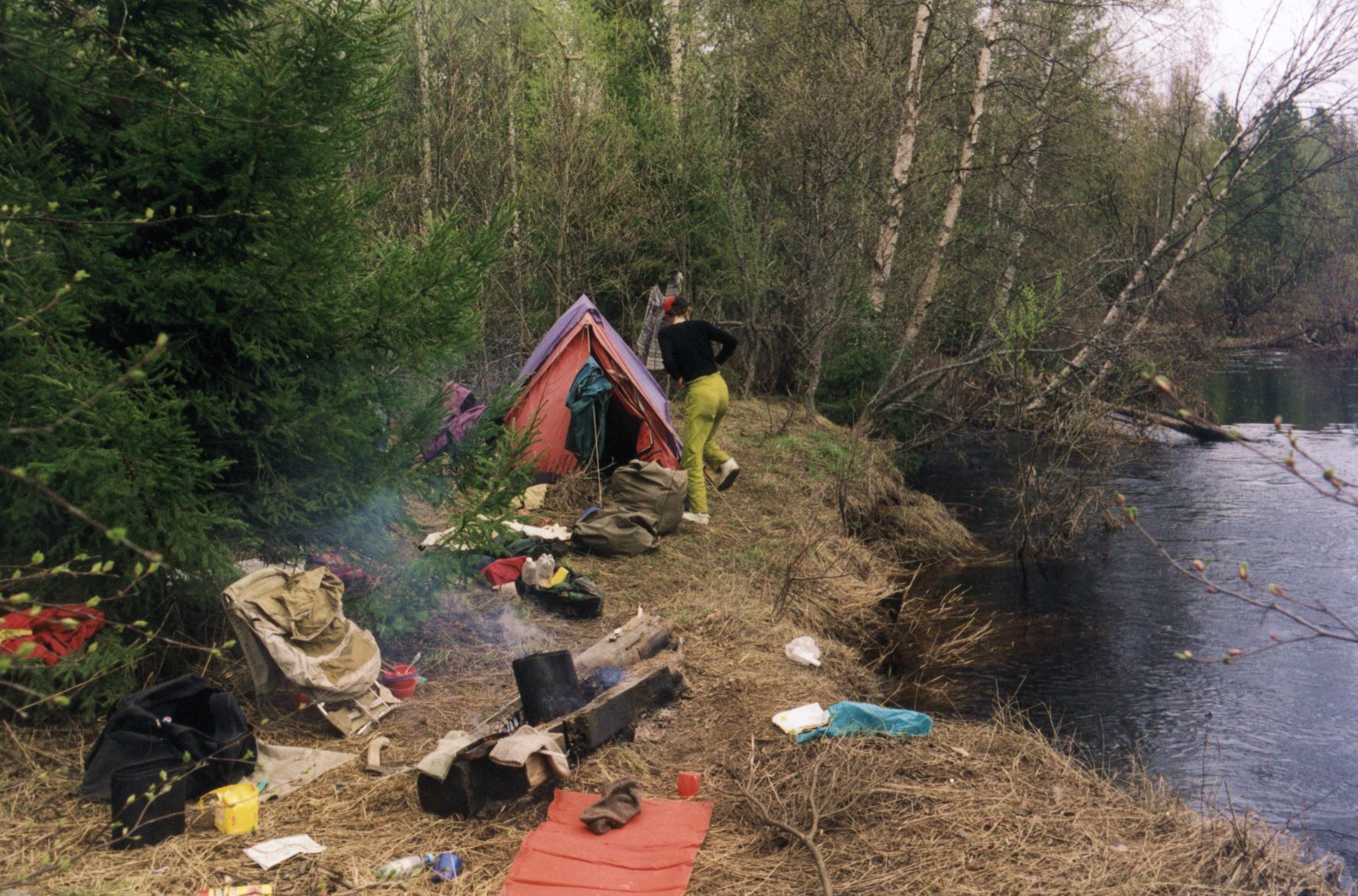
5 May · Day 7
This was our first day without logjams. The river opened out, though the current more or less disappeared too. It was Tanya’s mother’s birthday and we wanted to find a post office and send her a telegram. We even got up earlier than usual and set off promptly. We thought there might be a post office at Kosoy Ukhab or Korobishche. Kosoy Ukhab means something like “Crooked Bump”, a wonderful name to send a telegram from. In practice it turned out to be a tiny hamlet. Korobishche had a shop but the post office had been closed for years. It was a long walk to the shop, though worth it. The village was lovely, high on a hill with the ruins of a great brick church, and we bought all sorts of good things, from a tin of concentrated borscht to bananas. We probably would not starve now.
All very well, but there was still no post office. There was one in Olyeshi, some way off. We got back into the boats and paddled on. The current was little help and, as always, the wind was in our faces. We reached Olyeshi about five. It was a new settlement of the 1970s with five-storey blocks, a swimming pool and various other features of developed socialism that had since crumbled. The post office and district administration shared a building. Only the head of the district was there and everything else was closed. We came away empty-handed. It started raining again while we were there.
We managed another fifteen kilometres before evening. It was wet and we did not fancy getting out. Eventually we found a camp under a huge spruce, on a bed of needles. A most unusual place, and dry, which was the main thing. As soon as we settled in, a man carrying a gun came out of the woods. He lived in Saint Petersburg but went back home to hunt. We got into a long conversation. He turned out to be a character. He used to lecture at an institute and now worked on railway power supplies. He burdened us with his extraordinary theories of how the world was put together. “What could you possibly have in common with anyone who doesn’t know what variance is?” stuck with us. By evening we had had more than enough and thought we would not be rid of him till morning, but he left once it was quite dark.
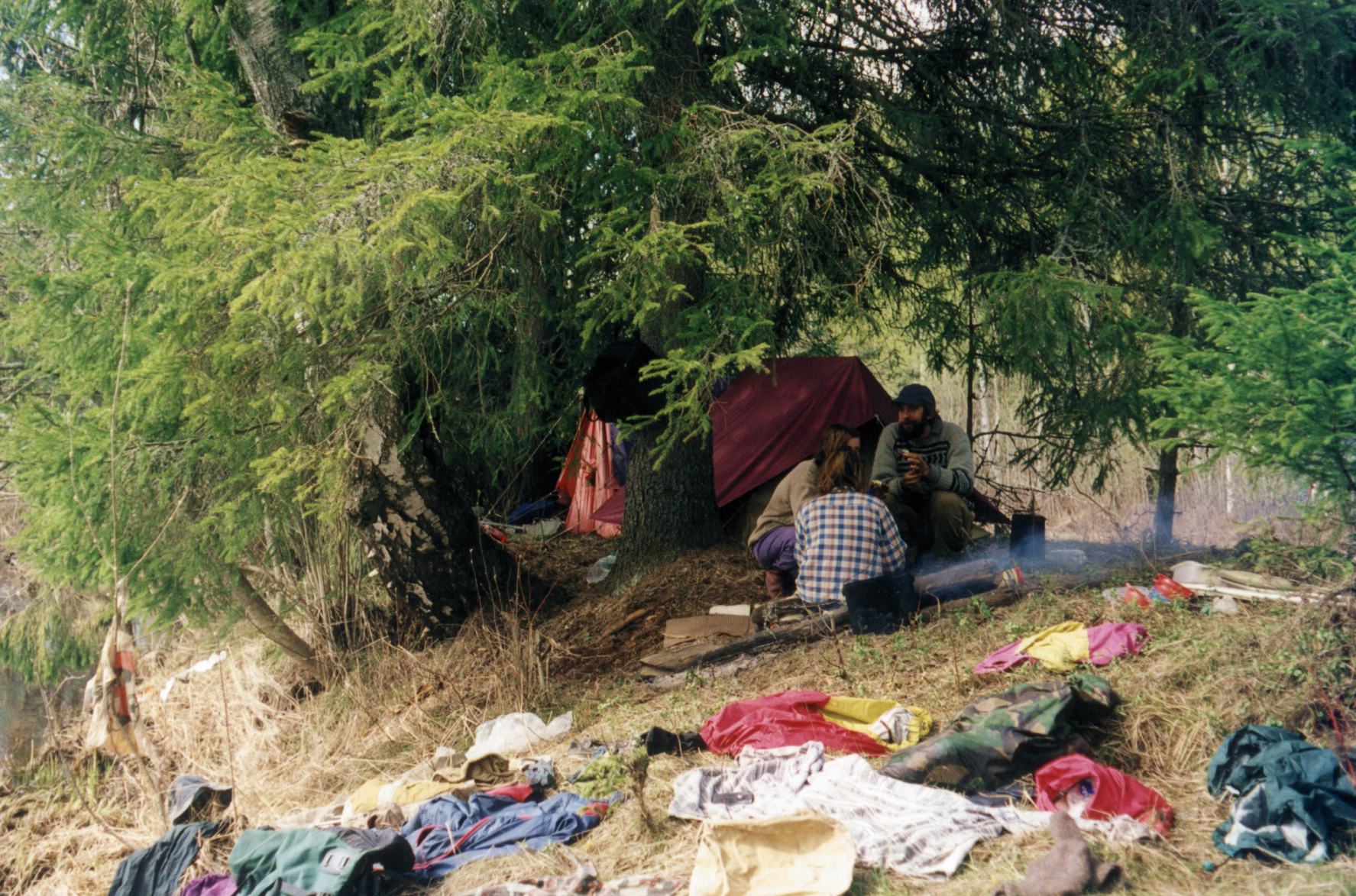
6 May · Day 8
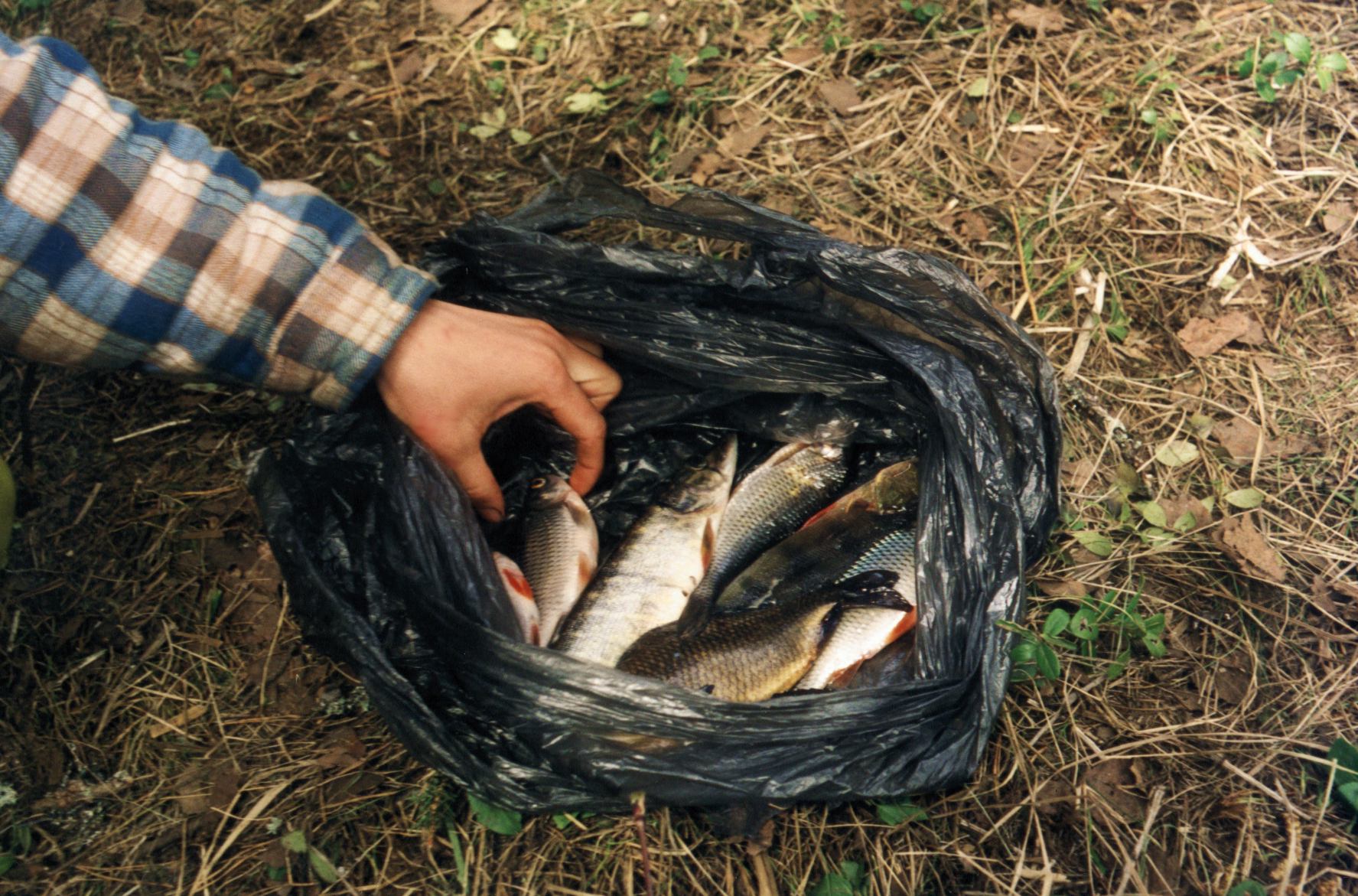
As soon as we woke, the man appeared again with a bag of fish. This was nice of him, although it meant not only making soup but also listening for another few hours. He had caught mostly little perch and young pike overnight. There was one crucian carp, very rare in this river, he said.
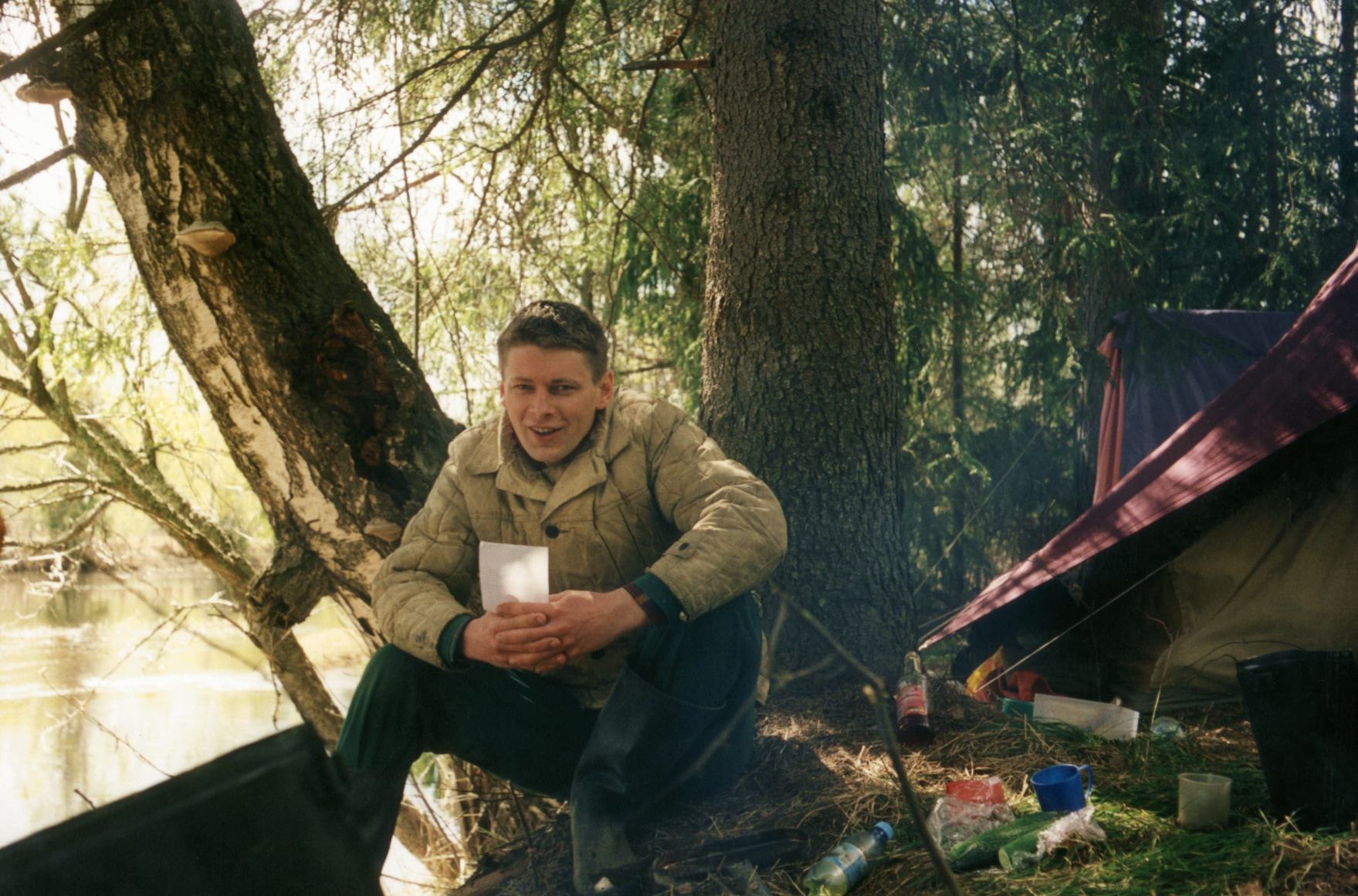
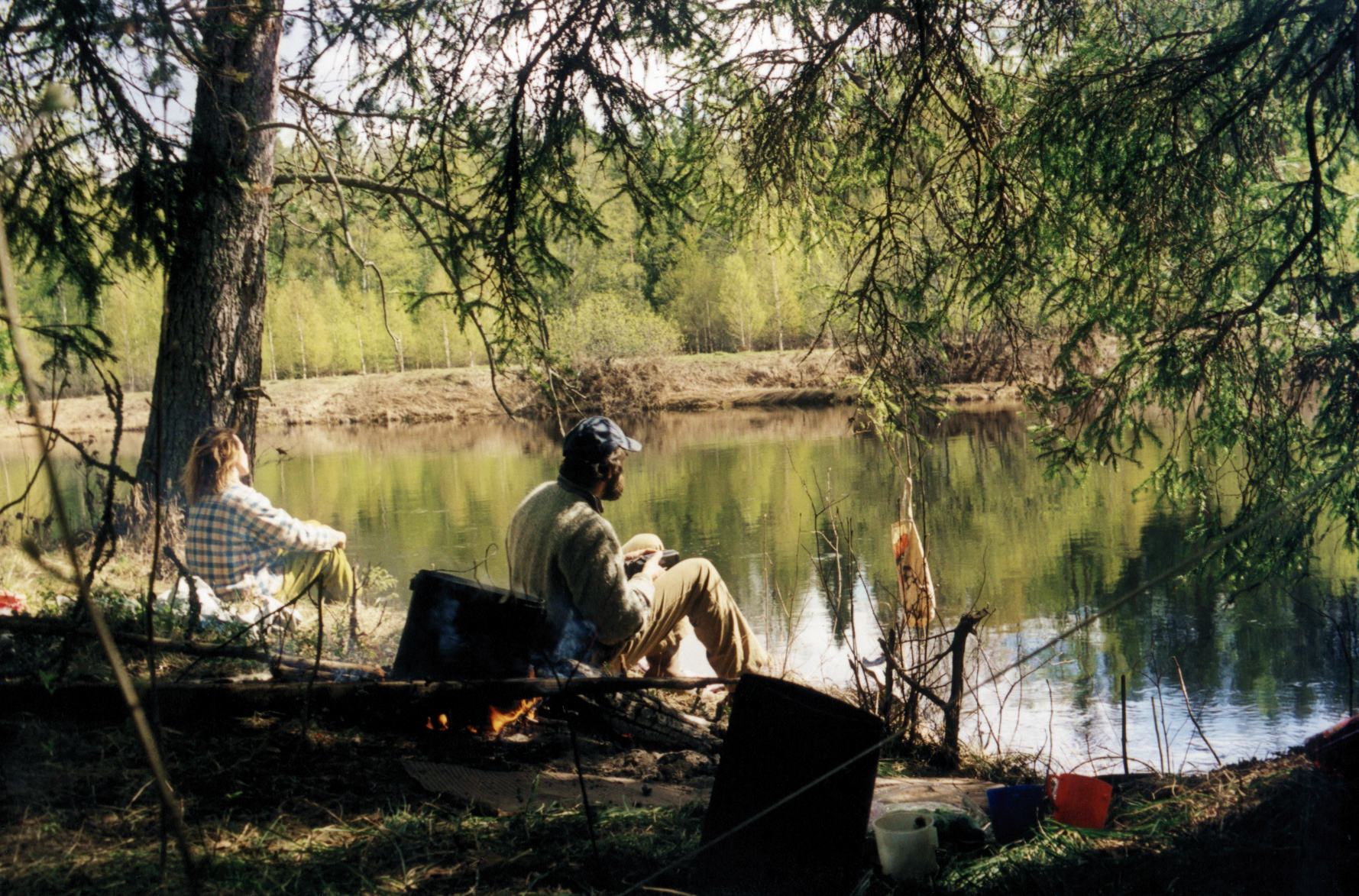
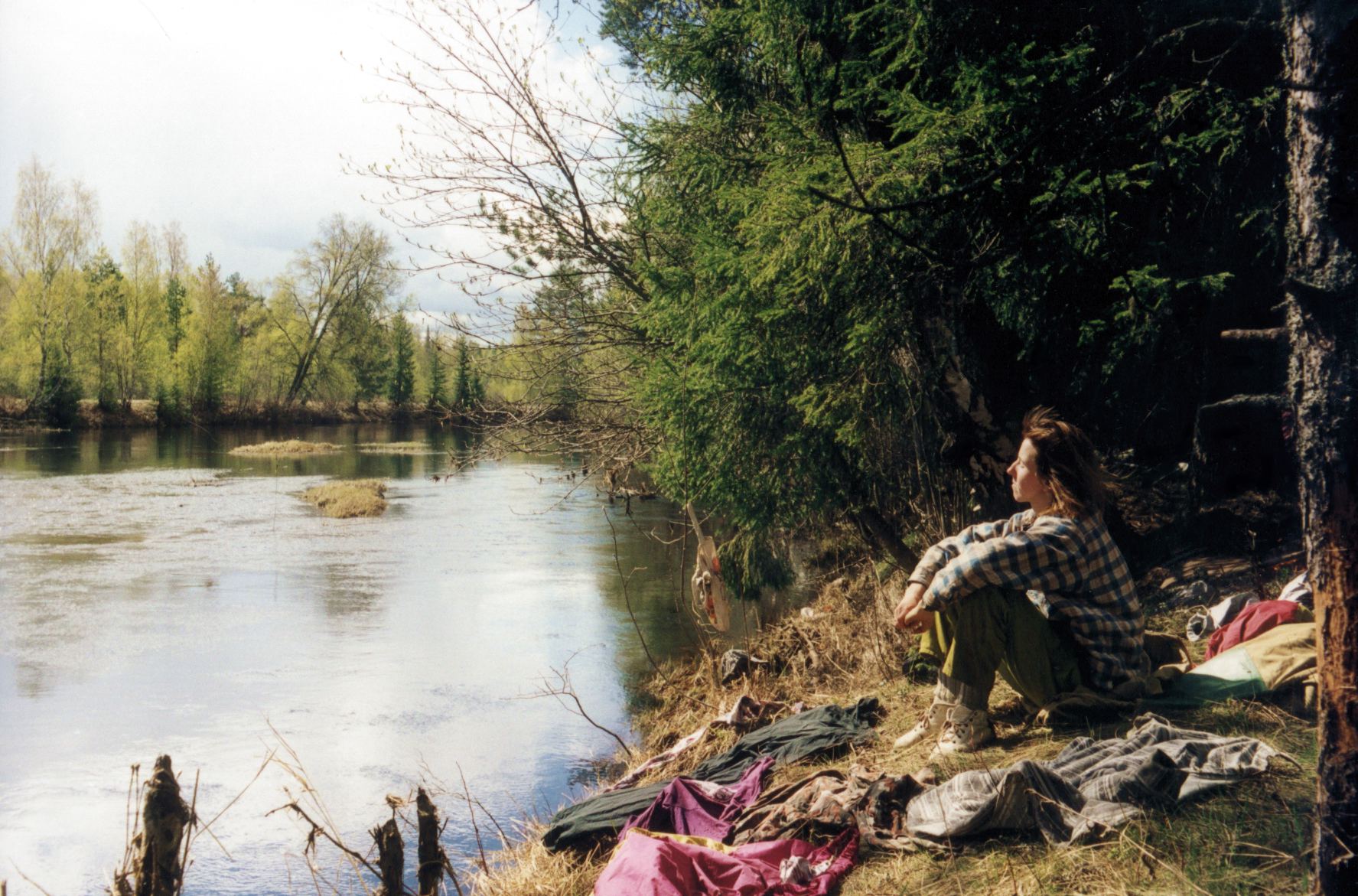
The morning was sunny and for the first time in several days we dried out completely. We did not set off until two. When we stopped for a bite and one more bask in the sun, the weather changed in no time and I finished the soup in pouring rain. The others set up our lunch spot under a nearby spruce.
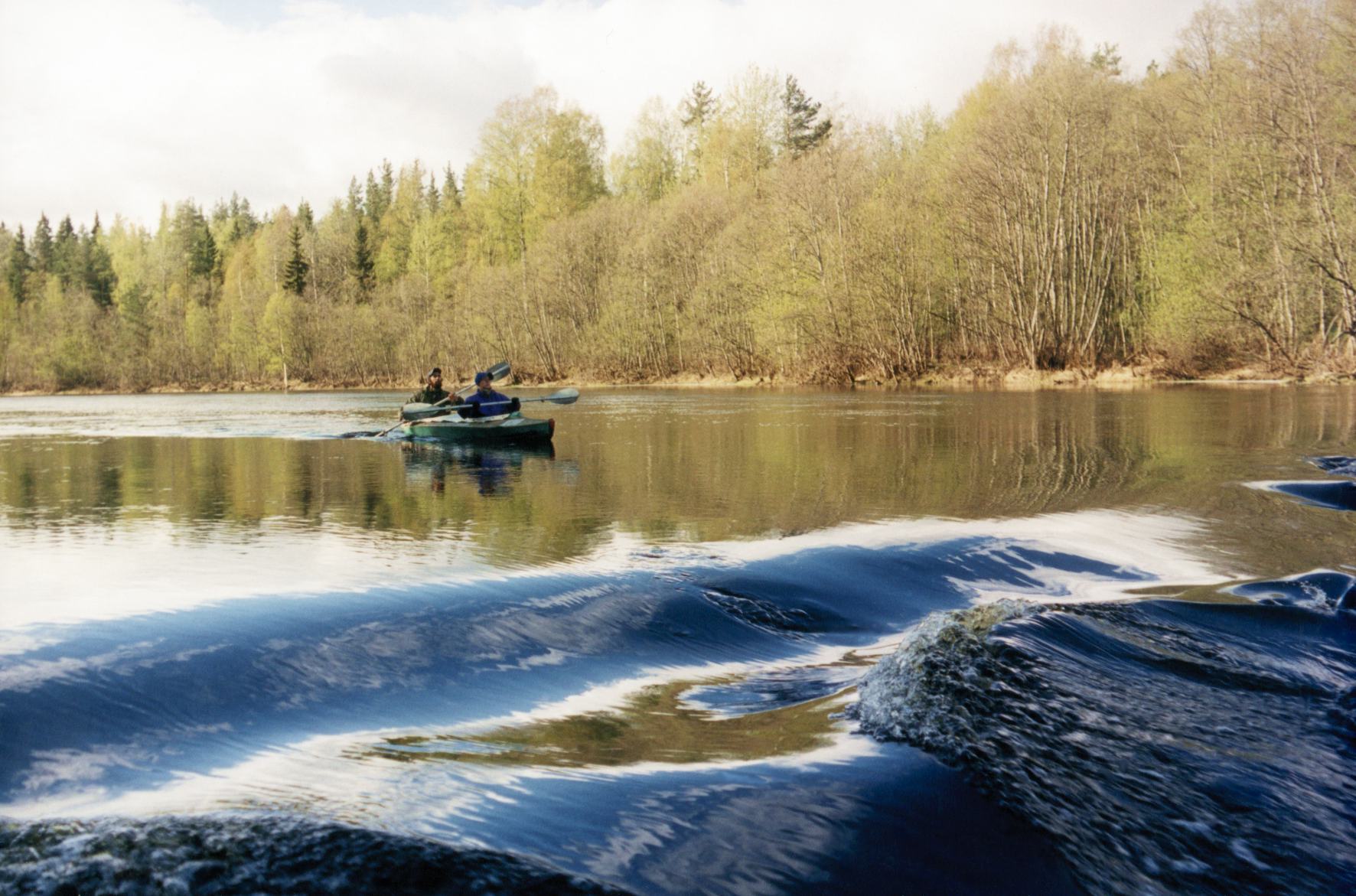
The river seemed completely quiet by now, but not for long. The banks changed from clay and sand to limestone as the river cut through a ridge. Ahead lay two ruined dams. One of them was not bad at all. We got out to inspect it and to film the descent. It was worth doing. Plenty of sharp bits of metal stuck out of the water. At Utishye there was a very long riffle full of sharp limestone rocks. We ran it without looking and soon regretted it. We were swept into the shallows and scraped the bottom hard. I had to get out and push, and naturally got my feet wet again.
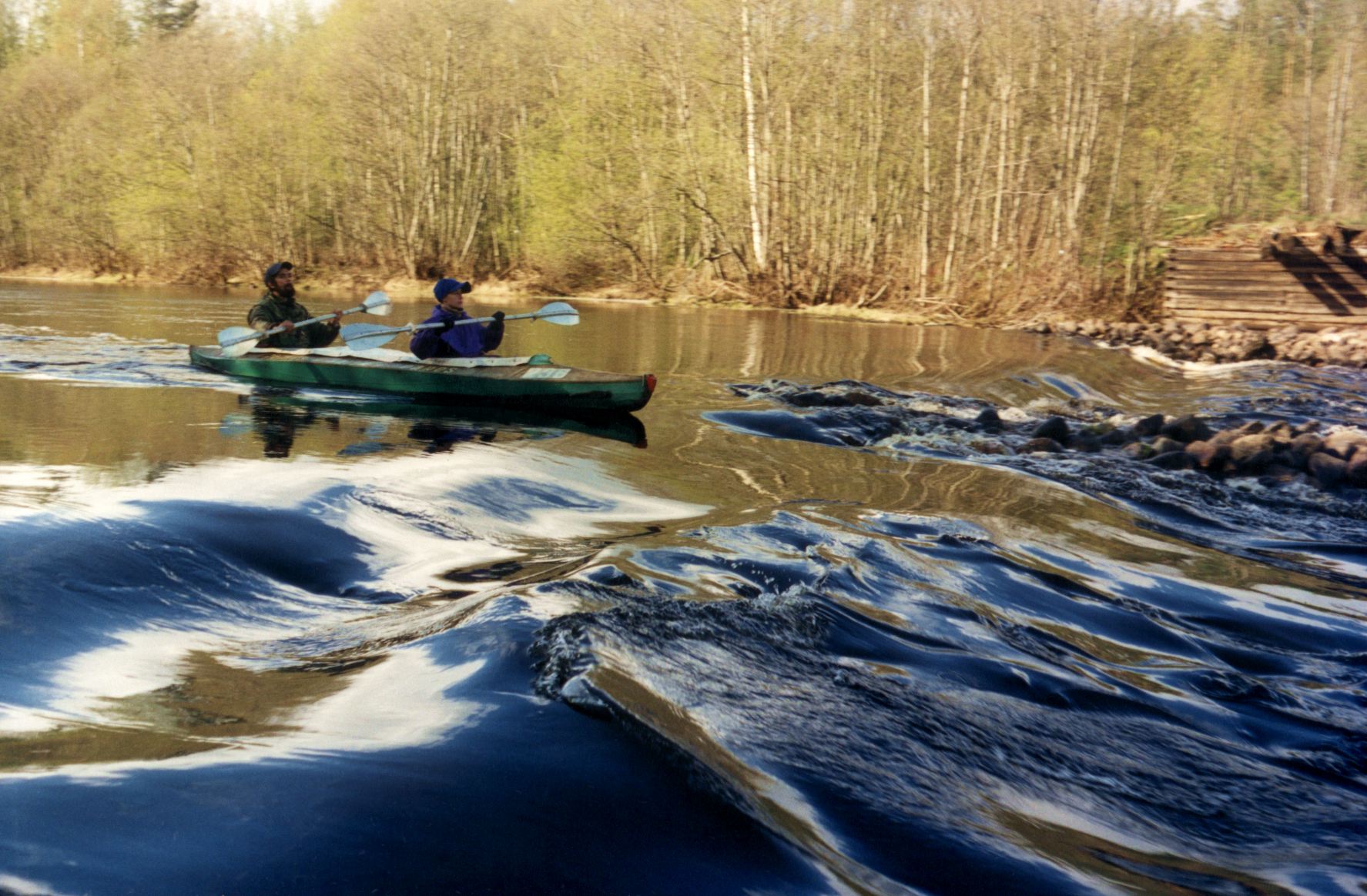
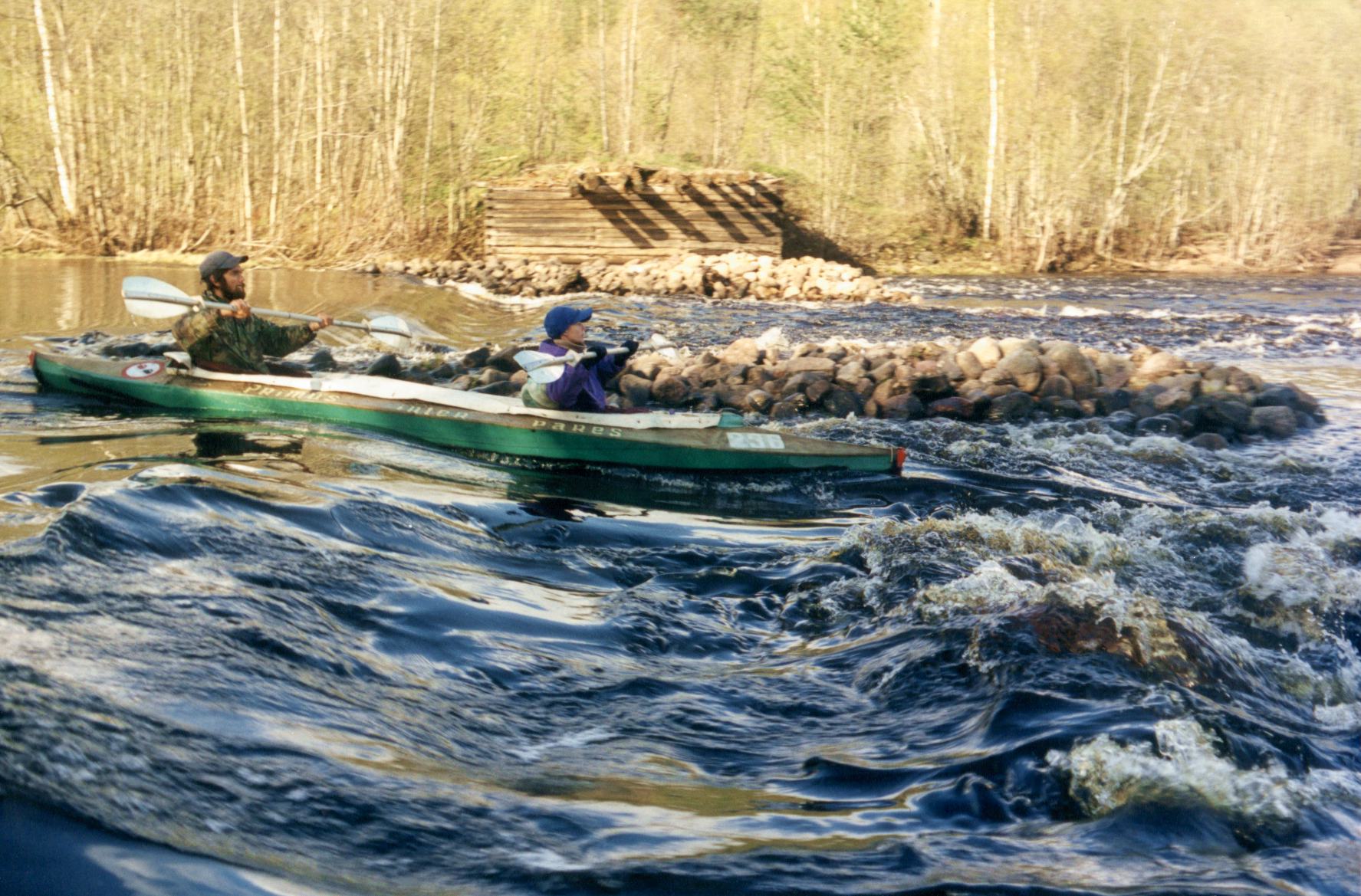
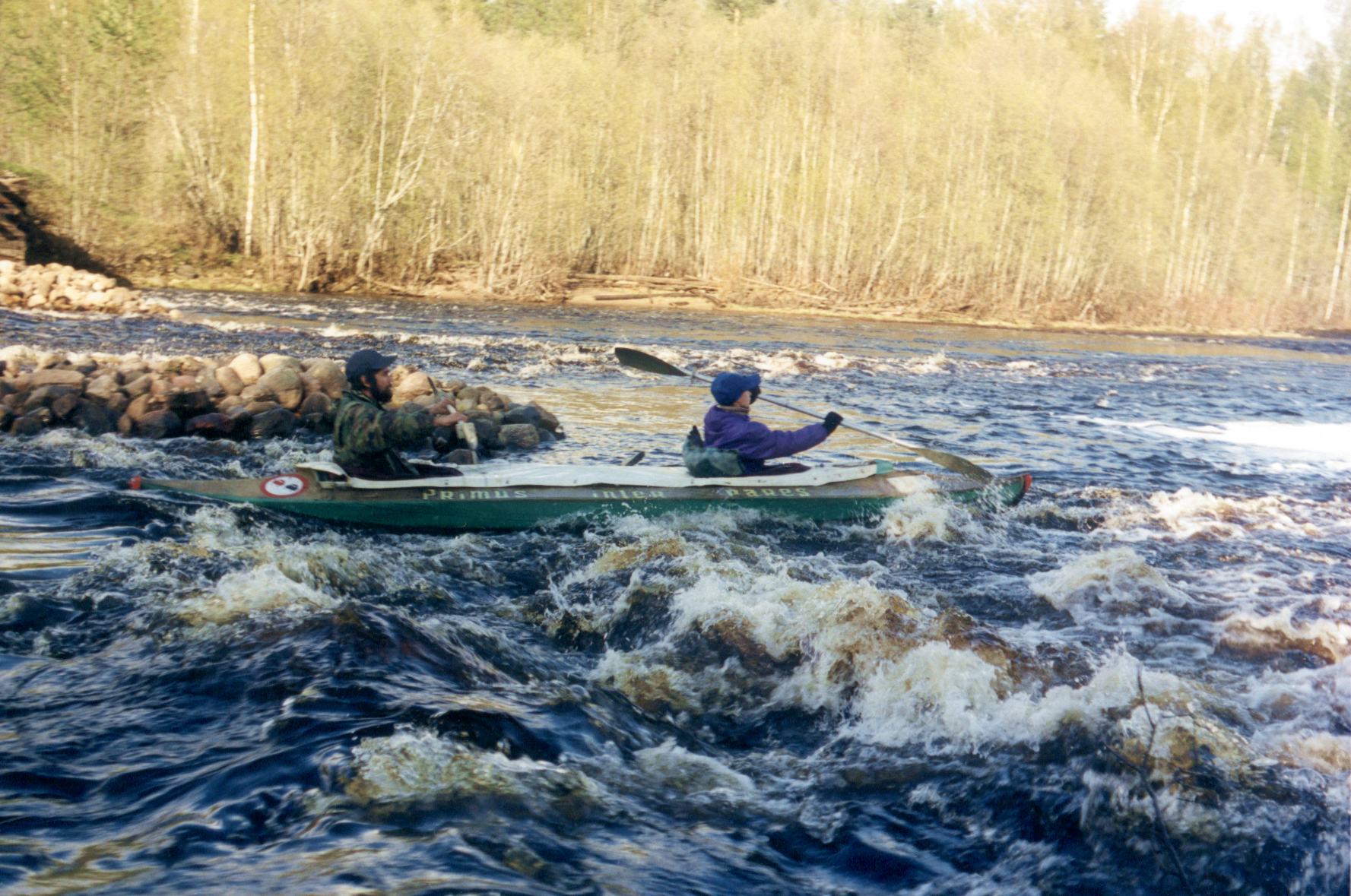
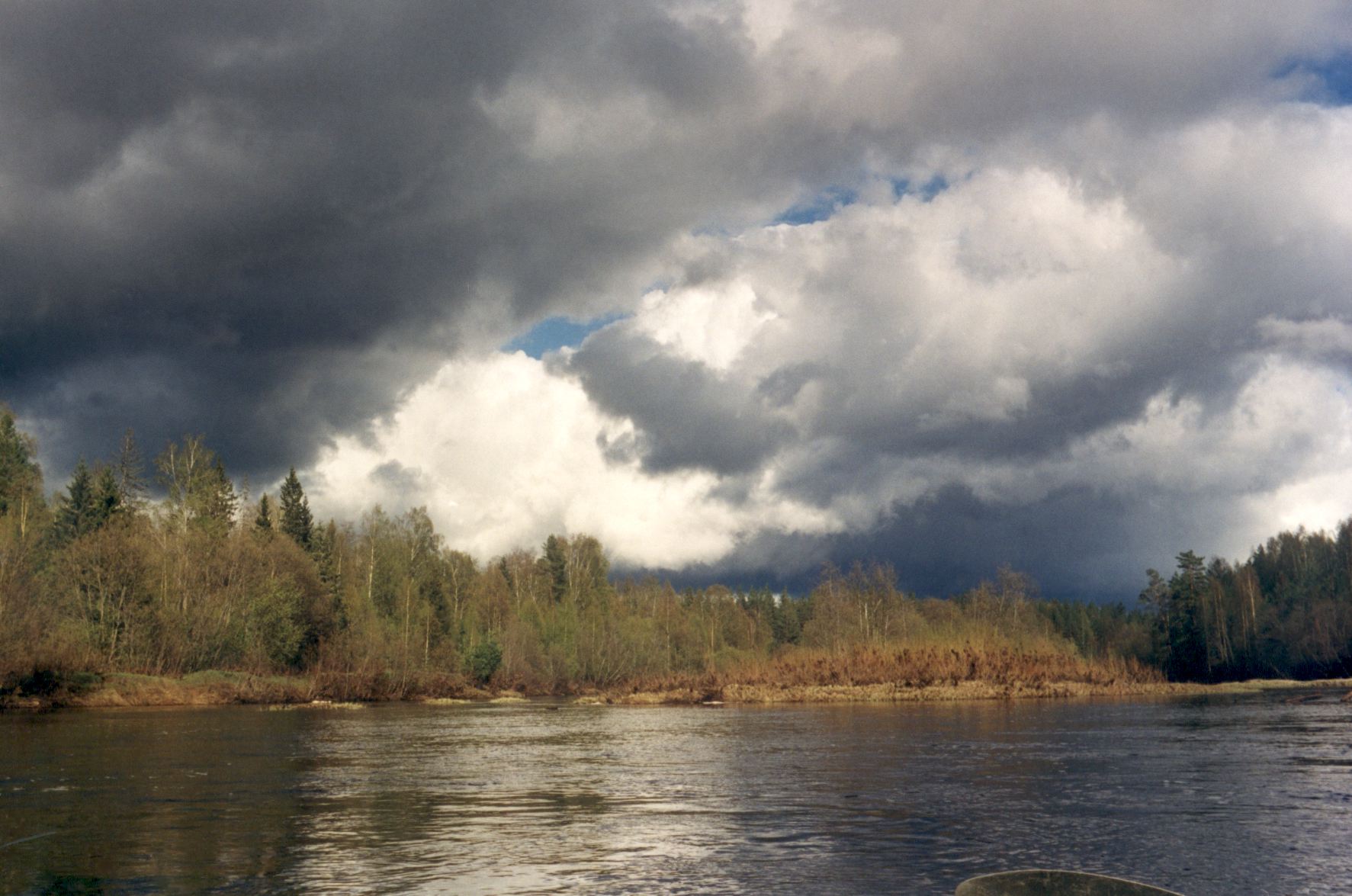
We were now in well-settled country. The railway was close by and houses lined both banks. One charming feature of these villages: a little set of steps led from almost every house to a floating platform with two benches and sometimes a table between. The locals like to sit and watch the river. They could even have friends over and drink beer there.
We looked for a good camp for a long time. In the end we pitched at the edge of a field beside a thick fallen birch. Split pieces of it made the heart of our campfire. We felt sad that this might be our last camp. We sat by the fire for a long time.
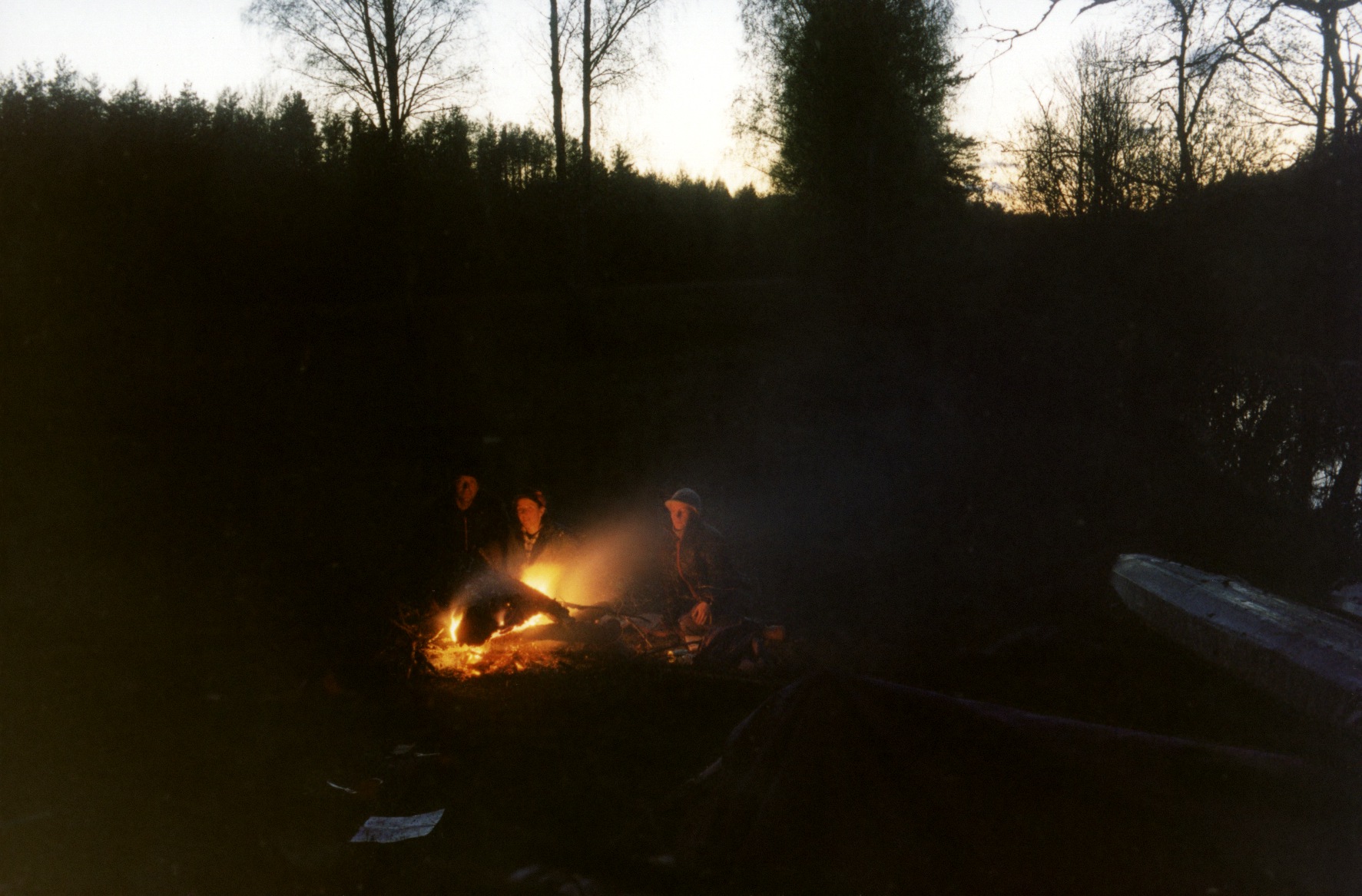
7 May · Day 9
In the morning we started thinking about getting out. We needed to stop near Babayevo so I could fetch the car while the others waited. It took longer than we had imagined. There was almost no current and we paddled a long time without obstacles or much to see. At about five we stopped where a gas pipeline crosses the river. There is a road nearby and you can get a car right down to the water. I changed quickly and set off.
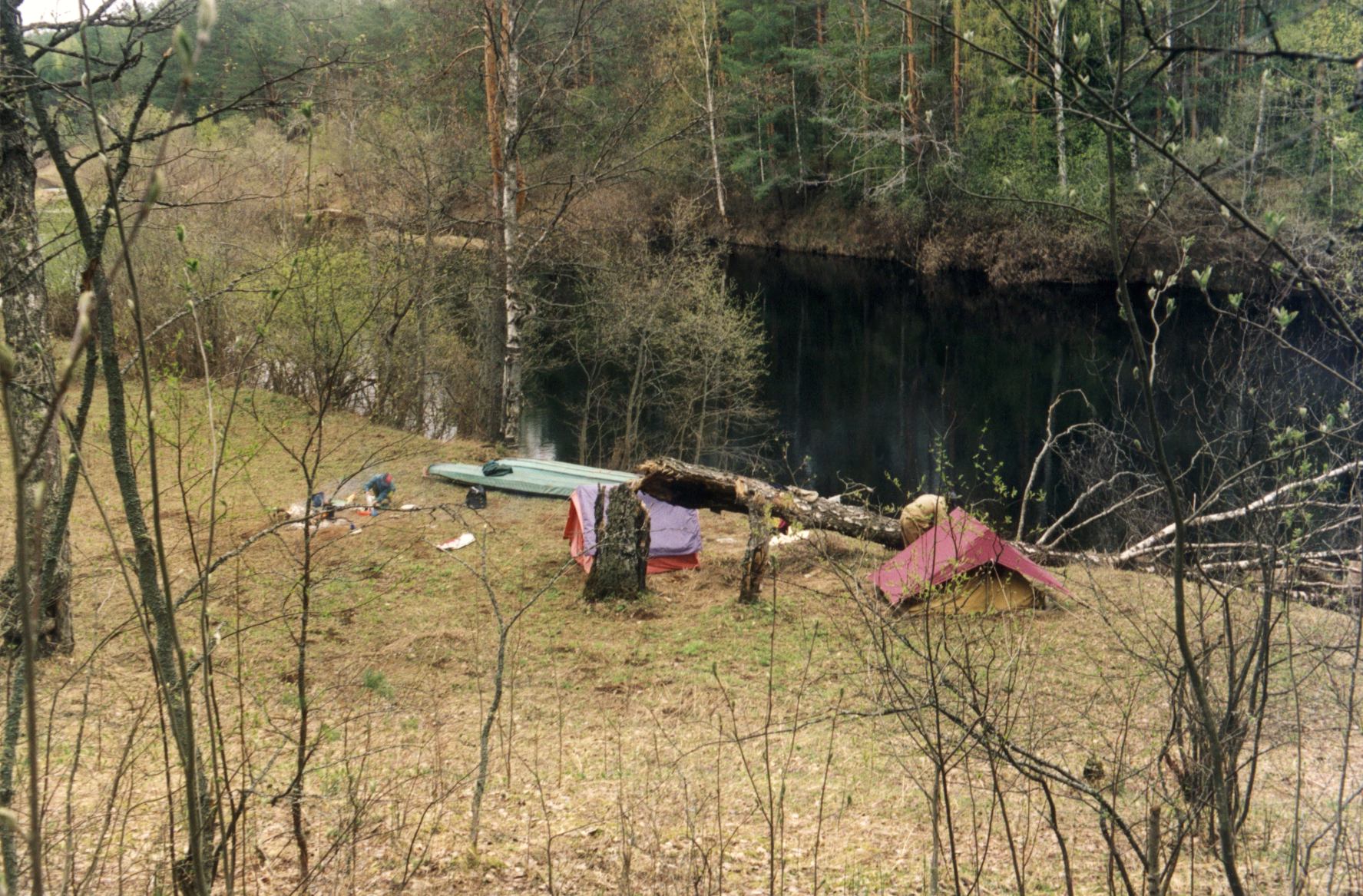
I started on the forest road and cleared a few things out of the way. Even the Ford could get through. After a kilometre I got to the asphalt. There was almost no traffic, so I walked on. As I approached Babayevo I suddenly realised that I had no documents with me. A gloomy thought. The drive from Zaborye to Babayevo was long, went across a regional boundary and would surely pass a traffic police post. No papers could set me back fifty dollars, and I had only a few hundred roubles. Worse, I might have lost all the documents somewhere on the river. That would have been really bad news. A sign at the entrance to the Babayevo cemetery lifted my spirits: “No self-burial!”
I walked all the way to the station without getting a lift and saw the Zaborye train depart right in front of me. The next was at four the following afternoon. No point hanging about there. On the way back I had better luck, flagged down a bus and got back quickly. We set up camp on a small flat hill.
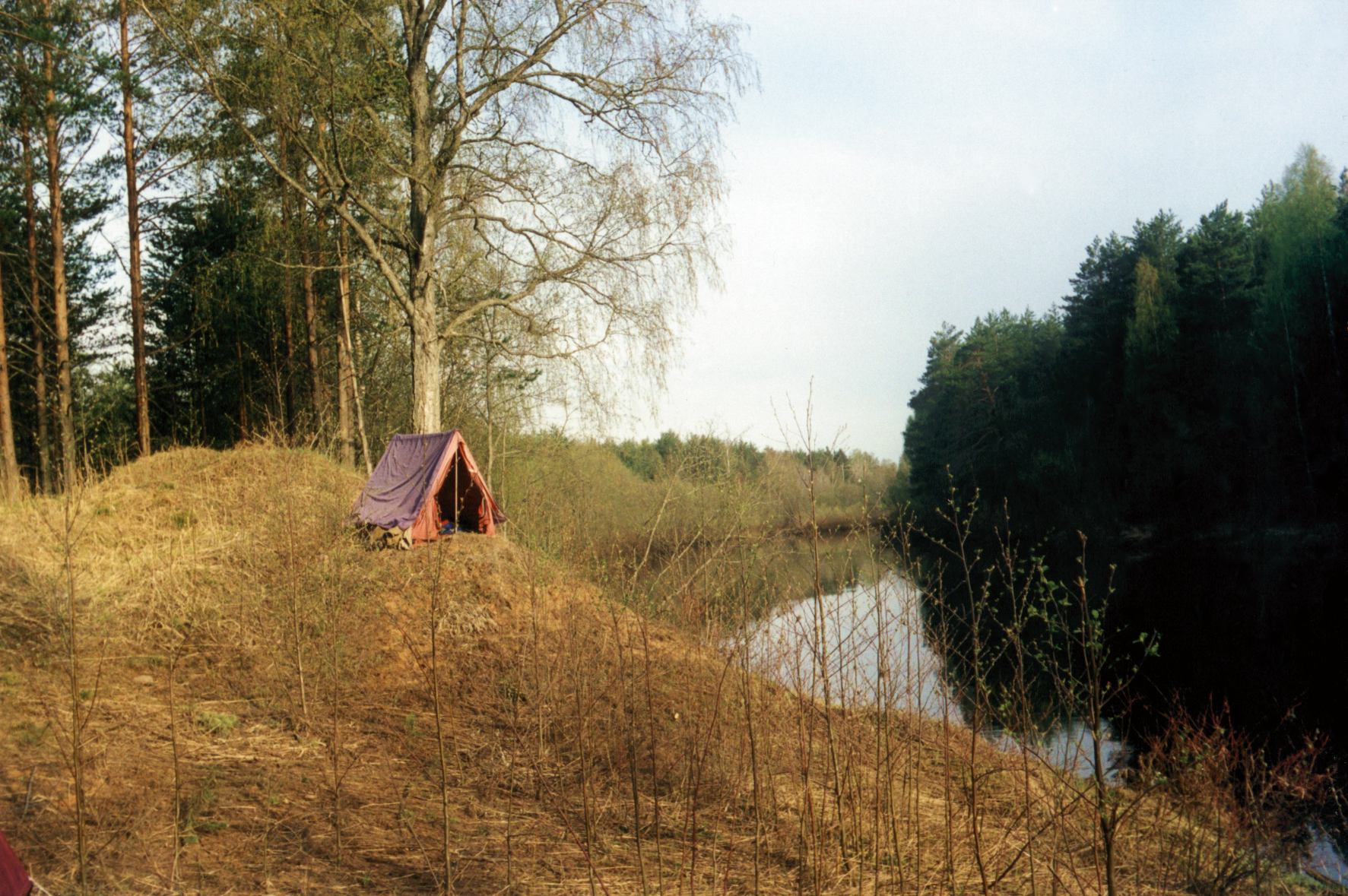
8 May · Day 10
We got up early. It was cold but sunny. We packed quickly and paddled into Babayevo, where we took the kayaks apart under the bridge. I went to the road to hitch a lift. Few cars were out and those that passed were only going locally. No one on the railway could arrange a stop at Zaborye, though they were happy to take me to Volkhovstroy. After three fruitless hours I came back and we decided to take the kayaks on the train to Zaborye.
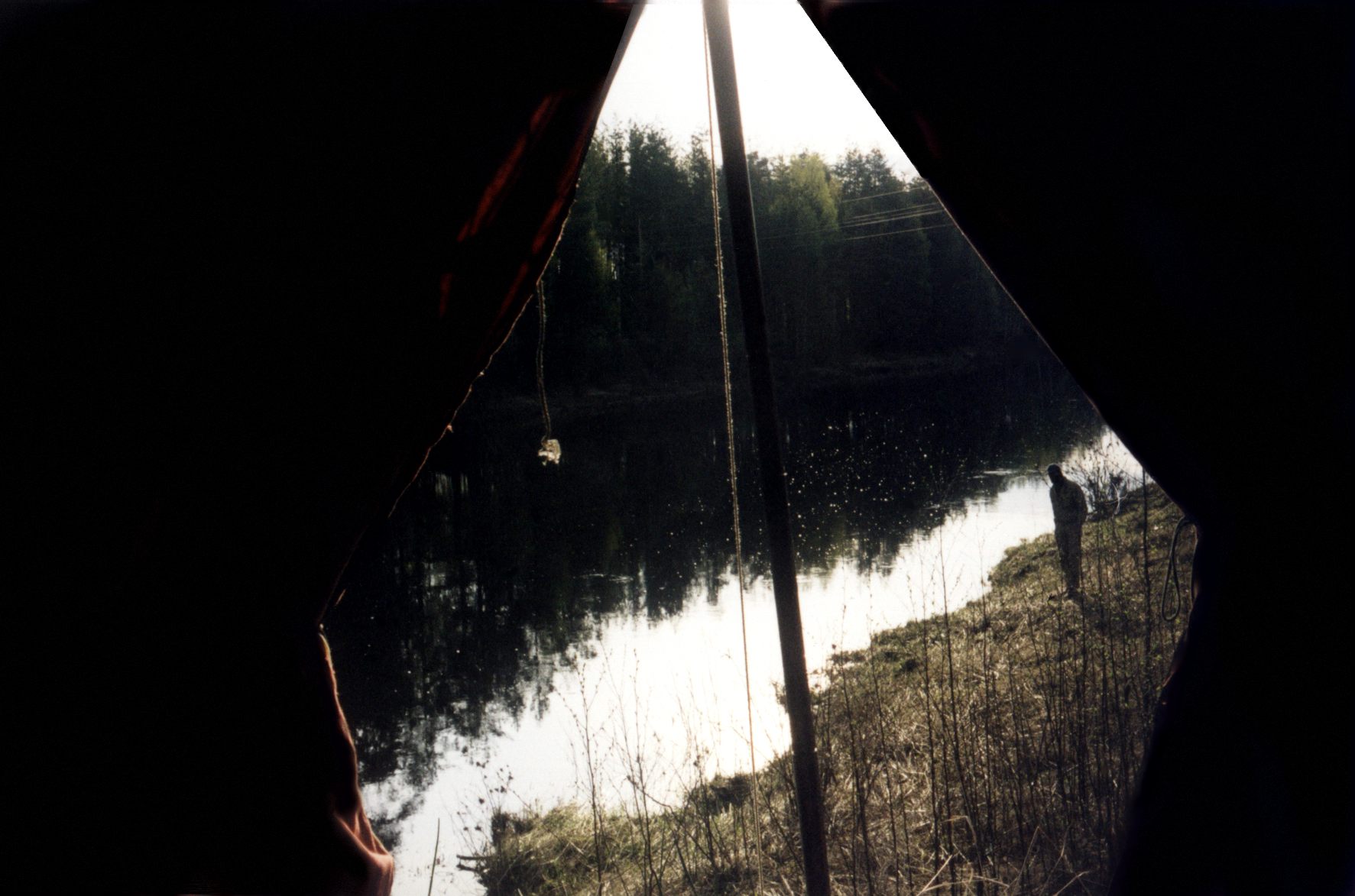
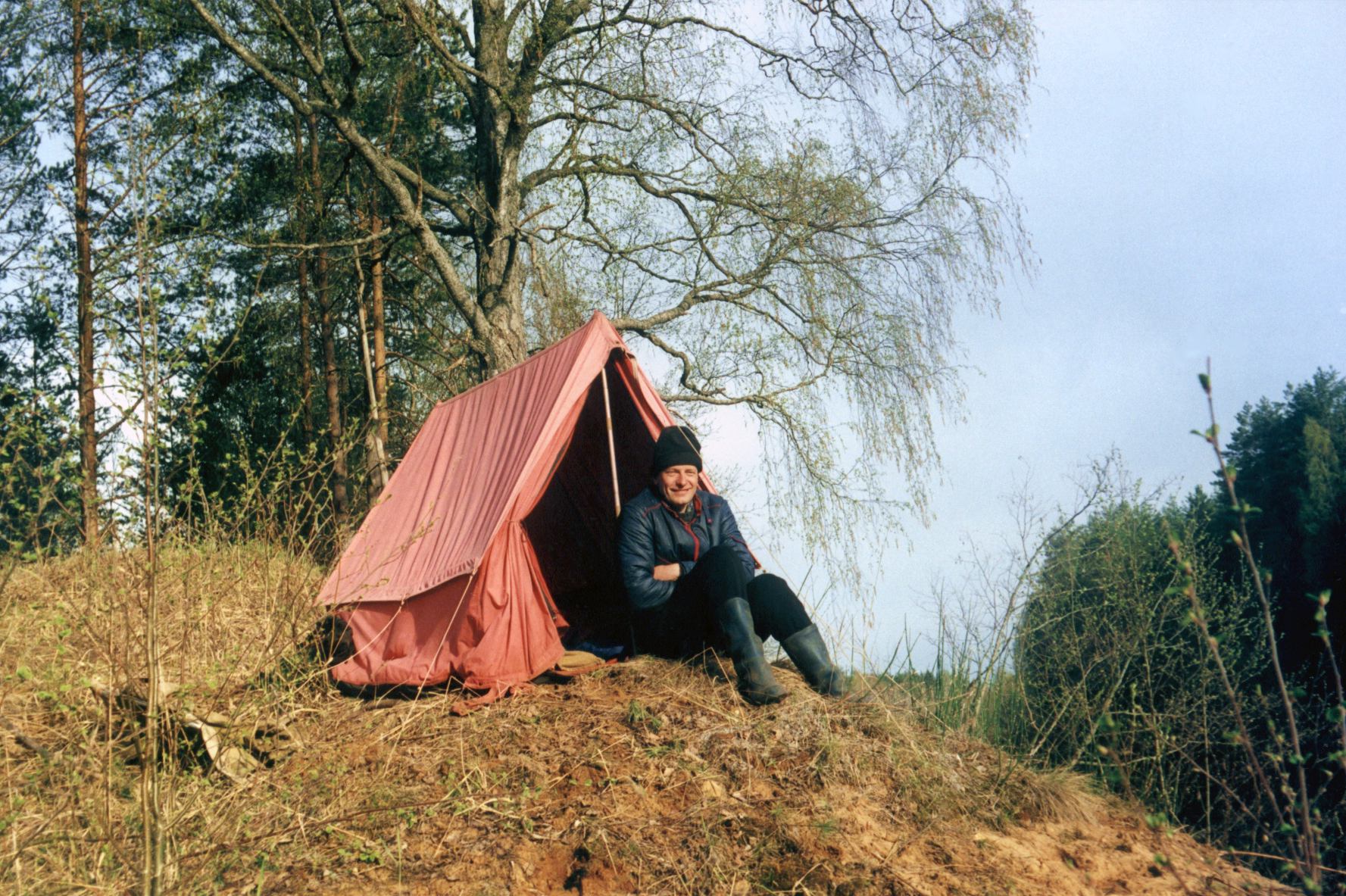
That is what we did. Forty minutes on the train, and there we were. The car was still in the yard and it started. We drove to the station to load everything. In Pikalyovo we filled up and had a bite, then went straight to the city without stopping again.
Our campsites
29–30 April · Kolp River, Krasny Bor · 59°58.523′N, 35°13.391′E · 205 m
30 April–1 May · Kolp River, near the road after the capsize · 59°57.903′N, 35°17.504′E · 204 m
1–2 May · Kolp River, in the deep woods · 59°56.214′N, 35°21.480′E · 199 m
2–3 May · Kolp River, on the island · 59°54.925′N, 35°25.964′E · 195 m
3–4 May · Kolp River, clearing above the railway bridge · 59°52.015′N, 35°33.460′E · 190 m
4–5 May · Kolp River, below Ploskoye · 59°43.847′N, 35°40.605′E · 171 m
5–6 May · Kolp River, before Perun · 59°38.561′N, 35°20.496′E · 163 m
6–7 May · Kolp River, above Teshemlya · 59°30.079′N, 35°33.682′E · 140 m
7–8 May · Kolp River, before Babayevo · 59°24.580′N, 35°51.855′E · 134 m