Trip report
The Kerest is seldom used for kayaking. It is a short trip, with no rapids to speak of. Just an ordinary river with marshy banks. But it is close to Saint Petersburg and runs through uninhabited country.
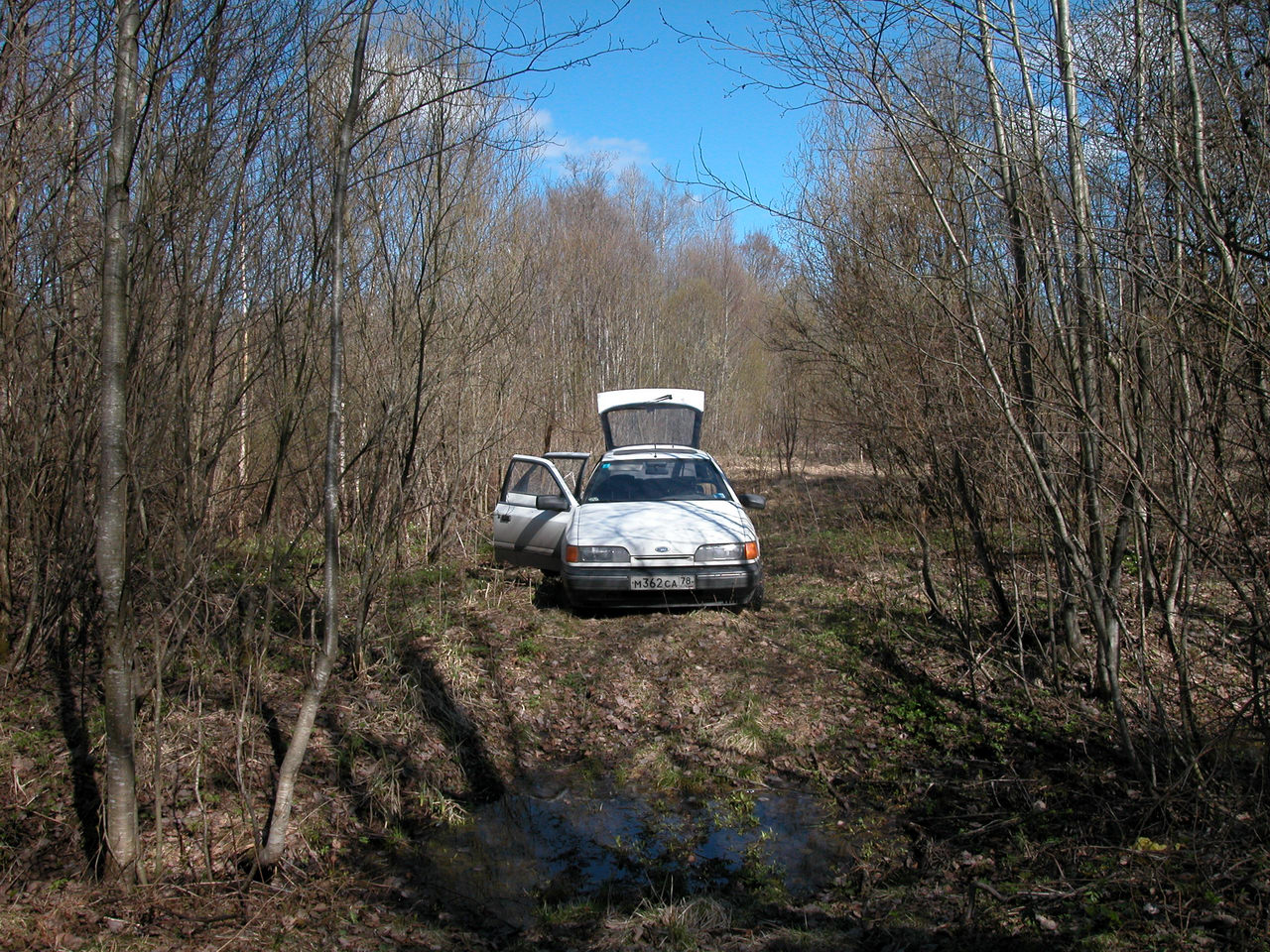
One clear May day we drove our beloved Ford to the place where the road from Podberezye to Tyosovo-Netylsky crosses the Kerest (58°46.837′N, 31°11.821′E). The river is still quite narrow here, with plenty of fallen trees. Trying to park closer to the water, we promptly got stuck in a puddle. The car would not move in either direction. That was a problem, of course, but one we could deal with later, after the trip. For the time being we would call it an anti-theft device.
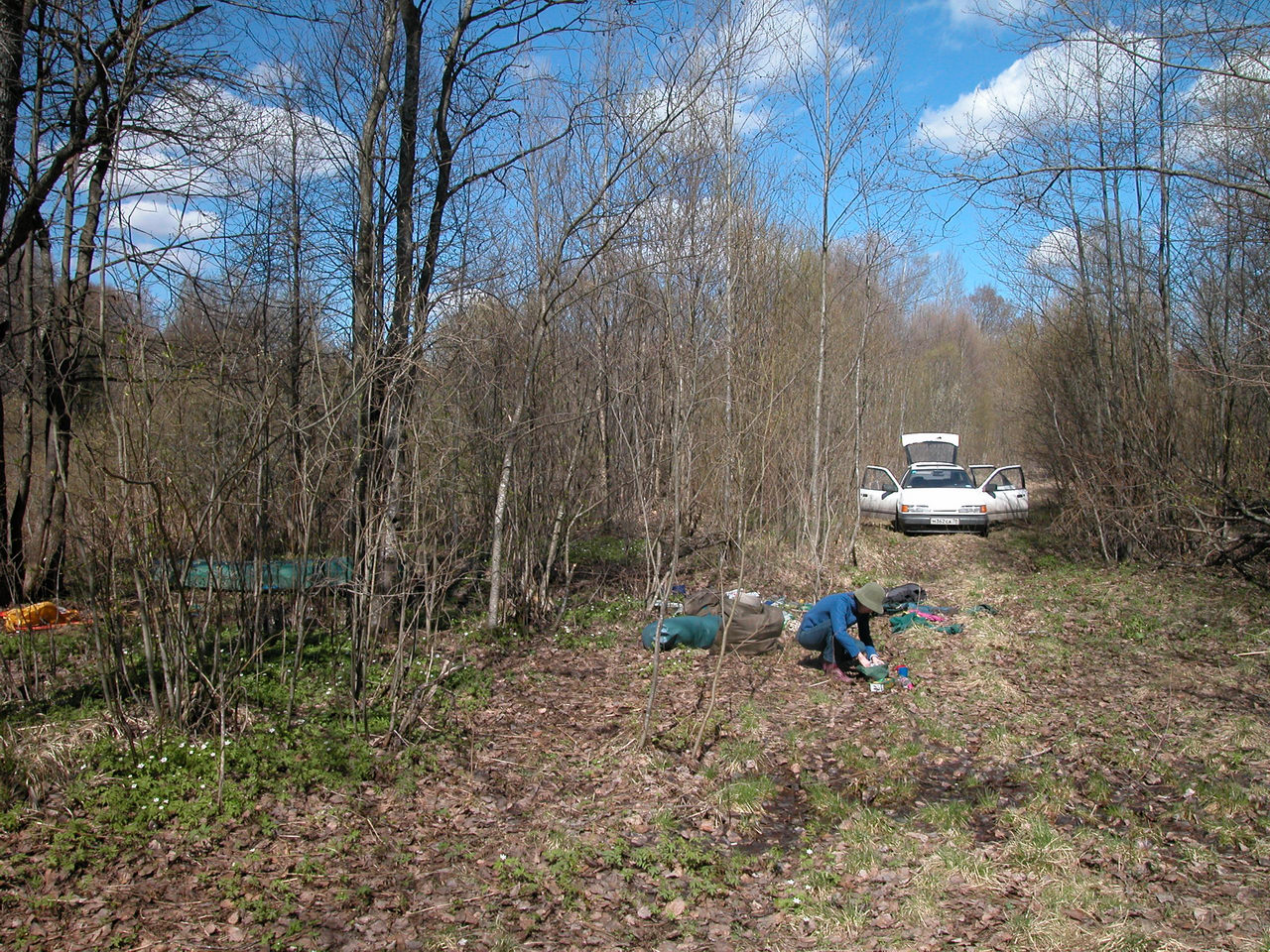
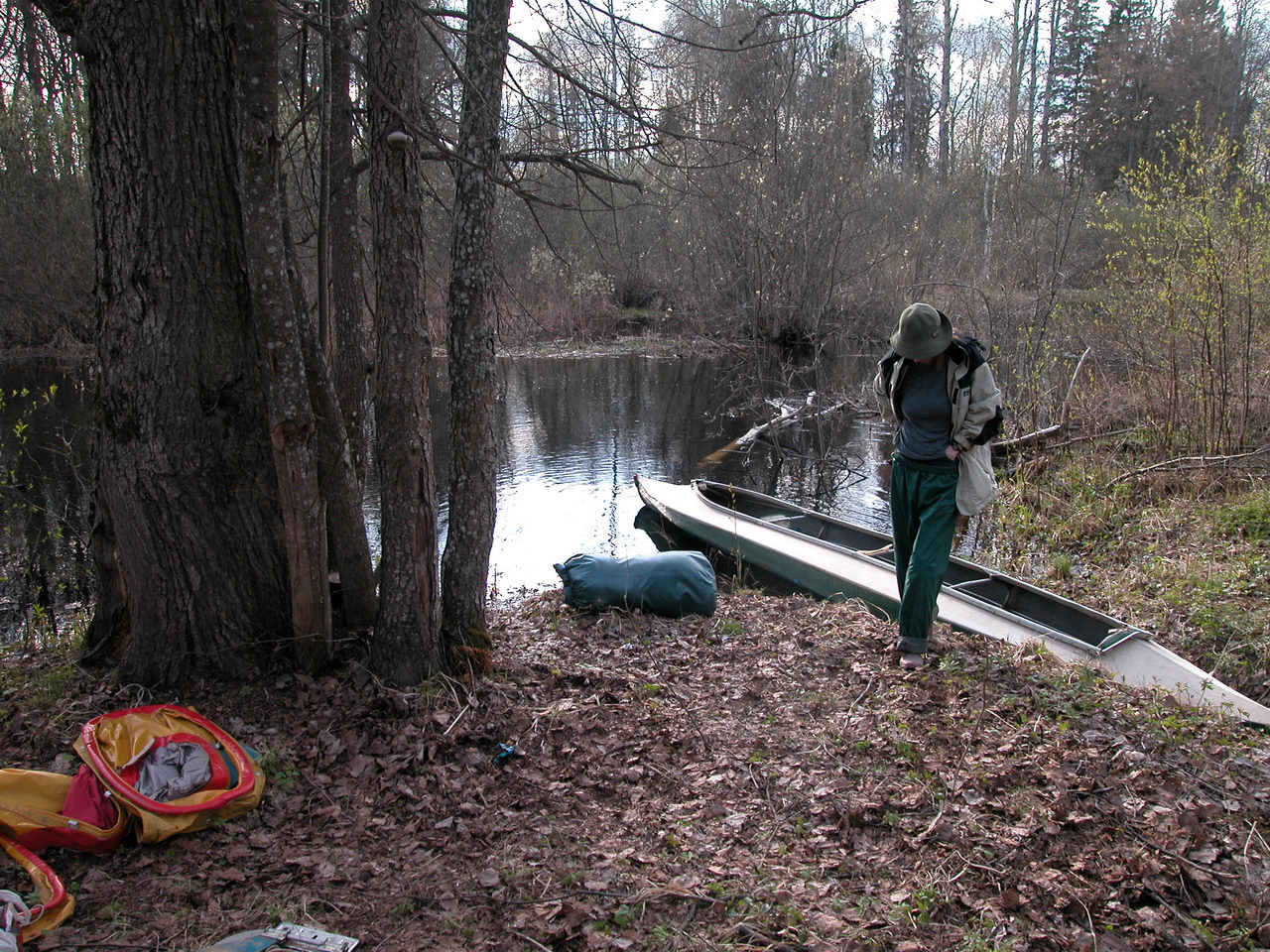
A river this narrow normally has plenty of logjams, but we were lucky. We had to guide the kayak through by hand now and then, but much less often than usual. Nor was the countryside quite as wild as we had expected. A logging road follows the right bank. The ground is low and spring floodwater had covered the banks.
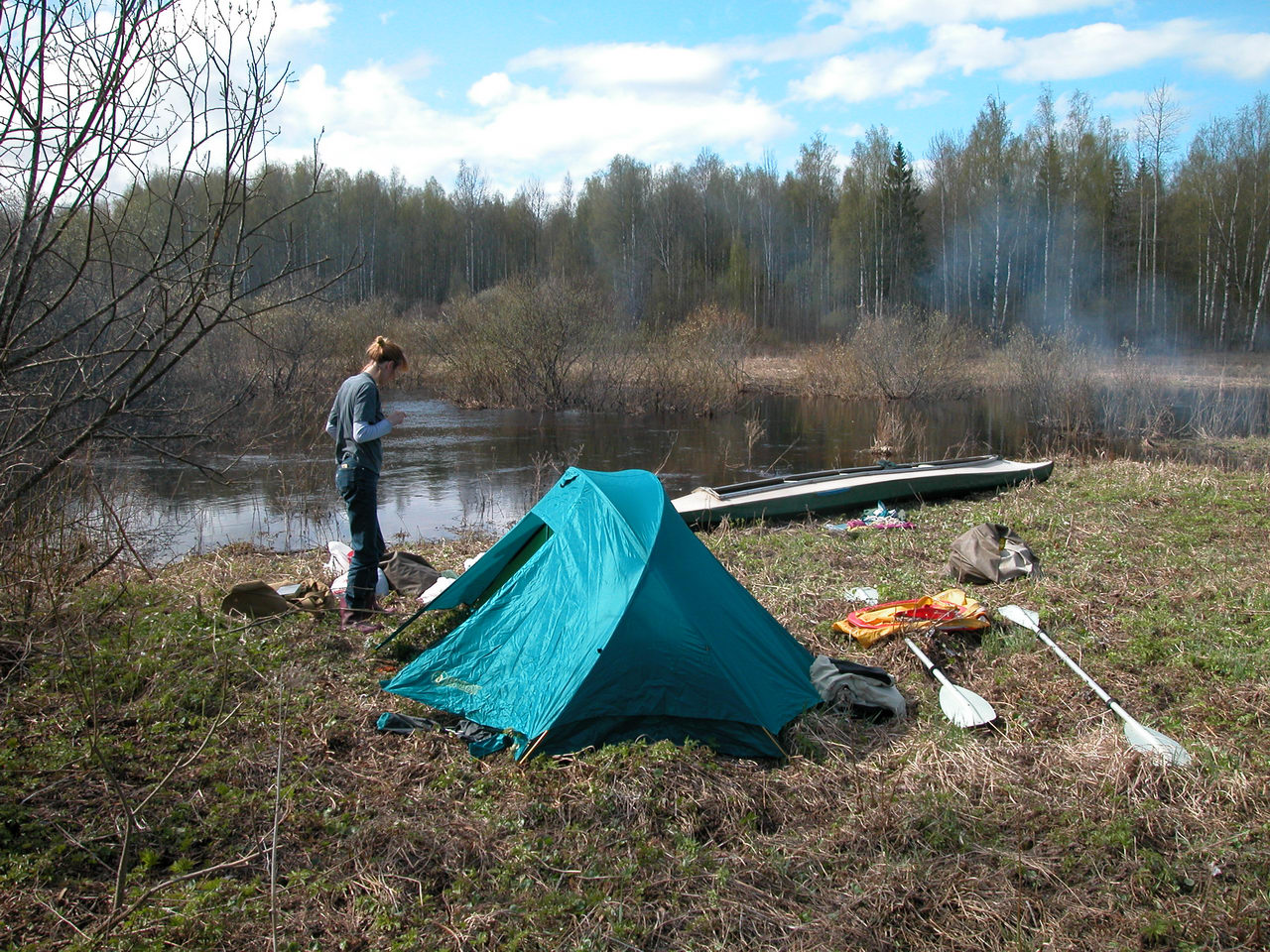
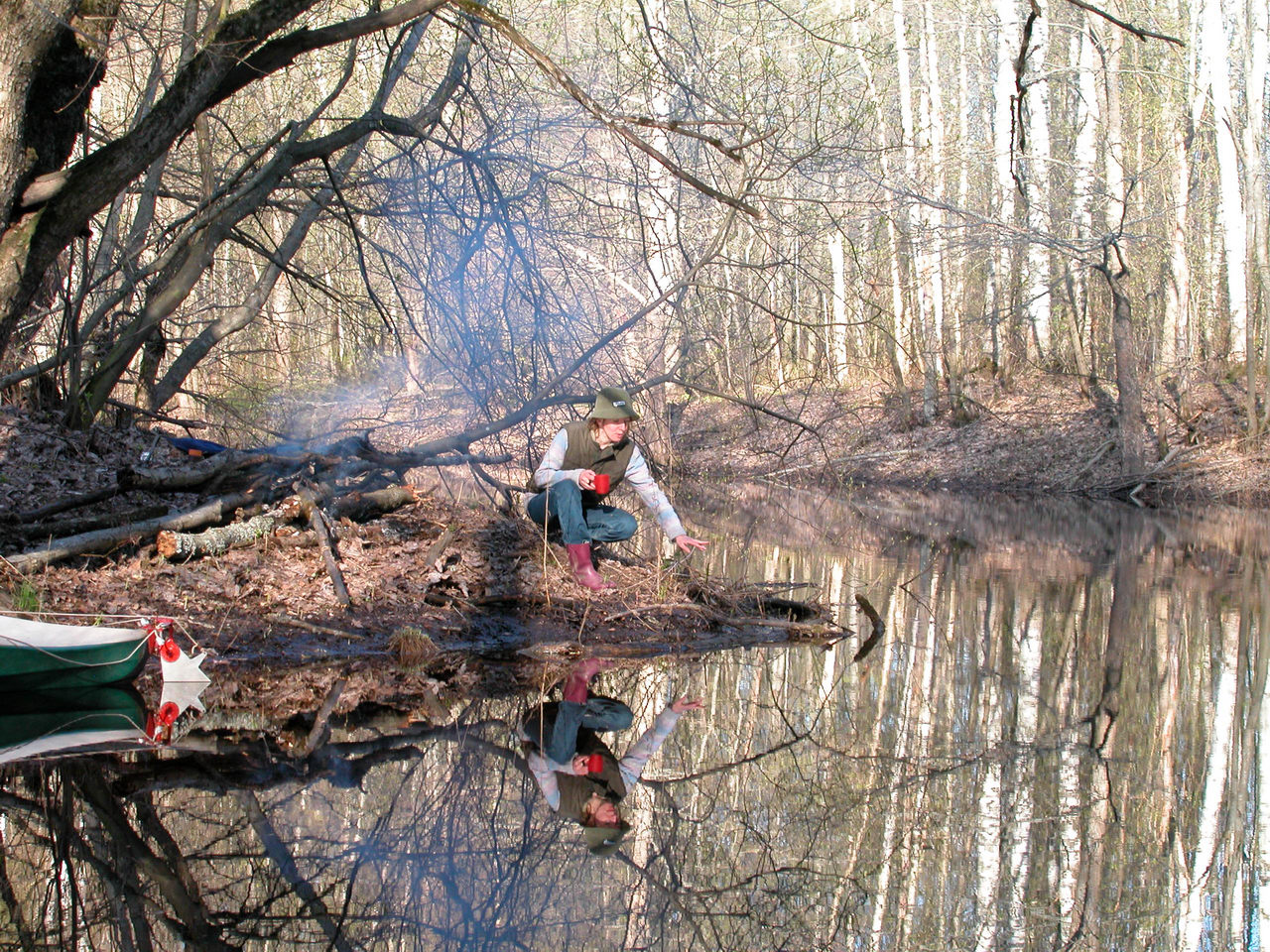
After paddling only two kilometres we stopped for the night at the first dry spot we came to (58°47.905′N, 31°12.376′E; 37 m). It was getting late, and who knew when we would see another suitable place?
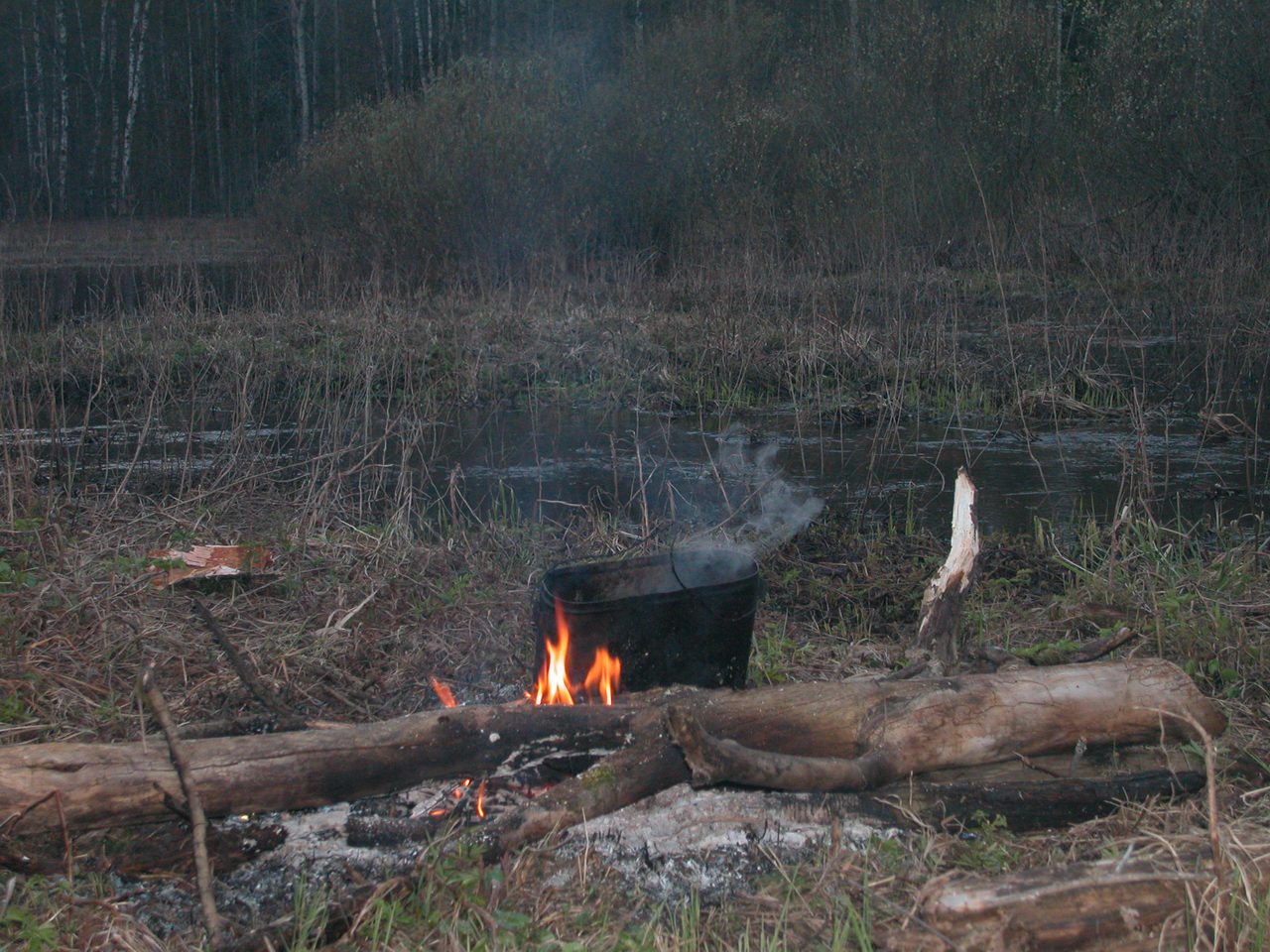
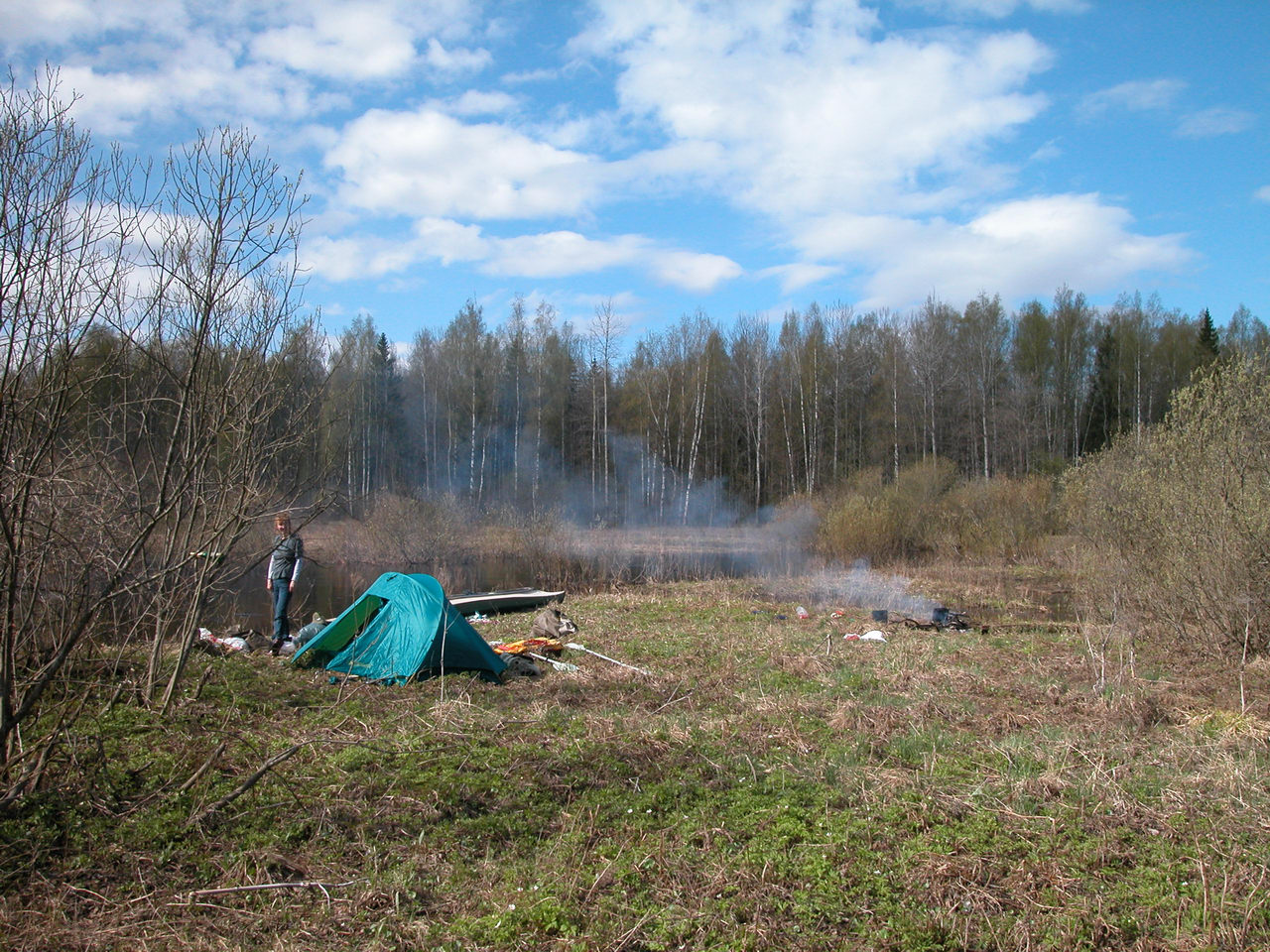
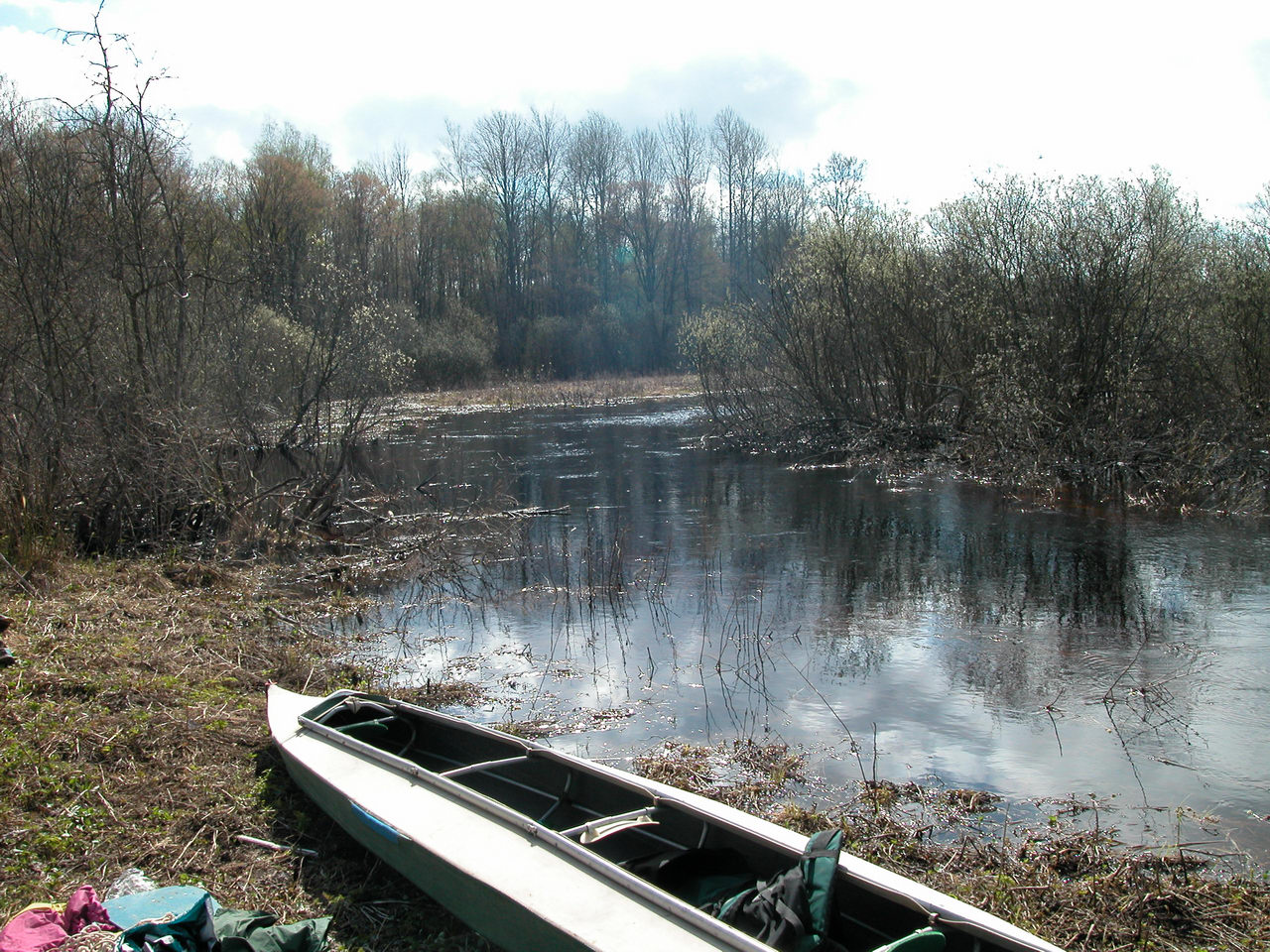
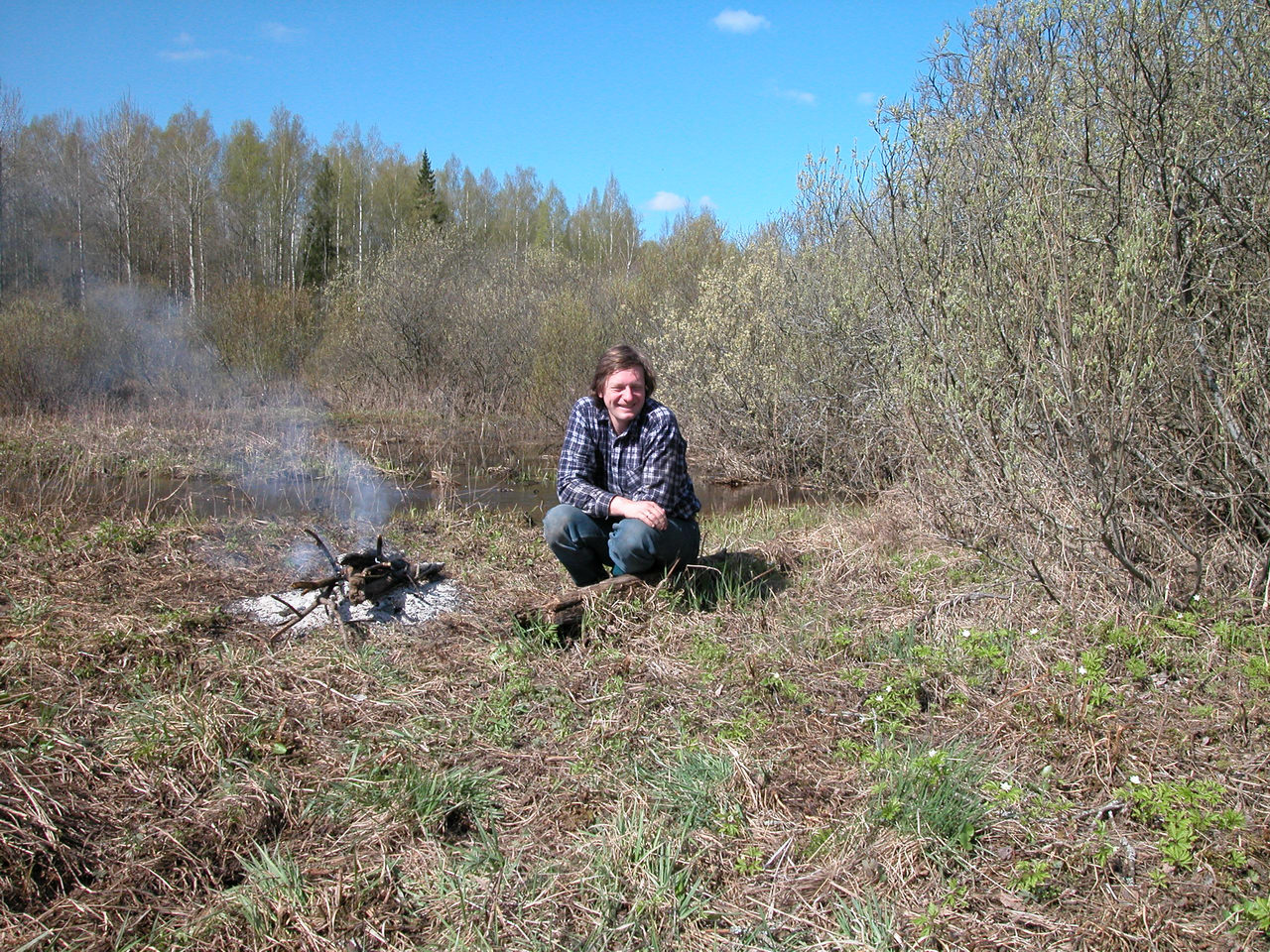
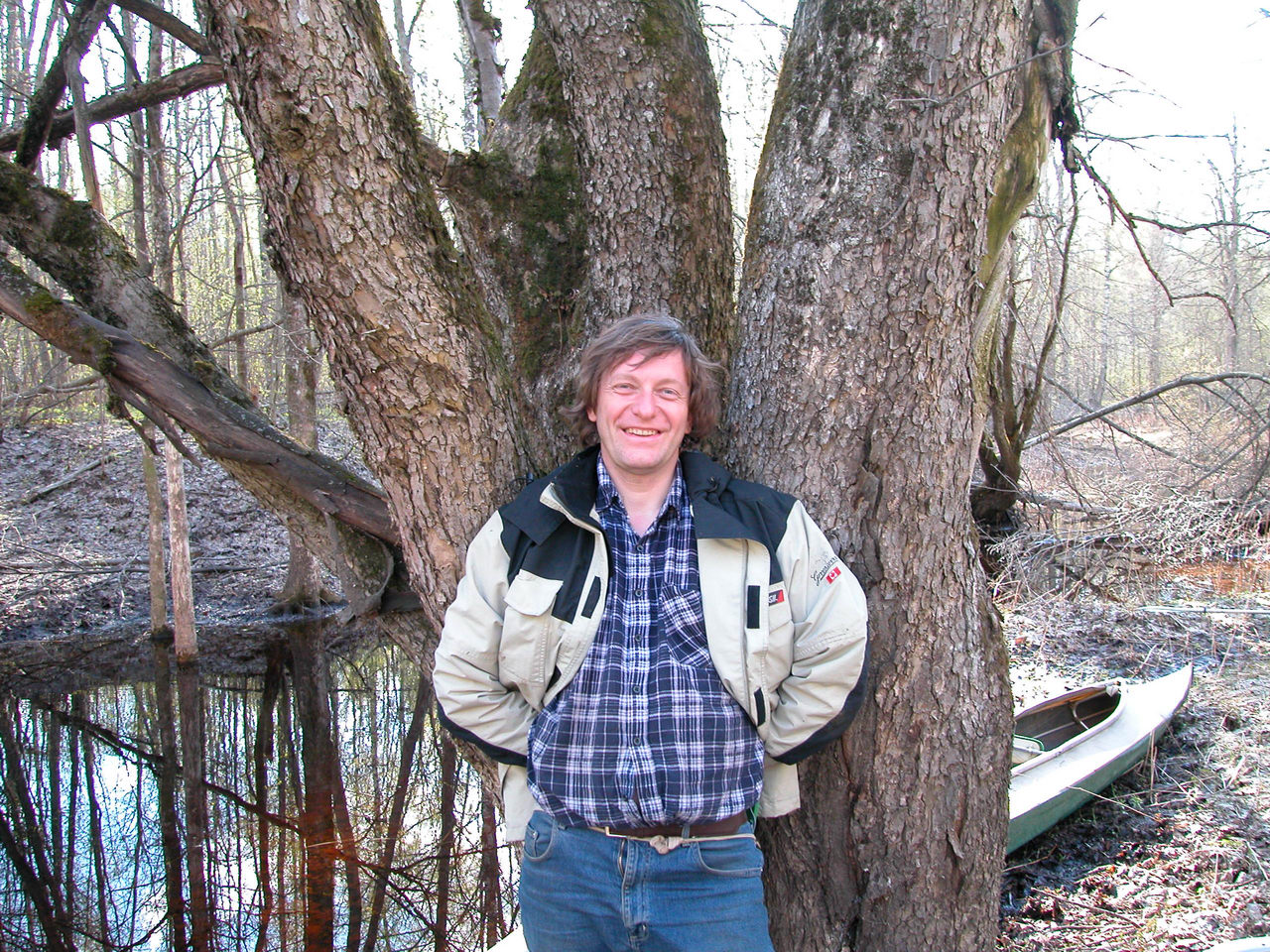
In the morning we carried on. The banks grew higher. Oaks began to appear on the rises, and sometimes there were whole oak woods. We stopped beneath one of these oaks for lunch.
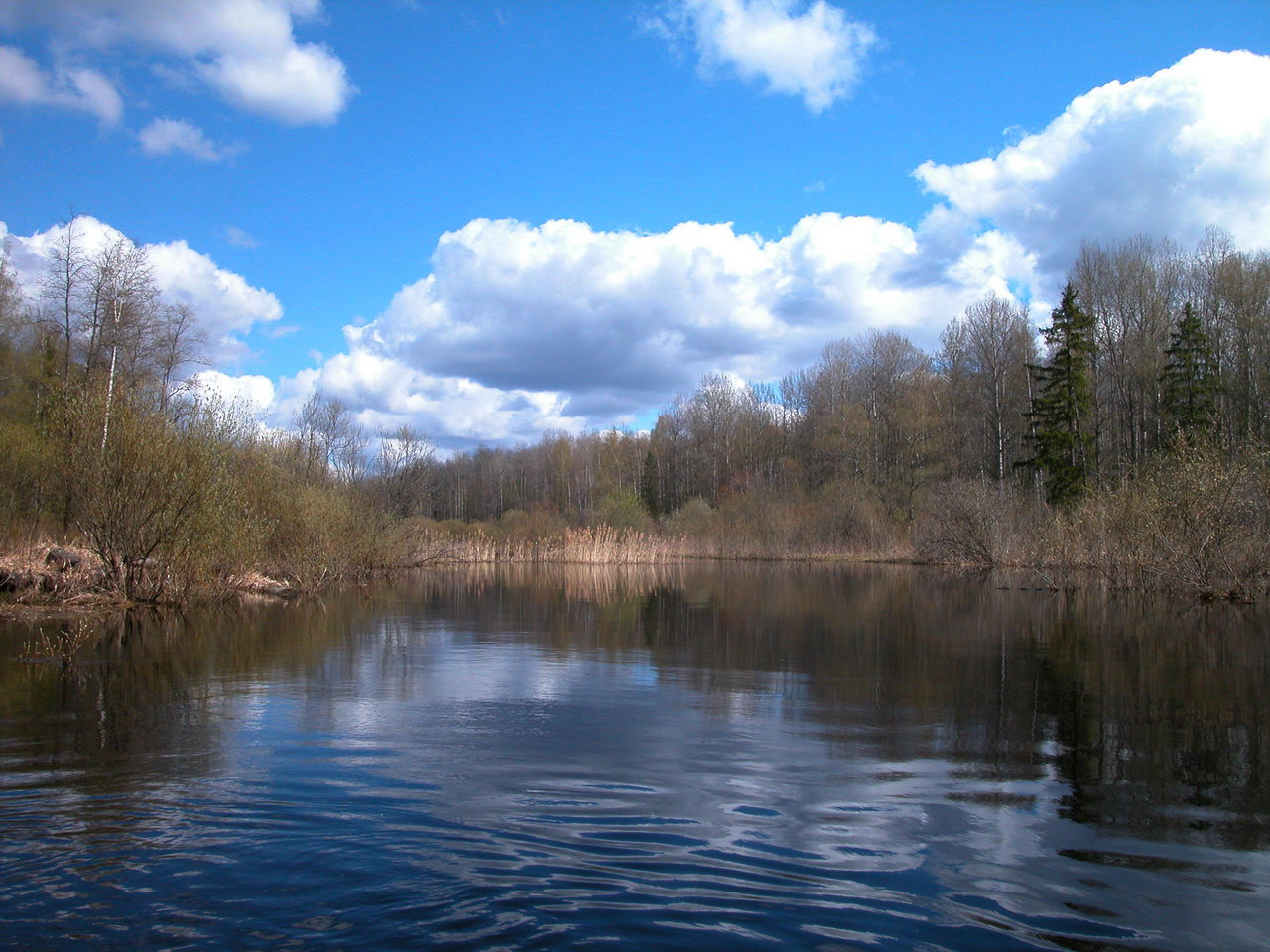
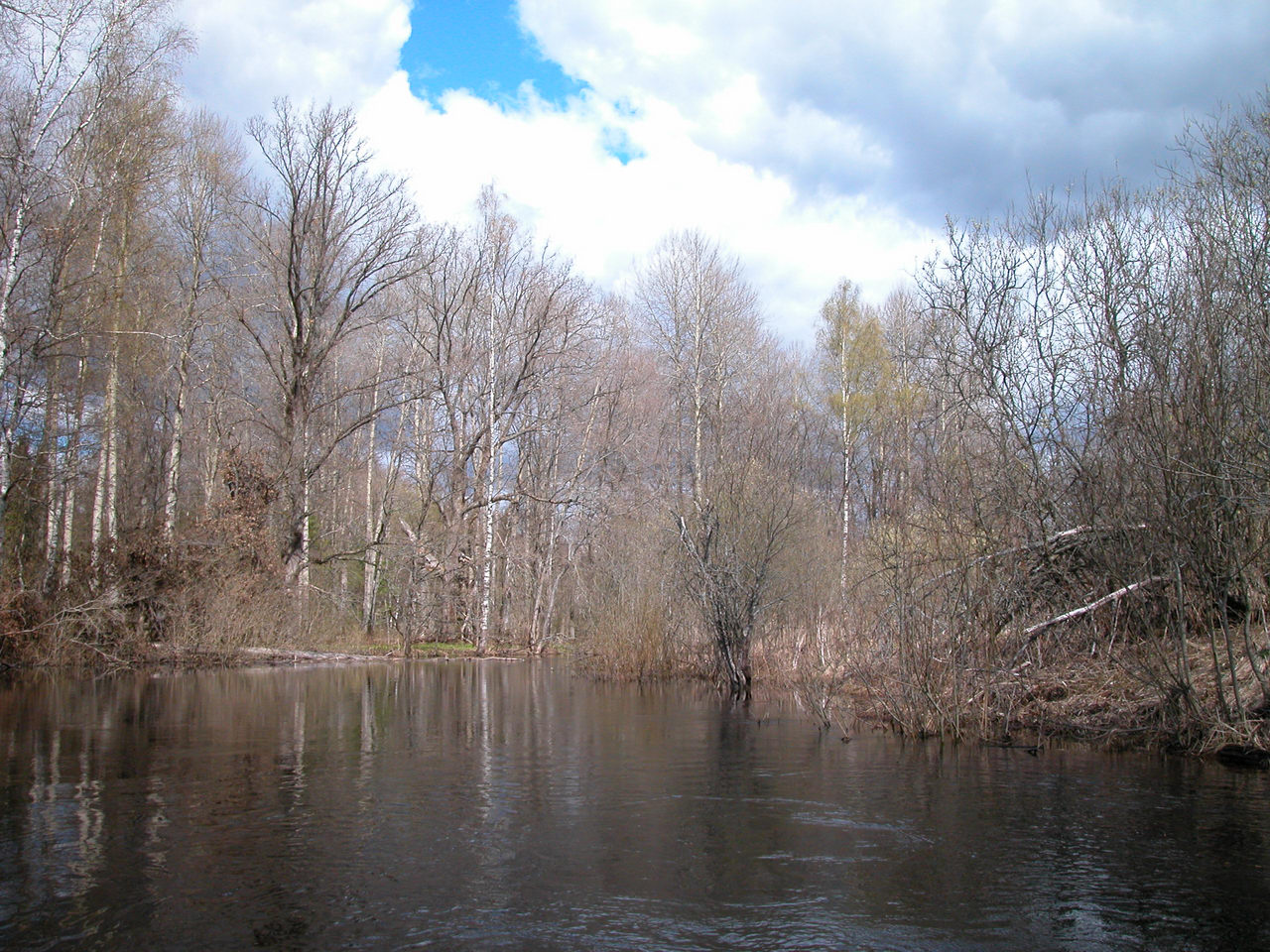
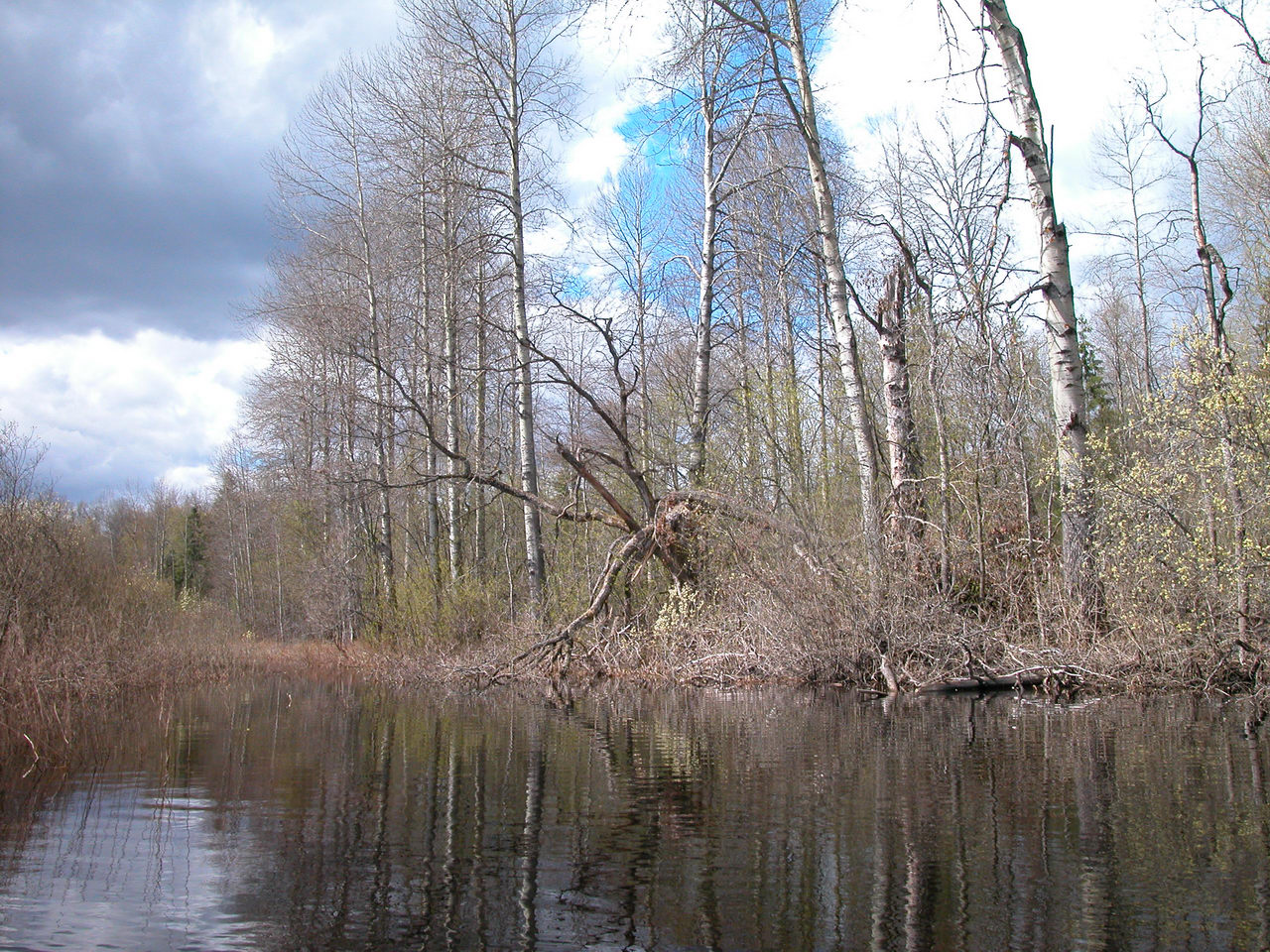
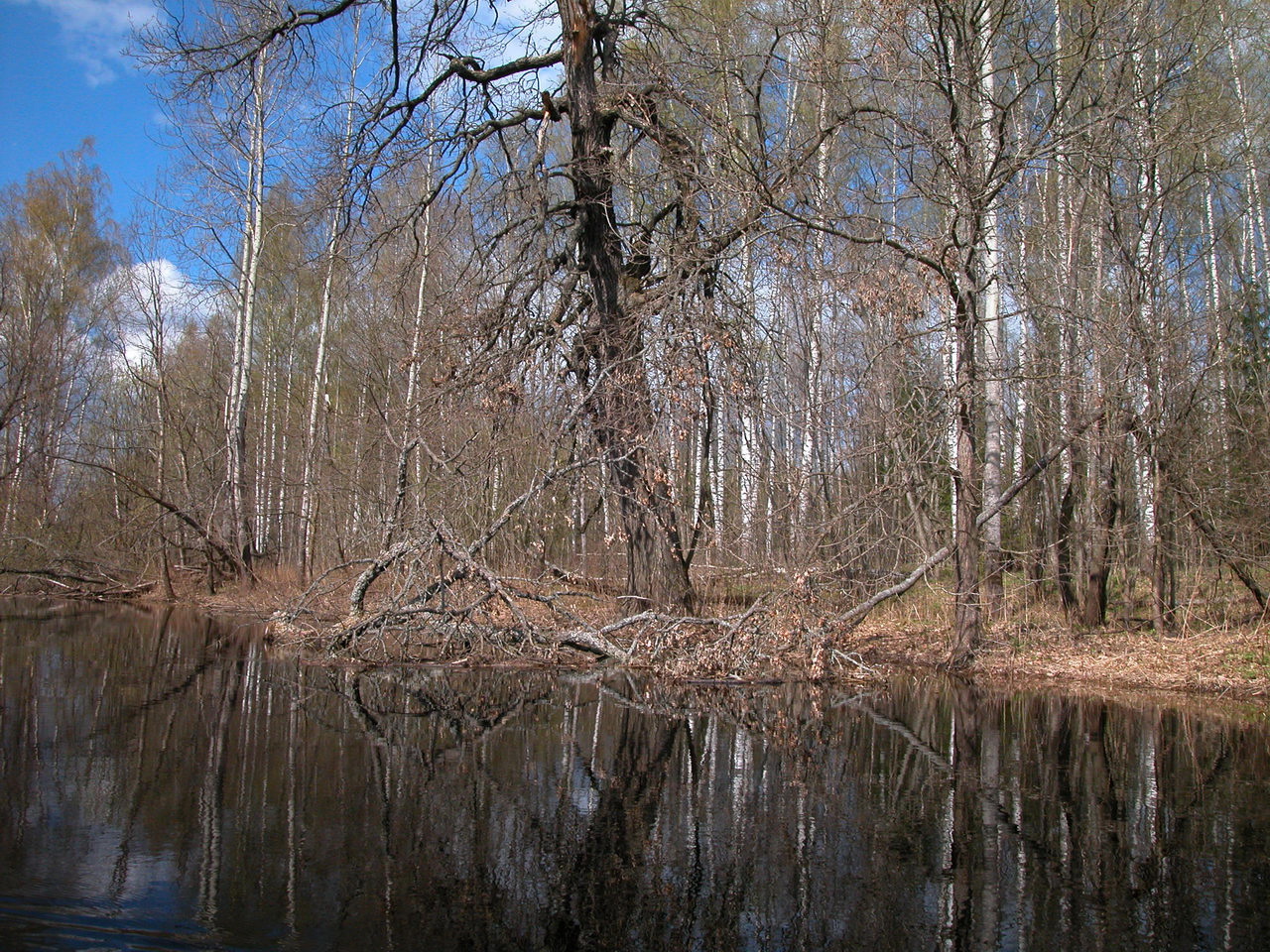
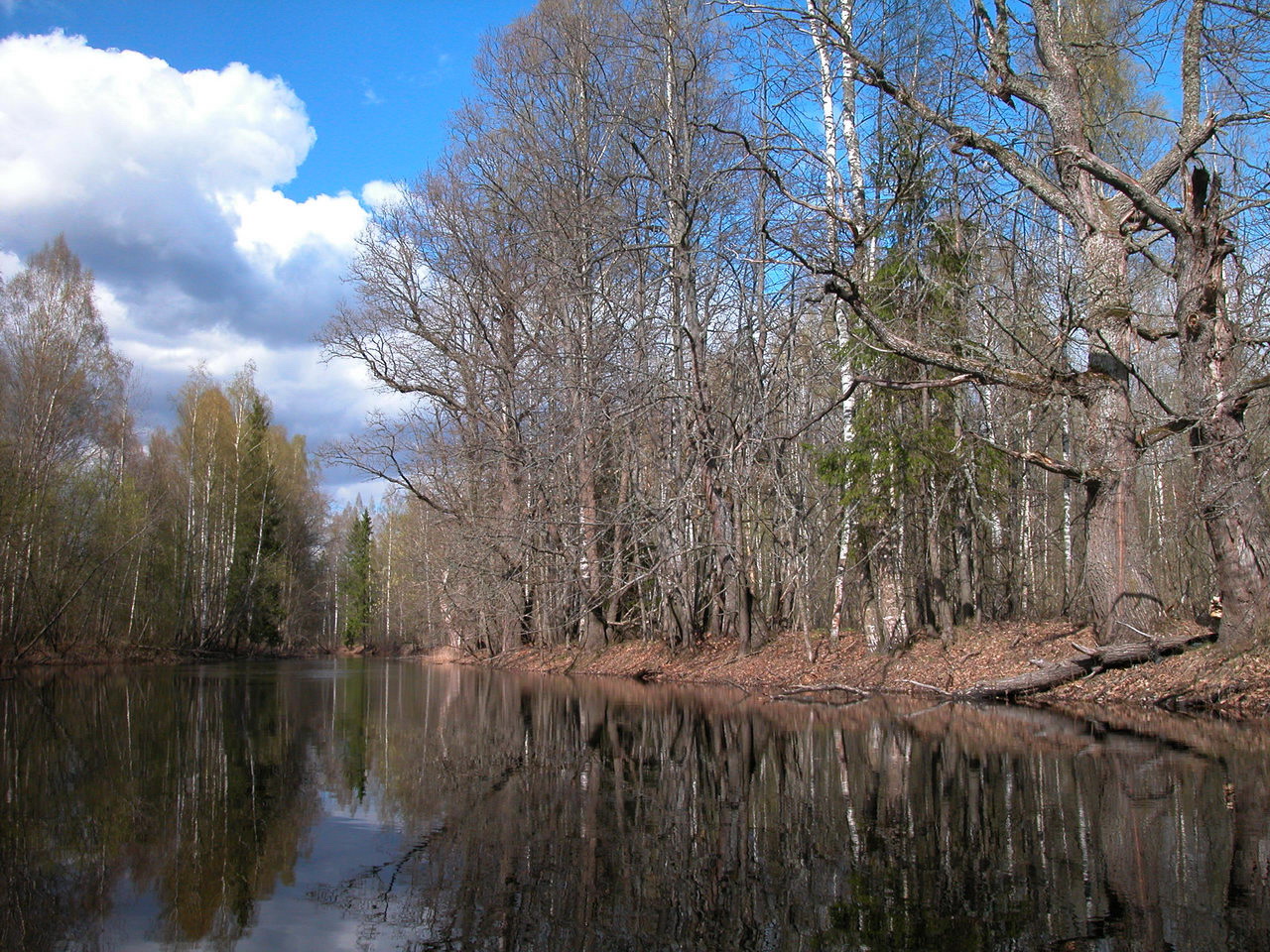
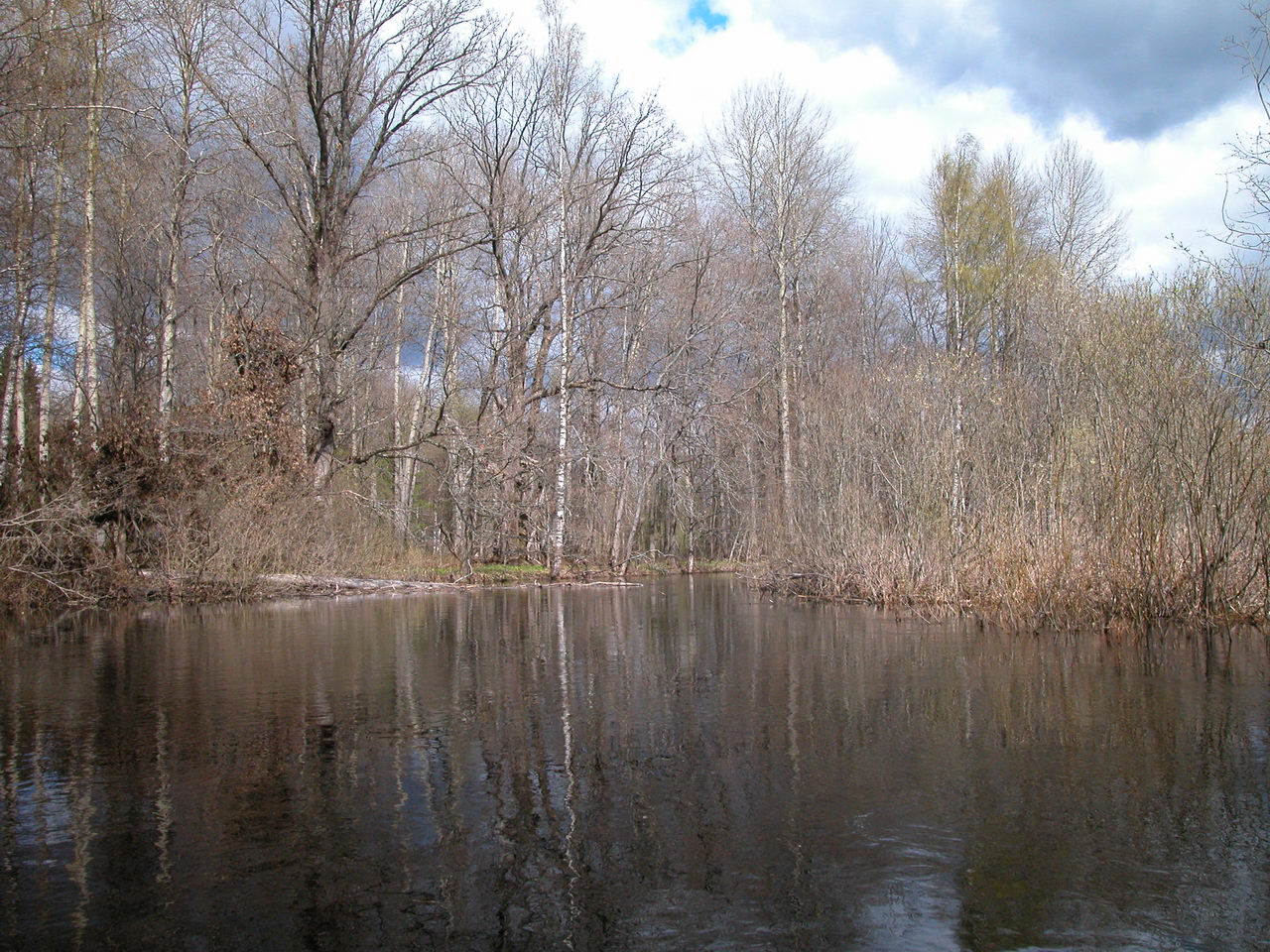
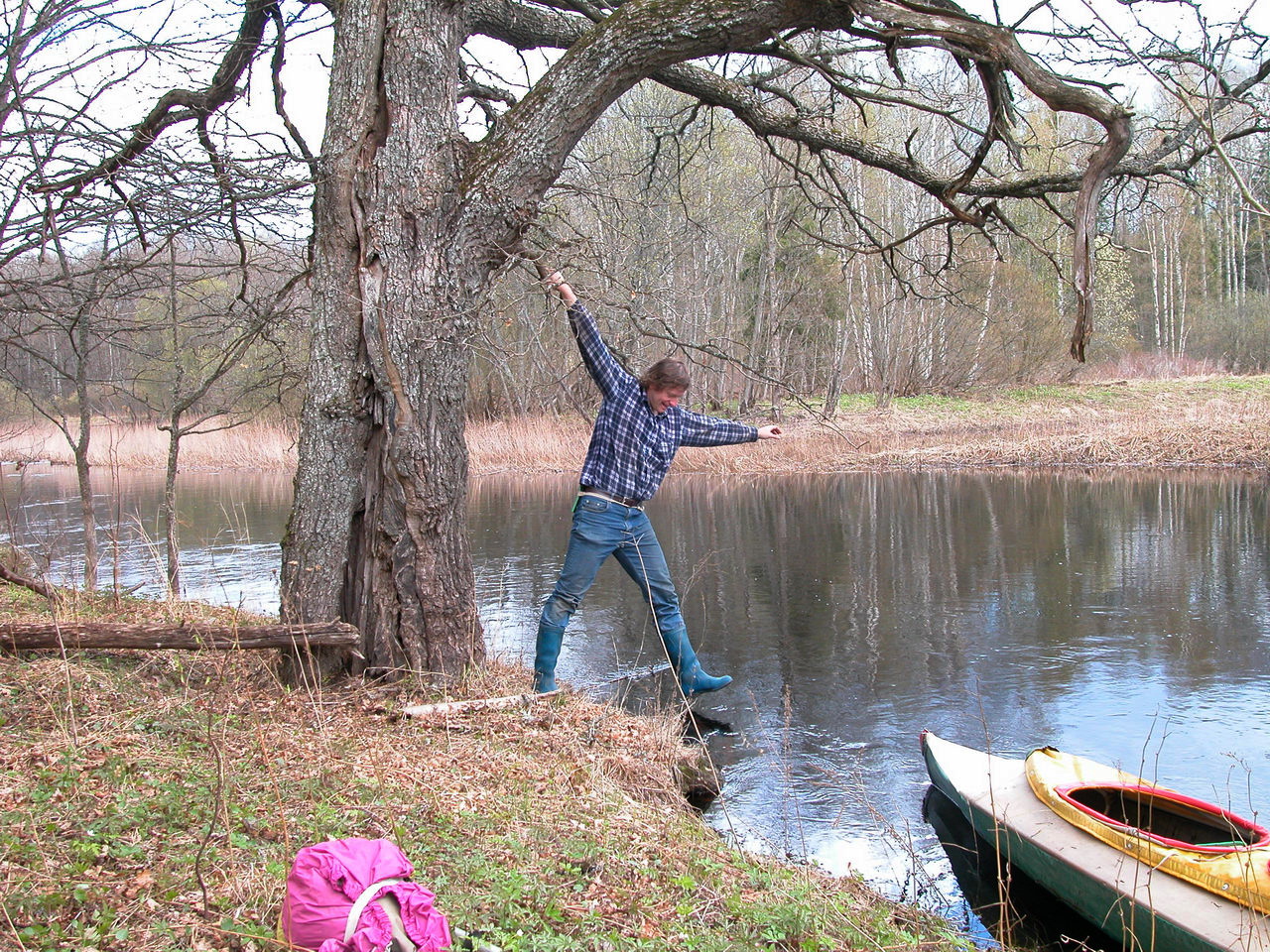
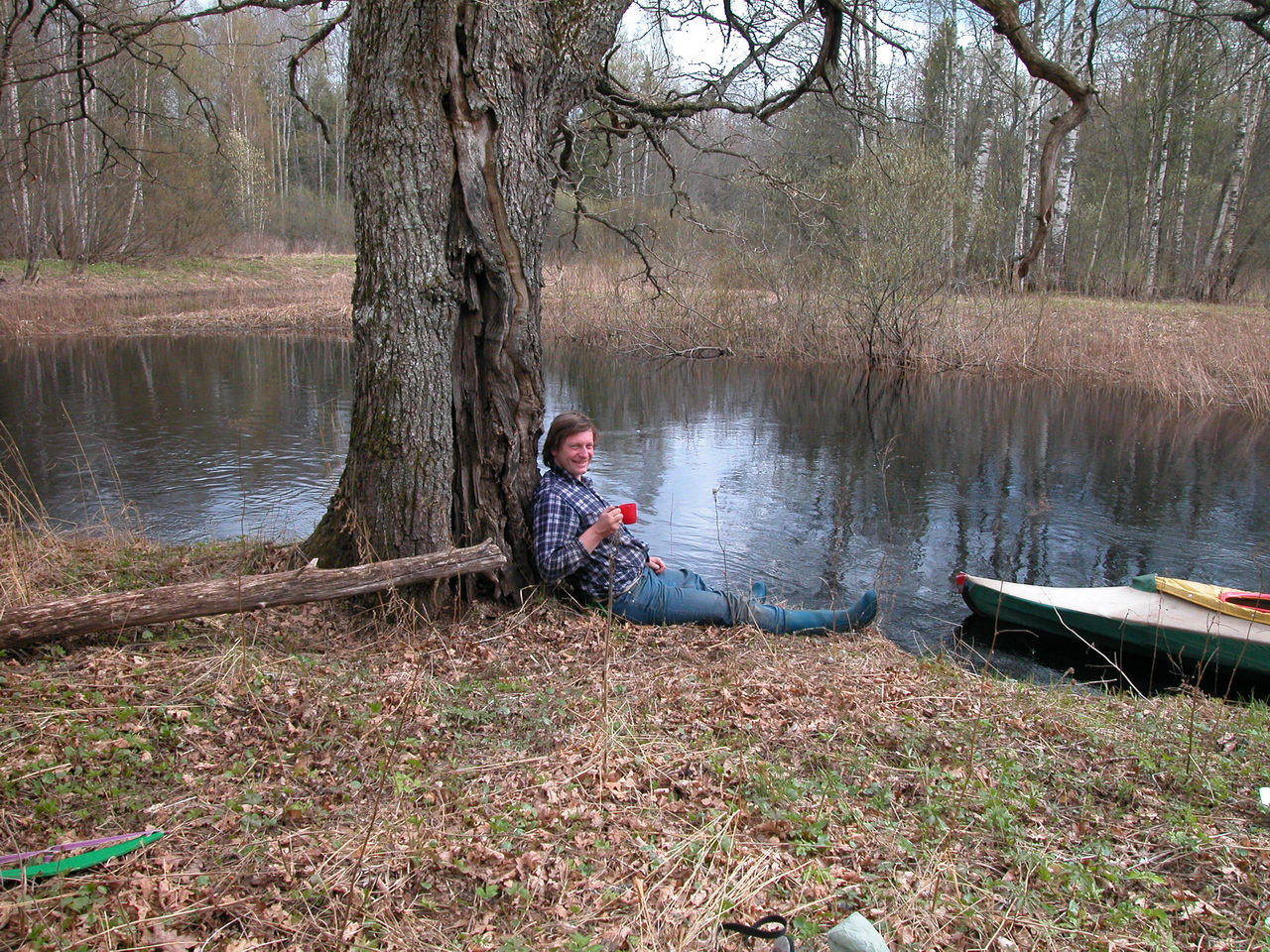
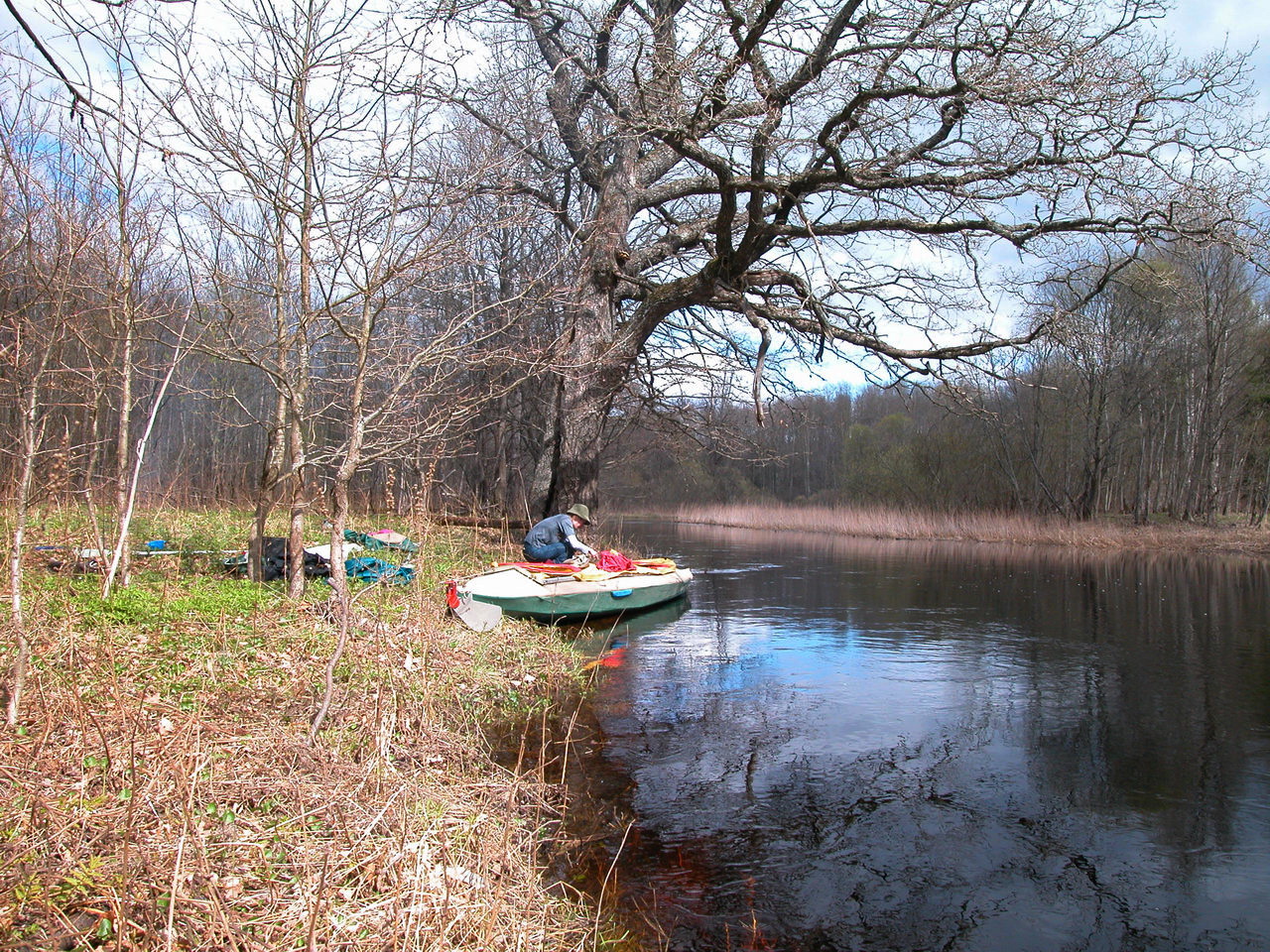
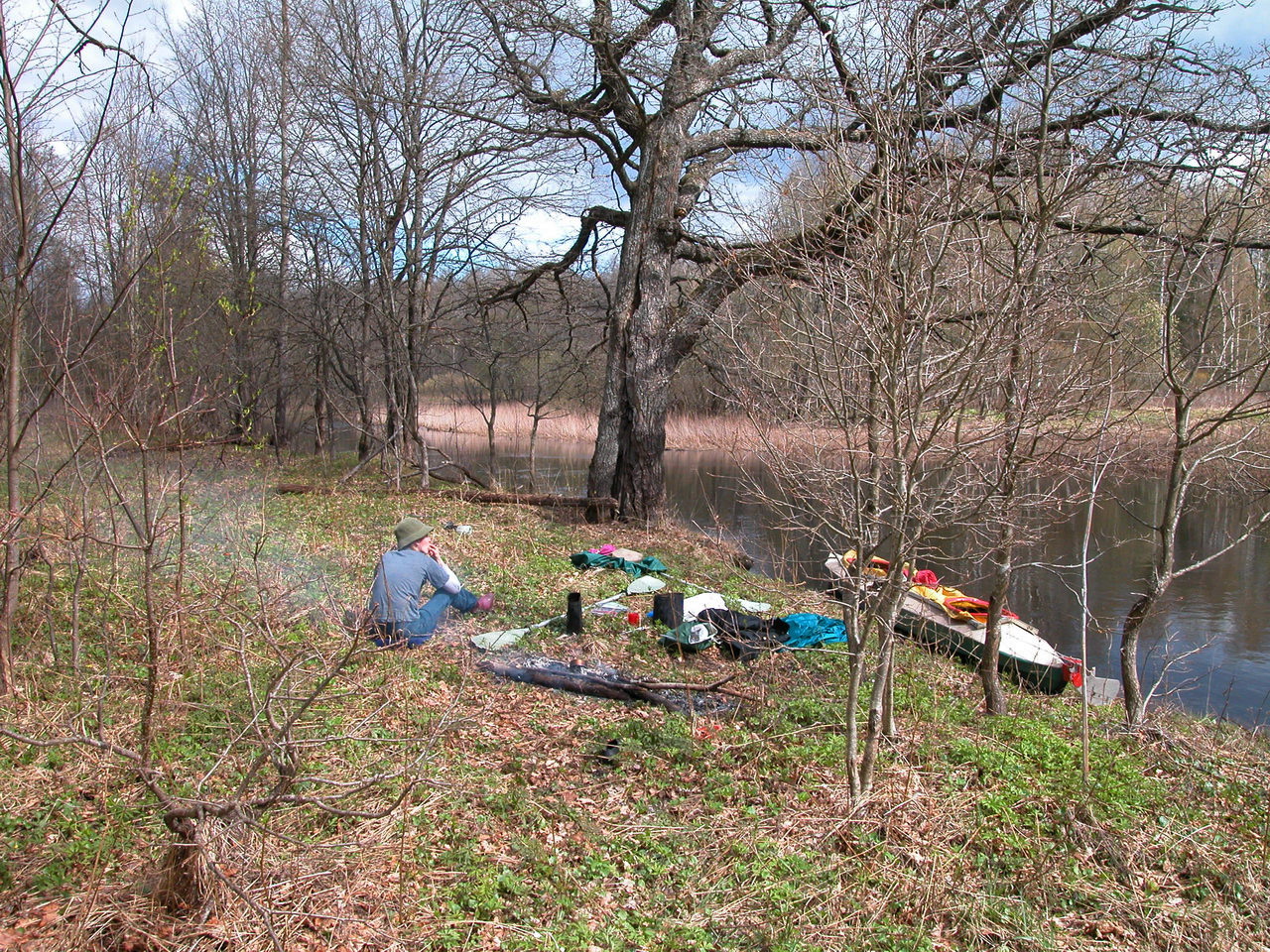
We spent the night at a dry, comfortable campsite (58°56.374′N, 31°19.504′E; 35 m). Some old oaks survive here. The rest of the wood here is not very old. This is where the 2nd Shock Army tried to break out of encirclement. The land was torn up, and the banks are full of trenches. How many people must have died here by this little river.
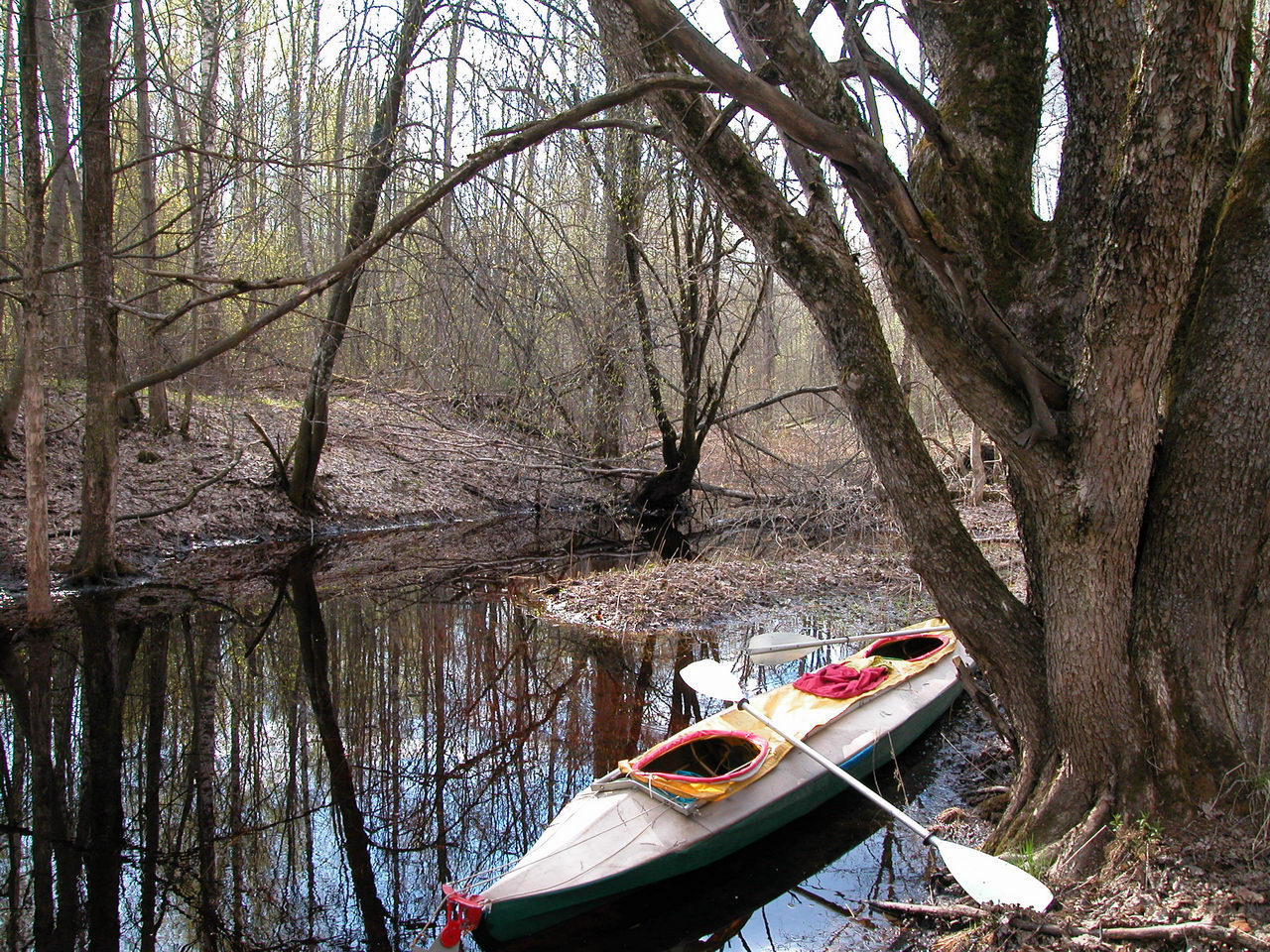
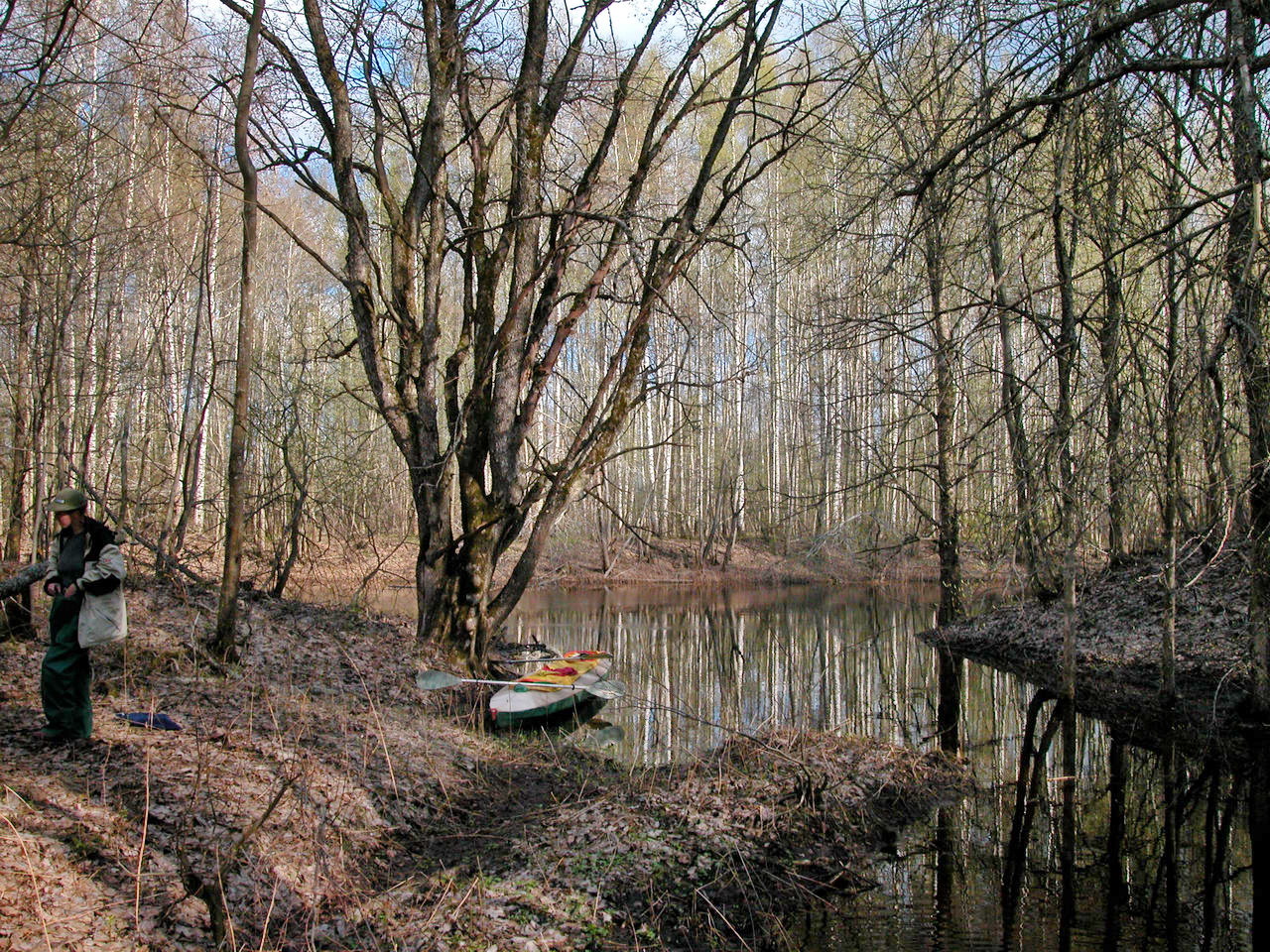
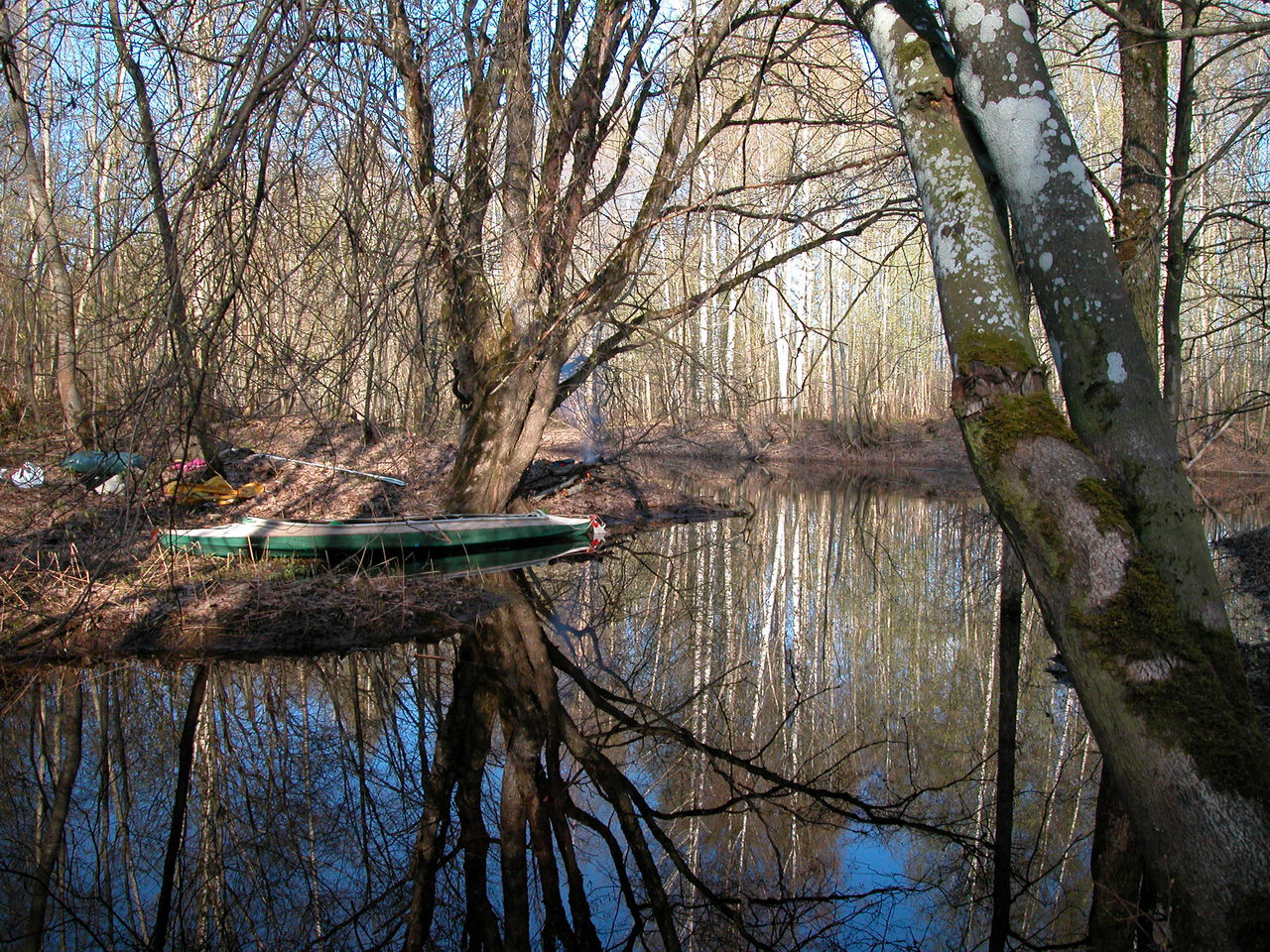
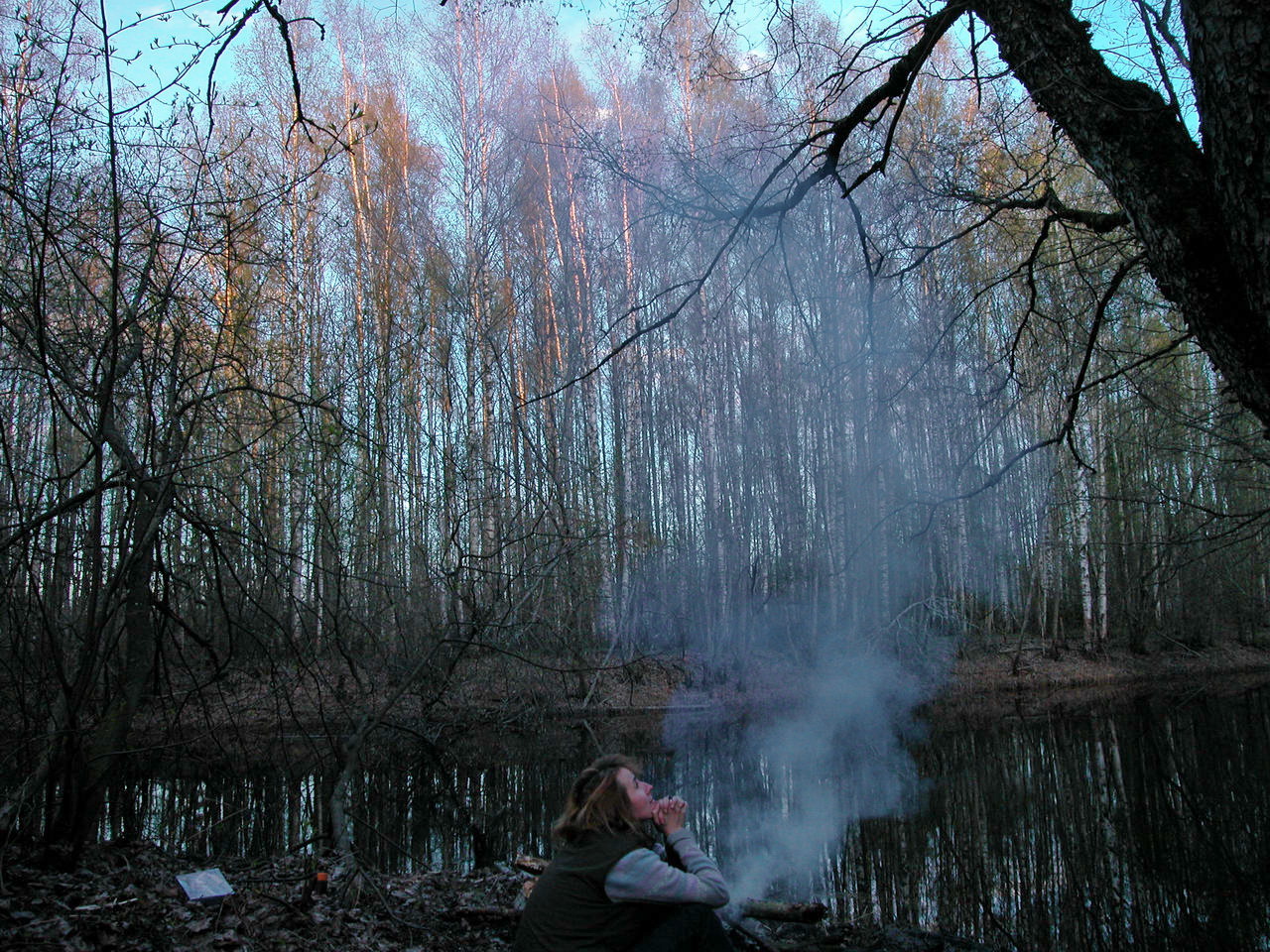
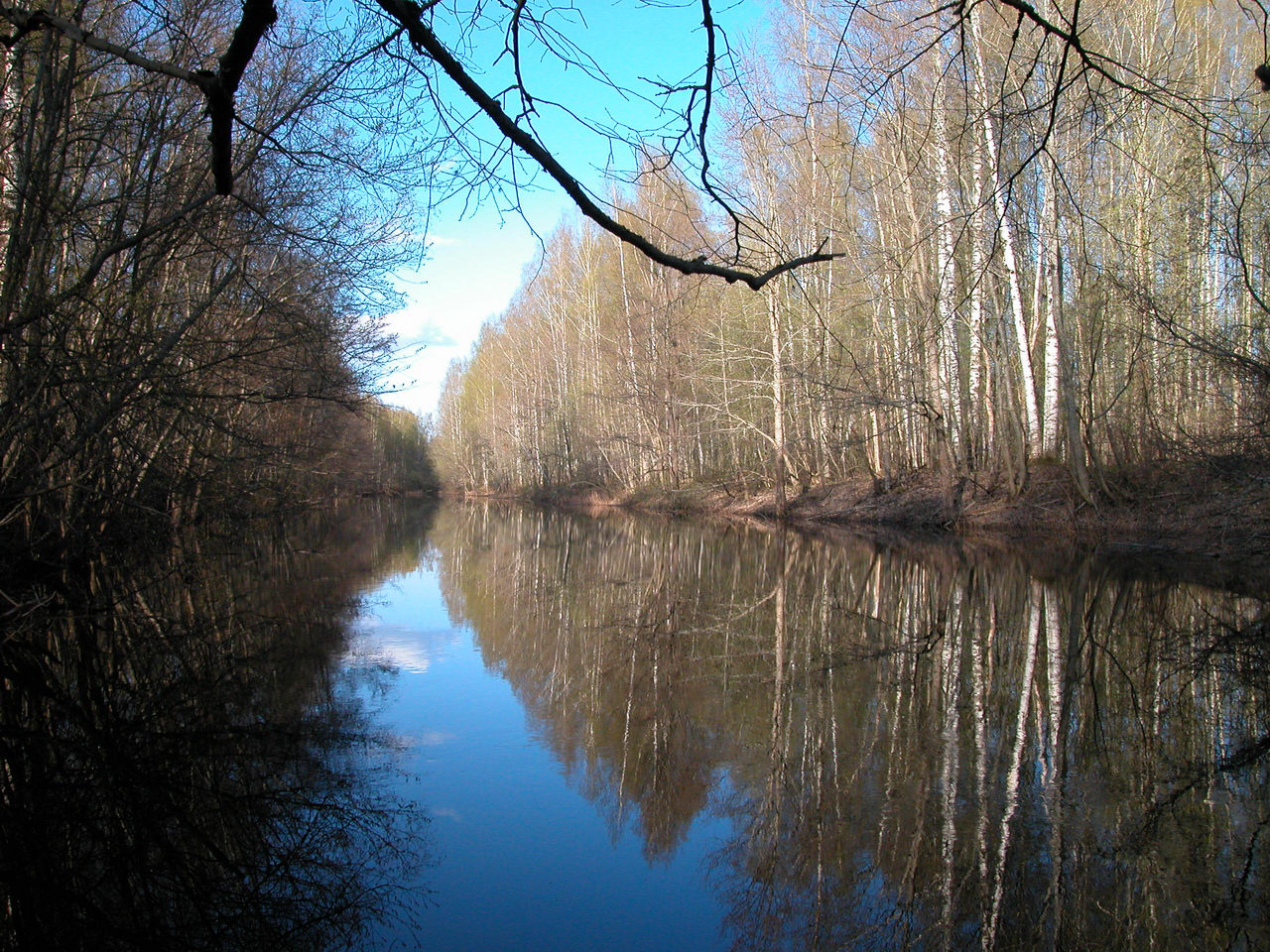
We had only recently come back from our first visit to New Zealand. We had seen a vast, beautiful world where people could live without fighting wars. Yet these people had been herded together and killed. We kept coming back to that all evening. There is a future as well as a past. Let us hope we never end up as cannon fodder in trenches like these ourselves.
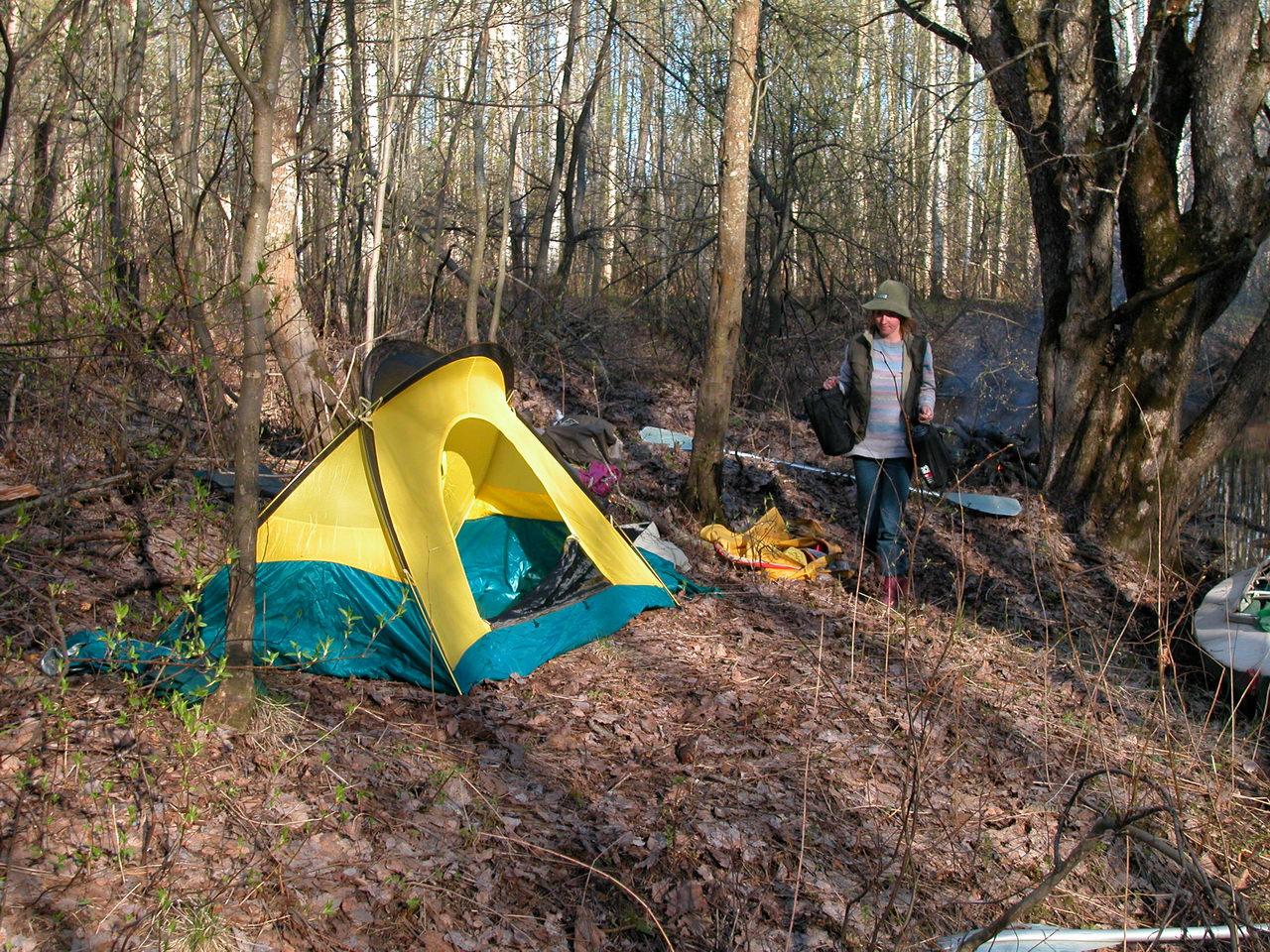
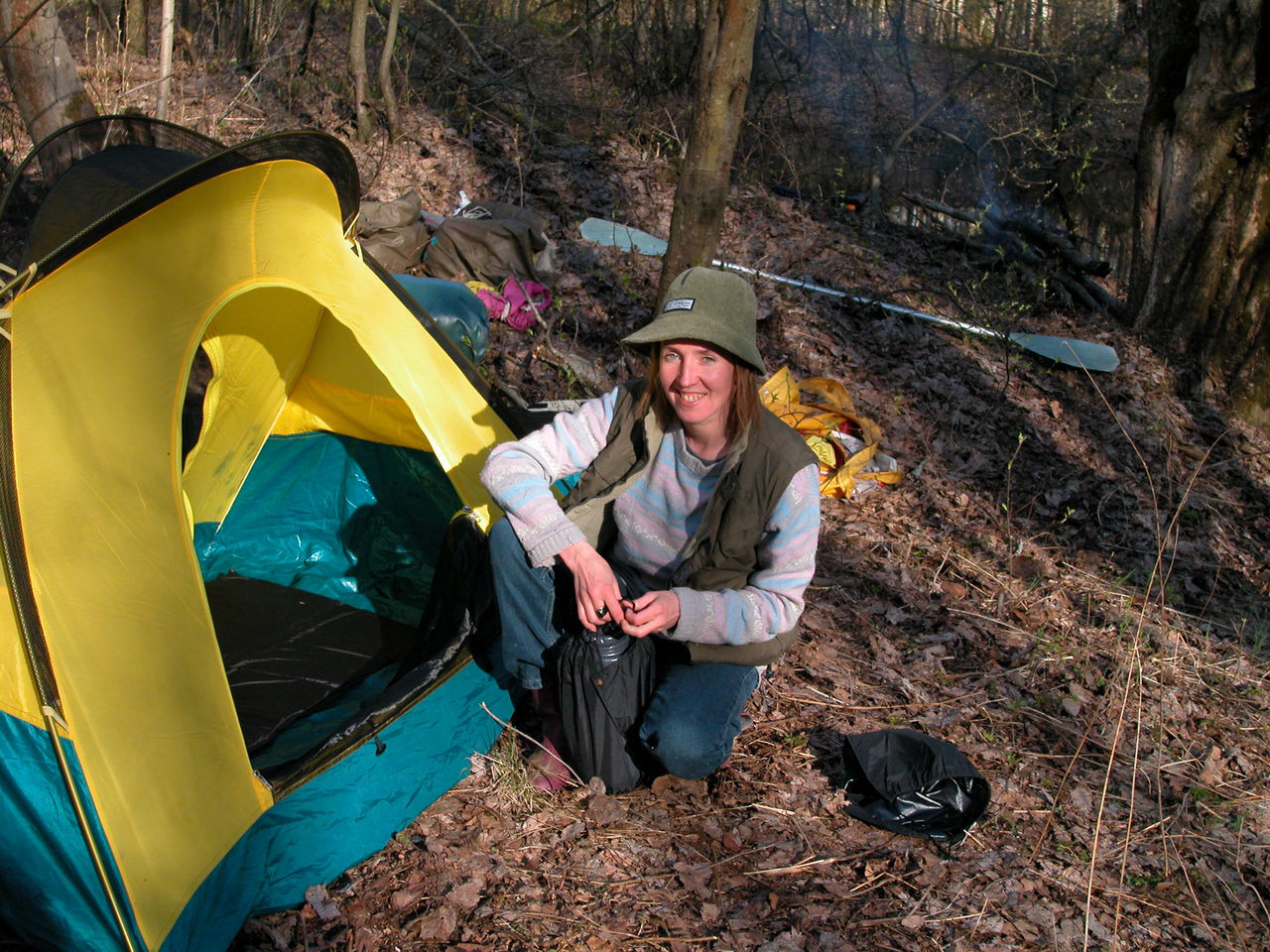
The evening was warm and clear. We had a new tent, modern sleeping mats and modern clothes. Everything was so comfortable. What a pity we had none of this on our longer kayaking trips.
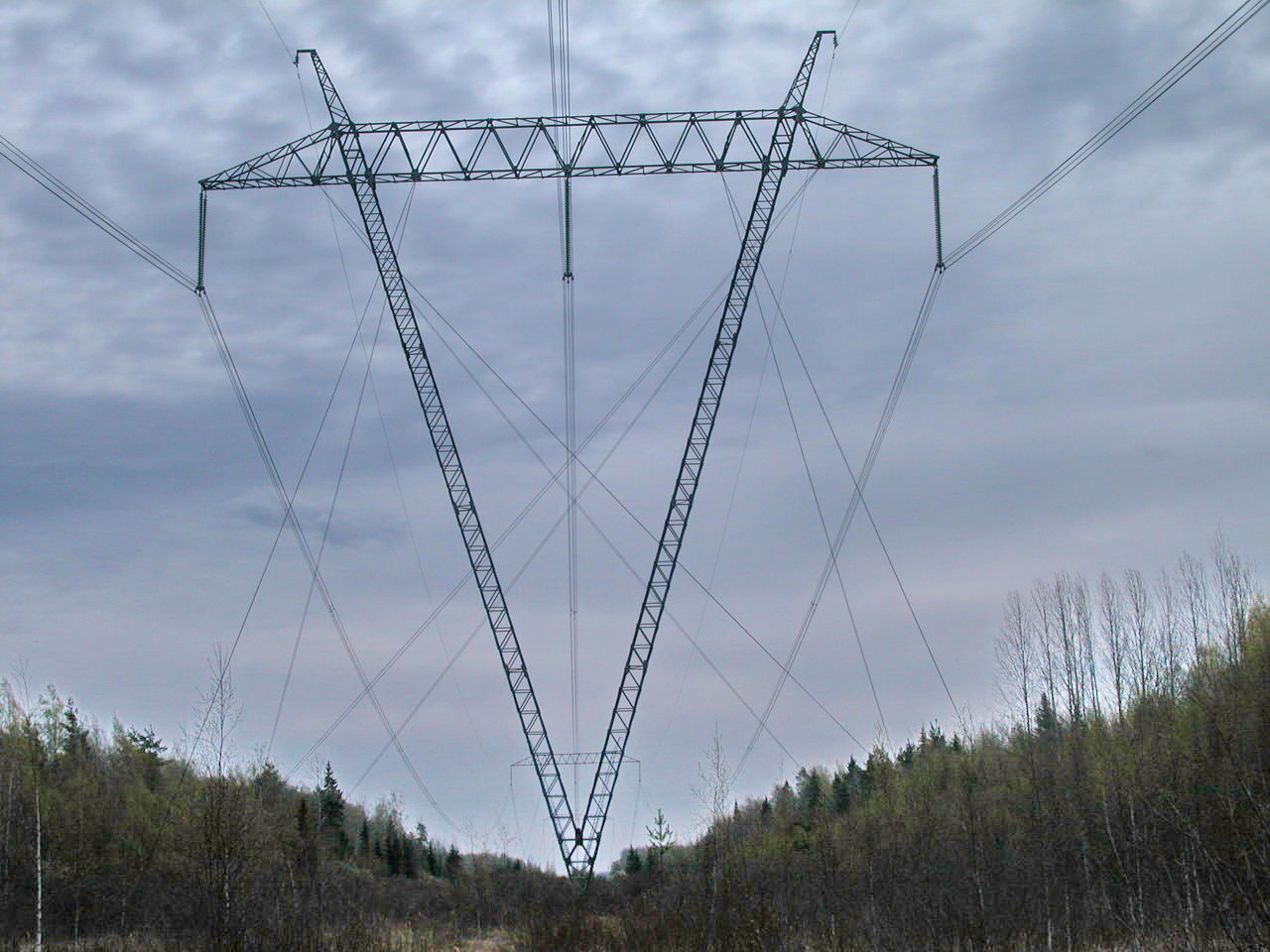
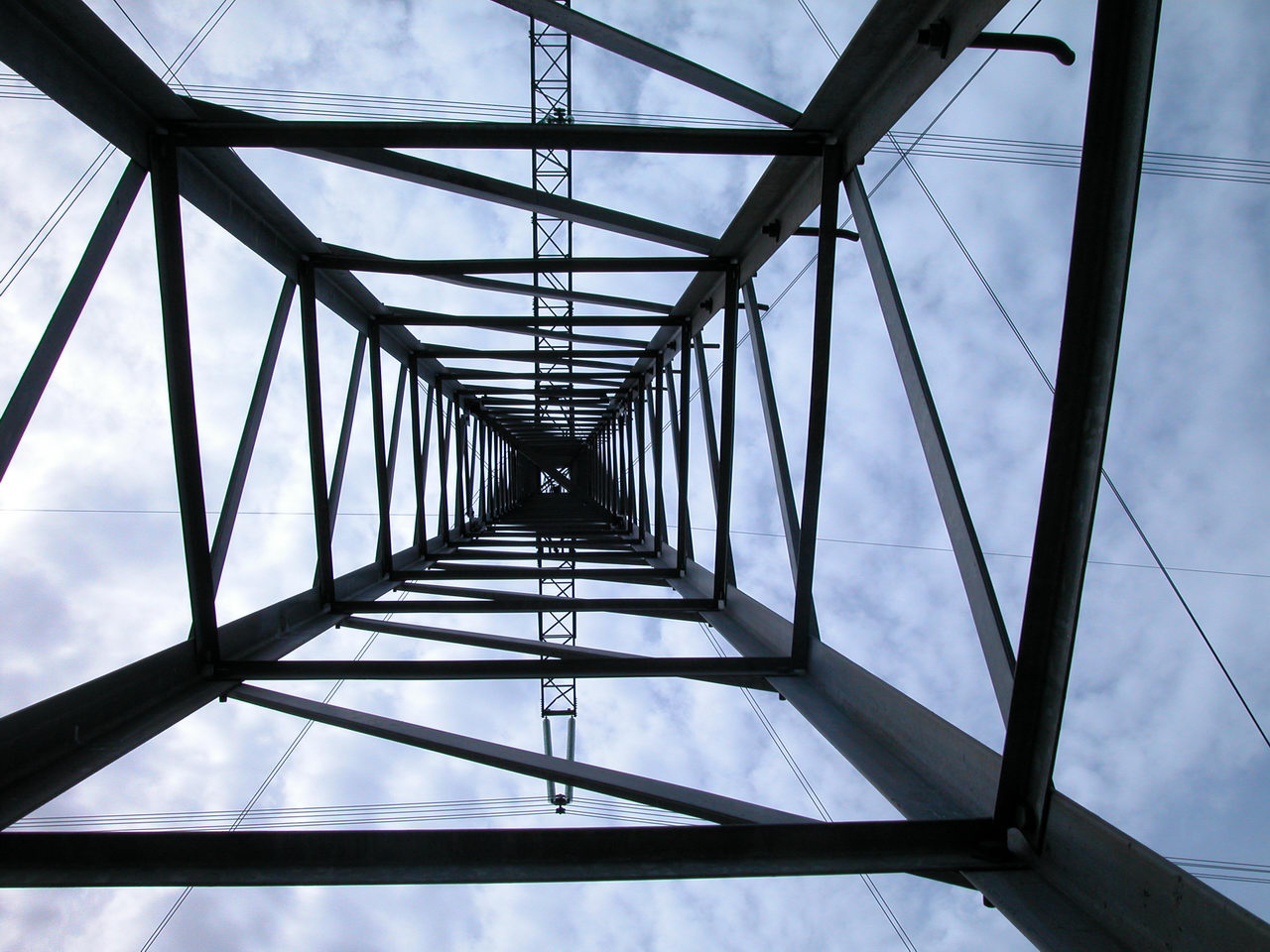
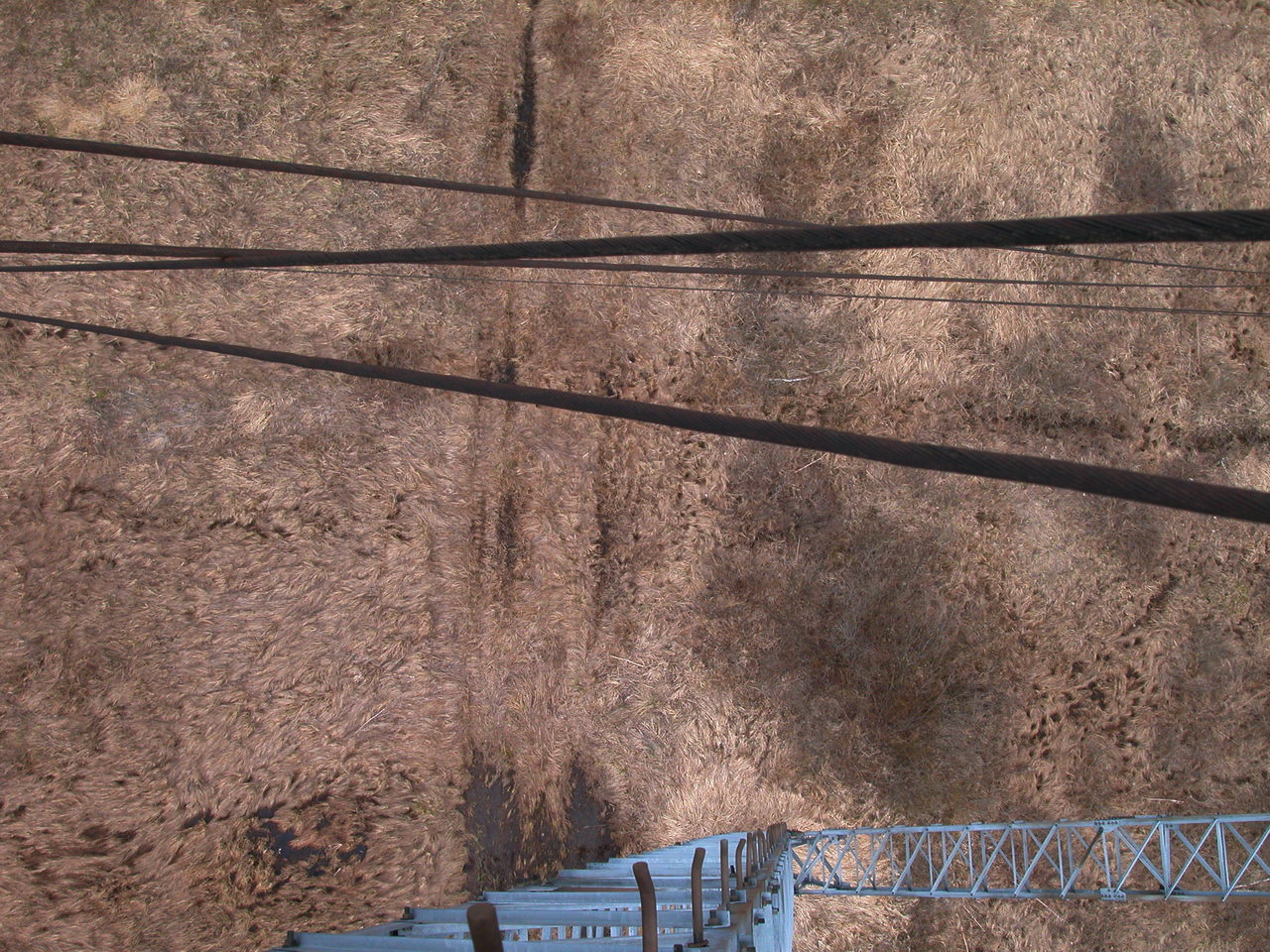
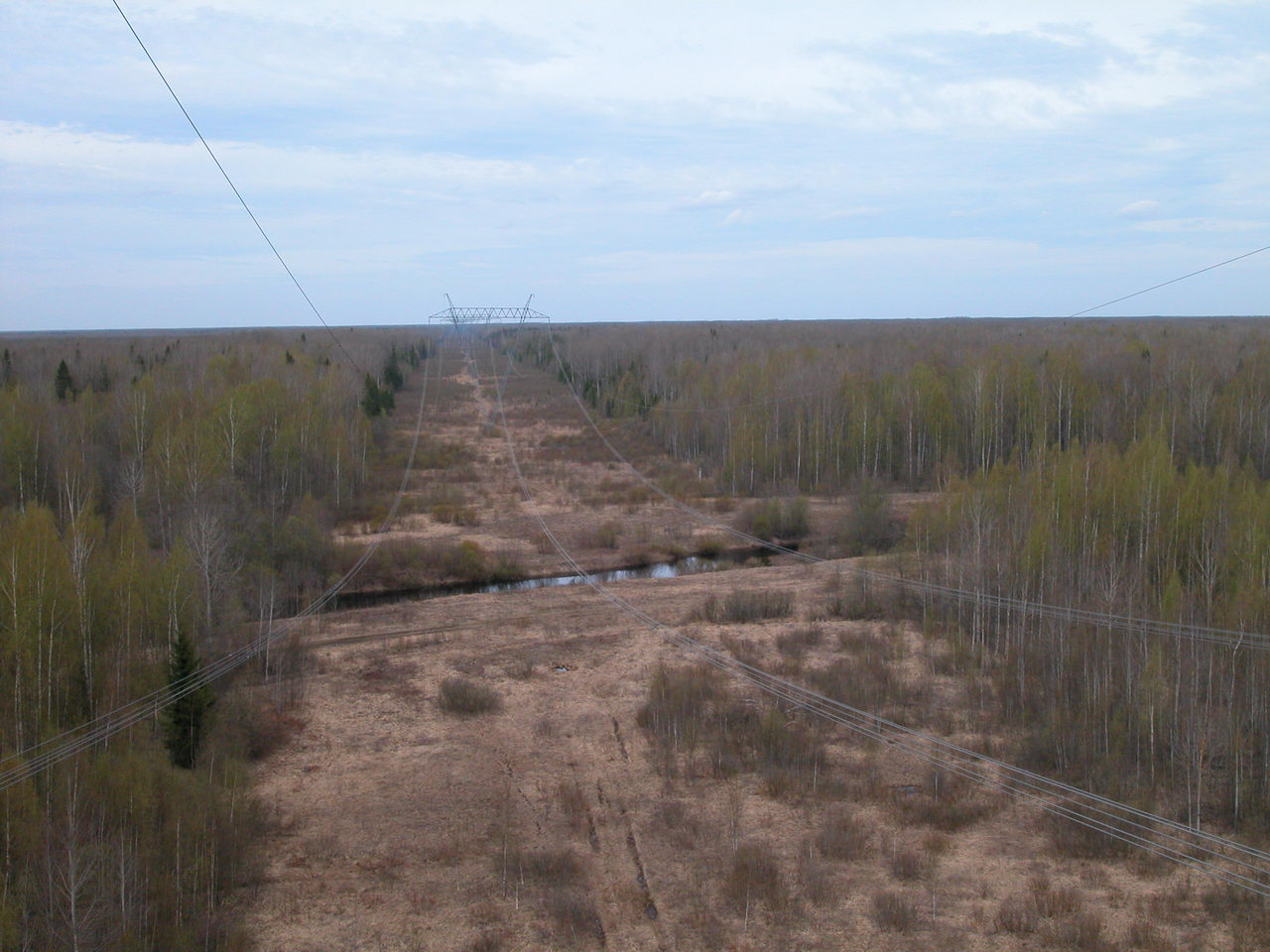
We paddled on in the morning. Before long the 750 kV Saint Petersburg–Moscow power line crossed the river on huge, V-shaped pylons, 44 metres tall. I thought nothing of climbing right to the top. I had learned to do it in childhood, when I was not afraid to experiment, and I had talked myself into thinking it was safe. I climbed one this time too.
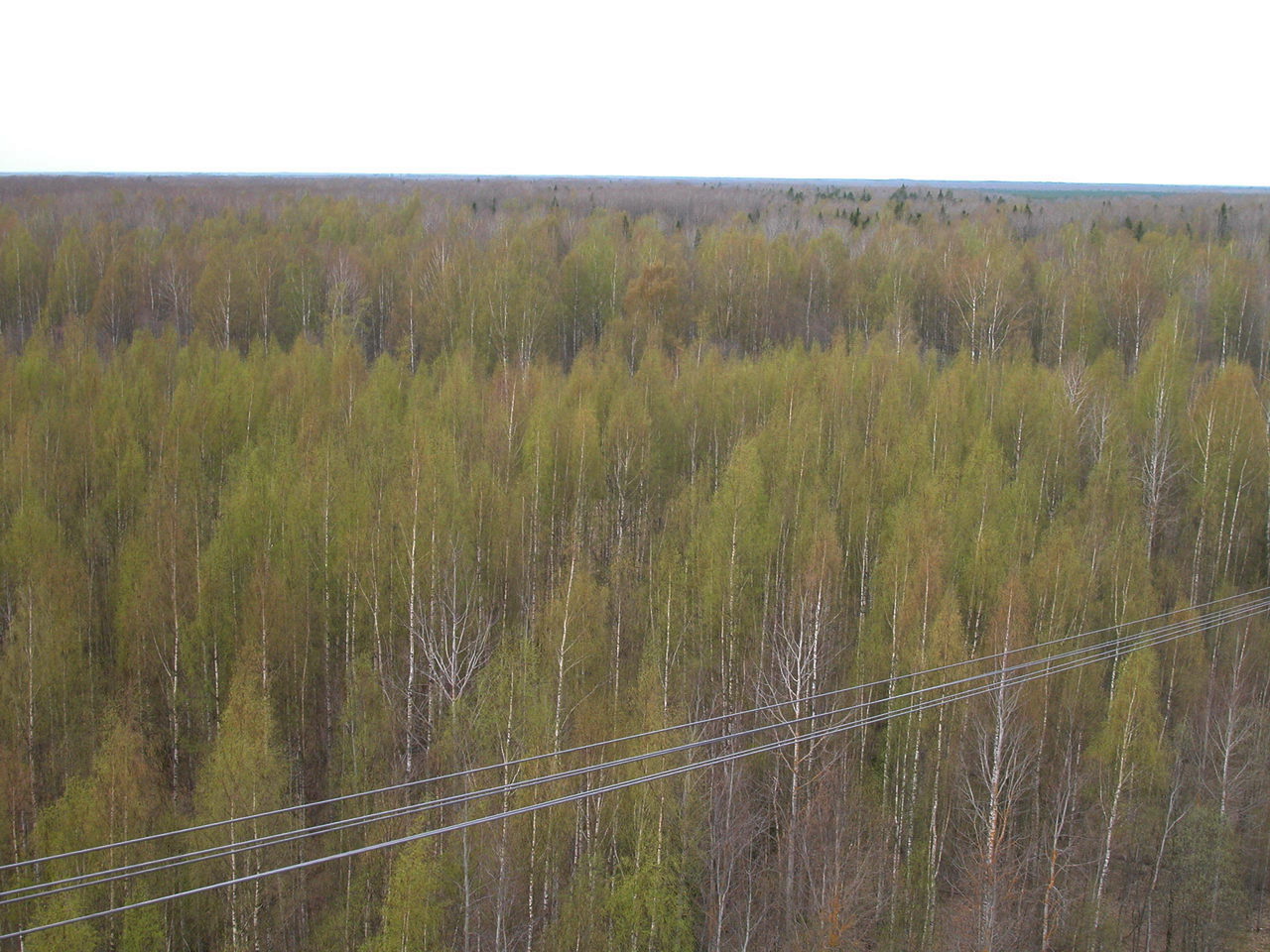
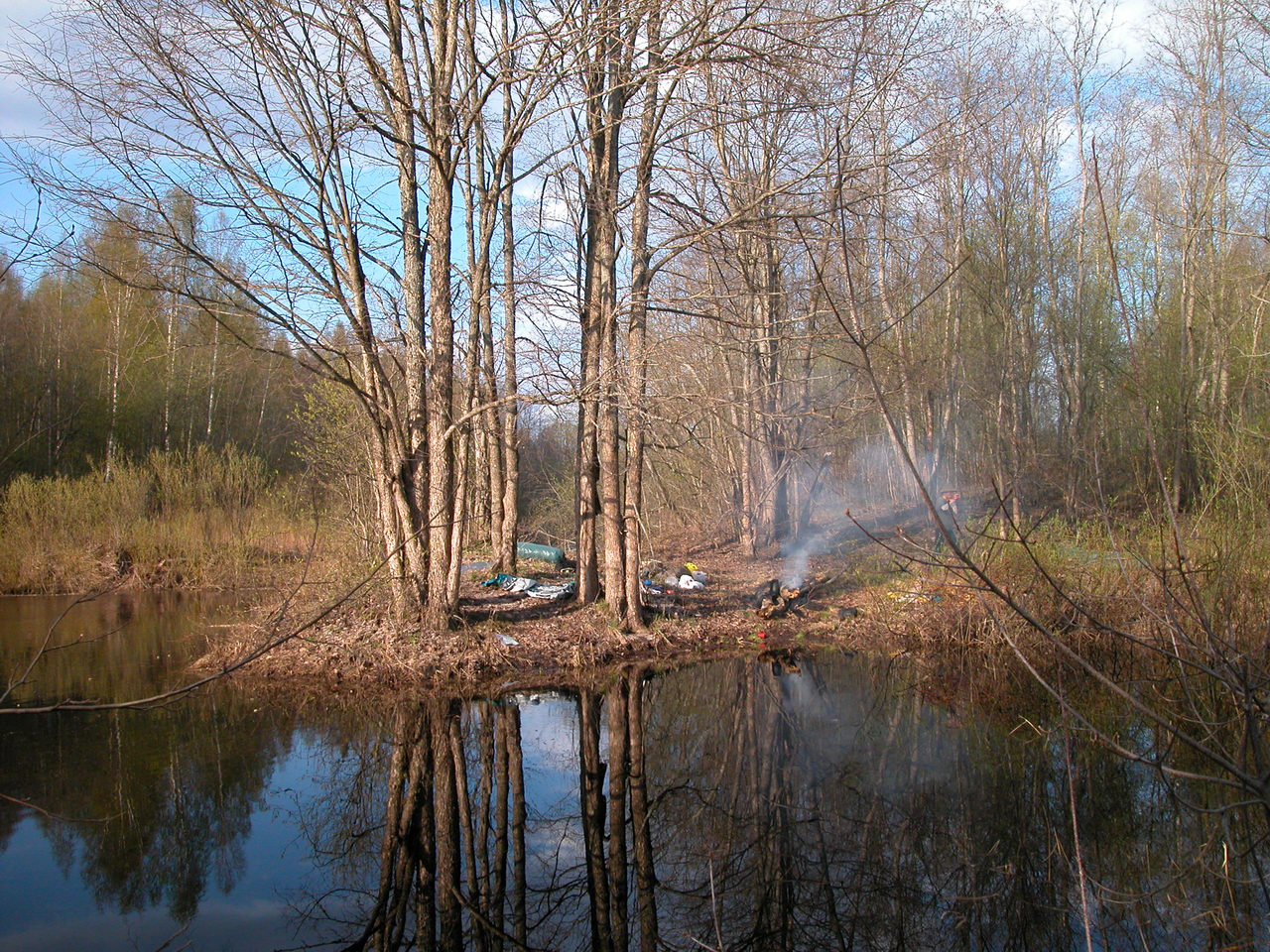
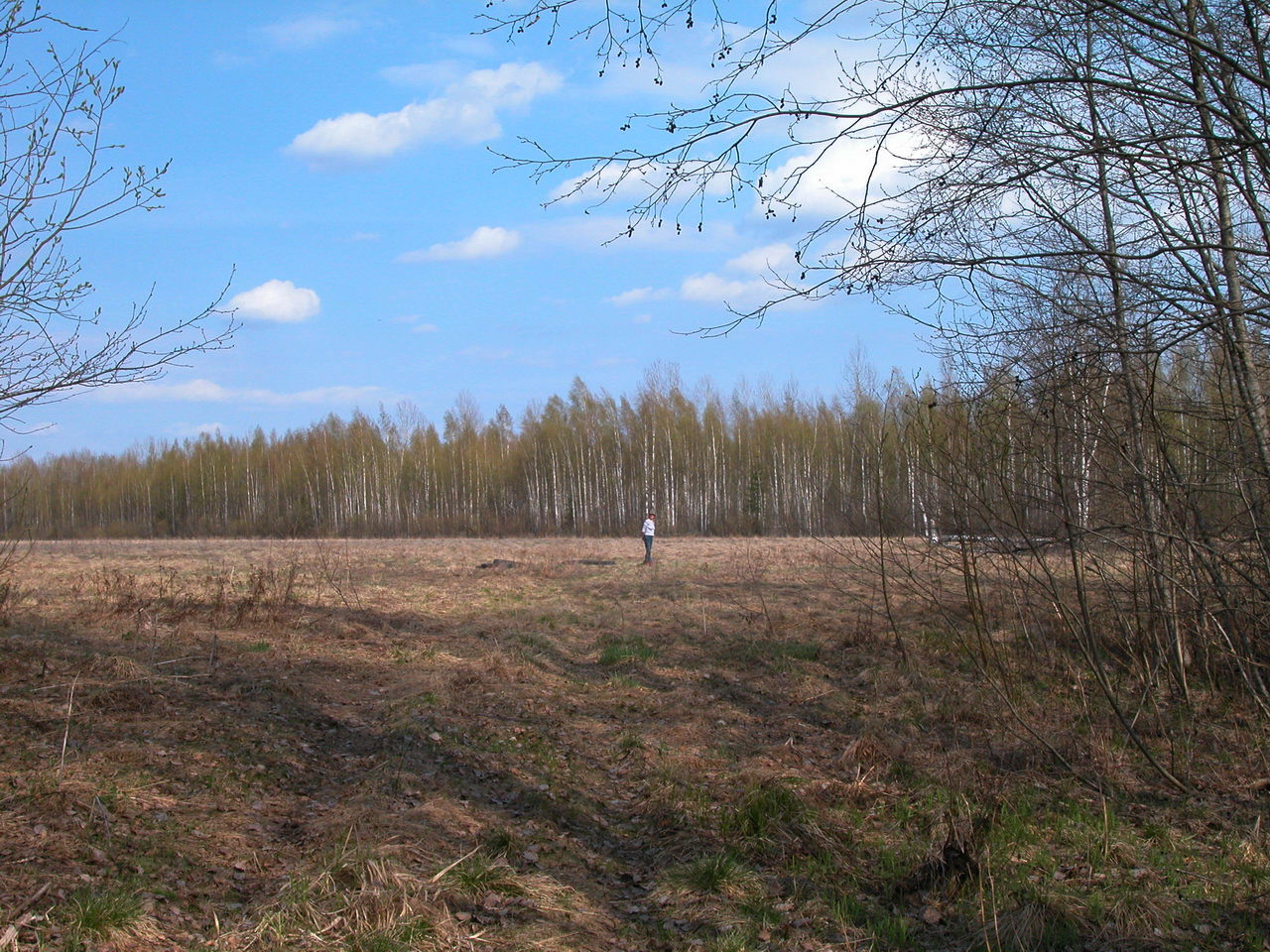
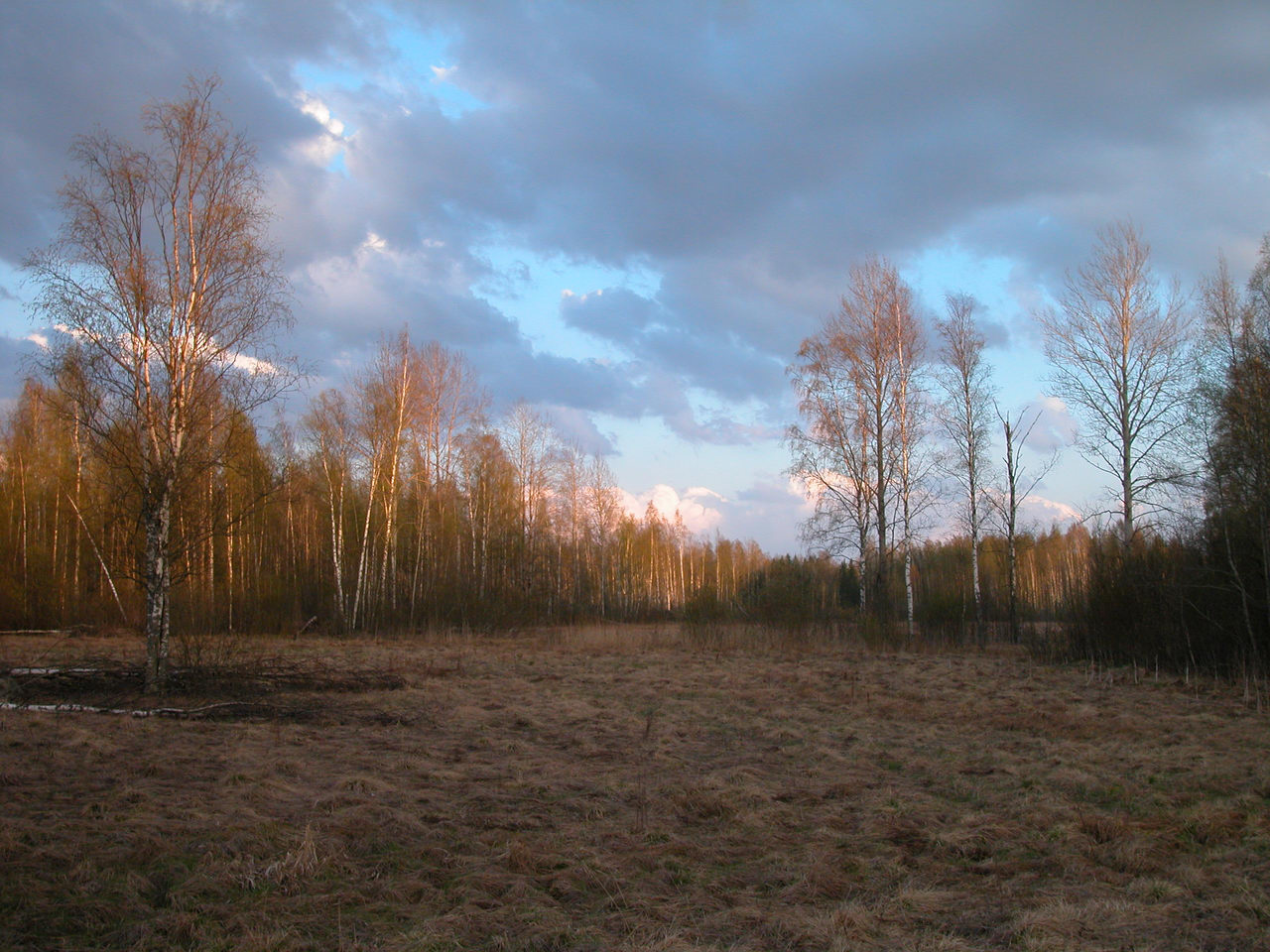
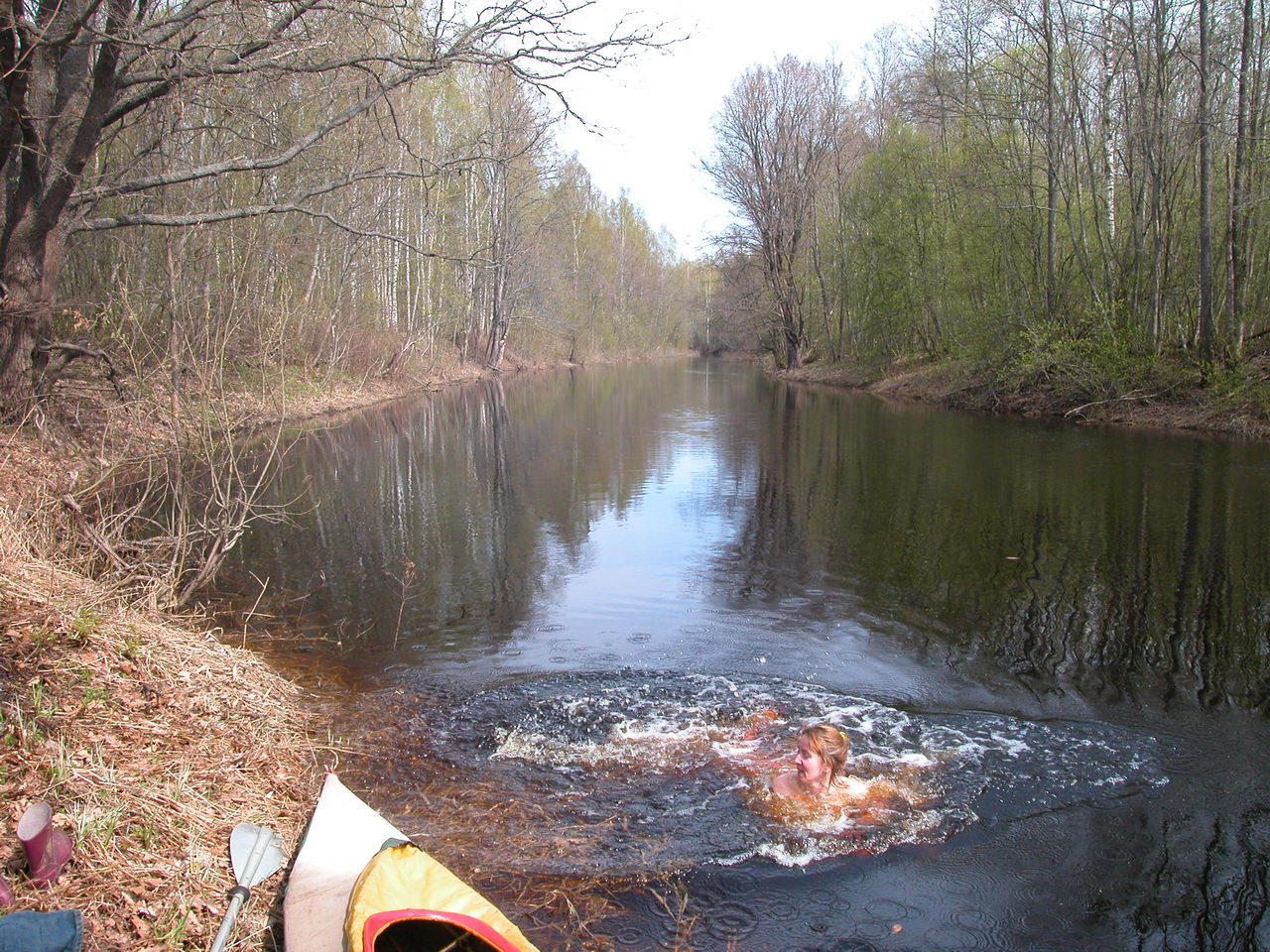
There were almost no logjams and we were well ahead of schedule. Soon there would be villages and fields around Chudovo. We were in no hurry, so we stopped for another night at the edge of a large field (59°02.819′N, 31°23.451′E; 30 m). There used to be a number of villages on the banks of the Kerest, but they were all destroyed in the war. It was warm enough for a swim. The one nuisance was the sheer number of ticks. There was no relaxing. We were forever checking ourselves.
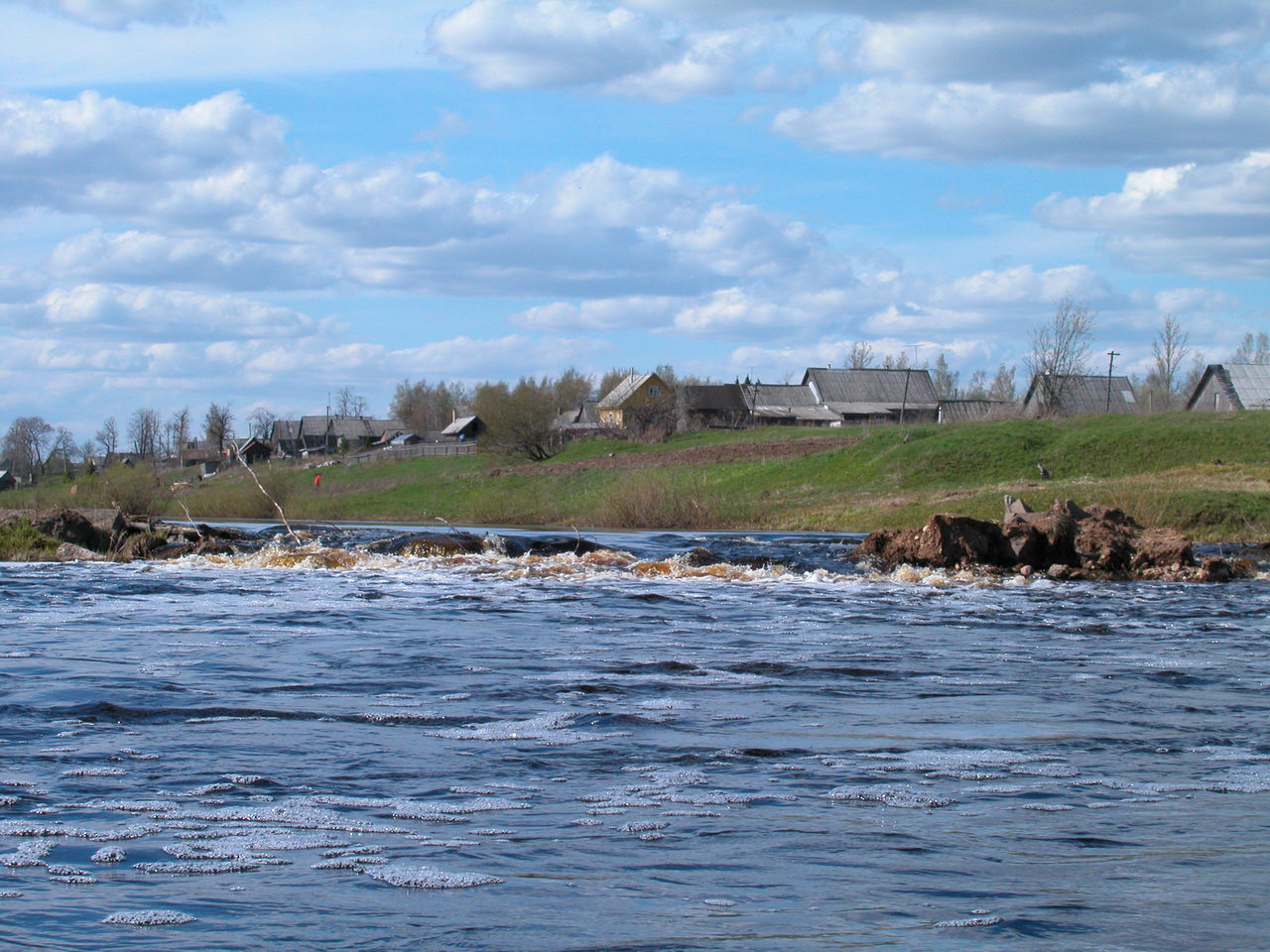
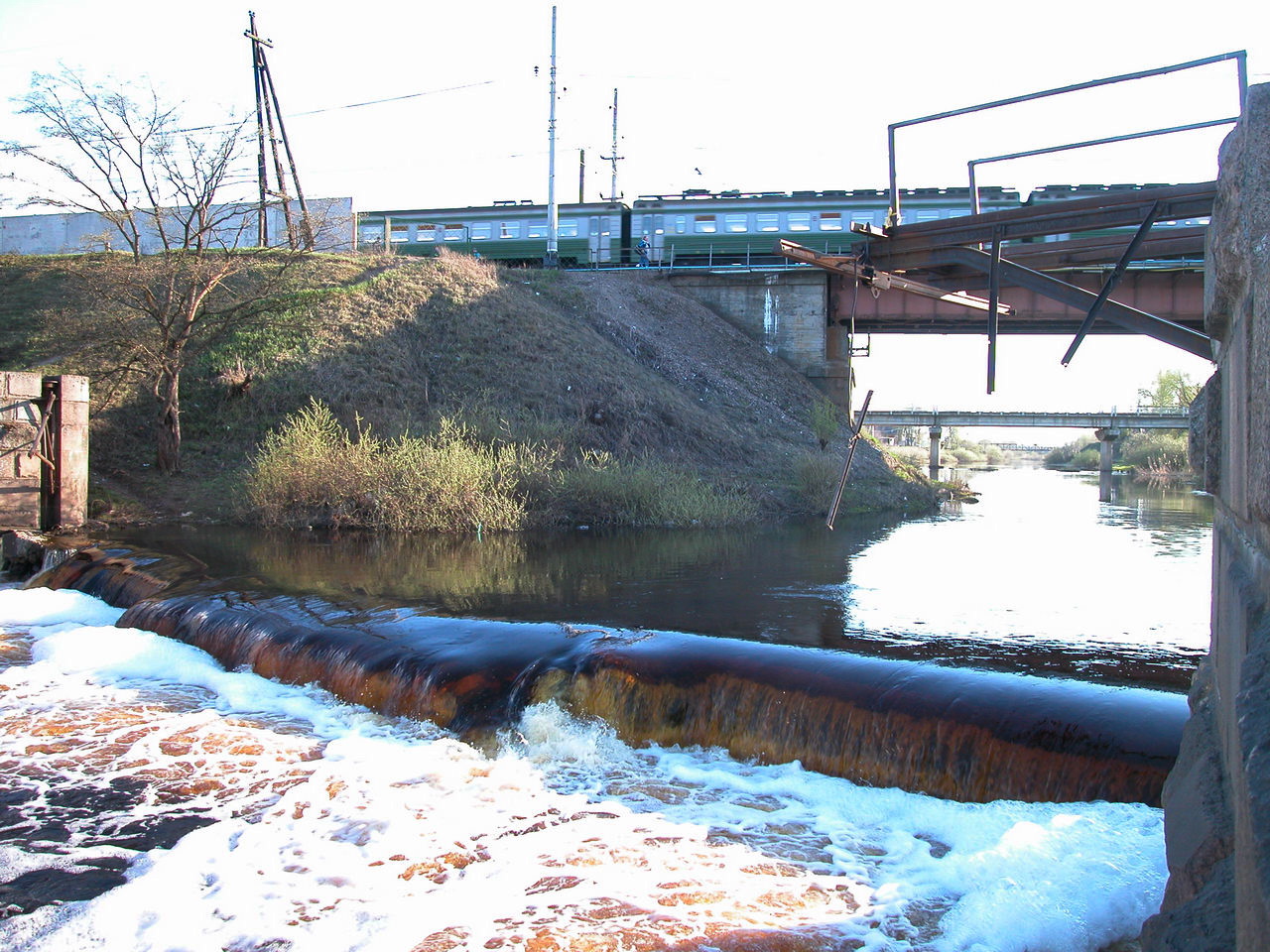
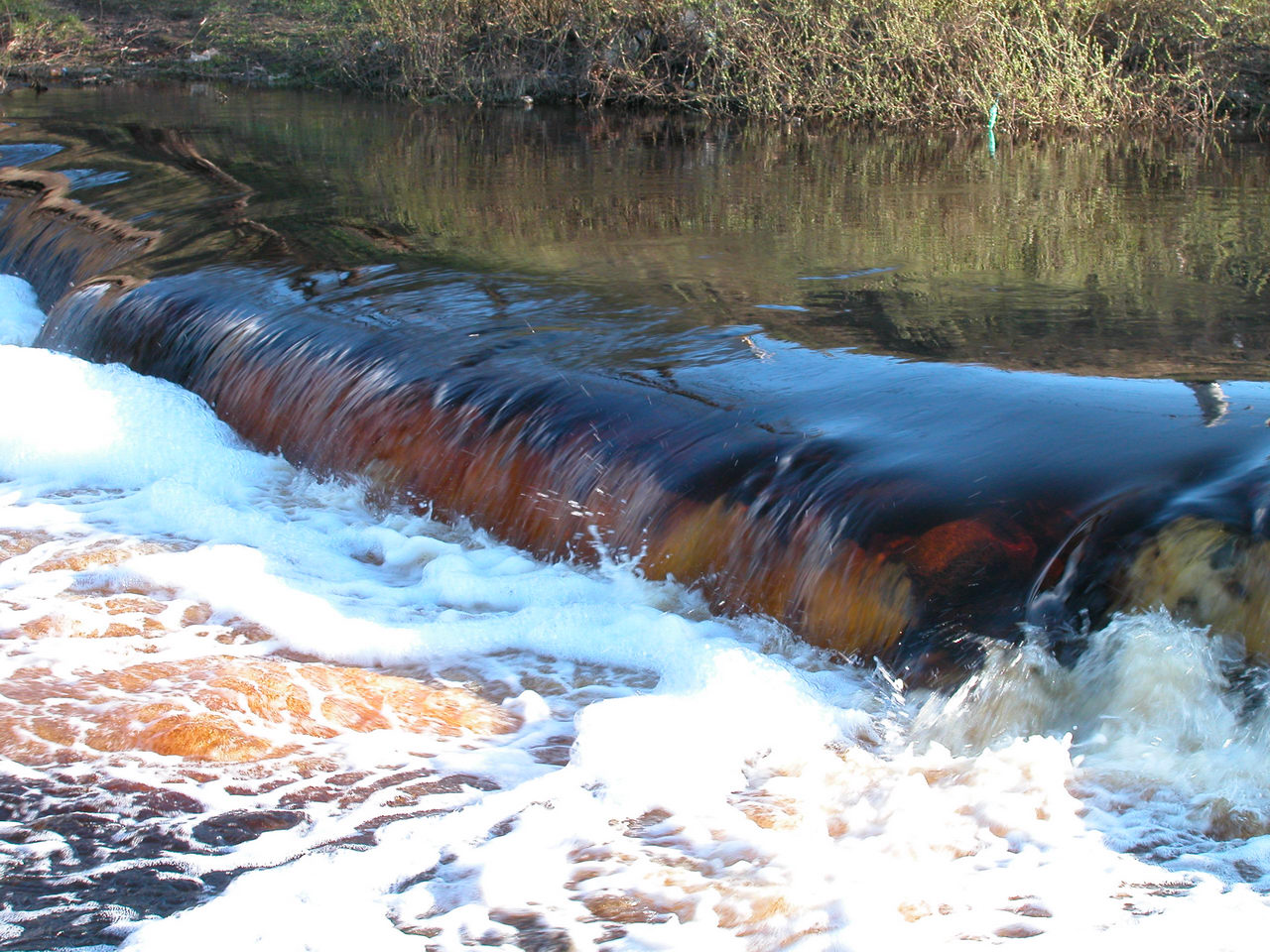
Our third day on the water meant crossing Chudovo, a sizeable town with plenty of houses and factories. The river winds about so much that it takes several hours to get back to the woods. Just where the buildings begin, we met our first rapid, apparently left by an old mill. Under the very first bridge on the highway to Moscow we hit an iron spike and punctured the kayak. We had to patch it on the spot. At the Saint Petersburg–Moscow railway there was a drop about a metre high. The water was not particularly high, and we had no wish to patch the kayak again. We carried it round.
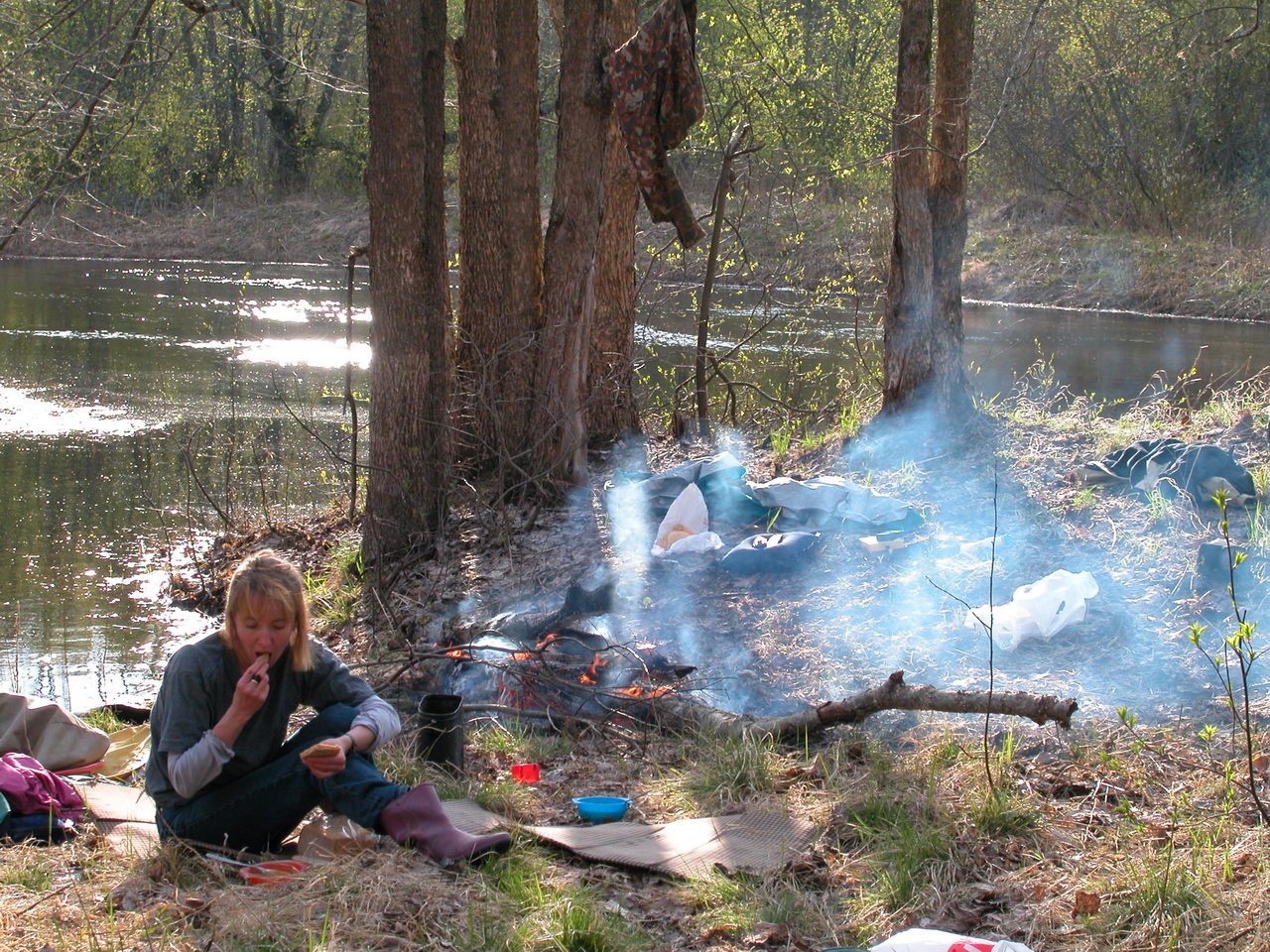
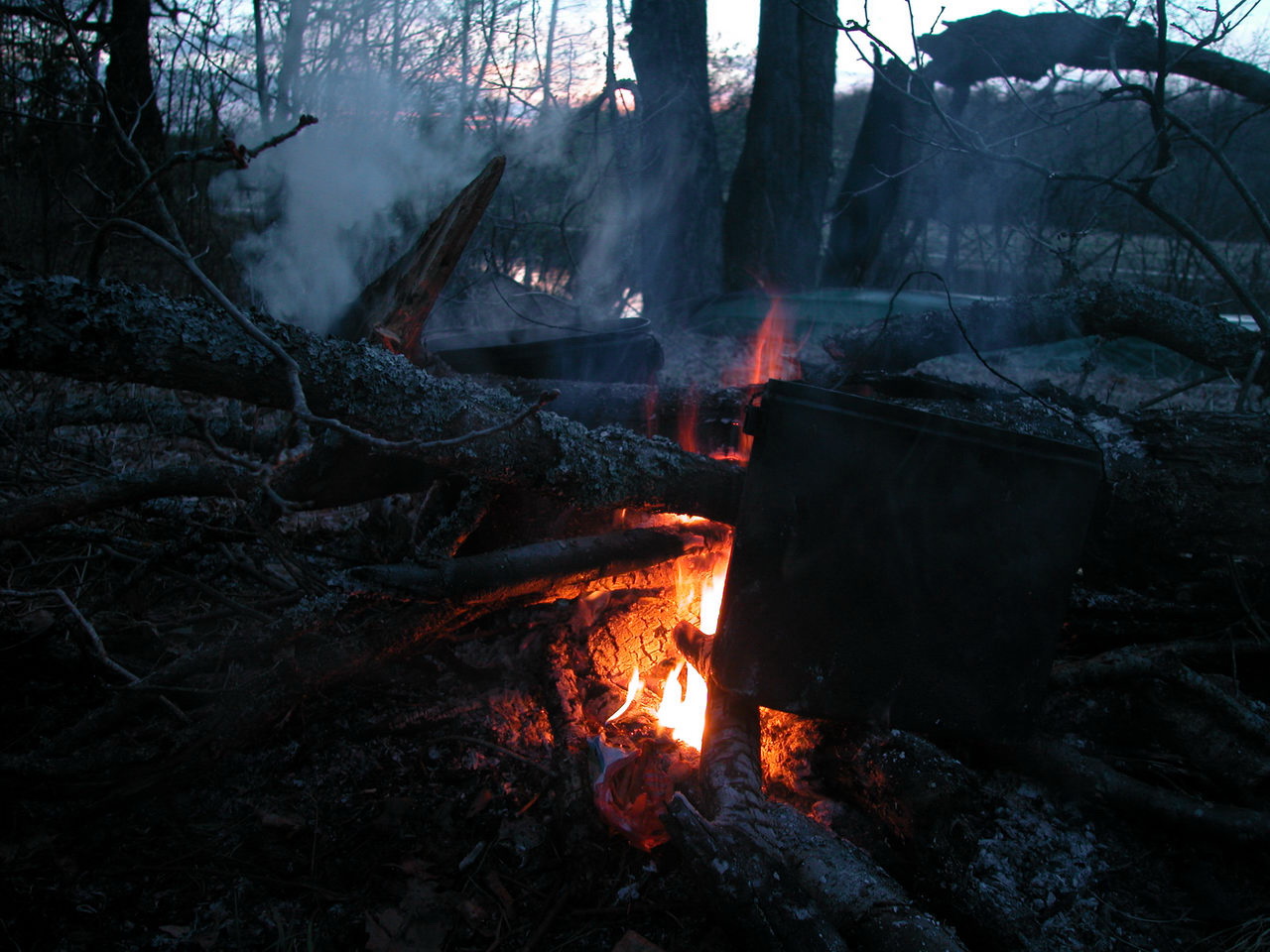
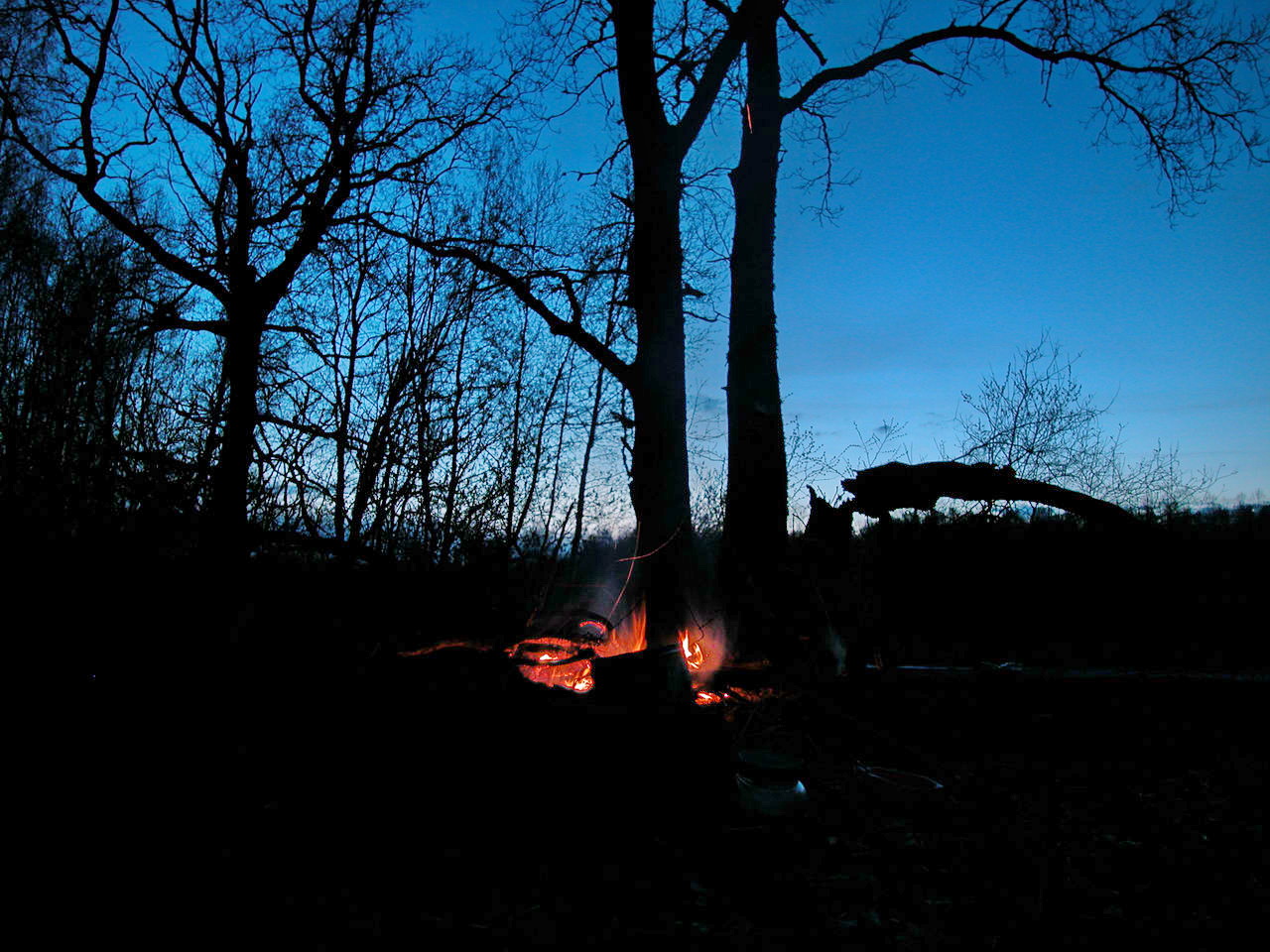
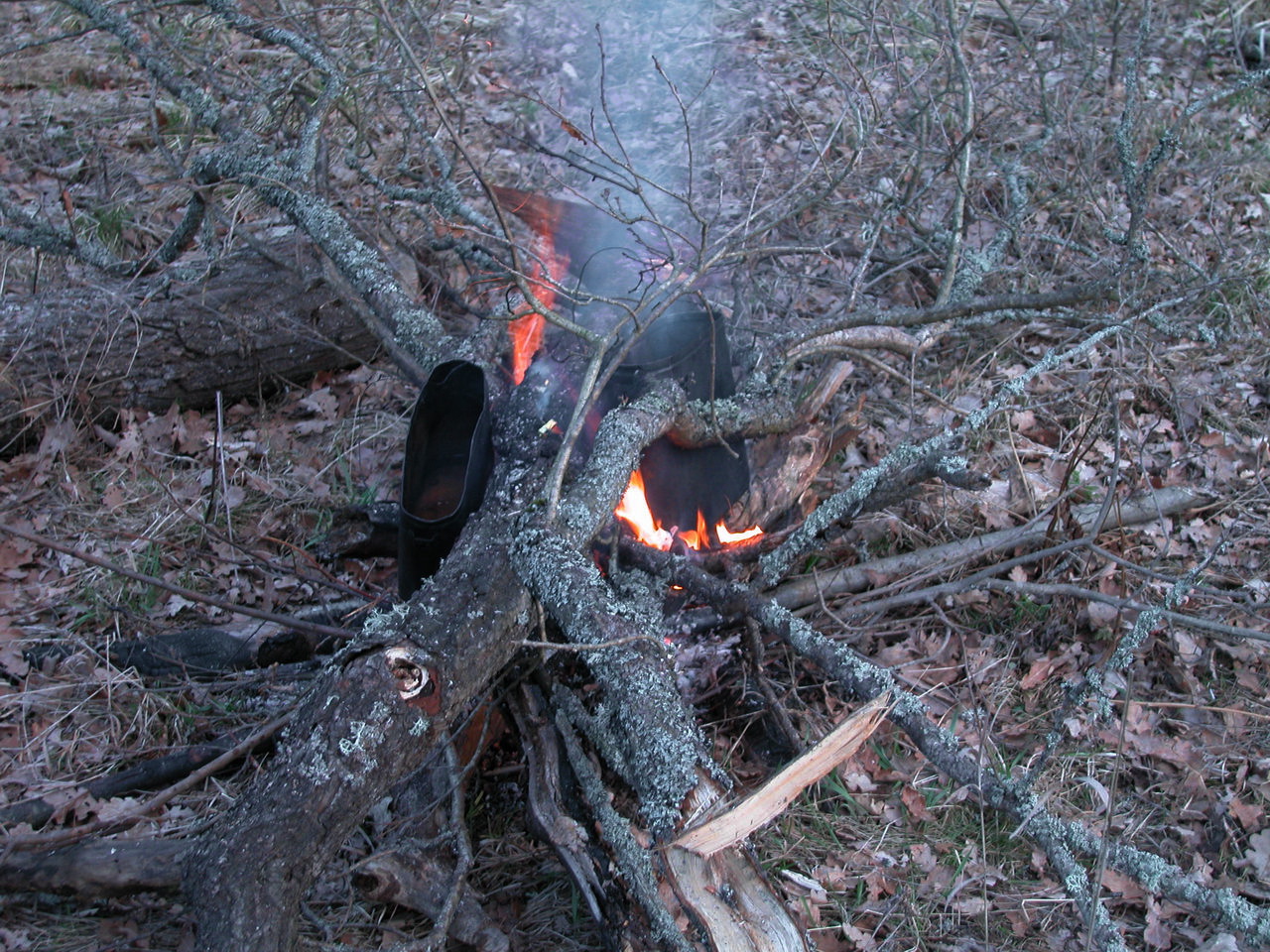
When the town finally ended, an oak wood began on the right bank. We found a wonderful clearing to camp in (59°06.679′N, 31°45.581′E; 20 m). That evening we sat for a long time feeding the fire with thick oak branches, which were lying all around us. Planes flew across the sky. Flying was no longer some distant dream. We had just flown for real, to the other side of the world.
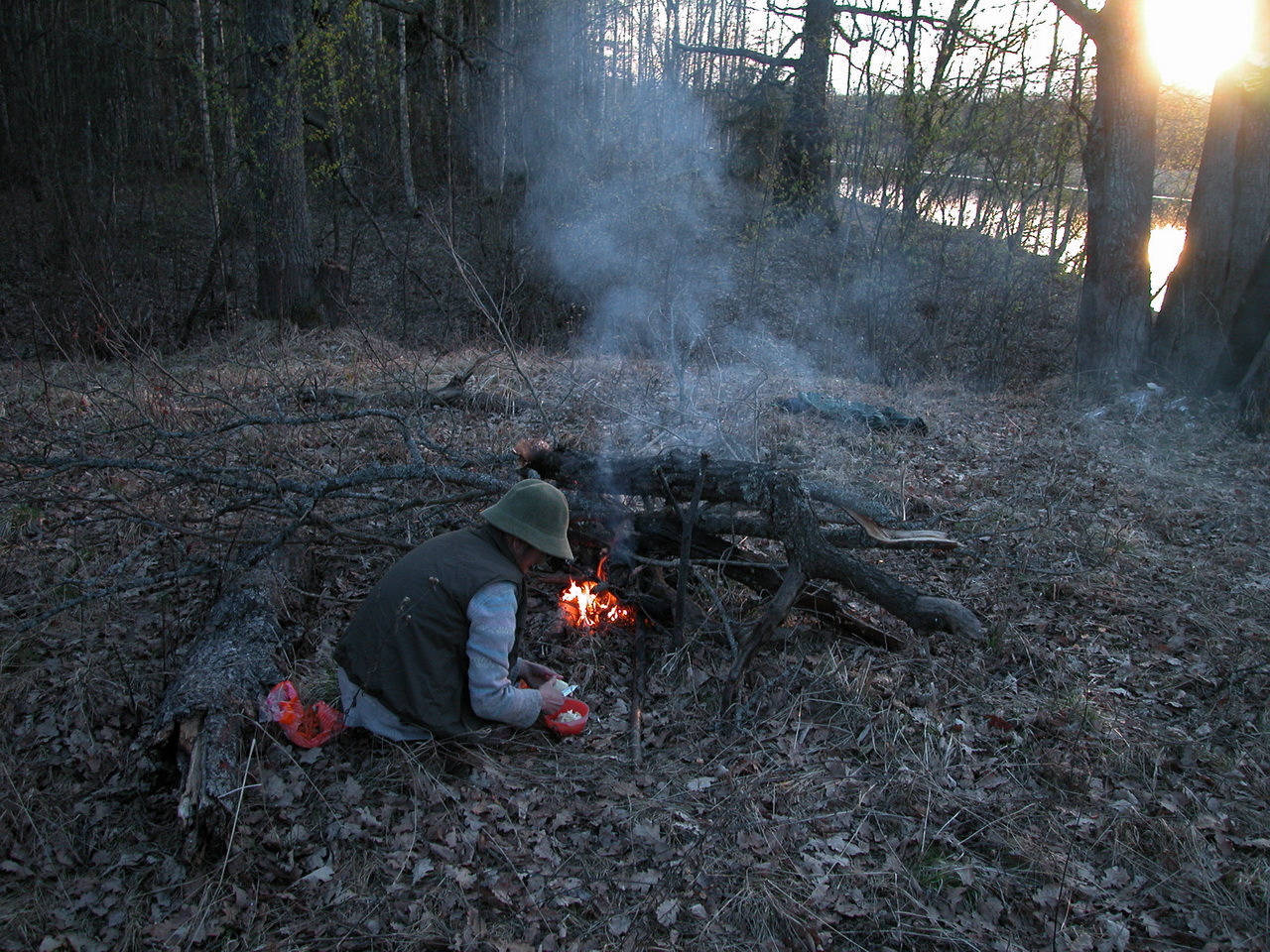
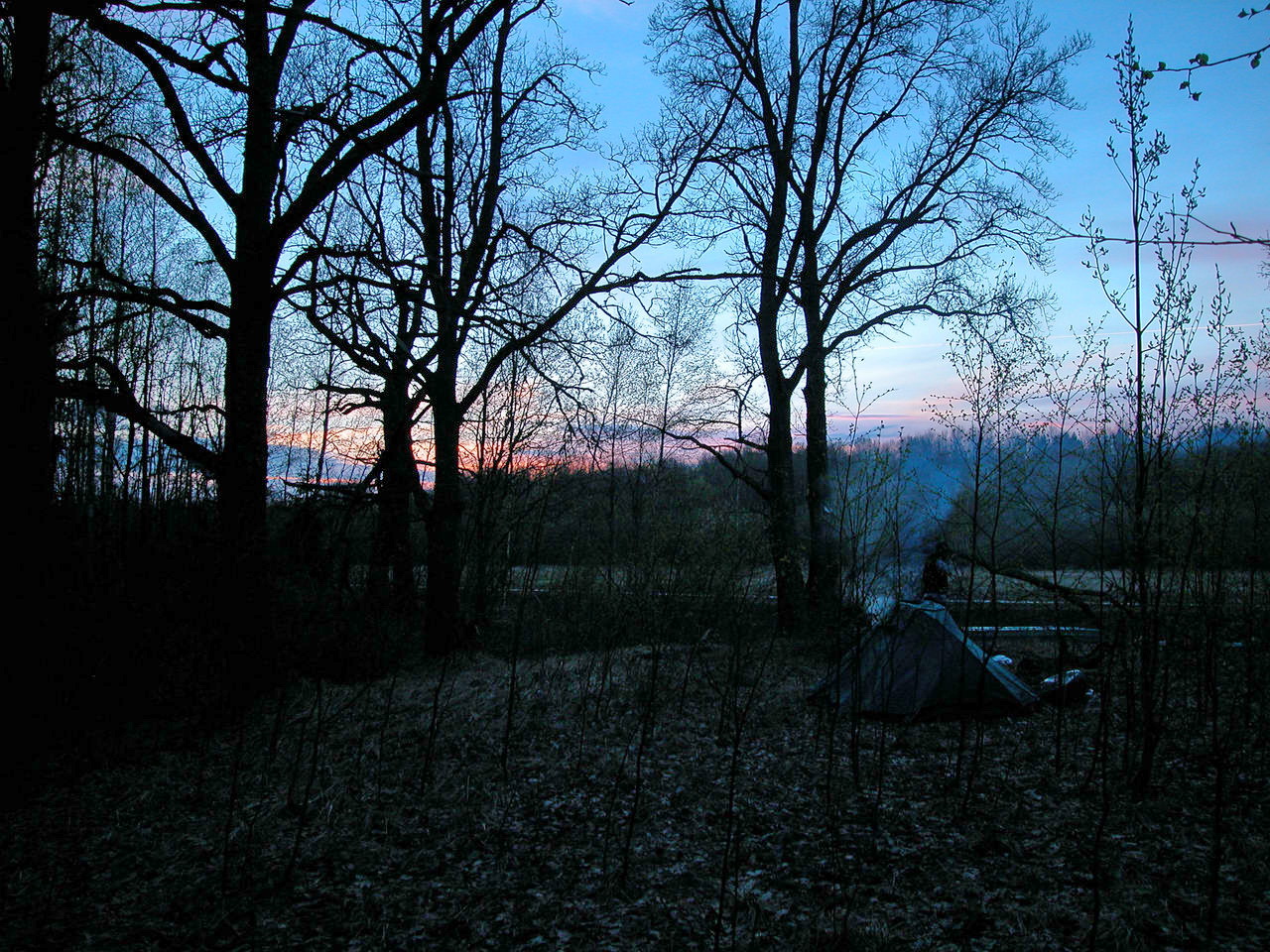
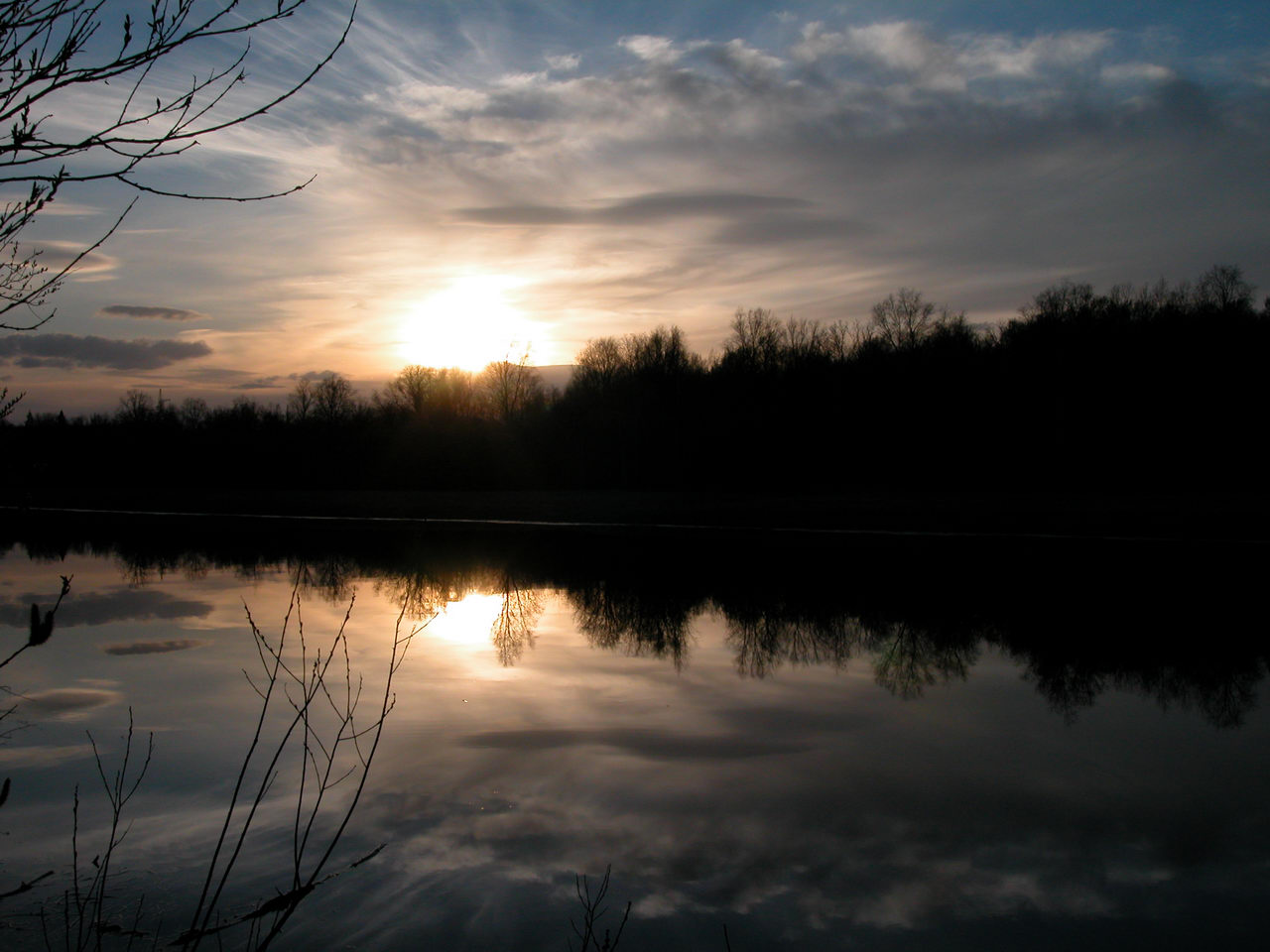
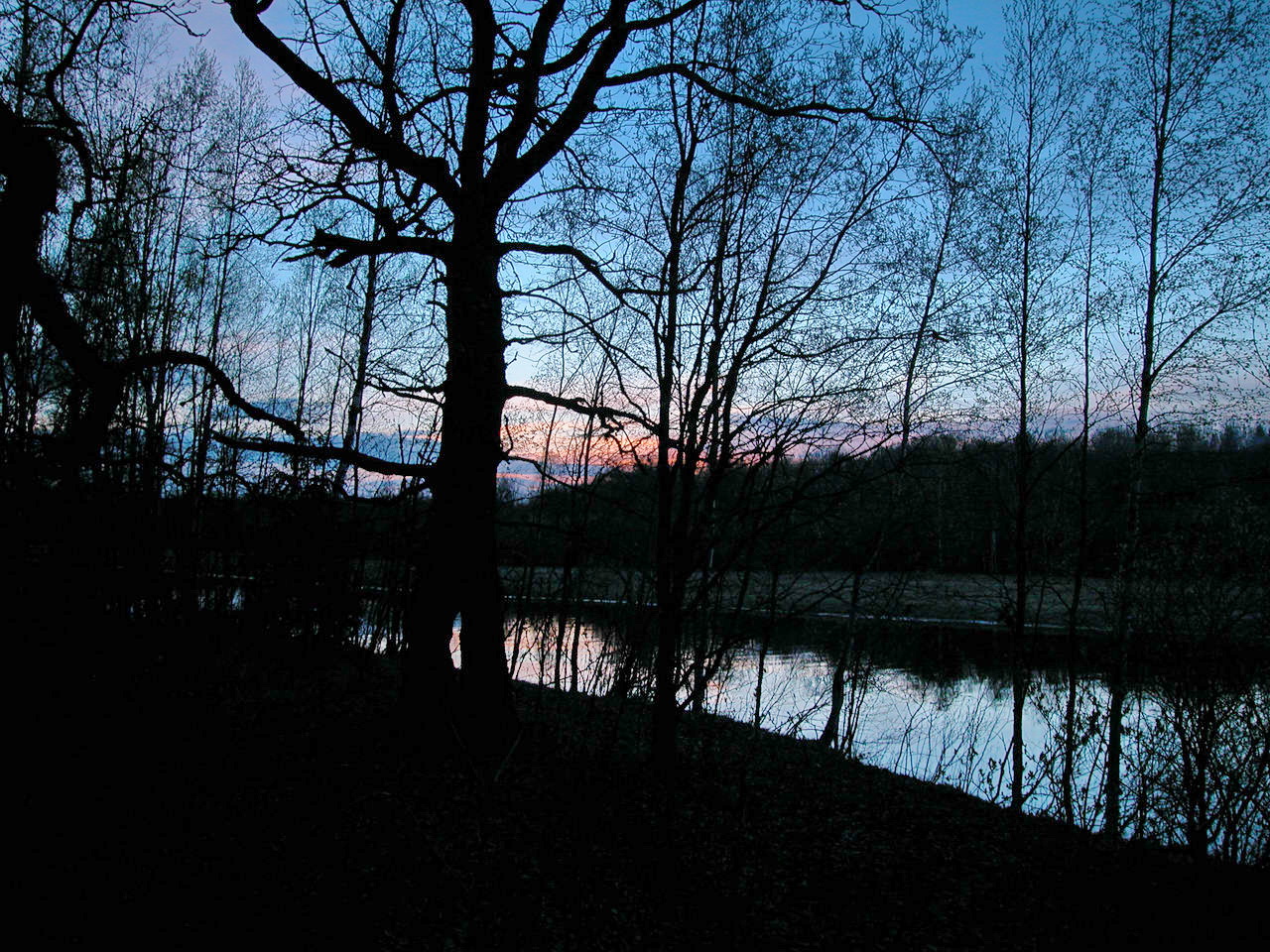
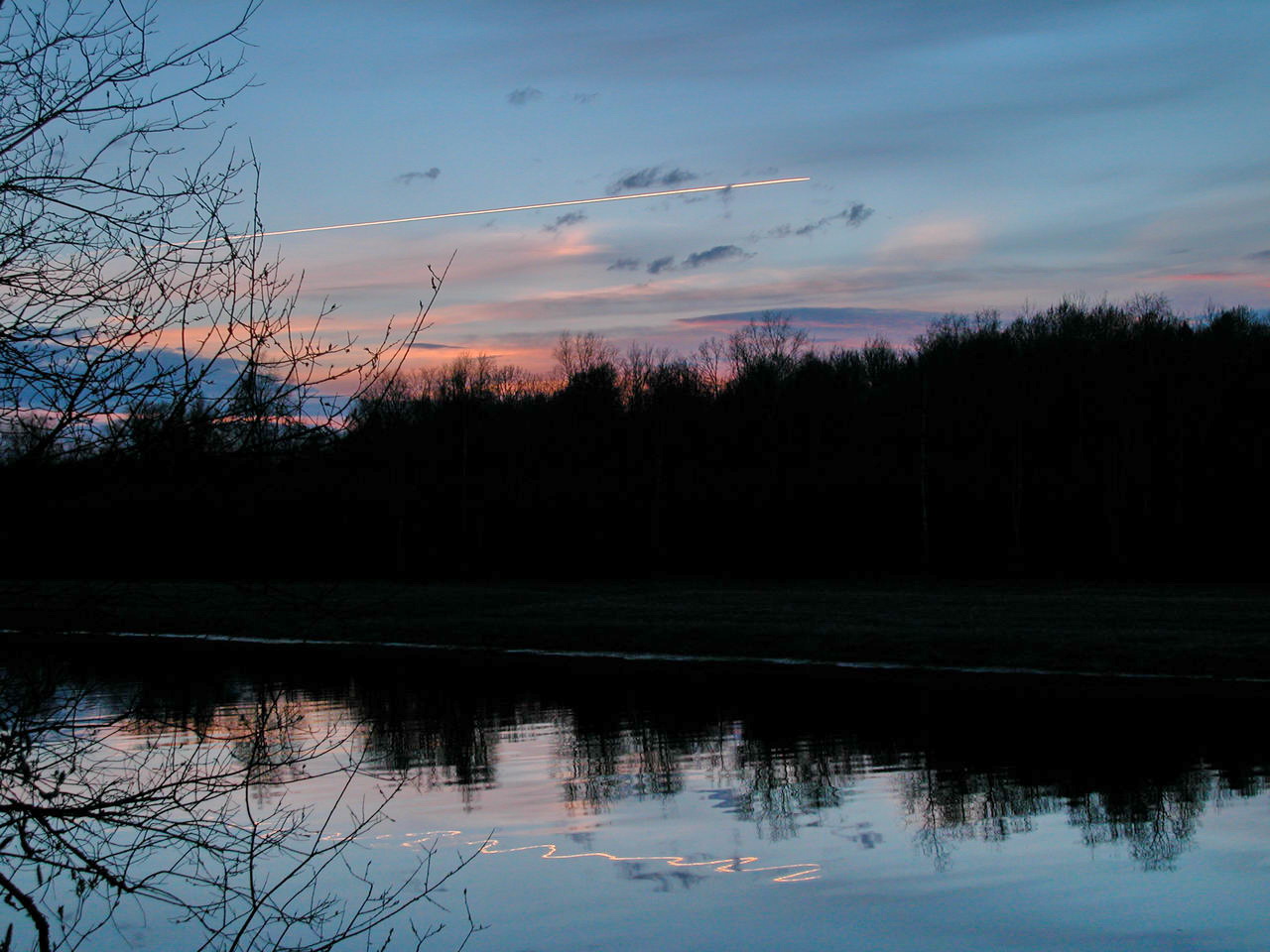
We meant to go again. More and more we felt like staying there. We realised for the first time that our trips down spring rivers would soon be over. There would be plenty of other things, but this particular happiness would belong to the past.
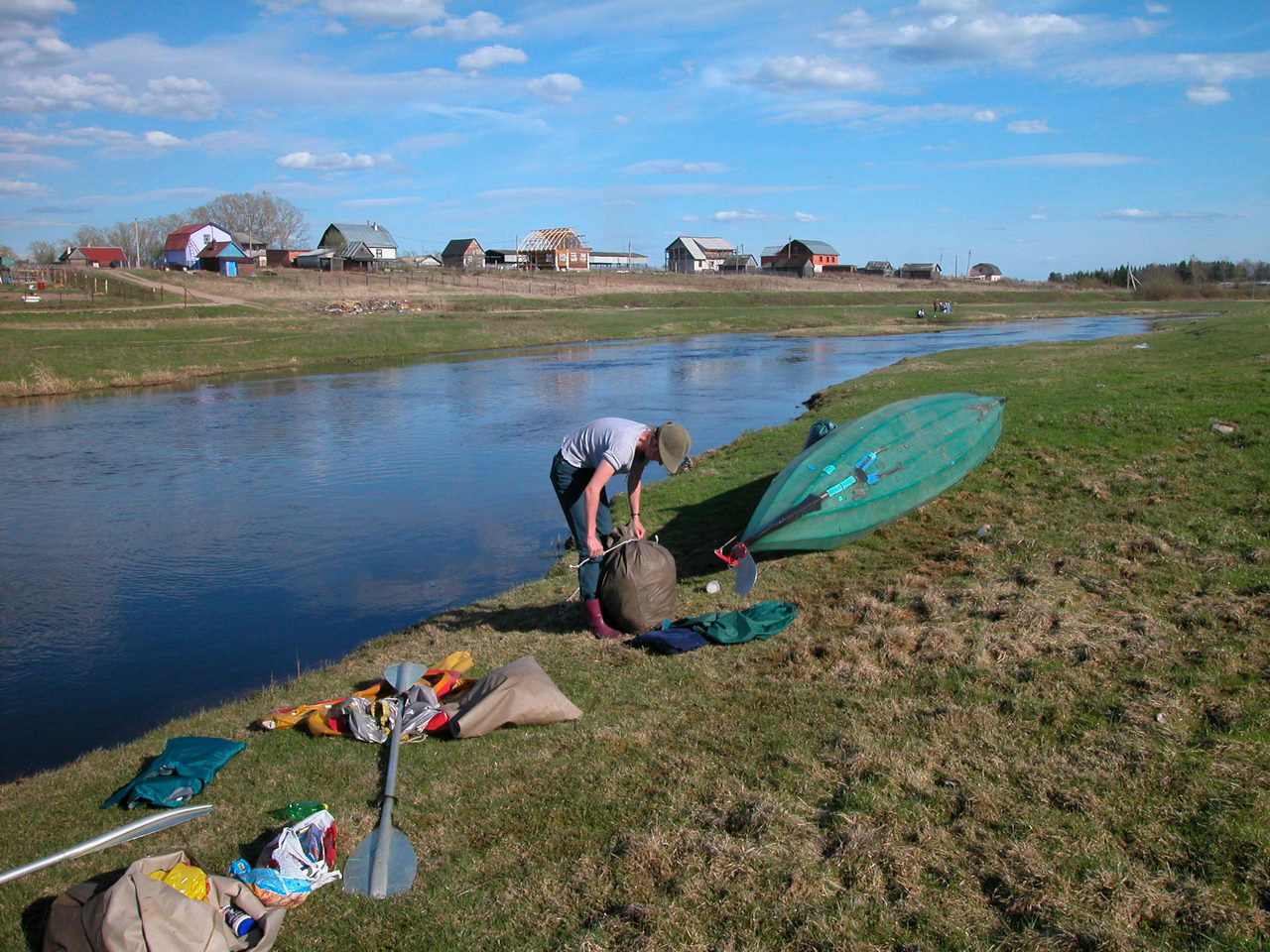
We continued in the morning. Here the Kerest is a very wide river. There is almost no current, as the Volkhov in flood backs water up into it. The banks are low and there are many side channels. We had meant to paddle out into the Volkhov but decided to take out at the junction for Krasnofarforny. There was a handy spot to pack the kayak away (59°08.661′N, 31°50.506′E).
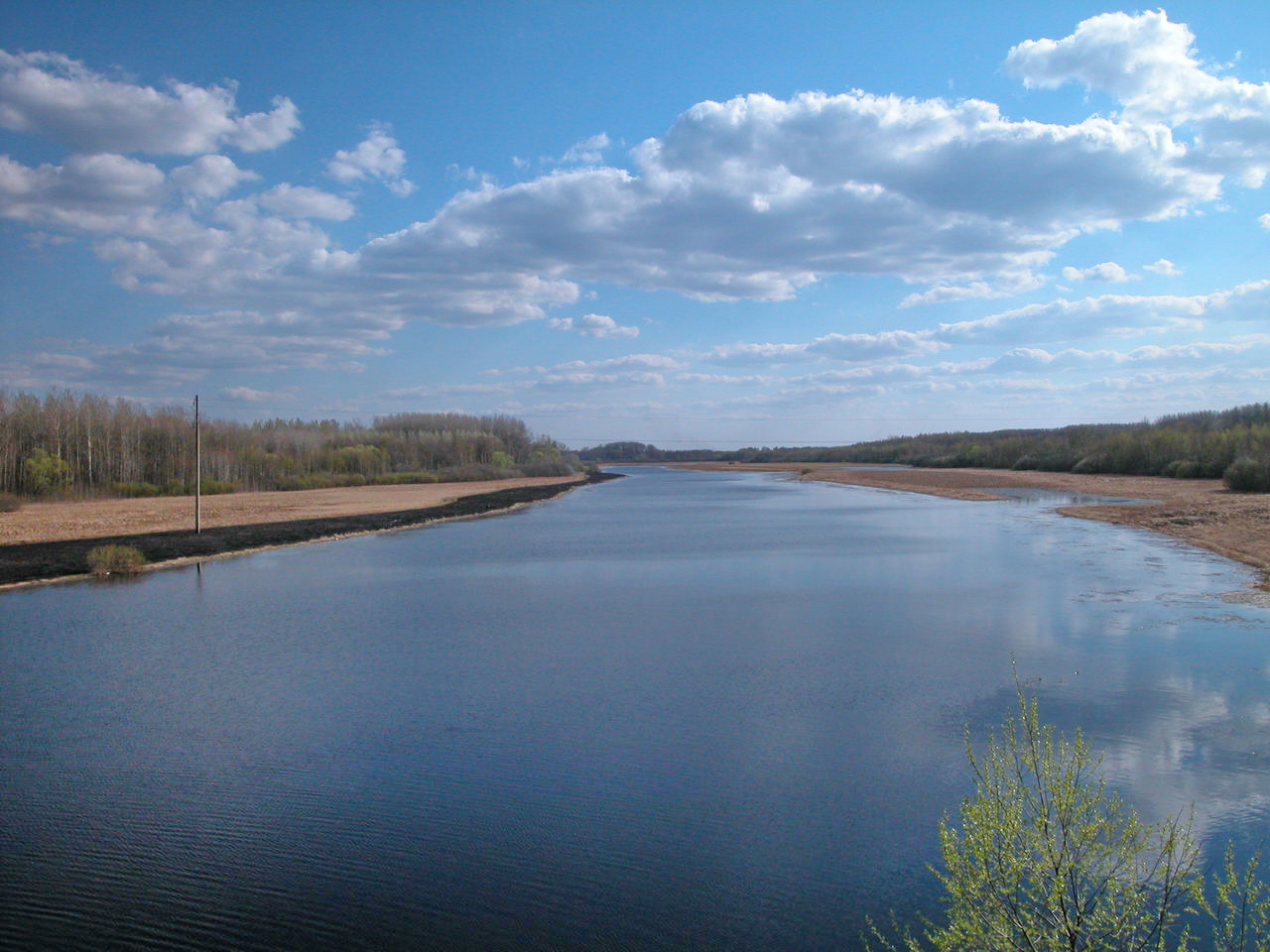
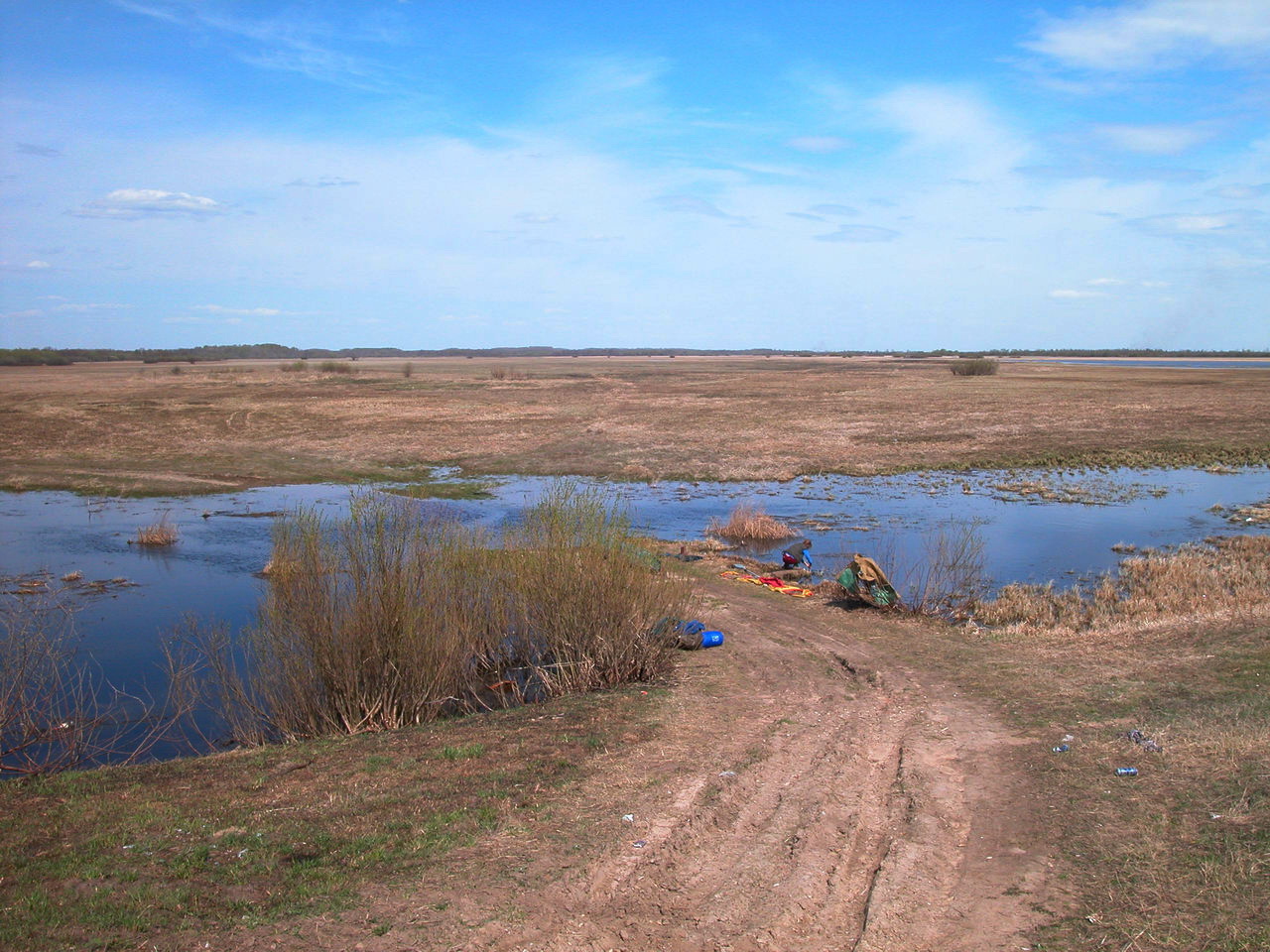
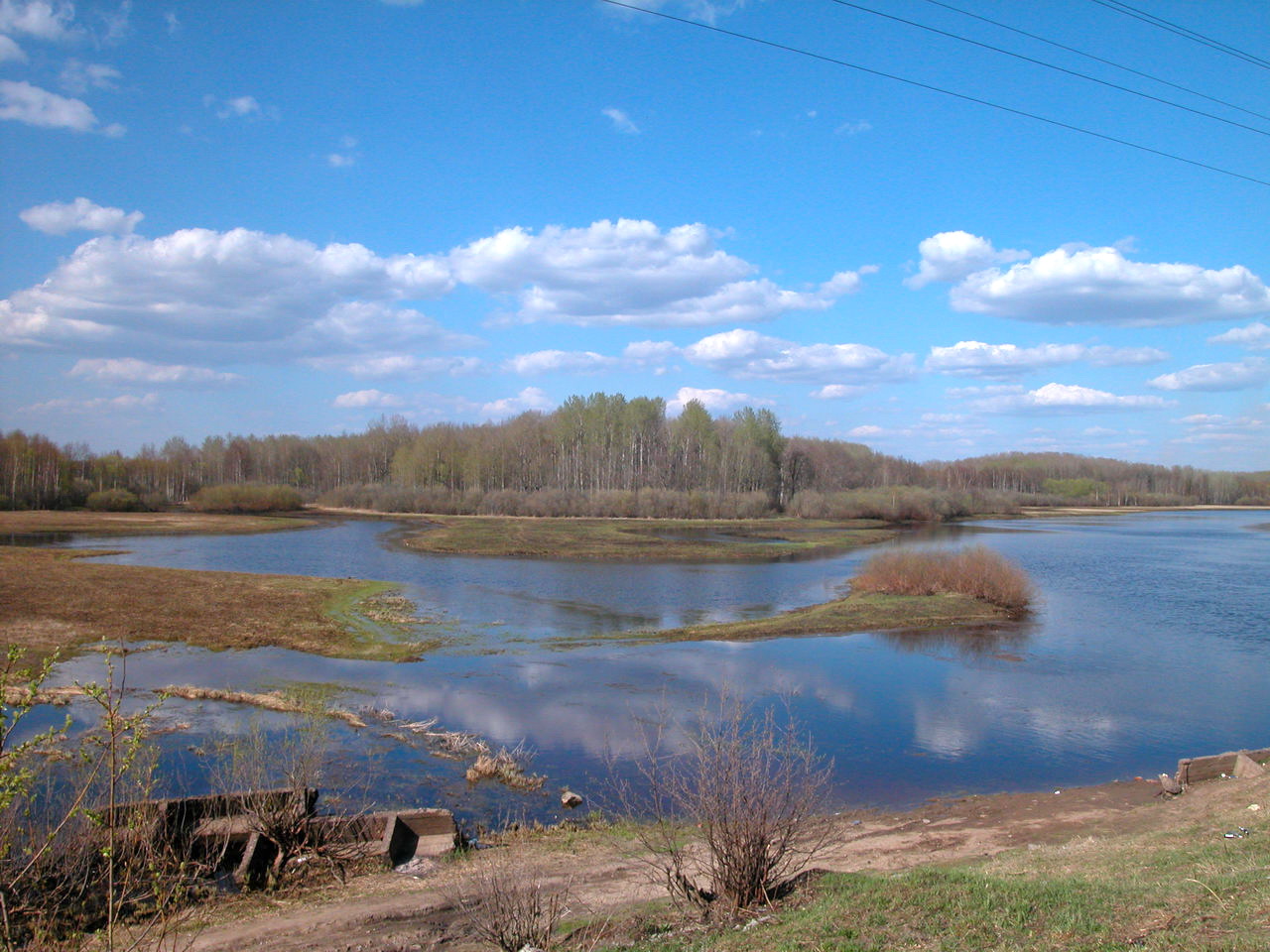
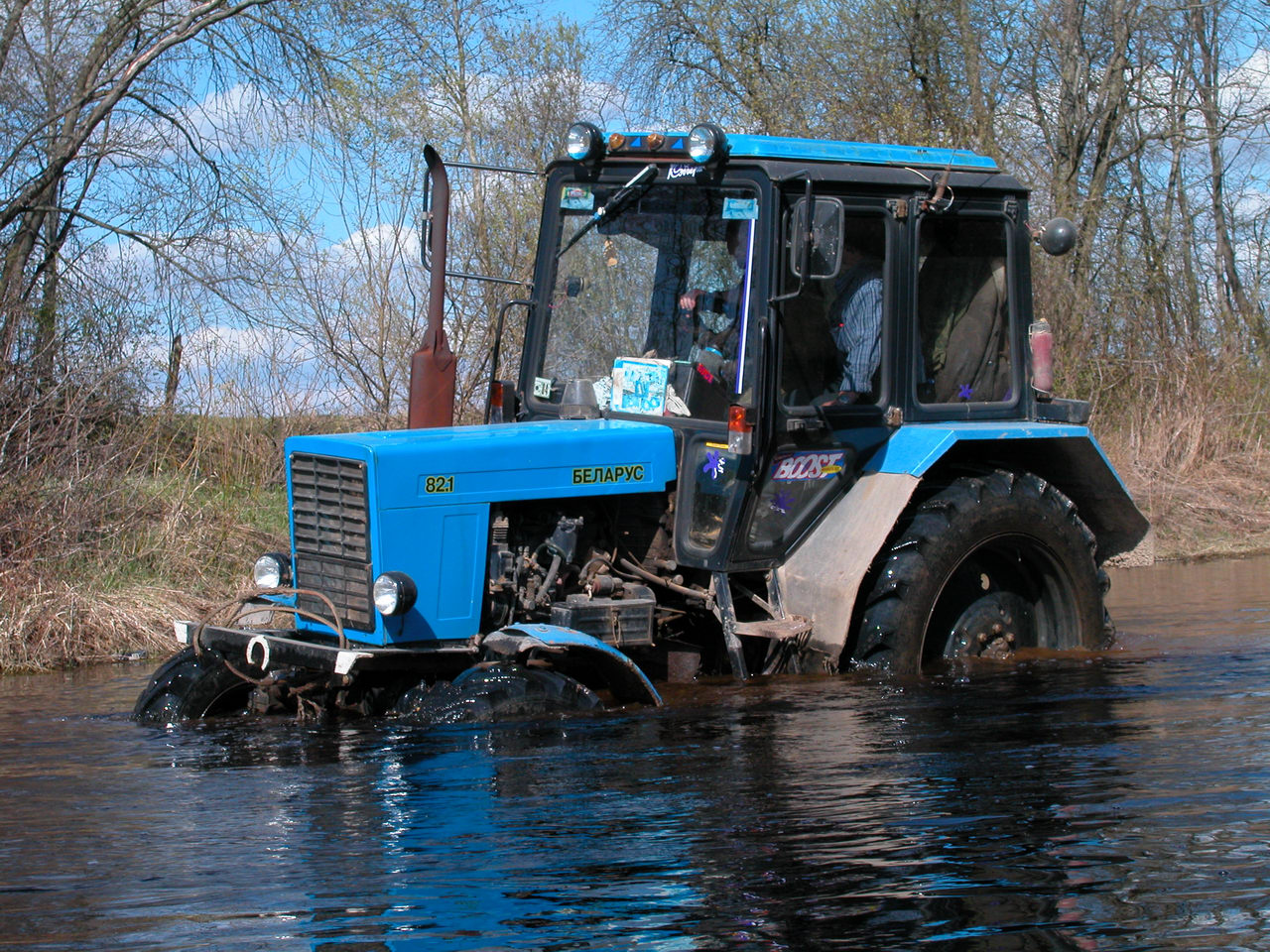
Tanya stayed to mind the rucksacks while I tried to hitch back to the start. My luck was dreadful at first, but then I got a lift to Podberezye. A second car took me to Ossiya, the nearest village. This was five kilometres from the car, but there was no point going there on my own. I would never get it out of the puddle by myself. I needed to find a tractor in the village. Surprisingly, that took less than ten minutes. The Belarus tractor pulled the car out easily. An hour later I was back with Tanya. We loaded the bags and headed for Saint Petersburg.