Travel diary
North of Flower Town. 20 July–14 August 2001
Iceland, Finland, Sweden, Norway, the Faroe Islands, Denmark, Germany, Luxembourg, France, Belgium and the Netherlands
Alexander Simo and Tanya Simo
Getting ready
How long we'd been trying to go to Norway, and something always seemed to get in the way. Year after year the plan to drive round northern Europe stayed alive and grew. At first it wasn't Norway at all, but Finland.
The plan had a life of its own, and our actual lives went their own way. We'd been all sorts of places and never quite got to neighbouring Finland. The plan steadily took on grander proportions, bringing in Iceland, from which the ferry comes into Denmark, and, as everyone knows, the rest of Europe is right next door to Denmark. This spring we were just about ready to go to Norway for two weeks with the Sochavas when we were in a car crash and spent the end of May partly in plaster instead. It looked as though we wouldn't get away anywhere that year, but the body is a resilient thing. Before long it was clear that a big mountain trip or a paddling expedition was out. Going a little way in a car, though, was just the thing for Tanya's still-mending limbs. And up came the full Iceland scheme.
The Sochavas were recovering slowly and plainly couldn't go. Fortunately Pavel Aratsky and Lena Bryndina came along. They weren't particularly drawn to northern countries. They wanted to buy a car somewhere in Belgium or the Netherlands and spend their June holiday by the Black Sea. Calling on what eloquence I had, I had to explain that you could buy a car in Iceland, and if not in Iceland then on the way back, and that Iceland's hot springs were much warmer than the unpredictable Black Sea. I omitted the possibility of a whole week of rain and fog, the usual ten to fifteen degrees, and snow if you go a little higher into the hills.
They liked the idea, all in all, and agreed. This was in early May. The best months to go are July and August, when it's reasonably warm and business quietens down a little.
We cheered up. There was a reason to get well quickly.
Before long the usual bustle of getting away began. First, visas for Finland, our neighbouring saviour, were taking a long time. We needed a double-entry visa for at least thirty days, and the Finns had decided to go on another drive to be strict about issuing the coveted Schengen stickers. Once that blew over, we found that ferry tickets in the season had to be booked six months ahead and there were no spaces. Smyril Line of the Faroe Islands sends the Norröna to Iceland once a week. There isn't nearly enough space on it and a long correspondence with Tórshavn got us nowhere. Judging by the replies we weren't the only ones besieging them with requests. I'd already started looking at shipping the car in a container or postponing the trip until the end of August, when the Viking Line representatives in Saint Petersburg suddenly got hold of the long-awaited tickets. Strange tickets, though: Iceland to Bergen. The ferry from Iceland goes to Hanstholm in Denmark, not Bergen in Norway, but those tickets were better than nothing. We'd sort it out on the spot. Then there was concern about the visa. They'd given us double entry, but the ferry goes through Lerwick in Scotland, outside Schengen. Trying to get to the bottom of it was no help, so I decided to stop worrying. We were all right on the way to Iceland, and we'd get back somehow.
More trouble followed. I set about getting the car fixed. After the first visit to the mechanics it caught fire on the way home, and I barely got it out. The steering rack was still leaking and the alternator failed. After weeks of struggle I turned the car over to the engine men on the last day and they said it wouldn't go far. The boldest recommended taking a good strong rope. I talked them into doing what they could all the same. They replaced the oxygen sensor. Then the fuel pump started leaking right there in the workshop. I collected my beloved “white horse” three hours before we were due to leave and went to have the tyres changed. It seemed as though the nightmare would never end. We tried to stuff everything into the boot. It wouldn't go. Twice as many bags as we should have had.
We were worn out by the time we came to collect Lena and Pavel. On the way the number-plate light had blown. We went to Lena's Fiesta in the car park. It was another Ford, after all. Maybe the bulbs were interchangeable. Seeing the little part I'd been after, I took it out in no time, and Lena let out a dreadful shriek. I'd taken her neighbour's Sierra apart. I had to put it back. The Fiesta bulb didn't fit. Nothing left to do but relax and drive it as it was.
It turned out Pavel had sprained his ankle. He was prepared to drive on the open road only. I'd rather counted on him to take over.
The moment of freedom. At 00:41 on 20 July 2001, we drove out. There wasn't any strength left to go into raptures about it or film it. I got the car onto the highway on my last breath, and Pavel did take over there. I quietly dozed off on the back seat.
In Vyborg we filled up at a Neste station. The people around us were Finnish already. I took the wheel. On through all the unauthorised border posts towards the crossing at Brusnichnoye. The last few kilometres dragged painfully. The locks and wide stretches of the Saimaa Canal went by outside. Finland leases the whole strip along the canal from Russia, and the road is Finnish too, with yellow-backed signs.
The queue wasn't long. The Russian customs woman was sleeping with her eyes wide open. I'd never seen such a sleepy guardian of the frontier. On the Finnish side the queue was longer, a couple of hours. The border guards were awake now and working with great zeal, not surprising as it was six in the morning local time. They weren't particularly welcoming. Where were we going and why? We repeated our rehearsed story of a month's journey on business. They tried to look through our luggage. The sight of our rags aroused not a shred of interest. Customs gave us the all-clear, and we were in the free world.
Finland
Finland met us with a bright, sunny morning. A pink sun lit the well-tended meadows. The road was narrow and plain, and the tarmac far from perfect. I'd expected more. The roads in Central Europe are better. I don't see why so many of our countrymen squeal with delight at Finnish roads. They're better than ours, of course, but the difference is narrowing with time. You can find tarmac like this in the Saint Petersburg region.
They say the Finns are very cautious, drive slowly and ring the police at the slightest thing. That seems to be another myth. We were frightened and drove exactly at the posted limit. The natives swept past us, and even the scheduled buses overtook. In our law-abiding zeal we were clearly creating a hazard. Of course, nobody goes through a village at 140. Sad as it is to admit, rules may be rules but they too live partly by unwritten ones. Only their signs are more generous. A hundred on the road, eighty at bends and villages, now and then sixty, mostly at junctions. The default is fifty in town and eighty on a main road, but there's a sign after every junction and it usually lets you go faster. The drivers all go faster, but not much. Nobody here acts as though they own the world and nothing matters. There's simply a general feeling that if nothing's in the way, ten or twenty kilometres an hour over the limit isn't a sin.
The rules reflect that: up to ten kilometres an hour over brings a warning.
We didn't see police, much less the permanent traffic police posts, which don't exist in Europe as a species.
Driving through Finnish villages, you might think they'd died out. Nobody on the streets. Perhaps everybody's at work, or perhaps they only go out in cars.
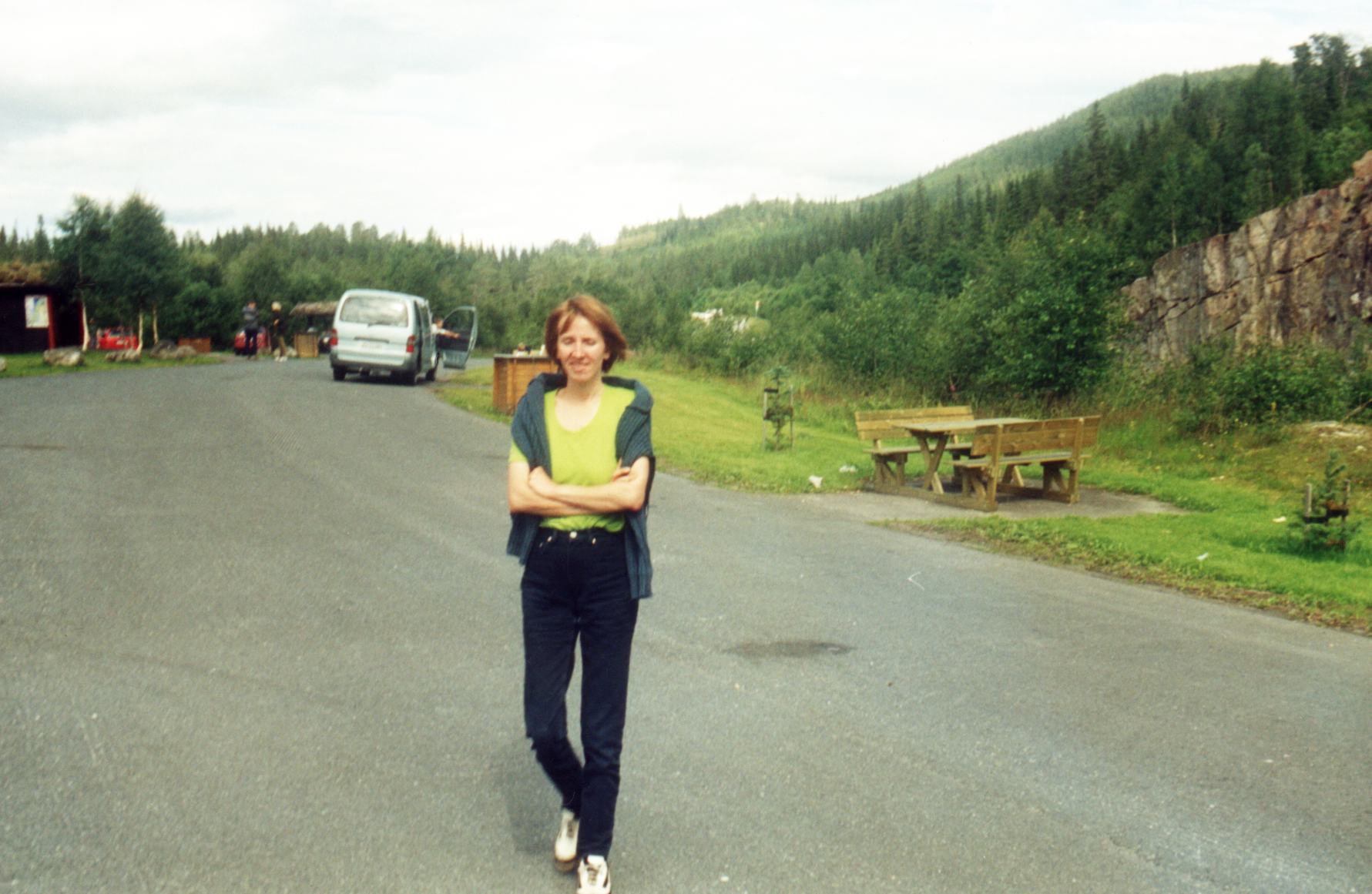
Roadside rest areas are something else altogether. You couldn't imagine them in Russia: a table, an enormous plastic rubbish bin and a toilet with paper. Everything clean, nothing scrawled over in swear words or broken. Some stops don't have toilets. The woods around those are as foul as ours, and you can't just blame the Russian tourists. There simply aren't that many of them on the quiet northern roads.
After the border we headed north for Joensuu. The sun was in my face and everyone around me asleep. I was terribly sleepy myself, but I held on. A hundred kilometres short of Joensuu we swapped drivers. Pavel was at the wheel and I could curl up quietly in the back.
At the next rest area we tipped all our things out and tried to pack them more tightly. Partial success. Instead of two rucksacks in the passenger compartment we just had our sleeping bags and odds and ends, food, the camera, and maps. We boiled water in the car coffee maker and made breakfast.
A long way to go today. No time to get too comfortable. We carried on towards Kuopio. A motorway approaches it from the north where you can go as fast as 130.
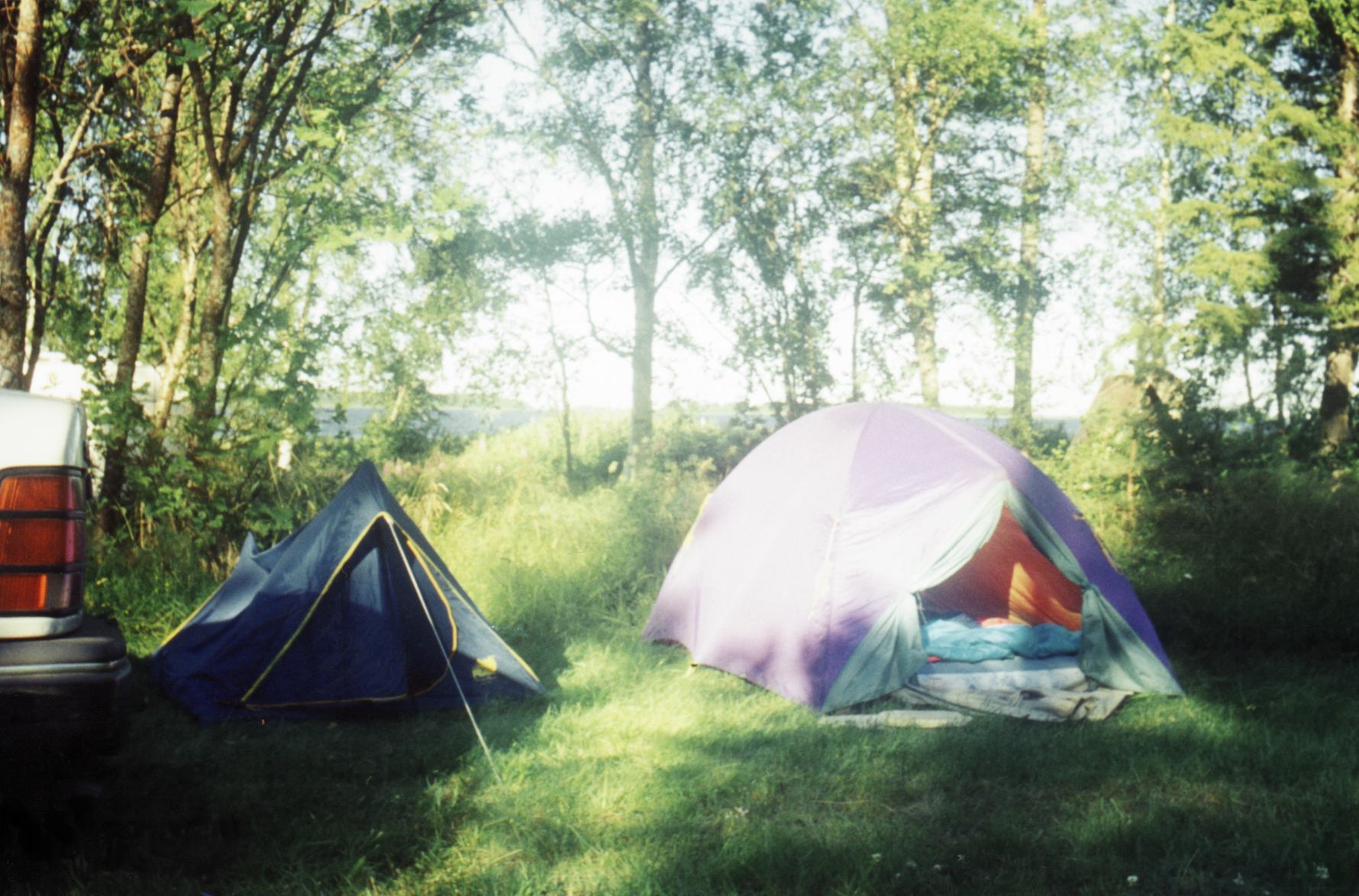
Towards evening we came to Oulu and filled up for the first time in Finland. We looked round the shops and tried to find something to eat. Food was a problem. Coffee, cola and beer, as much as you like, but nowhere to get a proper meal. Just after Oulu we began looking for a camp. There are a fair number of campgrounds on the Gulf of Bothnia and we soon found a very decent one right on the shore. I went to ask about it. The first time abroad is always a little frightening and strange. You suddenly go up to somebody and start speaking English. We were lucky here: a friendly Finnish girl spoke it beautifully and explained everything quickly and clearly. For 180 Finnish marks we got a pitch for our tents. We could have rented a cabin for 210, but hadn't begun splashing out yet and decided to save. There was a kitchen with crockery, as in most Scandinavian campgrounds, and we cooked there. Dreadfully sleepy by then, we were soon dead to the world. I'd practically gone three nights without sleep getting ready to leave.
We woke around nine. It was clear and cool. None of us had the least desire to swim in the Gulf of Bothnia, so all that was left was to pack quickly and drive on.
Next stop was the town of Simo. To Tanya and me it wasn't just a Finnish district centre. It was a town that shared our surname. Nothing very surprising about that in fact. Simo is a common Finnish first name as well as a surname. There is the town of Simo, the Simojoki River and Lake Simojärvi.
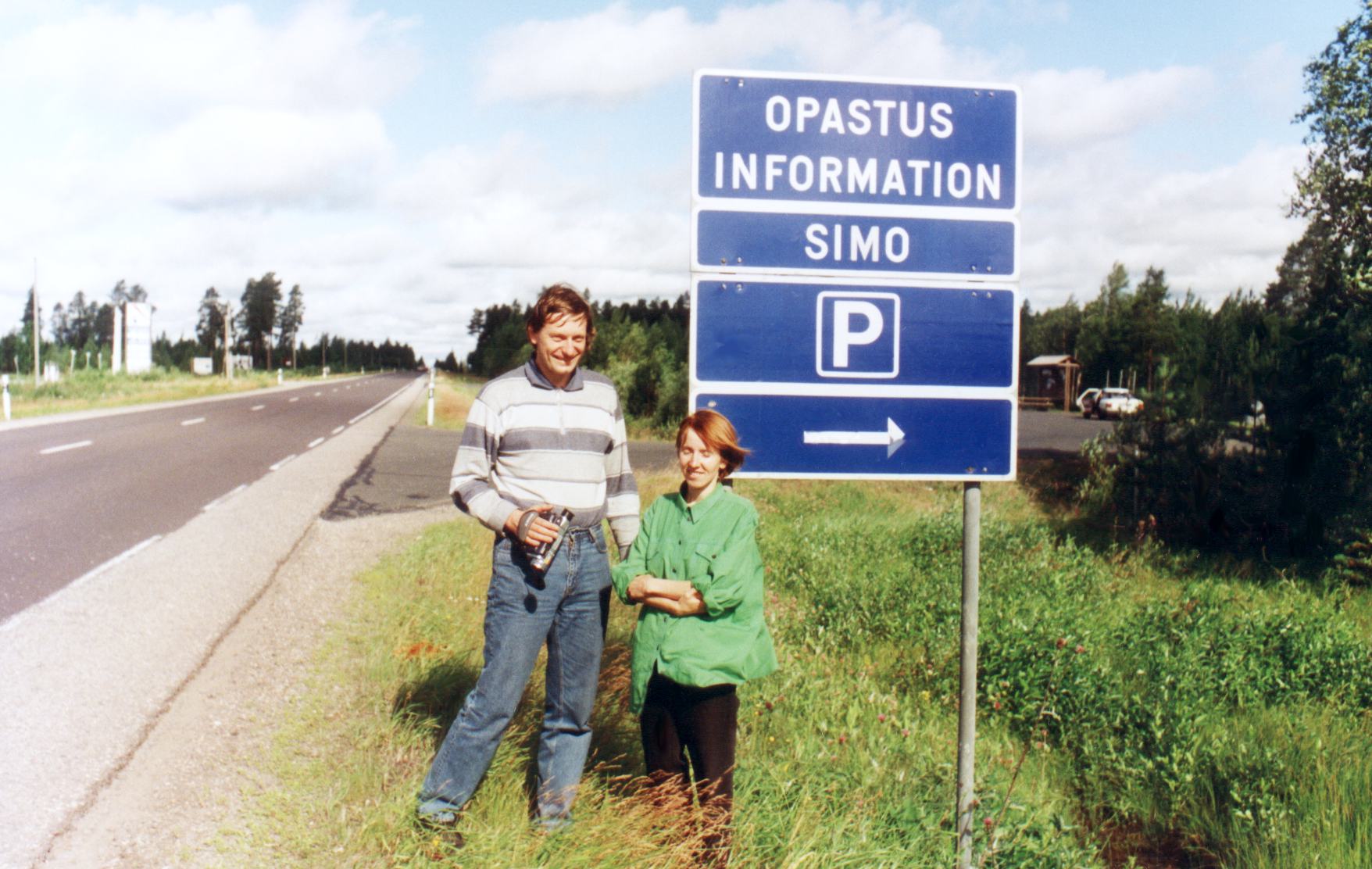
We stopped for photographs by various signs and went into the Simo Market to buy some food. To be entirely honest, the food was an excuse to take away a stack of store bags with our family name on them. It's a small town and there isn't much to do there.
Next was Kemi, quite a large town where you could come expressly to shop. Pavel and Lena rushed into this retail kingdom and disappeared without a trace. It took several hours to get them back in the car.
In the meantime we had breakfast in a Chinese restaurant. In most countries it's the simplest, cheapest and quickest way to eat. The only drawback is that everything is fiery and covered in all sorts of seasonings. I now see why places like this are sometimes called the Fire-Breathing Dragon. When you come out your entire digestive tract feels as though it's on fire.
Sweden
Kemi is almost at the Swedish border and we soon crossed it. The massive frontier buildings aren't quite abandoned. There are still people there, but nobody gets stopped.
Just over the border it was clear we'd come to another country. The houses were more substantial, and the neatness struck you at once. Masses of flowers. Finland has flowers too, but in Sweden everything has rather more pretensions to a palace. The small Finnish houses are homelier, warmer and cosier, fitting into the landscape. In place of the spacious Finnish rest areas there are narrow pullouts. You find some with tables, but even those are right by the road. No toilets. People are expected to go in the bushes. On the other hand there are stone fire rings and, what was most touching, split firewood laid out. So much for the idea that people in the West don't light campfires.
You can feel in everything that the Swedes have more money. The roads are busier and the cars are newer. Lots of people are travelling with caravans.
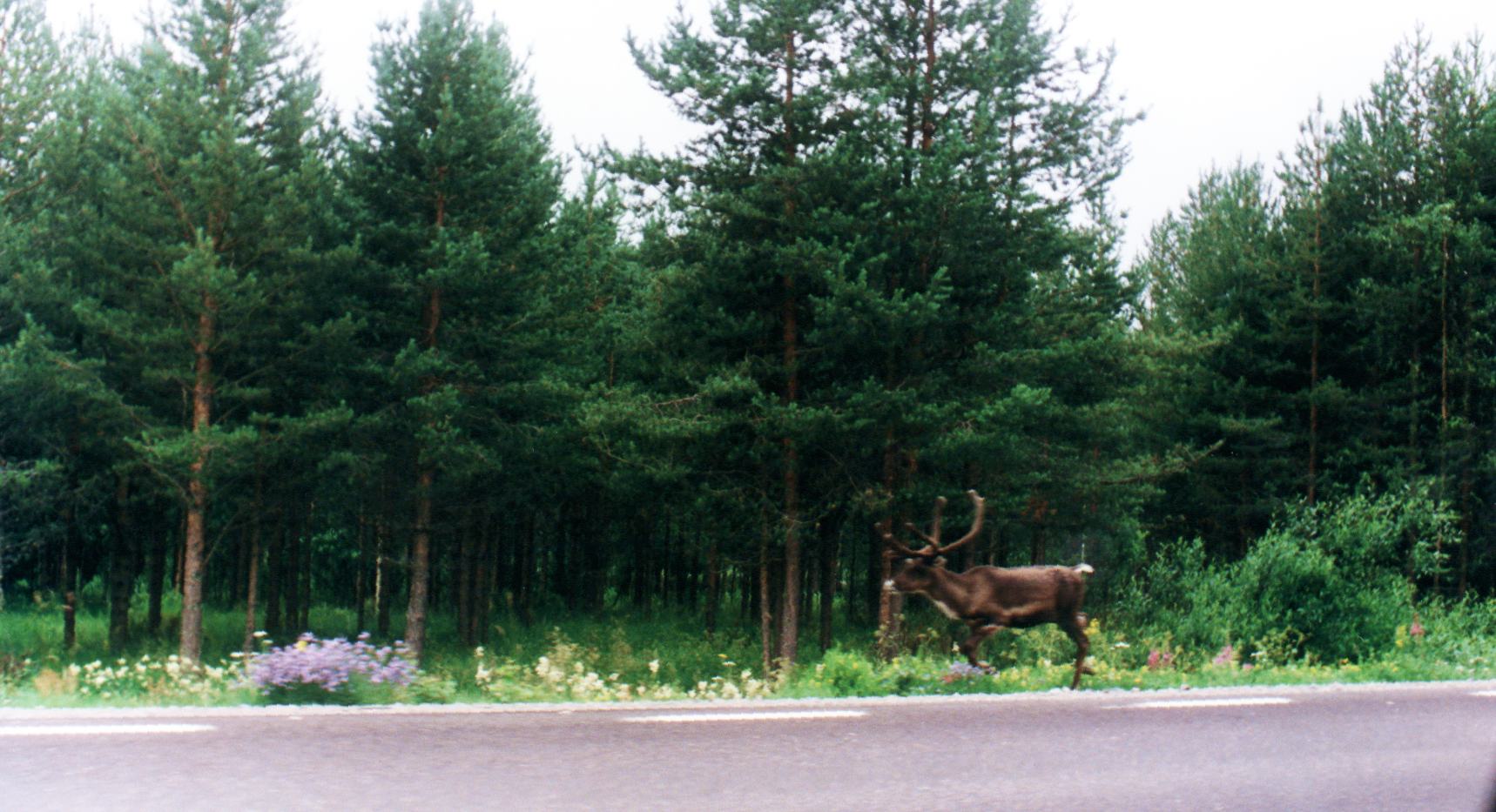
Over the border we kept along the Gulf of Bothnia on the E4, turning inland a little after Luleå. The road emptied and the weather turned to rain. Here and there we began to see reindeer grazing beside the road. They're not wild, of course, and graze near farms. The good thing is they aren't afraid of people, so you can go up to them.
At the next pullout we had a snack with coconut milk we'd bought in Kemi. We call Finland “the land of dates” at home, a play on its name in Russian. Evidently they have coconuts there as well. Lena liked the milk so much she was going to spend all her spare money on a winter supply on the way back.
The farther west we went, the hillier the country became. The rain stopped and the road turned pretty and pleasant.
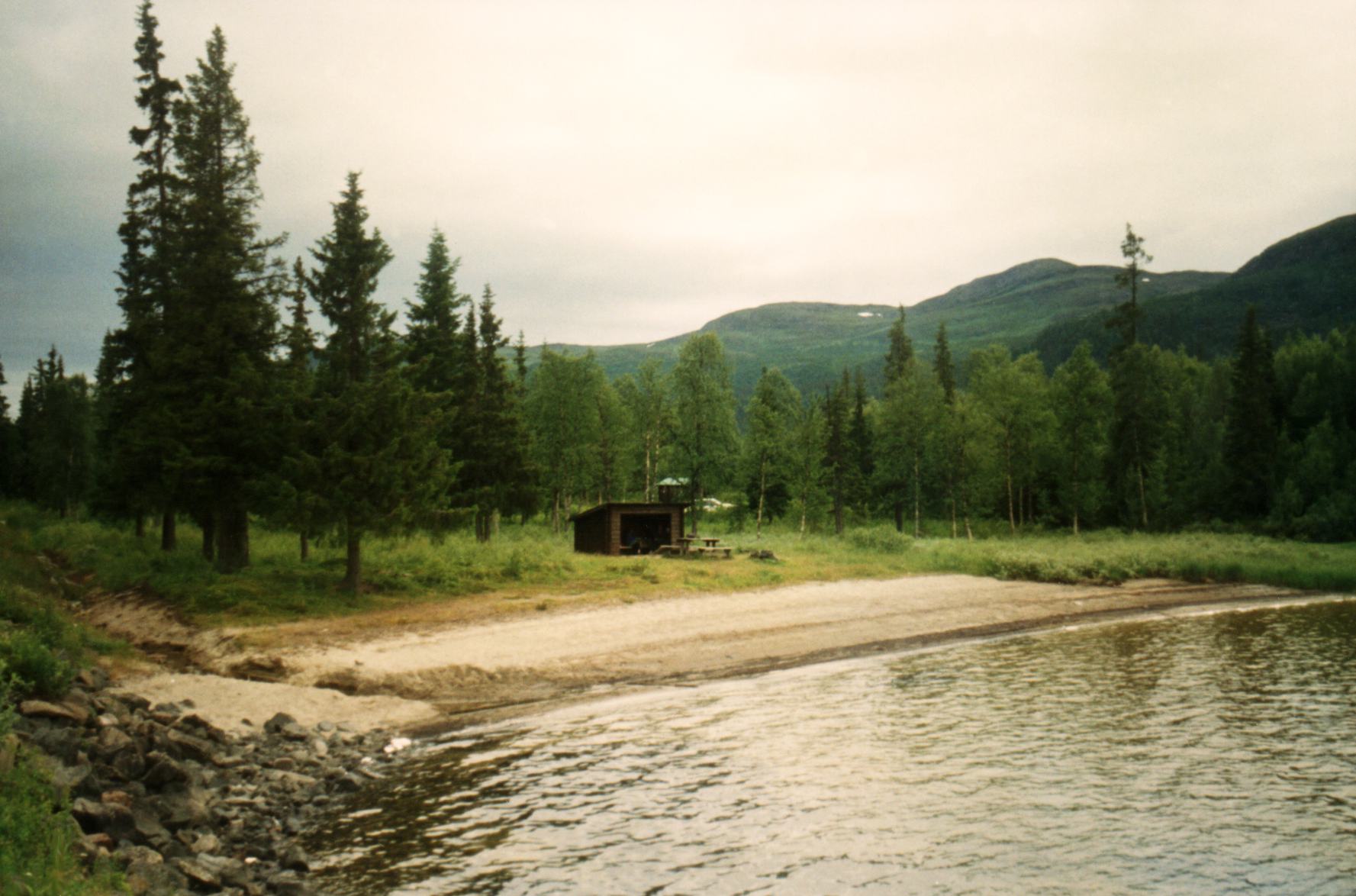
We stopped for a snack at a little lake. Pavel announced that it was cold outside, drank a glass of vodka and established the fact that he wouldn't be driving again today.
At Storuman we made our first sortie into a car lot. The prices were enormous, twice what they were in Saint Petersburg. No buying a car here.
We filled up before the border with slightly cheaper Swedish petrol and turned onto Route 73. A perfectly respectable yellow road on the map and properly sealed for the first five kilometres. After that, just like crossing between regions at home, it was rutted dirt. They were trying to repair it, which so far was only making things worse. The GSM phone soon lost its signal. I began to wonder whether there was a crossing between Sweden and Norway here at all, and then we saw the hateful border hut, boarded up of course. The sight of these defunct frontiers makes me gloat. They kept people from travelling for so many years, and at last it's over. I still harbour a hope of seeing something like it at Torfyanovka.
Norway
It was growing dark and time for a campground. Mountains all round, and we could easily have camped by one of the many lakes, but the video camera battery was flat and we needed somewhere to charge it. Grubben promised a fine view and a campground. The view was there, but no sign of a campground. The road was still unsealed, with steep ups and downs. A good thing it's light in the night here, with the midnight sun. We searched a long time and twice came to campgrounds without a space. We finally stopped on the E6 near Kapfjellet. An enormous campground and very dear, nearly $40 for a cabin. A ten-kroner coin for a shower and a queue into the bargain. The coin buys about ten minutes, and having paid, your thrifty European will use up his whole allowance. I did enough queuing in Soviet times to last the rest of my life. I went out for the occasional look and waited for the crowd to disperse. It wasn't till two in the morning that I got in.
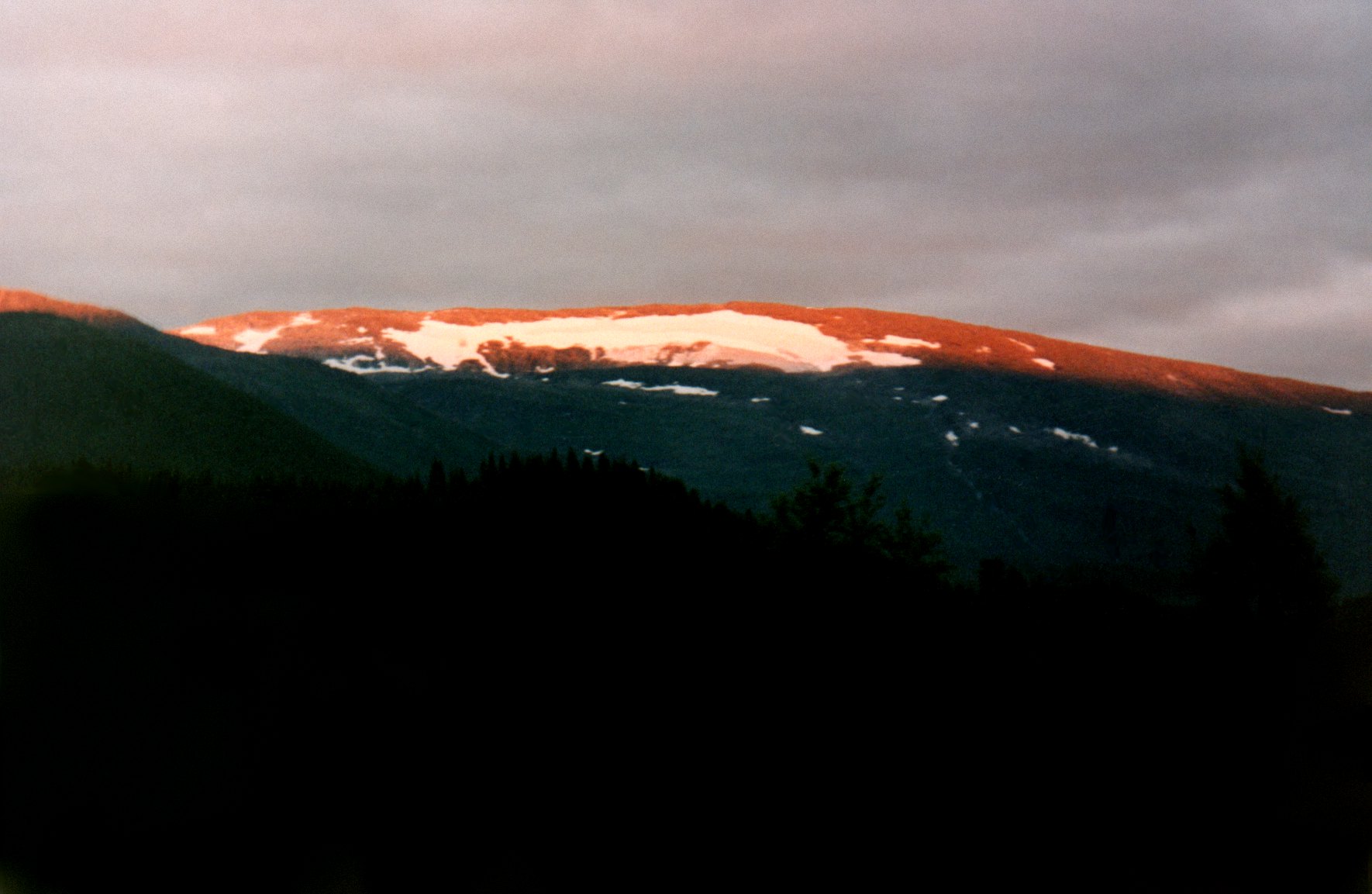
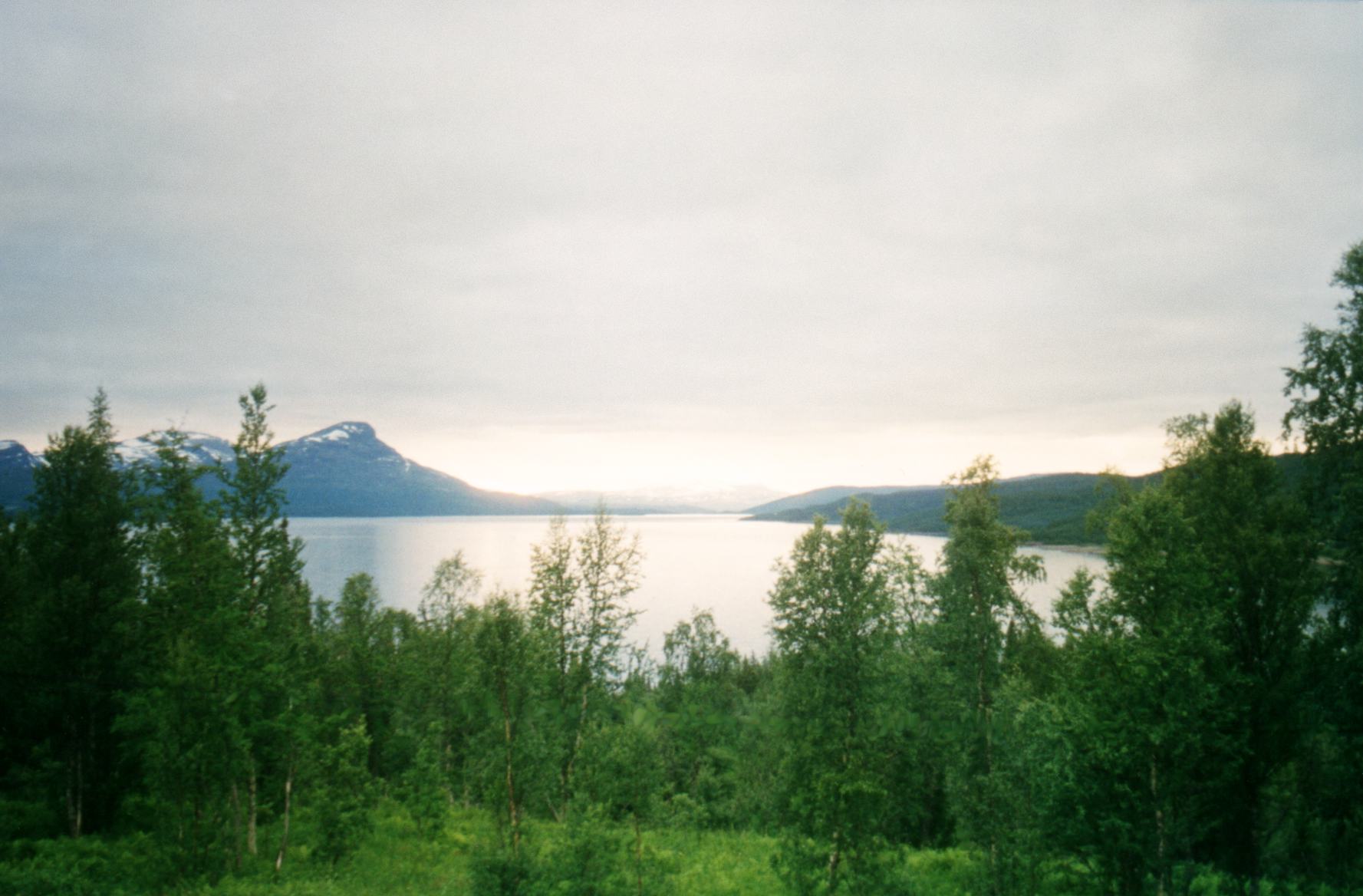
A clear, warm morning. We sorted through the luggage for ages and tried to get it all into the boot. We meant to get to Trondheim quickly and have lunch there. The road runs between fairly gentle hills, with no particular sights along the way.
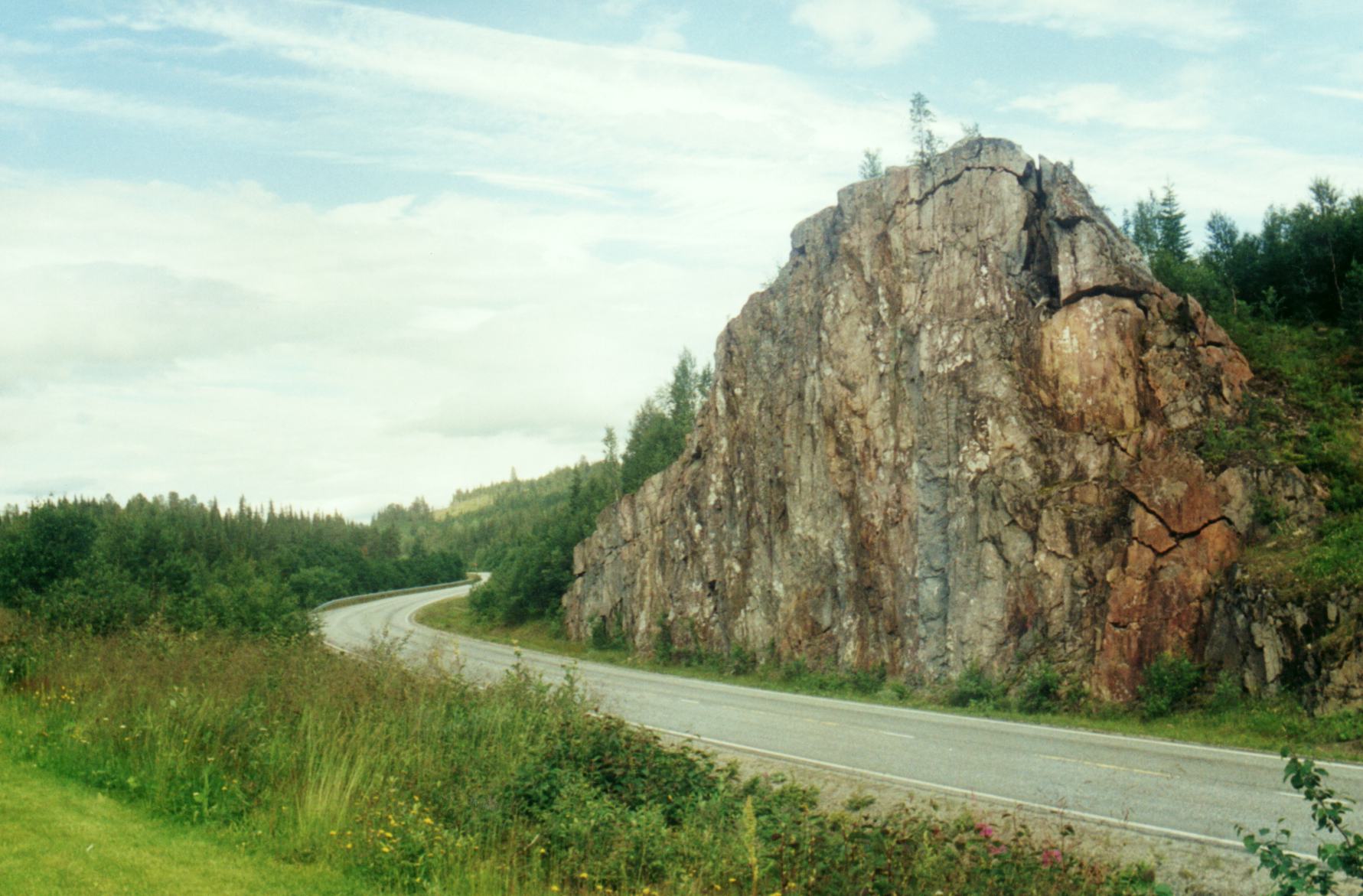
The map showed a waterfall at Trones. We stopped and tried to find it. Alas, it had long since been turned into a hydroelectric dam. To spare the tourists' feelings, they'd built a children's park with rides and a zoo beside it.
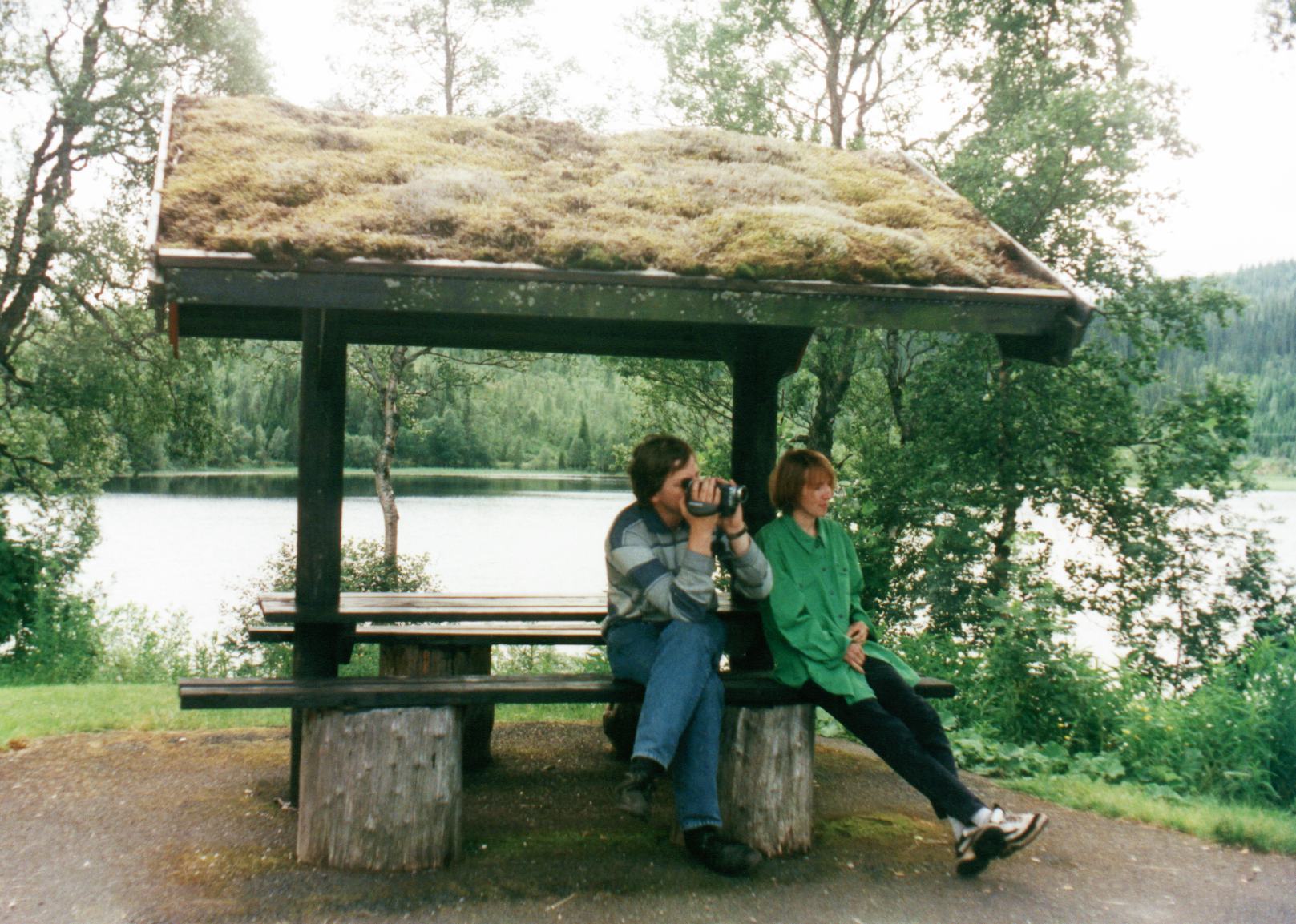
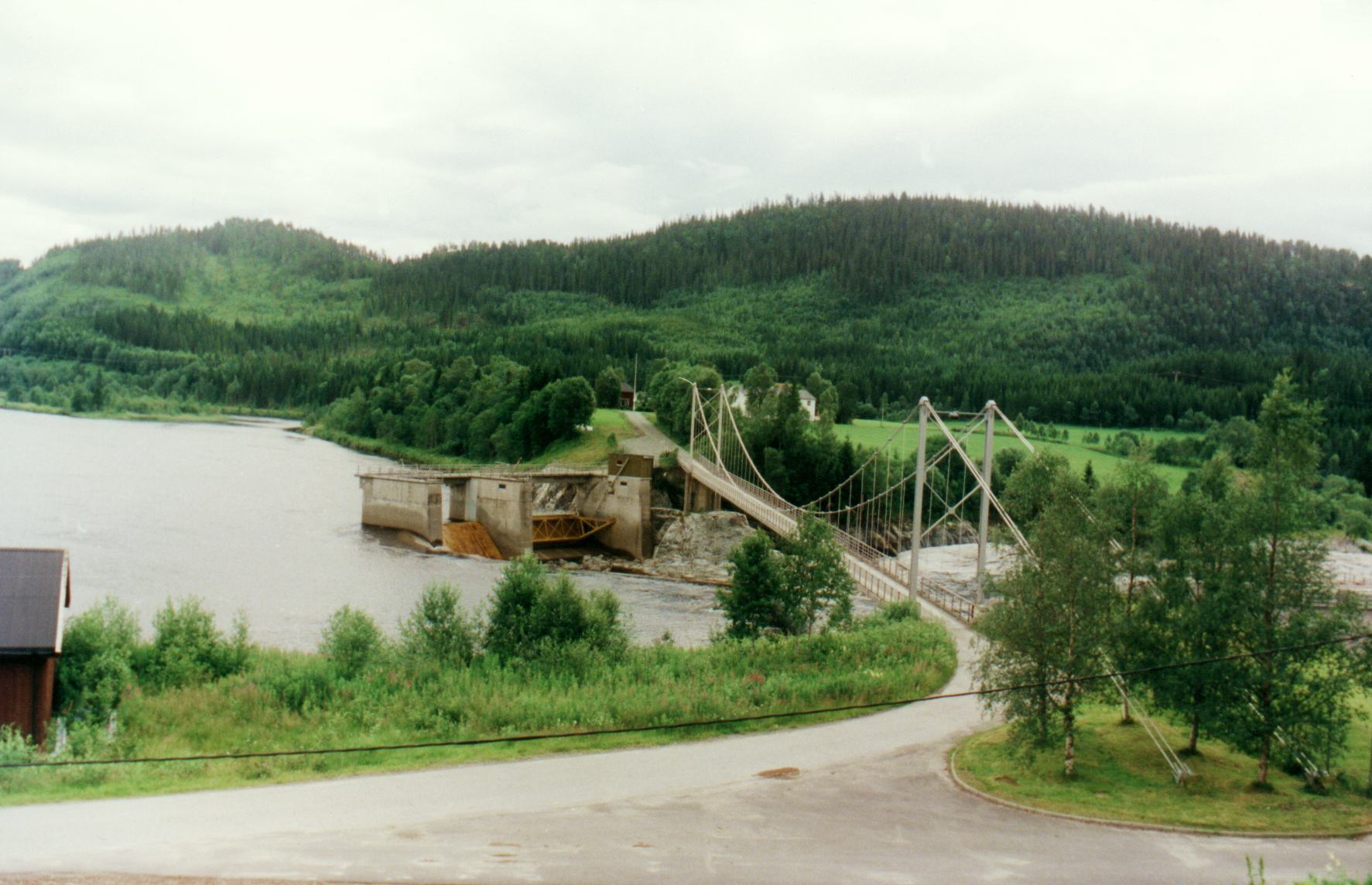
The next waterfall was a complete disappointment. First, it was another hydroelectric station. Second, you had to pay a pile of money to look at where it used to be. Third, our alternator had stopped alternating. The car still started, but the warning light was on and there were twelve volts across the terminals.
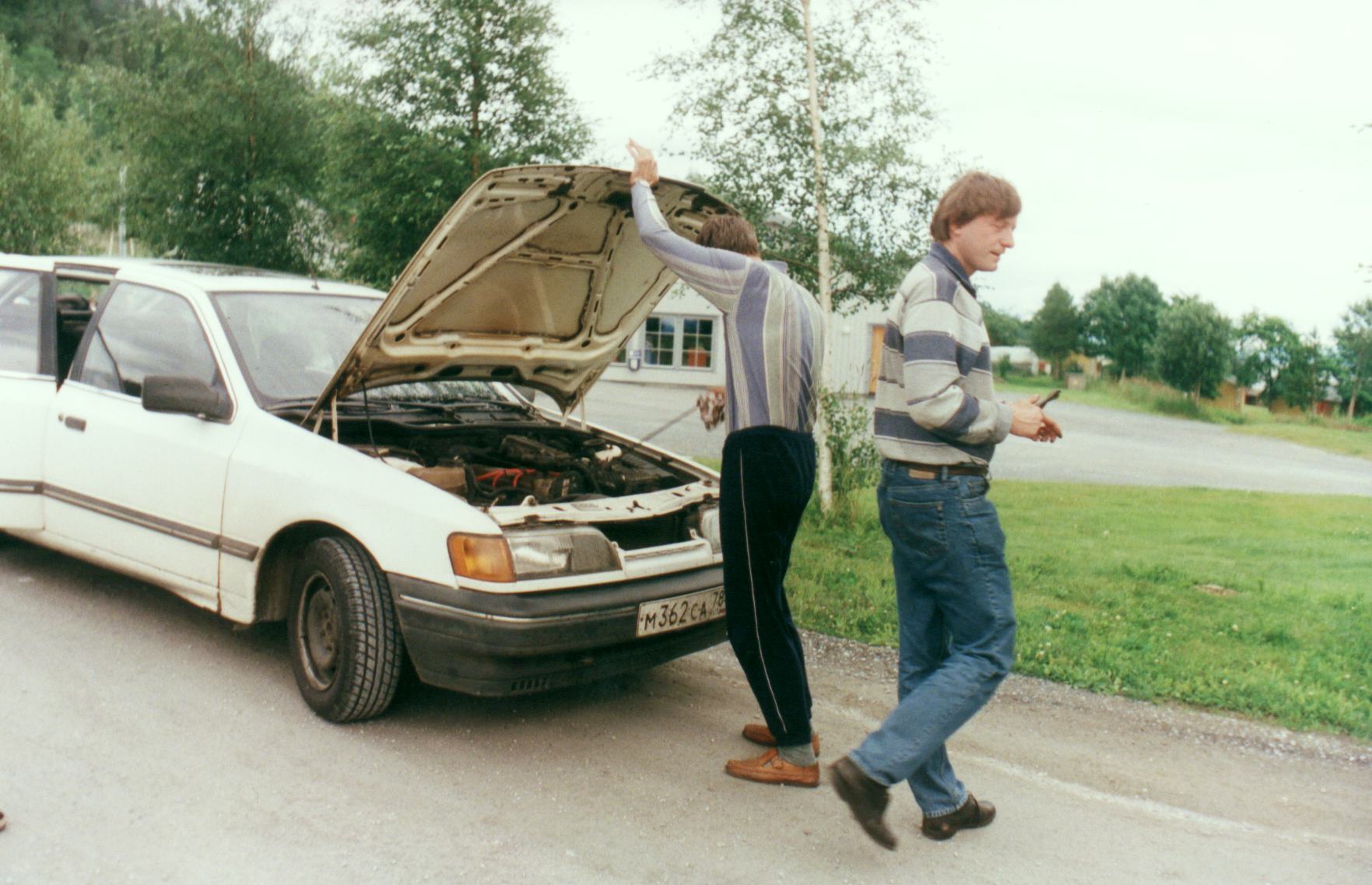
In some countries this isn't a great calamity. A ninety-amp-hour battery will last a day. In Norway you're supposed to drive with dipped beams, and the fines are enormous.
I tried taking the alternator apart, but the regulator relay appeared to be dead and I got nowhere.
Northern Norway isn't rich in large towns, and therefore not in garages either. We weren't going to make it to Trondheim. We drove as best we could without the lights, when nobody was looking. To make things worse, it was Sunday and everything was closed.
The battery got us as far as Steinkjer, straight to the Ford garage, and the car stopped for good there. To our surprise we found a man at the garage who apparently missed his work and couldn't wait till Monday. He poked around and said he couldn't find the part. Come tomorrow; if we can't find it, we can have it up from Trondheim in a day. Grim news. Our ferry was the day after tomorrow. Nothing for it. We left the car and went for a walk around town.
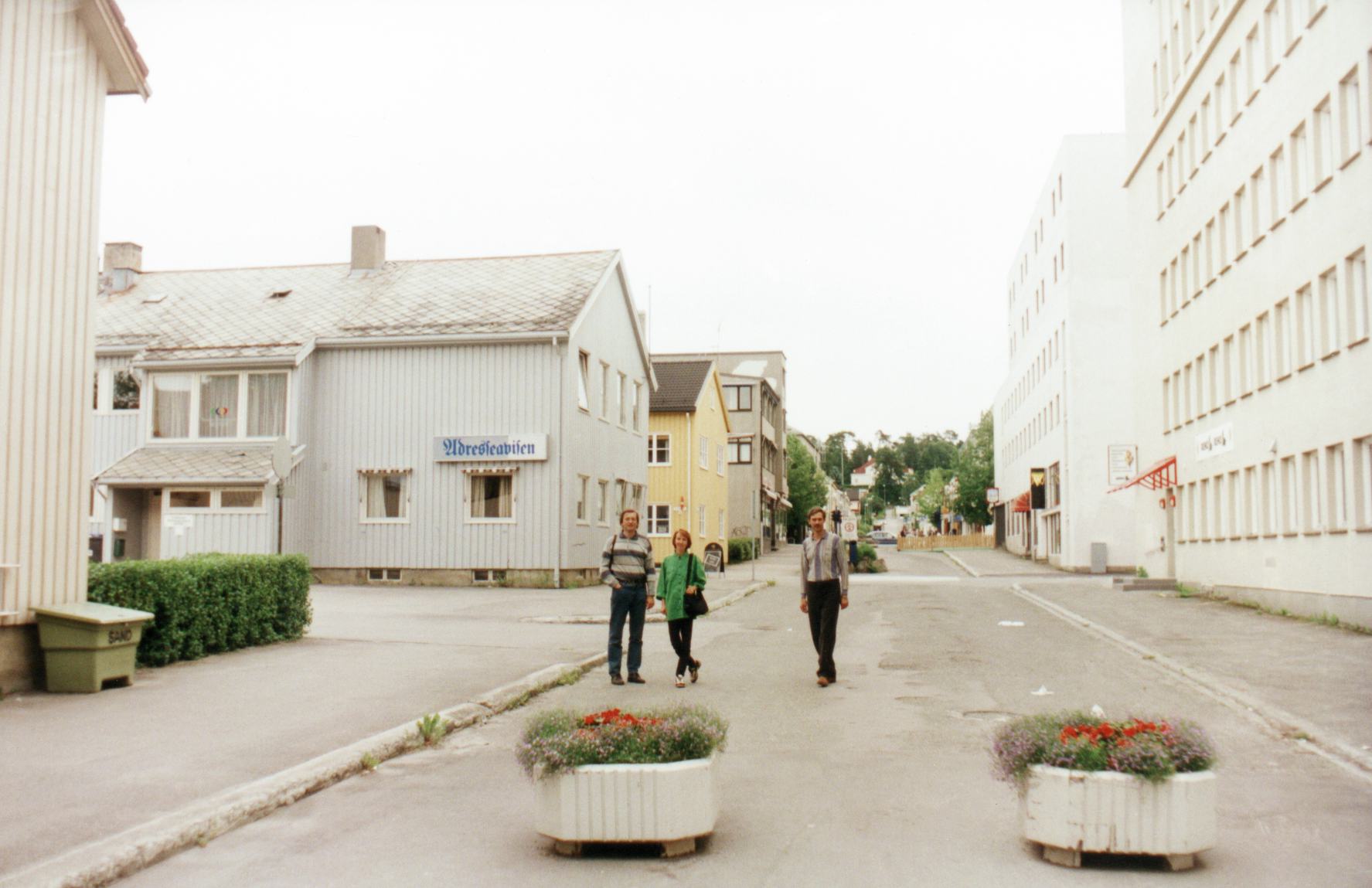
A quiet, snug place, flowers in its windows and all around. At the little local church there was a bench covered with turf. Wonderful, and I'd never seen it anywhere else. The only drawback was a wet green backside. Pavel and Lena fiercely put down our attempt to dine at the local McDonald's and took us to a restaurant saying they wanted genuine Norwegian food. The place was pleasant enough. The walls held things from the old days: skis, cartwheels, rucksacks, photographs. The national Norwegian dish proved to be a patty with potatoes, which are called something like “kartofel” in every northern language, just as they are in Russian. We ate well, of course, but the feeling that we'd never stay within budget at this rate crept into my soul and put me off my food.
Towards evening we came back to the car, packed our rucksacks and went looking for a camp. There was no campground in town, and hotel rooms started at $100, which we couldn't afford. By then the weather had turned properly foul. It began to pour. We found a spot in the nearest wild scrub beside the road, a hundred metres from some blocks of flats. No local resident in his right mind would go there at night, so we were practically invisible. But no sooner had we started putting up the tents than some local grandmothers materialised close by, fiercely discussing something. We were ready for the worst, an explanation with the police, but it came to nothing. They'd decided to pick some plant in the woods to make a bunch of it. They soon left and we went to bed. We slept unusually badly. Gloomy thoughts wouldn't stay out of my head. In modern life the car gives you some of your happiest moments and some of your saddest. Today, pure misery.
More rain in the morning, heavy and wet. The garage opened at seven. I ran there for opening time. Alas, no little part and no alternator as a complete unit. Luckily there was a car-parts shop in town as well and they had everything. Just 120 kroner and I was the happy owner of a bit of metal. I fitted it, we pushed, it wouldn't start. The battery was so far gone that neither the fuel pump nor the ignition worked. An idea soon came to me. With the battery that flat, the field winding wasn't getting excited. I put battery positive straight onto it and we pushed. Hurrah, victory, it started! I measured the voltage. Fourteen. The alternator was working!
Our old plan was back: lunch in Trondheim. There was one less day before the ferry, though. We made good time, but the schedule was tight. One hour to eat and see the town.
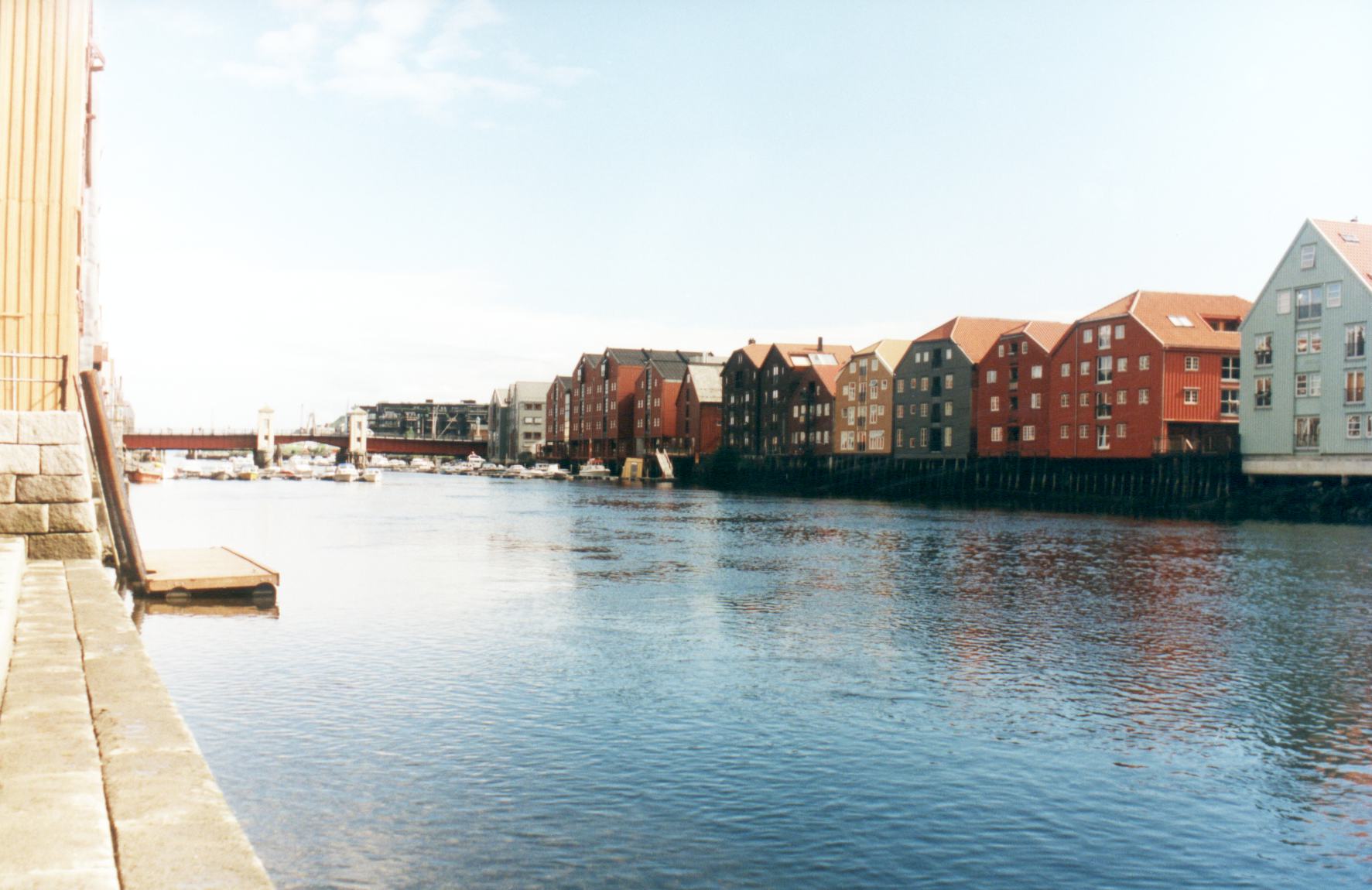
We parked right on the waterfront. It felt like the sort of place you'd pay to park, but there was no sign in this particular spot. A little worrying, but off we went. A quiet town: flowers, a market on the square, pretty manhole covers. A tourist bus with trailers made to look like a train drove through the streets.
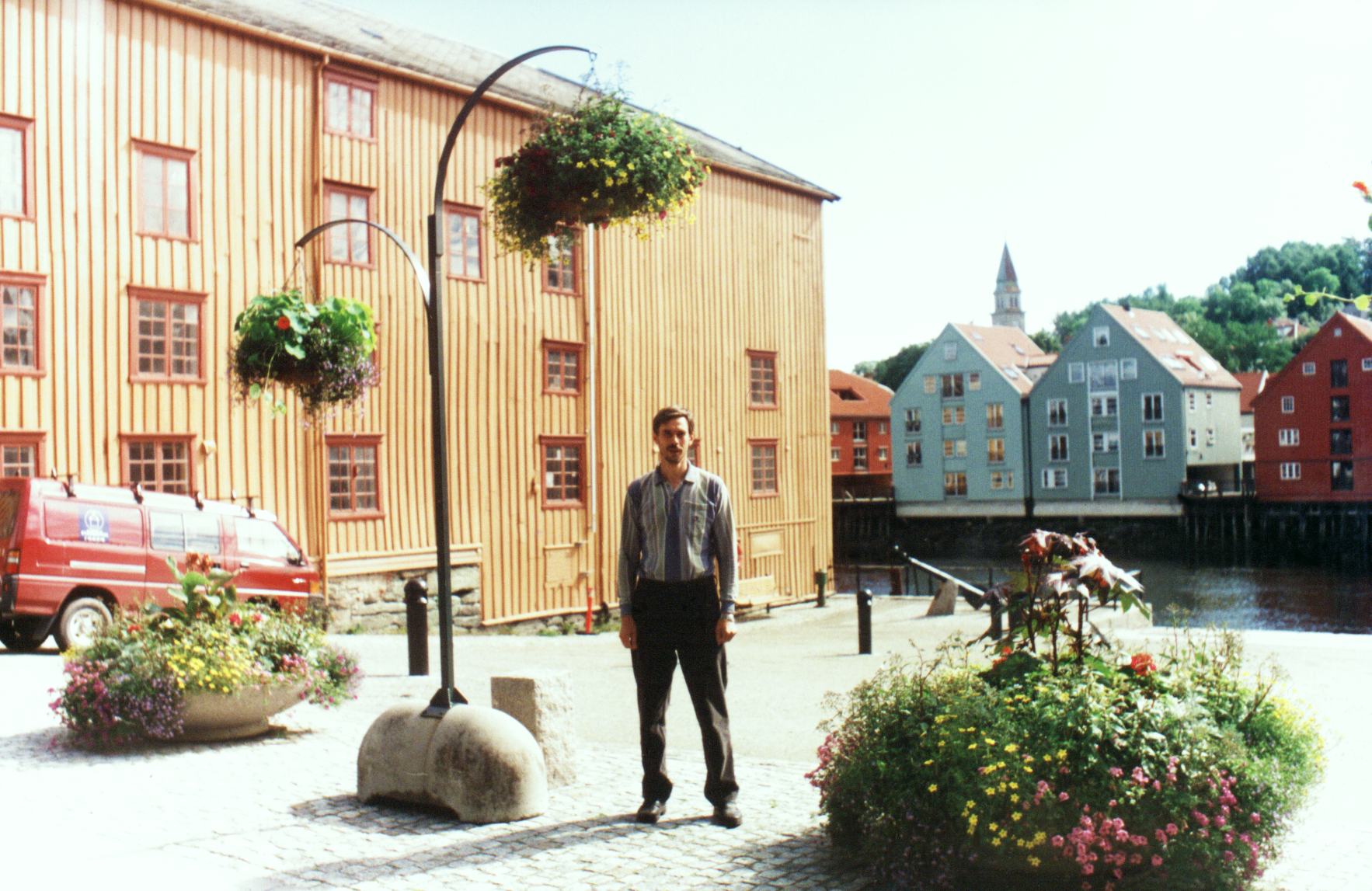
Sightseeing went all right. Lunch was another matter. The little cafés were open from noon to two, and Pavel and Lena couldn't set foot in McDonald's on account of their quasi-religious anti-globalist convictions. We ended up with a Mexican interpretation of a Big Mac. We also found a good bookshop in Trondheim with maps and books. At last we bought the Lonely Planet guide “Iceland, Greenland & Faroe Islands”. Iceland would have been a dreary drive without it.
The road then goes south towards Norway's highest mountains and, of course, its lovely fjords. The E6 gradually gains more than a kilometre in elevation. The forest that appeared as we'd gone south gives way to tundra again. A splendid place to walk, with low, rolling mountains and lots of campgrounds. A fine view from every top.
Short of time or not, we decided against driving straight to Bergen and resolved to take a quick look at the most interesting places. At Dombås we turned towards the sea on Route 9. The road follows the Lågen, which has cut a gorge nearly a kilometre deep into the rock. As you approach the ocean the cliffs grow more and more sheer and Europe's highest waterfalls fall from them. The highest, Mongefossen, is 774 metres. Its stream isn't very big, of course, and it comes down in several steps, but it's worth seeing.
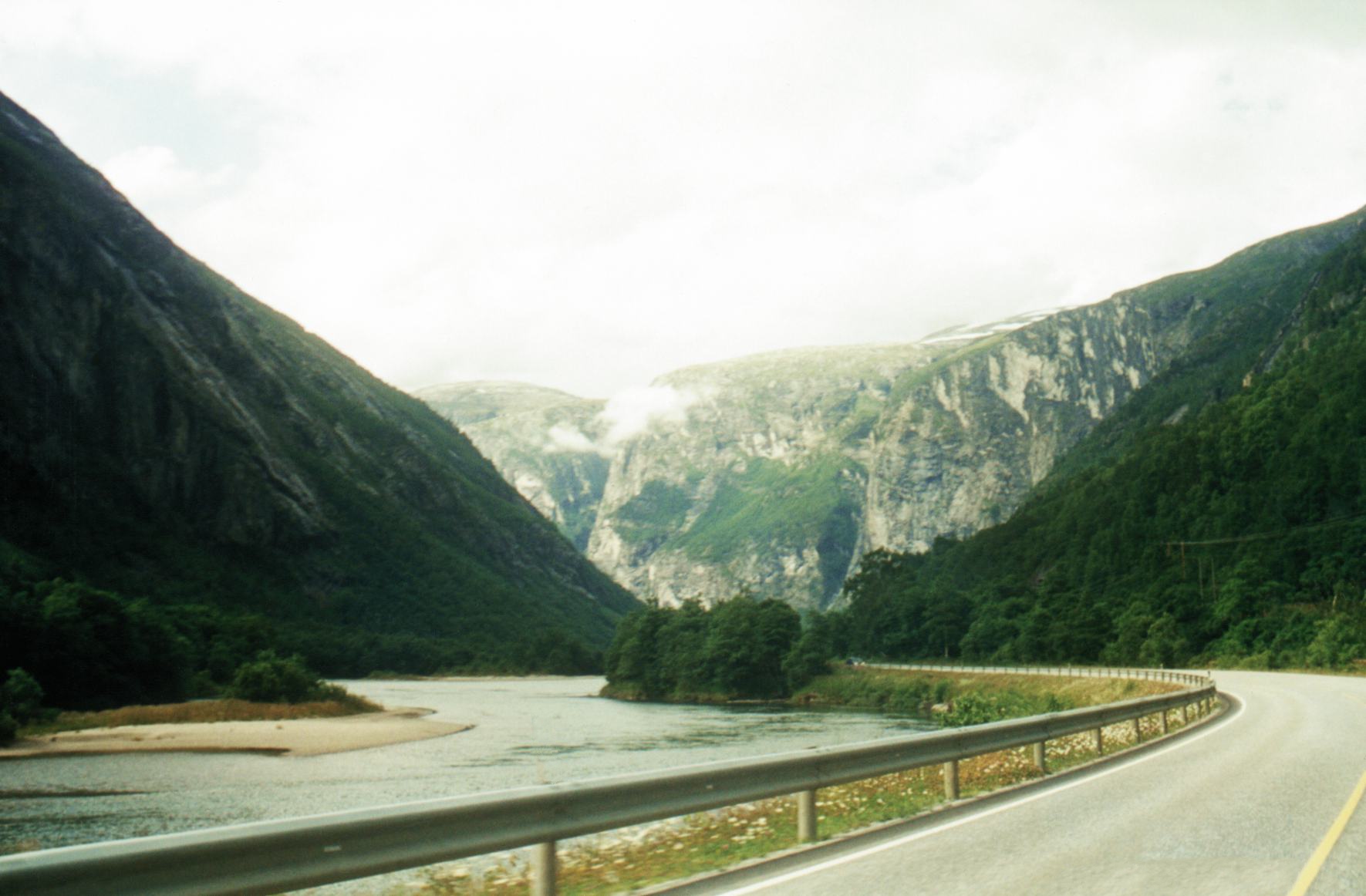
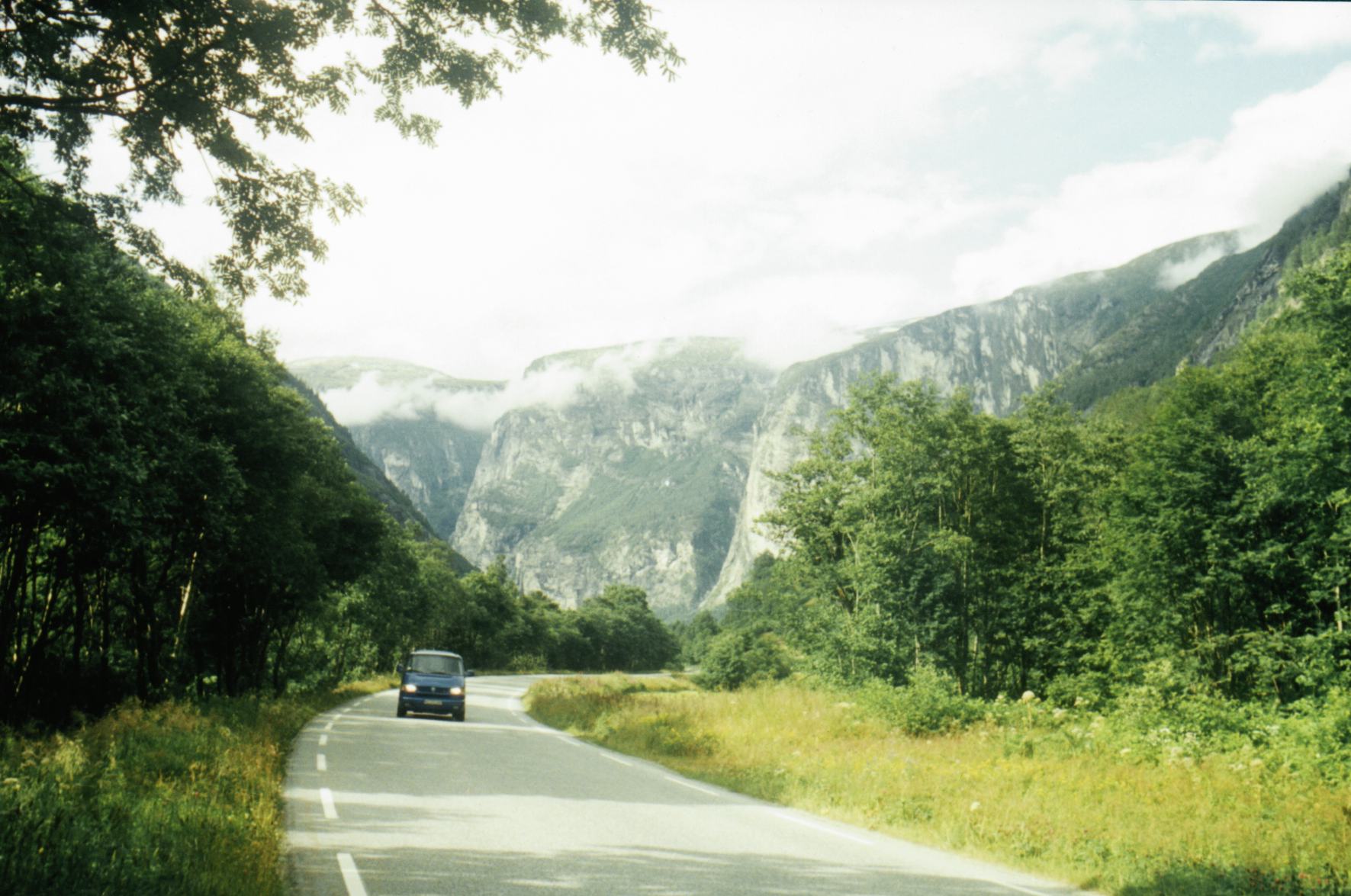
We stopped for a breather and Lena even swam in the river. Then we looked around and found she'd been swimming right under a sign with a picture of a fearful and apparently very bitey microbe which lived in the water.
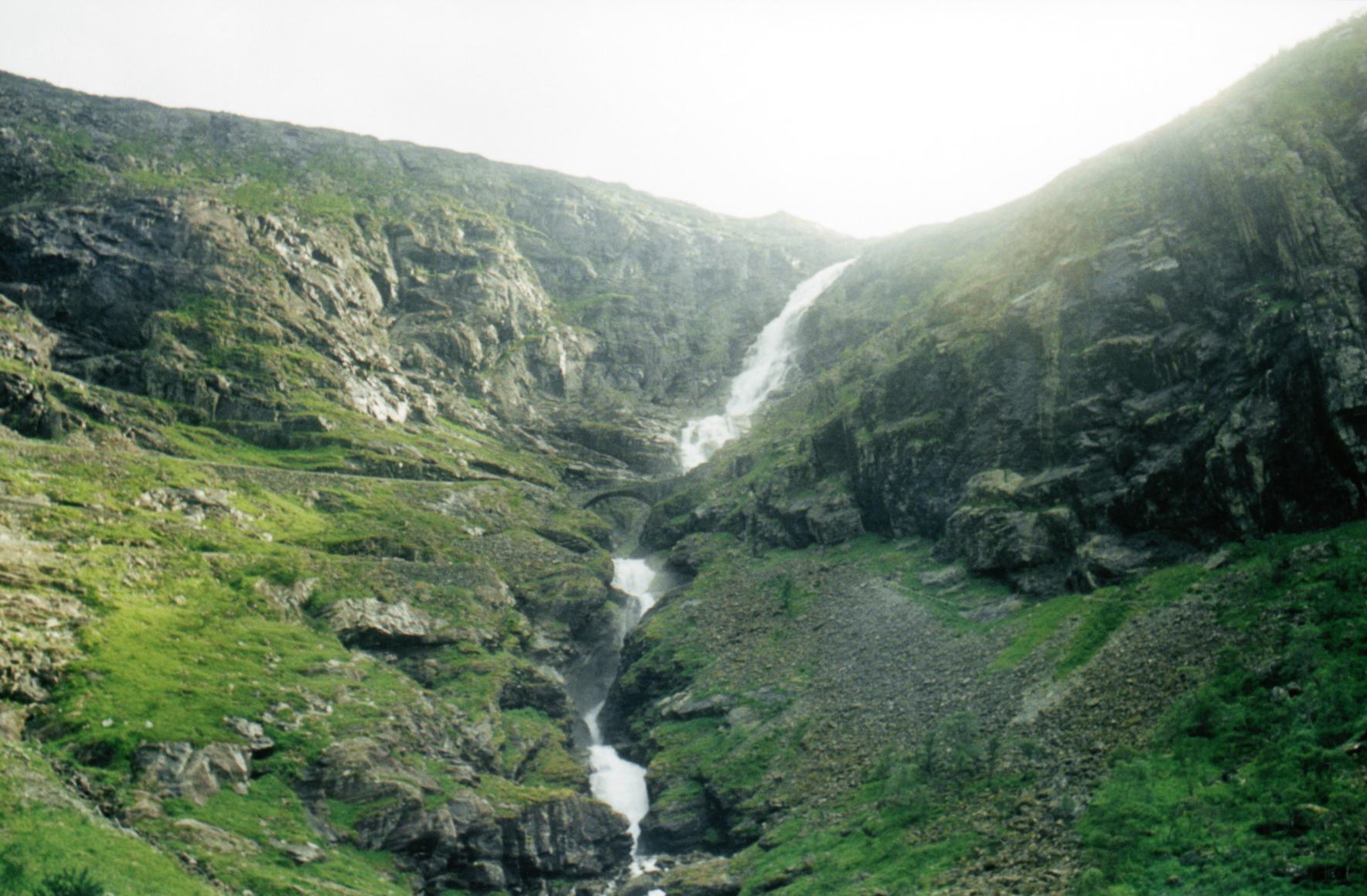
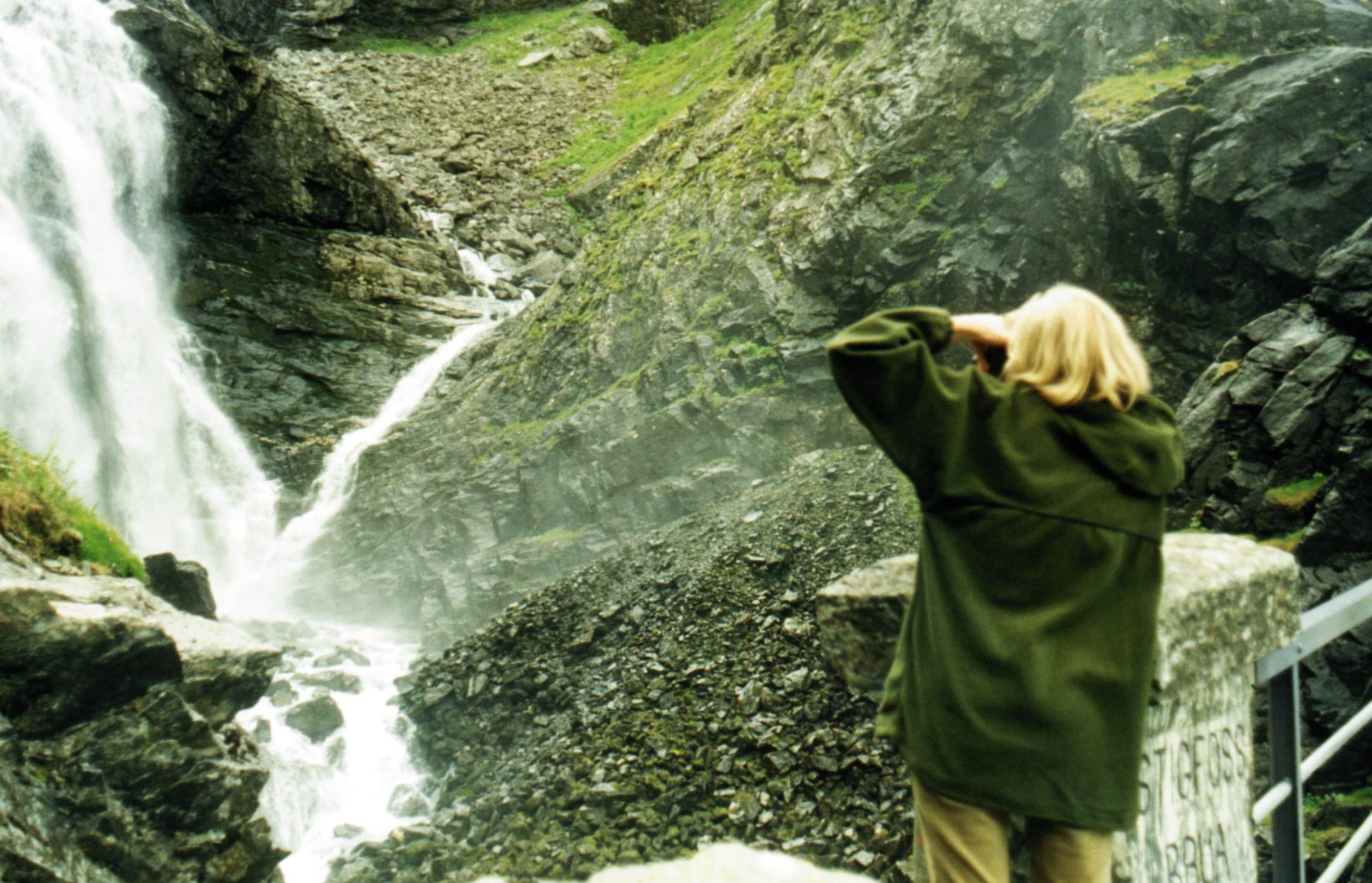
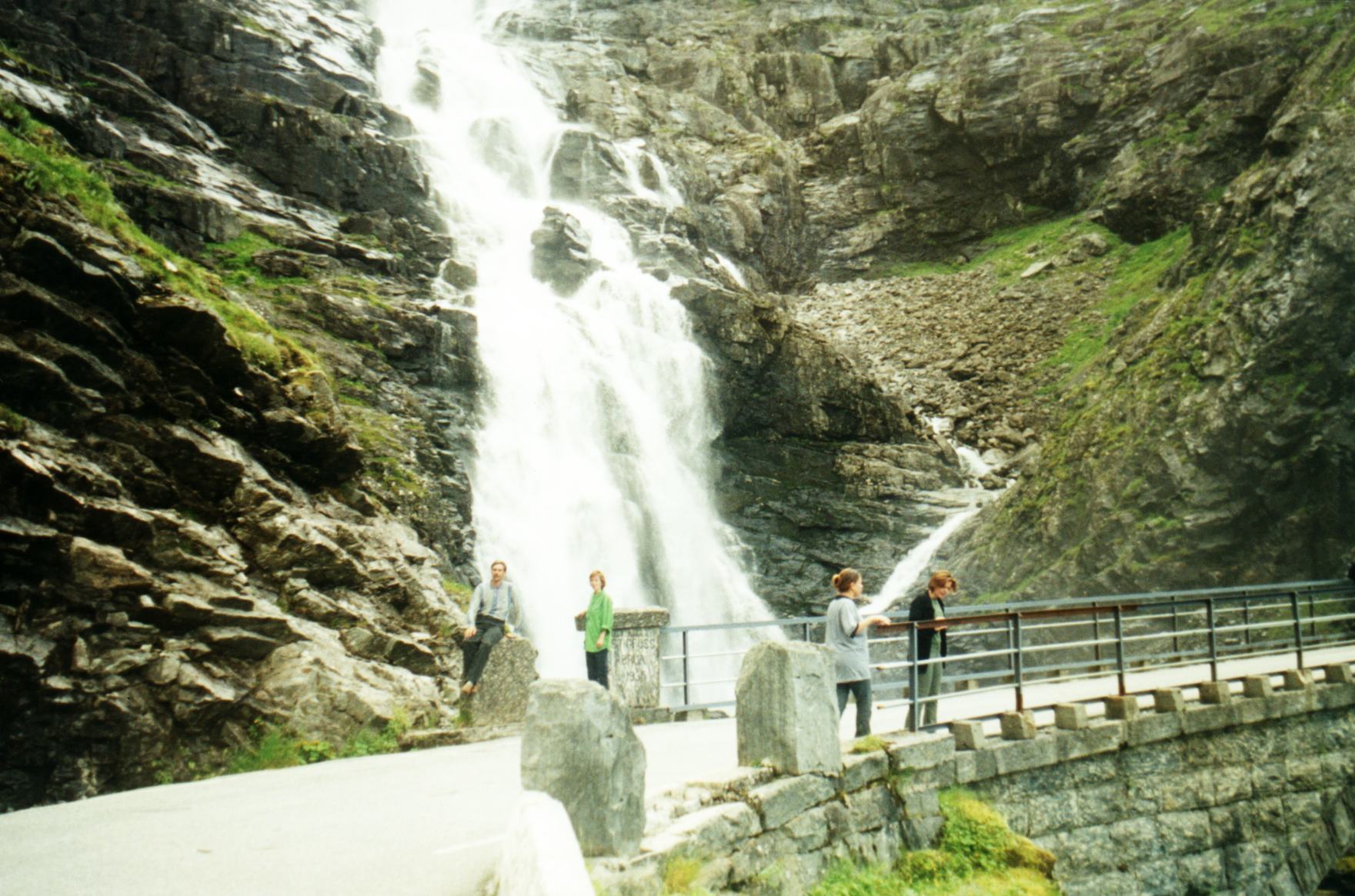
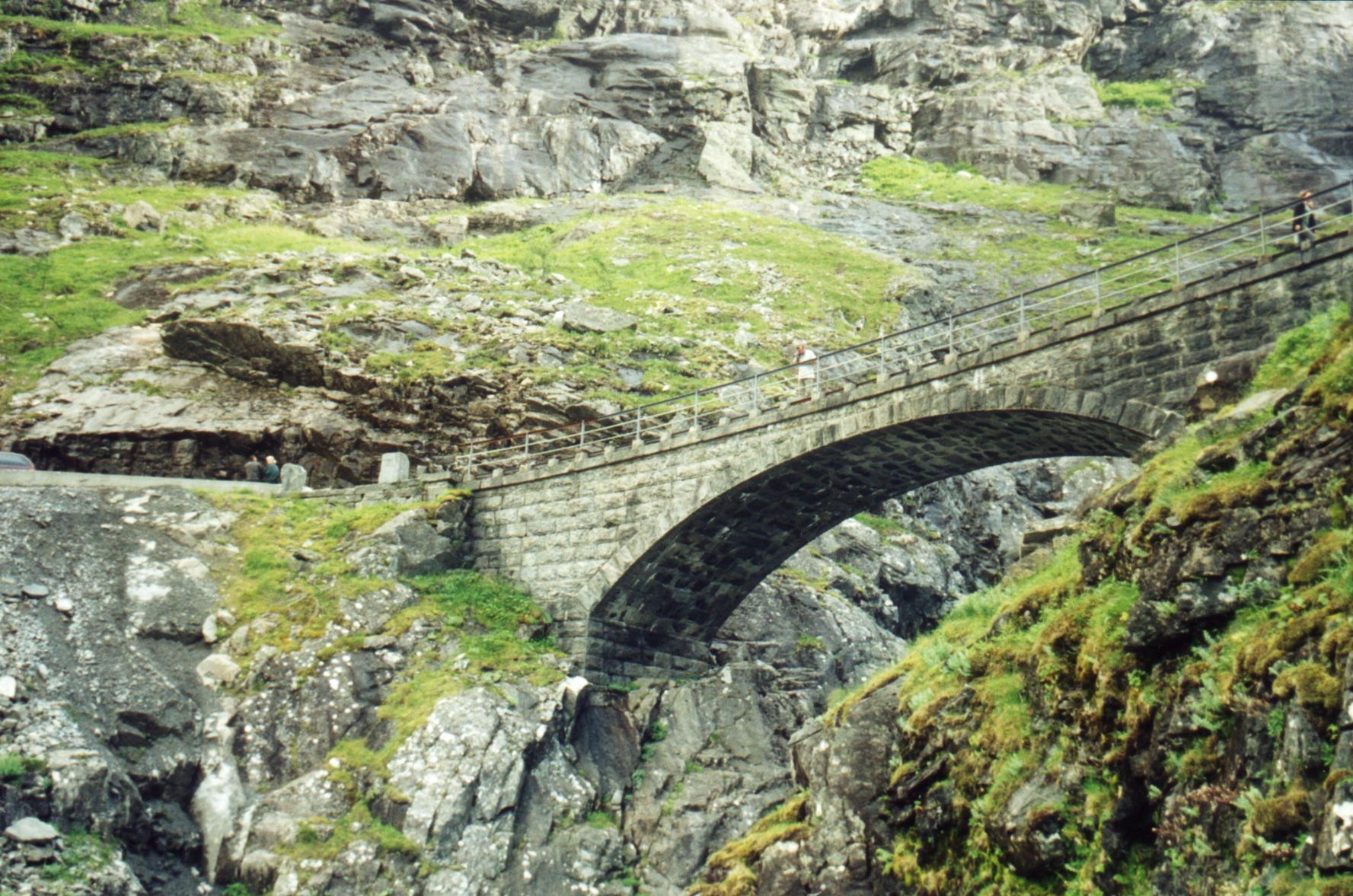
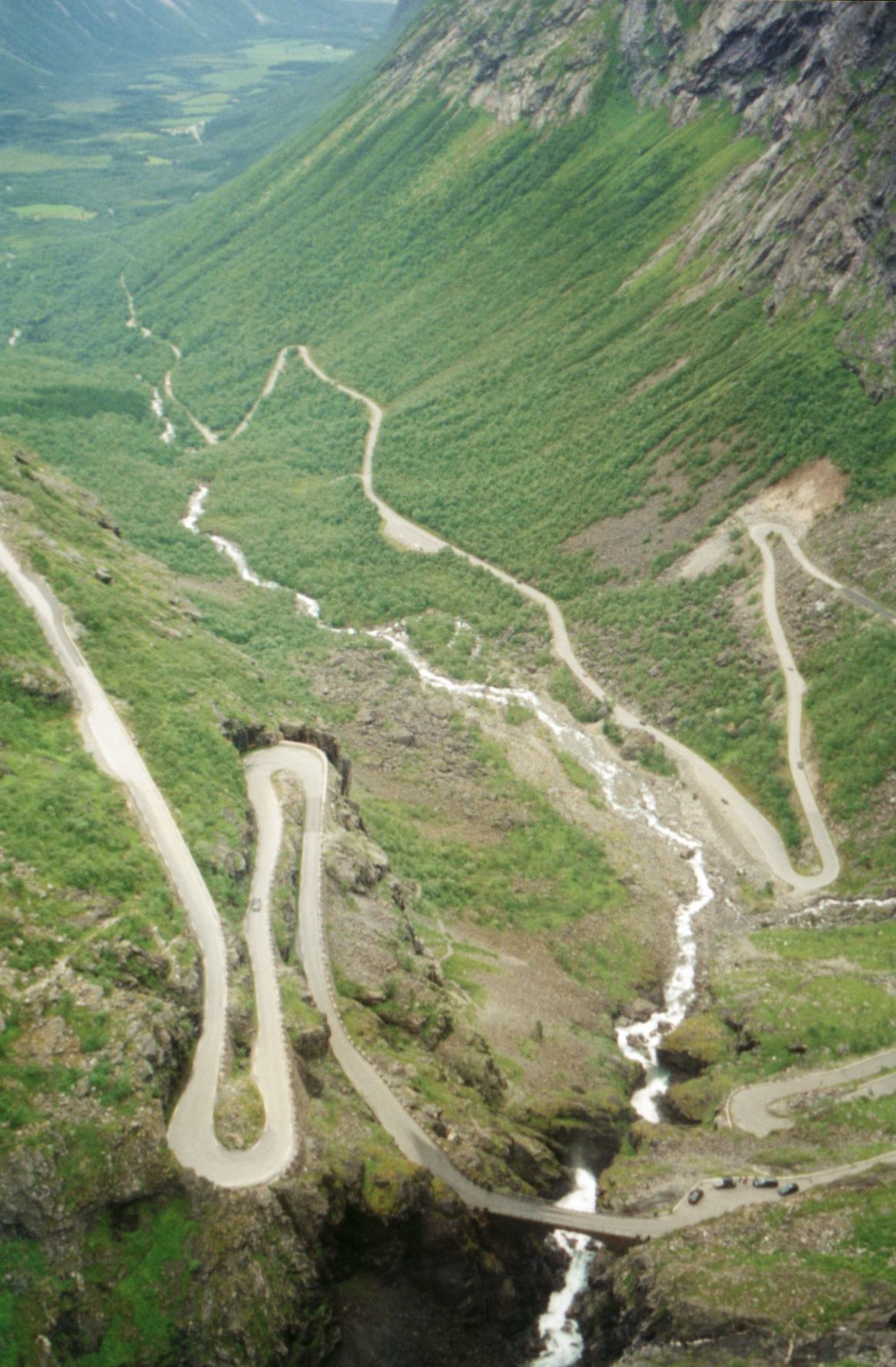
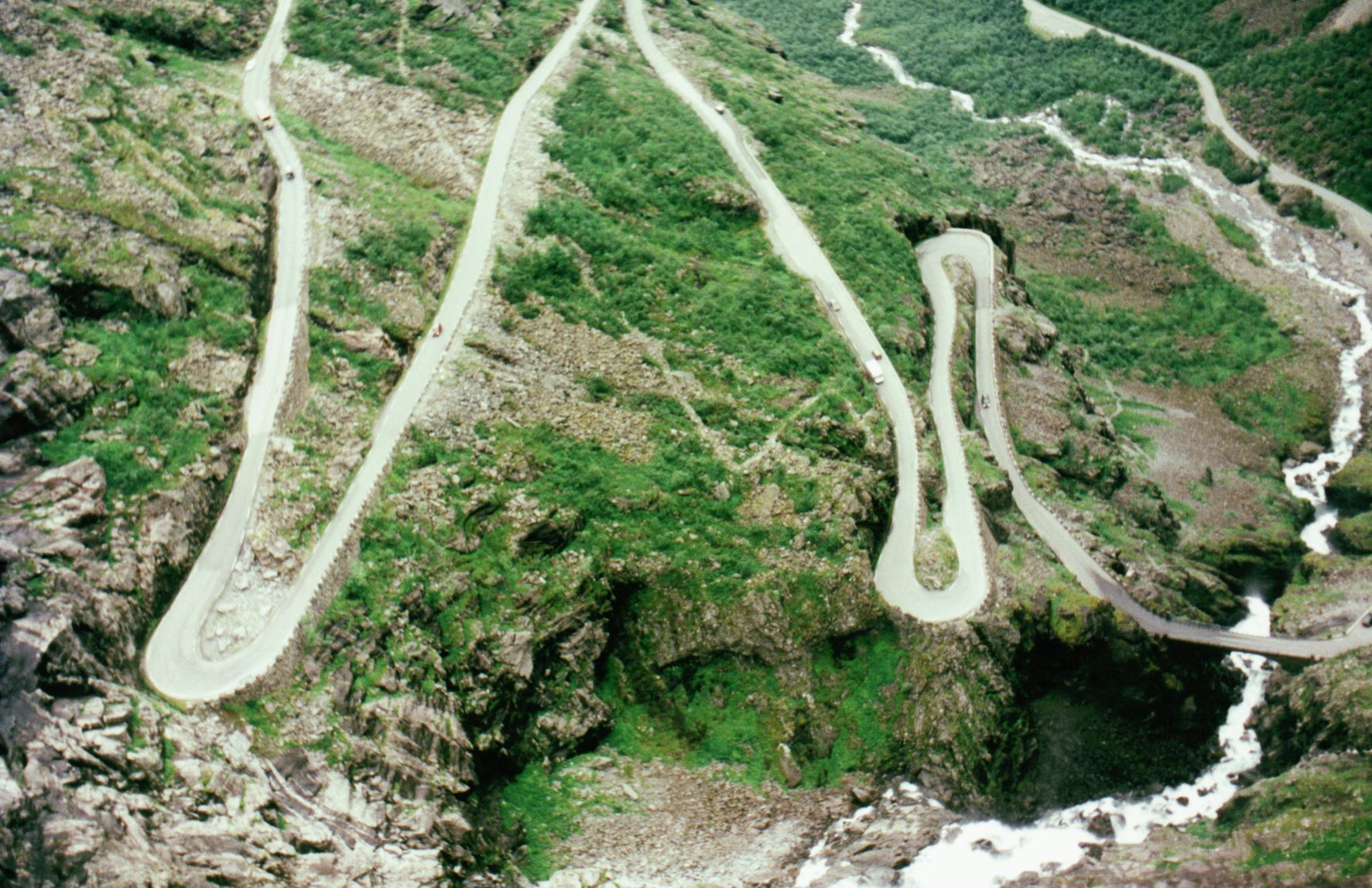
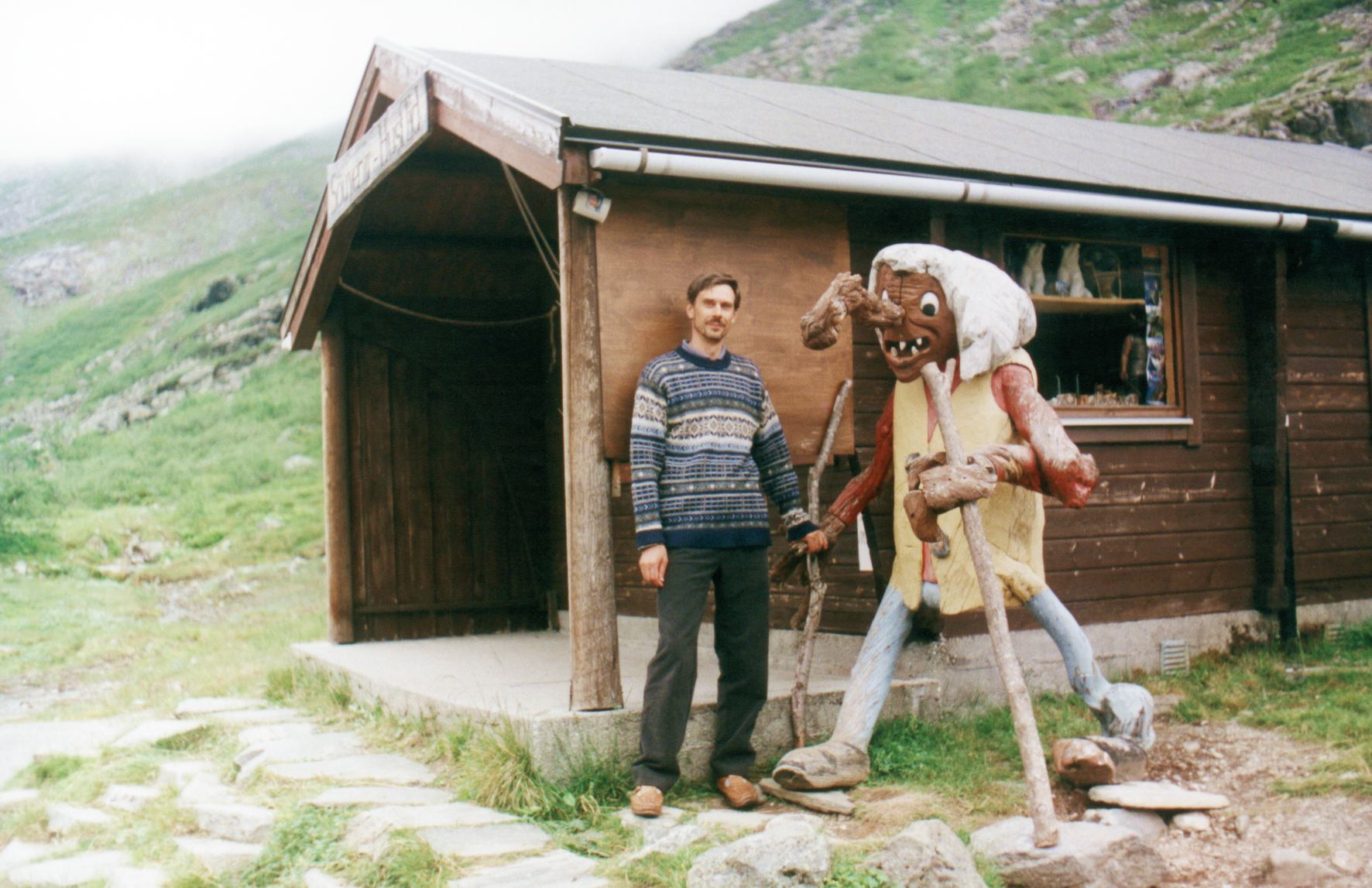
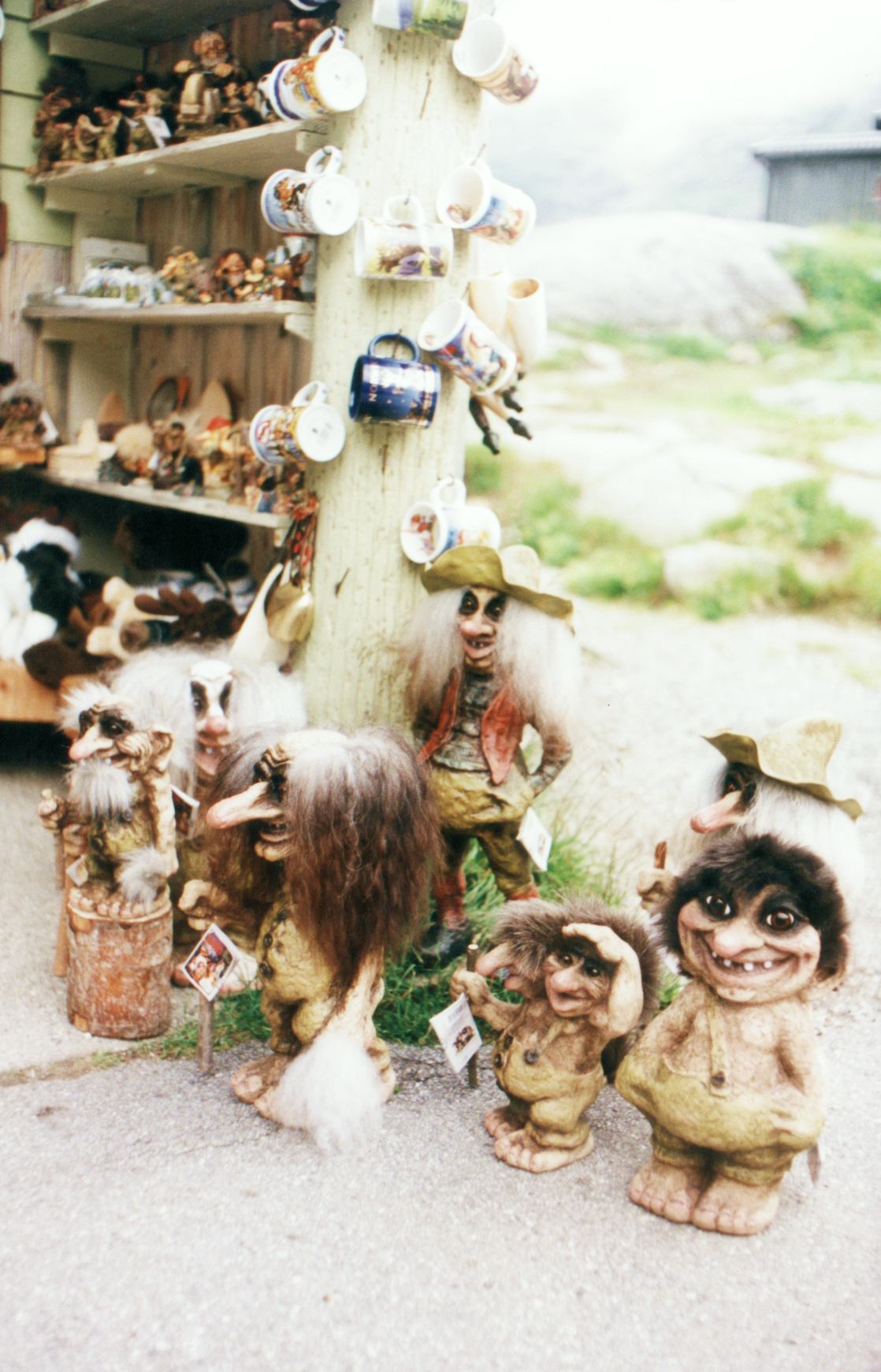
In the gorge of one of the waterfalls coming off the high plateau, a road was built in the thirties and named the Troll Road. Superb hairpins with a grade over ten per cent take you up a thousand metres. It's mainly a road for tourists. Plenty of caravans, which incidentally aren't supposed to go here. At the top is a lookout with a lot of little kiosks working the troll theme. Beyond the pass the road drops towards the sea and the next fjord, which can only be crossed by ferry. They run often and there's hardly a wait. People free, car thirty-five kroner. You can have coffee on the ferry. The cups and the pot are set out. Pour as much as you want. There's a cash box beside them and a sign saying ten kroner.
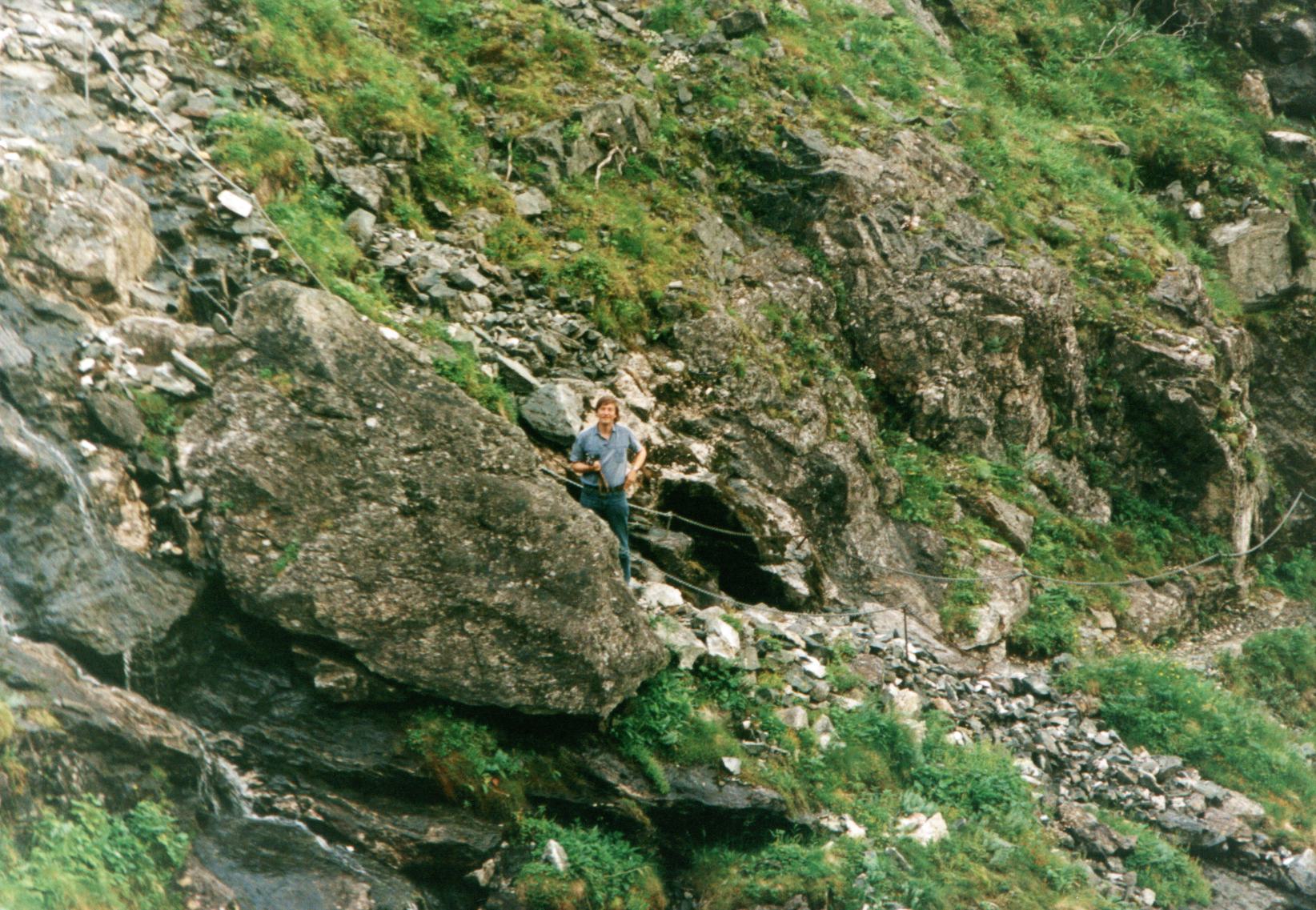
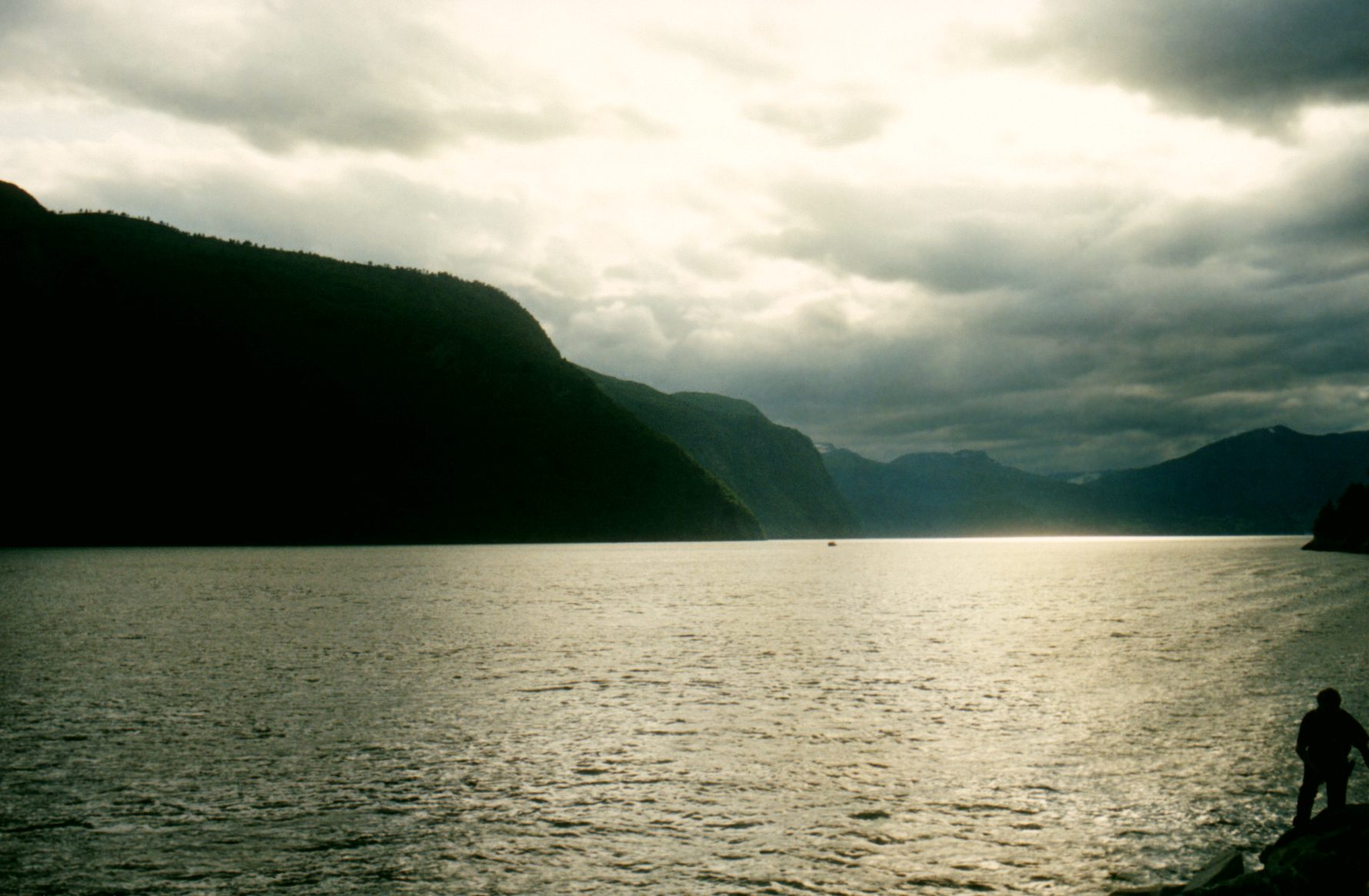
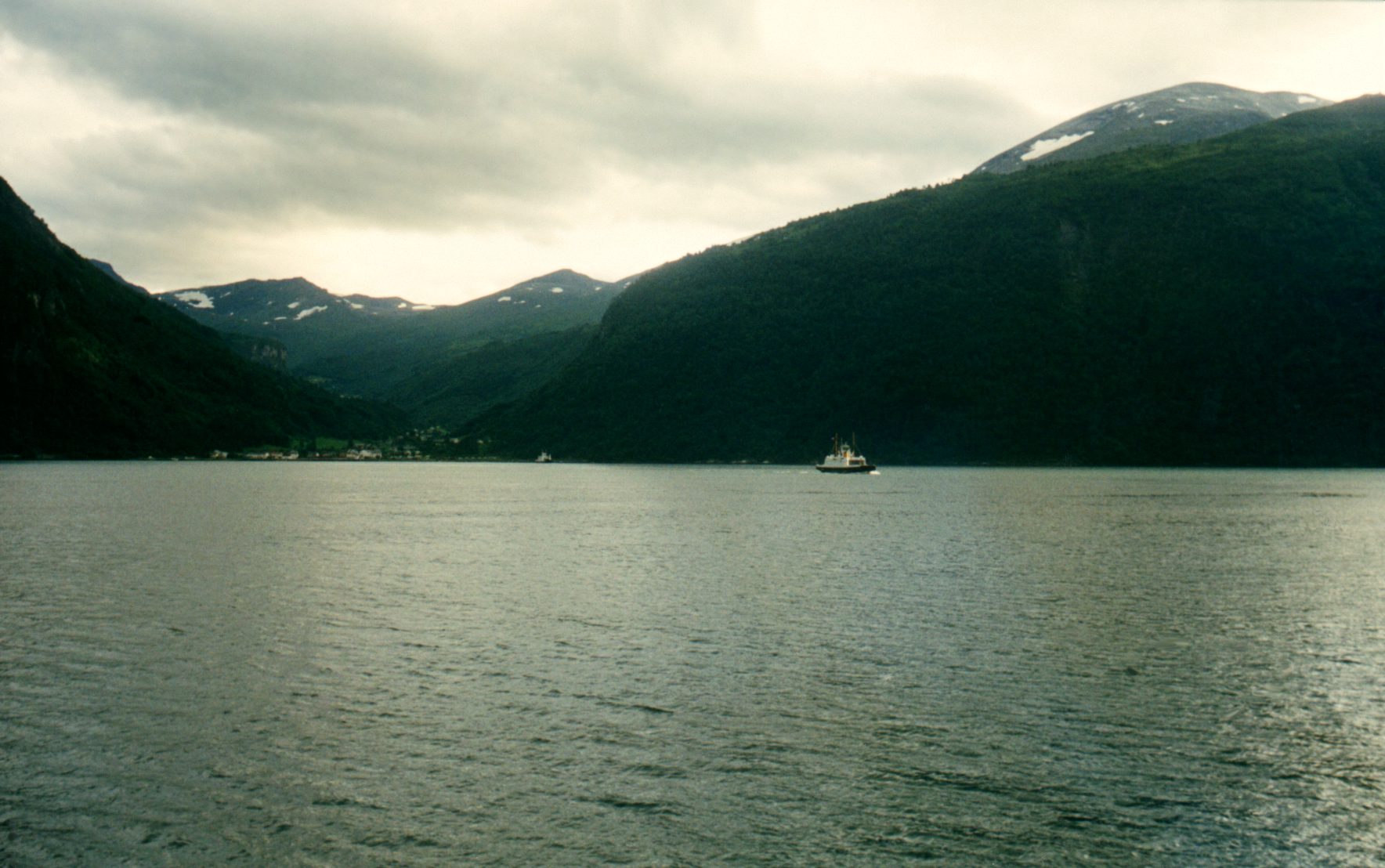
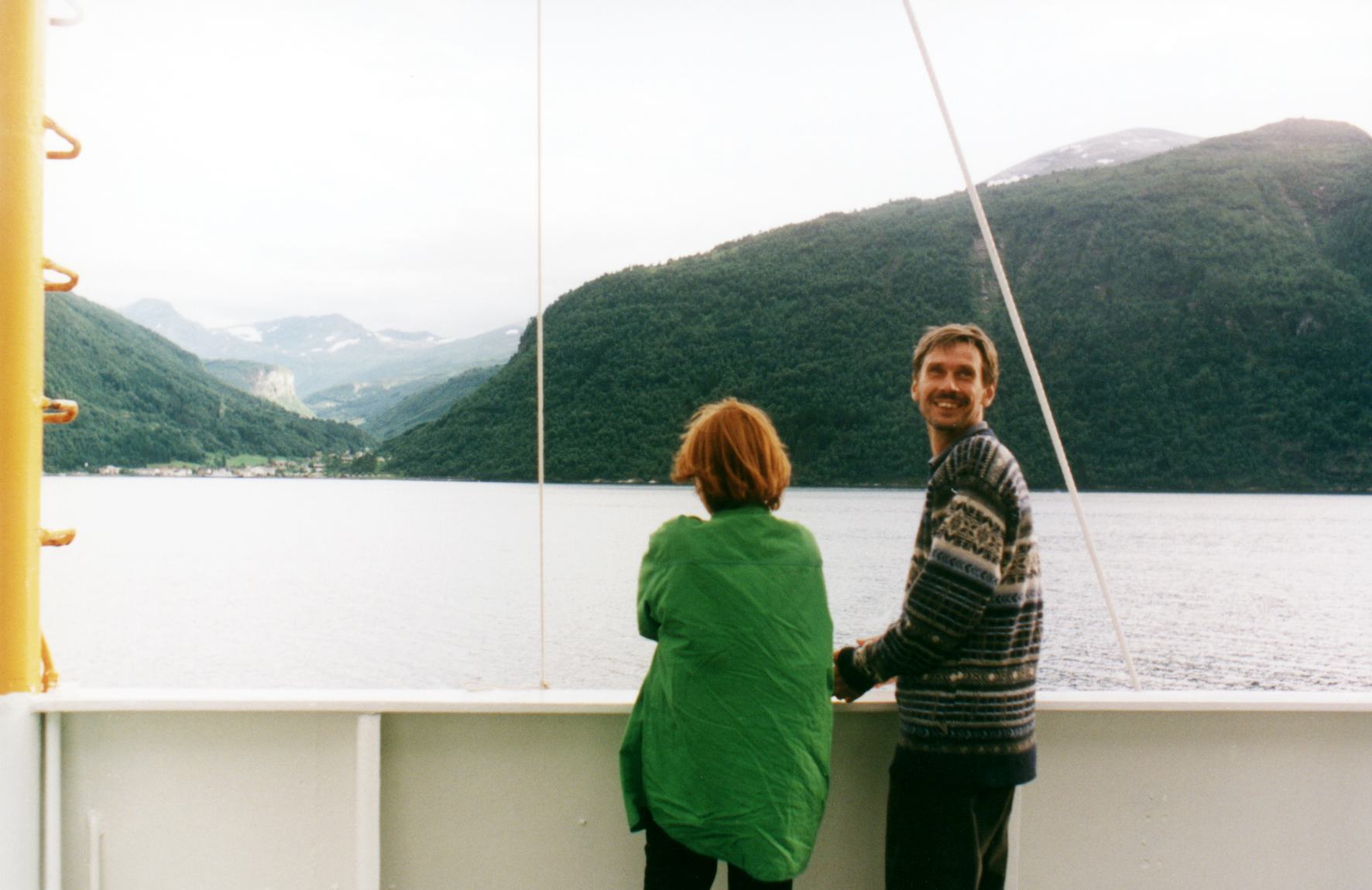
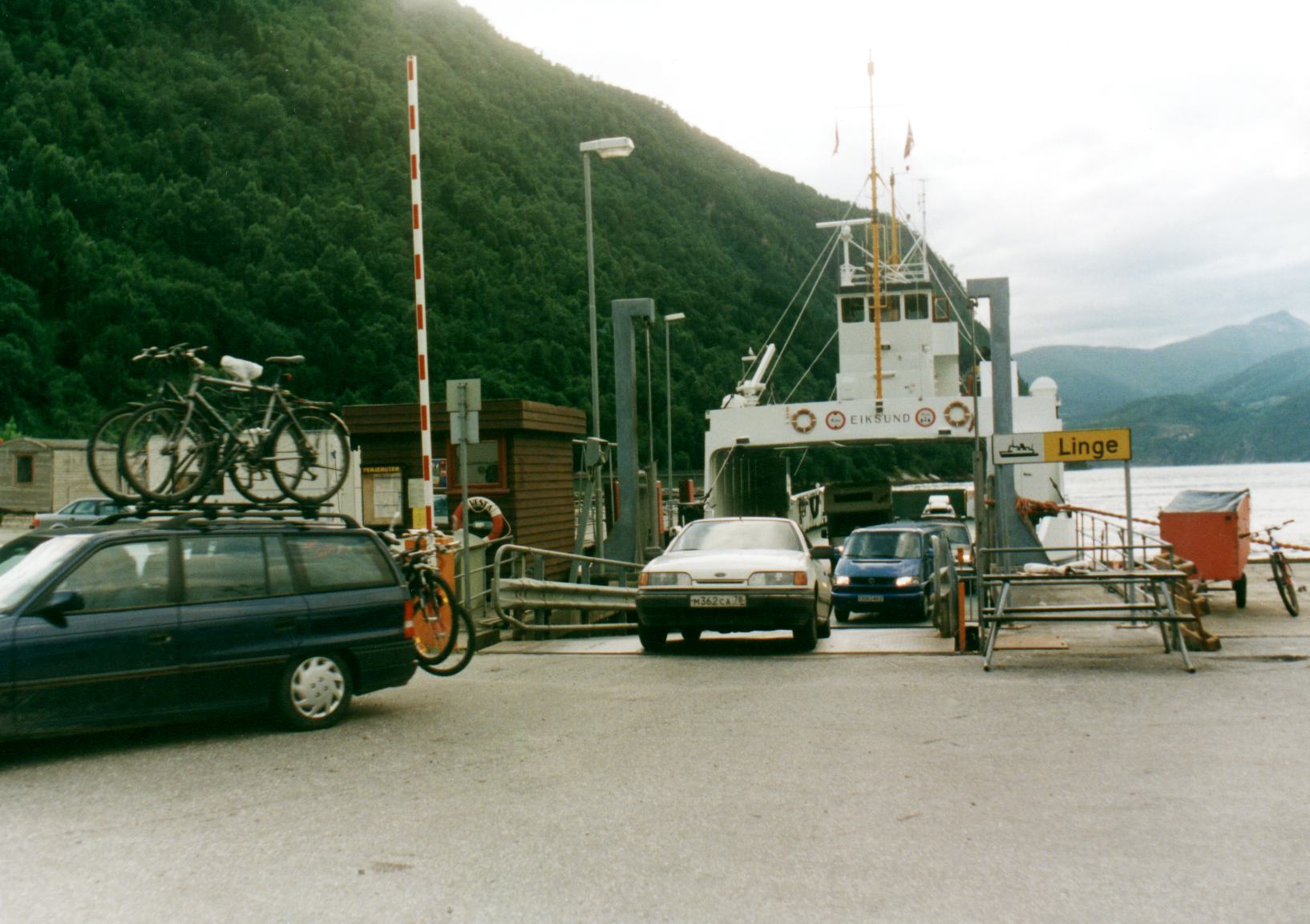
Then up another pass. From the top there's a view of one of Norway's greatest sights, the Seven Sisters falls. Seven streams tumble off the cliffs straight into Geirangerfjord. Properly you should see it from the ferry that goes along the fjord every few hours. It's probably the only ferry in Norway you can miss because of the queue and have to wait for the next boat. Most of the people on it are tourists. We couldn't spare the time to wait and had to see this natural wonder from the lookouts.
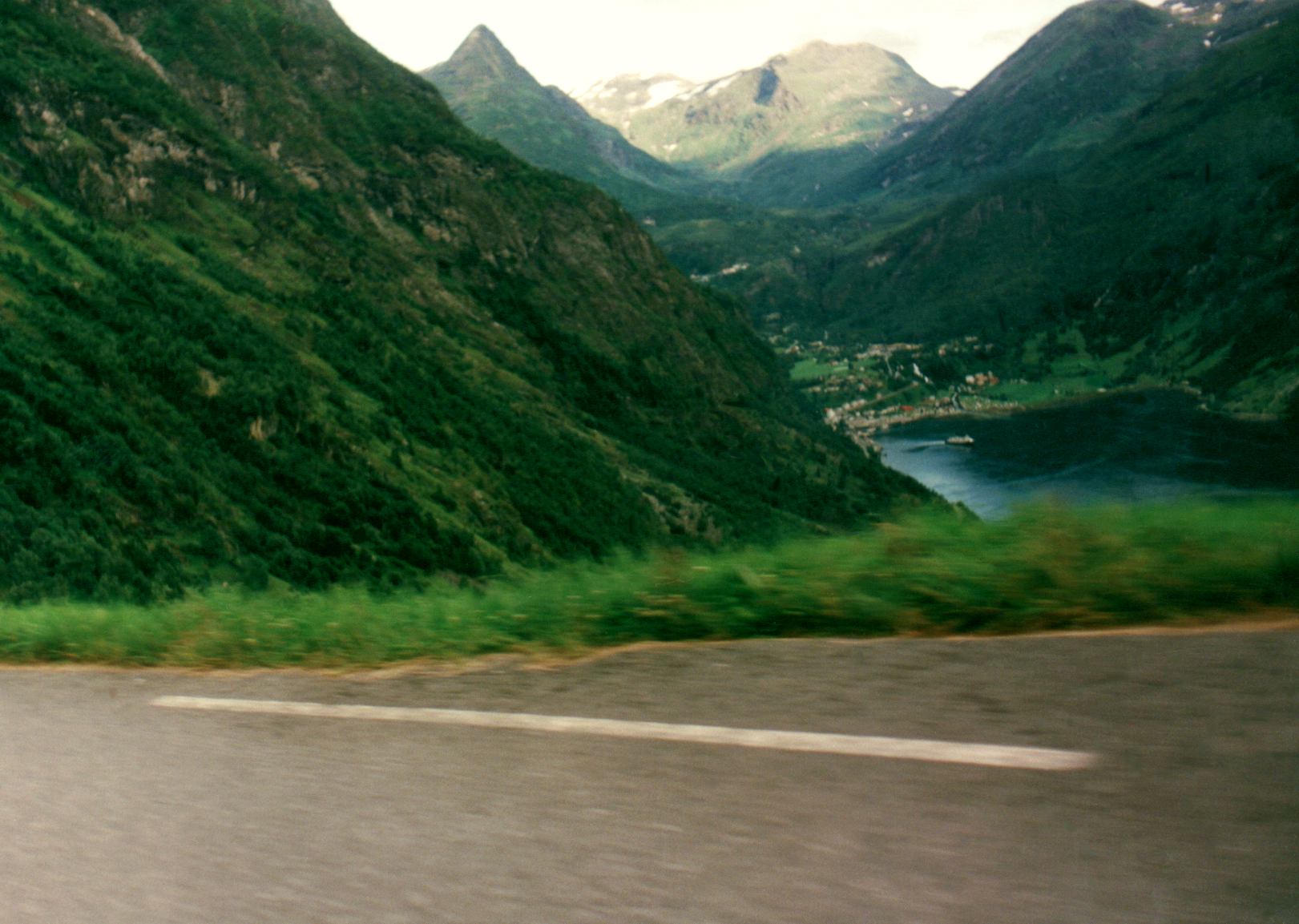
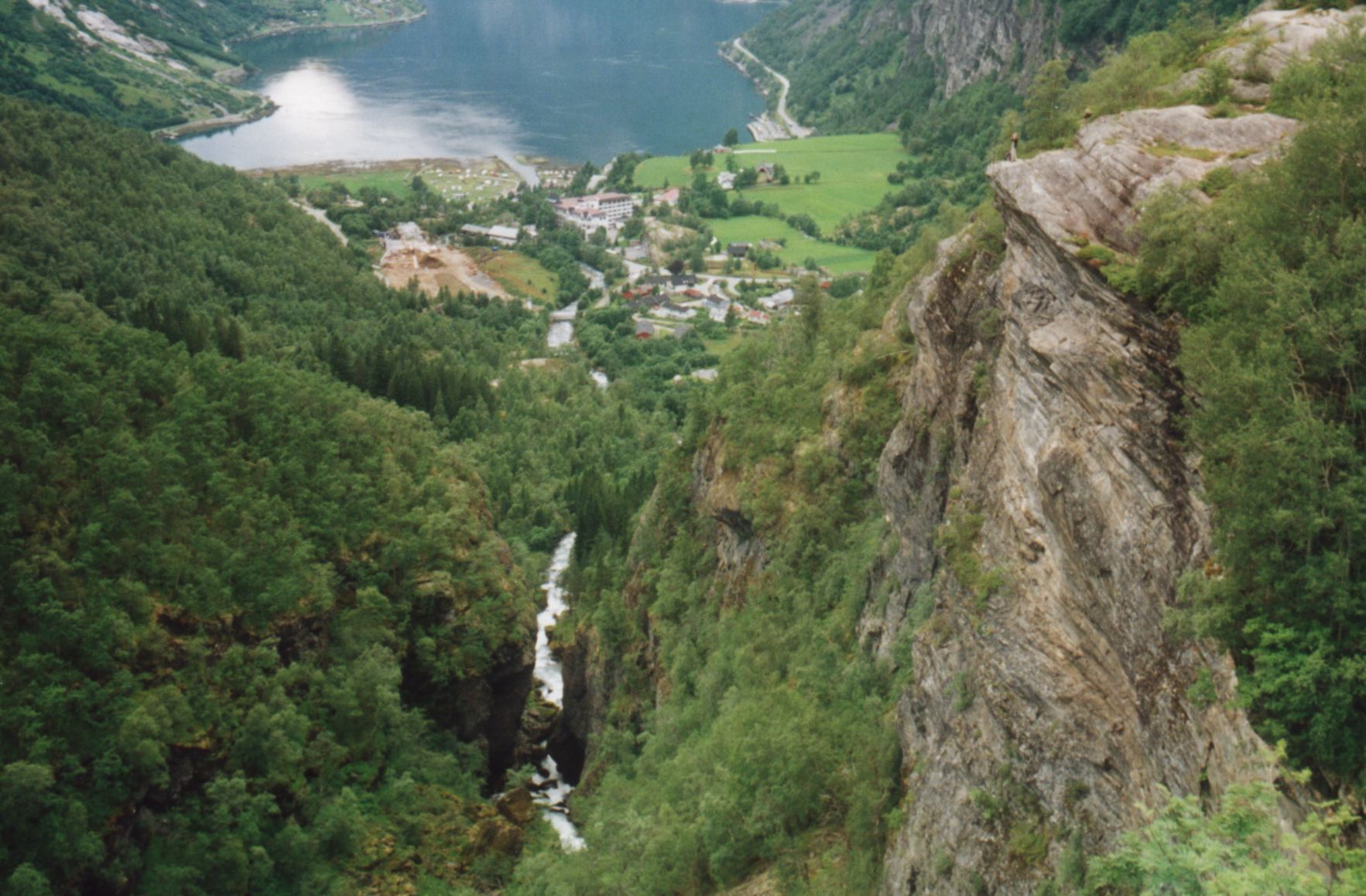
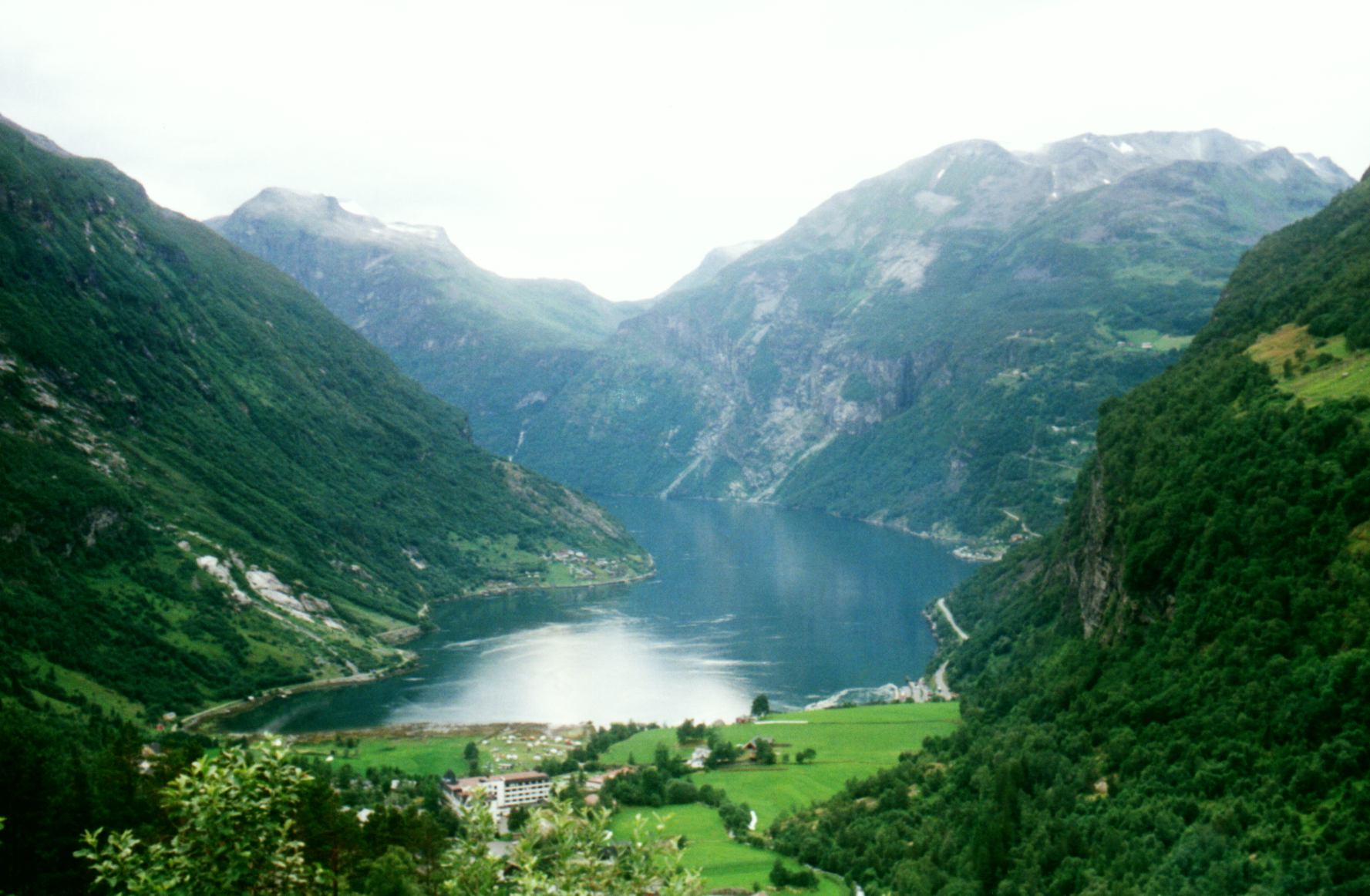
The descent to the sea was a steep set of hairpins. A Spanish coach in front of us couldn't make a bend and put a wheel off the road. Nobody was hurt, but it blocked the entire road for a long while. We were falling farther and farther behind. Having got down to sea level, the road began climbing again. I worried about the car. Less than a day and five hundred kilometres left to get to the ferry. Something would fall off under all that strain and we'd be sunk. A lookout on the nearest mountain is 1,465 metres up and there's a road right to it, but there was no time. We'd have to drive straight through now, without stopping. On the high plateau we joined Route 15 with its many tunnels several kilometres long. Interestingly the mobile phone works inside. There are special reflectors on the ceiling which carry the signal from a repeater all the way into the tunnel. I made use of it and rang home to Vyritsa.
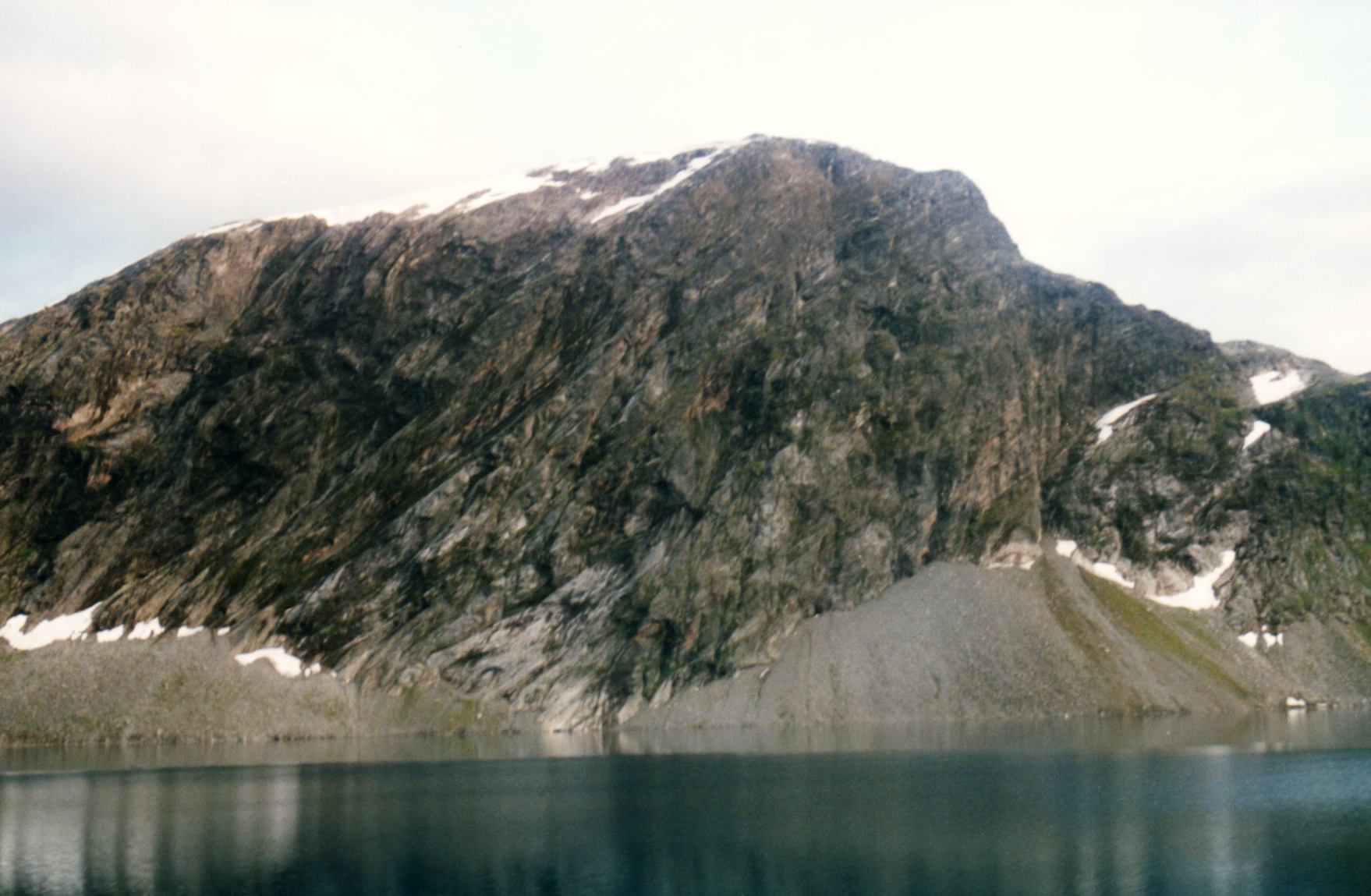
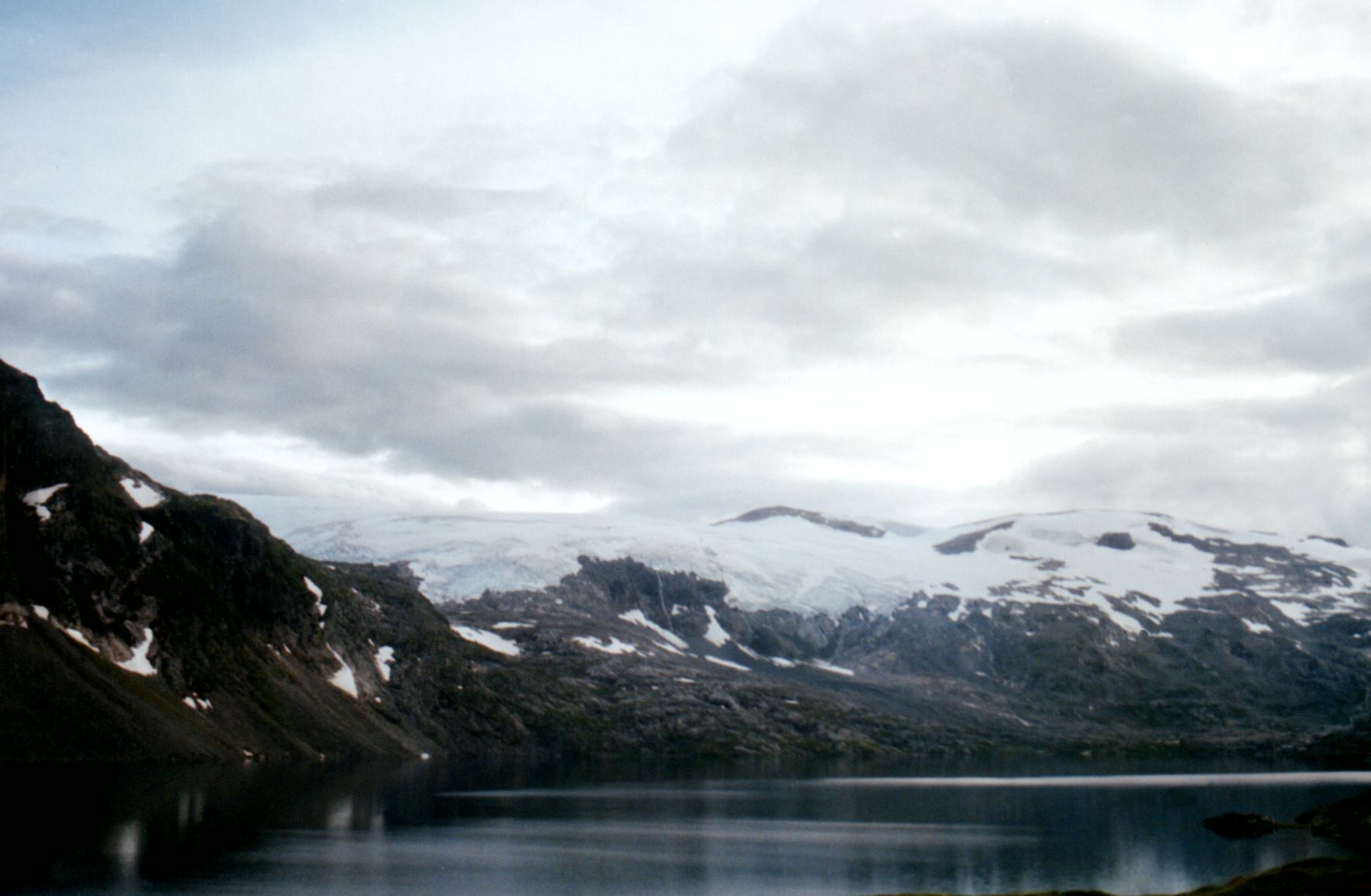
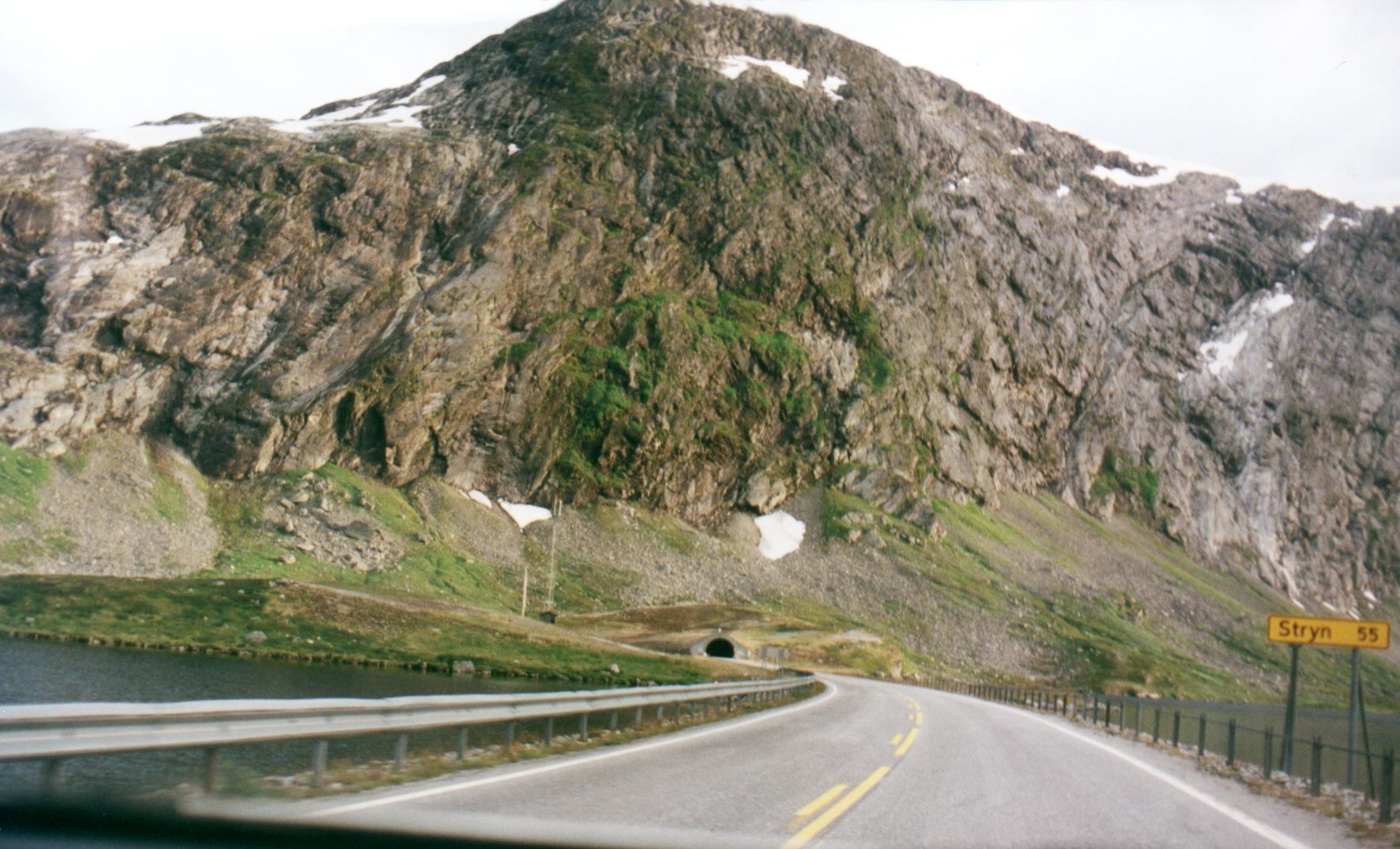
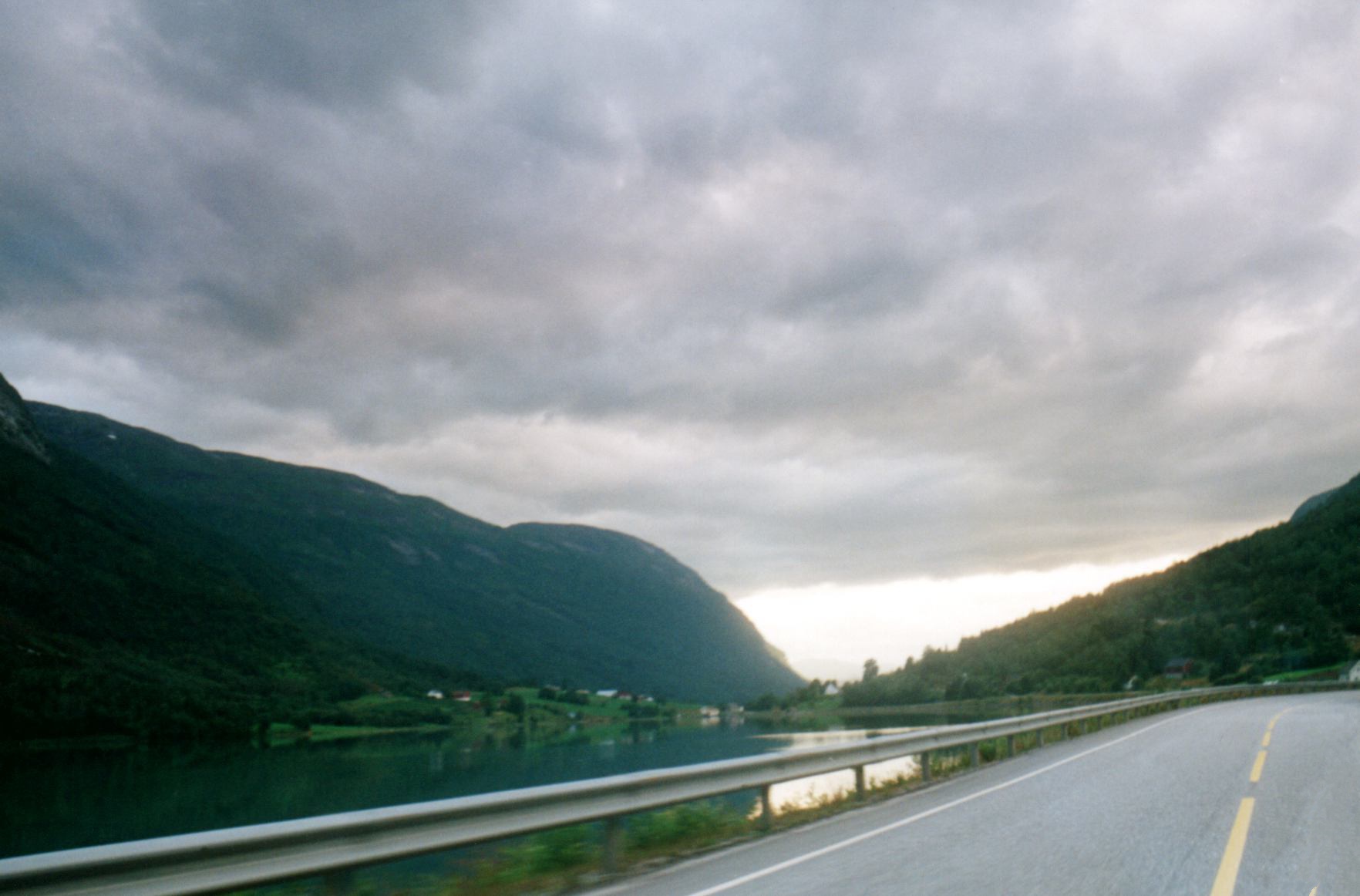
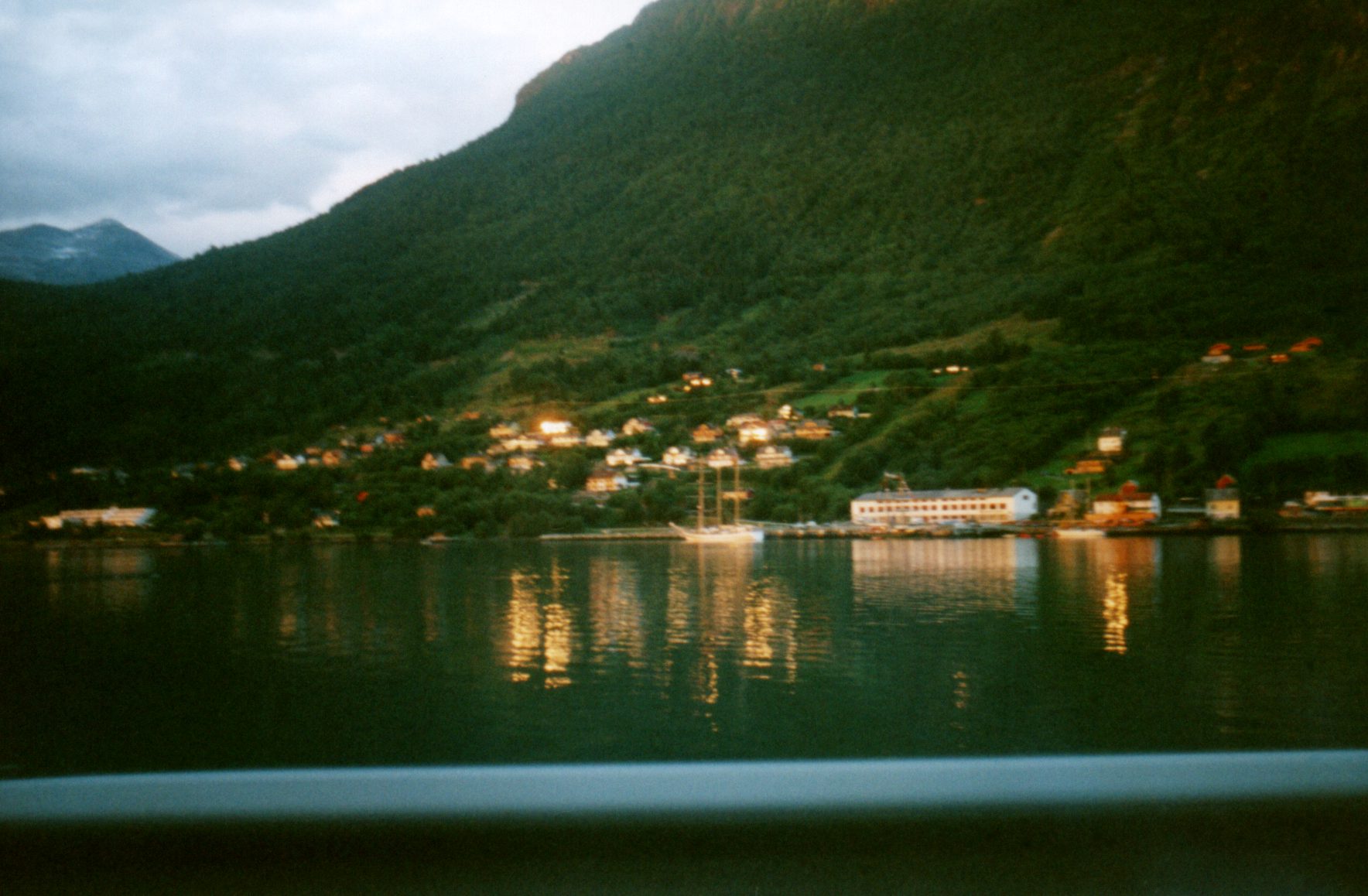
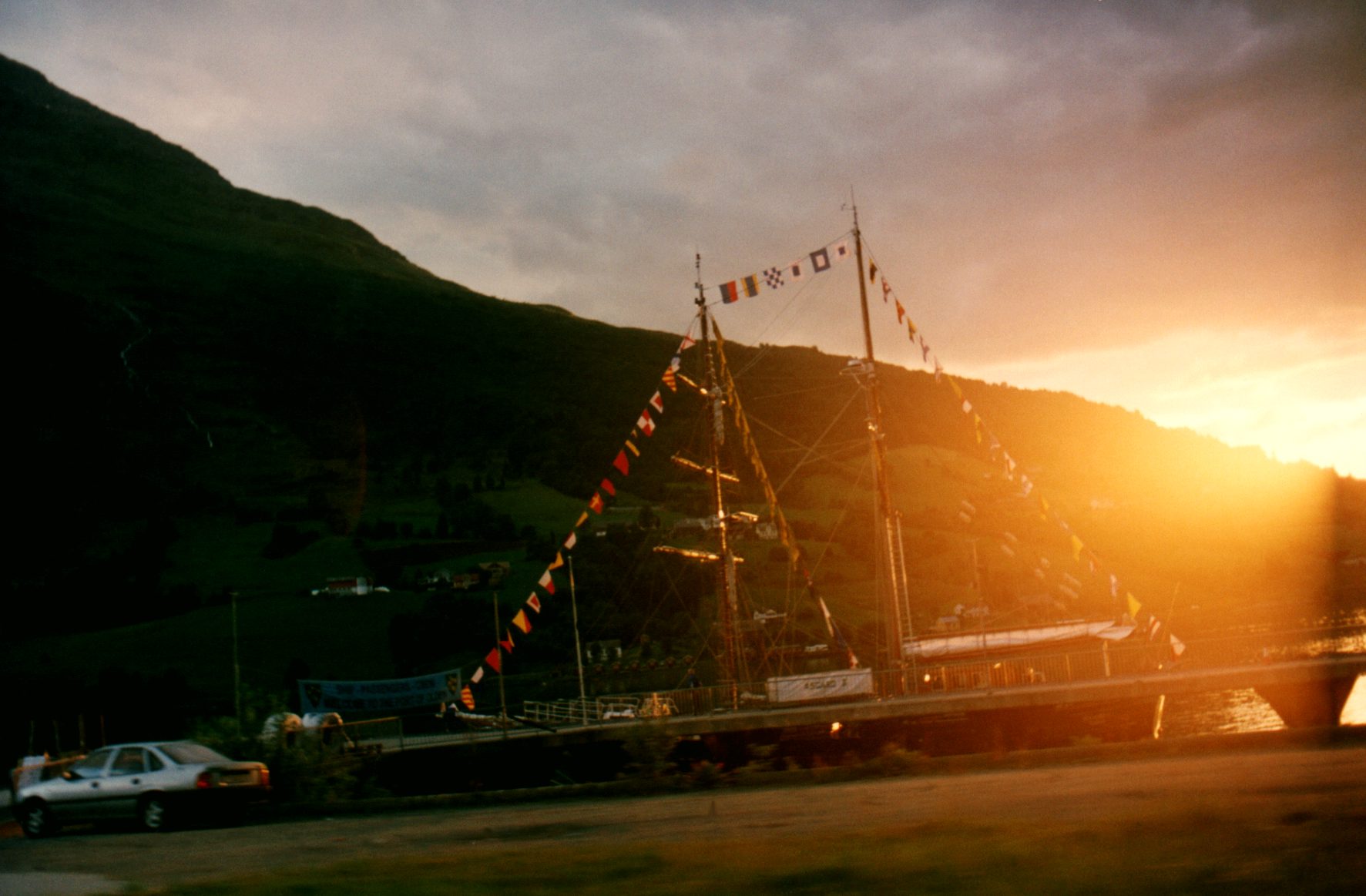
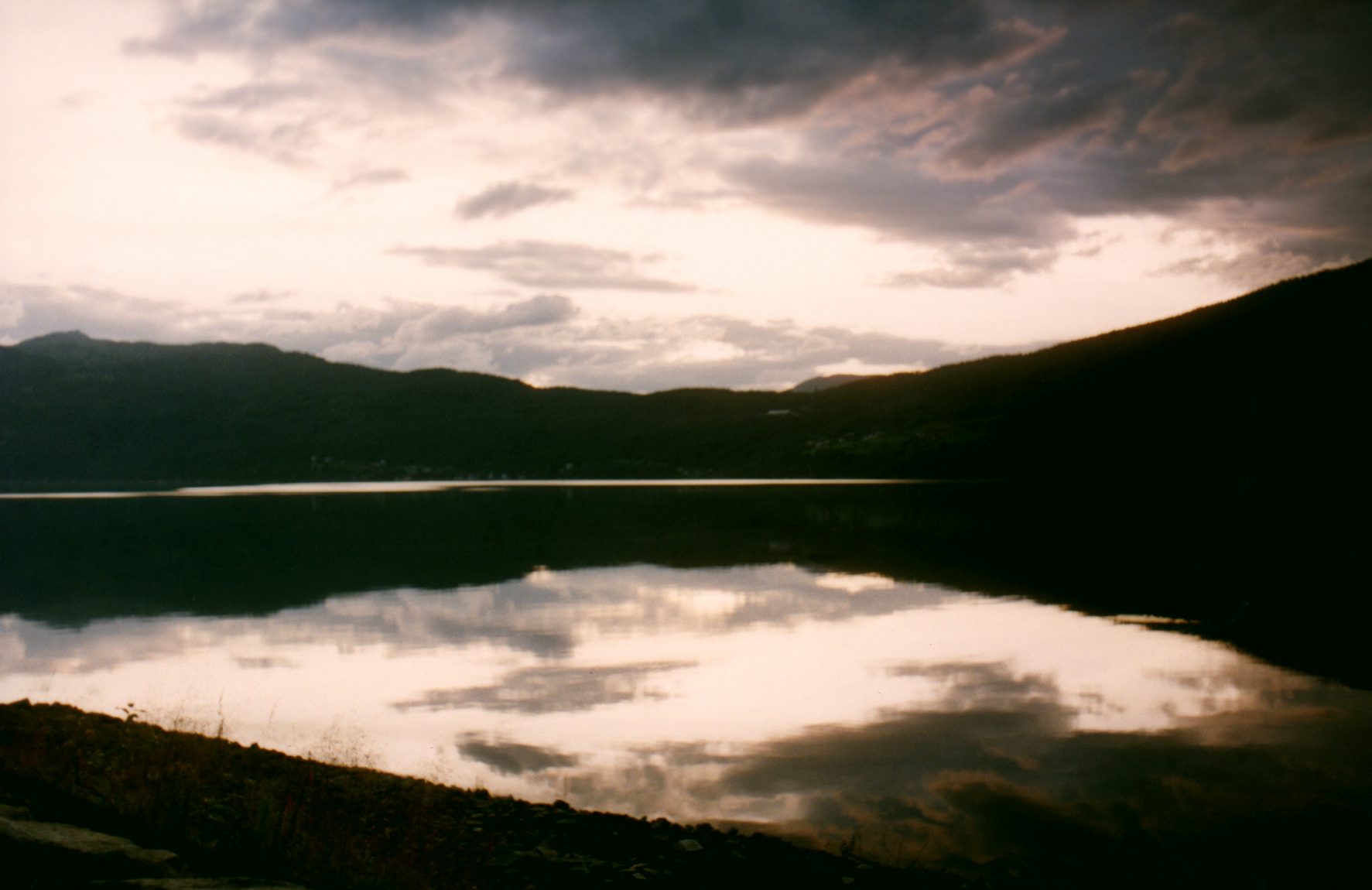
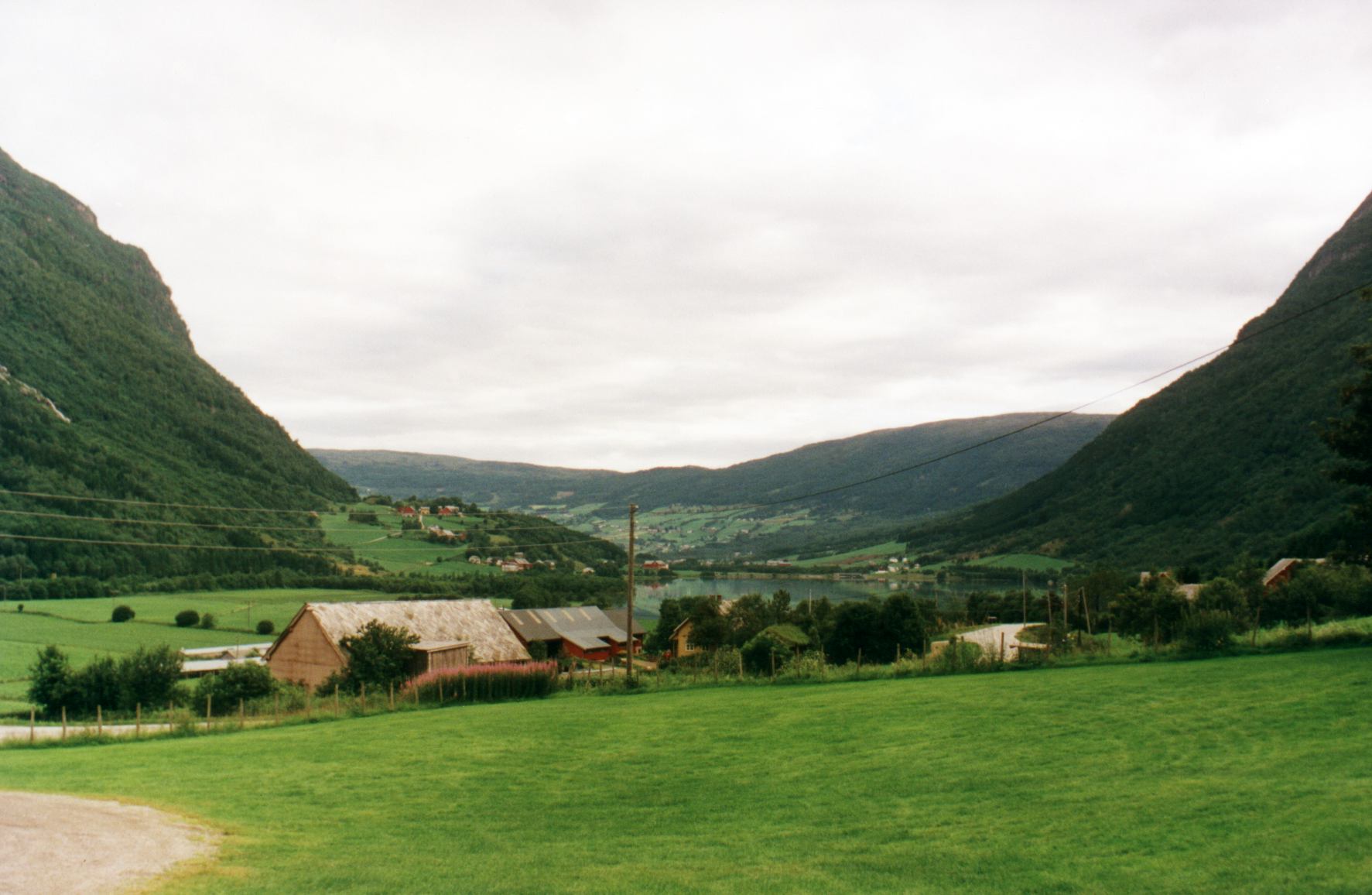
Suddenly the mountains stayed above us and the road began winding along the banks of fjords. The first wasn't a fjord at all, but Lake Strynevatnet. An immensely long lake with mirror-smooth water, reflecting the snowy summits in the red light of sunset. You want to stop and live here a month, if not for the rest of your life. There are lots of campgrounds, right at the water's edge. Near Stryn we changed roads again, onto Route 60, cut along the rocky shore of the fjord. It isn't more than three metres wide. Two cars can just squeeze past if each pulls onto its shoulder. For a lorry or a coach you have to reverse to the last passing place. They widen the road specially every few hundred metres. We stopped at one to have a rest.
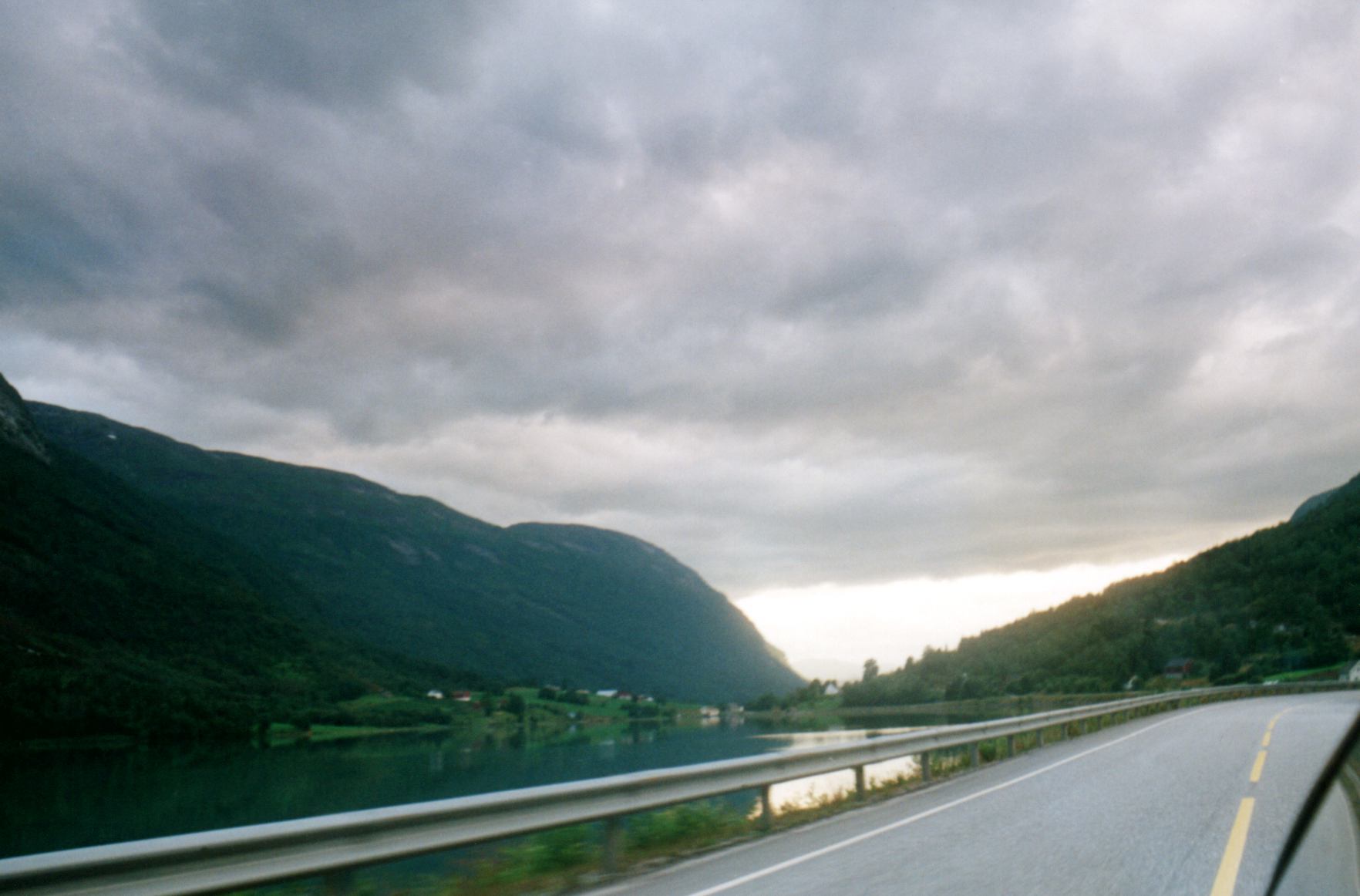
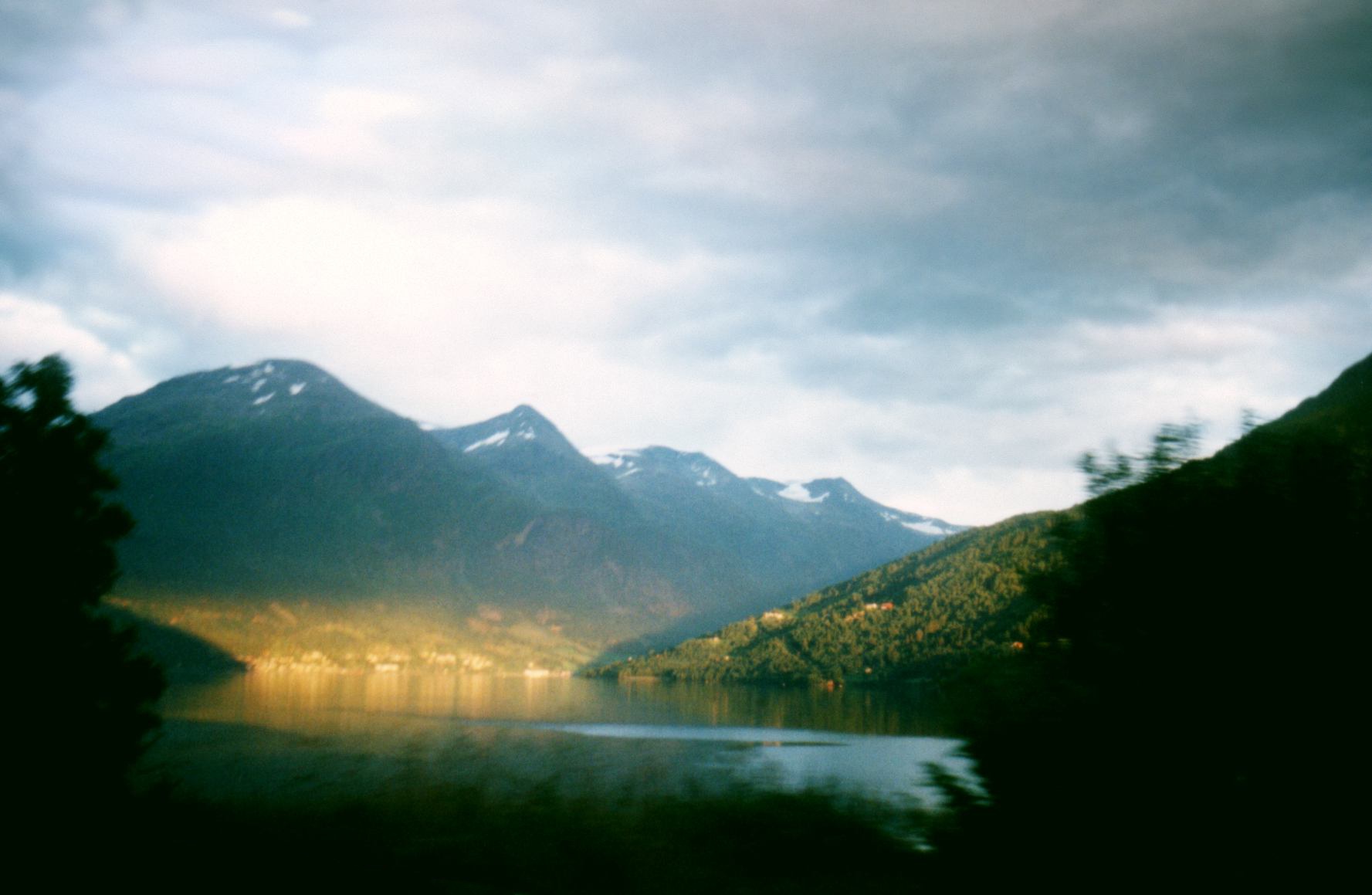
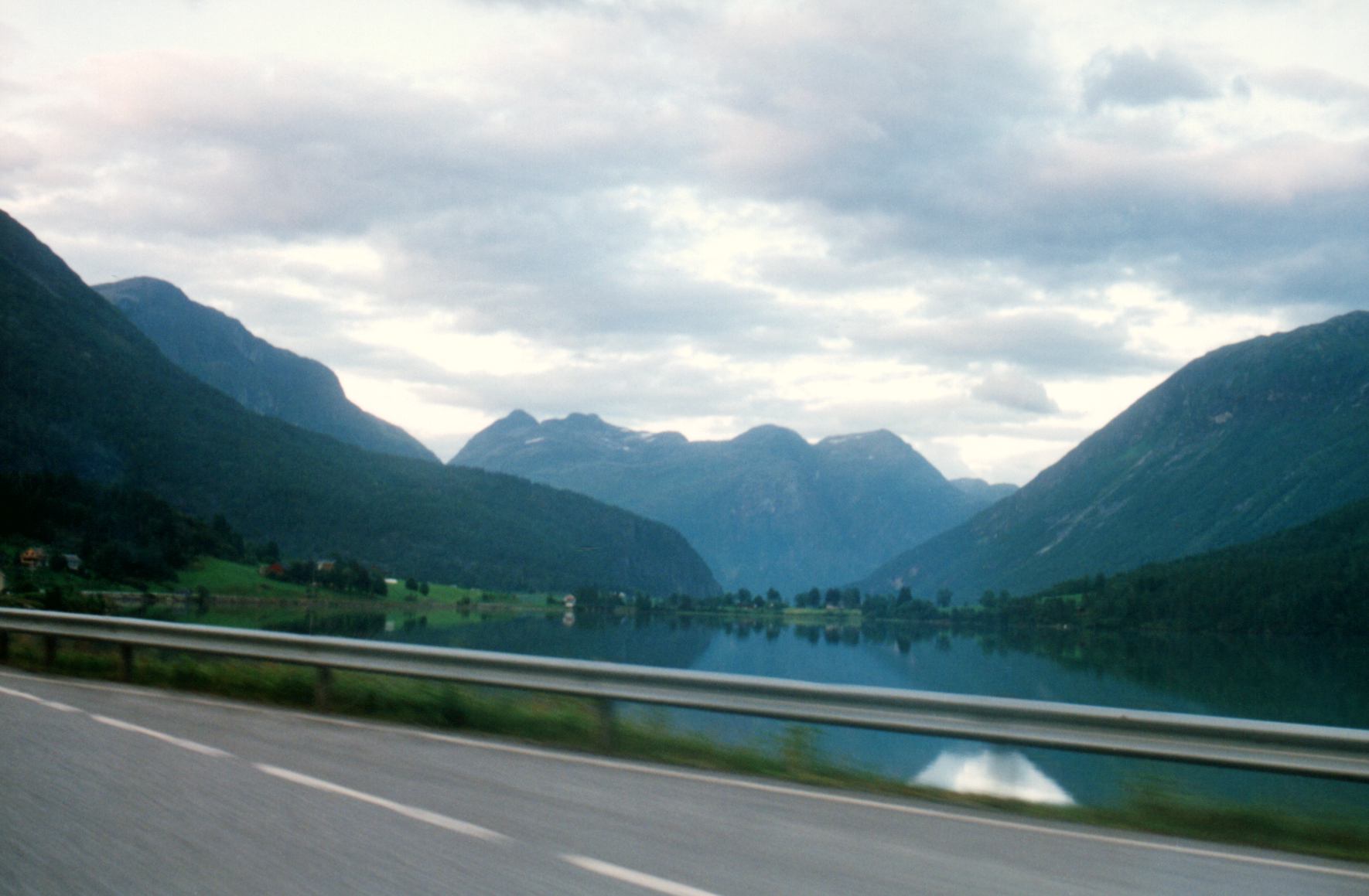
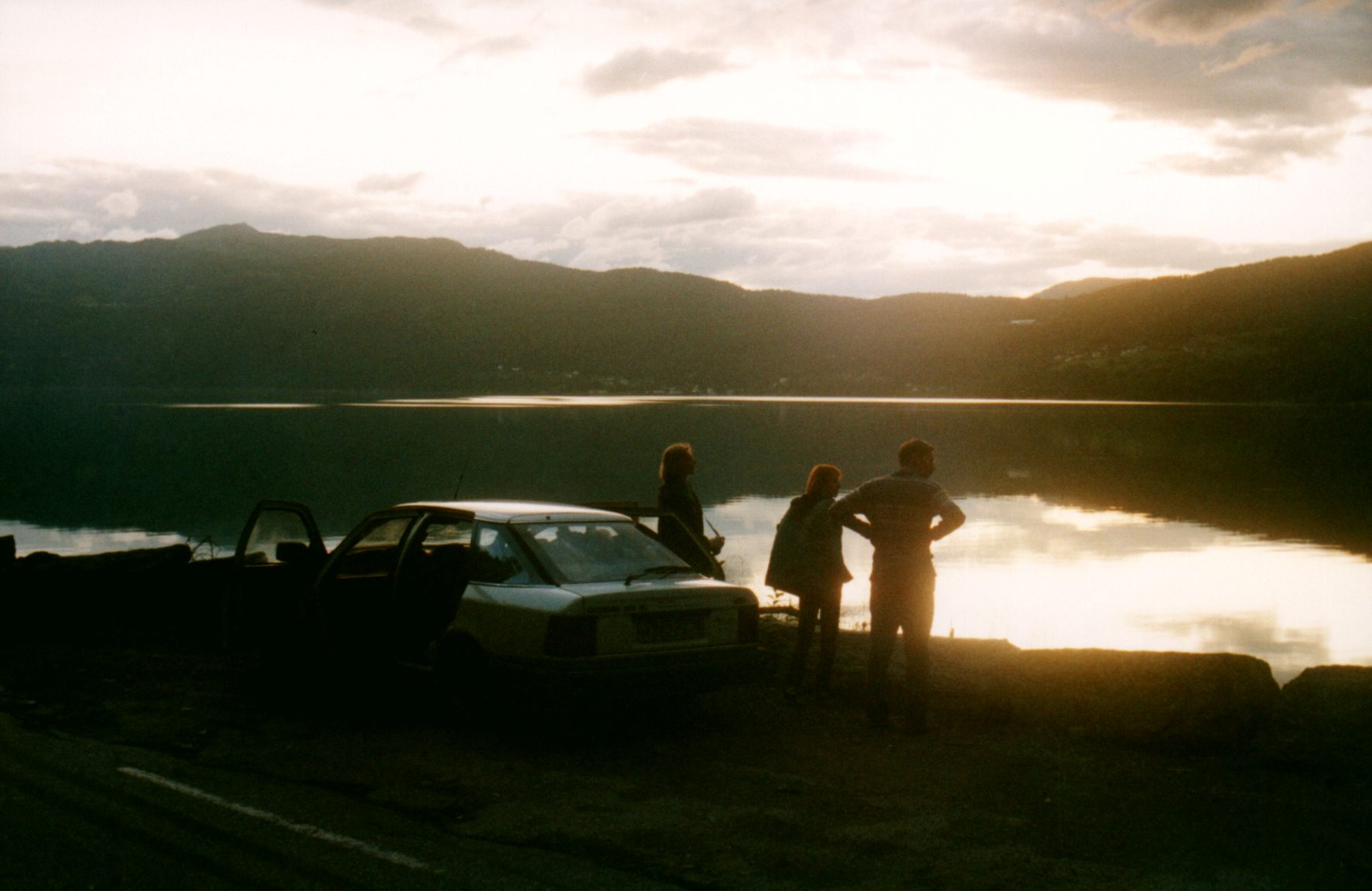
We'd been going fourteen hours that day, were horribly tired and weren't paying close attention. As the driver I had coffee, while the others set to work finishing a bottle of Baileys. When we got going and picked up speed something scraped along the roof. We looked round to see the bottle in the road. We'd left it on the roof after the drink. It didn't break, and we were already doing about forty.
Soon we were going up a pass again, this time a low one, about six hundred metres. After that we were on Route 1, the most interesting Norwegian road, which runs along the very edge of the Atlantic.
Eleven at night already, and growing dark. A campground turned up in the next little village, Klakegg, and we spent the night. We had to find and wake the owner, who was peacefully asleep in her house at the far end of the village. We took a four-berth cabin. It wasn't much more than a pitch for a tent, which you still have to put up and take down. I remember the campground for its ingenious shower, which could be reached both from the women's toilet and from the men's. I never worked out whether that was deliberate and the shower was communal, or whether you were meant to retreat in embarrassment if you burst in and found a creature of the opposite sex.
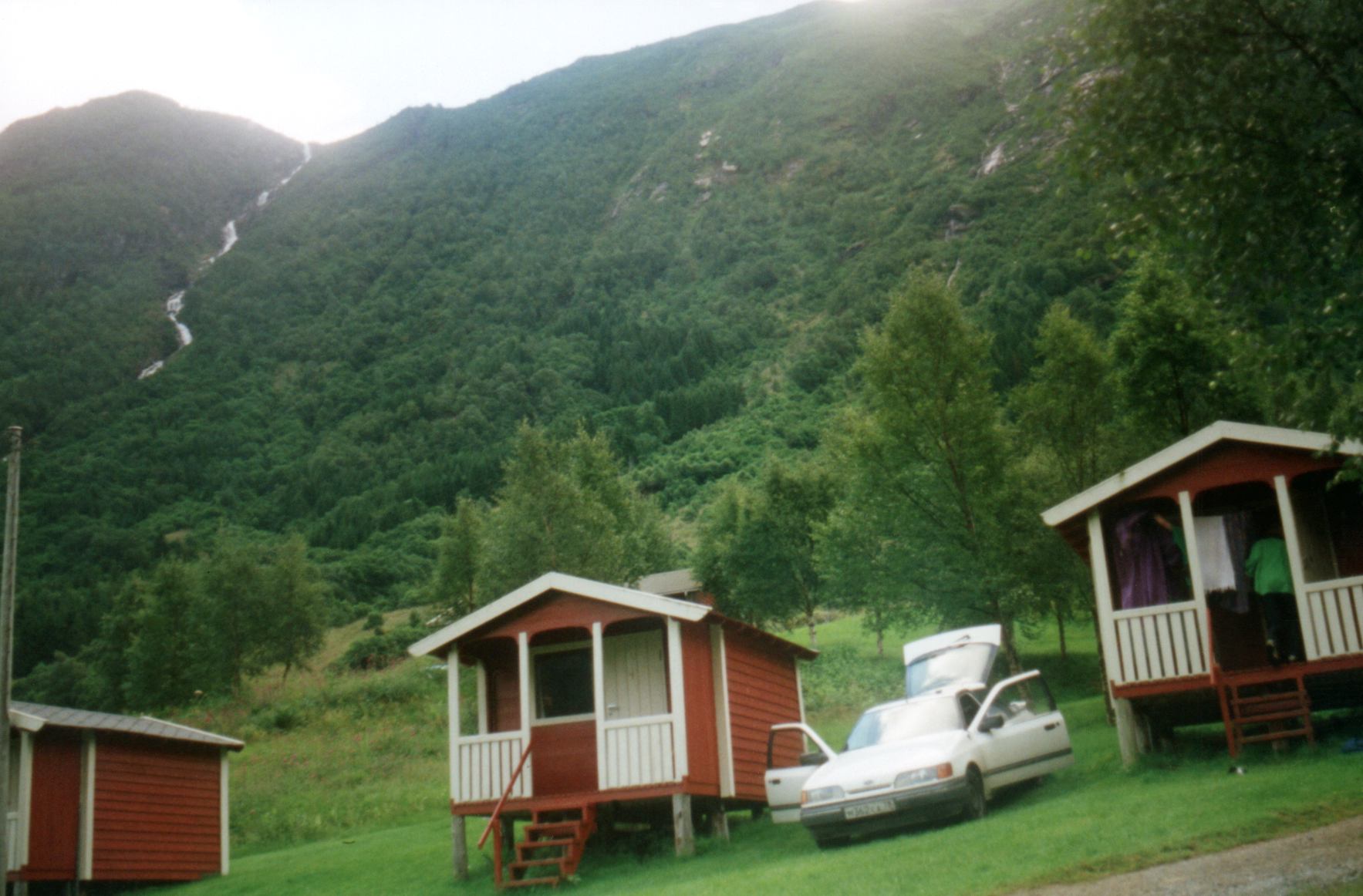
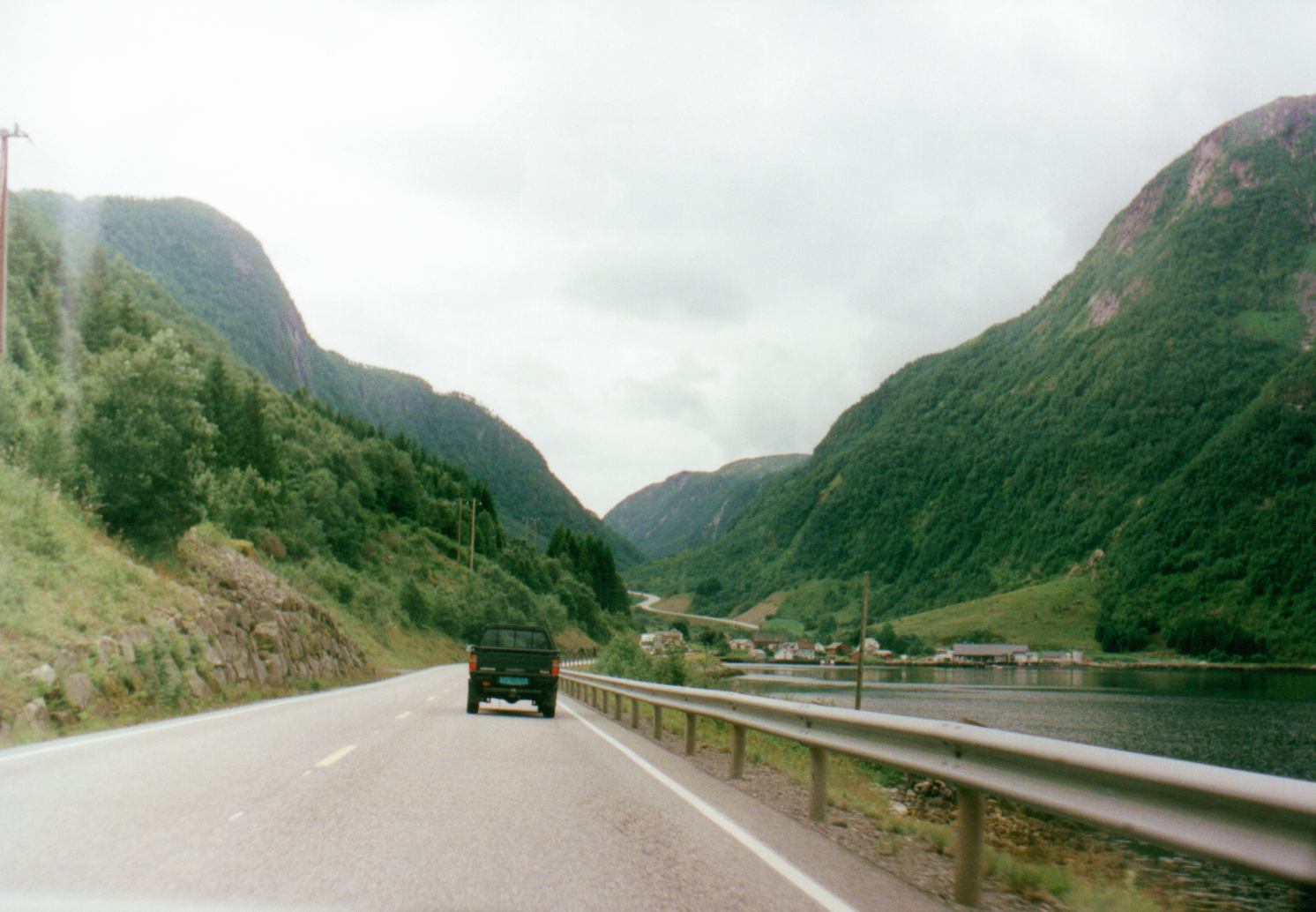
The alarm got us up at six. Today, 24 July, our ferry was due out at three. More than three hundred kilometres of mountain road to Bergen, and the next boat a week later. Nervous driving. There was no time at all for breakdowns. An hour or two at the most. The road was straightforward enough. It went up and down, but nothing terribly steep and no comparison with yesterday. Lots of little tunnels. At Lavik there was a ferry. Quite a substantial vessel for a hundred cars or more, yet it was almost empty. There was a separate saloon for passengers with soft seats, a games machine, a café and, above all, coffee you could pour into a cosy ceramic cup. A lift joined the ferry's three decks.
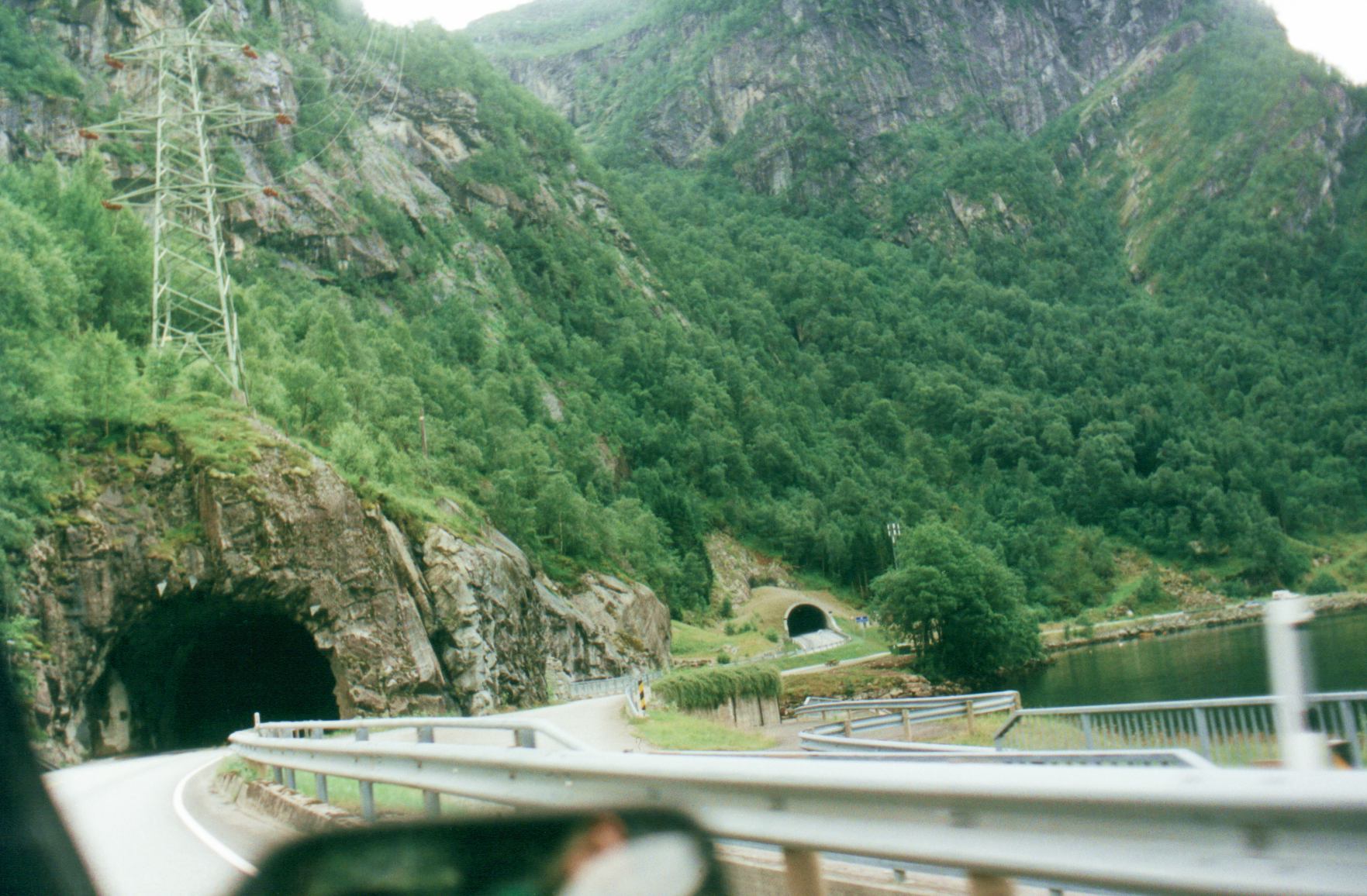
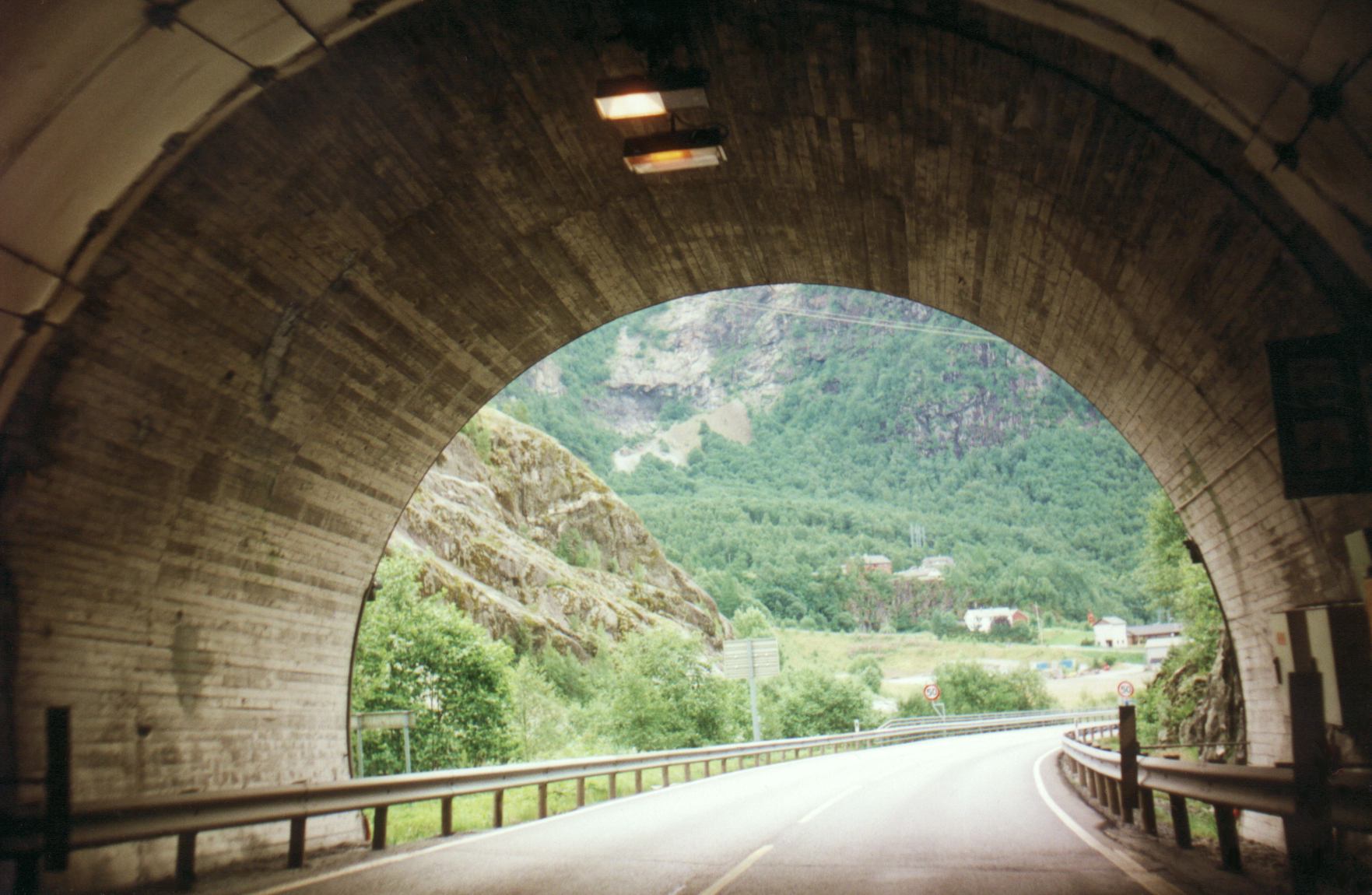
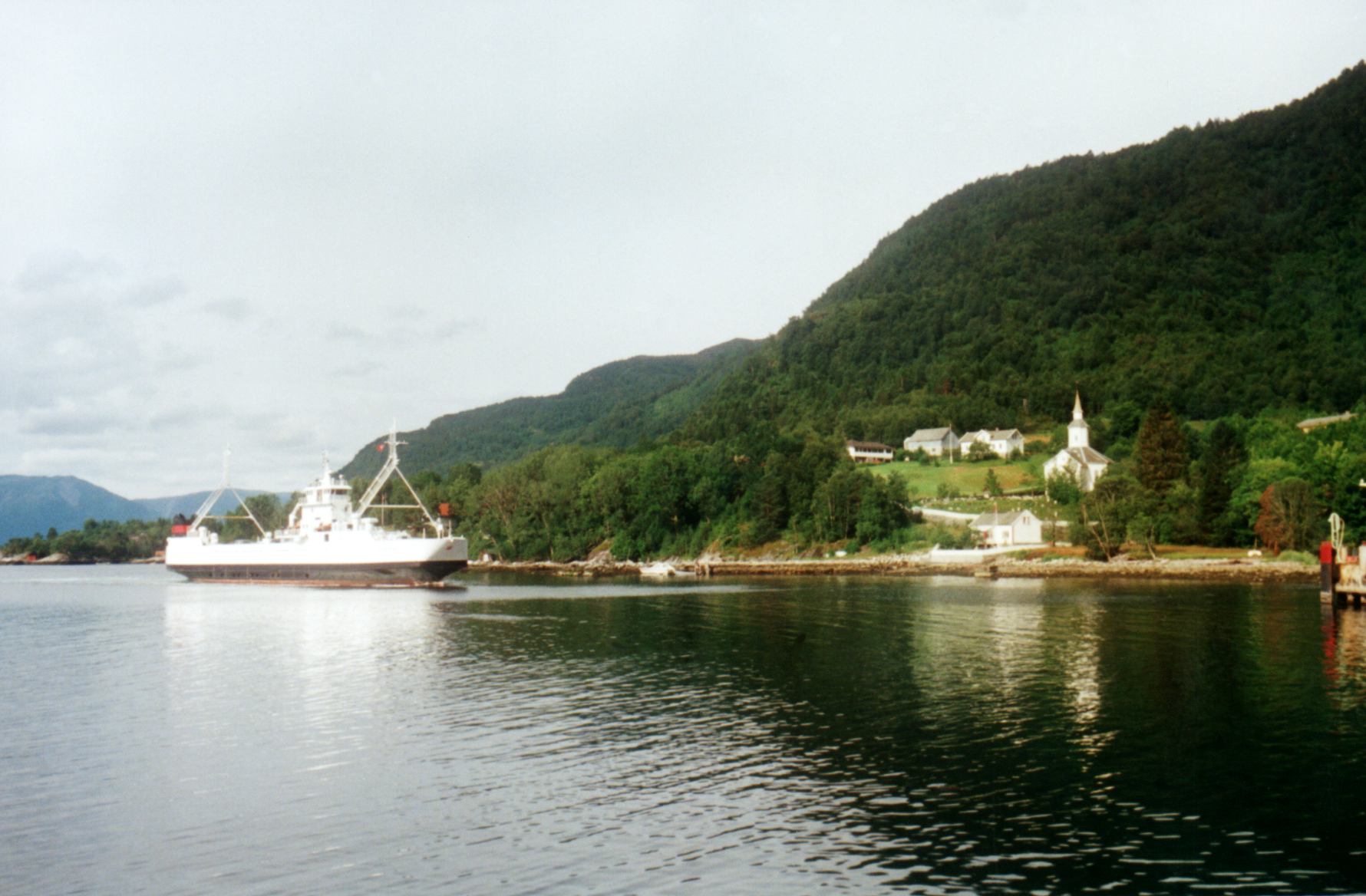
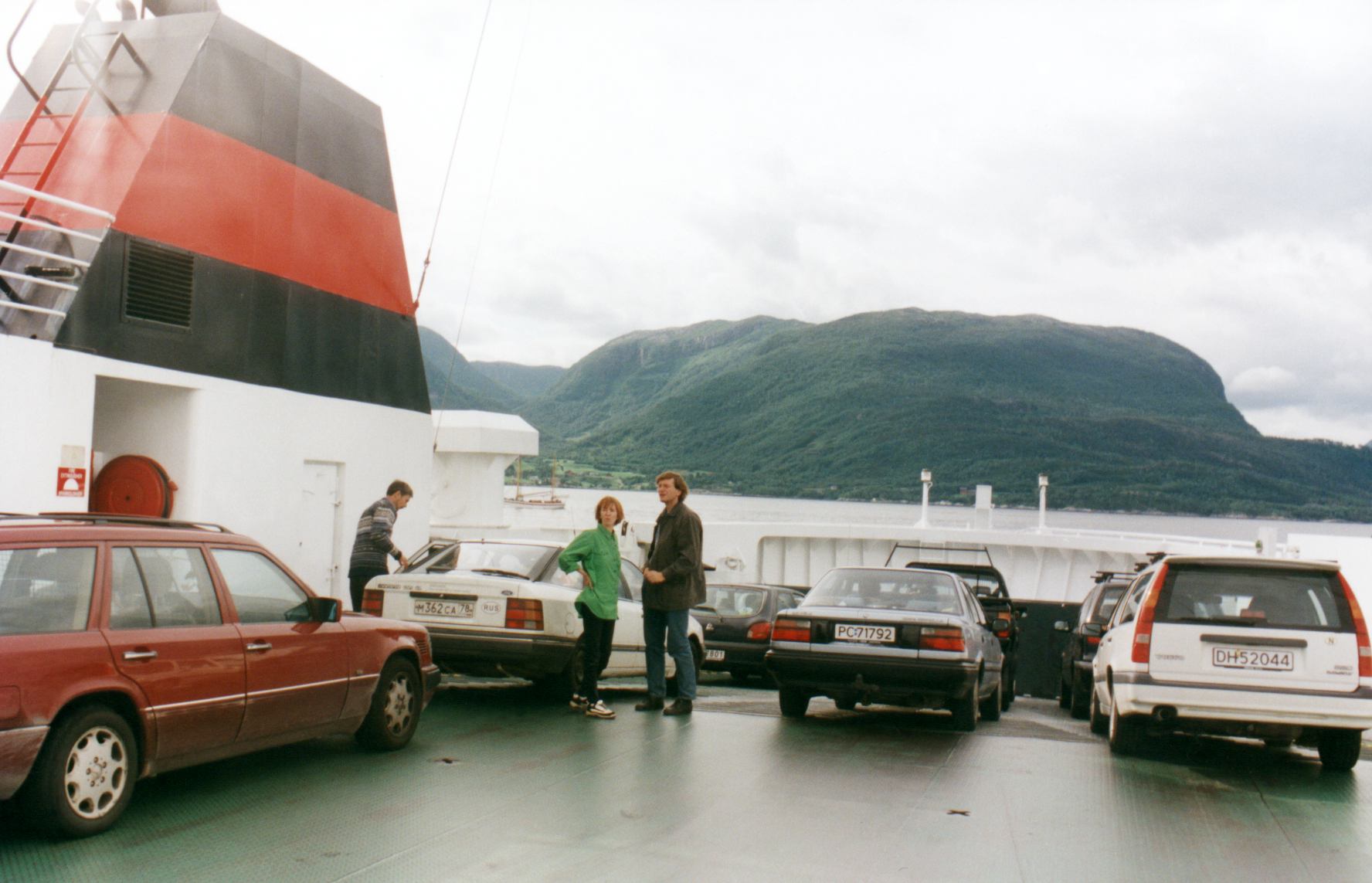
With twenty kilometres to Bergen my heart lifted. We could make it in a taxi in the worst case. Near Knarvik the road crosses another fjord on a bridge. A toll of forty-five kroner.
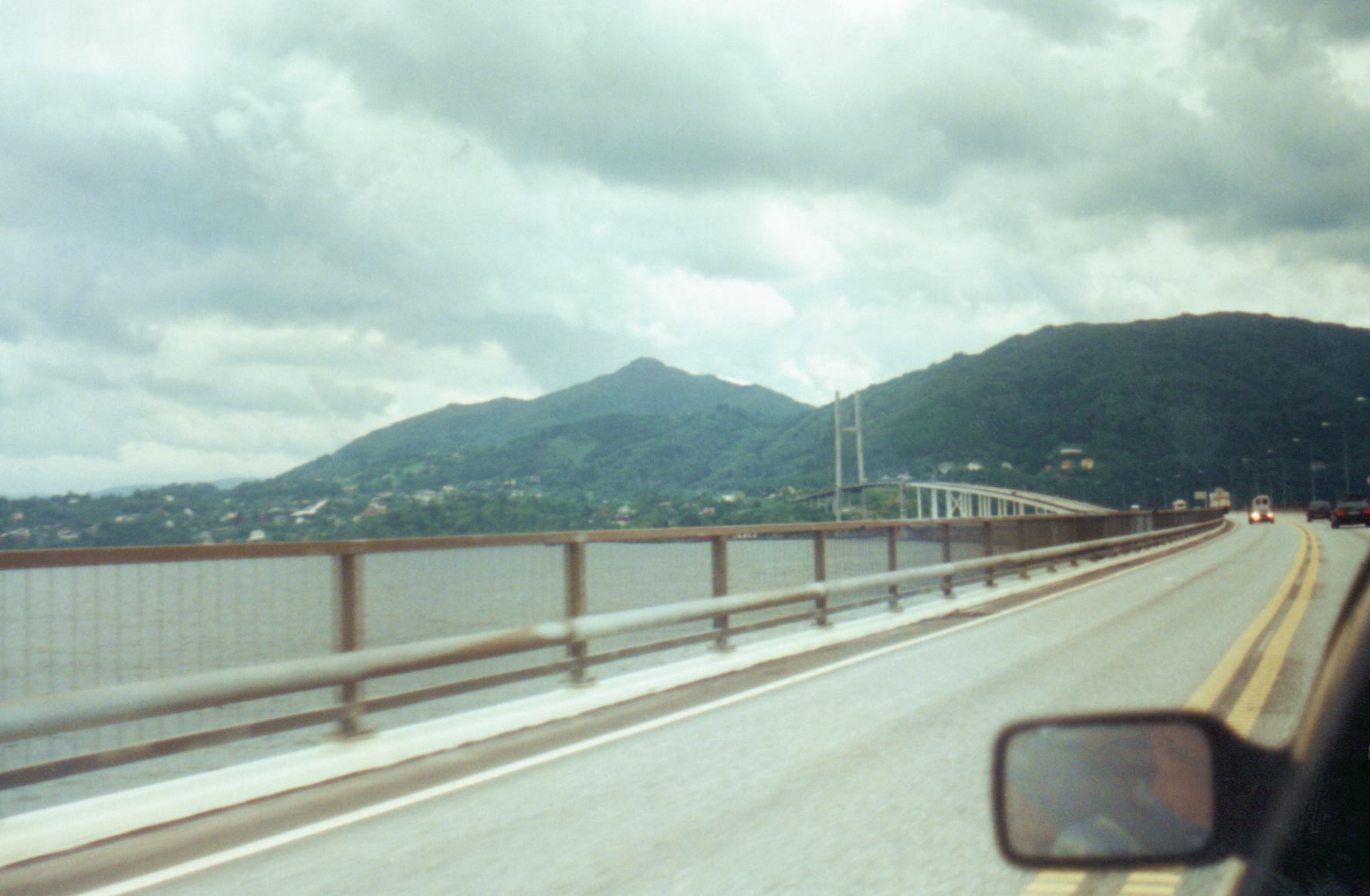
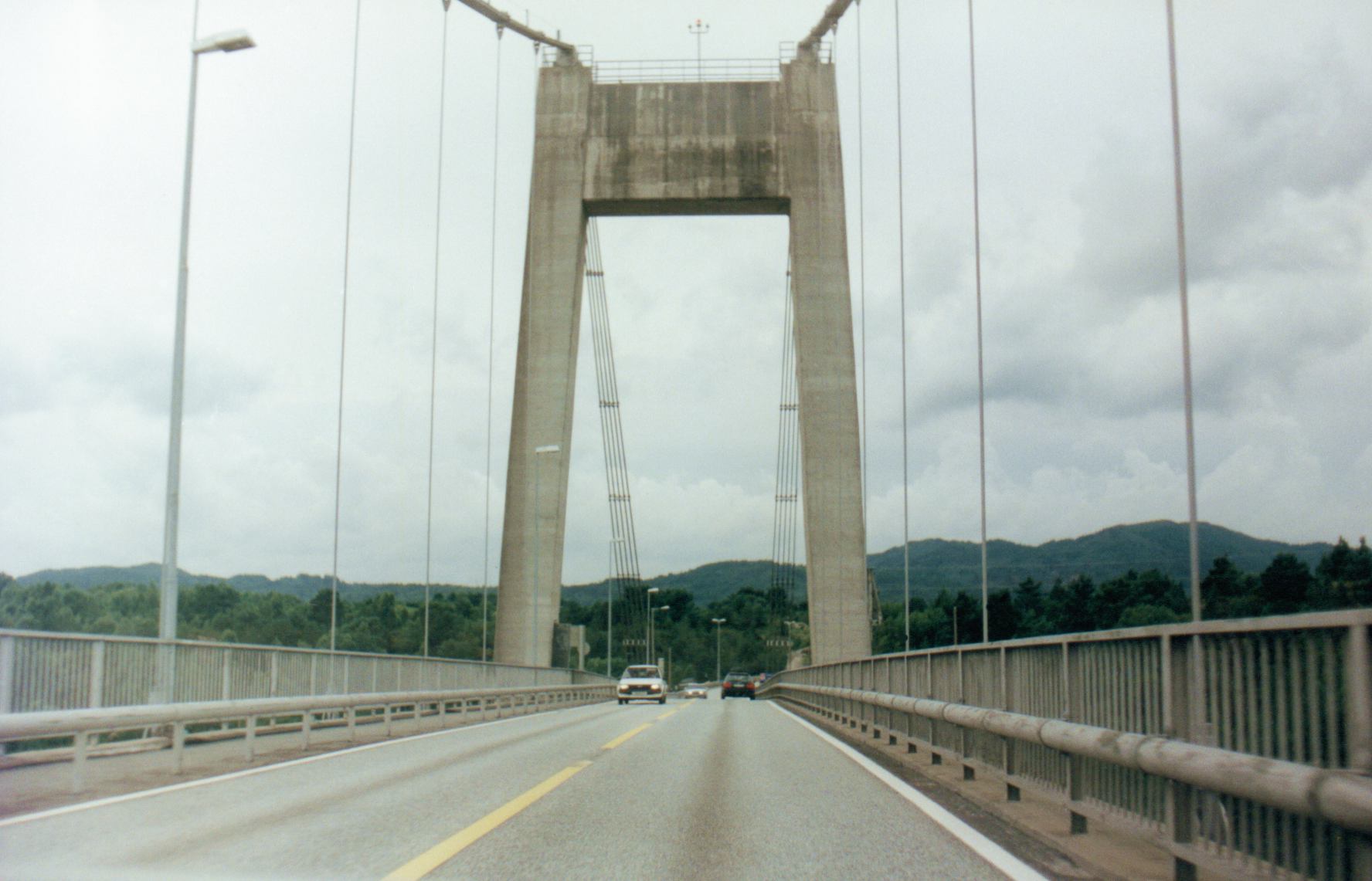
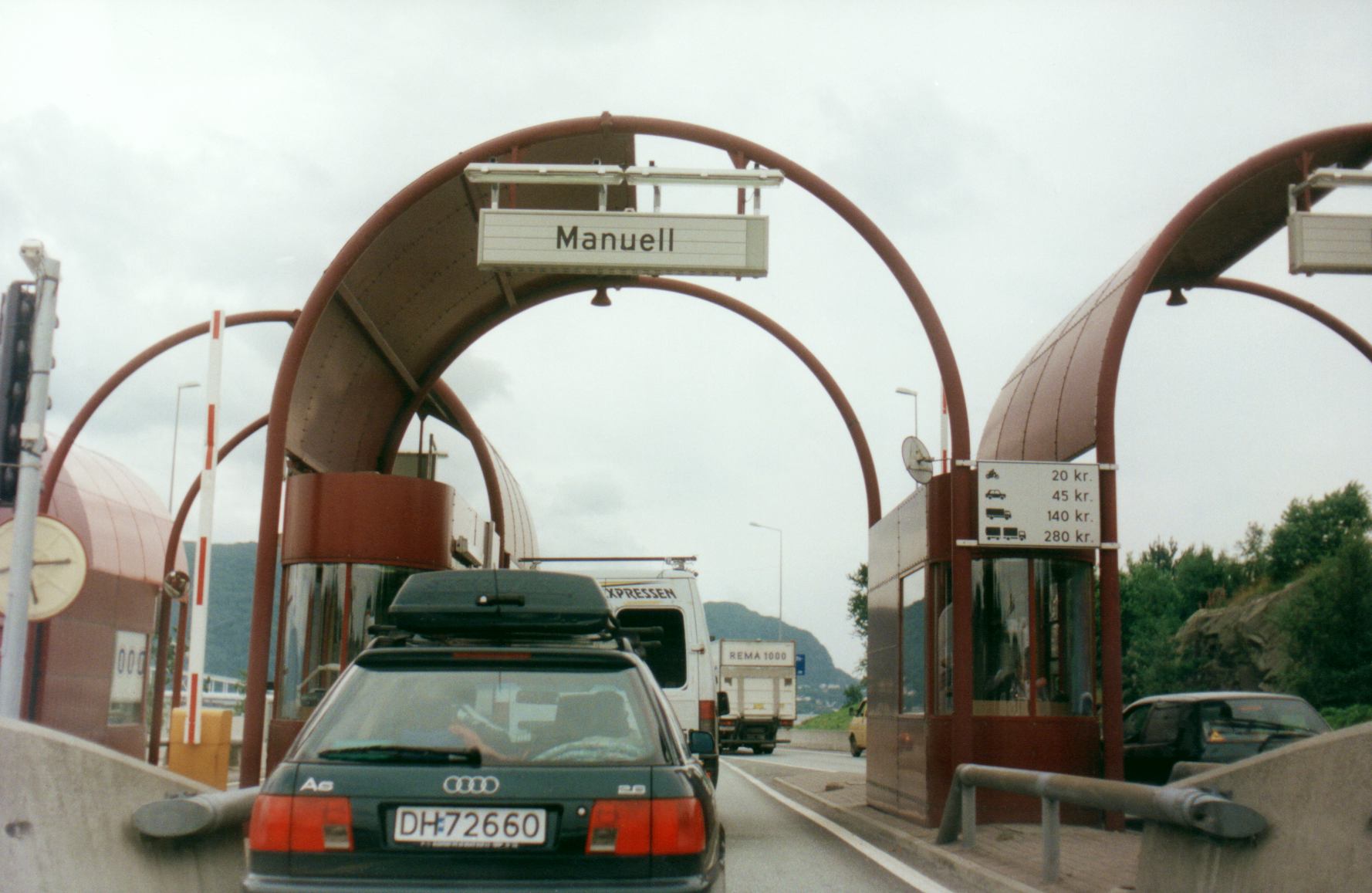
In our experience food on ferries was expensive, and it was the right time to fill our stomachs and spend what remained of our Norwegian money, especially the coins we'd have no use for and couldn't change in another country.
We found a supermarket with a good canteen and ate a big piece of beef apiece. After all the fuss about mad cow disease, I'd given up hope of seeing my favourite meat in Europe. Things weren't so grim after all. Every café has beef in several forms, it's no cheaper than pork, and people buy it and eat it.
While looking for somewhere to spend our spare kroner we found a sports shop. Excellent Gore-Tex boots and jackets lay in the sale baskets, marked down to a third of the price. Still not cheap, but Tanya and I had long wanted jackets. Seventy dollars was a fine price. The only drawback was that they were almost white, which isn't at all practical for walking, but they were a third of the price. We bought them. Lena bought Gore-Tex trainers for sixty dollars instead of two hundred. We had to change money, there wasn't enough. After this attempt at spending our cash, we had more kroner than before.
We drove into Bergen using the map in Lonely Planet. Sixty kroner to enter the centre. Pavel was driving and I was navigating. At the crucial moment the phone rang. I hadn't taken my regular phone with me. If everyone had rung me at the usual rate there'd have been no holiday, but I couldn't leave the business to its fate. I bought a new phone and gave the number out for emergencies only. And there one was. Luckily the road went straight, and before long an enormous ship with Norröna written on it rose into view at the end of the street. We'd arrived. The quay is in Vågen harbour in the heart of town. The important thing is to turn onto Route 585 in time. After that there are signs, including a ferry symbol labelled International.
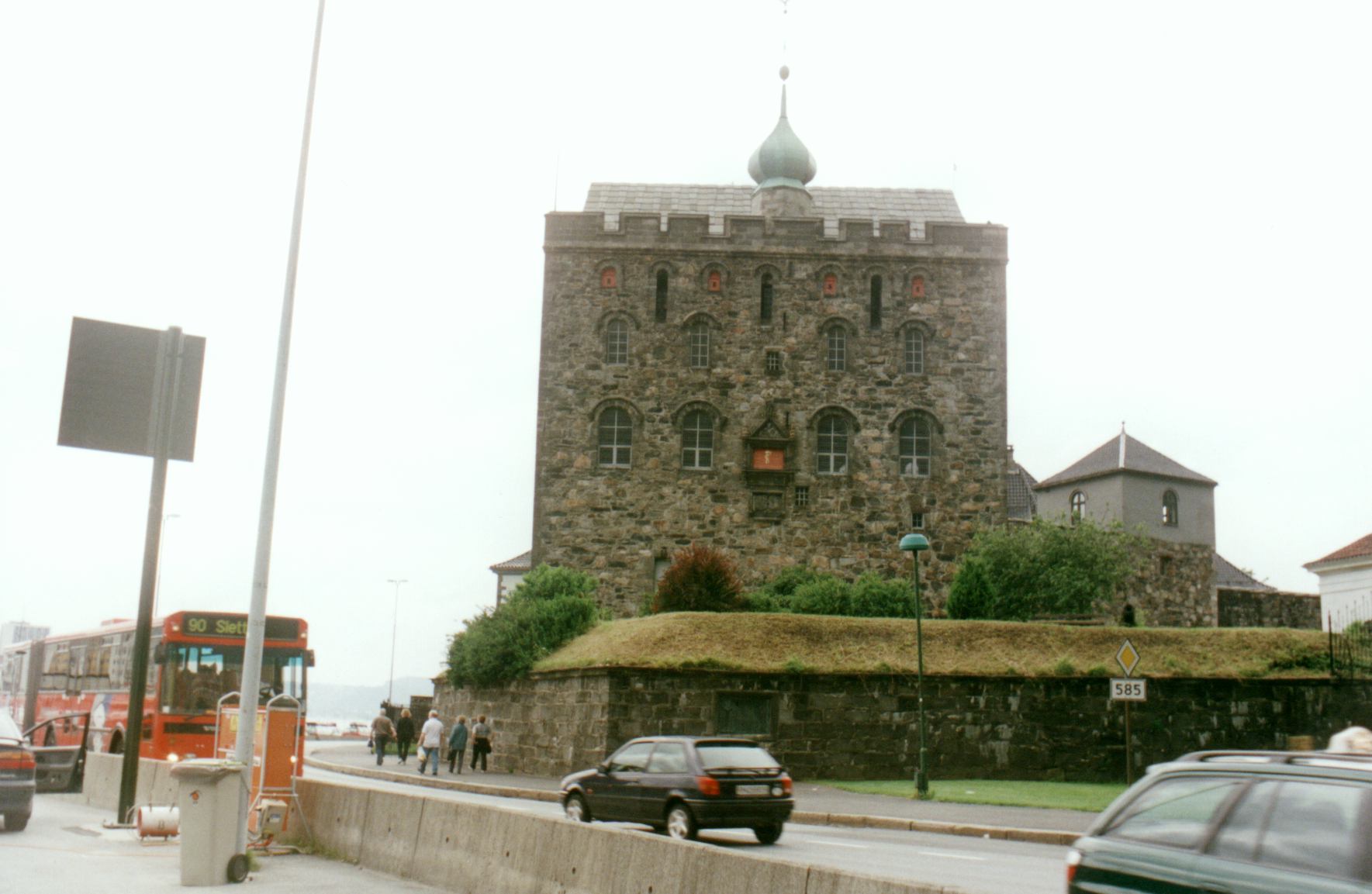
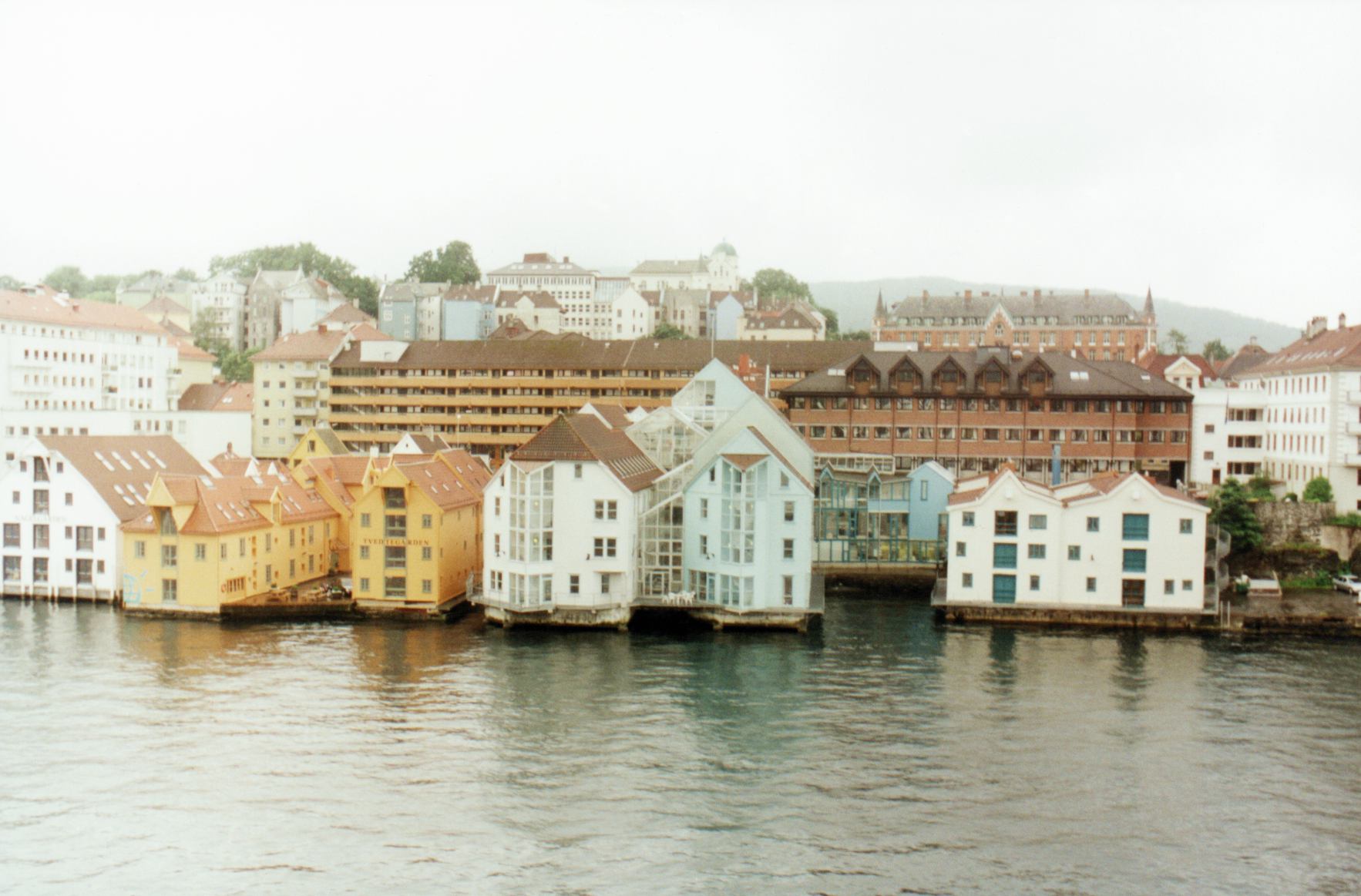
We joined the queue, then remembered we had an empty tank. We'd heard petrol in Iceland cost half as much again as in Norway. Off we went to look for fuel. As luck would have it there wasn't a filling station anywhere in the centre. It took about twenty minutes to find one, but we saw the whole city centre in the process.
Two queues for the ferry. Passengers go through the terminal and cars wait in a separate line. Strictly speaking only the driver is meant to be in the car. It probably makes things easier. They drive the cars down into a narrow hold which is cramped enough without extra people. But we didn't want to part company and nobody seemed inclined to evict the passengers.
There's passport control on entry. They looked closely at the visa. Finnish? For Iceland? I came out with the rehearsed line about it being the country of first entry, while Iceland wasn't the main country. (Which country was, I wonder?) The guards didn't begrudge us the crossing. They were more interested in a chat, as there are very few Russian cars here. A typical conversation:
- Russia?
-You is really from Russia?
- Yes.
It all worked out. The little pink slip we'd bought in Russia for $1,000, like a sales receipt, turned into a pile of proper coloured tickets. We were given a yellow slip for the windscreen that said Seyðisfjörður. A fine name, like most other Icelandic names, as likely to break your tongue as not. In Russian it would be something between Seydisfyordyur and Seytisfyotur.
Norröna
The Norröna was built in 1985. A fairly large nine-deck ferry. The highest numbered deck is eight, but above it there's another one with various aerials. It's about the size of the Silja Festival on the Turku–Stockholm run. It has a harder life, though. The North Atlantic isn't the little puddle of the Baltic. The Norröna is registered in Tórshavn, capital of the Faroes. From there she does three runs a week, to Bergen, Seyðisfjörður and the Danish port of Hanstholm, with no stop longer than three hours. The overall impression is that they're using her up. Paint is falling off, and walls and other structures are bent by some unknown force. Which is, in essence, exactly the plan. This is her last year. In 2002 she's due to be replaced by a much larger Norröna, for which they're even building a new terminal at Seyðisfjörður.
They badly need a bigger ship. In season tickets for the Norröna sell out months before sailing. They pack it absolutely full. There are only centimetres between the cars below, and you can tell they've squeezed in an extra lane and at least ten more cars lengthwise than in the design. People who didn't get seats lie on the floor. I hadn't thought that could happen in the Western world of plenty. One thing is cheering, though: the patience and friendliness of the staff. In a crush like that it would be easy to adopt the attitude, “There are a lot of you and just one of me.”
The ferry is different in its atmosphere too. For one thing it's a very long crossing. For another, the comfortable Westerner, used to being separated from everybody by the walls of his own cabin, suddenly finds himself out on a common deck with something of the atmosphere of a building site under socialism. It's interesting to watch, although we'd hoped for more. Look what capitalism has brought us to: not enough comfort!
The first two decks are taken up with four-berth cabins and the third and fourth are for cars.
Deck 8 has couchettes, in rooms for eight to twelve. Bedding isn't provided.
On the other decks public spaces are mixed in with cabins. Almost all the cabins are inside, with no porthole.
The Viking Club is where they sell cocktails and the entertainments man keeps people happy with bingo. Sometimes they put on a promotional film about the Faroes. Dancing in the evening. Not many people there and the sofas are soft. It's the best place to settle.
The Express Café one deck below is handy for food but you can barely move in it.
Of course the best food is in the restaurant. Depending on demand you can have a meal there for 85–185 Danish kroner. It's cheapest on sailing day, when nobody is hungry yet, and in a storm, when many people would sooner stay in the lavatory than eat. The price buys you a buffet. Juice, coffee and drinks cost extra, but water is free, and the waitresses bring it, if with a sour look. There's a beer bar too.
A duty-free shop with a thoroughly muddled range of expensive food, drink, chewing gum, crisps and other rubbish. An exchange counter with an enormous spread, especially on Icelandic kroner: forty per cent. As the ferry is Faroese, the currency on board is Danish kroner. Other money is taken everywhere, but first at the exchange counter's unfavourable rate, and second they don't have small change and give whatever change there is in Danish kroner, rounding it against you, naturally.
At the stern of decks seven and eight are open areas where you can sit in deckchairs and sunbathe. The chairs usually hang on the wall, where the sailors regularly put them back once passengers have finished. You're generally not allowed onto deck nine.
All the rest is cabins. In fact there aren't that many places to relax.
Ship's time is Faroese, an hour different from mainland Europe and the same as Britain.
We had couchettes on deck eight. No bad place to stay. The people were peaceable and quiet, apart from a group of assorted sportsmen who made a racket in the corridor all evening.
We dumped our things and went out onto the open section of deck seven to celebrate sailing. We started with champagne, finished the much-travelled Baileys, and then got onto the vodka. People saw us and said knowingly, “Oh, Russian schnapps!” They remembered how Russians drink vodka with their arms around a bear, or a pig, and play the balalaika.
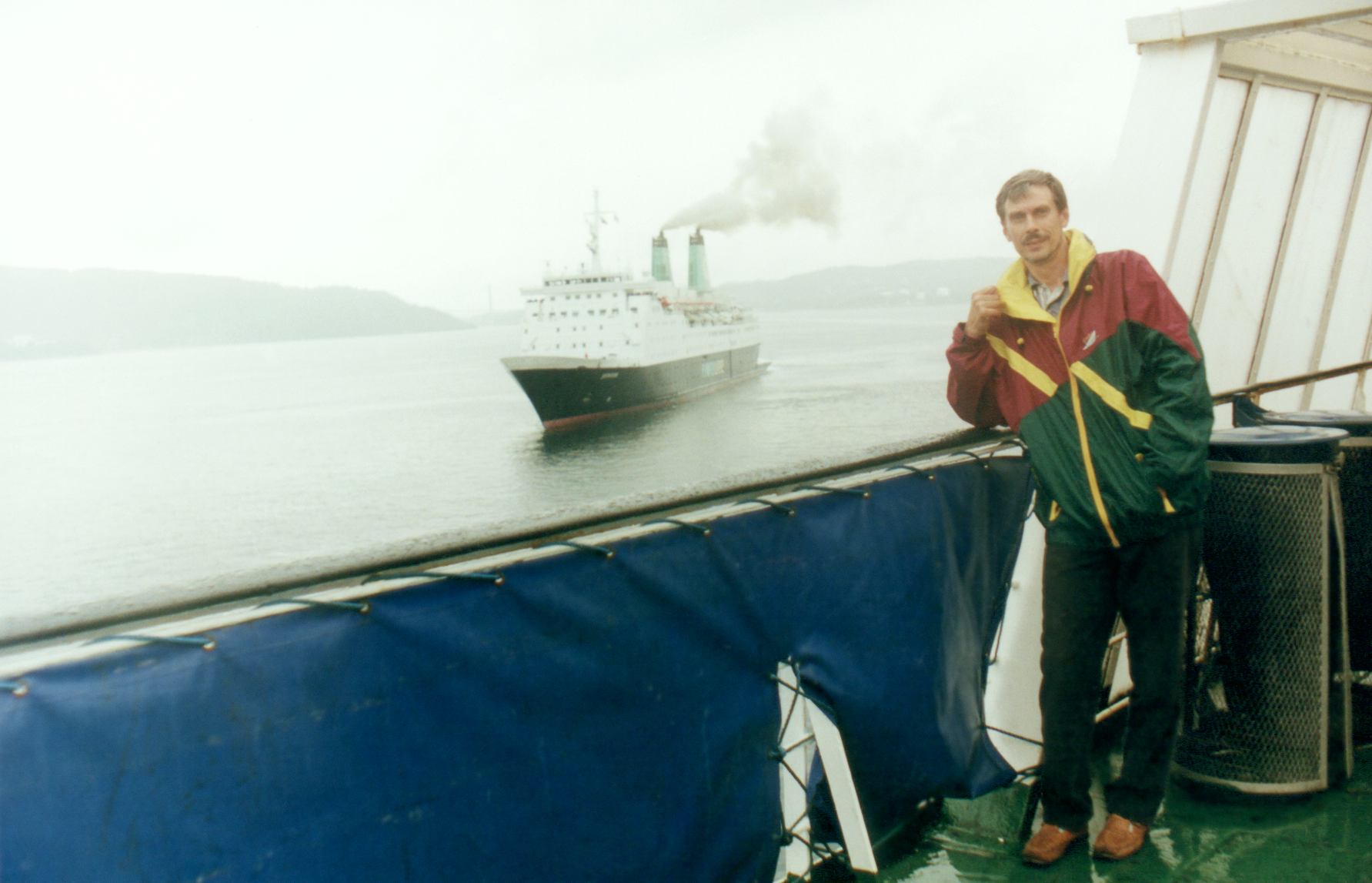
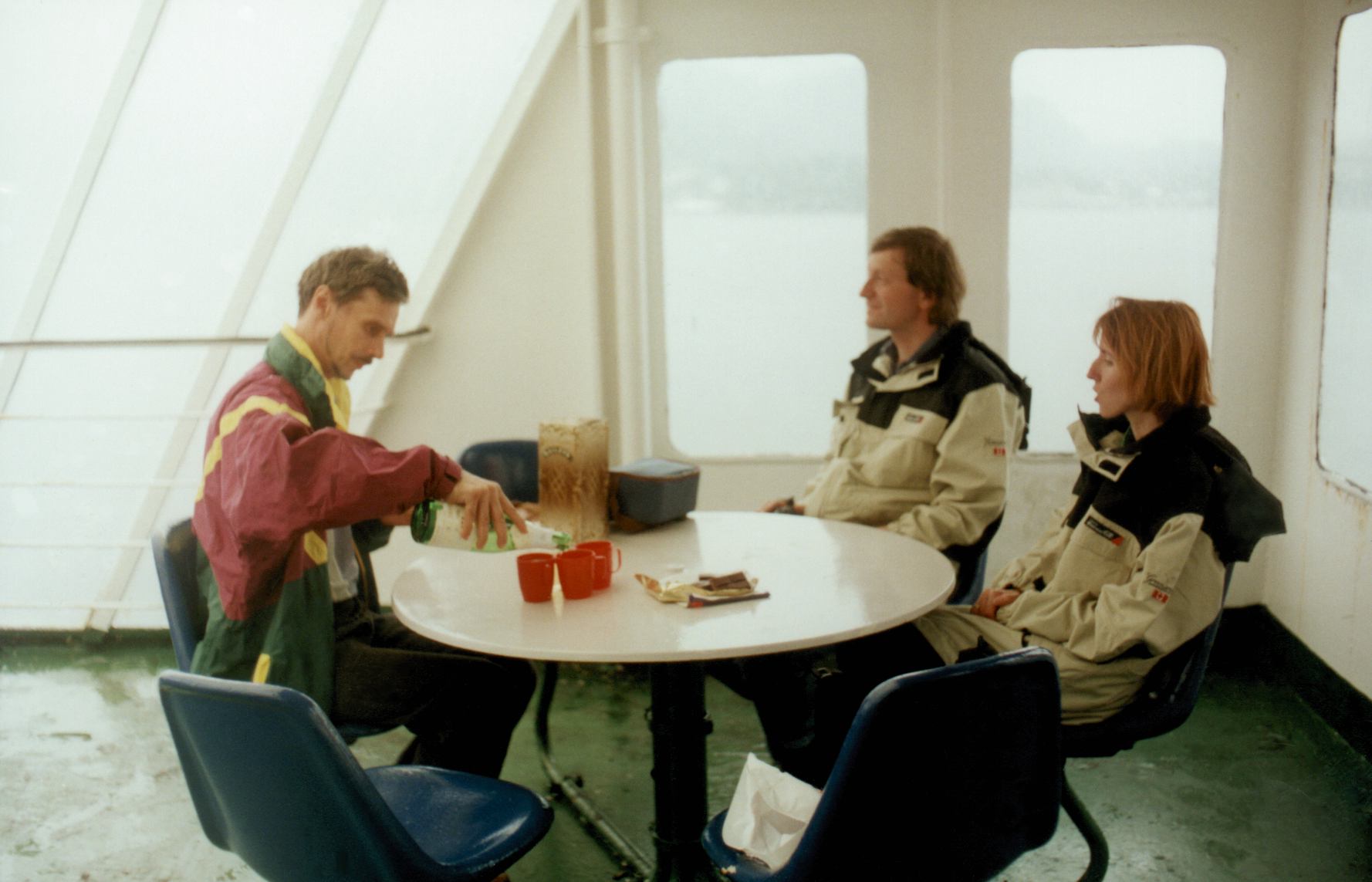
Meanwhile the ferry ducked beneath two enormous suspension bridges and left the quiet fjord at whose head Bergen stands.
You couldn't say the waves at sea were big. We've paddled through waves like that, but the ship began to roll. It turns out getting drunk on land and getting drunk at sea are two quite different things. God, I felt awful. What a shame. I cursed myself for spoiling my own celebration. Here I was in the middle of the Atlantic. The moment I'd waited for for so long was here, and I felt sick and wretched. I'd got drunk the way you do at work, except there you get paid and here all you get is misery. That's it, no more drinking till I get home. Only champagne.
I more or less came to my senses by three in the morning, as the ferry reached Lerwick in the Shetland Islands, United Kingdom. Pitch-dark outside. A little town. A strange feeling. Look up and all the signs are in English. You can understand everything. If only it were like that in every country, Russia included. But all is not well in this cradle of Western civilisation: the traffic keeps left. Sooner or later we're going to go by car into a country that drives on the left. I even have nightmares about it. Some say it's nothing to worry about, and others say you'll never last more than a day. They've scared me. I'll get back to Saint Petersburg and start practising.
On the ferry we ran into another consequence of driving on the left. The British children who'd come aboard at Lerwick sat down at the games machines. They had car racing games, on the right, naturally. No sooner had the boy set off than he went head-on into oncoming traffic. He couldn't understand it at all. A young Norwegian just the same as him was at the next machine and managing beautifully.
Of course they wouldn't let us go for a walk in Lerwick. The United Kingdom wasn't in a hurry to join Schengen. The most you could do was walk down the gangway and stand on the soil, or rather on the concrete of the quay, of the westernmost of Western countries.
We stopped for only an hour. The fresh air brought me quite round and I was finally able to sleep.
In the morning we took stock of the money. The result shocked Pavel and Lena. They'd been dragging us off to cafés for national dishes; now they looked disapprovingly on any attempt to buy a bun and a coffee for two dollars. We're more steadfast. We aren't easily put off. Hot coffee is closer to the body than a handful of coins in the pocket.
At four in the afternoon the ferry docked at Tórshavn, the capital of the Faroe Islands, or Føroyar. Through passengers can go ashore for three hours. On the ferry they'd settled whether the Faroes were Schengen in simple fashion. The area is marked as Schengen on a map hung aboard. At the foot of the gangway a sleepy local policeman took no notice of the crowd going by.
Tórshavn has a population of thirty thousand. A little town like most Scandinavian ones. You can tell Faroese people by their looks from the other peoples round about. Centuries of near-isolation have left their mark. The language is Faroese, a sort of Danish the Danes have trouble understanding. We understand even less, but can say loftily that we speak it just as well as Danish, which is to say not at all.
The first thing we did on getting off was meet some television people.
“Where are you from?”
“Russia.”
“Great. Could we ask you a question?”
“Go ahead.”
“What do you think about independence for the Faroe Islands?”
Ah, what could I say? All there was to do was shrug. My English wasn't good enough to say what I thought: foolish and unfair, in short.
That year the Faroes had decided to hold a referendum on complete separation from Denmark. It turned out that the quiet kingdom was still not entirely at peace. A tiny piece of land with fewer people than some villages wanted to pocket a three-hundred-mile zone, nearly the whole North Atlantic, and fish it in proud solitude. Legal nonsense, you can call it nothing else.
The islands are drowning in money already. Roads with tunnels several kilometres long have been built to villages of a few dozen houses. The little village of Trøllanes has two five-kilometre tunnels. That isn't enough for them. Their eyes are gleaming and they want freedom.
So we said nothing and went away without appearing on Faroese television screens.
This was more the exception than the rule, of course. The average local is much like anyone else in Scandinavia: peaceable, intelligent and shy. Cats warm themselves in the windows. Sheep graze on the grass roofs.
These roofs deserve a word. In the northern countries you can find a lawn on a house instead of corrugated roofing. In the modern version the turf comes in rolls and is spread over a sheet of special dimpled plastic on the roof. They mow the grass, and sometimes send sheep to graze it. Shiny roof windows sticking out of the grass are particularly striking. Even the main hotel in Tórshavn has a roof like that.
The islands are bare. Forest doesn't grow here any more. Rocky mountains covered in grass make up the landscape. You can climb nearly all of them. Lovely country for walks, but cold and windy. There isn't a great deal to do in the Faroes for a long stretch. There are eighteen islands in the group, only one uninhabited. They are joined by ferries, though the ferries don't run often.
In the north of town there is a very pleasant park, worth seeing in any case in the three hours you have.
On the west side rises the tall spire of Vesturkirkjan, 25 years old, built in the early seventies. A most charming pastor. We even spoke a little.
The hotel and the youth hostel are on the hill overlooking town.
Petrol, as in Denmark, is about $1. Car prices are high, entirely beyond us. The shops and banks are open from ten to five. If you're short of Danish kroner, you can buy some at the bank and get a better deal than on the boat. No point rushing to buy Icelandic kroner yet.
Three hours on the way out and three on the way home are quite enough to see the capital.
Soon after setting sail the phone rang again. Problems again, of course, but there was still something nice about it. You're sailing by wild and empty islands and the worldwide telephone network has found your little phone. I've always thought of mobile phones as living creatures.
Now we're in the open ocean, the North Atlantic, with nothing but water around us. When I was a child my parents once got a trip to Riga on the cruise ship Mikhail Lermontov. Once a year they let our citizens aboard. The rest of the time it carried foreigners. They handed out souvenir programmes with thrilling words in the day's schedule like “Thursday: Atlantic Ocean”. How remote it was then. And here I am on a ship, with endless ocean on all sides.
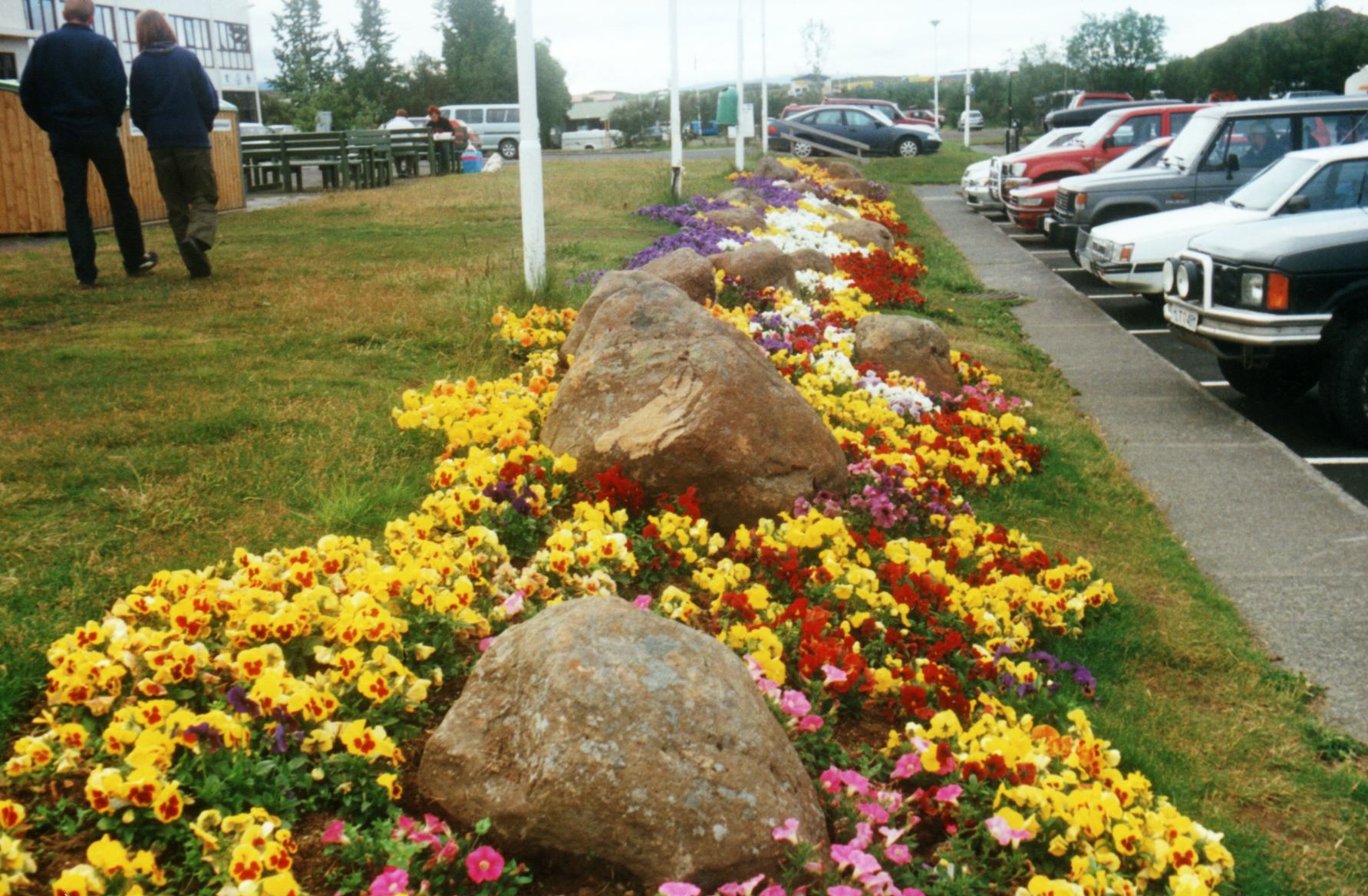
Iceland. The land of pansies.
In the morning the weather turned sharply worse. Wind, rain and bitter cold. So this is Iceland. This is the weather it's supposed to have, after all. We'd wanted to believe we'd be lucky, but evidently not. One consolation was that the promised fog with ten metres' visibility hadn't arrived. Land only appeared when we began entering the fjord. No phone signal. The fjord is long and we waited impatiently for signs of life at the end of it and the chance to set foot on Iceland at last. Ragged white clouds lay on the nearest cliffs. The whole scene was filled with an extraordinary light.
At last the ship docked. Time to get to the car, which turned out not to be that simple. First I couldn't remember which door led down to the hold, but that was the least of it. Despite the crush I got to our beauty in a few minutes, and she refused point-blank to start. Statistically that's a bad sign. Every bit of trouble had begun with the car failing to start in the morning. For some reason the battery was completely flat. A good thing all four of us went down together against advice. We pushed and she started, but there must have been a reason for it. Was the alternator gone again?
The hold is laid out so cars drive forward out of it, with no reversing in the passage. We had loaded last and had to drive out last. At the entry it was as though Schengen had never happened. The whole performance. A dirty puddle for disinfection, with the silencer hitting its steep lip. They're afraid of foot-and-mouth. Then passport control. A Finnish visa? How does that work? From Russia? Really from Russia? All right, go on. Then something like a transport inspectorate. They gave us a sheet of the local rules: don't run over the sheep, don't trample the grass, use your headlights. A petrol car gets a blue sticker on the windscreen entitling you to drive in Iceland for three months. With a diesel it is worse, a red sticker and 5,000 Icelandic kroner for each week of its validity. About $50. A great deal, of course, but to support farmers diesel costs sixty cents in Iceland and petrol a dollar five. If you plan on driving a lot it's cheaper to pay the diesel fee.
Next came customs with a little dog sniffing for drugs. Our luck was in. The customs officer knew Russian. For a moment I thought I was imagining it. Not very much, true, but he could say a number of things. It turned out they were encouraged to learn different languages and he'd picked Russian. He hadn't had a chance to use it, and here at last was some practice. He rummaged through the entire car, saying, “And what's this?” Whenever they looked at our personal belongings, they asked permission to open each rucksack or bag.
We don't carry contraband and we're not afraid of a search. It's just getting the eviscerated luggage back where it belongs that isn't always quick. All the things that had escaped in the course of the search took up the entire back seat again.
Seyðisfjörður is a town of seven hundred people and everything turns on the ferry. Even the cafés are only open on Thursday when the ship comes in. It's no place to change money either. The rate isn't good. People coming from Europe can usefully buy diesel, though naturally you shouldn't do it on the way off the ferry. Cross the pass to Egilsstaðir, where everything is appreciably cheaper, though not by as much as it will be later. Maps of Iceland, for instance, go for 1,400 kroner, while neighbouring towns sell them for 900.
The road out of Seyðisfjörður gains height quickly. There are waterfalls in view, any one of which, if you put it in Crimea, say, would be a natural wonder and a source of national pride for which they'd charge an awful lot. Here you can't move for wonders like that. They don't even put up a sign to look at them. As soon as we reached the pass the weather began to improve before our eyes, and this was no accident. The northern districts are much drier than the southwest. Seyðisfjörður gets about three thousand millimetres of precipitation a year, and the other side of the pass six hundred, a fifth as much. There was no rain at all in Egilsstaðir. Fourteen degrees, as against two at the pass.
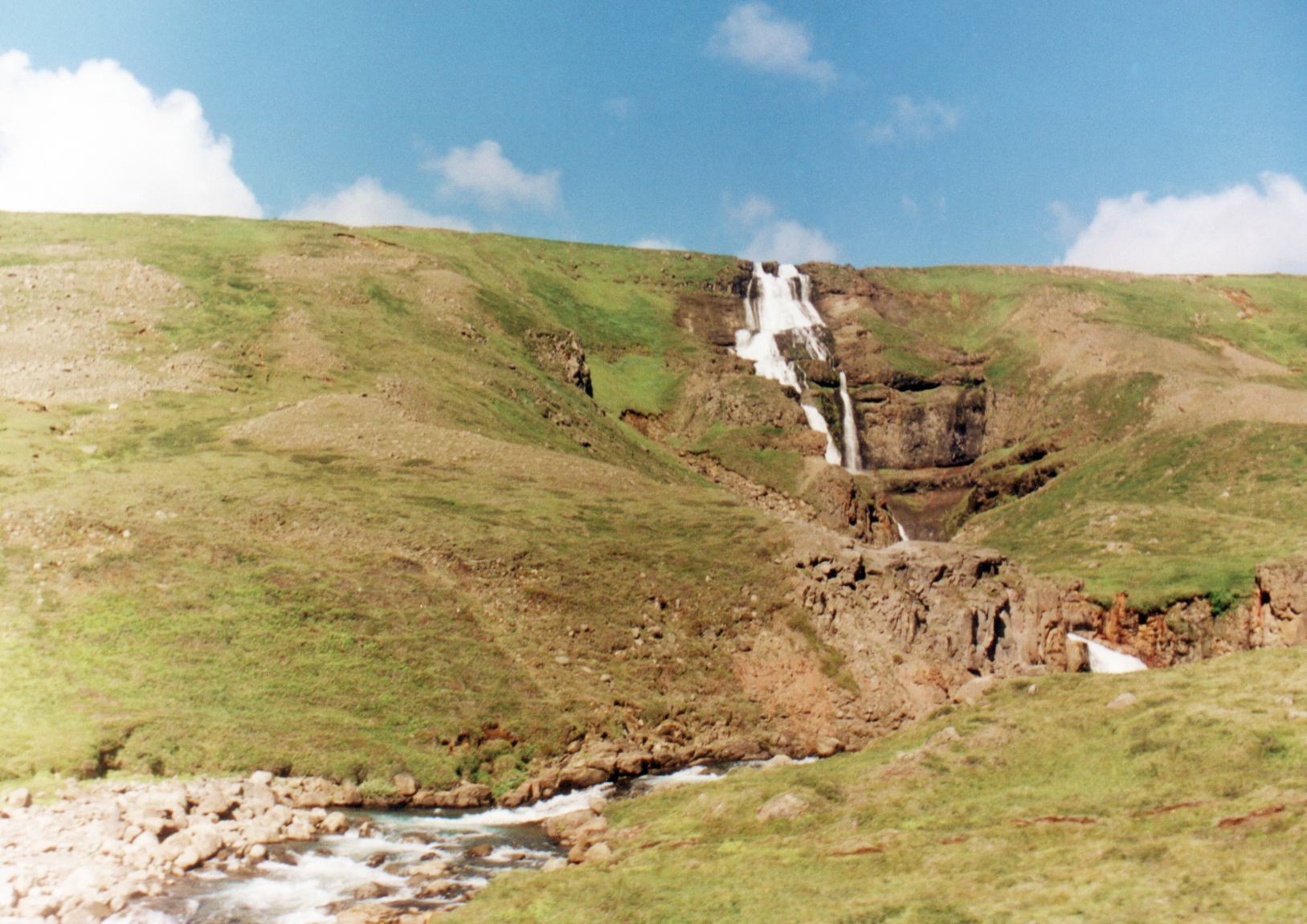
Icelandic towns are tiny. Reykjavík has 170,000 people, Akureyri 14,000 and all the others fewer. Egilsstaðir perhaps a thousand. The town is also geared to tourists from the ferry, with a large campground, a supermarket and a buffet cafeteria. We changed a few hundred dollars at the bank. The rate there was quite reasonable, one Icelandic krona about equal to one US cent. I was touched by the flasks of free coffee in the banks and big shops, and the microwaves for heating food you've bought. There isn't even a little box for the money. In all Iceland I saw one in just one shop.
The money in Iceland is most interesting. Coins with fish on them. The higher the denomination, the more fish you get and the fatter they are. Banknotes with pretty girls, no imperial fortresses or old kings.
It looks very like Scandinavia, with the same almost toy-like houses and coloured roofs, but there are differences too.
The locals are more spirited. This is almost America, and not only geographically or geologically. The folk music here is country. A farmer may wear a cowboy hat. People are more lively in general. Quick, slim young women. Björk is a typical specimen of the local breed. A scene to give you the idea: a shaggy young woman in jeans and a wide-brimmed hat comes rushing out, jumps into a four-wheel drive and takes off. All she lacks is a broomstick. That's one side of it, and on the other a little woman's Volkswagen Beetle, with a plush steering wheel and flowers on it. Icelandic men haven't been hounded by campaigns against sexual harassment. The customs officer, for instance, clapped Tanya on the shoulder in a friendly way. Another found a car in the queue with a bona fide Frenchwoman in it and, looking like a gallant captain, talked with her for the best part of an hour. Those hot-blooded Icelandic lads! Lots of children. Two or three to a family. Fair-haired little people running about, free and funny. Iceland isn't in danger of dying out, so handing out citizenship to Arabs and Black people with higher birth rates isn't on the agenda. The women here are real women, and the men real men too. You could say it's a cheerful and kindly people who leave you alone. The mood is more festive than in the rest of Europe. There's no fuss about fighting terrorism, though the airport screening system is as modern as they come. They aren't plagued by pedantry either. The different clocks in Reykjavík chime to within five minutes either way.
There are no hooligans here and no writing all over the walls, but every shop has a substantial burglar alarm. It can't be an accident. Things aren't perfect as far as law and order are concerned, it seems. The local policeman is highly visible, unlike elsewhere in Europe. A huge American-looking car tears by surveying its domain. There are speed traps with radar, likewise no accident. You often see a local going forty to sixty kilometres an hour over the limit. If economy and practicality come before everything in Europe, here you're allowed to be cool. Huge gleaming American cars and four-wheel drives on gigantic tyres turn up all over the country.
The greatest surprise is the flowers. You'd think it was too cold and rainy for them, that they'd die in such a hard country. Yet the towns are covered in flowers. Pansies in all their shades turn a stern landscape into a fairy tale. In Scandinavia everything is multicoloured, whereas Icelanders paint an entire village in one style, and it looks like a picture. People here seem to have better taste than in the rest of Europe. Another example is the hay packed in big plastic wrappers. They do it all over the north, except perhaps in Russia. The huge white pills in the fields can be seen for kilometres. In Iceland they went to the trouble of making the plastic green so it wouldn't spoil the landscape.
Iceland is also a land of little white sheep. We're used to seeing the poor, dirty, stupid-looking beasts in village ditches at home. It seems odd that the Little Prince wanted one drawn for him. In Iceland you understand why. The lambs look as though they've come out of a fairy tale, little snow-white creatures grazing freely across the whole country. You see them even on volcanoes where there are several metres between blades of grass.
Looked at another way, sheep are the foundation of agriculture. The country is divided into pastures with little mesh fences so the owners don't mix up their property. At pasture boundaries, roads have special anti-sheep devices. Slippery metal pipes hang over a pit ten centimetres apart. A car crosses with a dreadful whine, but a sheep's feet go through the gaps. Smaller roads have swing gates. A gate doesn't mean you can't go through. You can open it and drive through if you close it afterwards. The local rules strongly discourage running over lambs. The driver will be held responsible in any case and has to reimburse the owner.
In Iceland nearly all the benefits for a tourist are free. Roads, toilets, the wonders of nature, even the geyser. But they don't forget to make it back. Still and video film cost two to five times their price in Europe. A rental car is ten to fifty thousand kroner a day.
Hotels and campgrounds are expensive too, and generally full. You need to book at least a day ahead. We got hold of a useful booklet available as a scan. It lists telephone numbers and facilities. The latter matter, because not every campground has a hot shower and a kitchen. If you don't find a campground, it isn't a disaster. You can usually find a wild spot and pitch for free. In places such as Þingvellir there are designated free campsites with a toilet, a rubbish bin and benches.
On the whole I sometimes worry they've gone overboard with social regulation. Amid all this well-being you have a feeling that plenty of people just aren't interested in the results of their work. The germ of communism seems to be threatening the country. I'd be glad to be mistaken. Perhaps after 1,070 years of a parliamentary republic people can live in social harmony, and levelling things out and providing a safety net don't turn them into layabouts. You can say one thing: it's very pleasant to live here.
Icelandic roads are mostly unsealed. Even Ring Road 1 isn't paved throughout. On gravel you're meant to drop to eighty kilometres an hour. There are stretches of perfect tarmac, or more precisely, wherever there's tarmac it's flawless, a picture, with no defects whatsoever. But there are no barriers at the edge of the drops. The roads are narrow and winding. Narrow roads have passing places signed with an M. There are a few distinctive road signs.
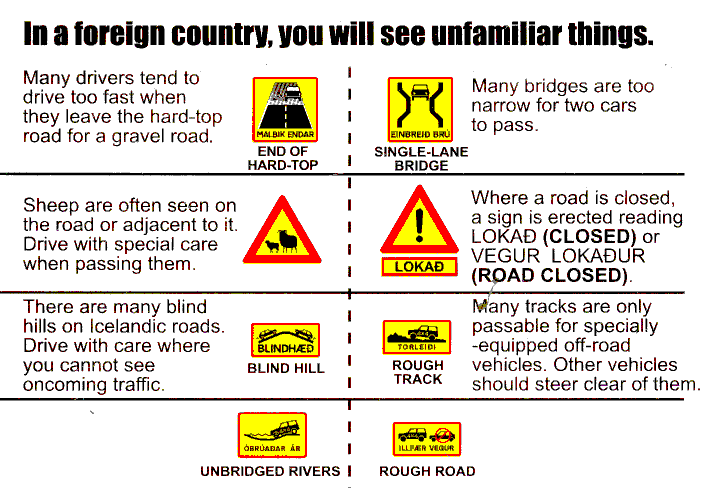
While we're on letters, men (karlar) and women (konur) both begin with a K in Icelandic. Read carefully, though the people aren't prudish. At one campground, the women's loo was shut. Tanya asked where she could go and they said, “The men's.”
Unsealed roads vary. The best are beautifully graded, but a lot of them are potholed and covered in large stones. Stones keep flying out from the wheels, knocking off anything attached to the underside of the car, not to mention the headlights and glass on cars going the other way. Iceland is a land of one-eyed cars. About one headlight in ten must be out.
Many roads, especially in the interior, are marked “Four-wheel drives only” or, worse, “Specially equipped off-road vehicles only”. The first means large stones and potholes, and the second rivers without bridges. By the way, the terms of the hire car say you won't drive on those roads, and if you break down they won't forget to send a handsome bill.
Mountain-road numbers start with F. Some don't open until the middle of July. The road authority puts out a map of closed areas from time to time. Usually this means the snow hasn't melted there yet. A copy is posted on the ferry. At the site you'll see a sign saying LOKAÐ. Iceland is hilly and there isn't money to smooth it out, so there are many bends and gradients as steep as thirty per cent. It's especially striking when such an ascent turns into an equally steep downhill at once. You think you've made a mistake and are flying into an abyss. None of it is terribly frightening, of course, but if a car comes the other way over a crest there will be no time to react, so these crests have a special sign saying BLINDHÆÐ. It's also worth remembering that there are no filling stations in the interior, and if there is one the petrol costs half as much again. You are expected to drive with your lights on and everyone belted in.
The main mobile standard in Iceland at the time was NMT450I, covering almost the entire country. Unfortunately there was no international roaming with Russia. GSM was spreading gradually, but guaranteed coverage so far applied to settlements of more than three hundred people. Things weren't all that bad, but your phone might well fail to work even on Route 1. GSM isn't really designed for enormous open spaces. I feared there would be no signal in the middle for years. There were two operators, ICE TAL and Landssími. Roaming with Russia's NWGSM was cheaper with the second.
Most people know English, with exceptions. Icelandic is in many ways like other European languages: já for yes, nei for no, halló for hello, takk for thank you, góðan daginn for good day, opið for open. If you look carefully you can guess what a written word means, but understanding speech is quite impossible without learning a fair number of words first. The similarity sometimes makes local English incomprehensible to our ears. People simply choose words that look the same and pronounce them as they do in their own language.
Now, back to the story in order.
After Egilsstaðir we took Iceland's main road, Route 1, anticlockwise. Most people off the ferry had gone the other way, which was good. Campgrounds and the like would be less busy. British cars were trundling ahead of us and we had to pass them all. The first kilometres of driving on the right are hard work for them, naturally.
The road here doesn't follow the shore but goes through low hills. Hardly any vegetation. Enormous fields covered with volcanic cinders. This is the district farthest from the capital and the least populated. The road is gravel nearly all the way, but they're sealing it bit by bit. You can see the machinery and the freshly done sections. The year-old map shows considerably less tarmac than we actually saw. Iceland only looks small. Distances here come in hundreds of kilometres, and a kilometre of gravel is nothing like a kilometre of tarmac. We were driving for a long time.
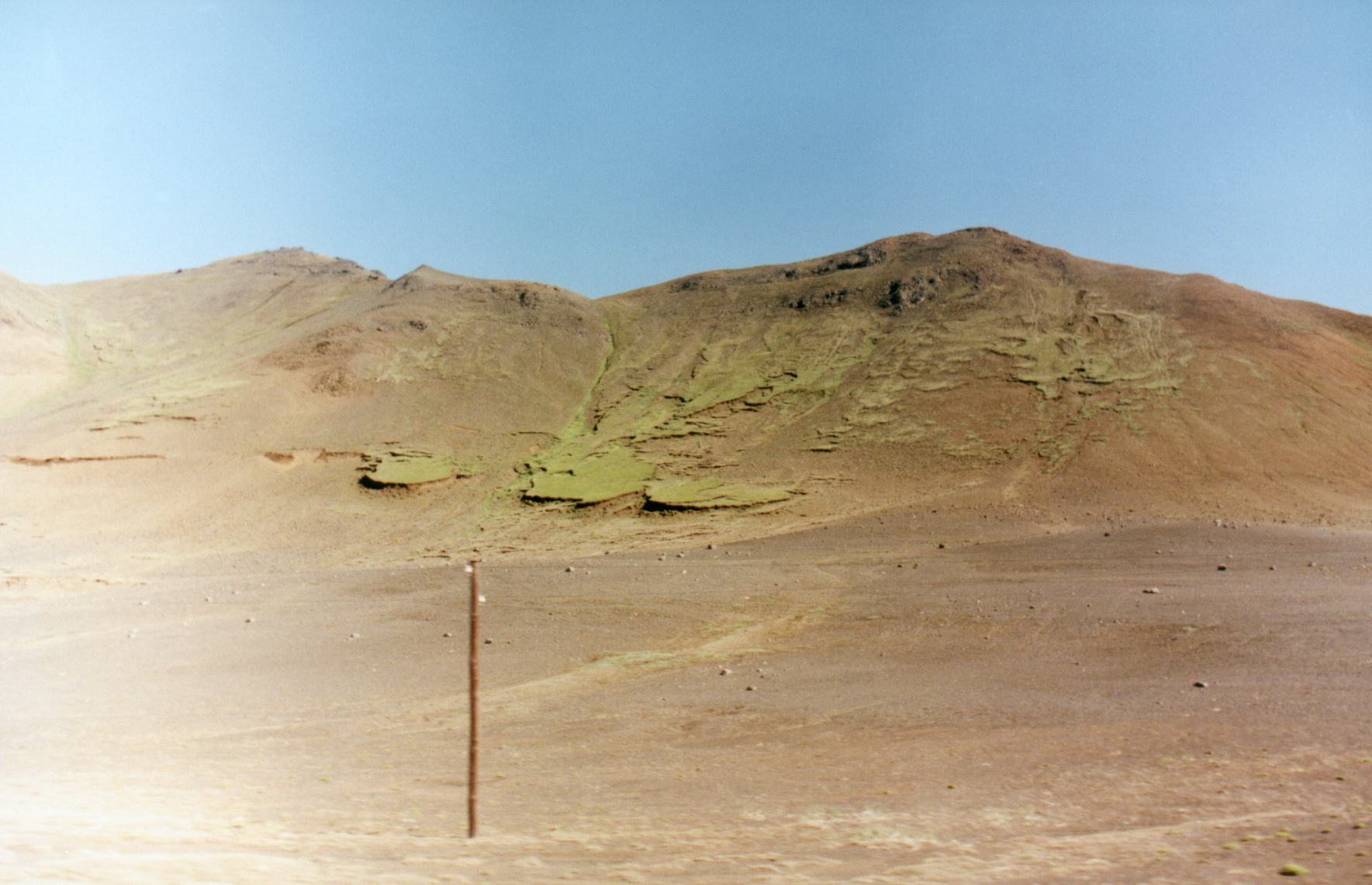
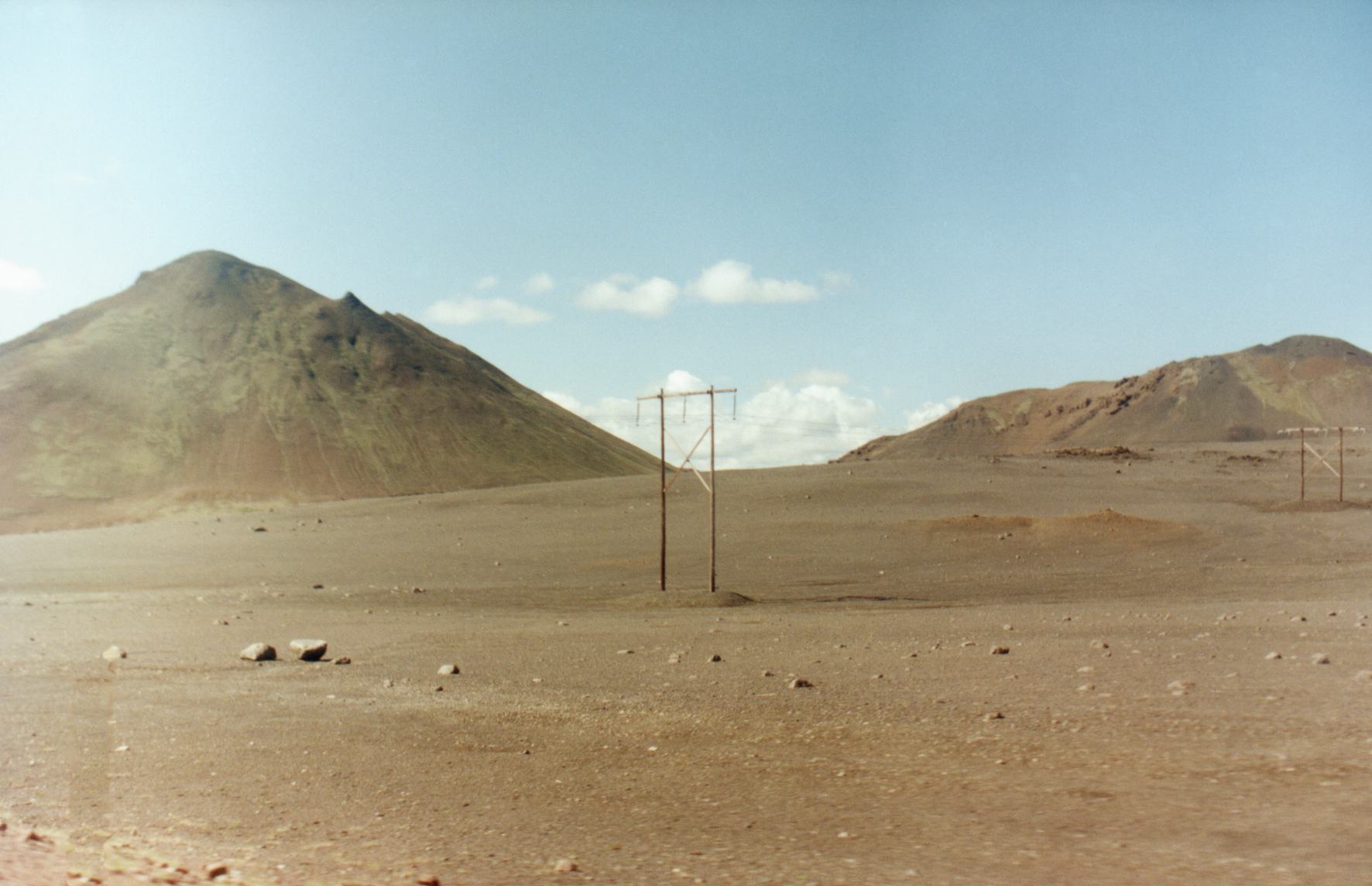
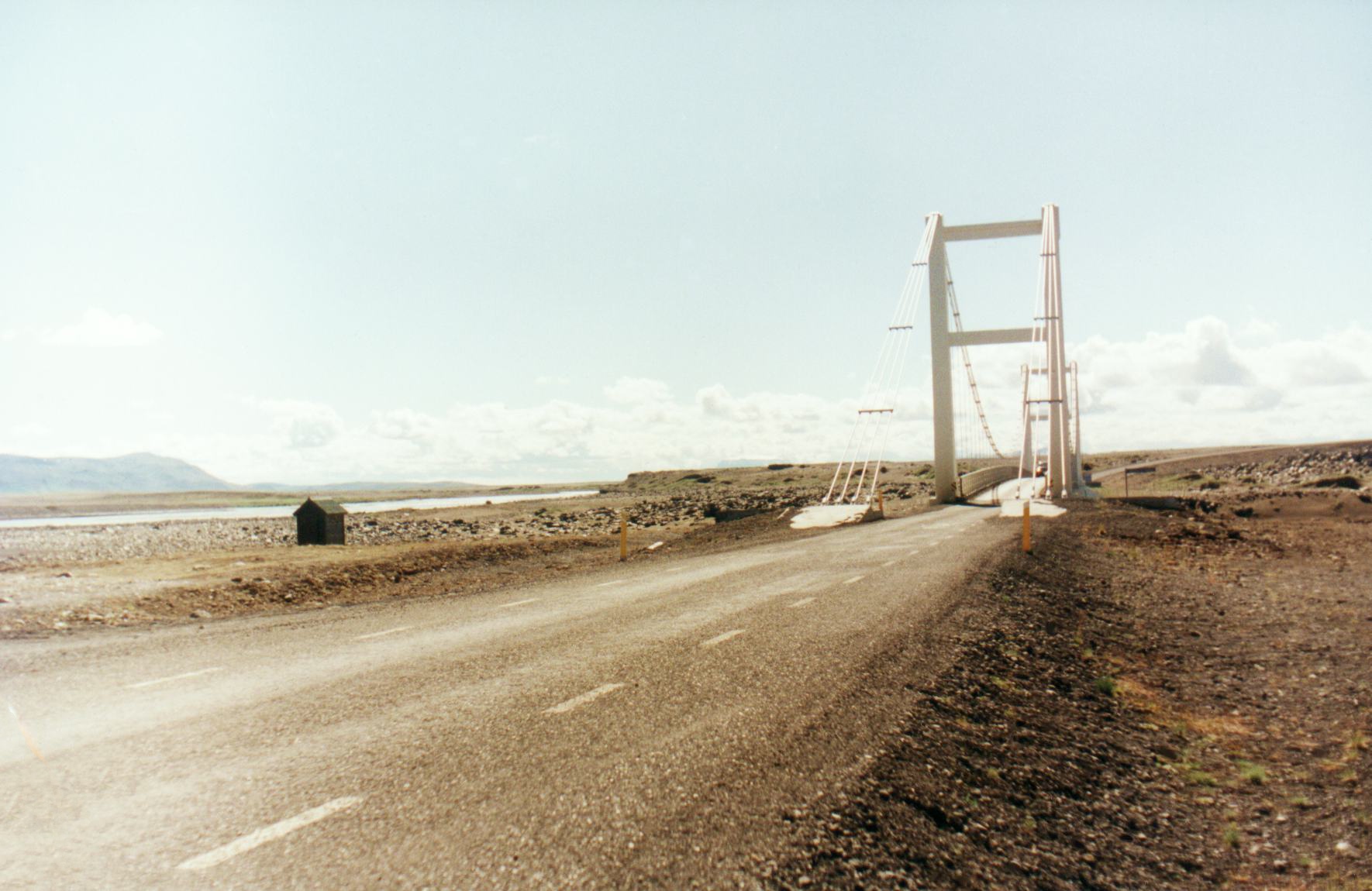
Meanwhile the weather had cleared altogether. Twenty degrees outside and a perfect blue sky. Who'd have thought it? At this rate we might warm our bones here after all.
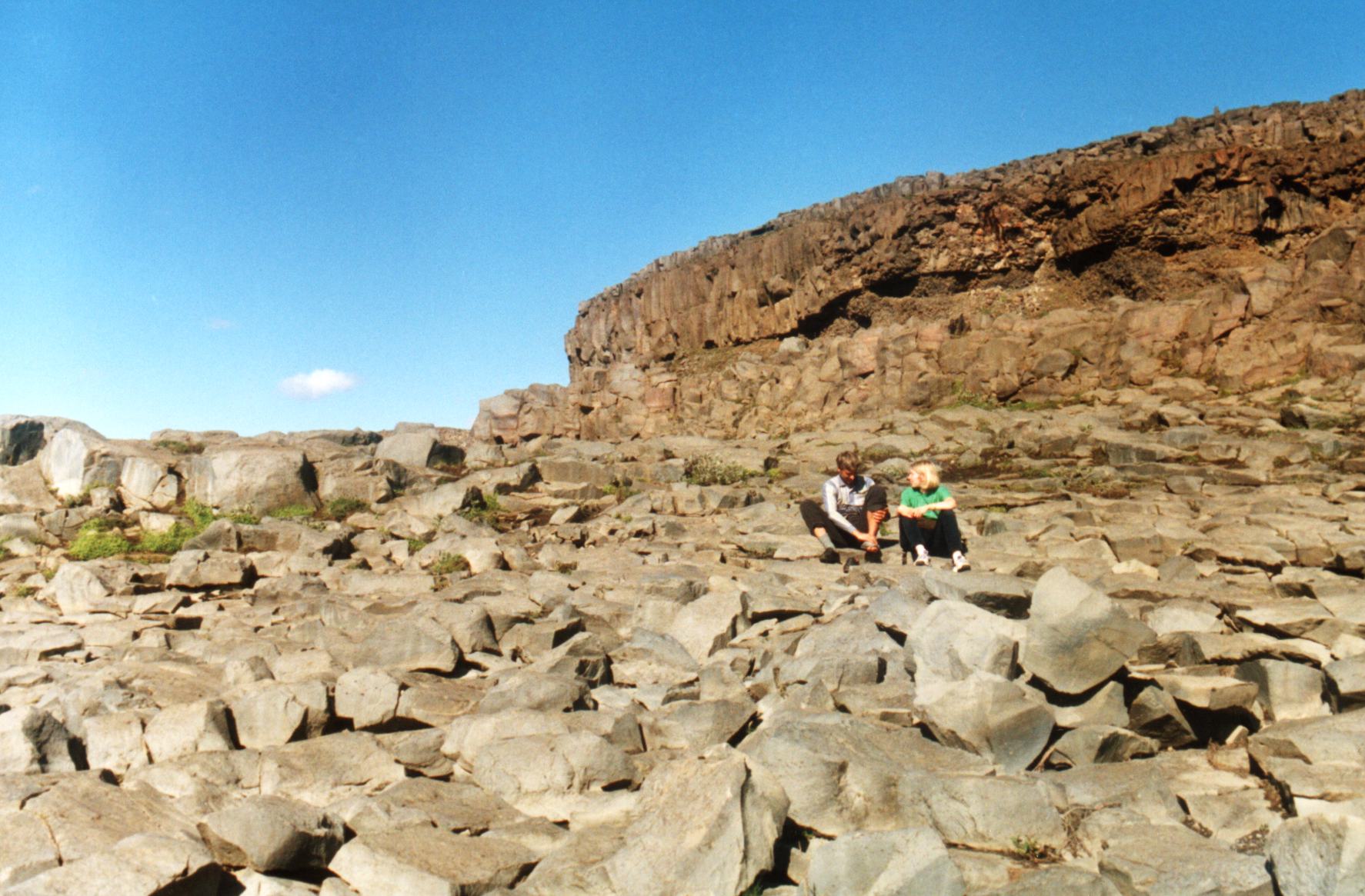
Hardly a town or village. A sense of unreality, as though nothing like this could happen in this world. Perfect happiness.
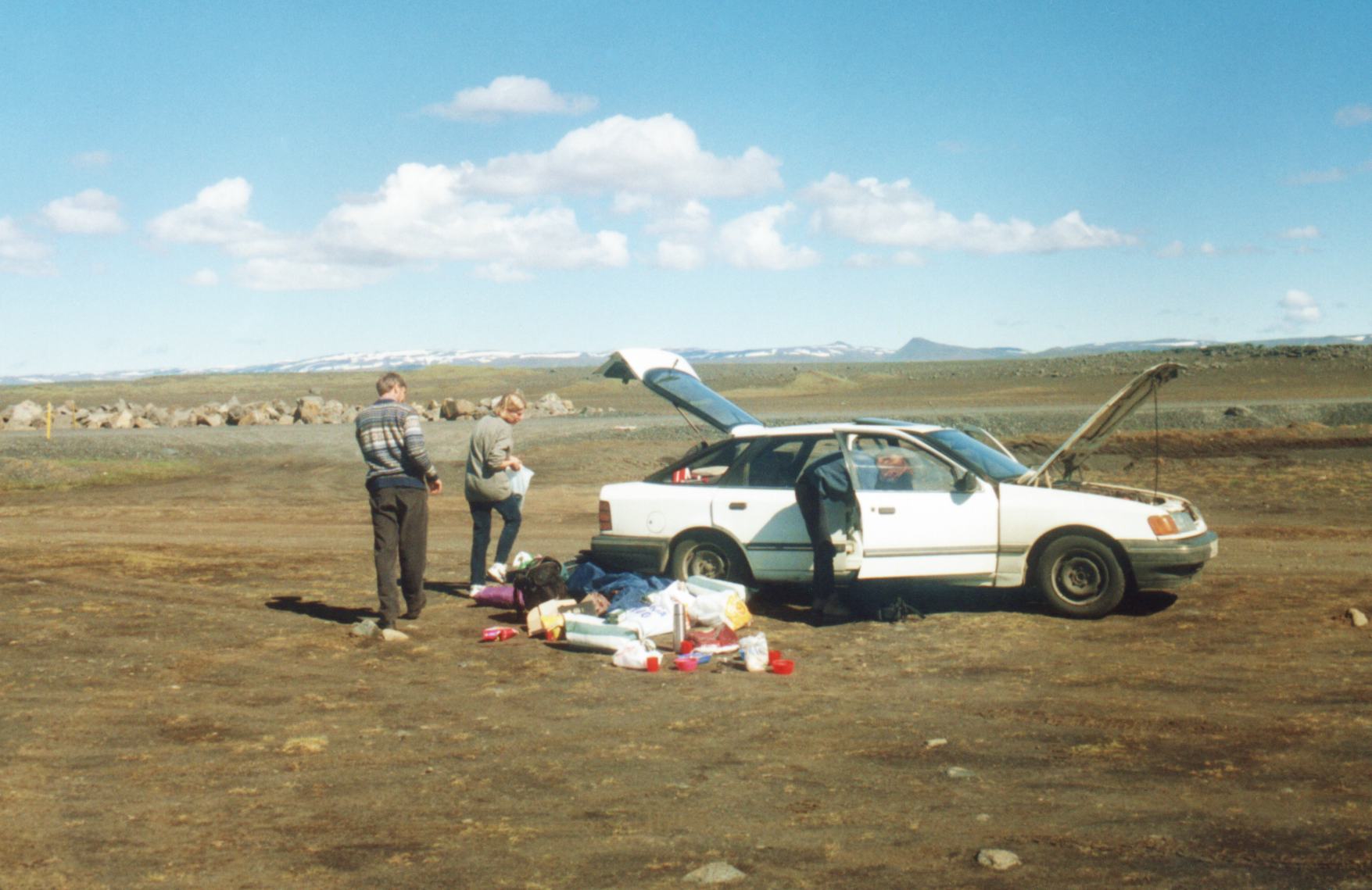
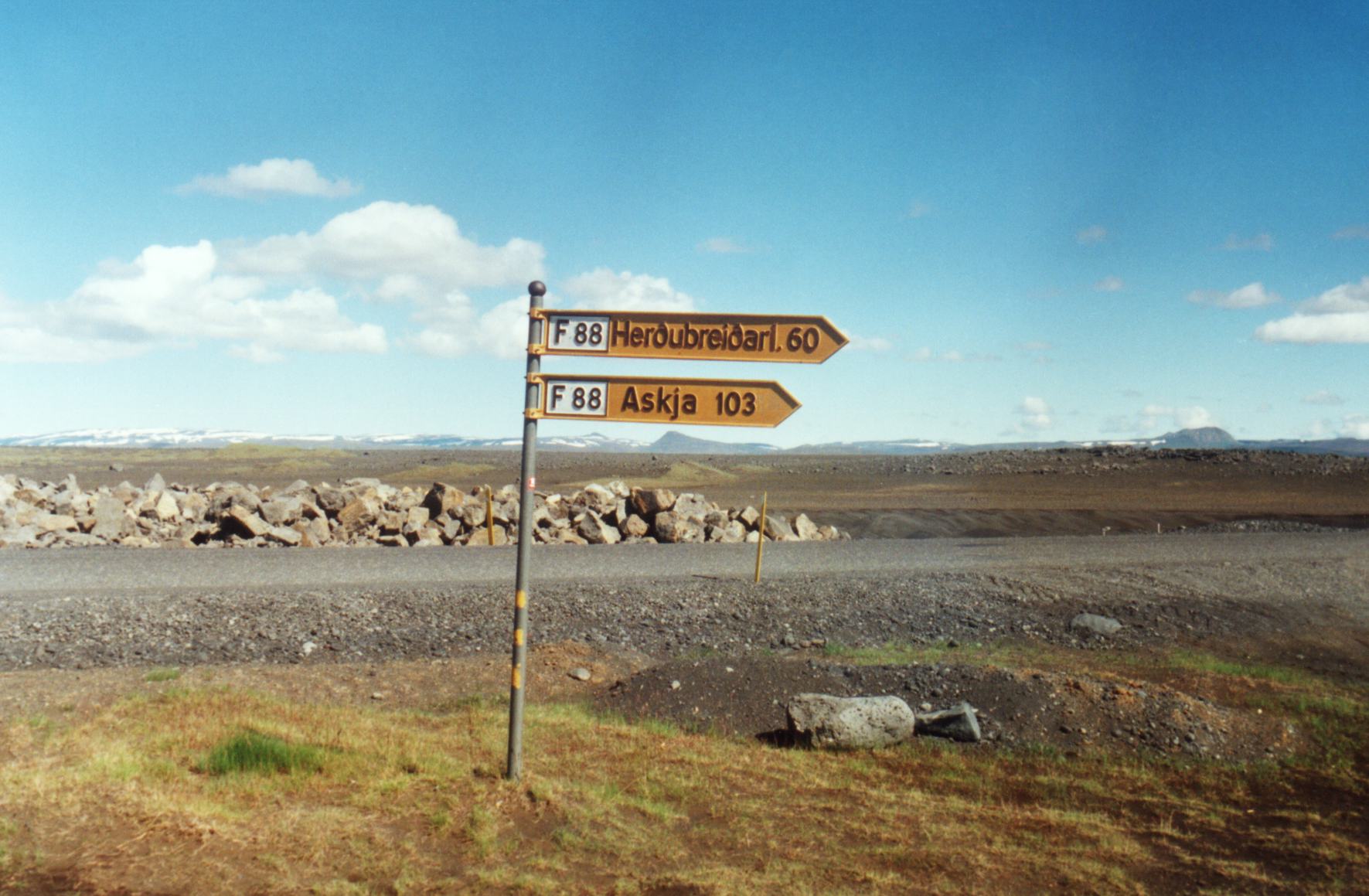
After a few hours we reached the turnoff for the F88. It goes inland to Víti, a warm volcanic lake. The road is marked as one for four-wheel drives, with unbridged rivers. The signs strongly advise against going. Our Ford has very low clearance. Frightening, in a word. We began asking local drivers whether it was really that bad. Yes, they said. You can go twenty kilometres easily and beyond that you haven't a hope. A pity, but all right. We left the decision till tomorrow and carried on to see the biggest waterfall in Europe, on the Jökulsá á Fjöllum. I wouldn't try to say that, let alone write it phonetically in Russian. The experts always say it ought to be written another way. You have to make peace with names like that the way you do with a Chinese character. A long thing with two little accented letter ás in the middle. You could take up Icelandic, of course. All these long words are compounds. The first part of the river name, jökul, means glacier, and the rest will be something like GlacialMuddyTorrent.
As I remember, I've seen a waterfall billed as Europe's biggest more than once. There are evidently different ways to measure them. The publicity says Dettifoss (Dettifoss in Russian lettering) is Europe's Niagara. Dettifoss certainly is huge, but at forty-four metres it's four metres lower than Niagara. The spring flow is 500 m3/s, a tenth of Niagara's, so the comparison isn't quite fair. It does look quite unconfined. A car park, toilet, bin and a sign. All free, without wardens and other unobtrusive “services”. Downstream the river has worn out an enormous canyon of extraordinary beauty. A few tourists, with ten cars in the parking area. Two kilometres upstream is another waterfall, eleven metres high, Selfoss. We walked to it. Not as tall, of course, but its streams fall along hundreds of metres of canyon.
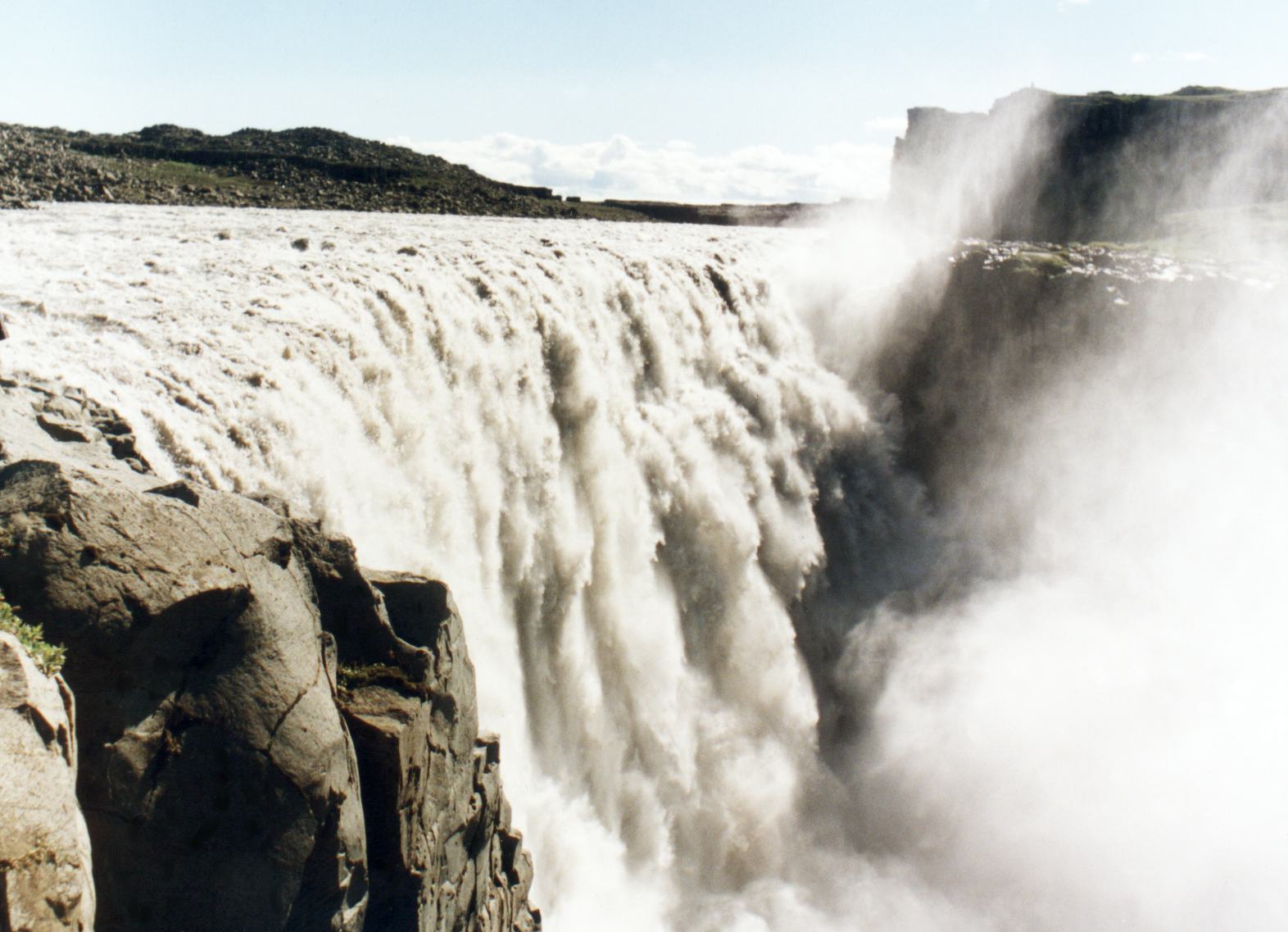
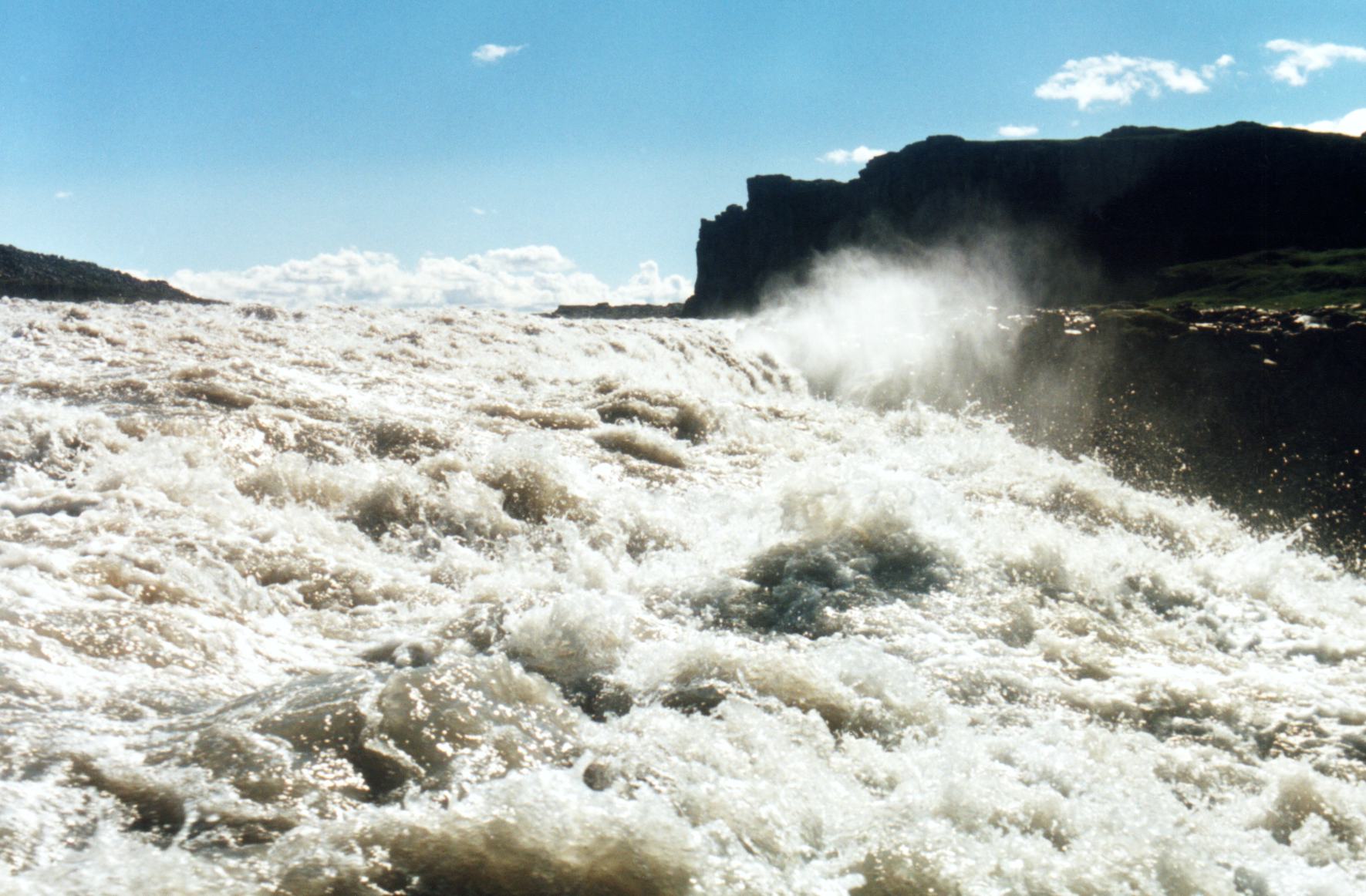
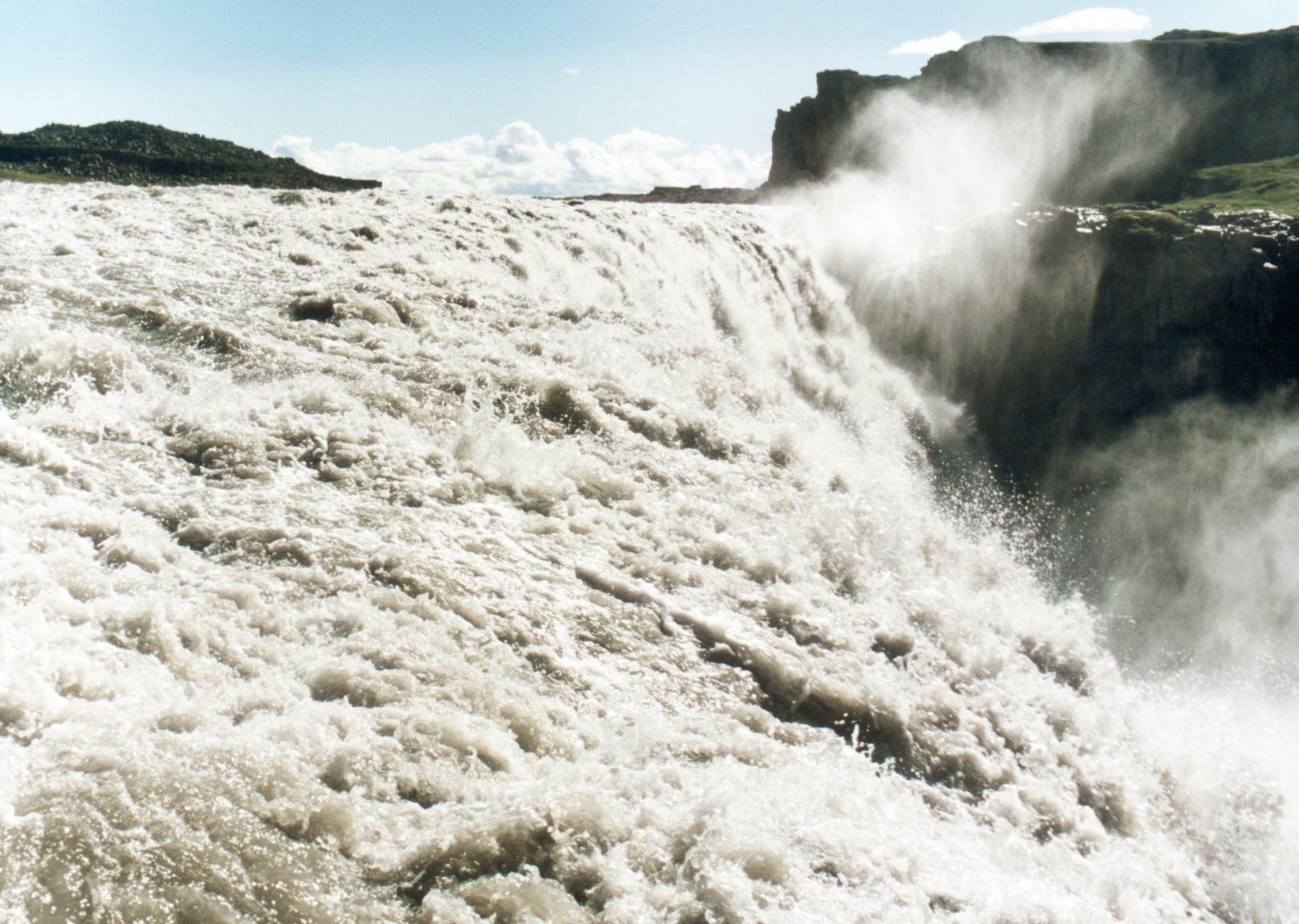
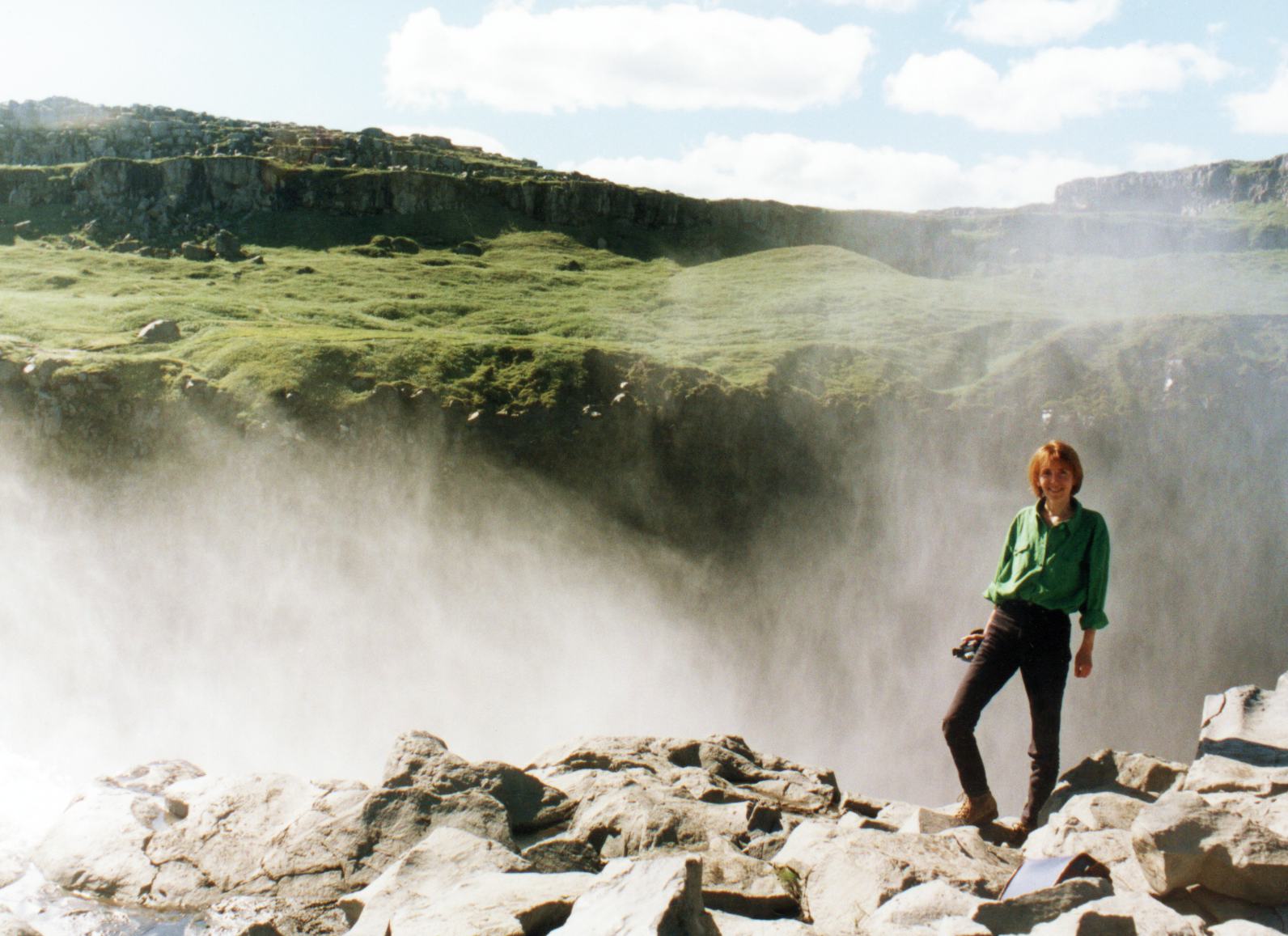
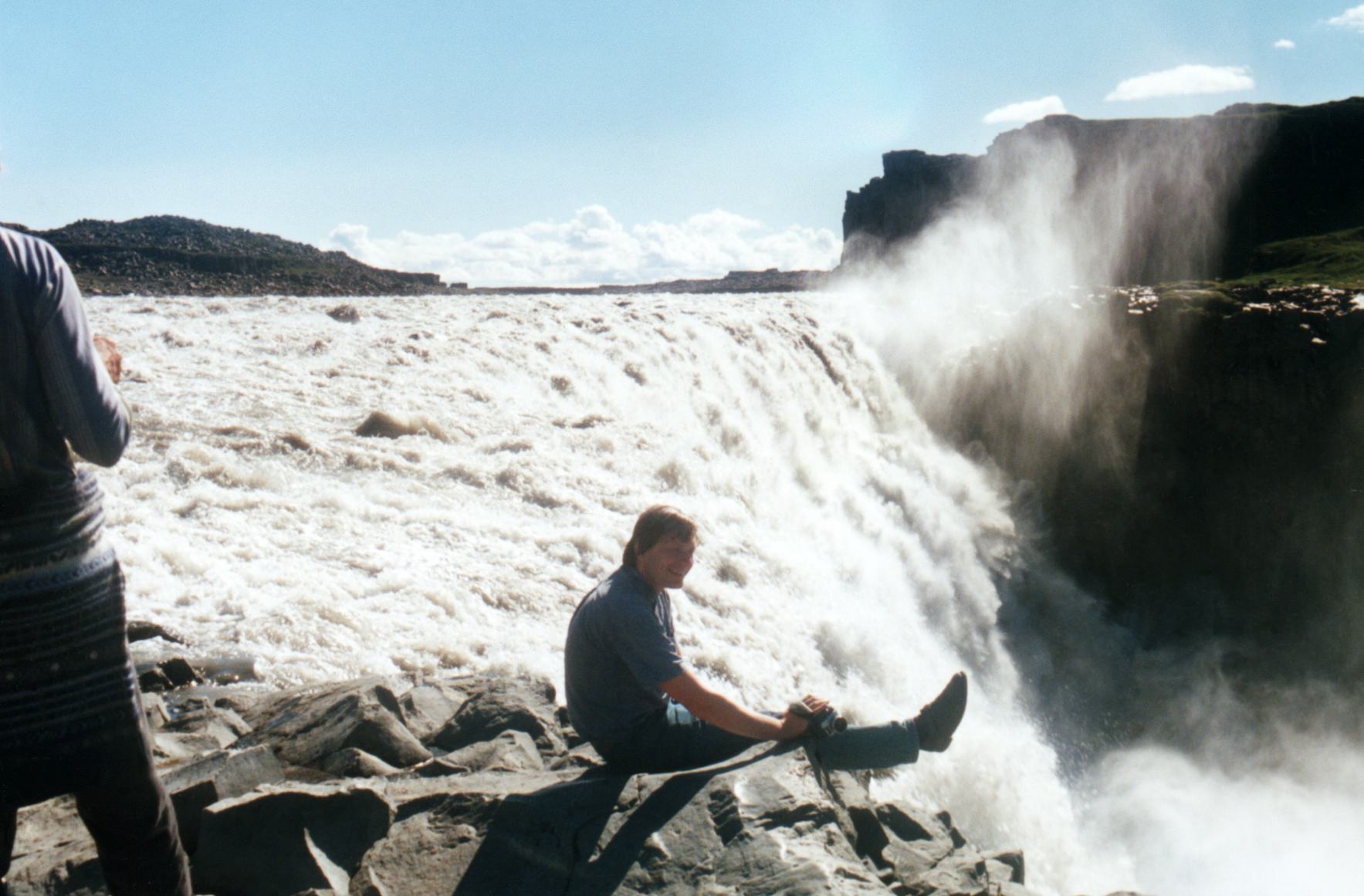
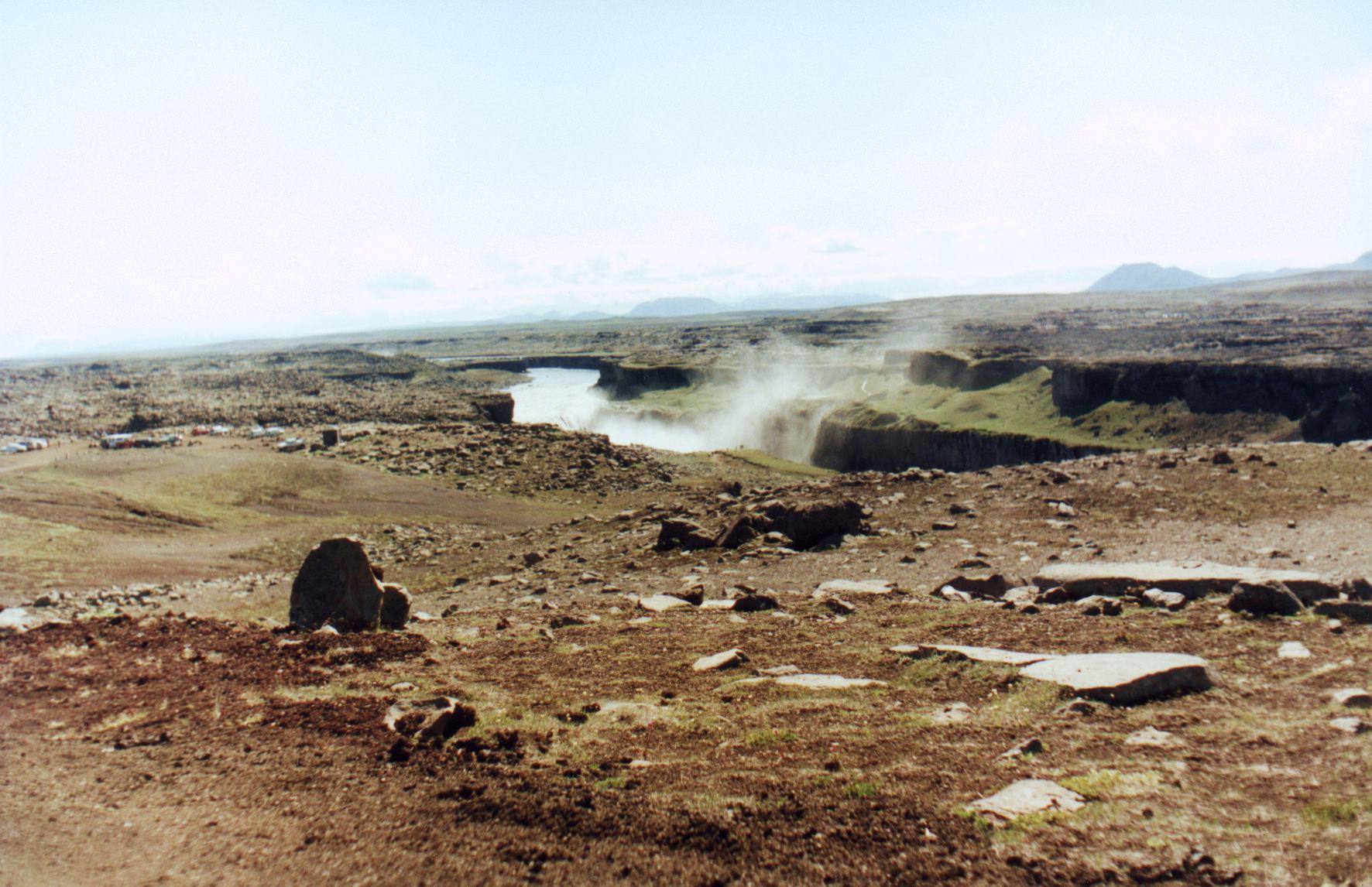
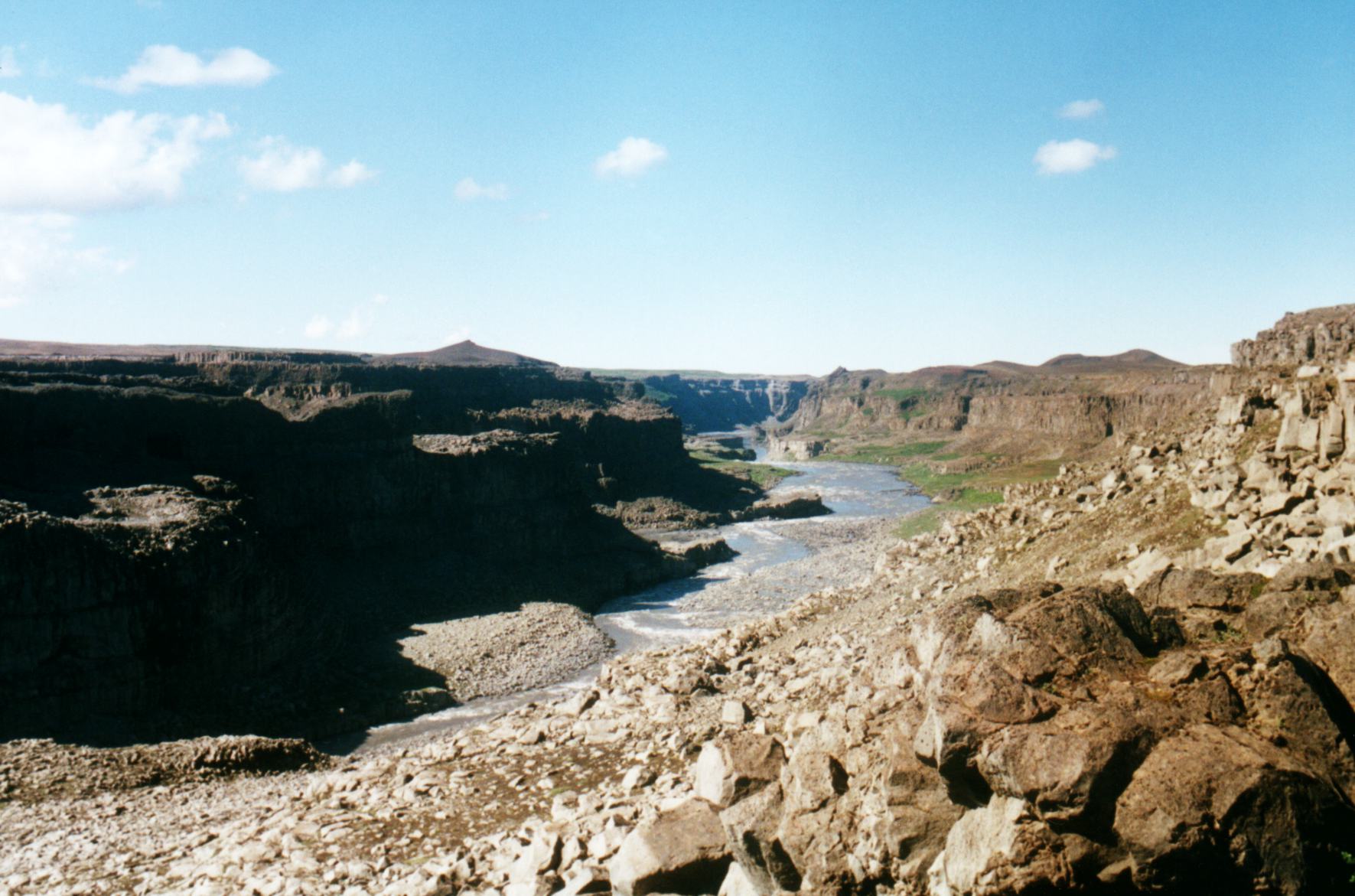
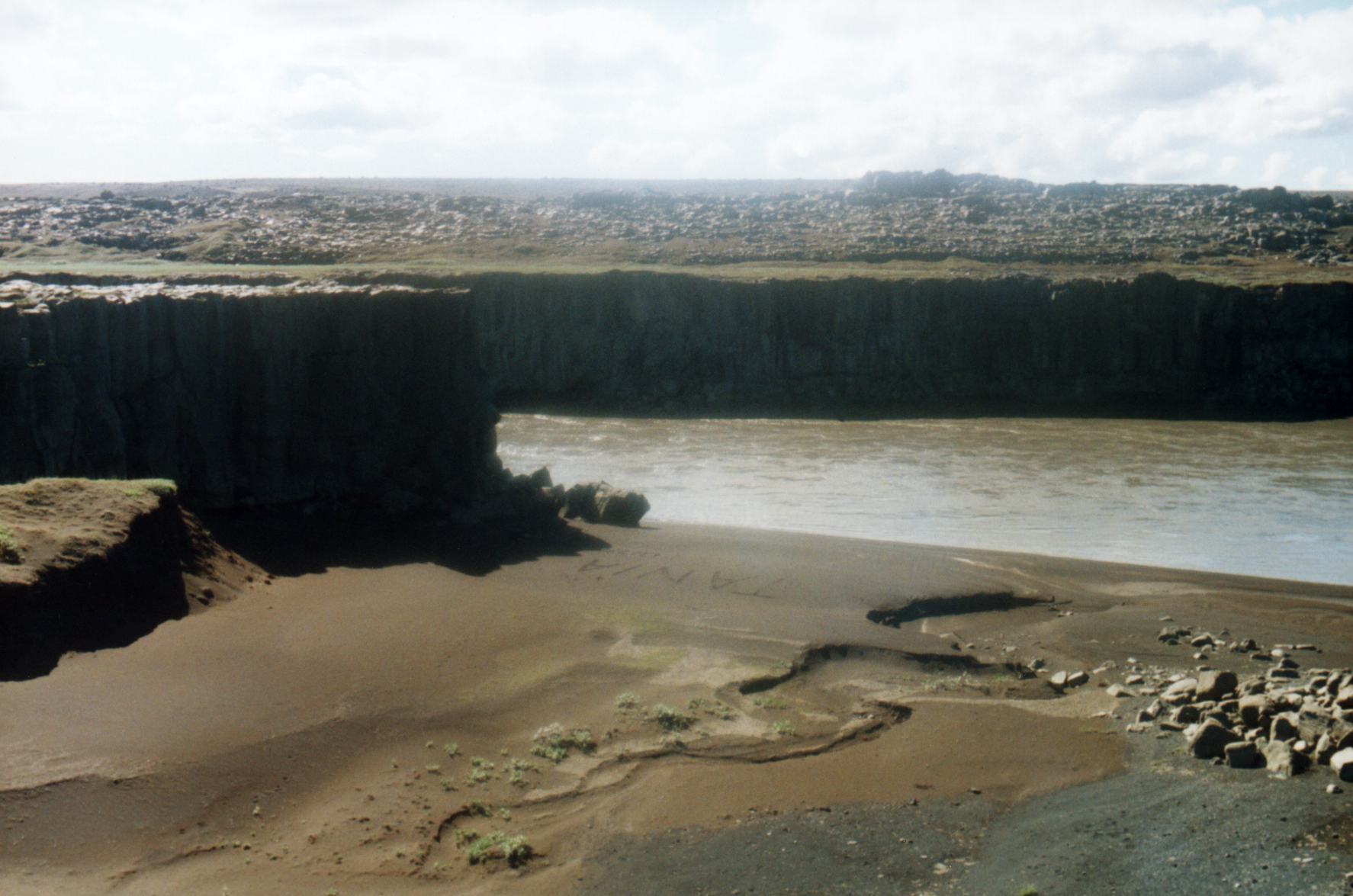
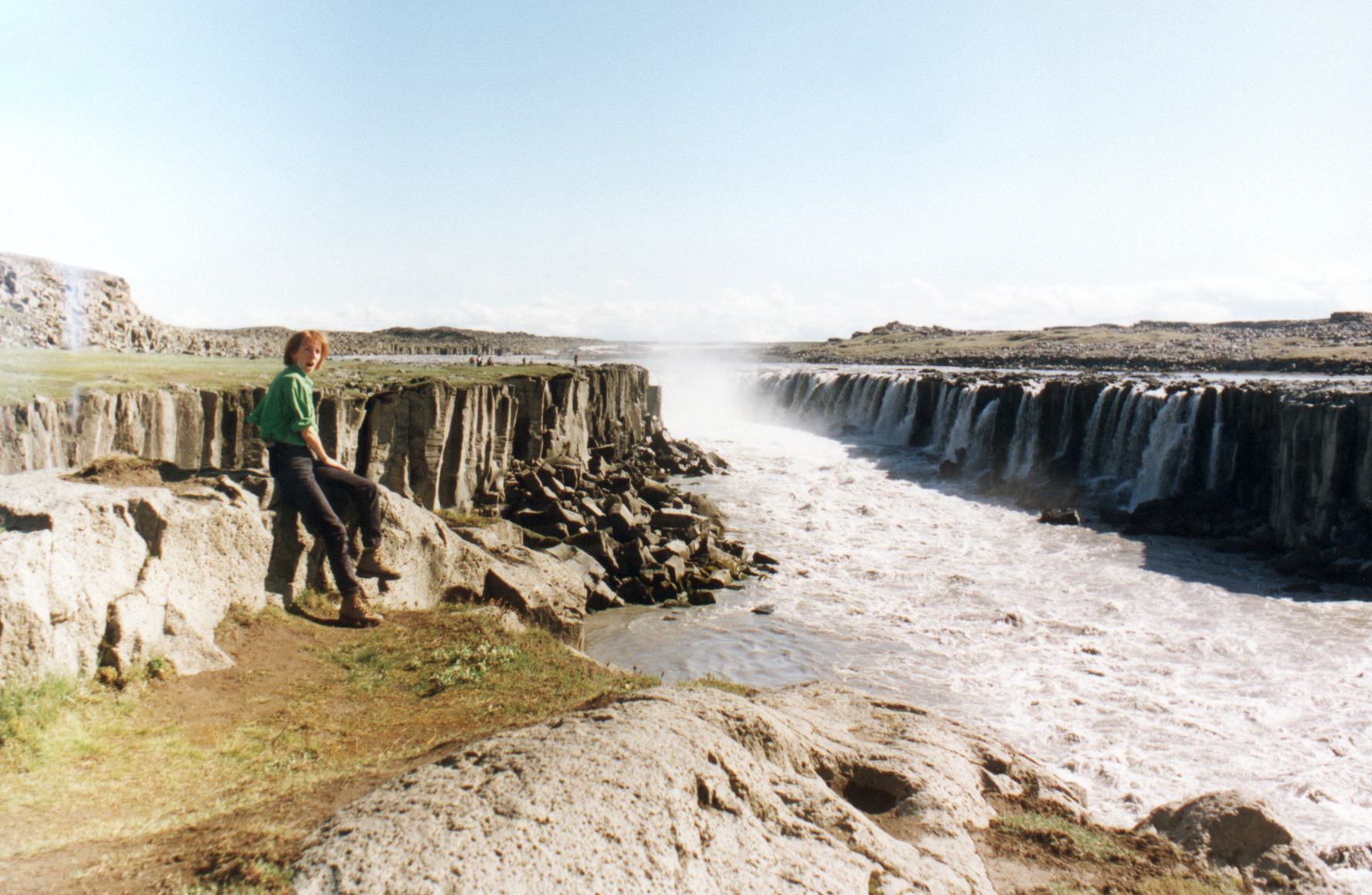
Below Dettifoss is another drop, Hafragilsfoss, twenty-seven metres. It's easier to drive to it. The road ends at a lookout on top of a little hill, or rather a little volcano. When they built the road they ran it straight through the crater, bulldozing the edges of the bowl out of the way. These miniature Icelandic volcanoes delight me. There's a little hill five metres high and twenty across, with a crater a couple of metres deep. Everything's there except the smoke. You could keep one at your dacha.
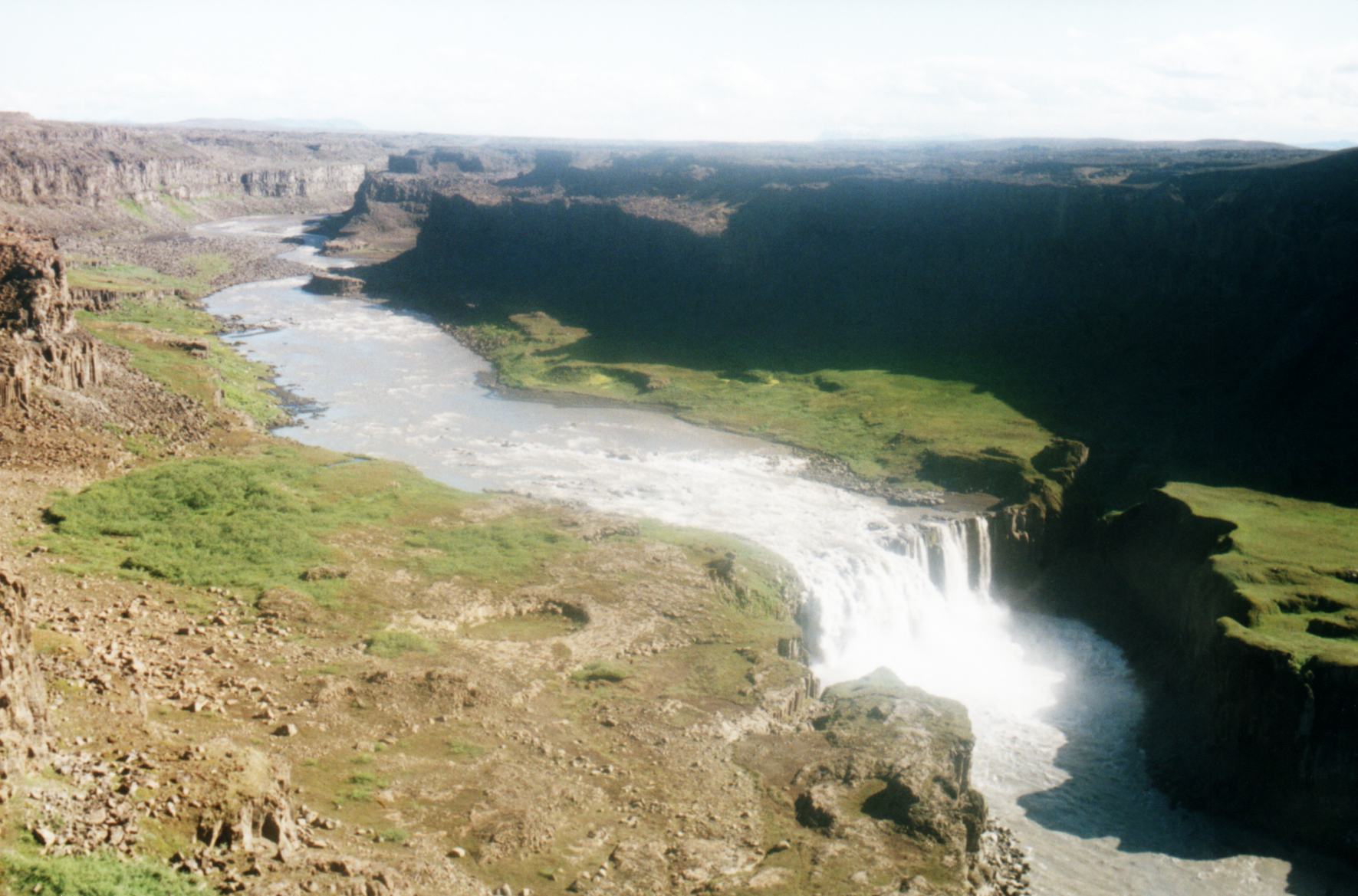
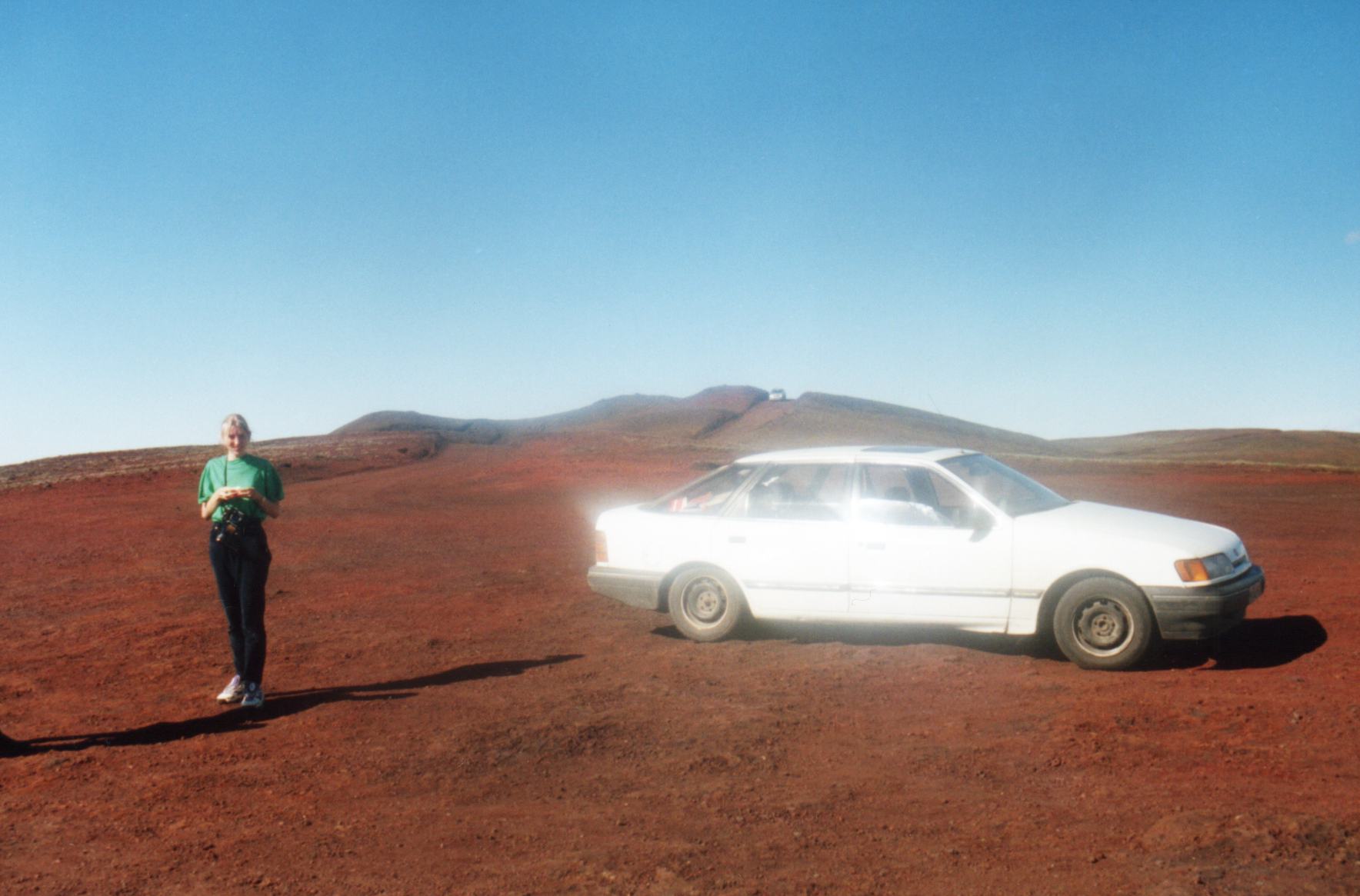
We viewed all three falls from the east, off Route 864. It's easier because the road is unsealed but passable. In a vehicle with better clearance you're better off on the west, via the F862. Especially in the evening, when you're on the sunny side and can see rainbows in the water. Alas, we weren't going to manage that. Even here we were scraping the underside and the poor old fuel pump on the bumps. It looked as though we'd have to give up our plan to visit the interior.
Where the waterfall river with the unpronounceable name finally meets the sea there's another natural wonder. Years ago, after an earthquake, the river changed course. The canyon it had scoured out was left without its river, and the flat bottom grew over with woodland.
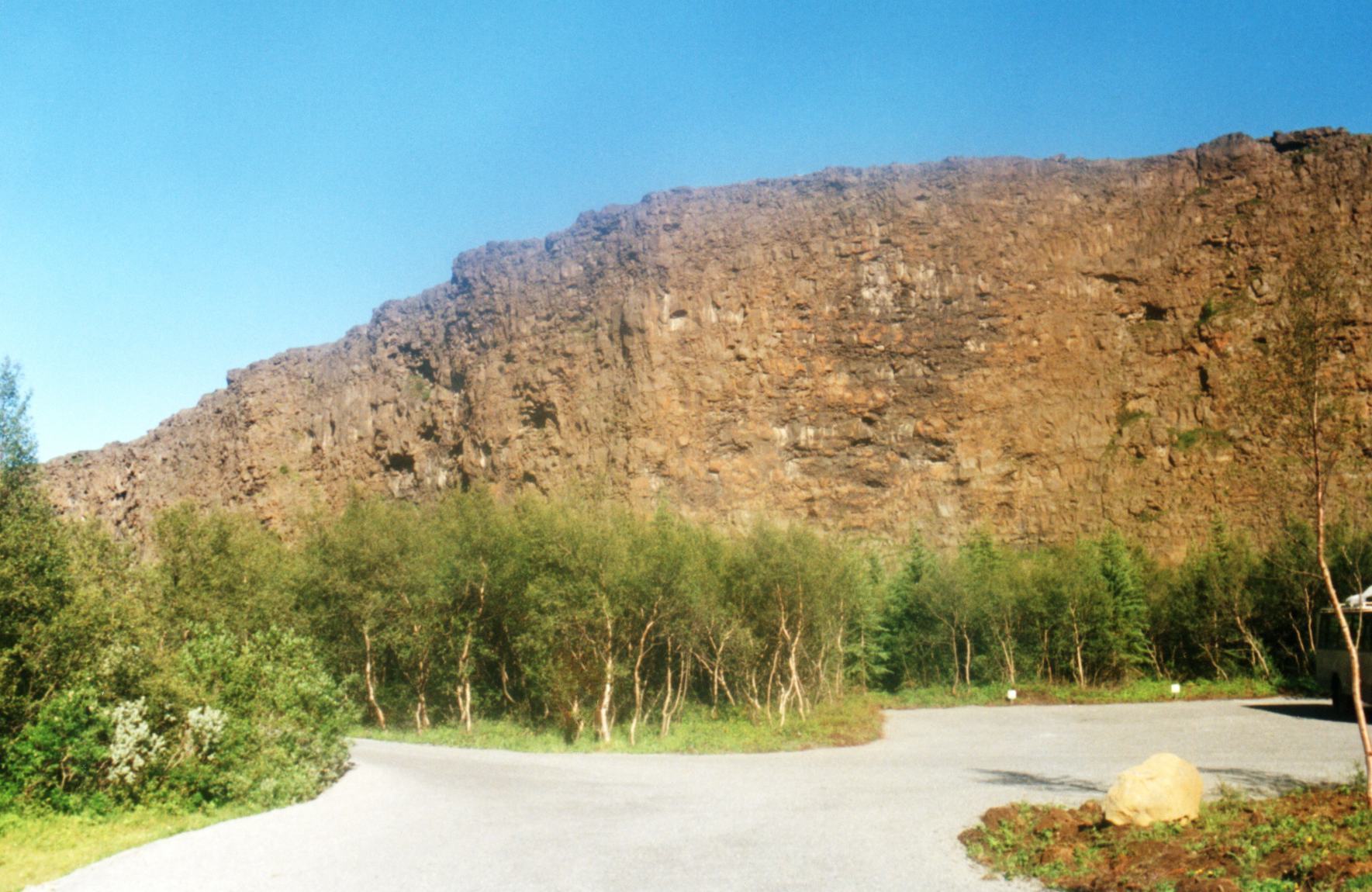
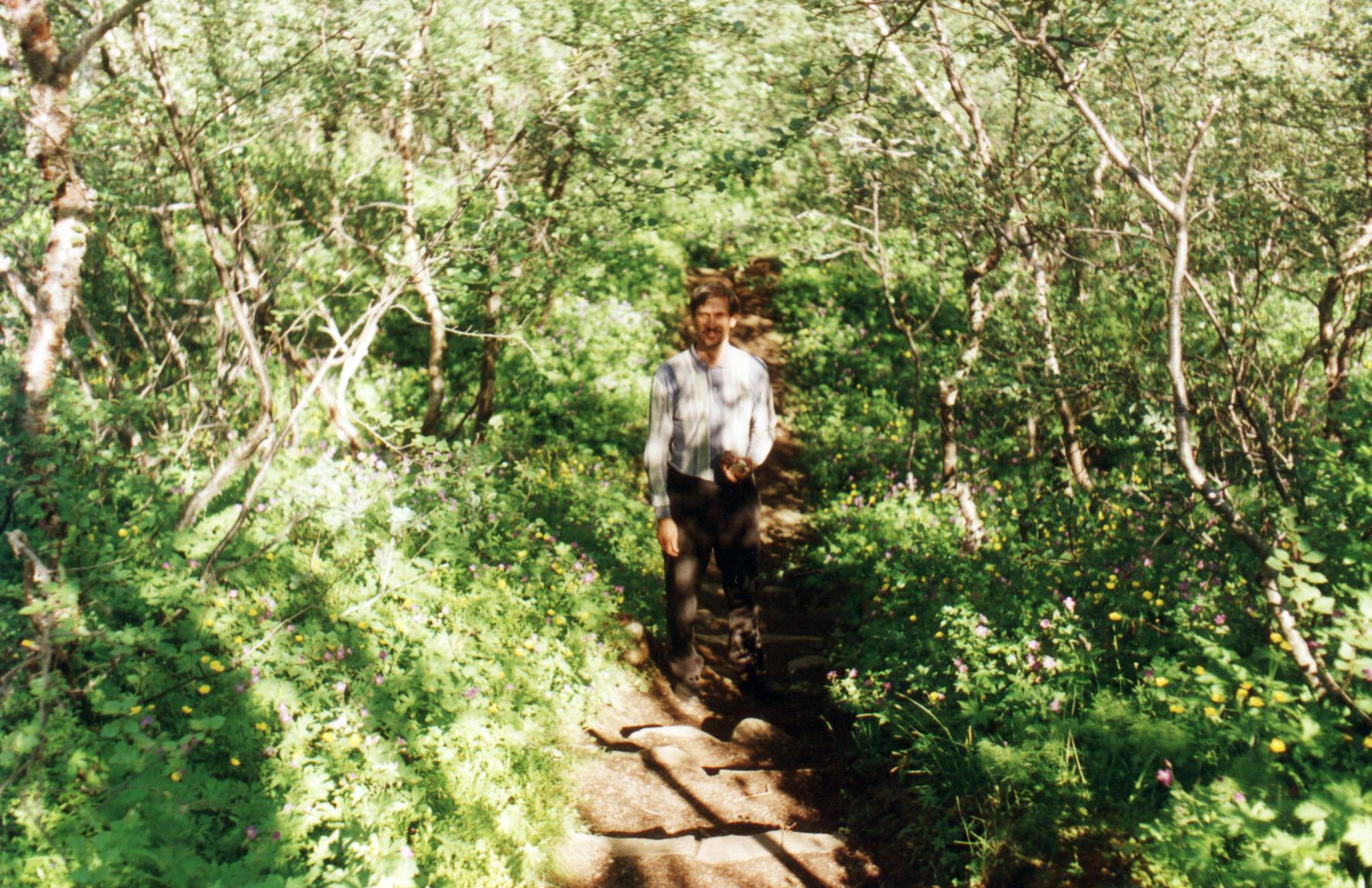
A road runs along the floor. It's a very unusual sight: you're driving on level ground with a hundred metres of sheer rock all around. The canyon is called Ásbyrgi. You can drive in for free but can't pitch a tent. It's also known for having Iceland's biggest forest. An eight-metre birch is a record by their standards. They bring children here to show them what a forest is. There are mushrooms, by the way. Pavel even collected some birch boletes.
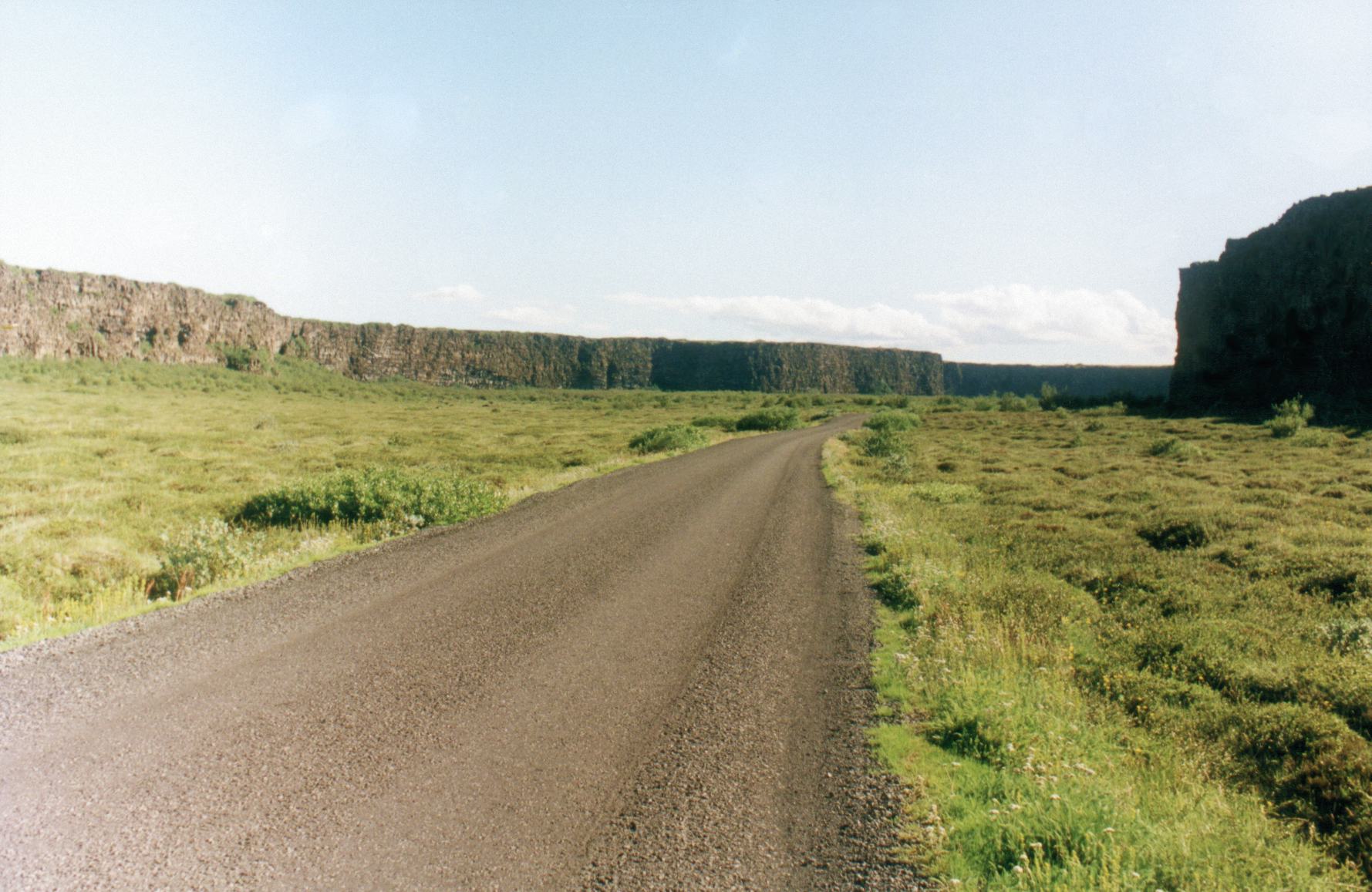
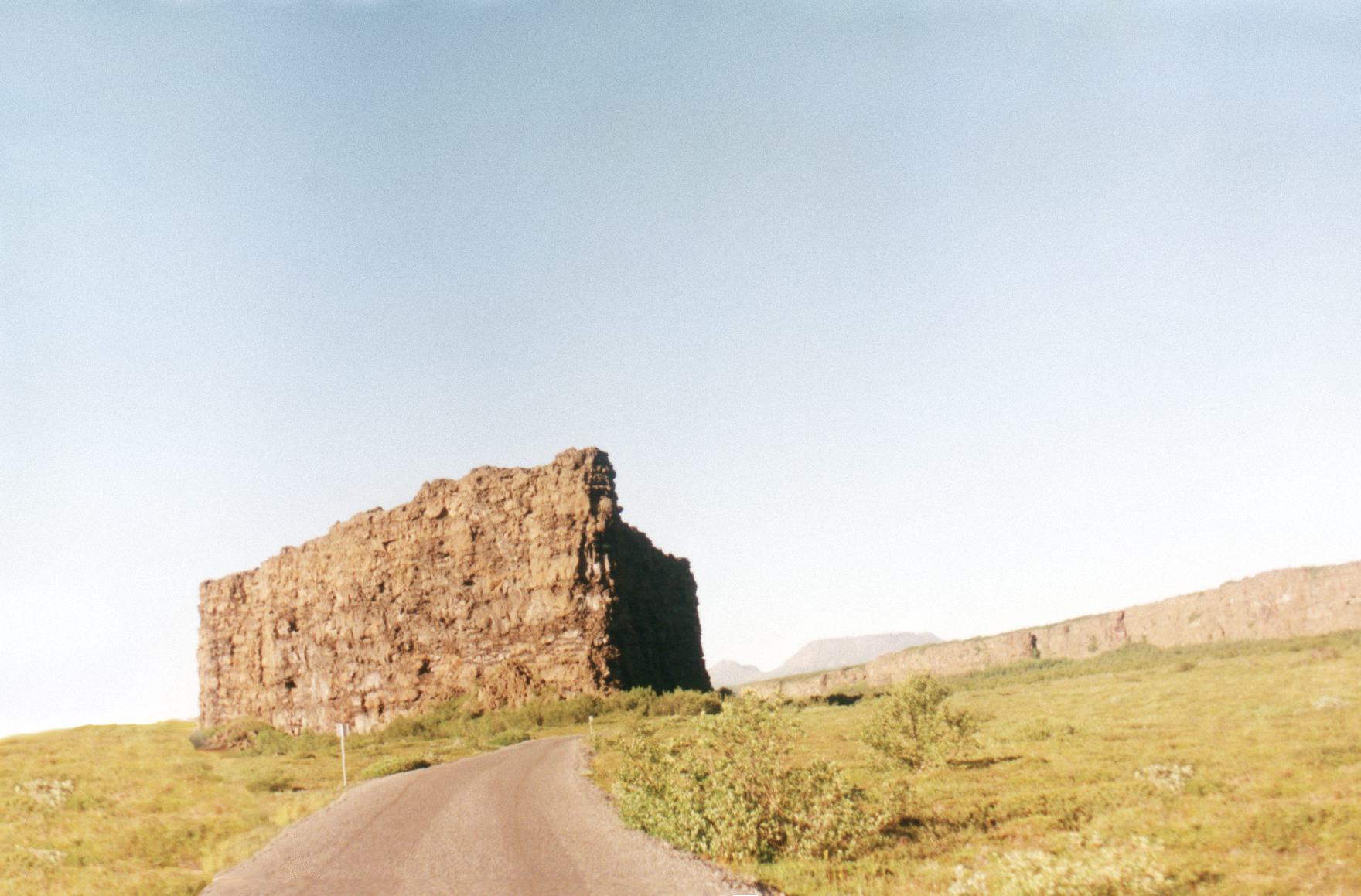
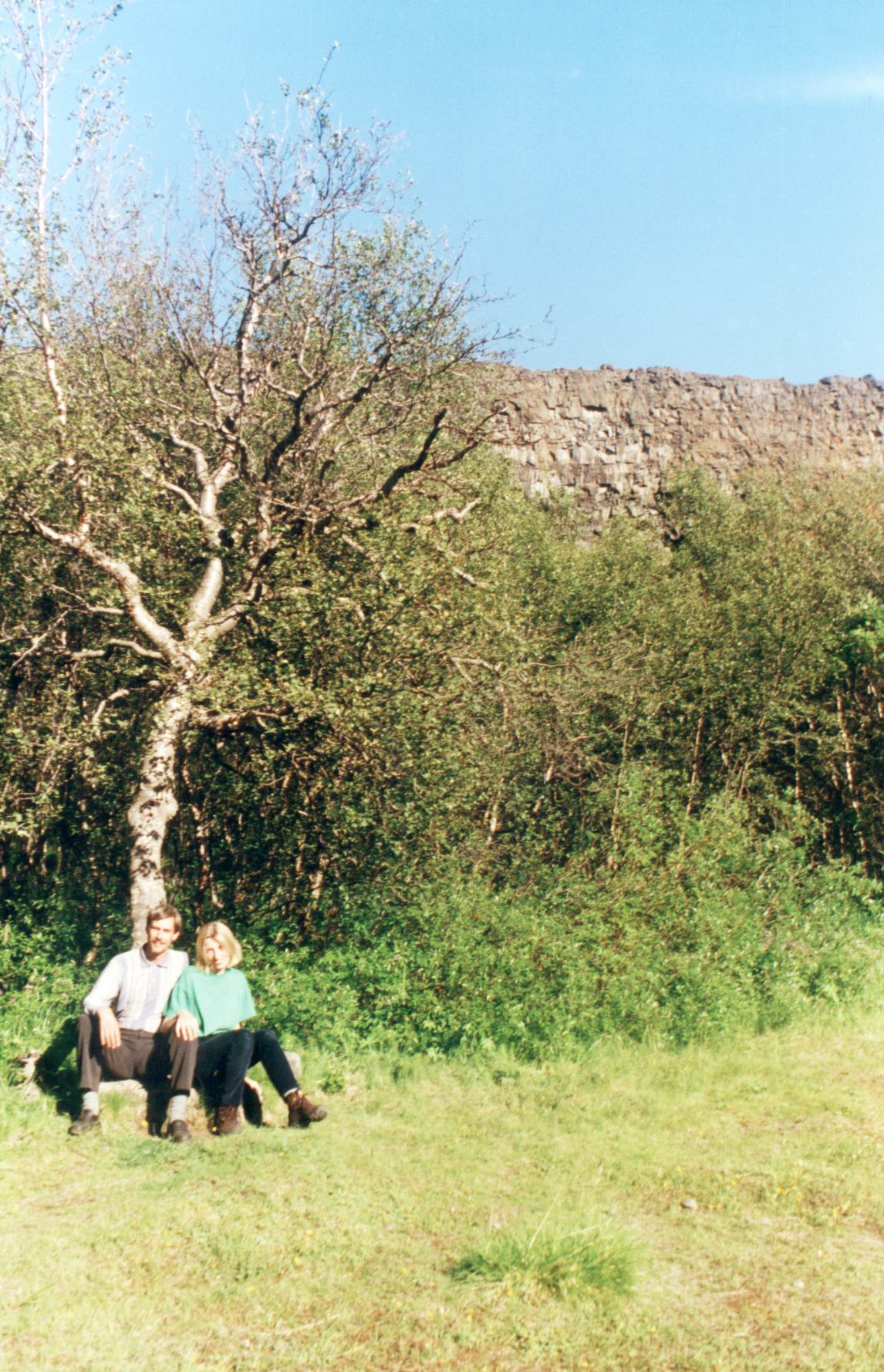
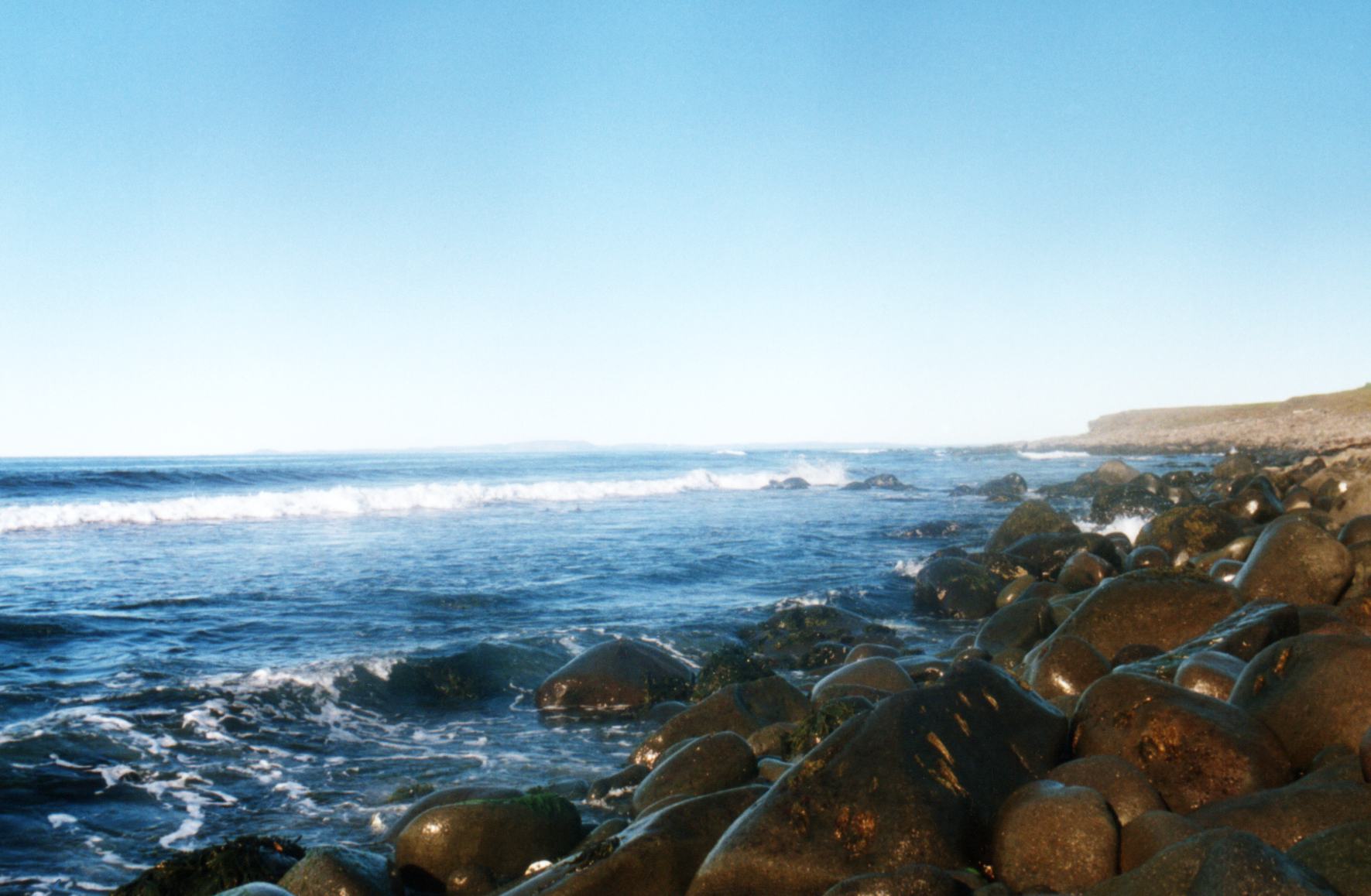
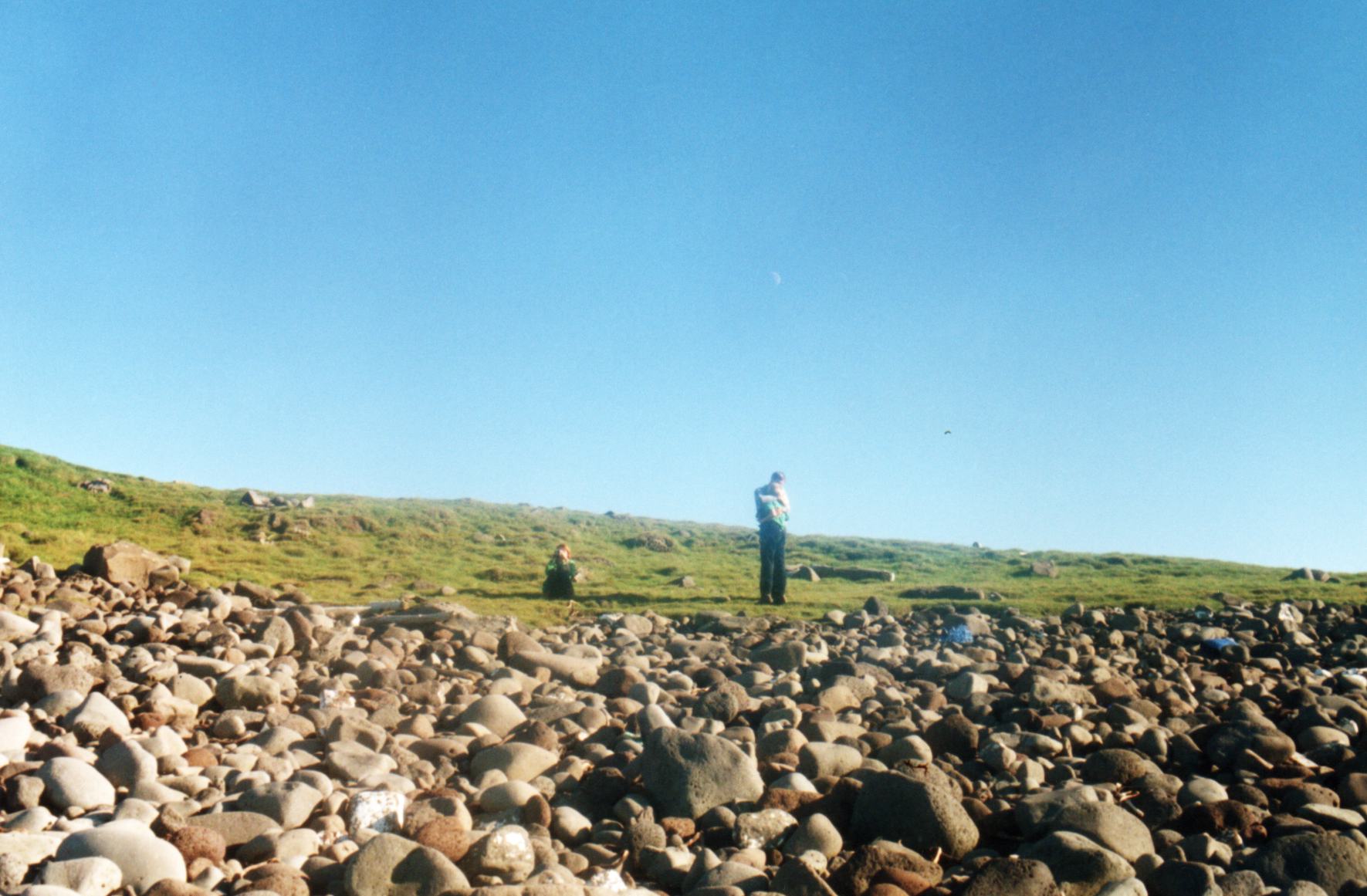
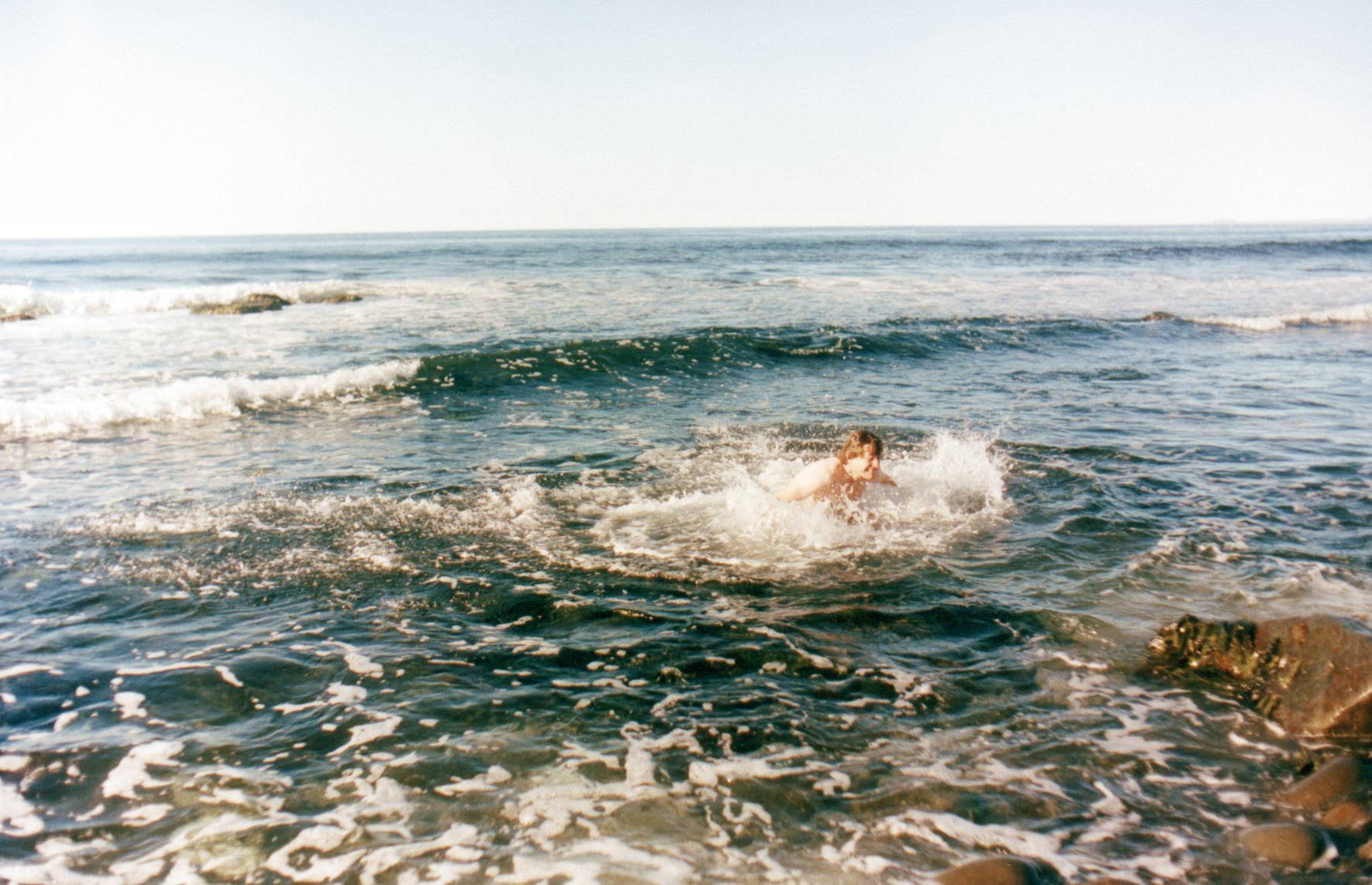
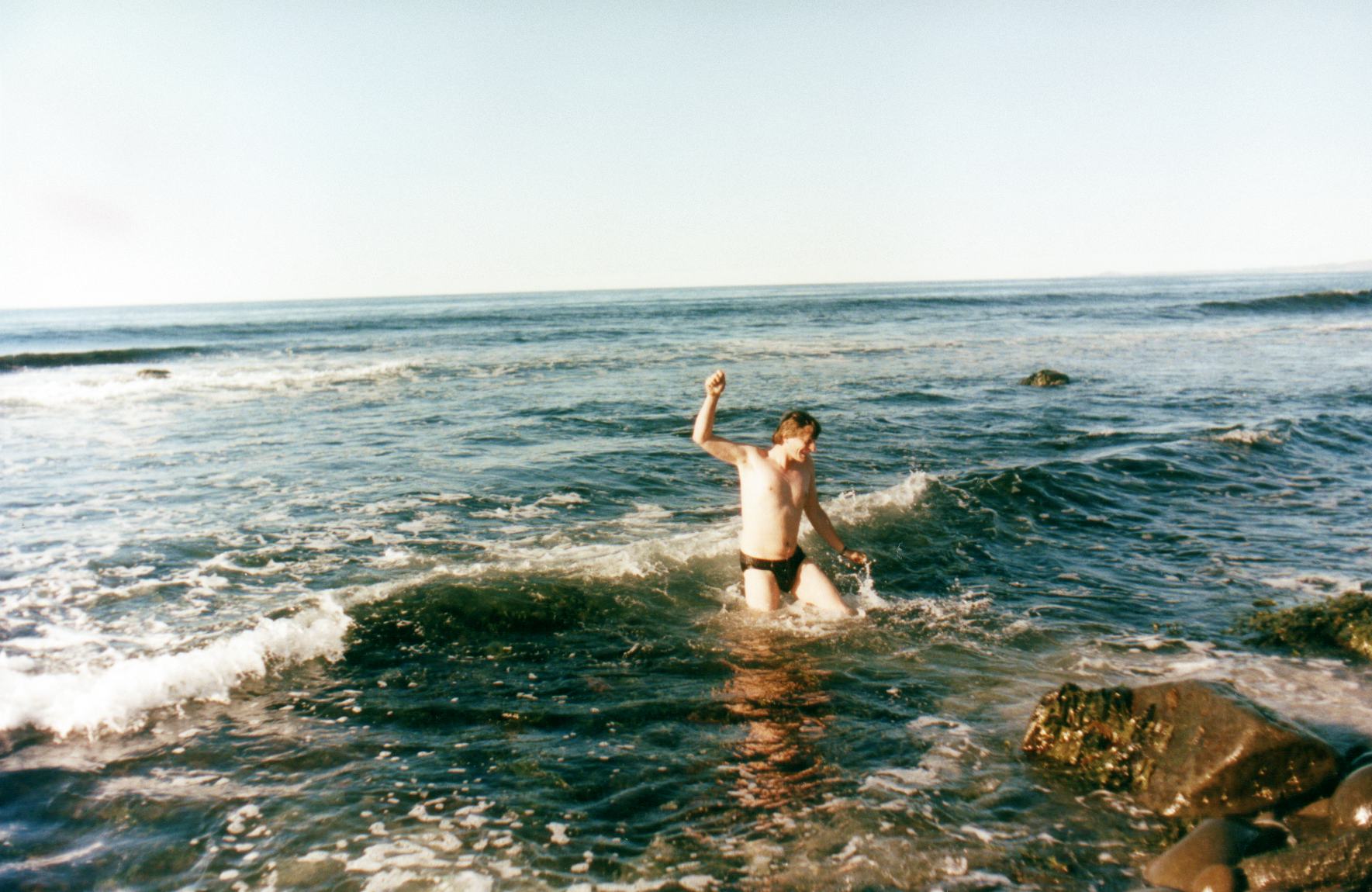
Next on the programme was the Greenland Sea. We took Route 85 right to the coast and I went swimming. That made fourteen seas I'd managed to swim in. Not so cold, really. The Bering Sea was worse.
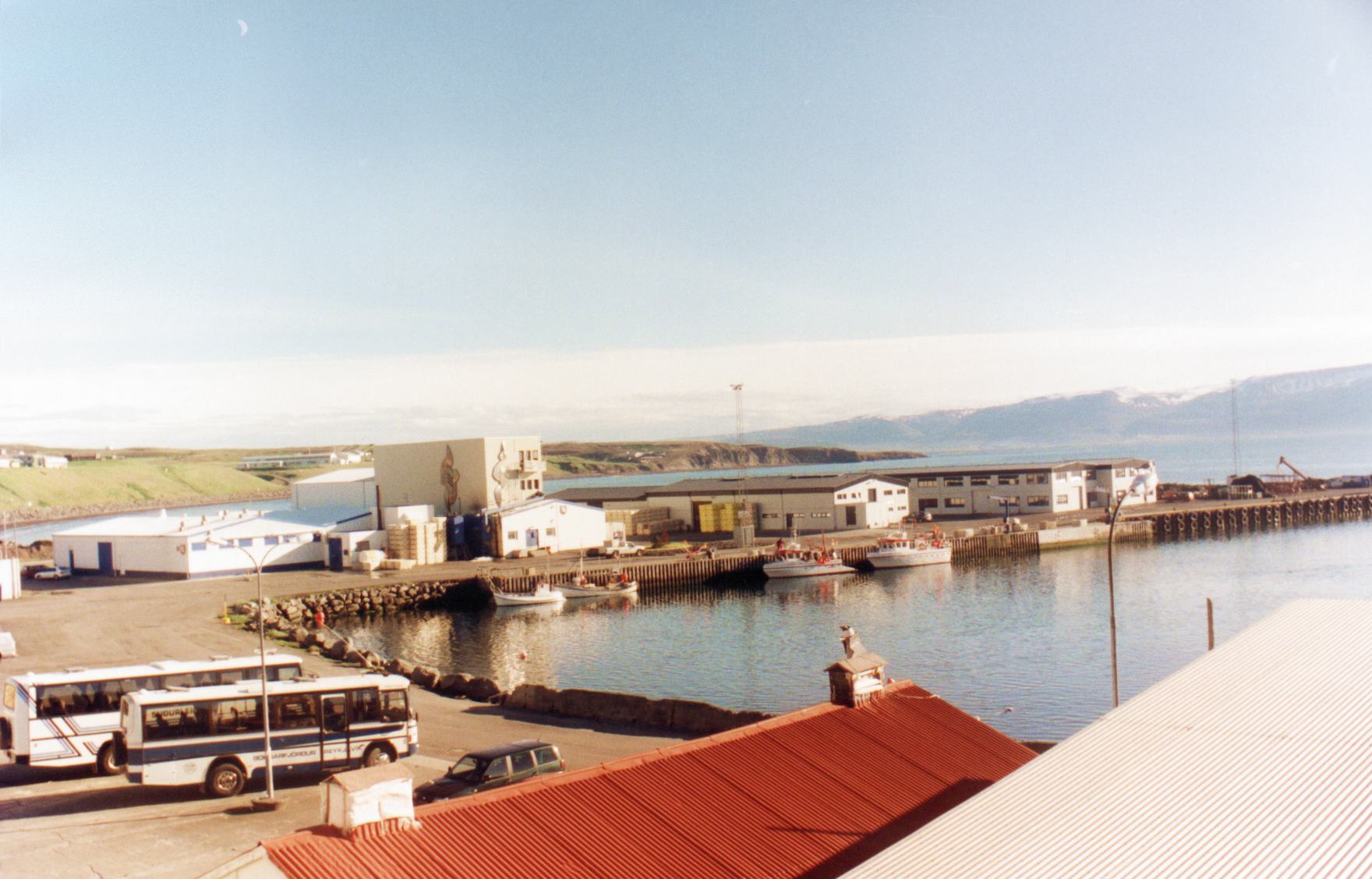
In the little toy town of Húsavík we learned how to wash the car. Everything turned out to be very simple. At the filling station you pull up in a designated spot. Brushes hang on the wall with hoses feeding them water. Turn the tap and water shoots through the brush under pressure. A minute or two with the brush and your car is clean. I've never found a handier way. It's all free, by the way. A good example of what to do if you want clean cars on your streets. Imagine our Duma passing a law and building these things out of the budget.
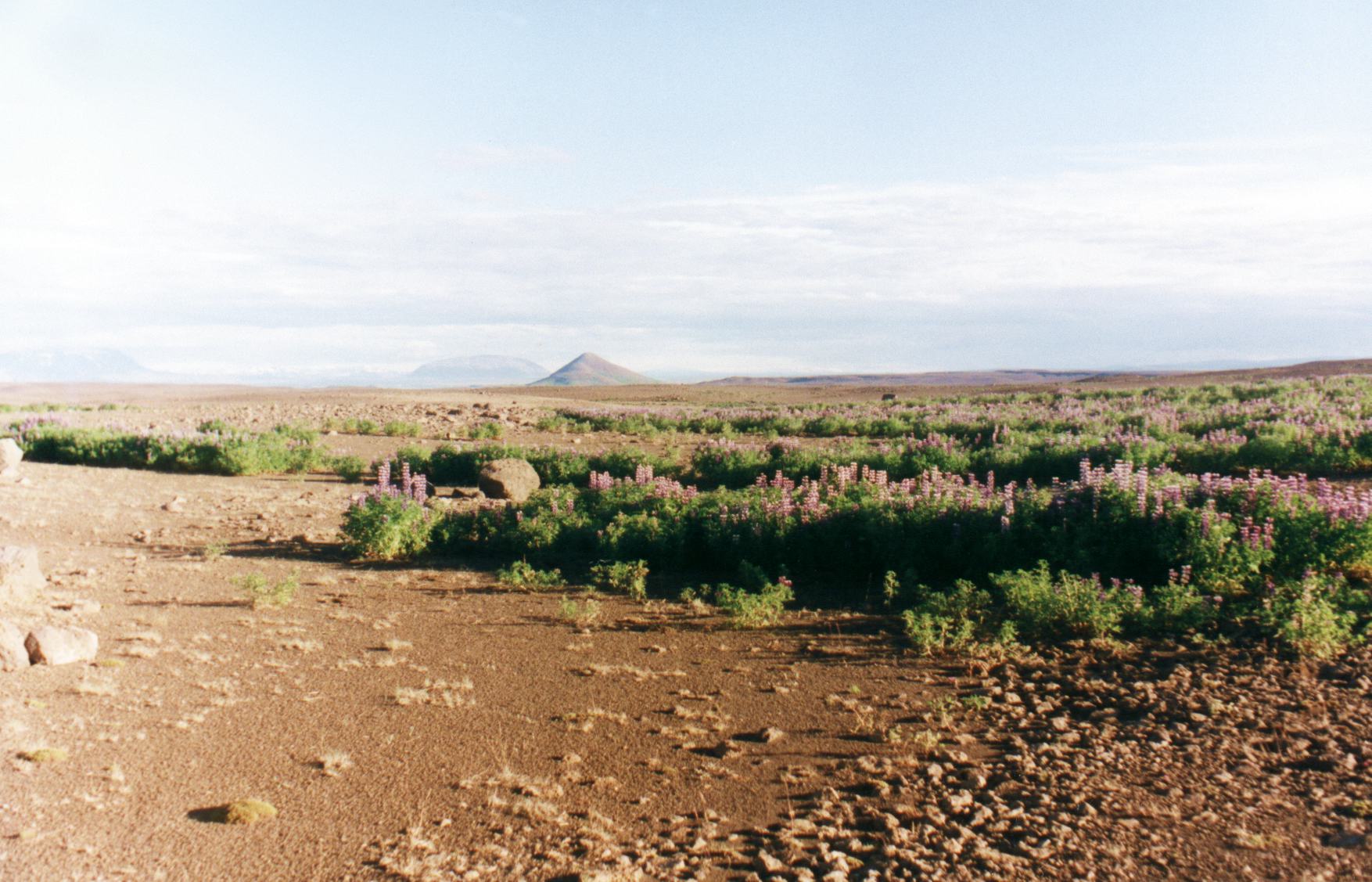
We decided to end this long and fantastic day at Lake Mývatn. This volcanic lake with its cones poking out of the water is considered one of the great sights. All round the shore stand volcanic bombs in fantastic shapes. Uncommon beauty, particularly in the red of the setting sun. It's supposed to be a warm lake, and perhaps it is, up to a point. At the end of July the water was ten degrees. It was the same in the lakes next door. The publicity calls it a paradise for birdwatchers. In Western countries they have this pastime of seeing as many kinds of birds as possible. I'm no authority on birds and I don't like competing, but the watchers deserve thanks for the amenities that have been set up for them.
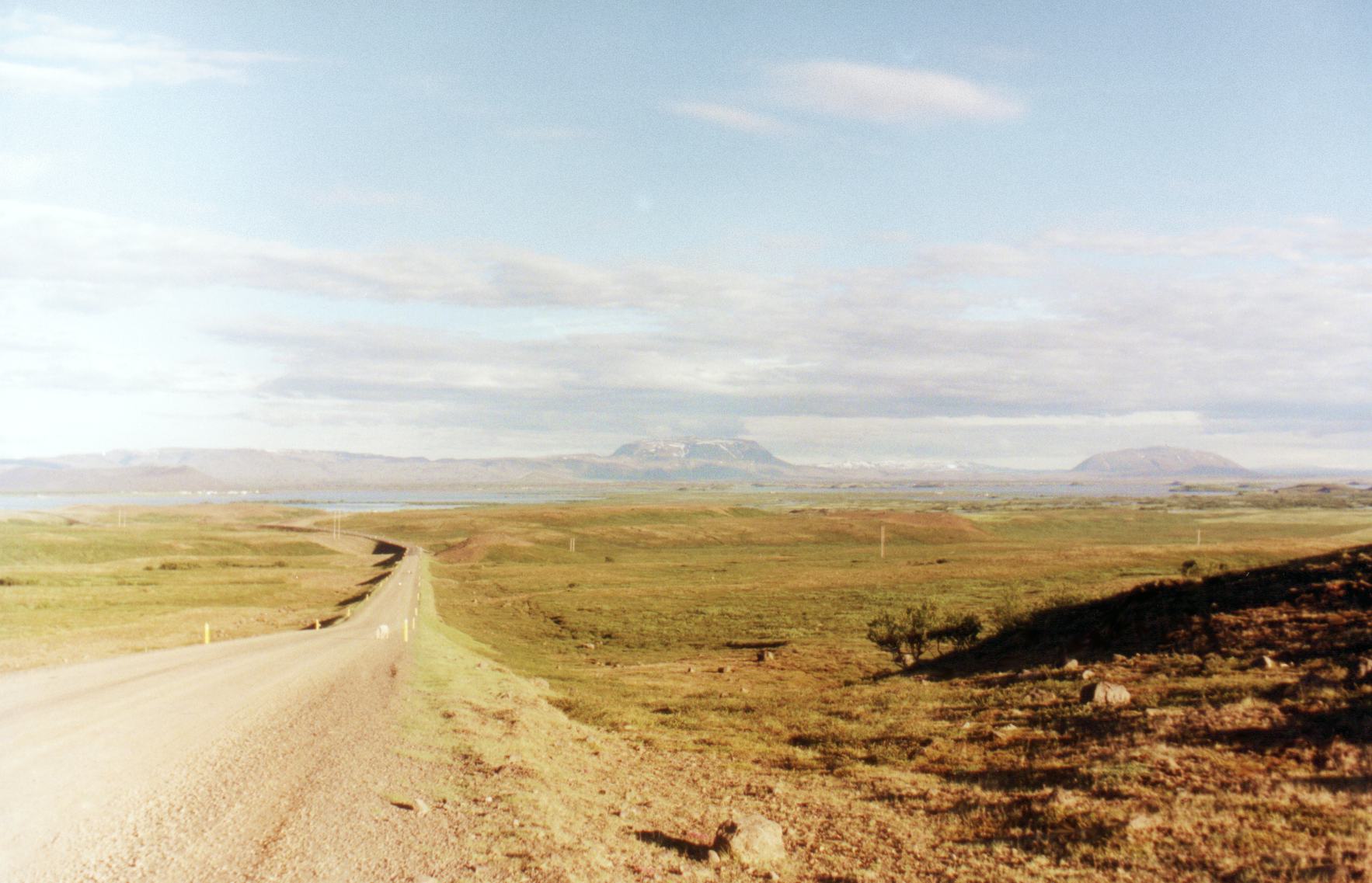
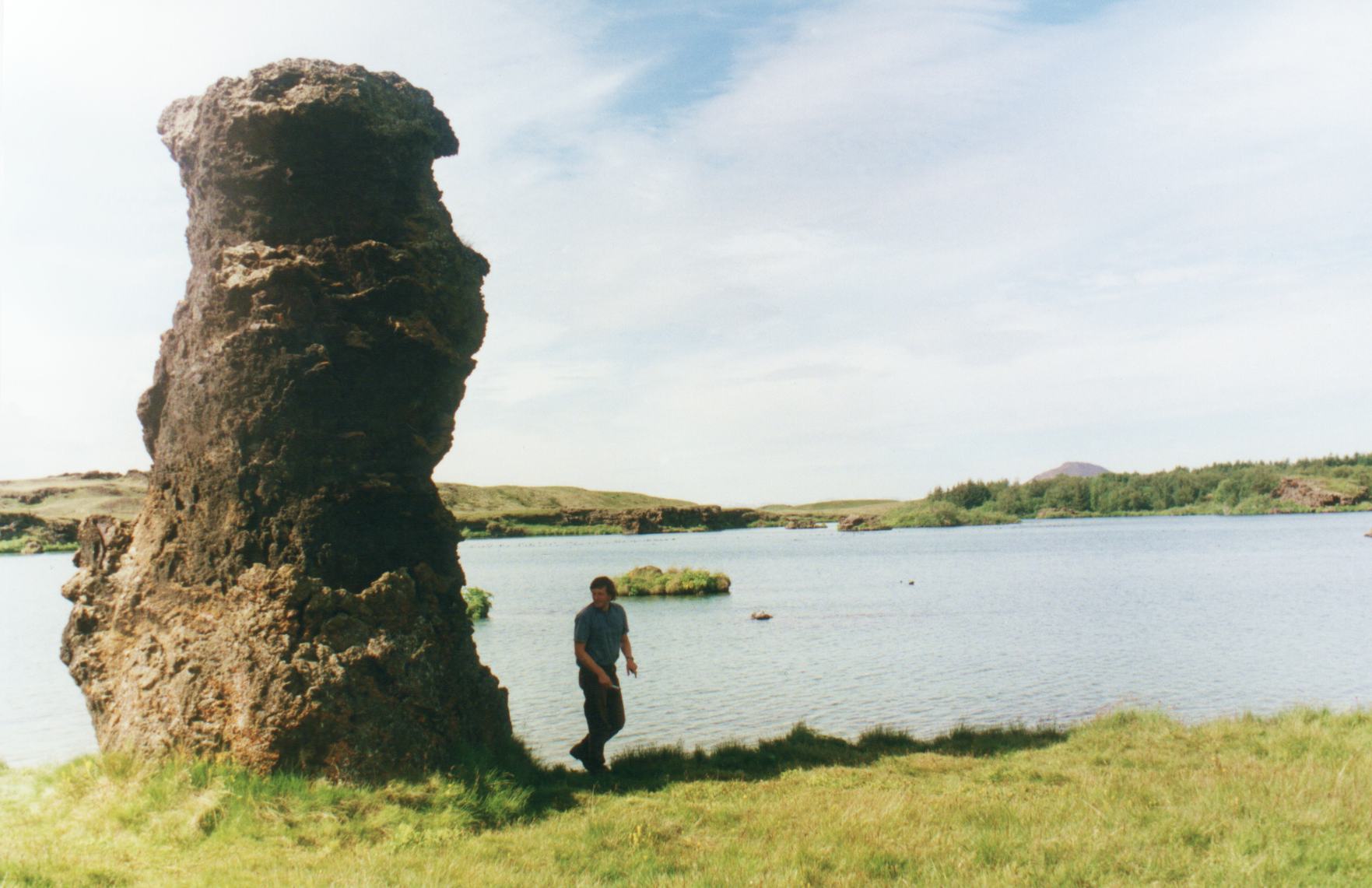
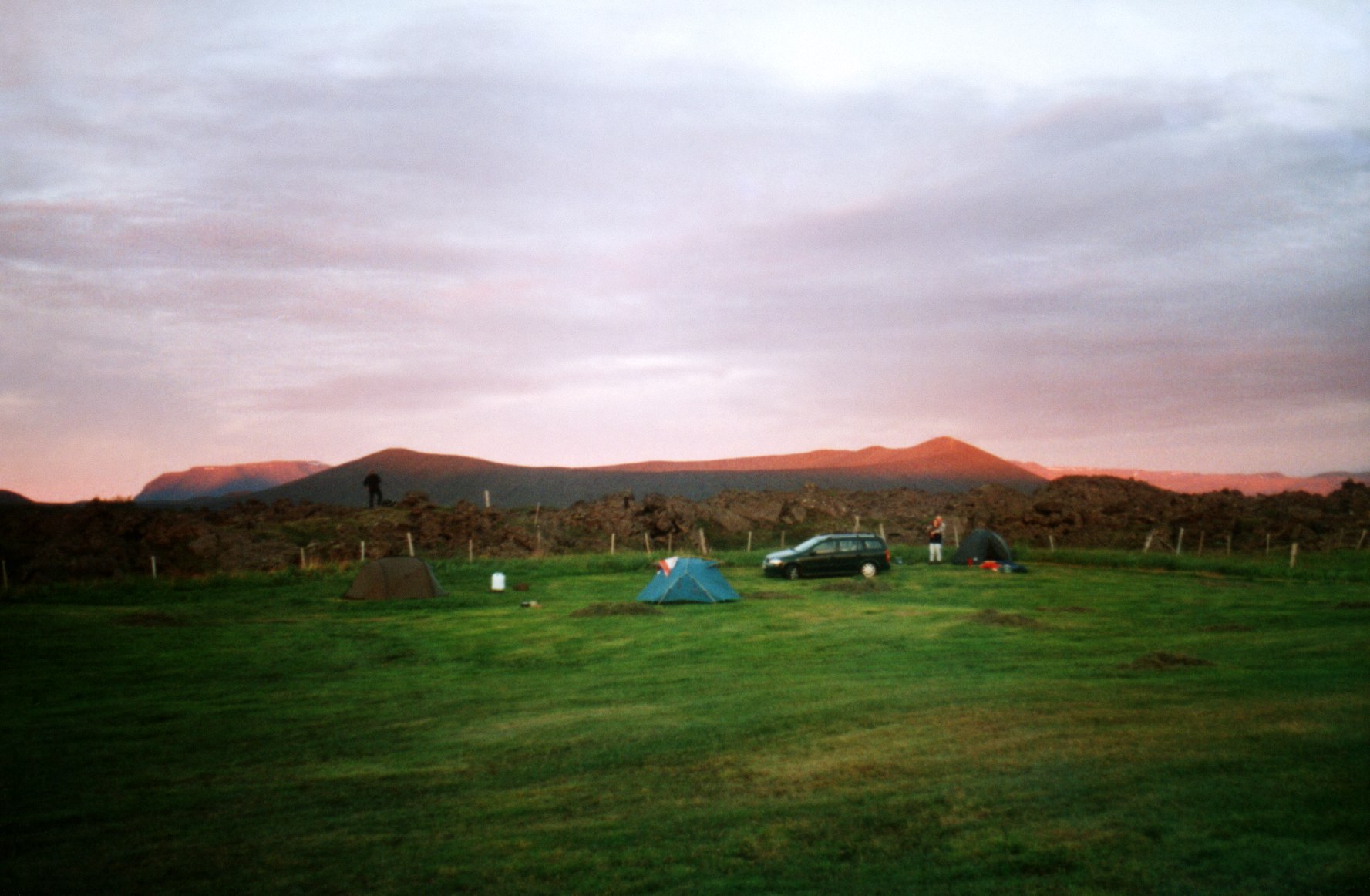
The map showed campgrounds round the lake, so we tried them for the night. First was Álftagerði at the south end, where we discovered this lake, whose name means “midge lake”, was well named. Fewer bloodsuckers than in Yakutia, of course, but you couldn't just sit outside, all the more because people don't light campfires here and Iceland doesn't grow firewood. All the cabins were occupied and we didn't fancy pitching. We ought to celebrate our first night in Iceland, after all, rather than simply hide for the night.
The next campground, Vogar, or the cow one, was farther from the water and the flying bloodsuckers weren't quite so fierce. The cows didn't fly either, thankfully. There were no free cabins but we managed to find a cosy place to pitch. As we subsequently found, a cabin, cottage or other kind of roof in Iceland in summer is almost impossible to find without booking at least a day ahead. You can ring to do it.
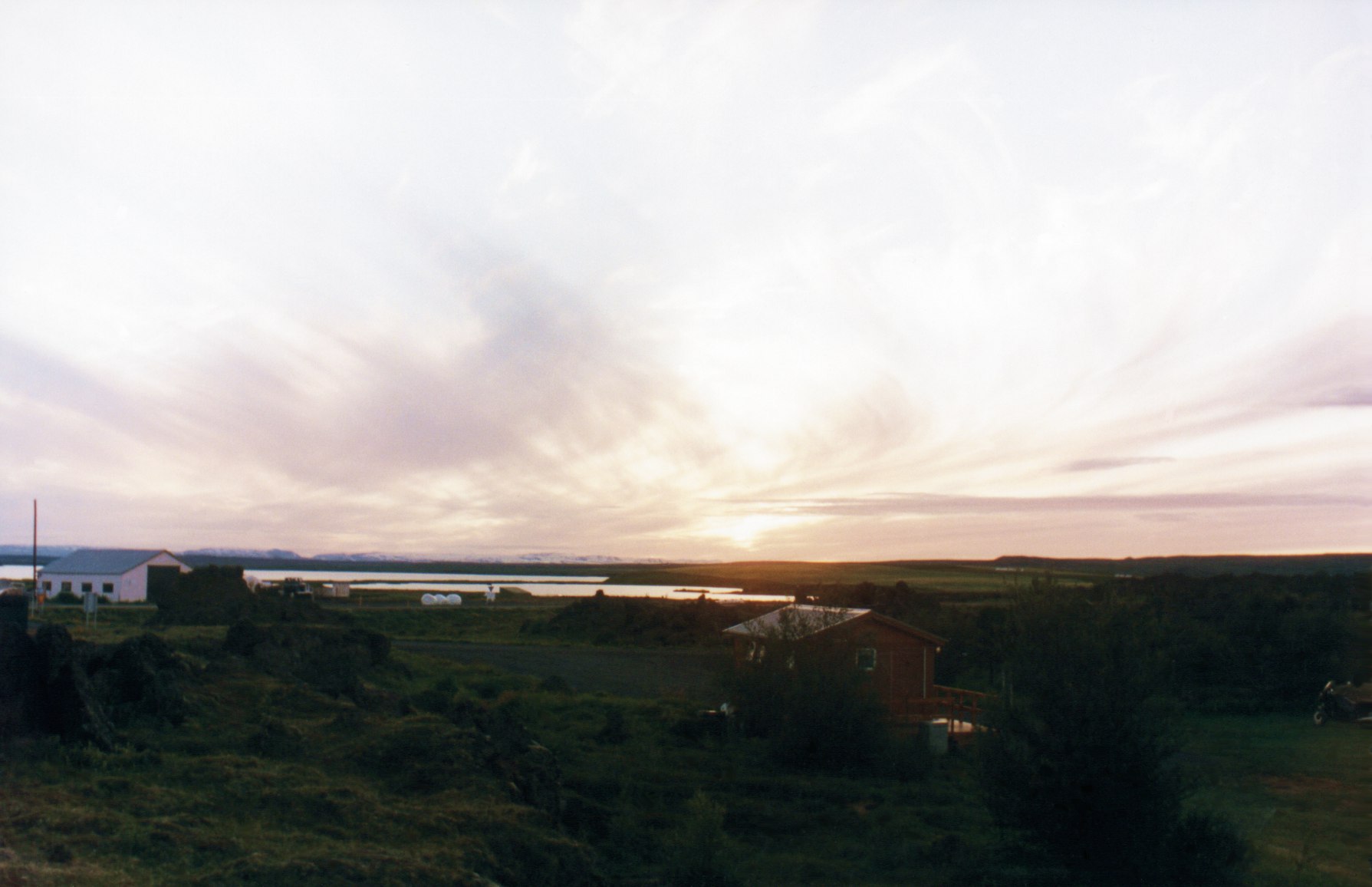
Tanya and I had put off celebrating the eleventh anniversary of our meeting until that day. Each year we try to spend it somewhere worthy. A year before, it had been the crater of Mutnovsky volcano in Kamchatka. We cooked our festive meal on a petrol stove. We'd been warned you couldn't get camping gas in Iceland, as the letters on the Lonely Planet site said. In reality, of course, there's gas. But we'd ended up with a Kyrgyz-made petrol stove portentously named DOSTAN, presumably something to do with the Russian word for “it'll get to you”. It was a mistake, naturally, but the first time it worked beautifully.
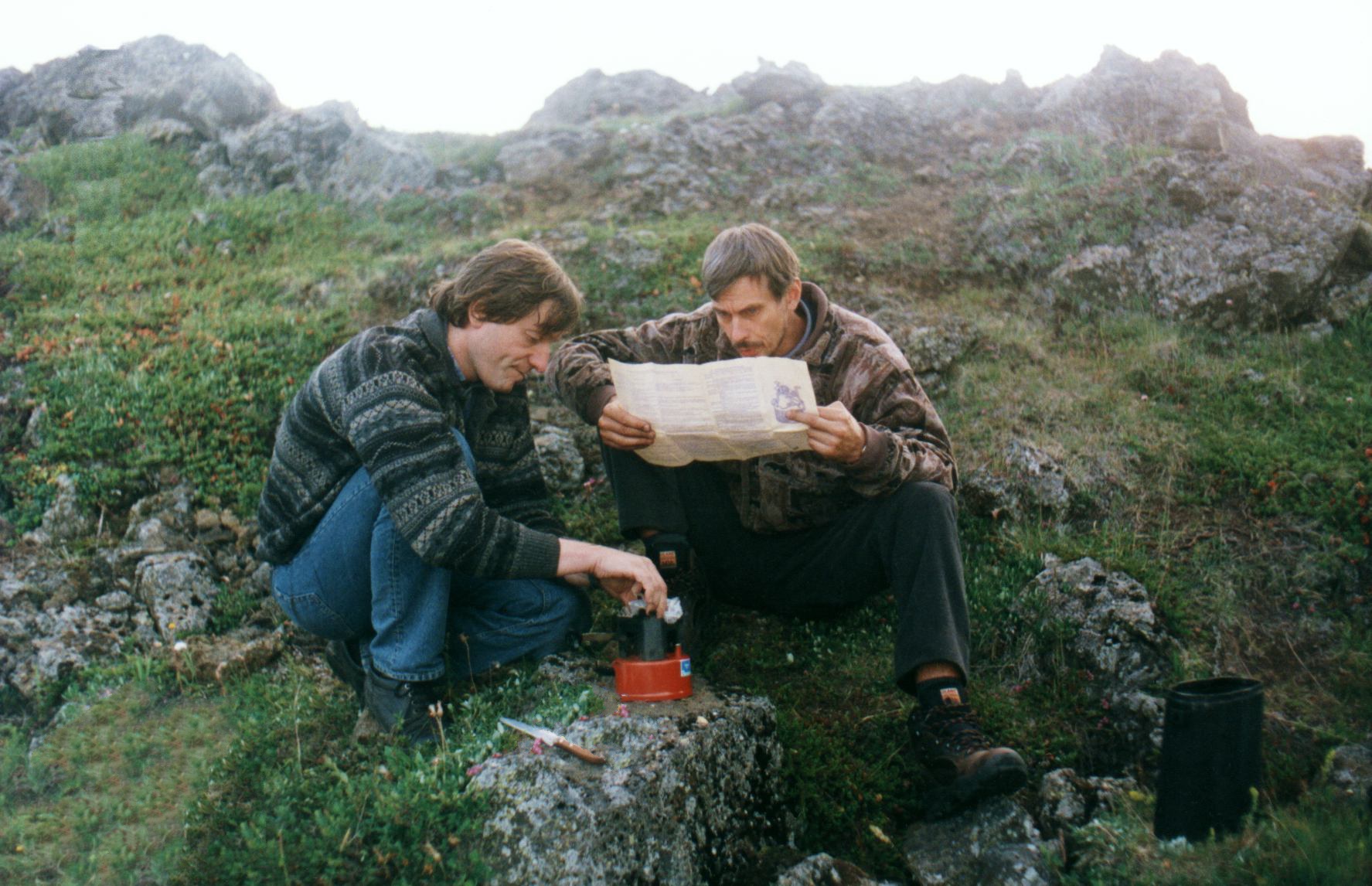
Champagne, little sandwiches with caviar and a lovely soup of local mushrooms. Our feast spread on a mown lawn in among the lava bombs.
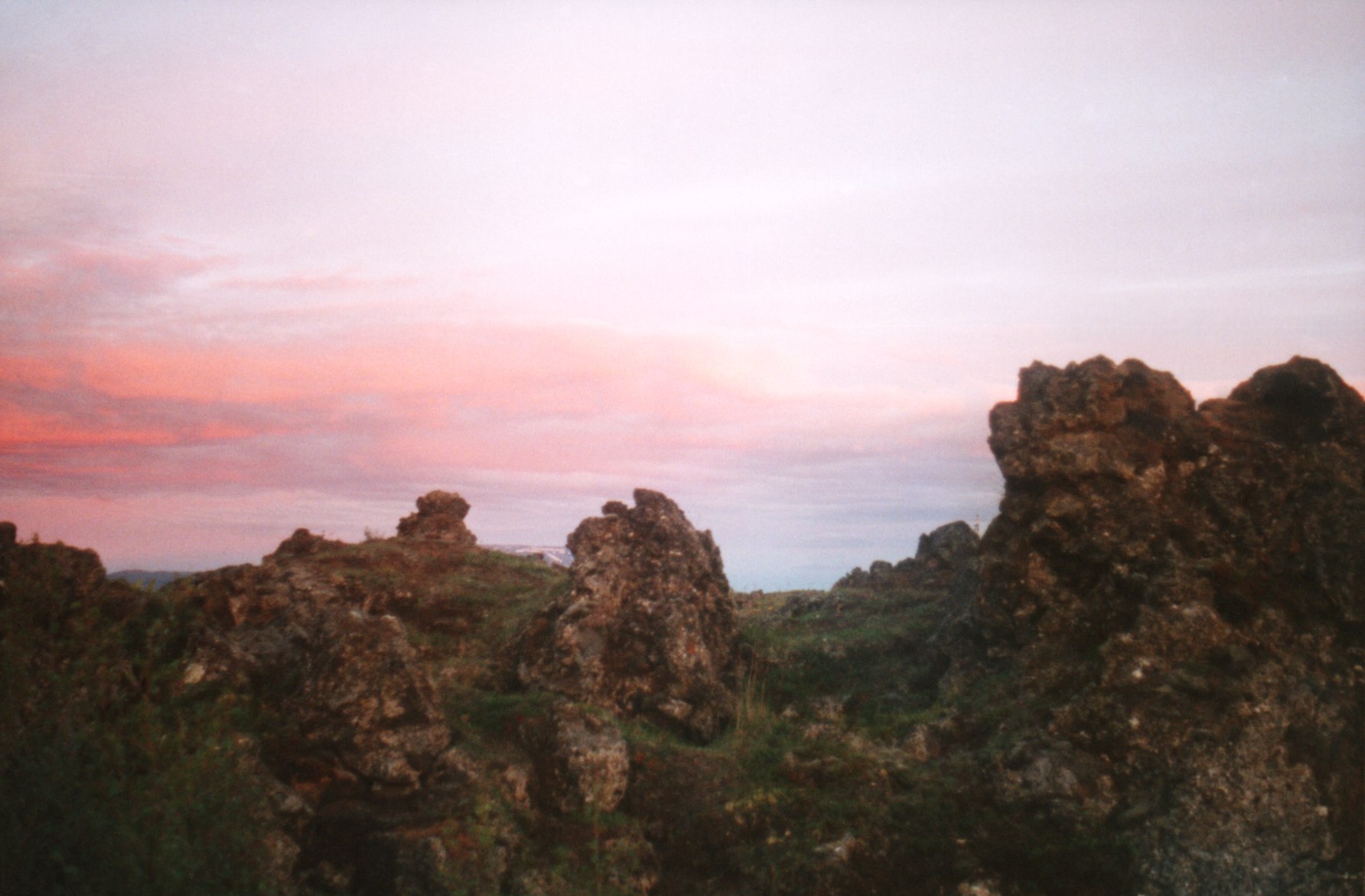
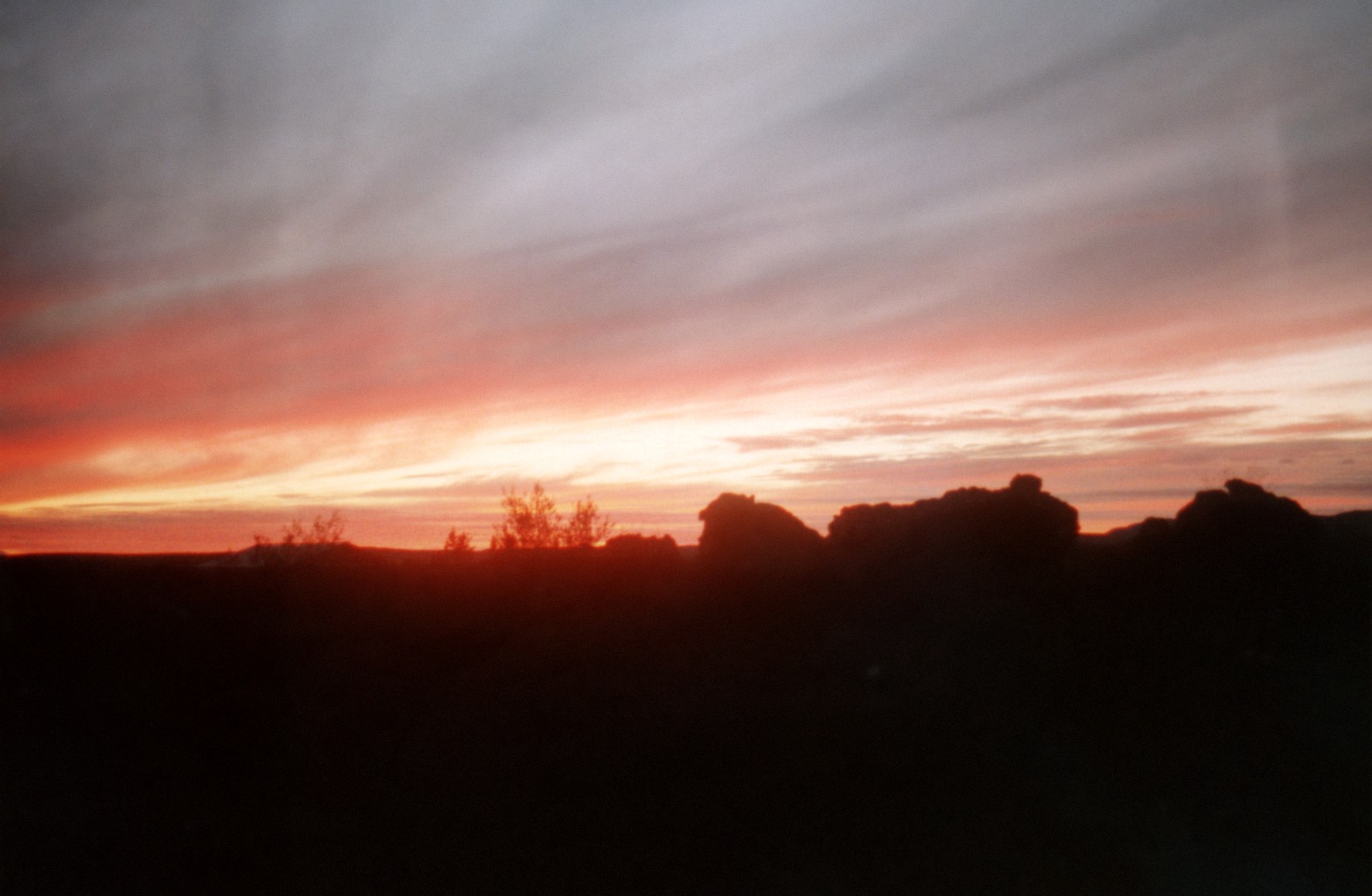
The evening gave us a splendid sunset, flooding the slopes of Hverfjall red above the Vogar campground at its foot.
The morning was clear and windy. The previous evening we'd made an arrangement to hire a four-wheel drive for a day and go to the lake at Víti, where we hadn't dared take the Ford. They'd asked for a hundred dollars, which was suspiciously little. The figure had seemed unreal from the start, and so it was: a hundred a head, and the vehicle came with a driver. Four hundred was beyond us. Better to go on the bus at sixty-five. It was standing nearby. Tanya and I were ready, but Pavel and Lena were against it. While we argued, the bus went. What a shame. It runs only three times a week, Mondays, Wednesdays and Fridays at eight in the morning. We wouldn't be swimming in warm volcanic waters. There were things to see without that, naturally.
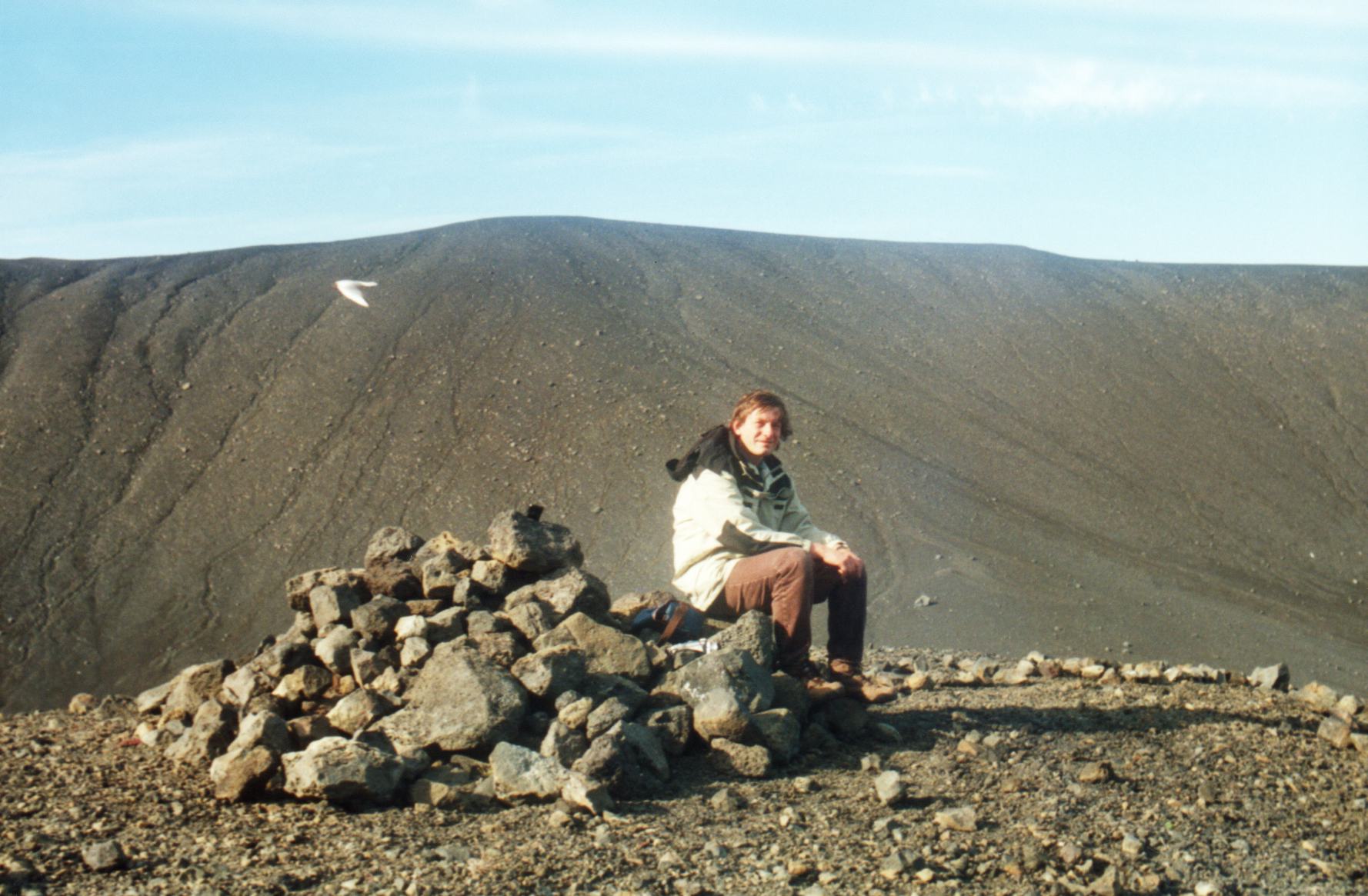
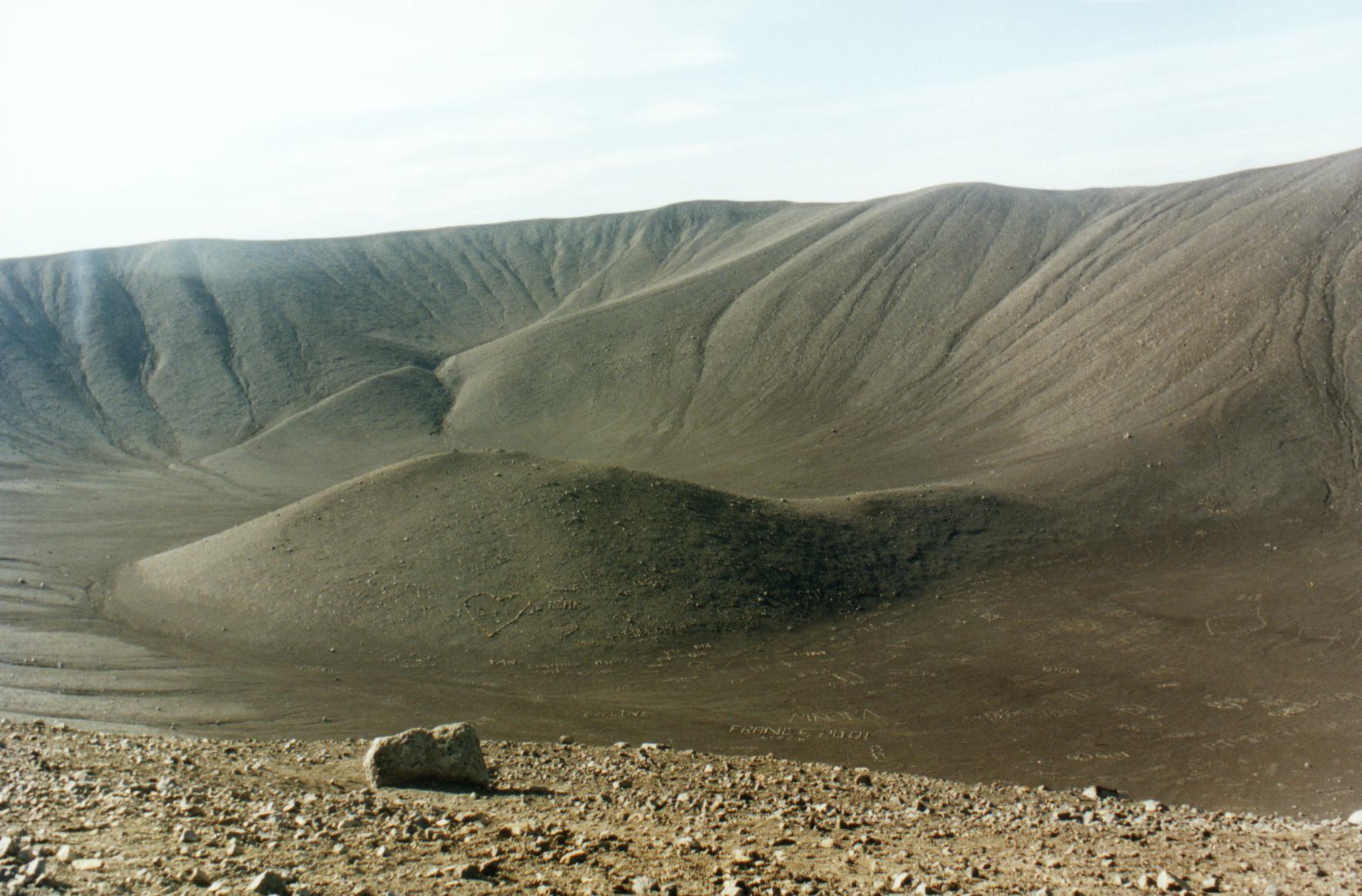
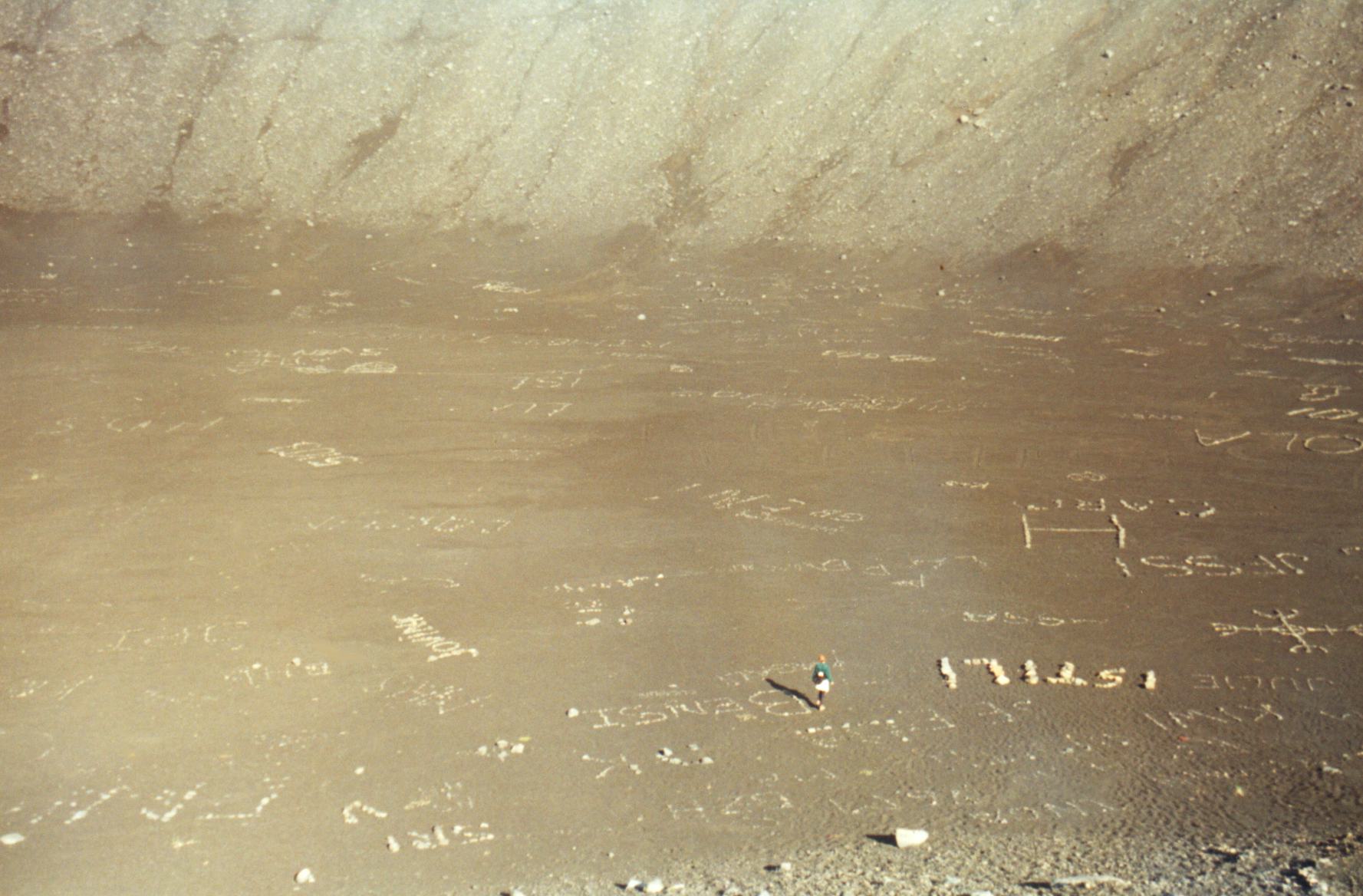
First we climbed Hverfjall, the volcano nearby. A low cone of volcanic cinders standing a hundred and fifty metres up. Inside the bowl, in the middle of the flat floor, is a second cone, just as in a lunar crater. It last erupted in antiquity. There's a road to the foot, once you've opened the sheep gate, and a car park at the very foot where the trail starts. A heap of signs beseech you to look after nature, in vain. The whole crater floor is laid out with pale stones making various inscriptions, to the general effect of “Vasya was here” or “France is cool”.
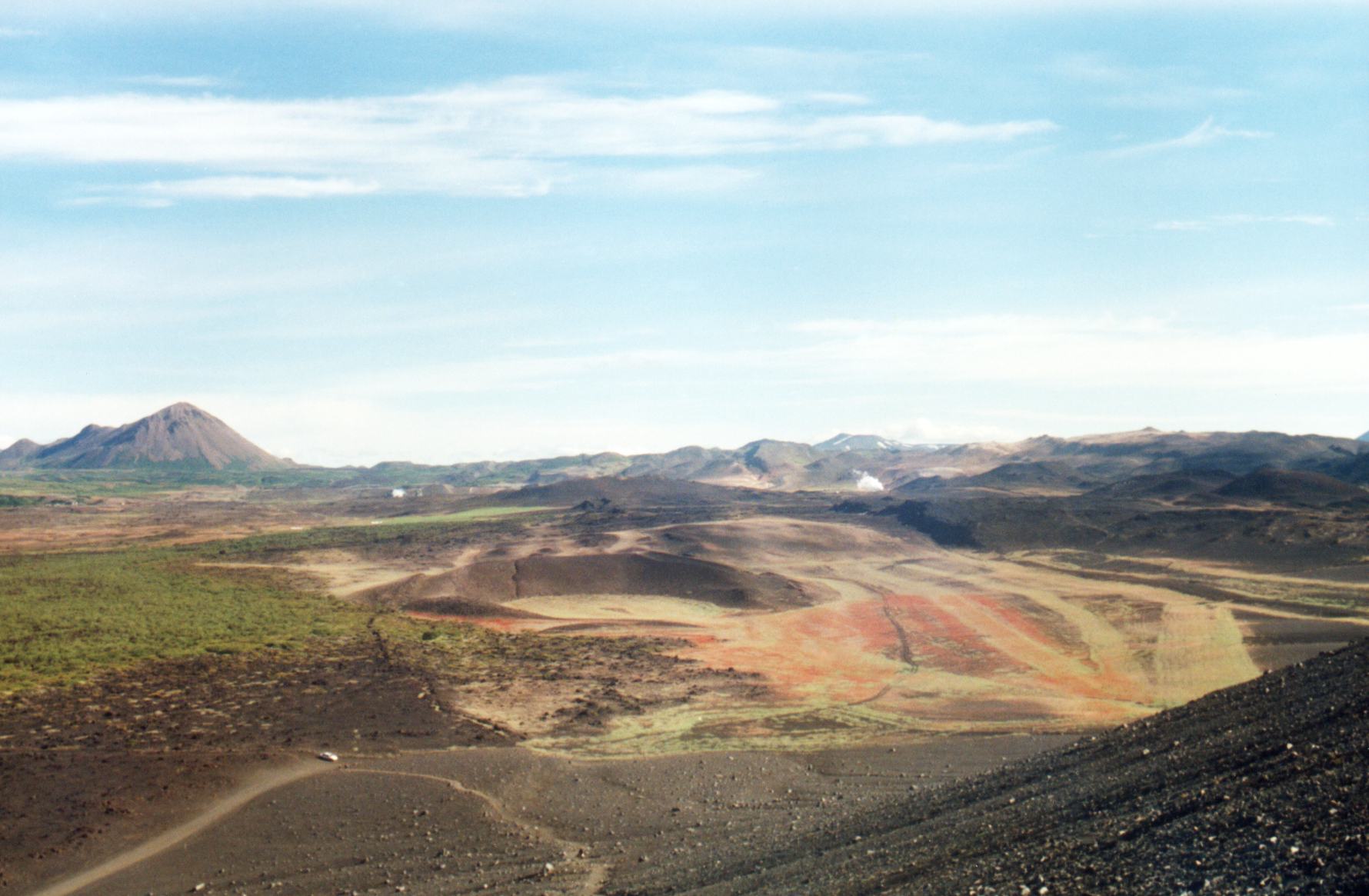
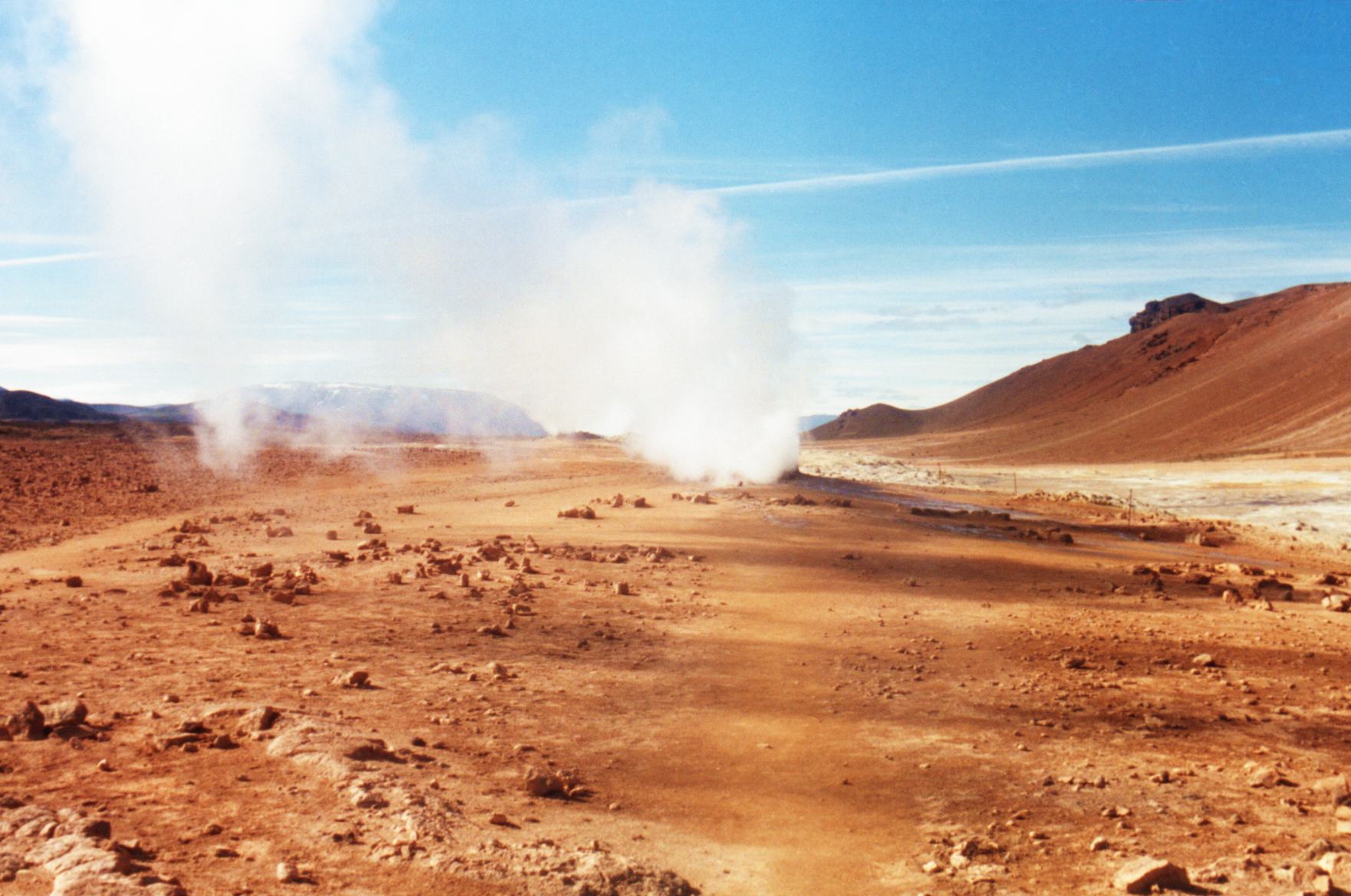
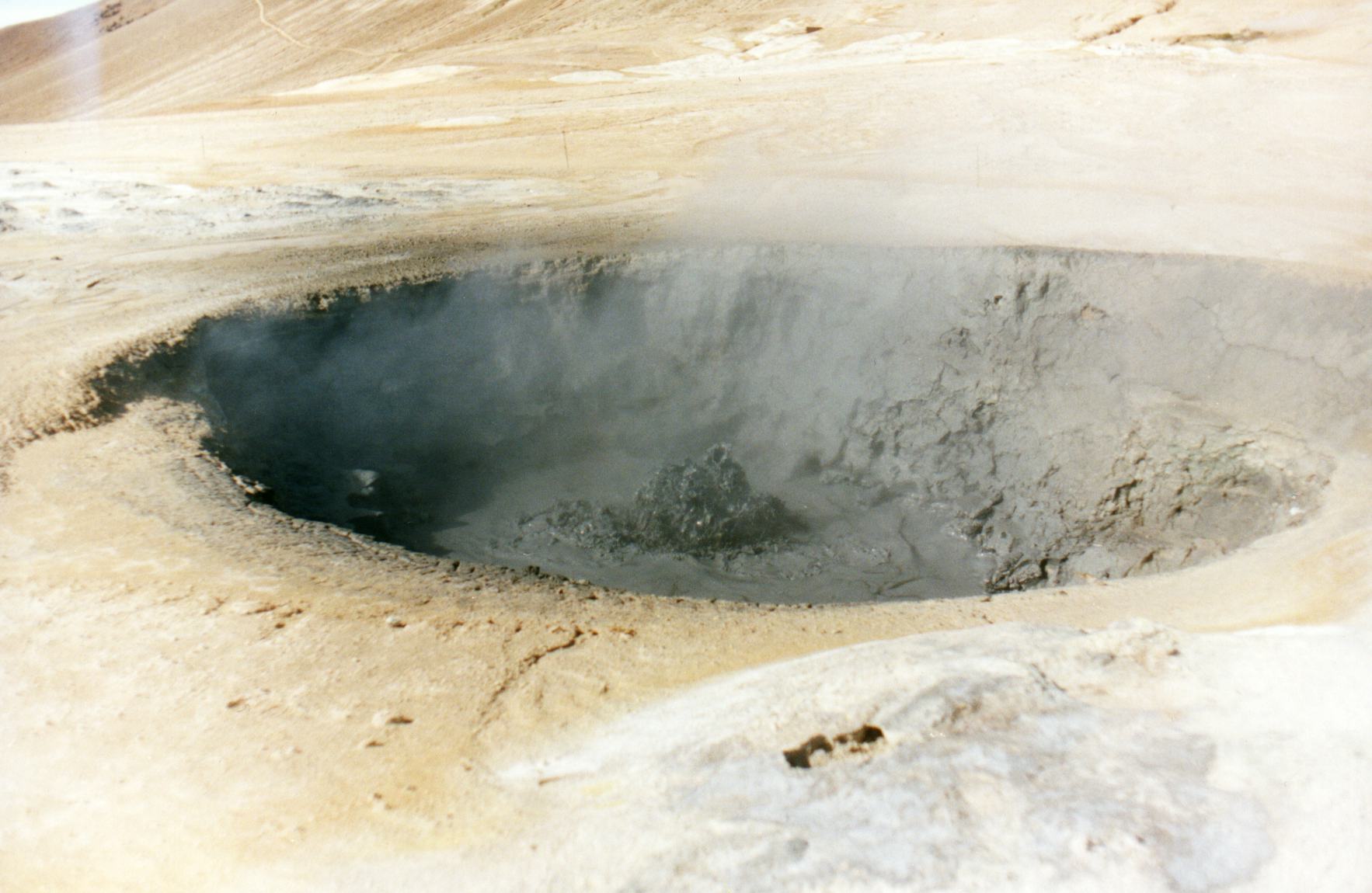
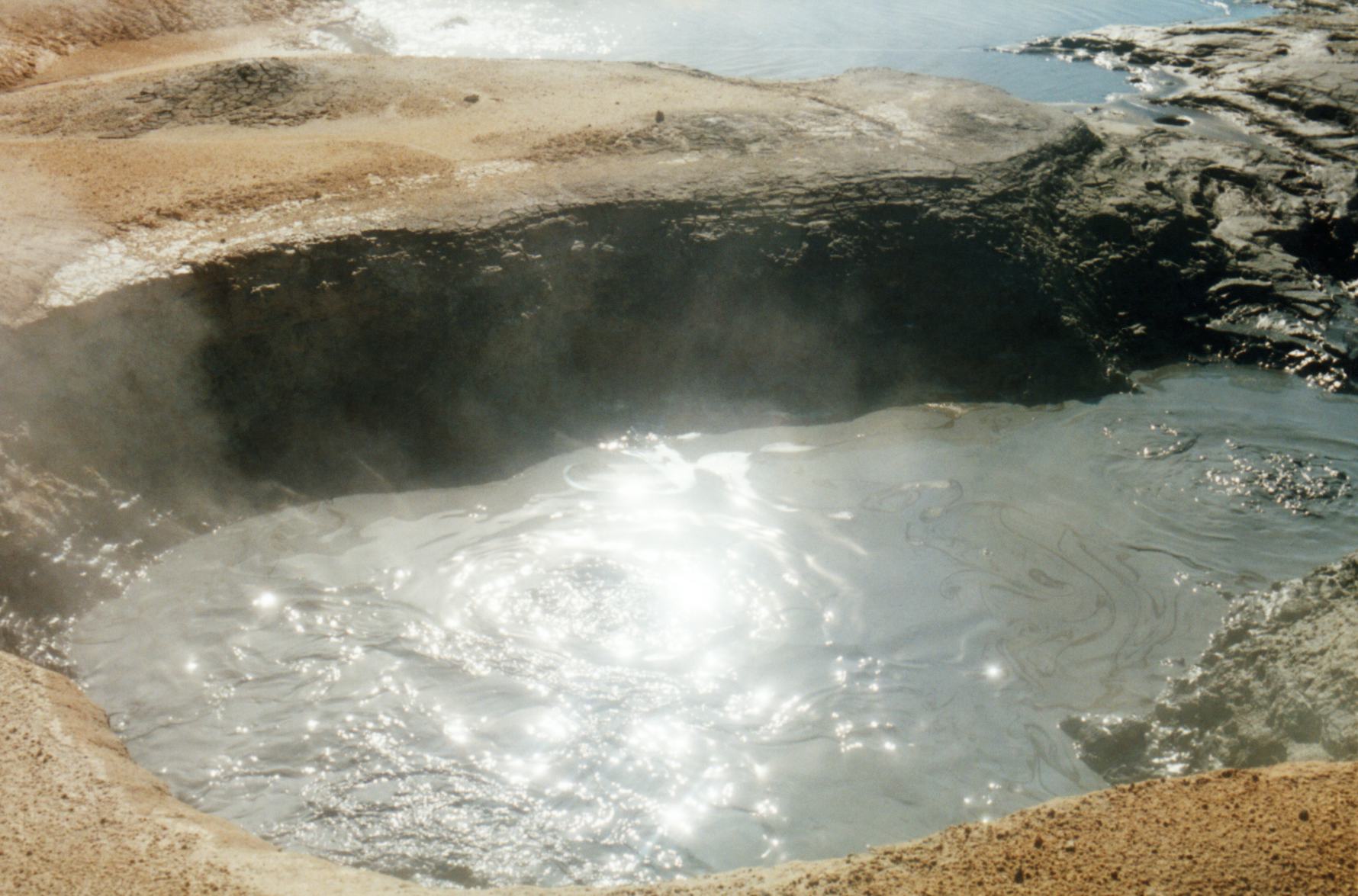
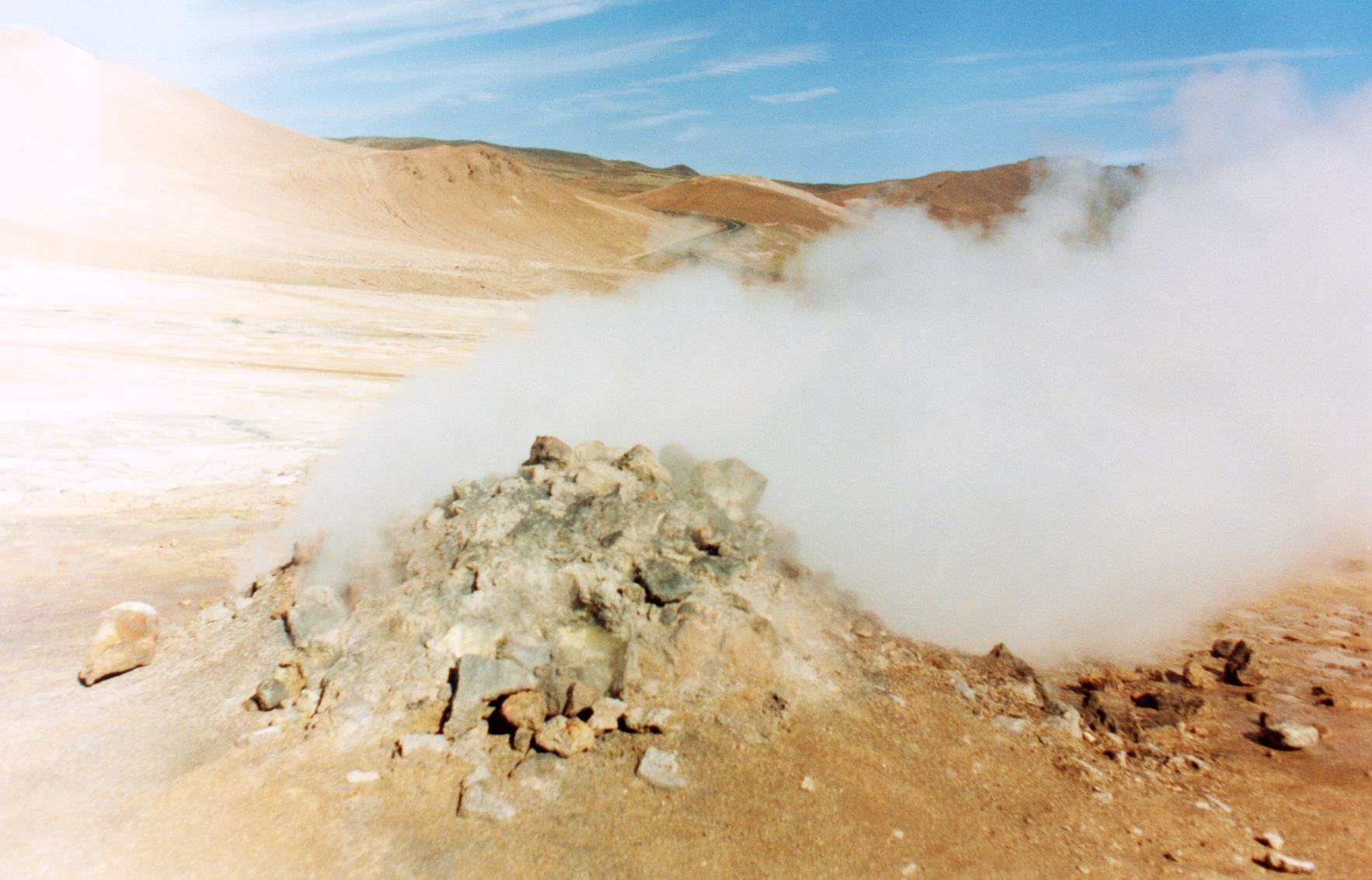
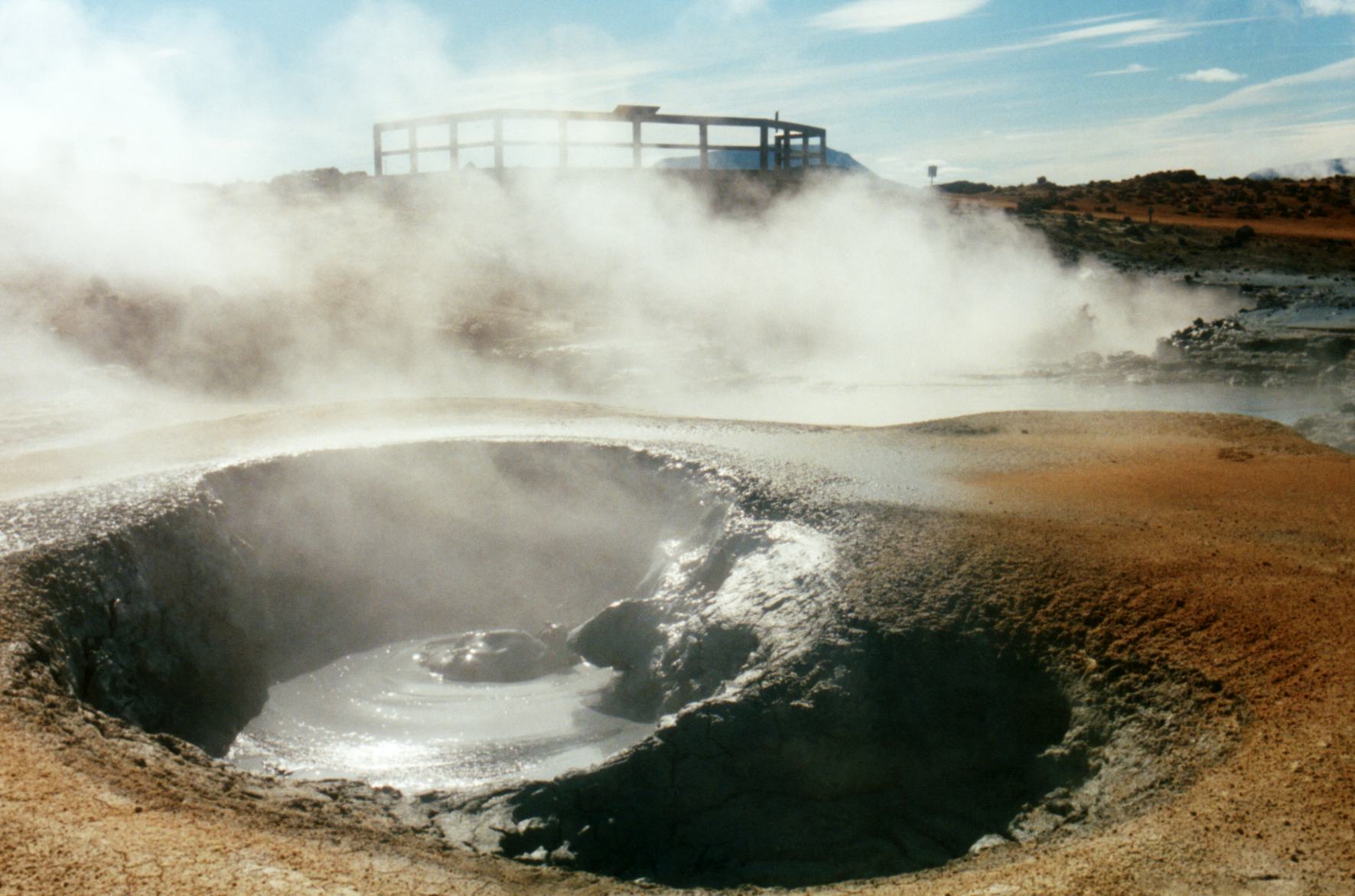
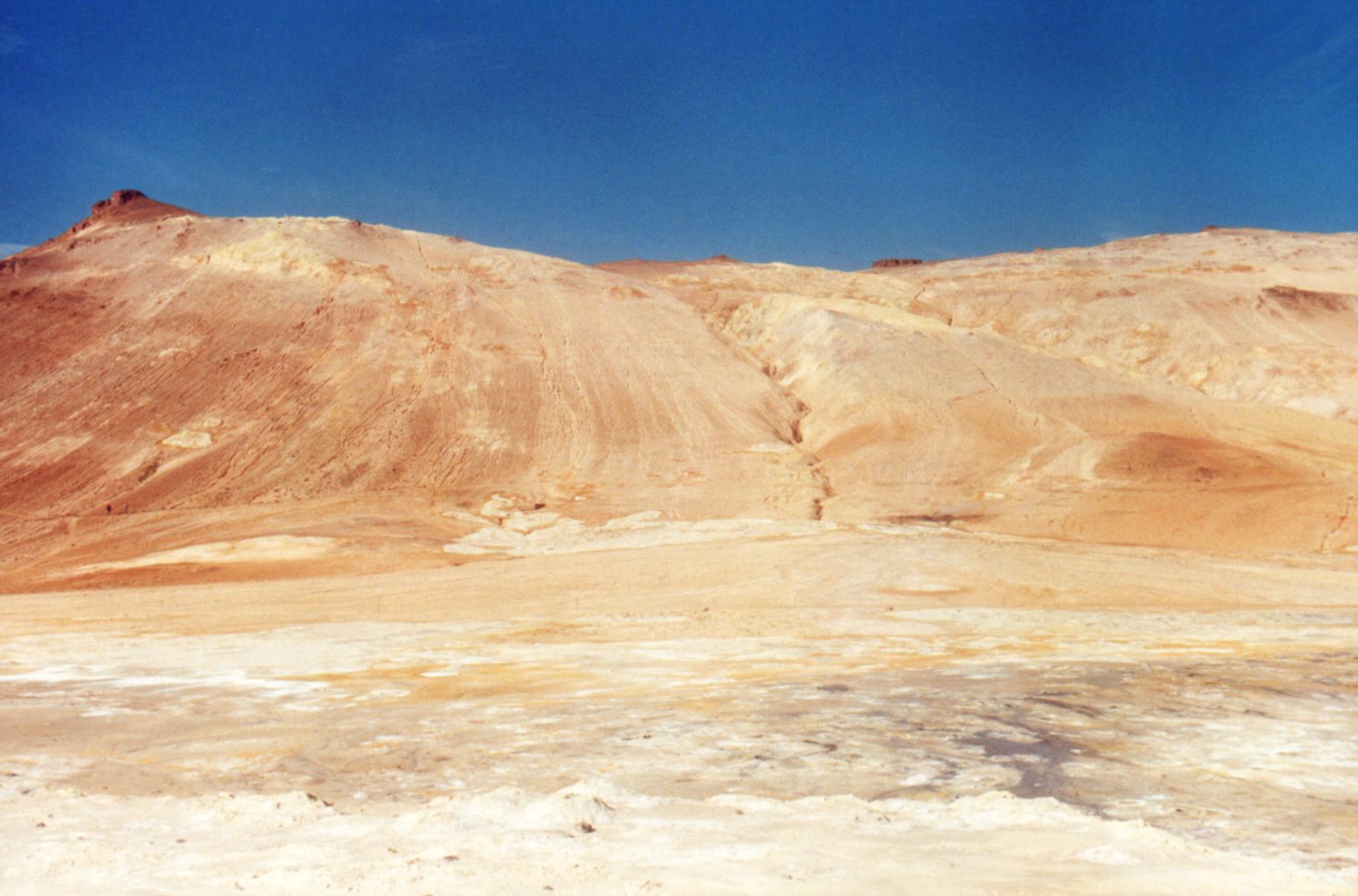
Four kilometres east along Route 1 from Reykjahlíð, the main village on the lake, is a geothermal area. Several dozen mud volcanoes and fumaroles. The volcanoes are quite large and active. I'm not sure even Kamchatka has such a large, active concentration of actual mud volcanoes. The mud is dark grey but all the rest of the scenery is made up of bright colours. It looks remarkably like the pictures of Mars on the NASA websites, down to the sharp-edged stones. No wonder the Americans tested their moon buggies here in the Apollo days. A road comes right to the area and they've built a car park. There are wooden paths so you don't get your feet dirty and, more importantly, don't fall through into something. Warnings everywhere: fall in and you'll boil, temperature a hundred degrees. None of that means you can't come closer if you like. The paths go so close there isn't really anywhere closer to stand. At any rate nobody's about to fine you and people walk freely where they please.
A little farther north is another lake called Víti, not to be confused with the warm one we'd meant to swim in. It's set in a volcanic crater and, in the proper fashion, brilliant blue. The water is slightly acid and cold. It looks much like Gorely in Kamchatka, except a road comes right to the crater rim.
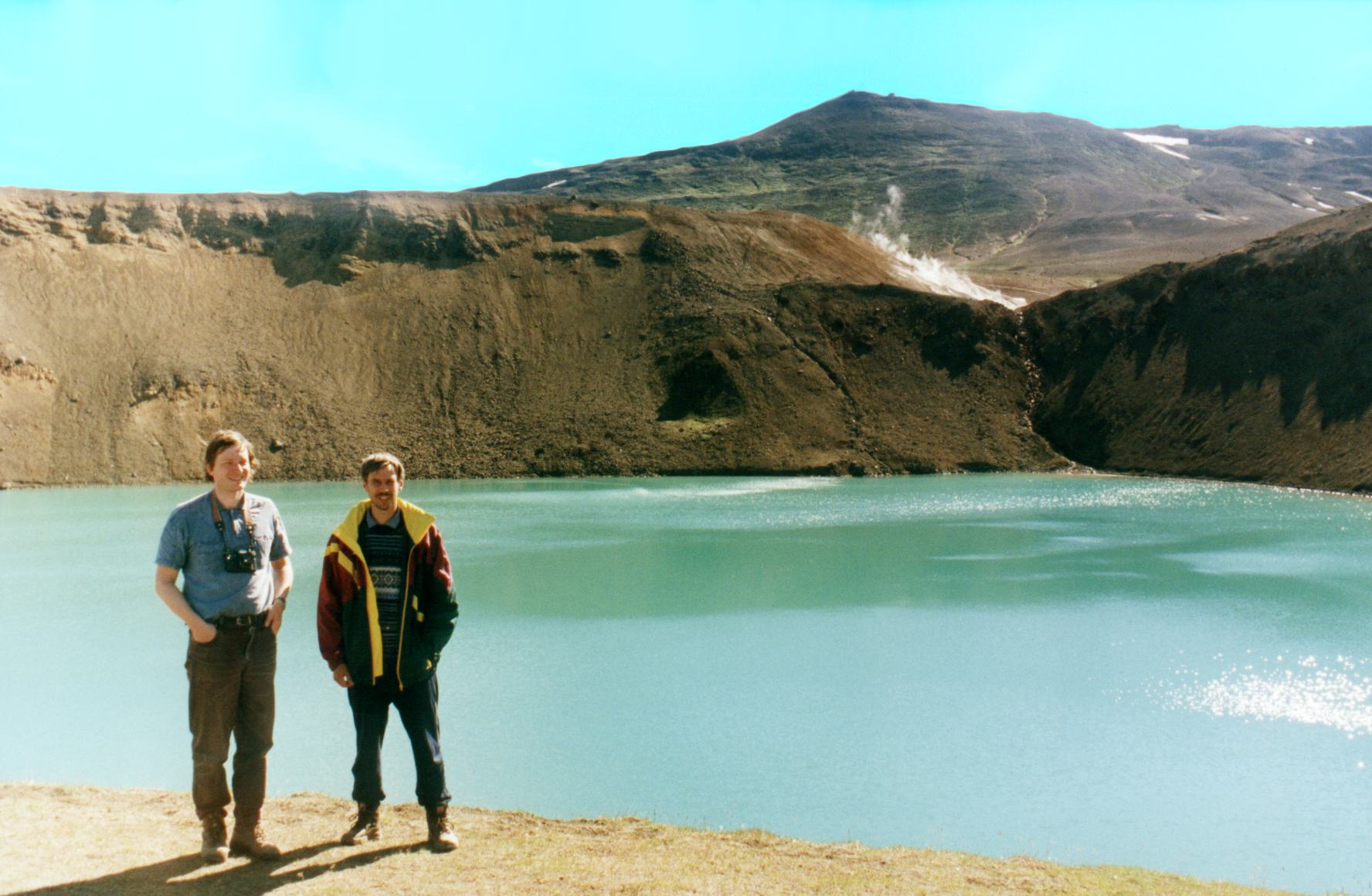
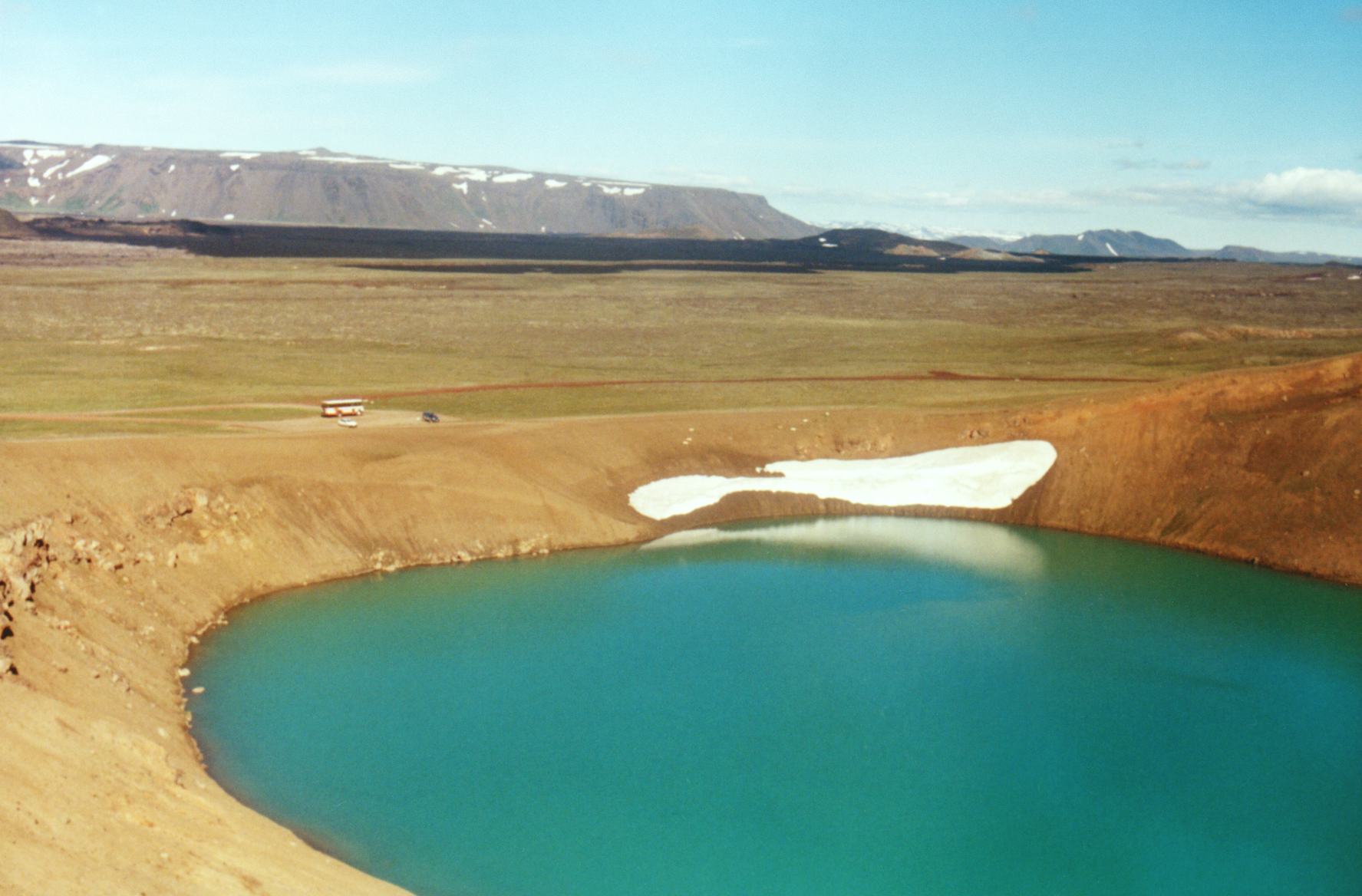
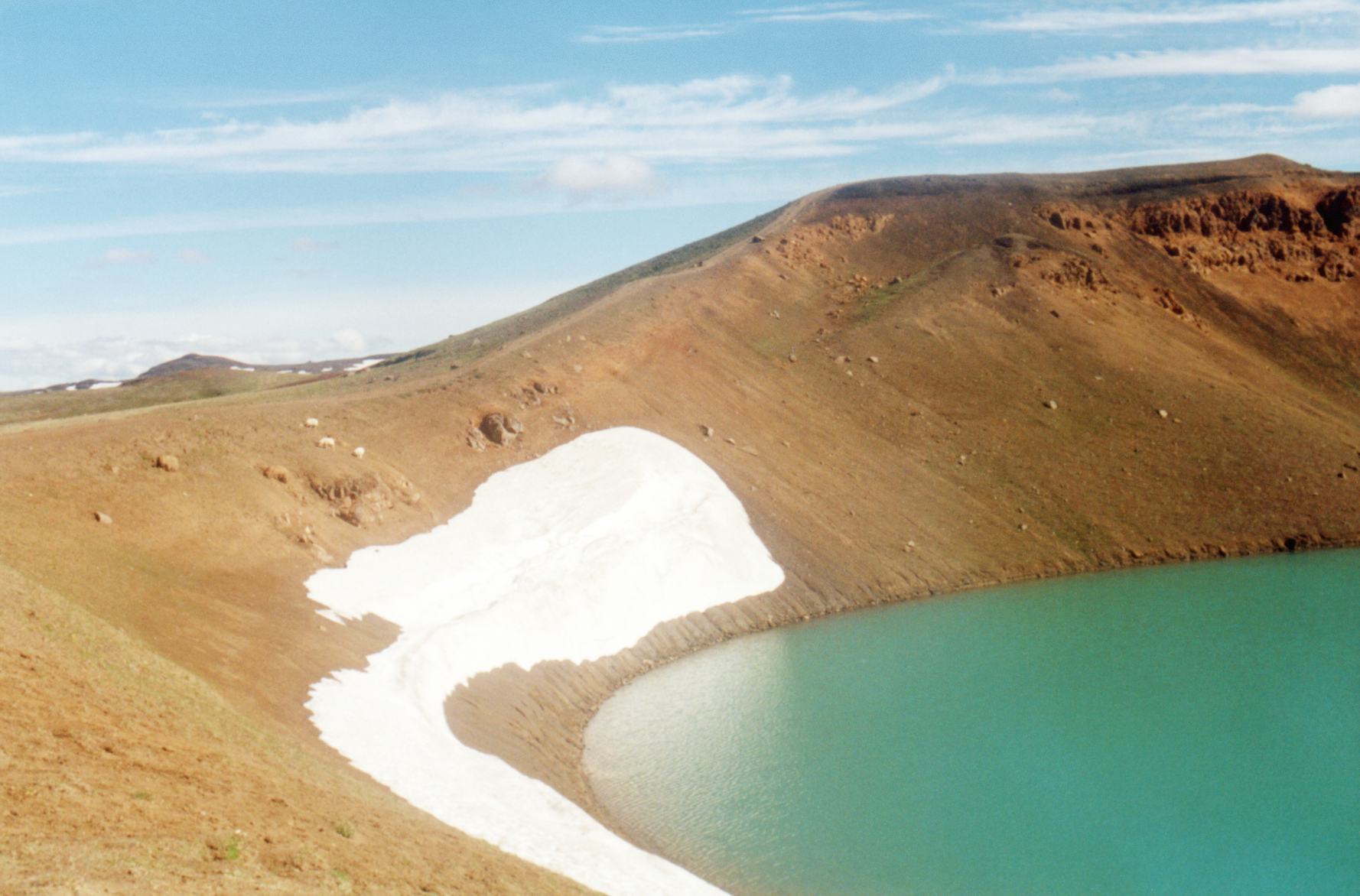
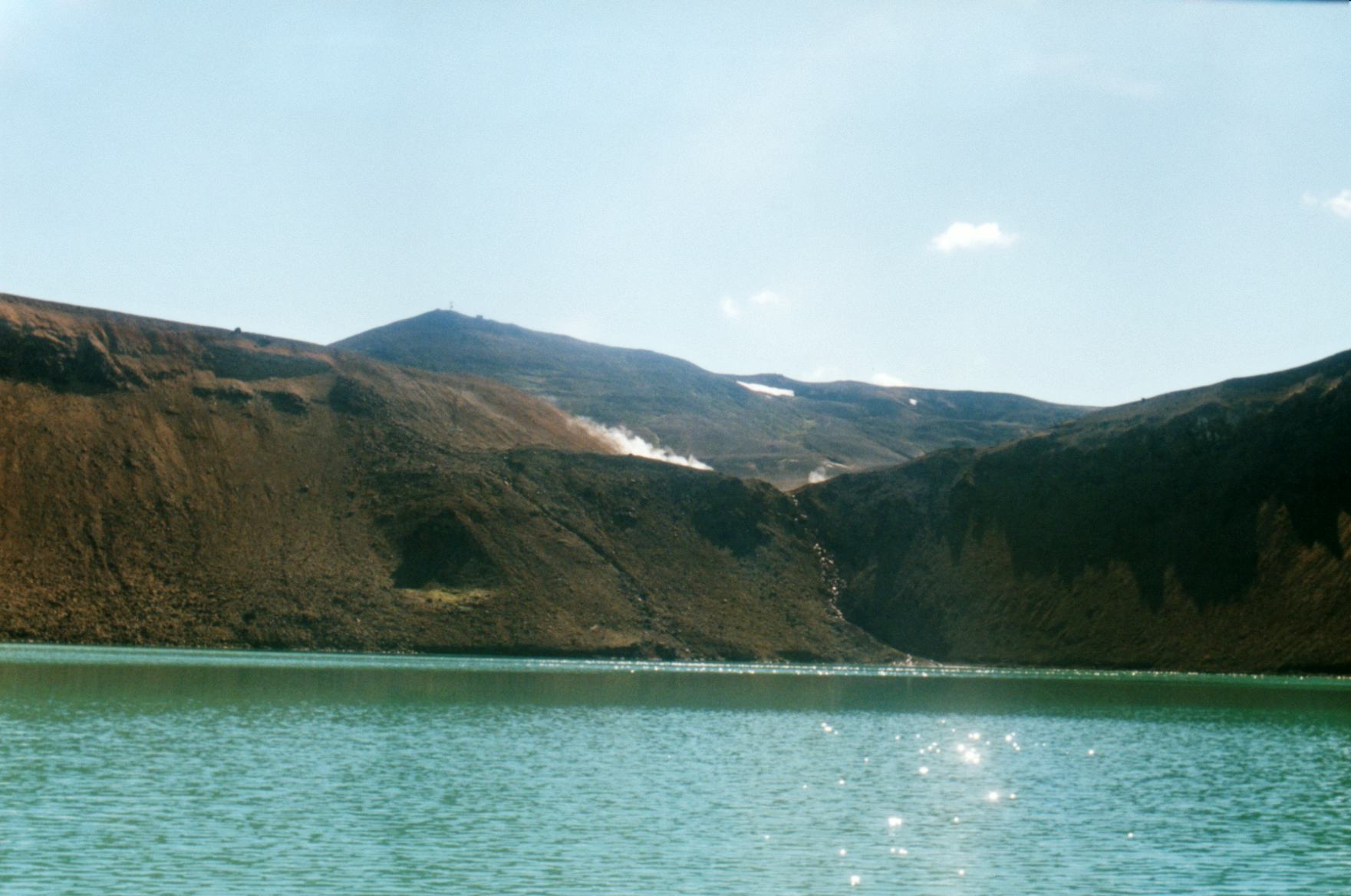
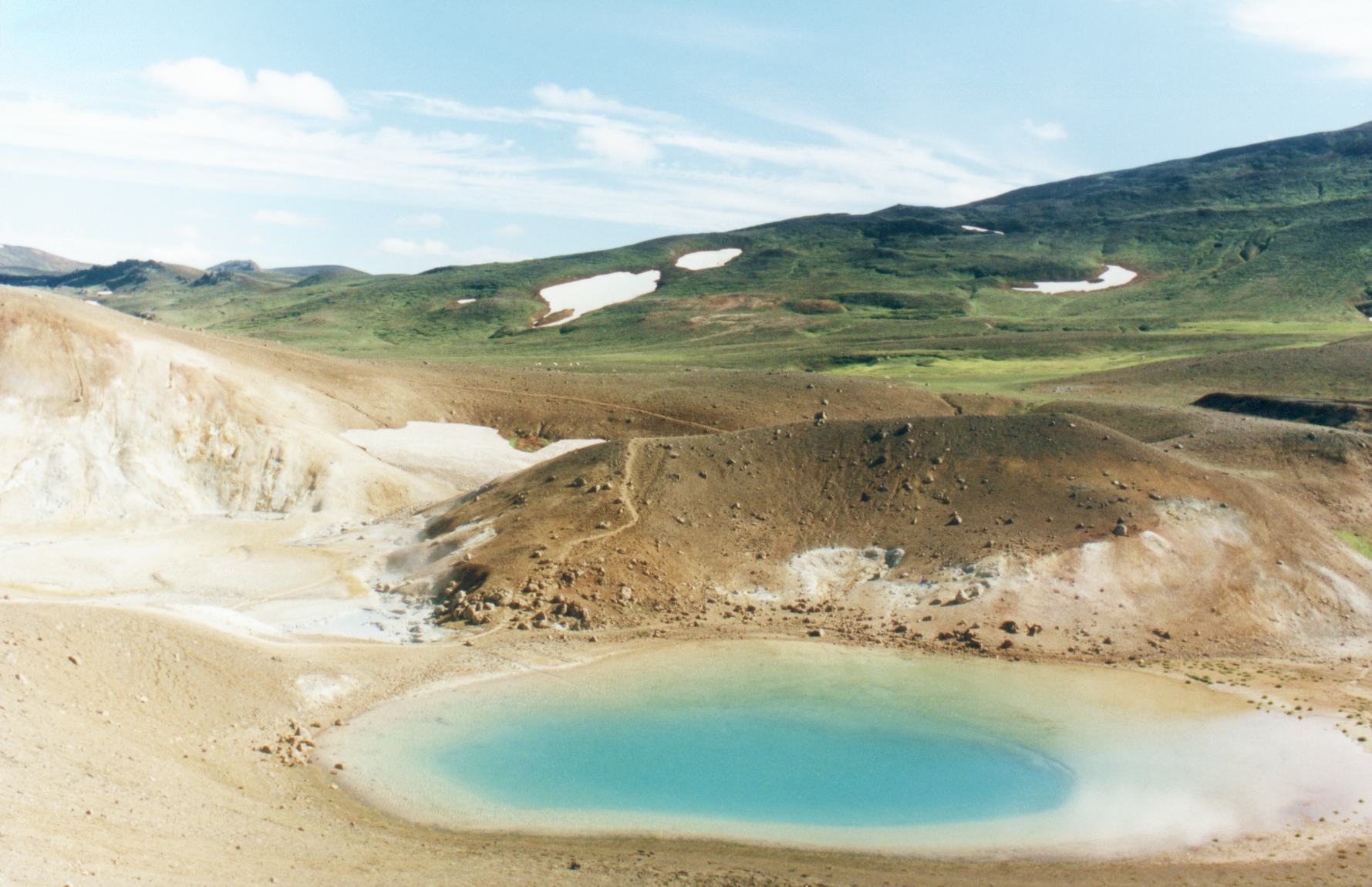
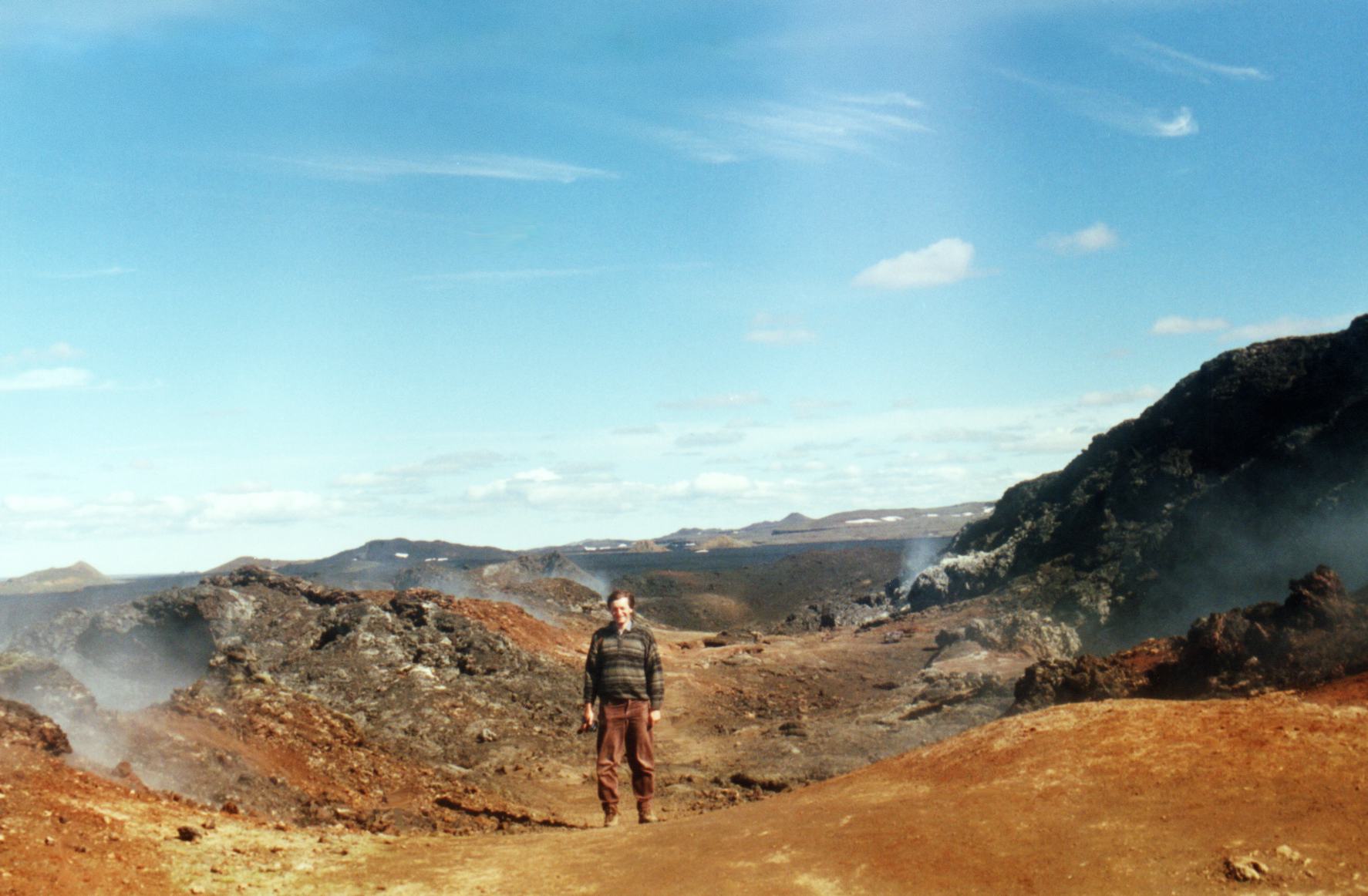
Close to the lake lies an enormous area covered in fresh black lava from the recent eruptions of the volcano Krafla in 1975 and 1984. The lava has of course cooled, but from countless fissures smoke still rises. We clambered around for several hours on this brand new ground, only a few years old.
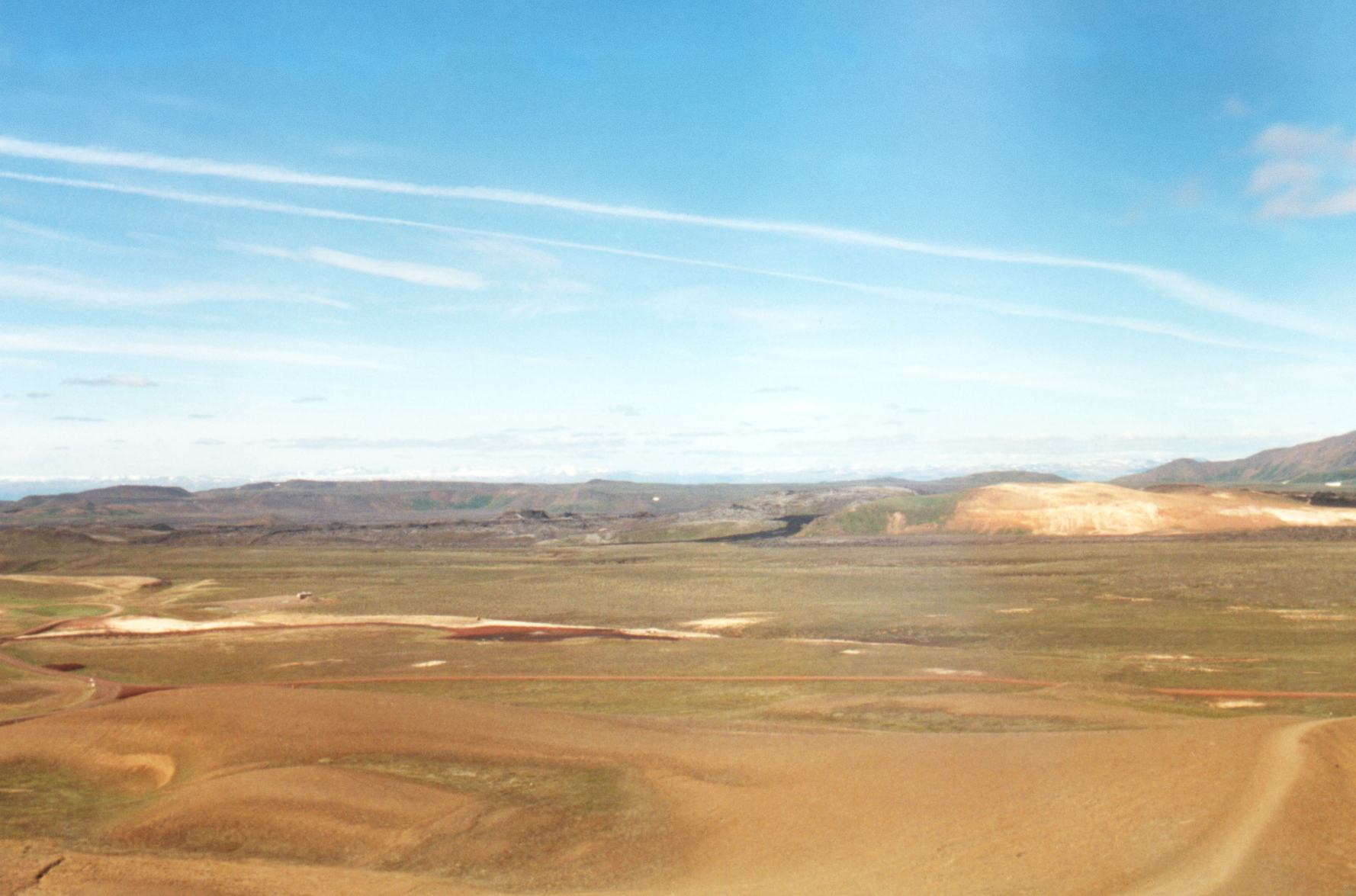
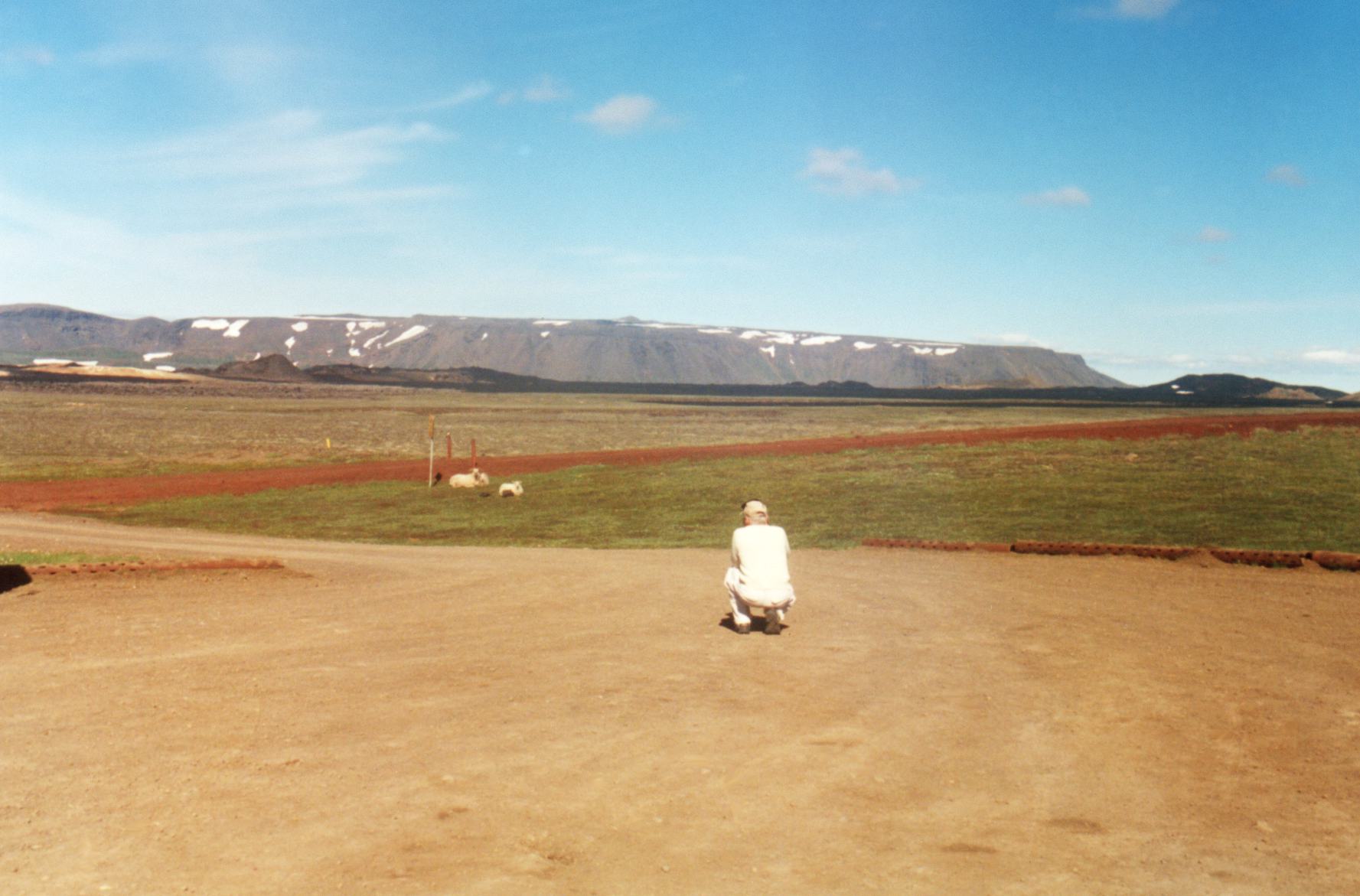
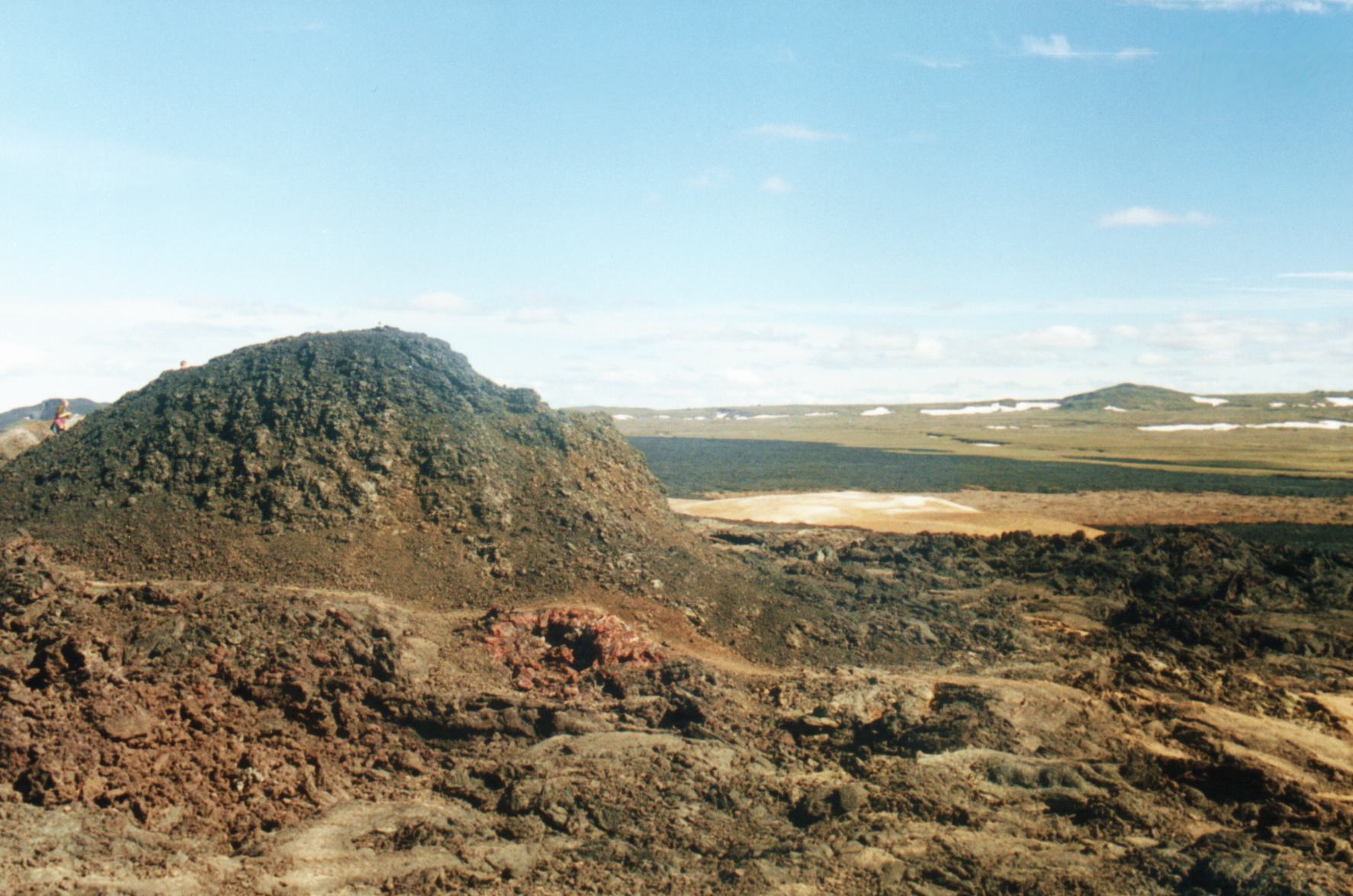
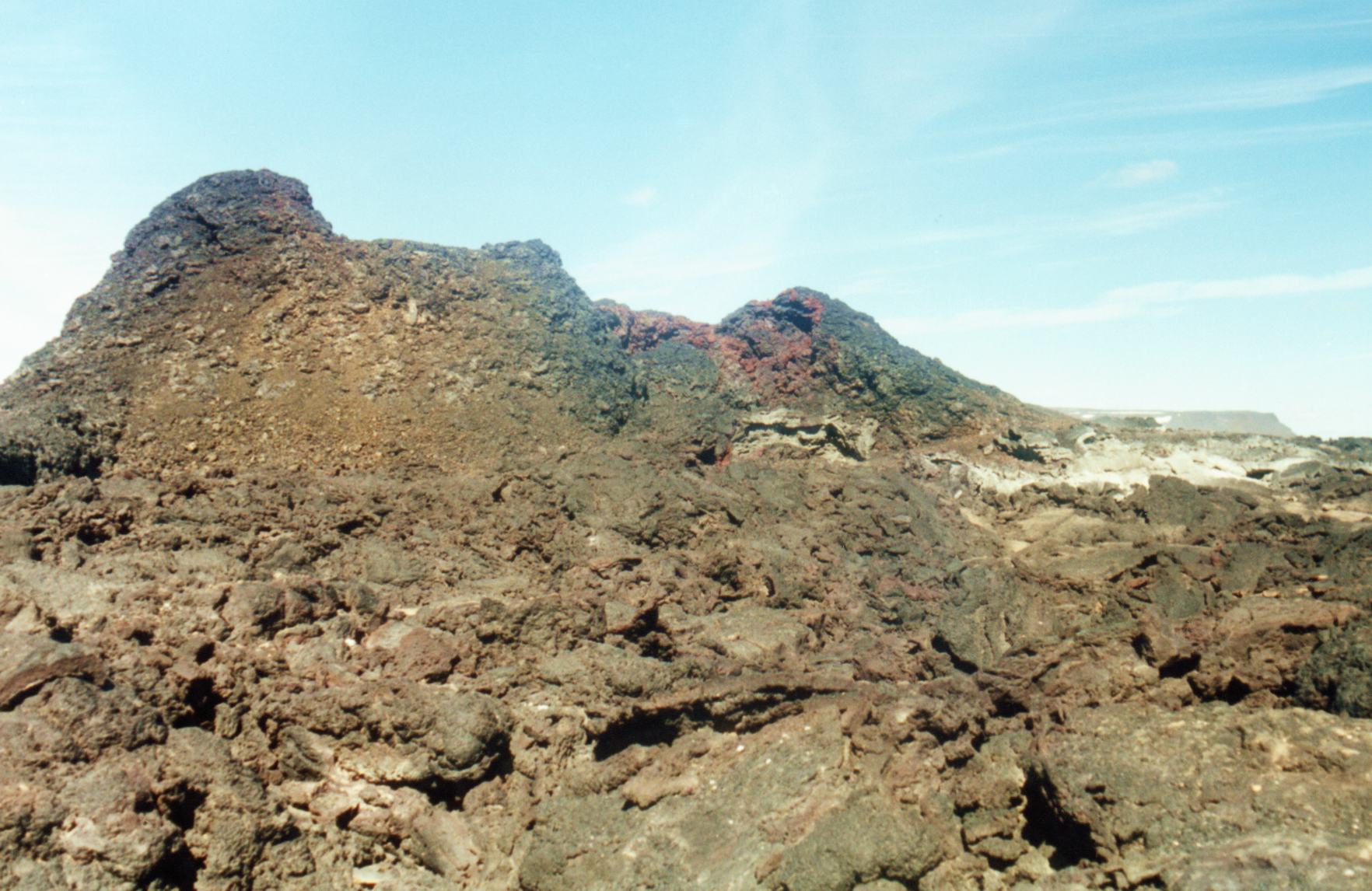
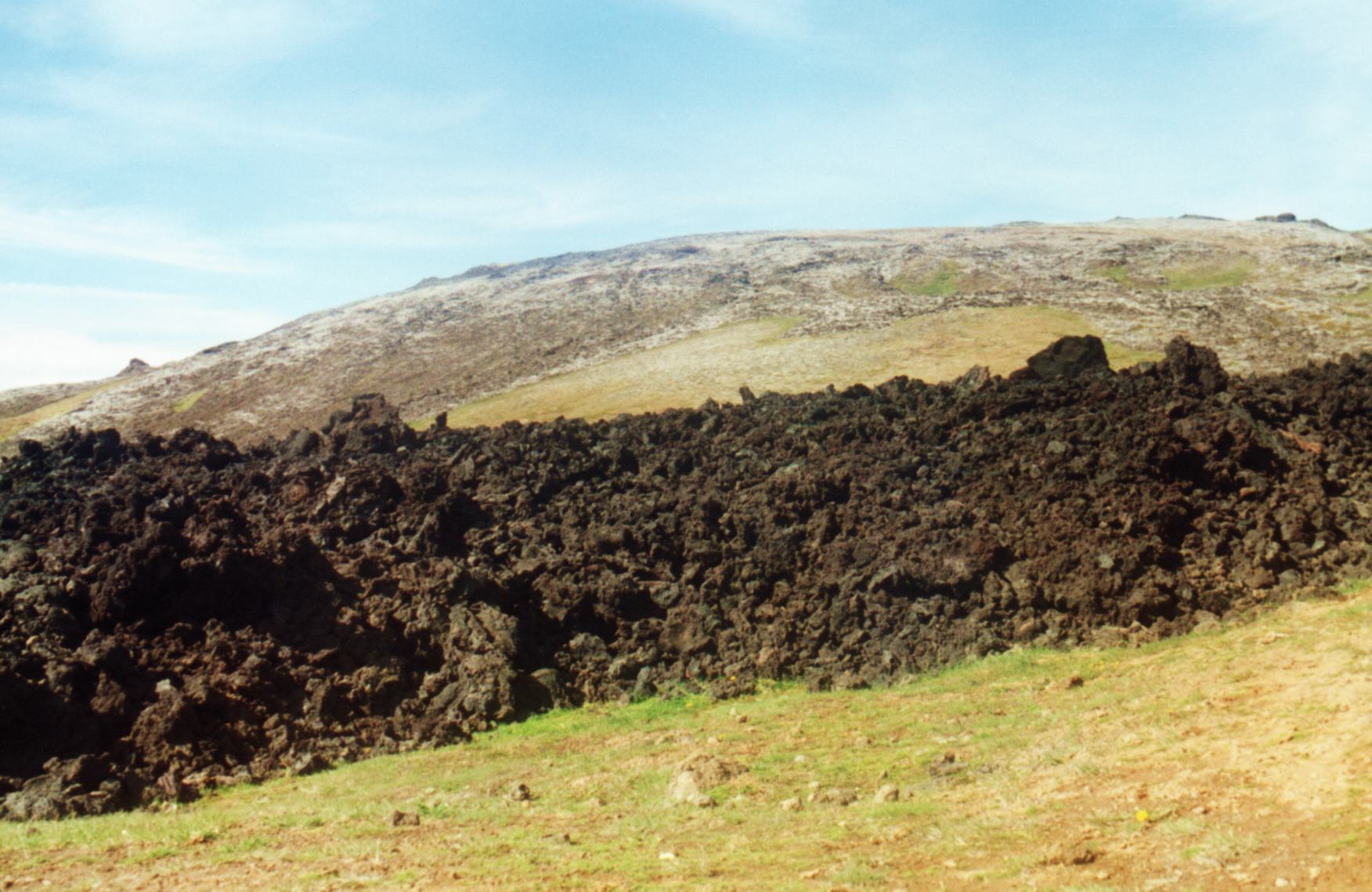
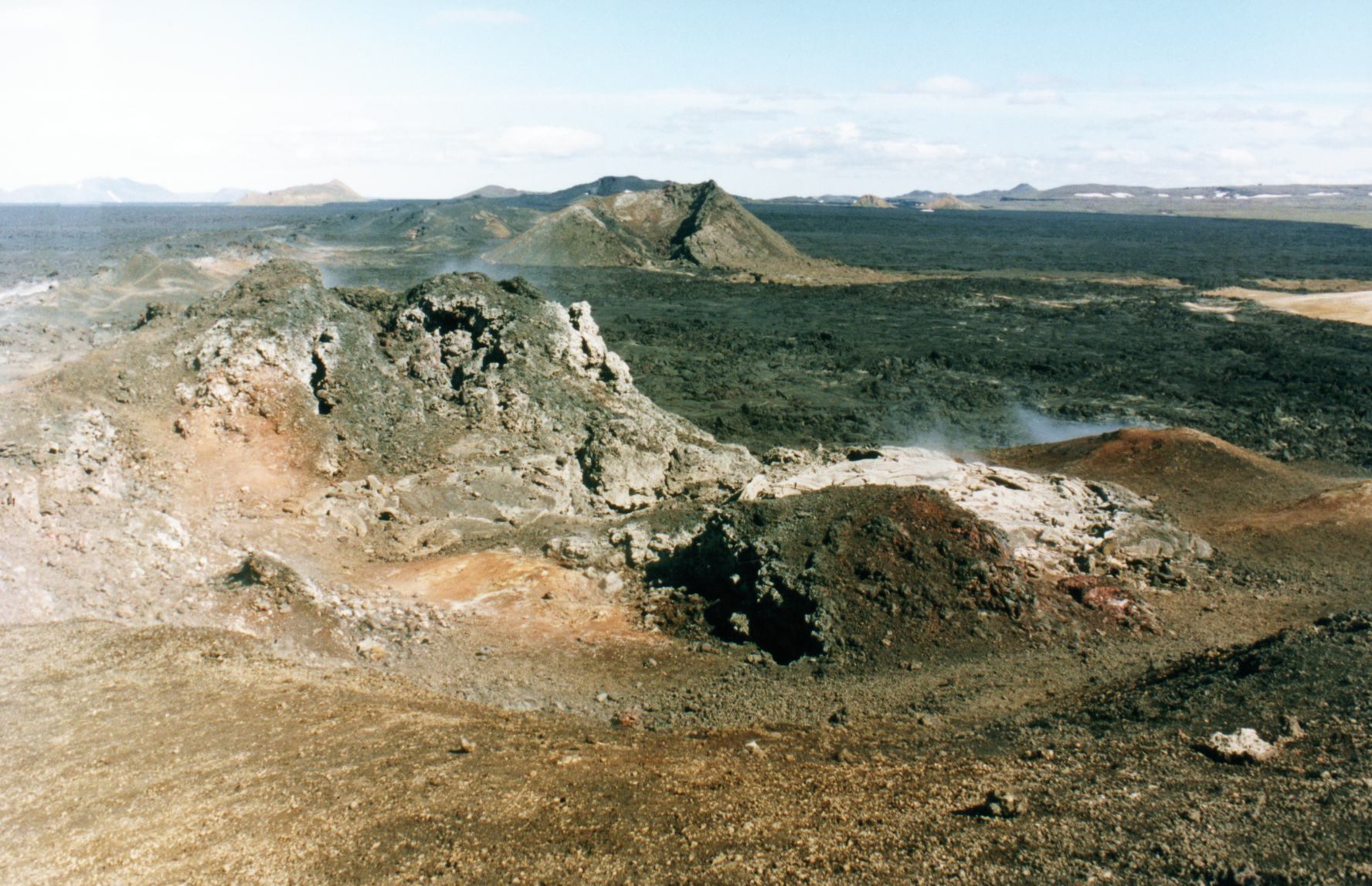
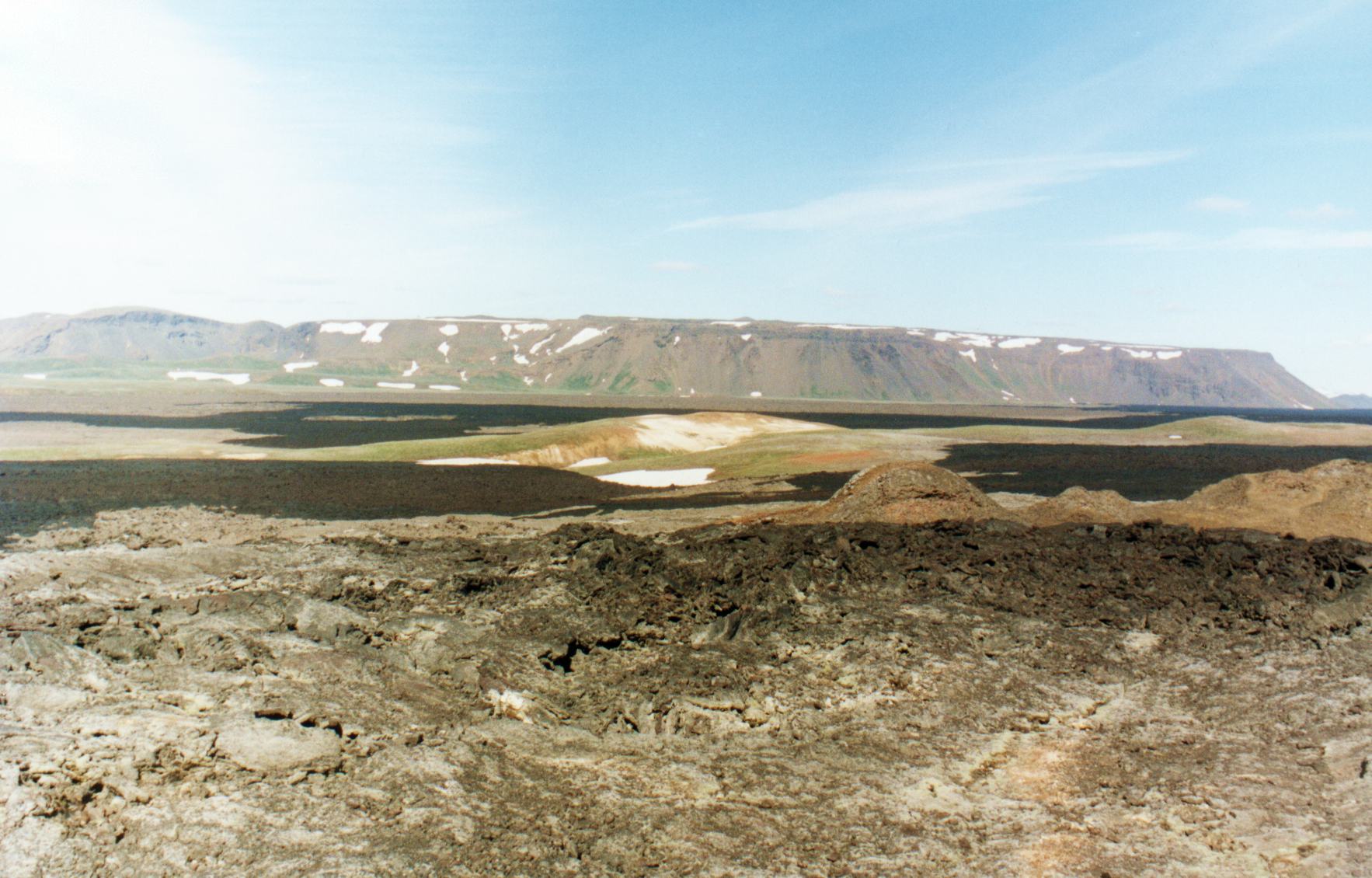
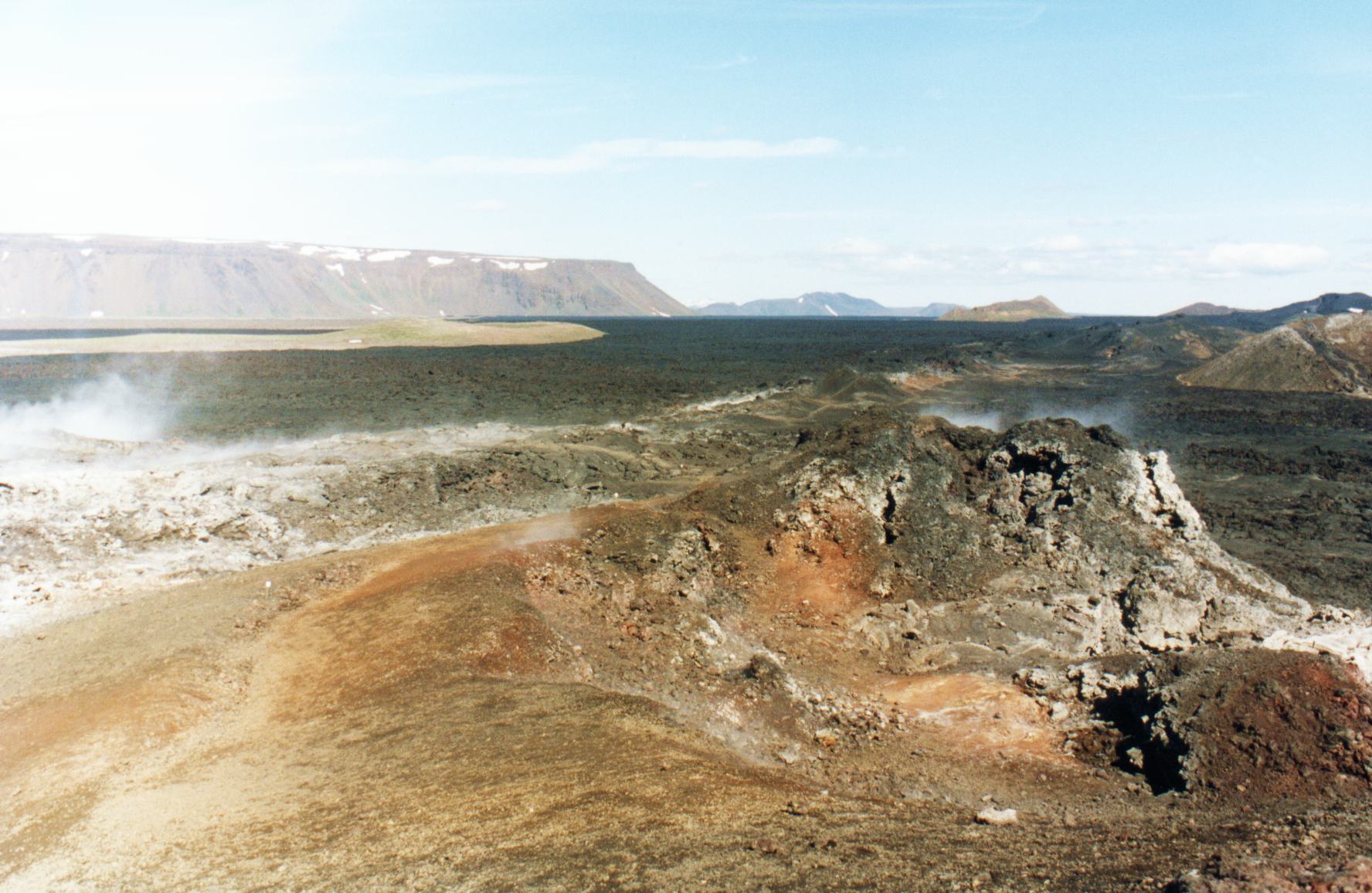
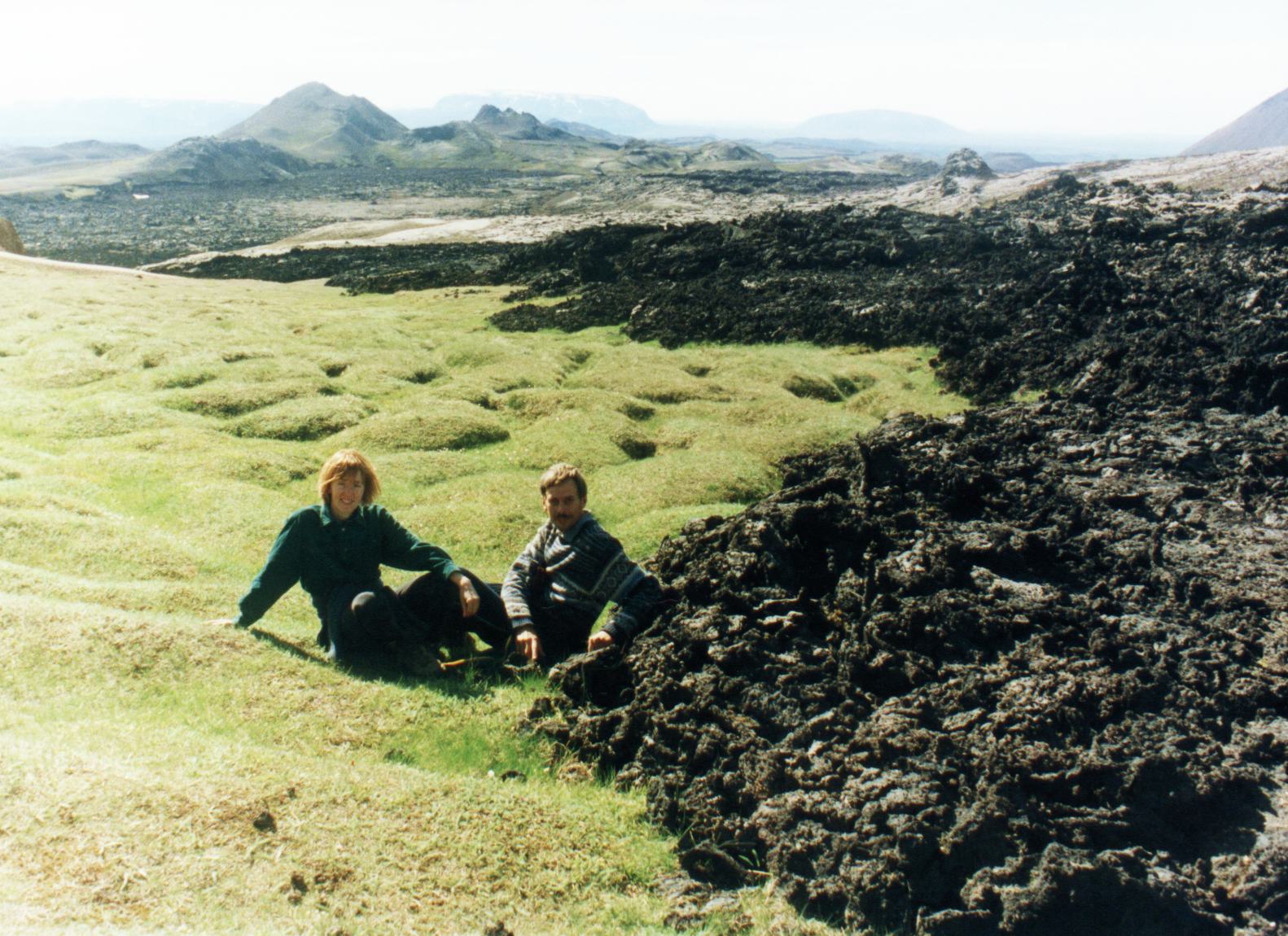
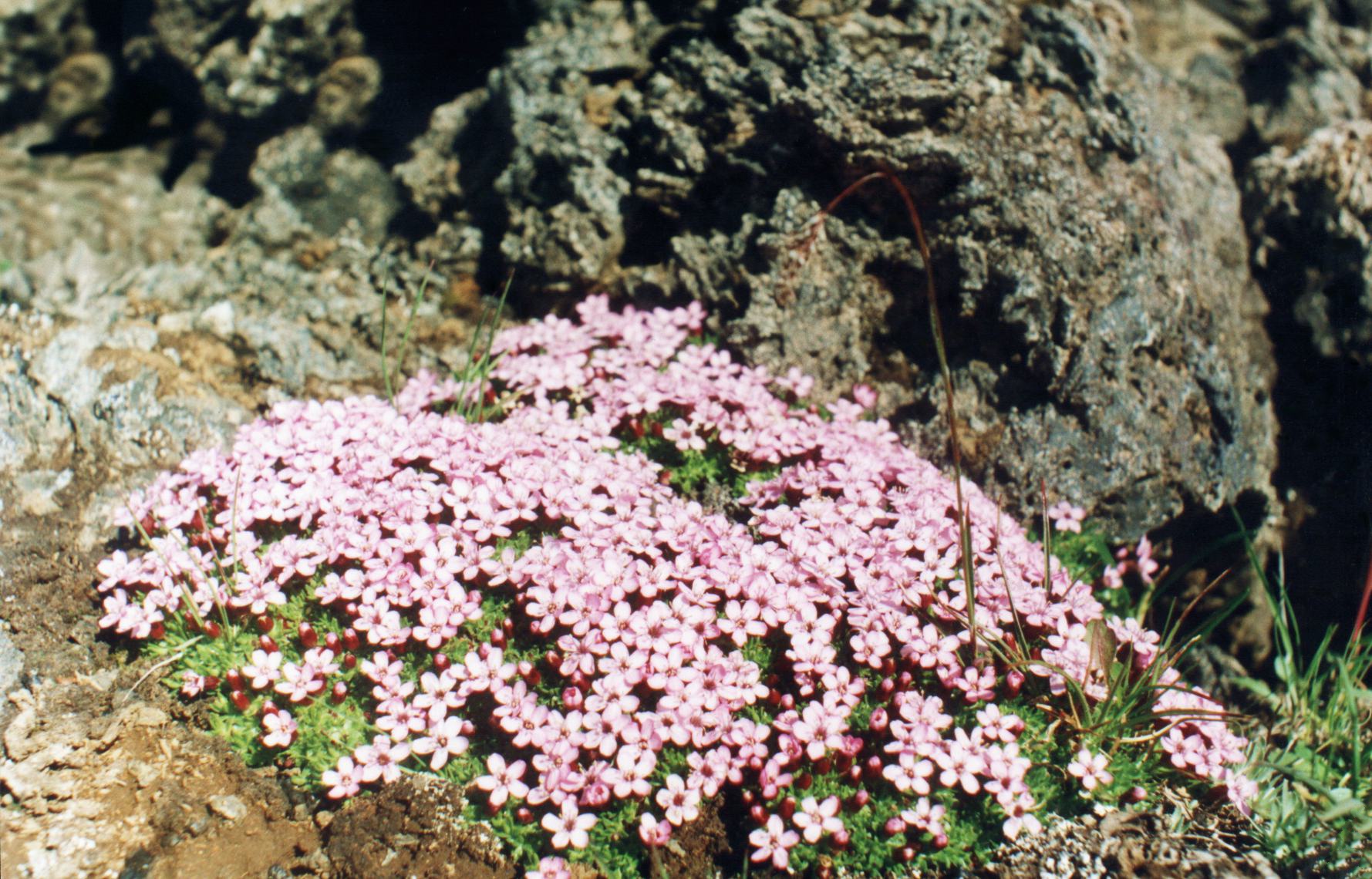
There is another sight at the midge lake, Grjótagjá cave, where you used to be able to bathe. It's a crack with hot water at the foot of Hverfjall. Twenty years earlier the temperature had gone up to sixty degrees and made a bath impossible. Before that there were separate entrances marked women and men, and it was very popular with visitors. The temperature is gradually coming down. I measured forty-eight, tried a hand, then a foot. Tempting, but it stings. It reminded me of the boiling cauldrons in The Little Humpbacked Horse. A bit much. I couldn't take it.
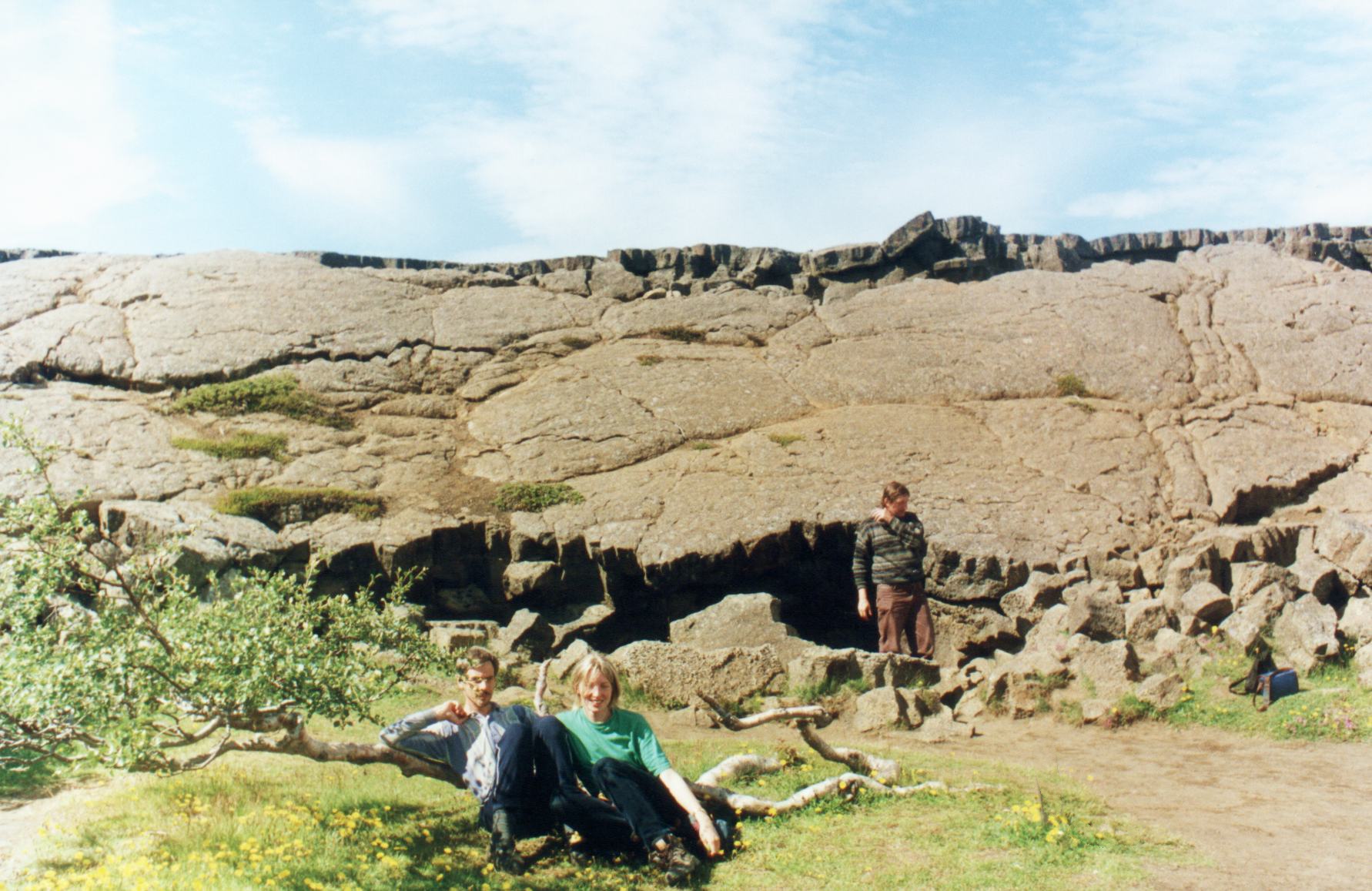
We'd been driving round the midge lake a full day by then. It was getting hard to wait to go on. Iceland is enormous and we were still nosing about over one tiny bit of it.
We'd seen so many wonders in the previous two days that we were full of optimism, but things aren't marvellous everywhere. Farther on the lovely sights get thinner on the ground.
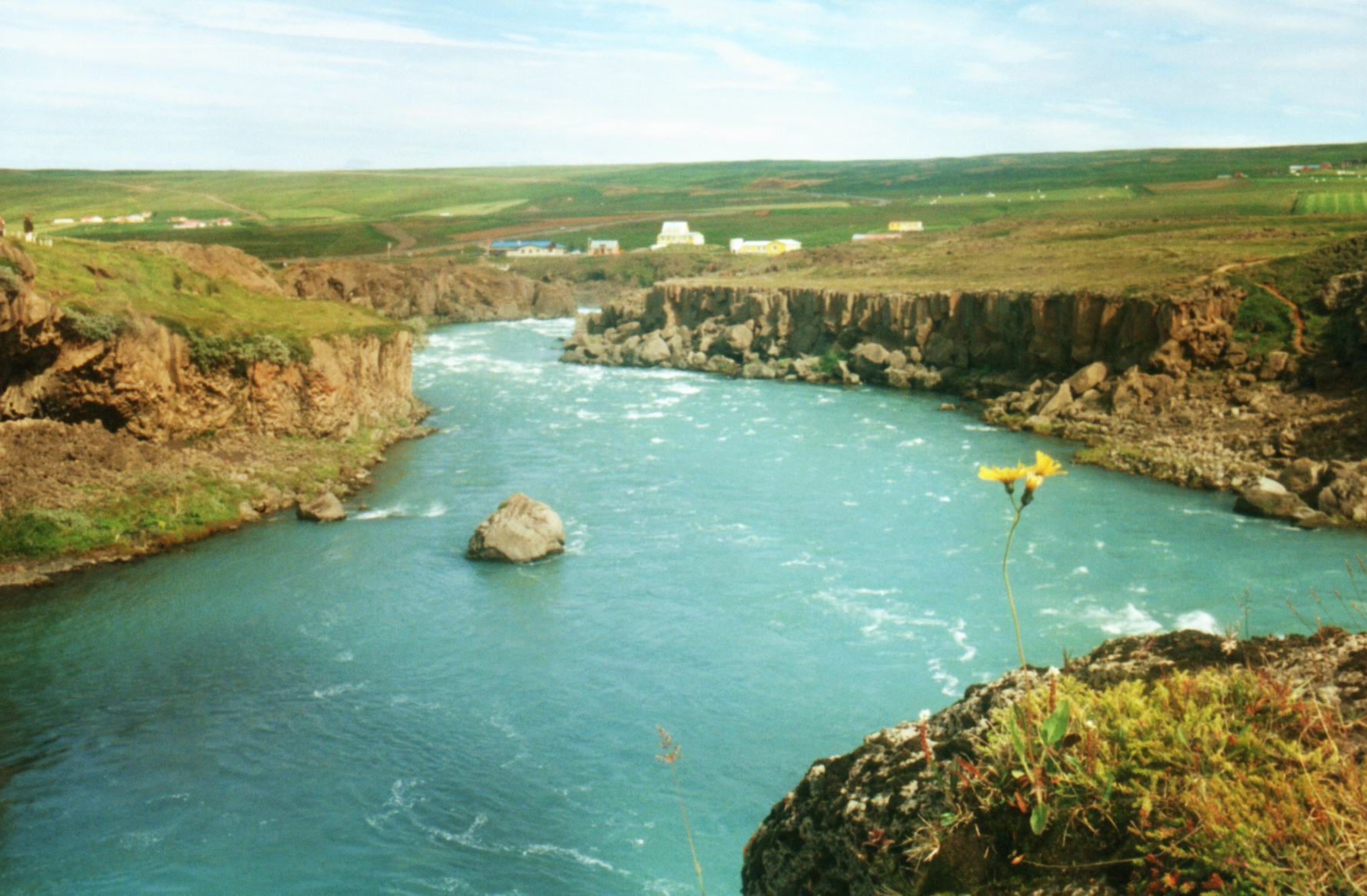
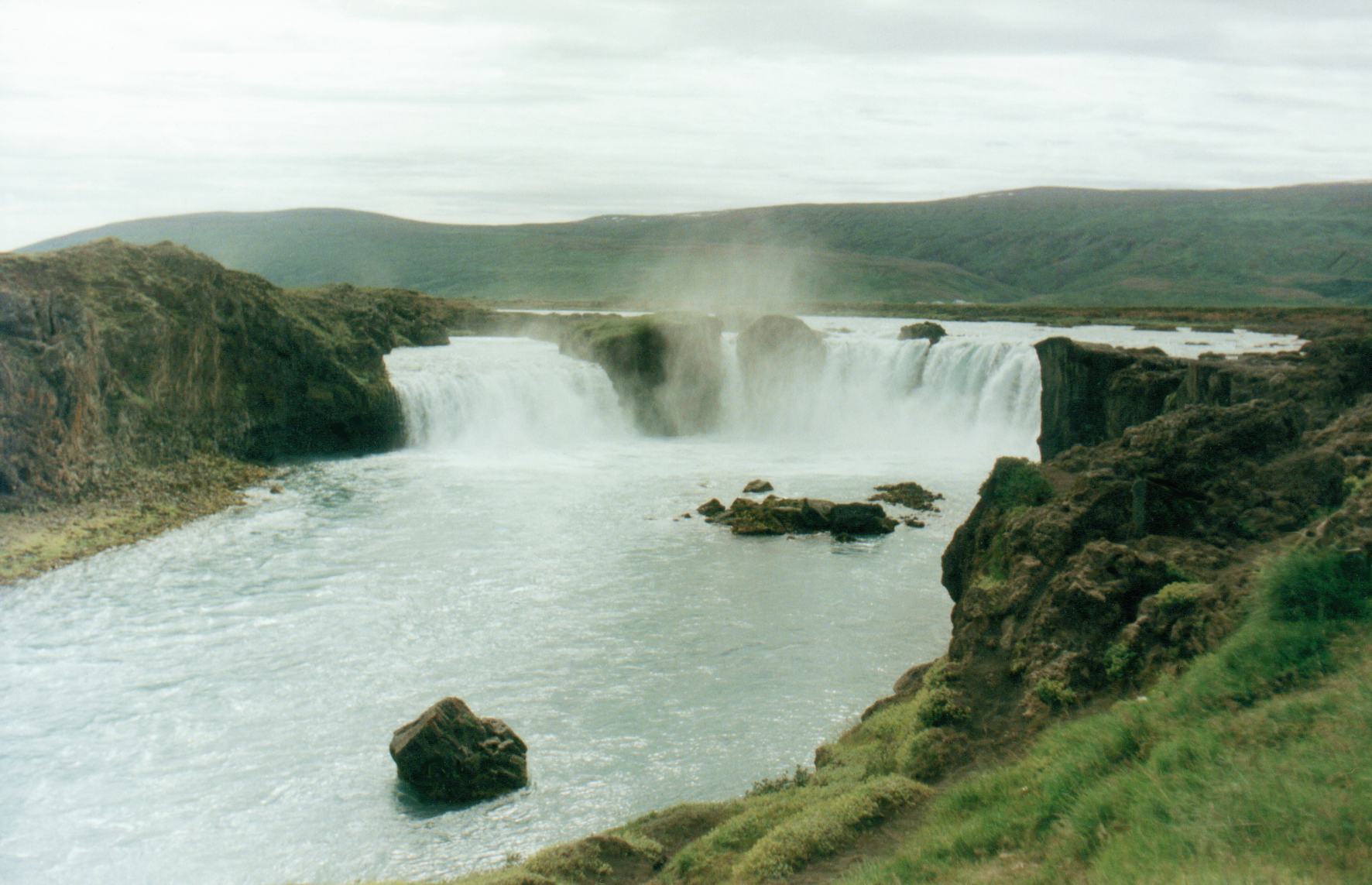
Just by the Route 1 bridge across the Skjálfandafljót is another mighty waterfall, Goðafoss, the waterfall of the gods. What sets it apart is its clear blue water. Most other Icelandic waterfalls are on turbid streams tearing through layers of fresh ash.
By six in the evening we'd reached Iceland's second largest town, Akureyri. Fourteen thousand people, enough to count as the northern capital. It really does seem a sizeable town, with long streets of old houses, flowerbeds, shops, even pay parking. A mechanical meter, an old one of the sort Big Muzzy ate in the early-eighties cartoon. You put in a ten-kroner coin and turn the handle to wind up the timer.
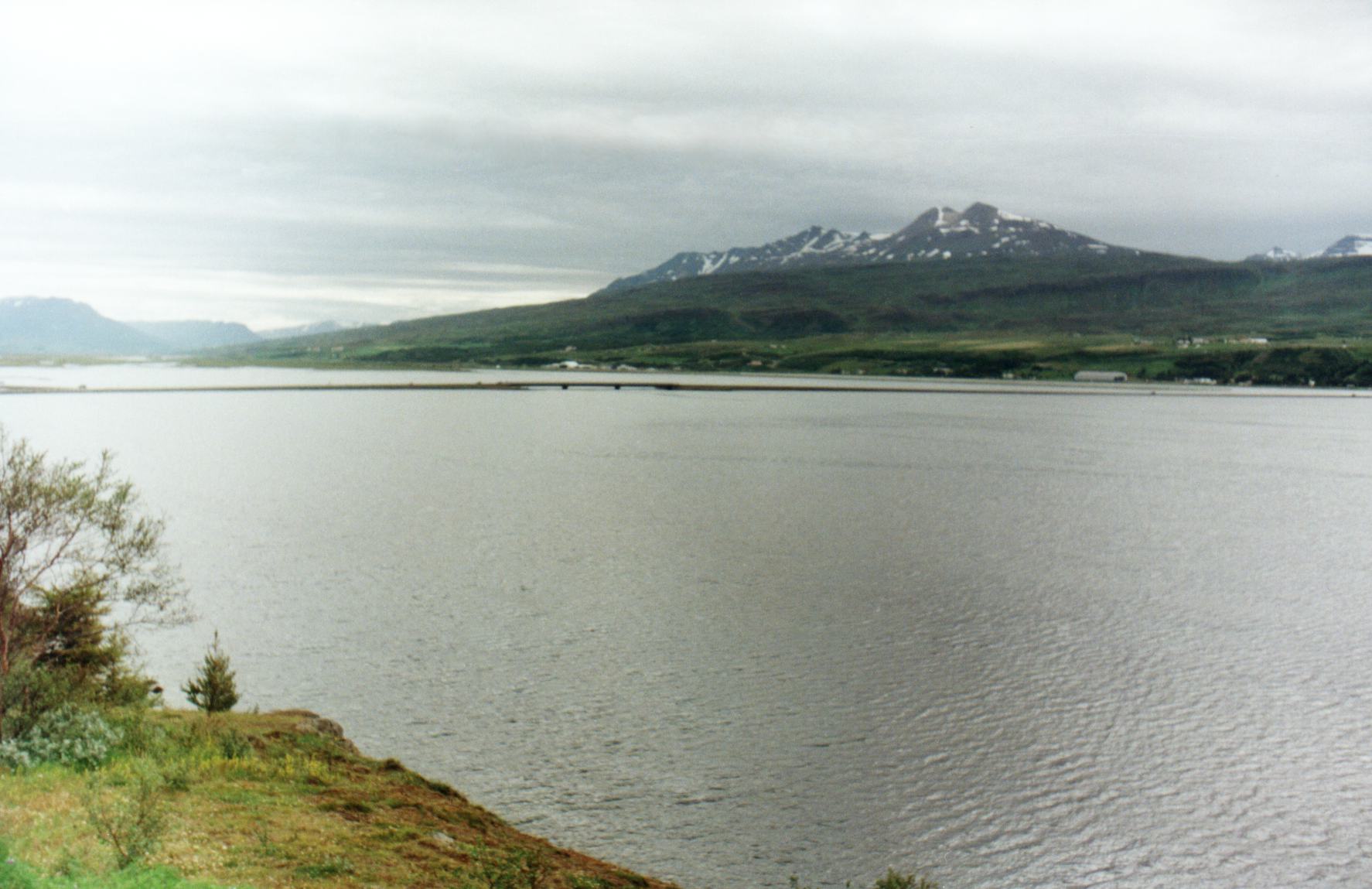
The video camera had gone flat again. This was becoming a calamity. On switching to a Sony digital camera with its famous Stamina battery, I'd found the battery supplied lasted a hundred minutes, enough for one day. Now we were condemned to hunt all the time for a 220-volt socket. I didn't pass up any chance. Here, while we ate in a restaurant, the camera was in the kitchen trying to fill up again. On leaving I'd thought there was nothing to worry about. I'd buy a car charger at any shop. A disappointment awaited me. There was no Sony merchandise at all. I tried all the shops and didn't see a video camera of any kind. How do they live here? Two months later in Kem, in Karelia, the Sony shop was open from eight on a Saturday, and here there was nothing.
Having to get used to eating slowly and deliberately. I ordinarily like to settle the problem of feeding myself quickly. McDonald's suits me fine. Working out what every item on the menu means isn't for me. I haven't even learnt in Russian what's what. Rump steak, schnitzel, stroganoff: I never did learn to tell them apart. Pavel loves it. He can stand for half an hour finding out what's going to be fried for him. I don't mind so long as nobody asks me questions such as what sauce and seasonings I want with it. My dearest wish is to see an item called “meat and potatoes”. This time we got a great piece of lamb. Eating it doubled my love of Icelandic sheep and took it from a purely aesthetic realm into a gastronomic one. For all that, I don't generally like lamb. But this wasn't a pile of smelly bones with traces of meat, it was a substantial piece of dinner.
Akureyri is the cosiest town in Iceland and therefore the proper place to buy souvenirs.
I bought myself a sweater, wallets for the children, a calendar for my parents and a map of Iceland at 2.5 kilometres to the centimetre. Almost every shop is tax-free, so if you get the proper receipt you can reclaim seventeen per cent at the border.
It wasn't hard to find somewhere selling used cars. The prices were high. About the only thing you could bring home would be a substantial diesel four-wheel drive. A five-year-old monster like that costs four or five thousand dollars. The question is what state it's in after driving through stony deserts and unbridged rivers. They sell Russian, or indeed still Soviet, Nivas at about three thousand, the same as a Mitsubishi four-wheel drive of comparable age. There are lots of Nivas in Iceland. An ordinary five-year-old Ford or Volkswagen, on the other hand, costs ten thousand.
We filled the car for the first time in Iceland and drove on. In the meantime the weather had gone foul. The rain came down terribly. It was warm and dry in the car, of course. But the thought of getting out and pitching a tent was no joy, especially as the thermometer at the pass showed two degrees and the wind rocked the car and threw it sideways in exposed places.
A milestone for our little car today, our beloved white horse. She's done a third of a million kilometres. We pulled off specially to celebrate with a coffee.
A cup of coffee is between two hundred and three hundred kroner. Ruinous, of course. Tanya and I count coffee a sacred drink, but Pavel and Lena don't share our devotion. Instead of a good cup of brewed coffee we make do with the world-famous beverage Nescafé, and make it right in the car to boot. The car coffee maker that had saved me on the endless expanses of Russia couldn't cope with the greater workload and died altogether. Pavel now has a flask and makes the rounds of filling stations and cafés in search of boiling water. “Hot water into thermos, please.” They look at him askance sometimes, but they give it to him. I could only bring myself to do that in dire distress, but Pavel enjoys it.
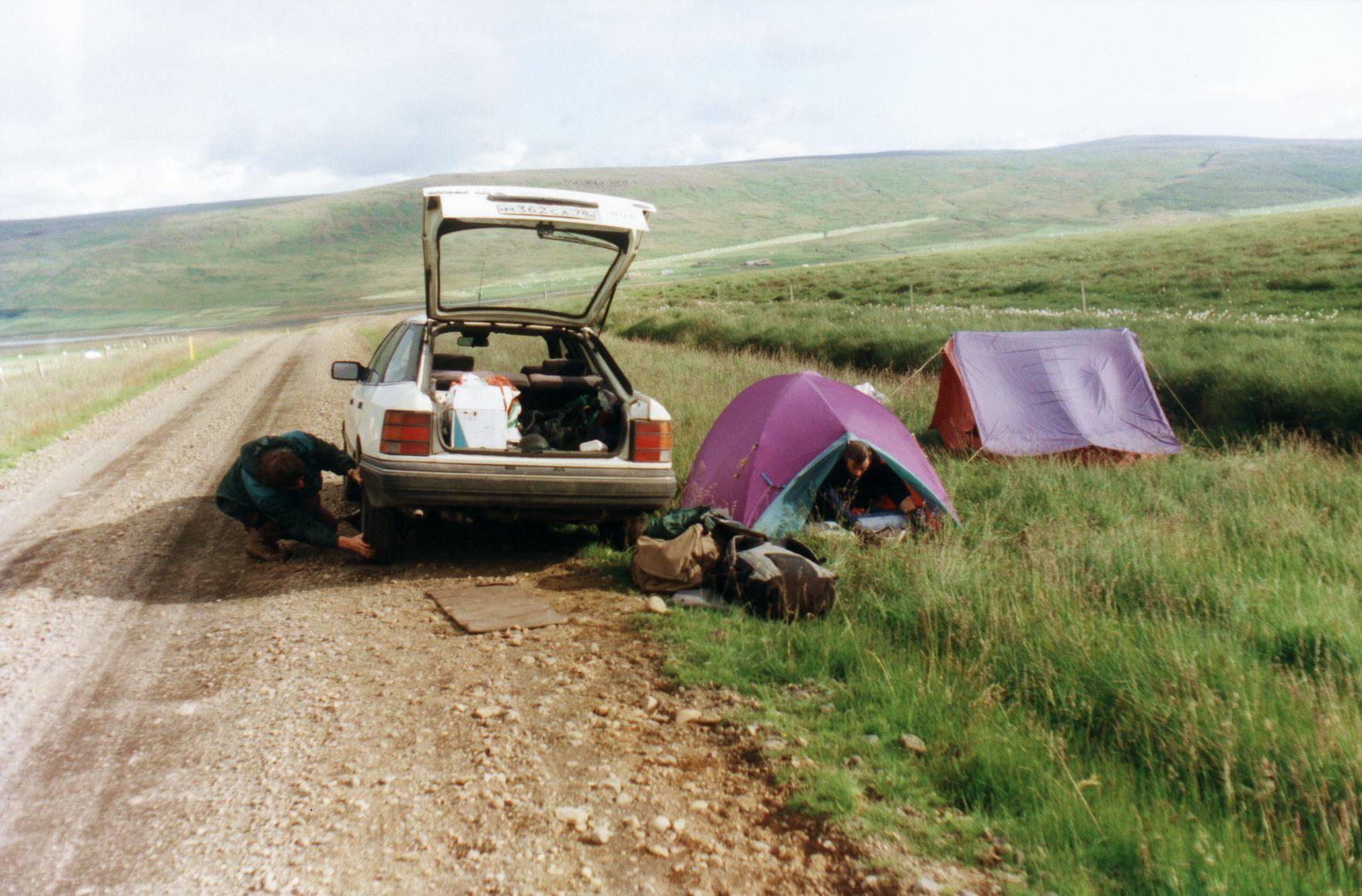
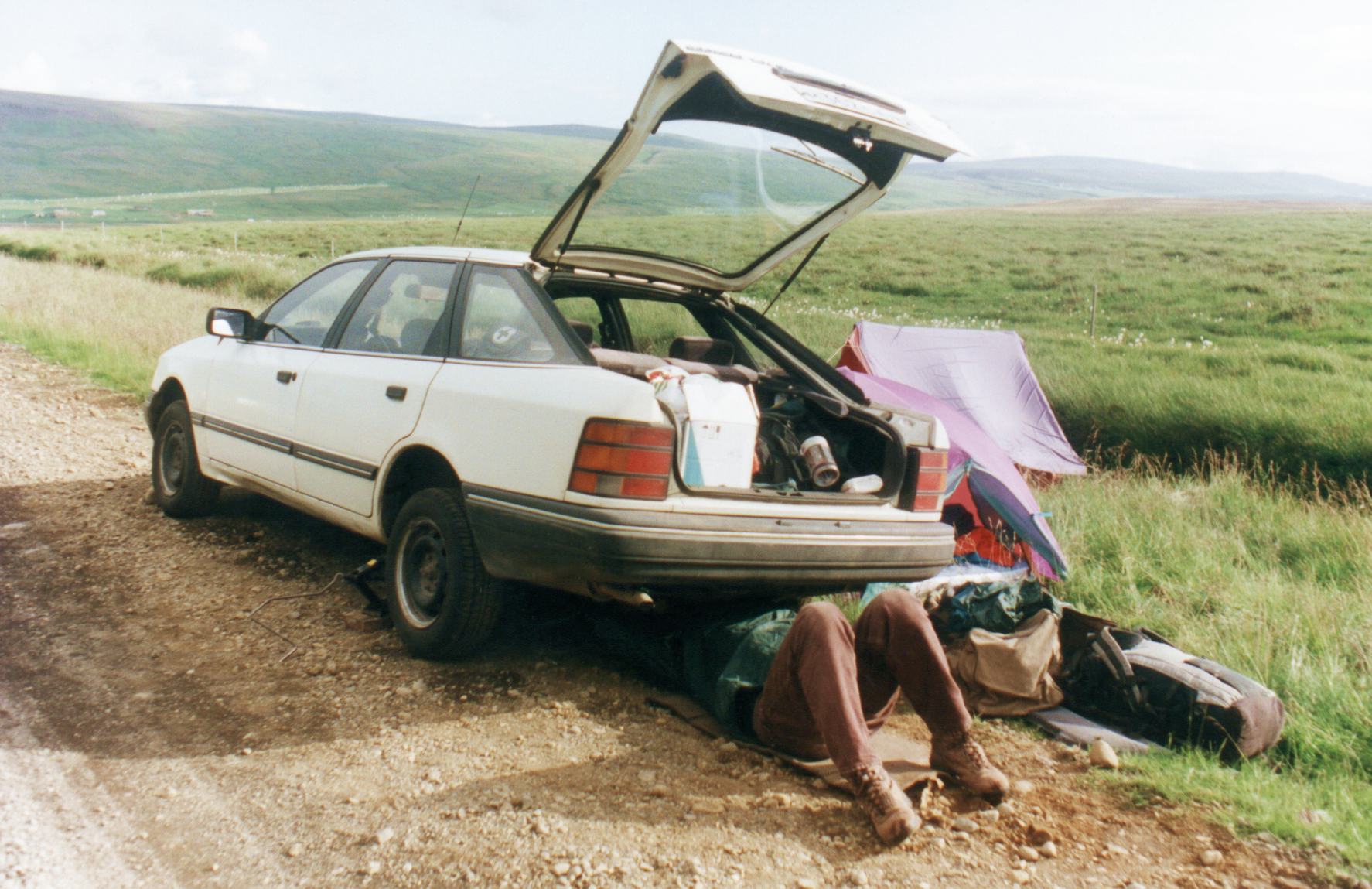
We had driven five hundred kilometres that day and it was getting dark. Almost August already, and the nights were growing darker even at these near-polar latitudes. As luck would have it, no campground could be found. You could have a horse or a swimming pool right this minute, if that was what you wanted. After wandering about near Reykholt for a long time, we came out almost in complete darkness on Route 519. An unfrequented dirt road strewn with sharp stones. Five kilometres later the car cut out. There was one good thing: it happened in a unique spot where it wasn't raining. Black clouds hung all round, but a hole overhead. I crawled under the car. A heart-rending sight. Stones flung up by the wheels had peppered the fuel pump and the wiring to it. And the boot had been knocked off the CV joint, leaving the poor little balls gleaming, unprotected against a hostile world. I reconnected the wires as well as I could. On we went, but not far. Everything fell off again. I had to jack up the car and mend it properly. It couldn't be done in a hurry in the dark, particularly as petrol had started to drip. Very bad indeed. A fire was the last thing we needed. We pitched our tents right on the verge. Fairly level ground. Sharp peaks around us in majestic cloud. Sad as things were, it was lovely all the same. A vast world around us instead of the stuffy walls of some office.
It rained all night but had stopped by morning. It wasn't a busy road. Not one vehicle passed all night. I jacked up the car. The hoses didn't seem to be punctured. I tightened the fittings and stripped and crimped the wires again. I wound tape around them for protection. Everything seemed right again, apart from the CV joint. There wasn't a quick remedy for that, but it wasn't knocking yet and might make it to Germany, where we could easily replace it.
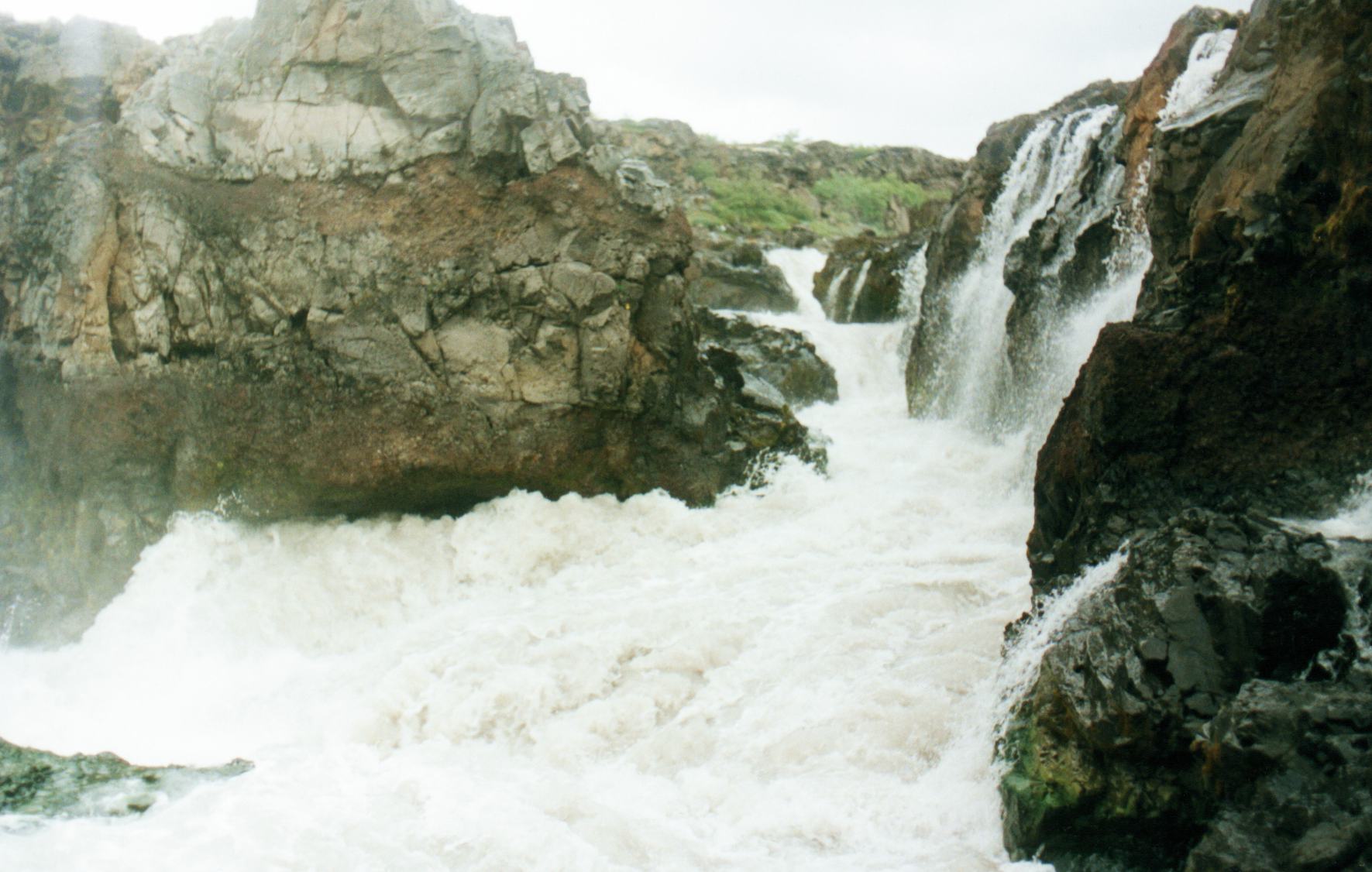
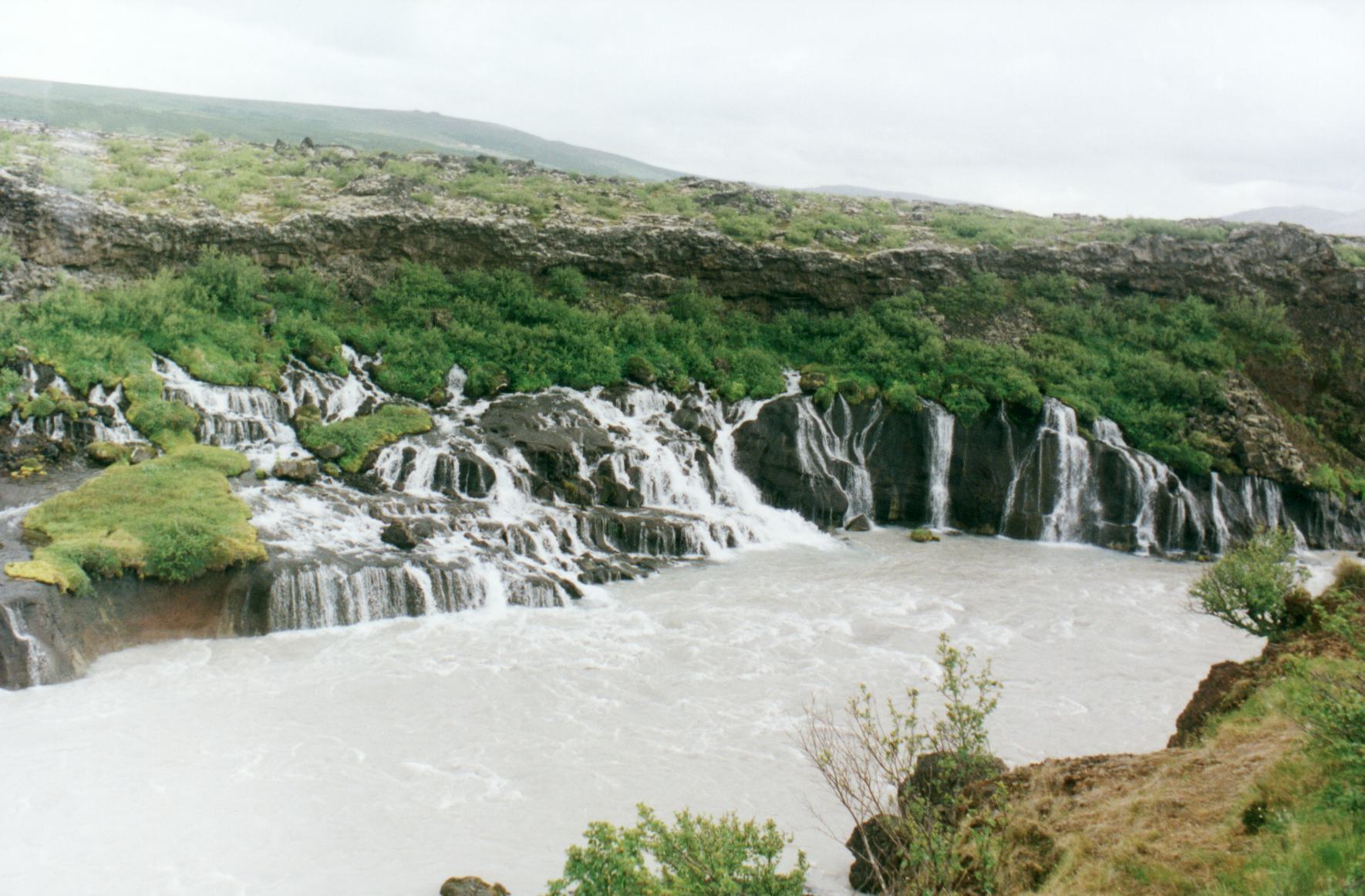
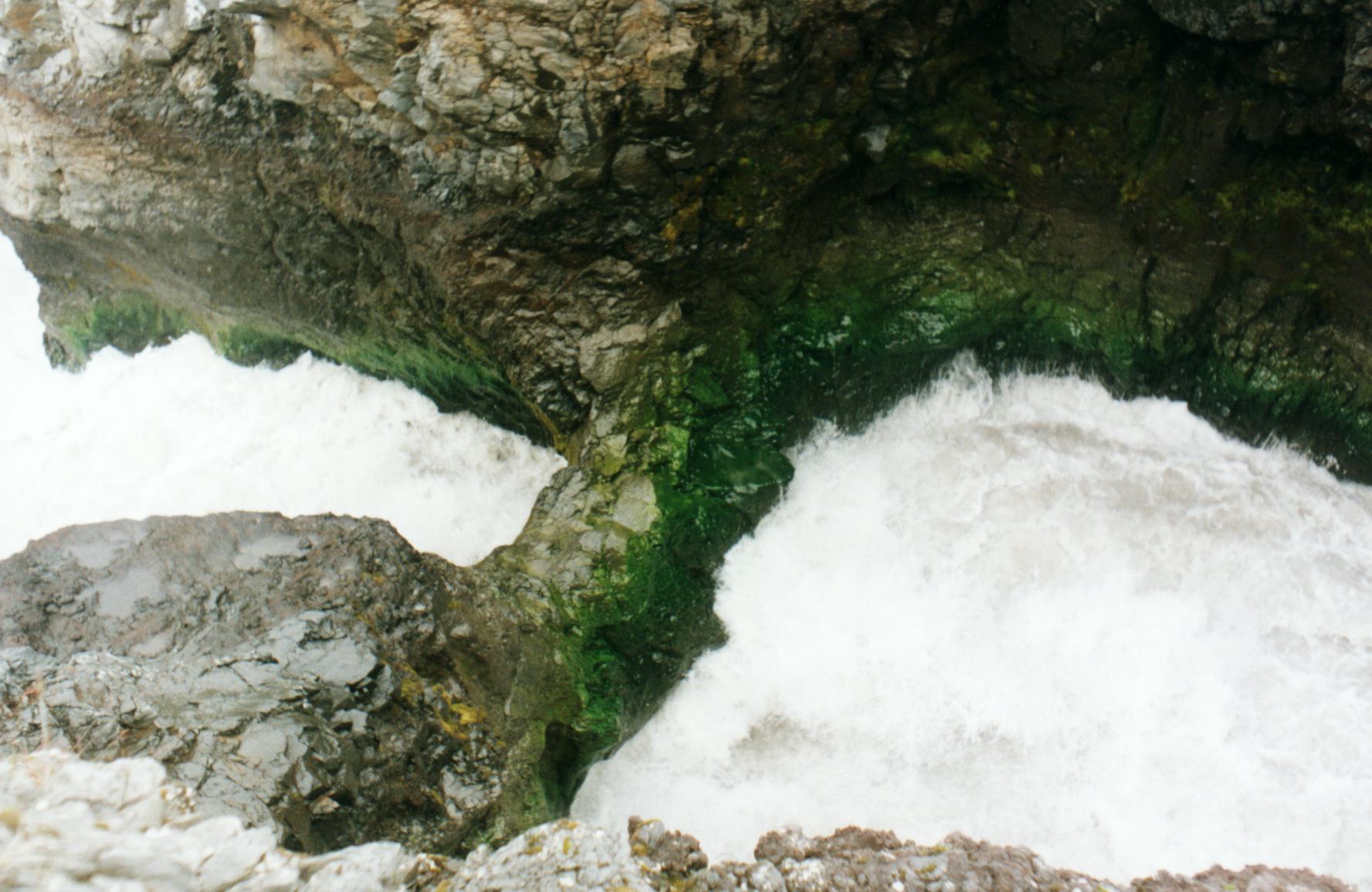
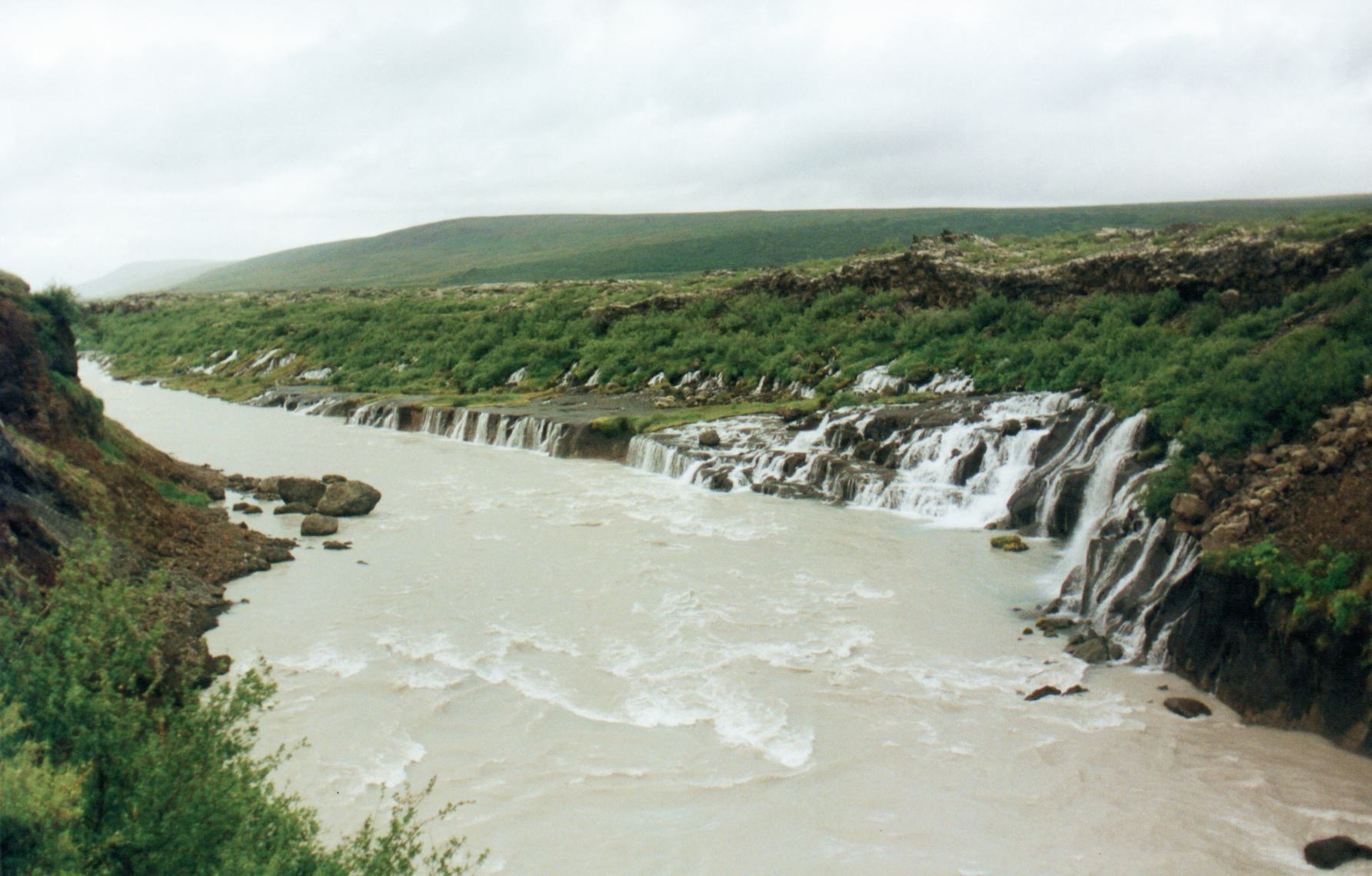
We began the day with the Barnafoss and Hraunfossar falls. These waterfalls make up a single scene in effect. About twenty metres of drop, with very shapely rocks all about. Some of the streams come out from under a layer of lava covered in vegetation. It gives the impression the water comes right out from under the bushes.
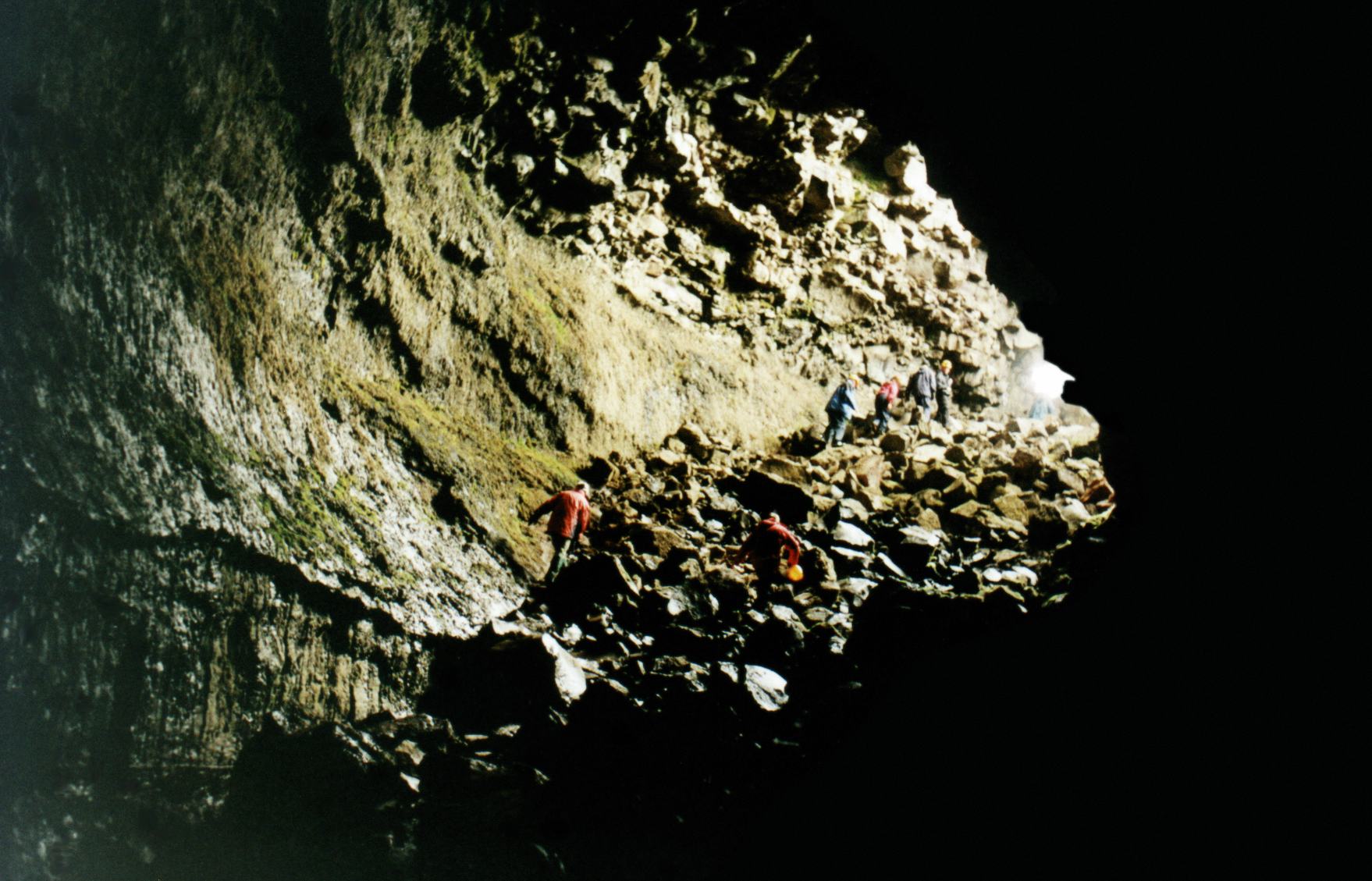
Farther upriver there are caves, lava tubes. The longest is four kilometres. The signs say it's the longest in the world, which isn't so: there's one sixteen kilometres long in Hawaii.
At first we couldn't find the road and went to ask at Kalmannstunga farm. It turned out to be a campground as well as a farm, and you could book a tour of the cave there. While the others talked to the friendly owner, I managed to get a little charge into the camera. I made use of every second now. There was still Reykjavík. I'd buy a charger there for certain.
You can drive nearly to the cave mouth. The road is rocky, though, and three people had to walk to raise the car's ground clearance.
Surprisingly the cave was wild. Out in the open there was a car park, and even a little ladder. Beyond that, folks, you're on your own. Past the small rocky entrance is a tunnel half full of ice with water pouring onto it from above. Pitch dark, as you'd expect.
It isn't hard to walk through, but it's no show cave and it's wet and muddy in the usual way. There was a reason for offering the tour, it turned out. They give you clothes, torches and a guide. We met such a group coming out. We didn't go far in. I'd got lost once in a cave in the Urals after going in without a spare torch, warm clothing or a rope. What I learned that time took the edge off my desire to get to the very bottom.
Ten kilometres to the south there is another natural wonder, the two-hundred-metre Glymur waterfall, the highest in Iceland. A car won't get you particularly close. The parking area is about four kilometres away. A satellite photograph on a board shows which way to go. We couldn't be bothered to study it and followed the crowd along the path. Before long the path went through a little cave and ended at a log laid across a mountain torrent. Tanya is as frightened of crossings like that as she is of dogs, and words fail me as to how frightened she is of dogs. Not a ballerina, in other words.
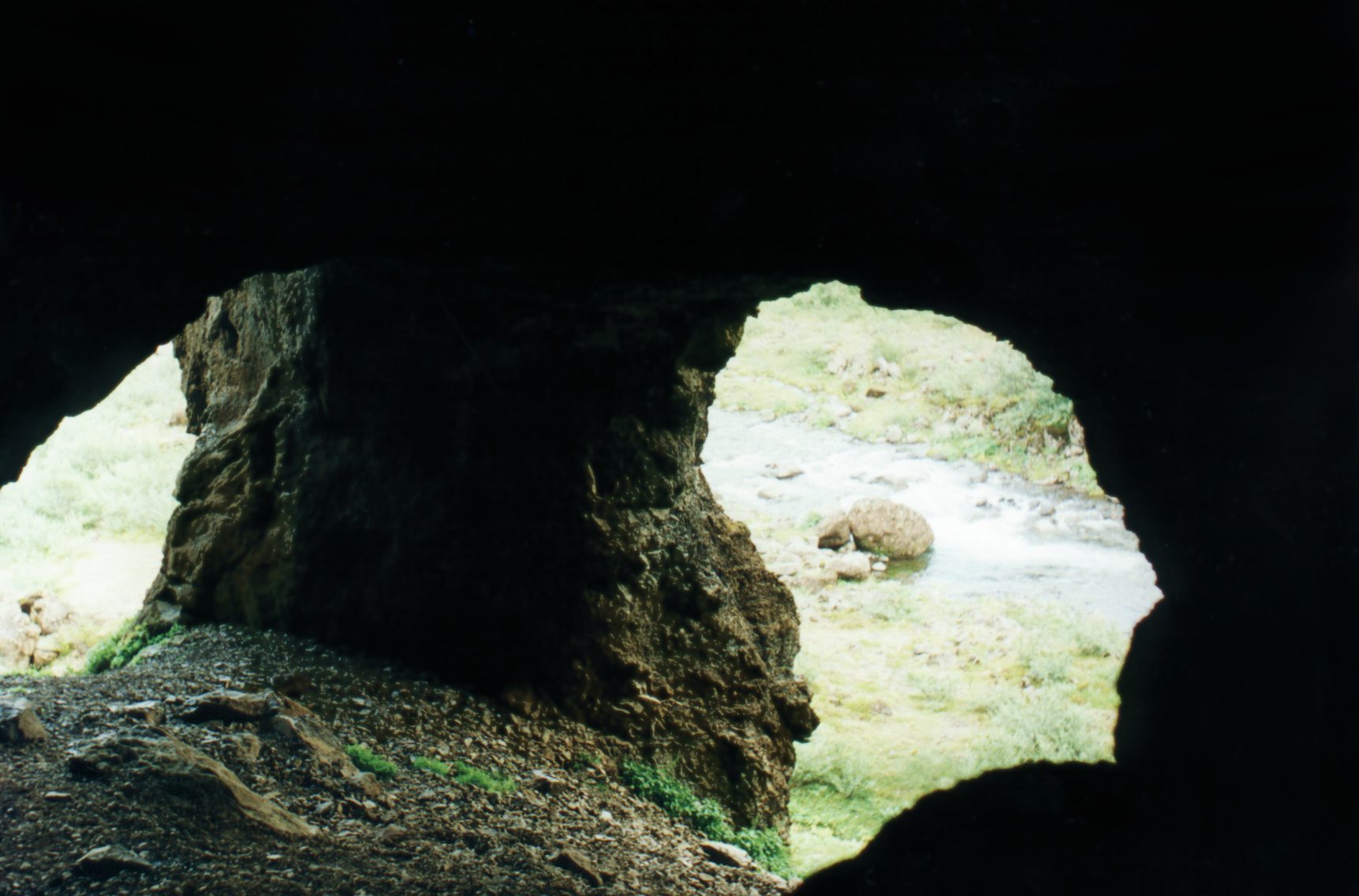
From the crossing ran a canyon a few dozen metres wide with two-hundred-metre sides. Somewhere at the far end there should have been a torrent in full spate, but the canyon twisted and the view we wanted never opened up. We went higher and higher up the mountain. Soon everybody dropped out except me and decided to make do with what they'd seen.
The slope was growing steeper. Scrambling up it I soon crawled up to a gull's nest. A plump, fluffy chick, not distinguishing me much from its mother, opened its beak and asked for dinner. At this rate I'd be meeting eagles soon. I went on climbing. It became plain that the falls couldn't be seen from this bank. There were any number of viewpoints on the far side, but I couldn't fly.
That was when I remembered my youth, when neither mountains nor rivers stopped me and I used to go out on a glacier for days in canvas shoes, without food or a rucksack. I forded the stream right on the lip from which it all drops two hundred metres. Then I climbed a vertical rock face and finally, after dropping a hundred metres, got the view I'd been after. One thing I can say is I didn't regret the effort. It's worth seeing. But look at the map first and save yourself such a roundabout climb.
I was wet through and muddy all over, but happy when I reached the car, where the bored public were waiting at its locked doors.
Tonight we meant to stay in Reykjavík, the capital of Iceland. There is a campground right in the middle of the city. Lots of young people with a hippy look. I feel younger in company like that. There were so many of them, though, it was hard to get near the amenities. A free shower, but they refused to take the camera for charging at reception. The gull and waterfall had used it all up again. As well as the young people there were plenty of very well equipped expeditions. There were several four-wheel drives from Italy parked beside us. The electric rings in the kitchen took coins, which made cooking a meal rather expensive.
We staked out a snug place in a corner, put up the tents and drove into town. It was Sunday. You could park free without worrying, on the main street if you liked.
A light rain was falling, but not enough to spoil a walk. We began with a meal in an Indian restaurant, because it had a conveniently placed socket for the camera. Then Tanya and I split off and walked on our own. Pavel and Lena move far too slowly and get stuck in shops for far too long.
It's a large town. You couldn't make it from end to end in fifteen minutes. Most of the buildings are two- or three-storey houses and nearly all of them hung with pots of flowers. Nowhere else does it look quite so beautiful. Perhaps the contrast between the stern world and the delicate flowers lends it an extra charm. Tanya and I spent the evening walking and watching local life, people and cars. Being Sunday evening, all the shops were shut and there was nothing to distract us from the chance to live a little of their life. That evening in the campground we sat in the car for a long time and listened to local radio. There are only a dozen or so stations on the air and almost all of them are pleasant. Wonderful. Either we'd relaxed abroad or it really was different music. I still haven't reprogrammed one button on the car radio. It's still on 99.9. Drops of rain on the windscreen, and beyond them the spires of buildings in the darkening blue sky. Could it really not be a fairy tale? Was this the same life that had begun with marching in formation and spells of compulsory work on the collective farm, back there behind the Iron Curtain?
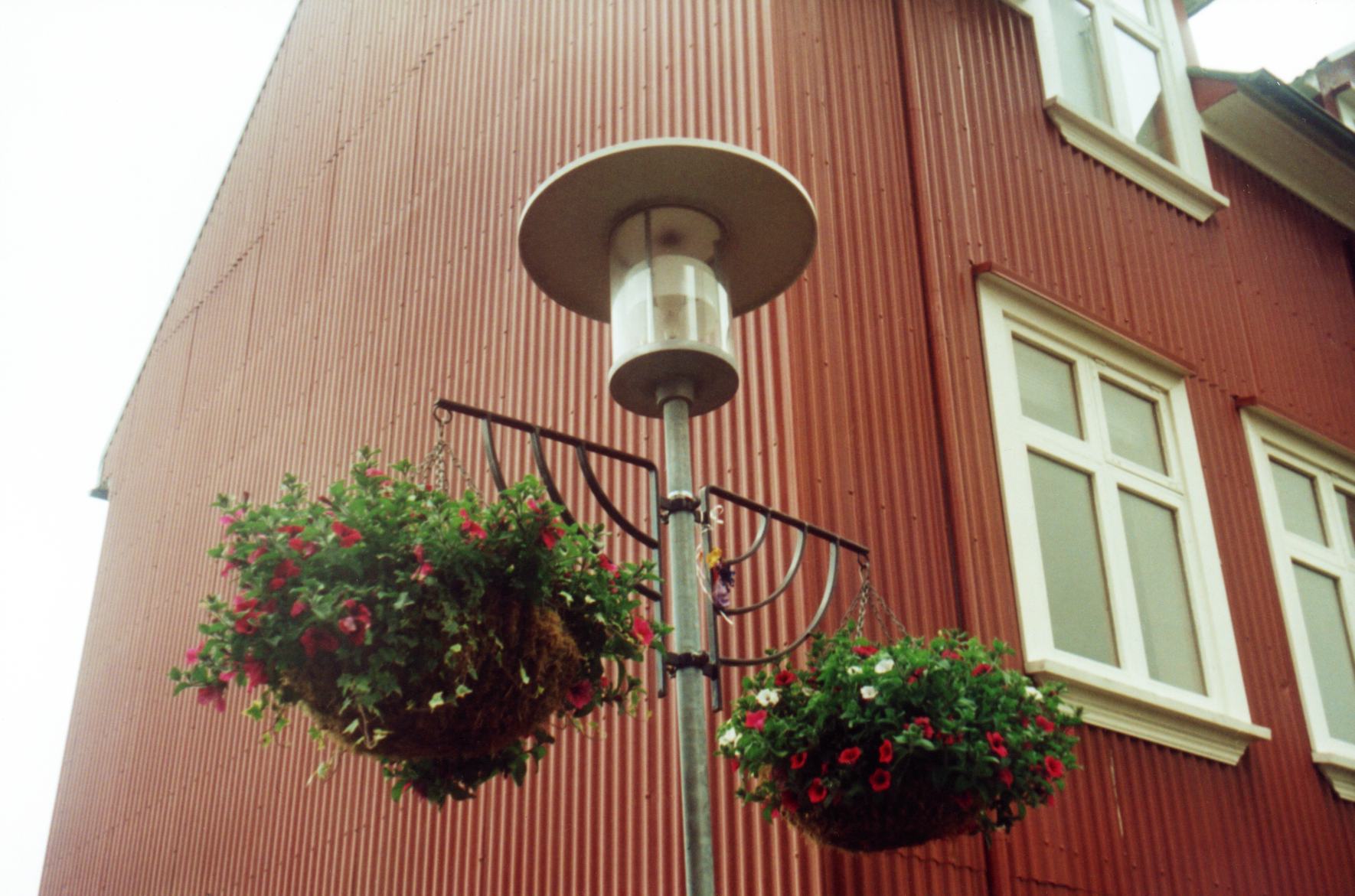
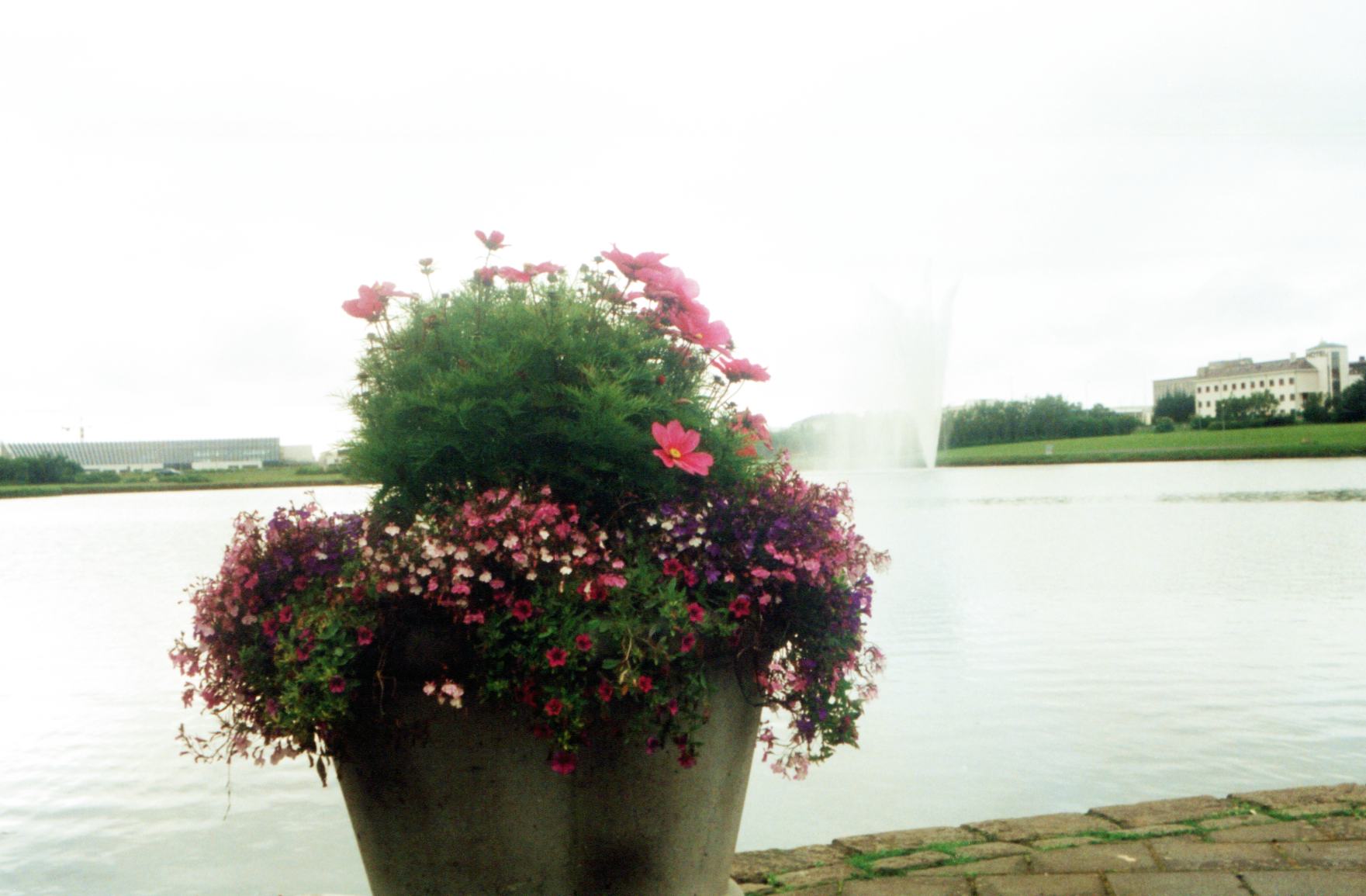
In the morning we went into town again. First, coffee. This time we weren't giving in. We'd have real coffee out of a real cup in a decent café. To Pavel's heavy sighs, we ordered four little espressos at Café Paris on the main square, looking onto the Alþingi, the local parliament. At 220 kroner a cup, none too bad for the best café in town. Pavel was stricken with grief, and when it turned out that you got fifty millilitres of coffee for the money, he was ready to eat Tanya and me as well. That was it. Meals apart from then on.
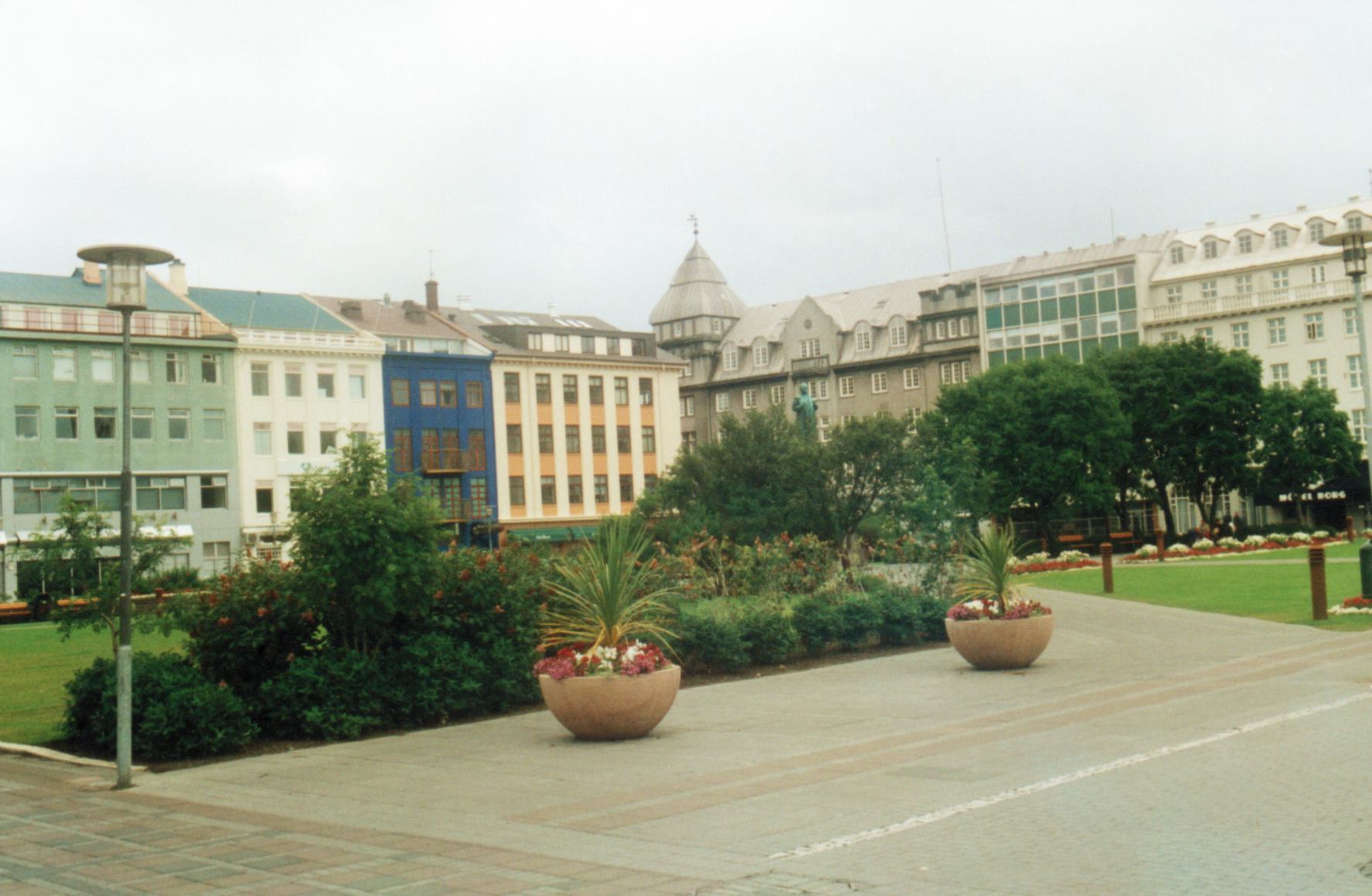
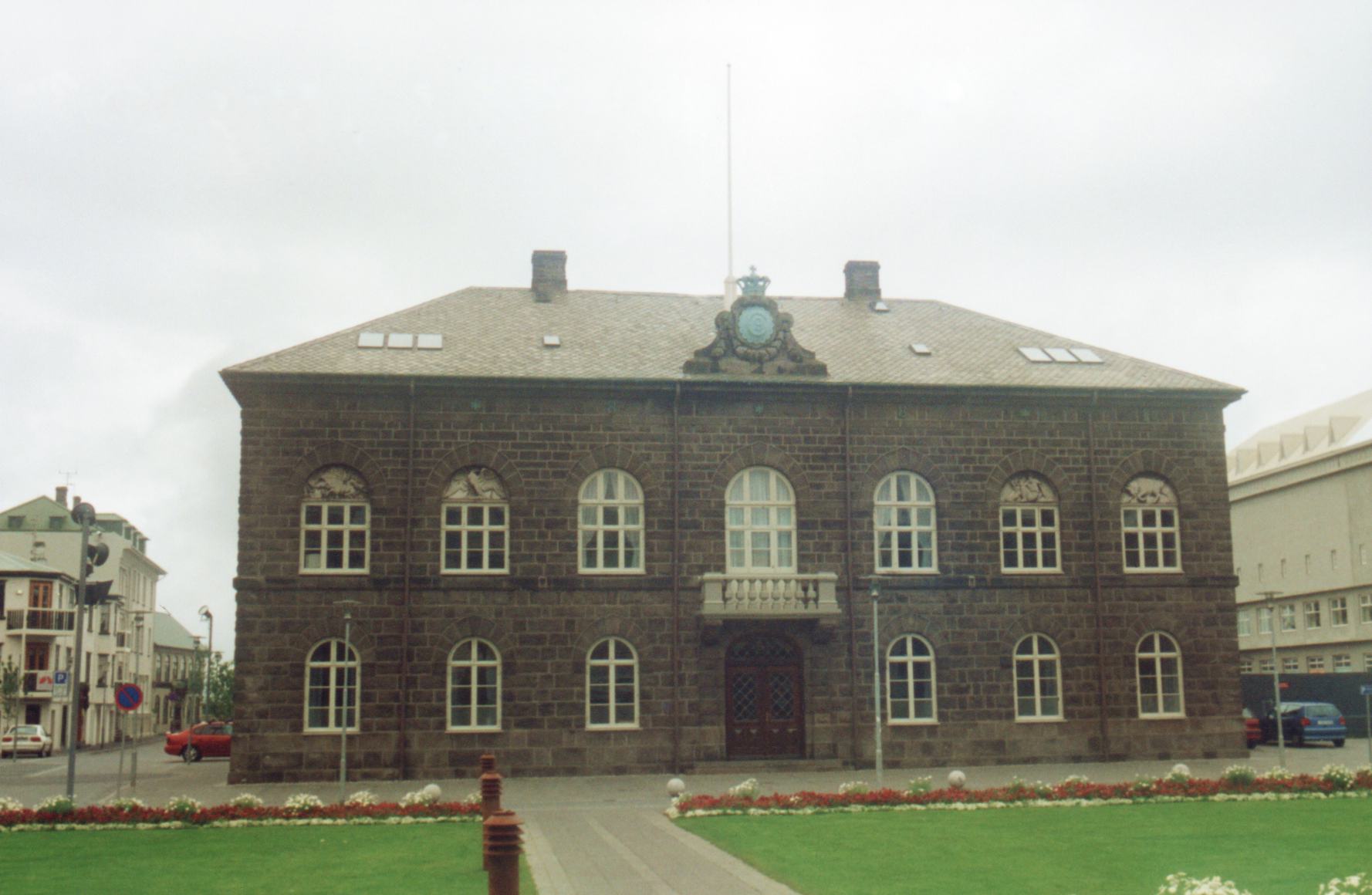
We walked round the city for another half-day. Reykjavík is on a headland, without much in the way of hills. Lots of little one-way streets, but you can take a car along them. In the middle of town is a lake with a fountain and a crowd of begging geese on it. One of the little churches surprised me. Catholic statues, beside them what almost looked like Orthodox icons, then an ascetic Protestant look to the room as a whole, yet in place of incense they were burning sandalwood sticks from an Indian shop. How's that for breadth of outlook?
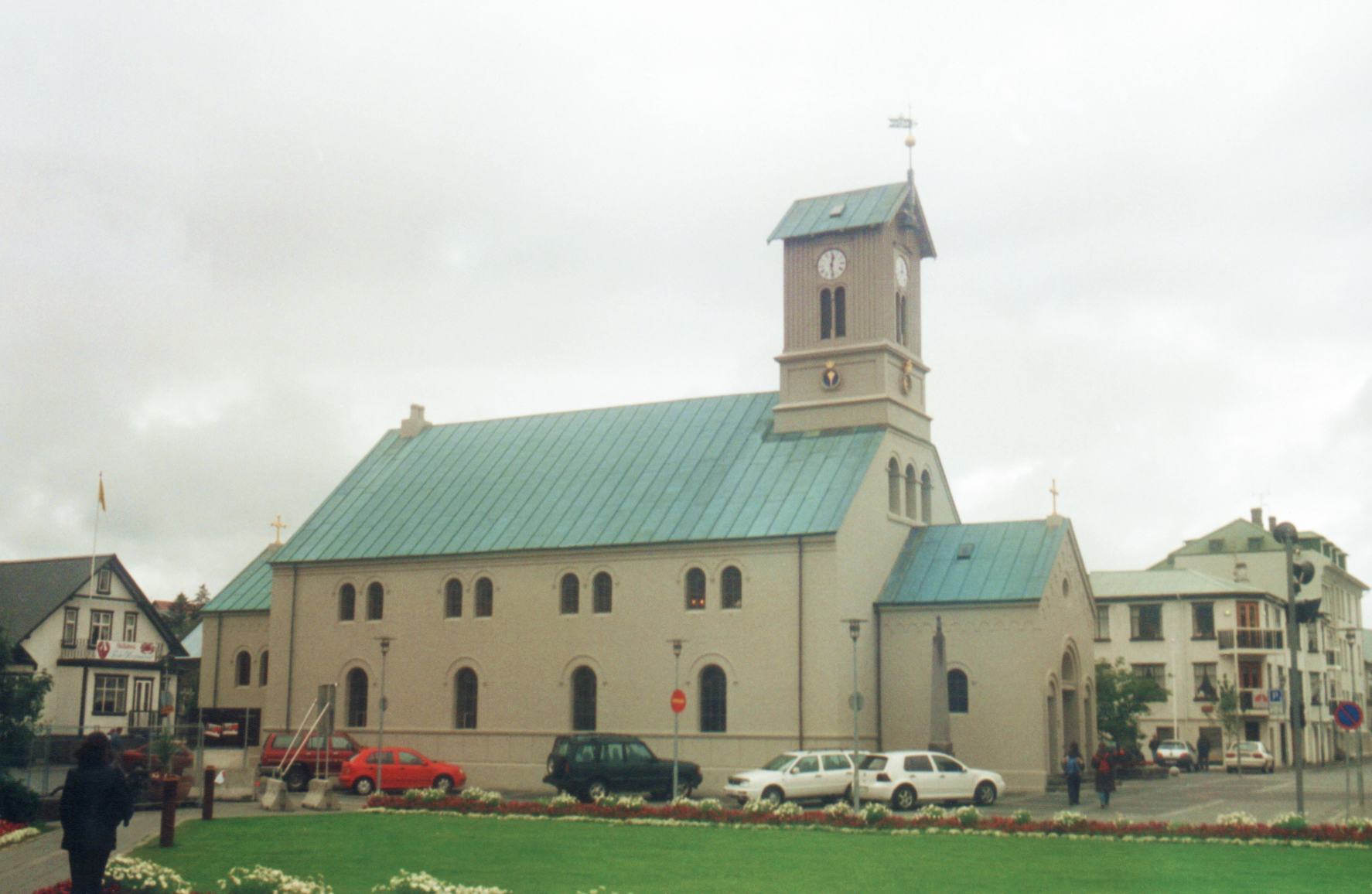
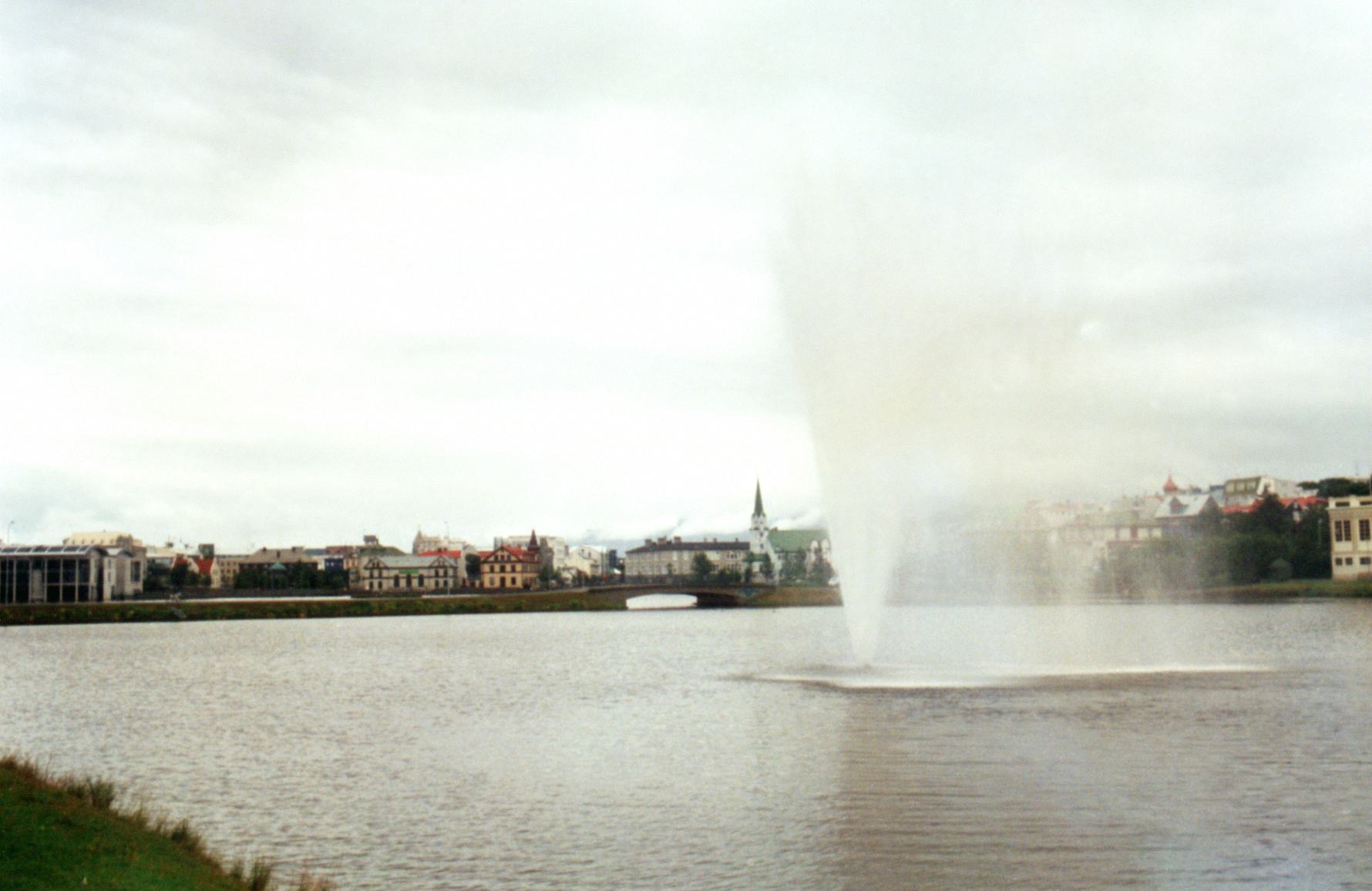
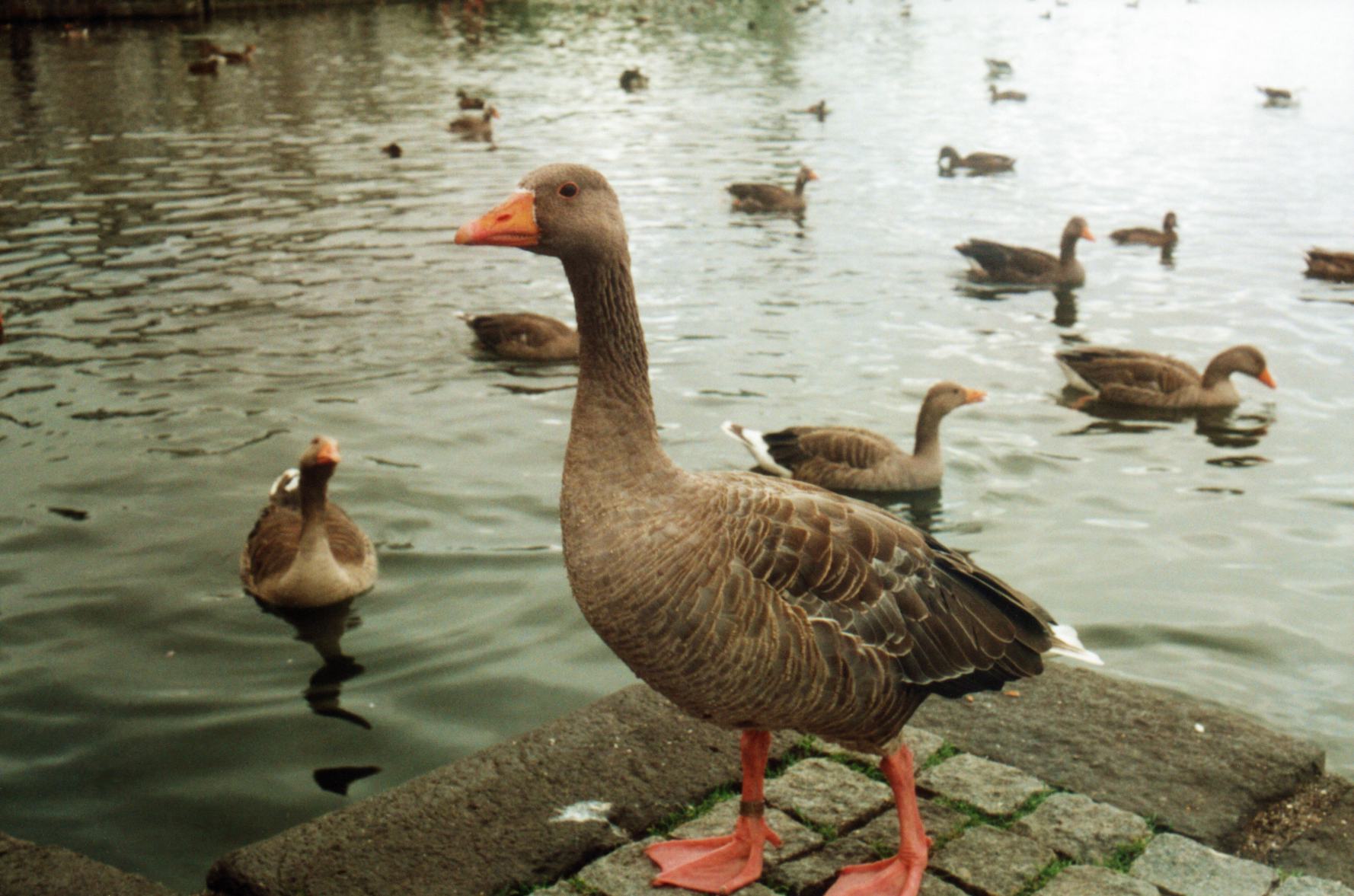
The local parliament is the Alþingi, which has been meeting for 1,070 years. It occupies a little two-storey building with none of the special trappings of high office. The village council building in Vyritsa is bigger. We even parked in its car park.
On a hill there's a modern Lutheran church with a clock that for some reason is five minutes slow. Outside is a statue of Leifur Eiríksson, discoverer of America. He made it to roughly the area of Pennsylvania, as I'd understood it, five hundred years before Columbus.
Tanya and I naturally visited McDonald's, all the more since it appeared to be the only one in Iceland.
There's a new town as well as the old, of course, and new buildings right in the centre. The street sculpture is exclusively abstract.
All in all, Reykjavík feels more cheerful and lively than its Scandinavian cousins.
The international airport is fifty kilometres from the capital, in Keflavík. The highway there is surprisingly bad, with ruts deep enough to make driving difficult. We came across a local traffic police speed trap. Icelandic drivers flash their headlights just as people do at home in Russia.
Keflavík itself is a town like any other, but nearby is the celebrated Blue Lagoon, Bláa Lónið. To be honest, it's a process-water pond for the geothermal power station, which releases warm water into it after taking the heat for the good of the national economy. They don't advertise that, but they don't particularly hide it either.
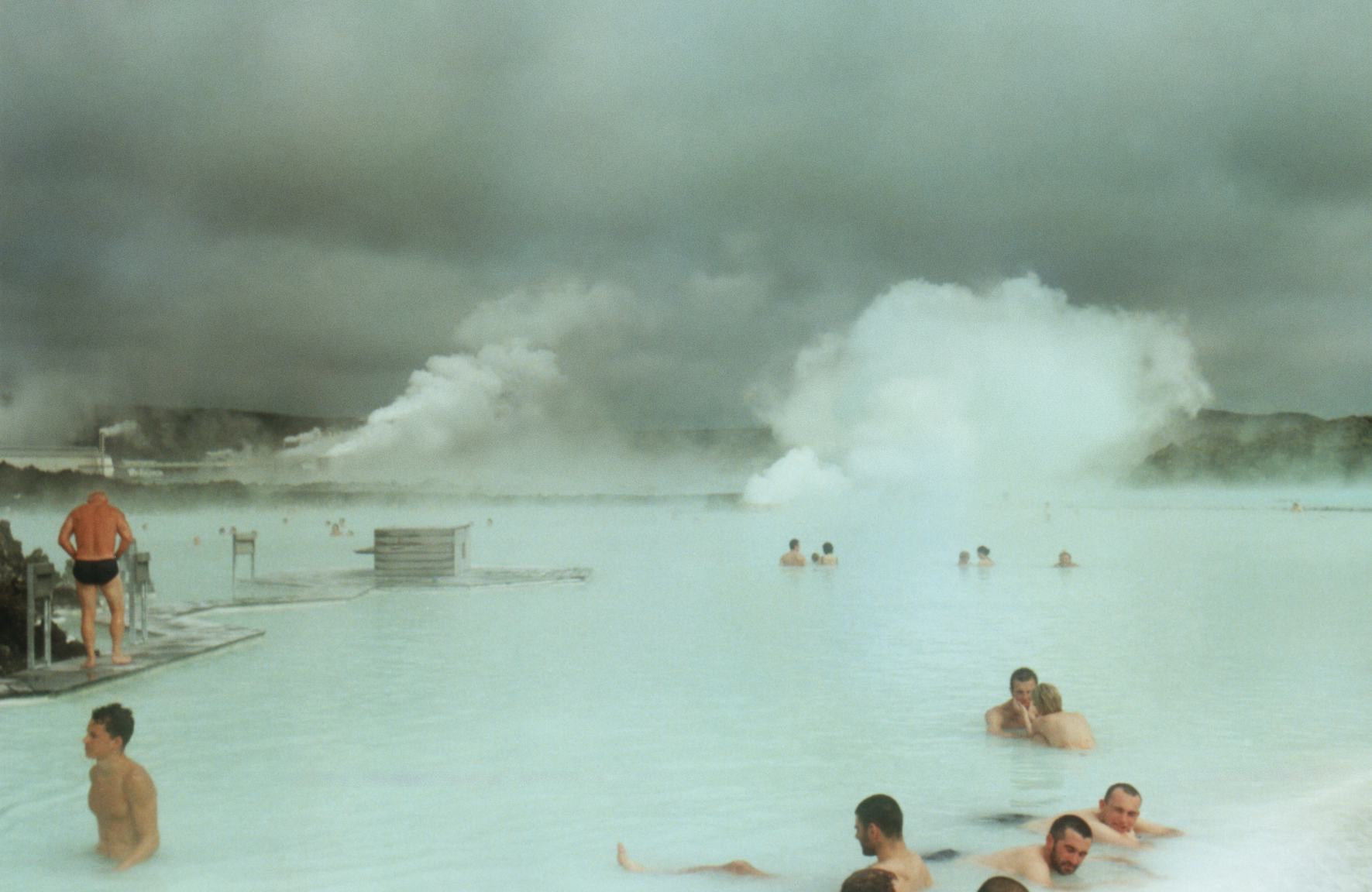
The lagoon as the tourists see it is a lake of warm water, thirty to forty-five degrees, with a salt concentration of two and a half per cent. The lake is in a lava field, with a footpath cut through the lava from the car park.
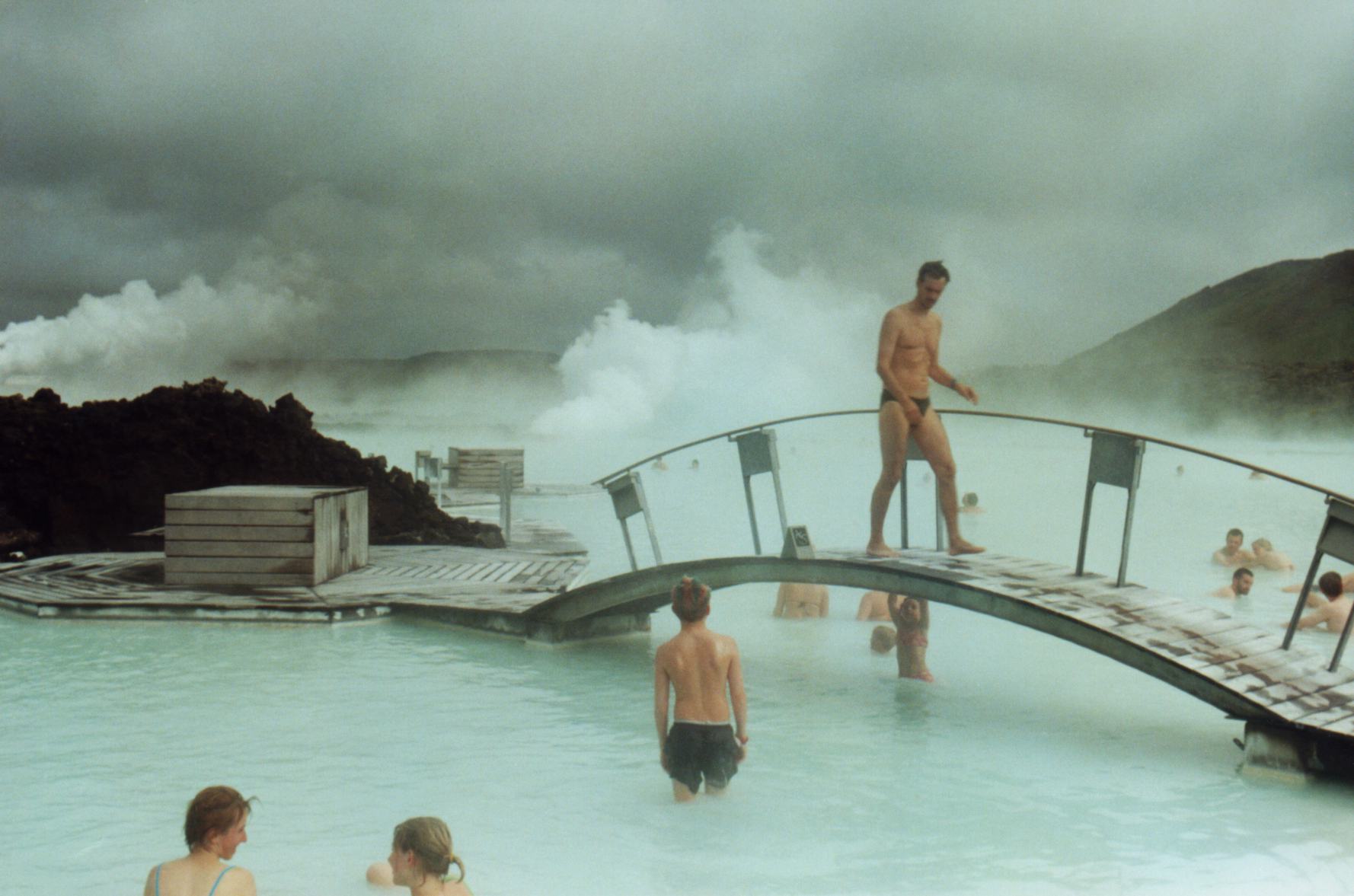
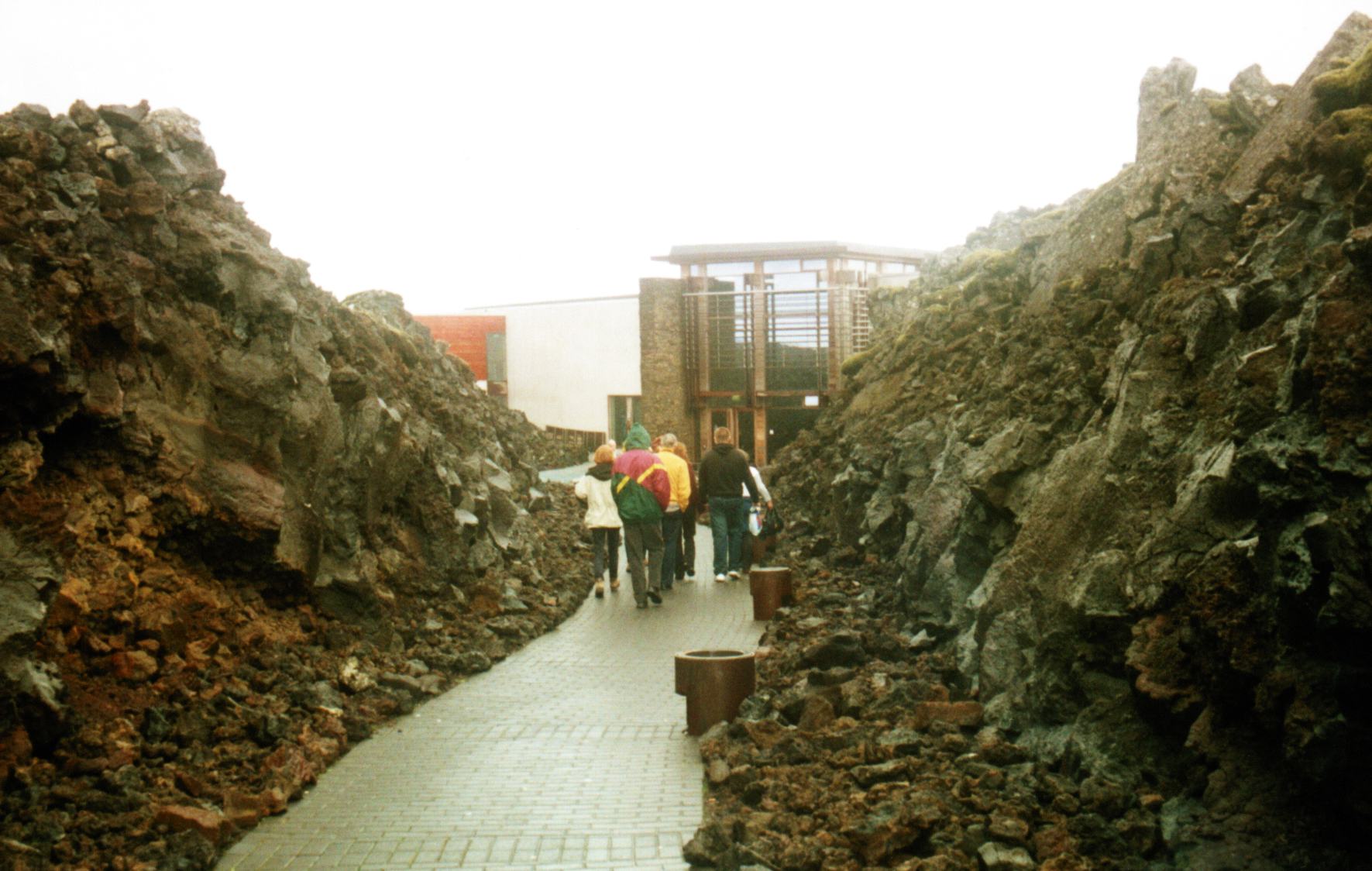
There's a modern visitor complex on the shore. To get in, you buy a seven-hundred-kroner token like a wristwatch and wear it on your arm. It'll let you out and, more importantly, open a locker for your things. The lockers are in the changing rooms and you can use yours as often as you like. You're supposed to wash in the shower before swimming.
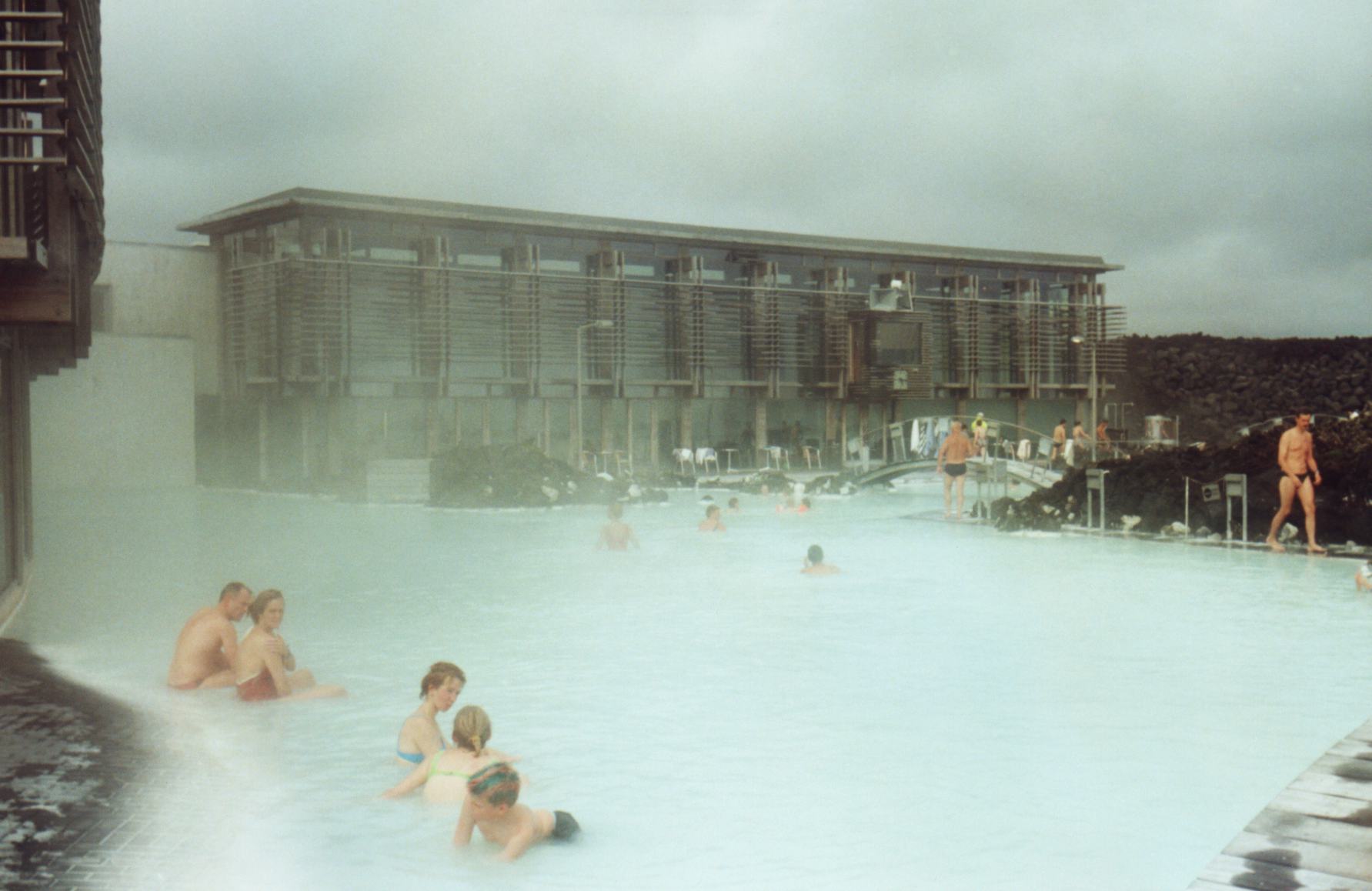
The lake is roughly a hundred metres square, with the depth gradually increasing to a metre and a half. Hot water enters through a pipe made to look like a geyser at the far side. At night it's lit by a bulb and looks like a fearsome volcano. The hottest water is there. You can't swim right up to it, where the water is near boiling. It's considerably cooler at the sides but still hot. You can't stay swimming for long, so people lie all over the banks like seals.
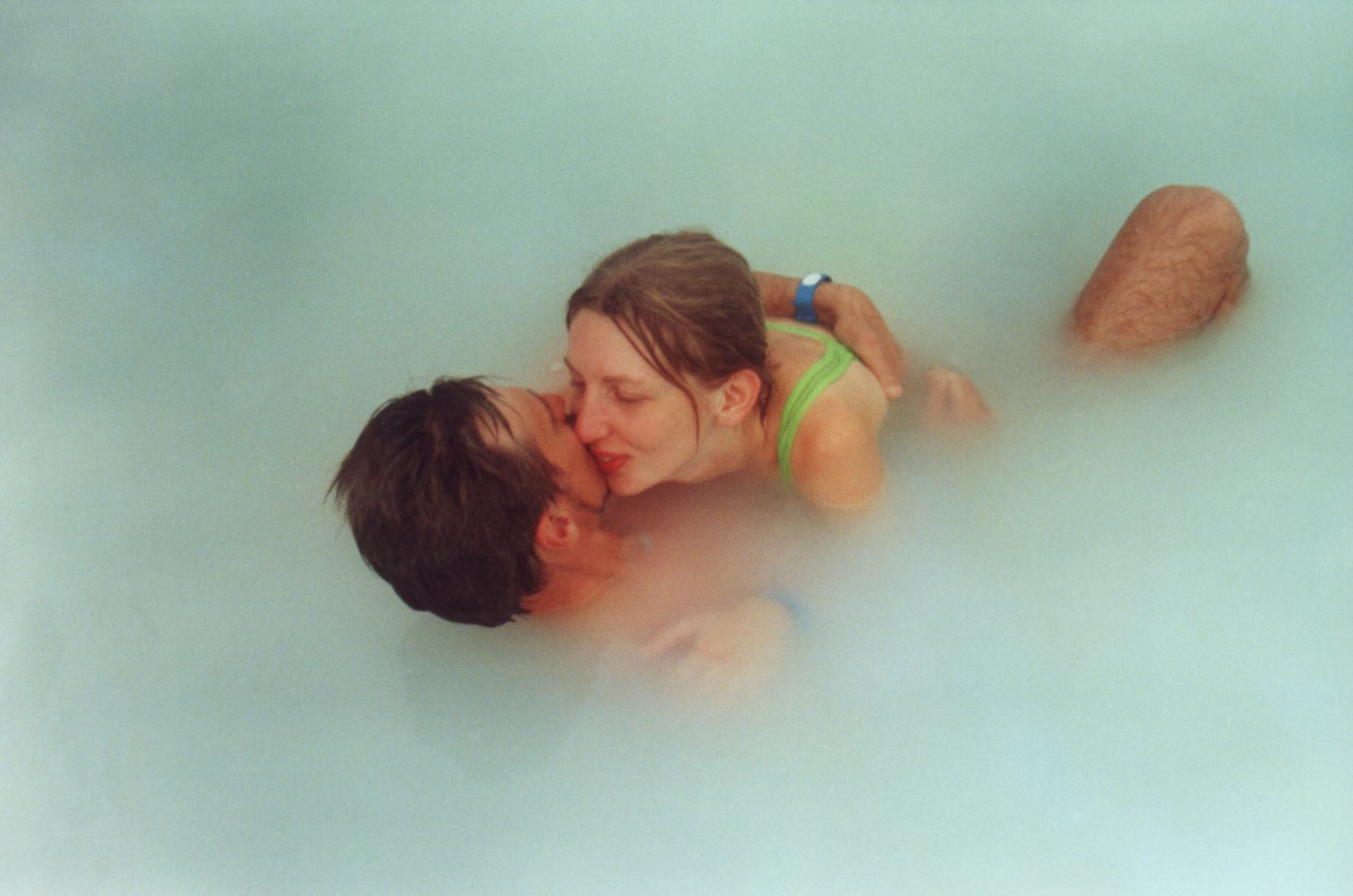
To cool off, you can order remarkably wholesome-looking blue, red and orange drinks to be brought right to the water. They sell chilled juice too. All fairly expensive.
Once warmed up, northern people become more demonstrative. The couples were especially interesting to watch. I hadn't expected that much activity from the local people, though less than half of them were locals, of course. Mostly tourists, ferried straight here from the airport.
The local blue mud has been declared especially good for you. You're supposed to smear it on your mug. The result looks alarming, but it doesn't faze the local girls. For a pile of money you can even buy an extract of the mud and stir it into the bath all winter in the city, in hope of miraculous rejuvenation.
We splashed about for around four hours. We didn't want to get out at all, especially with the cold and drizzle outside.
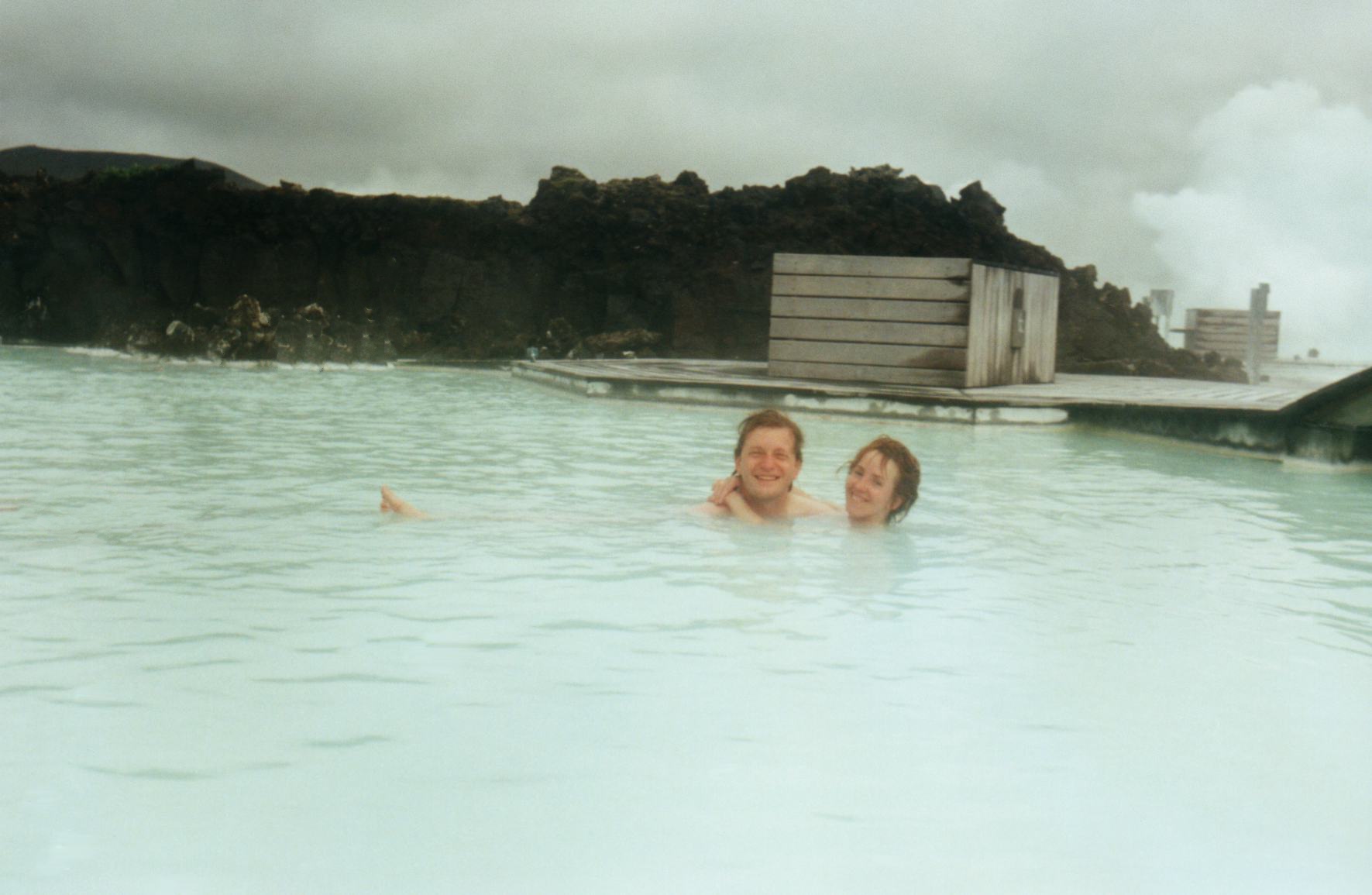
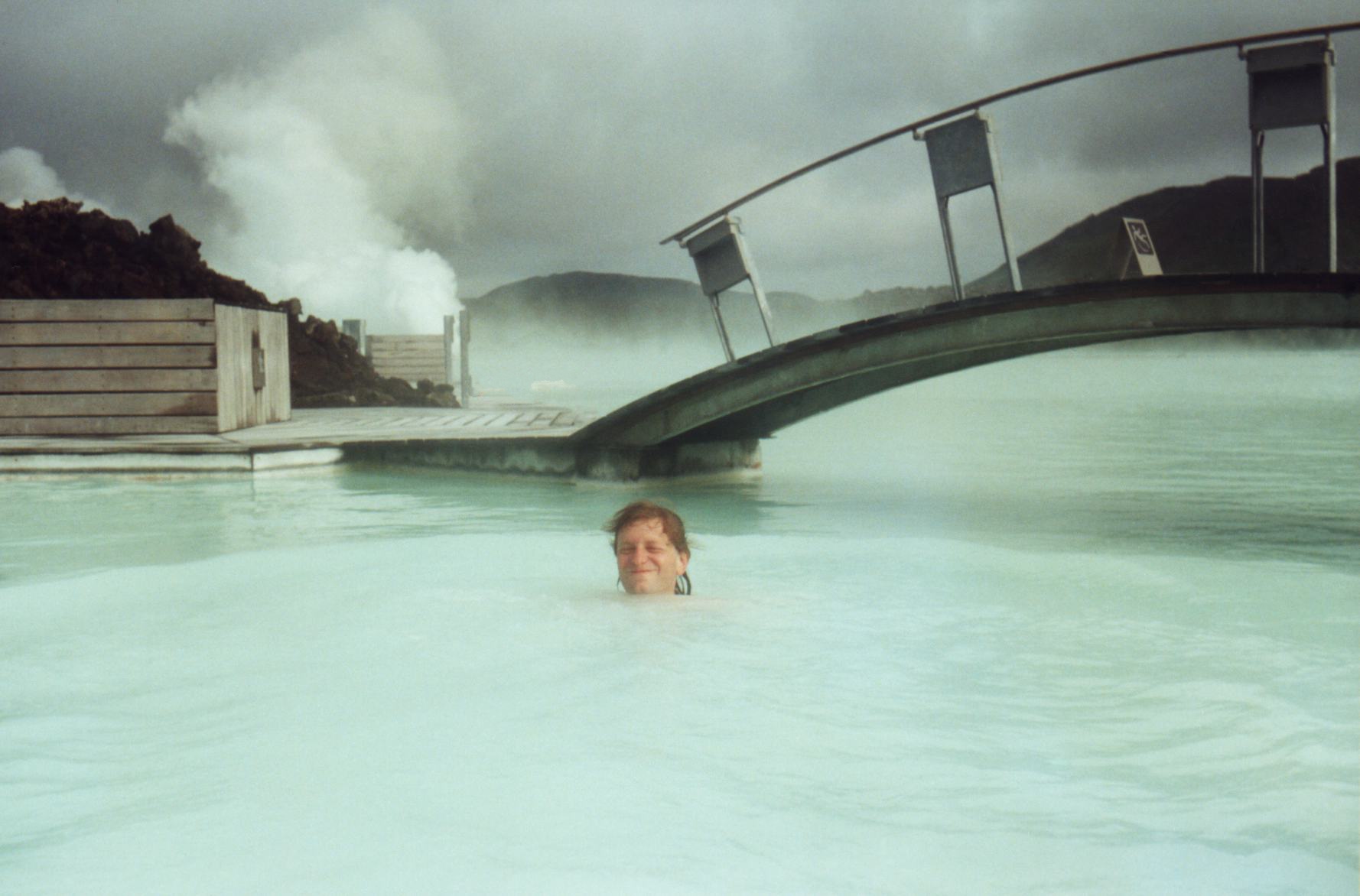
When we finally got into the car, our blissfully limp bodies wanted nothing but a sofa. It took some strength of will to carry on looking at Icelandic wonders. Close to the Lagoon is the geothermal area at Krýsuvík. Scores of multicoloured little mud volcanoes are set in a small valley. What distinguishes the site is the extraordinary variety of colours in the mud and lava. A year earlier a mudslide had washed away most of the amenities. The café and loo lay under the slop that had come down off the hills. It was all part of the rise in activity in recent years.
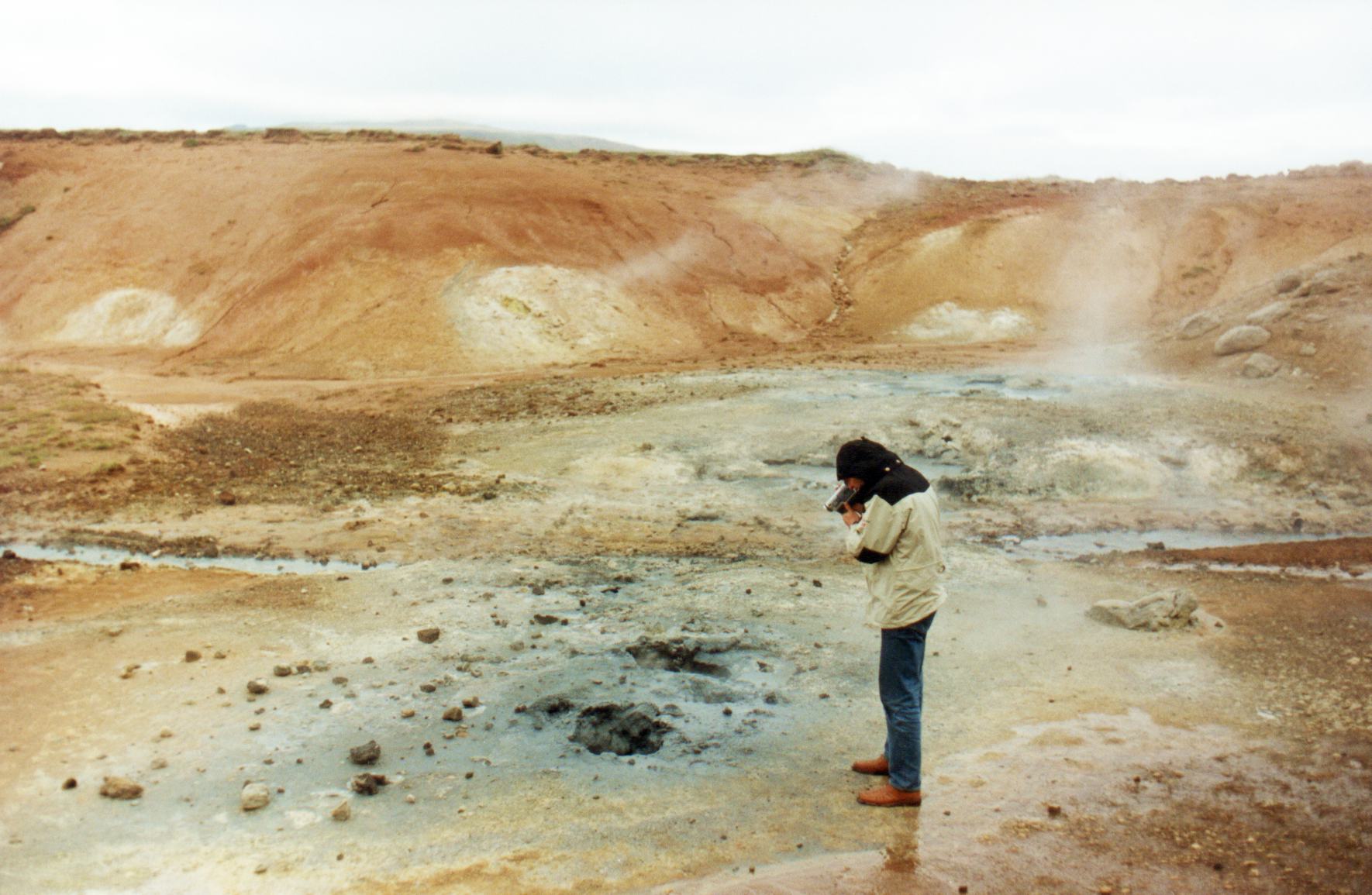
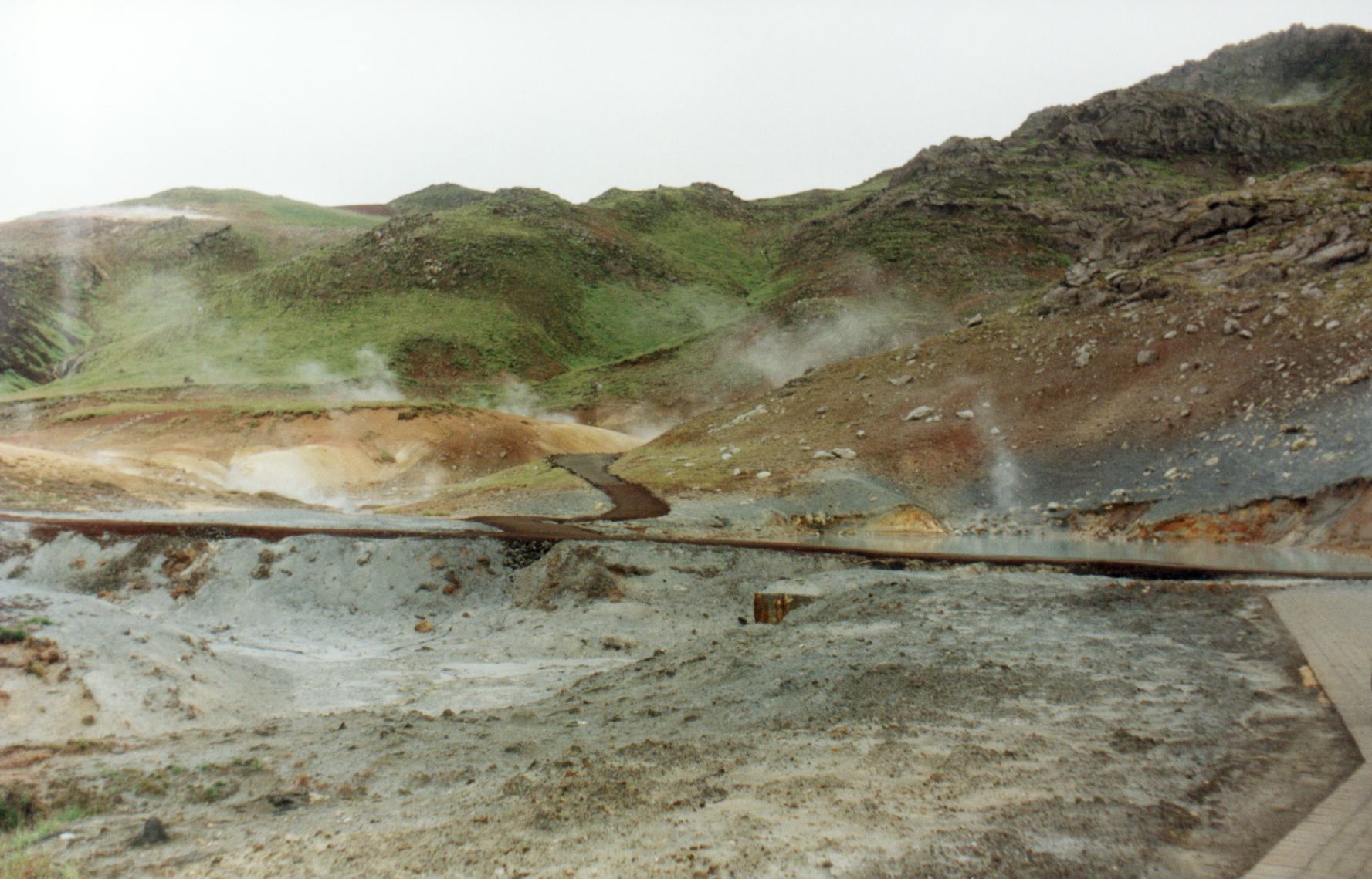
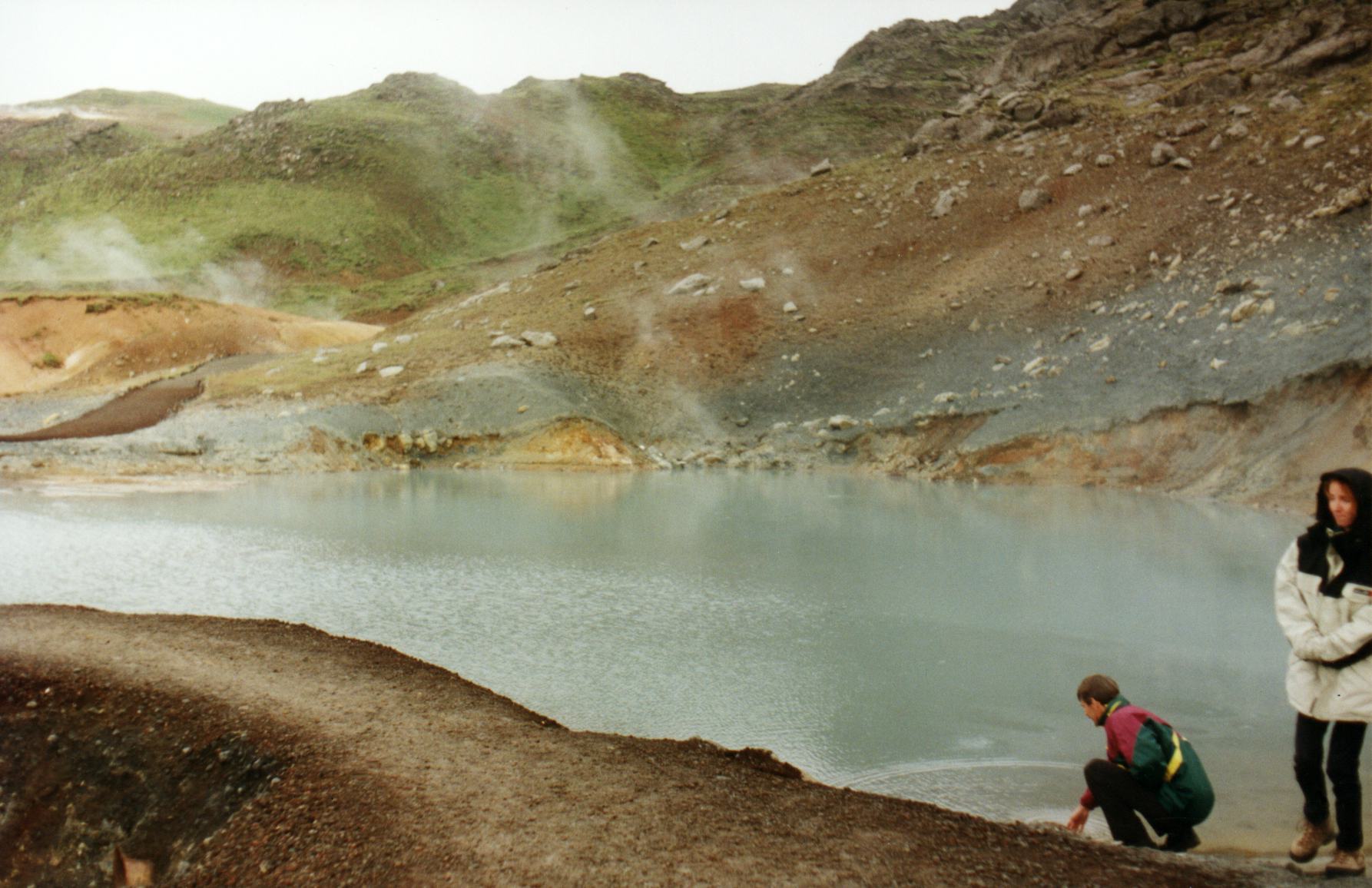
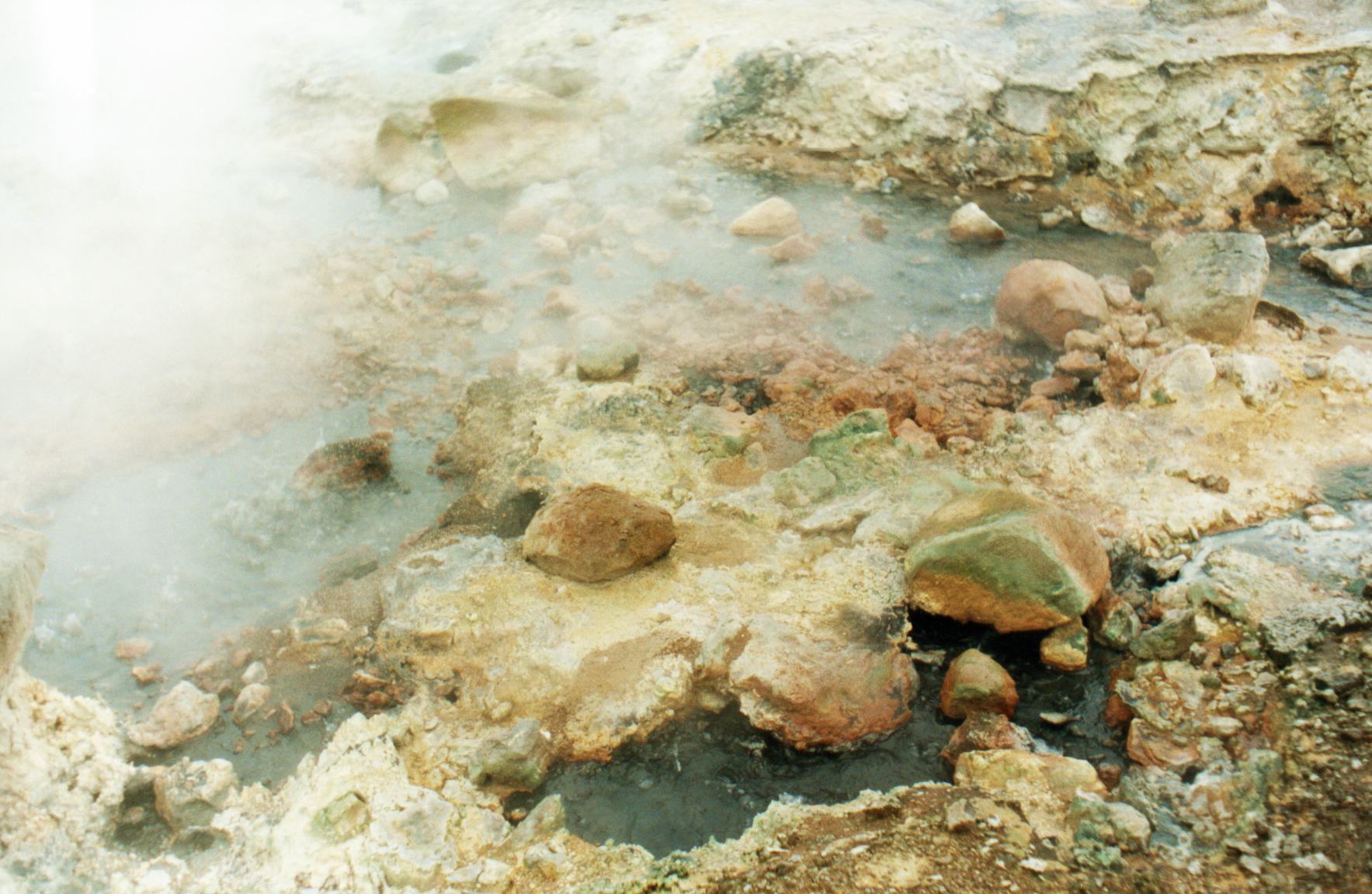
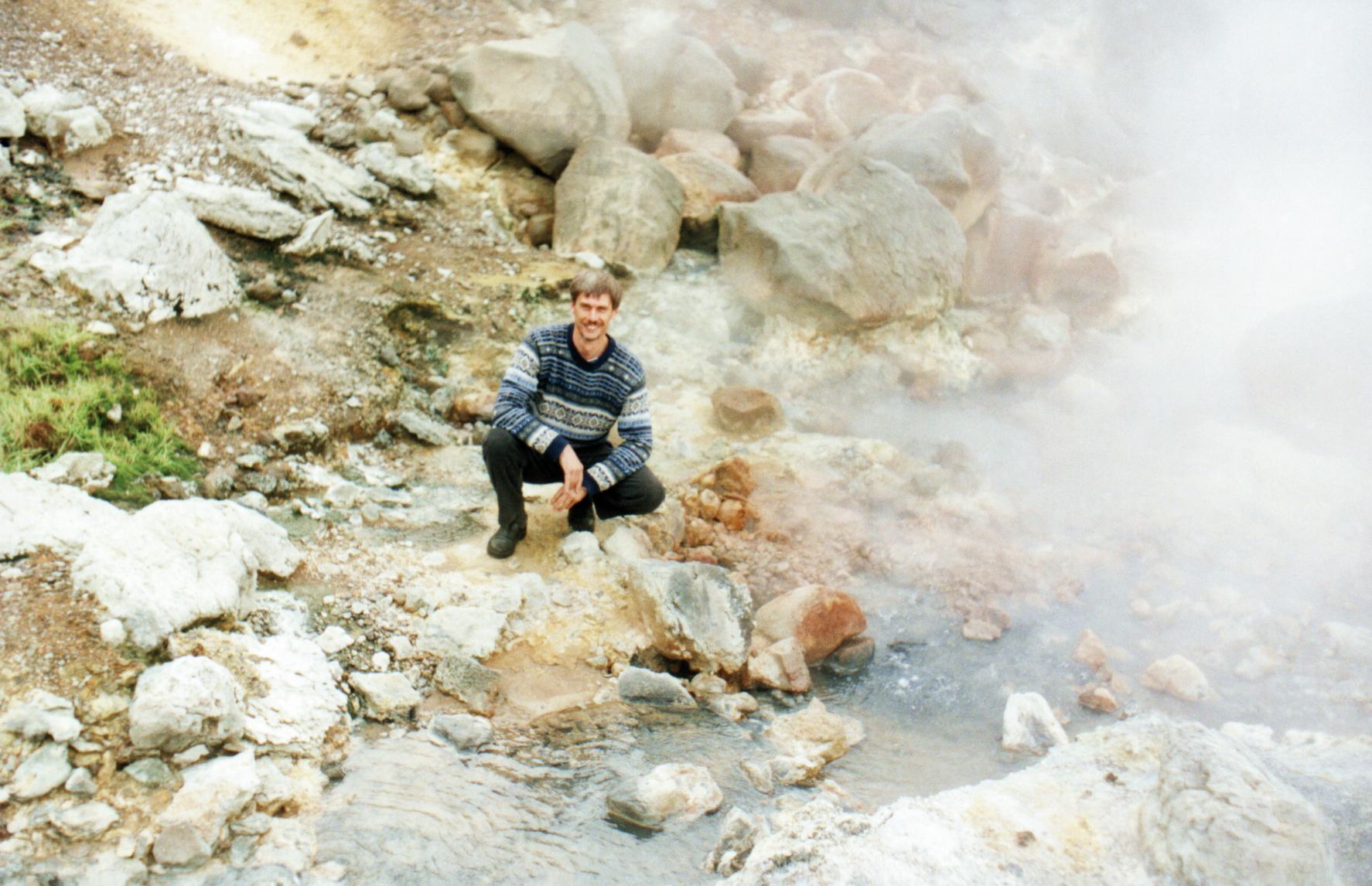
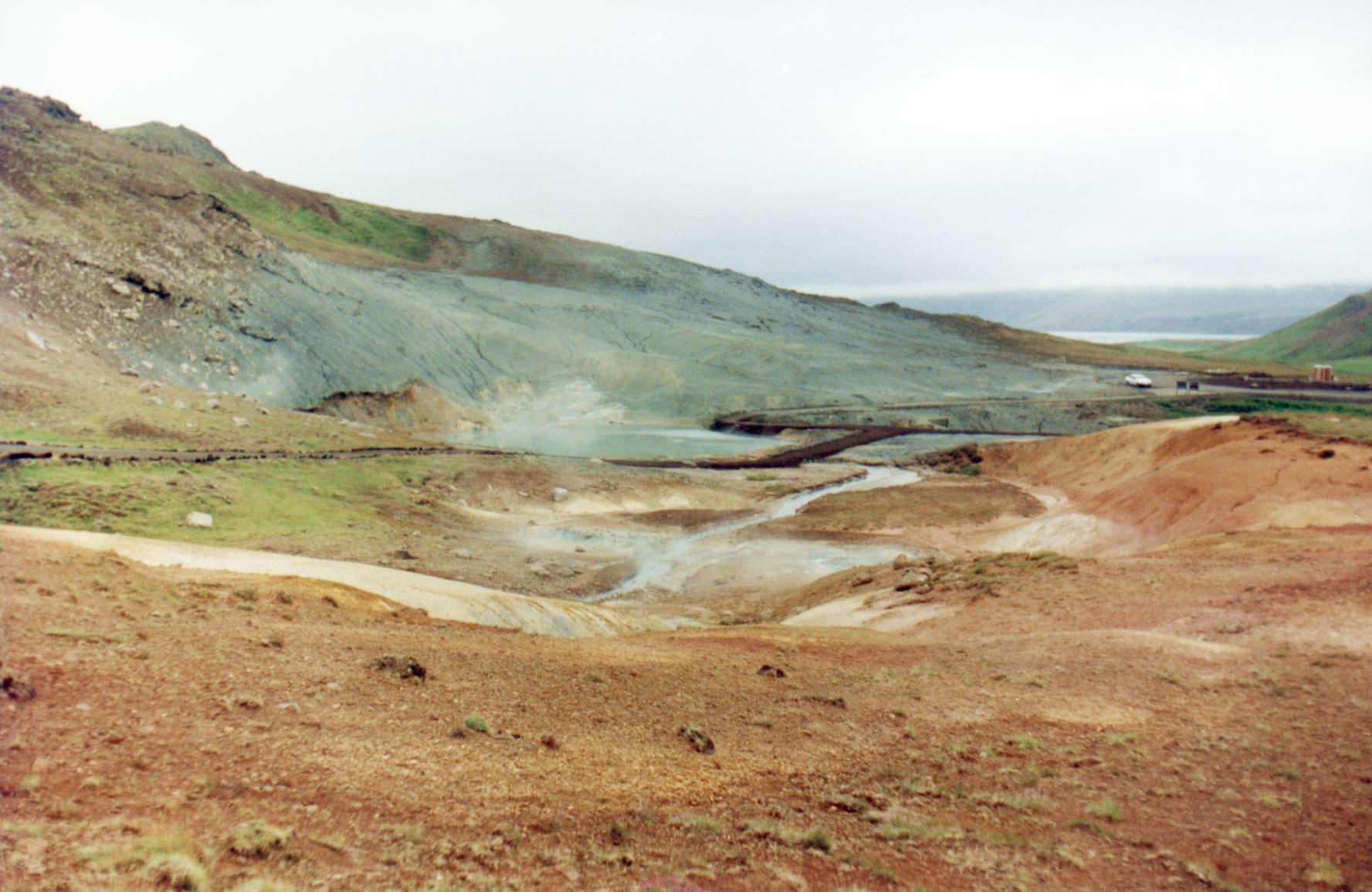
The authorities had contented themselves with a “No camping! Danger!” sign and stopped bringing tourists. For my money it's better now. Quiet, and the extra paths don't spoil the view. The car park wasn't entirely washed away. Without noticing, I parked right over a fresh fumarole. I soon saw smoke coming out from under the car and it gave me a fright. When I realised what it was I decided it would do as it was. If I hadn't sunk in yet, another hour wasn't likely to hurt.
The day was drawing to an end and we had to look for a camp. Iceland has a place with the funny name of Pingvellir (Þingvellir). You're properly supposed to read it as Thingvellir, but the other way is funnier, because it sounds like penguins in Russian. The old Icelanders must have sailed to Antarctica and seen penguins. Incidentally there's a bird in Iceland that a tourist with an untrained eye might take for almost a penguin. In fact it's a puffin (photograph by Nicholas Reuuss), a very popular bird in Iceland. Its silhouette has become a symbol of Iceland. A puffin is far from a penguin, of course, and flies very well. One nearly went under our wheels once. I didn't get a photograph. It keeps clear of people, and not without reason. Restaurants have “Boiled puffin” on their menus.
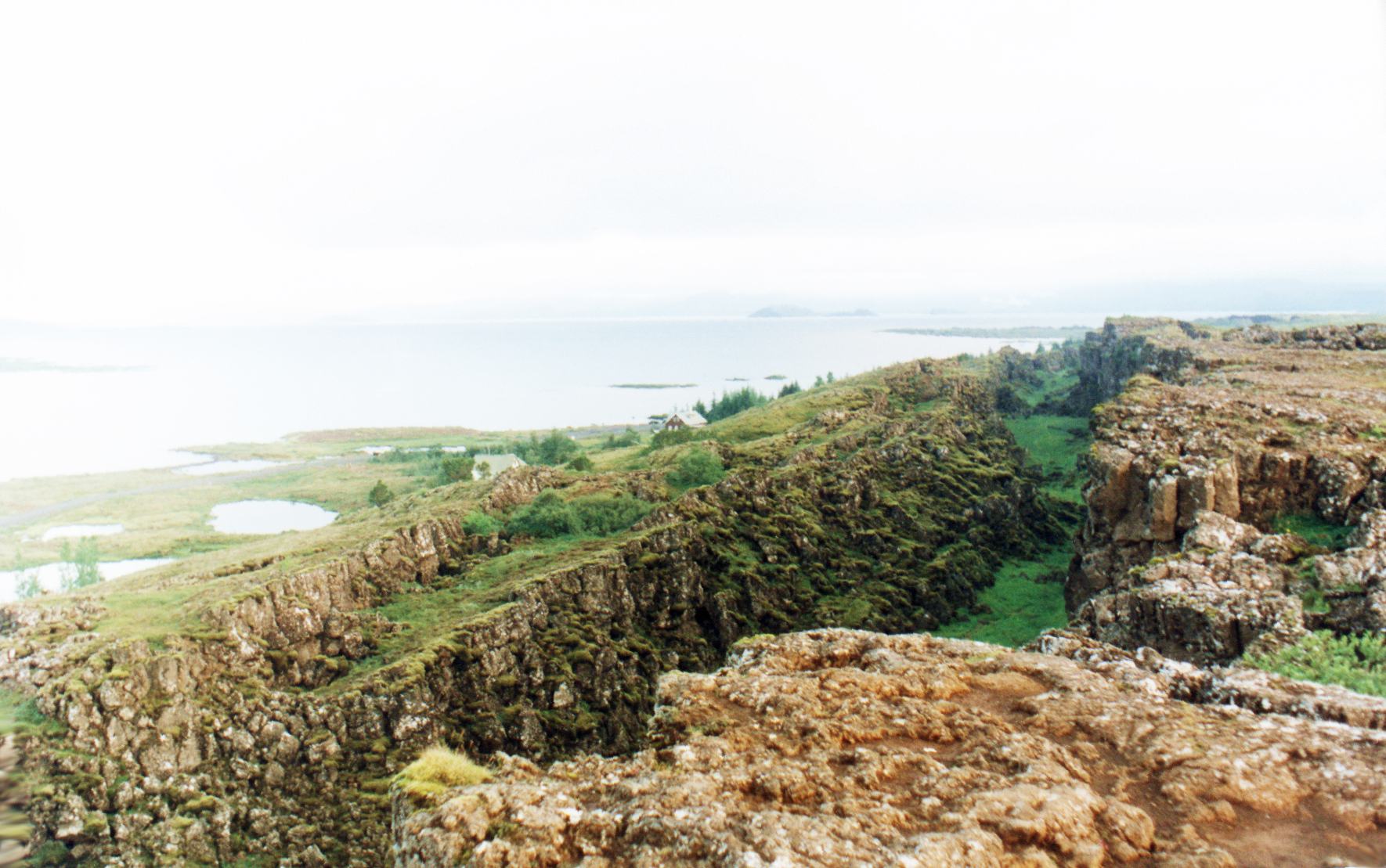
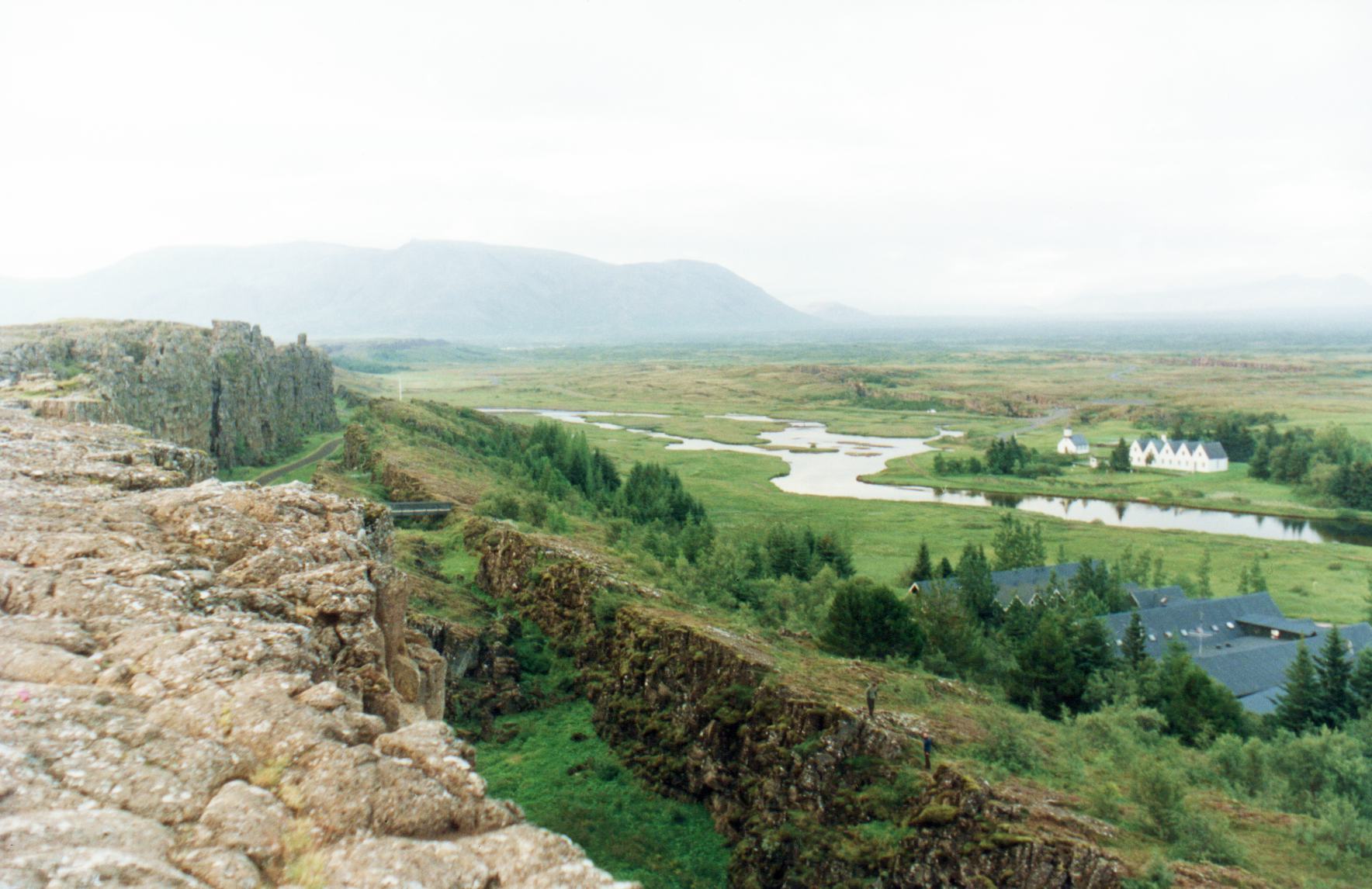
Oh, that Pingvellir! Reading the guides had told us nothing apart from “This is a sacred place for every Icelander”. Bearing in mind that Red Square is supposed to be sacred to every Russian, or the Volga at a pinch, I didn't expect anything good. Very well, so be it. At least there are lots of campgrounds about and the wretched camera was hungry again.
On the approach to the pass that separates Þingvellir from the ocean the weather began to brighten. The sight of the mountains lit by the evening sun through breaks in the cloud brought our strength back. Iceland is full of scenes like that, fantastic plays of light through holes in the cloud. I now knew why one guidebook was called Land of Light. Þingvellir turned out to be a corner of Lake Þingvallavatn with wonderful rocky canyons. The first Alþingi met here back in 930. There's a little waterfall of its own, Öxarárfoss. It really is beautiful country which you just have to see. Hard to describe, though taken separately nothing here is the biggest or the best. In looking for a campground we stumbled into a completely free one with a toilet, benches, a hearth and a respectable rubbish bin. We pitched the tent by a blue spruce. How it had managed to grow in such an open place was a mystery. Beyond the lake the geothermal areas sent up plumes of steam. Gulls nested right along the bank, stopping any attempt to go near the water. A pity it was a little cold to swim: ten degrees in the water. The air was worse, not more than four. We felt unusually at peace and decided to finish another bottle of champagne and make an extra helping of food. Pavel muttered about the windy spot as always, but not much this time. Every cloud has a silver lining. The cold finally brought out the vodka, which Pavel had bought four litres of so as to use his whole allowance at the border. Those bottles in the boot had been getting on my nerves. Since the ferry I couldn't bear to look at the stuff, let alone drink it. For the first time in several days we got all the sleep we wanted.
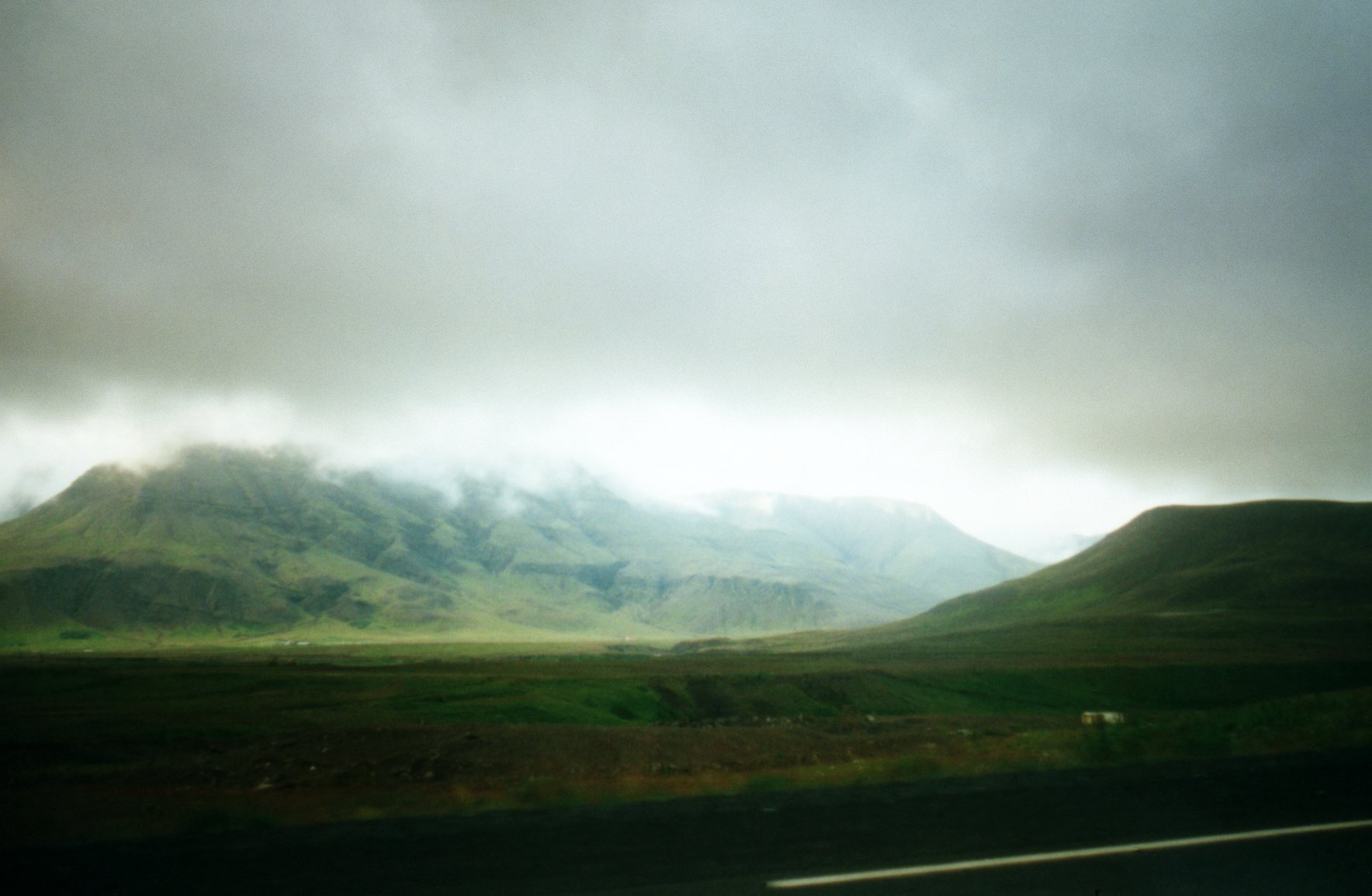
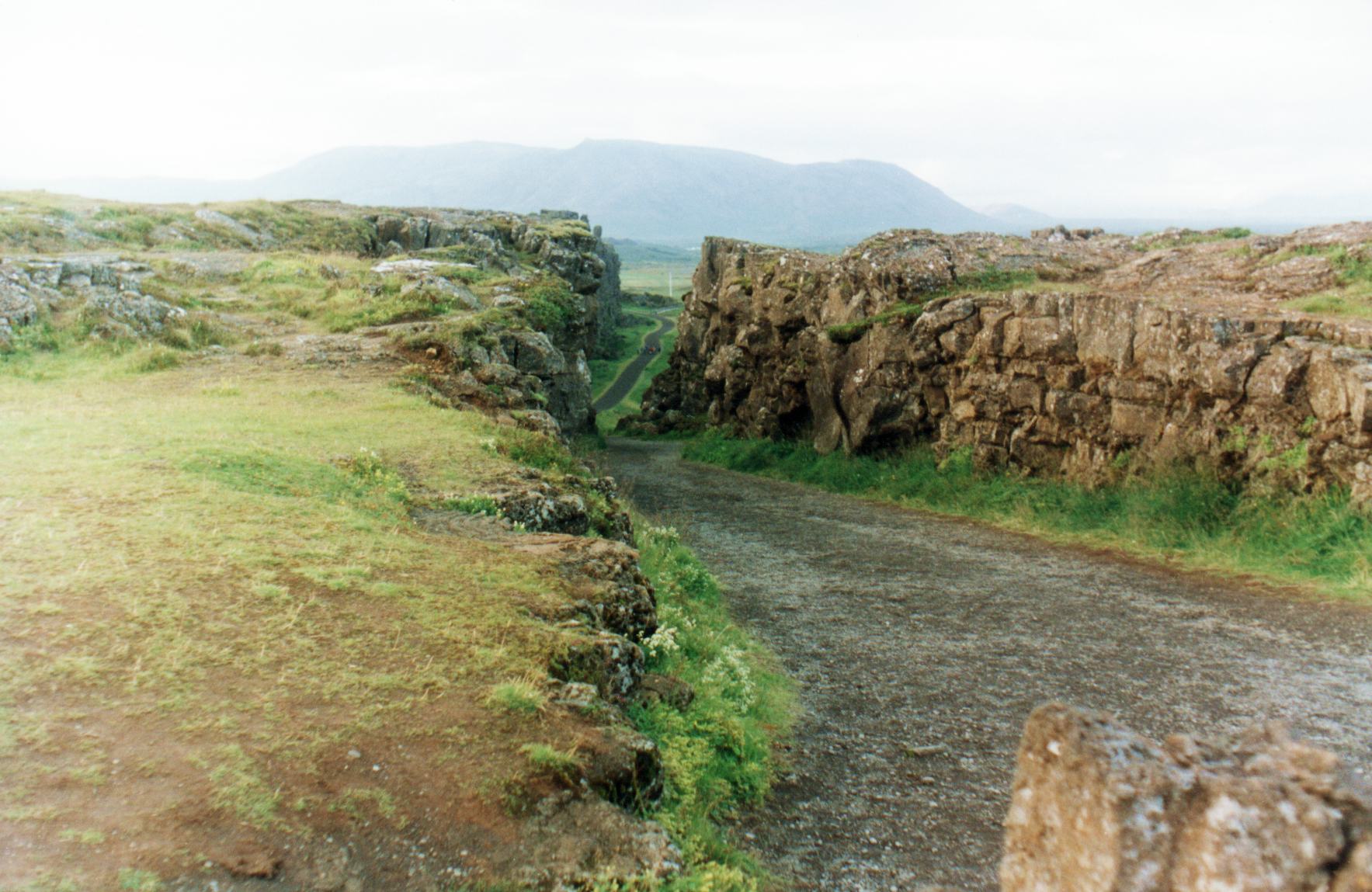
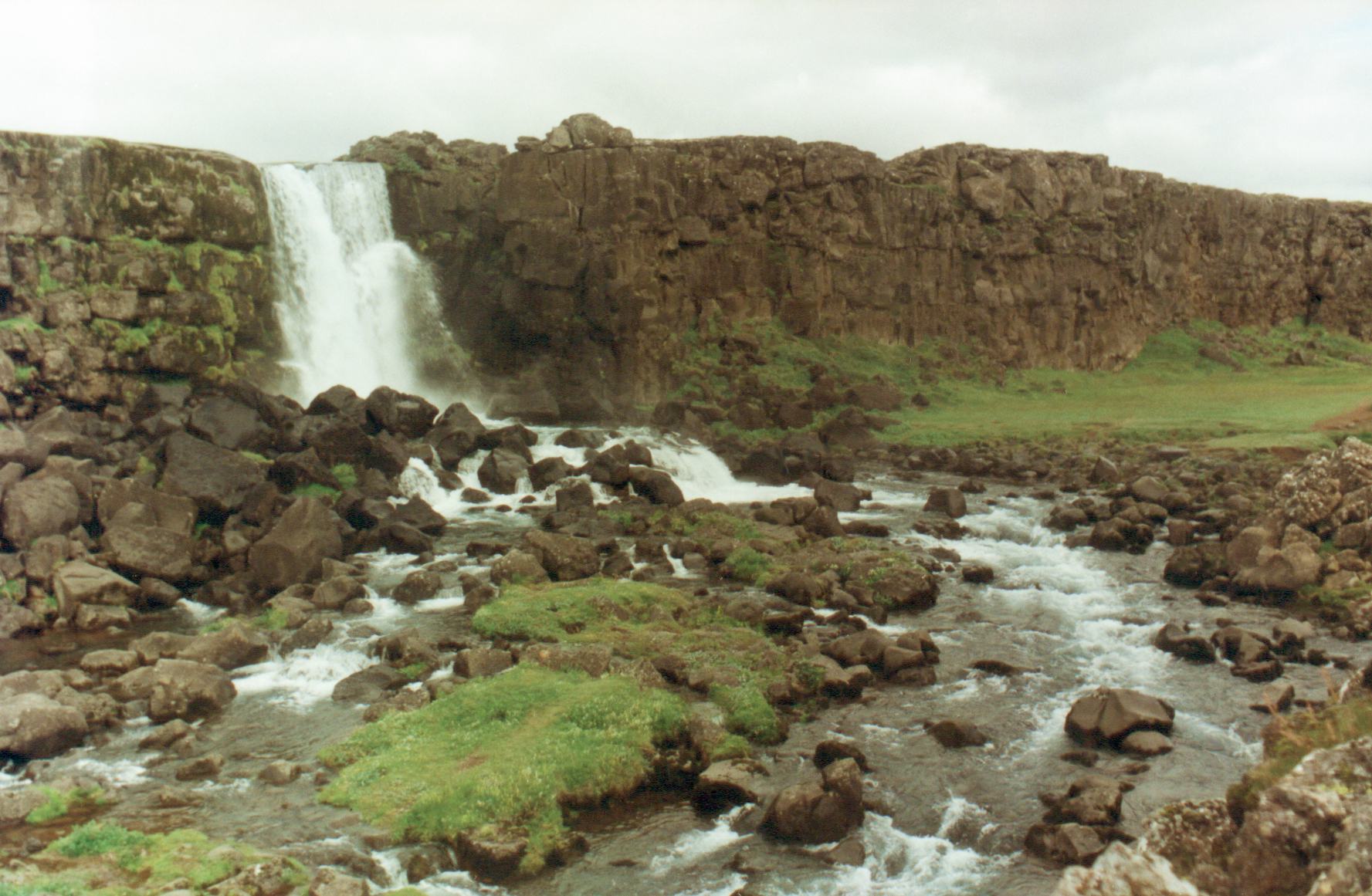
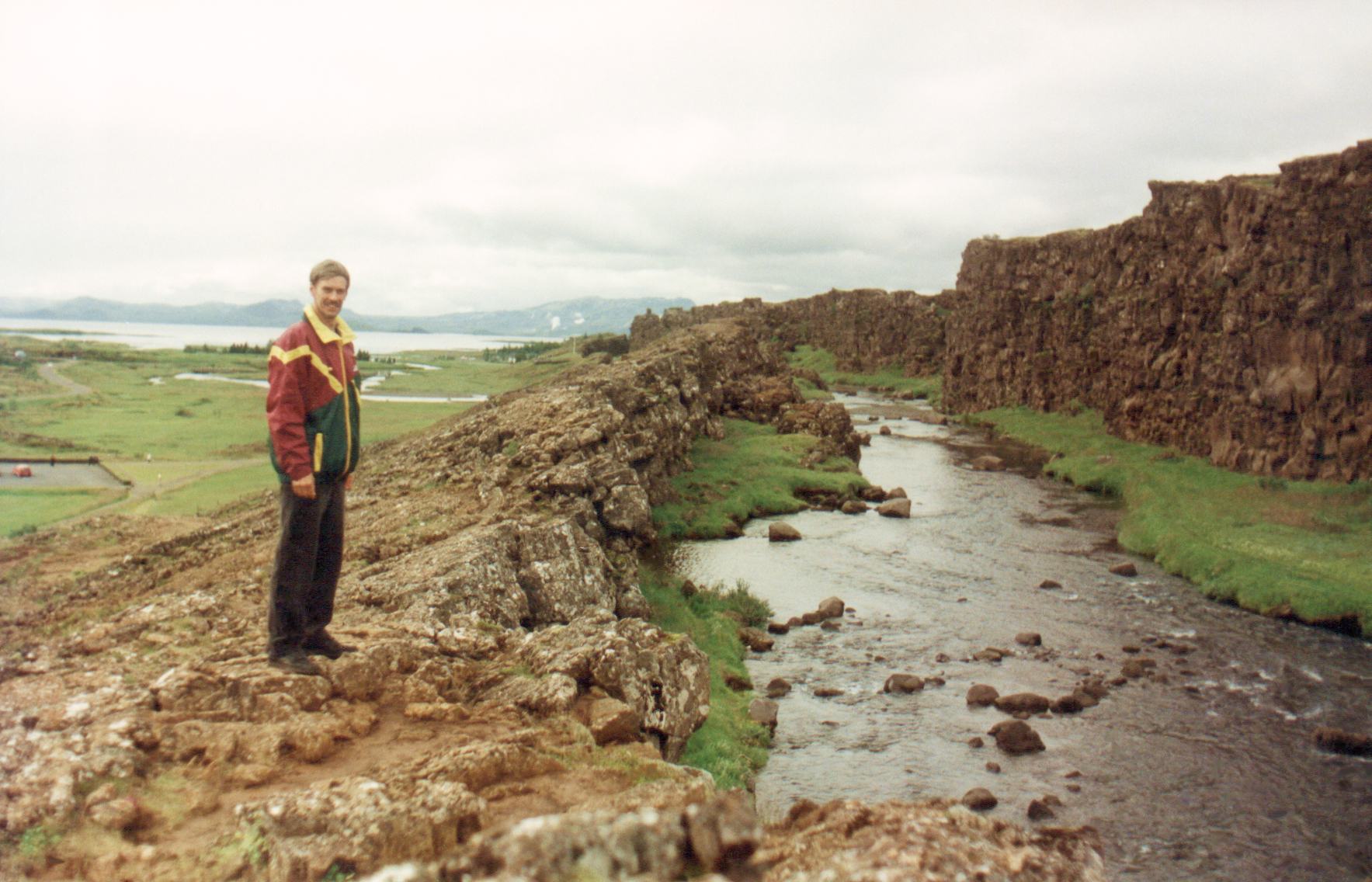
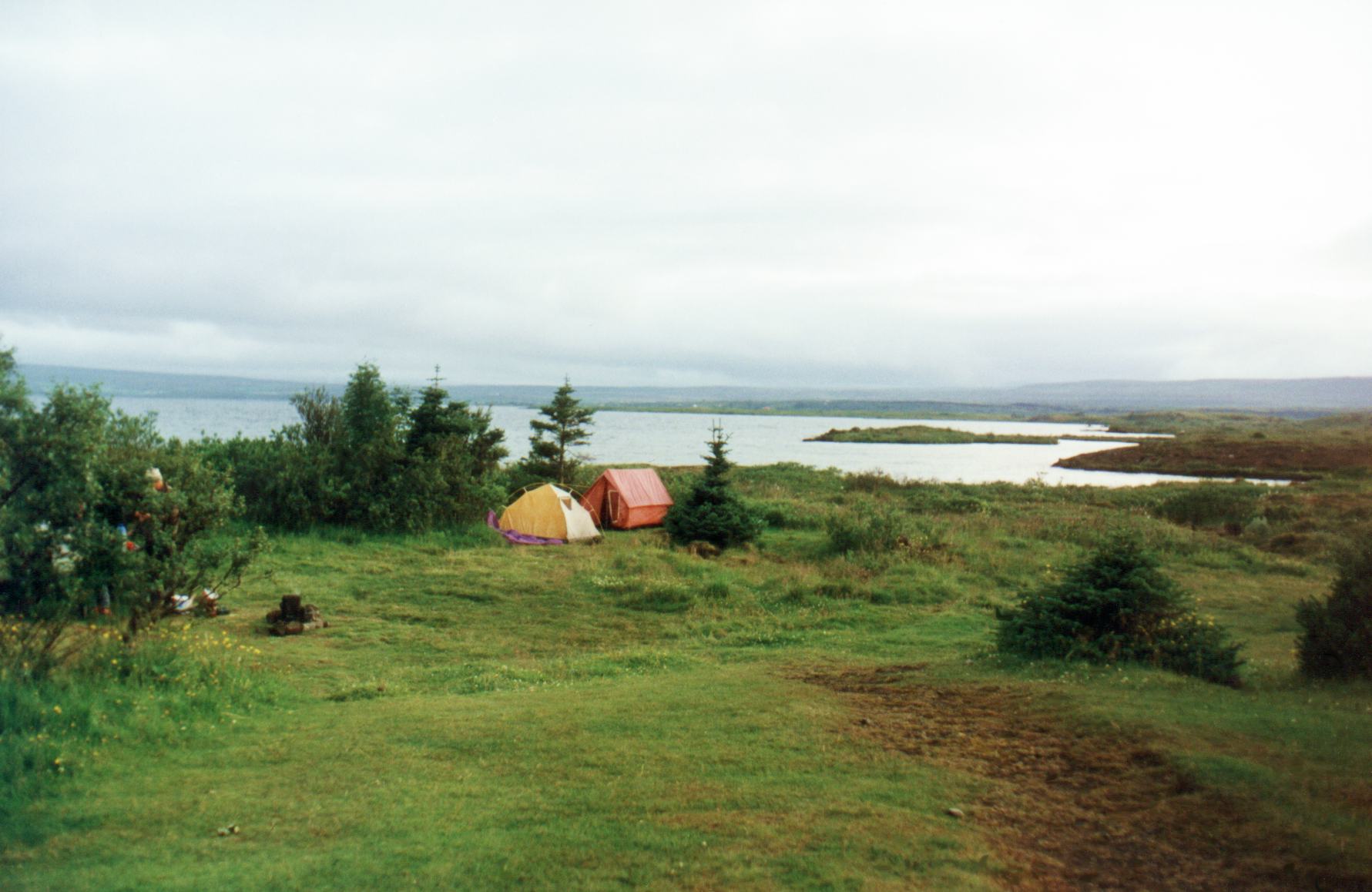
Next day we decided to have a proper clear-out of the car. I threw out the old boots and the definitively dead coffee maker. Everything fitted in the boot now, but the local bin was nearly full. How had we come by quite so much rubbish?
In the morning we decided to walk through the sacred Icelandic place once more. What struck us immediately was the police presence. Limousines were pulling up. Soon a helicopter appeared from over the horizon, and police marked its landing site with a smoke flare.
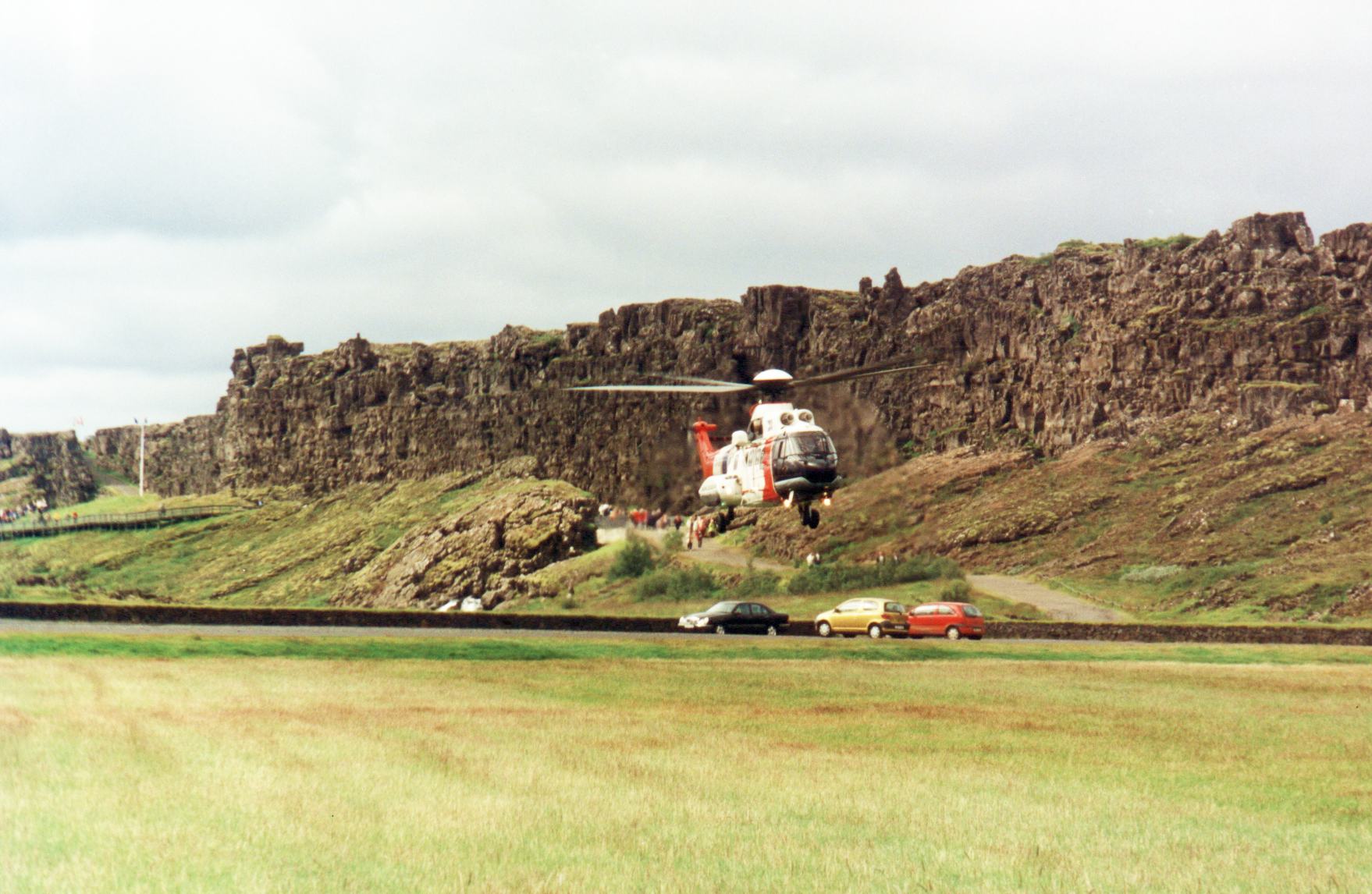
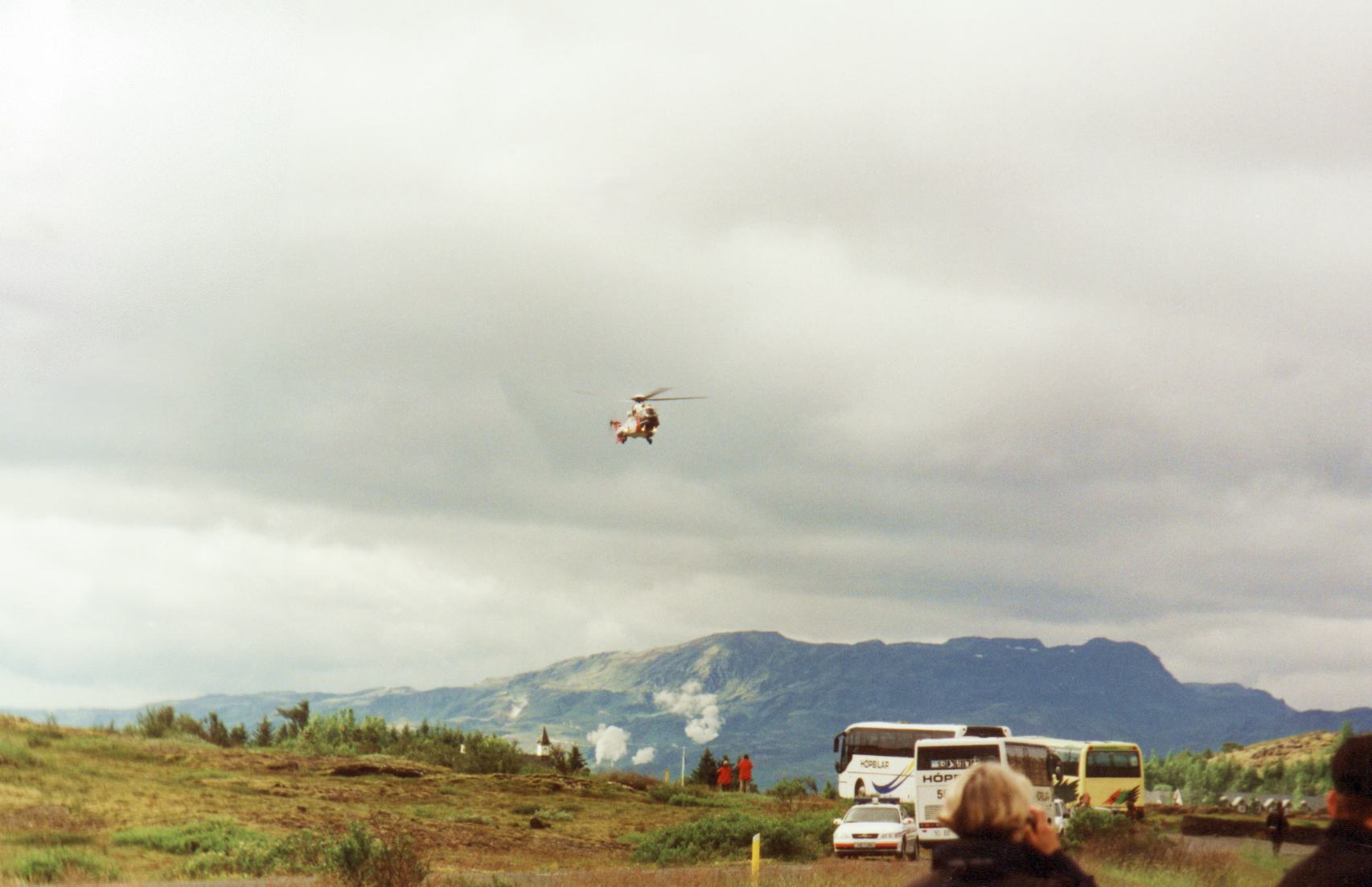
Out of the helicopter came the prime minister with some delegation. There you are. If you go calling yourself the prime minister of Iceland, you have to fly to Pingvellir and breathe the spirit of your ancestors.
Today we were seeing the greatest Icelandic attraction of all: a geyser. The word itself, now a common noun, is the name of a little Icelandic village and its spring, Geysir. This is where Europeans first encountered such a phenomenon. Geysir used to spout eighty metres high, but after another earthquake in the 1930s it stopped working. Only last summer, as the activity increased, did it begin showing signs of life. Since the earthquake in June 2000 it had been throwing up jets of steam and boiling water to fifty metres irregularly, about once a day, for several minutes. It looks rather like an eruption of the Kamchatka geysers, Velikan for instance, but probably a bit higher. We had the good fortune to see the historical geyser erupt. Unfortunately we were a few dozen metres away and the best of it was over by the time we'd run up.
On 17 June, Iceland's national day, they pump tonnes of surfactants into the geyser, whereupon it starts going with unprecedented force.
What tourists are shown nowadays is another geyser, Strokkur, which means churn. It fires a jet twenty metres high about once every eight minutes. The eruption itself lasts all of five seconds and comes without warning. The water in the vent constantly heaves as though it's going to go any second, then it all calms down and there's only a quiet, steaming pool. I sat with the video camera for hours, waiting for those moments. As it begins to erupt the water rises into a two-metre azure bubble. A moment later the bubble bursts with a jet of boiling water and steam which shoots up to twenty metres. Then it's over. It works differently each time. Sometimes there's no beautiful bubble, sometimes the water goes up only two metres, sometimes the jets come less than a minute apart. All you can do is sit and wait, which is what I did. I managed to get the camera fully charged at the Geysir Centre, so there was no need to ration the filming.
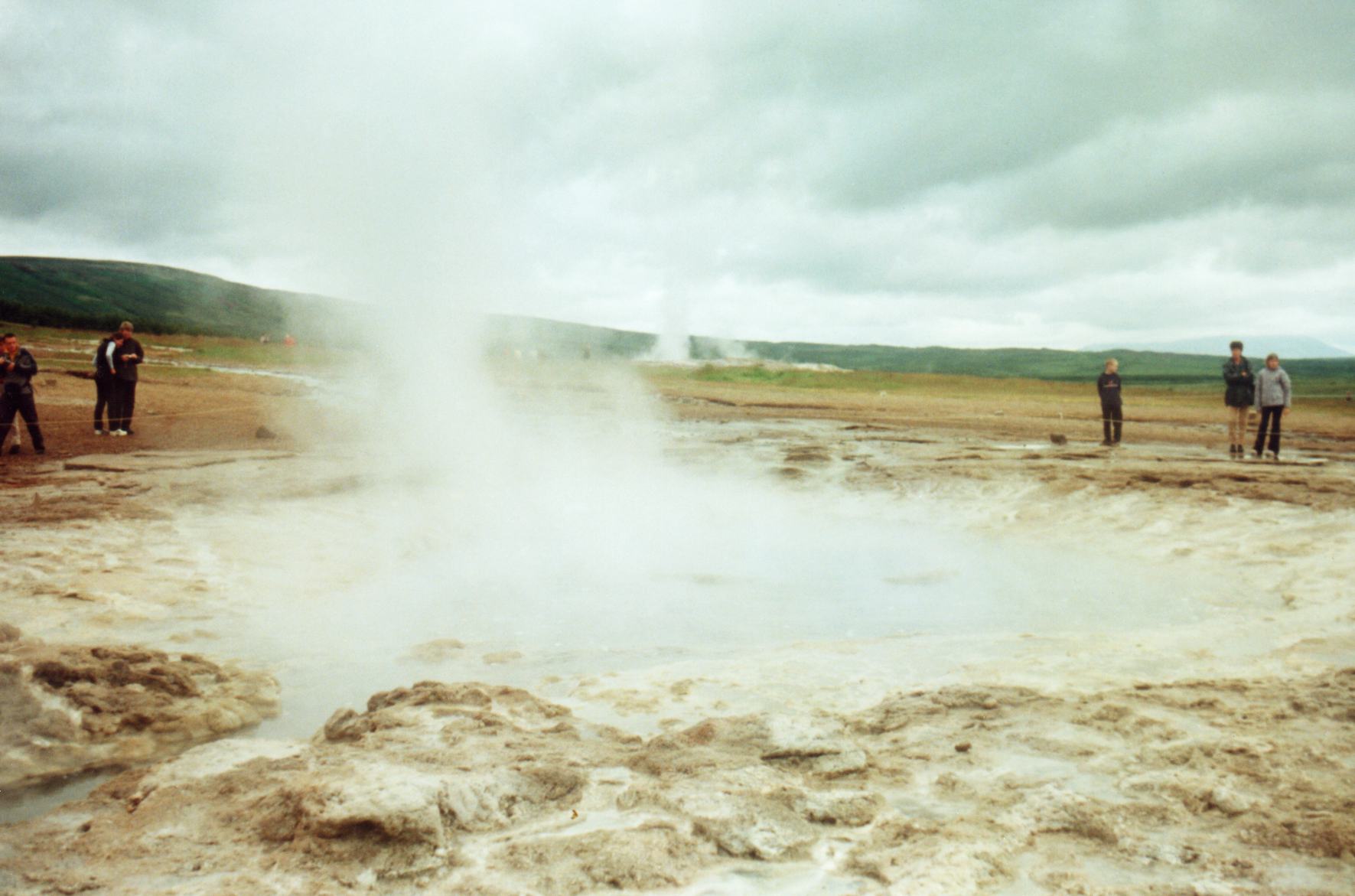
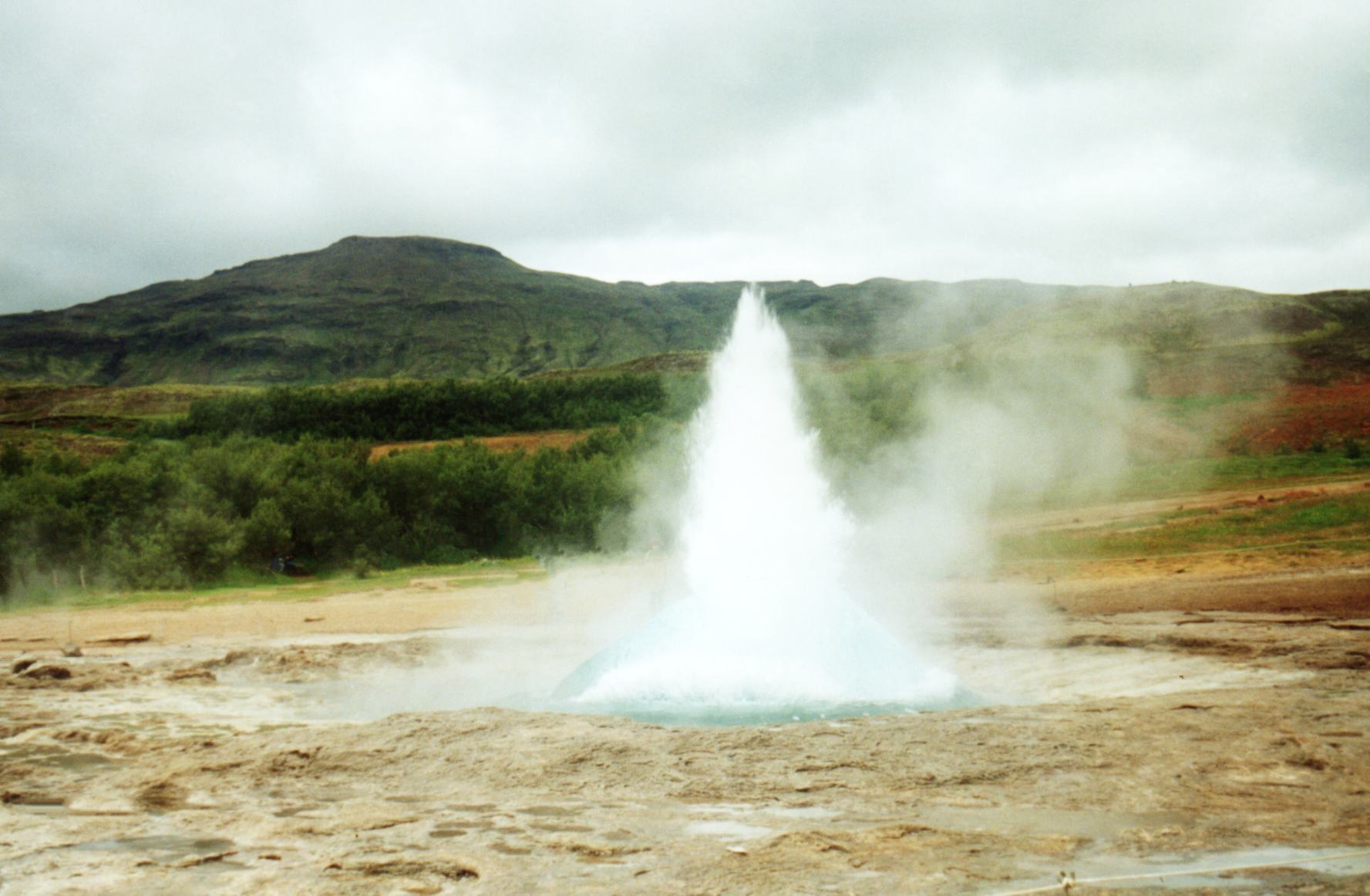
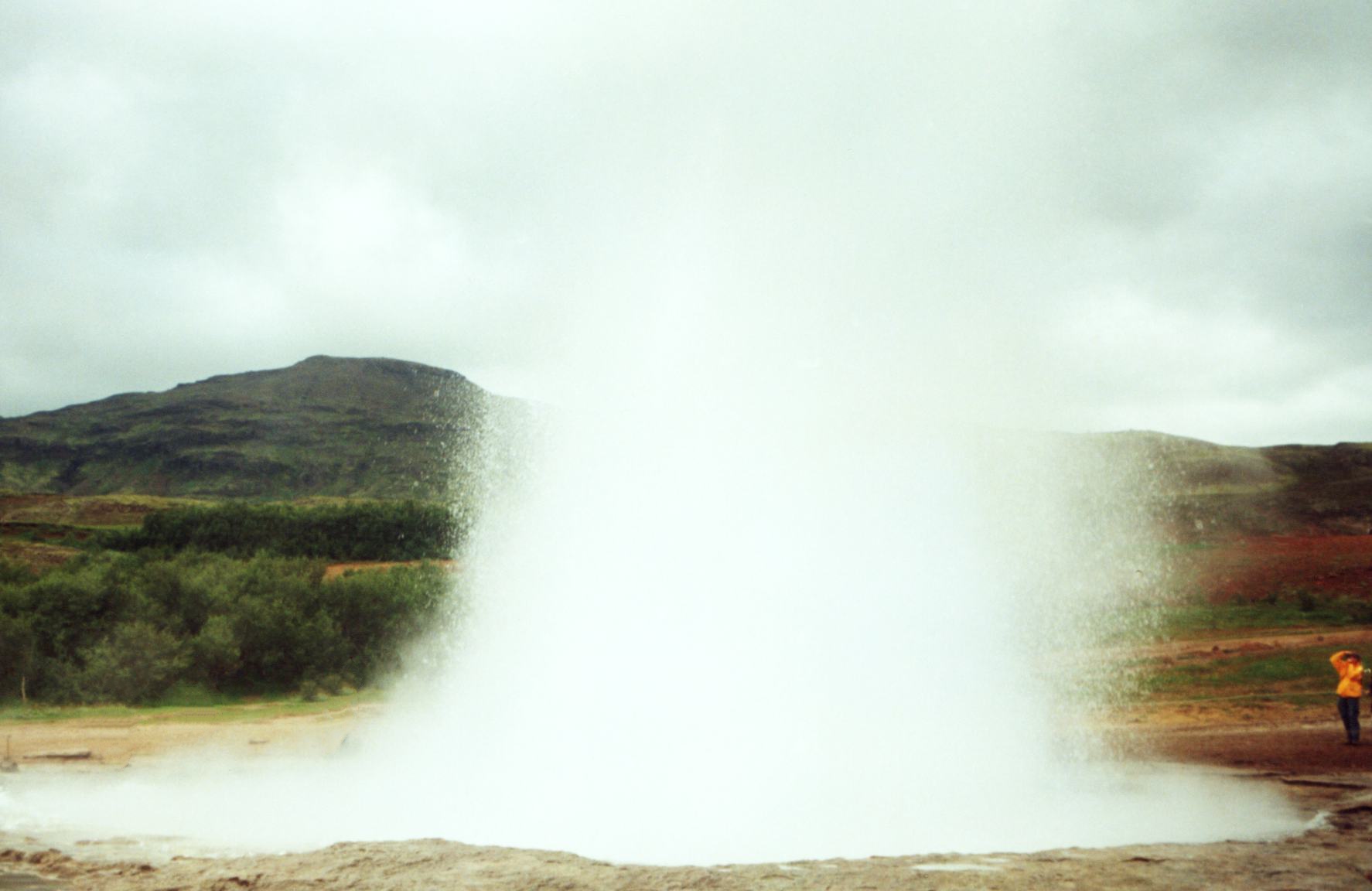
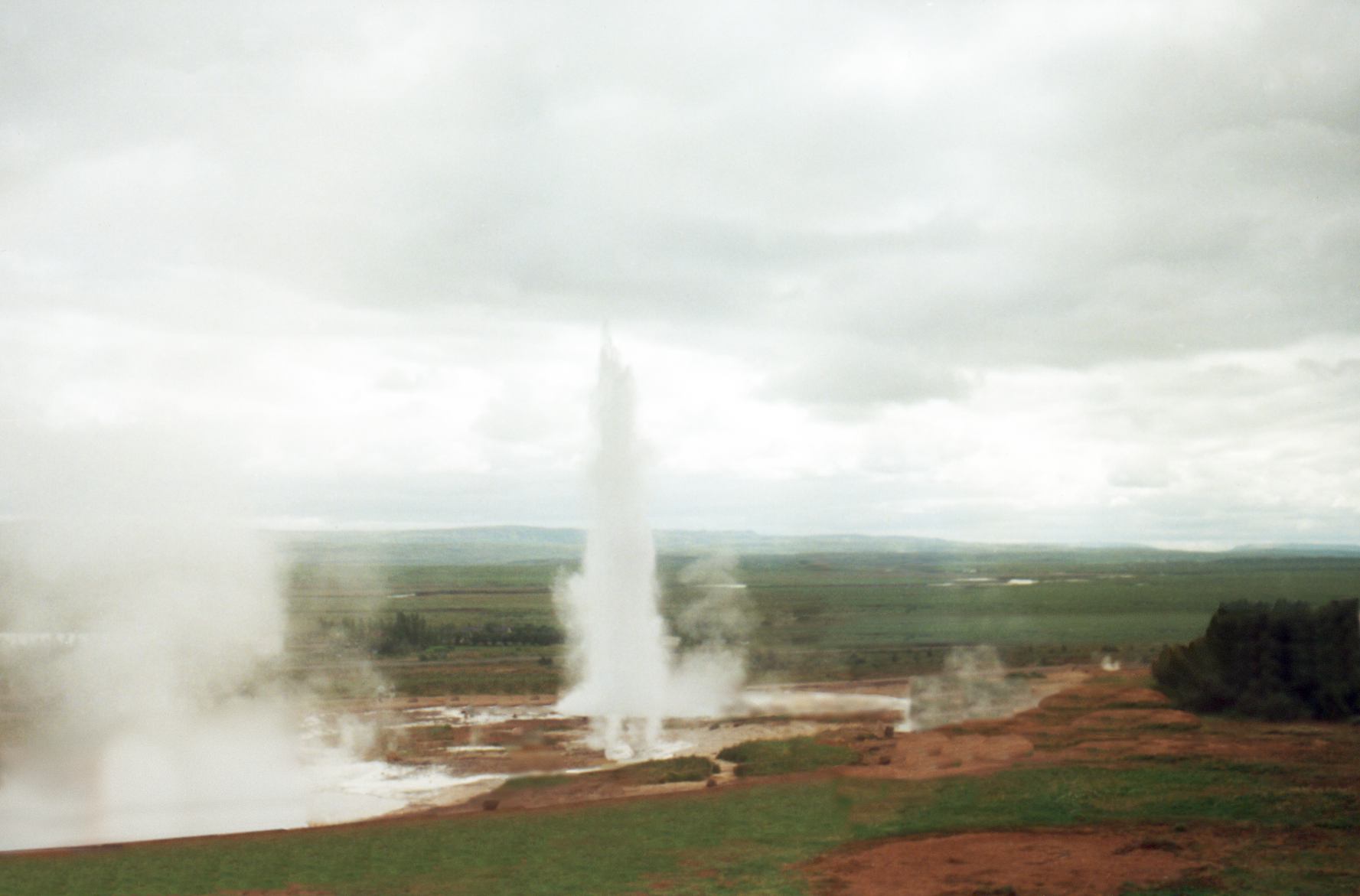
The geyser site is fenced and a sign says it's closed at night. Admission and parking are free. There are ropes round the geysers with signs warning of boiling water and danger beyond them, though nobody stops you going closer. One man settled down to lie in the warmth and have lunch beside the big geyser and nobody troubled him. Besides the two main ones, this geothermal area has a few more geysers, or rather springs, though the water rises no more than a metre.
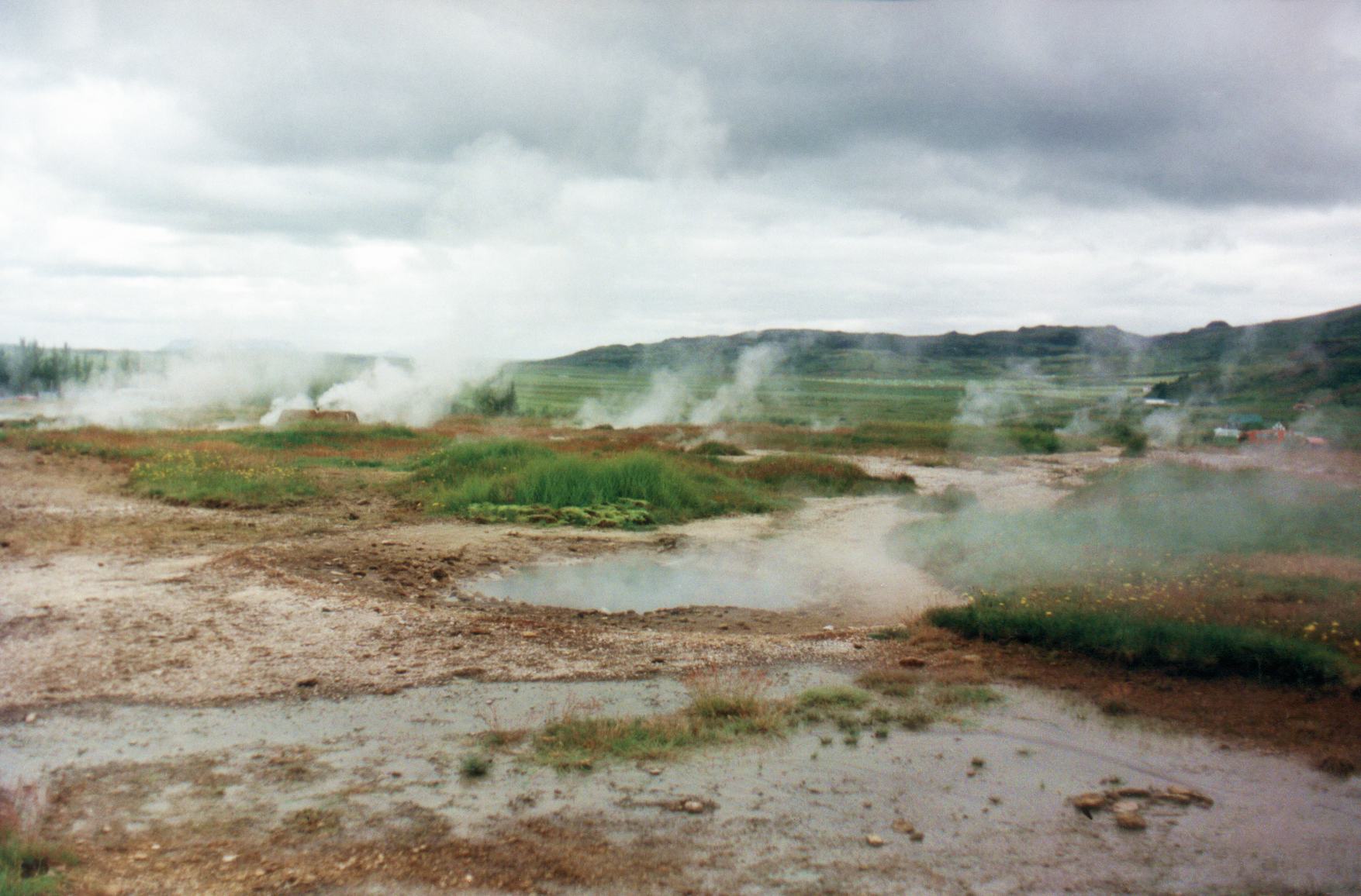
At the entrance to the geysers is a board listing other places on Earth with geysers. Kamchatka isn't on it. In response to my indignation, the local people were quite amazed to hear there was a Kamchatka in Russia and it had geysers too. For comparison, it should be said that the Valley of Geysers in Kamchatka is much lovelier. Everything bubbles, there are lovely mountains around it and plenty of geysers, with vents of many colours. In Iceland the geysers are in a flat, bare field and the vents are mostly grey. Lots of tourists, of course, in a neat ring round the springs, but with luck the coach tours will leave and you can be almost alone.
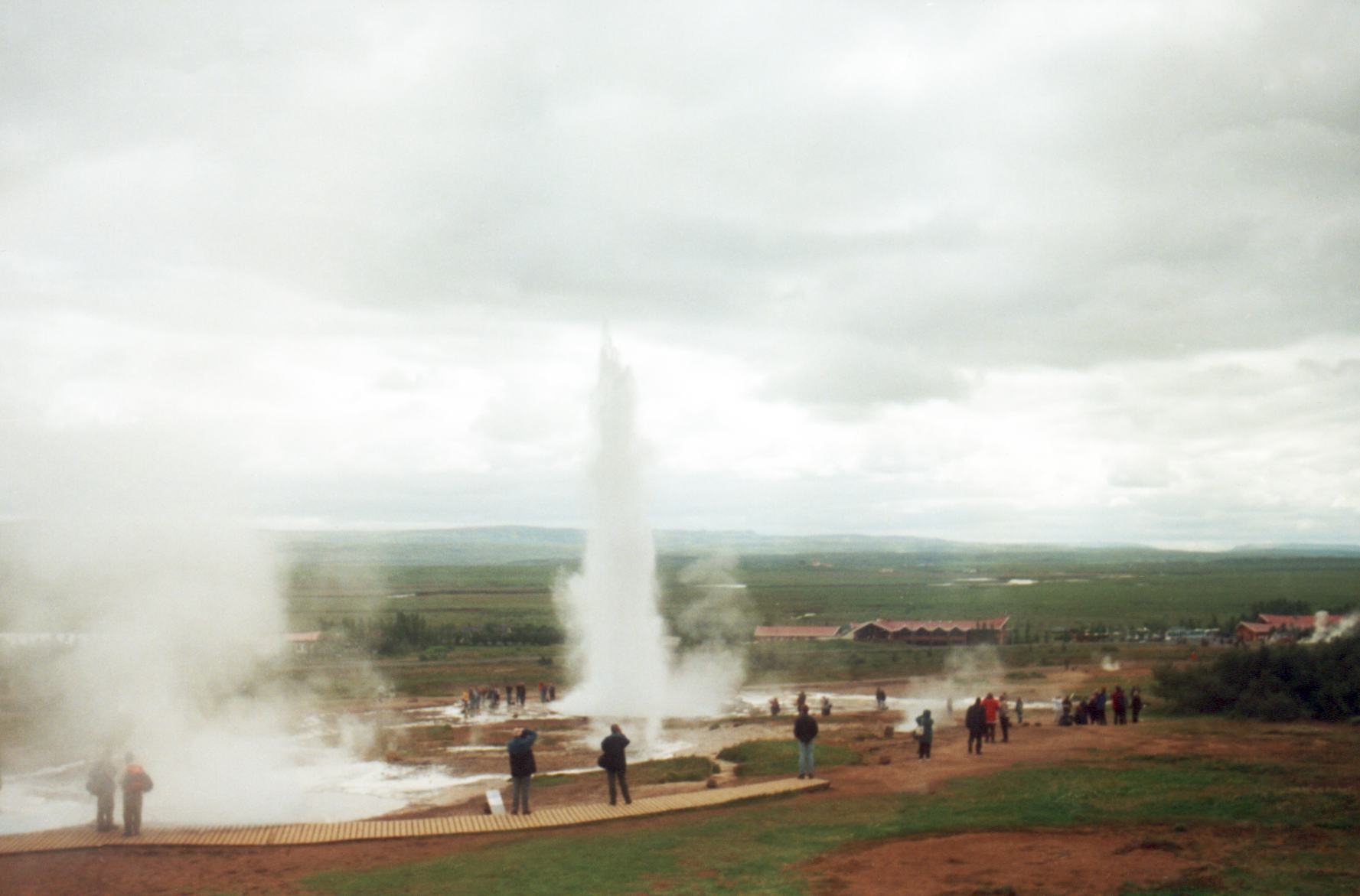
On the other hand the Icelandic geysers are higher. Strokkur goes off so often you can watch a dozen or two eruptions. There isn't a blue bubble like that in Kamchatka. The idiotic regulations forbid nearly everything in the Kamchatka Valley of Geysers and give you no opportunity to look at it for your own pleasure. I won't even start on the price. In Iceland it's all free. Experience shows that hundreds of times more tourists haven't trodden the lawns flat or taken the geyserite away for souvenirs. There's no point pleading that we have a different sort of people. From the writing in the local loo, there are plenty of wild individuals who come to Iceland too, including Russians.
They've built the Geysir Centre by the car park. You can see all the same things in a film there, with volcanic eruptions thrown in. That's where the tourists mostly hang about. For many of them it's more interesting than the live geyser a hundred metres from the one on the screen. There are cafés and shops there too. Knockout prices, naturally, especially for film.
Near the geyser is Gullfoss, a waterfall of a complicated shape. The water drops thirty metres in two steps. If you're lucky with the weather, as we were, there is a bright rainbow in the spray. You can scramble about on the many terraces and see the wonder from different angles. Work was going full tilt around the falls. They were laying new paths for visitors and apparently going to light it up. I liked the machinery a lot. Excavators and bulldozers, all tiny like toys, with a bucket no bigger than a pail. It feels as if you've wandered into a children's fairground.
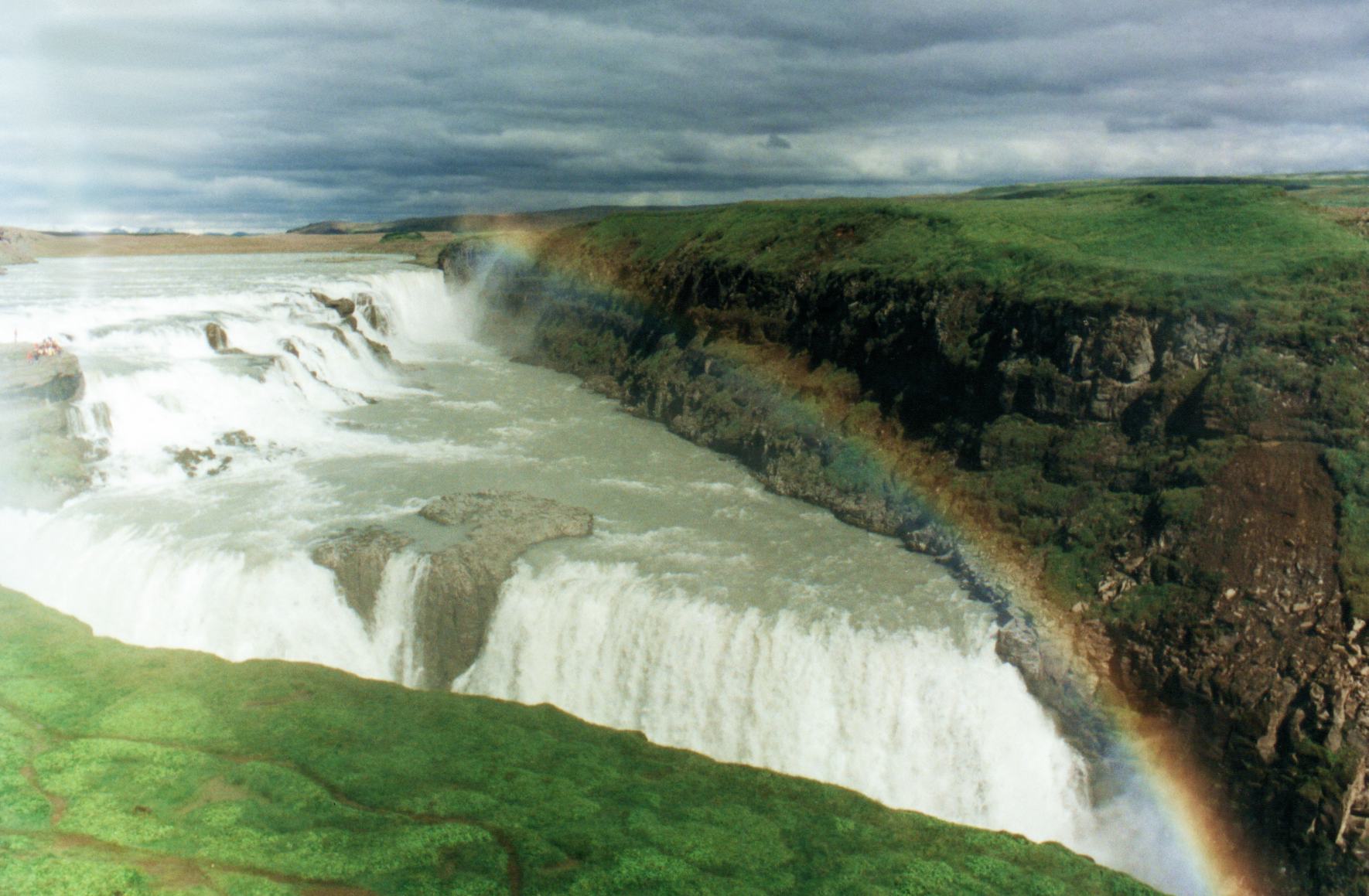
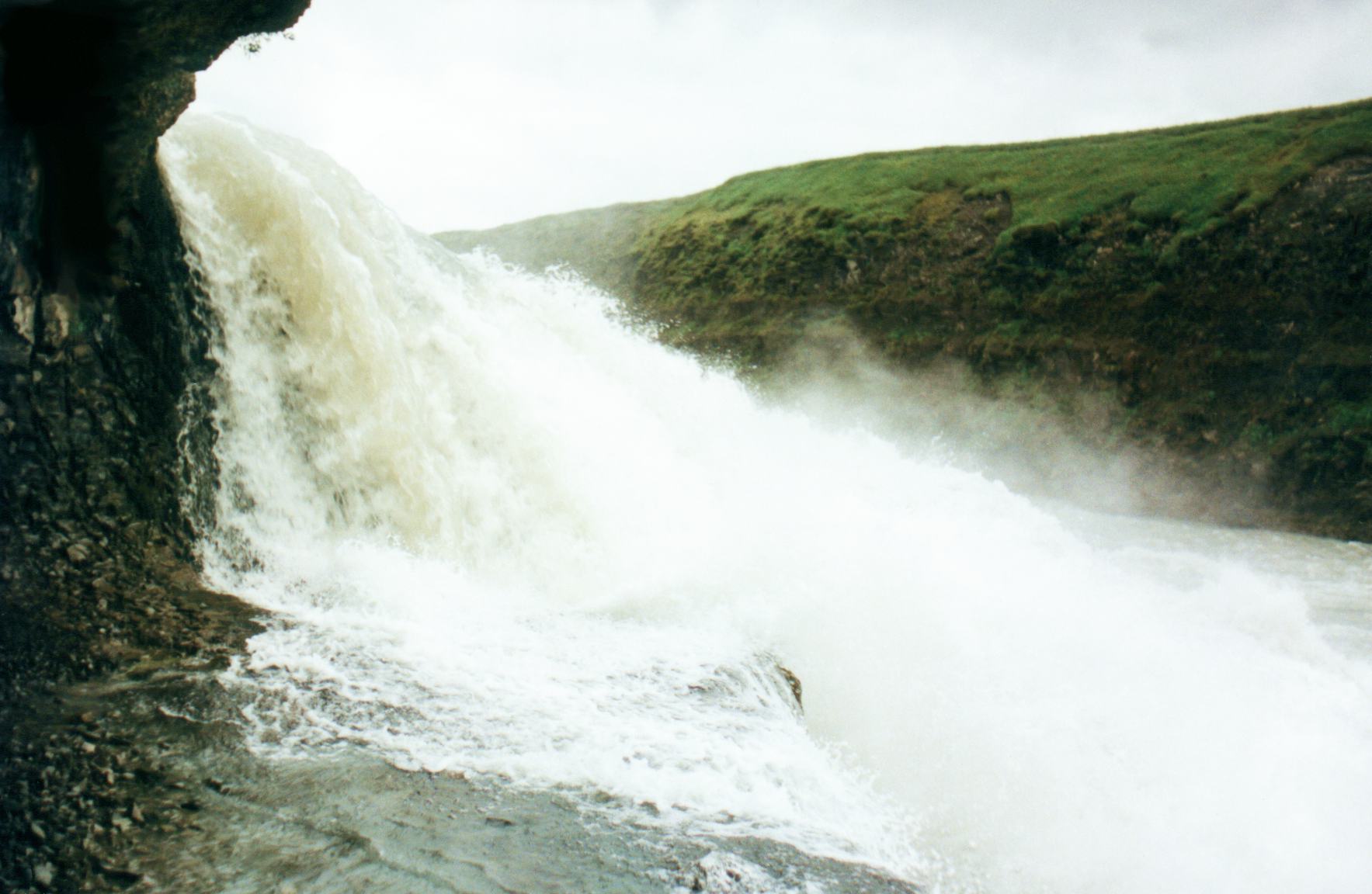
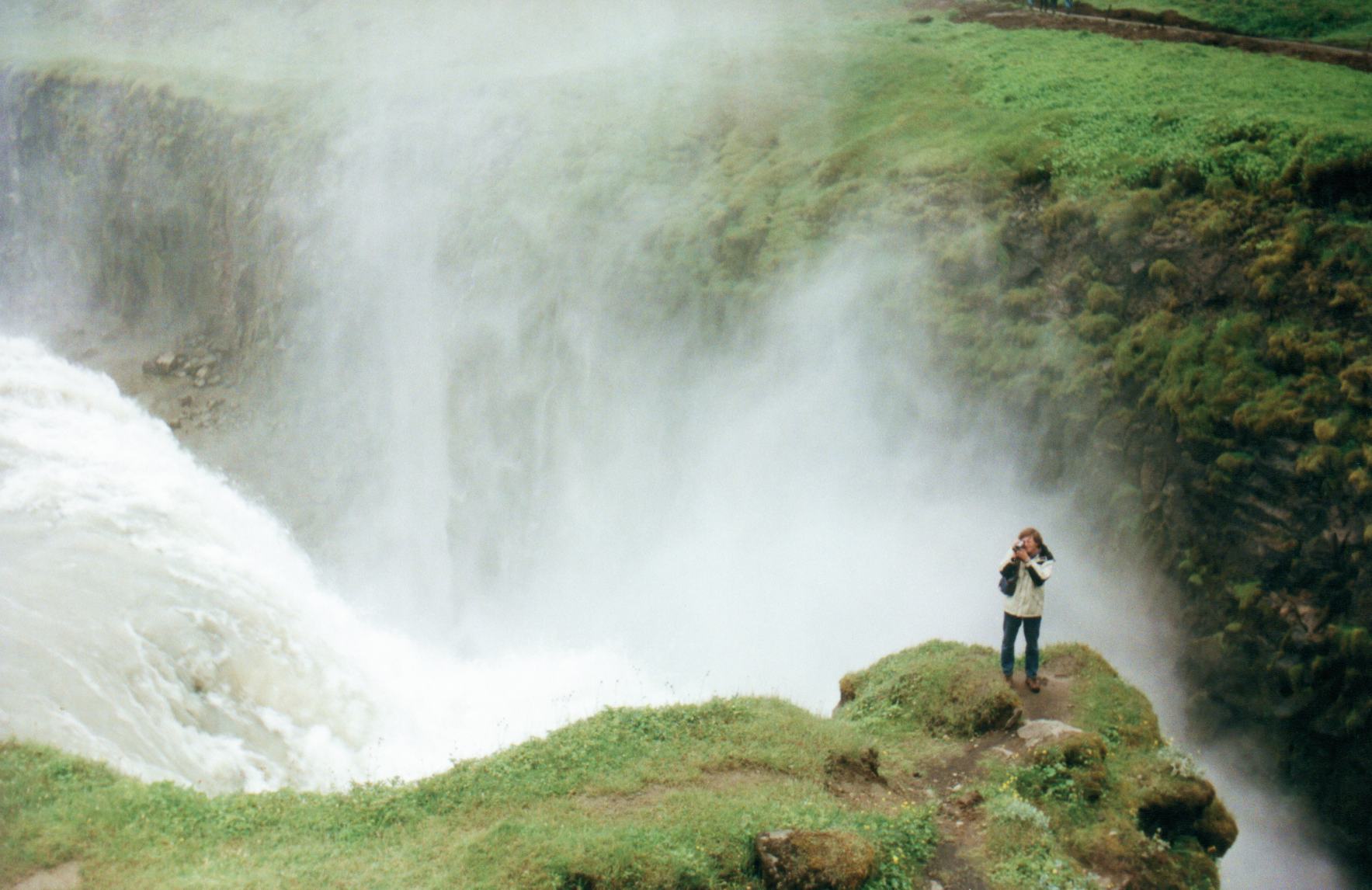
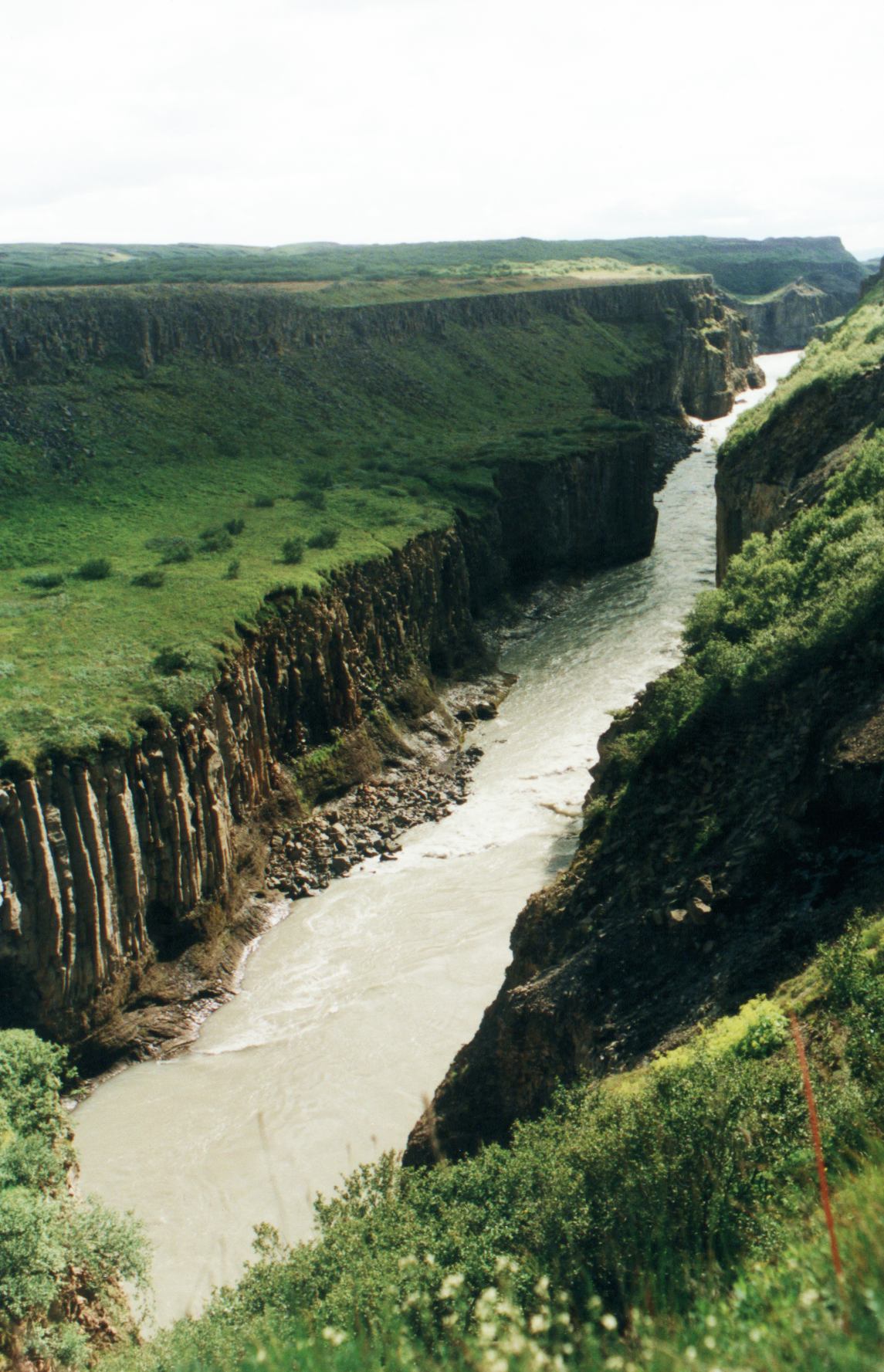
There was one more thing for today. Ever since childhood I'd dreamed of climbing Hekla, Iceland's most famous volcano. In the sixties it was rather like dreaming of flying to the Moon, but now Hekla was there, already showing through between the foothills, and as luck would have it the summit almost free of cloud. Lonely Planet said that was a rarity.
Hekla isn't the highest volcano, only 1,491 metres. The climb as a whole isn't difficult. It is quite active. Its last eruption had been the year before, in 2000, before that 1991, 1970 and 1947. There are more active volcanoes. Hekla's fame has more to do with religion and mystery. In the sixteenth century people thought it was the entrance to hell. Travellers said you could hear the voices of sinners if you approached the crater. There was even an expression, “Go to Hekla.”
Pavel and Lena declined from the start to climb goodness knows where for goodness knows what, so Tanya and I were going up together, to spend the night on the summit. Last year we'd camped on top of Avacha and liked it.
First we stopped at Leirubakki campground. An excellent place, with a kitchen and the longed-for socket to charge the camera, and cosy in other respects too. Then Pavel and Lena drove us to the foot of Hekla. The recent eruptions had covered the old paths in fresh lava. It's very awkward walking on it, so the recommended approach was from the northeast, ten kilometres along the F225 from Route 26. The road is marked for serious off-road vehicles, but the Ford made it, scraping its belly from time to time. It goes over fresh volcanic cinders. It's very strange to be in your own dear old car and instead of driving down the dreary streets of Saint Petersburg to be dodging volcanic bombs on jet-black lava crunching under the wheels. The road soon ends at a parking area with a table and bench. There is a little chest with a book in which would-be Hekla climbers can enter their names. Plenty of names, more than a dozen a day. Nobody from Russia, so we signed on that account.
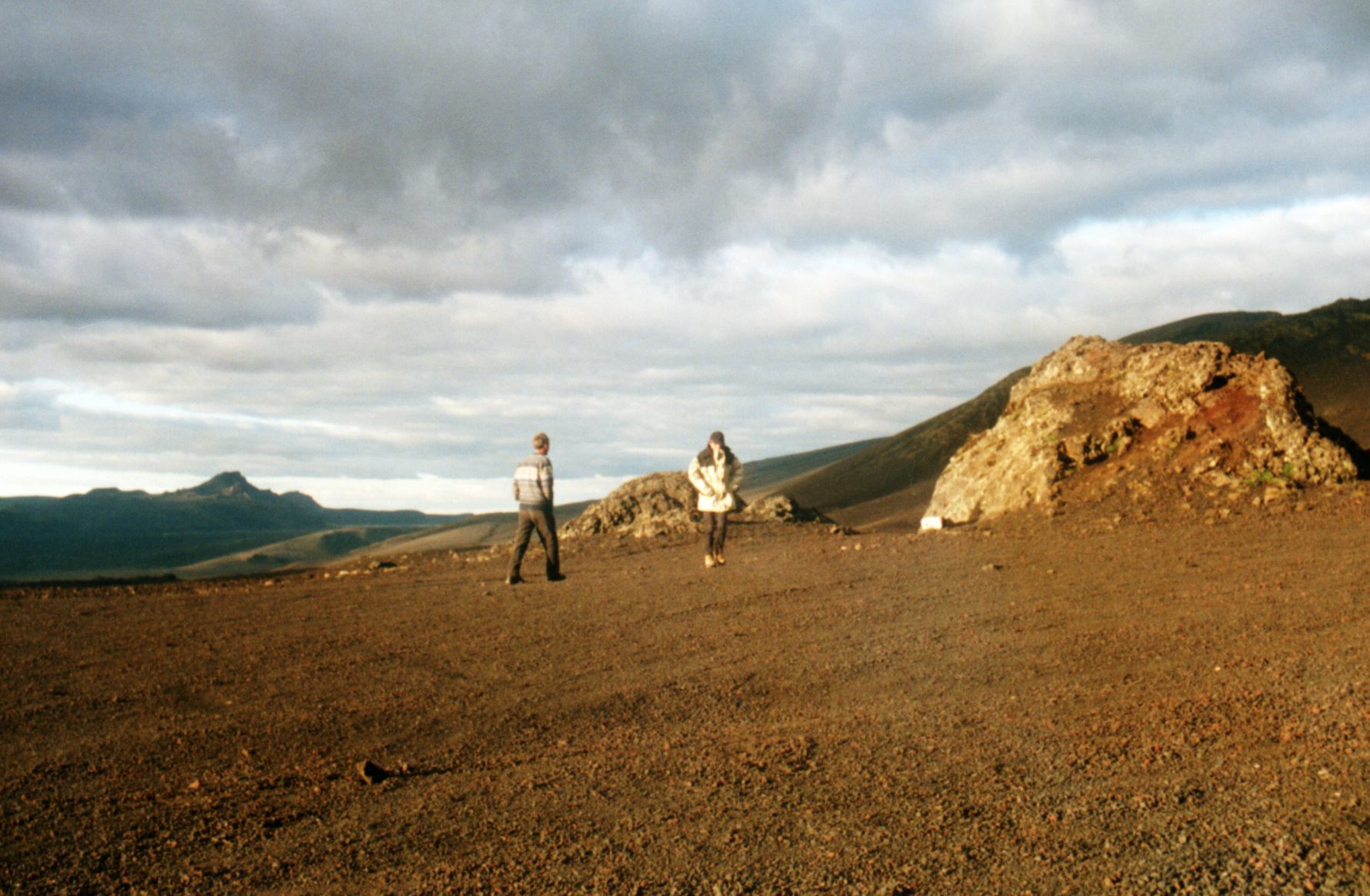
Pavel and Lena went off to camp while we went up. At first it was almost disappointing: a flat, well-worn path with posts. After an hour it turned out we'd got out of the car too early. A road perfectly passable in the Ford goes up to about eight hundred metres. Never mind, we could walk it. The path soon ended, cut off by the flow of last year's lava. That's where the real climb begins. It isn't technically hard, but it stops ninety-nine per cent of the sedate Western tourists. Scree takes the place of the lava, and higher up the glacier begins. We chose a level patch at 1,222 metres for the night (64°00.033′N, 19°38.210′W). The sun had already set and it was getting dark. Sunset is always beautiful in the mountains. It's why we climb up to spend the night. Once we'd had our fill of it we pitched the high-altitude tent, had dinner and tried to get to sleep. Just as we'd made ourselves snug there was a deep, heavy thump somewhere inside the mountain, about as powerful, I'd say, as the disastrous Turkish earthquake in 1999. What was there to be surprised about? We were on a very active volcano. That is the sort of thing that ought to happen now and then. I began to scare Tanya, telling her the lava should flow round our tent, but we'd have to dodge the bombs, so better to put her head deep down in the sleeping bag. Frightening. Even I believed it.
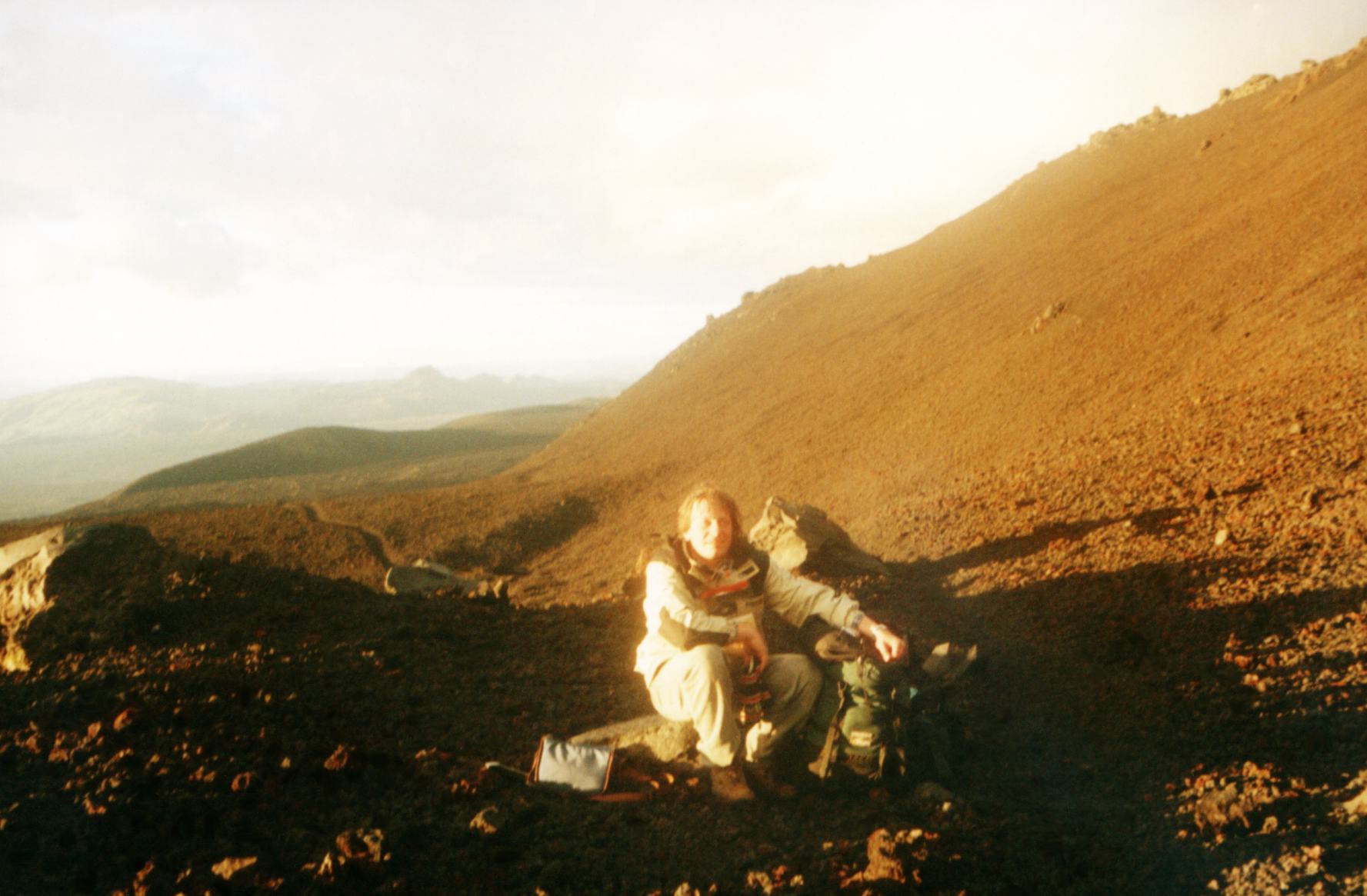
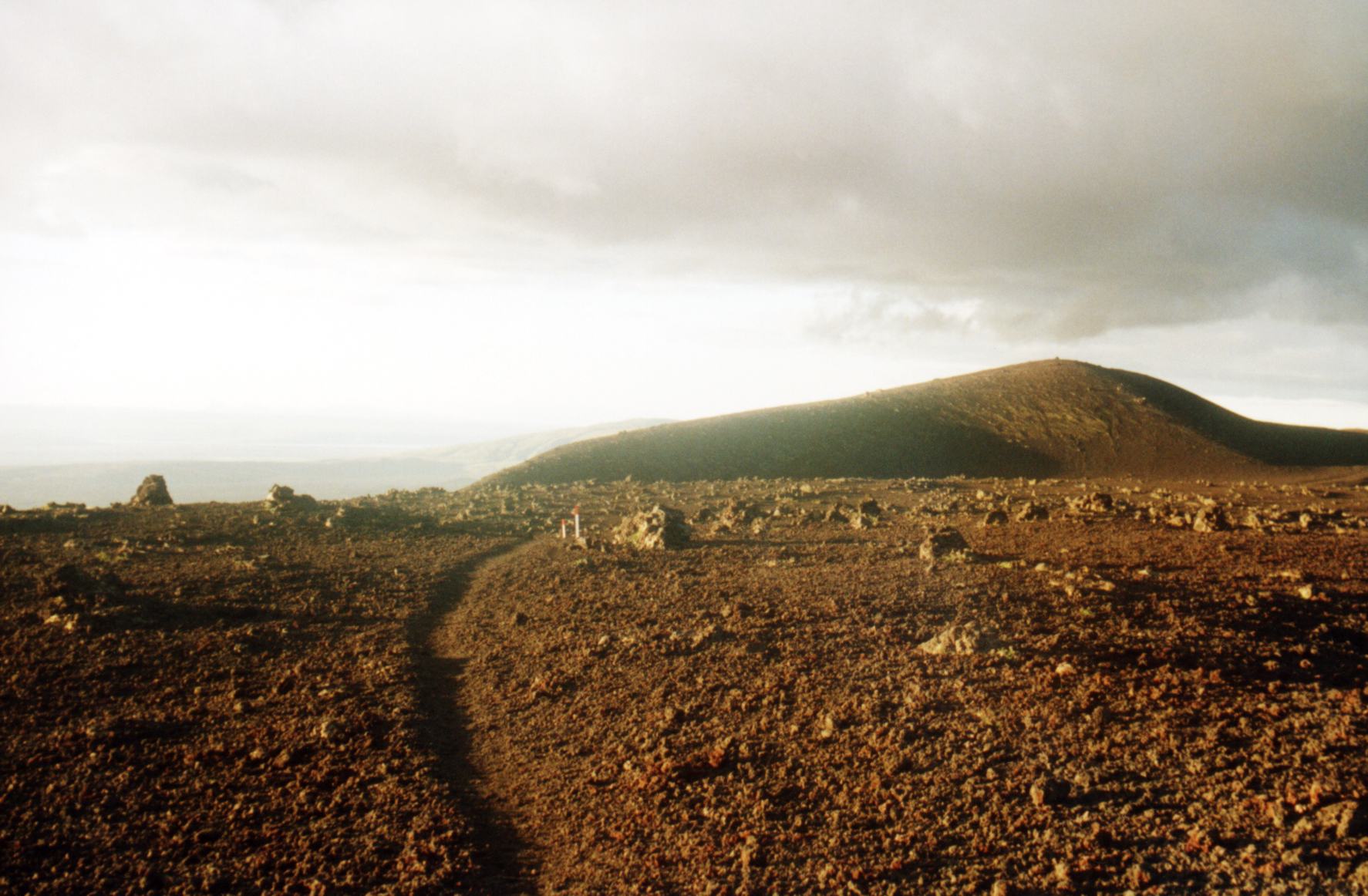
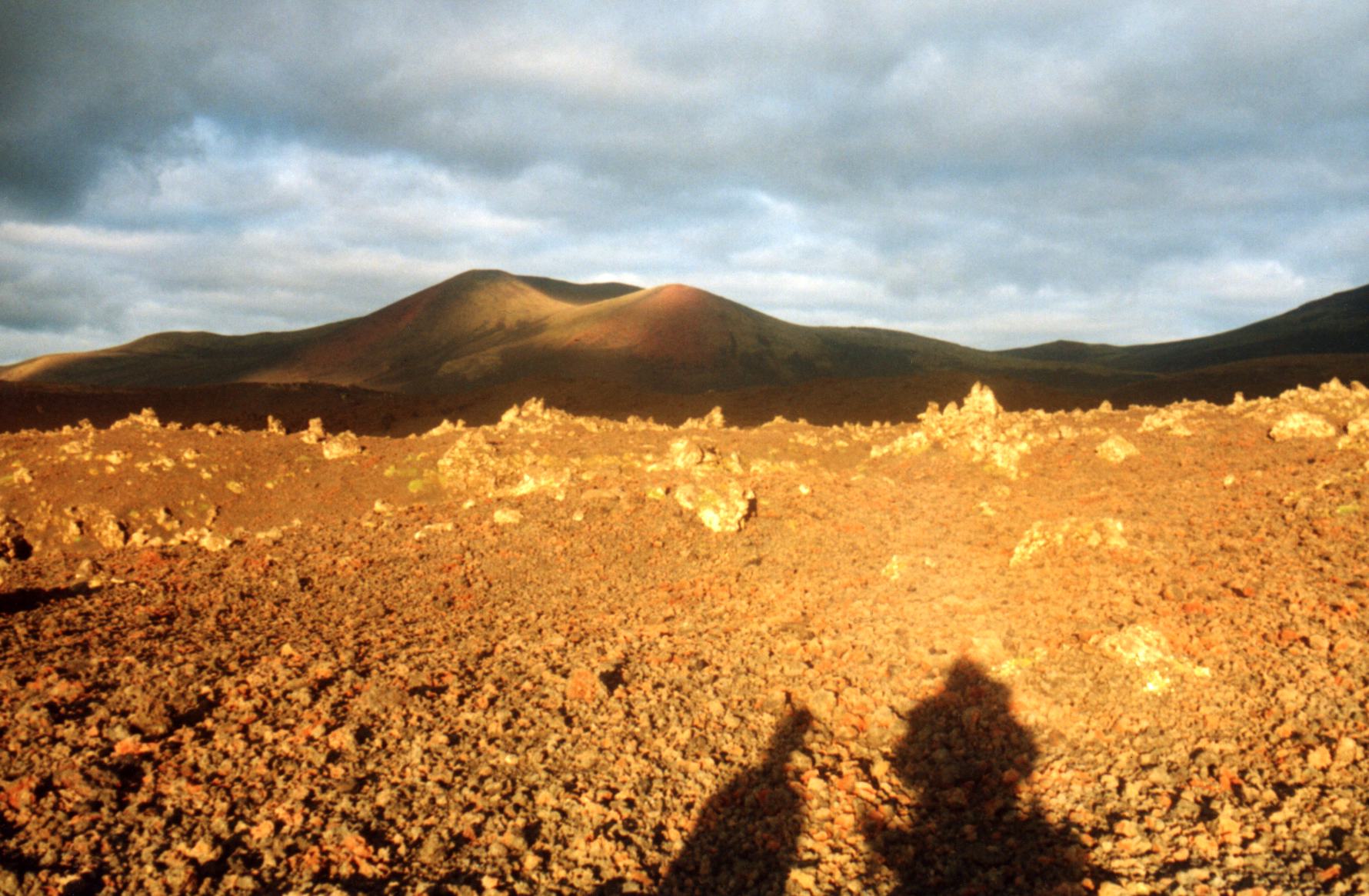
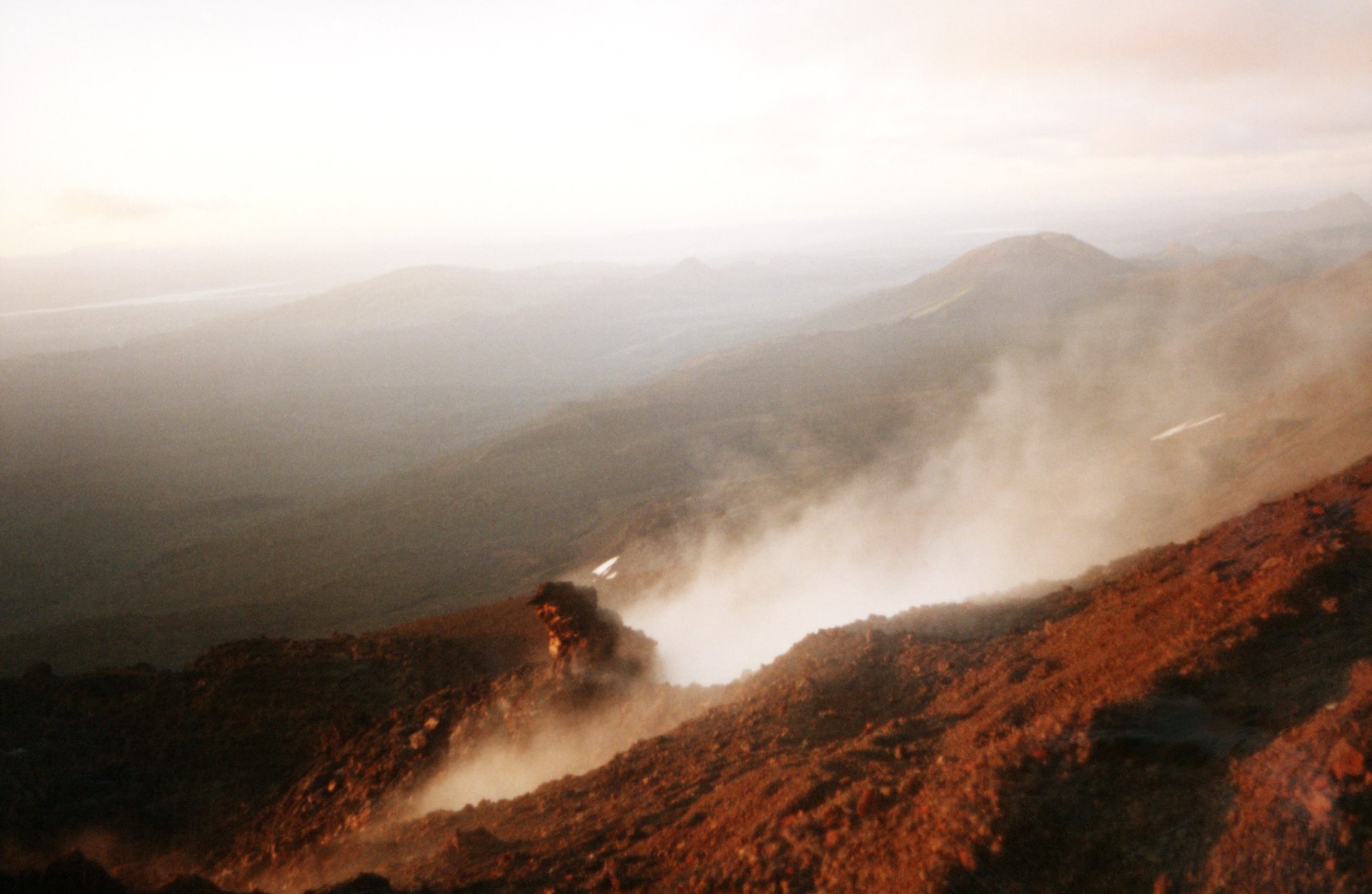
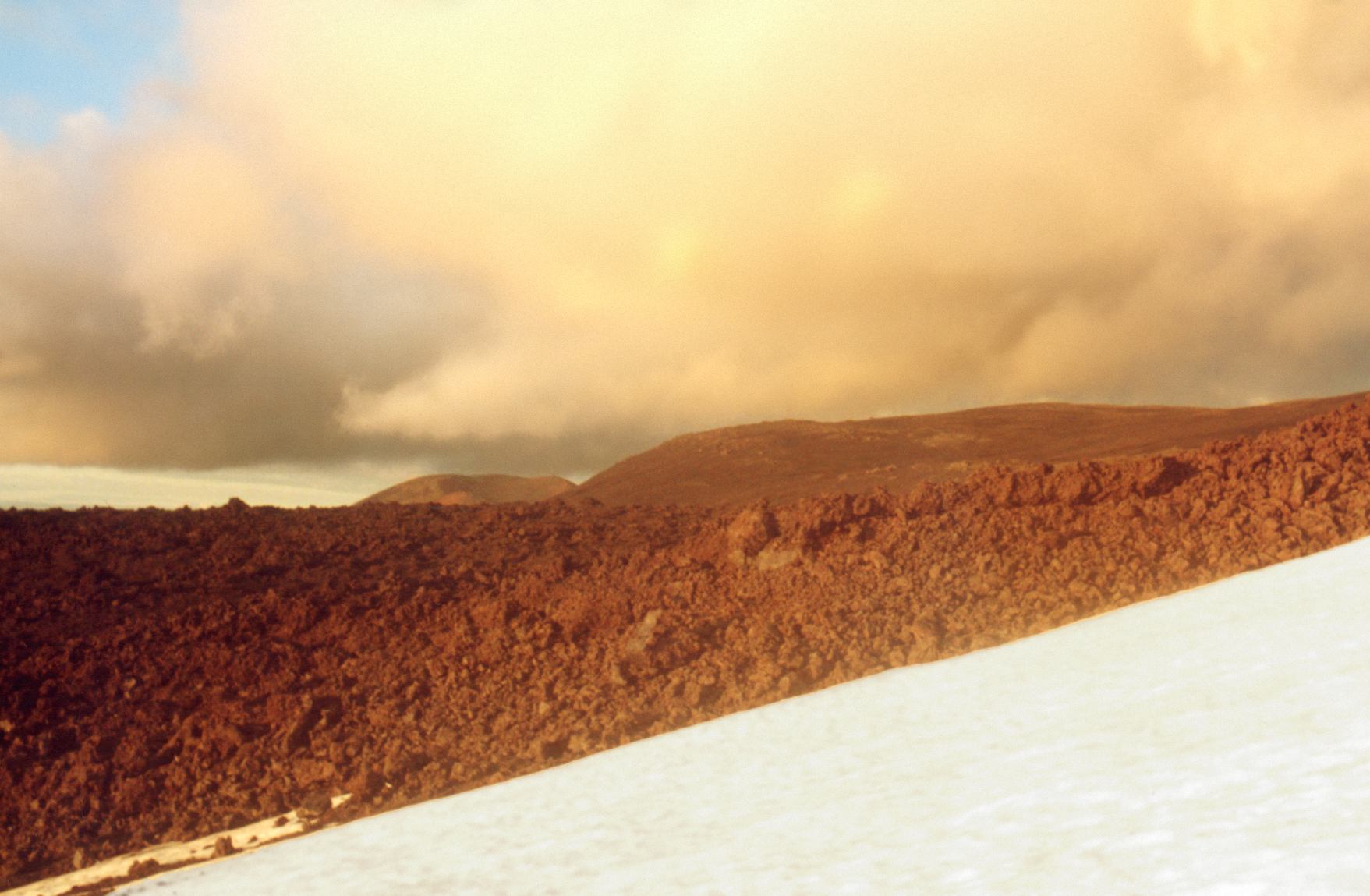
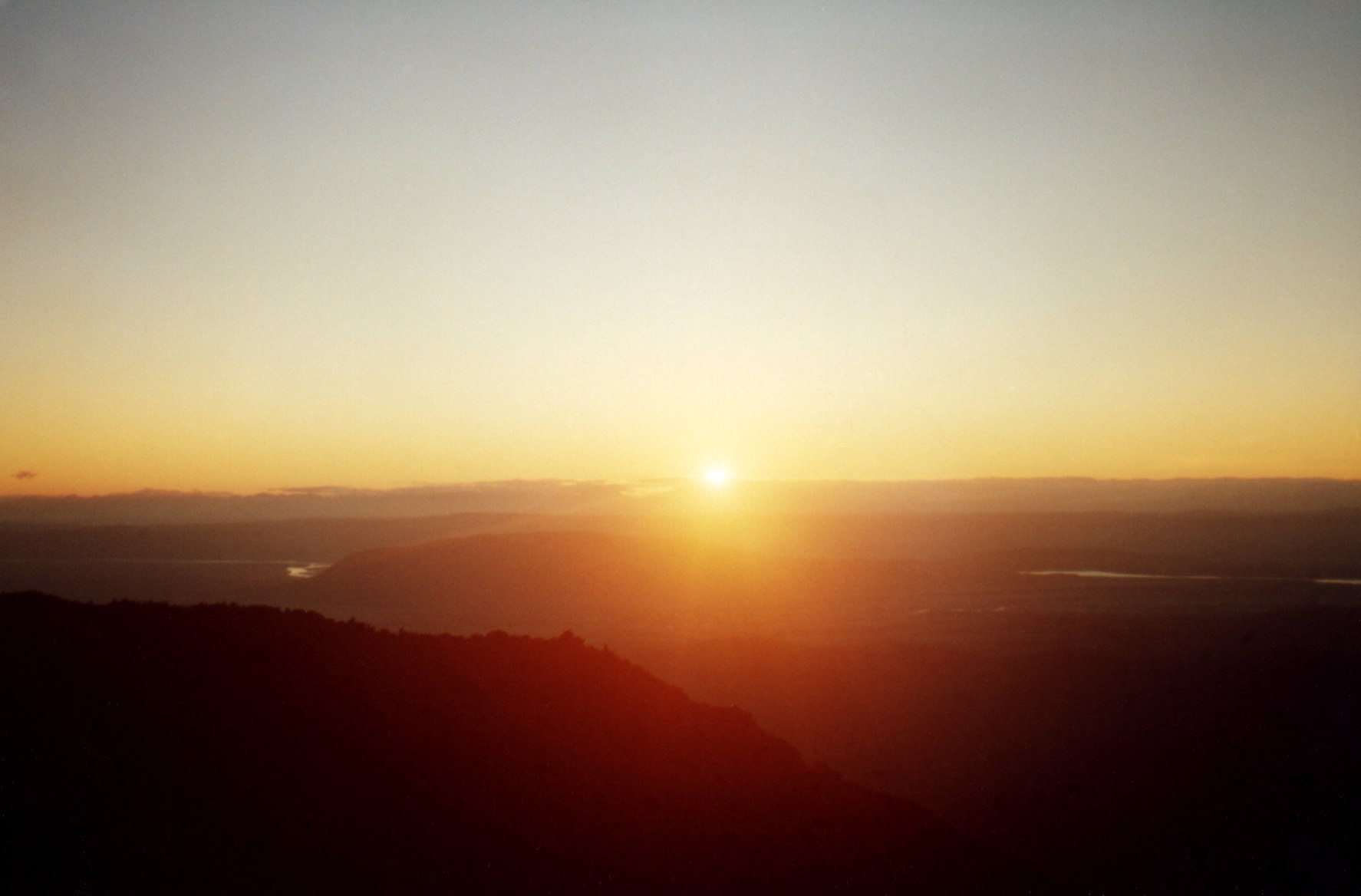
We'd tired ourselves out during the day and slept hard and long. We ventured out at seven in the morning. The sun had just come up. The wind was twenty to twenty-five metres a second and it was minus five. Clouds were closing over the summit: time to hurry. We packed in three minutes, probably our record. All very well, but bitterly cold. We reached the top in an hour. There stood the same sort of little chest with a book as below, with very few entries, only three pages since March. They promised to list those who made the summit on Hekla's website. A pity I lost the address somewhere. Hekla's main crater is about a hundred metres deep and hasn't been active for many years. It's covered in ice. Out of the wind in the crater, we had the sandwich we'd bought the day before at a filling station, and a bar of chocolate. The phone worked, badly, but it worked. We sent our friends a text: “Hello from Iceland. We're in Hekla's crater, having breakfast.” We phoned those without mobiles. One man read the message at work, let out a dying groan of misery and went and got drunk. Others decided we needed rescuing at once, if we'd landed inside the crater of a volcano. Luckily they did no such thing. The replies soon began arriving.
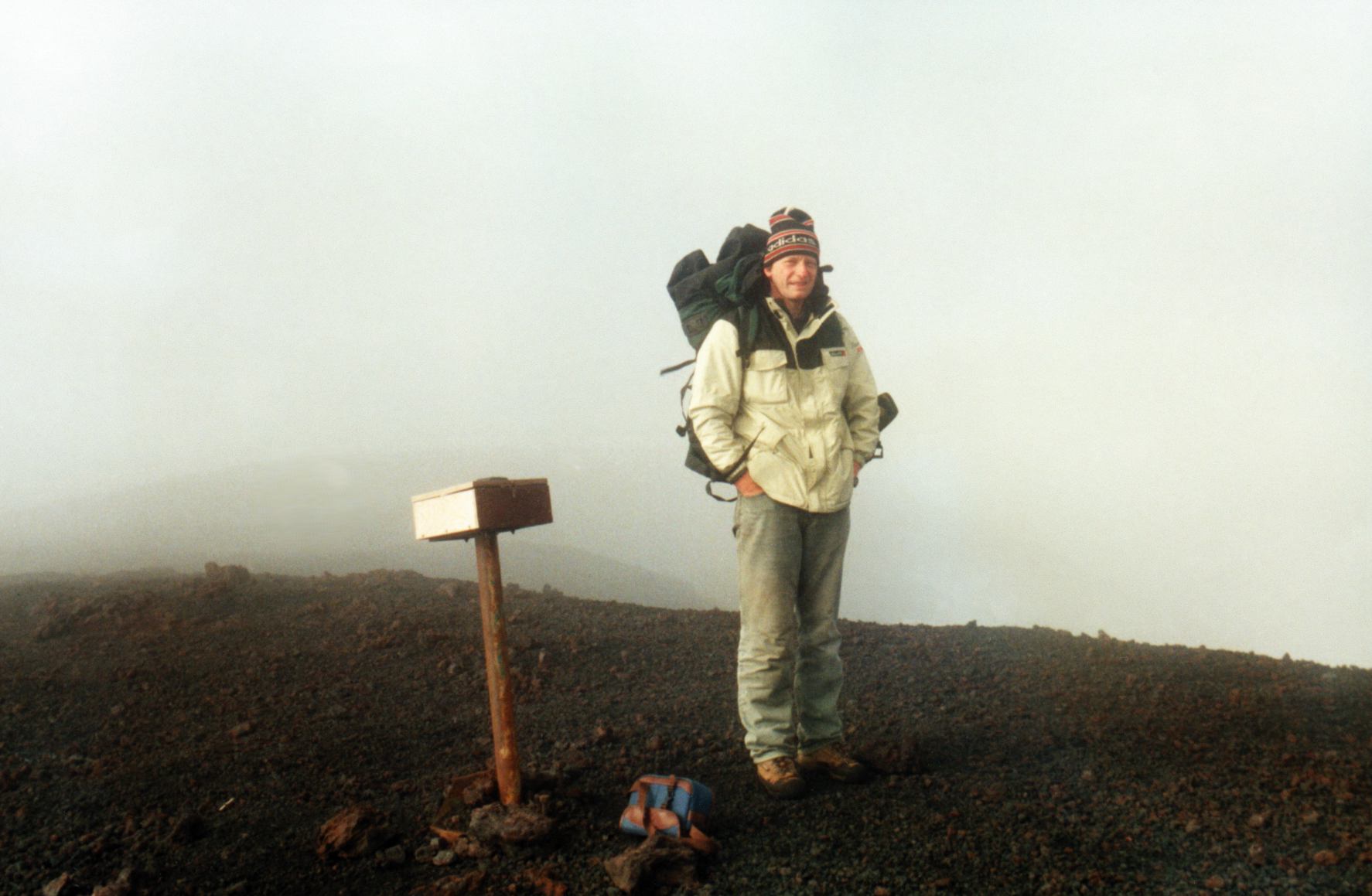
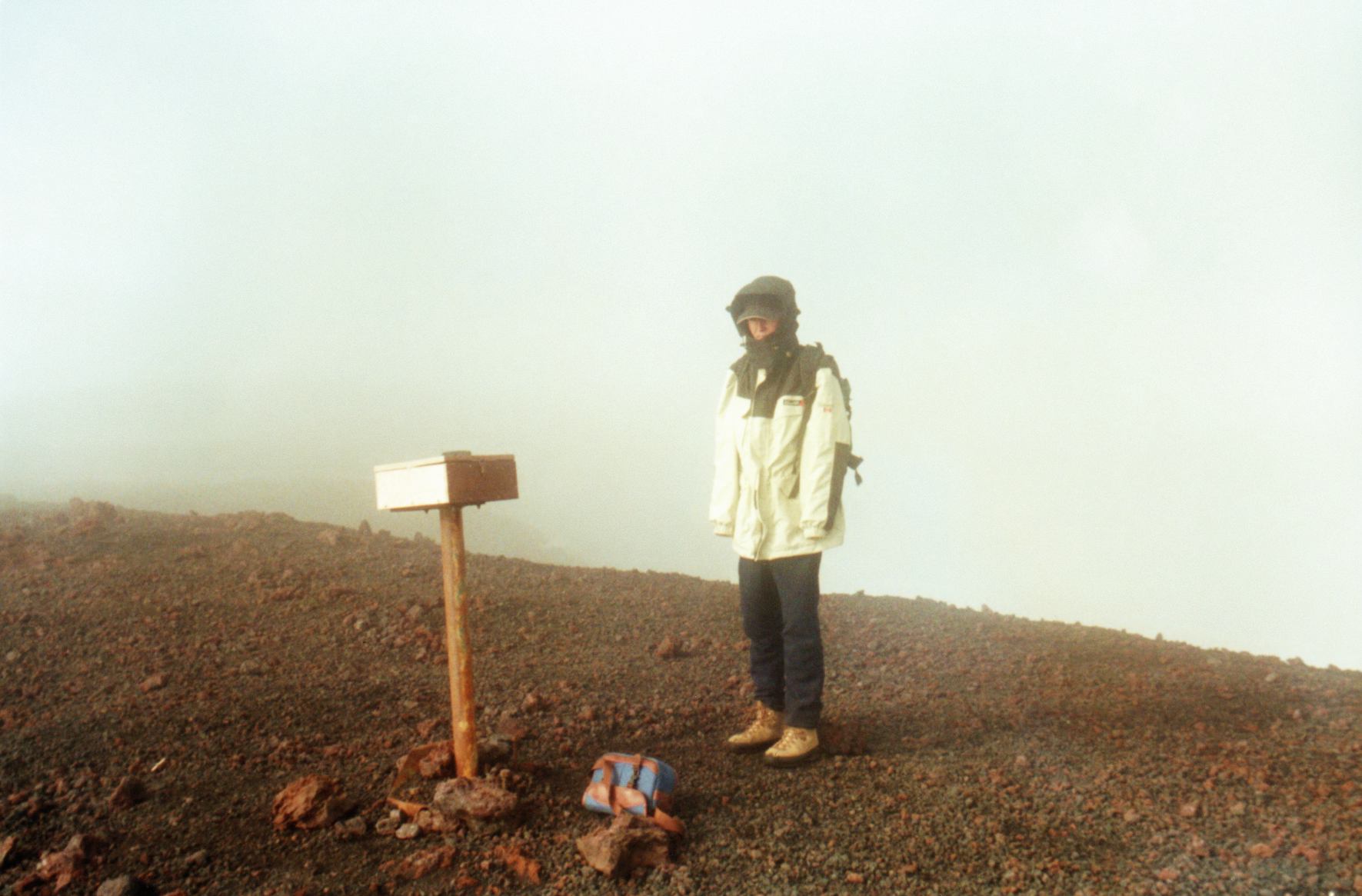
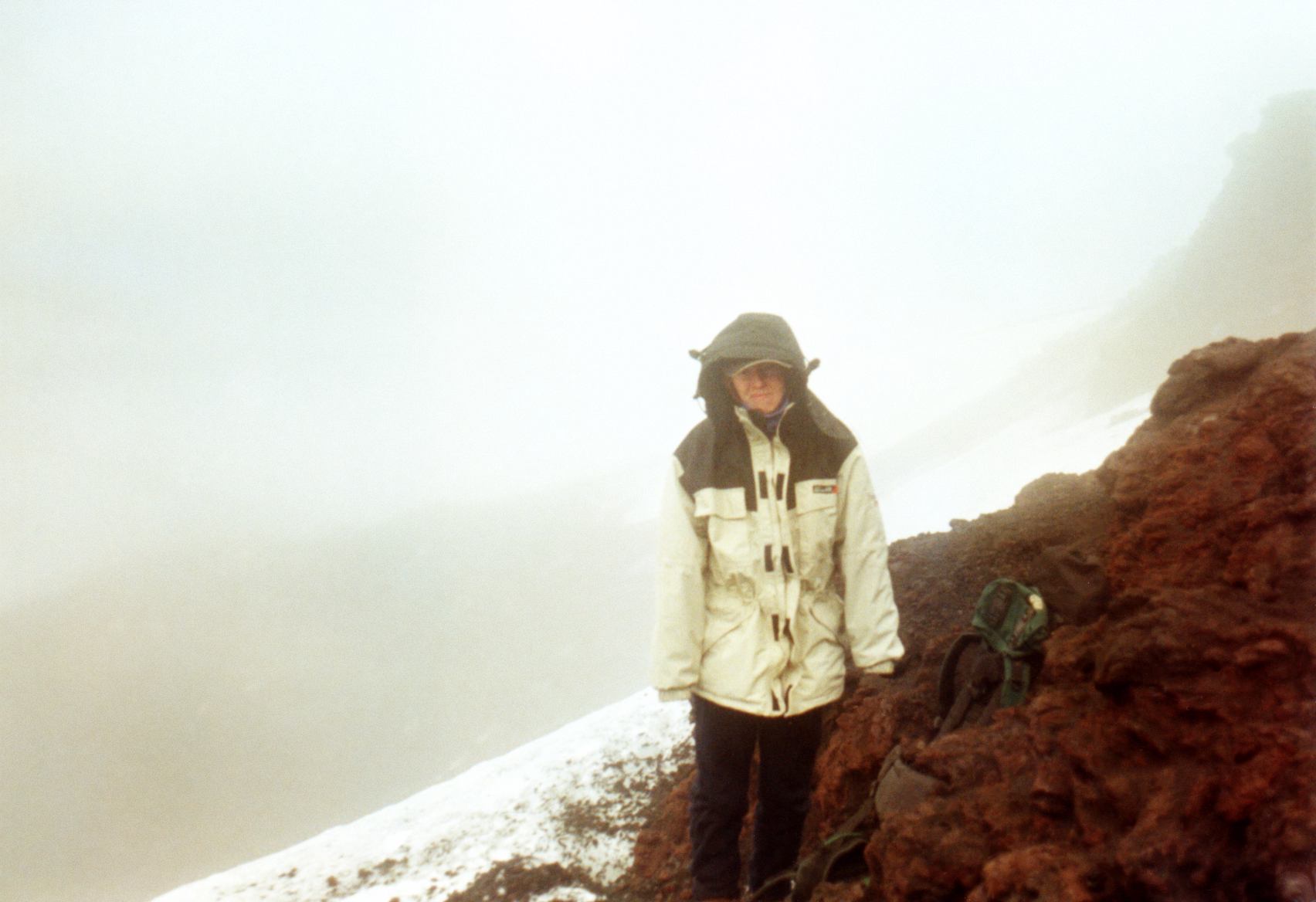
Going down took appreciably less time. The glacier ended and the sun warmed us. It grew quite warm. We took our time coming down towards the start. There was no hurry, as we were meeting Pavel at noon. To save getting bored we walked to meet him along the road. At the appointed time our dear beauty came out from behind a lump of lava.
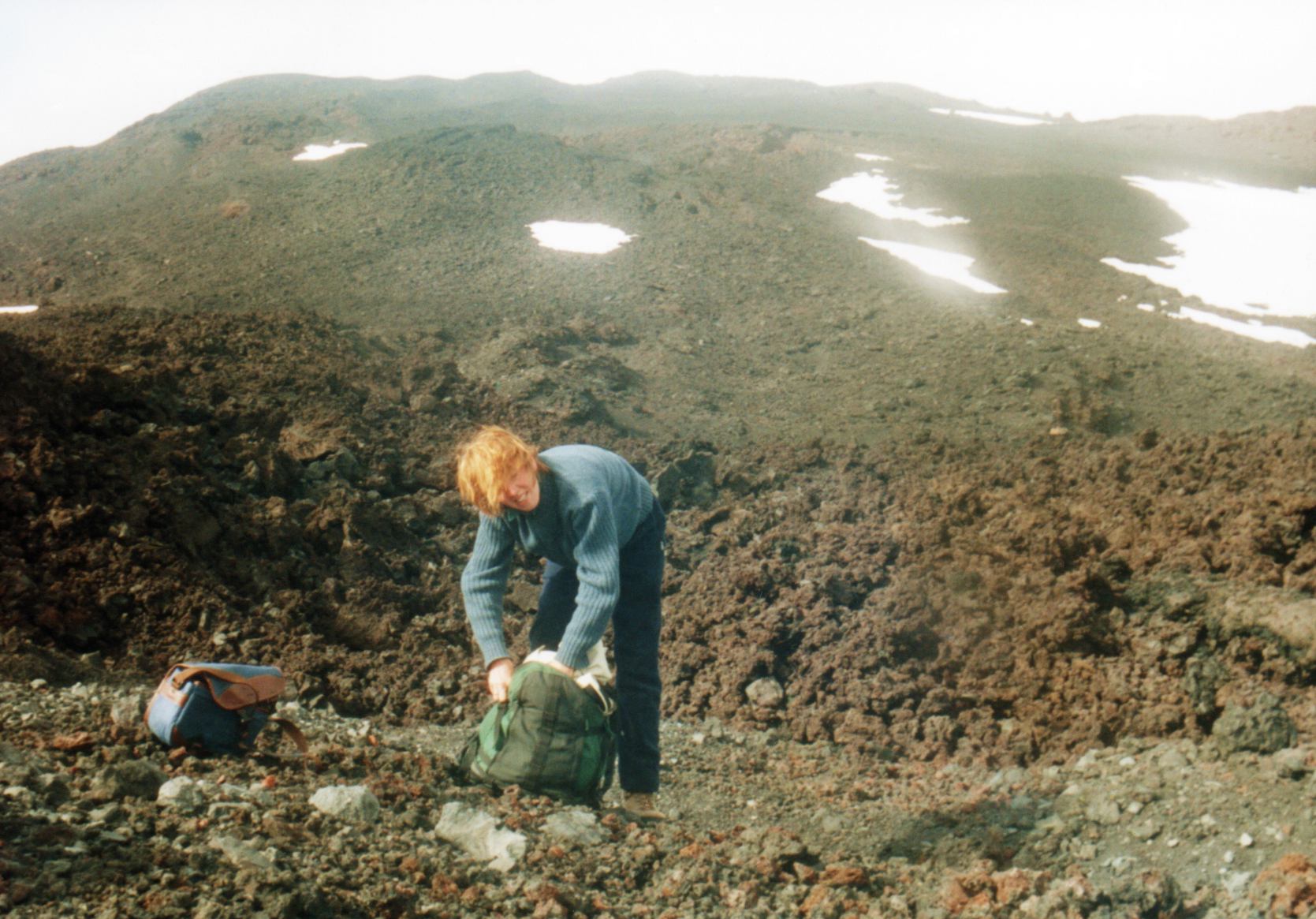
When we got back to the campground the power had gone off. More trouble with the camera. No longer any hope of a shop with a charger. I hadn't found one even in Reykjavík. Nothing to do but sit and wait. Two pigs came to see us, tame and persistent. They began digging through our things. Pigs are rather strong and you can't just drag them away, even by the tail. A fist on the snout doesn't do much either.
The power didn't come back at the promised time and we had to evacuate in a hurry.
We'd seen practically everything we wanted to see and had only to get back to the ferry in time. It was a long way, more than six hundred kilometres, a third of it on gravel. There was still time, as the ferry didn't go till the morning after next.
We took Route 1 as before. The glaciers lay ahead, nearly reaching the sea here. Soon the splendid Seljalandsfoss came into view on the left, falling from about sixty metres. Its particular feature is the trail that takes you behind it. After running in circles round the torrent we went to the next fall, Skógafoss. A perfectly even wall of water falls from eighty metres. A whole land of waterfalls here. It's worth stopping a day to clamber about the neighbouring rocks. We didn't have the time any more, alas, so there was only the bottommost step of the twenty on this river to see.
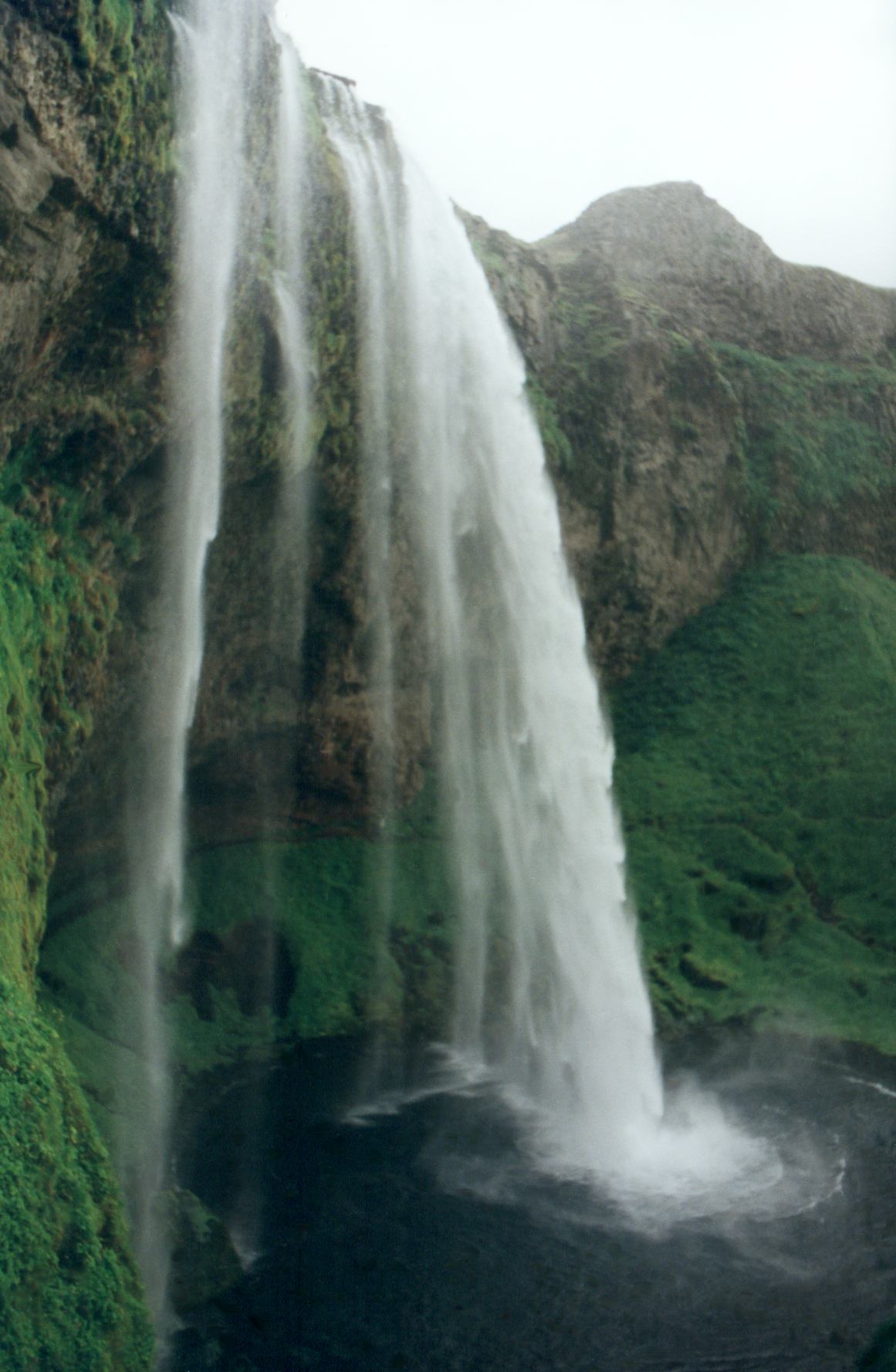
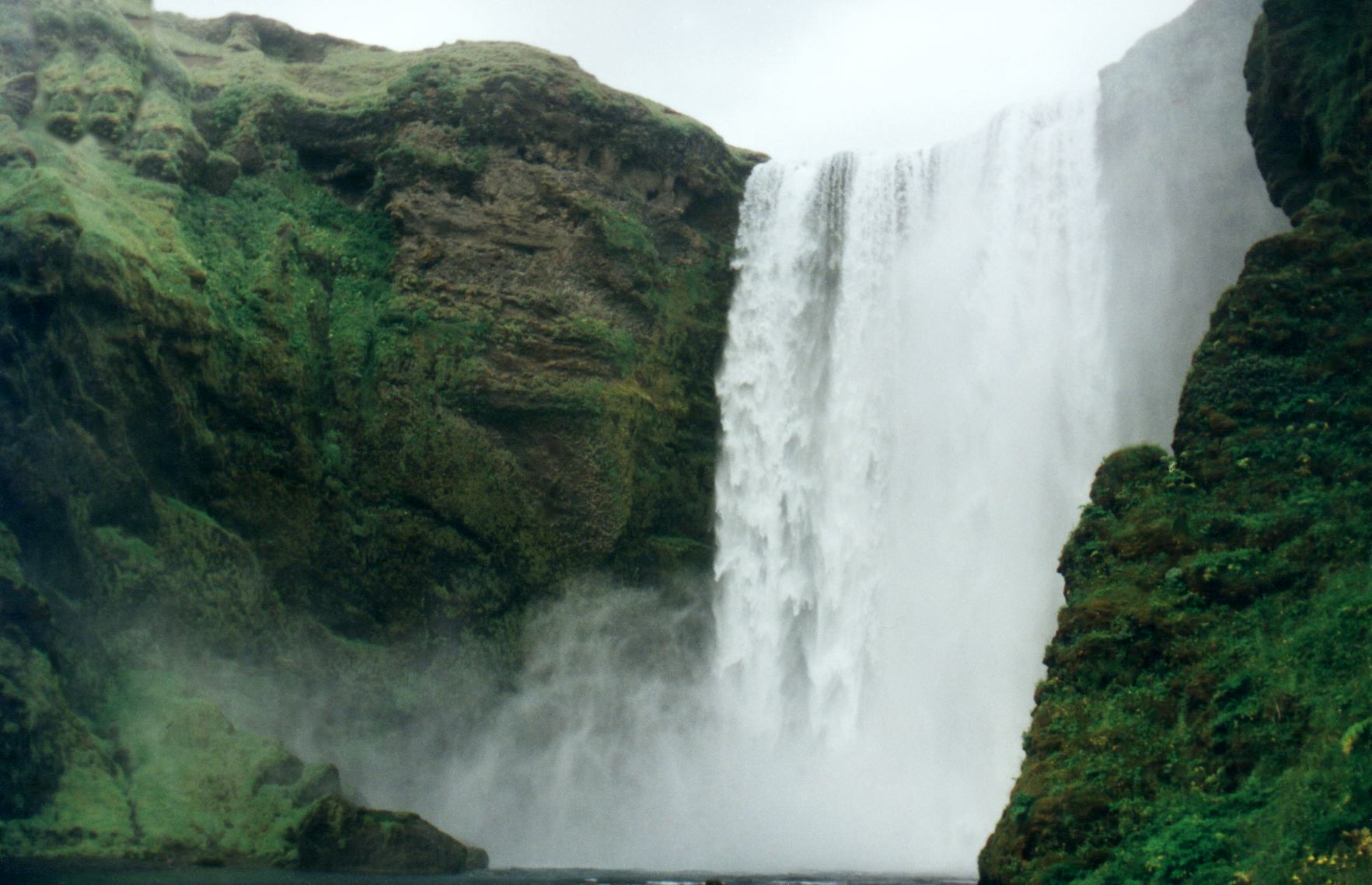
While we were there a man ran straight into the falling water to bathe with his clothes on, then got changed quickly, climbed into his car and drove on. Cold even to watch.
Near the town of Vík lies the southernmost point of Iceland’s main island. Beautiful cliffs drop into the sea, and fingers of rock stick out of the water. You often see them on posters as one of the sights that stands for Iceland.
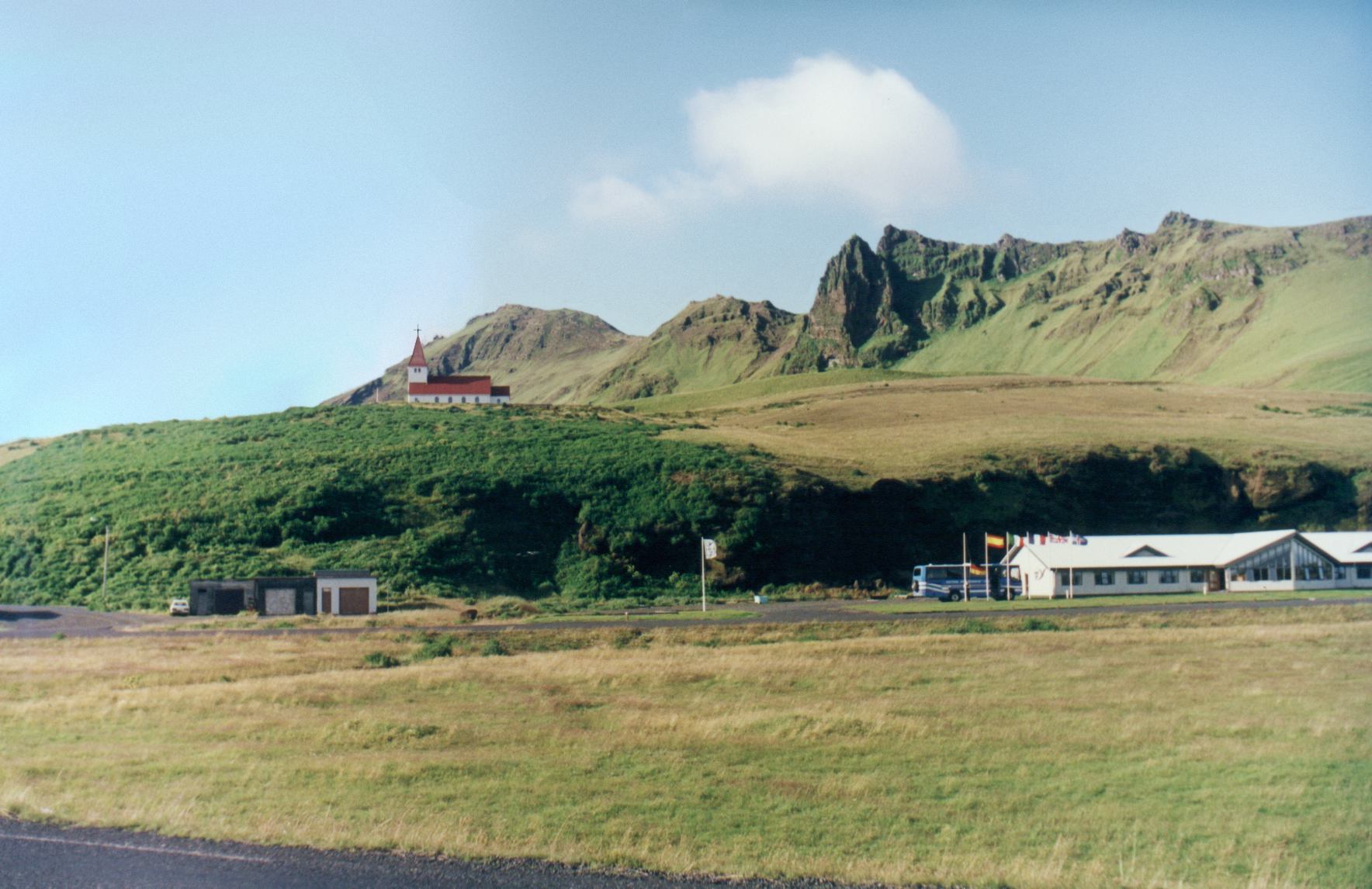
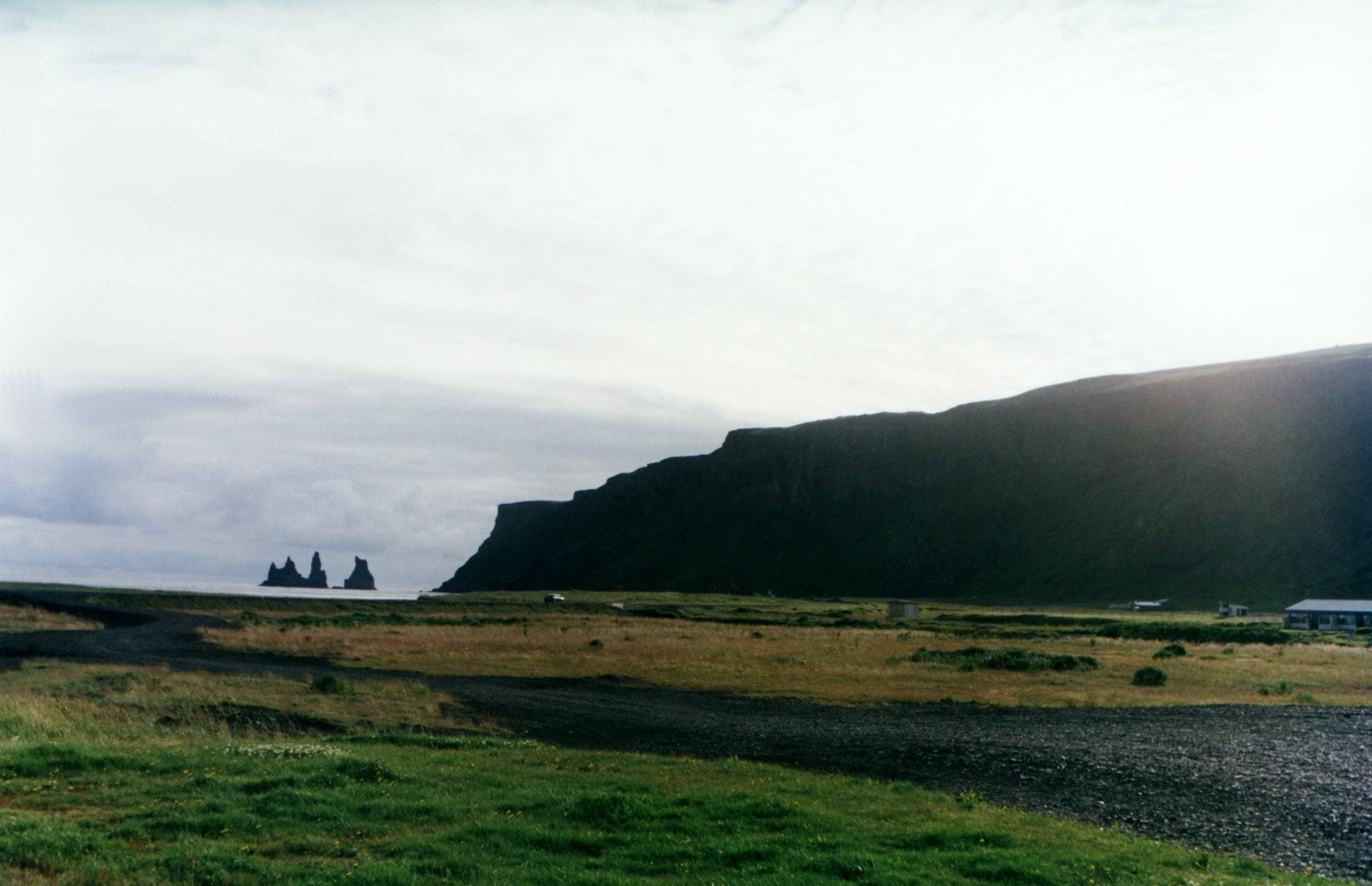
Right after the headland at Vík, the road comes out onto vast lava fields with a thin scattering of grass. For a hundred kilometres it runs through this desert of stone. It’s already getting dark and we need somewhere to spend the night. There’s no sign of life around us, and the only campsites on the map are near a village with the fearsome name of Kirkjubæjarklaustur. After a long drive on the surrounding gravel roads, we establish that they’re all full. While we’re looking for somewhere to camp, we manage to slip in and have a shower at one of them. Now we don’t particularly need a campsite, and we end up pitching the tent off a little gravel road that leads towards the sea. It’s wild country. Even the phone has no signal. Nearby are the ruins of a little hydroelectric power station.
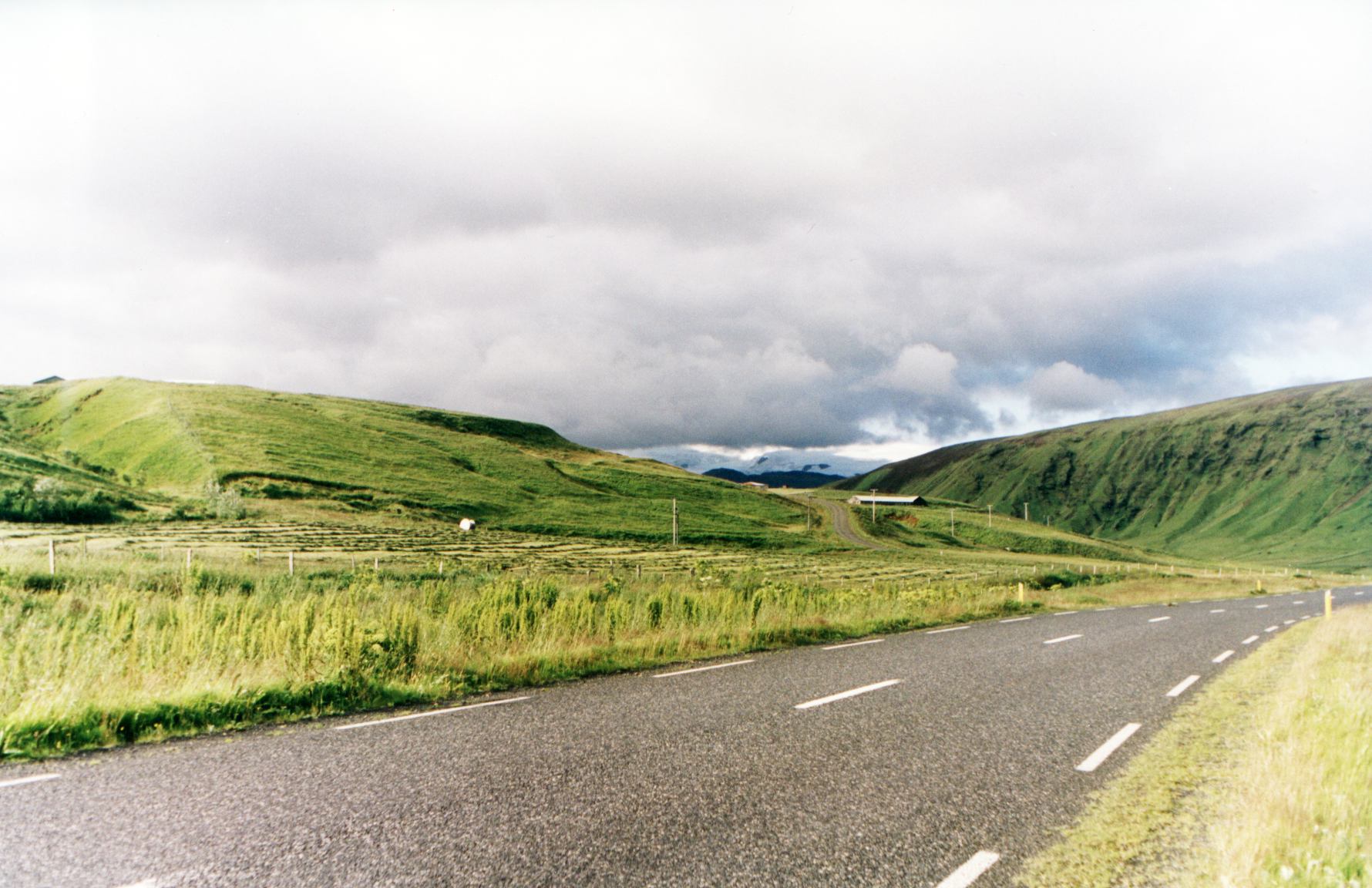
Today we bought an enormous piece of lamb for dinner. Pasha promised to fry it, and an hour or two later he managed it. The Primus stove has been getting worse by the day, but we got it going today. Dinner was first-rate, almost as good as at the restaurant in Akureyri, and a fifth of the price.
Another reshuffle of our gear left us with a mountain of rubbish. Looking for a bin, we had the good fortune to pull into the heritage village of Núpsstaður. It preserves the look of an Icelandic village at the end of the nineteenth century. There are little turf-roofed houses and a little church with a roof just like them. It’s cosy inside. There’s a harpsichord.
Iceland’s southeastern coast gets more than 4,000 millimetres of precipitation a year, most of it as snow. Too much falls to melt during the short summer, so a glacier covers the mountains right down to sea level. This is the highest part of Iceland, and here stands its highest summit, the volcano Hvannadalshnúkur. If we’d come for two weeks, we’d certainly have climbed it, but there’s no time now.
Clouds cover the highest parts of the ice cap, but the view is still splendid. The village of Skaftafell is where tourists are supposed to make the acquaintance of the glacier. There’s a campsite and a visitor centre. At the little airfield you can pay a few hundred bucks per person to fly over the glacier in a Cessna. There are plenty of paths to viewpoints, and visitors are advised against walking out onto the ice itself. Today we had to make do with the proper tourist paths, gazing wistfully at the dazzling white ice and the distant peaks. How I wanted to be up there. It’s a big world, but I already want to come back here with a four-wheel drive and a whole month to spend.
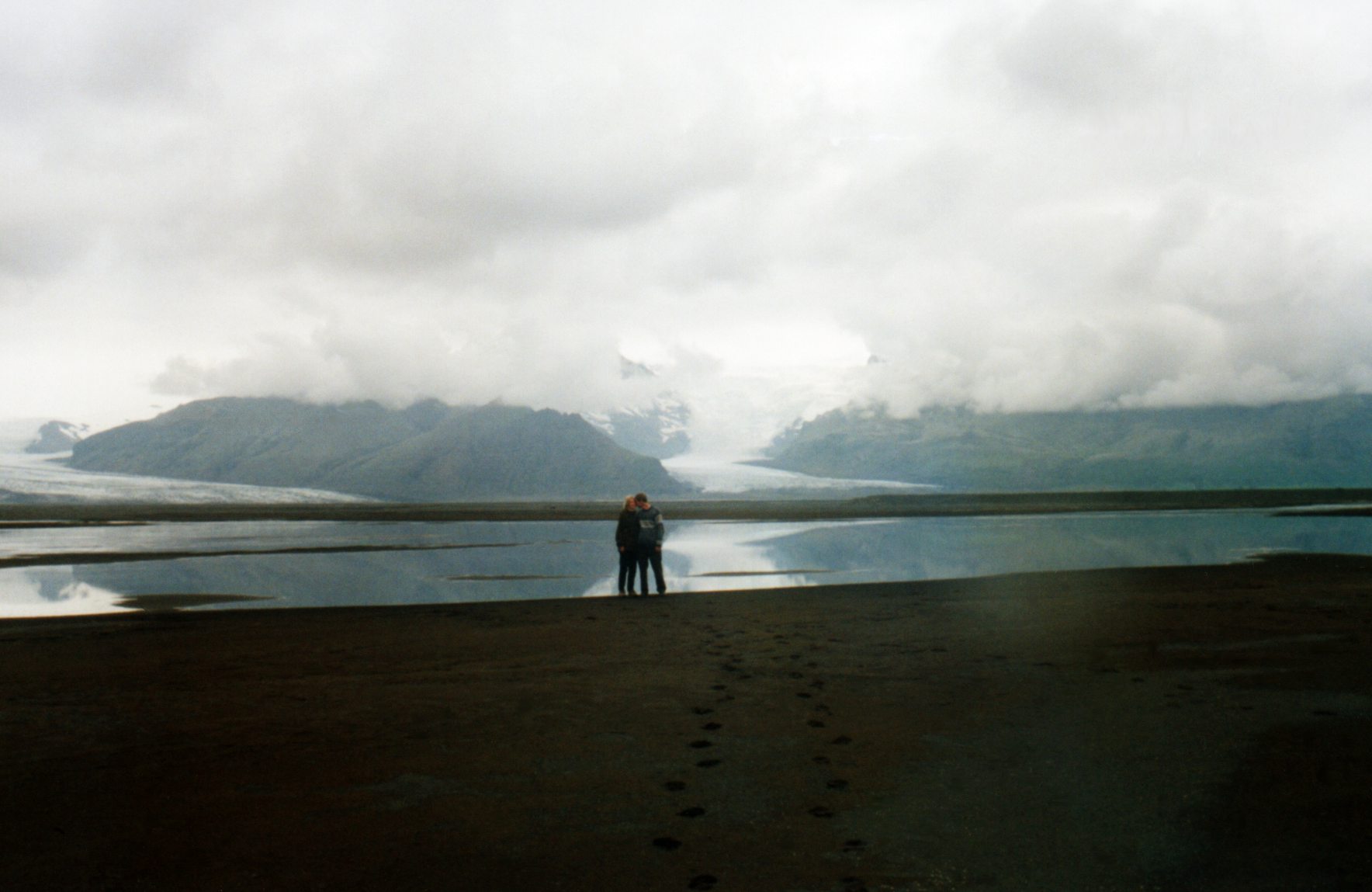
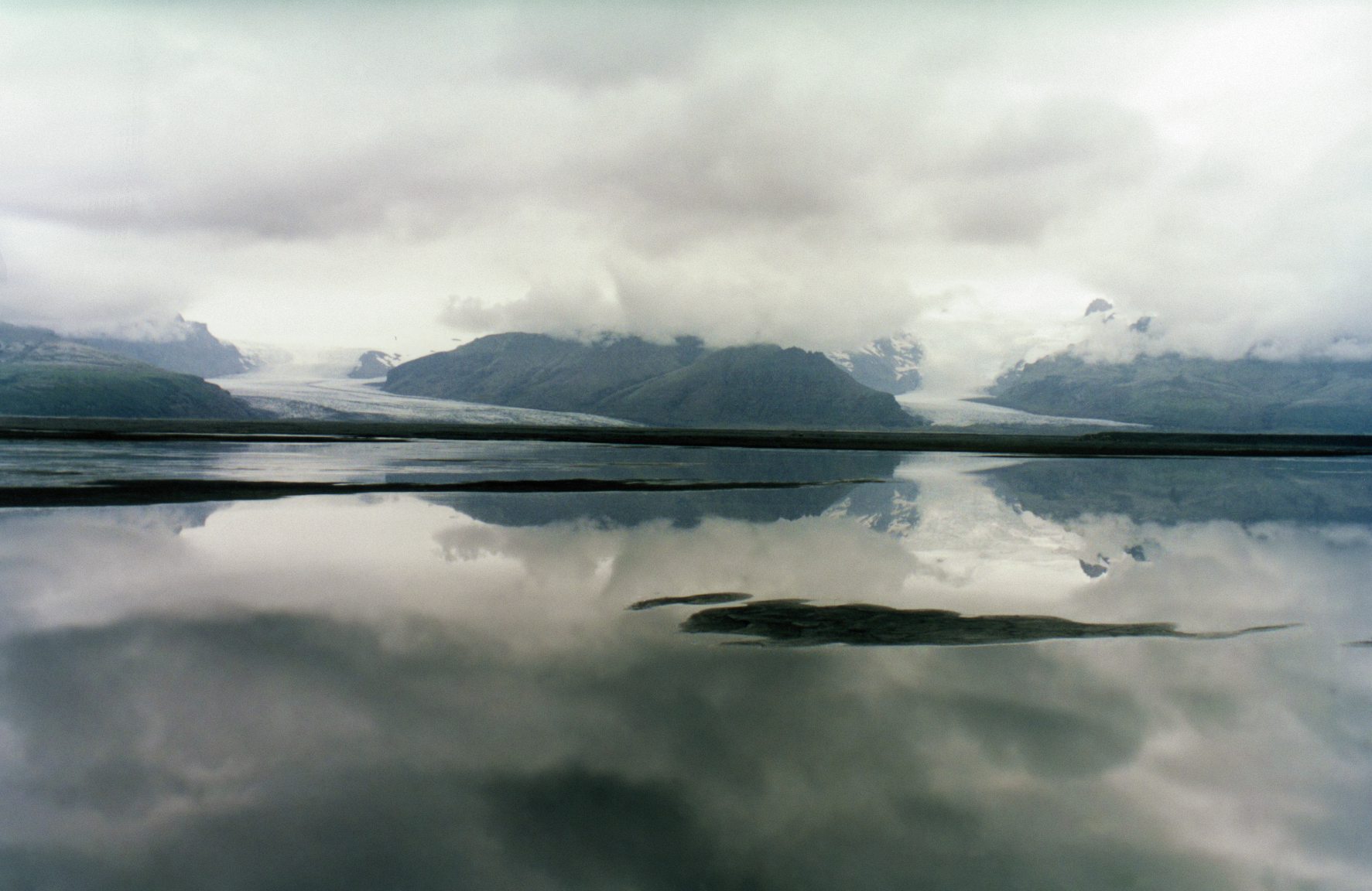
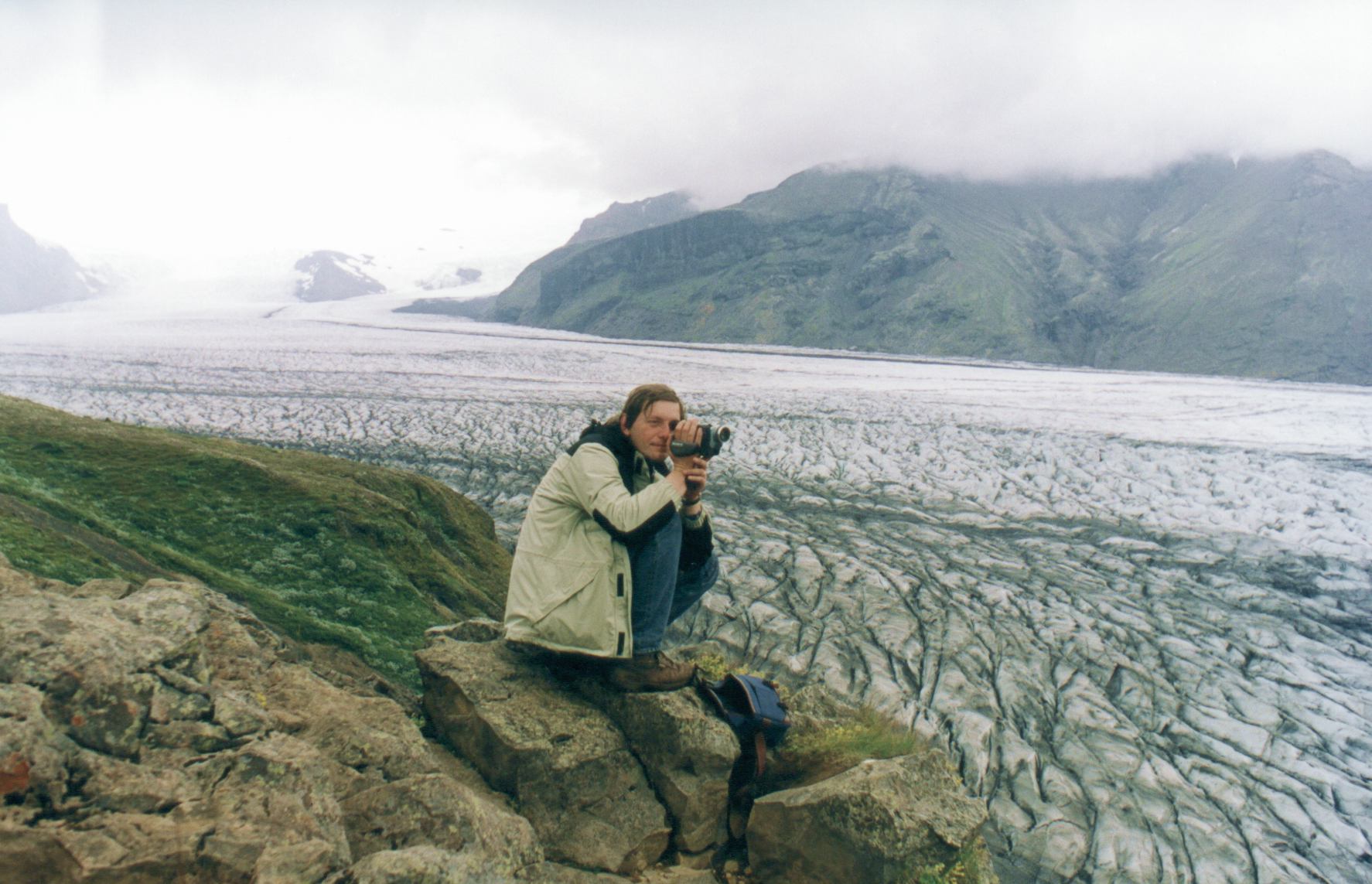
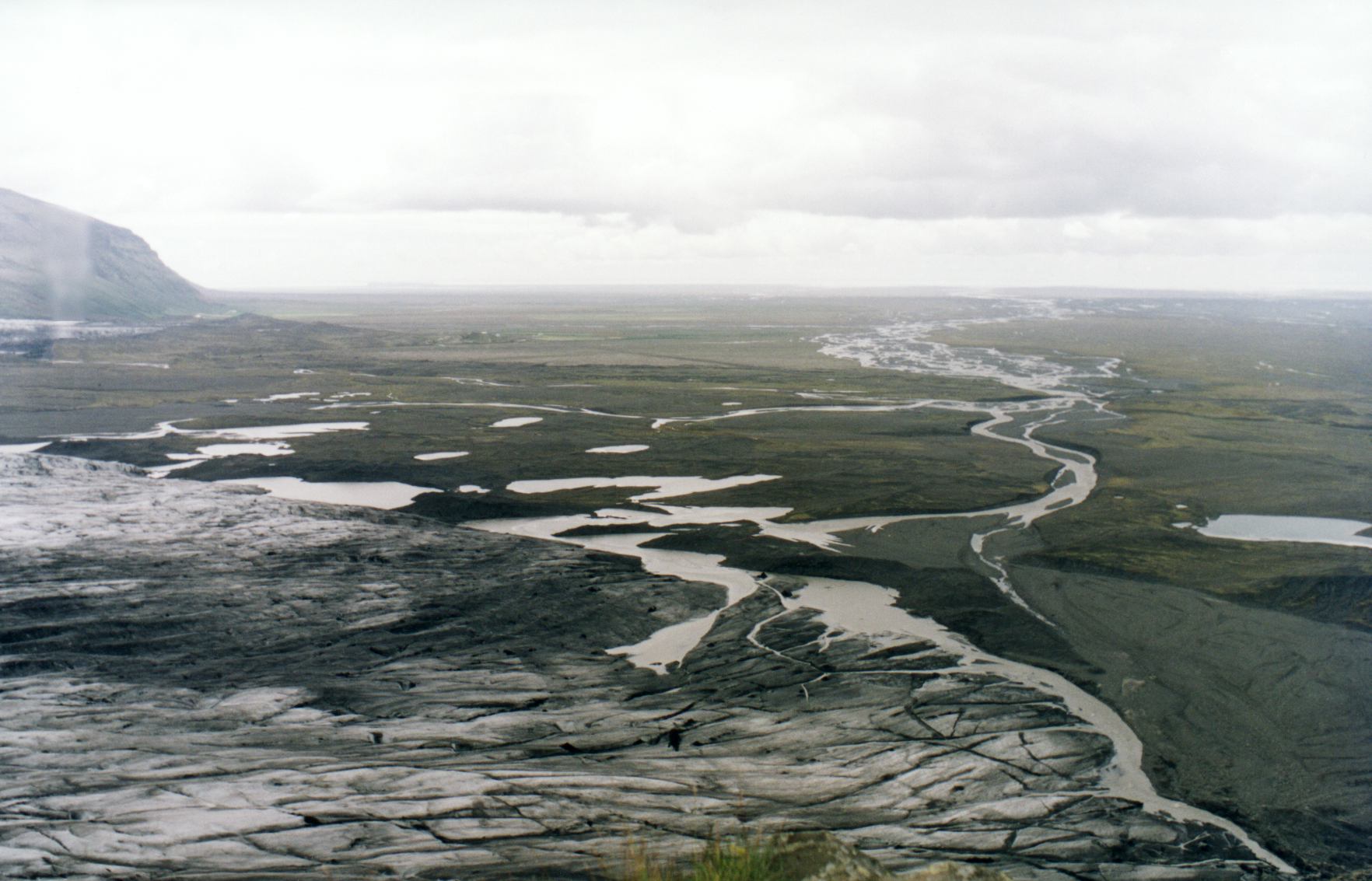
There are lakes along the edges of the glacier, with little icebergs floating in them. Great blocks of blue ice rise above the mirror-smooth lake. Another wonder that took my breath away. You can hire a little boat here and sail between the cliffs of ice. They offer snowmobile rides as well, but the arrangement is less wonderful. The snowmobile looks like a bulldozer and carries about ten people. A guide drives it, along a fixed route, of course. You can hardly expect otherwise. Imagine a crowd of people who have never seen a real glacier tearing about wherever the fancy takes them. How many would make it back?
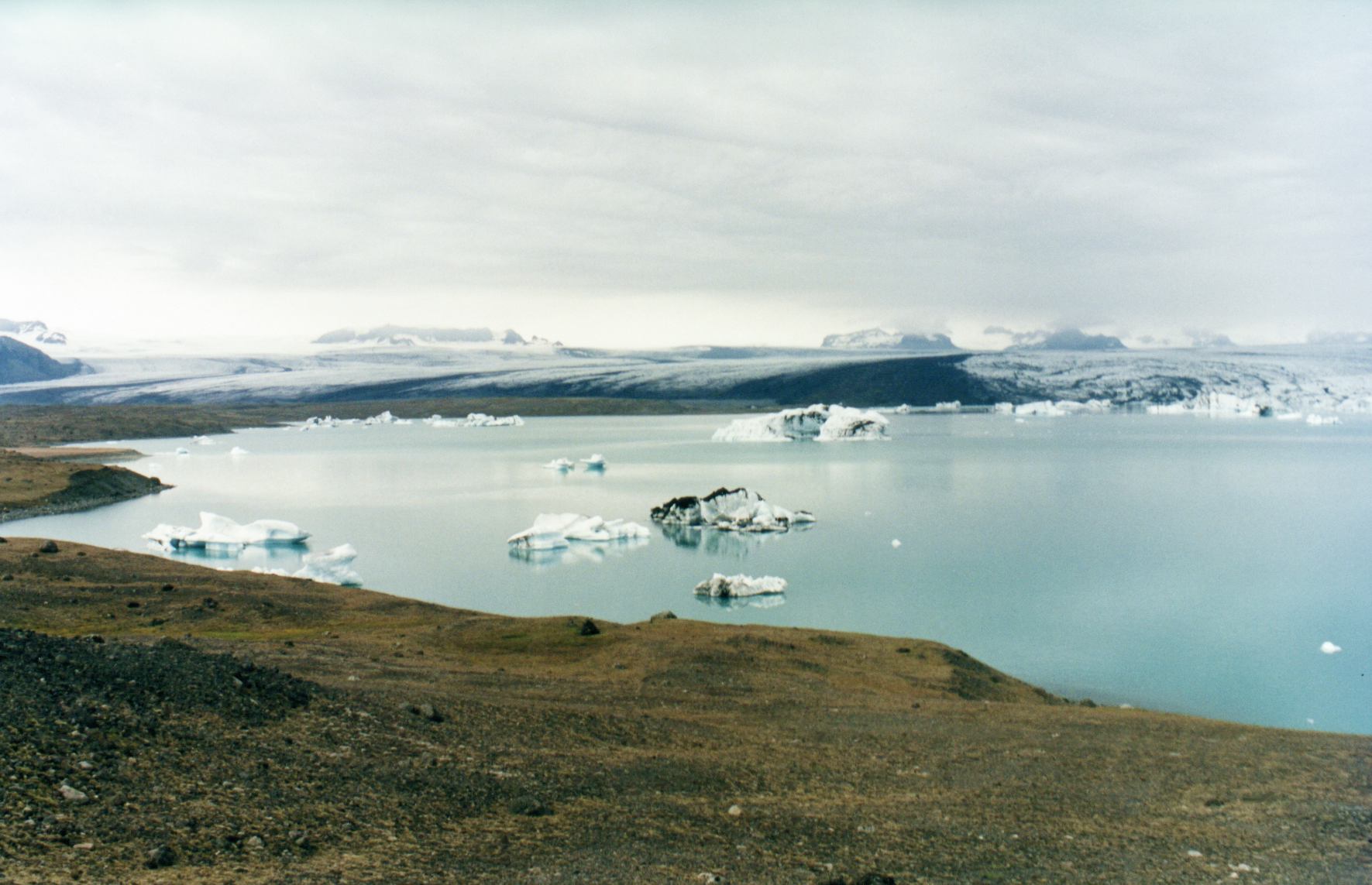
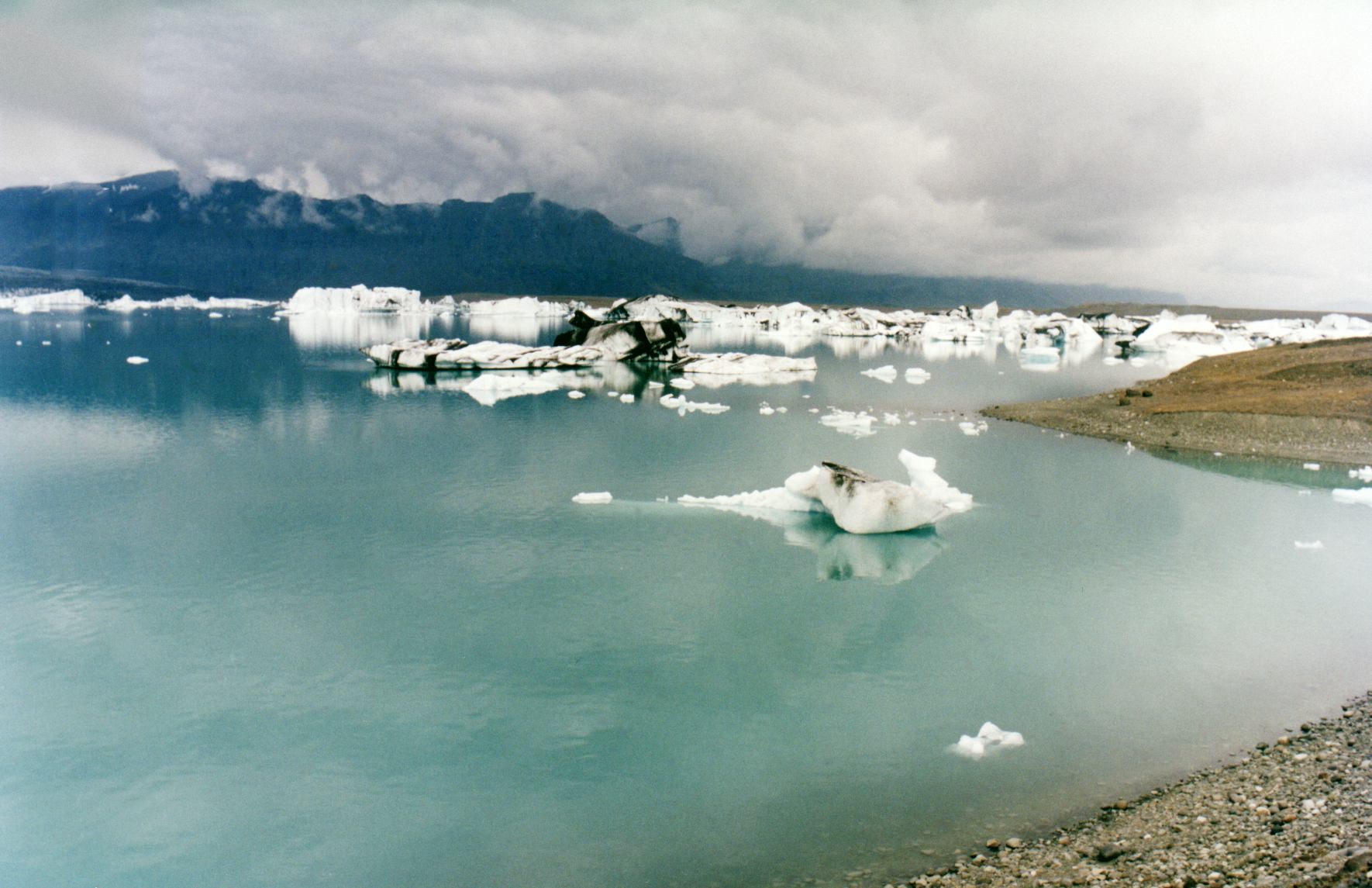
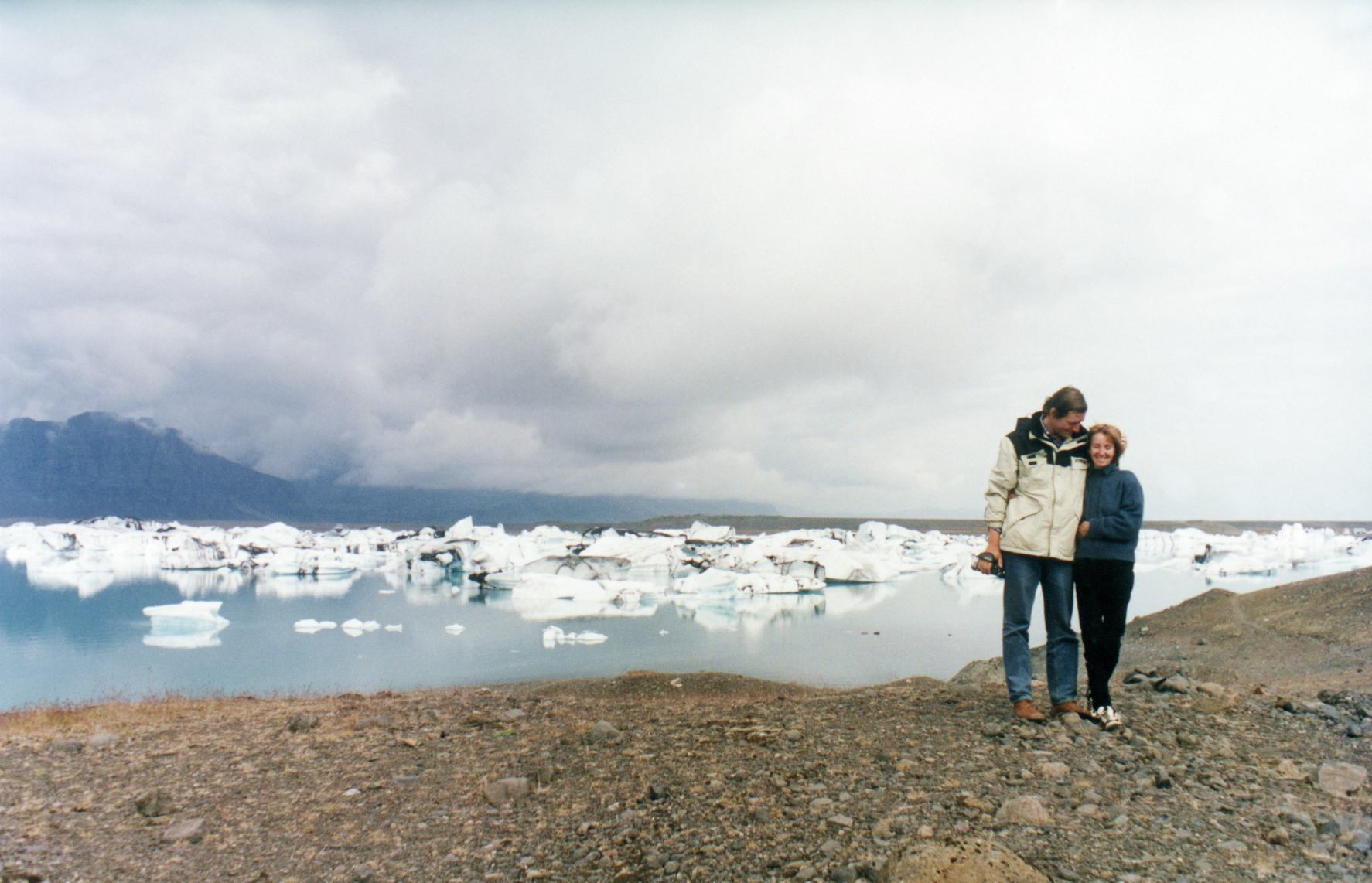
In the town of Höfn we stopped for one last round of shopping and used up what was left of our Icelandic krónur. It’s a small town with everything you need. We washed the car again, bought a videotape and a battery for the alarm fob, and visited a museum of farm machinery.
We still had a long way to go, and the worst of it was that more than a hundred kilometres were on gravel. Every stone that struck the underside of the car sent a chill through me. There wasn’t much farther to go to the ferry. The road wound around deep fjords. Mountains, clouds and light. It was the last time we would see this view that had already come to feel like home. The road followed the shore of the enormous Atlantic Ocean. Out there somewhere lay Argentina, Brazil, Africa and even Antarctica.
It was already getting dark by the time the road was paved again and we returned to Egilsstaðir. We drove a little way out of town and spent the night in the valley of a mountain stream. Only one pass stood between us and the ferry. We had lamb again for dinner. That evening I sat in the car for a long time, feeling sad as I listened to Icelandic radio for the last time.
In the morning we packed in a hurry and tore off over the pass. The road seemed awfully long. I could have sworn it was shorter. Then we saw the sea. There was no sign of the Norröna, and in fact it was the wrong town. This was Reyðarfjörður, not Seyðisfjörður. We’d taken the wrong fork at Egilsstaðir the day before and gone into a different valley. There was certainly time to catch the ferry, but we were suddenly very nervous. While we’d been driving, the fog had come down off the mountains, and visibility at the tops of the passes was now ten metres. The damp suddenly made the engine start misfiring.
We found the right road at the second attempt. As the car came out of the cloud, there was our Norröna, looking splendid in the bay. We even had time to wash the car and look around the shops. Buying anything here was out of the question, of course. The prices were enormous. We made it just in time for boarding. There were no checks on the way out of Iceland. You could go wherever you liked. This time the passengers were sent ahead on foot and I had to park on my own.
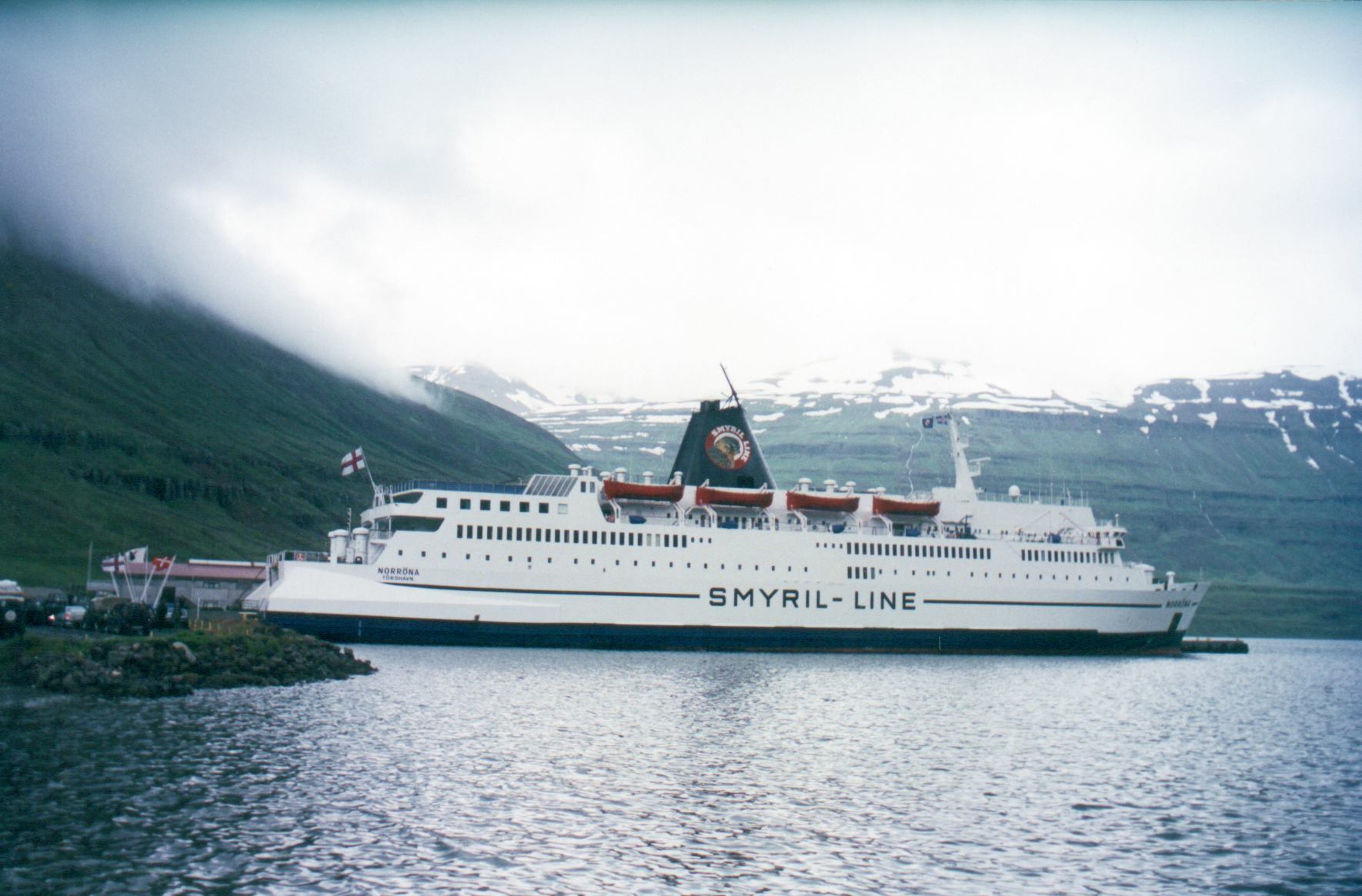
The ferry was packed. For the first night, as far as the Faroes, we had a four-berth cabin. What a luxury. It had been a long time since I’d had a proper wash, and at last I could give my long-suffering camera a full charge.
While we were making ourselves presentable, the ferry cast off. Outside there was rain and a strong wind. On the way out of the bay I made one last call from Iceland to wish my grandmother a happy birthday. In less than an hour the last cliffs had dissolved in the fog and we were out in the open ocean.
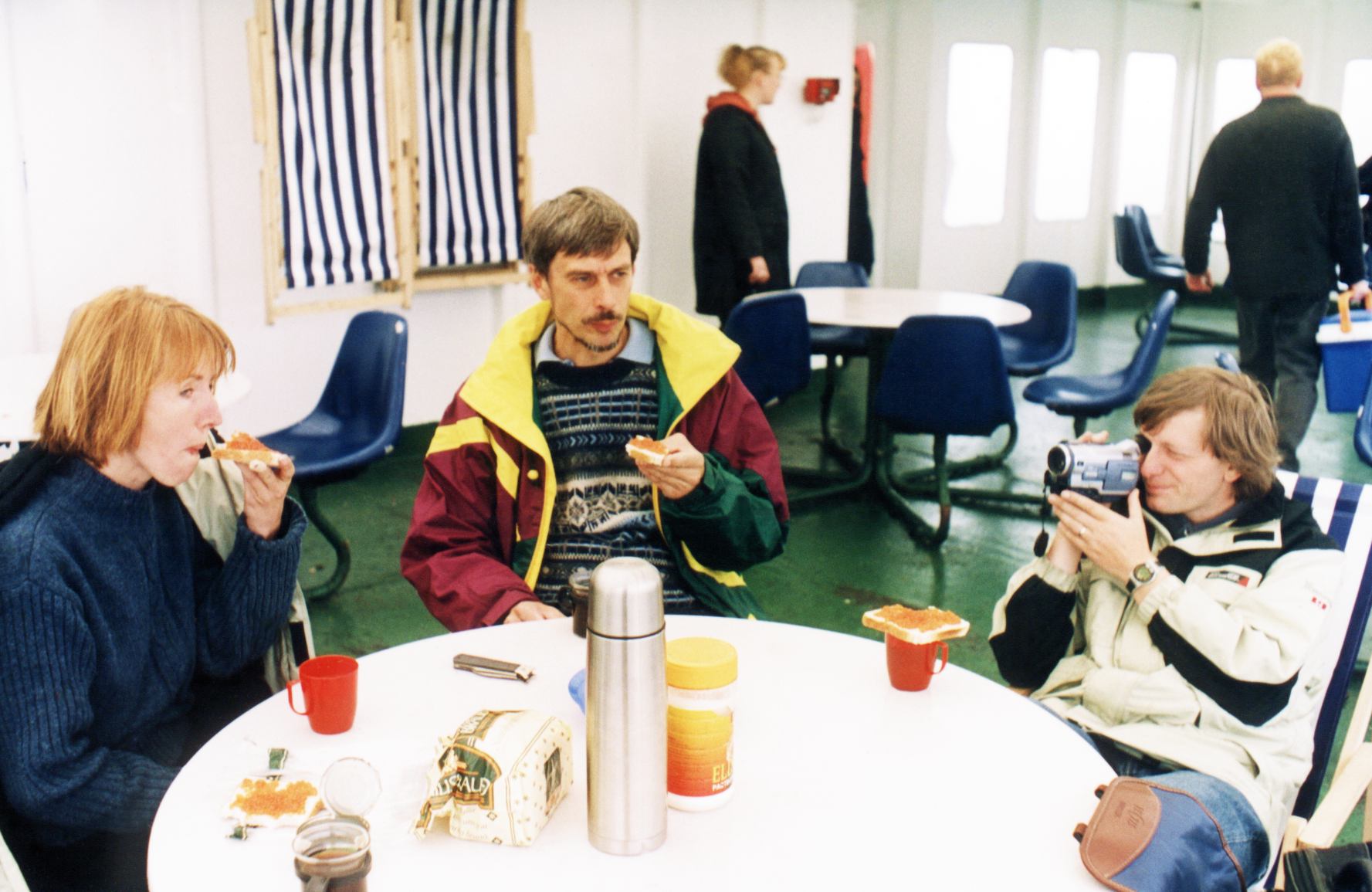
The North Atlantic had worked itself up into a proper fury. Great walls of water came crashing down on our tub. The open decks were closed off. Everyone scattered to their cabins and the toilets. Realising that its customers had lost their appetites, the restaurant dropped the price of the buffet from 175 kroner to 95. Reception started handing out seasickness tablets. We swallowed a double dose and went to the restaurant. They welcomed us with open arms. Apart from us there were four occupied tables. The best seat in the house was free, right in the middle of the front window, and they let us have it. The storm raged on the other side of the glass. Every few minutes another great breaker washed over the restaurant’s front window, and we were on Deck 7. They gave us wine glasses and warned us to keep hold of them or they’d fly off the table. I wondered how our cars were doing below decks. Nobody had tied them down. The handbrake was all they had. Incidentally, never take a ferry like this with a faulty handbrake.
Try as we might, we didn’t manage to eat much at the restaurant’s expense. They knew what they were doing when they halved the price. We had to retreat to our cabin on Deck 3. It was right up in the bow, where the waves were striking the hull. Every few seconds the blow came so close that the cabin shuddered quite frighteningly. We had to wait out the storm there, but by evening the sea was beginning to calm down. They even opened the decks again.
The next day began with an early wake-up call. Our time in the cabin was up. At seven in the morning, and Faroese time at that, we docked in Tórshavn. We left our belongings to their fate by the information desk and went for a three-hour walk around town. It was unexpectedly warm. We’d already forgotten what a warm climate felt like.
All the shops were closed in the morning. You had to wonder how the locals could be so unenterprising. A thousand tourists were wandering the streets, putting in their allotted three hours, and everything was shut, even the souvenir shops and the petrol station. We spent most of the time in the park, the pleasantest place in Tórshavn. We couldn’t get any Danish kroner, as none of the banks opened before ten.
In Tórshavn they filled the ferry to bursting. Now all the decks were occupied by passengers who weren’t entitled to a cabin, ourselves included. For thirty long hours, until the next stop, we would be at loose ends on the ship. We settled in the Viking Club for the day. The seats were soft, though the man running the entertainment got on our nerves with his shouting. The other passengers played bingo with looks of perfect contentment. We had something of our own to do. We read our Lonely Planet guides to Denmark and Belgium.
In the evening we moved to the lounge by reception. The entertainment man caught up with us there as well. He was amusing the children with games involving little sheep, balloons and other such nonsense. The corner Pasha had chosen for himself turned out to be where they were going to give the winners their prizes. We were told to move, but an Icelander of Danish descent stuck up for us. After a war of words along the lines of ‘It’s a public deck, people have nowhere to go, and here you are with your toys,’ the man beat a retreat. We moved to a corner off the disputed ground too. We got talking with our defender, a rather down-and-out-looking retired fisherman. He’d even been to Russia, to Murmansk. He was still astonished by the number of passports and other bits of paper you had to produce to get into town.
There was a group of Poles on the ferry who had travelled all the way from Poland by coach. The day before the ferry left, we’d been following their coach and passing it from time to time. The driver could never bring himself to let a Russian car past. Polish pride wouldn’t allow it, and we found it dreary trailing along behind. So we overtook on sharp bends and stayed in front until the next stop.
Once we were on the ferry, we got talking. One of the men spoke excellent Russian.
By sunset the ferry had passed the Shetland Islands. My phone was picking up no fewer than three British mobile networks. I called home.
As we approached the North Sea the sky clouded over, but out there in the beckoning expanse of open ocean it was still clear. Just before it dipped into the sea, the sun appeared in a narrow band at the horizon, flooding the ferry’s decks with the last light of the day. I ran out on deck in the hope of seeing the green flash. I don’t know what it’s actually supposed to look like, but in the last few seconds the light really did seem to grow yellower and, with a considerable stretch of the imagination, green.
While I was watching the sunset and filming it, a whale swam by.
After dark, Pasha caught the moment when the entertainer stepped out of the room, seized a corner and quickly inflated his enormous rubber mattress. The idea of sleeping right in the passage had never appealed to me, and in my search for a more suitable spot I found a free bench on Deck 7, right out in the open.
A warm, black night had swallowed up everything around us. The only things we could see were enormous oil platforms sparkling with thousands of little lights all along the horizon. We passed within a few kilometres of two of them. They were huge structures, several storeys high.
To my surprise I slept better on that bench in the open air than I had in the cabin the night before.
In the morning there was still an endless expanse of water beyond the rail. Around midday the Norwegian coast appeared on the northern horizon. My phone even picked up a local network. Each hour dragged by unbearably slowly. The low Danish shore came into view only half an hour before we arrived. Hanstholm is a small Danish port that had sprung up only a few years before. An artificial breakwater encloses the harbour. The shore is sandy and reminds me of the Gulf of Finland. I’d expected more and was disappointed by what I saw. The only thing that brightened the scene was the wind turbines. These enormous fans with two or three blades turn slowly and keep the lights on for everyone. They stand all along the coast. There’s something toy-like about them.
Denmark
This time I found the car quickly, but somebody had managed to break one of my indicators. A sorry sight.
We had to reverse off the ship. The ferry was so full that there was no room to drive round in a loop. The average Western driver can’t reverse, and the whole procedure was nerve-racking. There were a few minor collisions. Luckily we escaped them, and before long we were driving through Denmark. There were no checks on the way in, and there wasn’t even a policeman there for the sake of appearances.
The first thing you notice is the forest, which you’ve got out of the habit of seeing. There are big, well-kept stone houses. And the smell! That familiar, persistent smell of cow dung.
I usually find it easy to make up my own mind about a country. With Denmark I never quite managed it. It left little impression on me. It’s peaceful, everything is well looked after, and the people are pleasant, but I can’t think of anything in particular to say.
We chose Route 181 as the most promising road. It hugs the coast and follows a causeway for part of the way. Unfortunately we saw practically nothing. The sea is close by, but you can’t see it from the road. All around are grass-covered dunes.
In Esbjerg we saw a sign for the beginning of the E20, the road we call the Tallinn Highway at the other end.
We were heading south towards Germany and its cheap cars. We planned to camp right on the German border. This part of Denmark is called Jutland. What a lovely name. I remember planning the route on bitter winter evenings and saying to Tanya, ‘Just imagine, we’ll spend the night in southern Jutland, that snug little corner of the world.’ There are some small islands here in the North Sea with sandy dunes, the local holiday resorts. The best known is Rømø. There’s a fine road out to it on a causeway, but farther north is the little, nearly deserted island of Mandø, with just one small campsite. The map marked the road as having a poorer surface. It was a European map, and that usually means it’s still paved. It was getting dark as we set off for it. The road kept forking, it was raining, and I was in a foul mood and wanted to settle on a place for the night. At last we found a sign saying the campsite was 25 kilometres away.
We’d been pleased too soon. The tarmac ended at a sign telling us it was all a national park and the road ahead was private. You were allowed to go there to watch birds, so you weren’t supposed to honk, but you could drive on.
You could, all right, but the road led onto the seabed. Maybe I’d missed something on the sign. Could you drive it only at low tide? It did seem to be low tide, but there were half-metre-deep puddles on the road, and they were full of salt water. At first I thought, what the hell, there’s salt everywhere in Saint Petersburg in winter. It turned out to be worse than that. After five kilometres the alternator failed and the engine stalled. We got out. It was raining, and all around us was the North Sea. Somewhere on the horizon the lights of the metalworks in Esbjerg were shining.
There was no telling where this swamp ended. The road seemed to be coming back onto dry land, though it was hard to believe anything good awaited us there in the dark. We tried to work out where we could pitch a tent. There were puddles and reeds everywhere. What if the tide came in? It would flood the boot.
We managed to start the car fairly quickly, but the alternator was dead. We’d had enough experimenting. We turned back through the sea while we still could. By now it was quite dark and raining. We made for Rømø. It was fifty kilometres away, but there was sure to be a campsite. After all we’d been through we finally rolled into that enormous city of caravans. There wasn’t a sober soul. Everyone was partying and an automatic barrier blocked the road. After half an hour of looking, we found a man from the office who opened it and said, ‘Pay tomorrow.’
We put up the tent in the rain. There was a queue for the toilet. Drunken Germans had come abroad for the weekend. At home they’d been taught to behave, but here they were letting themselves go, cracking open another bottle and striking up ‘Deutschland, Deutschland …’
So much for Jutland, southern and all.
Just as we were ready to go to sleep, the rain stopped and the stars came out. Scorpius rose low above the horizon, with Antares twinkling like a little orange lantern. A good omen. Perhaps it would shine a little life into our poor Scorpio and get the alternator alternating again.
In the morning the weather threw a fresh fit. A terrible thunderstorm woke us. Lightning struck somewhere very close, about a hundred metres away. Rain came down in sheets. When we opened the tent, we found a puddle two centimetres deep all around us. Our tent has a good groundsheet, but water began coming in through the sides. Now our sleeping bags were wet as well.
I took an umbrella and decided I might as well see the local natural wonders people flock here for. There were ten-metre dunes and an enormous beach of fine sand that felt like clay. In warm, dry weather I’m sure it’s wonderful, but there was nothing to do in the rain.
In the morning people began heading home. They opened the barrier and weren’t checking receipts. We left without paying, having decided there hadn’t been much to pay for.
We push-started the car. By ‘we’ I mean everyone but me did the pushing.
Before long the fresh rainwater had washed out the alternator and it started working. Antares hadn’t shone in vain the night before. It was a miracle.
Germany
As we approached Germany the weather improved and the sun came out. The world was bright and cheerful again. We soon crossed the once forbidding state border and found ourselves in Germany.
We can afford to have breakfast in a café now and, most importantly, to drink some coffee. We go into the first roadside place. A stern older German woman stands behind the counter with a forbidding look.
- Four coffee please.
- Don’t speak English.
- Füre coffe bitte
- Sitz
It isn’t exactly a warm welcome. We sit and wait. We wait ten minutes. The owner is working something out on a calculator.
We start protesting that we’re in a hurry. ‘Sitz!’ the owner says even more sternly. Well, that’s rather fierce. I think we’ll go somewhere else.
Our search for somewhere to eat ended when Pasha and Lena announced that they were going to make lunch on the Primus at the next car park.
It was quite a sight. Pasha set himself up with the Primus outside a roadside toilet and did battle with the stove for an hour. You should have seen the way the locals looked at him. At least they didn’t call the police.
While all this was going on, I took a look around. There was a smart rubbish bin, with six holes for different kinds of waste and a board beside it explaining what went where. The triumph of order. The only thing was, the milk bottle we’d bought at the shop next door wouldn’t fit into the hole meant for those bottles. We had no better luck trying to dispose of our boots. Never mind. We’d throw the lot in the boot and dispose of it in a simpler country.
The local toilet was entirely made of metal, down to the seat. You could probably build one of these in Russia. It would stand up to a crowbar. Water comes on automatically when you put your hands under it, for ten seconds. You aren’t supposed to take longer to wash. There’s writing on the walls, of course, not so much as at home, but it’s there. You could apply what we saw to Germany as a whole. The people seem to have an irrepressible energy, or perhaps aggression would be the right word. Strict laws try to force it into bounds. Instructions try to make a German civilised and tolerant, like a Swede, for instance. It all comes naturally to the Swedes, but here it takes a fight. Leave a gap in the laws or let a policeman look away, and everything runs riot. Speaking of police officers, in Germany just one look at them fills you with horror. These men won’t let you off. The slightest thing and you’ll feel the full force of the law.
In Germany almost everything is regulated, but there is one way to let off steam. Germany is the only country in the world where road speed is unrestricted. Of course there are some speed-limit signs, and the default in towns is fifty kilometres an hour, but on an autobahn there’s a sign saying the recommended speed is 130, and that’s it. Traffic goes at an average of 160, which suits us fine. I’m afraid of driving faster than that, especially after flying into a ditch in spring. Daredevil Germans do 200, 300, or more for all I know, as fast as their engines will take them. What’s more, if you break the rules the fine is usually a few dozen marks. For a German on a German salary that’s pennies. Nothing like those thousand-dollar fines you hear about in France, for instance.
It isn’t because the roads are so good. The roads in France are better. You find potholes even on an autobahn in Germany, and it’s usually only two lanes each way. There are accidents, of course, but fewer than in France, according to the statistics.
It comes from the soul. Speed on the roads is a sacred cow Germany won’t sacrifice for European order.
Unfortunately you can’t always do 160 on the autobahn, or even sixty. They have traffic jams. I doubt the other European countries have anything quite so awful. An immensely broad road packed with cars that crawl at ten kilometres an hour for dozens of kilometres. You can lose several hours in this crush, which often starts over nothing much at all.
We only reached Hamburg in the evening. It was Sunday, so we parked for nothing in the very centre of town. This was where our beloved Ford had spent the early years of its life with its first owner. We argued about what that might mean. Would it draw new strength from the place, or break down and tell us to take it to its old garage? Our faithful old horse didn’t let us down.
Hamburg turned out to be a very pleasant city. A warm Sunday evening in summer. Big trees among the cobbled streets. A sense of peace over the city. We must simply have been unlucky in our first few kilometres on German soil.
We left Pasha and Lena at the entrance to McDonald’s, and Tanya and I ate two hamburgers each. We generally choose Big Macs, but in Hamburg you’re supposed to eat hamburgers.
The city suffered greatly in the war. Only the bell tower remains of its largest church. Two out of every three buildings were destroyed. They filled the empty land with new buildings without pretending to recreate what had been bombed. They’re made of glass and concrete, but they fit in with the architecture around them surprisingly well.
For the night we stopped at a small campsite. The owner was a young, friendly German, very open-hearted. Smiles and speaks excellent English. You pay for the shower, though, and the head is fixed to the wall so it won’t budge. Everything feels stiff and institutional. Go into a place like that and military associations immediately surface. You picture the men marching to the toilet in formation. The Germans don’t love themselves and don’t respect their own comfort.
Germany, it turns out, is a big country. Getting from one end to the other isn’t easy. We started the following day with a look at Hanover. Even less of it was left after the war. It’s simply a new city with the occasional surviving building standing on its own.
Cologne too was almost entirely destroyed. Founded by Caesar and given the name “colony”, whence the English name Cologne, the city has kept practically nothing from antiquity. Only the main sight, the cathedral, which I took to be dedicated to Our Lady, survived unharmed. It’s said that there was a special order to spare it during the bombing. Think of it, they spent eight hundred years building it. That’s a construction project that dragged on. Include the stained glass and the post-war restoration and it turns out the work went on from 313 to 1948. A little section has even been decorated in a modern style in our own time. There’s no point describing its beauty at length. That’s in any number of books. They built it with the ambition of repeating Hagia Sophia in Constantinople. Even the floor mosaic is like the one in Hagia Sophia where the Emperor Justinian holds his handiwork up to God. It’s only my opinion, of course, but there’s little of that mysterious spirit of Hagia Sophia here. Something of it is present, but not much.
To reach the altar you have to pass the man collecting voluntary donations. If you try to walk past, he tries to stop you. It’s eight marks to go up the bell tower. Tanya and I thought it worth the money and went. A steep spiral staircase takes you up more than a hundred metres. The first stop is at the belfry. You can walk past the clock mechanism and the bells. One level up is the viewing platform, at the base of the right-hand spire. Beyond that there’s only a little outside stair on the spire itself. The view is excellent, of course. Put a coin in and you can use the binoculars. I called Vyritsa from the viewing platform itself.
Cologne is a big city and parking right in the centre is dear, eight marks an hour. A kilometre away it costs only a fraction of that.
From Cologne we went on to Bonn, the former West German capital, but we spent very little time there. Our main concern was to change some money.
We mean to spend tonight in Luxembourg. We could take the motorway all the way, of course, but we choose small roads. You go much more slowly, but you see the country. Trim little towns lost in flowers, a beautiful and untroubled world. It’s hard to imagine these are the Ardennes, where so many people died in both world wars in the twentieth century. It’s hilly here, and as we know, the steeper the hills, the more vicious the war.
The Germans, though, are always ready for war. My favourite sight was the signs in the towns that set a speed limit for tanks. I assume it’s the speed for military vehicles in peacetime, but the sight of a tank on a road sign makes an impression.
Luxembourg
The Luxembourg border runs along a tremendously deep gorge with sandstone banks. As soon as we cross, we can tell it’s a different country. A quite different style, warmer, more human. I’d say we’ve landed in a fairy tale. Instead of strict German design, there are all sorts of useless and lovely things. Little gnomes and deer under the bushes, a tremendous profusion of flowers. Palms and cactuses in gardens. It’s outrageous. They don’t grow ones like that along the Mediterranean. It was getting dark and we hurried to look for a campsite. Near Remich we found a small one. The old lady who ran it knew German and English as well as her native French. She sent us to camp in an apple orchard with a mown lawn. The crop was nearly ripe and the ground was strewn with windfalls. Help yourself and eat. We cleared a patch, put up the tents and started cooking.
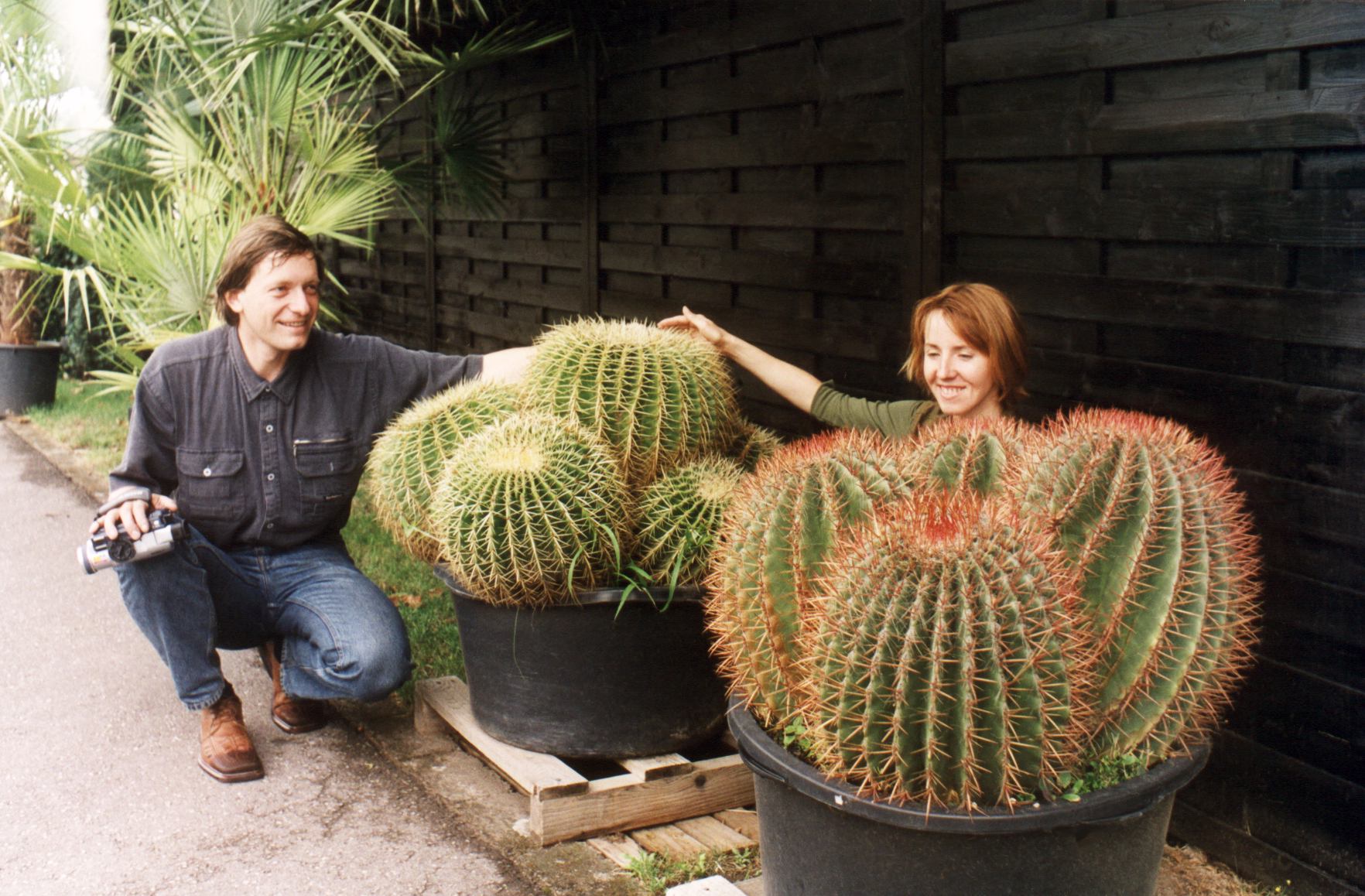
Our running struggle with the Primus had been getting steadily worse since the beginning. Today it entered its final stage. The pump failed. It turned out the seals weren’t made of petrol- and oil-resistant rubber. The soup was already chopped into the pot and we didn’t want to give up. After an hour of experiments we replaced the pump with the foot pump for inflating a mattress. After another hour of working the foot pump continually, we got the water to boil. The Primus smoked and the petrol was running out. Making soup in Luxembourg isn’t a simple thing.
We eventually wrested our food from nature in pitch darkness. A starry sky, almost southern. Radio Luxembourg on FM from the car. Remember listening to it through the crackle on a Spidola radio?
Here in the very middle of Europe you can hear hundreds of stations on FM and just as many on medium wave. All sorts of languages, from Arabic to Russian. French radio is the most pleasant, though. After the barking of German, you can relax and listen for pleasure.
In the morning we drove into town. Luxembourg is a city but also a little patch of countryside forty by eighty kilometres. The roads here are better than in Germany. Woods all around. There are very broad bridges across the motorway, with bushes growing on them and apparently a proper forest to come. It turns out they’re bridges for deer, which, being civilised Europeans, cross only at the designated place. What they’ve brought the poor animals to!
Magnificent junctions on the approach to town. Even the airport runway goes over the motorway on a bridge.
The exits from a motorway are usually numbered, and a kilometre or two beforehand there’s a sign saying “Exit 23 in 1,800 metres”. In some countries it says EXIT, in Germany AUSFAHRT, but best of all is here in Luxembourg and in France, of course. The sign SORTIE doesn’t mean what the similar-sounding Russian word makes you think it means. It’s just the way off the motorway.
You can find parking almost anywhere and it costs around a dollar an hour.
The currency in Luxembourg is the Luxembourg franc, but Belgian francs trade alongside them at the same face value. In practice it’s Belgian francs you see everywhere, and getting your hands on the local money isn’t easy.
We began our walk around town by trying to change money. It turns out not to be simple. Not every bank wants to get mixed up with us. They particularly dislike our trying to get rid of the leftover Icelandic krónur we got on the ferry, in change from Icelandic duty-free purchases. Dollars are treated with insufficient respect as well. A German mark, now that’s real money. It’s hard to change money in the evening, at weekends or out in the countryside. Before the trip I’d felt sorry for those colourful European sweet wrappers. Now I’m merciless. The euro and only the euro. We tried to remember what a European penny was called. I suggested “eurolet”.
The city stands on the sides of a hundred-metre gorge cut by the little Pétrusse River. Sandstone banks. Arched bridges, ancient ramparts, toy houses and little churches clinging to the steep sides, steep cobbled lanes. You have the feeling of a wonder. Walk into the ruins of the casemates and music starts by itself. It’s not so much a city as a picture.
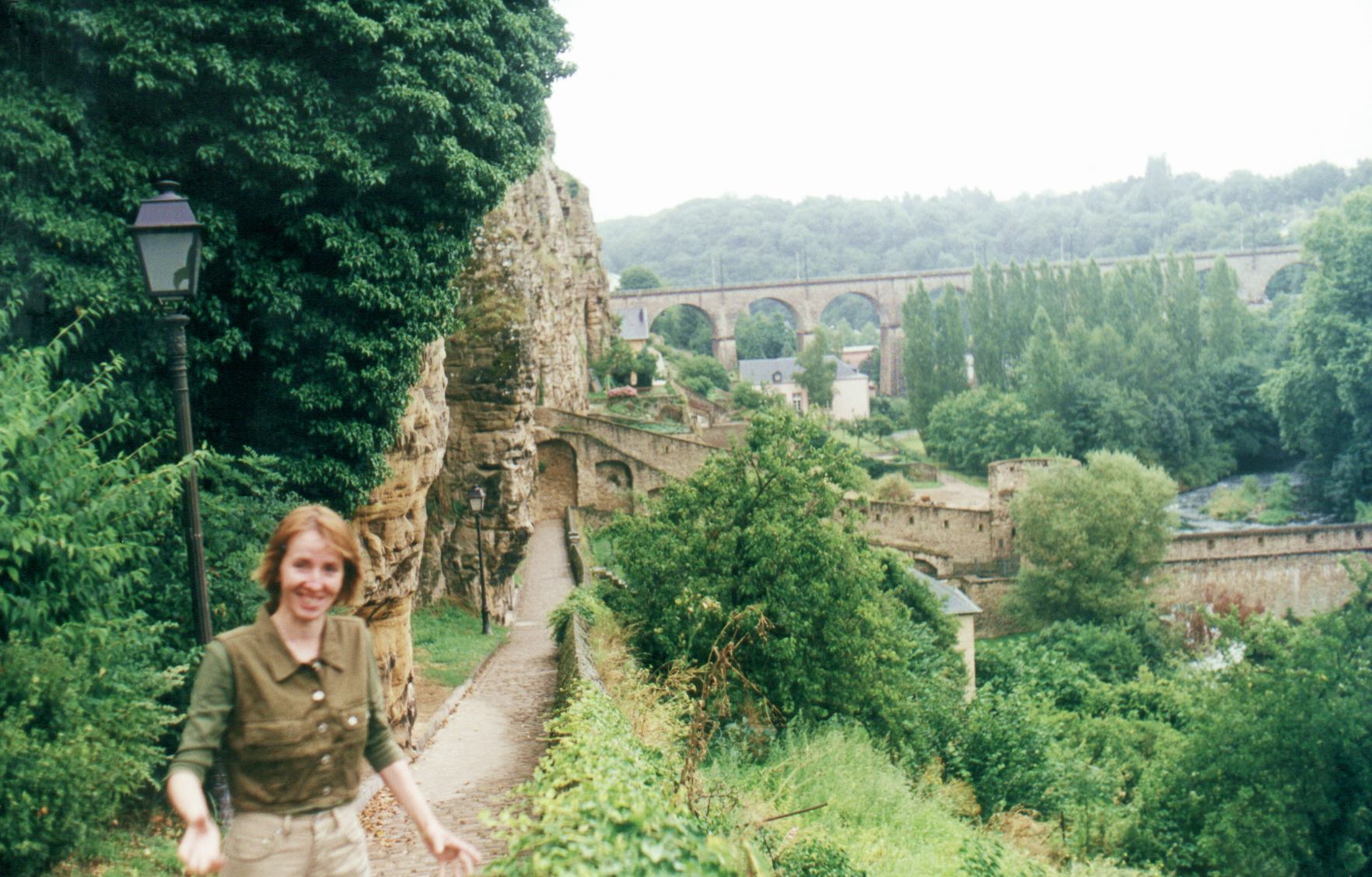
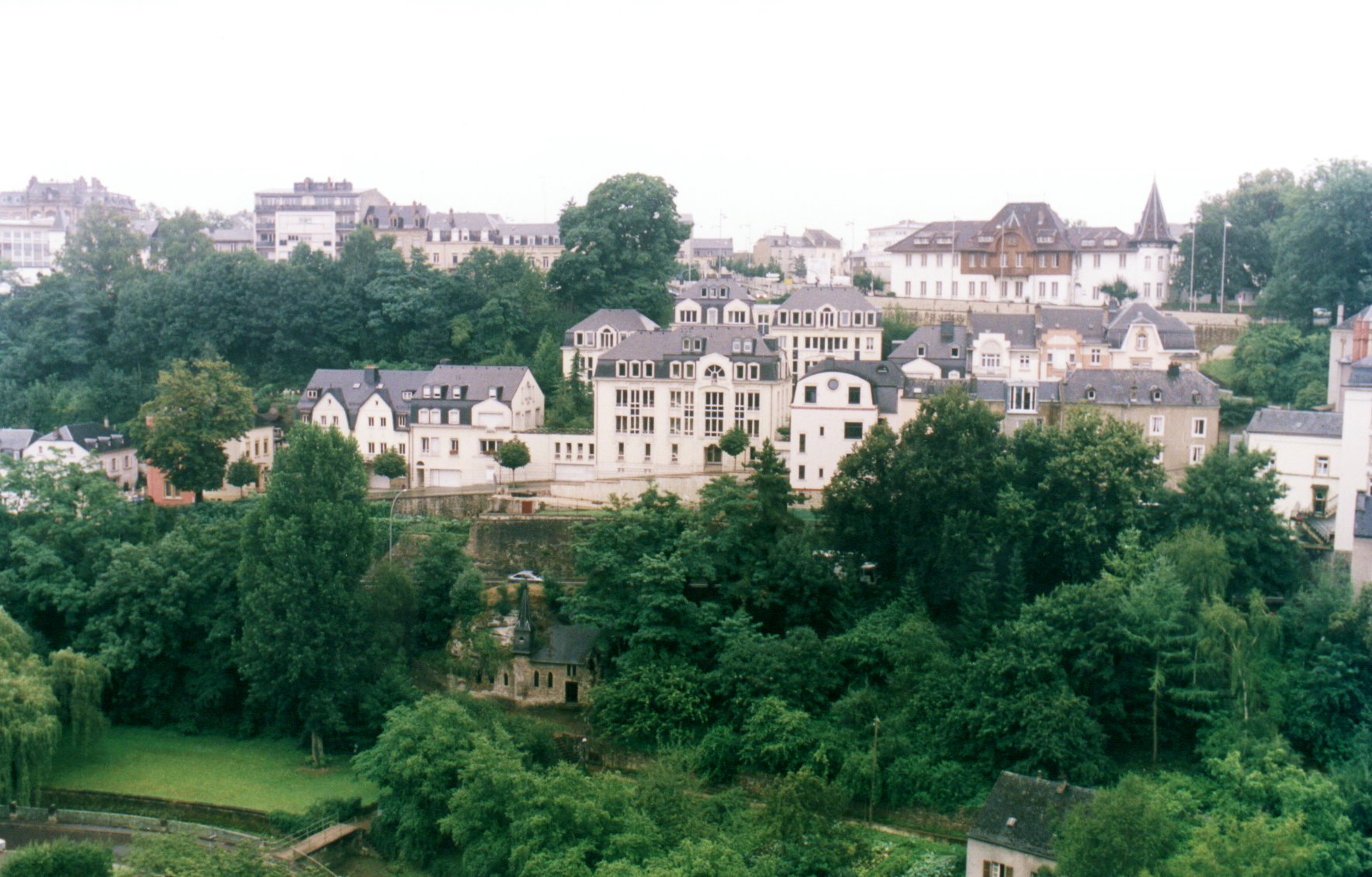
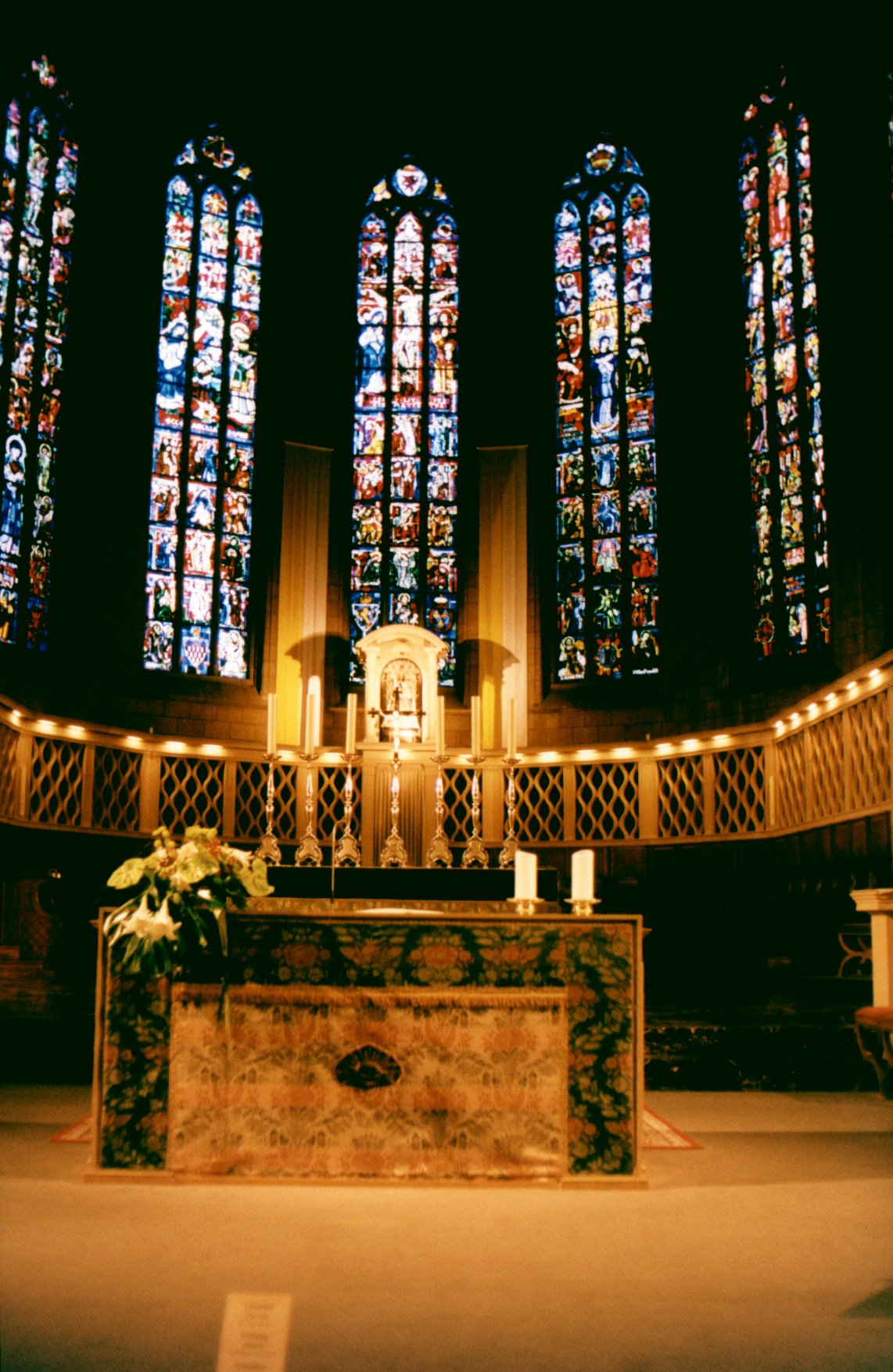
What matters is how easy it is to breathe there. The people live and enjoy their lives.
Here come some little old women, retired, to the café for champagne and a laugh. At McDonald’s you are greeted with a smile. “Bonjour!” At home they’d say it to take the mickey. Here it’s simply the way they talk. French flows in a merry little stream. Everywhere else in the world McDonald’s is self-service, but here they bring it on a blue-rimmed plate, make a curtsey and say, “S’il vous plaît, pardon, merci, au revoir.” And the coffee is good, not instant.
There are cows in the streets. What’s the proper word for them? Statues, dummies? They’re life-sized plastic cows, decorated by local artists however they like. Some have wings.
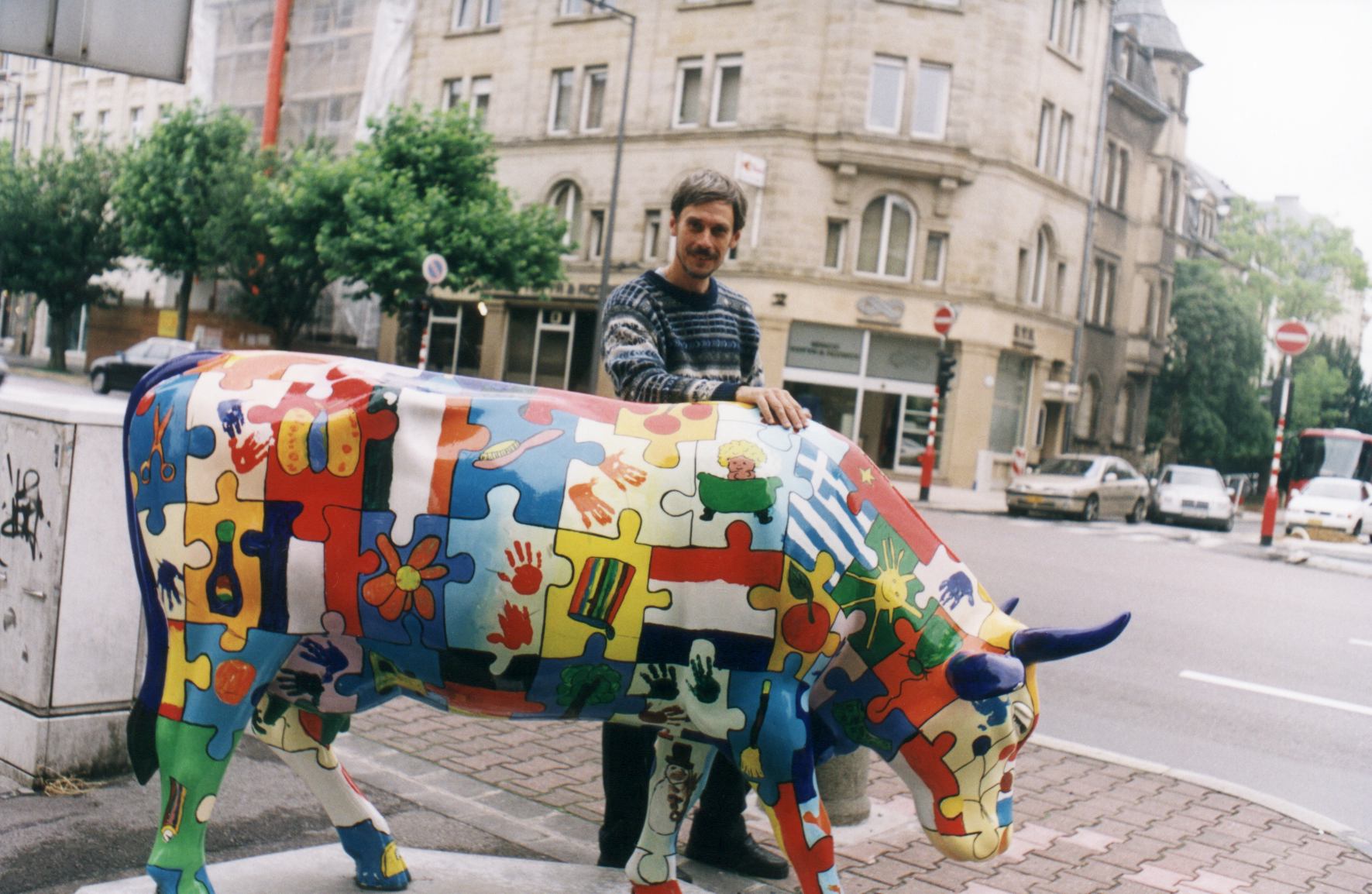
We were unlucky with the weather. A dreary autumn drizzle fell, but our spirits were excellent. I just wanted to go on walking up and down those lanes and stairways and spend a little more of my life in a world I hadn’t been lucky enough to live in for good.
Now there’s a country. None of your national ideas, language or army. They can’t even be fussed to print their own money. Join Benelux, join the EU, either will do. People simply want to live well and the government comes second to their own interests. It doesn’t mean they shut themselves away behind walls. They just don’t spend money on the crackbrained schemes of self-important politicians. The Luxembourg budget, incidentally, is roughly the same as Russia’s, with a population a hundred times smaller.
There are many countries in the world, but of what I’ve seen this seemed the best to live in for good. Neither German pedantry nor French disorder has taken hold here. People are very tolerant, including of foreigners. One drawback. I don’t know French and I have no enthusiasm for learning it.
The government doesn’t meddle in the car market and the prices are just what they ought to be. Only the city is small and there isn’t a great choice. Pasha sets to work searching. Unfortunately most cars are no more than five years old, with hardly any mileage, and cost $6,000 to $10,000. We can’t afford those. The only thing we manage to find is a 1991 Opel Omega in perfect condition for fifteen hundred dollars.
France
Cheered by what we’ve seen, we head for France. On the way we look for cheap cars as we drive through little towns in Luxembourg and Belgium. At last here’s the sign we’ve been waiting for: “FRANCE”. We’re in the province of Champagne. By definition, champagne is made only here. Every town has a name that rings out, Seat, Roquefort, Bouillon. You sit there wondering. Is that just a coincidence, or did they really invent bouillon here?
There’s cheerful French music playing on Radio Champagne. Here’s a sign: “Paris 200 km”. My heart beats faster, but we won’t get there. No time and no money. Coming to that great city for a day with practically no money would be a mockery. We’ll get there another time. For now we’ll have to make do with the little town of Charleville.
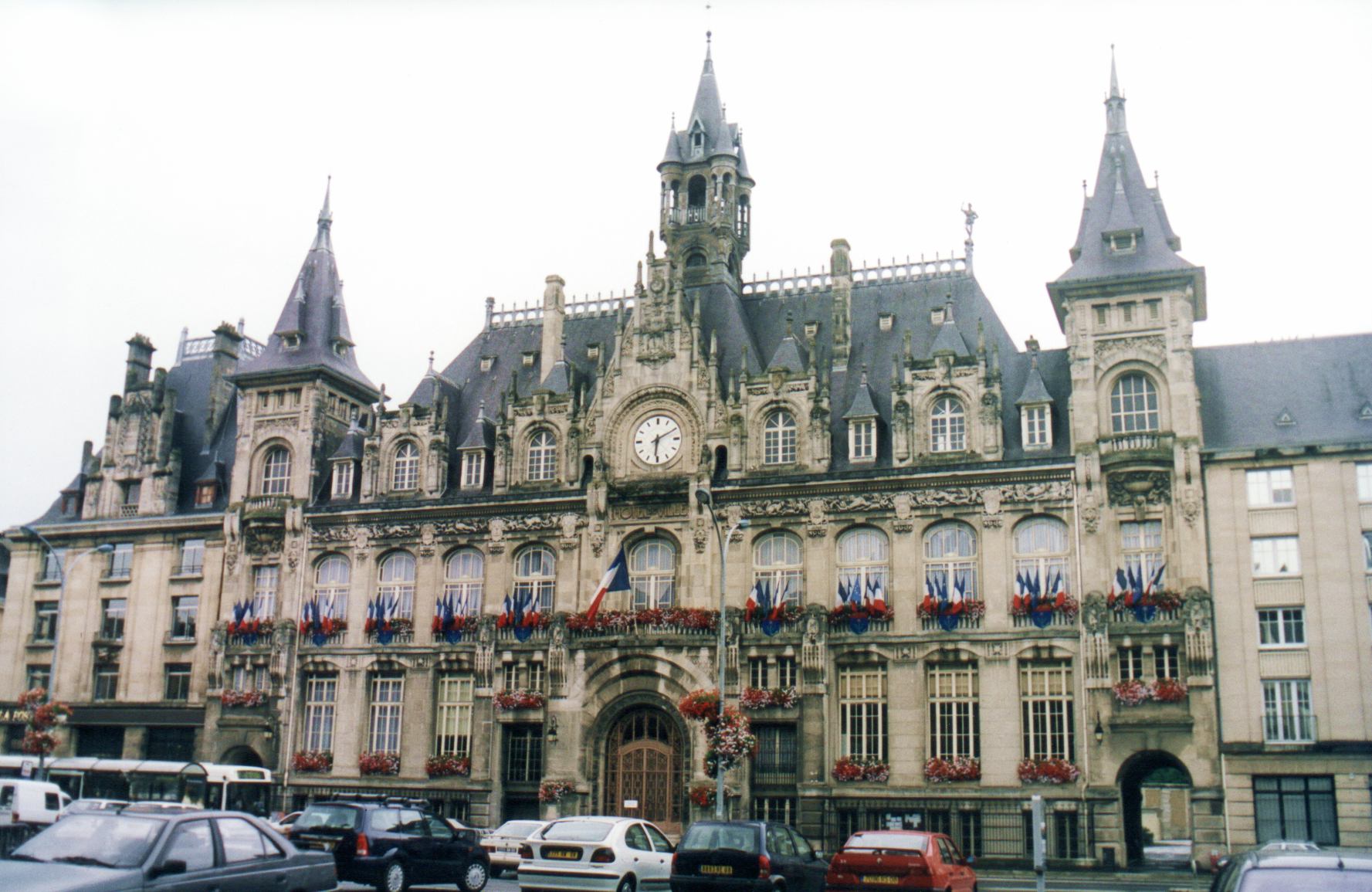
It isn’t quite so little, as it turns out. A large centre, and the local cathedral is a thousand years old. We’re lucky enough to catch a service and hear the organ. A beautiful, merry city. We’re used to seeing flowers by now, but each place has its own way of doing them. Here I liked the flowerbeds on roundabouts. Whole works of art made of clipped shrubs. They’ve even grown a figure of a gardener with a lawnmower in the middle of a bed.
Life in France is free and easy. Nobody goes to great lengths over rules and order. There’s litter in the streets, no paper in the toilets, and the rules of the road were written for somebody else. The local policeman is comical. His ridiculous hat reminds me of the Louis de Funès films. No, this is nothing like a German cop. He’s eating an ice cream and looking rather silly. You want to say, “Not frightening at all!”
Nothing but Frenchwomen in the streets. I can’t say there are many beautiful women here. Ours are prettier, but these are all well groomed, and you can smell the perfume from a block away. Nearly half of them are in skirts rather than jeans. It’s hard to spot a girl in a skirt in the neighbouring countries. One in fifty at best. I wouldn’t say everything here revolves around love. You can’t see couples in each other’s arms. It seems the sexual counter-revolution has reached this far as well.
The worst thing is that absolutely nobody knows any English. On our tenth attempt to ask the way we find a man who speaks Russian, but learning the language of the hated neighbour evidently isn’t done here. Schoolchildren study it, of course, but the result is much like Russia’s. Try talking to somebody in English in a small district town in the Tambov region.
Then again, people are merry and untroubled. Even the money doesn’t have that air of self-importance. What different people choose to draw on their notes! The French drew an elephant inside a boa constrictor and the Little Prince with his roses. I liked it so much that I brought a fifty-franc note home as a souvenir.
In a little shop we buy six bottles of real champagne and go to celebrate at the Turkish Café Pacha. Pasha loves the name and has his photograph taken out front. Besides, we know at least a few words of Turkish, unlike French. “Dört kebab, çay, bardak for champagne.” Four kebabs, tea and glasses for the champagne. We bring the last item ourselves and brazenly drink it there.
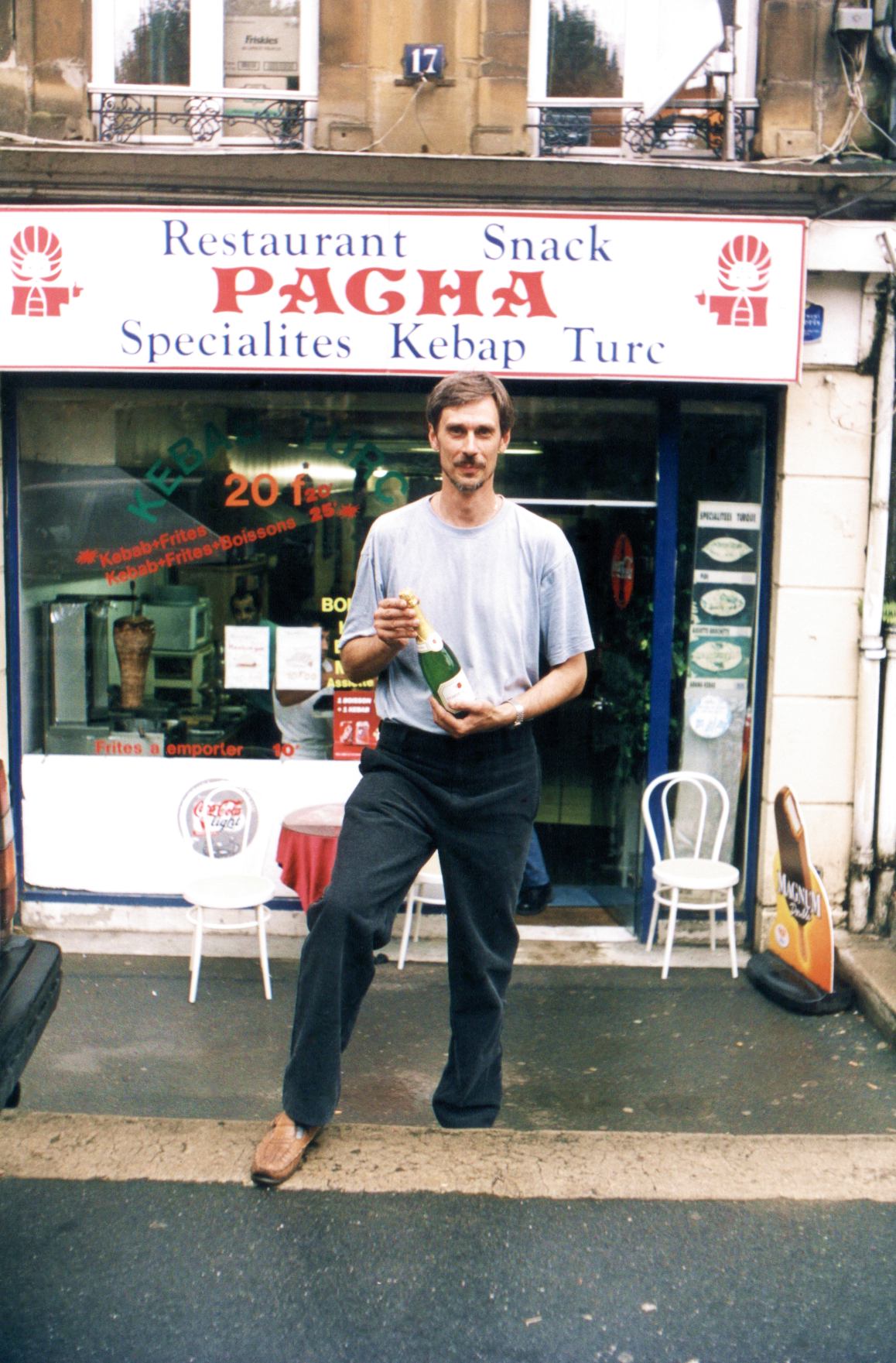
We sway back to the car to drive it under the influence. That’s how everybody drives here. There aren’t any decent road signs and we haven’t got a map of France either. We get lost, and it’s thanks to the man I mentioned that we find the way out of town. He works in oil production in Kazakhstan. On seeing our Russian number plate he stopped specially to help. I get into his car and Pasha follows. He turns out to be a very pleasant man to talk to.
We’re going towards Belgium but want to sleep on the French side, at a campsite or simply in the woods. Everything around here turns out to be a national park or private property. The side roads are blocked by barriers with notices saying “Land of the Marquis”, none other than Carabas, no doubt. Before long we find an unclaimed track and some unclaimed woods and are starting to unload for the night when a car pulls up beside us. Perhaps by chance, perhaps they’re looking for somewhere to camp too, but it spoils the mood. We decide to drive on and find a campsite. We find one in the town of Revin, in a legendary gorge through which some knight once rode. There are signs about him on every corner. It’s raining dreadfully. A regular natural disaster. That’s exactly what it turned out to be, as we learnt later. Somewhere in France a river washed something away.
The campsite is a record low price, three dollars a head. Even the shower is free. The registration, on the other hand, is far more involved than in other countries. They ask for your passport and you have to fill out twenty-odd items on a mile-long form, including a maiden name and what relation your companion is to you, whether she really is your wife. Honestly, the French have gone mad. Home address in Russia, your work number and address… No need to spell it out. We’ve filled in plenty of these. And of course the form is in French, and the three charming young women at reception haven’t learnt any other languages.
I wrestle with this work of bureaucratic art for at least half an hour. One good thing. For the first time in my life I’m spending time in the company of genuine Frenchwomen.
In a gap between two downpours we pitch the tent quickly and get inside. We’re on the very edge of the river, with actual swans swimming by. It may be raining, but it’s warm and wonderful. Tanya and I happily lie there for a long time, and not only lie there, watching the swans through the open door of the tent. France, in a word.
Belgium
First thing in the morning we cross the Belgian border, which is close by.
The difference isn’t immediately obvious, but people are more aggressive. They cut you off and hoot. They drive much as they do in Moscow.
We stop in Waterloo for breakfast. That one name could support the economy of a town on its own. Apart from the name, there’s a Wellington museum and nothing more.
Pasha and Lena have big plans to buy a car. So we arrange to meet them this evening at the entrance to the European Parliament, leave them the car and spend the whole day walking around Brussels.
This really is an enormous city. You can’t see even the centre in a day. The local kings are Leopolds. There are boulevards running in every direction named after Leopold the something-or-other, and monuments in the squares. The lower the number, the closer to the palace. Figures of lions stand around the palace. Could this be the very first Leopold?
They let you into the palace for nothing, but you have to leave all your things in the cloakroom, including your still and video cameras. They say rooms may be closed whenever the king needs to use one. Inside it’s a palace like any other, like the ones in Pushkin or Pavlovsk. In any case, it’s worth going.
There are lots of churches in the city. You could spend the whole day going round just those. They’re much the same. I liked the Church of St Nicholas the Wonderworker. I can’t remember which one had a statue of the Lord with a crown of thorns, or perhaps a halo. Anyway, a ring with stars in it over his head. It turns out the ideas behind the European Union have been here since the Middle Ages. At the start of the second millennium, incidentally, Europe had a common currency.
The enormous Palace of Justice towers over the middle of the city. You can go inside and walk around.
The symbol of Brussels is the little boy having a pee. According to the legend, one such boy went outside the city wall one morning to relieve himself and looked up to see the enemy creeping towards the town. The legend doesn’t say whether he managed to finish, but the enemy was spotted and destroyed. We couldn’t manage to find him from the book. We found a statue of someone like old Shapoklyak and even a bronze dog having a pee. The boy wouldn’t make himself known. We’d all but given up when we tried the walk recommended by Lonely Planet and found him soon enough. It turns out he’s very small. His name is Manneken Pis. The boy himself is naked, but they put a different outfit on him every day.
Brussels’s business district, with a couple of dozen skyscrapers, is quite close to the old centre. I love walking between high, gleaming towers like these. My whole life I’ve dreamt of working in a skyscraper, even living in one. Not even 11 September put me off.
Brussels is the new capital of Europe. Lots of fine cars and broad roads. There’s a network of tunnels under the city. Take your eye off things for a moment and go underground and you’ll have trouble coming out in the right place. The tunnels branch in different directions below ground, and if you don’t know the city, finding your way is hard. Getting across the city on the little streets is difficult too. No turn here, one way there. The ring road, on the other hand, is simply a wonder of engineering. It’s virtually one continuous interchange, in places with three levels. The local rules don’t let you drive fast, but the locals couldn’t care less. Just across the double white line in front of a policeman, utterly unembarrassed. A wild country. Manners almost Turkish. No wonder the neighbouring countries don’t respect the Belgians.
Trying to walk to the World’s Fair, we ended up in some very rough quarters. Broken doors covered in writing. People stand at a dirty bus stop and squeeze onto an overcrowded bus. They aren’t down-and-outs. They’re respectable, well-dressed and civilised people. To me all that was something left in the Communist past. It turns out people still live like this even in wealthy Brussels. A very mixed population, mostly Turks, Indians and Arabs. Black people turn up occasionally. After hearing dreadful stories about supposedly frightening, antisocial Black inhabitants of slums, I expected to see some, but I didn’t. The homeless people were mostly white and occasionally Turkish.
Educated-looking, well-dressed Black people smile shyly and brilliantly. They go for walks as a family. There’s a stout Black woman leading her daughter by the hand. An immaculately clean, starched polka-dot dress. I remember seeing them drawn like that in the cartoons in Krokodil, beside white racists. Of the inhabitants of the poor neighbourhoods, it’s Black people who look most dignified, if you ask me.
The European Parliament is a new glass building on the east side of town. An excellent park with swans next door. You can’t just wander in. Passes, metal detectors and all the rest. The people checking you are pleasant young women, though, rather than soldiers in uniform.
There’s a staggering monument in front of the entrance. A woman who looks like one of the collective farmers at the Soviet exhibition holds a euro symbol, “€”, in her hand. Below her is a man. He has to stand for the dollar. There’s no label on him, though. You can interpret that according to your own degree of depravity.
Next door there’s a beautiful modern station for the fast train to Luxembourg. If only our dacha commuters had a station like that. Otherwise it’s going to waste, with hardly any passengers.
We meet Pasha and Lena in the evening and drive on to camp. We know for certain about a campsite in Antwerp, so we head for it, stopping on the way at a truckers’ café. Pasha and Lena tuck into a portion of chips with some poisonous sauce. My whole insides draw up in horror at the sight of food like that. And people say hamburgers are bad for you. I no longer believe in their weak stomachs. Anybody who can survive that could digest nails.
The campsite in Antwerp is in the city itself, not far from the centre. A perfectly respectable place, except my camera’s flat again. The only socket is next to the washbasin in the toilets. I plug it in and sit quietly for half an hour in a cubicle. I wonder what other visitors thought when they saw the electric lead going into the closed cubicle.
After a sleepless night of agonising thought, Pasha and Lena make up their minds. At first Pasha talked about a big, powerful car. Once you’ve been in an Audi 100, he said, you’re doomed to drive nothing but big cars. Life decided differently. They’ve chosen a one-litre Suzuki Swift.
In the morning we go straight back to the BMW showroom in Brussels. Here’s the little Suzuki. A woman who works there traded it in for a BMW and is now trying to sell it. A 1997 model with thirty thousand kilometres on the clock. A mild little woman’s car that’s never been worked hard, as good as new after a snug life in a garage. What awaits you, poor thing? Five thousand kilometres just to get to Saint Petersburg, the winter cold and the salt on wet roads. Little wonder that sensing its fate, it refuses to start. The battery’s flat. They jump-start it. The engine runs like a watch, a pleasure to see. Only three cylinders.
The paperwork takes several hours. Customs, the chamber of commerce, transit plates. Since we’re buying it at a showroom, it’s all straightforward. The owner has everything fixed. The biggest trouble is changing dollars. They stare at them like a goat at a new gate. In the end the owner pays for the car from his own account and leaves the dollars in the bank to be inspected and sold on.
We try waiting at first. An hour or two go by, and the camera is fully charged. No point waiting any longer. Pasha and Lena have their own car now. We leave a note to meet them this evening at the campsite in Antwerp and head off to see NATO headquarters. We have to drive across the whole city. Tanya does an excellent job of navigating.
Here’s the lawn with the eight-pointed star. This must be where the imperialist powers hatch their cunning plans. I settle by the gates with the camera, hoping for a colourful general in a limousine. All in vain. Little cars go back and forth with young men in jeans and girls in dresses entirely too casual for the occasion. The buildings themselves are ordinary two-storey military buildings. Nothing interesting.
We mean to go to Ghent next, but soon after we set out Pasha calls to say he’s in the car and urgently wants to get back to Saint Petersburg. That scotches the trip to Ghent. We’re meeting at our familiar campsite in Antwerp instead.
Tanya and I have an hour left to walk around central Antwerp. That’s probably enough. The centre is quite small. You can manage the route Lonely Planet suggests if you don’t go too deeply into the various museums. By the cathedral with the paintings by Rubens, who lived and worked in Antwerp, there’s a monument to the men who built it. For a long time there’s been an interesting profession here. A man dresses up like the monument, paints his face green like bronze and stands alongside it. The resemblance is amazing. Twenty metres away you can’t tell the difference. He isn’t standing there for nothing, of course. Put down a coin and the monument comes to life and bows. It’s very funny to watch.
In the ten minutes we had left, we bought some Belgian chocolate. Belgian chocolate is supposed to be the best in the world.
Pasha and Lena turned up at the agreed spot on time. It turned out the car still wouldn't start. The battery was flat and wouldn't take a charge. Now we push-start the Suzuki every time. Our car is giving us trouble too. There is a crunch at low revs, apparently from a CV joint. That's bad news. We won't get very far if the joint goes.
The Netherlands
Troubles or no troubles, we head for Amsterdam, where we spend the night at a city campsite. The place is packed. We get a pitch barely big enough for the tent and the cars. It is raining. Raining again. It would be unfair to say we've been unlucky with the weather. We've managed to walk around practically every town in the dry. It's all the time in between that the rain has kept coming down as hard as in a thunderstorm.
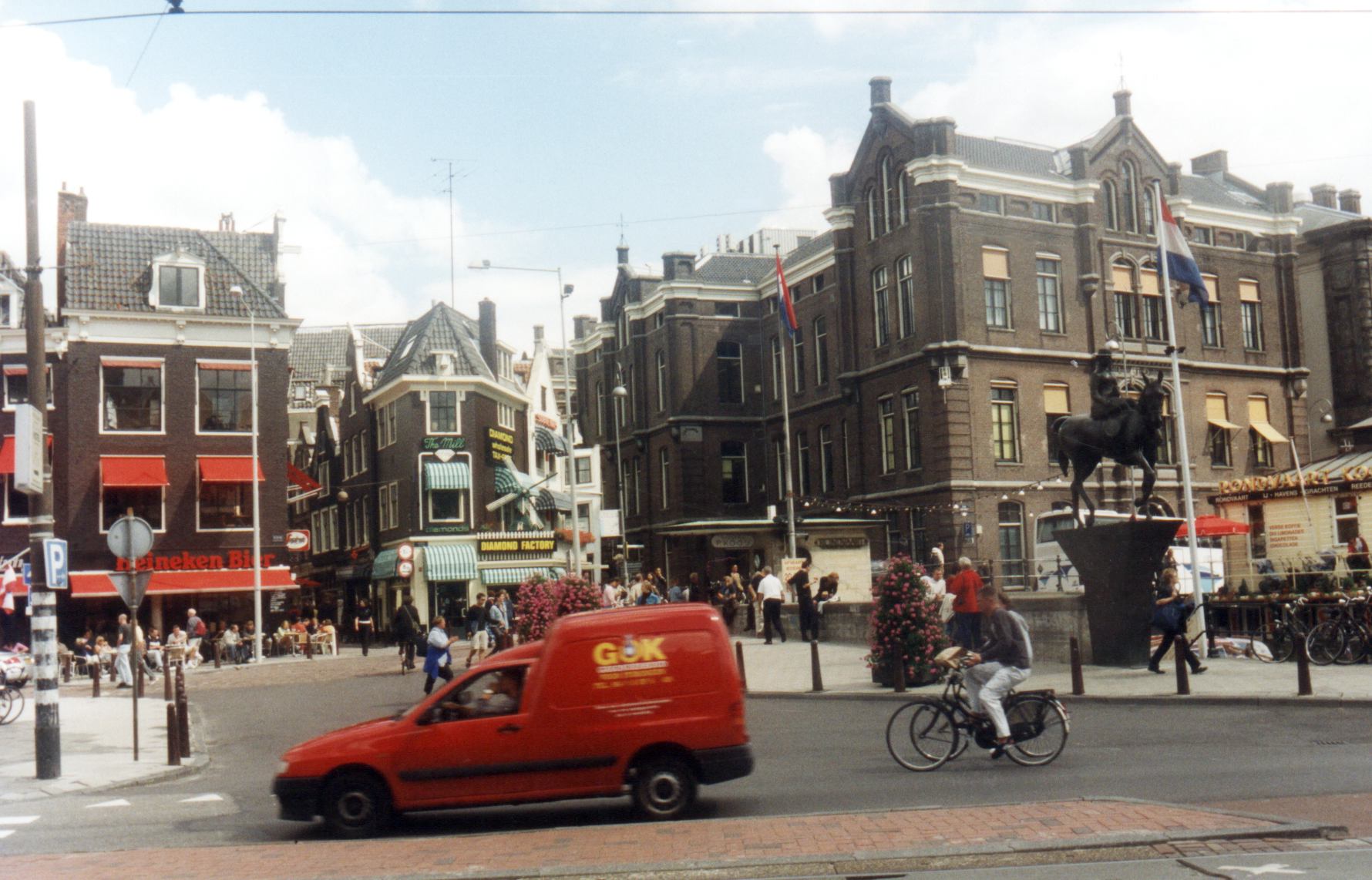
Today we wet the new car's head. A bottle of champagne and our last tin of caviar. The radio is playing some pleasant music.
First thing in the morning we try to get the cars fixed. The Suzuki still won't start, but it's a long way back to Brussels. The local authorised dealer agrees the car is under warranty and the warranty is European, but says it is only valid in Brussels. A new battery costs less than the petrol to get there. The nearest garage puts in a new one for the Suzuki in no time. Any work on the CV joint, though, will have to go to a Ford garage. The first one has a queue and sends us to the other end of town. There they tell us it's noon on Friday, practically the weekend already, so who's going to do any work? I explain that we can't wait till Tuesday. They check the computer. No CV joint. None in the warehouse, none in any shop in Amsterdam. We're out of options. They send us to a scrapyard. We can't find it. In the end we get lost, drive into a bus lane and drop into a pit put there specifically to stop cars. Luckily we come out of it unscathed.
Half the day is gone and we've got nowhere. We decide to say to hell with it and see how far we can get.
Parking in Amsterdam is $3 an hour, so we leave the Ford on the outskirts and take one car into the centre. Looking for a space, we once again find a spot by a building site where someone forgot to put up a sign. I'd pay, but it's Pasha's car and he doesn't want to. That's up to him. We go walking until evening.
Amsterdam is a big city. The central part, with its canals and bridges, is about five kilometres across. There are thousands of narrow, lopsided little houses from the sixteenth century. The more they lean, the more impressive they are. It means they're really old. A house like that is only a few metres wide. A single family often occupies the whole thing. A spiral staircase connects the floors.
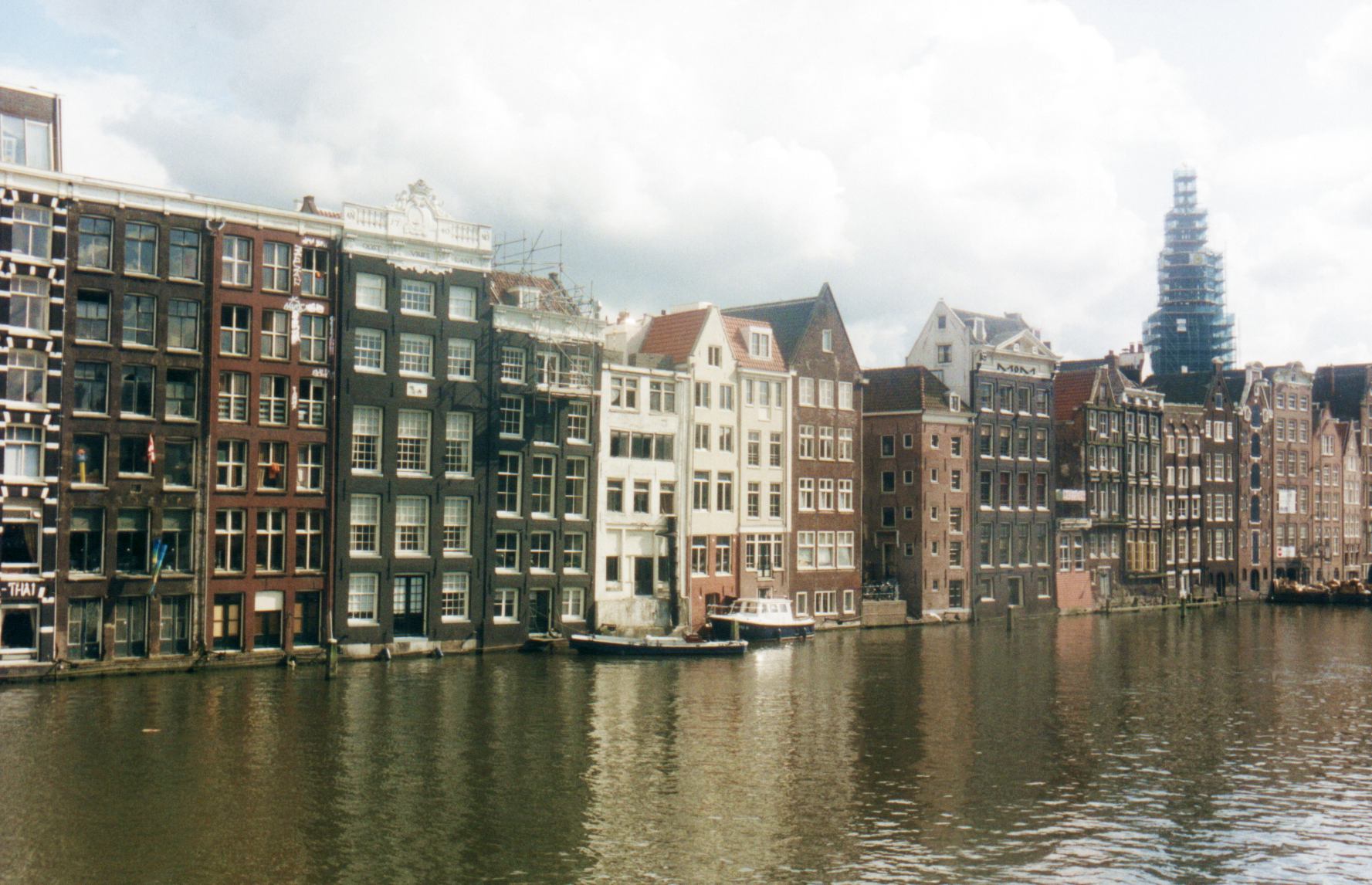
By old tradition the windows have no curtains. This dates back to the Spanish occupation. The idea, it was said, was that a police patrol could look in at any time and catch a plot in the making.
Later a different principle won out: we live honestly, so let anyone look. I don't like curtains either. I don't want them shutting off my view of the world. Holland is a country of sailors and travellers who have no wish to live tucked away behind a curtain.
Holland is a free country. Almost anything goes: drugs, euthanasia, long hair in the army. No harsh laws, no order carried to absurd lengths. The streets have plenty of dirt and litter, people cross on red, and nobody thinks much of wearing a path across a lawn. There is quite a bit of theft. Bicycles are fastened to houses and little bridges with enormous chains. We were advised to take the radios out of our cars. McDonald's charges for its toilets. Now that's a shame. It never used to happen, even in the stingiest countries. You could go into a McDonald's and get yourself washed all over for free. In Germany, France and Belgium there would be a Black attendant at the door who kept everything clean and grinned from ear to ear, as if to say, feeling better now? You might put a little something in the box, whatever you can spare. In Amsterdam the smile is gone. You are just told, rather angrily, to pay on the way in. You can tell a lot about a country from its toilets. Holland does all right. There is paper and even blue soapy stuff instead of water, but there's also a cut-down version, for men only. In the middle of the pavement there is a cubicle like the changing stalls on our beaches, with your head and legs showing. Everything drains straight into the nearest manhole.
The very centre is closed to cars, and they couldn't get through anyway. The lanes are narrower than a car. There are bicycles everywhere. Cycle lanes criss-cross the city and the traffic on them is heavy. You have to be careful. One step off the pavement and you risk being knocked down by a bicycle coming at tremendous speed.
Besides the bicycles there are tiny, narrow cars for one or two people. They're as long as an ordinary car is wide and fit neatly into the smallest gaps at the kerb.
This is probably the most uninhibited country in Europe. Couples on the street are quite candid about what they're getting up to. Here in the red-light district sex workers stand in the windows as if in shop displays. They say you should see it at night. Tanya and I were there at about five in the afternoon, when there wasn't much on offer. We tried taking a video but the locals objected, so we had to film discreetly as we walked. The women were standing there in swimsuits. Perhaps they take them off in the evening, but we didn't see it.
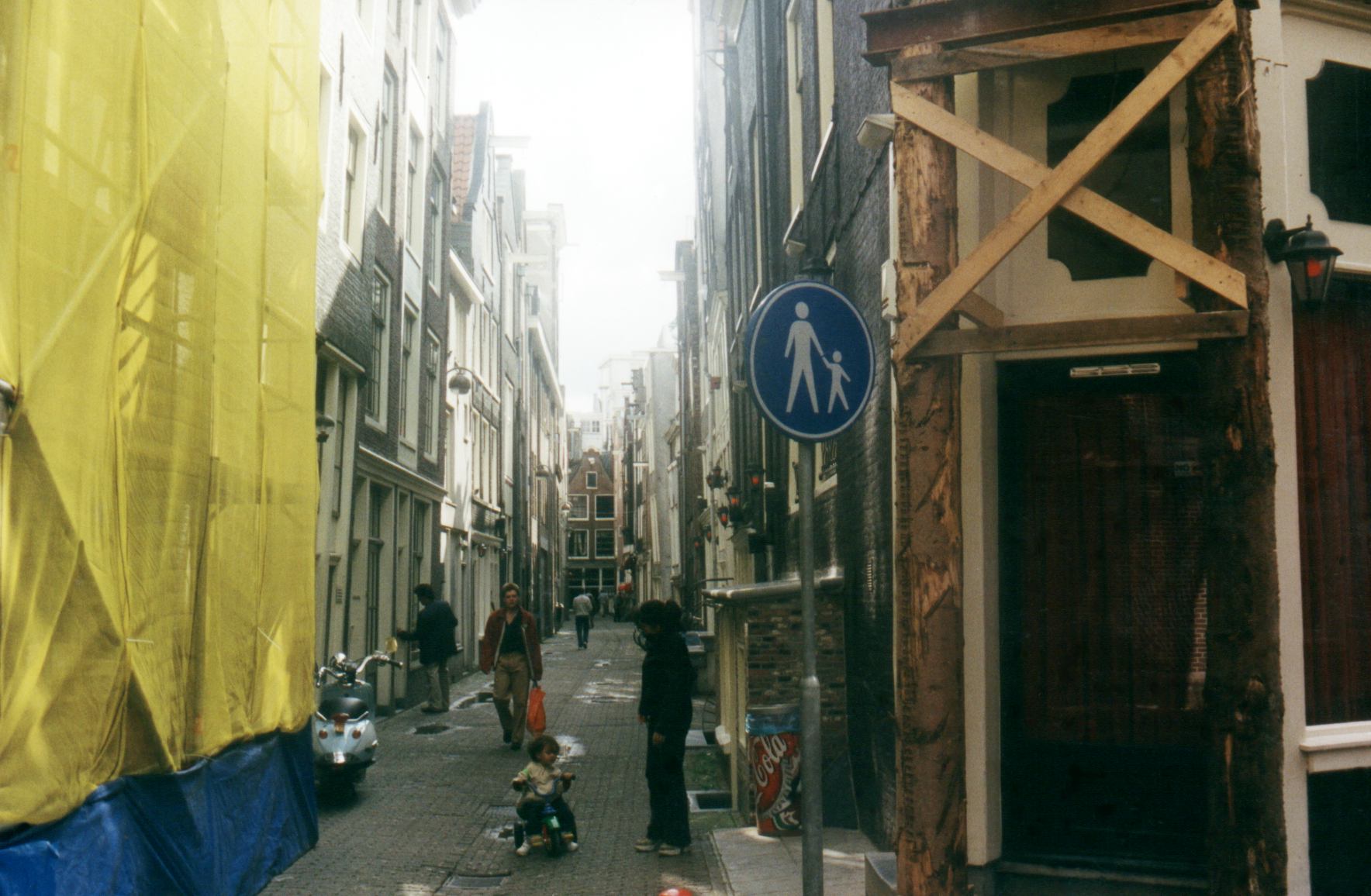
The women in the windows struck me as plump and not much to look at. There were much prettier women walking down the same streets. Holland has a great many tall, slim, beautiful women. You don't see that in the neighbouring countries. Perhaps Holland threw off the Inquisition first and, unlike its neighbours, didn't have time to burn all its beautiful girls at the stake as witches.
On the main square there are more human statues like the one in Antwerp: the king of the sea, a golden Chinese empress, a mediaeval knight and an electronic robot. They all brazenly demand money and won't let you film or take a picture for free. One of them sat down for a rest and had a roll and some yoghurt. It was very funny watching him.
Tired of walking, we took a two-hour boat tour. That was the right decision: a city on the water like this is best seen from the water. There are bridges and canals beyond counting, far more than in Saint Petersburg. Houseboats line the banks. They are among the most respectable addresses in the city. The local bohemians and other grandees often live on them.
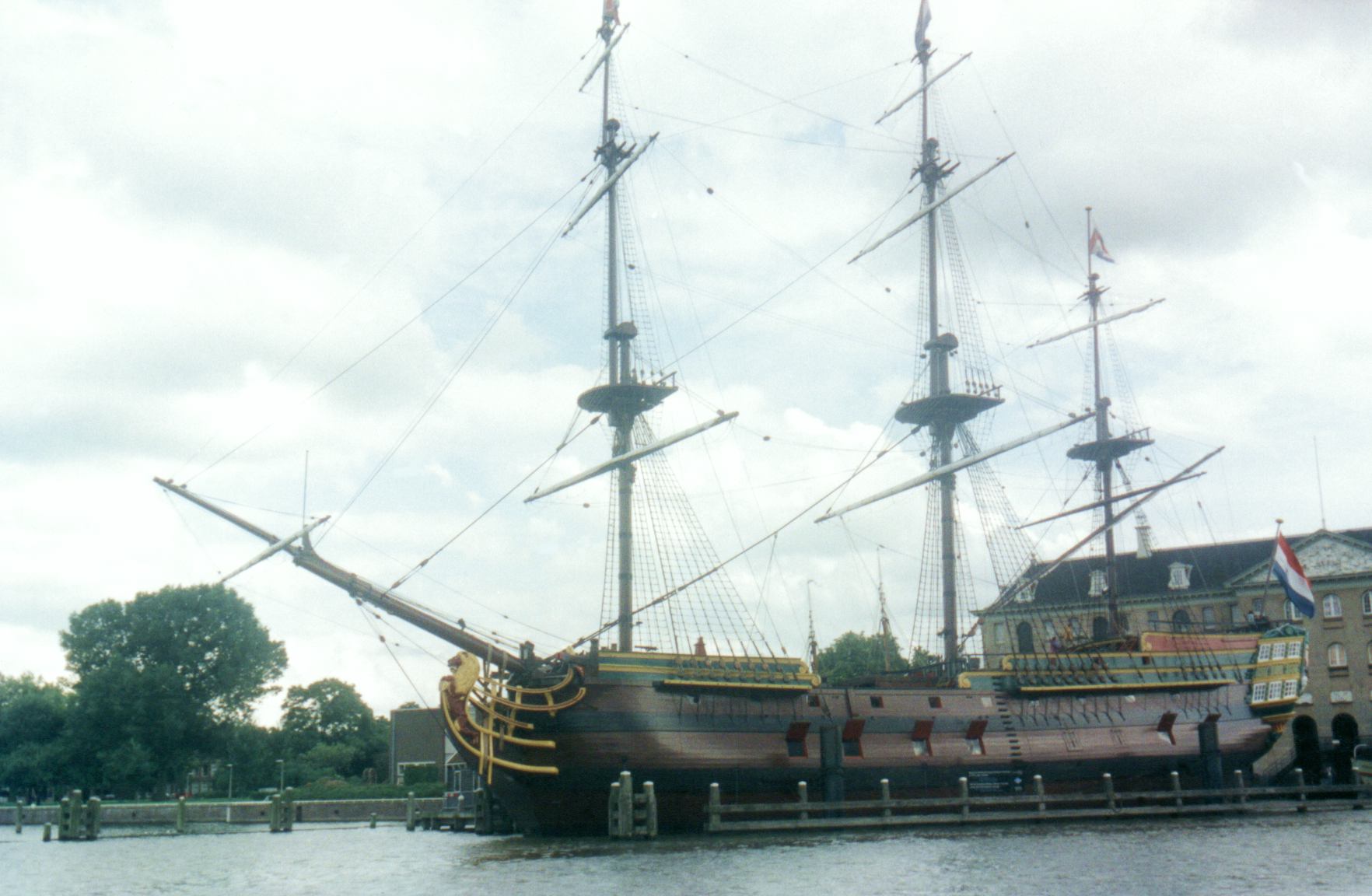
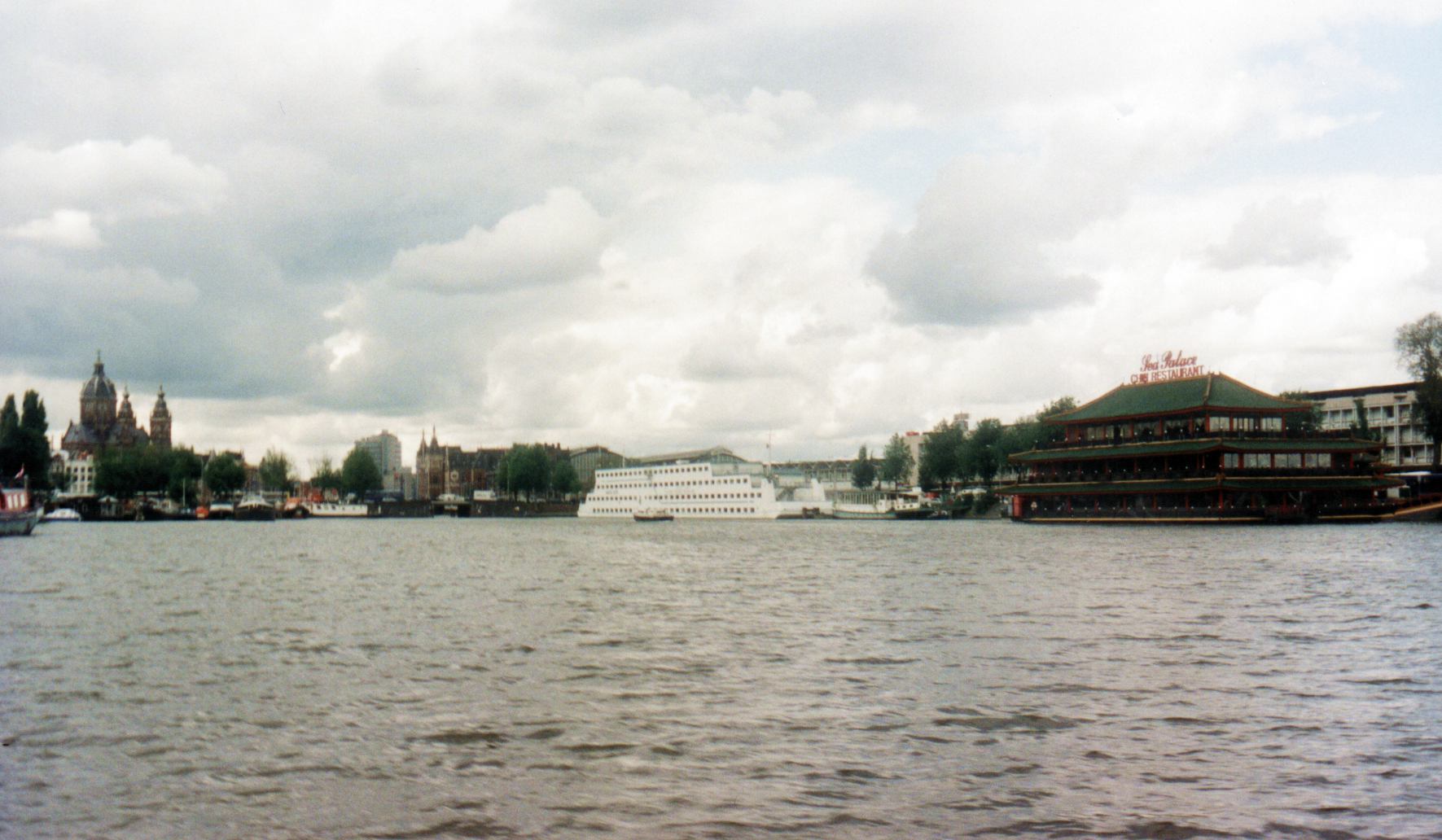
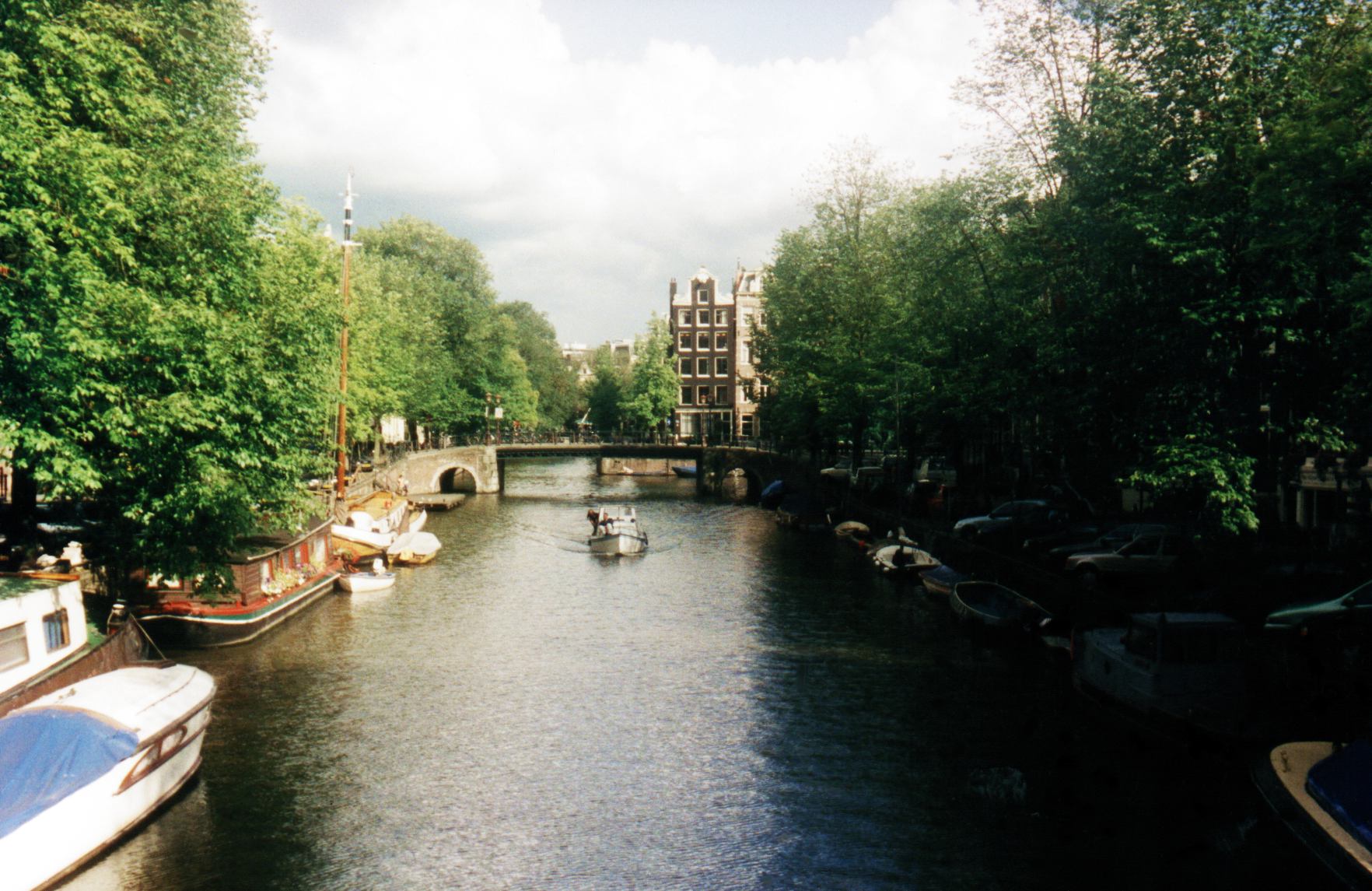
To round off the day we ate at a Malaysian restaurant called the Fire Dragon. Now that was a dragon to put all other dragons to shame. I can generally swallow anything, but this defeated me. I can't eat that much chilli.
That evening we decided to drive as far as we could along the E22 towards the German border. A fair part of the Netherlands lies below sea level. Huge areas were won back from the North Sea, with dikes across the bays. The E22 itself runs along a thirty-kilometre dike. You drive with sea to the horizon on either side. There is even a petrol station and a café halfway across, for anyone unable to manage such a long journey in one go.
We stopped for the night near Groningen at exit (Uitgang) 34. The campsite is big and comfortable. The showers are excellent. Every pitch has a power socket and connections for radio and television aerials. All that's left is to bring in the internet. People stroll quietly along the paths, smiling and saying hello. In the evening whole families play cards or chess. Most campers are locals who've come out of town with their children for the weekend. The children have all kinds of things to climb and bounce on, even a water slide. When it grew dark, coloured lights came on in the bushes. A warm, kind world. In a word, I envied them. I think I could live quietly and happily in the Netherlands too. As in other countries, you can't judge the whole place by a few streets in the centre of its capital.
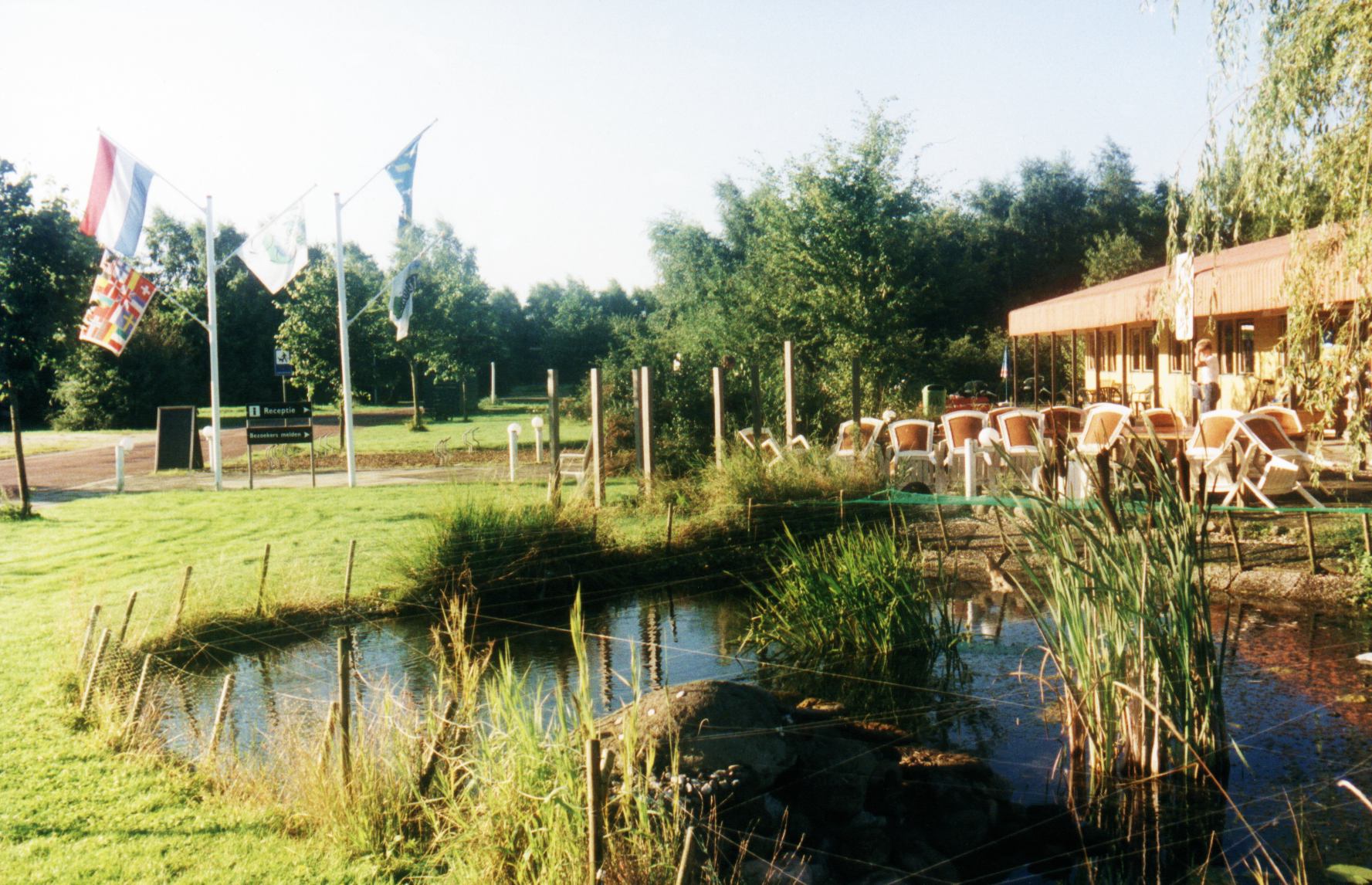
That evening Pasha and Lena went to a Chinese restaurant in the next village. To make sure they didn't get lost, someone gave them a professionally printed colour map of the area on an A4 sheet. Because it was late and they were keeping an eye on the expenses, they decided to share one portion. Seeing this pair of starving travellers, and from the wilds of Russia at that, another diner decided to do a good deed and paid for their meal anonymously. They were amazed and delighted.
In the morning nature showed its nasty side.
The old battery Pasha had kept as a souvenir tipped over in the boot and covered everything in sulphuric acid. That was the end of a rucksack full of things and a Thermos, and those were the least of our problems. Who knew what the acid would do to the car body? The whole thing might just fall apart. Wearing a tragic expression, Pasha quietly made his way over to the bins with the battery and the rucksack full of ruined belongings.
Soon it turned out the Ford's alternator had died again. Once more we had to push-start the car. In Germany and the Netherlands you could drive without headlights during the day, so it wasn't quite as serious here, but we still wouldn't get more than a day's driving out of it.
Luckily the alternator soon started working again for no apparent reason.
That morning we drove through Germany with practically no stops. Time was short, so we didn't even go into Bremen. Famous as the town is for its musicians, we decided we didn't need to look at their huge figures in person. The photographs would do. We went straight through Hamburg too and stopped to eat only when we were right by the Danish border.
Denmark
It used to take several hours on two ferries to cross the Baltic Sea, but in 2000 they finished two handsome bridges on the E20 motorway. Another bridge, connecting Jutland with the island of Funen (Fyn), was built about ten years earlier. Going over the bridges is not the shortest way from Germany to Copenhagen. The E47 shaves a couple of hundred kilometres off the distance and saves money accordingly. You still have a ferry to take, but it costs the same as the bridge toll.
With time and money both tight, we took the bridges anyway.
It was marvellous. Humanity ought to be proud to have built something so beautiful. The Europeans are certainly proud of it. Look at the bridges on the €500 note. The first takes you from Funen to Zealand (Sjælland) across the Great Belt (Store Bælt). The toll is 250 Danish kroner, almost $30. The second crossing starts in Copenhagen and takes you over the Øresund. A tunnel goes under the shipping channel and comes up on a small island, and from there the road goes over a bridge to the Swedish city of Malmö. The toll is collected on the Swedish side: 250 Danish kroner or 270 Swedish kronor.
Denmark may be small, but we didn't reach Copenhagen until five in the afternoon. Parking was free on Sundays, so we found a space in the very centre.
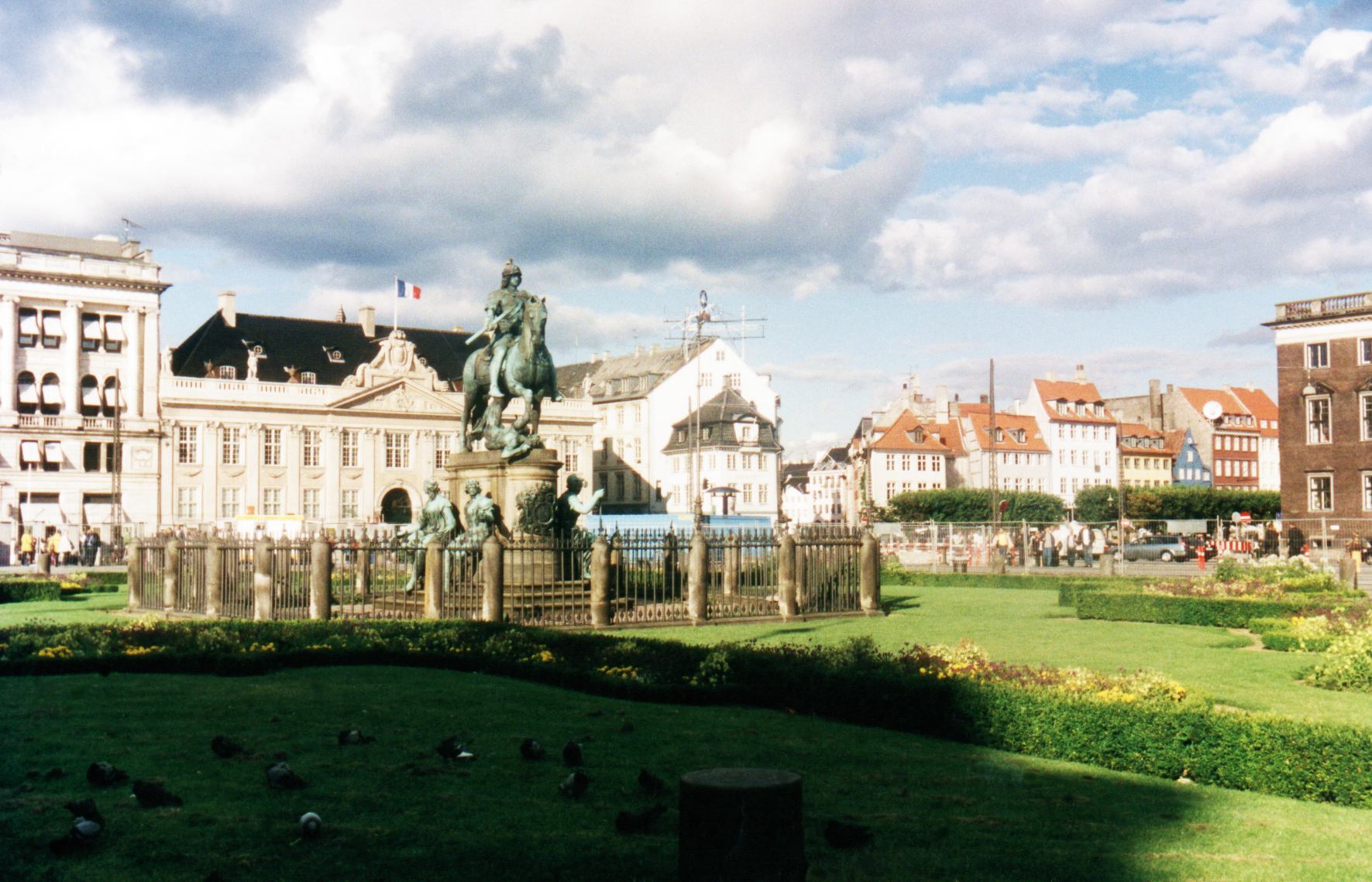
We all went for a walk around Copenhagen together. It's quieter than Amsterdam and there are far fewer people about. The peace is broken by noisy buskers collecting money. One plays the balalaika, another spray-paints otherworldly pictures. It was a surprise to see so many Russian entertainers. Copenhagen even has a little Orthodox church, named after Alexander Nevsky or Alexander the Great, I wasn't quite sure which.
You can walk around the city centre in two or three hours. Soldiers in shaggy hats march listlessly past the royal palace. Somehow they don't look quite the part. They don't have the Germans' vigour. I liked the palace and the square next to it. Everything is tidy and tasteful. It's hard to believe that a real Prince of Denmark lives within those walls. Then again, maybe he doesn't. I don't know much about their succession. Hamlet, incidentally, lived at Elsinore (Helsingør) Castle. That's sixty kilometres north. We would have loved to go and see it, but alas, it was out of our way. We said we'd be back at work the day after tomorrow and we still have a long drive ahead of us.
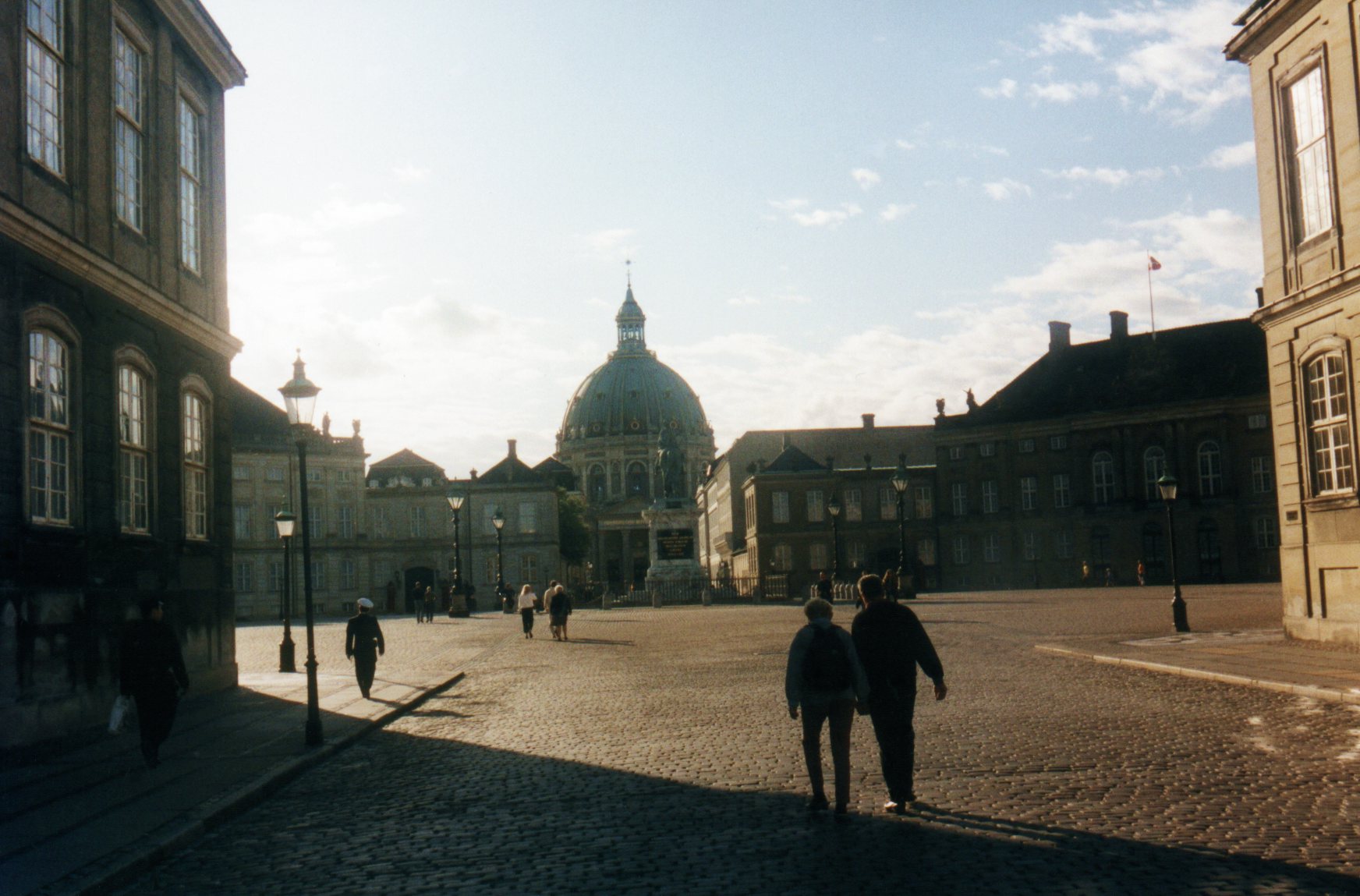
A wedding is in progress right outside the palace. The bride and groom are getting on in years, but they have done everything properly, veil and all. Children, perhaps the newlyweds' grandchildren, run about among the crowd of guests.
In a park in Copenhagen, just by the shore, stands a statue of Andersen's Little Mermaid, my favourite fairy tale as a child. There are things that sit in your memory for decades with a note attached saying “must see”. The Little Mermaid is one of those for me, and I've remembered her since childhood. I pictured a formal monument on a granite embankment in a big, noisy city, but it turned out to be quite different. The Little Mermaid sits on a small granite boulder a few metres from shore, quite at home in a park full of flowers. You can come right up to her, sit for a while and leave feeling the world is a kinder place.
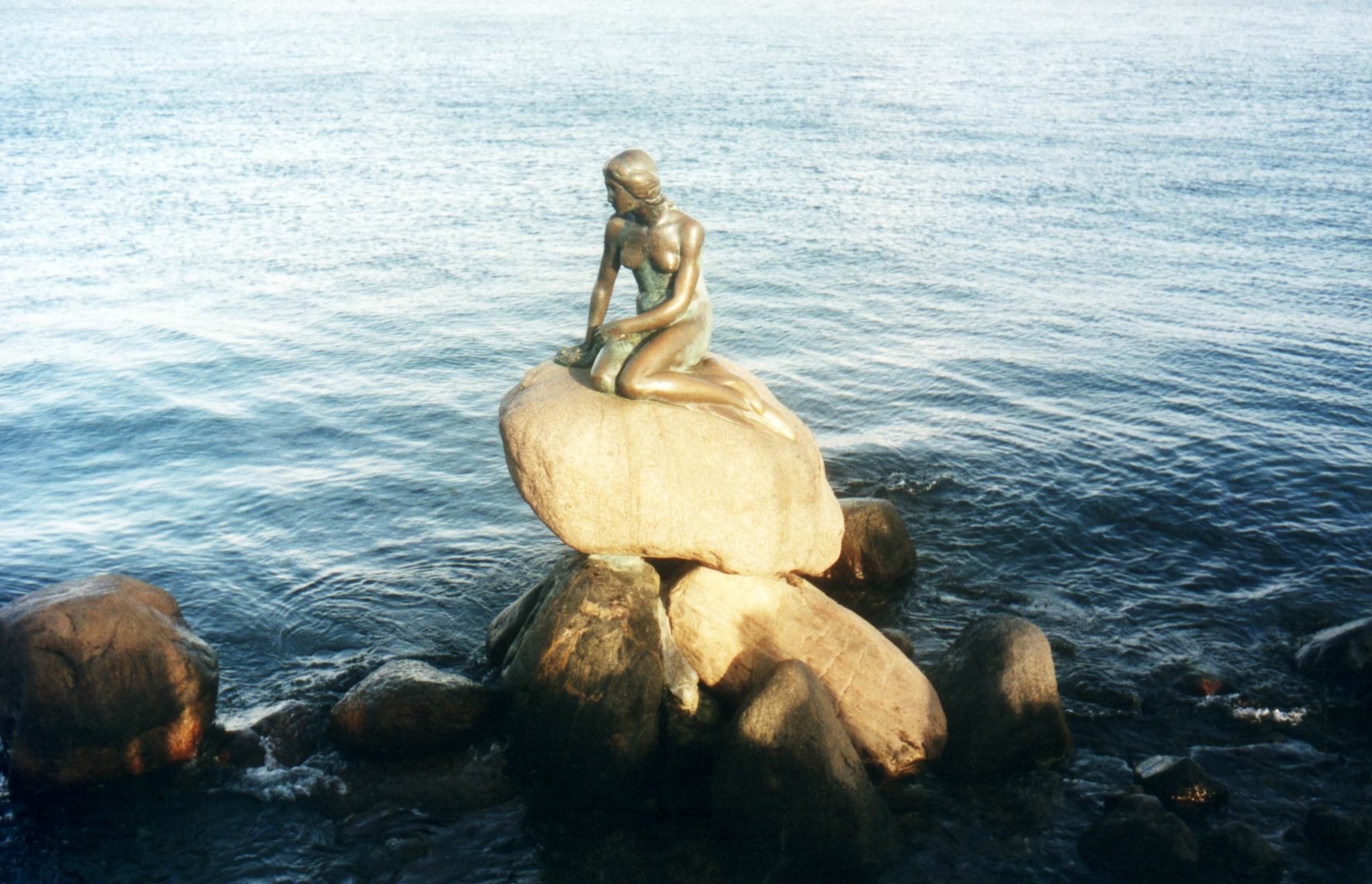
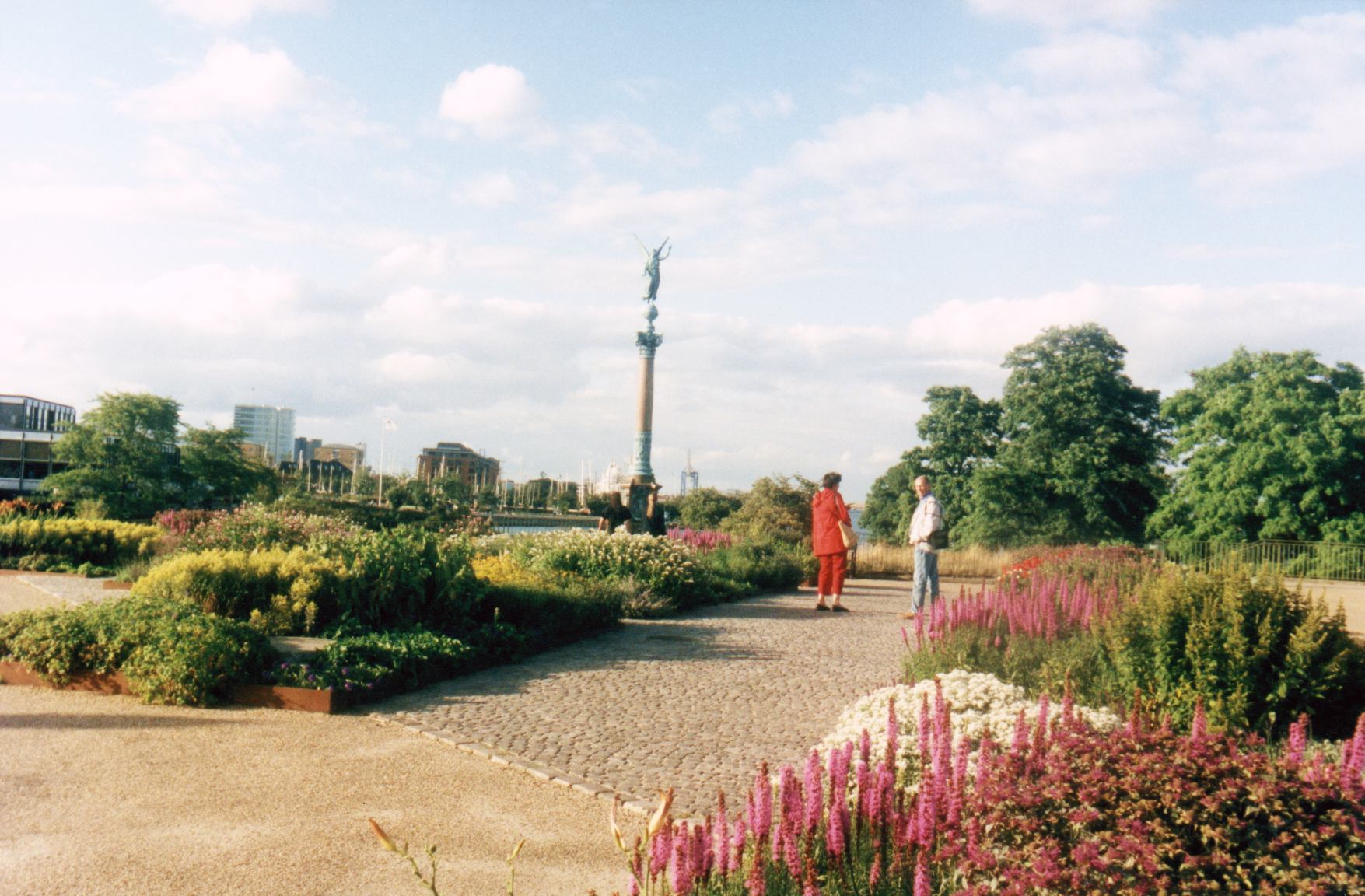
Near the Little Mermaid there is an old fortress very like the Peter and Paul Fortress. It has a windmill, though. Practically everything in Saint Petersburg is a copy of something built elsewhere in Europe.
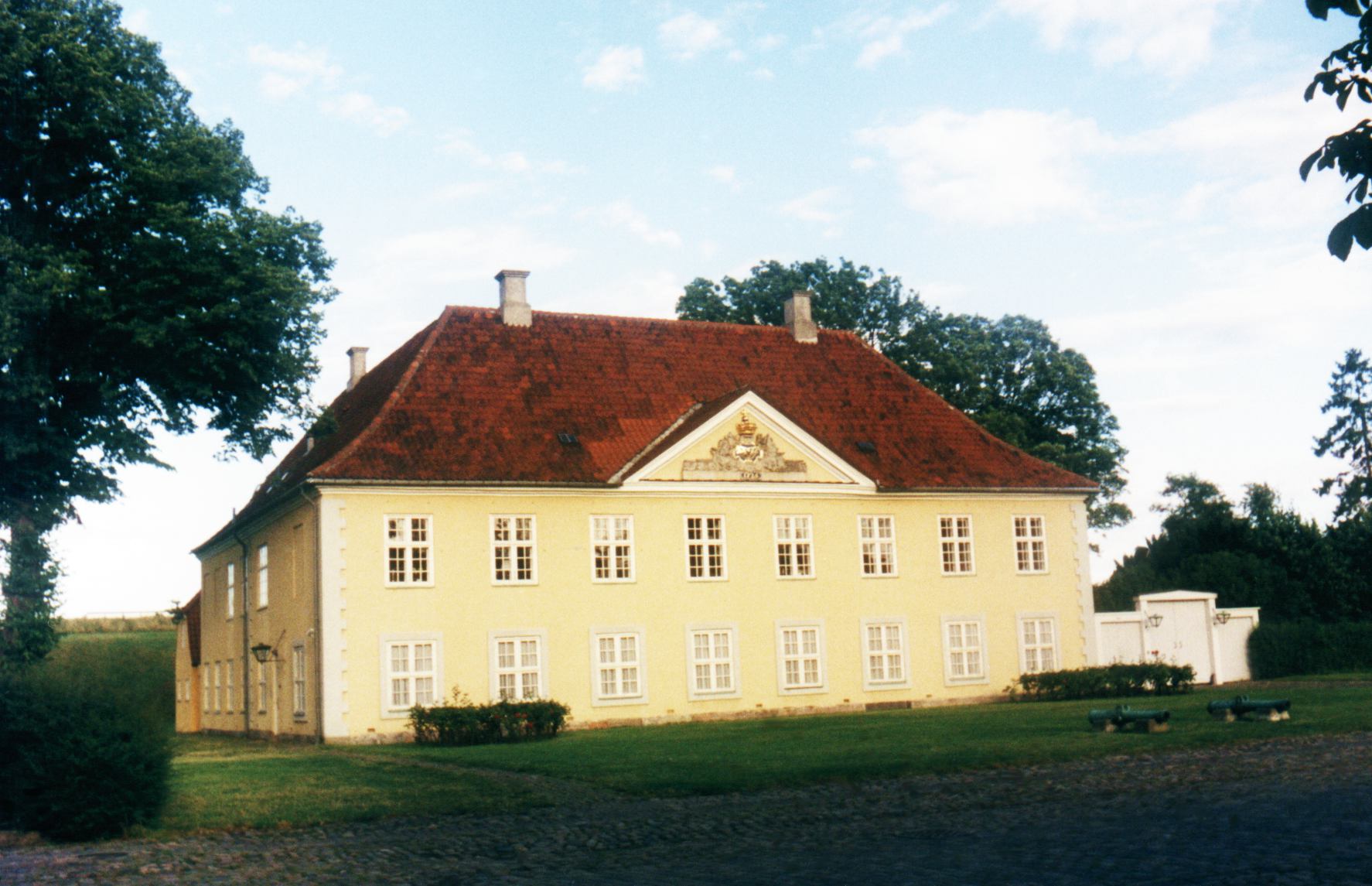
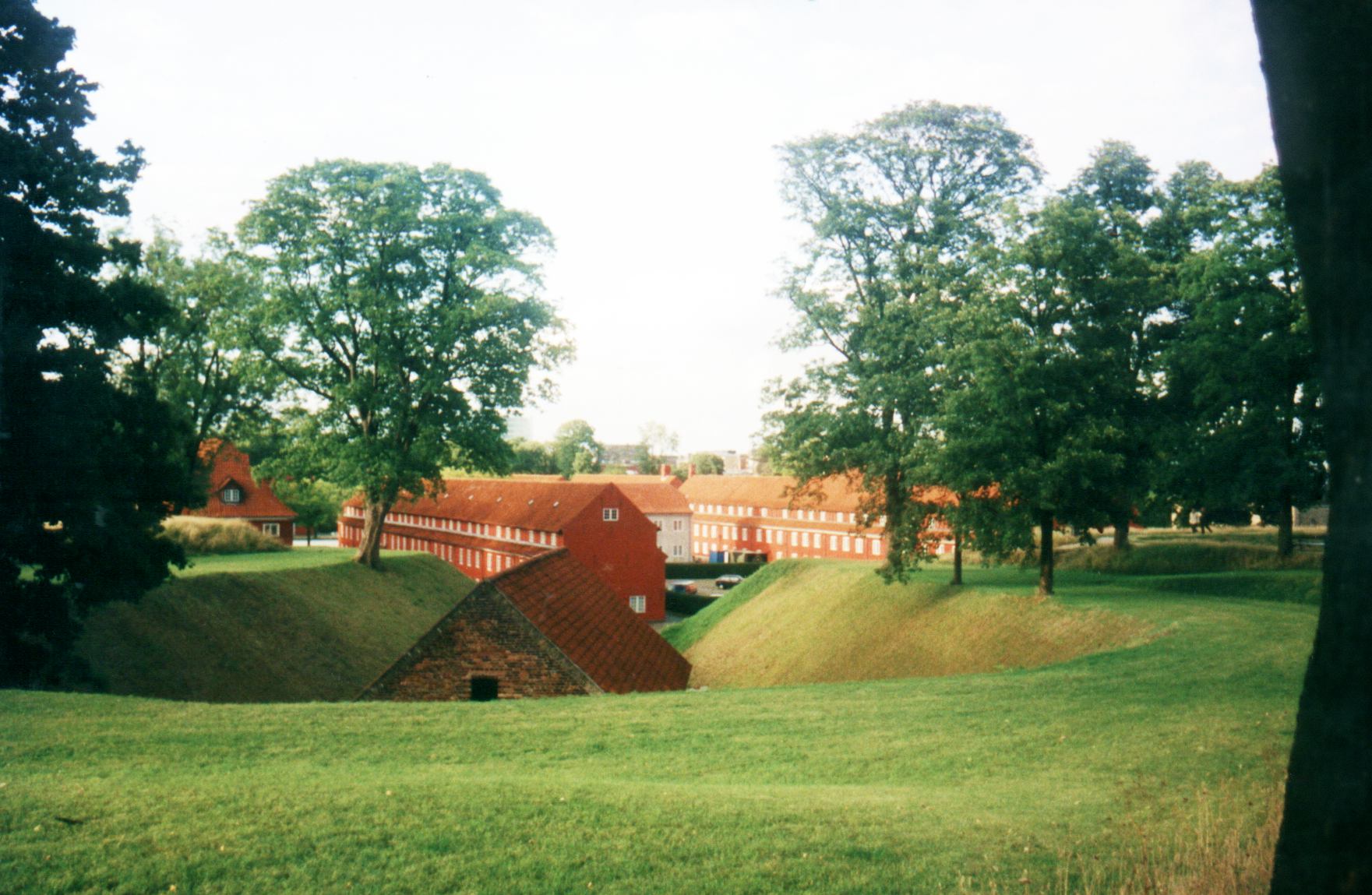
We definitely have to eat in Copenhagen. Everything is very expensive. Encouraged by yesterday's success, Pasha wants to order two meals for four people at a Chinese restaurant. This time his luck runs out. Four people, four meals, no exceptions. We have to leave. It's already eight in the evening and we still haven't found anything to eat. After much anguish, Pasha and Lena agree to McDonald's. The streamlined fast-food system has broken down and there aren't four Big Macs ready to go. Pasha likes arguing in restaurants. Come on, faster. “Quickly, soon as possible!” I thought that wouldn't be possible at McDonald's, but force of habit won out. Pasha took out all his frustration on the poor man behind the counter. They argued for about ten minutes while we sat quietly to one side pretending it had nothing to do with us. Meanwhile, the evening life of a big city carried on around us. It's Saturday and people are relaxing. A barrel-organ player is playing. A striking Black man is sitting on a bench drinking Coke.
The sun was setting into the sea as we drove onto the bridge towards Malmö. The hundred-metre pylons, pink against the deep blue evening sky, looked fantastically beautiful. How could those foolish Greens have protested against such a magnificent project? You'd have to be very narrow-minded to miss the beauty of what people had made with their own hands.
Sweden
The police on the Swedish side spotted our Russian number plate and stopped us. What on earth were we doing in Sweden, they asked. They went through the car as if they were customs officers. They were surprised to hear about Iceland and let us go.
It took us a long time to find a campsite and we finally stopped in the dark at a campsite in Lomma. It sits right on the seashore among the dunes. To the left all the lights of Malmö are twinkling, giving way almost imperceptibly to the bridge with its far end lost over the horizon. The warning beacons flash from the bridge supports and the headlights creep along. There are thousands of stars in the black sky. A warm wind blows off the sea. I even went in for a swim. I had a feeling this was our last free night. All that lay ahead was the road, a long winter and work.
Pasha and Lena grumble. It's windy, cold, expensive and dark. Apparently the puddle of sulphuric acid, compounded by dinner at McDonald's, has spoiled their mood for good.
Tanya and I are happy. It has been a remarkable day. We've driven through four countries.
The weather turned in the morning and a fine autumn rain came in. The alternator stopped working again, this time for good. We drove two hundred kilometres and the voltage dropped to nine. We couldn't drive any farther. The fuel injection would cut out at 8.8. We stopped under the canopy of a Toyota workshop that was closed for the weekend.
An hour or two of fiddling got me nowhere except to one unhappy conclusion: there seemed to be shorted turns in the field winding. I tried feeding twelve volts straight into it from the alternator. It worked, and kept working when I disconnected the twelve volts. I'd started the car exactly the same way in Norway at the very beginning of the trip. So we'd replaced the voltage regulator for nothing, I'd thrown the old one away in the middle of the ocean for nothing, and we'd lost a whole day in Norway for nothing.
We have to catch the Stockholm–Turku ferry today. It's going to be tight, but we'll give it a go.
Small Swedish towns sweep past us. A hundred kilometres out of Stockholm the traffic backs up. People are coming home from their summer cottages. Spending the weekend at a cottage is very popular in Sweden and the whole of the capital seems to be heading back into town on a Sunday evening. It costs us another three hours. In the end we get only an hour to walk around Stockholm.
Finland
At eight that evening we left Sweden on the Silja Line ferry Festival without having had time to get much of a feel for the country. Tickets for four people and two cars cost $200. It would have cost more just in petrol to drive around the Gulf of Bothnia.
The ferry is a floating palace. There are restaurants everywhere and music playing. Uninhibited Scandinavian children run about. Our cabin has a shower and lovely wide, soft beds. If only we'd had one like this for the crossing to Iceland.
Tanya and I found a place by a window and sat for a long time, feeling sad as the cottage-dotted islands and a whole great, beautiful world slipped past. Ahead of us another ferry, from Viking Line, was all lit up. My second cousin Kostya Menshikov was on board. He'd gone to Stockholm for the day. We'd been texting each other throughout the trip, thinking we'd end up on the same ferry. Instead we found ourselves on two different ones, sailing two hundred metres apart.
In the morning we did meet on the quay. We had a chat and pushed his car, which wouldn't start. We seemed to be under some sort of curse. We'd been pushing cars the whole trip and this was our third. We said our goodbyes and went our separate ways, with us driving off with all his things and his papers. Luckily we had our mobiles. We called each other and met up again. It was a triumph of mobile communications, the sort of story you could make into an advert. Of course, if we hadn't had the phones, we'd never have met and created the problem we then solved so brilliantly.
We stopped for breakfast in Salo. It's a convenient little town where you can go around the shops and spend the last of your money. The name, of course, brings to mind Ukrainian salo, cured pork fat. At the local canteen we were served fried eggs with crackling. Perhaps Ukrainian settlers really do live here?
Having stocked up on Finnish clothes and other bits and pieces for winter, we drove towards Helsinki. Soon there were signs for Saint Petersburg. In Finnish it's called Pietari. Only four hundred kilometres, but that's via Torfyanovka. Thinking of the day-long queue at the border, we decide to try one of the more out-of-the-way crossings. Kostya had told us about customs in the little village of Kolmikanta, near Lahdenpohja. We give it a go. Finland, it turns out, isn't so small after all. It is evening by the time we reach the crossing. Everything is in place, the barrier and the little shed, but there's nobody on the Finnish side. The crossing is closed for the day. Nearby Niirala, called Värtsilä on our side, doesn't operate at night either. All we can do is spend the night at the nearest campsite. At about the ten-kilometre mark on Route 14 towards Savonlinna there's an excellent campsite called Kultakivi. Big cottages and small summer cabins are scattered around little lakes with rocky shores. Trusting ducks go from cabin to cabin begging for food. It's quiet and peaceful. It would be worth coming here just to spend a holiday. On the camping stove we cook a farewell meal with mushrooms picked right by our cabin. In a month we'd grown so unused to Russia that it was frightening to go back. The thought lodged in me like a splinter. I used to fear the unknown when I left Russia. Now I fear what I know as I go back in.
Of course we have to go back. Russia is the only place where we know how to earn a living. Here in the West we'd have to work our fingers to the bone for years before we could get citizenship, pay off our loans and travel the world as we pleased. In ten years we'd be fifty. I don't know whether we'd feel like going anywhere by then. How many sleepless nights we've spent going over these arguments. We've been facing that choice for nearly twenty years now. As things turned out, we stayed in Russia. It seemed as if things would get better. Then perestroika came to an end. Now the thought of crossing back into Russia simply frightens me, but it seems too late to change everything.
In the morning, as we drove the last few kilometres, time passed one drop at a time. At Kolmikanta it turned out the crossing was for lorries with a special permit. So the ten-kilometre queues of lorries at the border are for those who have to use the ordinary channels. The people in the know and the well-connected have a back door of their own. Everybody knows everybody here, and there are no queues. I wonder how they go about inspecting a load here. Maybe there's no need to search one of your own. The bosses will have arranged everything between them.
We have to drive another hundred kilometres north. There's no queue at Värtsilä either. The Finnish barrier is up and there isn't a soul about. We have to go to the little office, where they smile, stamp our passports without a glance and wish us a pleasant journey.
The last few kilometres
Our homeland greets us with a shout from a young border guard. “What did you stop there for? First time crossing, is it?” The inspection is quick and straightforward. Only Pasha and Lena are held up for three hours. If you're bringing in a new car, you have to run about with paperwork for all the officials. They spend the whole time filling out forms of every imaginable kind.
Tanya and I sit and wait in the car.
When Pasha and Lena finally got the better of the fearsome bureaucracy, we were properly inside Russia. A forty-kilometre-an-hour speed limit and a traffic policeman greeted us. He was checking speeds, or failing that, the vehicle inspection documents or the “Ш” sticker for studded tyres and the “FIN” sticker. In Finland we'd thought the Finnish roads were about as broken up as Russia's. Now we could see straight away that they were nothing of the kind. A Russian pothole is eternal and no other country can touch it. The Finns built this particular road, by the way, so it should have been the same as the one across the border, but nature had had its way.
Sullen people sit by the roadside. The flowers and lawns are gone. Cowsheds have fallen to pieces. The women are a surprise. They're wearing skirts, they're slim, they're beautiful. After a month my eyes weren't used to it. On the other side of the border you might see one item from that list. I don't think badly of Finnish women. They're lovely, kind and friendly. What I can't understand is why our girls are still here, standing at dusty stops and waiting for a beat-up bus.
We're running out of petrol, but the stations by the border are very expensive and don't have 95, so we have to go on to Sortavala. The prices there are back to normal. Only there's no toilet at the petrol station. Strange. Don't people in Russia need one?
Here at the petrol station we parted ways with Pasha and Lena. They wanted to look around the shops in Sortavala and go mushrooming in the local woods. We wanted to get to Vyritsa as quickly as we could and watch a film.
We drove the rest of the way to Saint Petersburg without stopping. The rutted dirt road was full of tight bends. I like roads like that. They're never boring. I was no longer afraid of breaking down. Here I could sort out any problem in a day. The radio went quiet. Where we'd had hundreds of programmes, there was now nothing but silence. Finland's Radio Nova on 103.8 was the last to fade out. We reached Vyritsa at ten in the evening. We'd driven 11,000 kilometres all told.
Acknowledgements
Dozens of people helped us, each in whatever way they could.
We'd particularly like to thank:
Eduard and Sergei at GR Travel Ltd., representatives of Viking Line, who got us our ferry tickets.
Igor Sokolov at Inmark Dvigatel, the engineering firm, who fixed the engine on the last day. He did such a good job that it gave up guzzling petrol and is still running.
The Voenmekh garage, where practically the entire staff helped get the Ford ready for the trip.
Marina Konovalova, who helped us get visas, and the good people of Finland, especially the Finnish consulate. They gave us Schengen visas. What a good idea it was for European countries to come up with a single visa.